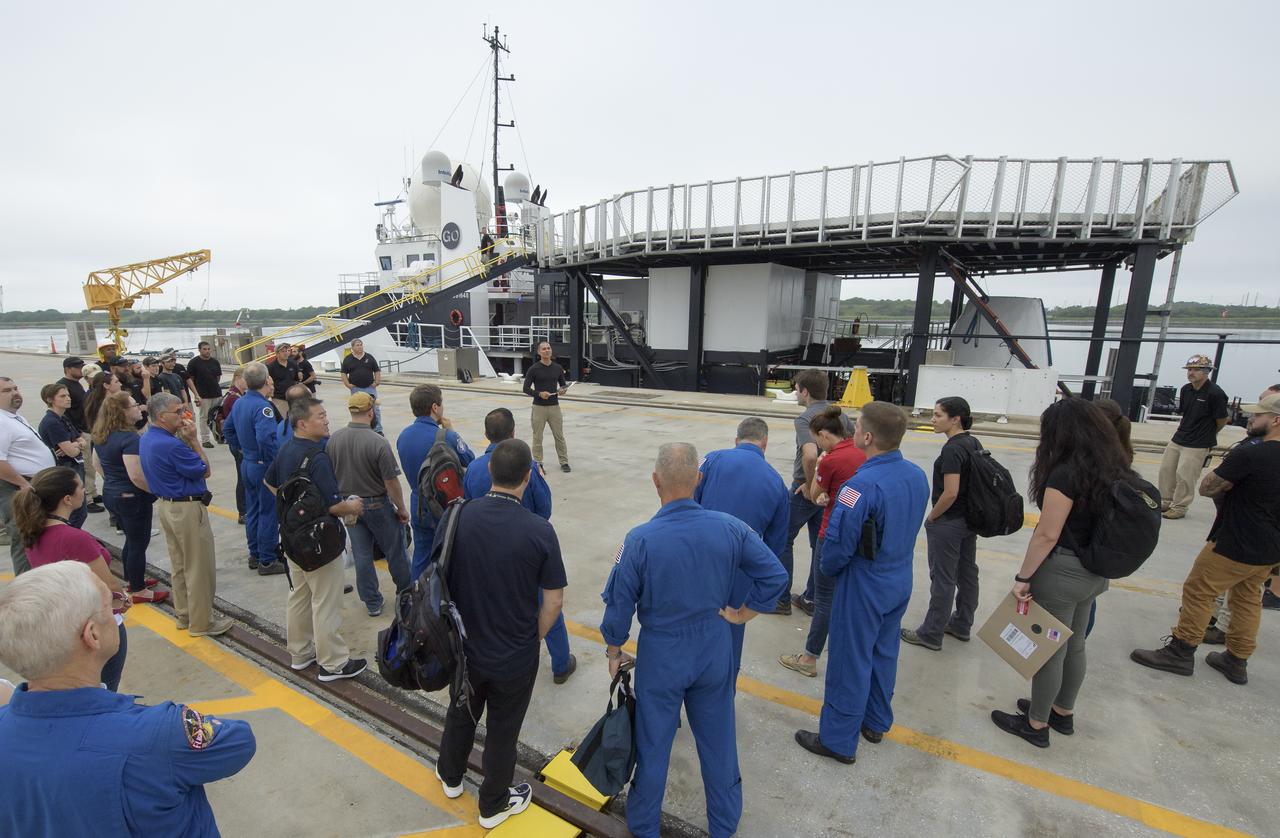
Teams from NASA and SpaceX gather at the Trident Basin in Cape Canaveral, Florida, on August 13, 2019 to rehearse extracting astronauts from SpaceX’s Crew Dragon, which will be used to carry humans to the International Space Station. Using the Go Searcher ship SpaceX uses to recover their spacecraft after splashdown and a mock-up of the Crew Dragon, the teams worked through the steps necessary to get NASA astronauts Doug Hurley and Bob Behnken out of the Dragon and back to dry land. Hurley and Behnken will fly to the space station aboard the Crew Dragon for the SpaceX Demo-2 mission. Photo Credit: (NASA/Bill Ingalls)
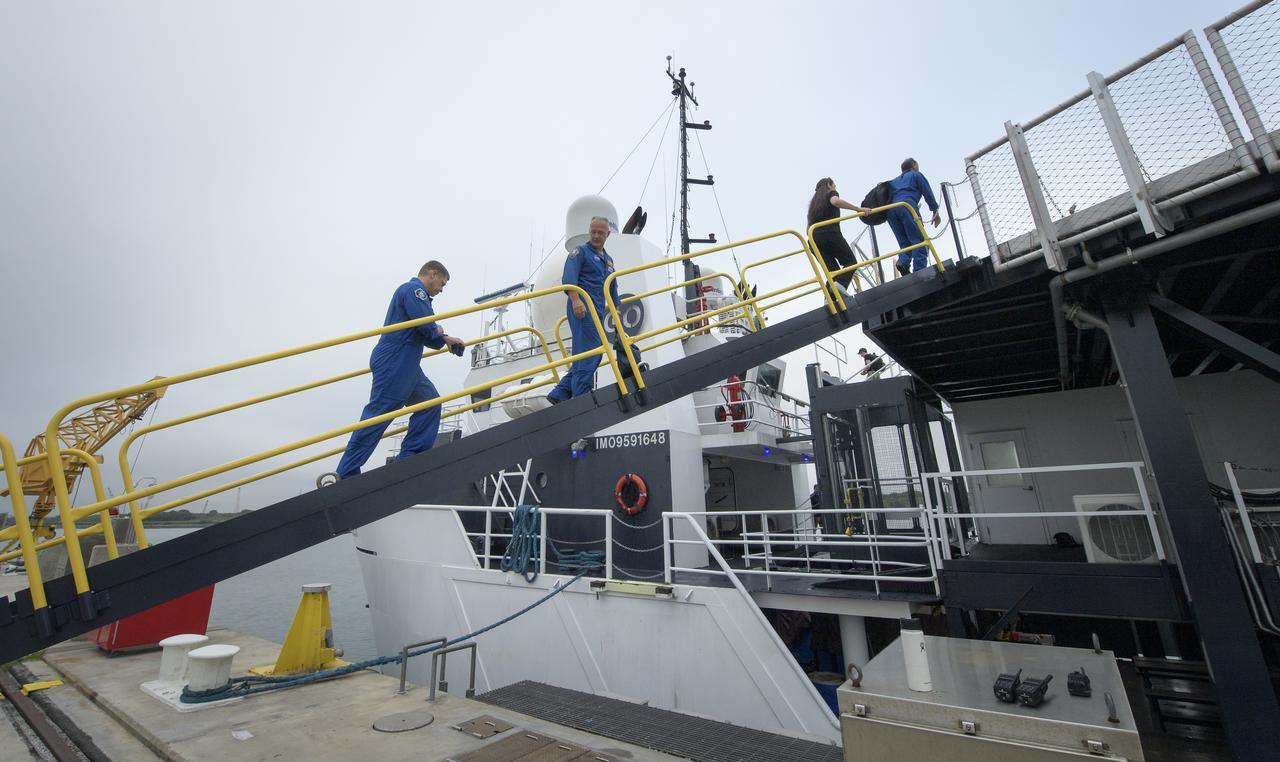
NASA astronauts Bob Behnken, left, and Doug Hurley board the SpaceX GO Searcher ship at the Trident Basin in Cape Canaveral, Florida, on August 13, 2019 to rehearse extracting astronauts from SpaceX’s Crew Dragon, which will be used to carry humans to the International Space Station. Using the Go Searcher ship SpaceX uses to recover their spacecraft after splashdown and a mock-up of the Crew Dragon, the teams worked through the steps necessary to get NASA astronauts Doug Hurley and Bob Behnken out of the Dragon and back to dry land. Hurley and Behnken will fly to the space station aboard the Crew Dragon for the SpaceX Demo-2 mission. Photo Credit: (NASA/Bill Ingalls)
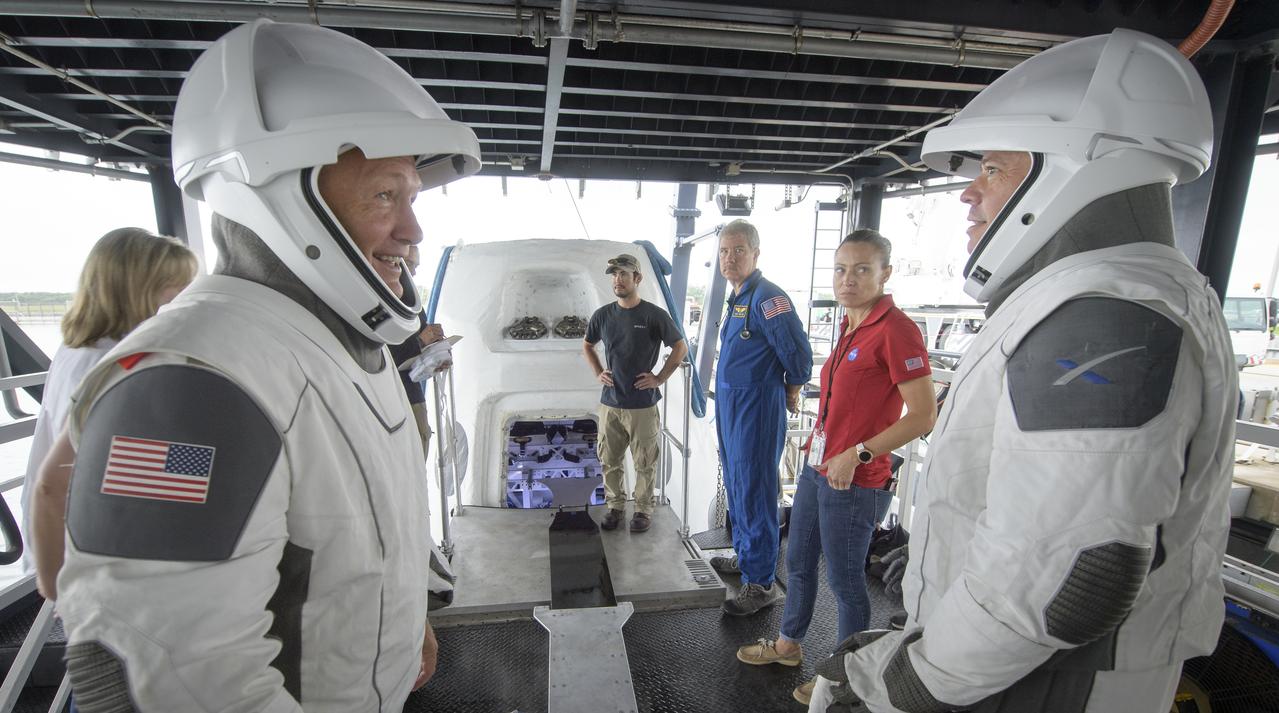
NASA astronauts Doug Hurley, left, and Bob Behnken work with teams from NASA and SpaceX to rehearse crew extraction from SpaceX’s Crew Dragon, which will be used to carry humans to the International Space Station, on August 13, 2019 at the Trident Basin in Cape Canaveral, Florida. Using the Go Searcher ship SpaceX uses to recover their spacecraft after splashdown and a mock-up of the Crew Dragon, the teams worked through the steps necessary to get NASA astronauts Doug Hurley and Bob Behnken out of the Dragon and back to dry land. Hurley and Behnken will fly to the space station aboard the Crew Dragon for the SpaceX Demo-2 mission. Photo Credit: (NASA/Bill Ingalls)
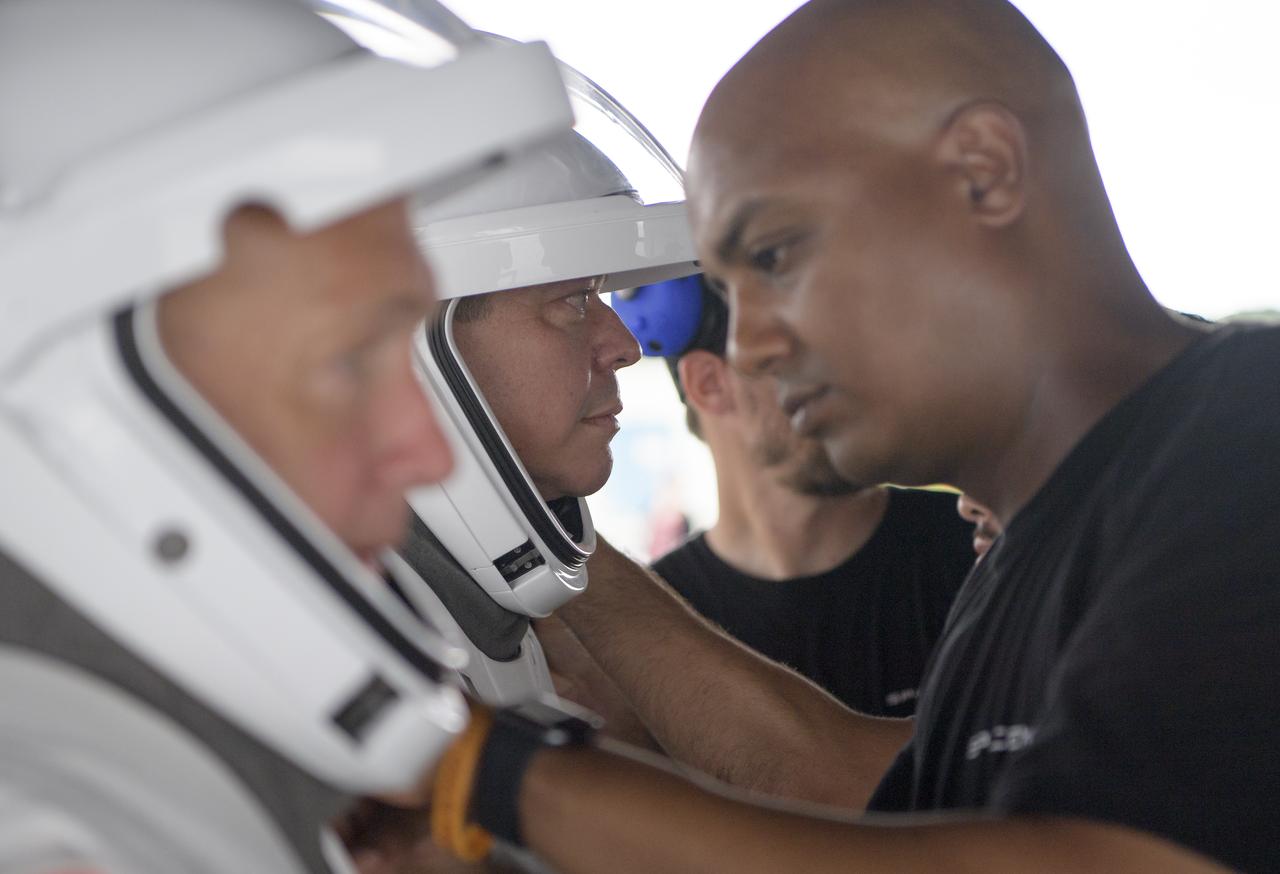
NASA astronauts Doug Hurley, left, and Bob Behnken work with teams from NASA and SpaceX to rehearse crew extraction from SpaceX’s Crew Dragon, which will be used to carry humans to the International Space Station, on August 13, 2019 at the Trident Basin in Cape Canaveral, Florida. Using the Go Searcher ship SpaceX uses to recover their spacecraft after splashdown and a mock-up of the Crew Dragon, the teams worked through the steps necessary to get NASA astronauts Doug Hurley and Bob Behnken out of the Dragon and back to dry land. Hurley and Behnken will fly to the space station aboard the Crew Dragon for the SpaceX Demo-2 mission. Photo Credit: (NASA/Bill Ingalls)
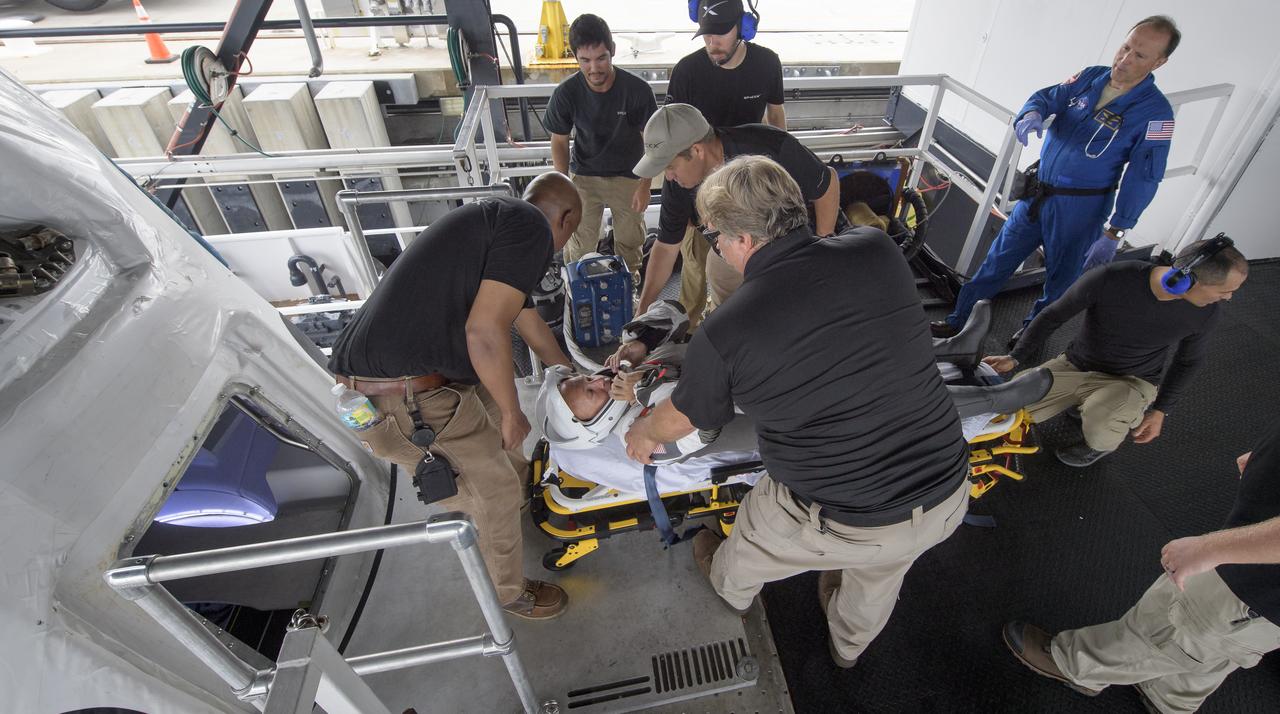
NASA astronaut Doug Hurley, along with teams from NASA and SpaceX, rehearse crew extraction from SpaceX’s Crew Dragon, which will be used to carry humans to the International Space Station, on August 13, 2019 at the Trident Basin in Cape Canaveral, Florida. Using the Go Searcher ship SpaceX uses to recover their spacecraft after splashdown and a mock-up of the Crew Dragon, the teams worked through the steps necessary to get NASA astronauts Doug Hurley and Bob Behnken out of the Dragon and back to dry land. Hurley and Behnken will fly to the space station aboard the Crew Dragon for the SpaceX Demo-2 mission. Photo Credit: (NASA/Bill Ingalls)
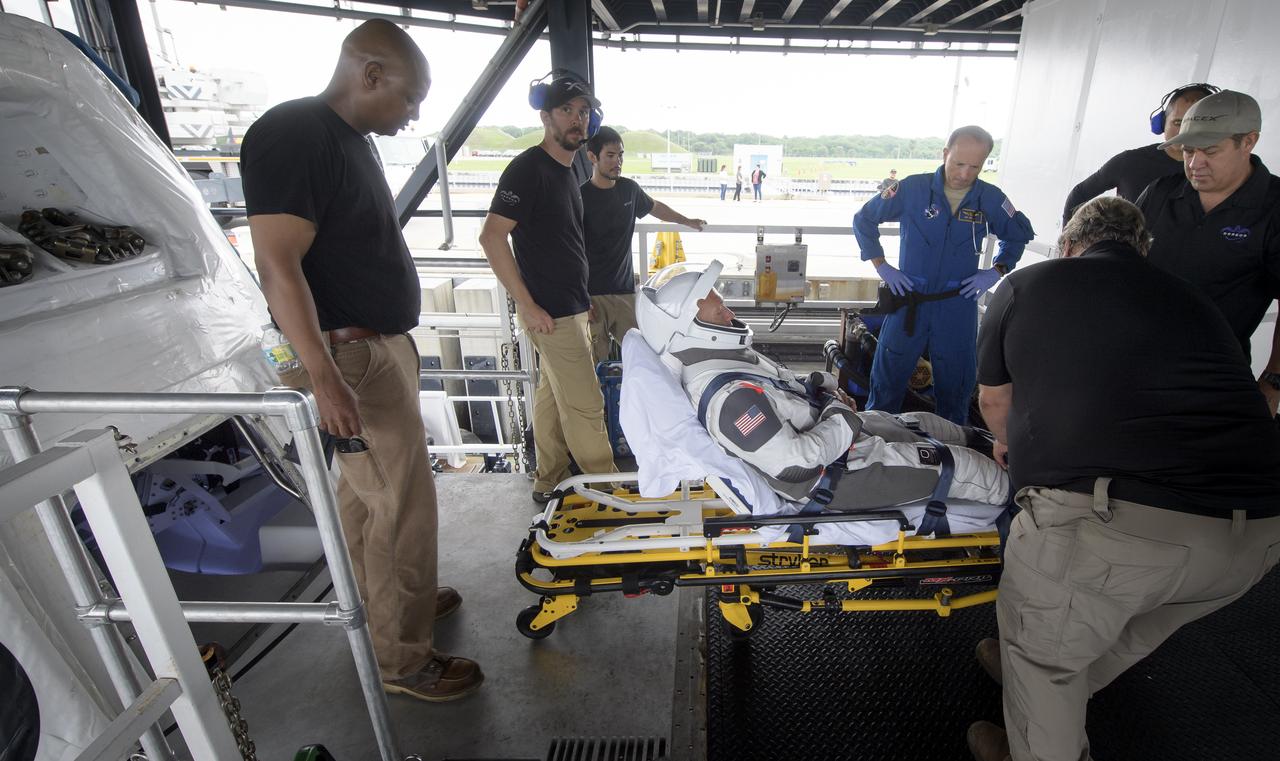
NASA astronaut Doug Hurley, along with teams from NASA and SpaceX, rehearse crew extraction from SpaceX’s Crew Dragon, which will be used to carry humans to the International Space Station, on August 13, 2019 at the Trident Basin in Cape Canaveral, Florida. Using the Go Searcher ship SpaceX uses to recover their spacecraft after splashdown and a mock-up of the Crew Dragon, the teams worked through the steps necessary to get NASA astronauts Doug Hurley and Bob Behnken out of the Dragon and back to dry land. Hurley and Behnken will fly to the space station aboard the Crew Dragon for the SpaceX Demo-2 mission. Photo Credit: (NASA/Bill Ingalls)
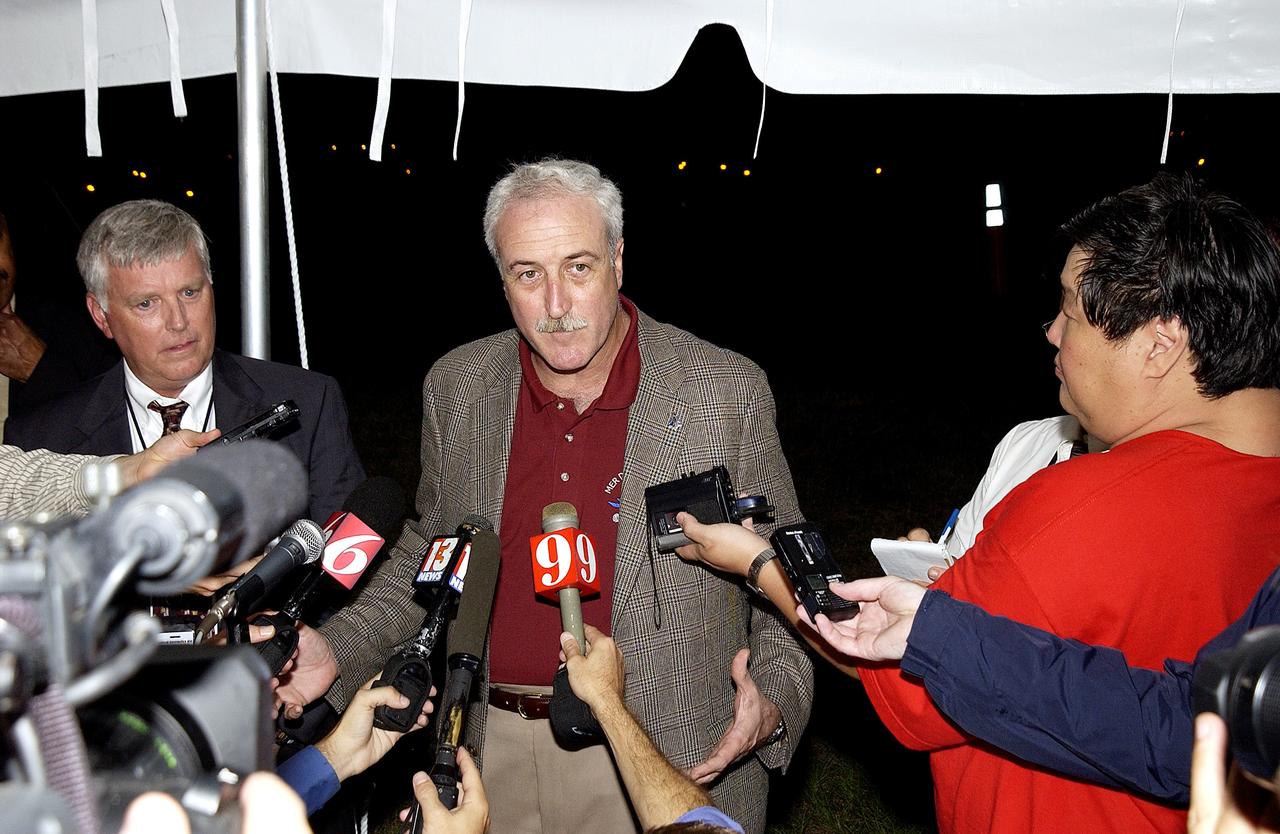
KENNEDY SPACE CENTER, FLA. - Newly appointed KSC Director James W. Kennedy (left) and NASA Administrator Sean O'Keefe (center) talk to the media following the launch of the Mars Exploration Rover "Opportunity" at the Trident Basin berm press site at Cape Canaveral Air Force Station.
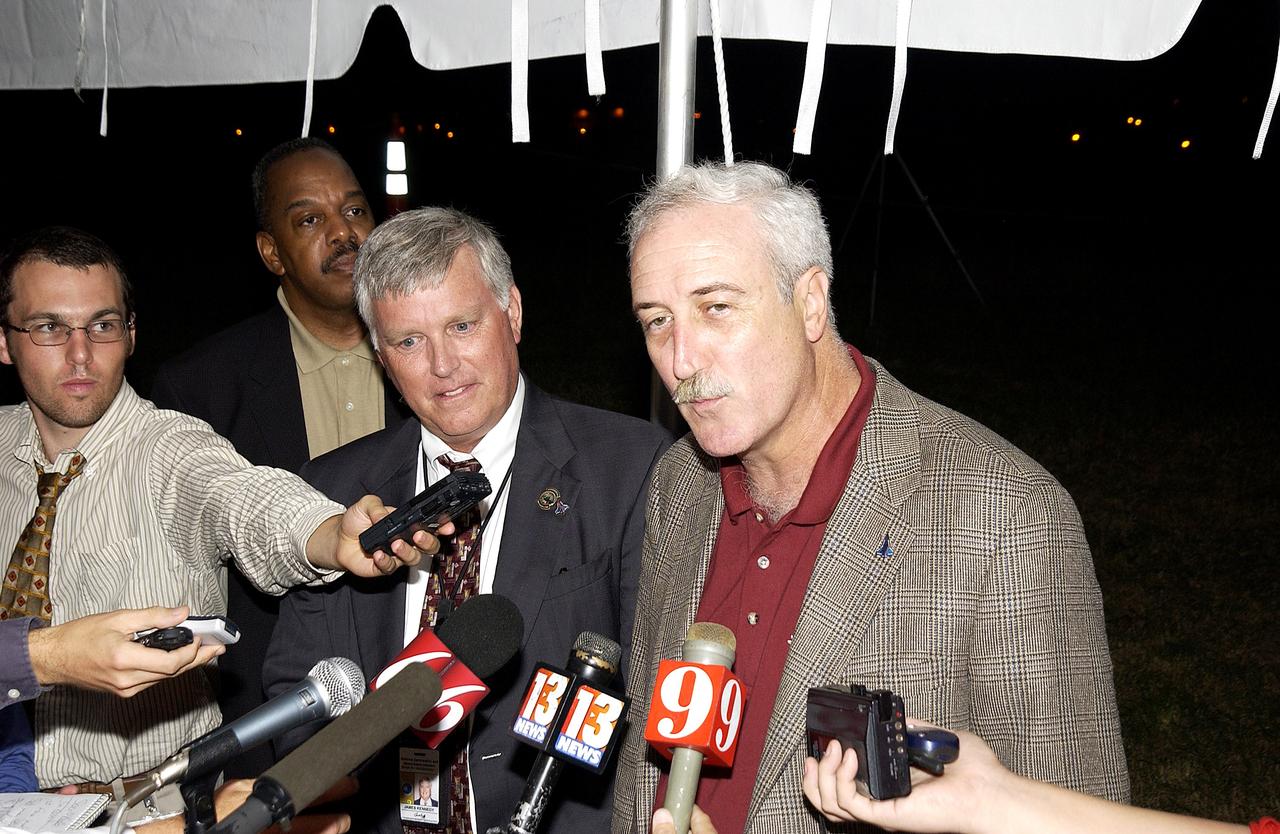
KENNEDY SPACE CENTER, FLA. - Newly appointed KSC Director James W. Kennedy (second from left) and NASA Administrator Sean O'Keefe (right) talk to the media following the launch of the Mars Exploration Rover "Opportunity" at the Trident Basin berm press site at Cape Canaveral Air Force Station.
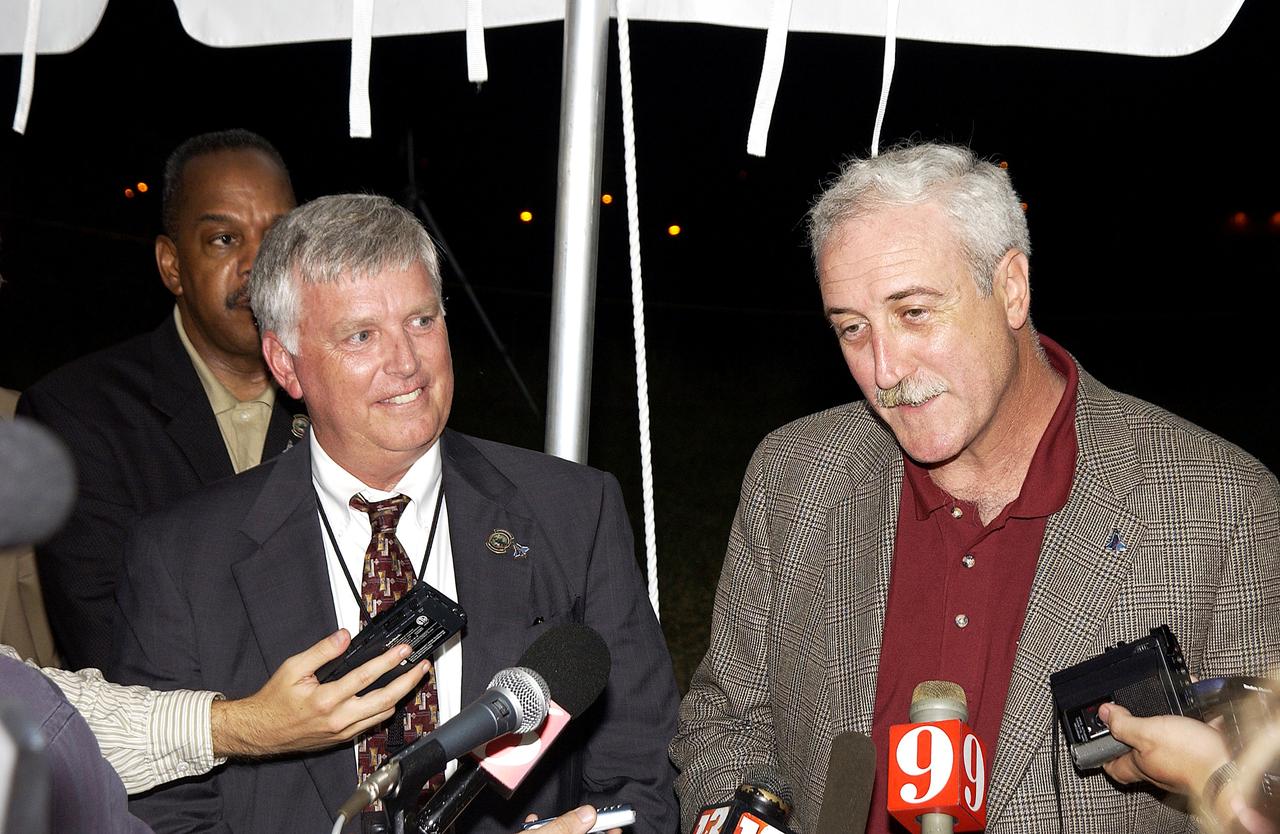
KENNEDY SPACE CENTER, FLA. - Newly appointed KSC Director James W. Kennedy (left) and NASA Administrator Sean O'Keefe (right) talk to the media following the launch of the Mars Exploration Rover "Opportunity" at the Trident Basin berm press site at Cape Canaveral Air Force Station.
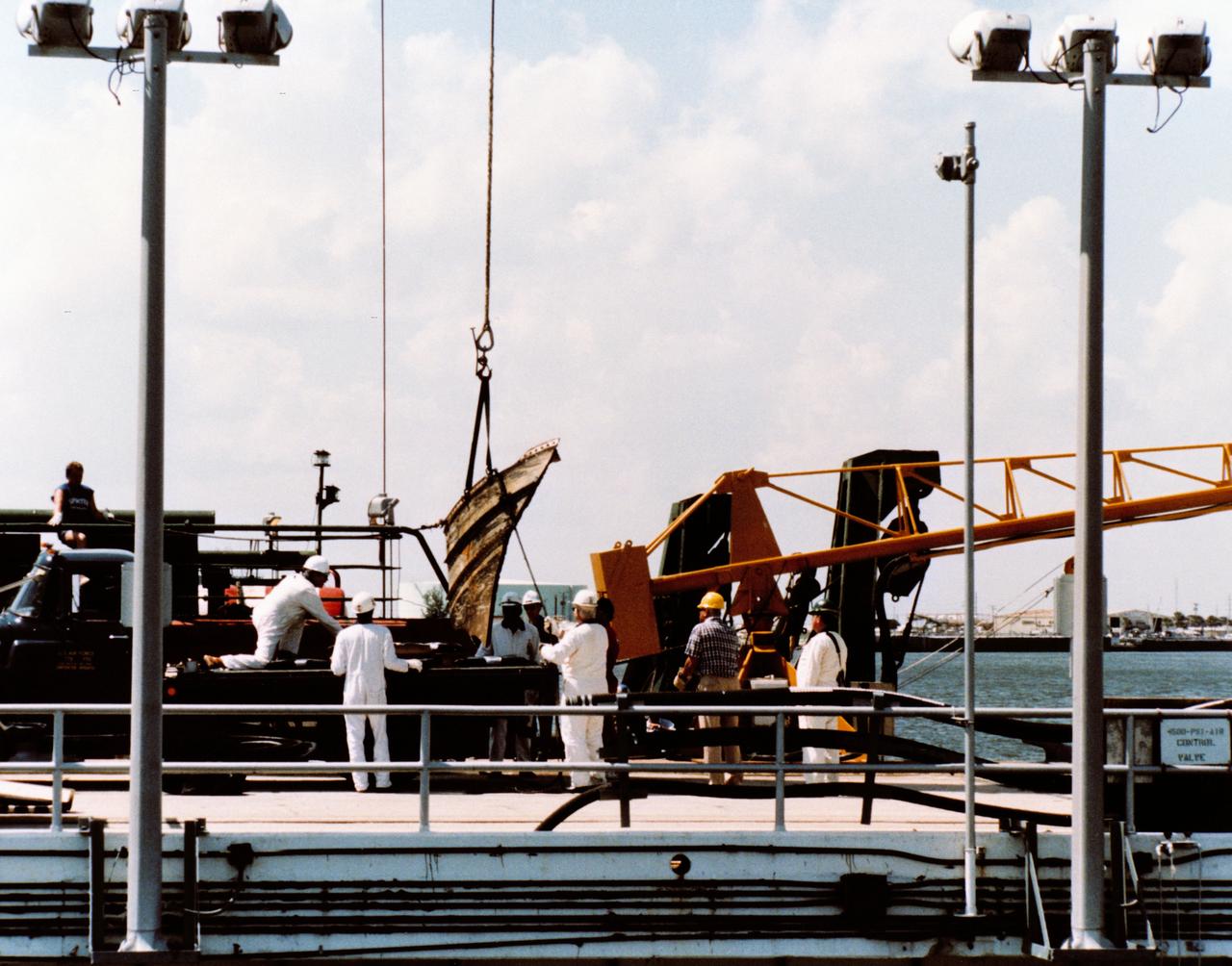
S86-29890 (20 March 1986) --- Stena workhorse arrival and offload of SRB. Trident Basin. (112) (st)
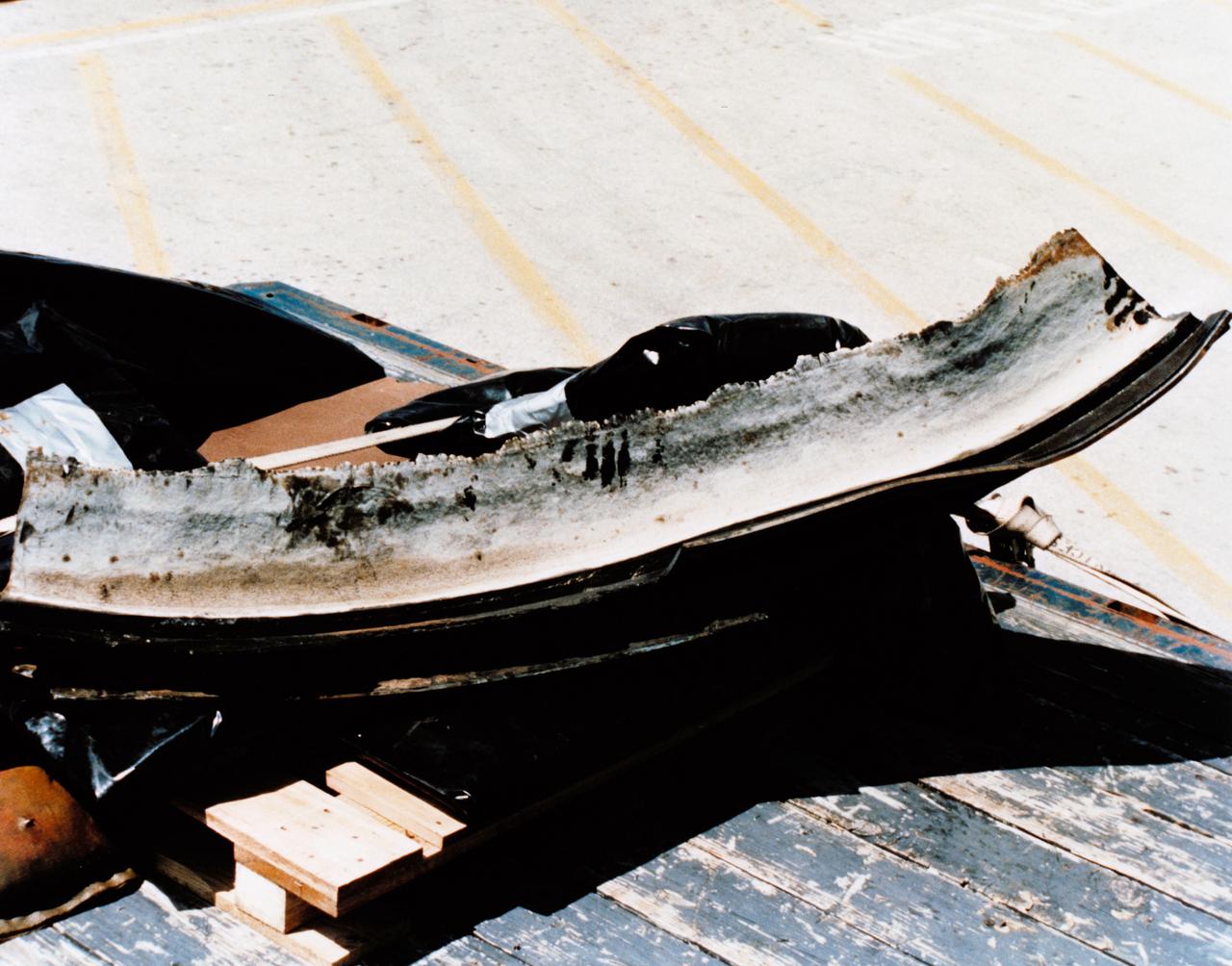
S86-29888 (20 March 1986) --- Stena workhorse arrival and offload of SRB. Trident Basin. (112) (st)
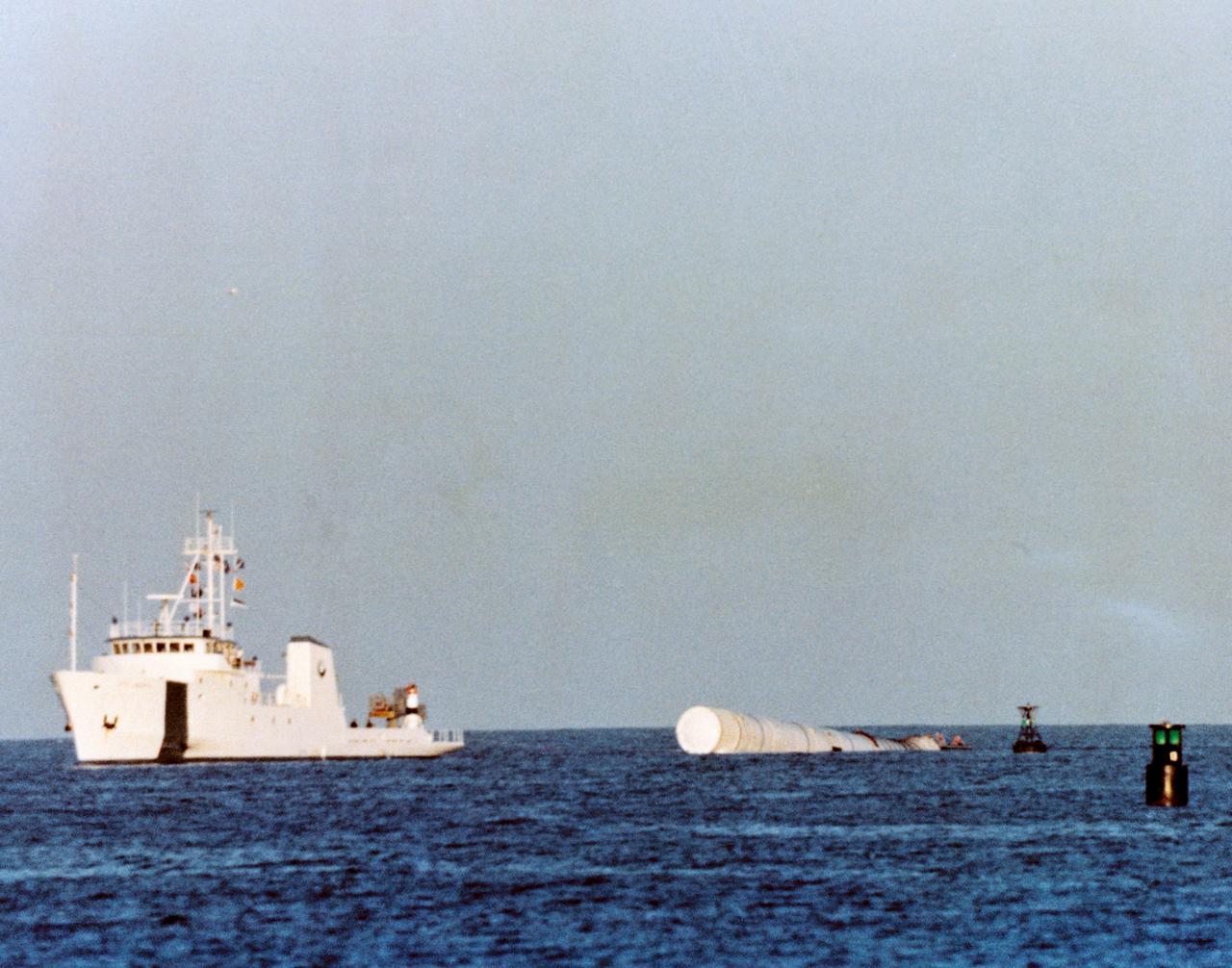
S81-30953 (13 April 1981) --- With one of the two expended solid rocket boosters from the launch of the space shuttle Columbia in tow, the recovery ship UTC Liberty heads toward the Trident Submarine Basin at Port Canaveral, south of NASA's Kennedy Space Center (KSC). The ship, built especially for the task of recovering expended boosters and their parachutes, is bound for ran overnight berth in the submarine basin, before continuing tomorrow toward recovery facilities at KSC. Photo credit: NASA
CAPE CANAVERAL, Fla. – Members of the 920th Rescue Wing get ready to release a flotation collar around the mockup Orion crew exploration vehicle at the Trident Basin at Port Canaveral, Fla. On top of Orion are additional flotation devices. The goal of the operation, dubbed the Post-landing Orion Recovery Test, or PORT, is to determine what kind of motion astronauts can expect after landing, as well as outside conditions for recovery teams. Orion is targeted to begin carrying humans to the International Space Station in 2015 and to the moon by 2020. Orion, along with the Ares I and V rockets and the Altair lunar lander, are part of the Constellation Program. Photo credit: NASA/Dimitri Gerondidakis
CAPE CANAVERAL, Fla. – The mockup Orion crew exploration vehicle is prepared to be lifted into the water at the Trident Basin at Port Canaveral, Fla., for testing in open water. The goal of the operation, dubbed the Post-landing Orion Recovery Test, or PORT, is to determine what kind of motion astronauts can expect after landing, as well as outside conditions for recovery teams. Orion is targeted to begin carrying humans to the International Space Station in 2015 and to the moon by 2020. Orion, along with the Ares I and V rockets and the Altair lunar lander, are part of the Constellation Program. Photo credit: NASA/Kim Shiflett
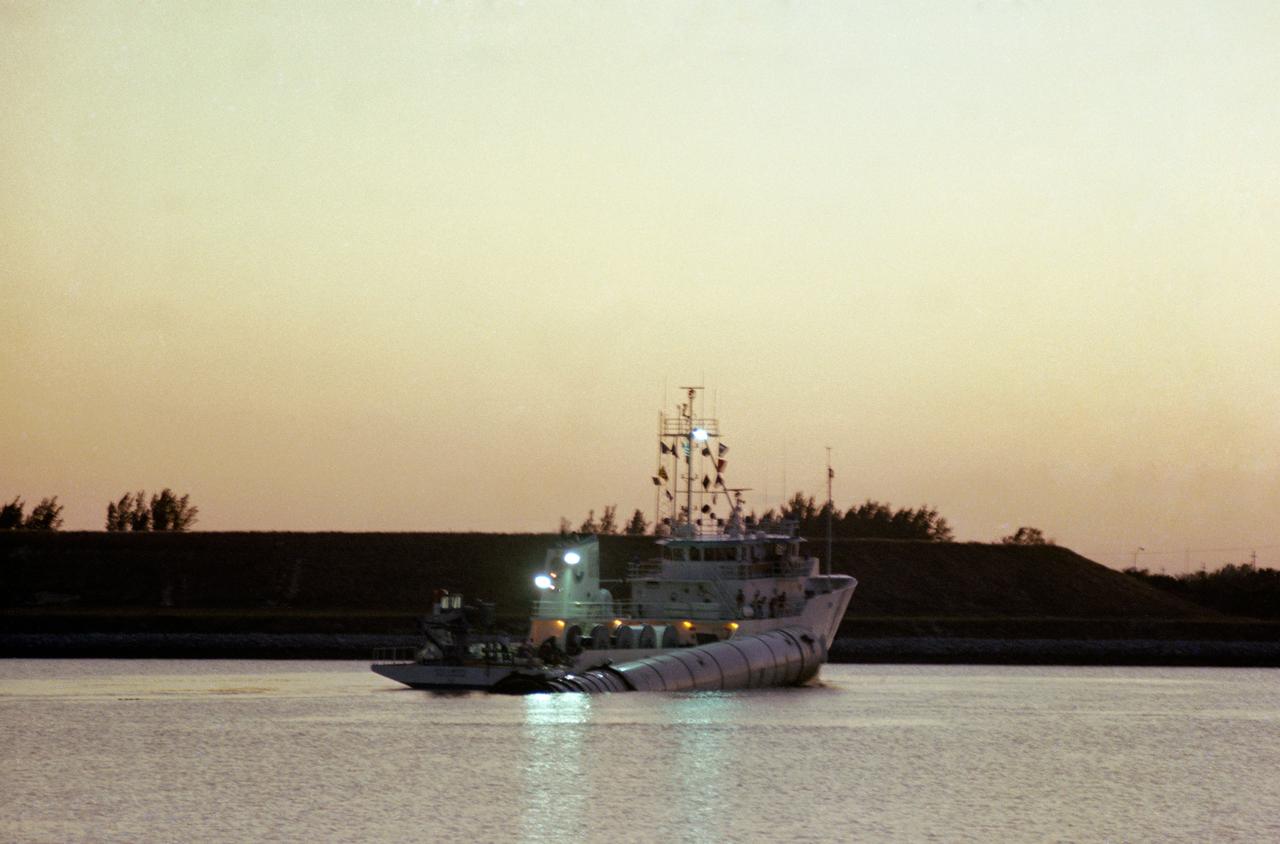
S81-31308 (13 April 1981) --- The solid rocket booster recovery ship UTC Liberty heads for Cape Canaveral Air Force Station after retrieving one of the two booster casings from the launch of Columbia, America?s first space shuttle in orbit. The vessel had been tied up overnight at the Trident Submarine Basin at Port Canaveral, from which point this photograph was made. The boosters and the parachutes that bring them to safe landings in the Atlantic east of NASA's Kennedy Space Center are recovered at sea, dewatered and towed to processing facilities at Cape Canaveral Air Force Station. Photo credit: NASA
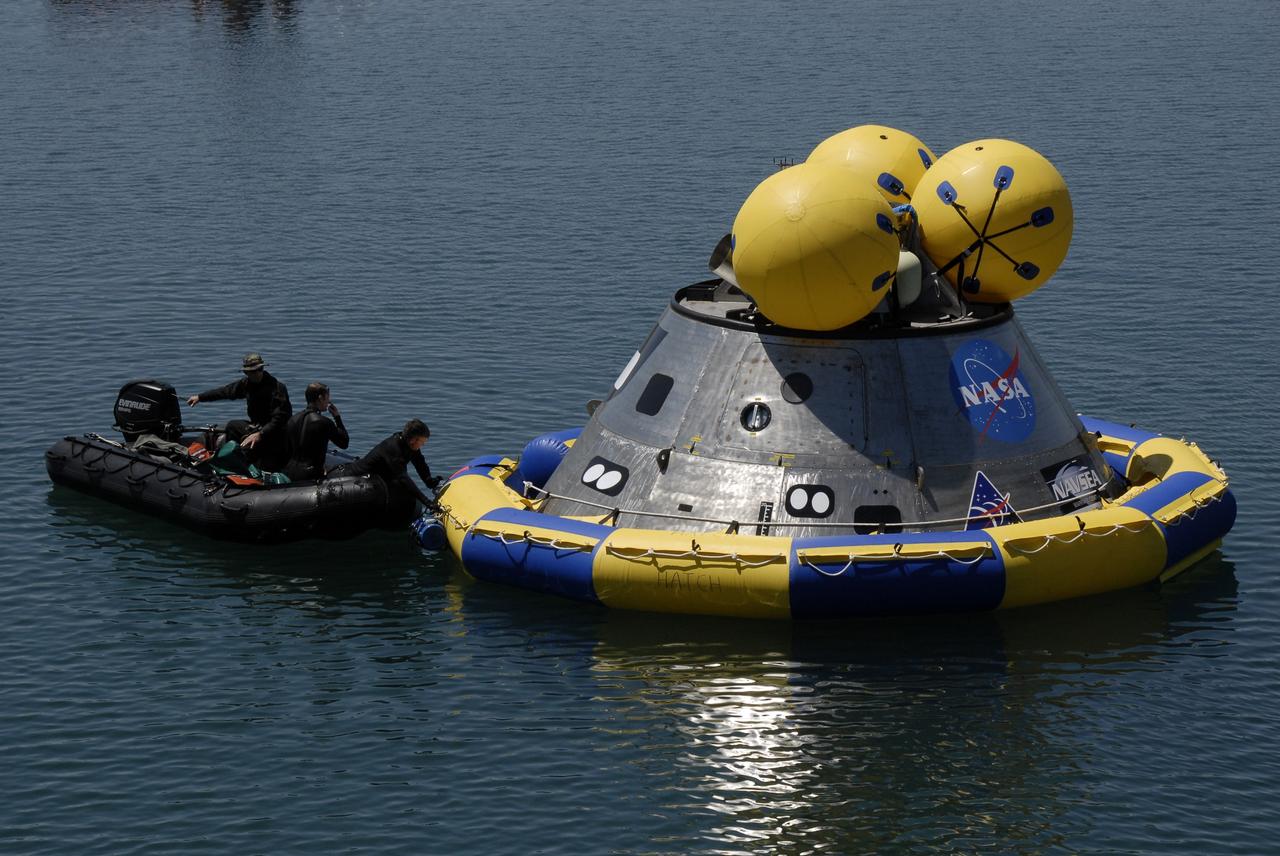
CAPE CANAVERAL, Fla. – Members of the 920th Rescue Wing secure a flotation collar around the mockup Orion crew exploration vehicle at the Trident Basin at Port Canaveral, Fla. On top of Orion are additional flotation devices. The mockup vehicle will undergo testing in open water. The goal of the operation, dubbed the Post-landing Orion Recovery Test, or PORT, is to determine what kind of motion astronauts can expect after landing, as well as outside conditions for recovery teams. Orion is targeted to begin carrying humans to the International Space Station in 2015 and to the moon by 2020. Orion, along with the Ares I and V rockets and the Altair lunar lander, are part of the Constellation Program. Photo credit: NASA/Kim Shiflett
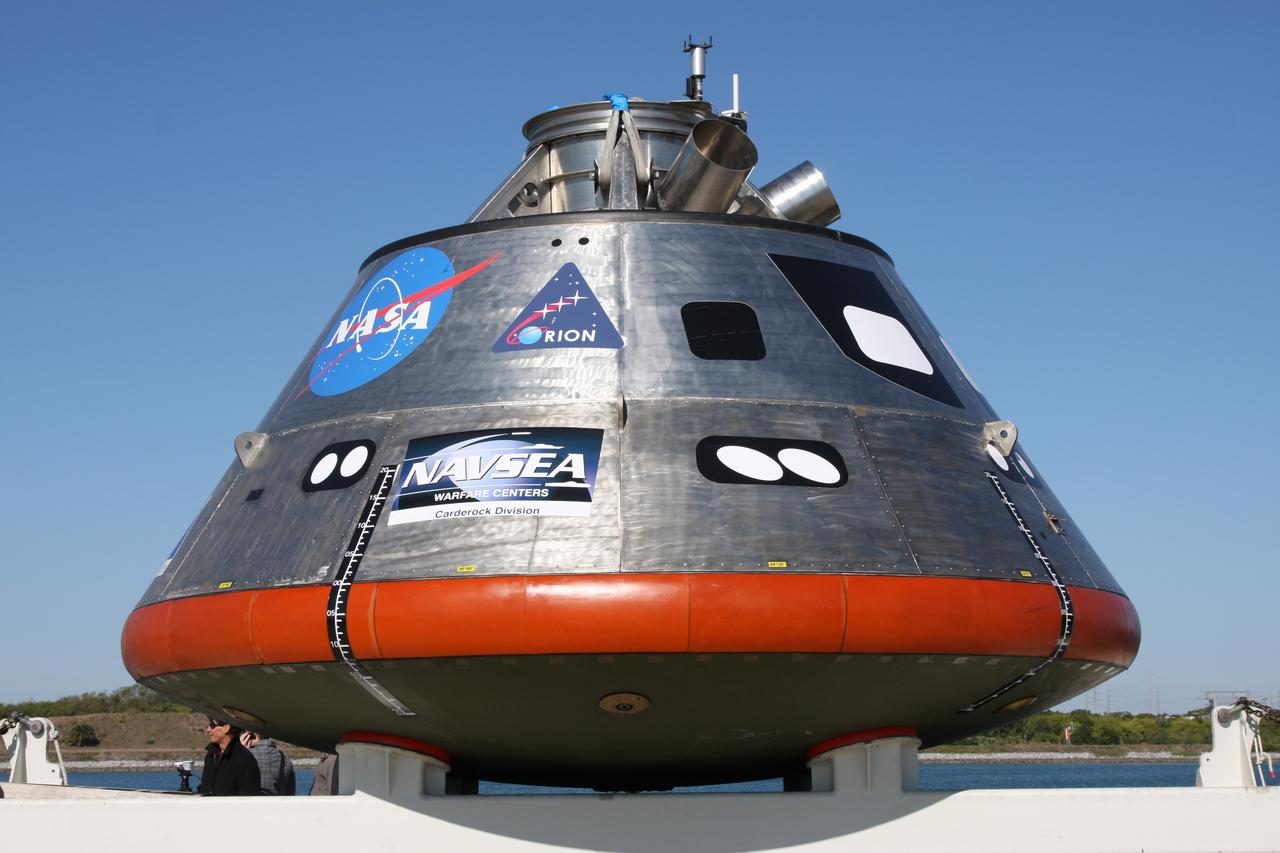
CAPE CANAVERAL, Fla. – The mockup Orion crew exploration vehicle is on the dock at the Trident Basin at Port Canaveral, Fla., waiting to be tested in open waters. Orion is targeted to begin carrying humans to the International Space Station in 2015 and to the moon by 2020. The goal of the operation, dubbed the Post-landing Orion Recovery Test, or PORT, is to determine what kind of motion astronauts can expect after landing, as well as outside conditions for recovery teams. Orion, along with the Ares I and V rockets and the Altair lunar lander, are part of the Constellation Program. Photo credit: NASA/Dimitri Gerondidakis
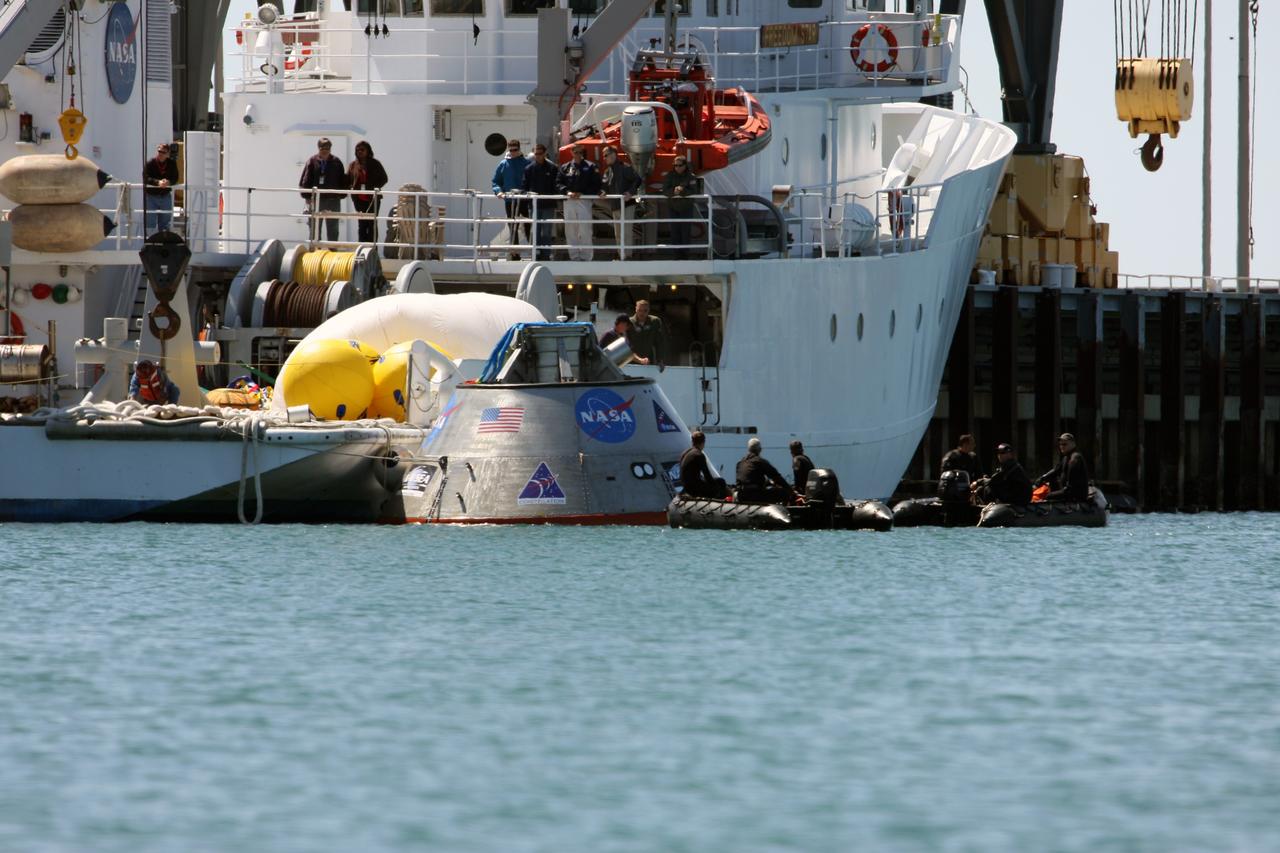
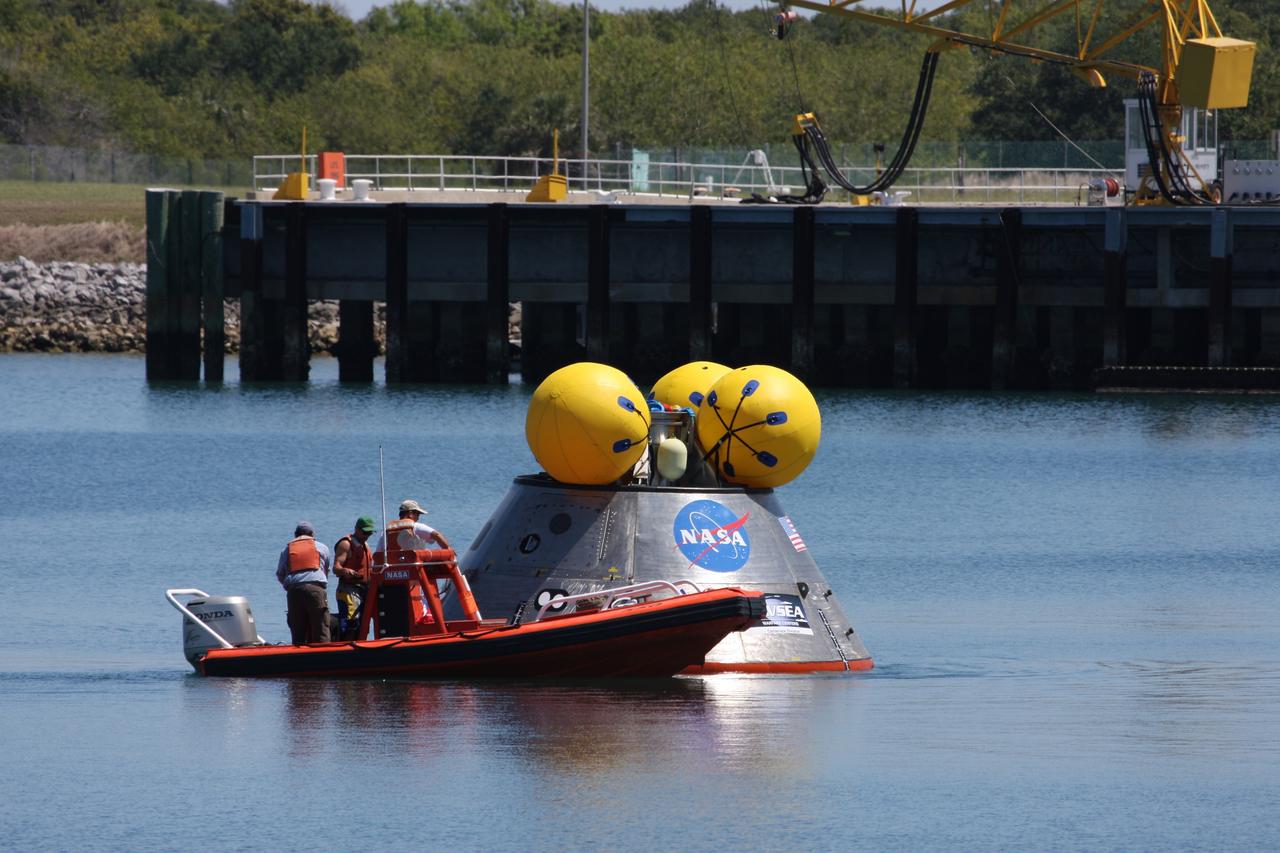
CAPE CANAVERAL, Fla. – The mockup Orion crew exploration vehicle floats in the water at the Trident Basin at Port Canaveral, Fla. Orion is targeted to begin carrying humans to the International Space Station in 2015 and to the moon by 2020. The mockup vehicle will undergo testing in open water. The goal of the operation, dubbed the Post-landing Orion Recovery Test, or PORT, is to determine what kind of motion astronauts can expect after landing, as well as outside conditions for recovery teams. Orion, along with the Ares I and V rockets and the Altair lunar lander, are part of the Constellation Program. Photo credit: NASA/Dimitri Gerondidakis
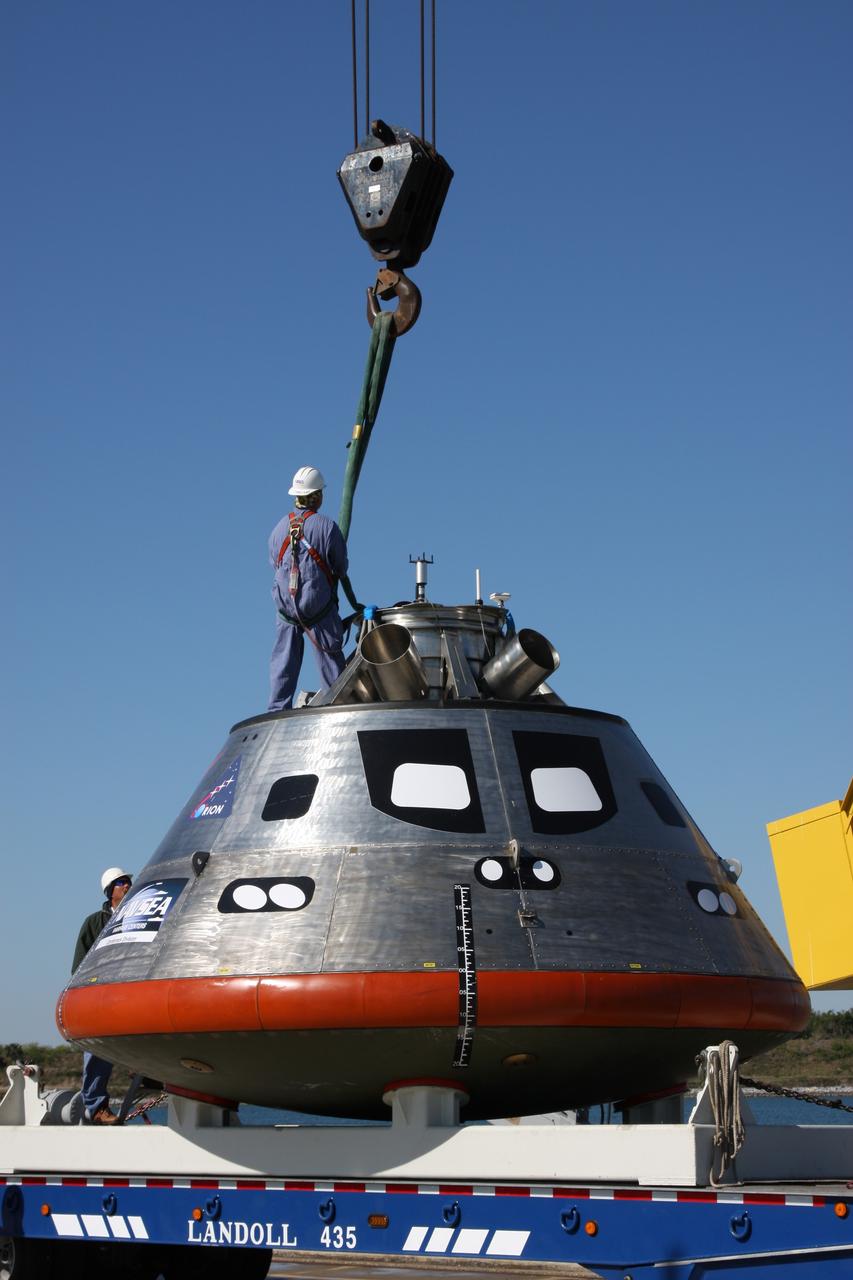
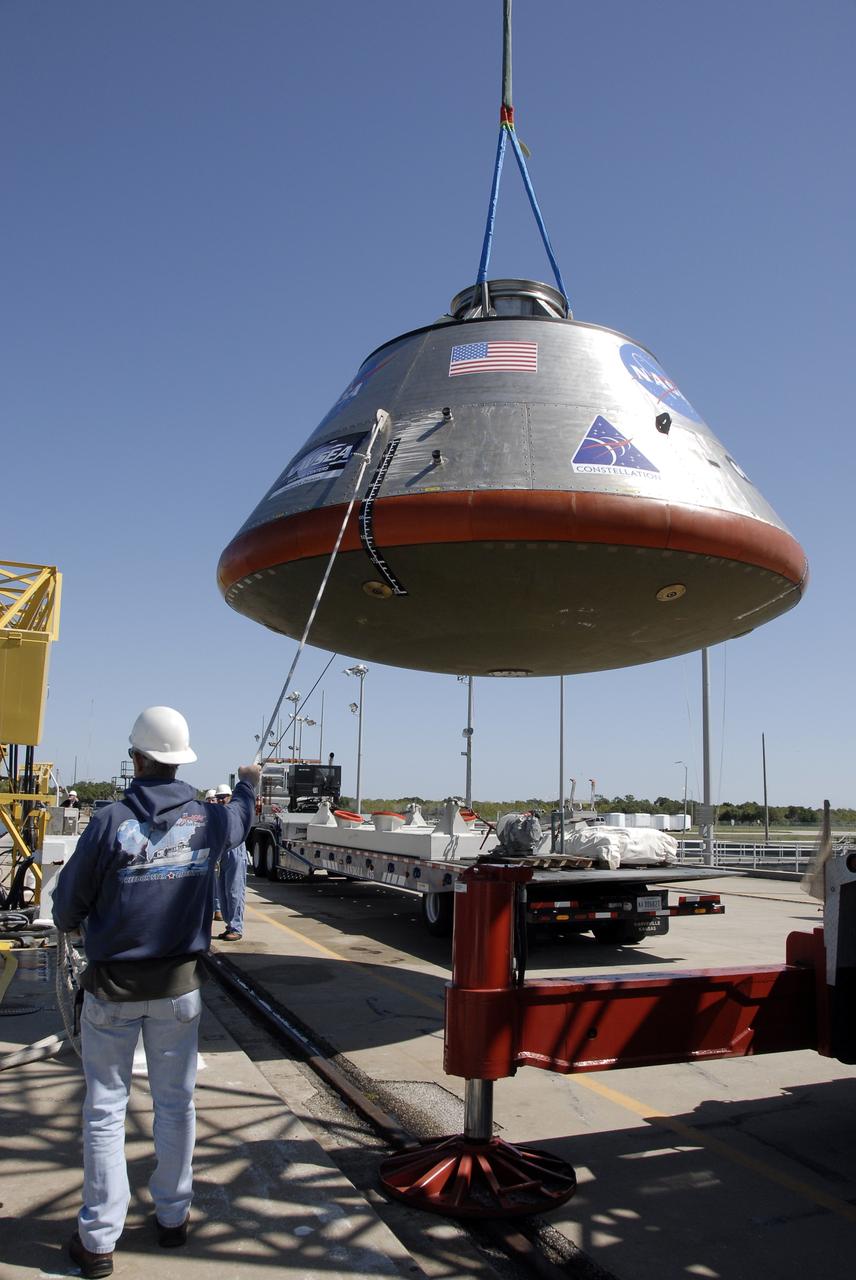
CAPE CANAVERAL, Fla. – The mockup Orion crew exploration vehicle is prepared to be lifted into the water at the Trident Basin at Port Canaveral, Fla., for testing. Orion is targeted to begin carrying humans to the International Space Station in 2015 and to the moon by 2020. The goal of the operation, dubbed the Post-landing Orion Recovery Test, or PORT, is to determine what kind of motion astronauts can expect after landing, as well as outside conditions for recovery teams. Orion, along with the Ares I and V rockets and the Altair lunar lander, are part of the Constellation Program. Photo credit: NASA/Dimitri Gerondidakis
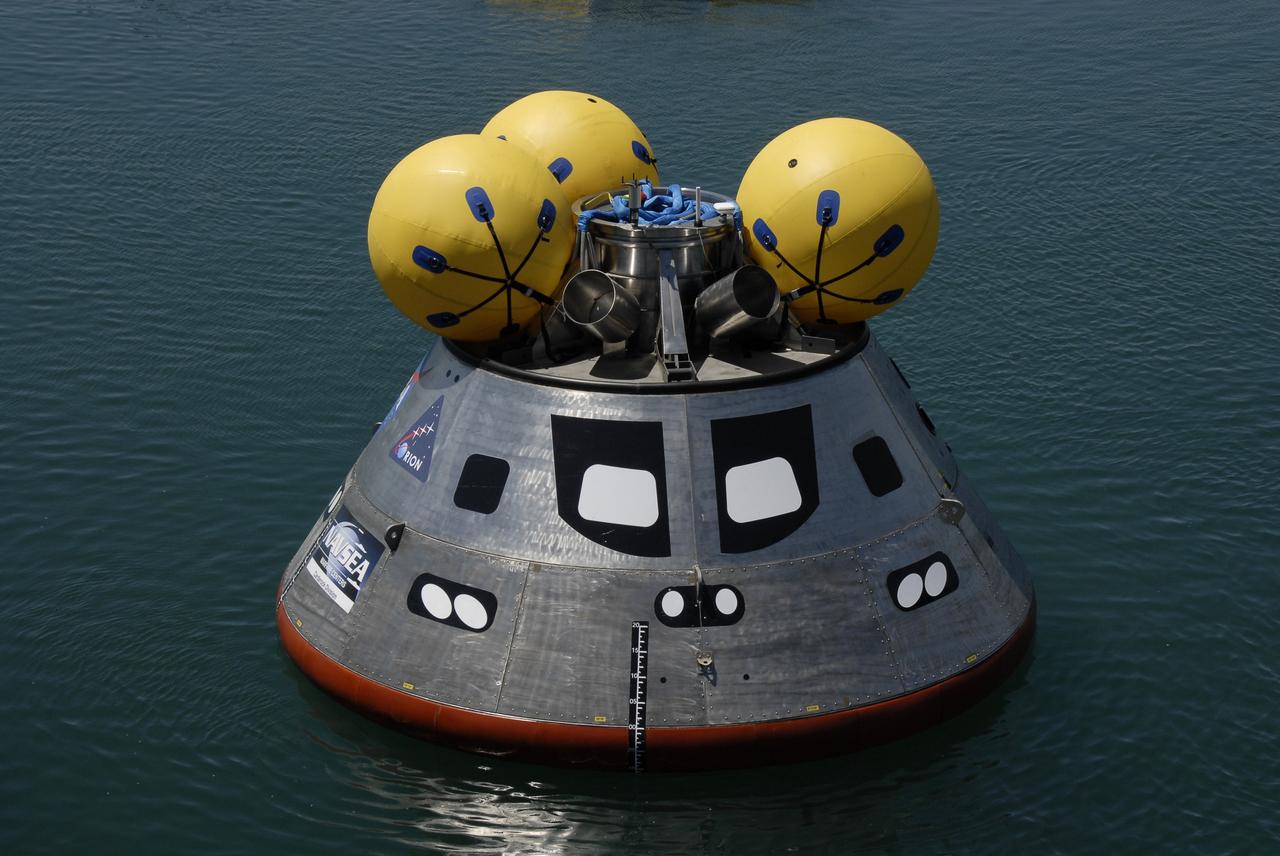
CAPE CANAVERAL, Fla. – The mockup Orion crew exploration vehicle floats in the water at the Trident Basin at Port Canaveral, Fla. On top of Orion are additional flotation devices. Orion is targeted to begin carrying humans to the International Space Station in 2015 and to the moon by 2020. The mockup vehicle is undergoing testing in open water. The goal of the operation, dubbed the Post-landing Orion Recovery Test, or PORT, is to determine what kind of motion astronauts can expect after landing, as well as outside conditions for recovery teams. Orion, along with the Ares I and V rockets and the Altair lunar lander, are part of the Constellation Program. Photo credit: NASA/Kim Shiflett
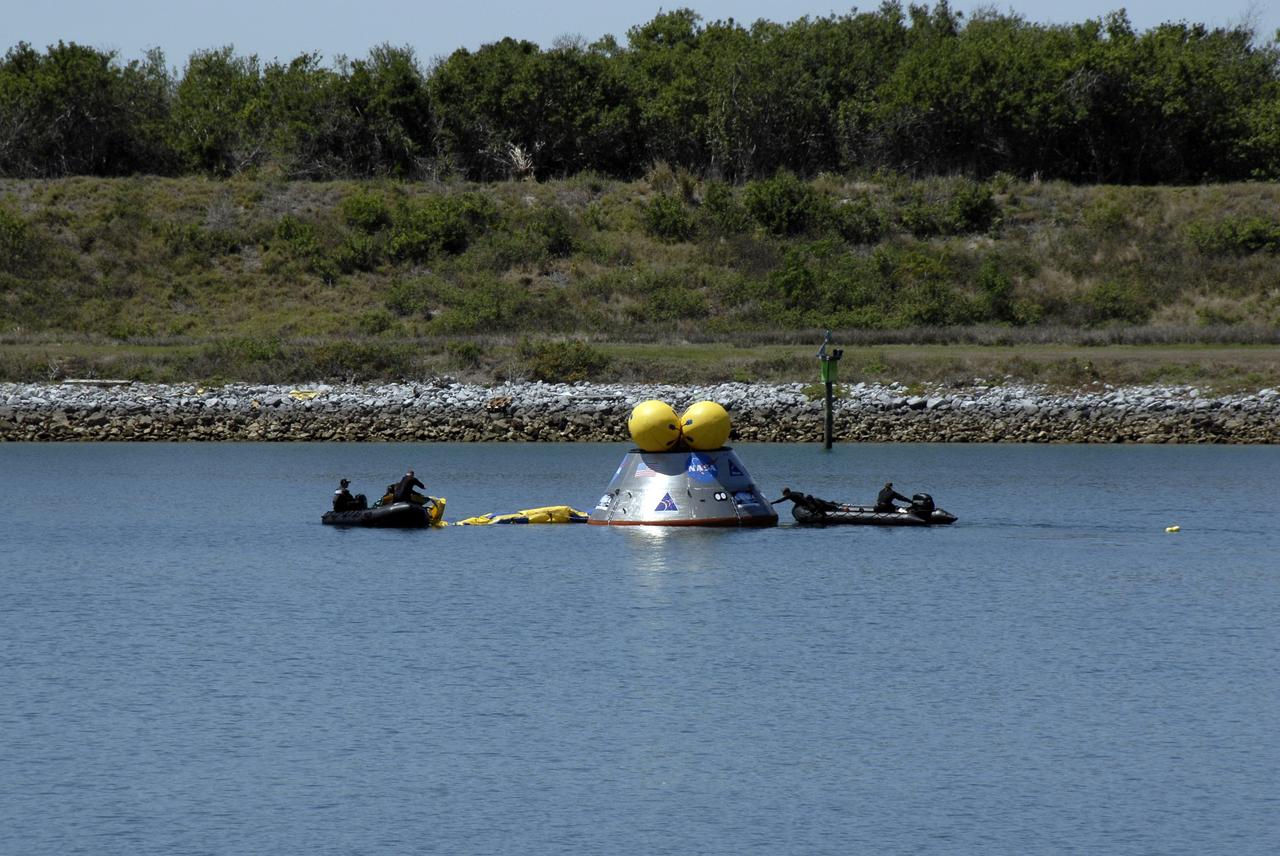
CAPE CANAVERAL, Fla. – Members of the 920th Rescue Wing release a flotation collar around the mockup Orion crew exploration vehicle at the Trident Basin at Port Canaveral, Fla. On top of Orion are additional flotation devices. The mockup vehicle will undergo testing in open water. The goal of the operation, dubbed the Post-landing Orion Recovery Test, or PORT, is to determine what kind of motion astronauts can expect after landing, as well as outside conditions for recovery teams. Orion is targeted to begin carrying humans to the International Space Station in 2015 and to the moon by 2020. Orion, along with the Ares I and V rockets and the Altair lunar lander, are part of the Constellation Program. Photo credit: NASA/Kim Shiflett
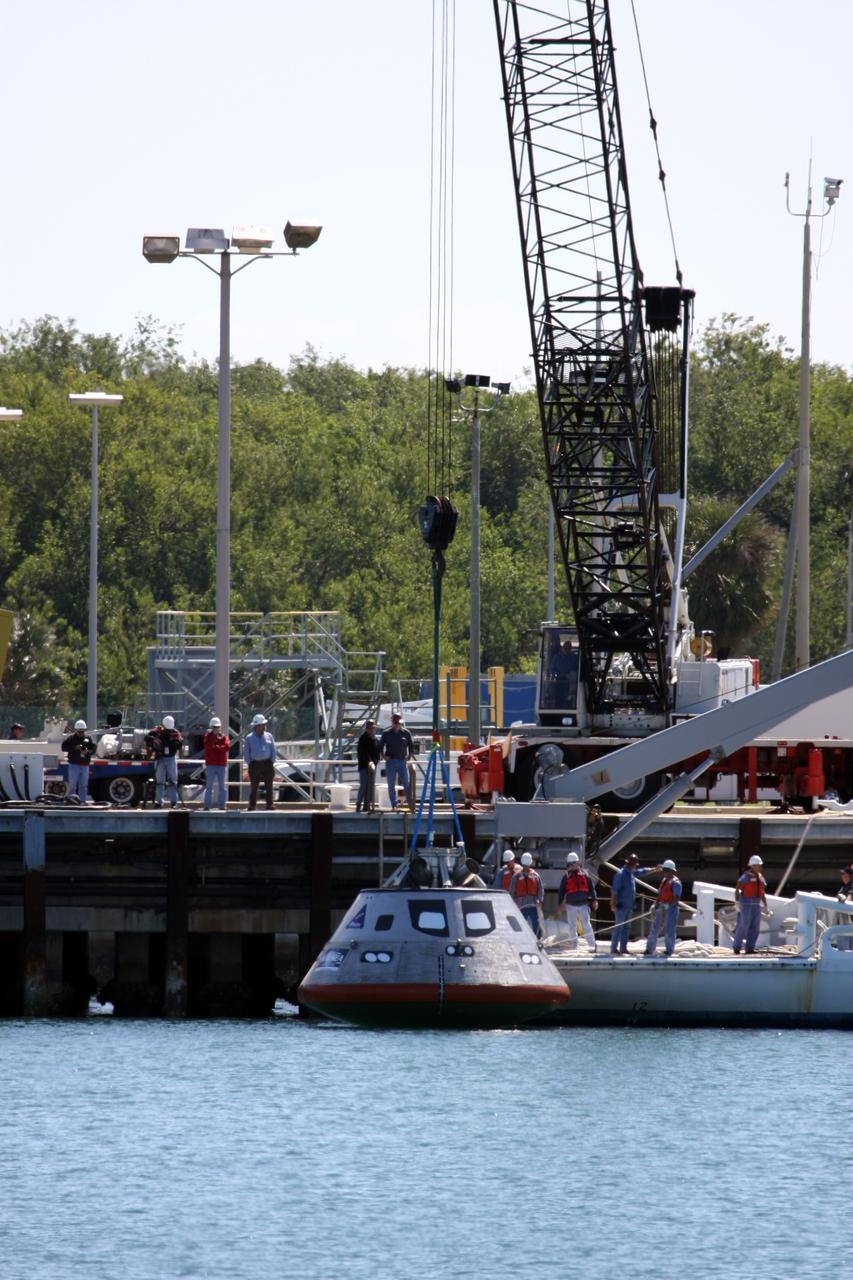
CAPE CANAVERAL, Fla. – The mockup Orion crew exploration vehicle is lowered into the water at the Trident Basin at Port Canaveral, Fla., for testing. Orion is targeted to begin carrying humans to the International Space Station in 2015 and to the moon by 2020. The goal of the operation, dubbed the Post-landing Orion Recovery Test, or PORT, is to determine what kind of motion astronauts can expect after landing, as well as outside conditions for recovery teams. Orion, along with the Ares I and V rockets and the Altair lunar lander, are part of the Constellation Program. Photo credit: NASA/Dimitri Gerondidakis
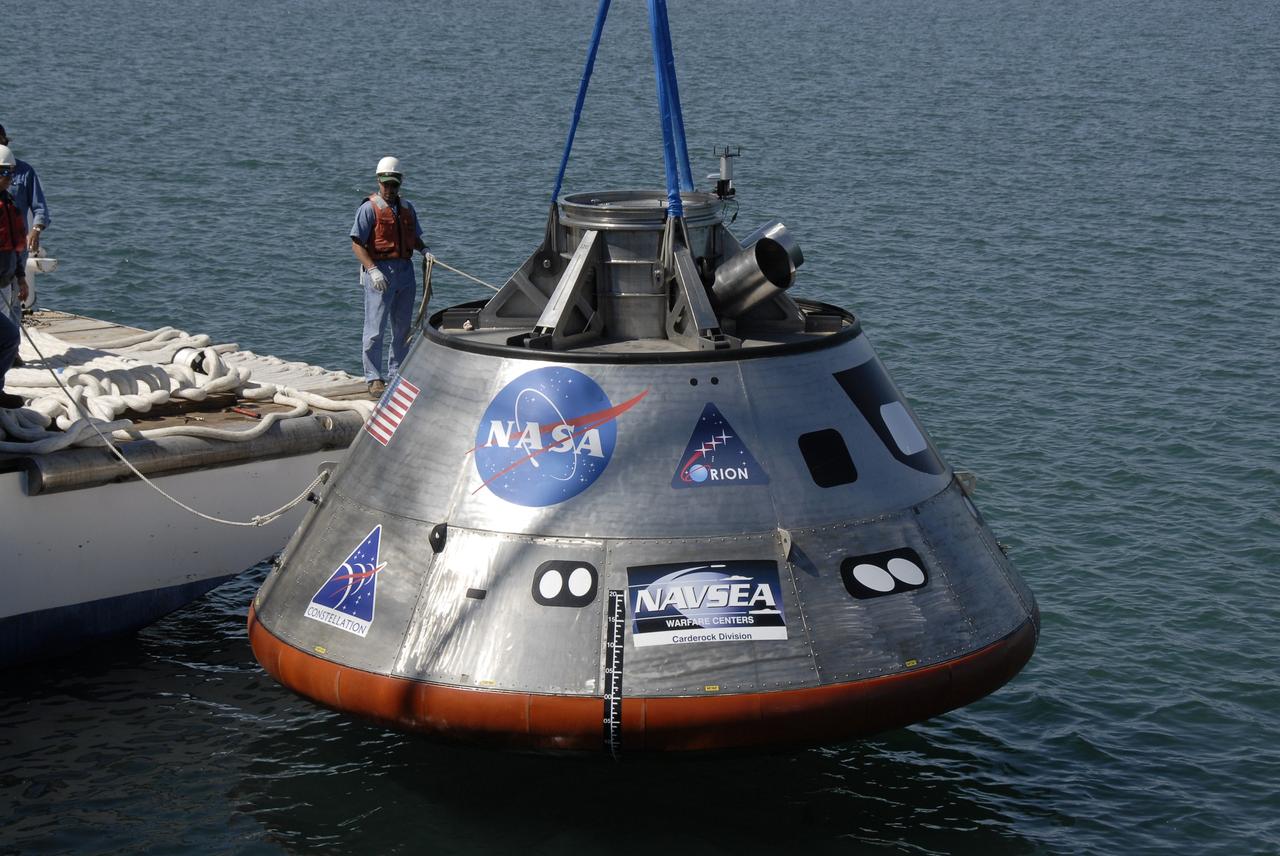
CAPE CANAVERAL, Fla. – The mockup Orion crew exploration vehicle is lowered into the water at the Trident Basin at Port Canaveral, Fla., for testing in open water. The goal of the operation, dubbed the Post-landing Orion Recovery Test, or PORT, is to determine what kind of motion astronauts can expect after landing, as well as outside conditions for recovery teams. Orion is targeted to begin carrying humans to the International Space Station in 2015 and to the moon by 2020. Orion, along with the Ares I and V rockets and the Altair lunar lander, are part of the Constellation Program. Photo credit: NASA/Kim Shiflett
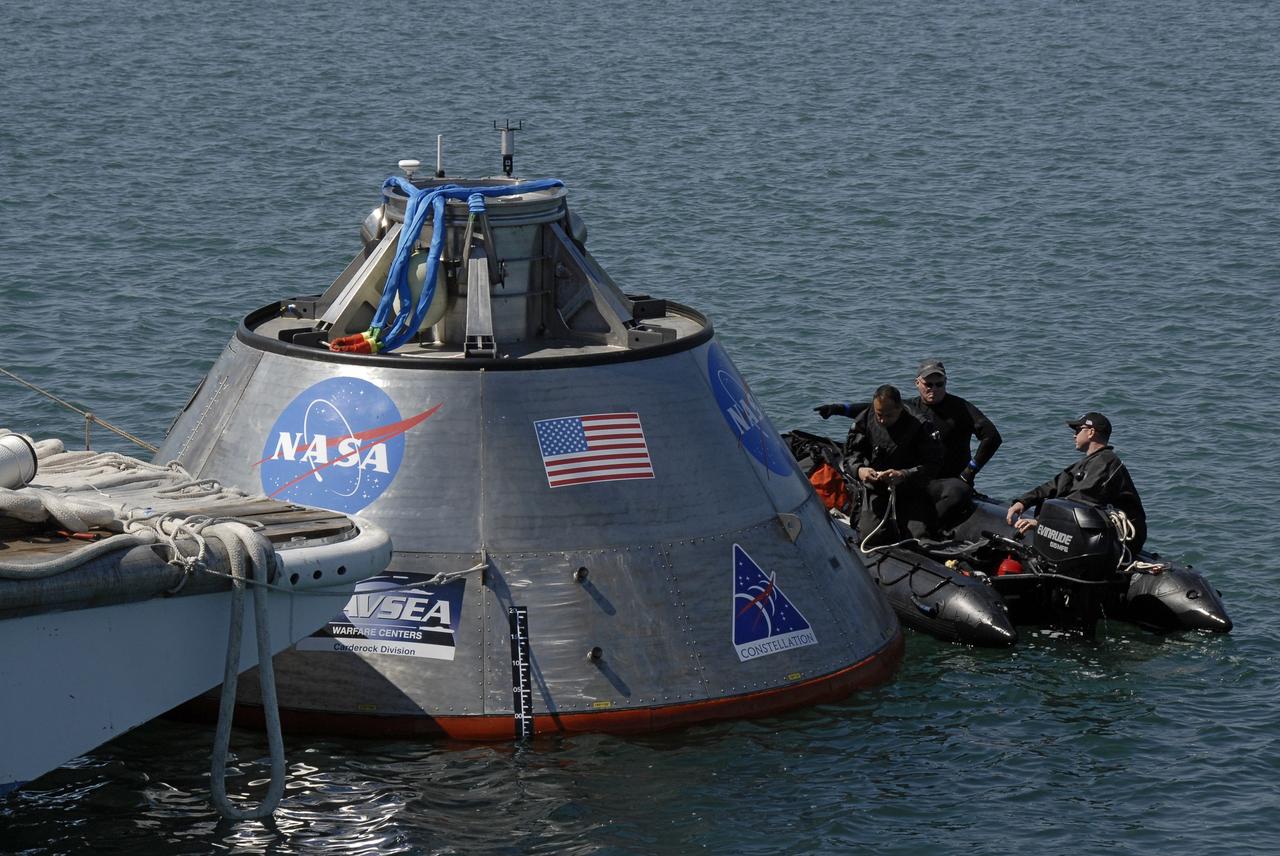
CAPE CANAVERAL, Fla. – Members of the 920th Rescue Wing help prepare the mockup Orion crew exploration vehicle for testing in the open water at the Trident Basin at Port Canaveral, Fla. The mockup vehicle will undergo testing in open water. The goal of the operation, dubbed the Post-landing Orion Recovery Test, or PORT, is to determine what kind of motion astronauts can expect after landing, as well as outside conditions for recovery teams. Orion is targeted to begin carrying humans to the International Space Station in 2015 and to the moon by 2020. Orion, along with the Ares I and V rockets and the Altair lunar lander, are part of the Constellation Program. Photo credit: NASA/Kim Shiflett
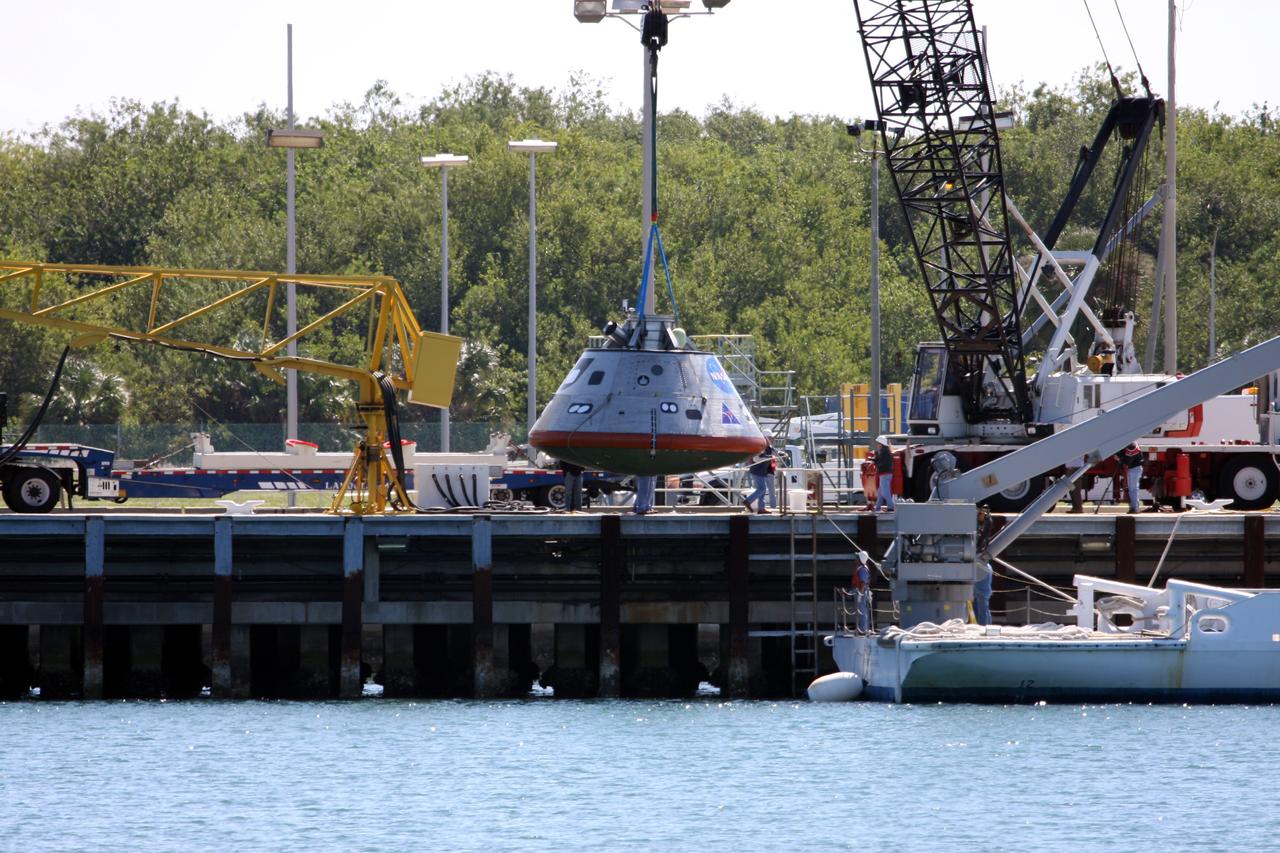
CAPE CANAVERAL, Fla. – The mockup Orion crew exploration vehicle is lowered toward the water at the Trident Basin at Port Canaveral, Fla., for testing. Orion is targeted to begin carrying humans to the International Space Station in 2015 and to the moon by 2020. The goal of the operation, dubbed the Post-landing Orion Recovery Test, or PORT, is to determine what kind of motion astronauts can expect after landing, as well as outside conditions for recovery teams. Orion, along with the Ares I and V rockets and the Altair lunar lander, are part of the Constellation Program. Photo credit: NASA/Dimitri Gerondidakis
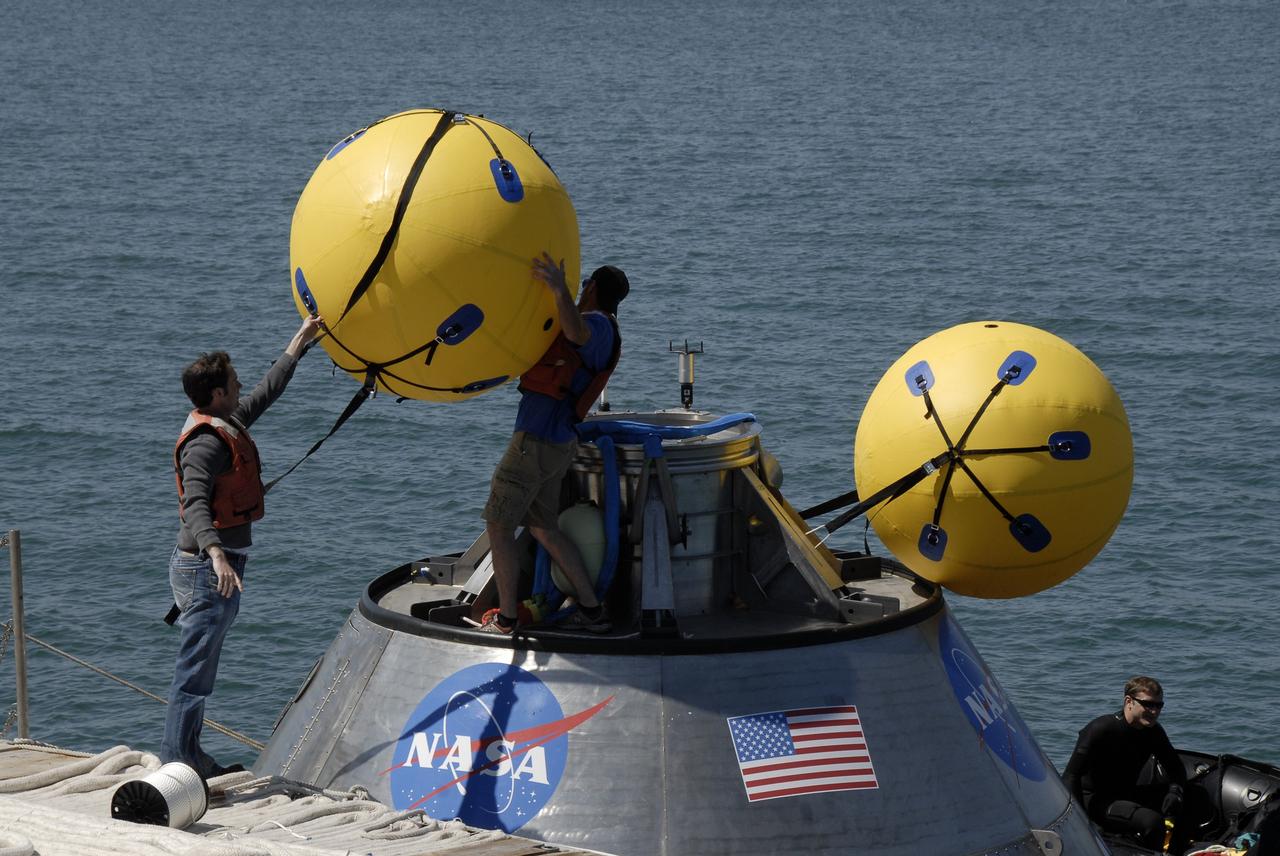
CAPE CANAVERAL, Fla. – Flotation devices are attached to the top of the mockup Orion crew exploration vehicle before the testing in the open water at the Trident Basin at Port Canaveral, Fla. The mockup vehicle will undergo testing in open water. The goal of the operation, dubbed the Post-landing Orion Recovery Test, or PORT, is to determine what kind of motion astronauts can expect after landing, as well as outside conditions for recovery teams. Orion is targeted to begin carrying humans to the International Space Station in 2015 and to the moon by 2020. Orion, along with the Ares I and V rockets and the Altair lunar lander, are part of the Constellation Program. Photo credit: NASA/Kim Shiflett
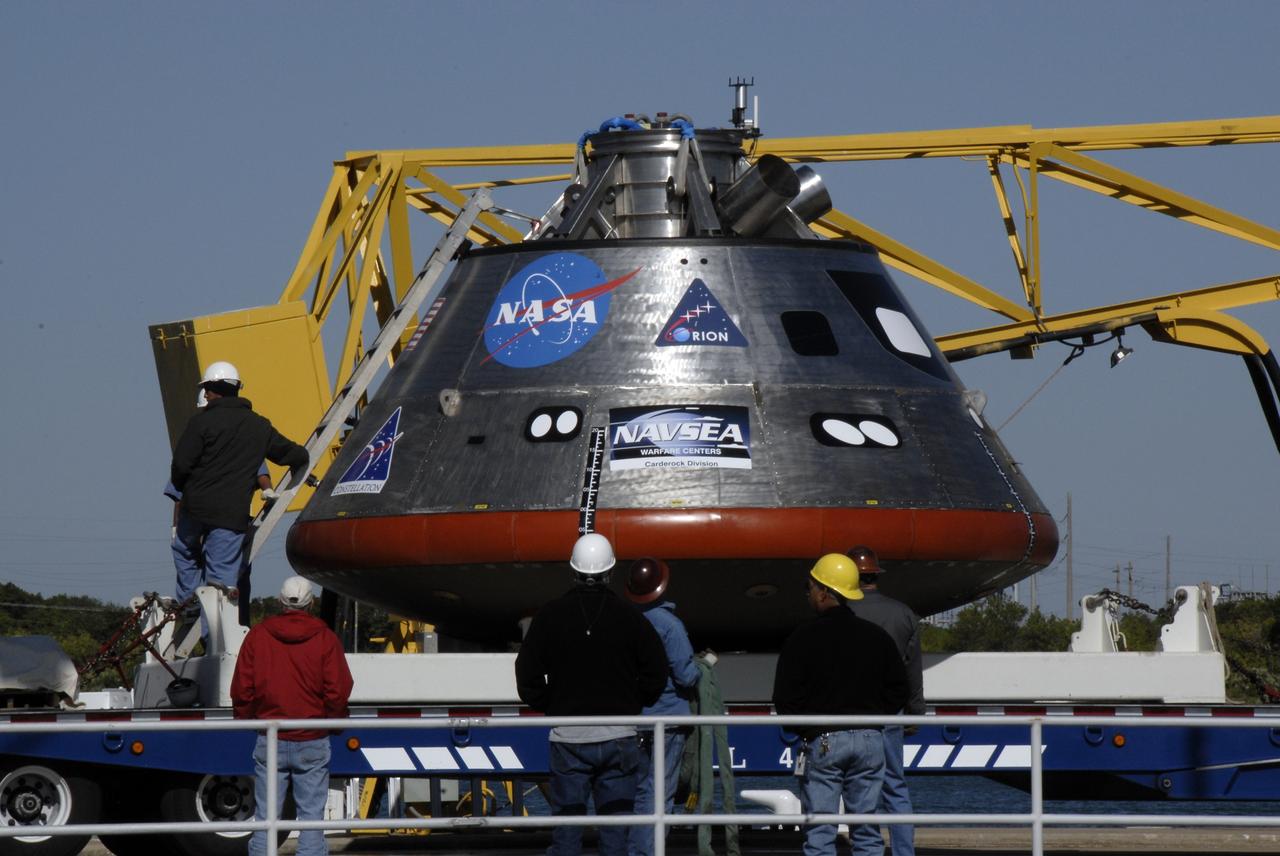
CAPE CANAVERAL, Fla. – The mockup Orion crew exploration vehicle is on the dock at the Trident Basin at Port Canaveral, Fla., waiting to be tested in open water. The goal of the operation, dubbed the Post-landing Orion Recovery Test, or PORT, is to determine what kind of motion astronauts can expect after landing, as well as outside conditions for recovery teams. Orion is targeted to begin carrying humans to the International Space Station in 2015 and to the moon by 2020. Orion, along with the Ares I and V rockets and the Altair lunar lander, are part of the Constellation Program. Photo credit: NASA/Kim Shiflett
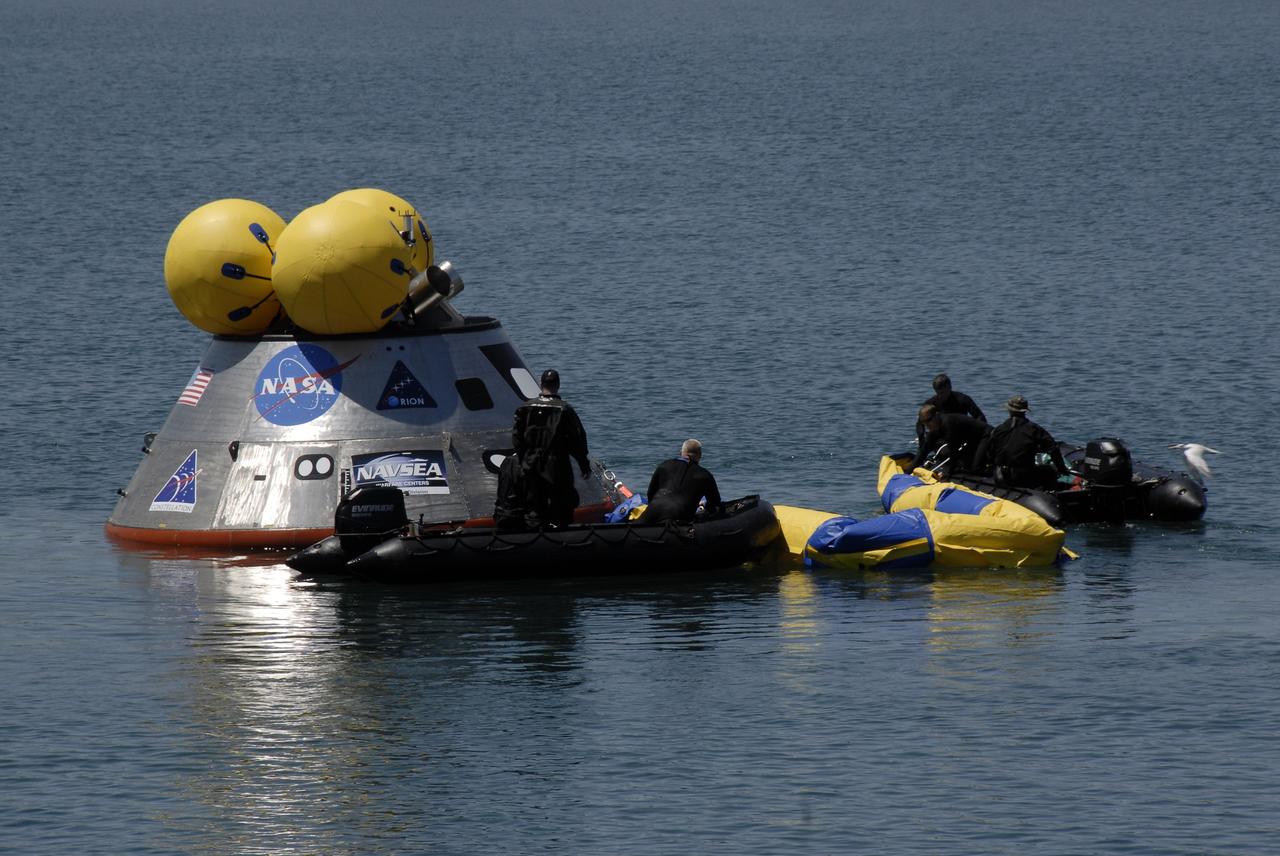
CAPE CANAVERAL, Fla. – Members of the 920th Rescue Wing release a flotation collar around the mockup Orion crew exploration vehicle at the Trident Basin at Port Canaveral, Fla. On top of Orion are additional flotation devices. The mockup vehicle will undergo testing in open water. The goal of the operation, dubbed the Post-landing Orion Recovery Test, or PORT, is to determine what kind of motion astronauts can expect after landing, as well as outside conditions for recovery teams. Orion is targeted to begin carrying humans to the International Space Station in 2015 and to the moon by 2020. Orion, along with the Ares I and V rockets and the Altair lunar lander, are part of the Constellation Program. Photo credit: NASA/Kim Shiflett
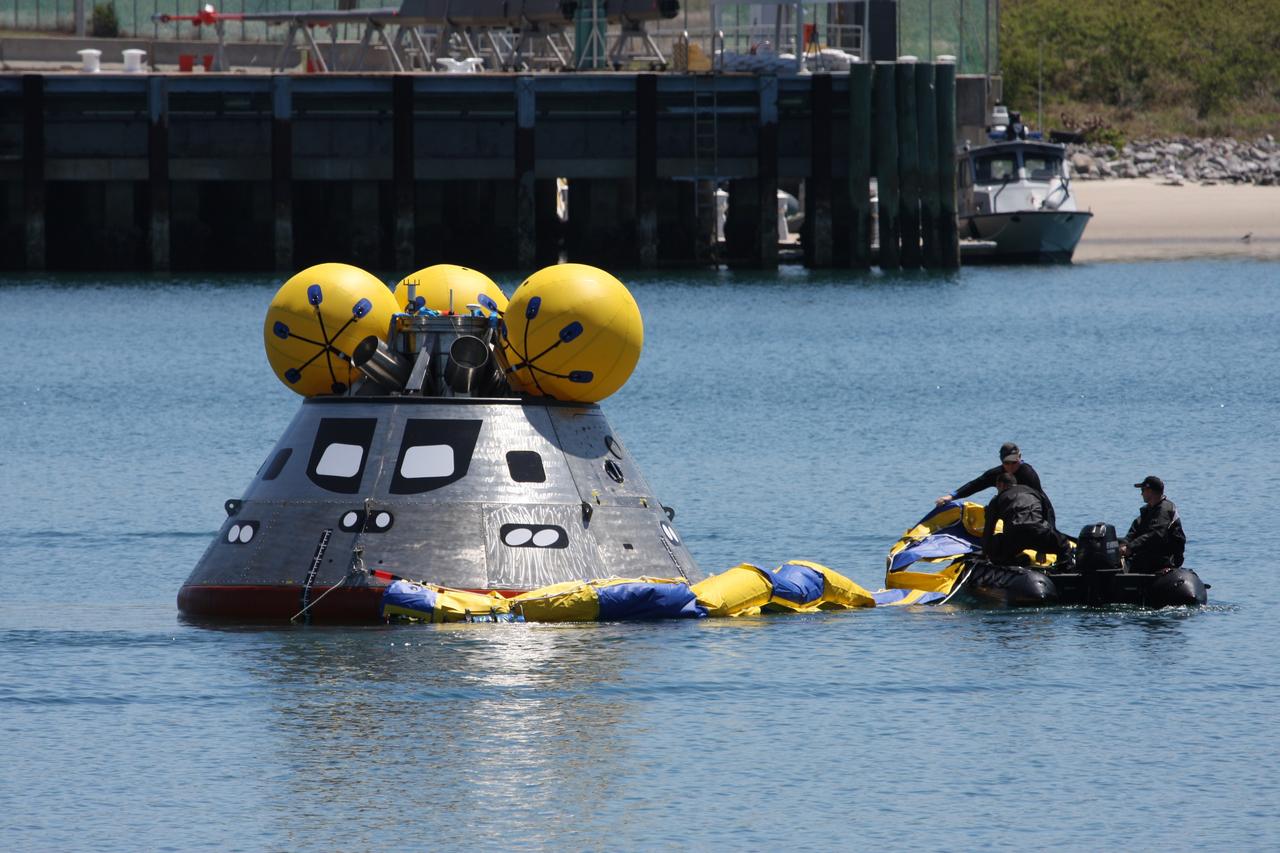
CAPE CANAVERAL, Fla. – Members of the 920th Rescue Wing release a flotation collar around the mockup Orion crew exploration vehicle at the Trident Basin at Port Canaveral, Fla. On top of Orion are additional flotation devices. The goal of the operation, dubbed the Post-landing Orion Recovery Test, or PORT, is to determine what kind of motion astronauts can expect after landing, as well as outside conditions for recovery teams. Orion is targeted to begin carrying humans to the International Space Station in 2015 and to the moon by 2020. Orion is targeted to begin carrying humans to the International Space Station in 2015 and to the moon by 2020. Orion, along with the Ares I and V rockets and the Altair lunar lander, are part of the Constellation Program. Photo credit: NASA/Dimitri Gerondidakis
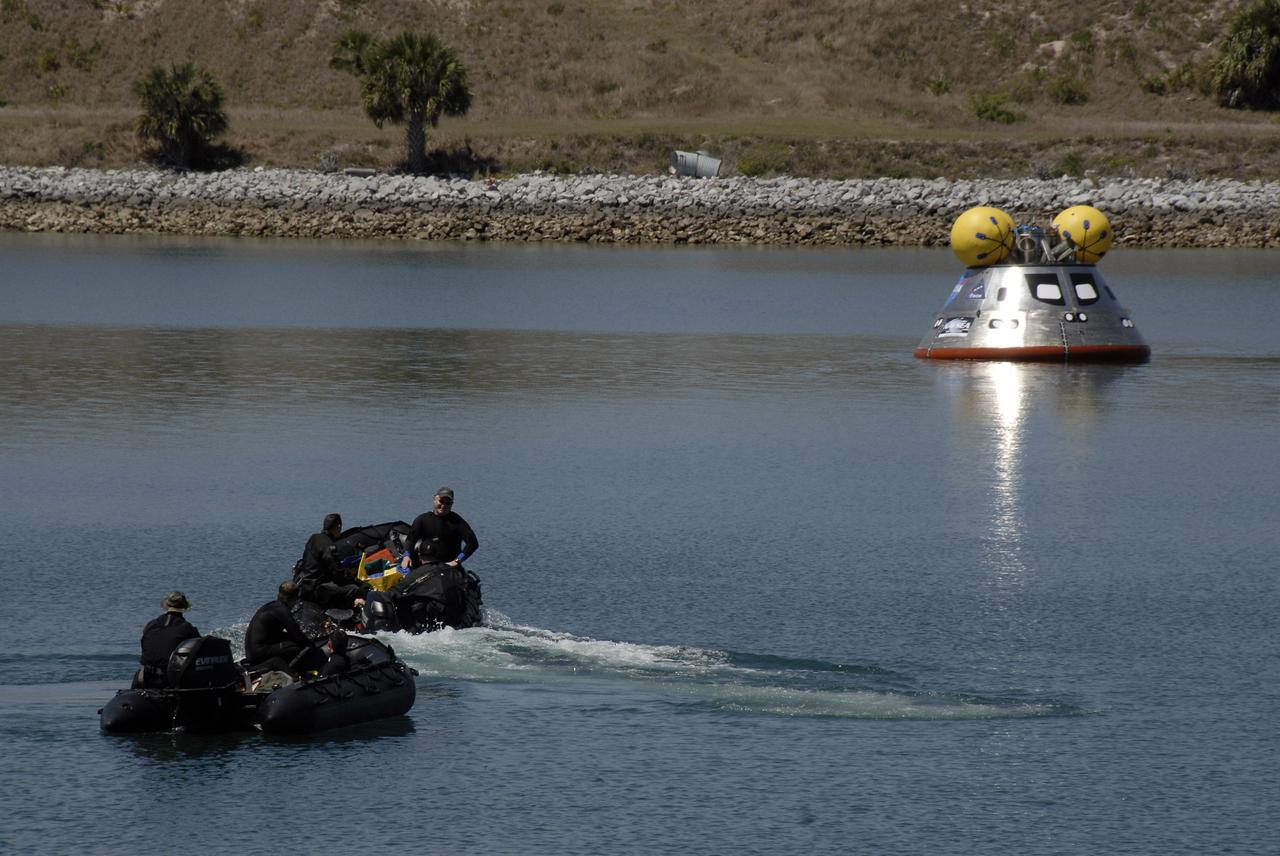
CAPE CANAVERAL, Fla. – Members of the 920th Rescue Wing make their way toward the mockup Orion crew exploration vehicle floating in the open water of the Trident Basin at Port Canaveral, Fla. They will place a flotation collar around the mockup vehicle. The mockup vehicle will undergo testing in open water. The goal of the operation, dubbed the Post-landing Orion Recovery Test, or PORT, is to determine what kind of motion astronauts can expect after landing, as well as outside conditions for recovery teams. Orion is targeted to begin carrying humans to the International Space Station in 2015 and to the moon by 2020. Orion, along with the Ares I and V rockets and the Altair lunar lander, are part of the Constellation Program. Photo credit: NASA/Kim Shiflett