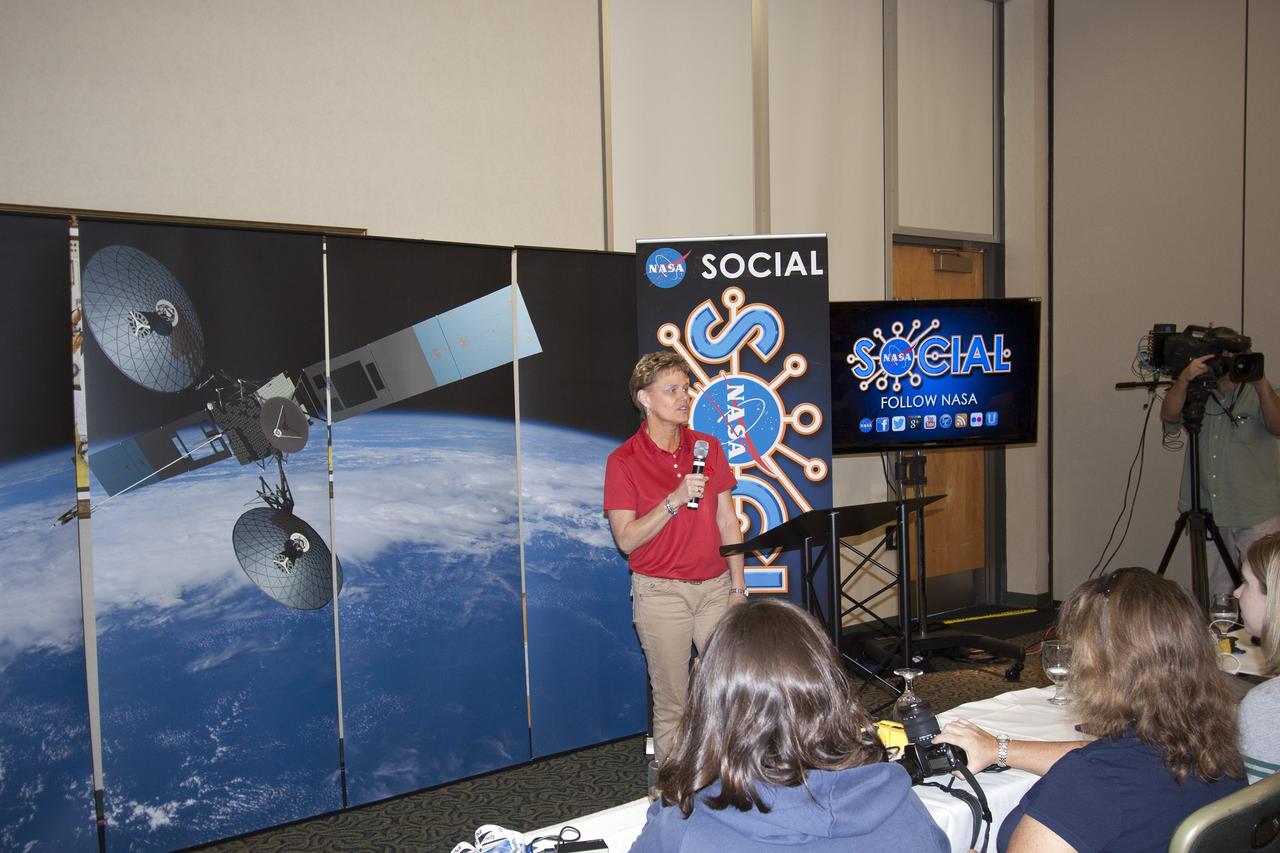
CAPE CANAVERAL, Fla. -- At NASA's Kennedy Space Center in Florida, Nancy Bray of NASA Public Affairs welcomes agency social media followers to the first day of activities of a NASA Social revolving around NASA's Tracking and Data Relay Satellite-K mission. NASA Socials are in-person meetings for people who engage with the agency through Twitter, Facebook, Google+ and other social networks. The satellite, known as TDRS-K, is set to launch at 8:48 p.m. EST on Jan. 30 aboard a United Launch Alliance Atlas V rocket from Space Launch Complex 41 on nearby Cape Canaveral Air Force Station. About 50 followers were selected to participate in the TDRS-K prelaunch and launch activities and share them with their own fan base. The TDRS-K spacecraft is part of the next-generation series in the Tracking and Data Relay Satellite System, a constellation of space-based communication satellites providing tracking, telemetry, command and high-bandwidth data return services. For more information, visit http://www.nasa.gov/mission_pages/tdrs/index.html. Photo credit: NASA/Jim Grossmann
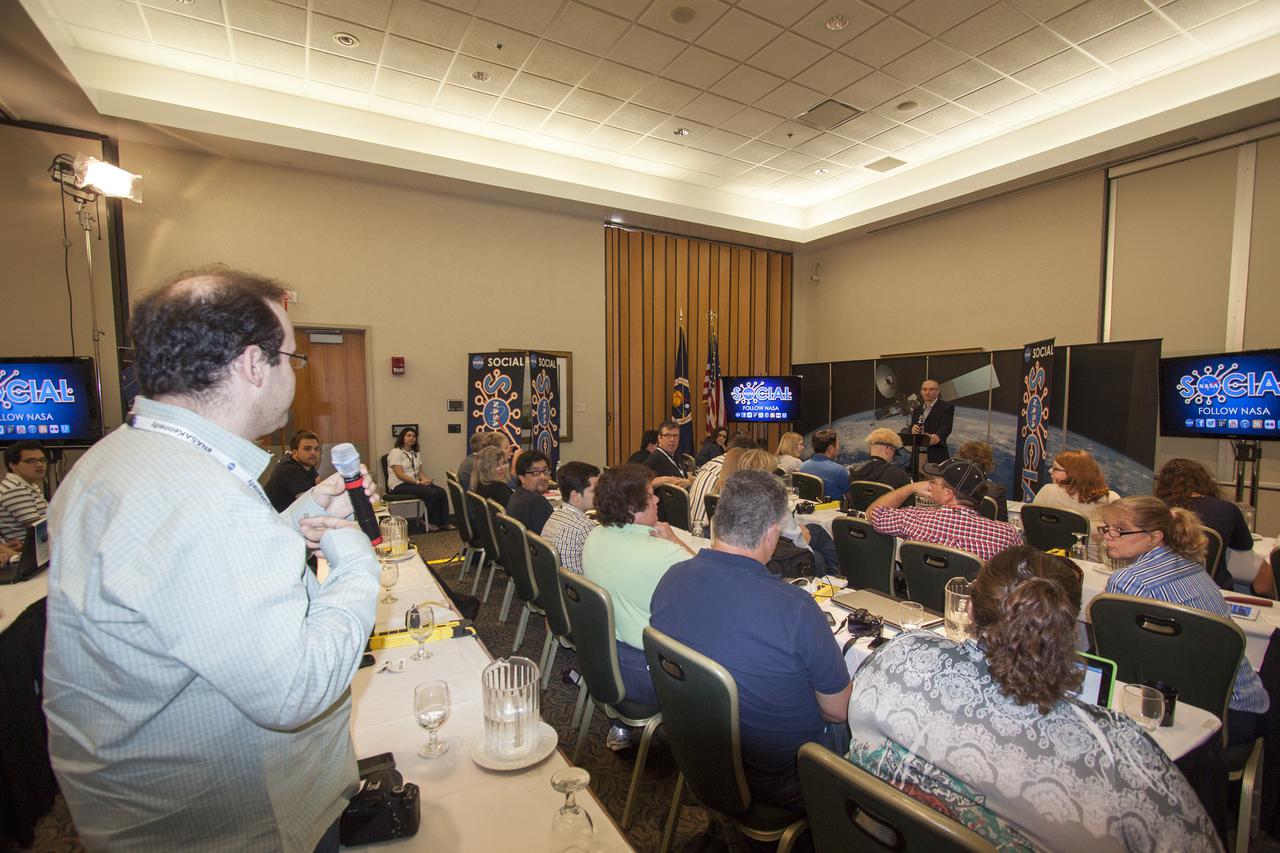
CAPE CANAVERAL, Fla. -- At NASA's Kennedy Space Center in Florida, Jeff Gramling, project manager for NASA's Tracking and Data Relay Satellite-K, takes a question from an agency social media follower participating in the first day of activities of a NASA Social revolving around the satellite's mission. NASA Socials are in-person meetings for people who engage with the agency through Twitter, Facebook, Google+ and other social networks. The satellite, known as TDRS-K, is set to launch at 8:48 p.m. EST on Jan. 30 aboard a United Launch Alliance Atlas V rocket from Space Launch Complex 41 on nearby Cape Canaveral Air Force Station. About 50 followers were selected to participate in the TDRS-K prelaunch and launch activities and share them with their own fan base. The TDRS-K spacecraft is part of the next-generation series in the Tracking and Data Relay Satellite System, a constellation of space-based communication satellites providing tracking, telemetry, command and high-bandwidth data return services. For more information, visit http:__www.nasa.gov_mission_pages_tdrs_index.html. Photo credit: NASA_Jim Grossmann
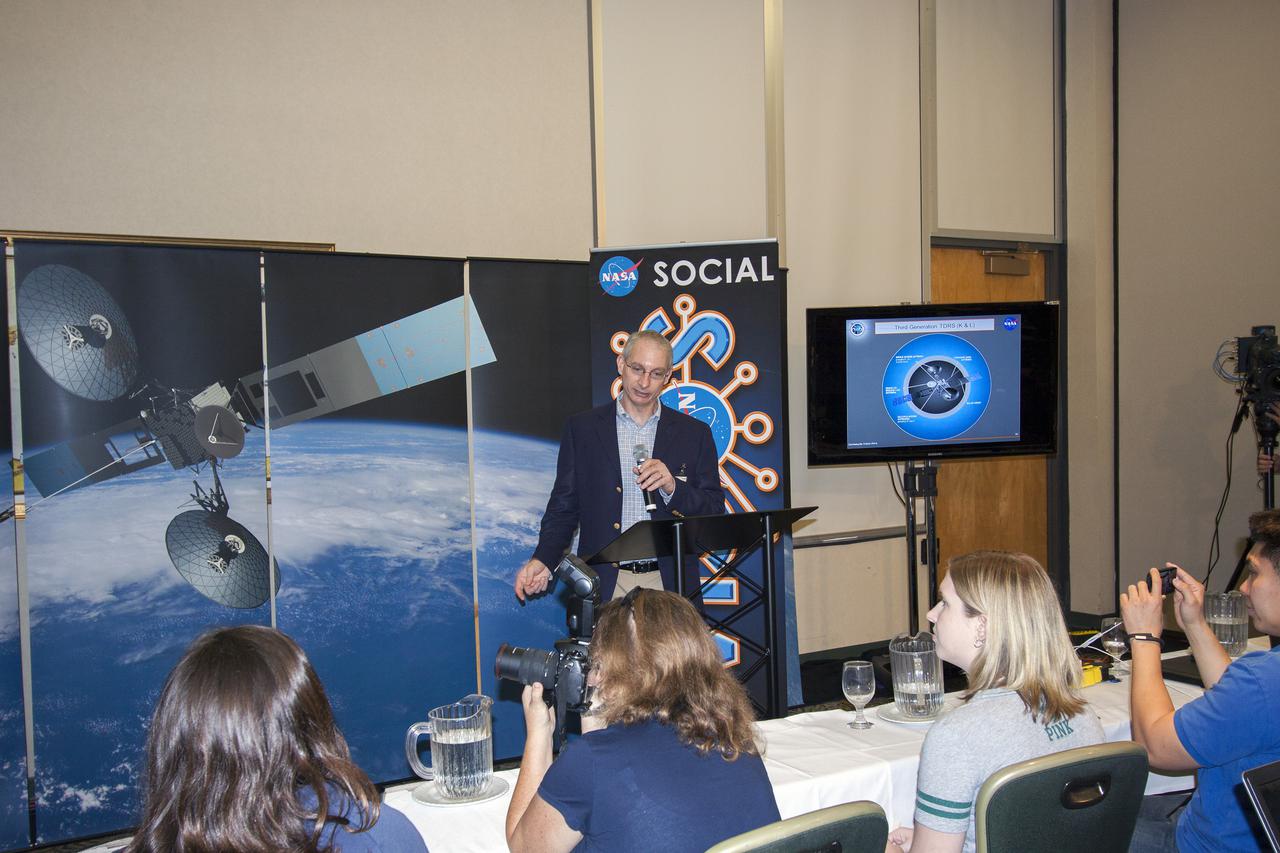
CAPE CANAVERAL, Fla. -- At NASA's Kennedy Space Center in Florida, Jeff Gramling, project manager for NASA's Tracking and Data Relay Satellite-K, addresses agency social media followers on the first day of activities of a NASA Social revolving around the satellite's mission. NASA Socials are in-person meetings for people who engage with the agency through Twitter, Facebook, Google+ and other social networks. The satellite, known as TDRS-K, is set to launch at 8:48 p.m. EST on Jan. 30 aboard a United Launch Alliance Atlas V rocket from Space Launch Complex 41 on nearby Cape Canaveral Air Force Station. About 50 followers were selected to participate in the TDRS-K prelaunch and launch activities and share them with their own fan base. The TDRS-K spacecraft is part of the next-generation series in the Tracking and Data Relay Satellite System, a constellation of space-based communication satellites providing tracking, telemetry, command and high-bandwidth data return services. For more information, visit http:__www.nasa.gov_mission_pages_tdrs_index.html. Photo credit: NASA_Jim Grossmann
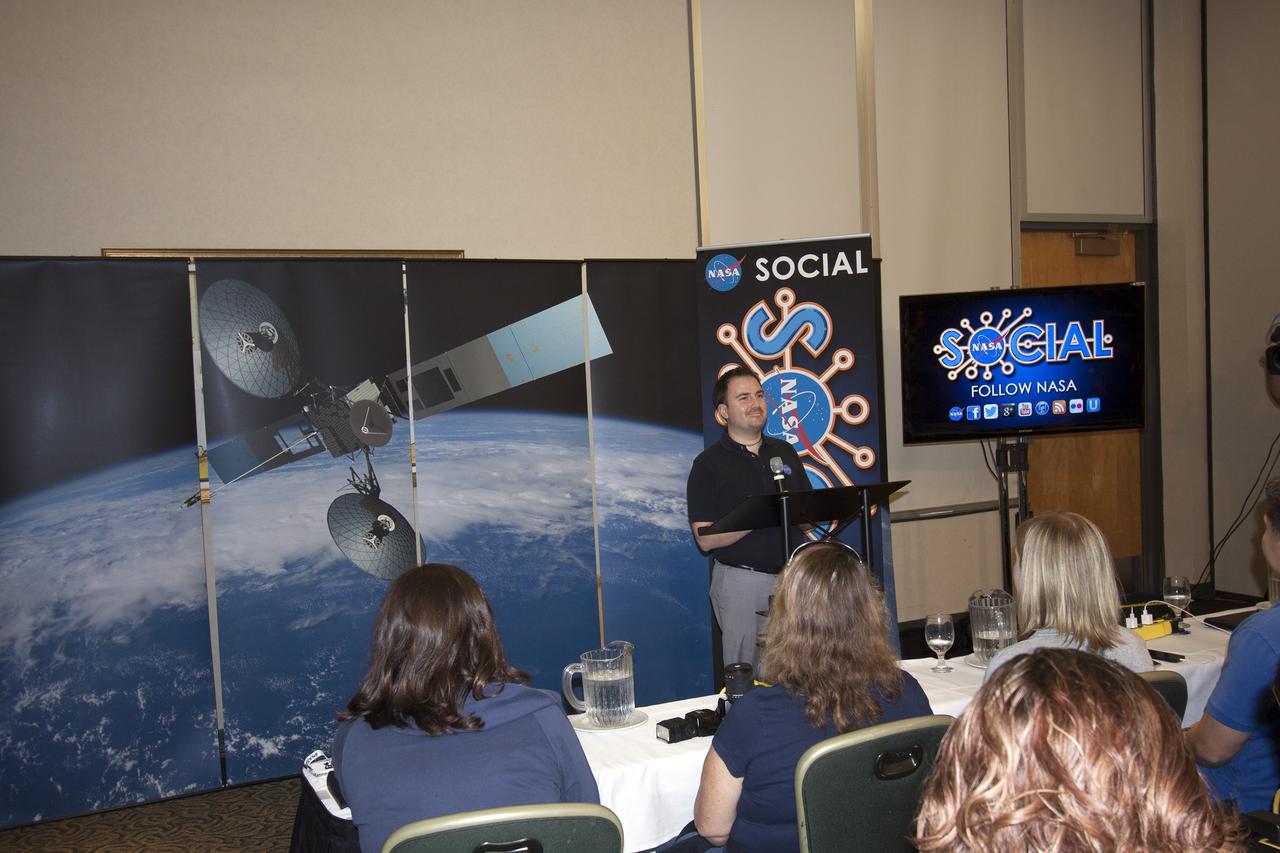
CAPE CANAVERAL, Fla. -- At NASA's Kennedy Space Center in Florida, Jason Townsend of NASA's Social Media Team welcomes agency social media followers to the first day of activities of a NASA Social revolving around NASA's Tracking and Data Relay Satellite-K mission. NASA Socials are in-person meetings for people who engage with the agency through Twitter, Facebook, Google+ and other social networks. The satellite, known as TDRS-K, is set to launch at 8:48 p.m. EST on Jan. 30 aboard a United Launch Alliance Atlas V rocket from Space Launch Complex 41 on nearby Cape Canaveral Air Force Station. About 50 followers were selected to participate in the TDRS-K prelaunch and launch activities and share them with their own fan base. The TDRS-K spacecraft is part of the next-generation series in the Tracking and Data Relay Satellite System, a constellation of space-based communication satellites providing tracking, telemetry, command and high-bandwidth data return services. For more information, visit http://www.nasa.gov/mission_pages/tdrs/index.html. Photo credit: NASA/Jim Grossmann
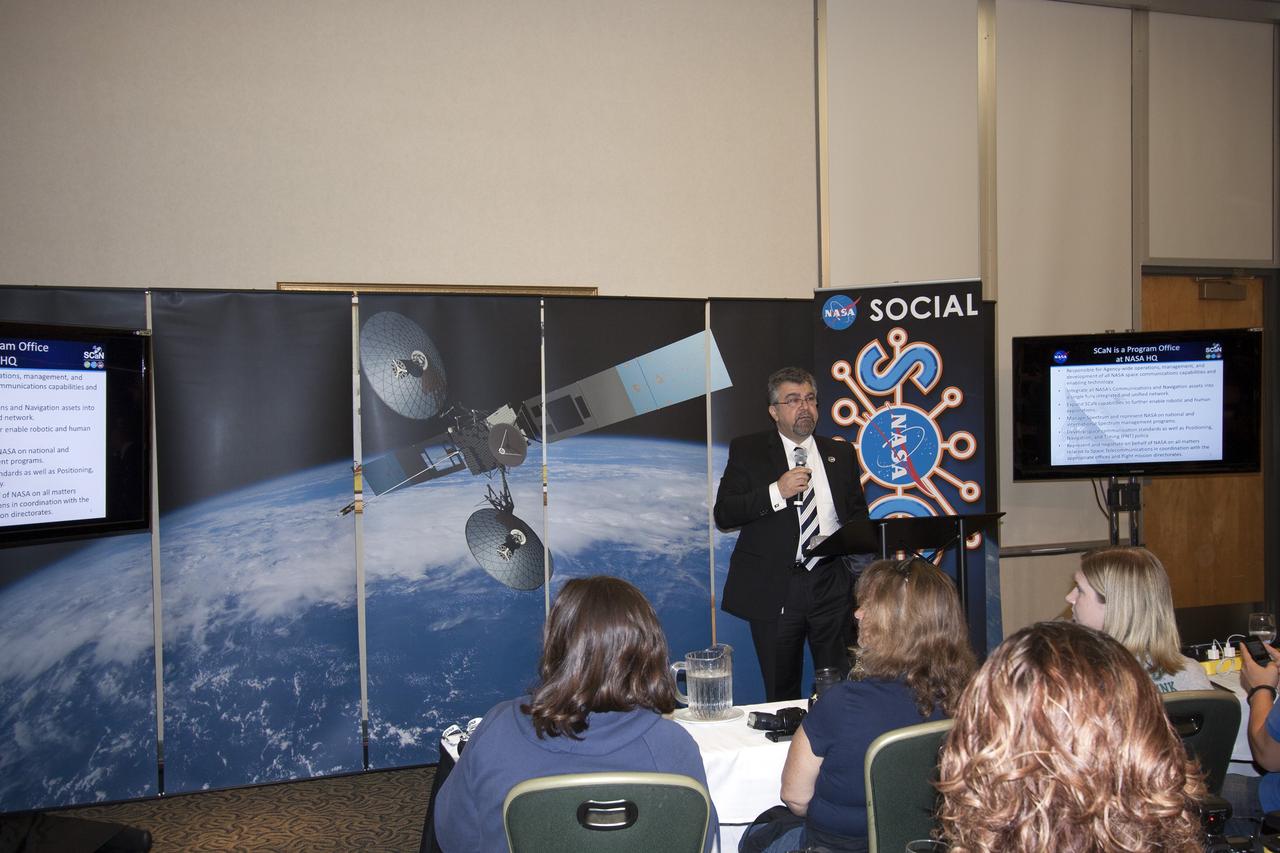
CAPE CANAVERAL, Fla. -- At NASA's Kennedy Space Center in Florida, Badri Younes, NASA deputy associate administrator for Space Communications and Navigation, or SCaN, addresses agency social media followers on the first day of activities of a NASA Social revolving around NASA's Tracking and Data Relay Satellite-K mission. NASA Socials are in-person meetings for people who engage with the agency through Twitter, Facebook, Google+ and other social networks. The satellite, known as TDRS-K, is set to launch at 8:48 p.m. EST on Jan. 30 aboard a United Launch Alliance Atlas V rocket from Space Launch Complex 41 on nearby Cape Canaveral Air Force Station. About 50 followers were selected to participate in the TDRS-K prelaunch and launch activities and share them with their own fan base. The TDRS-K spacecraft is part of the next-generation series in the Tracking and Data Relay Satellite System, a constellation of space-based communication satellites providing tracking, telemetry, command and high-bandwidth data return services. For more information, visit http://www.nasa.gov/mission_pages/tdrs/index.html. Photo credit: NASA/Jim Grossmann
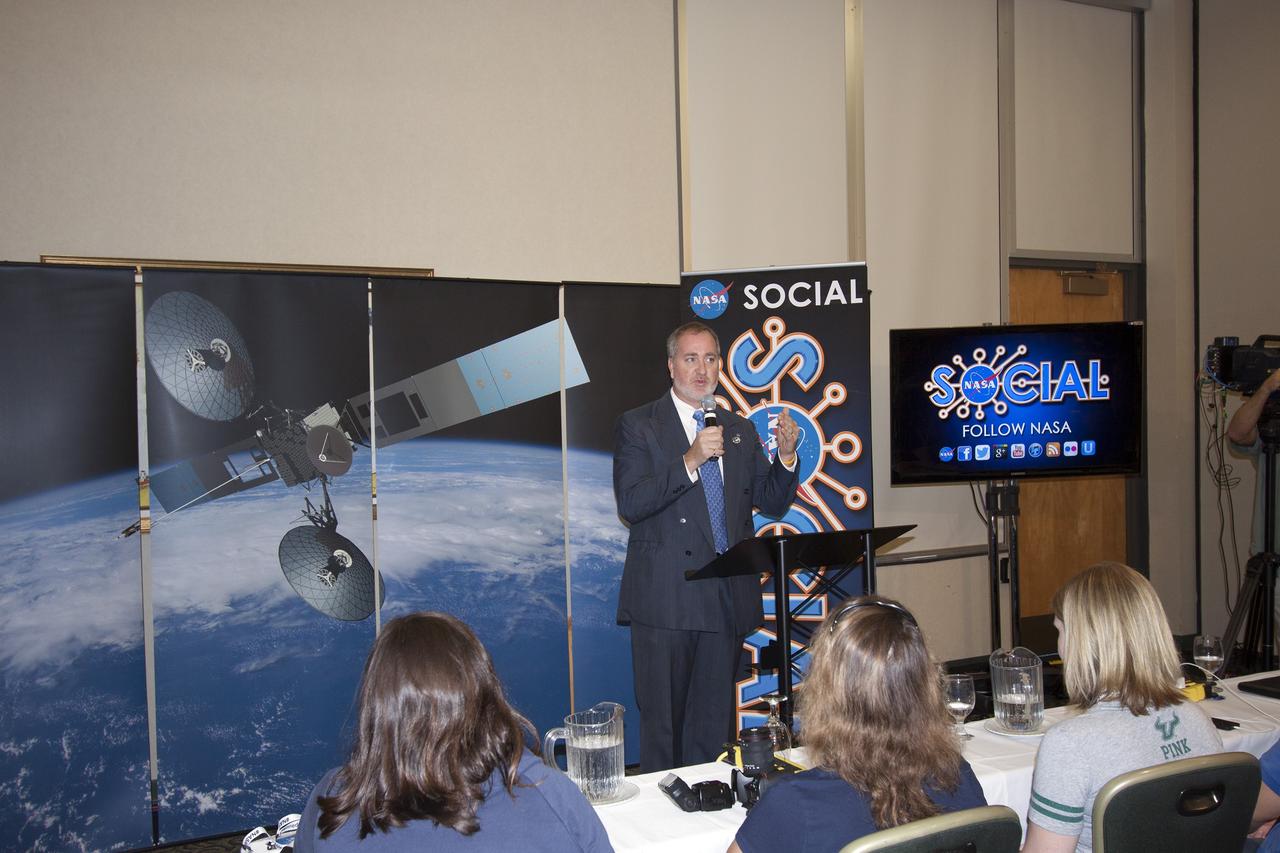
CAPE CANAVERAL, Fla. -- At NASA's Kennedy Space Center in Florida, Michael Woltman, senior vehicle systems engineer for NASA's Launch Services Program, addresses agency social media followers on the first day of activities of a NASA Social revolving around NASA's Tracking and Data Relay Satellite-K mission. NASA Socials are in-person meetings for people who engage with the agency through Twitter, Facebook, Google+ and other social networks. The satellite, known as TDRS-K, is set to launch at 8:48 p.m. EST on Jan. 30 aboard a United Launch Alliance Atlas V rocket from Space Launch Complex 41 on nearby Cape Canaveral Air Force Station. About 50 followers were selected to participate in the TDRS-K prelaunch and launch activities and share them with their own fan base. The TDRS-K spacecraft is part of the next-generation series in the Tracking and Data Relay Satellite System, a constellation of space-based communication satellites providing tracking, telemetry, command and high-bandwidth data return services. For more information, visit http://www.nasa.gov/mission_pages/tdrs/index.html. Photo credit: NASA/Jim Grossmann

CAPE CANAVERAL, Fla. -- At NASA's Kennedy Space Center in Florida, agency social media followers prepare for the first day of activities of a NASA Social revolving around NASA's Tracking and Data Relay Satellite-K mission. NASA Socials are in-person meetings for people who engage with the agency through Twitter, Facebook, Google+ and other social networks. The satellite, known as TDRS-K, is set to launch at 8:48 p.m. EST on Jan. 30 aboard a United Launch Alliance Atlas V rocket from Space Launch Complex 41 on nearby Cape Canaveral Air Force Station. About 50 followers were selected to participate in the TDRS-K prelaunch and launch activities and share them with their own fan base. The TDRS-K spacecraft is part of the next-generation series in the Tracking and Data Relay Satellite System, a constellation of space-based communication satellites providing tracking, telemetry, command and high-bandwidth data return services. For more information, visit http://www.nasa.gov/mission_pages/tdrs/index.html. Photo credit: NASA/Jim Grossmann

CAPE CANAVERAL, Fla. -- At NASA's Kennedy Space Center in Florida, Gifford Moak, deputy project manager of resources for NASA's Tracking and Data Relay Satellite-K, addresses agency social media followers on the first day of activities of a NASA Social revolving around NASA's Tracking and Data Relay Satellite-K mission. NASA Socials are in-person meetings for people who engage with the agency through Twitter, Facebook, Google+ and other social networks. The satellite, known as TDRS-K, is set to launch at 8:48 p.m. EST on Jan. 30 aboard a United Launch Alliance Atlas V rocket from Space Launch Complex 41 on nearby Cape Canaveral Air Force Station. About 50 followers were selected to participate in the TDRS-K prelaunch and launch activities and share them with their own fan base. The TDRS-K spacecraft is part of the next-generation series in the Tracking and Data Relay Satellite System, a constellation of space-based communication satellites providing tracking, telemetry, command and high-bandwidth data return services. For more information, visit http:__www.nasa.gov_mission_pages_tdrs_index.html. Photo credit: NASA_Jim Grossmann
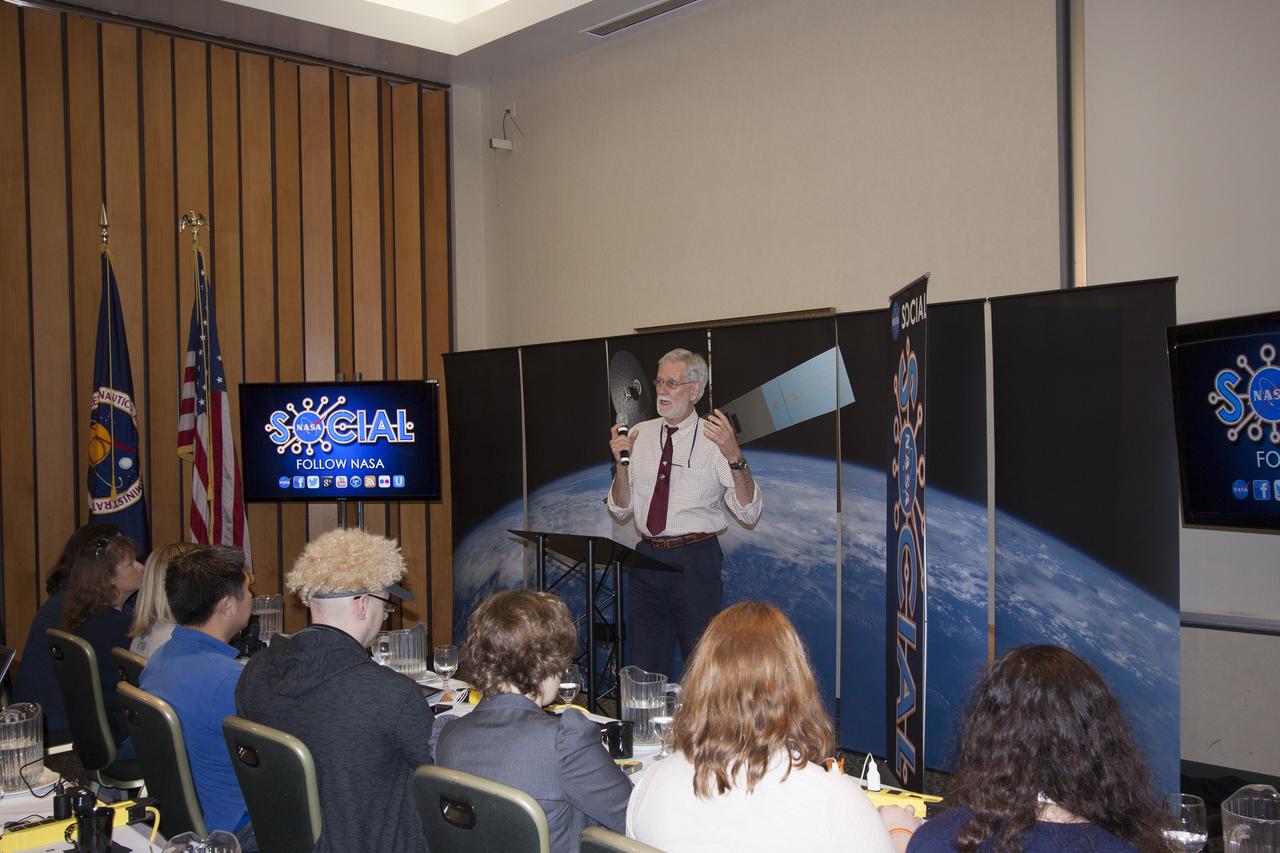
CAPE CANAVERAL, Fla. -- At NASA's Kennedy Space Center in Florida, Dr. Compton Tucker, senior scientist from NASA's Goddard Space Flight Center, addresses agency social media followers on the first day of activities of a NASA Social revolving around NASA's Tracking and Data Relay Satellite-K mission. NASA Socials are in-person meetings for people who engage with the agency through Twitter, Facebook, Google+ and other social networks. The satellite, known as TDRS-K, is set to launch at 8:48 p.m. EST on Jan. 30 aboard a United Launch Alliance Atlas V rocket from Space Launch Complex 41 on nearby Cape Canaveral Air Force Station. About 50 followers were selected to participate in the TDRS-K prelaunch and launch activities and share them with their own fan base. The TDRS-K spacecraft is part of the next-generation series in the Tracking and Data Relay Satellite System, a constellation of space-based communication satellites providing tracking, telemetry, command and high-bandwidth data return services. For more information, visit http://www.nasa.gov/mission_pages/tdrs/index.html. Photo credit: NASA/Jim Grossmann
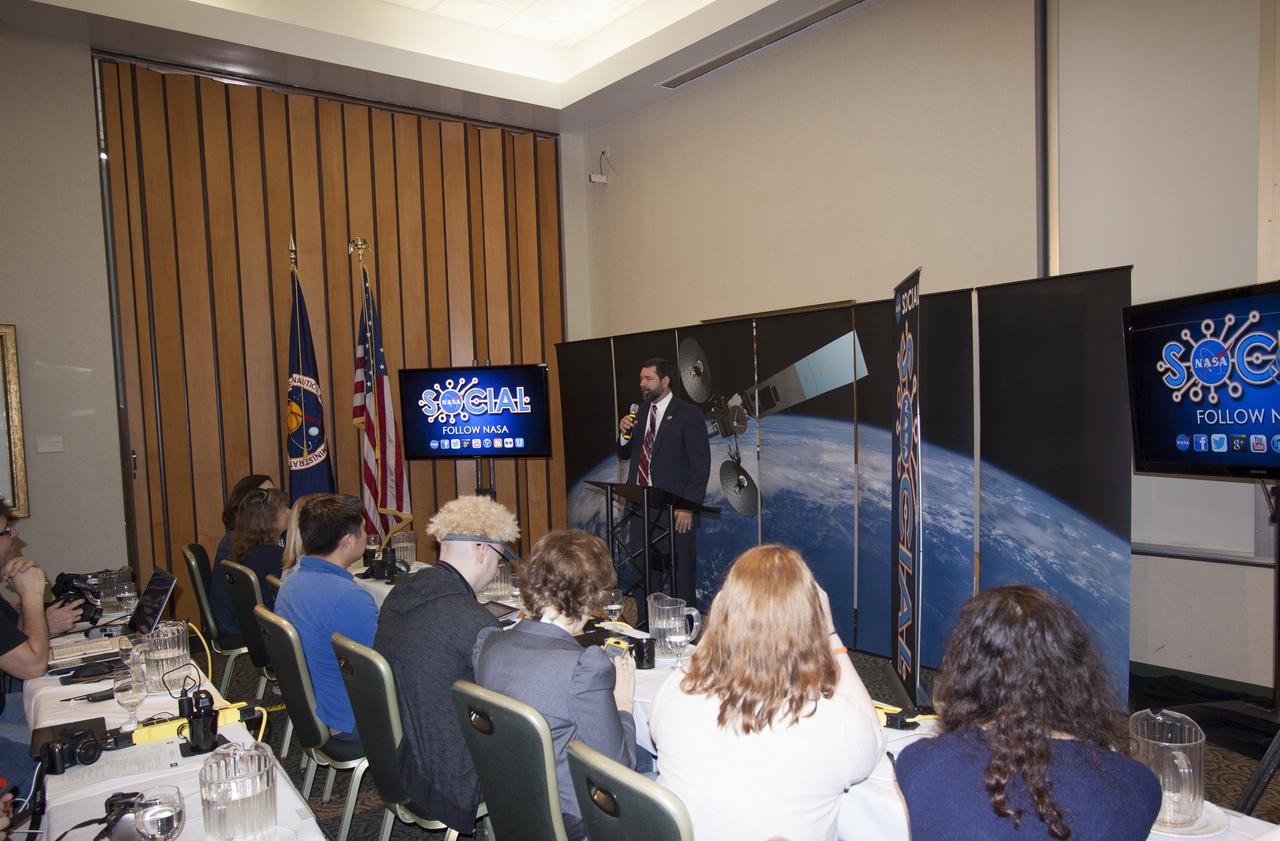
CAPE CANAVERAL, Fla. -- At NASA's Kennedy Space Center in Florida, Greg Williams, deputy associate administrator of NASA's Human Exploration and Operations Mission Directorate, addresses agency social media followers on the first day of activities of a NASA Social revolving around NASA's Tracking and Data Relay Satellite-K mission. NASA Socials are in-person meetings for people who engage with the agency through Twitter, Facebook, Google+ and other social networks. The satellite, known as TDRS-K, is set to launch at 8:48 p.m. EST on Jan. 30 aboard a United Launch Alliance Atlas V rocket from Space Launch Complex 41 on nearby Cape Canaveral Air Force Station. About 50 followers were selected to participate in the TDRS-K prelaunch and launch activities and share them with their own fan base. The TDRS-K spacecraft is part of the next-generation series in the Tracking and Data Relay Satellite System, a constellation of space-based communication satellites providing tracking, telemetry, command and high-bandwidth data return services. For more information, visit http://www.nasa.gov/mission_pages/tdrs/index.html. Photo credit: NASA/Jim Grossmann
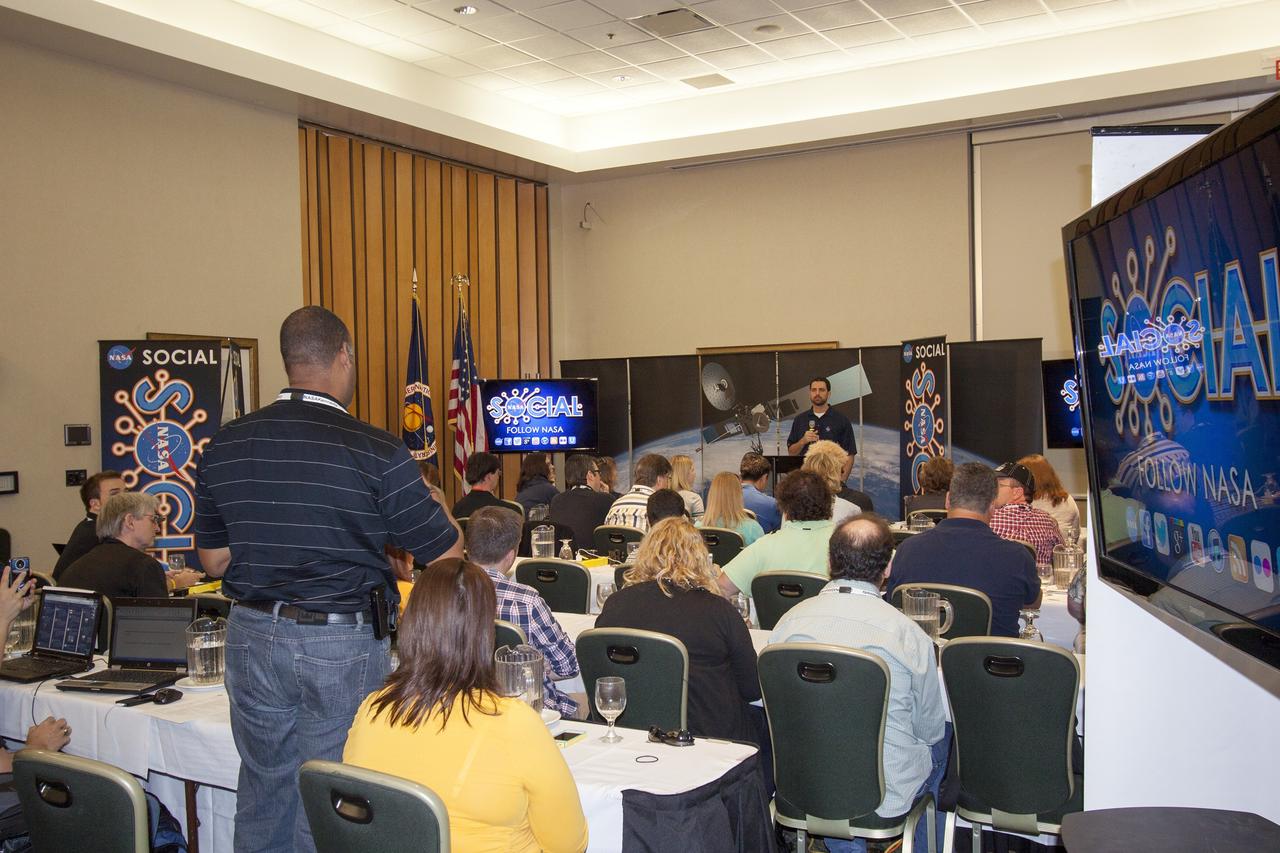
CAPE CANAVERAL, Fla. -- At NASA's Kennedy Space Center in Florida, Jeremy Parsons, technical manager for operations of NASA's Ground Systems Development and Operations Program, takes a question from an agency social media follower participating in the first day of activities of a NASA Social revolving around NASA's Tracking and Data Relay Satellite-K mission. NASA Socials are in-person meetings for people who engage with the agency through Twitter, Facebook, Google+ and other social networks. The satellite, known as TDRS-K, is set to launch at 8:48 p.m. EST on Jan. 30 aboard a United Launch Alliance Atlas V rocket from Space Launch Complex 41 on nearby Cape Canaveral Air Force Station. About 50 followers were selected to participate in the TDRS-K prelaunch and launch activities and share them with their own fan base. The TDRS-K spacecraft is part of the next-generation series in the Tracking and Data Relay Satellite System, a constellation of space-based communication satellites providing tracking, telemetry, command and high-bandwidth data return services. For more information, visit http://www.nasa.gov/mission_pages/tdrs/index.html. Photo credit: NASA/Jim Grossmann