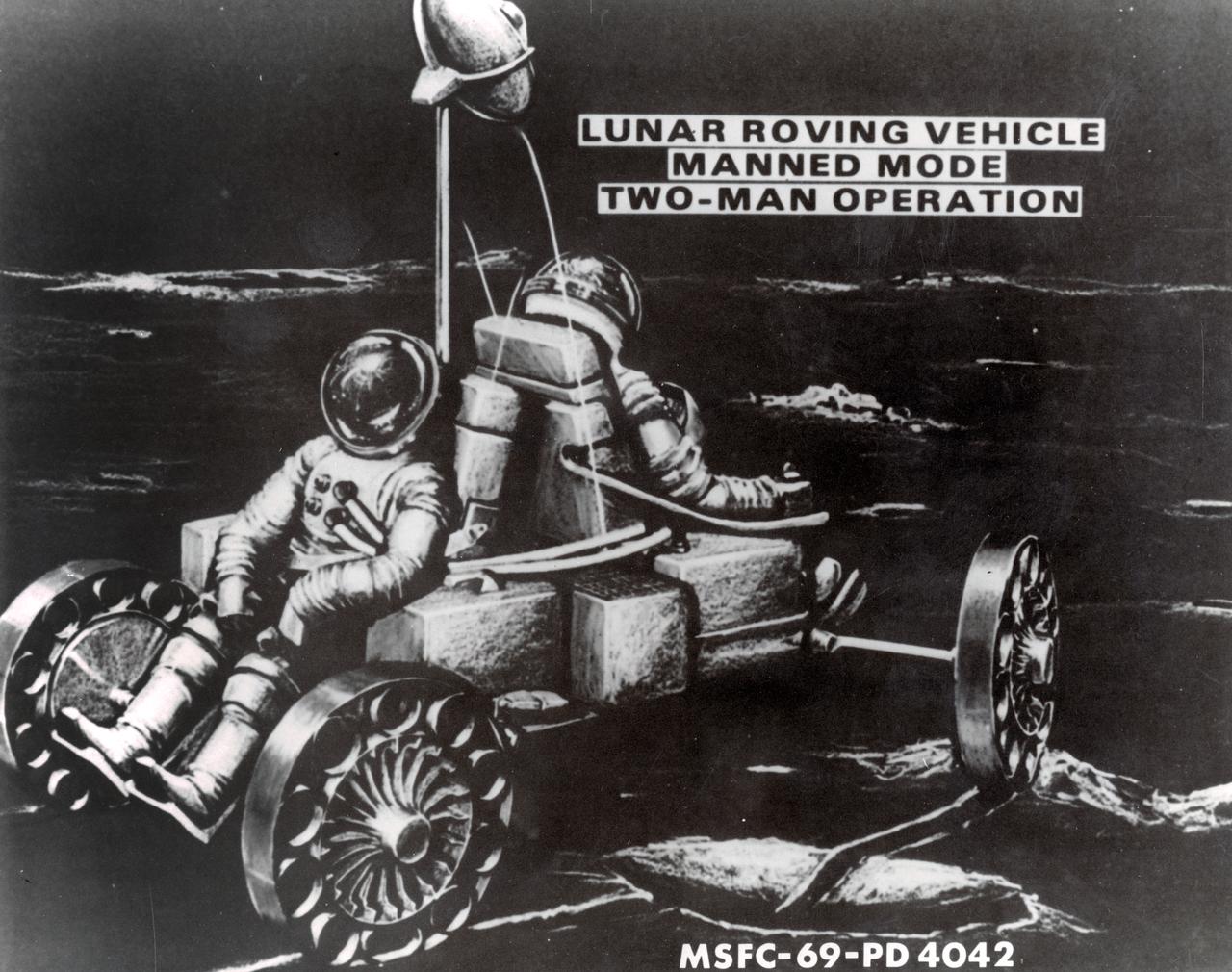
Artist’s concept of a manned Lunar Roving Vehicle (LRV) depicting two-man operation on the Lunar surface. The LRV was developed under the direction of the Marshall Space Flight Center (MSFC) to provide Apollo astronauts with a greater range of mobility on the lunar surface.
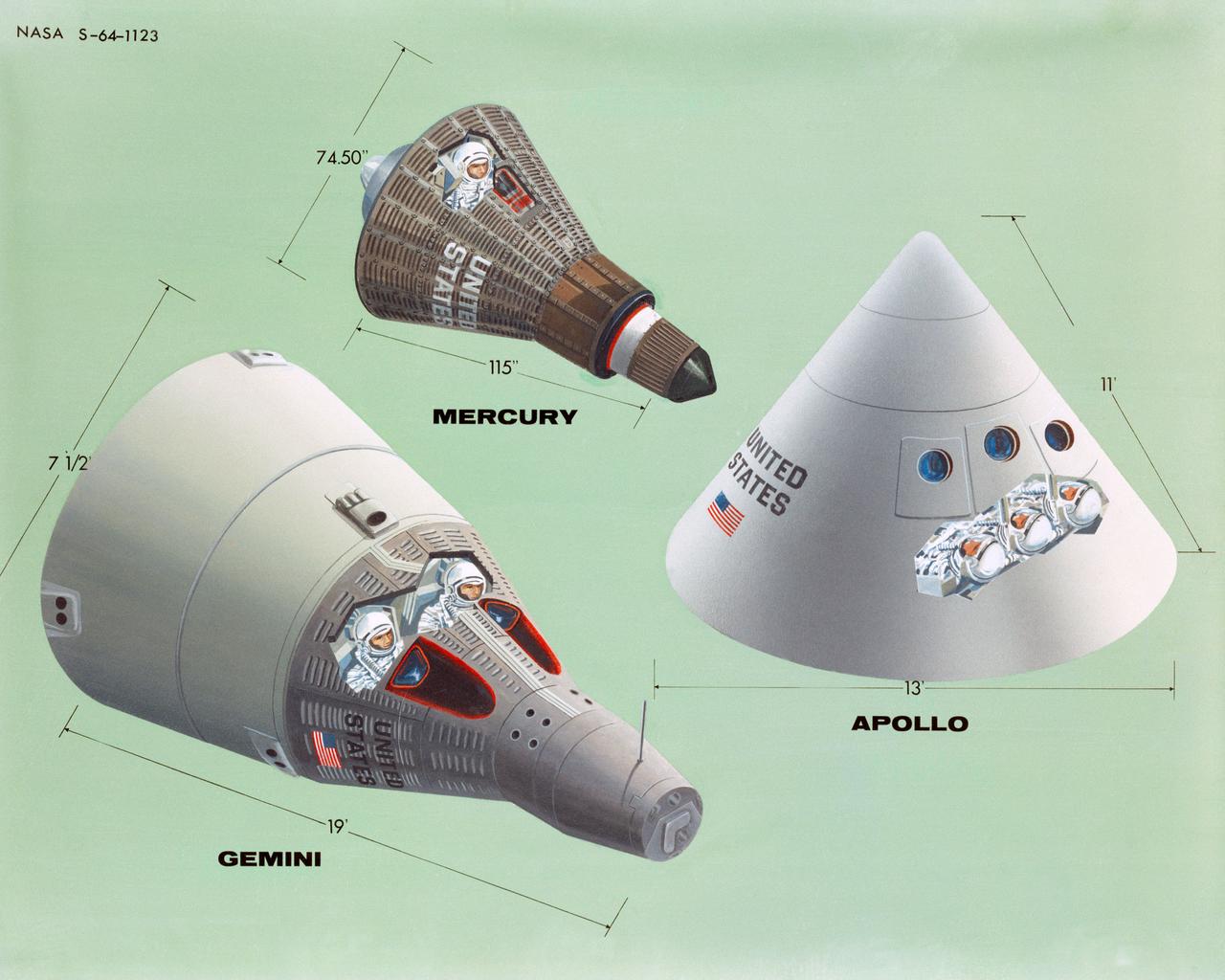
S64-01123 (1964) --- Artist concept illustrating the relative sizes of the one-man Mercury spacecraft, the two-man Gemini spacecraft, and the three-man Apollo spacecraft. Photo credit: NASA
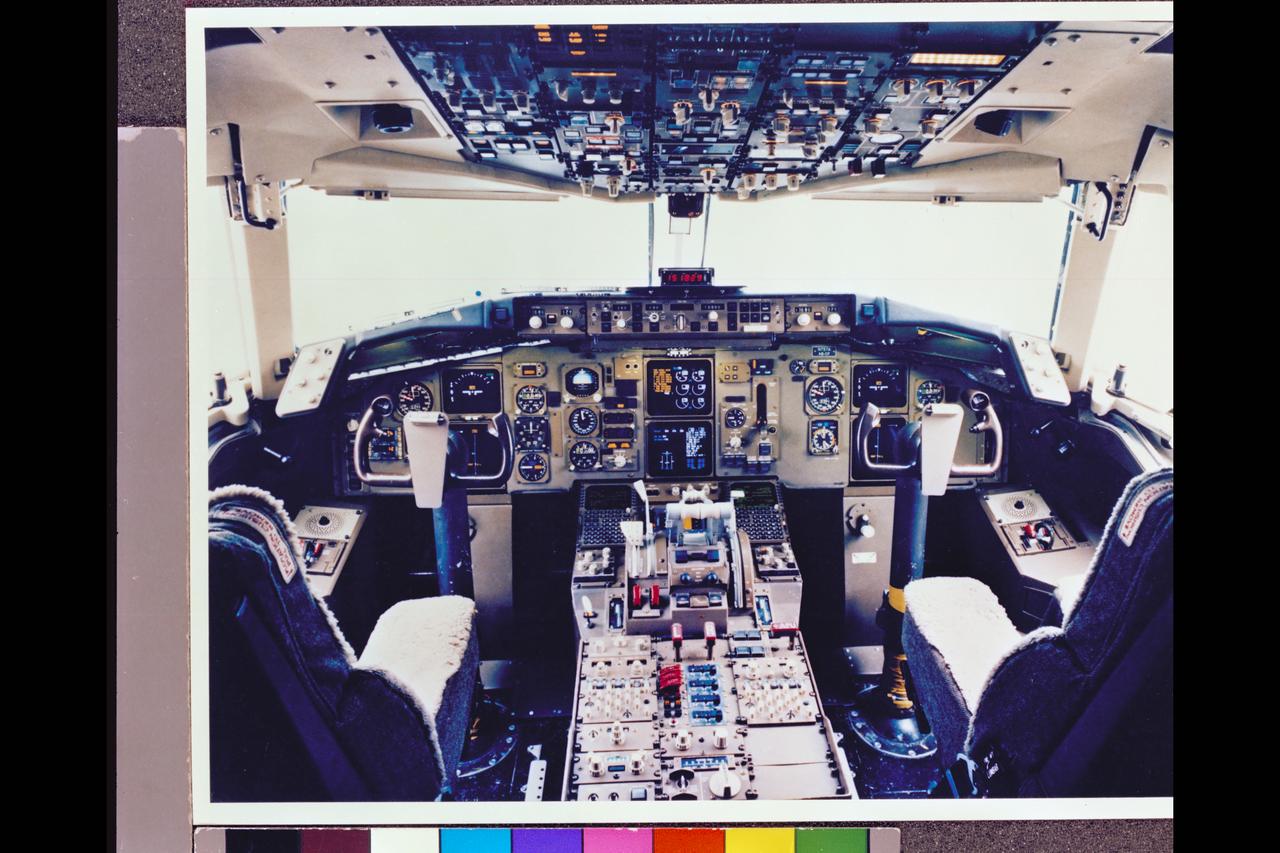
Boeing 767 - 757 'Two Man' Cockpit
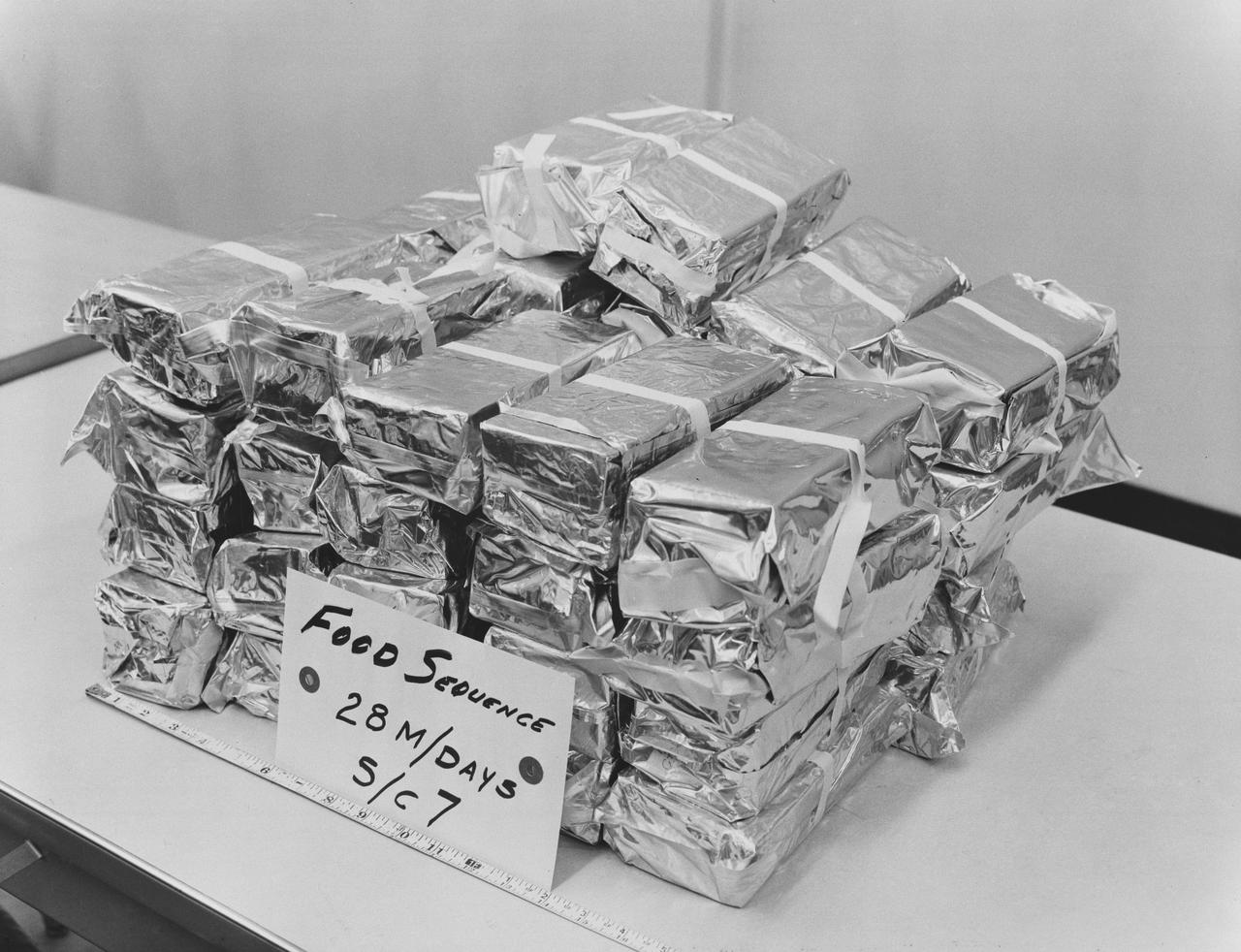
S65-61653 (1 Dec. 1965) --- Complete food supply for the two-man crew of the National Aeronautics and Space Administration's Gemini-7 spaceflight as it appears prior to stowage in the spacecraft. The food packages are tied in sequence for 28-manned days or a complete supply for two men for a 14-day mission. Photo credit: NASA
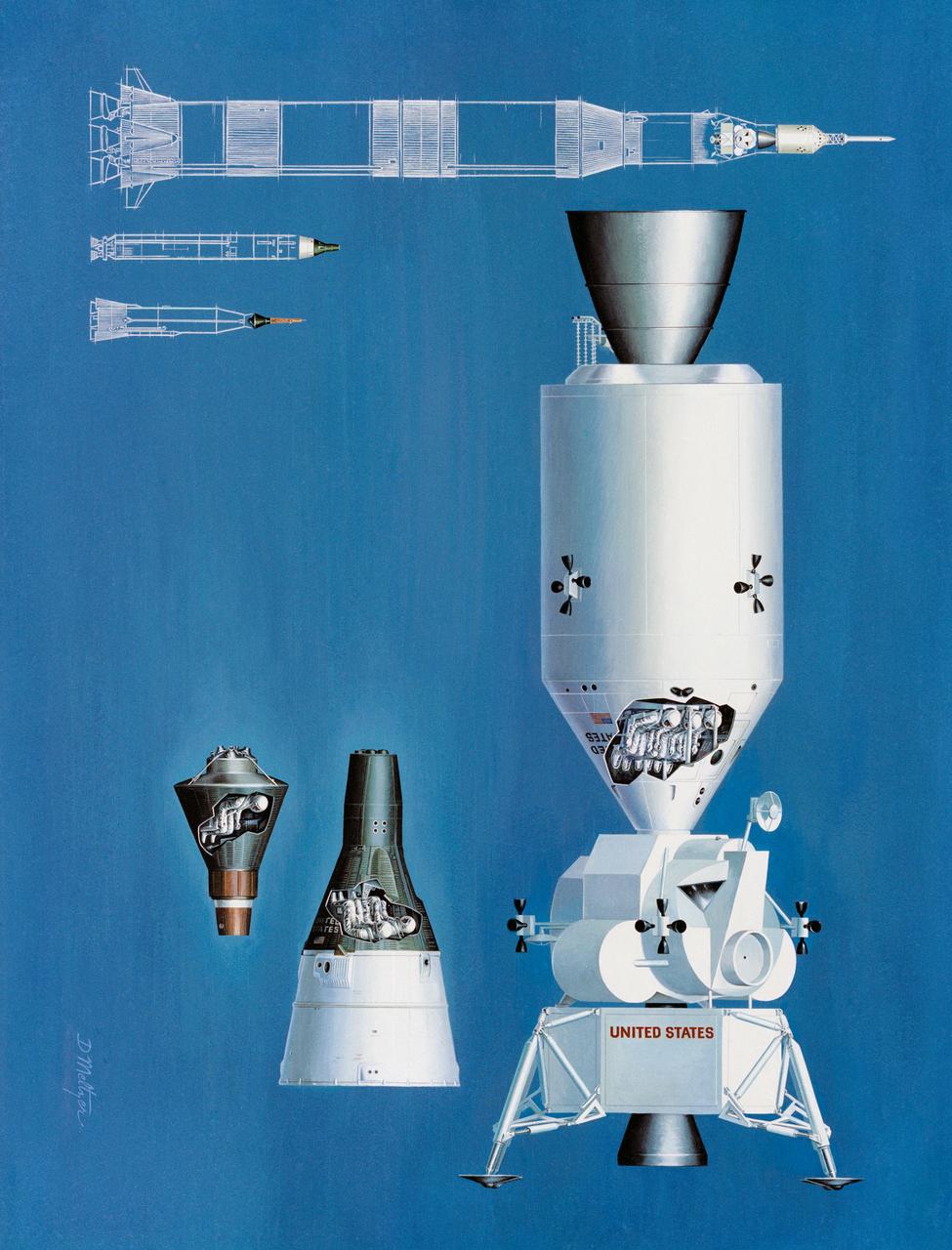
S64-22331 (1964) --- Artist concept illustrating the relative sizes of the one-man Mercury spacecraft, the two-man Gemini spacecraft, and the three-man Apollo spacecraft. Also shows line drawing of launch vehicles to show their relative size in relation to each other. Photo credit: NASA
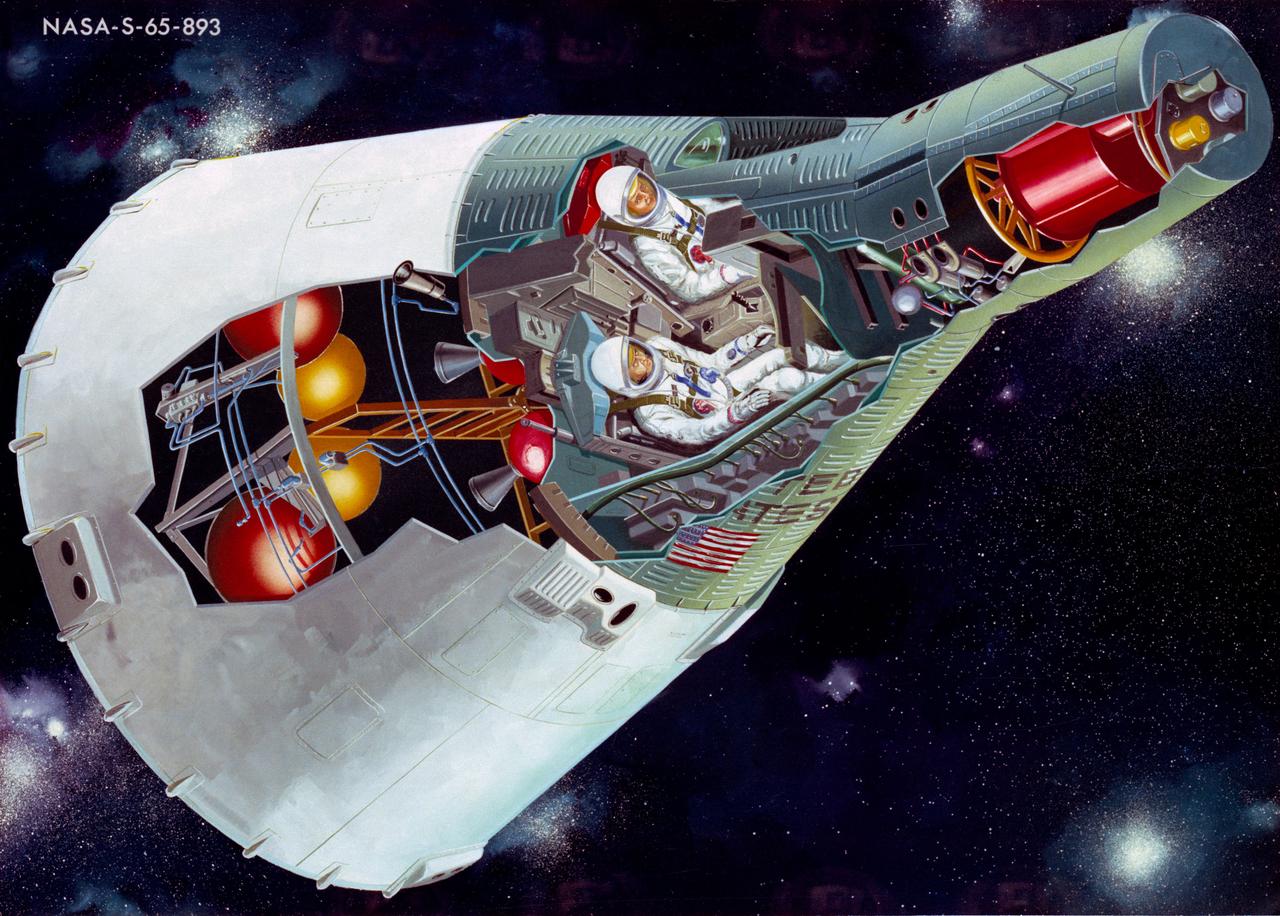
S65-14257 (January 1965) --- This is an artist's concept of a two-man Gemini spacecraft in flight, showing a cutaway view.
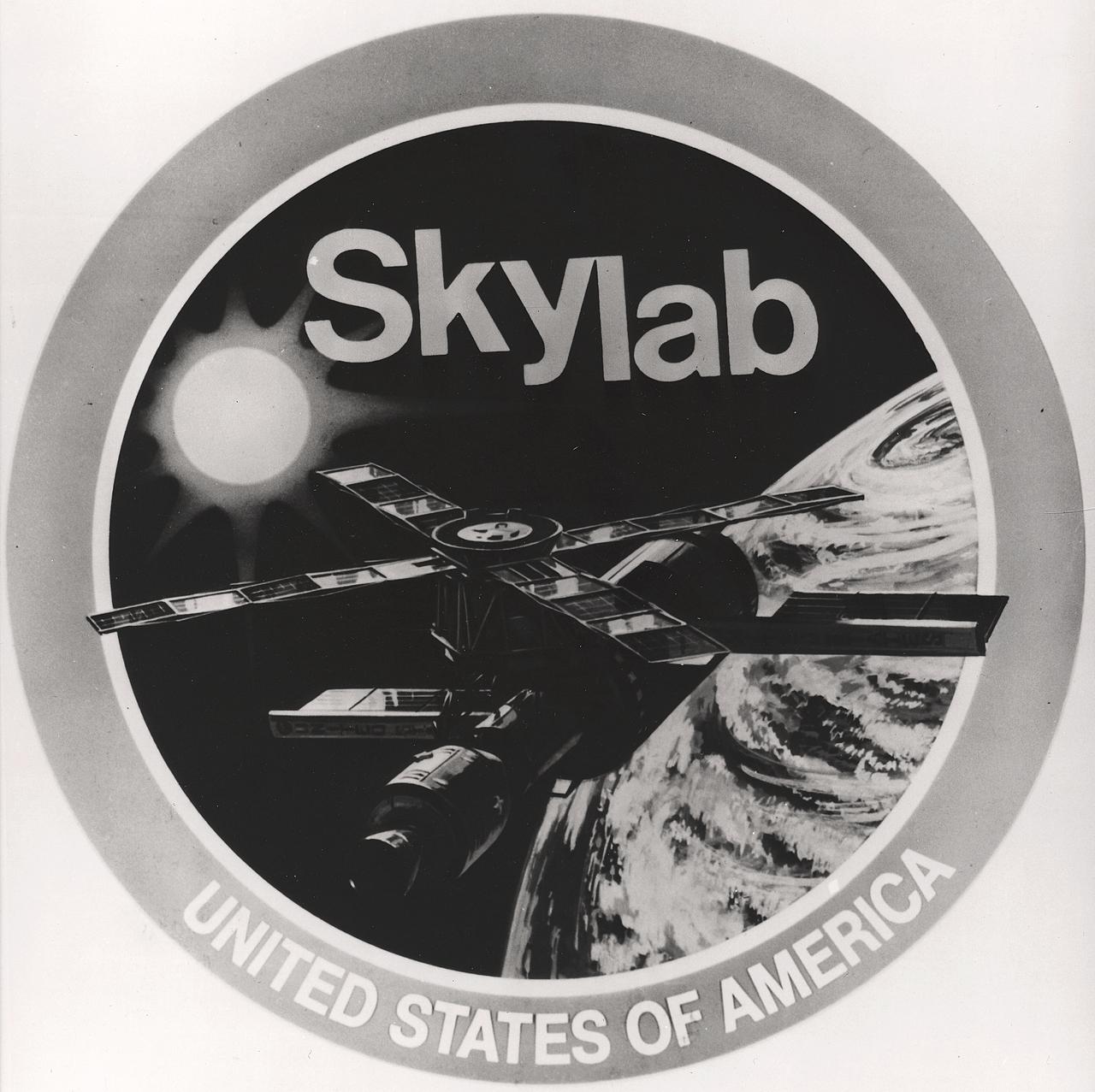
In 1973, Skylab, America's first space station, was launched aboard a two-stage Saturn V vehicle. Saturn IB rockets were used to launch three different three-man crews to the Skylab space station.
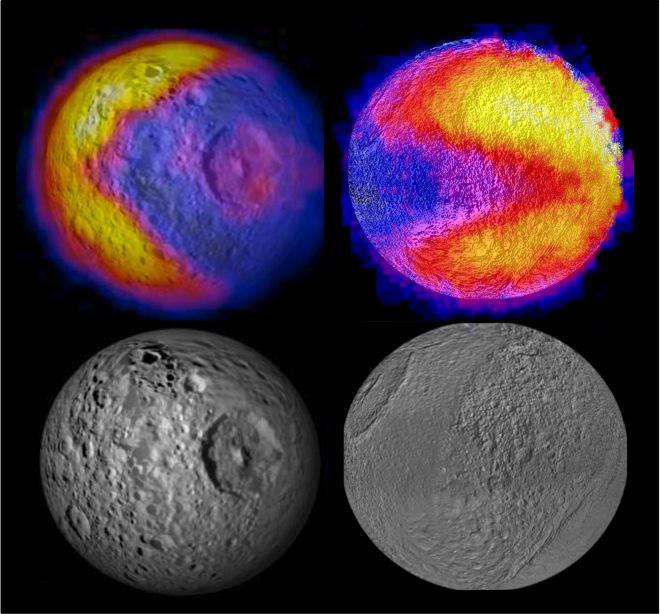
Scientists with NASA Cassini mission have spotted two features shaped like the 1980s video game icon Pac-Man on moons of Saturn. One was observed on the moon Mimas in 2010 and the latest was observed on the moon Tethys.
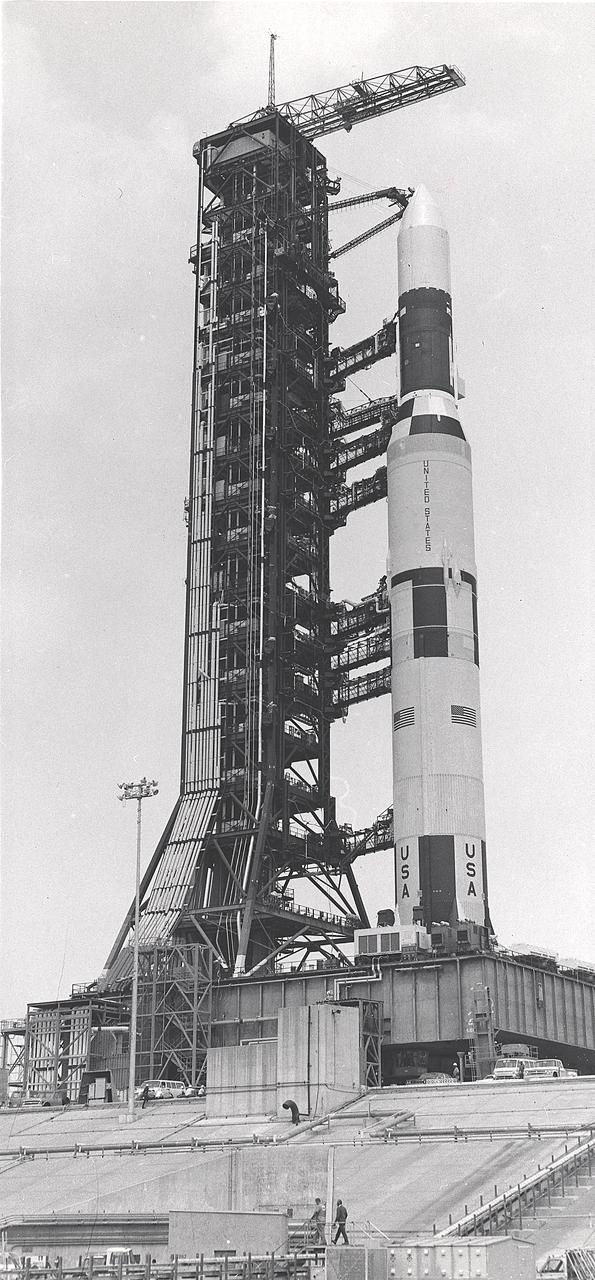
In 1973, Skylab, America's first space station, was launched aboard a two-stage Saturn V vehicle. Saturn IB rockets were used to launch three different three-man crews to the Skylab space station.
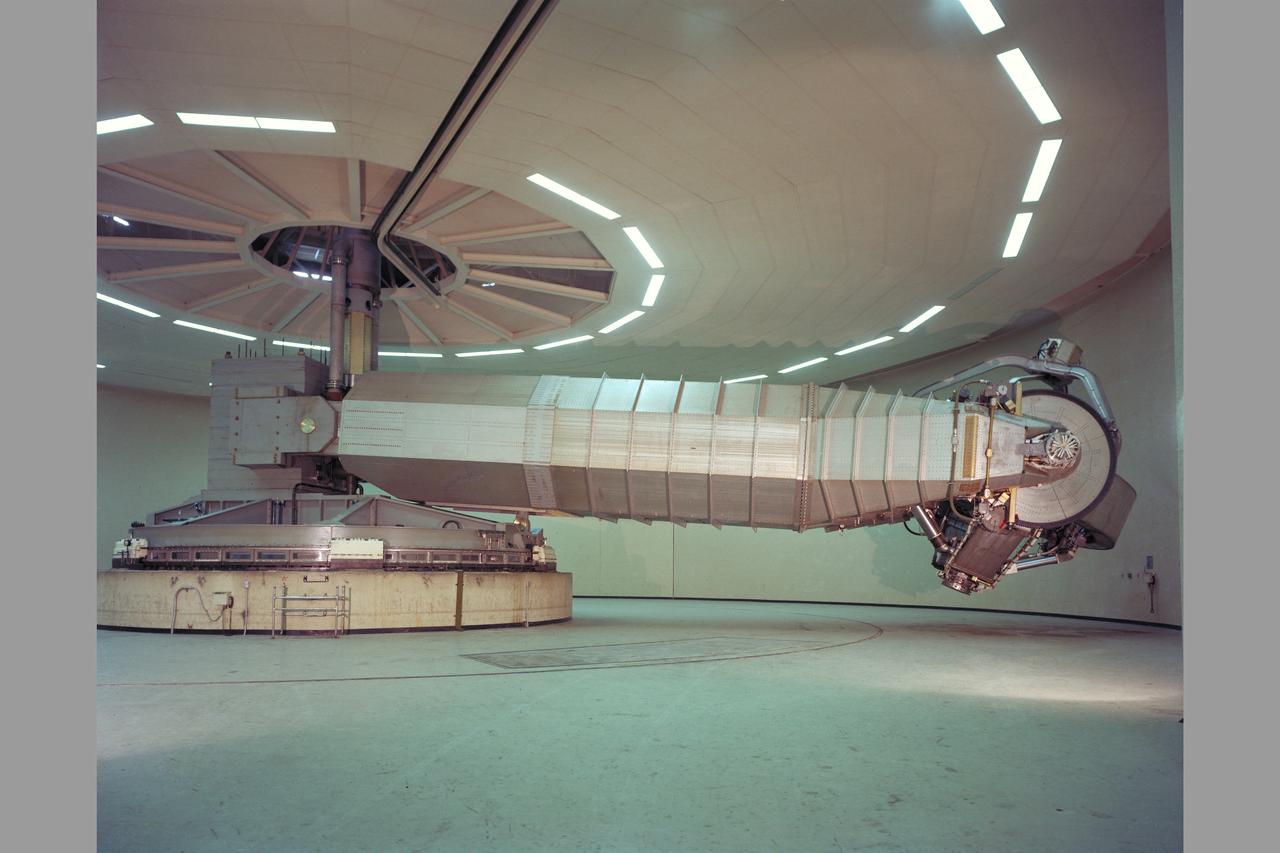
N-243 Flight and Guidance Centrifuge: Is used for spacecraft mission simulations and is adaptable to two configurations. Configuration 1: The cab will accommodate a three-man crew for space mission research. The accelerations and rates are intended to be smoothly applicable at very low value so the navigation and guidance procedures using a high-accuracy, out-the window display may be simulated. Configuration 2: The simulator can use a one-man cab for human tolerance studies and performance testing. Atmosphere and tempertaure can be varied as stress inducements. This simlator is operated closed-loop with digital or analog computation. It is currently man-rated for 3.5g maximum.
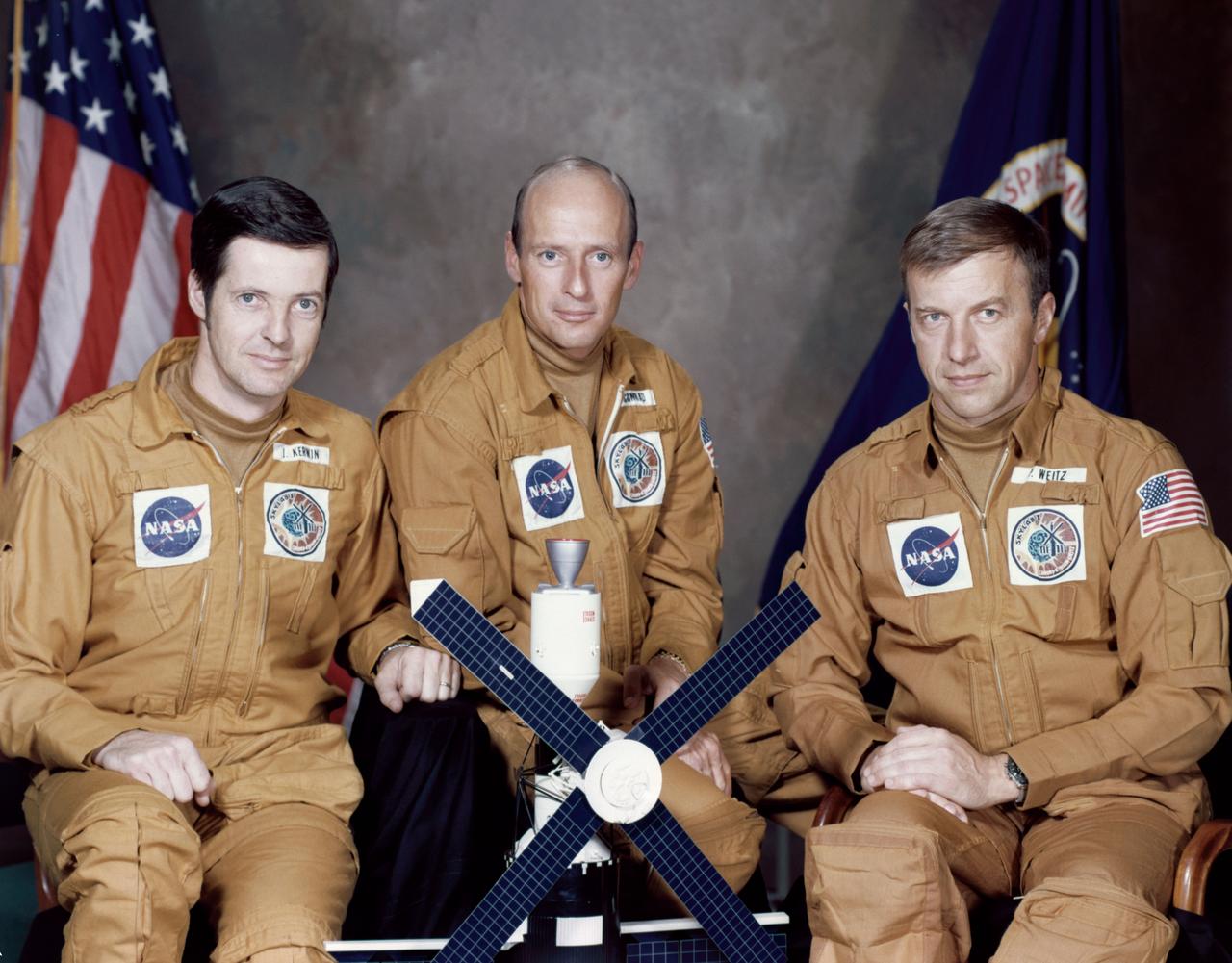
S73-24303 (May 1973) --- These three astronauts have been named by the National Aeronautics and Space Administration as the prime crew of the first manned Skylab mission. They are, left to right, Joseph P. Kerwin, science pilot; Charles Conrad Jr., commander; and Paul J. Weitz, pilot. Skylab is a three-part program consisting of one 28-day and two 56-day manned visits spanning an eight-month period. One day prior to the launch of this crew, the unmanned Skylab space station cluster will be launched and placed in Earth orbit. The first manned mission will last up to 28 days. Photo credit: NASA
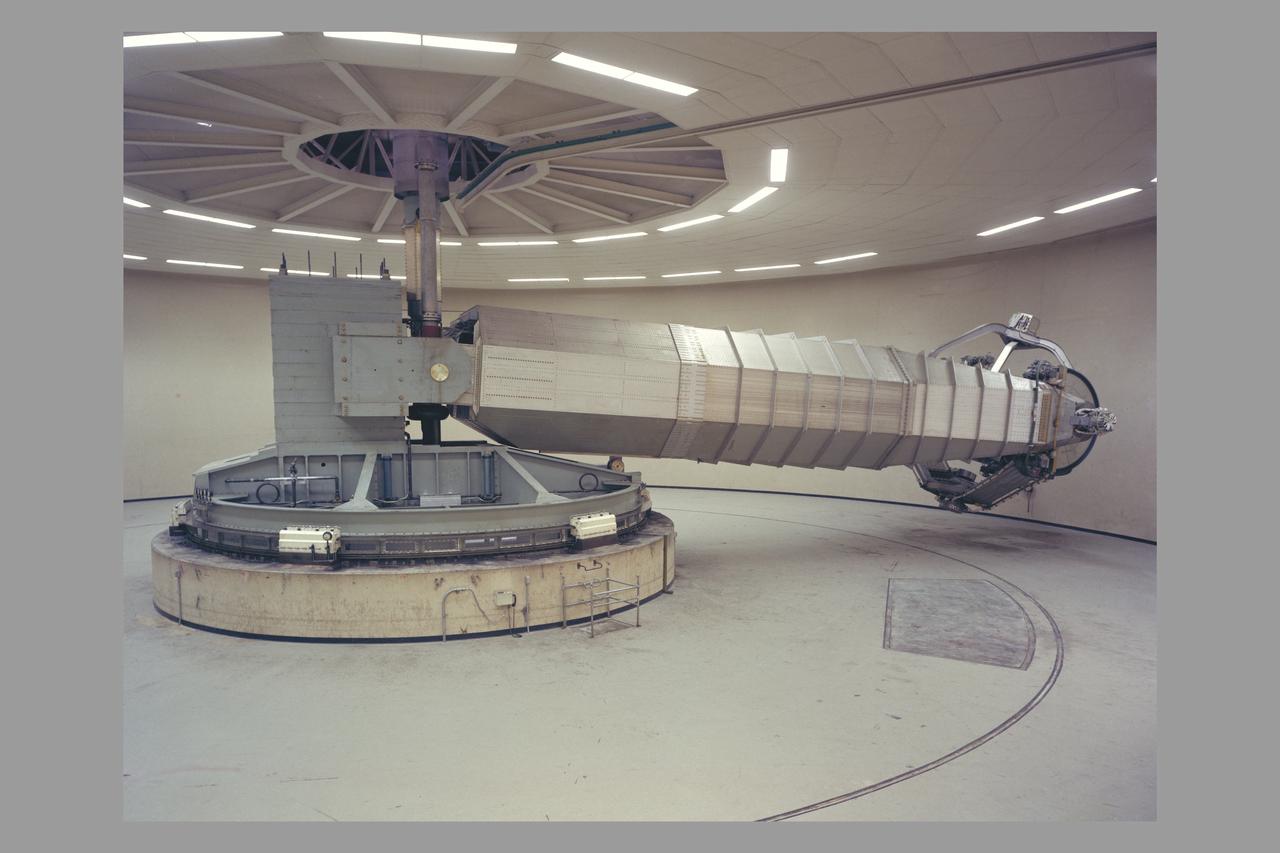
N-243 Flight and Guidance Centrifuge: Is used for spacecraft mission simulations and is adaptable to two configurations. Configuration 1: The cab will accommodate a three-man crew for space mission research. The accelerations and rates are intended to be smoothly applicable at very low value so the navigation and guidance procedures using a high-accuracy, out-the window display may be simulated. Configuration 2: The simulator can use a one-man cab for human tolerance studies and performance testing. Atmosphere and tempertaure can be varied as stress inducements. This simlator is operated closed-loop with digital or analog computation. It is currently man-rated for 3.5g maximum.
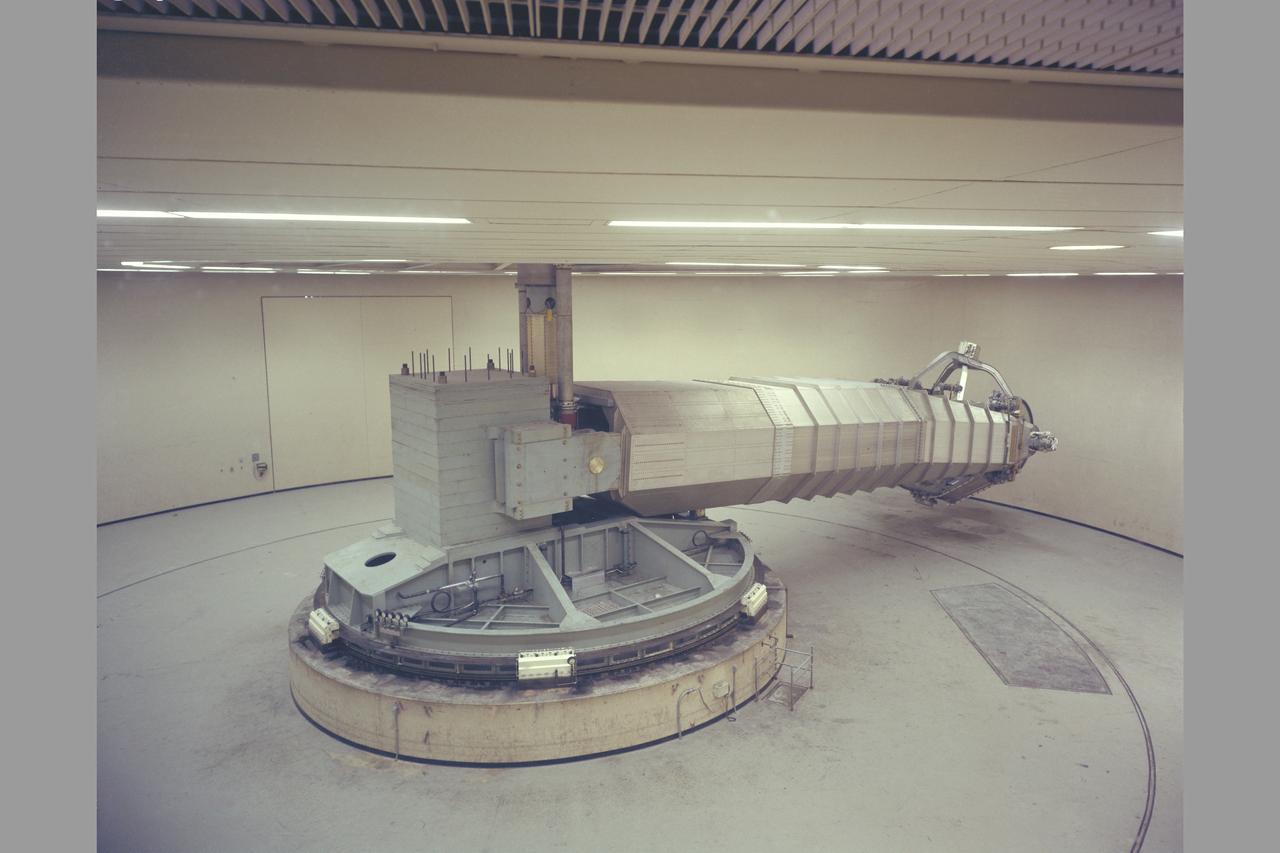
N-243 Flight and Guidance Centrifuge: Is used for spacecraft mission simulations and is adaptable to two configurations. Configuration 1: The cab will accommodate a three-man crew for space mission research. The accelerations and rates are intended to be smoothly applicable at very low value so the navigation and guidance procedures using a high-accuracy, out-the window display may be simulated. Configuration 2: The simulator can use a one-man cab for human tolerance studies and performance testing. Atmosphere and tempertaure can be varied as stress inducements. This simlator is operated closed-loop with digital or analog computation. It is currently man-rated for 3.5g maximum.
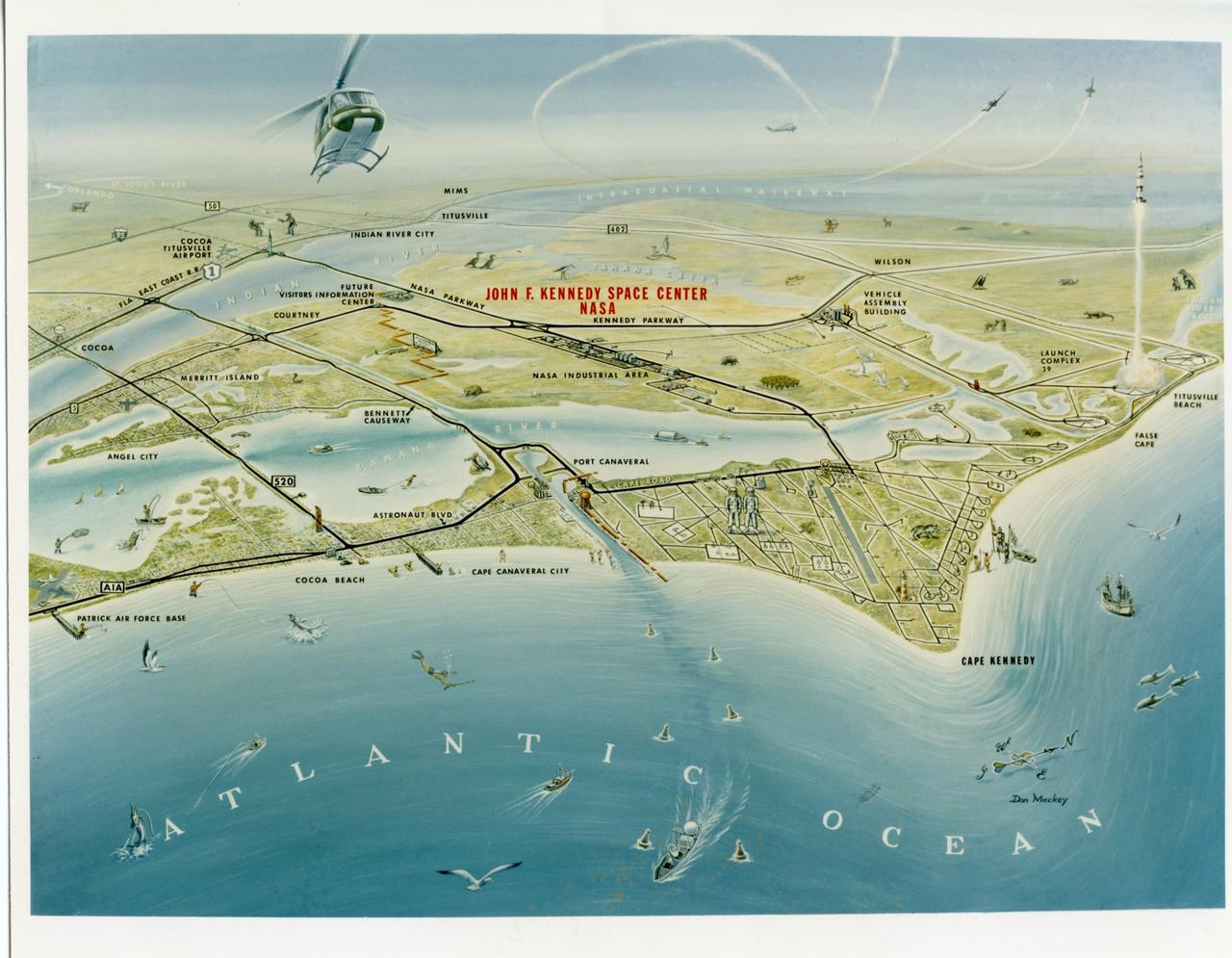
CAPE KENNEDY, Fla. -- This artist's rendering depicts Florida's Space Coast where NASA's two-man Gemini Program is paving the way for manned flight to the moon before the end of the decade. Adjacent to Cape Kennedy Air Force Station is Merritt Island where facilities are being built at the John F. Kennedy Space Center to launch the Saturn V rockets for the Apollo Program. Image Credit: NASA
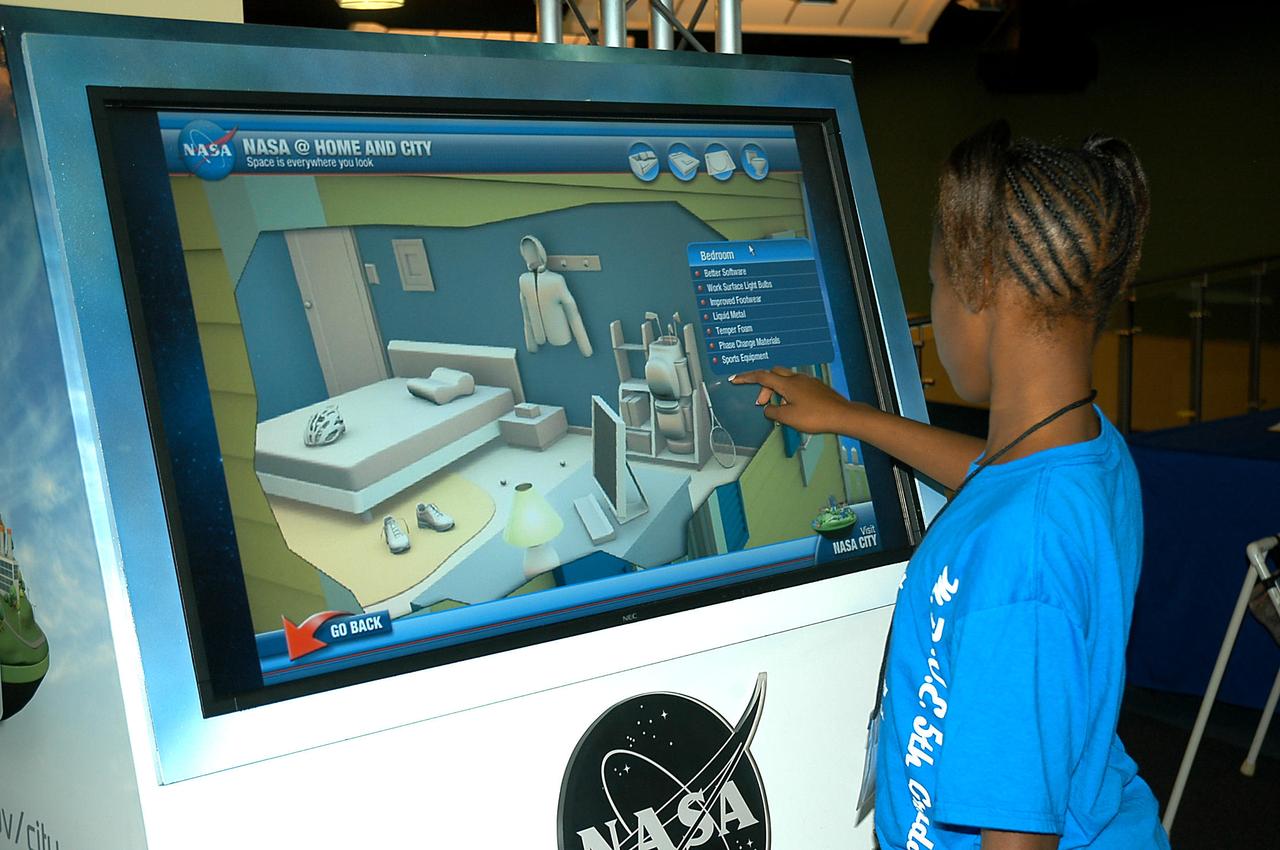
Escatawpa Elementary School student Danisha Dillon of Moss Point, Miss., learns about NASA at the Home and City interactive exhibit at INFINITY Science Center, a NASA visitors center. The facility hosted two days of activity to celebrate the 40th anniversary of the Apollo 17 flight, the last manned space mission to the moon.
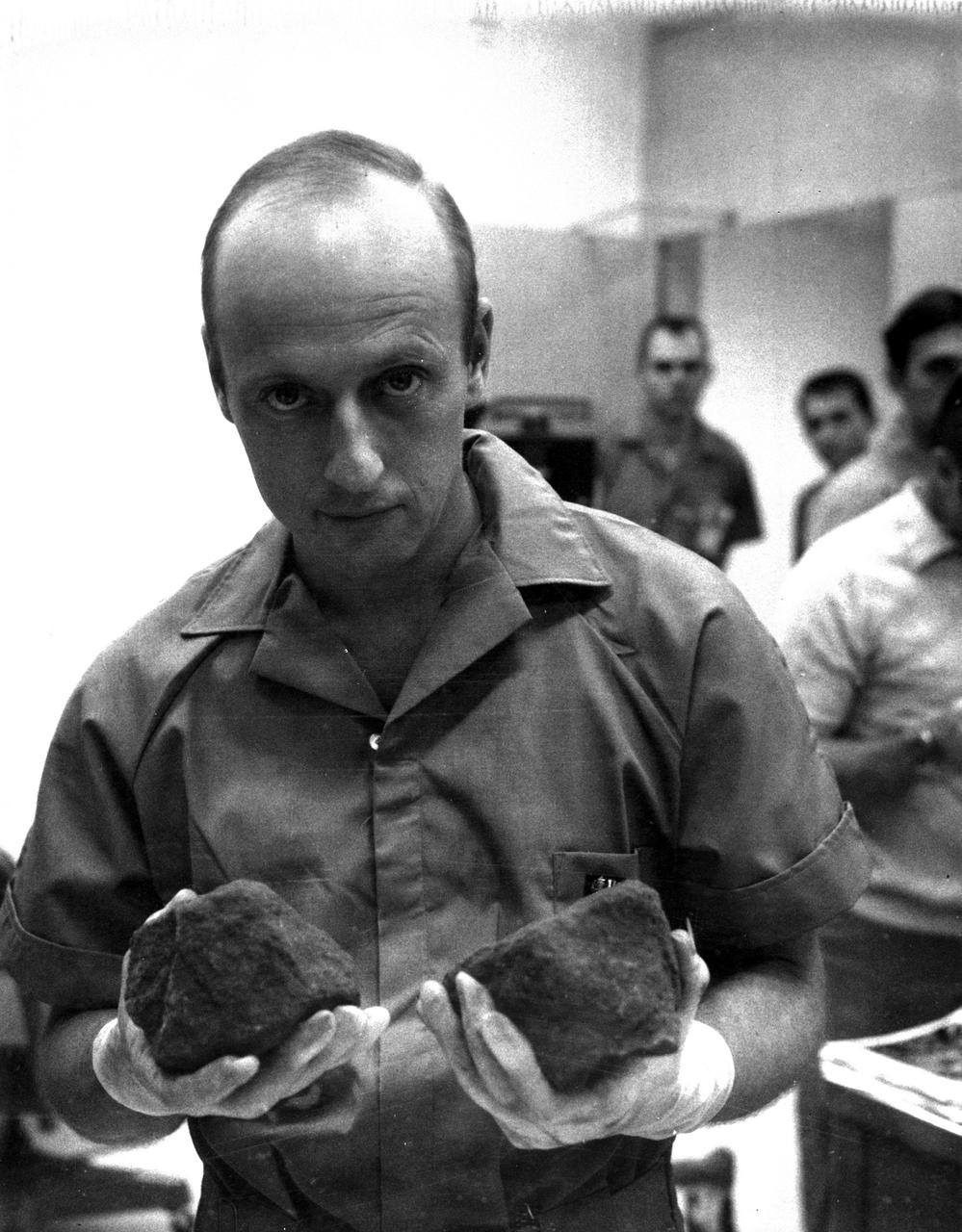
S69-60424 (29 Nov. 1969) --- Astronaut Charles Conrad Jr., commander of the Apollo 12 lunar landing mission, holds two lunar rocks which were among the samples brought back from the moon by the Apollo 12 astronauts. The samples are under scientific examination in the Manned Spacecraft Center's Lunar Receiving Laboratory.
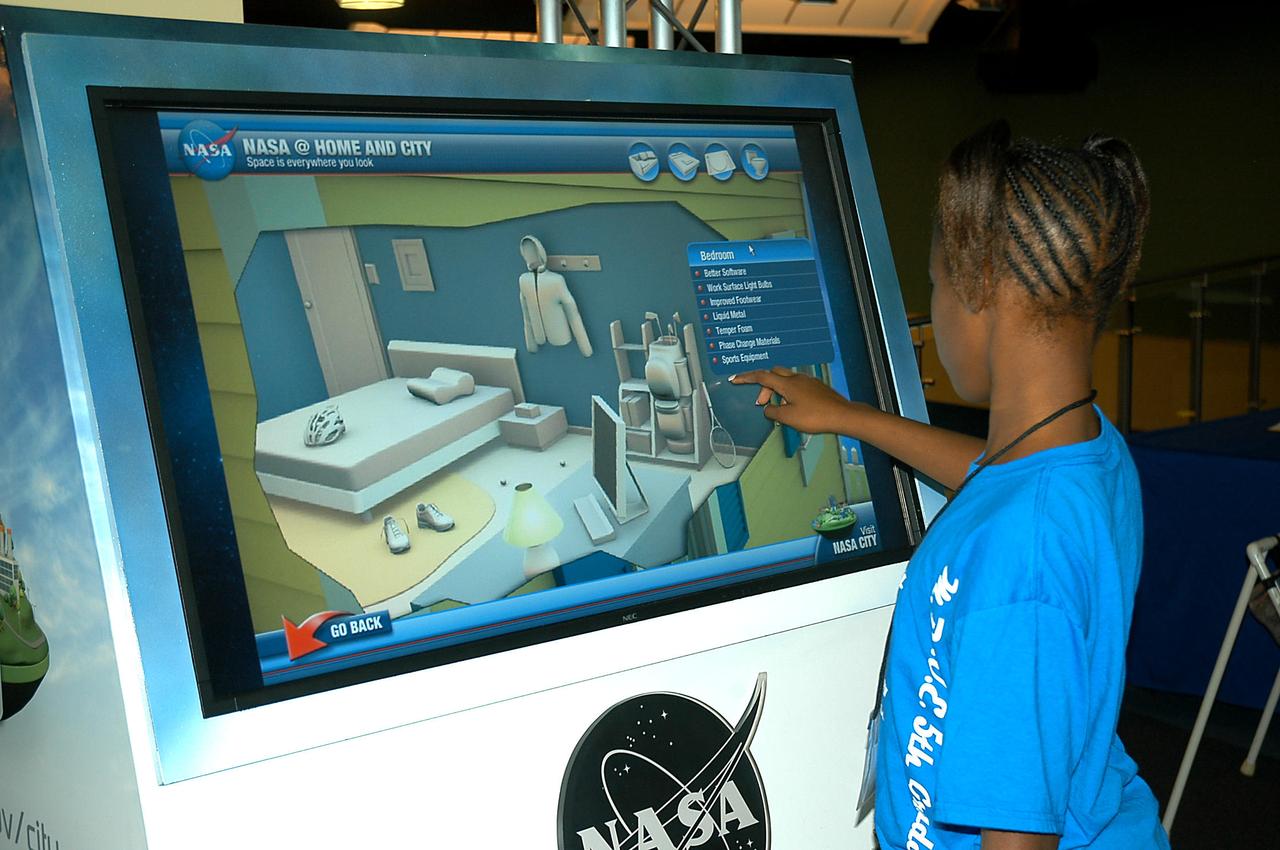
Escatawpa Elementary School student Danisha Dillon of Moss Point, Miss., learns about NASA at the Home and City interactive exhibit at INFINITY Science Center, a NASA visitors center. The facility hosted two days of activity to celebrate the 40th anniversary of the Apollo 17 flight, the last manned space mission to the moon.

Astronaut Dale A. Gardner, 51-A mission specialist, rehearses control of manned maneuvering unit (MMU) during a practice for an extravehicular activity (EVA). Gardner is in the Shuttle mockup and integration laboratory at JSC. Gardner handles a stinger device to make initial contact with one of the two satellites they will be working with.
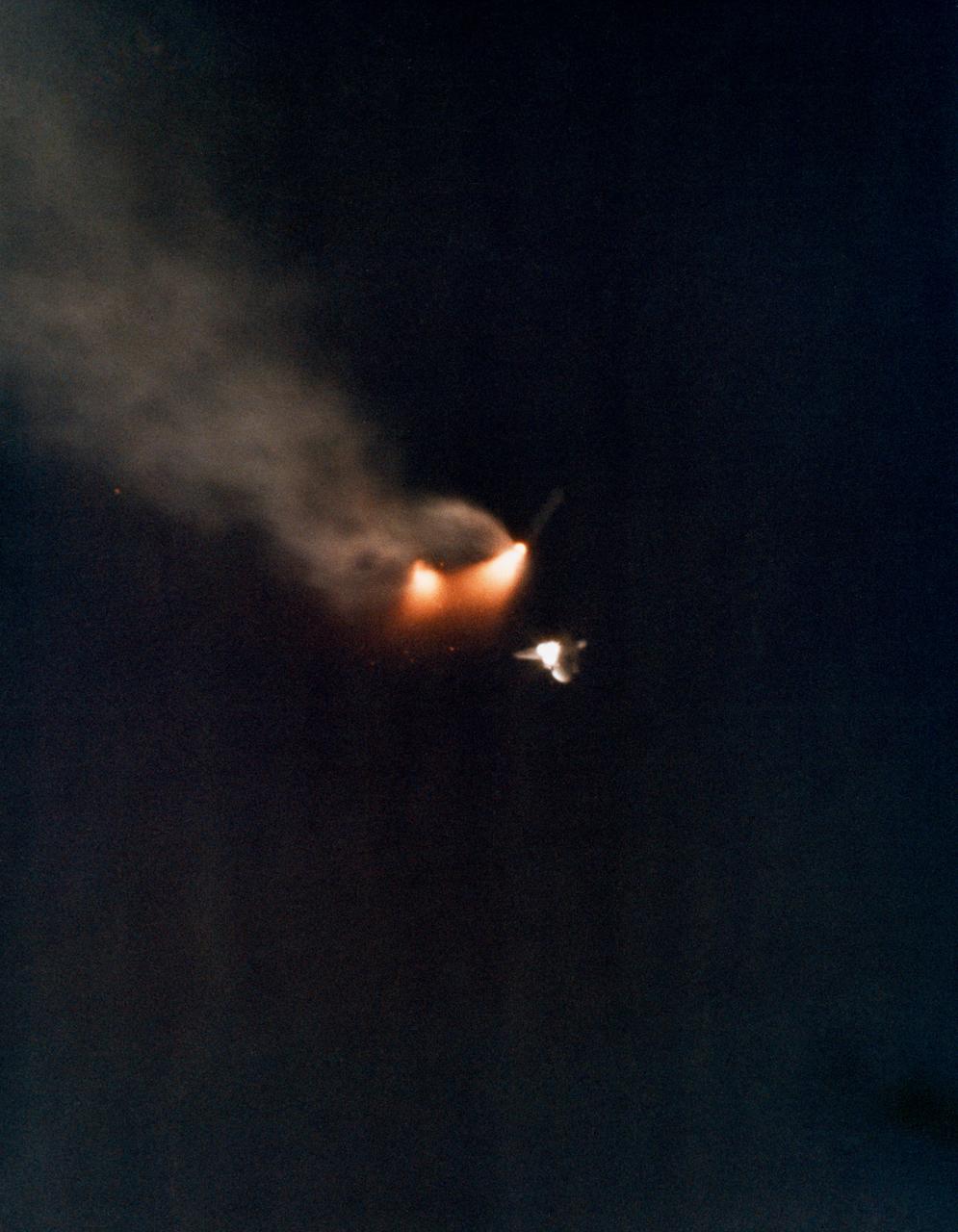
S81-33180 (12 April 1981) --- The two solid rocket boosters are jettisoned from the climbing space shuttle Columbia as a successful launch phase continues for NASA's first manned space mission since 1975. Astronauts John W. Young and Robert L. Crippen are aboard the Columbia. Photo credit: NASA
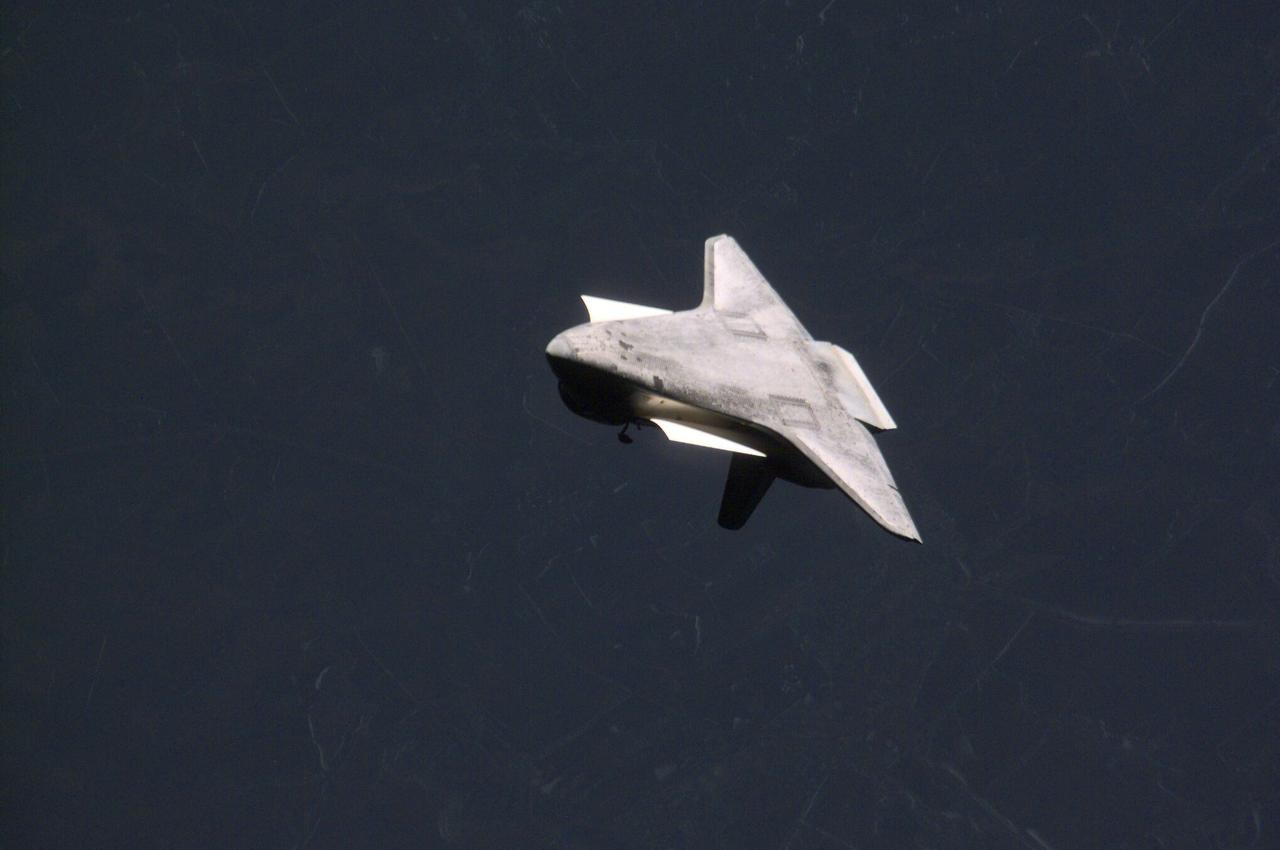
ISS01-E-5396 (16 February 2001) --- This rarely seen image of the underside of the Space Shuttle Atlantis was photographed by the three-man Expedition One crew aboard the International Space Station (ISS) after the shuttle and the outpost unlinked following several days of joint operations of the two crews. The scene was recorded with a digital still camera.

S69-19794 (February 1969) --- Composite of two artist's concepts illustrating key events, tasks and activities on the third day of the Apollo 9 mission, including crew transfer and Lunar Module system evaluation. The Apollo 9 mission will evaluate spacecraft lunar module systems performance during manned Earth-orbital flight.
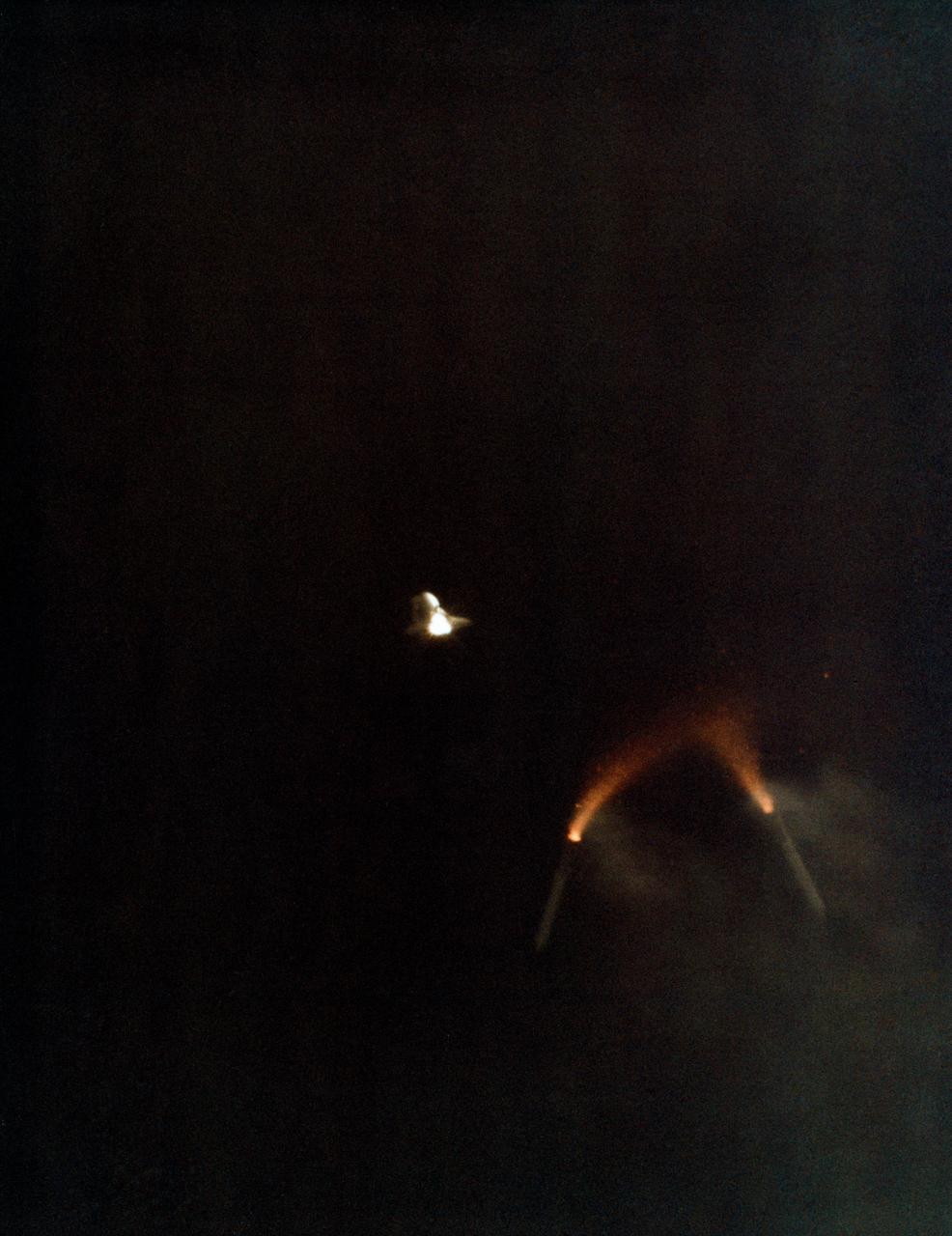
S81-33178 (12 April 1981) --- The two solid rocket boosters are jettisoned from the climbing space shuttle Columbia as a successful launch phase continues for NASA's first manned space mission since 1975. Astronauts John W. Young and Robert L. Crippen are aboard Columbia. Photo credit: NASA
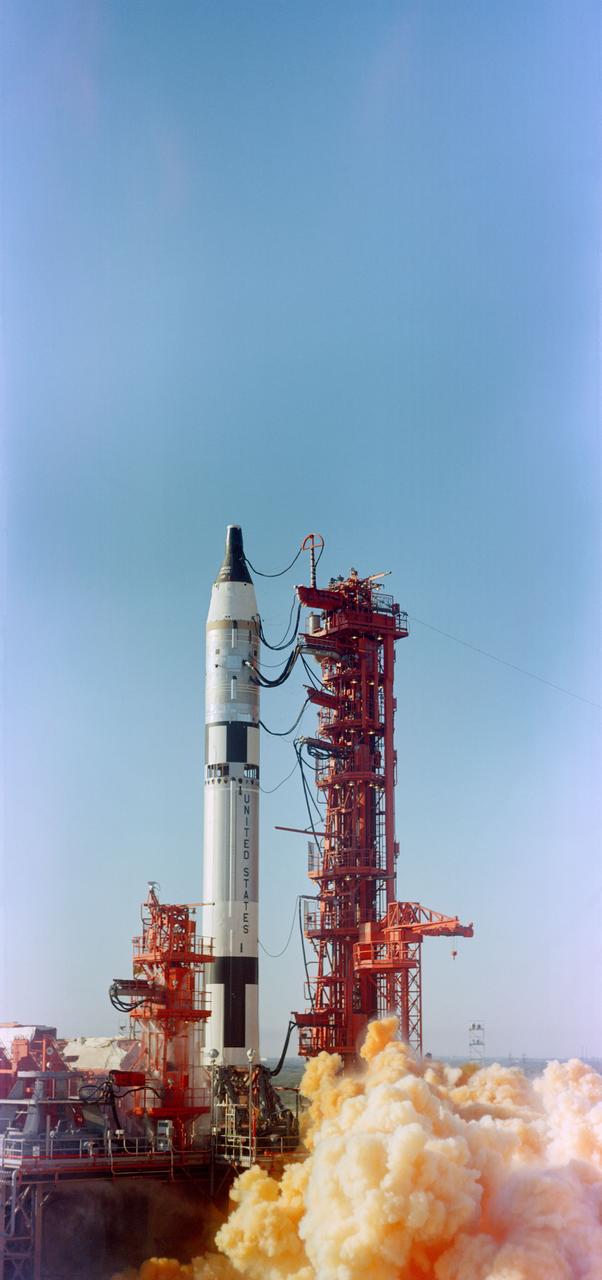
S65-14150 (19 January 1965) --- Launching of the unmanned Gemini 2 flight. The second Titan II Gemini Launch Vehicle (GLV-2) carried the unmanned, instrumented Gemini spacecraft (GT-2) for a suborbital shot preliminary to the first U.S. two-man Gemini mission.
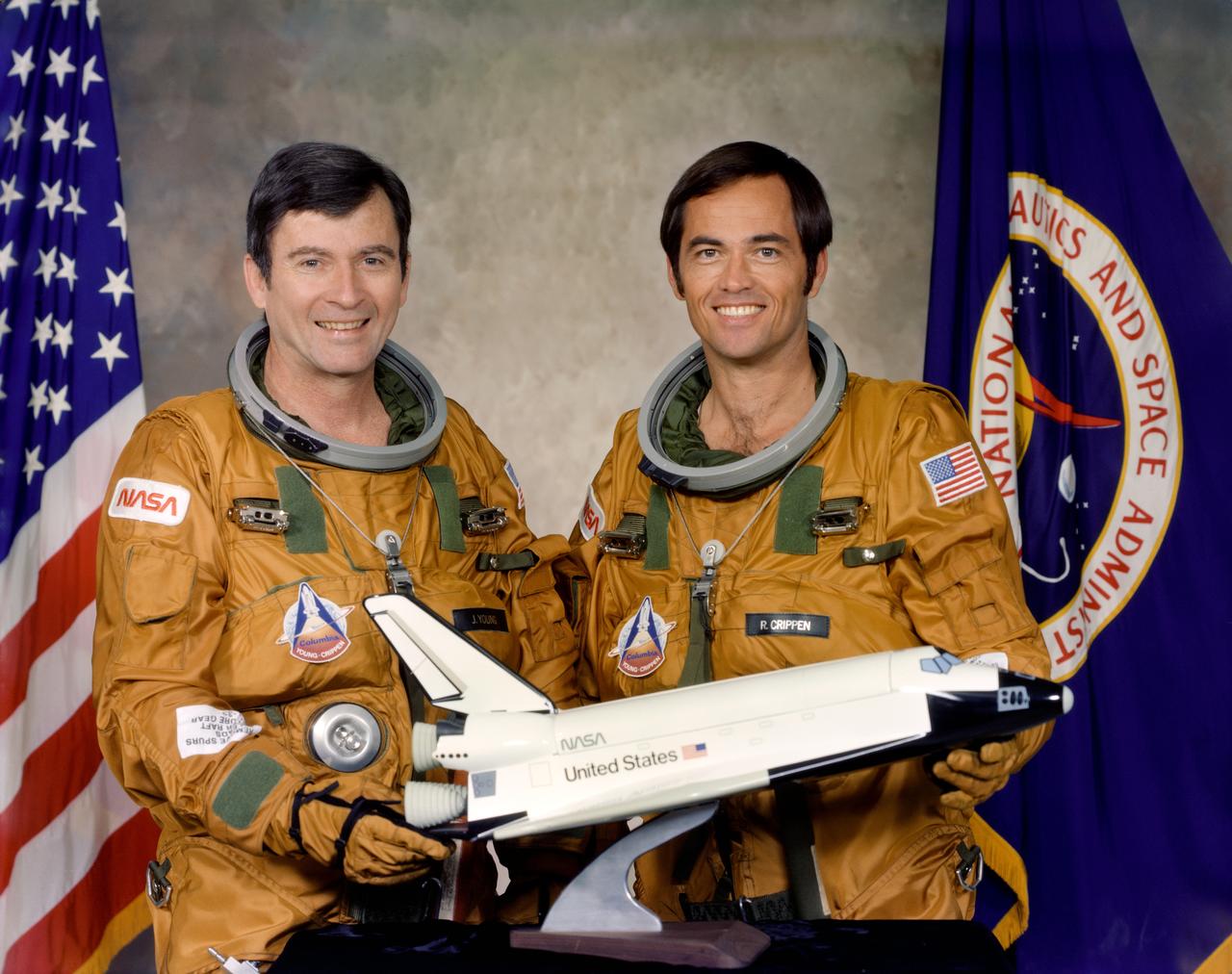
S79-31775 (29 April 1979) --- These two astronauts are the prime crewmen for the first flight in the Space Transportation System (STS-1) program. Astronauts John W. Young, left, commander, and Robert L. Crippen, pilot, will man the space shuttle orbiter 102 Columbia for the first orbital flight test. Photo credit: NASA
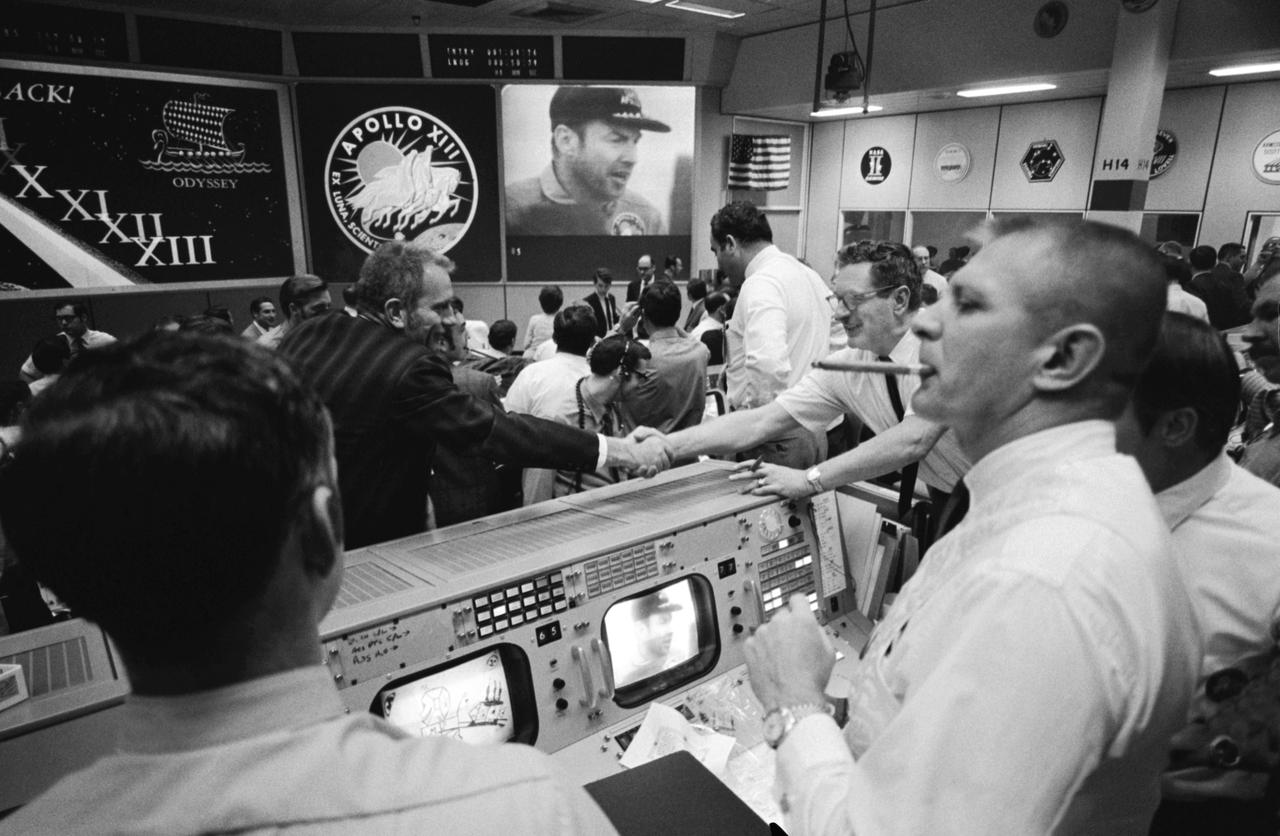
S70-35145 (17 April 1970) --- Overall view of Mission Operations Control Room in Mission Control Center at the Manned Spacecraft Center (MSC) during the ceremonies aboard the USS Iwo Jima, prime recovery ship for the Apollo 13 mission. Dr. Donald K. Slayton (in black shirt, left of center), director of Flight Crew Operations at MSC, and Chester M. Lee of the Apollo Program Directorate, Office of Manned Space Flight, NASA Headquarters, shake hands, while Dr. Rocco A. Petrone, Apollo program director, Office of Manned Space Flight, NASA Headquarters (standing, near Lee), watches the large screen showing astronaut James A. Lovell Jr., Apollo 13 commander, during the onboard ceremonies. In the foreground, Glynn S. Lunney (extreme left) and Eugene F. Kranz (smoking a cigar), two Apollo 13 flight directors, view the activity from their consoles.
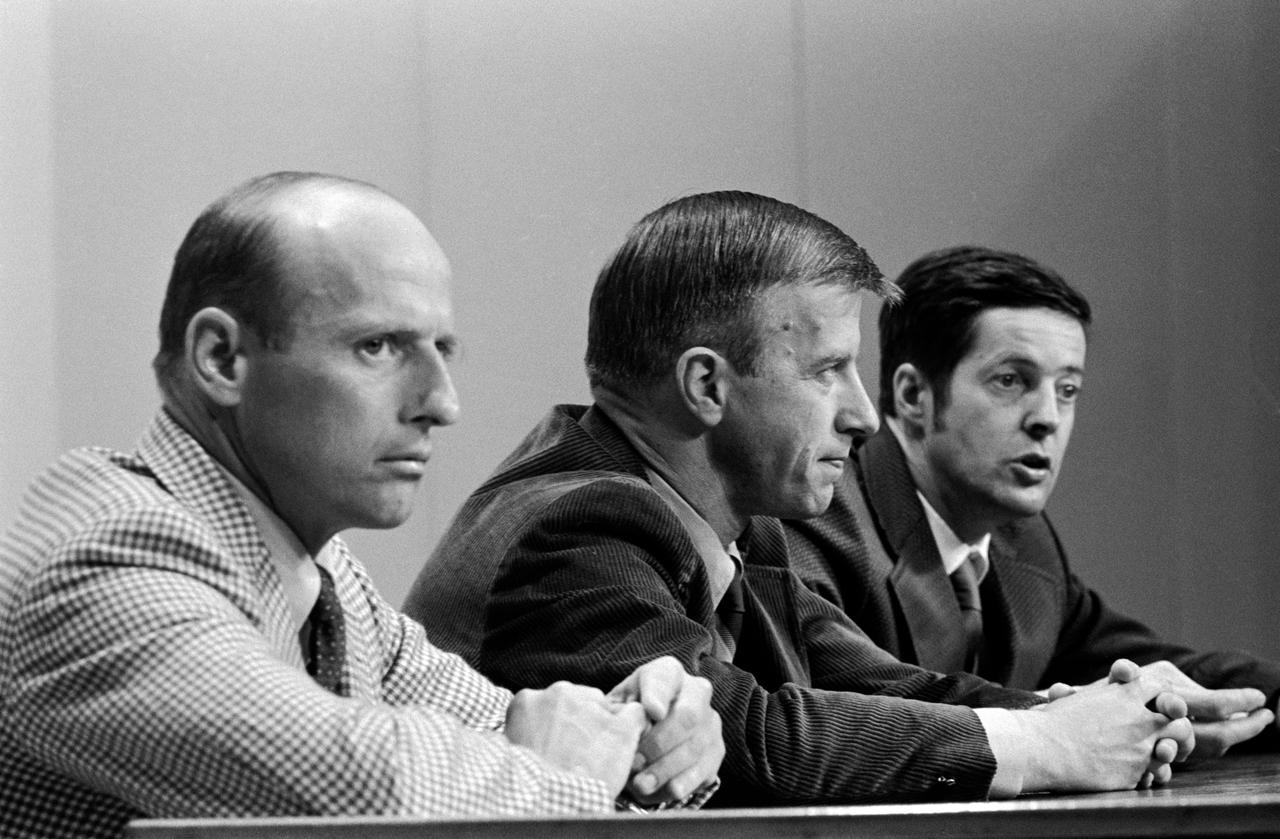
S73-24369 (17 April 1973) --- The three members of the prime crew of the first manned Skylab mission discuss their scheduled flight before a gathering of news media representatives, in building 1 auditorium, April 17, 1973. They are (left to right) astronauts Charles Conrad Jr., commander; Paul J. Weitz, pilot; and scientist Joseph P. Kerwin, science-pilot. Skylab is a three-part program consisting of one 28-day; and two 56-day manned visits spanning an eight-month period. One day prior to the launch of this crew, the unmanned Skylab Space Station cluster will be launched and placed in Earth orbit. The first manned mission will last up to 28 days. Photo credit: NASA
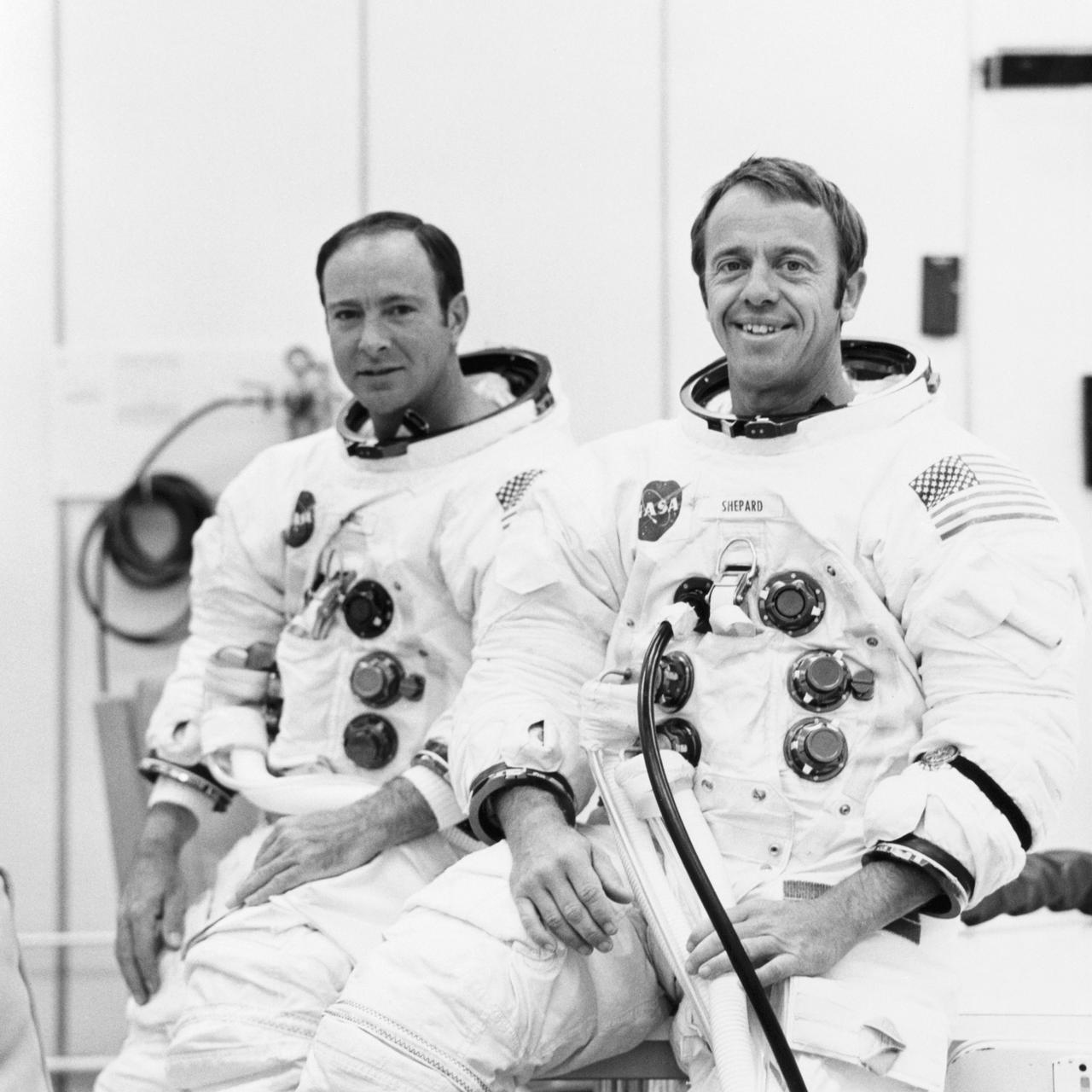
S70-19764 (18 Sept. 1970) --- Astronauts Alan B. Shepard Jr. (right), commander, and Edgar D. Mitchell, lunar module pilot, are suited up for a manned altitude run in the Apollo 14 Lunar Module. The manned run in a vacuum chamber of the Manned Spacecraft Operations Building was conducted to validate the LM's communications and guidance and navigation systems. Apollo 14 is scheduled for launch from Cape Kennedy on Jan. 31, 1971, on a lunar exploration mission which is to carry Shepard and Mitchell down to the moon's rugged Fra Maura highlands region. Astronaut Stuart A. Roosa, command module pilot, will remain with the Apollo 14 Command and Service Modules in lunar orbit while the other two astronauts explore the moon.
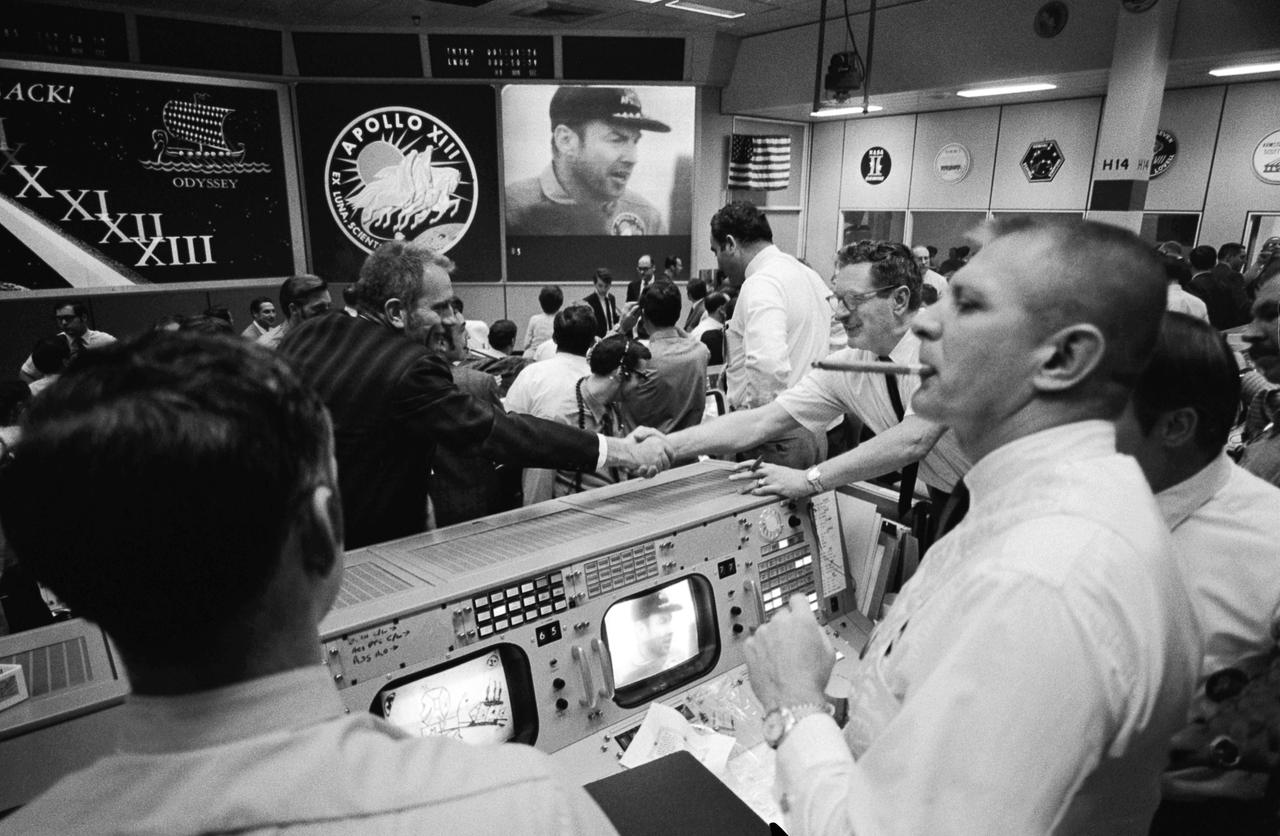
S70-35145 (17 April 1970) --- Overall view of Mission Operations Control Room in Mission Control Center at the Manned Spacecraft Center (MSC) during the ceremonies aboard the USS Iwo Jima, prime recovery ship for the Apollo 13 mission. Dr. Donald K. Slayton (in black shirt, left of center), director of Flight Crew Operations at MSC, and Chester M. Lee of the Apollo Program Directorate, Office of Manned Space Flight, NASA Headquarters, shake hands, while Dr. Rocco A. Petrone, Apollo program director, Office of Manned Space Flight, NASA Headquarters (standing, near Lee), watches the large screen showing astronaut James A. Lovell Jr., Apollo 13 commander, during the onboard ceremonies. In the foreground, Glynn S. Lunney (extreme left) and Eugene F. Kranz (smoking a cigar), two Apollo 13 flight directors, view the activity from their consoles.

Crew chief Darin Whittington and mechanic Edwin Flores watch as mechanic Francisco Rodriguez works on a mounting bolt to secure the Airborne Visible/Infrared Imaging Spectrometer (AVIRIS) instrument into a NASA ER-2 high-altitude aircraft at NASA’s Armstrong Flight Research Center in Edwards, California, on Wednesday, March 11, 2026. The installation helped enabled the Geological Earth Mapping Experiment (GEMx) airborne science mission, which began on March 31, 2026.
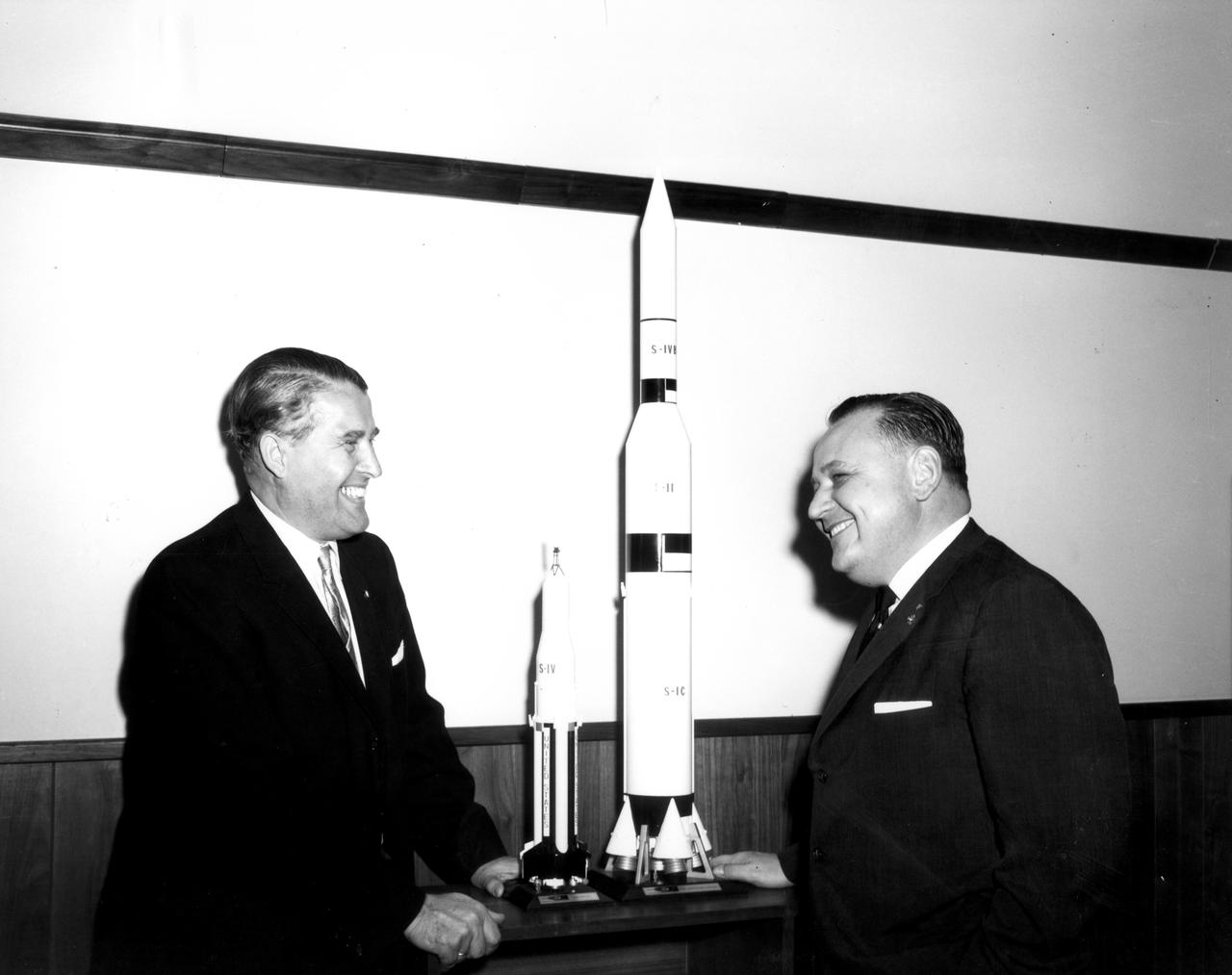
The members of the House Committee on Science and Astronautics visited the Marshall Space Flight Center (MSFC) on March 9, 1962 to gather firsthand information of the nation’s space exploration program. The congressional group was composed of members of the Subcommittee on Manned Space Flight. The subcommittee was briefed on MSFC’s manned space efforts earlier in the day and then inspected mockups of the Saturn I Workshop and the Apollo Telescope Mount, two projects developed by MSFC for the post-Apollo program. In this photograph, MSFC Director, Dr. Wernher von Braun and Richard L. Roudebush, Republican representative of Indiana, discuss Apollo models.
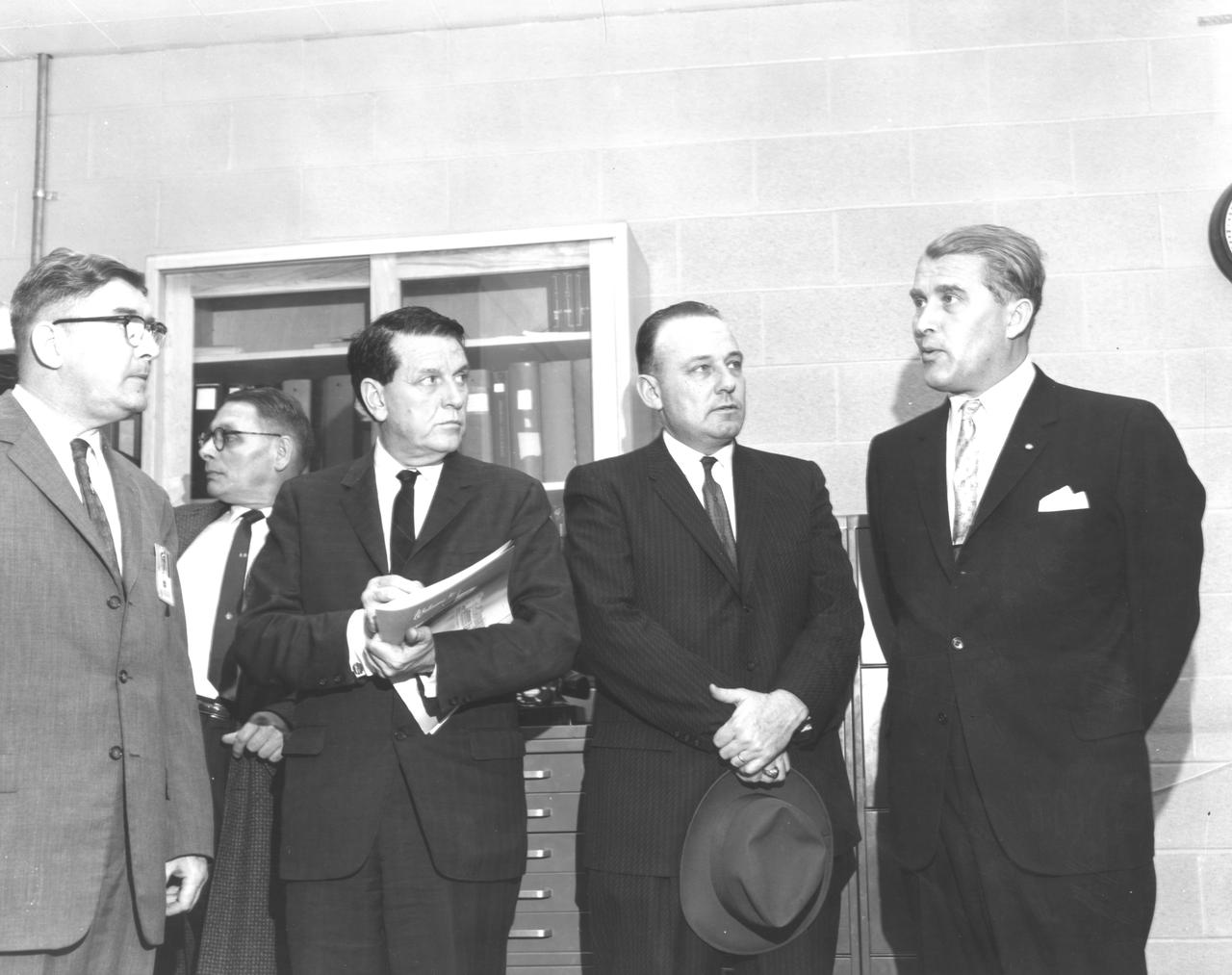
The members of the House Committee on Science and Astronautics visited the Marshall Space Flight Center (MSFC) on March 9, 1962 to gather firsthand information of the nation's space exploration program. The congressional group was composed of members of the Subcommittee on Manned Space Flight. They were briefed on MSFC's manned space efforts earlier in the day and then inspected mockups of the Saturn I Workshop and the Apollo Telescope Mount, two projects developed by MSFC for the post-Apollo program. Pictured left-to-right are Dieter Grau, MSFC; Konrad Dannenberg, MSFC; James G. Fulton, Republican representative for Pennsylvania; Joe Waggoner, Democratic representative for Louisiana; and Dr. Wernher von Braun, Director of MSFC.

S72-41855 (15 June 1972) --- Astronaut Robert L. Crippen, Skylab Medical Experiment Altitude Test (SMEAT) commander, simulates the preparation of a Skylab meal. Crippen is a member of a three-man crew who will spend up to 56 days in the Crew Systems Division's 20-foot altitude chamber at the NASA Manned Spacecraft Center (MSC) beginning in mid-July to obtain medical data and evaluate medical experiment equipment for Skylab. The two crew members not shown in this view are astronauts Karol J. Bobko, SMEAT pilot, and Dr. William E. Thornton, SMEAT science pilot. Photo credit: NASA
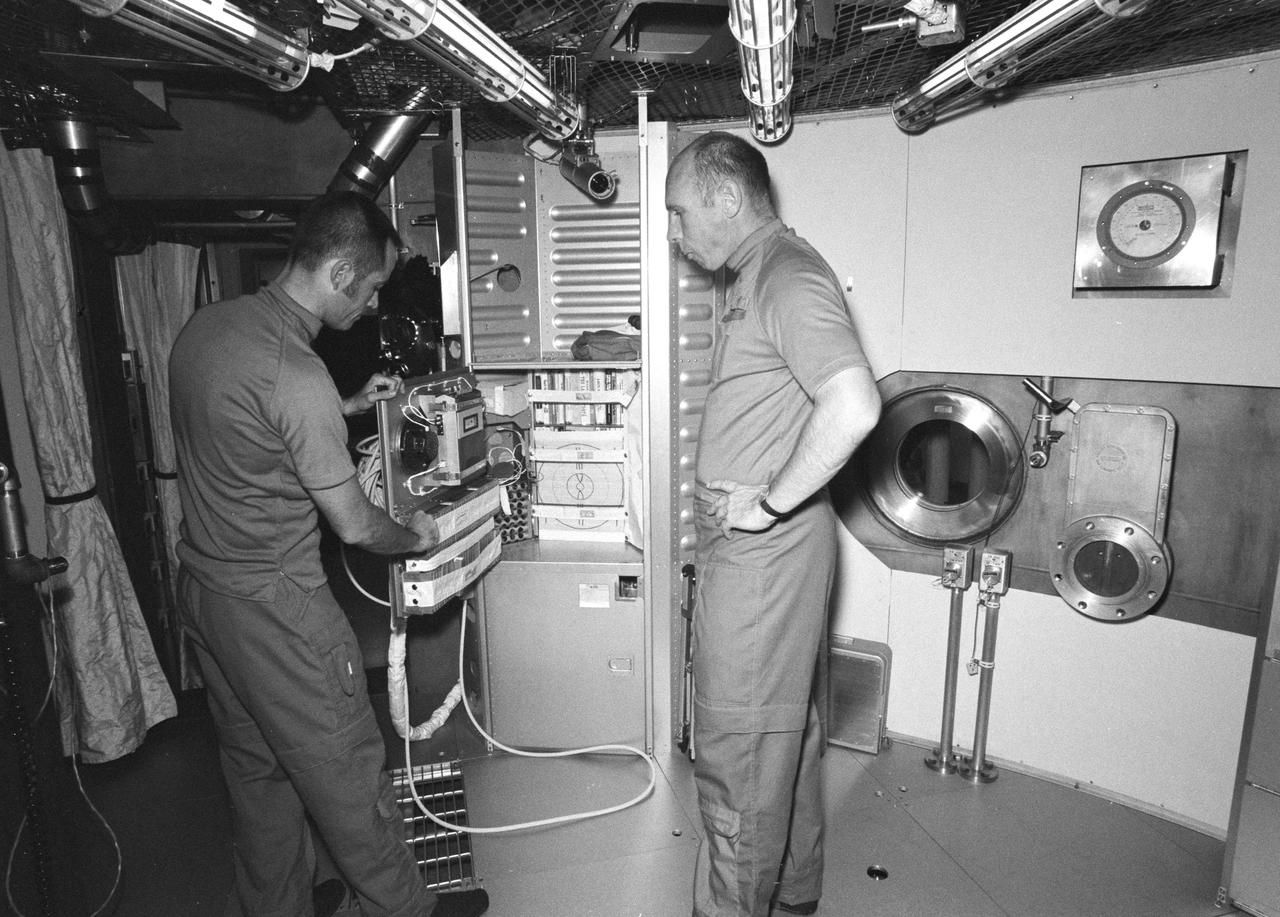
S72-41858 (15 June 1972) --- Astronauts Robert L. Crippen, left, Skylab Medical Experiment Altitude Test (SMEAT) crew commander, and Dr. William E. Thornton, SMEAT science pilot, stand at the cabinet containing off duty recreation equipment. They are two members of a three-man SMEAT crew who will spend up to 56 days in the Crew Systems Division's 20-foot altitude chamber at the NASA Manned Spacecraft Center (MSC) beginning in mid-July to obtain medical data and evaluate medical experiment equipment for Skylab. Astronaut Karol J. Bobko, SMEAT pilot, the third crew member is not shown in this view. Photo credit: NASA
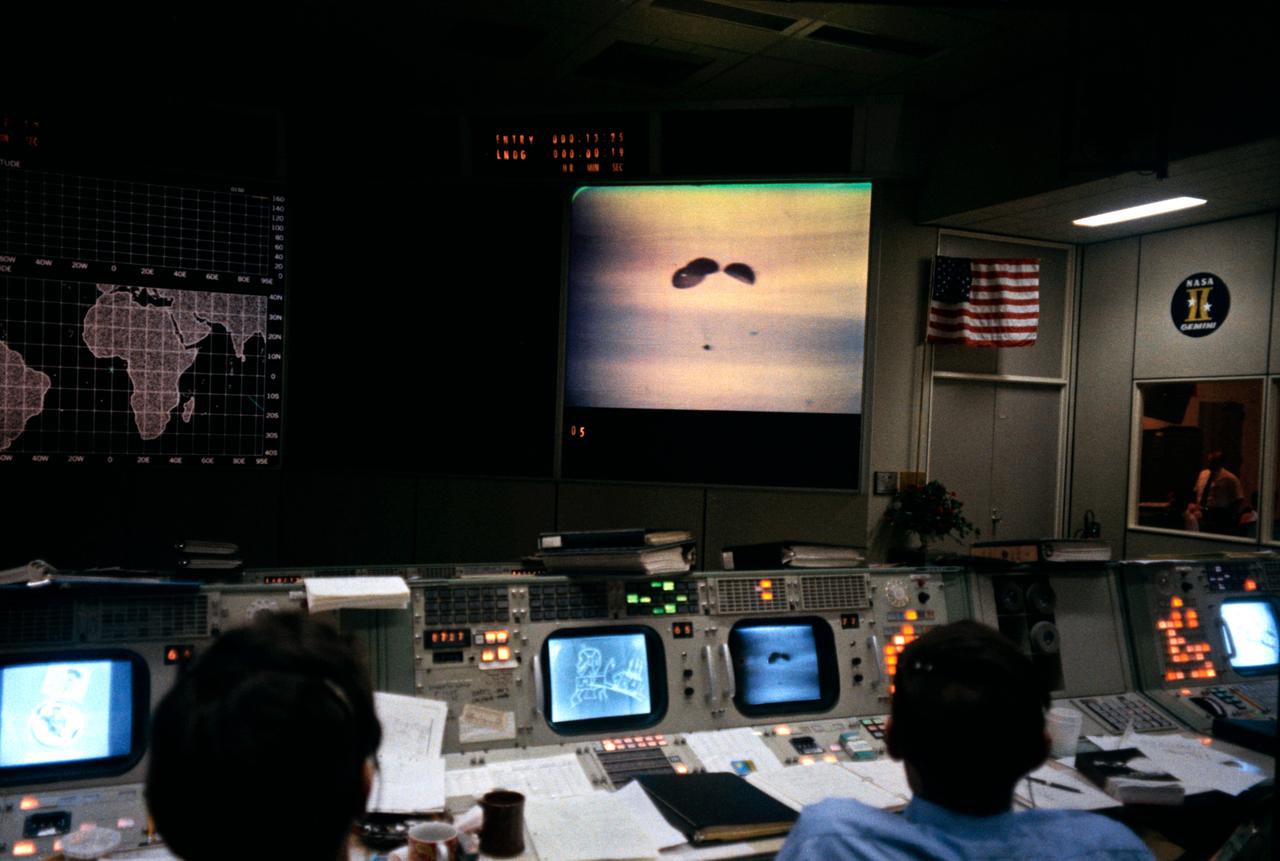
S70-35471 (17 April 1970) --- Two flight controllers man consoles in the Missions Operations Control Room (MOCR) of the Mission Control Center (MCC) at the Manned Spacecraft Center (MSC), Houston, Texas, just before splashdown occurred in the south Pacific Ocean. Though the MOCR does not appear to be crowded in this photo, there was a very large crowd of persons on hand for the splashdown and recovery operations coverage. Most of the group crowded around in the rear of the room. Apollo 13 splashdown occurred at 12:07:44 p.m. (CST), April 17, 1970.
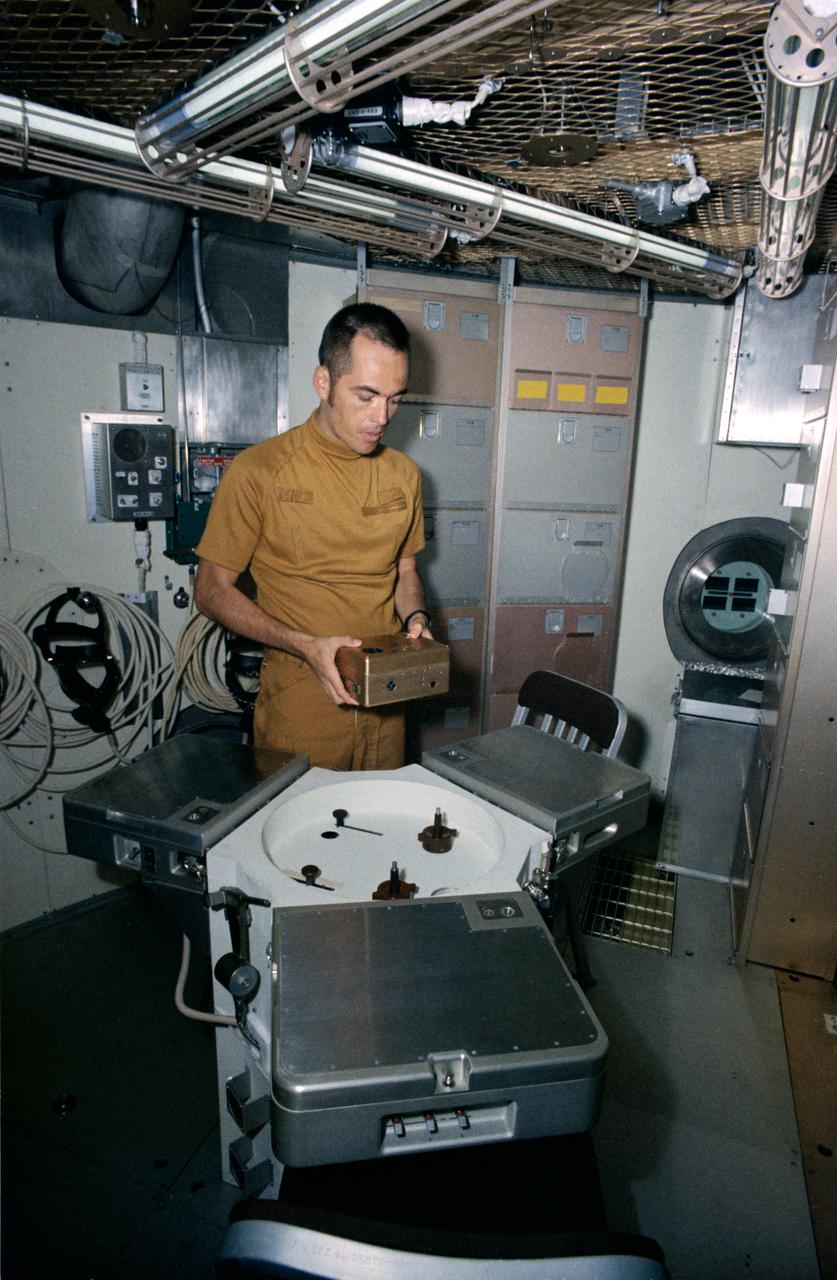
S72-43280 (15 June 1972) --- Astronaut Robert L. Crippen, Skylab Medical Experiment Altitude Test (SMEAT) commander, holds the training model of Skylab experiment T003, the aerosol analysis test, in this preview of SMEAT activity. He is part of a three-man SMEAT crew who will spend up to 56 days in the Crew Systems Division's 20-foot altitude chamber at the NASA Manned Spacecraft Center (MSC) beginning in mid-July to obtain medical data and evaluate medical experiment equipment for Skylab. The two crew members not shown in this view are astronauts Karol J. Bobko, SMEAT pilot, and Dr. William E. Thornton, SMEAT science pilot. Photo credit: NASA
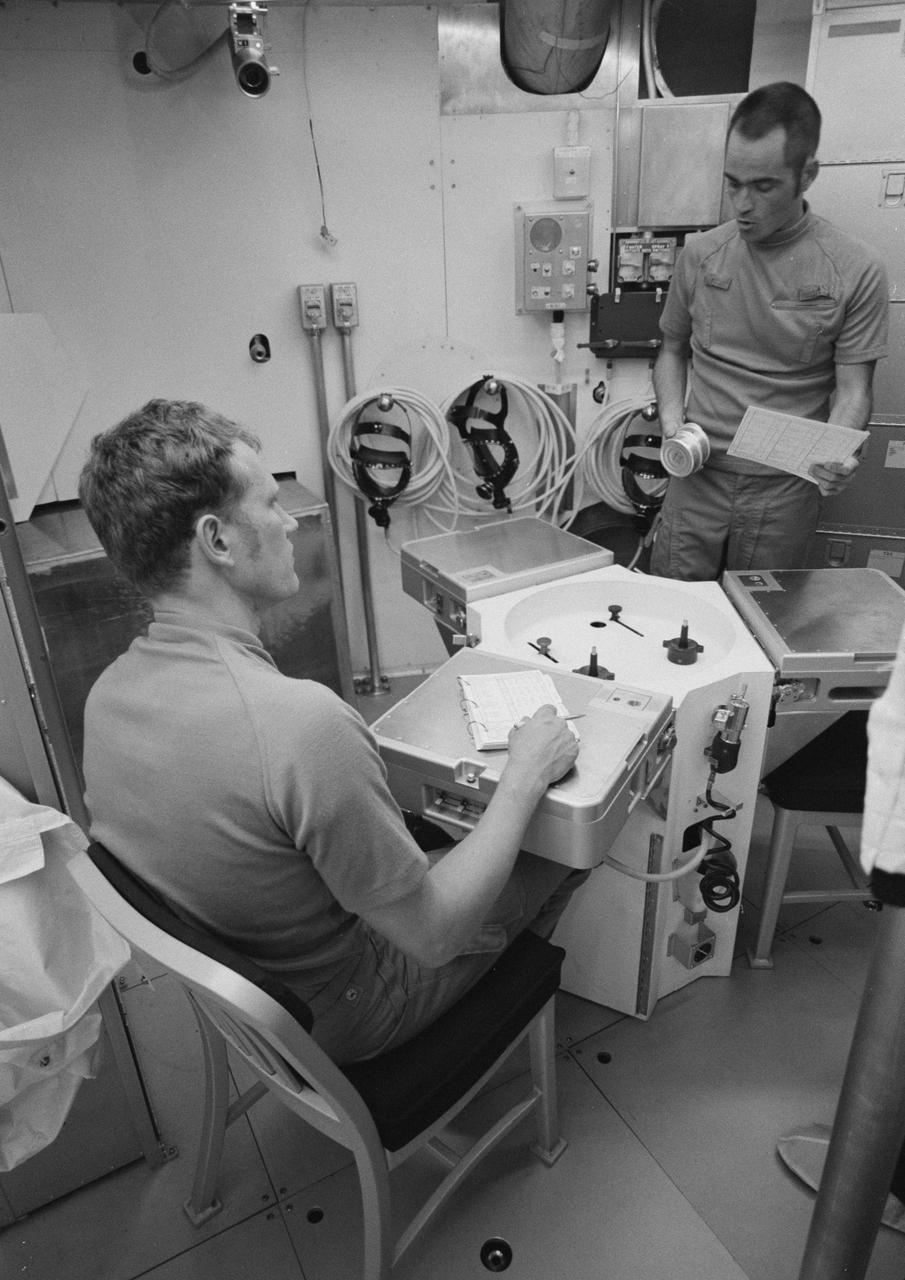
S72-41853 (15 June 1972) --- Two members of the three-man Skylab Medical Experiment Altitude Test (SMEAT) crew, that will spend up to 56 days in the Crew Systems Division's 20-foot altitude chamber at the Manned Spacecraft Center (MSC) beginning in mid-July, go over a menu in the food preparation area. Seated at the simulated wardroom food table is astronaut Karol J. Bobko, SMEAT pilot, and standing is astronaut Robert L. Crippen, SMEAT commander. Dr. William E. Thornton, SMEAT science pilot, the third crew member is not shown in this view. Photo credit: NASA
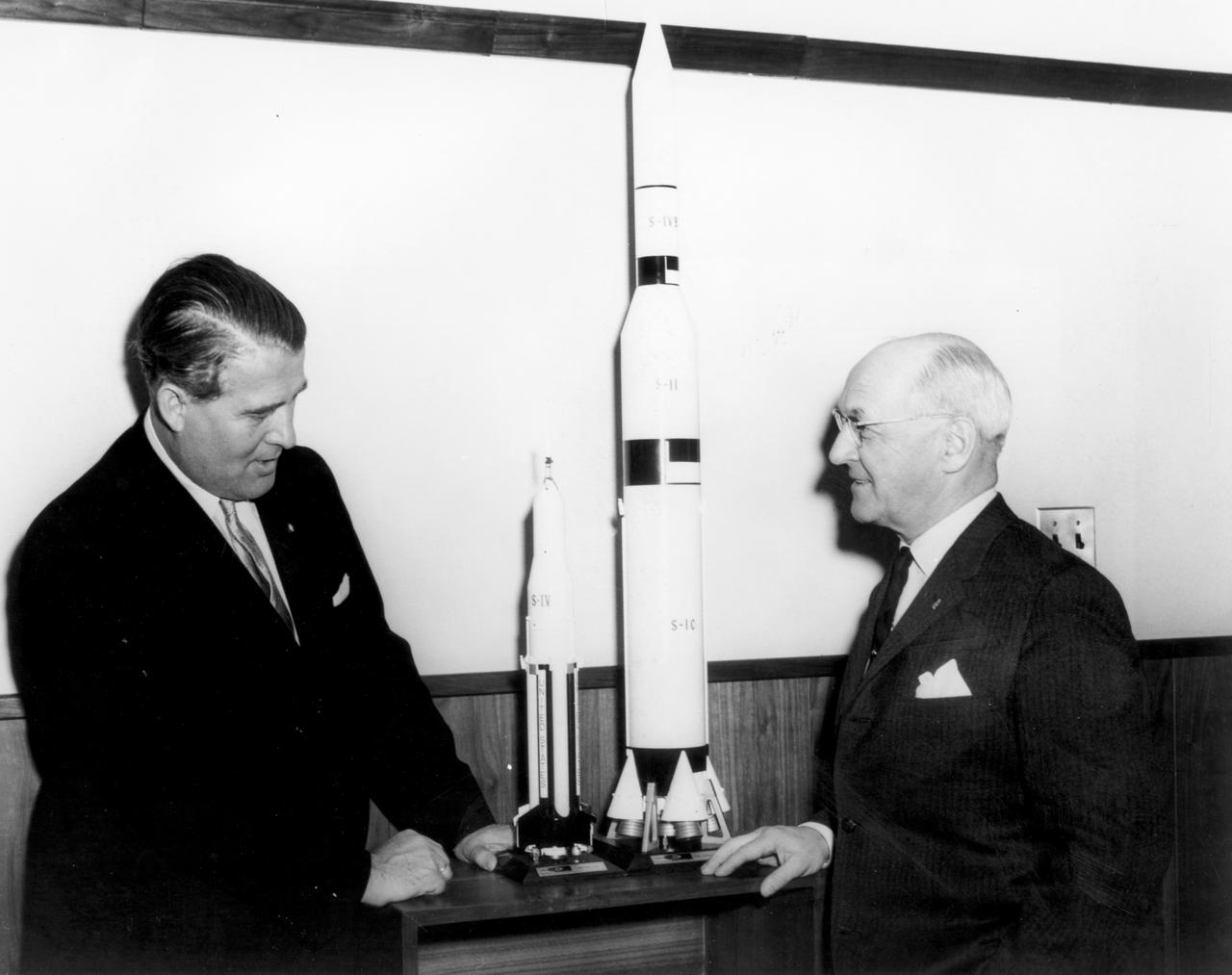
The members of the House Committee on Science and Astronautics visited the Marshall Space Flight Center (MSFC) on March 9, 1962 to gather firsthand information of the nation’s space exploration program. The congressional group was composed of members of the Subcommittee on Manned Space Flight. The subcommittee was briefed on MSFC’s manned space efforts earlier in the day and then inspected mockups of the Saturn I Workshop and the Apollo Telescope Mount, two projects developed by MSFC for the post-Apollo program. In this photograph, MSFC Director, Dr. Wernher von Braun and R. Walter Riehlman, Republican representative of New York, discuss Apollo models.
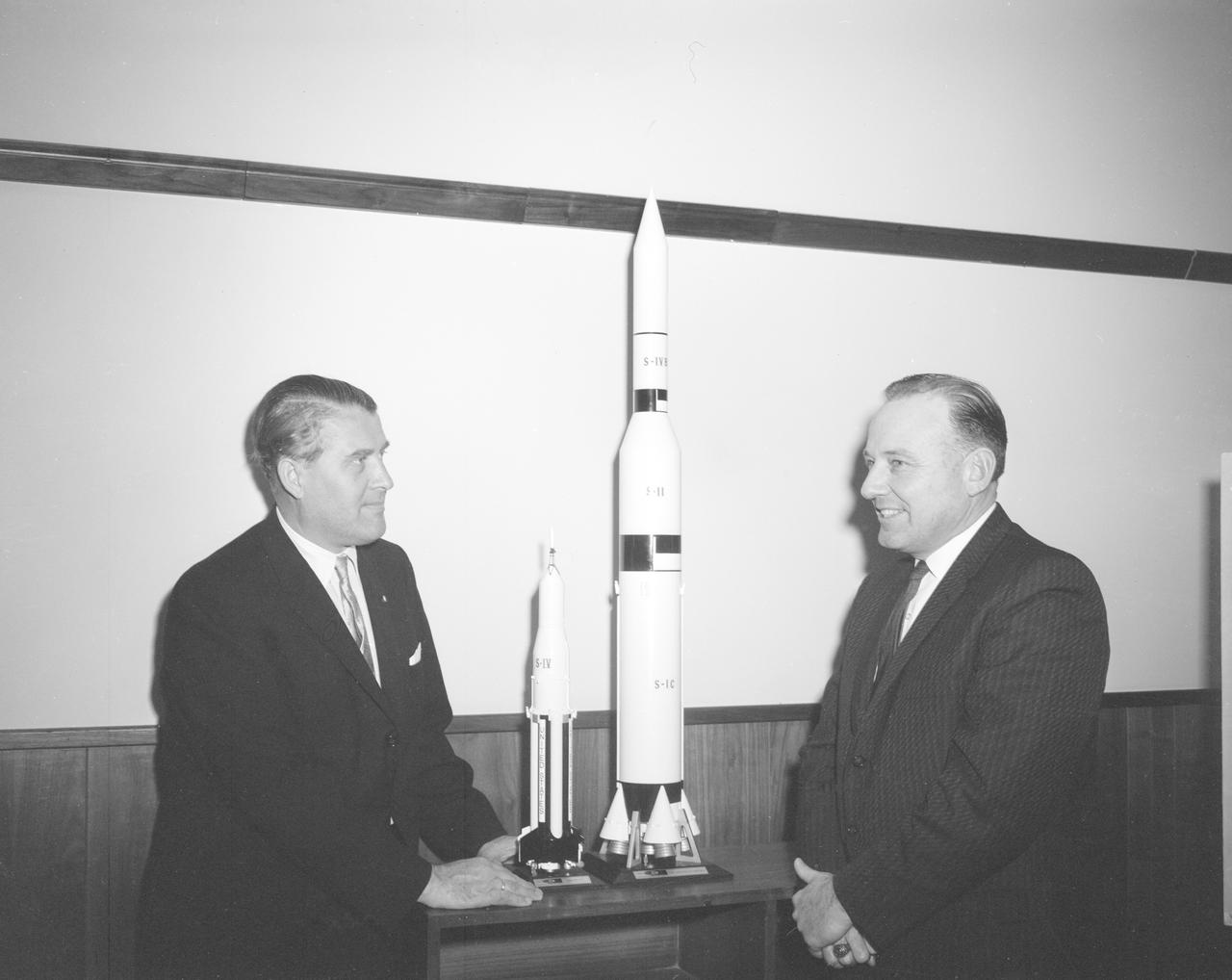
The members of the House Committee on Science and Astronautics visited the Marshall Space Flight Center (MSFC) on March 9, 1962 to gather firsthand information of the nation’s space exploration program. The congressional group was composed of members of the Subcommittee on Manned Space Flight. The subcommittee was briefed on MSFC’s manned space efforts earlier in the day and then inspected mockups of the Saturn I Workshop and the Apollo Telescope Mount, two projects developed by MSFC for the post-Apollo program. In this photograph, MSFC Director, Dr. Wernher von Braun and Joe Waggoner, Democratic representative of Louisiana, discuss Apollo models.
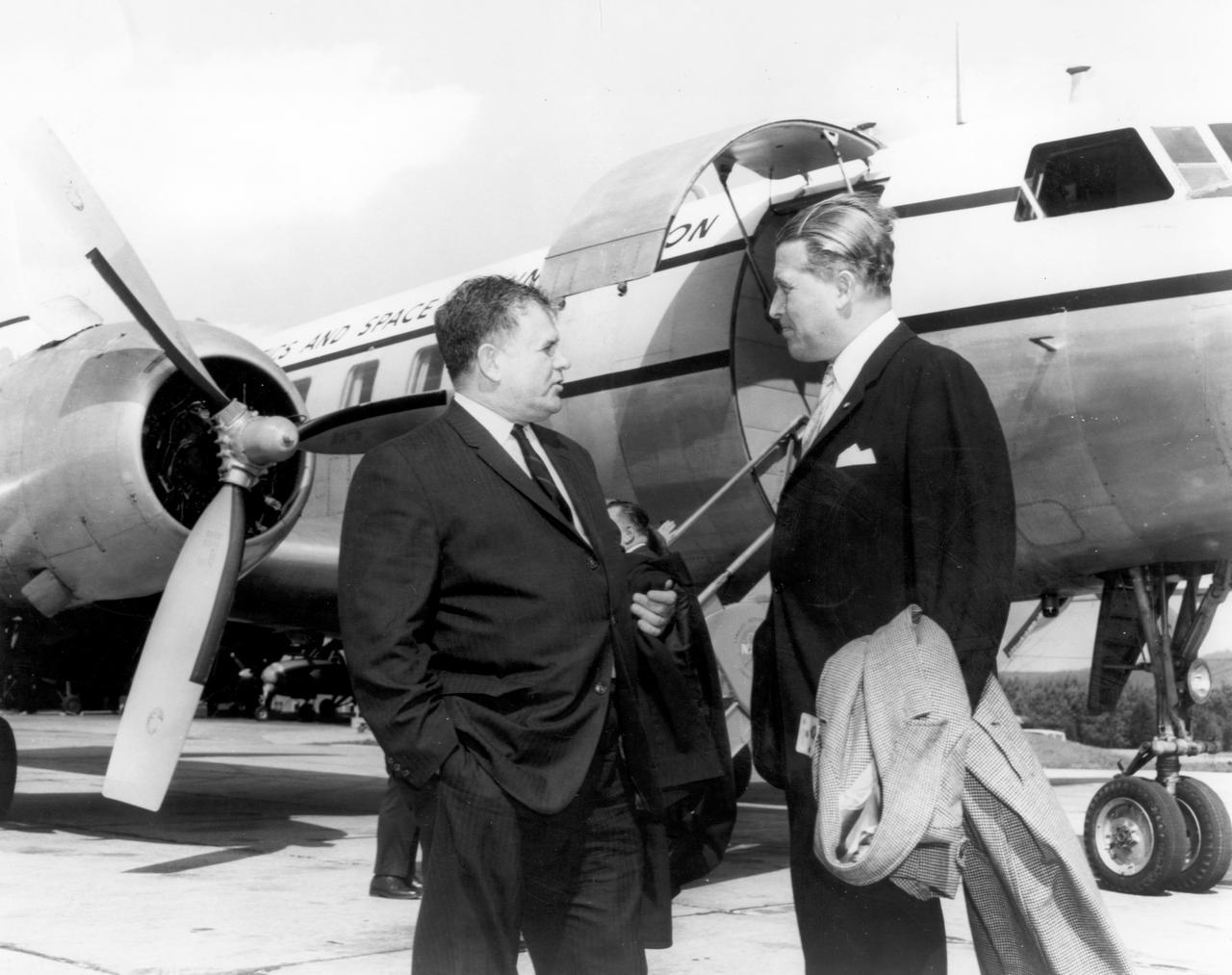
The members of the House Committee on Science and Astronautics visited the Marshall Space Flight Center (MSFC) on March 9, 1962 to gather firsthand information of the nation’s space exploration program. The congressional group was composed of members of the Subcommittee on Manned Space Flight. The subcommittee was briefed on MSFC’s manned space efforts earlier in the day and then inspected mockups of the Saturn I Workshop and the Apollo Telescope Mount, two projects developed by MSFC for the post-Apollo program. In this photograph, MSFC Director, Dr. Wernher von Braun, bids farewell to Texas Democratic Representative Olin E. Teague before departure at the Redstone Arsenal Airstrip.
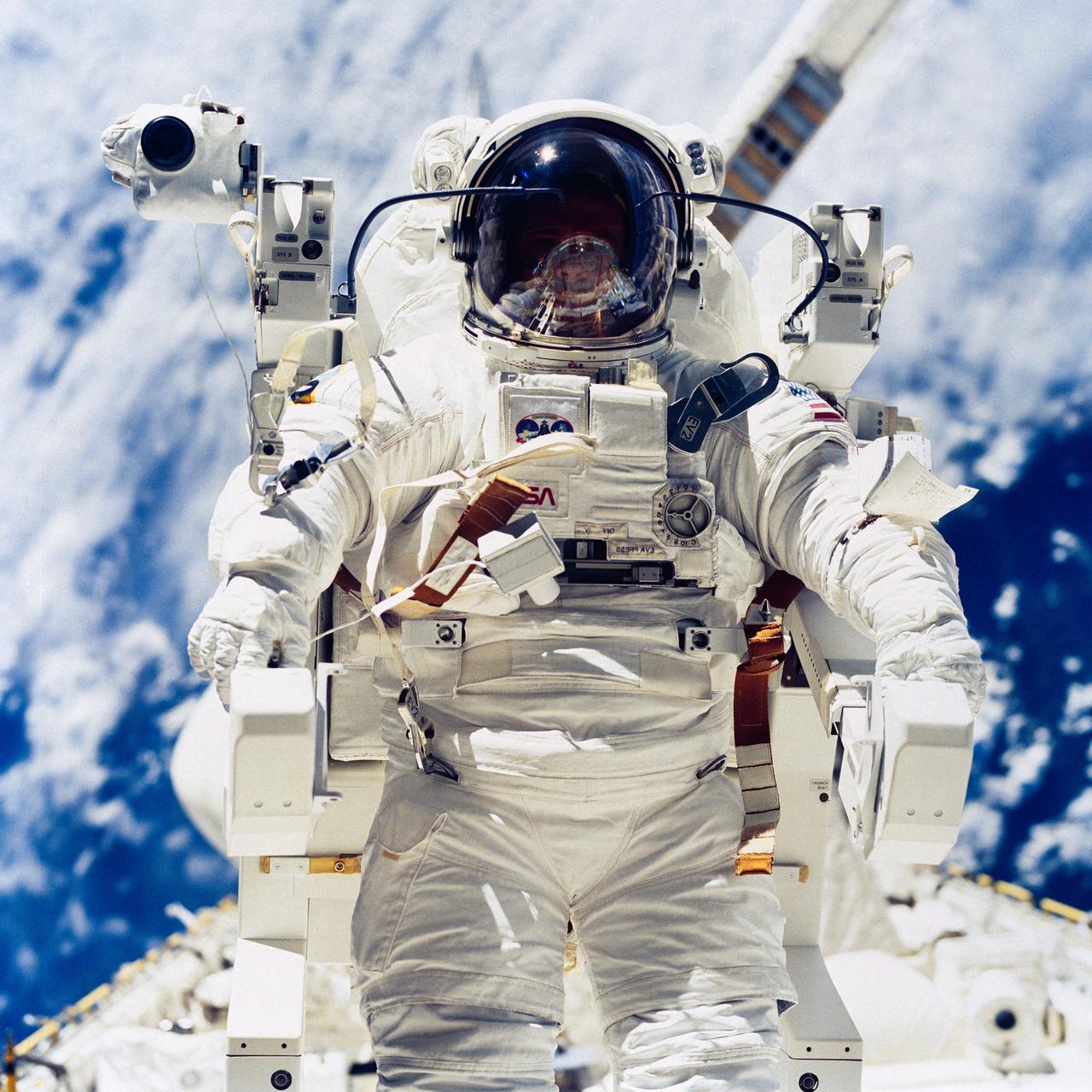
S84-27034A (9 Feb. 1984) --- Astronaut Robert L. Stewart appears to glide a few meters above the Earth-orbiting Space Shuttle Challenger's cargo bay during the second of two extravehicular activity (EVA) session on the Challenger's fourth flight in space. Astronauts Stewart and Bruce McCandless II, two of NASA's three mission specialists on flight STS-41B, earlier made another EVA, testing another manned maneuvering unit (MMU).
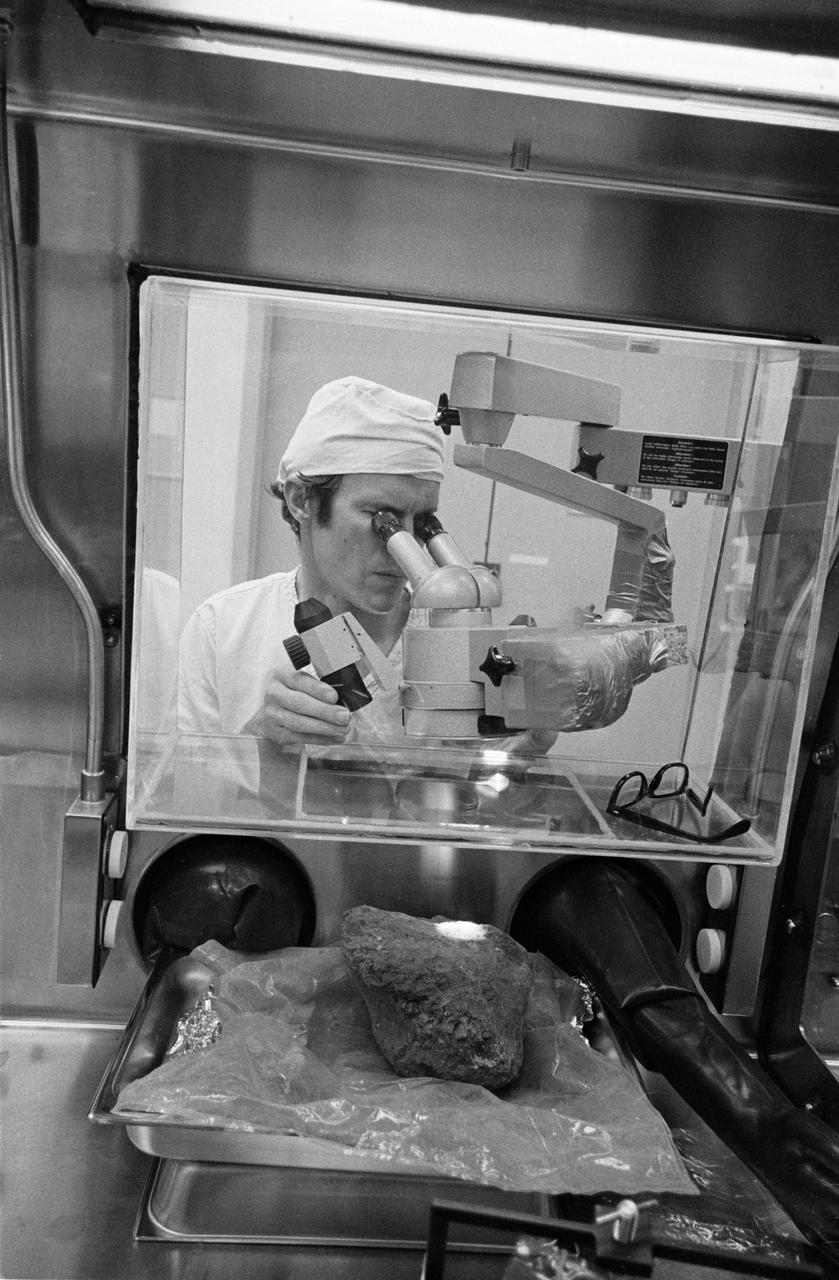
S71-21245 (24 Feb. 1971) --- Dr. Daniel H. Anderson, an aerospace technologist and test director in the Nonsterile Nitrogen Processing Laboratory in the Lunar Receiving Laboratory (LRL) at the Manned Spacecraft Center (MSC) looks at much-discussed Apollo 14 basketball-size rock through a microscope. The two moon-exploring crew men of Apollo 14 brought back 90-odd pounds of lunar sample material from their two periods of extravehicular activity (EVA) on the lunar surface in the Fra Mauro area.
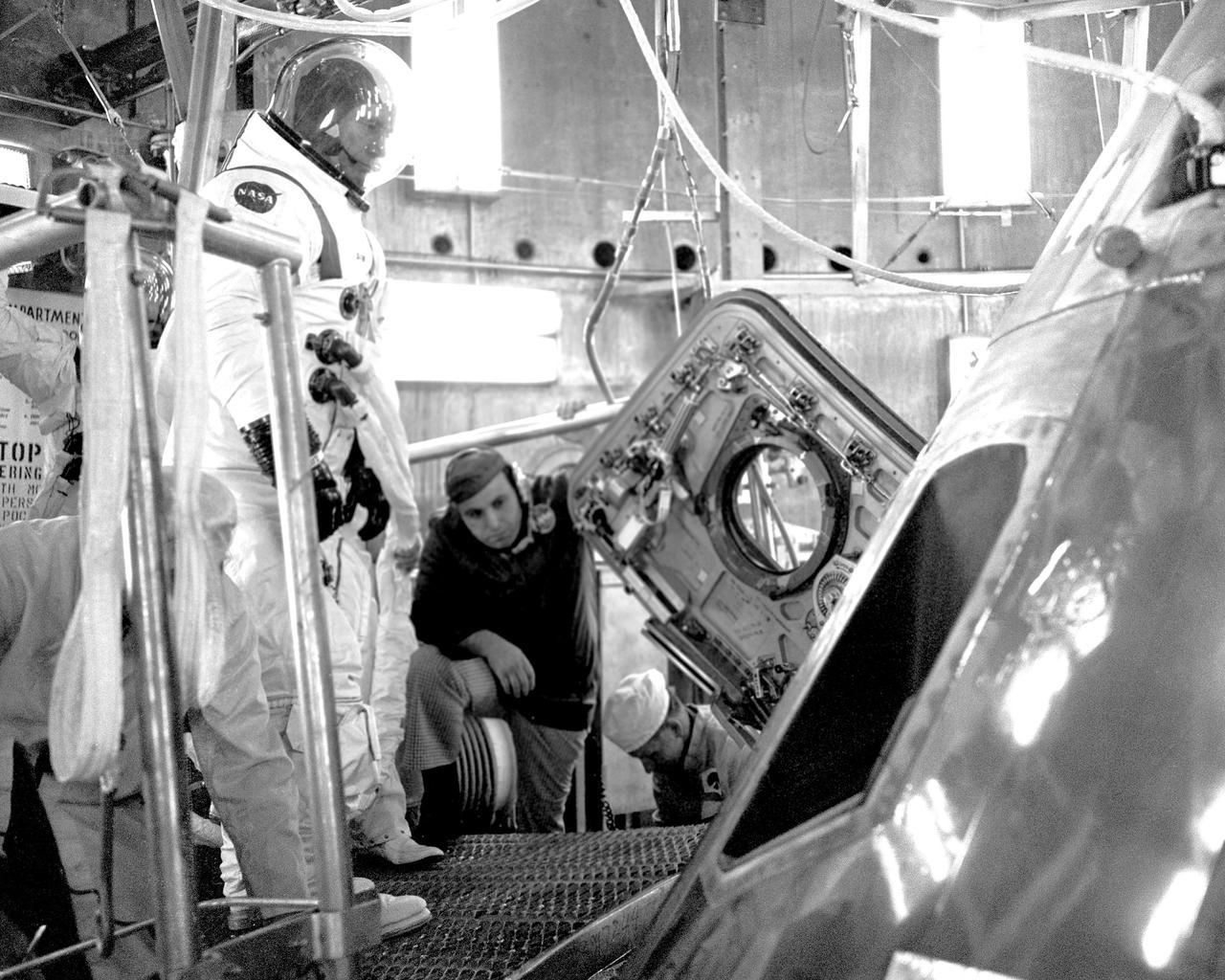
CAPE CANAVERAL, Fla. – The docking module and Apollo spacecraft for this summer's joint manned mission with the Soviet were mated in the Manned Spacecraft Operations Building today. The docking module will provide a mechanical and electrical link between the Apollo and Soyuz spacecraft while they are docked and also serve as an airlock. On hand to participate in the operation were two members of the Apollo prime crew, Astronauts Donald K. Slayton and Vance D. Brand. Launch of the Saturn 1B/Apollo from Complex 39 is scheduled for July 15. The first international crewed spaceflight was a joint U.S.-U.S.S.R. rendezvous and docking mission. The Apollo-Soyuz Test Project, or ASTP, took its name from the spacecraft employed: the American Apollo and the Soviet Soyuz. The three-man Apollo crew lifted off from Kennedy Space Center aboard a Saturn IB rocket on July 15, 1975, to link up with the Soyuz that had launched a few hours earlier. A cylindrical docking module served as an airlock between the two spacecraft for transfer of the crew members. Photo credit: NASA
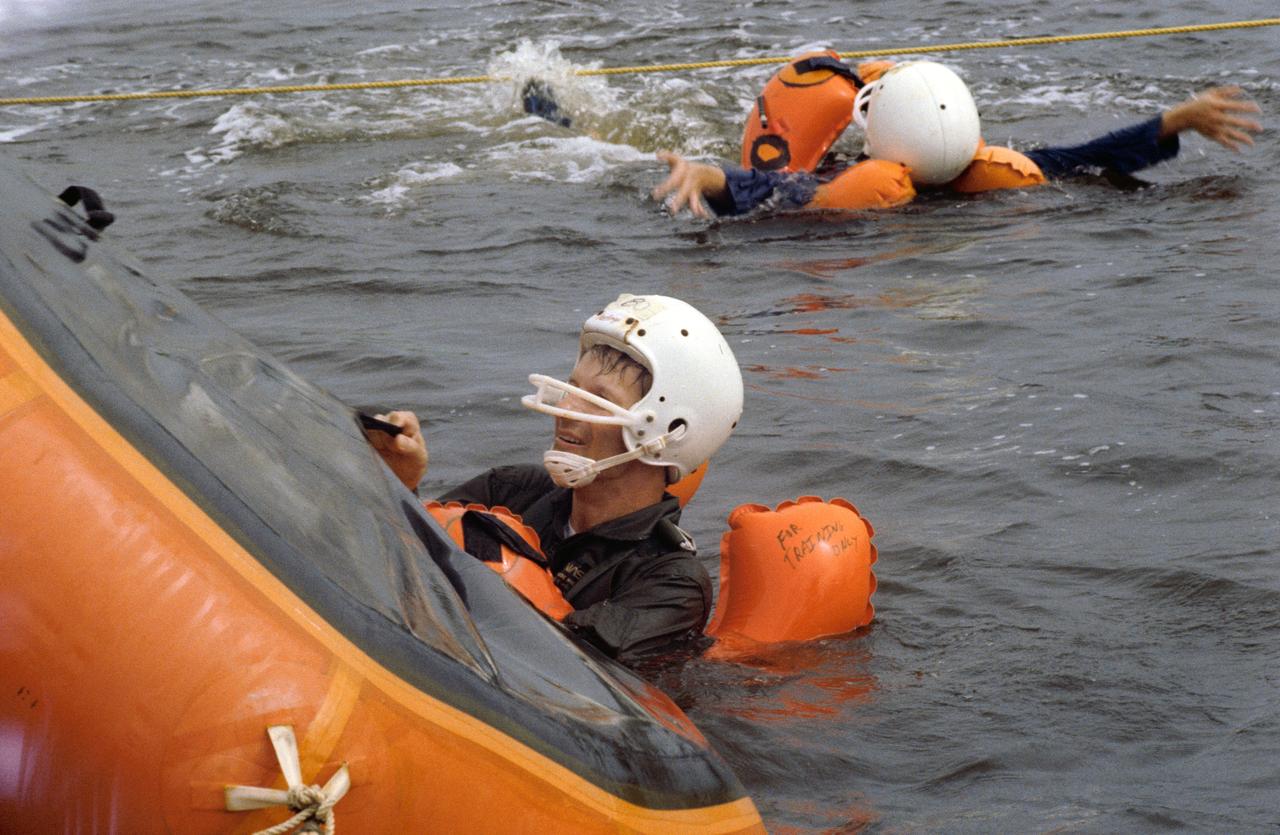
S80-38456 (13 Aug 1980) --- Claude Nicollier of Switzerland, one of two European scientists/Spacelab payload specialist candidates training in the United States along with 19 new NASA astronaut candidates, grabs onto the one-man life raft he is using during a water survival training school attended by several JSC personnel in mid-August. Six of the 19 candidates who had not had this type training before and the two Europeans were joined by a veteran astronaut, training personnel and two NASA physicians on the trip.

This is an illustration of the Space Base concept. In-house work of the Marshall Space Flight Center, as well as a Phase B contract with the McDornel Douglas Astronautics Company, resulted in a preliminary design for a space station in 1969 and l970. The Marshall-McDonnel Douglas approach envisioned the use of two common modules as the core configuration of a 12-man space station. Each common module was 33 feet in diameter and 40 feet in length and provided the building blocks, not only for the space station, but also for a 50-man space base. Coupled together, the two modules would form a four-deck facility: two decks for laboratories and two decks for operations and living quarters. Zero-gravity would be the normal mode of operation, although the station would have an artificial-gravity capability. This general-purpose orbital facility was to provide wide-ranging research capabilities. The design of the facility was driven by the need to accommodate a broad spectrum of activities in support of astronomy, astrophysics, aerospace medicine, biology, materials processing, space physics, and space manufacturing. To serve the needs of Earth observations, the station was to be placed in a 242-nautical-mile orbit at a 55-degree inclination. An Intermediate-21 vehicle (comprised of Saturn S-IC and S-II stages) would have launched the station in 1977.
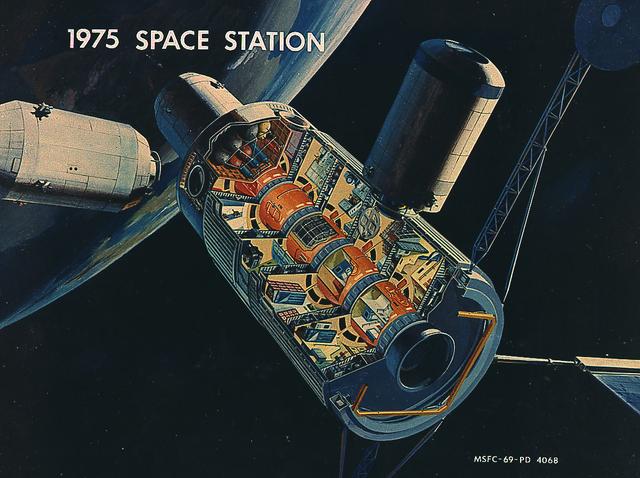
This picture illustrates a concept of a 33-Foot-Diameter Space Station Leading to a Space Base. In-house work of the Marshall Space Flight Center, as well as a Phase B contract with the McDornel Douglas Astronautics Company, resulted in a preliminary design for a space station in 1969 and l970. The Marshall-McDonnel Douglas approach envisioned the use of two common modules as the core configuration of a 12-man space station. Each common module was 33 feet in diameter and 40 feet in length and provided the building blocks, not only for the space station, but also for a 50-man space base. Coupled together, the two modules would form a four-deck facility: two decks for laboratories and two decks for operations and living quarters. Zero-gravity would be the normal mode of operation, although the station would have an artificial gravity capability. This general-purpose orbital facility was to provide wide-ranging research capabilities. The design of the facility was driven by the need to accommodate a broad spectrum of activities in support of astronomy, astrophysics, aerospace medicine, biology, materials processing, space physics, and space manufacturing. To serve the needs of Earth observations, the station was to be placed in a 242-nautical-mile orbit at a 55-degree inclination. An Intermediate-21 vehicle (comprised of Saturn S-IC and S-II stages) would have launched the station in 1977.
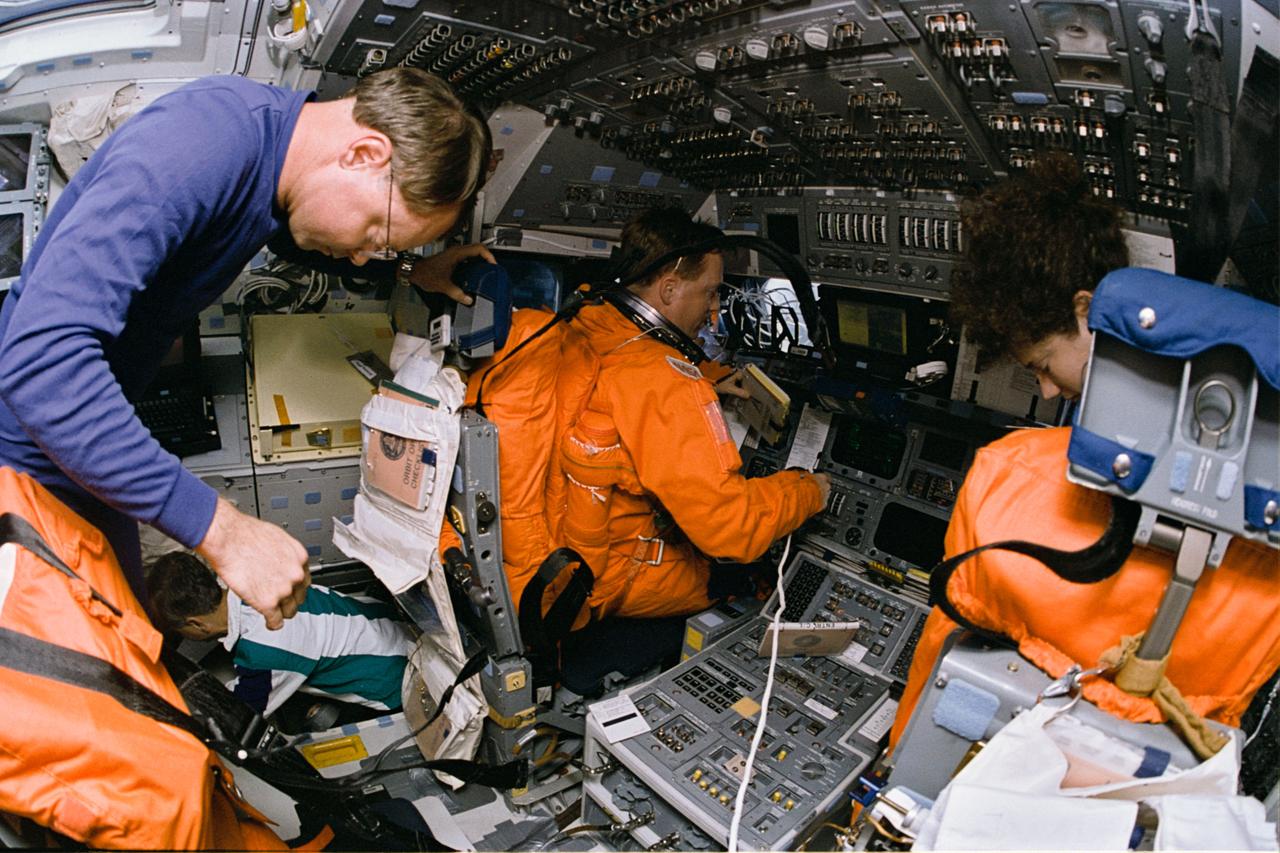
STS064-06-028 (9-20 Sept. 1994) --- On the space shuttle Discovery's flight deck, two thirds of the crew prepare for one of four hard efforts (in a two-day period) to de-orbit and complete the extended spaceflight. Manning the commander's station and wearing one of the launch and entry suits is astronaut Richard N. Richards, STS-64 mission commander. At the pilot's station is astronaut Susan J. Helms, mission specialist. Astronaut L. Blaine Hammond, pilot, is at left foreground, and astronaut Carl J. Meade, mission specialist, is at left background in the hatch leading to the middeck. Photo credit: NASA or National Aeronautics and Space Administration
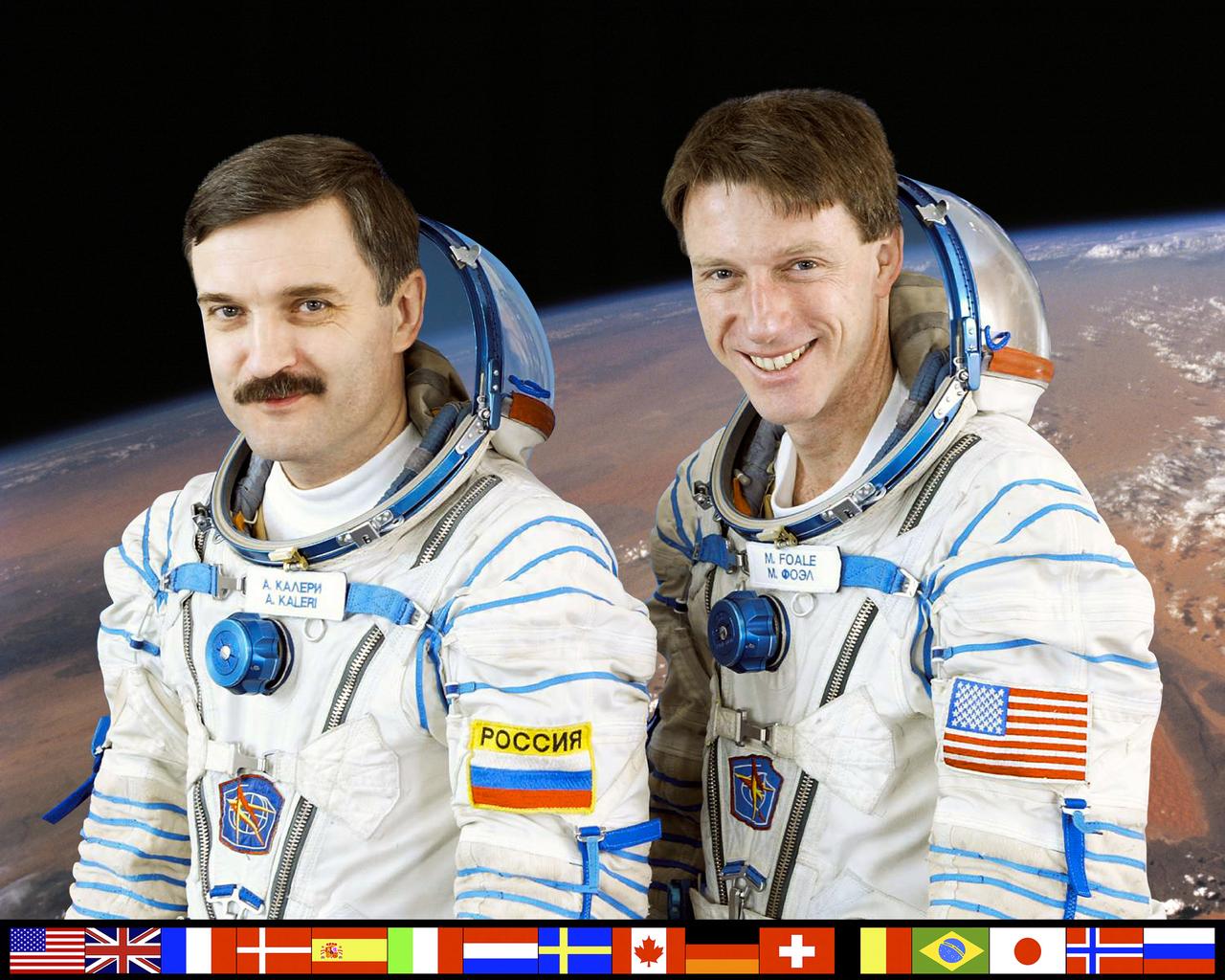
This is a portrait of the Expedition-8 two man crew. Pictured left is Cosmonaut Alexander Y, Kaleri, Soyuz Commander and flight engineer; and Michael C. Foale (right), Expedition-8 Mission Commander and NASA ISS Science Officer. The crew posed for this portrait while training at the Gagarin Cosmonaut Training Center in Star City, Russia. The two were launched for the International Space Station (ISS) aboard a Soyuz TMA-3 spacecraft from the Baikonur Cosmodrome, Kazakhstan, along with European Space Agency (ESA) Astronaut Pedro Duque of Spain, on October 18, 2003.
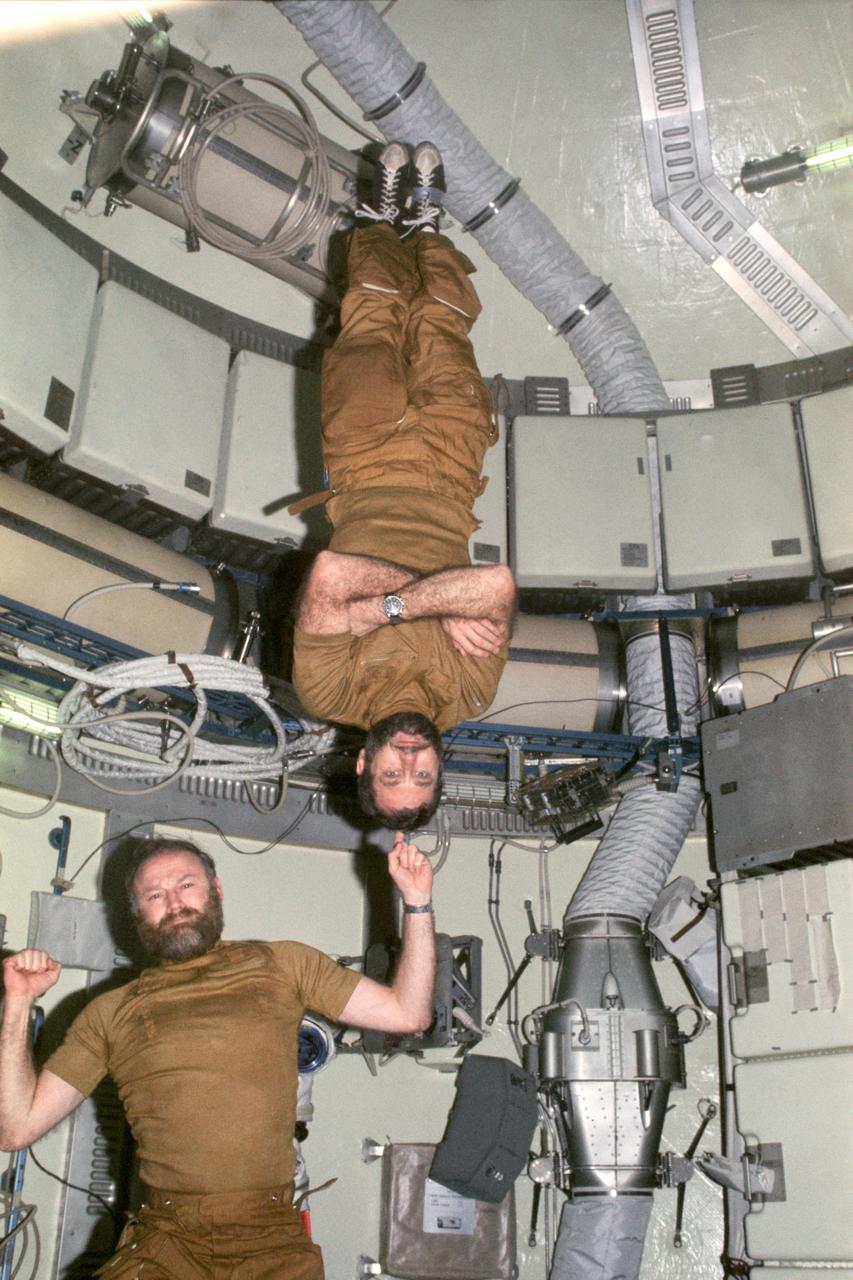
SL4-150-5080 (16 Nov. 1973-8 Feb. 1974) --- Two of the three Skylab 4 (third manning) astronauts exhibit the "magic" that can be accomplished in the weightlessness of space. Astronaut Gerald D. Carr, mission commander, uses his index finger to suspend astronaut William R. Pogue, pilot, in the Orbital Workshop (OWS). The two "wizards" completed almost three months aboard the Earth-orbiting Skylab space station, plenty of time to grow these full beards. The photograph was taken with a 35mm camera by astronaut Edward G. Gibson, science pilot. Photo credit: NASA
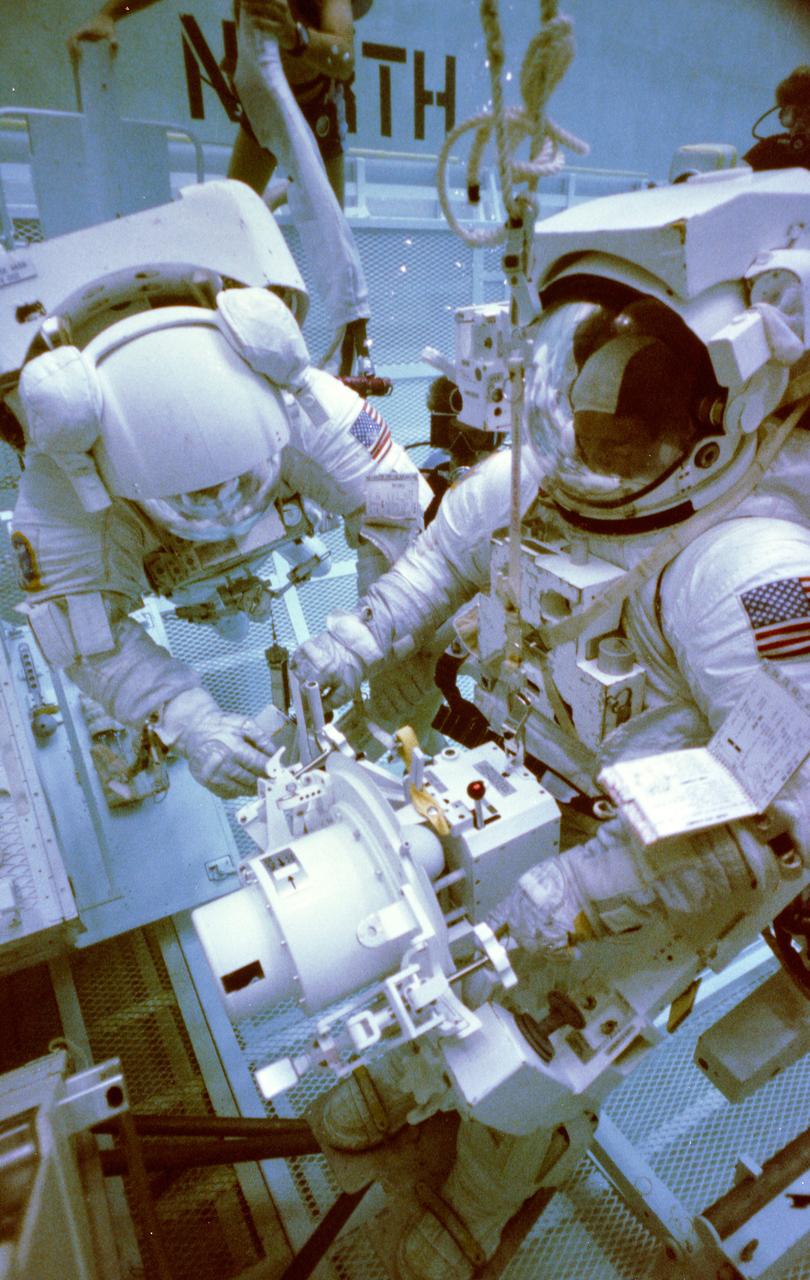
S83-42893 (19 Oct 1983) ---- Astronauts George D. Nelson and James D. van Hoften, two of three STS-41C mission specialists, share an extravehicular activity (EVA) task in this simulation of a Solar Maximum Satellite (SMS) repair visit. The two are making use of the Johnson Space Center's (JSC) weightless environment training facility (WET-F). Dr. Nelson is equipped with the manned maneuvering unit (MMU) trainer and he handles the trunion pin attachment device (TPAD), a major tool to be used on the mission. The photograph was taken by Otis Imboden.
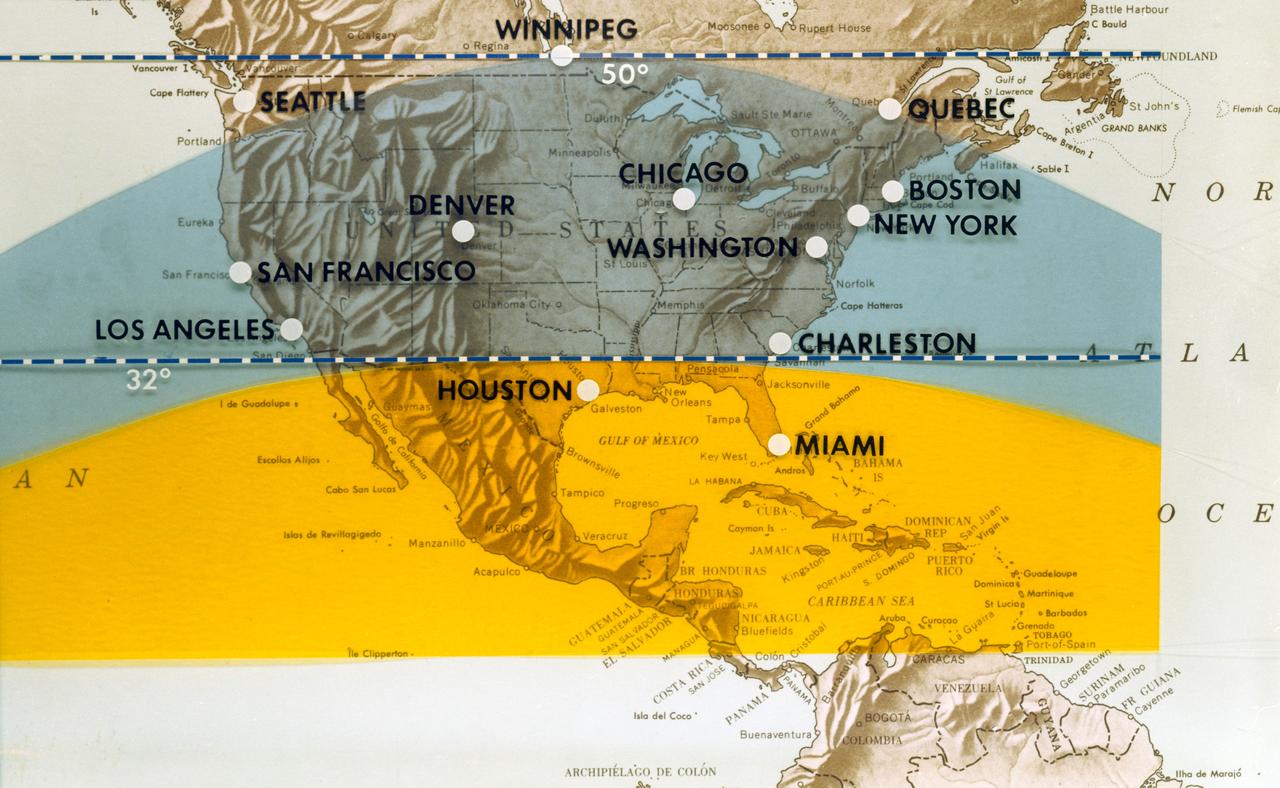
S70-06463 (June 1970) --- This map of North America has been marked to indicate areas of photographic imagery available from Apollo photography (32-degree orbits) as opposed to that imagery which will be available from a 50-degree inclined orbit. The region between the two broken lines will be in the area that can be covered by the first manned Skylab mission in 1973. Photo credit: NASA
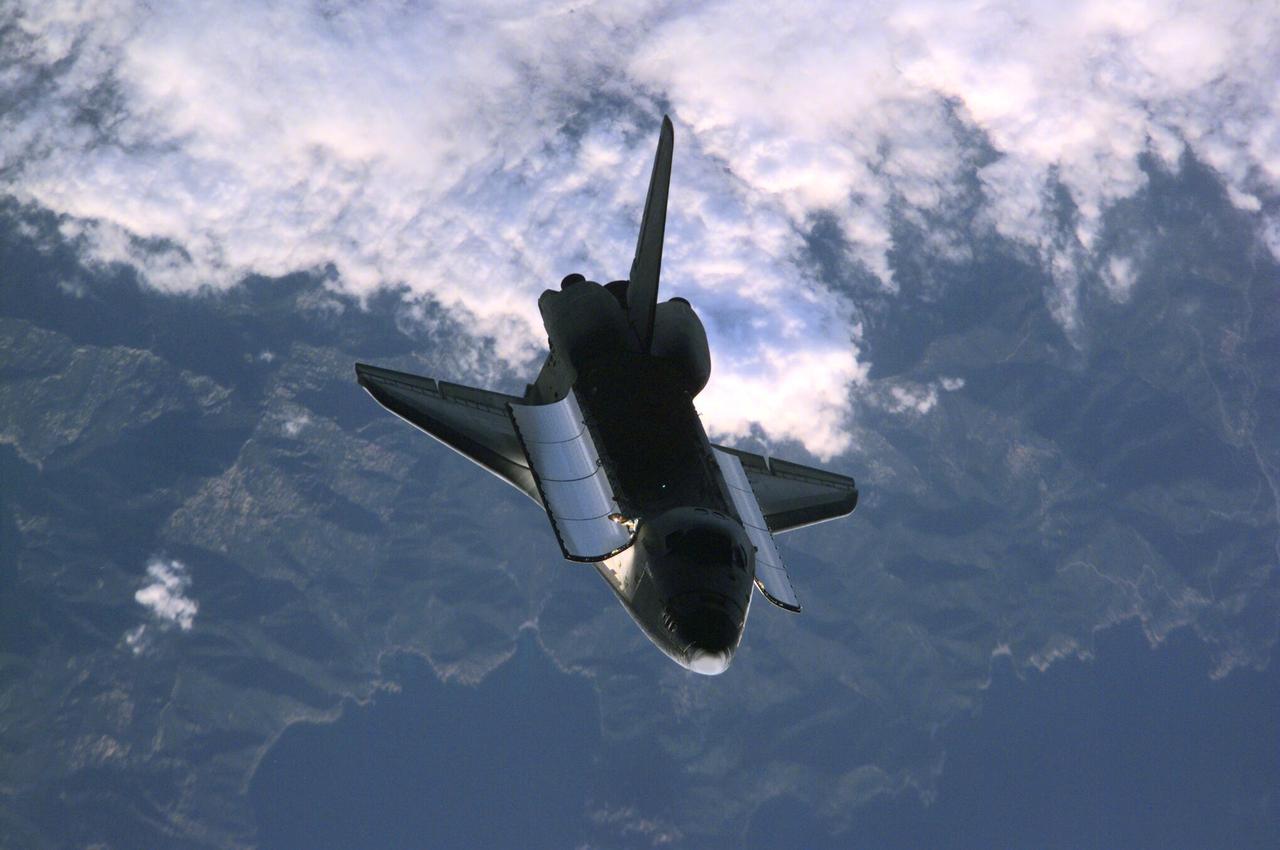
ISS01-E-5392 (16 February 2001) --- This high-angle image of the Space Shuttle Atlantis backdropped over the mountainous coastline of Corsica was photographed by the three-man Expedition One crew aboard the International Space Station (ISS) shortly after the shuttle and the outpost unlinked following several days of joint operations of the two crews. The scene was recorded with a digital still camera.
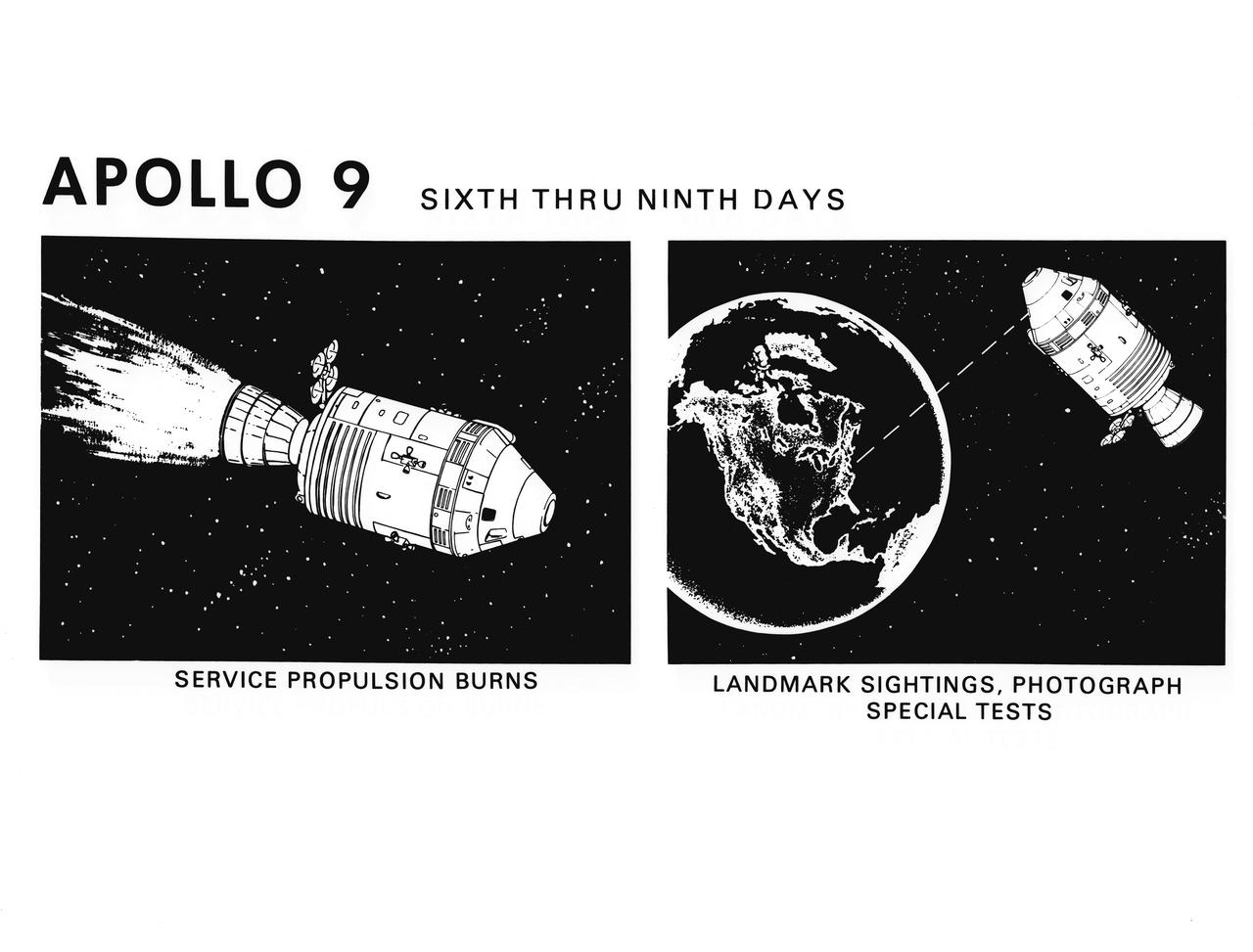
S69-19797 (February 1969) --- Composite of two artist's concepts illustrating key events, tasks and activities from the sixth through the ninth day of the Apollo 9 mission, including service propulsion system burns, and landmark sightings, photograph special tests. The Apollo 9 mission will evaluate spacecraft lunar module systems performance during manned Earth-orbital flight.
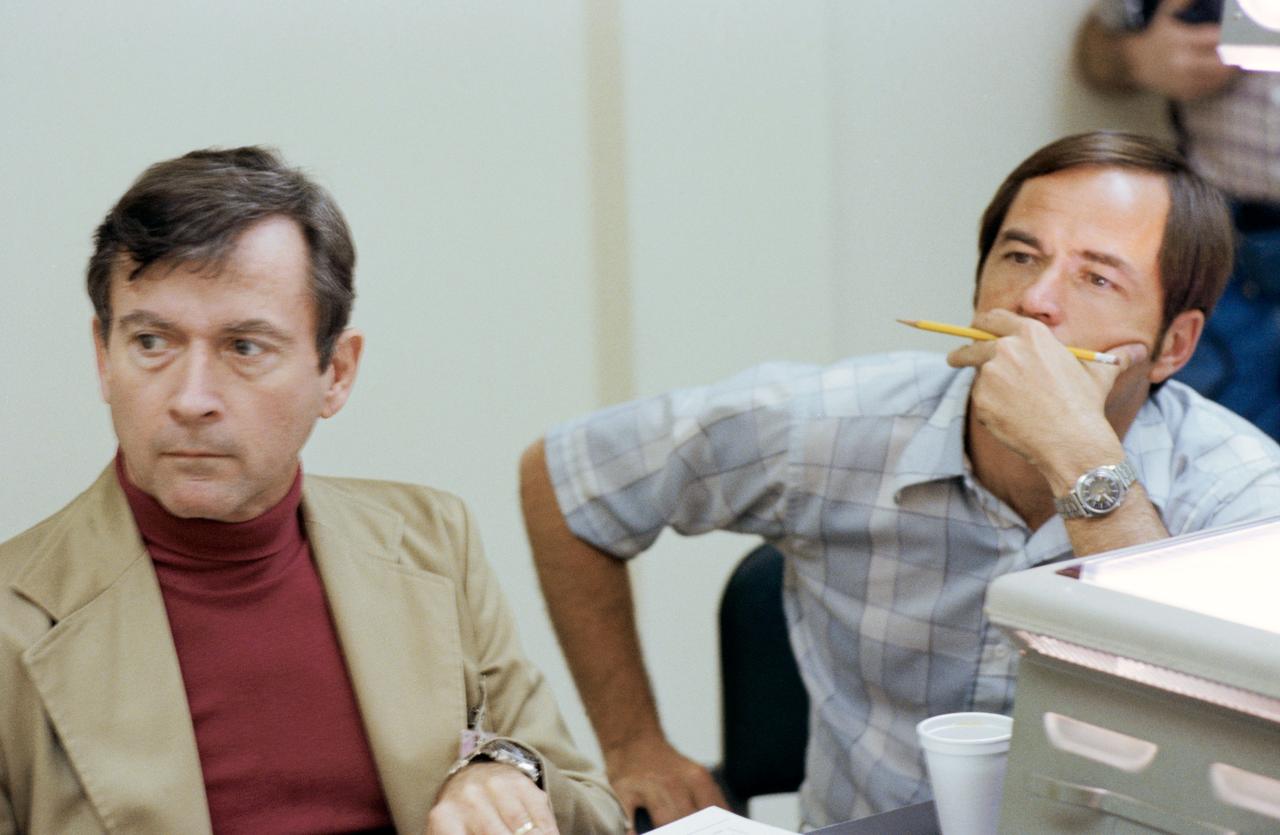
S81-29619 (6 April 1981) --- STS-1 astronauts John W. Young, left, and Robert L. Crippen direct their attention to a chart on a screen in a small briefing room at NASA's Johnson Space Center (JSC). They are taking part in a three-way telephone conference call, which involved engineers at JSC and at the Rockwell International facility in California. Later this week the two will man the space shuttle orbiter Columbia for STS-1. Photo credit: NASA
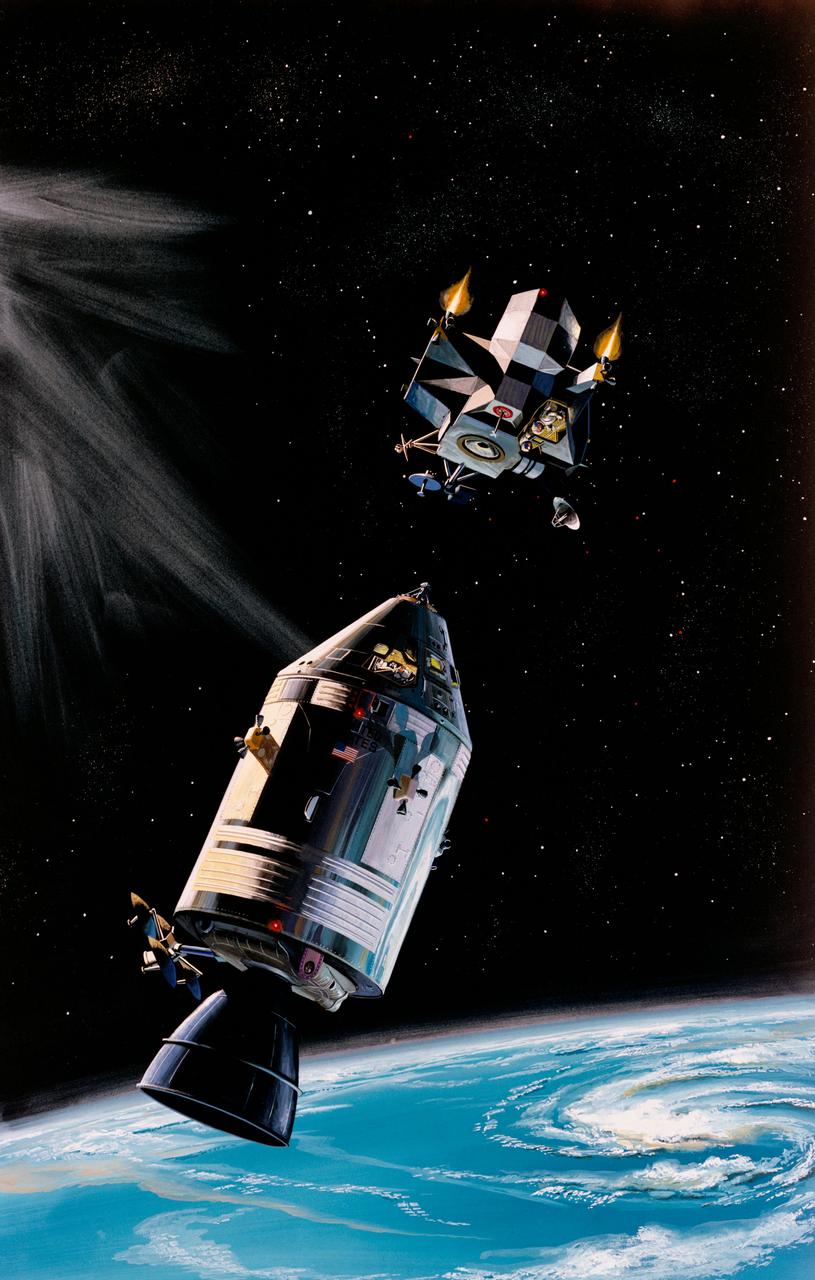
S69-18546 (February 1969) --- North American Rockwell artist's concept illustrating the docking of the Lunar Module ascent stage with the Command and Service Modules during the Apollo 9 mission. The two figures in the Lunar Module represent astronauts James A. McDivitt, Apollo 9 commander; and Russell L. Schweickart, lunar module pilot. The figure in the Command Module represents astronaut David R. Scott, command module pilot. The Apollo 9 mission will evaluate spacecraft lunar module systems performance during manned Earth-orbital flight.
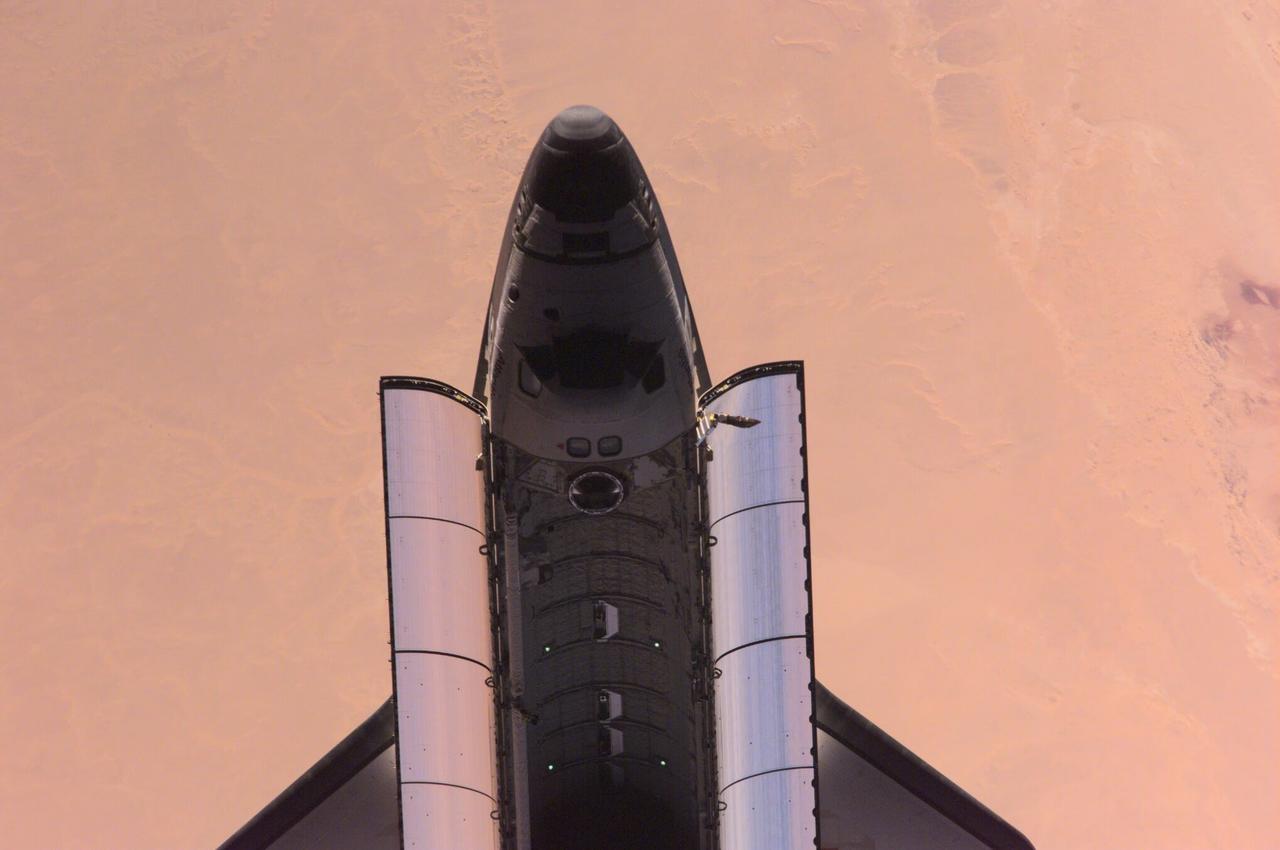
ISS01-E-5387 (16 February 2001) --- This nadir image of the Space Shuttle Atlantis backdropped over the western Sahara Desert was photographed by the three-man Expedition One crew aboard the International Space Station (ISS) shortly after the shuttle and the outpost unlinked following several days of joint operations of the two crews. The scene was recorded with a digital still camera.
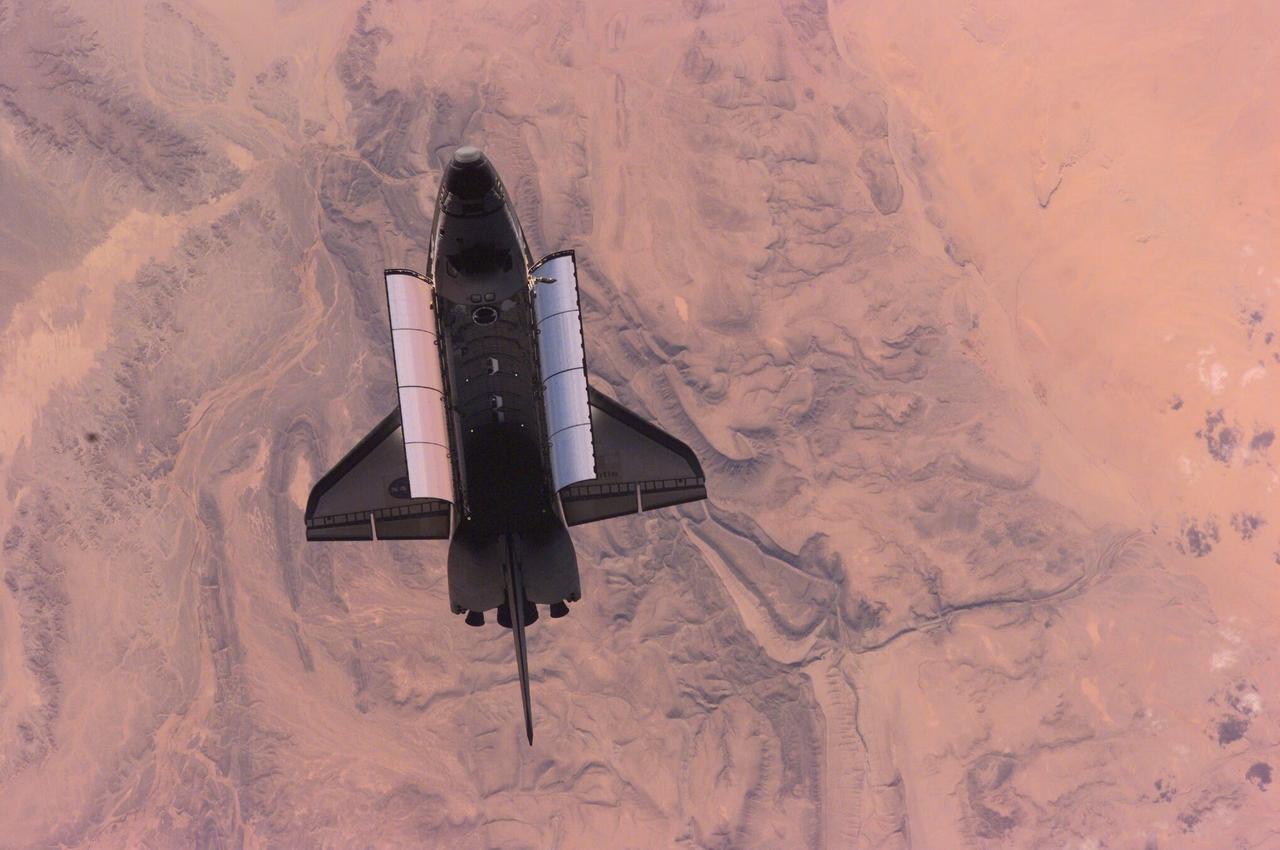
ISS01-E-5390 (16 February 2001) --- This high-angle image of the Space Shuttle Atlantis backdropped over the western Sahara Desert was photographed by the three-man Expedition One crew aboard the International Space Station (ISS) shortly after the shuttle and the outpost unlinked following several days of joint operations of the two crews. The scene was recorded with a digital still camera.
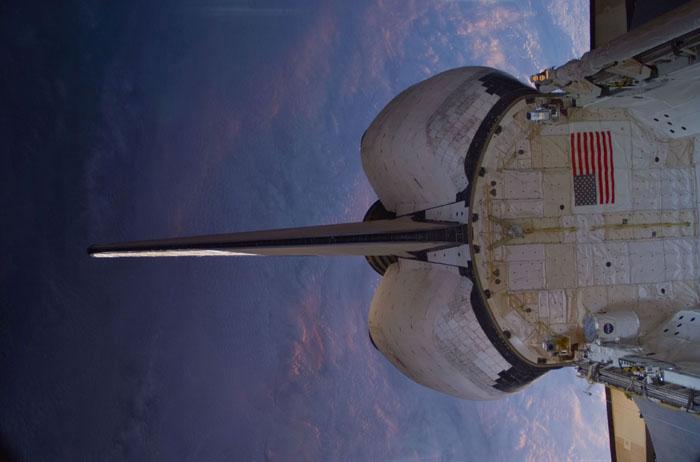
STS102-E-5278 (17 March 2001) --- This scene of the aft portion of the Space Shuttle Discovery, backdropped against a massive cloud cover on Earth, was recorded with a digital still camera from inside the International Space Station (ISS) while the two spacecraft were linked together to accomplish more work on the station and exchange crew personnel assigned to man it.
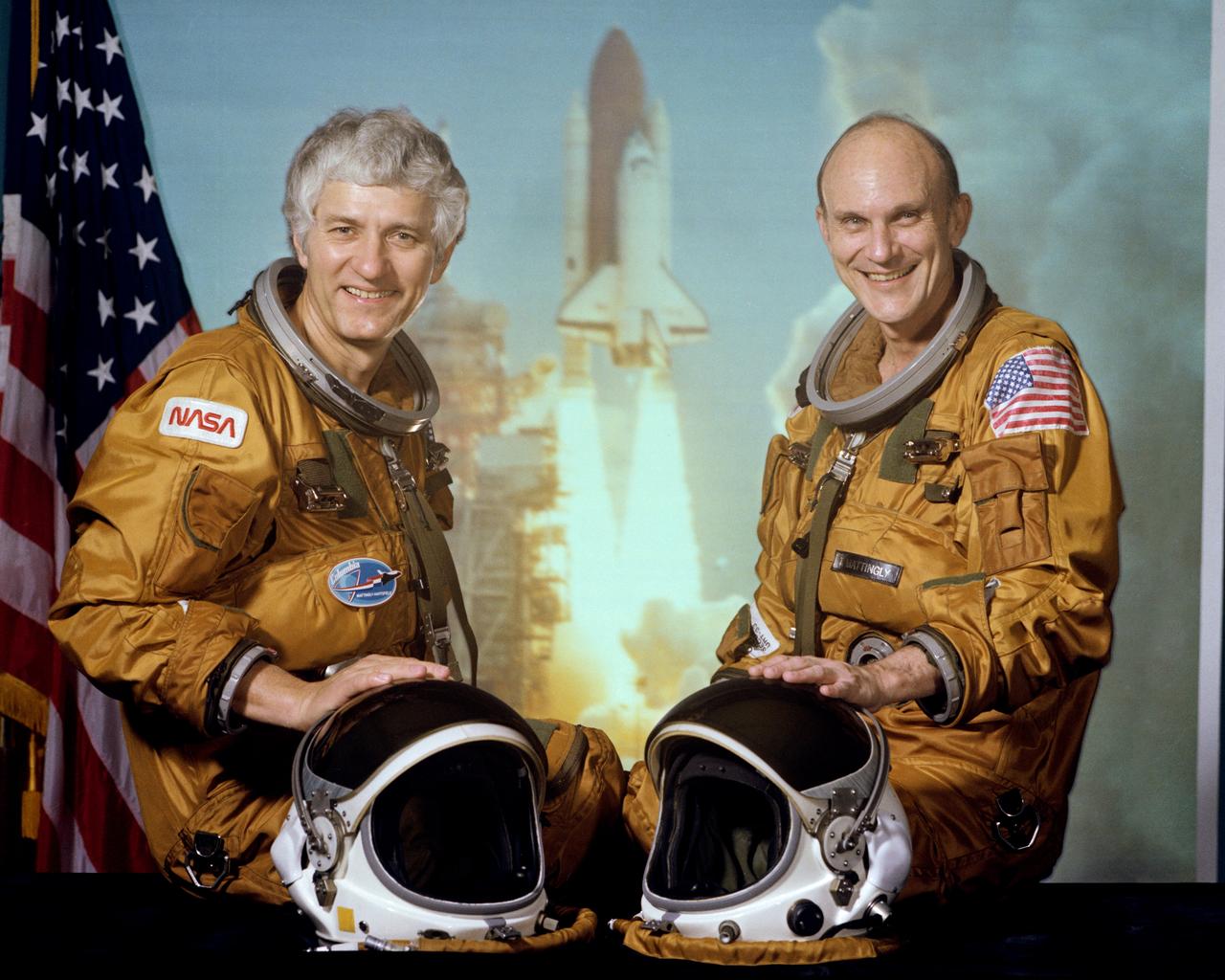
S82-31207 (1 May 1982) --- These two astronauts will man the space shuttle Columbia for NASA's fourth and final (STS-4) orbital flight test. Thomas K. (Ken) Mattingly II, right, is crew commander. Henry W. Hartsfield Jr., is pilot. Their flight is scheduled for launch in late June 1982, and is to last approximately one week, with launch to take place form KSC and landing to be on the dry lake beds of Edwards Air Force Base and Dryden Flight Research Facility (DFRC) in California. Photo credit: NASA
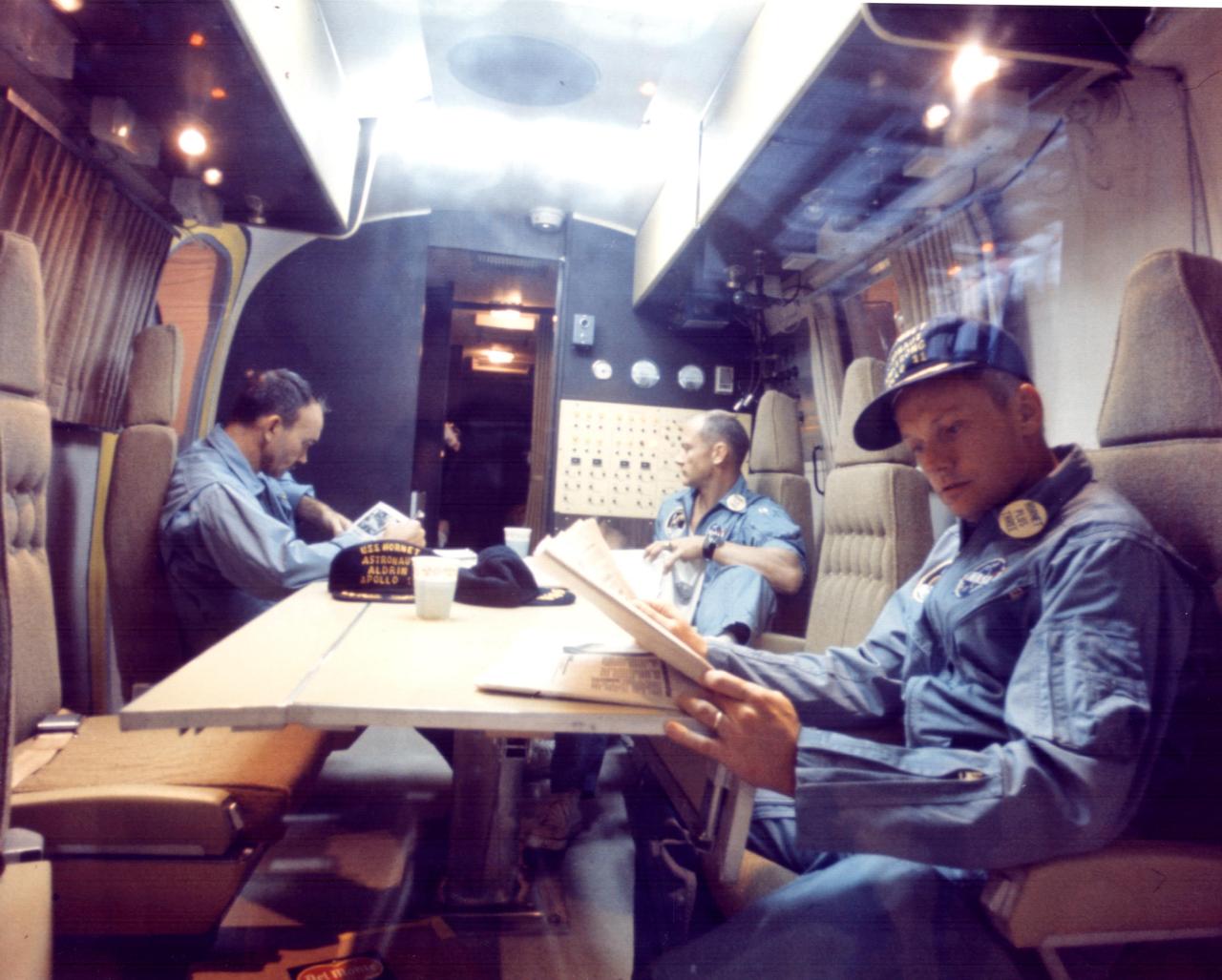
KENNEDY SPACE CENTER, FLA. - Within the Mobile Quarantine Facility, Apollo 11 astronauts (left to right) Michael Collins, Edwin E. Aldrin Jr. and Neil A. Armstrong relax following their successful lunar landing mission. They spent two-and-one-half days in the quarantine trailer enroute from the USS Hornet, prime recovery ship, to the Lunar Receiving Laboratory at the Manned Spacecraft Center in Houston. The Hornet docked at Pearl Harbor where the trailer was transferred to a jet aircraft for the flight to Houston.
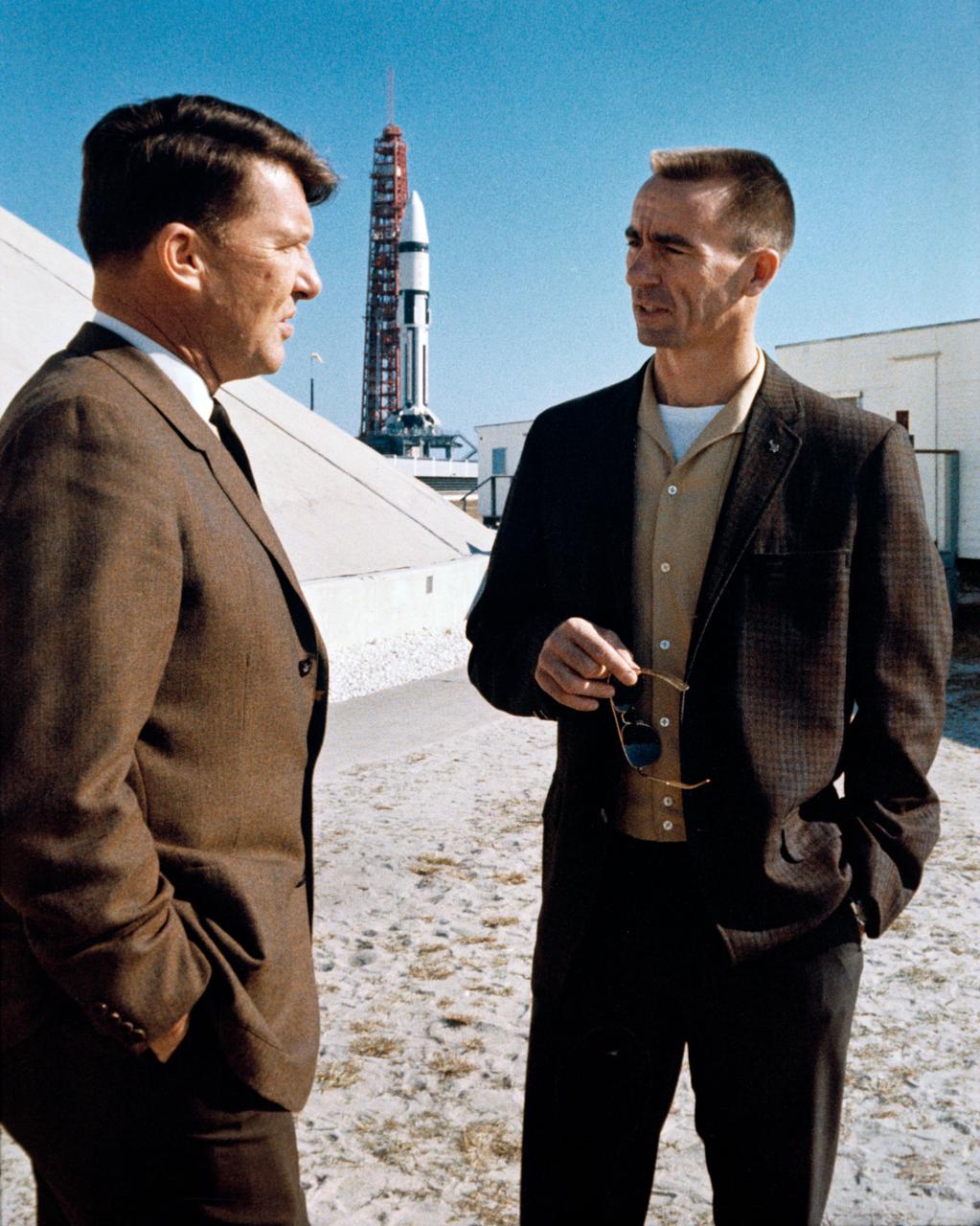
S68-18700 (22 Jan. 1968) --- Two prime crew members of the first manned Apollo space flight were present at Cape Kennedy for the launch of the Apollo V (LM-1/Saturn 204) unmanned space mission. On left is astronaut Walter M. Schirra Jr.; and on right is astronaut R. Walter Cunningham. In background is the Apollo V stack at Launch Complex 37 ready for launch.
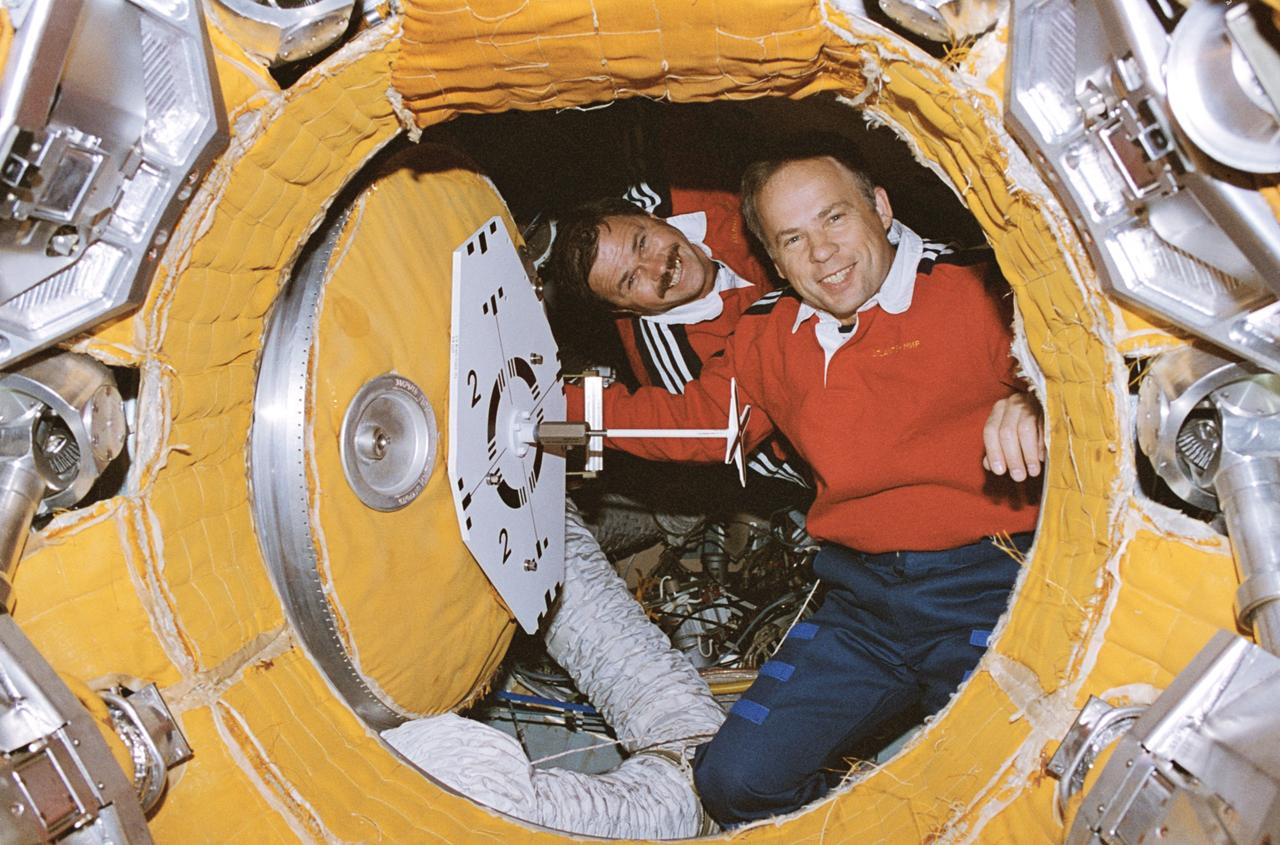
STS071-117-032 (4 July 1995) --- In the docking vestibule of Russia's Mir Space Station, cosmonauts Anatoly Y. Solovyev, Mir-19 commander, and Nikolai M. Budarin, Mir-19 flight engineer, smile at the departing Space Shuttle Atlantis STS-71 crew prior to hatch closing. Later, the two manned the Soyuz vehicle as it was temporarily moved from the Mir complex for Atlantis' undocking.
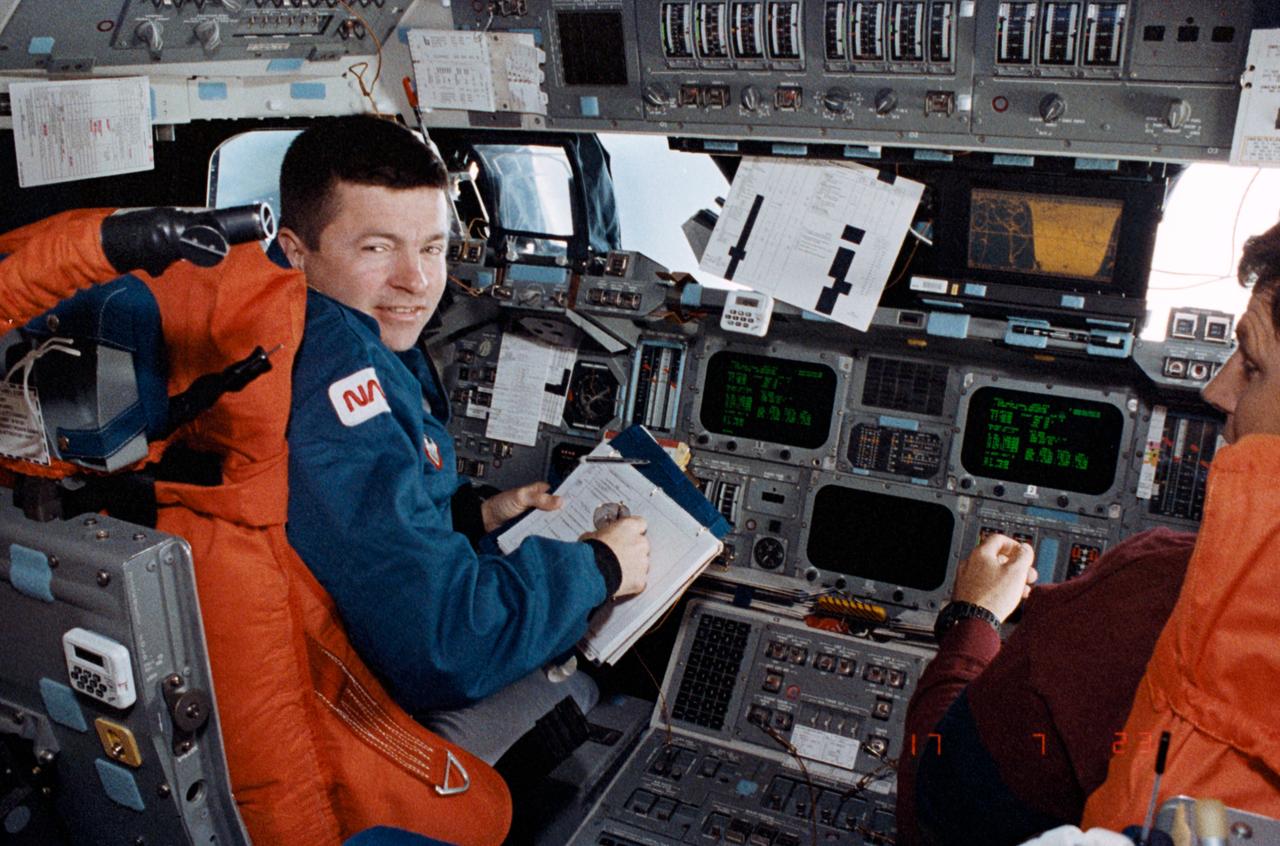
STS056-39-010 (8-17 April 1993) --- Astronaut Kenneth D. Cameron mans the mission commander's station during an orbiter maneuver aboard the Earth-orbiting Space Shuttle Discovery. Astronaut Stephen S. Oswald, pilot, is partially visible at right edge of the frame. The two were joined by three other NASA astronauts for nine days of science in support of the Atlas 2 mission in Earth orbit.
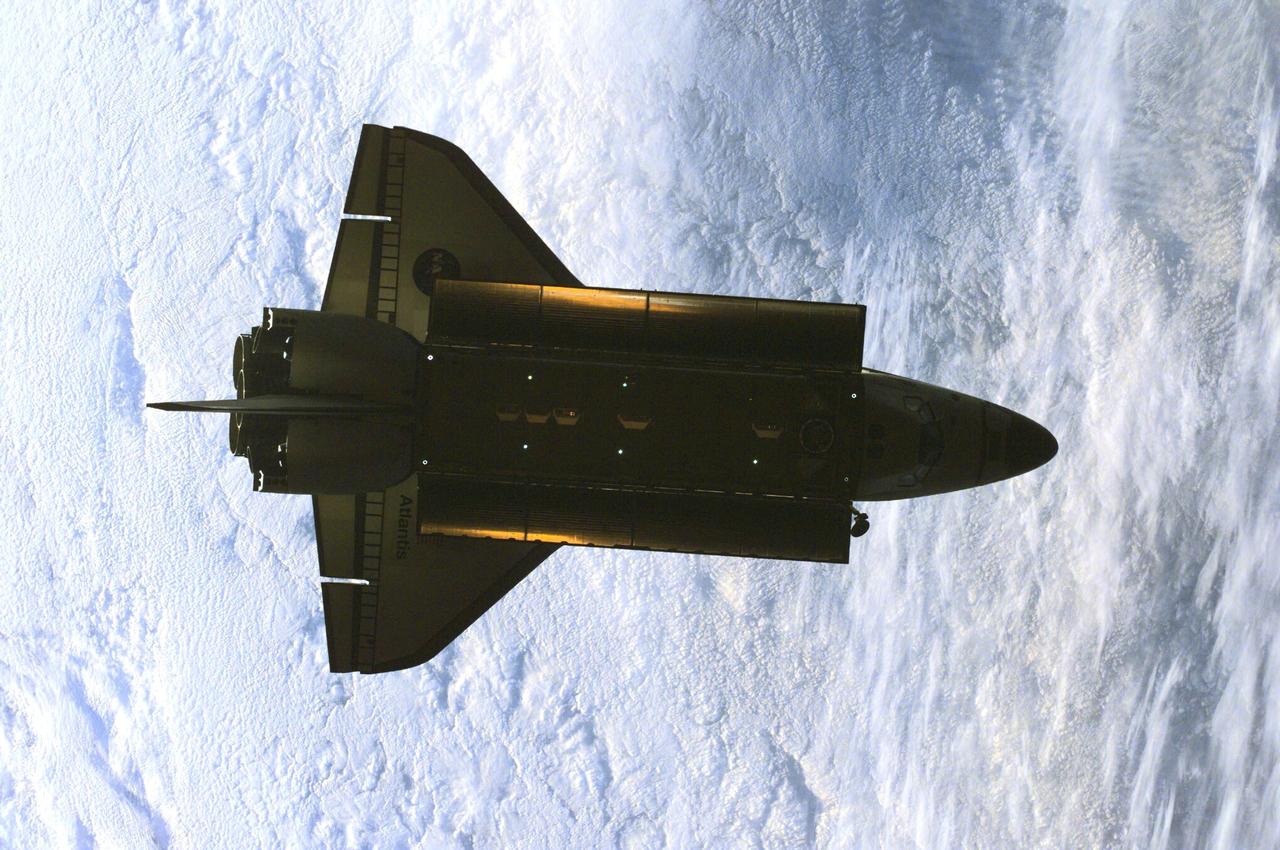
ISS01-E-5386 (16 February 2001) --- This partially silhouetted nadir image of the Space Shuttle Atlantis was photographed by the three-man Expedition One crew aboard the International Space Station (ISS) shortly after the shuttle and the outpost unlinked following several days of joint operations of the two crews. The scene, backdropped against a mass of white clouds on Earth, was recorded with a digital still camera.
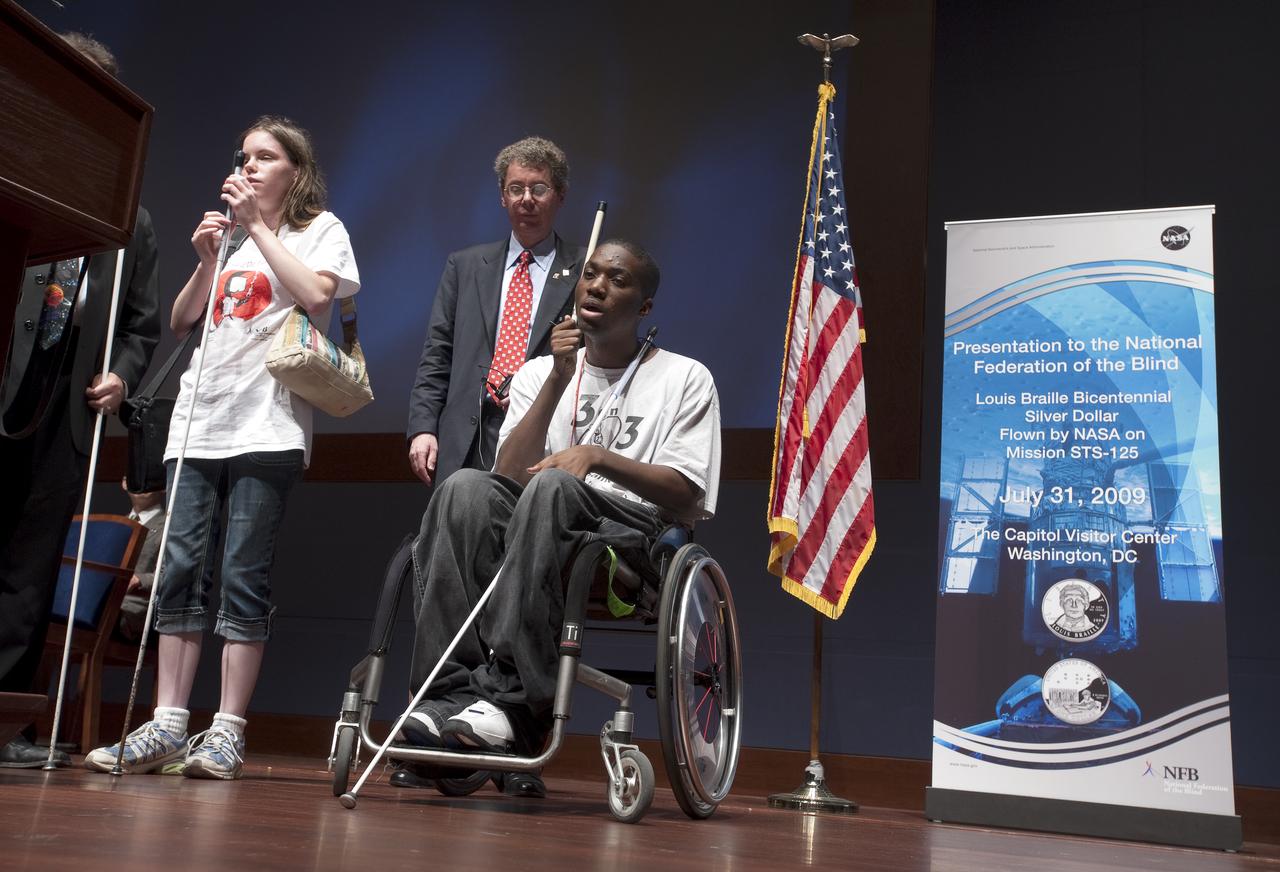
Derrick Tuff, right in wheelchair, and Kayla Weathers, standing left, deliver remarks at a ceremony where senior NASA officials presented the National Federation of the Blind with two Louis Braille Bicentennial Silver Dollars that flew on Space Shuttle Atlantis' mission (STS-125) to the Hubble Space Telescope in May 2009, Friday evening, July 31, 2009, at the Capitol Visitors Center in Washington. Man standing at center is unidentified. Photo Credit: (NASA/Paul E. Alers)
![KENNEDY SPACE CENTER, FLA. -- Vice President Spiro Agnew [right center] and Former President Lyndon Johnson (left center] view the liftoff of Apollo 11 from the stands located at the Kennedy Space Center VIP viewing site. The two political figures were at the Kennedy Space Center to witness the launch of the first Manned Lunar Landing mission which took place from Pad 39A at 9:32 a.m. EDT.](https://images-assets.nasa.gov/image/ksc-69pc-379/ksc-69pc-379~medium.jpg)
KENNEDY SPACE CENTER, FLA. -- Vice President Spiro Agnew [right center] and Former President Lyndon Johnson (left center] view the liftoff of Apollo 11 from the stands located at the Kennedy Space Center VIP viewing site. The two political figures were at the Kennedy Space Center to witness the launch of the first Manned Lunar Landing mission which took place from Pad 39A at 9:32 a.m. EDT.
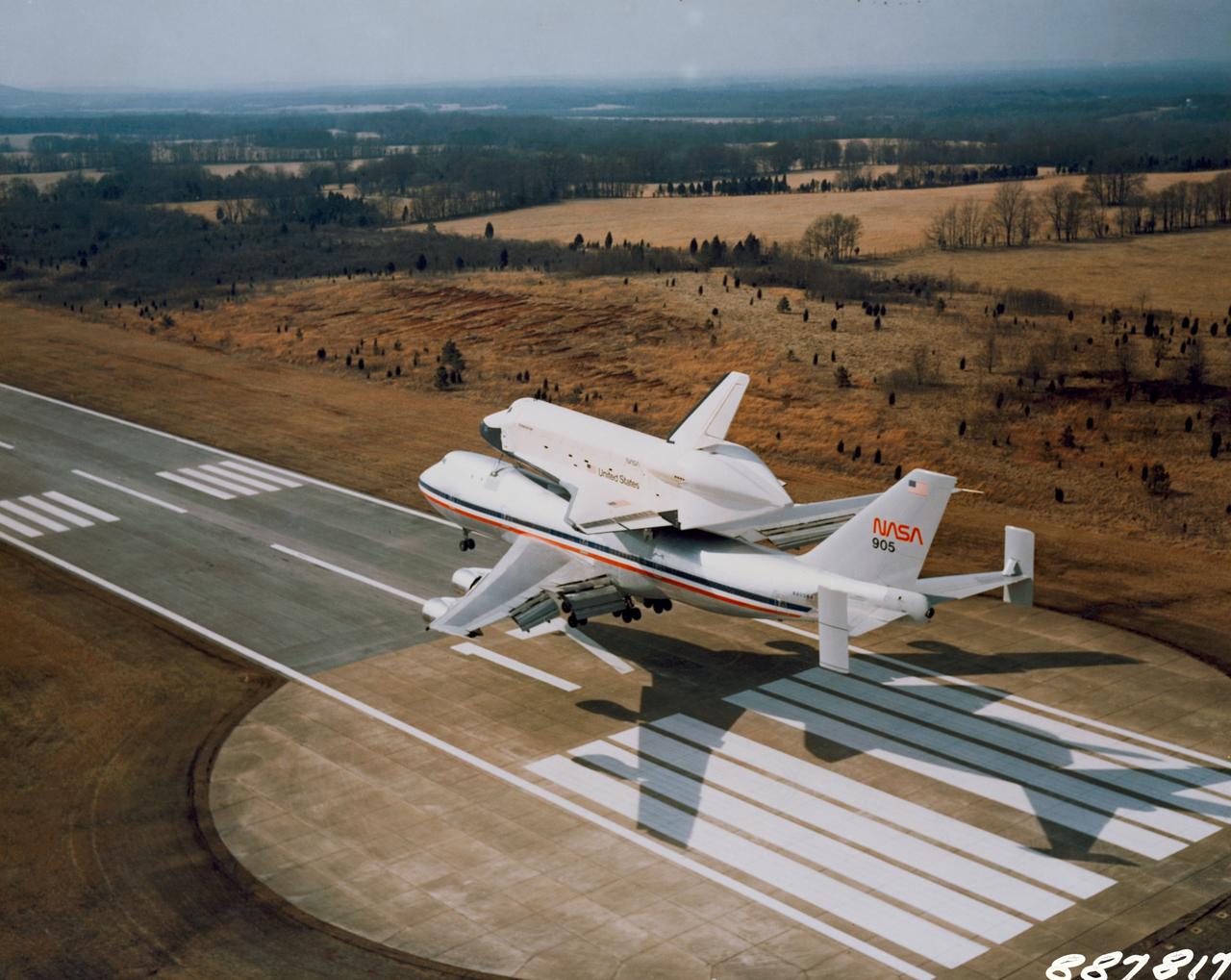
S78-27238 (13 March 1978) --- The space shuttle orbiter 101 Enterprise approaches riding atop its 747 carrier aircraft, arrives at the Redstone Arsenal airstrip near Marshall Space Flight Center (MSFC), Huntsville, Alabama, on March 13, 1978. It is to undergo ground vibration tests along with the external tank and solid rocket boosters, in preparation for Orbiter Flight Tests (OFT) in which its successor craft (Orbiter 102) will take several two-man crews into Earth orbit. Photo credit: NASA
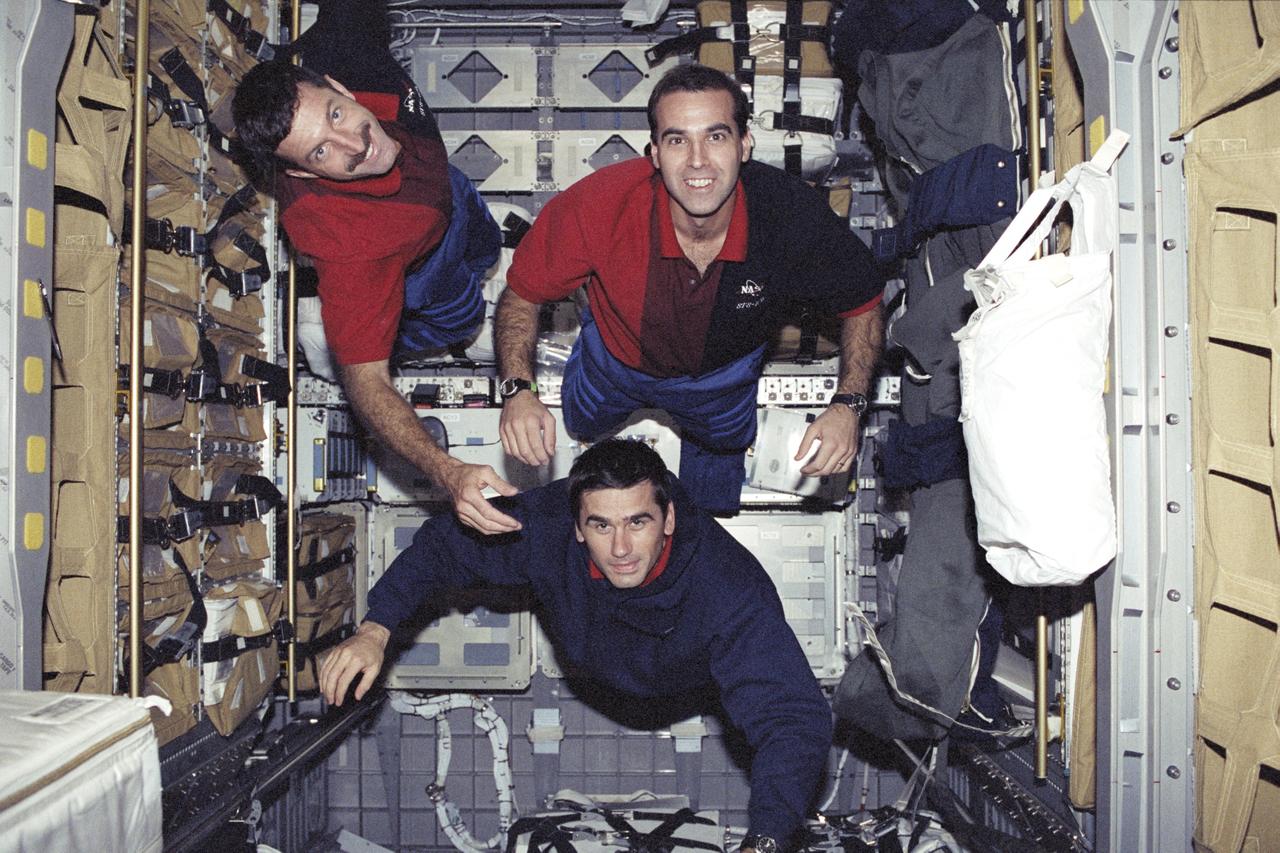
STS106-369-019 (8-20 September 2000) --- Two astronauts and a cosmonaut, all mission specialists, float onboard Spacehab. They are astronauts Daniel C. Burbank (top left) and Richard A. Mastracchio (top right), along with cosmonaut Yuri I. Malenchenko. The Spacehab double module is as "empty" as it was at any other time during the STS-106 mission in this scene, photographed during mission's end. The seven-man crew had moved a large amount of supplies and hardware to the International Space Station (ISS).
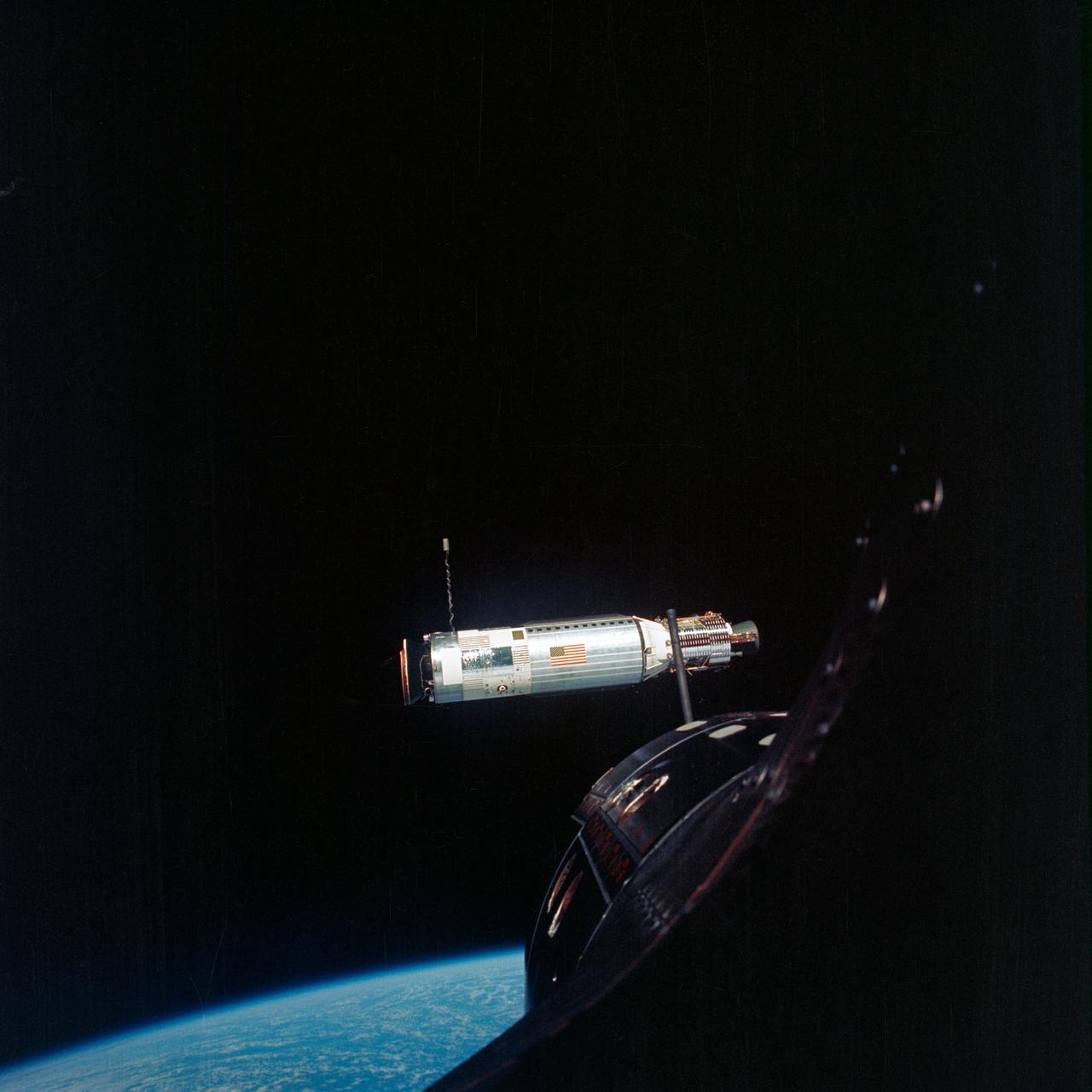
S66-46124 (18 July 1966) --- Agena Target Docking Vehicle 5005 is photographed from the Gemini-10 spacecraft during rendezvous in space. The two spacecraft are about 41 feet apart. After docking with the Agena, astronauts John W. Young, command pilot, and Michael Collins, pilot, fired the 16,000-pound thrust engine of Agena-10's primary propulsion system to boost the combined vehicles into an orbit with an apogee of 413 nautical miles to set a new altitude record for manned spaceflight. Photo credit: NASA
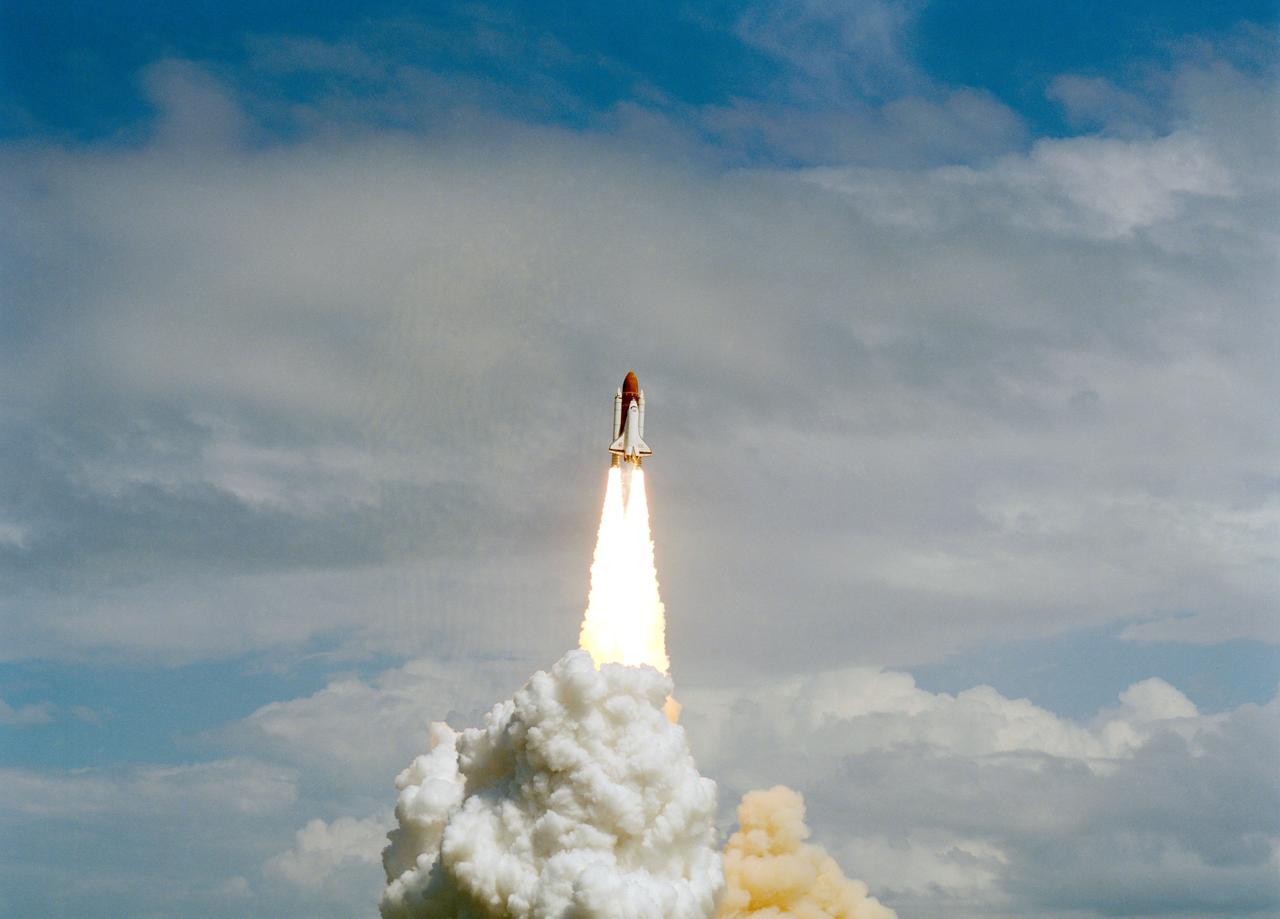
STS-26 Discovery, Orbiter Vehicle (OV) 103, rises into a cloudy sky and heads for Earth orbit atop the external tank (ET) as exhaust plumes billow from the two solid rocket boosters (SRBs) during liftoff from Kennedy Space Center (KSC) Launch Complex (LC) pad 39B. STS-26 marks OV-103's first flight since September 1985 and NASA's first manned mission since 51L Challenger accident, 01-28-86.
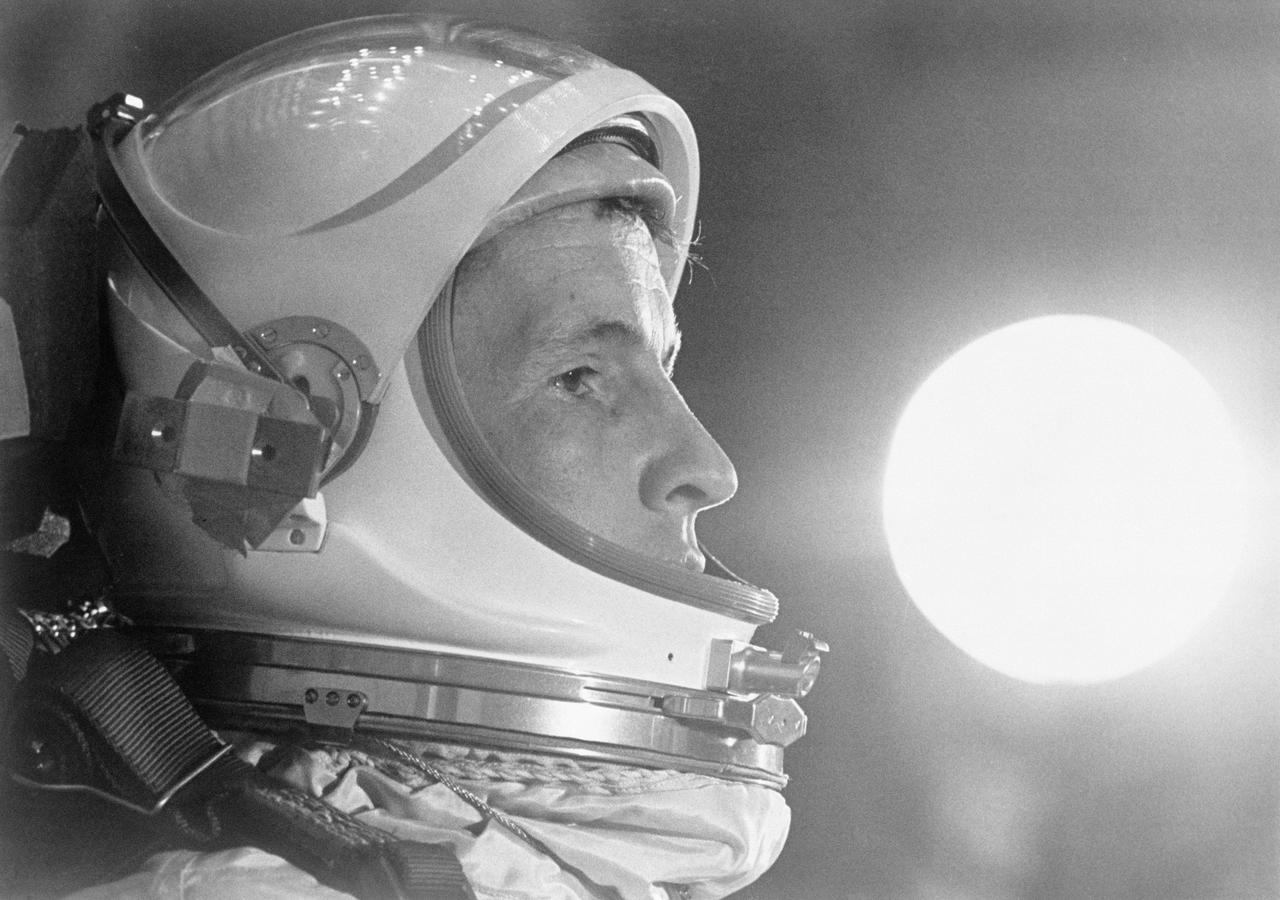
S65-19576 (21 May 1965) --- Astronaut Edward H. White II, pilot of the Gemini-Titan 4 prime crew, goes through a wet mock simulation exercise as part of the checkout procedure for the Gemini-4 spaceflight. The two-man Gemini-4 mission, scheduled no earlier than June 3, 1965, will orbit Earth 62 times in four days. Astronaut James A. McDivitt (out of frame) is the GT-4 prime crew command pilot.
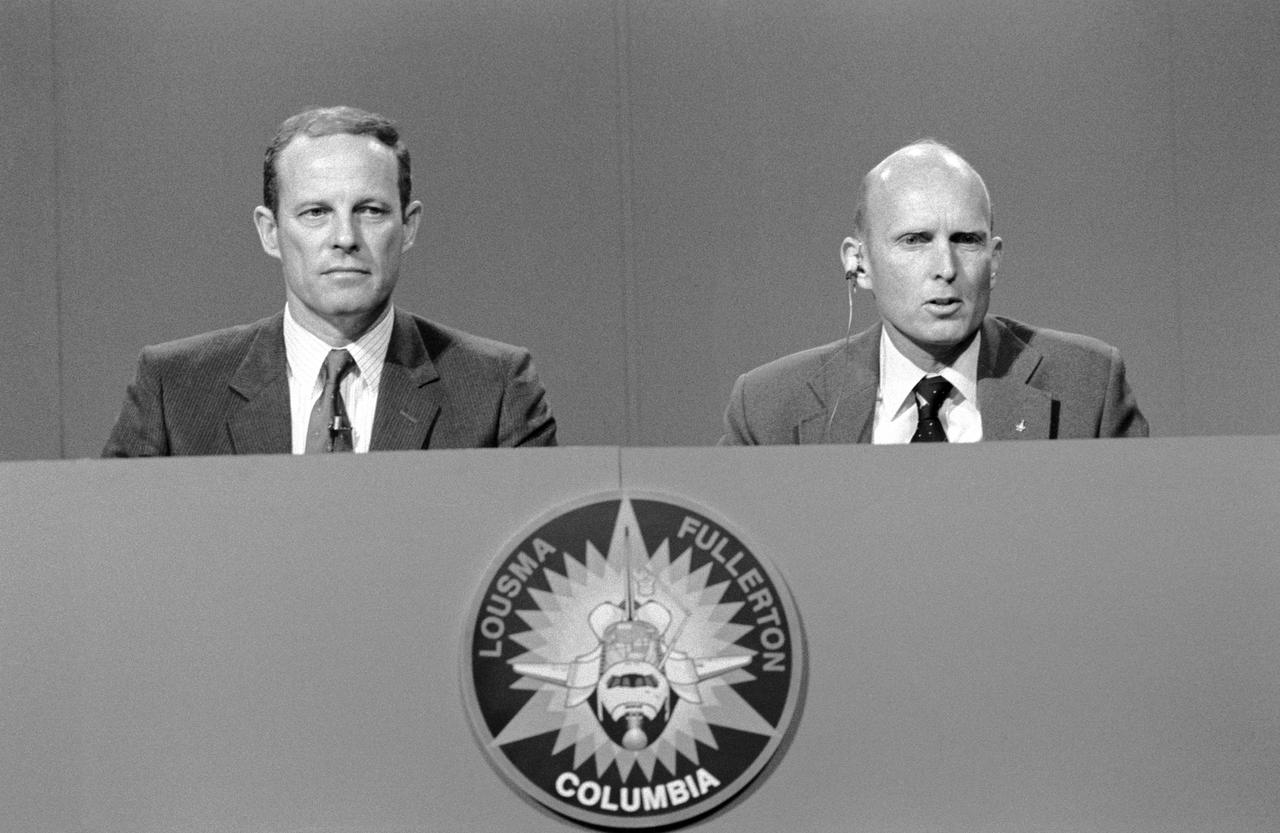
S82-27686 (26 Feb. 1982) --- Astronauts Jack R. Lousma, left, commander, and C. Gordon Fullerton, pilot, answer questions from the press corps during their final pre-STS-3 press conference on Feb. 26, 1982. The two will man the space shuttle Columbia when it launches on March 22, 1982, from the Kennedy Space Center's Launch Pad 39A. Photo credit: NASA
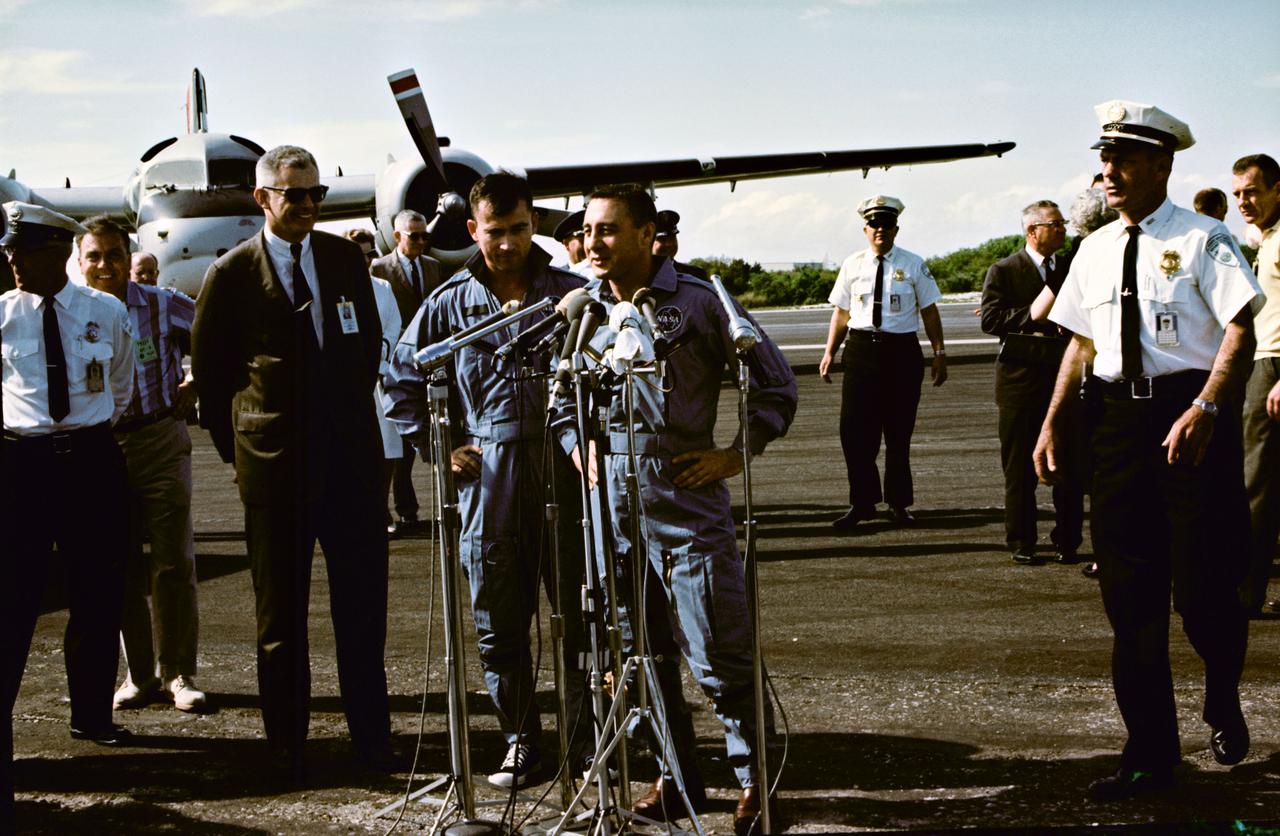
S65-20422 (24 March 1965) --- Astronauts John W. Young (left), pilot; and Virgil I. Grissom, command pilot, stand at microphones at the Cape's skid strip after being flown in from the recovery ship, USS Intrepid. The two astronauts made three orbits of Earth during the first manned Gemini flight the day before.
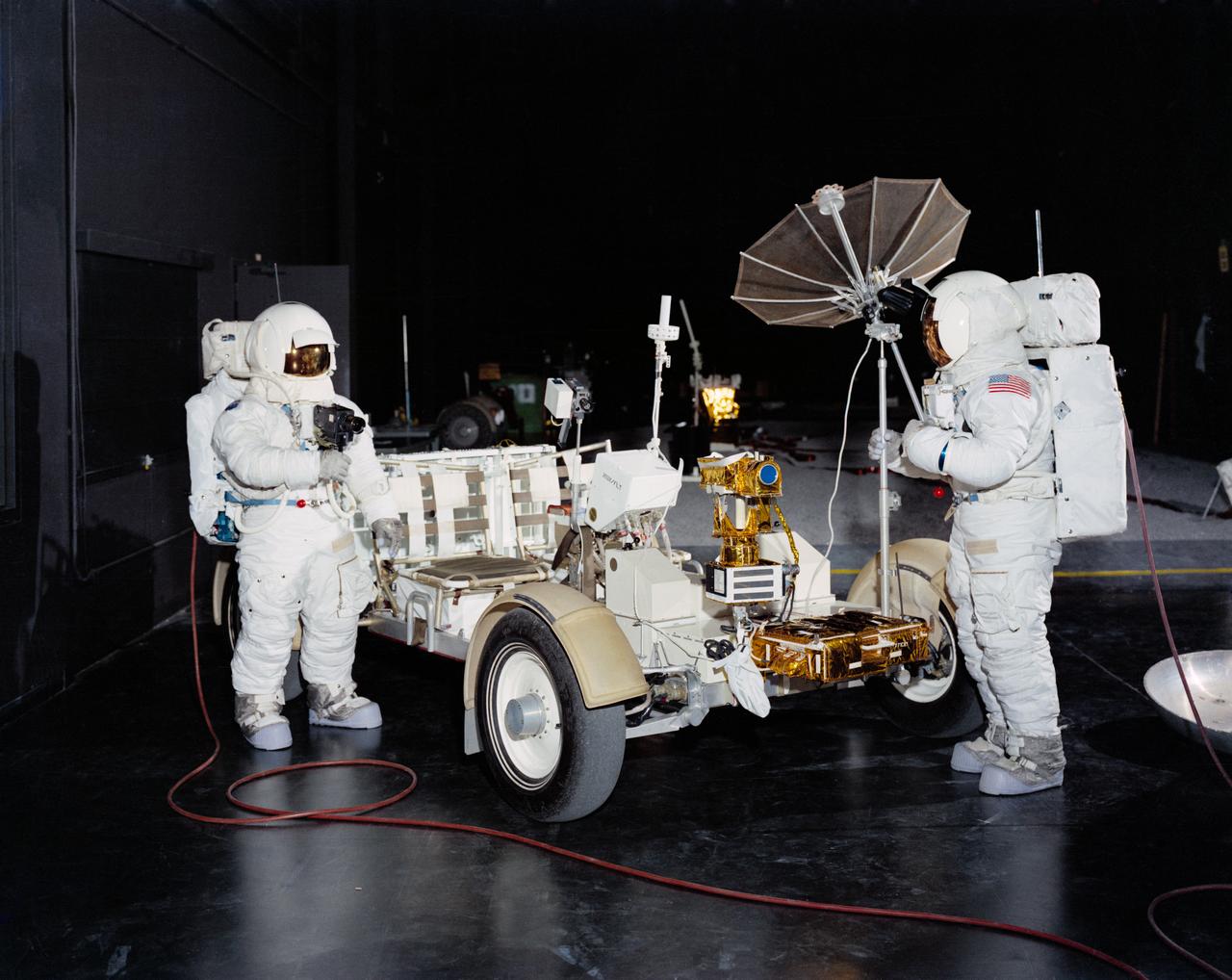
S71-16722 (January 1971) --- Two members of the prime crew of the Apollo 15 lunar landing mission are shown with the Lunar Roving Vehicle "one G" trainer in Building 5, Mission Simulation and Training Facility, Manned Spacecraft Center. Astronaut David R. Scott (on right) is the Apollo 15 commander; and astronaut James B. Irwin is the lunar module pilot. A Lunar Roving Vehicle similar to this trainer will be used by Scott and Irwin during their Apollo 15 lunar surface extravehicular activity.
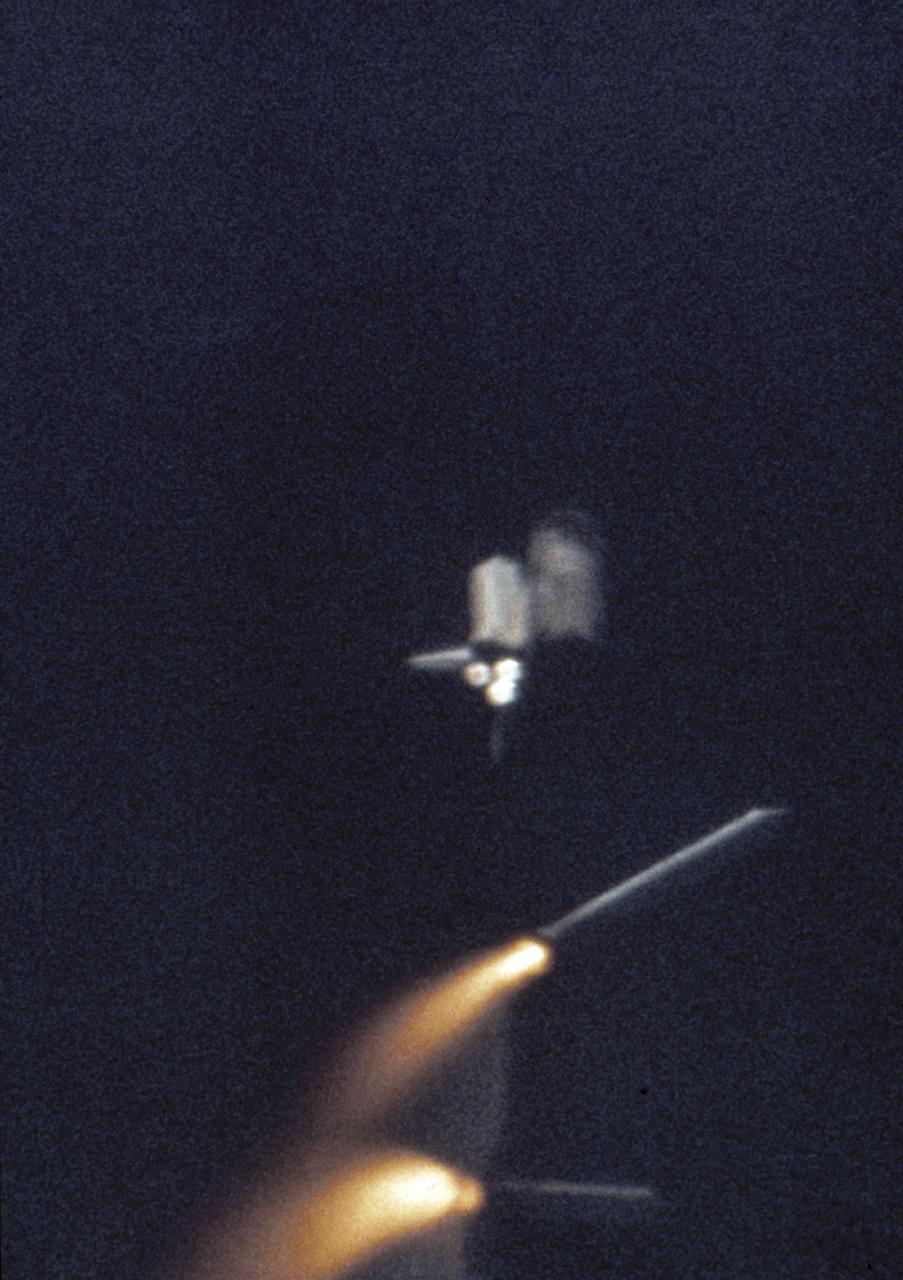
S81-33179 (12 April 1981) --- Though their STS-1 task has been performed, the two solid rocket boosters (SRB) still glow following their jettisoning from the space shuttle Columbia on its way to many firsts. Among the history recorded by the spacecraft is the marking of a mission in a reusable spacecraft. STS-1 is NASA's first manned mission since the Apollo-Soyuz Test Project in 1975. Inside the cabin of the climbing spacecraft are astronauts John W. Young and Robert L. Crippen. Photo credit: NASA
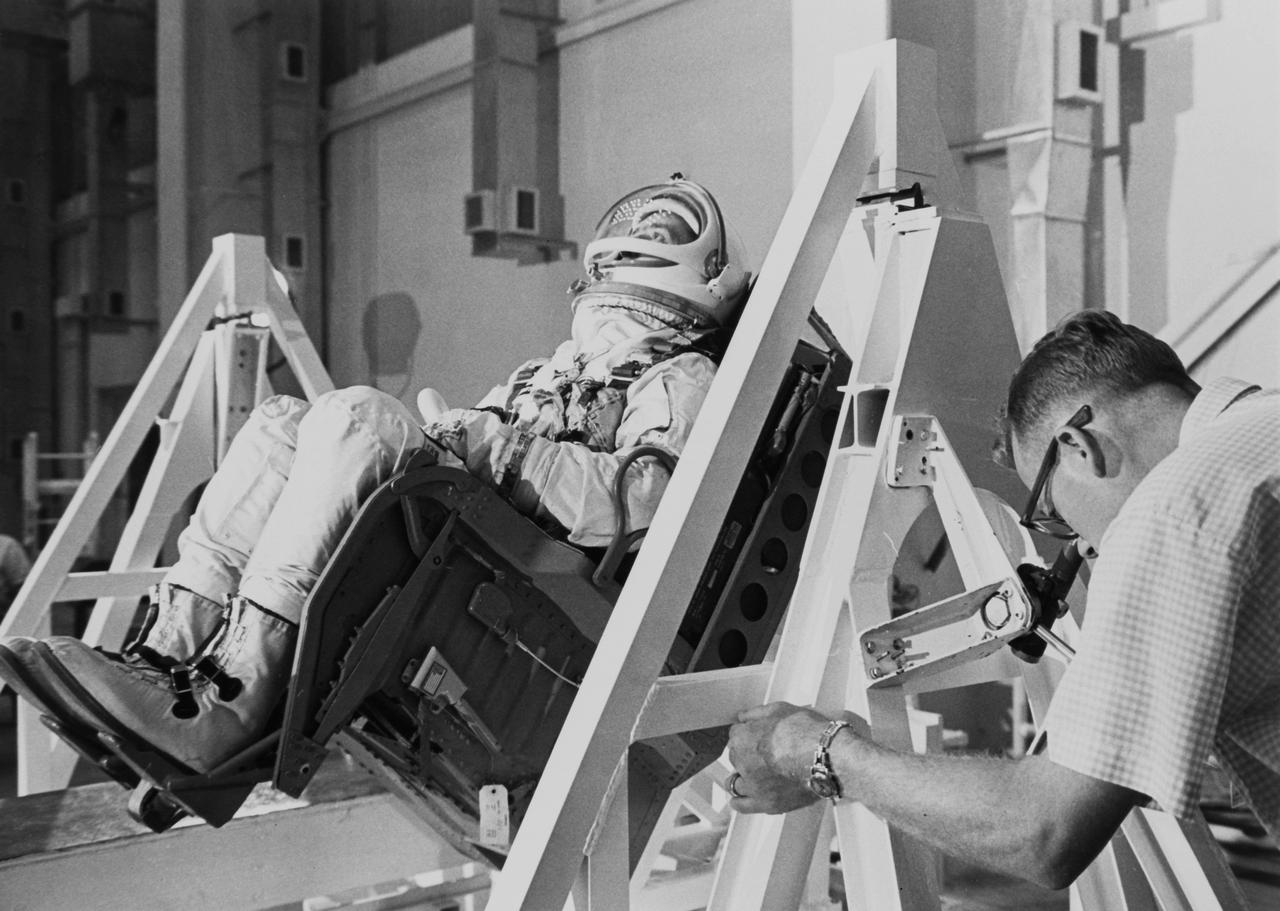
S65-19585 (21 May 1965) --- Astronaut James A. McDivitt, command pilot for the Gemini-Titan 4 prime crew, participates in a weight and balance test during a wet mock simulation exercise at Cape Kennedy, Florida. The two-man Gemini-4 mission, scheduled no earlier than June 3, 1965, will orbit Earth 62 times in four days. Astronaut Edward H. White II (out of frame) is the GT-4 prime crew pilot.
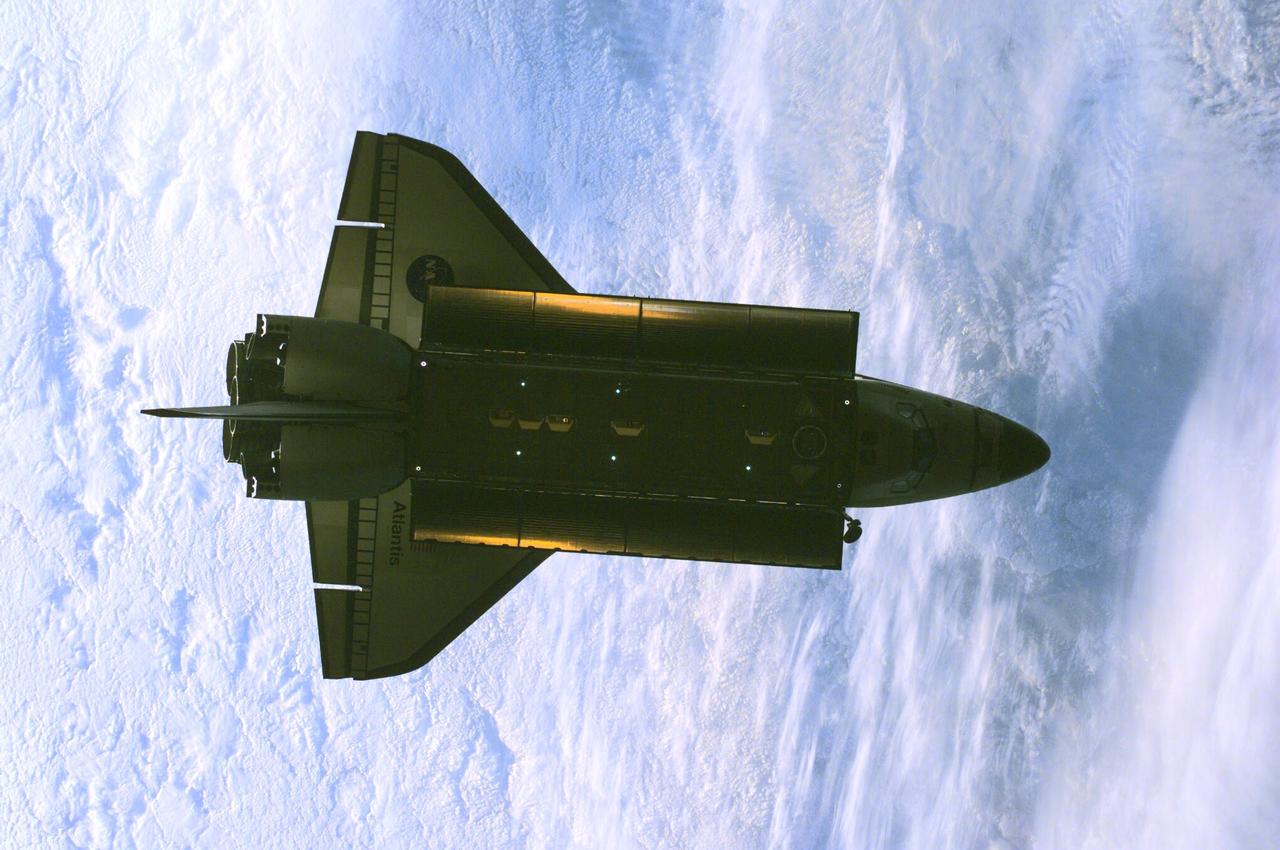
ISS01-E-5385 (16 February 2001) --- The Space Shuttle Atlantis was photographed by the three-man Expedition One crew aboard the International Space Station (ISS) shortly after the shuttle and the outpost unlinked following several days of joint operations of the two crews. The scene, backdropped against a mass of white clouds on Earth, was recorded with a digital still camera.
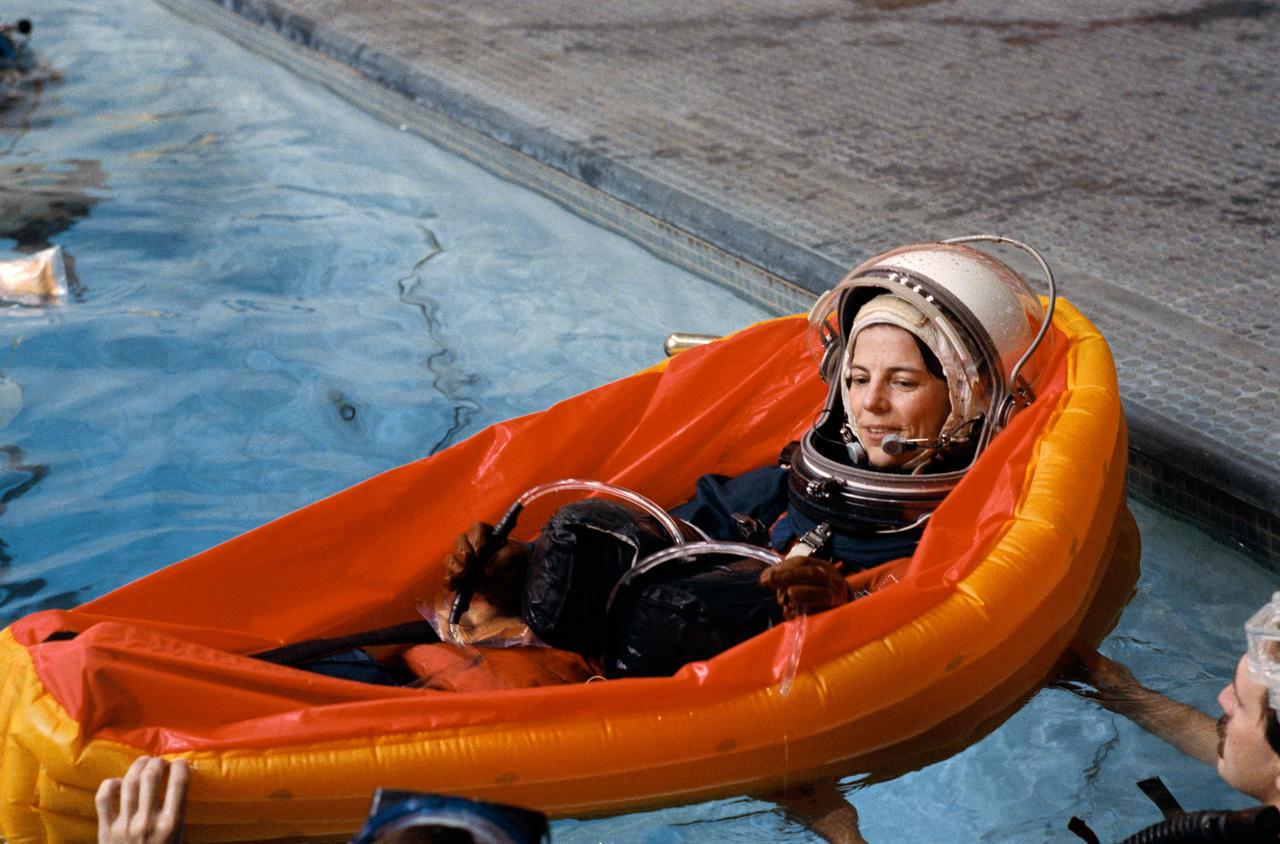
STS-32 Mission Specialist (MS) Bonnie J. Dunbar, wearing a launch and entry suit (LES) and lauch and entry helmet (LEH), in a single-occupant (one man) lift raft enlists the aid of two SCUBA-equipped divers as she floats in 25 ft deep pool located in JSC's Weightless Environment Training Facility (WETF) Bldg 29. During the exercises the crew practiced the procedures to follow in the event of an emergency aboard the Space Shuttle and familiarized themselves with post-Challenger pole system of emergency egress.
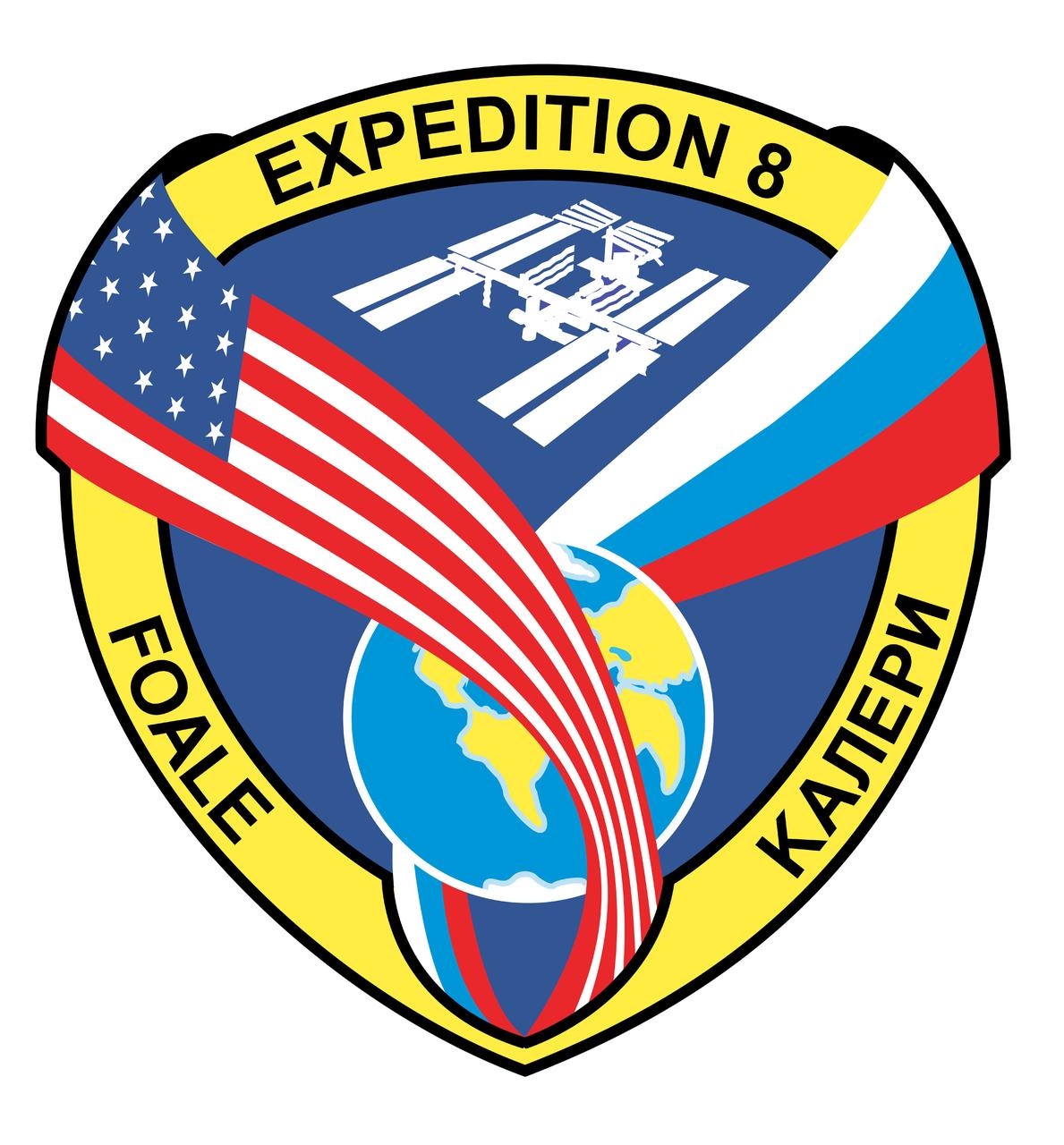
This emblem represents the eighth long-duration expedition to the International Space Station (ISS). The figure eight barner encircling the Earth combines the flags of the Nations represented by the two man crew. The ISS is portrayed above the Earth in its completed configuration. The names of the crew members, Michael Foale of the United States, and Alexander Kaleri of Russia, flank the outer border.
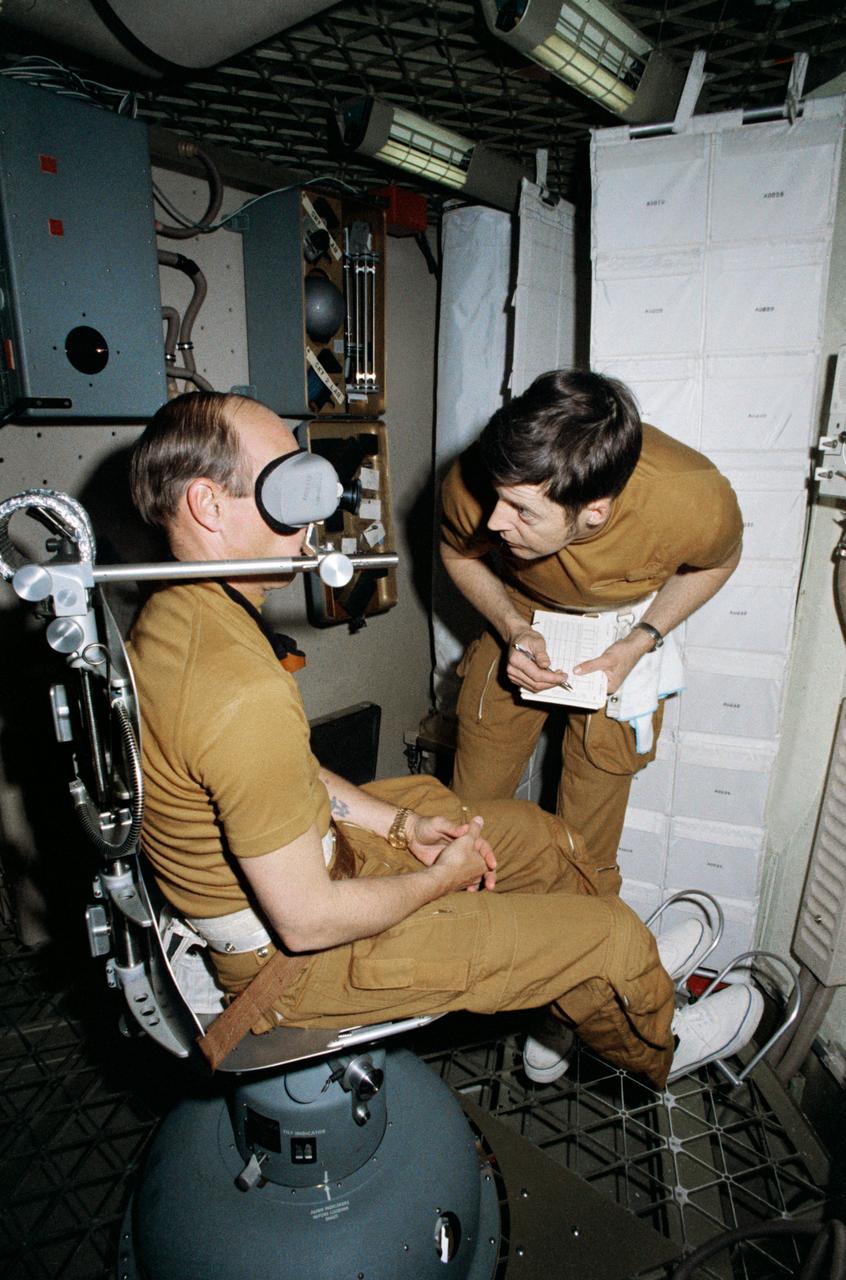
S73-20678 (1 March 1973) --- Astronaut Charles Conrad Jr., commander of the first manned Skylab mission, checks out the Human Vestibular Function, Experiment M131, during Skylab training at Johnson Space Center. Scientist-astronaut Joseph P. Kerwin, science pilot of the mission, goes over a checklist. The two men are in the work and experiments compartment of the crew quarters of the Skylab Orbital Workshop (OWS) trainer at JSC. Photo credit: NASA
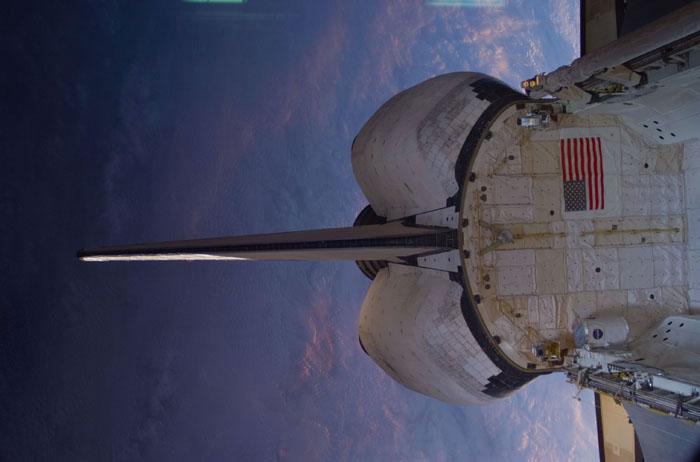
STS102-E-5276 (17 March 2001) --- This scene of the aft portion of the Space Shuttle Discovery, backdropped against a massive cloud cover on Earth, was recorded with a digital still camera from inside the International Space Station (ISS) while the two spacecraft were linked together to accomplish more work on the station and exchange crew personnel assigned to man it.
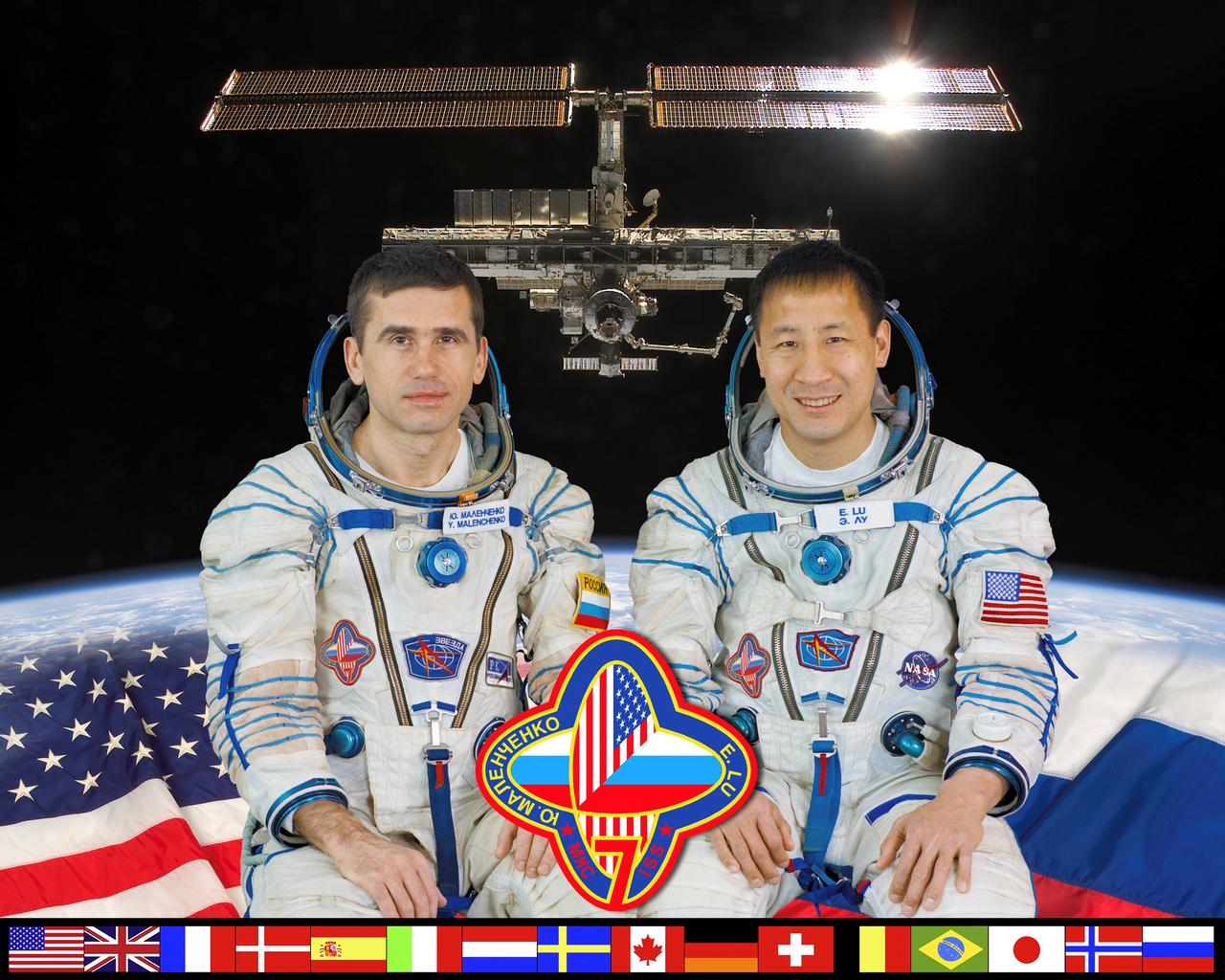
This crew portrait of Expedition Seven, Cosmonaut Yuri I. Malenchenko, Expedition Seven mission commander (left), and Astronaut Edward T. Lu, Expedition Seven NASA ISS science officer and flight engineer (right) was taken while in training at the Gagarin Cosmonaut Training Center in Star City, Russia. Destined for the International Space Station (ISS), the two-man crew launched from the Baikonur Cosmodrome, Kazakhstan on April 26, 2003. aboard a Soyez TMA-1 spacecraft.
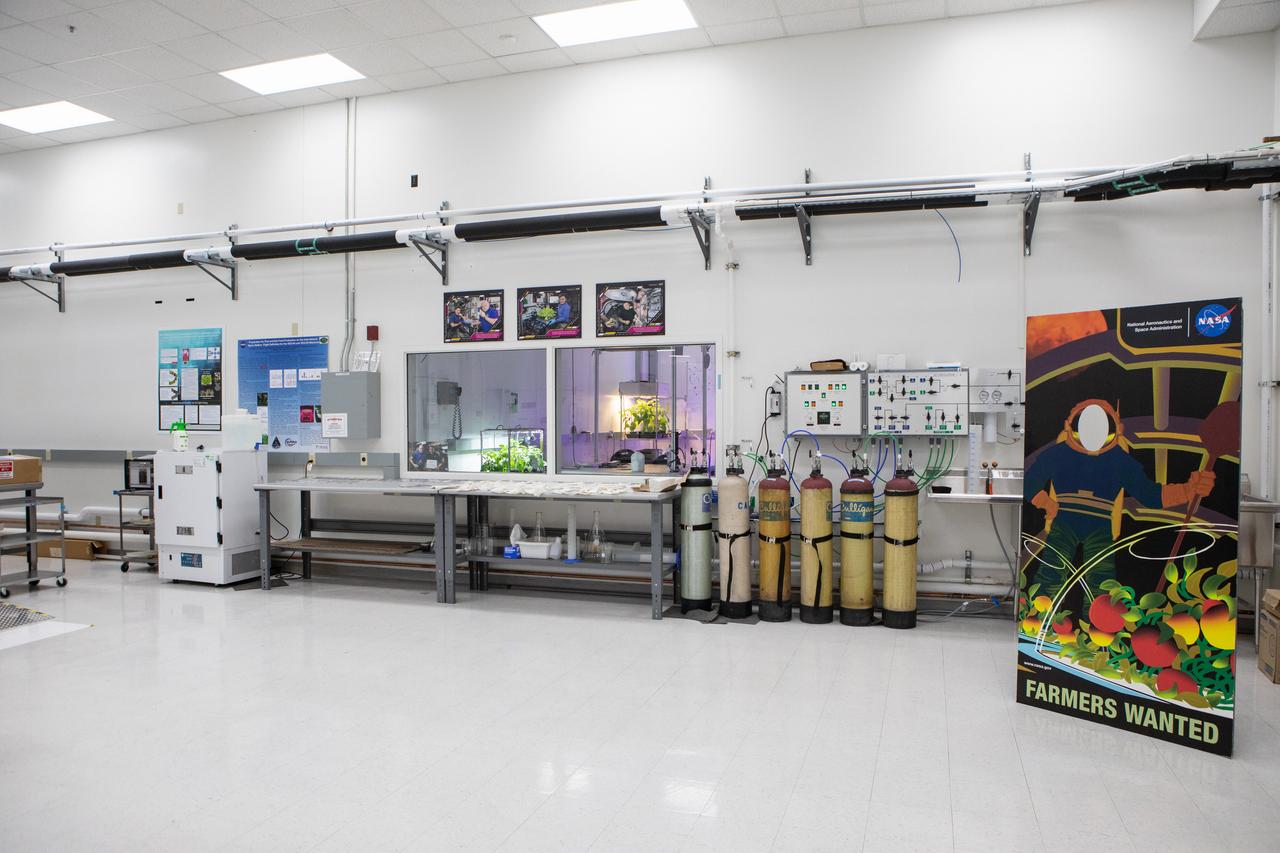
Two plant growth experiments are in view behind glass in a laboratory inside the Space Station Processing Facility (SSPF) at NASA’s Kennedy Space Center in Florida, on May 16, 2019. The center is celebrating the SSPF’s 25th anniversary. The facility was built to process elements for the International Space Station. Now it is providing support for current and future NASA and commercial provider programs, including Commercial Resupply Services, Artemis 1, sending the first woman and next man to the Moon, and deep space destinations including Mars.
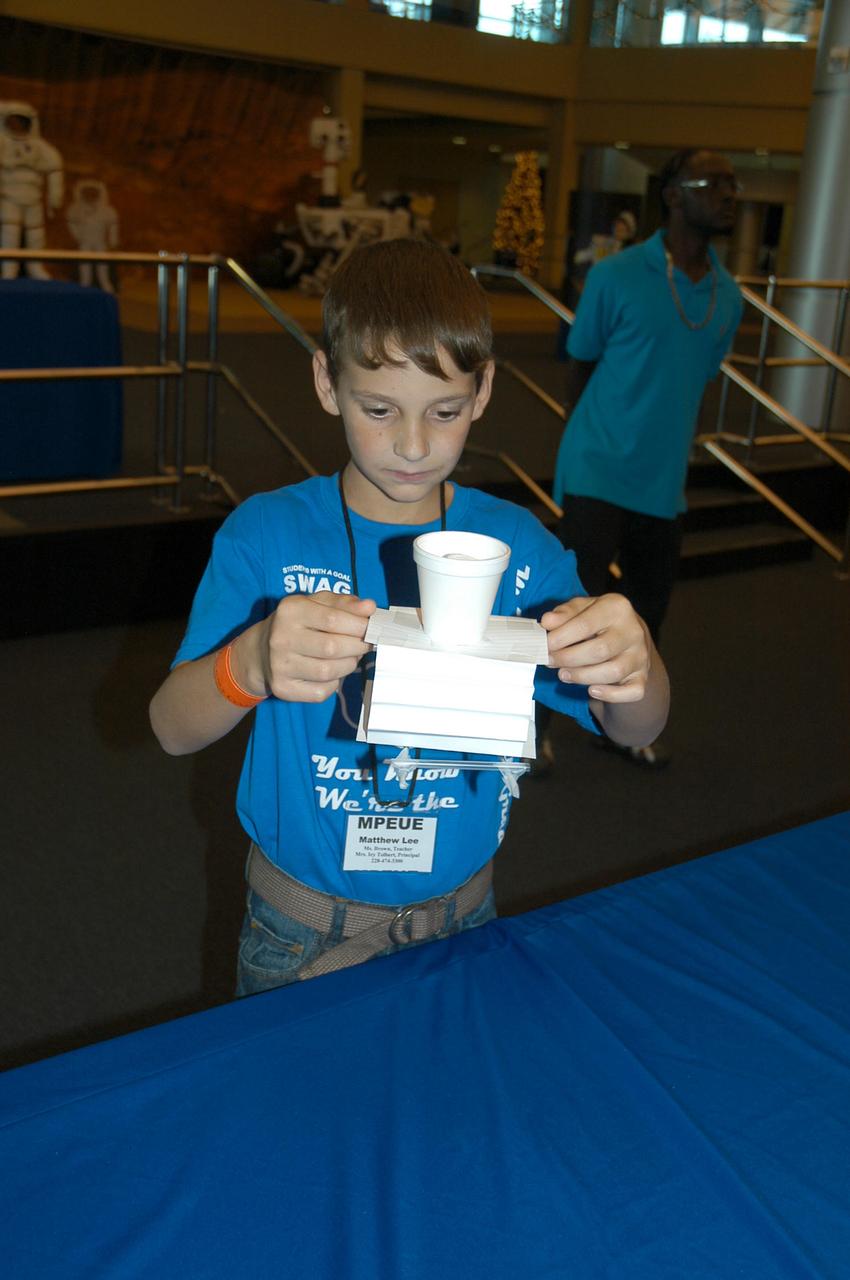
Matthew Lee from Escatawpa Elementary School in Moss Point, Miss., builds a lunar lander model during an activity at INFINITY Science Center, a NASA visitors center, on Dec. 7. NASA hosted two days of activities at the facility to celebrate the Apollo 17 flight to the moon in 1972, the final manned lunar mission of the Apollo Program

STS082-353-035 (11-21 Feb. 1997) --- Astronaut Steven A. Hawley, who spent many hours aboard Discovery controlling the shuttle's Remote Manipulator System (RMS), watches the Extravehicular Activity (EVA) of a two-man space walking team from Discovery's aft flight deck. Hawley had flown on the 1990 mission that was responsible for deploying the orbiting observatory.
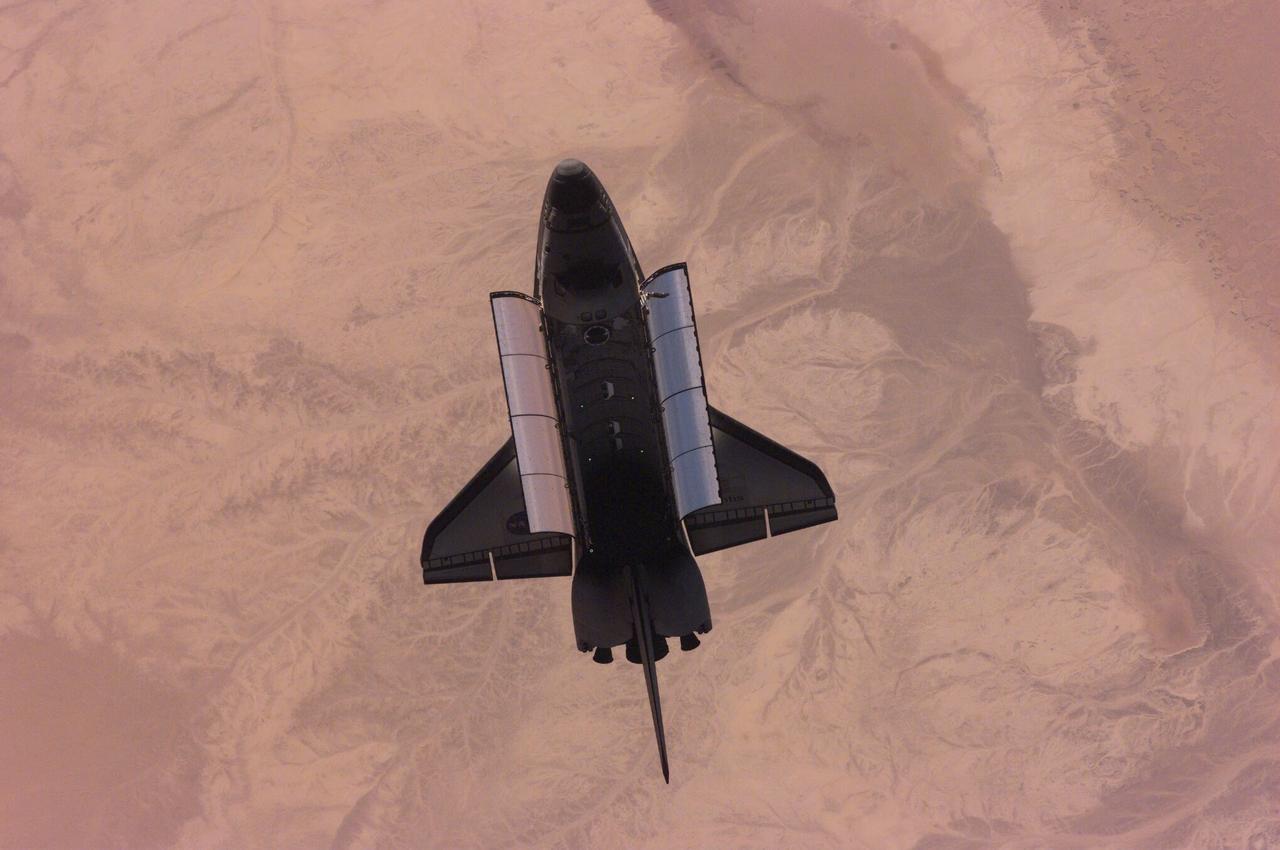
ISS01-E-5389 (16 February 2001) --- This nadir image of the Space Shuttle Atlantis backdropped over the western Sahara Desert was photographed by the three-man Expedition One crew aboard the International Space Station (ISS) shortly after the shuttle and the outpost unlinked following several days of joint operations of the two crews. The scene was recorded with a digital still camera.
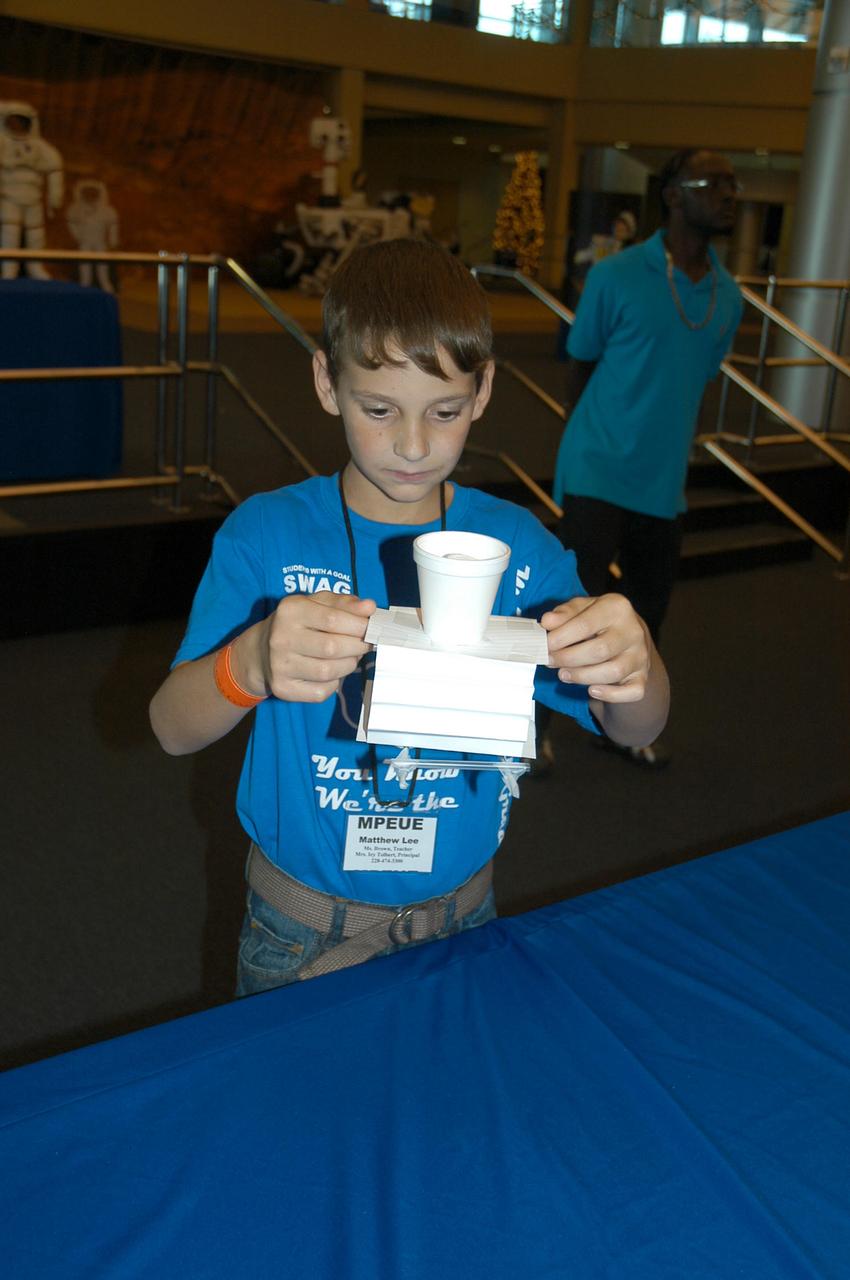
Matthew Lee from Escatawpa Elementary School in Moss Point, Miss., builds a lunar lander model during an activity at INFINITY Science Center, a NASA visitors center, on Dec. 7. NASA hosted two days of activities at the facility to celebrate the Apollo 17 flight to the moon in 1972, the final manned lunar mission of the Apollo Program.
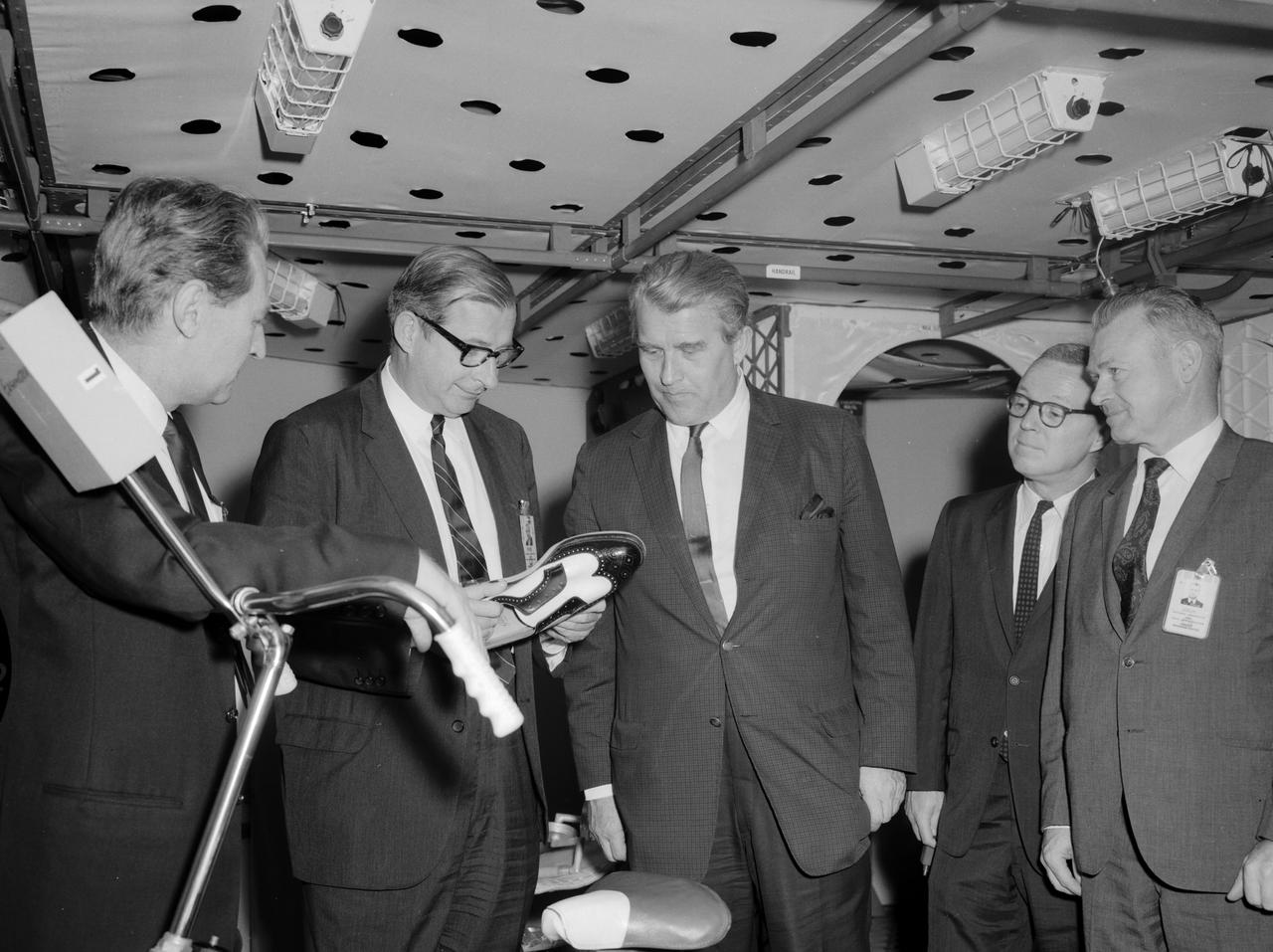
Pictured from the left, in the Saturn I mockup, are: William Brooksbank, Marshall Space Flight Center (MSFC) Propulsion and Vehicle Engineering Laboratory; Dr. Thomas O. Paine, Deputy Administrator of the National Aeronautics and Space Administration (NASA); Dr. Wernher von Braun, MSFC director; Colonel Clare F. Farley, executive officer of the Office of the Administrator; and Charles J. Donlan, newly appointed deputy associate administrator for Manned Space Flight, technical. The party examined an ordinary man’s shoe (held by Paine) outfitted for use in the Saturn I Workshop. The shoe had a unique fastener built into the sole to allow an astronaut to move about the workshop floor and to remain in one position if he desired. Dr. Paine and his party indulged in a two-day tour at the Marshall Space Flight Center getting acquainted with Marshall personnel and programs. It was Paine’s first visit to the center since assuming the NASA post on February 1, 1968.
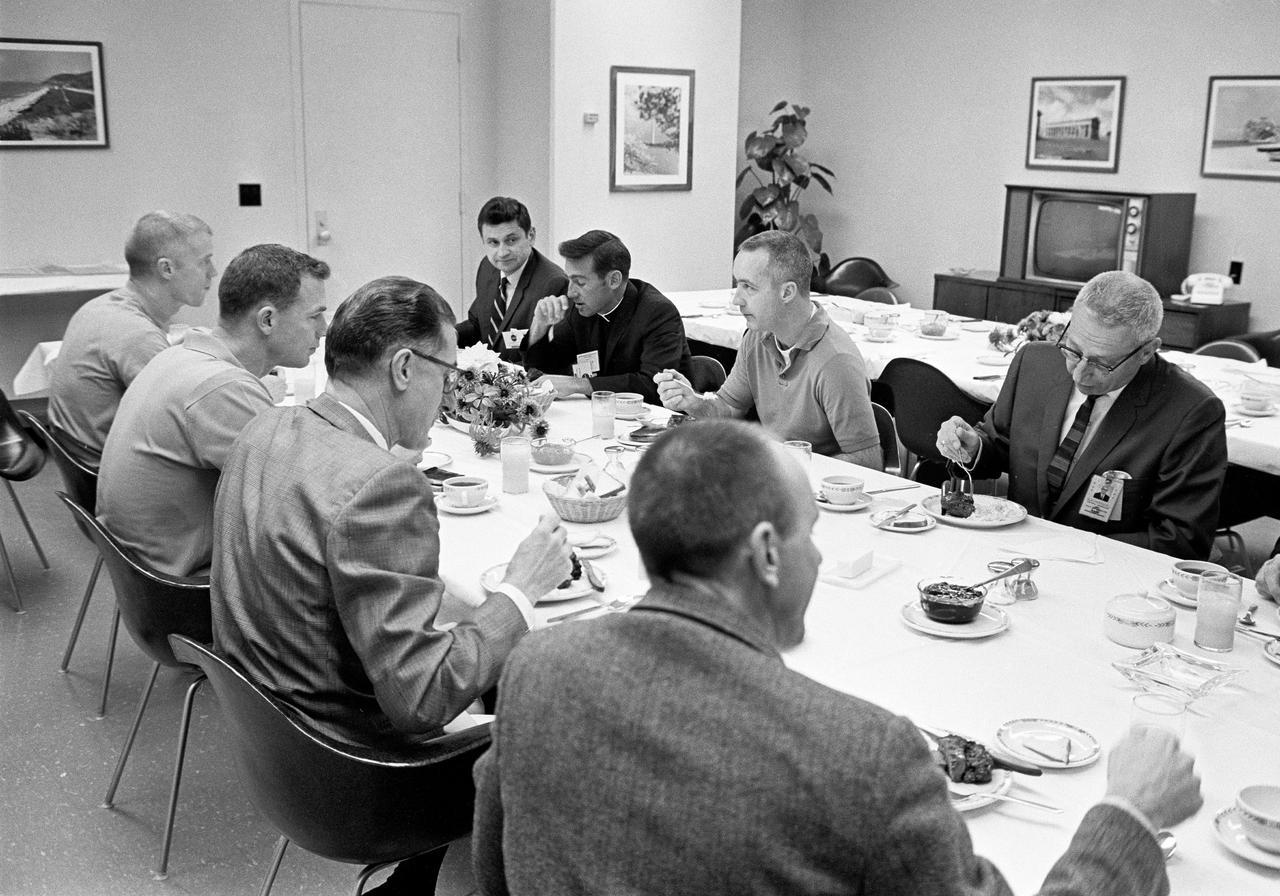
CAPE CANAVERAL, Fla. -- Apollo 9 astronauts James A. McDivitt, David R. Scott, and Russell L. Schweickart breakfast today with mission officials in their crew quarters at the Kennedy Space Center a few hours prior to their scheduled launch into Earth orbit. Seated in the foreground, left to right, are astronauts Schweickart and Scott Brig. Gen. C. H. Bolendar, manager, Lunar Module and backup Lunar Module Pilot Alan L. Bean. Across the table, left to right, George Skurla, Grumman Aircraft Base Manager at the Spaceport McDivitt's clergyman from his home church at Nassau Bay, Texas, The Rev. Laurence Connelly McDivitt and Kenneth Kleinknecht, manager, Command and Service Modules at the Manned Spacecraft Center. Grumman builds the two-man lunar module spacecraft that will be tested during the planned 10-day space mission. Photo credit: NASA
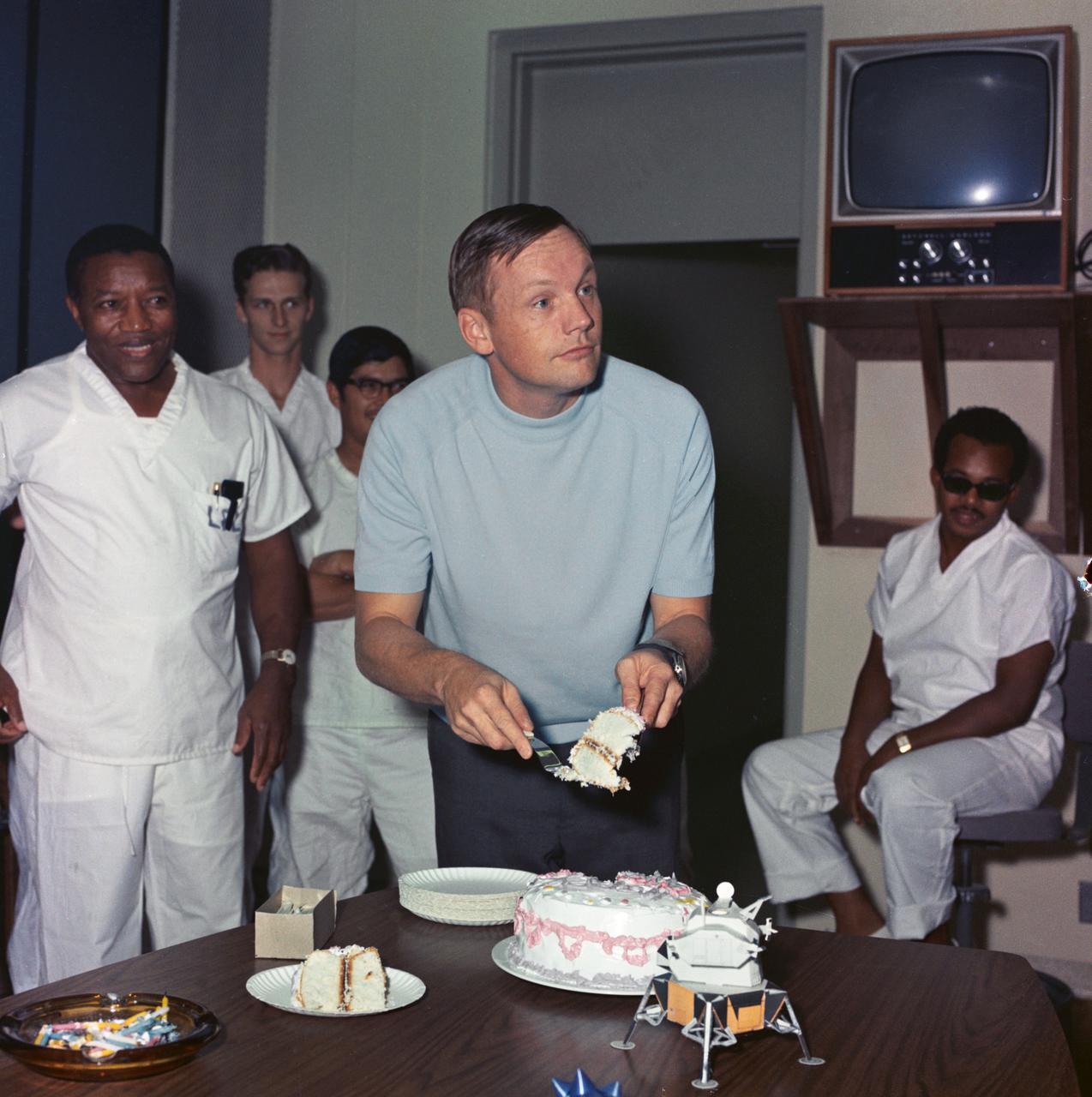
S69-40958 (5 August 1969) --- Astronaut Neil A. Armstrong, commander of the historic Apollo 11 lunar landing mission, and the first man to set foot on the Moon, cuts his birthday cake as he celebrated his 39th birthday. The crew still confined to the Crew Reception Area (CRA) of the Manned Spacecraft Center's (MSC) Lunar Receiving Laboratory (LRL). Armstrong was born on August 5, 1930, in Wapakoneta, Ohio. The cake was described as "standard two-layer, plain vanilla" on which was placed 39 candles. Eighteen of the persons quarantined with Armstrong assembled and sang happy birthday; and a champagne toast was offered. CRA support personnel are in the background. Astronauts Armstrong; Michael Collins, command module pilot; and Edwin E. Aldrin Jr., lunar module pilot, will be released from quarantine on August 11, 1969.
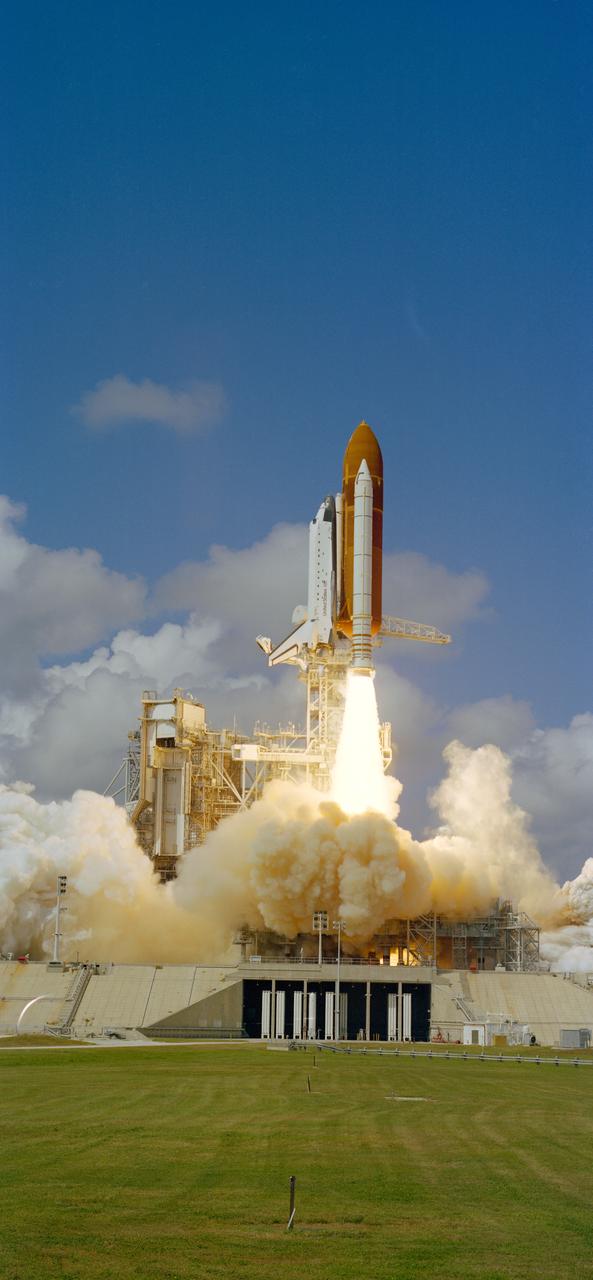
STS026-S-031 (29 Sept 1988) --- Just moments after ignition, the Space Shuttle Discovery, mated to two solid rocket boosters and an external fuel tank, heads, toward Earth orbit. The mission marks Discovery?s first flight since September of 1985 and NASA?s first manned mission since September of 1985 and NASA?s first manned mission since the 51L Challenger accident of January 28, 1986. Onboard the spacecraft are Astronauts Frederick H. (Rick) Hauck, commander; Richard O. Covey, pilot; and George D. Nelson, John M. (Mike) Lounge and David C. Hilmers, mission specialists. Discovery?s dry weight is 171,419 pounds. The tracking and data relay satellite and its inertial upper stage total about 37,000 pounds.
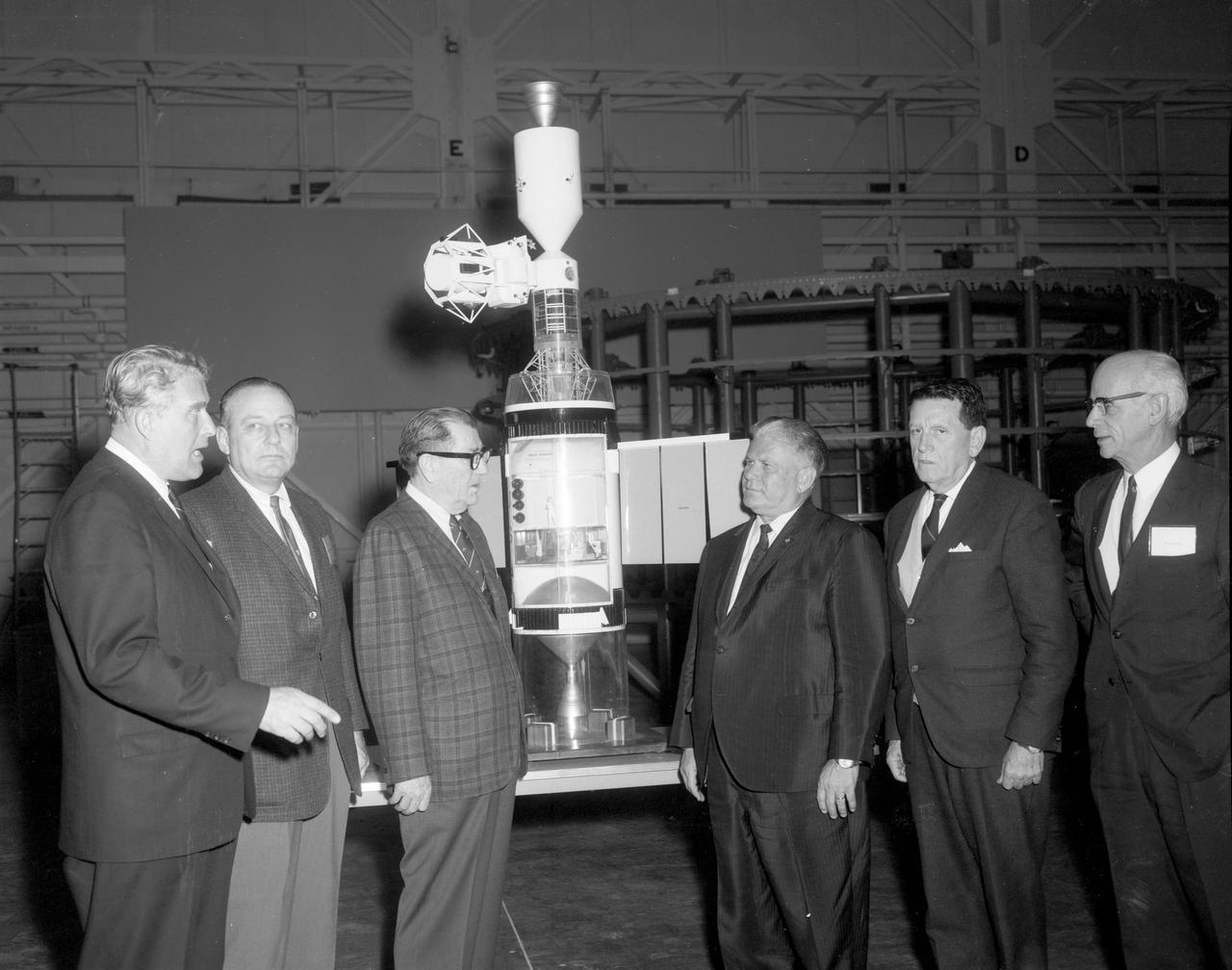
The members of the House Committee on Science and Astronautics visited the Marshall Space Flight Center (MSFC) on March 9, 1962 to gather firsthand information of the nation’s space exploration program. The congressional group was composed of members of the Subcommittee on Manned Space Flight. Standing at the Apollo Applications Program Cluster Model in building 4745 are (left-to-right): Dr. Wernher von Braun, MSFC; Congressman Joe D. Waggoner, Democratic representative of Louisiana; Congressman Earle Cabell, Democratic representative of Texas; Subcommittee Chairman Olin E. Teague, Democratic representative of Texas; Congressman James G. Fulton, Republican representative of Pennsylvania; and Dr. Ernst Stuhlinger, associate MSFC director for science. The subcommittee was briefed on MSFC’s manned space efforts earlier in the day and then inspected mockups of the Saturn I Workshop and the Apollo Telescope Mount, two projects developed by MSFC for the post-Apollo program.
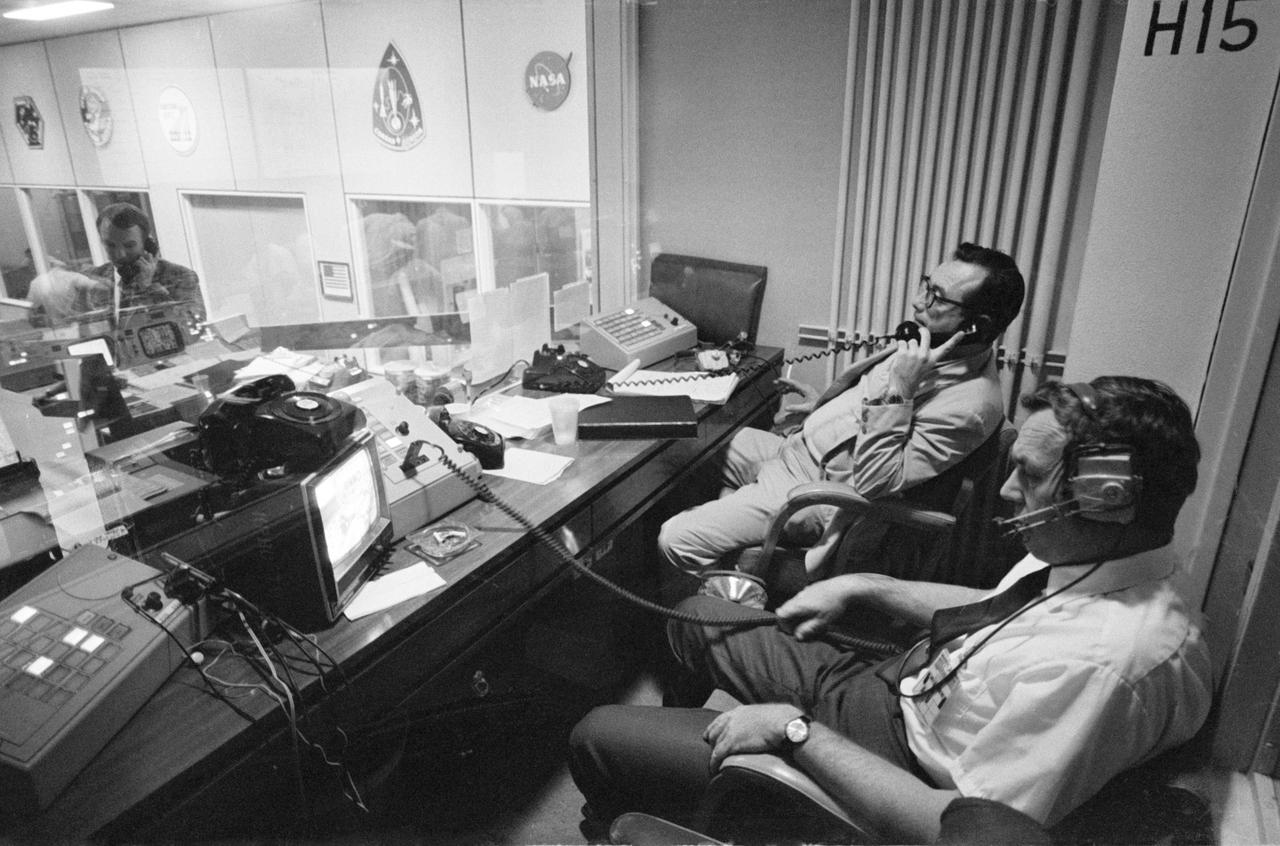
S70-35012 (15 April 1970) --- Two phases of busy activity during critical moments of the Apollo 13 mission are reflected in this view in the Mission Control Center, Building 30, Manned Spacecraft Center. In the foreground, Henry Simmons (left) of Newsweek magazine and John E. Riley, public information specialist, Public Affairs Office, MSC, man their positions in the Press Room. At extreme left of photo, Gerald D. Griffin, Shift 2 flight director, talks on telephone in Mission Operations Control Room. When this photograph was taken, the Apollo 13 lunar landing had been canceled, and the problem-plagued Apollo 13 crewmen were in trans-Earth trajectory attempting to bring their crippled spacecraft back home.
![CAPE CANAVERAL, Fla. – The Soviet and American crews for the July Apollo Soyuz Test Project [standing, center] addressed personnel assembled in a firing room at KSC on February 10. The crews for the joint manned space mission toured the Center during their three-day visit which also included inspection of ASTP equipment and facilities and a trip to Disney World. The first international crewed spaceflight was a joint U.S.-U.S.S.R. rendezvous and docking mission. The Apollo-Soyuz Test Project, or ASTP, took its name from the spacecraft employed: the American Apollo and the Soviet Soyuz. The three-man Apollo crew lifted off from Kennedy Space Center aboard a Saturn IB rocket on July 15, 1975, to link up with the Soyuz that had launched a few hours earlier. A cylindrical docking module served as an airlock between the two spacecraft for transfer of the crew members. Photo credit: NASA](https://images-assets.nasa.gov/image/KSC-108-75P-0057/KSC-108-75P-0057~medium.jpg)
CAPE CANAVERAL, Fla. – The Soviet and American crews for the July Apollo Soyuz Test Project [standing, center] addressed personnel assembled in a firing room at KSC on February 10. The crews for the joint manned space mission toured the Center during their three-day visit which also included inspection of ASTP equipment and facilities and a trip to Disney World. The first international crewed spaceflight was a joint U.S.-U.S.S.R. rendezvous and docking mission. The Apollo-Soyuz Test Project, or ASTP, took its name from the spacecraft employed: the American Apollo and the Soviet Soyuz. The three-man Apollo crew lifted off from Kennedy Space Center aboard a Saturn IB rocket on July 15, 1975, to link up with the Soyuz that had launched a few hours earlier. A cylindrical docking module served as an airlock between the two spacecraft for transfer of the crew members. Photo credit: NASA
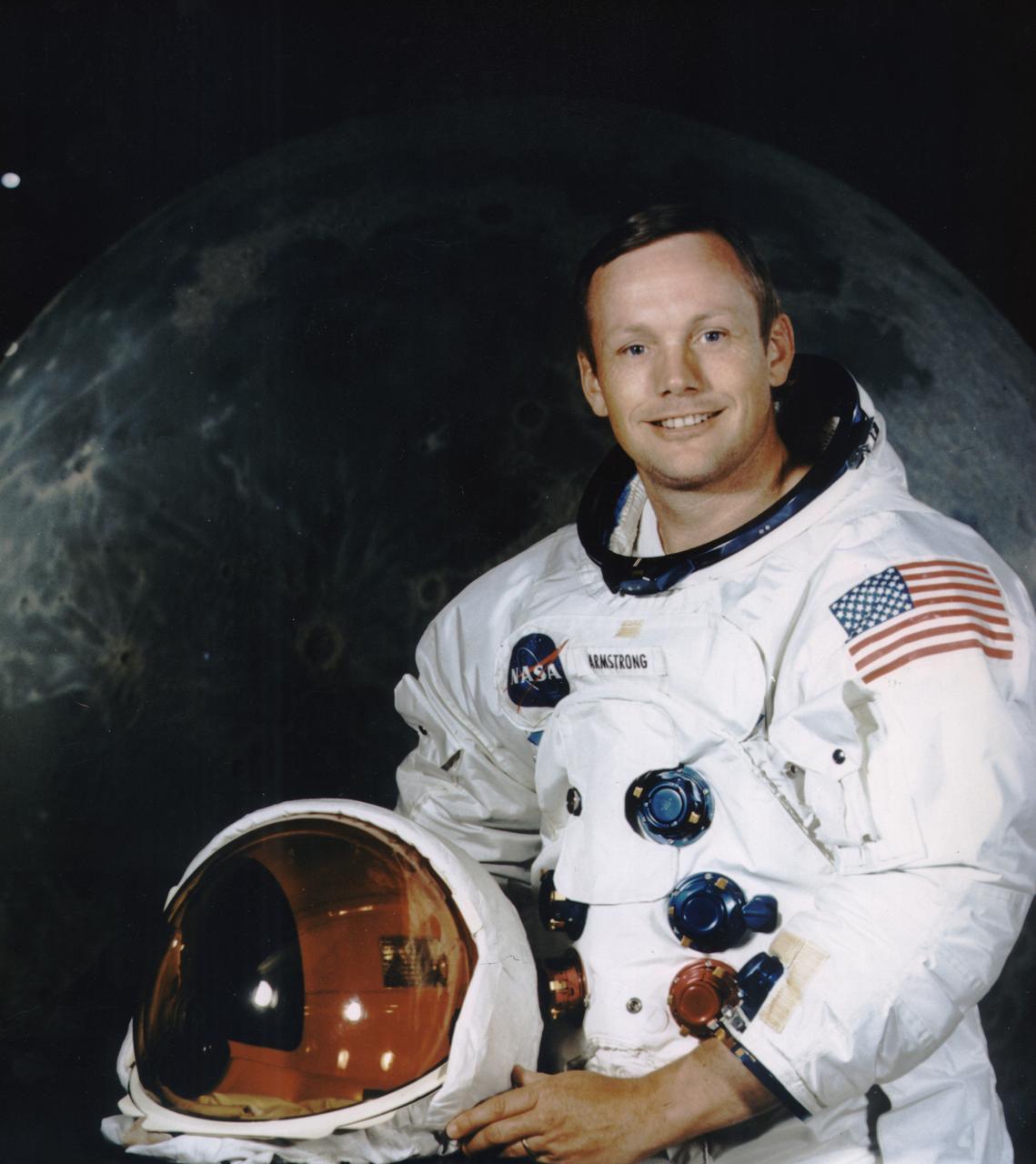
Neil Armstrong, donned in his space suit, poses for his official Apollo 11 portrait. Armstrong began his flight career as a naval aviator. He flew 78 combat missions during the Korean War. Armstrong joined the NASA predecessor, NACA (National Advisory Committee for Aeronautics), as a research pilot at the Lewis Laboratory in Cleveland and later transferred to the NACA High Speed Flight Station at Edwards AFB, California. He was a project pilot on many pioneering high speed aircraft, including the 4,000 mph X-15. He has flown over 200 different models of aircraft, including jets, rockets, helicopters, and gliders. In 1962, Armstrong was transferred to astronaut status. He served as command pilot for the Gemini 8 mission, launched March 16, 1966, and performed the first successful docking of two vehicles in space. In 1969, Armstrong was commander of Apollo 11, the first manned lunar landing mission, and gained the distinction of being the first man to land a craft on the Moon and the first man to step on its surface. Armstrong subsequently held the position of Deputy Associate Administrator for Aeronautics, NASA Headquarters Office of Advanced Research and Technology, from 1970 to 1971. He resigned from NASA in 1971.
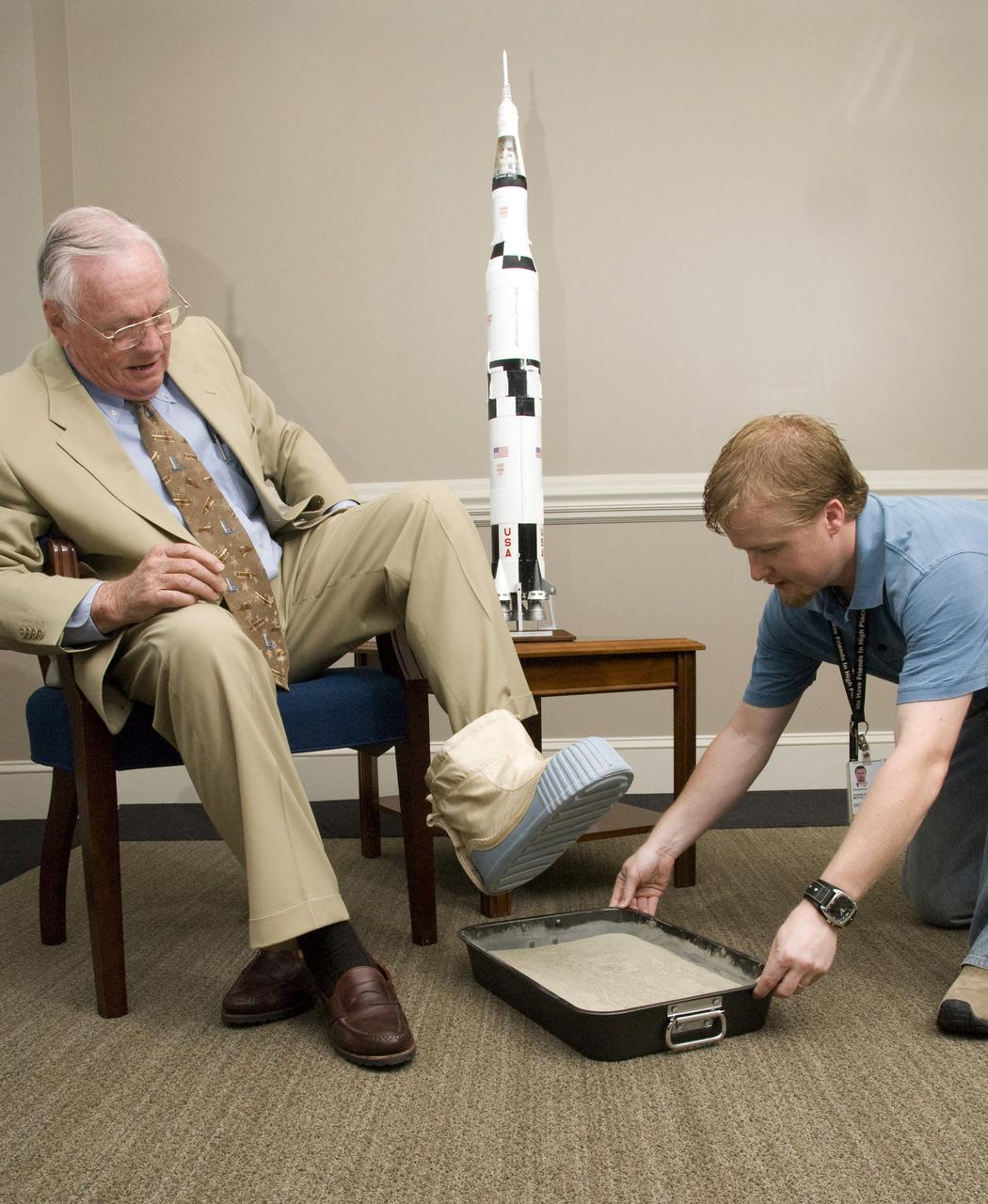
Among several other NASA dignitaries, former astronaut Neil A. Armstrong visited the Marshall Space Flight Center (MSFC) in attendance of the annual NASA Advisory Council Meeting. While here, Mr. Armstrong was gracious enough to allow the casting of his footprint. This casting will join those of other astronauts on display at the center. Armstrong was first assigned to astronaut status in 1962. He served as command pilot for the Gemini 8 mission, launched March 16, 1966, and performed the first successful docking of two vehicles in space. In 1969, Armstrong was commander of Apollo 11, the first manned lunar landing mission, and gained the distinction of being the first man to land a craft on the Moon and the first man to step on its surface. Armstrong subsequently held the position of Deputy Associate Administrator for Aeronautics, NASA Headquarters Office of Advanced Research and Technology, from 1970 to 1971. He resigned from NASA in 1971. Pictured with Armstrong is MSFC employee Daniel McFall, who assisted with the casting procedure.
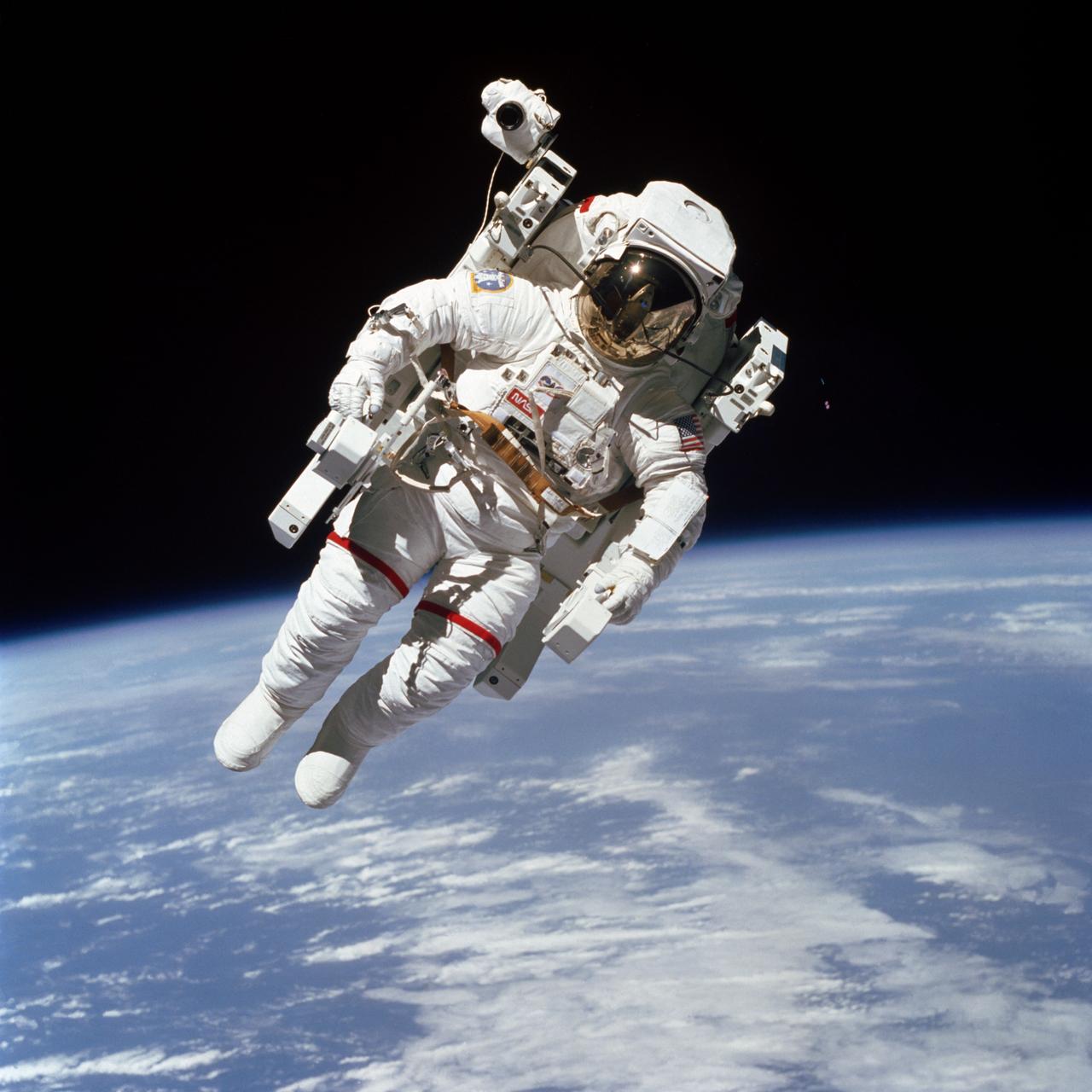
S84-27562 (7 Feb. 1984) --- Astronaut Bruce McCandless II, one of two 41B mission specialists participating in a historical Extravehicular Activity (EVA), is a few meters away from the cabin of the Earth-orbiting space shuttle Challenger in this 70mm frame. This Extravehicular Activity (EVA) represented the first use of a nitrogen-propelled, hand-controlled device called the Manned Maneuvering Unit (MMU), which allows for much greater mobility than that afforded previous spacewalkers who had to use restrictive tethers. Robert L. Stewart later tried out the MMU McCandless is using here, and the two of them tested another similar unit two days later. Inside the spacecraft were astronauts Vance D. Brand, commander; Robert L. Gibson, pilot; and Ronald E. McNair, mission specialist. Photo credit: NASA
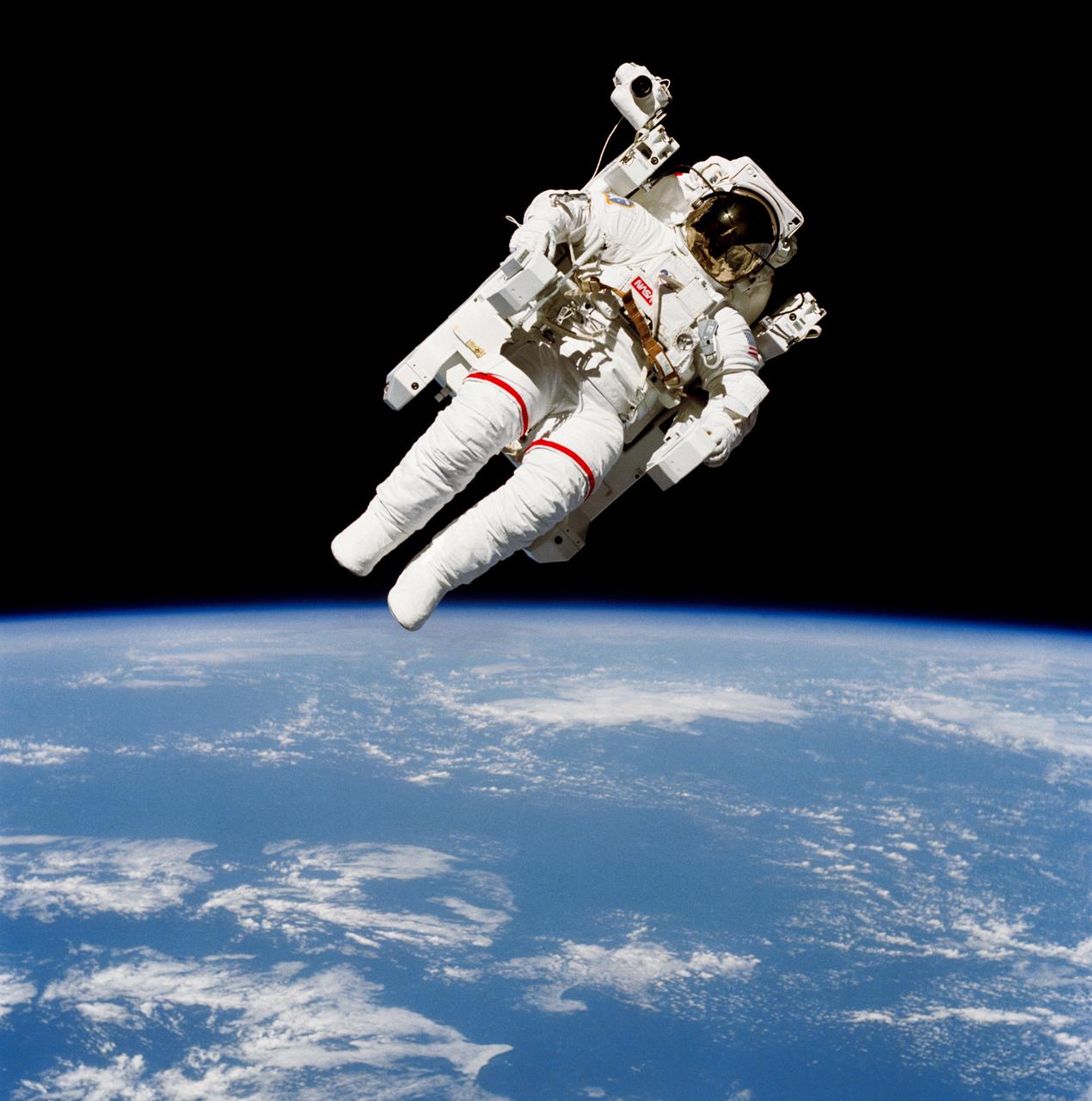
S84-27017 (7 Feb. 1984) --- Astronaut Bruce McCandless II, one of two 41-B mission specialist, participating in a historical Extravehicular Activity (EVA), is a few meters away from the cabin of the Earth-orbiting space shuttle Challenger in this 70mm frame. This EVA represented the first use of a nitrogen-propelled, hand-controlled device called the Manned Maneuvering Unit (MMU), which allows for much greater mobility than that afforded previous spacewalkers who had to use restrictive tethers. Robert L. Stewart, mission specialist, later tried out the MMU McCandless is using here. The two of them tested another similar unit two days later. Inside the spacecraft were astronauts Vance D. Brand, commander; Robert L. Gibson, pilot; and Ronald E. McNair, mission specialist. Photo credit: NASA
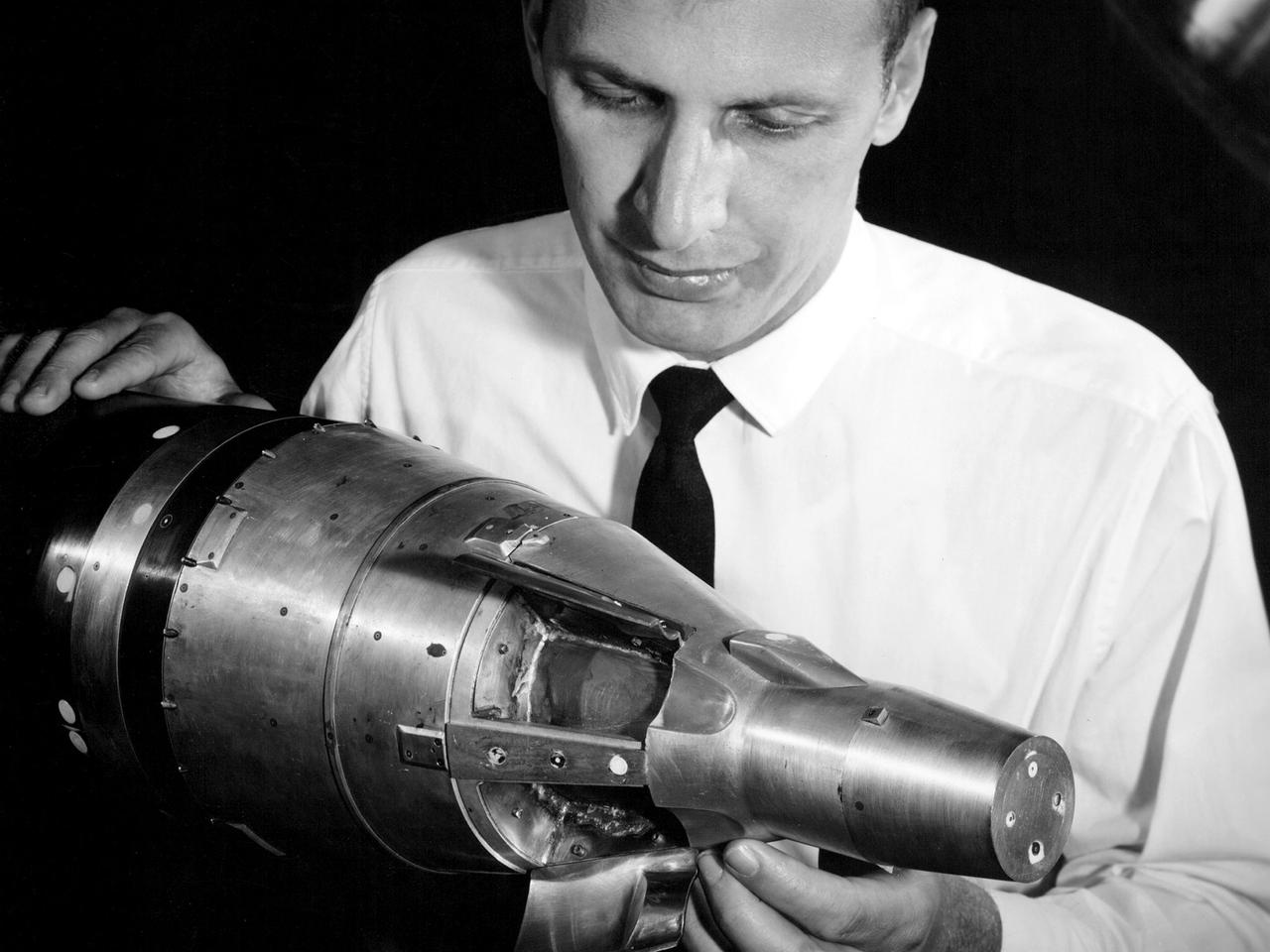
A researcher at the National Aeronautics and Space Administration (NASA) Lewis Research Center examines a small-scale model of the Gemini capsule in the 10- by 10-Foot Supersonic Wind Tunnel test section. Gemini was added to NASA’s manned space program after its predecessor, Mercury, and its antecedent, Apollo, were already established. Gemini was a transitional mission designed provide the astronauts with practice docking with other spacecraft and withstanding durations in space up to two weeks. The program was officially announced on December 7, 1961, but planning began in mid-1959. It was named Gemini after the zodiac twins because of the spacecraft’s two passenger capacity. The Gemini Program was the first program to start at the new Manned Spacecraft Center in Houston, now the Johnson Space Center. Unlike Mercury and Apollo, Lewis had very little involvement with the Gemini Program. This model was tested in the 10- by 10 tunnel for several weeks in September 1962. Lewis began managing the Agena second-stage rocket program shortly after this photograph was taken. Agenas were used to launch a variety of spacecraft and satellites in the 1960s. They were also used on several Gemini missions to provide targets for the astronauts to practice their rendezvous maneuvers. Gemini had two unmanned and ten manned flights in 1965 and 1966. These yielded the first spacewalks, long-duration space missions, first onboard computer, docking with a second spacecraft, and rendezvous maneuvers.
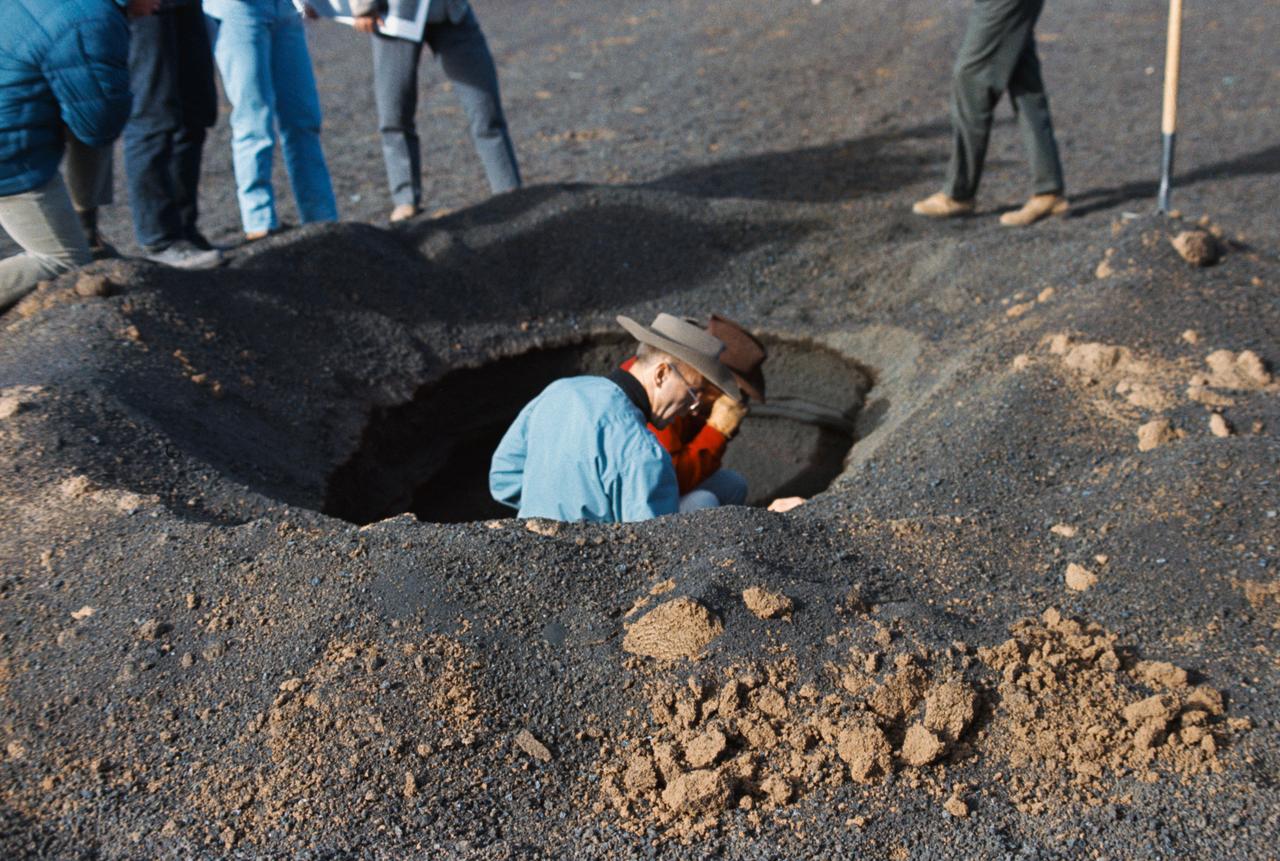
S69-55662 (10 Oct. 1969) --- Astronauts Alan L. Bean (left) and Charles Conrad Jr., the two crewmen of the Apollo 12 lunar landing mission who are scheduled to participate in two lengthy periods of extravehicular activity (EVA) on the lunar surface, are pictured during a geological field trip and training at a simulated lunar surface area near Flagstaff, Arizona. Here Conrad, the Apollo 12 commander, gets a close look through hand lens at the stratigraphy (study of strata or layers beneath the surface) of a man-dug hole, while Bean, the Apollo 12 mission's lunar module pilot, looks on. The topography in this area, with several man-made modifications, resembles very closely much of the topography found on the lunar surface. While Conrad and Bean explore the lunar surface (plans call for Apollo 12 spacecraft to land in the Sea of Storms), astronaut Richard F. Gordon Jr., command module pilot for the Apollo 12 mission, will remain with the Command and Service Modules (CSM) in lunar orbit. The Apollo 12 mission is scheduled to lift off from Cape Kennedy on Nov. 14, 1969.
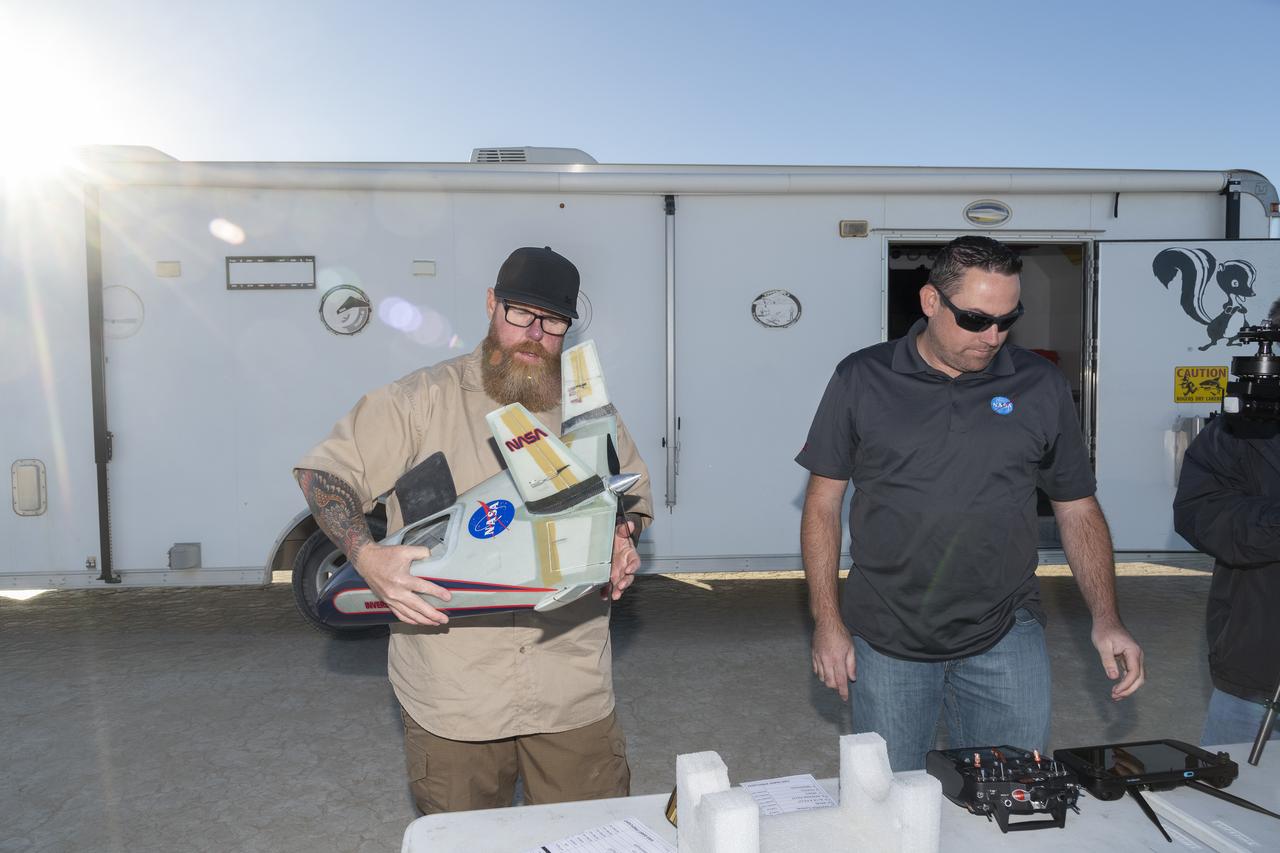
Justin Hall, left, chief pilot of small unmanned aircraft systems, carries the atmospheric probe at NASA’s Armstrong Flight Research Center in Edwards, California. The probe, which was designed and built at the center, flew after release from a quad rotor remotely piloted aircraft on Oct. 22, 2024, above Rogers Dry Lake, a flight area adjacent to the NASA center. At right, Justin Link, unmanned aircraft systems pilot, checks out the controllers for the two aircraft.