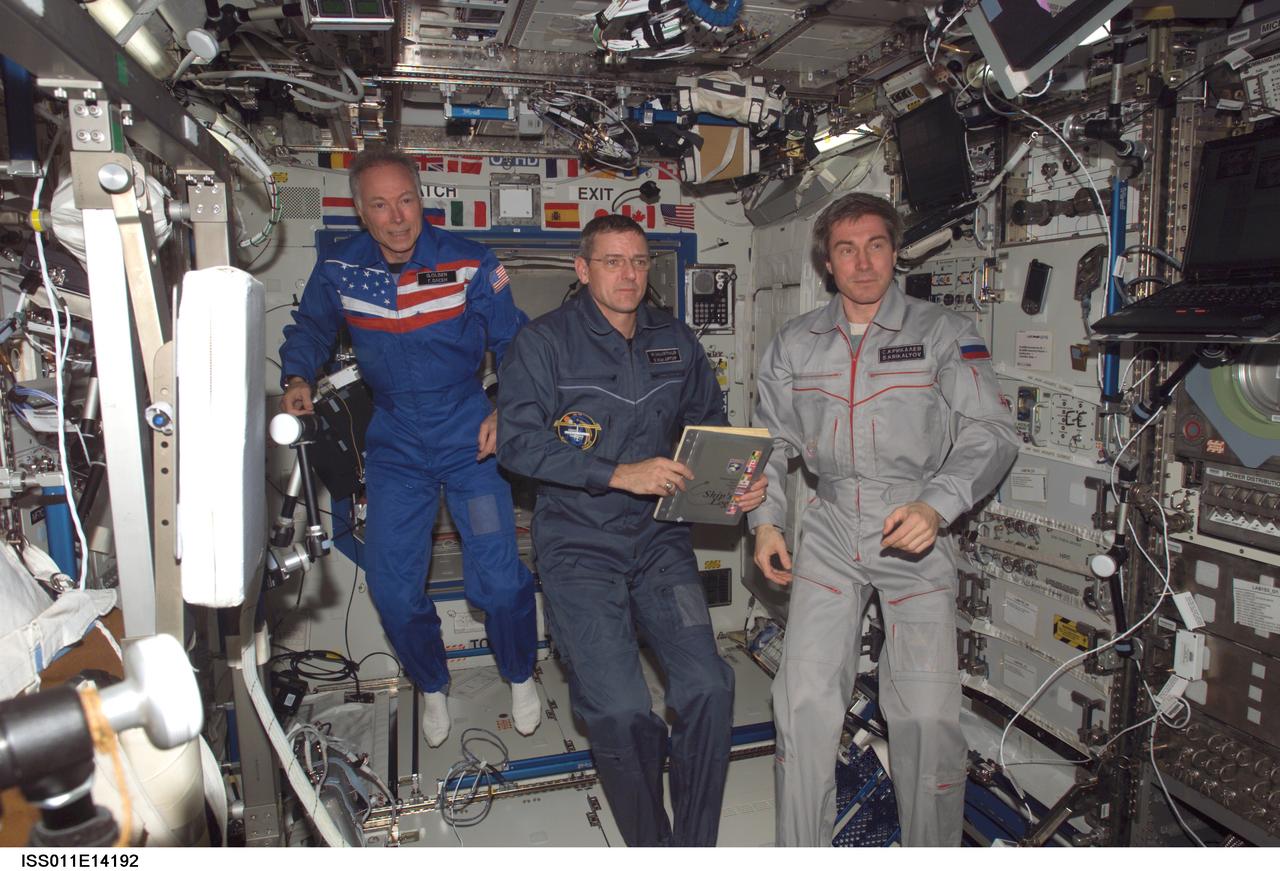
ISS011-E-14192 (8 October 2005) --- Russian Federal Space Agency cosmonaut Sergei K. Krikalev (right), Expedition 11 commander; astronaut William S. McArthur Jr. (center), Expedition 12 commander and NASA science officer; and U. S. Spaceflight Participant Gregory Olsen are pictured in the Destiny laboratory of the international space station following the ceremony of Changing-of-Command from Expedition 11 to Expedition 12.
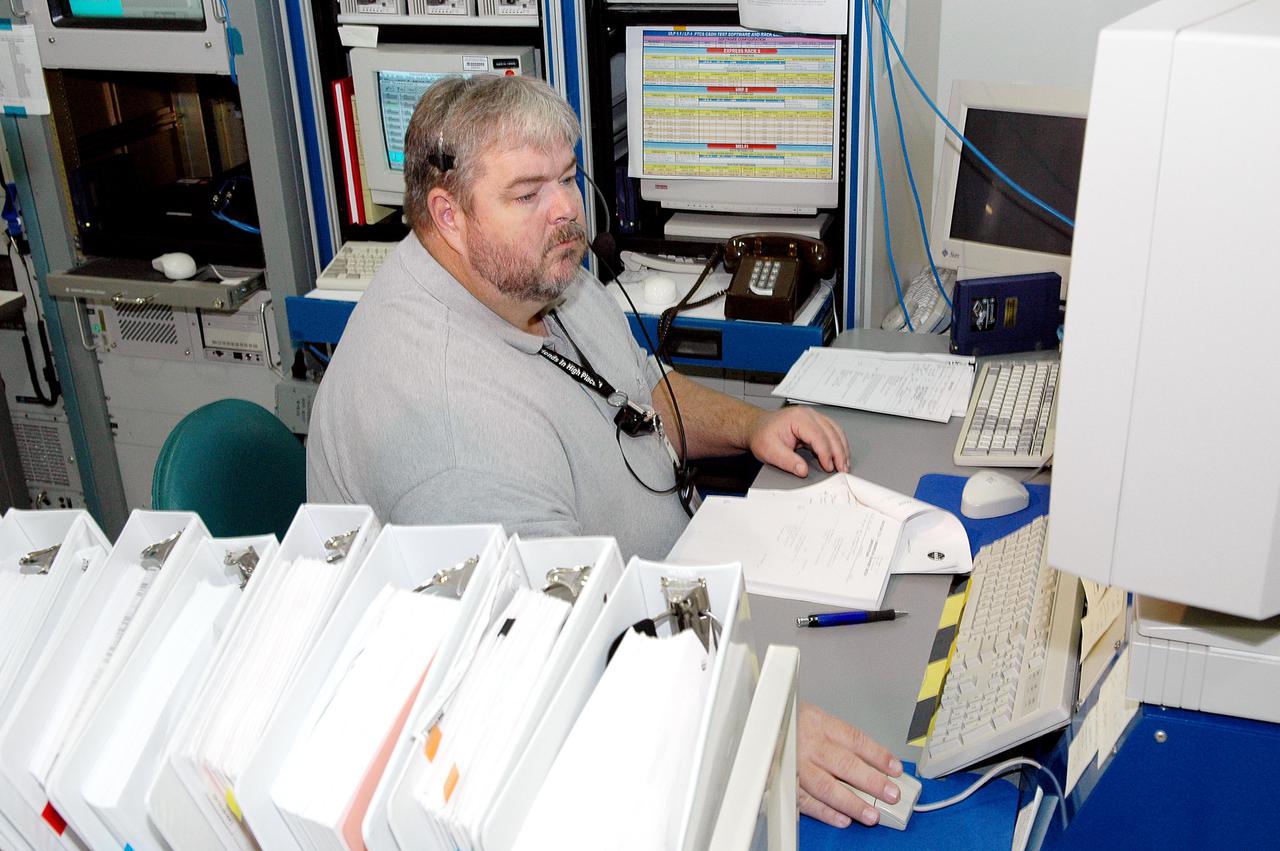
KENNEDY SPACE CENTER, FLA. - Joe Mounts, with Boeing, monitors the Payload Test and Checkout System for the Human Research Facility (HRF) Rack -2 payload. The HRF-2 is scheduled to fly on Return to Flight Space Shuttle mission STS-114. The HRF-2 will deliver additional biomedical instrumentation and research capability to the International Space Station. HRF Rack 1 contains an ultrasound unit and gas analyzer system and has been operational in the U.S. Lab since May 2001. HRF-2 will also be installed in the U. S. Lab and will provide structural, power, thermal, command and data handling, and communication and tracking interfaces between the HRF biomedical instrumentation and the U. S. Lab.
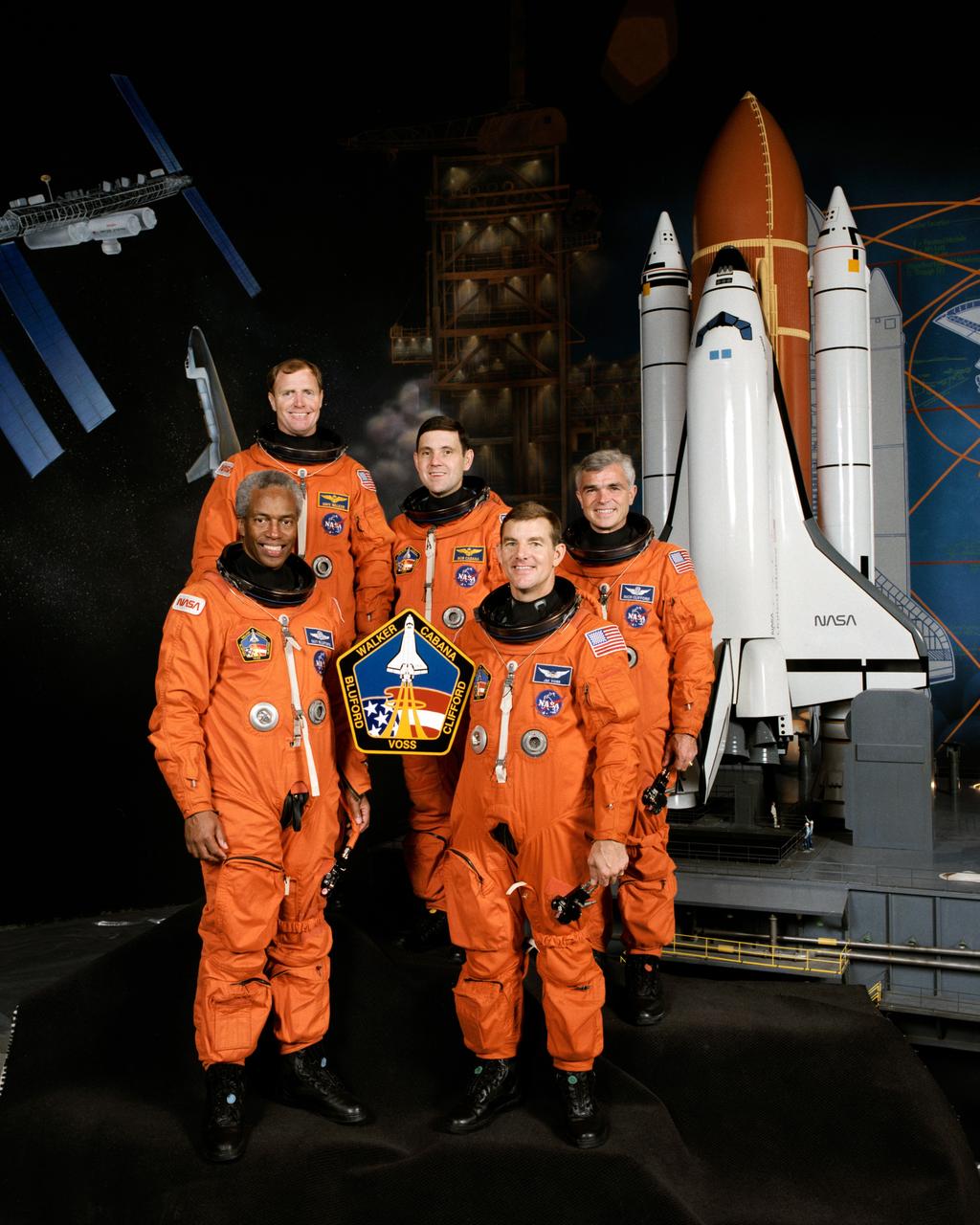
STS053-S-002 (September 1992) --- These five astronauts have been assigned to fly aboard the Space Shuttle Discovery for the mission, scheduled for launch in November of this year. Pictured are, left to right (front), Guion S. Bluford and James S. Voss, mission specialists; and (back row) David M. Walker, mission commander; Robert D. Cabana, pilot and Michael R. U. (Rich) Clifford, mission specialist. The photograph was made in the new Space Center Houston (SCH) facility.
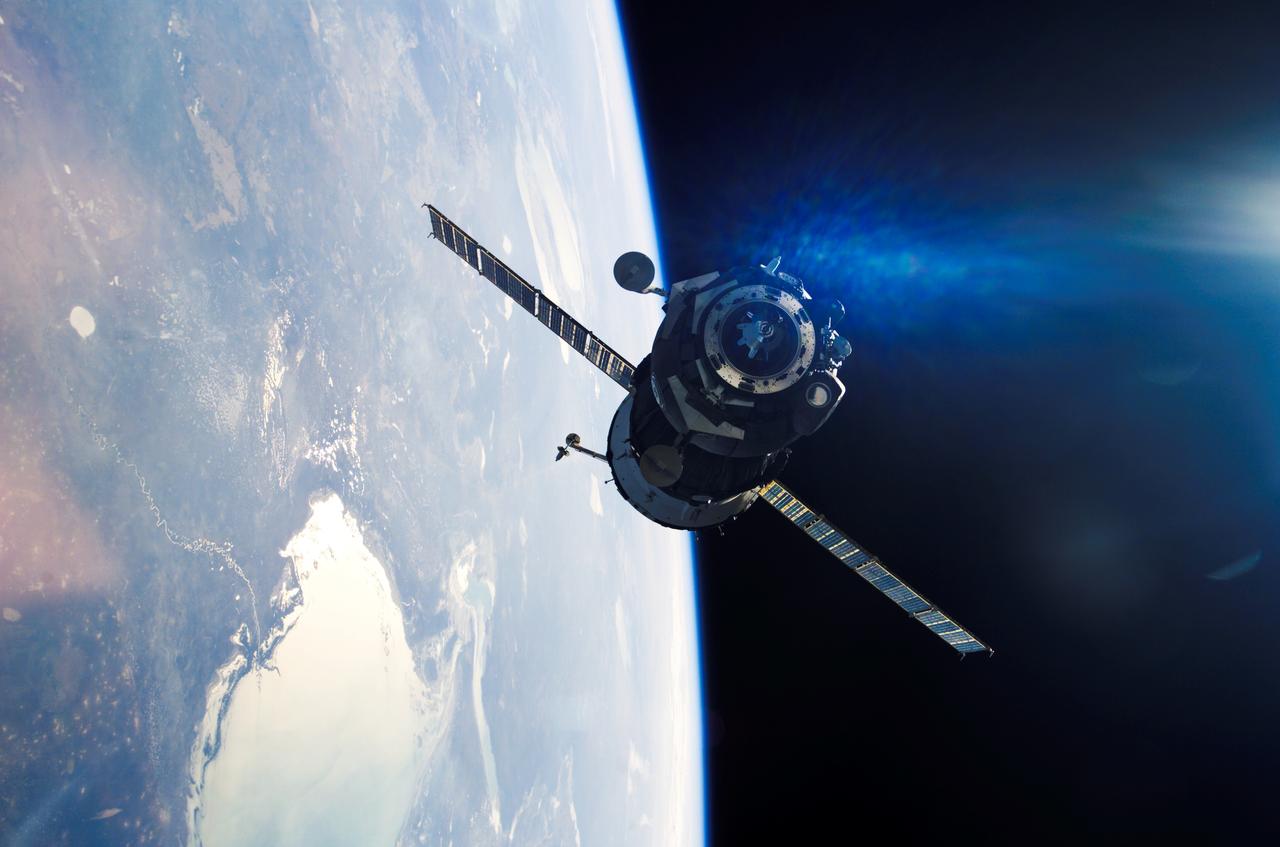
ISS011-E-14107 (3 Oct. 2005) --- Backdropped by the blackness of space and Earth’s horizon, the Soyuz TMA-7 spacecraft approaches the international space station. Onboard the spacecraft are astronaut William S. McArthur, Jr., Expedition 12 commander and NASA science officer; cosmonaut Valery I. Tokarev, Expedition 12 flight engineer and Soyuz commander; and U. S. Spaceflight Participant Gregory Olsen. The Soyuz linked up to the Pirs Docking Compartment at 12:27 a.m. (CDT) on Oct. 3, 2005 as the two spacecraft flew over eastern Asia. The docking followed Friday’s launch from Baikonur Cosmodrome in Kazakhstan.
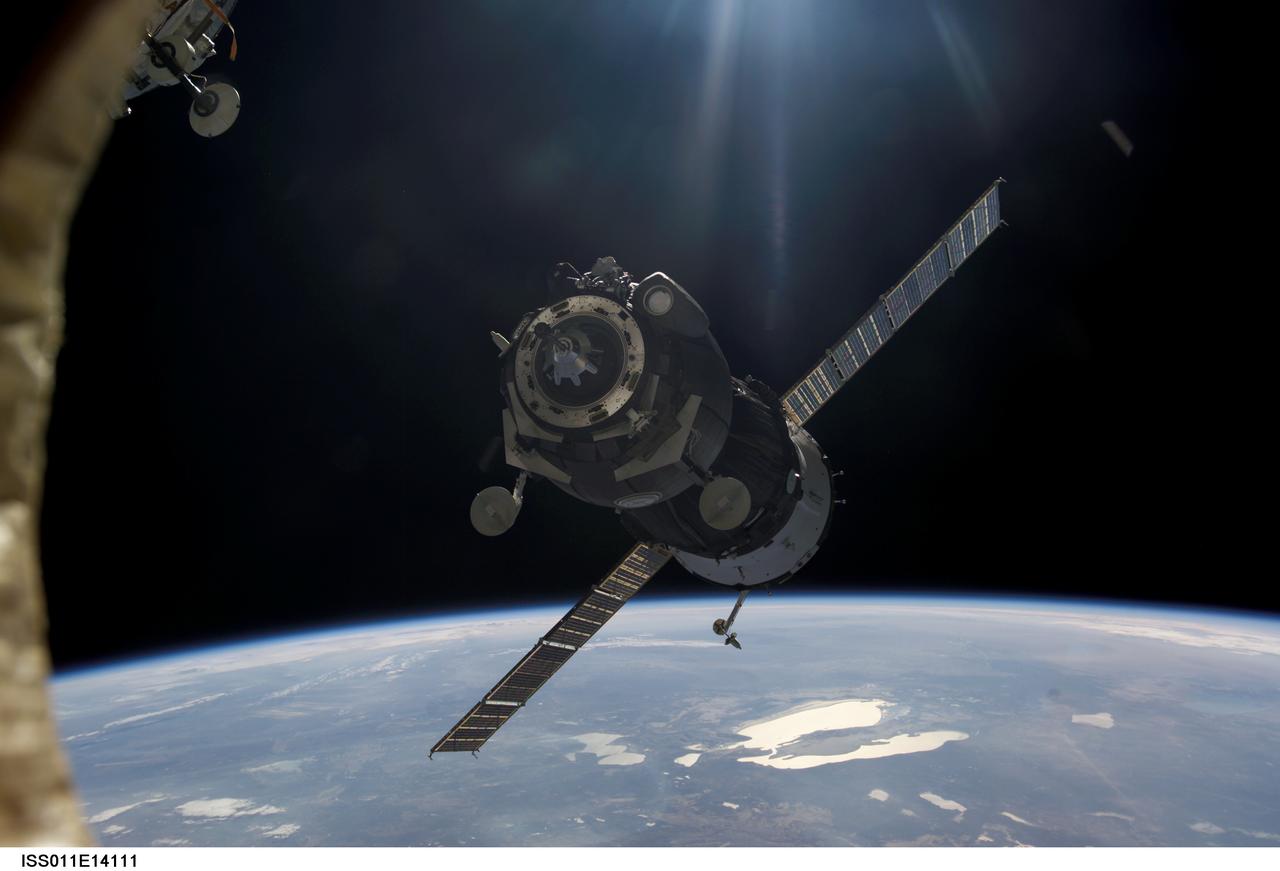
ISS011-E-14111 (3 October 2005) --- Backdropped by the blackness of space and Earth’s horizon, the Soyuz TMA-7 spacecraft approaches the international space station. Onboard the spacecraft are astronaut William S. McArthur, Jr., Expedition 12 commander and NASA science officer; cosmonaut Valery I. Tokarev, Expedition 12 flight engineer and Soyuz commander; and U. S. Spaceflight Participant Gregory Olsen. The Soyuz linked up to the Pirs Docking Compartment at 12:27 a.m. (CDT) on Oct. 3, 2005 as the two spacecraft flew over eastern Asia. The docking followed Friday’s launch from Baikonur Cosmodrome in Kazakhstan.
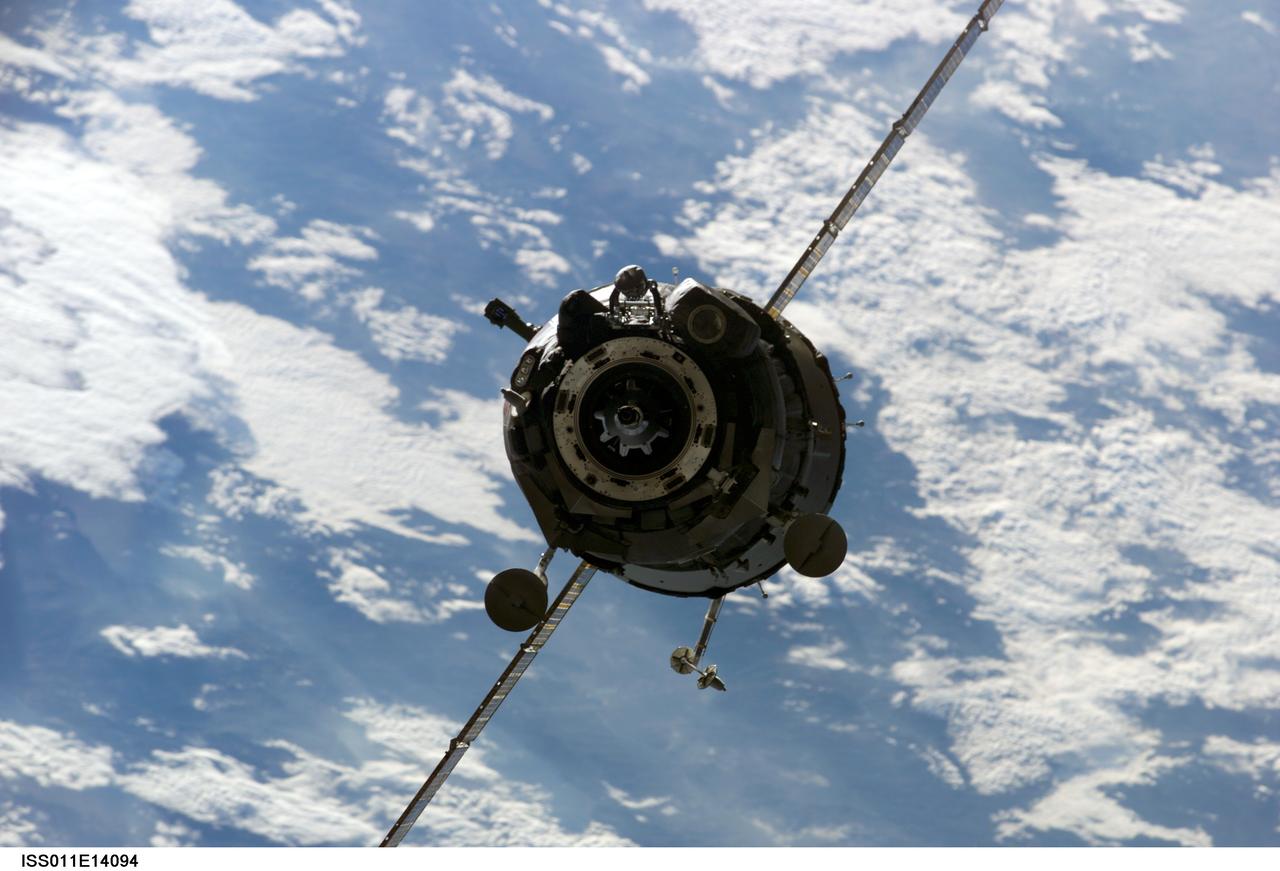
ISS011-E-14094 (3 October 2005) --- Backdropped by a blanket of clouds, the Soyuz TMA-7 spacecraft approaches the international space station. Onboard the spacecraft are astronaut William S. McArthur, Jr., Expedition 12 commander and NASA science officer; cosmonaut Valery I. Tokarev, Expedition 12 flight engineer and Soyuz commander; and U. S. Spaceflight Participant Gregory Olsen. The Soyuz linked up to the Pirs Docking Compartment at 12:27 a.m. (CDT) on Oct. 3, 2005 as the two spacecraft flew over eastern Asia. The docking followed Friday’s launch from Baikonur Cosmodrome in Kazakhstan.
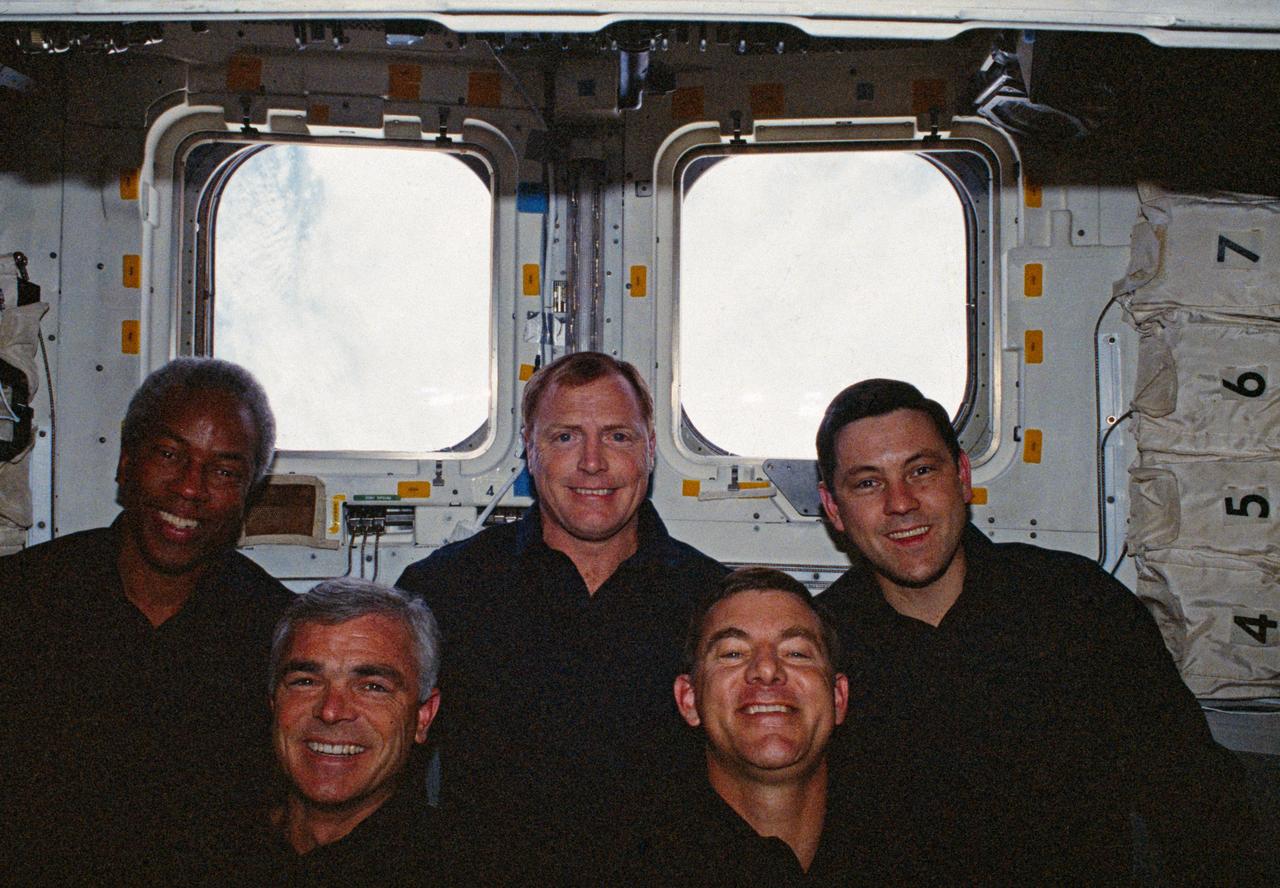
STS053-13-021 (2-9 Dec 1992) --- The five astronauts flying aboard the Space Shuttle Discovery for the mission pose for the traditional in-flight crew portrait. Left to right are astronauts Guion S. Bluford, mission specialist; Michael R. U. (Rich) Clifford, mission specialist; David M. Walker, mission commander; James S. Voss, mission specialist; and Robert D. Cabana, pilot.
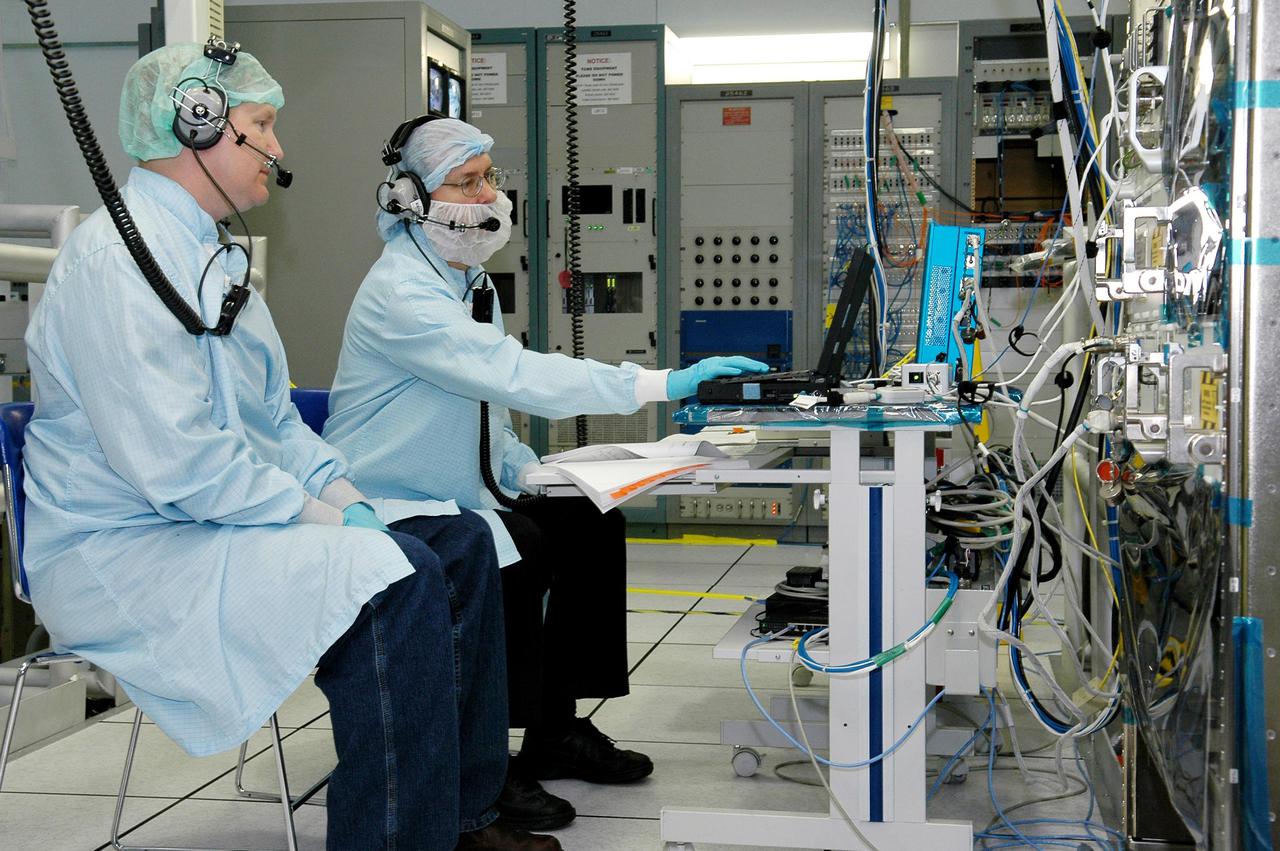
KENNEDY SPACE CENTER, FLA. - - In the Space Station Processing Facility, Gaschen Geissen and Elton Witt, with Lockheed Martin, monitor the Payload Test and Checkout System for the Human Research Facility (HRF) Rack -2 payload. The HRF-2 is scheduled to fly on Return to Flight Space Shuttle mission STS-114. The HRF-2 will deliver additional biomedical instrumentation and research capability to the International Space Station. HRF Rack 1 contains an ultrasound unit and gas analyzer system and has been operational in the U.S. Lab since May 2001. HRF-2 will also be installed in the U. S. Lab and will provide structural, power, thermal, command and data handling, and communication and tracking interfaces between the HRF biomedical instrumentation and the U. S. Lab.
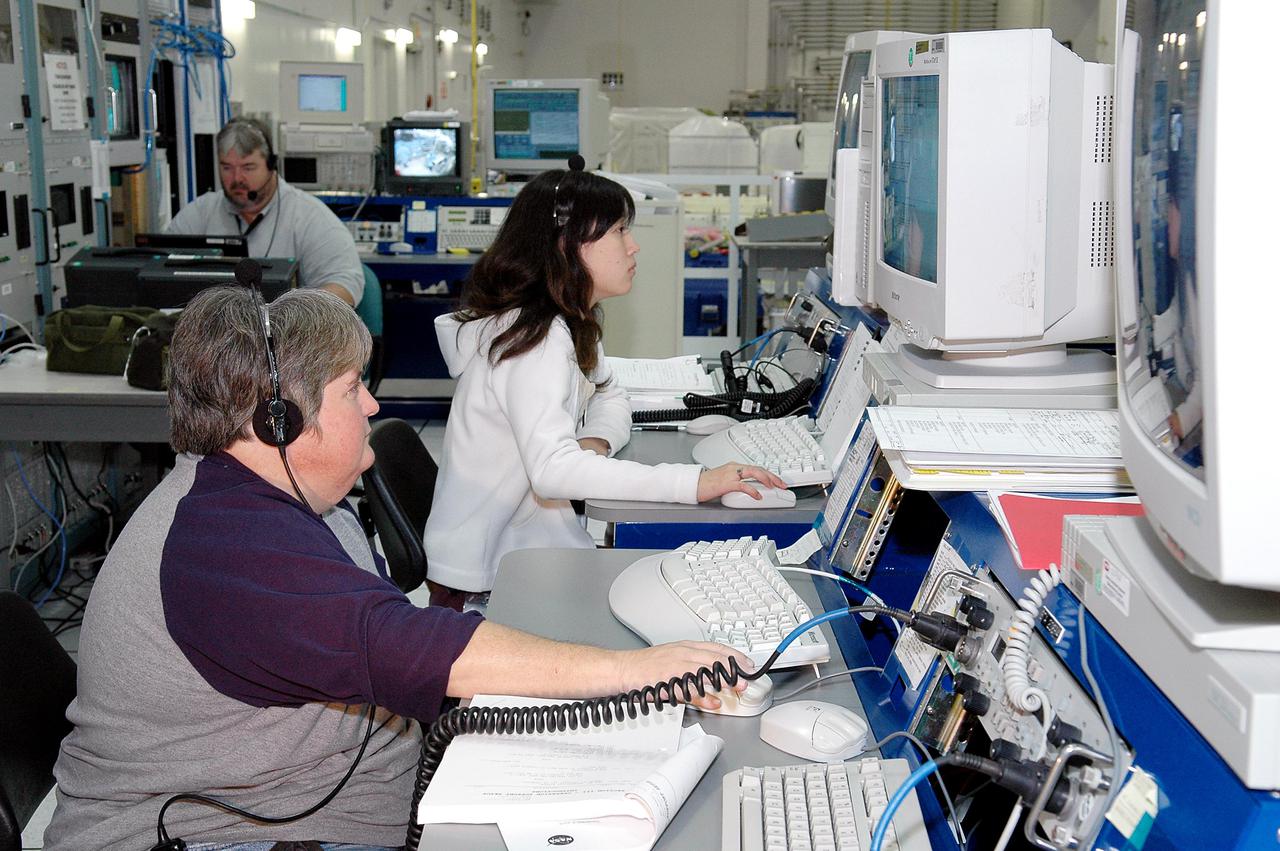
KENNEDY SPACE CENTER, FLA. - Nancy Lowry (left) and Mikiko Ujihara, with Boeing, monitor the Payload Test and Checkout System for the Human Research Facility (HRF) Rack -2 payload. The HRF-2 is scheduled to fly on Return to Flight Space Shuttle mission STS-114. The HRF-2 will deliver additional biomedical instrumentation and research capability to the International Space Station. HRF Rack 1 contains an ultrasound unit and gas analyzer system and has been operational in the U.S. Lab since May 2001. HRF-2 will also be installed in the U. S. Lab and will provide structural, power, thermal, command and data handling, and communication and tracking interfaces between the HRF biomedical instrumentation and the U. S. Lab.
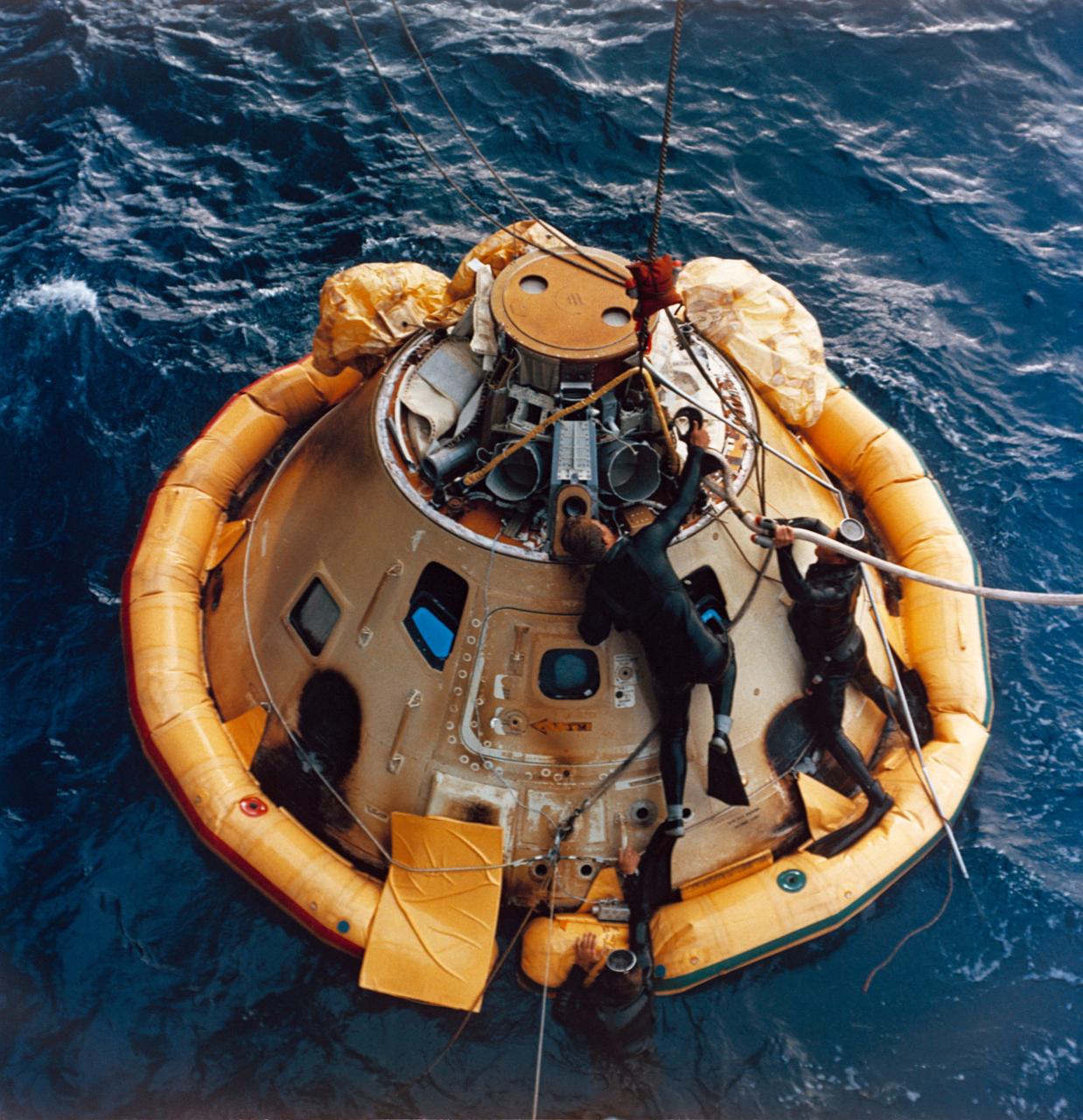
S68-27884 (4 April 1968) --- A U. S. Navy frogman team prepares the Apollo Spacecraft 020 Command Module (CM) for hoisting aboard the USS Okinawa. The USS Okinawa was the prime recovery ship for the Apollo 6 (Spacecraft 020/Saturn 502) unmanned space mission. Splashdown occurred at 4:58:45 p.m. (EST), April 4, 1968, at 375 nautical miles north of Honolulu, Hawaii.
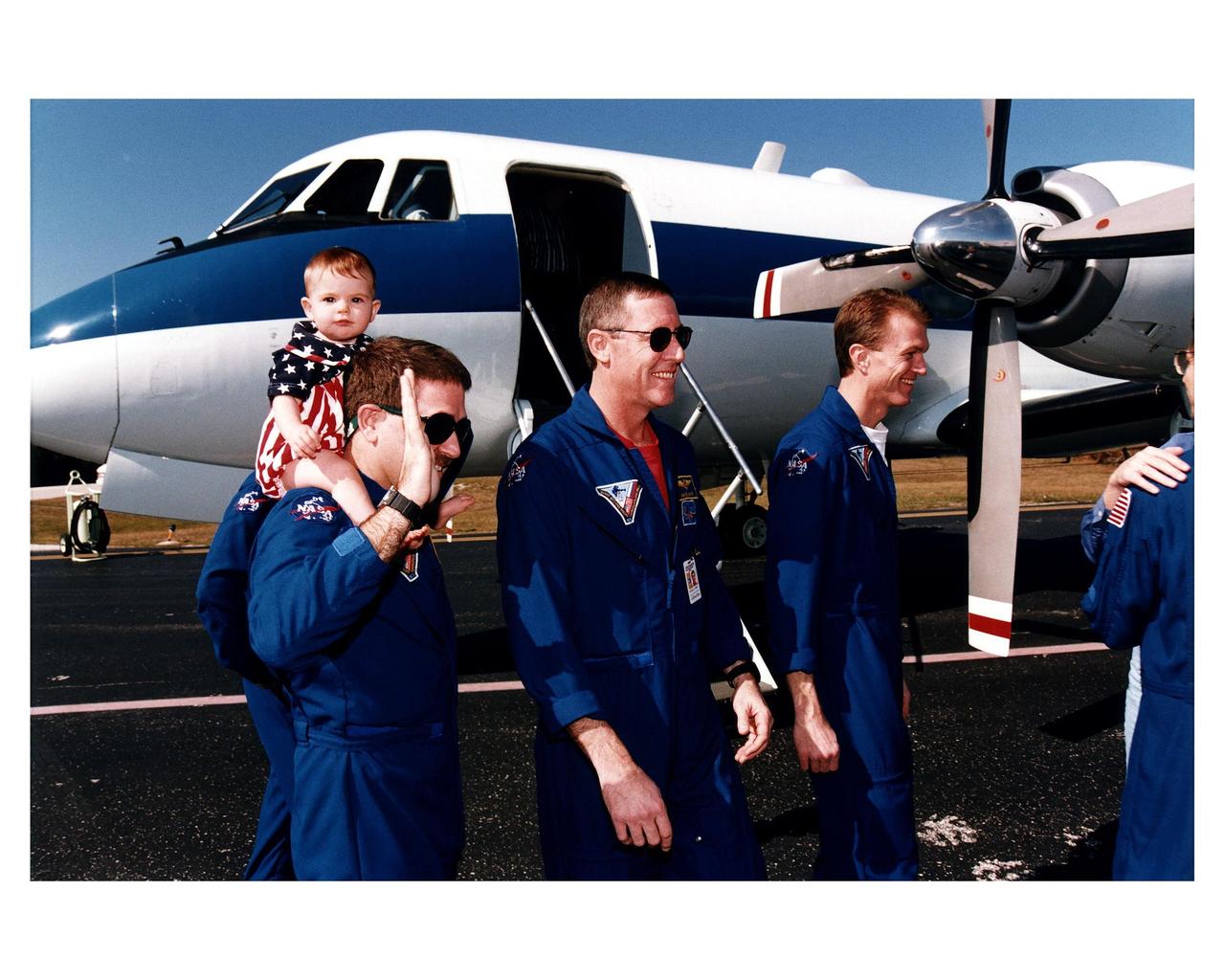
Members of the STS-81 crew prepare to depart for Johnson Space Center Jan. 23 from the Skid Strip at Cape Canaveral Air Station. The crew arrived at KSC aboard the Space Shuttle Atlantis Jan. 22 to conclude the fifth Shuttle-Mir docking mission and return U. S. astronaut John E. Blaha to Earth after four months in space as member of the Mir 22 crew. On the left is Mission Specialist John M. Grunsfeld, with his daughter, Sarah, on his back. Also pictured are Mission Commander Michael A. Baker (center); Pilot Brent W. Jett (second from right); and Blaha
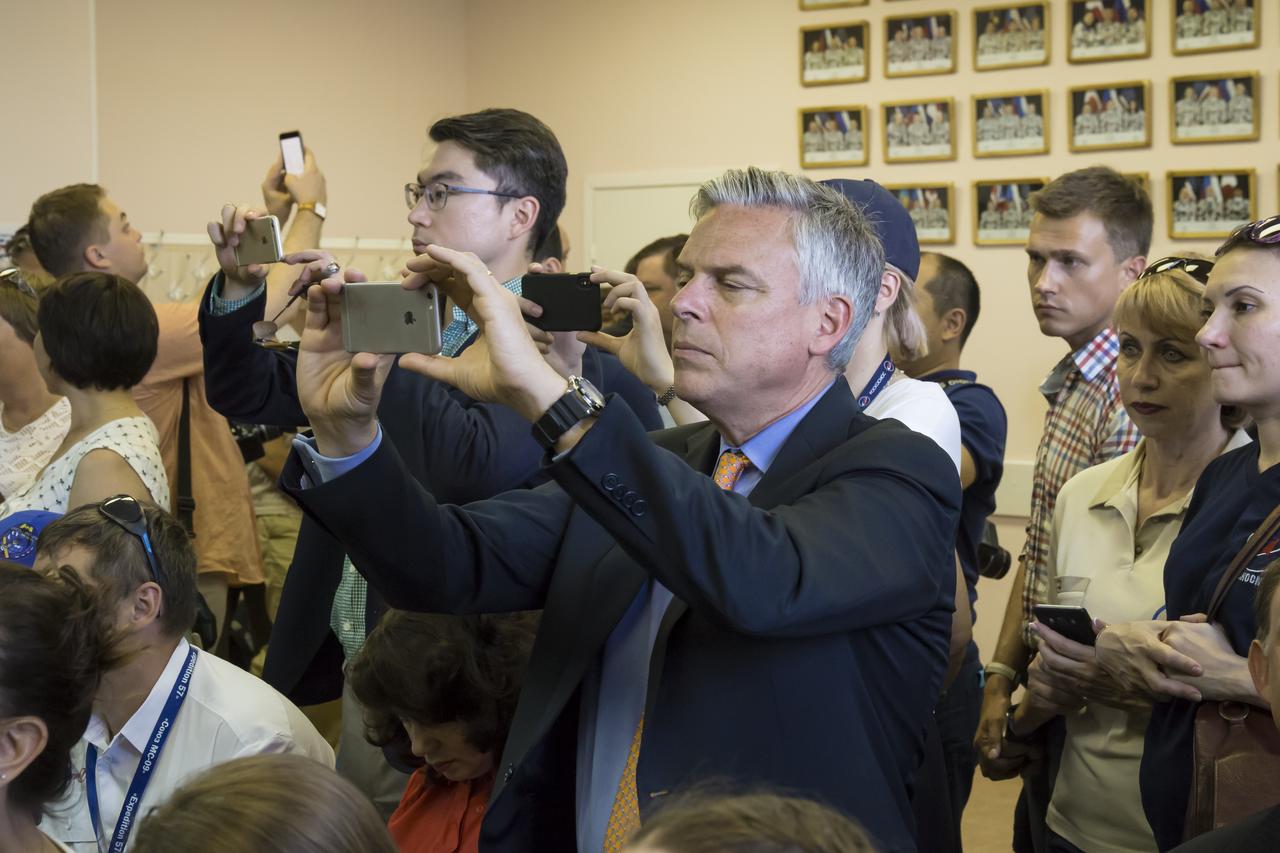
U. S. Ambassador to Russia Jon Huntsman Jr. takes a picture while watching Expedition 56 flight engineer Serena Auñón-Chancellor of NASA, Soyuz Commander Sergey Prokopyev of Roscosmos, and flight engineer Alexander Gerst of ESA (European Space Agency) have their Russian Sokol suits pressure checked in preparation for launch aboard the Soyuz MS-09 spacecraft, Wednesday, June 6, 2018 at the Baikonur Cosmodrome in Kazakhstan. Auñón-Chancellor, Prokopyev, and Gerst launched aboard the Soyuz MS-09 spacecraft at 7:12am EDT (5:12pm Baikonur time) on June 6 to begin their journey to the International Space Station. Photo Credit: (NASA/Victor Zelentsov)

51D-09-034 (12-19 April 1985) --- The seven crew members of STS-51D take time, during a busy full week in space, to pose for a "star-burst" type in-space portrait. Hold picture with astronaut Rhea Seddon at bottom center. Counter-clockwise from the bottom left are Jeffrey A. Hoffman, mission specialist; Dr. Seddon, mission specialist; Charles D. Walker, payload specialist; U. S. Senator E. J. (Jake) Garn, payload specialist; S. David Griggs, mission specialist; Karol J. Bobko, mission commander; and Donald W. Williams, pilot. A pre-set 35mm camera exposed the frame in the mid-deck of the Earth-orbiting Space Shuttle Discovery. The crew launched at 8:59 a.m. (EST), April 12, 1985 and landed at 8:54 a.m. (EST), April 19, 1985 spending five minutes less than a full week on the busy mission.
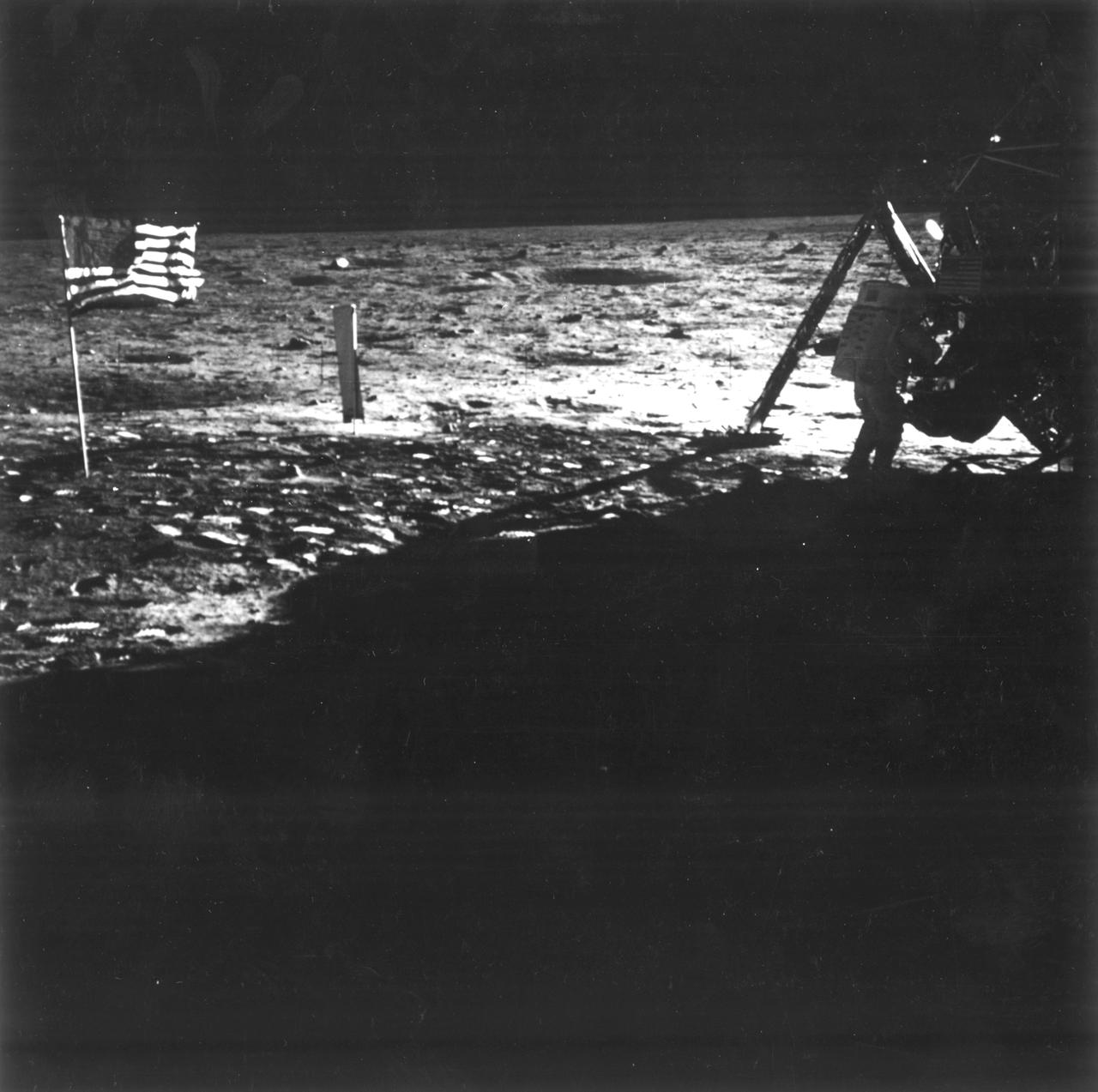
The first manned lunar landing mission, Apollo 11, launched from the Kennedy Space Flight Center (KSC) in Florida via the Marshall Space Flight Center (MSFC) developed Saturn V launch vehicle on July 16, 1969 and safely returned to Earth on July 24, 1969. Astronauts onboard included Neil A. Armstrong, commander; Michael Collins, Command Module (CM) pilot; and Edwin E. Aldrin, Jr., Lunar Module (LM) pilot. The CM, “Columbia”, piloted by Collins, remained in a parking orbit around the Moon while the LM, “Eagle'', carrying astronauts Armstrong and Aldrin, landed on the Moon in the Sea of Tranquility. On July 20, 1969, Armstrong was the first human to ever stand on the lunar surface, followed by Aldrin. During 2½ hours of surface exploration, the crew set up experiments, collected 47 pounds of lunar surface material for analysis back on Earth, planted the U.S Flag, and left a message for all mankind. In this photograph, Armstrong is removing scientific equipment from a storage bay of the LM. The brilliant sunlight emphasizes the U. S. Flag to the left. The object near the flag is the Solar Wind Composition Experiment deployed by Aldrin earlier.
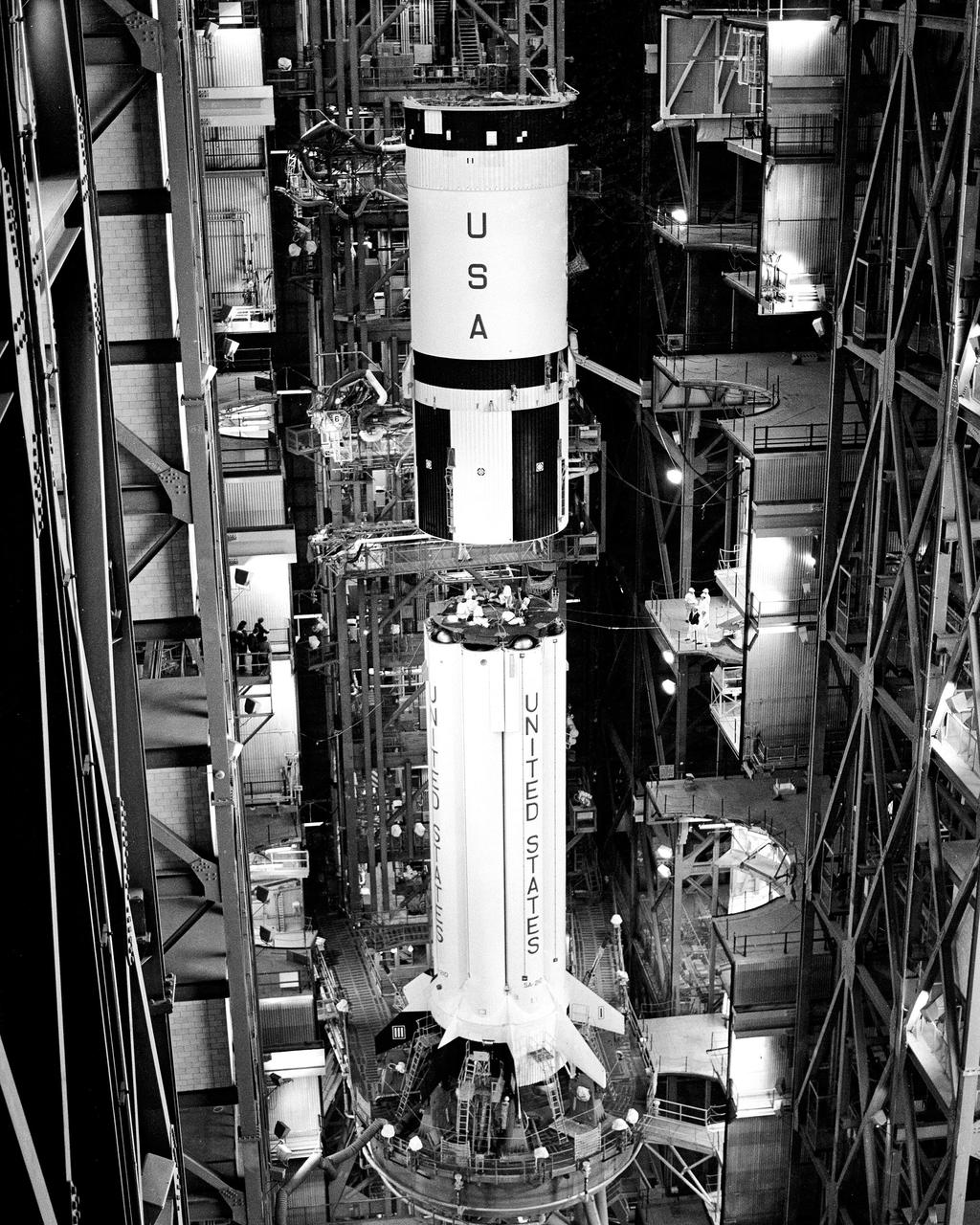
CAPE CANAVERAL, Fla. – The second stage of the Saturn 1B booster for the United States mission on the Apollo Soyuz Test Project was mated with the Saturn 1B first stage in the Kennedy Space Center's Vehicle Assembly Building today. Mating was completed at 9:50 a.m. The U. S. ASTP launch with mission commander Thomas Stafford, command module pilot Vance Brand and docking module pilot Donald Slayton is scheduled at 3:50 p.m. EDT July 15. The first international crewed spaceflight was a joint U.S.-U.S.S.R. rendezvous and docking mission. The Apollo-Soyuz Test Project, or ASTP, took its name from the spacecraft employed: the American Apollo and the Soviet Soyuz. The three-man Apollo crew lifted off from Kennedy Space Center aboard a Saturn IB rocket on July 15, 1975, to link up with the Soyuz that had launched a few hours earlier. A cylindrical docking module served as an airlock between the two spacecraft for transfer of the crew members. Photo credit: NASA
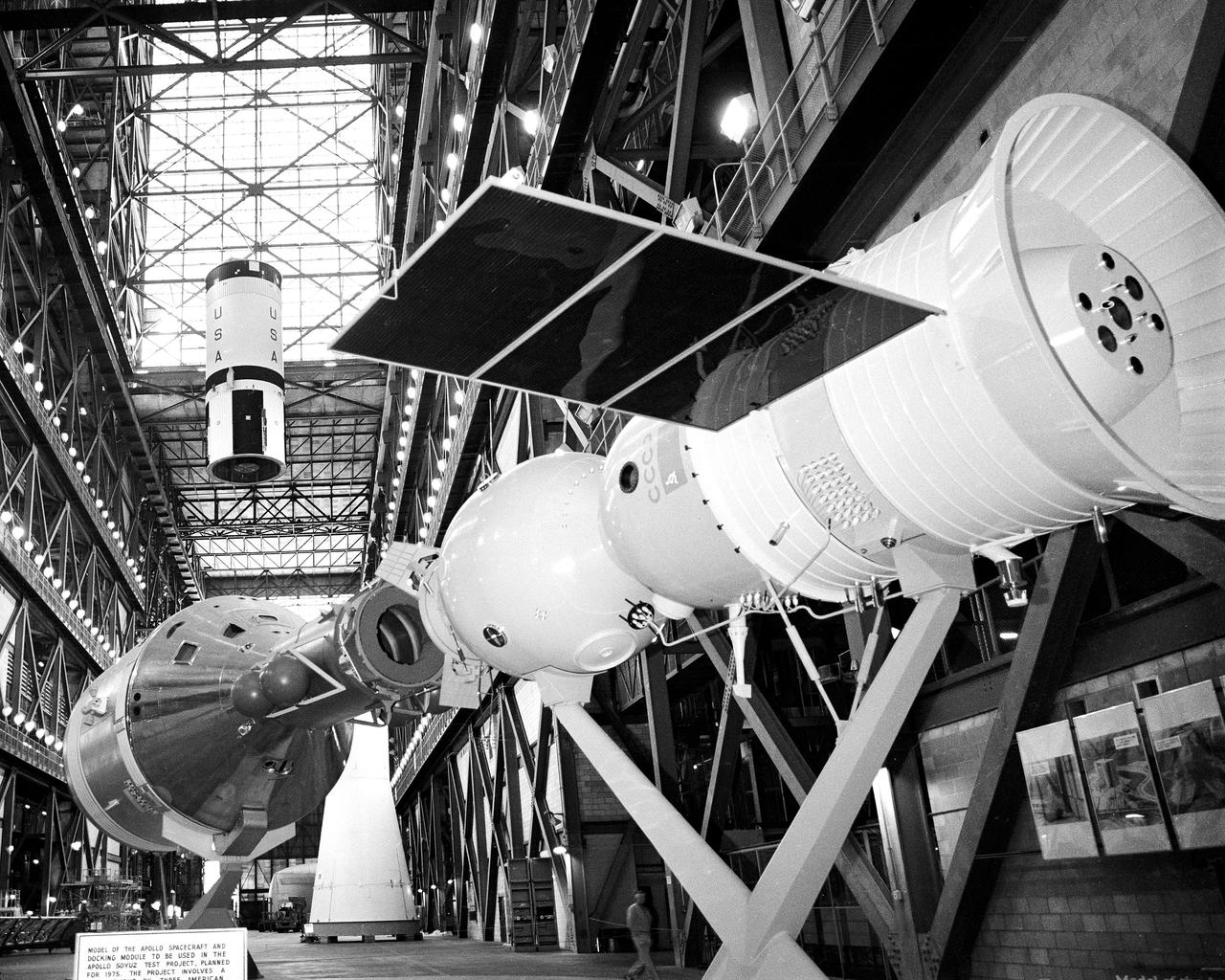
CAPE CANAVERAL, Fla. – Model of docked Apollo and Soyuz spacecraft in the foreground and skylight in the Vehicle Assembly Building high bay frame the second stage of the Saturn 1B booster that will launch the United States ASTP mission as a crane raises it prior to its mating with the Saturn 1B first stage. Mating of the Saturn 1B first and second stages was completed this morning. The U. S. ASTP launch with mission commander Thomas Stafford, command module pilot Vance Brand and docking module pilot Donald Slayton is scheduled at 3:50 p.m. EDT July 15. The first international crewed spaceflight was a joint U.S.-U.S.S.R. rendezvous and docking mission. The Apollo-Soyuz Test Project, or ASTP, took its name from the spacecraft employed: the American Apollo and the Soviet Soyuz. The three-man Apollo crew lifted off from Kennedy Space Center aboard a Saturn IB rocket on July 15, 1975, to link up with the Soyuz that had launched a few hours earlier. A cylindrical docking module served as an airlock between the two spacecraft for transfer of the crew members. Photo credit: NASA
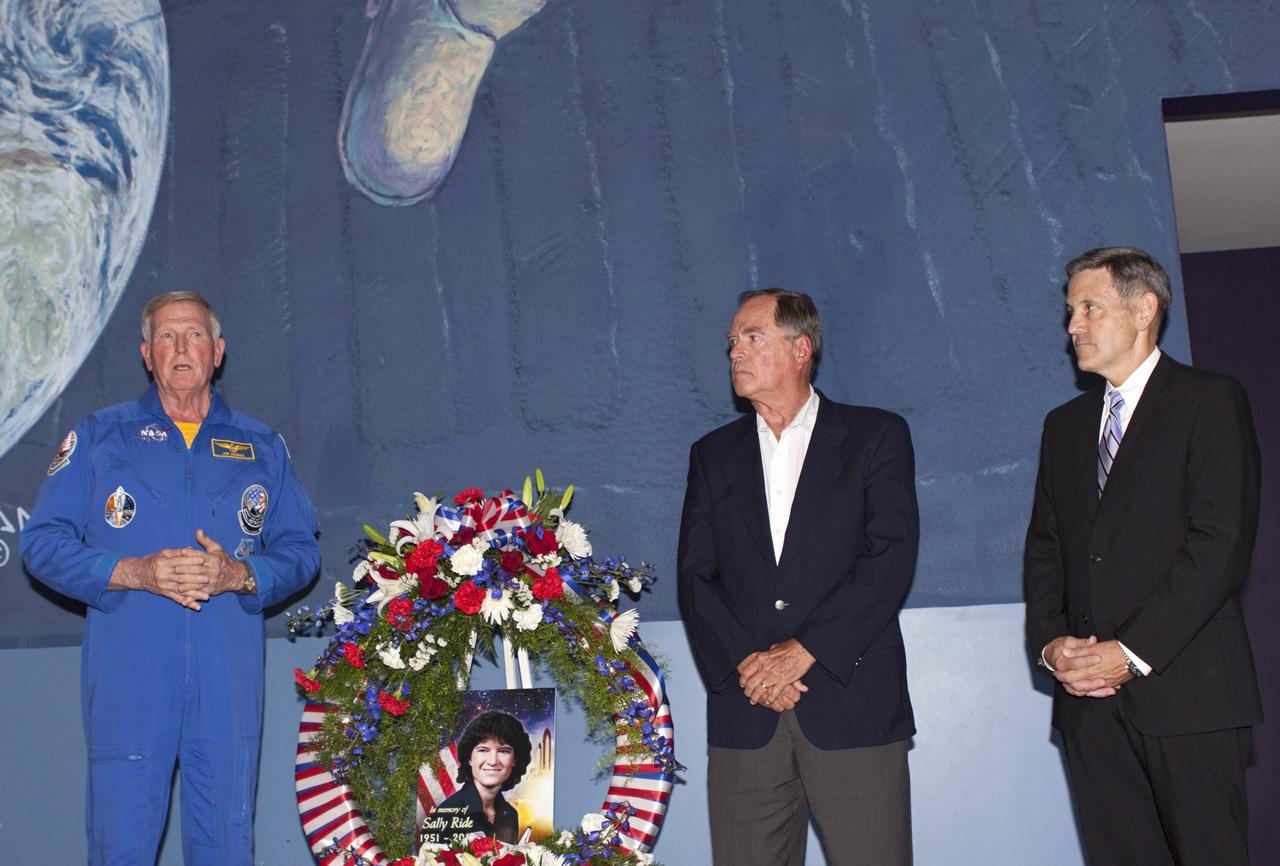
TITUSVILLE, Fla. - Former astronauts Jon McBride, left, and Bob Crippen, center, along with Kennedy Space Center director Bob Cabana, also a former astronaut, laid a wreath at the U. S. Astronaut Hall of Fame honoring Sally K. Ride, who became America's first woman in space in 1983. Following her death on July 23, 2012, Ride is being remembered for her service to NASA and for her efforts to encourage children to study math, science and technology. Crippen was commander on both of Ride's space shuttle missions. McBride was pilot on her second flight. Ride was inducted into the Astronaut Hall of Fame in 2003. A California-born physicist, she broke the gender barrier 29 years ago when she rode to orbit aboard space shuttle Challenger on STS-7. Ride subsequently served, again as a mission specialist, on STS-41G in 1984. Following her career with NASA, in 2001 Ride founded her own company, Sally Ride Science, to pursue her long-time passion of motivating youth -- especially girls and young women -- to pursue careers in technical fields. Photo credit: NASA/Jim Grossmann