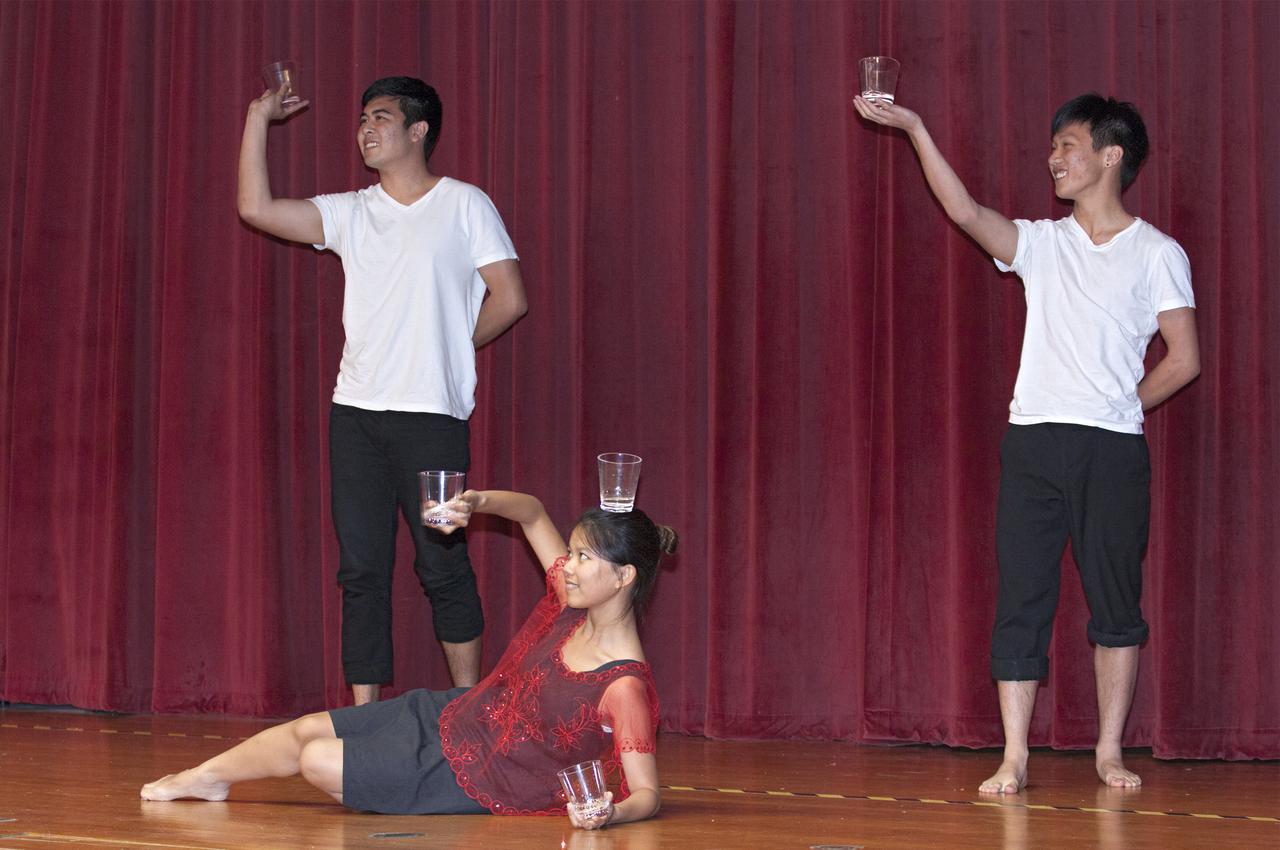
The Filipino Student Association FSA at the University of Central Florida UCF perform a traditional Filipino cultural dance during the Asian-Pacific American Heritage Month celebration on May 23 at the KSC Training Auditorium. The theme of the event, hosted by the Asian-Pacific American Connection APAC, was 'Building Leadership: Embracing Cultural Values and Inclusion.' APAC is an employee resource group at KSC. Photo credit: NASA_Kim Shiflett
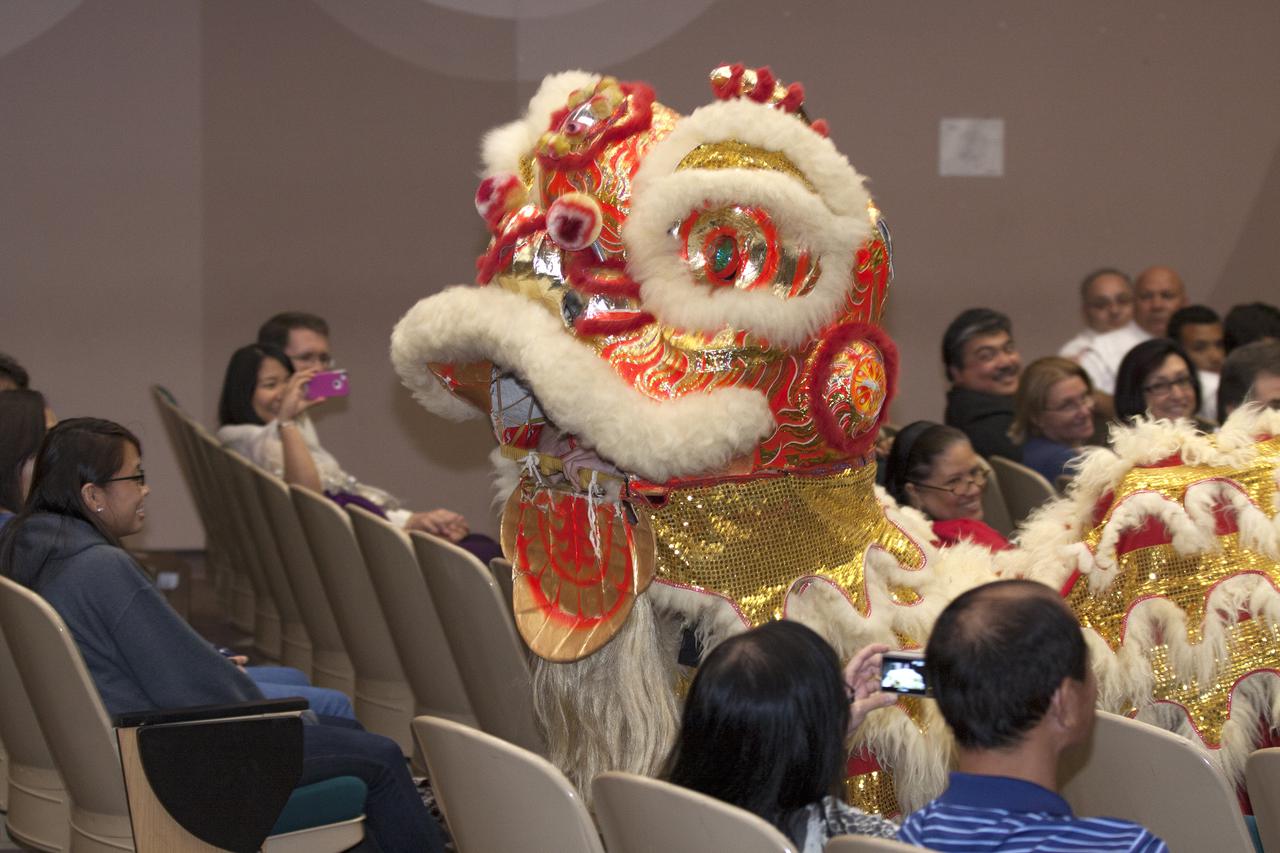
CAPE CANAVERAL, Fla. – Students of the Asian Pacific American Coalition APAC of the University of Central Florida UCF perform a lion dance during the Asian-Pacific American Heritage Month celebration on May 23 at the KSC Training Auditorium. The theme of the event, hosted by the Asian-Pacific American Connection APAC, was 'Building Leadership: Embracing Cultural Values and Inclusion.' APAC is an employee resource group at KSC. Photo credit: NASA_Kim Shiflett
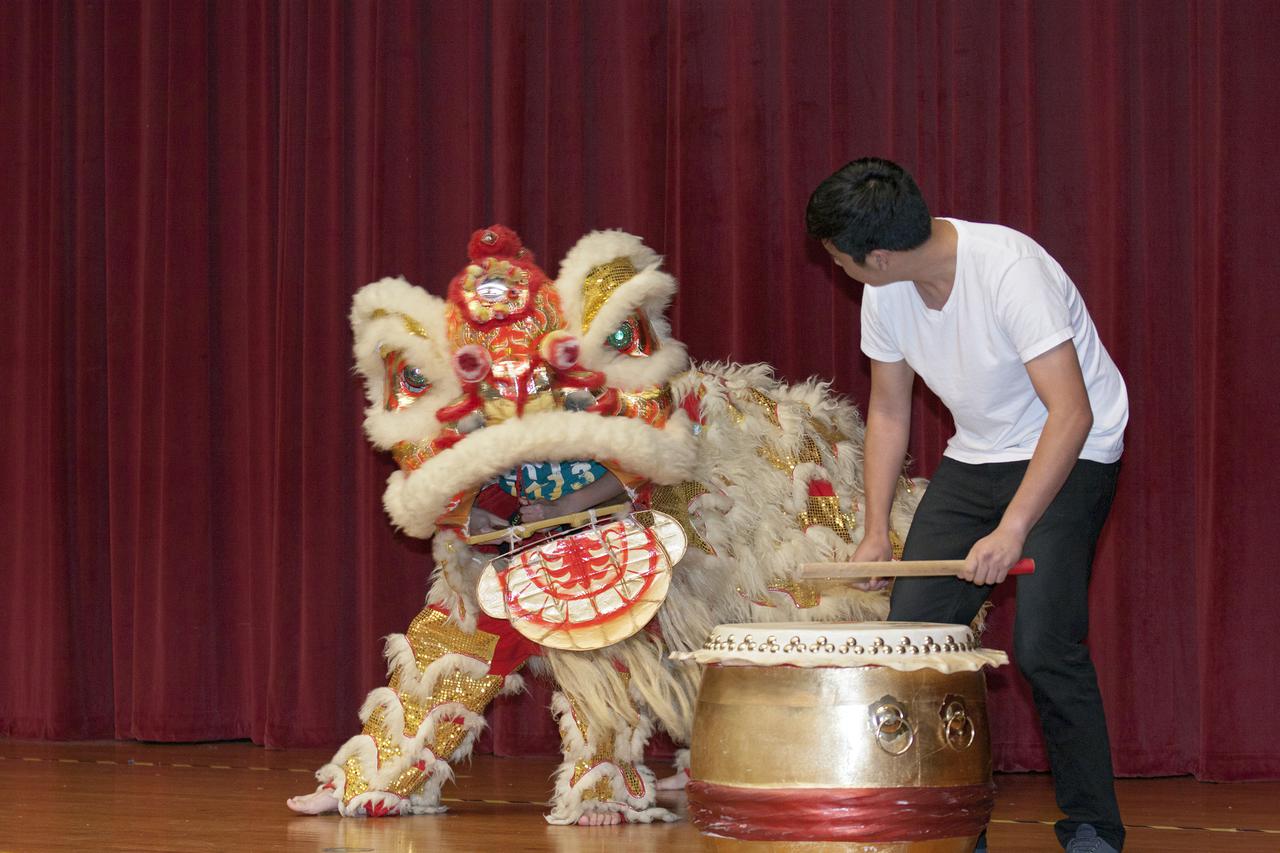
CAPE CANAVERAL, Fla. – Students of the Asian Pacific American Coalition APAC of the University of Central Florida UCF perform a lion dance during the Asian-Pacific American Heritage Month celebration on May 23 at the KSC Training Auditorium. The theme of the event, hosted by the Asian-Pacific American Connection APAC, was 'Building Leadership: Embracing Cultural Values and Inclusion.' APAC is an employee resource group at KSC. Photo credit: NASA_Kim Shiflett
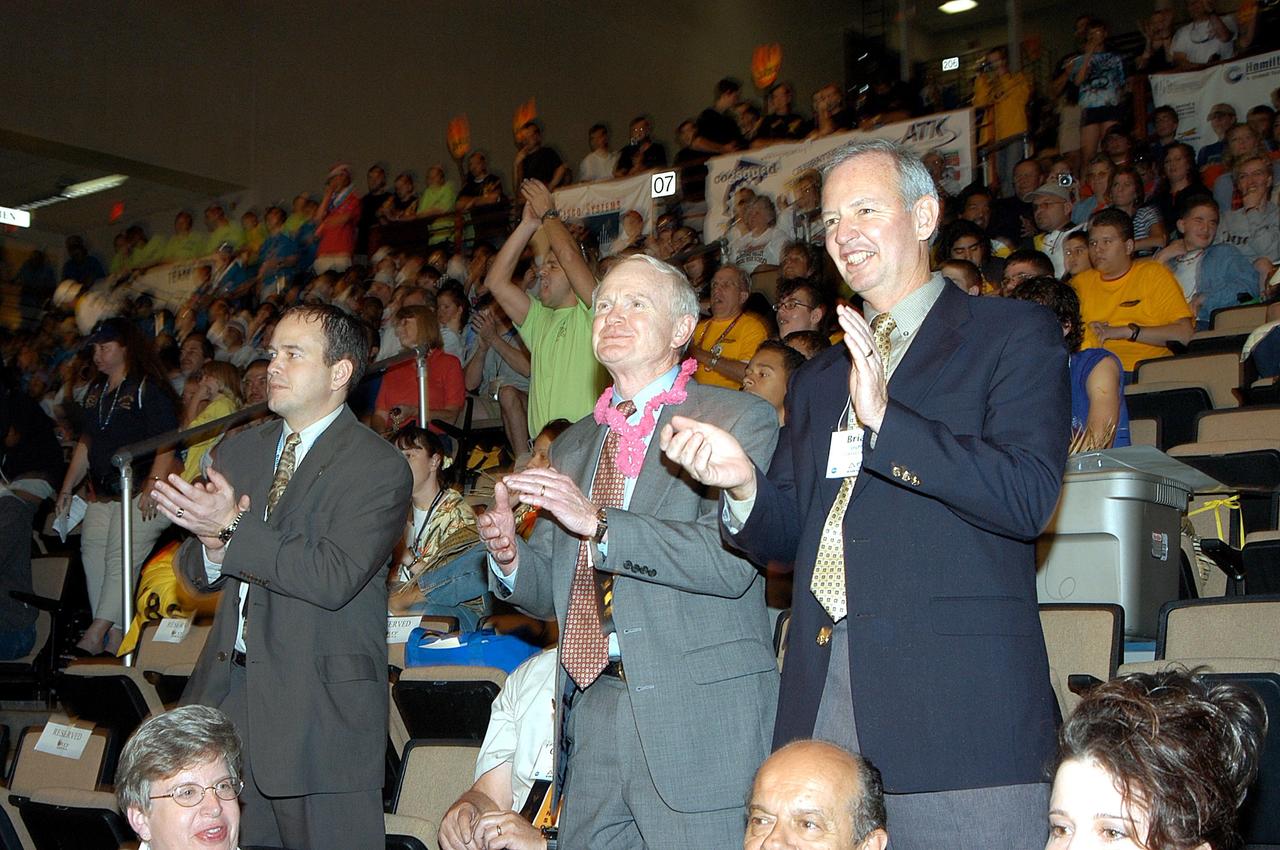
KENNEDY SPACE CENTER, FLA. - On their feet, applauding the student participants of the 2003 Southeastern Regional FIRST Robotic Competition are, from left, David Culp, executive intern to the director of KSC; Roy Bridges, KSC director; and Brian Duffy, Lockheed Martin vice president/associate program manager. The competition is being held at the University of Central Florida (UCF) in Orlando, March 20-23. Forty student teams from around the country are participating in the event that pits team-built gladiator robots against each other in an athletic-style competition. The teams are sponsored by NASA/Kennedy Space Center, The Boeing Company/Brevard Community College, and Lockheed Martin Space Operations/Mission Systems for the nonprofit organization For Inspiration and Recognition of Science and Technology, known as FIRST. The vision of FIRST is to inspire in the youth of our nation an appreciation of science and technology and an understanding that mastering these disciplines can enrich the lives of all mankind.
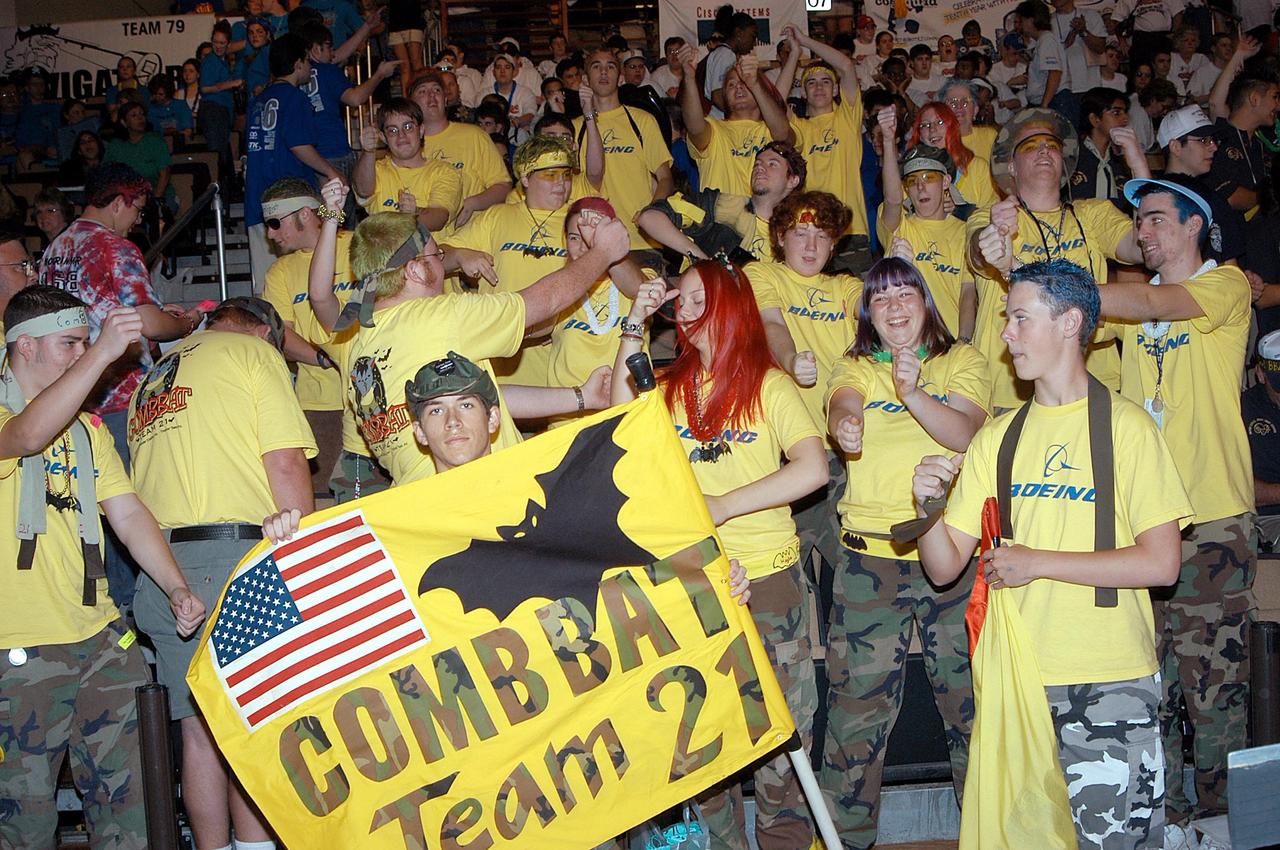
KENNEDY SPACE CENTER, FLA. - The Boeing Company/Brevard Community College-sponsored students, participating in the 2003 Southeastern Regional FIRST Robotic Competition, demonstrate their team spirit. The competition is being held at the University of Central Florida (UCF) in Orlando, March 20-23. The team won the DaimlerChrysler Team Spirit Award and the Johnson & Johnson Sportsmanship Award. Forty teams from around the country are participating in the event that pits team-built gladiator robots against each other in an athletic-style competition. The teams are sponsored by NASA-Kennedy Space Center, The Boeing Company/Brevard Community College, and Lockheed Martin Space Operations/Mission Systems for the nonprofit organization For Inspiration and Recognition of Science and Technology, known as FIRST. The vision of FIRST is to inspire in the youth of our nation an appreciation of science and technology and an understanding that mastering these disciplines can enrich the lives of all mankind.
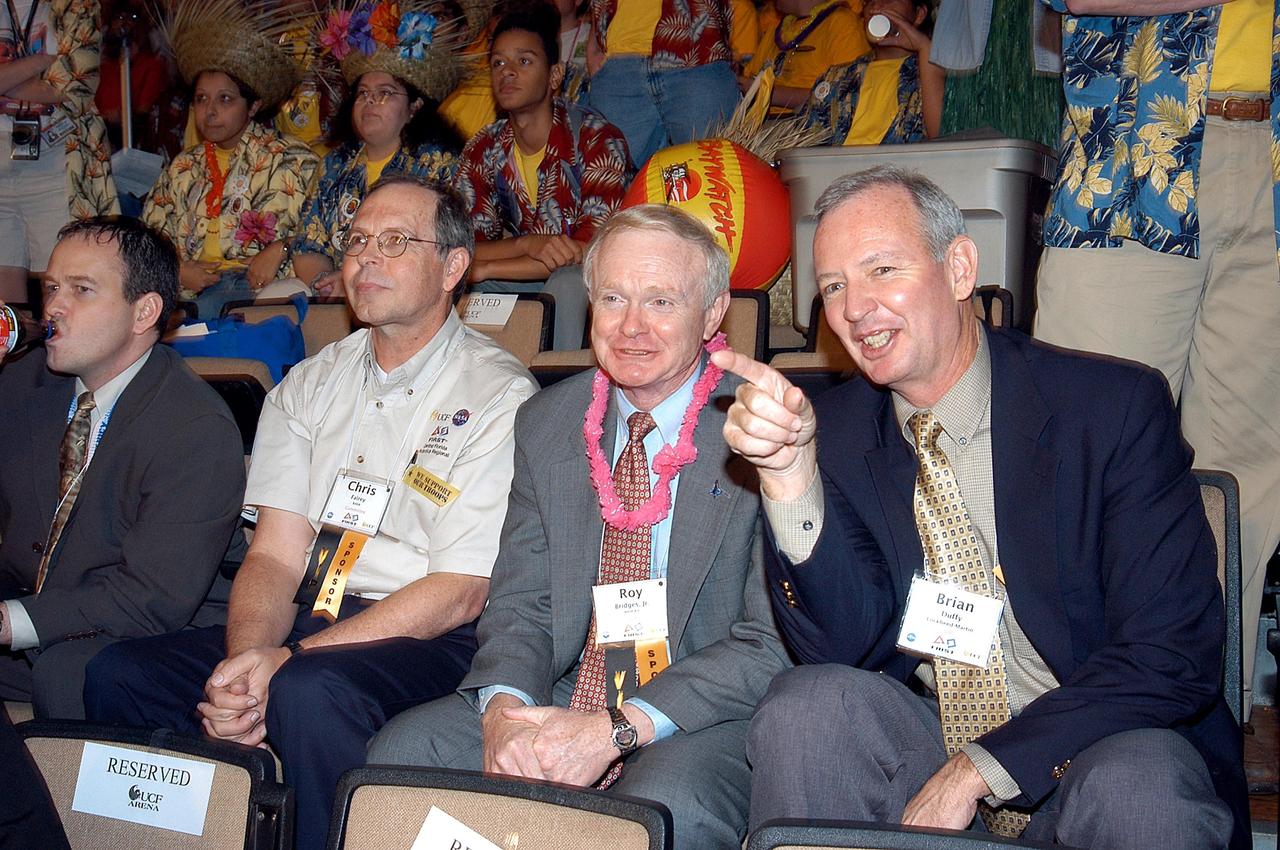
KENNEDY SPACE CENTER, FLA. - Observing the festivities at the 2003 Southeastern Regional FIRST Robotic Competition are, from left, David Culp, executive intern to the director of KSC; Chris Fairey, former director of Spaceport Services at KSC; Roy Bridges, KSC director; and Brian Duffy, Lockheed Martin vice president/associate program manager. The competition is being held at the University of Central Florida (UCF) in Orlando, March 20-23. Forty student teams from around the country are participating in the event that pits team-built gladiator robots against each other in an athletic-style competition. The teams are sponsored by NASA/Kennedy Space Center, The Boeing Company/Brevard Community College, and Lockheed Martin Space Operations/Mission Systems for the nonprofit organization For Inspiration and Recognition of Science and Technology, known as FIRST. The vision of FIRST is to inspire in the youth of our nation an appreciation of science and technology and an understanding that mastering these disciplines can enrich the lives of all mankind.
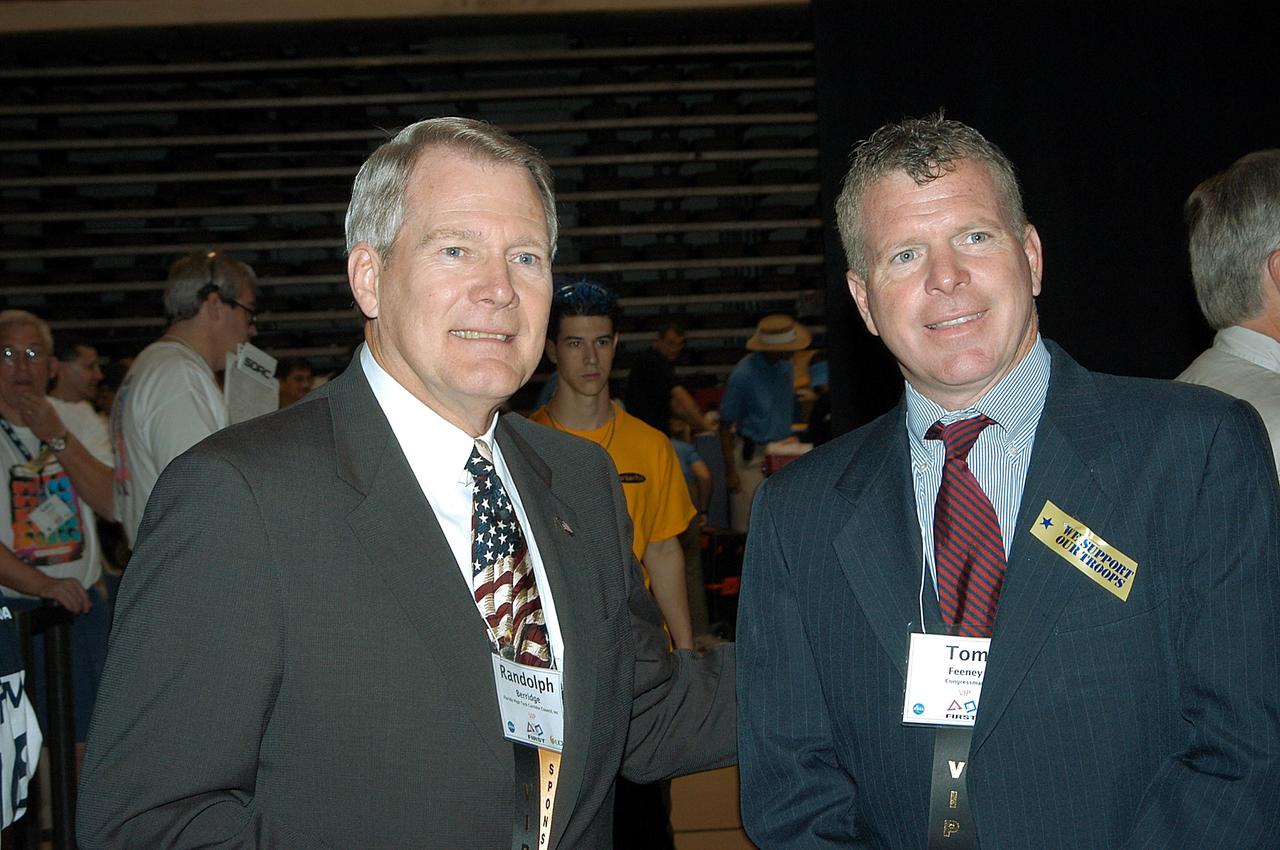
KENNEDY SPACE CENTER, FLA. - Randolph E. Berridge, president of the Florida High Tech Corridor Council, and Tom Feeney, Florida Representative from the 24th District, attend the 2003 Southeastern Regional FIRST Robotic Competition. The competition is being held at the University of Central Florida (UCF) in Orlando, March 20-23. Forty student teams from around the country are participating in the event that pits team-built gladiator robots against each other in an athletic-style competition. The teams are sponsored by NASA/Kennedy Space Center, The Boeing Company/Brevard Community College, and Lockheed Martin Space Operations/Mission Systems for the nonprofit organization For Inspiration and Recognition of Science and Technology, known as FIRST. The vision of FIRST is to inspire in the youth of our nation an appreciation of science and technology and an understanding that mastering these disciplines can enrich the lives of all mankind.
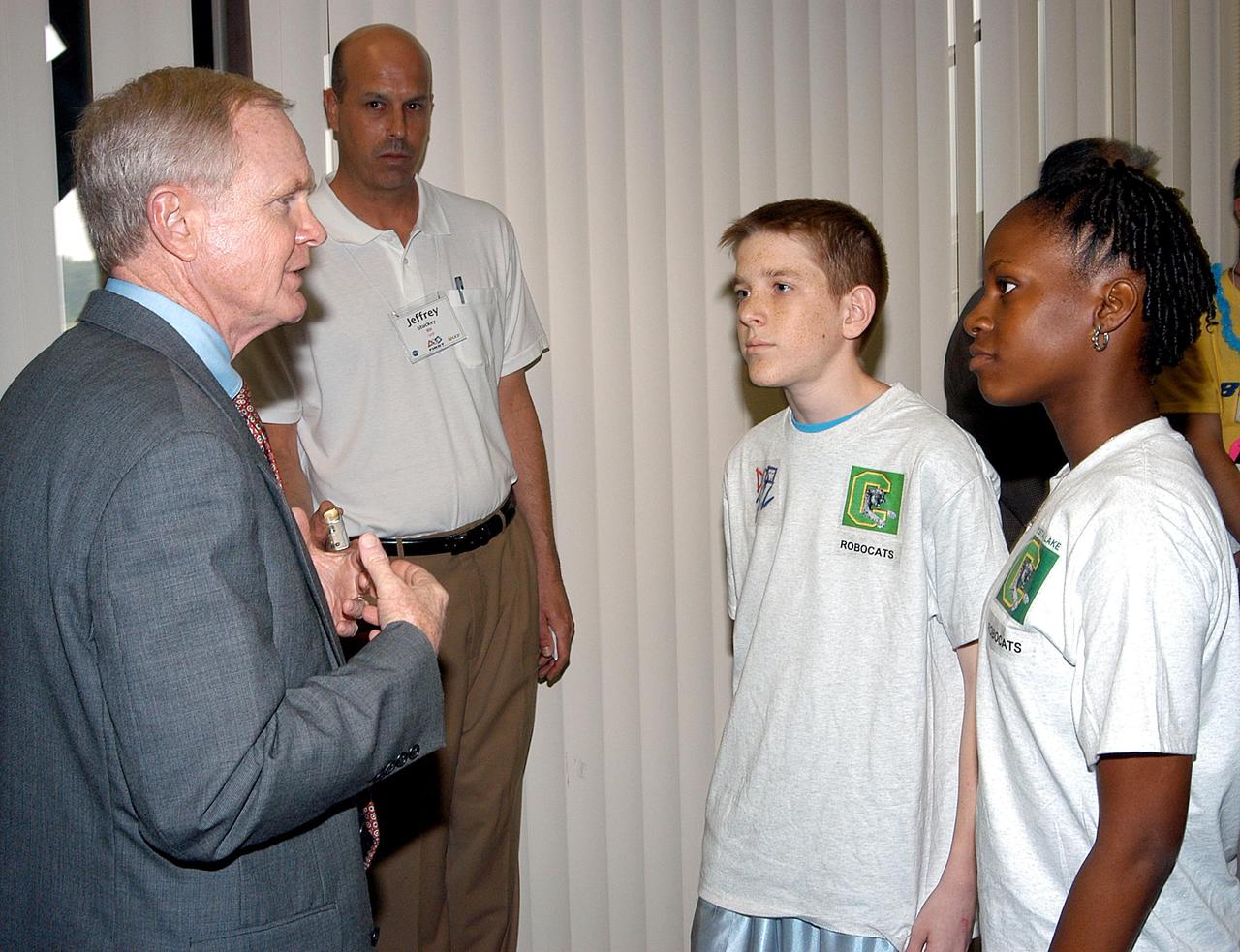
KENNEDY SPACE CENTER, FLA. - NASA Kennedy Space Center Director Roy Bridges (left) talks with some of the students involved in the 2003 Southeastern Regional FIRST Robotic Competition. The competition is being held at the University of Central Florida (UCF) in Orlando, March 20-23. Forty student teams from around the country are participating in the event that pits team-built gladiator robots against each other in an athletic-style competition. The teams are sponsored by NASA/Kennedy Space Center, The Boeing Company/Brevard Community College, and Lockheed Martin Space Operations/Mission Systems for the nonprofit organization For Inspiration and Recognition of Science and Technology, known as FIRST. The vision of FIRST is to inspire in the youth of our nation an appreciation of science and technology and an understanding that mastering these disciplines can enrich the lives of all mankind.
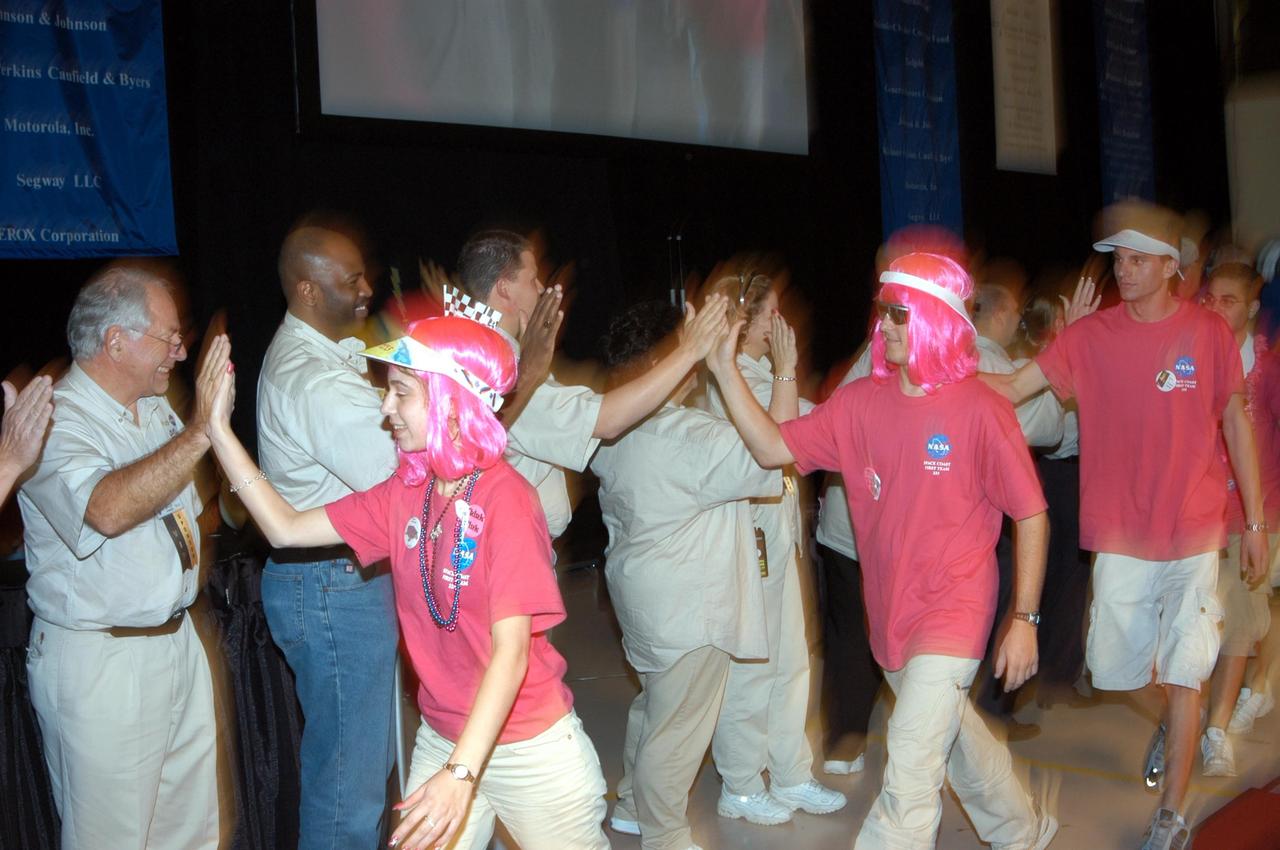
KENNEDY SPACE CENTER, FLA. - The NASA/Kennedy Space Center-sponsored student team (in pink wigs) is congratulated by the mentors and support staff of the 2003 Southeastern Regional FIRST Robotic Competition. The competition is being held at the University of Central Florida (UCF) in Orlando, March 20-23. The team won awards for Regional Finalist 2, GM Industrial Design and the Imagery Award. Forty student teams from around the country are participating in the event that pits team-built gladiator robots against each other in an athletic-style competition. The teams are sponsored by NASA/Kennedy Space Center, The Boeing Company/Brevard Community College, and Lockheed Martin Space Operations/Mission Systems for the nonprofit organization For Inspiration and Recognition of Science and Technology, known as FIRST. The vision of FIRST is to inspire in the youth of our nation an appreciation of science and technology and an understanding that mastering these disciplines can enrich the lives of all mankind.
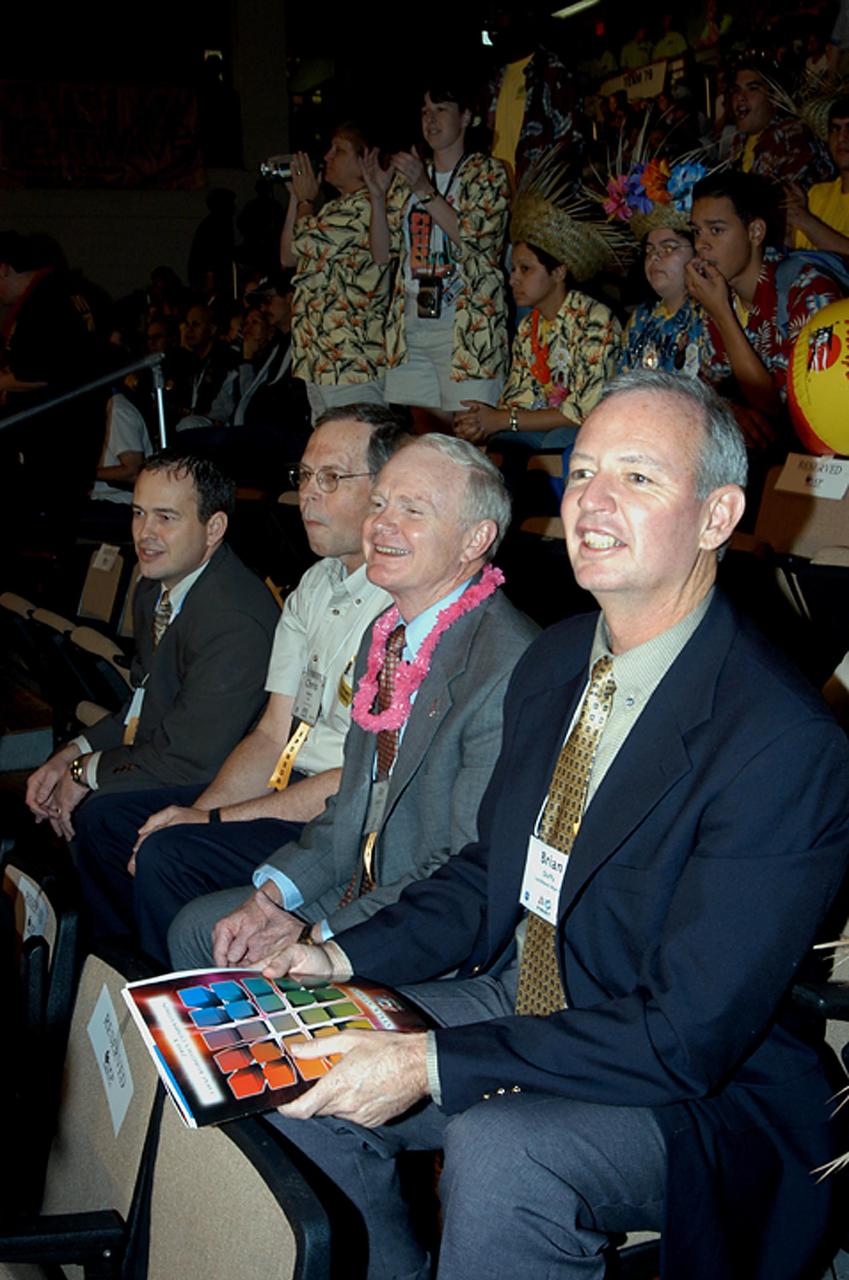
KENNEDY SPACE CENTER, FLA. - Observing the festivities at the 2003 Southeastern Regional FIRST Robotic Competition are, from left, David Culp, executive intern to the director of KSC; Chris Fairey, former director of Spaceport Services at KSC; Roy Bridges, KSC director; and Brian Duffy, Lockheed Martin vice president/associate program manager. The competition is being held at the University of Central Florida (UCF) in Orlando, March 20-23. Forty student teams from around the country are participating in the event that pits team-built gladiator robots against each other in an athletic-style competition. The teams are sponsored by NASA/Kennedy Space Center, The Boeing Company/Brevard Community College, and Lockheed Martin Space Operations/Mission Systems for the nonprofit organization For Inspiration and Recognition of Science and Technology, known as FIRST. The vision of FIRST is to inspire in the youth of our nation an appreciation of science and technology and an understanding that mastering these disciplines can enrich the lives of all mankind.
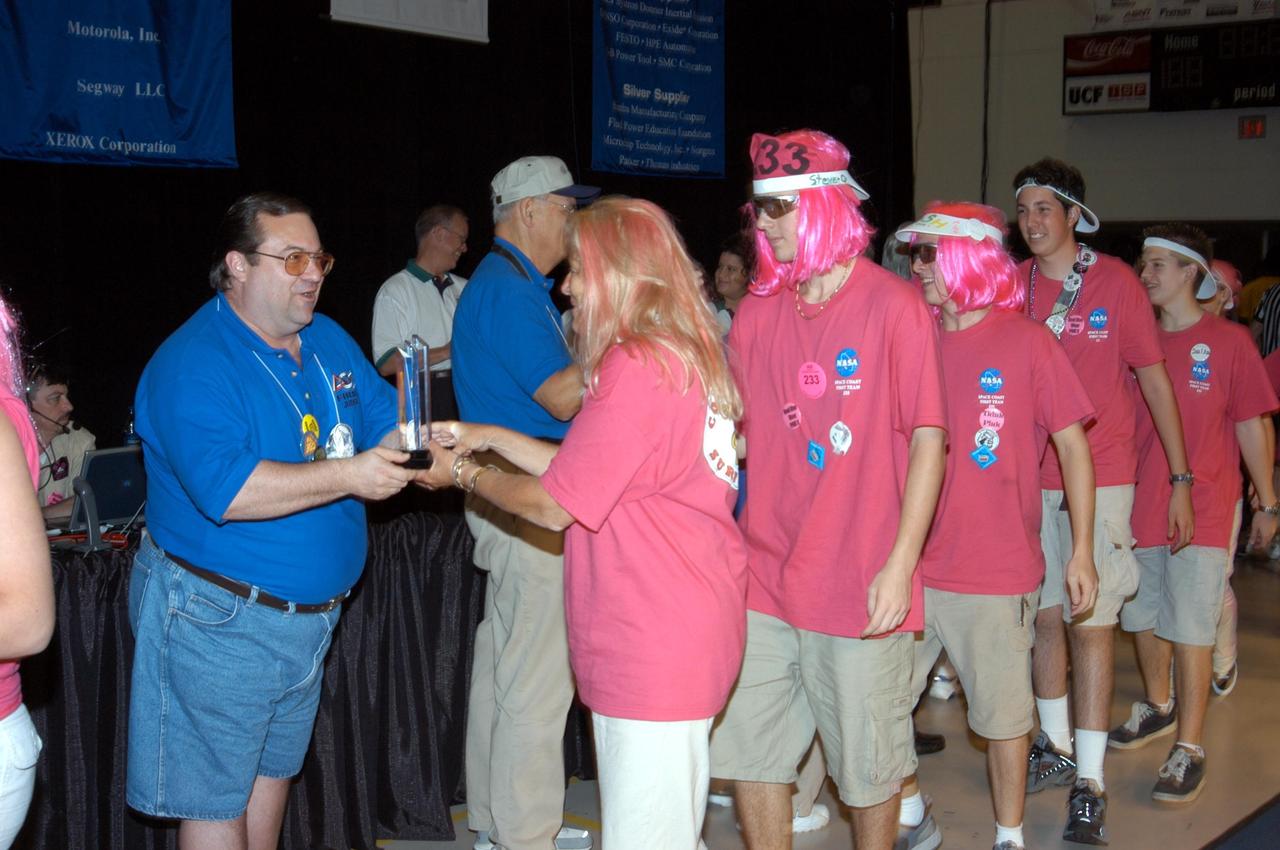
KENNEDY SPACE CENTER, FLA. - The NASA/Kennedy Space Center-sponsored student team (in pink wigs) is congratulated by the judges of the 2003 Southeastern Regional FIRST Robotic Competition. The competition is being held at the University of Central Florida (UCF) in Orlando, March 20-23. The team won awards for Regional Finalist 2, GM Industrial Design and the Imagery Award. Forty student teams from around the country are participating in the event that pits team-built gladiator robots against each other in an athletic-style competition. The teams are sponsored by NASA/Kennedy Space Center, The Boeing Company/Brevard Community College, and Lockheed Martin Space Operations/Mission Systems for the nonprofit organization For Inspiration and Recognition of Science and Technology, known as FIRST. The vision of FIRST is to inspire in the youth of our nation an appreciation of science and technology and an understanding that mastering these disciplines can enrich the lives of all mankind.
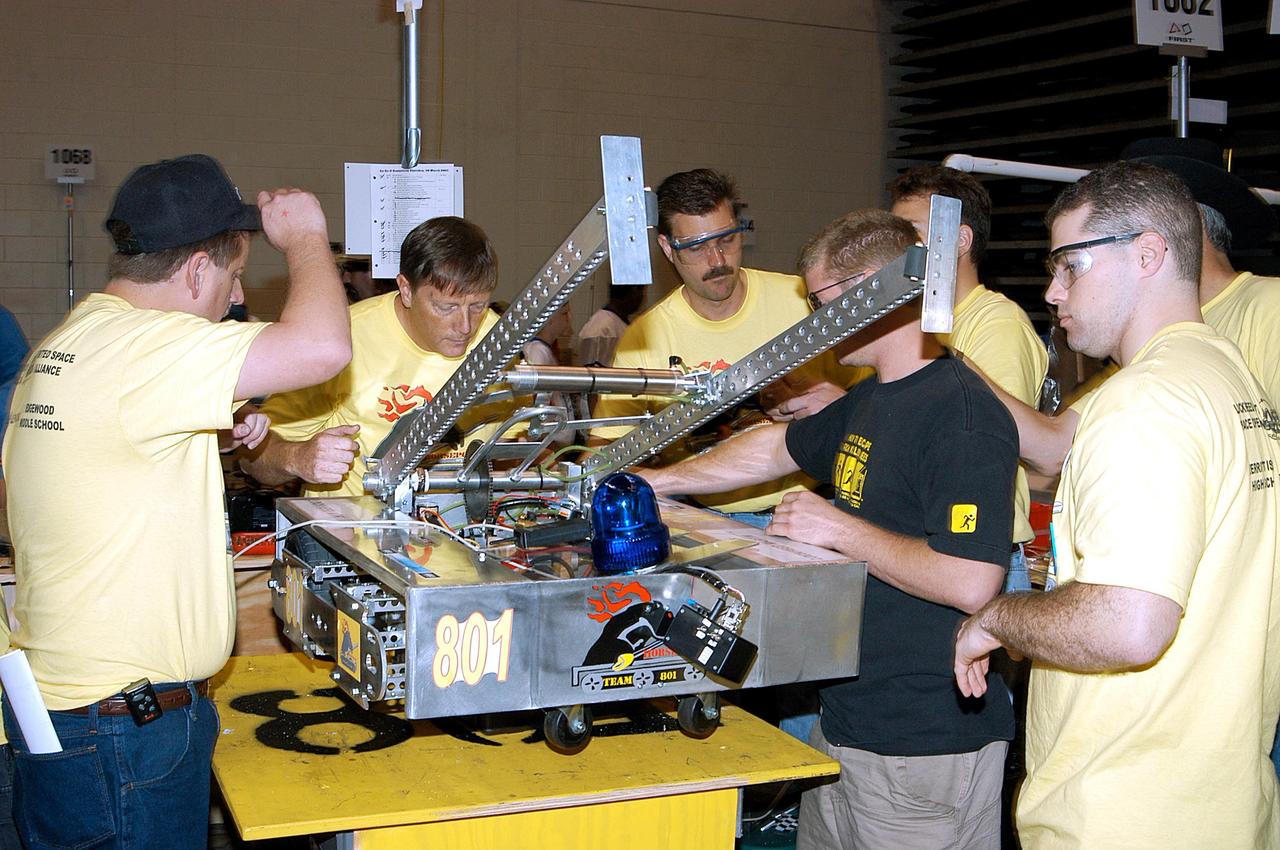
KENNEDY SPACE CENTER, FLA. - Members of the Merritt Island and Edgewood Middle School students/Lockheed Martin team look over their robot. They are participating in the 2003 Southeastern Regional FIRST Robotic Competition being held at the University of Central Florida (UCF) in Orlando, March 20-23. Forty teams from around the country are participating in the event that pits team-built gladiator robots against each other in an athletic-style competition. The teams are sponsored by NASA-Kennedy Space Center, The Boeing Company/Brevard Community College, and Lockheed Martin Space Operations/Mission Systems for the nonprofit organization For Inspiration and Recognition of Science and Technology, known as FIRST. The vision of FIRST is to inspire in the youth of our nation an appreciation of science and technology and an understanding that mastering these disciplines can enrich the lives of all mankind.
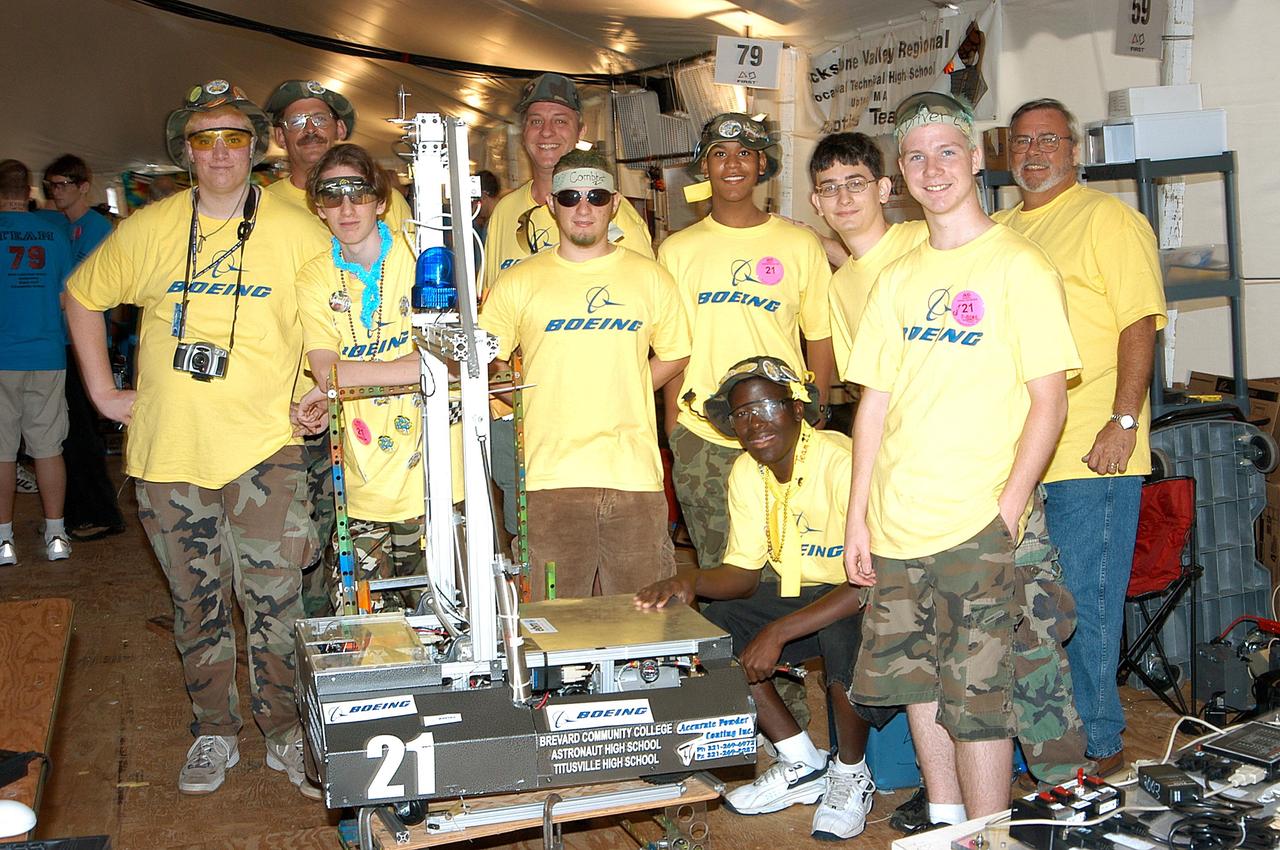
KENNEDY SPACE CENTER, FLA. - The Boeing Company/Brevard Community College-sponsored students, participating in the 2003 Southeastern Regional FIRST Robotic Competition, pose with their team-built robot. The competition is being held at the University of Central Florida (UCF) in Orlando, March 20-23. Forty teams from around the country are participating in the event that pits team-built gladiator robots against each other in an athletic-style competition. The teams are sponsored by NASA/Kennedy Space Center, The Boeing Company/Brevard Community College, and Lockheed Martin Space Operations/Mission Systems for the nonprofit organization For Inspiration and Recognition of Science and Technology, known as FIRST. The vision of FIRST is to inspire in the youth of our nation an appreciation of science and technology and an understanding that mastering these disciplines can enrich the lives of all mankind.
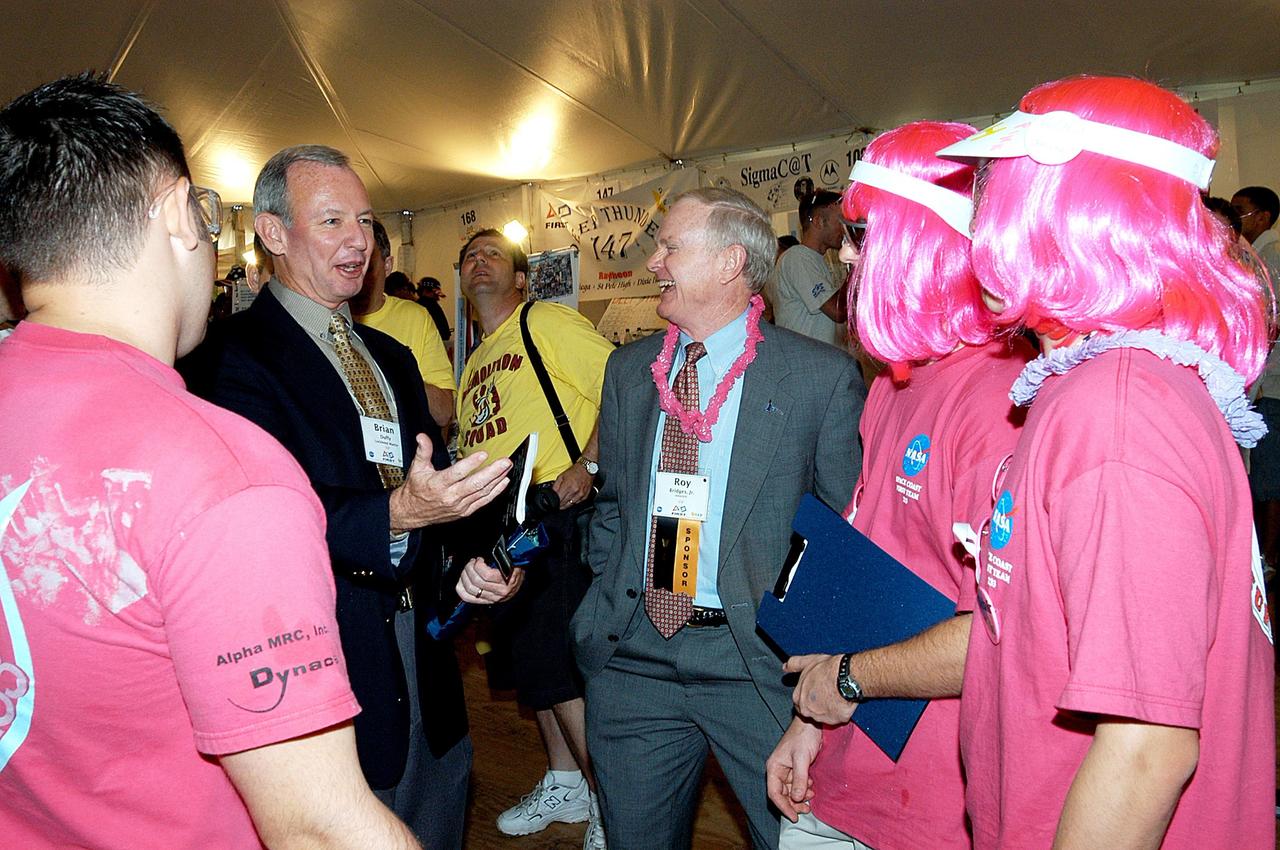
KENNEDY SPACE CENTER, FLA. - Lockheed Martin Vice President/Associate Program Manager Brian Duffy (second from left) and NASA/Kennedy Space Center Director Roy Bridges (center) share a laugh with student participants in the 2003 Southeastern Regional FIRST Robotic Competition. The competition is being held at the University of Central Florida (UCF) in Orlando, March 20-23. Forty student teams from around the country are participating in the event that pits team-built gladiator robots against each other in an athletic-style competition. The teams are sponsored by NASA/Kennedy Space Center, The Boeing Company/Brevard Community College, and Lockheed Martin Space Operations/Mission Systems for the nonprofit organization For Inspiration and Recognition of Science and Technology, known as FIRST. The vision of FIRST is to inspire in the youth of our nation an appreciation of science and technology and an understanding that mastering these disciplines can enrich the lives of all mankind.
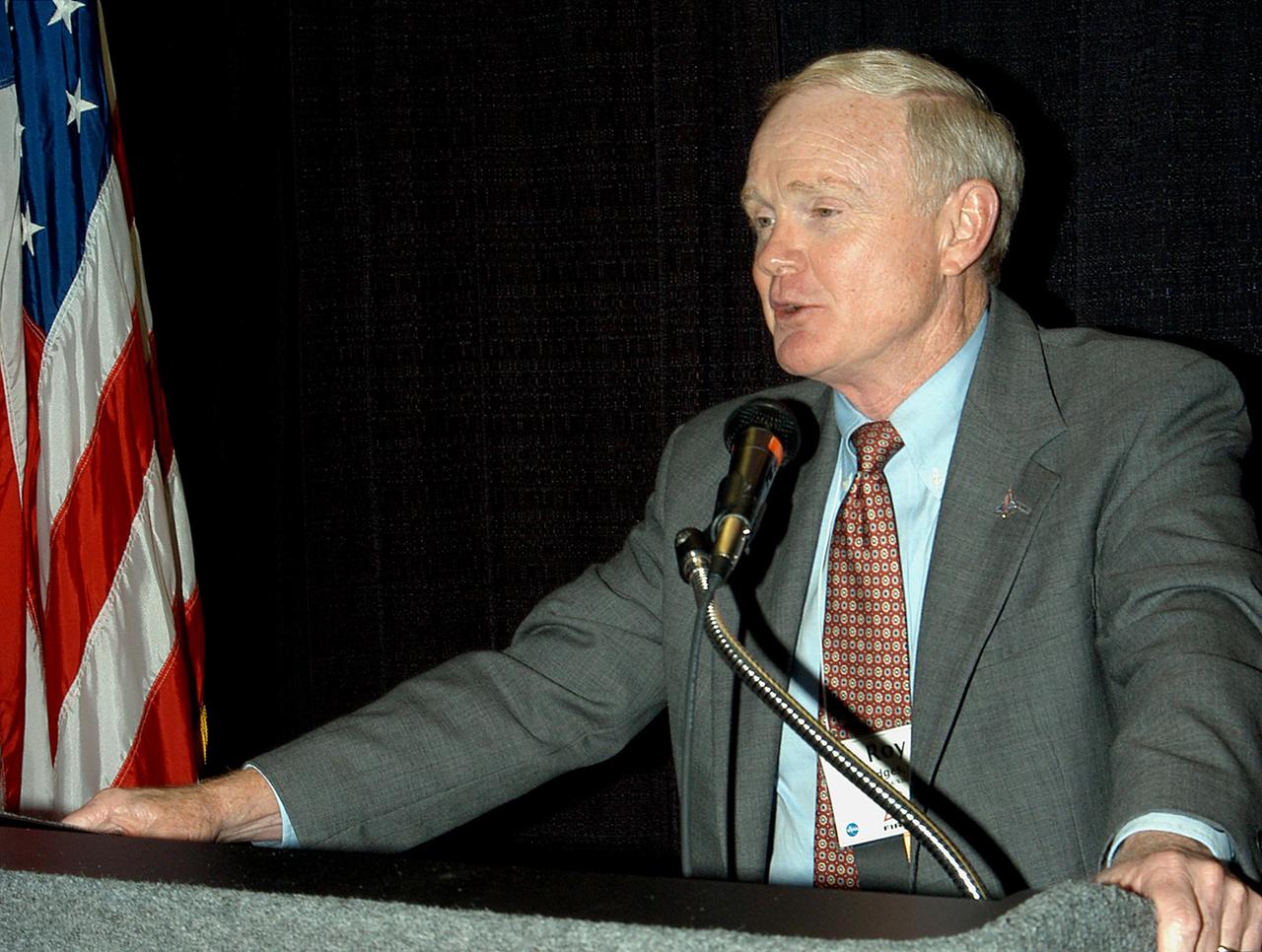
KENNEDY SPACE CENTER, FLA. - NASA/Kennedy Space Center Director Roy Bridges speaks to the attendees of an invitation-only luncheon held during the 2003 Southeastern Regional FIRST Robotic Competition. The competition is being held at the University of Central Florida (UCF) in Orlando, March 20-23. Forty student teams from around the country are participating in the event that pits team-built gladiator robots against each other in an athletic-style competition. The teams are sponsored by NASA/Kennedy Space Center, The Boeing Company/Brevard Community College, and Lockheed Martin Space Operations/Mission Systems for the nonprofit organization For Inspiration and Recognition of Science and Technology, known as FIRST. The vision of FIRST is to inspire in the youth of our nation an appreciation of science and technology and an understanding that mastering these disciplines can enrich the lives of all mankind.
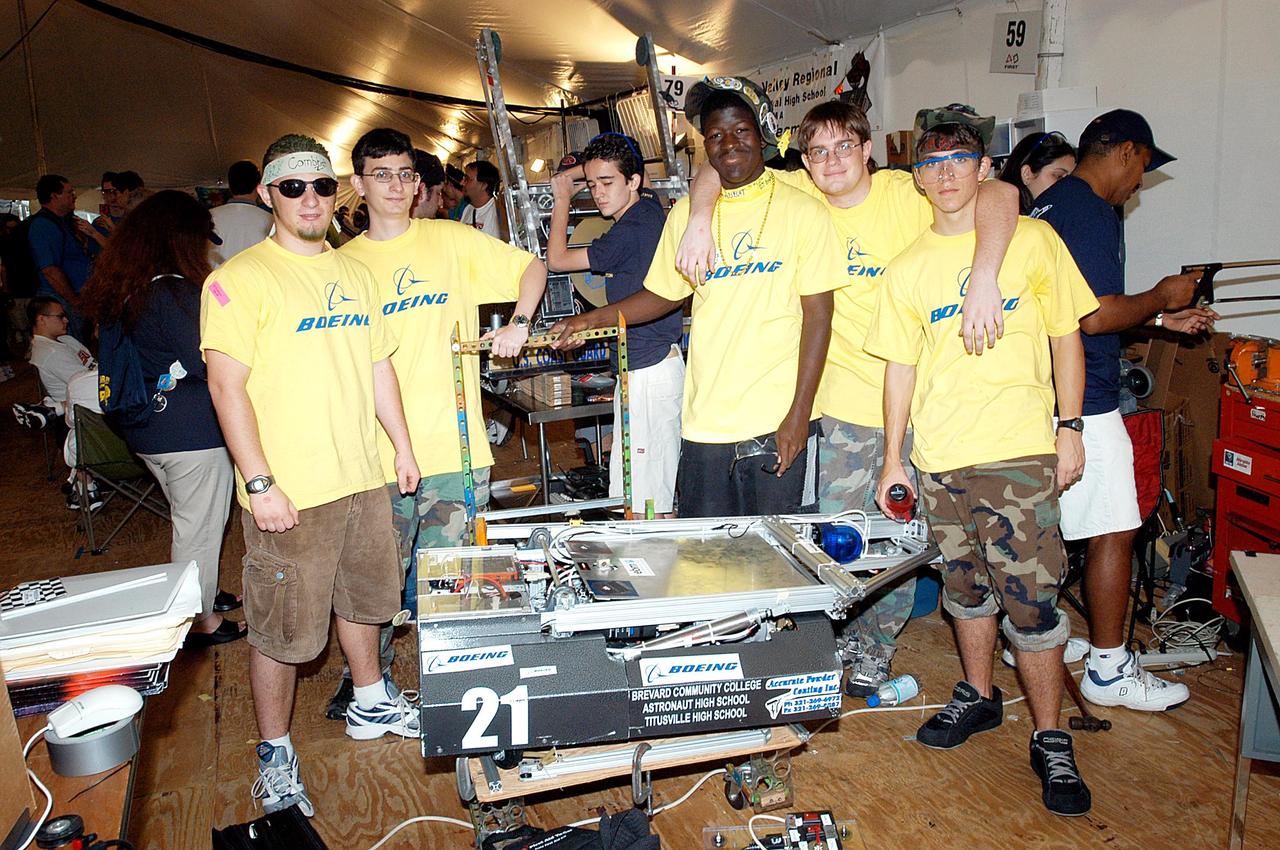
KENNEDY SPACE CENTER, FLA. - The Boeing Company/Brevard Community College-sponsored students, participating in the 2003 Southeastern Regional FIRST Robotic Competition, pose with their team-built robot. The competition is being held at the University of Central Florida (UCF) in Orlando, March 20-23. Forty teams from around the country are participating in the event that pits team-built gladiator robots against each other in an athletic-style competition. The teams are sponsored by NASA-Kennedy Space Center, The Boeing Company/Brevard Community College, and Lockheed Martin Space Operations/Mission Systems for the nonprofit organization For Inspiration and Recognition of Science and Technology, known as FIRST. The vision of FIRST is to inspire in the youth of our nation an appreciation of science and technology and an understanding that mastering these disciplines can enrich the lives of all mankind.
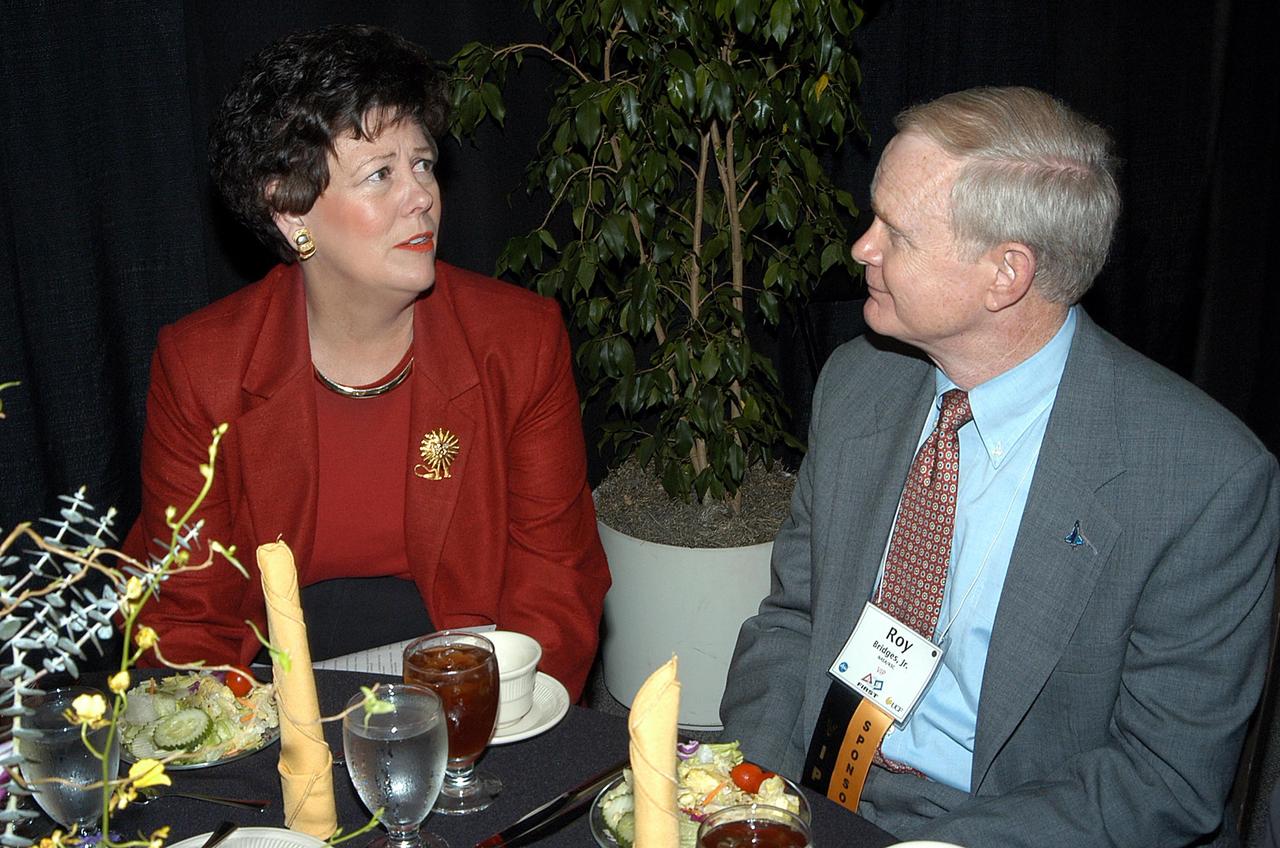
KENNEDY SPACE CENTER, FLA. - NASA/Kennedy Space Center Director Roy Bridges (right) talks with Florida Lt. Gov. Toni Jennings at an invitation-only luncheon held during the 2003 Southeastern Regional FIRST Robotic Competition. The competition is being held at the University of Central Florida (UCF) in Orlando, March 20-23. Forty student teams from around the country are participating in the event that pits team-built gladiator robots against each other in an athletic-style competition. The teams are sponsored by NASA/Kennedy Space Center, The Boeing Company/Brevard Community College, and Lockheed Martin Space Operations/Mission Systems for the nonprofit organization For Inspiration and Recognition of Science and Technology, known as FIRST. The vision of FIRST is to inspire in the youth of our nation an appreciation of science and technology and an understanding that mastering these disciplines can enrich the lives of all mankind.

KENNEDY SPACE CENTER, FLA. - NASA/Kennedy Space Center-sponsored students, participating in the 2003 Southeastern Regional FIRST Robotic Competition, pose with their team-built robot. The competition is being held at the University of Central Florida (UCF) in Orlando, March 20-23. Forty teams from around the country are participating in the event that pits team-built gladiator robots against each other in an athletic-style competition. The teams are sponsored by NASA-Kennedy Space Center, The Boeing Company/Brevard Community College, and Lockheed Martin Space Operations/Mission Systems for the nonprofit organization For Inspiration and Recognition of Science and Technology, known as FIRST. The vision of FIRST is to inspire in the youth of our nation an appreciation of science and technology and an understanding that mastering these disciplines can enrich the lives of all mankind.
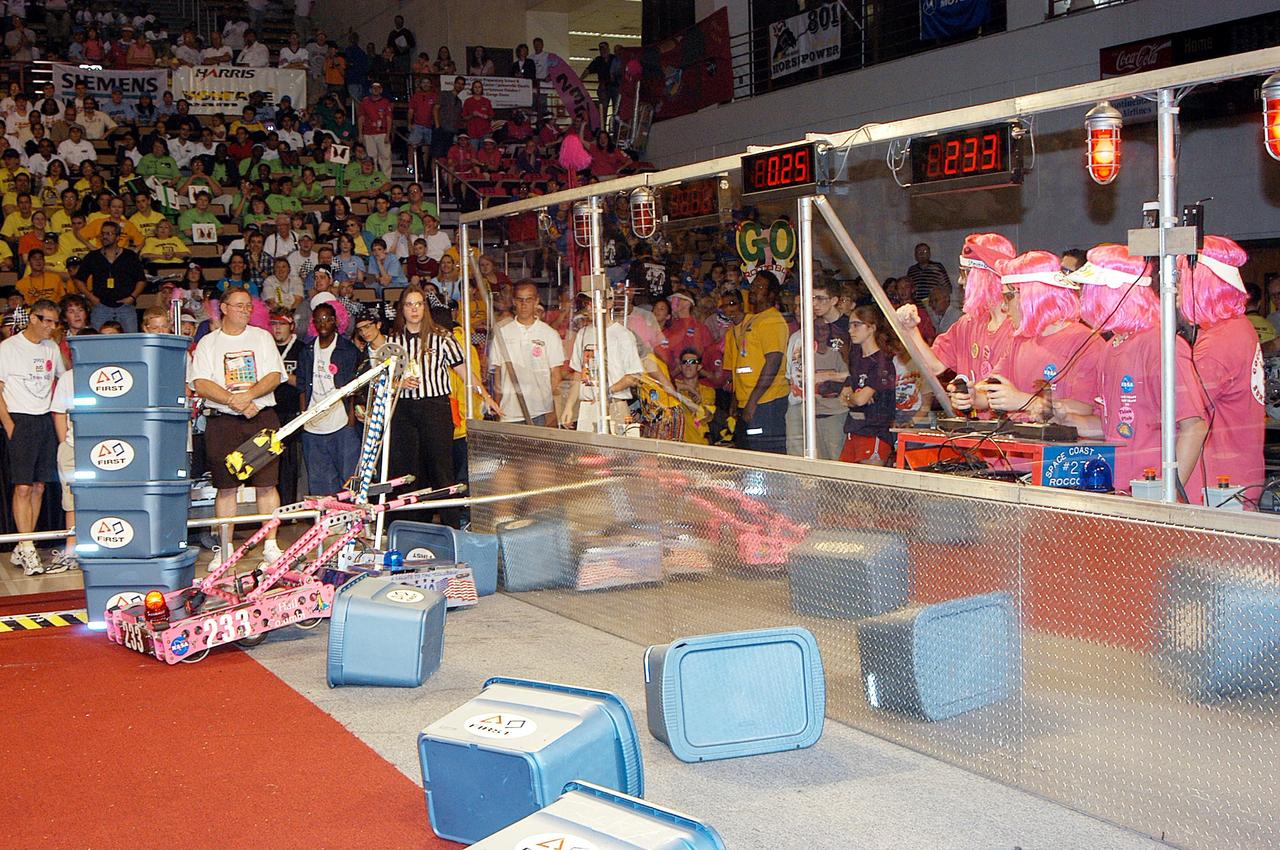
KENNEDY SPACE CENTER, FLA. - The NASA/Kennedy Space Center-sponsored student team (in pink wigs, right) demonstrates their robot's abilities during the 2003 Southeastern Regional FIRST Robotic Competition. The competition is being held at the University of Central Florida (UCF) in Orlando, March 20-23. Forty student teams from around the country are participating in the event that pits team-built gladiator robots against each other in an athletic-style competition. The teams are sponsored by NASA/Kennedy Space Center, The Boeing Company/Brevard Community College, and Lockheed Martin Space Operations/Mission Systems for the nonprofit organization For Inspiration and Recognition of Science and Technology, known as FIRST. The vision of FIRST is to inspire in the youth of our nation an appreciation of science and technology and an understanding that mastering these disciplines can enrich the lives of all mankind.
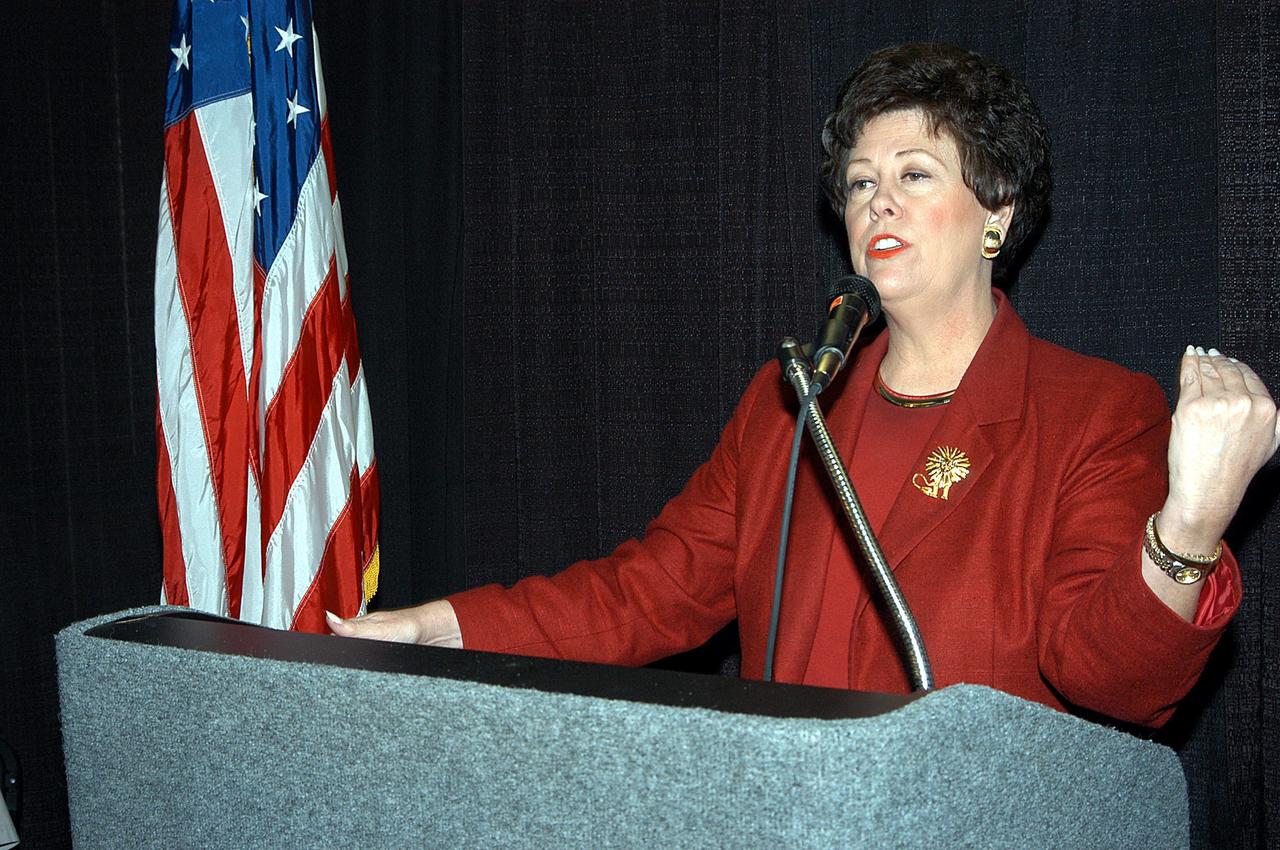
KENNEDY SPACE CENTER, FLA. - Florida Lt. Gov. Toni Jennings speaks to the attendees of an invitation-only luncheon held during the 2003 Southeastern Regional FIRST Robotic Competition. The competition is being held at the University of Central Florida (UCF) in Orlando, March 20-23. Forty student teams from around the country are participating in the event that pits team-built gladiator robots against each other in an athletic-style competition. The teams are sponsored by NASA/Kennedy Space Center, The Boeing Company/Brevard Community College, and Lockheed Martin Space Operations/Mission Systems for the nonprofit organization For Inspiration and Recognition of Science and Technology, known as FIRST. The vision of FIRST is to inspire in the youth of our nation an appreciation of science and technology and an understanding that mastering these disciplines can enrich the lives of all mankind.
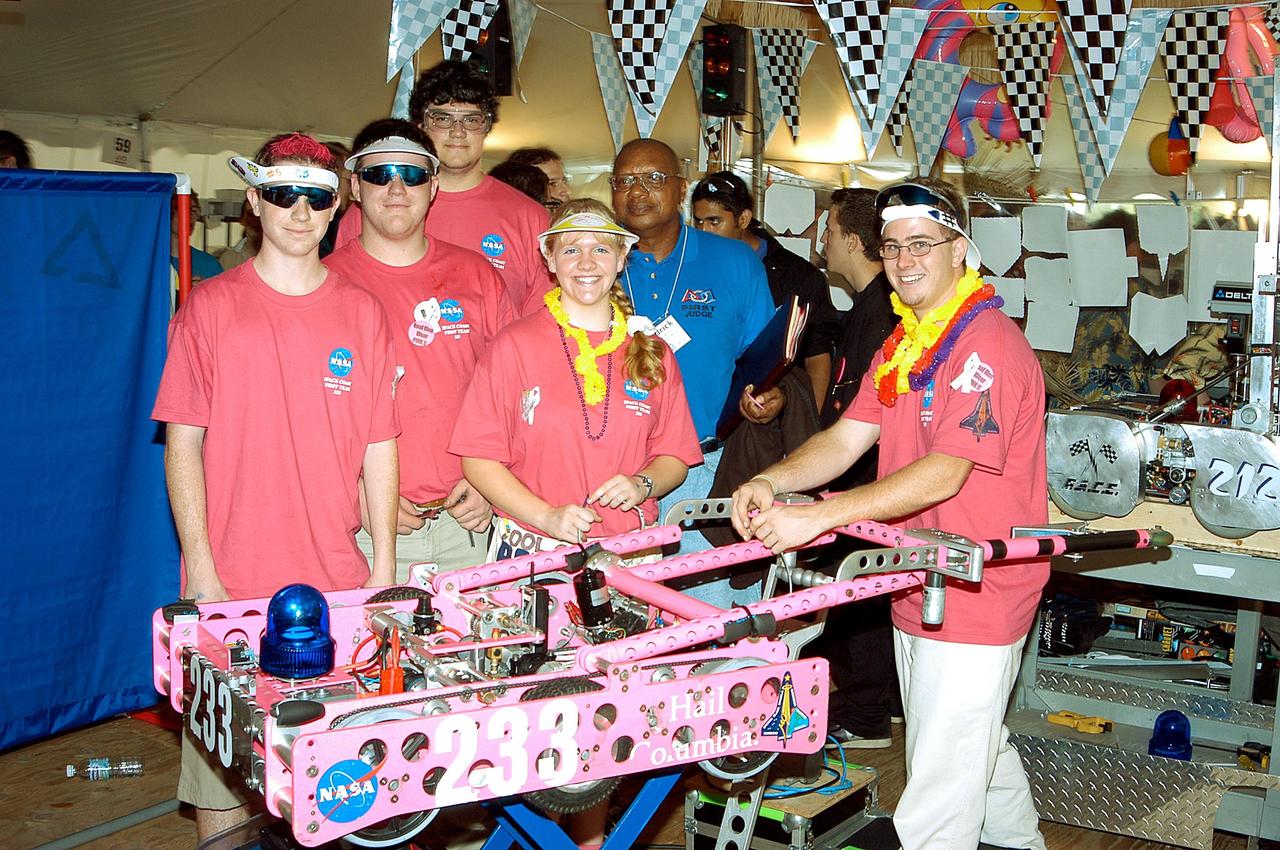
KENNEDY SPACE CENTER, FLA. - NASA/Kennedy Space Center-sponsored students, participating in the 2003 Southeastern Regional FIRST Robotic Competition, pose with their team-built robot. The competition is being held at the University of Central Florida (UCF) in Orlando, March 20-23. Forty student teams from around the country are participating in the event that pits team-built gladiator robots against each other in an athletic-style competition. The teams are sponsored by NASA/Kennedy Space Center, The Boeing Company/Brevard Community College, and Lockheed Martin Space Operations/Mission Systems for the nonprofit organization For Inspiration and Recognition of Science and Technology, known as FIRST. The vision of FIRST is to inspire in the youth of our nation an appreciation of science and technology and an understanding that mastering these disciplines can enrich the lives of all mankind.
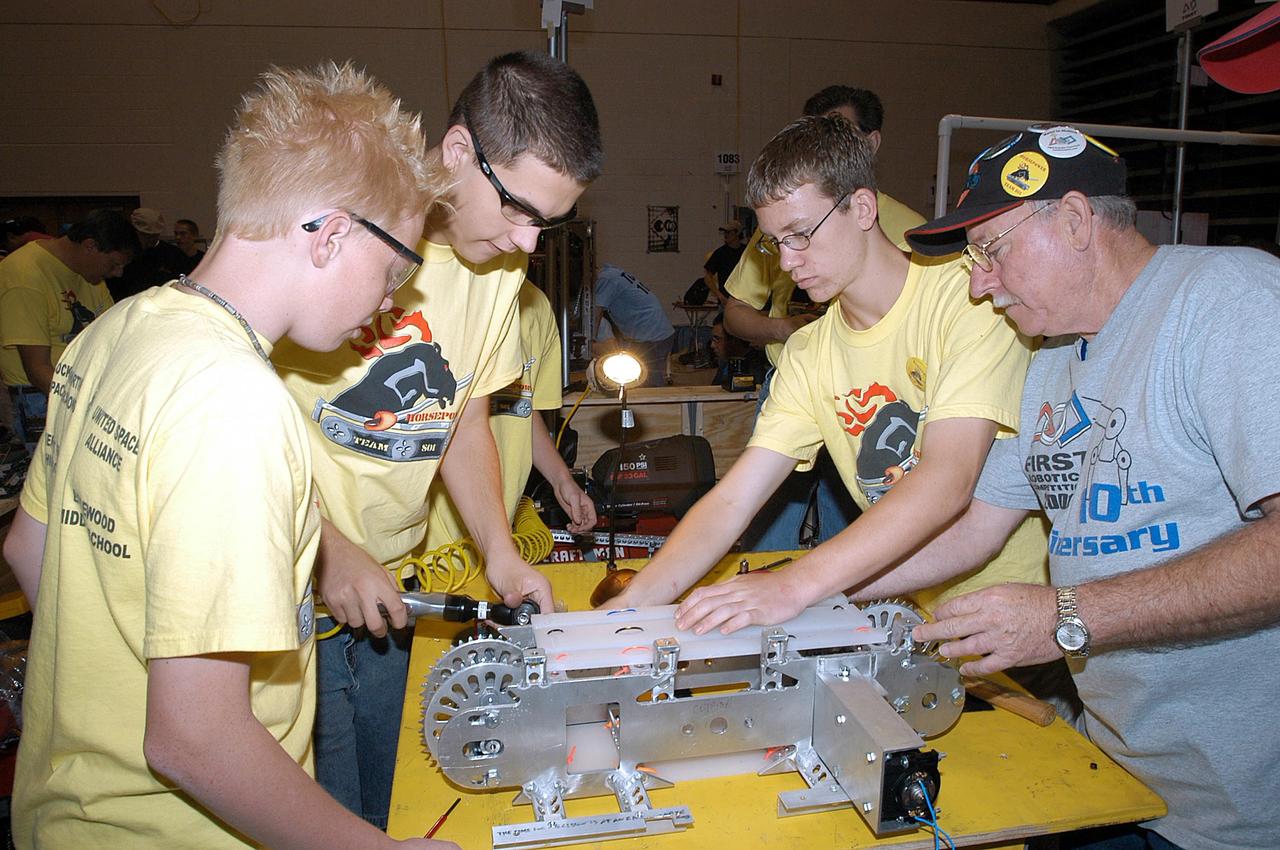
KENNEDY SPACE CENTER, FLA. -- The Merritt Island and Edgewood Middle School students/Lockheed Martin team, participating in the 2003 Southeastern Regional FIRST Robotic Competition, work on their team-built robot. The competition is being held at the University of Central Florida (UCF) in Orlando, March 20-23. Forty teams from around the country are participating in the event that pits team-built gladiator robots against each other in an athletic-style competition. The teams are sponsored by NASA-Kennedy Space Center, The Boeing Company/Brevard Community College, and Lockheed Martin Space Operations/Mission Systems for the nonprofit organization For Inspiration and Recognition of Science and Technology, known as FIRST. The vision of FIRST is to inspire in the youth of our nation an appreciation of science and technology and an understanding that mastering these disciplines can enrich the lives of all mankind.
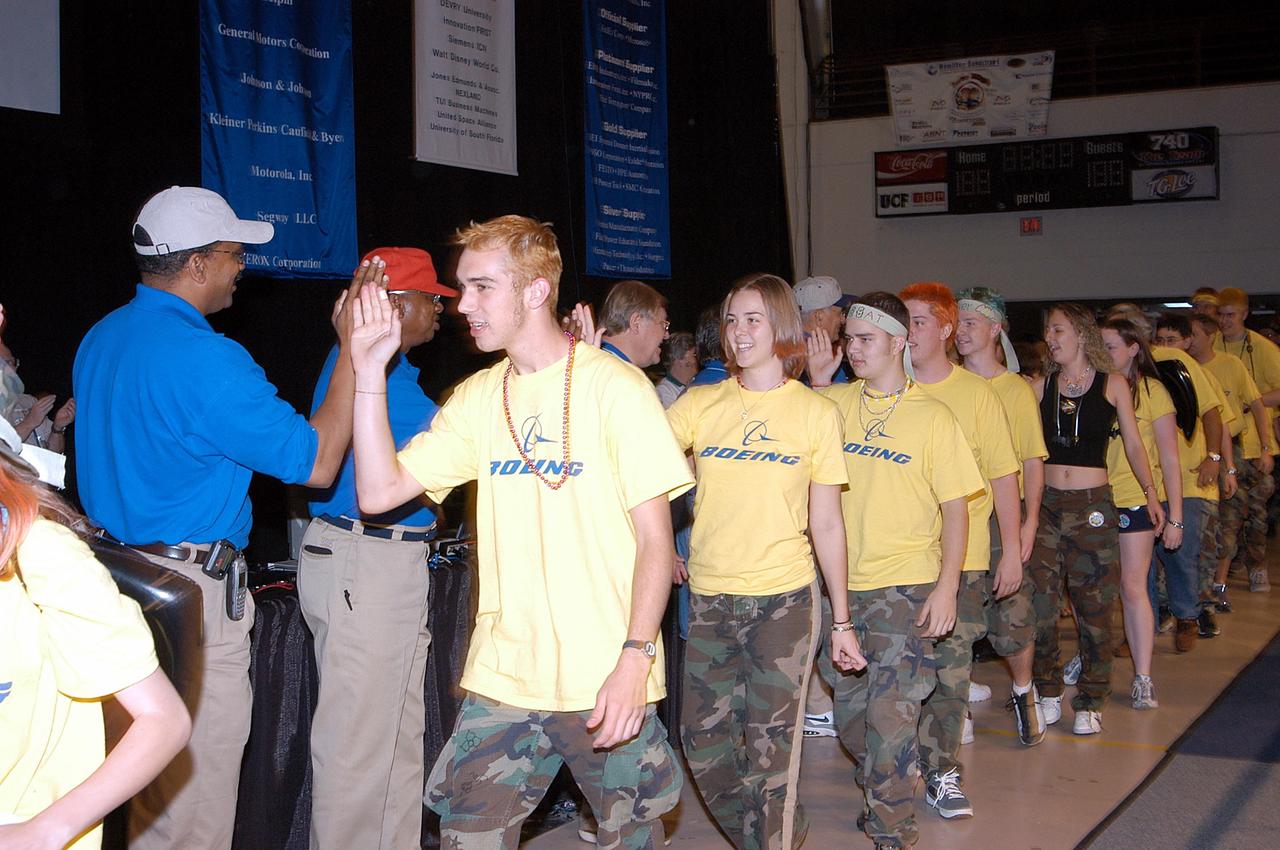
KENNEDY SPACE CENTER, FLA. - The Boeing Company/Brevard Community College-sponsored student team (in yellow shirts) is congratulated by the judges and support staff of the 2003 Southeastern Regional FIRST Robotic Competition. The competition is being held at the University of Central Florida (UCF) in Orlando, March 20-23. The team won the DaimlerChrysler Team Spirit Award and the Johnson & Johnson Sportsmanship Award. Forty student teams from around the country are participating in the event that pits team-built gladiator robots against each other in an athletic-style competition. The teams are sponsored by NASA/Kennedy Space Center, The Boeing Company/Brevard Community College, and Lockheed Martin Space Operations/Mission Systems for the nonprofit organization For Inspiration and Recognition of Science and Technology, known as FIRST. The vision of FIRST is to inspire in the youth of our nation an appreciation of science and technology and an understanding that mastering these disciplines can enrich the lives of all mankind.
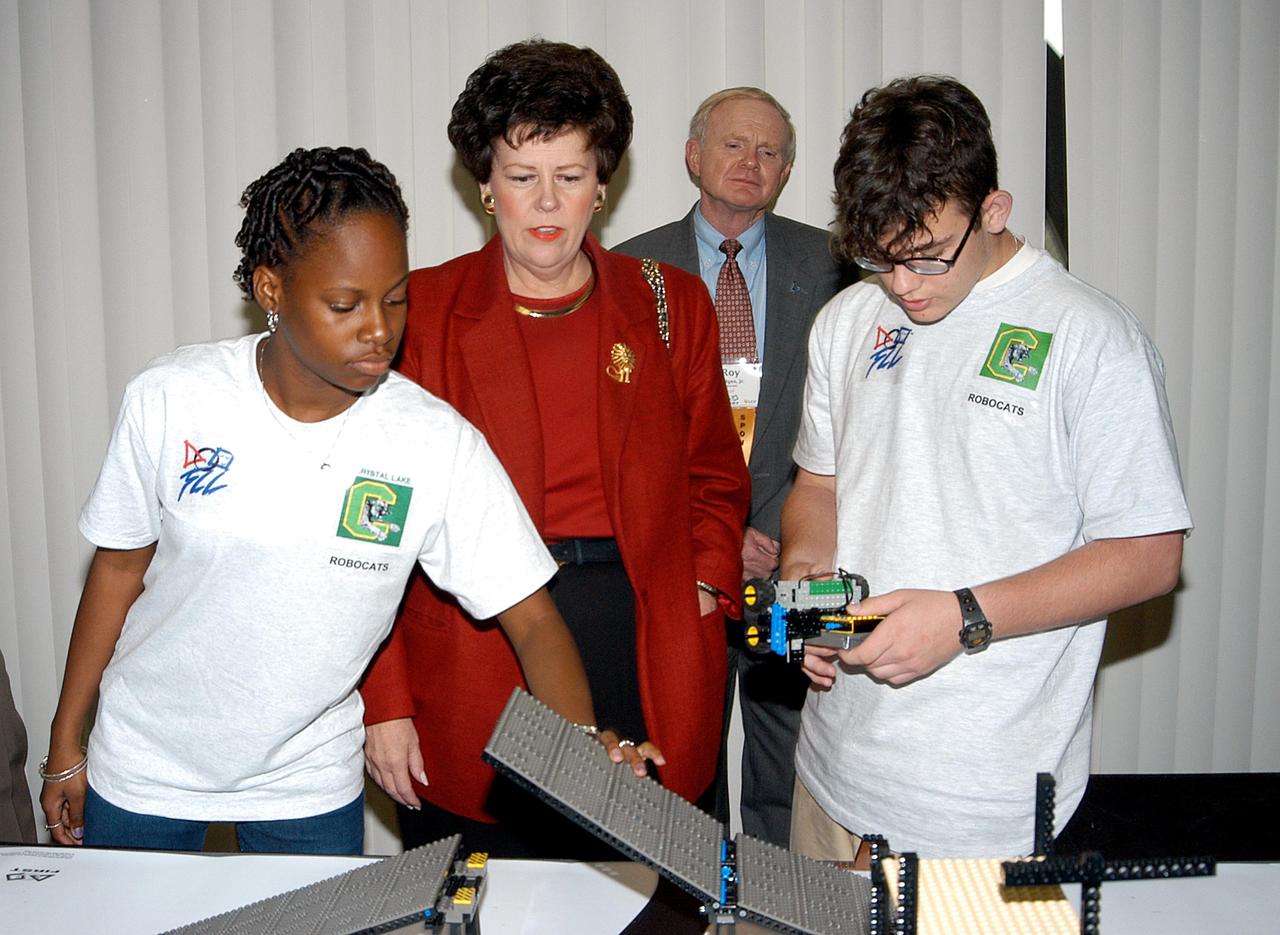
KENNEDY SPACE CENTER, FLA. - NASA/Kennedy Space Center Director Roy Bridges (background) observes as Florida Lt. Gov. Toni Jennings interacts with students at a display of space structures built from Lego blocks at the 2003 Southeastern Regional FIRST Robotic Competition. The competition is being held at the University of Central Florida (UCF) in Orlando, March 20-23. Forty student teams from around the country are participating in the event that pits team-built gladiator robots against each other in an athletic-style competition. The teams are sponsored by NASA/Kennedy Space Center, The Boeing Company/Brevard Community College, and Lockheed Martin Space Operations/Mission Systems for the nonprofit organization For Inspiration and Recognition of Science and Technology, known as FIRST. The vision of FIRST is to inspire in the youth of our nation an appreciation of science and technology and an understanding that mastering these disciplines can enrich the lives of all mankind.
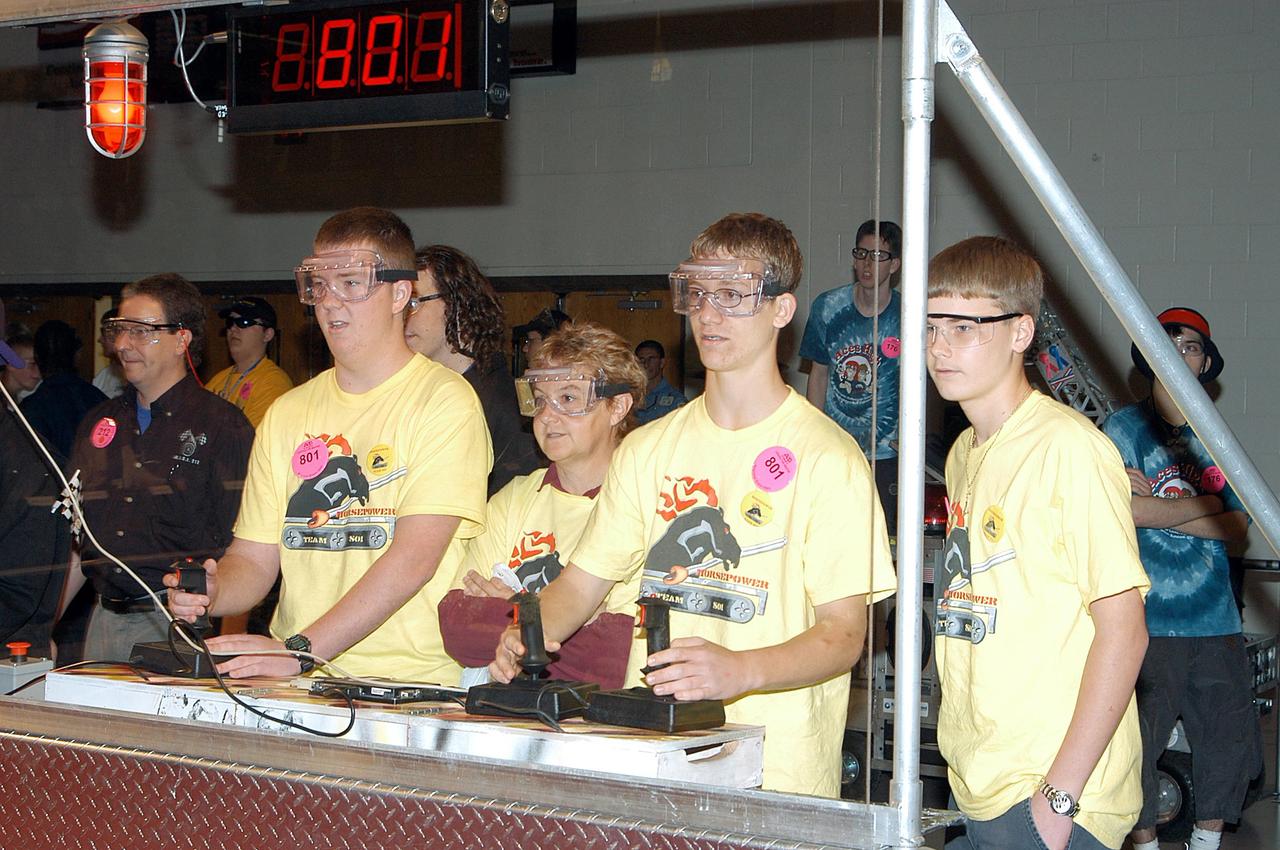
KENNEDY SPACE CENTER, FLA. - Members of the Merritt Island and Edgewood Middle School students/Lockheed Martin team maneuver their robot during competition. They are participating in the 2003 Southeastern Regional FIRST Robotic Competition being held at the University of Central Florida (UCF) in Orlando, March 20-23. Forty teams from around the country are participating in the event that pits team-built gladiator robots against each other in an athletic-style competition. The teams are sponsored by NASA-Kennedy Space Center, The Boeing Company/Brevard Community College, and Lockheed Martin Space Operations/Mission Systems for the nonprofit organization For Inspiration and Recognition of Science and Technology, known as FIRST. The vision of FIRST is to inspire in the youth of our nation an appreciation of science and technology and an understanding that mastering these disciplines can enrich the lives of all mankind.
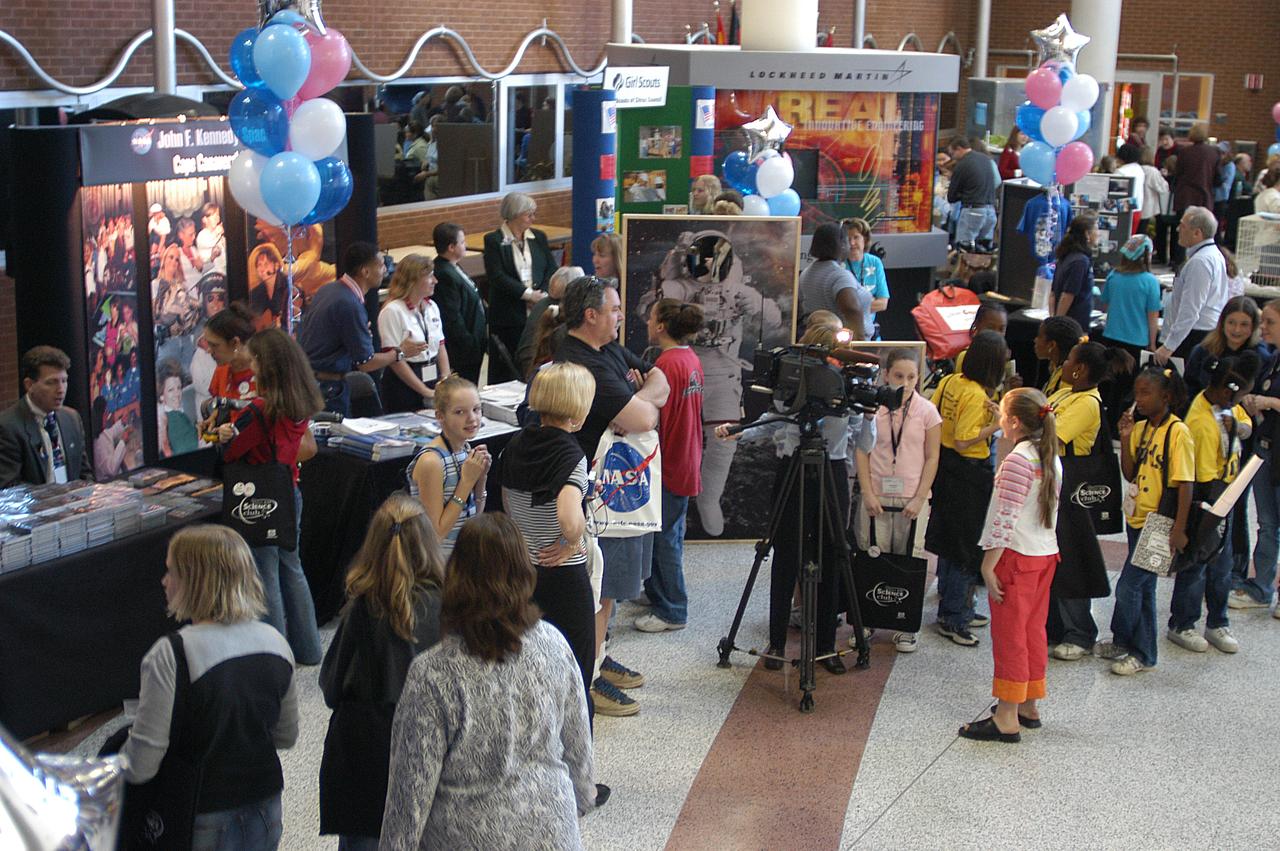
Exhibits draw crowds of young women attending the Sally Ride Science Festival, held at the University of Central Florida, Orlando, Fla. The event promotes science, math and technology as future career paths for girls. Former astronaut Sally Ride addressed the girls, while breakout sessions afforded closer interaction between Ride and festival attendees. Since it followed the tragic loss of the Columbia astronauts, a large poster was presented which attendees could sign as tribute.
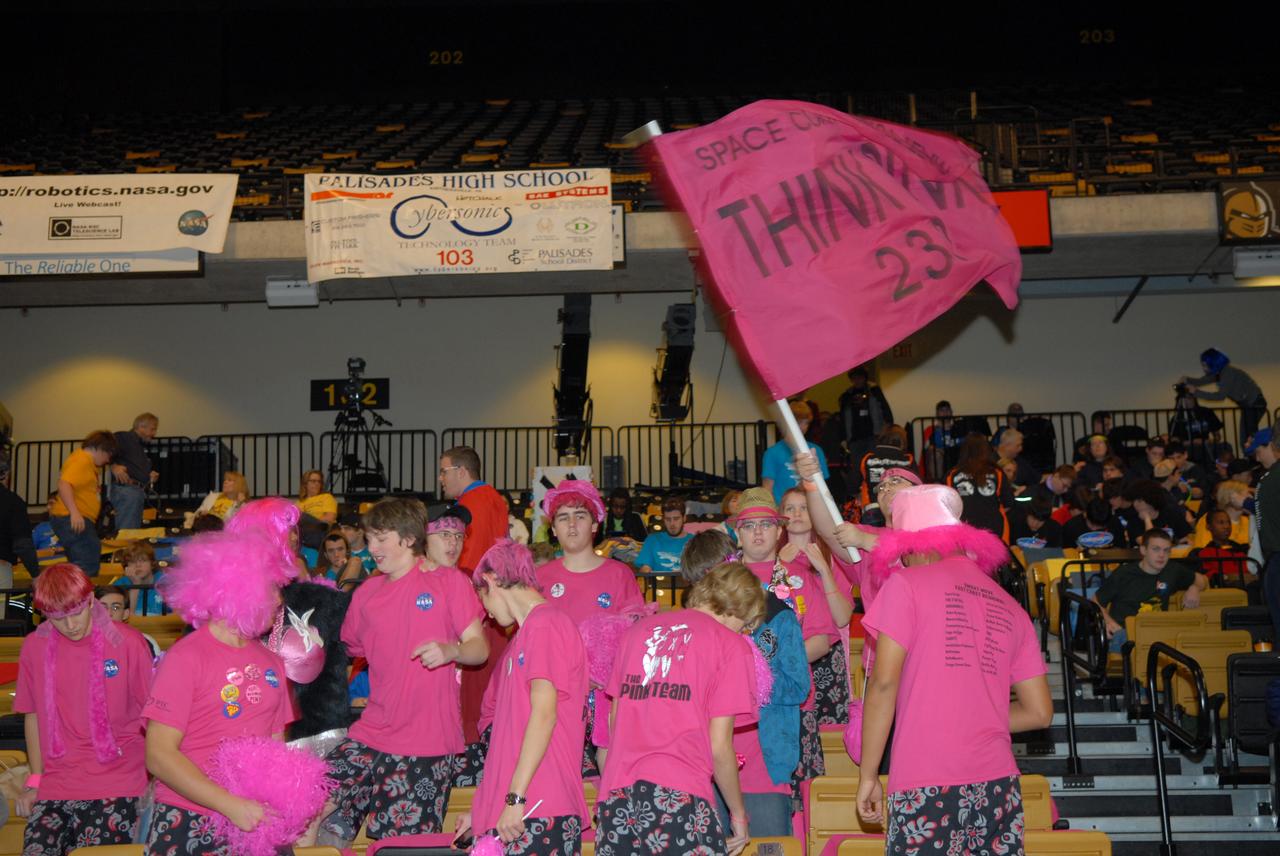
2010 FIRST ROBOTICS COMPETITION - DAY 1
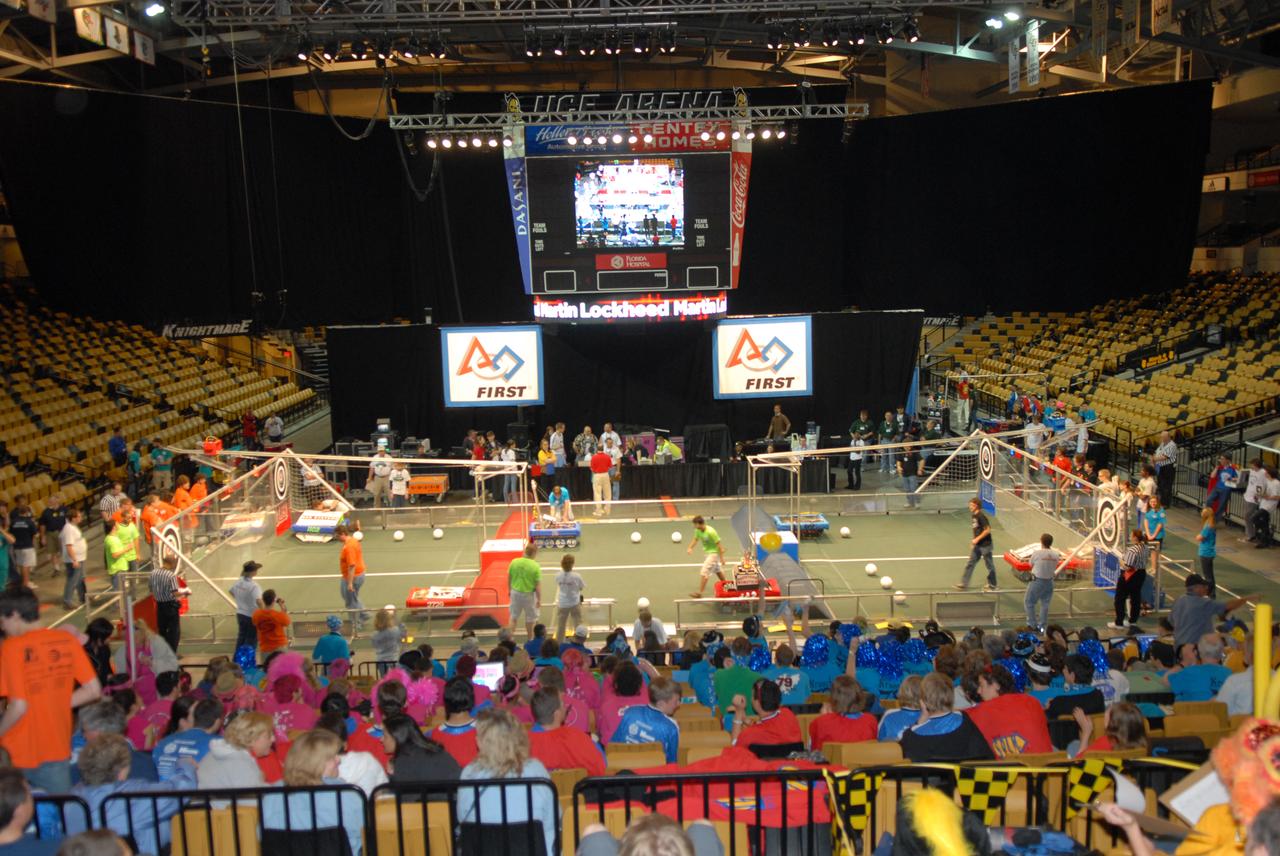
2010 FIRST ROBOTICS COMPETITION - DAY 1
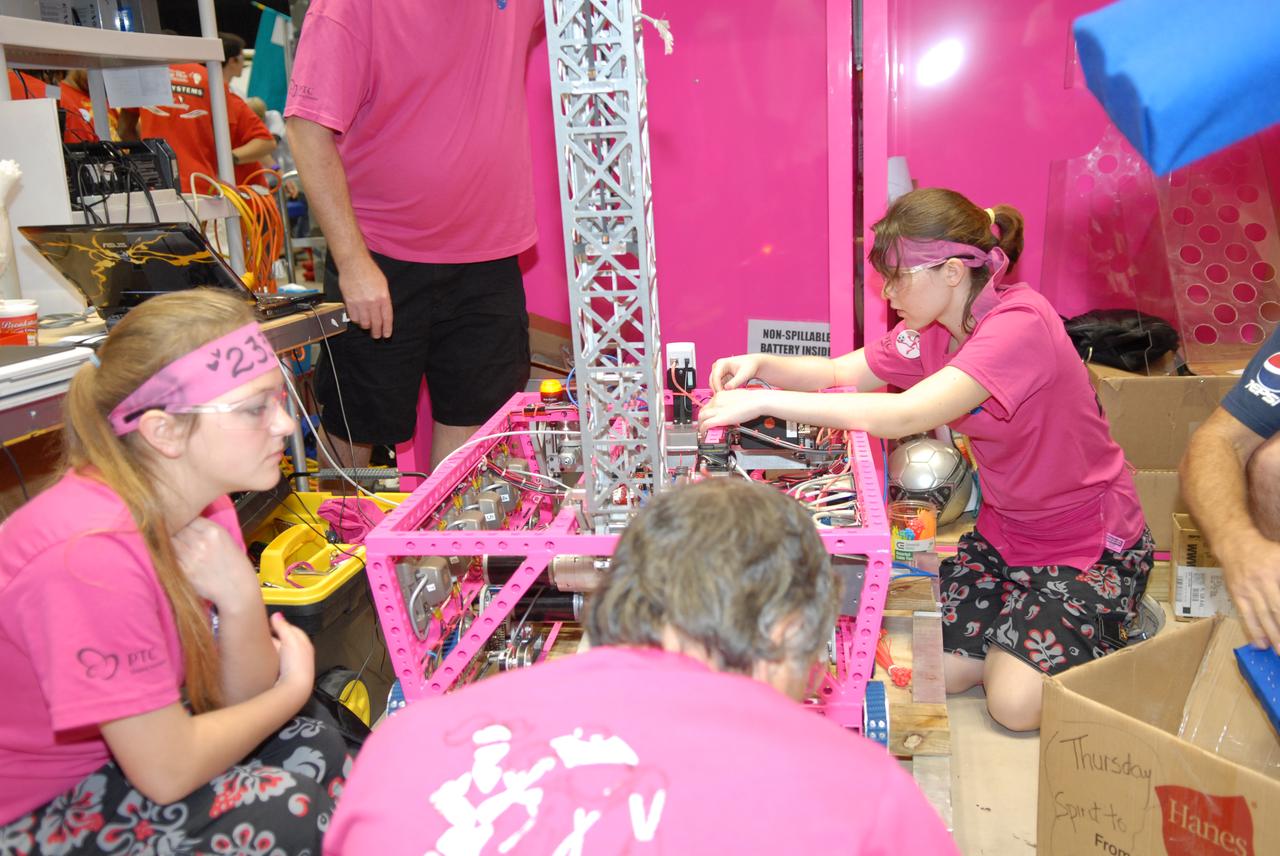
2010 FIRST ROBOTICS COMPETITION - DAY 1

2010 FIRST ROBOTICS COMPETITION - DAY 1
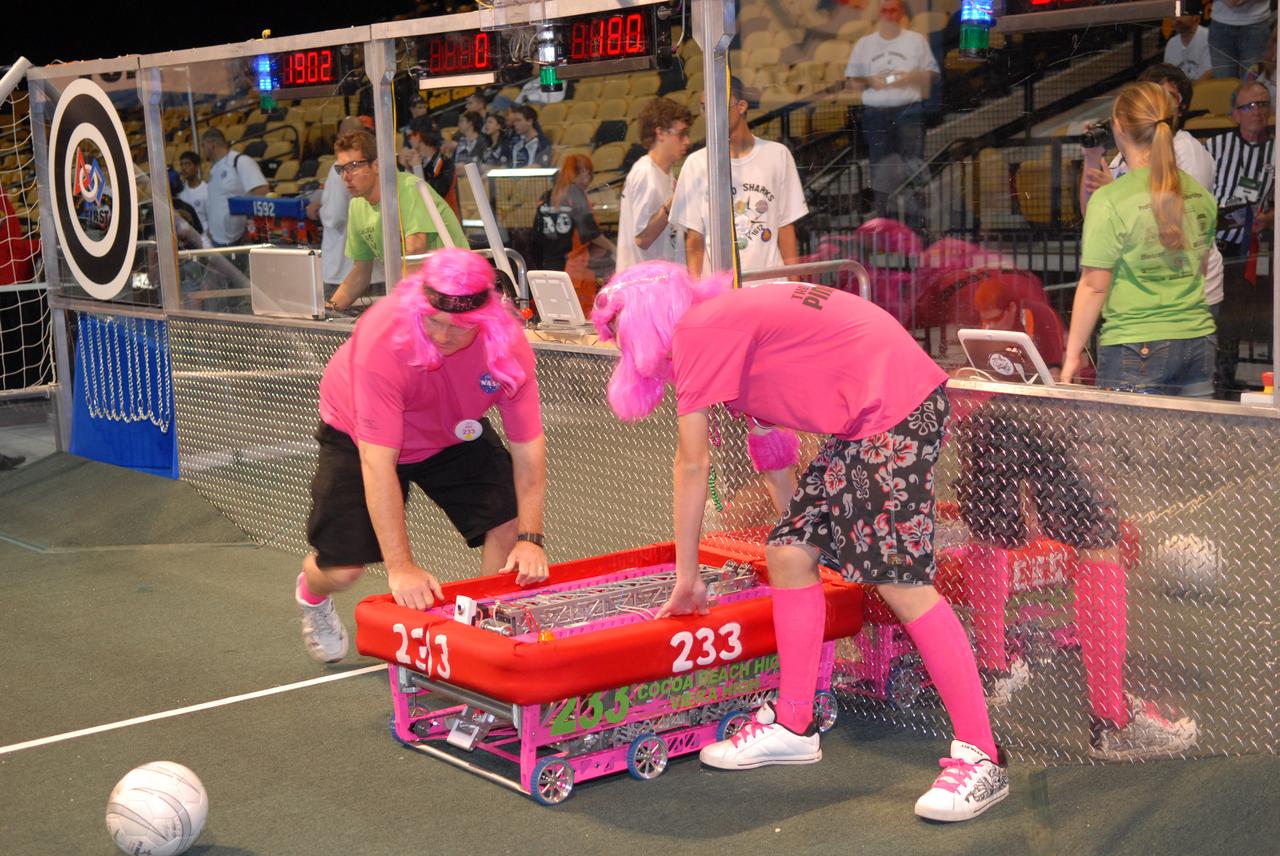
2010 FIRST ROBOTICS COMPETITION - DAY 1

2010 FIRST ROBOTICS COMPETITION - DAY 1
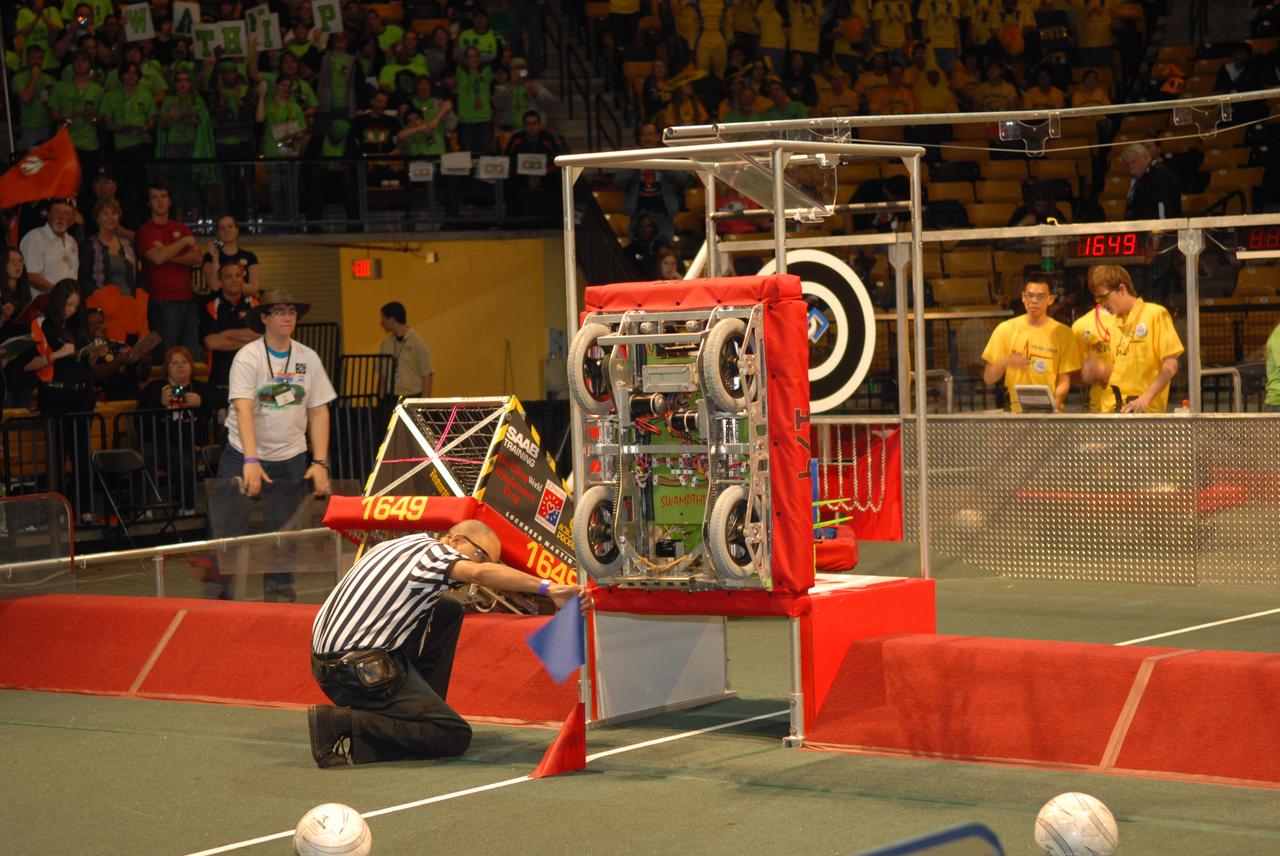
2010 FIRST ROBOTICS COMPETITION - DAY 1
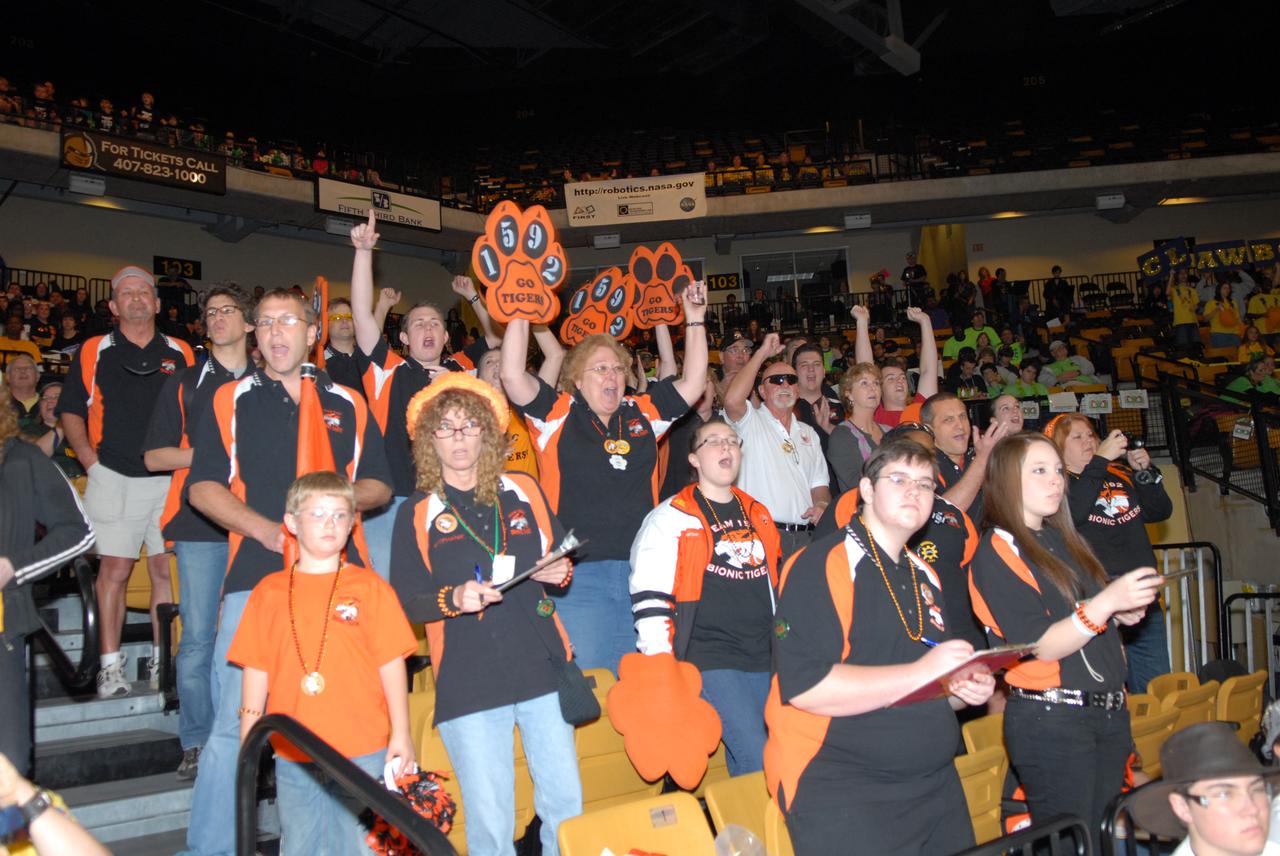
2010 FIRST ROBOTICS COMPETITION - DAY 1
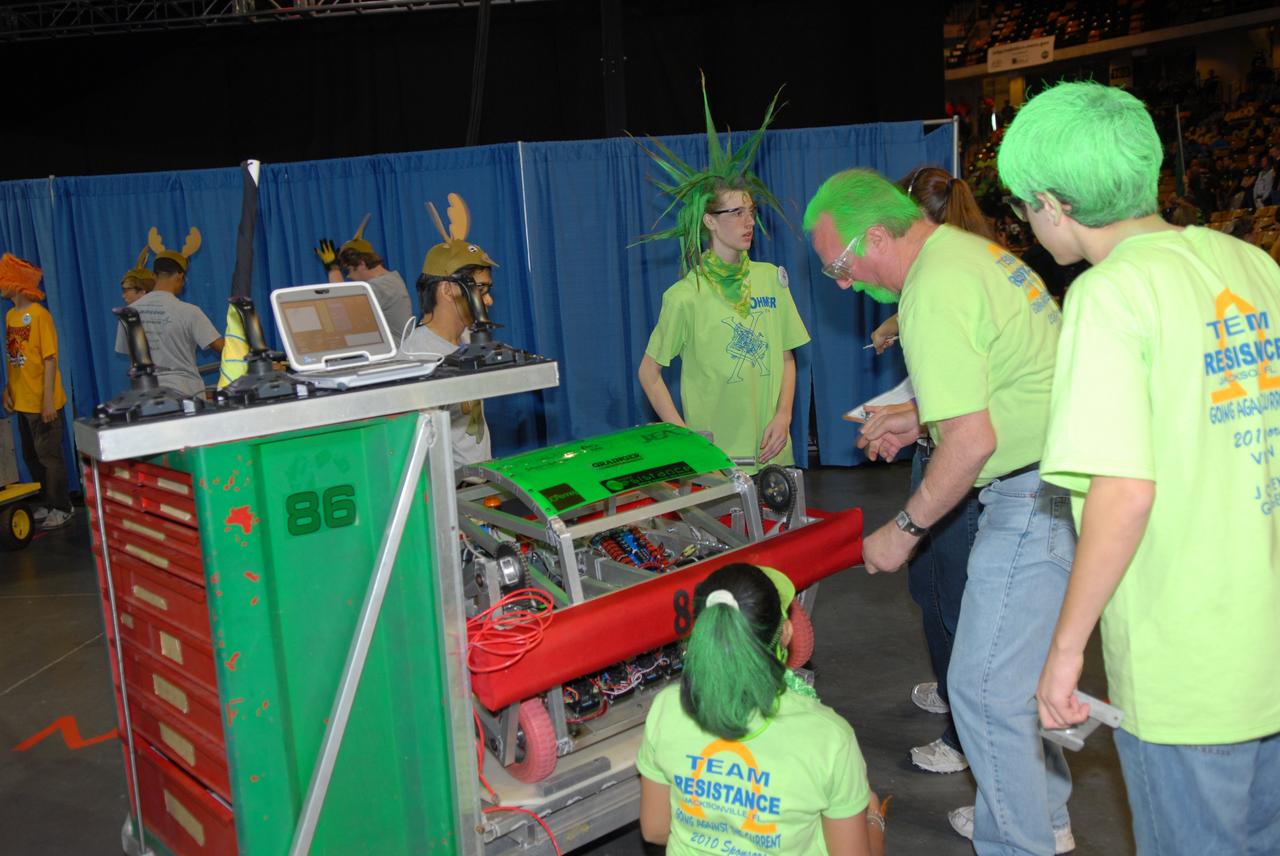
2010 FIRST ROBOTICS COMPETITION - DAY 1
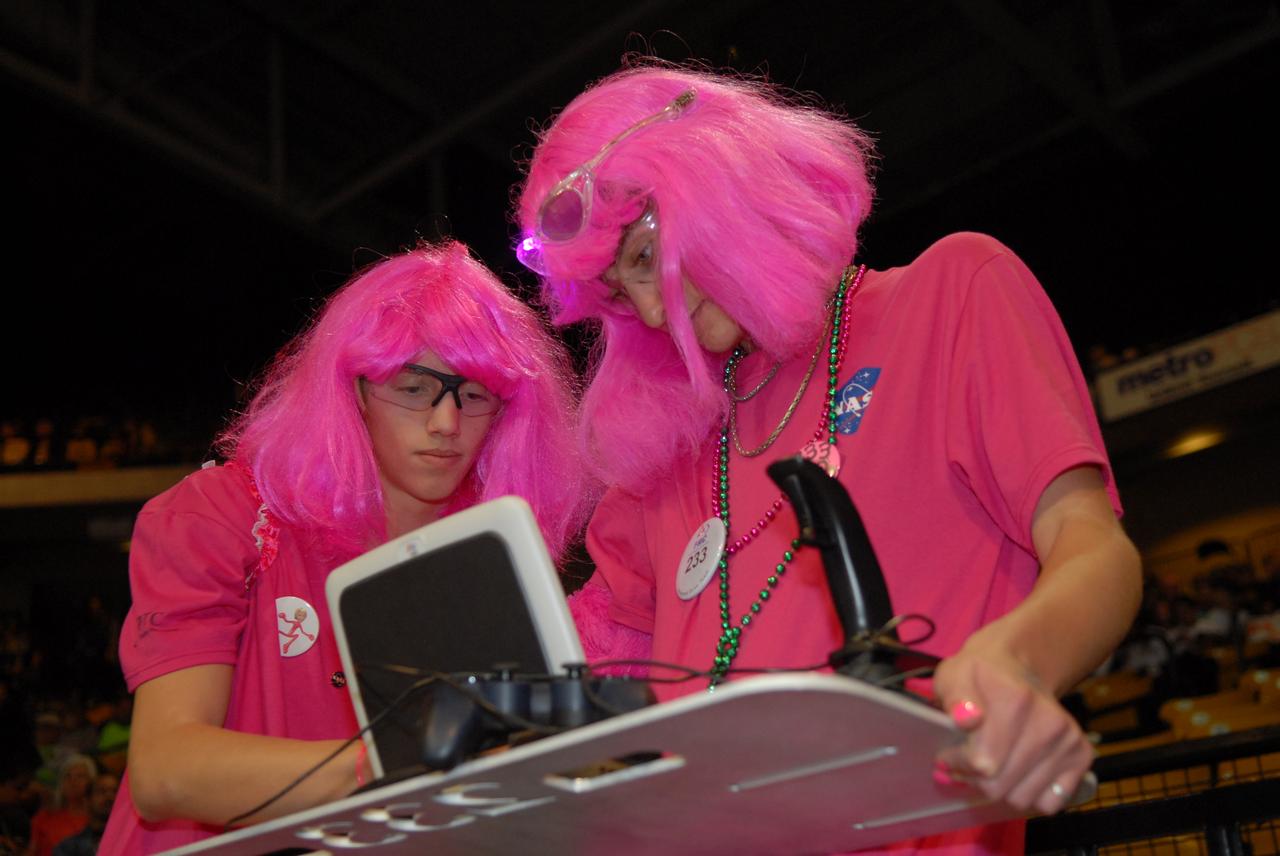
2010 FIRST ROBOTICS COMPETITION - DAY 1
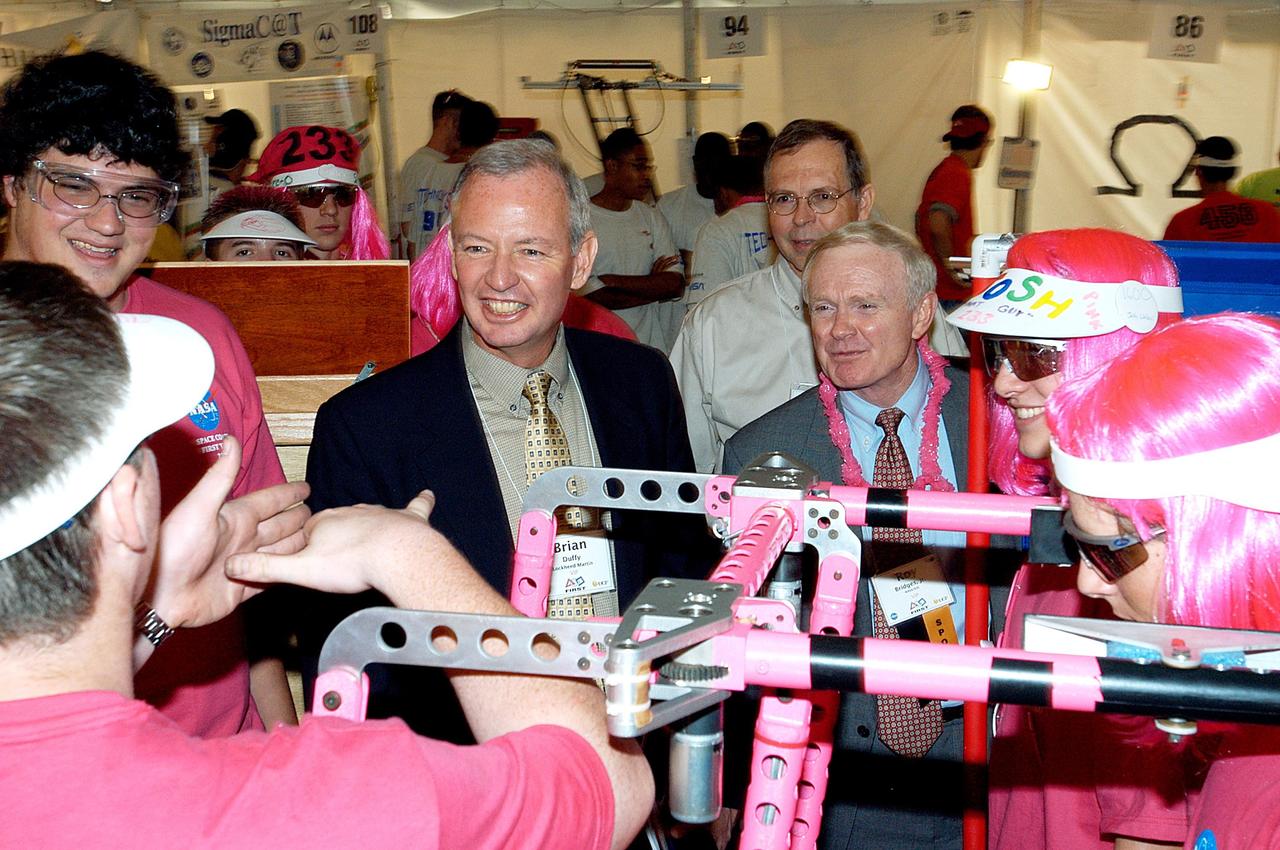
KENNEDY SPACE CENTER, FLA. - Lockheed Martin Vice President/Associate Program Manager Brian Duffy (second from left) and NASA Kennedy Space Center Director Roy Bridges (next to Duffy) talk with student participants in the 2003 Southeastern Regional FIRST Robotic Competition. Chris Fairey, the former director of Spaceport Services at KSC, looks on in the background. The competition is being held at the University of Central Florida (UCF) in Orlando, March 20-23. Forty student teams from around the country are participating in the event that pits team-built gladiator robots against each other in an athletic-style competition. The teams are sponsored by NASA/Kennedy Space Center, The Boeing Company/Brevard Community College, and Lockheed Martin Space Operations/Mission Systems for the nonprofit organization For Inspiration and Recognition of Science and Technology, known as FIRST. The vision of FIRST is to inspire in the youth of our nation an appreciation of science and technology and an understanding that mastering these disciplines can enrich the lives of all mankind.

KENNEDY SPACE CENTER, FLA. - Sponsor representatives of the 2003 Southeastern Regional FIRST Robotic Competition take a moment to compare notes between events. From left are Wayne Weinberg, director of development for the University of Central Florida College of Engineering and Computer Science; Erik Halleus, chair of the FIRST Regional Advisory Committee and a vice president at Siemens Enterprise Networks; and Roy D. Bridges, Jr., director of the NASA/Kennedy Space Center. The competition is being held at the University of Central Florida (UCF) in Orlando, March 20-23. Forty student teams from around the country are participating in the event that pits team-built gladiator robots against each other in an athletic-style competition. The teams are sponsored by NASA/Kennedy Space Center, The Boeing Company/Brevard Community College, and Lockheed Martin Space Operations/Mission Systems for the nonprofit organization For Inspiration and Recognition of Science and Technology, known as FIRST. The vision of FIRST is to inspire in the youth of our nation an appreciation of science and technology and an understanding that mastering these disciplines can enrich the lives of all mankind.
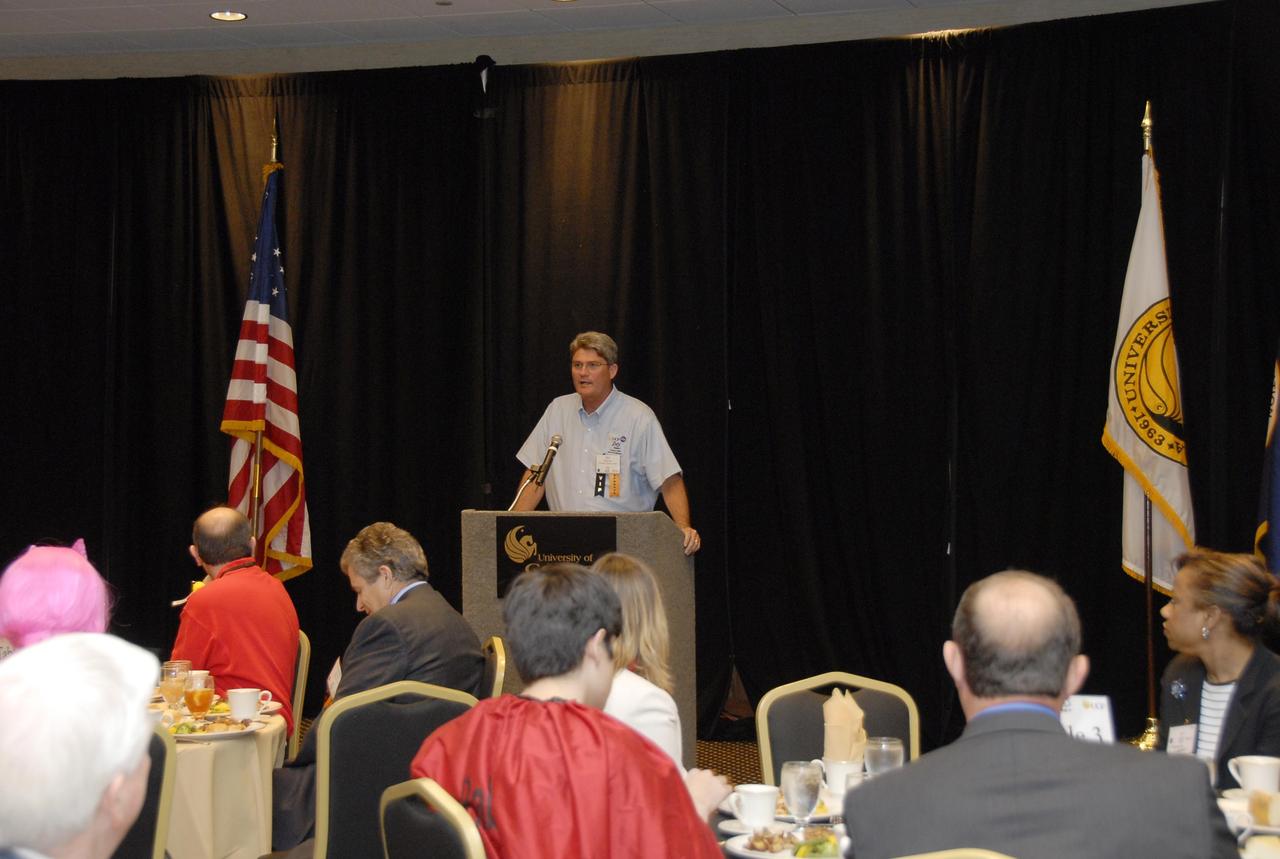
KENNEDY SPACE CENTER, FLA. -- Center Director Bill Parsons talks to guests at the VIP luncheon held during the FIRST robotics event held at the University of Central Florida Arena March 8-10. This was Parsons' first year attending the event as center director. An alumnus of UCF, Parsons also serves on the FIRST Executive Advisory Board. The FIRST, or For Inspiration and Recognition of Science and Technology, Robotics Competition challenges teams of young people and their mentors to solve a common problem in a six-week timeframe using a standard "kit of parts" and a common set of rules. Teams build robots from the parts and enter them in a series of competitions designed by FIRST founder Dean Kamen and Dr. Woodie Flowers, chairman and vice chairman of the Executive Advisory Board respectively, and a committee of engineers and other professionals. FIRST redefines winning for these students. Teams are rewarded for excellence in design, demonstrated team spirit, gracious professionalism and maturity, and ability to overcome obstacles. Scoring the most points is a secondary goal. Winning means building partnerships that last. Photo credit: NASA/Kim Shiflett
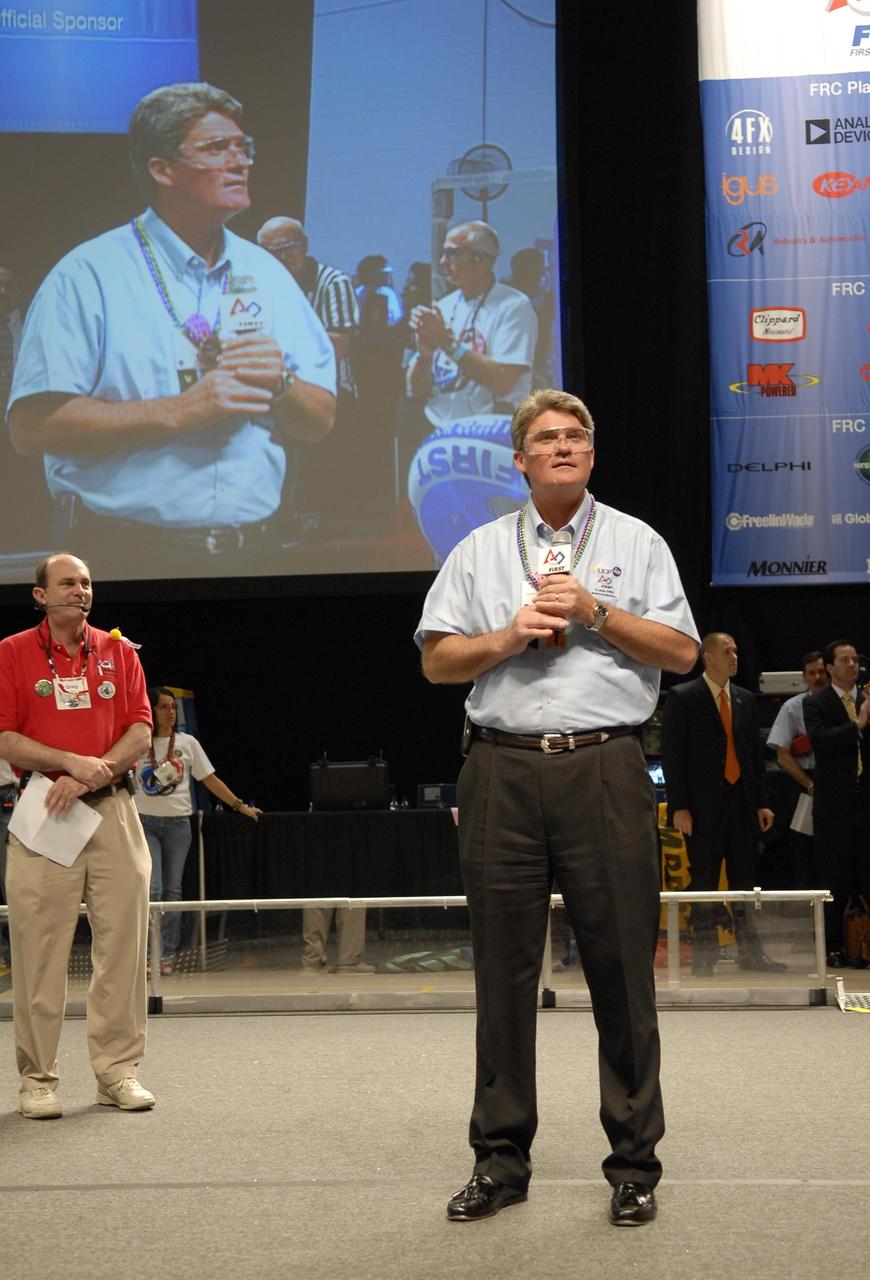
KENNEDY SPACE CENTER, FLA. -- Center Director Bill Parsons talks to an audience primarily of students during the FIRST robotics event held at the University of Central Florida Arena March 8-10. This was Parsons' first year attending the event as center director. An alumnus of UCF, Parsons also serves on the FIRST Executive Advisory Board. The FIRST, or For Inspiration and Recognition of Science and Technology, Robotics Competition challenges teams of young people and their mentors to solve a common problem in a six-week timeframe using a standard "kit of parts" and a common set of rules. Teams build robots from the parts and enter them in a series of competitions designed by FIRST founder Dean Kamen and Dr. Woodie Flowers, chairman and vice chairman of the Executive Advisory Board respectively, and a committee of engineers and other professionals. FIRST redefines winning for these students. Teams are rewarded for excellence in design, demonstrated team spirit, gracious professionalism and maturity, and ability to overcome obstacles. Scoring the most points is a secondary goal. Winning means building partnerships that last. Photo credit: NASA/Kim Shiflett
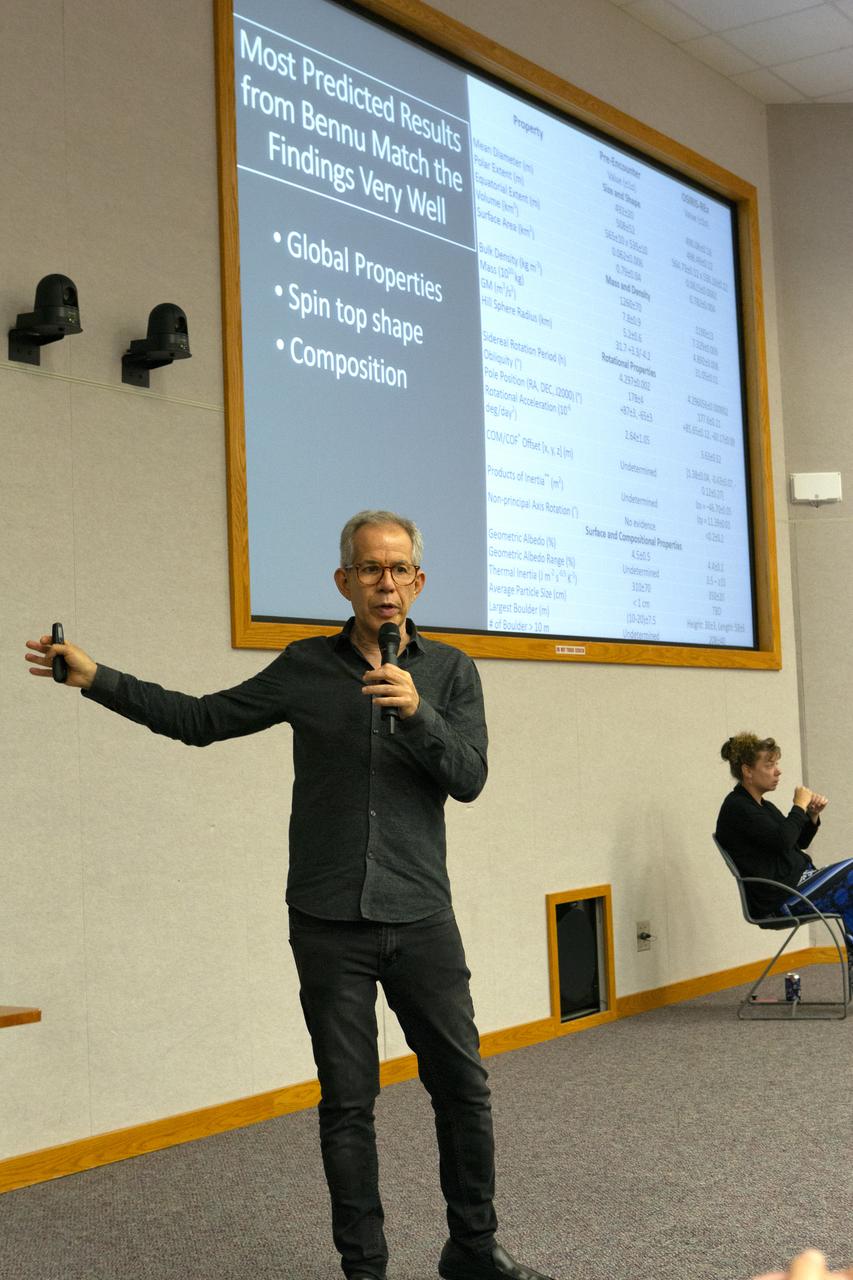
Dr. Humberto Campins from the University of Central Florida speaks to Kennedy Space Center employees in the Florida spaceport’s Neil Armstrong O&C Mission Briefing Room on April 16, 2019, to give a status update on NASA’s Origins, Spectral Interpretation, Resource Identification, Security-Regolith Explorer (OSIRIS-REx). The first U.S. mission to sample an asteroid, OSIRIS-REx launched from Cape Canaveral Air Force Station on Sept. 8, 2016 aboard a United Launch Alliance Atlas V rocket. Management of the launch service for OSIRIS-REx was the responsibility of NASA’s Launch Services Program, based at Kennedy.
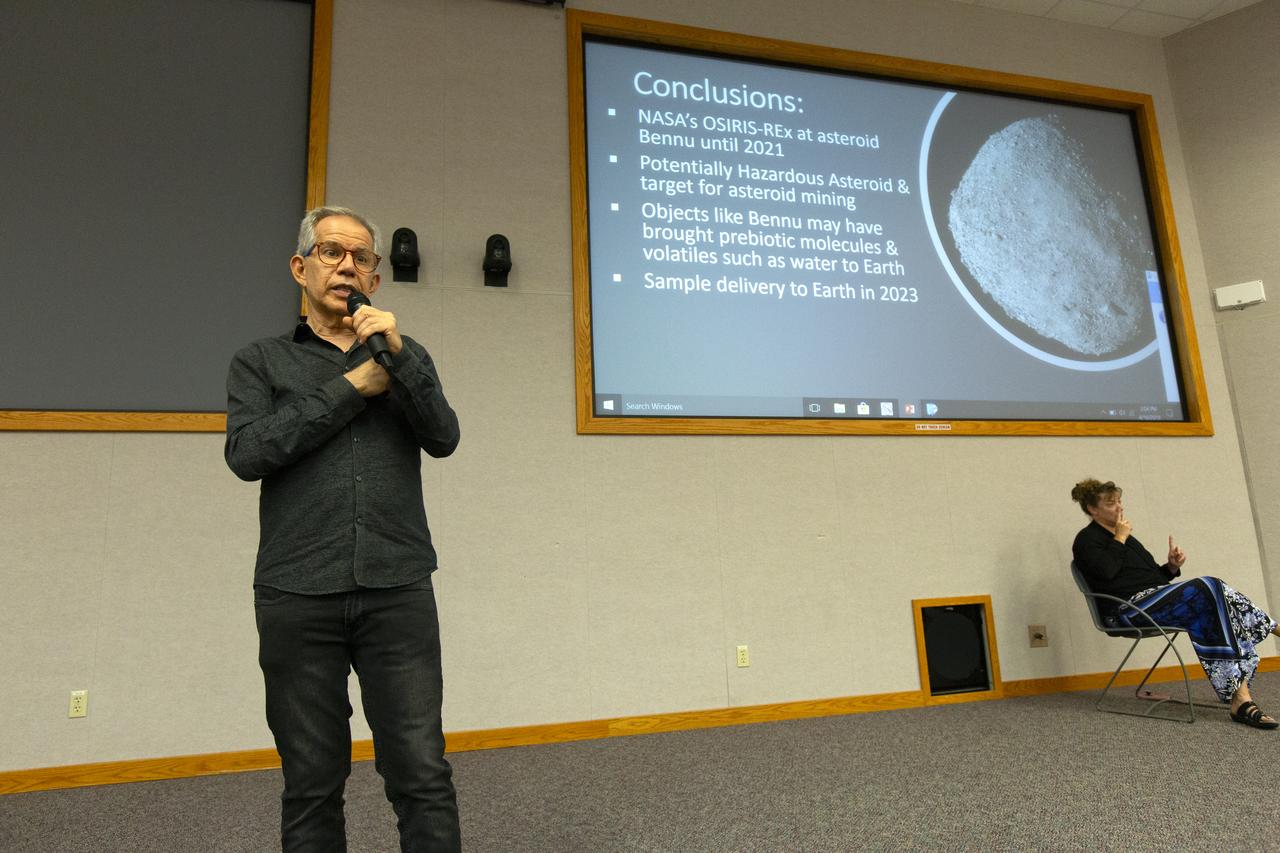
Dr. Humberto Campins from the University of Central Florida speaks to Kennedy Space Center employees in the Florida spaceport’s Neil Armstrong O&C Mission Briefing Room on April 16, 2019, to give a status update on NASA’s Origins, Spectral Interpretation, Resource Identification, Security-Regolith Explorer (OSIRIS-REx). The first U.S. mission to sample an asteroid, OSIRIS-REx launched from Cape Canaveral Air Force Station on Sept. 8, 2016 aboard a United Launch Alliance Atlas V rocket. Management of the launch service for OSIRIS-REx was the responsibility of NASA’s Launch Services Program, based at Kennedy.
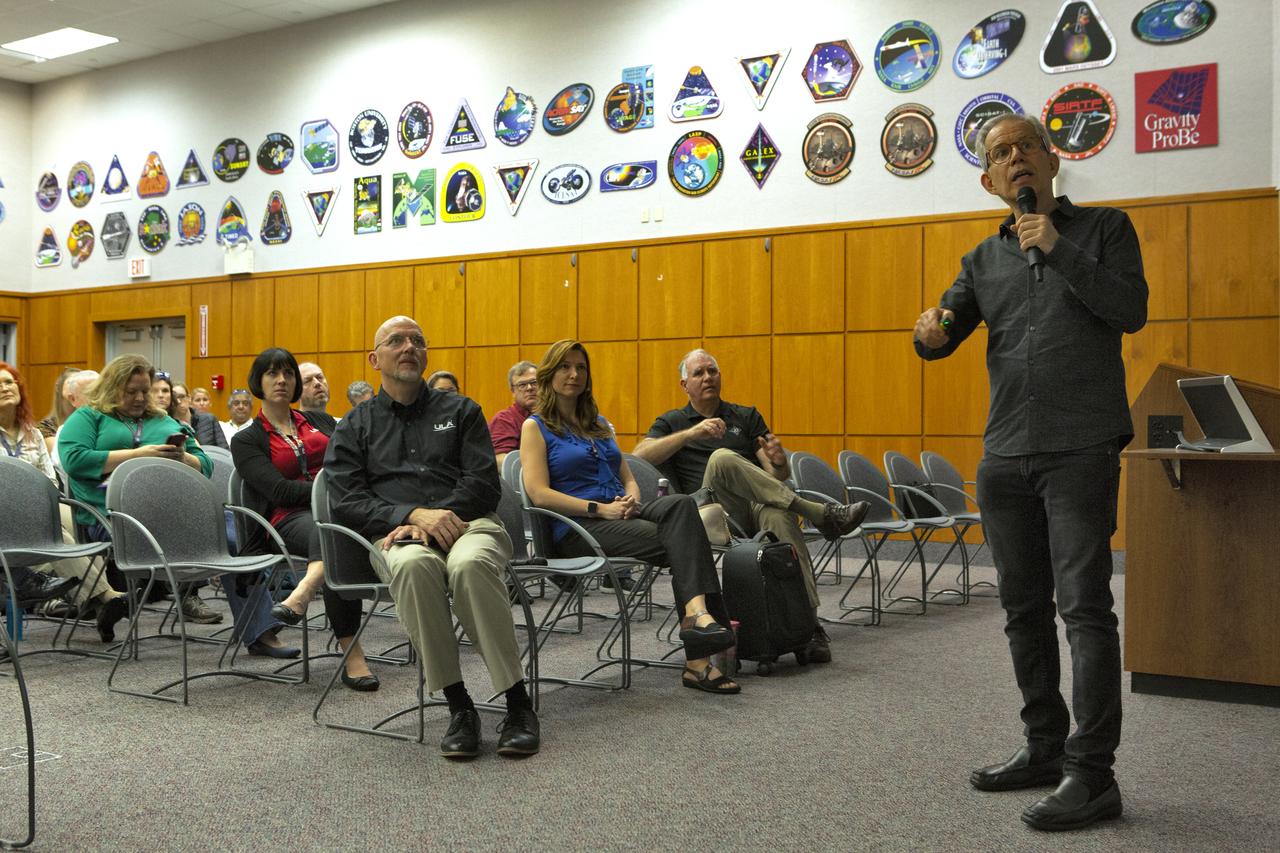
Dr. Humberto Campins from the University of Central Florida speaks to Kennedy Space Center employees in the Florida spaceport’s Neil Armstrong O&C Mission Briefing Room on April 16, 2019, to give a status update on NASA’s Origins, Spectral Interpretation, Resource Identification, Security-Regolith Explorer (OSIRIS-REx). The first U.S. mission to sample an asteroid, OSIRIS-REx launched from Cape Canaveral Air Force Station on Sept. 8, 2016 aboard a United Launch Alliance Atlas V rocket. Management of the launch service for OSIRIS-REx was the responsibility of NASA’s Launch Services Program, based at Kennedy.
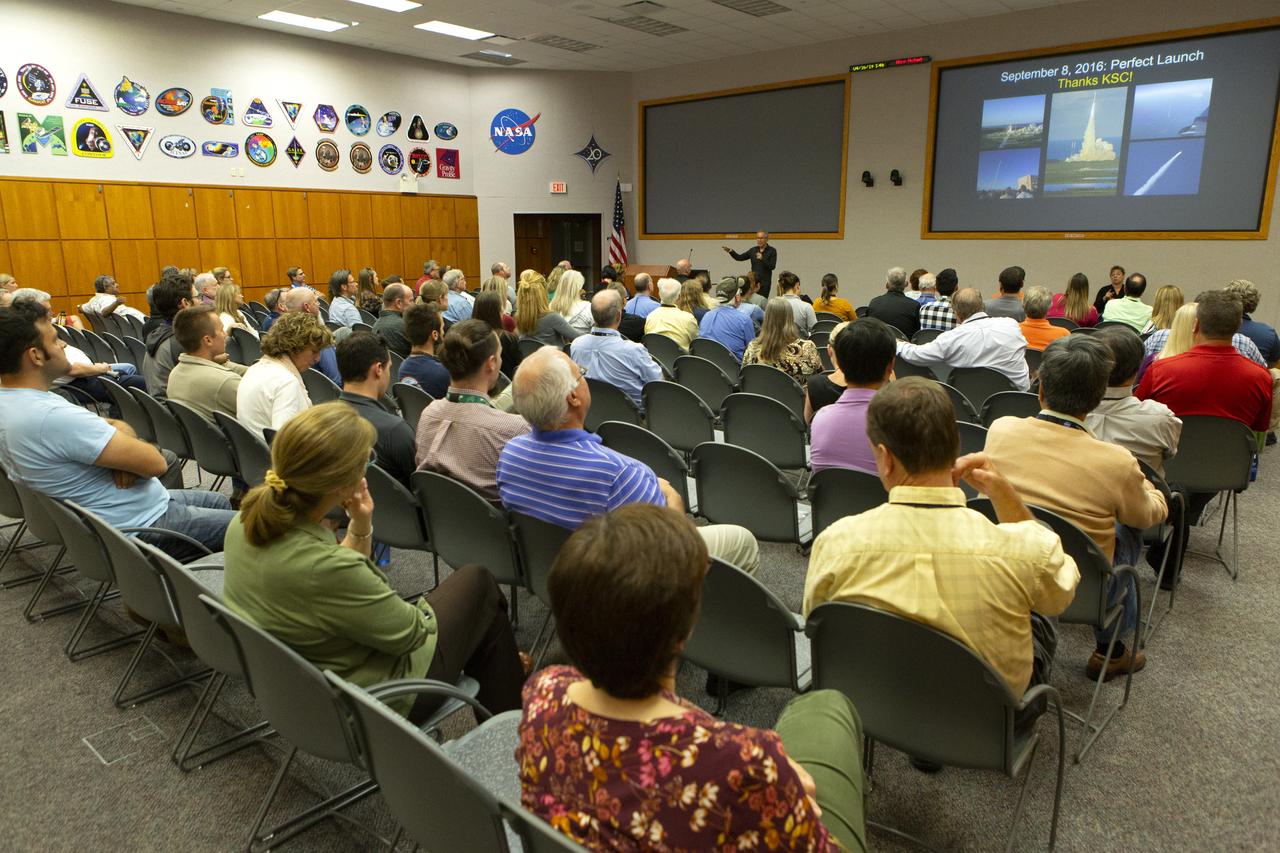
Kennedy Space Center employees gather in the Florida spaceport’s Neil Armstrong O&C Mission Briefing Room on April 16, 2019, to hear Dr. Humberto Campins from the University of Central Florida give a status update on NASA’s Origins, Spectral Interpretation, Resource Identification, Security-Regolith Explorer (OSIRIS-REx). The first U.S. mission to sample an asteroid, OSIRIS-REx launched from Cape Canaveral Air Force Station on Sept. 8, 2016 aboard a United Launch Alliance Atlas V rocket. Management of the launch service for OSIRIS-REx was the responsibility of NASA’s Launch Services Program, based at Kennedy.
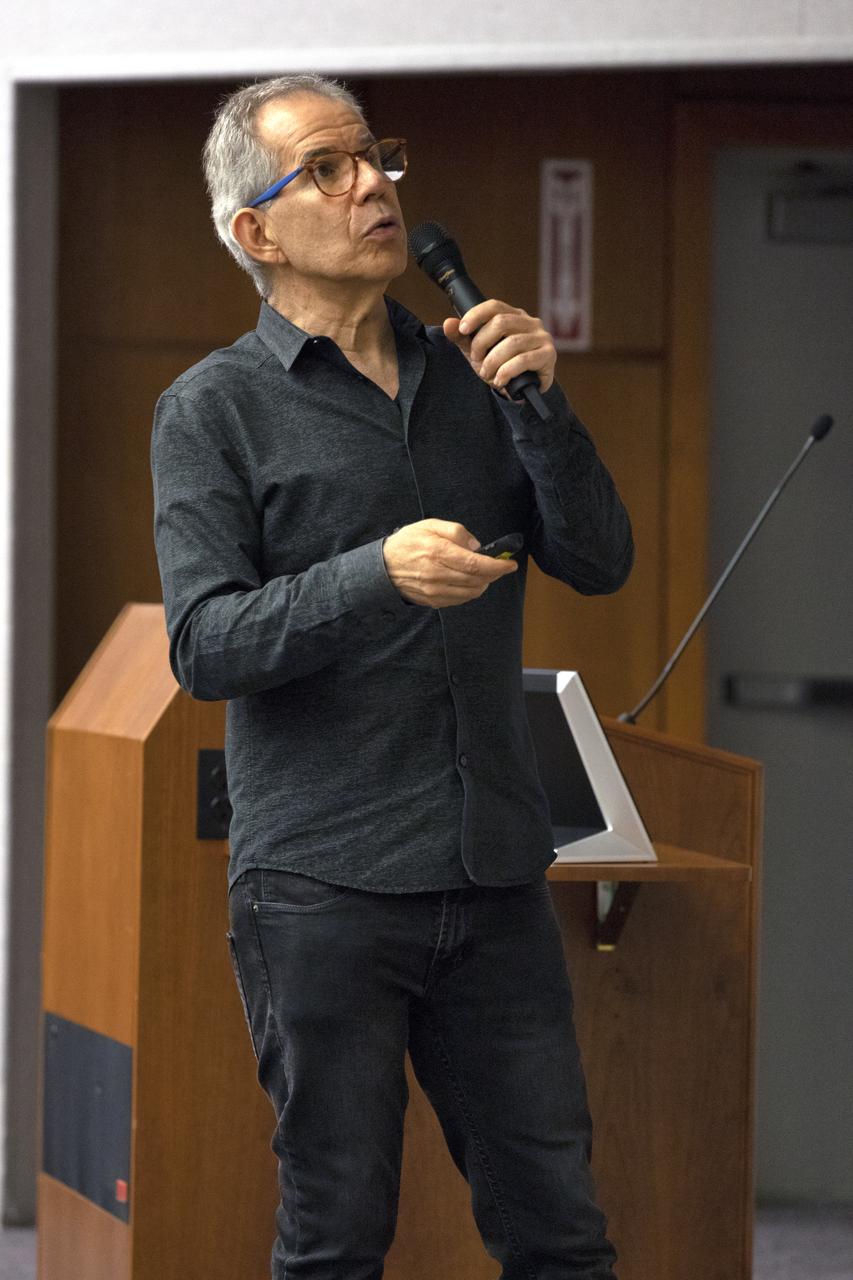
Dr. Humberto Campins from the University of Central Florida speaks to Kennedy Space Center employees in the Florida spaceport’s Neil Armstrong O&C Mission Briefing Room on April 16, 2019, to give a status update on NASA’s Origins, Spectral Interpretation, Resource Identification, Security-Regolith Explorer (OSIRIS-REx). The first U.S. mission to sample an asteroid, OSIRIS-REx launched from Cape Canaveral Air Force Station on Sept. 8, 2016 aboard a United Launch Alliance Atlas V rocket. Management of the launch service for OSIRIS-REx was the responsibility of NASA’s Launch Services Program, based at Kennedy.
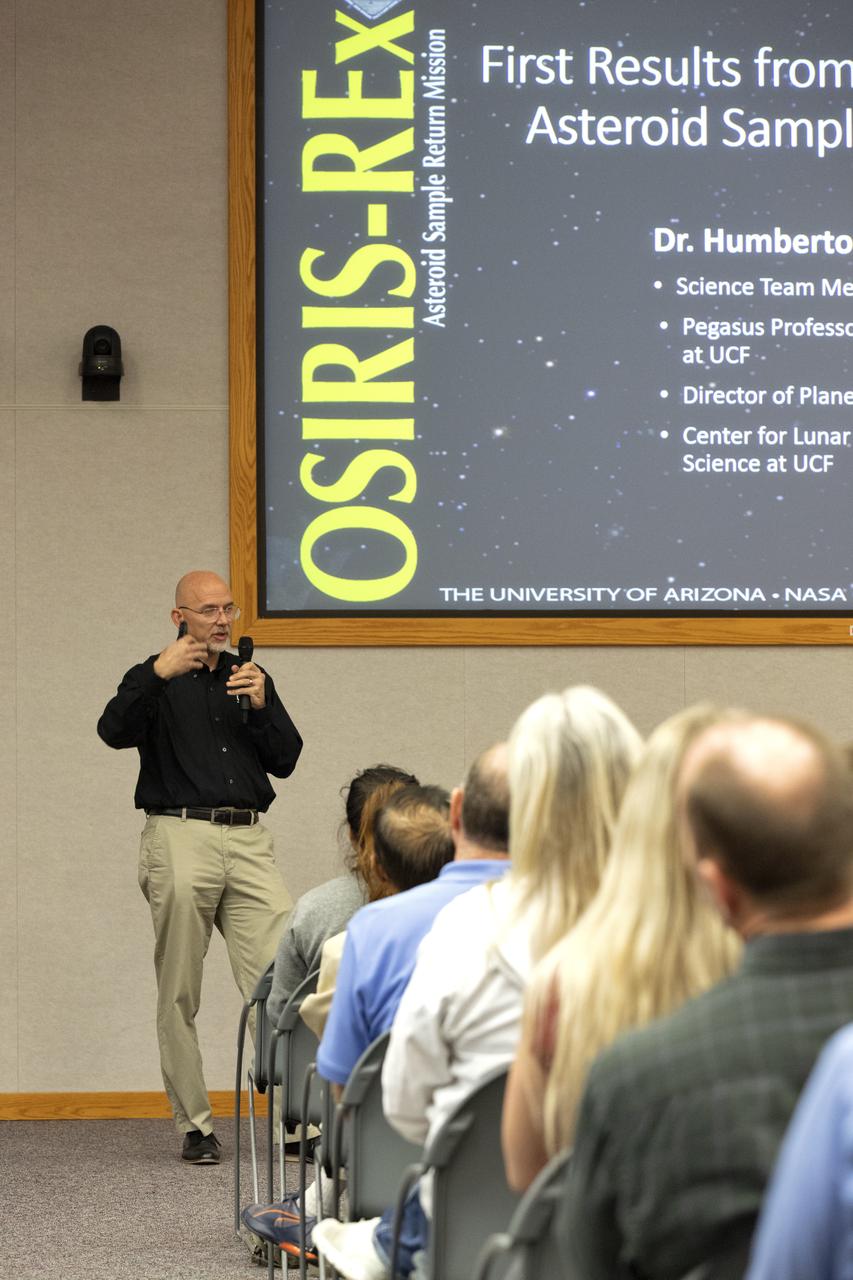
Dane Drefke, United Launch Alliance (ULA) lead engineer for Atlas V mechanical operations, speaks in Kennedy Space Center’s Neil Armstrong O&C Mission Briefing Room on April 16, 2019, during an employee event in which Dr. Humberto Campins from the University of Central Florida gave a status update on NASA’s Origins, Spectral Interpretation, Resource Identification, Security-Regolith Explorer (OSIRIS-REx). The first U.S. mission to sample an asteroid, OSIRIS-REx launched from Cape Canaveral Air Force Station on Sept. 8, 2016 aboard a United Launch Alliance Atlas V rocket. Management of the launch service for OSIRIS-REx was the responsibility of NASA’s Launch Services Program, based at Kennedy.
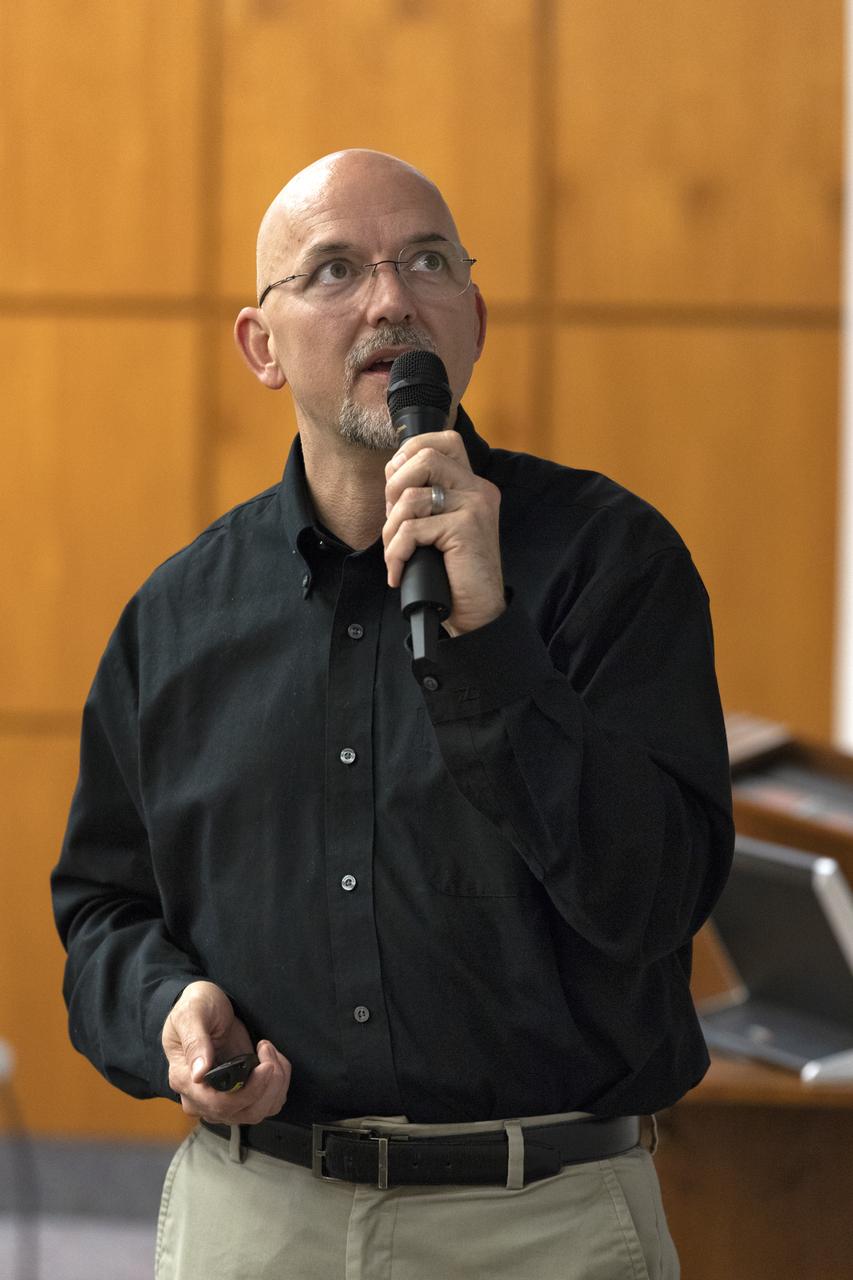
Dane Drefke, United Launch Alliance (ULA) lead engineer for Atlas V mechanical operations, speaks in Kennedy Space Center’s Neil Armstrong O&C Mission Briefing Room on April 16, 2019, during an employee event in which Dr. Humberto Campins from the University of Central Florida gave a status update on NASA’s Origins, Spectral Interpretation, Resource Identification, Security-Regolith Explorer (OSIRIS-REx). The first U.S. mission to sample an asteroid, OSIRIS-REx launched from Cape Canaveral Air Force Station on Sept. 8, 2016 aboard a United Launch Alliance Atlas V rocket. Management of the launch service for OSIRIS-REx was the responsibility of NASA’s Launch Services Program, based at Kennedy.
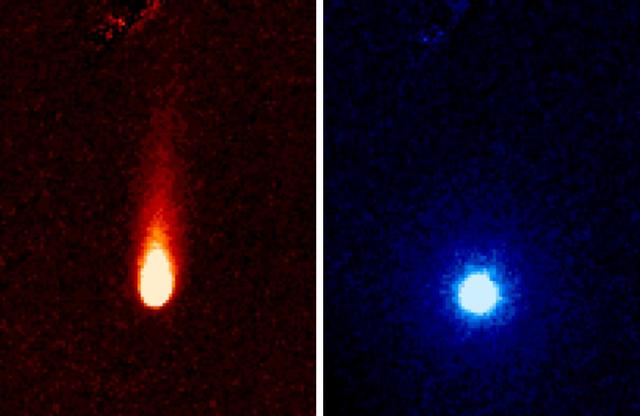
These images from NASA Spitzer Space Telescope of C/2012 S1 Comet ISON were taken on June 13, when ISON was 310 million miles about 500 million kilometers from the sun.
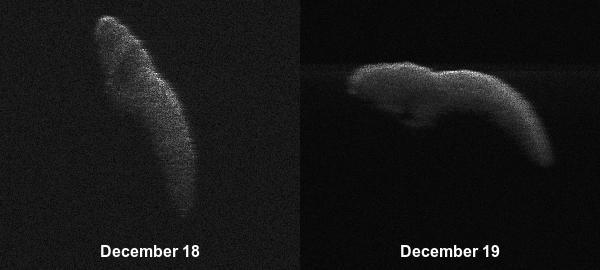
These two radar images of near-Earth asteroid 2003 SD220 were obtained on Dec. 18 and 19 by coordinating observations with the Arecibo Observatory's 1,000-foot (305-meter) antenna in Puerto Rico and the National Science Foundation's (NSF) 330-foot (100-meter) Green Bank Telescope in West Virginia. The radar images reveal the asteroid is at least one mile (1.6 kilometers) long. https://photojournal.jpl.nasa.gov/catalog/PIA22969

This plot of data from NASA Spitzer Space Telescope indicates the presence of molecules in the planet WASP-12b -- a super-hot gas giant that orbits tightly around its star.