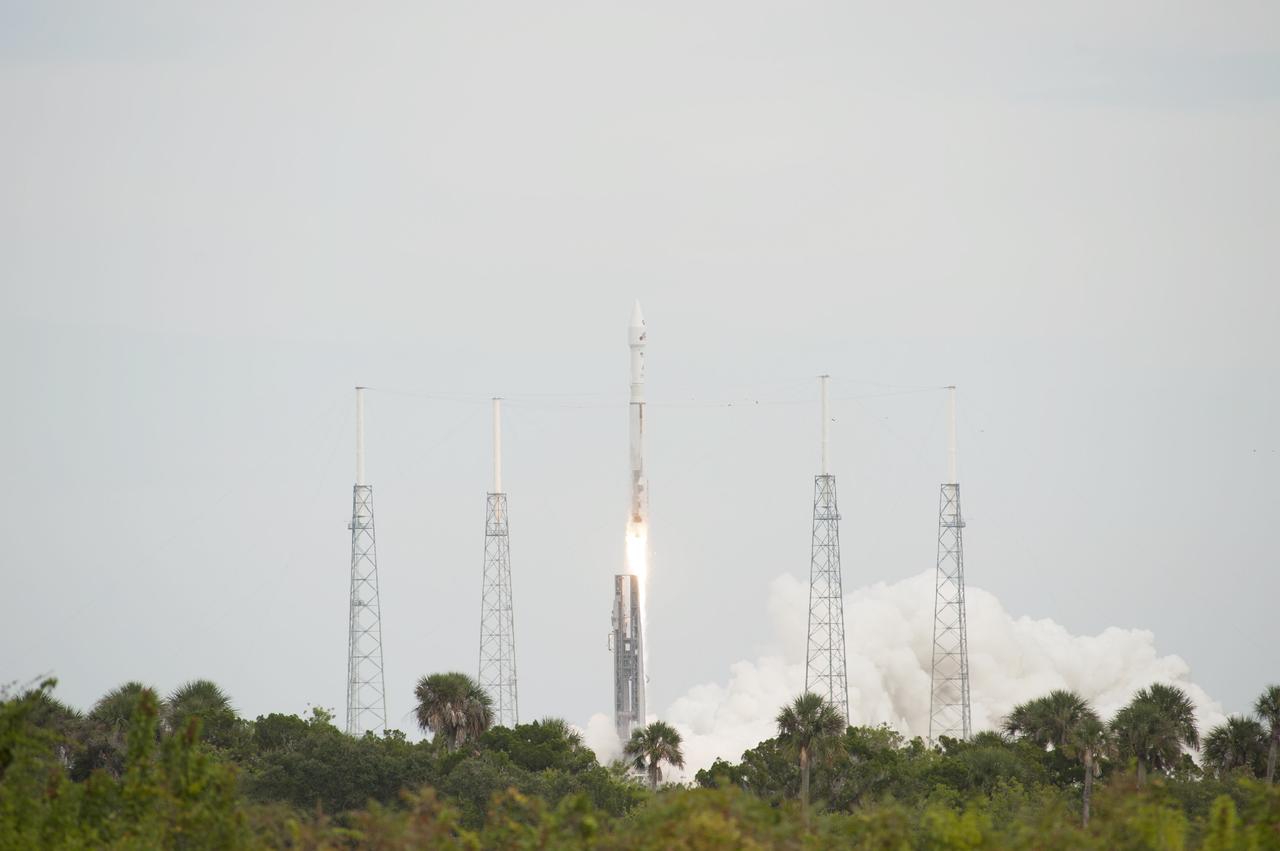
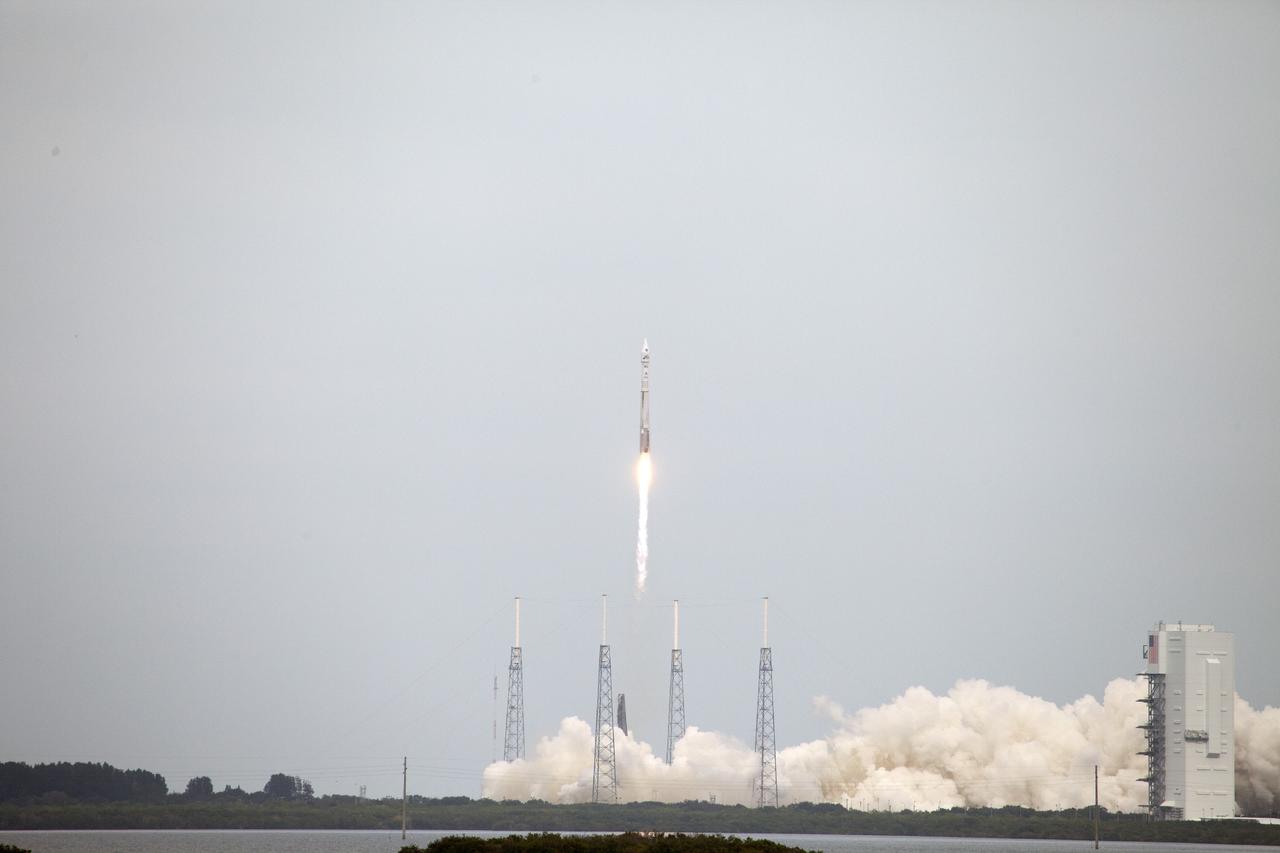
CAPE CANAVERAL, Fla. -- The engine ignites under the United Launch Alliance Atlas V rocket, lifting NASA's Mars Atmosphere and Volatile EvolutioN, or MAVEN, spacecraft off Space Launch Complex 41 at Cape Canaveral Air Force Station in Florida. Launch was on schedule at 1:28 p.m. EST Nov. 18 at the opening of a two-hour launch window. After a 10-month journey to the Red Planet, MAVEN will study its upper atmosphere in unprecedented detail from orbit above the planet. Built by Lockheed Martin in Littleton, Colo., MAVEN will arrive at Mars in September 2014 and will be inserted into an elliptical orbit with a high point of 3,900 miles, swooping down to as close as 93 miles above the planet's surface. For more information, visit: http://www.nasa.gov/mission_pages/maven/main/index.html. Photo credit: NASA/George Roberts
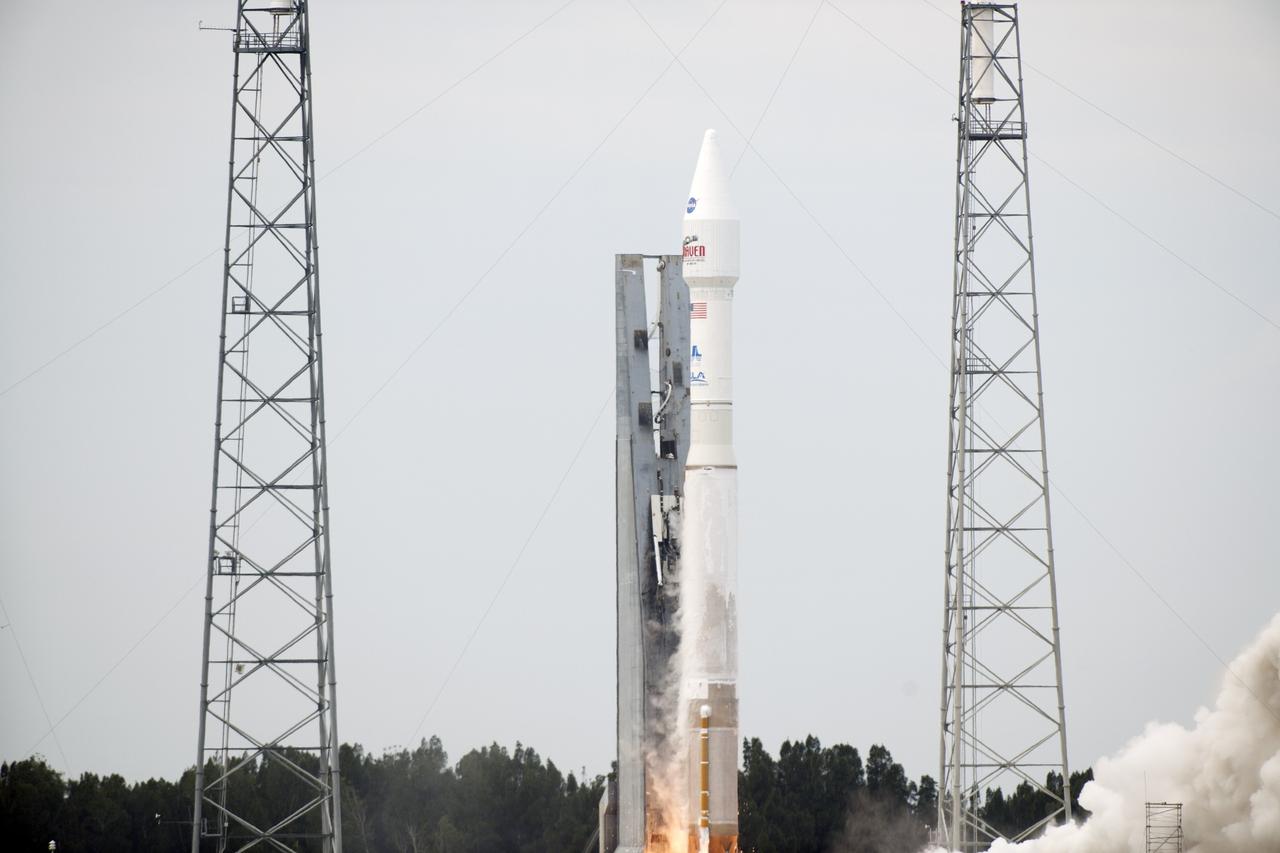
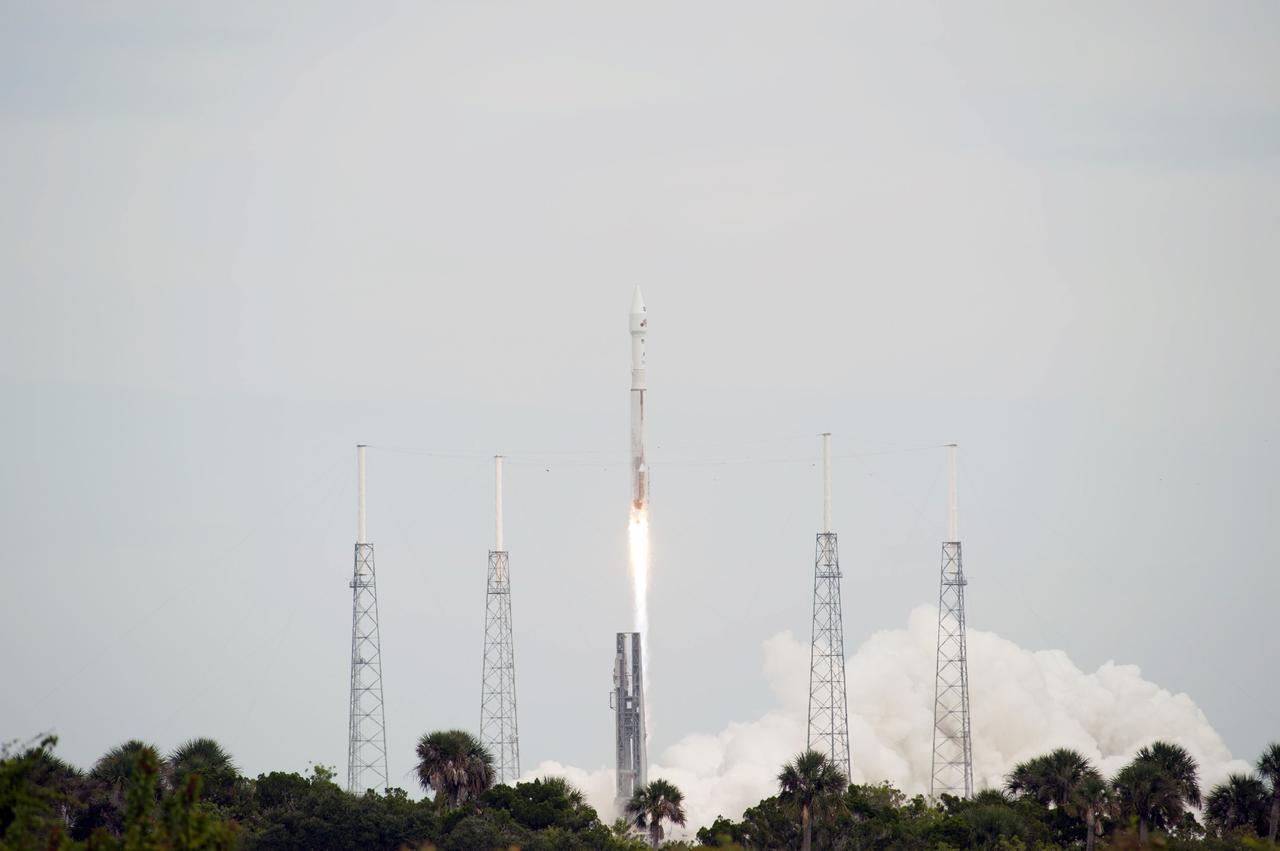
CAPE CANAVERAL, Fla. -- A United Launch Alliance Atlas V rocket lifts off Space Launch Complex 41 at Cape Canaveral Air Force Station in Florida, carrying NASA's Mars Atmosphere and Volatile EvolutioN, or MAVEN, spacecraft. Launch was on schedule at 1:28 p.m. EST Nov. 18 at the opening of a two-hour launch window. After a 10-month journey to the Red Planet, MAVEN will study its upper atmosphere in unprecedented detail from orbit above the planet. Built by Lockheed Martin in Littleton, Colo., MAVEN will arrive at Mars in September 2014 and will be inserted into an elliptical orbit with a high point of 3,900 miles, swooping down to as close as 93 miles above the planet's surface. For more information, visit: http://www.nasa.gov/mission_pages/maven/main/index.html. Photo credit: NASA/Rusty Backer
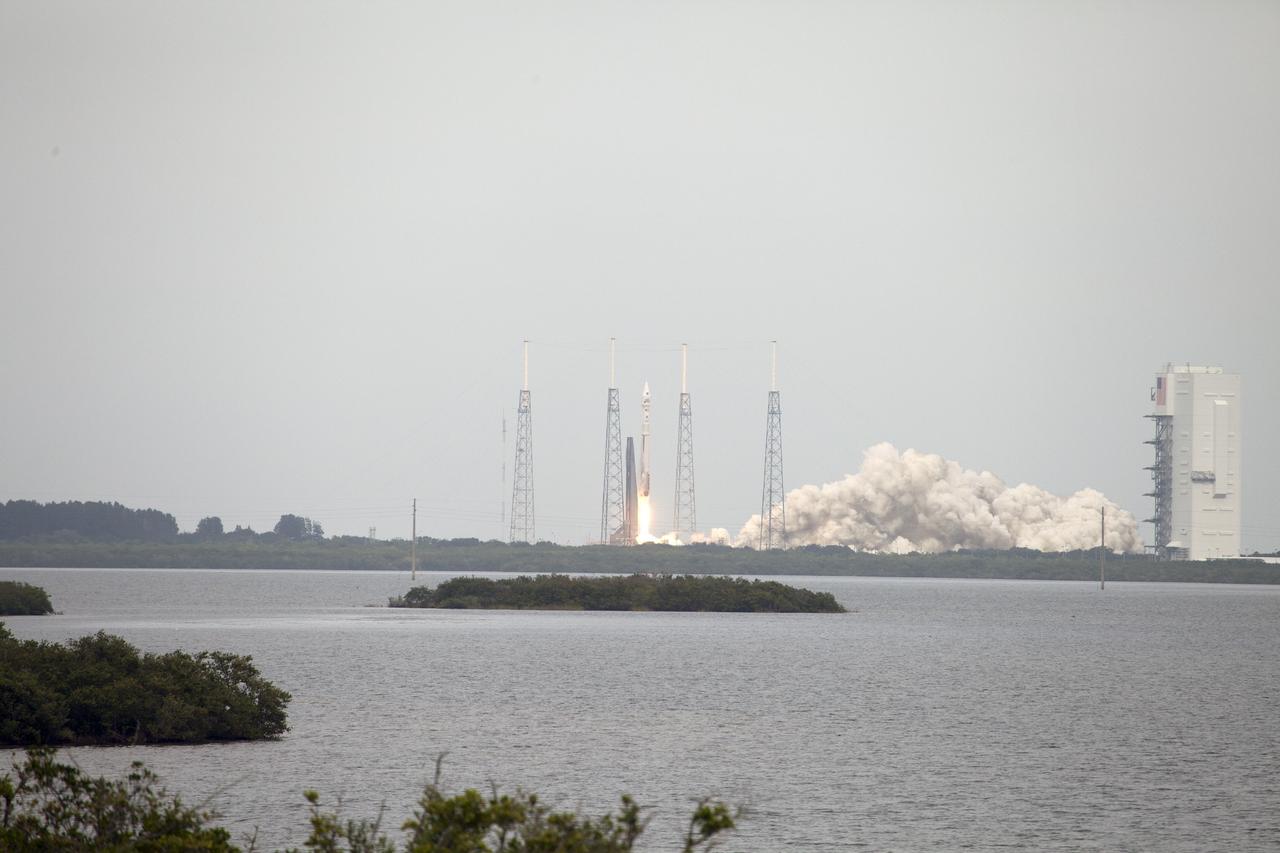
CAPE CANAVERAL, Fla. -- The engine ignites under the United Launch Alliance Atlas V rocket, lifting NASA's Mars Atmosphere and Volatile EvolutioN, or MAVEN, spacecraft off Space Launch Complex 41 at Cape Canaveral Air Force Station in Florida. Launch was on schedule at 1:28 p.m. EST Nov. 18 at the opening of a two-hour launch window. After a 10-month journey to the Red Planet, MAVEN will study its upper atmosphere in unprecedented detail from orbit above the planet. Built by Lockheed Martin in Littleton, Colo., MAVEN will arrive at Mars in September 2014 and will be inserted into an elliptical orbit with a high point of 3,900 miles, swooping down to as close as 93 miles above the planet's surface. For more information, visit: http://www.nasa.gov/mission_pages/maven/main/index.html. Photo credit: NASA/Dan Casper
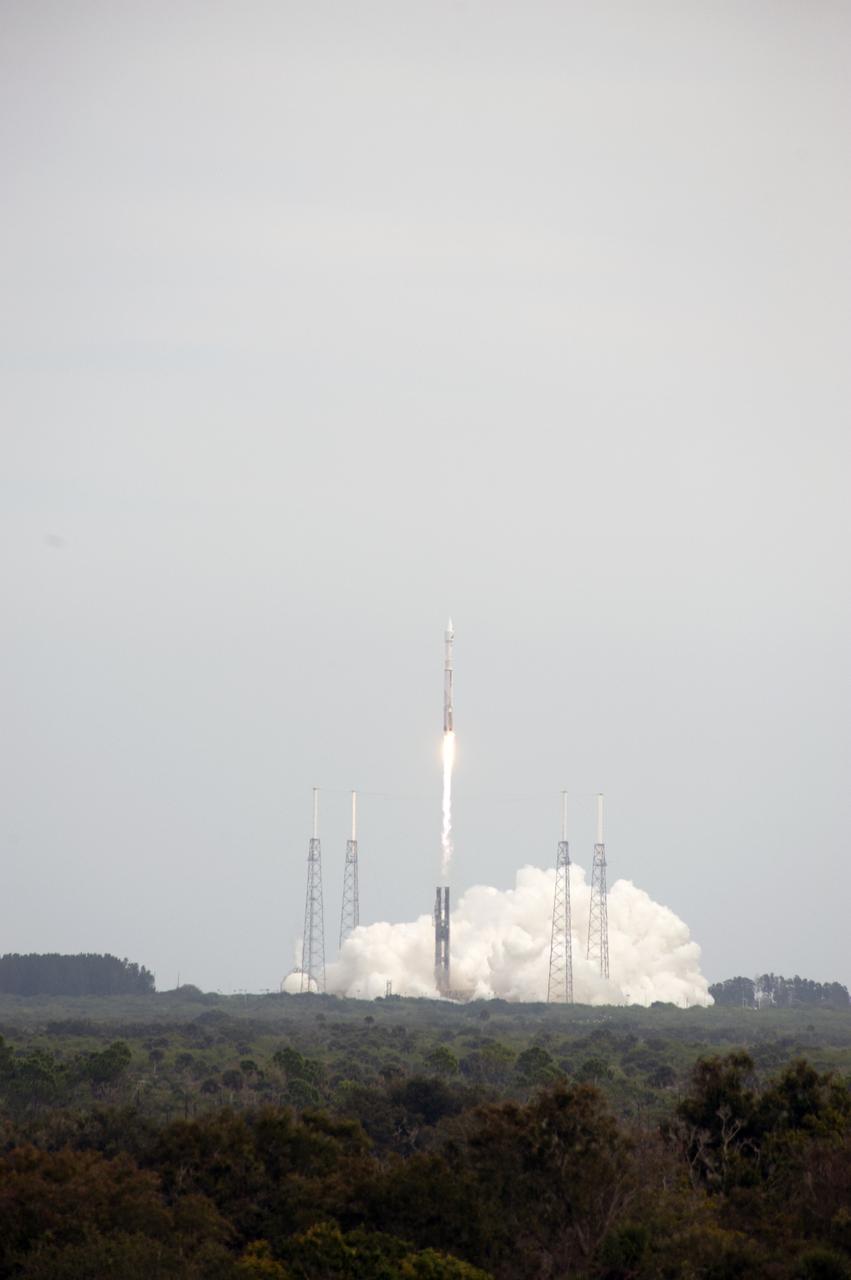
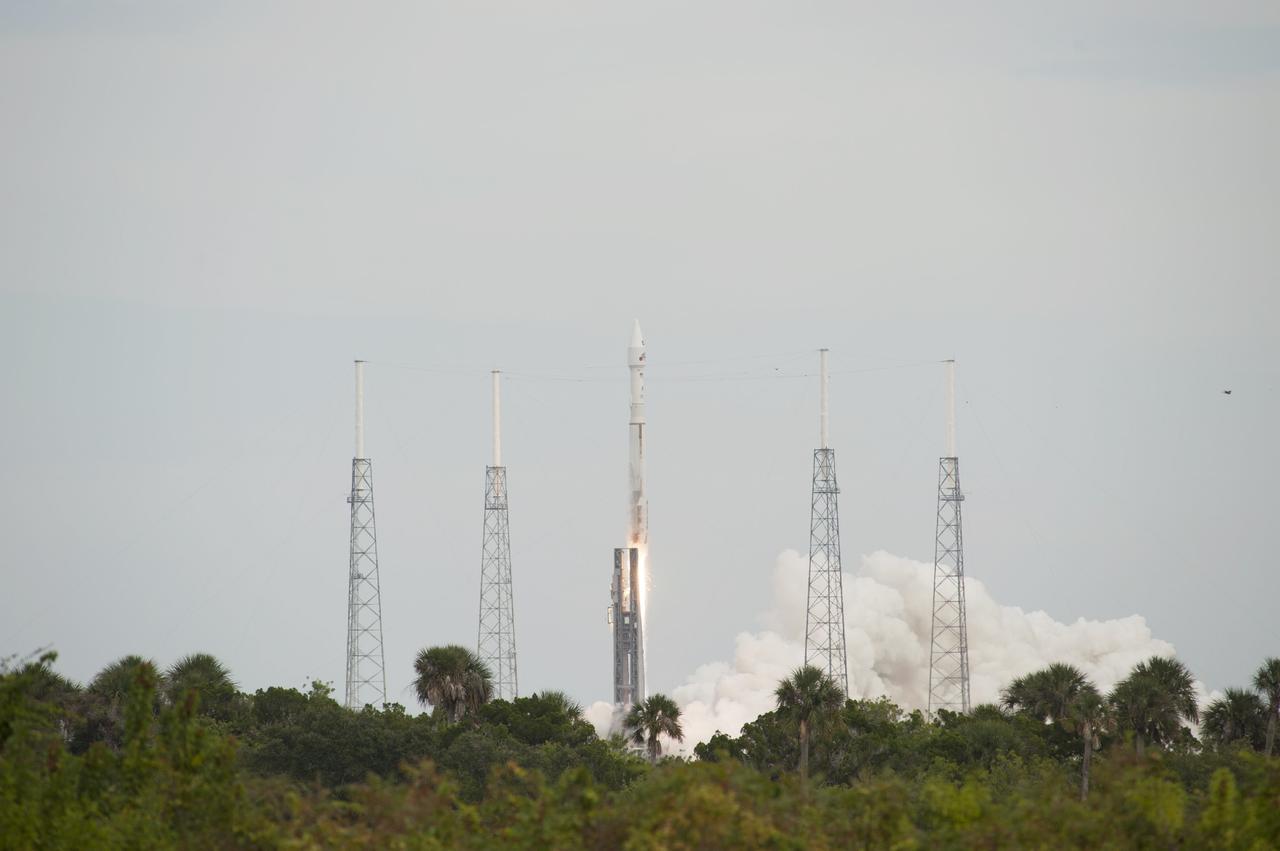
CAPE CANAVERAL, Fla. -- NASA’s Mars Atmosphere and Volatile EvolutioN, or MAVEN, spacecraft begins its 10-month journey to Mars, launching atop a United Launch Alliance Atlas V rocket at 1:28 p.m. EST from Space Launch Complex 41 on Cape Canaveral Air Force Station in Florida. Launch was on schedule Nov. 18 at the opening of a two-hour launch window. After a 10-month journey to the Red Planet, MAVEN will study its upper atmosphere in unprecedented detail from orbit above the planet. Built by Lockheed Martin in Littleton, Colo., MAVEN will arrive at Mars in September 2014 and will be inserted into an elliptical orbit with a high point of 3,900 miles, swooping down to as close as 93 miles above the planet's surface. For more information, visit: http://www.nasa.gov/mission_pages/maven/main/index.html. Photo credit: NASA/Carl Winebarger
CAPE CANAVERAL, Fla. -- NASA’s Mars Atmosphere and Volatile EvolutioN, or MAVEN, spacecraft begins its 10-month journey to Mars, launching atop a United Launch Alliance Atlas V rocket at 1:28 p.m. EST from Space Launch Complex 41 on Cape Canaveral Air Force Station in Florida. Launch was on schedule Nov. 18 at the opening of a two-hour launch window. After a 10-month journey to the Red Planet, MAVEN will study its upper atmosphere in unprecedented detail from orbit above the planet. Built by Lockheed Martin in Littleton, Colo., MAVEN will arrive at Mars in September 2014 and will be inserted into an elliptical orbit with a high point of 3,900 miles, swooping down to as close as 93 miles above the planet's surface. For more information, visit: http://www.nasa.gov/mission_pages/maven/main/index.html. Photo credit: NASA/Dan Casper
CAPE CANAVERAL, Fla. -- The engine ignites under the United Launch Alliance Atlas V rocket, lifting NASA's Mars Atmosphere and Volatile EvolutioN, or MAVEN, spacecraft off Space Launch Complex 41 at Cape Canaveral Air Force Station in Florida. Launch was on schedule at 1:28 p.m. EST Nov. 18 at the opening of a two-hour launch window. After a 10-month journey to the Red Planet, MAVEN will study its upper atmosphere in unprecedented detail from orbit above the planet. Built by Lockheed Martin in Littleton, Colo., MAVEN will arrive at Mars in September 2014 and will be inserted into an elliptical orbit with a high point of 3,900 miles, swooping down to as close as 93 miles above the planet's surface. For more information, visit: http://www.nasa.gov/mission_pages/maven/main/index.html. Photo credit: NASA/George Roberts
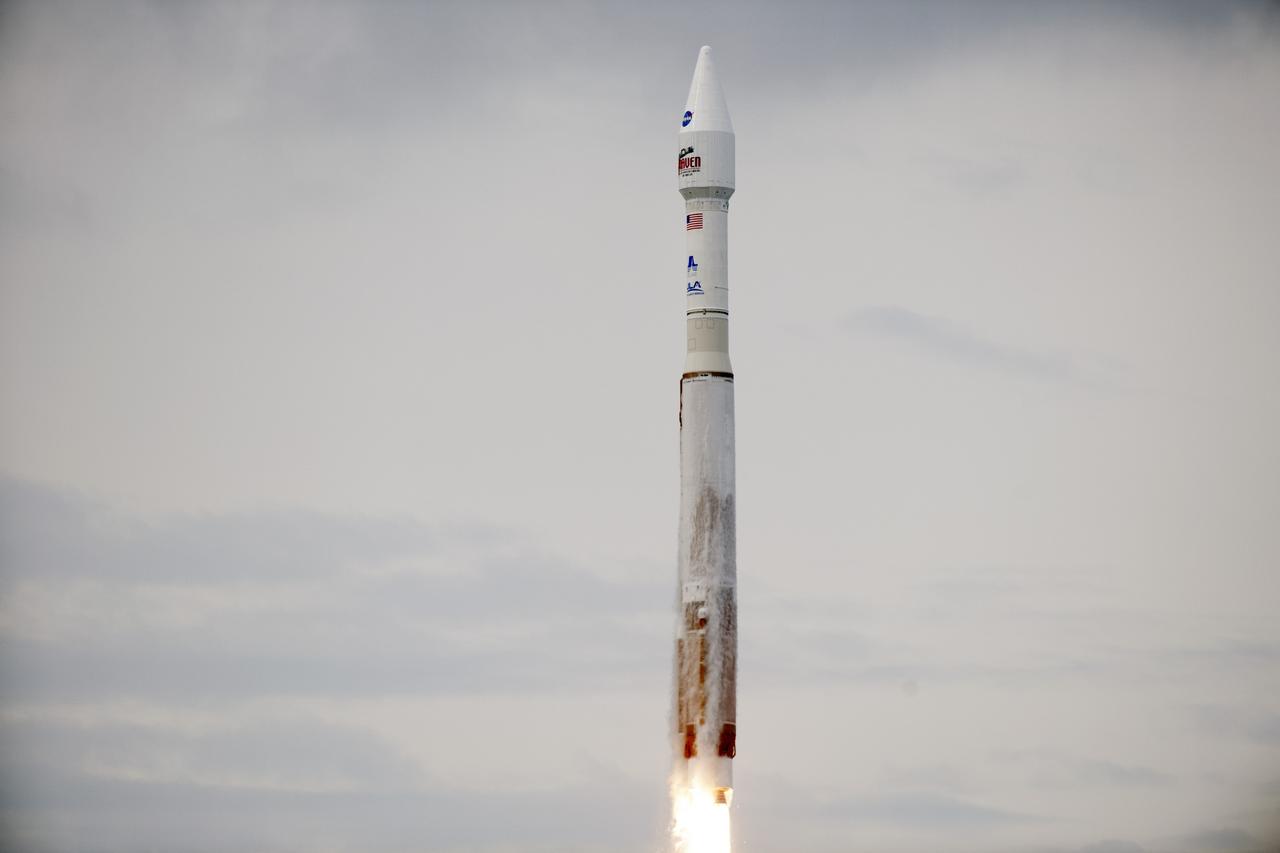
CAPE CANAVERAL, Fla. -- A United Launch Alliance Atlas V rocket lifts off through the clouds over Space Launch Complex 41 at Cape Canaveral Air Force Station in Florida, carrying NASA's Mars Atmosphere and Volatile EvolutioN, or MAVEN, spacecraft. Launch was on schedule at 1:28 p.m. EST Nov. 18 at the opening of a two-hour launch window. After a 10-month journey to the Red Planet, MAVEN will study its upper atmosphere in unprecedented detail from orbit above the planet. Built by Lockheed Martin in Littleton, Colo., MAVEN will arrive at Mars in September 2014 and will be inserted into an elliptical orbit with a high point of 3,900 miles, swooping down to as close as 93 miles above the planet's surface. For more information, visit: http://www.nasa.gov/mission_pages/maven/main/index.html. Photo credit: NASA/Rusty Backer
CAPE CANAVERAL, Fla. -- The engine ignites under the United Launch Alliance Atlas V rocket, lifting NASA's Mars Atmosphere and Volatile EvolutioN, or MAVEN, spacecraft off Space Launch Complex 41 at Cape Canaveral Air Force Station in Florida. Launch was on schedule at 1:28 p.m. EST Nov. 18 at the opening of a two-hour launch window. After a 10-month journey to the Red Planet, MAVEN will study its upper atmosphere in unprecedented detail from orbit above the planet. Built by Lockheed Martin in Littleton, Colo., MAVEN will arrive at Mars in September 2014 and will be inserted into an elliptical orbit with a high point of 3,900 miles, swooping down to as close as 93 miles above the planet's surface. For more information, visit: http://www.nasa.gov/mission_pages/maven/main/index.html. Photo credit: NASA/George Roberts
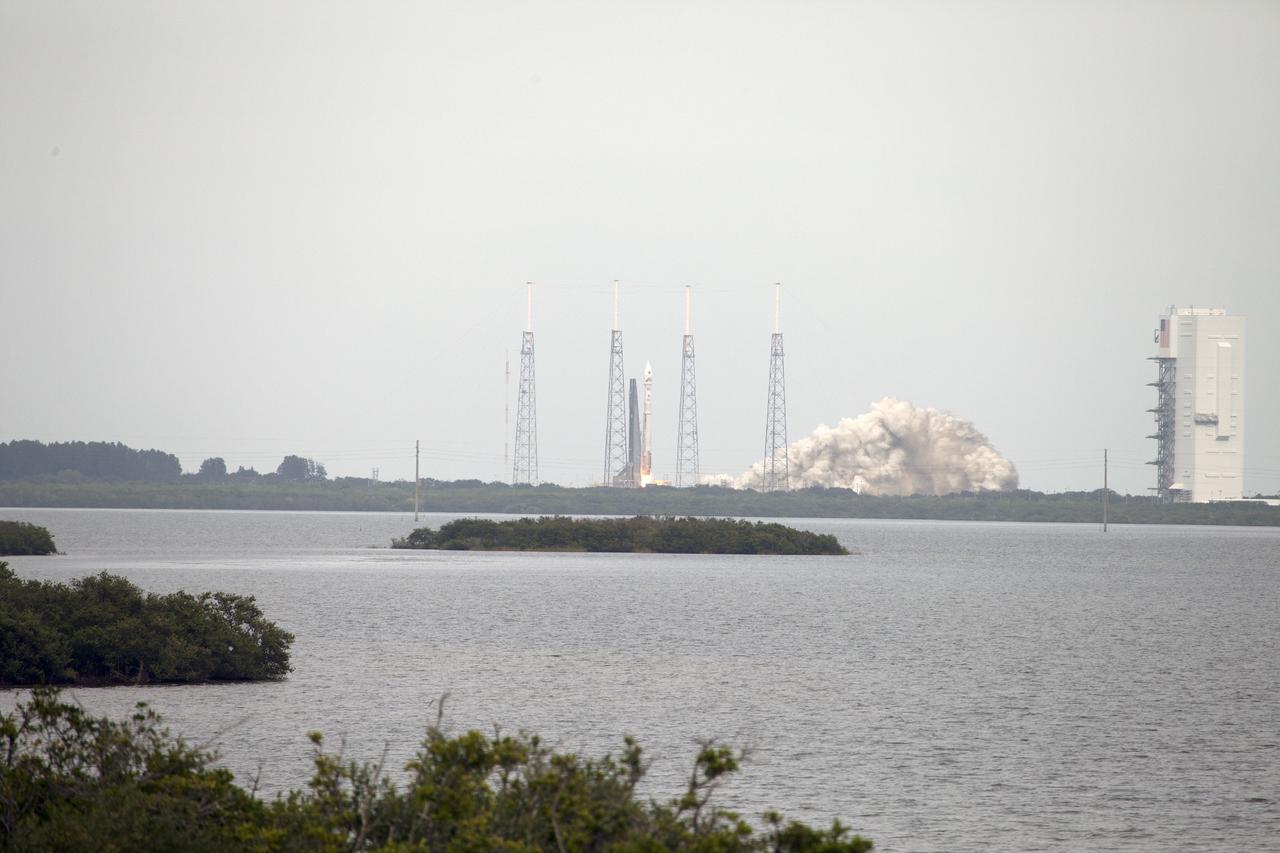
CAPE CANAVERAL, Fla. -- The engine ignites under the United Launch Alliance Atlas V rocket, lifting NASA's Mars Atmosphere and Volatile EvolutioN, or MAVEN, spacecraft off Space Launch Complex 41 at Cape Canaveral Air Force Station in Florida. Launch was on schedule at 1:28 p.m. EST Nov. 18 at the opening of a two-hour launch window. After a 10-month journey to the Red Planet, MAVEN will study its upper atmosphere in unprecedented detail from orbit above the planet. Built by Lockheed Martin in Littleton, Colo., MAVEN will arrive at Mars in September 2014 and will be inserted into an elliptical orbit with a high point of 3,900 miles, swooping down to as close as 93 miles above the planet's surface. For more information, visit: http://www.nasa.gov/mission_pages/maven/main/index.html. Photo credit: NASA/Dan Casper
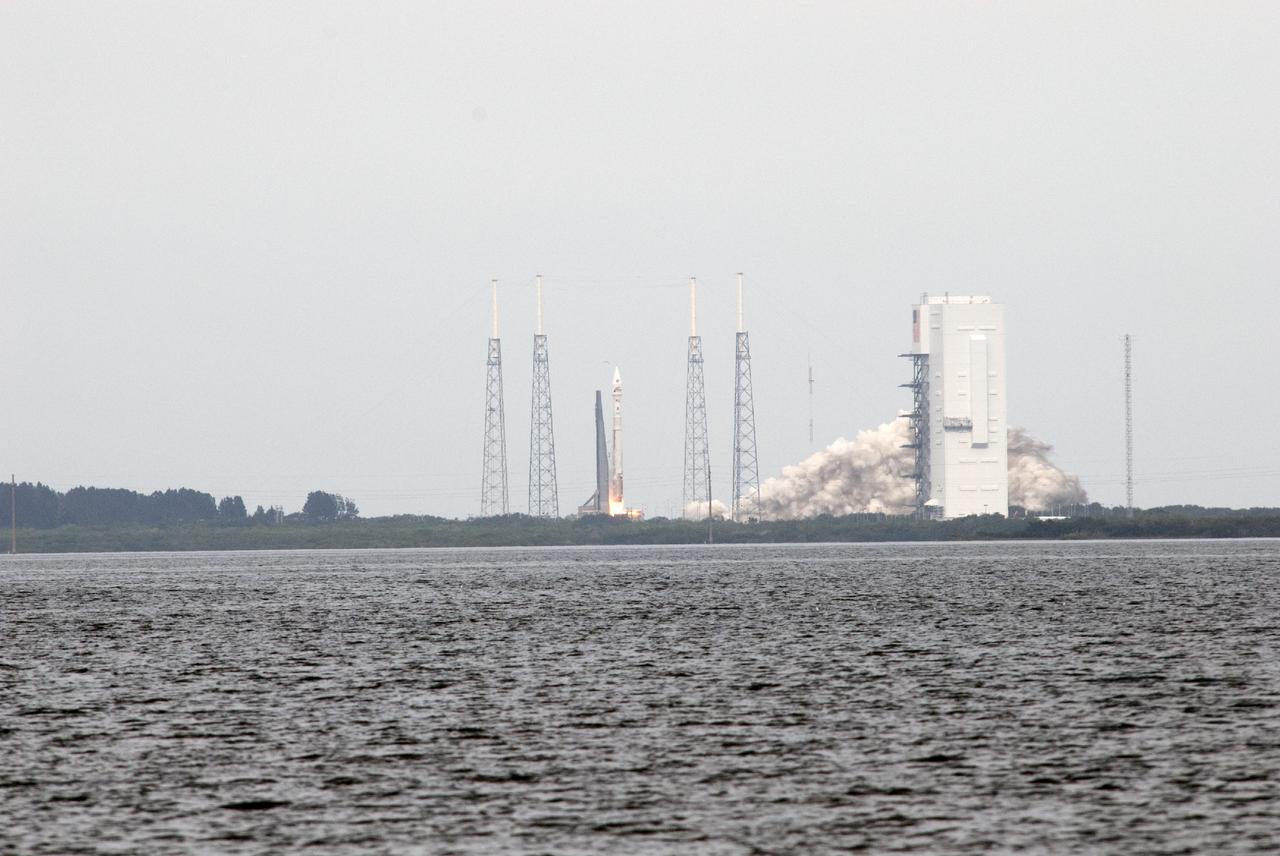
CAPE CANAVERAL, Fla. -- The engine ignites under the United Launch Alliance Atlas V rocket, lifting NASA's Mars Atmosphere and Volatile EvolutioN, or MAVEN, spacecraft off Space Launch Complex 41 at Cape Canaveral Air Force Station in Florida. Launch was on schedule at 1:28 p.m. EST Nov. 18 at the opening of a two-hour launch window. After a 10-month journey to the Red Planet, MAVEN will study its upper atmosphere in unprecedented detail from orbit above the planet. Built by Lockheed Martin in Littleton, Colo., MAVEN will arrive at Mars in September 2014 and will be inserted into an elliptical orbit with a high point of 3,900 miles, swooping down to as close as 93 miles above the planet's surface. For more information, visit: http://www.nasa.gov/mission_pages/maven/main/index.html. Photo credit: NASA/Jim Grossmann
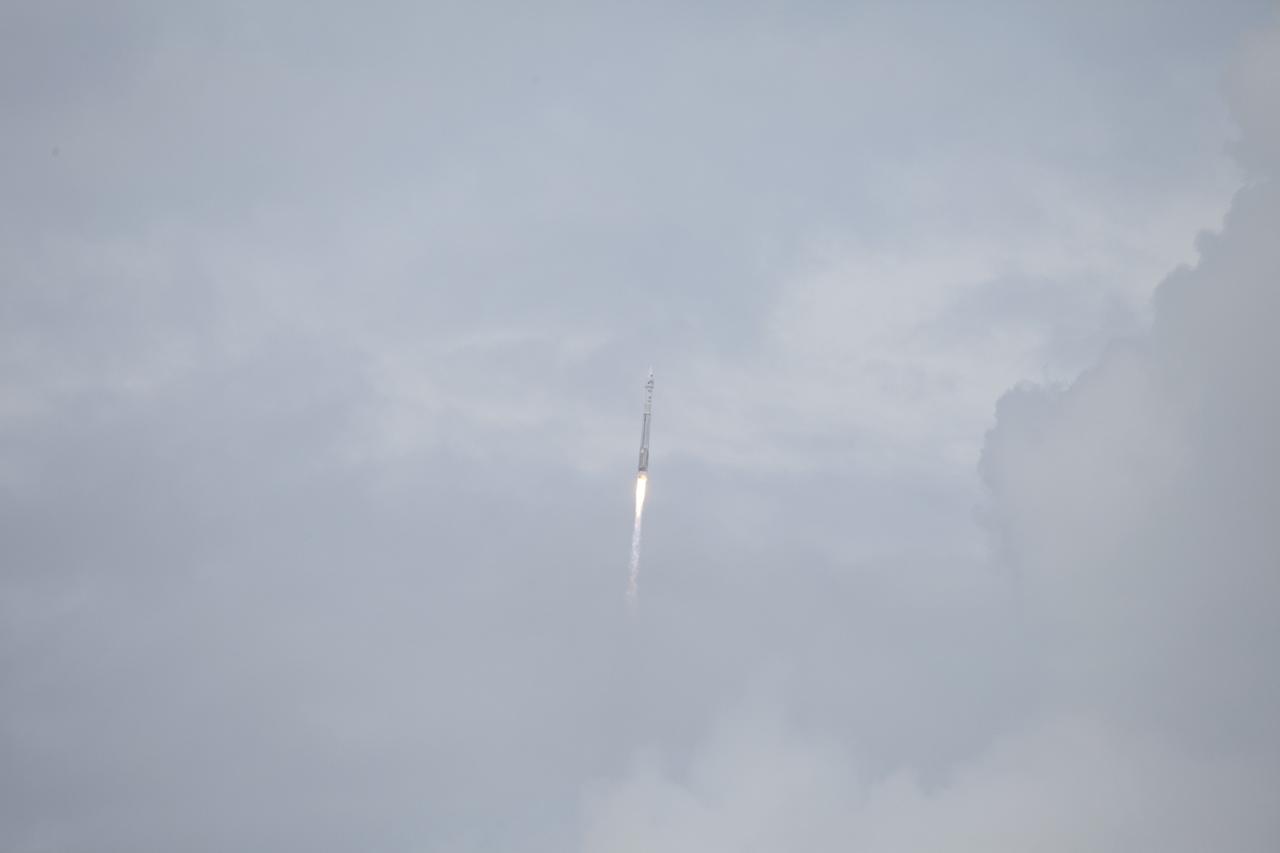
CAPE CANAVERAL, Fla. -- A United Launch Alliance Atlas V rocket lifts off through the clouds over Space Launch Complex 41 at Cape Canaveral Air Force Station in Florida, carrying NASA's Mars Atmosphere and Volatile EvolutioN, or MAVEN, spacecraft. Launch was on schedule at 1:28 p.m. EST Nov. 18 at the opening of a two-hour launch window. After a 10-month journey to the Red Planet, MAVEN will study its upper atmosphere in unprecedented detail from orbit above the planet. Built by Lockheed Martin in Littleton, Colo., MAVEN will arrive at Mars in September 2014 and will be inserted into an elliptical orbit with a high point of 3,900 miles, swooping down to as close as 93 miles above the planet's surface. For more information, visit: http://www.nasa.gov/mission_pages/maven/main/index.html. Photo credit: NASA/Dan Casper

CAPE CANAVERAL, Fla. -- The engine ignites under the United Launch Alliance Atlas V rocket, lifting NASA's Mars Atmosphere and Volatile EvolutioN, or MAVEN, spacecraft off Space Launch Complex 41 at Cape Canaveral Air Force Station in Florida. Launch was on schedule at 1:28 p.m. EST Nov. 18 at the opening of a two-hour launch window. After a 10-month journey to the Red Planet, MAVEN will study its upper atmosphere in unprecedented detail from orbit above the planet. Built by Lockheed Martin in Littleton, Colo., MAVEN will arrive at Mars in September 2014 and will be inserted into an elliptical orbit with a high point of 3,900 miles, swooping down to as close as 93 miles above the planet's surface. For more information, visit: http://www.nasa.gov/mission_pages/maven/main/index.html. Photo credit: NASA/Dan Casper

CAPE CANAVERAL, Fla. -- David Mitchell, NASA MAVEN project manager at the Goddard Space Flight Center in Greenbelt, Md., participates in a post-launch news conference in NASA's Press Site TV auditorium following the successful launch of NASA’s Mars Atmosphere and Volatile EvolutioN, or MAVEN, spacecraft. Launch was on schedule at 1:28 p.m. EST Nov. 18 at the opening of a two-hour launch window. After a 10-month journey to the Red Planet, MAVEN will study its upper atmosphere in unprecedented detail from orbit above the planet. Built by Lockheed Martin in Littleton, Colo., MAVEN will arrive at Mars in September 2014 and will be inserted into an elliptical orbit with a high point of 3,900 miles, swooping down to as close as 93 miles above the planet's surface. For more information, visit: http://www.nasa.gov/mission_pages/maven/main/index.html. Photo credit: NASA/Kim Shiflett
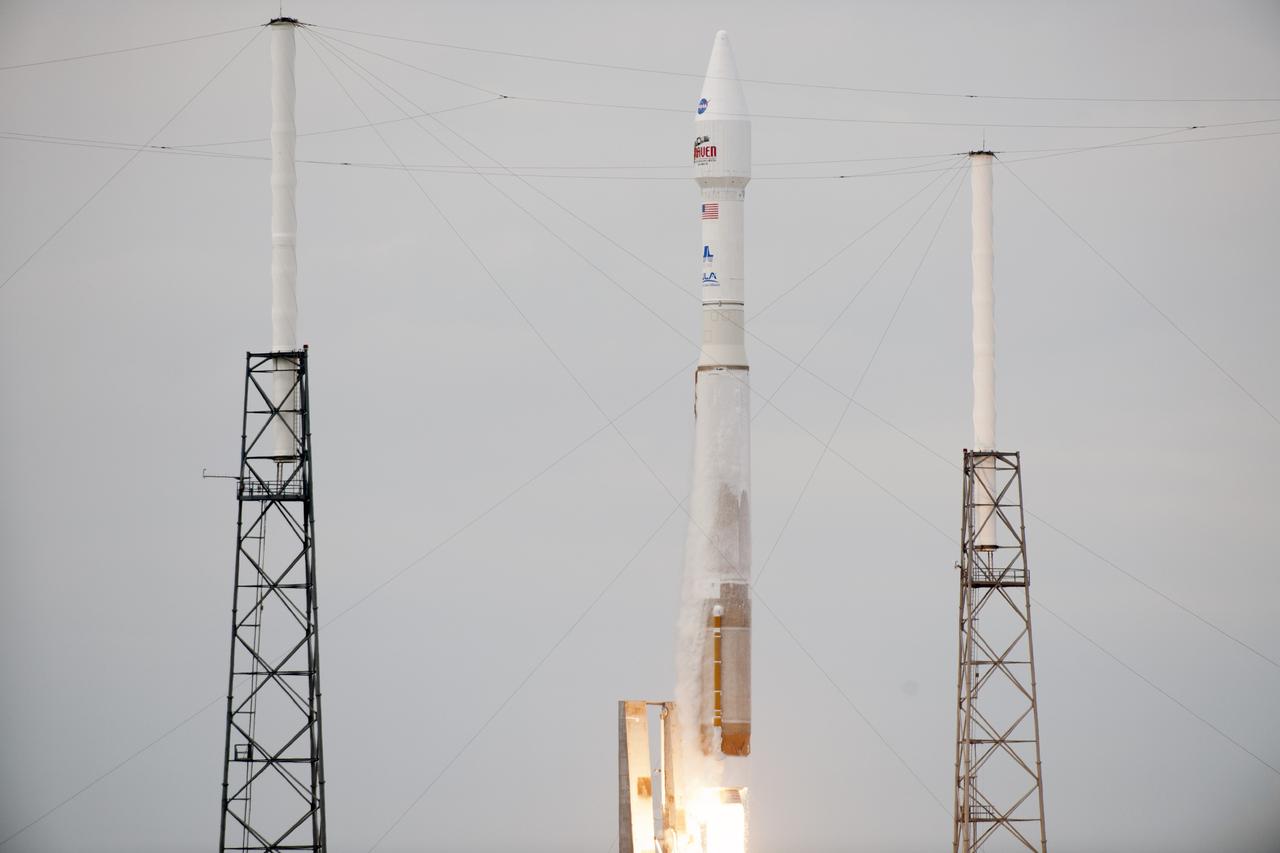
CAPE CANAVERAL, Fla. -- A United Launch Alliance Atlas V rocket lifts off past the lightning masts on Space Launch Complex 41 at Cape Canaveral Air Force Station in Florida, carrying NASA's Mars Atmosphere and Volatile EvolutioN, or MAVEN, spacecraft. Launch was on schedule at 1:28 p.m. EST Nov. 18 at the opening of a two-hour launch window. After a 10-month journey to the Red Planet, MAVEN will study its upper atmosphere in unprecedented detail from orbit above the planet. Built by Lockheed Martin in Littleton, Colo., MAVEN will arrive at Mars in September 2014 and will be inserted into an elliptical orbit with a high point of 3,900 miles, swooping down to as close as 93 miles above the planet's surface. For more information, visit: http://www.nasa.gov/mission_pages/maven/main/index.html. Photo credit: NASA/Rusty Backer
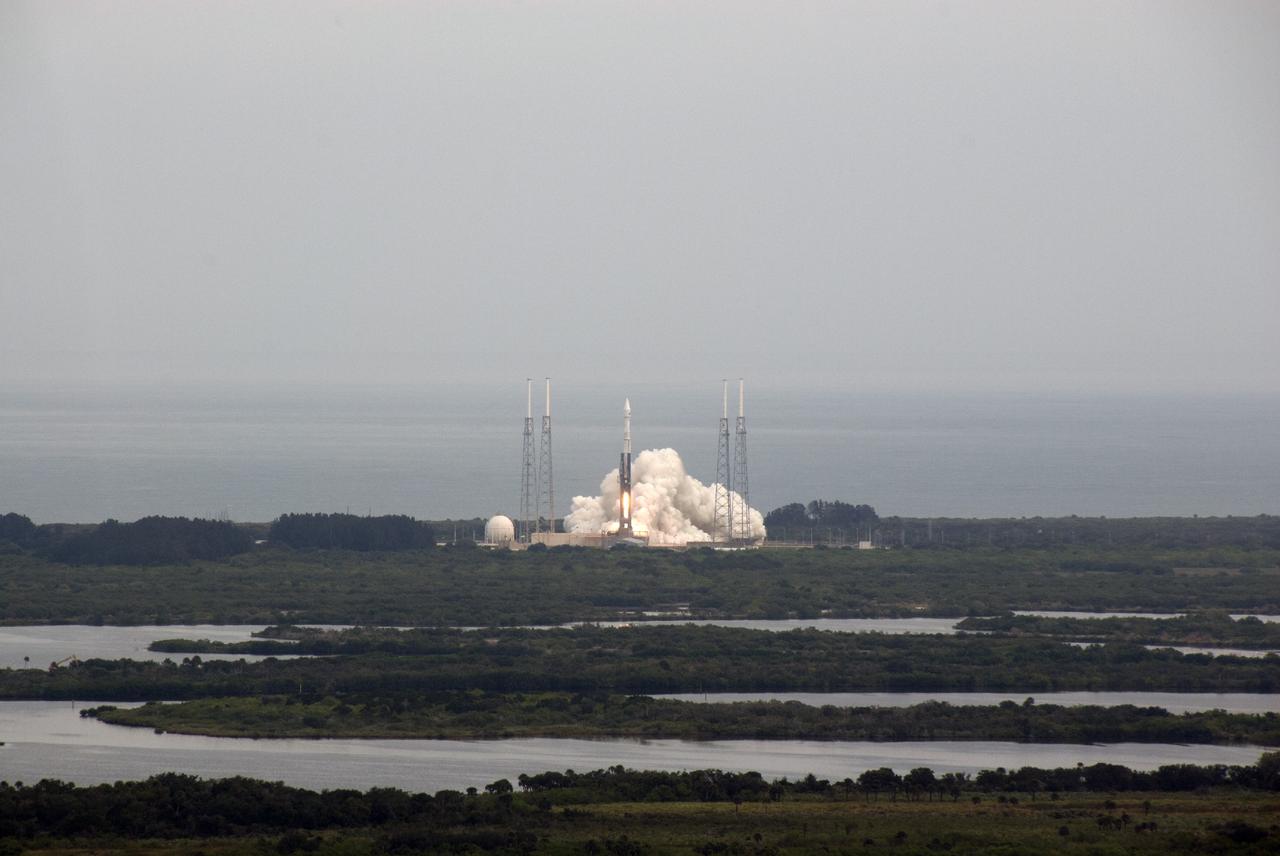
CAPE CANAVERAL, Fla. -- The engine ignites under the United Launch Alliance Atlas V rocket, lifting NASA's Mars Atmosphere and Volatile EvolutioN, or MAVEN, spacecraft off Space Launch Complex 41 at Cape Canaveral Air Force Station in Florida. Launch was on schedule at 1:28 p.m. EST Nov. 18 at the opening of a two-hour launch window. After a 10-month journey to the Red Planet, MAVEN will study its upper atmosphere in unprecedented detail from orbit above the planet. Built by Lockheed Martin in Littleton, Colo., MAVEN will arrive at Mars in September 2014 and will be inserted into an elliptical orbit with a high point of 3,900 miles, swooping down to as close as 93 miles above the planet's surface. For more information, visit: http://www.nasa.gov/mission_pages/maven/main/index.html. Photo credit: NASA/Bill White
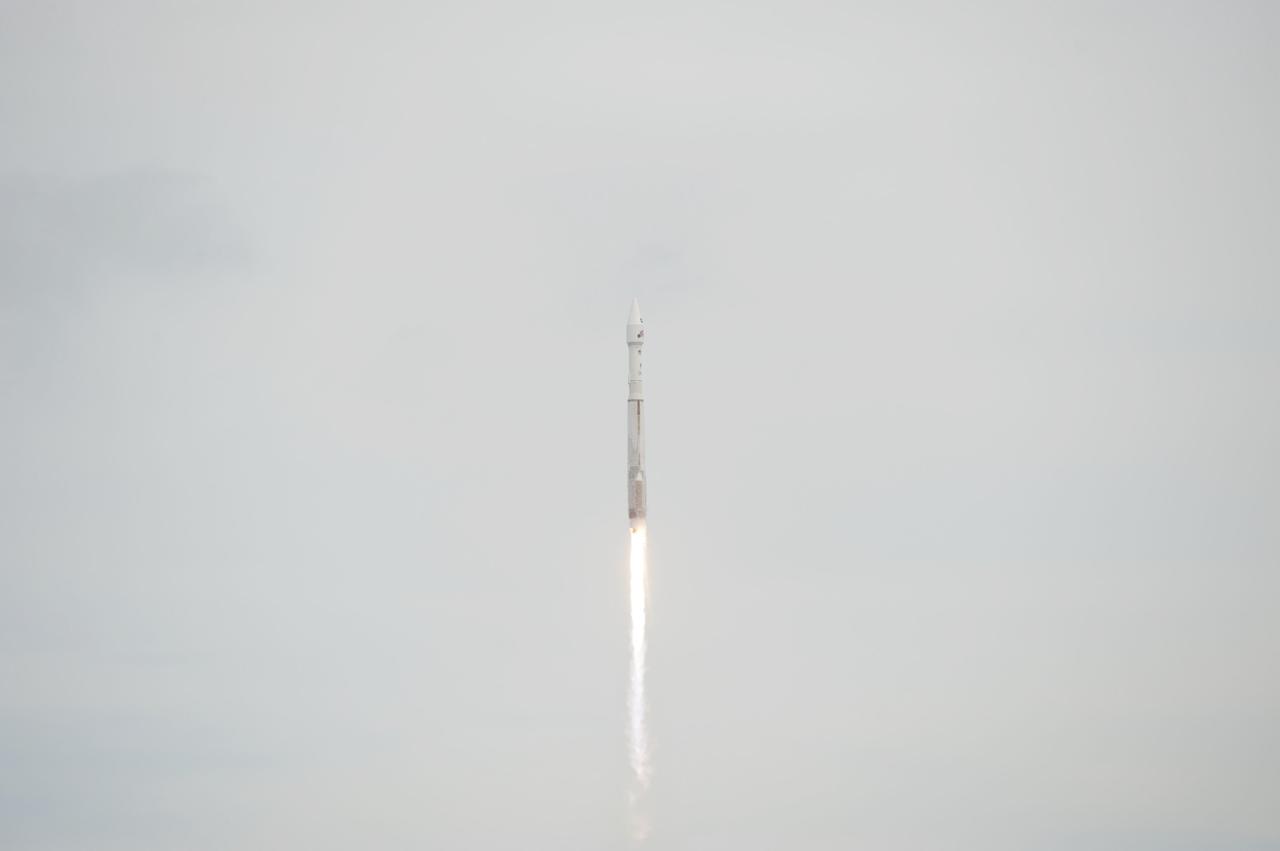
CAPE CANAVERAL, Fla. -- A United Launch Alliance Atlas V rocket lifts off through the clouds over Space Launch Complex 41 at Cape Canaveral Air Force Station in Florida, carrying NASA's Mars Atmosphere and Volatile EvolutioN, or MAVEN, spacecraft. Launch was on schedule at 1:28 p.m. EST Nov. 18 at the opening of a two-hour launch window. After a 10-month journey to the Red Planet, MAVEN will study its upper atmosphere in unprecedented detail from orbit above the planet. Built by Lockheed Martin in Littleton, Colo., MAVEN will arrive at Mars in September 2014 and will be inserted into an elliptical orbit with a high point of 3,900 miles, swooping down to as close as 93 miles above the planet's surface. For more information, visit: http://www.nasa.gov/mission_pages/maven/main/index.html. Photo credit: NASA/George Roberts
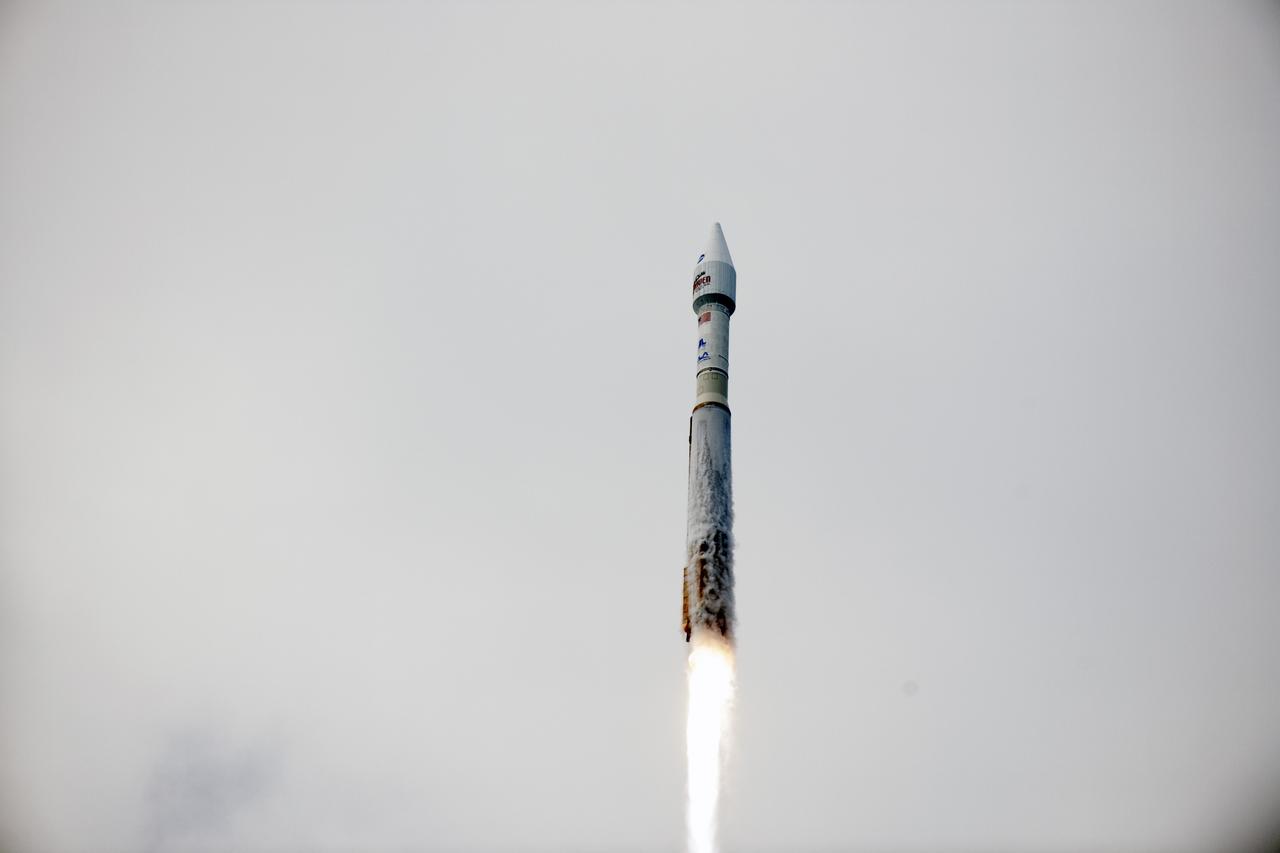
CAPE CANAVERAL, Fla. -- A United Launch Alliance Atlas V rocket lifts off into the clouds over Space Launch Complex 41 at Cape Canaveral Air Force Station in Florida, carrying NASA's Mars Atmosphere and Volatile EvolutioN, or MAVEN, spacecraft. Launch was on schedule at 1:28 p.m. EST Nov. 18 at the opening of a two-hour launch window. After a 10-month journey to the Red Planet, MAVEN will study its upper atmosphere in unprecedented detail from orbit above the planet. Built by Lockheed Martin in Littleton, Colo., MAVEN will arrive at Mars in September 2014 and will be inserted into an elliptical orbit with a high point of 3,900 miles, swooping down to as close as 93 miles above the planet's surface. For more information, visit: http://www.nasa.gov/mission_pages/maven/main/index.html. Photo credit: NASA/Rusty Backer
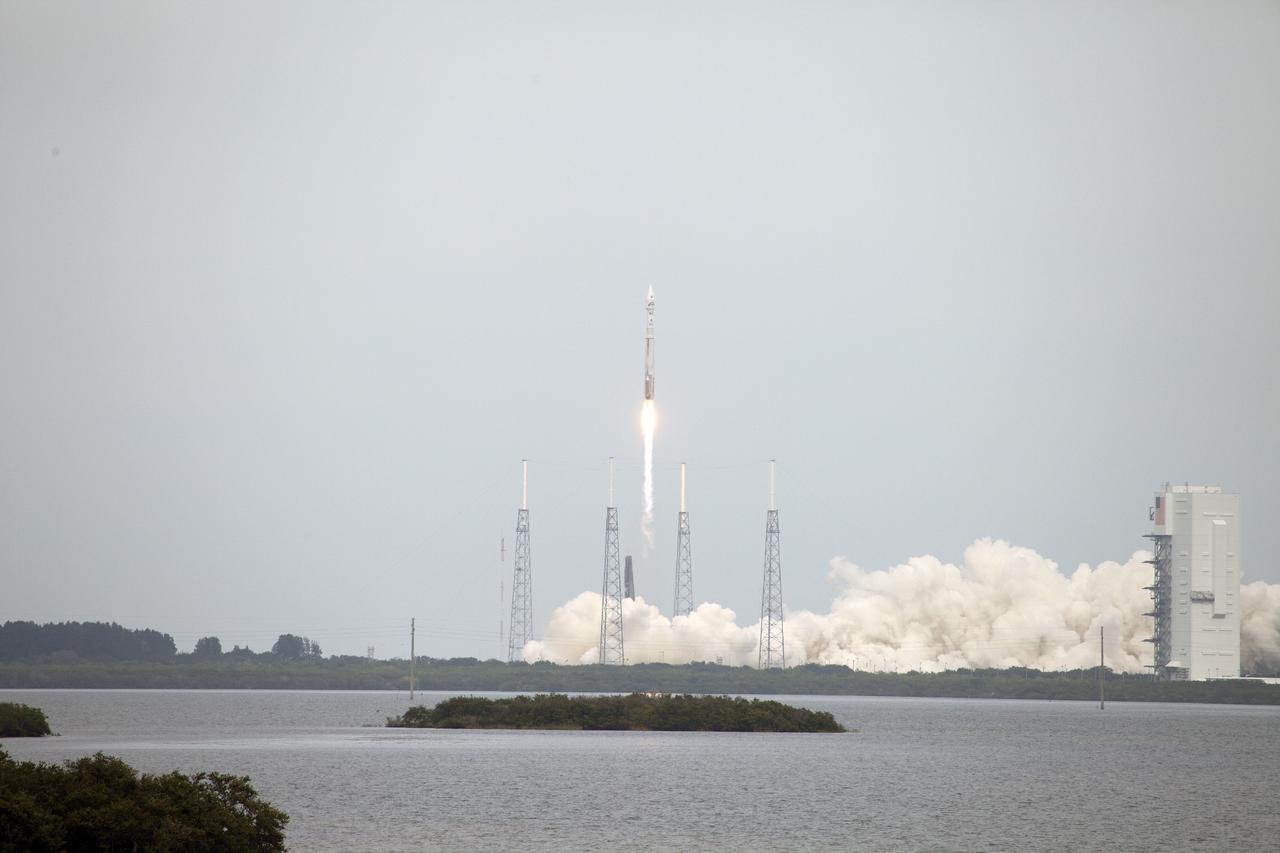
CAPE CANAVERAL, Fla. -- NASA’s Mars Atmosphere and Volatile EvolutioN, or MAVEN, spacecraft begins its 10-month journey to Mars, launching atop a United Launch Alliance Atlas V rocket at 1:28 p.m. EST from Space Launch Complex 41 on Cape Canaveral Air Force Station in Florida. Launch was on schedule Nov. 18 at the opening of a two-hour launch window. After a 10-month journey to the Red Planet, MAVEN will study its upper atmosphere in unprecedented detail from orbit above the planet. Built by Lockheed Martin in Littleton, Colo., MAVEN will arrive at Mars in September 2014 and will be inserted into an elliptical orbit with a high point of 3,900 miles, swooping down to as close as 93 miles above the planet's surface. For more information, visit: http://www.nasa.gov/mission_pages/maven/main/index.html. Photo credit: NASA/Dan Casper
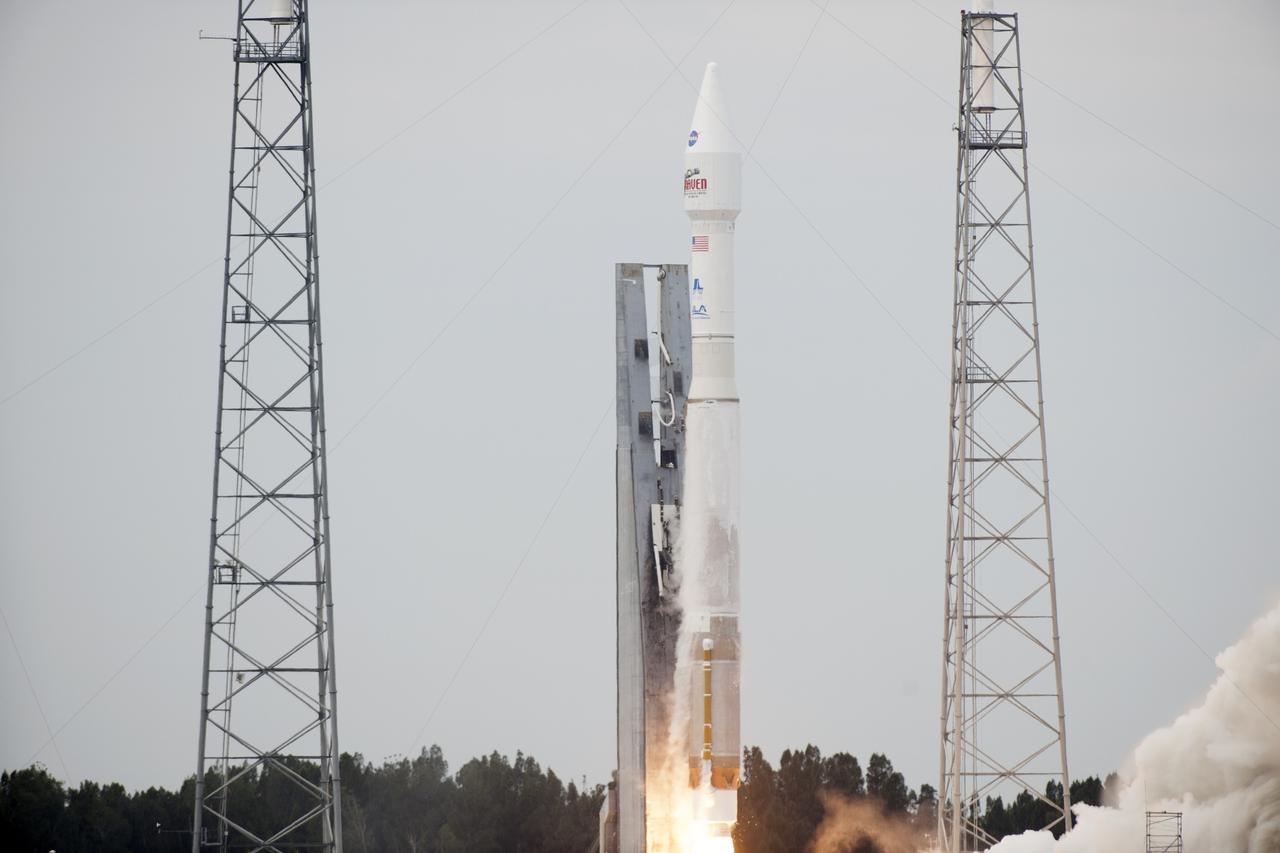
CAPE CANAVERAL, Fla. -- A United Launch Alliance Atlas V rocket lifts off Space Launch Complex 41 at Cape Canaveral Air Force Station in Florida, carrying NASA's Mars Atmosphere and Volatile EvolutioN, or MAVEN, spacecraft. Launch was on schedule at 1:28 p.m. EST Nov. 18 at the opening of a two-hour launch window. After a 10-month journey to the Red Planet, MAVEN will study its upper atmosphere in unprecedented detail from orbit above the planet. Built by Lockheed Martin in Littleton, Colo., MAVEN will arrive at Mars in September 2014 and will be inserted into an elliptical orbit with a high point of 3,900 miles, swooping down to as close as 93 miles above the planet's surface. For more information, visit: http://www.nasa.gov/mission_pages/maven/main/index.html. Photo credit: NASA/Rusty Backer
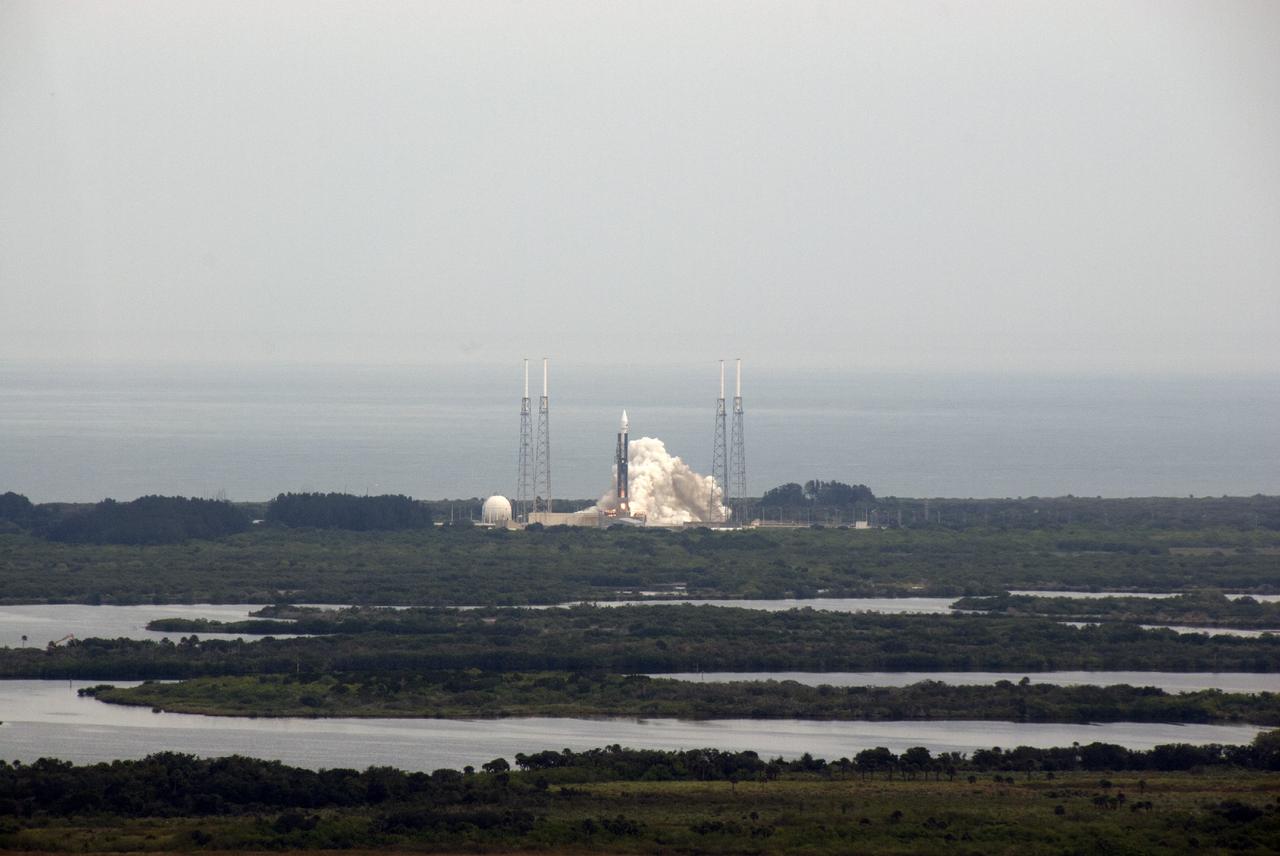
CAPE CANAVERAL, Fla. -- The engine ignites under the United Launch Alliance Atlas V rocket, lifting NASA's Mars Atmosphere and Volatile EvolutioN, or MAVEN, spacecraft off Space Launch Complex 41 at Cape Canaveral Air Force Station in Florida. Launch was on schedule at 1:28 p.m. EST Nov. 18 at the opening of a two-hour launch window. After a 10-month journey to the Red Planet, MAVEN will study its upper atmosphere in unprecedented detail from orbit above the planet. Built by Lockheed Martin in Littleton, Colo., MAVEN will arrive at Mars in September 2014 and will be inserted into an elliptical orbit with a high point of 3,900 miles, swooping down to as close as 93 miles above the planet's surface. For more information, visit: http://www.nasa.gov/mission_pages/maven/main/index.html. Photo credit: NASA/Bill White

CAPE CANAVERAL, Fla. -- Dr. Jim Green, director of the Planetary Science Division at NASA Headquarters, participates in a post-launch news conference in NASA's Press Site TV auditorium following the successful launch of NASA’s Mars Atmosphere and Volatile EvolutioN, or MAVEN, spacecraft. Launch was on schedule at 1:28 p.m. EST Nov. 18 at the opening of a two-hour launch window. After a 10-month journey to the Red Planet, MAVEN will study its upper atmosphere in unprecedented detail from orbit above the planet. Built by Lockheed Martin in Littleton, Colo., MAVEN will arrive at Mars in September 2014 and will be inserted into an elliptical orbit with a high point of 3,900 miles, swooping down to as close as 93 miles above the planet's surface. For more information, visit: http://www.nasa.gov/mission_pages/maven/main/index.html. Photo credit: NASA/Kim Shiflett
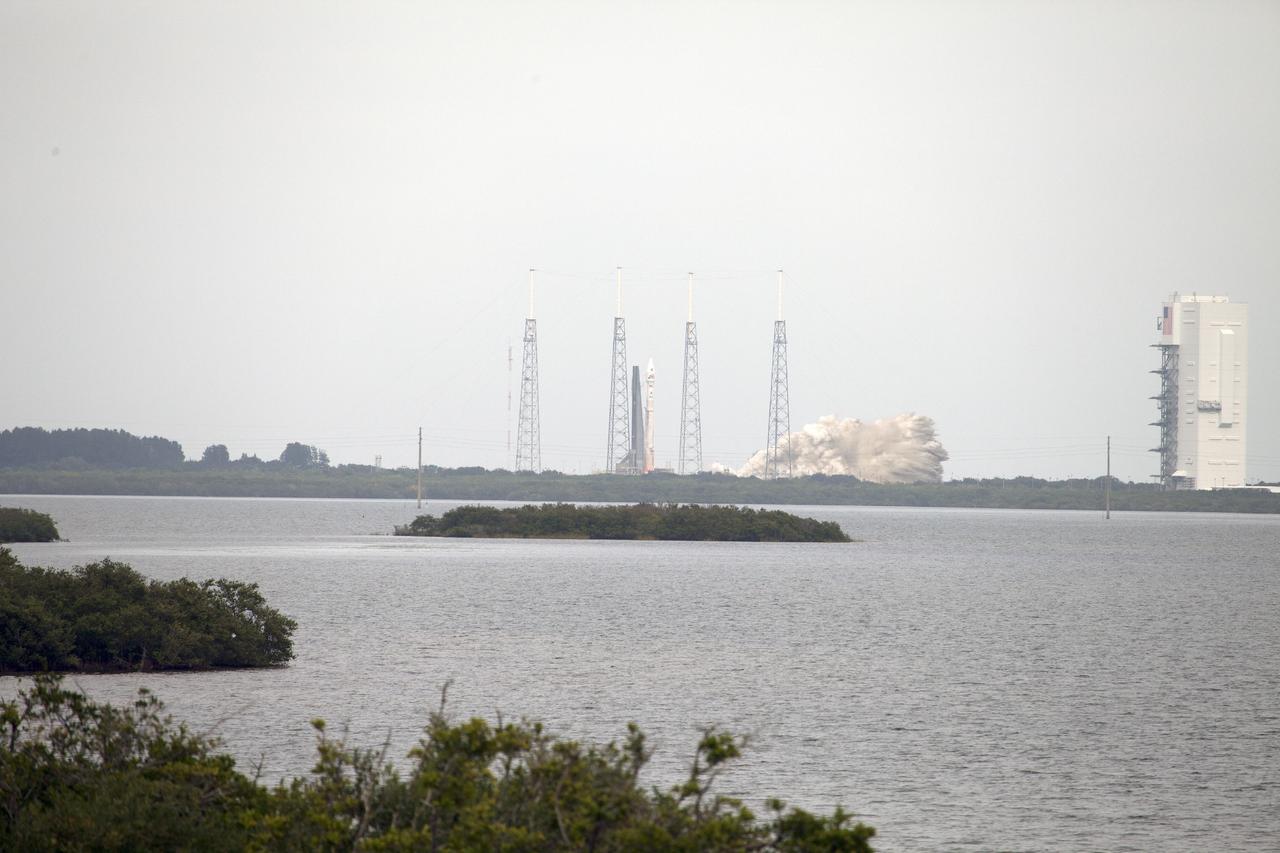
CAPE CANAVERAL, Fla. -- The engine ignites under the United Launch Alliance Atlas V rocket, lifting NASA's Mars Atmosphere and Volatile EvolutioN, or MAVEN, spacecraft off Space Launch Complex 41 at Cape Canaveral Air Force Station in Florida. Launch was on schedule at 1:28 p.m. EST Nov. 18 at the opening of a two-hour launch window. After a 10-month journey to the Red Planet, MAVEN will study its upper atmosphere in unprecedented detail from orbit above the planet. Built by Lockheed Martin in Littleton, Colo., MAVEN will arrive at Mars in September 2014 and will be inserted into an elliptical orbit with a high point of 3,900 miles, swooping down to as close as 93 miles above the planet's surface. For more information, visit: http://www.nasa.gov/mission_pages/maven/main/index.html. Photo credit: NASA/Dan Casper

CAPE CANAVERAL, Fla. -- Bruce Jakosky, MAVEN principal investigator from the Laboratory for Atmospheric and Space Physics at the University of Colorado at Boulder, participates in a post-launch news conference in NASA's Press Site TV auditorium following the successful launch of NASA’s Mars Atmosphere and Volatile EvolutioN, or MAVEN, spacecraft. Launch was on schedule at 1:28 p.m. EST Nov. 18 at the opening of a two-hour launch window. After a 10-month journey to the Red Planet, MAVEN will study its upper atmosphere in unprecedented detail from orbit above the planet. Built by Lockheed Martin in Littleton, Colo., MAVEN will arrive at Mars in September 2014 and will be inserted into an elliptical orbit with a high point of 3,900 miles, swooping down to as close as 93 miles above the planet's surface. For more information, visit: http://www.nasa.gov/mission_pages/maven/main/index.html. Photo credit: NASA/Kim Shiflett
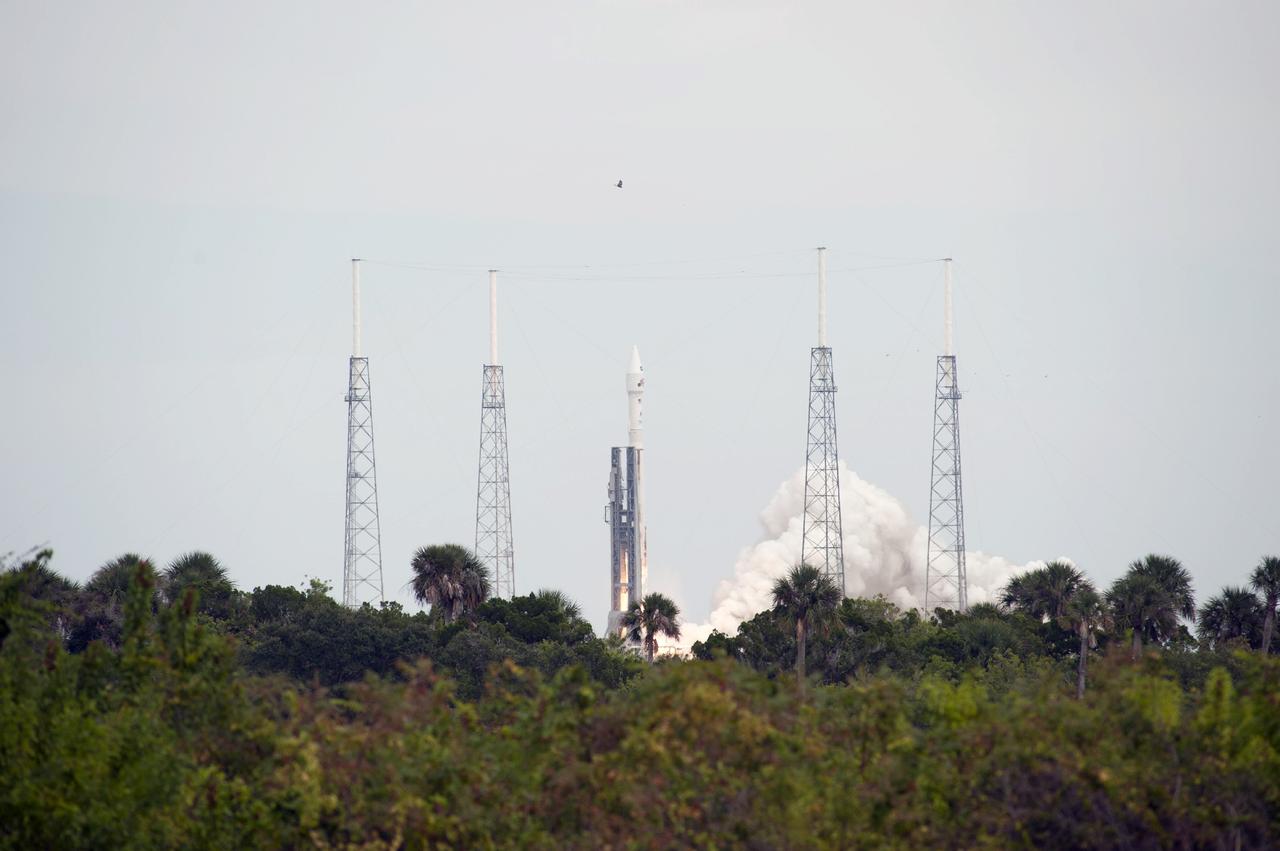
CAPE CANAVERAL, Fla. -- A United Launch Alliance Atlas V rocket lifts off Space Launch Complex 41 at Cape Canaveral Air Force Station in Florida, carrying NASA's Mars Atmosphere and Volatile EvolutioN, or MAVEN, spacecraft. Launch was on schedule at 1:28 p.m. EST Nov. 18 at the opening of a two-hour launch window. After a 10-month journey to the Red Planet, MAVEN will study its upper atmosphere in unprecedented detail from orbit above the planet. Built by Lockheed Martin in Littleton, Colo., MAVEN will arrive at Mars in September 2014 and will be inserted into an elliptical orbit with a high point of 3,900 miles, swooping down to as close as 93 miles above the planet's surface. For more information, visit: http://www.nasa.gov/mission_pages/maven/main/index.html. Photo credit: NASA/George Roberts
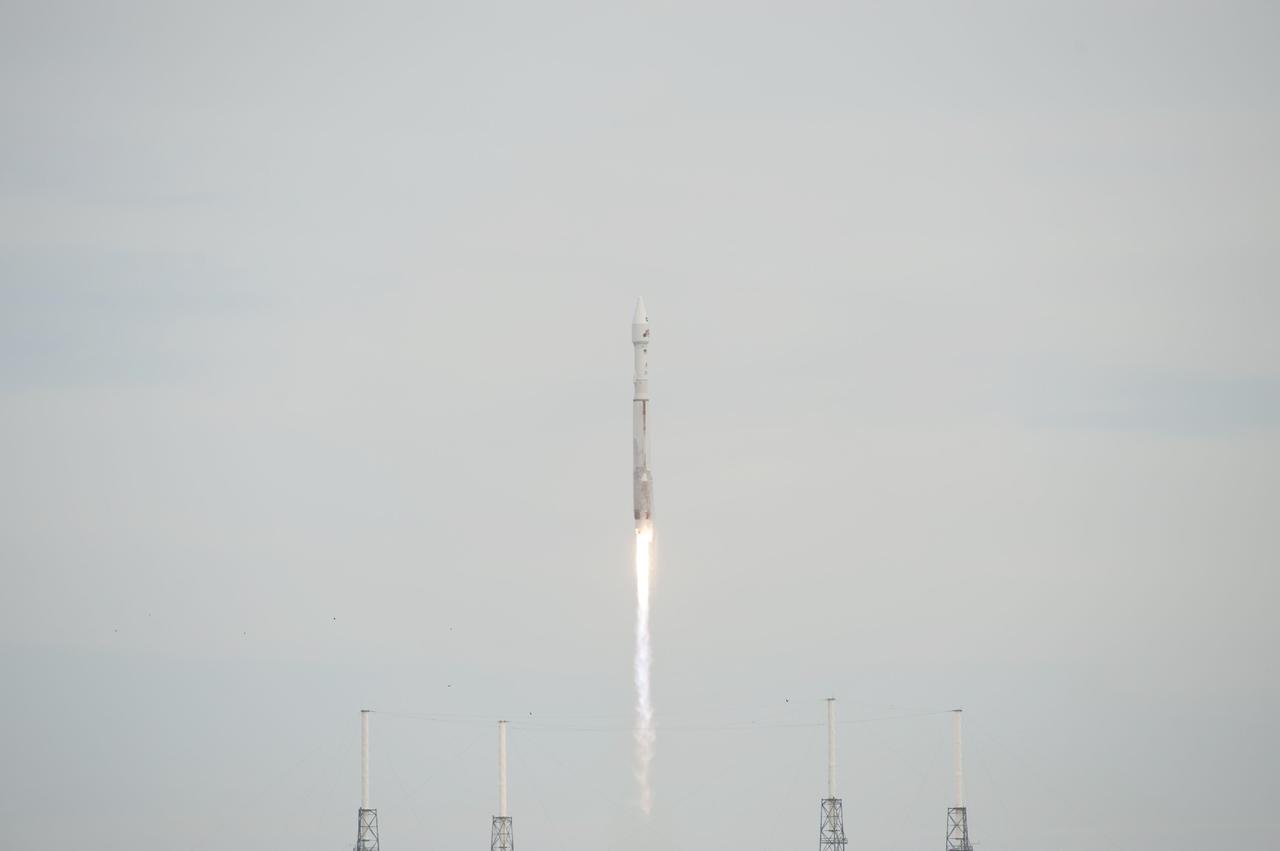
CAPE CANAVERAL, Fla. -- A United Launch Alliance Atlas V rocket lifts off through the clouds over Space Launch Complex 41 at Cape Canaveral Air Force Station in Florida, carrying NASA's Mars Atmosphere and Volatile EvolutioN, or MAVEN, spacecraft. Launch was on schedule at 1:28 p.m. EST Nov. 18 at the opening of a two-hour launch window. After a 10-month journey to the Red Planet, MAVEN will study its upper atmosphere in unprecedented detail from orbit above the planet. Built by Lockheed Martin in Littleton, Colo., MAVEN will arrive at Mars in September 2014 and will be inserted into an elliptical orbit with a high point of 3,900 miles, swooping down to as close as 93 miles above the planet's surface. For more information, visit: http://www.nasa.gov/mission_pages/maven/main/index.html. Photo credit: NASA/George Roberts
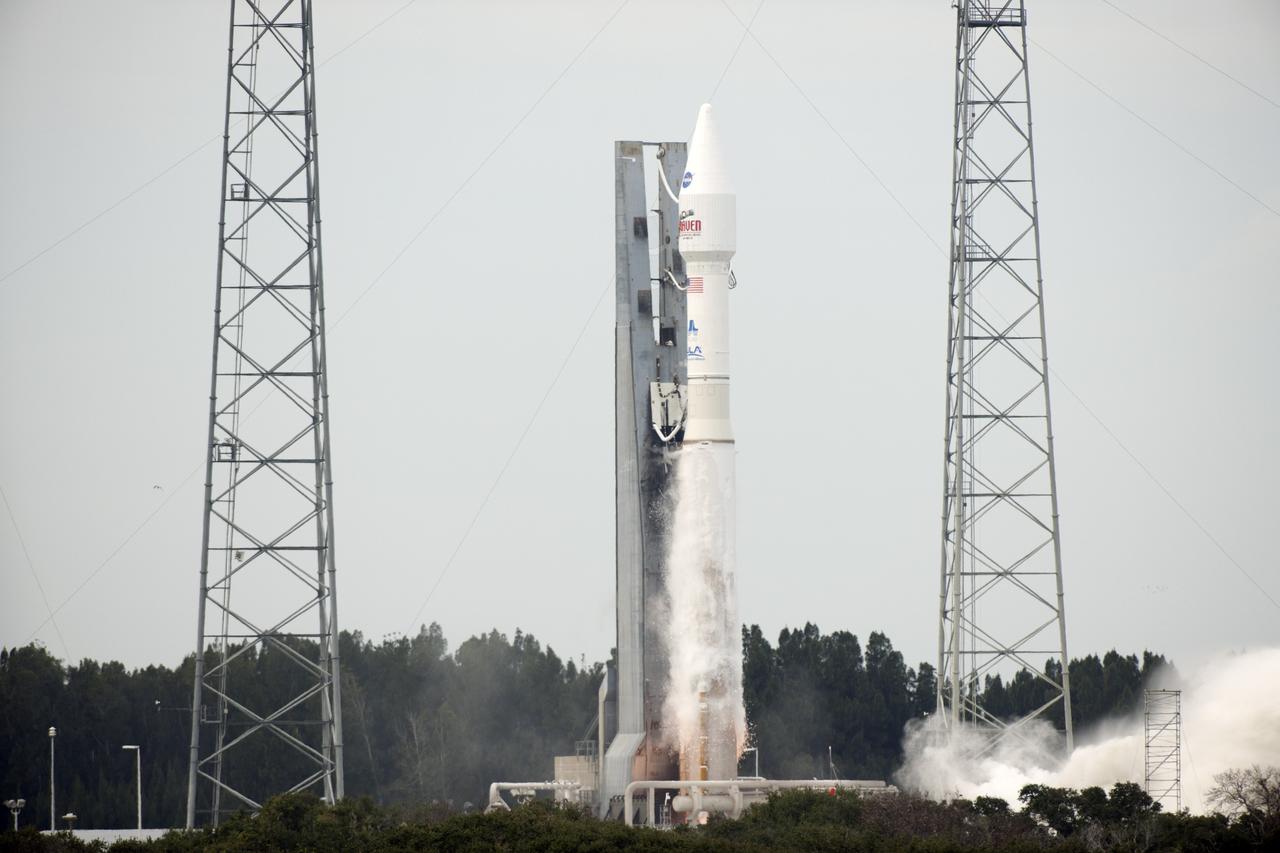
CAPE CANAVERAL, Fla. -- A United Launch Alliance Atlas V rocket lifts off Space Launch Complex 41 at Cape Canaveral Air Force Station in Florida, carrying NASA's Mars Atmosphere and Volatile EvolutioN, or MAVEN, spacecraft. Launch was on schedule at 1:28 p.m. EST Nov. 18 at the opening of a two-hour launch window. After a 10-month journey to the Red Planet, MAVEN will study its upper atmosphere in unprecedented detail from orbit above the planet. Built by Lockheed Martin in Littleton, Colo., MAVEN will arrive at Mars in September 2014 and will be inserted into an elliptical orbit with a high point of 3,900 miles, swooping down to as close as 93 miles above the planet's surface. For more information, visit: http://www.nasa.gov/mission_pages/maven/main/index.html. Photo credit: NASA/Rusty Backer
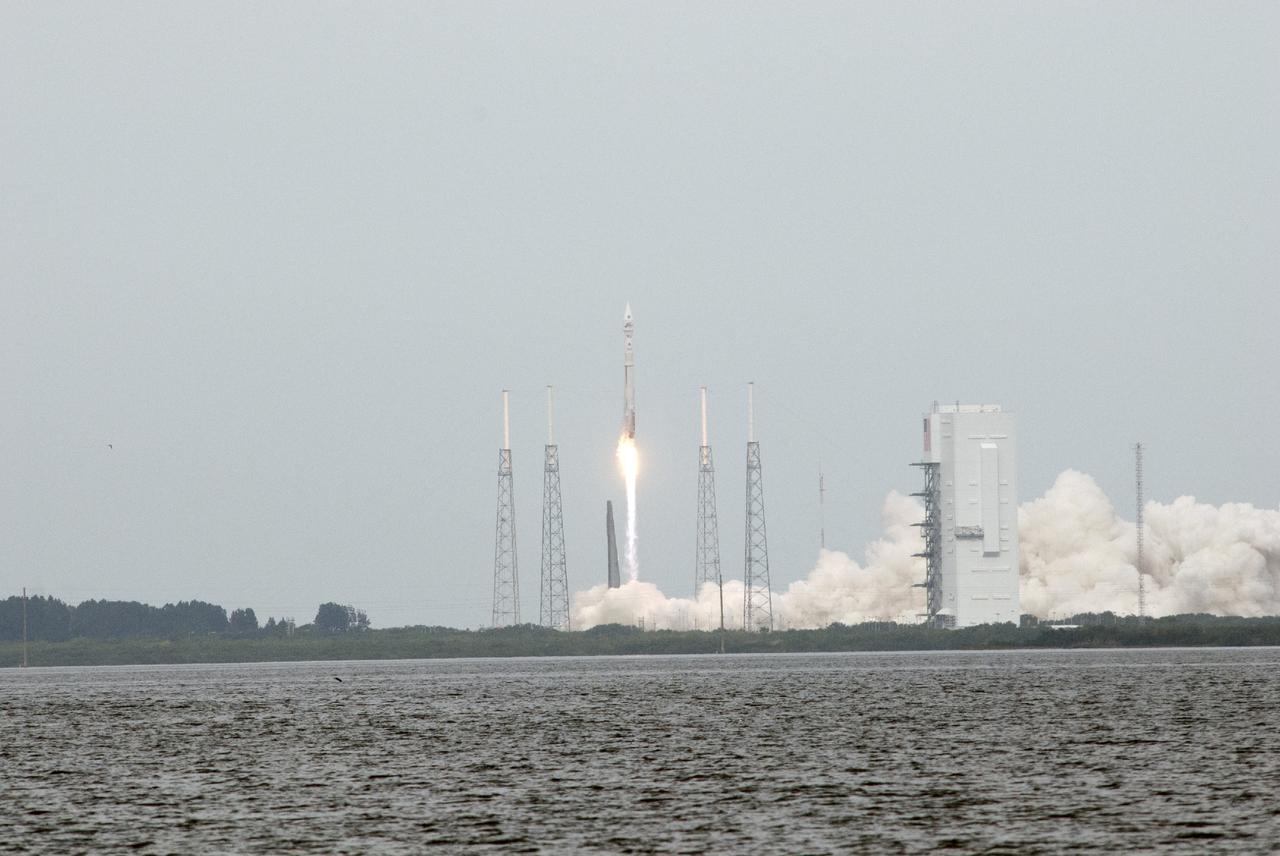
CAPE CANAVERAL, Fla. -- The engine ignites under the United Launch Alliance Atlas V rocket, lifting NASA's Mars Atmosphere and Volatile EvolutioN, or MAVEN, spacecraft off Space Launch Complex 41 at Cape Canaveral Air Force Station in Florida. Launch was on schedule at 1:28 p.m. EST Nov. 18 at the opening of a two-hour launch window. After a 10-month journey to the Red Planet, MAVEN will study its upper atmosphere in unprecedented detail from orbit above the planet. Built by Lockheed Martin in Littleton, Colo., MAVEN will arrive at Mars in September 2014 and will be inserted into an elliptical orbit with a high point of 3,900 miles, swooping down to as close as 93 miles above the planet's surface. For more information, visit: http://www.nasa.gov/mission_pages/maven/main/index.html. Photo credit: NASA/Jim Grossmann
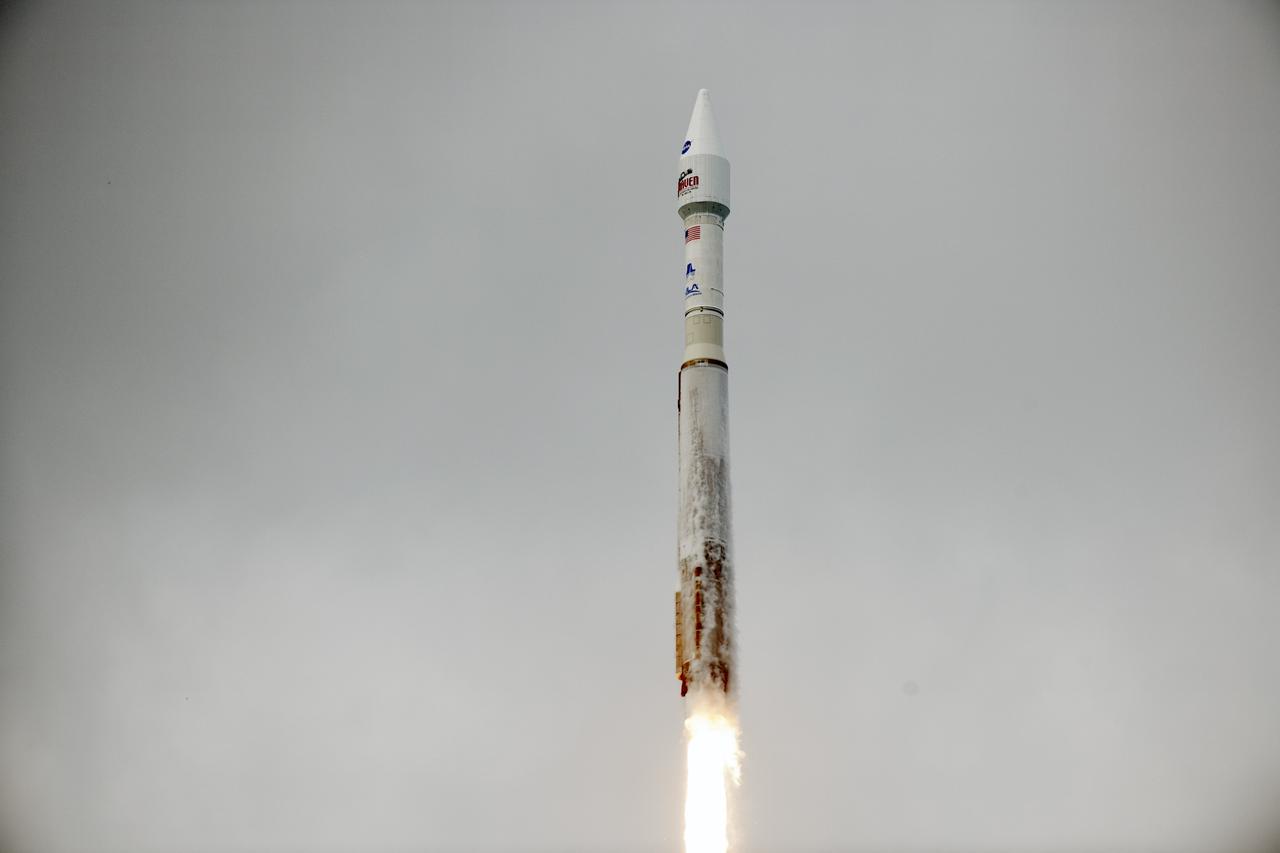
CAPE CANAVERAL, Fla. -- A United Launch Alliance Atlas V rocket lifts off into the clouds over Space Launch Complex 41 at Cape Canaveral Air Force Station in Florida, carrying NASA's Mars Atmosphere and Volatile EvolutioN, or MAVEN, spacecraft. Launch was on schedule at 1:28 p.m. EST Nov. 18 at the opening of a two-hour launch window. After a 10-month journey to the Red Planet, MAVEN will study its upper atmosphere in unprecedented detail from orbit above the planet. Built by Lockheed Martin in Littleton, Colo., MAVEN will arrive at Mars in September 2014 and will be inserted into an elliptical orbit with a high point of 3,900 miles, swooping down to as close as 93 miles above the planet's surface. For more information, visit: http://www.nasa.gov/mission_pages/maven/main/index.html. Photo credit: NASA/Rusty Backer
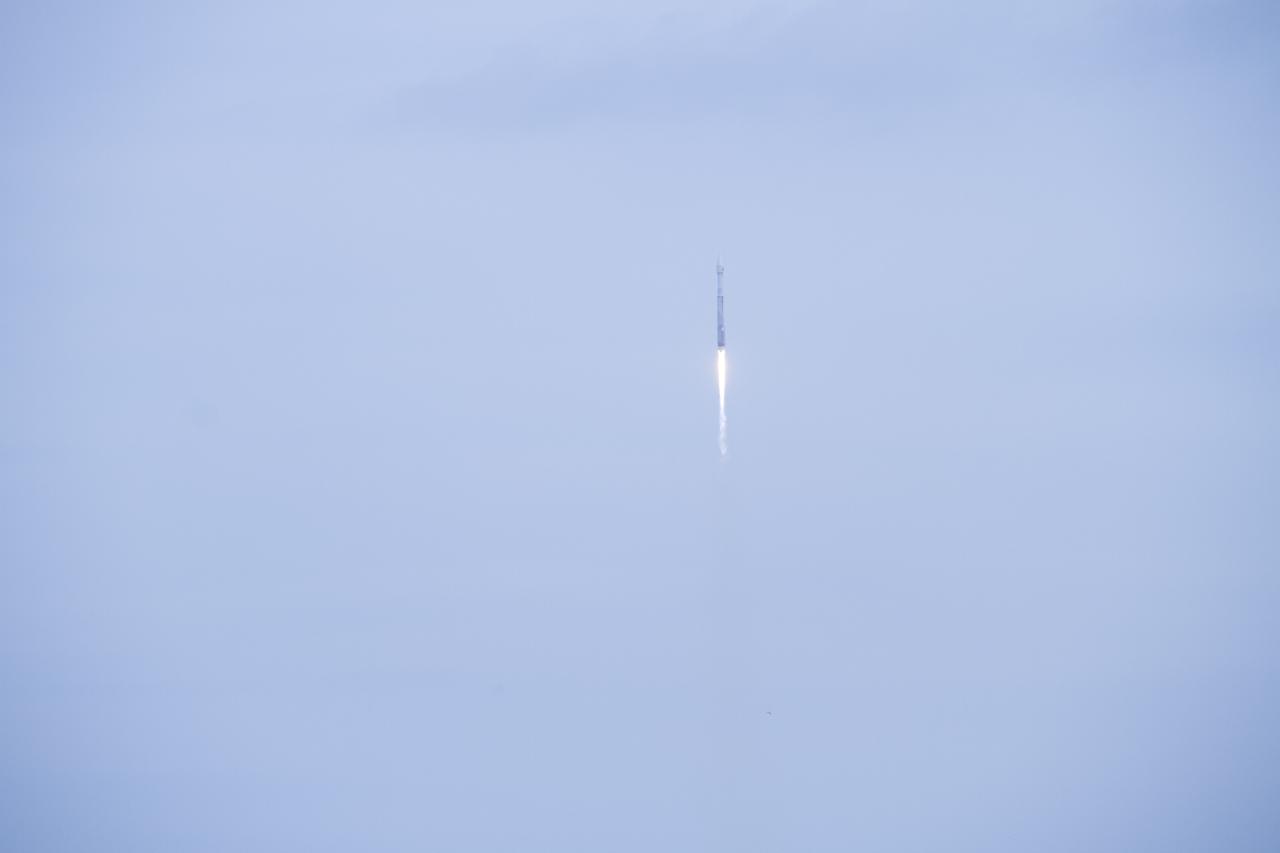
CAPE CANAVERAL, Fla. -- A United Launch Alliance Atlas V rocket lifts off Space Launch Complex 41 at Cape Canaveral Air Force Station in Florida, carrying NASA's Mars Atmosphere and Volatile EvolutioN, or MAVEN, spacecraft. Launch was on schedule at 1:28 p.m. EST Nov. 18 at the opening of a two-hour launch window. After a 10-month journey to the Red Planet, MAVEN will study its upper atmosphere in unprecedented detail from orbit above the planet. Built by Lockheed Martin in Littleton, Colo., MAVEN will arrive at Mars in September 2014 and will be inserted into an elliptical orbit with a high point of 3,900 miles, swooping down to as close as 93 miles above the planet's surface. For more information, visit: http://www.nasa.gov/mission_pages/maven/main/index.html. Photo credit: NASA/Gianni Woods
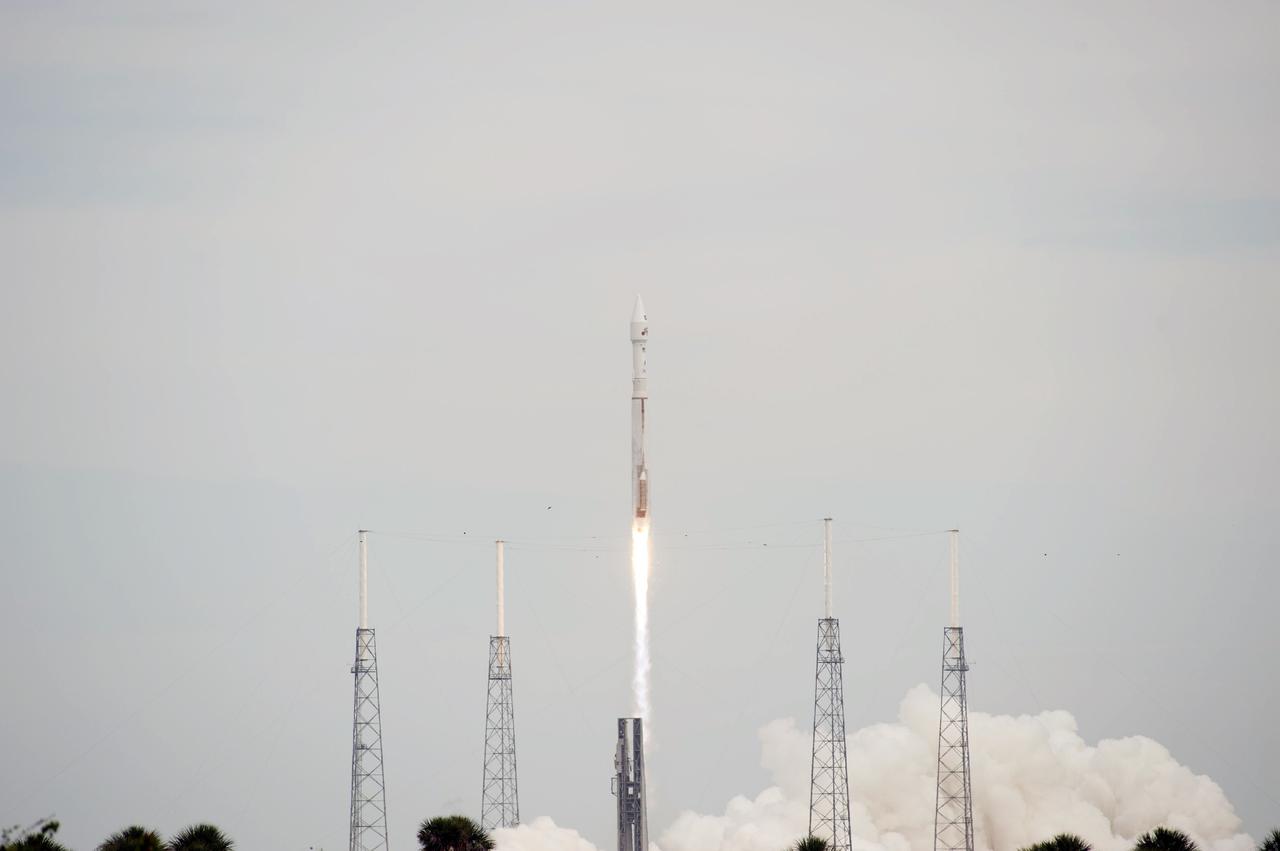
CAPE CANAVERAL, Fla. -- NASA’s Mars Atmosphere and Volatile EvolutioN, or MAVEN, spacecraft begins its journey to Mars, launching atop a United Launch Alliance Atlas V rocket at 1:28 p.m. EST from Space Launch Complex 41 on Cape Canaveral Air Force Station in Florida. Launch was on schedule Nov. 18 at the opening of a two-hour launch window. After a 10-month journey to the Red Planet, MAVEN will study its upper atmosphere in unprecedented detail from orbit above the planet. Built by Lockheed Martin in Littleton, Colo., MAVEN will arrive at Mars in September 2014 and will be inserted into an elliptical orbit with a high point of 3,900 miles, swooping down to as close as 93 miles above the planet's surface. For more information, visit: http://www.nasa.gov/mission_pages/maven/main/index.html. Photo credit: NASA/George Roberts
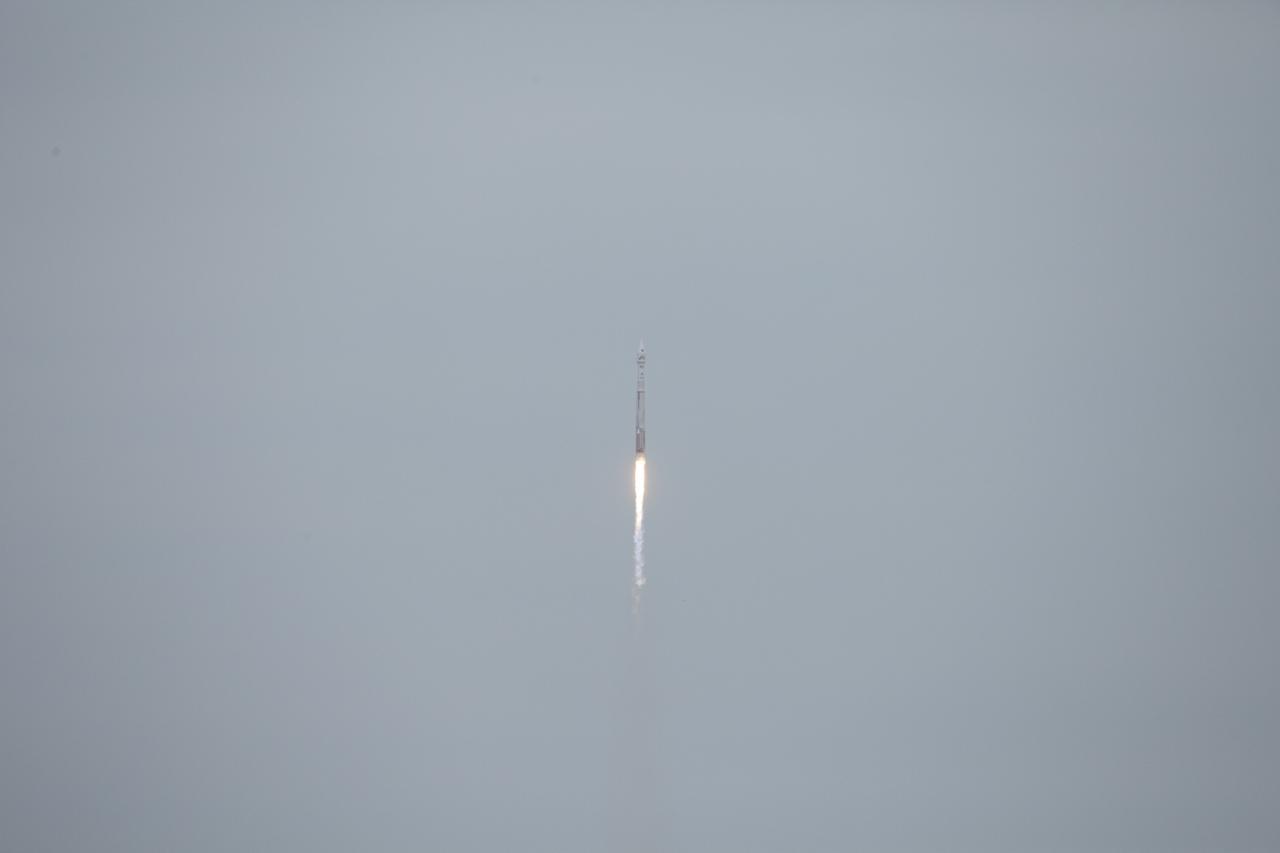
CAPE CANAVERAL, Fla. -- A United Launch Alliance Atlas V rocket lifts off through the clouds over Space Launch Complex 41 at Cape Canaveral Air Force Station in Florida, carrying NASA's Mars Atmosphere and Volatile EvolutioN, or MAVEN, spacecraft. Launch was on schedule at 1:28 p.m. EST Nov. 18 at the opening of a two-hour launch window. After a 10-month journey to the Red Planet, MAVEN will study its upper atmosphere in unprecedented detail from orbit above the planet. Built by Lockheed Martin in Littleton, Colo., MAVEN will arrive at Mars in September 2014 and will be inserted into an elliptical orbit with a high point of 3,900 miles, swooping down to as close as 93 miles above the planet's surface. For more information, visit: http://www.nasa.gov/mission_pages/maven/main/index.html. Photo credit: NASA/Dan Casper
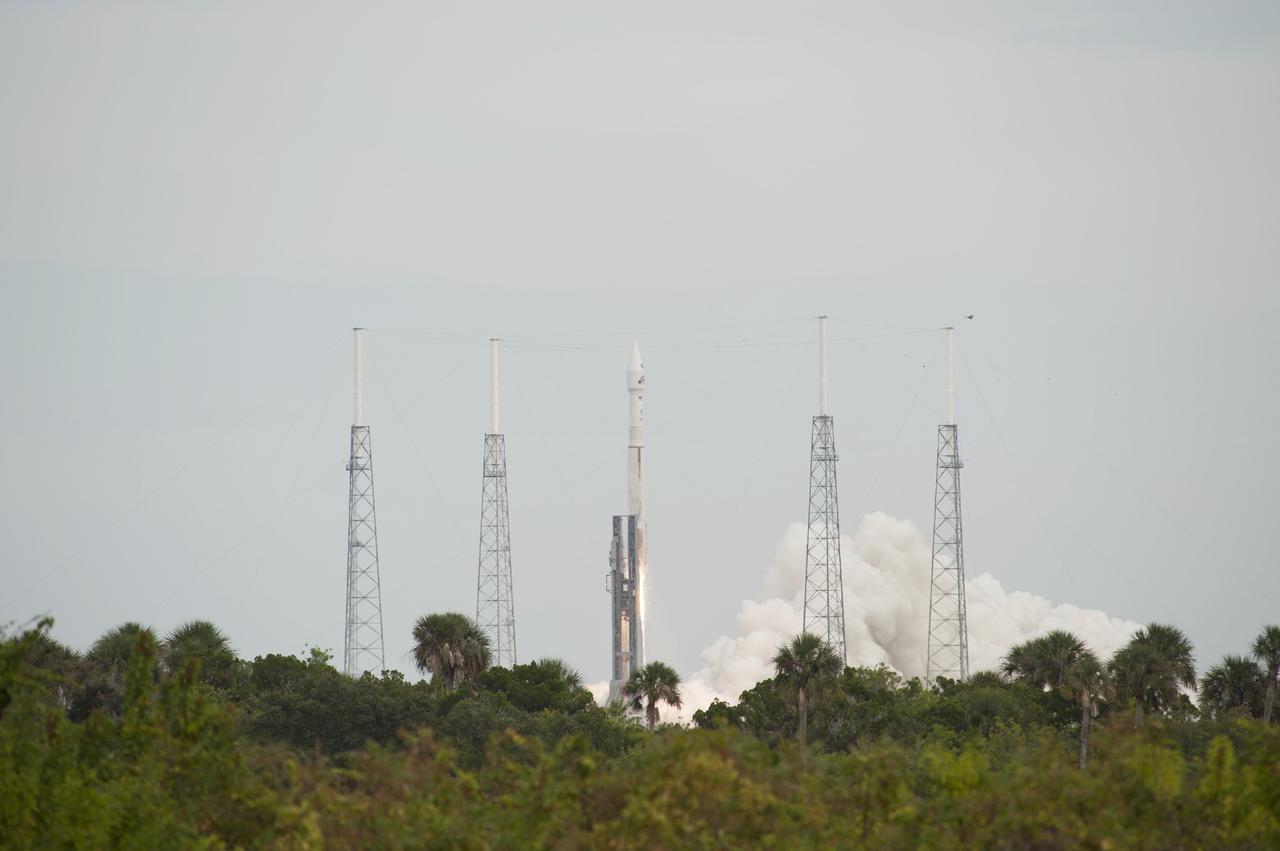
CAPE CANAVERAL, Fla. -- A United Launch Alliance Atlas V rocket lifts off Space Launch Complex 41 at Cape Canaveral Air Force Station in Florida, carrying NASA's Mars Atmosphere and Volatile EvolutioN, or MAVEN, spacecraft. Launch was on schedule at 1:28 p.m. EST Nov. 18 at the opening of a two-hour launch window. After a 10-month journey to the Red Planet, MAVEN will study its upper atmosphere in unprecedented detail from orbit above the planet. Built by Lockheed Martin in Littleton, Colo., MAVEN will arrive at Mars in September 2014 and will be inserted into an elliptical orbit with a high point of 3,900 miles, swooping down to as close as 93 miles above the planet's surface. For more information, visit: http://www.nasa.gov/mission_pages/maven/main/index.html. Photo credit: NASA/George Roberts

CAPE CANAVERAL, Fla. -- Invited guests watch the launch of NASA’s Mars Atmosphere and Volatile EvolutioN, or MAVEN, spacecraft from the NASA Causeway between NASA's Kennedy Space Center and Cape Canaveral Air Force Station in Florida. Launch was on schedule at 1:28 p.m. EST Nov. 18 at the opening of a two-hour launch window. After a 10-month journey to the Red Planet, MAVEN will study its upper atmosphere in unprecedented detail from orbit above the planet. Built by Lockheed Martin in Littleton, Colo., MAVEN will arrive at Mars in September 2014 and will be inserted into an elliptical orbit with a high point of 3,900 miles, swooping down to as close as 93 miles above the planet's surface. For more information, visit: http://www.nasa.gov/mission_pages/maven/main/index.html. Photo credit: NASA/Jim Grossmann
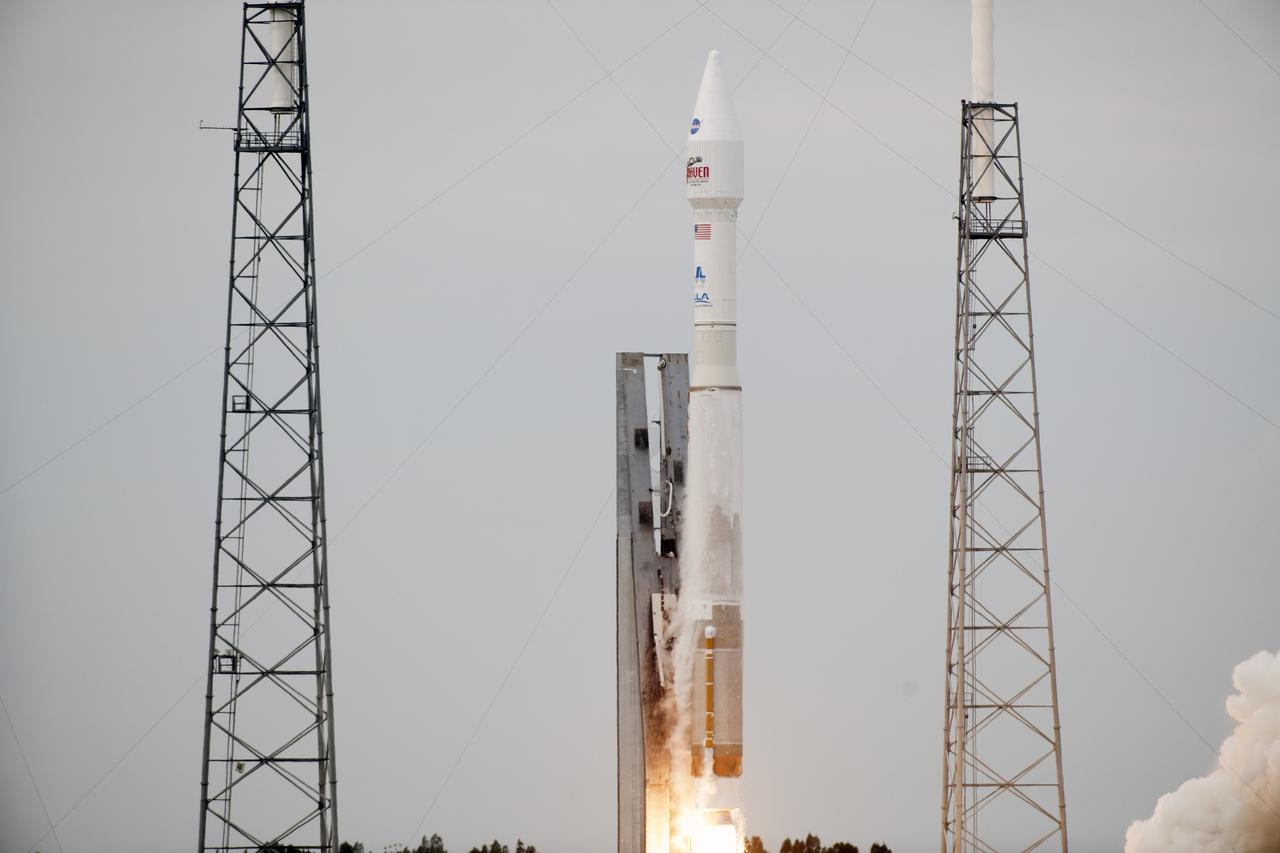
CAPE CANAVERAL, Fla. -- A United Launch Alliance Atlas V rocket lifts off Space Launch Complex 41 at Cape Canaveral Air Force Station in Florida, carrying NASA's Mars Atmosphere and Volatile EvolutioN, or MAVEN, spacecraft. Launch was on schedule at 1:28 p.m. EST Nov. 18 at the opening of a two-hour launch window. After a 10-month journey to the Red Planet, MAVEN will study its upper atmosphere in unprecedented detail from orbit above the planet. Built by Lockheed Martin in Littleton, Colo., MAVEN will arrive at Mars in September 2014 and will be inserted into an elliptical orbit with a high point of 3,900 miles, swooping down to as close as 93 miles above the planet's surface. For more information, visit: http://www.nasa.gov/mission_pages/maven/main/index.html. Photo credit: NASA/Rusty Backer
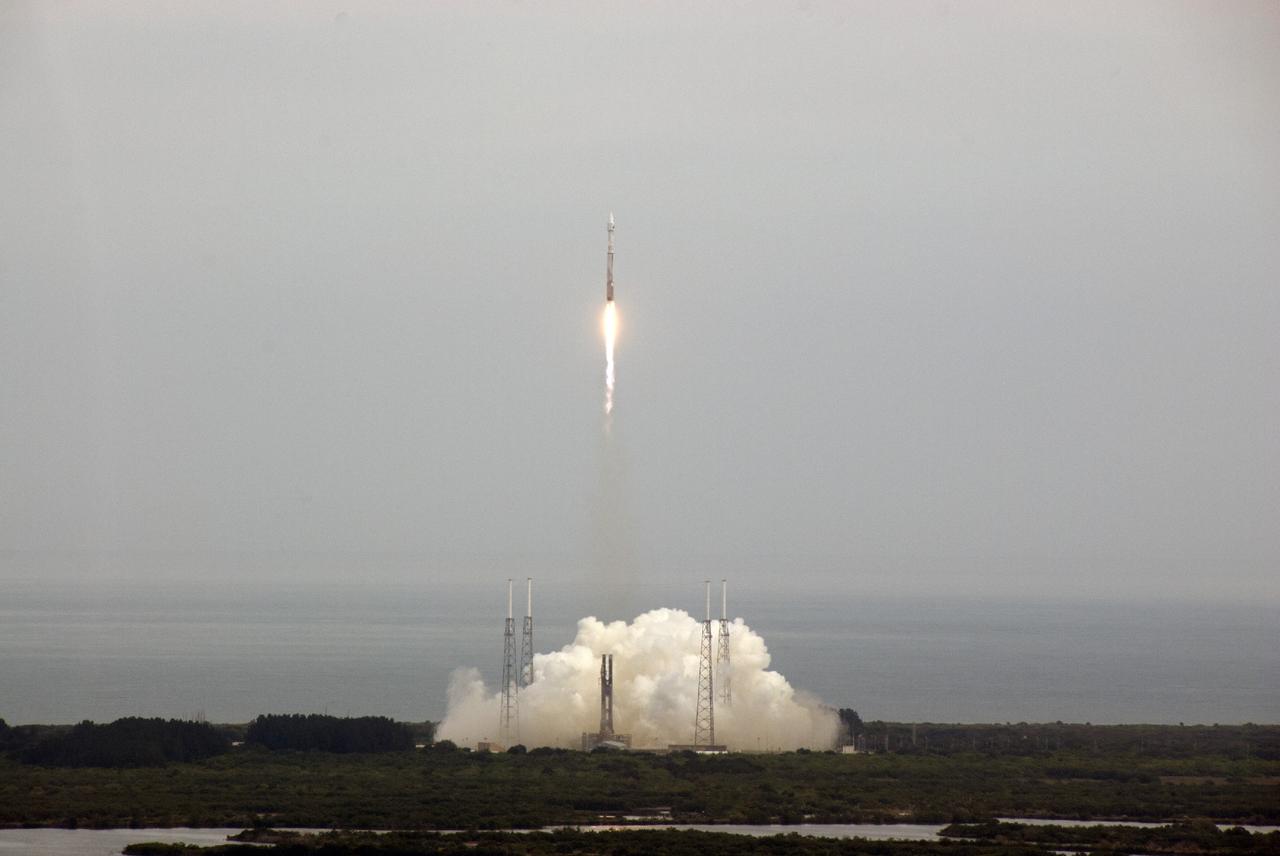
CAPE CANAVERAL, Fla. -- NASA’s Mars Atmosphere and Volatile EvolutioN, or MAVEN, spacecraft begins its 10-month journey to Mars, launching atop a United Launch Alliance Atlas V rocket at 1:28 p.m. EST from Space Launch Complex 41 on Cape Canaveral Air Force Station in Florida. Launch was on schedule Nov. 18 at the opening of a two-hour launch window. After a 10-month journey to the Red Planet, MAVEN will study its upper atmosphere in unprecedented detail from orbit above the planet. Built by Lockheed Martin in Littleton, Colo., MAVEN will arrive at Mars in September 2014 and will be inserted into an elliptical orbit with a high point of 3,900 miles, swooping down to as close as 93 miles above the planet's surface. For more information, visit: http://www.nasa.gov/mission_pages/maven/main/index.html. Photo credit: NASA/Bill White

CAPE CANAVERAL, Fla. -- Invited guests watch the launch of NASA’s Mars Atmosphere and Volatile EvolutioN, or MAVEN, spacecraft from the NASA Causeway between NASA's Kennedy Space Center and Cape Canaveral Air Force Station in Florida. Launch was on schedule at 1:28 p.m. EST Nov. 18 at the opening of a two-hour launch window. After a 10-month journey to the Red Planet, MAVEN will study its upper atmosphere in unprecedented detail from orbit above the planet. Built by Lockheed Martin in Littleton, Colo., MAVEN will arrive at Mars in September 2014 and will be inserted into an elliptical orbit with a high point of 3,900 miles, swooping down to as close as 93 miles above the planet's surface. For more information, visit: http://www.nasa.gov/mission_pages/maven/main/index.html. Photo credit: NASA/Jim Grossmann
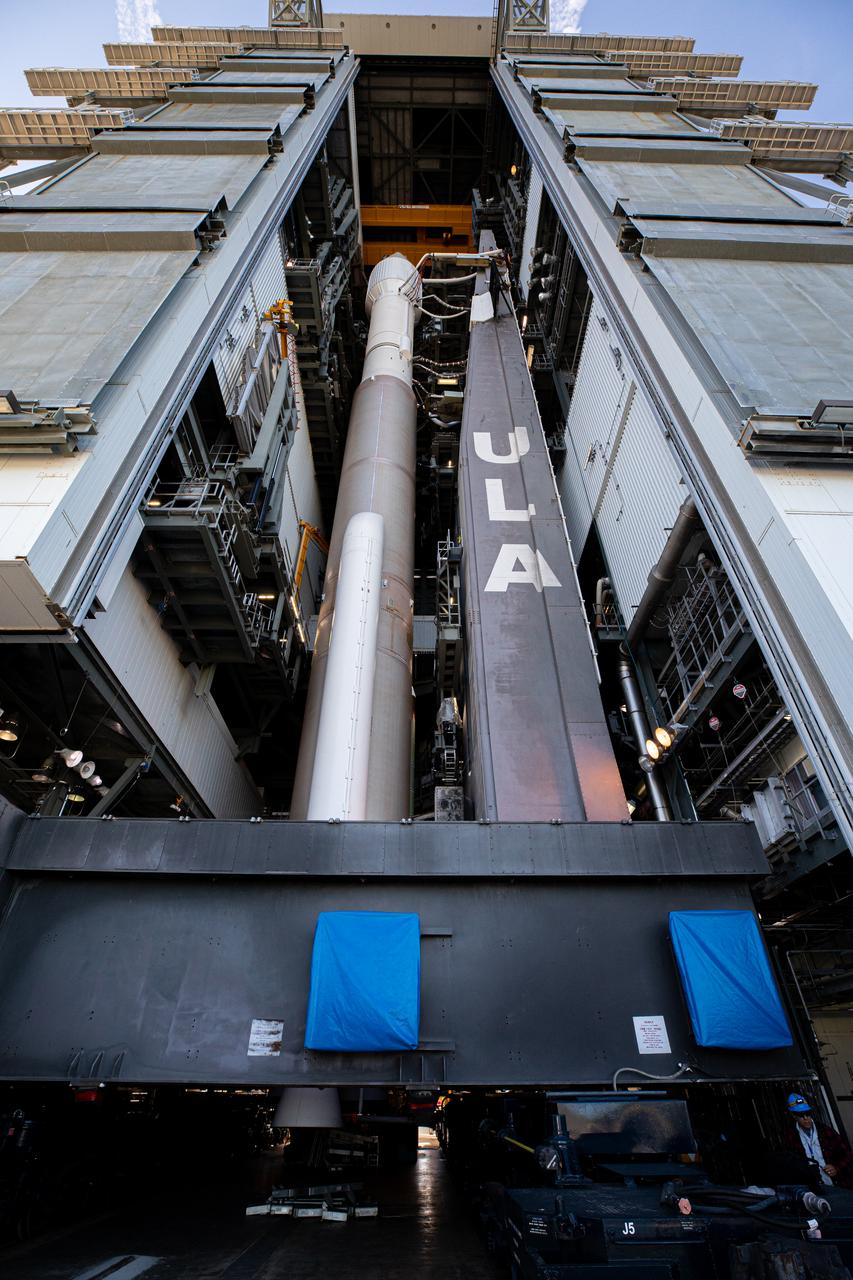
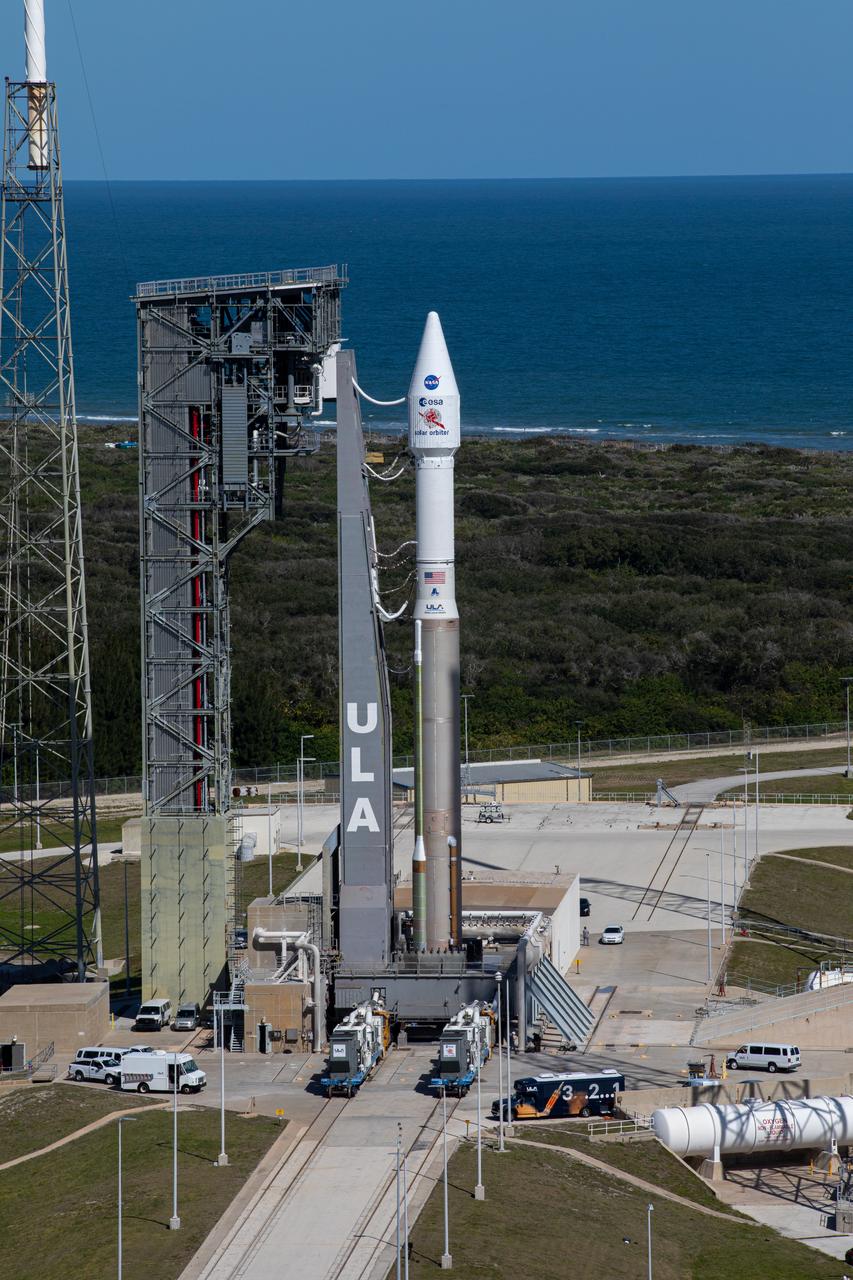
The United Launch Alliance Atlas V rocket with the Solar Orbiter spacecraft begins rollout from the Vertical Integration Facility to the launch pad at Space Launch Complex 41 on Cape Canaveral Air Force Station in Florida on Feb. 8, 2020. Solar Orbiter is an international cooperative mission between ESA (European Space Agency) and NASA. The mission aims to study the Sun, its outer atmosphere and solar wind. The spacecraft will provide the first images of the Sun’s poles. NASA’s Launch Services Program based at Kennedy is managing the launch. The spacecraft has been developed by Airbus Defence and Space. Solar Orbiter will launch Feb. 9, 2020 aboard the Atlas V rocket.
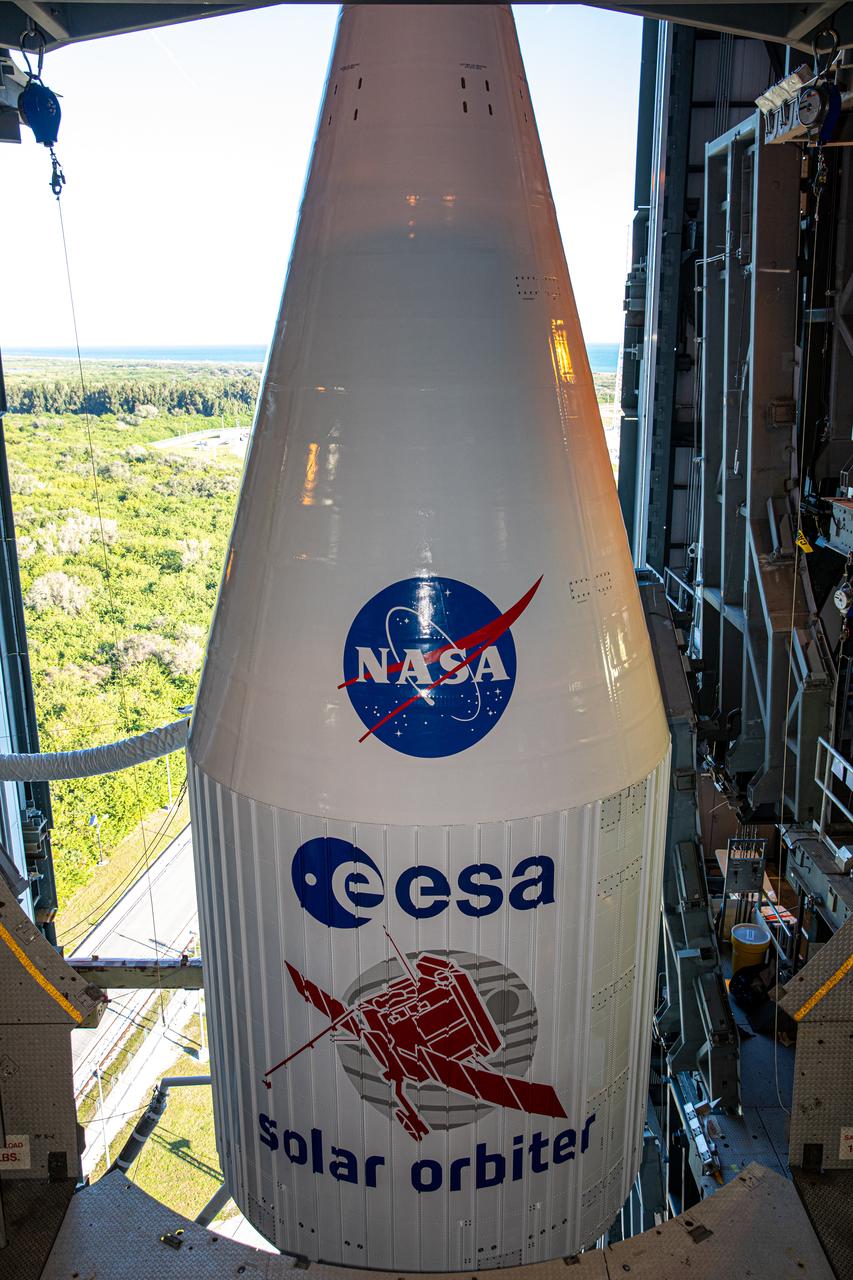
The Solar Orbiter spacecraft, secured inside the payload fairing, is photographed atop a United Launch Alliance Atlas V rocket inside the Vertical Integration Facility on Cape Canaveral Air Force Station in Florida prior to beginning its roll to the launch pad at Space Launch Complex 41 on Feb. 8, 2020. Solar Orbiter is an international cooperative mission between ESA (European Space Agency) and NASA. The mission aims to study the Sun, its outer atmosphere and solar wind. The spacecraft will provide the first images of the Sun’s poles. NASA’s Launch Services Program based at Kennedy is managing the launch. The spacecraft has been developed by Airbus Defence and Space. Solar Orbiter will launch Feb. 9, 2020 aboard the Atlas V rocket.
The United Launch Alliance Atlas V rocket with the Solar Orbiter spacecraft arrives at the launch pad at Space Launch Complex 41 on Cape Canaveral Air Force Station in Florida on Feb. 8, 2020. Solar Orbiter is an international cooperative mission between ESA (European Space Agency) and NASA. The mission aims to study the Sun, its outer atmosphere and solar wind. The spacecraft will provide the first images of the Sun’s poles. NASA’s Launch Services Program based at Kennedy is managing the launch. The spacecraft has been developed by Airbus Defence and Space. Solar Orbiter will launch Feb. 9, 2020 aboard the Atlas V rocket.
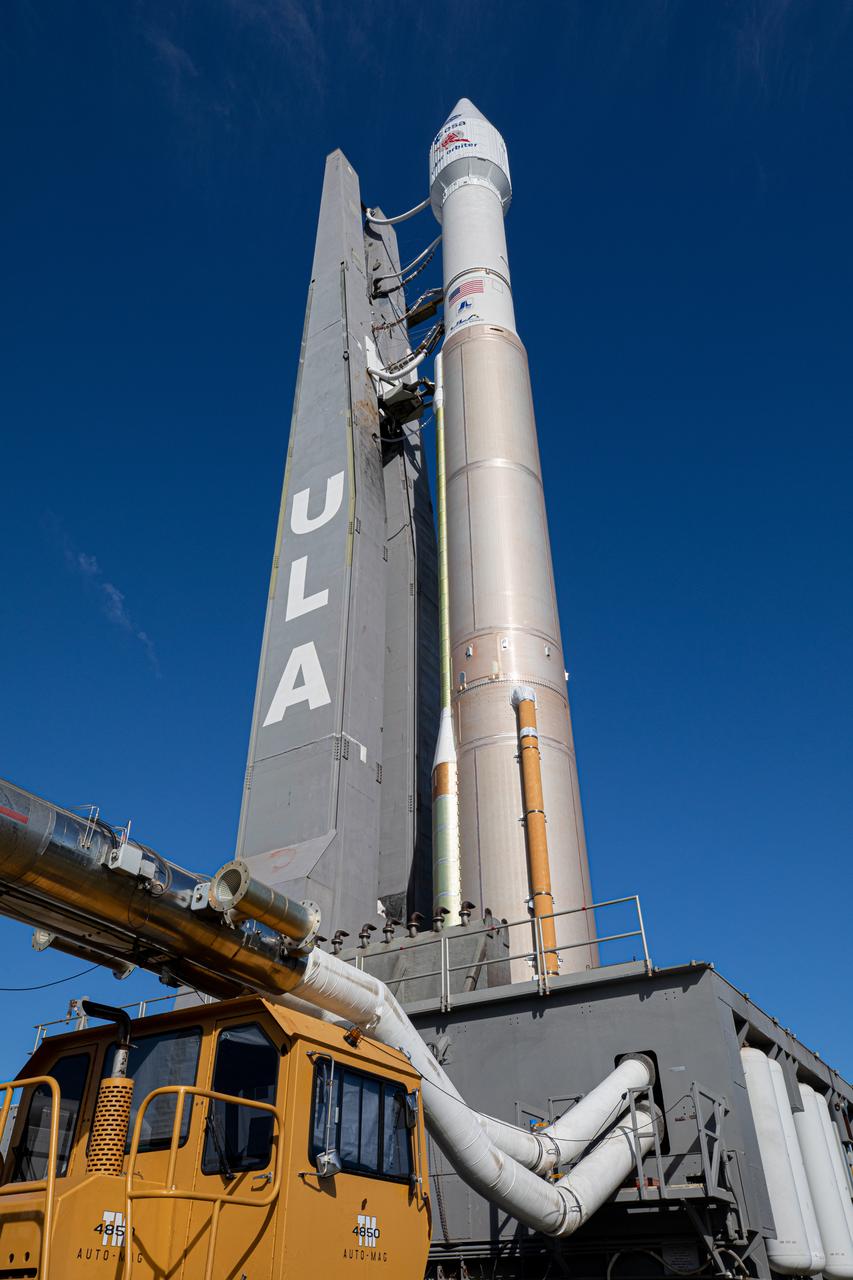
After departing the Vertical Integration Facility, the United Launch Alliance Atlas V rocket with the Solar Orbiter spacecraft moves slowly toward the launch pad at Space Launch Complex 41 on Cape Canaveral Air Force Station in Florida on Feb. 8, 2020. Solar Orbiter is an international cooperative mission between ESA (European Space Agency) and NASA. The mission aims to study the Sun, its outer atmosphere and solar wind. The spacecraft will provide the first images of the Sun’s poles. NASA’s Launch Services Program based at Kennedy is managing the launch. The spacecraft has been developed by Airbus Defence and Space. Solar Orbiter will launch Feb. 9, 2020 aboard the Atlas V rocket.
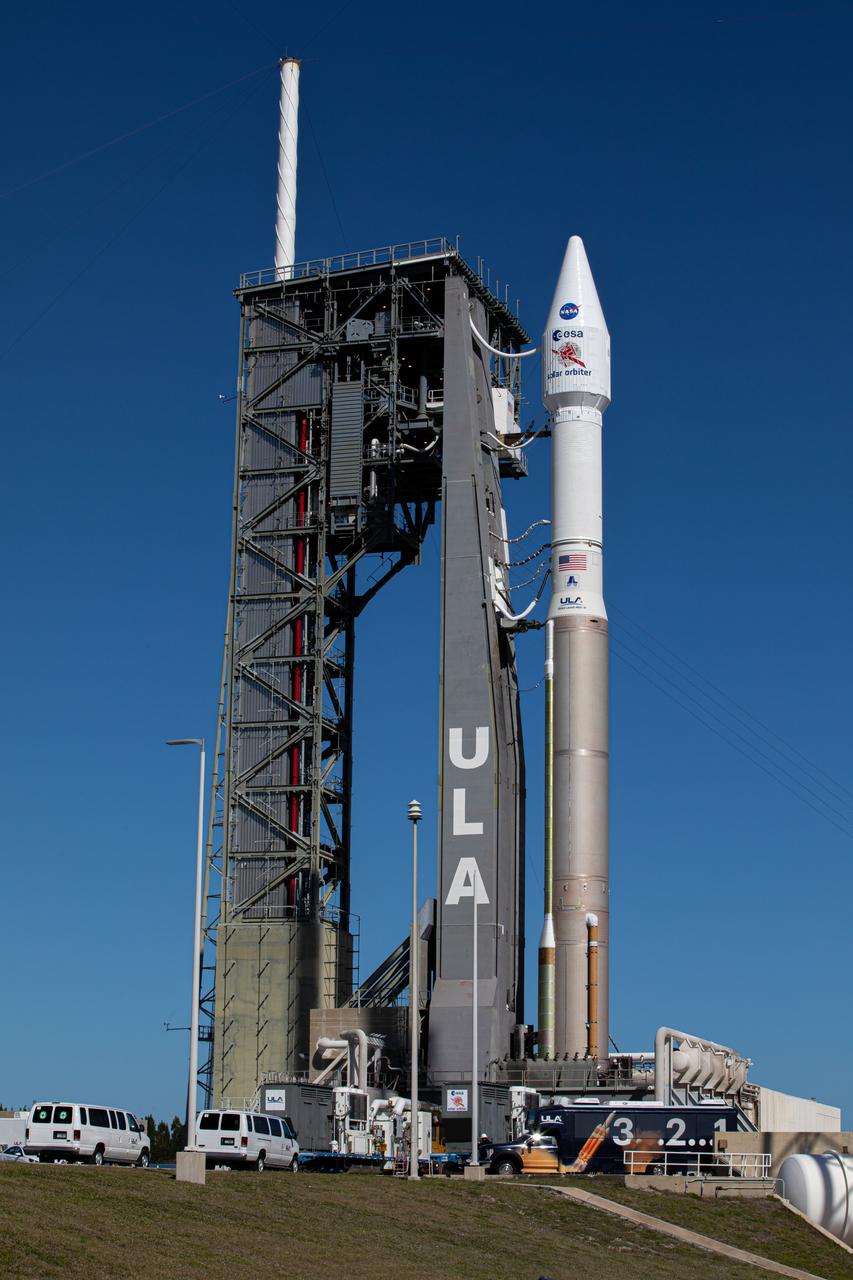
The United Launch Alliance Atlas V rocket with the Solar Orbiter spacecraft arrives at the launch pad at Space Launch Complex 41 on Cape Canaveral Air Force Station in Florida on Feb. 8, 2020. Solar Orbiter is an international cooperative mission between ESA (European Space Agency) and NASA. The mission aims to study the Sun, its outer atmosphere and solar wind. The spacecraft will provide the first images of the Sun’s poles. NASA’s Launch Services Program based at Kennedy is managing the launch. The spacecraft has been developed by Airbus Defence and Space. Solar Orbiter will launch Feb. 9, 2020 aboard the Atlas V rocket.
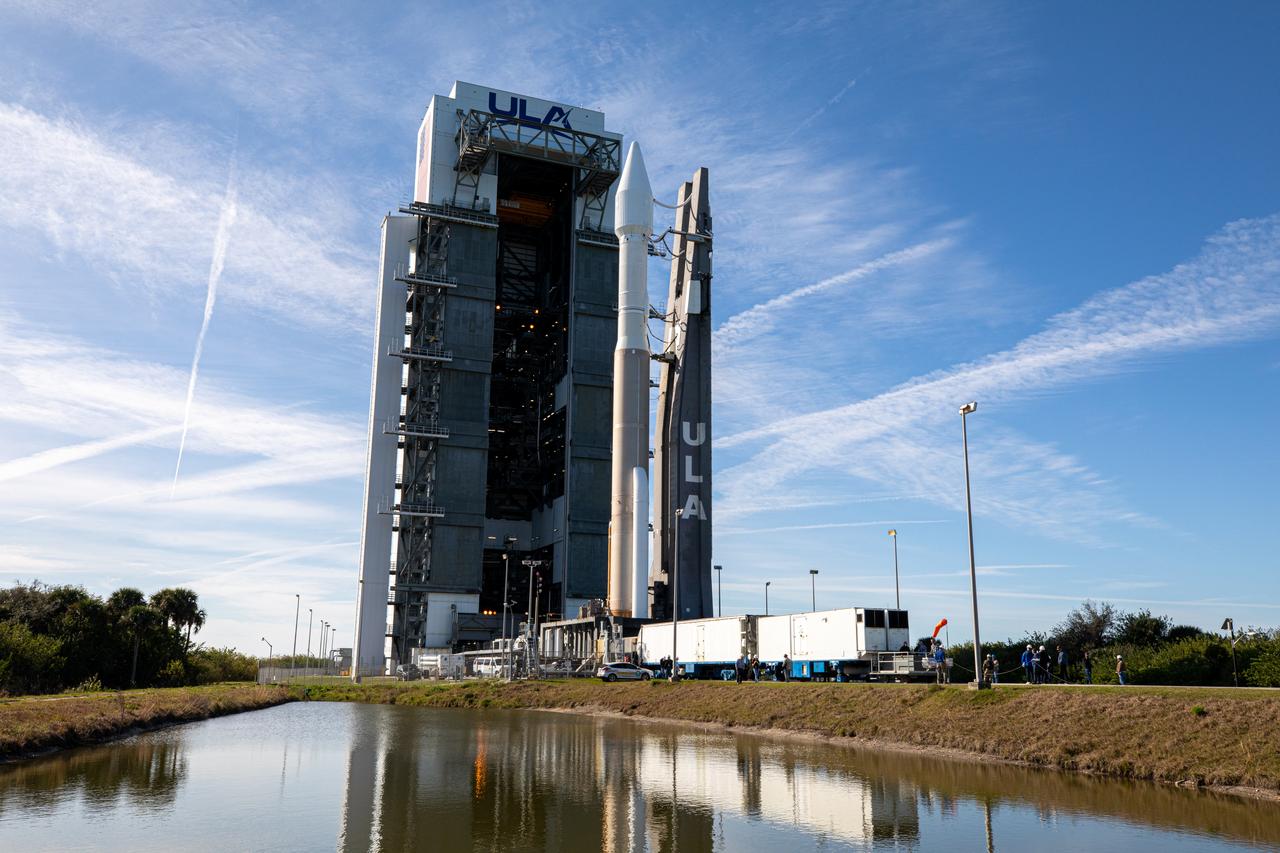
The United Launch Alliance Atlas V rocket with the Solar Orbiter spacecraft departs the Vertical Integration Facility for the launch pad at Space Launch Complex 41 on Cape Canaveral Air Force Station in Florida on Feb. 8, 2020. Solar Orbiter is an international cooperative mission between ESA (European Space Agency) and NASA. The mission aims to study the Sun, its outer atmosphere and solar wind. The spacecraft will provide the first images of the Sun’s poles. NASA’s Launch Services Program based at Kennedy is managing the launch. The spacecraft has been developed by Airbus Defence and Space. Solar Orbiter will launch Feb. 9, 2020 aboard the Atlas V rocket.
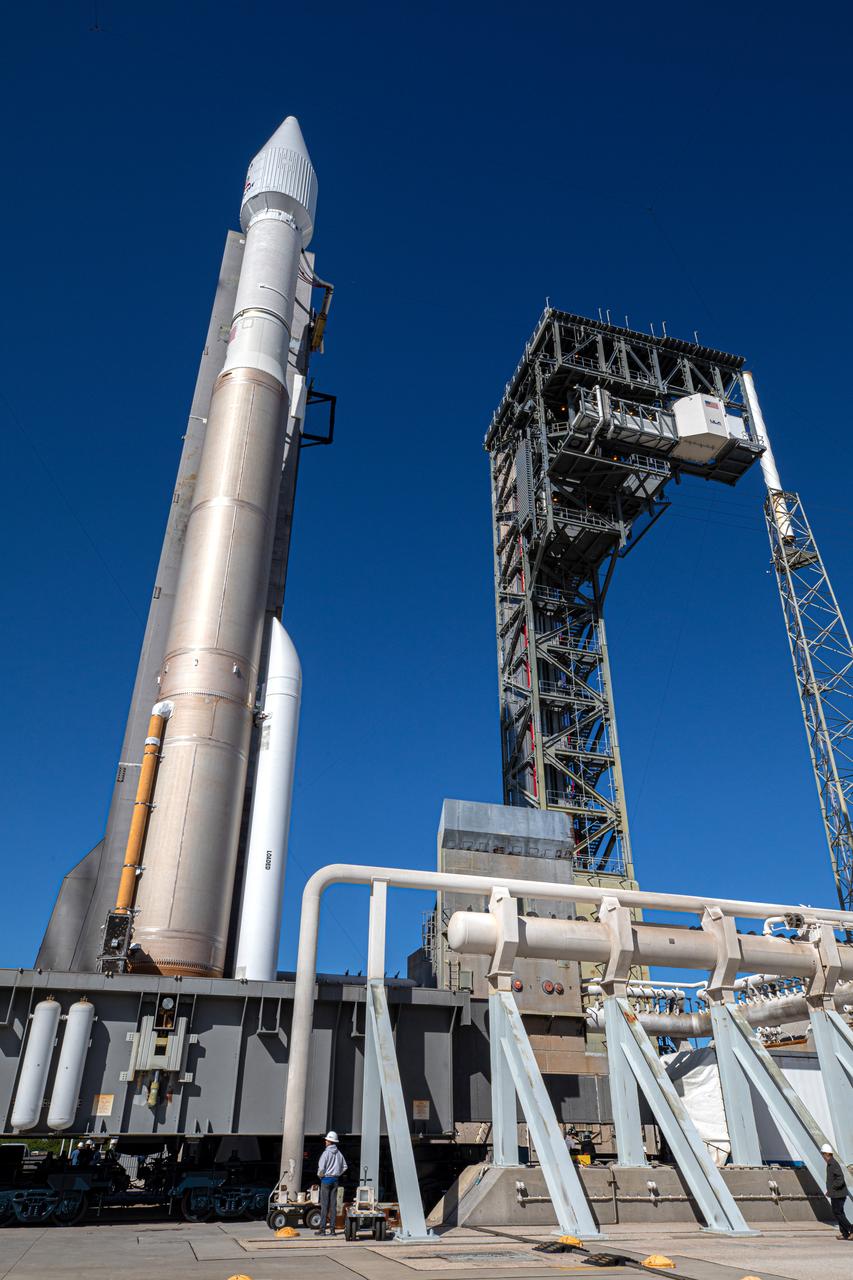
The United Launch Alliance Atlas V rocket with the Solar Orbiter spacecraft arrives at the launch pad at Space Launch Complex 41 on Cape Canaveral Air Force Station in Florida on Feb. 8, 2020. Solar Orbiter is an international cooperative mission between ESA (European Space Agency) and NASA. The mission aims to study the Sun, its outer atmosphere and solar wind. The spacecraft will provide the first images of the Sun’s poles. NASA’s Launch Services Program based at Kennedy is managing the launch. The spacecraft has been developed by Airbus Defence and Space. Solar Orbiter will launch Feb. 9, 2020 aboard the Atlas V rocket.
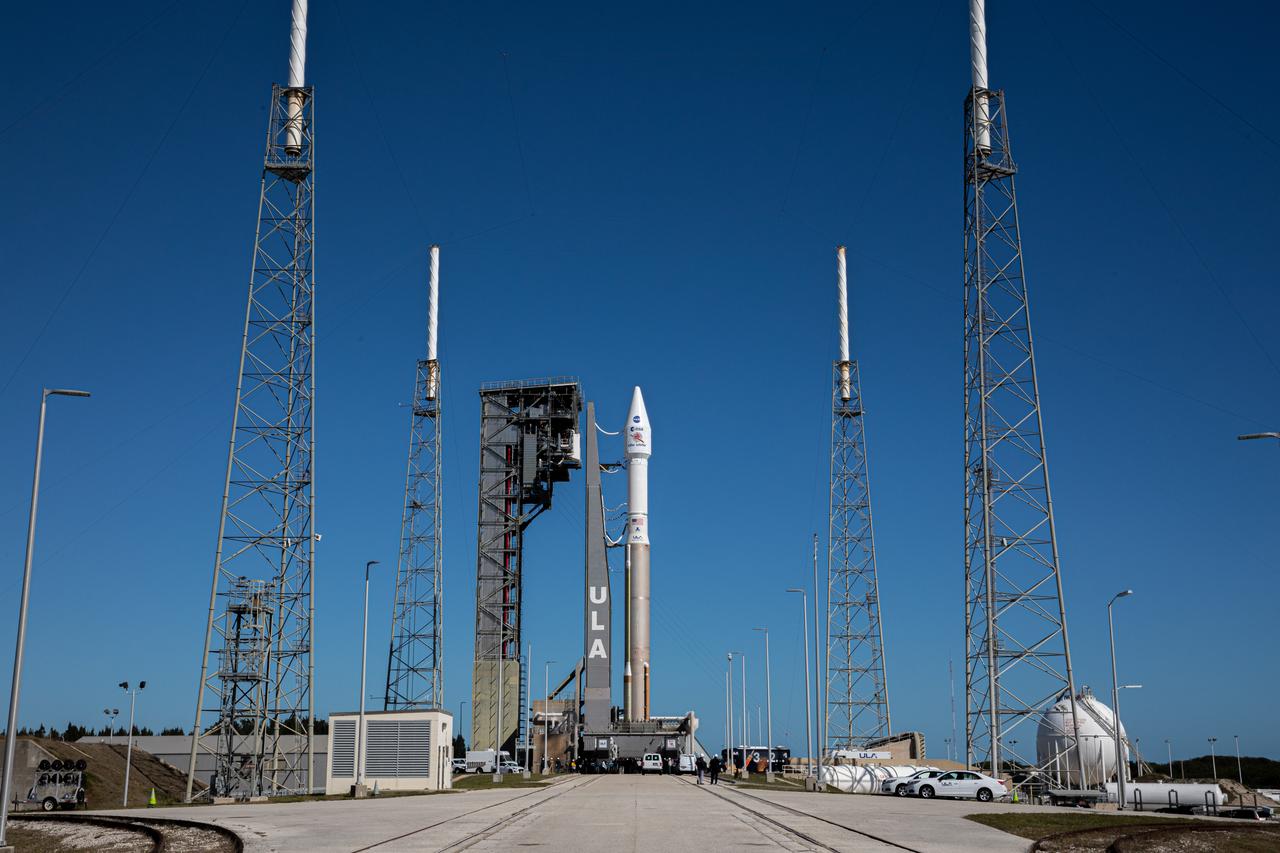
The United Launch Alliance Atlas V rocket with the Solar Orbiter spacecraft arrives at the launch pad at Space Launch Complex 41 on Cape Canaveral Air Force Station in Florida on Feb. 8, 2020. Solar Orbiter is an international cooperative mission between ESA (European Space Agency) and NASA. The mission aims to study the Sun, its outer atmosphere and solar wind. The spacecraft will provide the first images of the Sun’s poles. NASA’s Launch Services Program based at Kennedy is managing the launch. The spacecraft has been developed by Airbus Defence and Space. Solar Orbiter will launch Feb. 9, 2020 aboard the Atlas V rocket.
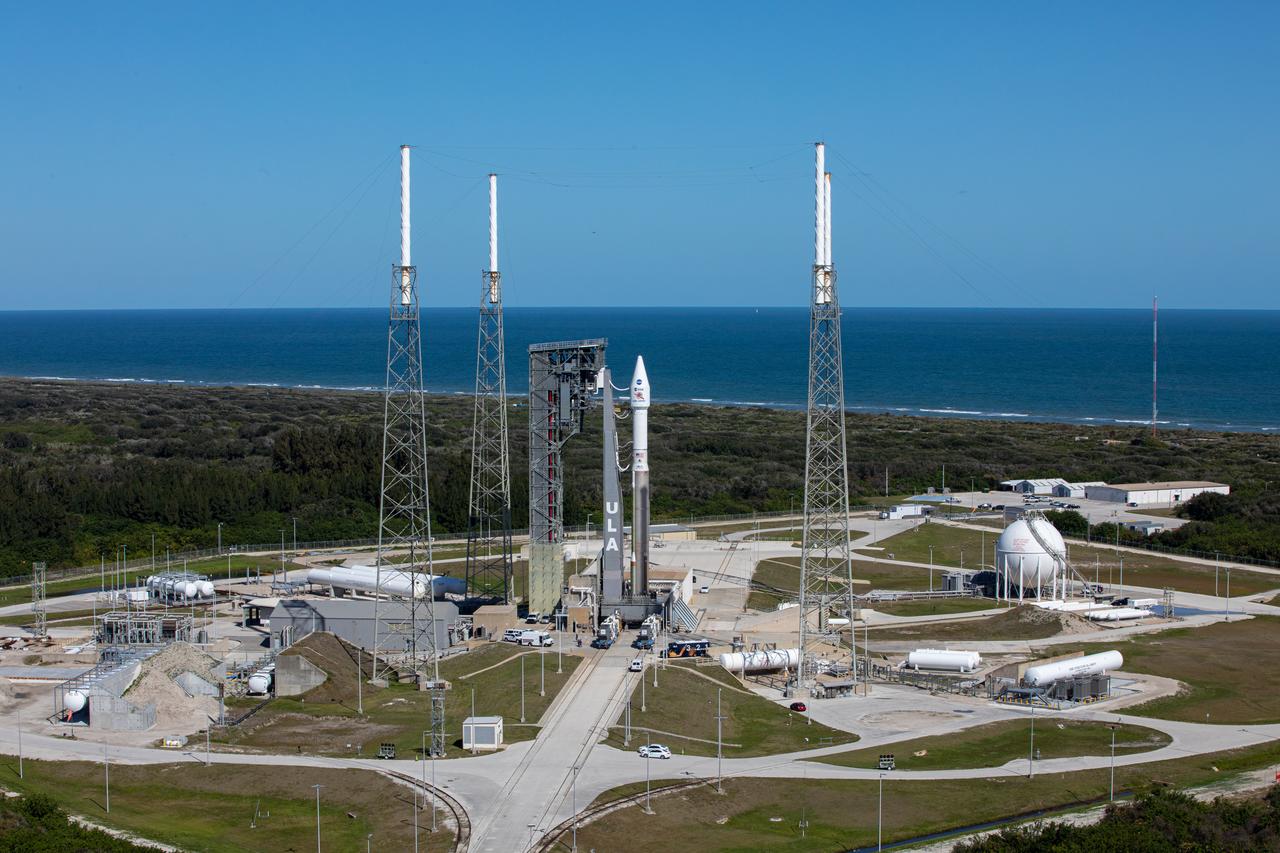
The United Launch Alliance Atlas V rocket with the Solar Orbiter spacecraft arrives at the launch pad at Space Launch Complex 41 on Cape Canaveral Air Force Station in Florida on Feb. 8, 2020. Solar Orbiter is an international cooperative mission between ESA (European Space Agency) and NASA. The mission aims to study the Sun, its outer atmosphere and solar wind. The spacecraft will provide the first images of the Sun’s poles. NASA’s Launch Services Program based at Kennedy is managing the launch. The spacecraft has been developed by Airbus Defence and Space. Solar Orbiter will launch Feb. 9, 2020 aboard the Atlas V rocket.
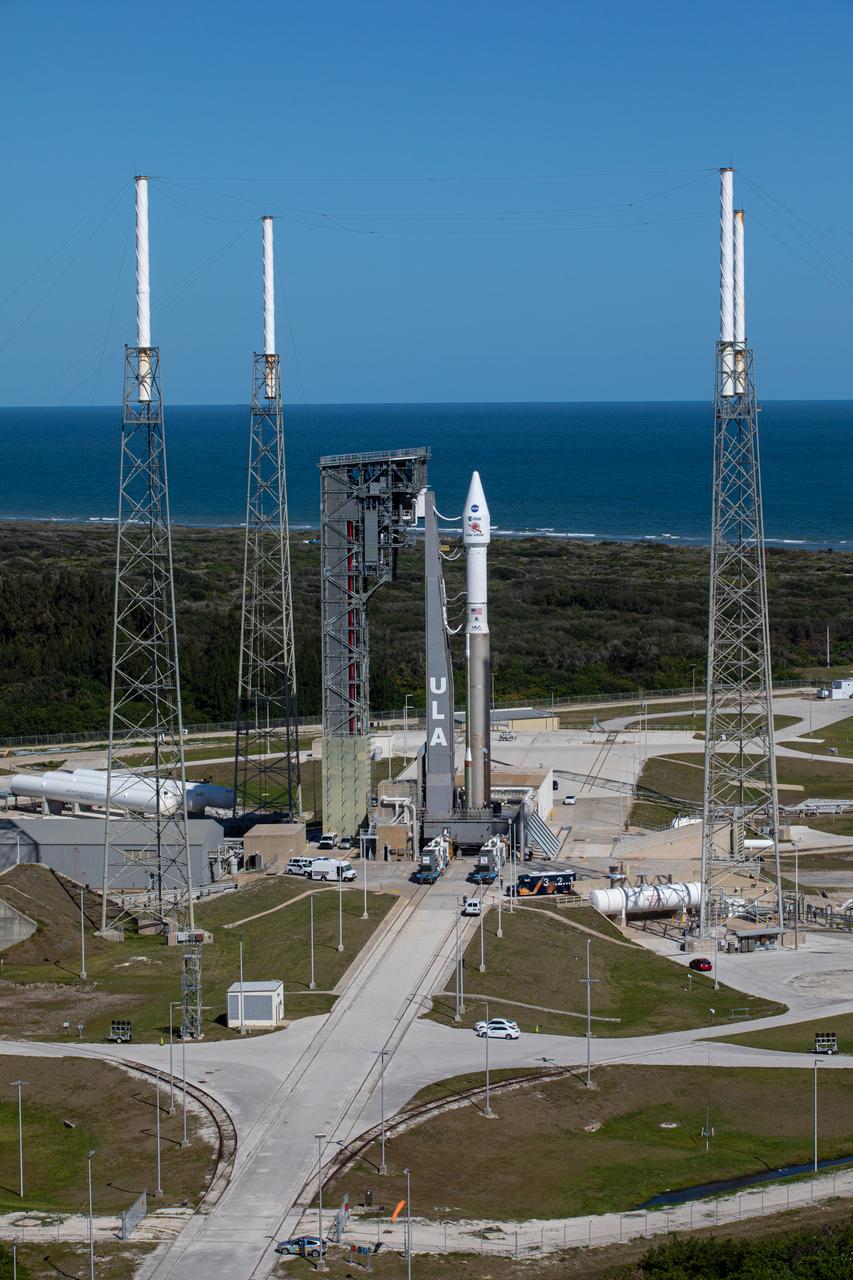
The United Launch Alliance Atlas V rocket with the Solar Orbiter spacecraft arrives at the launch pad at Space Launch Complex 41 on Cape Canaveral Air Force Station in Florida on Feb. 8, 2020. Solar Orbiter is an international cooperative mission between ESA (European Space Agency) and NASA. The mission aims to study the Sun, its outer atmosphere and solar wind. The spacecraft will provide the first images of the Sun’s poles. NASA’s Launch Services Program based at Kennedy is managing the launch. The spacecraft has been developed by Airbus Defence and Space. Solar Orbiter will launch Feb. 9, 2020 aboard the Atlas V rocket.
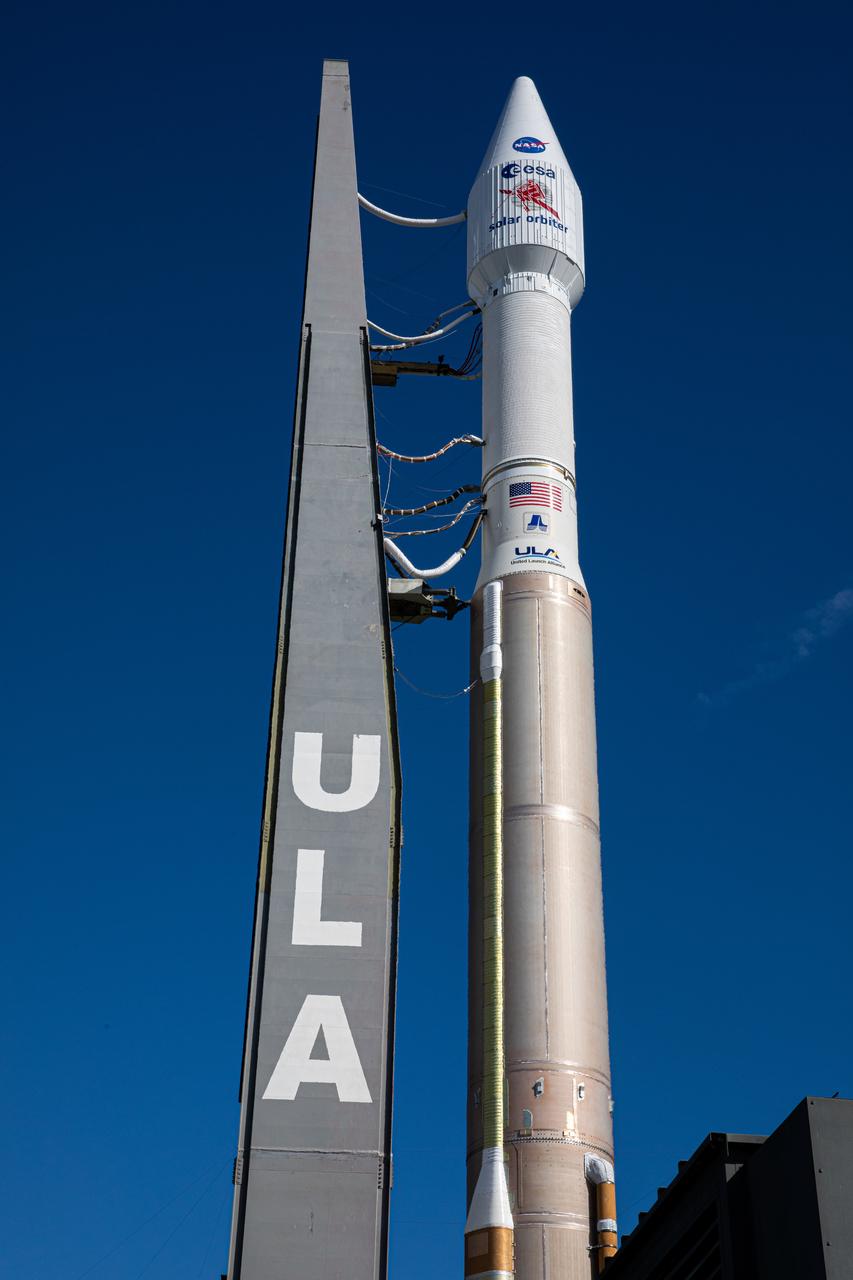
After departing the Vertical Integration Facility, the United Launch Alliance Atlas V rocket with the Solar Orbiter spacecraft moves slowly toward the launch pad at Space Launch Complex 41 on Cape Canaveral Air Force Station in Florida on Feb. 8, 2020. Solar Orbiter is an international cooperative mission between ESA (European Space Agency) and NASA. The mission aims to study the Sun, its outer atmosphere and solar wind. The spacecraft will provide the first images of the Sun’s poles. NASA’s Launch Services Program based at Kennedy is managing the launch. The spacecraft has been developed by Airbus Defence and Space. Solar Orbiter will launch Feb. 9, 2020 aboard the Atlas V rocket.
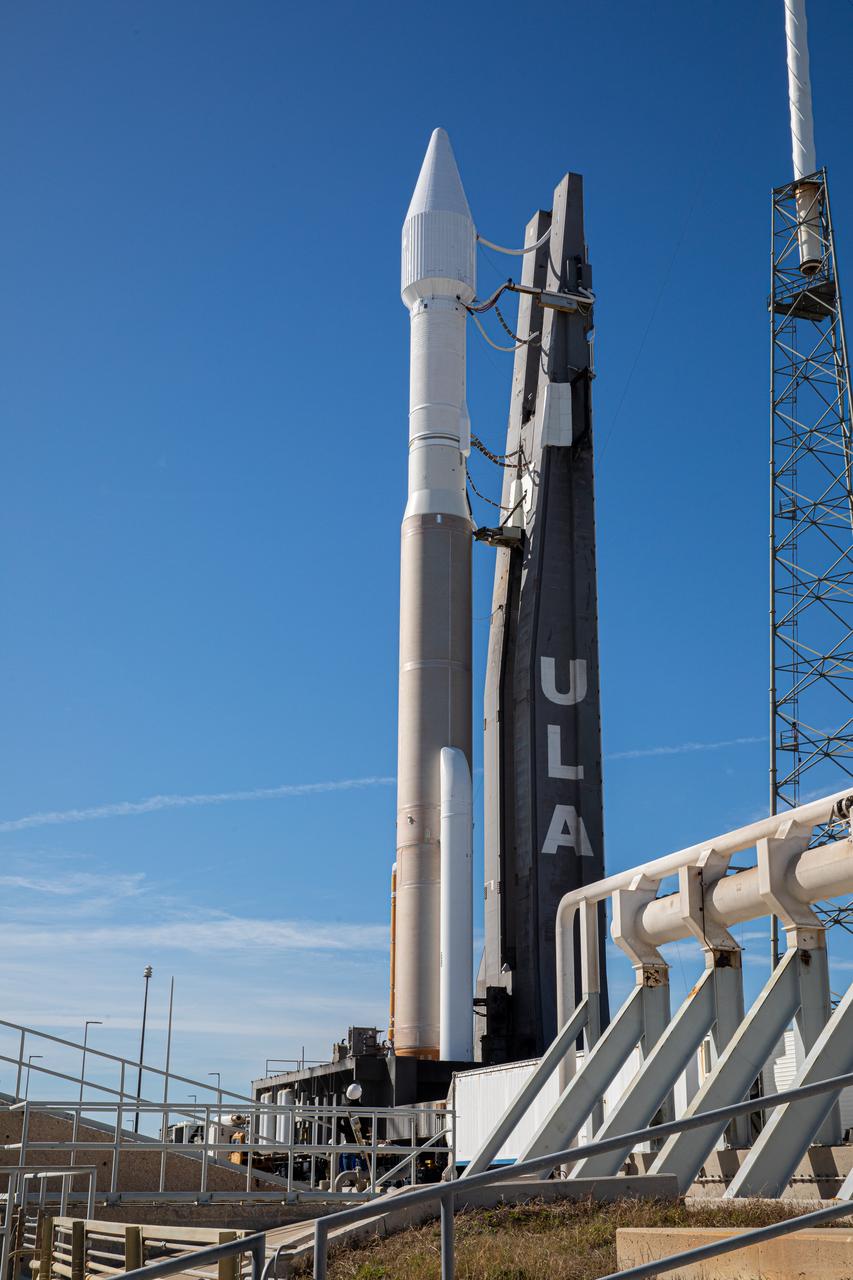
The United Launch Alliance Atlas V rocket with the Solar Orbiter spacecraft arrives at the launch pad at Space Launch Complex 41 on Cape Canaveral Air Force Station in Florida on Feb. 8, 2020. Solar Orbiter is an international cooperative mission between ESA (European Space Agency) and NASA. The mission aims to study the Sun, its outer atmosphere and solar wind. The spacecraft will provide the first images of the Sun’s poles. NASA’s Launch Services Program based at Kennedy is managing the launch. The spacecraft has been developed by Airbus Defence and Space. Solar Orbiter will launch Feb. 9, 2020 aboard the Atlas V rocket.
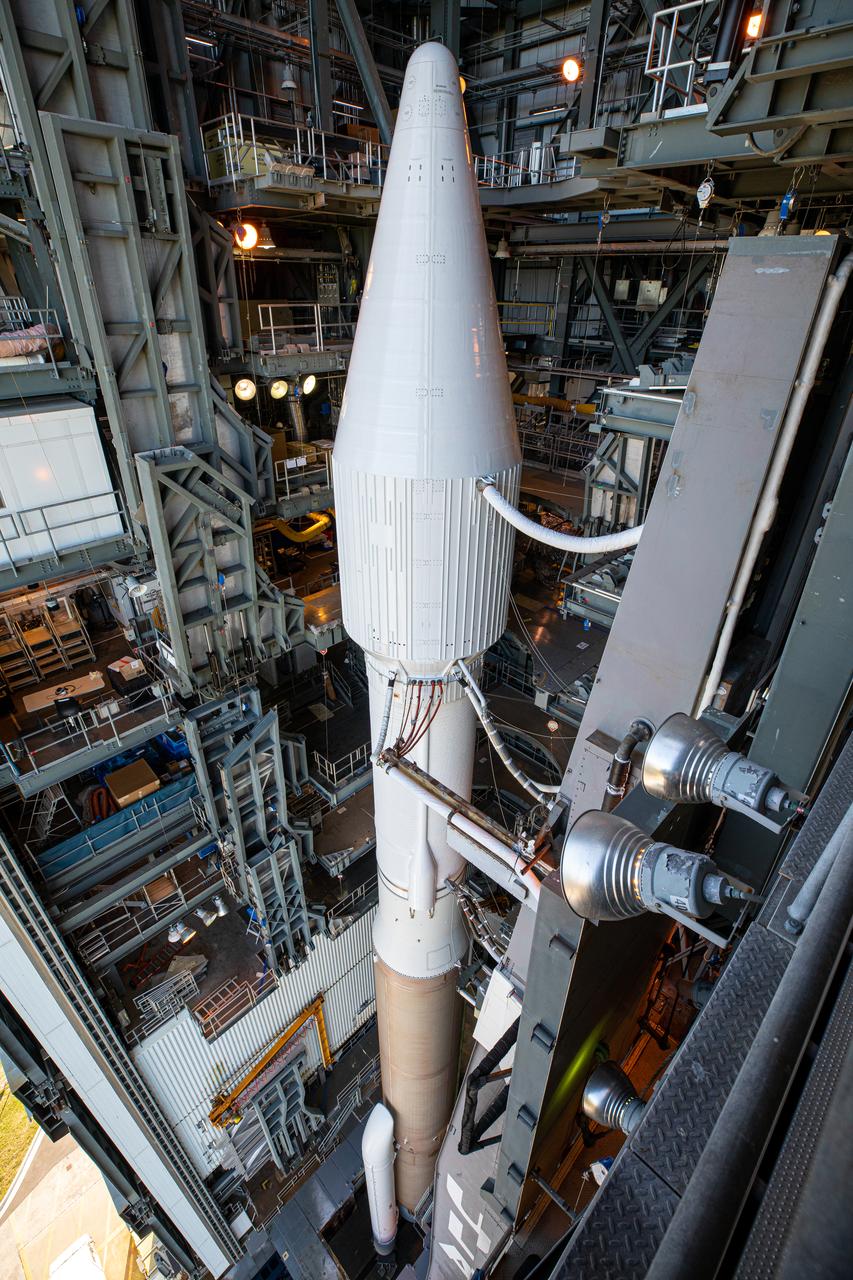
The United Launch Alliance Atlas V rocket with the Solar Orbiter spacecraft is photographed inside the Vertical Integration Facility on Cape Canaveral Air Force Station in Florida prior to beginning its roll to the launch pad at Space Launch Complex 41 on Feb. 8, 2020. Solar Orbiter is an international cooperative mission between ESA (European Space Agency) and NASA. The mission aims to study the Sun, its outer atmosphere and solar wind. The spacecraft will provide the first images of the Sun’s poles. NASA’s Launch Services Program based at Kennedy is managing the launch. The spacecraft has been developed by Airbus Defence and Space. Solar Orbiter will launch Feb. 9, 2020 aboard the Atlas V rocket.
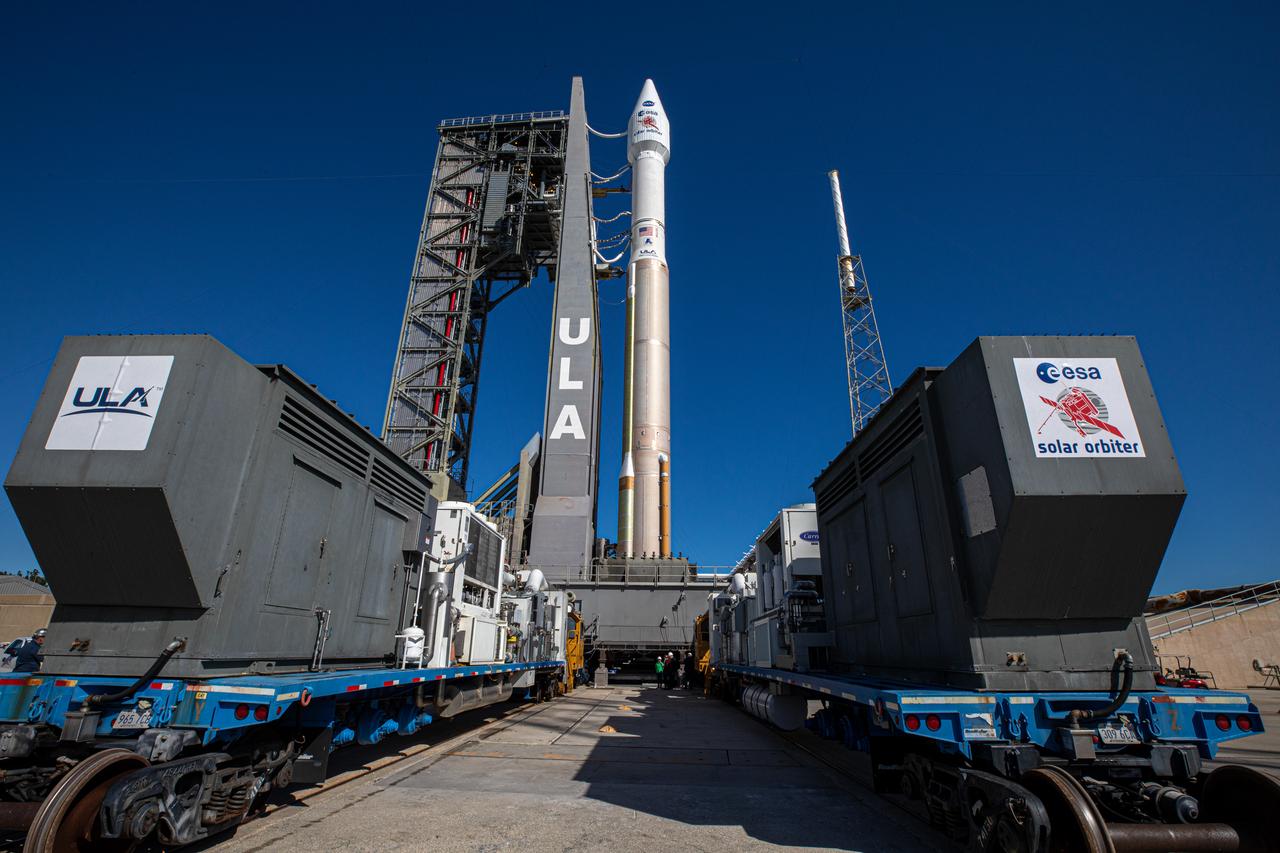
The United Launch Alliance Atlas V rocket with the Solar Orbiter spacecraft arrives at the launch pad at Space Launch Complex 41 on Cape Canaveral Air Force Station in Florida on Feb. 8, 2020. Solar Orbiter is an international cooperative mission between ESA (European Space Agency) and NASA. The mission aims to study the Sun, its outer atmosphere and solar wind. The spacecraft will provide the first images of the Sun’s poles. NASA’s Launch Services Program based at Kennedy is managing the launch. The spacecraft has been developed by Airbus Defence and Space. Solar Orbiter will launch Feb. 9, 2020 aboard the Atlas V rocket.
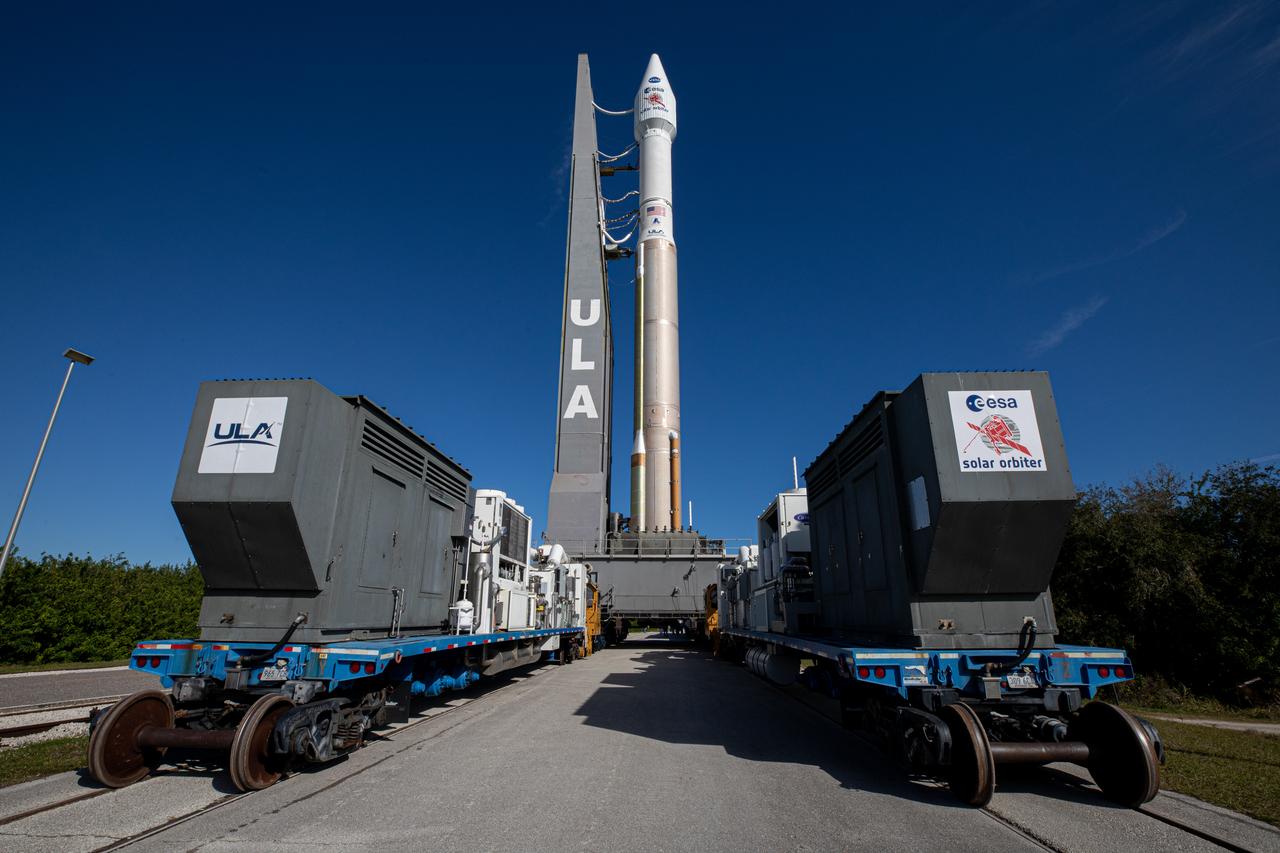
After departing the Vertical Integration Facility, the United Launch Alliance Atlas V rocket with the Solar Orbiter spacecraft moves slowly toward the launch pad at Space Launch Complex 41 on Cape Canaveral Air Force Station in Florida on Feb. 8, 2020. Solar Orbiter is an international cooperative mission between ESA (European Space Agency) and NASA. The mission aims to study the Sun, its outer atmosphere and solar wind. The spacecraft will provide the first images of the Sun’s poles. NASA’s Launch Services Program based at Kennedy is managing the launch. The spacecraft has been developed by Airbus Defence and Space. Solar Orbiter will launch Feb. 9, 2020 aboard the Atlas V rocket.
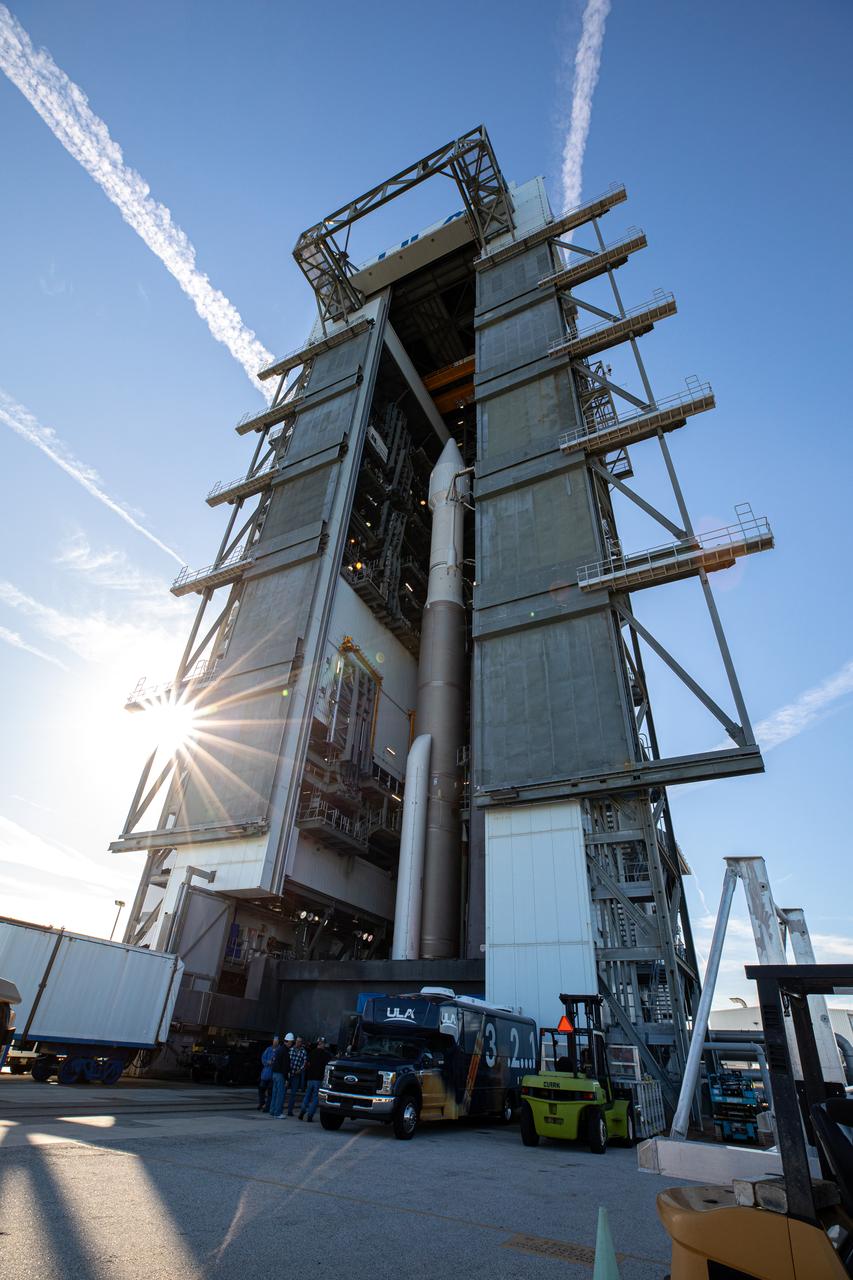
The United Launch Alliance Atlas V rocket with the Solar Orbiter spacecraft begins rollout from the Vertical Integration Facility to the launch pad at Space Launch Complex 41 on Cape Canaveral Air Force Station in Florida on Feb. 8, 2020. Solar Orbiter is an international cooperative mission between ESA (European Space Agency) and NASA. The mission aims to study the Sun, its outer atmosphere and solar wind. The spacecraft will provide the first images of the Sun’s poles. NASA’s Launch Services Program based at Kennedy is managing the launch. The spacecraft has been developed by Airbus Defence and Space. Solar Orbiter will launch Feb. 9, 2020 aboard the Atlas V rocket.
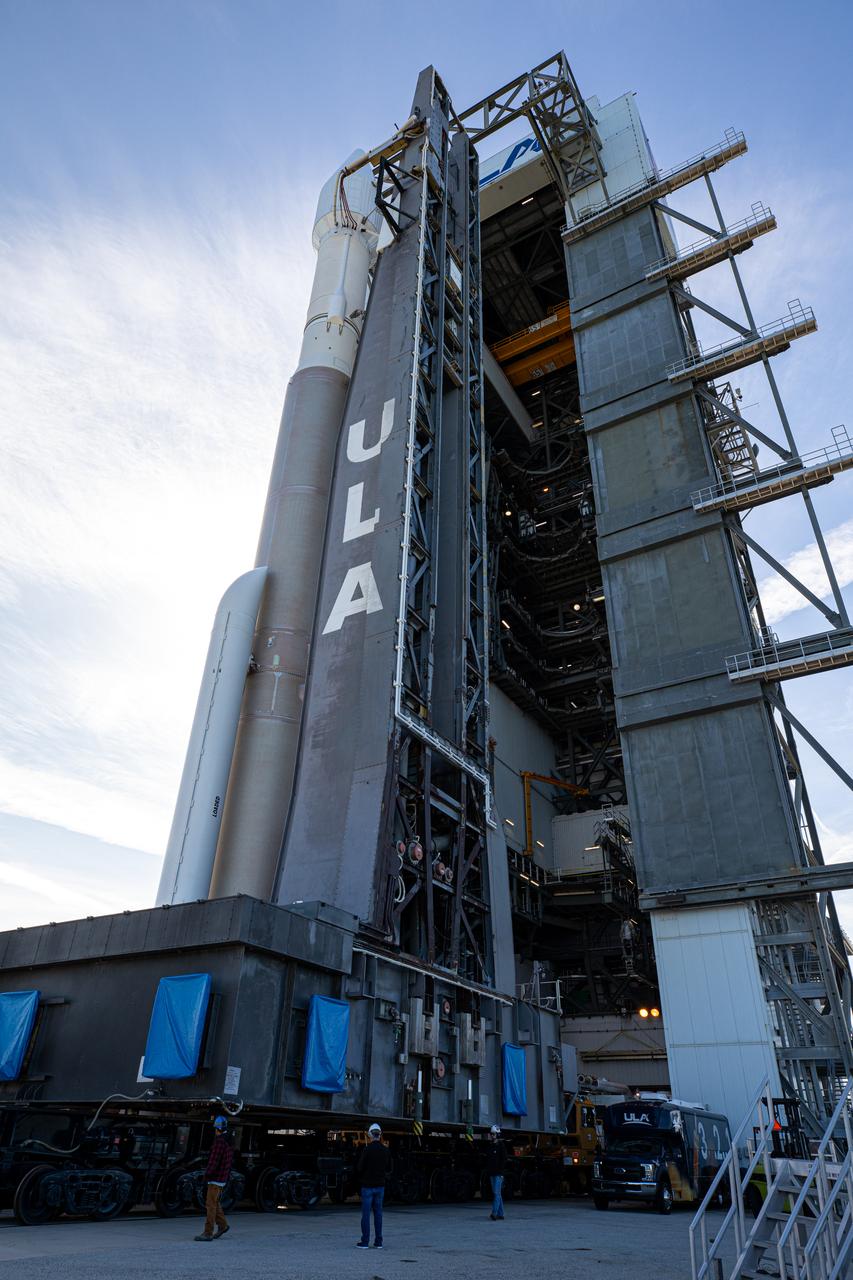
The United Launch Alliance Atlas V rocket with the Solar Orbiter spacecraft departs the Vertical Integration Facility for the launch pad at Space Launch Complex 41 on Cape Canaveral Air Force Station in Florida on Feb. 8, 2020. Solar Orbiter is an international cooperative mission between ESA (European Space Agency) and NASA. The mission aims to study the Sun, its outer atmosphere and solar wind. The spacecraft will provide the first images of the Sun’s poles. NASA’s Launch Services Program based at Kennedy is managing the launch. The spacecraft has been developed by Airbus Defence and Space. Solar Orbiter will launch Feb. 9, 2020 aboard the Atlas V rocket.
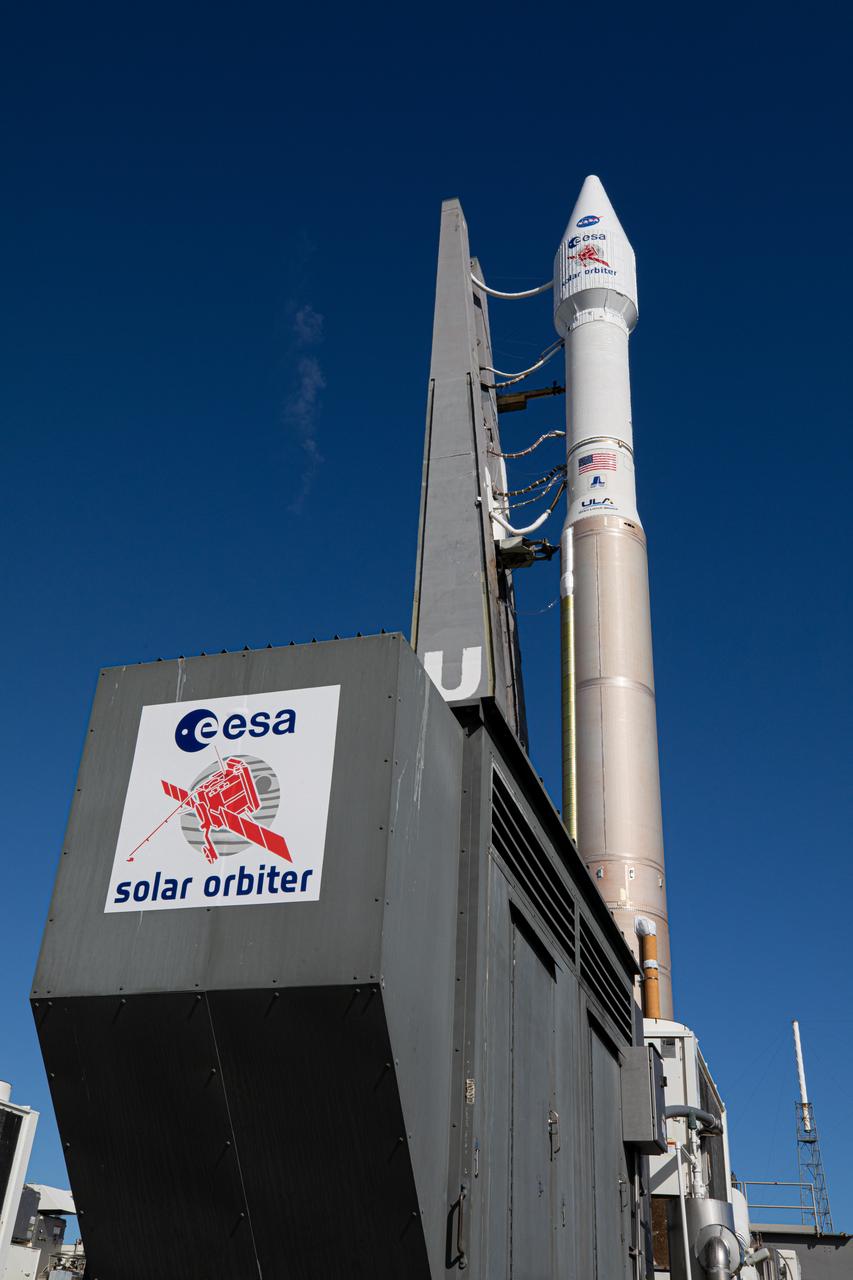
After departing the Vertical Integration Facility, the United Launch Alliance Atlas V rocket with the Solar Orbiter spacecraft moves slowly toward the launch pad at Space Launch Complex 41 on Cape Canaveral Air Force Station in Florida on Feb. 8, 2020. Solar Orbiter is an international cooperative mission between ESA (European Space Agency) and NASA. The mission aims to study the Sun, its outer atmosphere and solar wind. The spacecraft will provide the first images of the Sun’s poles. NASA’s Launch Services Program based at Kennedy is managing the launch. The spacecraft has been developed by Airbus Defence and Space. Solar Orbiter will launch Feb. 9, 2020 aboard the Atlas V rocket.
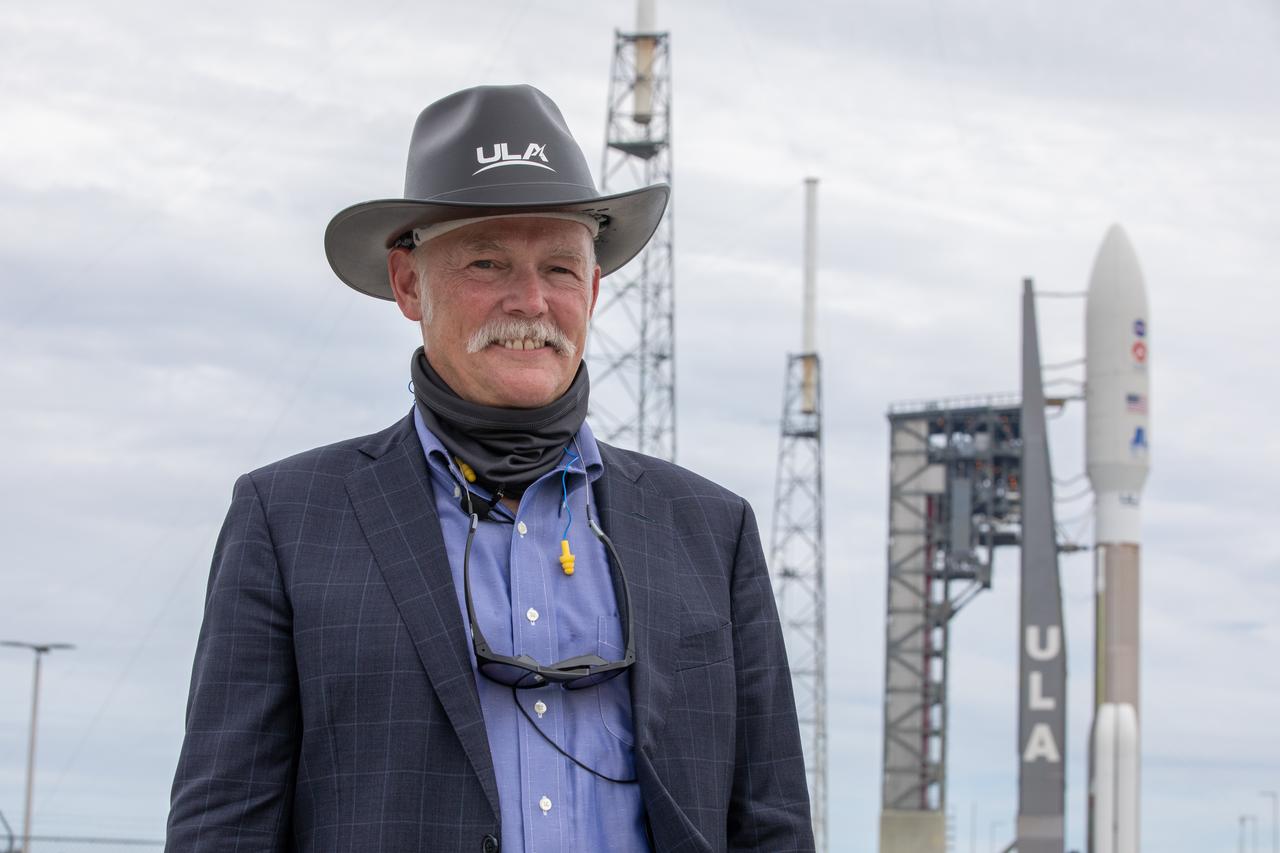
Tory Bruno, CEO of United Launch Alliance (ULA), attends the rollout of the ULA Atlas V 541 rocket, carrying NASA’s Mars Perseverance rover and Ingenuity helicopter, as it rolls along to the launch pad at Space Launch Complex 41 at Cape Canaveral Air Force Station on July 28, 2020. First motion was at 10:24 a.m. EDT. Launch of the Mars 2020 mission is scheduled for July 30. The rover is part of NASA’s Mars Exploration Program, a long-term effort of robotic exploration of the Red Planet. The rover will search for habitable conditions in the ancient past and signs of past microbial life on Mars. The Launch Services Program at Kennedy is responsible for launch management.
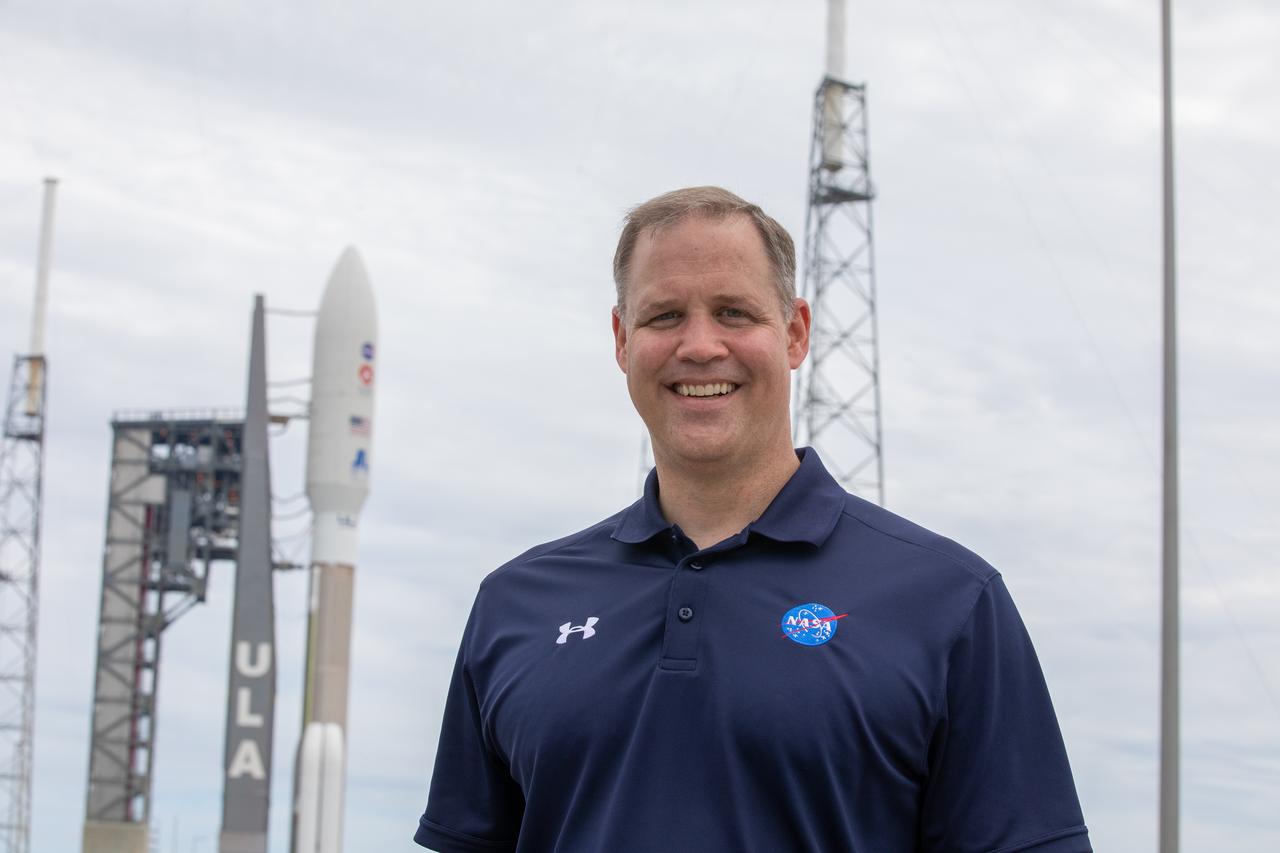
NASA Administrator Jim Bridenstine attends the rollout of the United Launch Alliance Atlas V 541 rocket, carrying NASA’s Mars Perseverance rover and Ingenuity helicopter, as it rolls along to the launch pad at Space Launch Complex 41 at Cape Canaveral Air Force Station on July 28, 2020. First motion was at 10:24 a.m. EDT. Launch of the Mars 2020 mission is scheduled for July 30. The rover is part of NASA’s Mars Exploration Program, a long-term effort of robotic exploration of the Red Planet. The rover will search for habitable conditions in the ancient past and signs of past microbial life on Mars. The Launch Services Program at Kennedy is responsible for launch management.
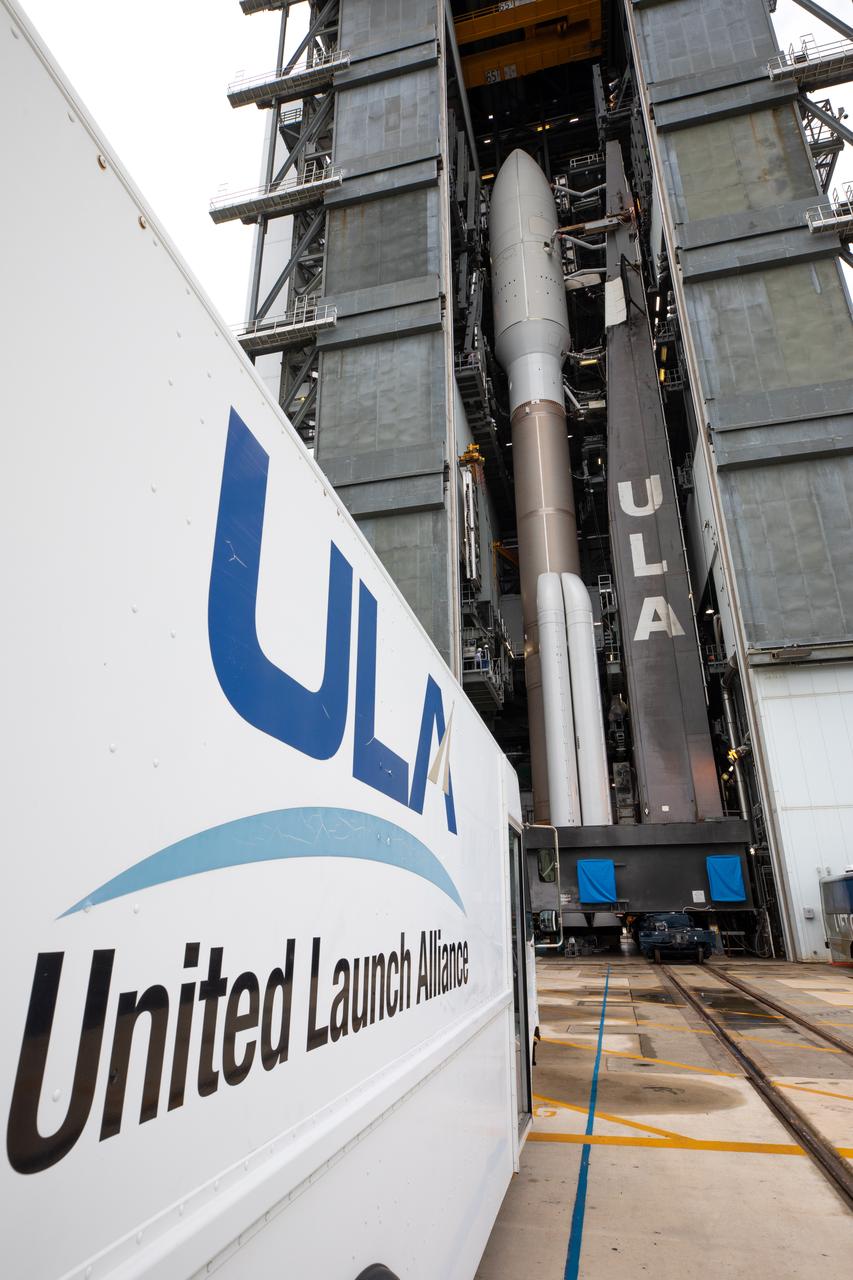
The United Launch Alliance Atlas V 541 rocket, carrying NASA’s Mars Perseverance rover and Ingenuity helicopter, begins rollout from the Vertical Integration Facility to the launch pad at Space Launch Complex 41 at Cape Canaveral Air Force Station on July 28, 2020. First motion was at 10:24 a.m. EDT. Launch of the Mars 2020 mission is scheduled for July 30. The rover is part of NASA’s Mars Exploration Program, a long-term effort of robotic exploration of the Red Planet. The rover will search for habitable conditions in the ancient past and signs of past microbial life on Mars. The Launch Services Program at Kennedy is responsible for launch management.
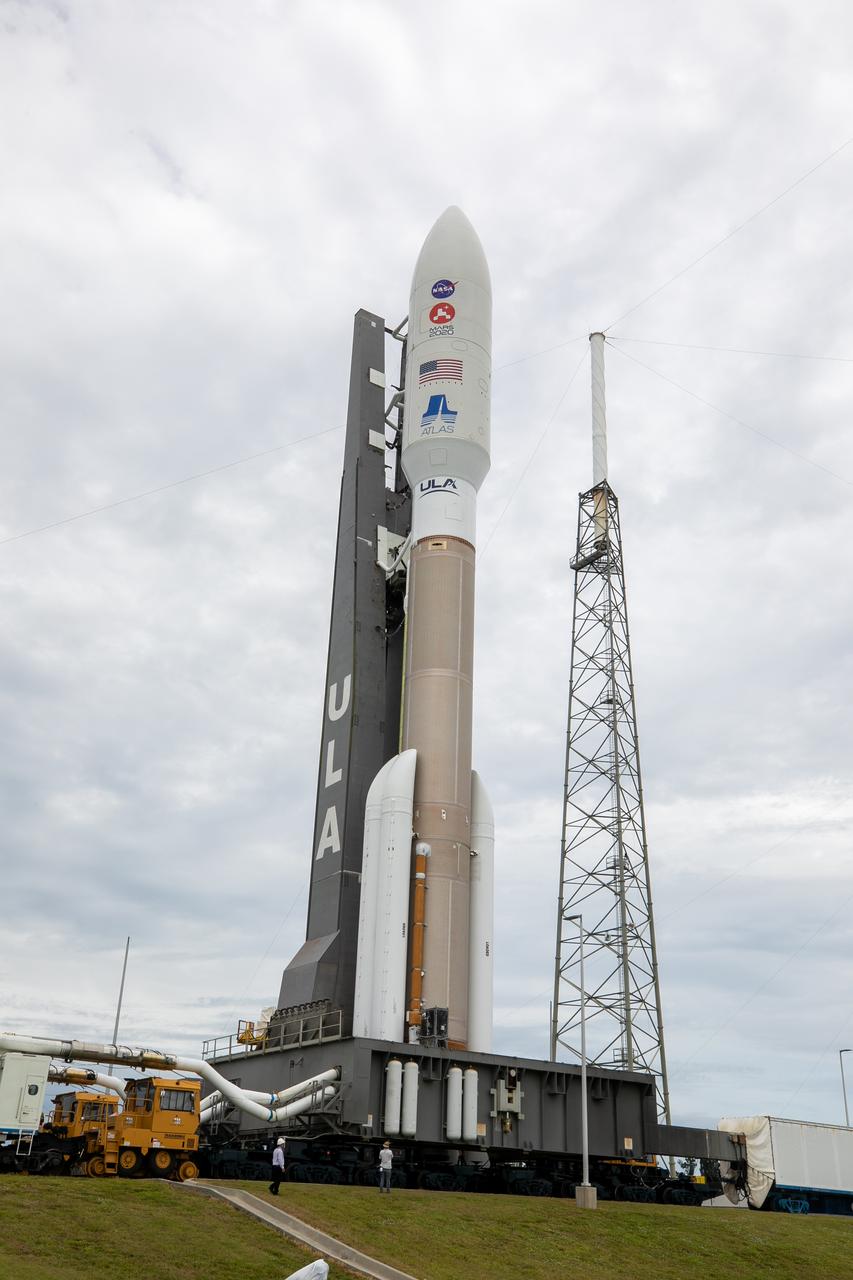
The United Launch Alliance Atlas V 541 rocket, carrying NASA’s Mars Perseverance rover and Ingenuity helicopter, rolls along to the launch pad at Space Launch Complex 41 at Cape Canaveral Air Force Station on July 28, 2020. First motion was at 10:24 a.m. EDT. Launch of the Mars 2020 mission is scheduled for July 30. The rover is part of NASA’s Mars Exploration Program, a long-term effort of robotic exploration of the Red Planet. The rover will search for habitable conditions in the ancient past and signs of past microbial life on Mars. The Launch Services Program at Kennedy is responsible for launch management.
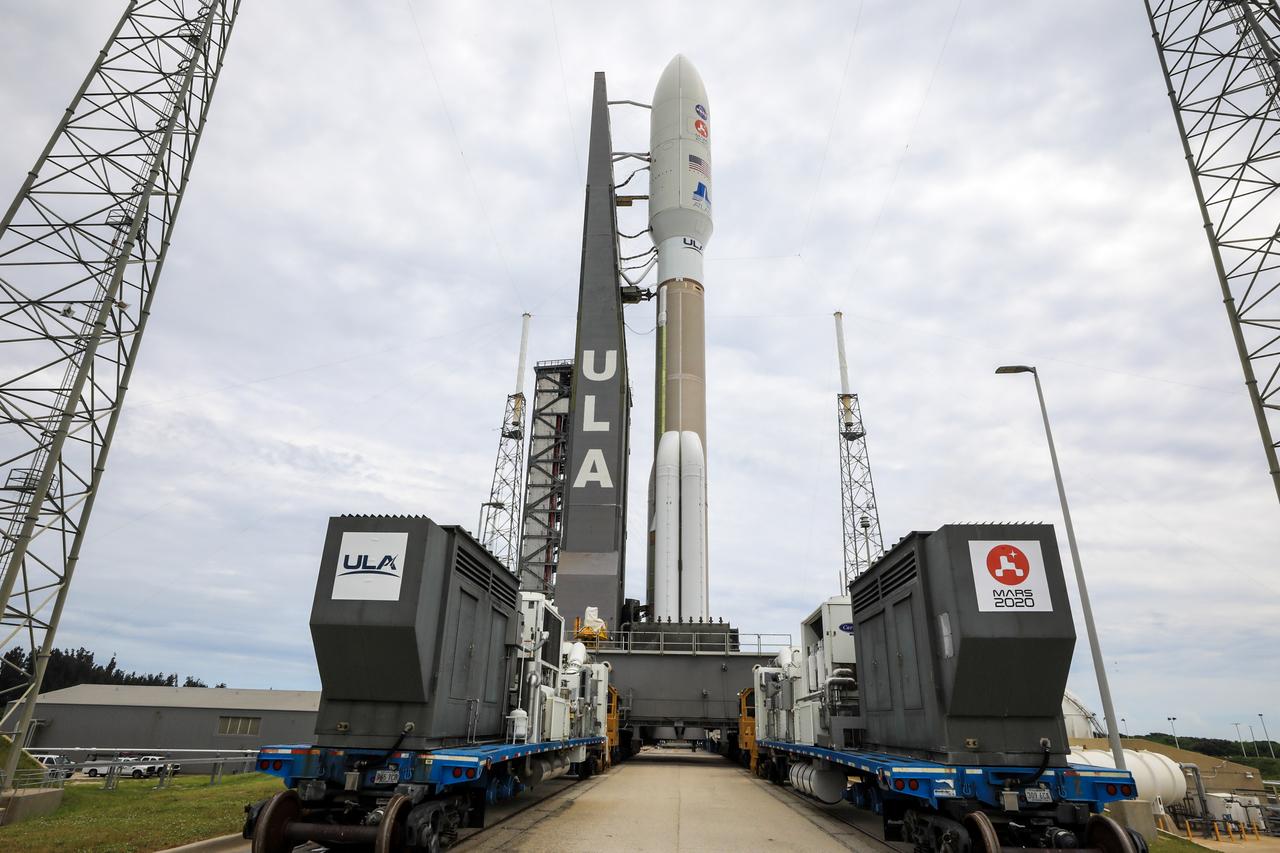
The United Launch Alliance Atlas V 541 rocket, carrying NASA’s Mars Perseverance rover and Ingenuity helicopter, rolls along to the launch pad at Space Launch Complex 41 at Cape Canaveral Air Force Station on July 28, 2020. First motion was at 10:24 a.m. EDT. Launch of the Mars 2020 mission is scheduled for July 30. The rover is part of NASA’s Mars Exploration Program, a long-term effort of robotic exploration of the Red Planet. The rover will search for habitable conditions in the ancient past and signs of past microbial life on Mars. The Launch Services Program at Kennedy is responsible for launch management.

NASA Administrator Jim Bridenstine, at left, and Tory Bruno, CEO of United Launch Alliance (ULA), watch the rollout of the ULA Atlas V 541 rocket, carrying NASA’s Mars Perseverance rover and Ingenuity helicopter, as it rolls along to the launch pad at Space Launch Complex 41 at Cape Canaveral Air Force Station on July 28, 2020. First motion was at 10:24 a.m. EDT. Launch of the Mars 2020 mission is scheduled for July 30. The rover is part of NASA’s Mars Exploration Program, a long-term effort of robotic exploration of the Red Planet. The rover will search for habitable conditions in the ancient past and signs of past microbial life on Mars. The Launch Services Program at Kennedy is responsible for launch management.
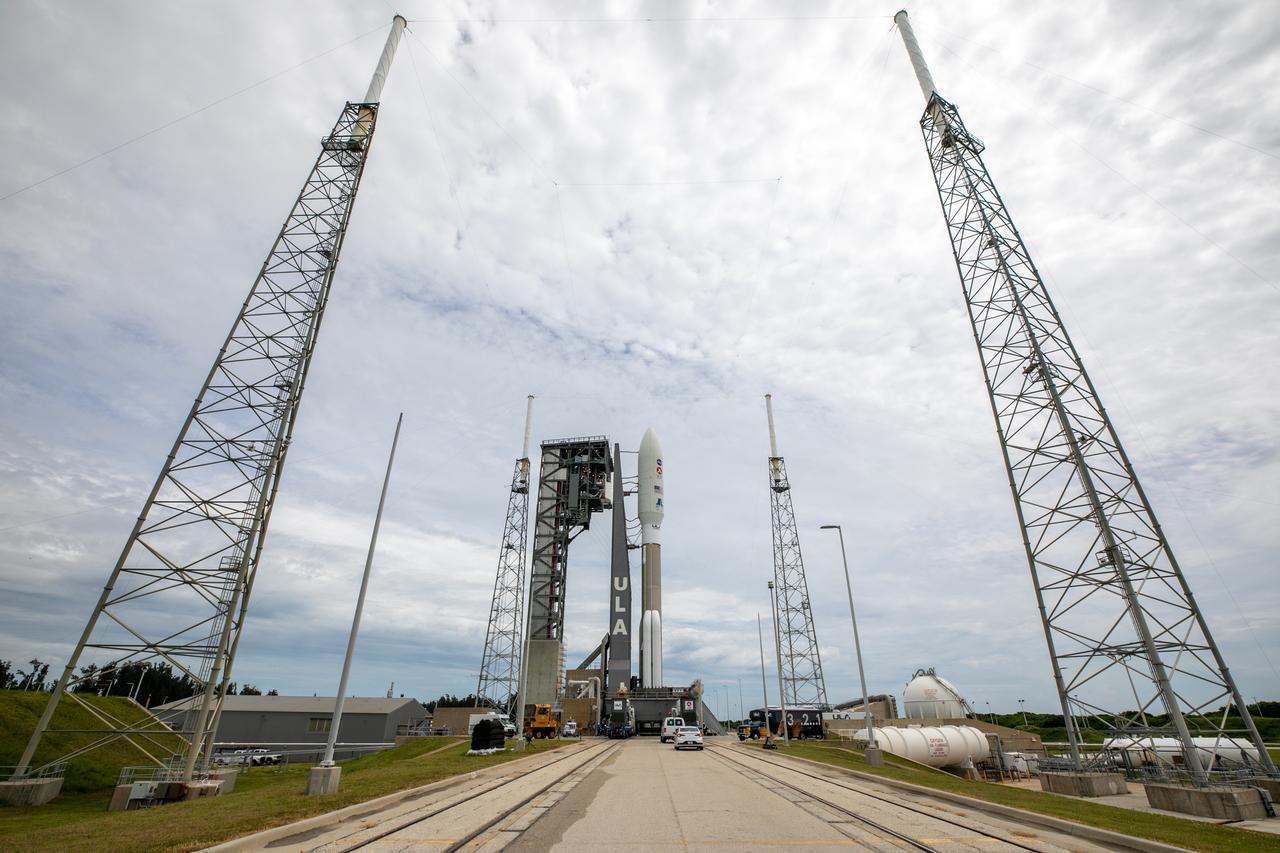
The United Launch Alliance Atlas V 541 rocket, carrying NASA’s Mars Perseverance rover and Ingenuity helicopter, arrives at the launch pad at Space Launch Complex 41 at Cape Canaveral Air Force Station on July 28, 2020. First motion from the Vertical Integration Facility was at 10:24 a.m. EDT. Launch of the Mars 2020 mission is scheduled for July 30. The rover is part of NASA’s Mars Exploration Program, a long-term effort of robotic exploration of the Red Planet. The rover will search for habitable conditions in the ancient past and signs of past microbial life on Mars. The Launch Services Program at Kennedy is responsible for launch management.
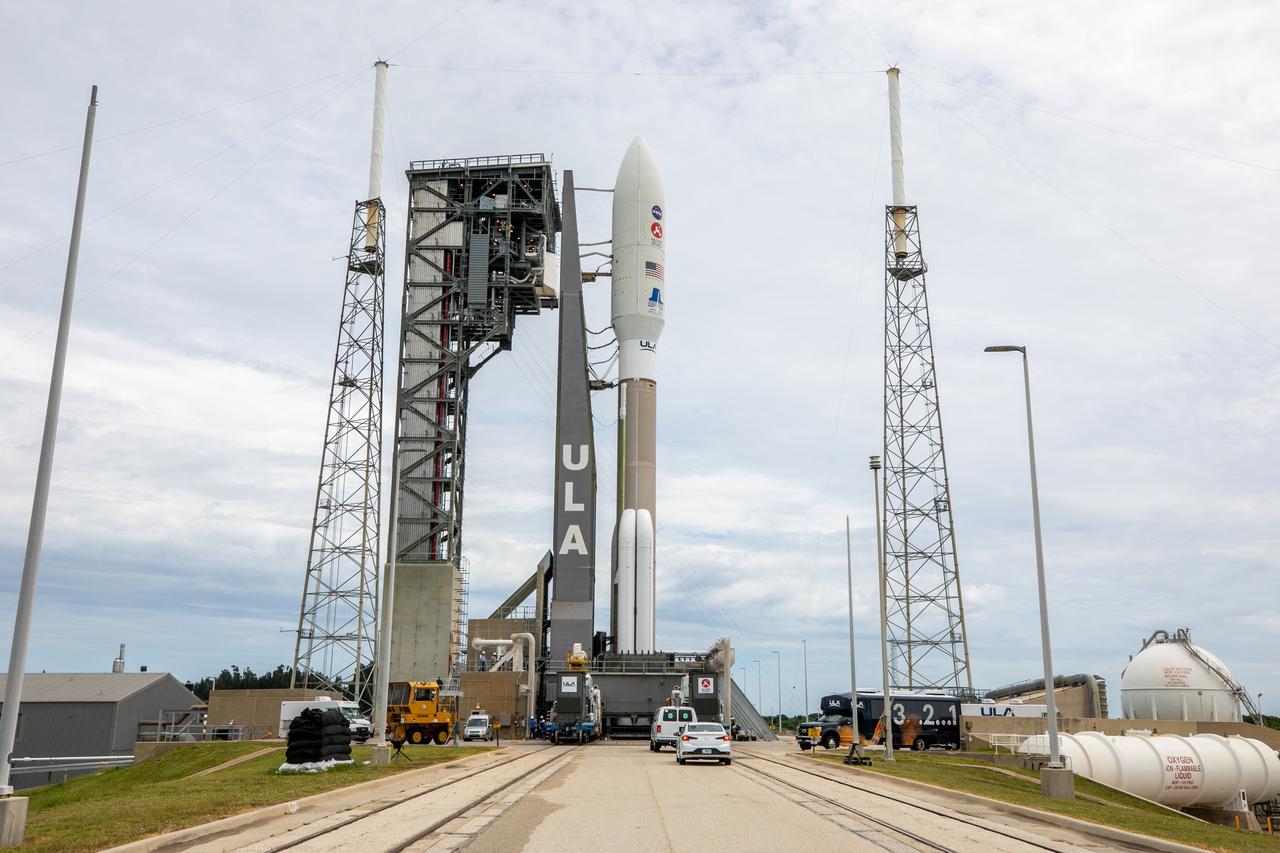
The United Launch Alliance Atlas V 541 rocket, carrying NASA’s Mars Perseverance rover and Ingenuity helicopter, arrives at the launch pad at Space Launch Complex 41 at Cape Canaveral Air Force Station on July 28, 2020. First motion from the Vertical Integration Facility was at 10:24 a.m. EDT. Launch of the Mars 2020 mission is scheduled for July 30. The rover is part of NASA’s Mars Exploration Program, a long-term effort of robotic exploration of the Red Planet. The rover will search for habitable conditions in the ancient past and signs of past microbial life on Mars. The Launch Services Program at Kennedy is responsible for launch management.
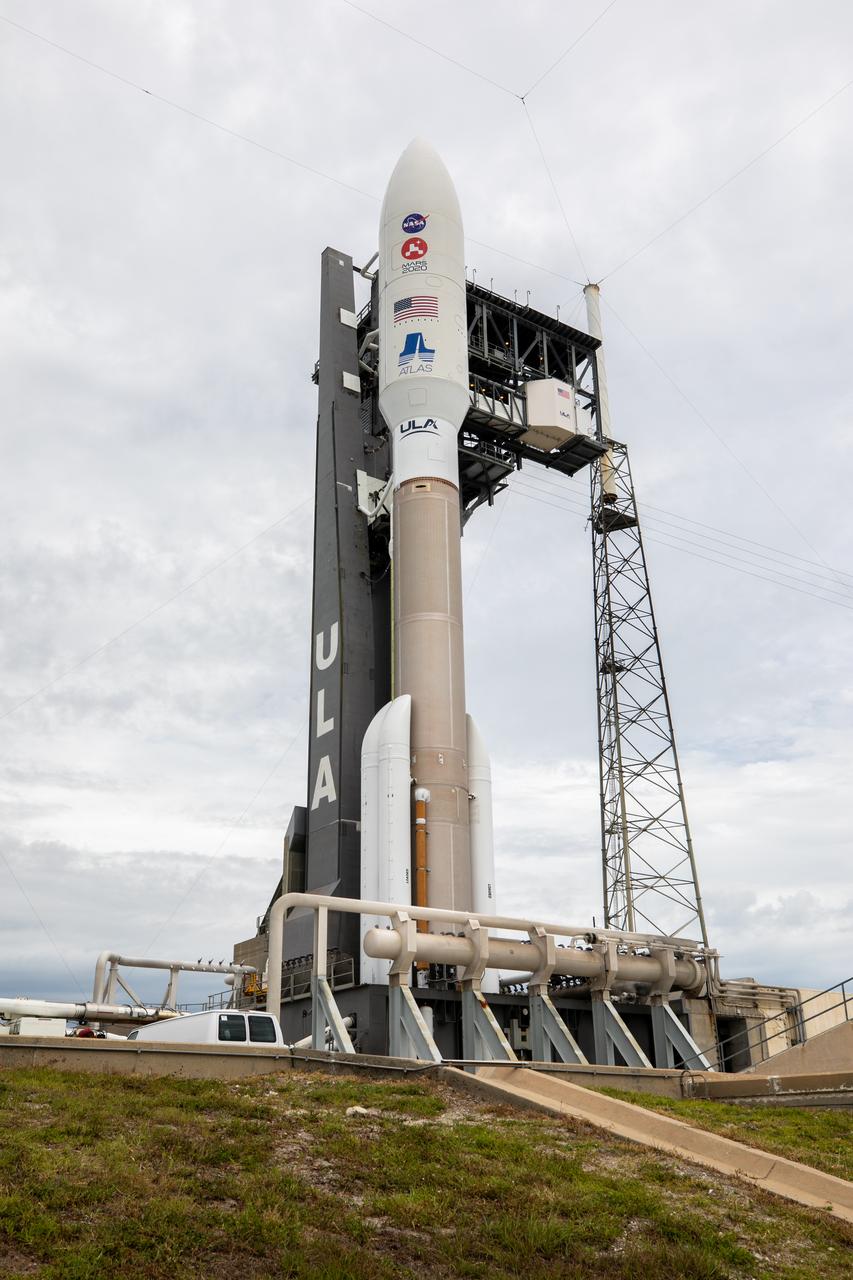
The United Launch Alliance Atlas V 541 rocket, carrying NASA’s Mars Perseverance rover and Ingenuity helicopter, arrives at the launch pad at Space Launch Complex 41 at Cape Canaveral Air Force Station on July 28, 2020. First motion from the Vertical Integration Facility was at 10:24 a.m. EDT. Launch of the Mars 2020 mission is scheduled for July 30. The rover is part of NASA’s Mars Exploration Program, a long-term effort of robotic exploration of the Red Planet. The rover will search for habitable conditions in the ancient past and signs of past microbial life on Mars. The Launch Services Program at Kennedy is responsible for launch management.
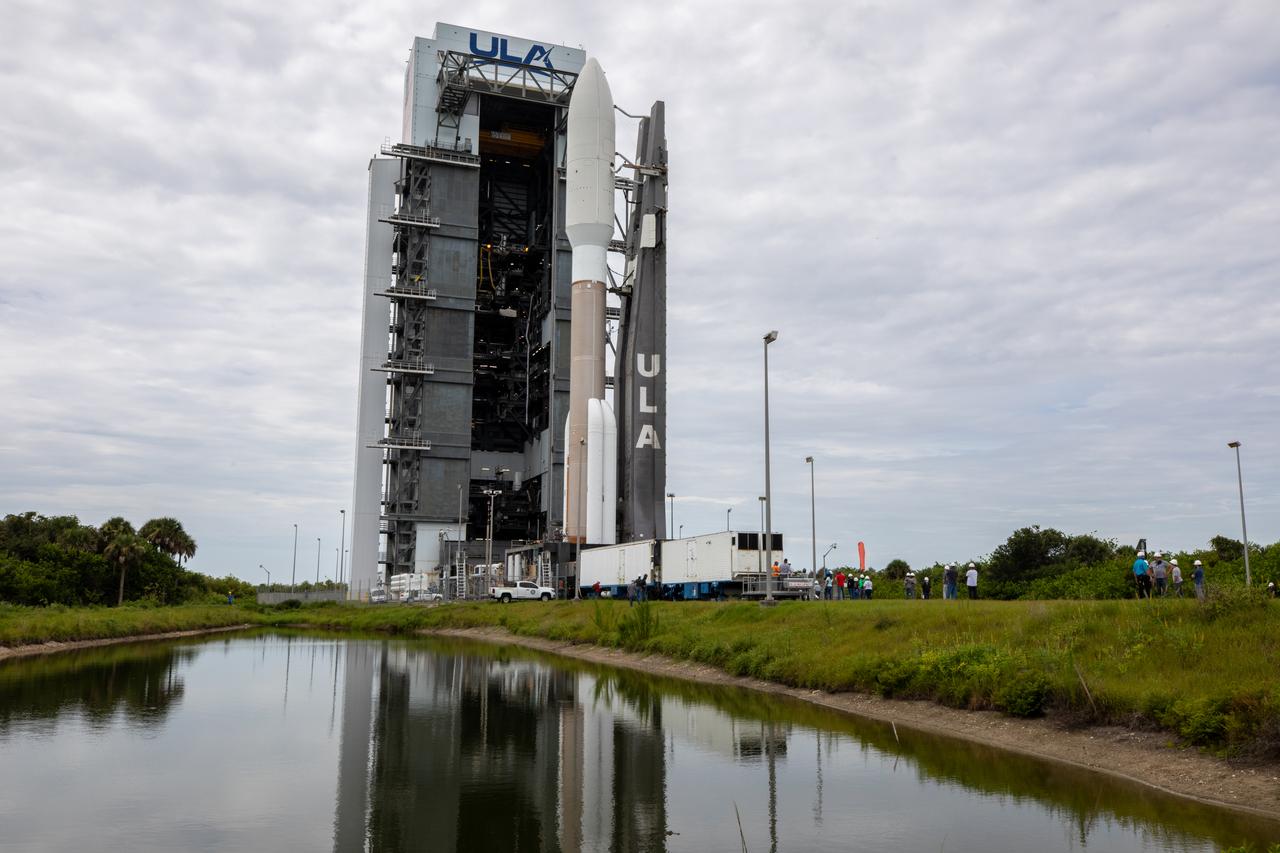
The United Launch Alliance Atlas V 541 rocket, carrying NASA’s Mars Perseverance rover and Ingenuity helicopter, rolls out from the Vertical Integration Facility and moves along to the launch pad at Space Launch Complex 41 at Cape Canaveral Air Force Station on July 28, 2020. First motion was at 10:24 a.m. EDT. Launch of the Mars 2020 mission is scheduled for July 30. The rover is part of NASA’s Mars Exploration Program, a long-term effort of robotic exploration of the Red Planet. The rover will search for habitable conditions in the ancient past and signs of past microbial life on Mars. The Launch Services Program at Kennedy is responsible for launch management.
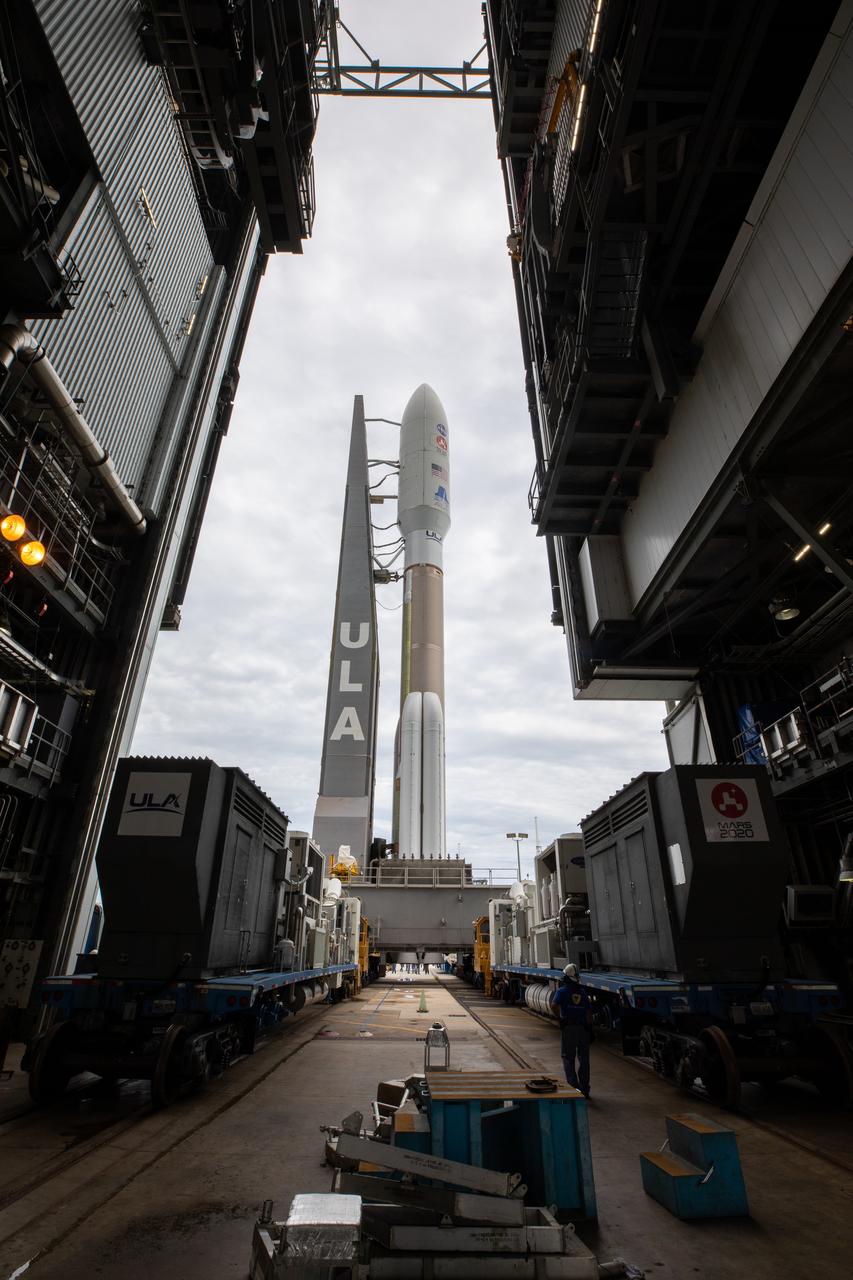
The United Launch Alliance Atlas V 541 rocket, carrying NASA’s Mars Perseverance rover and Ingenuity helicopter, rolls out from the Vertical Integration Facility and moves along to the launch pad at Space Launch Complex 41 at Cape Canaveral Air Force Station on July 28, 2020. First motion was at 10:24 a.m. EDT. Launch of the Mars 2020 mission is scheduled for July 30. The rover is part of NASA’s Mars Exploration Program, a long-term effort of robotic exploration of the Red Planet. The rover will search for habitable conditions in the ancient past and signs of past microbial life on Mars. The Launch Services Program at Kennedy is responsible for launch management.
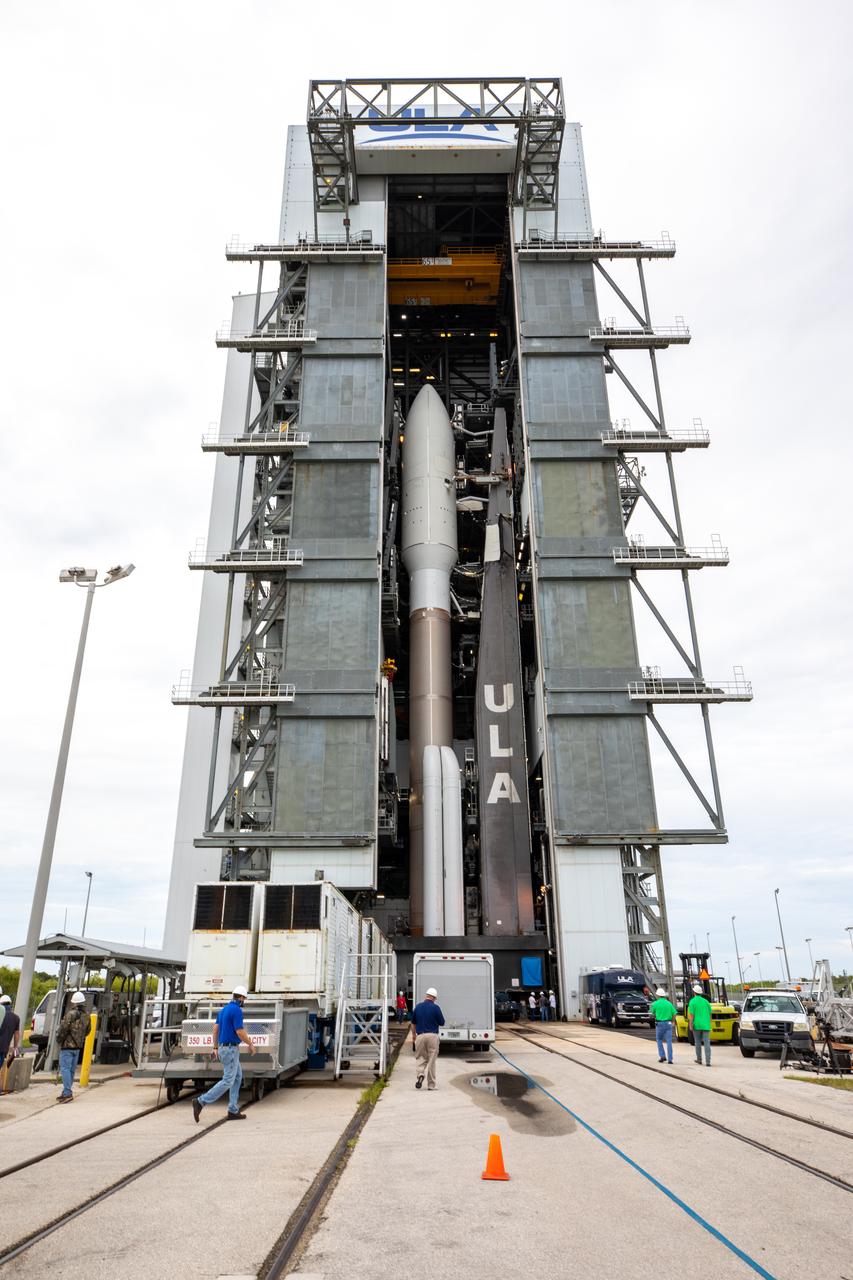
The United Launch Alliance Atlas V 541 rocket, carrying NASA’s Mars Perseverance rover and Ingenuity helicopter, begins rollout from the Vertical Integration Facility to the launch pad at Space Launch Complex 41 at Cape Canaveral Air Force Station on July 28, 2020. First motion was at 10:24 a.m. EDT. Launch of the Mars 2020 mission is scheduled for July 30. The rover is part of NASA’s Mars Exploration Program, a long-term effort of robotic exploration of the Red Planet. The rover will search for habitable conditions in the ancient past and signs of past microbial life on Mars. The Launch Services Program at Kennedy is responsible for launch management.
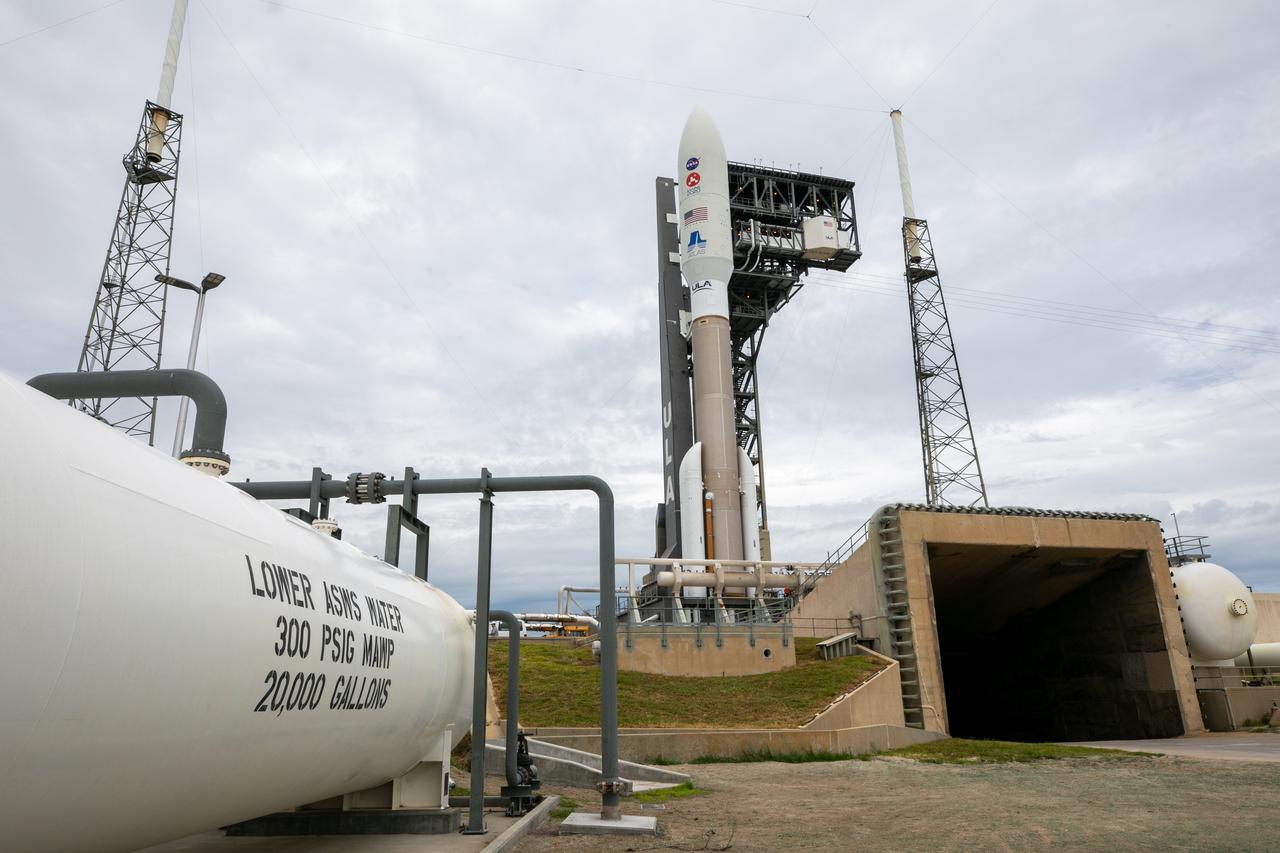
The United Launch Alliance Atlas V 541 rocket, carrying NASA’s Mars Perseverance rover and Ingenuity helicopter, arrives at the launch pad at Space Launch Complex 41 at Cape Canaveral Air Force Station on July 28, 2020. First motion from the Vertical Integration Facility was at 10:24 a.m. EDT. Launch of the Mars 2020 mission is scheduled for July 30. The rover is part of NASA’s Mars Exploration Program, a long-term effort of robotic exploration of the Red Planet. The rover will search for habitable conditions in the ancient past and signs of past microbial life on Mars. The Launch Services Program at Kennedy is responsible for launch management.
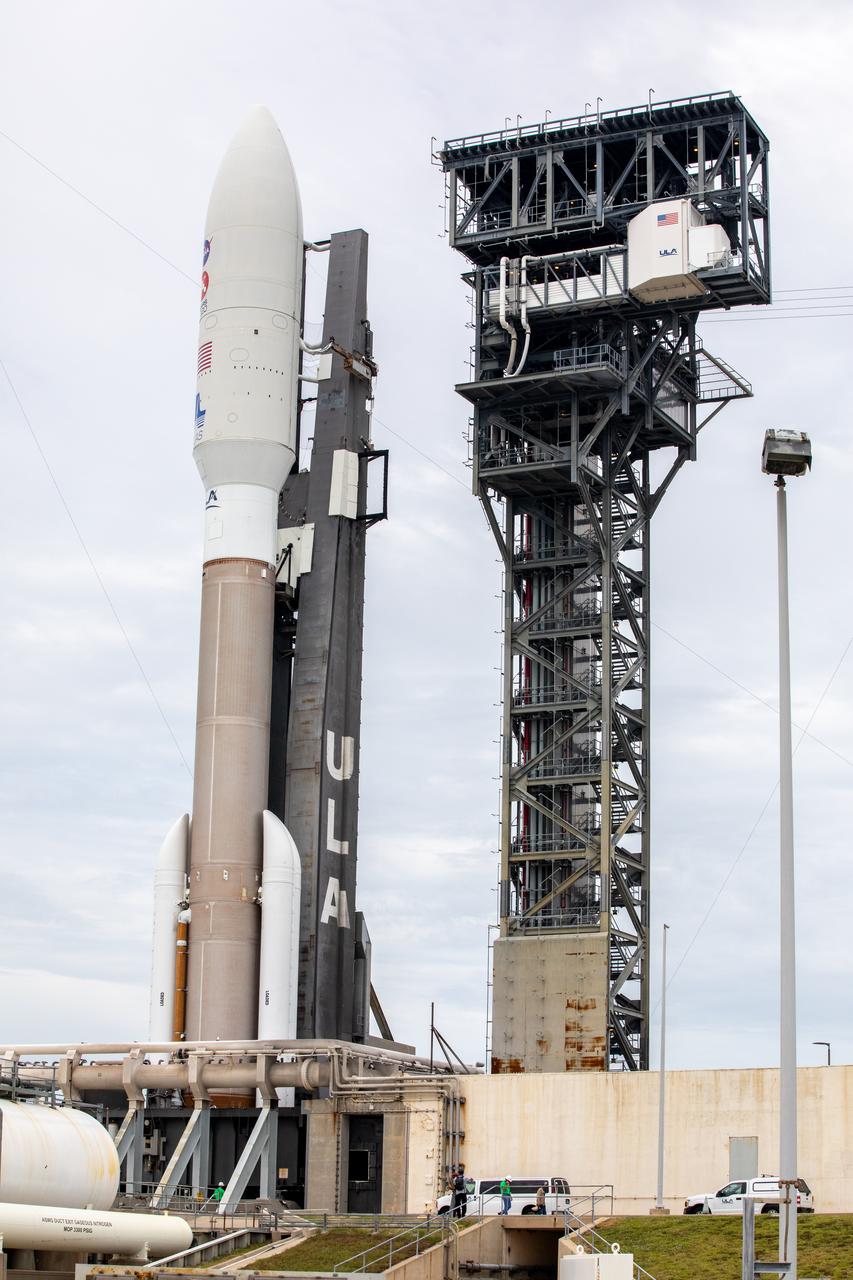
The United Launch Alliance Atlas V 541 rocket, carrying NASA’s Mars Perseverance rover and Ingenuity helicopter, arrives at the launch pad at Space Launch Complex 41 at Cape Canaveral Air Force Station on July 28, 2020. First motion from the Vertical Integration Facility was at 10:24 a.m. EDT. Launch of the Mars 2020 mission is scheduled for July 30. The rover is part of NASA’s Mars Exploration Program, a long-term effort of robotic exploration of the Red Planet. The rover will search for habitable conditions in the ancient past and signs of past microbial life on Mars. The Launch Services Program at Kennedy is responsible for launch management.
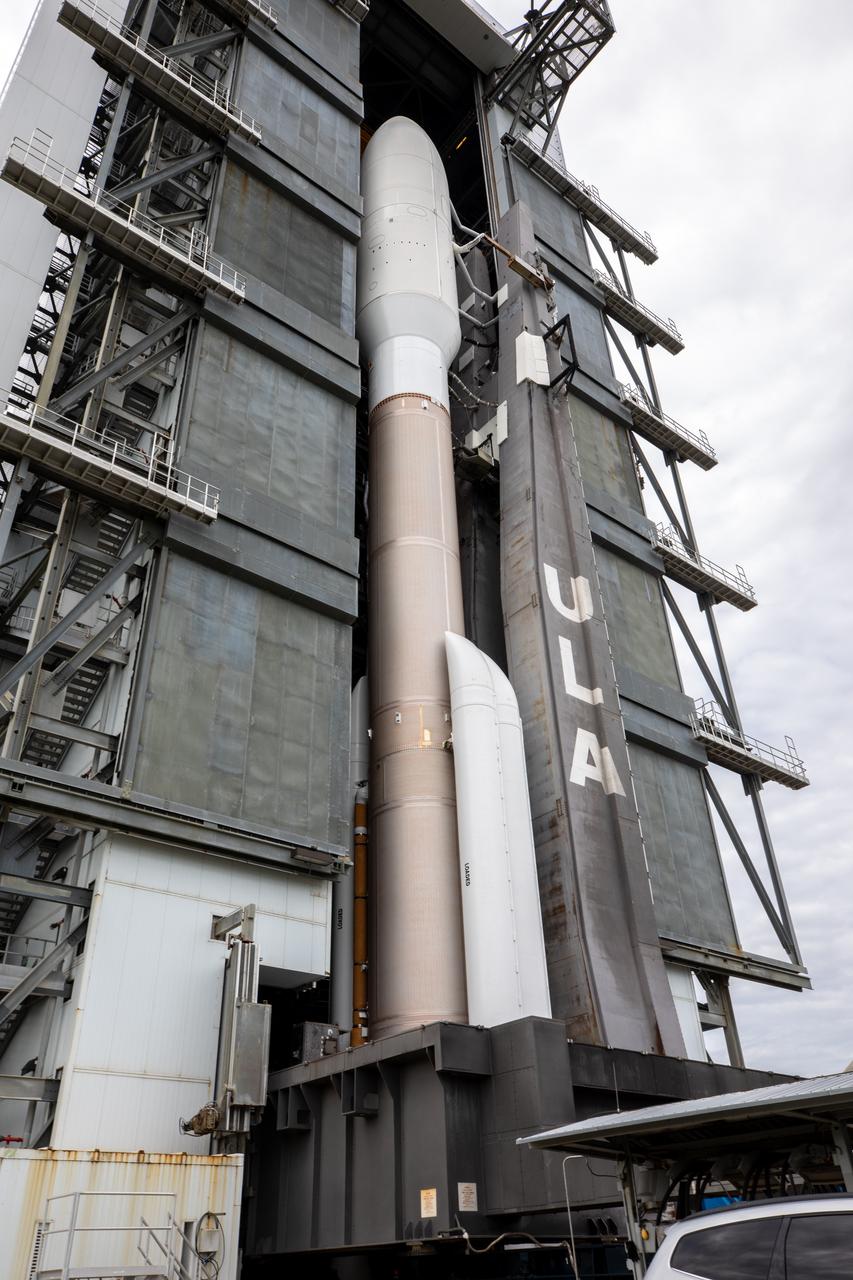
The United Launch Alliance Atlas V 541 rocket, carrying NASA’s Mars Perseverance rover and Ingenuity helicopter, begins rollout from the Vertical Integration Facility to the launch pad at Space Launch Complex 41 at Cape Canaveral Air Force Station on July 28, 2020. First motion was at 10:24 a.m. EDT. Launch of the Mars 2020 mission is scheduled for July 30. The rover is part of NASA’s Mars Exploration Program, a long-term effort of robotic exploration of the Red Planet. The rover will search for habitable conditions in the ancient past and signs of past microbial life on Mars. The Launch Services Program at Kennedy is responsible for launch management.
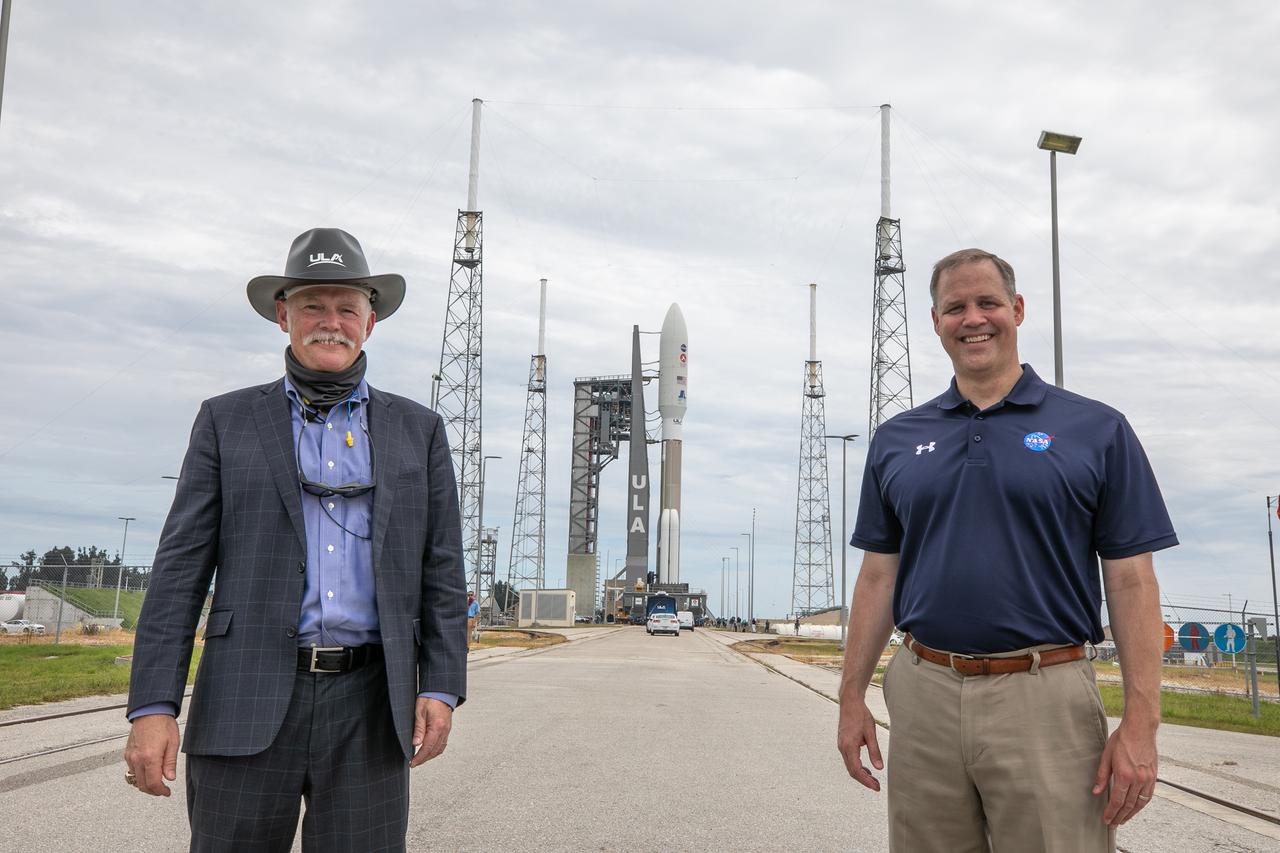
NASA Administrator Jim Bridenstine, at right, and Tory Bruno, CEO of United Launch Alliance (ULA), watch the rollout of the ULA Atlas V 541 rocket, carrying NASA’s Mars Perseverance rover and Ingenuity helicopter, as it rolls along to the launch pad at Space Launch Complex 41 at Cape Canaveral Air Force Station on July 28, 2020. First motion was at 10:24 a.m. EDT. Launch of the Mars 2020 mission is scheduled for July 30. The rover is part of NASA’s Mars Exploration Program, a long-term effort of robotic exploration of the Red Planet. The rover will search for habitable conditions in the ancient past and signs of past microbial life on Mars. The Launch Services Program at Kennedy is responsible for launch management.
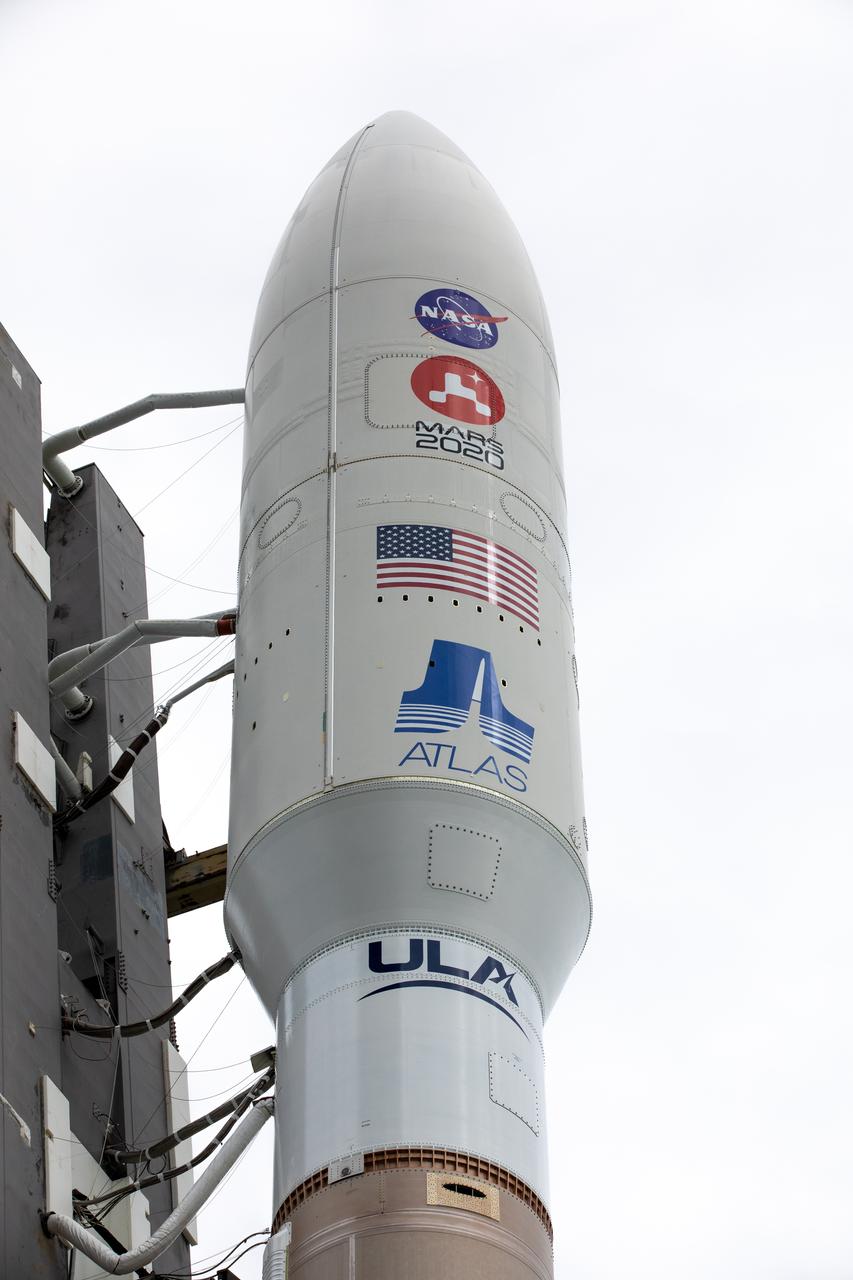
The United Launch Alliance Atlas V 541 rocket, carrying NASA’s Mars Perseverance rover and Ingenuity helicopter, begins rollout from the Vertical Integration Facility to the launch pad at Space Launch Complex 41 at Cape Canaveral Air Force Station on July 28, 2020. First motion was at 10:24 a.m. EDT. Launch of the Mars 2020 mission is scheduled for July 30. The rover is part of NASA’s Mars Exploration Program, a long-term effort of robotic exploration of the Red Planet. The rover will search for habitable conditions in the ancient past and signs of past microbial life on Mars. The Launch Services Program at Kennedy is responsible for launch management.
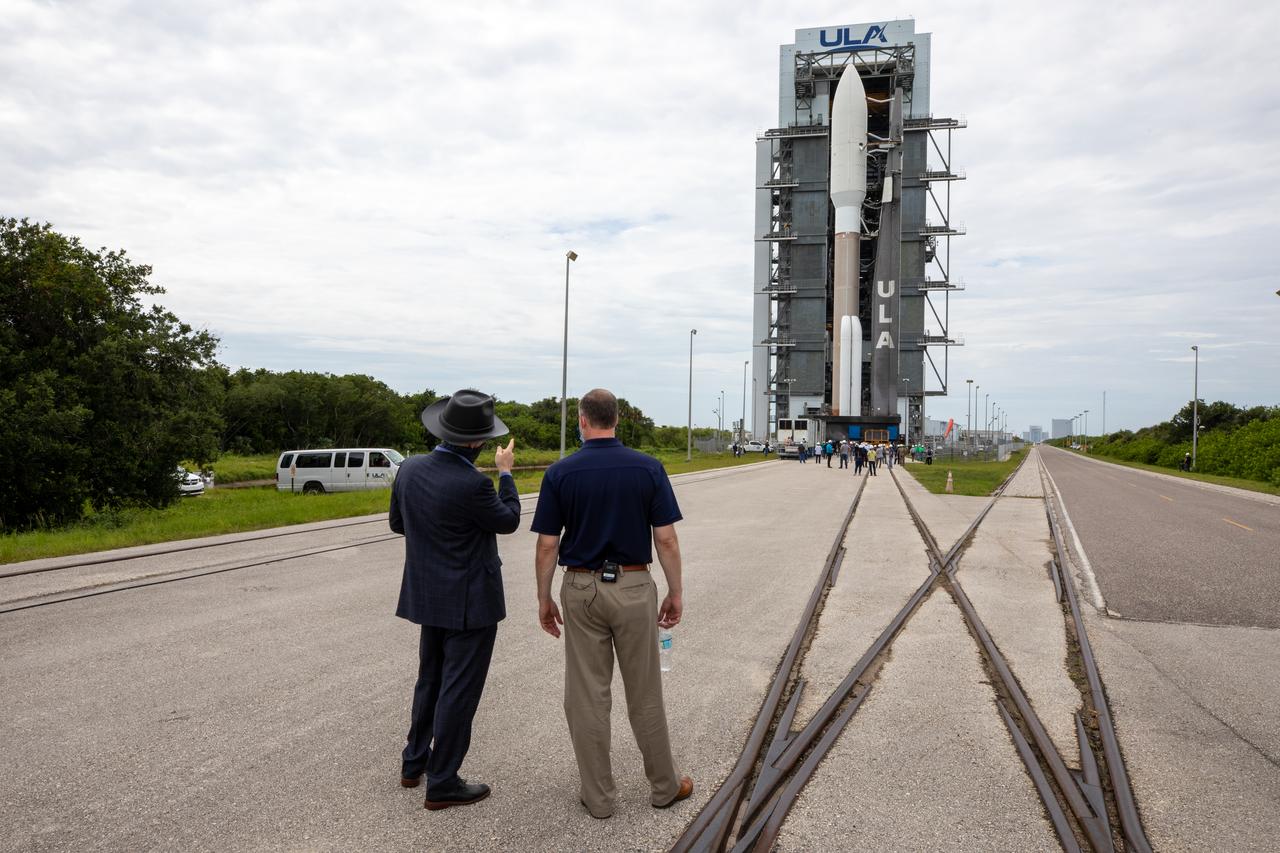
NASA Administrator Jim Bridenstine, at right, and Tory Bruno, CEO of United Launch Alliance (ULA), watch the rollout of the ULA Atlas V 541 rocket, carrying NASA’s Mars Perseverance rover and Ingenuity helicopter, as it rolls along to the launch pad at Space Launch Complex 41 at Cape Canaveral Air Force Station on July 28, 2020. First motion was at 10:24 a.m. EDT. Launch of the Mars 2020 mission is scheduled for July 30. The rover is part of NASA’s Mars Exploration Program, a long-term effort of robotic exploration of the Red Planet. The rover will search for habitable conditions in the ancient past and signs of past microbial life on Mars. The Launch Services Program at Kennedy is responsible for launch management.
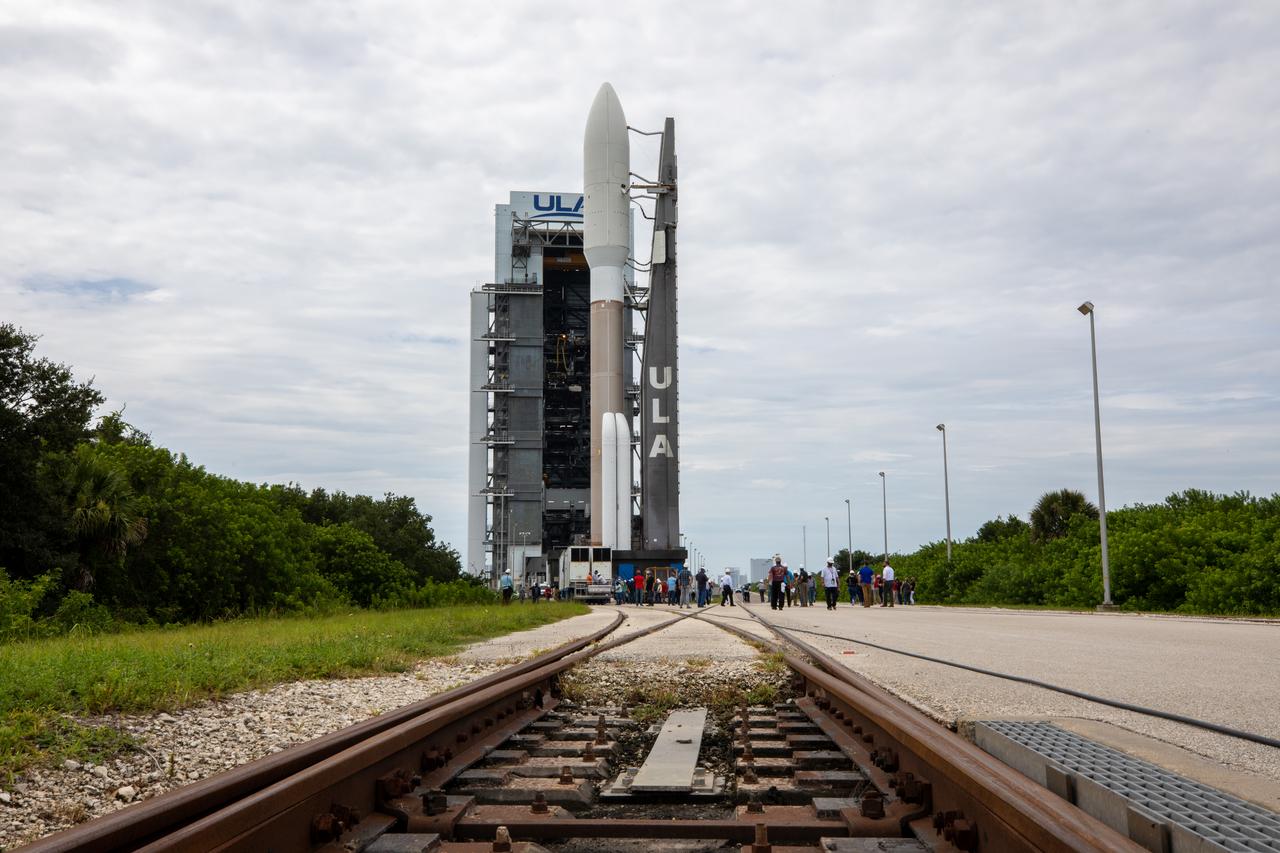
The United Launch Alliance Atlas V 541 rocket, carrying NASA’s Mars Perseverance rover and Ingenuity helicopter, rolls out from the Vertical Integration Facility and moves along to the launch pad at Space Launch Complex 41 at Cape Canaveral Air Force Station on July 28, 2020. First motion was at 10:24 a.m. EDT. Launch of the Mars 2020 mission is scheduled for July 30. The rover is part of NASA’s Mars Exploration Program, a long-term effort of robotic exploration of the Red Planet. The rover will search for habitable conditions in the ancient past and signs of past microbial life on Mars. The Launch Services Program at Kennedy is responsible for launch management.
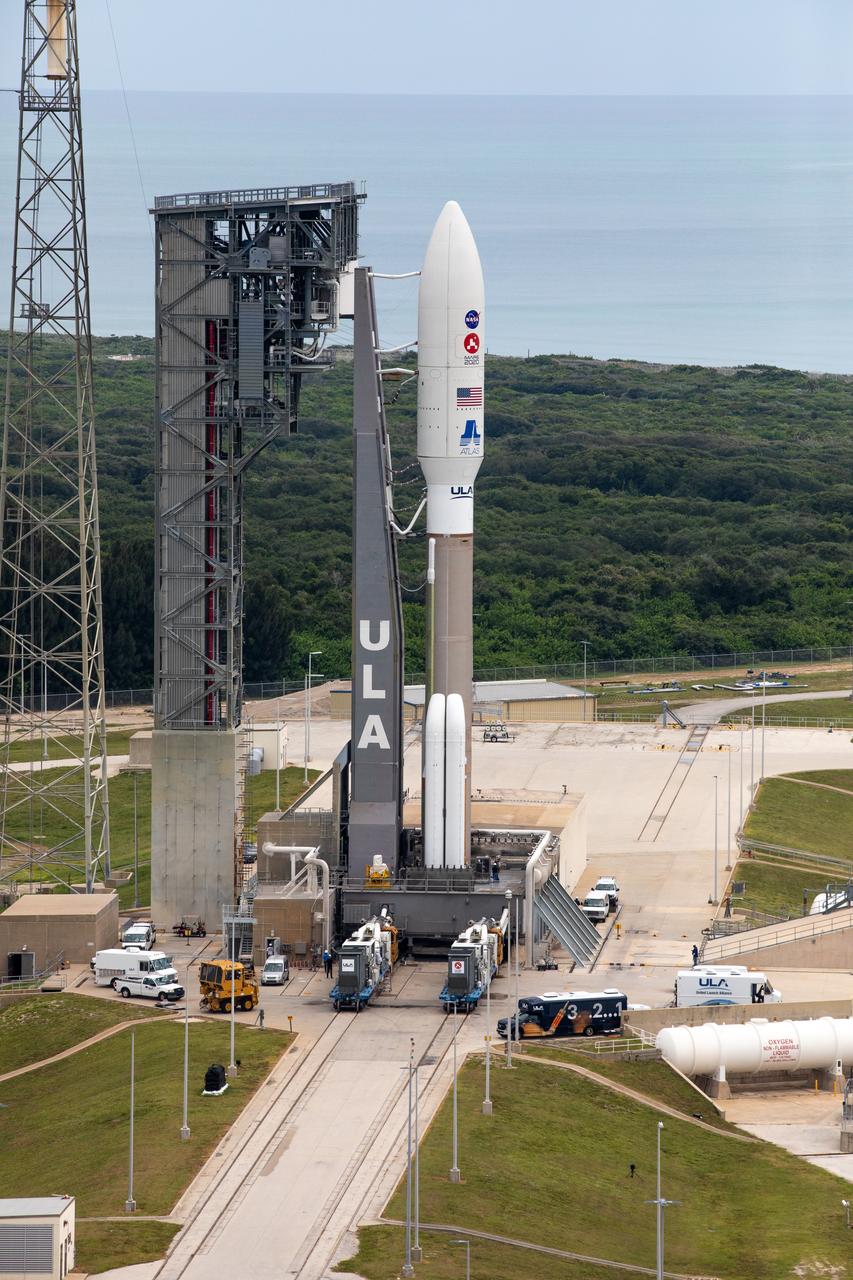
The United Launch Alliance Atlas V 541 rocket, carrying NASA’s Mars Perseverance rover and Ingenuity helicopter, arrives at the launch pad at Space Launch Complex 41 at Cape Canaveral Air Force Station on July 28, 2020. First motion from the Vertical Integration Facility was at 10:24 a.m. EDT. Launch of the Mars 2020 mission is scheduled for July 30. The rover is part of NASA’s Mars Exploration Program, a long-term effort of robotic exploration of the Red Planet. The rover will search for habitable conditions in the ancient past and signs of past microbial life on Mars. The Launch Services Program at Kennedy is responsible for launch management.
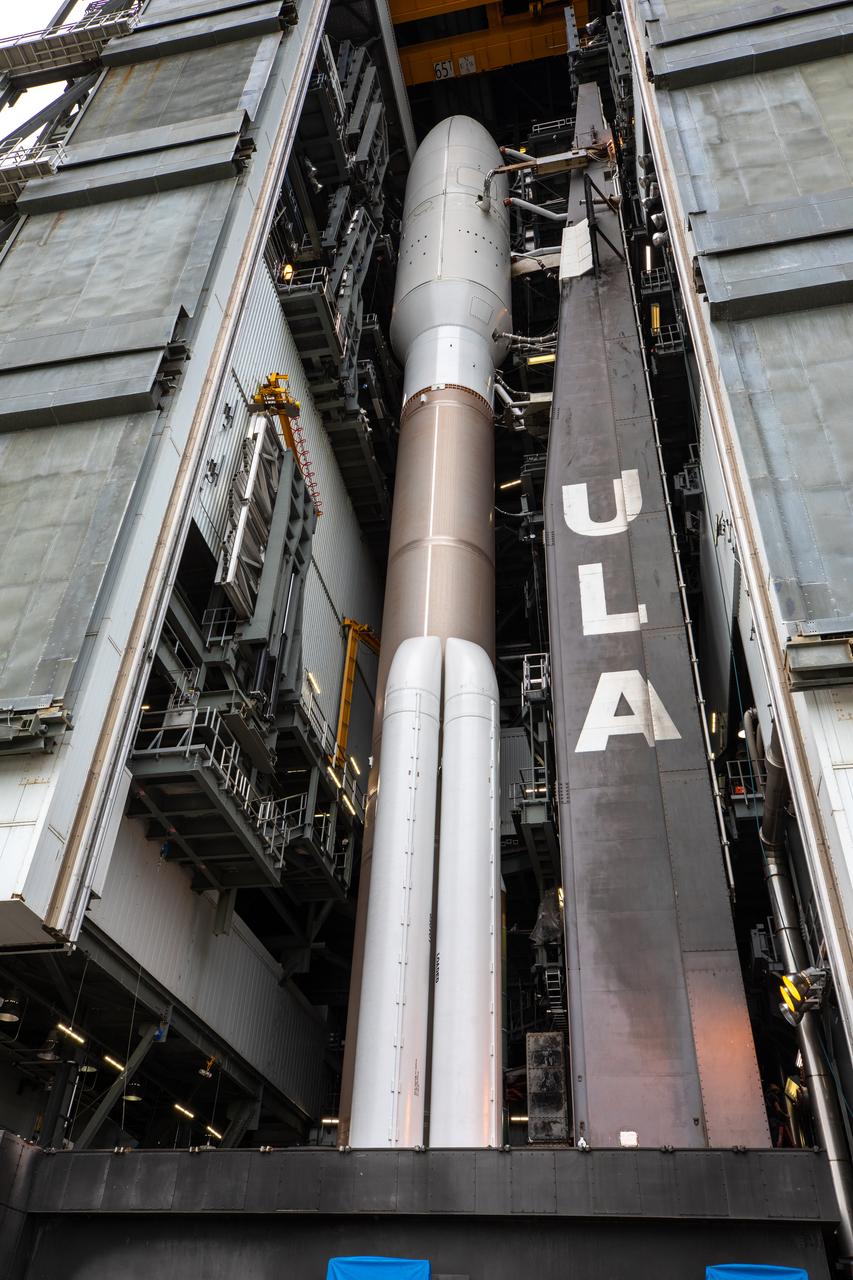
The United Launch Alliance Atlas V 541 rocket, carrying NASA’s Mars Perseverance rover and Ingenuity helicopter, begins rollout from the Vertical Integration Facility to the launch pad at Space Launch Complex 41 at Cape Canaveral Air Force Station on July 28, 2020. First motion was at 10:24 a.m. EDT. Launch of the Mars 2020 mission is scheduled for July 30. The rover is part of NASA’s Mars Exploration Program, a long-term effort of robotic exploration of the Red Planet. The rover will search for habitable conditions in the ancient past and signs of past microbial life on Mars. The Launch Services Program at Kennedy is responsible for launch management.
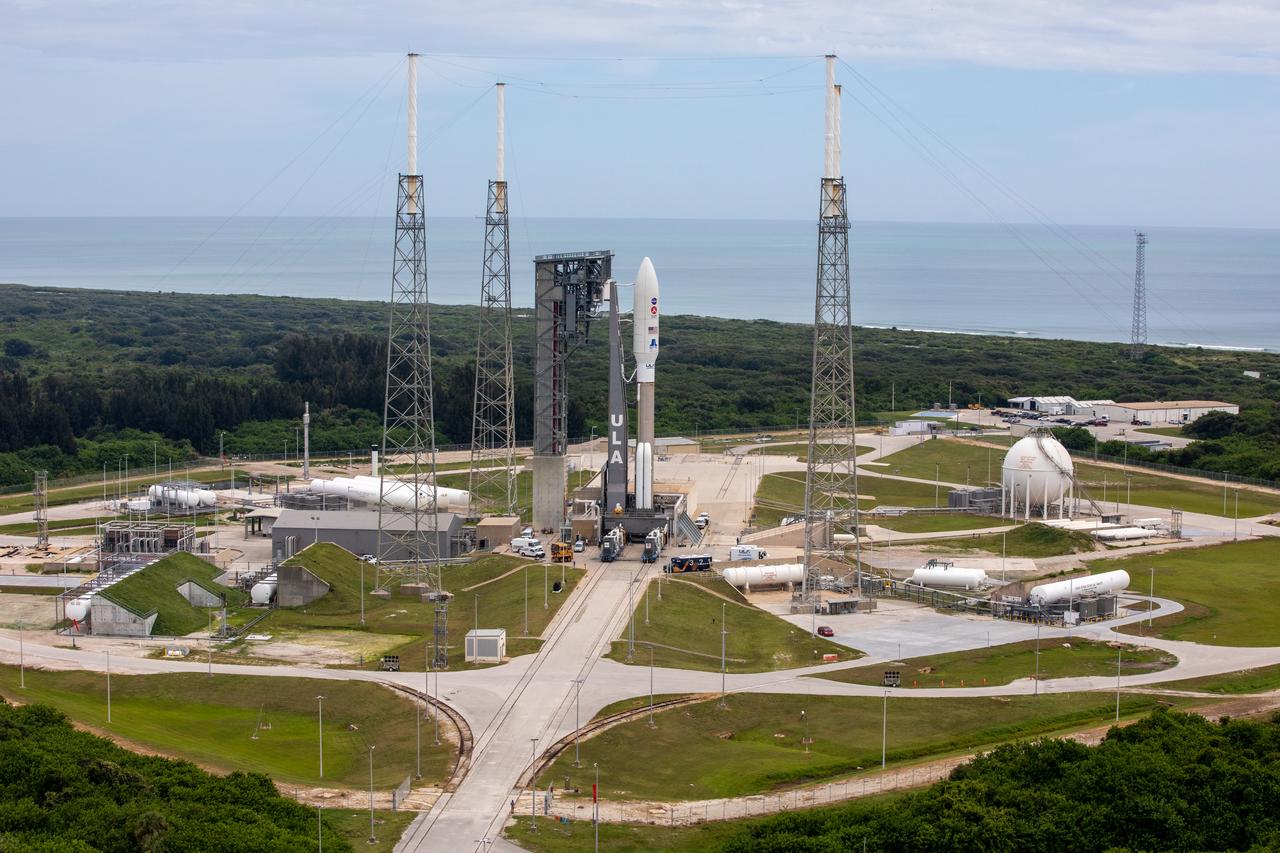
The United Launch Alliance Atlas V 541 rocket, carrying NASA’s Mars Perseverance rover and Ingenuity helicopter, arrives at the launch pad at Space Launch Complex 41 at Cape Canaveral Air Force Station on July 28, 2020. First motion from the Vertical Integration Facility was at 10:24 a.m. EDT. Launch of the Mars 2020 mission is scheduled for July 30. The rover is part of NASA’s Mars Exploration Program, a long-term effort of robotic exploration of the Red Planet. The rover will search for habitable conditions in the ancient past and signs of past microbial life on Mars. The Launch Services Program at Kennedy is responsible for launch management.
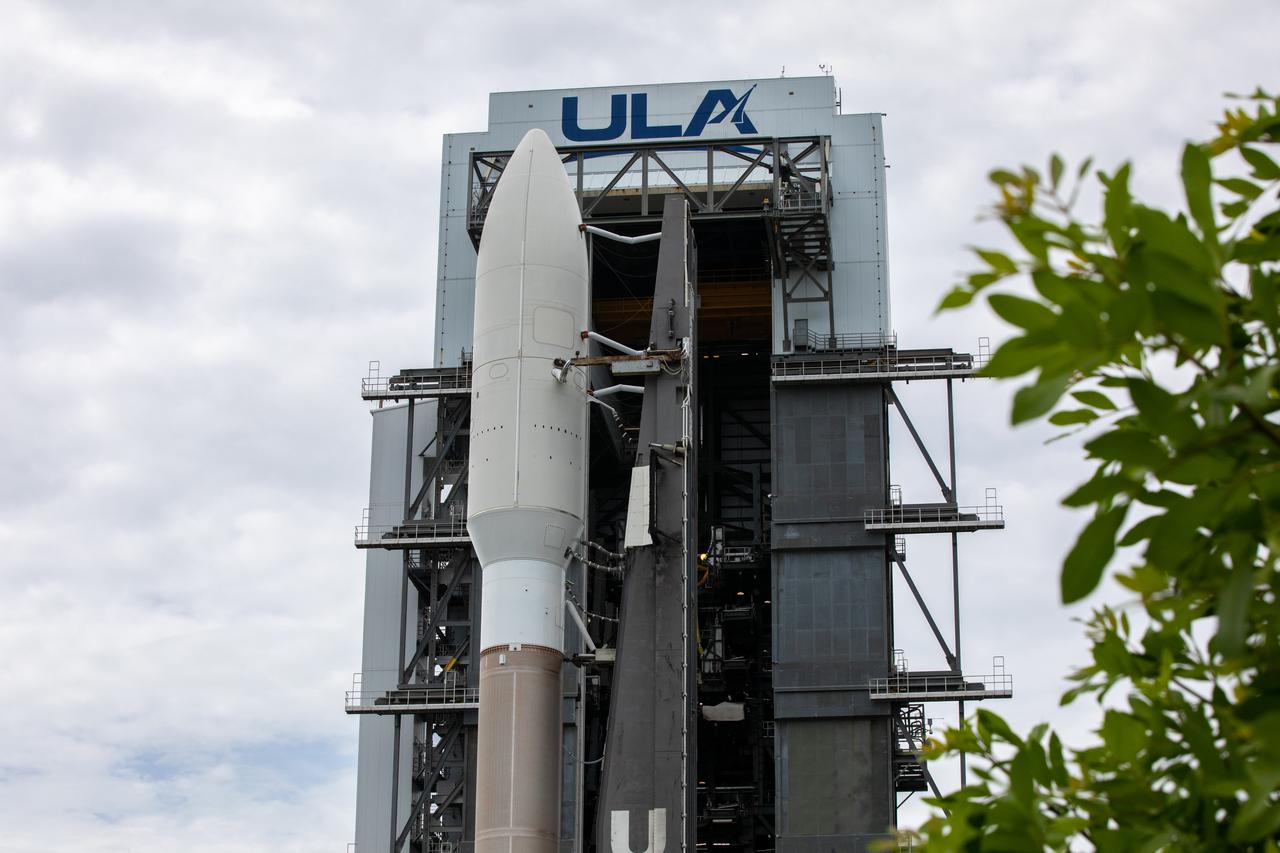
The United Launch Alliance Atlas V 541 rocket, carrying NASA’s Mars Perseverance rover and Ingenuity helicopter, rolls out from the Vertical Integration Facility and moves along to the launch pad at Space Launch Complex 41 at Cape Canaveral Air Force Station on July 28, 2020. First motion was at 10:24 a.m. EDT. Launch of the Mars 2020 mission is scheduled for July 30. The rover is part of NASA’s Mars Exploration Program, a long-term effort of robotic exploration of the Red Planet. The rover will search for habitable conditions in the ancient past and signs of past microbial life on Mars. The Launch Services Program at Kennedy is responsible for launch management.
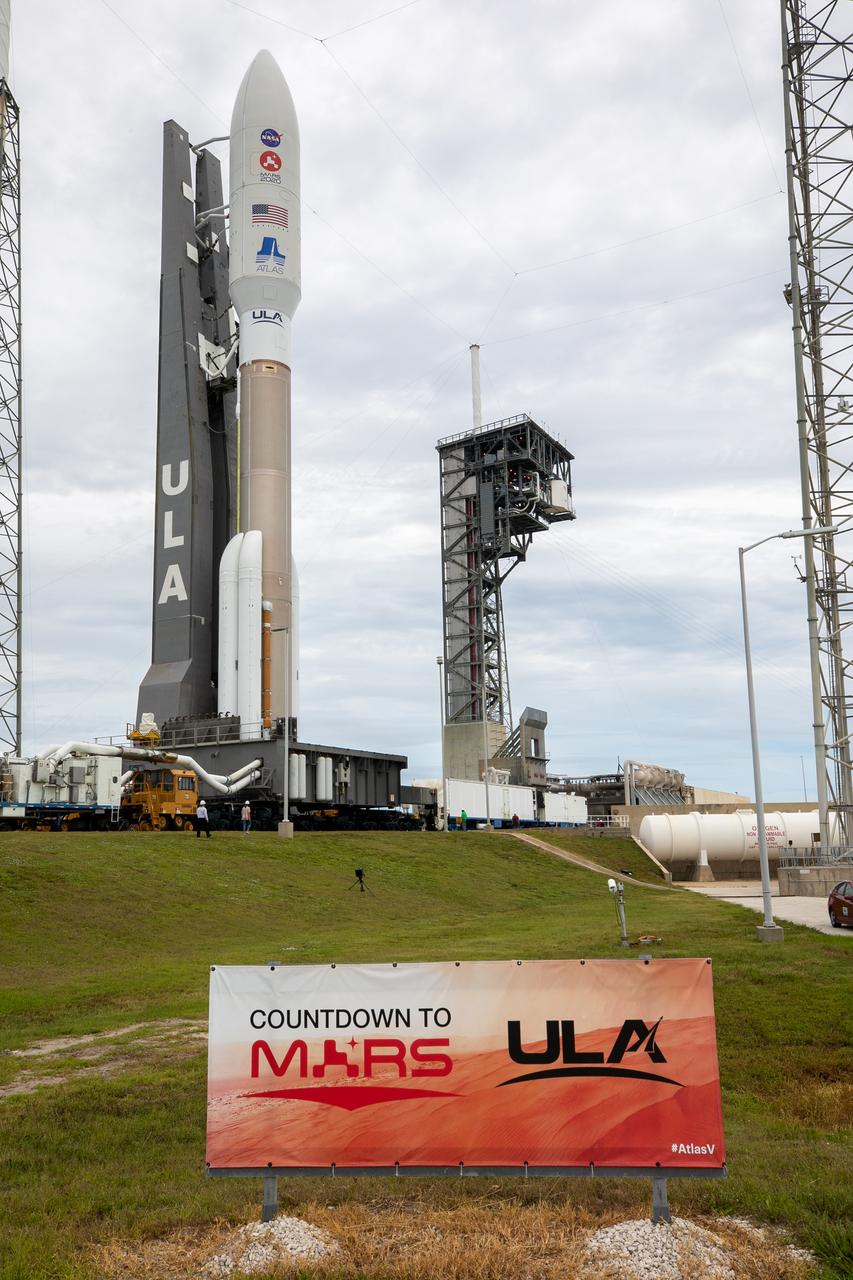
The United Launch Alliance Atlas V 541 rocket, carrying NASA’s Mars Perseverance rover and Ingenuity helicopter, rolls along to the launch pad at Space Launch Complex 41 at Cape Canaveral Air Force Station on July 28, 2020. First motion was at 10:24 a.m. EDT. Launch of the Mars 2020 mission is scheduled for July 30. The rover is part of NASA’s Mars Exploration Program, a long-term effort of robotic exploration of the Red Planet. The rover will search for habitable conditions in the ancient past and signs of past microbial life on Mars. The Launch Services Program at Kennedy is responsible for launch management.
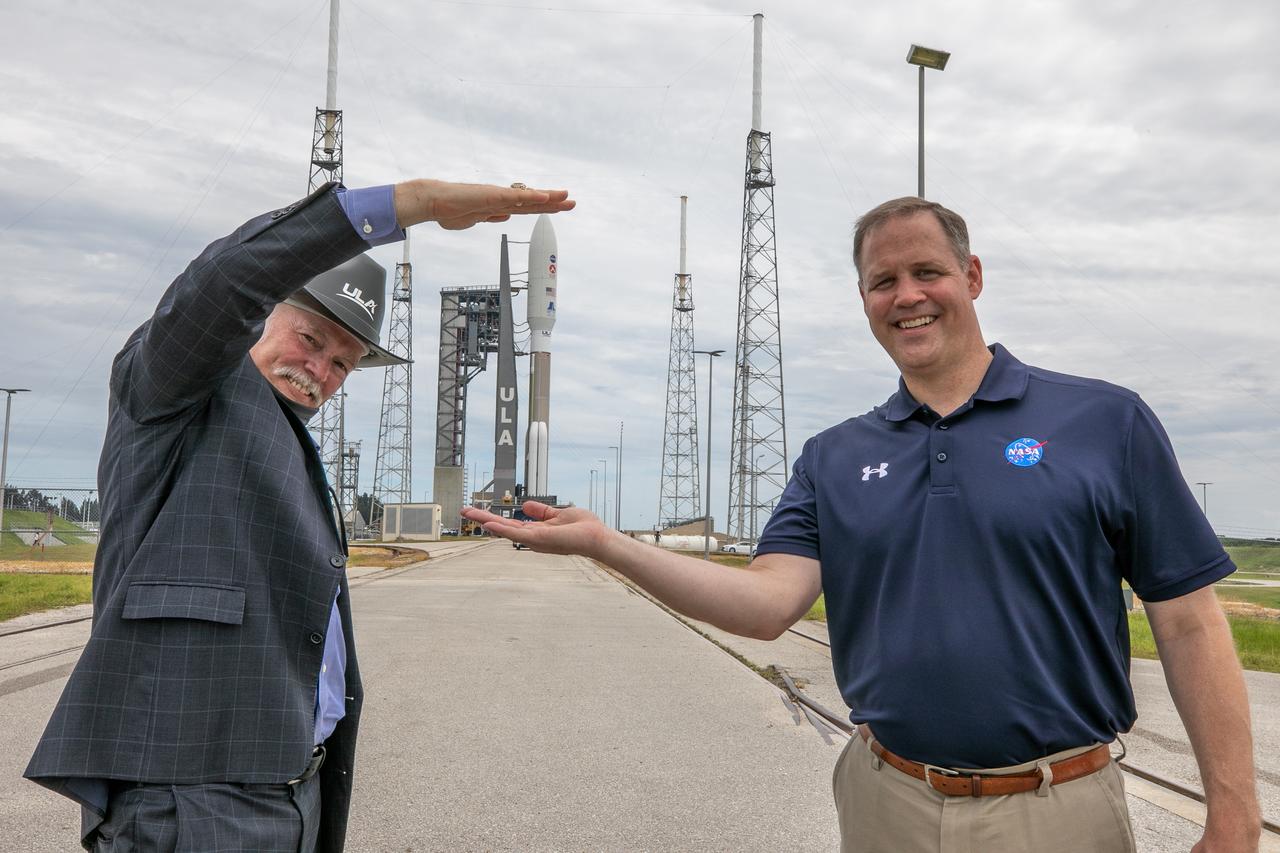
NASA Administrator Jim Bridenstine, at right, and Tory Bruno, CEO of United Launch Alliance (ULA), watch the rollout of the ULA Atlas V 541 rocket, carrying NASA’s Mars Perseverance rover and Ingenuity helicopter, as it rolls along to the launch pad at Space Launch Complex 41 at Cape Canaveral Air Force Station on July 28, 2020. First motion was at 10:24 a.m. EDT. Launch of the Mars 2020 mission is scheduled for July 30. The rover is part of NASA’s Mars Exploration Program, a long-term effort of robotic exploration of the Red Planet. The rover will search for habitable conditions in the ancient past and signs of past microbial life on Mars. The Launch Services Program at Kennedy is responsible for launch management.

The United Launch Alliance Atlas V 541 rocket, carrying NASA’s Mars Perseverance rover and Ingenuity helicopter, rolls along to the launch pad at Space Launch Complex 41 at Cape Canaveral Air Force Station on July 28, 2020. First motion was at 10:24 a.m. EDT. Launch of the Mars 2020 mission is scheduled for July 30. The rover is part of NASA’s Mars Exploration Program, a long-term effort of robotic exploration of the Red Planet. The rover will search for habitable conditions in the ancient past and signs of past microbial life on Mars. The Launch Services Program at Kennedy is responsible for launch management.

The United Launch Alliance Atlas V 541 rocket, carrying NASA’s Mars Perseverance rover and Ingenuity helicopter, rolls out from the Vertical Integration Facility and moves along to the launch pad at Space Launch Complex 41 at Cape Canaveral Air Force Station on July 28, 2020. First motion was at 10:24 a.m. EDT. Launch of the Mars 2020 mission is scheduled for July 30. The rover is part of NASA’s Mars Exploration Program, a long-term effort of robotic exploration of the Red Planet. The rover will search for habitable conditions in the ancient past and signs of past microbial life on Mars. The Launch Services Program at Kennedy is responsible for launch management.
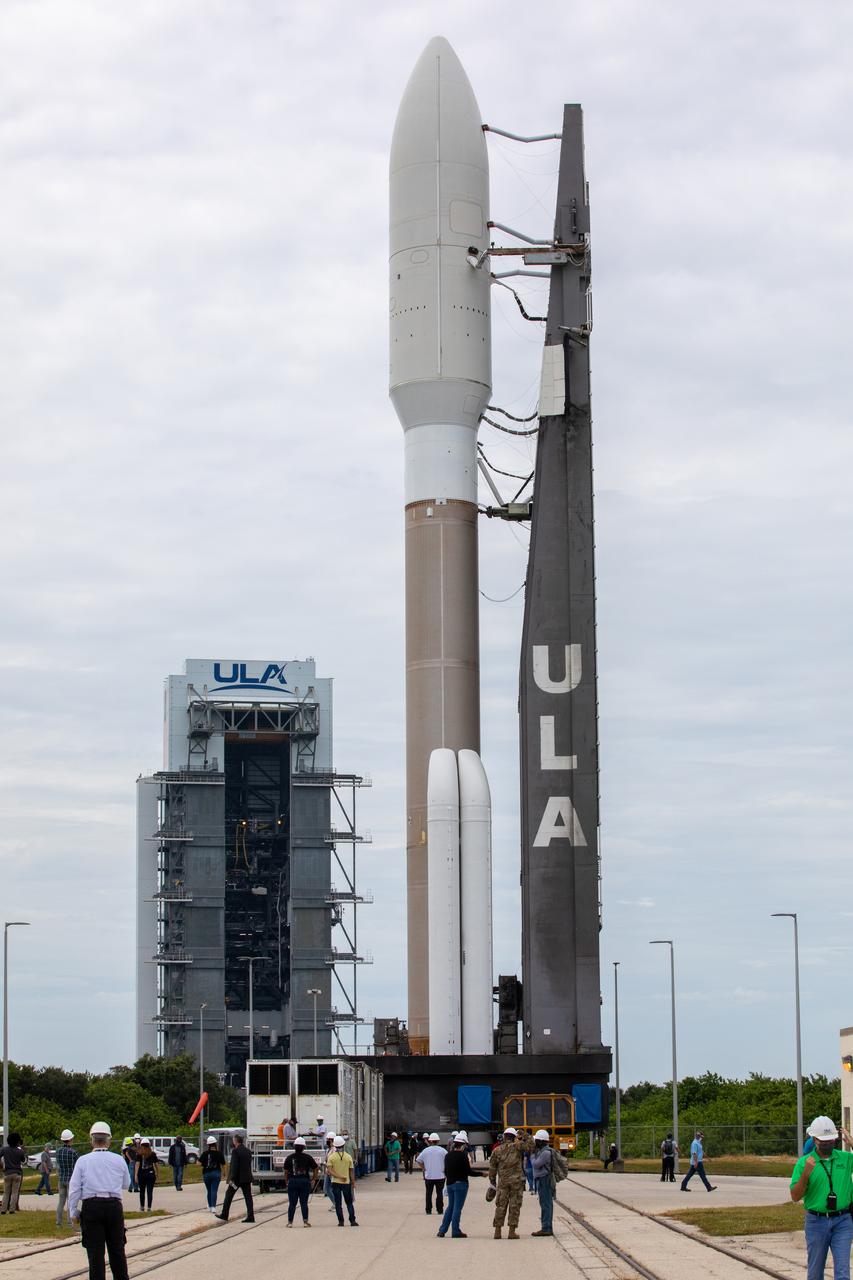
The United Launch Alliance Atlas V 541 rocket, carrying NASA’s Mars Perseverance rover and Ingenuity helicopter, rolls along to the launch pad at Space Launch Complex 41 at Cape Canaveral Air Force Station on July 28, 2020. First motion was at 10:24 a.m. EDT. Launch of the Mars 2020 mission is scheduled for July 30. The rover is part of NASA’s Mars Exploration Program, a long-term effort of robotic exploration of the Red Planet. The rover will search for habitable conditions in the ancient past and signs of past microbial life on Mars. The Launch Services Program at Kennedy is responsible for launch management.
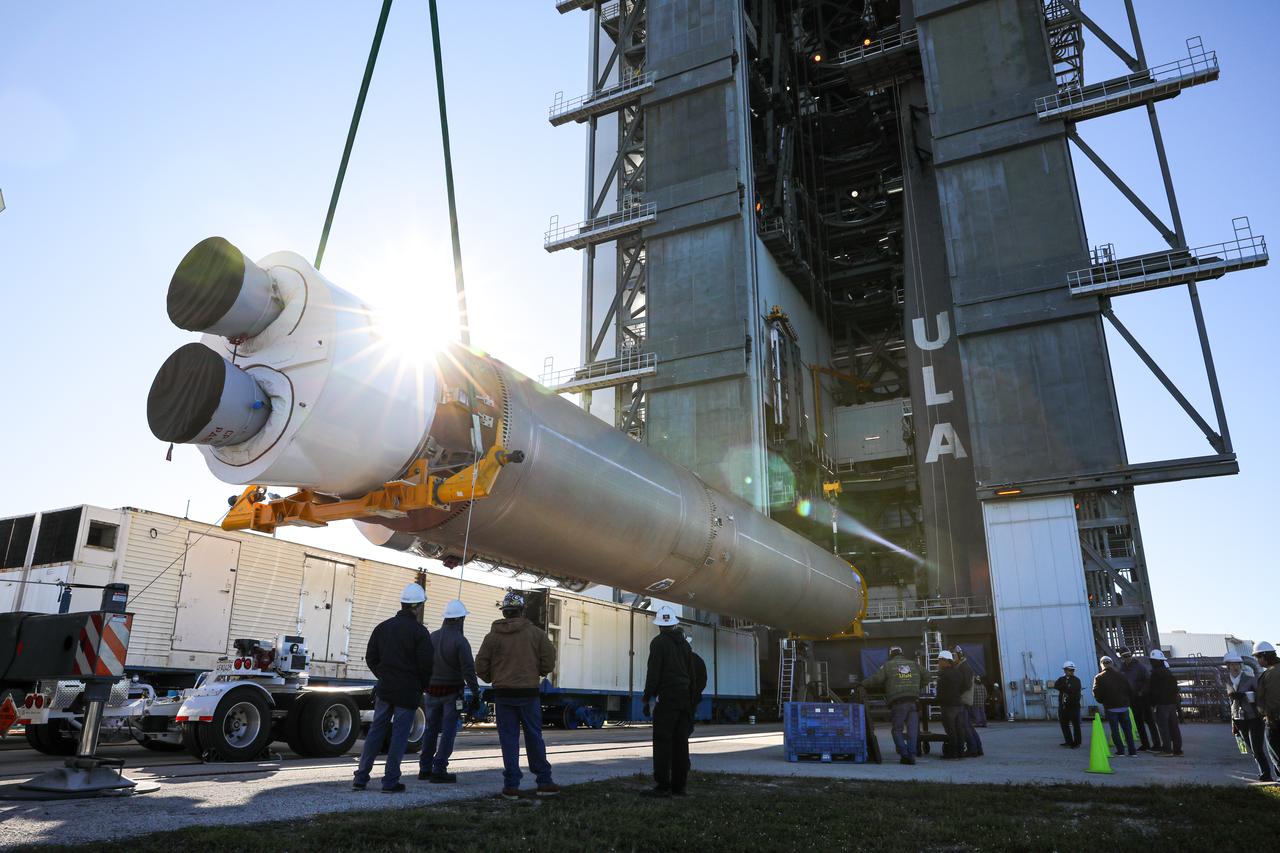
The booster of a United Launch Alliance Atlas V rocket that will launch the Solar Orbiter spacecraft is lifted into the vertical position at the Vertical Integration Facility near Space Launch Complex 41 at Cape Canaveral Air Force Station in Florida on Jan. 6, 2020. Solar Orbiter is an international cooperative mission between ESA (European Space Agency) and NASA. The mission aims to study the Sun, its outer atmosphere and solar wind. The spacecraft will provide the first images of the Sun’s poles. NASA’s Launch Services Program based at Kennedy Space Center in Florida is managing the launch.
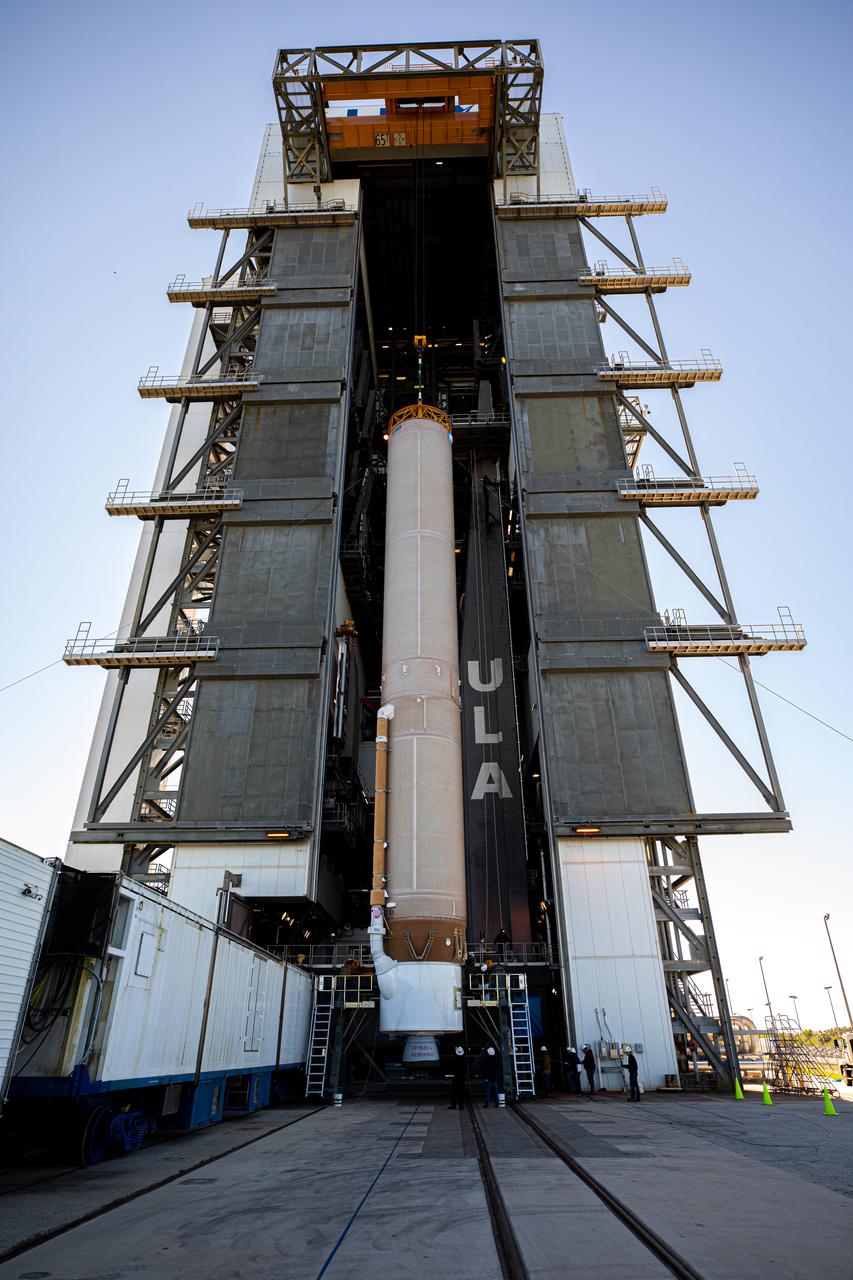
The booster of a United Launch Alliance Atlas V rocket that will launch the Solar Orbiter spacecraft is lifted into the vertical position at the Vertical Integration Facility near Space Launch Complex 41 at Cape Canaveral Air Force Station in Florida on Jan. 6, 2020. Solar Orbiter is an international cooperative mission between ESA (European Space Agency) and NASA. The mission aims to study the Sun, its outer atmosphere and solar wind. The spacecraft will provide the first images of the Sun’s poles. NASA’s Launch Services Program based at Kennedy Space Center in Florida is managing the launch.
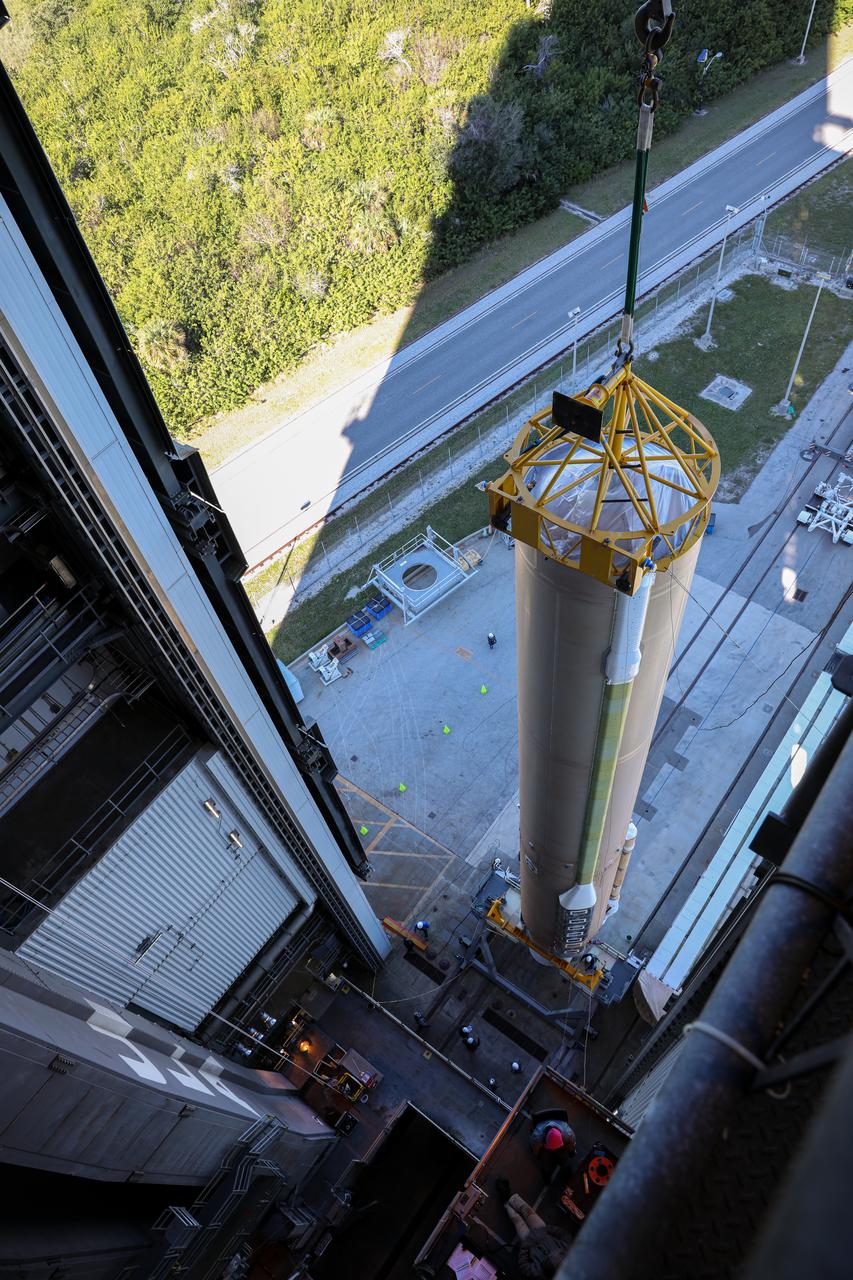
The booster of a United Launch Alliance Atlas V rocket that will launch the Solar Orbiter spacecraft is lifted into the vertical position at the Vertical Integration Facility near Space Launch Complex 41 at Cape Canaveral Air Force Station in Florida on Jan. 6, 2020. Solar Orbiter is an international cooperative mission between ESA (European Space Agency) and NASA. The mission aims to study the Sun, its outer atmosphere and solar wind. The spacecraft will provide the first images of the Sun’s poles. NASA’s Launch Services Program based at Kennedy Space Center in Florida is managing the launch.
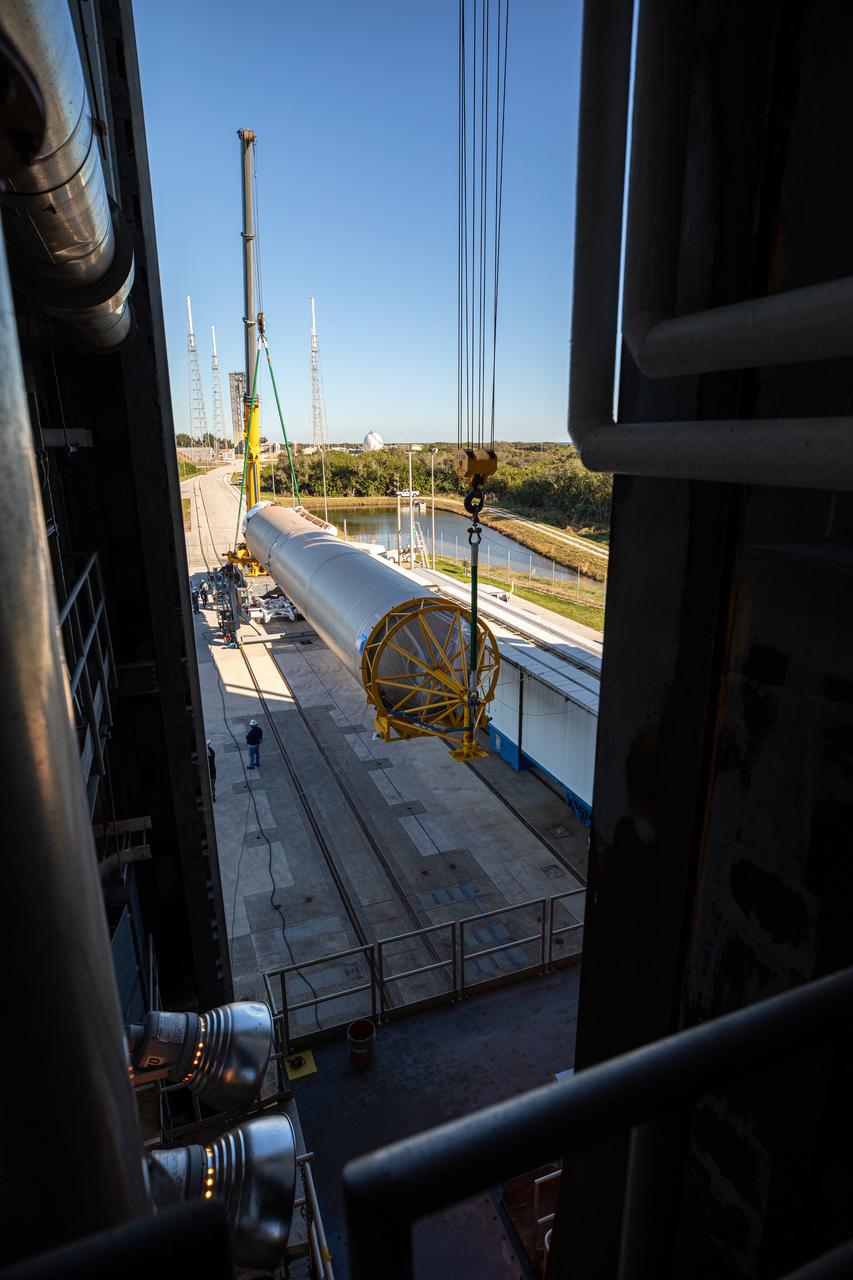
The booster of a United Launch Alliance Atlas V rocket that will launch the Solar Orbiter spacecraft is lifted into the vertical position at the Vertical Integration Facility near Space Launch Complex 41 at Cape Canaveral Air Force Station in Florida on Jan. 6, 2020. Solar Orbiter is an international cooperative mission between ESA (European Space Agency) and NASA. The mission aims to study the Sun, its outer atmosphere and solar wind. The spacecraft will provide the first images of the Sun’s poles. NASA’s Launch Services Program based at Kennedy Space Center in Florida is managing the launch.
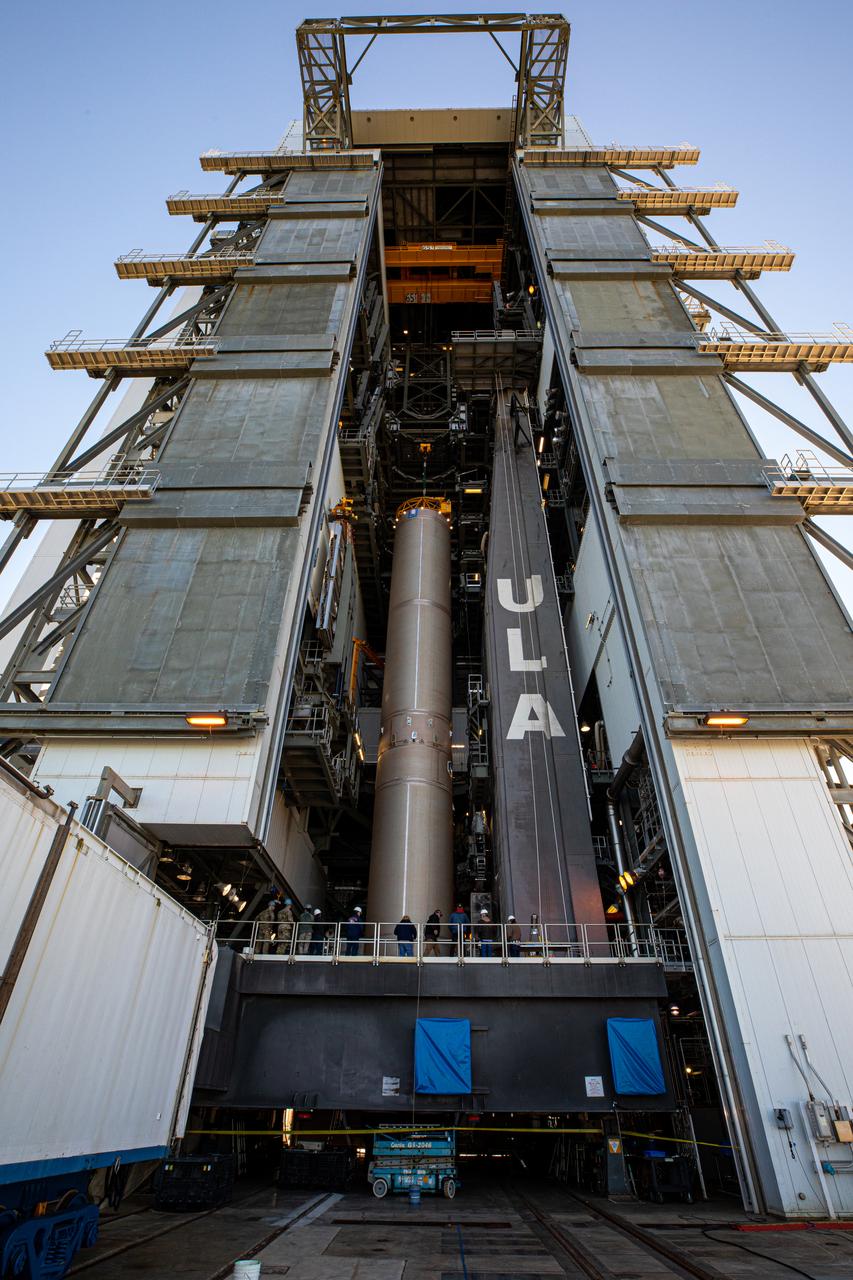
The booster of a United Launch Alliance Atlas V rocket that will launch the Solar Orbiter spacecraft stands inside the Vertical Integration Facility near Space Launch Complex 41 at Cape Canaveral Air Force Station in Florida on Jan. 6, 2020. Solar Orbiter is an international cooperative mission between ESA (European Space Agency) and NASA. The mission aims to study the Sun, its outer atmosphere and solar wind. The spacecraft will provide the first images of the Sun’s poles. NASA’s Launch Services Program based at Kennedy Space Center in Florida is managing the launch.
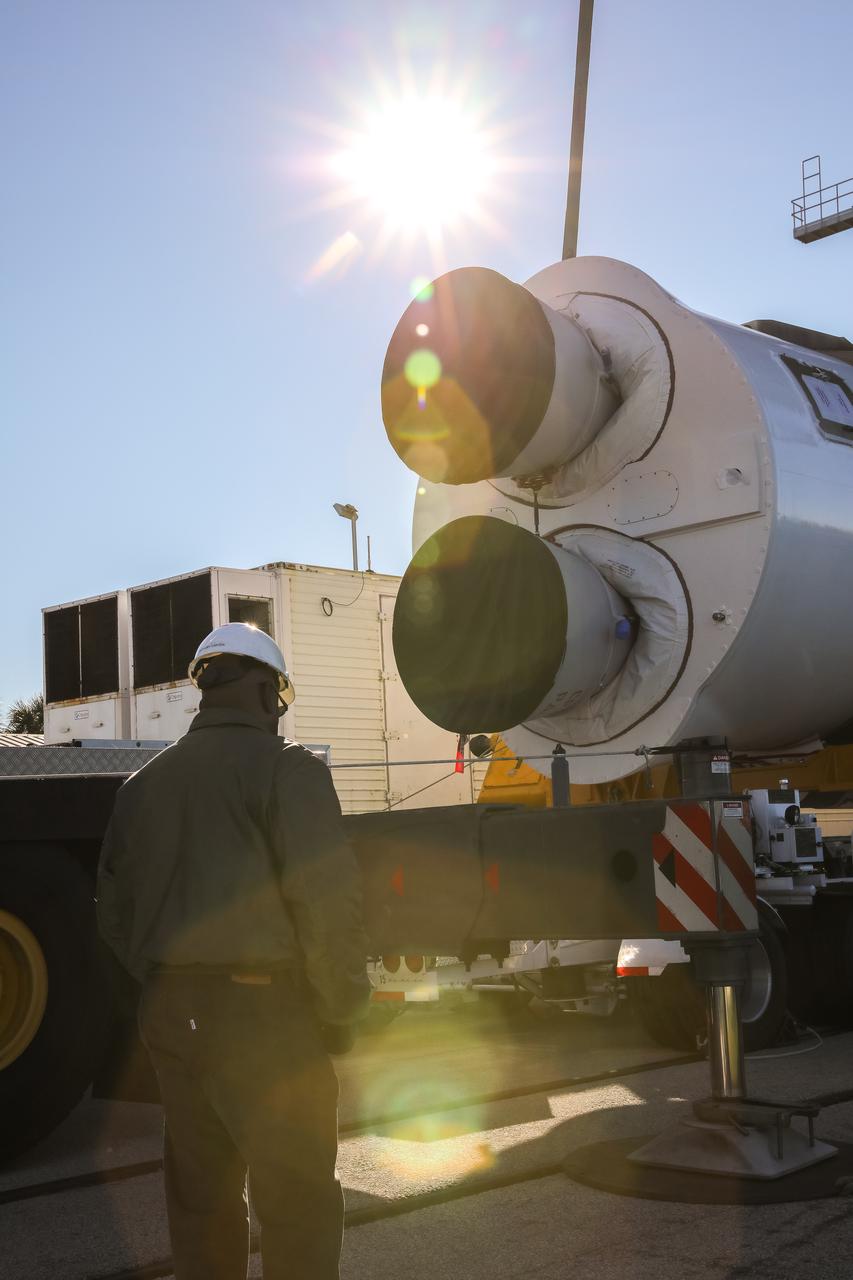
The booster of a United Launch Alliance Atlas V rocket that will launch the Solar Orbiter spacecraft arrives at the Vertical Integration Facility near Space Launch Complex 41 at Cape Canaveral Air Force Station in Florida on Jan. 6, 2020. Solar Orbiter is an international cooperative mission between ESA (European Space Agency) and NASA. The mission aims to study the Sun, its outer atmosphere and solar wind. The spacecraft will provide the first images of the Sun’s poles. NASA’s Launch Services Program based at Kennedy Space Center in Florida is managing the launch.
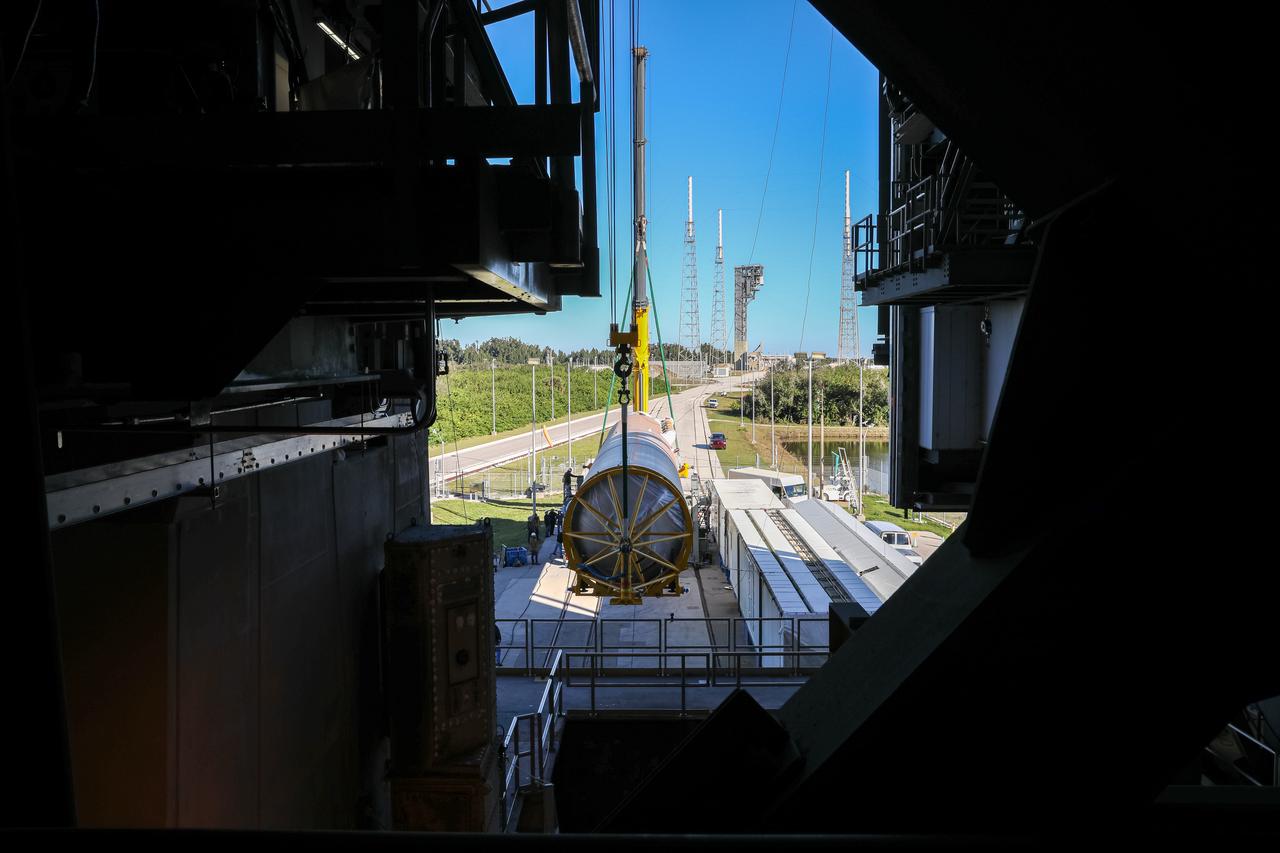
The booster of a United Launch Alliance Atlas V rocket that will launch the Solar Orbiter spacecraft is lifted into the vertical position at the Vertical Integration Facility near Space Launch Complex 41 at Cape Canaveral Air Force Station in Florida on Jan. 6, 2020. Solar Orbiter is an international cooperative mission between ESA (European Space Agency) and NASA. The mission aims to study the Sun, its outer atmosphere and solar wind. The spacecraft will provide the first images of the Sun’s poles. NASA’s Launch Services Program based at Kennedy Space Center in Florida is managing the launch.
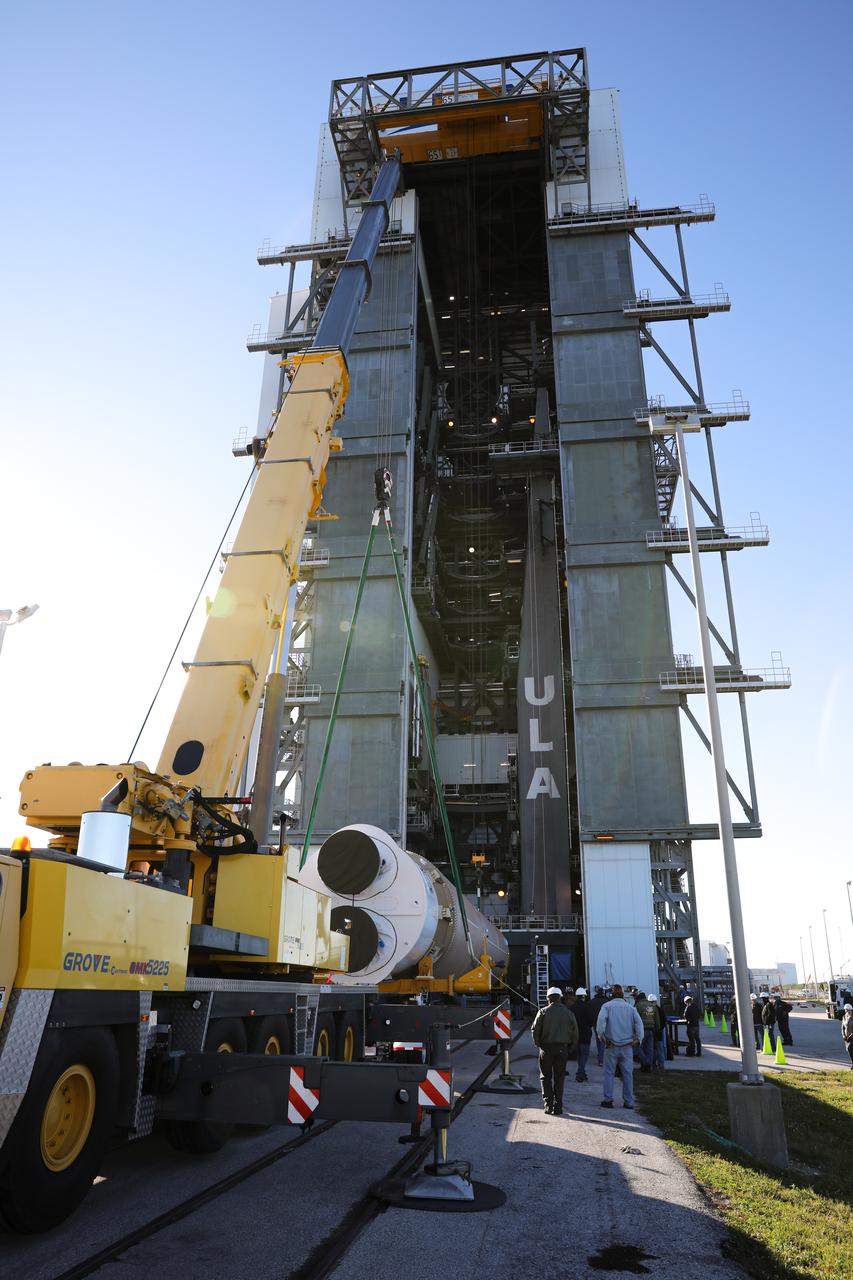
The booster of a United Launch Alliance Atlas V rocket that will launch the Solar Orbiter spacecraft arrives at the Vertical Integration Facility near Space Launch Complex 41 at Cape Canaveral Air Force Station in Florida on Jan. 6, 2020. Solar Orbiter is an international cooperative mission between ESA (European Space Agency) and NASA. The mission aims to study the Sun, its outer atmosphere and solar wind. The spacecraft will provide the first images of the Sun’s poles. NASA’s Launch Services Program based at Kennedy Space Center in Florida is managing the launch.
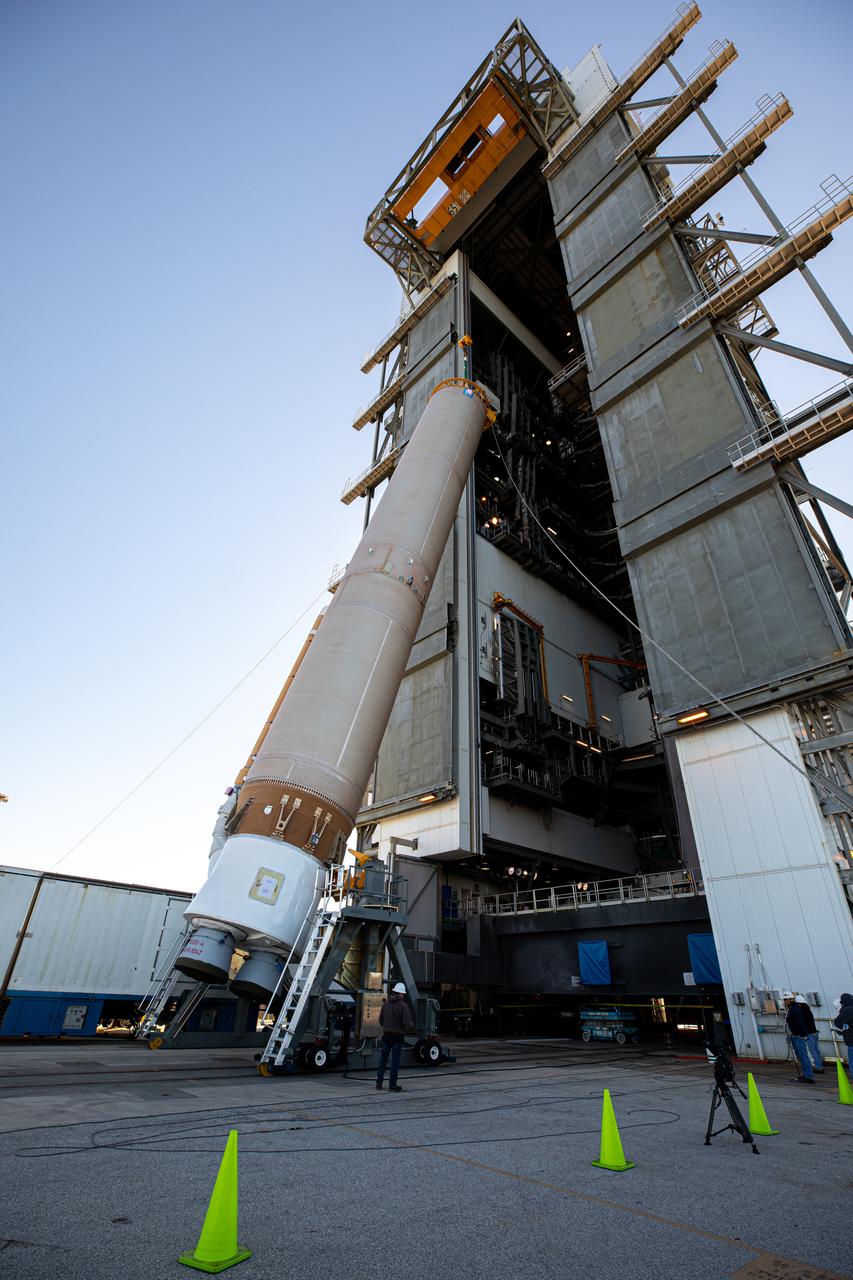
The booster of a United Launch Alliance Atlas V rocket that will launch the Solar Orbiter spacecraft is lifted into the vertical position at the Vertical Integration Facility near Space Launch Complex 41 at Cape Canaveral Air Force Station in Florida on Jan. 6, 2020. Solar Orbiter is an international cooperative mission between ESA (European Space Agency) and NASA. The mission aims to study the Sun, its outer atmosphere and solar wind. The spacecraft will provide the first images of the Sun’s poles. NASA’s Launch Services Program based at Kennedy Space Center in Florida is managing the launch.
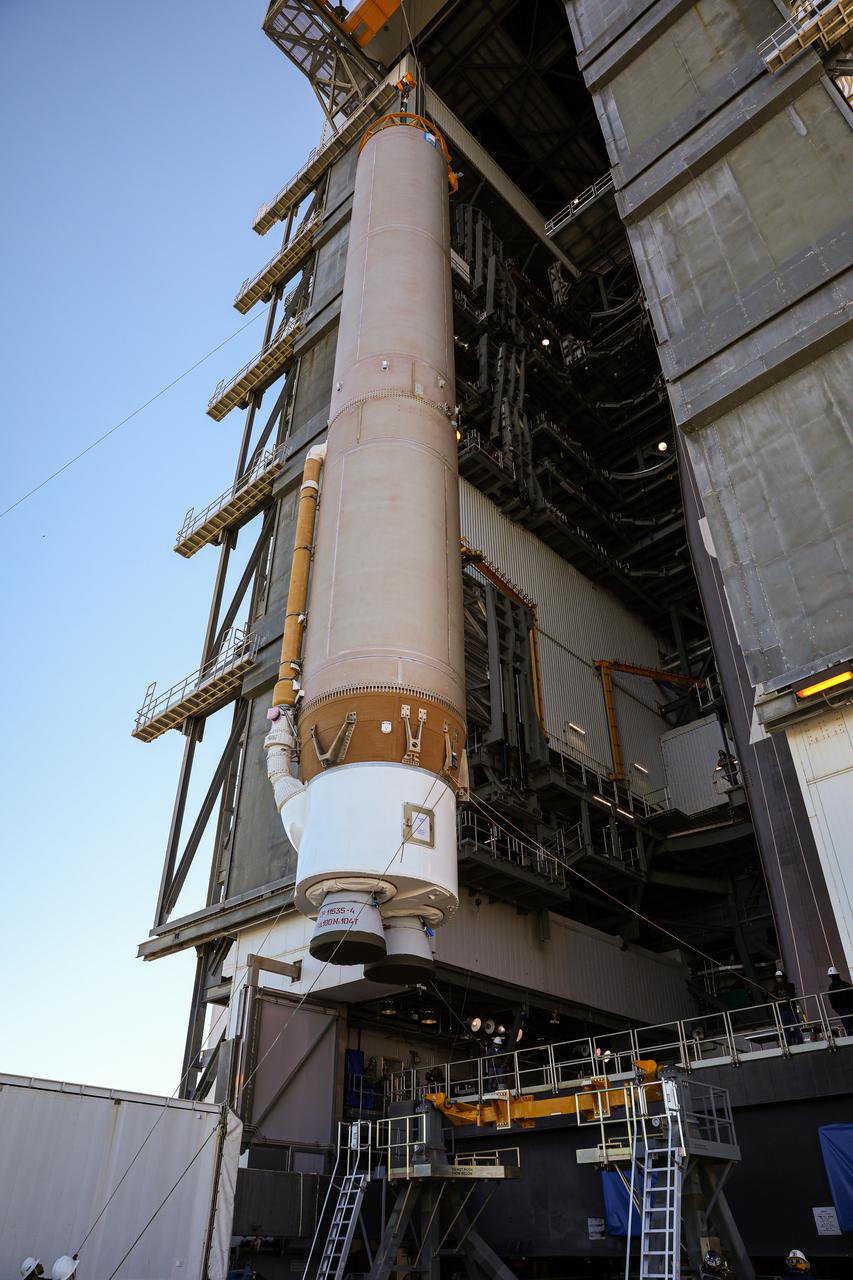
The booster of a United Launch Alliance Atlas V rocket that will launch the Solar Orbiter spacecraft is lifted into the vertical position at the Vertical Integration Facility near Space Launch Complex 41 at Cape Canaveral Air Force Station in Florida on Jan. 6, 2020. Solar Orbiter is an international cooperative mission between ESA (European Space Agency) and NASA. The mission aims to study the Sun, its outer atmosphere and solar wind. The spacecraft will provide the first images of the Sun’s poles. NASA’s Launch Services Program based at Kennedy Space Center in Florida is managing the launch.
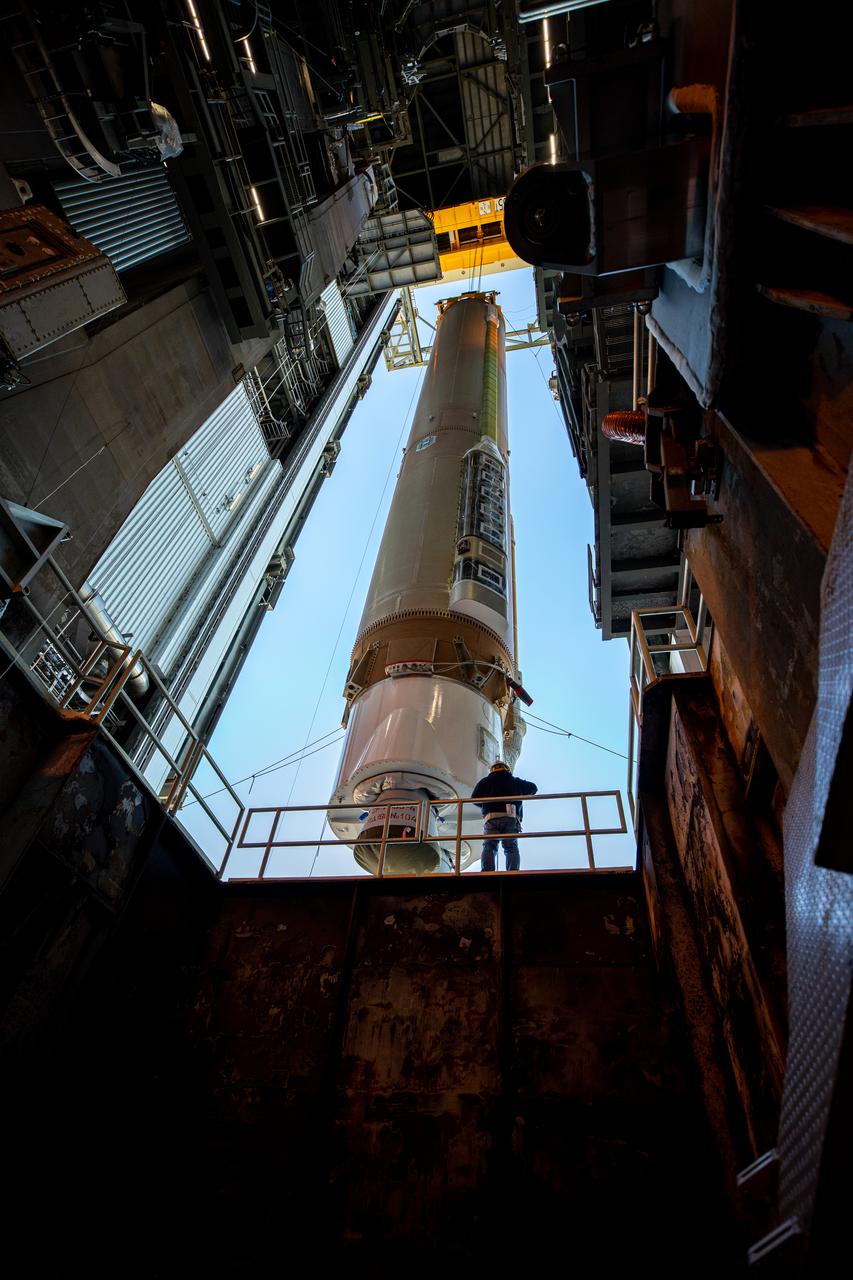
The booster of a United Launch Alliance Atlas V rocket that will launch the Solar Orbiter spacecraft is moved into the Vertical Integration Facility near Space Launch Complex 41 at Cape Canaveral Air Force Station in Florida on Jan. 6, 2020. Solar Orbiter is an international cooperative mission between ESA (European Space Agency) and NASA. The mission aims to study the Sun, its outer atmosphere and solar wind. The spacecraft will provide the first images of the Sun’s poles. NASA’s Launch Services Program based at Kennedy Space Center in Florida is managing the launch.
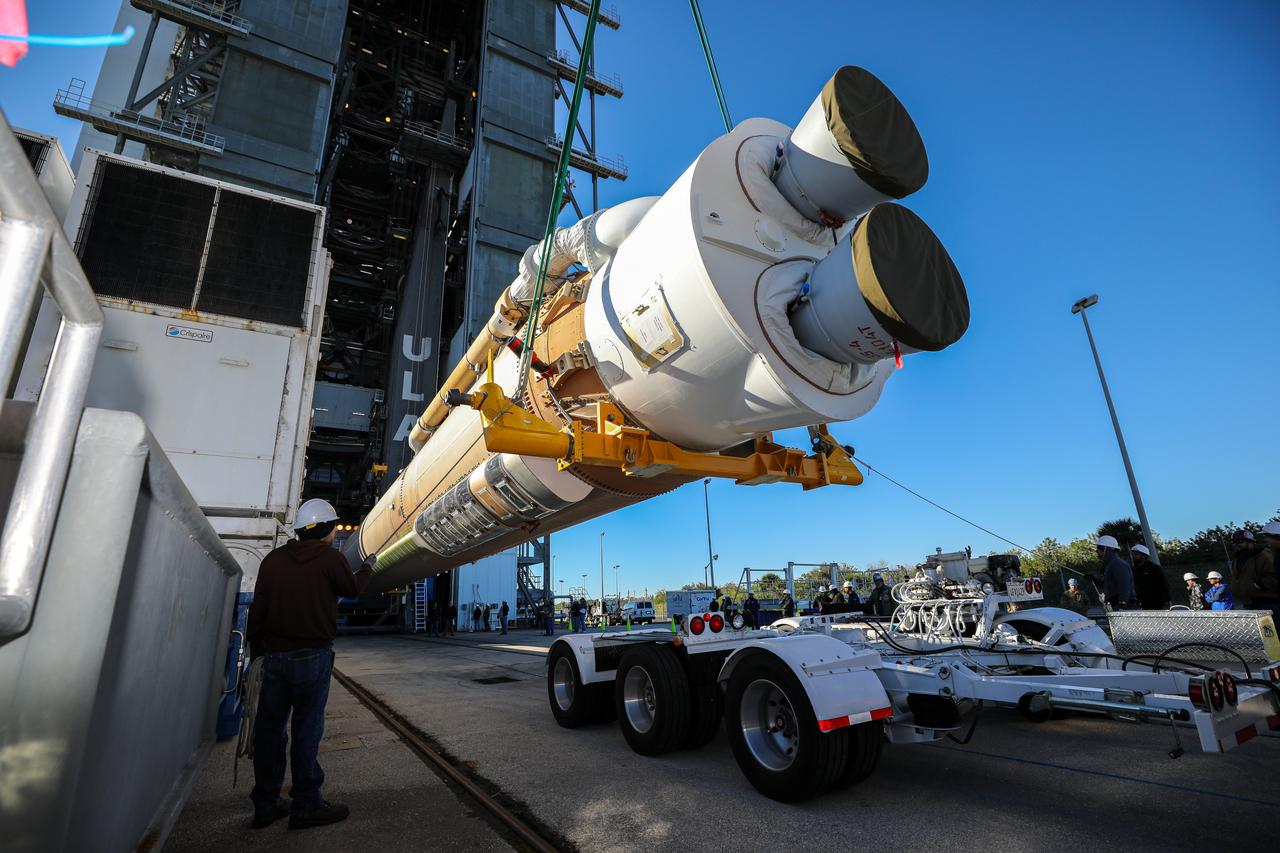
The booster of a United Launch Alliance Atlas V rocket that will launch the Solar Orbiter spacecraft is lifted into the vertical position at the Vertical Integration Facility near Space Launch Complex 41 at Cape Canaveral Air Force Station in Florida on Jan. 6, 2020. Solar Orbiter is an international cooperative mission between ESA (European Space Agency) and NASA. The mission aims to study the Sun, its outer atmosphere and solar wind. The spacecraft will provide the first images of the Sun’s poles. NASA’s Launch Services Program based at Kennedy Space Center in Florida is managing the launch.
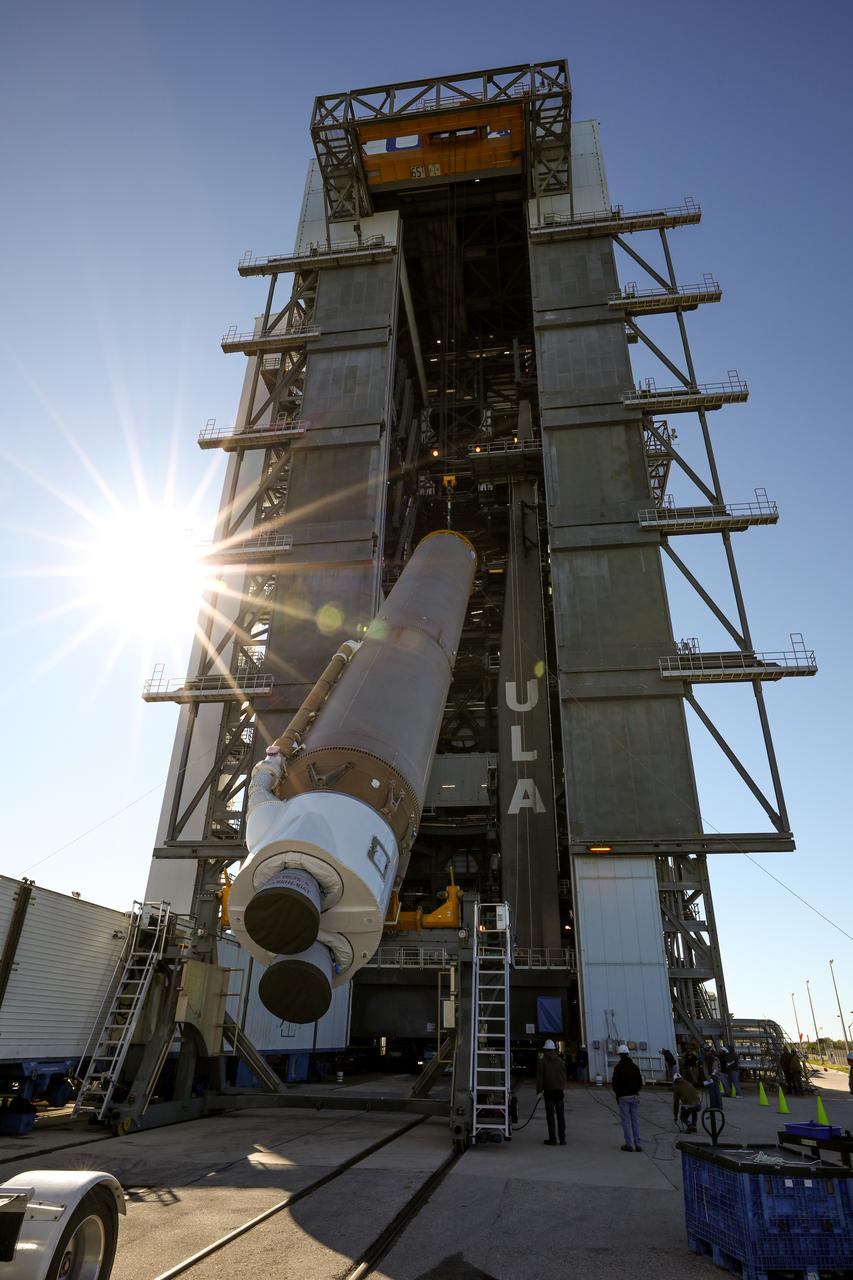
The booster of a United Launch Alliance Atlas V rocket that will launch the Solar Orbiter spacecraft is lifted into the vertical position at the Vertical Integration Facility near Space Launch Complex 41 at Cape Canaveral Air Force Station in Florida on Jan. 6, 2020. Solar Orbiter is an international cooperative mission between ESA (European Space Agency) and NASA. The mission aims to study the Sun, its outer atmosphere and solar wind. The spacecraft will provide the first images of the Sun’s poles. NASA’s Launch Services Program based at Kennedy Space Center in Florida is managing the launch.
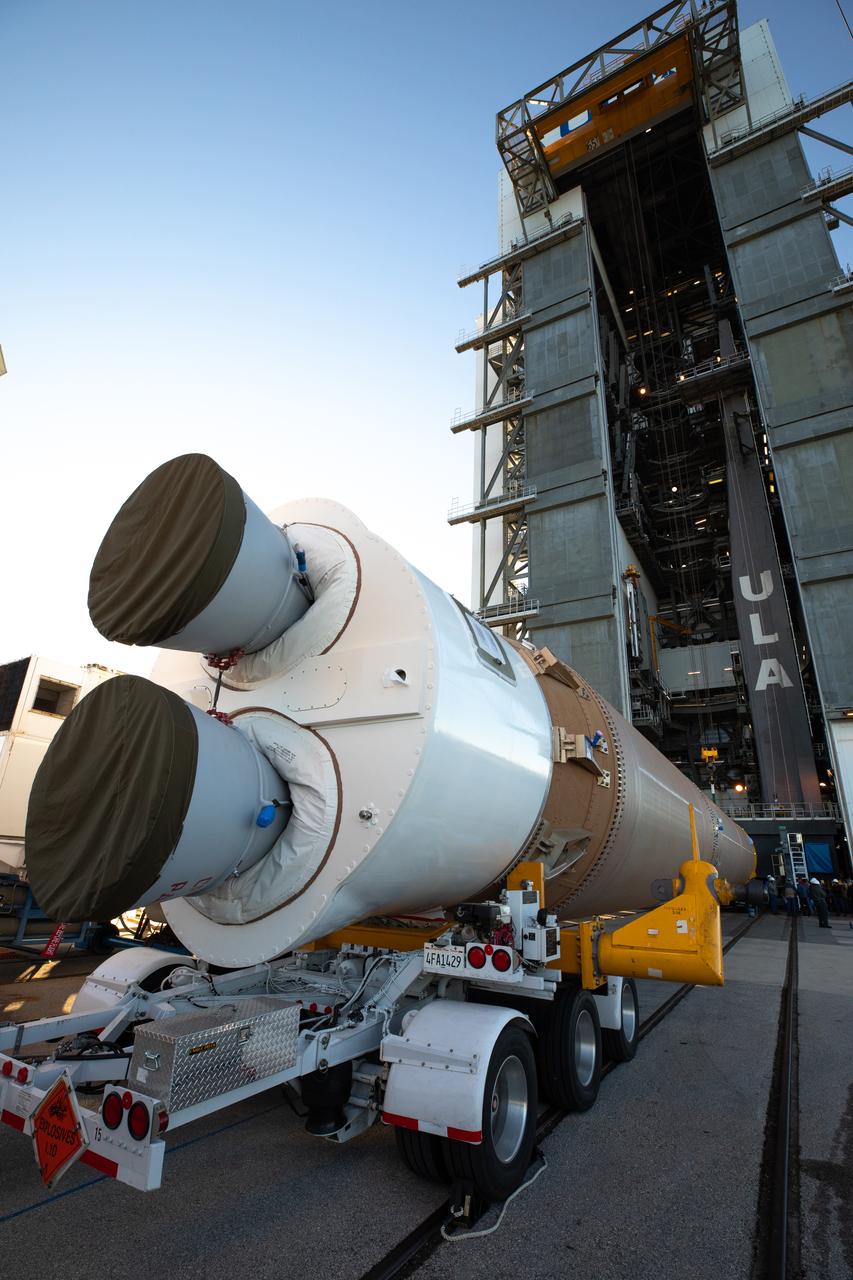
The booster of a United Launch Alliance Atlas V rocket that will launch the Solar Orbiter spacecraft arrives at the Vertical Integration Facility near Space Launch Complex 41 at Cape Canaveral Air Force Station in Florida on Jan. 6, 2020. Solar Orbiter is an international cooperative mission between ESA (European Space Agency) and NASA. The mission aims to study the Sun, its outer atmosphere and solar wind. The spacecraft will provide the first images of the Sun’s poles. NASA’s Launch Services Program based at Kennedy Space Center in Florida is managing the launch.
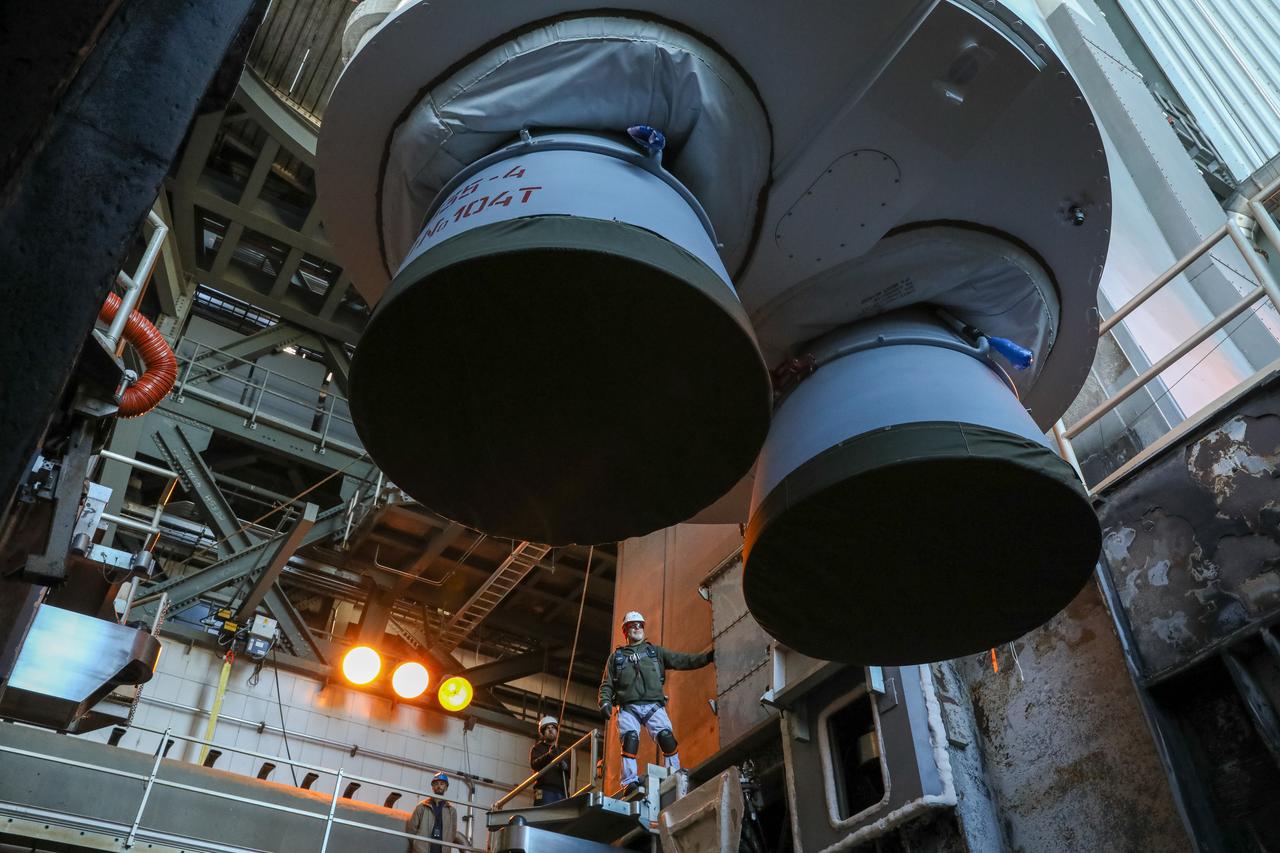
The booster of a United Launch Alliance Atlas V rocket that will launch the Solar Orbiter spacecraft is moved into the Vertical Integration Facility near Space Launch Complex 41 at Cape Canaveral Air Force Station in Florida on Jan. 6, 2020. Solar Orbiter is an international cooperative mission between ESA (European Space Agency) and NASA. The mission aims to study the Sun, its outer atmosphere and solar wind. The spacecraft will provide the first images of the Sun’s poles. NASA’s Launch Services Program based at Kennedy Space Center in Florida is managing the launch.
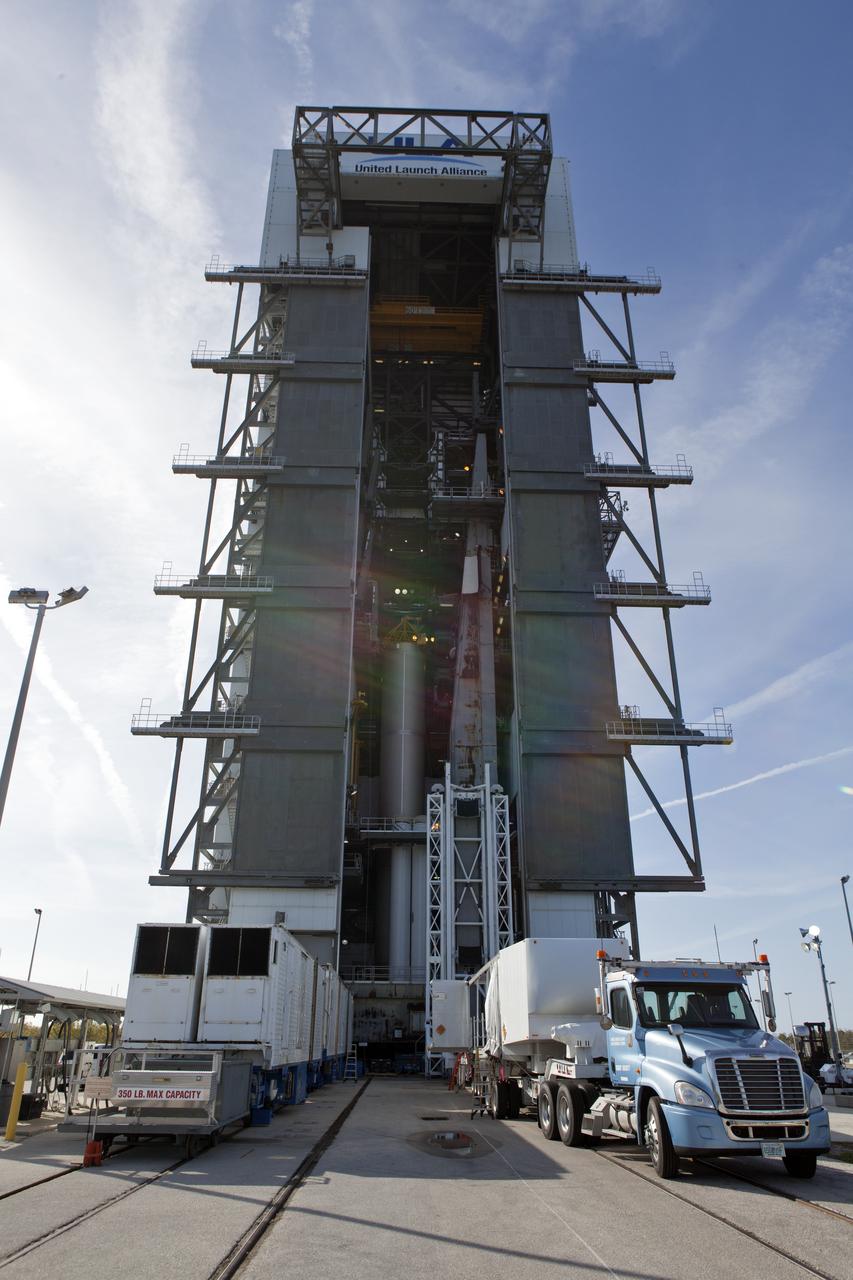
At the Vertical Integration Facility at Space Launch Complex 41 at Cape Canaveral Air Force Station in Florida, solid rocket boosters (SRBs) have been mated to a United Launch Alliance Atlas V first stage. The SRBs will be help boost NOAA's Geostationary Operational Environmental Satellite, or GOES-S, to orbit. GOES-S is the second in a series of four advanced geostationary weather satellites that will significantly improve the detection and observation of environmental phenomena that directly affect public safety, protection of property and the nation's economic health and prosperity. GOES-S is slated to launch March 1, 2018.
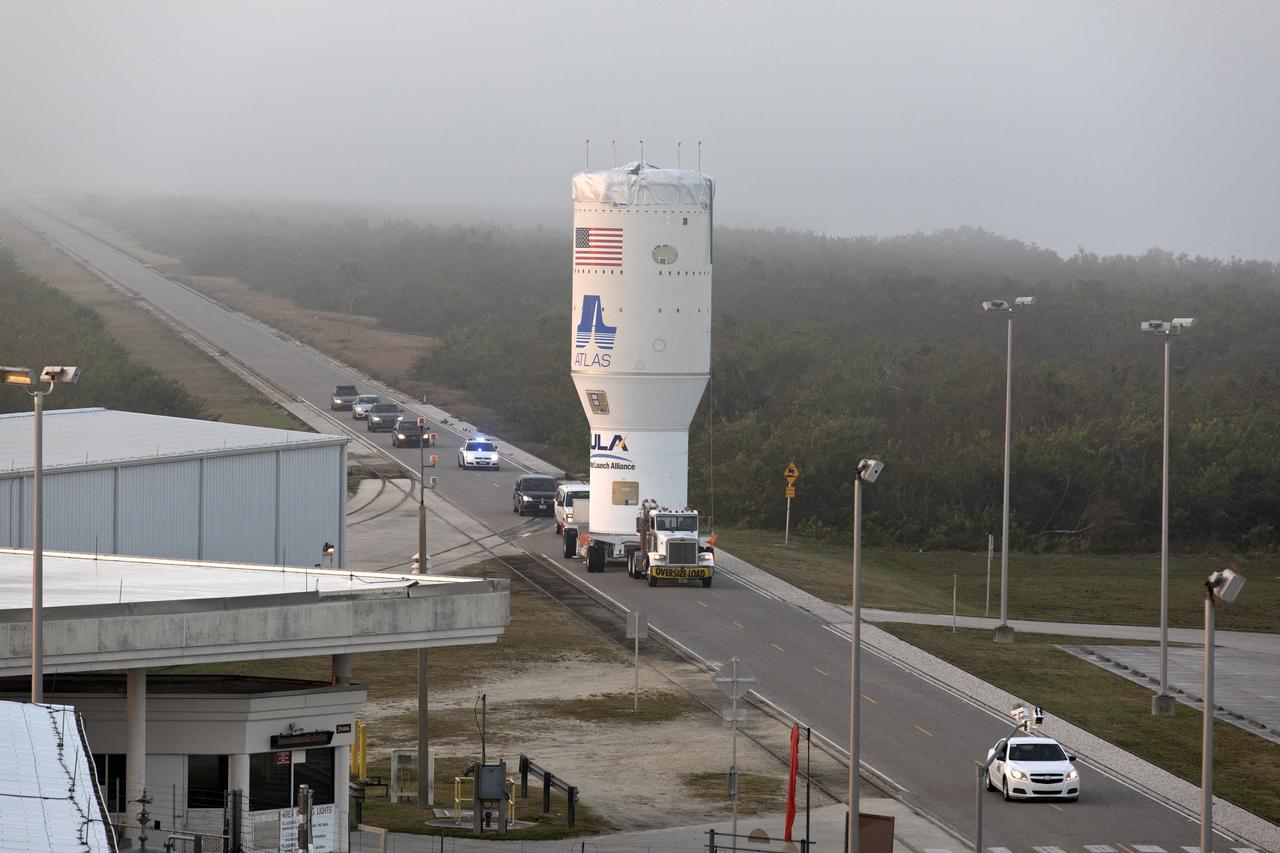
The Centaur upper stage that will help launch NOAA's Geostationary Operational Environmental Satellite-S, or GOES-S, arrives at the Vertical Integration Facility at Space Launch Complex 41 at Cape Canaveral Air Force Station in Florida. The Centaur will be mated to a United Launch Alliance Atlas V booster. GOES-S is the second in a series of four advanced geostationary weather satellites that will significantly improve the detection and observation of environmental phenomena that directly affect public safety, protection of property and the nation's economic health and prosperity. GOES-S is slated to launch March 1, 2018.
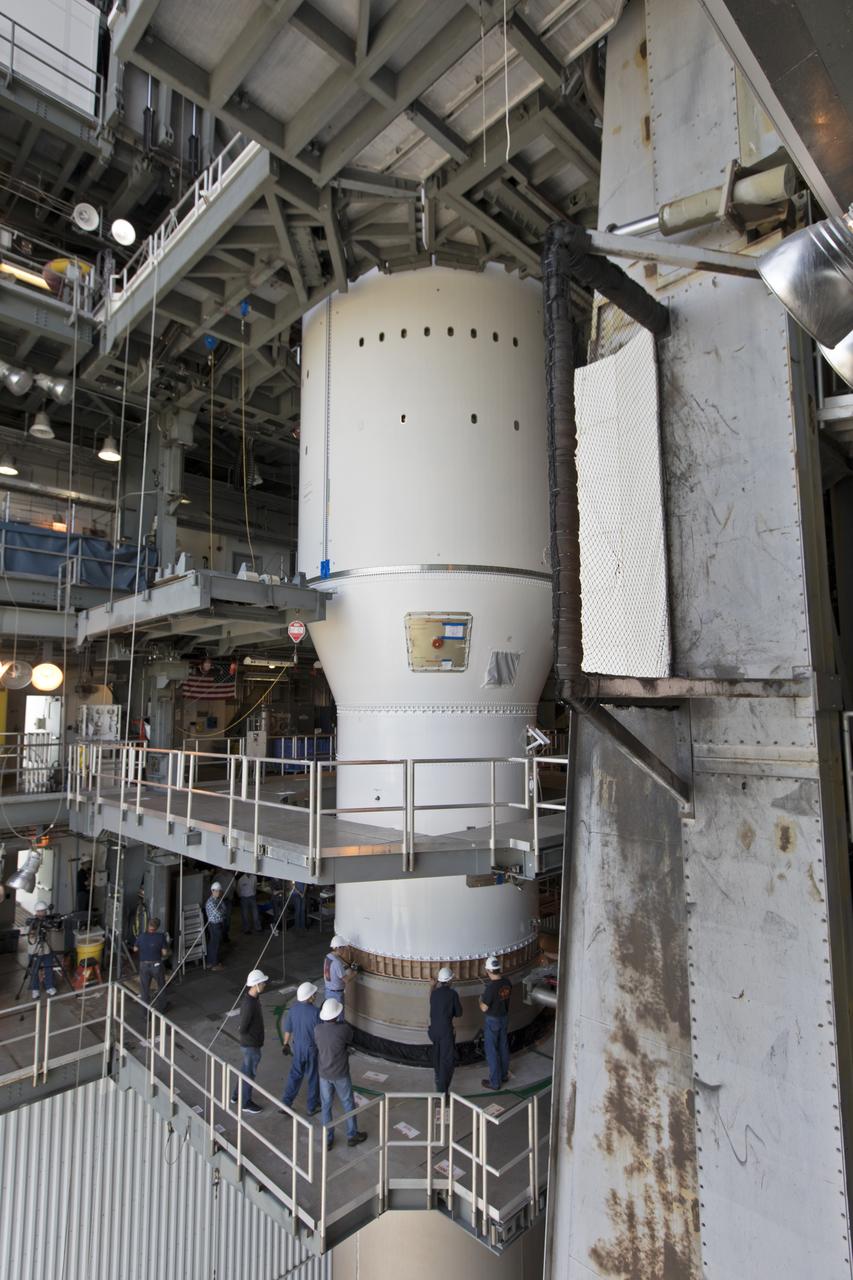
At the Vertical Integration Facility at Space Launch Complex 41 at Cape Canaveral Air Force Station in Florida, a Centaur upper stage is mated to a United Launch Alliance Atlas V rocket that will boost NOAA's Geostationary Operational Environmental Satellite-S, or GOES-S, to orbit. GOES-S is the second in a series of four advanced geostationary weather satellites that will significantly improve the detection and observation of environmental phenomena that directly affect public safety, protection of property and the nation's economic health and prosperity. GOES-S is slated to launch March 1, 2018.