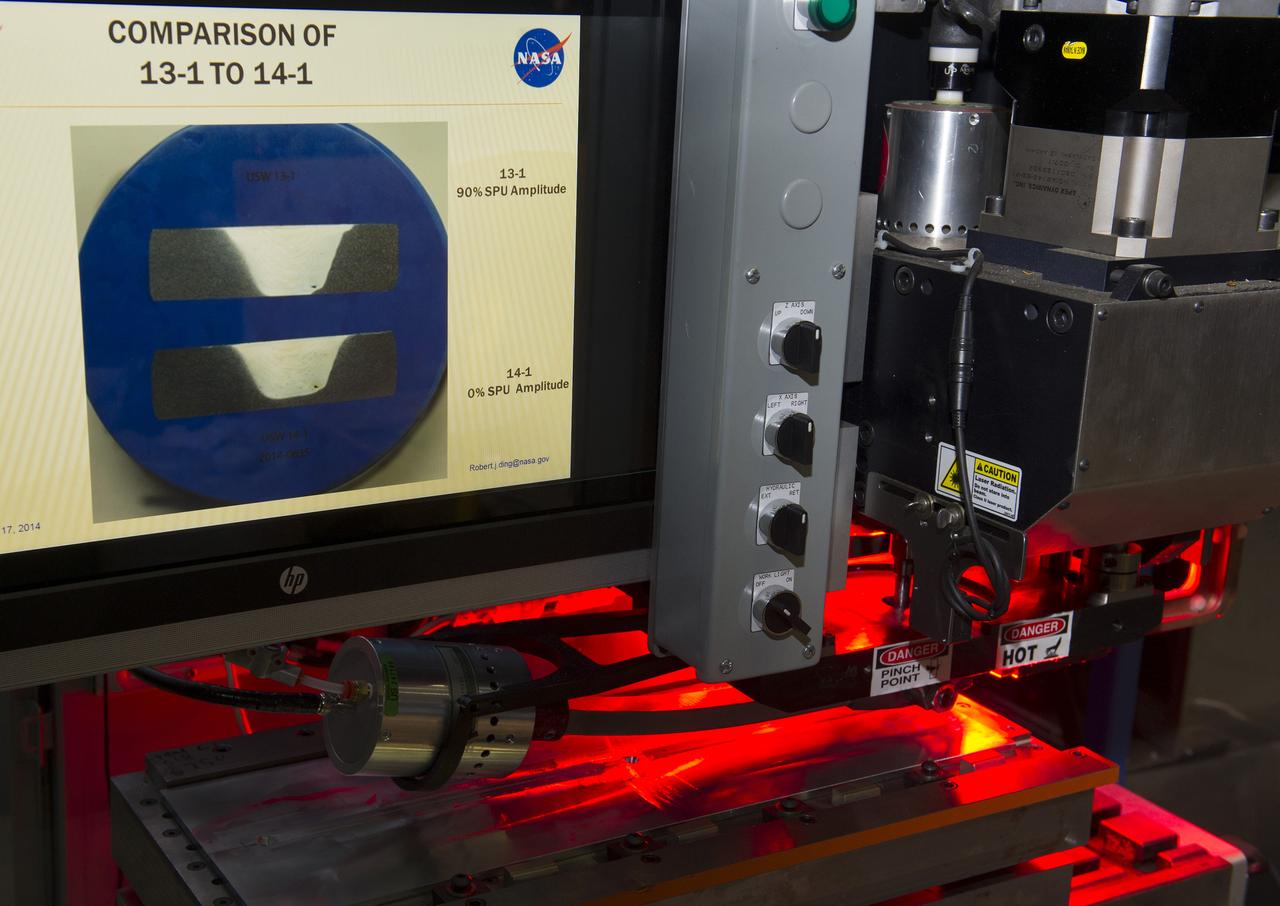
PULSED ULTRASONIC STIR WELDING SYSTEM
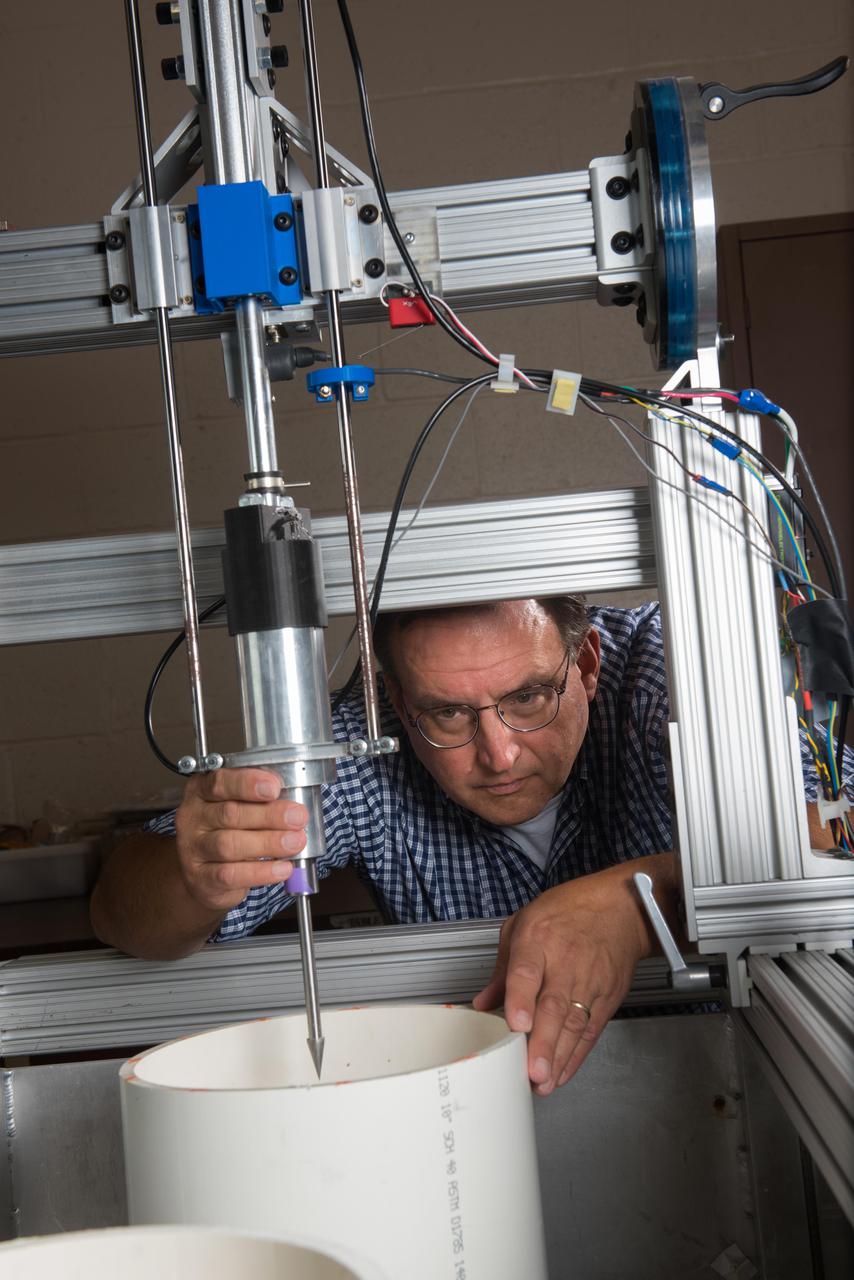
Ultrasonic Teeth for Lunar Bucket Excavation
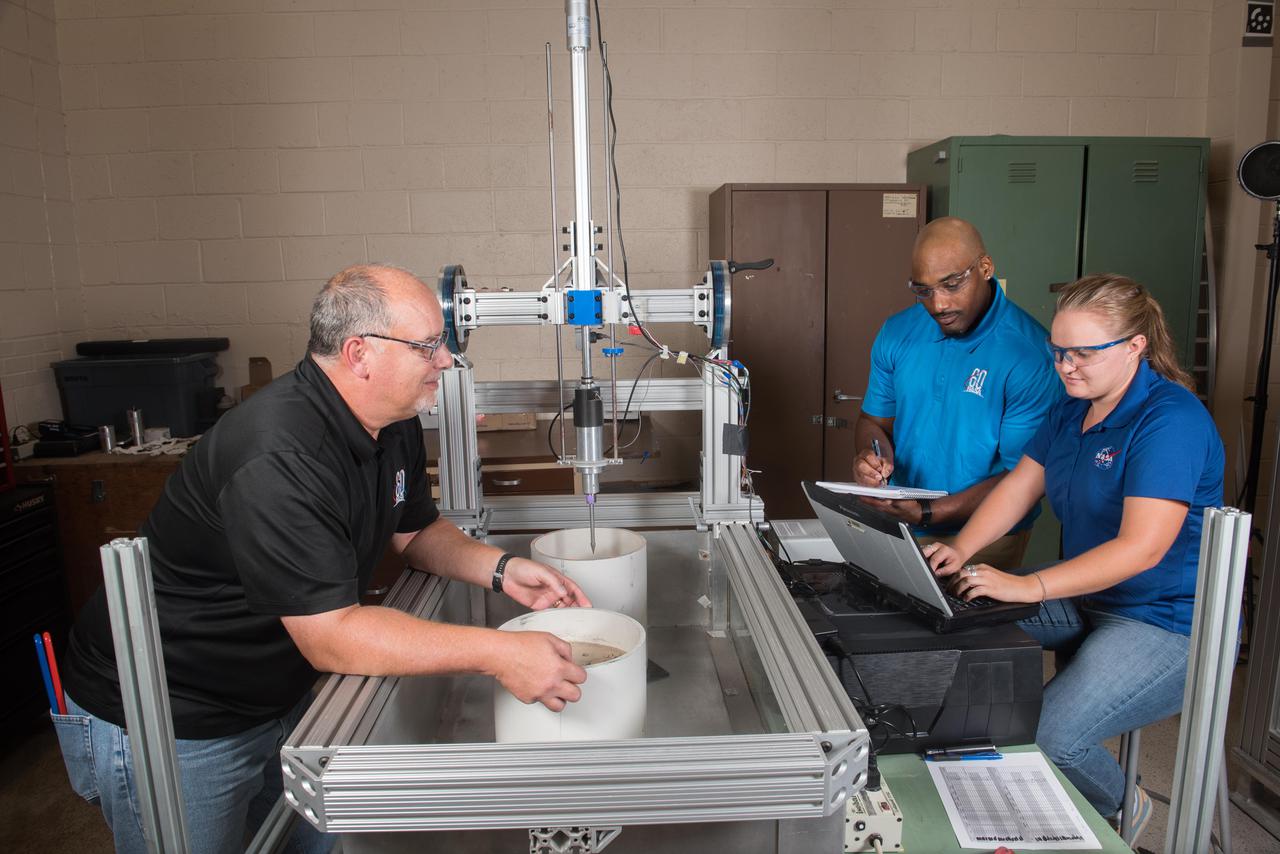
Ultrasonic Teeth for Lunar Bucket Excavation
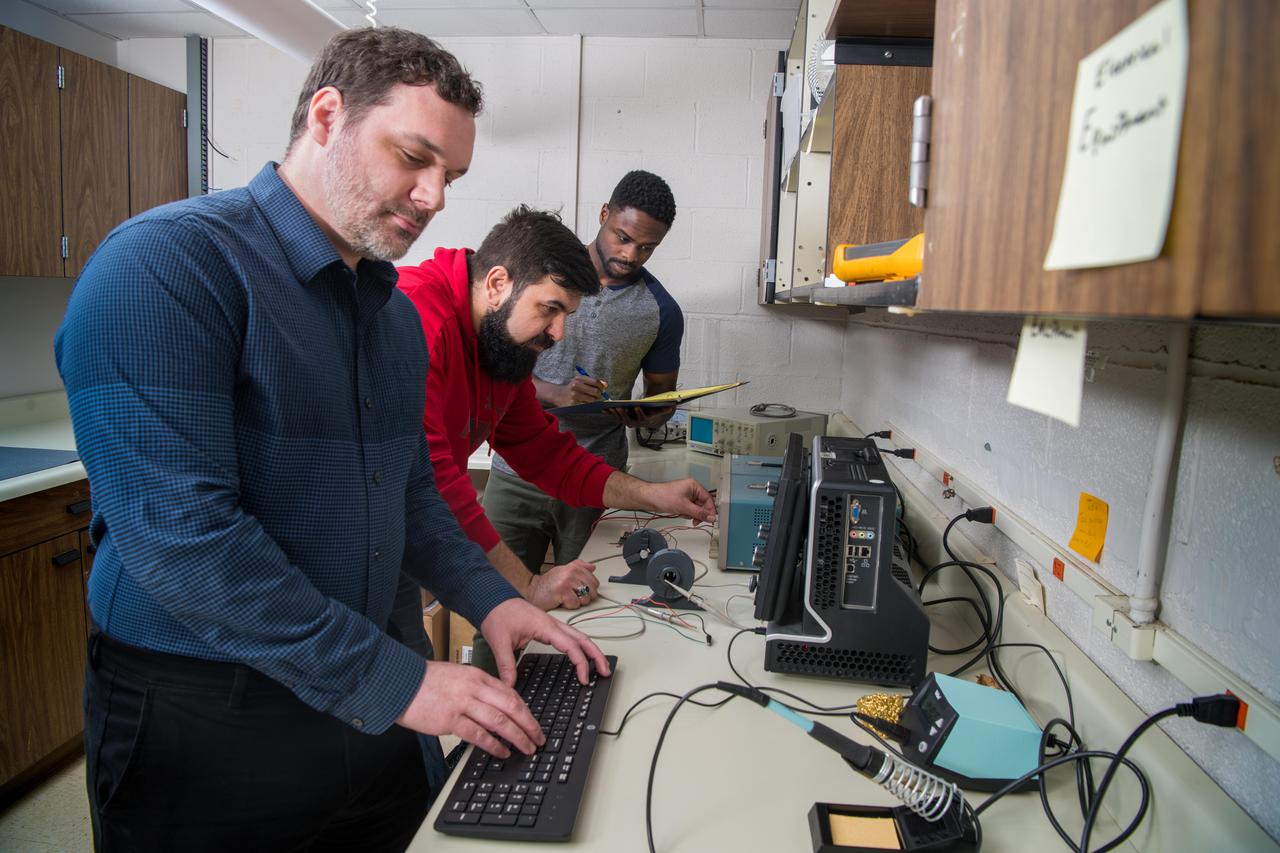
Ultrasonic Measurement System. Ultrasonic measurement system will enable simultaneous measurement of temperature, velocity and density fields through a grid of ultrasonic sensors. This method incorporates a theoretical approach and machine learning techniques to develop a physics-informed data-driven calibration and operation workflow. This allows at least ten times faster data processing times as well as potential capability of transient measurements and solid particle detection. The system can also be utilized for health monitoring. This measurement technique is in line with the “air-breathing propulsion” core competency of GRC. However it can also enables next generation space data processing with higher performance computing capable of operating in harsh deep space environments.
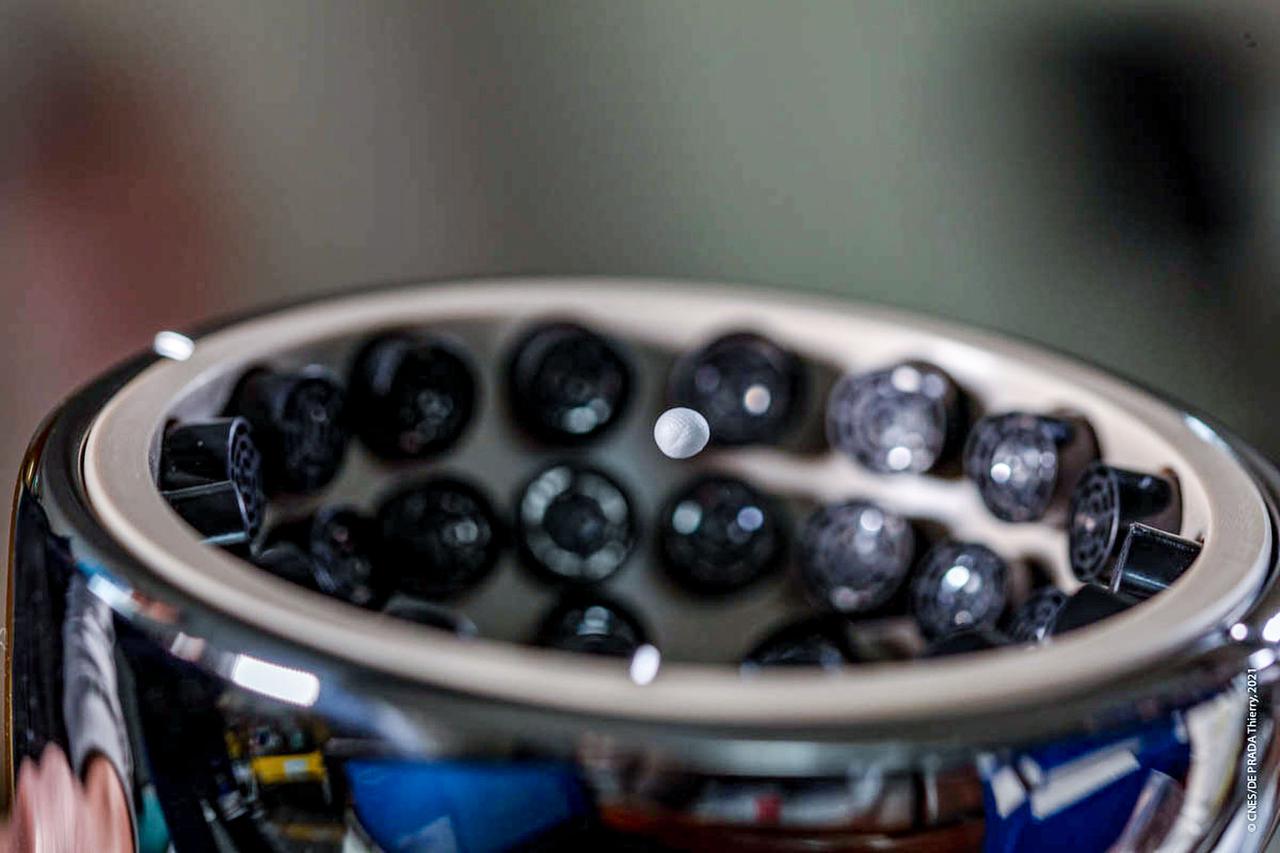
jsc2021e020420 (2/10/2021) --- A preflight view of the Ultrasonic Tweezers handle trapping a polystyrene sphere during hardware verification. The objective of the Ultrasonic Tweezers project is to develop acoustic tweezers that use sound to allow for remote and contactless manipulation of materials in a microgravity context. Image courtesy of CNES/T. De Prada.
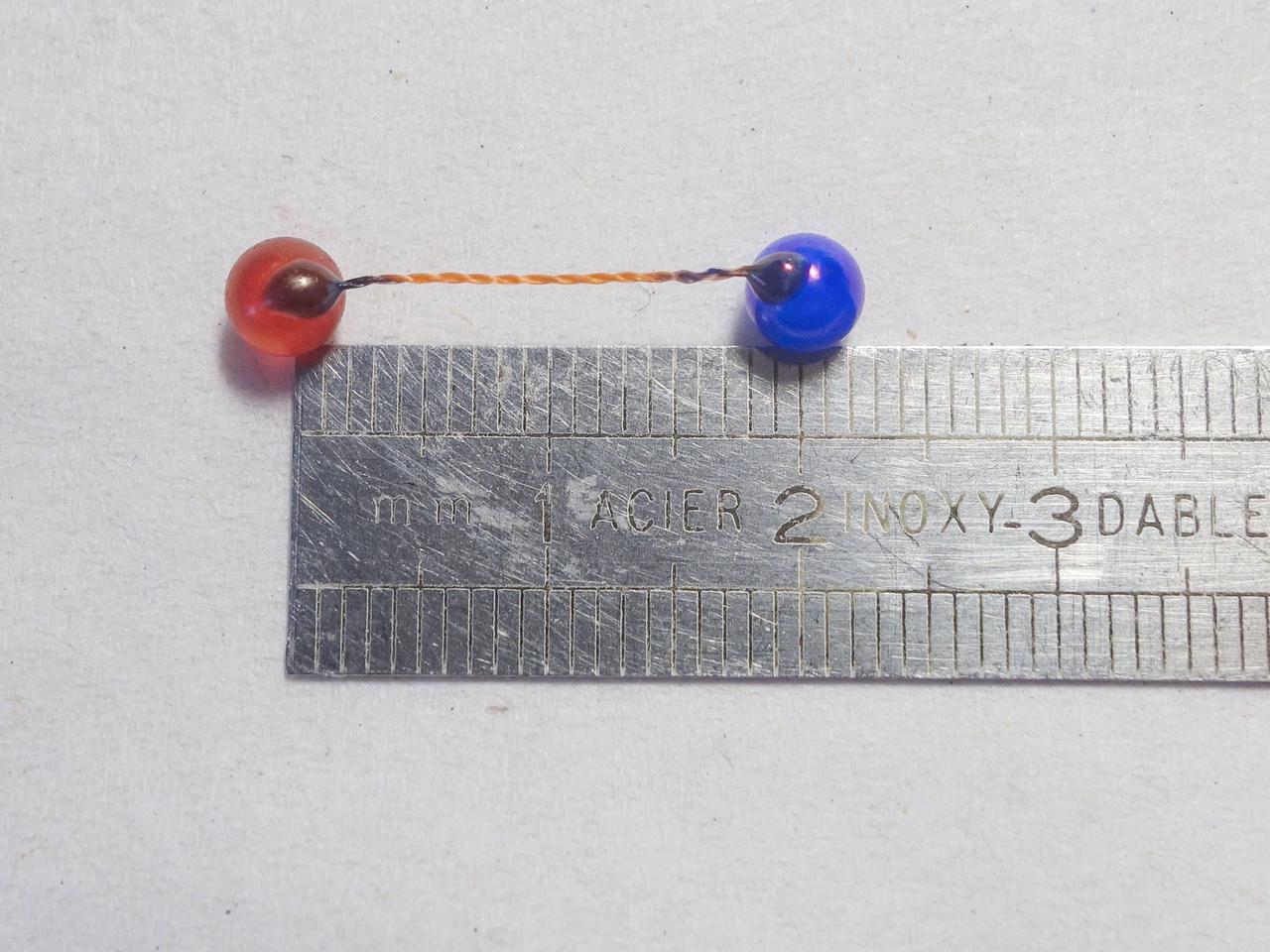
jsc2021e020421 (2/15/2021) --- The Ultrasonic Tweezers are used to trap complex objects as these linked spheres (5mm each) made of plastics. The objective of the Ultrasonic Tweezers project is to develop acoustic tweezers that use sound to allow for remote and contactless manipulation of materials in a microgravity context. Image courtesy of CNES/S. Rouquette.
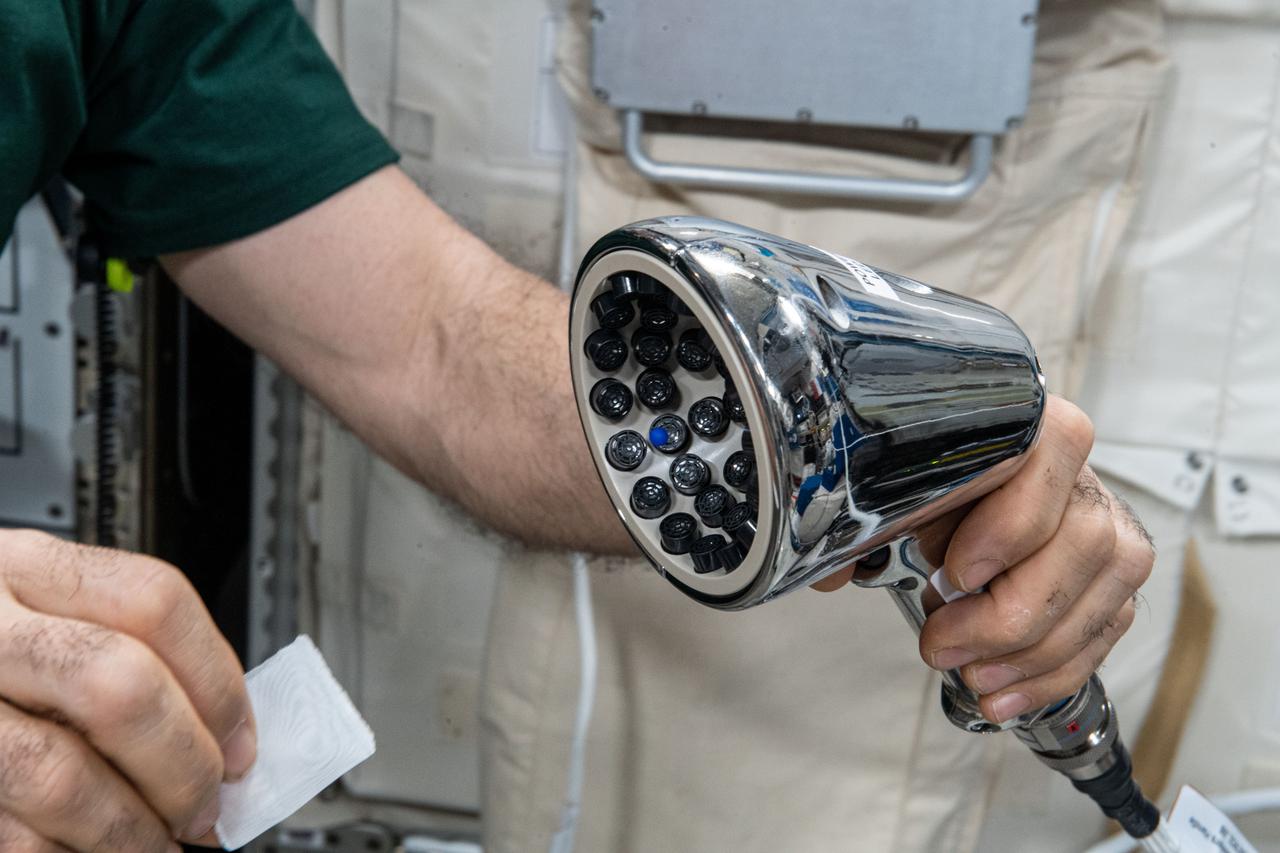
iss065e170116 (7/20/2021) --- Photo taken during the Ultrasonic Tweezers experiment setup and execution in the Columbus module aboard the International Space Station (ISS). The objective of the Ultrasonic Tweezers project is to develop acoustic tweezers that use sound to allow for remote and contactless manipulation of materials in a microgravity context. An ultrasound beam is shaped so that it produces a trap from which an object cannot easily exit. By moving the beam, the object can be moved to a new position with a very good precision.
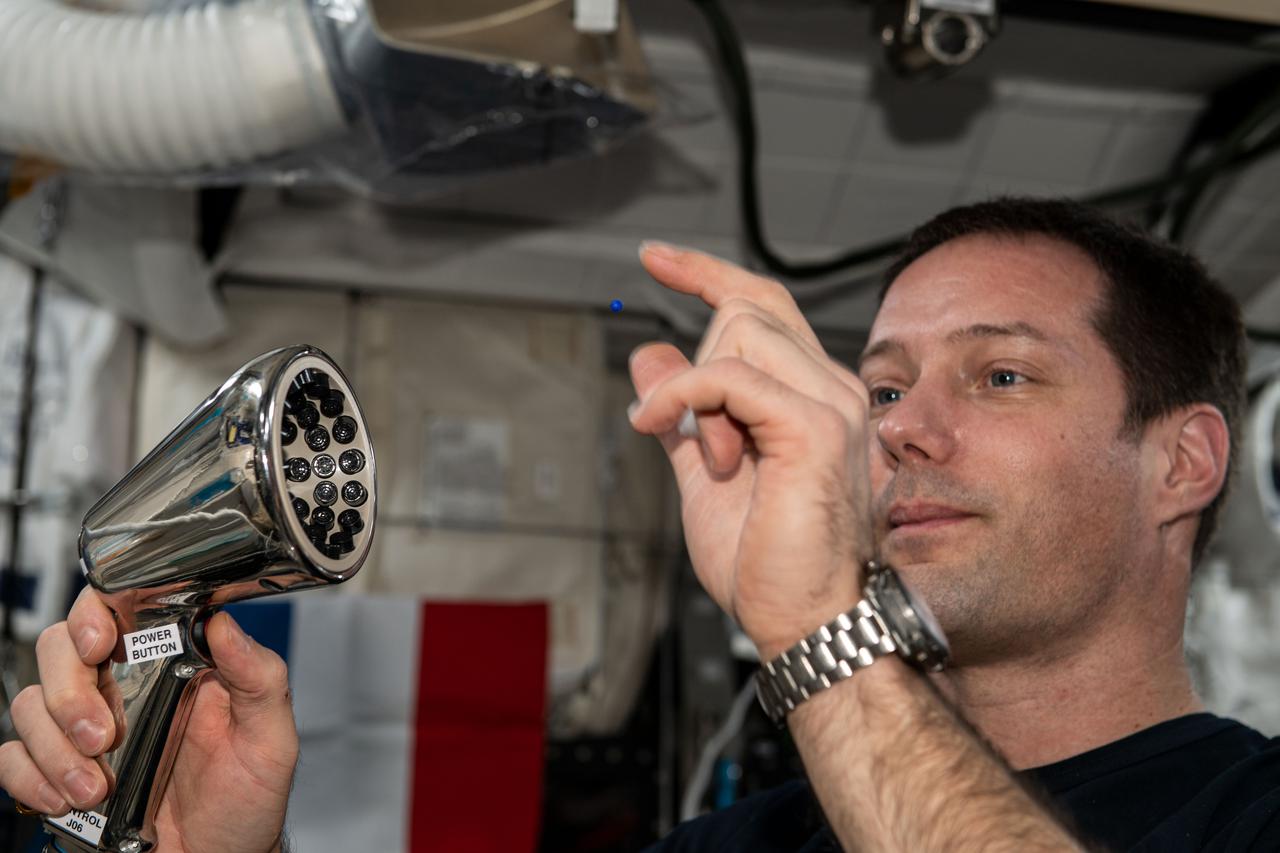
Photo of European Space Agency (ESA) astronaut Thomas Pesquet working with the Ultrasonic Tweezers experiment setup and experiment scenario execution. in the Columbus module. The objective of the Ultrasonic Tweezers project is to develop acoustic tweezers that use sound to allow for remote and contactless manipulation of materials in a microgravity context. An ultrasound beam is shaped so that it produces a trap from which an object cannot easily exit. By moving the beam, the object can be moved to a new position with a very good precision.
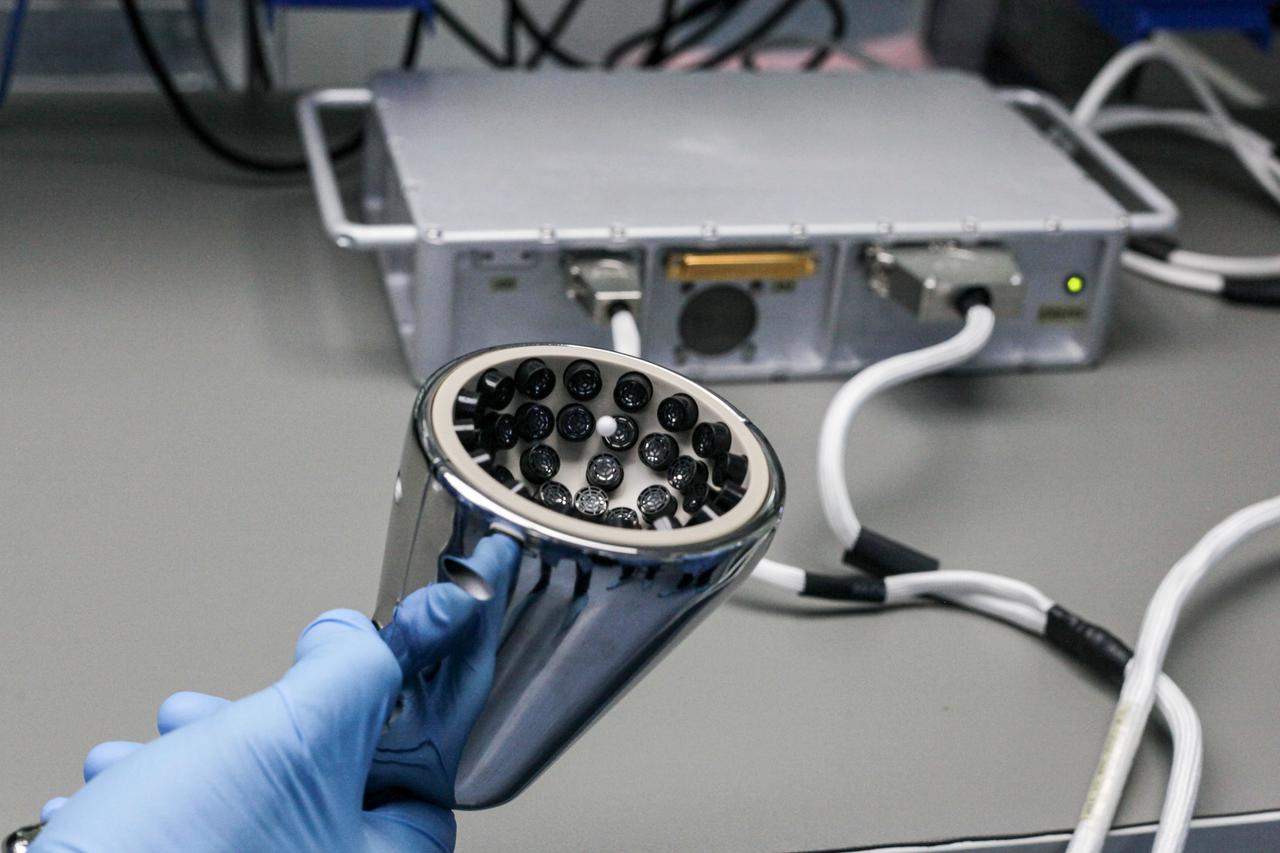
jsc2021e020422 (2/8/2021) --- A preflight view of the Ultrasonic Tweezers handle trapping a polystyrene sphere during hardware integration. Power supply box and control harness are visible on the background. The objective of the Ultrasonic Tweezers project is to develop acoustic tweezers that use sound to allow for remote and contactless manipulation of materials in a microgravity context. Image courtesy of CNES/S. Rouquette.
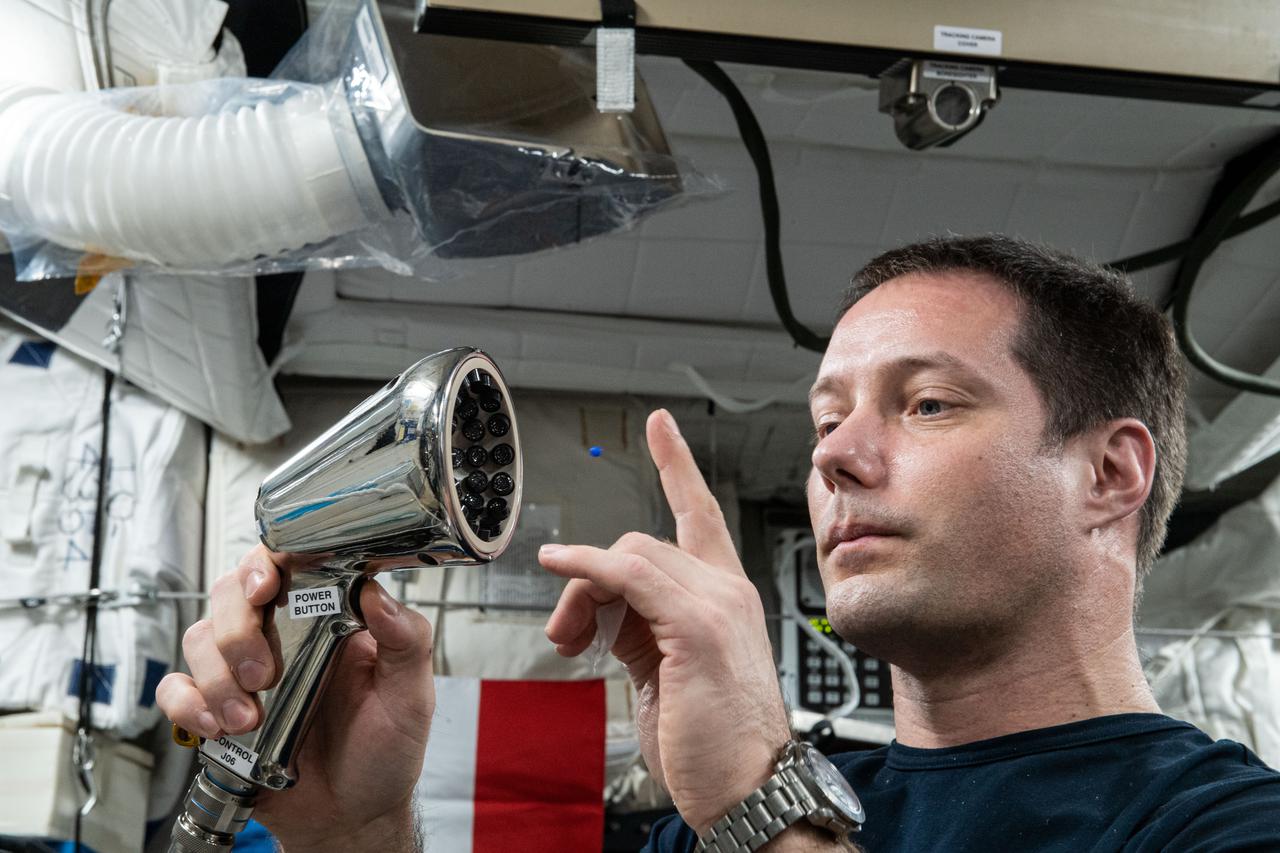
iss065e170099 (7/20/2021) --- European Space Agency (ESA) astronaut Thomas Pesquet working with the Ultrasonic Tweezers experiment setup and execution in the Columbus module aboard the International Space Station (ISS). The objective of the Ultrasonic Tweezers project is to develop acoustic tweezers that use sound to allow for remote and contactless manipulation of materials in a microgravity context. An ultrasound beam is shaped so that it produces a trap from which an object cannot easily exit. By moving the beam, the object can be moved to a new position with a very good precision.

iss065e170118 (7/20/2021) --- NASA astronaut Mark Vande Hei working with the Ultrasonic Tweezers experiment setup and execution in the Columbus module aboard the International Space Station (ISS). The objective of the Ultrasonic Tweezers project is to develop acoustic tweezers that use sound to allow for remote and contactless manipulation of materials in a microgravity context. An ultrasound beam is shaped so that it produces a trap from which an object cannot easily exit. By moving the beam, the object can be moved to a new position with a very good precision.
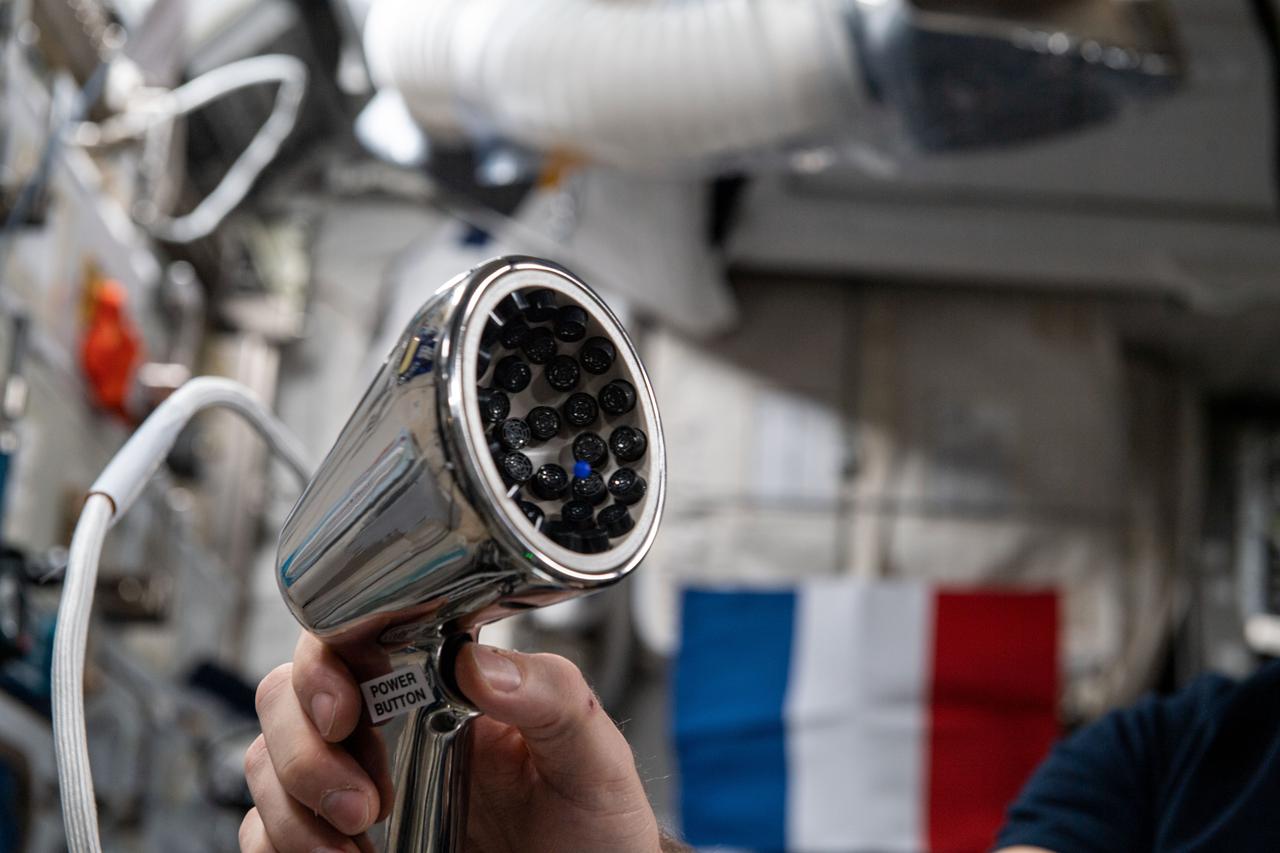
iss065e170080 (7/20/2021) --- Photo taken during the Ultrasonic Tweezers experiment setup and execution in the Columbus module aboard the International Space Station (ISS). The objective of the Ultrasonic Tweezers project is to develop acoustic tweezers that use sound to allow for remote and contactless manipulation of materials in a microgravity context. An ultrasound beam is shaped so that it produces a trap from which an object cannot easily exit. By moving the beam, the object can be moved to a new position with a very good precision.
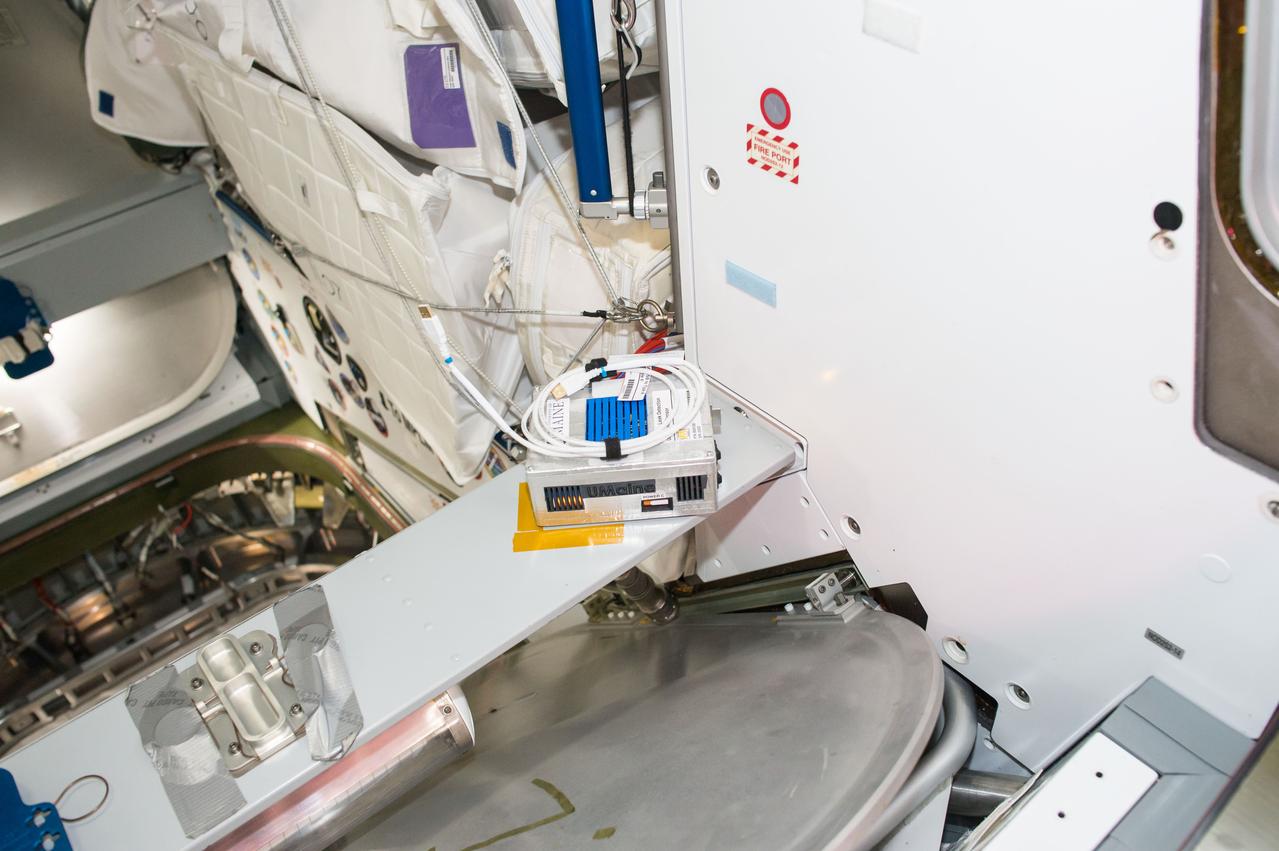
iss050e035315 (1/26/2017) --- A view of the Wireless Leak Detector Ultrasonic Sensor aboard the International Space Station (ISS). The Joint Leak Detection and Localization Based on Fast Bayesian Inference from Network of Ultrasonic Sensor Arrays in Microgravity Environment (Wireless Leak Detection) investigation compares signals received at various ultrasonic sensors to reveal the location of air leaks, which can then be repaired.
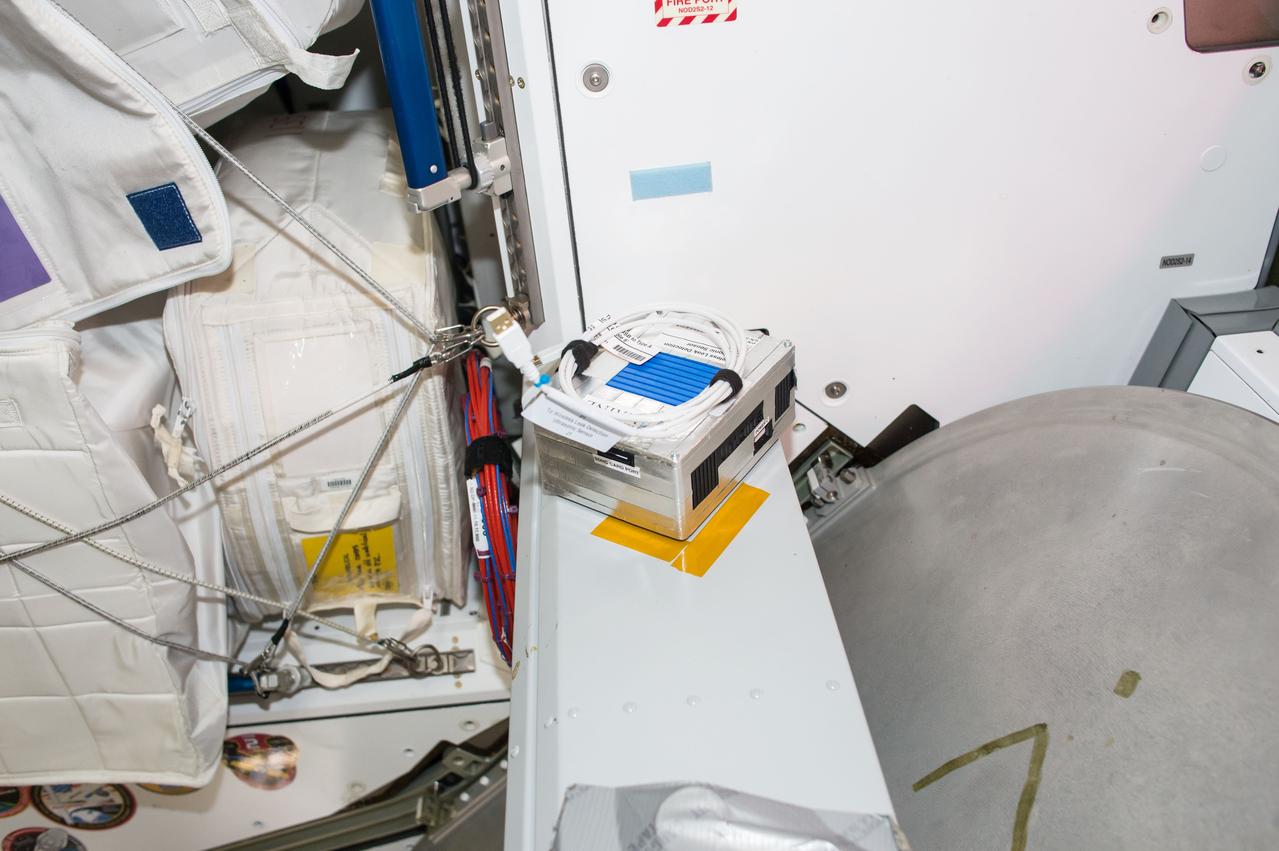
iss050e035313 (1/26/2017) --- A view of the Wireless Leak Detector Ultrasonic Sensor aboard the International Space Station (ISS). The Joint Leak Detection and Localization Based on Fast Bayesian Inference from Network of Ultrasonic Sensor Arrays in Microgravity Environment (Wireless Leak Detection) investigation compares signals received at various ultrasonic sensors to reveal the location of air leaks, which can then be repaired.
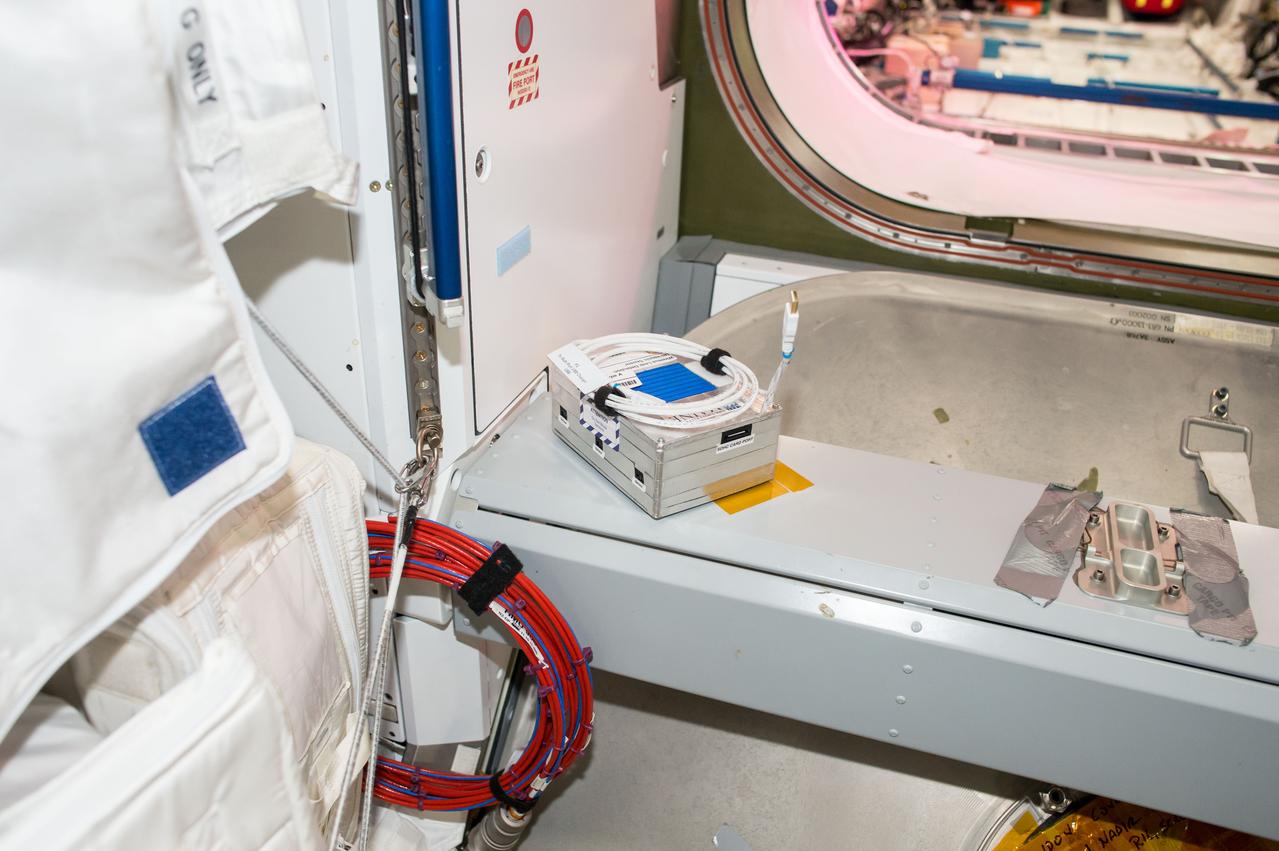
iss050e035314 (1/26/2017) --- A view of the Wireless Leak Detector Ultrasonic Sensor aboard the International Space Station (ISS). The Joint Leak Detection and Localization Based on Fast Bayesian Inference from Network of Ultrasonic Sensor Arrays in Microgravity Environment (Wireless Leak Detection) investigation compares signals received at various ultrasonic sensors to reveal the location of air leaks, which can then be repaired.
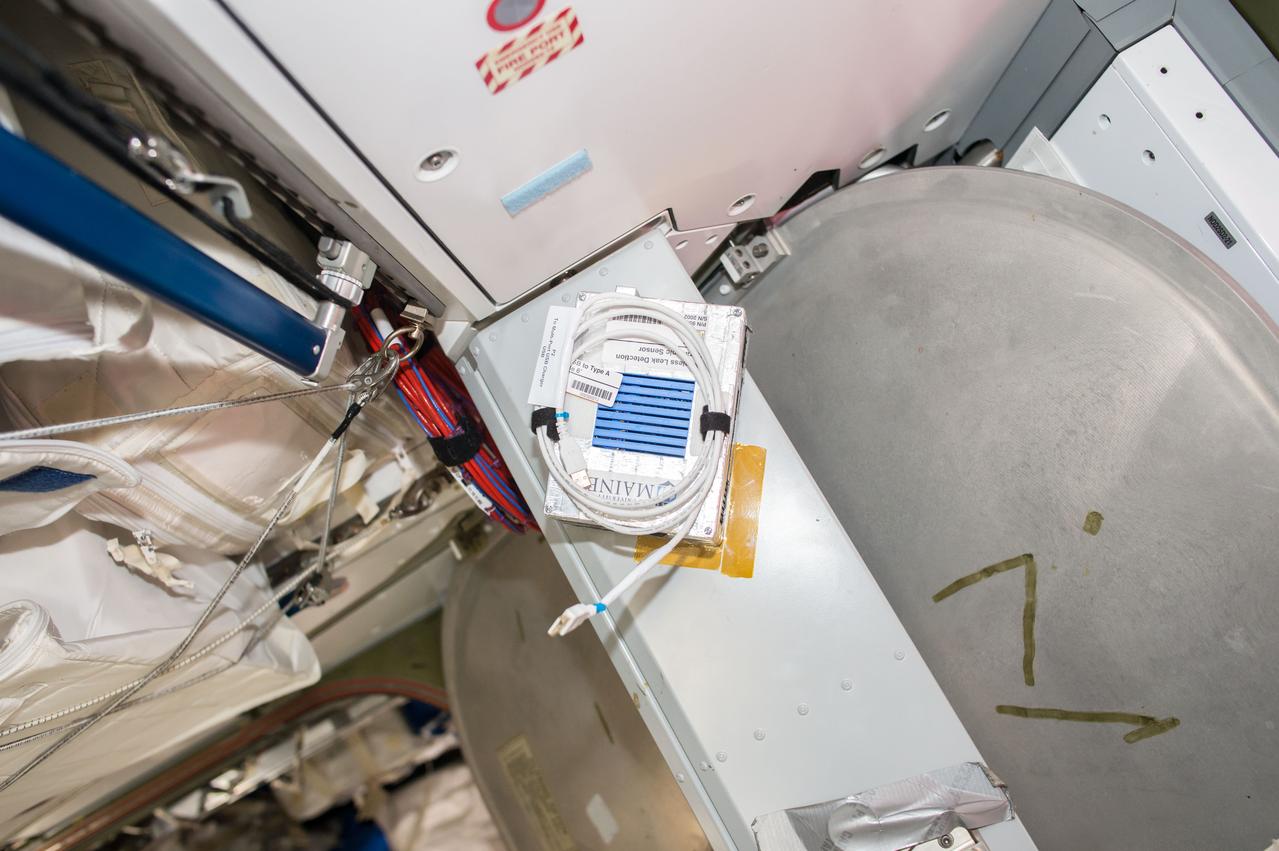
iss050e035316 (1/26/2017) --- A view of the Wireless Leak Detector Ultrasonic Sensor aboard the International Space Station (ISS). The Joint Leak Detection and Localization Based on Fast Bayesian Inference from Network of Ultrasonic Sensor Arrays in Microgravity Environment (Wireless Leak Detection) investigation compares signals received at various ultrasonic sensors to reveal the location of air leaks, which can then be repaired.
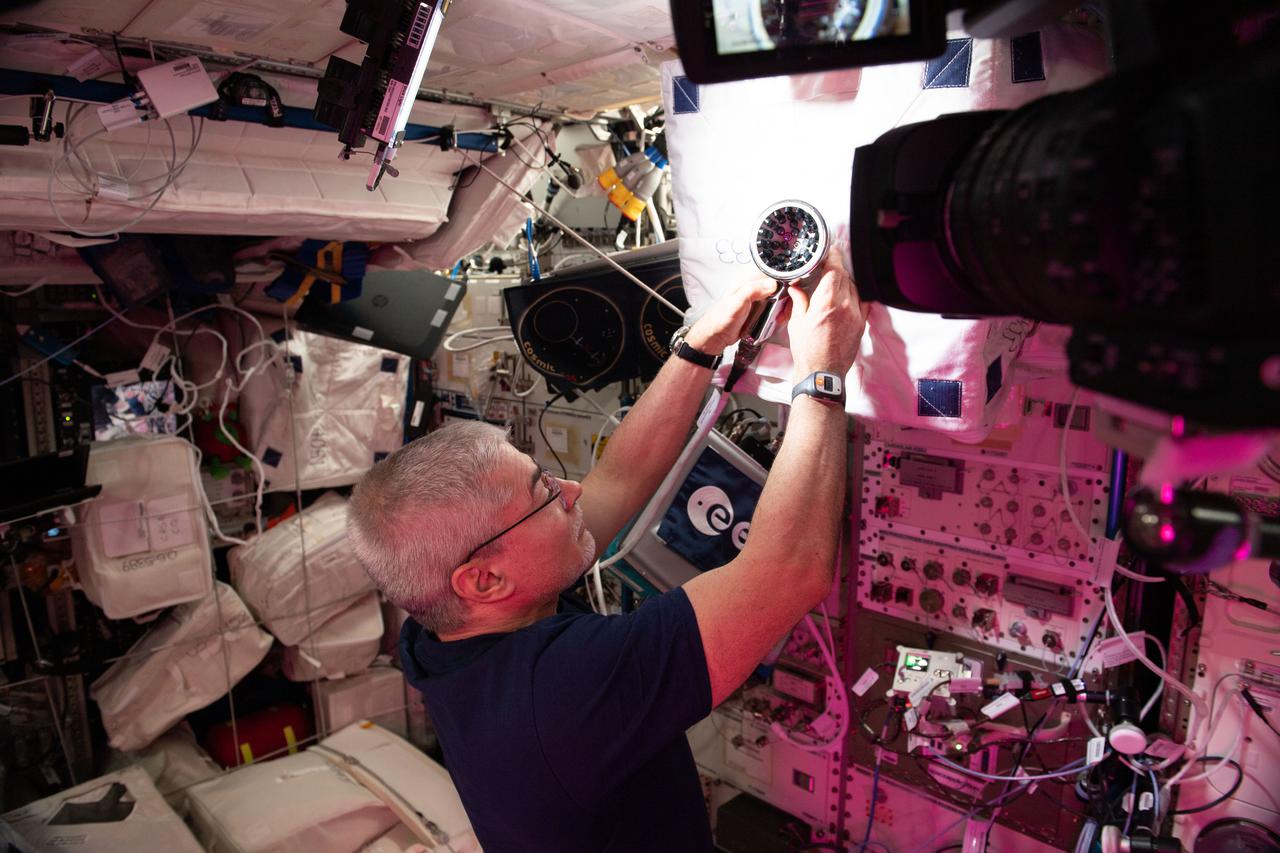
iss066e136658 (Feb. 7, 2022) --- NASA astronaut and Expedition 66 Flight Engineer Mark Vande Hei conducts research operations for the Ultrasonic Tweezers study using acoustics to manipulate objects remotely and without physical contact. Vande Hei was assisting ESA (European Space Agency) Flight Engineer Matthias Maurer (out of frame) during the experiment that explores using ultrasonics to trap and isolate objects to study samples and avoid contamination on planetary surfaces.

iss070e027402 (Nov. 17, 2023) --- NASA astronaut and Expedition 70 Flight Engineer Jasmin Moghbeli works in the Harmony module and calibrates an ultrasonic inspection device that uses high-frequency sound waves to analyze materials aboard the International Space Station.
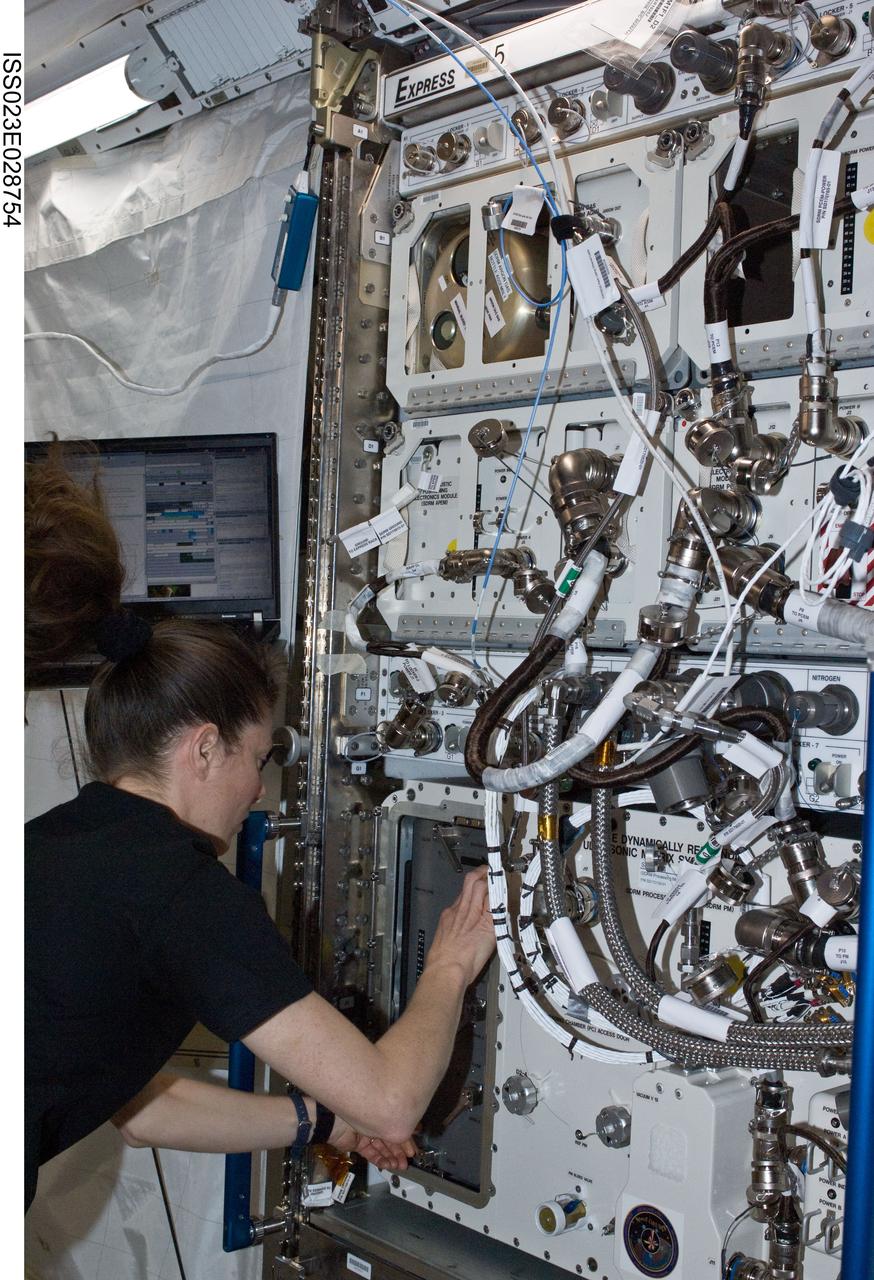
ISS023-E-028754 (28 April 2010) --- NASA astronaut Tracy Caldwell Dyson, Expedition 23 flight engineer, services the SpaceDRUMS/Space Dynamically Responding Ultrasonic Matrix (SDRM) hardware in the Kibo laboratory of the International Space Station.
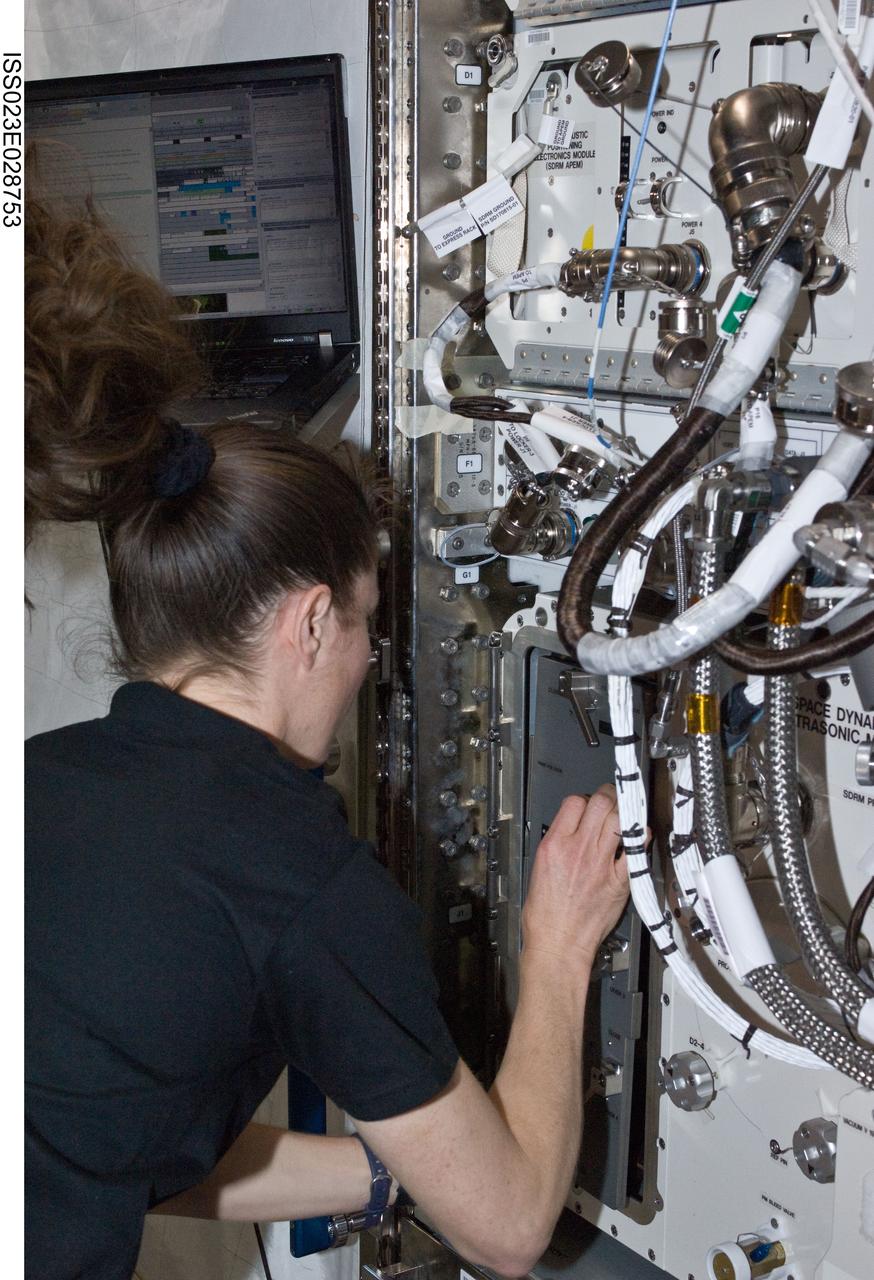
ISS023-E-028753 (28 April 2010) --- NASA astronaut Tracy Caldwell Dyson, Expedition 23 flight engineer, services the SpaceDRUMS/Space Dynamically Responding Ultrasonic Matrix (SDRM) hardware in the Kibo laboratory of the International Space Station.
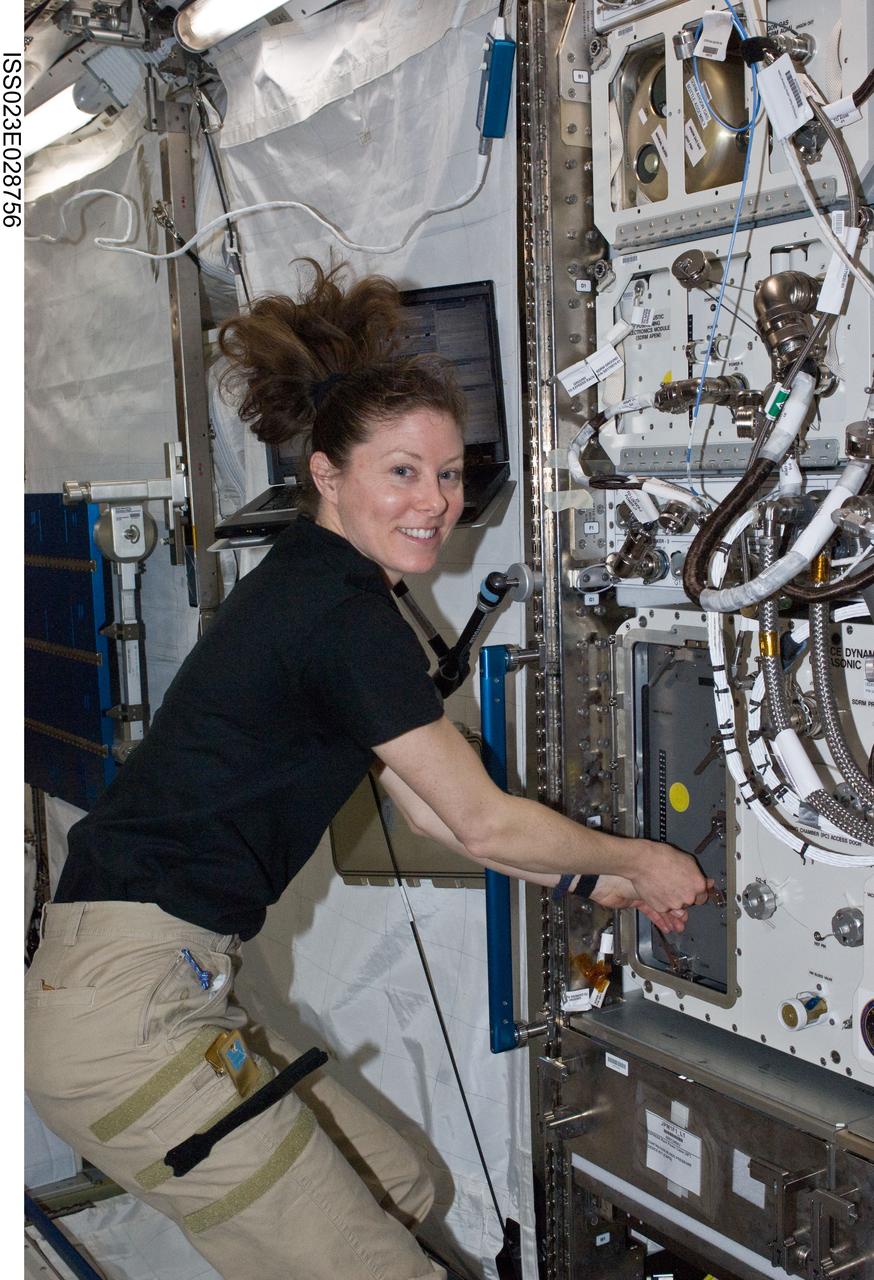
ISS023-E-028756 (28 April 2010) --- NASA astronaut Tracy Caldwell Dyson, Expedition 23 flight engineer, services the SpaceDRUMS/Space Dynamically Responding Ultrasonic Matrix (SDRM) hardware in the Kibo laboratory of the International Space Station.

jsc2022e004237 (11/8/2021) --- A Preflight image of the Acoustics to Manipulate Fluids investigation, the acoustic tweezer apparatus is installed inside the Microgravity Science Glovebox Engineering Unit. The sample chamber, shown in the upper the right side, is where fluid droplets are injected via a septum located on the right side and manipulated by an ultrasonic transducer located on the left side. Image courtesy of Dr. Robert Lirette.
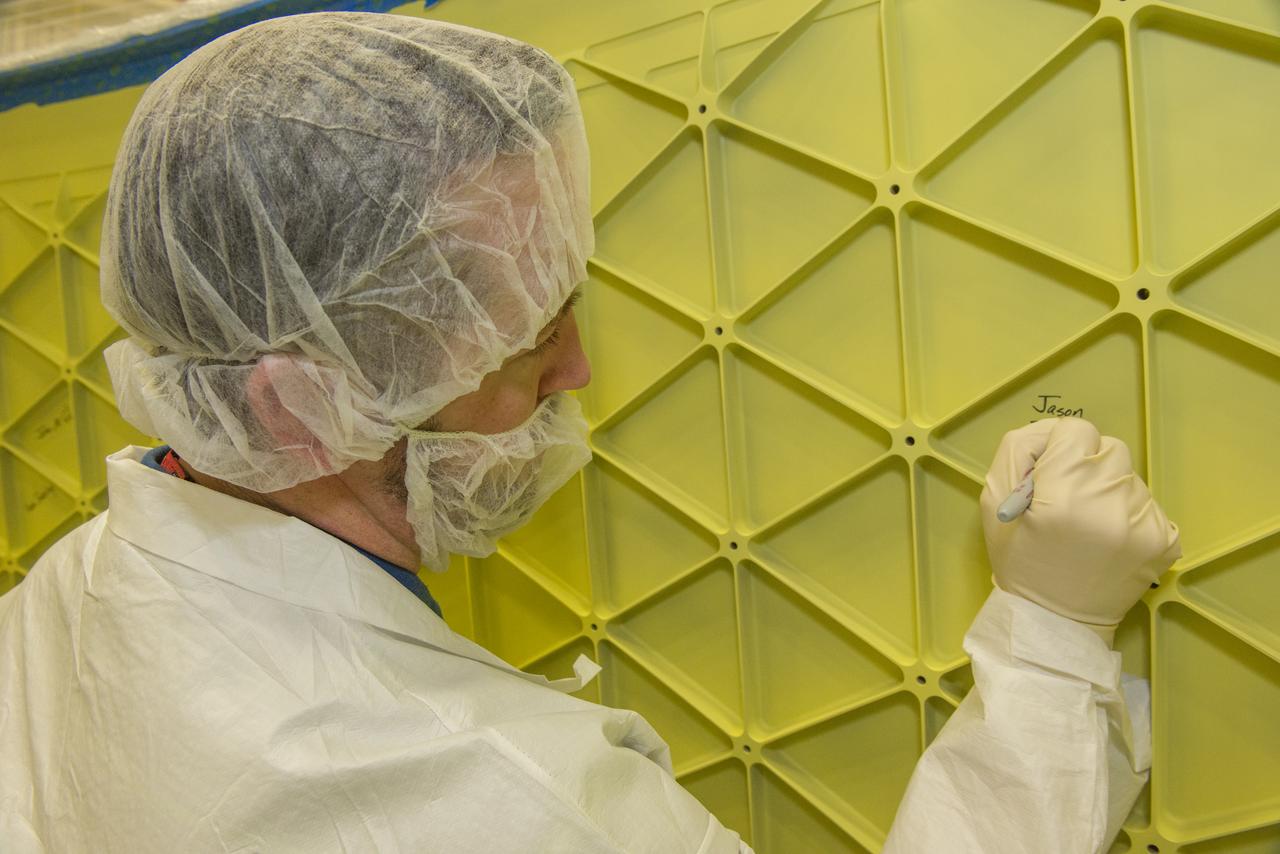
JASON ELDRIDGE, AN ERC INCORPORATED EMPLOYEE SUPPORTING THE MATERIALS & PROCESSES LABORATORY AT NASA'S MARSHALL SPACE FLIGHT CENTER, SIGNS HIS NAME ON THE INTERIOR OF THE ADAPTER THAT WILL CONNECT THE ORION SPACECRAFT TO A UNITED LAUNCH ALLIANCE DELTA IV ROCKET FOR EXPLORATION FLIGHT TEST (EFT)-1. MARSHALL CENTER TEAM MEMBERS WHO WERE INVOLVED IN THE DESIGN, CONSTRUCTION AND TESTING OF THE ADAPTER HAD THE OPPORTUNITY TO AUTOGRAPH IT BEFORE THE HARDWARE IS SHIPPED TO NASA'S KENNEDY SPACE CENTER IN FEBRUARY. ELDRIDGE WAS ON A TEAM THAT PERFORMED ULTRASONIC INSPECTIONS ON THE ADAPTER'S WELDS -- ENSURING THEY ARE STRUCTURALLY SOUND. EFT-1, SCHEDULED FOR 2014, WILL PROVIDE EARLY EXPERIENCE FOR NASA SPACE LAUNCH SYSTEM (SLS) HARDWARE AHEAD OF THE ROCKET'S FIRST FLIGHT IN 2017.
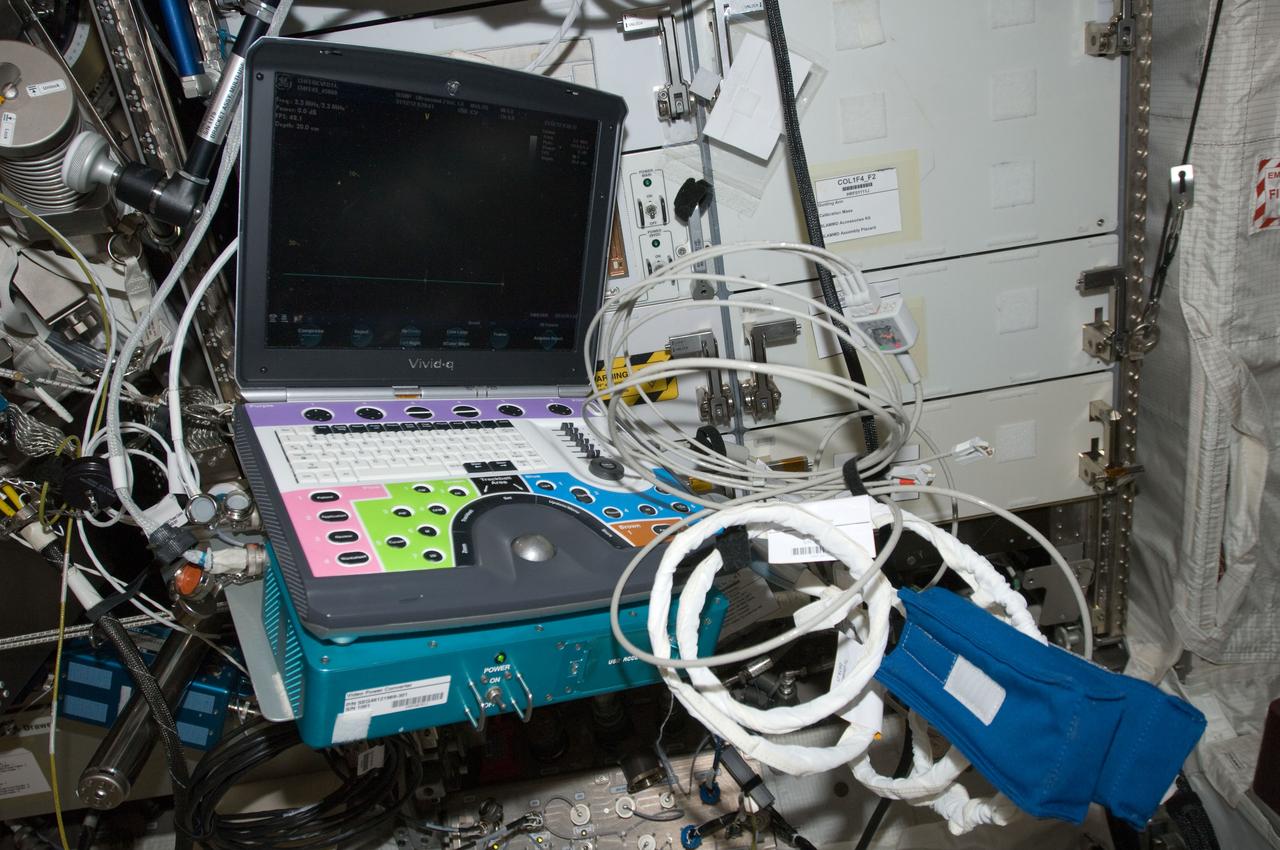
View of Integrated Cardiovascular (ICV) Echo Ultrasound Scan,in the Columbus module. ICV aims to quantify the extent,time course and clinical significance of cardiac atrophy (decrease in the size of the heart muscle) in space. Photo was taken during Expedition 34.
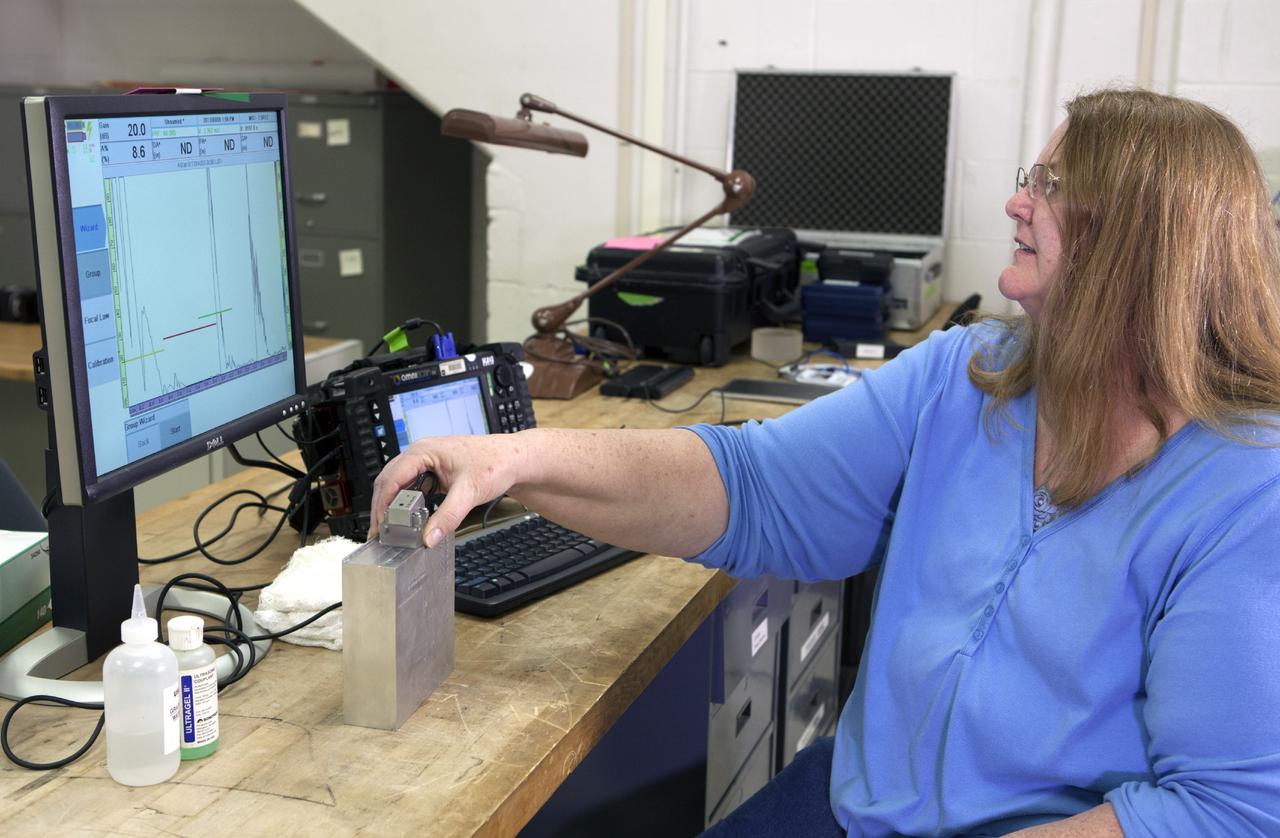
CAPE CANAVERAL, Fla. – In Hangar N at Cape Canaveral Air Force Station, PaR Systems, Inc. operations engineer Lu Bell conducts a phase array ultrasonic inspection. NASA's Kennedy Space Center in Florida recently established a partnership agreement with PaR Systems, Inc. of Shoreview, Minn., for operation of the Hangar N facility and its nondestructive testing and evaluation equipment. As the spaceport transitions from a historically government-only launch facility to a multi-user spaceport for both federal and commercial customers, partnerships between the space agency and other organizations will be a key element in that effort. Hangar N is located at Cape Canaveral Air Force Station adjacent to Kennedy and houses a unique inventory of test and evaluation equipment and the capability for current and future mission spaceflight support. Photo credit: NASA/ Dimitri Gerondidakis
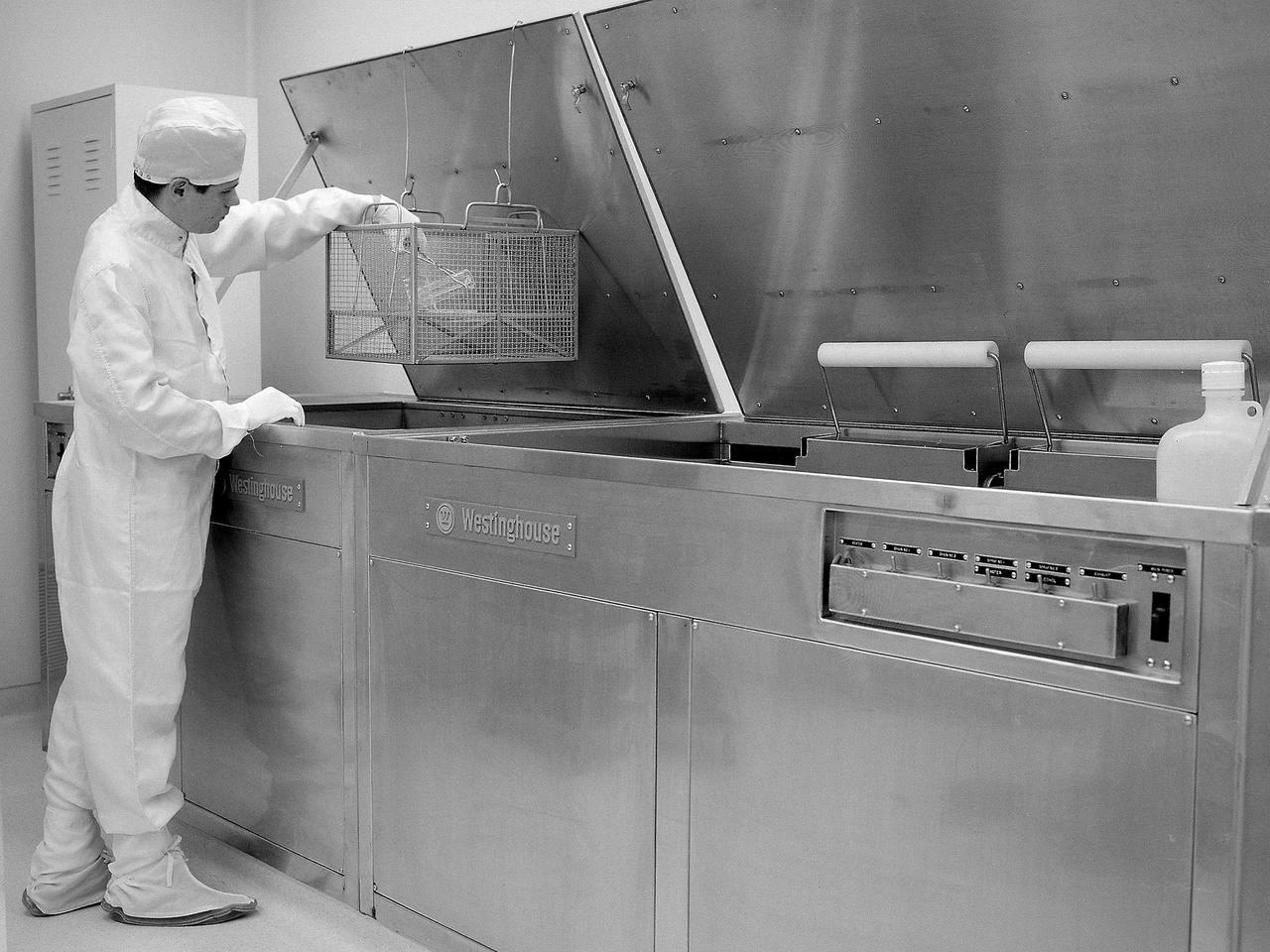
A technician prepares a test sample in the Zero Gravity Research Facility clean room at the National Aeronautics and Space Administration (NASA) Lewis Research Center. The Zero Gravity Research Facility contained a drop tower which provided five seconds of microgravity during freefall in its 450-foot deep vacuum chamber. The facility has been used for a variety of studies relating to the behavior of fluids and flames in microgravity. During normal operations, a cylindrical 3-foot diameter and 11-foot long vehicle was used to house the experiments, instrumentation, and high speed cameras. The 4.5-foot long and 1.5-foot wide rectangular vehicle, seen in this photograph, was used less frequently. A 3-foot diameter orb was used for the special ten-second drops in which the package was pneumatically shot to the top of the tower then dropped. The facility also contained a control room, shop offices, tool and equipment rooms, and this clean room. The 242.5-foot long and 19.5-foot wide clean room was equipped with specialized cleaning equipment. In the 1960s the room was rated as a class 10,000 clean room, but I was capable of meeting the class 100 requirements. The room included a fume hood, ultrasonic cleaner, and a laminar flow station which operated as a class 100 environment. The environment in the clean room was maintained at 71° F and a relative humidity of 45- percent.