
AS6-02-1455 (4 April 1968) --- Texas is photographed from the Apollo 6 (Spacecraft 020/Saturn 502) unmanned space mission. Seen in this photograph are Midland, Brownfield, Big Spring, J. B. Thomas Lake, headwaters of Colorado and Brazos Rivers, and the west Texas gas and oil fields.

AS04-01-750 (9 Nov. 1967) --- Atlantic Ocean, Antarctica, looking west, as photographed from the Earth-orbital Apollo 4 (Spacecraft 017/Saturn 501) unmanned space mission. This picture was taken when the Spacecraft 017 and the Saturn S-IVB (third) stage was orbiting Earth at an altitude of 8,628 nautical miles.

AS06-02-1462 (4 April 1968) --- View of the Dallas-Fort Worth, Texas, area as photographed from the unmanned Apollo 6 (Spacecraft 020/Saturn 502) space mission. The highway and expressway system in and around both cities is clearly visible. North is toward left side of picture. Grapevine Reservoir and Garza-Little Elm Reservoir are to the north-west of Dallas. The city of Denton can be seen in left center of picture at conjunction of highways leading to both Fort Worth and Dallas. The Brazos River is in lower right corner. This photograph was made three hours and nine minutes after liftoff of the Apollo 6 space flight.
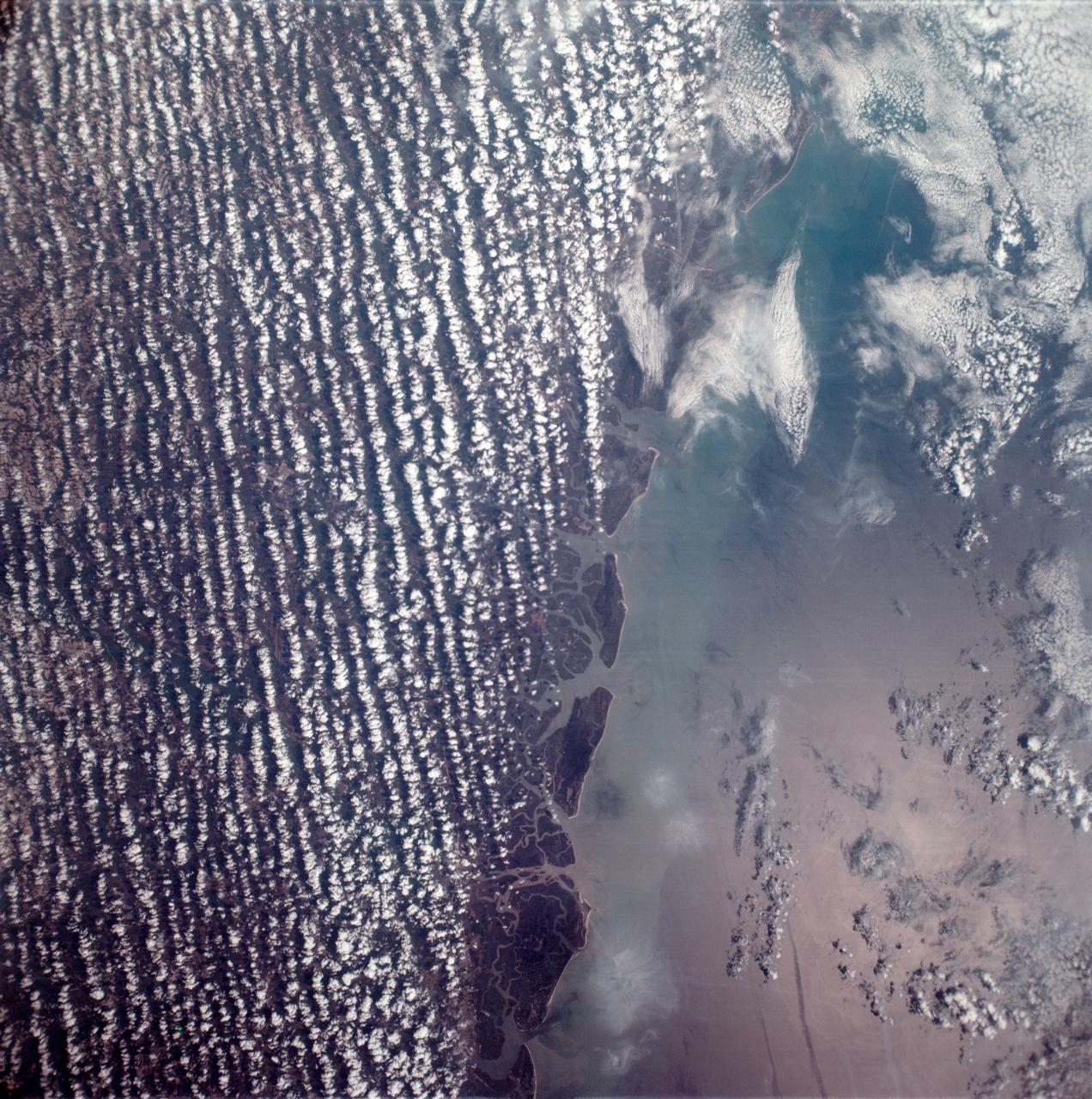
AS6-02-1485 (4 April 1968) --- View of the east coast of the United States as photographed from the National Aeronautics and Space Administration's unmanned Apollo 6 (Spacecraft 020/Saturn 502) space mission. This photograph was taken during a pass over Georgia, between Savannah and Brunswick. Altitude of the spacecraft was 100 nautical miles. Numerous jet aircraft contrails can be seen over the Atlantic Ocean. Sun glint on the surface of the ocean permits oceanographers to determine conditions of the water. This photograph was taken April 4, 1968, three hours and 14 minutes after liftoff, using Eastman Kodak SO-121 high resolution aerial Ektachrome film (exposure setting f/5.6 at 1/500 second), in a J. A. Maurer model 220G camera.
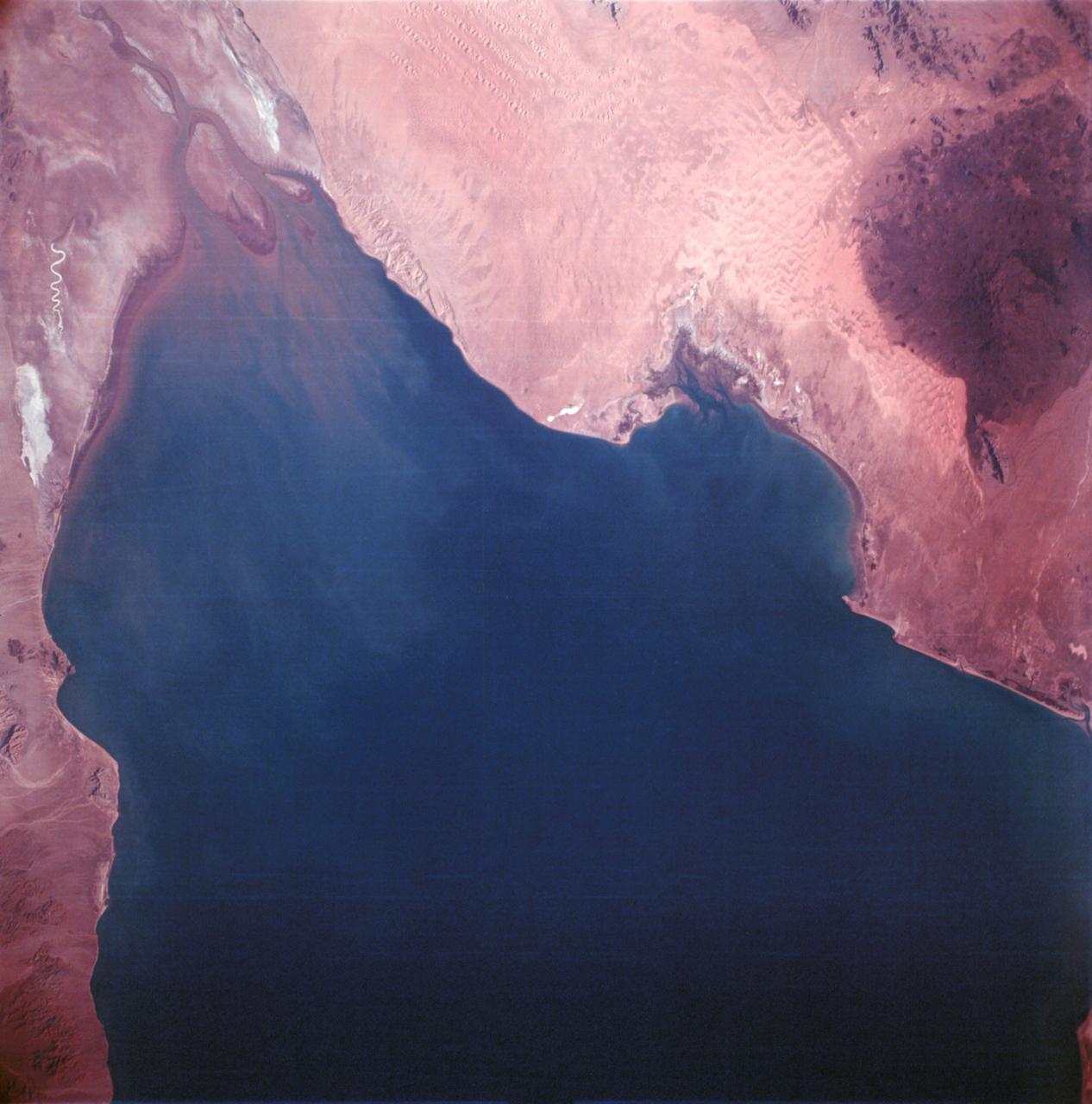
AS06-02-1436 (4 April 1968) --- View of the mouth of the Colorado River and the Gulf of California in northwestern Mexico as photographed from the unmanned Apollo 6 (Spacecraft 020/Saturn 502) space mission. Altitude of the spacecraft at the time picture was taken was 120 nautical miles. NORTH IS TOWARD LEFT SIDE OF PICTURE. At bottom edge of photograph is Baja California. In the upper left corner is the Mexican state of Sonora showing the Sonoran Desert and the Pinacate Mountains. This photograph was made three hours and seven minutes after liftoff using Eastman Kodak SO-121 high resolution aerial Ektachrome film (exposure setting was f/5.6 at 1/500 second) in a J.A. Maurer model 2200 camera.

S68-26989 (4 April 1968) --- The Apollo 6 Spacecraft 020 Command Module is hoisted aboard the USS Okinawa.
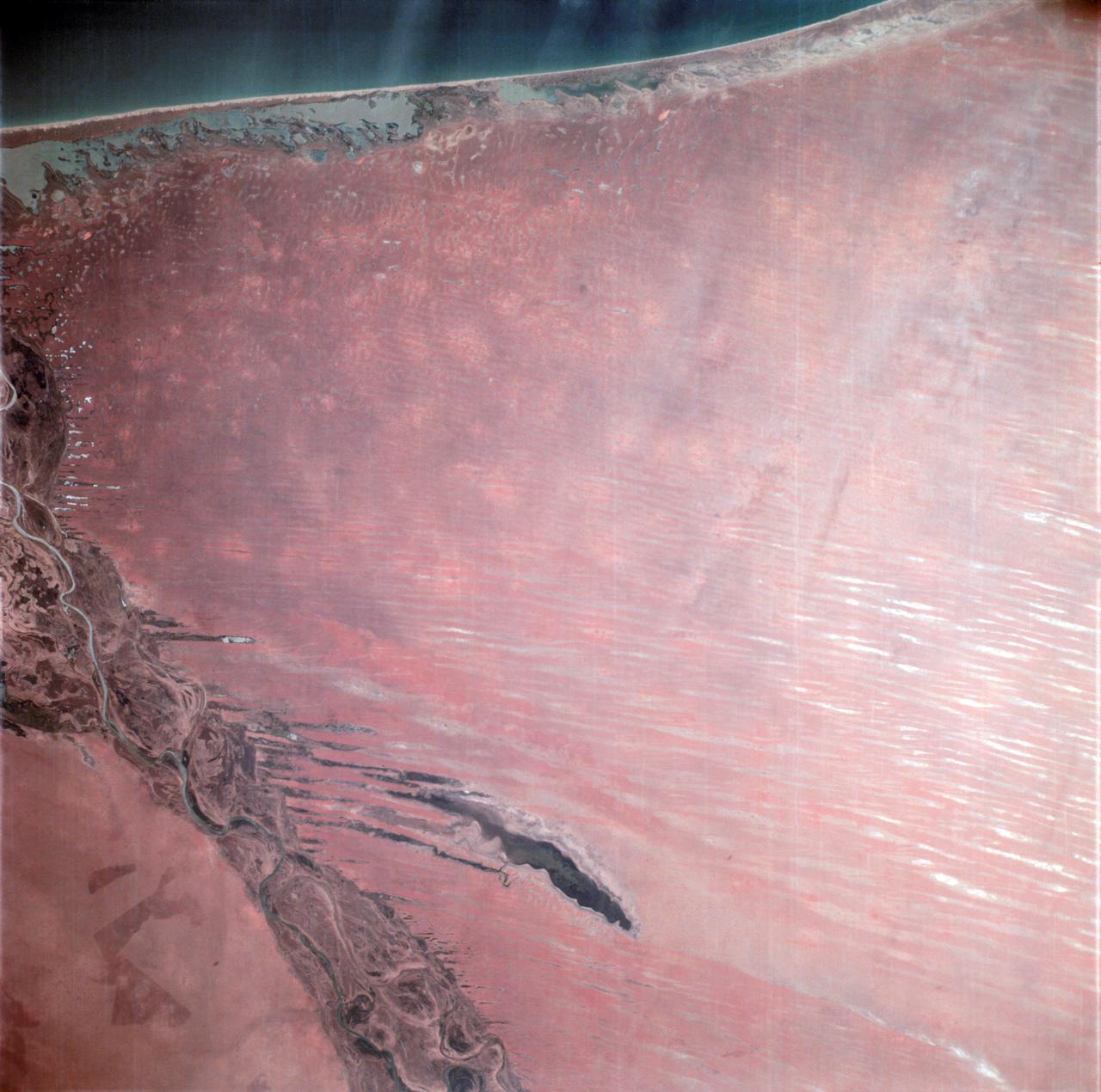
AS06-02-938 (6 April 1968) --- During the second revolution of the National Aeronautics and Space Administration's Apollo 6 spacecraft, this photograph of Senegal and Mauritania was taken at an altitude of 125 nautical miles. The predominant feature is the valley of the Senegal River (flowing to lower right). Lake Rkiz is to the left of the river in Mauritania. The Trarza Scrub Hills, a large area of elongated, fixed dunes, is in the lower left of the print. The land area seen in this photo is approximately 10,000 square miles or about the size of the state of Maryland. The photo was made one hour and fifty minutes after liftoff using a J.A. Maurer model 220G camera with Eastman Kodak SO-121 high resolution aerial Ektachrome film (exposure setting of f: 5.6 at 1/500 sec.).
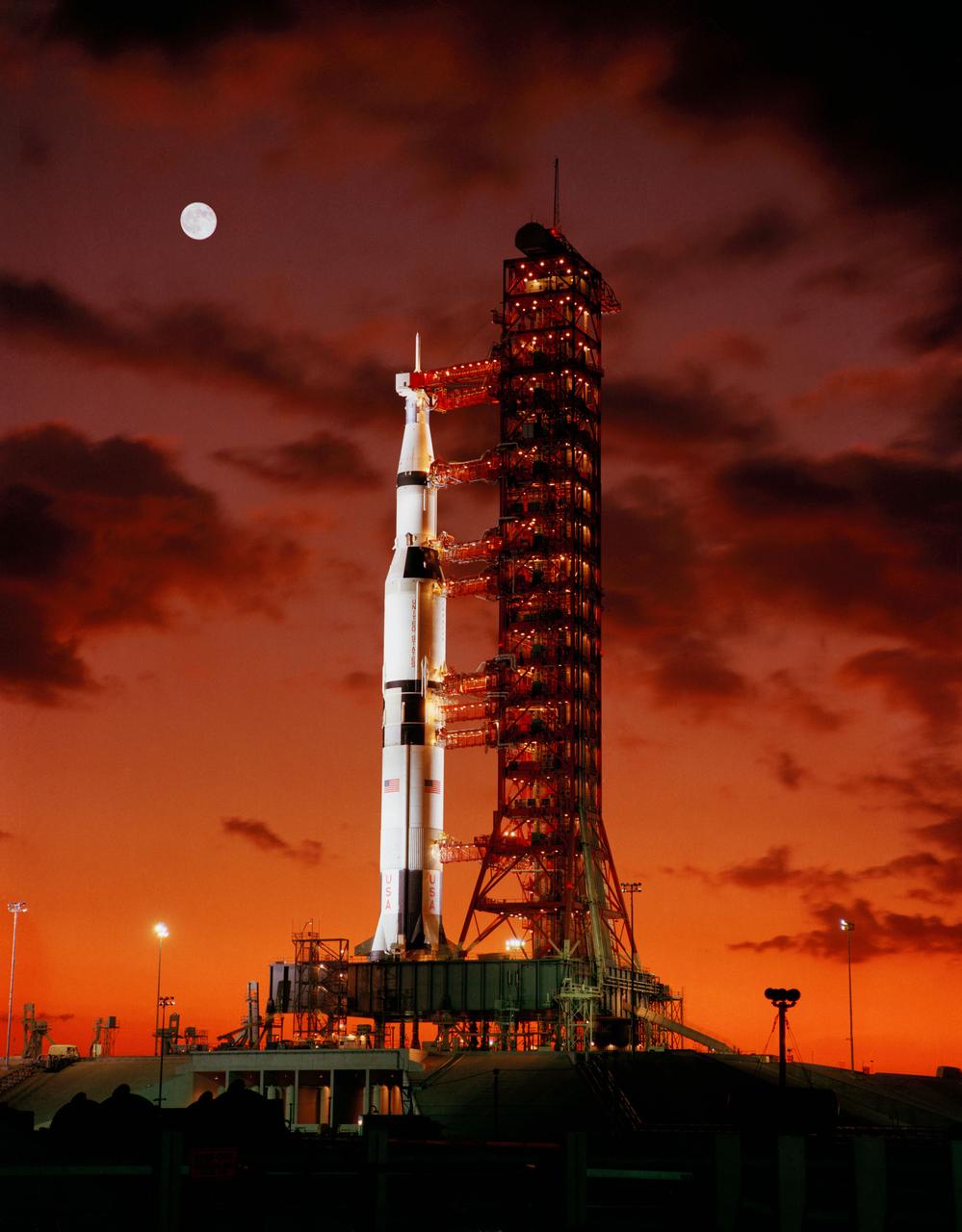
Early morning view of Pad A, Launch Complex 39, Kennedy Space Center, showing Apollo 4 (Spacecraft 017/Saturn 501) unmanned, earth-orbital space mission ready for launch, with a full moon in the upper left part of the image. The 363-foot tall Apollo/Saturn V space vehicle was launched at 7:00:01 AM (EST), November 9, 1967.
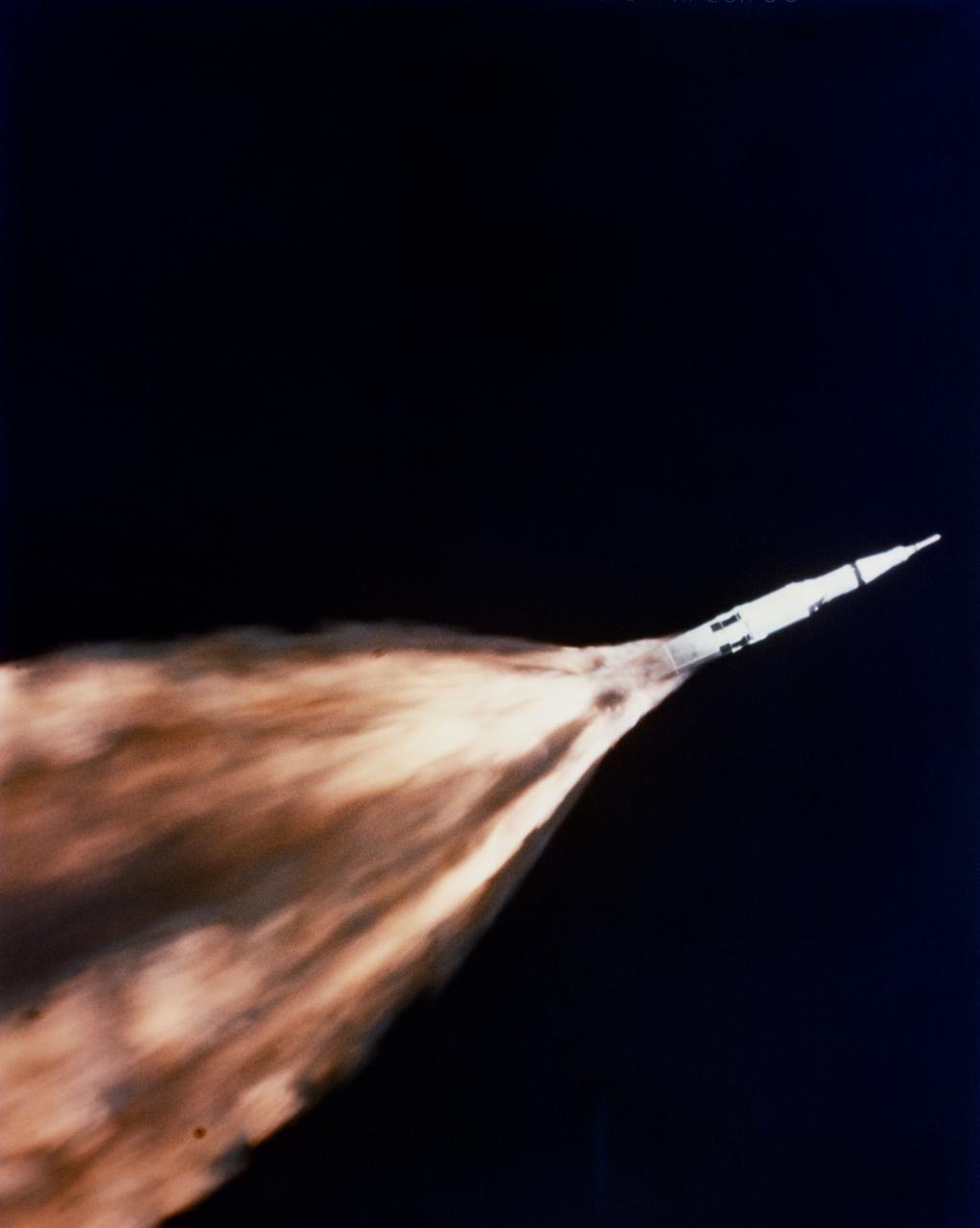
S68-27365 (4 April 1968) --- The five F-1 engines of the huge Apollo/Saturn V space vehicle's first (S-IC) stage leave a gigantic trail of flame in the sky above the Kennedy Space Center seconds after liftoff. The launch of the Apollo 6 (Spacecraft 020/Saturn 502) unmanned space mission occurred at 07:00:01.5 (EST), April 4, 1968. This view of the Apollo 6 launch was taken from a chase plane.

S68-27364 (4 April 1968) --- The Apollo 6 (Spacecraft 020/Saturn 502) unmanned space mission was launched from Pad A, Launch Complex 39, Kennedy Space Center (KSC), Florida. The liftoff of the huge Apollo/Saturn V space vehicle occurred at 7:00:01.5 a.m. (EST), April 4, 1968.

AS04-01-410 (9 Nov. 1967) --- Coastal Brazil, Atlantic Ocean, West Africa, Sahara, Antarctica, looking west, as photographed from the Apollo 4 (Spacecraft 017/Saturn 501) unmanned, Earth-orbital space mission. This picture was taken when the Spacecraft 017 and Saturn S-IVB (third) stage were orbiting Earth at an altitude of 9,745 nautical miles.
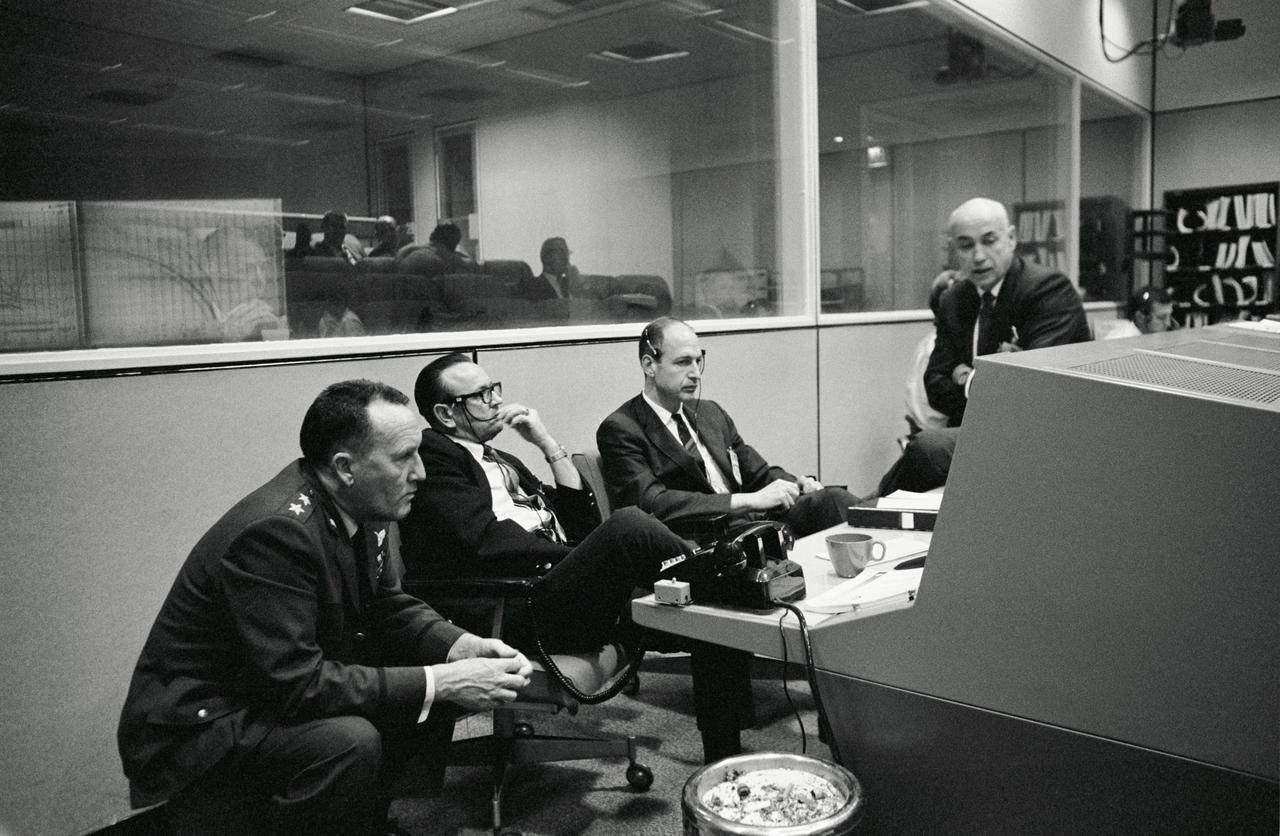
S68-20986 (4 April 1968) --- Scene at the flight operations director's console in the Mission Control Center, Building 30, during the Apollo 6 (Spacecraft 020/Saturn 520) unmanned space flight. Left to right, are Air Force Maj. Gen. Vincent G. Huston, DOD Manager, Manned Space Flight Operations, Andrews Air Force Base, Washington, D.C.; Dr. Christopher C. Kraft Jr., MSC director of flight operations; George M. Low, manager, MSC Apollo Spacecraft Program Office; and Dr. Robert R. Gilruth, MSC Director.

AS04-01-580 (9 Nov. 1967) --- Earth as viewed from 10,000 miles. In 1969, the Apollo 4 (Spacecraft 017/Saturn 501) unmanned test flight made a great ellipse around Earth as a test of the translunar motors and of the high speed entry required of a manned flight returning from the moon. A 70mm camera was programmed to look out a window toward Earth, and take a series of photographs from "high apogee". Coastal Brazil, Atlantic Ocean, West Africa, Antarctica, looking west. This photograph was made when the Apollo 4 spacecraft, still attached to the S-IVB (third) stage, was orbiting Earth at an altitude of 9,544 miles.
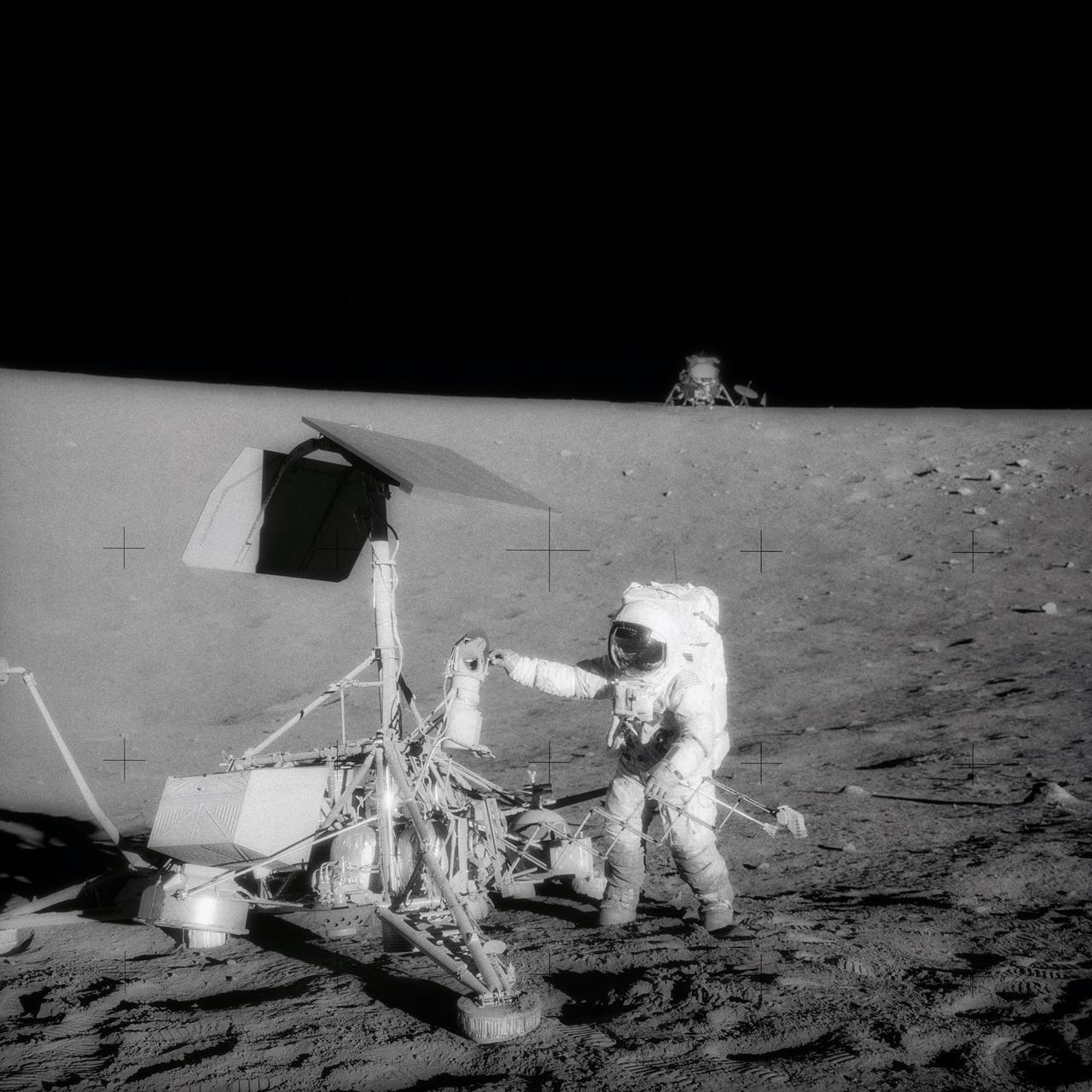
AS12-48-7133 (20 Nov. 1969) --- This unusual photograph, taken during the second Apollo 12 extravehicular activity (EVA), shows two U.S. spacecraft on the surface of the moon. The Apollo 12 Lunar Module (LM) is in the background. The unmanned Surveyor 3 spacecraft is in the foreground. The Apollo 12 LM, with astronauts Charles Conrad Jr. and Alan L. Bean aboard, landed about 600 feet from Surveyor 3 in the Ocean of Storms. The television camera and several other pieces were taken from Surveyor 3 and brought back to Earth for scientific examination. Here, Conrad examines the Surveyor's TV camera prior to detaching it. Astronaut Richard F. Gordon Jr. remained with the Apollo 12 Command and Service Modules (CSM) in lunar orbit while Conrad and Bean descended in the LM to explore the moon. Surveyor 3 soft-landed on the moon on April 19, 1967.
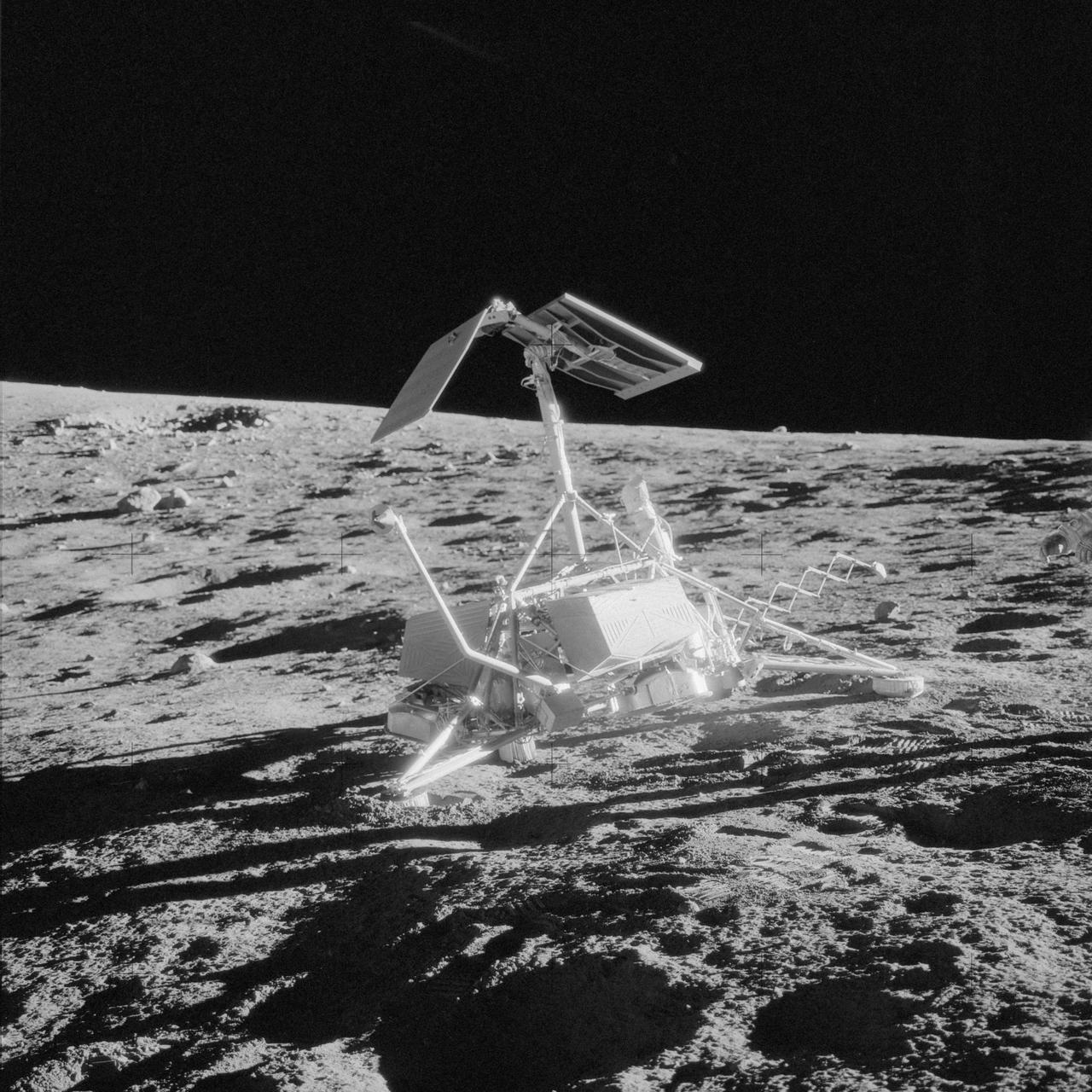
AS12-48-7121 (20 Nov. 1969) --- An excellent view of the unmanned Surveyor 3 spacecraft which was photographed during the Apollo 12 second extravehicular activity (EVA) on the surface of the moon. The Apollo 12 Lunar Module (LM), with astronauts Charles Conrad Jr., commander, and Alan L. Bean, lunar module pilot, aboard landed within 600 feet of Surveyor 3 in the Ocean of Storms. The television camera and several other pieces were taken from Surveyor 3 and brought back to Earth for scientific examination. Surveyor 3 landed on the side of this small crater in the Ocean of Storms on April 19, 1967. Astronaut Richard F. Gordon Jr., command module pilot, remained with the Apollo 12 Command and Service Modules (CSM) in lunar orbit while Conrad and Bean descended to explore the moon.
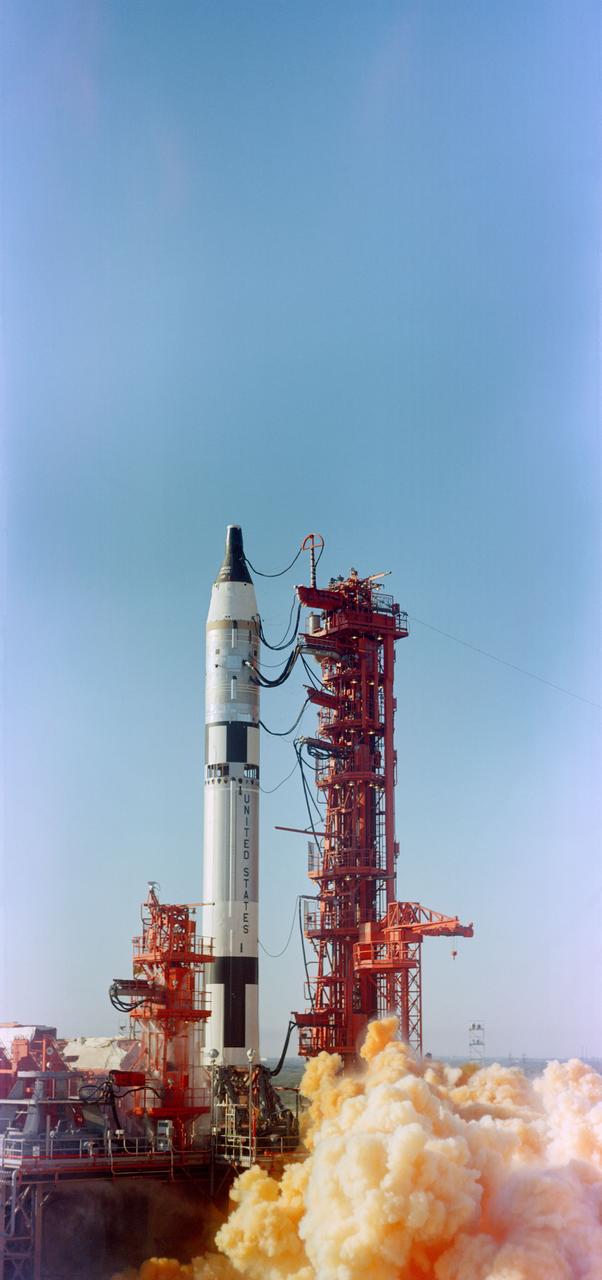
S65-14150 (19 January 1965) --- Launching of the unmanned Gemini 2 flight. The second Titan II Gemini Launch Vehicle (GLV-2) carried the unmanned, instrumented Gemini spacecraft (GT-2) for a suborbital shot preliminary to the first U.S. two-man Gemini mission.
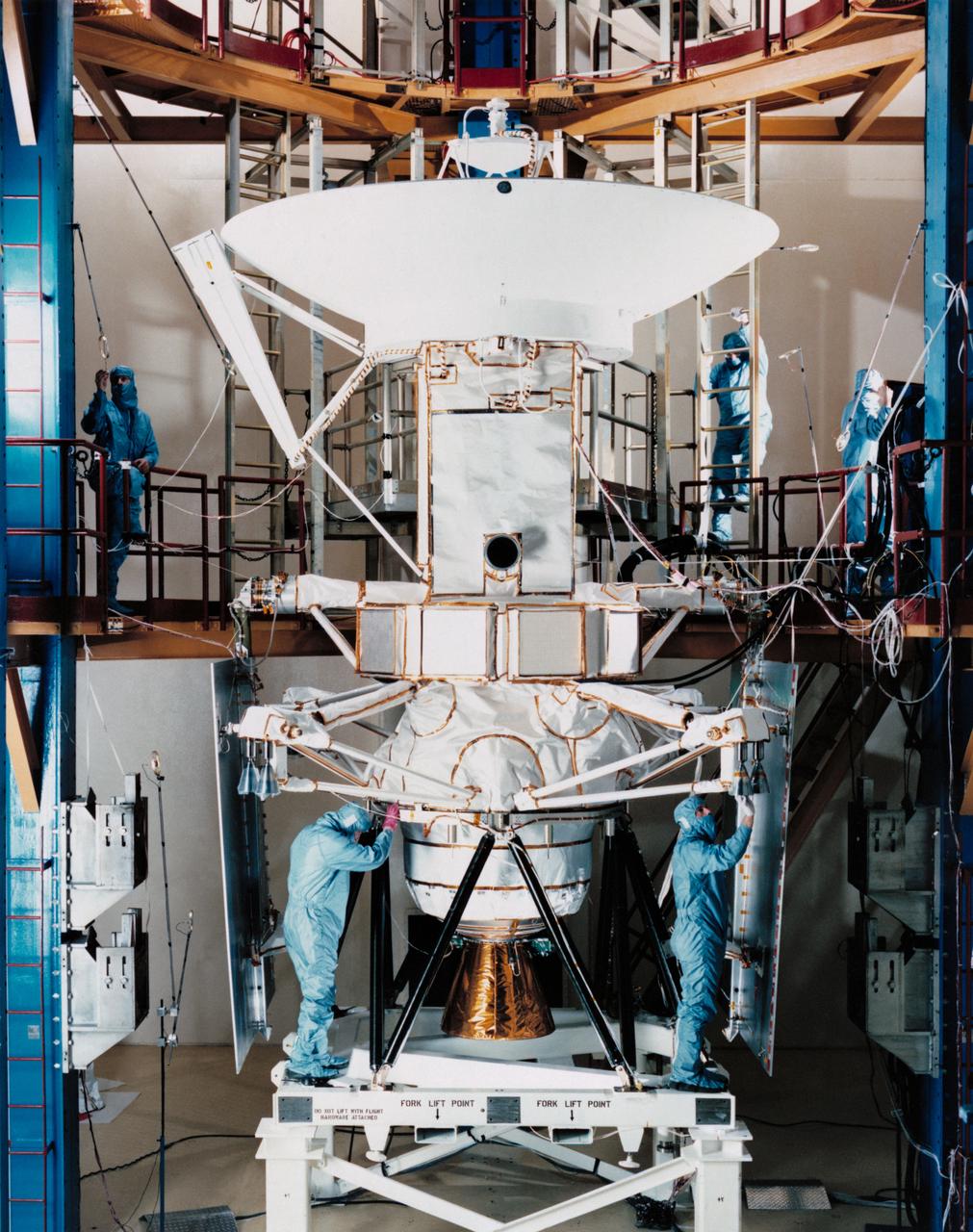
S88-50418 (August 1988) --- Engineers and technicians at the Martin Marietta plant in Denver, Colorado, prepare the spacecraft for its six-week long trip to the Kennedy Space Center (KSC). The spacecraft, destined for unprecedented studies of Venusian topographic features, will be mated to its upper stage while at KSC and later onloaded to Atlantis and eventually will be deployed by the crew of NASA's STS-30 mission in April 1989.
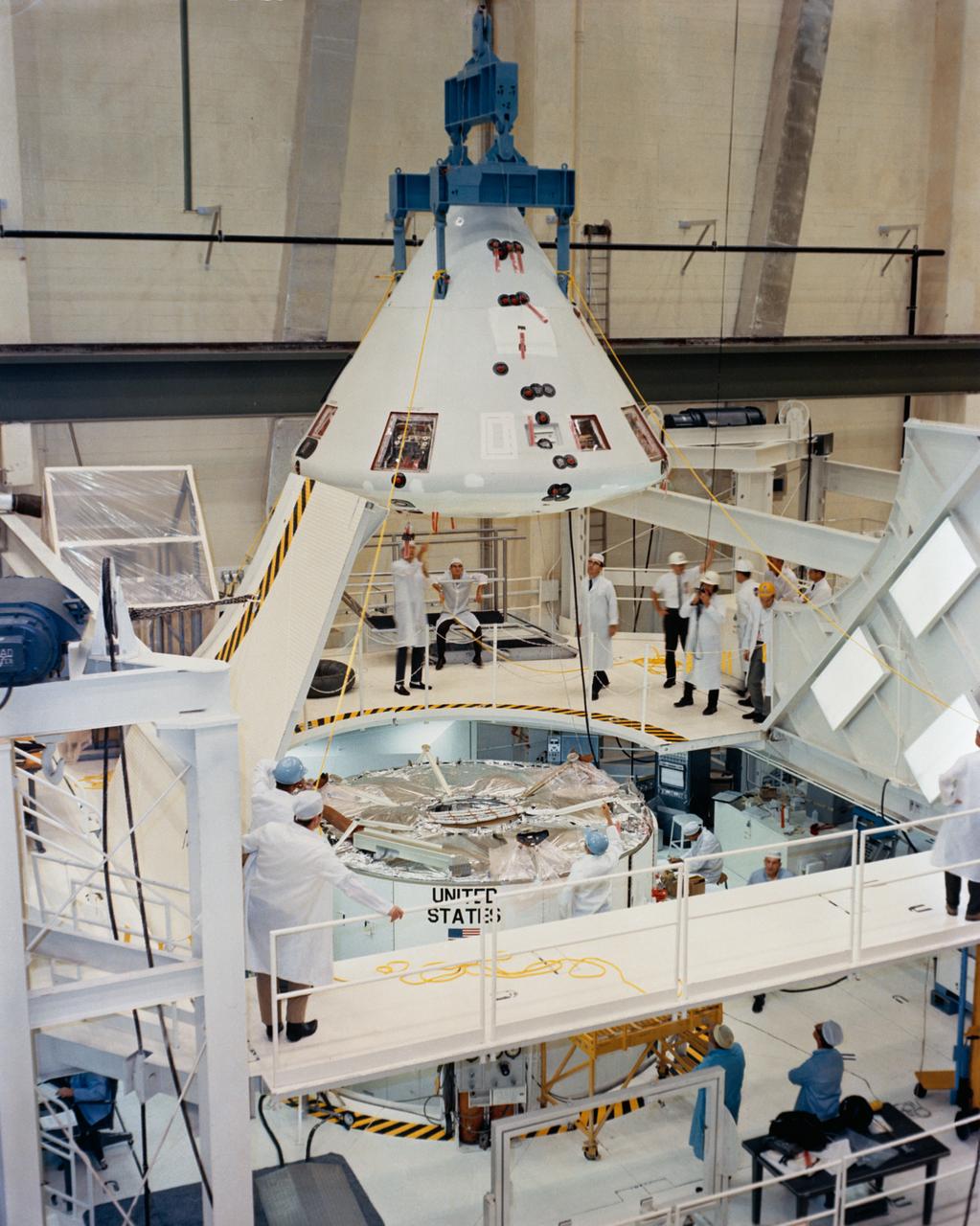
S68-17301 (6 Dec. 1967) --- Apollo Spacecraft 020 Command Module is hoisted into position for mating with Service Module in the Kennedy Space Center's Manned Spacecraft Operations Building. Spacecraft 020 will be flown on the Apollo 6 (Spacecraft 020/Saturn 502) unmanned, Earth-orbital space mission.
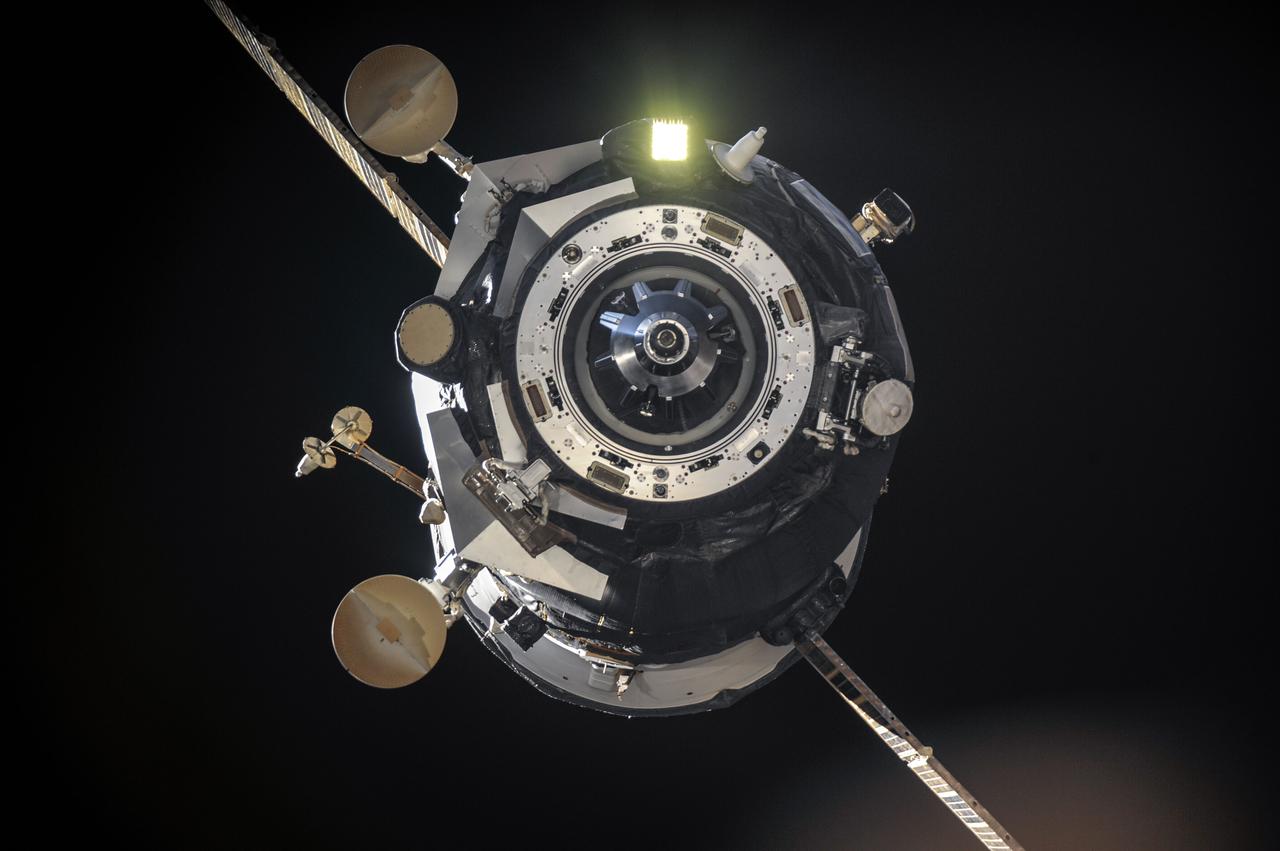
ISS035-E-019722 (15 April 2013) --- The Russian Progress 49 unmanned cargo carrier spacecraft leaves the aft port of the Zvezda service module aboard the International Space Station on April 15, 2013.
![Apollo spacecraft 017 leaves the Manned Spacecraft Operations Building at Kennedy Space Center on its way to the Vehicle Assembly Building where it will be mated with the Saturn 501 launch vehicle. The first flight of the Saturn V [AS-501], an unmanned mission, is scheduled for this fall.](https://images-assets.nasa.gov/image/KSC-67P-0259/KSC-67P-0259~medium.jpg)
Apollo spacecraft 017 leaves the Manned Spacecraft Operations Building at Kennedy Space Center on its way to the Vehicle Assembly Building where it will be mated with the Saturn 501 launch vehicle. The first flight of the Saturn V [AS-501], an unmanned mission, is scheduled for this fall.
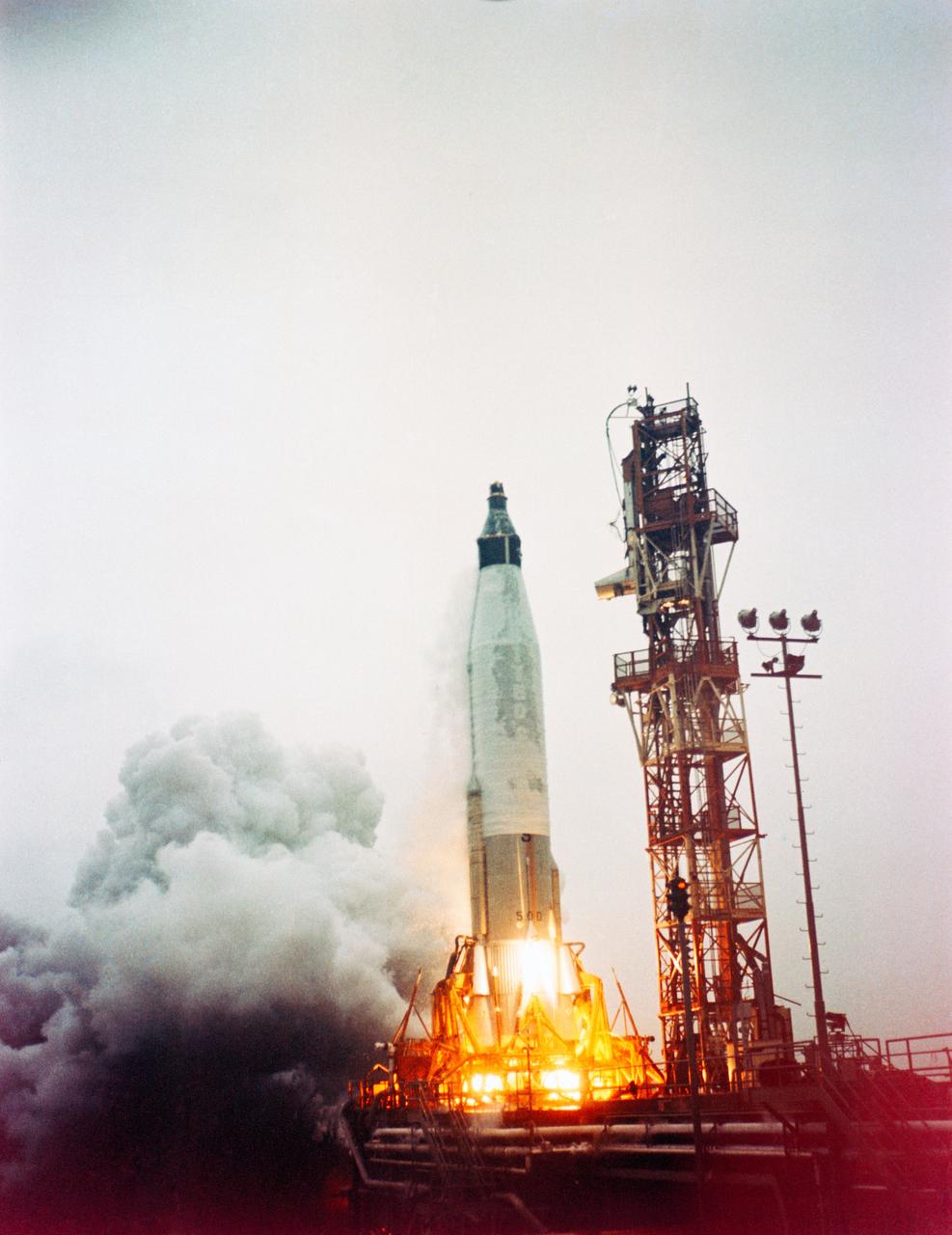
S61-01205 (29 July 1960) --- Launch of the unmanned Mercury Atlas-1 (MA-1) spacecraft for a suborbital test flight of the Mercury capsule reentry, which did not achieve orbit. The Atlas exploded 65 seconds after launch. Photo credit: NASA
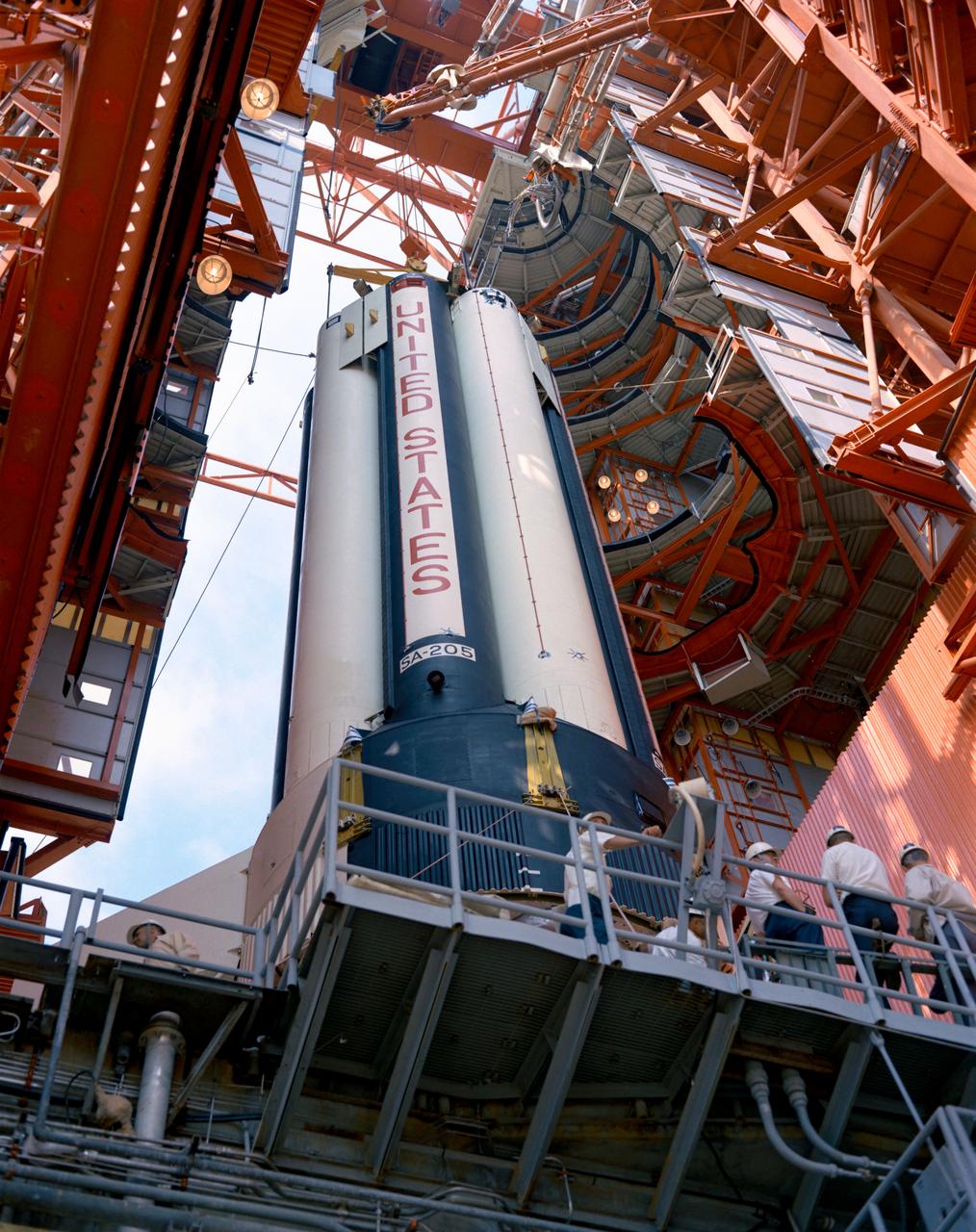
S68-29781 (22 April 1968) --- Low angle view at the Kennedy Space Center's Pad 34 showing the erection of the first stage of the Saturn 205 launch vehicle. The two-stage Saturn IB will be the launch vehicle for the first unmanned Apollo space mission, Apollo 7 (Spacecraft 101/Saturn 205).
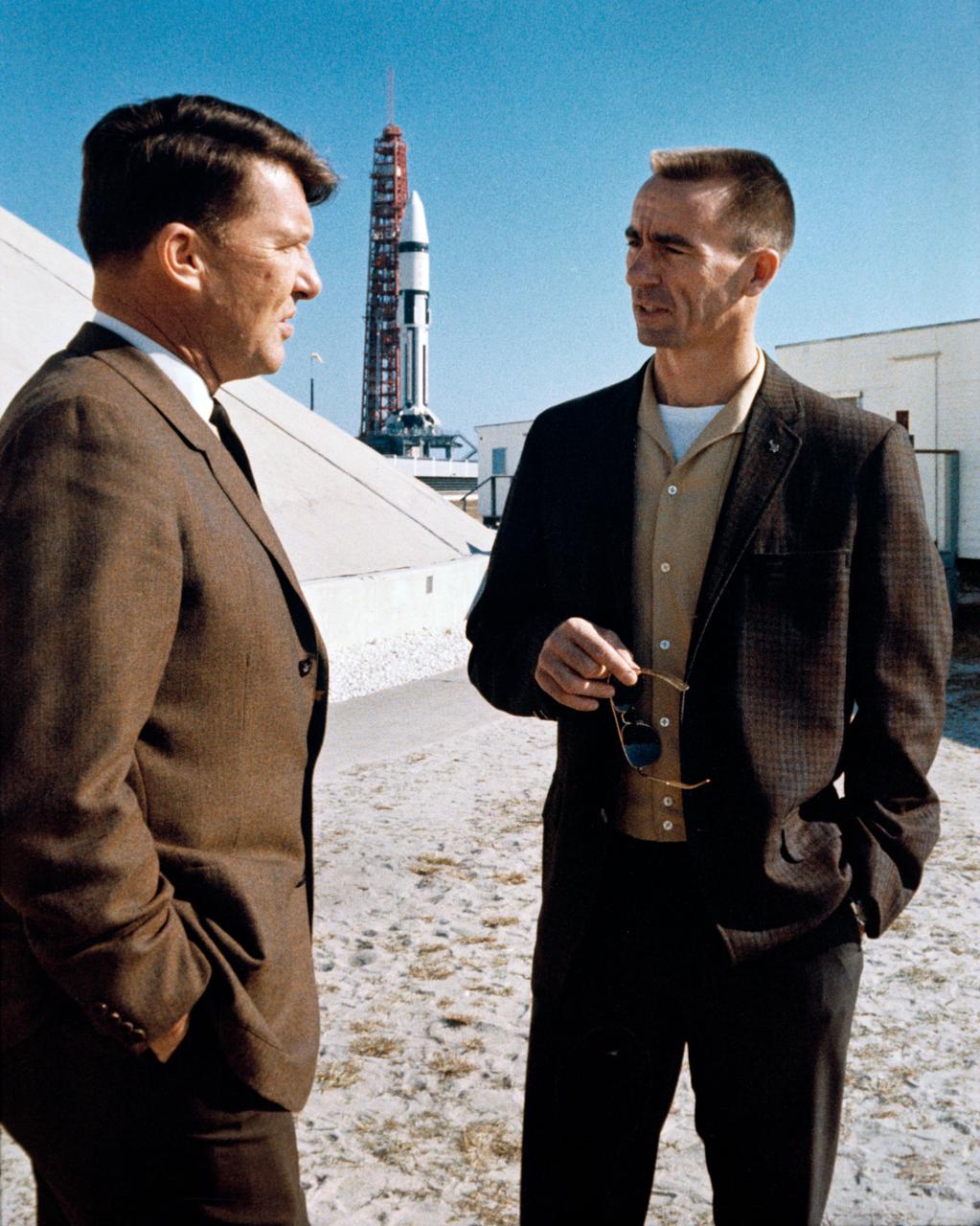
S68-18700 (22 Jan. 1968) --- Two prime crew members of the first manned Apollo space flight were present at Cape Kennedy for the launch of the Apollo V (LM-1/Saturn 204) unmanned space mission. On left is astronaut Walter M. Schirra Jr.; and on right is astronaut R. Walter Cunningham. In background is the Apollo V stack at Launch Complex 37 ready for launch.
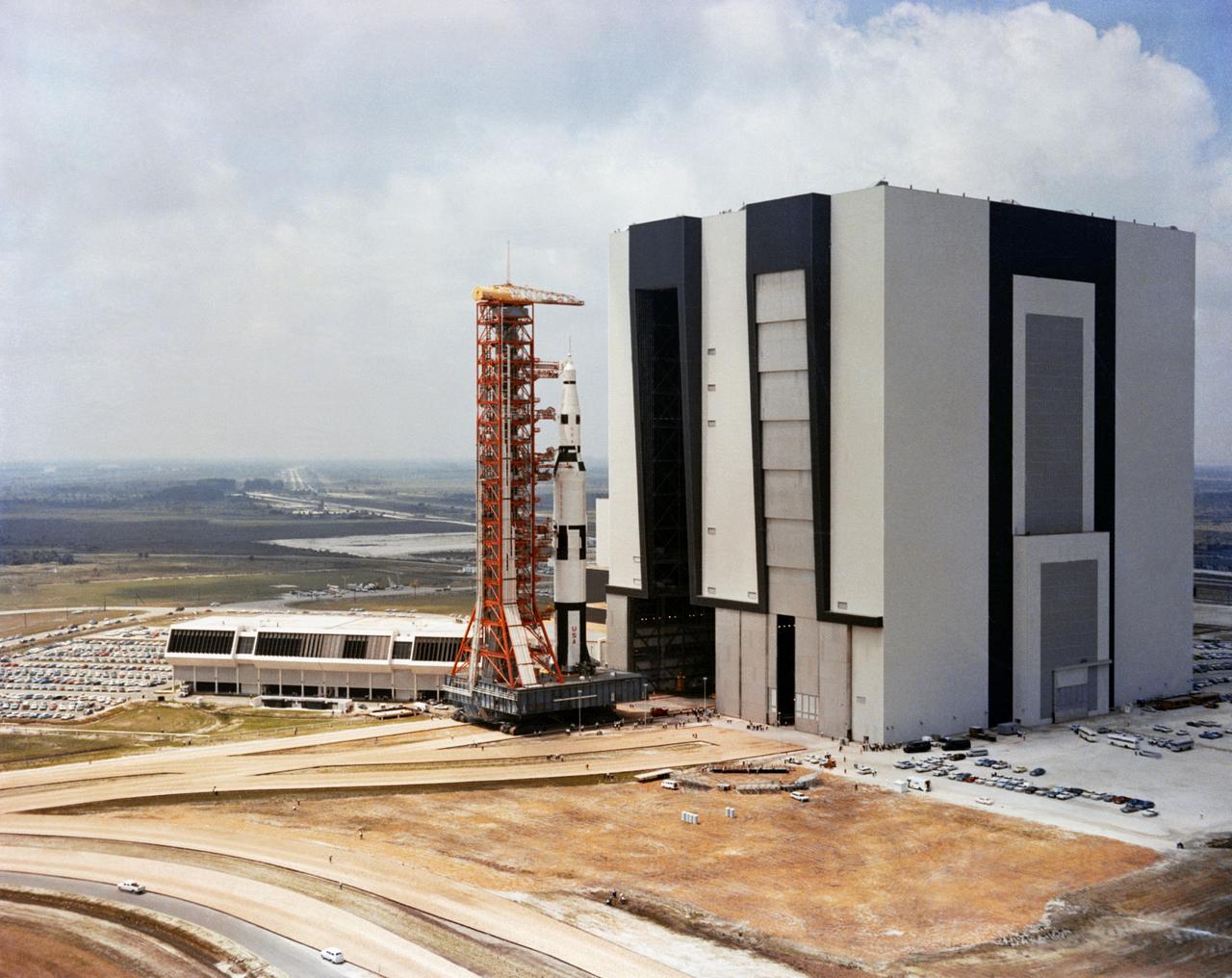
An Apollo/Saturn V facilities Test Vehicle and Launch Umbilical Tower (LUT) atop a crawler-transporter move from the Vehicle Assembly Building (VAB) on the way to Pad A. This test vehicle, designated the Apollo/Saturn 500-F, is being used to verify launch facilities, train launch crews, and develop test and checkout procedures.
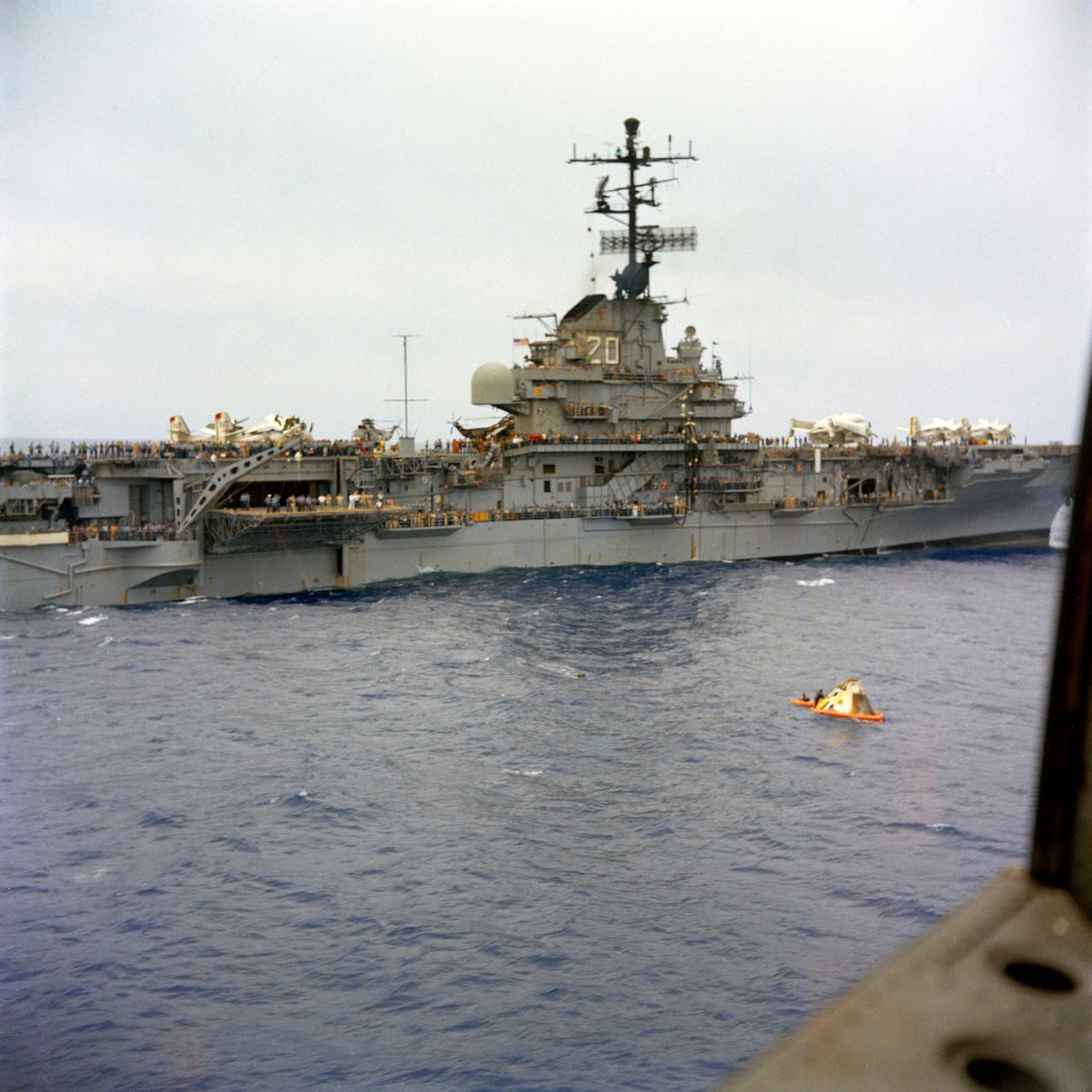
U.S.S. Bennington comes alongside the floating Apollo spacecraft 017 Command Module during recovery operations in the mid-Pacific Ocean. The Command Module splashed down at 3:37 p.m., November 9, 1967, 934 nautical miles northwest of Honolulu, Hawaii.
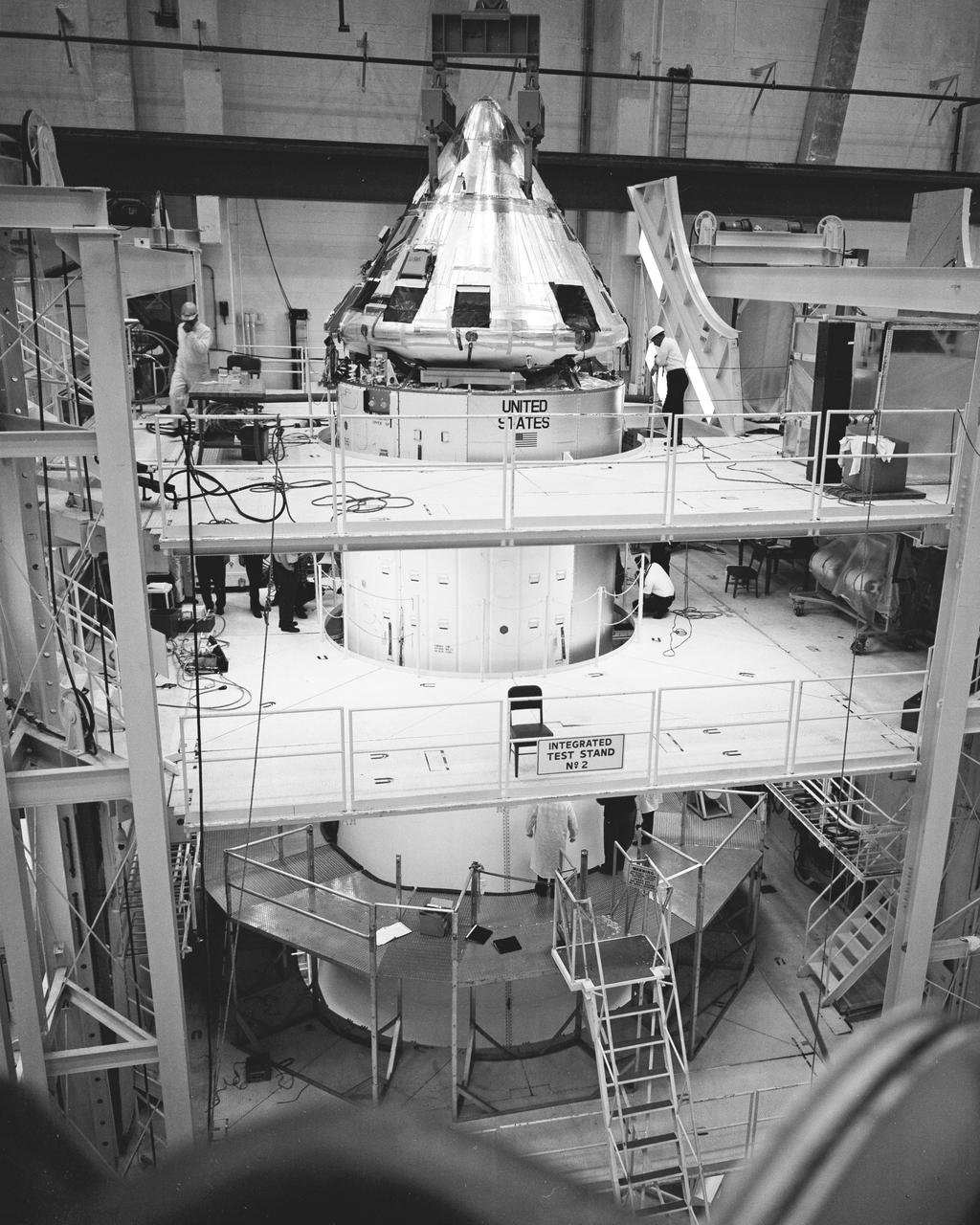
The Apollo/Saturn 501 spacecraft undergoes checkout in test stand within the Kennedy Space Center’s Manned Spacecraft Operations Building in preparation for the first flight of NASA’s Saturn V space vehicle in the second quarter of this year. The command module, top, was mated to the service module, and both were joined to the Spacecraft Lunar Module Adapter, the type that eventually will house a Lunar Module. The first Saturn V flight will be unmanned.
A/S 201 was launched from the Kennedy Space Center Launch Complex 34 at 11:12 a.m., 02/26/1966. The instrumented Apollo Command and Service Module, and, a spacecraft Lunar Excursion Module Adapter, was successfully launched on the unmanned suborbital mission by the Saturn 1B to check spacecraft launch vehicle mechanical compatibility and to test the spacecraft heat shield in a high-velocity re-entry mode. CAPE KENNEDY, FL

S67-49447 (9 Nov. 1967) --- Close-up view of the charred heat shield of the Apollo Spacecraft 017 Command Module aboard the USS Bennington. The damage was caused by the extreme heat of reentry. The carrier Bennington was the prime recovery ship for the Apollo 4 (Spacecraft 017/Saturn 501) unmanned, Earth-orbital space mission. Splashdown occurred at 3:37 p.m. (EST), Nov. 9, 1967, 934 nautical miles northwest of Honolulu, Hawaii.

ISS034-E-062076 (3 March 2013) --- The banana in the hands of Canadian astronaut Chris Hadfield serves as a definite tell-tale clue about the recent arrival of the SpaceX Dragon spacecraft to the International Space Station. Fresh fruit, along with other food and supplies, arrived aboard the unmanned spacecraft on March 3. Seen inside Node 1 or Unity, the Expedition 34 flight engineer and assigned Expedition 35 commander didn't take long to "examine" the merchandise. The hatch to the U.S. lab Destiny is in the background.
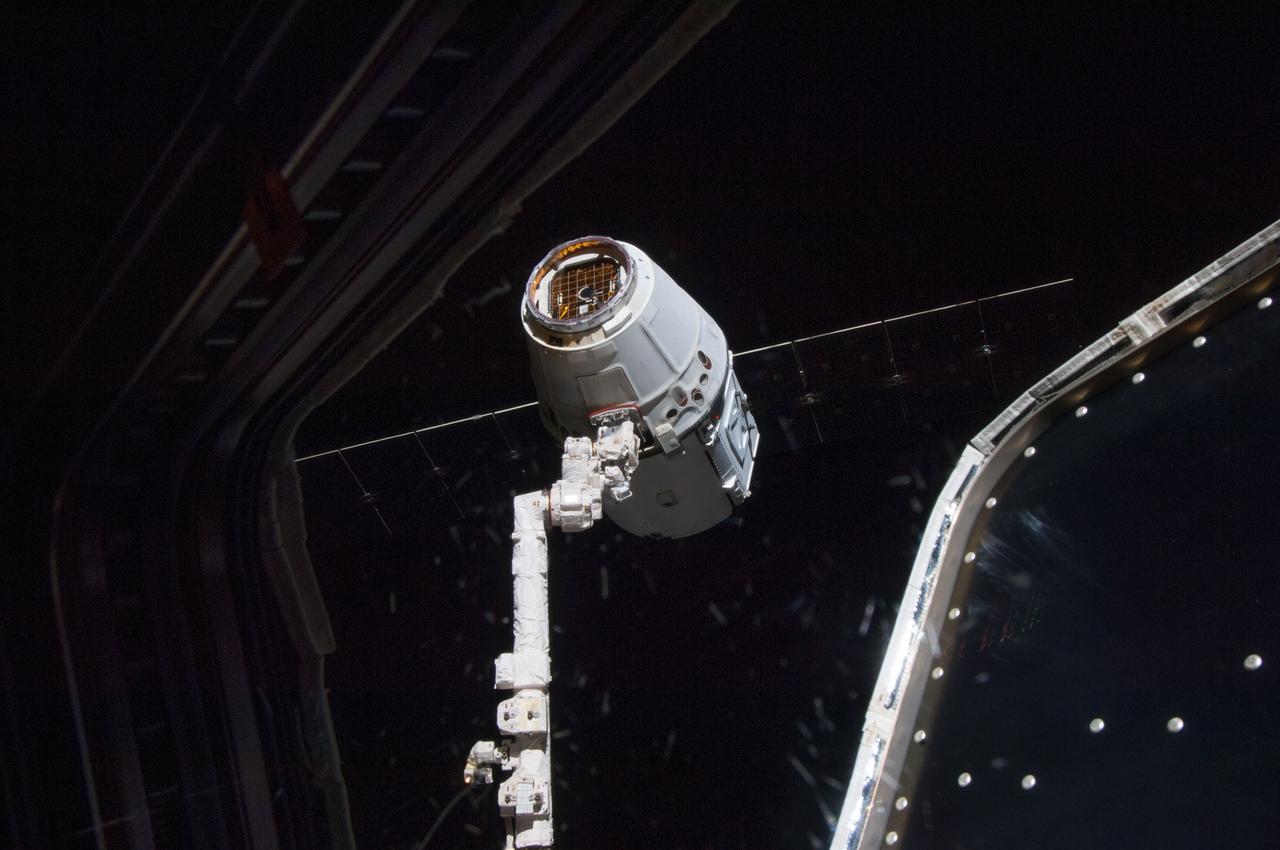
ISS035-E-010124 (26 March 2013) --- This image, photographed through one of the windows in the Cupola, is one of a series of still photos documenting the process to release the SpaceX Dragon-2 spacecraft from the International Space Station on March 26. The unmanned spacecraft, filled with experiments and old supplies, can be seen in the grasp of the Space Station Remote Manipulator System’s robot arm or CanadArm2 after it was undocked from the orbital outpost. The Dragon was scheduled to make a landing in the Pacific Ocean, off the coast of California, later in the day.

Workmen at the Kennedy Space Center position the nose cone for the 204LM-1, an unmanned Apollo mission that tested the Apollo Lunar Module (LM) in Earth orbit. Also known as Apollo 5, the spacecraft was launched on the fourth Saturn IBC launch vehicle. Developed by the Marshall Space Flight Center (MSFC) as an interim vehicle in MSFC's "building block" approach to the Saturn rocket development, the Saturn IBC utilized Saturn I technology to further develop and refine a larger booster and the Apollo spacecraft capabilities required for the manned lunar missions.
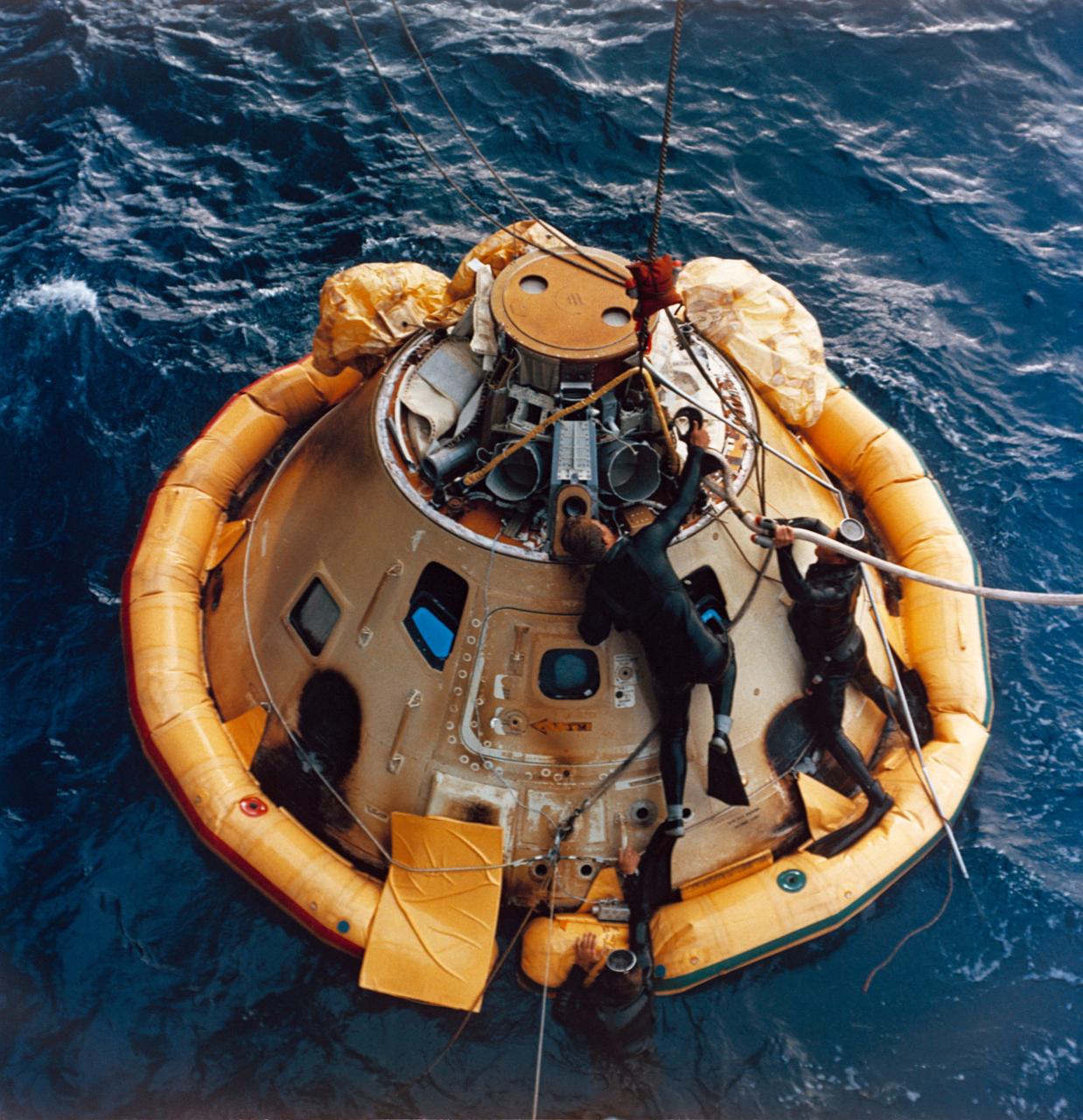
S68-27884 (4 April 1968) --- A U. S. Navy frogman team prepares the Apollo Spacecraft 020 Command Module (CM) for hoisting aboard the USS Okinawa. The USS Okinawa was the prime recovery ship for the Apollo 6 (Spacecraft 020/Saturn 502) unmanned space mission. Splashdown occurred at 4:58:45 p.m. (EST), April 4, 1968, at 375 nautical miles north of Honolulu, Hawaii.

AS04-01-200 (9 Nov. 1967) --- Coastal Brazil, Atlantic Ocean, West Africa, Sahara, looking northwest, as photographed from the unmanned Apollo 4 (Spacecraft 017/Saturn 501) earth-orbital space mission. This picture was taken when the Spacecraft 017 and the Saturn IVB stage were orbiting Earth at an altitude of 9,060 nautical miles.

S67-49423 (9 Nov. 1967) --- The Apollo Spacecraft 017 Command Module, with flotation collar still attached, is hoisted aboard the USS Bennington, prime recovery ship for the Apollo 4 (Spacecraft 017/Saturn 501) unmanned, Earth-orbital space mission. The Command Module splashed down at 3:37 p.m. (EST), Nov. 9, 1967, 934 nautical miles northwest of Honolulu, Hawaii, in the mid-Pacific Ocean. Note charred heat shield caused by extreme heat of reentry.
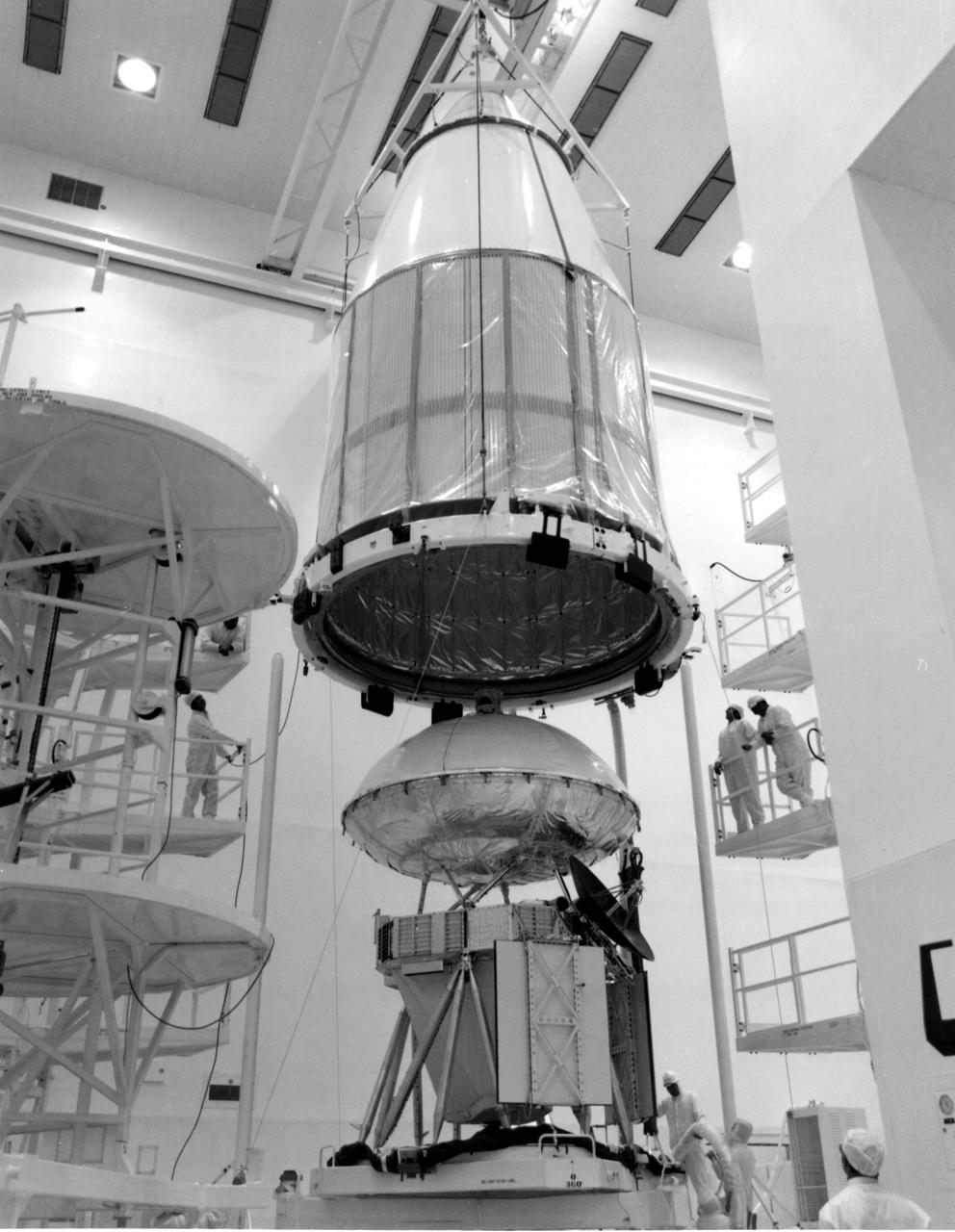
KENNEDY SPACE CENTER, FLA. -- The mated orbiter and lander for Viking A were encapsulated within a Centaur shroud at Spacecraft Assembly and Encapsulation Facility 2 (SAEF-2) today. The spacecraft, one of two to be launched toward Mars atop Titan_Centaurs in August, is to be moved to Launch Complex 41 on March 31 for extensive testing. KSC's Unmanned Launch Operations Directorate is scheduled to launch the twin Vikings during a 10-day period in August.

Workmen at the Kennedy Space Center position the nose cone for the 204LM-1, an unmanned Apollo mission that tested the Apollo Lunar Module (LM) in Earth orbit. Also known as Apollo 5, the spacecraft was launched on the fourth Saturn IBC launch vehicle. Developed by the Marshall Space Flight Center (MSFC) as an interim vehicle in MSFC's "building block" approach to the Saturn rocket development, the Saturn IBC utilized Saturn I technology to further develop and refine a larger booster and the Apollo spacecraft capabilities required for the manned lunar missions.
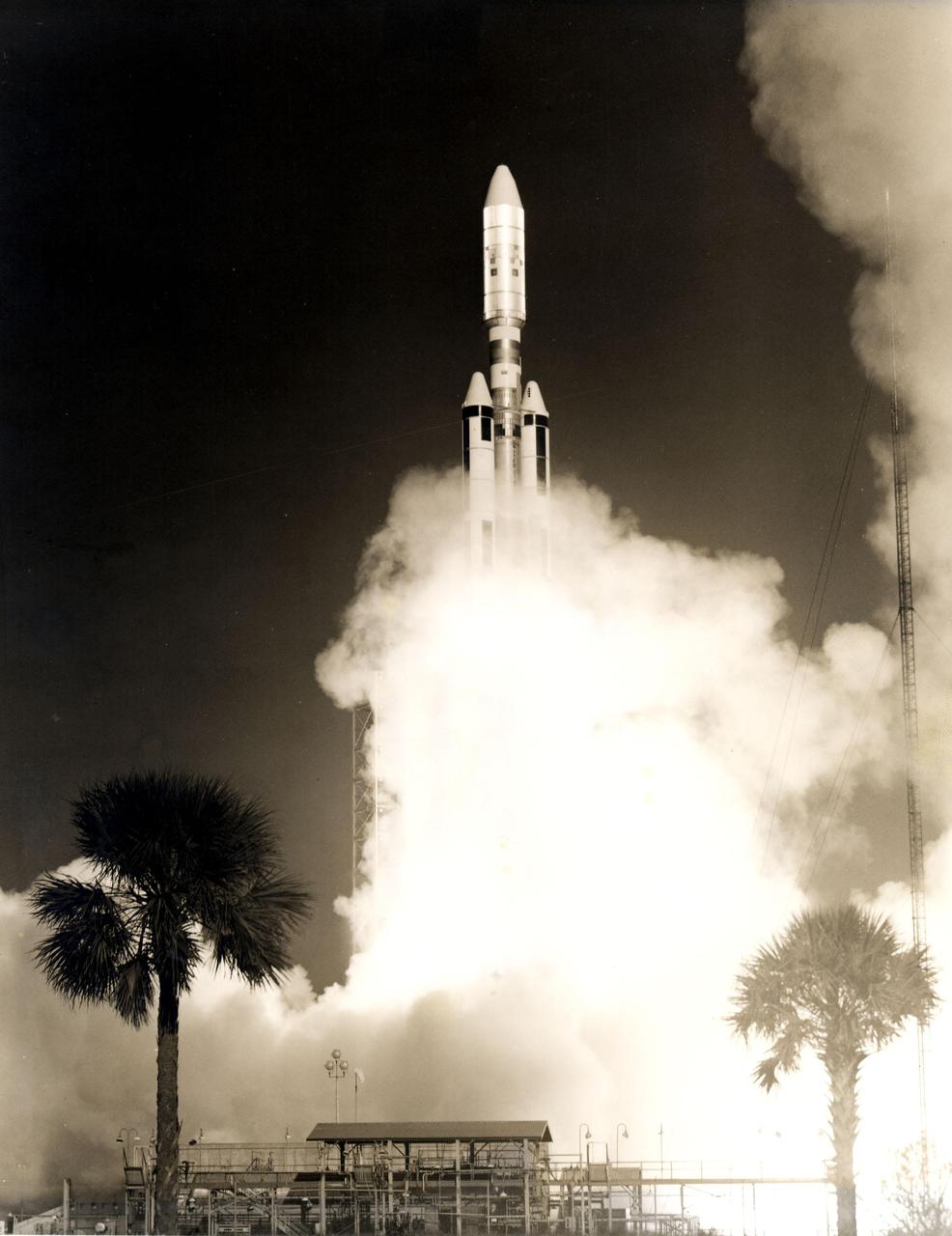
The first Titan_Centaur lifted off from Complex 41 at Cape Kennedy Air Force Station at 9:48 a.m. EDT today. The Titan stages burned as programmed, but when the Centaur stage failed to ignite, it was destroyed by the Range Safety Officer. The new NASA rocket was launched on a proof flight designed to prepare it for twin Viking launches to Mars in 1975 and other missions involving heavy unmanned payloads. The 160-foot-tall rocket combines the Air Force Titan III with the NASA high-energy Centaur final stage. The twin solid rocket boosters have a combined liftoff thrust of 2.4 million pounds. Aboard Titan_Centaur on its proof flight were a dynamic simulator of the Viking spacecraft and a small scientific satellite (SPHYNX) designed to determine how high voltage solar cells, insulators and conductors are affected by the charged particles in space. Launch was conducted by KSC's Unmanned Launch Operations Directorate.
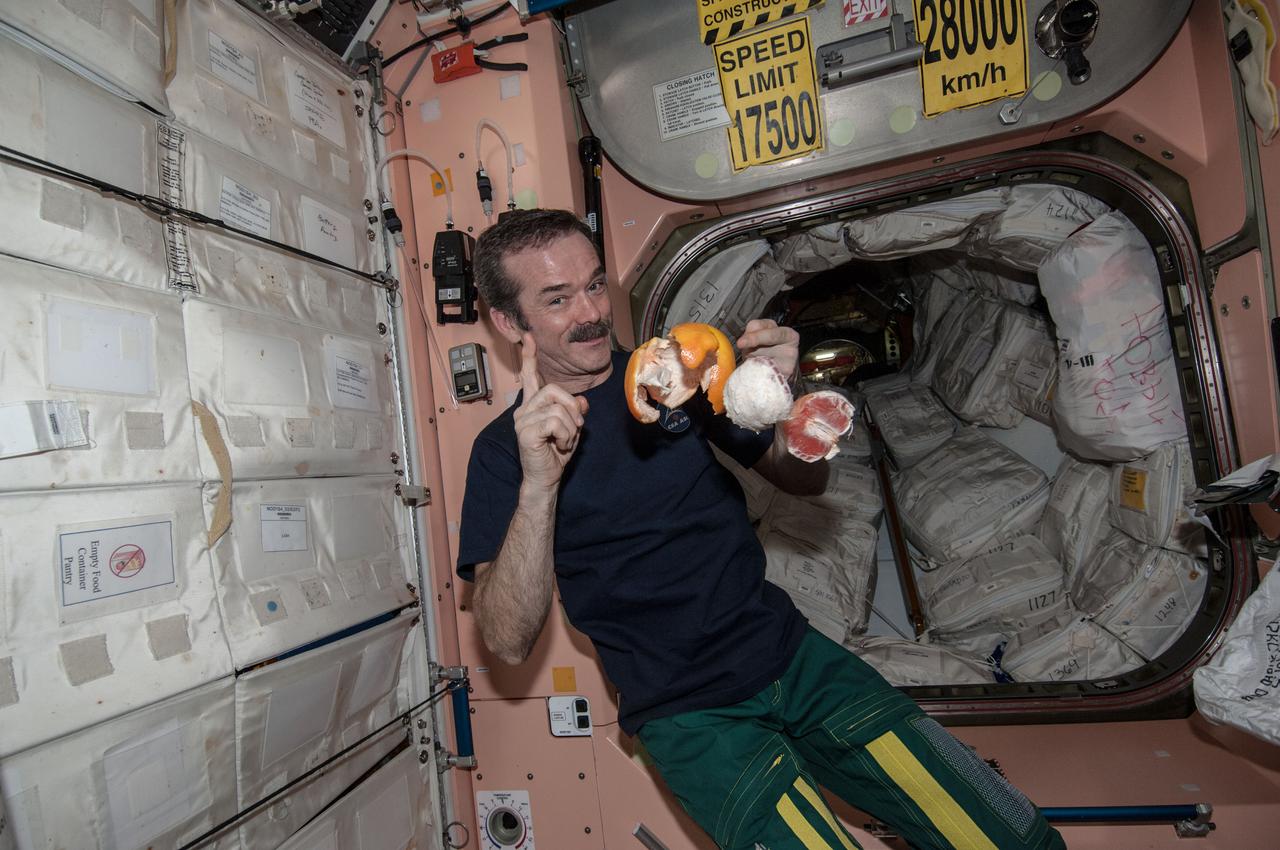
ISS035-E-010435 (30 March 2013) --- In the Unity node of the Earth-orbiting International Space Station, Expedition 35 Commander Chris Hadfield of the Canadian Space Agency enjoys part of the "fruits of labor," so to speak, from a visiting spacecraft for the second time in a month. This particular grapefruit came by way of the Soyuz TMA-08M spacecraft, which arrived on March 29, along with three new Expedition 35 crew members. The SpaceX Dragon-2 unmanned spacecraft delivered a nice assortment of fresh fruit along with more than a half ton of supplies and gear on March 3, when Hadfield was serving as a flight engineer on the Expedition 34 crew.

S68-18733 (22 Jan. 1968) --- Dr. Robert R. Gilruth (right), MSC Director, sits with Dr. Christopher C. Kraft Jr., MSC director of flight operations, at his flight operations director console in the Mission Control Center, Building 30, during the Apollo 5 (LM-1/Saturn 204) unmanned space mission.
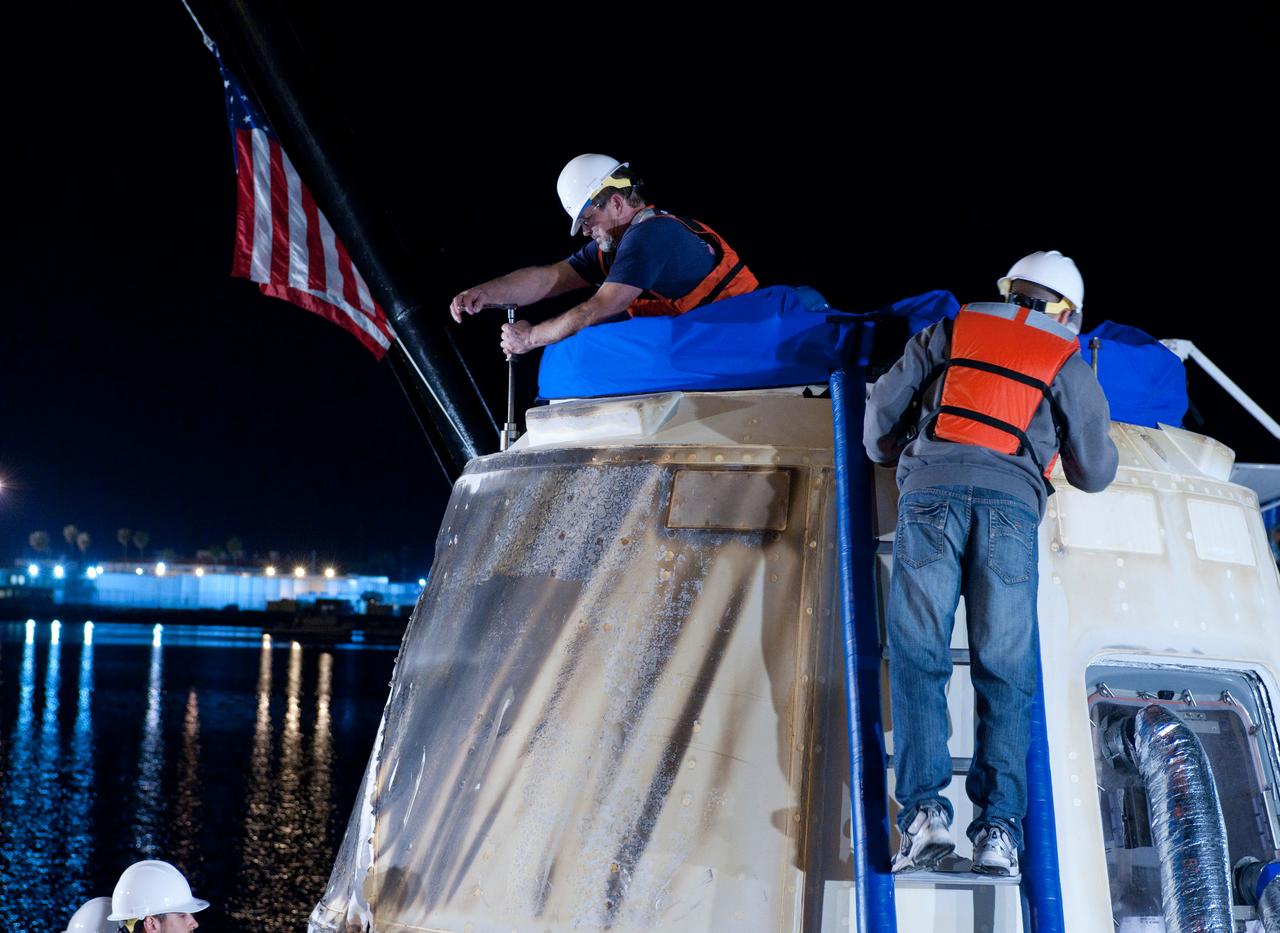
ED13-0079-07 (26 March 2013) ---- SpaceX Dragon's second operational mission ended on March 26 after three weeks attached to the International Space Station. The unmanned spacecraft splashed down in the Pacific Ocean about 214 miles off the coast of Baja California to successfully return about 2,670 pounds of science materials from the orbital outpost. Photo credit: NASA
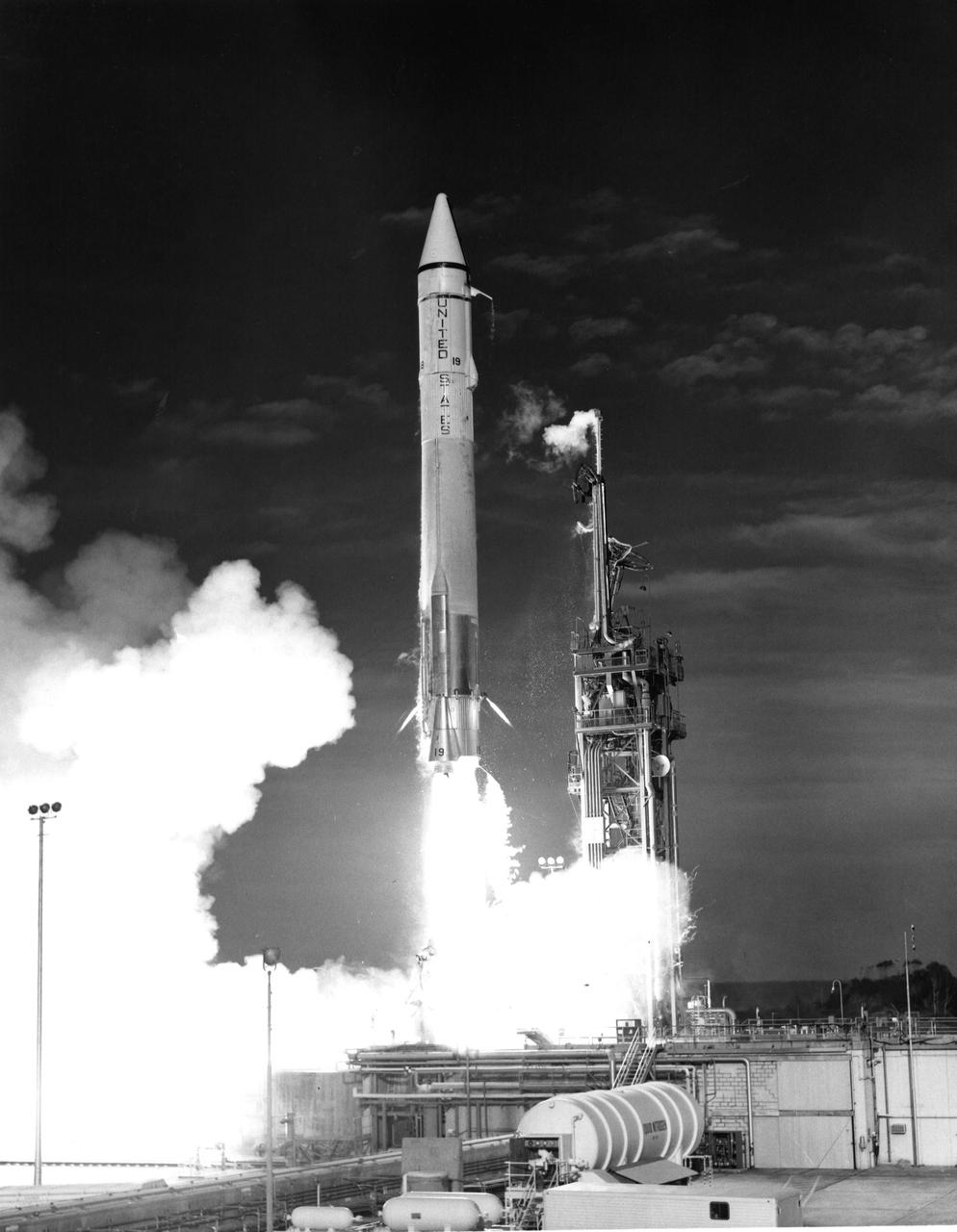
KENNEDY SPACE CENTER, FLA. - An Atlas-Centaur was launched at 5:22 p.m. EST today to send Mariner 7 on its way to Mars. The second Mars probe to be launched by the KSC Unmanned Launch Operations Directorate this year, Mariner 7 will join a sister spacecraft on a journey that will carry them within 2,000 miles of the red planet this summer. Mariner 6 was launched from Cape Kennedy on Feb. 24 and is to investigate the Martian equatorial area while Mariner 7 will concentrate on the South Polar Cap.
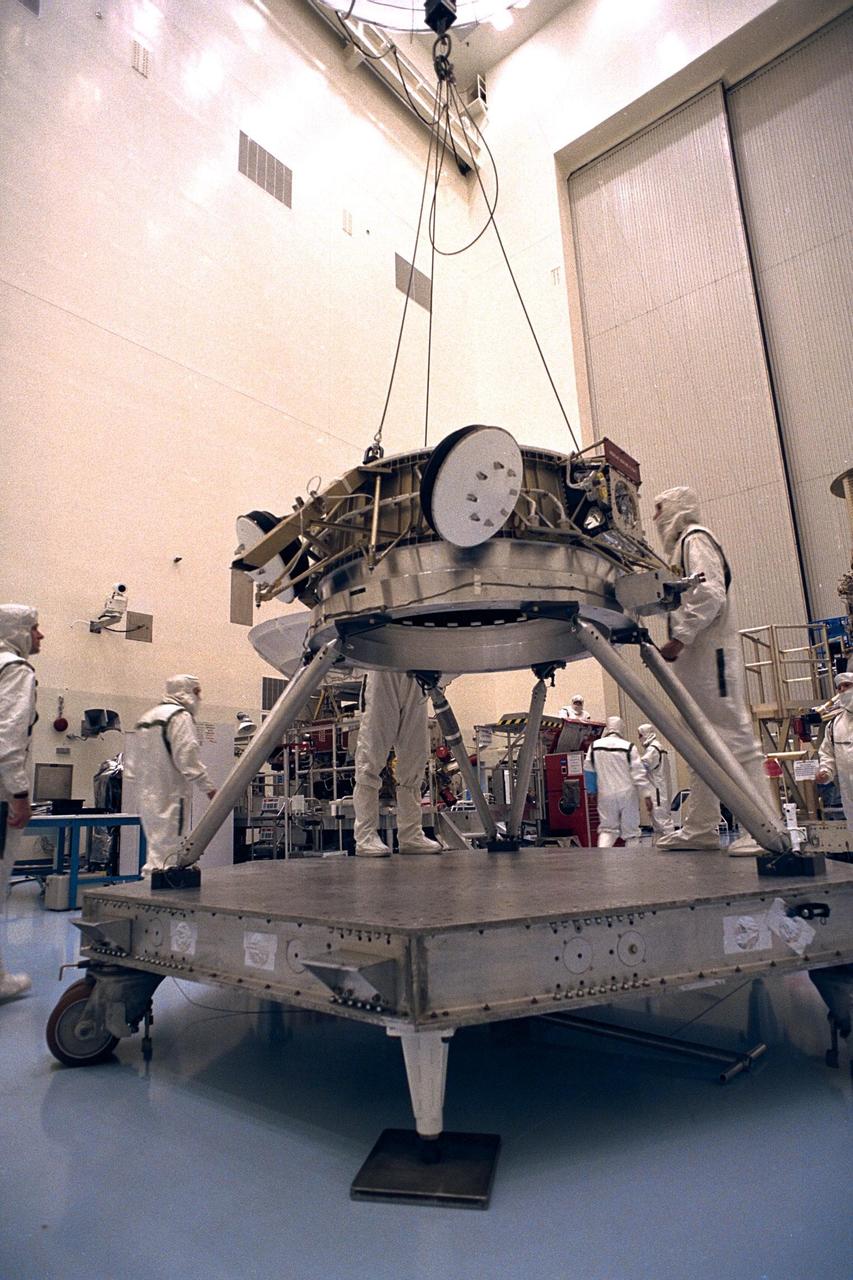
The propulsion system is mated to the Lower Equipment Module of the Cassini spacecraft in the Payload Hazardous Servicing Facility (PHSF). Cassini will explore the Saturnian system, including the planet’s rings and its moon, Titan. Launch of the Cassini mission to Saturn is scheduled for Oct. 6 from Launch Complex 40, Cape Canaveral Air Station, aboard a Titan IVB unmanned vehicle
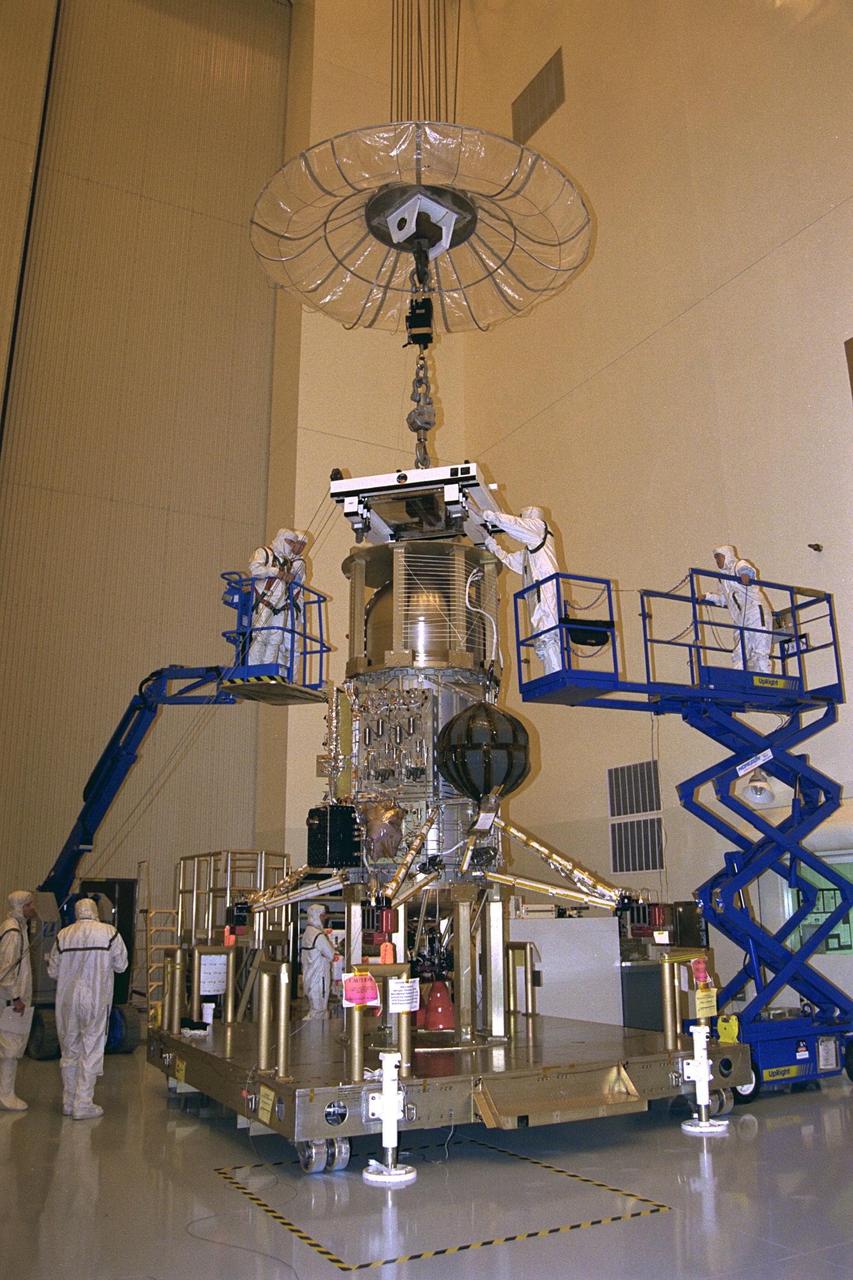
The Lower Equipment Module of the Cassini spacecraft is lifted into a workstand in the Payload Hazardous Servicing Facility (PHSF). Cassini will explore the Saturnian system, including the planet’s rings and its moon, Titan. Launch of the Cassini mission to Saturn is scheduled for Oct. 6 from Launch Complex 40, Cape Canaveral Air Station, aboard a Titan IVB unmanned vehicle
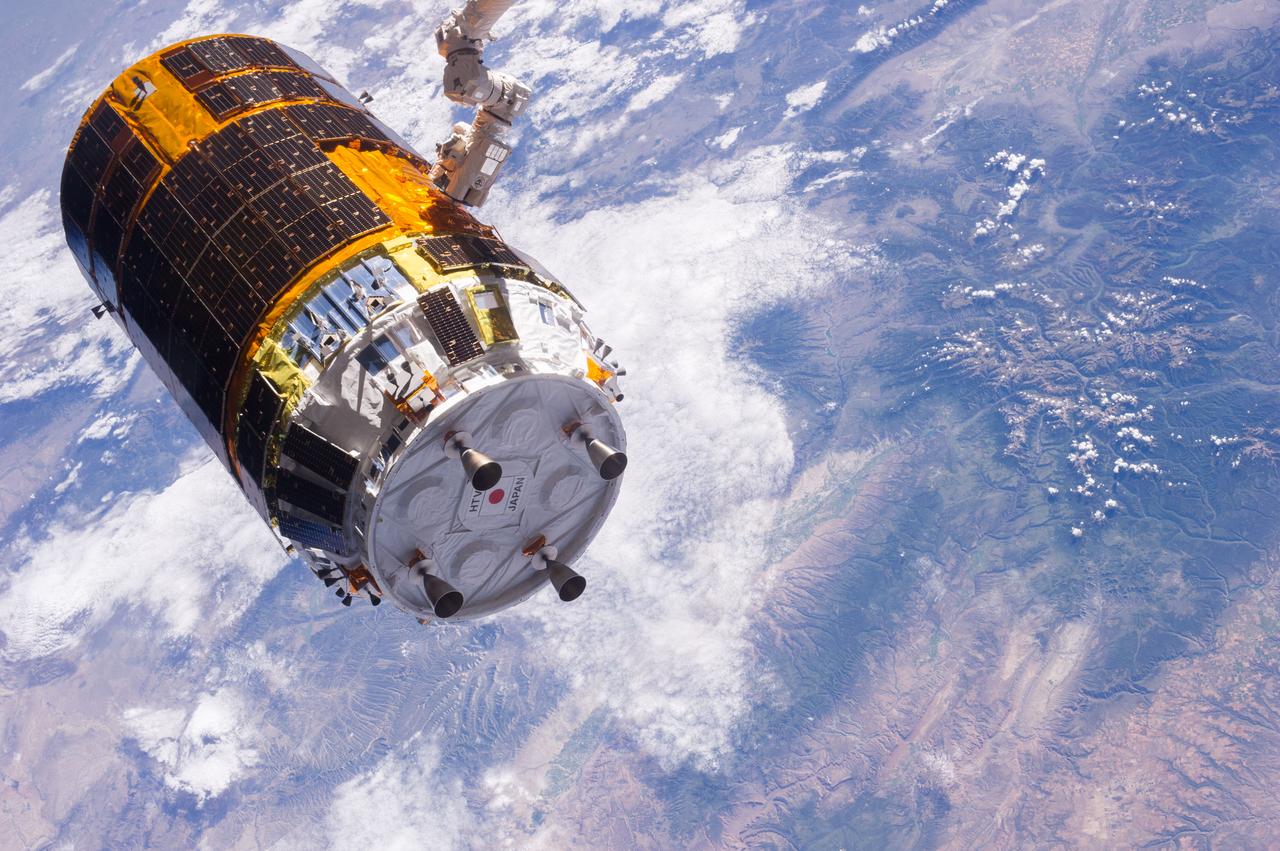
One of the Expedition 36 crew members aboard the International Space Station took this picture of the Japanese HTV-4 unmanned cargo spacecraft,backdropped against a land mass on Earth,following its unberthing but just prior to its release from the orbital outpost's Canadarm2. HTV-4,after backing away from the flying complex,headed for re-entry into Earth's atmosphere,burning upon re-entry. Per Twitter message: Flying over southwestern US, not long before release of #HTV4 by #Canadarm2.
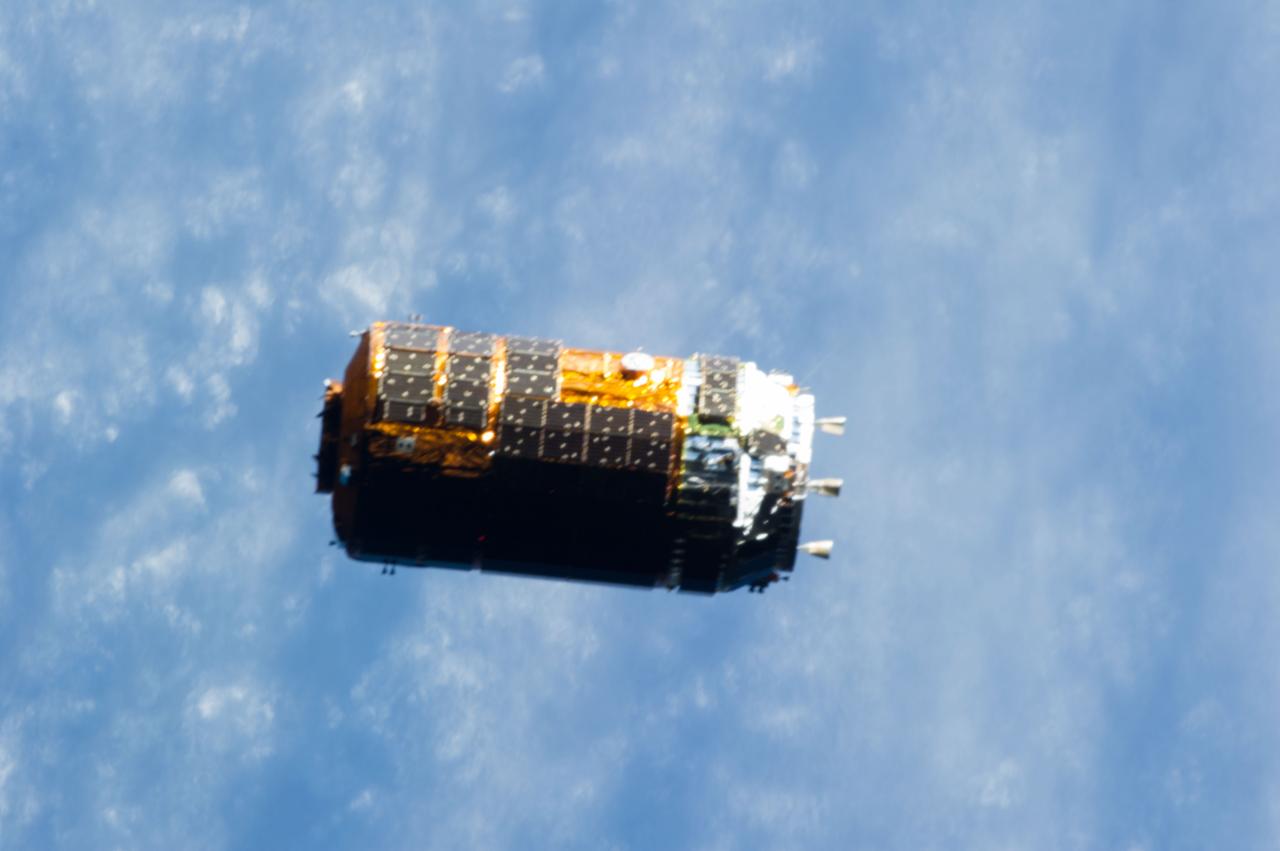
ISS036-E-029963 (9 Aug. 2013) --- The unpiloted Japanese "Kounotori" H2 Transfer Vehicle-4 (HTV-4) approaches the International Space Station. The HTV, a 33-foot-long, 13-foot-diameter unmanned cargo transfer spacecraft, is delivering 3.6 tons of science experiments, equipment and supplies to the orbiting complex. HTV-4 launched from the Tanegashima Space Center in southern Japan on Aug.3 at 3:48 p.m. (Aug. 4 at 4:48 a.m., Japan time).
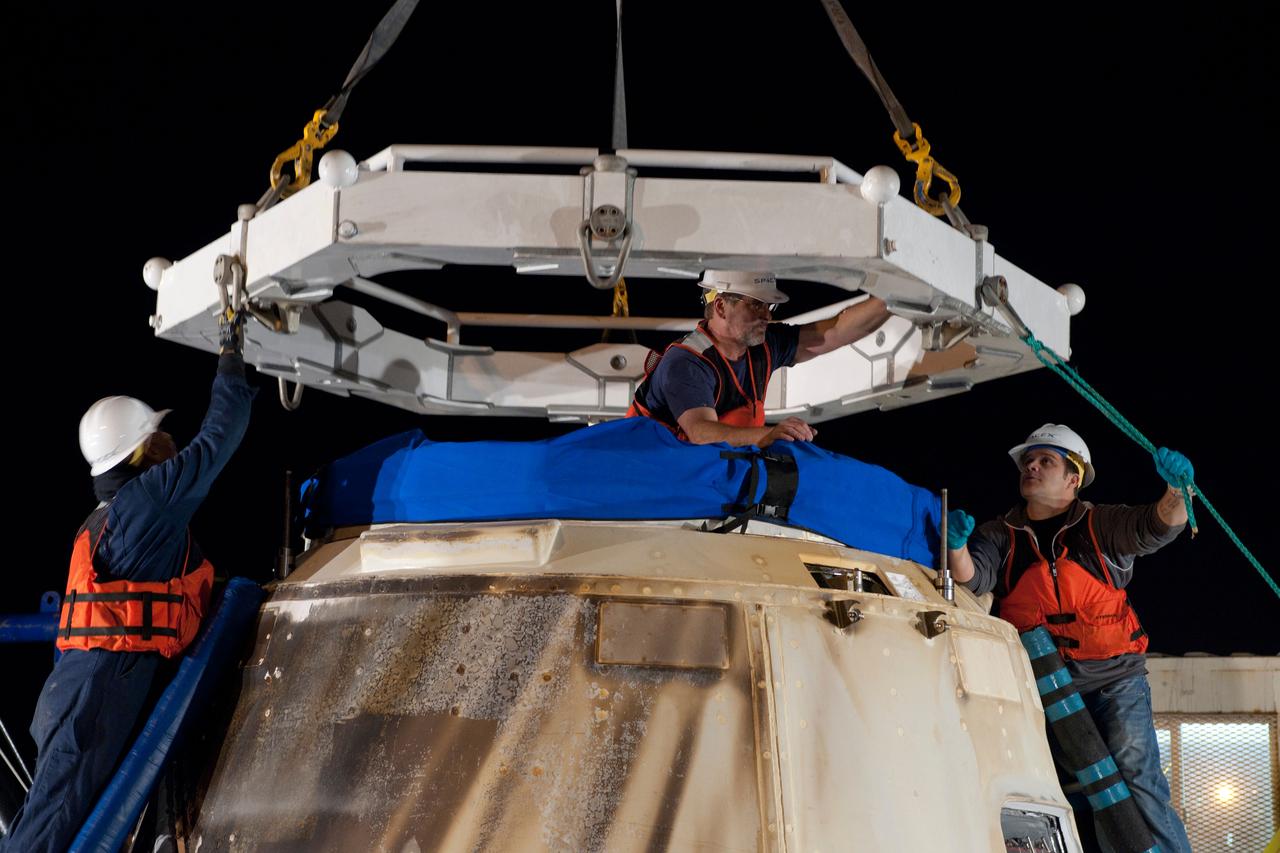
ED13-0079-10 (26 March 2013) ---- SpaceX Dragon's second operational mission ended on March 26 after three weeks attached to the International Space Station. The unmanned spacecraft splashed down in the Pacific Ocean about 214 miles off the coast of Baja California to successfully return about 2,670 pounds of science materials from the orbital outpost. Photo credit: NASA
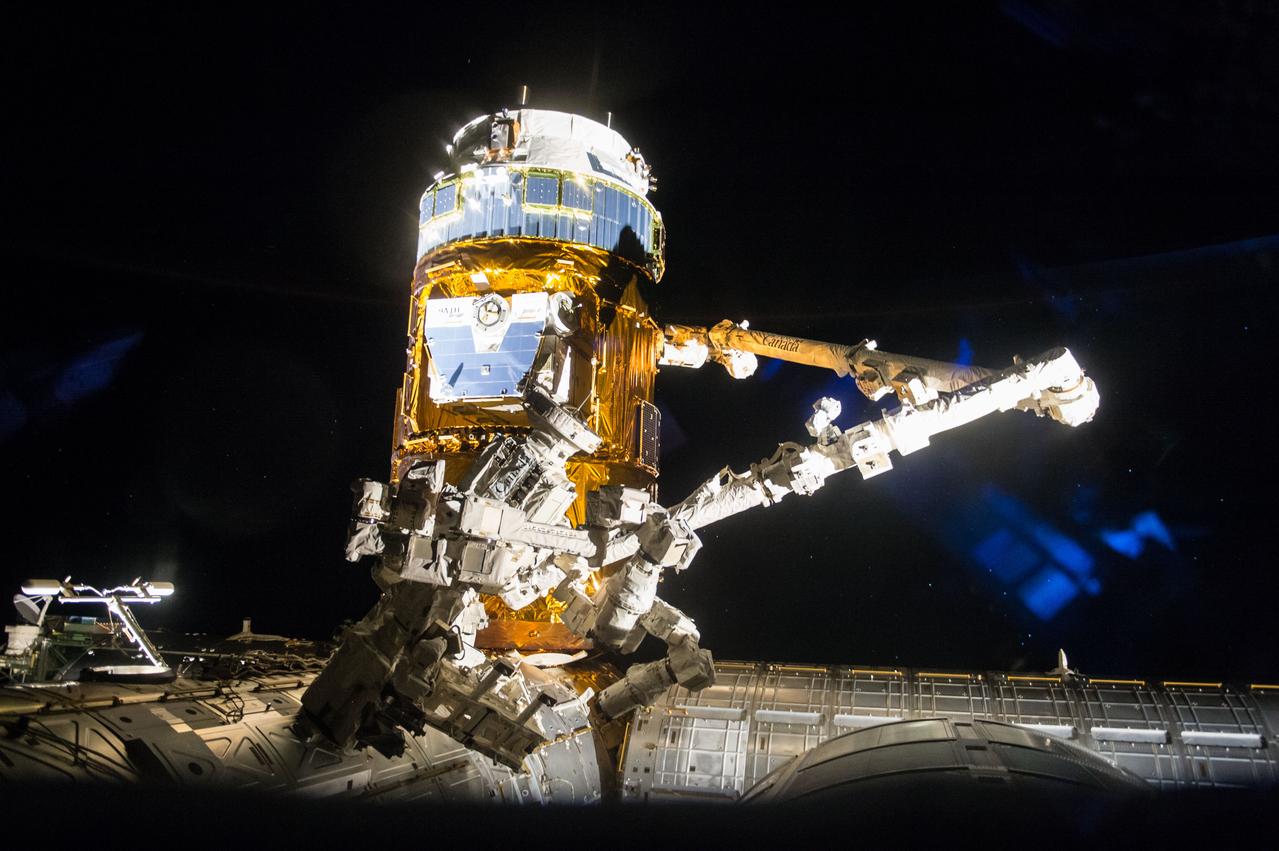
iss050e036114 (1/27/2017) --- A view of H2 Transfer Vehicle (HTV) 6 at dawn. HTV-6, is the sixth flight of the H-II Transfer Vehicle, an unmanned cargo spacecraft launched to resupply the International Space Station. It was launched at 13:26:47 UTC on 9 December 2016 aboard H-IIB launch vehicle from Tanegashima Space Center.
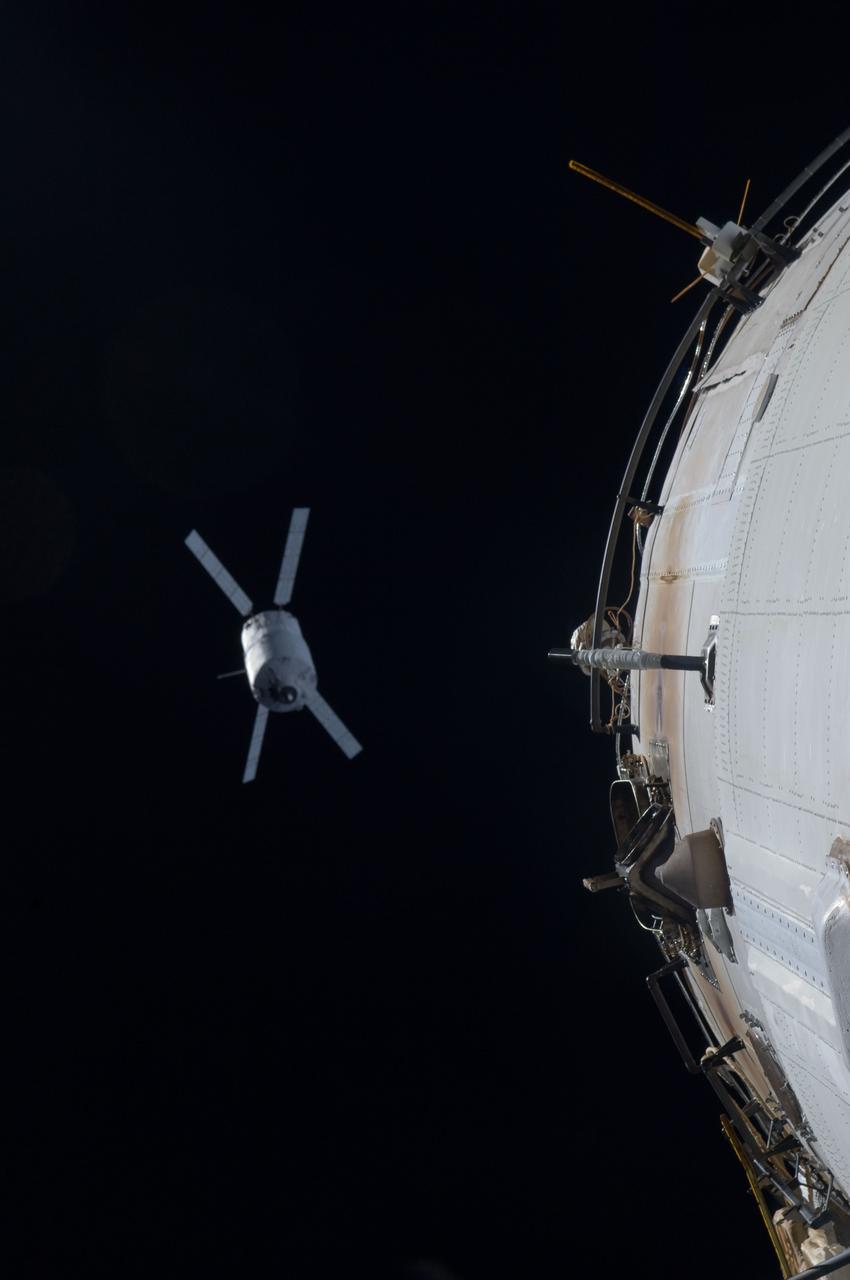
ISS030-E-175647 (28 March 2012) --- European Space Agency?s ?Edoardo Amaldi? Automated Transfer Vehicle-3 (ATV-3) approaches the International Space Station. The unmanned cargo spacecraft docked to the space station at 6:31 p.m. (EDT) on March 28, 2012, delivering 220 pounds of oxygen, 628 pounds of water, 4.5 tons of propellant, and nearly 2.5 tons of dry cargo, including experiment hardware, spare parts, food and clothing.
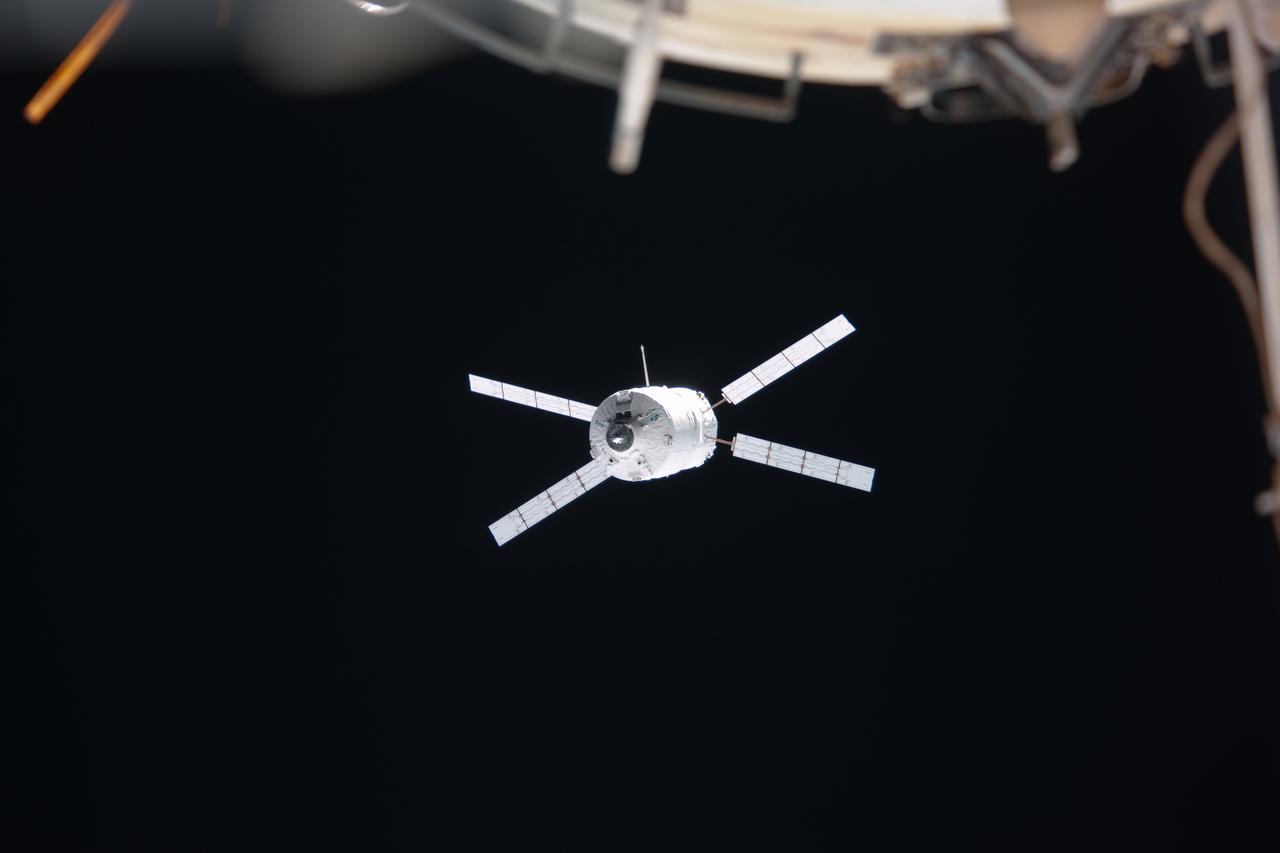
ISS030-E-174971 (28 March 2012) --- European Space Agency?s ?Edoardo Amaldi? Automated Transfer Vehicle-3 (ATV-3) approaches the International Space Station. The unmanned cargo spacecraft docked to the space station at 6:31 p.m. (EDT) on March 28, 2012, delivering 220 pounds of oxygen, 628 pounds of water, 4.5 tons of propellant, and nearly 2.5 tons of dry cargo, including experiment hardware, spare parts, food and clothing.
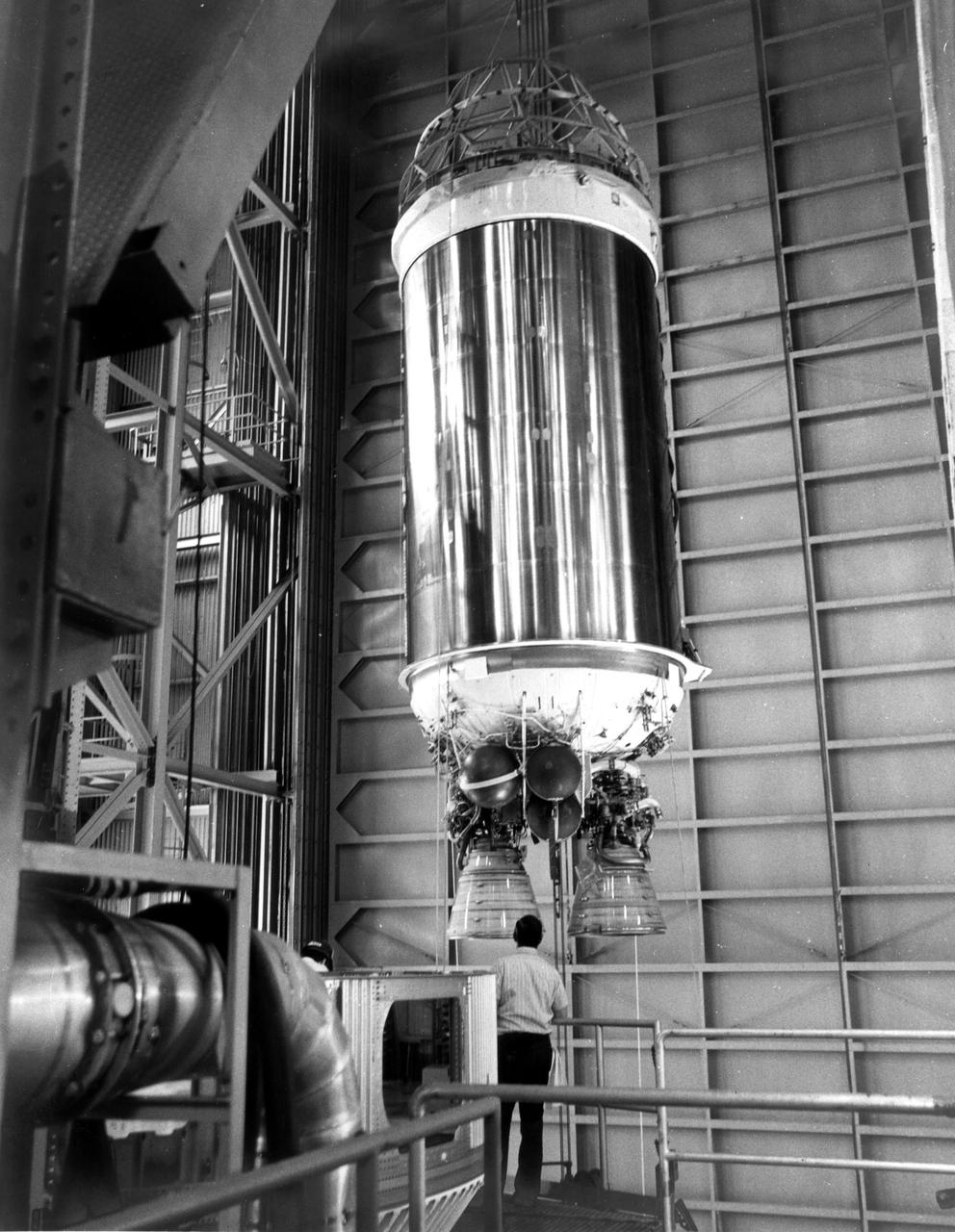
KENNEDY SPACE CENTER, FLA. -- The Centaur high-energy third stage for Titan_Centaur 3 is mated with its Titan rocket in the Vehicle Integration Building in the Titan III complex at Cape Canaveral Air Force Station. Titan_Centaur 3 and Titan_Centaur 4 will launch twin Viking spacecraft to Mars in the late summer of 1975. Launch will be by KSC's Unmanned Launch Operations Directorate from Complex 41.
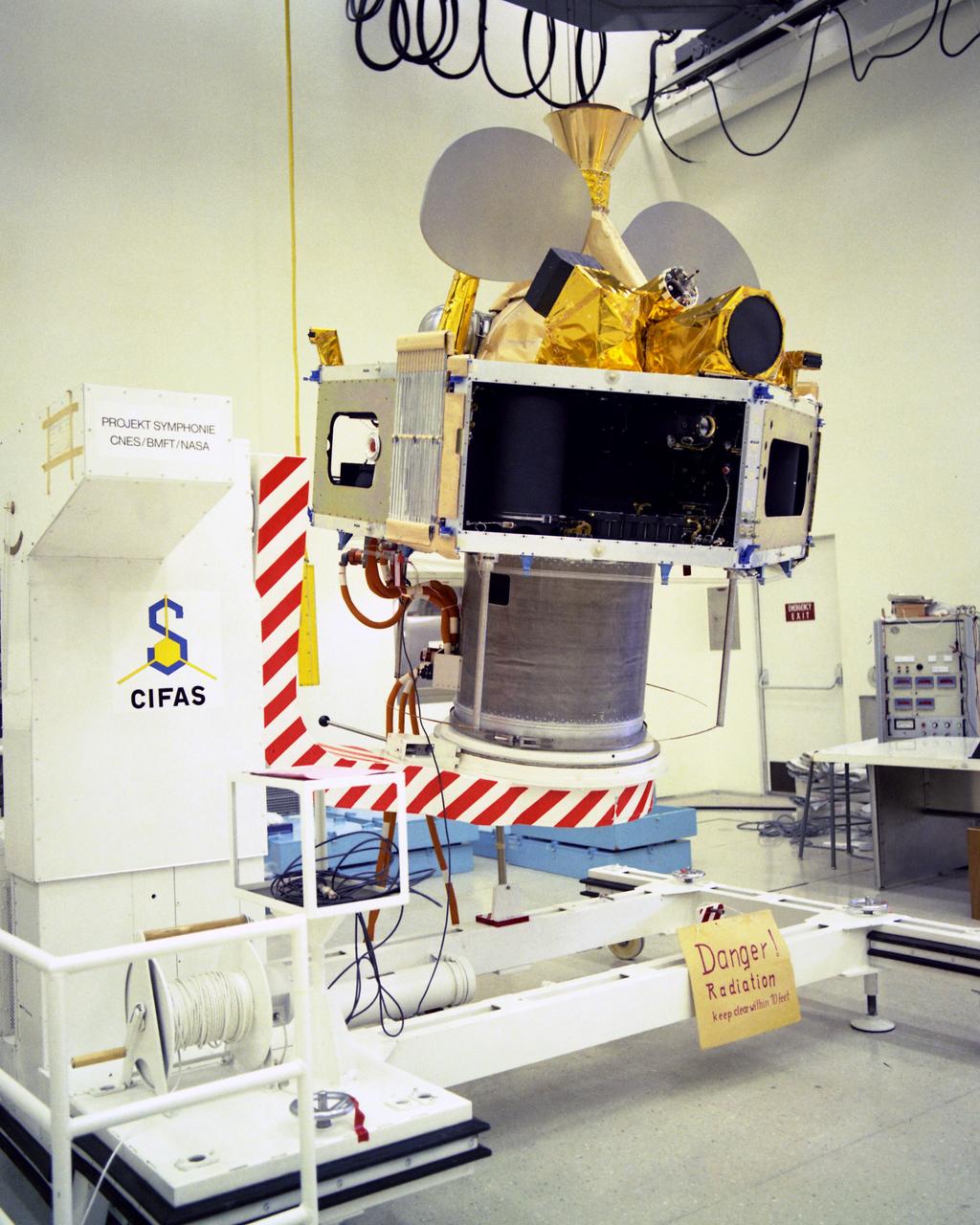
CAPE CANAVERAL, Fla. -- Symphonie-A, a Franco-German communications satellite scheduled for launch by KSC's Unmanned Launch Operations Directorate no earlier than Dec. 17, was uncrated at Cape Canaveral Air Force Station today. The spacecraft is undergoing checkout at Hangar S at CCAFS. Launch is scheduled atop a Delta rocket from Complex 17-B. Photo credit: NASA
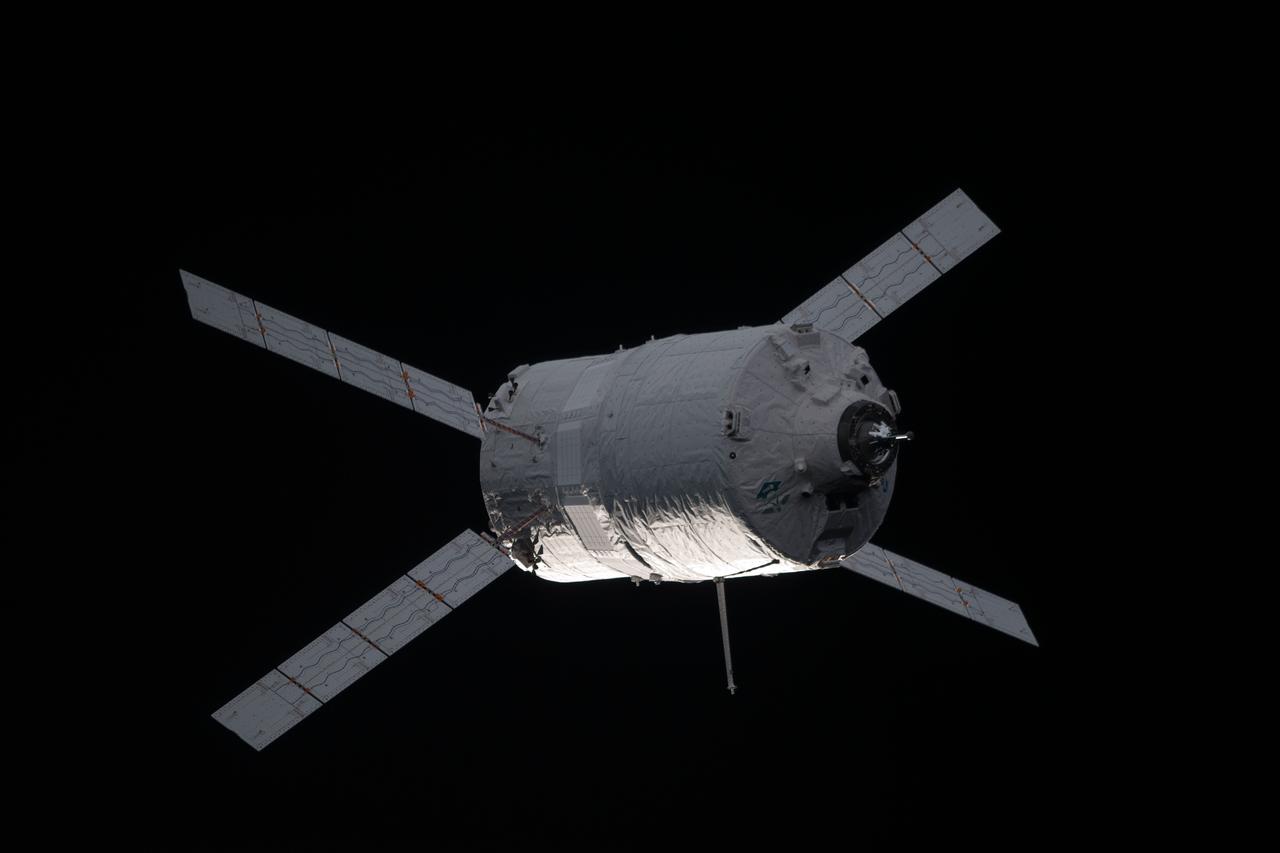
ISS030-E-174956 (28 March 2012) --- European Space Agency?s ?Edoardo Amaldi? Automated Transfer Vehicle-3 (ATV-3) approaches the International Space Station. The unmanned cargo spacecraft docked to the space station at 6:31 p.m. (EDT) on March 28, 2012, delivering 220 pounds of oxygen, 628 pounds of water, 4.5 tons of propellant, and nearly 2.5 tons of dry cargo, including experiment hardware, spare parts, food and clothing.
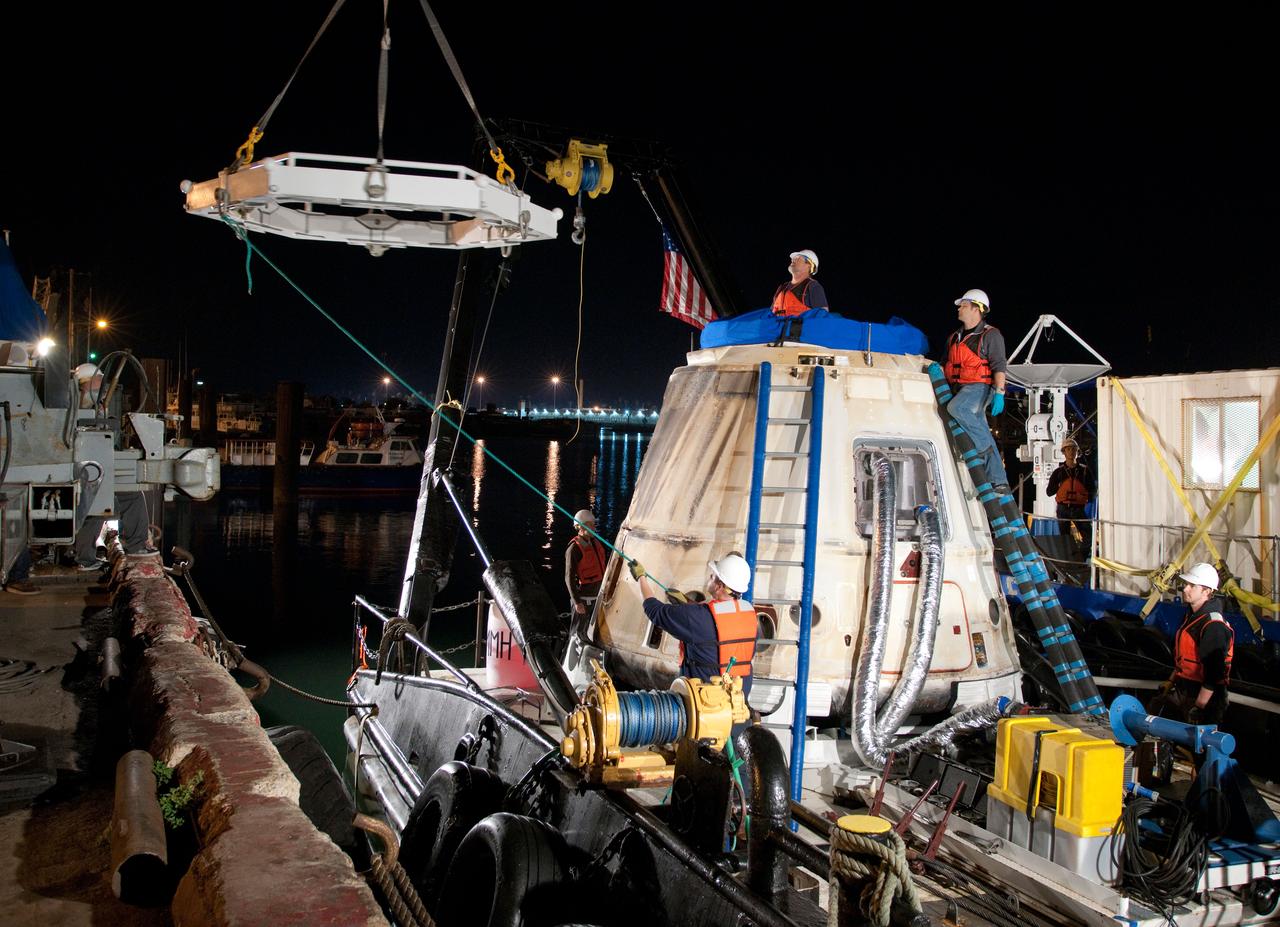
ED13-0079-08 (26 March 2013) ---- SpaceX Dragon's second operational mission ended on March 26 after three weeks attached to the International Space Station. The unmanned spacecraft splashed down in the Pacific Ocean about 214 miles off the coast of Baja California to successfully return about 2,670 pounds of science materials from the orbital outpost. Photo credit: NASA
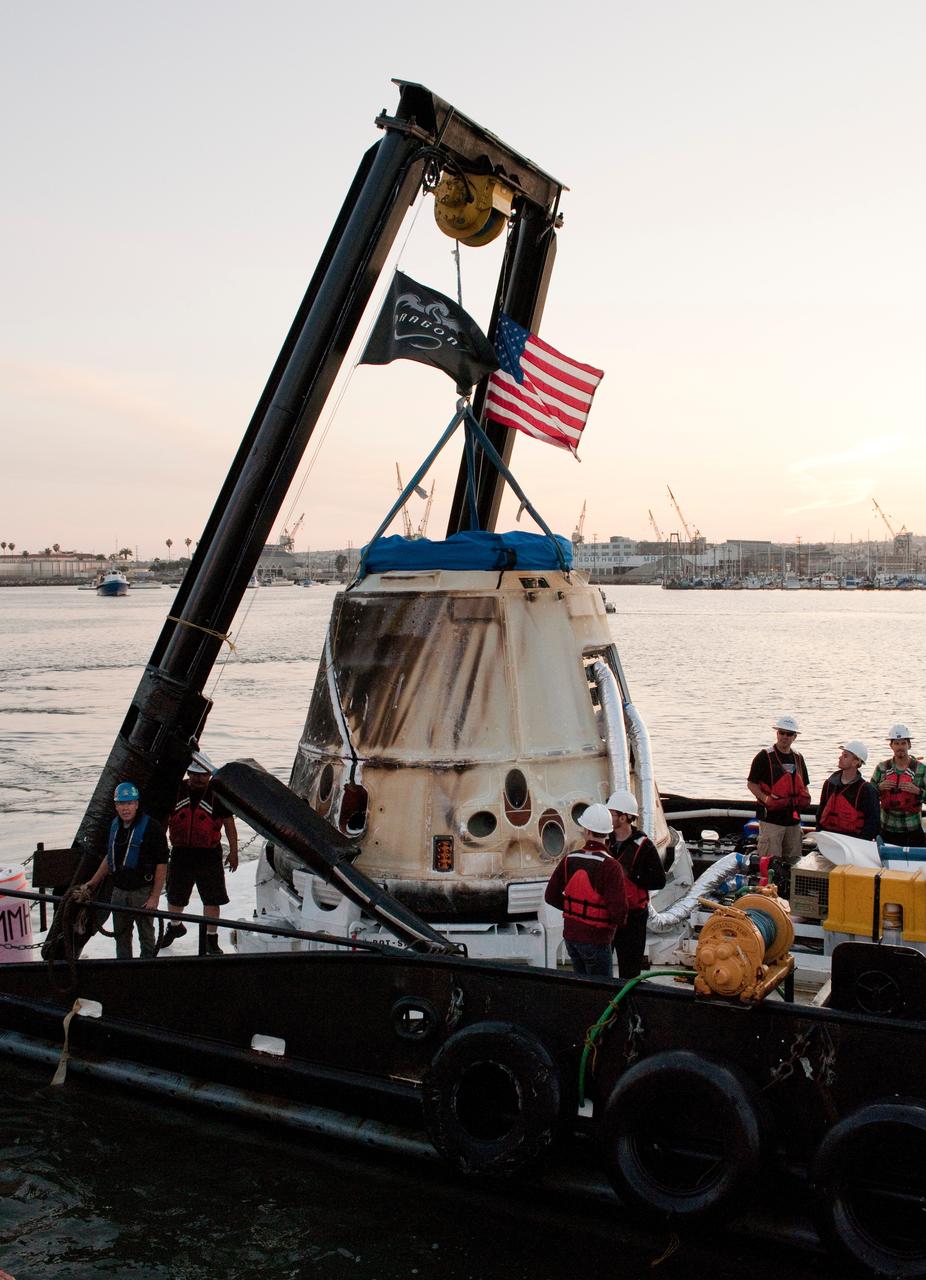
ED13-0079-02 (26 March 2013) ---- SpaceX Dragon's second operational mission ended on March 26 after three weeks attached to the International Space Station. The unmanned spacecraft splashed down in the Pacific Ocean about 214 miles off the coast of Baja California to successfully return about 2,670 pounds of science materials from the orbital outpost. Photo credit: NASA
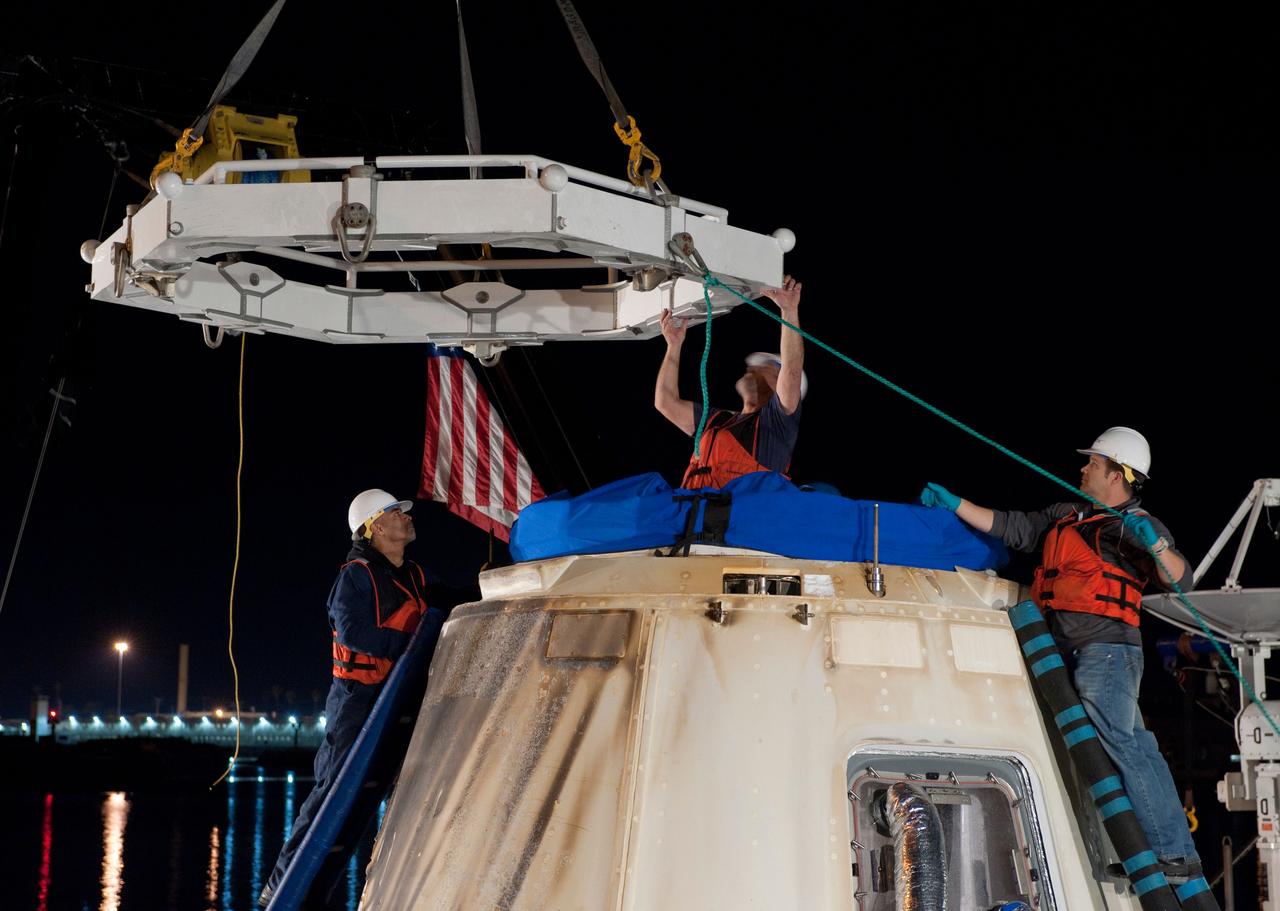
ED13-0079-09 (26 March 2013) ---- SpaceX Dragon's second operational mission ended on March 26 after three weeks attached to the International Space Station. The unmanned spacecraft splashed down in the Pacific Ocean about 214 miles off the coast of Baja California to successfully return about 2,670 pounds of science materials from the orbital outpost. Photo credit: NASA
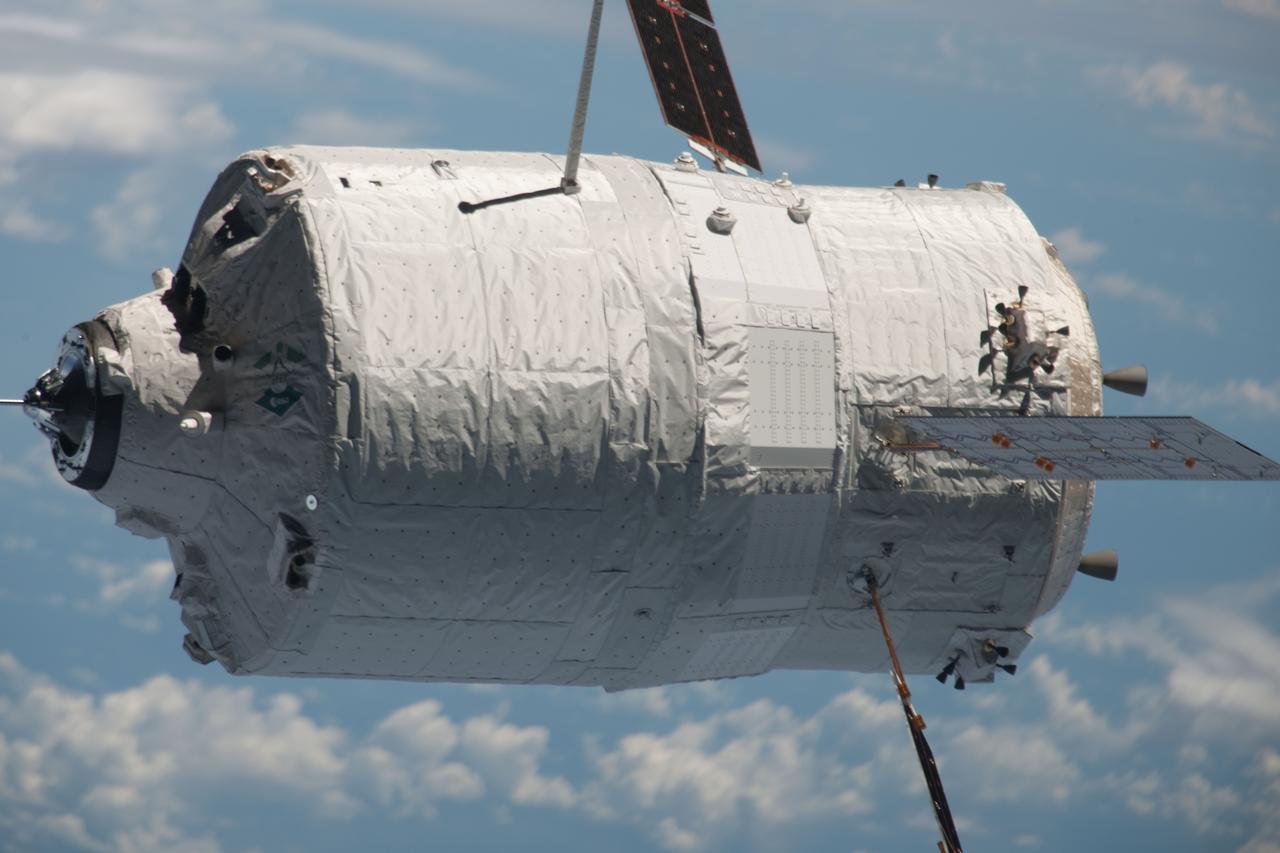
ISS030-E-175120 (28 March 2012) --- European Space Agency?s ?Edoardo Amaldi? Automated Transfer Vehicle-3 (ATV-3) approaches the International Space Station. The unmanned cargo spacecraft docked to the space station at 6:31 p.m. (EDT) on March 28, 2012, delivering 220 pounds of oxygen, 628 pounds of water, 4.5 tons of propellant, and nearly 2.5 tons of dry cargo, including experiment hardware, spare parts, food and clothing.
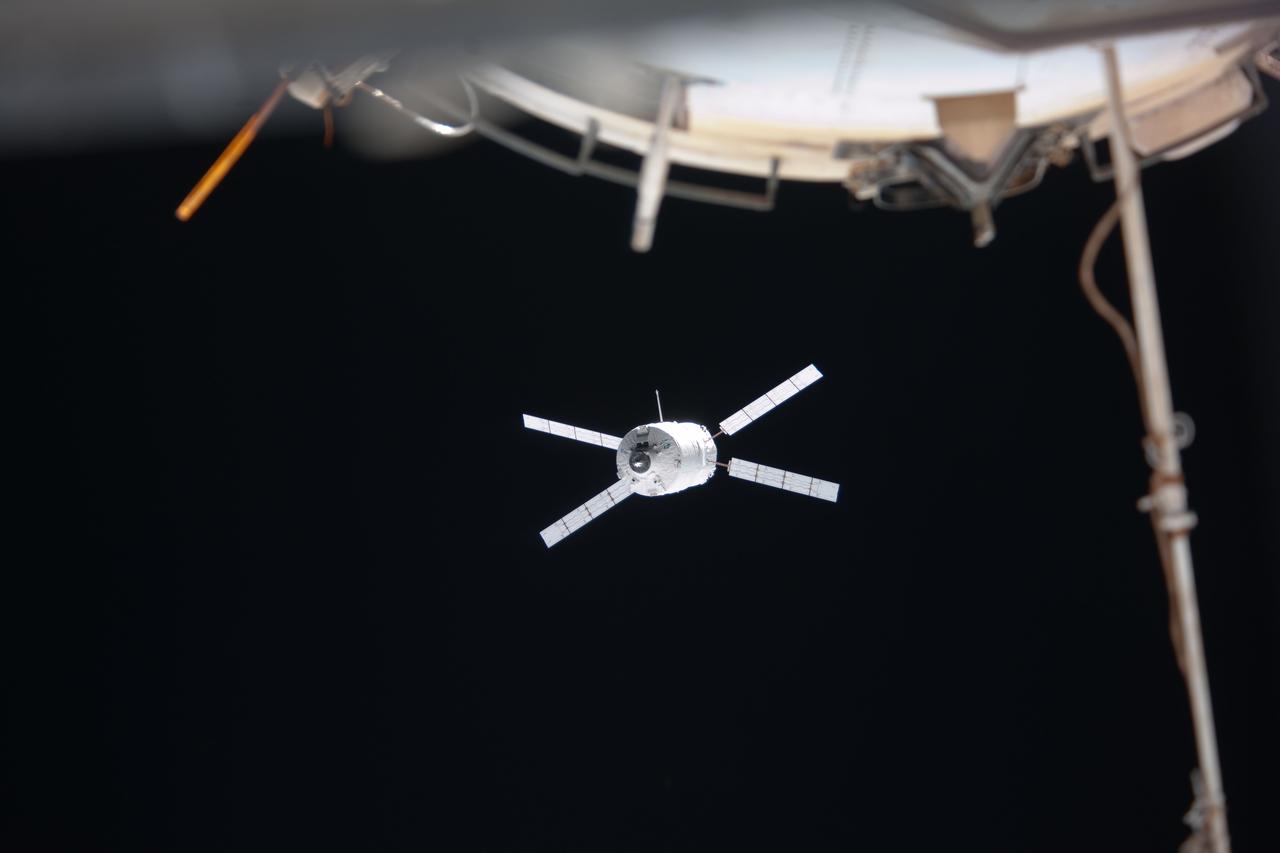
ISS030-E-174970 (28 March 2012) --- European Space Agency?s ?Edoardo Amaldi? Automated Transfer Vehicle-3 (ATV-3) approaches the International Space Station. The unmanned cargo spacecraft docked to the space station at 6:31 p.m. (EDT) on March 28, 2012, delivering 220 pounds of oxygen, 628 pounds of water, 4.5 tons of propellant, and nearly 2.5 tons of dry cargo, including experiment hardware, spare parts, food and clothing.
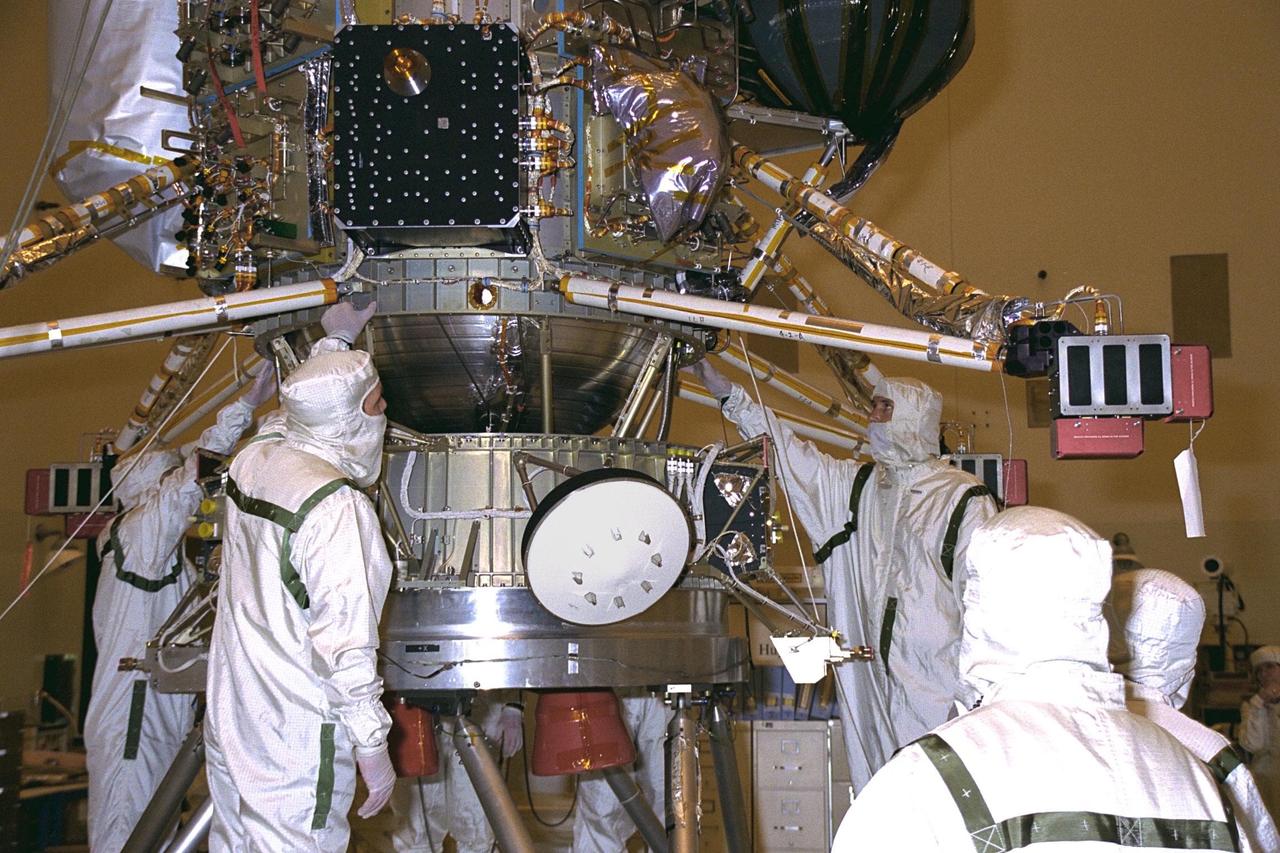
The propulsion system is mated to the Lower Equipment Module of the Cassini spacecraft in the Payload Hazardous Servicing Facility (PHSF). Cassini will explore the Saturnian system, including the planet’s rings and its moon, Titan. Launch of the Cassini mission to Saturn is scheduled for Oct. 6 from Launch Complex 40, Cape Canaveral Air Station, aboard a Titan IVB unmanned vehicle
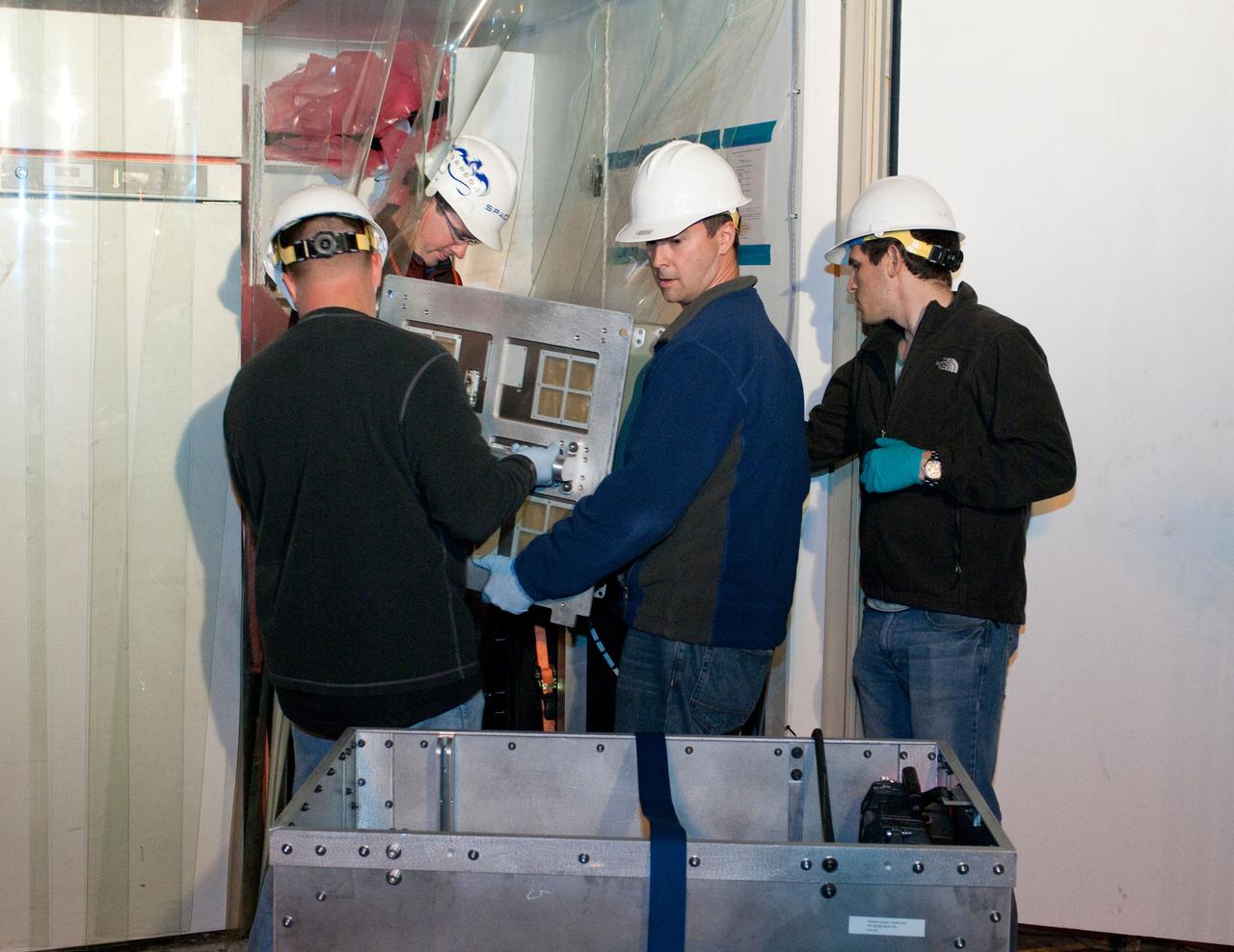
ED13-0079-04 (26 March 2013) ---- SpaceX Dragon's second operational mission ended on March 26 after three weeks attached to the International Space Station. The unmanned spacecraft splashed down in the Pacific Ocean about 214 miles off the coast of Baja California to successfully return about 2,670 pounds of science materials from the orbital outpost. Photo credit: NASA
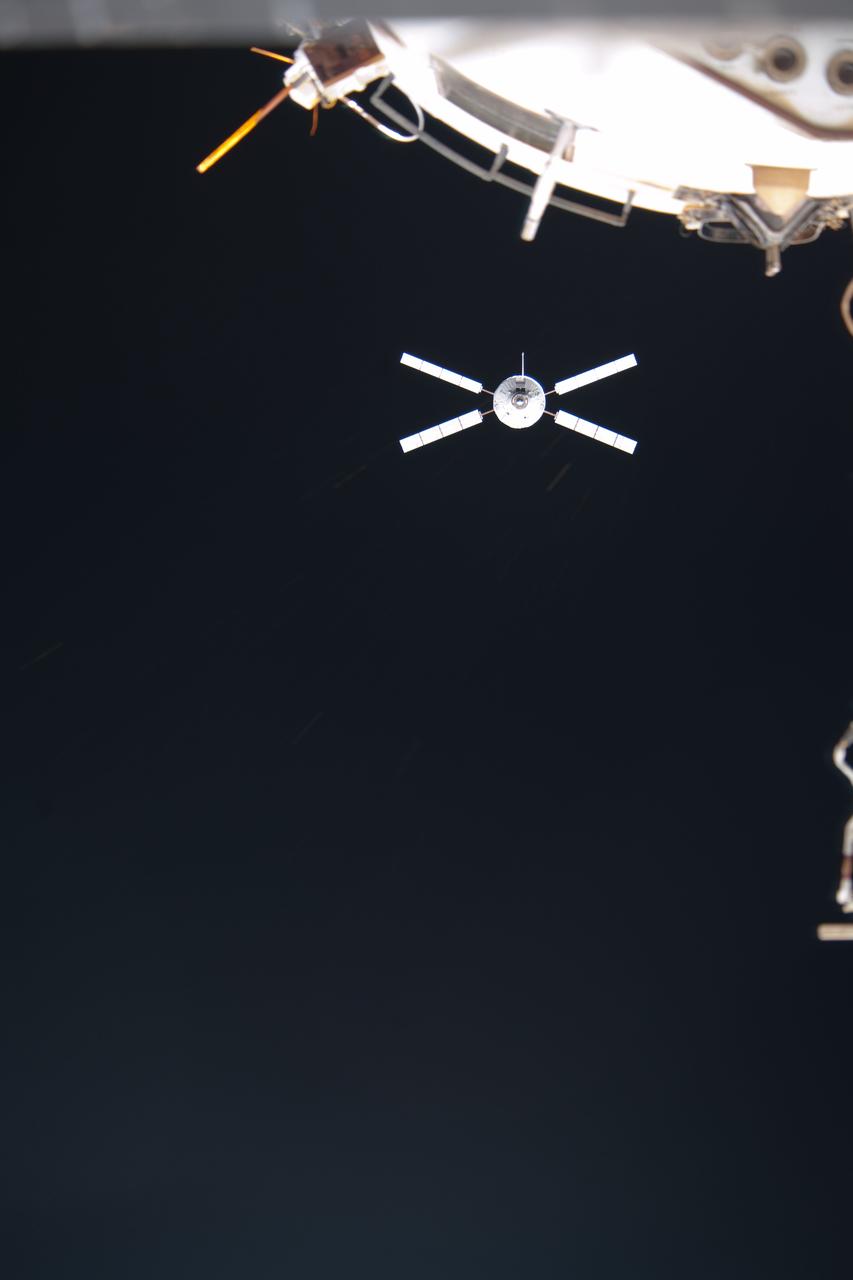
ISS030-E-174985 (28 March 2012) --- European Space Agency?s ?Edoardo Amaldi? Automated Transfer Vehicle-3 (ATV-3) approaches the International Space Station. The unmanned cargo spacecraft docked to the space station at 6:31 p.m. (EDT) on March 28, 2012, delivering 220 pounds of oxygen, 628 pounds of water, 4.5 tons of propellant, and nearly 2.5 tons of dry cargo, including experiment hardware, spare parts, food and clothing.
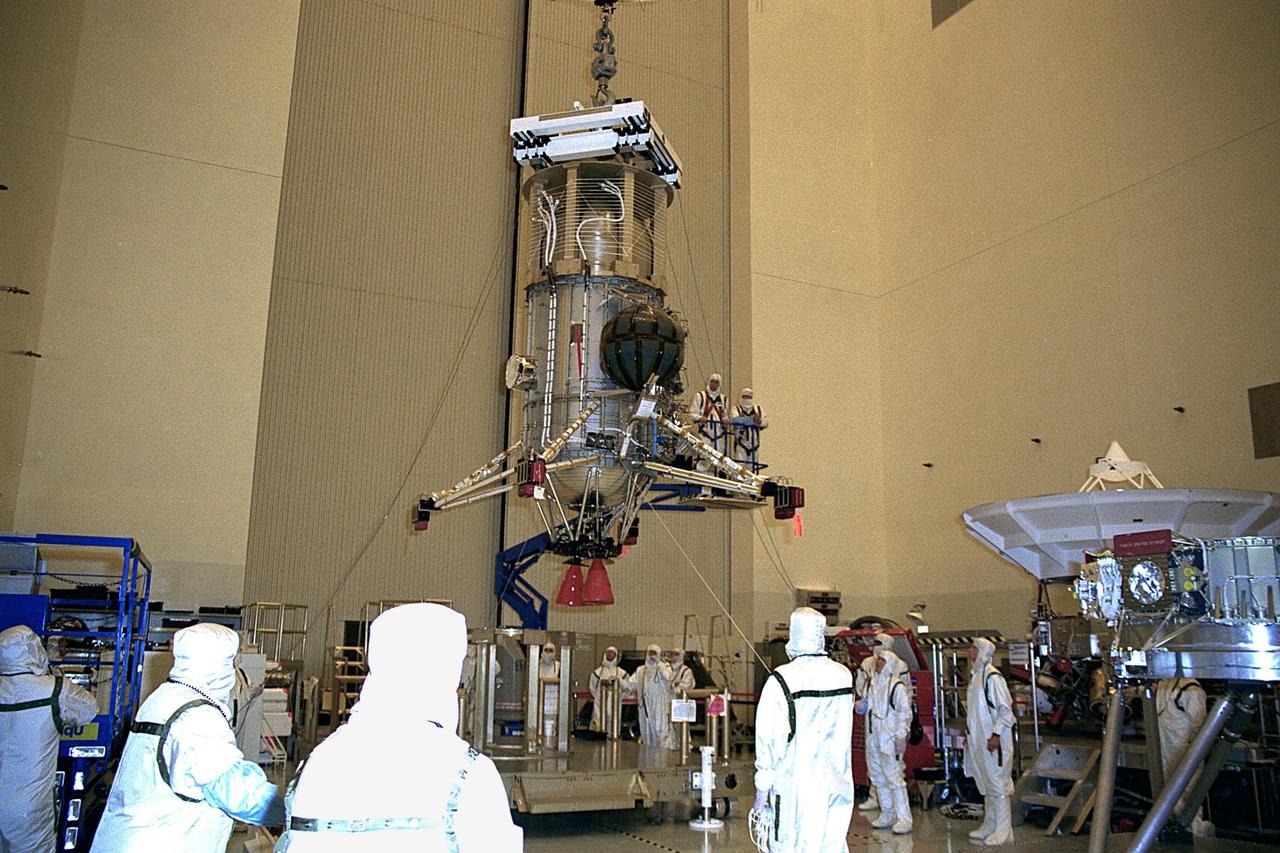
The propulsion system is mated to the Lower Equipment Module of the Cassini spacecraft in the Payload Hazardous Servicing Facility (PHSF). Cassini will explore the Saturnian system, including the planet’s rings and its moon, Titan. Launch of the Cassini mission to Saturn is scheduled for Oct. 6 from Launch Complex 40, Cape Canaveral Air Station, aboard a Titan IVB unmanned vehicle
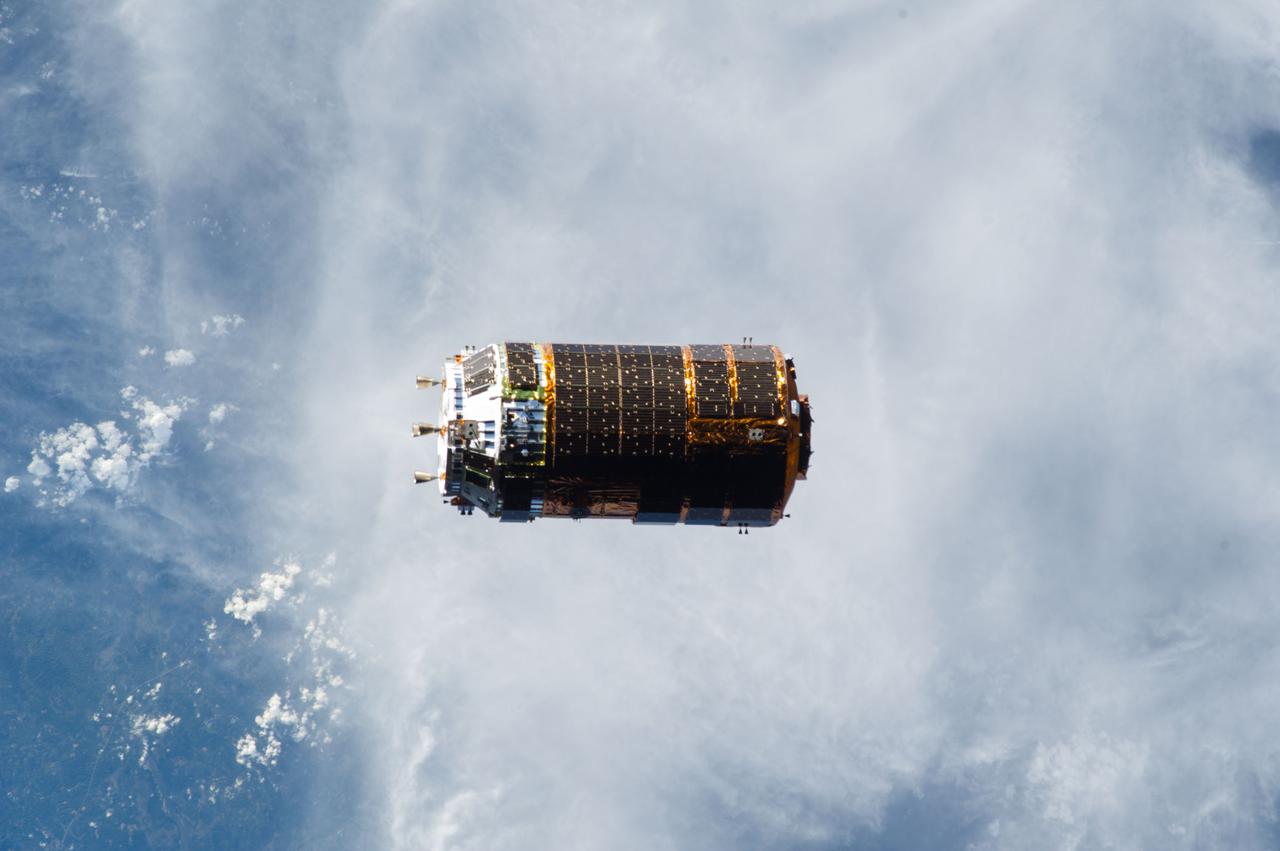
ISS036-E-030064 (9 Aug. 2013) --- The unpiloted Japanese "Kounotori" H2 Transfer Vehicle-4 (HTV-4) approaches the International Space Station. The HTV, a 33-foot-long, 13-foot-diameter unmanned cargo transfer spacecraft, is delivering 3.6 tons of science experiments, equipment and supplies to the orbiting complex. HTV-4 launched from the Tanegashima Space Center in southern Japan on Aug.3 at 3:48 p.m. (Aug. 4 at 4:48 a.m., Japan time).
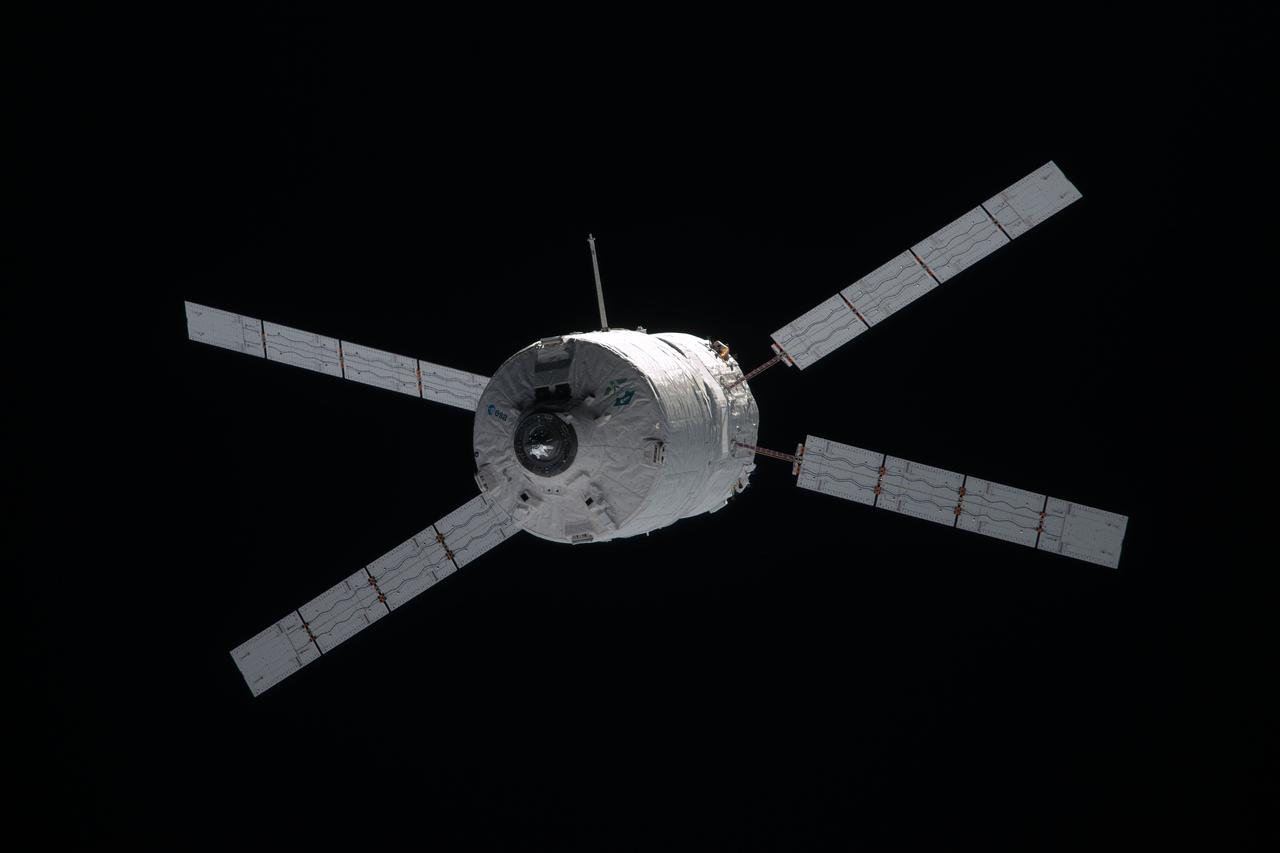
ISS030-E-174974 (28 March 2012) --- European Space Agency?s ?Edoardo Amaldi? Automated Transfer Vehicle-3 (ATV-3) approaches the International Space Station. The unmanned cargo spacecraft docked to the space station at 6:31 p.m. (EDT) on March 28, 2012, delivering 220 pounds of oxygen, 628 pounds of water, 4.5 tons of propellant, and nearly 2.5 tons of dry cargo, including experiment hardware, spare parts, food and clothing.
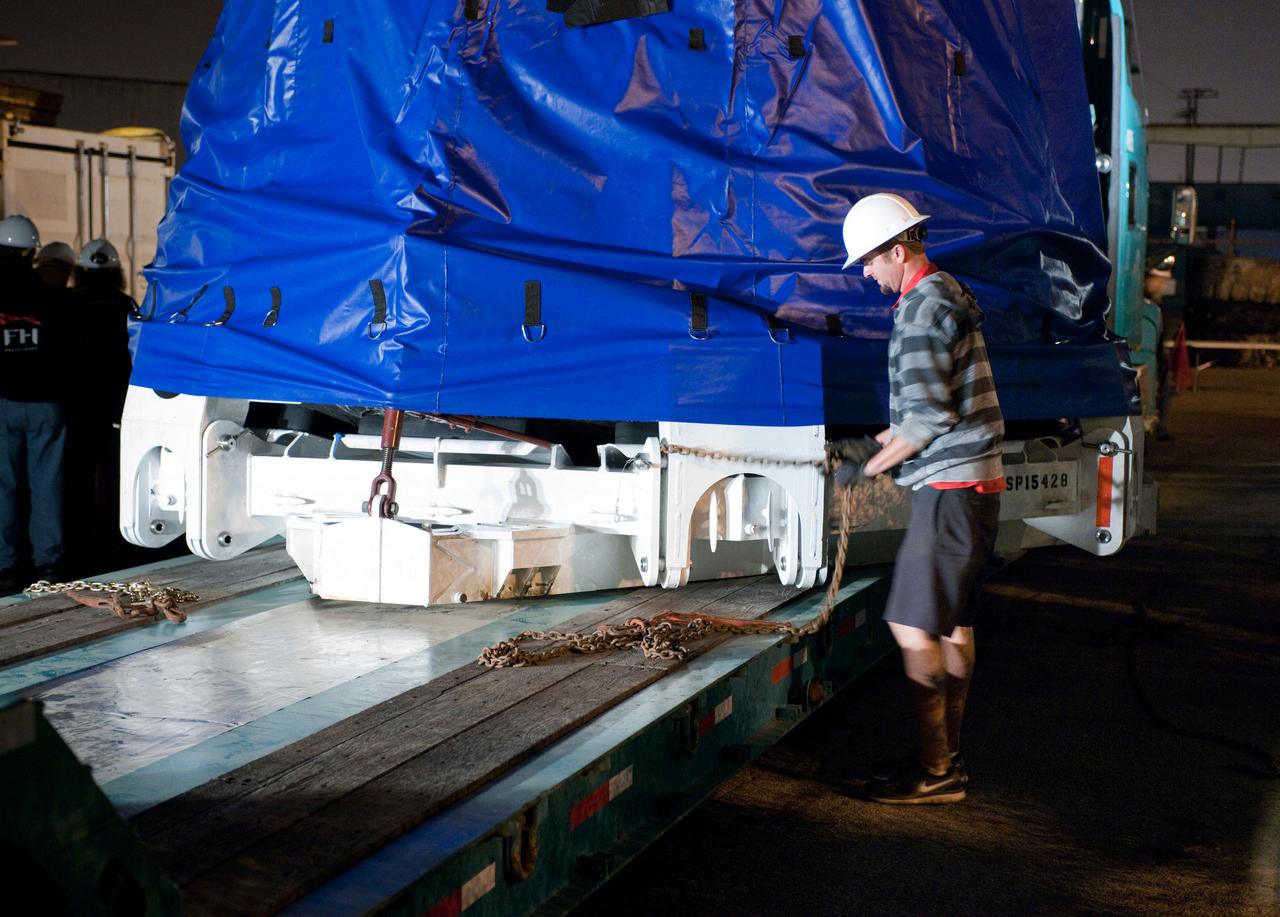
ED13-0079-16 (26 March 2013) ---- SpaceX Dragon's second operational mission ended on March 26 after three weeks attached to the International Space Station. The unmanned spacecraft splashed down in the Pacific Ocean about 214 miles off the coast of Baja California to successfully return about 2,670 pounds of science materials from the orbital outpost. Photo credit: NASA
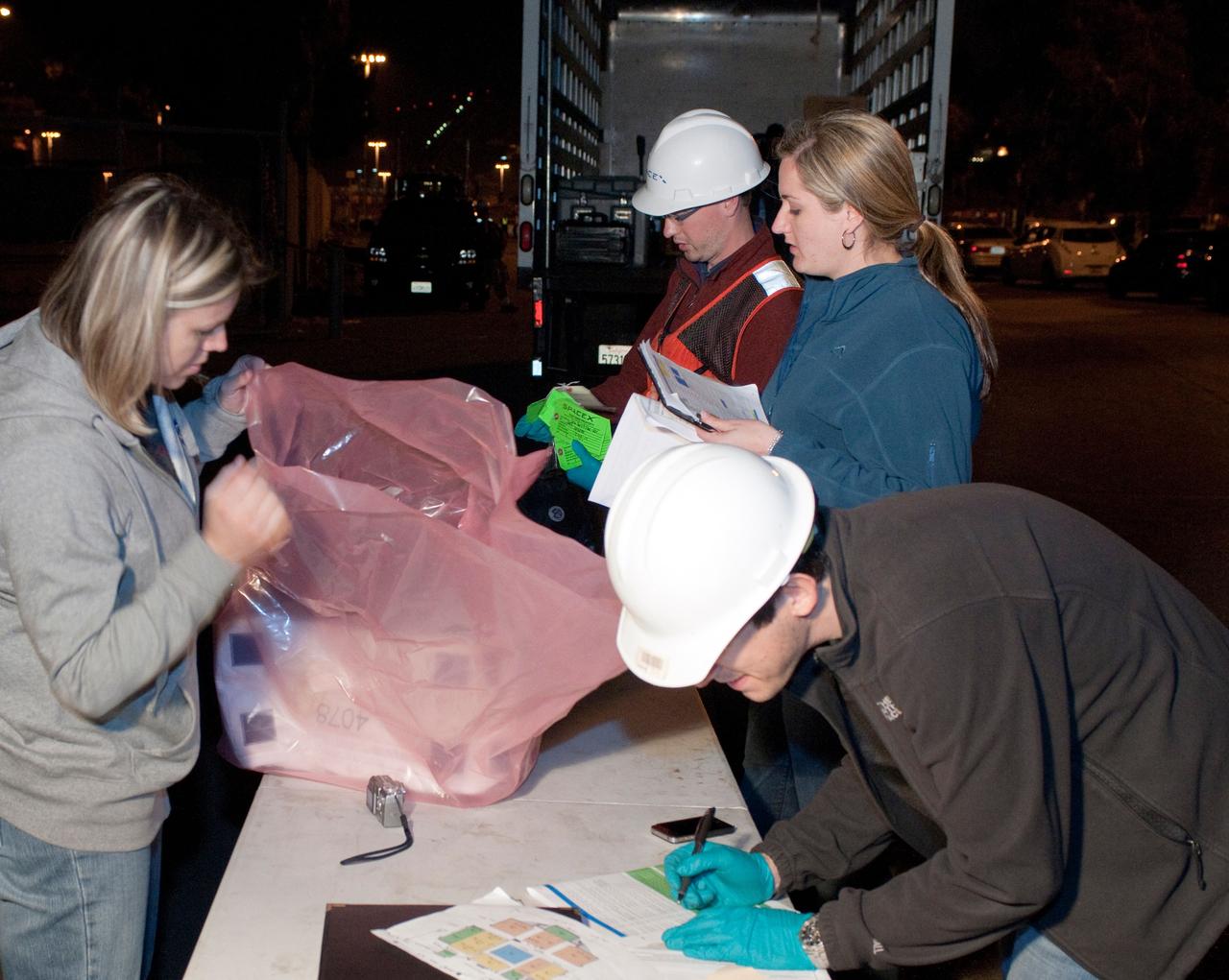
ED13-0079-11 (26 March 2013) ---- SpaceX Dragon's second operational mission ended on March 26 after three weeks attached to the International Space Station. The unmanned spacecraft splashed down in the Pacific Ocean about 214 miles off the coast of Baja California to successfully return about 2,670 pounds of science materials from the orbital outpost. Photo credit: NASA
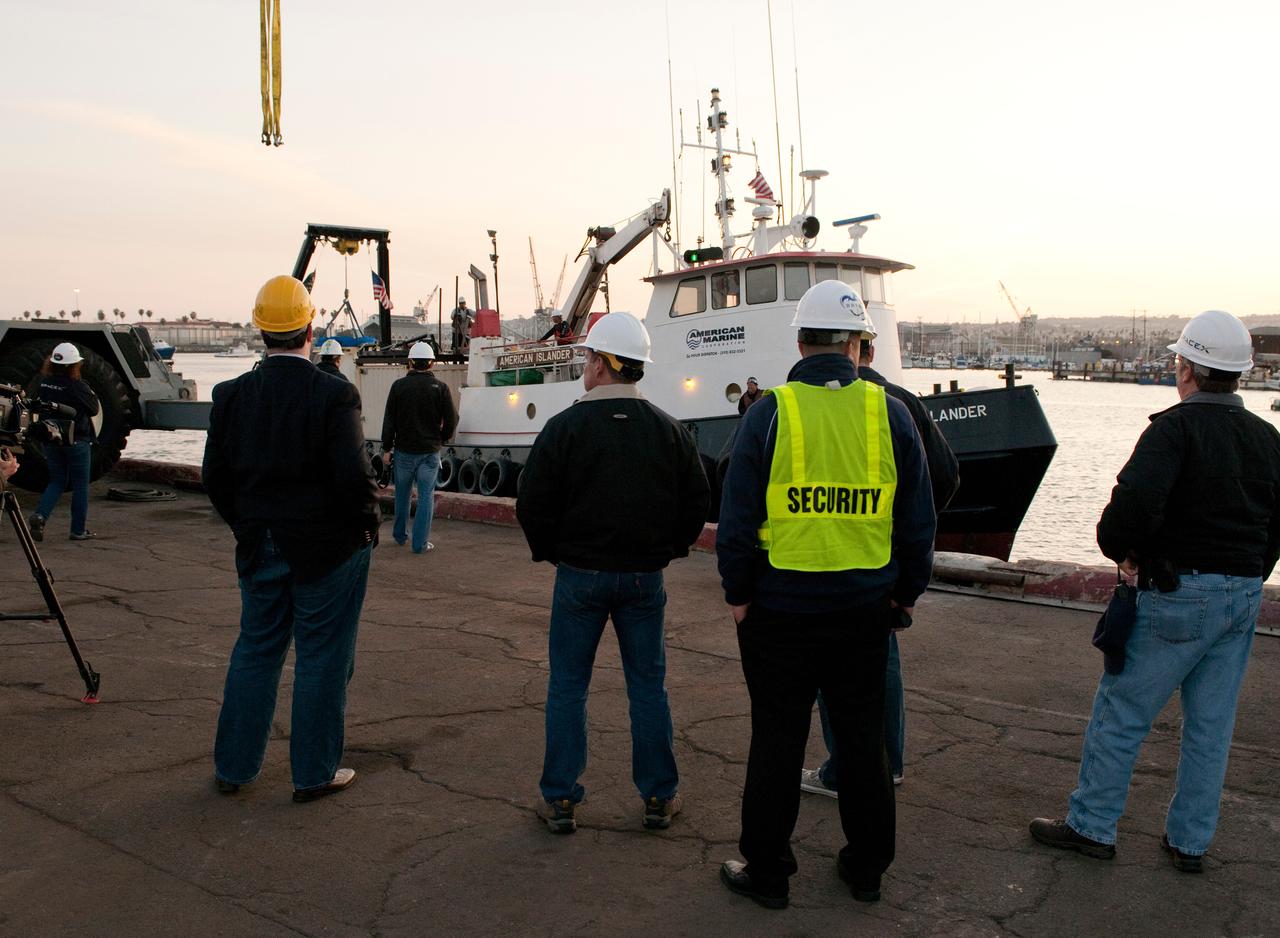
ED13-0079-01 (26 March 2013) ---- SpaceX Dragon's second operational mission ended on March 26 after three weeks attached to the International Space Station. The unmanned spacecraft splashed down in the Pacific Ocean about 214 miles off the coast of Baja California to successfully return about 2,670 pounds of science materials from the orbital outpost. Photo credit: NASA
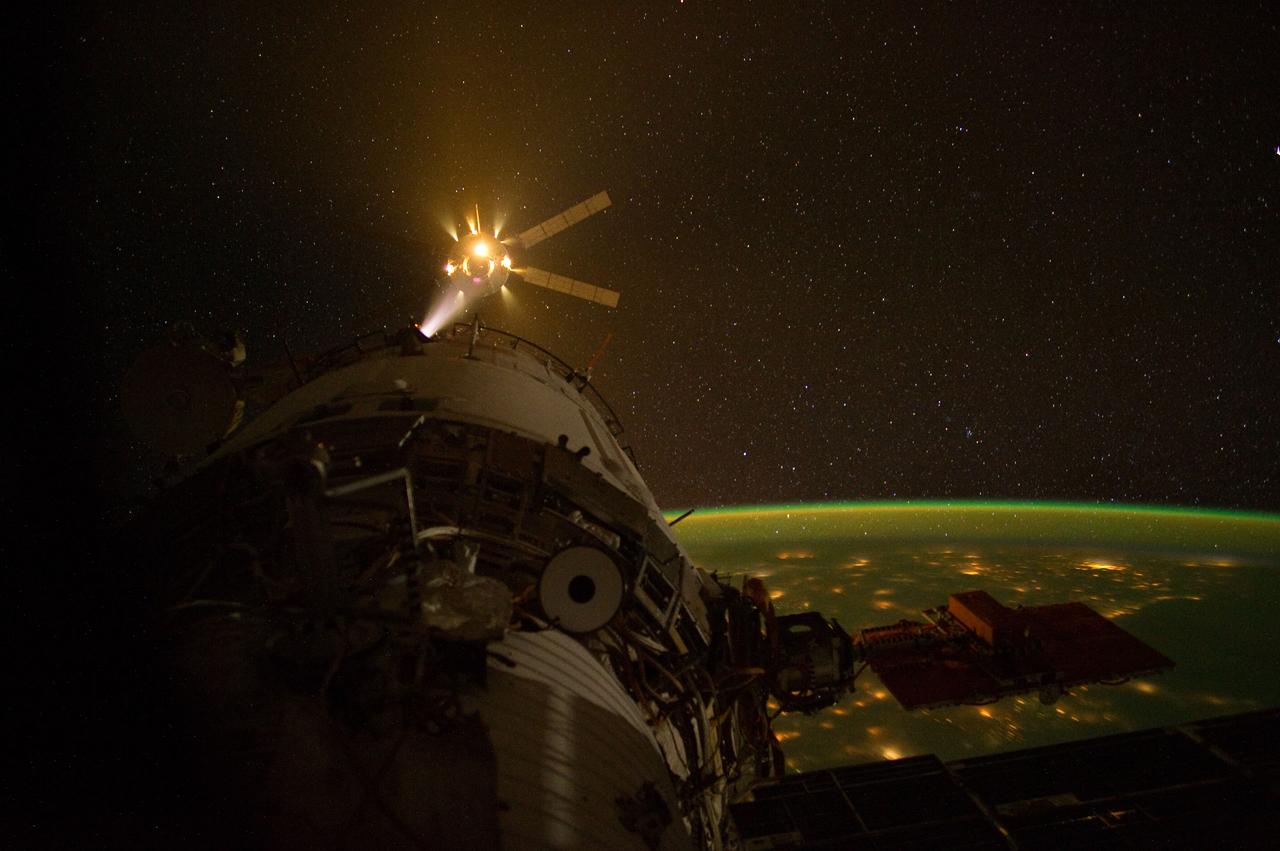
ISS030-E-179621 (28 March 2012) --- European Space Agency?s ?Edoardo Amaldi? Automated Transfer Vehicle-3 (ATV-3) approaches the International Space Station. The unmanned cargo spacecraft docked to the space station at 6:31 p.m. (EDT) on March 28, 2012, delivering 220 pounds of oxygen, 628 pounds of water, 4.5 tons of propellant, and nearly 2.5 tons of dry cargo, including experiment hardware, spare parts, food and clothing.
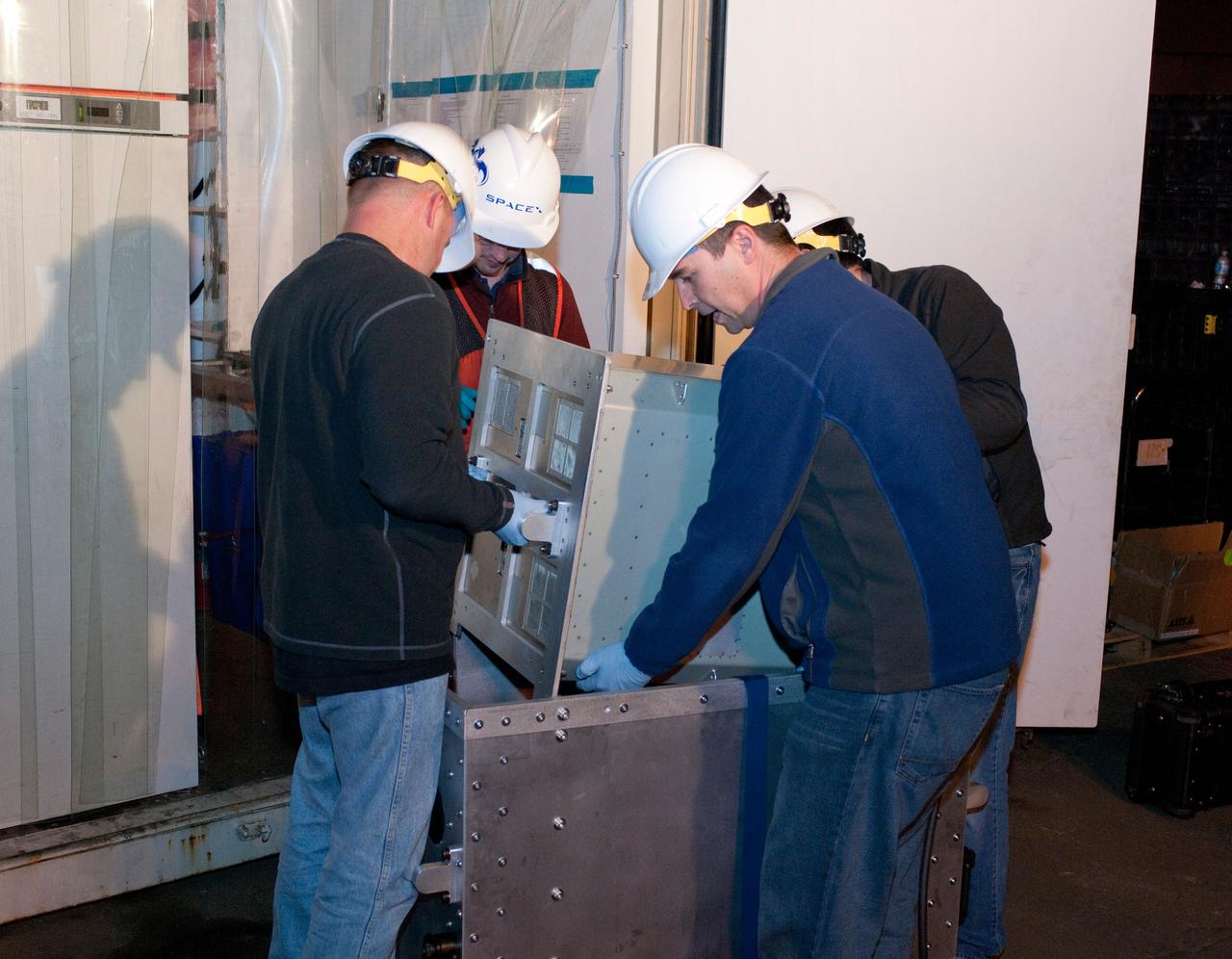
ED13-0079-05 (26 March 2013) ---- SpaceX Dragon's second operational mission ended on March 26 after three weeks attached to the International Space Station. The unmanned spacecraft splashed down in the Pacific Ocean about 214 miles off the coast of Baja California to successfully return about 2,670 pounds of science materials from the orbital outpost. Photo credit: NASA
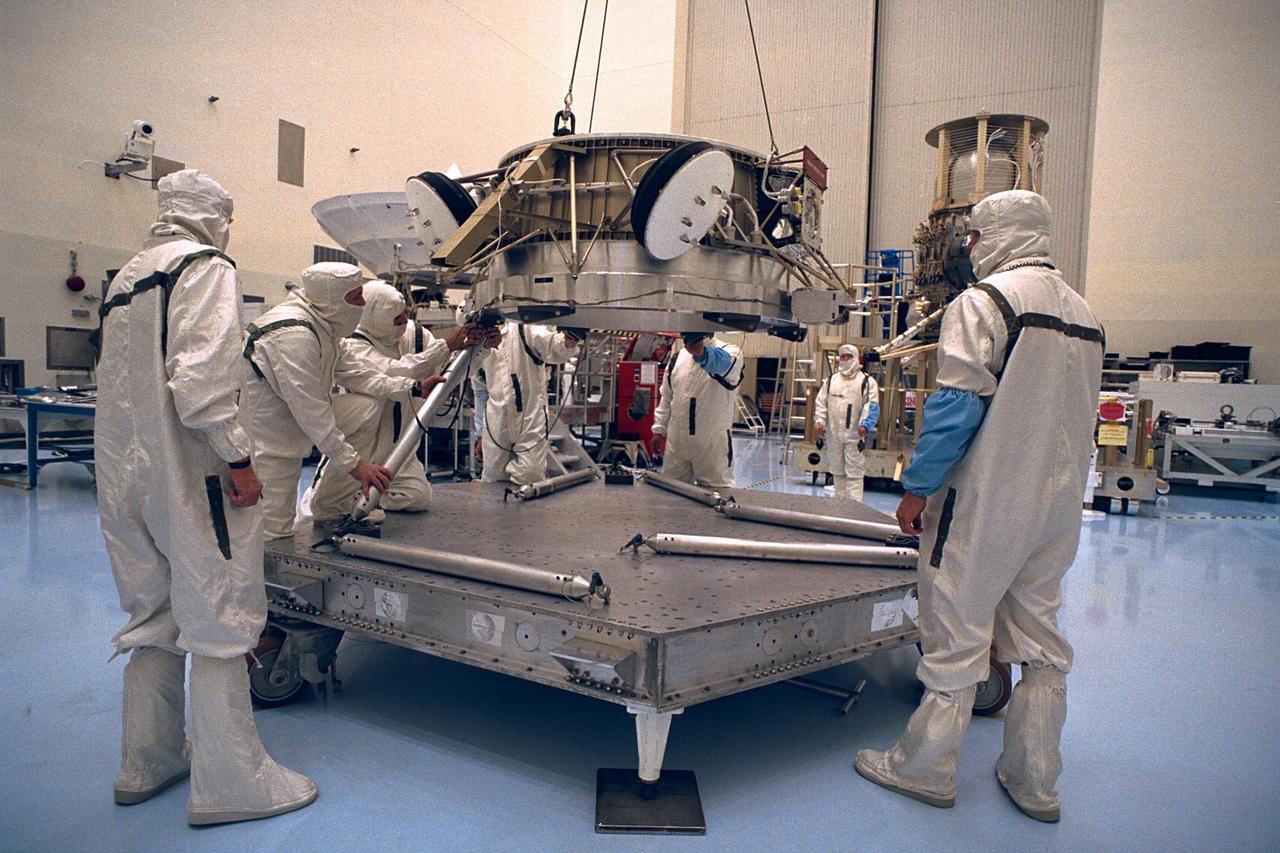
The Lower Equipment Module of the Cassini spacecraft is lifted into a workstand in the Payload Hazardous Servicing Facility (PHSF). Cassini will explore the Saturnian system, including the planet’s rings and its moon, Titan. Launch of the Cassini mission to Saturn is scheduled for Oct. 6 from Launch Complex 40, Cape Canaveral Air Station, aboard a Titan IVB unmanned vehicle
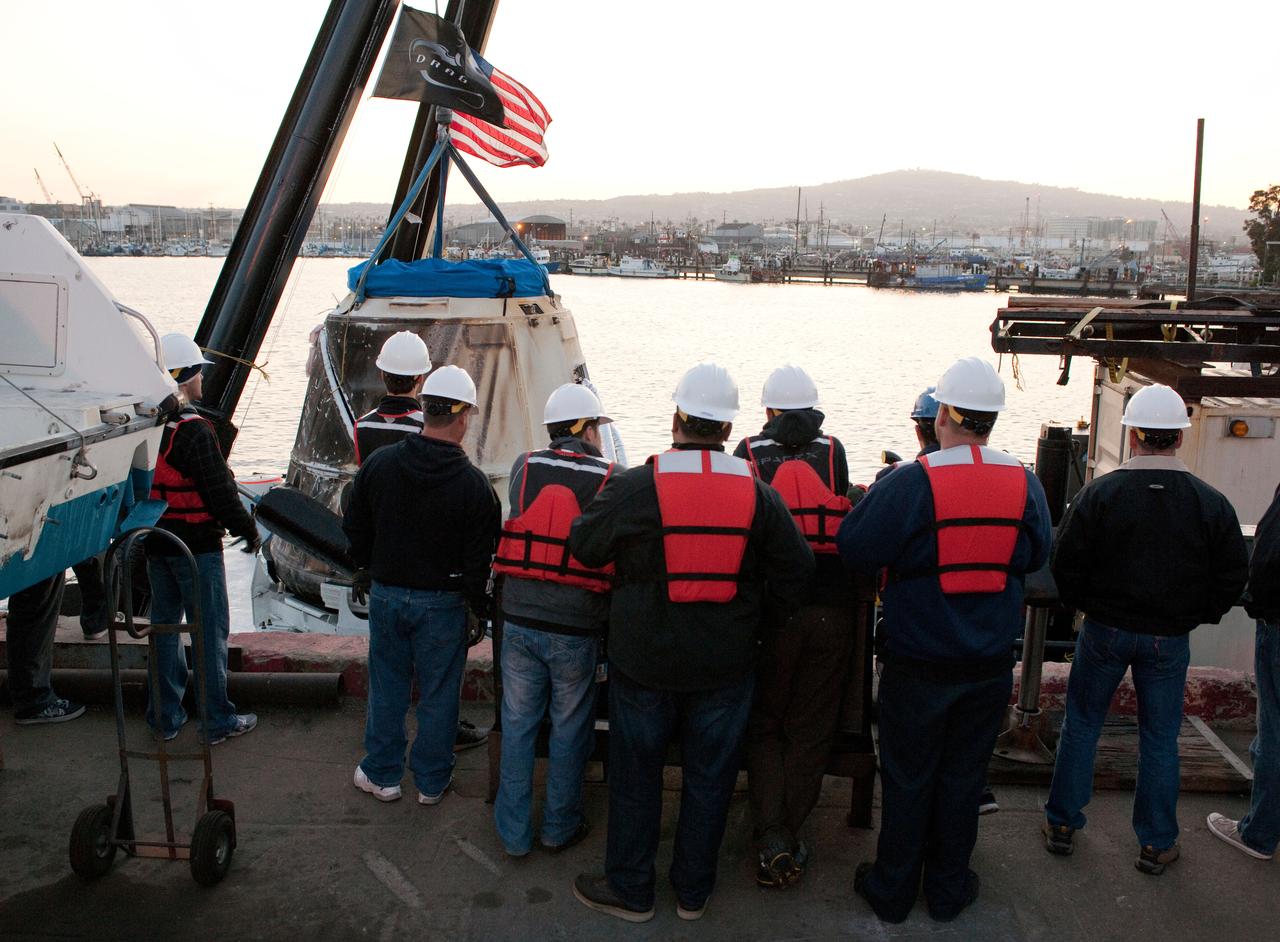
ED13-0079-03 (26 March 2013) ---- SpaceX Dragon's second operational mission ended on March 26 after three weeks attached to the International Space Station. The unmanned spacecraft splashed down in the Pacific Ocean about 214 miles off the coast of Baja California to successfully return about 2,670 pounds of science materials from the orbital outpost. Photo credit: NASA
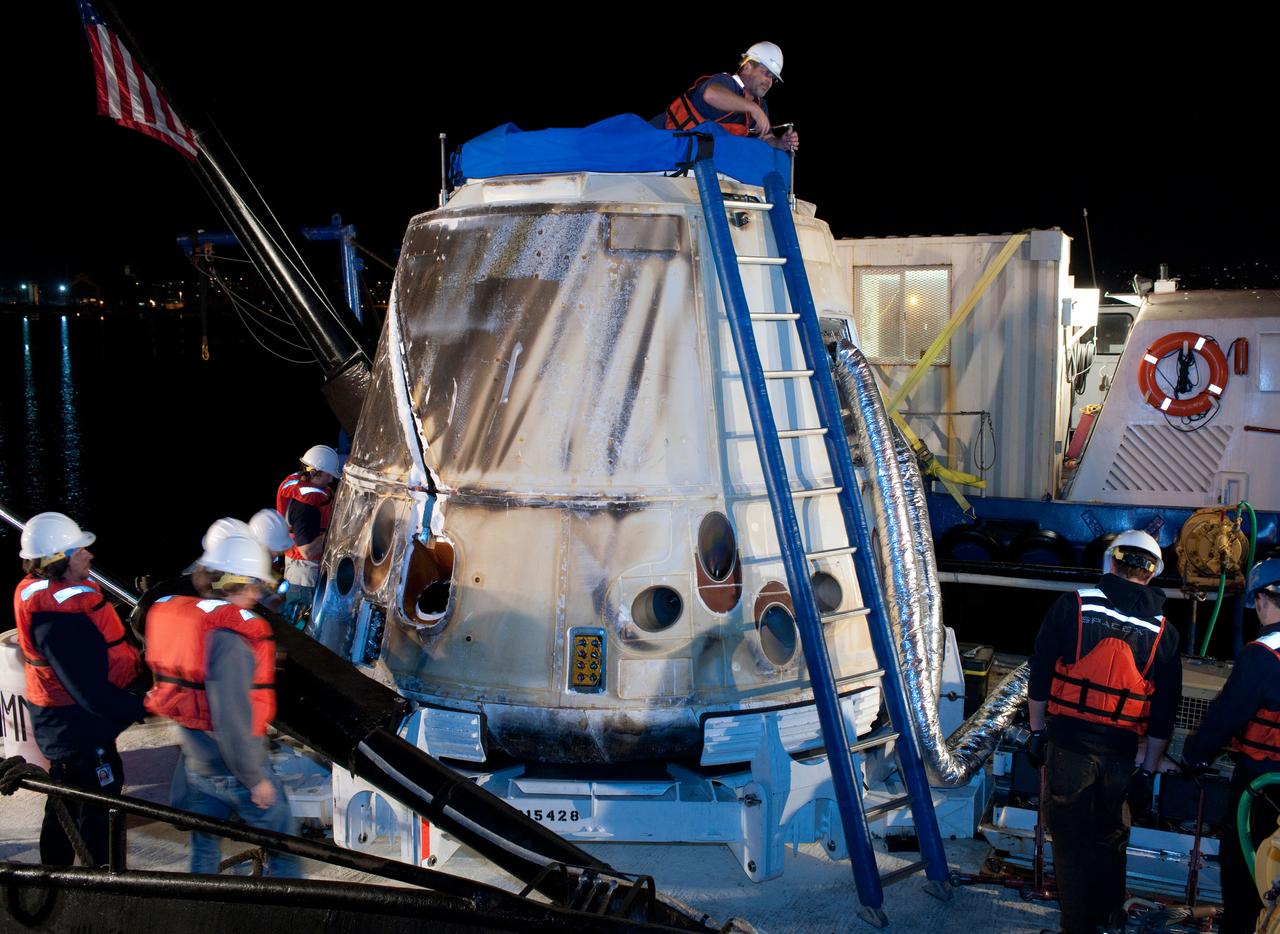
ED13-0079-06 (26 March 2013) ---- SpaceX Dragon's second operational mission ended on March 26 after three weeks attached to the International Space Station. The unmanned spacecraft splashed down in the Pacific Ocean about 214 miles off the coast of Baja California to successfully return about 2,670 pounds of science materials from the orbital outpost. Photo credit: NASA
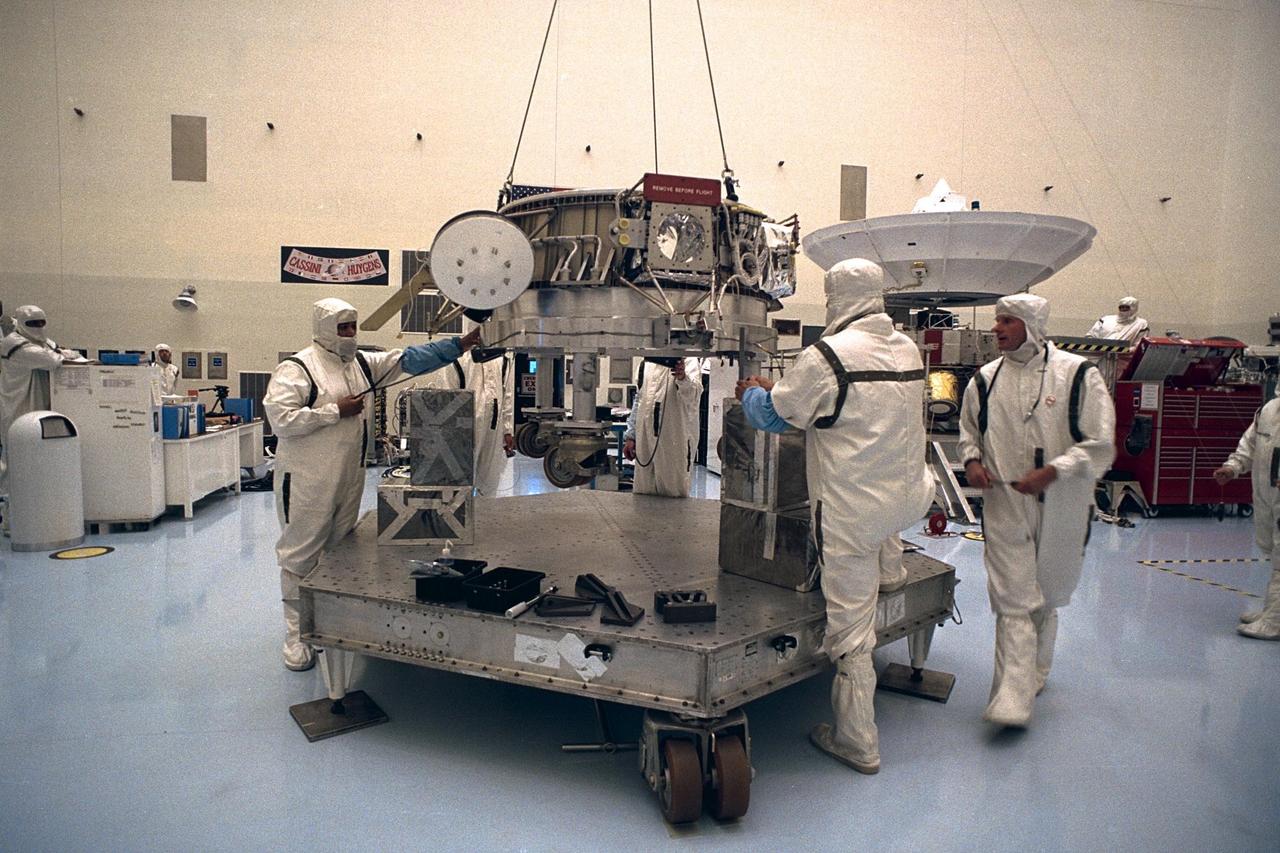
The Lower Equipment Module of the Cassini spacecraft is lifted into a workstand in the Payload Hazardous Servicing Facility (PHSF). Cassini will explore the Saturnian system, including the planet’s rings and its moon, Titan. Launch of the Cassini mission to Saturn is scheduled for Oct. 6 from Launch Complex 40, Cape Canaveral Air Station, aboard a Titan IVB unmanned vehicle
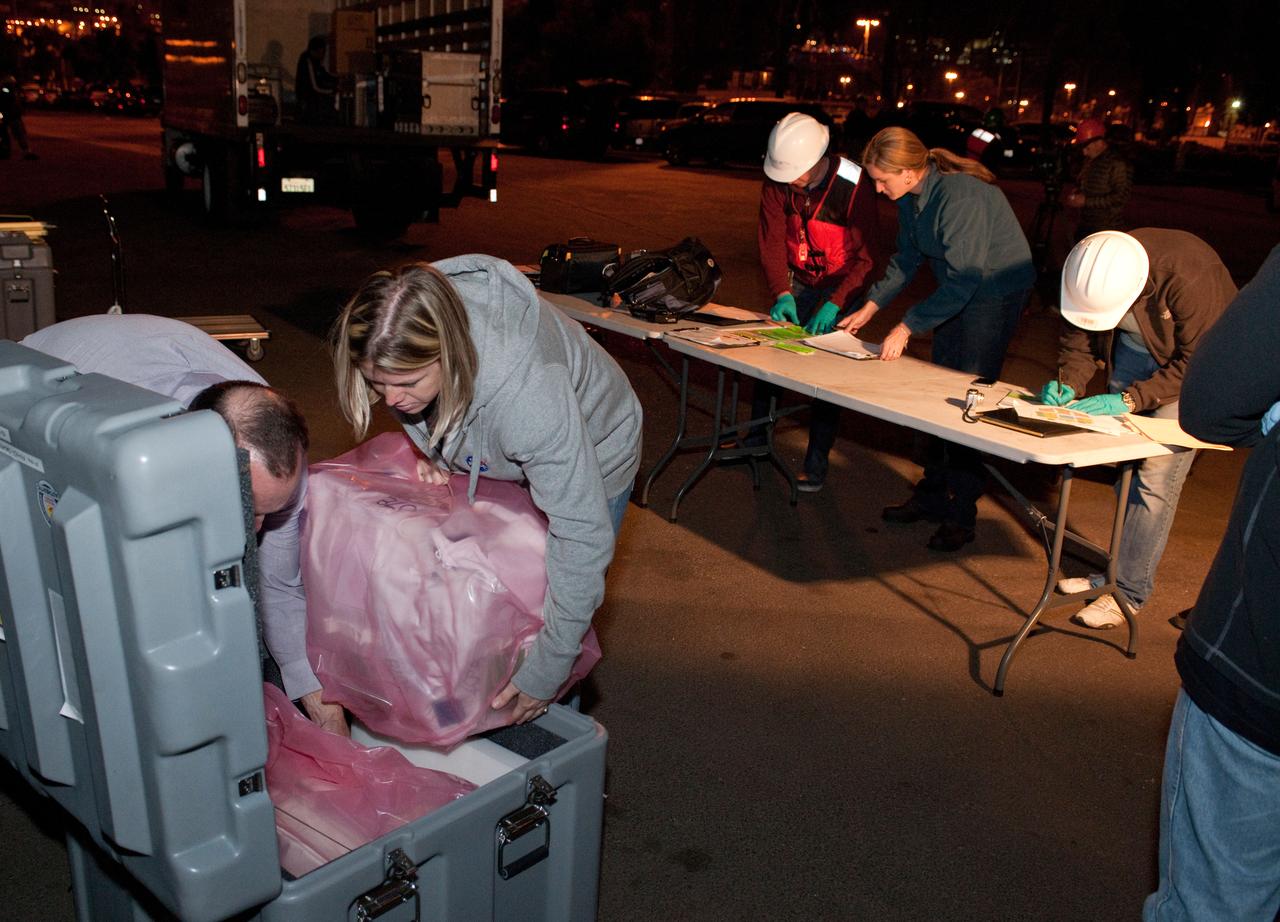
ED13-0079-12 (26 March 2013) ---- SpaceX Dragon's second operational mission ended on March 26 after three weeks attached to the International Space Station. The unmanned spacecraft splashed down in the Pacific Ocean about 214 miles off the coast of Baja California to successfully return about 2,670 pounds of science materials from the orbital outpost. Photo credit: NASA
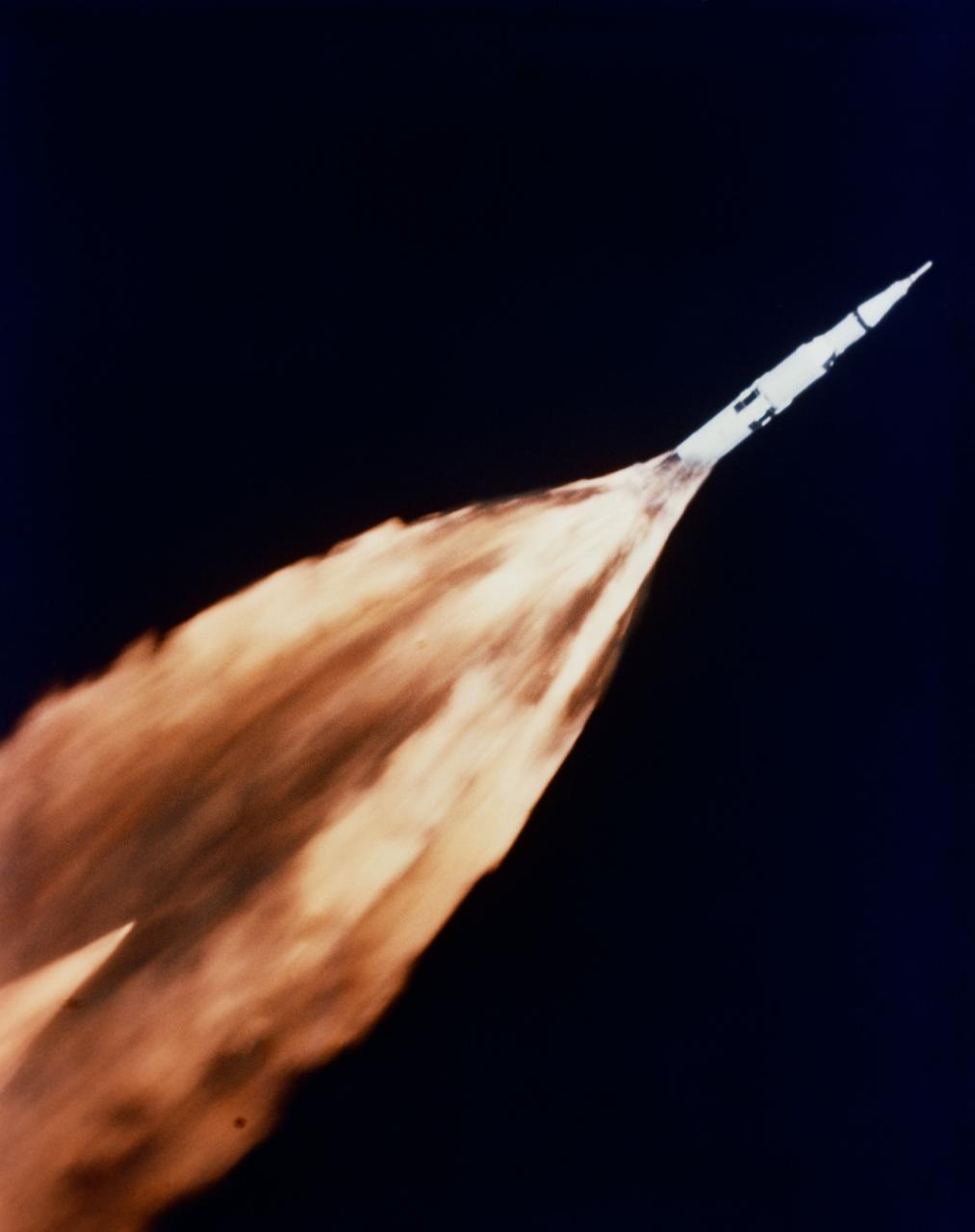
S68-27366 (4 April 1968) --- The five F-1 engines of the huge Apollo/Saturn V space vehicle's first (S-IC) stage leave a gigantic trail of flame in the sky above the Kennedy Space Center seconds after liftoff. The launch of the Apollo 6 (Spacecraft 020/Saturn 502) unmanned space mission occurred at 07:00:01.5 (EST), April 4, 1968. This view of the Apollo 6 launch was taken from a chase plane.
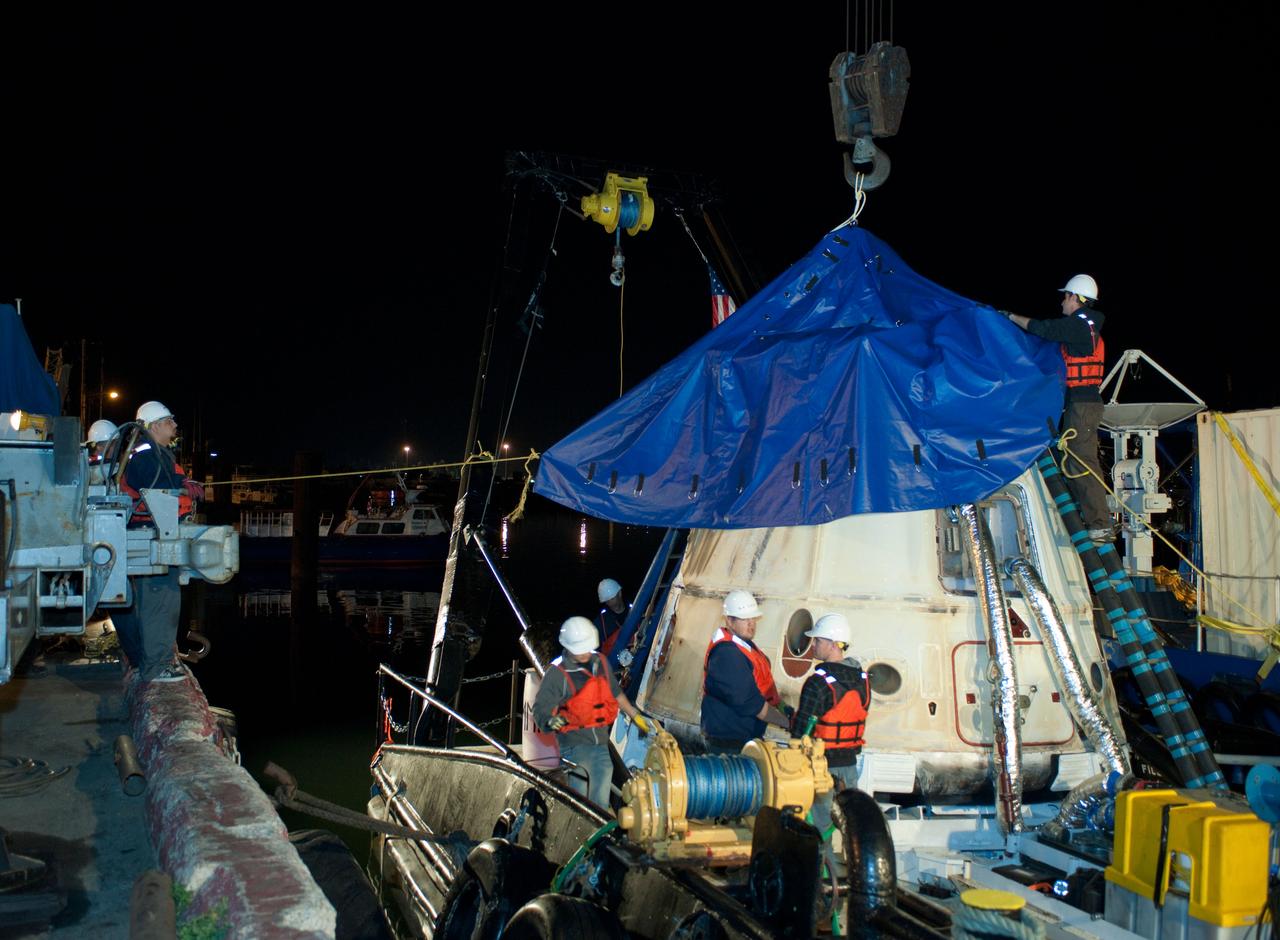
ED13-0079-13 (26 March 2013) ---- SpaceX Dragon's second operational mission ended on March 26 after three weeks attached to the International Space Station. The unmanned spacecraft splashed down in the Pacific Ocean about 214 miles off the coast of Baja California to successfully return about 2,670 pounds of science materials from the orbital outpost. Photo credit: NASA
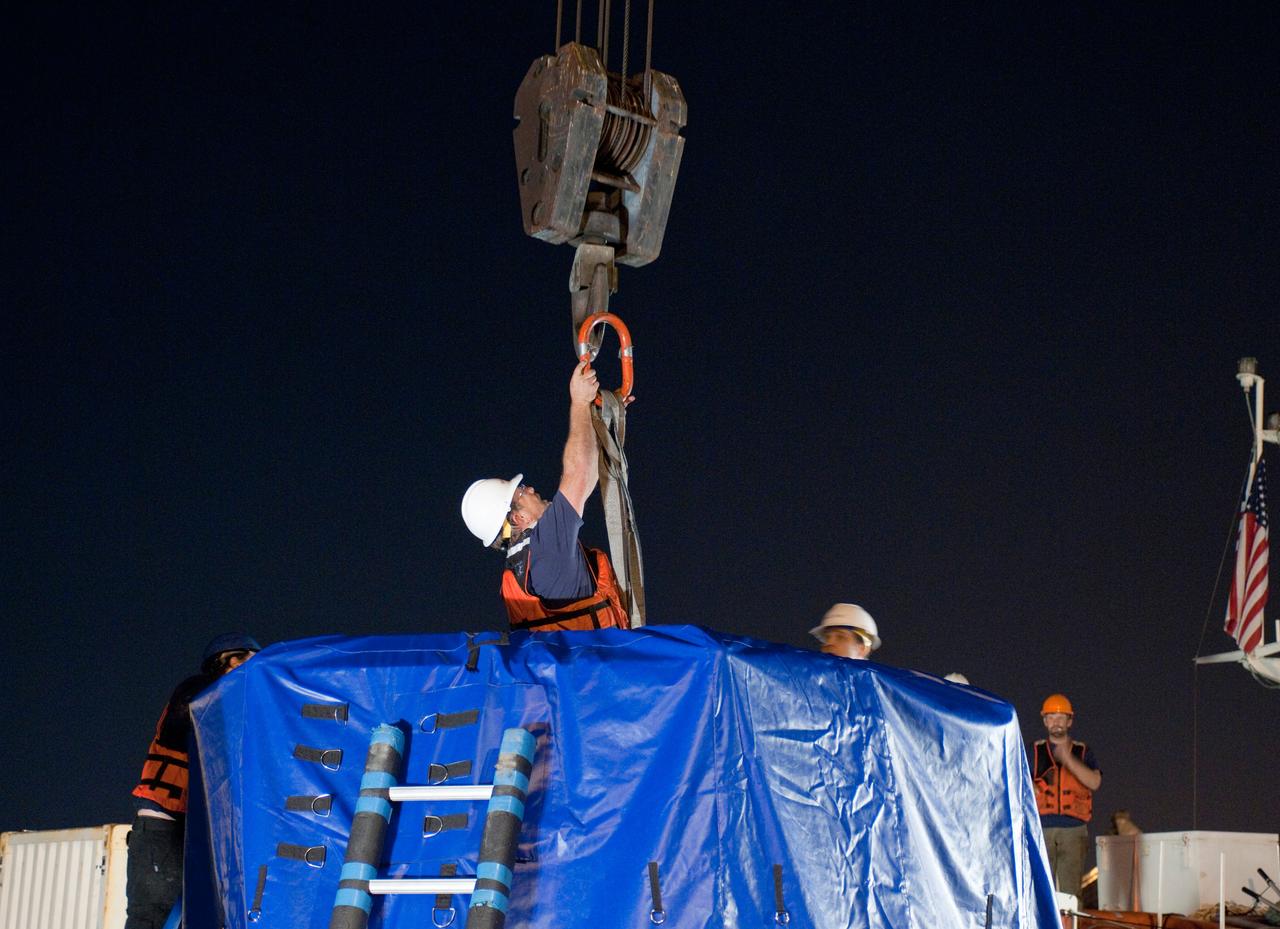
ED13-0079-14 (26 March 2013) ---- SpaceX Dragon's second operational mission ended on March 26 after three weeks attached to the International Space Station. The unmanned spacecraft splashed down in the Pacific Ocean about 214 miles off the coast of Baja California to successfully return about 2,670 pounds of science materials from the orbital outpost. Photo credit: NASA
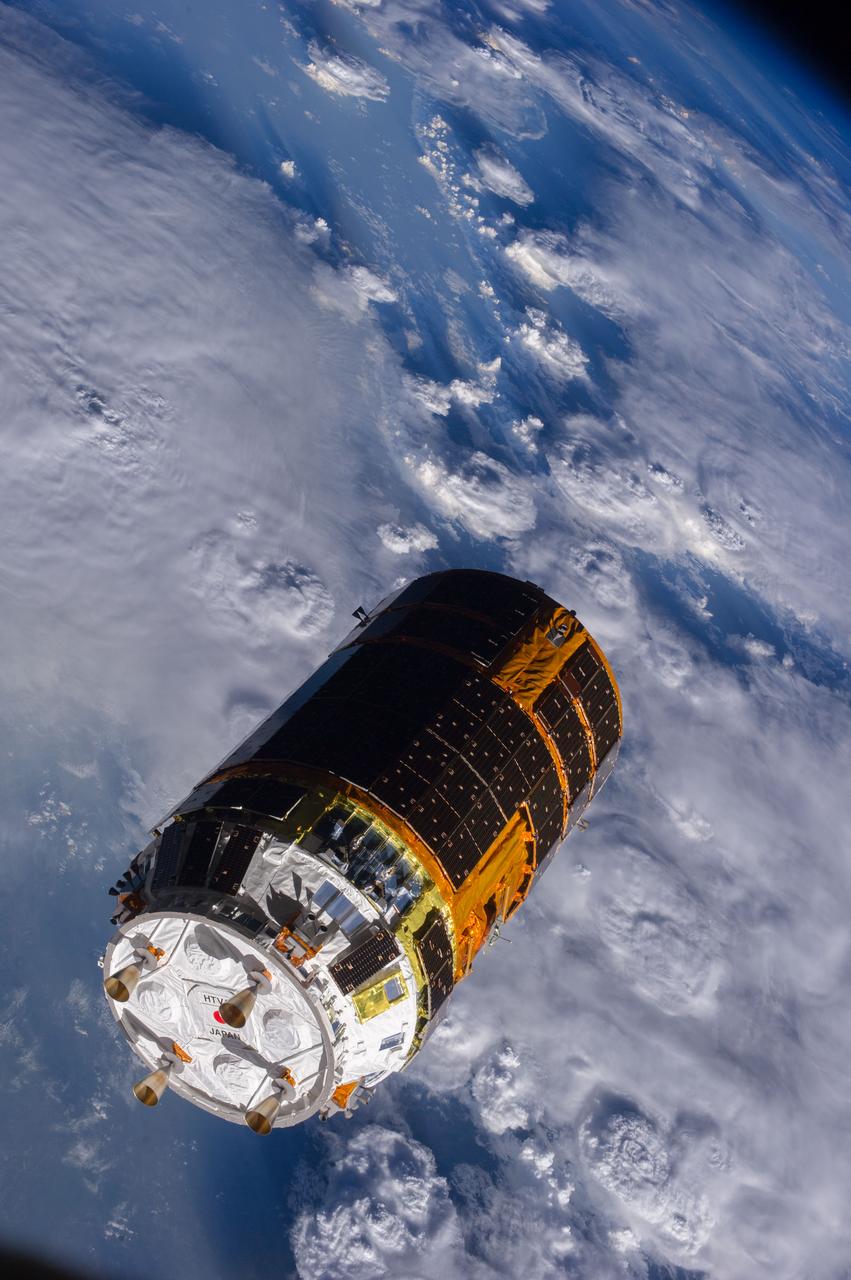
One of the Expedition 36 crew members aboard the International Space Station took this picture of the Japanese HTV-4 unmanned cargo spacecraft,backdropped against the Earth,following its unberthing and release from the orbital outpost. HTV-4,after backing away from the flying complex,headed for re-entry into Earth's atmosphere,burning upon re-entry. Per Twitter message: And, shortly after release of #HTV4, flying over Africa (The storm clouds were amazing).
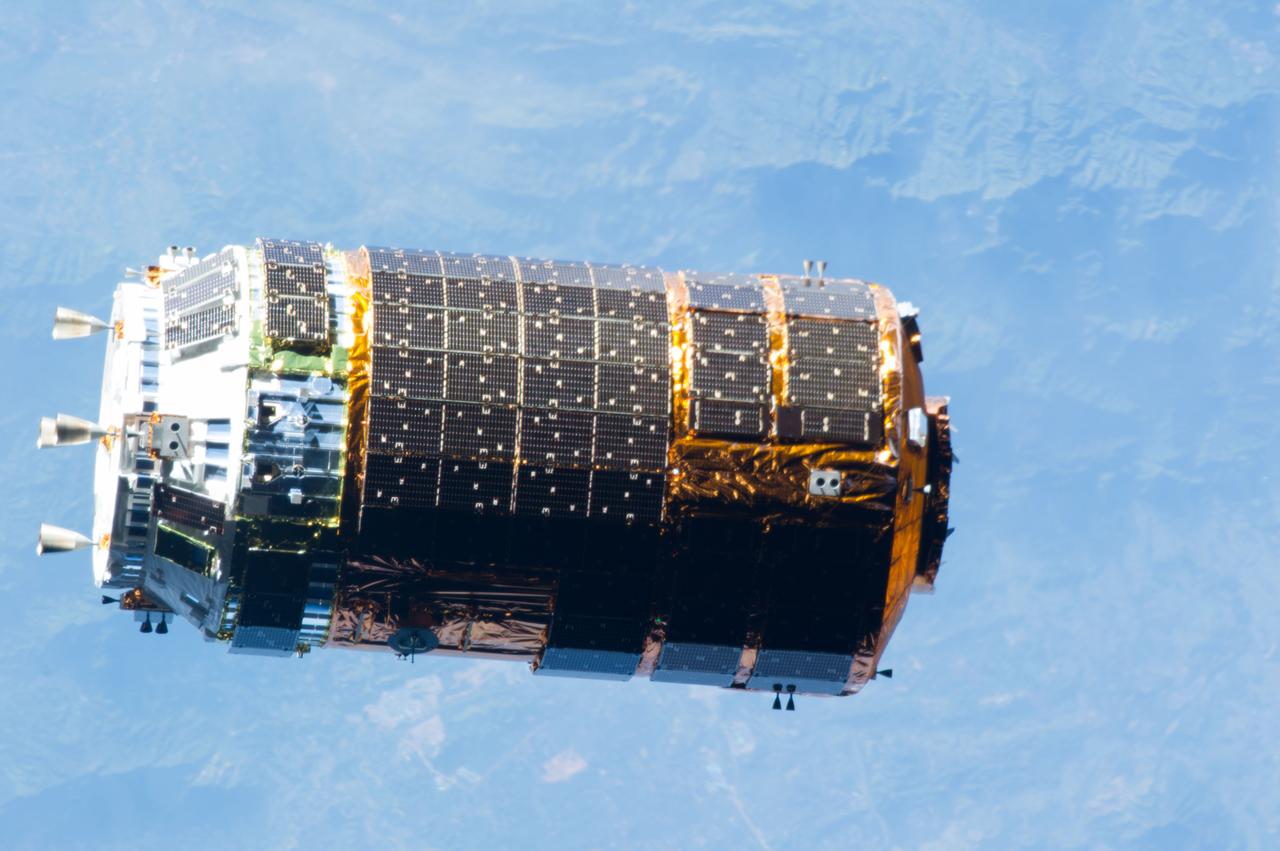
ISS036-E-029969 (9 Aug. 2013) --- The unpiloted Japanese "Kounotori" H2 Transfer Vehicle-4 (HTV-4) approaches the International Space Station. The HTV, a 33-foot-long, 13-foot-diameter unmanned cargo transfer spacecraft, is delivering 3.6 tons of science experiments, equipment and supplies to the orbiting complex. HTV-4 launched from the Tanegashima Space Center in southern Japan on Aug.3 at 3:48 p.m. (Aug. 4 at 4:48 a.m., Japan time).

The propulsion system is mated to the Lower Equipment Module of the Cassini spacecraft in the Payload Hazardous Servicing Facility (PHSF). Cassini will explore the Saturnian system, including the planet’s rings and its moon, Titan. Launch of the Cassini mission to Saturn is scheduled for Oct. 6 from Launch Complex 40, Cape Canaveral Air Station, aboard a Titan IVB unmanned vehicle
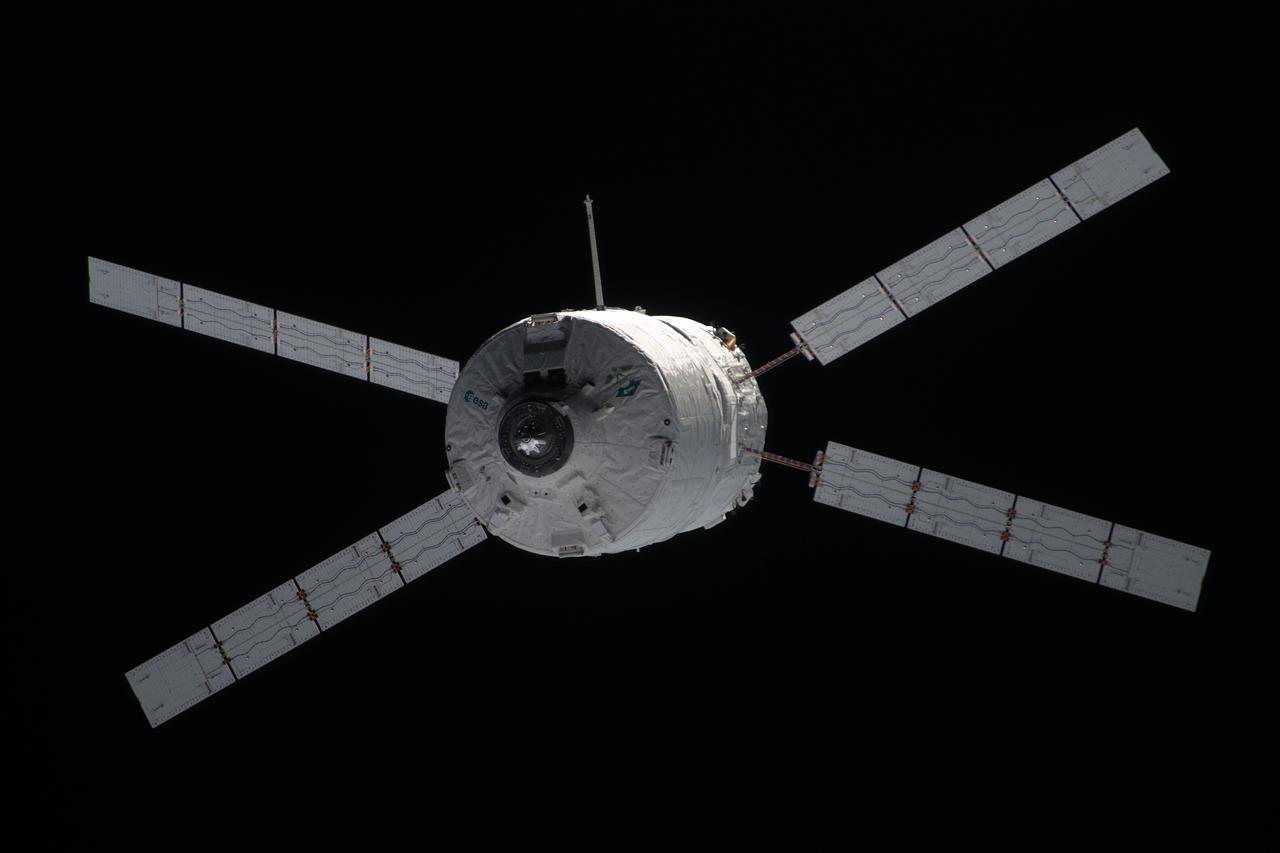
ISS030-E-174978 (28 March 2012) --- European Space Agency?s ?Edoardo Amaldi? Automated Transfer Vehicle-3 (ATV-3) approaches the International Space Station. The unmanned cargo spacecraft docked to the space station at 6:31 p.m. (EDT) on March 28, 2012, delivering 220 pounds of oxygen, 628 pounds of water, 4.5 tons of propellant, and nearly 2.5 tons of dry cargo, including experiment hardware, spare parts, food and clothing.
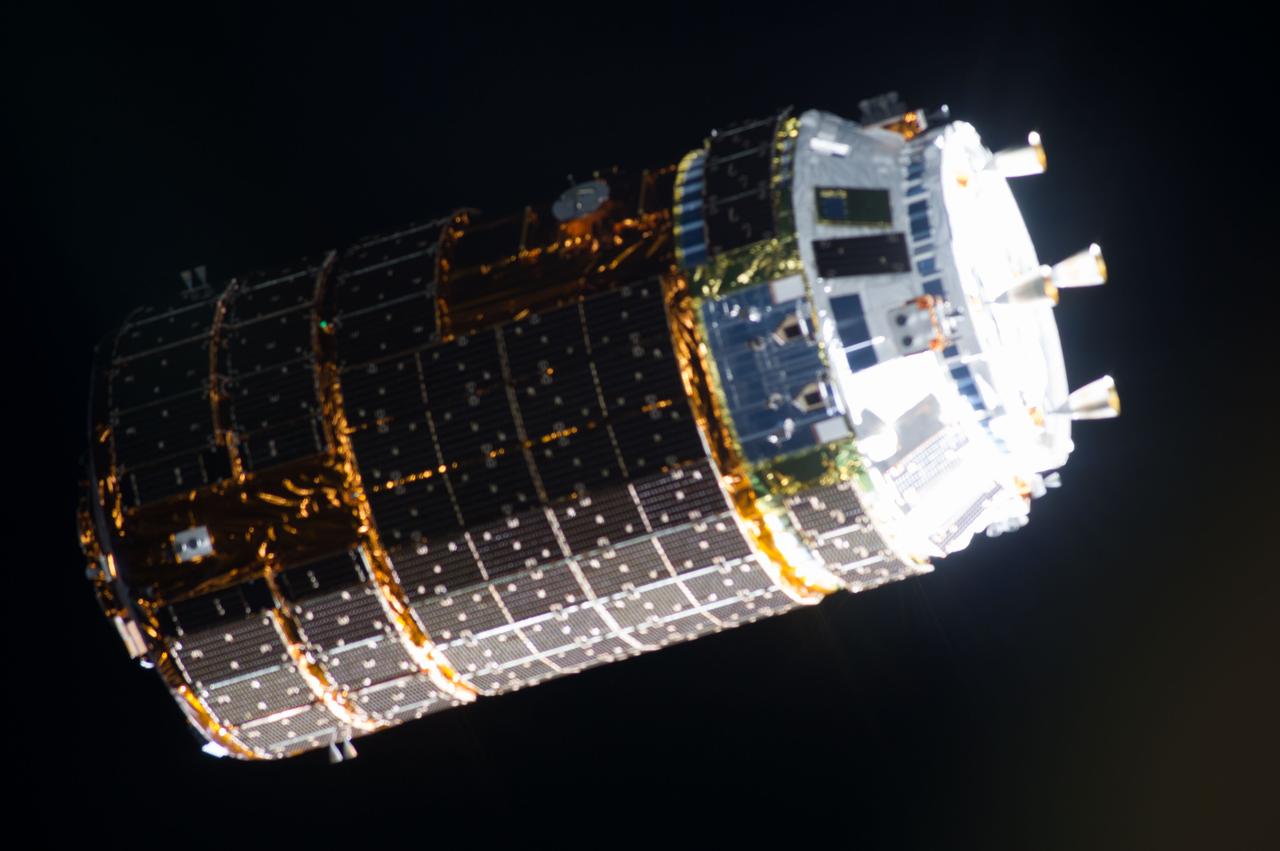
ISS036-E-030067 (9 Aug. 2013) --- The unpiloted Japanese "Kounotori" H2 Transfer Vehicle-4 (HTV-4) approaches the International Space Station. The HTV, a 33-foot-long, 13-foot-diameter unmanned cargo transfer spacecraft, is delivering 3.6 tons of science experiments, equipment and supplies to the orbiting complex. HTV-4 launched from the Tanegashima Space Center in southern Japan on Aug.3 at 3:48 p.m. (Aug. 4 at 4:48 a.m., Japan time).
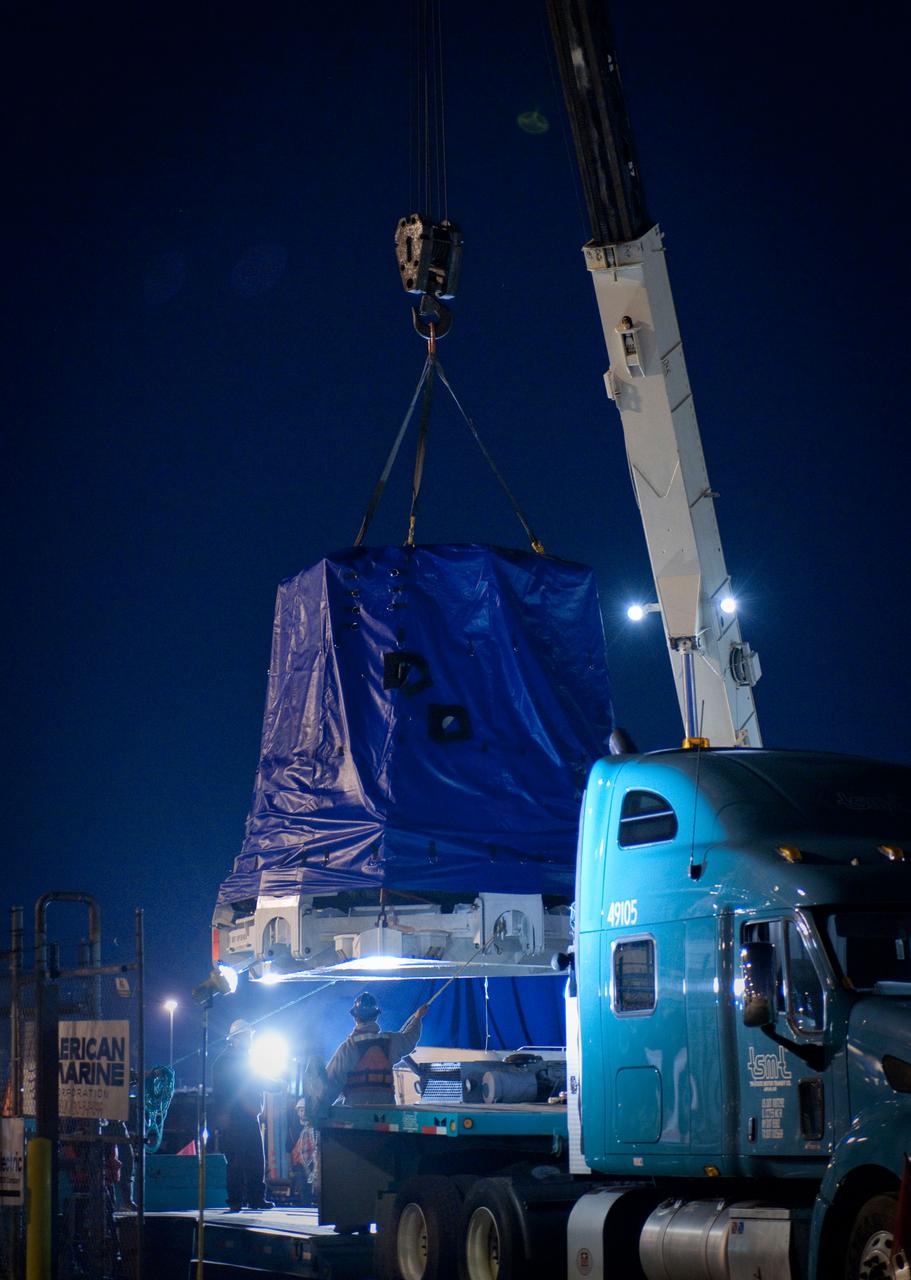
ED13-0079-15 (26 March 2013) ---- SpaceX Dragon's second operational mission ended on March 26 after three weeks attached to the International Space Station. The unmanned spacecraft splashed down in the Pacific Ocean about 214 miles off the coast of Baja California to successfully return about 2,670 pounds of science materials from the orbital outpost. Photo credit: NASA
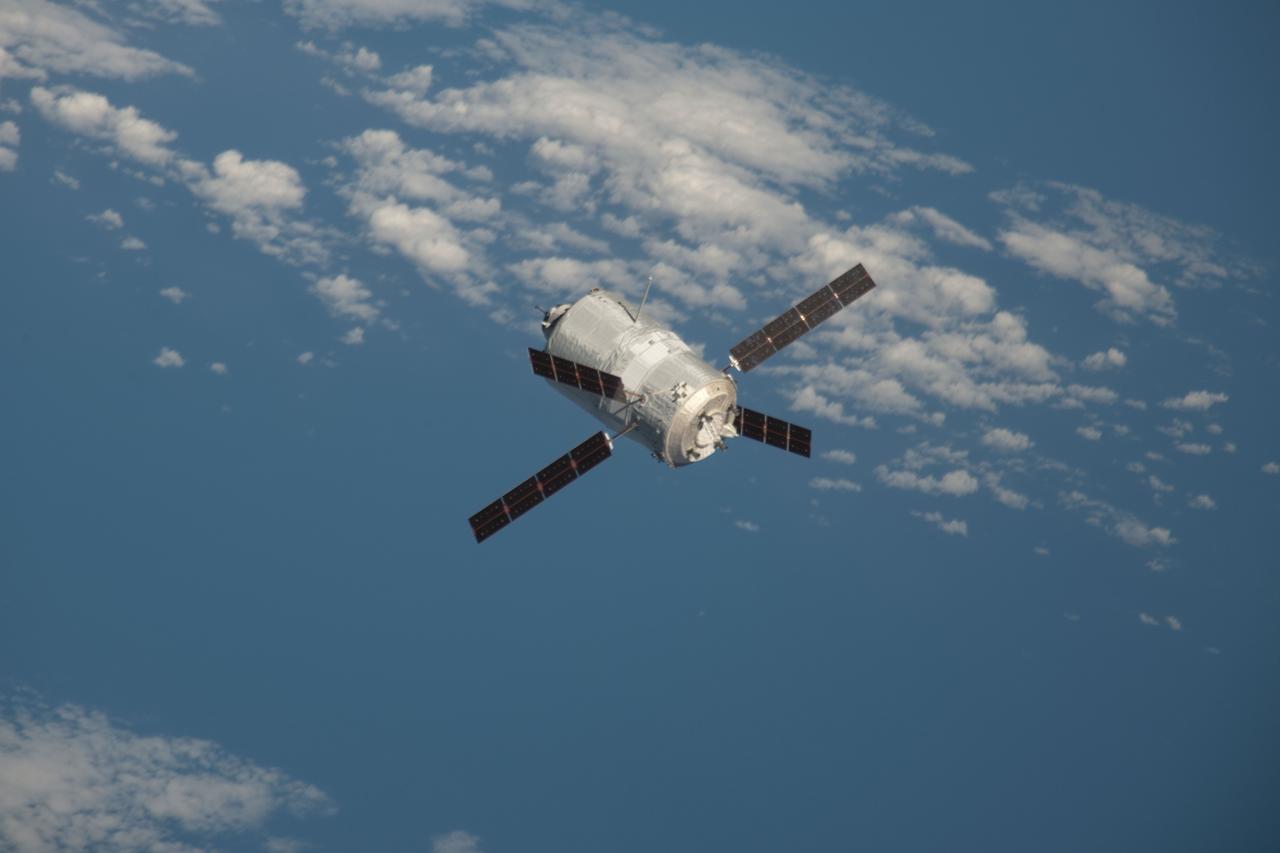
ISS030-E-175090 (28 March 2012) --- European Space Agency?s ?Edoardo Amaldi? Automated Transfer Vehicle-3 (ATV-3) approaches the International Space Station. The unmanned cargo spacecraft docked to the space station at 6:31 p.m. (EDT) on March 28, 2012, delivering 220 pounds of oxygen, 628 pounds of water, 4.5 tons of propellant, and nearly 2.5 tons of dry cargo, including experiment hardware, spare parts, food and clothing.
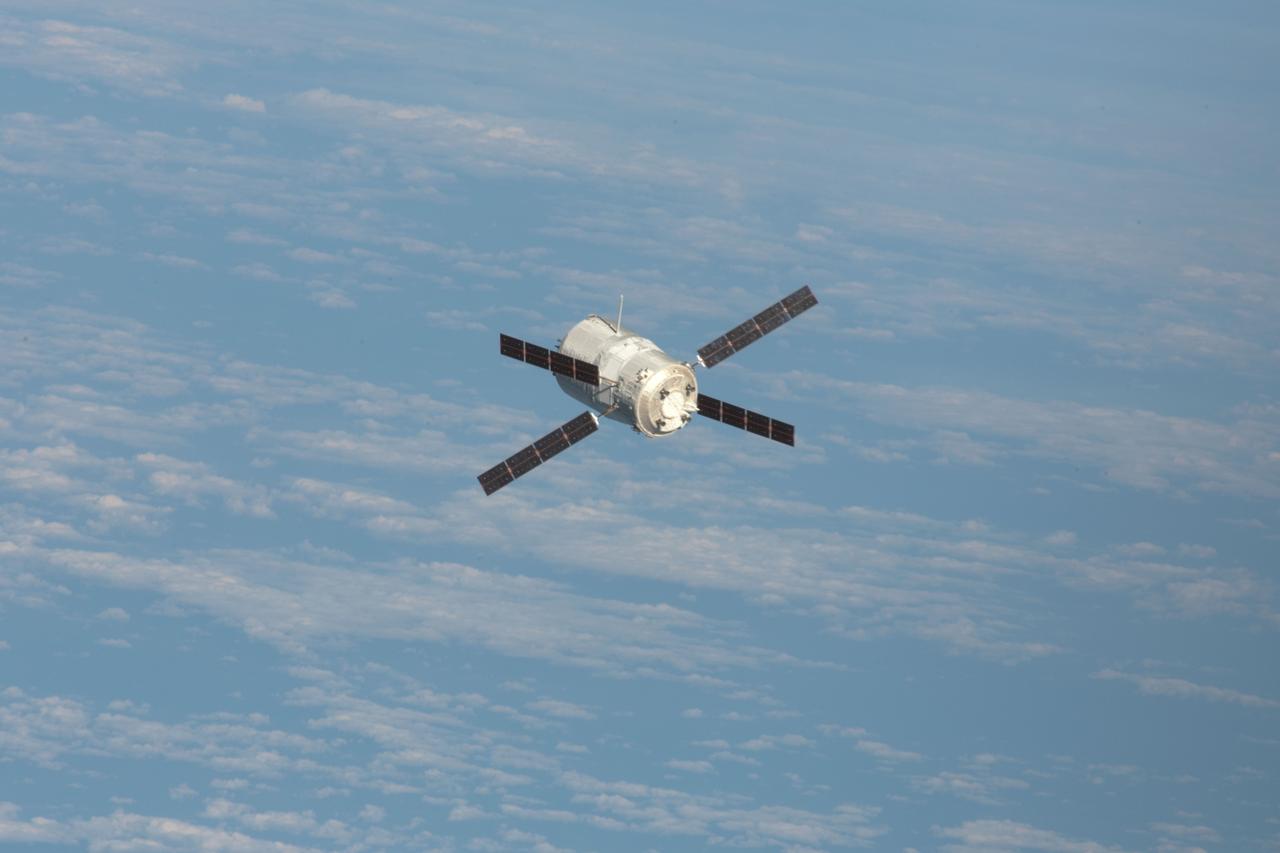
ISS030-E-175078 (28 March 2012) --- European Space Agency?s ?Edoardo Amaldi? Automated Transfer Vehicle-3 (ATV-3) approaches the International Space Station. The unmanned cargo spacecraft docked to the space station at 6:31 p.m. (EDT) on March 28, 2012, delivering 220 pounds of oxygen, 628 pounds of water, 4.5 tons of propellant, and nearly 2.5 tons of dry cargo, including experiment hardware, spare parts, food and clothing.

Workmen at the Kennedy Space Center hoist the Saturn Lunar Module (LM) Adapter into position during assembly of the 204LM-1, an unmanned Apollo mission that tested the Apollo Lunar Module in Earth orbit. Also known as Apollo 5, the spacecraft was launched on the fourth Saturn IB launch vehicle. Developed by the Marshall Space Flight Center (MSFC) as an interim vehicle in MSFC's "building block" approach to the Saturn rocket development, the Saturn IB utilized Saturn I technology to further develop and refine a larger booster and the Apollo spacecraft capabilities required for the manned lunar missions.

S73-25140 (16 April 1973) --- A ground-level view of Pad A, Launch Complex 39, Kennedy Space Center, Florida, showing the 341-feet tall Skylab 1/Saturn V space vehicle on the pad soon after being rolled out from the Vehicle Assembly Building (VAB). The vehicle is composed of the Saturn V first (S-1C) stage, the Apollo Telescope Mount (ATM), the Multiple Docking Adapter (MDA), the Airlock Module (AM), and the Orbital Workshop (OWS). Photo credit: NASA
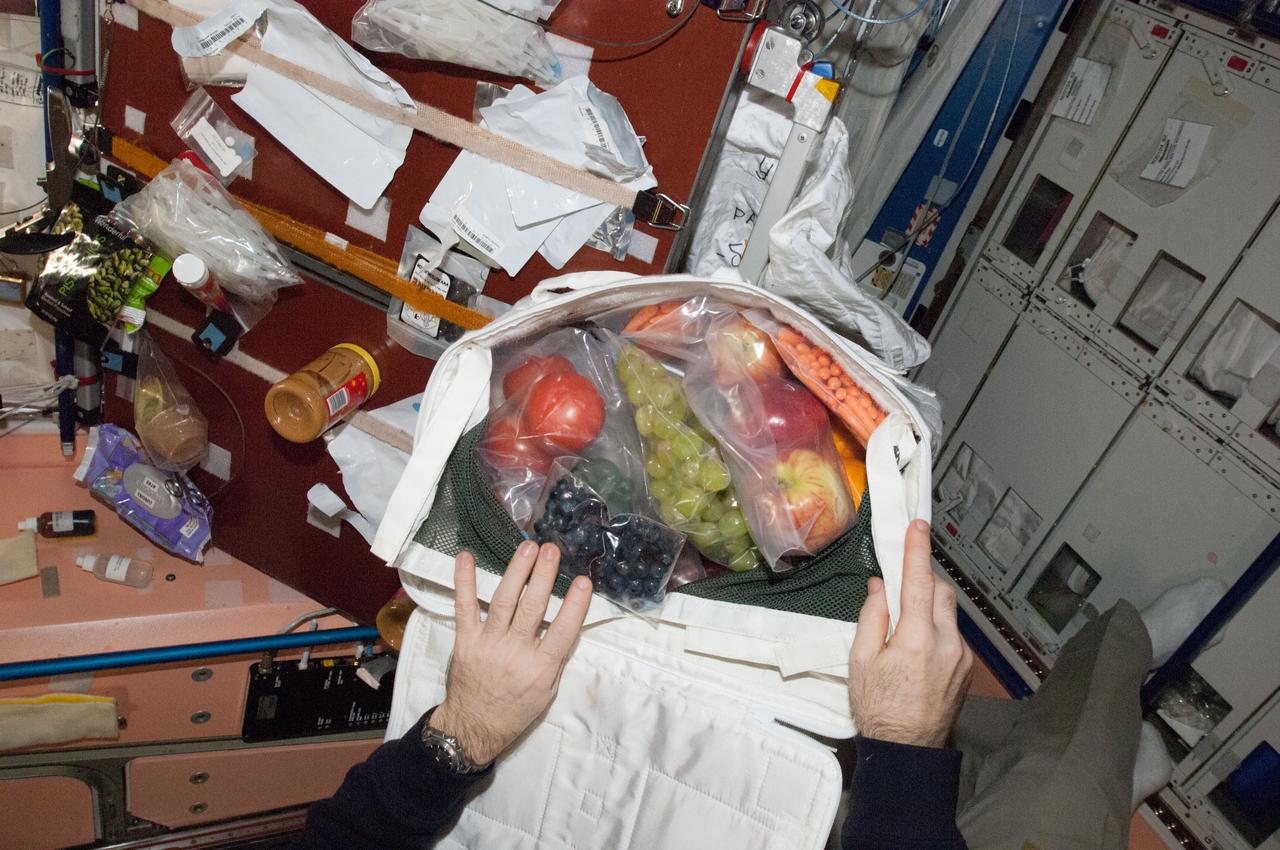
ISS034-E-062087 (3 March 2013) --- The hands of Expedition 34 Commander Kevin Ford, NASA astronaut, open a bag revealing a highly welcomed aggregate of fruit which was sent up from Earth a couple of days earlier and which arrived at the International Space Station on March 3. It was just a very small portion of all the fresh supplies which arrived aboard the unmanned Space X Dragon spacecraft. The scene, being witnessed by many of the astronauts and cosmonauts out of the camera's view, took place in Node 1 or Unity.
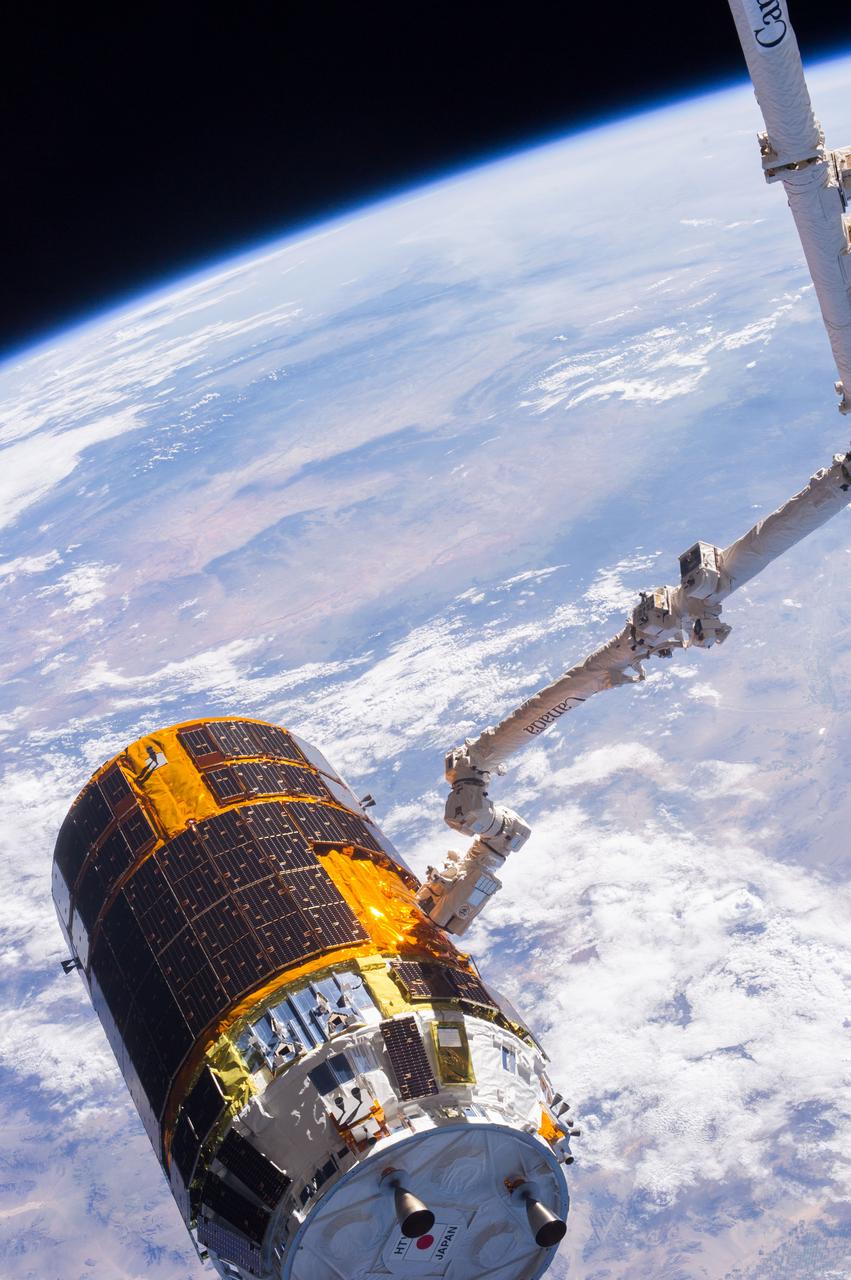
ISS036-E-039501 (04 Sept. 2013) --- One of the Expedition 36 crew members aboard the International Space Station took this picture of the Japanese HTV-4 unmanned cargo spacecraft, backdropped against a land mass on Earth, following its unberthing but just prior to its release from the orbital outpost's Canadarm2. HTV-4, after backing away from the flying complex, headed for re-entry into Earth's atmosphere, burning upon re-entry. HTV-4 was launched by Japan?s Aerospace Exploration Agency (JAXA) on Aug. 4 of this year in order to bring up supplies for the astronauts and cosmonauts onboard the station.
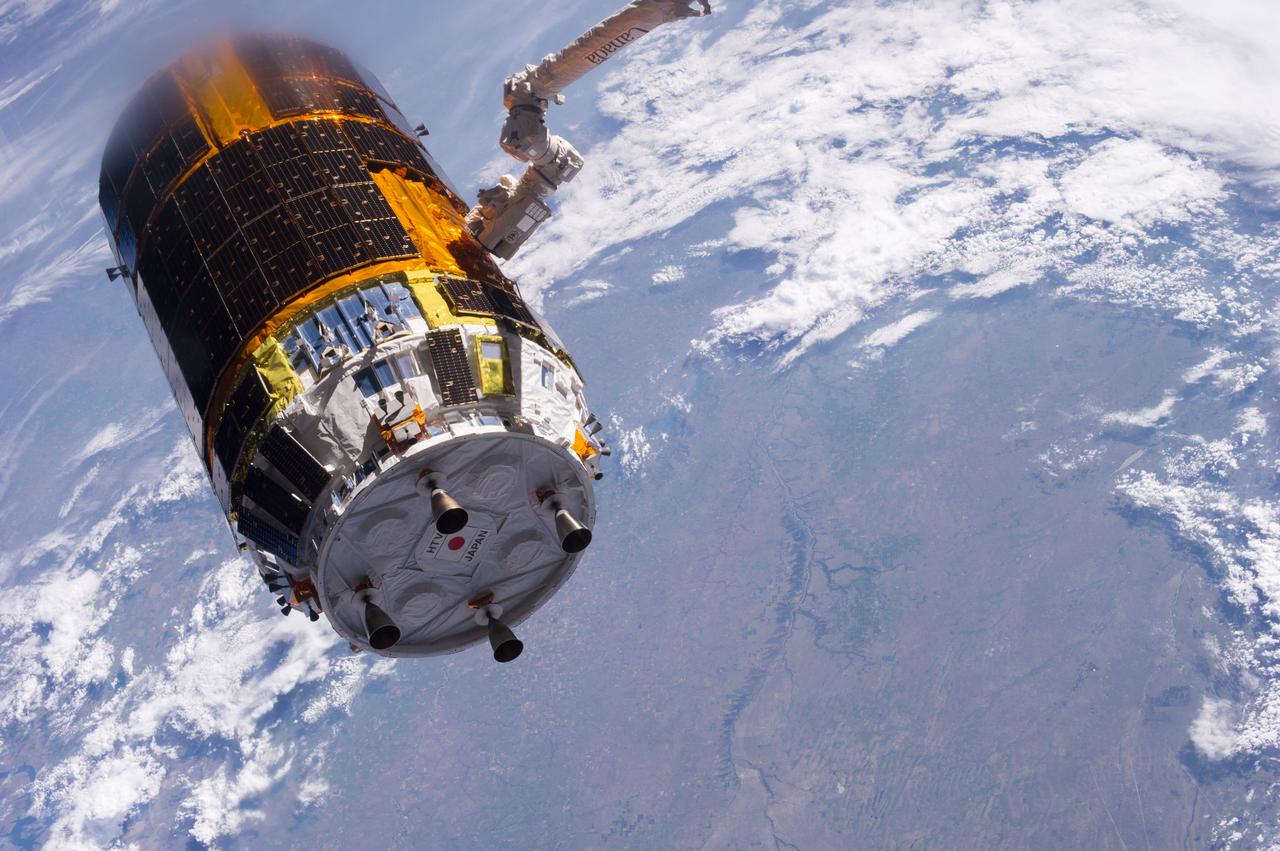
ISS036-E-039523 (04 Sept. 2013) --- One of the Expedition 36 crew members aboard the International Space Station took this picture of the Japanese HTV-4 unmanned cargo spacecraft, backdropped against a land mass on Earth, following its unberthing but just prior to its release from the orbital outpost. HTV-4, after backing away from the flying complex, headed for re-entry into Earth's atmosphere, burning upon re-entry. HTV-4 was launched by Japan?s Aerospace Exploration Agency (JAXA) on Aug. 4 of this year in order to bring up supplies for the astronauts and cosmonauts onboard the station.

This photograph depicts the Saturn V vehicle (SA-501) for the Apollo 4 mission in the Vehicle Assembly Building (VAB) at the Kennedy Space Center (KSC). After the completion of the assembly operation, the work platform was retracted and the vehicle was readied to rollout from the VAB to the launch pad. The Apollo 4 mission was the first launch of the Saturn V launch vehicle. Objectives of the unmanned Apollo 4 test flight were to obtain flight information on launch vehicle and spacecraft structural integrity and compatibility, flight loads, stage separation, and subsystems operation including testing of restart of the S-IVB stage, and to evaluate the Apollo command module heat shield. The Apollo 4 was launched on November 9, 1967 from KSC.
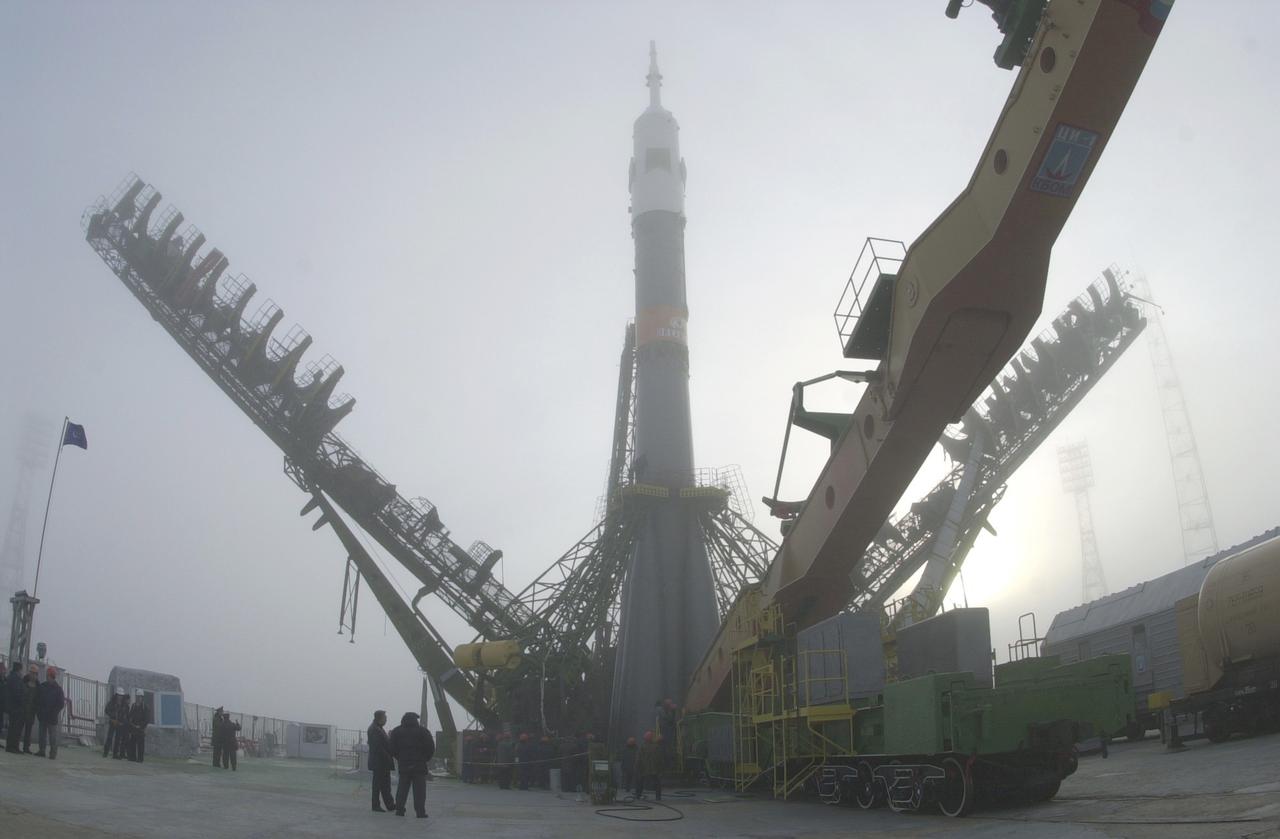
The Soyuz TM-31 launch vehicle is shown in the vertical position for its launch from Baikonur, carrying the first resident crew to the International Space Station. The Russian Soyuz launch vehicle is an expendable spacecraft that evolved out of the original Class A (Sputnik). From the early 1960s until today, the Soyuz launch vehicle has been the backbone of Russia's marned and unmanned space launch fleet. Today, the Soyuz launch vehicle is marketed internationally by a joint Russian/French consortium called STARSEM. As of August 2001, there have been ten Soyuz missions under the STARSEM banner.
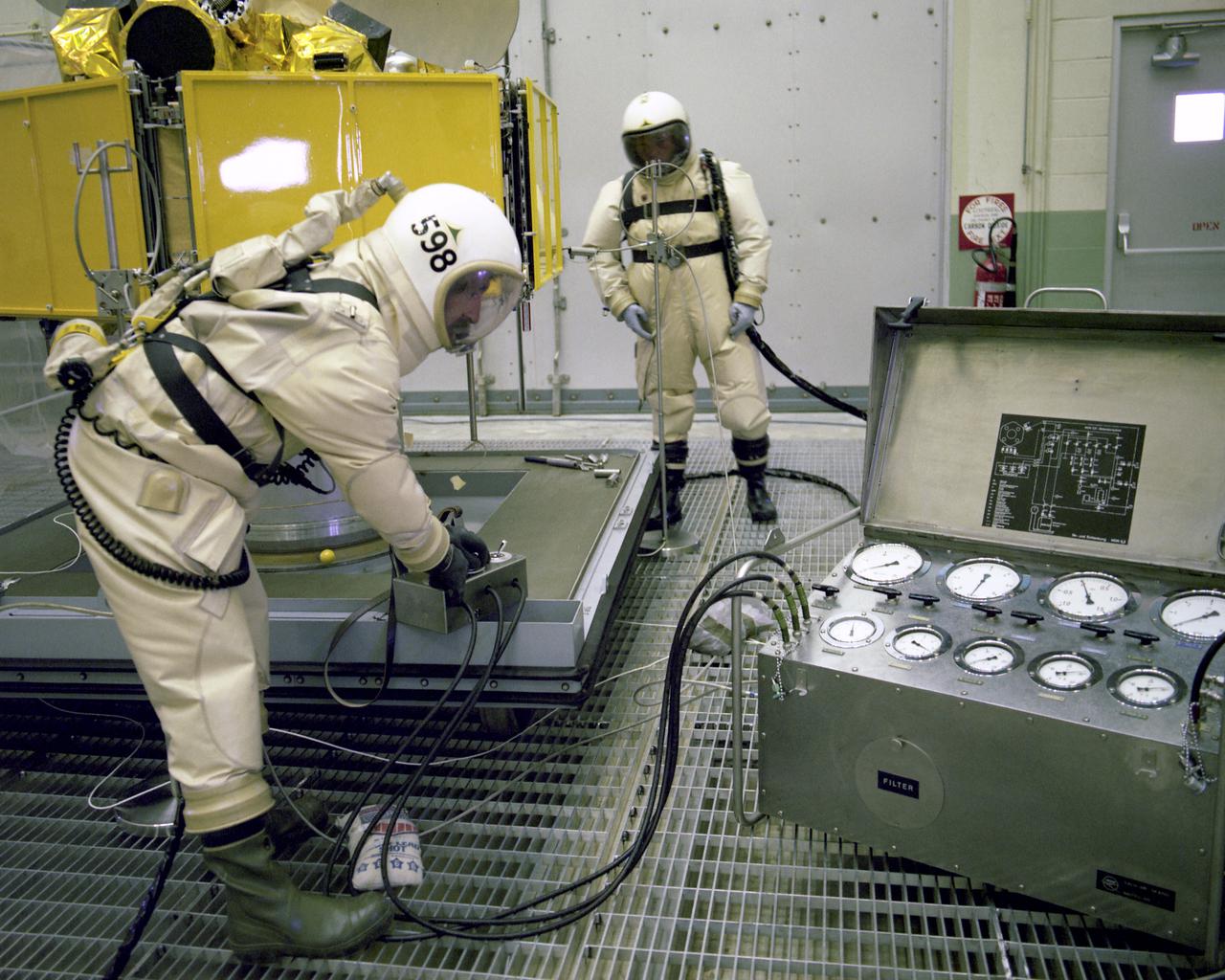
CAPE CANAVERAL, Fla. -- Technicians in protective suits loaded the Symphonie-B spacecraft with propellants in the Spin Test Facility at Cape Canaveral Air Force Station today. The French-West German experimental communications satellite is to be launched by KSC's Unmanned Launch Operations Directorate aboard a Delta rocket from Complex 17 in late August or early September. The satellite will be placed in a synchronous orbit 22,300 miles above the equator south of the West African 'Bulge,' joining Symphonie-1 in handling communications between ground stations in Europe, South America, portions of North America and the Mideast. Photo credit: NASA Photo credit: NASA
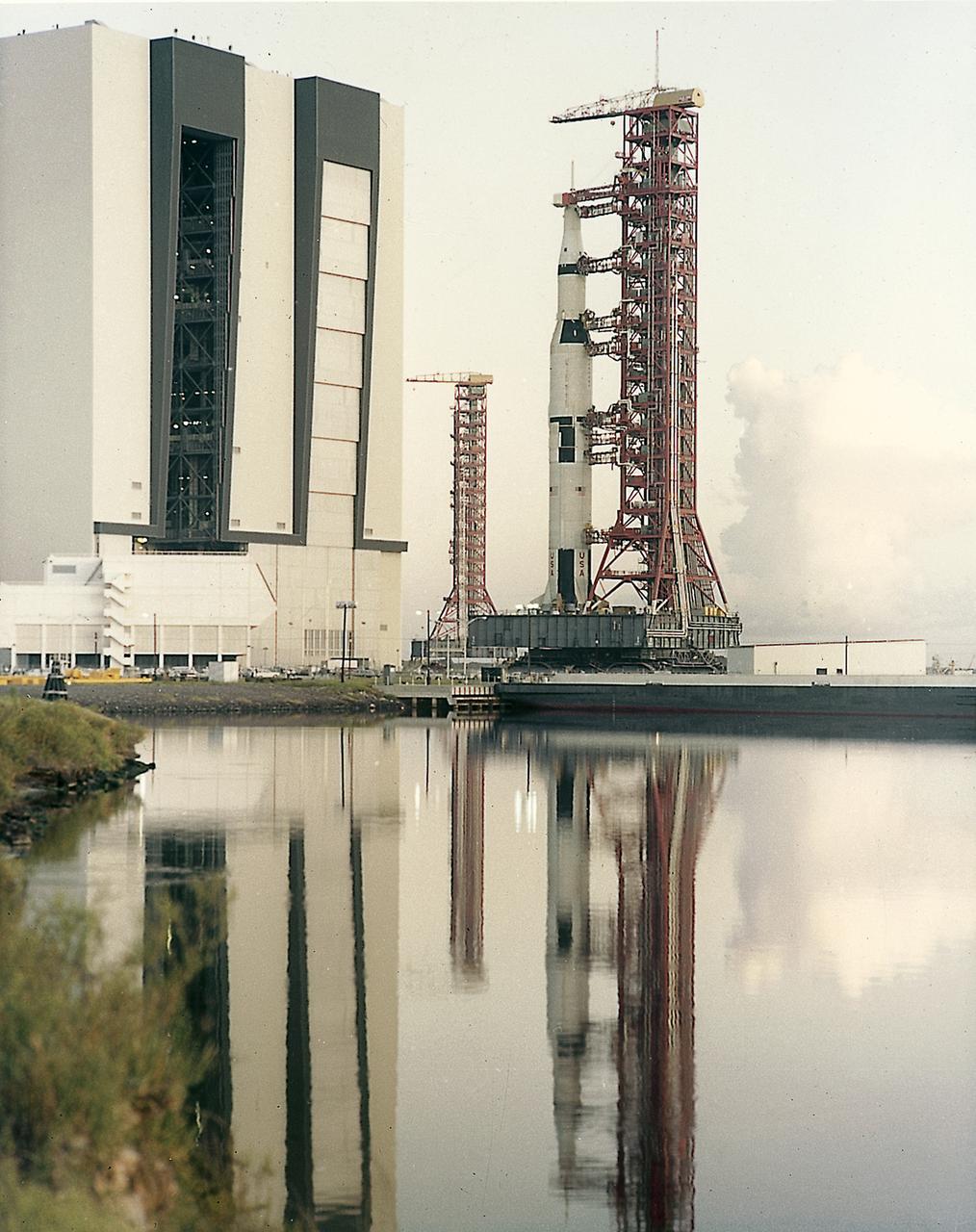
This picture shows the Saturn V vehicle (AS-501), for the Apollo 4 mission on the Crawler Transporter Vehicle. It was rolled out from the Vehicle Assembly Building and slowly (1 mph) moved to the launch pad at the Kennedy Space Center (KSC). The Apollo 4 mission was the first launch of the Saturn V launch vehicle. Objectives of the unmanned Apollo 4 test flight were to obtain flight information on launch vehicle and spacecraft structural integrity and compatibility, flight loads, stage separation, and subsystems operation including testing of restart of the S-IVB stage, and to evaluate the Apollo command module heat shield. The Apollo 4 was launched on November 9, 1967 from KSC.
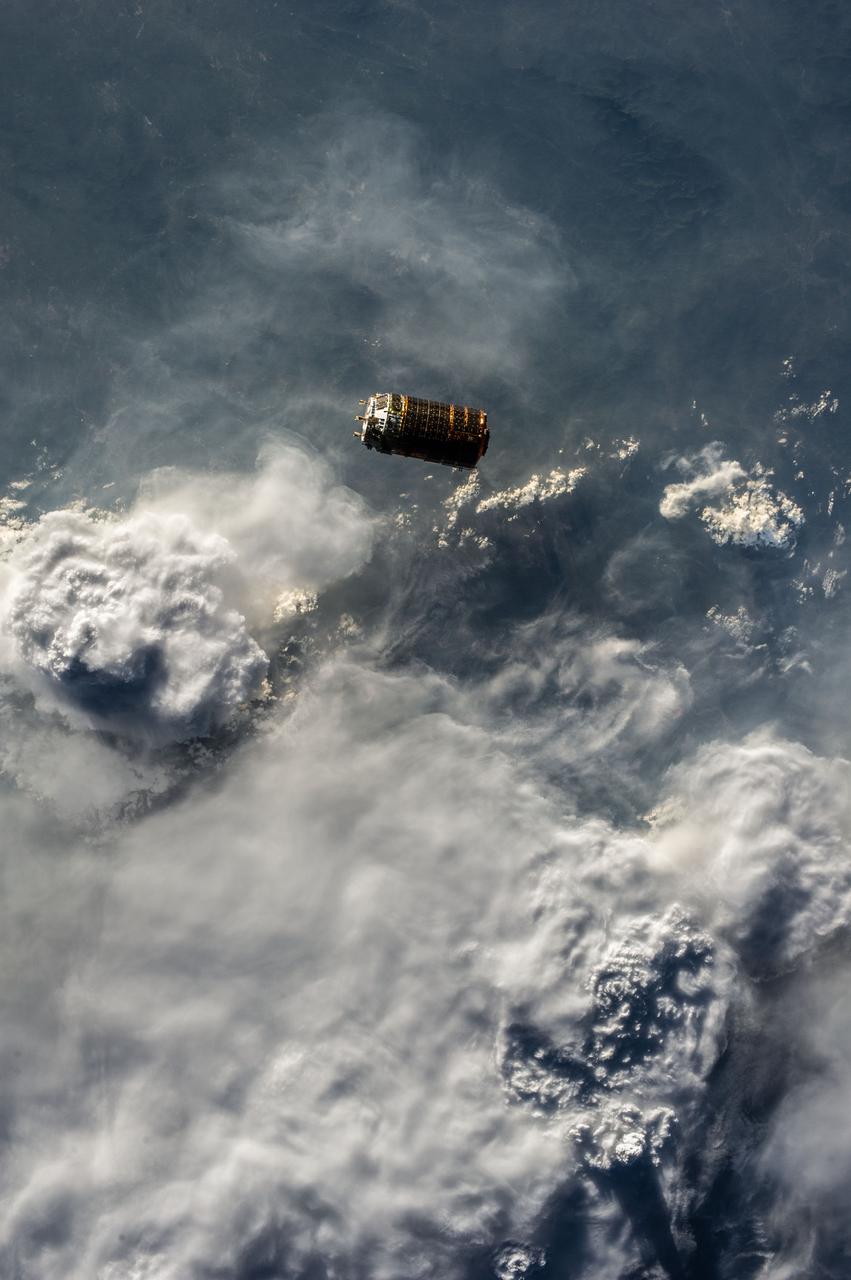
ISS036-E-030638 (9 Aug. 2013) --- The unpiloted Japanese "Kounotori" H2 Transfer Vehicle-4 (HTV-4) approaches the International Space Station. The HTV, a 33-foot-long, 13-foot-diameter unmanned cargo transfer spacecraft, is delivering 3.6 tons of science experiments, equipment and supplies to the orbiting complex. HTV-4 launched from the Tanegashima Space Center in southern Japan on Aug.3 at 3:48 p.m. (Aug. 4 at 4:48 a.m., Japan time). A blue and white part of Earth provides the backdrop for the scene.
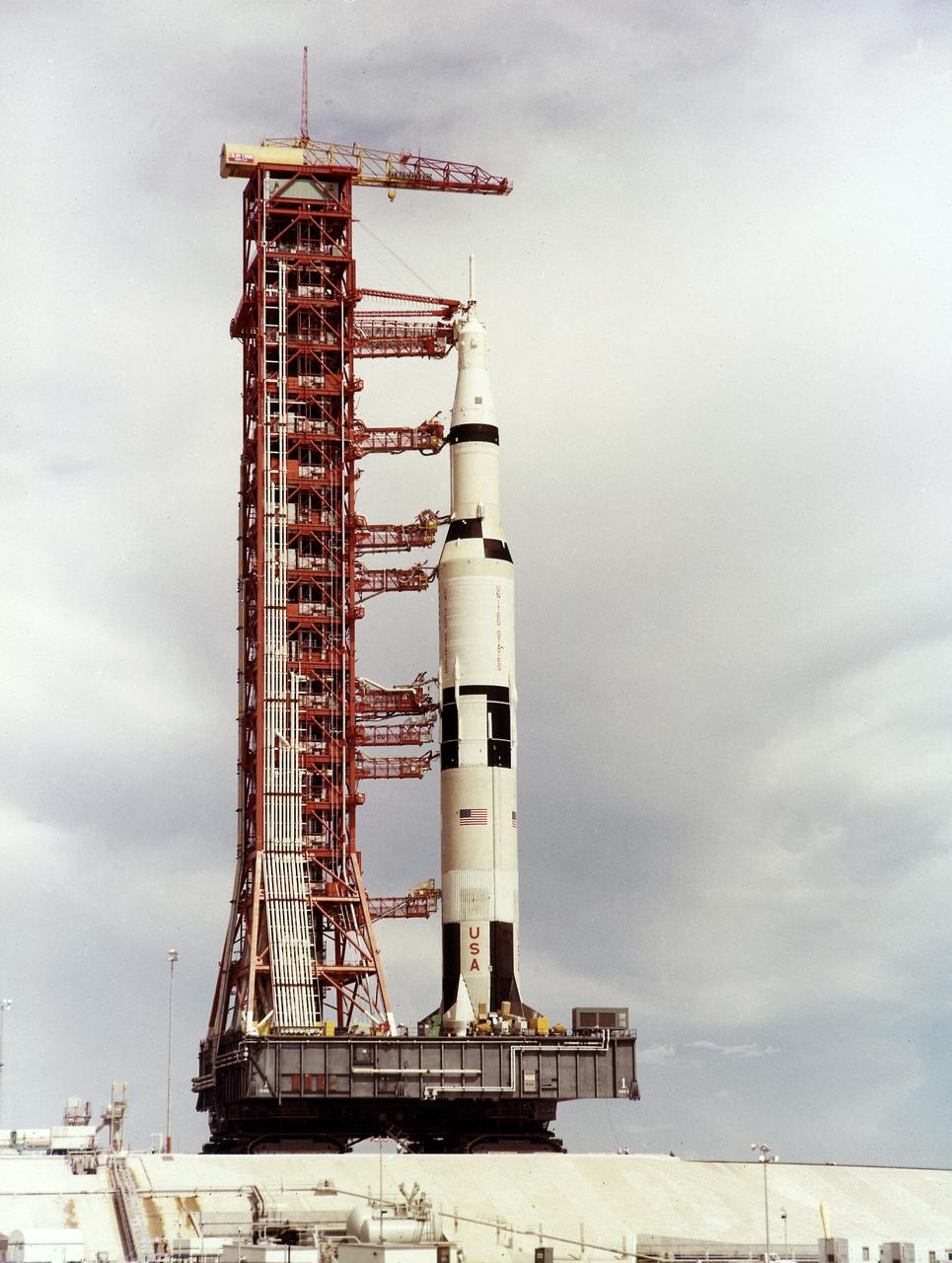
This is a view of the the first test flight of the Saturn V vehicle (SA-501) at the Kennedy Space Center (KSC) launch complex 39A, awaiting the scheduled launch on November 9, 1967. Designated as Apollo 4, this mission was the first launch of the Saturn V launch vehicle. Objectives of the unmanned Apollo 4 test flight were to obtain flight information on launch vehicle and spacecraft structural integrity and compatibility, flight loads, stage separation, and subsystems operation including testing of restart of the S-IVB stage, and to evaluate the Apollo command module heat shield.
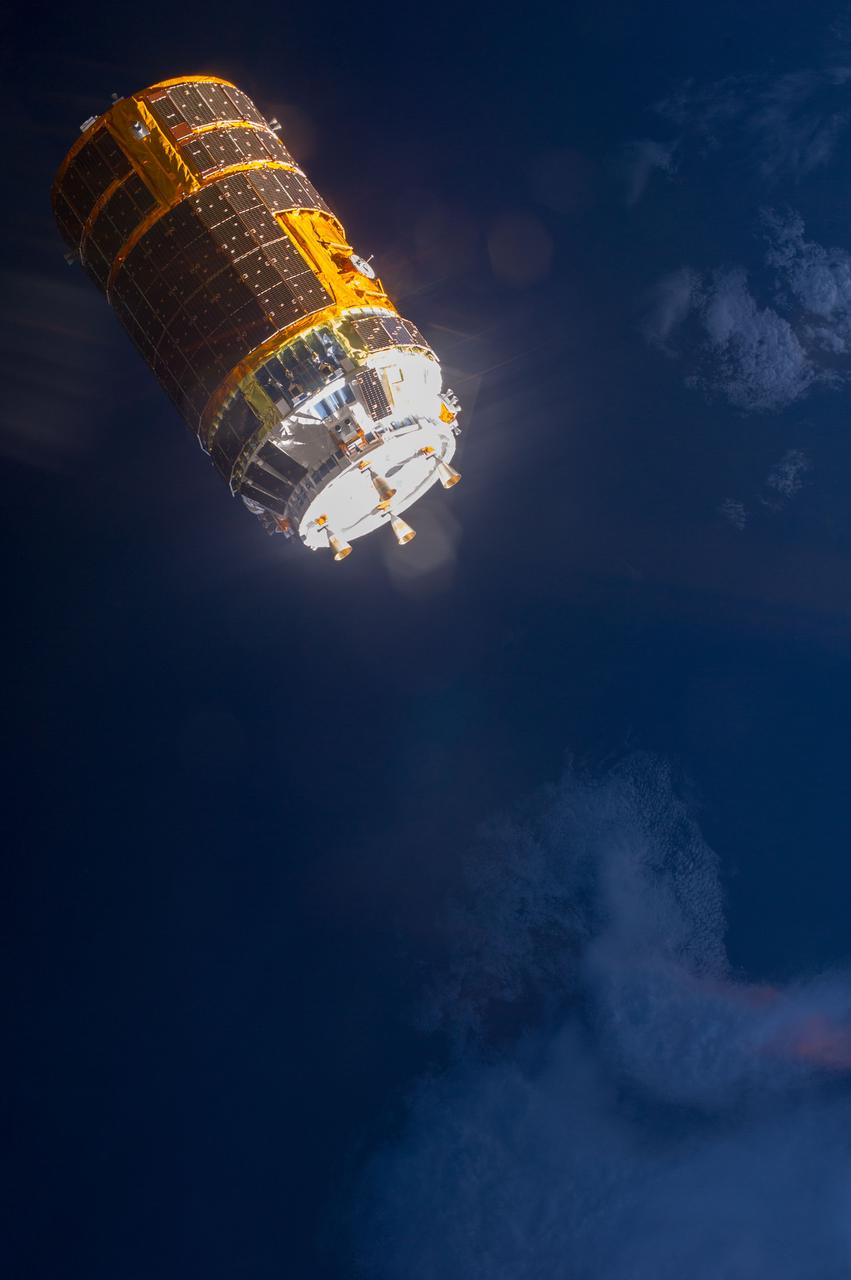
ISS036-E-039553 (04 Sept. 2013) --- One of the Expedition 36 crew members aboard the International Space Station took this picture of the Japanese HTV-4 unmanned cargo spacecraft, backdropped against clouds, following its unberthing and release from the orbital outpost. HTV-4, after backing away from the flying complex, headed for re-entry into Earth's atmosphere, burning upon re-entry. HTV-4 was launched by Japan?s Aerospace Exploration Agency (JAXA) on Aug. 4 of this year in order to bring up supplies for the astronauts and cosmonauts onboard the station.
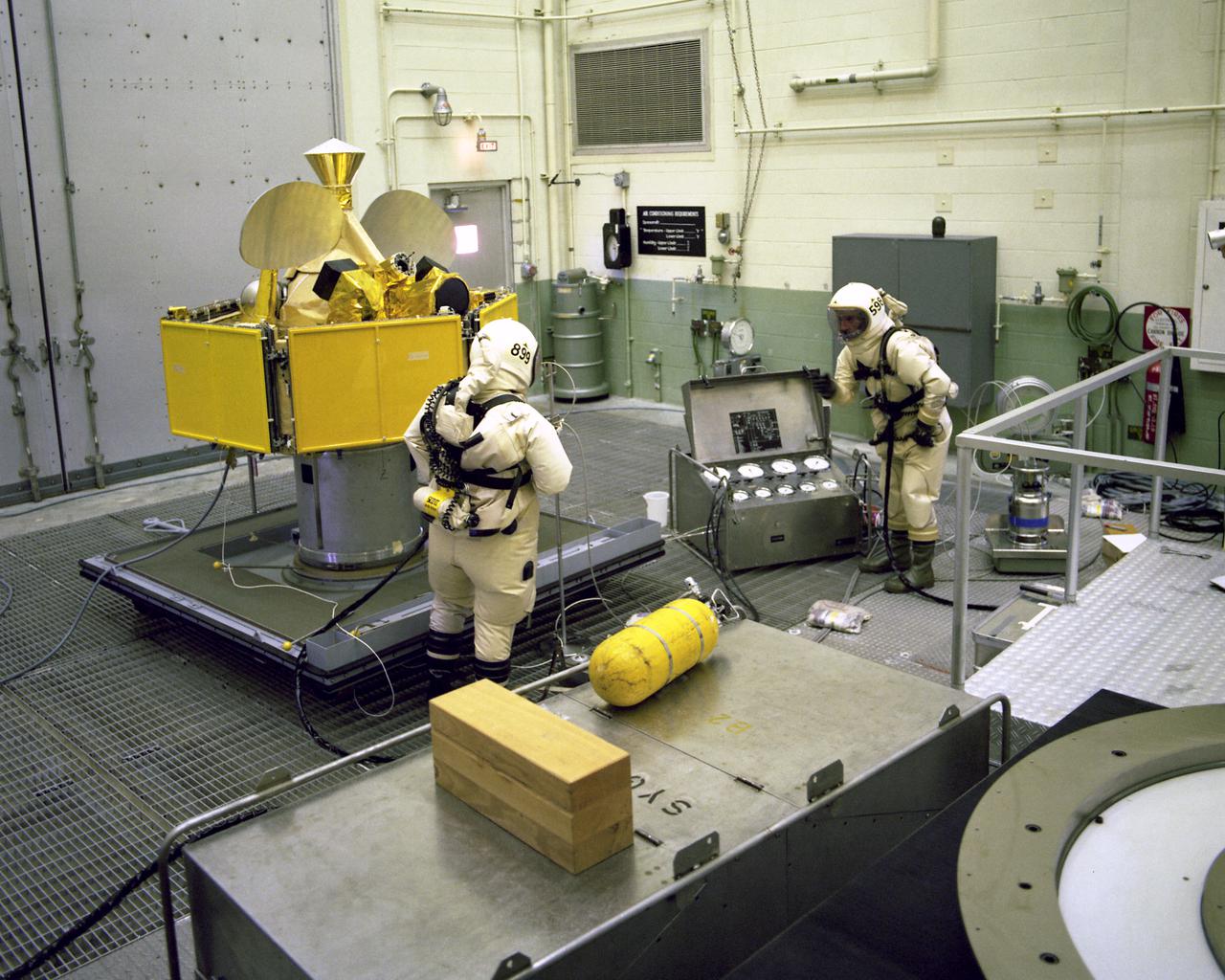
CAPE CANAVERAL, Fla. -- Technicians in protective suits loaded the Symphonie-B spacecraft with propellants in the Spin Test Facility at Cape Canaveral Air Force Station today. The French-West German experimental communications satellite is to be launched by KSC's Unmanned Launch Operations Directorate aboard a Delta rocket from Complex 17 in late August or early September. The satellite will be placed in a synchronous orbit 22,300 miles above the equator south of the West African 'Bulge,' joining Symphonie-1 in handling communications between ground stations in Europe, South America, portions of North America and the Mideast. Photo credit: NASA Photo credit: NASA
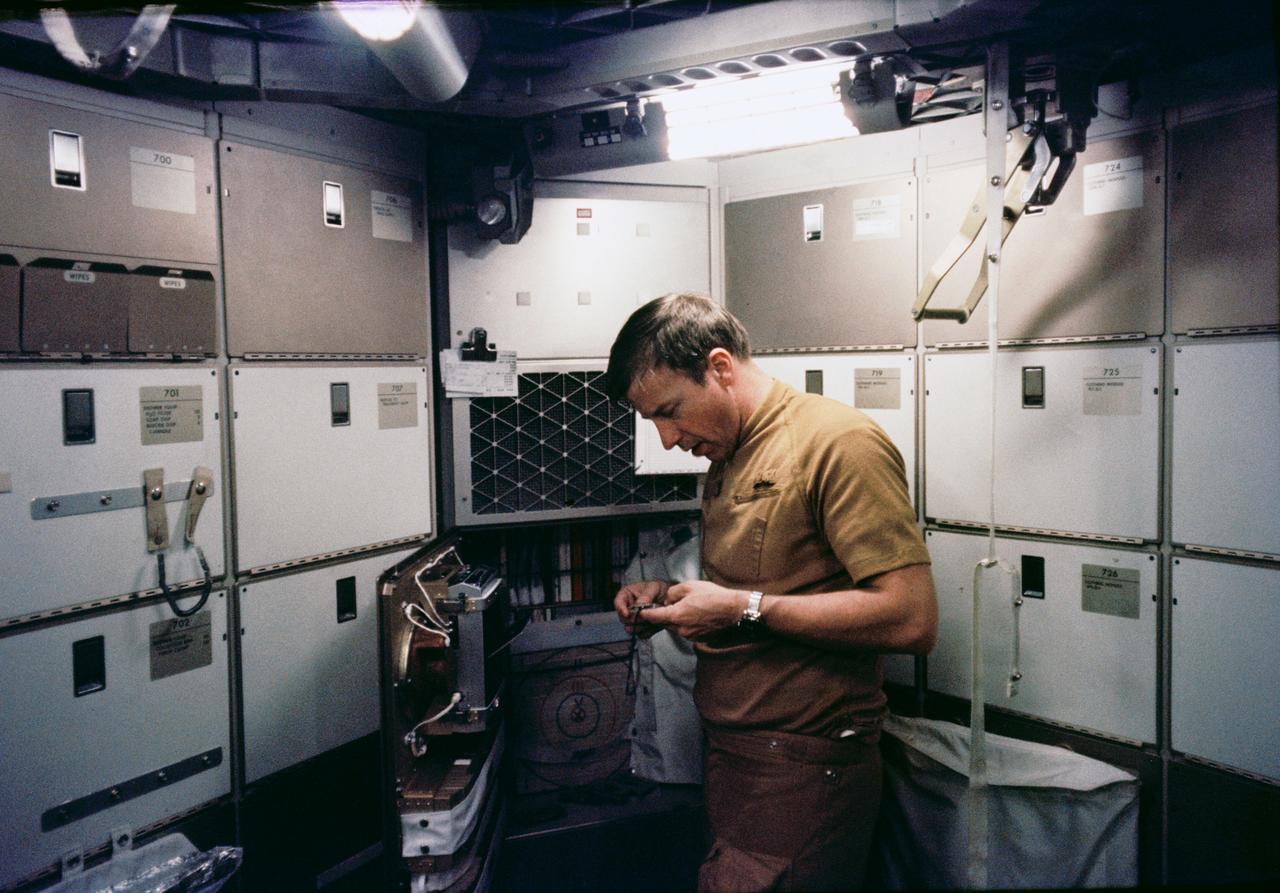
S73-17859 (January 1973) --- Astronaut Paul J. Weitz, pilot for Skylab 2 (first Skylab manned) mission, looks over off-duty recreational equipment in the crew quarters of the Skylab Orbital Workshop (OWS) trainer during Skylab simulation activity at the Manned Spacecraft Center. The equipment includes such items as tape decks and stereo music equipment, playing cards, darts, etc. The OWS is a component of the Skylab space station cluster which will be launched unmanned aboard a Saturn V in summer of 1973, and will be visited three times by three-man crews over an eight month period. Photo credit: NASA
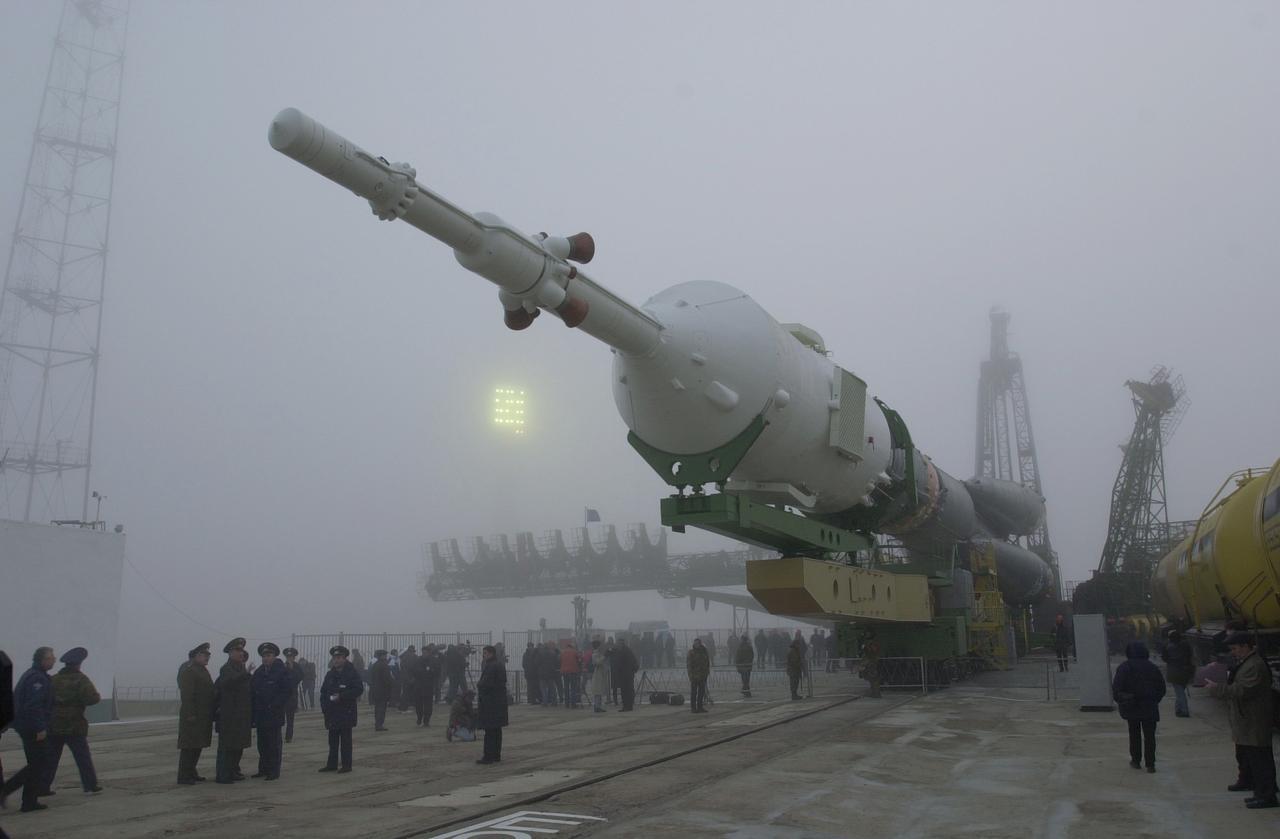
The Soyuz TM-31 launch vehicle, which carried the first resident crew to the International Space Station, moves toward the launch pad at the Baikonur complex in Kazakhstan. The Russian Soyuz launch vehicle is an expendable spacecraft that evolved out of the original Class A (Sputnik). From the early 1960' until today, the Soyuz launch vehicle has been the backbone of Russia's marned and unmanned space launch fleet. Today, the Soyuz launch vehicle is marketed internationally by a joint Russian/French consortium called STARSEM. As of August 2001, there have been ten Soyuz missions under the STARSEM banner.
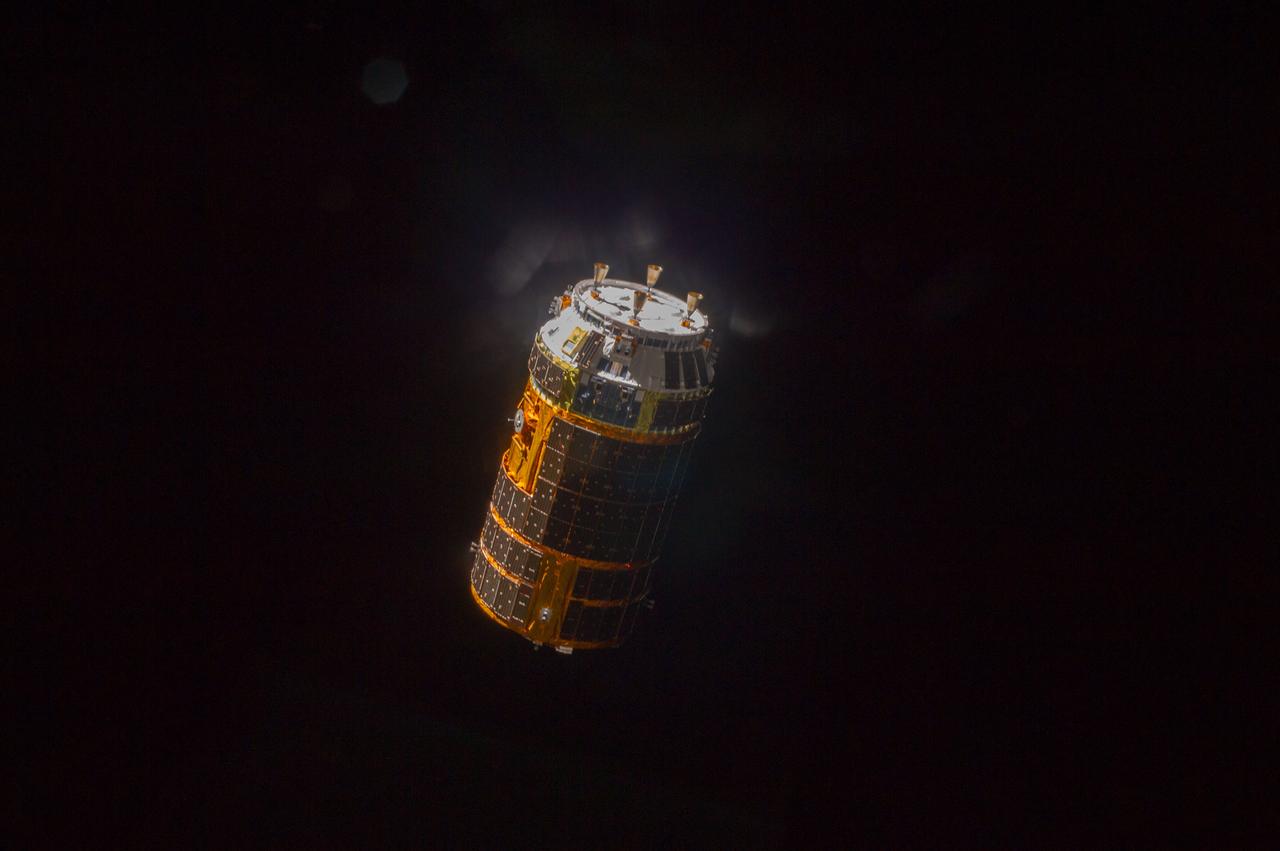
ISS036-E-039563 (04 Sept. 2013) --- One of the Expedition 36 crew members aboard the International Space Station took this picture of the Japanese HTV-4 unmanned cargo spacecraft, surrounded by the darkness of space, following its unberthing and release from the orbital outpost. HTV-4, after backing away from the flying complex, headed for re-entry into Earth's atmosphere, burning upon re-entry. HTV-4 was launched by Japan?s Aerospace Exploration Agency (JAXA) on Aug. 4 of this year in order to bring up supplies for the astronauts and cosmonauts onboard the station.