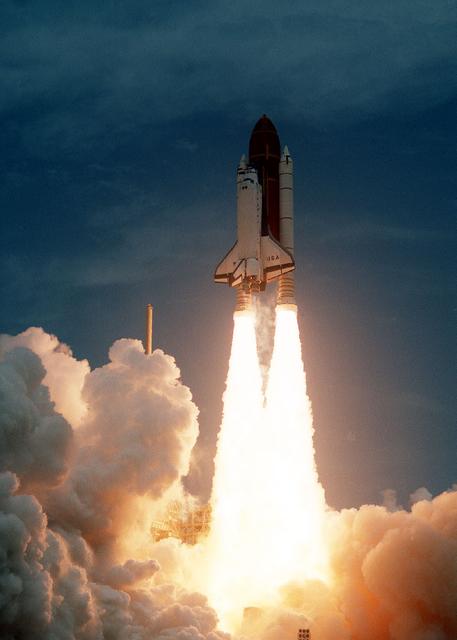
Space Shuttle Columbia (STS-50) launched into history carrying crew of seven and its payload was comprised of the US Microgravity Laboratory 1 (USML-1).The USML-1 was one of NASA's missions dedicated to scientific investigations in a microgravity environment inside the Spacelab module. Investigations aboard the USML-1 included: materials science, fluid dynamics, biotechnology (crystal growth), and combustion science. Managed by Marshall Space Flight Center, the STS-50 mission was plarned for a 13-day duration, the mission ended with 14 days in space, the longest Shuttle mission to date.
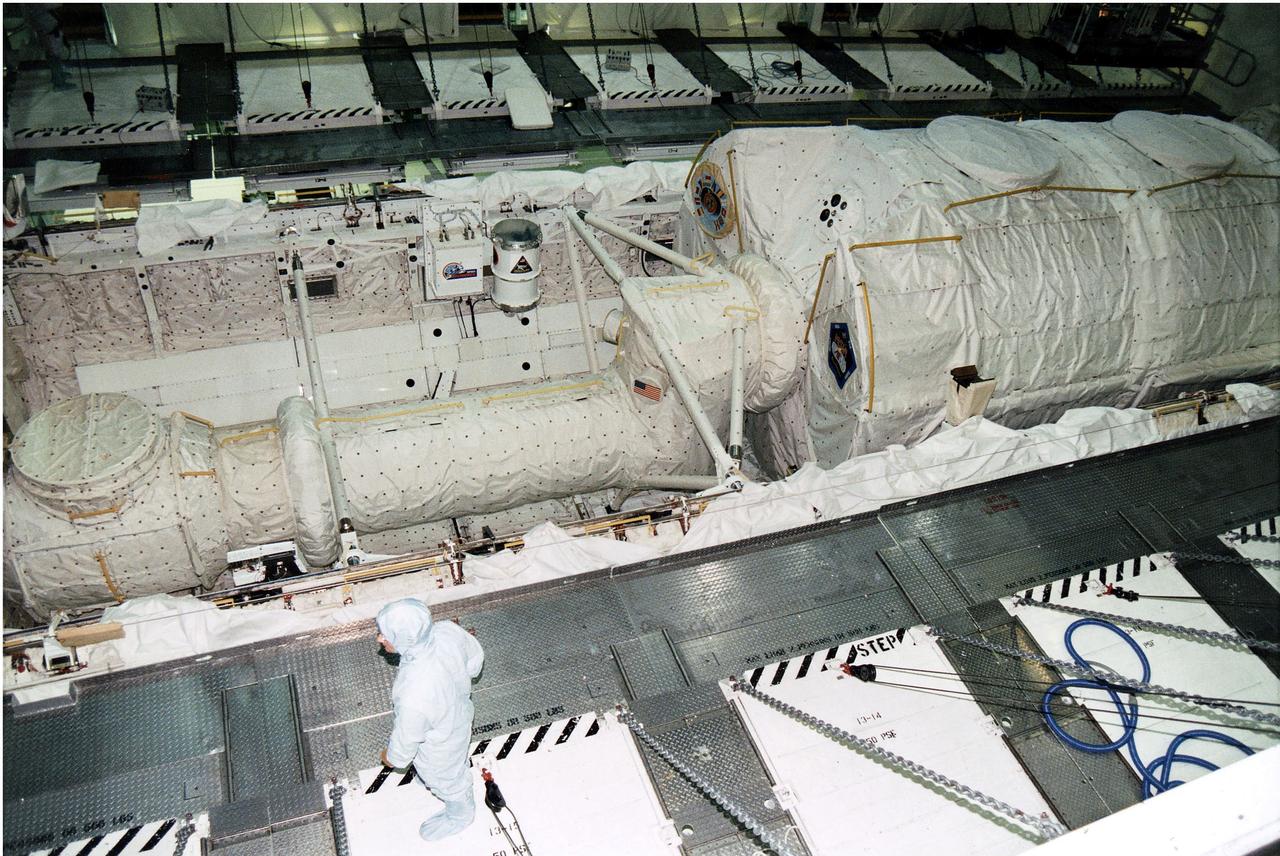
KENNEDY SPACE CENTER, FLA. - The Microgravity Science Laboratory-1 (MSL-1) Spacelab module is installed into the payload bay of the Space Shuttle Orbiter Columbia in Orbiter Processing Facility 1. The Spacelab long crew transfer tunnel that leads from the orbiter's crew airlock to the module is also aboard, as well as the Hitchhiker Cryogenic Flexible Diode (CRYOFD) experiment payload, which is attached to the right side of Columbia's payload bay. During the scheduled 16-day STS-83 mission, the MSL-1 will be used to test some of the hardware, facilities and procedures that are planned for use on the International Space Station while the flight crew conducts combustion, protein crystal growth and materials processing experiments.
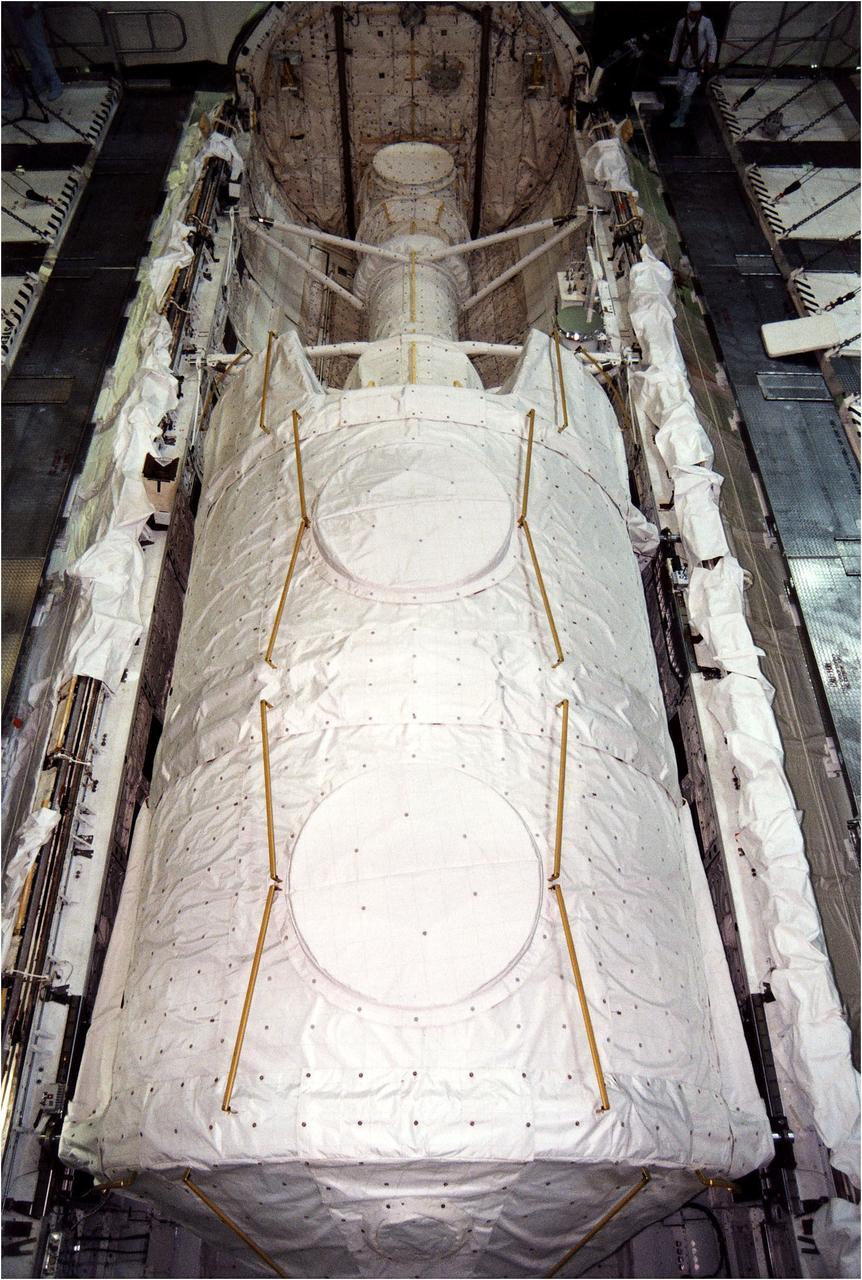
KENNEDY SPACE CENTER, FLA. - The Microgravity Science Laboratory-1 (MSL-1) Spacelab module is installed into the payload bay of the Space Shuttle Orbiter Columbia in Orbiter Processing Facility 1. The Spacelab long crew transfer tunnel that leads from the orbiter's crew airlock to the module is also aboard, as well as the Hitchhiker Cryogenic Flexible Diode (CRYOFD) experiment payload, which is attached to the right side of Columbia's payload bay. During the scheduled 16-day STS-83 mission, the MSL-1 will be used to test some of the hardware, facilities and procedures that are planned for use on the International Space Station while the flight crew conducts combustion, protein crystal growth and materials processing experiments.
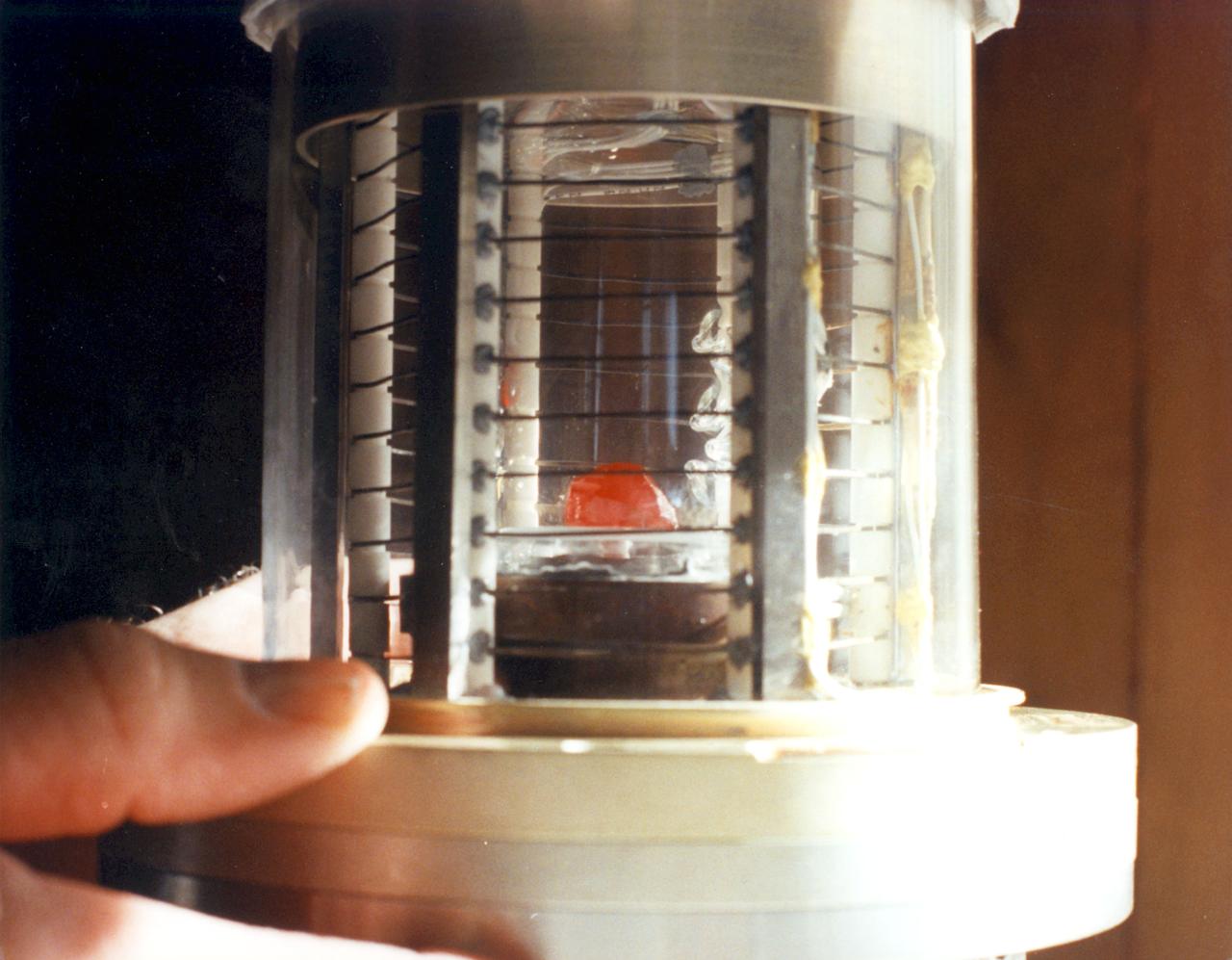
Ampoule view of the Vapor Crystal Growth System (VCGS) Furnace. Used on IML-1 International Microgravity Laboratory Spacelab 3. Prinicipal Investigator and Payload Specialist was Lodewijk van den Berg.
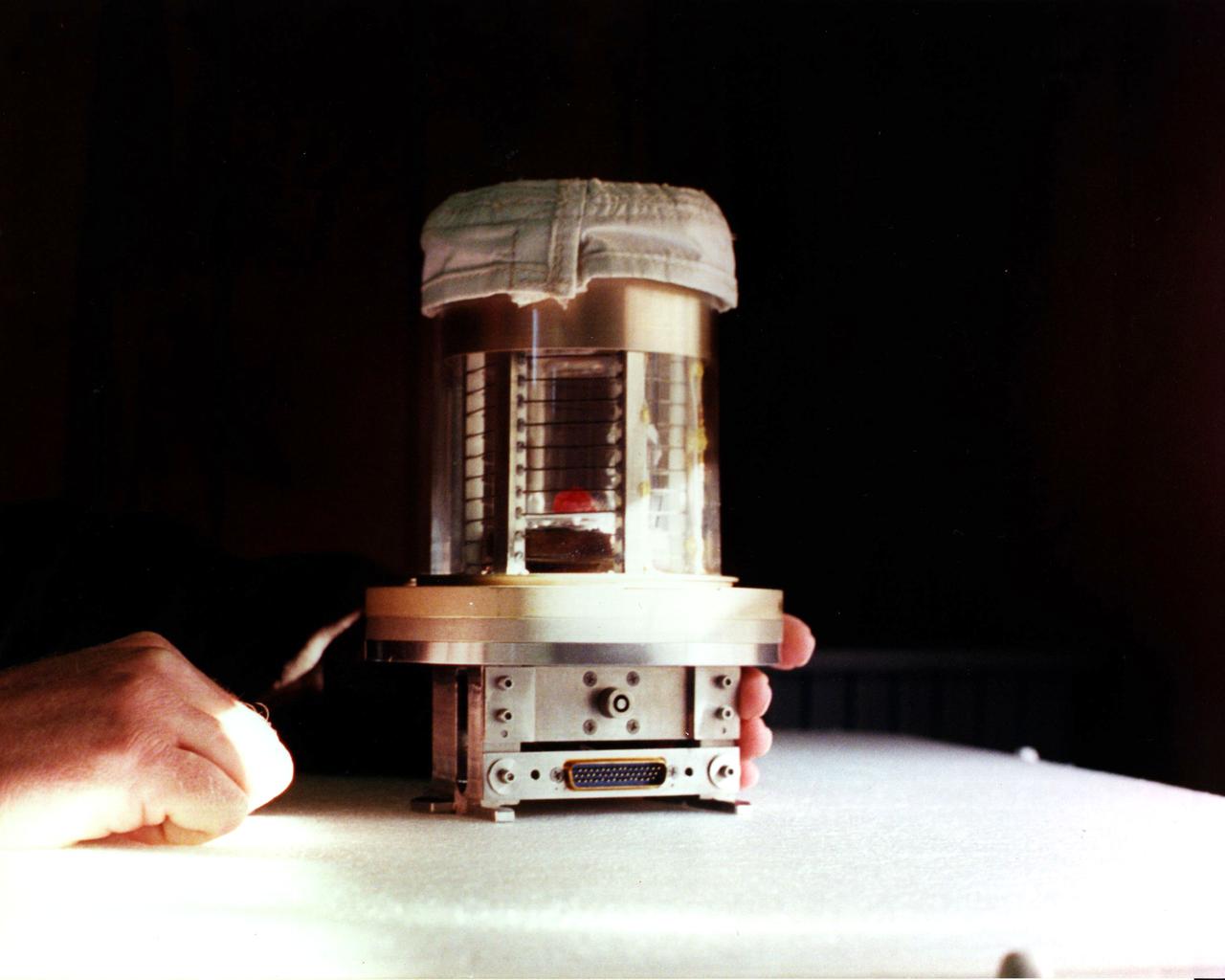
Overall view of the Vapor Crystal Growth System (VCGS) Furnace. Used on IML-1 International Microgravity Laboratory Spacelab 3. Principal Investigator and Payload Specialist was Lodewijk van den Berg.
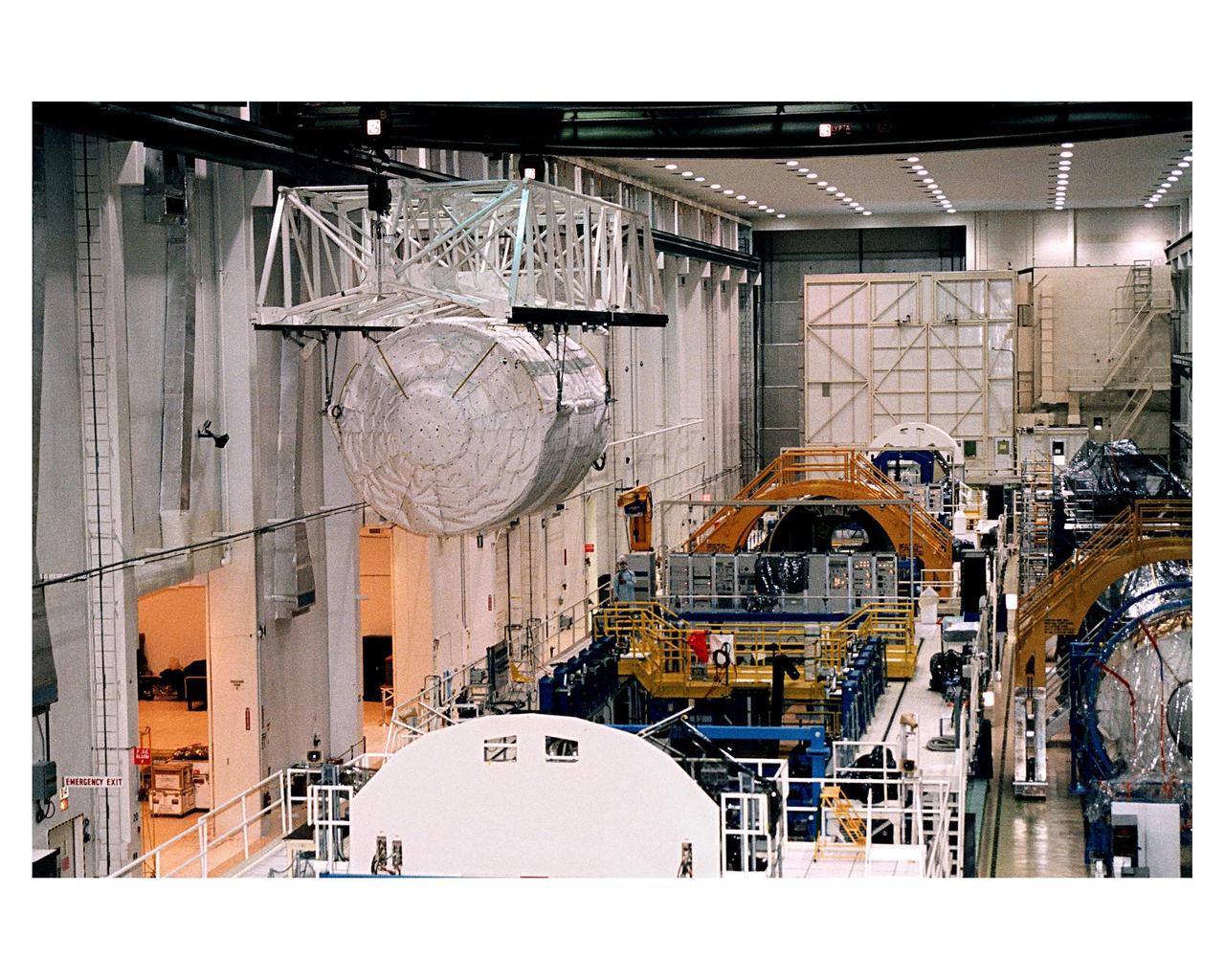
The Microgravity Science Laboratory-1 (MSL-1) Spacelab module is moved to be installed into a payload canister in the Operations and Checkout Building. Once in the canister, the MSL-1 will be transported to Orbiter Processing Bay 1 where it will be integrated into the payload bay of the Space Shuttle orbiter Columbia. During the scheduled 16-day STS-83 mission, the MSL-1 will be used to test some of the hardware, facilities and procedures that are planned for use on the International Space Station while the flight crew conducts combustion, protein crystal growth and materials processing experiments
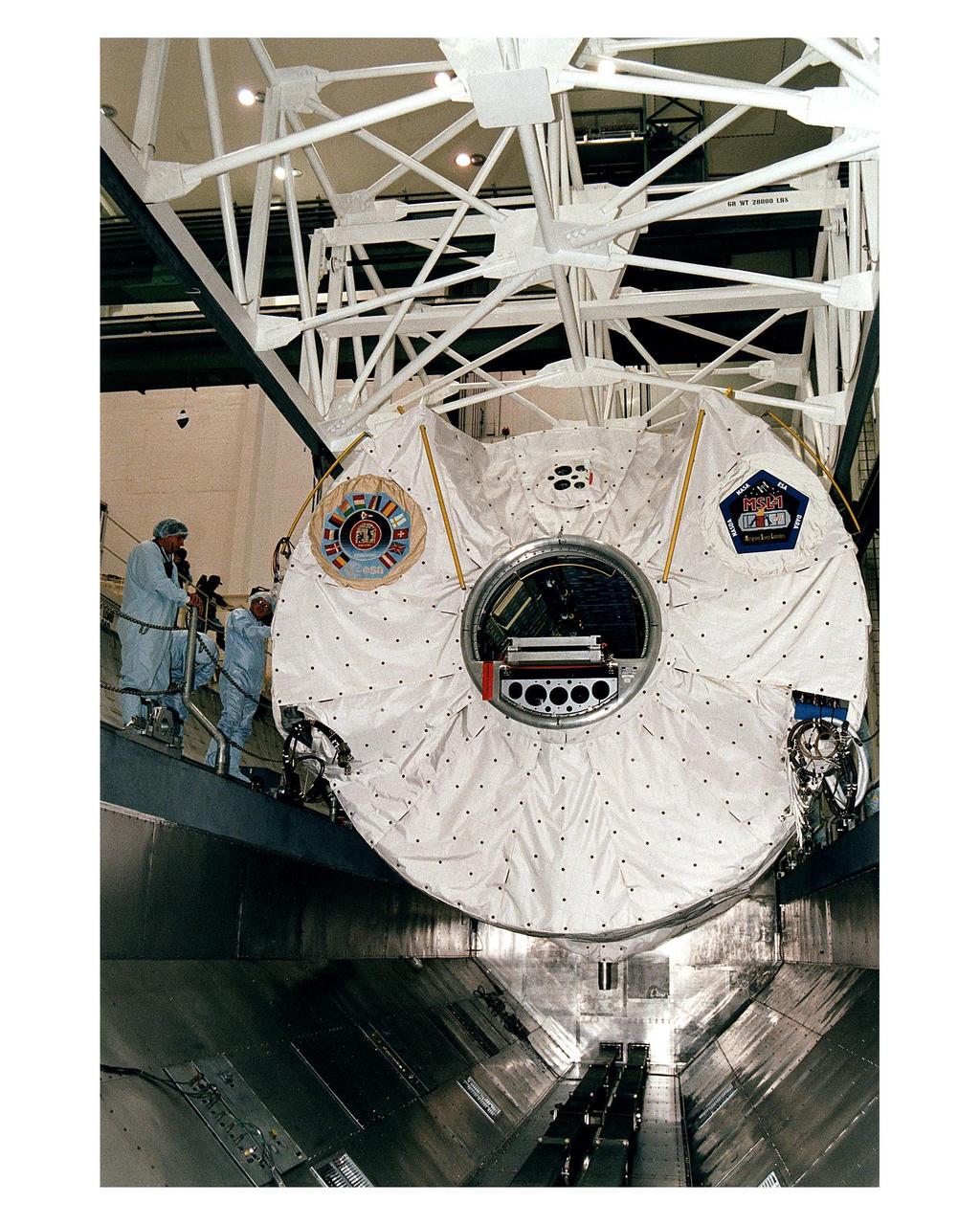
The Microgravity Science Laboratory-1 (MSL-1) Spacelab module is moved to be installed into a payload canister in the Operations and Checkout Building. Once in the canister, the MSL-1 will be transported to Orbiter Processing Bay 1 where it will be integrated into the payload bay of the Space Shuttle orbiter Columbia. During the scheduled 16-day STS-83 mission, the MSL-1 will be used to test some of the hardware, facilities and procedures that are planned for use on the International Space Station while the flight crew conducts combustion, protein crystal growth and materials processing experiments

The Microgravity Science Laboratory-1 (MSL-1) Spacelab module is moved to be installed into a payload canister in the Operations and Checkout Building. Once in the canister, the MSL-1 will be transported to Orbiter Processing Bay 1 where it will be integrated into the payload bay of the Space Shuttle orbiter Columbia. During the scheduled 16-day STS-83 mission, the MSL-1 will be used to test some of the hardware, facilities and procedures that are planned for use on the International Space Station while the flight crew conducts combustion, protein crystal growth and materials processing experiments
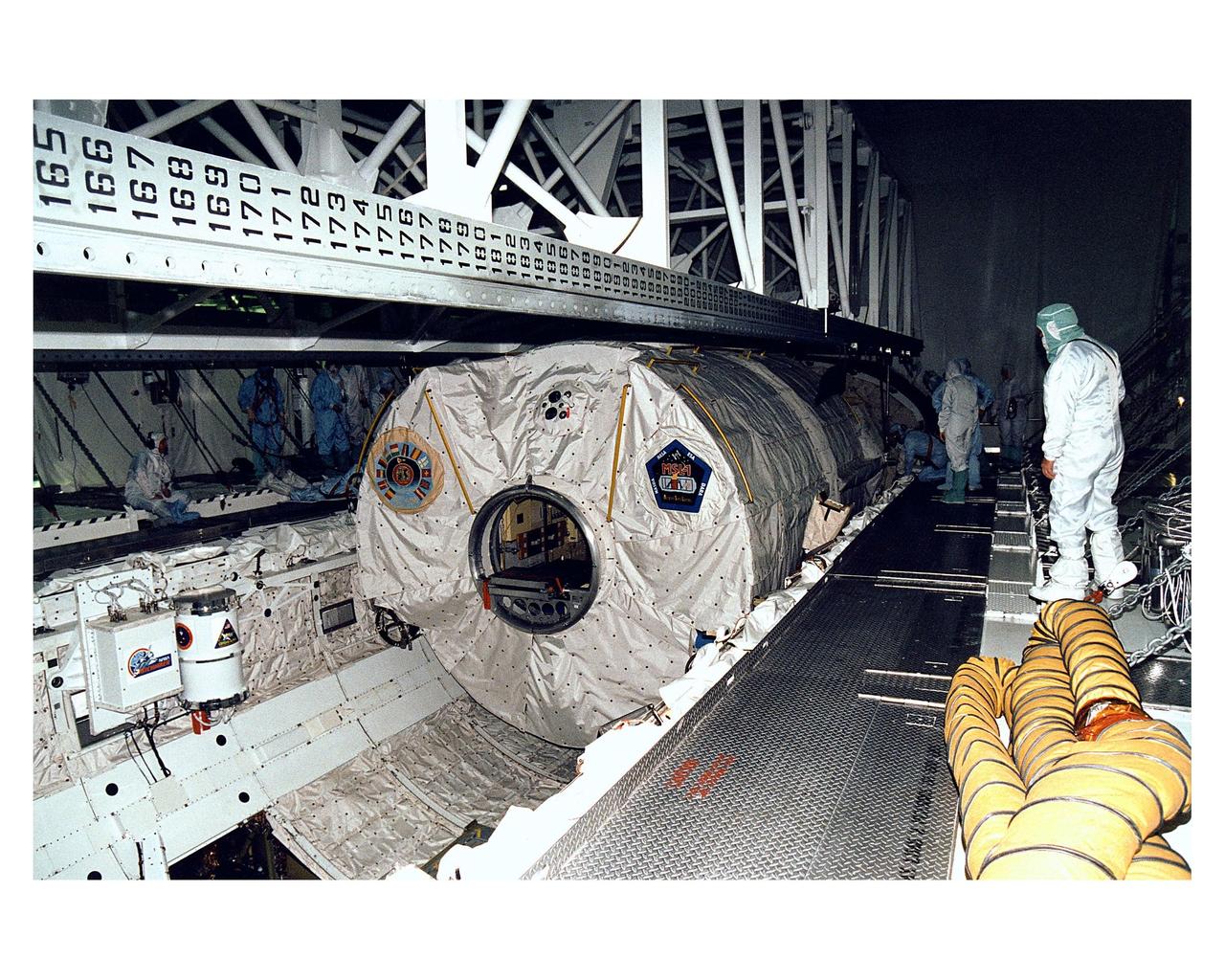
The Microgravity Science Laboratory-1 (MSL-1) Spacelab module is lowered into the payload bay of the Space Shuttle orbiter Columbia in Orbiter Processing Facility 1. During the scheduled 16-day STS-83 mission, the MSL-1 will be used to test some of the hardware, facilities and procedures that are planned for use on the International Space Station while the flight crew conducts combustion, protein crystal growth and materials processing experiments

The Microgravity Science Laboratory-1 (MSL-1) Spacelab module is lowered into the payload bay of the Space Shuttle orbiter Columbia in Orbiter Processing Facility 1. During the scheduled 16-day STS-83 mission, the MSL-1 will be used to test some of the hardware, facilities and procedures that are planned for use on the International Space Station while the flight crew conducts combustion, protein crystal growth and materials processing experiments
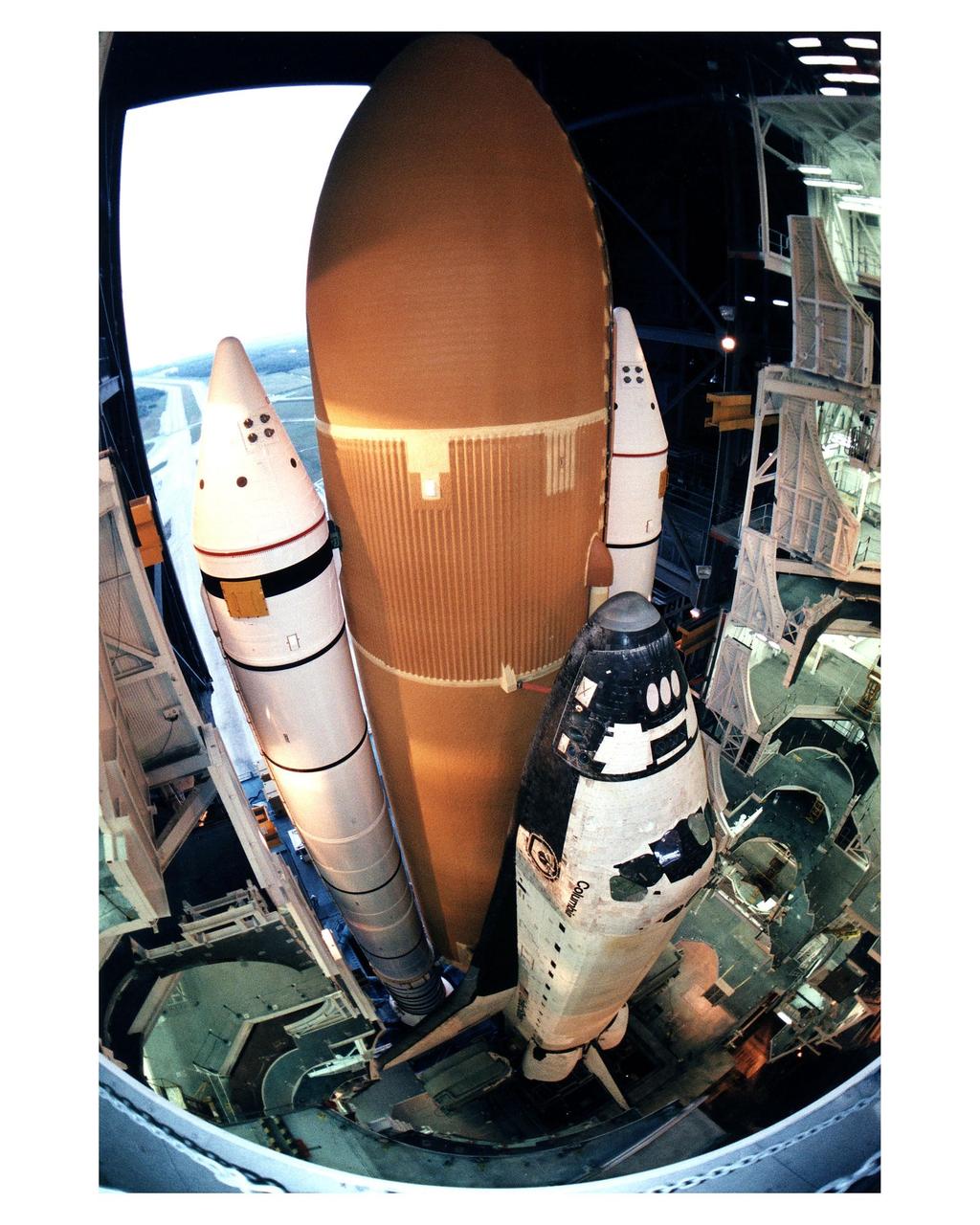
KENNEDY SPACE CENTER, Fla. -- The Space Shuttle Orbiter Columbia begins its rollout from the Vehicle Assembly Building to Launch Pad 39A in preparation for the STS-83 mission. The Microgravity Science Laboratory-1 (MSL-1) Spacelab module is the primary payload on this 16-day spaceflight. The MSL-1 will be used to test some of the hardware, facilities and procedures that are planned for use on the International Space Station, while the seven-member flight crew conducts combustion, protein crystal growth and materials processing experiments
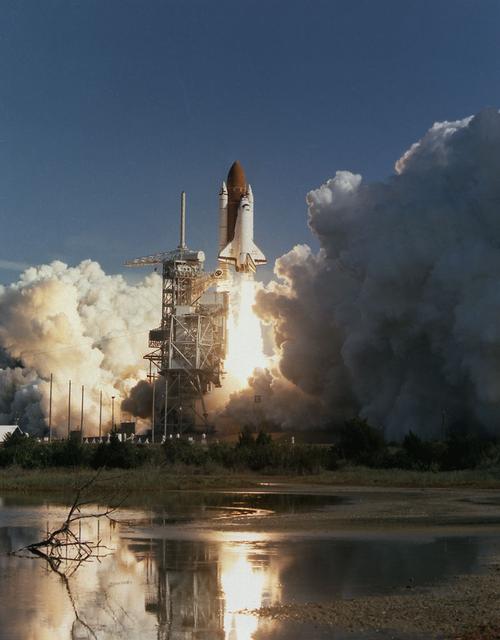
Space Shuttle Discovery (STS-42) lifted off from Kennedy Space Center (KSC) with International Microgravity Laboratory (IML-1) aboard the orbiter's cargo bay. IML missions were devoted to material and life sciences studies using the Spacelab Long Module.
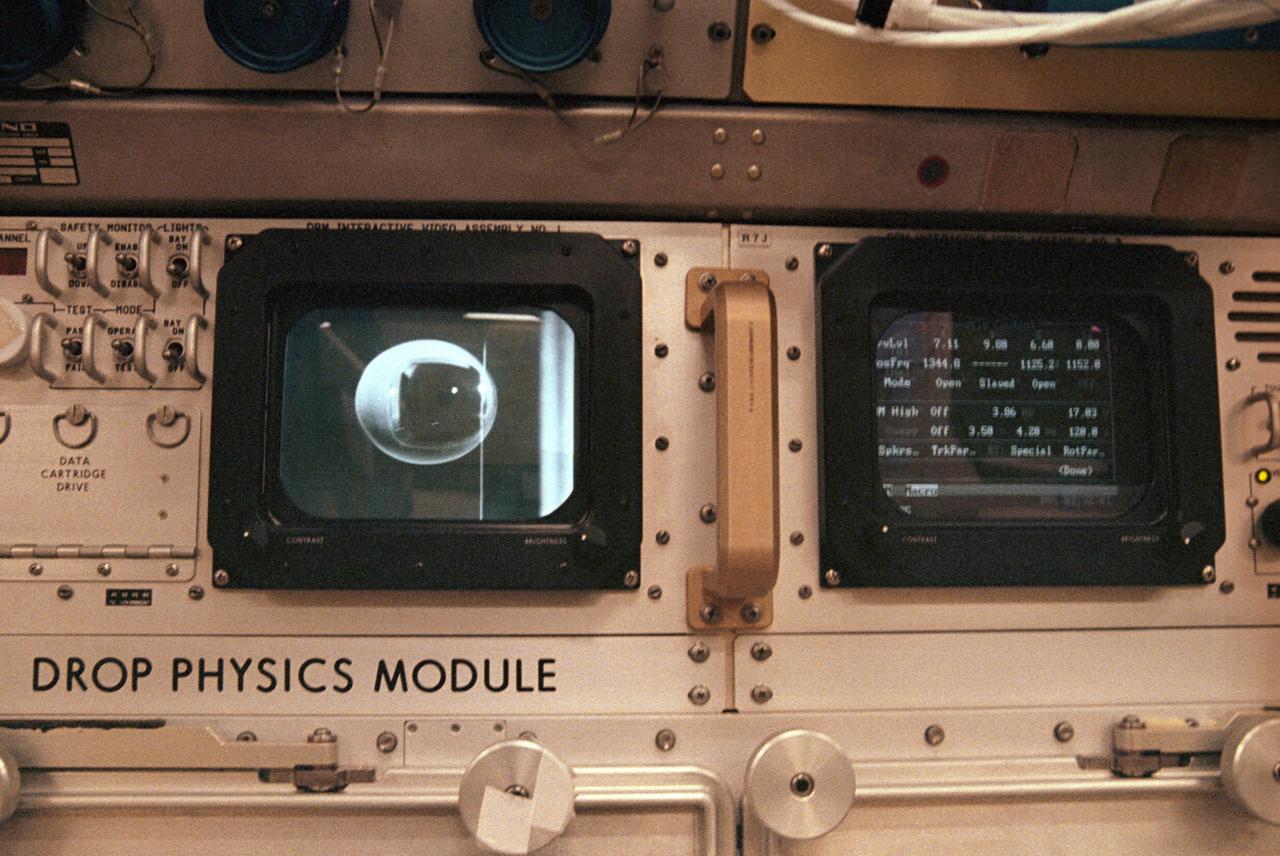
The first United States Microgravity Laboratory (USML-1) was one of NASA's science and technology programs that provided scientists an opportunity to research various scientific investigations in a weightlessness environment inside the Spacelab module. It also provided demonstrations of new equipment to help prepare for advanced microgravity research and processing aboard the Space Station. The USML-1 flew in orbit for extended periods, providing greater opportunities for research in materials science, fluid dynamics, biotechnology (crystal growth), and combustion science. This is a close-up view of the Drop Physics Module (DPM) in the USML science laboratory. The DPM was dedicated to the detailed study of the dynamics of fluid drops in microgravity: their equilibrium shapes, the dynamics of their flows, and their stable and chaotic behaviors. It also demonstrated a technique known as containerless processing. The DPM and microgravity combine to remove the effects of the container, such as chemical contamination and shape, on the sample being studied. Sound waves, generating acoustic forces, were used to suspend a sample in microgravity and to hold a sample of free drops away from the walls of the experiment chamber, which isolated the sample from potentially harmful external influences. The DPM gave scientists the opportunity to test theories of classical fluid physics, which have not been confirmed by experiments conducted on Earth. This image is a close-up view of the DPM. The USML-1 flew aboard the STS-50 mission on June 1992, and was managed by the Marshall Space Flight Center.
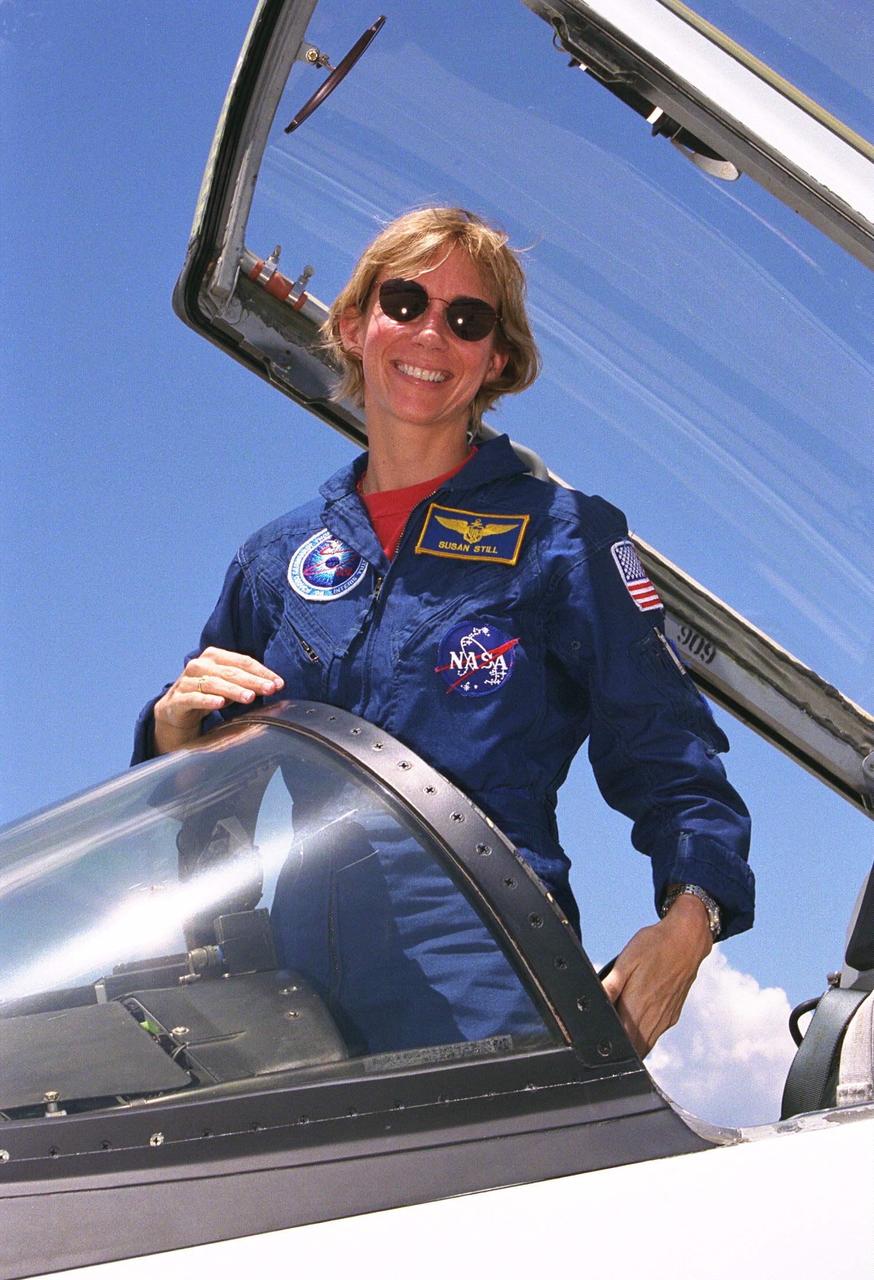
STS-94 Pilot Susan Leigh Still arrives at the Shuttle Landing Facility aboard a T-38 jet in preparation for the reflight of the Microgravity Science Laboratory-1 mission. Launch is scheduled for July 1, 1997, at 2:37 p.m. EDT. The laboratory was scheduled to fly again with the full complement of STS-83 experiments after that mission was cut short due to a faulty fuel cell. During the scheduled 16-day STS-94 mission, the experiments will be used to test some of the hardware, facilities and procedures that are planned for use on the International Space Station while the flight crew conducts combustion, protein crystal growth and materials processing experiments
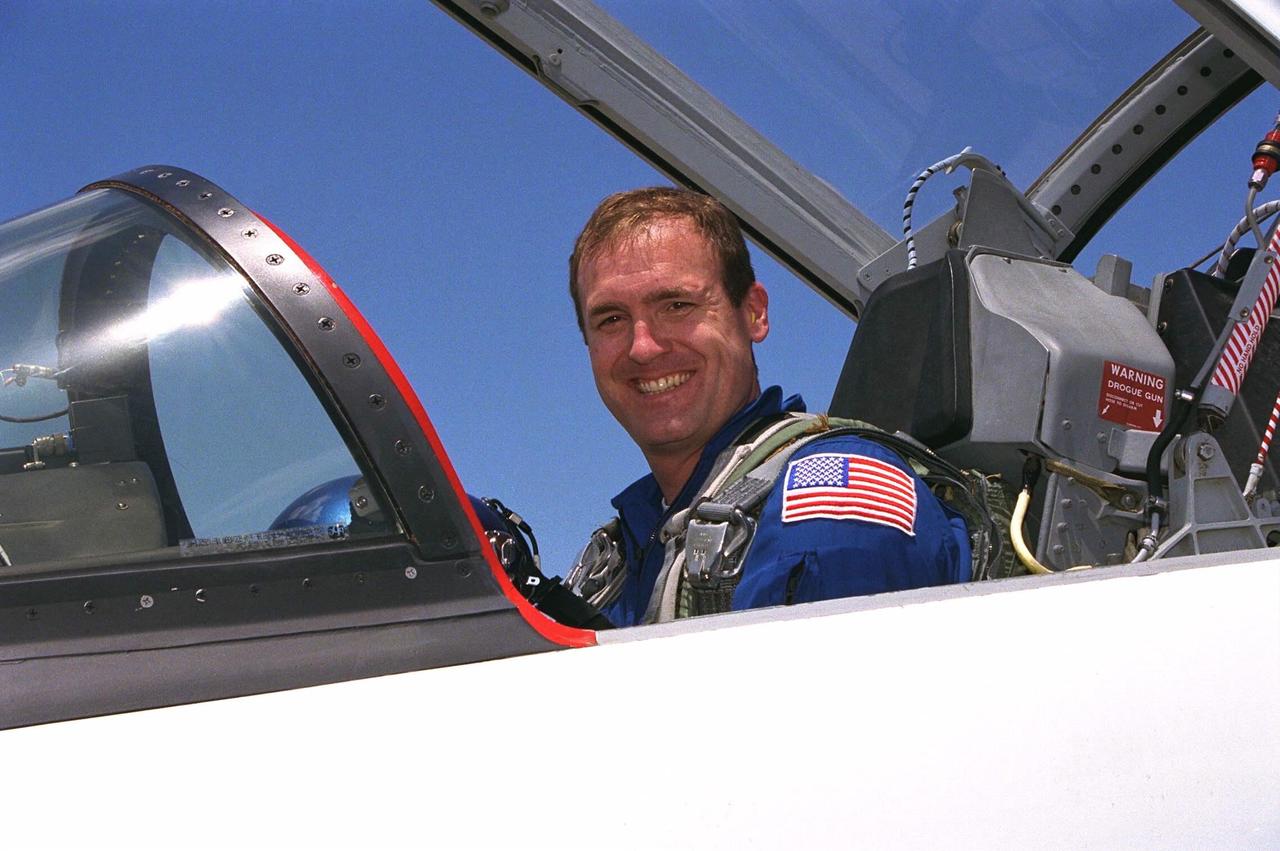
STS-94 Commander James D. Halsell, Jr., arrives at the Shuttle Landing Facility aboard a T-38 jet in preparation for the reflight of the Microgravity Science Laboratory-1 mission. Launch is scheduled for July 1, 1997, at 2:37 p.m. EDT. The laboratory was scheduled to fly again with the full complement of STS-83 experiments after that mission was cut short due to a faulty fuel cell. During the scheduled 16-day STS-94 mission, the experiments will be used to test some of the hardware, facilities and procedures that are planned for use on the International Space Station while the flight crew conducts combustion, protein crystal growth and materials processing experiments
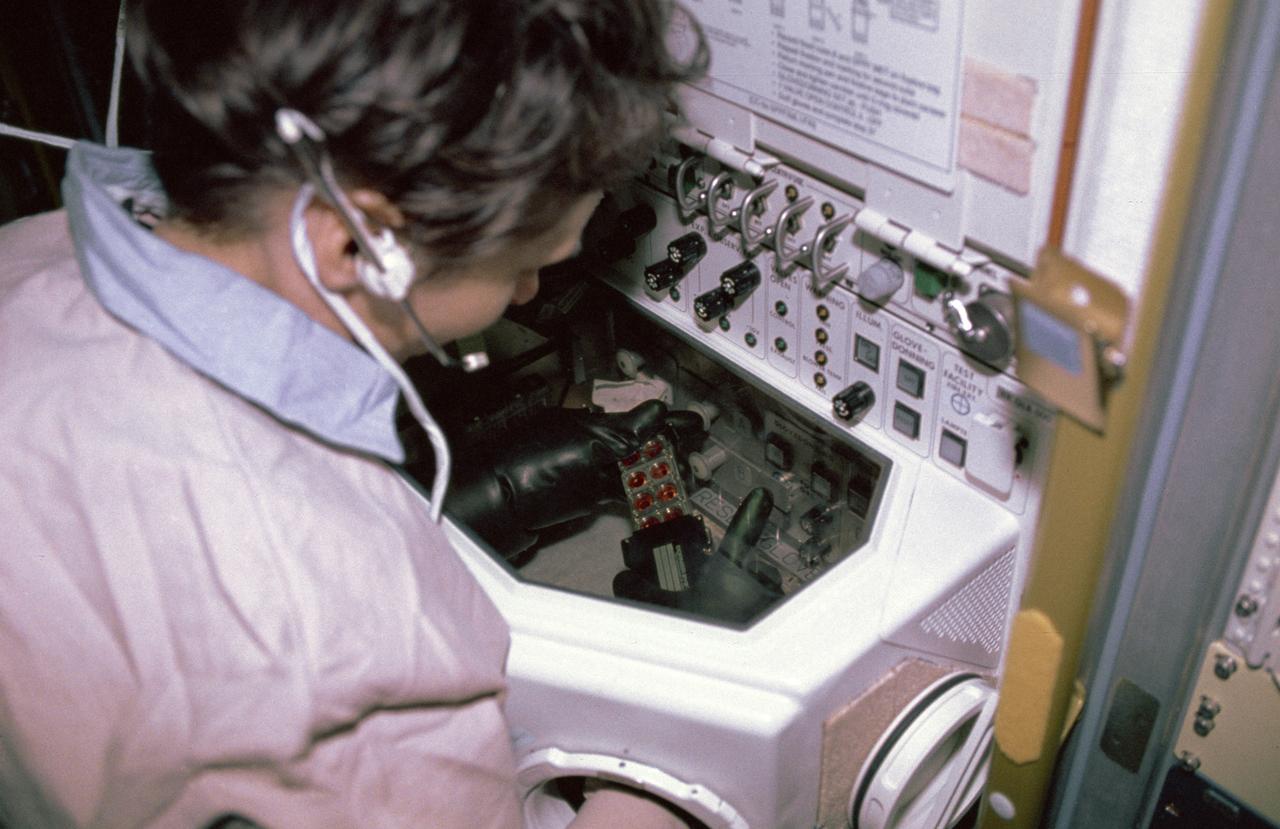
In this photograph, astronaut Roberta Bondar conducts a life science experiment by using the Biorack Glovebox (GBX) during the International Microgravity Laboratory-1 (IML-1) mission. The Biorack was a large multipurpose facility designed for studying the effects of microgravity and cosmic radiation on numerous small life forms such as cells, tissues, small organisms, and plants. Located at the Biorack, the GBX was an enclosed environment that protected samples from contamination and prevented liquid from escaping. Crewmembers handled the specimens with their hands inside gloves that extended into the sealed work area. A microscope and video camera mounted on the GBX door were used to observe and document experiments. Managed by the Marshall Space Flight Center, the IML-1 mission was the first in a series of Shuttle flights dedicated to fundamental materials and life sciences research and was launched aboard the Shuttle Orbiter Discovery (STS-42) on January 22, 1992.
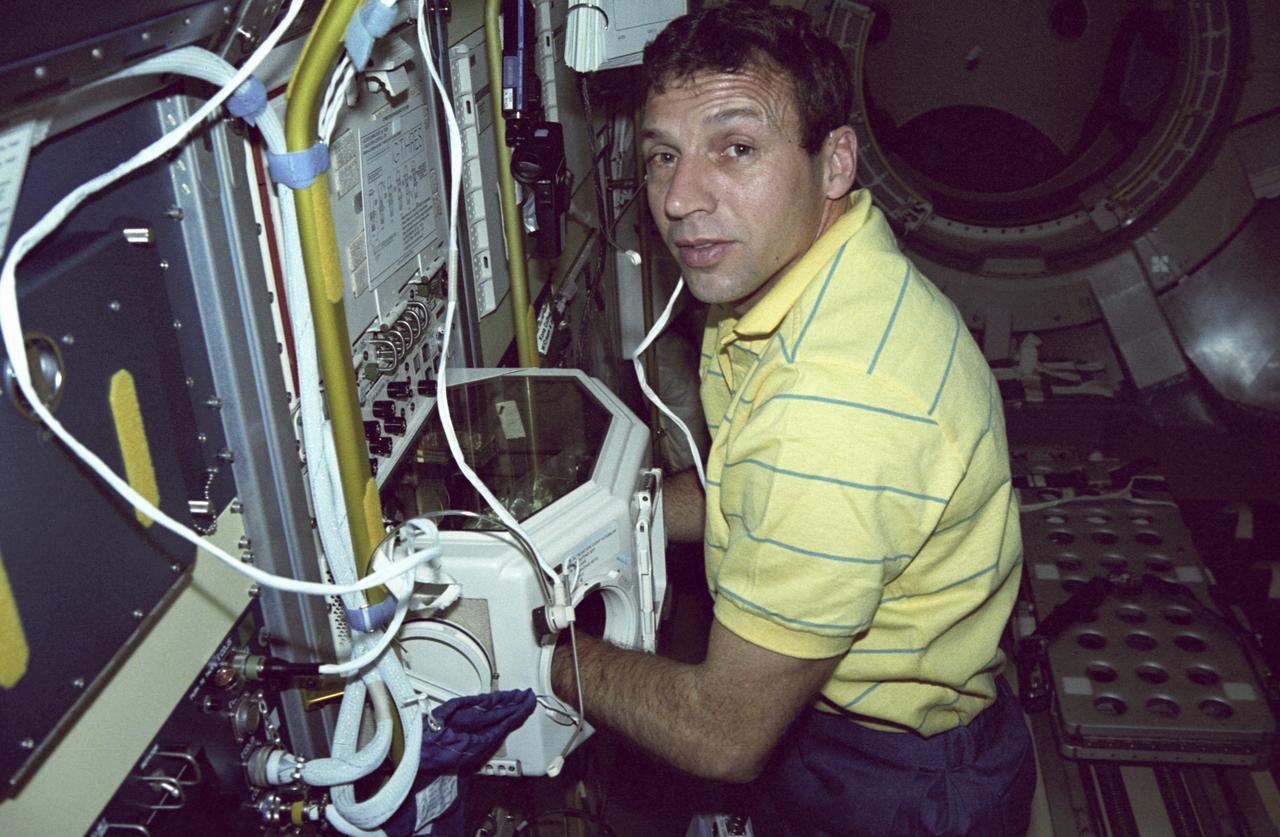
In this photograph, astronaut David Hilmers conducts a life science experiment by using the Biorack Glovebox (GBX) during the International Microgravity Laboratory-1 (IML-1) mission. The Biorack was a large multipurpose facility designed for studying the effects of microgravity and cosmic radiation on numerous small life forms such as cells, tissues, small organisms, and plants. Located at the Biorack, the GBX was an enclosed environment that protected samples from contamination and prevented liquid from escaping. Crewmembers handled the specimens with their hands inside gloves that extended into the sealed work area. A microscope and video camera mounted on the GBX door were used to observe and document experiments. Managed by the Marshall Space Flight Center, the IML-1 mission was the first in a series of Shuttle flights dedicated to fundamental materials and life sciences research and was launched aboard the Shuttle Orbiter Discovery (STS-42) on January 22, 1992.
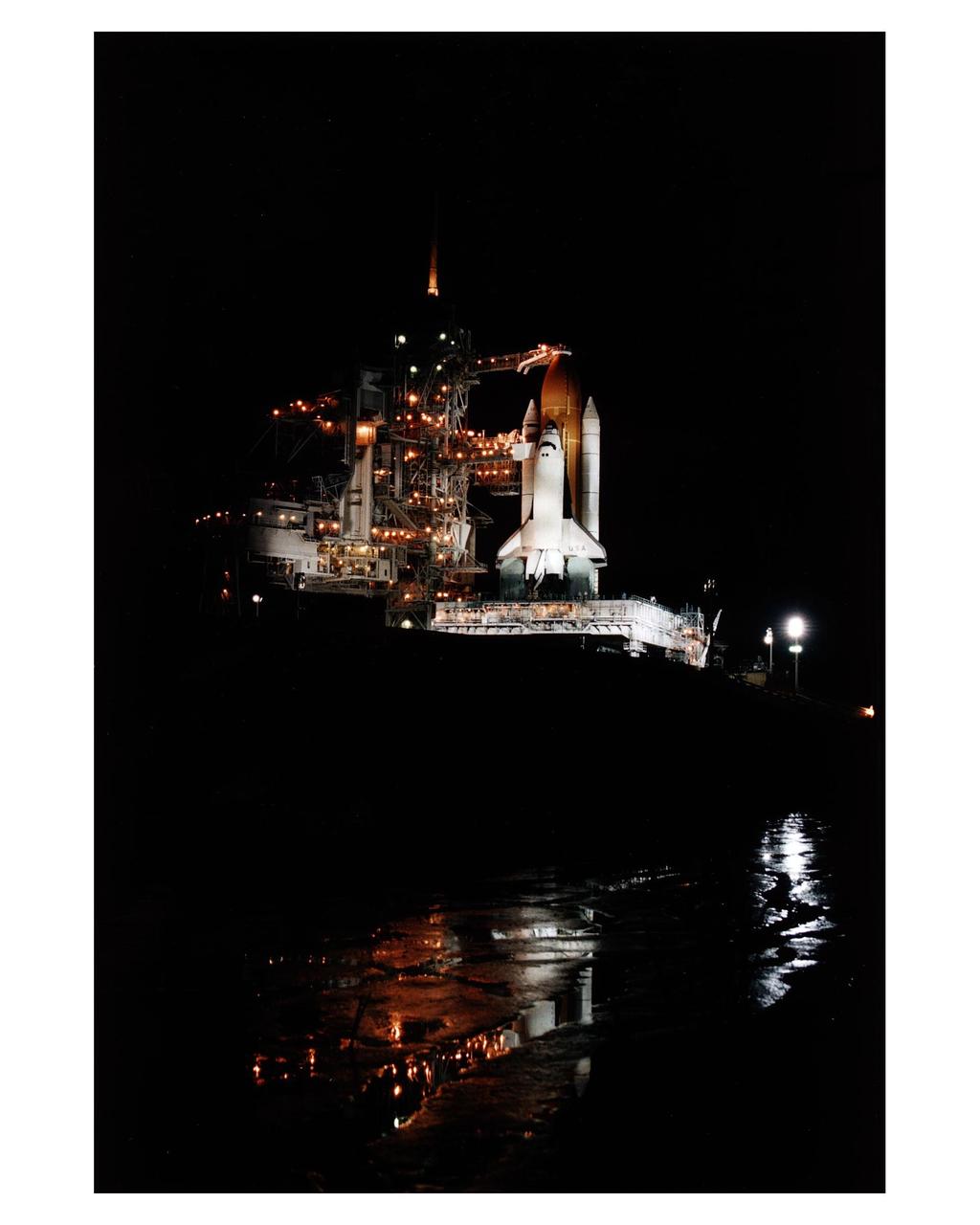
The Space Shuttle Columbia stands poised in the night for the STS-83 Microgravity Science Laboratory-1 (MSL-1) mission after the Rotating Service Structure of Launch Pad 39A has been moved back prior to the start of fueling operations that take place about 12 hours before liftoff. During the scheduled 16-day STS-83 mission, the MSL-1 will be used to test some of the hardware, facilities and procedures that are planned for use on the International Space Station as well as research in combustion, protein crystal growth and materials processing experiments
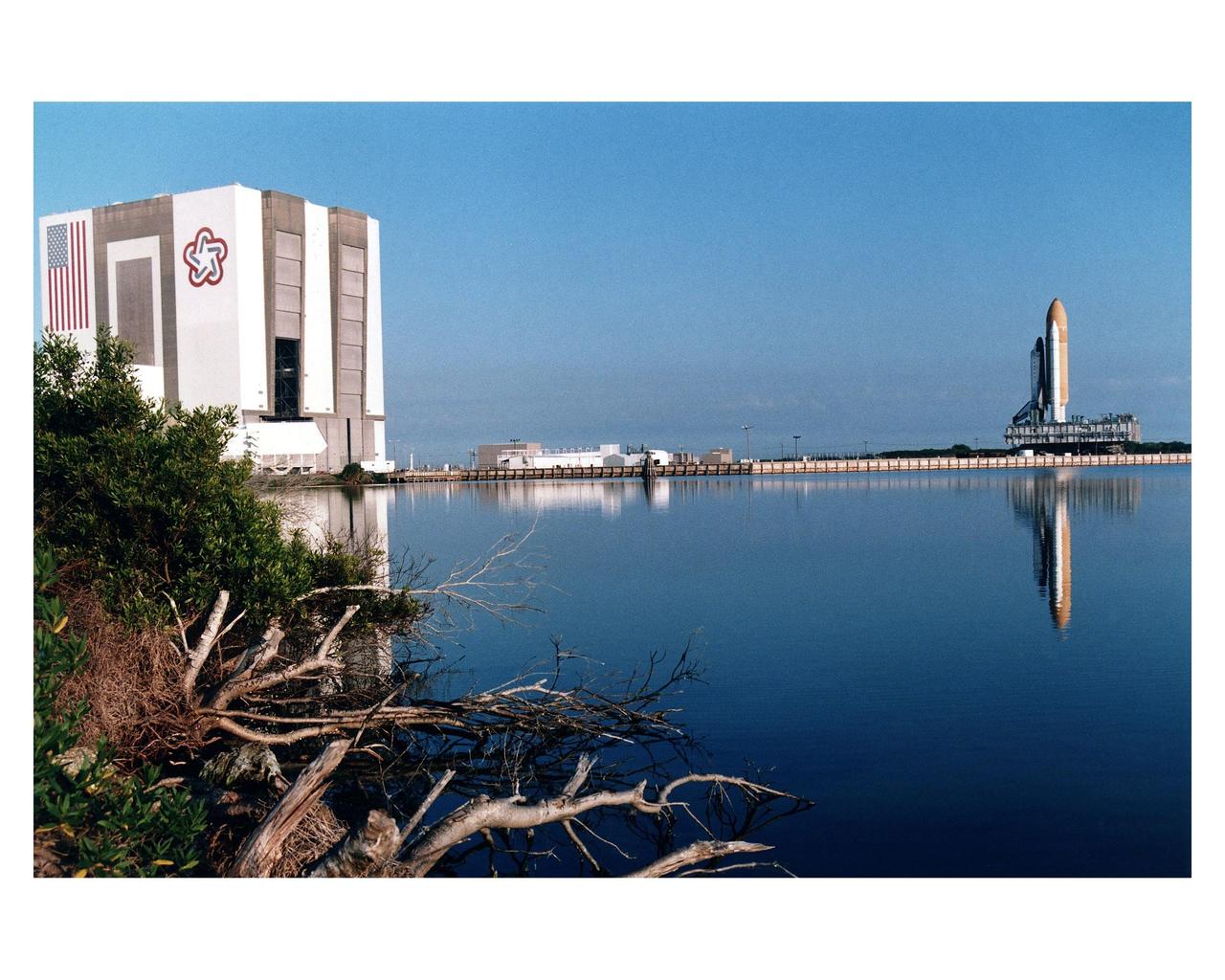
KENNEDY SPACE CENTER, Fla. -- Under a clear blue sky that is reflected in the water of the turn basin, the Space Shuttle Orbiter Columbia rolls out to Launch Pad 39A in preparation for the STS-83 mission.Tthe Microgravity Science Laboratory-1 (MSL-1) Spacelab module is the primary payload on this 16-day space flight. The MSL-1 will be used to test some of the hardware, facilities and procedures that are planned for use on the International Space Station while the seven-member flight crew conducts combustion, protein crystal growth and materials processing experiments.
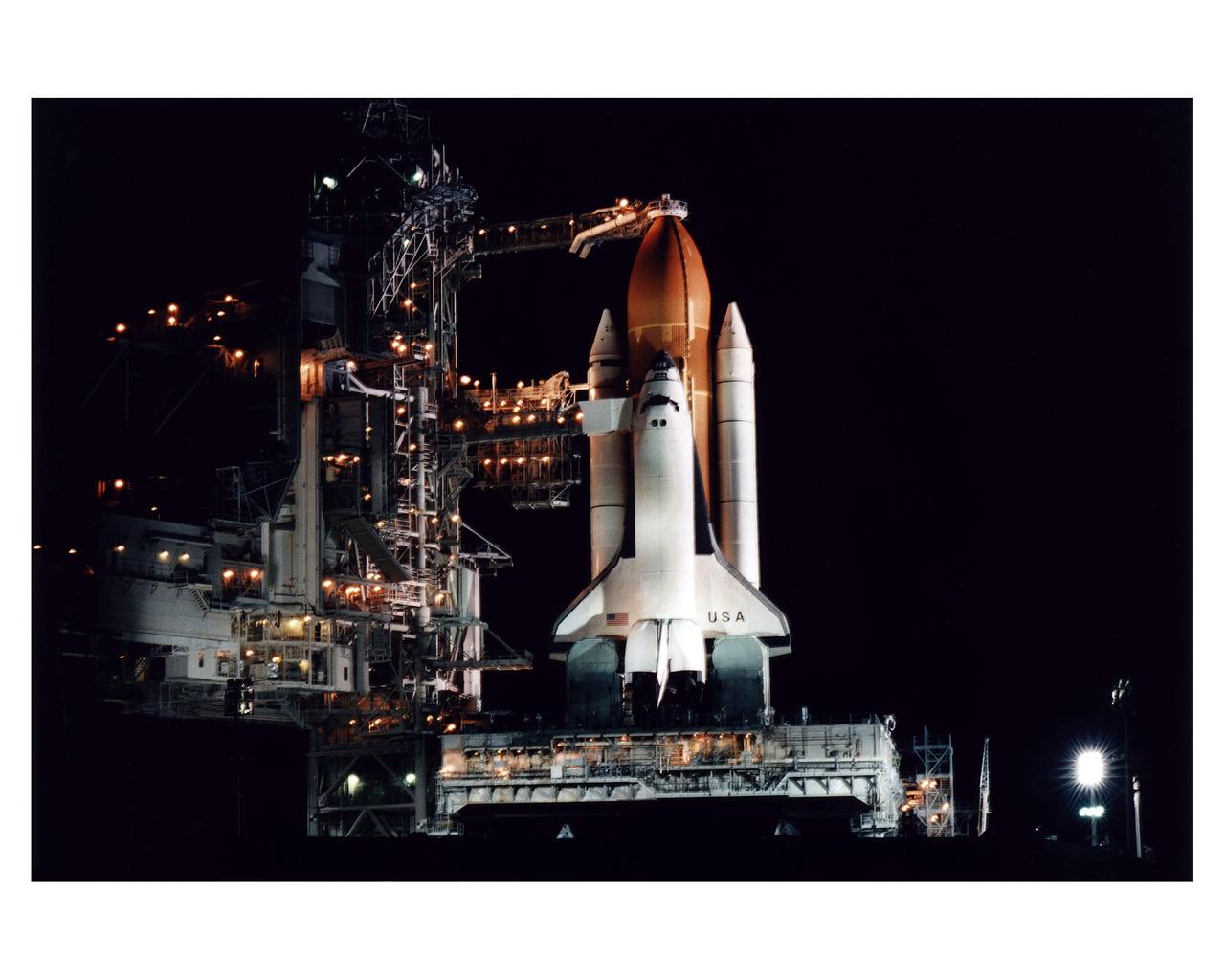
The Space Shuttle Columbia stands poised in the night for the STS-83 Microgravity Science Laboratory-1 (MSL-1) mission after the Rotating Service Structure of Launch Pad 39A has been moved back prior to the start of fueling operations that take place about 12 hours before liftoff. During the scheduled 16-day STS-83 mission, the MSL-1 will be used to test some of the hardware, facilities and procedures that are planned for use on the International Space Station as well as research in combustion, protein crystal growth and materials processing experiments

The Space Shuttle Columbia stands poised in the night for the STS-83 Microgravity Science Laboratory-1 (MSL-1) mission after the Rotating Service Structure of Launch Pad 39A has been moved back prior to the start of fueling operations that take place about 12 hours before liftoff. During the scheduled 16-day STS-83 mission, the MSL-1 will be used to test some of the hardware, facilities and procedures that are planned for use on the International Space Station as well as research in combustion, protein crystal growth and materials processing experiments
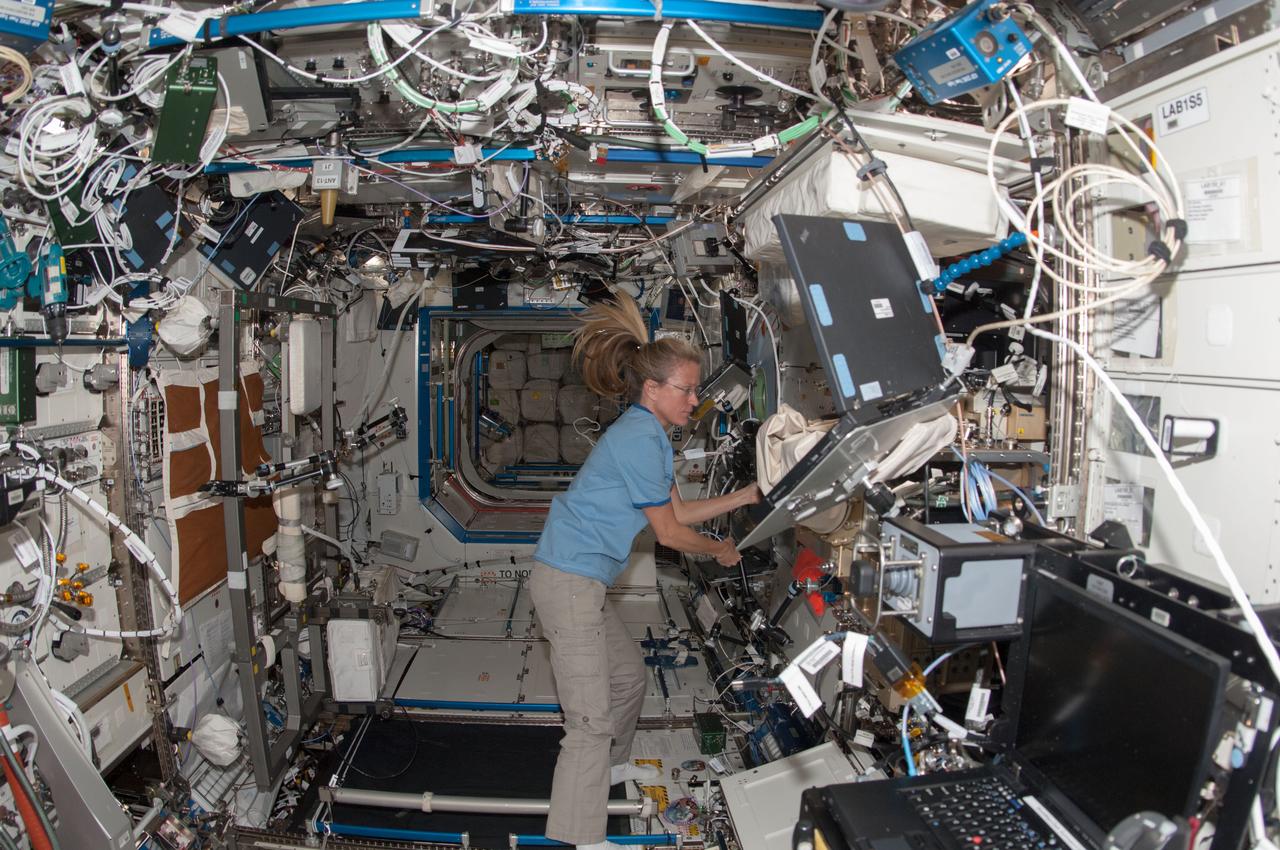
In the International Space Stations Destiny laboratory,NASA astronaut Karen Nyberg,Expedition 36 flight engineer,speaks into a microphone while conducting a session with the Advanced Colloids Experiment (ACE)-1 sample preparation at the Light Microscopy Module (LMM) in the Fluids Integrated Rack / Fluids Combustion Facility (FIR/FCF). ACE-1 is a series of microscopic imaging investigations that uses the microgravity environment to examine flow characteristics and the evolution and ordering effects within a group of colloidal materials.
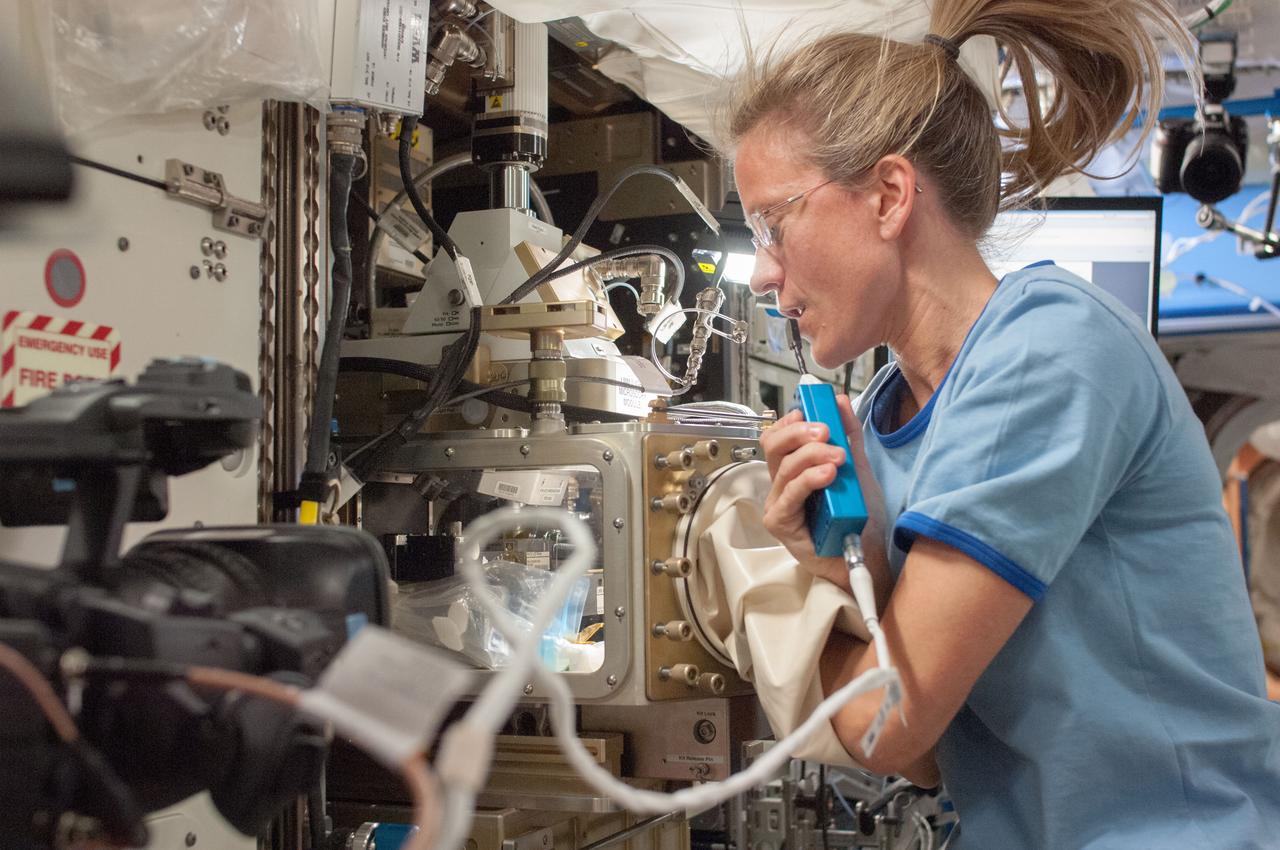
ISS036-E-019830 (24 June 2013) --- In the International Space Station’s Destiny laboratory, NASA astronaut Karen Nyberg, Expedition 36 flight engineer, speaks into a microphone while conducting a session with the Advanced Colloids Experiment (ACE)-1 sample preparation at the Light Microscopy Module (LMM) in the Fluids Integrated Rack / Fluids Combustion Facility (FIR/FCF). ACE-1 is a series of microscopic imaging investigations that uses the microgravity environment to examine flow characteristics and the evolution and ordering effects within a group of colloidal materials.
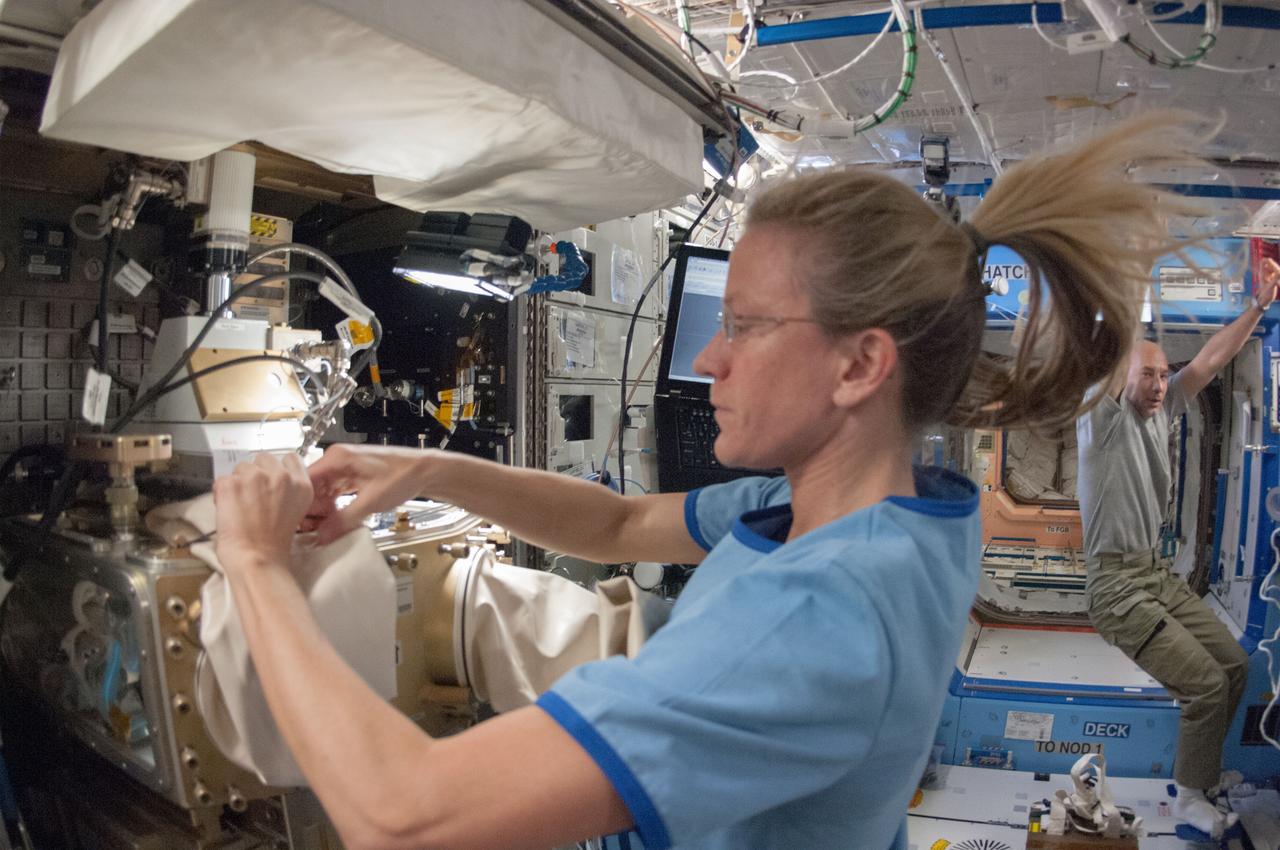
ISS036-E-019760 (24 June 2013) --- In the International Space Station’s Destiny laboratory, NASA astronaut Karen Nyberg, Expedition 36 flight engineer, conducts a session with the Advanced Colloids Experiment (ACE)-1 sample preparation at the Light Microscopy Module (LMM) in the Fluids Integrated Rack / Fluids Combustion Facility (FIR/FCF). ACE-1 is a series of microscopic imaging investigations that uses the microgravity environment to examine flow characteristics and the evolution and ordering effects within a group of colloidal materials.
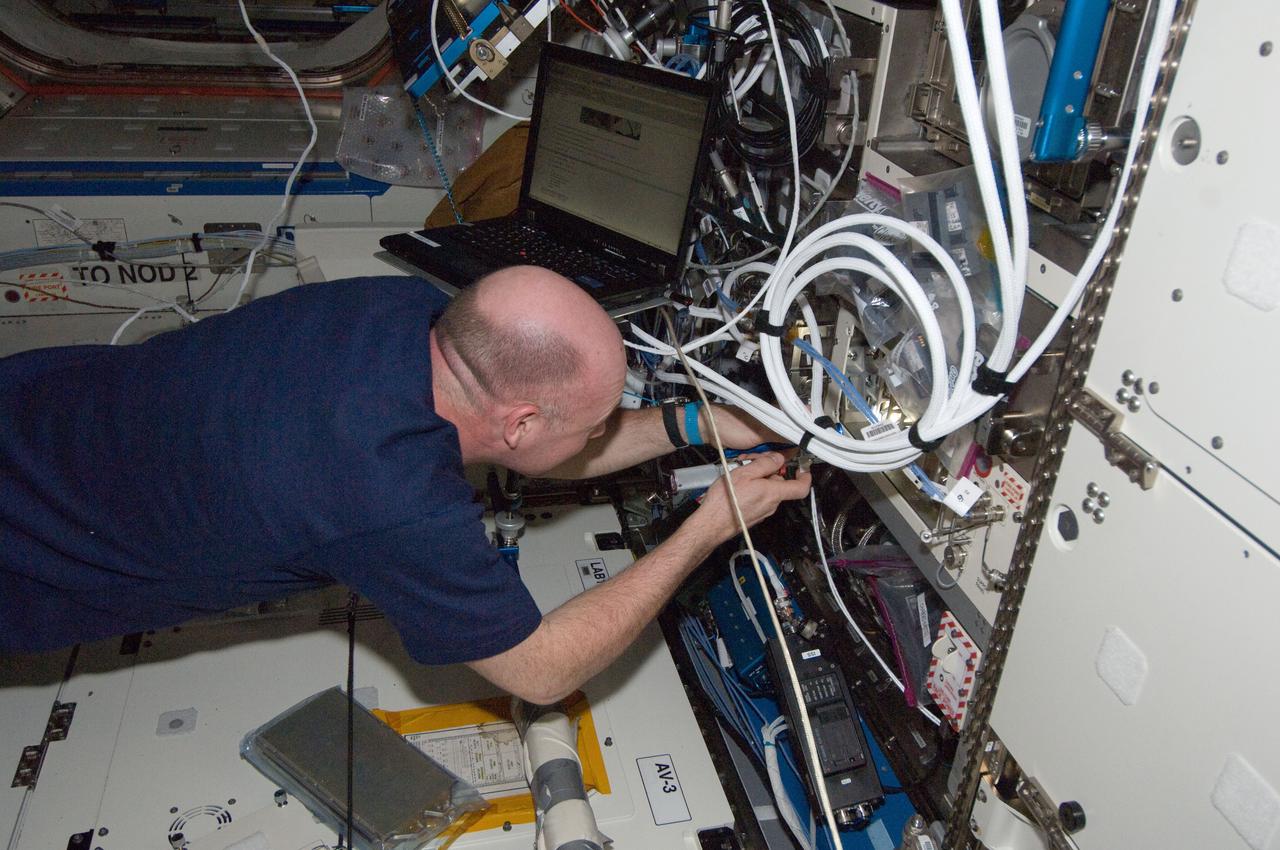
ISS030-E-033367 (28 Dec. 2011) --- In the International Space Station?s Destiny laboratory, European Space Agency astronaut Andre Kuipers, Expedition 30 flight engineer, replaces the faulty Exchangeable Standard Electronic Module 1 (ESEM-1) behind the front panel of the Microgravity Science Glovebox Remote Power Distribution Assembly (MSG RPDA) with the new spare. The ESEM is used to distribute station main power to the entire MSG facility.
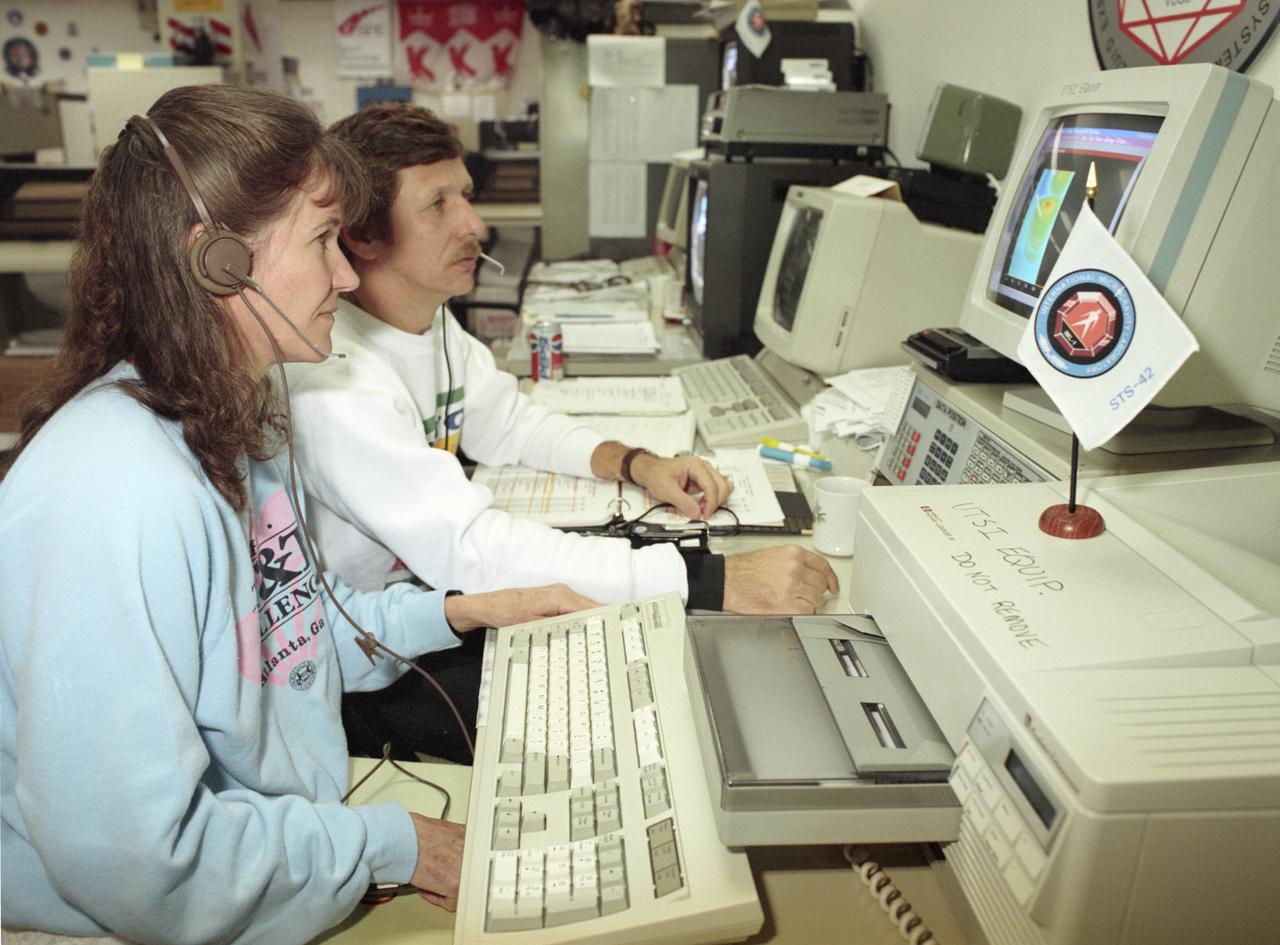
The primary payload for Space Shuttle Mission STS-42, launched January 22, 1992, was the International Microgravity Laboratory-1 (IML-1), a pressurized manned Spacelab module. The goal of IML-1 was to explore in depth the complex effects of weightlessness of living organisms and materials processing. Around-the-clock research was performed on the human nervous system's adaptation to low gravity and effects of microgravity on other life forms such as shrimp eggs, lentil seedlings, fruit fly eggs, and bacteria. Materials processing experiments were also conducted, including crystal growth from a variety of substances such as enzymes, mercury iodide, and a virus. The Huntsville Operations Support Center (HOSC) Spacelab Payload Operations Control Center (SL POCC) at the Marshall Space Flight Center (MSFC) was the air/ground communication channel used between the astronauts and ground control teams during the Spacelab missions. Featured are activities in the SL POCC during STS-42, IML-1 mission.
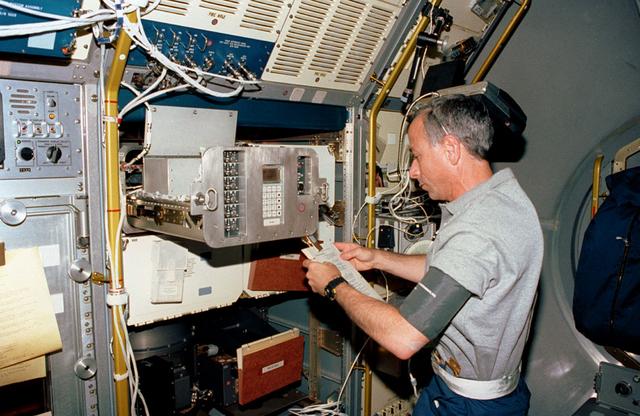
The first United States Microgravity Laboratory (USML-1) was one of NASA's science and technology programs and provided scientists an opportunity to research various scientific investigations in a weightless environment inside the Spacelab module. It also provided demonstrations of new equipment to help prepare for advanced microgravity research and processing aboard the Space Station. The USML-1 flew in orbit for extended periods, providing greater opportunities for research in materials science, fluid dynamics, biotechnology, and combustion science. In this photograph, astronaut Carl Meade is reviewing the manual to activate the Generic Bioprocessing Apparatus (GBA) inside the Spacelab module. The GBA for the USML-1 mission was a multipurpose facility that could help us answer important questions about the relationship between gravity and biology. This unique facility allowed scientists to study biological processes in samples ranging from molecules to small organisms. For example, scientists would examine how collagen, a protein substance found in cornective tissue, bones, and cartilage, forms fibers. In microgravity, it might be possible to alter collagen fiber assembly so that this material could be used more effectively as artificial skin, blood vessels, and other parts of the body. The USML-1 was managed by the Marshall Space Flight Center and waslaunched aboard the Space Shuttle Orbiter Columbia (STS-50) on June 25, 1992.
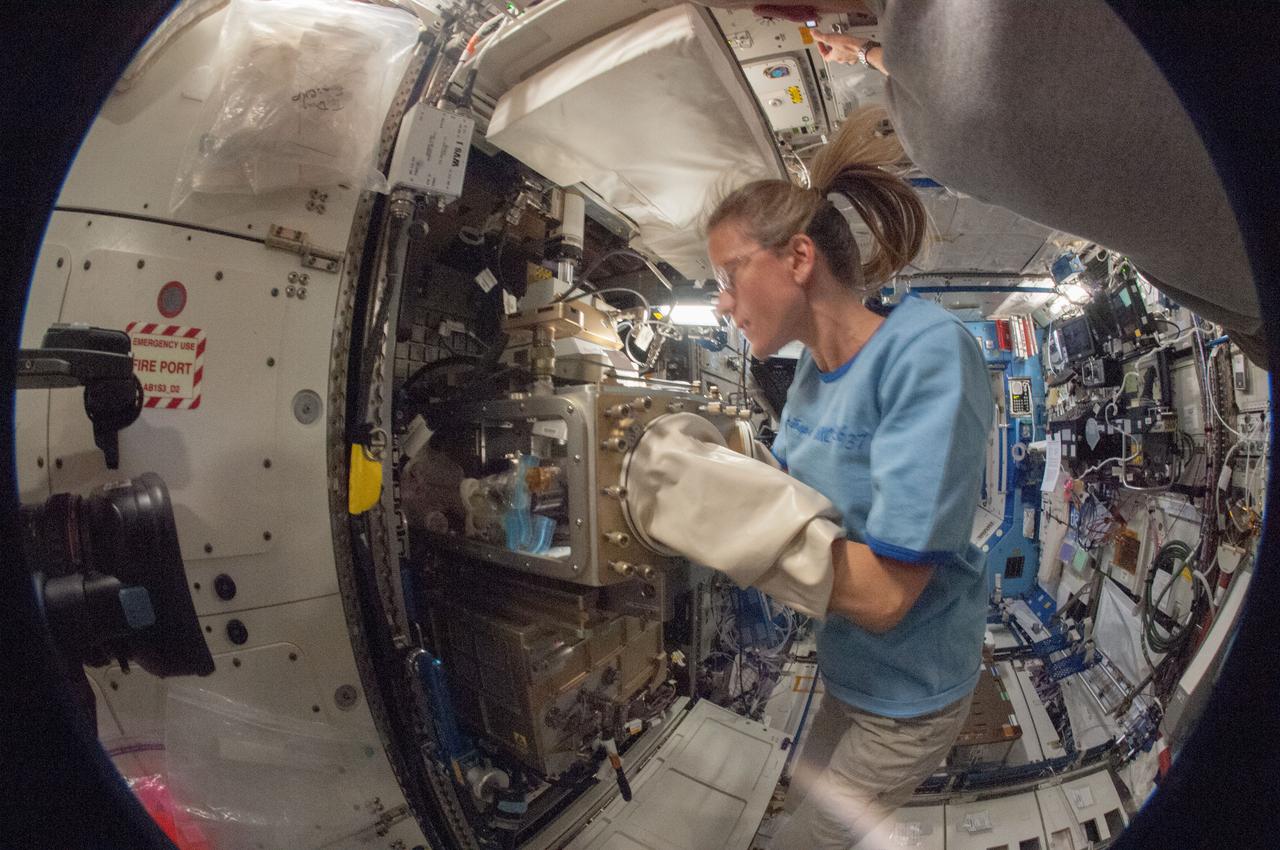
ISS036-E-019783 (24 June 2013) --- In the International Space Station’s Destiny laboratory, a fisheye lens attached to an electronic still camera was used to capture this image of NASA astronaut Karen Nyberg, Expedition 36 flight engineer, as she conducts a session with the Advanced Colloids Experiment (ACE)-1 sample preparation at the Light Microscopy Module (LMM) in the Fluids Integrated Rack / Fluids Combustion Facility (FIR/FCF). ACE-1 is a series of microscopic imaging investigations that uses the microgravity environment to examine flow characteristics and the evolution and ordering effects within a group of colloidal materials.
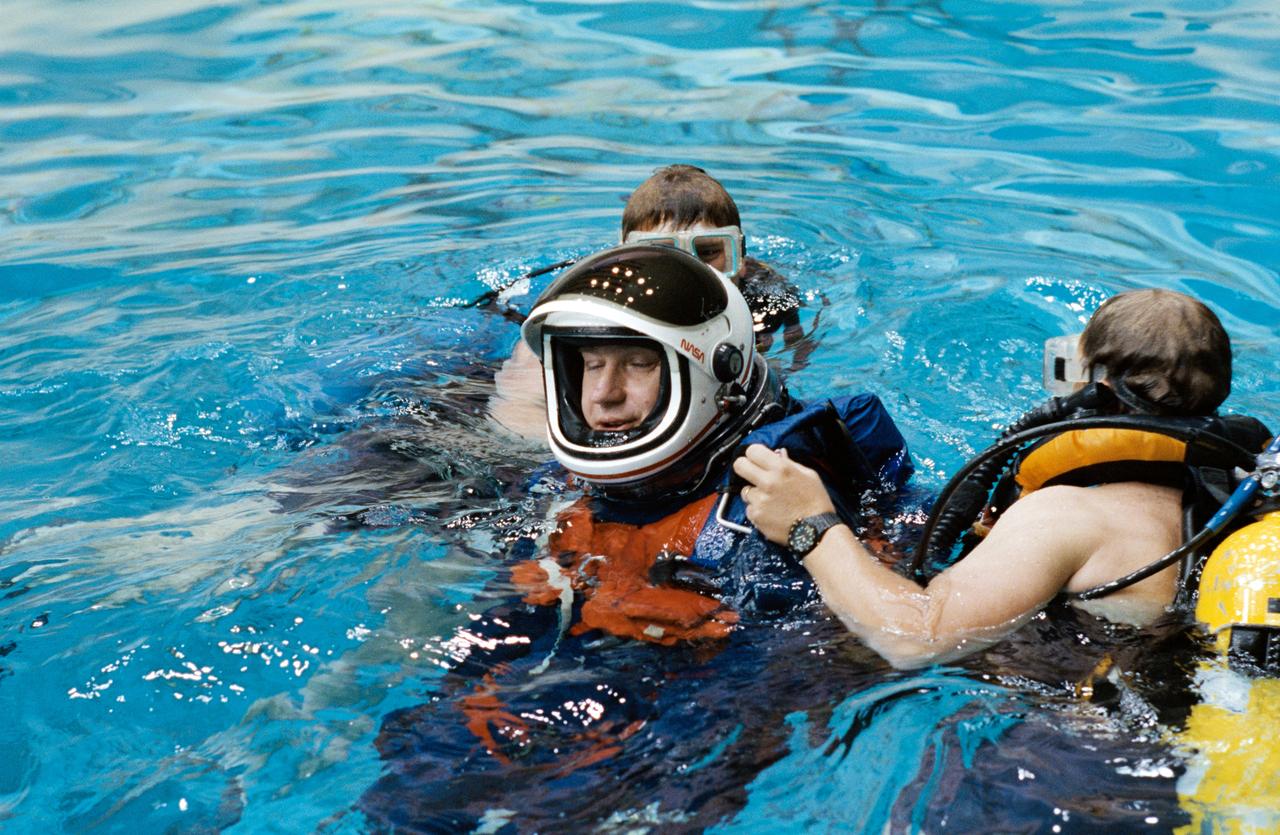
S92-32108 (May 1992) --- Payload specialist Albert Sacco Jr. uses a one-person life raft during emergency bailout training exercises in the Johnson Space Center?s (JSC) Weightless Environment Training Facility (WET-F). Sacco is an alternate payload specialist for the United States Microgravity Laboratory (USML-1) mission, scheduled for launch later this year. EDITOR?S NOTE: Sacco was later named as prime crew payload specialist for the USML-2 mission (STS-73), scheduled for 1995.
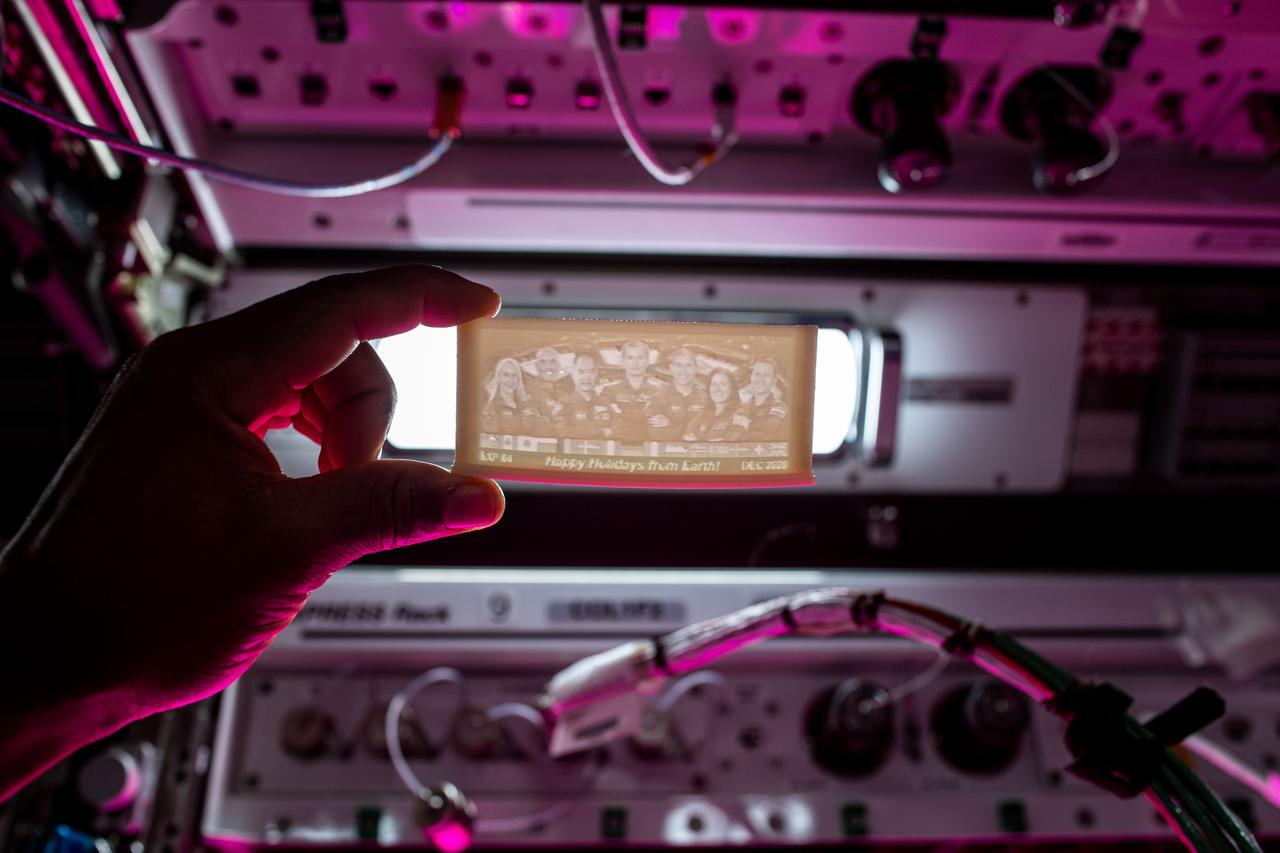
iss064e024194 (1/20/2021) --- A view of the Year 2020 Print, printed in the Additive Manufacturing Facility (AMF) Manufacturing Device (ManD) and held in front of an ExPRESS (Expedite the Processing of Experiments to Space Station) Rack Light in the Columbus European Laboratory aboard the International Space Station (ISS). The Bellevue High School 2020 Print project uses the space station’s Manufacturing Device – Additive Manufacturing Facility (AMF) to provide students a behind-the-scenes experience with the 3D prinitng process in microgravity.
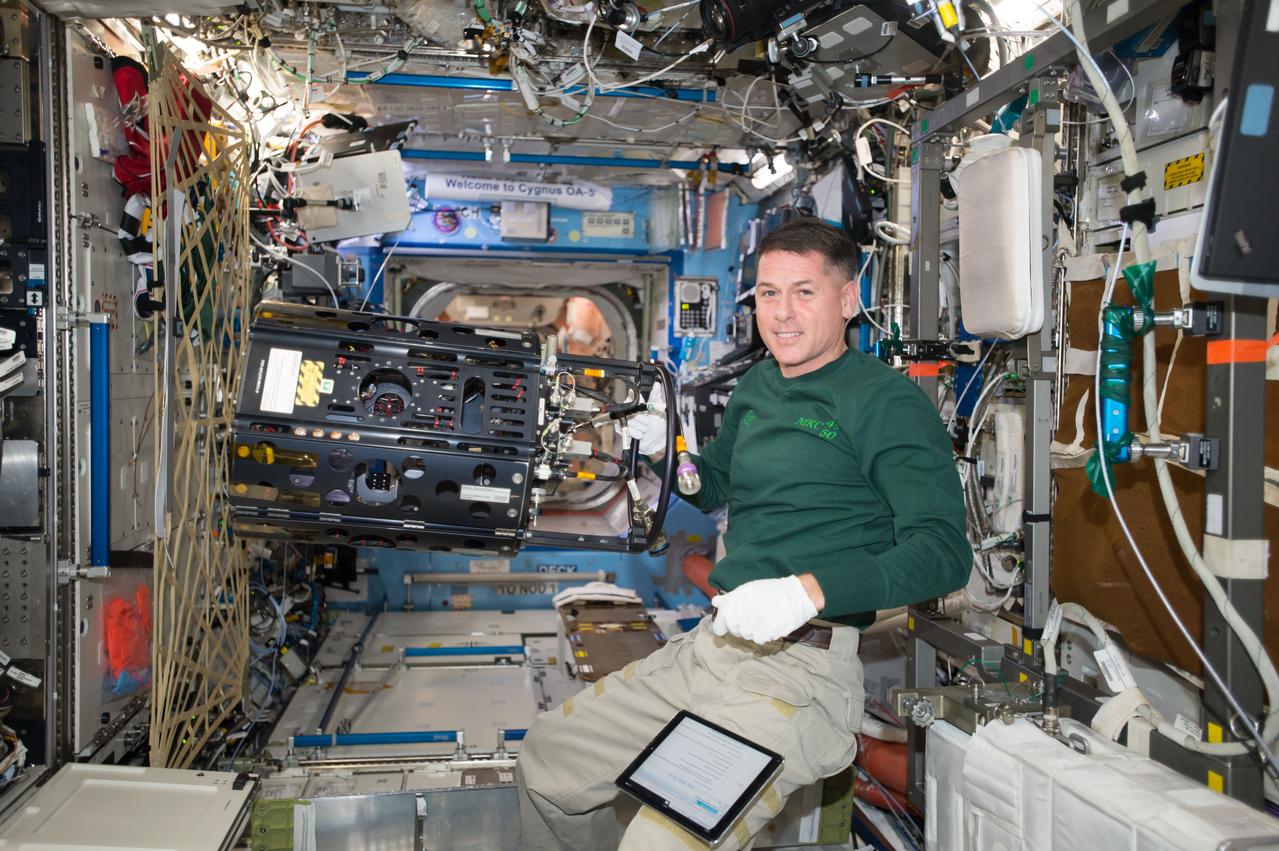
iss050e034393 (1/18/2017) --- NASA astronaut Shane Kimbrough during Combustion Integration Rack (CIR) Multi-user Droplet Combustion Apparatus (MDCA) Troubleshooting in the U.S. Laboratory. MDCA was removed from the CIR Combustion Chamber and spring fastener was repaired. The CIR is used to perform combustion experiments in microgravity. The CIR can be reconfigured easily on orbit to accommodate a variety of combustion experiments.
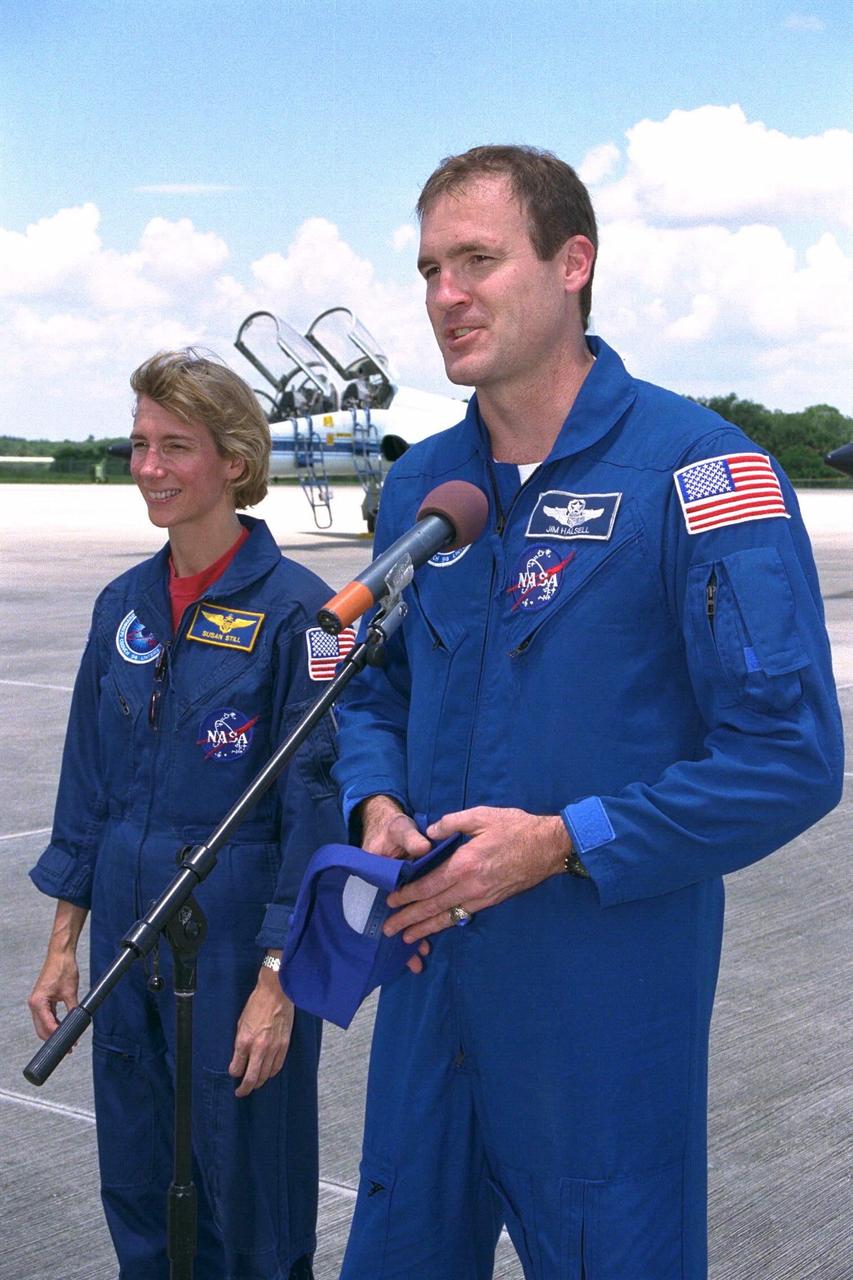
STS-94 Pilot Susan Leigh Still watches as Commander James D. Halsell, Jr., speaks to the media after the crew arrived at the Shuttle Landing Facility at Kennedy Space Center in preparation for the reflight of the Microgravity Science Laboratory-1 mission. Launch is scheduled for July 1, 1997, at 2:37 p.m. EDT. The laboratory was scheduled to fly again with the full complement of STS-83 experiments after that mission was cut short due to a faulty fuel cell. During the scheduled 16-day STS-94 mission, the experiments will be used to test some of the hardware, facilities and procedures that are planned for use on the International Space Station while the flight crew conducts combustion, protein crystal growth and materials processing experiments

The first United States Microgravity Laboratory (USML-1) flew in orbit inside the Spacelab science module for extended periods, providing scientists and researchers greater opportunities for research in materials science, fluid dynamics, biotechnology (crystal growth), and combustion science. This photograph shows Astronaut Larry De Lucas wearing a stocking plethysmograph during the mission. Muscle size in the legs changes with exposure to microgravity. A stocking plethysmograph, a device for measuring the volume of a limb, was used to help determine these changes. Several times over the course of the mission, an astronaut will put on the plethysmograph, pull the tapes tight and mark them. By comparing the marks, changes in muscle volume can be measured. The USML-1 was launched aboard the Space Shuttle Orbiter Columbia (STS-50) on June 25, 1992.
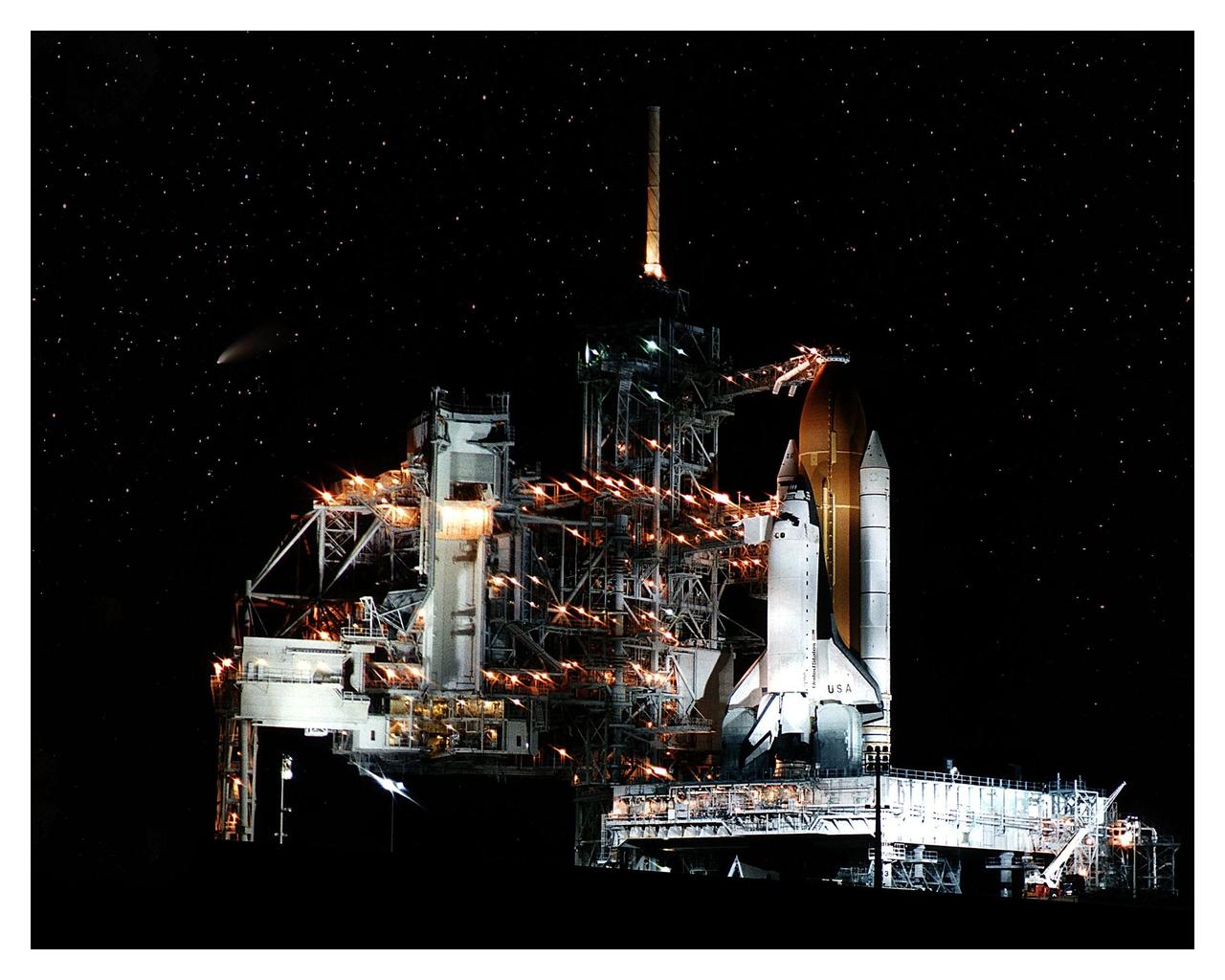
The soon-to-be-spaceborne Space Shuttle Columbia gets a flyby visit from the Comet Hale-Bopp (shown as the streak at left center) while awaiting launch on the STS-83 mission. This photo was taken the night before the planned liftoff on April 4, 1997. The Rotating Service Structure at Launch Pad 39A has been moved back prior to the start of operations to fuel the external tank. The primary objective of the STS-83 flight is to operate the Microgravity Science Laboratory-1 (MSL-1), which will test some of the hardware, facilities and procedures that will be used on the International Space Station. Columbia will have a crew of seven
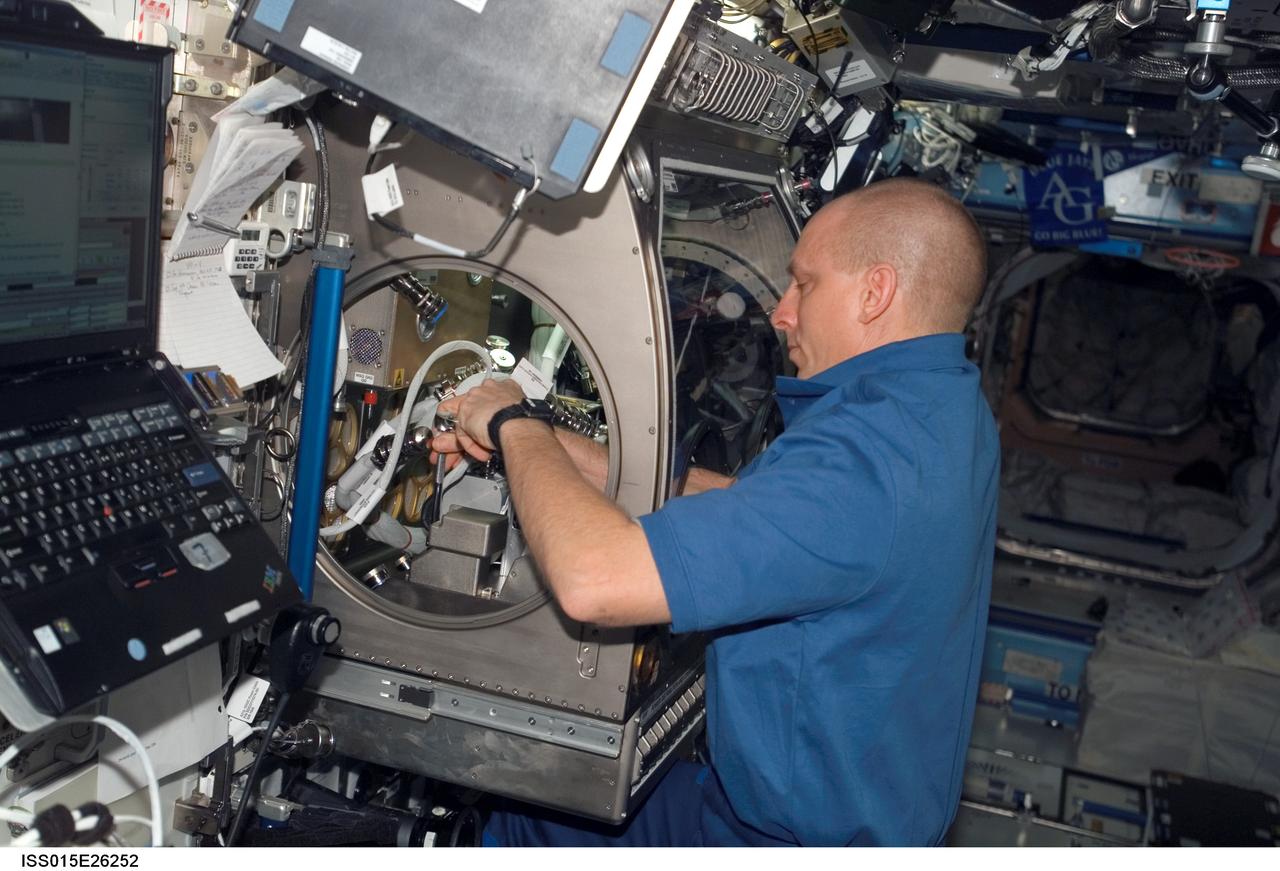
ISS015-E-26252 (1 Sept. 2007) --- Astronaut Clay Anderson, Expedition 15 flight engineer, works on the Smoke and Aerosol Measurement Experiment (SAME) hardware setup located in the Microgravity Science Glovebox (MSG) in the Destiny laboratory of the International Space Station. SAME will measure the smoke properties, or particle size distribution, of typical particles that are produced from different materials that can be found onboard station and other spacecrafts. SAME aims to test the performance of ionization smoke detectors and evaluate the performance of the photoelectric smoke detectors. The data will be used to develop a model that can predict smoke droplet growth that will be used to evaluate future smoke detection devices.
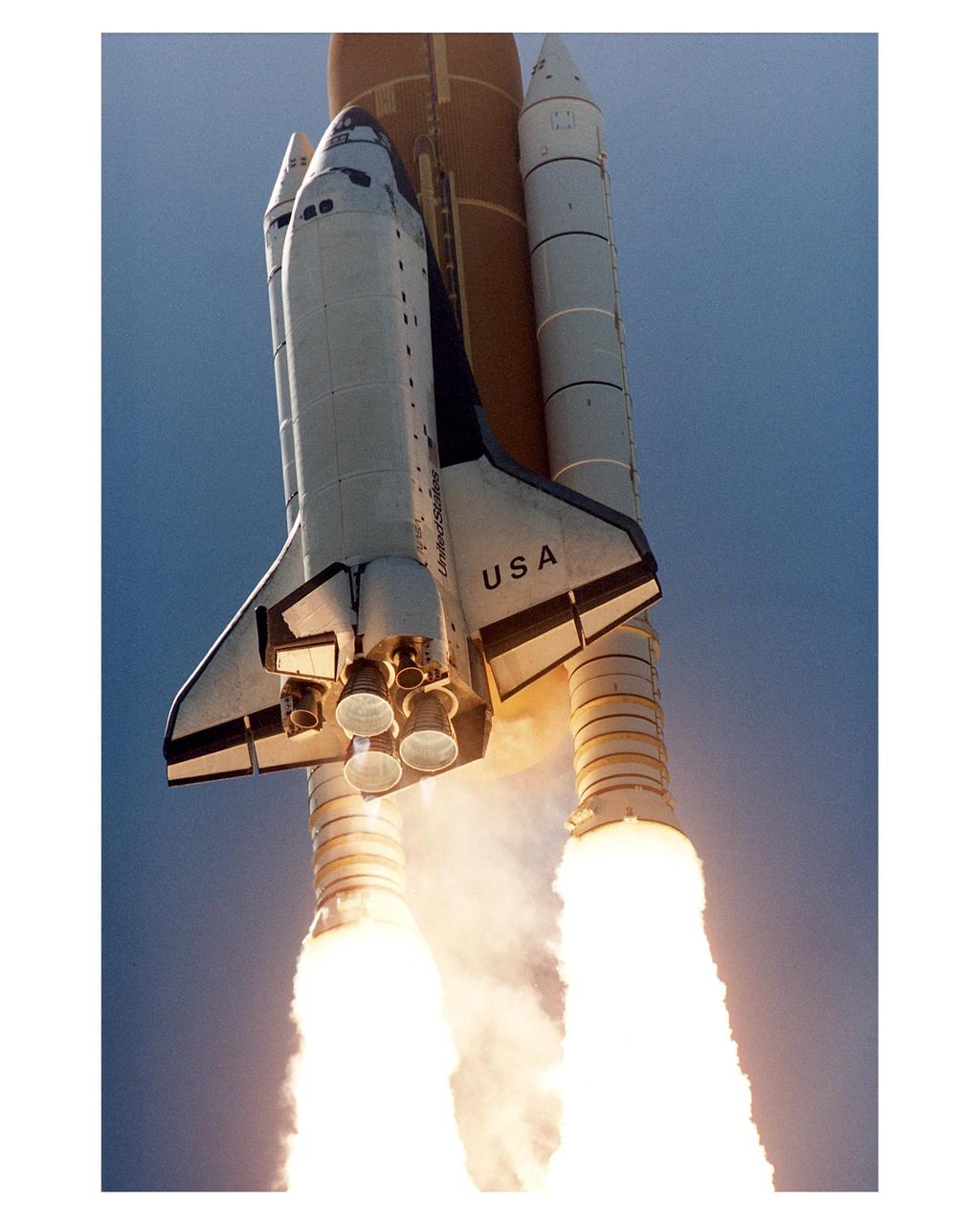
Like a rising sun lighting up the afternoon sky, the Space Shuttle Columbia soars from Launch Pad 39A at 2:20:32 p.m. EST, April 4, on the 16-day Microgravity Science Laboratory-1 (MSL-1) mission. The crew members are Mission Commander James D. Halsell, Jr.; Pilot Susan L. Still; Payload Commander Janice Voss; Mission Specialists Michael L. Gernhardt and Donald A. Thomas; and Payload Specialists Roger K. Crouch and Gregory T. Linteris. During the scheduled 16-day STS-83 mission, the MSL-1 will be used to test some of the hardware, facilities and procedures that are planned for use on the International Space Station as well as research in combustion, protein crystal growth and materials processing experiments
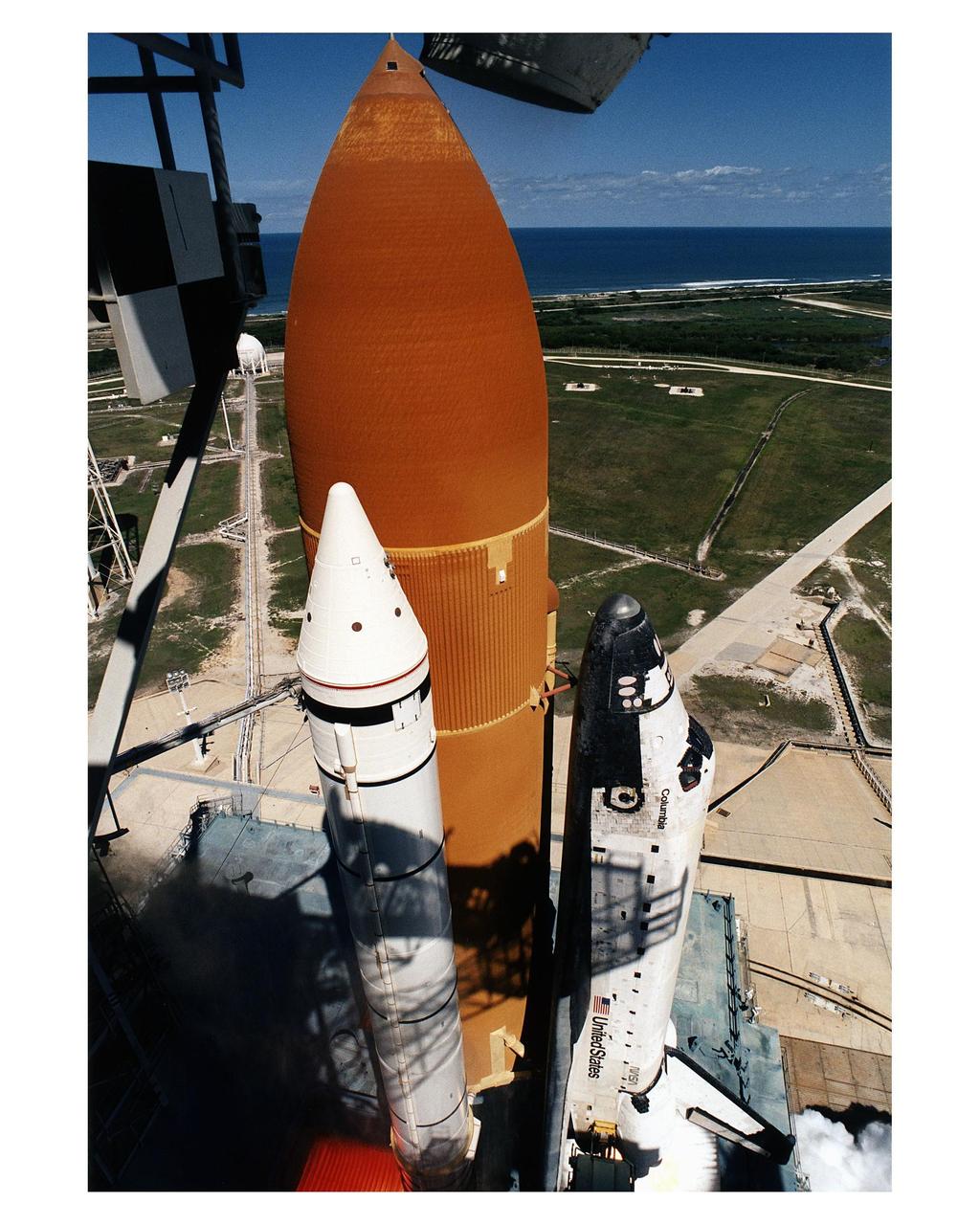
Like a rising sun lighting up the afternoon sky, the Space Shuttle Columbia soars from Launch Pad 39A at 2:20:32 p.m. EST, April 4, on the 16-day Microgravity Science Laboratory-1 (MSL-1) mission. The crew members are Mission Commander James D. Halsell, Jr.; Pilot Susan L. Still; Payload Commander Janice Voss; Mission Specialists Michael L. Gernhardt and Donald A. Thomas; and Payload Specialists Roger K. Crouch and Gregory T. Linteris. During the scheduled 16-day STS-83 mission, the MSL-1 will be used to test some of the hardware, facilities and procedures that are planned for use on the International Space Station as well as research in combustion, protein crystal growth and materials processing experiments
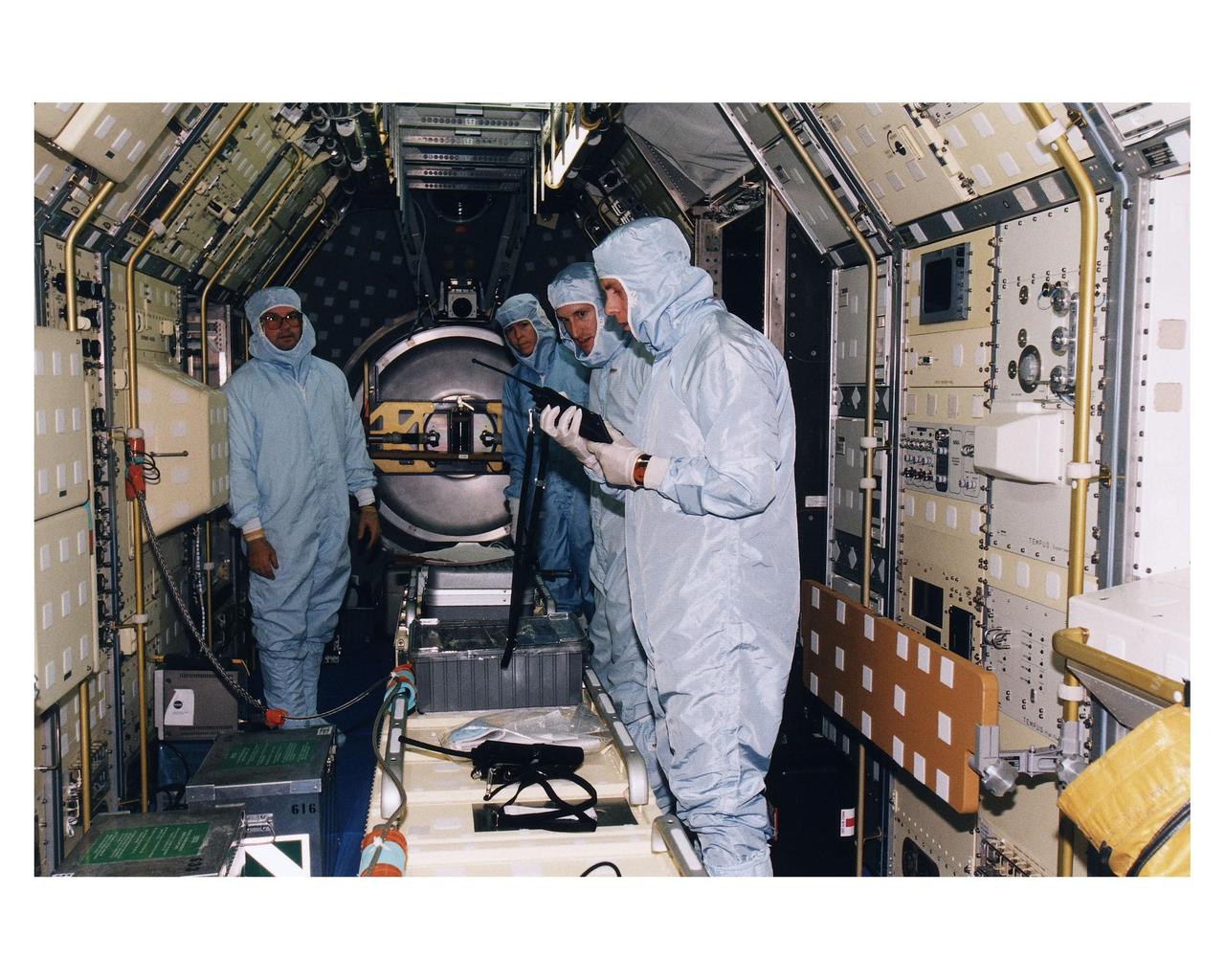
KENNEDY SPACE CENTER, FLA. -- KSC payloads processing employees work to reservice the Microgravity Science Laboratory-1 (MSL-1) Spacelab module in the Space Shuttle Orbiter Columbia’s payload bay for the STS-94 mission in Orbiter Processing Facility 1. That mission is now scheduled to lift off in early July. This was the first time that this type of payload was reserviced without removing it from the payload bay. This new procedure pioneers processing efforts for quick relaunch turnaround times for future payloads. The Spacelab module was scheduled to fly again with the full complement of STS-83 experiments after that mission was cut short due to a faulty fuel cell. During the scheduled 16-day STS-94 mission, the experiments will be used to test some of the hardware, facilities and procedures that are planned for use on the International Space Station while the flight crew conducts combustion, protein crystal growth and materials processing experiments
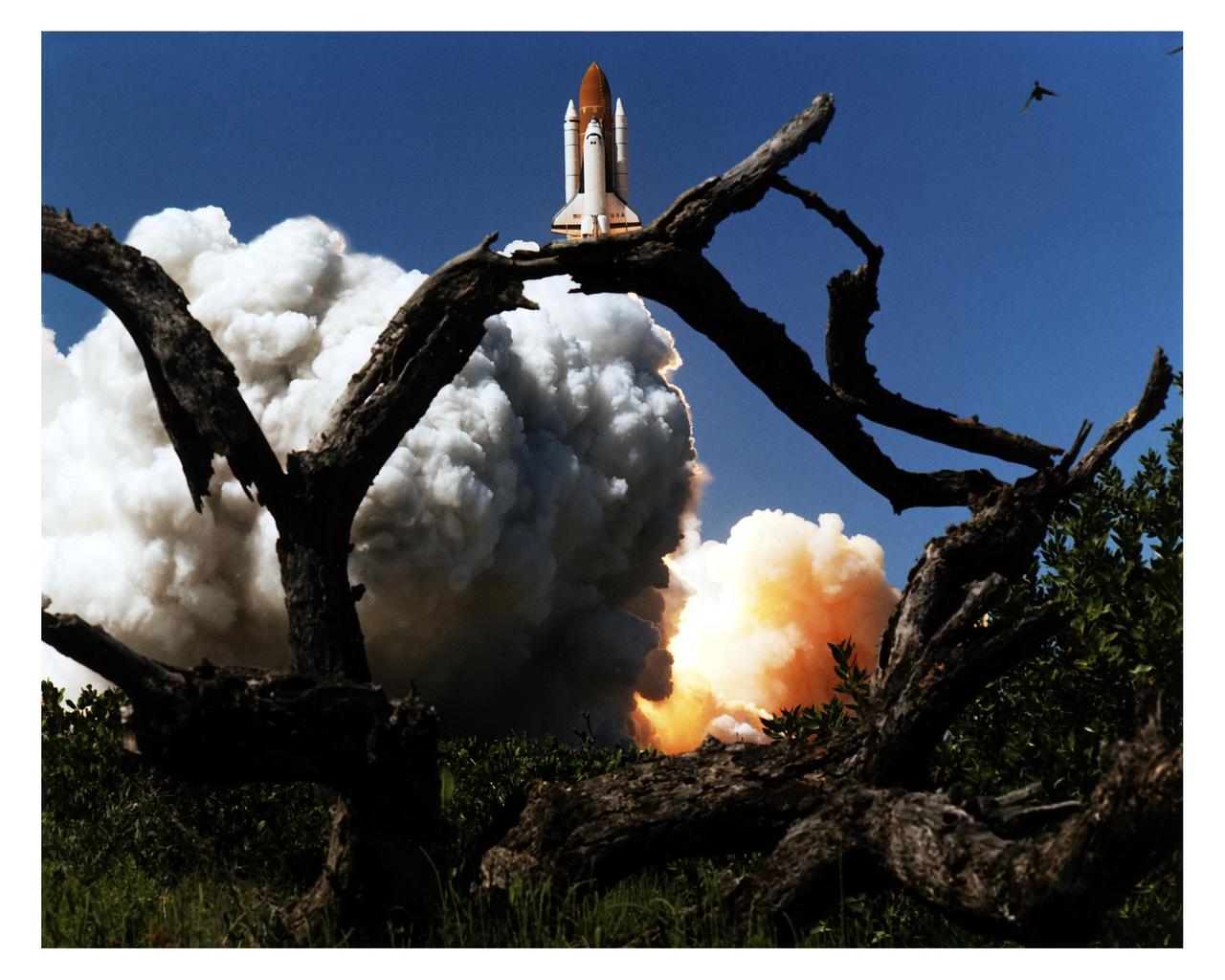
Like a rising sun lighting up the afternoon sky, the Space Shuttle Columbia soars from Launch Pad 39A at 2:20:32 p.m. EST, April 4, on the 16-day Microgravity Science Laboratory-1 (MSL-1) mission. The crew members are Mission Commander James D. Halsell, Jr.; Pilot Susan L. Still; Payload Commander Janice Voss; Mission Specialists Michael L. Gernhardt and Donald A. Thomas; and Payload Specialists Roger K. Crouch and Gregory T. Linteris. During the scheduled 16-day STS-83 mission, the MSL-1 will be used to test some of the hardware, facilities and procedures that are planned for use on the International Space Station as well as research in combustion, protein crystal growth and materials processing experiments
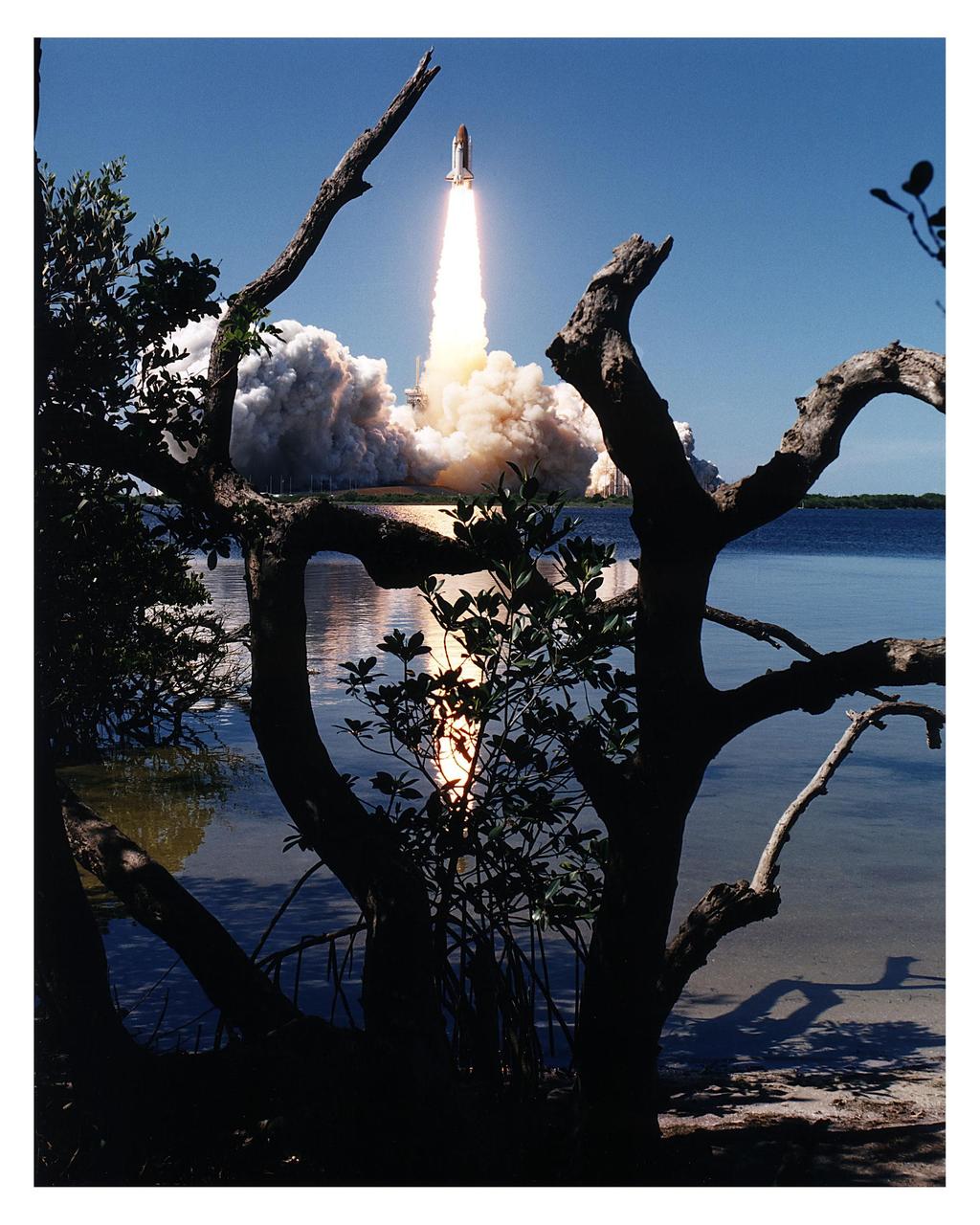
Like a rising sun lighting up the afternoon sky, the Space Shuttle Columbia soars from Launch Pad 39A at 2:20:32 p.m. EST, April 4, on the 16-day Microgravity Science Laboratory-1 (MSL-1) mission. The crew members are Mission Commander James D. Halsell, Jr.; Pilot Susan L. Still; Payload Commander Janice Voss; Mission Specialists Michael L. Gernhardt and Donald A. Thomas; and Payload Specialists Roger K. Crouch and Gregory T. Linteris. During the scheduled 16-day STS-83 mission, the MSL-1 will be used to test some of the hardware, facilities and procedures that are planned for use on the International Space Station as well as research in combustion, protein crystal growth and materials processing experiments

KSC payloads processing employees work to reservice the Microgravity Science Laboratory-1 (MSL-1) Spacelab module in the Space Shuttle Orbiter Columbia’s payload bay for the STS-94 mission in Orbiter Processing Facility 1. That mission is now scheduled to lift off in early July. This was the first time that this type of payload was reserviced without removing it from the payload bay. This new procedure pioneers processing efforts for quick relaunch turnaround times for future payloads. The Spacelab module was scheduled to fly again with the full complement of STS-83 experiments after that mission was cut short due to a faulty fuel cell. During the scheduled 16-day STS-94 mission, the experiments will be used to test some of the hardware, facilities and procedures that are planned for use on the International Space Station while the flight crew conducts combustion, protein crystal growth and materials processing experiments
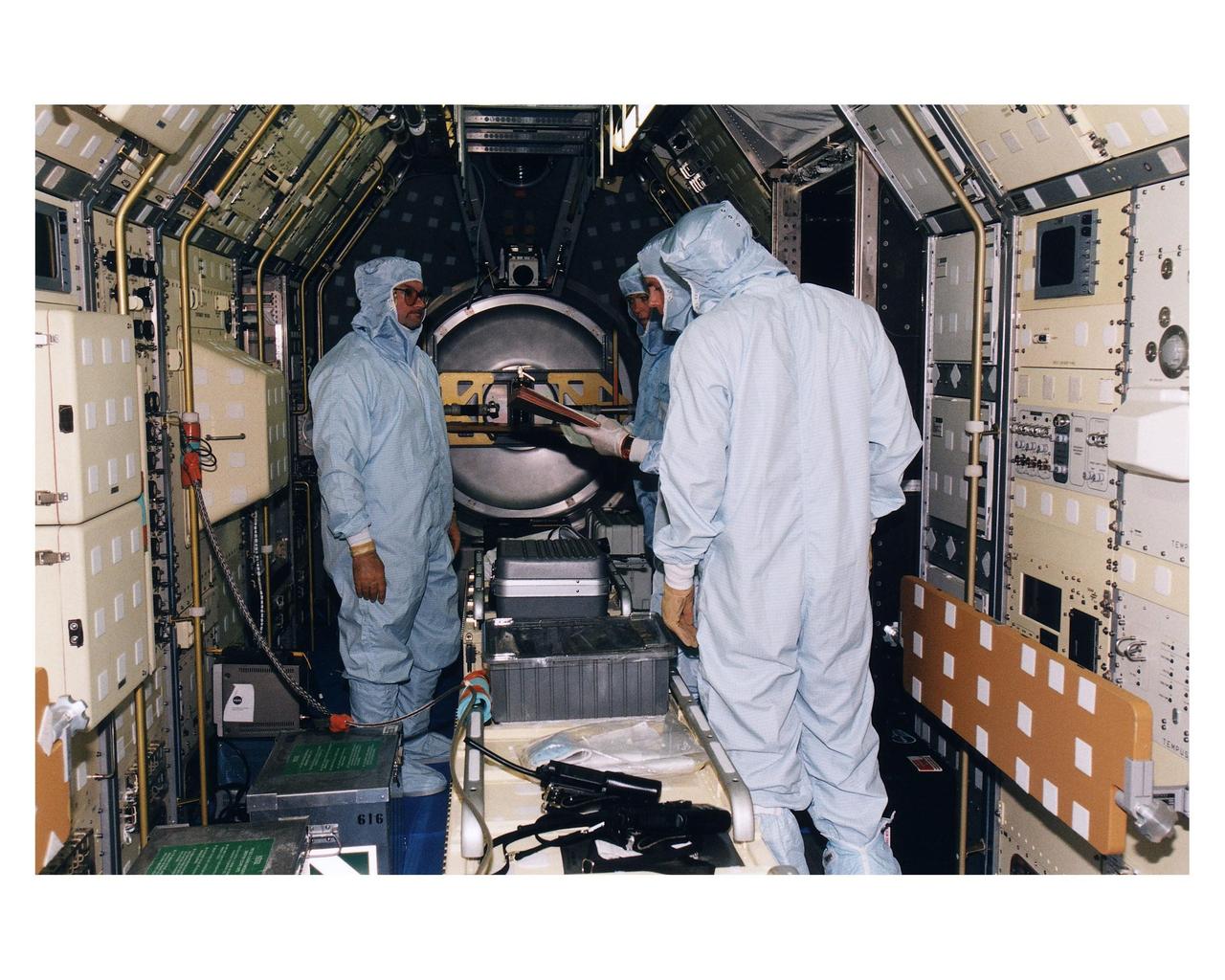
KENNEDY SPACE CENTER, FLA. -- KSC payloads processing employees work to reservice the Microgravity Science Laboratory-1 (MSL-1) Spacelab module in the Space Shuttle Orbiter Columbia’s payload bay for the STS-94 mission in Orbiter Processing Facility 1. That mission is now scheduled to lift off in early July. This was the first time that this type of payload was reserviced without removing it from the payload bay. This new procedure pioneers processing efforts for quick relaunch turnaround times for future payloads. The Spacelab module was scheduled to fly again with the full complement of STS-83 experiments after that mission was cut short due to a faulty fuel cell. During the scheduled 16-day STS-94 mission, the experiments will be used to test some of the hardware, facilities and procedures that are planned for use on the International Space Station while the flight crew conducts combustion, protein crystal growth and materials processing experiments
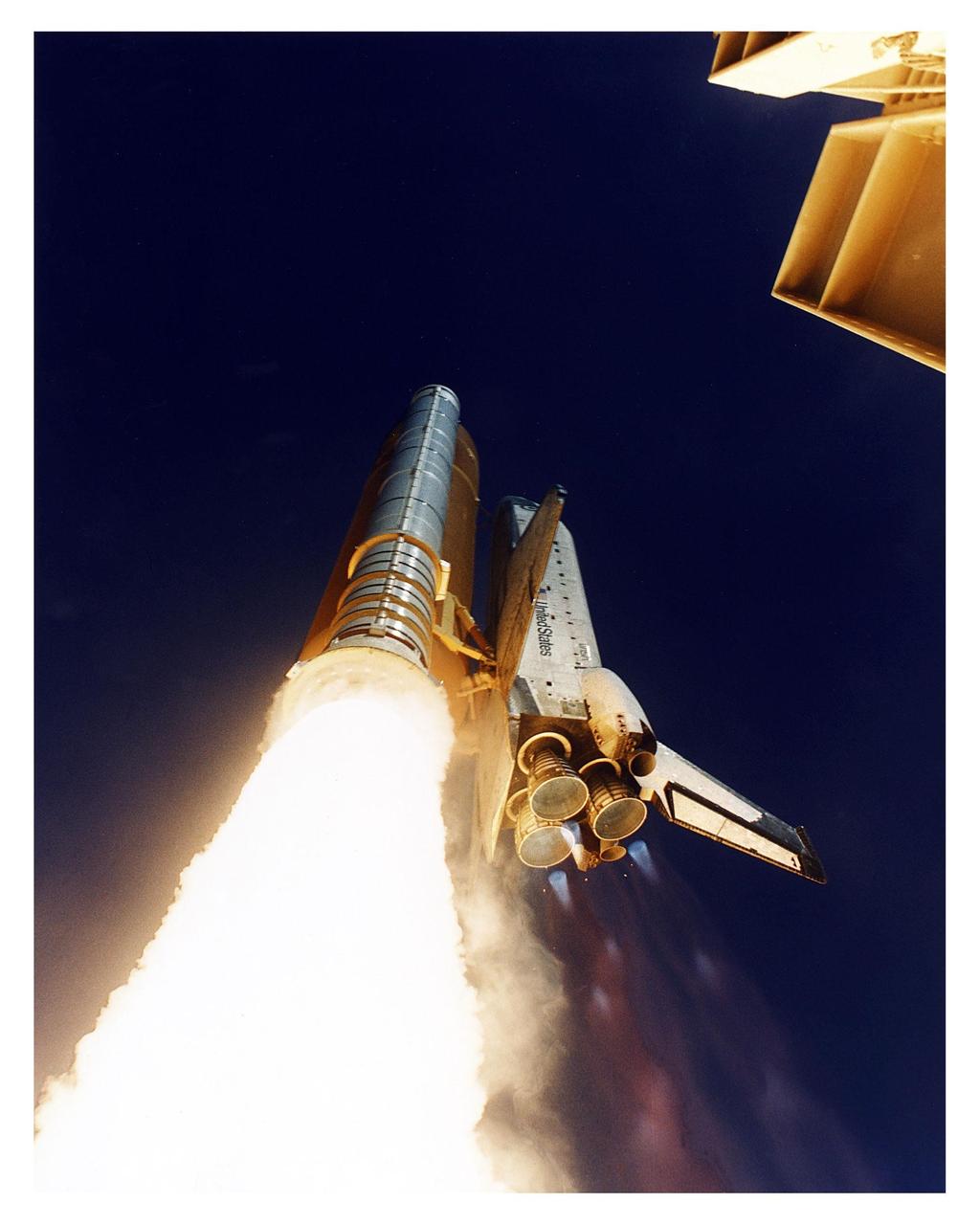
Like a rising sun lighting up the afternoon sky, the Space Shuttle Columbia soars from Launch Pad 39A at 2:20:32 p.m. EST, April 4, on the 16-day Microgravity Science Laboratory-1 (MSL-1) mission. The crew members are Mission Commander James D. Halsell, Jr.; Pilot Susan L. Still; Payload Commander Janice Voss; Mission Specialists Michael L. Gernhardt and Donald A. Thomas; and Payload Specialists Roger K. Crouch and Gregory T. Linteris. During the scheduled 16-day STS-83 mission, the MSL-1 will be used to test some of the hardware, facilities and procedures that are planned for use on the International Space Station as well as research in combustion, protein crystal growth and materials processing experiments

Like a rising sun lighting up the afternoon sky, the Space Shuttle Columbia soars from Launch Pad 39A at 2:20:32 p.m. EST, April 4, on the 16-day Microgravity Science Laboratory-1 (MSL-1) mission. The crew members are Mission Commander James D. Halsell, Jr.; Pilot Susan L. Still; Payload Commander Janice Voss; Mission Specialists Michael L. Gernhardt and Donald A. Thomas; and Payload Specialists Roger K. Crouch and Gregory T. Linteris. During the scheduled 16-day STS-83 mission, the MSL-1 will be used to test some of the hardware, facilities and procedures that are planned for use on the International Space Station as well as research in combustion, protein crystal growth and materials processing experiments
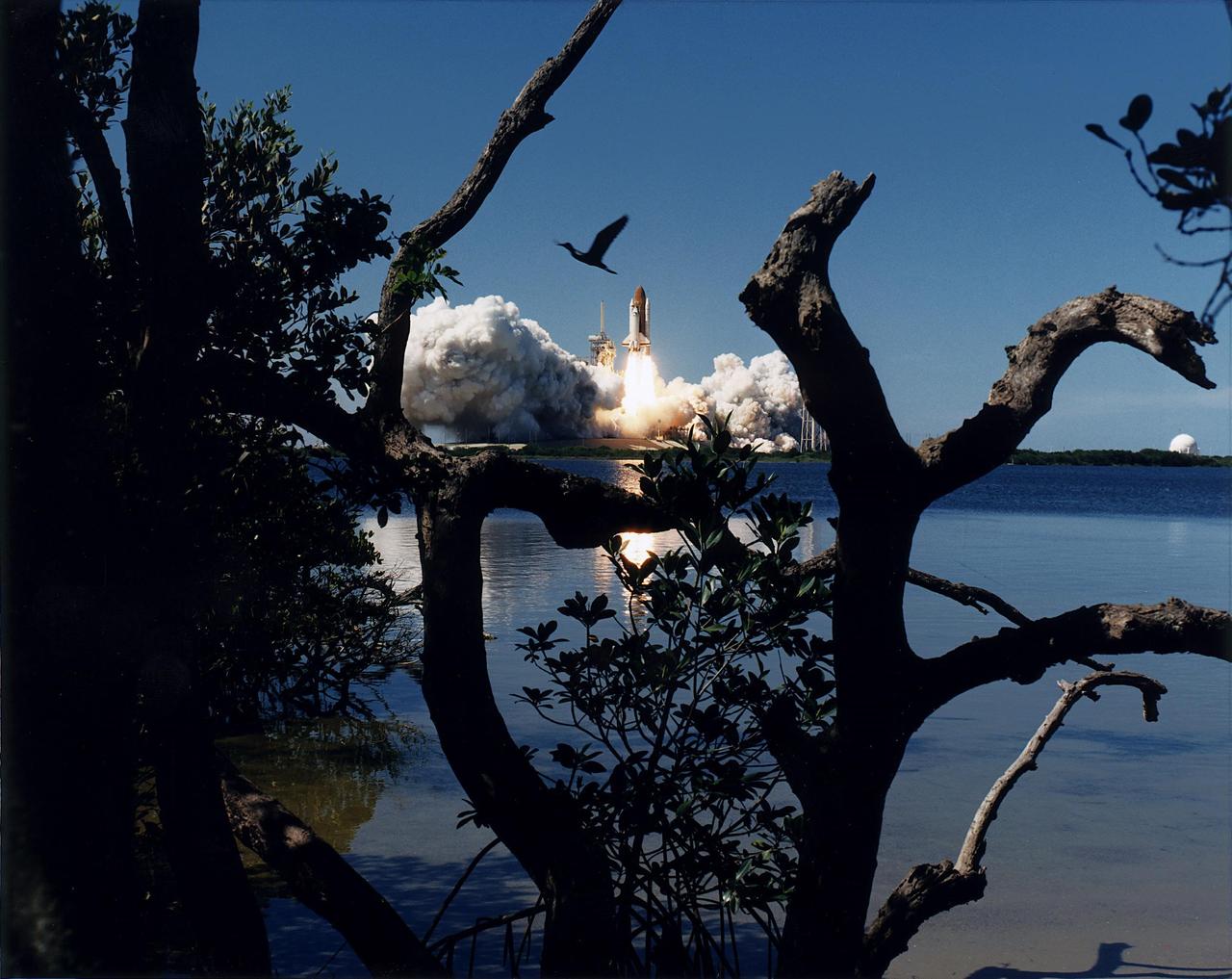
KENNEDY SPACE CENTER, FLA. -- Like a rising sun lighting up the afternoon sky, the Space Shuttle Columbia soars from Launch Pad 39A at 2:20:32 p.m. EST, April 4, on the 16-day Microgravity Science Laboratory-1 (MSL-1) mission. The crew members are Mission Commander James D. Halsell Jr., Pilot Susan L. Still, Payload Commander Janice Voss, Mission Specialists Michael L. Gernhardt and Donald A. Thomas, and Payload Specialists Roger K. Crouch and Gregory T. Linteris. During the scheduled 16-day STS-83 mission, the MSL-1 will be used to test some of the hardware, facilities and procedures that are planned for use on the International Space Station as well as research in combustion, protein crystal growth and materials processing experiments
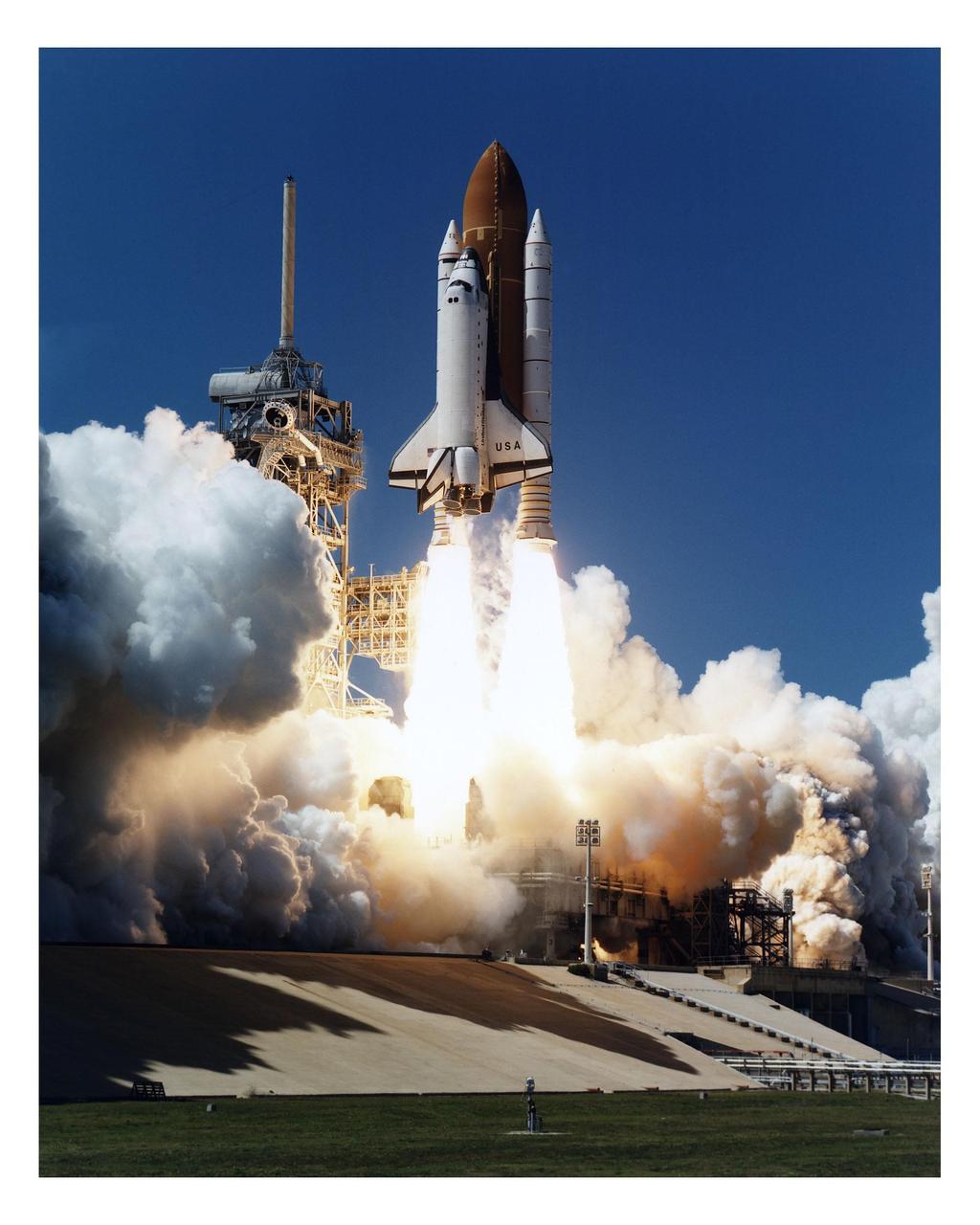
Like a rising sun lighting up the afternoon sky, the Space Shuttle Columbia soars from Launch Pad 39A at 2:20:32 p.m. EST, April 4, on the 16-day Microgravity Science Laboratory-1 (MSL-1) mission. The crew members are Mission Commander James D. Halsell, Jr.; Pilot Susan L. Still; Payload Commander Janice Voss; Mission Specialists Michael L. Gernhardt and Donald A. Thomas; and Payload Specialists Roger K. Crouch and Gregory T. Linteris. During the scheduled 16-day STS-83 mission, the MSL-1 will be used to test some of the hardware, facilities and procedures that are planned for use on the International Space Station as well as research in combustion, protein crystal growth and materials processing experiments
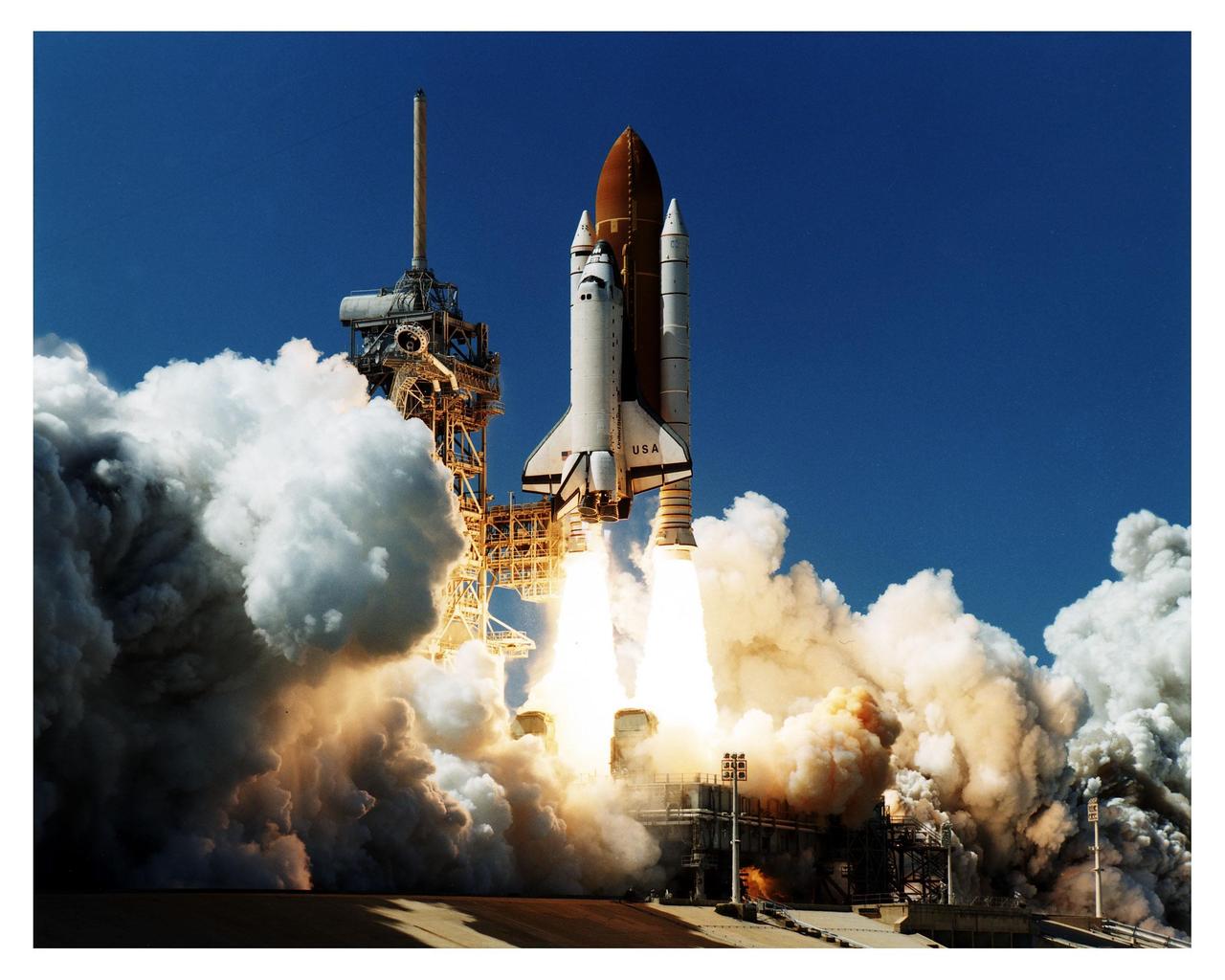
Like a rising sun lighting up the afternoon sky, the Space Shuttle Columbia soars from Launch Pad 39A at 2:20:32 p.m. EST, April 4, on the 16-day Microgravity Science Laboratory-1 (MSL-1) mission. The crew members are Mission Commander James D. Halsell, Jr.; Pilot Susan L. Still; Payload Commander Janice Voss; Mission Specialists Michael L. Gernhardt and Donald A. Thomas; and Payload Specialists Roger K. Crouch and Gregory T. Linteris. During the scheduled 16-day STS-83 mission, the MSL-1 will be used to test some of the hardware, facilities and procedures that are planned for use on the International Space Station as well as research in combustion, protein crystal growth and materials processing experiments
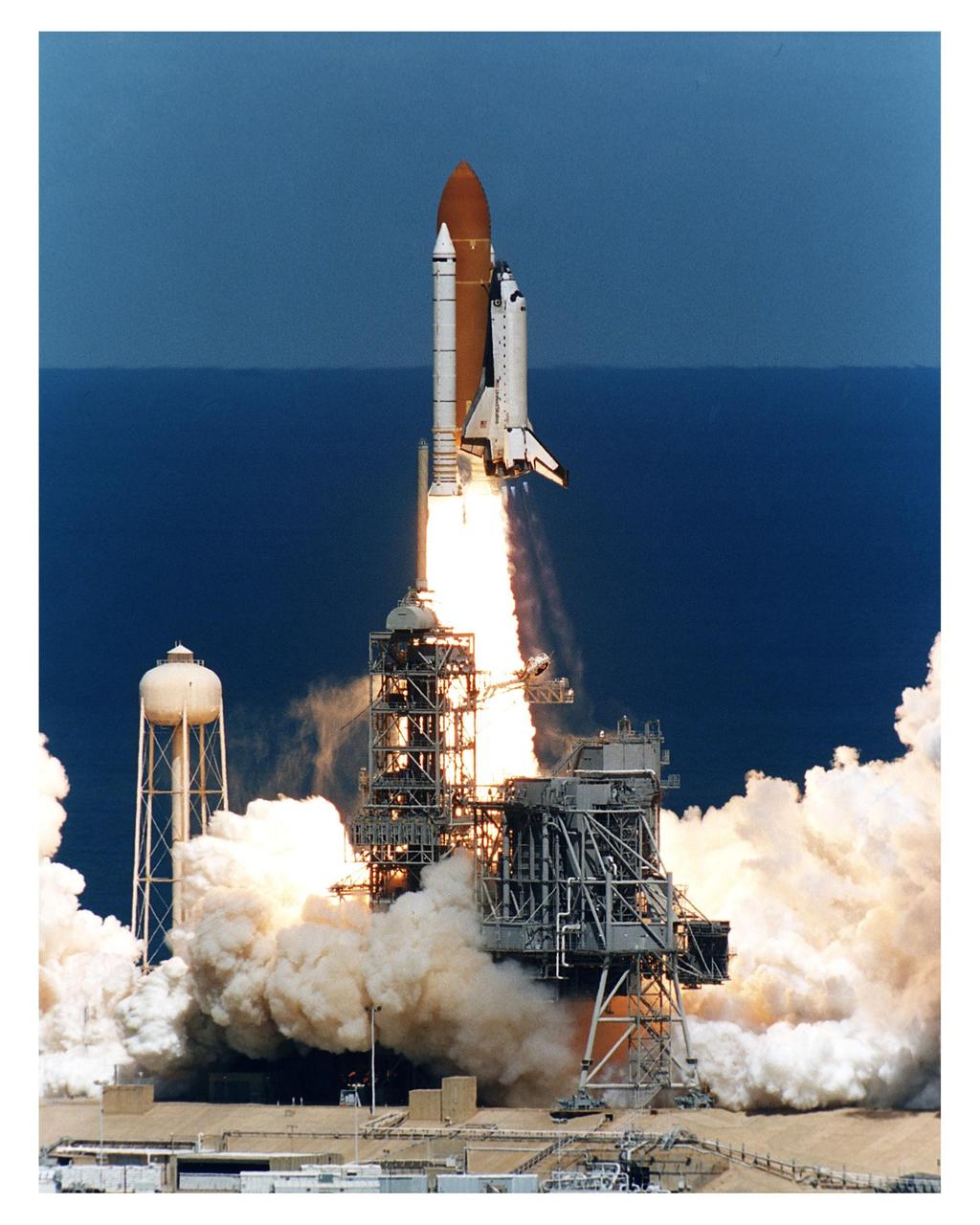
Like a rising sun lighting up the afternoon sky, the Space Shuttle Columbia soars from Launch Pad 39A at 2:20:32 p.m. EST, April 4, on the 16-day Microgravity Science Laboratory-1 (MSL-1) mission. The crew members are Mission Commander James D. Halsell, Jr.; Pilot Susan L. Still; Payload Commander Janice Voss; Mission Specialists Michael L. Gernhardt and Donald A. Thomas; and Payload Specialists Roger K. Crouch and Gregory T. Linteris. During the scheduled 16-day STS-83 mission, the MSL-1 will be used to test some of the hardware, facilities and procedures that are planned for use on the International Space Station as well as research in combustion, protein crystal growth and materials processing experiments
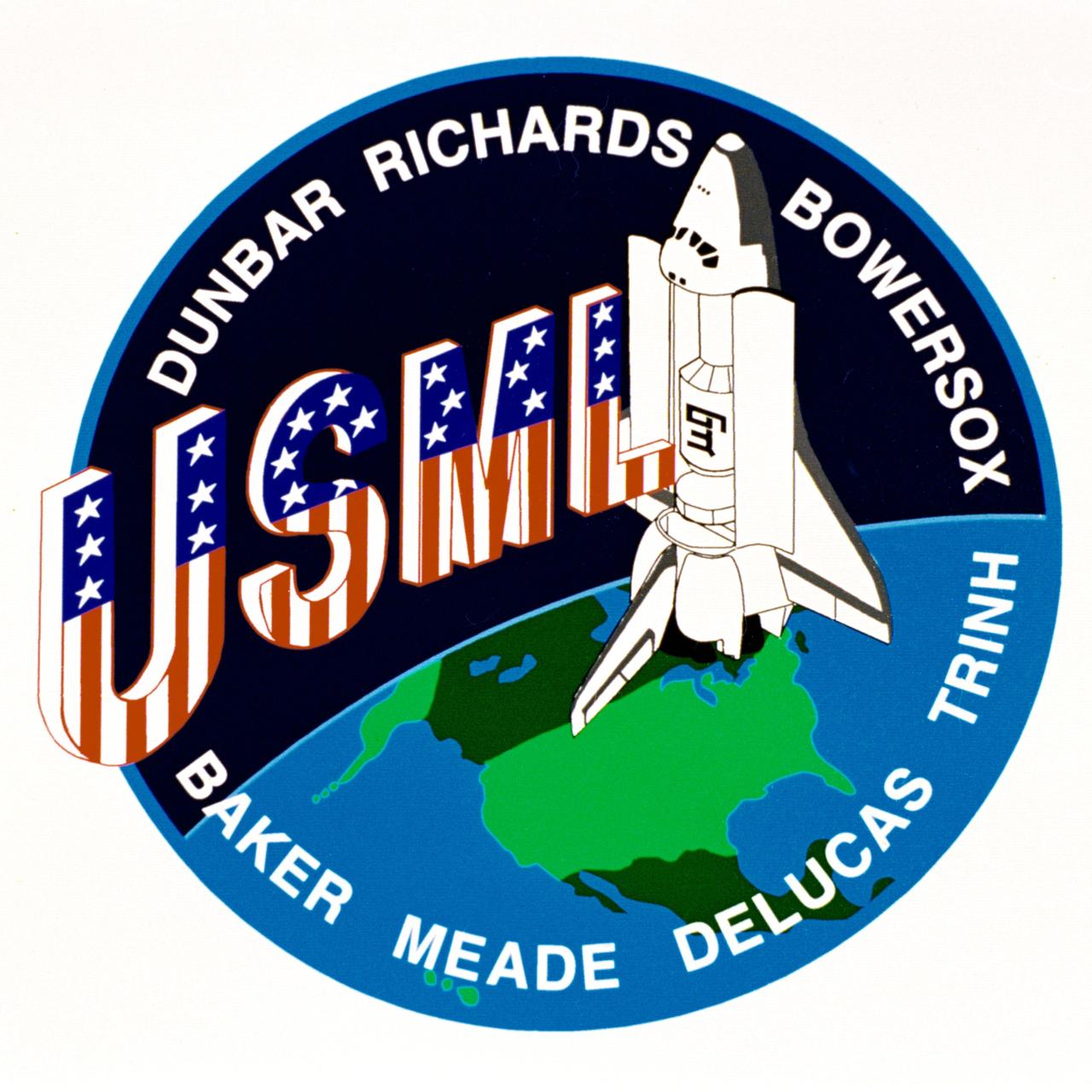
STS050-S-001 (January 1992) --- Designed by the flight crew, the insignia for the United States Microgravity Laboratory (USML-1), captures a space shuttle traveling above Earth while trailing the USML banner. The orbiter is oriented vertically in a typical attitude for microgravity science and in this position represents the numeral 1 in the mission's abbreviated title. This flight represents the first in a series of USML flights on which the primary objective is microgravity science, planned and executed through the combined efforts of the United States of America's government, industry and academia. Visible in the payload bay are the Spacelab module, and the extended duration orbiter "cryo" pallet which will be making its first flight. The small g and Greek letter mu on the Spacelab module symbolize the microgravity environment being used for research in the areas of materials science and fluid physics. The large block letter U extends outside the patch perimeter, symbolizing the potential for the experiments on this flight to expand the current boundaries of knowledge in microgravity science. The Stars and Stripes of the USML block letters and the United States landmass in the Earth scene below reflect the crew's pride in the United States origin of all onboard experiments. The NASA insignia design for space shuttle flights is reserved for use by the astronauts and for other official use as the NASA Administrator may authorize. Public availability has been approved only in the forms of illustrations by the various news media. When and if there is any change in this policy, which is not anticipated, the change will be publicly announced. Photo credit: NASA
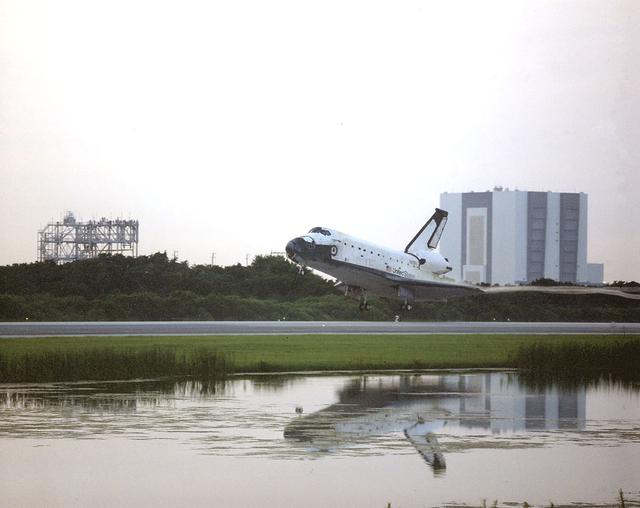
Framed by the Vehicle Assembly Building at right and the Mate-Demate Device at left, the Space Shuttle orbiter Columbia (STS-94) glided onto Runway 33 of Kennedy Space Center's Shuttle Landing Facility. On board for the reflight of STS-83 were a crew of seven and the Microgravity Science Laboratory-1 (MSL-1)which was managed by scientists and engineers from the Marshall Space Flight Center. Mission STS-94 marked the 23rd flight of Columbia and the 85th mission flown since the start of the Space Shuttle program in 1981. During the mission, the Spacelab module was used to test some of the hardware, facilities and procedures that are planned for use on the International Space Station while the flight crew conducted combustion, protein crystal growth and materials processing experiments.
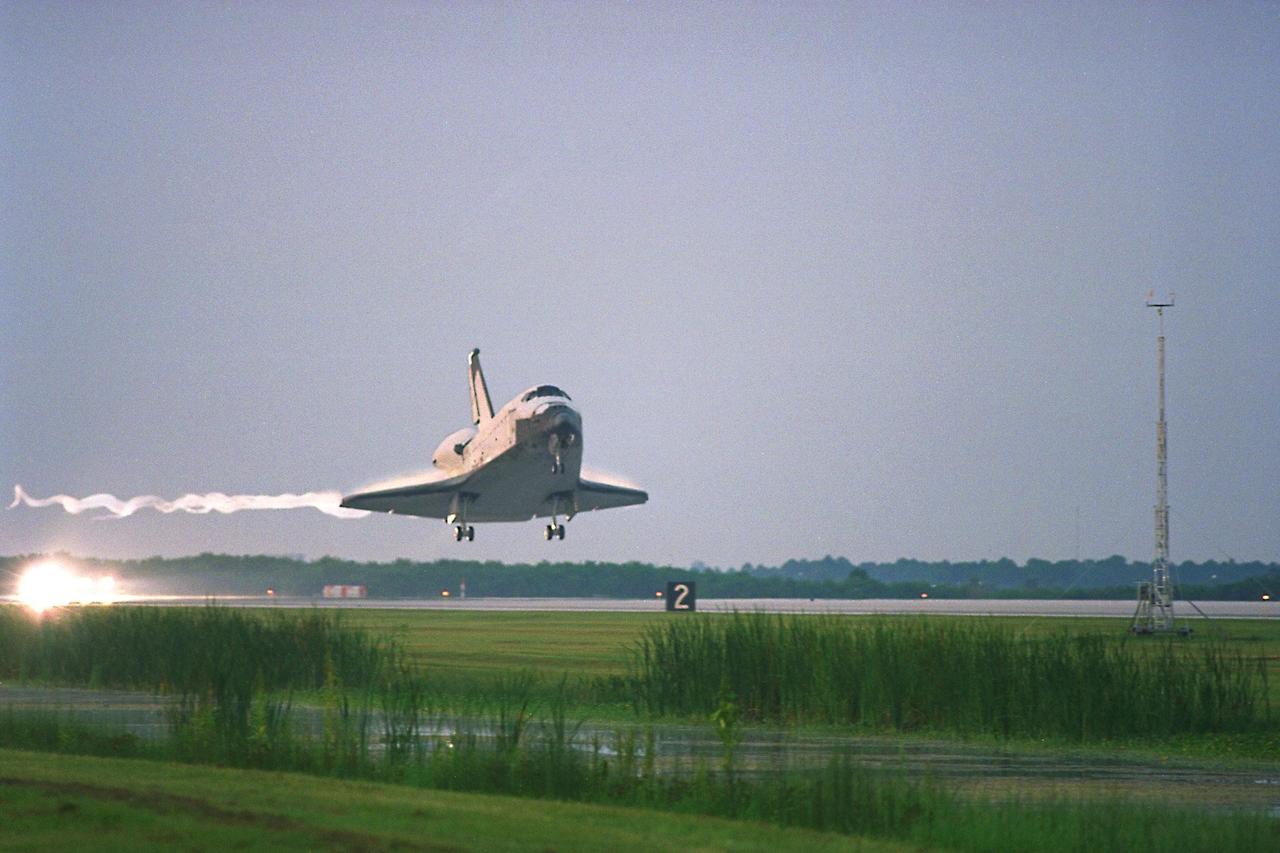
KENNEDY SPACE CENTER, FLA. -- The Space Shuttle orbiter Columbia glides in for a touchdown on Runway 33 at KSC’s Shuttle Landing Facility at approximately 6:46 a.m. EDT with Mission Commander James D. Halsell Jr. and Pilot Susan L. Still at the controls to complete the STS-94 mission. Also on board are Mission Specialist Donald A. Thomas, Mission Specialist Michael L. Gernhardt, Payload Commander Janice Voss, and Payload Specialists Roger K.Crouch and Gregory T. Linteris. During the Microgravity Science Laboratory-1 (MSL-1) mission, the Spacelab module was used to test some of the hardware, facilities and procedures that are planned for use on the International Space Station while the flight crew conducted combustion, protein crystal growth and materials processing experiments. This mission was a reflight of the STS-83 mission that lifted off from KSC in April of this year. That space flight was cut short due to indications of a faulty fuel cell
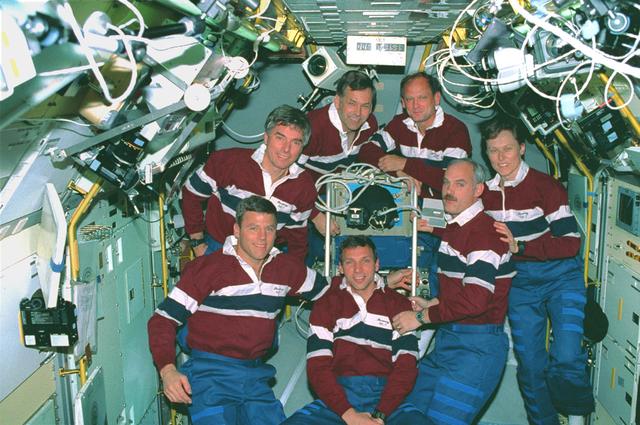
Onboard Space Shuttle Discovery (STS-42) the seven crewmembers pose for a traditional in-space portrait in the shirt-sleeve environment of the International Microgravity Laboratory (IML-1) science module in the Shuttle's cargo bay. Pictured are (clockwise from top),Commander Ronald J. Grabe, payload commander Norman E. Thagard, payload specialist Roberta L. Bondar; mission specialists William F. Readdy and David C. Hilmers; pilot Stephen S. Oswald and payload specialist Ulf Merbold. The rotating chair, used often in biomedical tests on the eight-day flight, is in center frame.
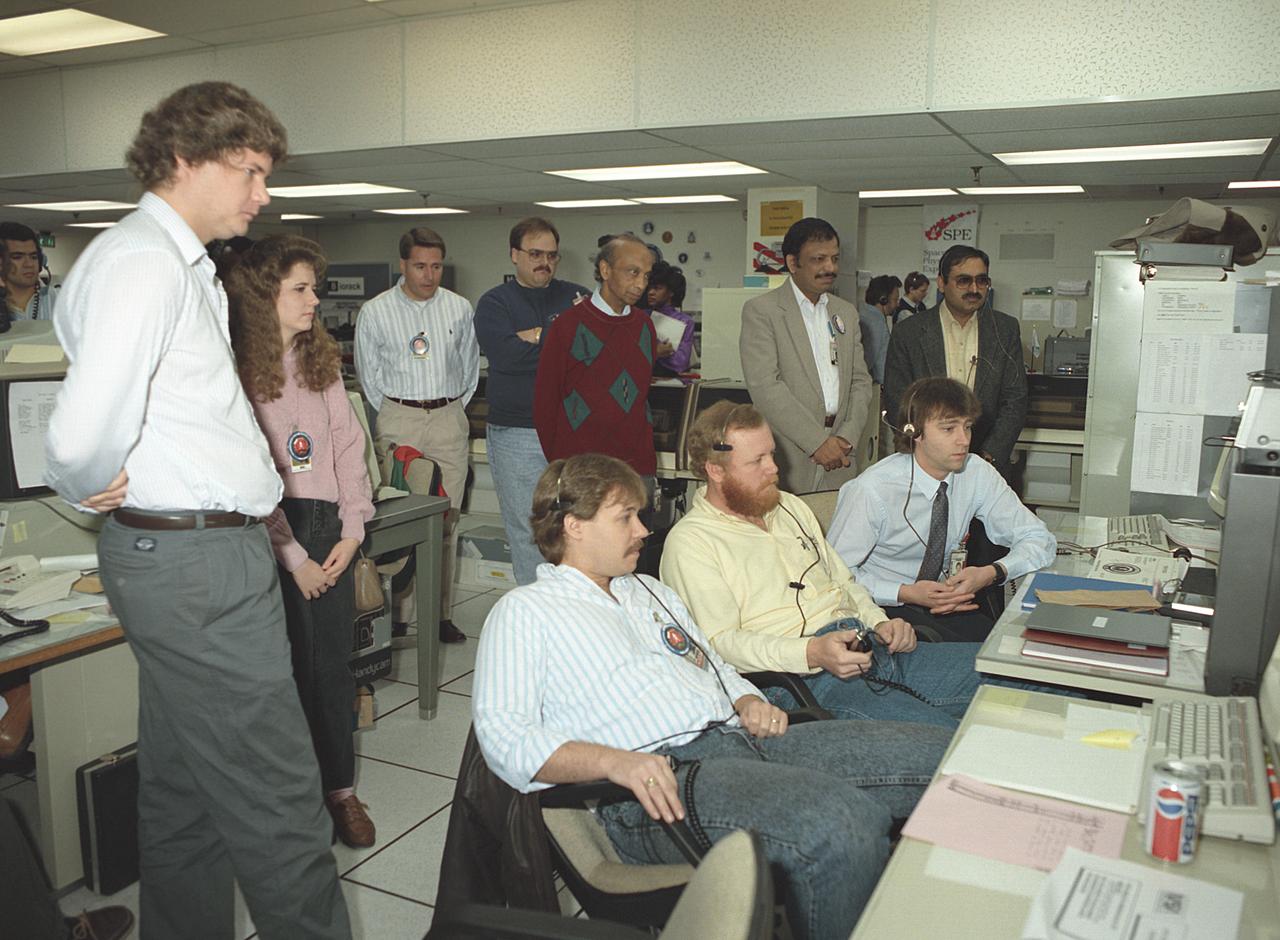
The primary payload for Space Shuttle Mission STS-42, launched January 22, 1992, was the International Microgravity Laboratory-1 (IML-1), a pressurized manned Spacelab module. The goal of IML-1 was to explore in depth the complex effects of weightlessness of living organisms and materials processing. Around-the-clock research was performed on the human nervous system's adaptation to low gravity and effects of microgravity on other life forms such as shrimp eggs, lentil seedlings, fruit fly eggs, and bacteria. Materials processing experiments were also conducted, including crystal growth from a variety of substances such as enzymes, mercury iodide, and a virus. The Huntsville Operations Support Center (HOSC) Spacelab Payload Operations Control Center (SL POCC) at the Marshall Space Flight Center (MSFC) was the air/ground communication channel used between the astronauts and ground control teams during the Spacelab missions. Featured is the Crystal Growth team in the SL POCC during STS-42, IML-1 mission.
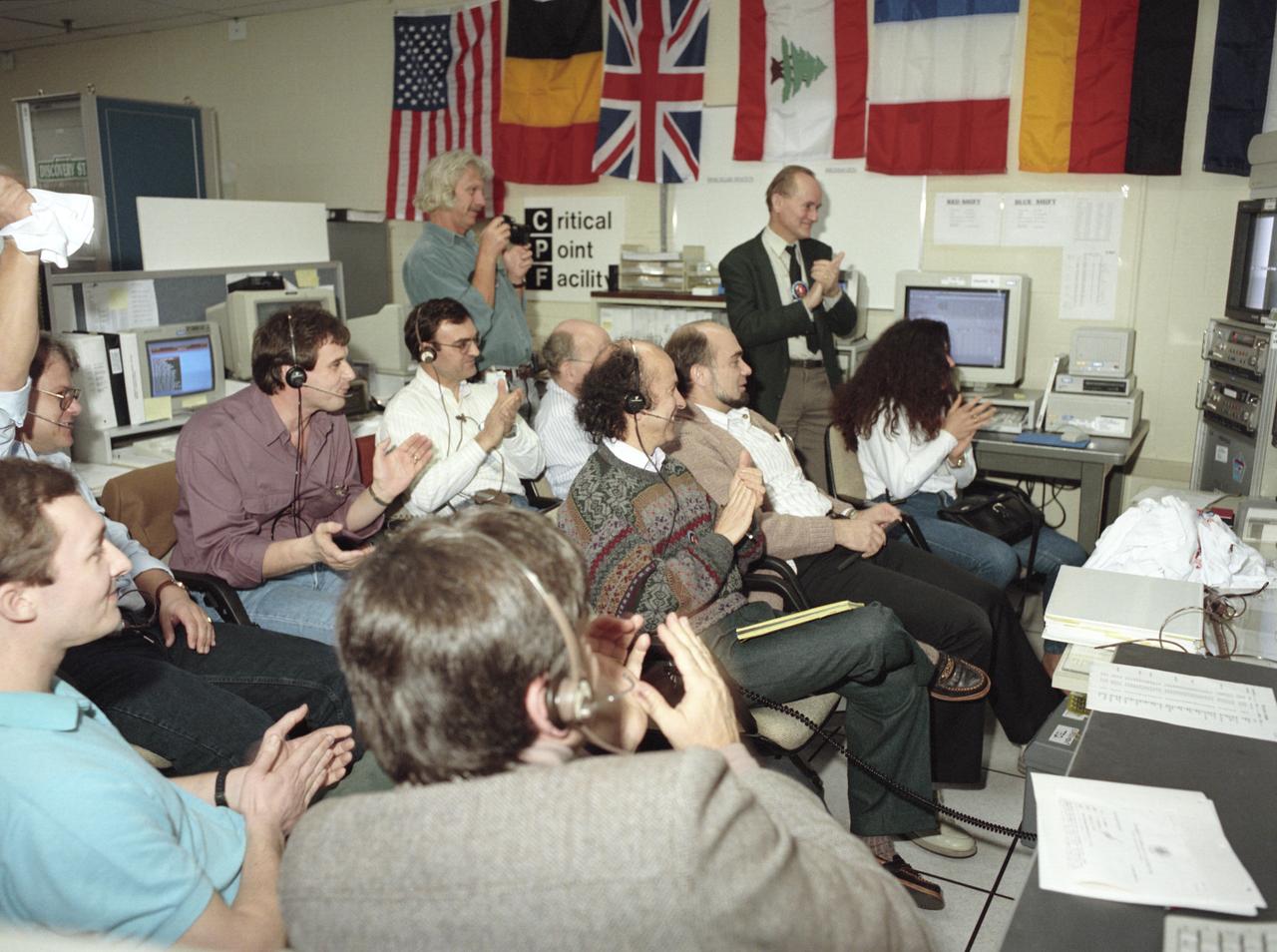
The primary payload for Space Shuttle Mission STS-42, launched January 22, 1992, was the International Microgravity Laboratory-1 (IML-1), a pressurized manned Spacelab module. The goal of IML-1 was to explore in depth the complex effects of weightlessness of living organisms and materials processing. Around-the-clock research was performed on the human nervous system's adaptation to low gravity and effects of microgravity on other life forms such as shrimp eggs, lentil seedlings, fruit fly eggs, and bacteria. Materials processing experiments were also conducted, including crystal growth from a variety of substances such as enzymes, mercury iodide, and a virus. The Huntsville Operations Support Center (HOSC) Spacelab Payload Operations Control Center (SL POCC) at the Marshall Space Flight Center (MSFC) was the air/ground communication channel used between the astronauts and ground control teams during the Spacelab missions. Featured is the Critical Point Facility (CPE) group in the SL POCC during STS-42, IML-1 mission.
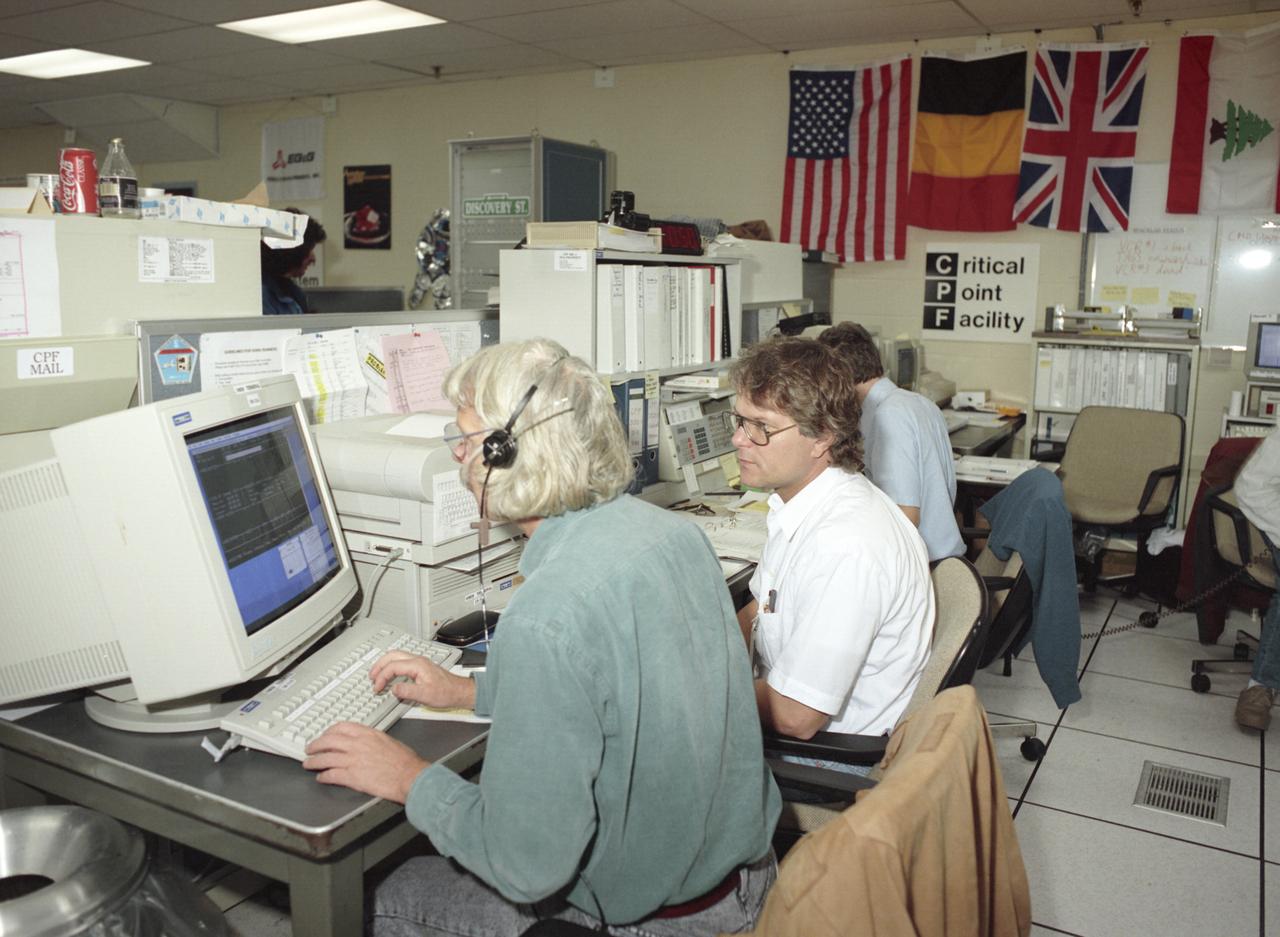
The primary payload for Space Shuttle Mission STS-42, launched January 22, 1992, was the International Microgravity Laboratory-1 (IML-1), a pressurized manned Spacelab module. The goal of IML-1 was to explore in depth the complex effects of weightlessness of living organisms and materials processing. Around-the-clock research was performed on the human nervous system's adaptation to low gravity and effects of microgravity on other life forms such as shrimp eggs, lentil seedlings, fruit fly eggs, and bacteria. Materials processing experiments were also conducted, including crystal growth from a variety of substances such as enzymes, mercury iodide, and a virus. The Huntsville Operations Support Center (HOSC) Spacelab Payload Operations Control Center (SL POCC) at the Marshall Space Flight Center (MSFC) was the air/ground communication channel used between the astronauts and ground control teams during the Spacelab missions. Featured is the Critical Point Facility (CPF) team in the SL POCC during the IML-1 mission.
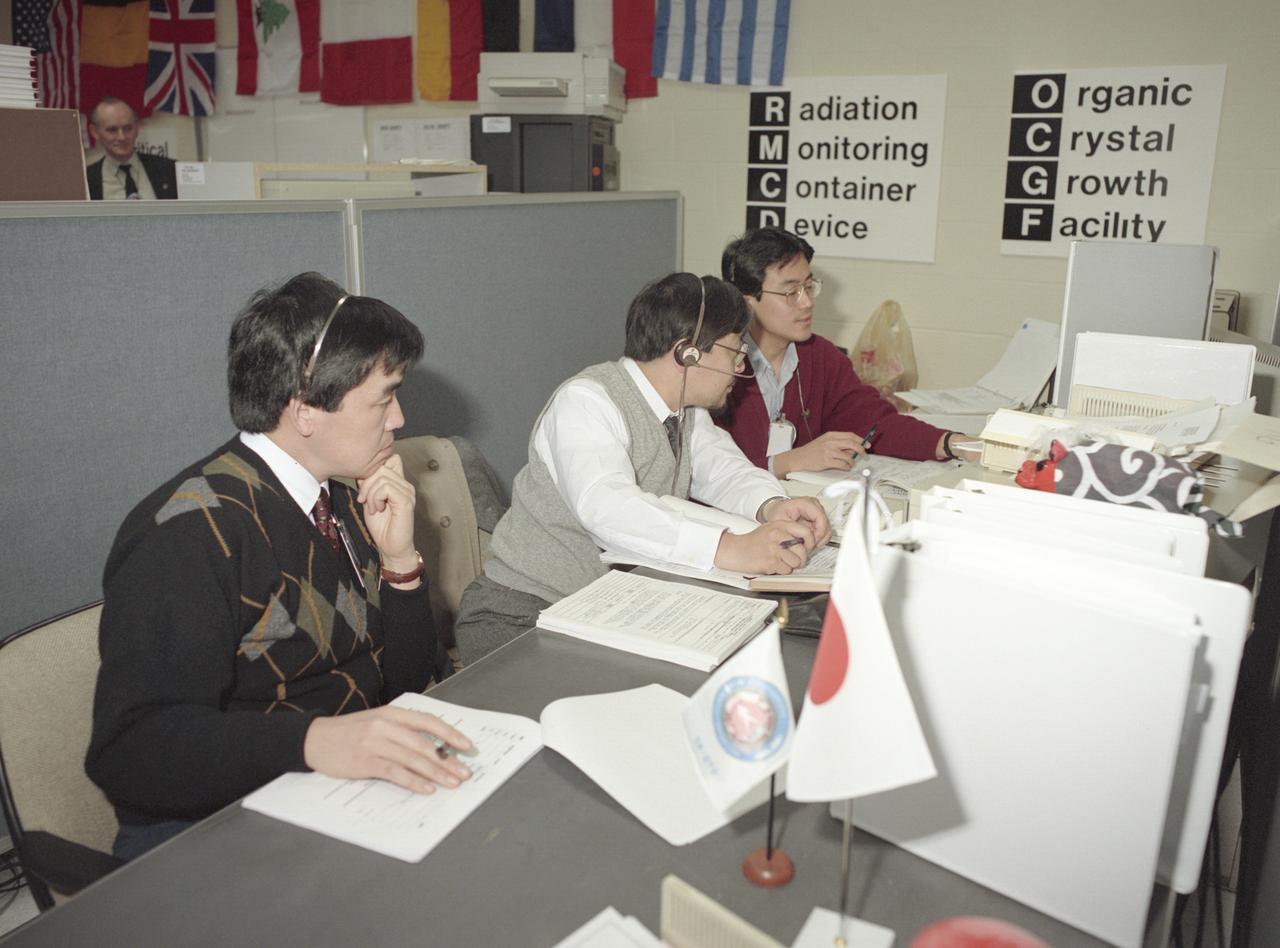
The primary payload for Space Shuttle Mission STS-42, launched January 22, 1992, was the International Microgravity Laboratory-1 (IML-1), a pressurized manned Spacelab module. The goal of IML-1 was to explore in depth the complex effects of weightlessness of living organisms and materials processing. Around-the-clock research was performed on the human nervous system's adaptation to low gravity and effects of microgravity on other life forms such as shrimp eggs, lentil seedlings, fruit fly eggs, and bacteria. Materials processing experiments were also conducted, including crystal growth from a variety of substances such as enzymes, mercury iodide, and a virus. The Huntsville Operations Support Center (HOSC) Spacelab Payload Operations Control Center (SL POCC) at the Marshall Space Flight Center (MSFC) was the air/ground communication channel used between the astronauts and ground control teams during the Spacelab missions. Featured are activities of the Organic Crystal Growth Facility (OCGF) and Radiation Monitoring Container Device (RMCD) groups in the SL POCC during the IML-1 mission.
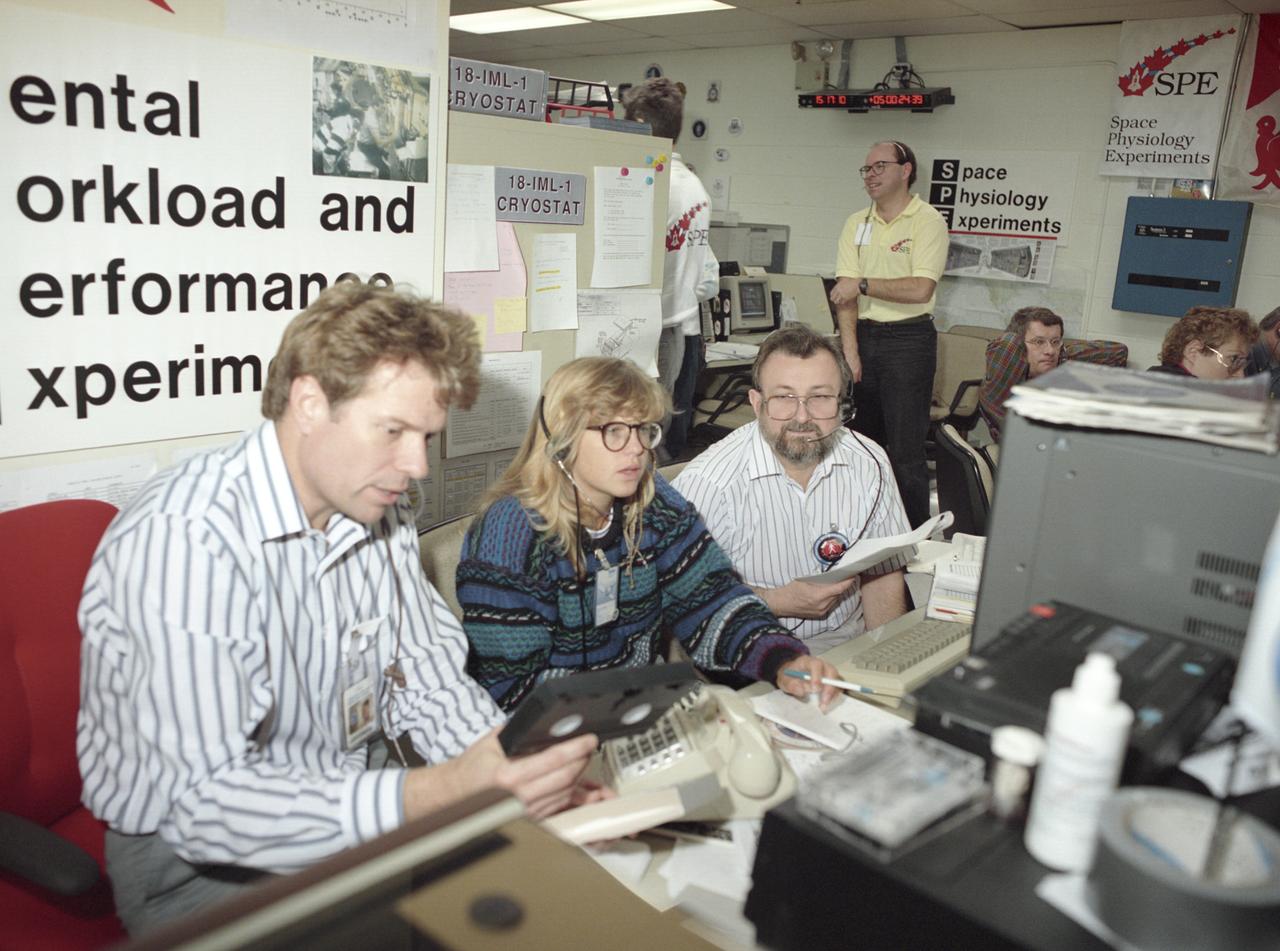
The primary payload for Space Shuttle Mission STS-42, launched January 22, 1992, was the International Microgravity Laboratory-1 (IML-1), a pressurized manned Spacelab module. The goal of IML-1 was to explore in depth the complex effects of weightlessness of living organisms and materials processing. Around-the-clock research was performed on the human nervous system's adaptation to low gravity and effects of microgravity on other life forms such as shrimp eggs, lentil seedlings, fruit fly eggs, and bacteria. Materials processing experiments were also conducted, including crystal growth from a variety of substances such as enzymes, mercury iodide, and a virus. The Huntsville Operations Support Center (HOSC) Spacelab Payload Operations Control Center (SL POCC) at the Marshall Space Flight Center (MSFC) was the air/ground communication channel used between the astronauts and ground control teams during the Spacelab missions. Featured activities are of the Mental Workload and Performance Experiment (MWPE) team in the SL POCC during the IML-1 mission.
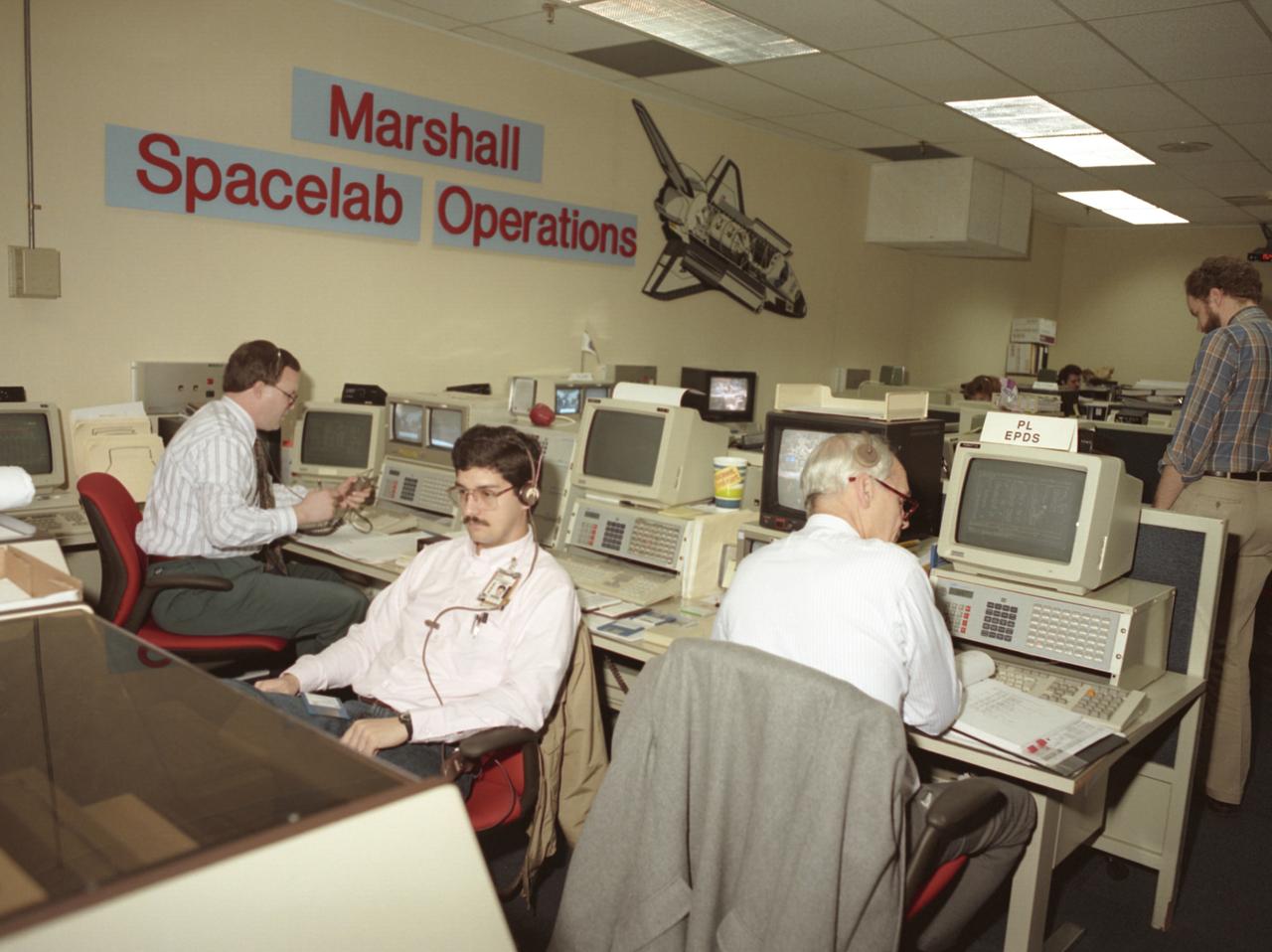
The primary payload for Space Shuttle Mission STS-42, launched January 22, 1992, was the International Microgravity Laboratory-1 (IML-1), a pressurized manned Spacelab module. The goal of IML-1 was to explore in depth the complex effects of weightlessness of living organisms and materials processing. Around-the-clock research was performed on the human nervous system's adaptation to low gravity and effects of microgravity on other life forms such as shrimp eggs, lentil seedlings, fruit fly eggs, and bacteria. Materials processing experiments were also conducted, including crystal growth from a variety of substances such as enzymes, mercury iodide, and a virus. The Huntsville Operations Support Center (HOSC) Spacelab Payload Operations Control Center (SL POCC) at the Marshall Space Flight Center (MSFC) was the air/ground communication channel used between the astronauts and ground control teams during the Spacelab missions. Featured is the Spacelab Operations Support Room Space Engineering Support team in the SL POCC during STS-42, IML-1 mission.
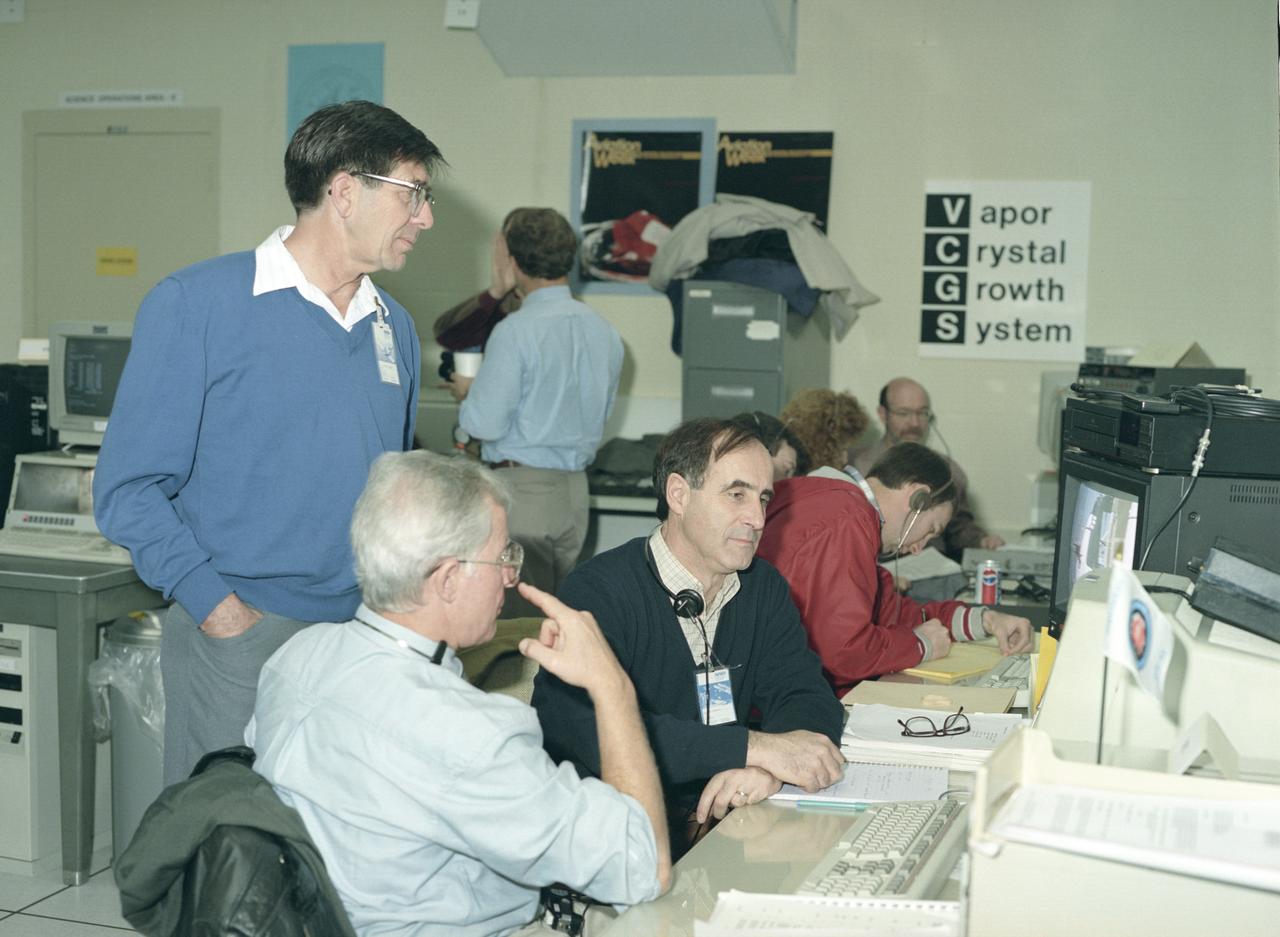
The primary payload for Space Shuttle Mission STS-42, launched January 22, 1992, was the International Microgravity Laboratory-1 (IML-1), a pressurized manned Spacelab module. The goal of IML-1 was to explore in depth the complex effects of weightlessness of living organisms and materials processing. Around-the-clock research was performed on the human nervous system's adaptation to low gravity and effects of microgravity on other life forms such as shrimp eggs, lentil seedlings, fruit fly eggs, and bacteria. Materials processing experiments were also conducted, including crystal growth from a variety of substances such as enzymes, mercury iodide, and a virus. The Huntsville Operations Support Center (HOSC) Spacelab Payload Operations Control Center (SL POCC) at the Marshall Space Flight Center (MSFC) was the air/ground communication channel used between the astronauts and ground control teams during the Spacelab missions. Featured is the Vapor Crystal Growth System (VCGS) team in SL POCC), during STS-42, IML-1 mission.
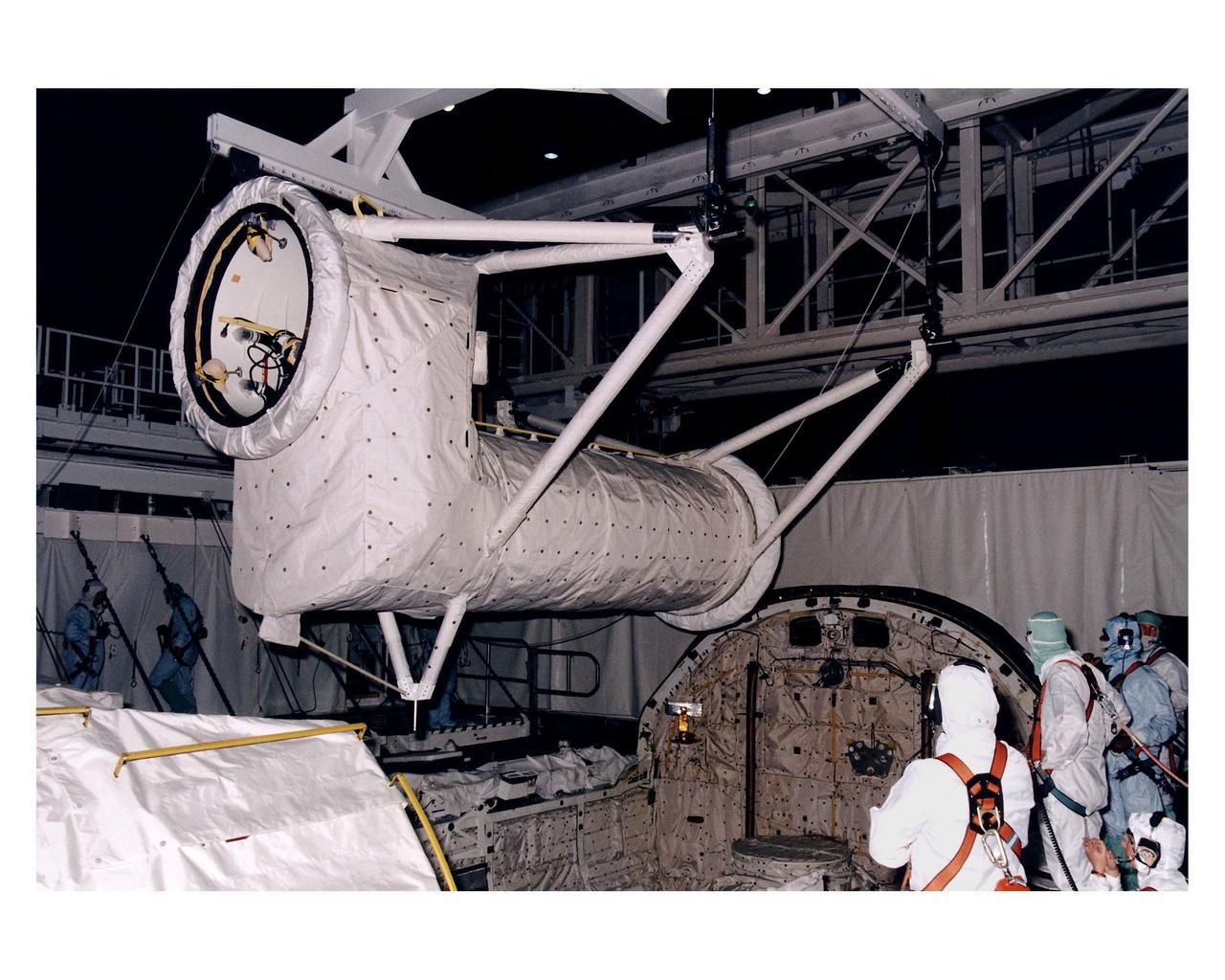
The Spacelab long transfer tunnel that leads from the Space Shuttle Orbiter Columbia’s crew airlock to the Microgravity Science Laboratory-1 (MSL-1) Spacelab module in the spaceplane’s payload bay is removed in Orbiter Processing Facility 1. The tunnel was taken out to allow better access to the MSL-1 module during reservicing operations to prepare it for its reflight as MSL-1R. That mission is now scheduled to lift off July 1. This was the first time that this type of payload was reserviced without removing it from the payload bay. This new procedure pioneers processing efforts for quick relaunch turnaround times for future payloads. The Spacelab module was scheduled to fly again with the full complement of STS-83 experiments after that mission was cut short due to a faulty fuel cell. During the scheduled 16-day reflight, the experiments will be used to test some of the hardware, facilities and procedures that are planned for use on the International Space Station while the flight crew conducts combustion, protein crystal growth and materials processing experiments
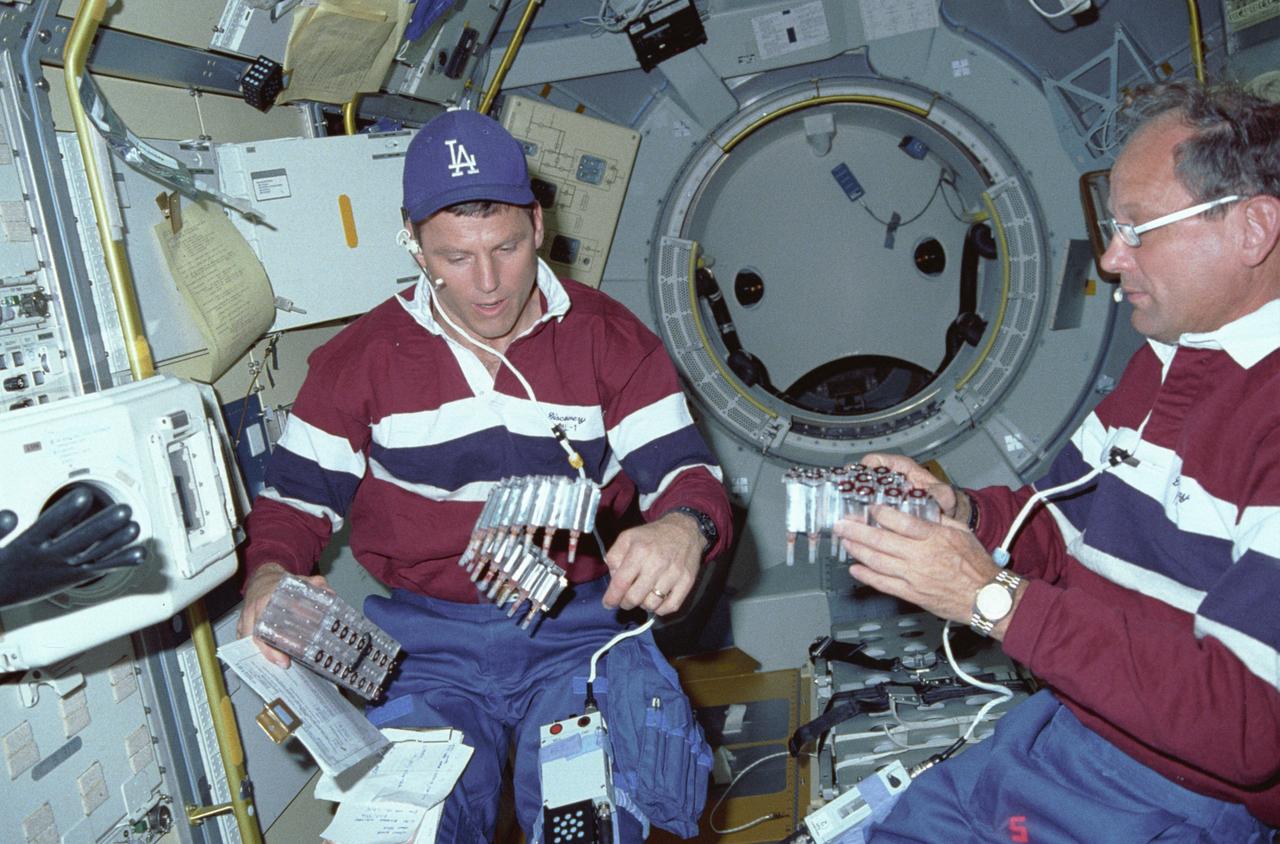
International Microgravity Laboratory-1 (IML-1) was the first in a series of Shuttle flights dedicated to fundamental materials and life sciences research with the international partners. The participating space agencies included: NASA, the 14-nation European Space Agency (ESA), the Canadian Space Agency (CSA), the French National Center of Space Studies (CNES), the German Space Agency and the German Aerospace Research Establishment (DAR/DLR), and the National Space Development Agency of Japan (NASDA). Dedicated to the study of life and materials sciences in microgravity, the IML missions explored how life forms adapt to weightlessness and investigated how materials behave when processed in space. Both life and materials sciences benefited from the extended periods of microgravity available inside the Spacelab science module in the cargo bay of the Space Shuttle Orbiter. In this photograph, Astronauts Stephen S. Oswald and Norman E. Thagard handle ampoules used in the Mercuric Iodide Crystal Growth (MICG) experiment. Mercury Iodide crystals have practical uses as sensitive x-ray and gamma-ray detectors. In addition to their exceptional electronic properties, these crystals can operate at room temperature rather than at the extremely low temperatures usually required by other materials. Because a bulky cooling system is urnecessary, these crystals could be useful in portable detector devices for nuclear power plant monitoring, natural resource prospecting, biomedical applications in diagnosis and therapy, and astronomical observation. Managed by the Marshall Space Flight Center, IML-1 was launched on January 22, 1992 aboard the Space Shuttle Orbiter Discovery (STS-42 mission).
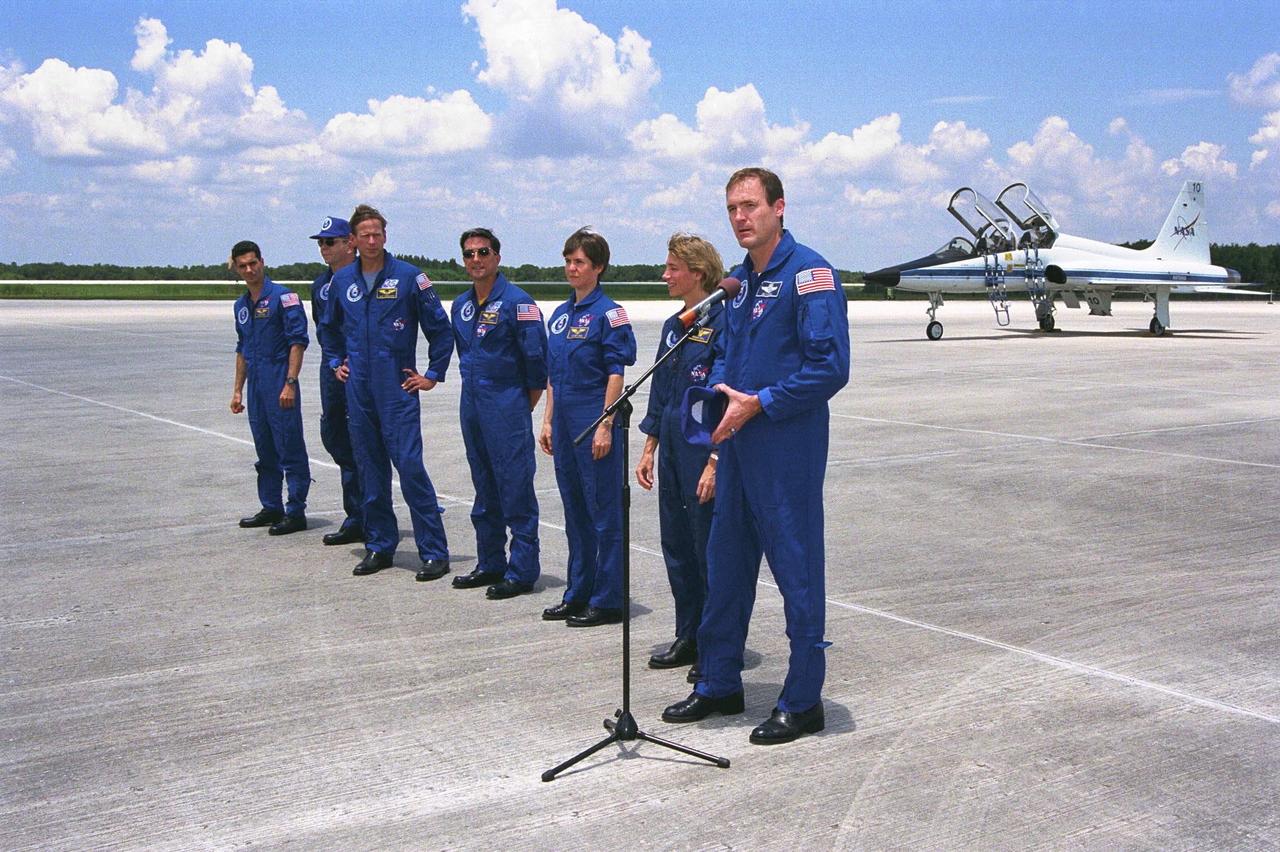
STS-94 Commander James D. Halsell, Jr., speaks to the media at the Shuttle Landing Facility after the crew arrived at Kennedy Space Center in preparation for the reflight of the Microgravity Science Laboratory-1 mission. Launch is scheduled for July 1, 1997, at 2:37 p.m. EDT. From left to right, the crew members are Payload Specialists Gregory T. Linteris and Roger K. Crouch; Mission Specialists Michael L. Gernhardt and Donald A. Thomas; Payload Commander Janice E. Voss; Pilot Susan Leigh Still and Commander James D. Halsell, Jr. One of the T-38 jets aboard which the crew arrived can be seen in the background. The laboratory was scheduled to fly again with the full complement of STS-83 experiments after that mission was cut short due to a faulty fuel cell. During the scheduled 16-day STS-94 mission, the experiments will be used to test some of the hardware, facilities and procedures that are planned for use on the International Space Station while the flight crew conducts combustion, protein crystal growth and materials processing experiments
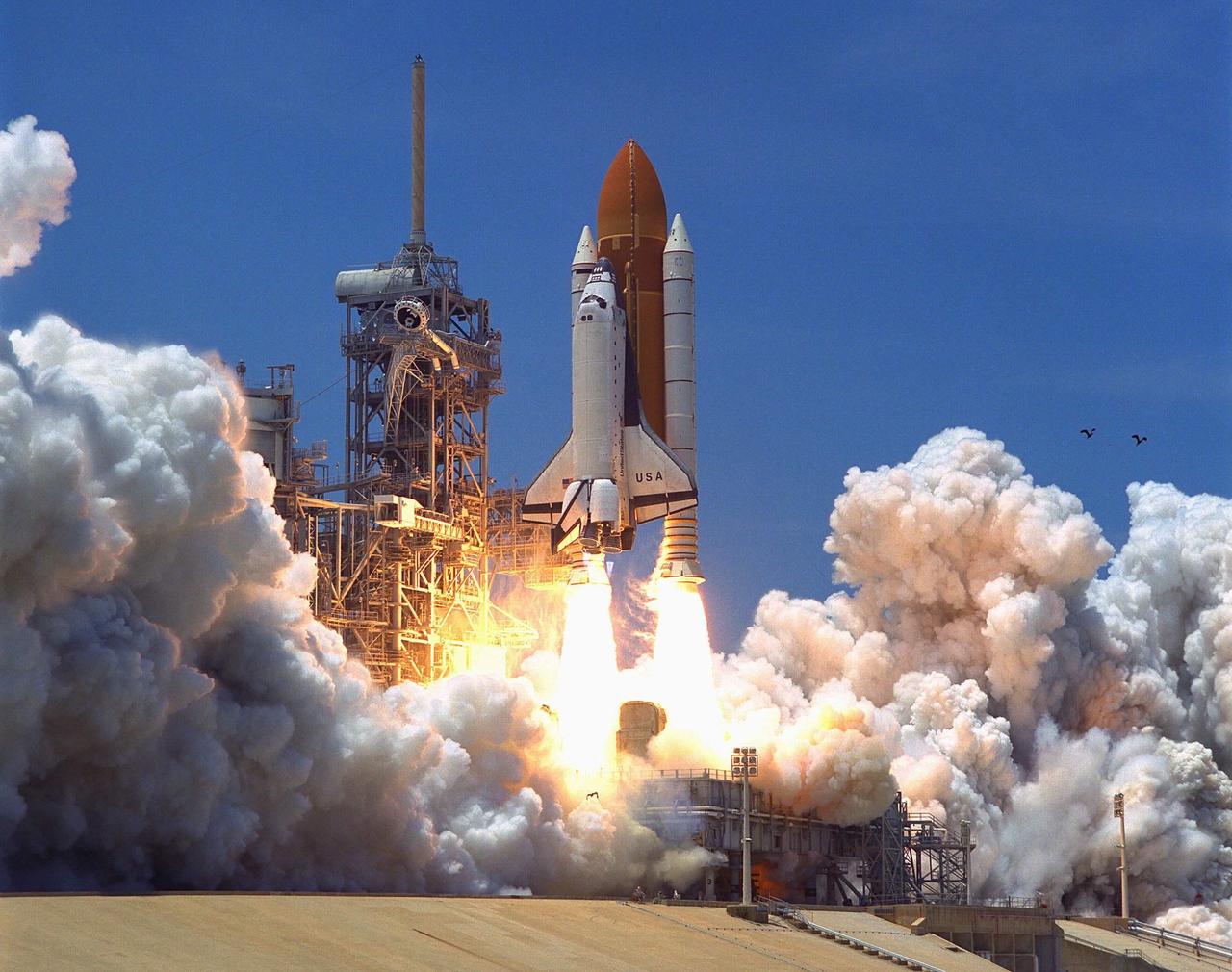
KENNEDY SPACE CENTER, Fla. -- The Space Shuttle Columbia soars from Launch Pad 39A at 2:02 p.m. EDT July 1 to begin the 16-day STS-94 Microgravity Science Laboratory-1 (MSL-1) mission. The launch window was opened 47 minutes earlier than the originally scheduled time of 2:37 p.m. to improve the opportunity to lift off before Florida summer rain showers reached the space center. The crew members are Mission Commander James D. Halsell Jr.; Pilot Susan L. Still; Payload Commander Janice Voss; Mission Specialists Michael L.Gernhardt and Donald A. Thomas; and Payload Specialists Roger K. Crouch and Gregory T. Linteris. During the space flight, the MSL-1 will be used to test some of the hardware, facilities and procedures that are planned for use on the International Space Station while the flight crew conducts combustion, protein crystal growth and materials processing experiments. Also onboard is the Hitchhiker Cryogenic Flexible Diode (CRYOFD) experiment payload, which is attached to the right side of Columbia’s payload bay. These payloads had previously flown on the STS-83 mission in April, which was cut short after nearly four days because of indications of a faulty fuel cell. STS-94 is a reflight of that mission
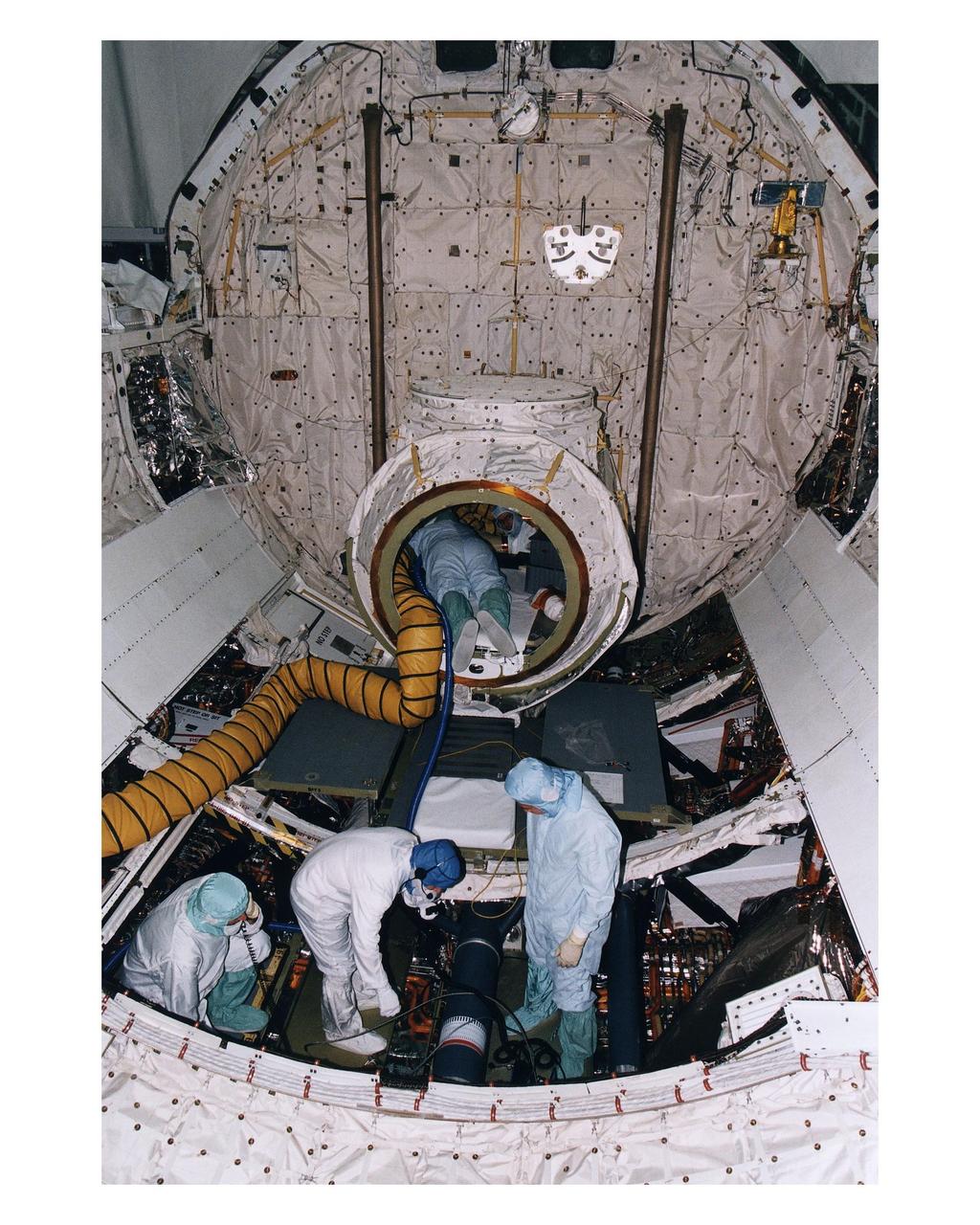
KSC payload processing employees in Orbiter Processing Facility 1 prepare the Space Shuttle Orbiter Columbia’s crew airlock and payload bay for the reinstallation of the Spacelab long transfer tunnel that leads from the airlock to the Microgravity Science Laboratory-1 (MSL-1) Spacelab module. The tunnel was taken out after the STS-83 mission to allow better access to the MSL-1 module during reservicing operations to prepare it for for the STS-94 mission. That space flight is now scheduled to lift off in early July. This was the first time that this type of payload was reserviced without removing it from the payload bay. This new procedure pioneers processing efforts for quick relaunch turnaround times for future payloads. The Spacelab module was scheduled to fly again with the full complement of STS-83 experiments after that mission was cut short due to a faulty fuel cell. During the scheduled 16-day STS-94 mission, the experiments will be used to test some of the hardware, facilities and procedures that are planned for use on the International Space Station while the flight crew conducts combustion, protein crystal growth and materials processing experiments
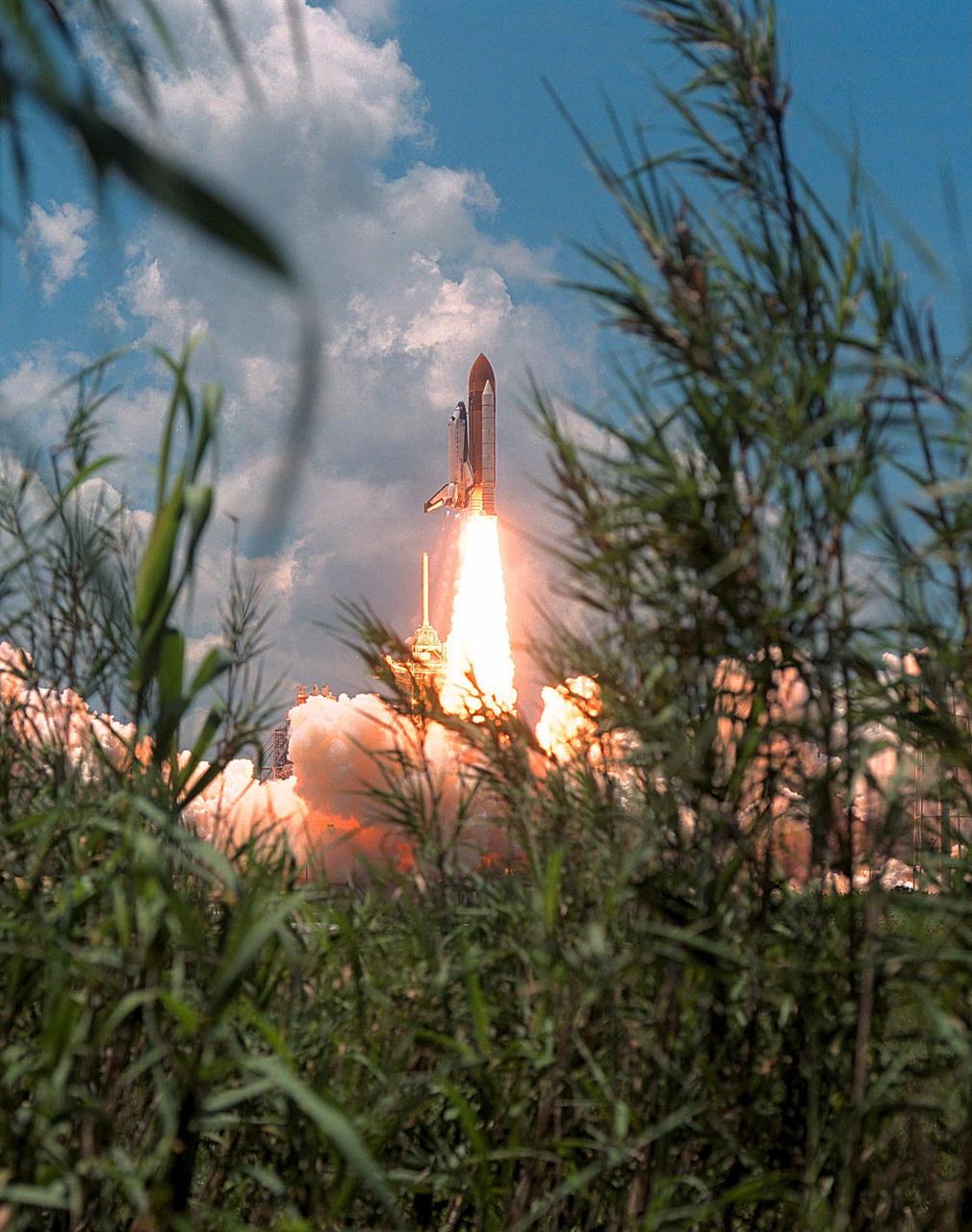
KENNEDY SPACE CENTER, Fla. -- The Space Shuttle Columbia soars from Launch Pad 39A at 2:02 p.m. EDT July 1 to begin the 16-day STS-94 Microgravity Science Laboratory-1 (MSL-1) mission. The launch window was opened 47 minutes earlier than the originally scheduled time of 2:37 p.m. to improve the opportunity to lift off before Florida summer rain showers reached the space center. The crew members are Mission Commander James D. Halsell Jr.; Pilot Susan L. Still; Payload Commander Janice Voss; Mission Specialists Michael L.Gernhardt and Donald A. Thomas; and Payload Specialists Roger K. Crouch and Gregory T. Linteris. During the space flight, the MSL-1 will be used to test some of the hardware, facilities and procedures that are planned for use on the International Space Station while the flight crew conducts combustion, protein crystal growth and materials processing experiments. Also onboard is the Hitchhiker Cryogenic Flexible Diode (CRYOFD) experiment payload, which is attached to the right side of Columbia’s payload bay. These payloads had previously flown on the STS-83 mission in April, which was cut short after nearly four days because of indications of a faulty fuel cell. STS-94 is a reflight of that mission
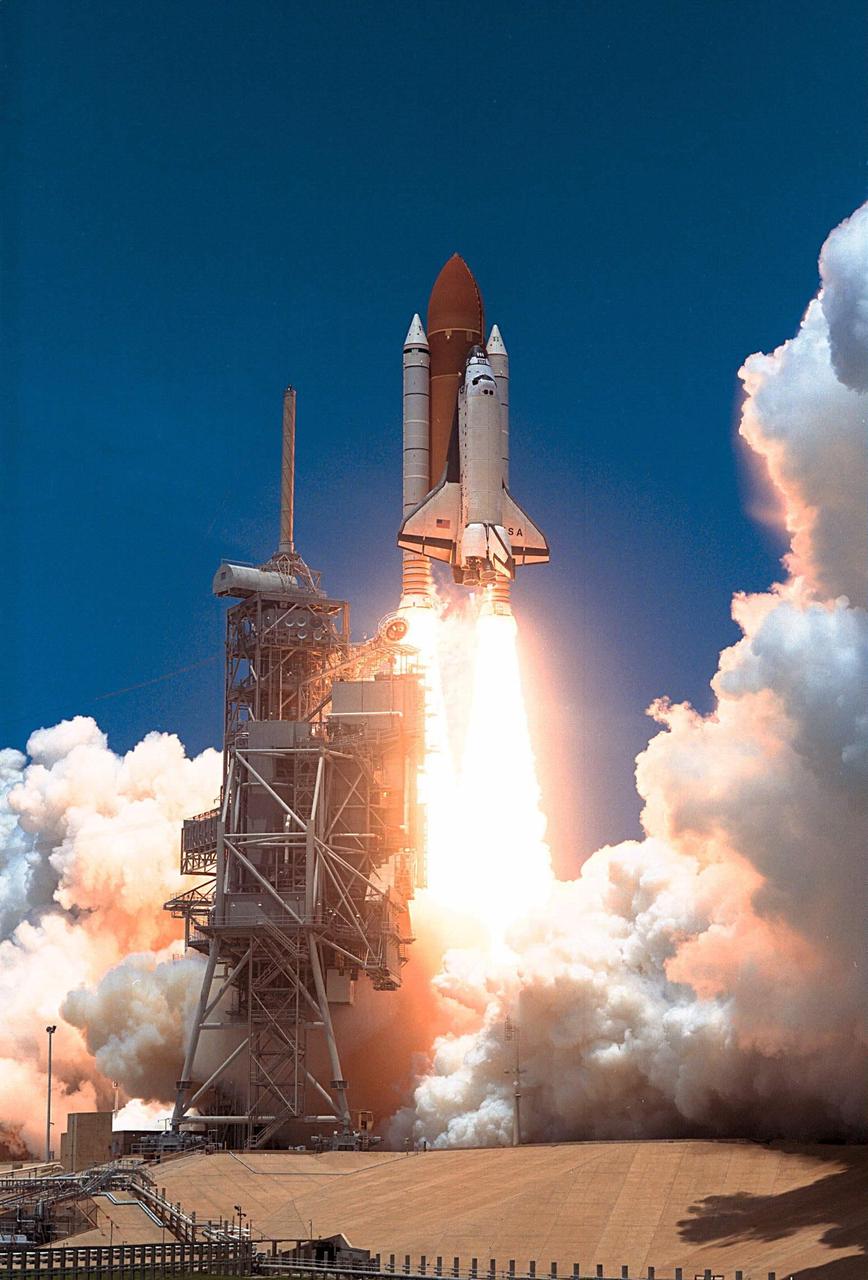
KENNEDY SPACE CENTER, Fla. -- The Space Shuttle Columbia soars from Launch Pad 39A at 2:02 p.m. EDT July 1 to begin the 16-day STS-94 Microgravity Science Laboratory-1 (MSL-1) mission. The launch window was opened 47 minutes earlier than the originally scheduled time of 2:37 p.m. to improve the opportunity to lift off before Florida summer rain showers reached the space center. The crew members are Mission Commander James D. Halsell Jr.; Pilot Susan L. Still; Payload Commander Janice Voss; Mission Specialists Michael L.Gernhardt and Donald A. Thomas; and Payload Specialists Roger K. Crouch and Gregory T. Linteris. During the space flight, the MSL-1 will be used to test some of the hardware, facilities and procedures that are planned for use on the International Space Station while the flight crew conducts combustion, protein crystal growth and materials processing experiments. Also onboard is the Hitchhiker Cryogenic Flexible Diode (CRYOFD) experiment payload, which is attached to the right side of Columbia’s payload bay. These payloads had previously flown on the STS-83 mission in April, which was cut short after nearly four days because of indications of a faulty fuel cell. STS-94 is a reflight of that mission
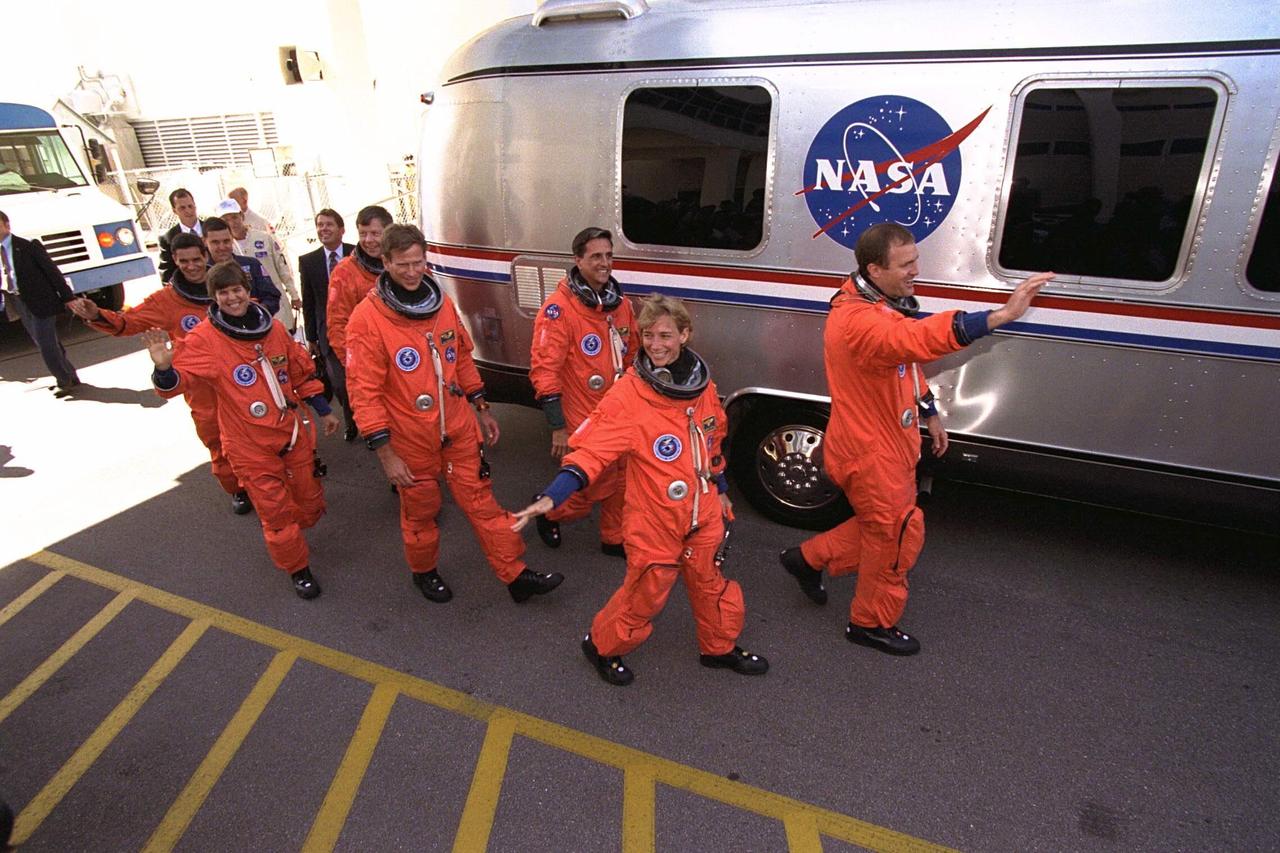
The STS-94 crew walks out of the Operations and Checkout Building and heads for the Astrovan that will transport them to Launch Pad 39A as KSC employees show their support. Waving to the crowd and leading the way are Mission Commander James D. Halsell, Jr. and Pilot Susan L. Still. Behind Still is Mission Specialist Donald A.Thomas, followed by Mission Specialist Michael L. Gernhardt , Payload Commander Janice Voss, and Payload Specialists Roger K.Crouch and Gregory T. Linteris. During the scheduled 16-day Microgravity Science Laboratory-1 (MSL-1) mission, the Spacelab module will be used to test some of the hardware, facilities and procedures that are planned for use on the International Space Station while the flight crew conducts combustion, protein crystal growth and materials processing experiments. Also onboard is the Hitchhiker Cryogenic Flexible Diode (CRYOFD) experiment payload, which is attached to the right side of Columbia’s payload bay.The Space Shuttle Columbia is scheduled to lift off when the launch window opens at 1:50 p.m. EDT, July 1. The launch window was opened 47 minutes early to improve the opportunity to lift off before Florida summer rain showers reached the space center
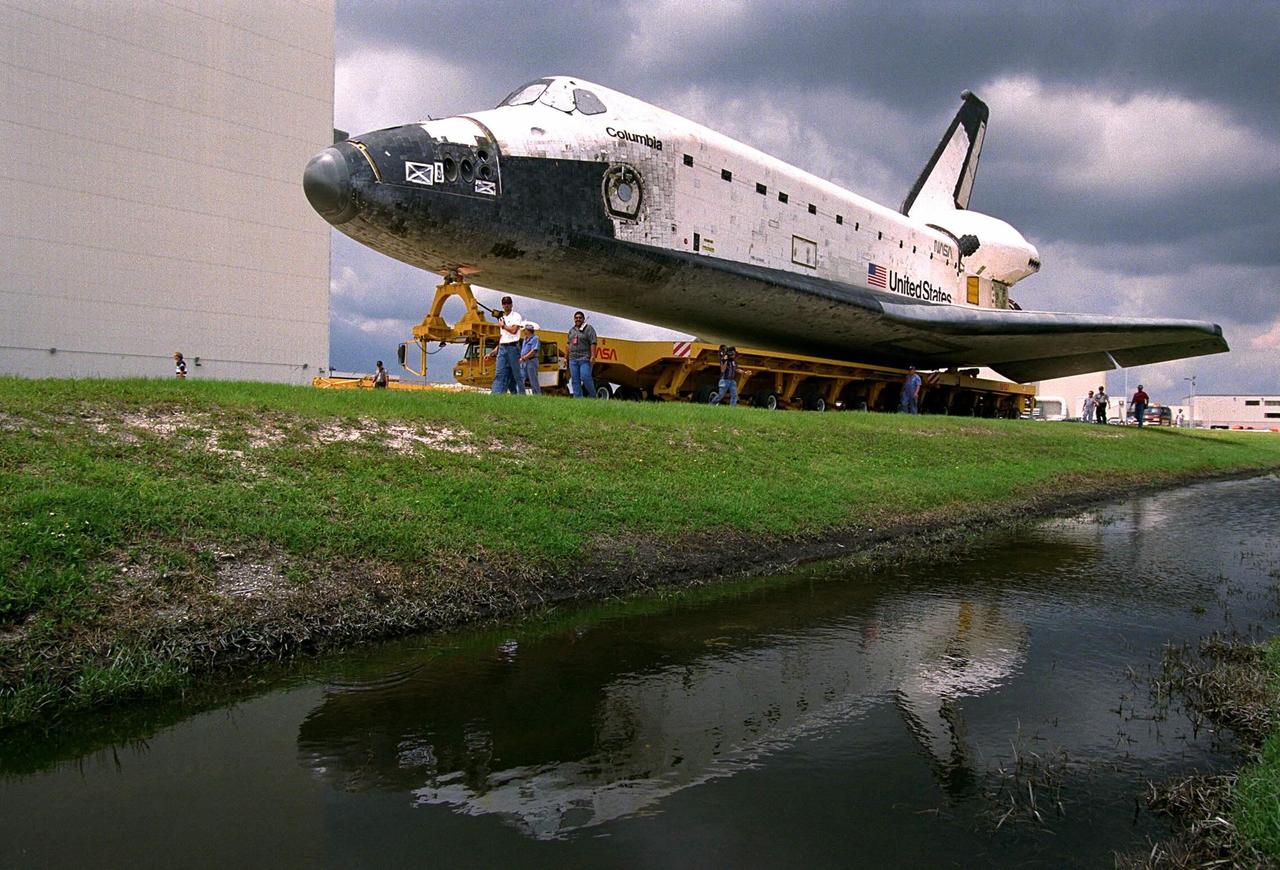
The Space Shuttle Orbiter Columbia is reflected in a nearby pond as it rolls over to the Vehicle Assembly Building (VAB) June 4 from Orbiter Processing Facility (OPF) 1 atop its transporter in preparation for the STS-94 mission. Once inside the VAB, Columbia will be hoisted to be mated with its solid rocket boosters and external tank. Columbia was moved to the OPF April 8 after the completion of the STS-83 mission. KSC payloads processing employees then began work to reservice the Microgravity Science Laboratory-1 (MSL-1) Spacelab module in the orbiter’s payload bay for the STS-94 mission. This was the first time that this type of payload was reserviced without removing it from the payload bay. This new procedure pioneers processing efforts for possible quick relaunch turnaround times for future payloads. The MSL-1 module will fly again with the full complement of STS-83 experiments after that mission was cut short due to indications of a faulty fuel cell. During the scheduled 16-day STS-94 mission, the experiments will be used to test some of the hardware, facilities and procedures that are planned for use on the International Space Station while the flight crew conducts combustion, protein crystal growth and materials processing experiments
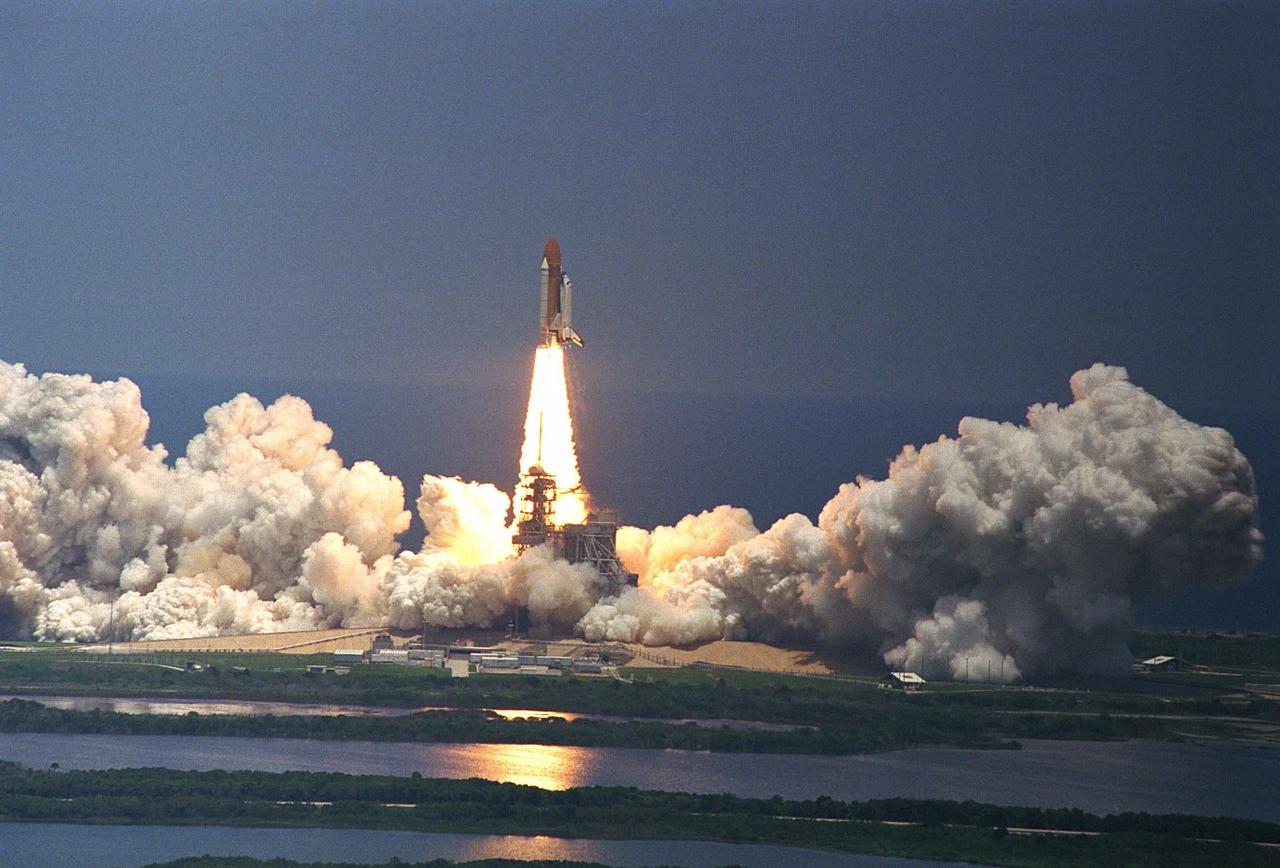
KENNEDY SPACE CENTER, Fla. -- The Space Shuttle Columbia soars from Launch Pad 39A at 2:02 p.m. EDT July 1 to begin the 16-day STS-94 Microgravity Science Laboratory-1 (MSL-1) mission. The launch window was opened 47 minutes earlier than the originally scheduled time of 2:37 p.m. to improve the opportunity to lift off before Florida summer rain showers reached the space center. The crew members are Mission Commander James D. Halsell Jr.; Pilot Susan L. Still; Payload Commander Janice Voss; Mission Specialists Michael L.Gernhardt and Donald A. Thomas; and Payload Specialists Roger K. Crouch and Gregory T. Linteris. During the space flight, the MSL-1 will be used to test some of the hardware, facilities and procedures that are planned for use on the International Space Station while the flight crew conducts combustion, protein crystal growth and materials processing experiments. Also onboard is the Hitchhiker Cryogenic Flexible Diode (CRYOFD) experiment payload, which is attached to the right side of Columbia’s payload bay. These payloads had previously flown on the STS-83 mission in April, which was cut short after nearly four days because of indications of a faulty fuel cell. STS-94 is a reflight of that mission
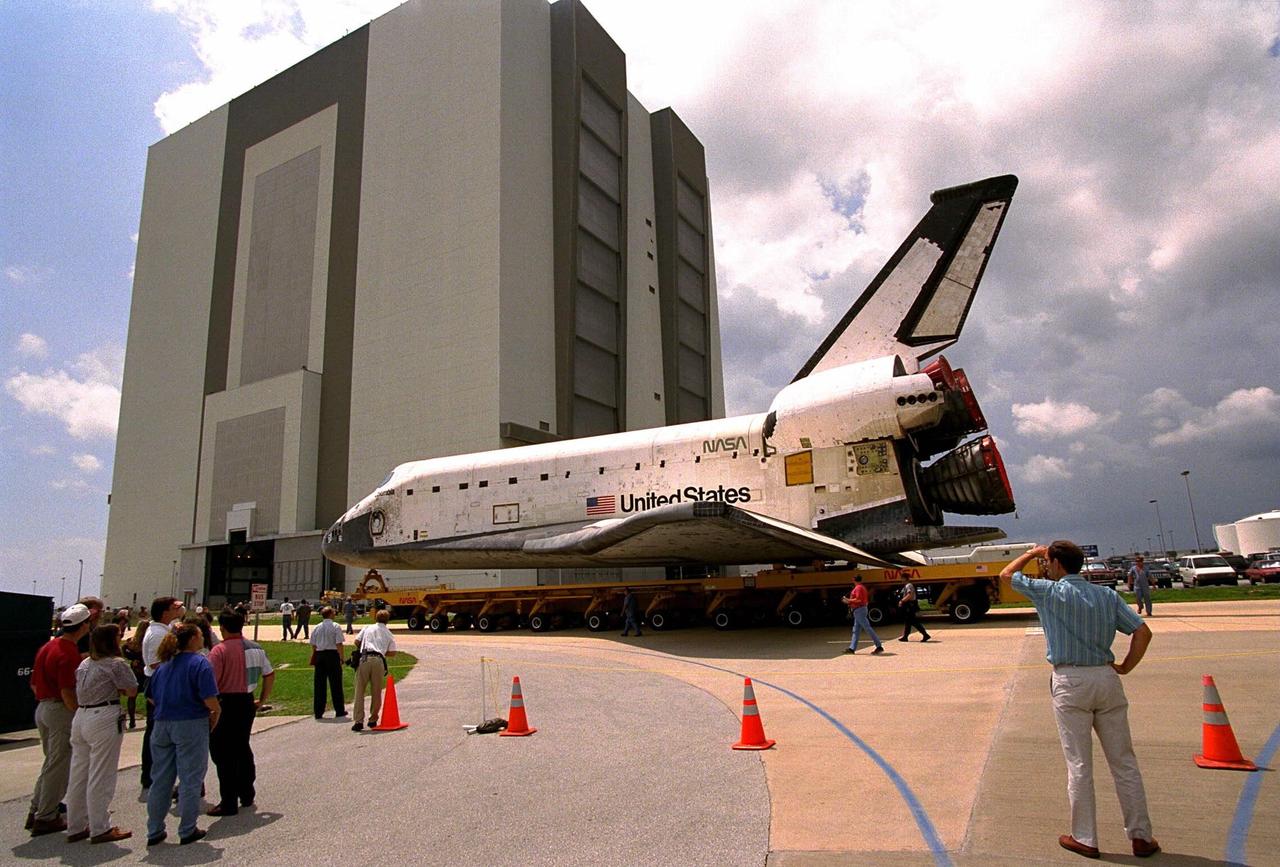
While KSC workers in the Launch Complex 39 Area watch, The Space Shuttle Orbiter Columbia rolls over to the Vehicle Assembly Building (VAB) June 4 from Orbiter Processing Facility (OPF)1 atop its transporter in preparation for the STS-94 mission. Once inside the VAB, Columbia will be hoisted to be mated with its solid rocket boosters and external tank. Columbia was moved to the OPF April 8 after the completion of the STS-83 mission. KSC payloads processing employees then began work to reservice the Microgravity Science Laboratory-1 (MSL-1) Spacelab module in the orbiter’s payload bay for the STS-94 mission. This was the first time that this type of payload was reserviced without removing it from the payload bay. This new procedure pioneers processing efforts for possible quick relaunch turnaround times for future payloads. The MSL-1 module will fly again with the full complement of STS-83 experiments after that mission was cut short due to indications of a faulty fuel cell. During the scheduled 16-day STS-94 mission, the experiments will be used to test some of the hardware, facilities and procedures that are planned for use on the International Space Station while the flight crew conducts combustion, protein crystal growth and materials processing experiments
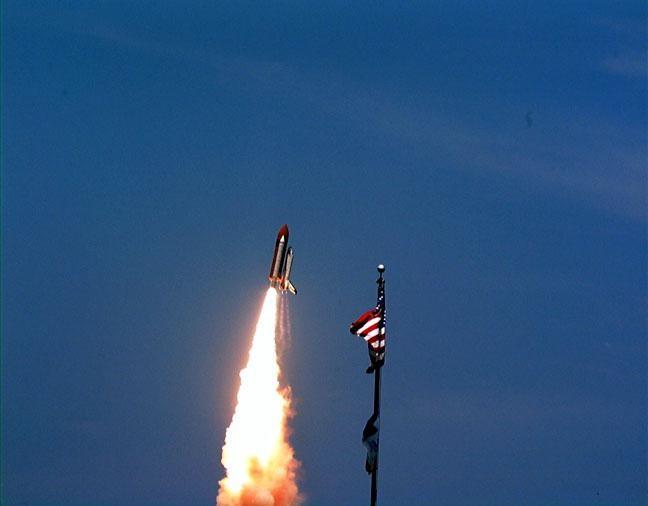
The Space Shuttle Columbia soars from Launch Pad 39A at 2:02 p.m. EDT July 1 to begin the 16-day STS-94 Microgravity Science Laboratory-1 (MSL-1) mission. The launch window was opened 47 minutes earlier than the originally scheduled time of 2:37 p.m. to improve the opportunity to lift off before Florida summer rain showers reached the space center. The crew members are Mission Commander James D. Halsell Jr.; Pilot Susan L. Still; Payload Commander Janice Voss; Mission Specialists Michael L.Gernhardt and Donald A. Thomas; and Payload Specialists Roger K. Crouch and Gregory T. Linteris. During the space flight, the MSL-1 will be used to test some of the hardware, facilities and procedures that are planned for use on the International Space Station while the flight crew conducts combustion, protein crystal growth and materials processing experiments. Also onboard is the Hitchhiker Cryogenic Flexible Diode (CRYOFD) experiment payload, which is attached to the right side of Columbia’s payload bay. These payloads had previously flown on the STS-83 mission in April, which was cut short after nearly four days because of indications of a faulty fuel cell. STS-94 is a reflight of that mission
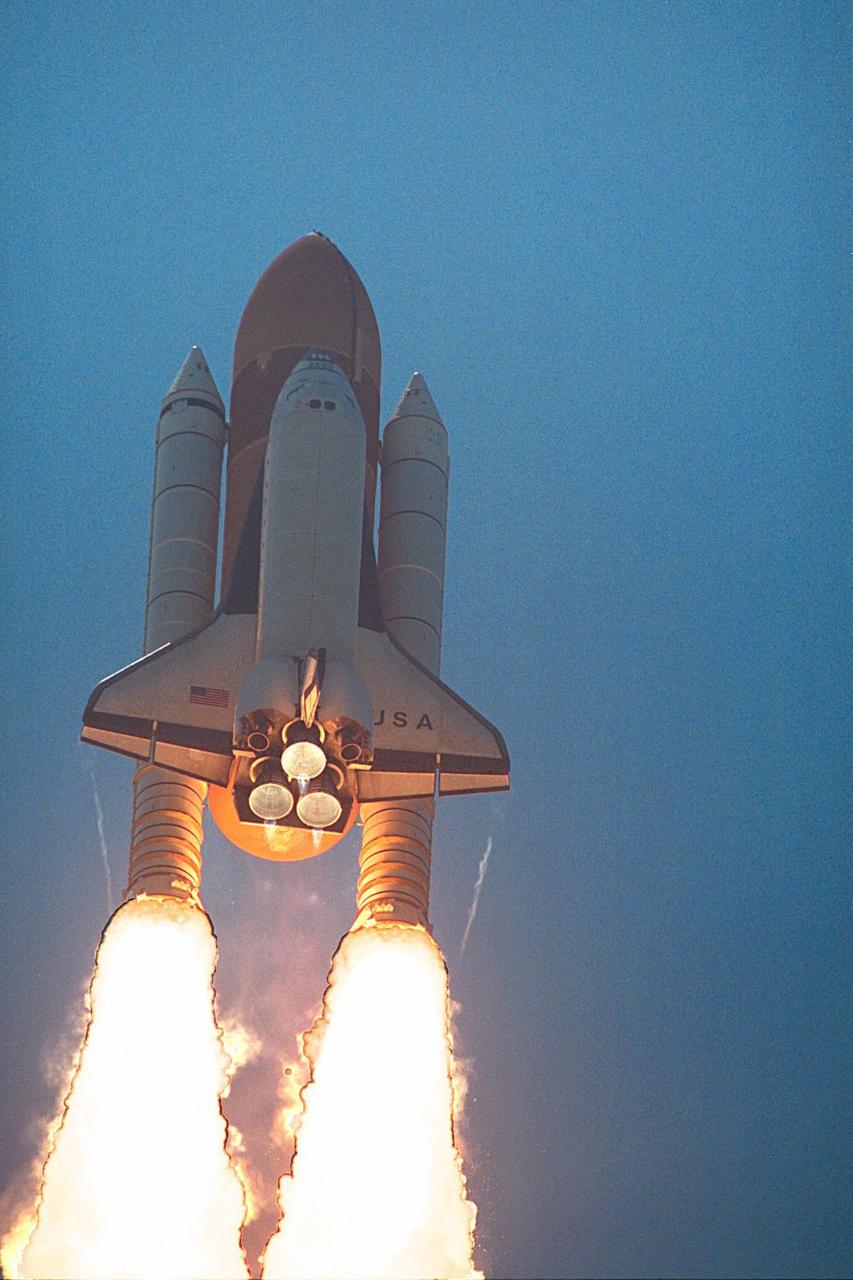
KENNEDY SPACE CENTER, Fla. -- The Space Shuttle Columbia soars from Launch Pad 39A at 2:02 p.m. EDT July 1 to begin the 16-day STS-94 Microgravity Science Laboratory-1 (MSL-1) mission. The launch window was opened 47 minutes earlier than the originally scheduled time of 2:37 p.m. to improve the opportunity to lift off before Florida summer rain showers reached the space center. The crew members are Mission Commander James D. Halsell Jr.; Pilot Susan L. Still; Payload Commander Janice Voss; Mission Specialists Michael L.Gernhardt and Donald A. Thomas; and Payload Specialists Roger K. Crouch and Gregory T. Linteris. During the space flight, the MSL-1 will be used to test some of the hardware, facilities and procedures that are planned for use on the International Space Station while the flight crew conducts combustion, protein crystal growth and materials processing experiments. Also onboard is the Hitchhiker Cryogenic Flexible Diode (CRYOFD) experiment payload, which is attached to the right side of Columbia’s payload bay. These payloads had previously flown on the STS-83 mission in April, which was cut short after nearly four days because of indications of a faulty fuel cell. STS-94 is a reflight of that mission
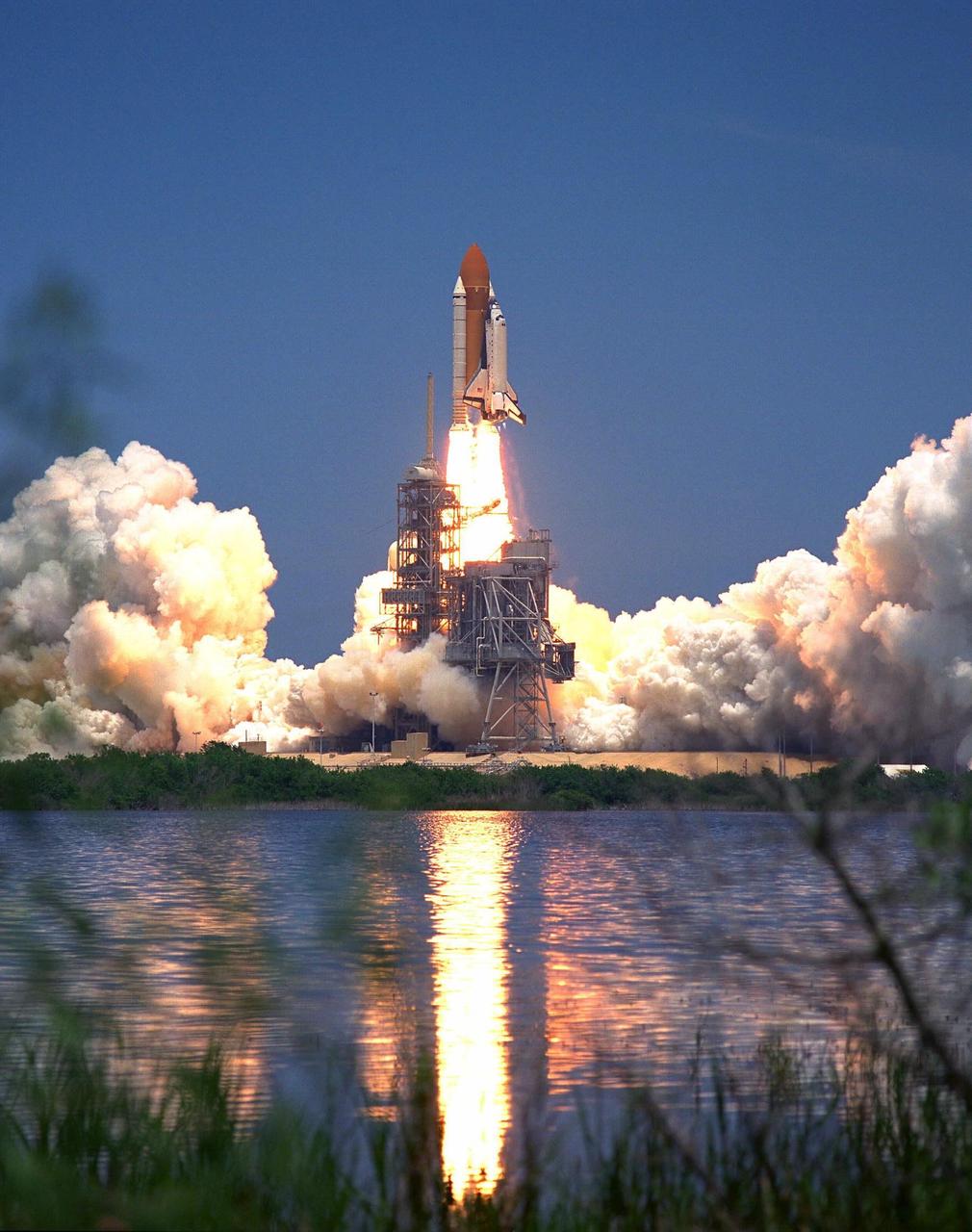
KENNEDY SPACE CENTER, Fla. -- The Space Shuttle Columbia soars from Launch Pad 39A at 2:02 p.m. EDT July 1 to begin the 16-day STS-94 Microgravity Science Laboratory-1 (MSL-1) mission. The launch window was opened 47 minutes earlier than the originally scheduled time of 2:37 p.m. to improve the opportunity to lift off before Florida summer rain showers reached the space center. The crew members are Mission Commander James D. Halsell Jr.; Pilot Susan L. Still; Payload Commander Janice Voss; Mission Specialists Michael L.Gernhardt and Donald A. Thomas; and Payload Specialists Roger K. Crouch and Gregory T. Linteris. During the space flight, the MSL-1 will be used to test some of the hardware, facilities and procedures that are planned for use on the International Space Station while the flight crew conducts combustion, protein crystal growth and materials processing experiments. Also onboard is the Hitchhiker Cryogenic Flexible Diode (CRYOFD) experiment payload, which is attached to the right side of Columbia’s payload bay. These payloads had previously flown on the STS-83 mission in April, which was cut short after nearly four days because of indications of a faulty fuel cell. STS-94 is a reflight of that mission
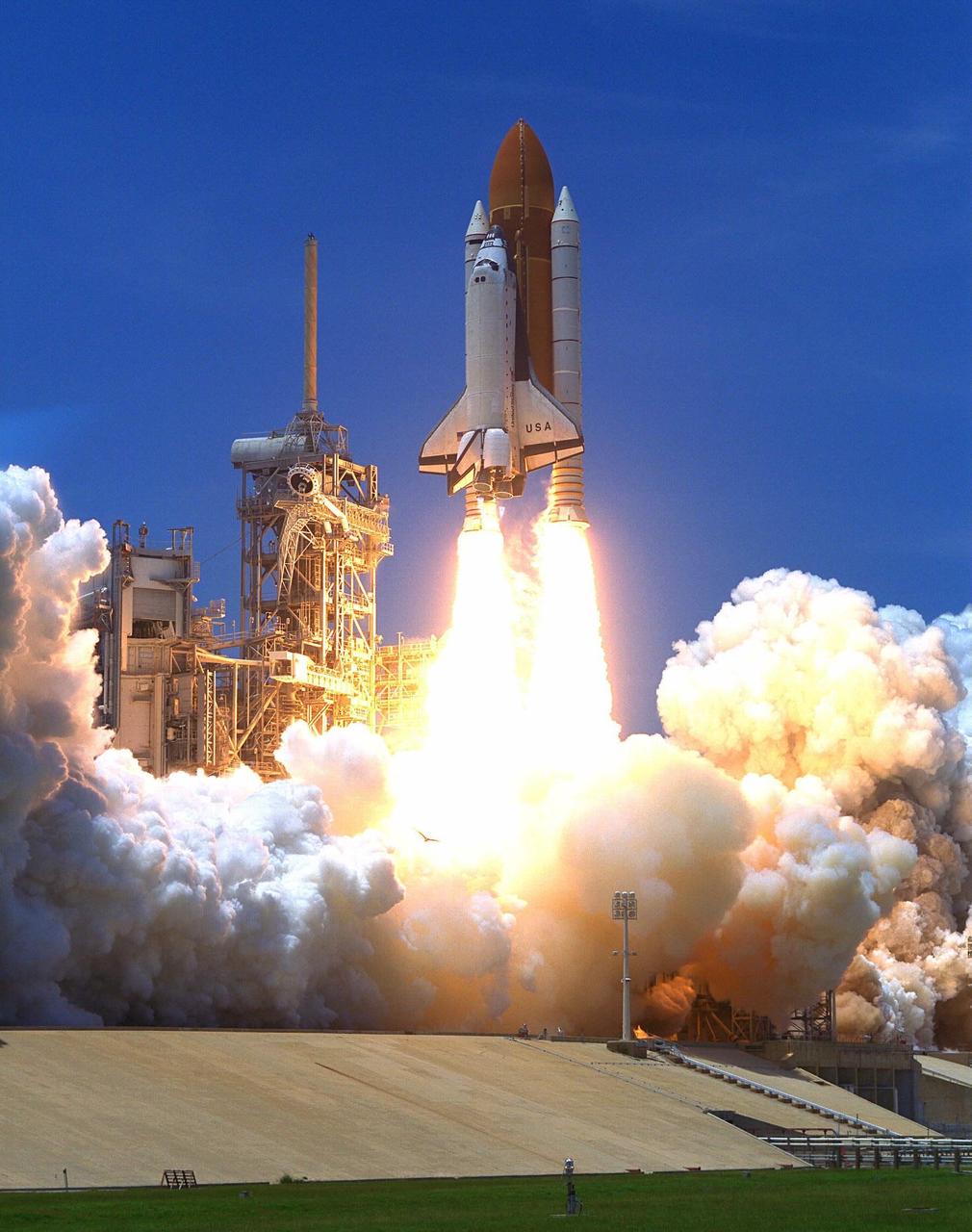
KENNEDY SPACE CENTER, Fla. -- The Space Shuttle Columbia soars from Launch Pad 39A at 2:02 p.m. EDT July 1 to begin the 16-day STS-94 Microgravity Science Laboratory-1 (MSL-1) mission. The launch window was opened 47 minutes earlier than the originally scheduled time of 2:37 p.m. to improve the opportunity to lift off before Florida summer rain showers reached the space center. The crew members are Mission Commander James D. Halsell Jr.; Pilot Susan L. Still; Payload Commander Janice Voss; Mission Specialists Michael L.Gernhardt and Donald A. Thomas; and Payload Specialists Roger K. Crouch and Gregory T. Linteris. During the space flight, the MSL-1 will be used to test some of the hardware, facilities and procedures that are planned for use on the International Space Station while the flight crew conducts combustion, protein crystal growth and materials processing experiments. Also onboard is the Hitchhiker Cryogenic Flexible Diode (CRYOFD) experiment payload, which is attached to the right side of Columbia’s payload bay. These payloads had previously flown on the STS-83 mission in April, which was cut short after nearly four days because of indications of a faulty fuel cell. STS-94 is a reflight of that mission
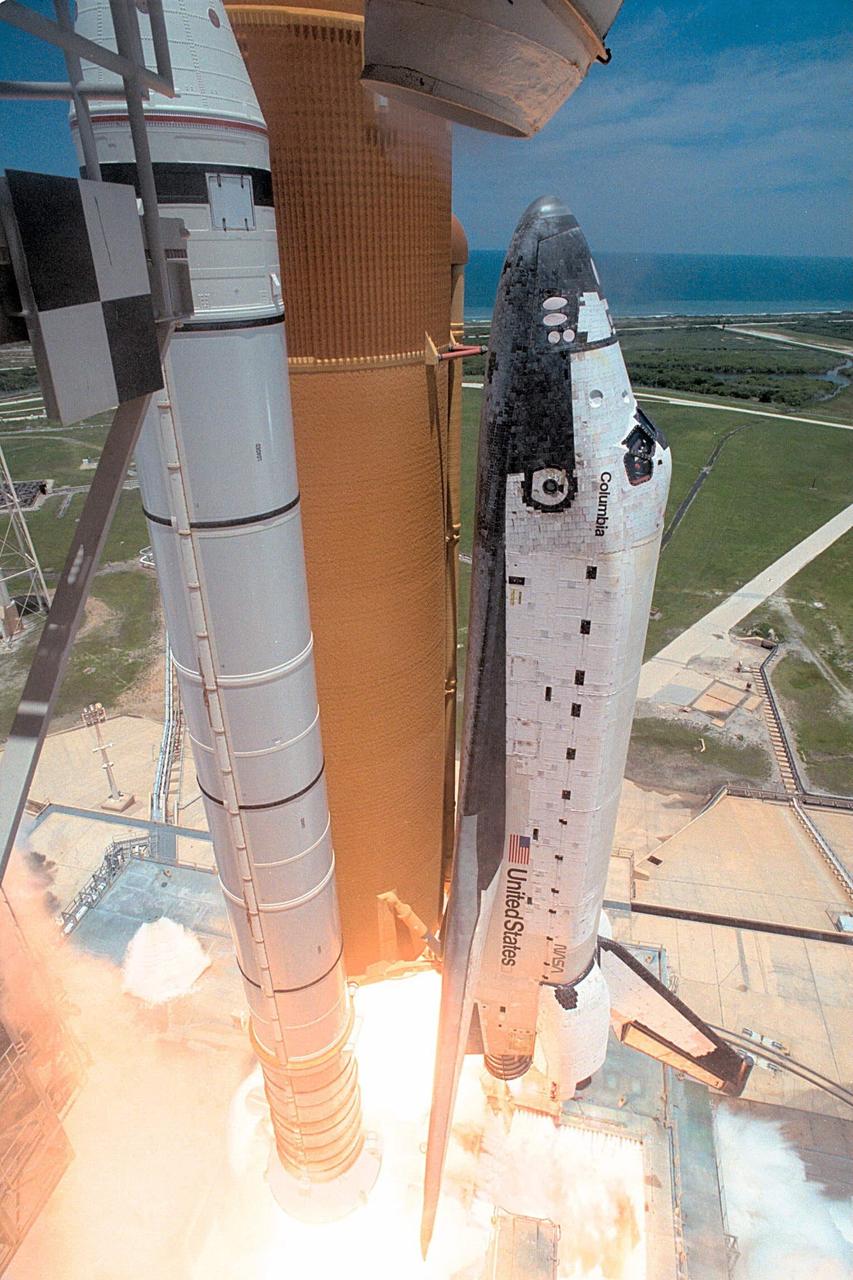
KENNEDY SPACE CENTER, Fla. -- The Space Shuttle Columbia soars from Launch Pad 39A at 2:02 p.m. EDT July 1 to begin the 16-day STS-94 Microgravity Science Laboratory-1 (MSL-1) mission. The launch window was opened 47 minutes earlier than the originally scheduled time of 2:37 p.m. to improve the opportunity to lift off before Florida summer rain showers reached the space center. The crew members are Mission Commander James D. Halsell Jr.; Pilot Susan L. Still; Payload Commander Janice Voss; Mission Specialists Michael L.Gernhardt and Donald A. Thomas; and Payload Specialists Roger K. Crouch and Gregory T. Linteris. During the space flight, the MSL-1 will be used to test some of the hardware, facilities and procedures that are planned for use on the International Space Station while the flight crew conducts combustion, protein crystal growth and materials processing experiments. Also onboard is the Hitchhiker Cryogenic Flexible Diode (CRYOFD) experiment payload, which is attached to the right side of Columbia’s payload bay. These payloads had previously flown on the STS-83 mission in April, which was cut short after nearly four days because of indications of a faulty fuel cell. STS-94 is a reflight of that mission
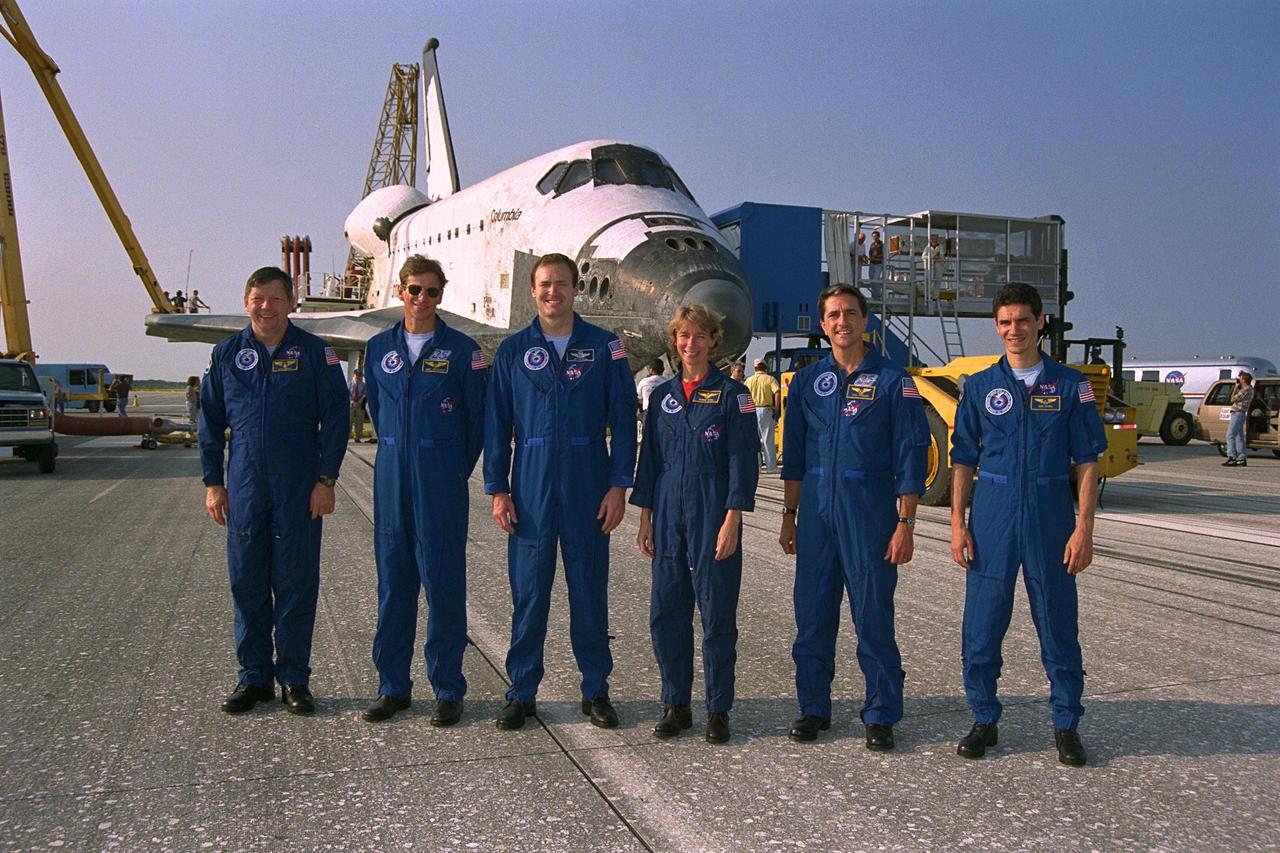
KENNEDY SPACE CENTER, FLA. -- The STS-94 flight crew poses in front of the Space Shuttle orbiter Columbia after an end-of-mission landing on Runway 33 at KSC’s Shuttle Landing Facility July 17 to complete the Microgravity Science Laboratory-1 (MSL-1) mission. They are (from left): Payload Specialist Roger K. Crouch; Mission Specialist Michael L. Gernhardt; Mission Commander James D. Halsell Jr.; Pilot Susan L. Still; Mission Specialist Donald A. Thomas; and Payload Specialist Gregory T. Linteris. Not shown is Payload Commander Janice Voss. During the 15-day, 16-hour spaceflight, the MSL-1 Spacelab module was used to test some of the hardware, facilities and procedures that are planned for use on the International Space Station; the flight crew also conducted combustion, protein crystal growth and materials processing experiments. This mission was a reflight of the STS-83 mission earlier this year that was cut short due to indications of a faulty fuel cell
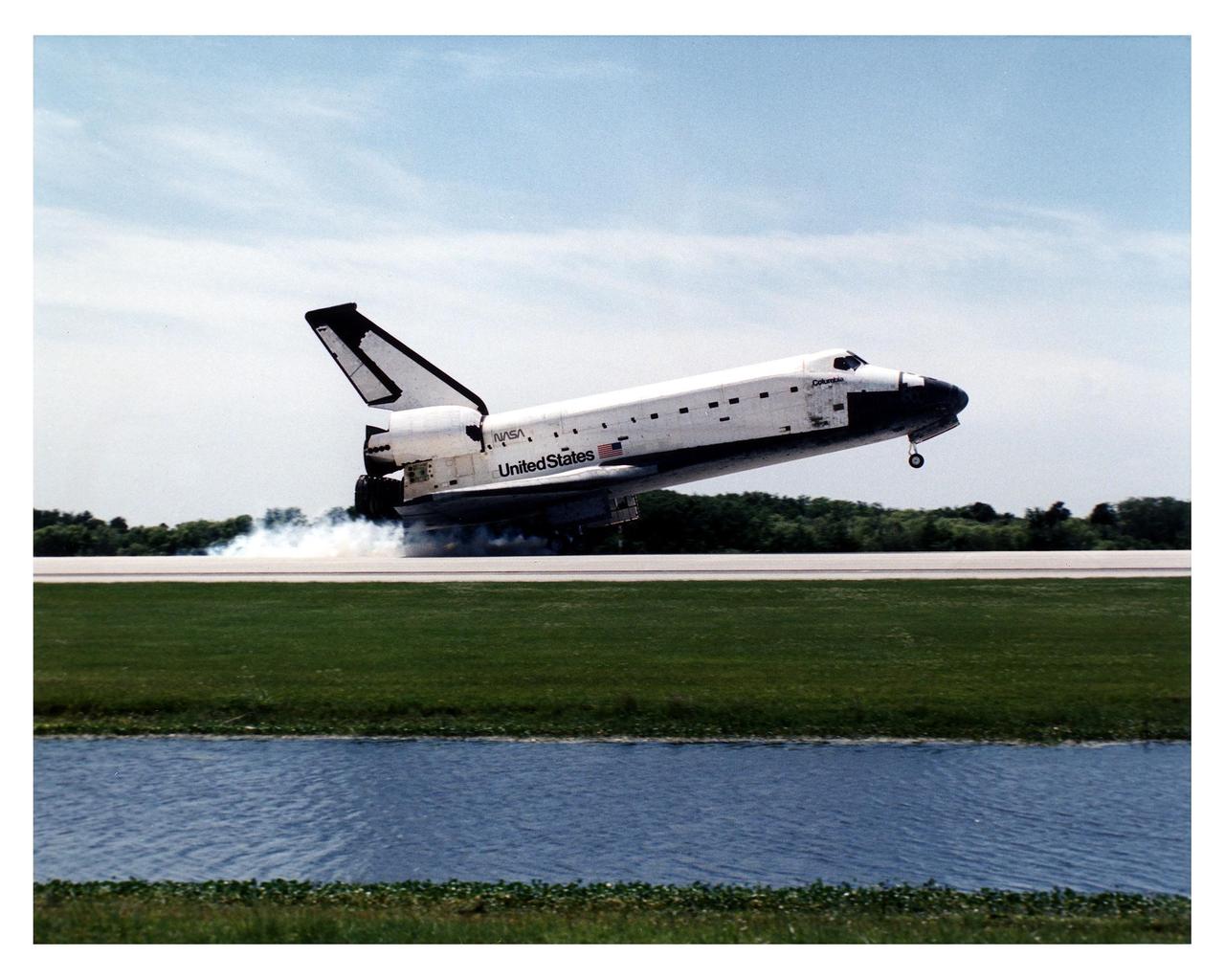
KENNEDY SPACE CENTER, FLA. -- The Space Shuttle Columbia touches down on Runway 33 at KSC's Shuttle Landing Facility at 2:33:11 p.m. EDT, April 8, to conclude the Microgravity Science Laboratory-1 (MSL-1) mission. At main gear touchdown, the STS-83 mission duration was 3 days, 23 hours, 12 minutes. The planned 16-day mission was cut short by a faulty fuel cell. This is only the third time in Shuttle program history that an orbiter was brought home early due to mechanical problems. This was also the 36th KSC landing since the program began in 1981. Mission Commander James D. Halsell, Jr. flew Columbia to a perfect landing with help from Pilot Susan L. Still. Other crew members are Payload Commander Janice E. Voss; Mission Specialists Michael L. Gernhardt and Donald A. Thomas; and Payload Specialists Roger K. Crouch and Gregory T. Linteris. In spite of the abbreviated flight, the crew was able to perform MSL-1 experiments. The Spacelab-module-based experiments were used to test some of the hardware, facilities and procedures that are planned for use on the International Space Station and to conduct combustion, protein crystal growth and materials processing investigations
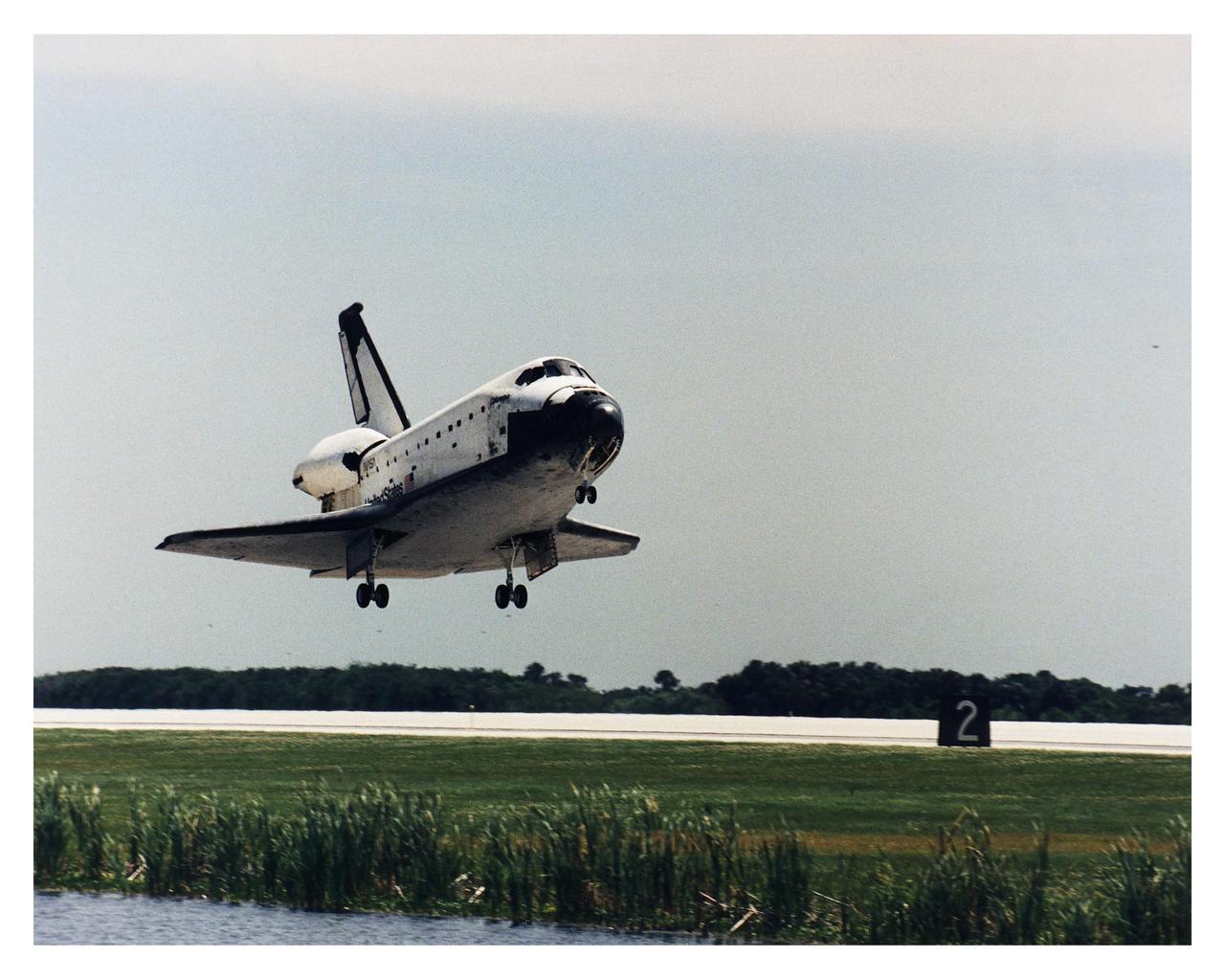
KENNEDY SPACE CENTER, FLA. -- The Space Shuttle Columbia prepares to touch down on Runway 33 at KSC's Shuttle Landing Facility at approximately 2:33 p.m. EDT, April 8, to conclude the Microgravity Science Laboratory-1 (MSL-1) mission. At main gear touchdown, the STS-83 mission duration will be just under four days. The planned 16-day mission was cut short by a faulty fuel cell. This is only the third time in Shuttle program history that an orbiter was brought home early due to mechanical problems. This was also the 36th KSC landing since the program began in 1981. Mission Commander James D. Halsell, Jr. flew Columbia to a perfect landing with help from Pilot Susan L. Still. Other crew members are Payload Commander Janice E. Voss; Mission Specialists Michael L.Gernhardt and Donald A. Thomas; and Payload Specialists Roger K. Crouch and Gregory T. Linteris. In spite of the abbreviated flight, the crew was able to perform MSL-1 experiments. The Spacelab-module-based experiments were used to test some of the hardware, facilities and procedures that are planned for use on the International Space Station and to conduct combustion, protein crystal growth and materials processing investigations
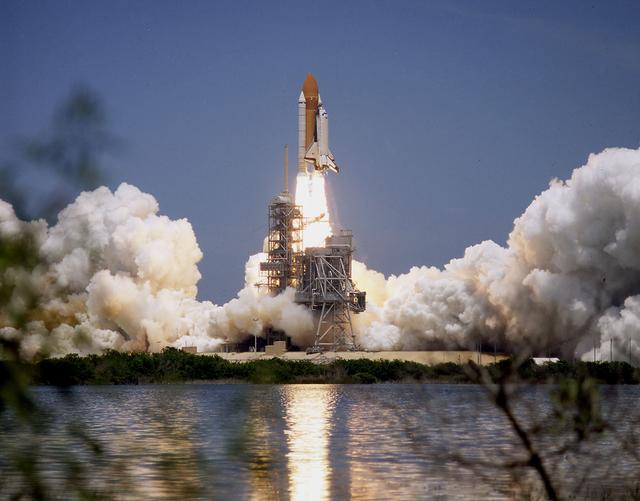
The Space Shuttle Columbia (STS-94) soared from Launch Pad 39A begirning its 16-day Microgravity Science Laboratory -1 (MSL-1) mission. The launch window was opened 47 minutes earlier than the originally scheduled time to improve the opportunity to lift off before Florida summer rain showers reached the space center. During the space flight, the MSL-1 was used to test some of the hardware, facilities and procedures that were planned for use on the International Space Station which were managed by scientists and engineers from the Marshall Space Flight Center, while the flight crew conducted combustion, protein crystal growth and materials processing experiments. Also onboard was the Hitchhiker Cryogenic Flexible Diode (CRYOFD) experiment payload, which was attached to the right side of Columbia's payload bay. These payloads had previously flown on the STS-83 mission in April, which was cut short after nearly four days because of indications of a faulty fuel cell. STS-94 was a reflight of that mission.
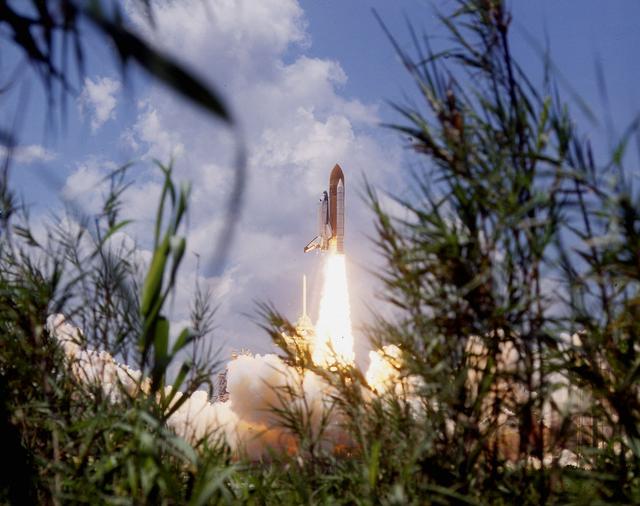
The Space Shuttle Columbia (STS-94) soared from Launch Pad 39A begirning its 16-day Microgravity Science Laboratory -1 (MSL-1) mission. The launch window was opened 47 minutes earlier than the originally scheduled time to improve the opportunity to lift off before Florida summer rain showers reached the space center. During the space flight, the MSL-1 was used to test some of the hardware, facilities and procedures that were planned for use on the International Space Station which were managed by scientists and engineers from the Marshall Space Flight Center, while the flight crew conducted combustion, protein crystal growth and materials processing experiments. Also onboard was the Hitchhiker Cryogenic Flexible Diode (CRYOFD) experiment payload, which was attached to the right side of Columbia's payload bay. These payloads had previously flown on the STS-83 mission in April, which was cut short after nearly four days because of indications of a faulty fuel cell. STS-94 was a reflight of that mission.
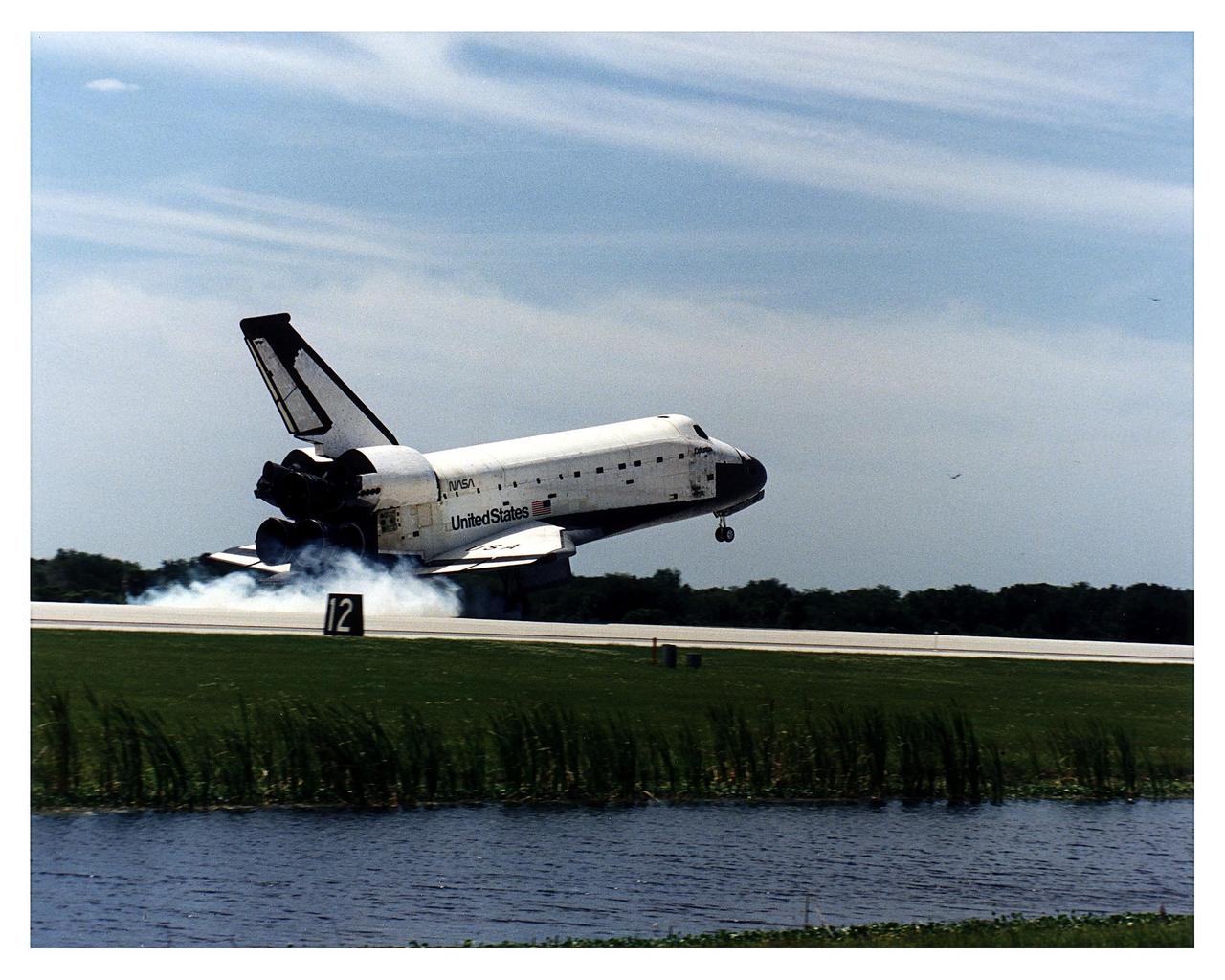
KENNEDY SPACE CENTER, FLA. -- The Space Shuttle Columbia touches down on Runway 33 at KSC's Shuttle Landing Facility at 2:33:11 p.m. EDT, April 8, to conclude the Microgravity Science Laboratory-1 (MSL-1) mission. At main gear touchdown, the STS-83 mission duration was 3 days, 23 hours, 12 minutes. The planned 16-day mission was cut short by a faulty fuel cell. This is only the third time in Shuttle program history that an orbiter was brought home early due to mechanical problems. This was also the 36th KSC landing since the program began in 1981. Mission Commander James D. Halsell, Jr. flew Columbia to a perfect landing with help from Pilot Susan L. Still. Other crew members are Payload Commander Janice E. Voss; Mission Specialists Michael L. Gernhardt and Donald A. Thomas; and Payload Specialists Roger K. Crouch and Gregory T. Linteris. In spite of the abbreviated flight, the crew was able to perform MSL-1 experiments. The Spacelab-module-based experiments were used to test some of the hardware, facilities and procedures that are planned for use on the International Space Station and to conduct combustion, protein crystal growth and materials processing investigations
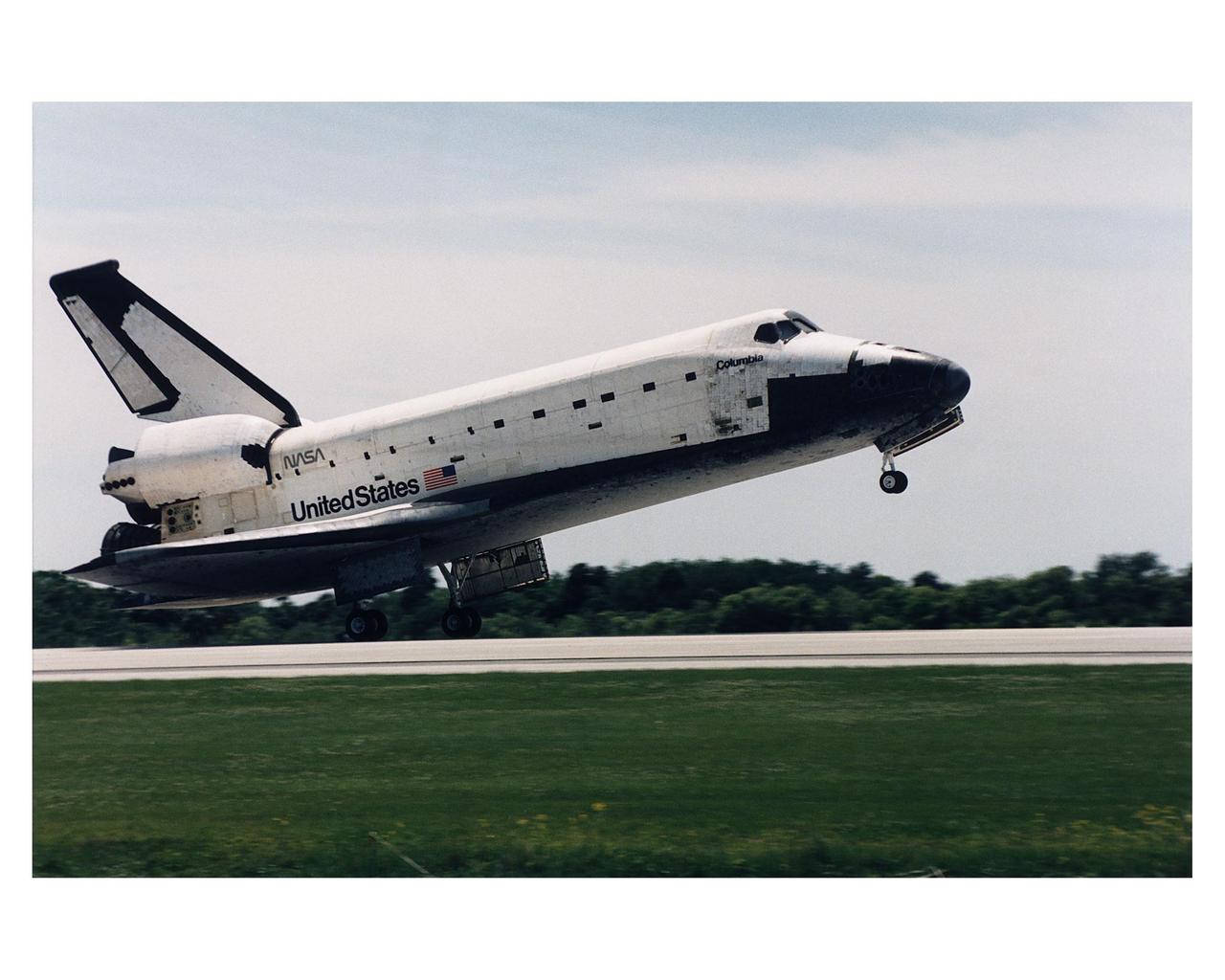
KENNEDY SPACE CENTER, FLA. -- The Space Shuttle Columbia touches down on Runway 33 at KSC's Shuttle Landing Facility at 2:33:11 p.m. EDT, April 8, to conclude the Microgravity Science Laboratory-1 (MSL-1) mission. At main gear touchdown, the STS-83 mission duration was 3 days, 23 hours, 12 minutes. The planned 16-day mission was cut short by a faulty fuel cell. This is only the third time in Shuttle program history that an orbiter was brought home early due to mechanical problems. This was also the 36th KSC landing since the program began in 1981. Mission Commander James D. Halsell, Jr. flew Columbia to a perfect landing with help from Pilot Susan L. Still. Other crew members are Payload Commander Janice E. Voss; Mission Specialists Michael L. Gernhardt and Donald A. Thomas; and Payload Specialists Roger K. Crouch and Gregory T. Linteris. In spite of the abbreviated flight, the crew was able to perform MSL-1 experiments. The Spacelab-module-based experiments were used to test some of the hardware, facilities and procedures that are planned for use on the International Space Station and to conduct combustion, protein crystal growth and materials processing investigations
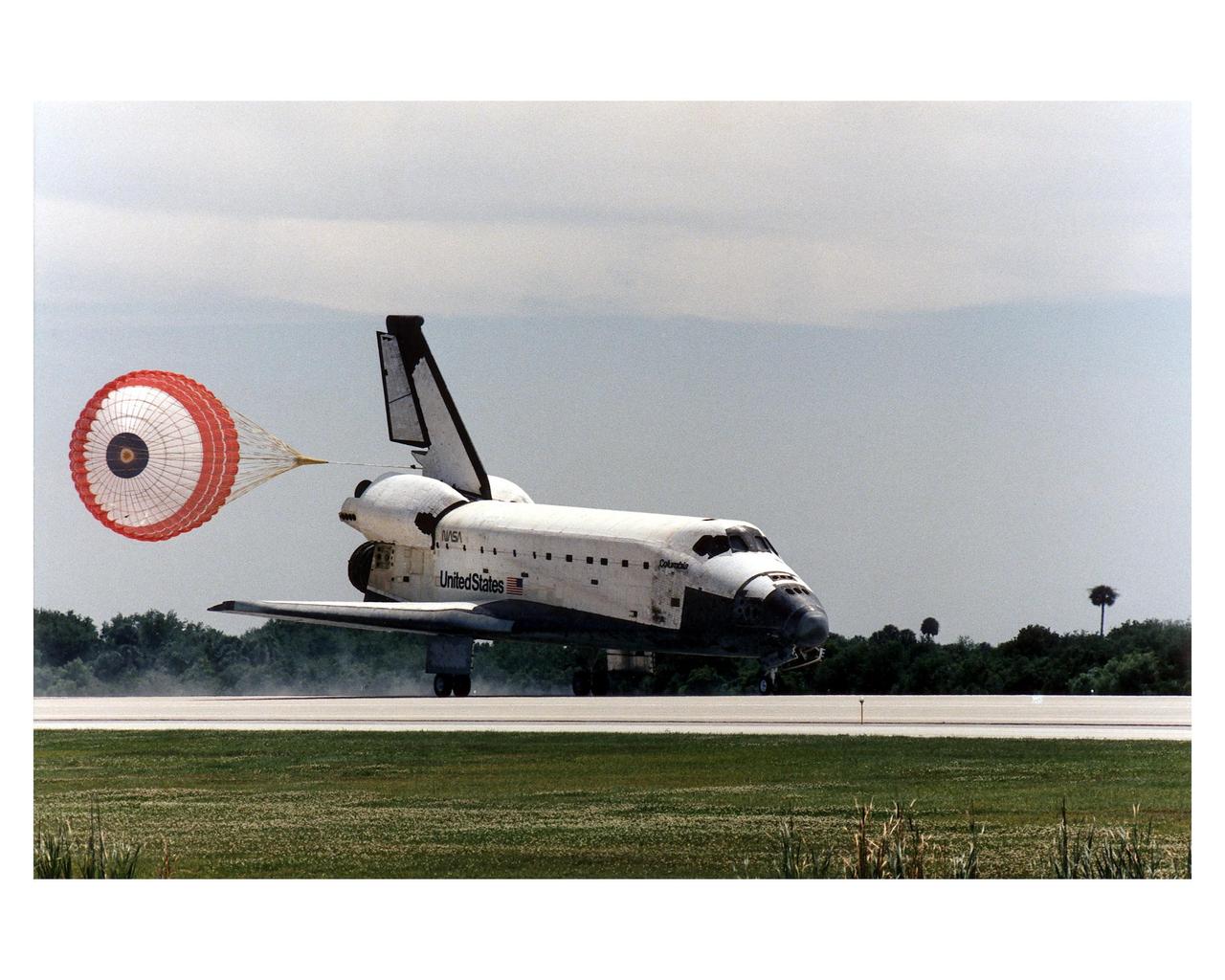
KENNEDY SPACE CENTER, FLA. -- With drag chute deployed, the Space Shuttle Columbia hurtles down Runway 33 at KSCþs Shuttle Landing Facility to conclude the Microgravity Science Laboratory-1 (MSL-1) mission. With main gear touchdown at 2:33:11 p.m. EDT, April 8, the STS-83 mission duration was 3 days, 23 hours, 12 minutes. The planned 16-day mission was cut short by a faulty fuel cell. This is only the third time in Shuttle program history that an orbiter was brought home early due to a mechanical problem. This was also the 36th KSC landing since the program began in 1981. Mission Commander James D. Halsell, Jr. flew Columbia to a perfect landing with help from Pilot Susan L. Still. Other crew members are Payload Commander Janice E. Voss; Mission Specialists Michael L.Gernhardt and Donald A. Thomas; and Payload Specialists Roger K. Crouch and Gregory T. Linteris. In spite of the abbreviated flight, the crew was able to perform MSL-1 experiments. The Spacelab-module-based experiments were used to test some of the hardware, facilities and procedures that are planned for use on the International Space Station and to conduct combustion, protein crystal growth and materials processing investigations
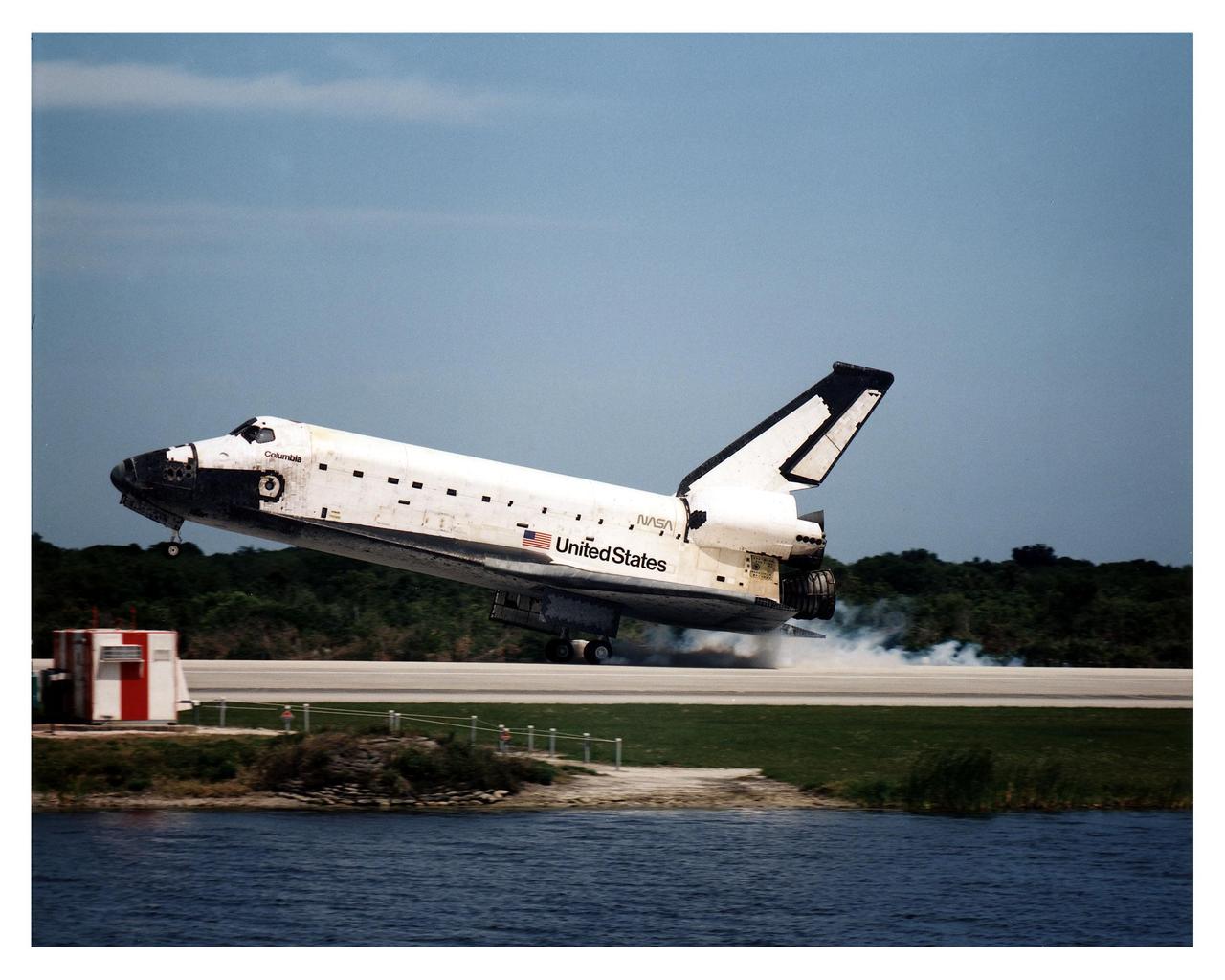
KENNEDY SPACE CENTER, FLA. -- The Space Shuttle Columbia touches down on Runway 33 at KSC's Shuttle Landing Facility at 2:33:11 p.m. EDT, April 8, to conclude the Microgravity Science Laboratory-1 (MSL-1) mission. At main gear touchdown, the STS-83 mission duration was 3 days, 23 hours, 12 minutes. The planned 16-day mission was cut short by a faulty fuel cell. This is only the third time in Shuttle program history that an orbiter was brought home early due to mechanical problems. This was also the 36th KSC landing since the program began in 1981. Mission Commander James D. Halsell, Jr. flew Columbia to a perfect landing with help from Pilot Susan L. Still. Other crew members are Payload Commander Janice E. Voss; Mission Specialists Michael L. Gernhardt and Donald A. Thomas; and Payload Specialists Roger K. Crouch and Gregory T. Linteris. In spite of the abbreviated flight, the crew was able to perform MSL-1 experiments. The Spacelab-module-based experiments were used to test some of the hardware, facilities and procedures that are planned for use on the International Space Station and to conduct combustion, protein crystal growth and materials processing investigations

KENNEDY SPACE CENTER, FLA. -- With drag chute deployed, the Space Shuttle Columbia hurtles down Runway 33 at KSC's Shuttle Landing Facility to conclude the Microgravity Science Laboratory-1 (MSL-1) mission. With main gear touchdown at 2:33:11 p.m. EDT, April 8, the STS-83 mission duration was 3 days, 23 hours, 12 minutes. The planned 16-day mission was cut short by a faulty fuel cell. This is only the third time in Shuttle program history that an orbiter was brought home early due to a mechanical problem. This was also the 36th KSC landing since the program began in 1981. Mission Commander James D. Halsell, Jr. flew Columbia to a perfect landing with help from Pilot Susan L. Still. Other crew members are Payload Commander Janice E. Voss; Mission Specialists Michael L.Gernhardt and Donald A. Thomas; and Payload Specialists Roger K. Crouch and Gregory T. Linteris. In spite of the abbreviated flight, the crew was able to perform MSL-1 experiments. The Spacelab-module-based experiments were used to test some of the hardware, facilities and procedures that are planned for use on the International Space Station and to conduct combustion, protein crystal growth and materials processing investigations
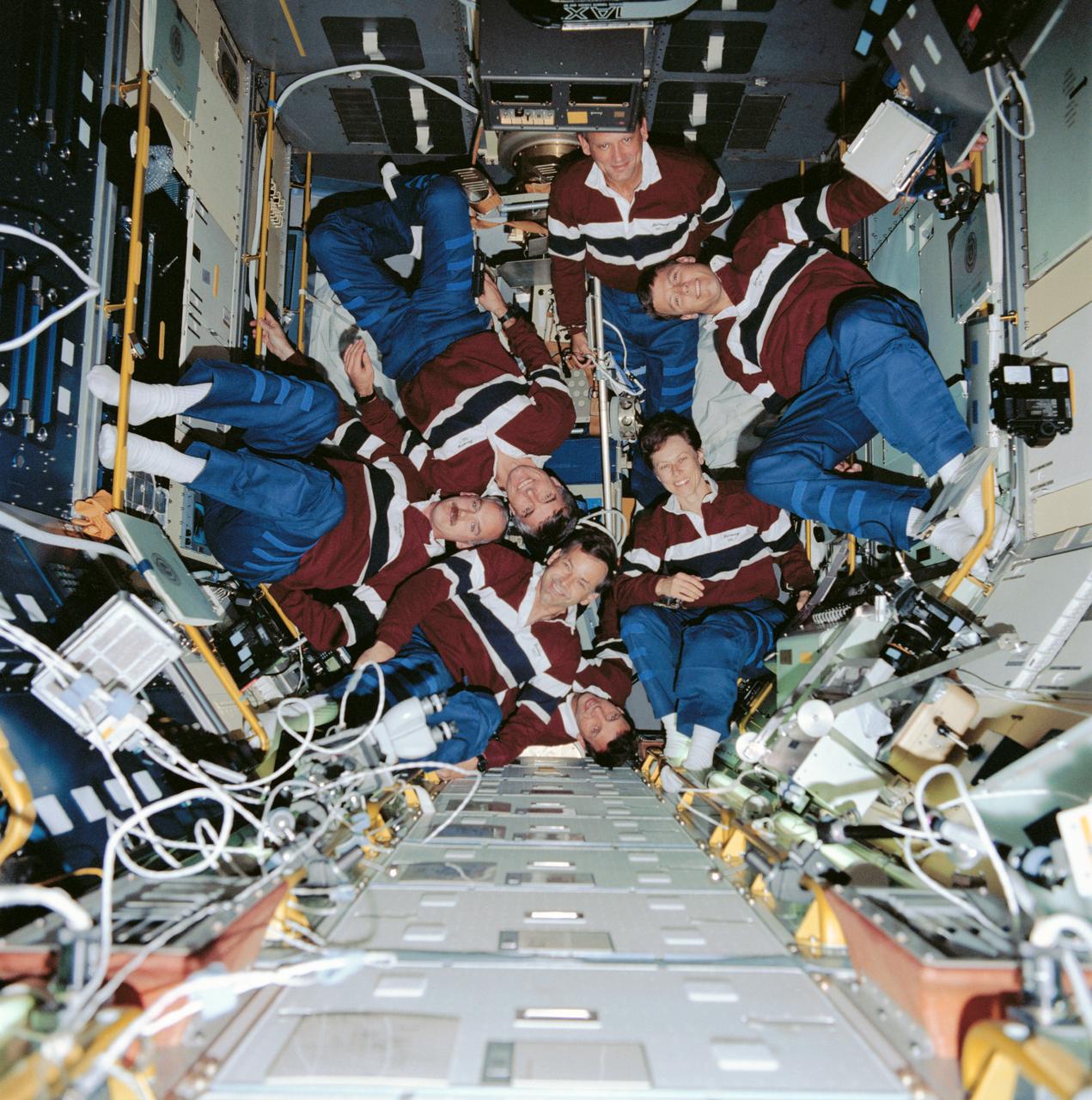
STS042-78-061 (22-30 Jan. 1992) --- The seven STS-42 crewmembers pose for a traditional in-space portrait in the shirt-sleeve environment of the International Microgravity Laboratory (IML-1) science module in the shuttle's cargo bay. (Hold picture with index numbers at top.) David C. Hilmers, mission specialist, is at top center of the 70mm image. Others pictured are (clockwise) Ronald J. Grabe, mission commander; William F. Readdy; mission specialist; Ulf Merbold, European Space Agency (ESA) payload specialist; Norman E. Thagard, payload commander; Stephen S. Oswald, pilot; and Roberta L. Bondar, Canadian payload specialist. The rotating chair, used often in biomedical tests on the eight-day flight, is (partially obscured) in center frame.
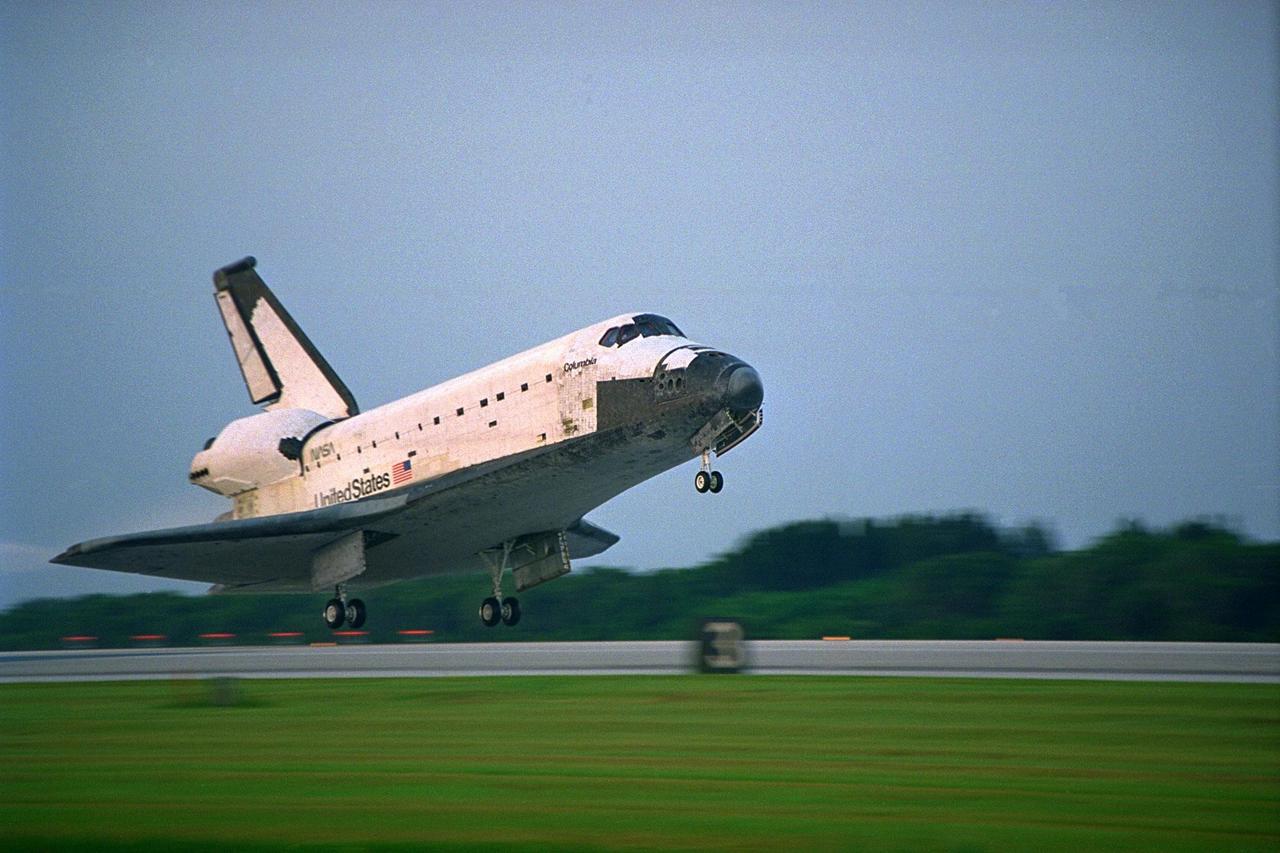
KENNEDY SPACE CENTER, FLA. -- The Space Shuttle orbiter Columbia touches down on Runway 33 at KSC’s Shuttle Landing Facility at 6:46:34 a.m. EDT with Mission Commander James D. Halsell Jr. and Pilot Susan L. Still at the controls to complete the STS-94 mission. Also on board are Mission Specialist Donald A. Thomas, Mission Specialist Michael L. Gernhardt, Payload Commander Janice Voss, and Payload Specialists Roger K. Crouch and Gregory T. Linteris. During the Microgravity Science Laboratory-1 (MSL-1) mission, the Spacelab module was used to test some of the hardware, facilities and procedures that are planned for use on the International Space Station while the flight crew conducted combustion, protein crystal growth and materials processing experiments. This mission was a reflight of the STS-83 mission that lifted off from KSC in April of this year. That space flight was cut short due to indications of a faulty fuel cell. This was Columbia’s 11th landing at KSC and the 38th landing at the space center in the history of the Shuttle program

KENNEDY SPACE CENTER, FLA. -- With its drag chute deployed, the Space Shuttle Orbiter Columbia touches down on Runway 33 at KSC’s Shuttle Landing Facility at 6:46:34 a.m. EDT with Mission Commander James D. Halsell Jr. and Pilot Susan L. Still at the controls to complete the STS-94 mission. Also on board are Mission Specialist Donald A. Thomas, Mission Specialist Michael L. Gernhardt , Payload Commander Janice Voss, and Payload Specialists Roger K. Crouch and Gregory T. Linteris. Mission elapsed time for STS-94 was 15 days,16 hours, 44 seconds. During the Microgravity Science Laboratory-1 (MSL-1) mission, the Spacelab module was used to test some of the hardware, facilities and procedures that are planned for use on the International Space Station while the flight crew conducted combustion, protein crystal growth and materials processing experiments. This mission was a reflight of the STS-83 mission that lifted off from KSC in April of this year. That space flight was cut short due to indications of a faulty fuel cell. This was Columbia’s 11th landing at KSC and the 38th landing at the space center in the history of the Shuttle program

KENNEDY SPACE CENTER, FLA. -- Framed by the Vehicle Assembly Building at right and the Mate-Demate Device at left, the Space Shuttle orbiter Columbia glides onto Runway 33 at KSC’s Shuttle Landing Facility at 6:46:34 a.m. EDT with Mission Commander James D. Halsell Jr. and Pilot Susan L. Still at the controls to complete the STS-94 mission. Also on board are Mission Specialist Donald A. Thomas, Mission Specialist Michael L. Gernhardt, Payload Commander Janice Voss, and Payload Specialists Roger K. Crouch and Gregory T. Linteris. During the Microgravity Science Laboratory-1 (MSL-1) mission, the Spacelab module was used to test some of the hardware, facilities and procedures that are planned for use on the International Space Station while the flight crew conducted combustion, protein crystal growth and materials processing experiments. This mission was a reflight of the STS-83 mission that lifted off from KSC in April of this year. That space flight was cut short due to indications of a faulty fuel cell. This was Columbia’s 11th landing at KSC and the 38th landing at the space center in the history of the Shuttle program
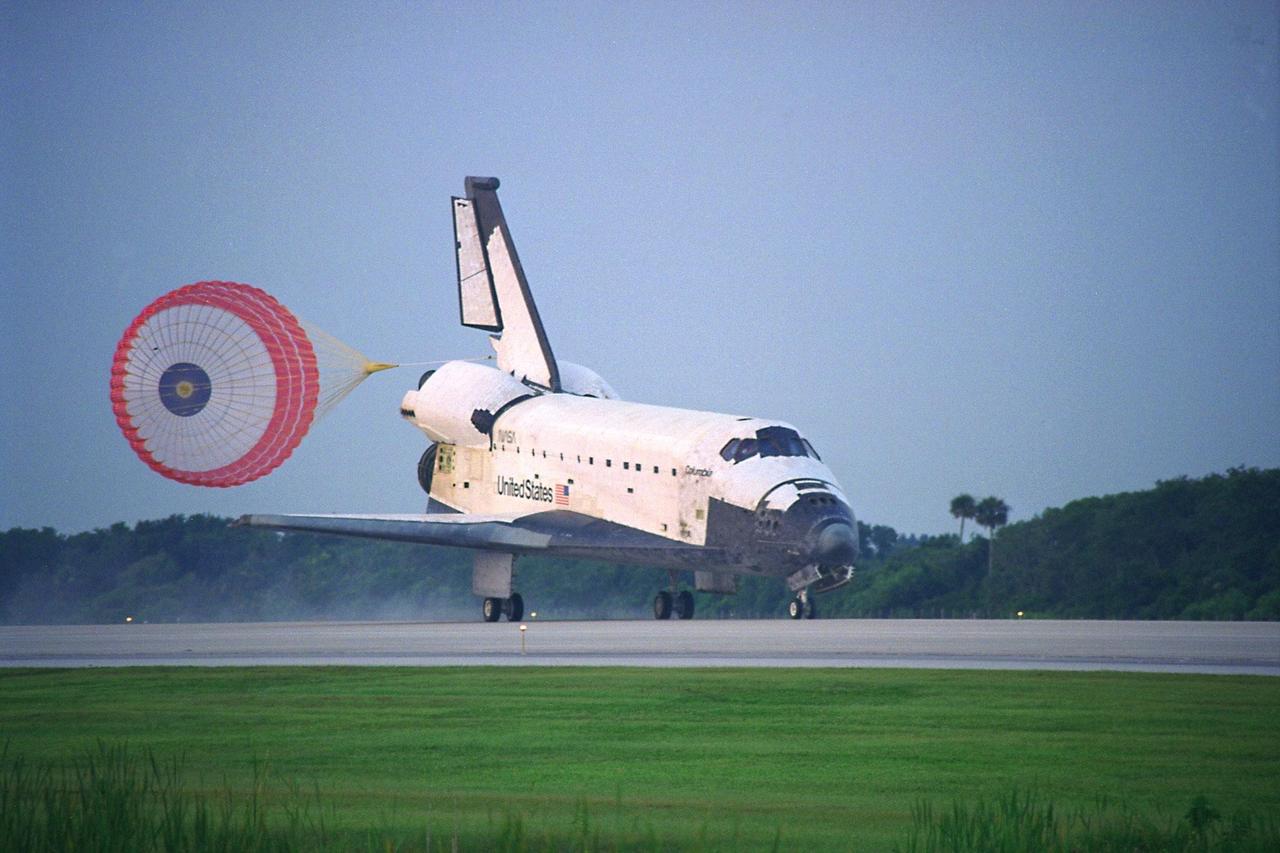
KENNEDY SPACE CENTER, FLA. -- With its drag chute deployed, the Space Shuttle Orbiter Columbia touches down on Runway 33 at KSC’s Shuttle Landing Facility at 6:46:34 a.m. EDT with Mission Commander James D. Halsell Jr. and Pilot Susan L. Still at the controls to complete the STS-94 mission. Also on board are Mission Specialist Donald A. Thomas, Mission Specialist Michael L. Gernhardt , Payload Commander Janice Voss, and Payload Specialists Roger K. Crouch and Gregory T. Linteris. Mission elapsed time for STS-94 was 15 days,16 hours, 44 seconds. During the Microgravity Science Laboratory-1 (MSL-1) mission, the Spacelab module was used to test some of the hardware, facilities and procedures that are planned for use on the International Space Station while the flight crew conducted combustion, protein crystal growth and materials processing experiments. This mission was a reflight of the STS-83 mission that lifted off from KSC in April of this year. That space flight was cut short due to indications of a faulty fuel cell. This was Columbia’s 11th landing at KSC and the 38th landing at the space center in the history of the Shuttle program
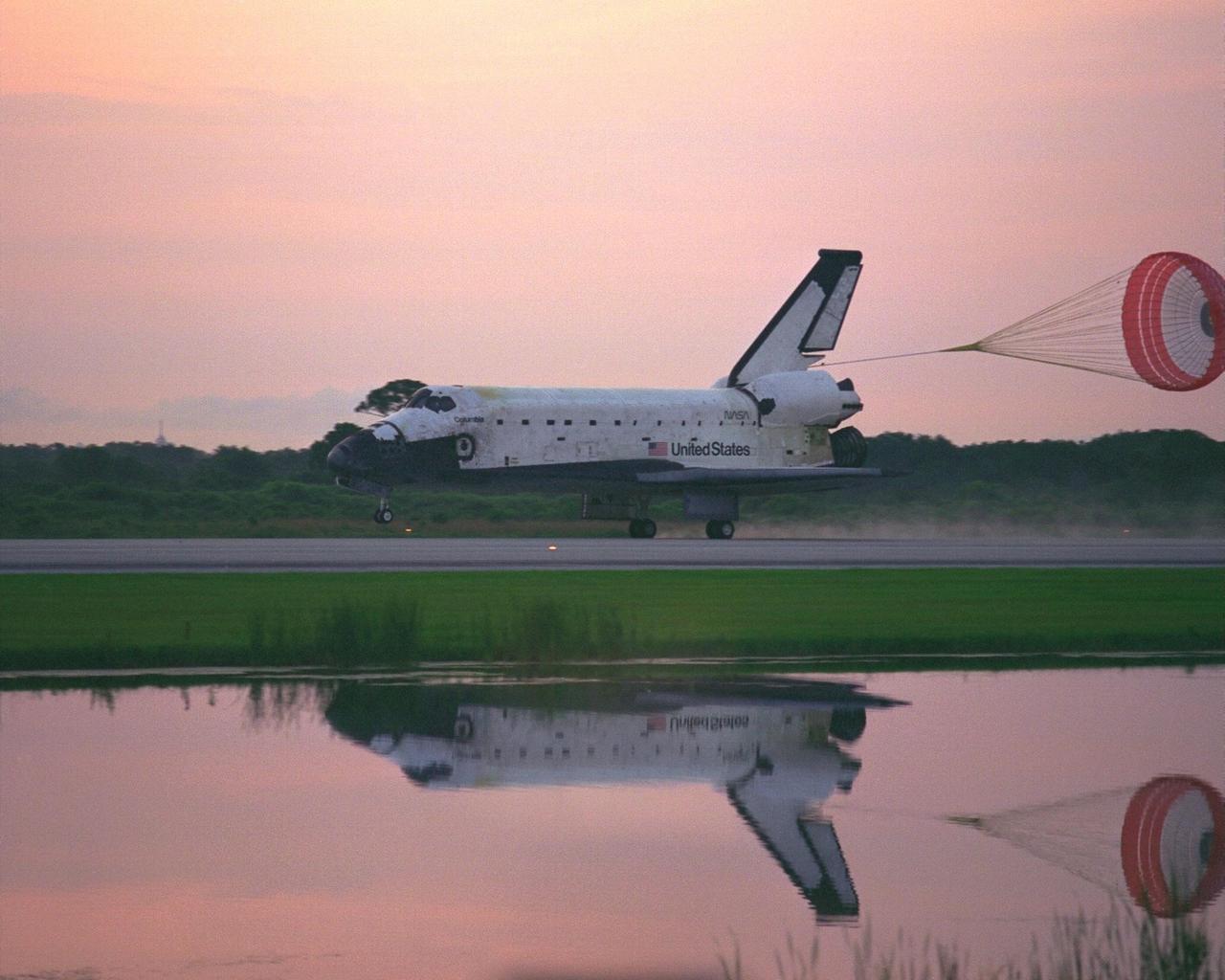
KENNEDY SPACE CENTER, FLA. -- With its drag chute deployed, the Space Shuttle Orbiter Columbia touches down on Runway 33 at KSC’s Shuttle Landing Facility at 6:46:34 a.m. EDT with Mission Commander James D. Halsell Jr. and Pilot Susan L. Still at the controls to complete the STS-94 mission. Also on board are Mission Specialist Donald A. Thomas, Mission Specialist Michael L. Gernhardt , Payload Commander Janice Voss, and Payload Specialists Roger K. Crouch and Gregory T. Linteris. Mission elapsed time for STS-94 was 15 days,16 hours, 44 seconds. During the Microgravity Science Laboratory-1 (MSL-1) mission, the Spacelab module was used to test some of the hardware, facilities and procedures that are planned for use on the International Space Station while the flight crew conducted combustion, protein crystal growth and materials processing experiments. This mission was a reflight of the STS-83 mission that lifted off from KSC in April of this year. That space flight was cut short due to indications of a faulty fuel cell. This was Columbia’s 11th landing at KSC and the 38th landing at the space center in the history of the Shuttle program
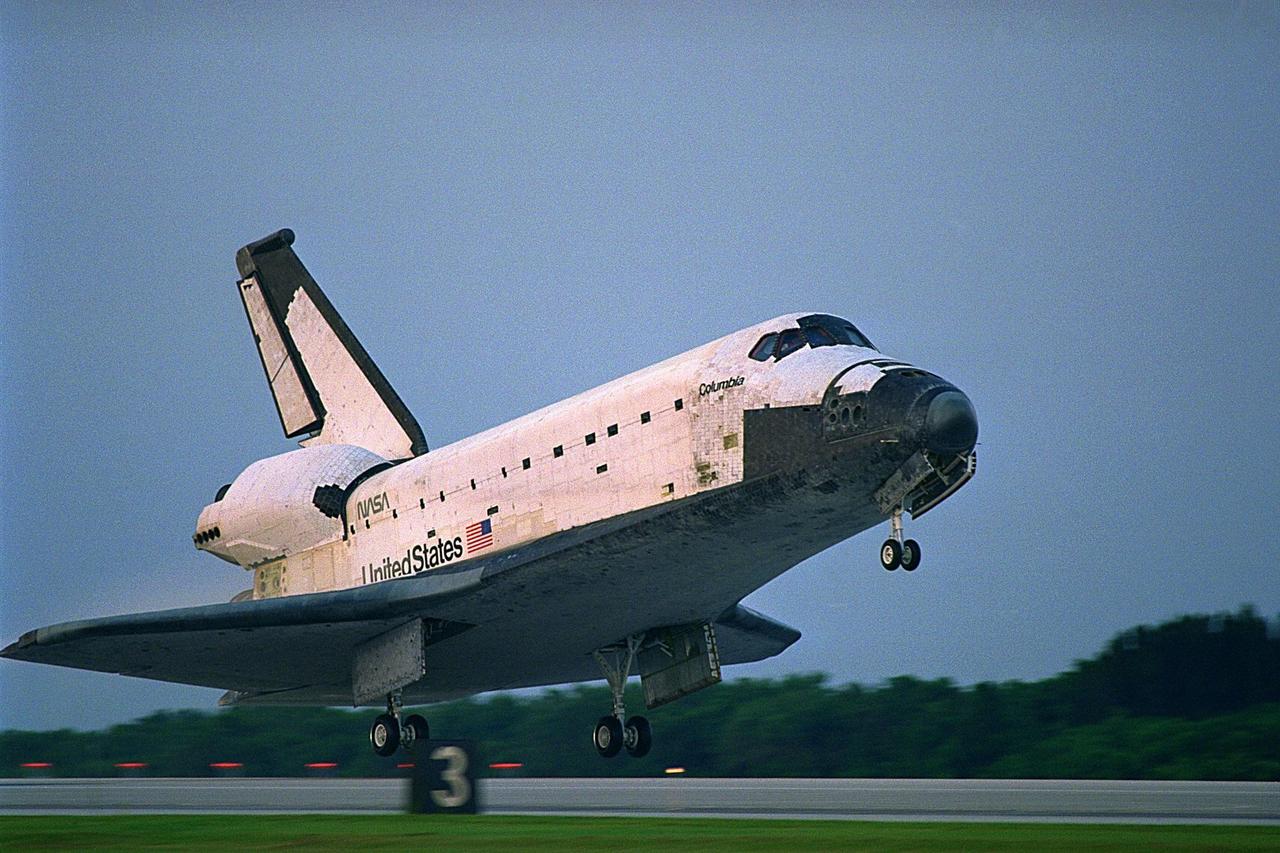
KENNEDY SPACE CENTER, FLA. -- The Space Shuttle orbiter Columbia touches down on Runway 33 at KSC’s Shuttle Landing Facility at 6:46:34 a.m. EDT with Mission Commander James D. Halsell Jr. and Pilot Susan L. Still at the controls to complete the STS-94 mission. Also on board are Mission Specialist Donald A. Thomas, Mission Specialist Michael L. Gernhardt, Payload Commander Janice Voss, and Payload Specialists Roger K. Crouch and Gregory T. Linteris. During the Microgravity Science Laboratory-1 (MSL-1) mission, the Spacelab module was used to test some of the hardware, facilities and procedures that are planned for use on the International Space Station while the flight crew conducted combustion, protein crystal growth and materials processing experiments. This mission was a reflight of the STS-83 mission that lifted off from KSC in April of this year. That space flight was cut short due to indications of a faulty fuel cell. This was Columbia’s 11th landing at KSC and the 38th landing at the space center in the history of the Shuttle program
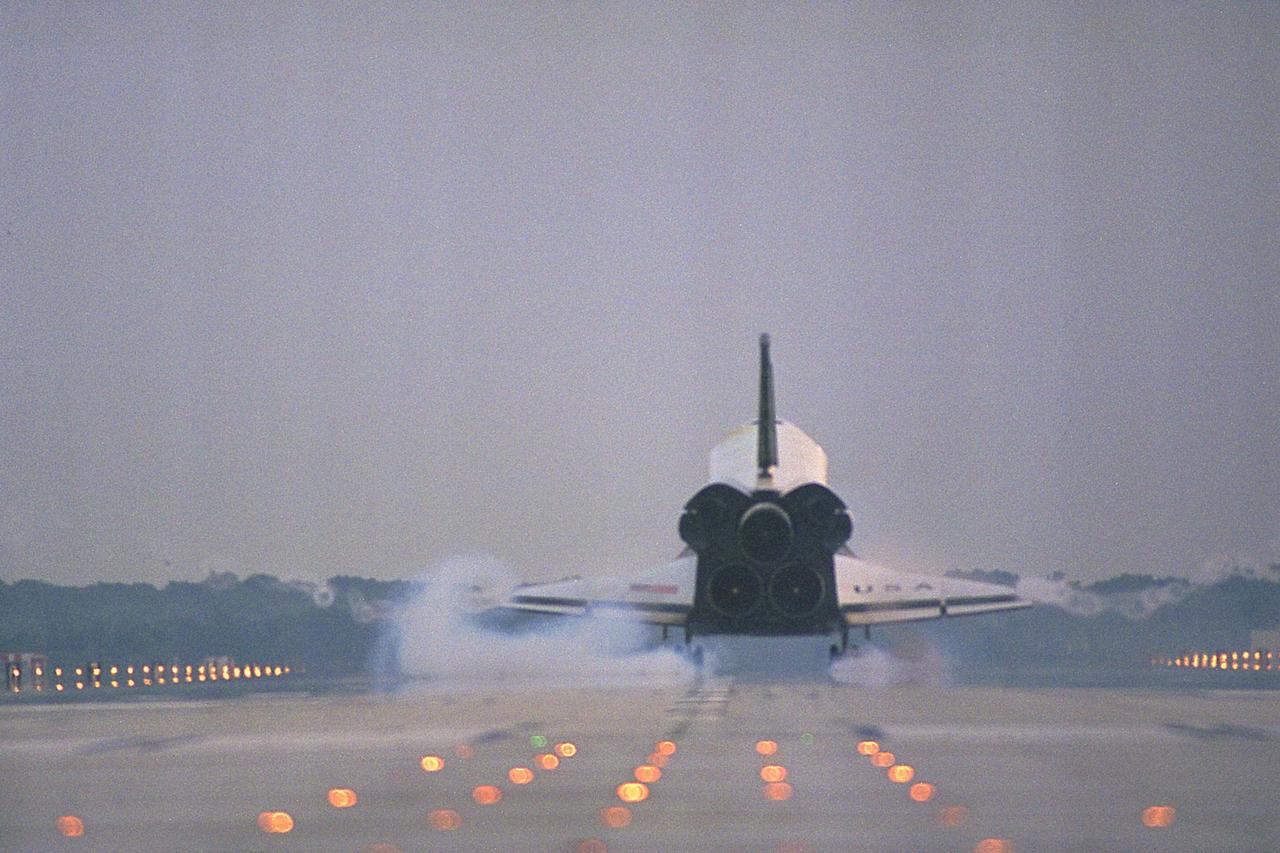
KENNEDY SPACE CENTER, FLA. -- The Space Shuttle orbiter Columbia touches down on Runway 33 at KSC’s Shuttle Landing Facility at 6:46:34 a.m. EDT with Mission Commander James D. Halsell Jr. and Pilot Susan L. Still at the controls to complete the STS-94 mission. Also on board are Mission Specialist Donald A. Thomas, Mission Specialist Michael L. Gernhardt, Payload Commander Janice Voss, and Payload Specialists Roger K. Crouch and Gregory T. Linteris. During the Microgravity Science Laboratory-1 (MSL-1) mission, the Spacelab module was used to test some of the hardware, facilities and procedures that are planned for use on the International Space Station while the flight crew conducted combustion, protein crystal growth and materials processing experiments. This mission was a reflight of the STS-83 mission that lifted off from KSC in April of this year. That space flight was cut short due to indications of a faulty fuel cell. This was Columbia’s 11th landing at KSC and the 38th landing at the space center in the history of the Shuttle program
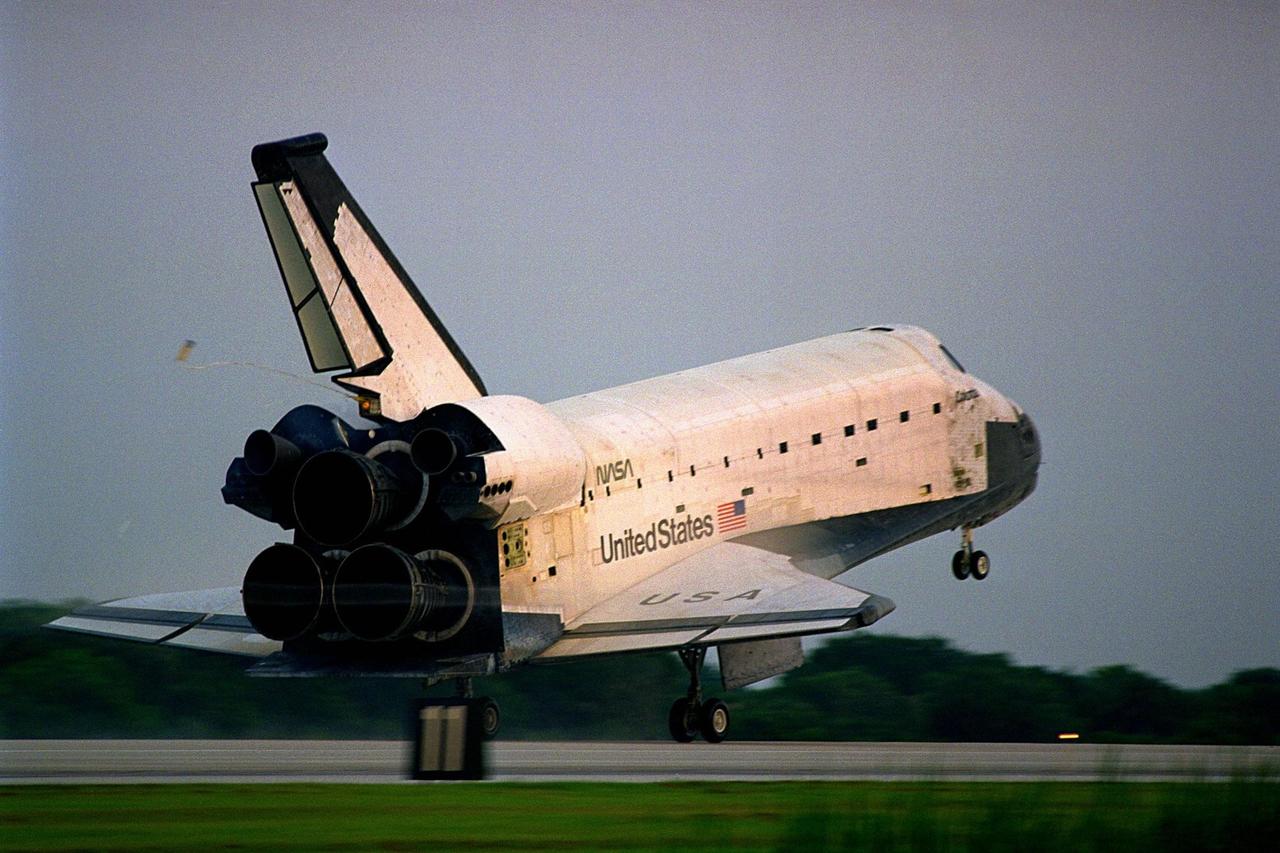
KENNEDY SPACE CENTER, FLA. -- The Space Shuttle orbiter Columbia touches down on Runway 33 at KSC’s Shuttle Landing Facility at 6:46:34 a.m. EDT with Mission Commander James D. Halsell Jr. and Pilot Susan L. Still at the controls to complete the STS-94 mission. Also on board are Mission Specialist Donald A. Thomas, Mission Specialist Michael L. Gernhardt, Payload Commander Janice Voss, and Payload Specialists Roger K. Crouch and Gregory T. Linteris. During the Microgravity Science Laboratory-1 (MSL-1) mission, the Spacelab module was used to test some of the hardware, facilities and procedures that are planned for use on the International Space Station while the flight crew conducted combustion, protein crystal growth and materials processing experiments. This mission was a reflight of the STS-83 mission that lifted off from KSC in April of this year. That space flight was cut short due to indications of a faulty fuel cell. This was Columbia’s 11th landing at KSC and the 38th landing at the space center in the history of the Shuttle program
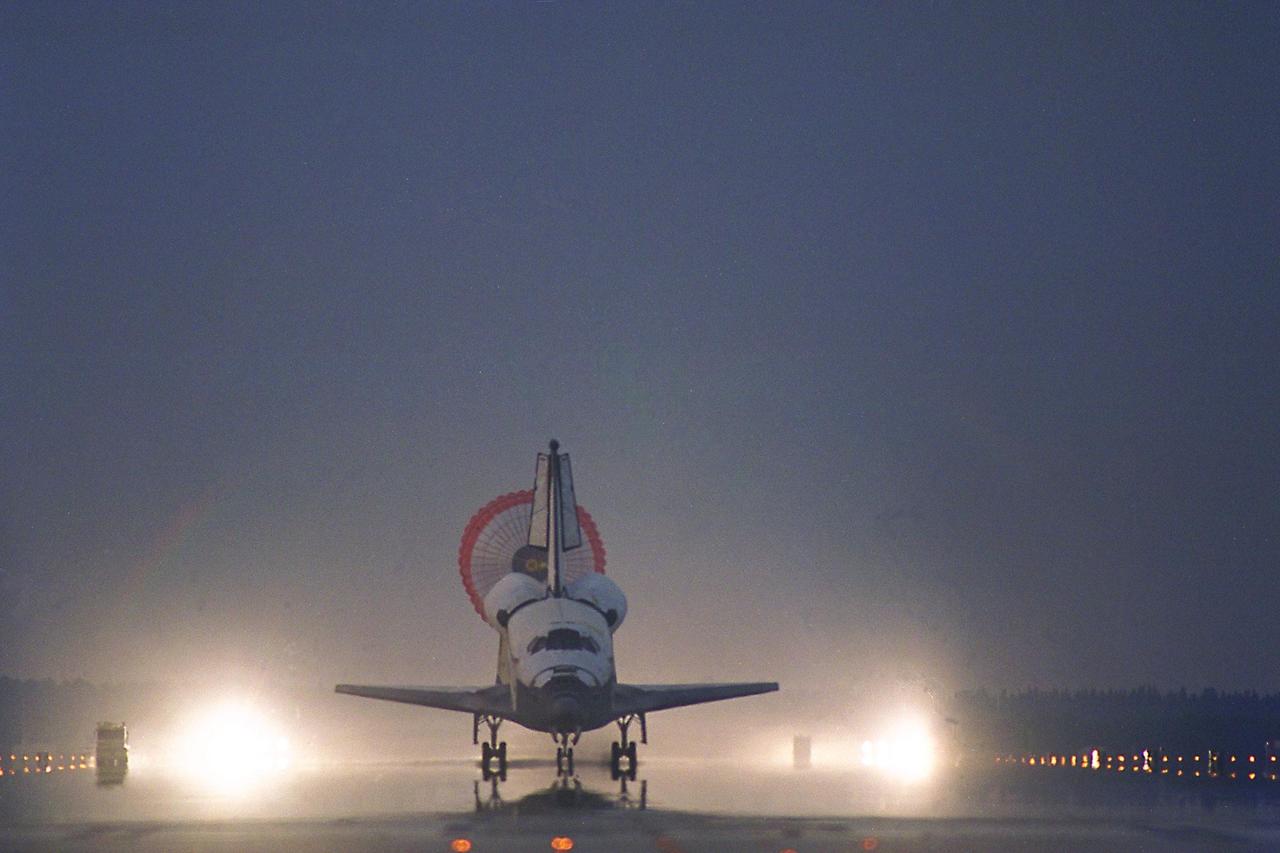
KENNEDY SPACE CENTER, FLA. -- With its drag chute deployed, the Space Shuttle Orbiter Columbia touches down on Runway 33 at KSC’s Shuttle Landing Facility at 6:46:34 a.m. EDT with Mission Commander James D. Halsell Jr. and Pilot Susan L. Still at the controls to complete the STS-94 mission. Also on board are Mission Specialist Donald A. Thomas, Mission Specialist Michael L. Gernhardt , Payload Commander Janice Voss, and Payload Specialists Roger K. Crouch and Gregory T. Linteris. Mission elapsed time for STS-94 was 15 days,16 hours, 44 seconds. During the Microgravity Science Laboratory-1 (MSL-1) mission, the Spacelab module was used to test some of the hardware, facilities and procedures that are planned for use on the International Space Station while the flight crew conducted combustion, protein crystal growth and materials processing experiments. This mission was a reflight of the STS-83 mission that lifted off from KSC in April of this year. That space flight was cut short due to indications of a faulty fuel cell. This was Columbia’s 11th landing at KSC and the 38th landing at the space center in the history of the Shuttle program
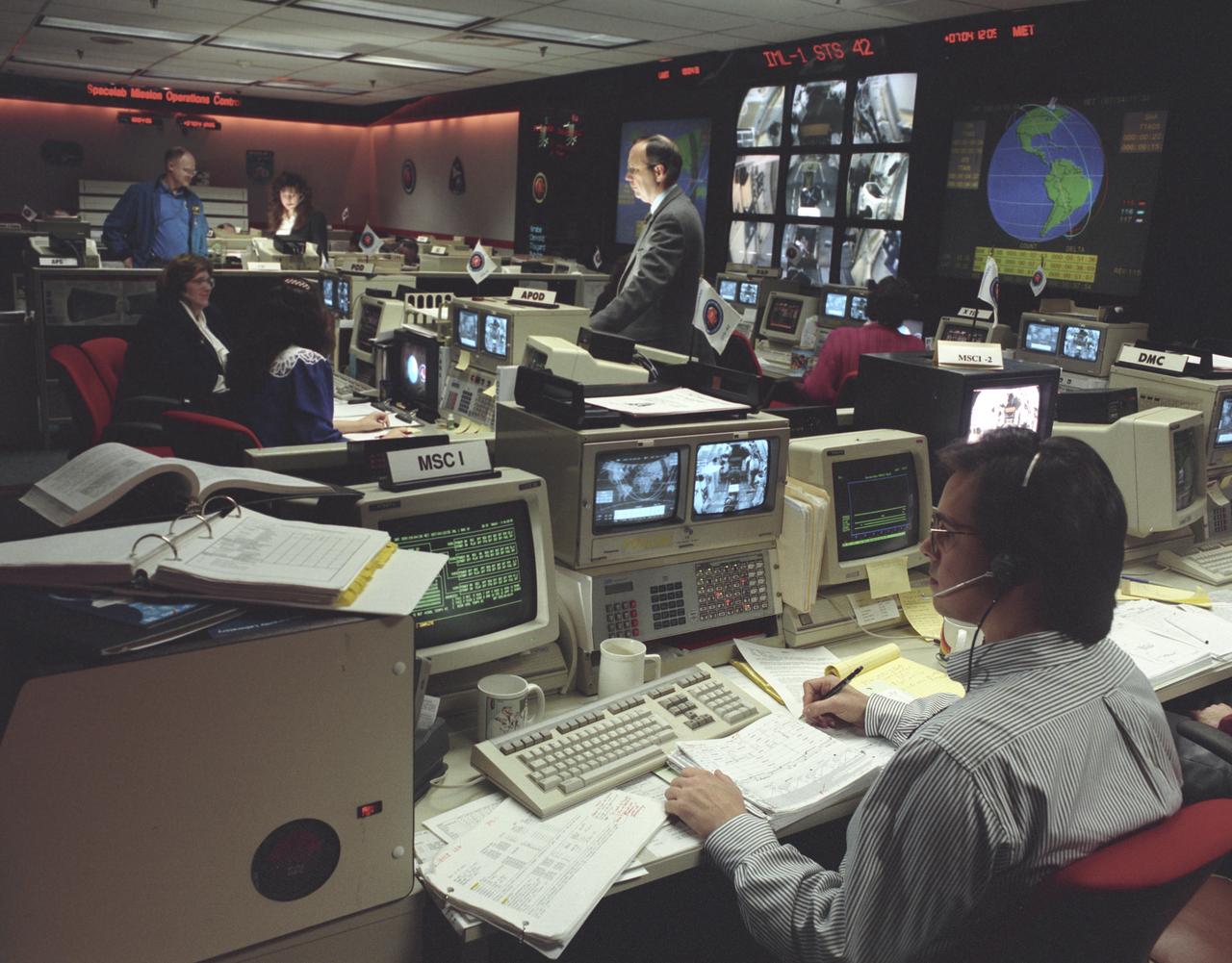
This photograph shows activities during the International Microgravity Laboratory-1 (IML-1) mission (STS-42) in the Payload Operations Control Center (POCC) at the Marshall Space Flight Center. The IML-1 mission was the first in a series of Shuttle flights dedicated to fundamental materials and life sciences research. The mission was to explore, in depth, the complex effects of weightlessness on living organisms and materials processing. The crew conducted experiments on the human nervous system's adaptation to low gravity and the effects on other life forms such as shrimp eggs, lentil seedlings, fruit fly eggs, and bacteria. Low gravity materials processing experiments included crystal growth from a variety of substances such as enzymes, mercury, iodine, and virus. The International space science research organizations that participated in this mission were: The U.S. National Aeronautics and Space Administration, the European Space Agency, the Canadian Space Agency, the French National Center for Space Studies, the German Space Agency, and the National Space Development Agency of Japan. The POCC was the air/ground communication charnel used between the astronauts aboard the Spacelab and scientists, researchers, and ground control teams during the Spacelab missions. The facility made instantaneous video and audio communications possible for scientists on the ground to follow the progress and to send direct commands of their research almost as if they were in space with the crew.
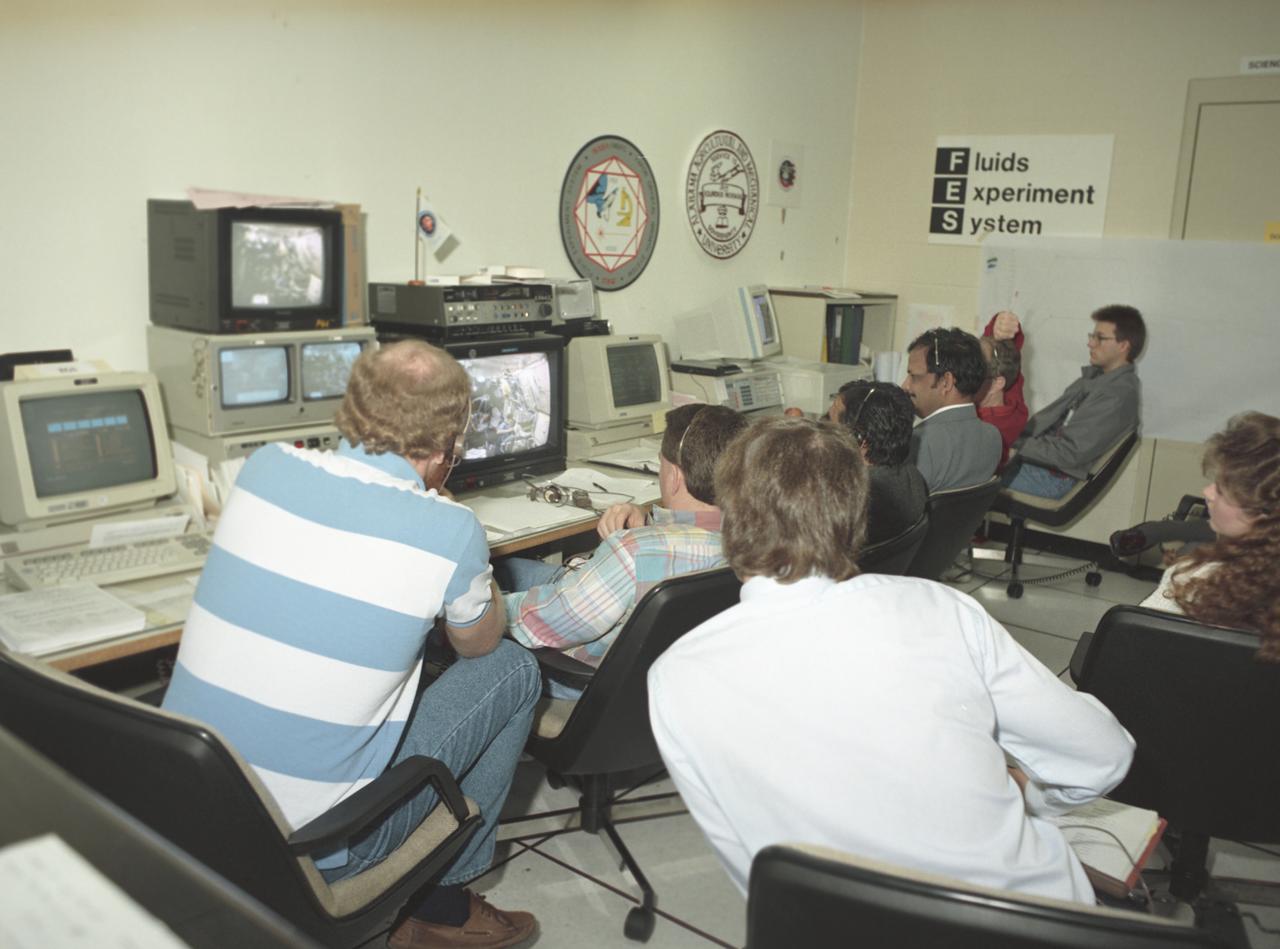
This photograph shows activities during the International Microgravity Laboratory-1 (IML-1) mission (STS-42) in the Payload Operations Control Center (POCC) at the Marshall Space Flight Center. Members of the Fluid Experiment System (FES) group monitor the progress of their experiment through video at the POCC. The IML-1 mission was the first in a series of Shuttle flights dedicated to fundamental materials and life sciences research. The mission was to explore, in depth, the complex effects of weightlessness on living organisms and materials processing. The crew conducted experiments on the human nervous system's adaptation to low gravity and the effects on other life forms such as shrimp eggs, lentil seedlings, fruit fly eggs, and bacteria. Low gravity materials processing experiments included crystal growth from a variety of substances such as enzymes, mercury, iodine, and virus. The International space science research organizations that participated in this mission were: The U.S. National Aeronautics and Space Administion, the European Space Agency, the Canadian Space Agency, the French National Center for Space Studies, the German Space Agency, and the National Space Development Agency of Japan. The POCC was the air/ground communication charnel used between astronauts aboard the Spacelab and scientists, researchers, and ground control teams during the Spacelab missions. The facility made instantaneous video and audio communications possible for scientists on the ground to follow the progress and to send direct commands of their research almost as if they were in space with the crew.
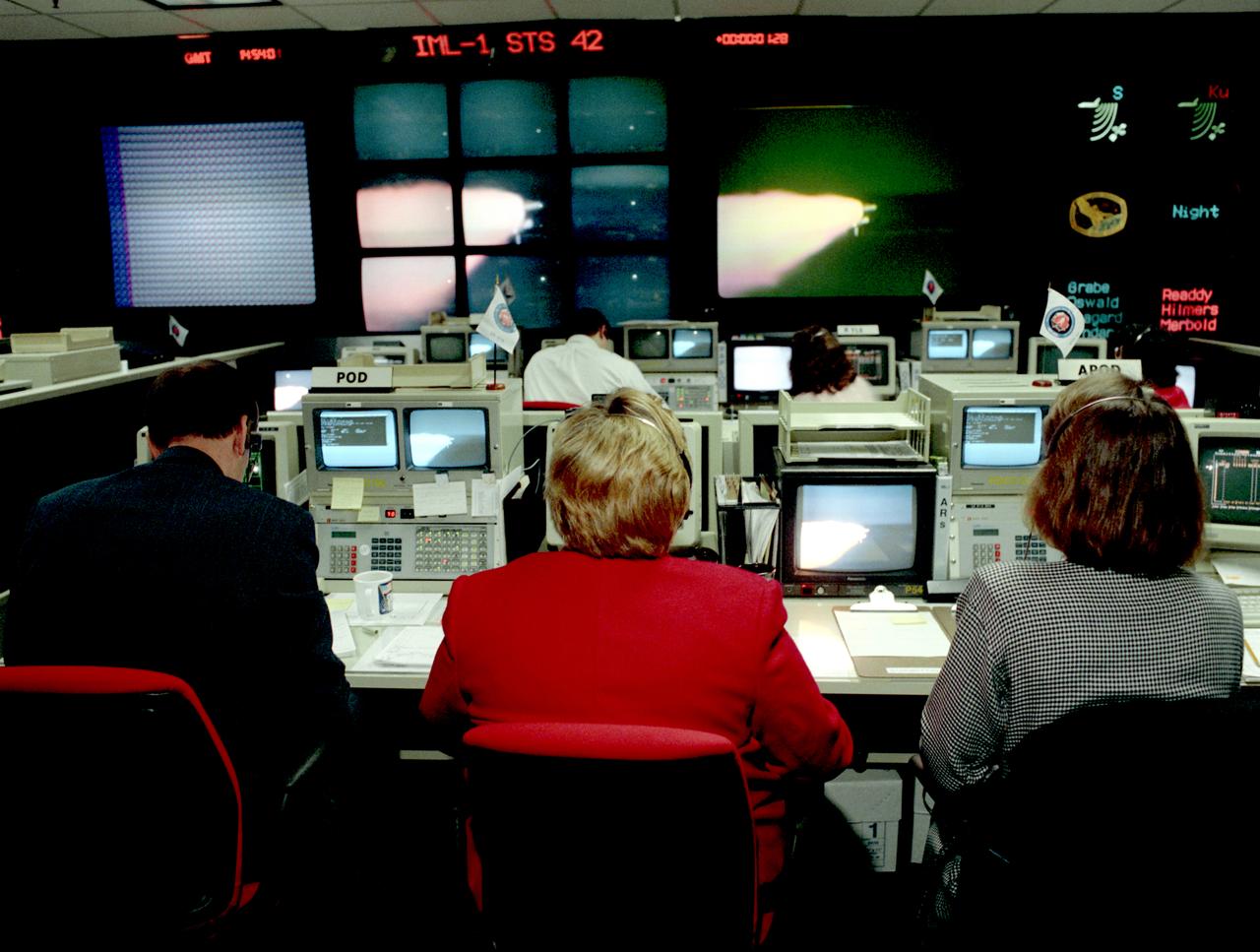
The primary payload for Space Shuttle Mission STS-42, launched January 22, 1992, was the International Microgravity Laboratory-1 (IML-1), a pressurized manned Spacelab module. The goal of IML-1 was to explore in depth the complex effects of weightlessness of living organisms and materials processing. Around-the-clock research was performed on the human nervous system's adaptation to low gravity and effects of microgravity on other life forms such as shrimp eggs, lentil seedlings, fruit fly eggs, and bacteria. Materials processing experiments were also conducted, including crystal growth from a variety of substances such as enzymes, mercury iodide and a virus. The Huntsville Operations Support Center (HOSC) Spacelab Payload Operations Control Center (SL POCC) at the Marshall Space Flight Center (MSFC) was the air/ground communication channel used between the astronauts aboard the Spacelab and scientists, researchers, and ground control teams during the Spacelab missions. The facility made instantaneous video and audio communications possible for scientists on the ground to follow the progress and to send direct commands of their research almost as if they were in space with the crew. Teams of controllers and researchers directed on-orbit science operations, sent commands to the spacecraft, received data from experiments aboard the Space Shuttle, adjusted mission schedules to take advantage of unexpected science opportunities or unexpected results, and worked with crew members to resolve problems with their experiments. In this photograph the Payload Operations Director (POD) views the launch.
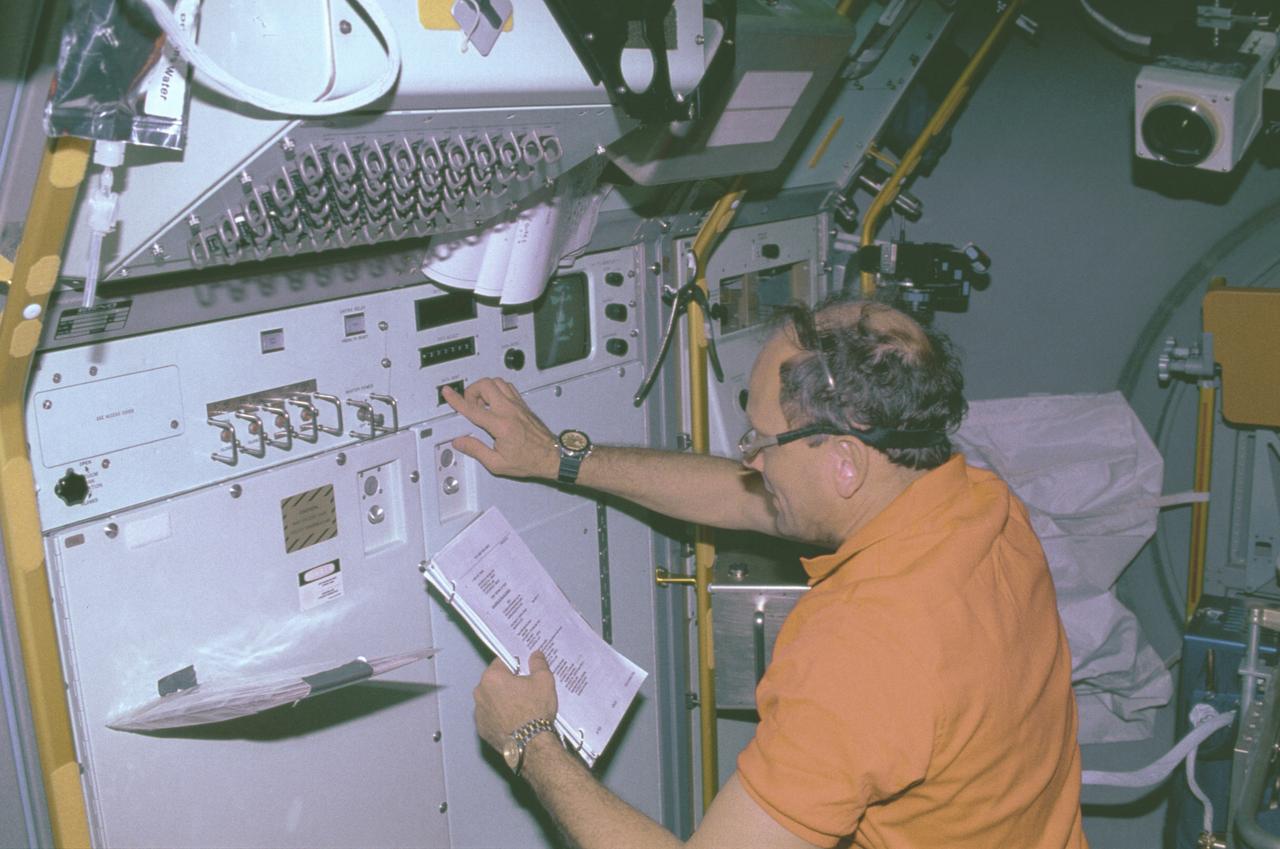
The IML-1 mission was the first in a series of Shuttle flights dedicated to fundamental materials and life sciences research with the international partners. The participating space agencies included: NASA, the 14-nation European Space Agency (ESA), the Canadian Space Agency (CSA), The French National Center of Space Studies (CNES), the German Space Agency and the German Aerospace Research Establishment (DAR/DLR), and the National Space Development Agency of Japan (NASDA). Dedicated to the study of life and materials sciences in microgravity, the IML missions explored how life forms adapt to weightlessness and investigated how materials behave when processed in space. Both life and materials sciences benefited from the extended periods of microgravity available inside the Spacelab science module in the cargo bay of the Space Shuttle Orbiter. This photograph shows Astronaut Norman Thagard performing the fluid experiment at the Fluid Experiment System (FES) facility inside the laboratory module. The FES facility had sophisticated optical systems for imaging fluid flows during materials processing, such as experiments to grow crystals from solution and solidify metal-modeling salts. A special laser diagnostic technique recorded the experiments, holograms were made for post-flight analysis, and video was used to view the samples in space and on the ground. Managed by the Marshall Space Flight Center (MSFC), the IML-1 mission was launched on January 22, 1992 aboard the Shuttle Orbiter Discovery (STS-42).
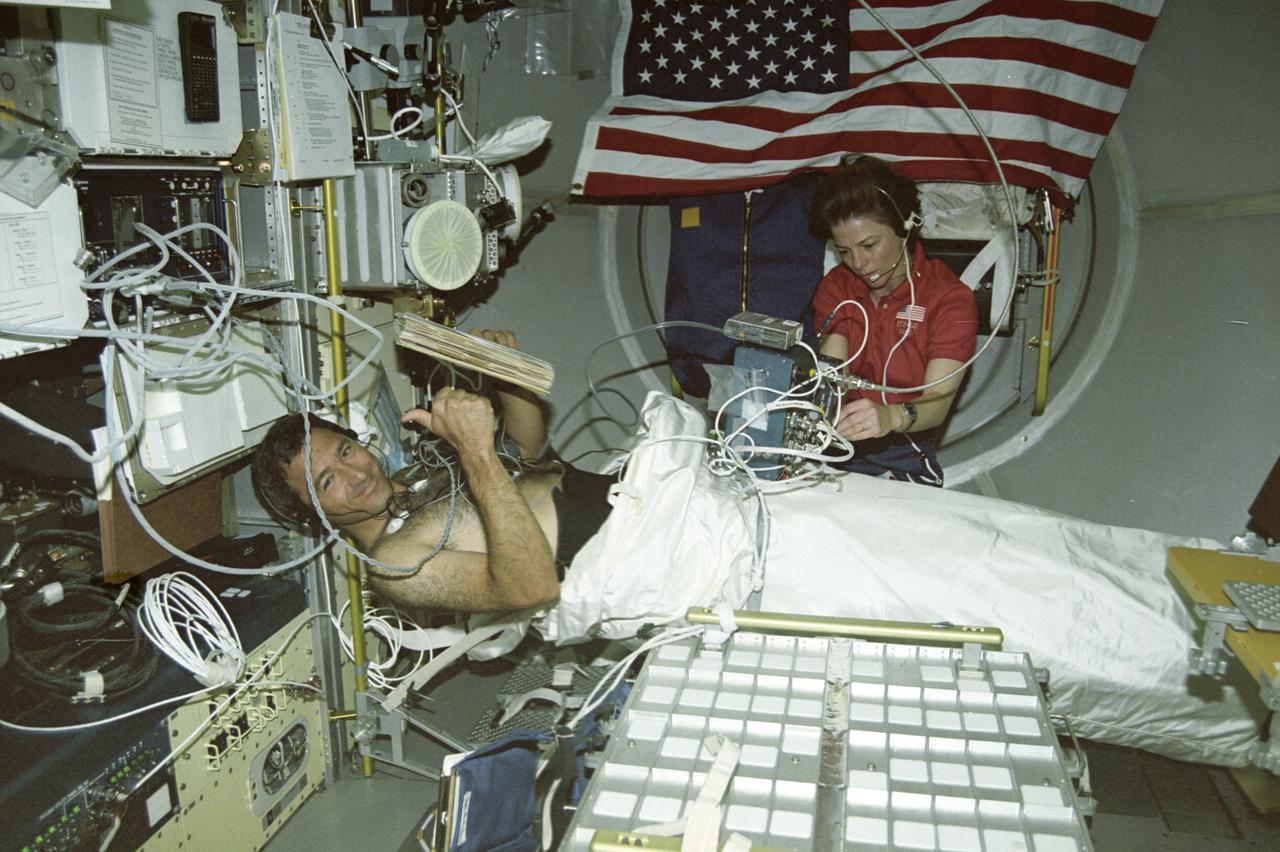
The first United States Microgravity Laboratory (USML-1) flew in orbit inside the Spacelab science module for extended periods, providing scientists and researchers greater opportunities for research in materials science, fluid dynamics, biotechnology (crystal growth), and combustion science. In this photograph, Astronaut Bornie Dunbar and Astronaut Larry DeLucas are conducting the Lower Body Negative Pressure (LBNP) experiment, which is to protect the health and safety of the crew and to shorten the time required to readapt to gravity when they return to Earth. When humans go into space, the lack of gravity causes many changes in the body. One change is that fluids normally kept in the lower body by gravity, shift upward to the head and chest. This is why astronauts' faces appear chubby or puffy. The change in fluid volume also affects the heart. The reduced fluid volume means that there is less blood to circulate through the body. Crewmembers may experience reduced blood flow to the brain when returning to Earth. This leads to fainting or near-fainting episodes. With the use of LBNP to simulate the pull of gravity in conjunction with fluids, salt tablets can recondition the cardiovascular system. This treatment, called "soak," is effective up to 24 hours. The LBNP uses a three-layer collapsible cylinder that seals around the crewmember's waist which simulates the effects of gravity and helps pull fluids into the lower body. The data collected will be analyzed to determine physiological changes in the crewmembers and effectiveness of the treatment. The USML-1 was launched aboard the Space Shuttle Orbiter Columbia (STS-50) on June 25, 1992.