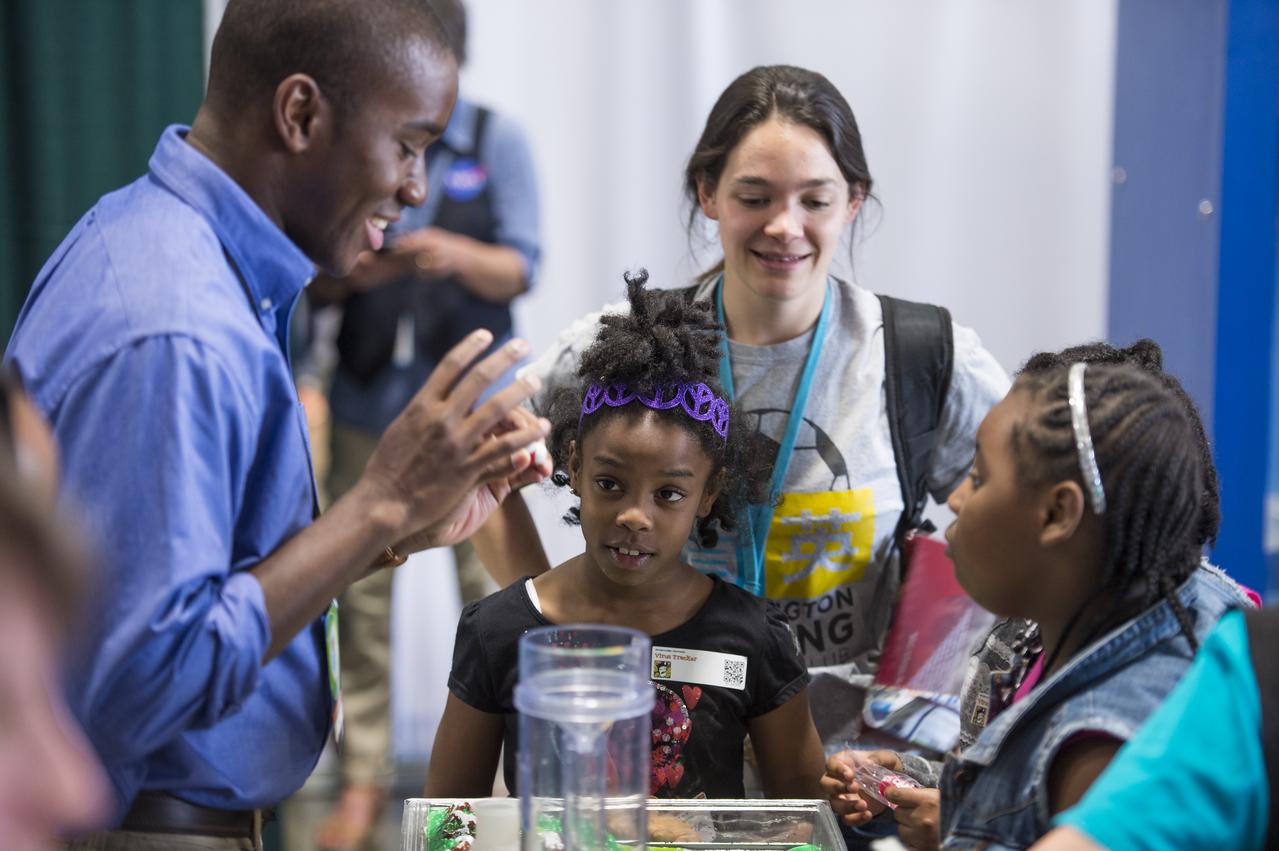
An attendee of the USA Science and Engineering Festival uses marbles to build a universe consisting of atoms and dark matter. The USA Science and Engineering Festival took place at the Washington Convention Center in Washington, DC on April 26 and 27, 2014. Photo Credit: (NASA/Aubrey Gemignani)
USA Science and Engineering Festival 2014
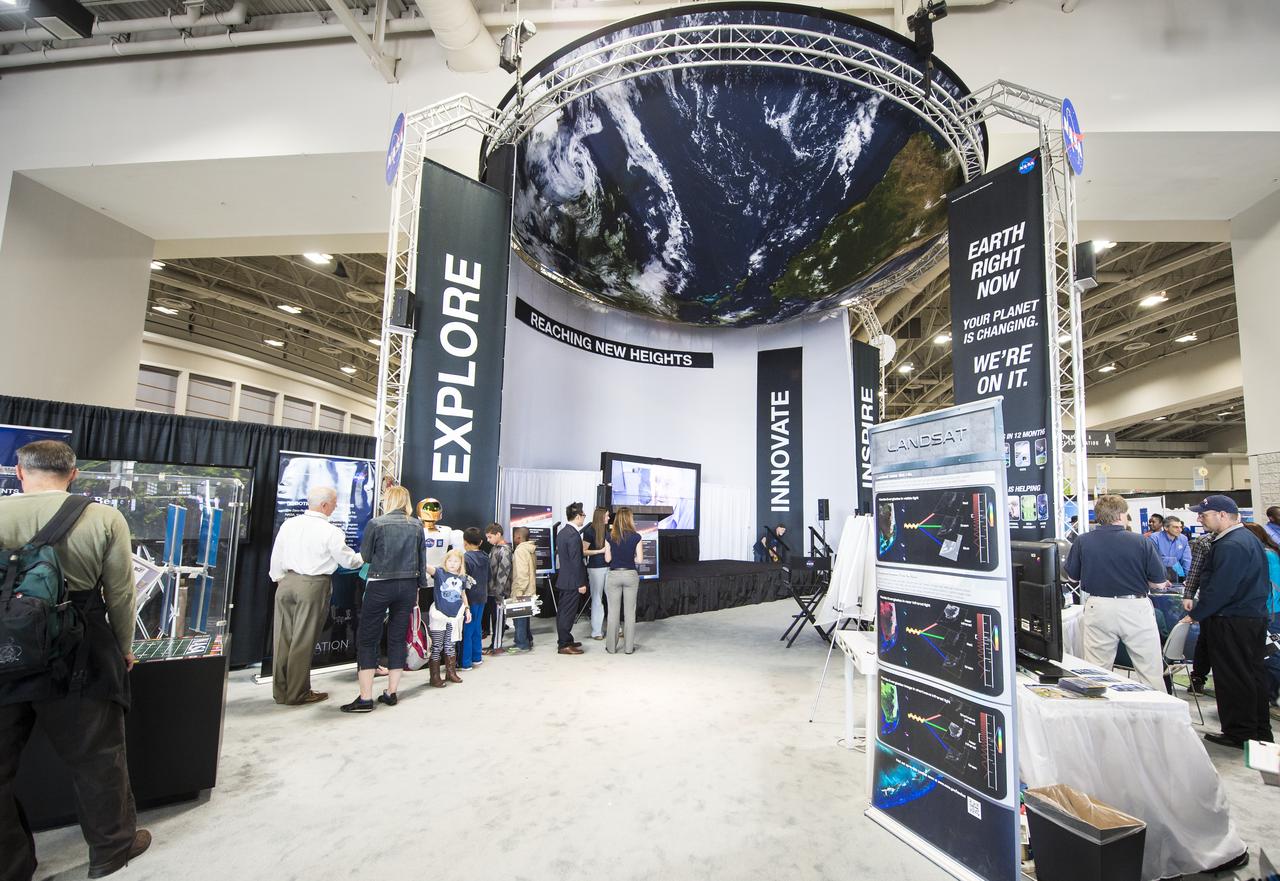
Attendees of the USA Science and Engineering Festival explore all of the exhibits at the NASA Stage. The USA Science and Engineering Festival took place at the Washington Convention Center in Washington, DC on April 26 and 27, 2014. Photo Credit: (NASA/Aubrey Gemignani)
USA Science and Engineering Festival 2014
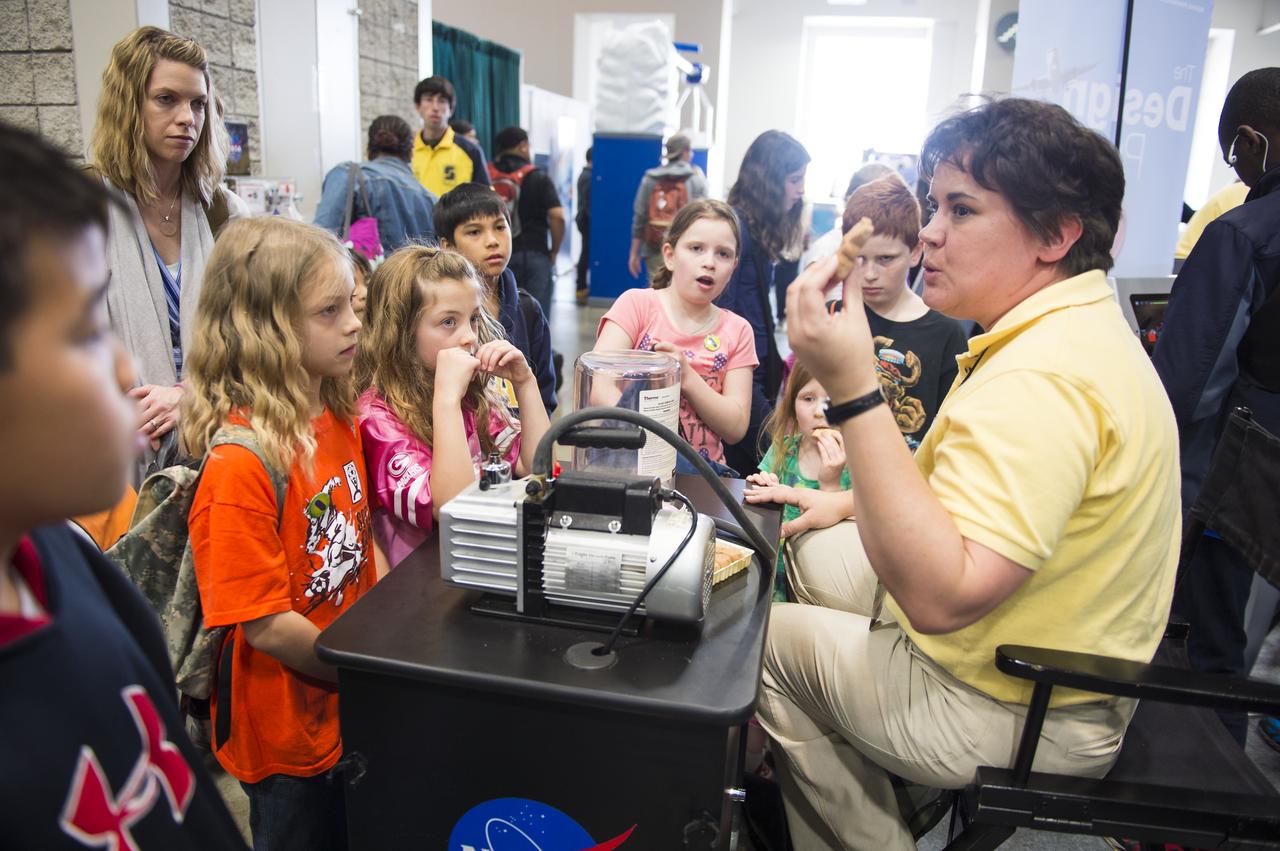
A NASA staff member shows attendees of the USA Science and Engineering Festival what happens to the human body in space without a space suit using a marshmallow bunny. The USA Science and Engineering Festival took place at the Washington Convention Center in Washington, DC on April 26 and 27, 2014. Photo Credit: (NASA/Aubrey Gemignani)
USA Science and Engineering Festival 2014
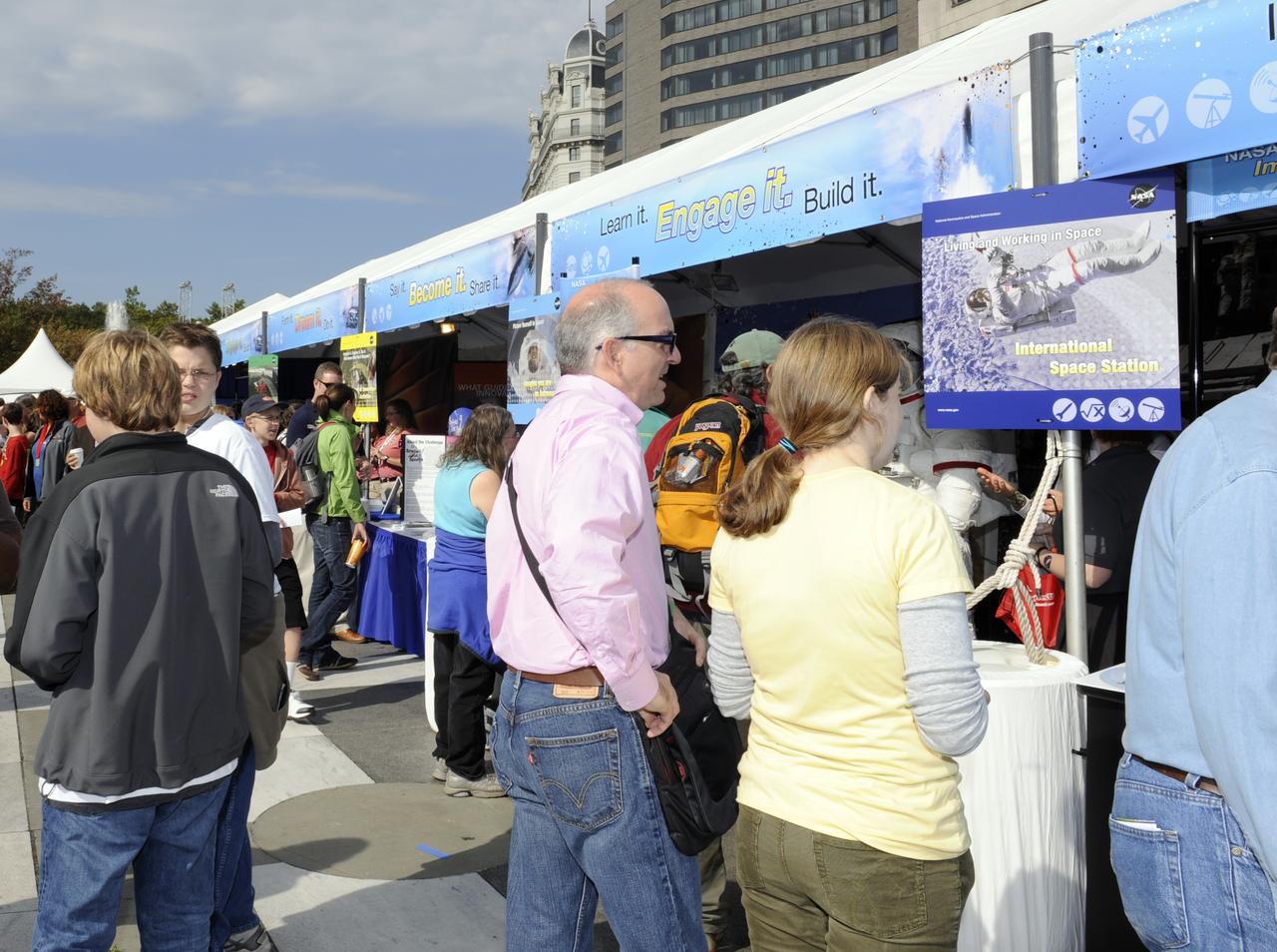
Visitors to the USA Science and Engineering Festival look over the many exhibits, Saturday, Oct. 23, 2010, at Freedom Plaza in Washington. NASA, joined with more than 500 science organizations this weekend to inspire the next generation of scientists and engineers during the first national science and engineering festival held in the nation's capital. Photo Credit: (NASA/Paul E. Alers)
USA Science and Engineering Festival
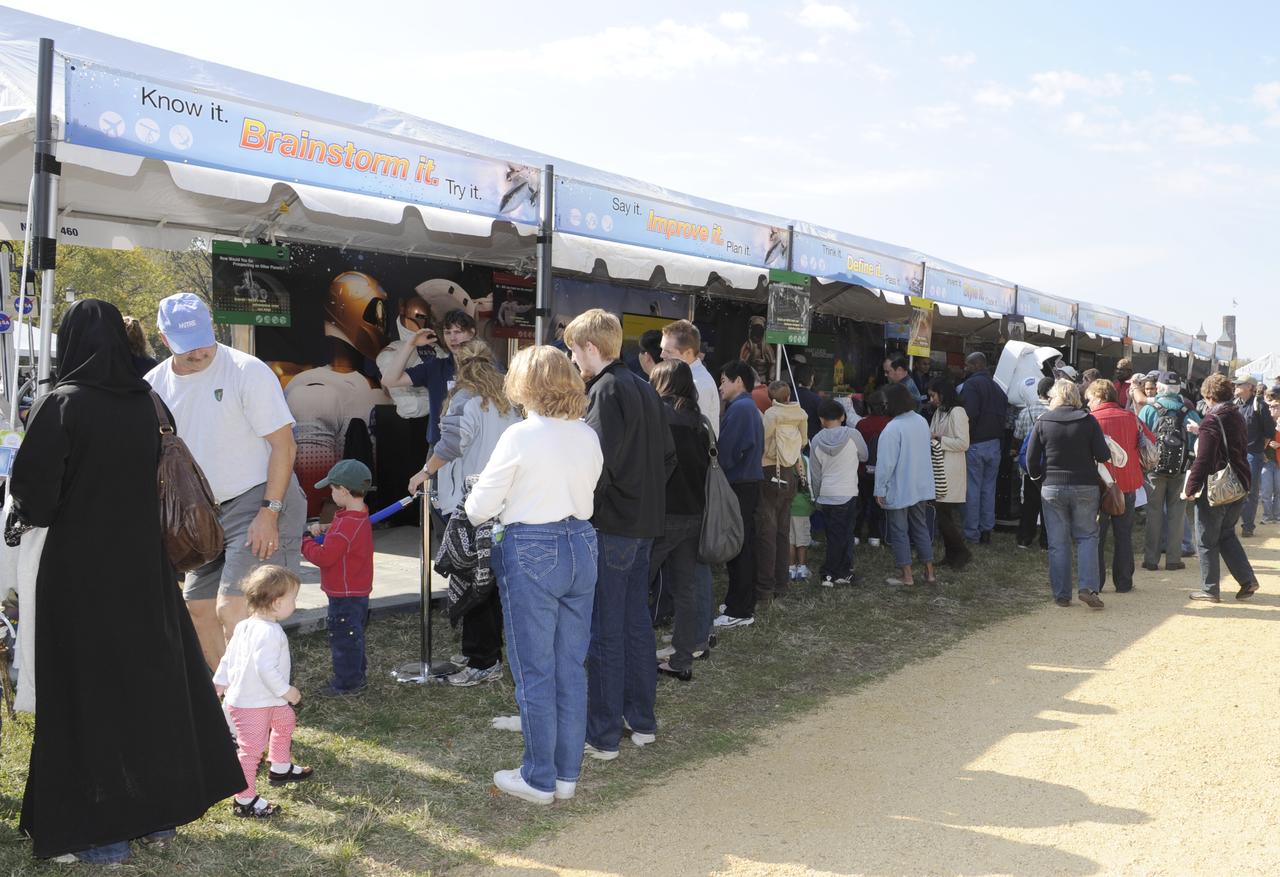
Visitors crowd the NASA exhibits during the USA Science and Engineering Festival, Saturday, Oct. 23, 2010, on the National Mall in Washington. NASA, joined with more than 500 science organizations this weekend to inspire the next generation of scientists and engineers during the first national science and engineering festival held in the nation's capital. Photo Credit: (NASA/Paul E. Alers)
USA Science and Engineering Festival
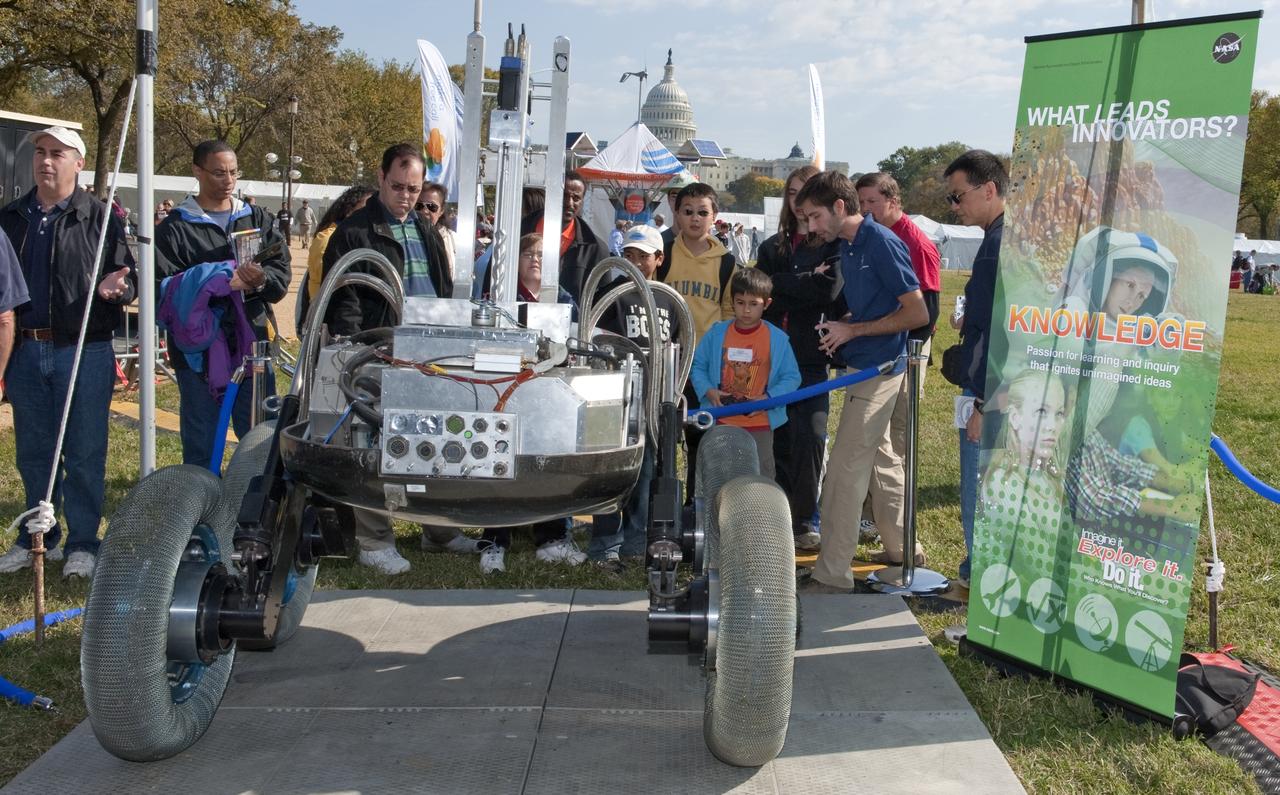
Visitors to the USA Science and Engineering Festival look on at one of the many exhibits, Saturday, Oct. 23, 2010, on the National Mall in Washington. NASA, joined with more than 500 science organizations this weekend to inspire the next generation of scientists and engineers during the first national science and engineering festival held in the nation's capital. Photo Credit: (NASA/Paul E. Alers)
USA Science and Engineering Festival
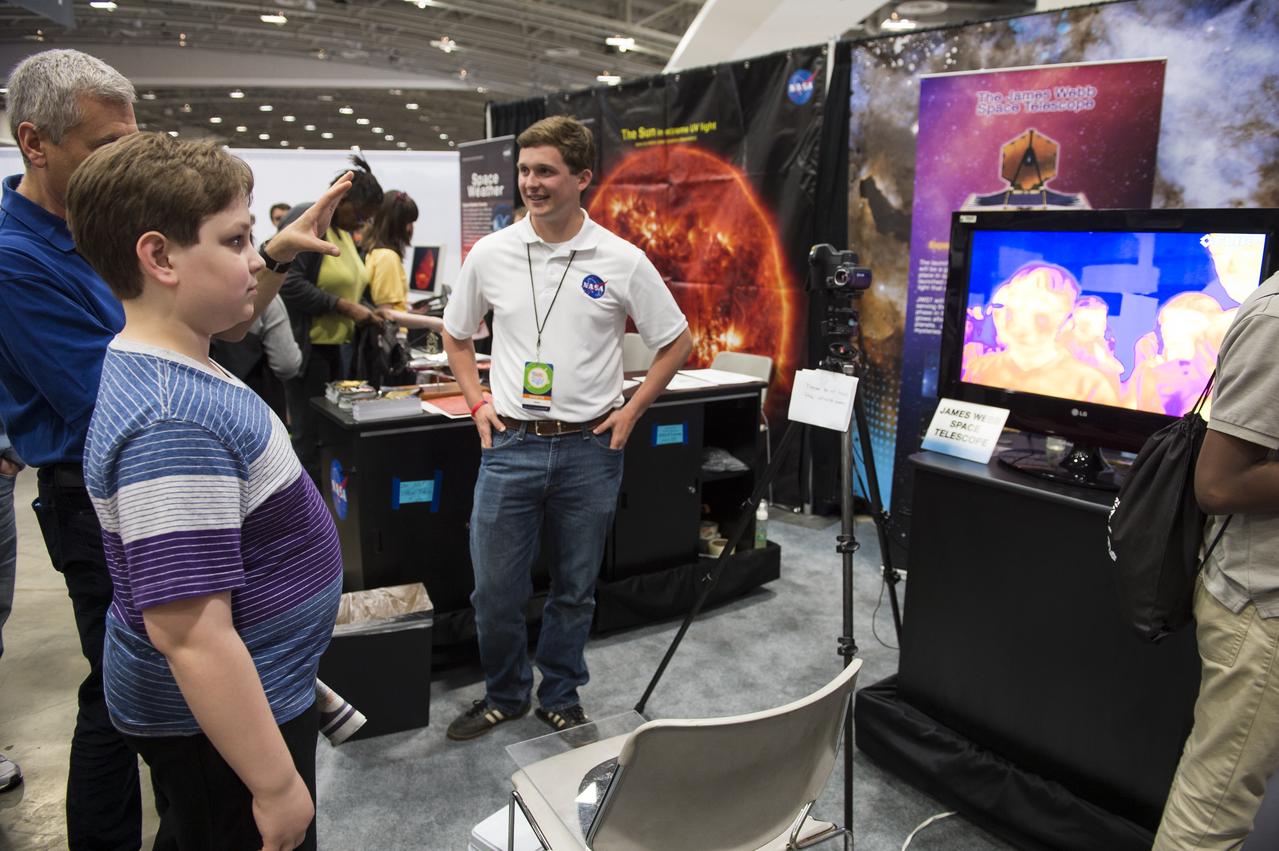
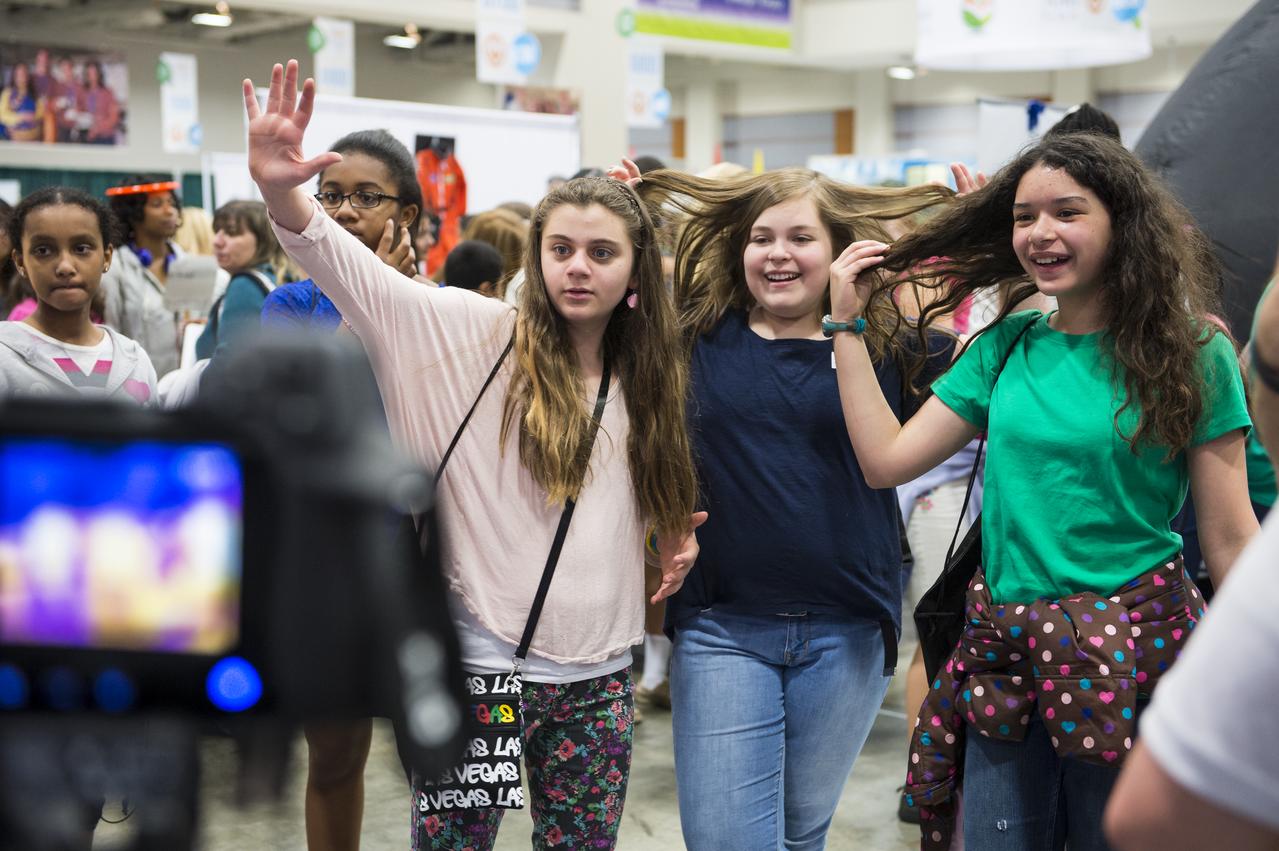
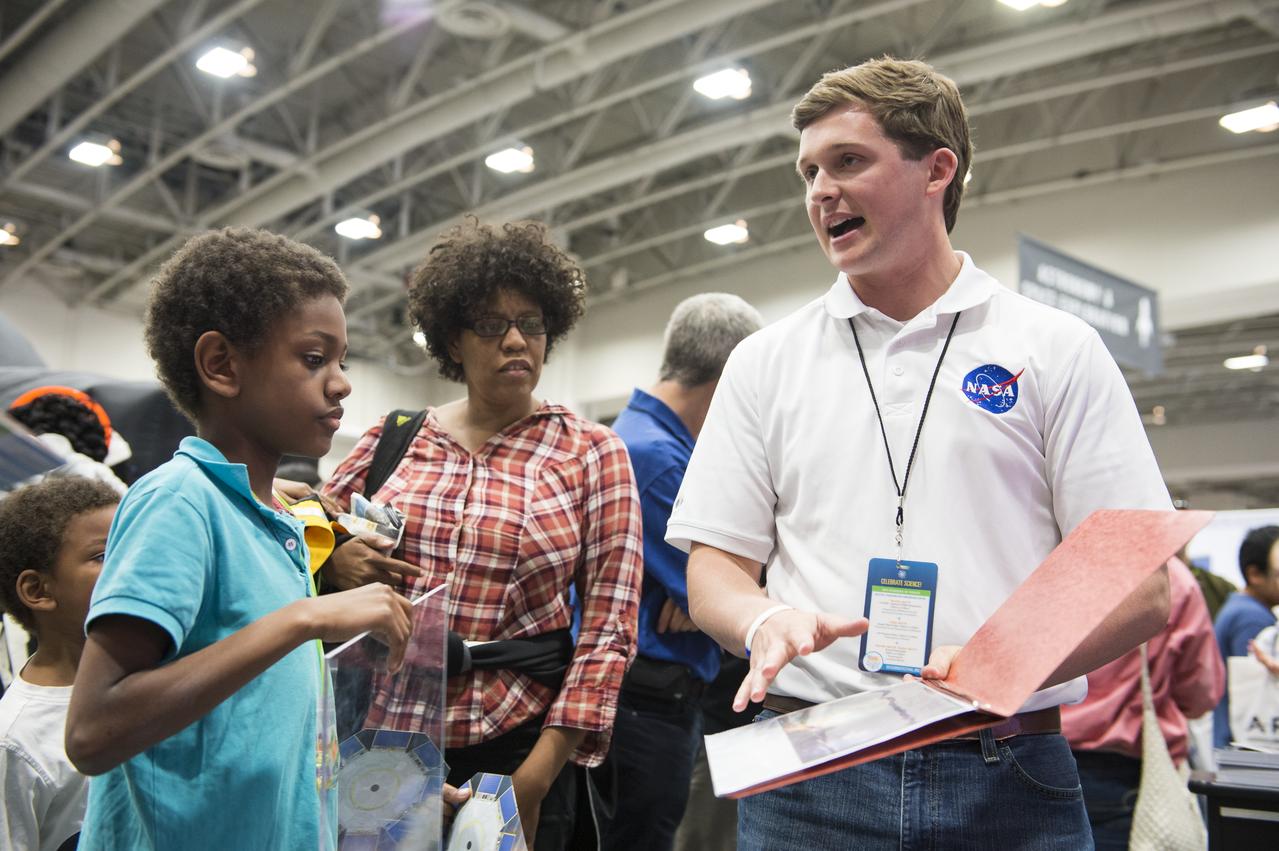
Attendees of the USA Science and Engineering Festival observe their infrared images as a NASA Staff member describes the James Webb Space Telescope. It will be a large infrared telescope with a 6.5 meter primary mirror and will study every phase in the history of our Universe ranging from the Big Bang to the formation of our Solar System. The USA Science and Engineering Festival took place at the Washington Convention Center in Washington, DC on April 26 and 27, 2014. Photo Credit: (NASA/Aubrey Gemignani)
USA Science and Engineering Festival 2014
An attendee of the USA Science and Engineering Festival observes the infrared image of himself as a NASA Staff member describes the James Webb Space Telescope. It will be a large infrared telescope with a 6.5 meter primary mirror and will study every phase in the history of our Universe ranging from the Big Bang to the formation of our Solar System. The USA Science and Engineering Festival took place at the Washington Convention Center in Washington, DC on April 26 and 27, 2014. Photo Credit: (NASA/Aubrey Gemignani)
USA Science and Engineering Festival 2014
An attendee of the USA Science and Engineering Festival observes the infrared image of himself as a NASA staff member describes the James Webb Space Telescope. It will be a large infrared telescope with a 6.5 meter primary mirror and will study every phase in the history of our Universe ranging from the Big Bang to the formation of our Solar System. The USA Science and Engineering Festival took place at the Washington Convention Center in Washington, DC on April 26 and 27, 2014. Photo Credit: (NASA/Aubrey Gemignani)
USA Science and Engineering Festival 2014
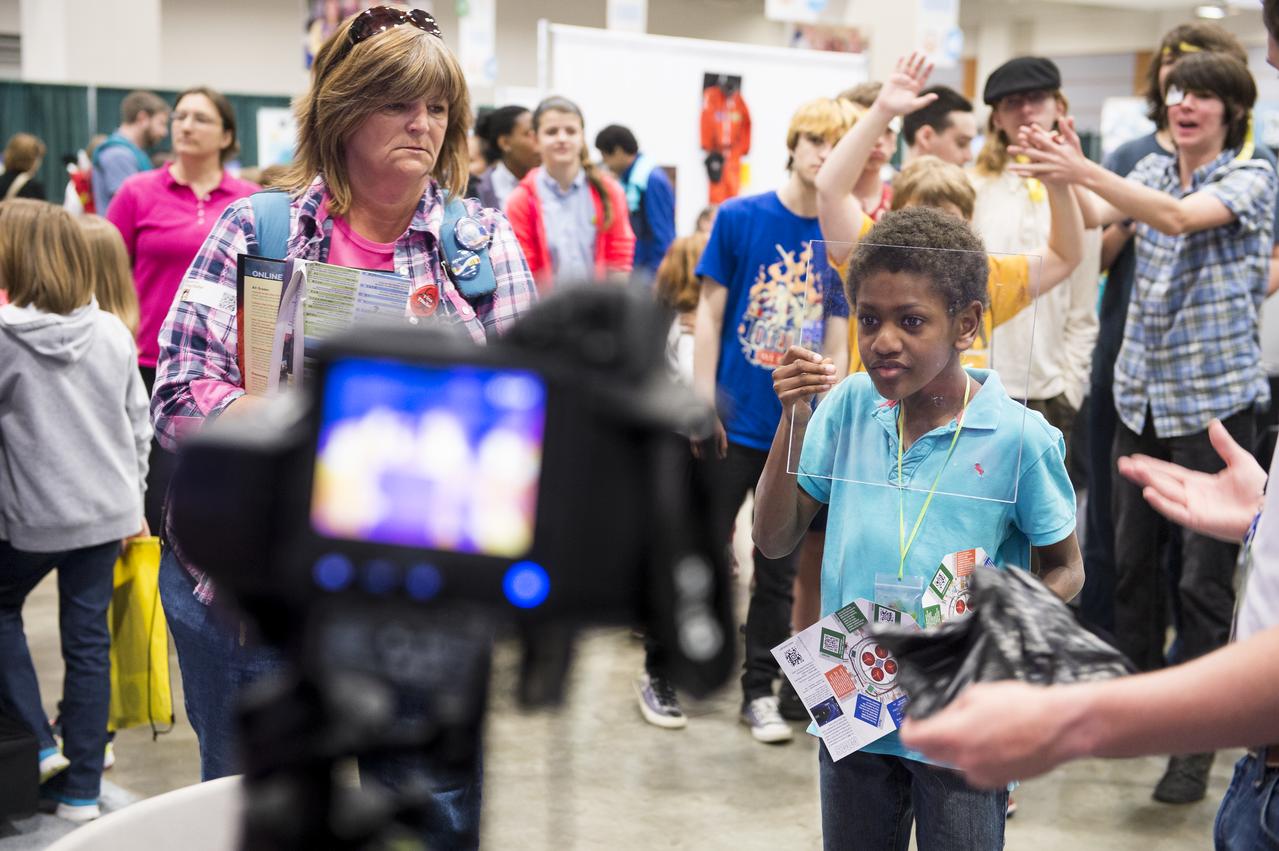
An attendee of the USA Science and Engineering Festival examines how glass blocks some heat, altering the infrared image of himself. The James Webb Space Telescope will be a large infrared telescope with a 6.5 meter primary mirror and will study every phase in the history of our Universe ranging from the Big Bang to the formation of our Solar System. The USA Science and Engineering Festival took place at the Washington Convention Center in Washington, DC on April 26 and 27, 2014. Photo Credit: (NASA/Aubrey Gemignani)
USA Science and Engineering Festival 2014
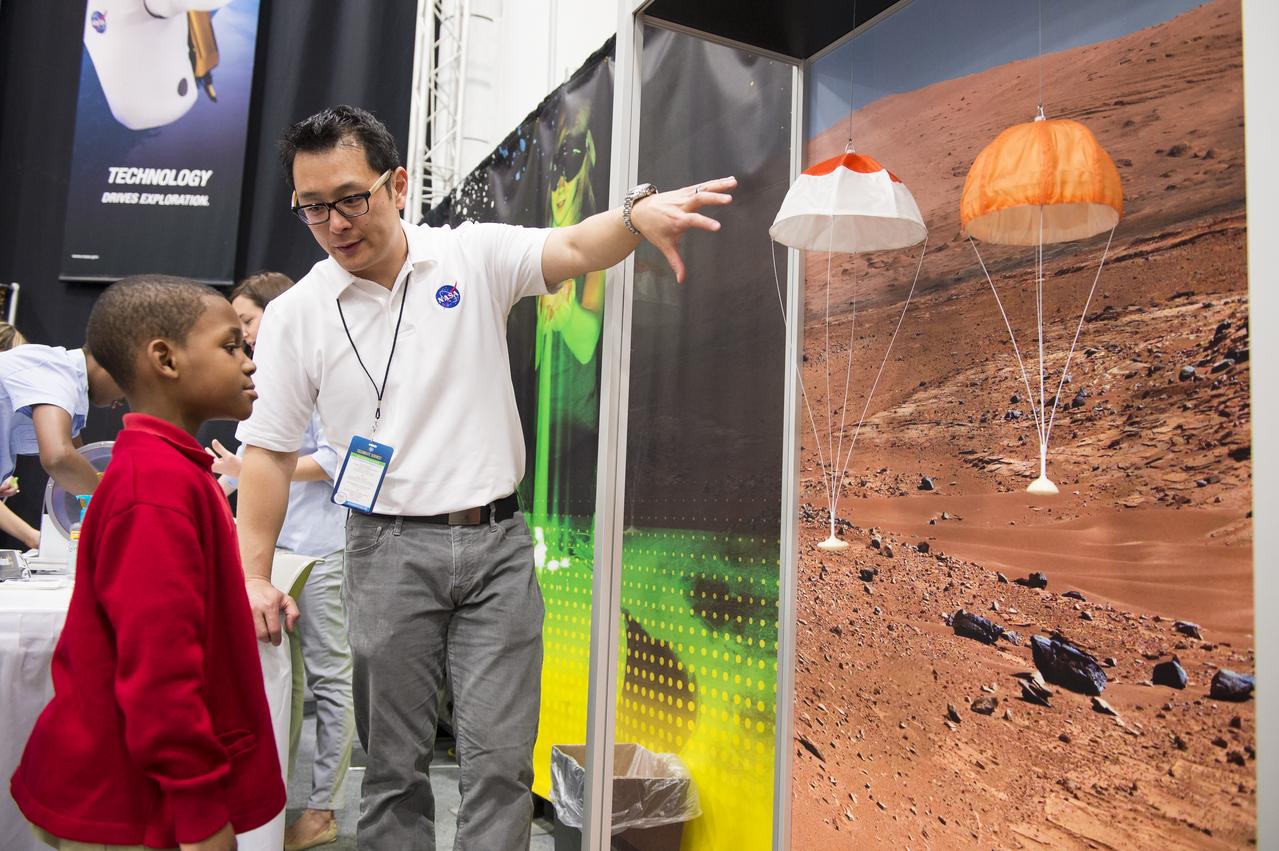
A NASA staff member describes landing technology to an attendee of the USA Science and Engineering Festival, which took place at the Washington Convention Center in Washington, DC on April 26 and 27, 2014. Photo Credit: (NASA/Aubrey Gemignani)
USA Science and Engineering Festival 2014
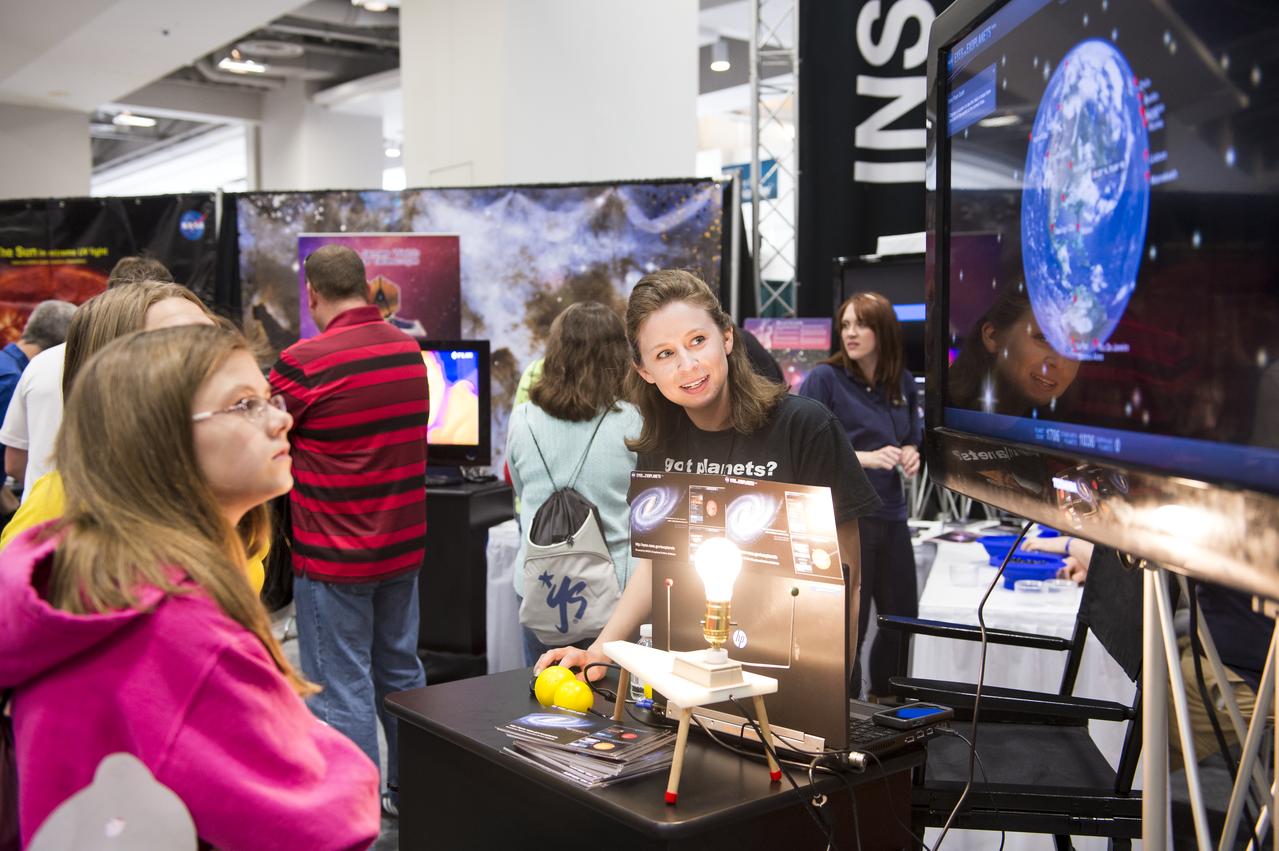
A NASA staff member discusses planets with attendees of the USA Science and Engineering Festival, which took place at the Washington Convention Center in Washington, DC on April 26 and 27, 2014. Photo Credit: (NASA/Aubrey Gemignani)
USA Science and Engineering Festival 2014
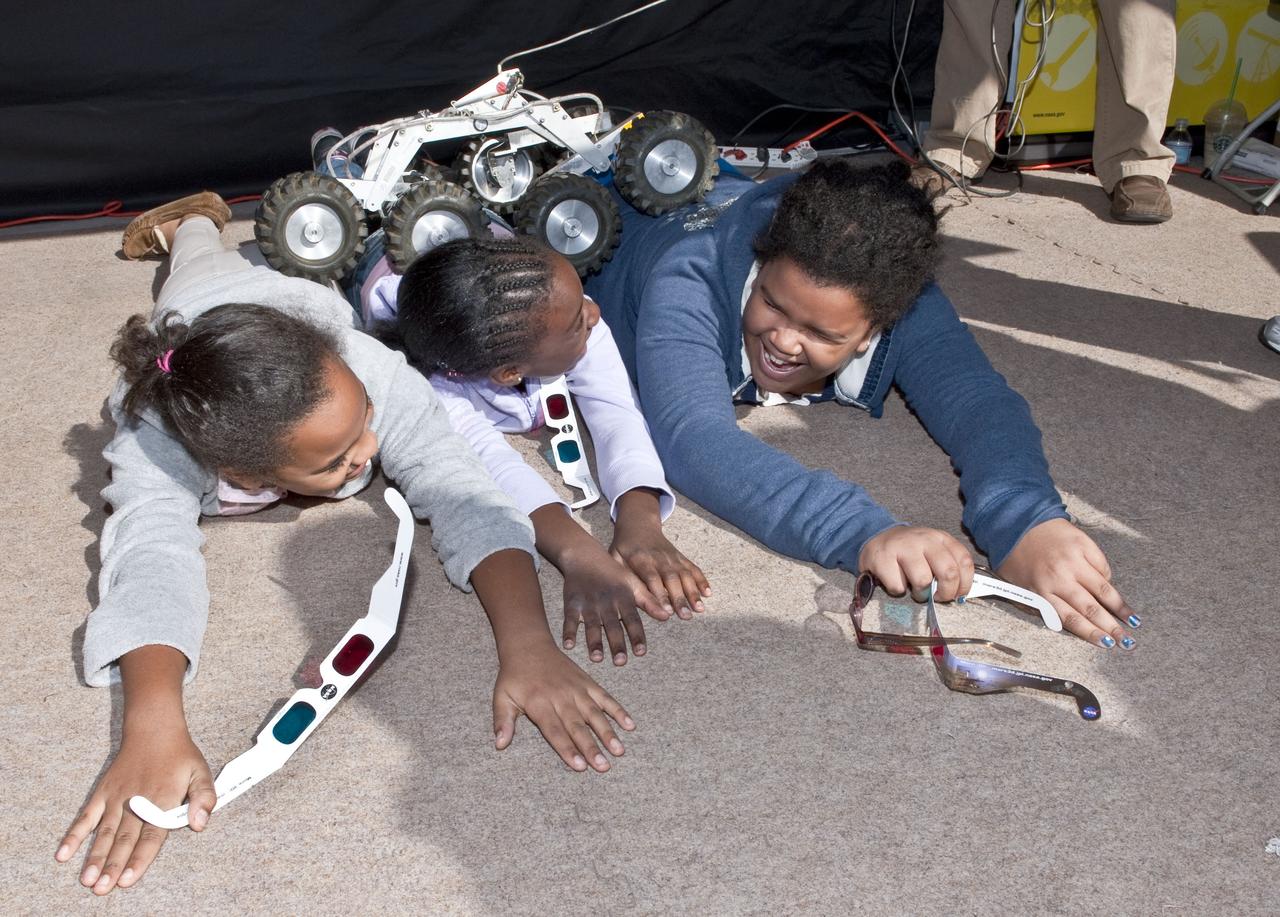
Children react as a tiny Mars Rover rolls over their backs at the USA Science and Engineering Festival, Saturday, Oct. 23, 2010, at Freedom Plaza in Washington. NASA, joined with more than 500 science organizations this weekend to inspire the next generation of scientists and engineers during the first national science and engineering festival held in the nation's capital. Photo Credit: (NASA/Paul E. Alers)
USA Science and Engineering Festival
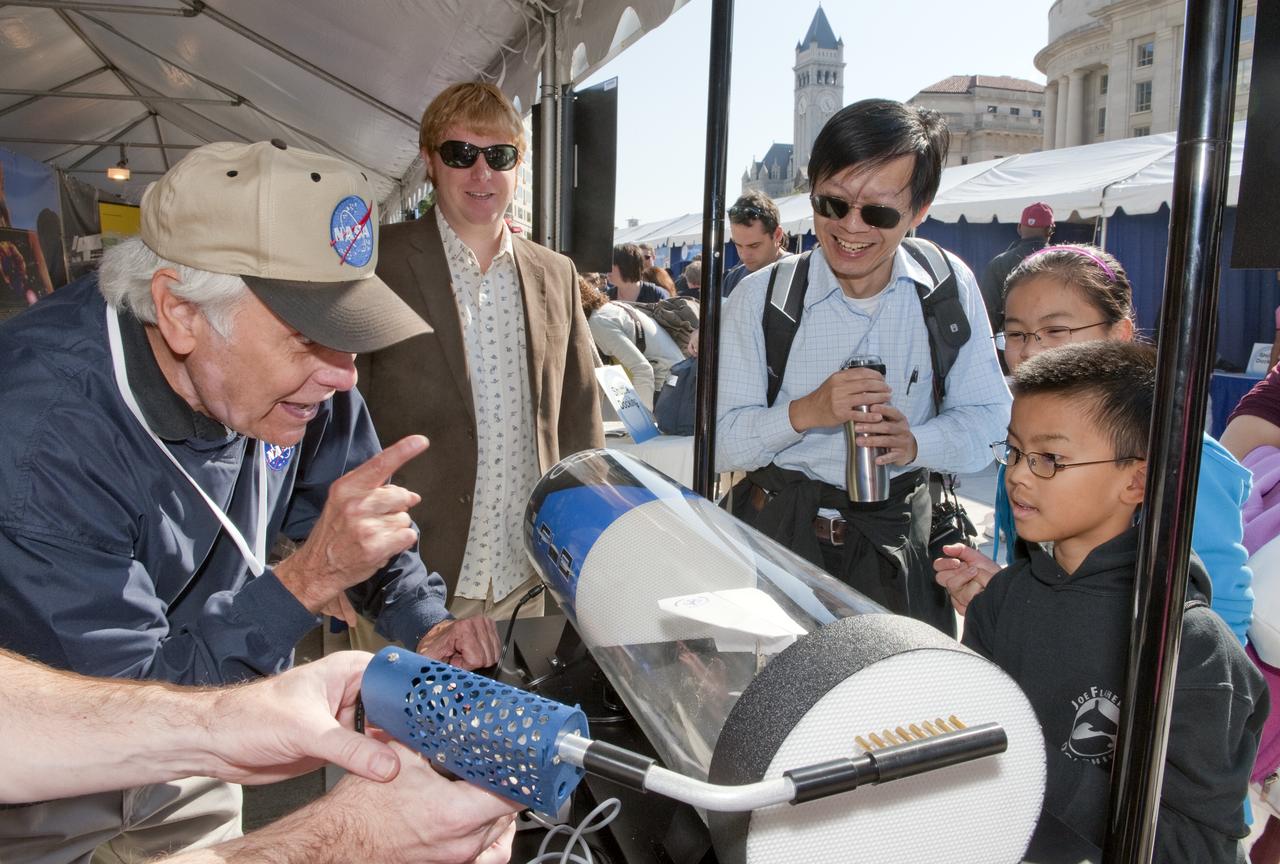
Priniciples of air flow are explained to visitors to the wind tunnel exhibit at the USA Science and Engineering Festival, Saturday, Oct. 23, 2010, at Freedom Plaza in Washington. NASA, joined with more than 500 science organizations this weekend to inspire the next generation of scientists and engineers during the first national science and engineering festival held in the nation's capital. Photo Credit: (NASA/Paul E. Alers)
USA Science and Engineering Festival
Participants look through telescopes to observe the Sun during the USA Science and Engineering Festival, Saturday, Oct. 23, 2010, at Freedom Plaza in Washington. NASA, joined with more than 500 science organizations this weekend to inspire the next generation of scientists and engineers during the first national science and engineering festival held in the nation's capital. Photo Credit: (NASA/Paul E. Alers)
USA Science and Engineering Festival
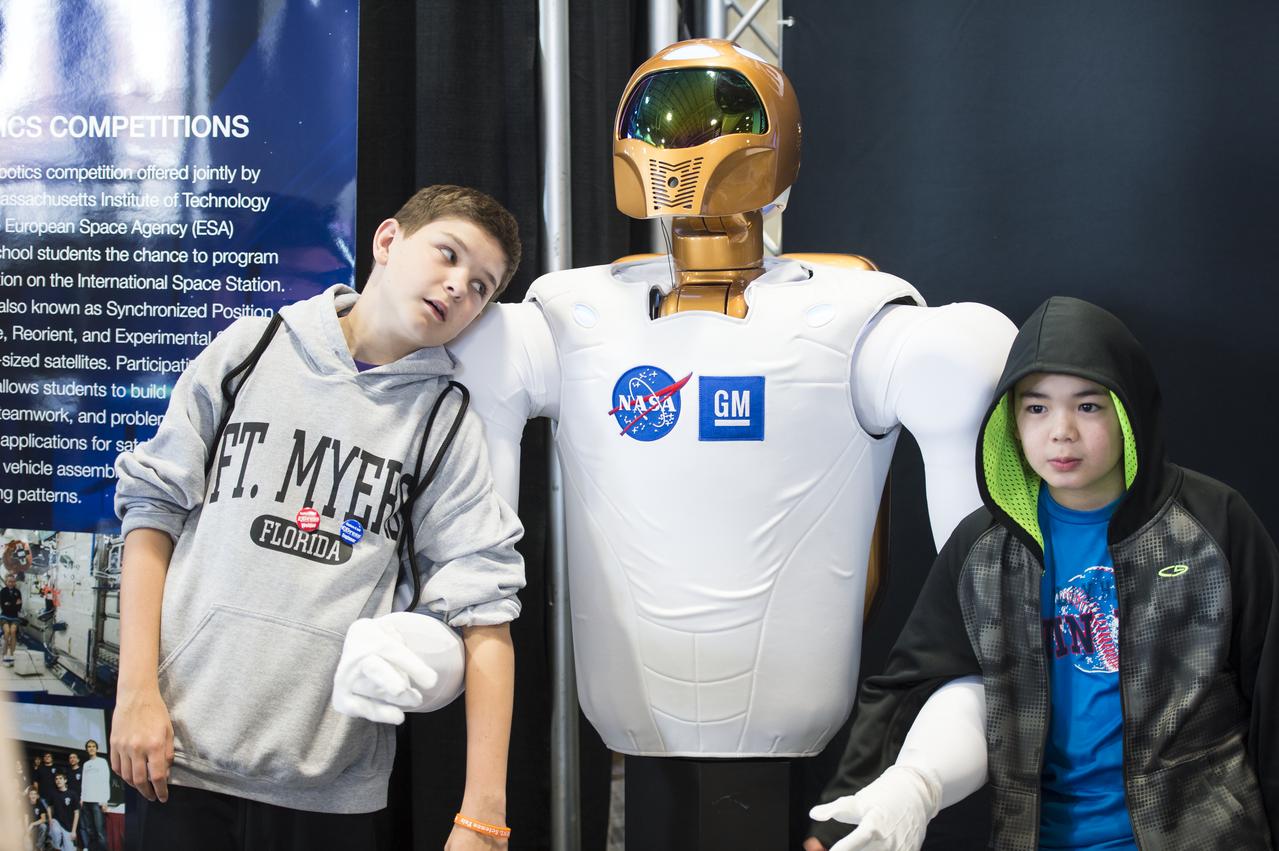
Two boys attending the USA Science and Engineering Festival pose with Robonaut 2 at the NASA Stage. Robonaut 2 is NASA's first dexterous humanoid robot that has been working on the International Space Station for the last three years. R2 recently received 1.2 meter long legs to allow mobility. This will enable R2 to assist more with regular and repetitive tasks inside and outside the station. The USA Science and Engineering Festival took place at the Washington Convention Center in Washington, DC on April 26 and 27, 2014. Photo Credit: (NASA/Aubrey Gemignani)
USA Science and Engineering Festival 2014
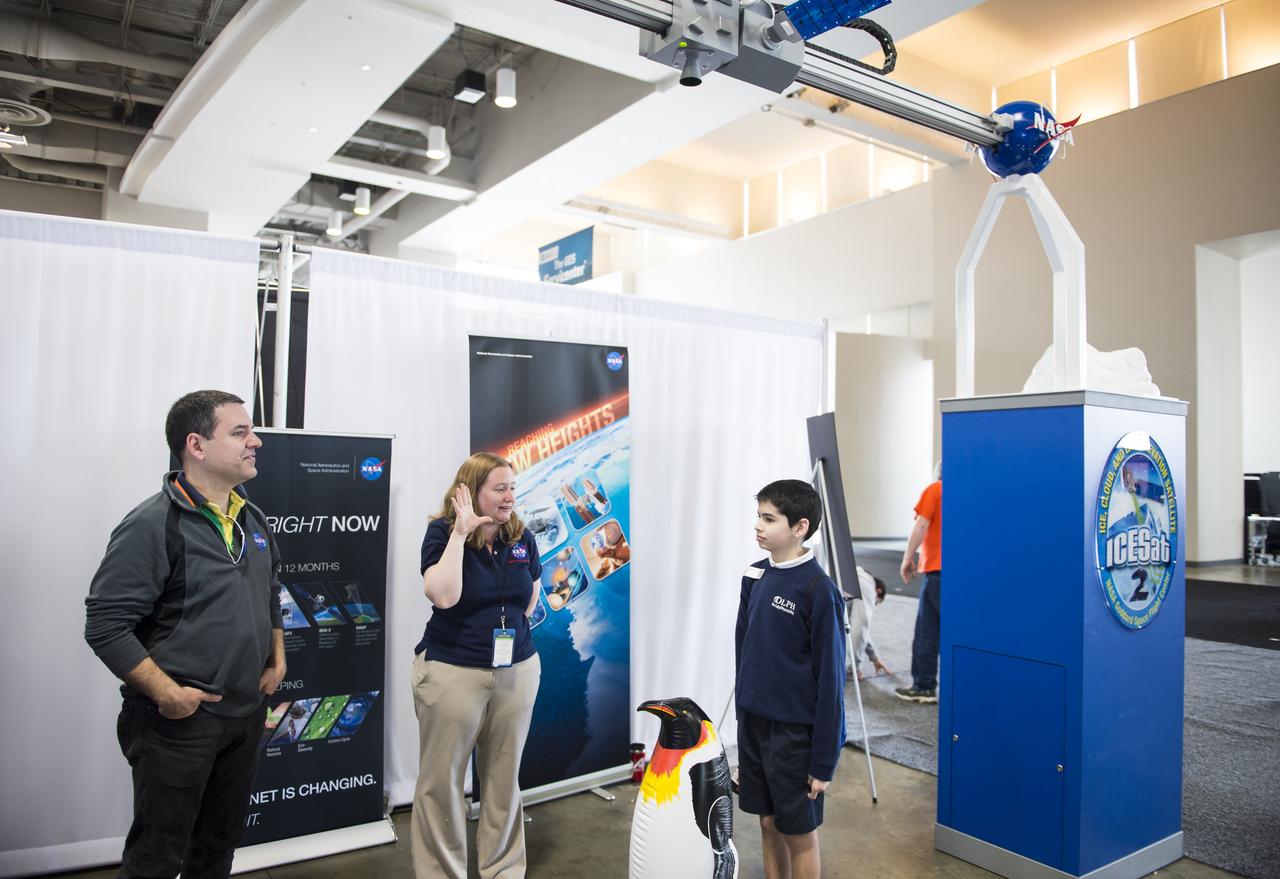
An attendee of the USA Science and Engineering Festival is measured by a laser at the NASA Stage. A NASA Staff member describes the Ice, Cloud, and land Elevation Satellite (ICESat) mission, which operated from 2003-2009, and pioneered the use of laser altimeters in space to study the elevation of the Earth's surface and its changes. ICESat-2 is a follow-on mission to continue the ICESat observations and is scheduled to launch in 2017. The USA Science and Engineering Festival took place at the Washington Convention Center in Washington, DC on April 26 and 27, 2014. Photo Credit: (NASA/Aubrey Gemignani)
USA Science and Engineering Festival 2014
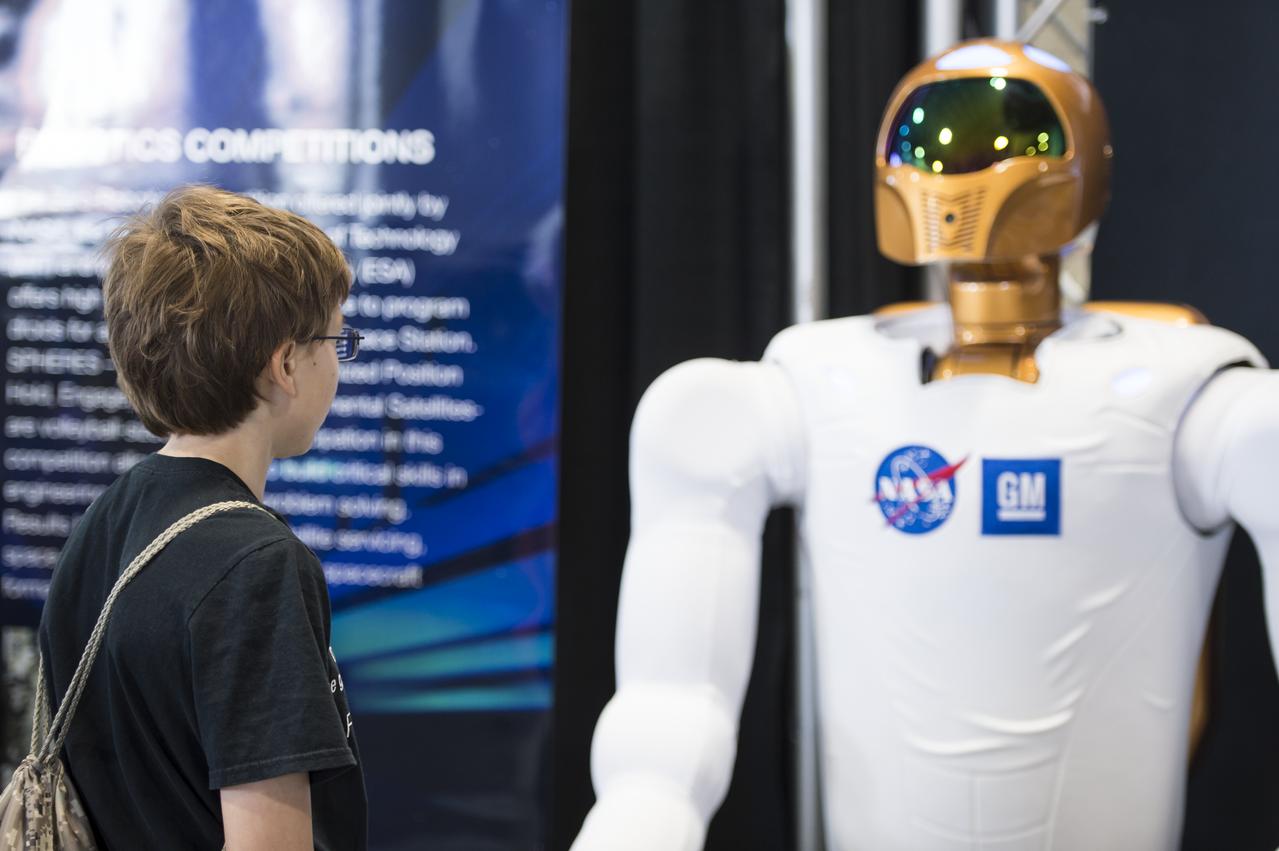
An attendee of the USA Science and Engineering Festival observes Robonaut 2 at the NASA Stage. Robonaut 2 is NASA's first dexterous humanoid robot that has been working on the International Space Station for the last three years. R2 recently received 1.2 meter long legs to allow mobility. This will enable R2 to assist more with regular and repetitive tasks inside and outside the station. The USA Science and Engineering Festival took place at the Washington Convention Center in Washington, DC on April 26 and 27, 2014. Photo Credit: (NASA/Aubrey Gemignani)
USA Science and Engineering Festival 2014
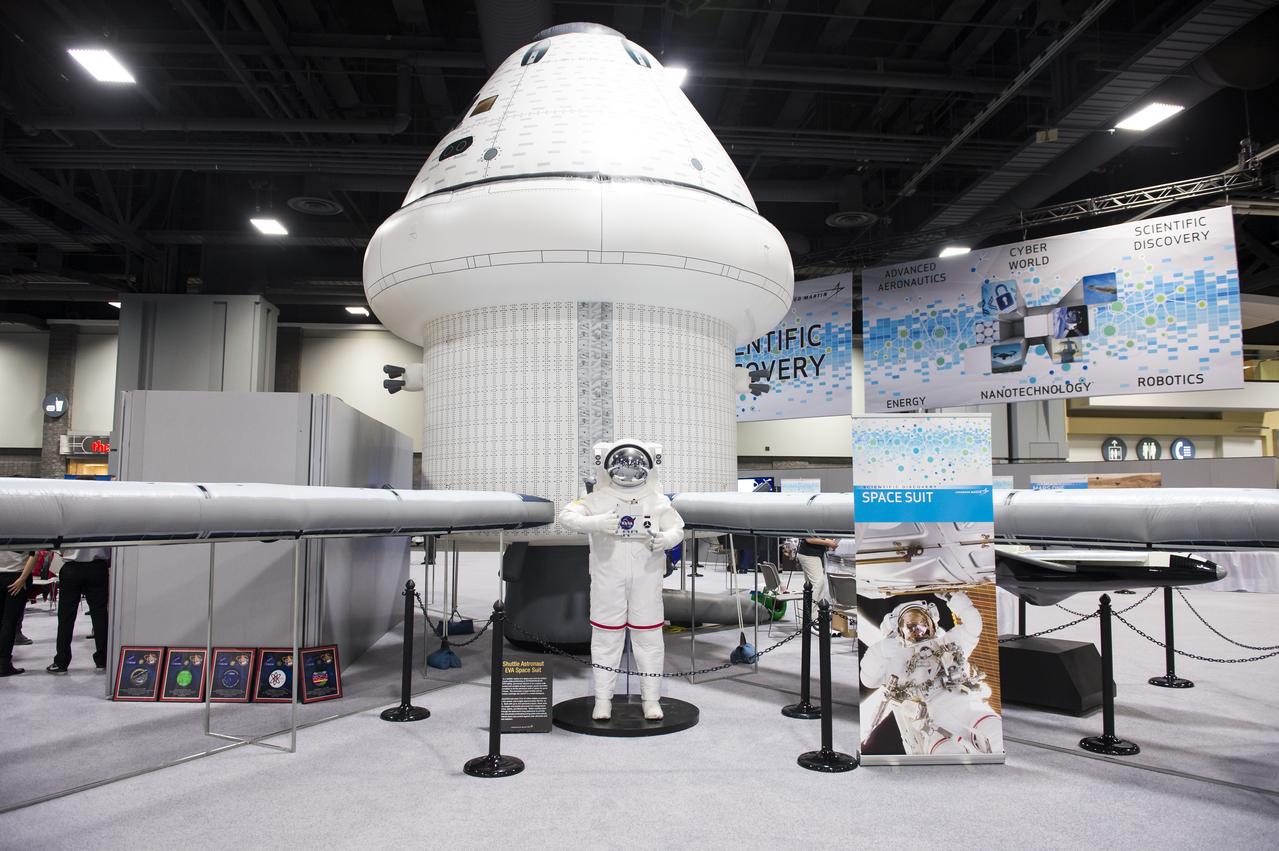
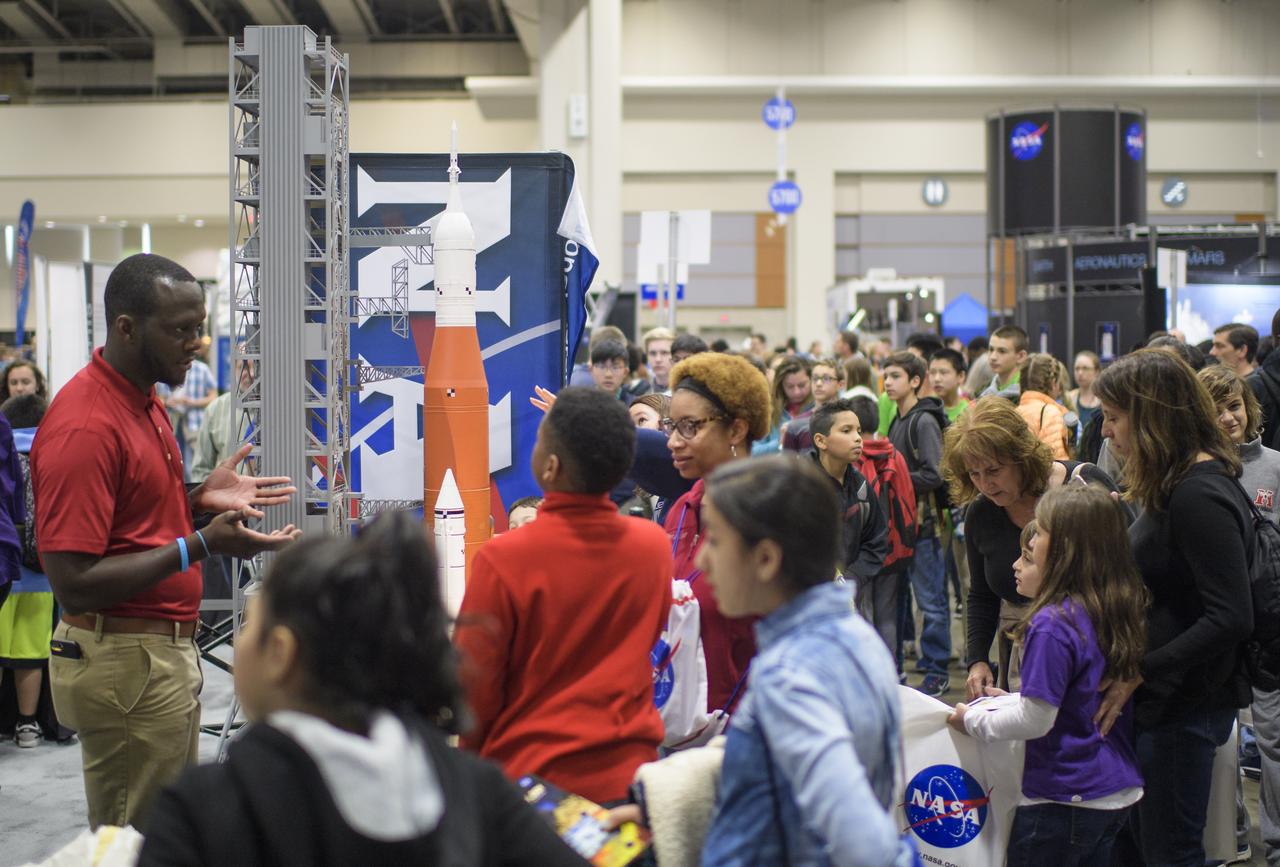
NASA Orion Exhibit at the USA Science and Engineering Festival taking place April 26 and 27, 2014 at the Washington Convention Center. Photo Credit: (NASA/Aubrey Gemignani)
USA Science and Engineering Festival 2014
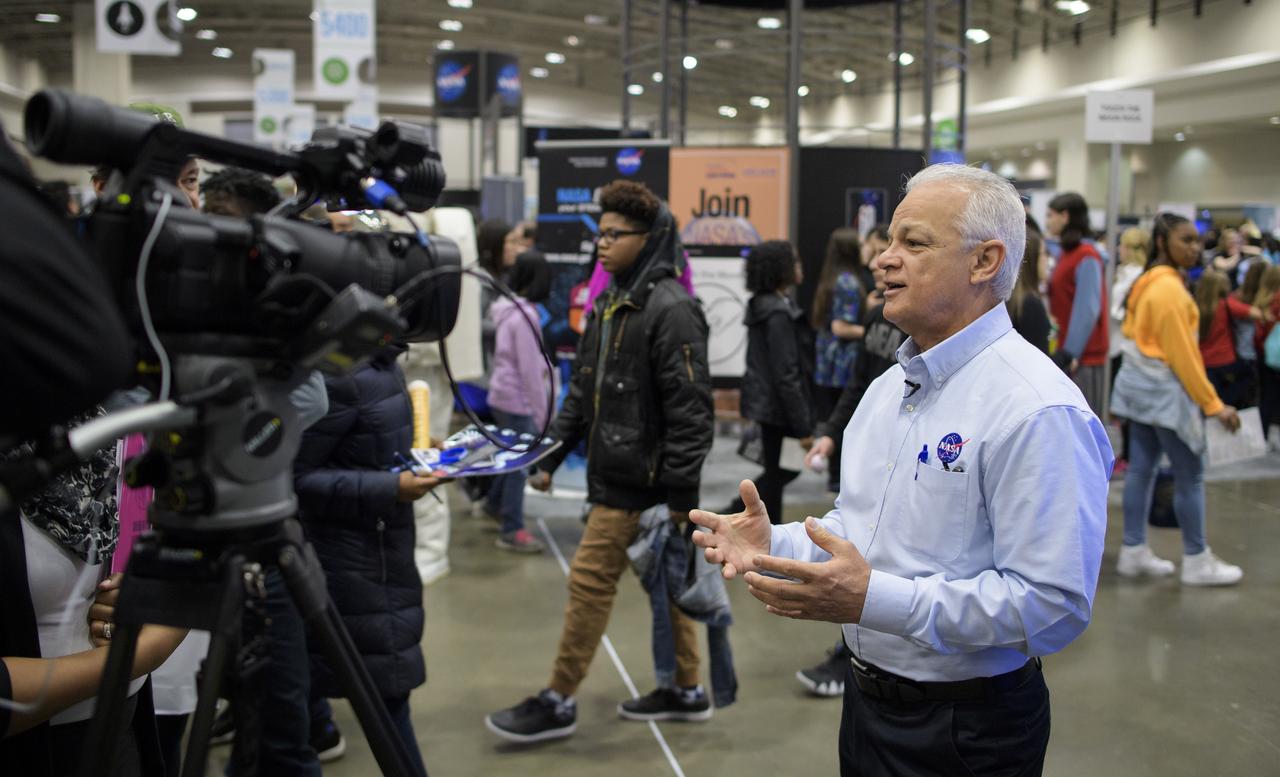
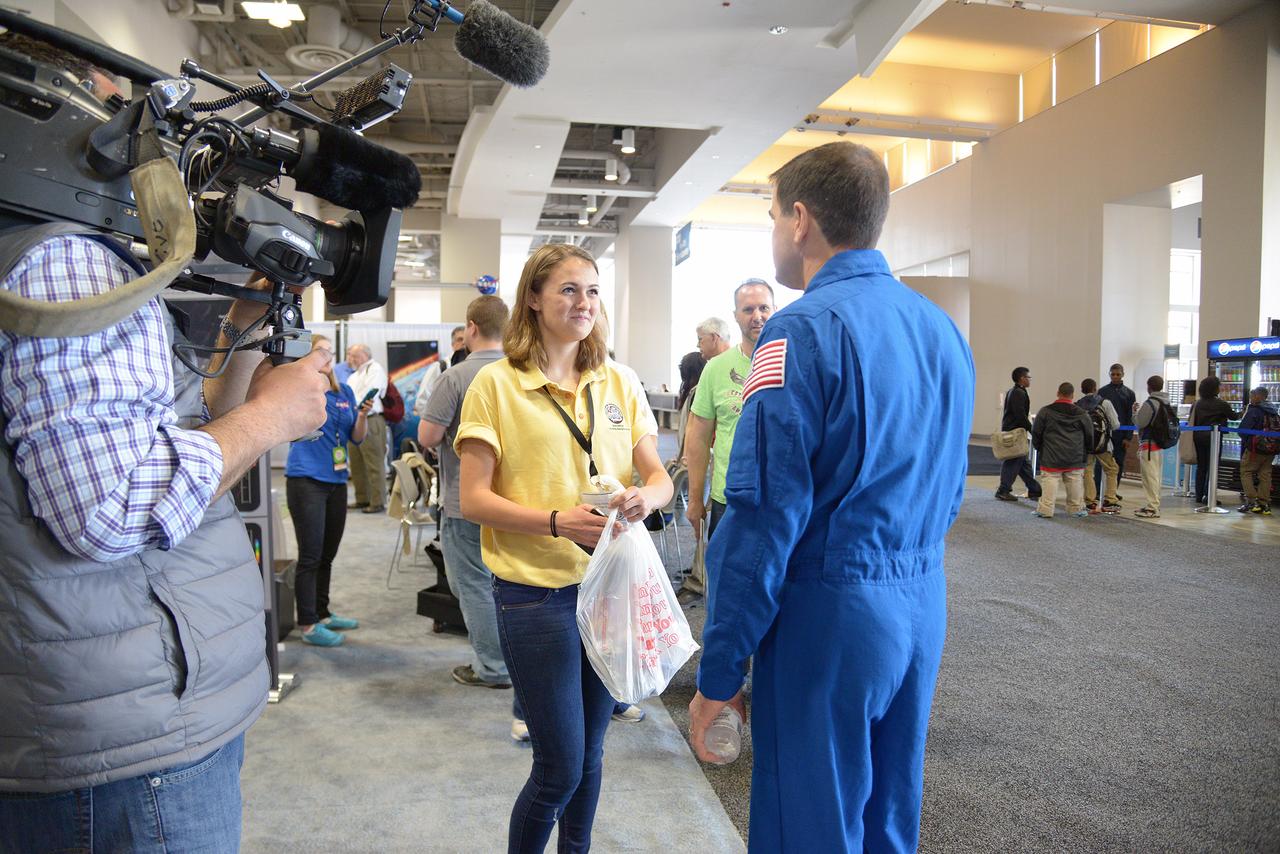
NASA Acting Chief Technologist Douglas Terrier is interviewed by a member of the media during Sneak Peek Friday at the USA Science and Engineering Festival, Friday, April 6, 2018 at the Walter E. Washington Convention Center in Washington, DC.  The festival is open to the public April 7-8.  Photo Credit: (NASA/Joel Kowsky)
2018 USA Science and Engineering Festival
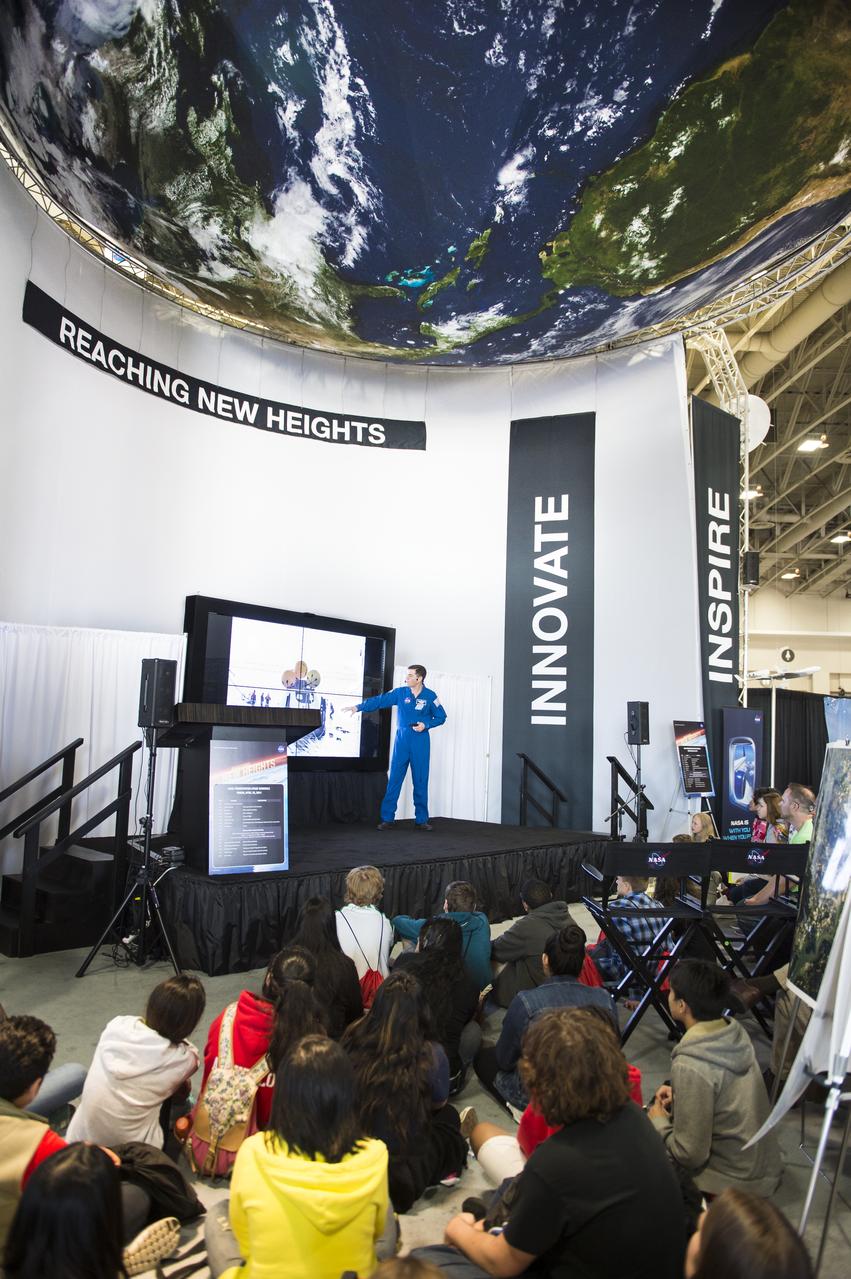
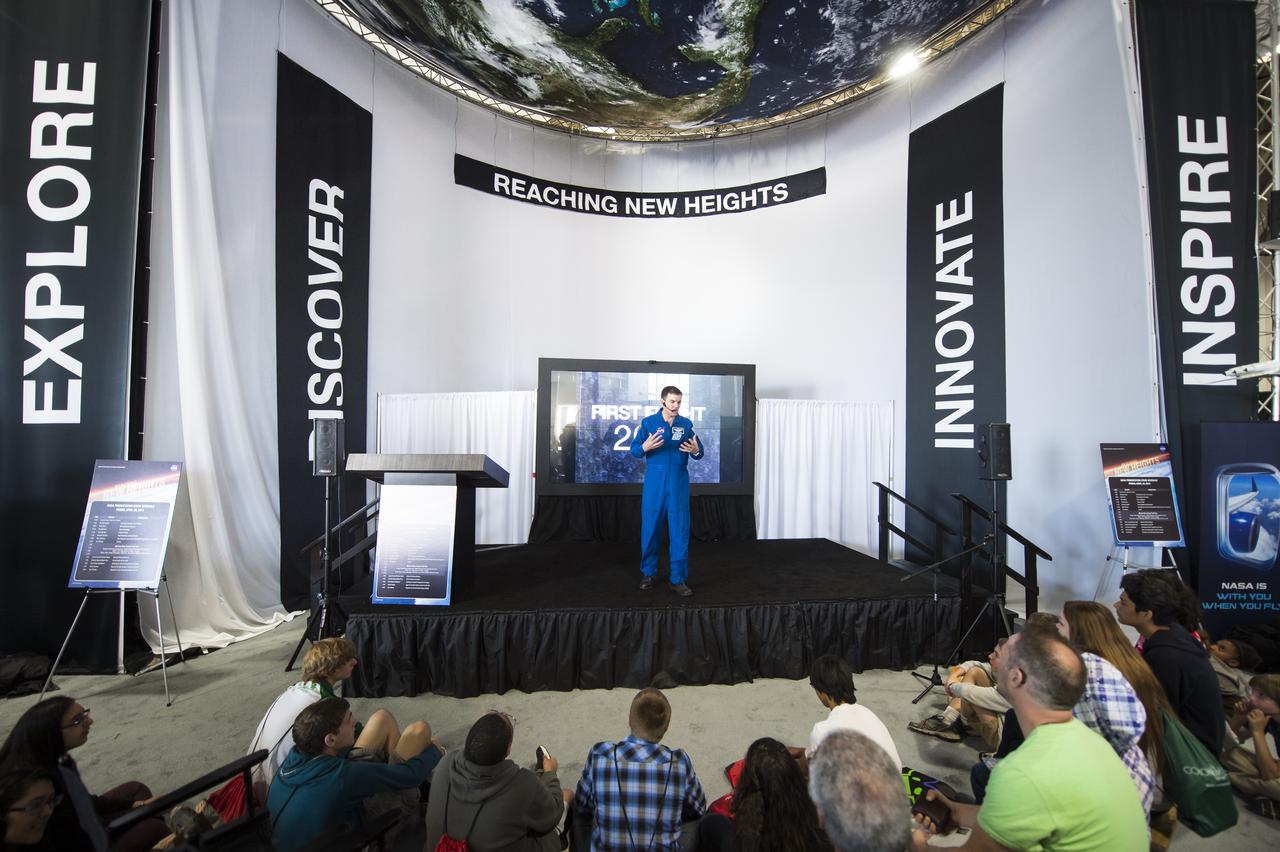
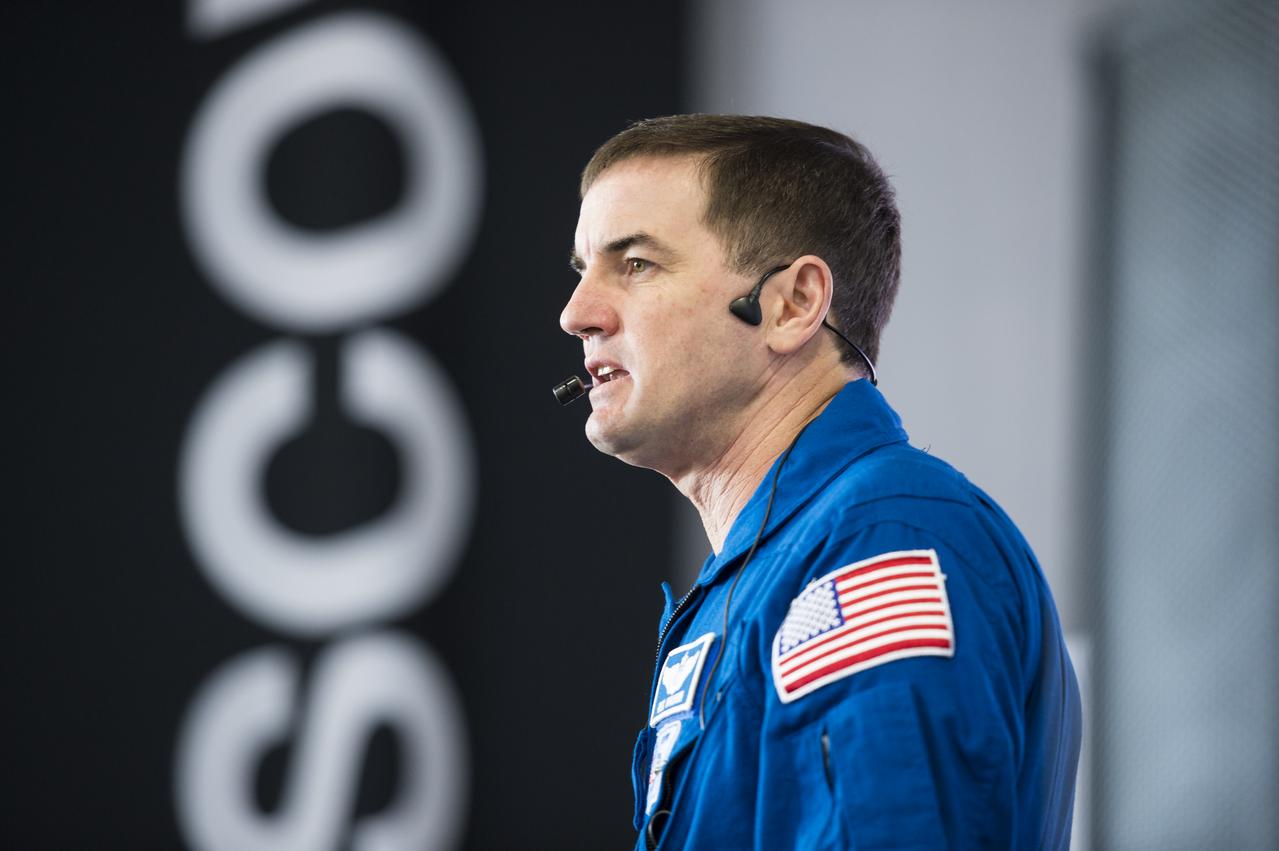
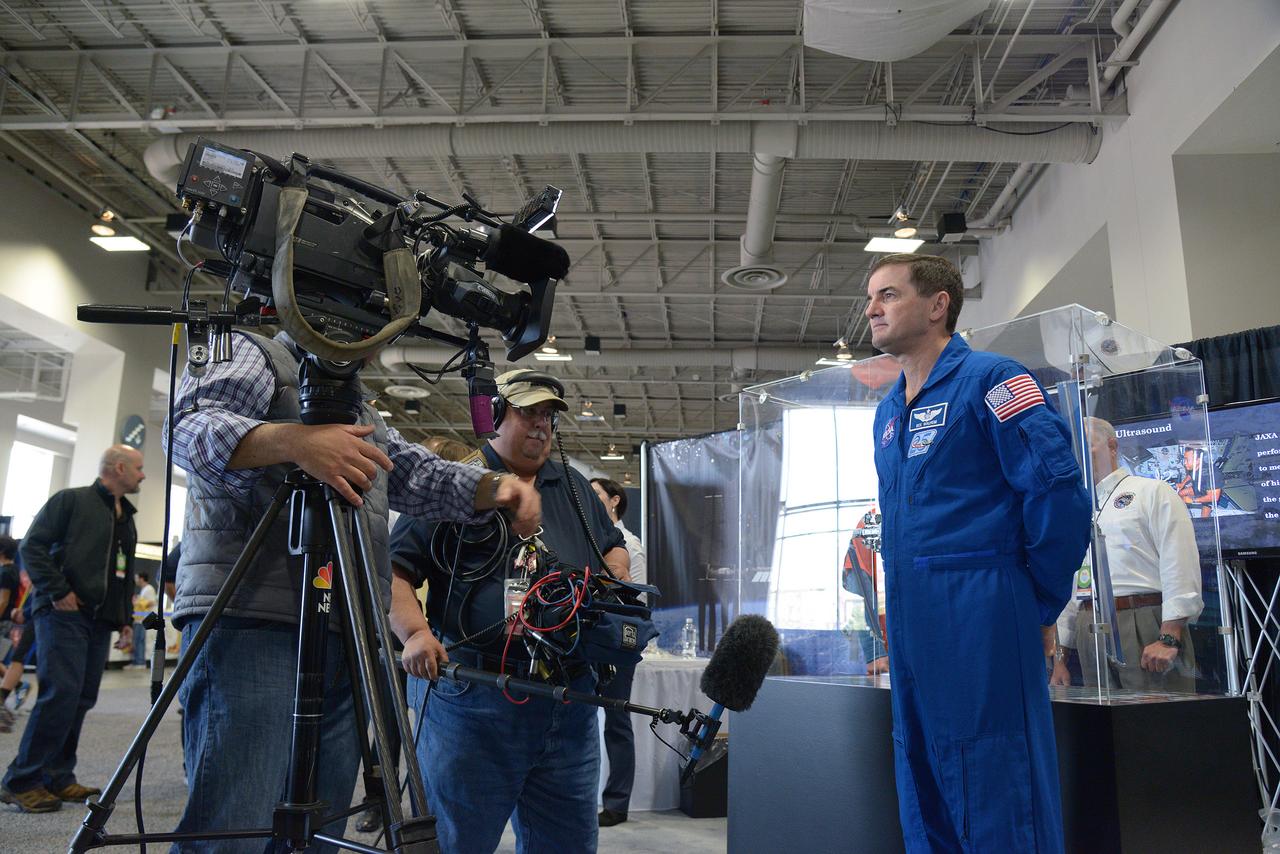
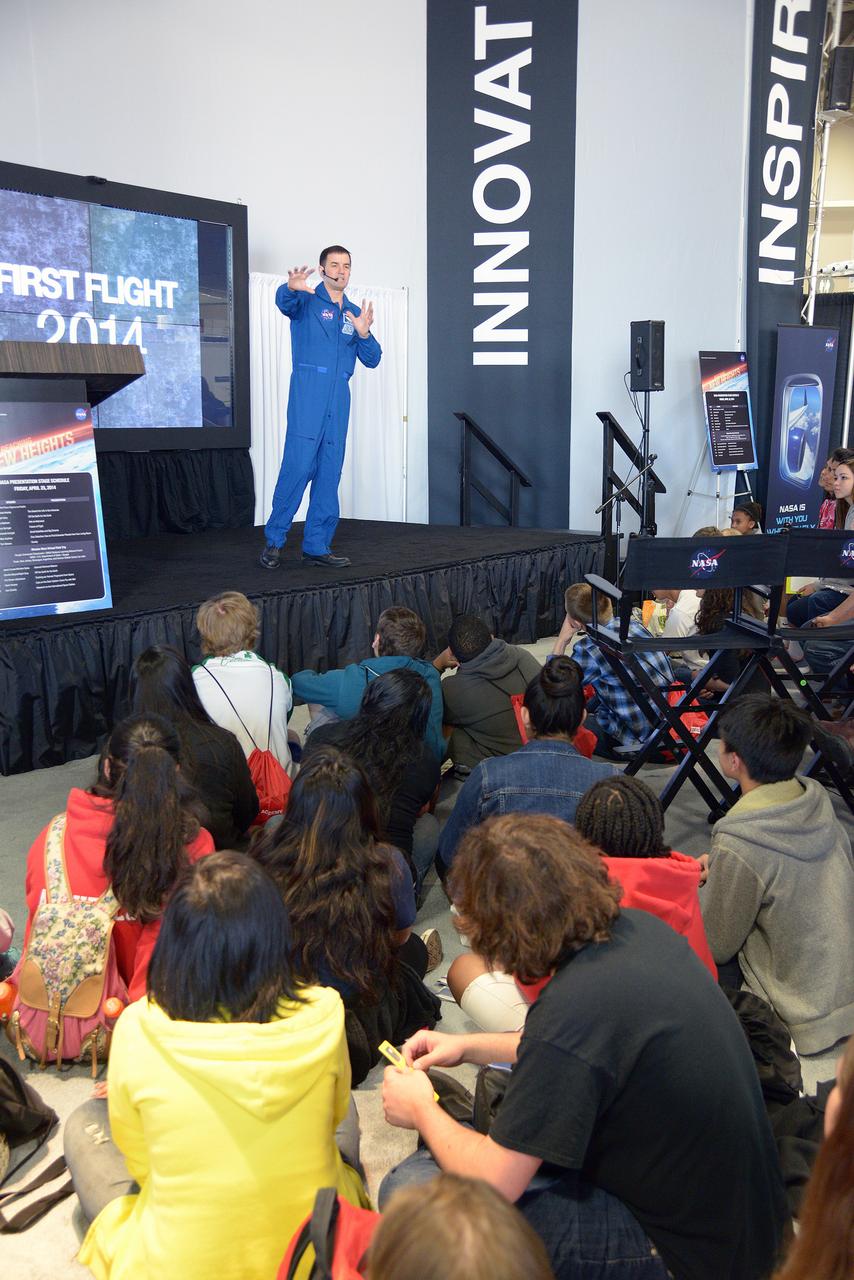
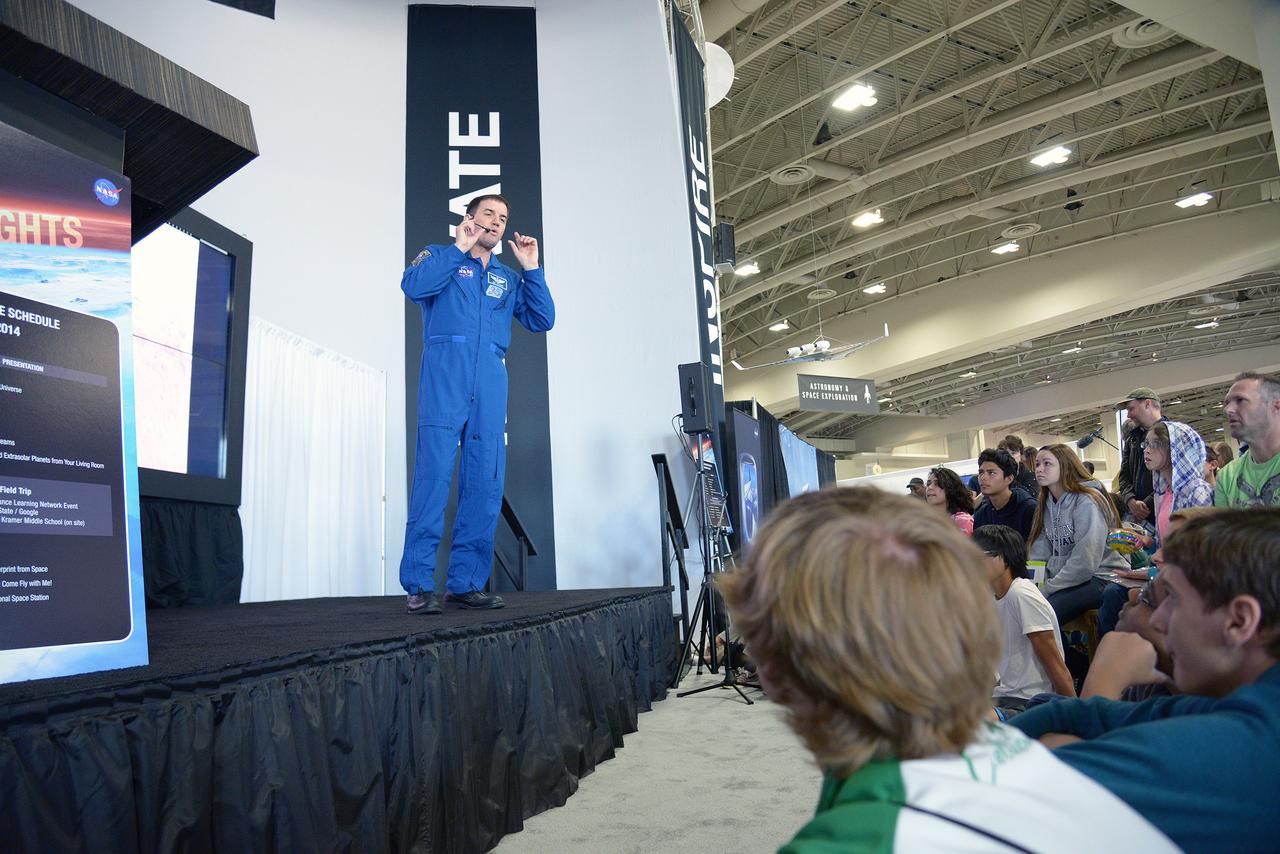
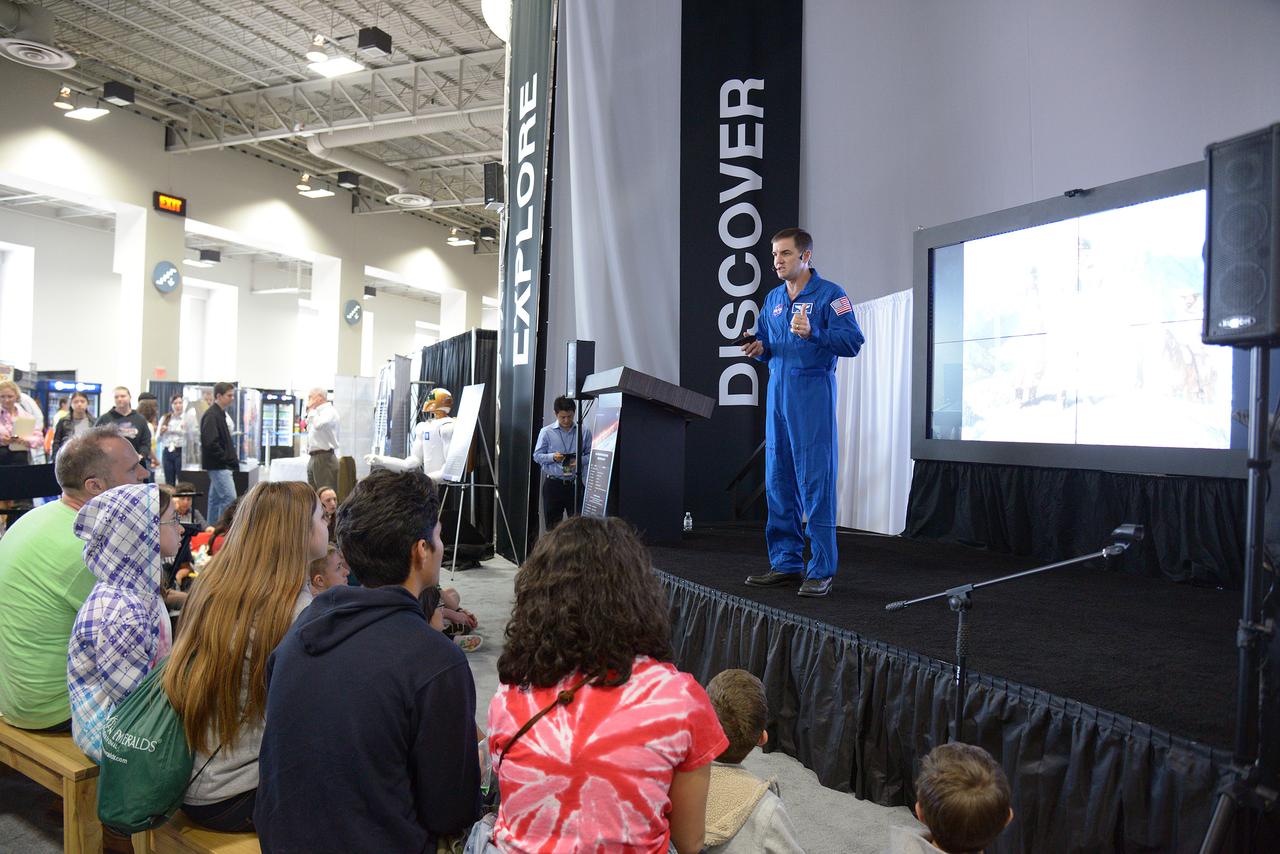
Astronaut Rex Walheim spoke at the USA Science and Engineering Festival on April 25, 2014 at the NASA Stage. The festival was open to the public on April 26 and 27, 2014 and was held at the Washington Convention Center in Washington, DC. Photo Credit: (NASA/Aubrey Gemignani)
USA Science and Engineering Festival 2014
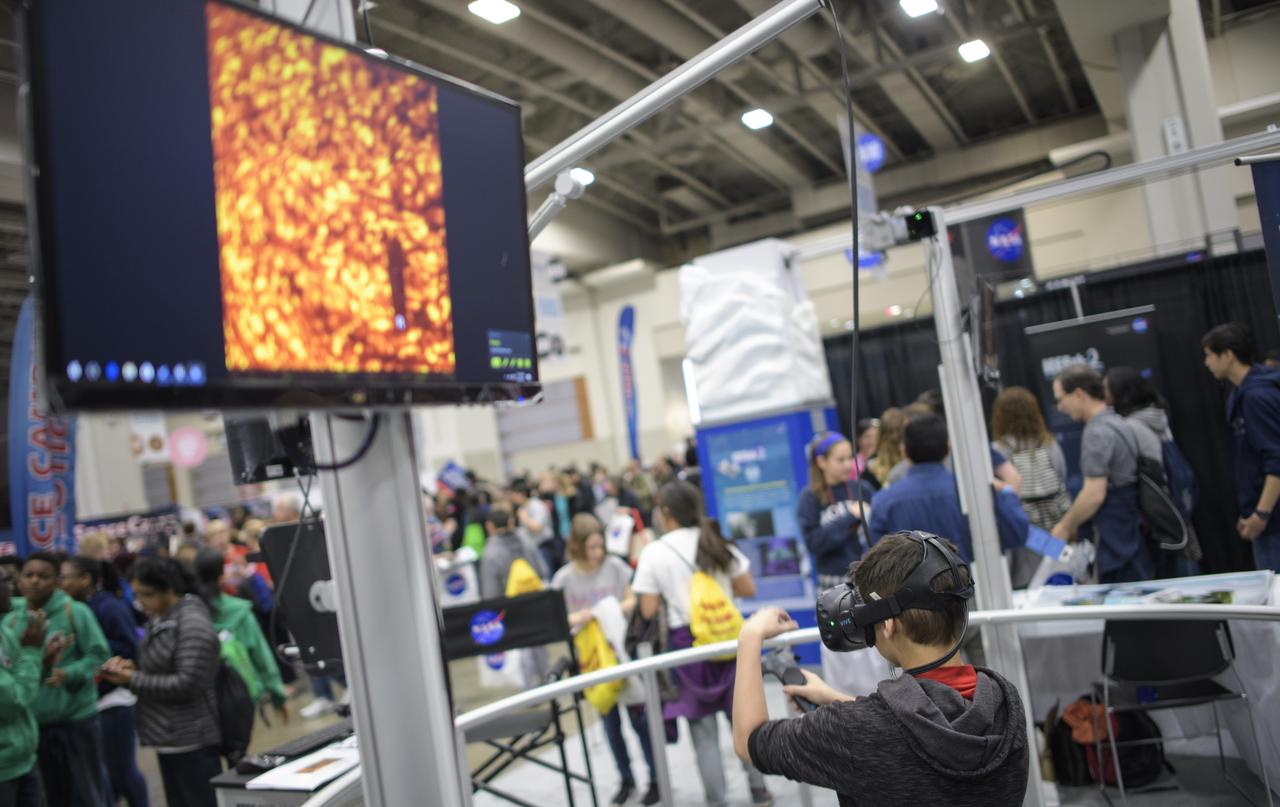
An attendee uses virtual reality goggles to view the Sun during Sneak Peek Friday at the USA Science and Engineering Festival, Friday, April 6, 2018 at the Walter E. Washington Convention Center in Washington, DC.  The festival is open to the public April 7-8.  Photo Credit: (NASA/Joel Kowsky)
2018 USA Science and Engineering Festival
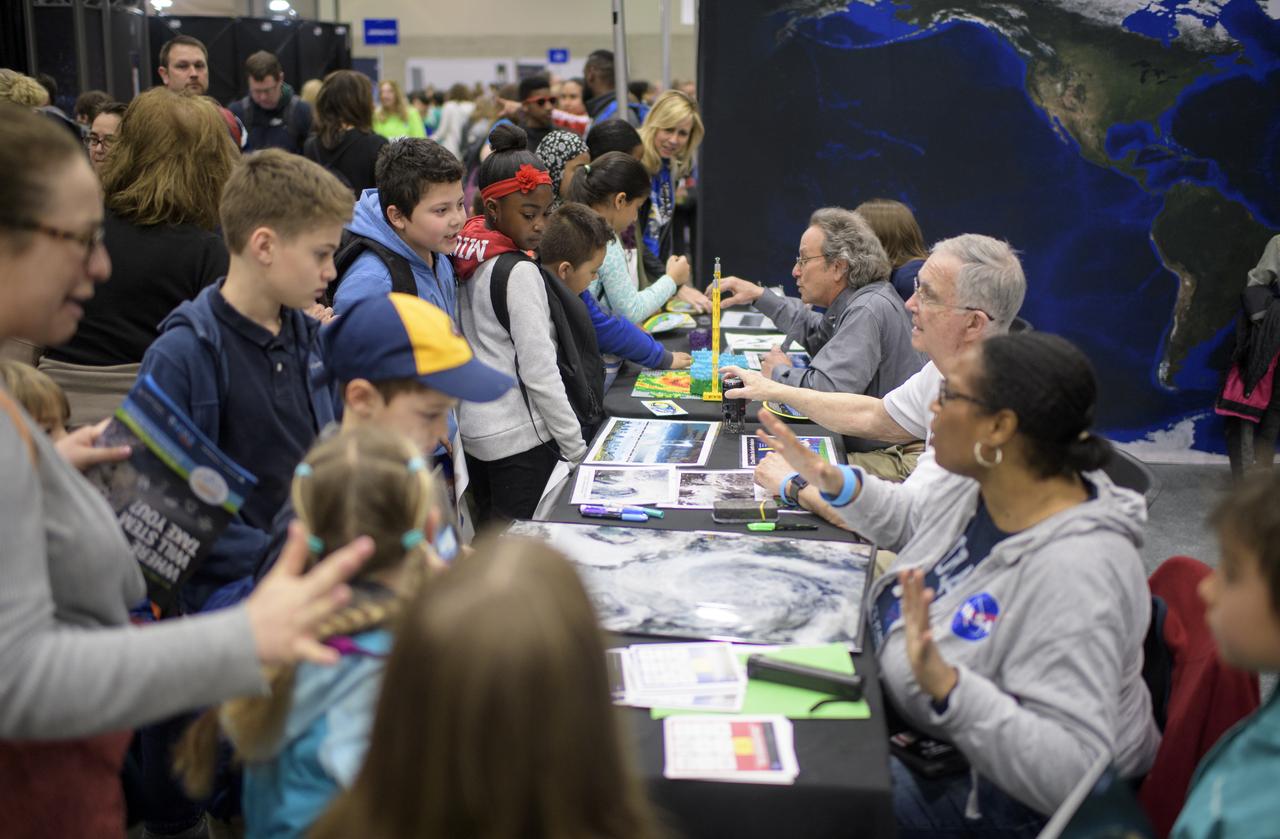
Attendees visit NASA exhibits during Sneak Peek Friday at the USA Science and Engineering Festival, Friday, April 6, 2018 at the Walter E. Washington Convention Center in Washington, DC.  The festival is open to the public April 7-8.  Photo Credit: (NASA/Joel Kowsky)
2018 USA Science and Engineering Festival
Attendees visit NASA exhibits during Sneak Peek Friday at the USA Science and Engineering Festival, Friday, April 6, 2018 at the Walter E. Washington Convention Center in Washington, DC.  The festival is open to the public April 7-8.  Photo Credit: (NASA/Joel Kowsky)
2018 USA Science and Engineering Festival
Attendees walk past an inflatable model of NASA's Space Launch System during Sneak Peek Friday at the USA Science and Engineering Festival, Friday, April 6, 2018 at the Walter E. Washington Convention Center in Washington, DC.  The festival is open to the public April 7-8.  Photo Credit: (NASA/Joel Kowsky)
2018 USA Science and Engineering Festival
Astronaut Rex Walheim spoke at the USA Science and Engineering Festival on April 25, 2014 at the NASA Stage. The festival was open to the public on April 26 and 27, 2014 and was held at the Washington Convention Center in Washington, DC. Photo Credit: (NASA/Aubrey Gemignani)
USA Science and Engineering Festival 2014
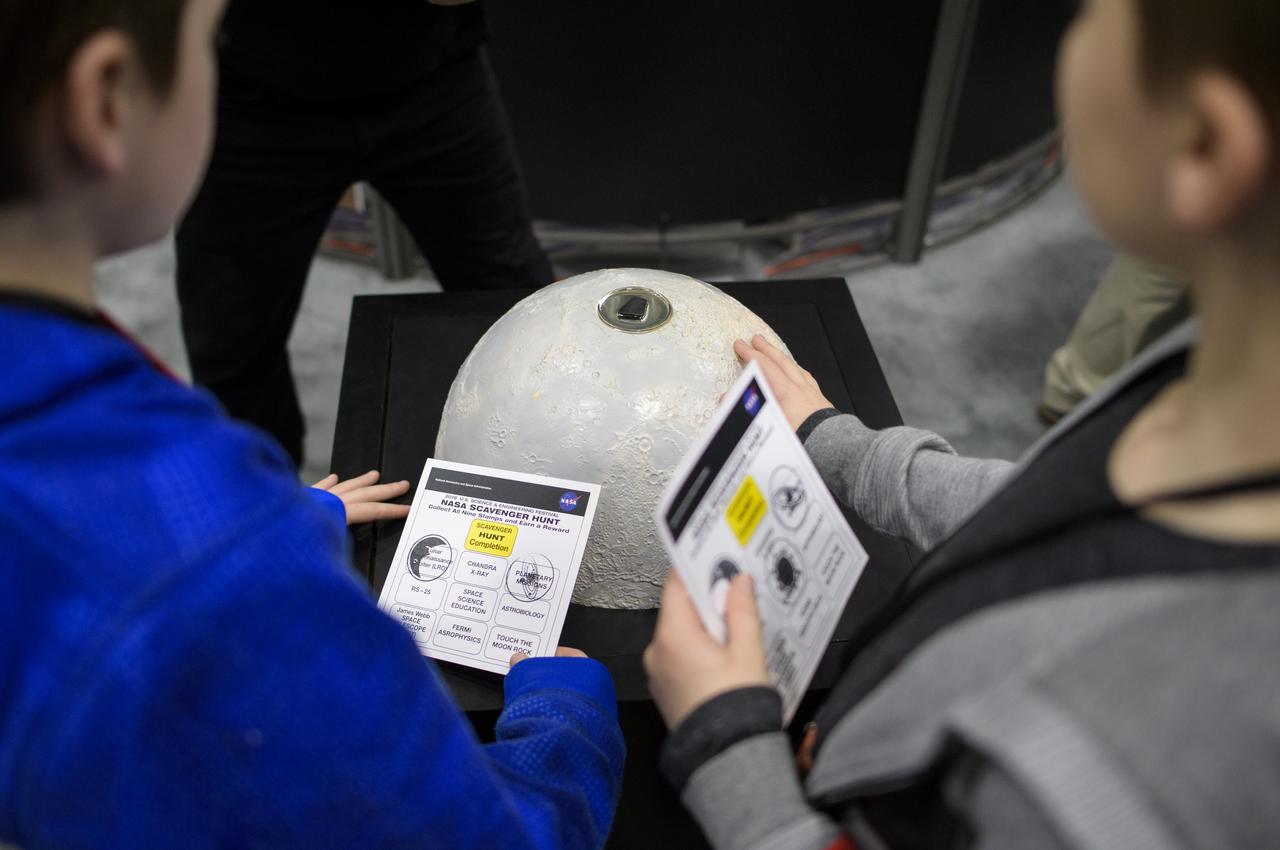
Attendees view a Moon rock that was returned by the Apollo 17 mission during Sneak Peek Friday at the USA Science and Engineering Festival, Friday, April 6, 2018 at the Walter E. Washington Convention Center in Washington, DC.  The festival is open to the public April 7-8.  Photo Credit: (NASA/Joel Kowsky)
2018 USA Science and Engineering Festival
Attendees learn about packing for space travel during Sneak Peek Friday at the USA Science and Engineering Festival, Friday, April 6, 2018 at the Walter E. Washington Convention Center in Washington, DC.  The festival is open to the public April 7-8.  Photo Credit: (NASA/Joel Kowsky)
2018 USA Science and Engineering Festival
Astronaut Rex Walheim spoke at the USA Science and Engineering Festival on April 25, 2014. The festival was open to the public on April 26 and 27, 2014 and was held at the Washington Convention Center in Washington, DC. Photo Credit: (NASA/Aubrey Gemignani)
USA Science and Engineering Festival 2014
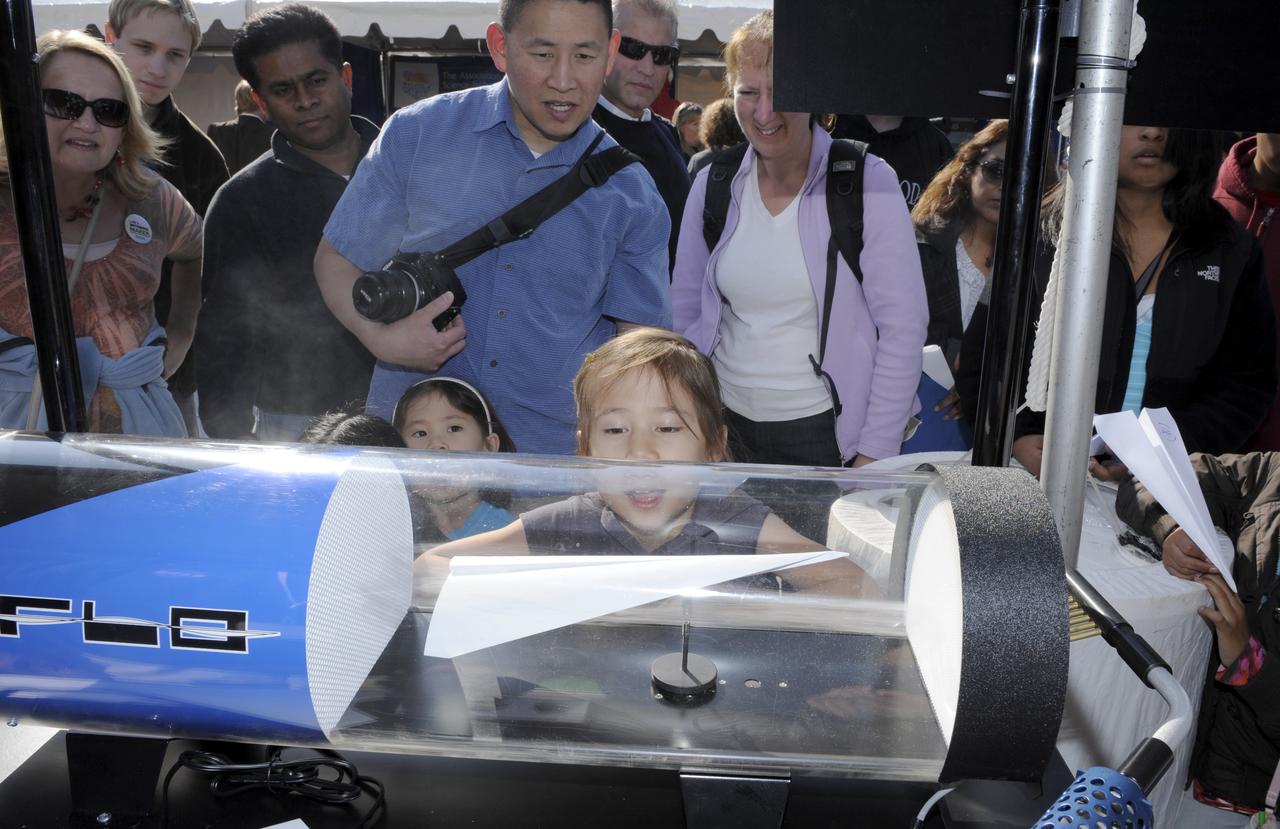
A young girl watches as her paper airplane is flown in a small wind tunnel during the USA Science and Engineering Festival, Saturday, Oct. 23, 2010, at Freedom Plaza in Washington. NASA, joined with more than 500 science organizations this weekend to inspire the next generation of scientists and engineers during the first national science and engineering festival held in the nation's capital. Photo Credit: (NASA/Paul E. Alers)
USA Science and Engineering Festival
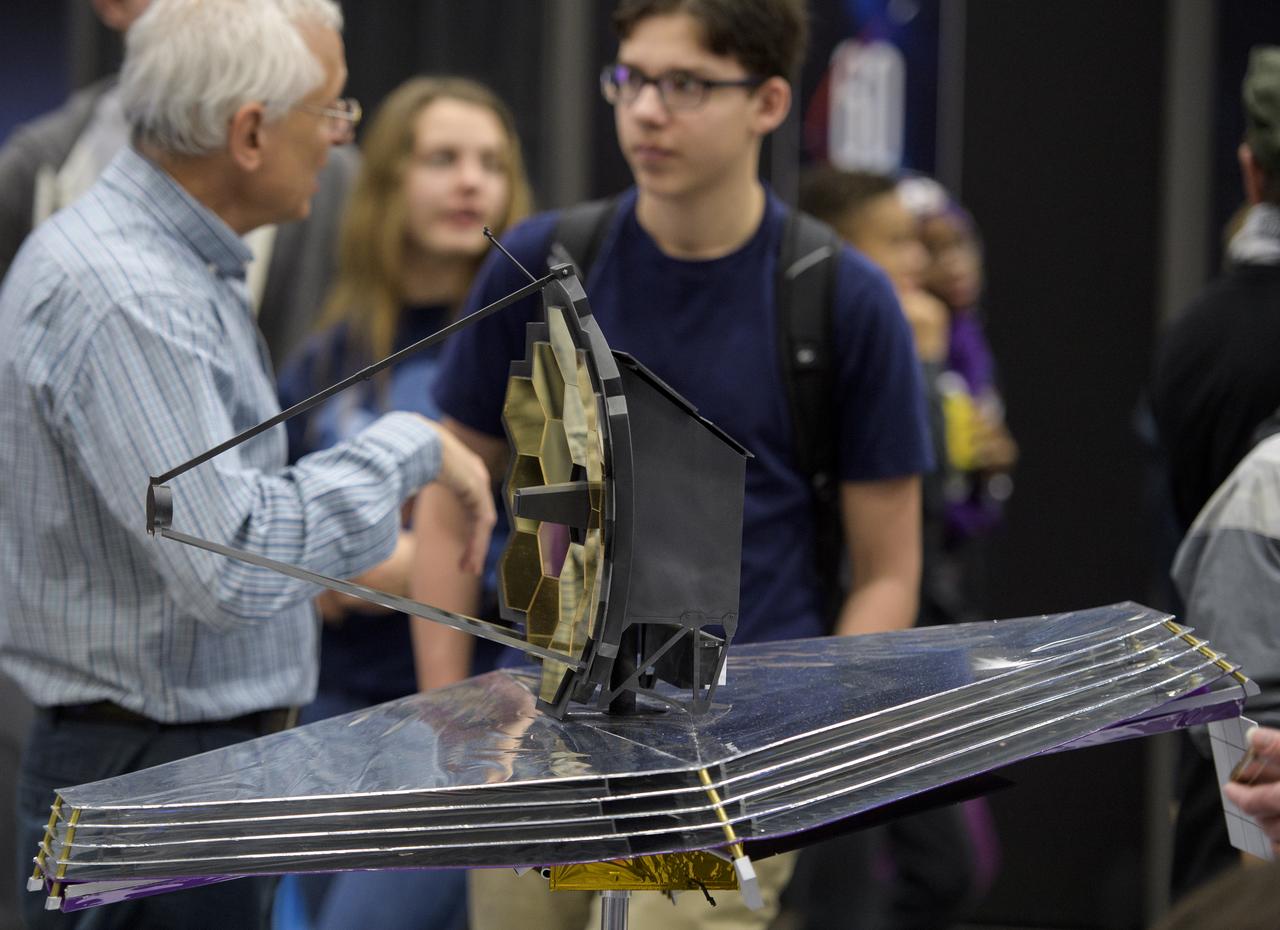
A model of NASA's James Webb Space Telescope is seen during Sneak Peek Friday at the USA Science and Engineering Festival, Friday, April 6, 2018 at the Walter E. Washington Convention Center in Washington, DC.  The festival is open to the public April 7-8.  Photo Credit: (NASA/Joel Kowsky)
2018 USA Science and Engineering Festival
Tom Barclay, Director of the Kepler/K2 Guest Observer Office at NASA's Ames Research Center, speaks about exoplanets and NASA's next exoplanet mission during Sneak Peek Friday at the USA Science and Engineering Festival, Friday, April 6, 2018 at the Walter E. Washington Convention Center in Washington, DC.  The festival is open to the public April 7-8.  Photo Credit: (NASA/Joel Kowsky)
2018 USA Science and Engineering Festival
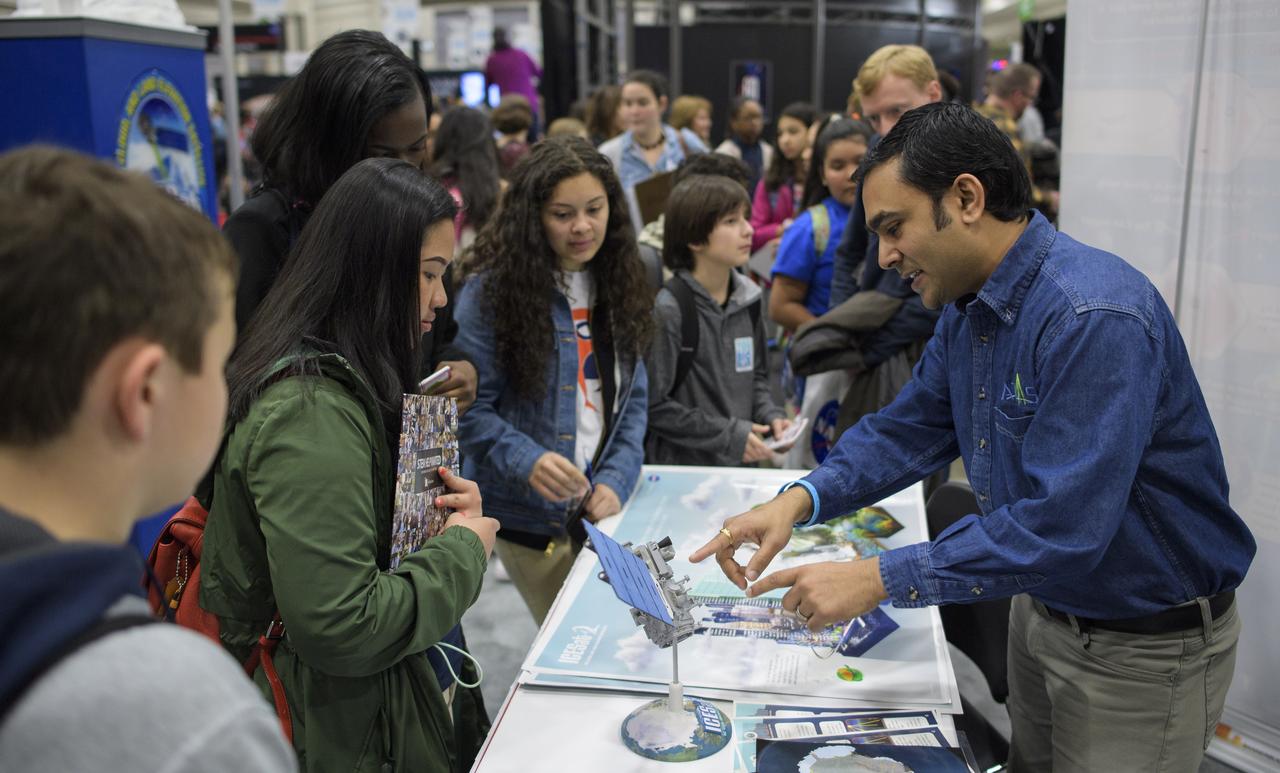
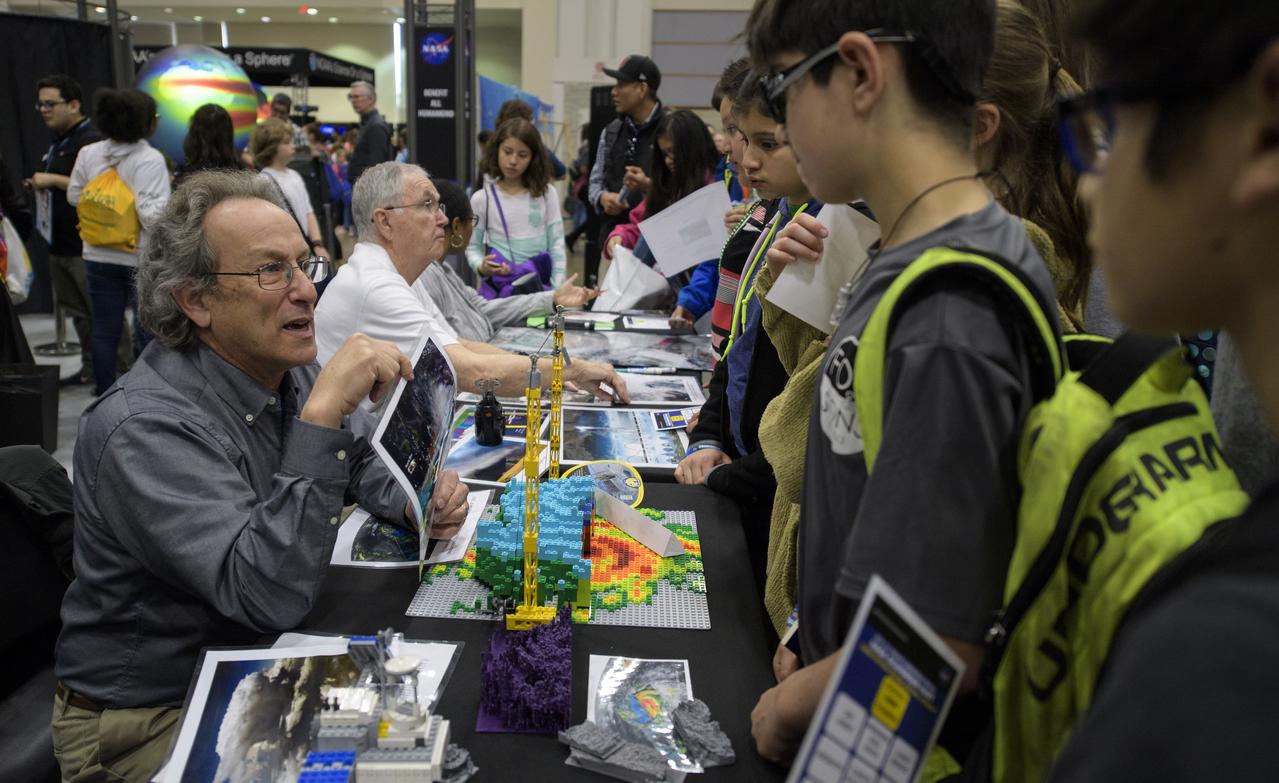
Attendees learn about NASA's Ice, Cloud, and Land Elevation Satellite 2, or ICESat-2, during Sneak Peek Friday at the USA Science and Engineering Festival, Friday, April 6, 2018 at the Walter E. Washington Convention Center in Washington, DC.  The festival is open to the public April 7-8.  Photo Credit: (NASA/Joel Kowsky)
2018 USA Science and Engineering Festival
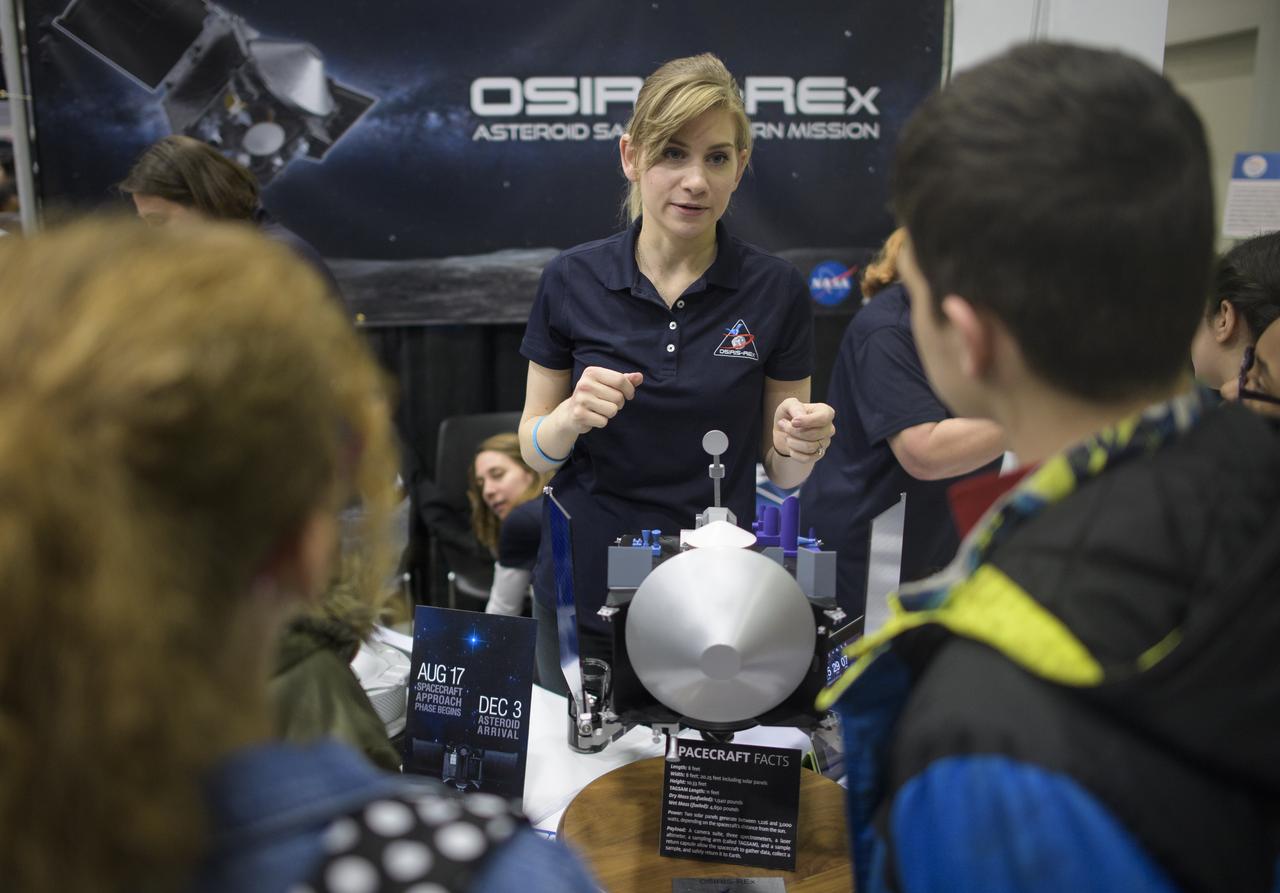
Attendees listen as a NASA staff member speaks about NASA's Origins-Spectral Interpretation-Resource Identification-Security-Regolith Explorer, or OSIRIS-REx, mission during Sneak Peek Friday at the USA Science and Engineering Festival, Friday, April 6, 2018 at the Walter E. Washington Convention Center in Washington, DC.  The festival is open to the public April 7-8.  Photo Credit: (NASA/Joel Kowsky)
2018 USA Science and Engineering Festival
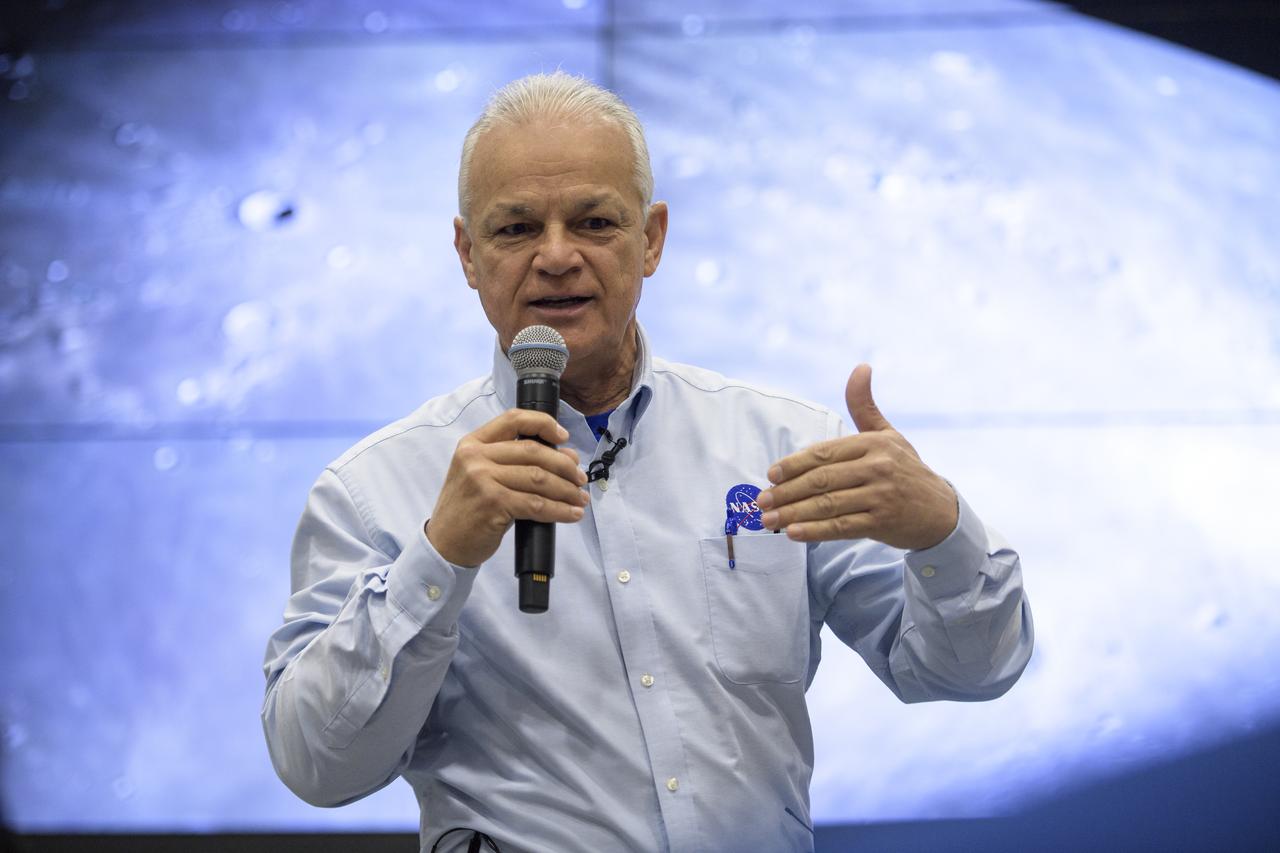
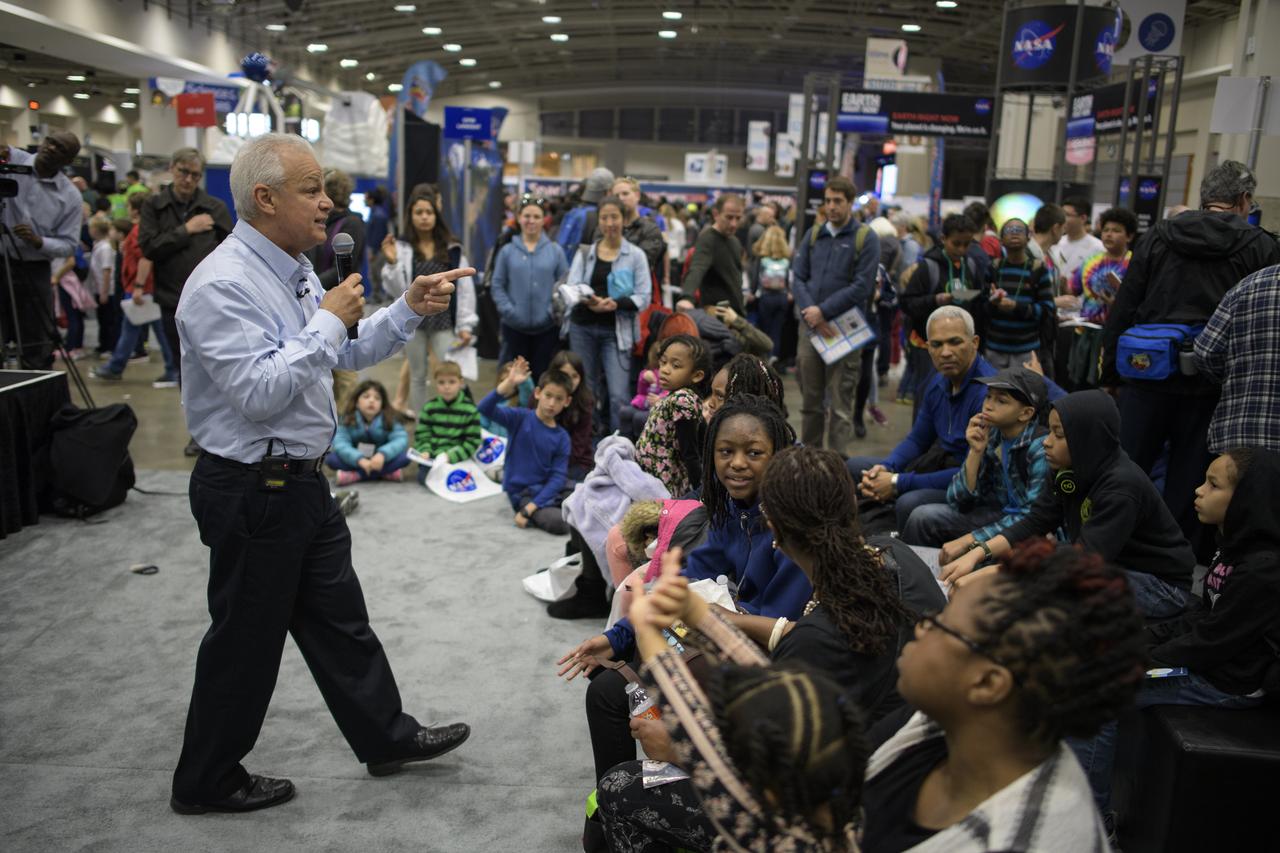
NASA Acting Chief Technologist Douglas Terrier speaks about technology challenges for the Moon, Mars, and beyond during Sneak Peek Friday at the USA Science and Engineering Festival, Friday, April 6, 2018 at the Walter E. Washington Convention Center in Washington, DC.  The festival is open to the public April 7-8.  Photo Credit: (NASA/Joel Kowsky)
2018 USA Science and Engineering Festival
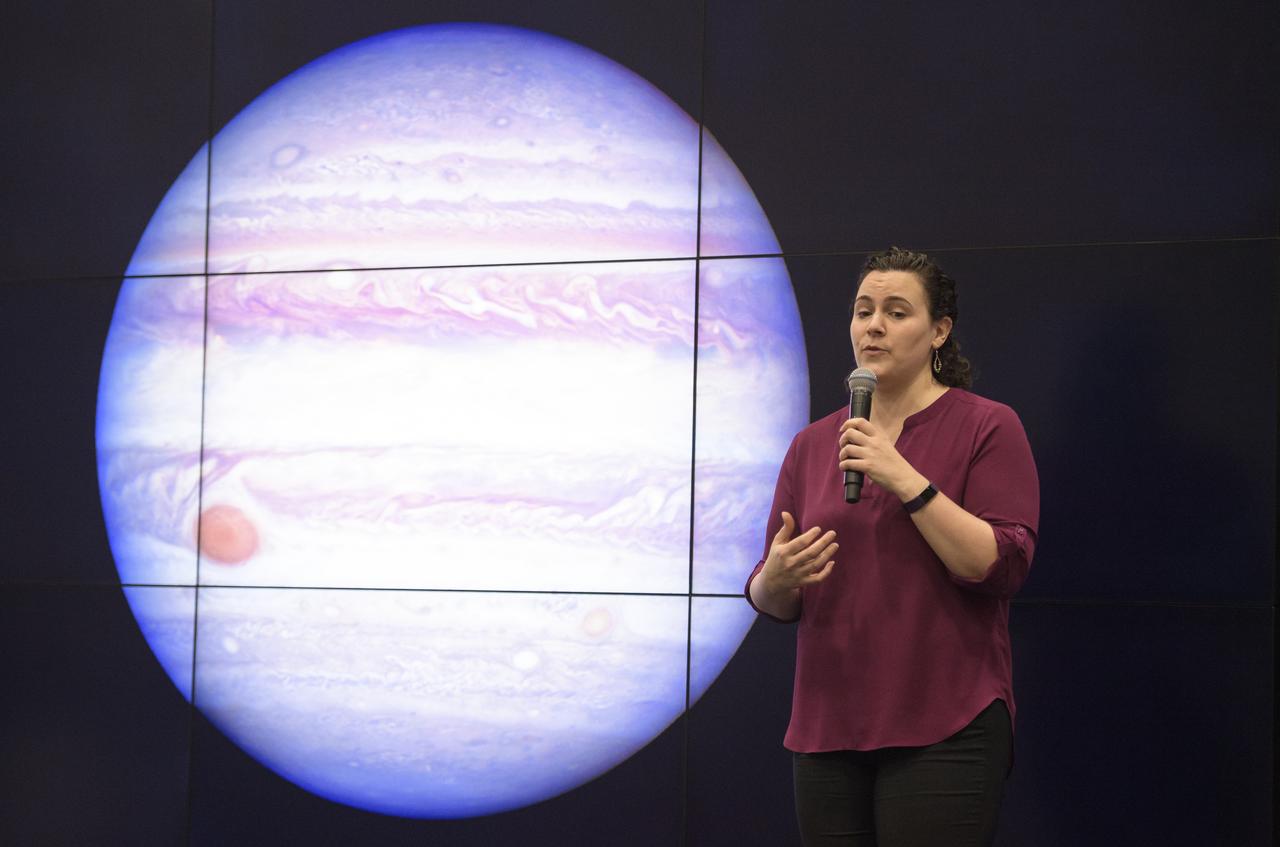
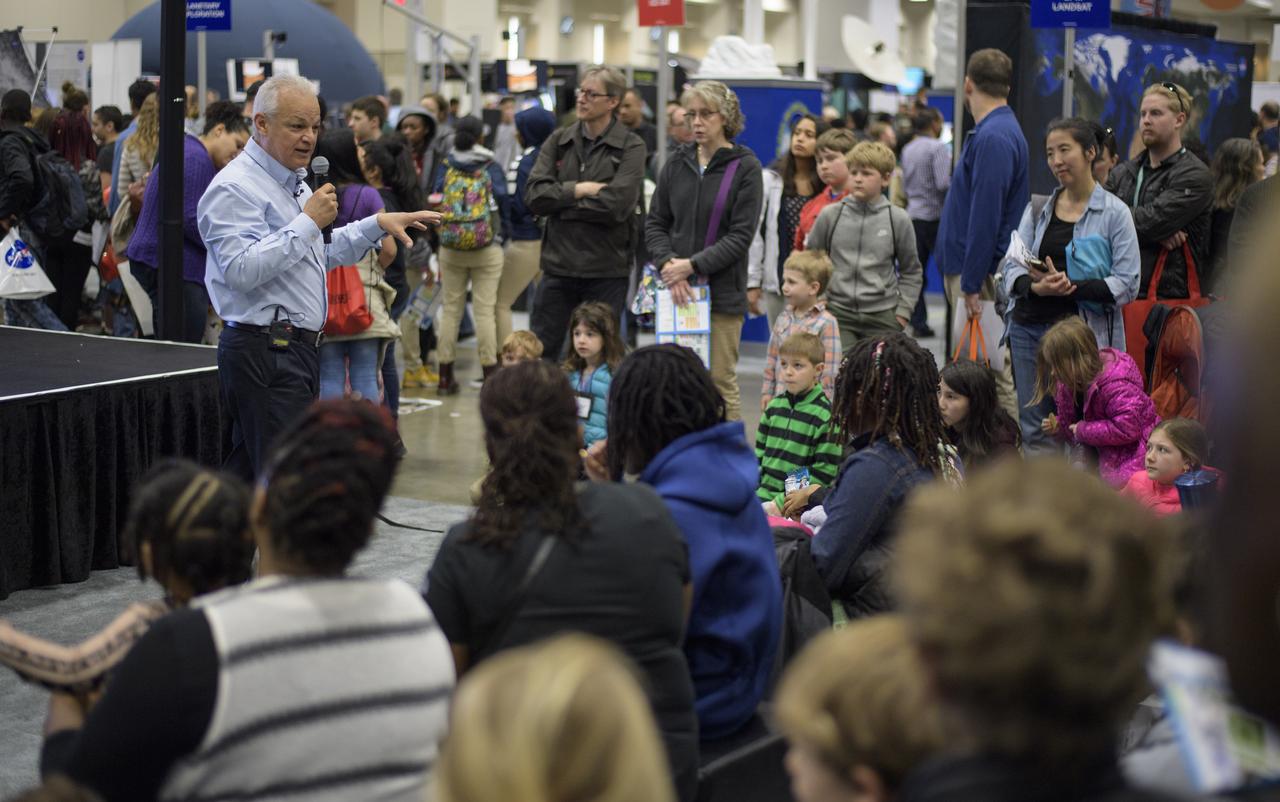
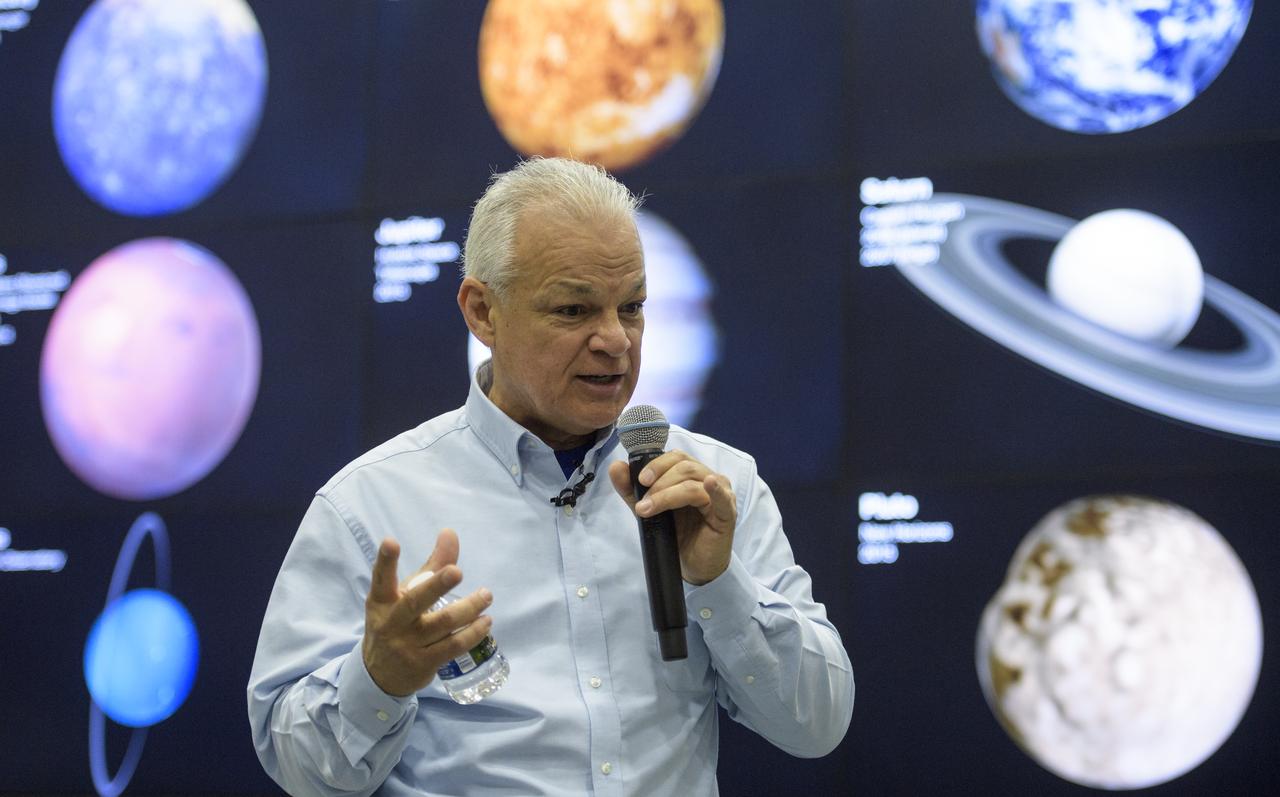
Emma Marcucci, Education and Outreach Scientist at the Space Telescope Science Institute, speaks about the planets in our Solar System during Sneak Peek Friday at the USA Science and Engineering Festival, Friday, April 6, 2018 at the Walter E. Washington Convention Center in Washington, DC.  The festival is open to the public April 7-8.  Photo Credit: (NASA/Joel Kowsky)
2018 USA Science and Engineering Festival
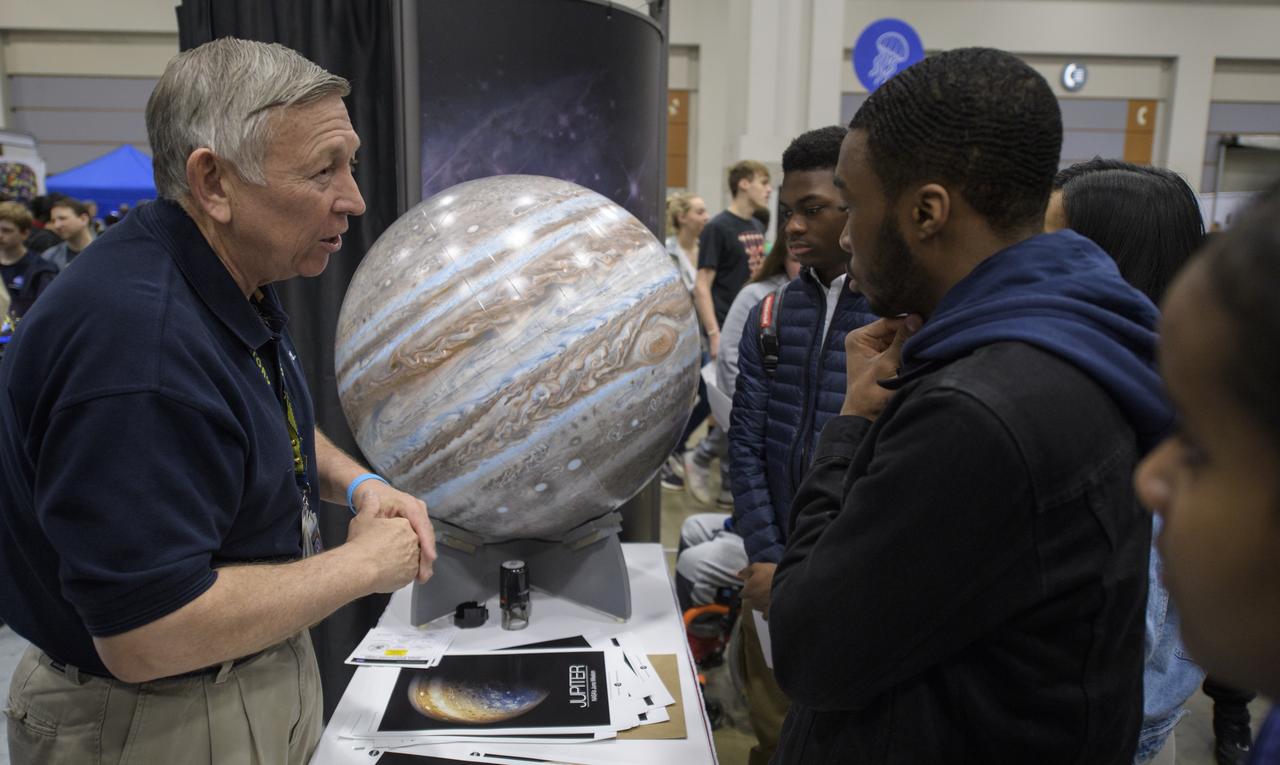
Attendees listen to a NASA staff member speak about Jupiter and NASA's Juno mission during Sneak Peek Friday at the USA Science and Engineering Festival, Friday, April 6, 2018 at the Walter E. Washington Convention Center in Washington, DC.  The festival is open to the public April 7-8.  Photo Credit: (NASA/Joel Kowsky)
2018 USA Science and Engineering Festival
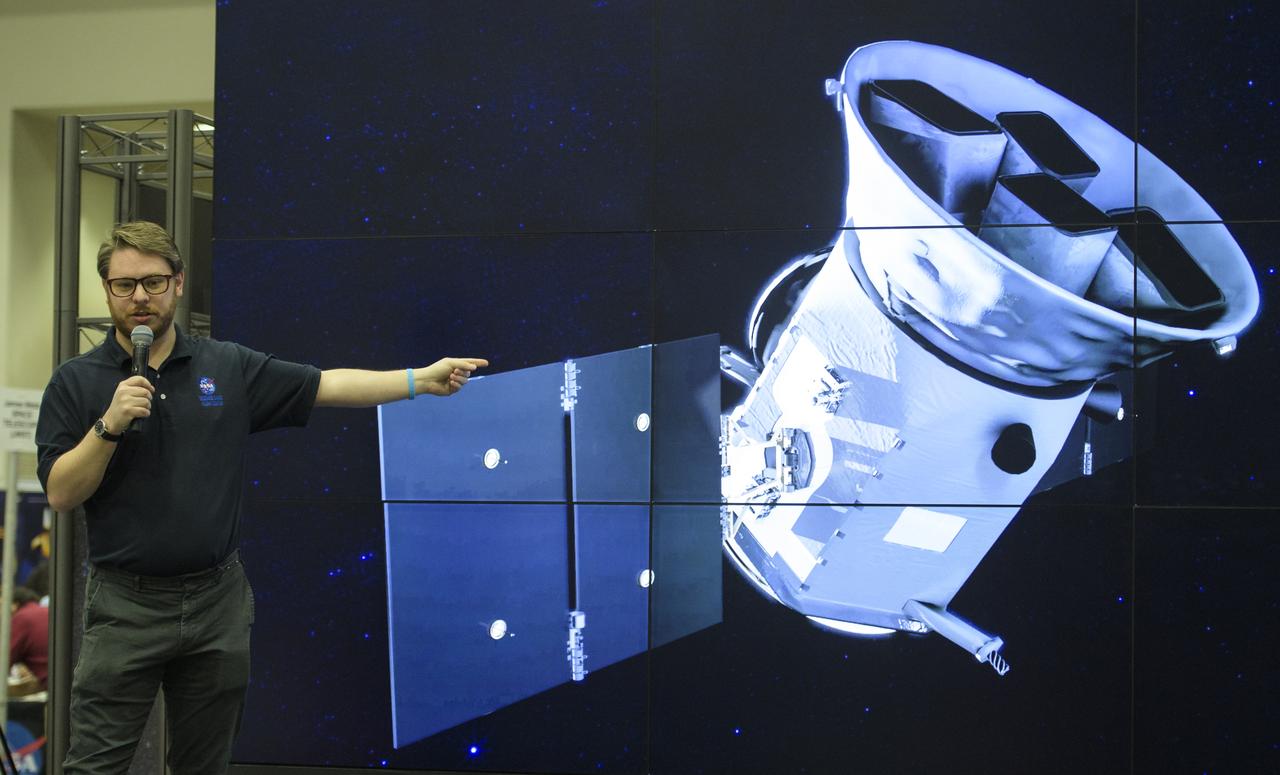
Tom Barclay, Director of the Kepler/K2 Guest Observer Office at NASA's Ames Research Center, speaks about exoplanets and NASA's next exoplanet mission, the Transiting Exoplanet Survey Satellite, during Sneak Peek Friday at the USA Science and Engineering Festival, Friday, April 6, 2018 at the Walter E. Washington Convention Center in Washington, DC.  The festival is open to the public April 7-8.  Photo Credit: (NASA/Joel Kowsky)
2018 USA Science and Engineering Festival
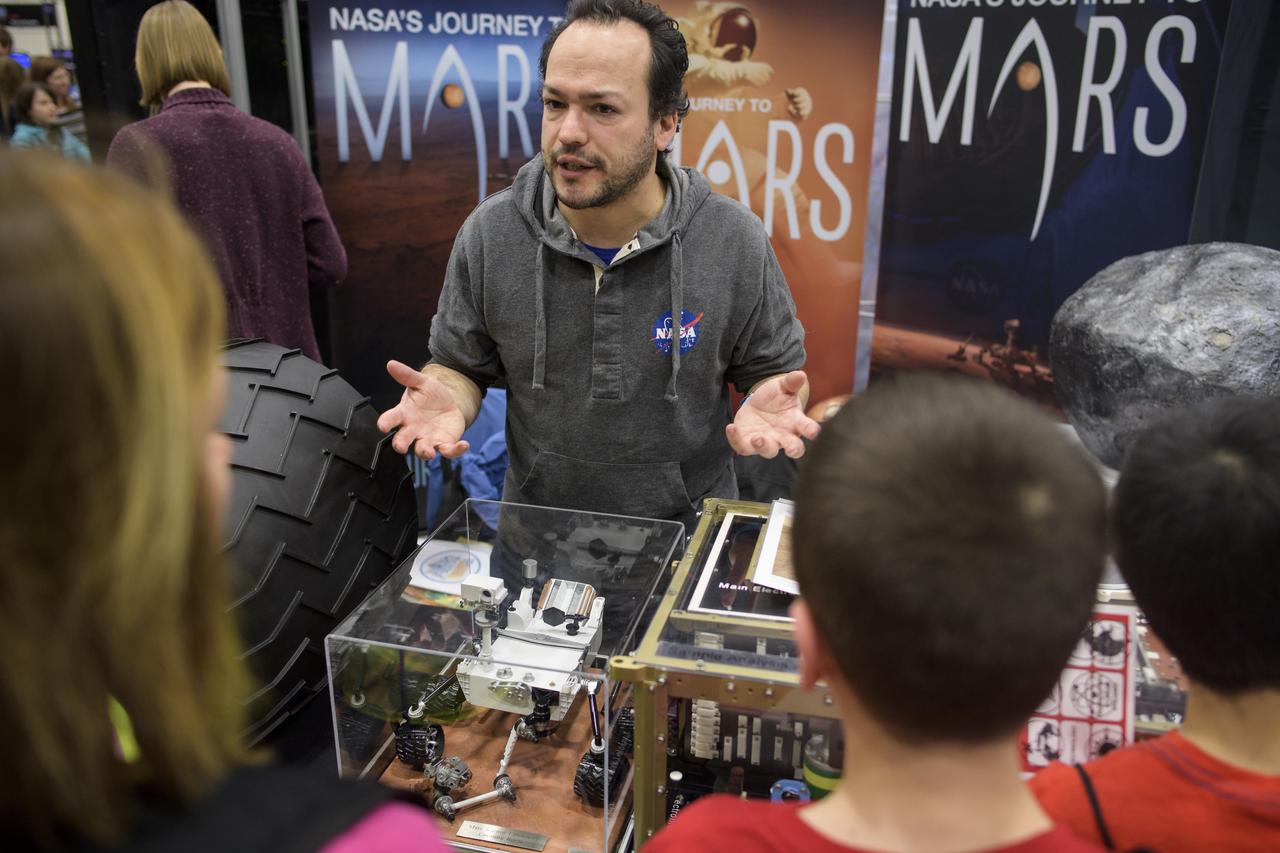
Attendees listen to a NASA staff member talk about NASA's Mars Science Laboratory mission during Sneak Peek Friday at the USA Science and Engineering Festival, Friday, April 6, 2018 at the Walter E. Washington Convention Center in Washington, DC.  The festival is open to the public April 7-8.  Photo Credit: (NASA/Joel Kowsky)
2018 USA Science and Engineering Festival
NASA Acting Chief Technologist Douglas Terrier speaks about technology challenges for the Moon, Mars, and beyond during Sneak Peek Friday at the USA Science and Engineering Festival, Friday, April 6, 2018 at the Walter E. Washington Convention Center in Washington, DC.  The festival is open to the public April 7-8.  Photo Credit: (NASA/Joel Kowsky)
2018 USA Science and Engineering Festival
NASA Acting Chief Technologist Douglas Terrier speaks about technology challenges for the Moon, Mars, and beyond during Sneak Peek Friday at the USA Science and Engineering Festival, Friday, April 6, 2018 at the Walter E. Washington Convention Center in Washington, DC.  The festival is open to the public April 7-8.  Photo Credit: (NASA/Joel Kowsky)
2018 USA Science and Engineering Festival
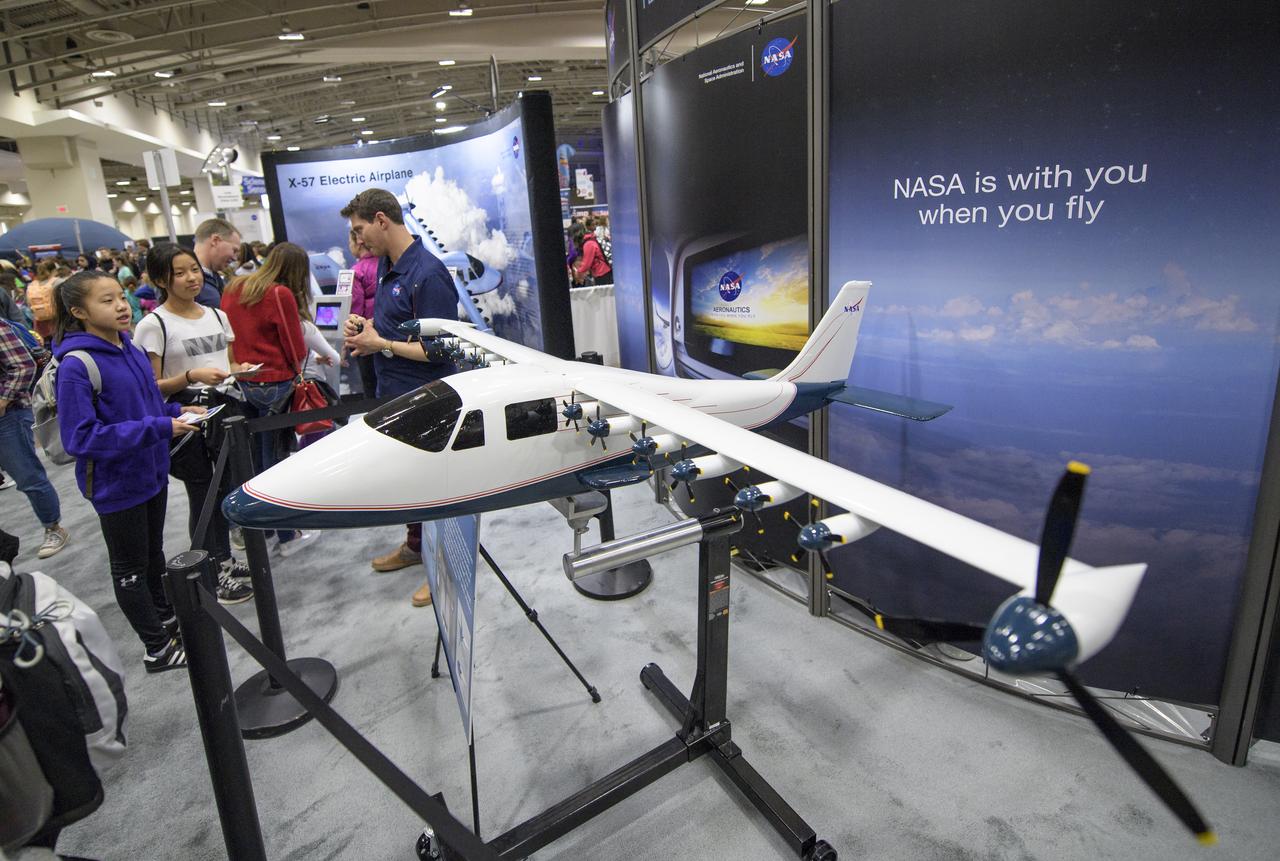
Attendees listen to a NASA staff member speak about the X-57, a research aircraft powered by 14 electric motors, during Sneak Peek Friday at the USA Science and Engineering Festival, Friday, April 6, 2018 at the Walter E. Washington Convention Center in Washington, DC.  The festival is open to the public April 7-8.  Photo Credit: (NASA/Joel Kowsky)
2018 USA Science and Engineering Festival
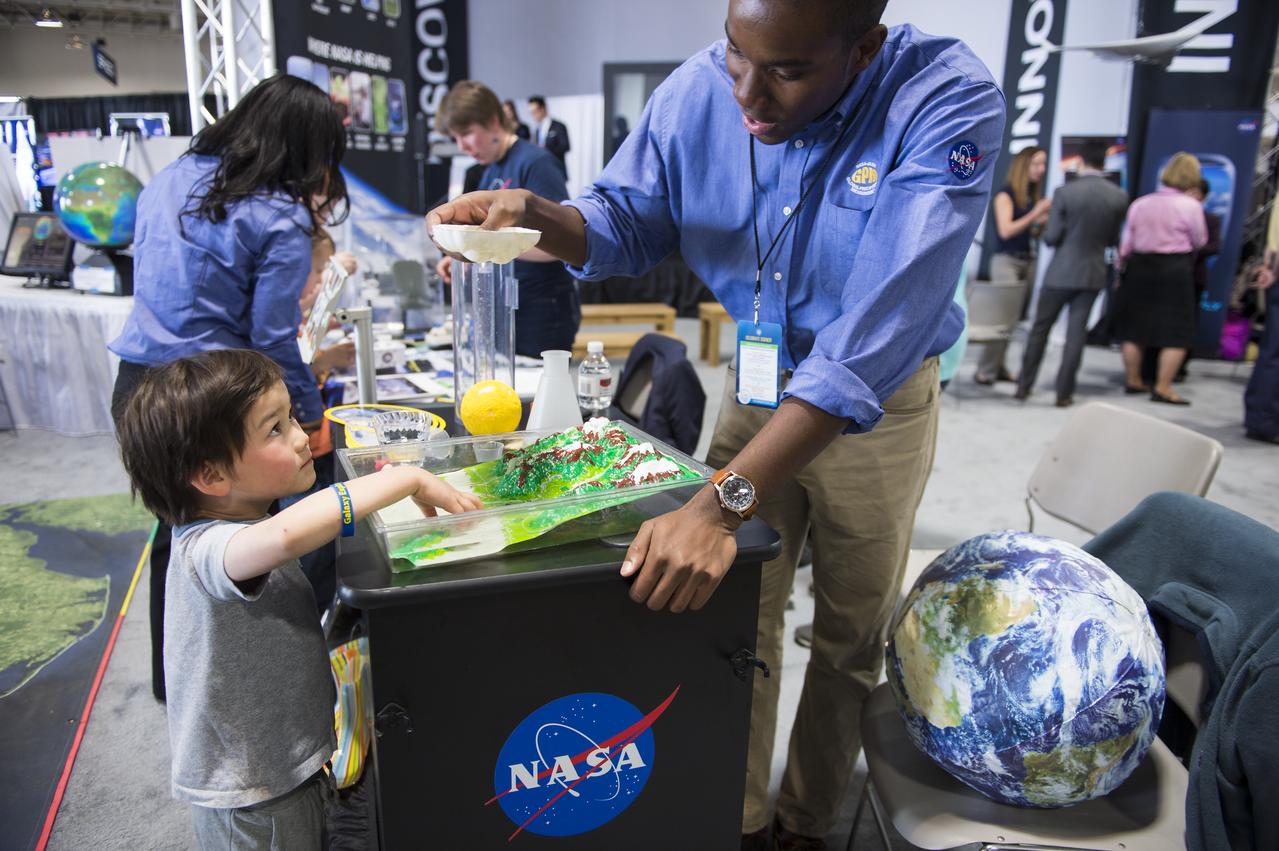
Attendees listen to a NASA staff member talk about the Global Precipitation Measurement mission during Sneak Peek Friday at the USA Science and Engineering Festival, Friday, April 6, 2018 at the Walter E. Washington Convention Center in Washington, DC.  The festival is open to the public April 7-8.  Photo Credit: (NASA/Joel Kowsky)
2018 USA Science and Engineering Festival
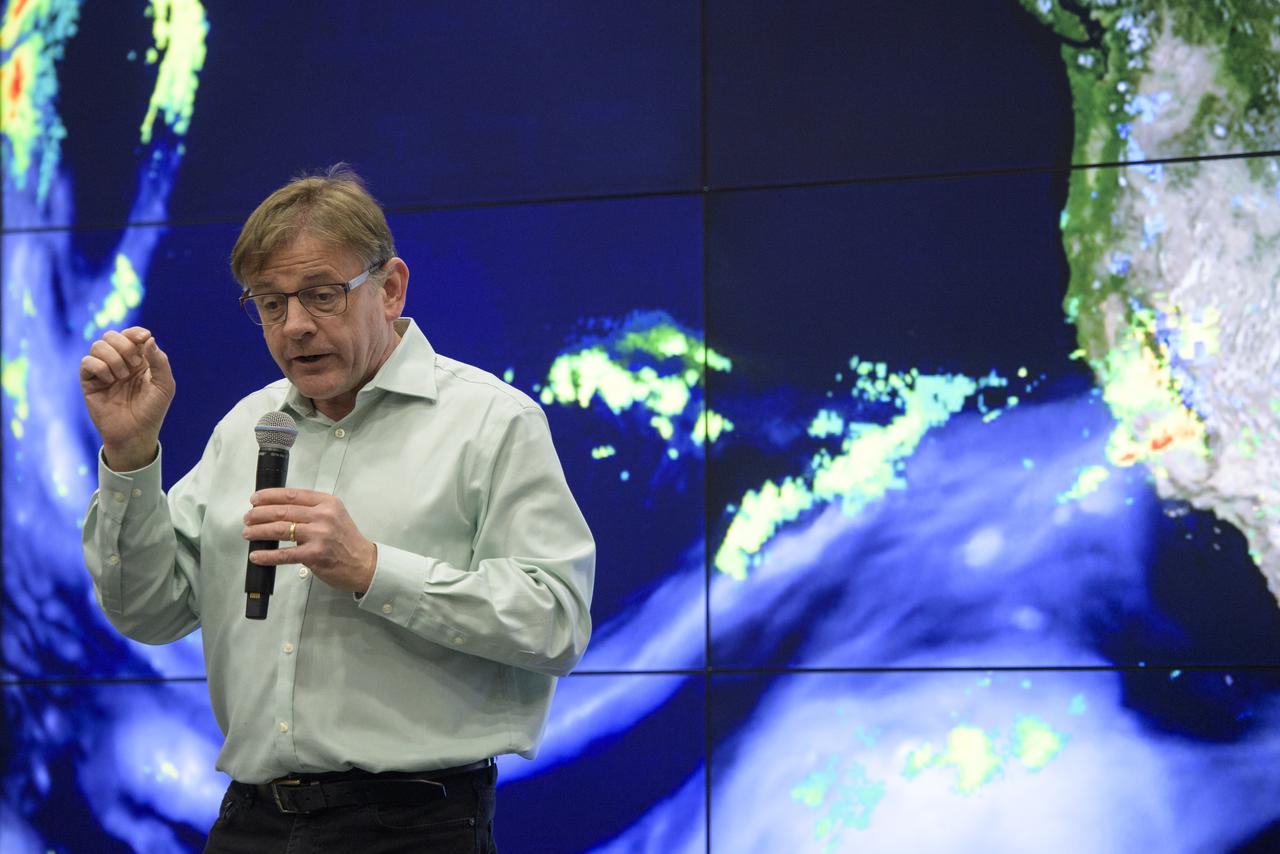
Steven Pawson, Chief of the Global Modeling and Assimilation Office at NASA's Goddard Space Flight Center, speaks about NASA's observations of Earth during Sneak Peek Friday at the USA Science and Engineering Festival, Friday, April 6, 2018 at the Walter E. Washington Convention Center in Washington, DC.  The festival is open to the public April 7-8.  Photo Credit: (NASA/Joel Kowsky)
2018 USA Science and Engineering Festival
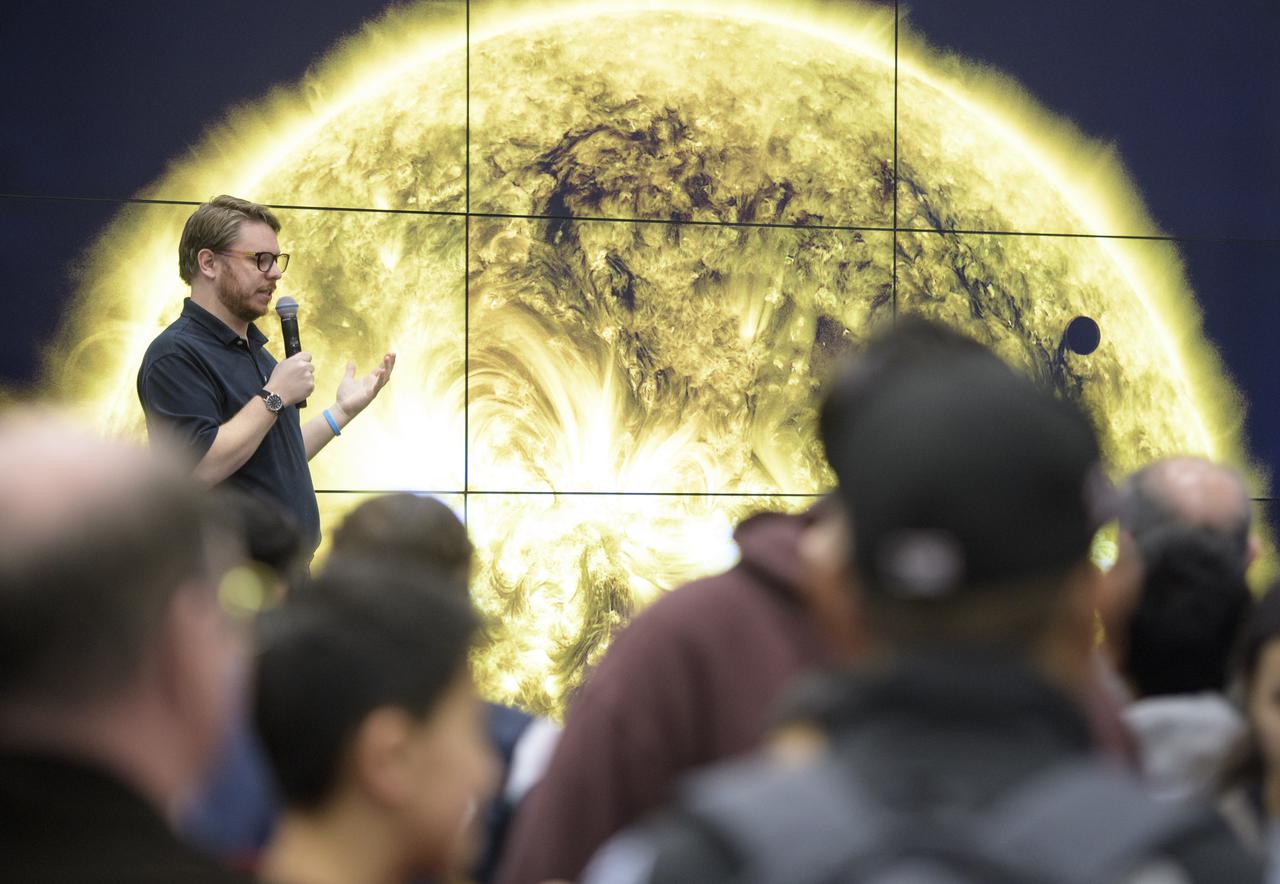
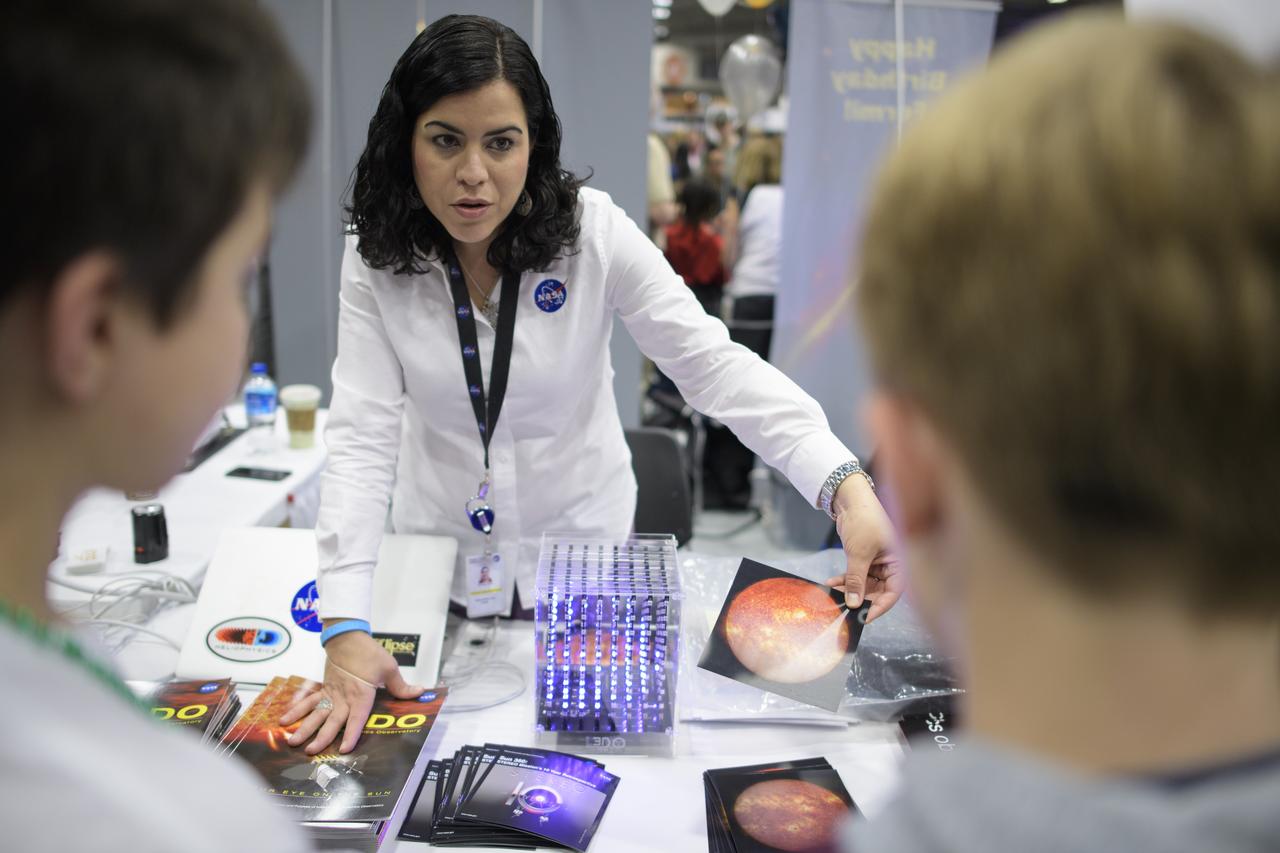
Attendees listen to a NASA staff member speak about the Sun and NASA's Solar Dynamics Observatory mission during Sneak Peek Friday at the USA Science and Engineering Festival, Friday, April 6, 2018 at the Walter E. Washington Convention Center in Washington, DC.  The festival is open to the public April 7-8.  Photo Credit: (NASA/Joel Kowsky)
2018 USA Science and Engineering Festival
NASA Acting Chief Technologist Douglas Terrier speaks about technology challenges for the Moon, Mars, and beyond during Sneak Peek Friday at the USA Science and Engineering Festival, Friday, April 6, 2018 at the Walter E. Washington Convention Center in Washington, DC.  The festival is open to the public April 7-8.  Photo Credit: (NASA/Joel Kowsky)
2018 USA Science and Engineering Festival
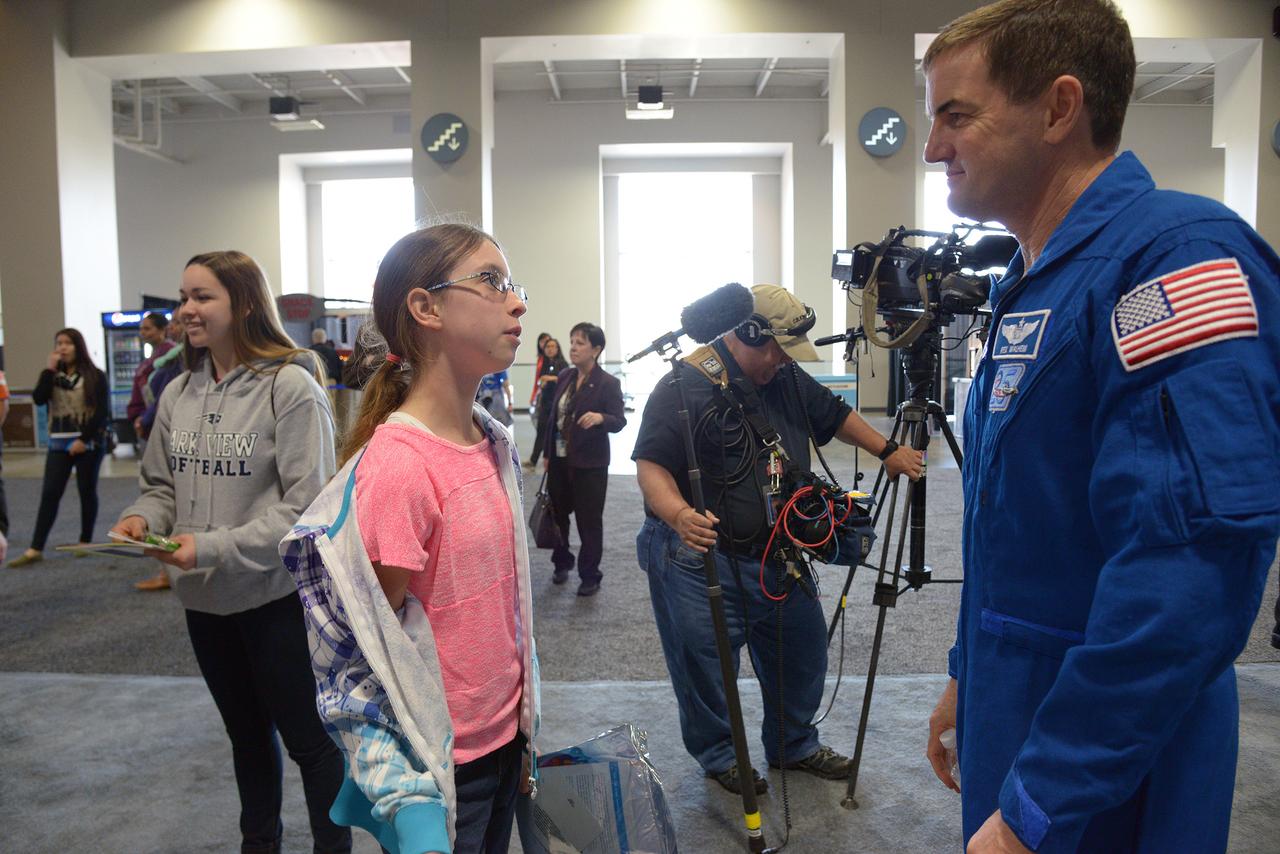
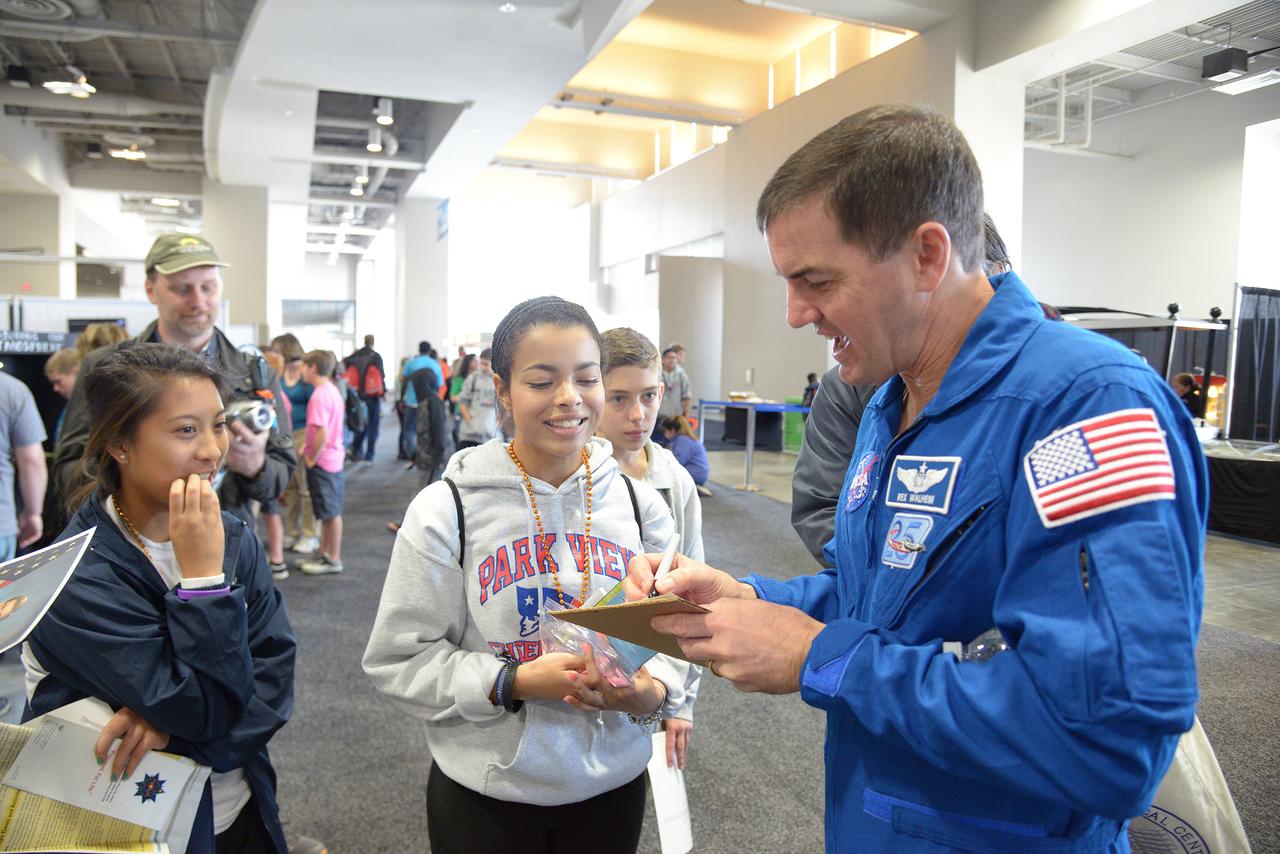
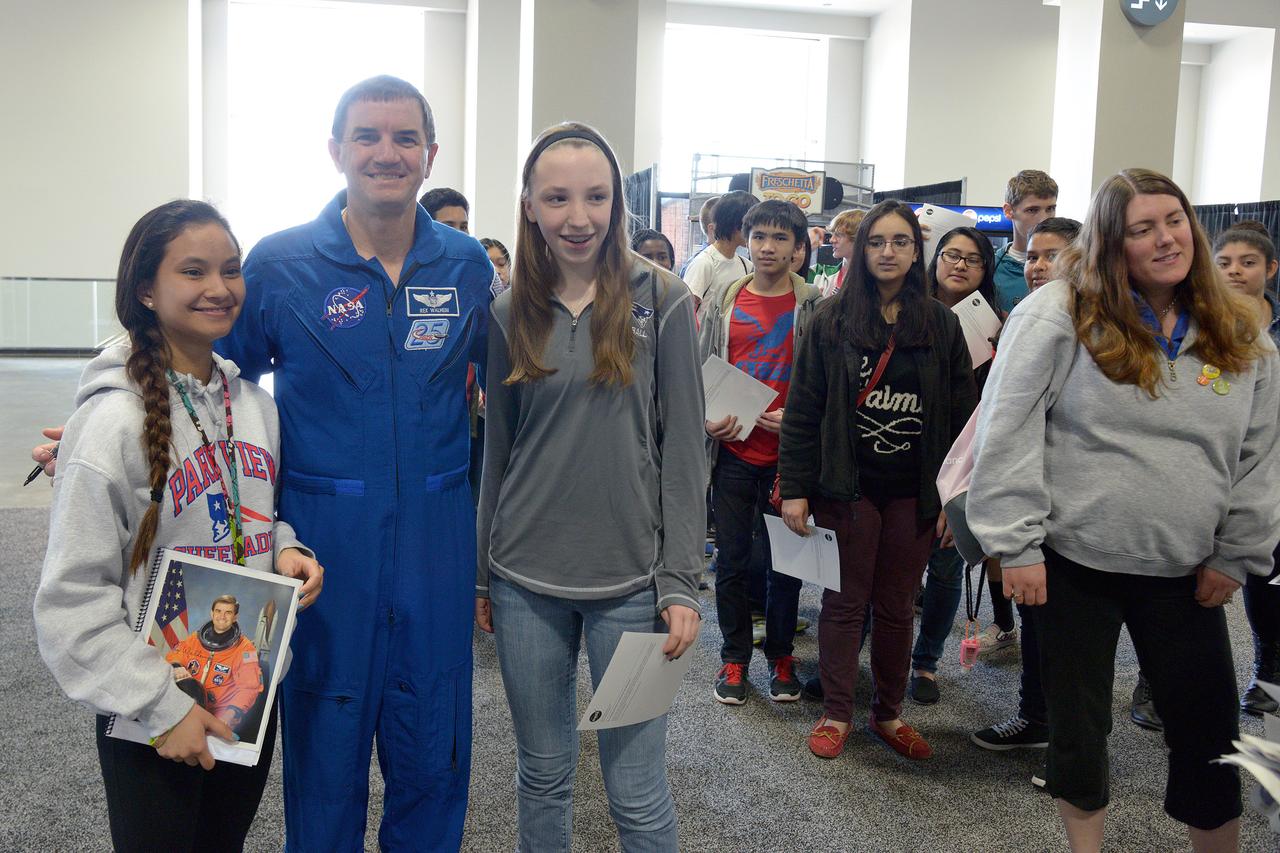
Astronaut Rex Walheim meets students at the USA Science and Engineering Festival in Washington on April 25, 2014.  Part of Batch image transfer from Flickr.
USA Science and Engineering Fest
Astronaut Rex Walheim meets students at the USA Science and Engineering Festival in Washington on April 25, 2014.  Part of Batch image transfer from Flickr.
USA Science and Engineering Fest
Astronaut Rex Walheim meets students at the USA Science and Engineering Festival in Washington on April 25, 2014. Part of Batch image transfer from Flickr.
USA Science and Engineering Fest
Astronaut Rex Walheim meets students at the USA Science and Engineering Festival in Washington on April 25, 2014. Part of Batch image transfer from Flickr.
USA Science and Engineering Fest
Astronaut Rex Walheim meets students at the USA Science and Engineering Festival in Washington on April 25, 2014. Part of Batch image transfer from Flickr.
USA Science and Engineering Fest
Astronaut Rex Walheim meets students at the USA Science and Engineering Festival in Washington on April 25, 2014. Part of Batch image transfer from Flickr.
USA Science and Engineering Fest
Astronaut Rex Walheim meets students at the USA Science and Engineering Festival in Washington on April 25, 2014. Part of Batch image transfer from Flickr.
USA Science and Engineering Fest
A NASA staff member describes the Global Precipitation Measurement Mission. The GPM Core Observatory satellite was launched into space on February 27, 2014 and will measure rain and snow worldwide every three hours. The GPM mission will help advance our understanding of Earth's water and energy cycles, improve the forecasting of extreme events that cause natural disasters, and extend current capabilities of using satellite precipitation information. The USA Science and Engineering Festival took place at the Washington Convention Center in Washington, DC on April 26 and 27, 2014. Photo Credit: (NASA/Aubrey Gemignani)
USA Science and Engineering Festival 2014
A NASA staff member describes the Global Precipitation Measurement Mission. The GPM Core Observatory satellite was launched into space on February 27, 2014 and will measure rain and snow worldwide every three hours. The GPM mission will help advance our understanding of Earth's water and energy cycles, improve the forecasting of extreme events that cause natural disasters, and extend current capabilities of using satellite precipitation information. The USA Science and Engineering Festival took place at the Washington Convention Center in Washington, DC on April 26 and 27, 2014. Photo Credit: (NASA/Aubrey Gemignani)
USA Science and Engineering Festival 2014
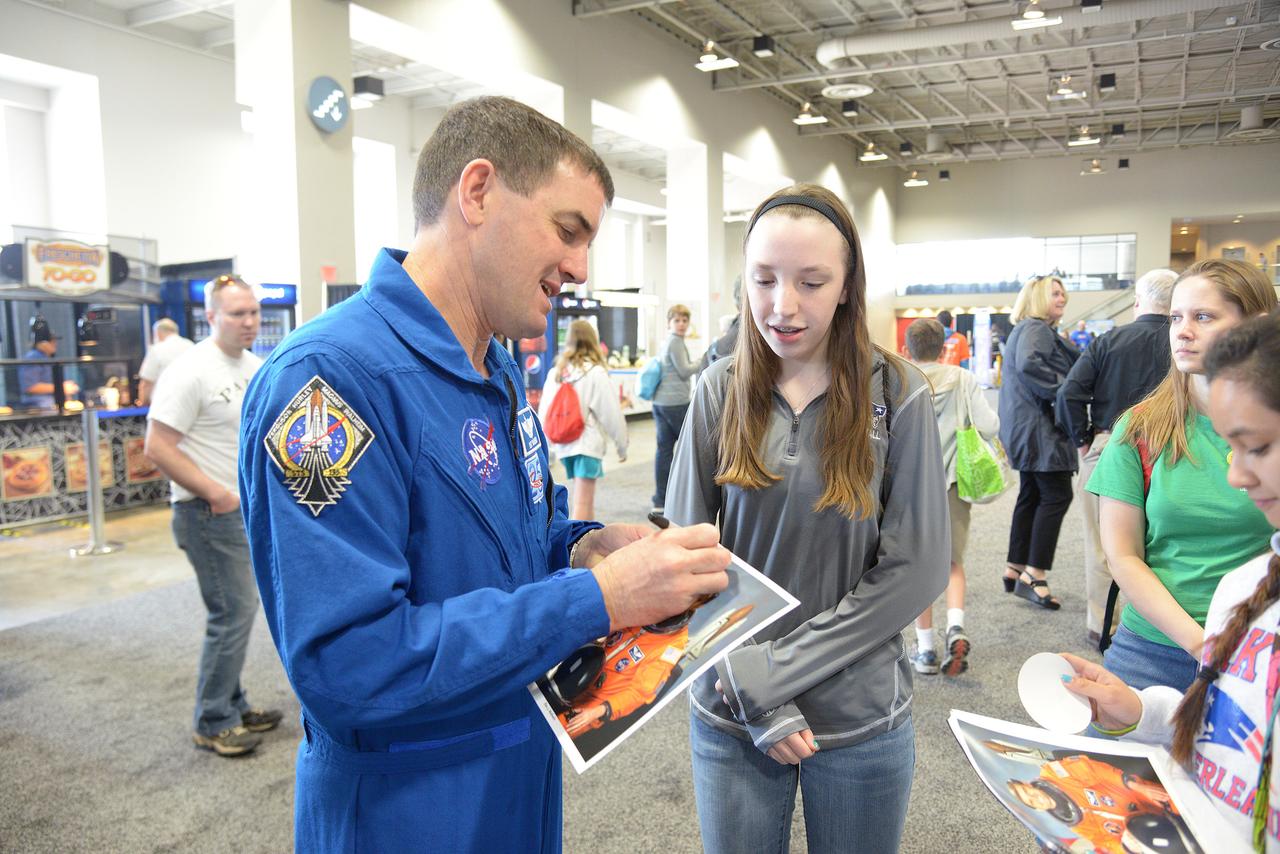
The winner of the high school portion of the Exploration Design Challenge is announced at the USA Science and Engineering Festival in Washington on April 25, 2014. Astronaut Rex Walheim signs autographs for students. Part of Batch image transfer from Flickr.
USA Science and Engineering Fest
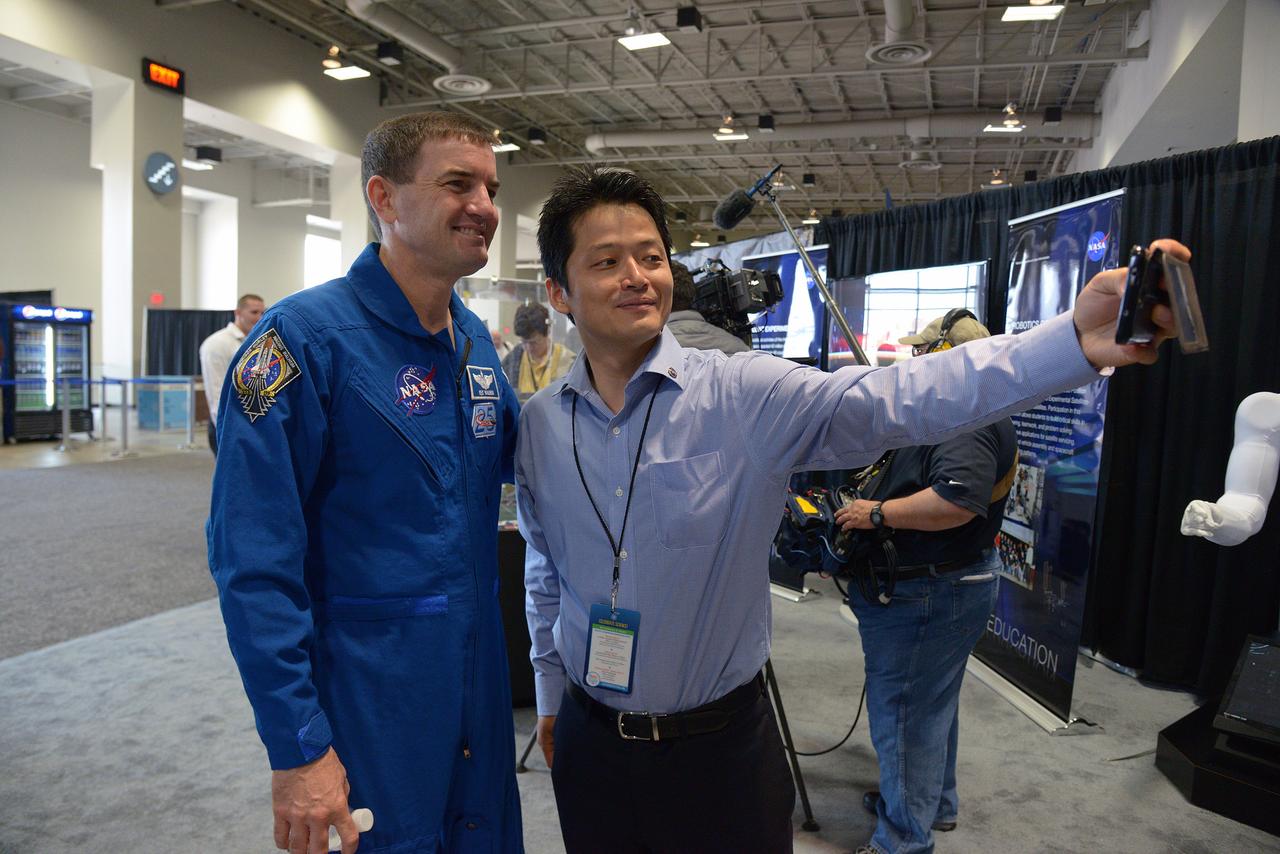
The winner of the high school portion of the Exploration Design Challenge is announced at the USA Science and Engineering Festival in Washington on April 25, 2014. Astronaut Rex Walheim is photographed with event participant. Part of Batch image transfer from Flickr.
USA Science and Engineering Fest
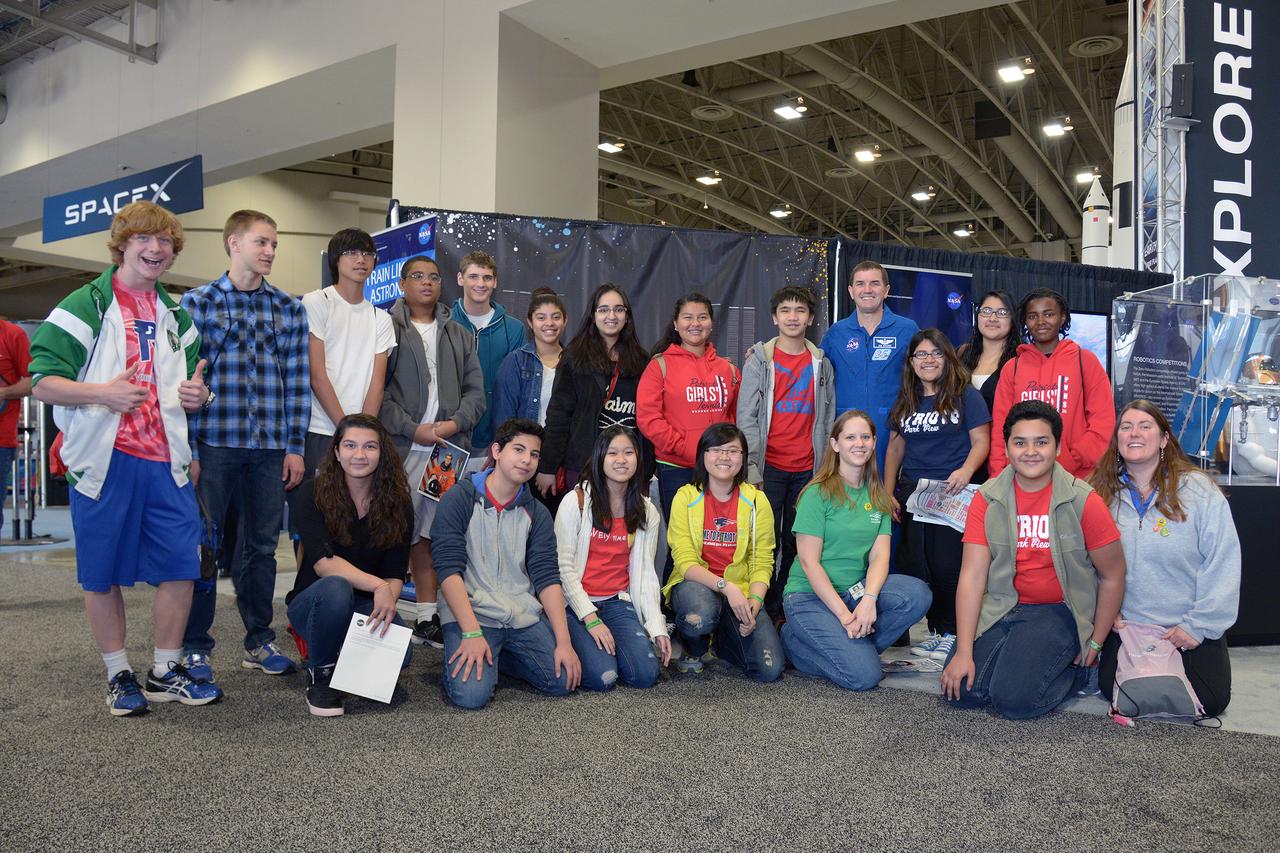
The winner of the high school portion of the Exploration Design Challenge is announced at the USA Science and Engineering Festival in Washington on April 25, 2014. Astronaut Rex Walheim is photographed with students. Part of Batch image transfer from Flickr.
USA Science and Engineering Fest
The winner of the high school portion of the Exploration Design Challenge is announced at the USA Science and Engineering Festival in Washington on April 25, 2014. Astronaut Rex Walheim talks with students. Part of Batch image transfer from Flickr.
USA Science and Engineering Fest
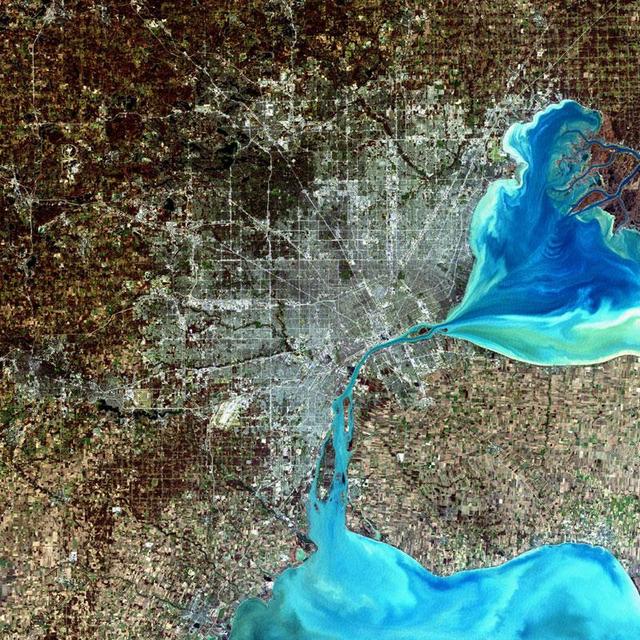
Detroit, Michigan, USA Sensor: L7 ETM+ Acquisition Date: December 11, 2001 Path/Row: 20/30 Lat/Long: 42.330/-83.046  Detroit, Michigan, is commonly referred to as Motor City because of the many automobile manufacturing plants located in the city. It is the largest city in Michigan, with a population approaching one million.  Credit: NASA/Goddard/Landsat  <b><a href="http://www.nasa.gov/audience/formedia/features/MP_Photo_Guidelines.html" rel="nofollow">NASA image use policy.</a></b>  <b><a href="http://www.nasa.gov/centers/goddard/home/index.html" rel="nofollow">NASA Goddard Space Flight Center</a></b> enables NASA’s mission through four scientific endeavors: Earth Science, Heliophysics, Solar System Exploration, and Astrophysics. Goddard plays a leading role in NASA’s accomplishments by contributing compelling scientific knowledge to advance the Agency’s mission.  <b>Follow us on <a href="http://twitter.com/NASA_GoddardPix" rel="nofollow">Twitter</a></b>  <b>Like us on <a href="http://www.facebook.com/pages/Greenbelt-MD/NASA-Goddard/395013845897?ref=tsd" rel="nofollow">Facebook</a></b>  <b>Find us on <a href="http://instagram.com/nasagoddard?vm=grid" rel="nofollow">Instagram</a></b>
Detroit, Michigan, USA
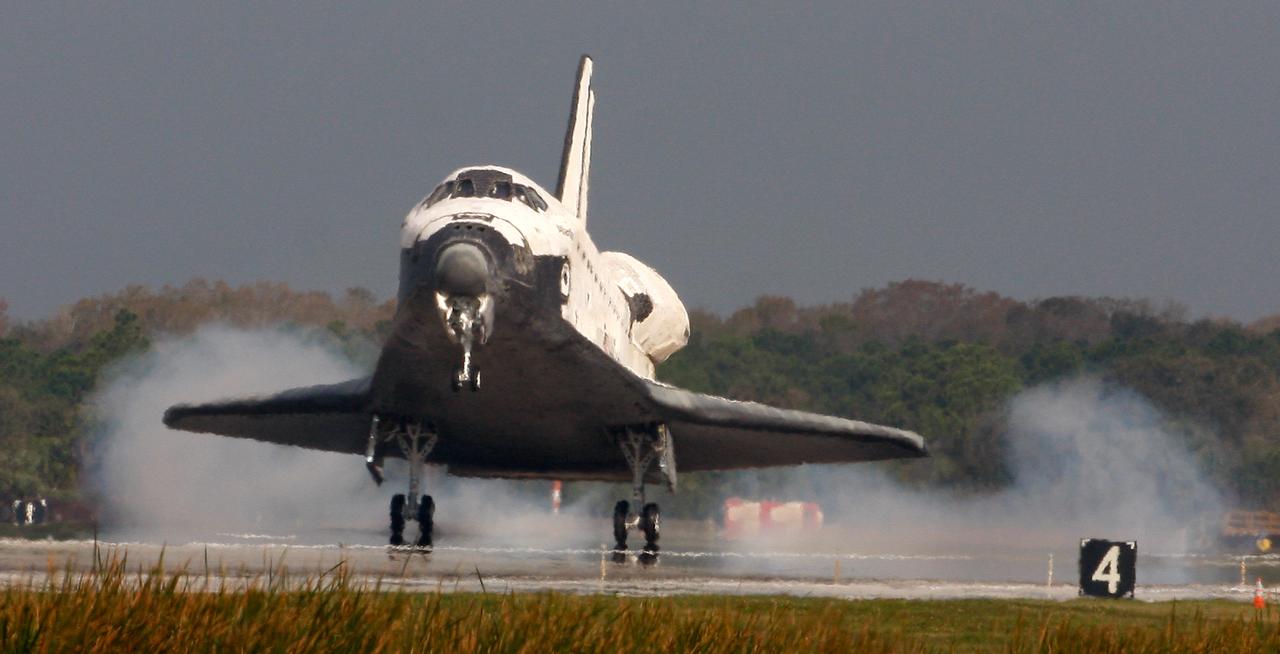
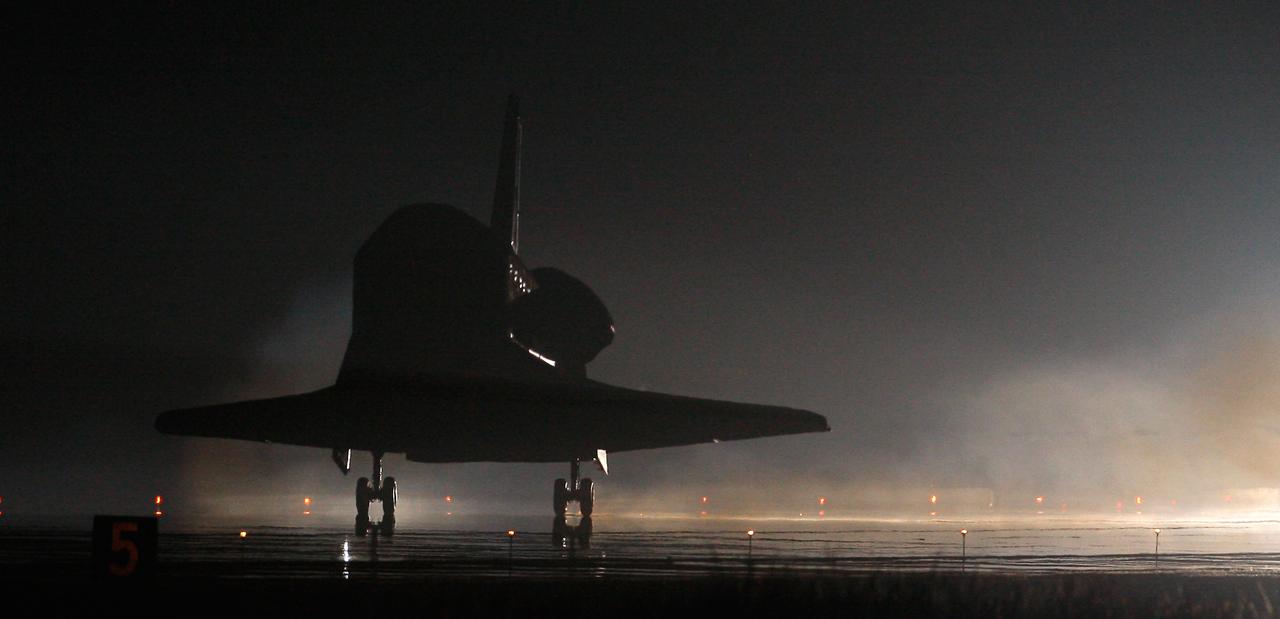
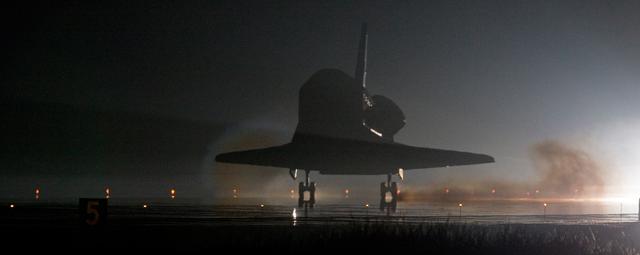
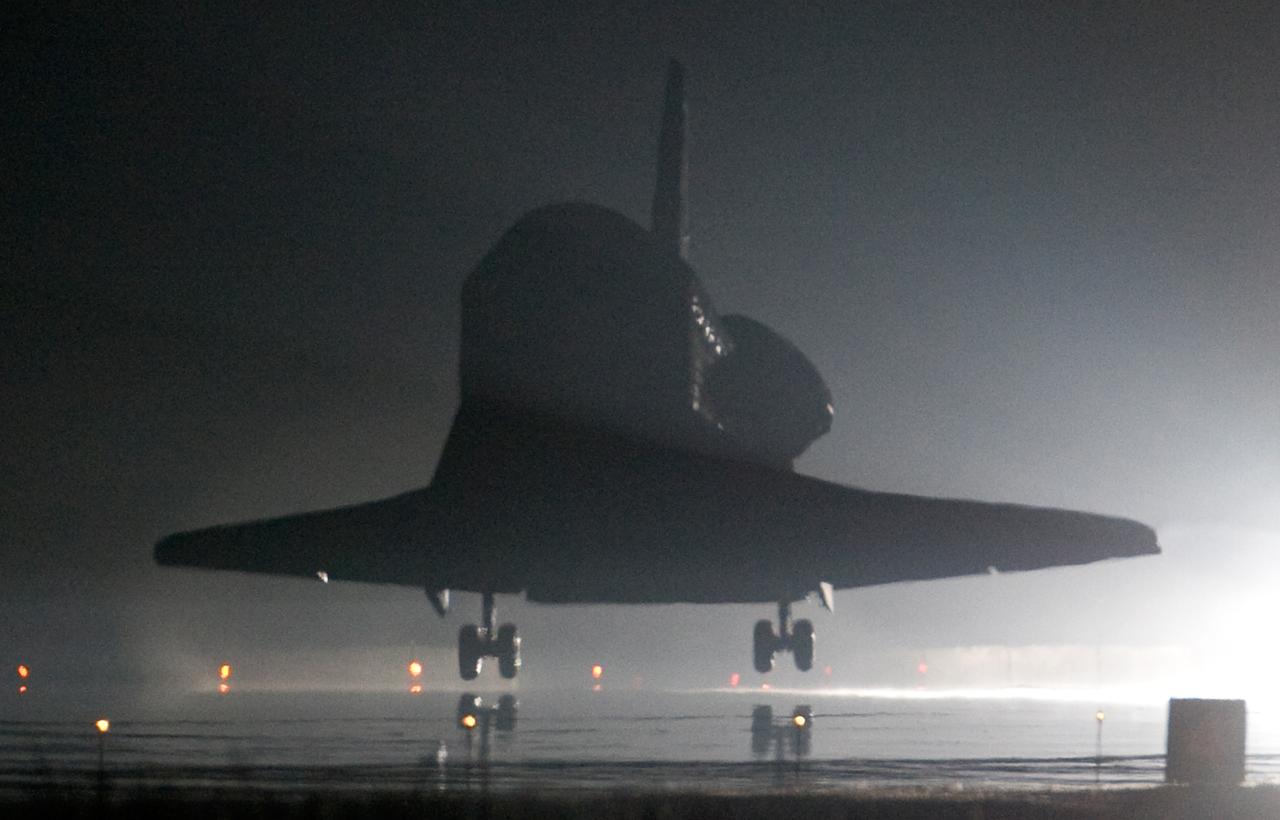
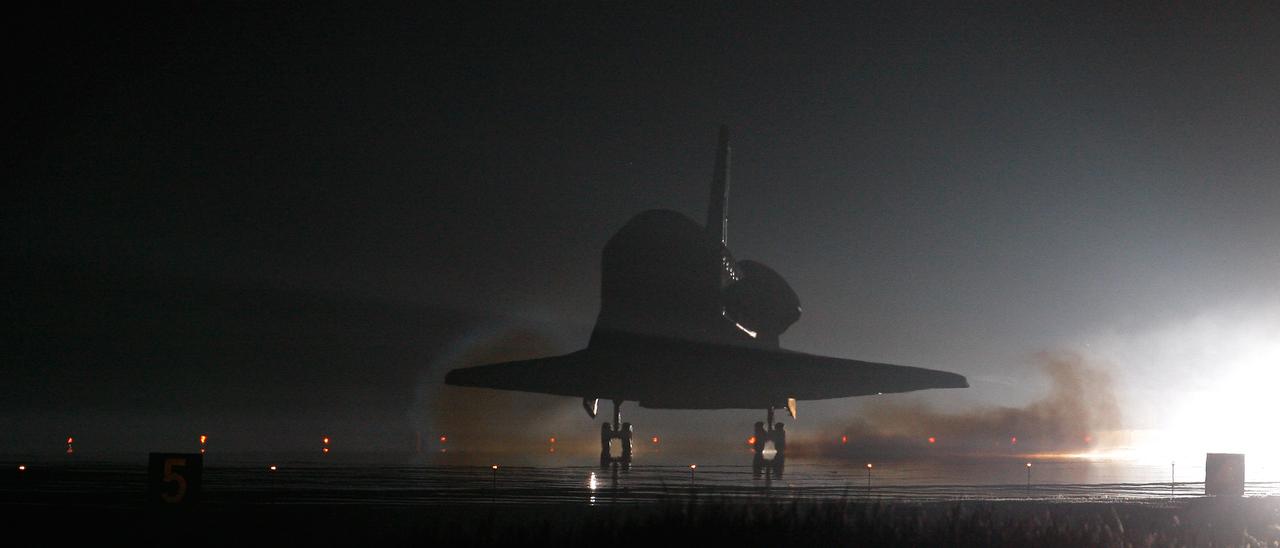
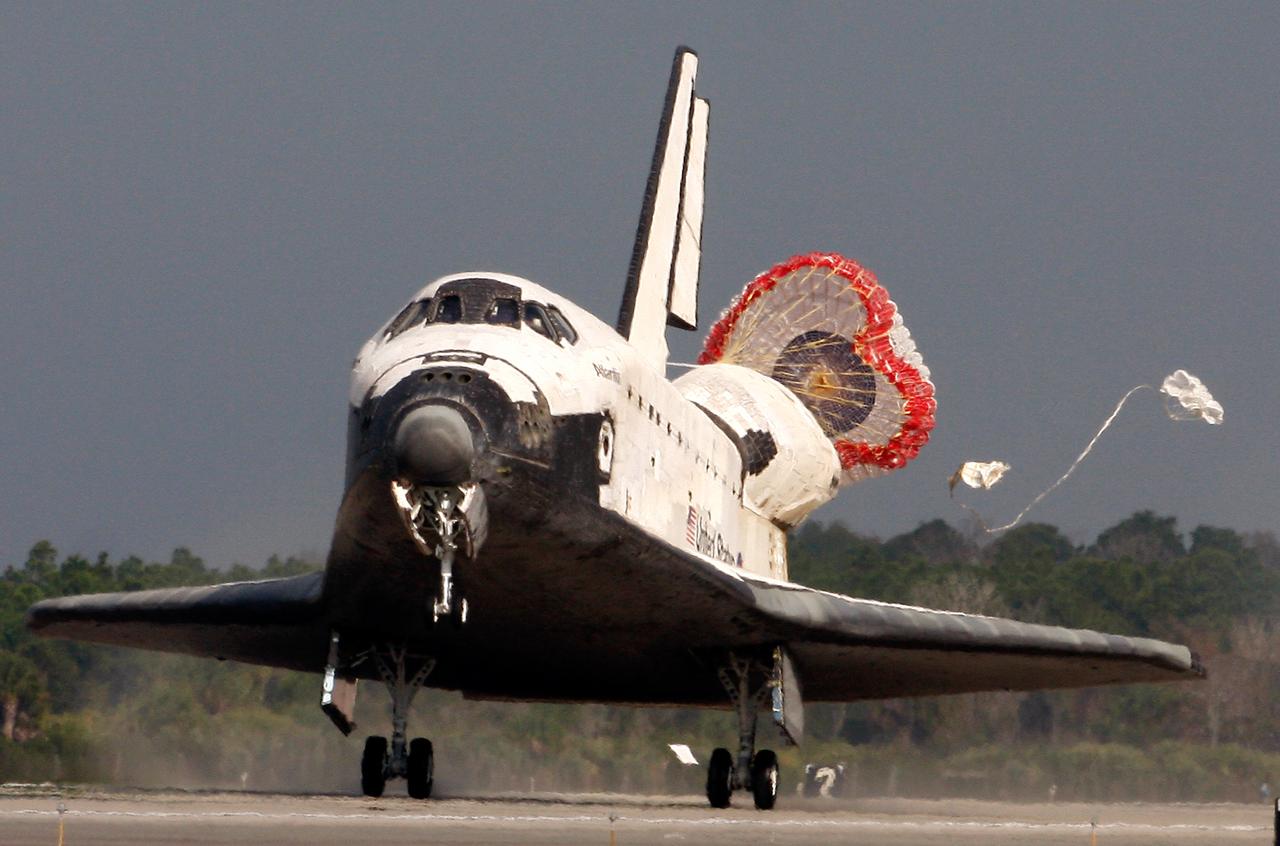
Space shuttle Atlantis lands at the Kennedy Space Center, Shuttle Landing Facility, Cape Canaveral, Florida, USA, 20 February 2008. Atlantis completed a thirteen day mission to the International Space Station where it delivered the latest modu;e to the ISS named Columbus.
USA SHUTTLE ATLANTIS
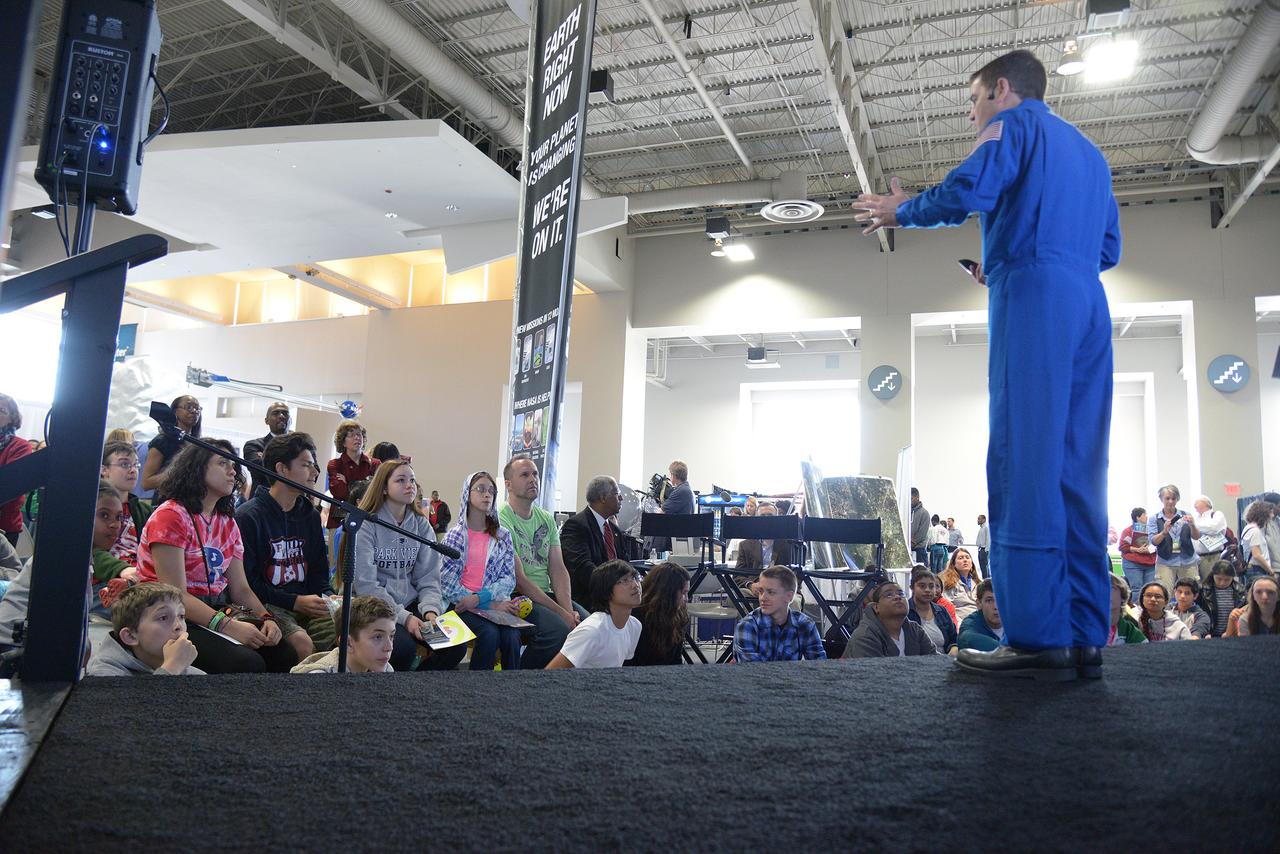
The winner of the high school portion of the Exploration Design Challenge is announced at the USA Science and Engineering Festival in Washington on April 25, 2014. Astronaut Rex Walheim speaks to students from podium. Part of Batch image transfer from Flickr.
USA Science and Engineering Fest
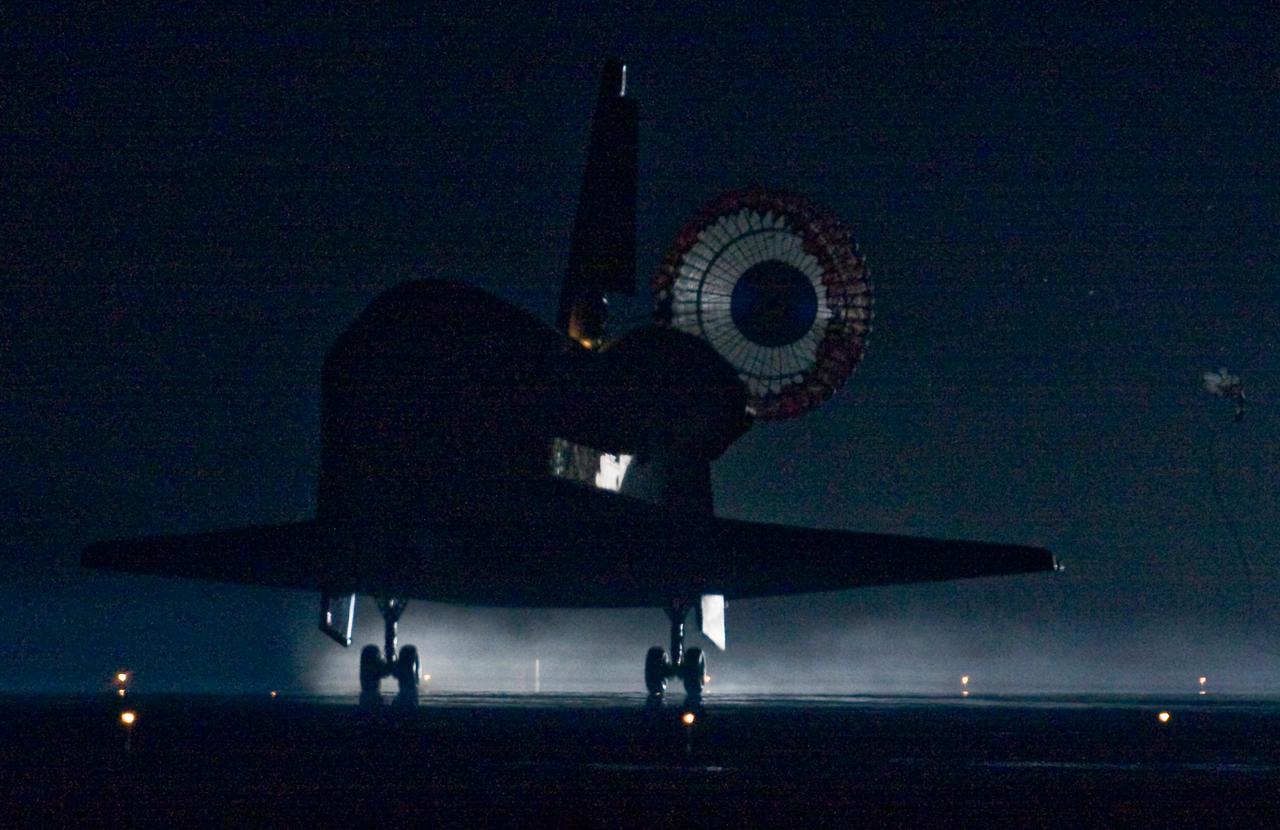
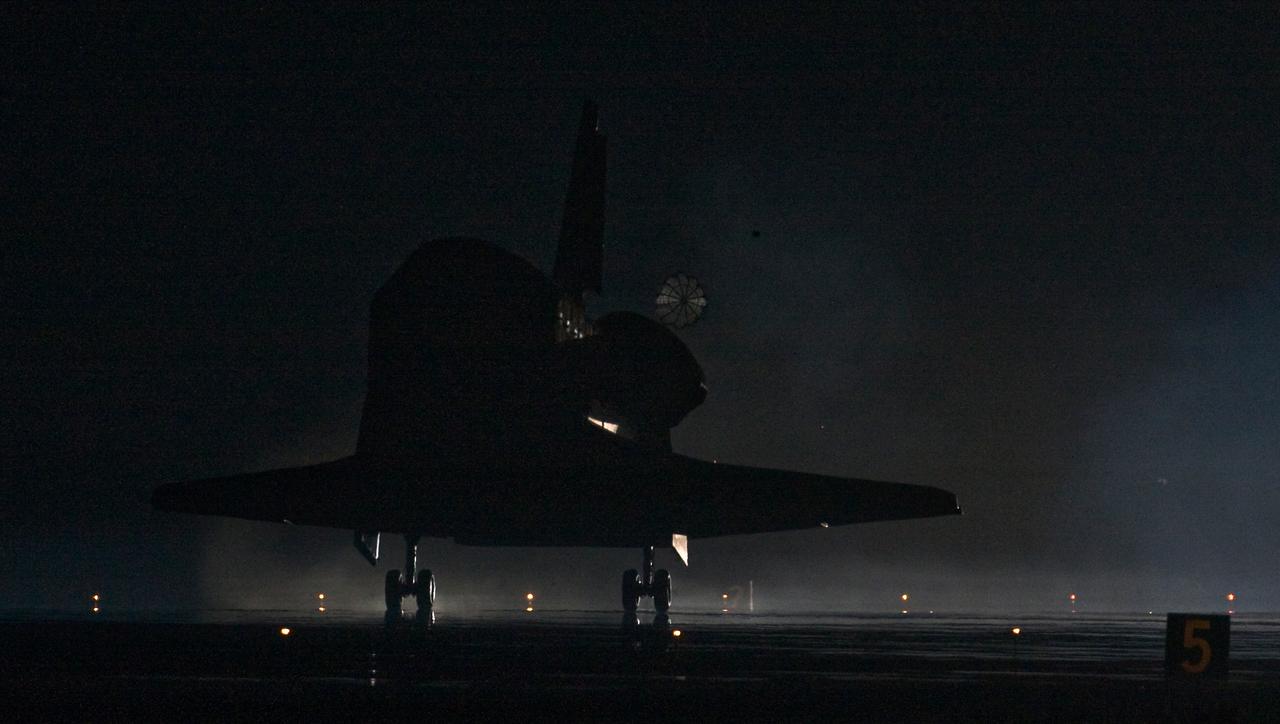
Space shuttle Atlantis lands at the Kennedy Space Center, Shuttle Landing Facility, Cape Canaveral, Florida, USA, 20 February 2008. Atlantis completed a thirteen day mission to the International Space Station where it delivered the latest modu;e to the ISS named Columbus.
USA SHUTTLE ATLANTIS
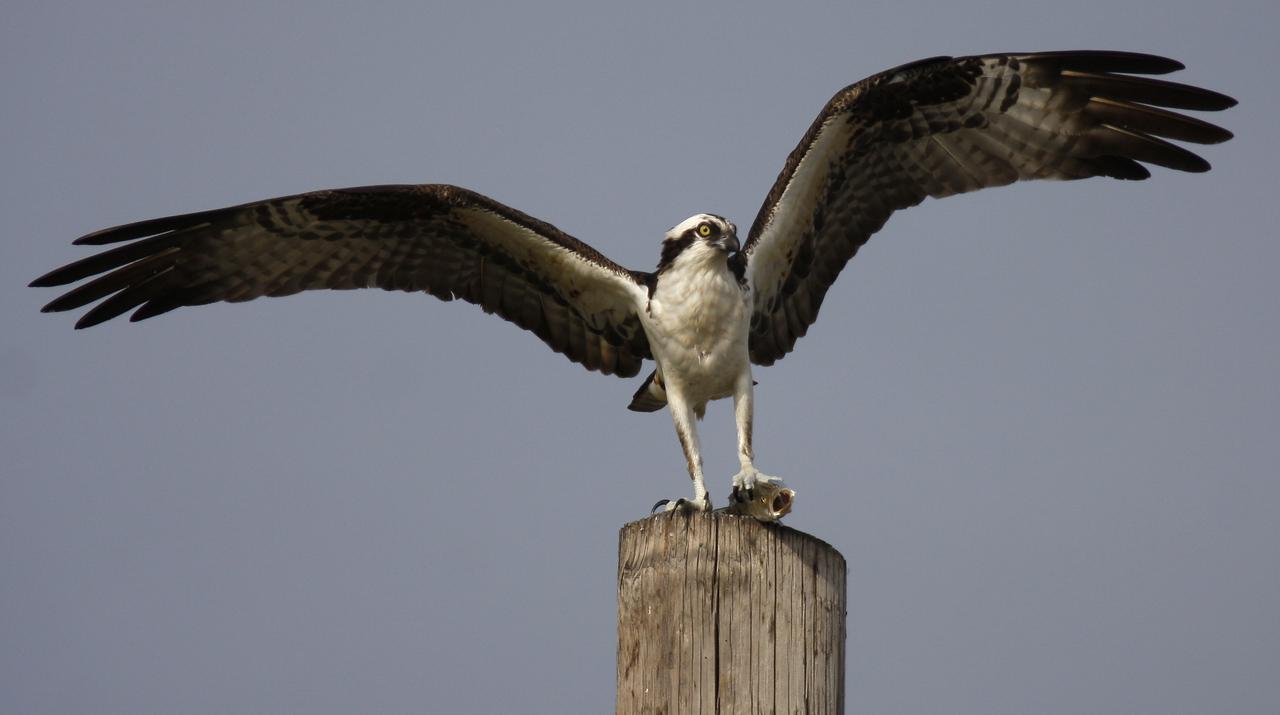
An osprey with a sea trout in its claws gets ready to fly in the  Kennedy Space Center area, Cape Canaveral, Florida, USA, 23 February 2008. The crew of space shuttle Endeavour mission STS-123 is scheduled to arrive at 11:00 A.M. EST., at the shuttle landing facility 23 february 2008. The mission STS-123 launch is scheduled for launch no earlier than 11 March 2008.
USA SHUTTLE ENDEAVOUR
Space shuttle Endeavour lands at the Kennedy Space Center, Shuttle Landing Facility, Cape Canaveral, Florida, USA, 26 March 2008. Endeavour completed a sixteen day mission to the International Space Station where it delivered the latest KIBO Experiment Module and the Canadian Robot DEXTRE.   The mission STS-123 also had five space walks associated with the mission.Endeavour landed on  the secon landing possibility.
USA SHUTTLE ENDEAVOUR
Space shuttle Endeavour lands at the Kennedy Space Center, Shuttle Landing Facility, Cape Canaveral, Florida, USA, 26 March 2008. Endeavour completed a sixteen day mission to the International Space Station where it delivered the latest KIBO Experiment Module and the Canadian Robot DEXTRE.   The mission STS-123 also had five space walks associated with the mission.Endeavour landed on  the second landing possibility.
USA SHUTTLE ENDEAVOUR
Space shuttle Endeavour lands at the Kennedy Space Center, Shuttle Landing Facility, Cape Canaveral, Florida, USA, 26 March 2008. Endeavour completed a sixteen day mission to the International Space Station where it delivered the latest KIBO Experiment Module and the Canadian Robot DEXTRE.   The mission STS-123 also had five space walks associated with the mission.
USA SHUTTLE ENDEAVOUR
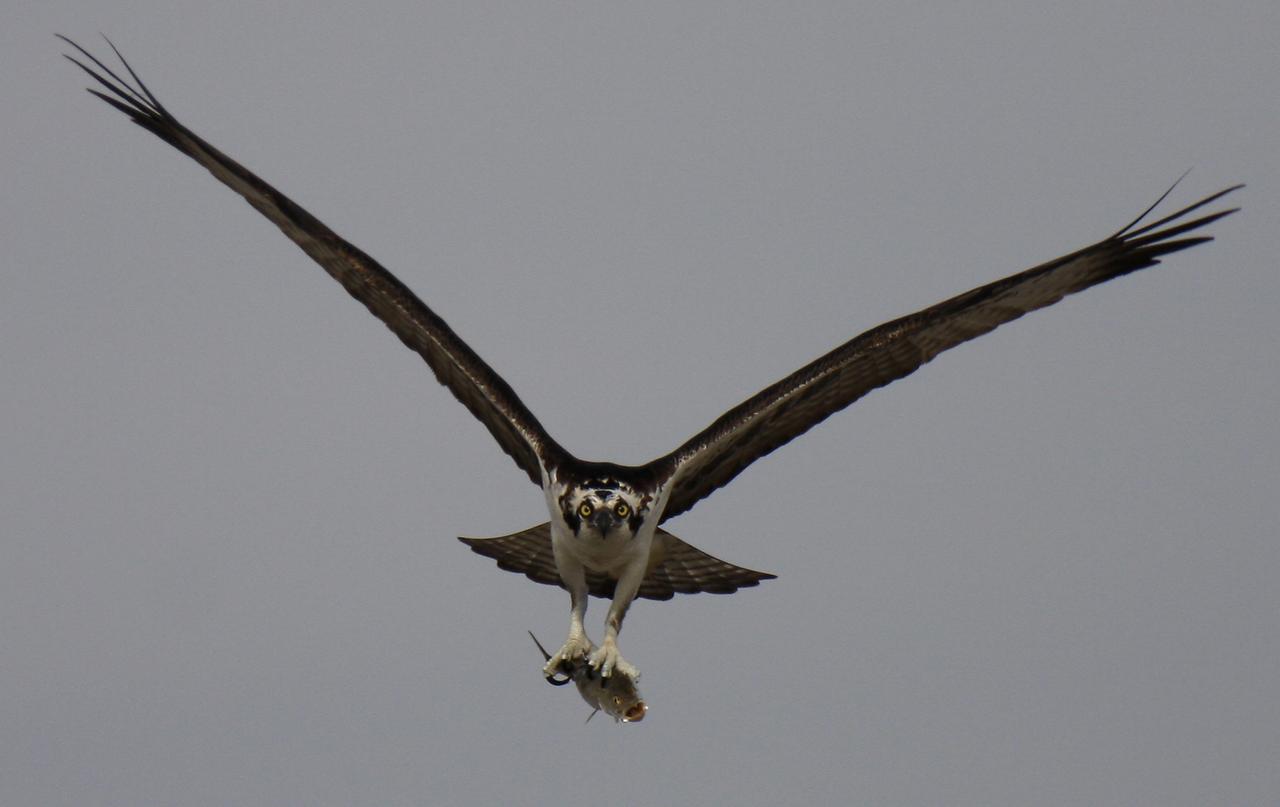
An osprey with a sea trout in its claws flies in the  Kennedy Space Center area, Cape Canaveral, Florida, USA, 23 February 2008. The crew of space shuttle Endeavour mission STS-123 is scheduled to arrive at 11:00 A.M. EST., at the shuttle landing facility 23 february 2008. The mission STS-123 launch is scheduled for launch no earlier than 11 March 2008.
USA SHUTTLE ENDEAVOUR
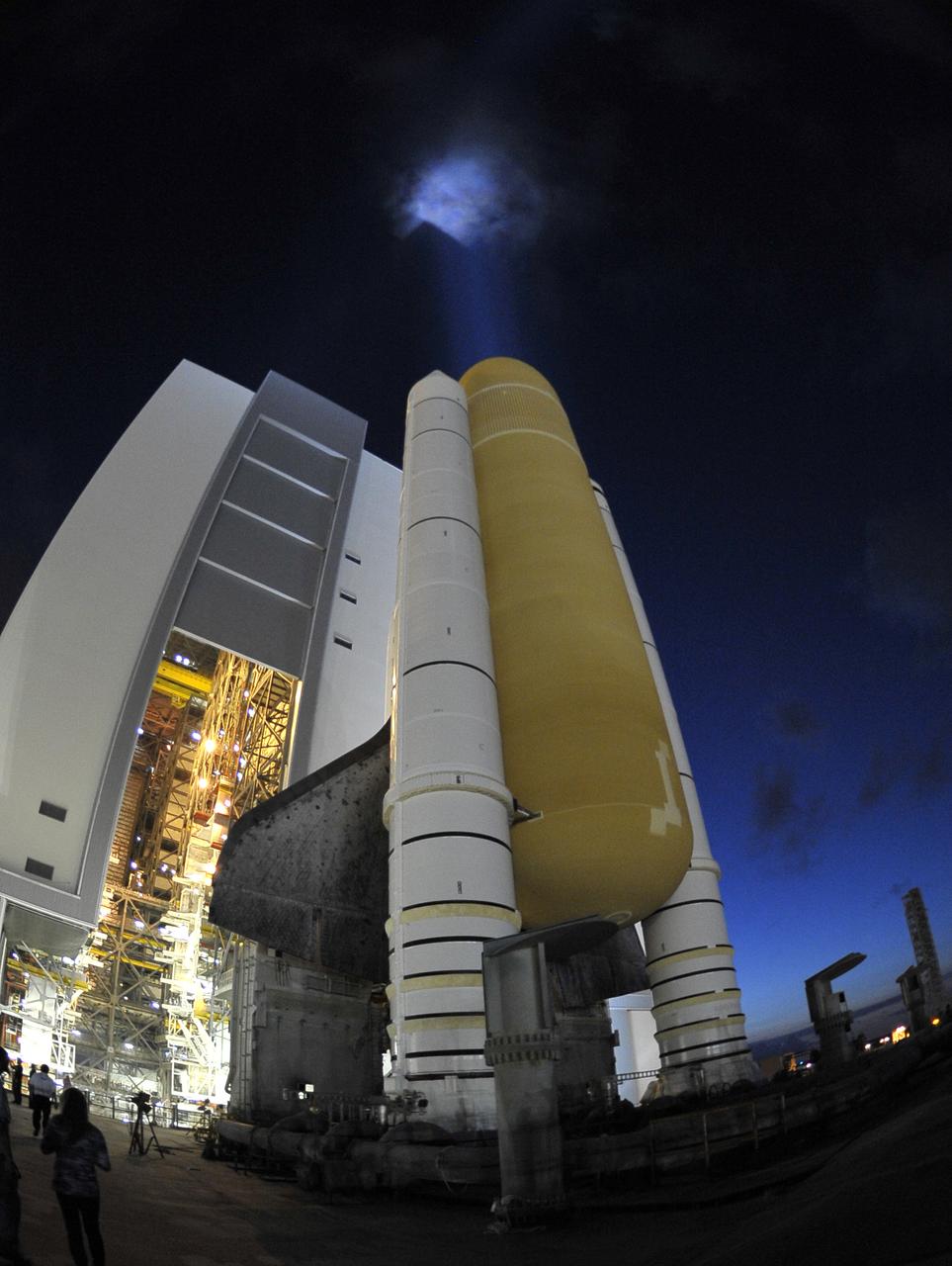
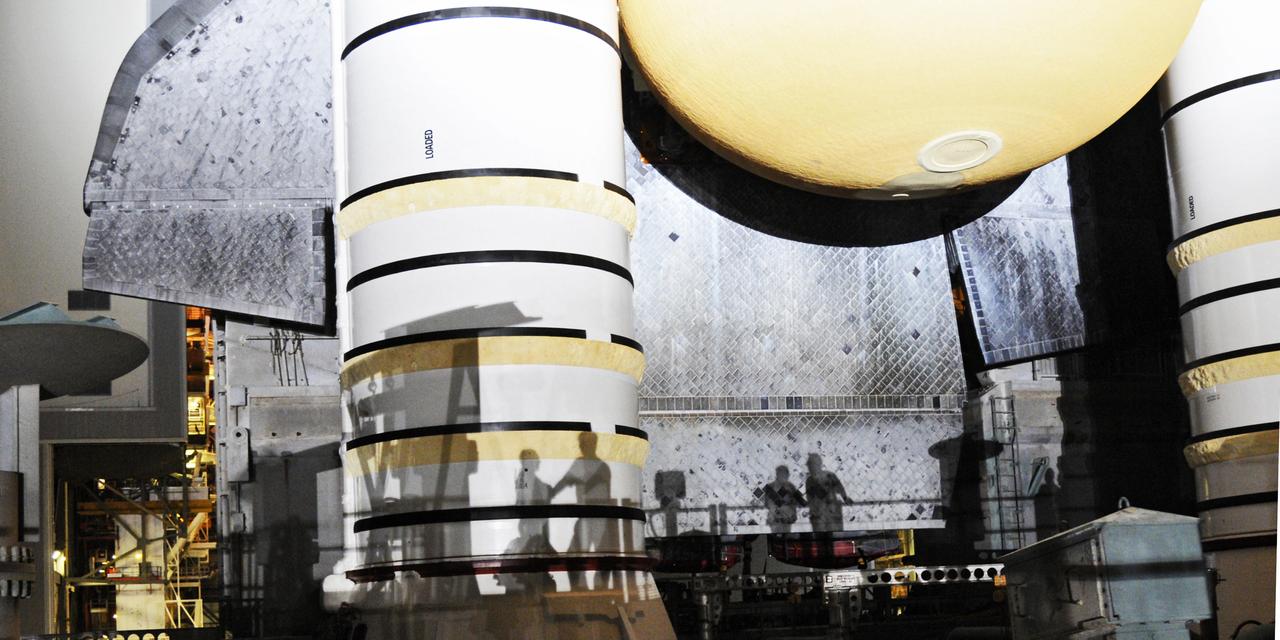
Space Shuttle Atlantis viewed from the Mobil Launch Platform (MLP) during it's final rollout to Launch Pad 39A at Kennedy Space Center, Cape Canaveral, Florida, USA 31 May 2011. Launch of Atlantis on the STS-135 mission to deliver supplies to the International Space Station is currently planned for no earlier than 08 July 2011. The STS-135 mission is  planned to last eight days and will be the final flight of the Space Shuttle program.
USA SHUTTLE ATLANTIS ROLLOUT
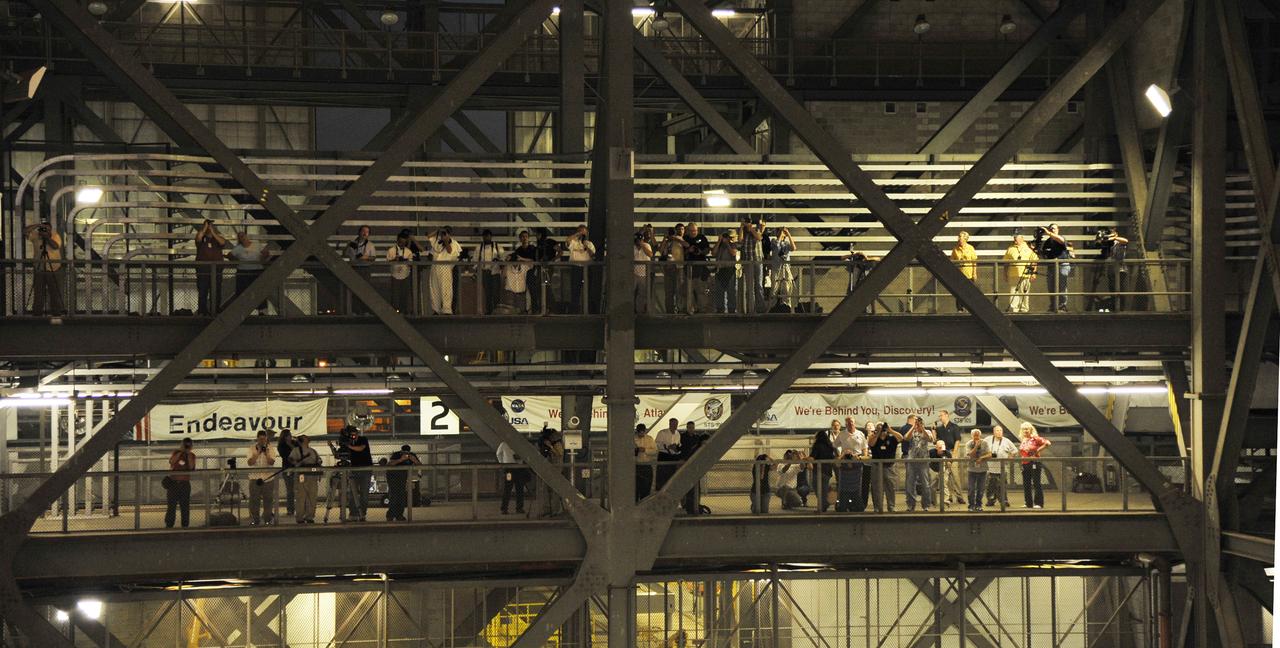
members of the media gather in the VAB to photograph the last rollout of Shuttle Atlantis on the Mobil Launch Platform (MLP)  at Kennedy Space Center, Cape Canaveral, Florida, USA 31 May 2011. Launch of Atlantis on the STS-135 mission to deliver supplies to the International Space Station is currently planned for no earlier than 08 July 2011. The STS-135 mission is  planned to last eight days and will be the final flight of the Space Shuttle program.
USA SHUTTLE ATLANTIS ROLLOUT
Space shuttle Endeavour lands at the Kennedy Space Center, Shuttle Landing Facility, Cape Canaveral, Florida, USA, 26 March 2008. Endeavour completed a sixteen day mission to the International Space Station where it delivered the latest KIBO Experiment Module and the Canadian Robot DEXTRE.   The mission STS-123 also had five space walks associated with the mission.
USA SHUTTLE ENDEAVOUR
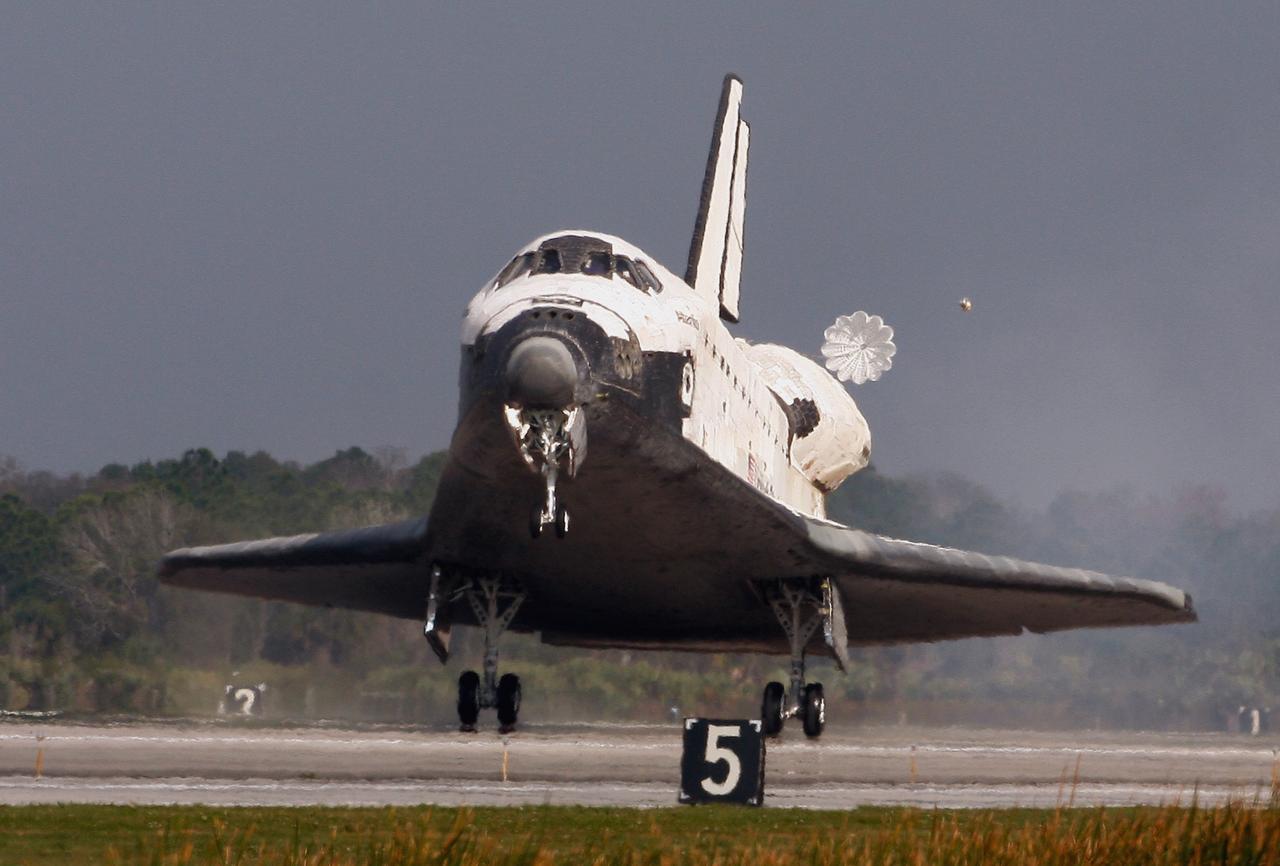
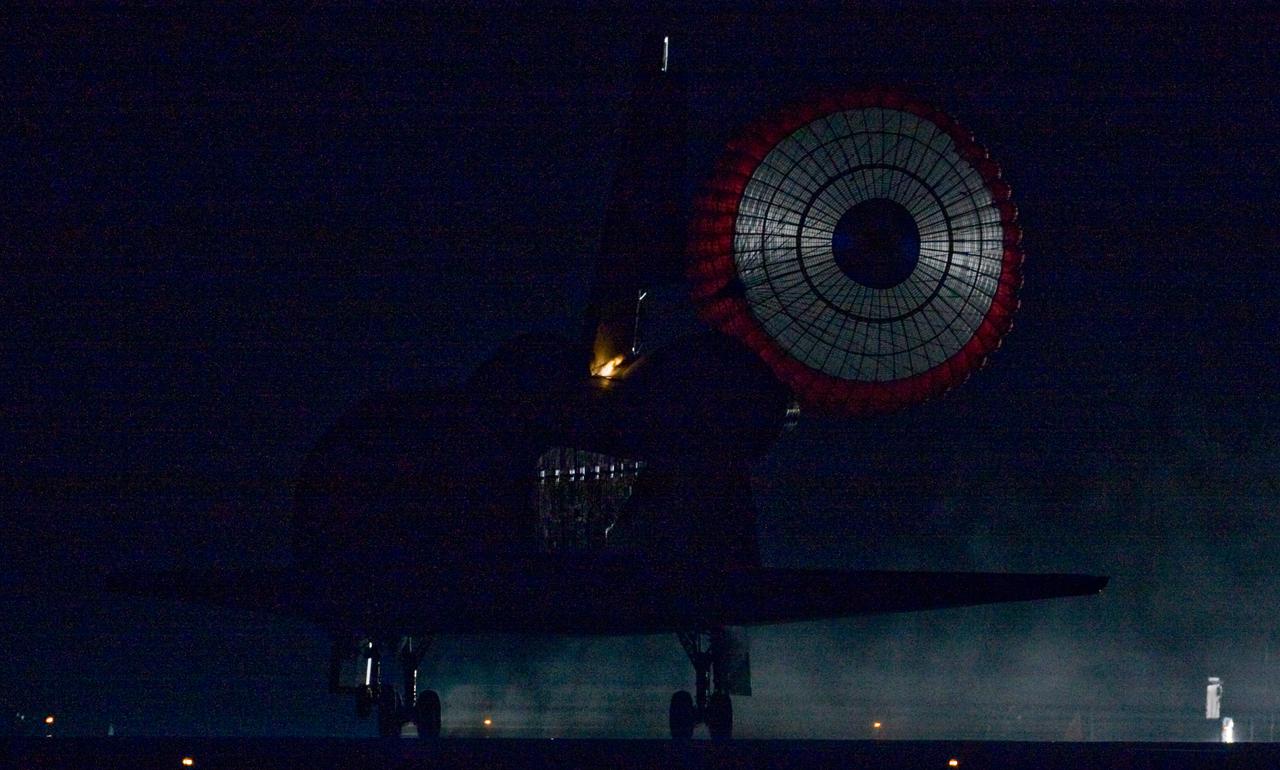
Space shuttle Atlantis lands at the Kennedy Space Center, Shuttle Landing Facility, Cape Canaveral, Florida, USA, 20 February 2008. Atlantis completed a thirteen day mission to the International Space Station where it delivered the latest modu;e to the ISS named Columbus. The parachute deployed out of the rear of Atlantis will help slow don the shuttle after landing.
USA SHUTTLE ATLANTIS
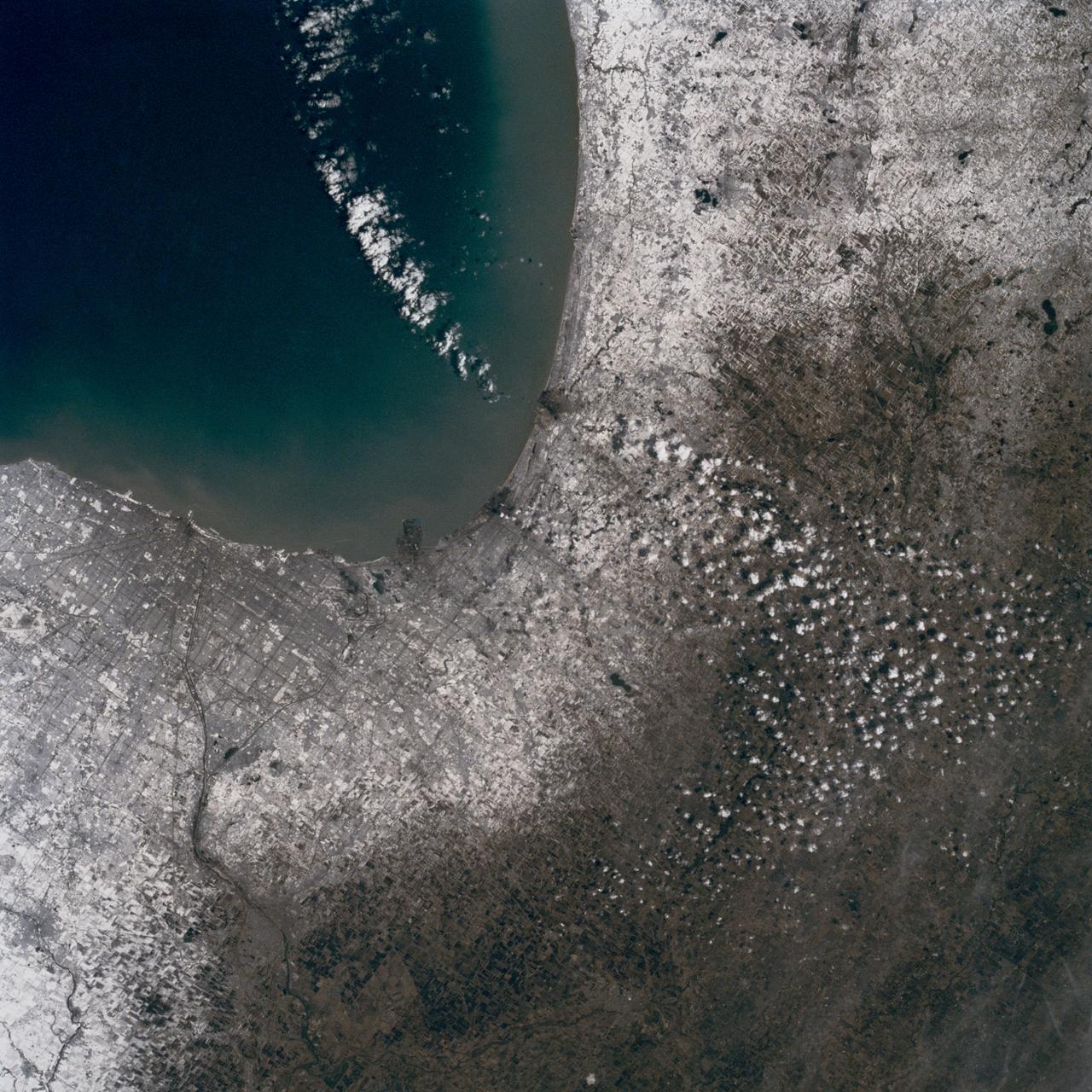
In this late winter scene of Chicago, Illinois, USA (41.5N, 87.0W) the light dusting of snow has actually enhanced the determination of the cities street pattern, parks and other cultural features. Sited at the south end of Lake Michigan, Chicago has long served as an industrial, transportation and communications center for the midwest. The obvious snowline on the ground enables meteorologists to trace the regional groundtracks of winter storms.
Chicago, Illinois, USA
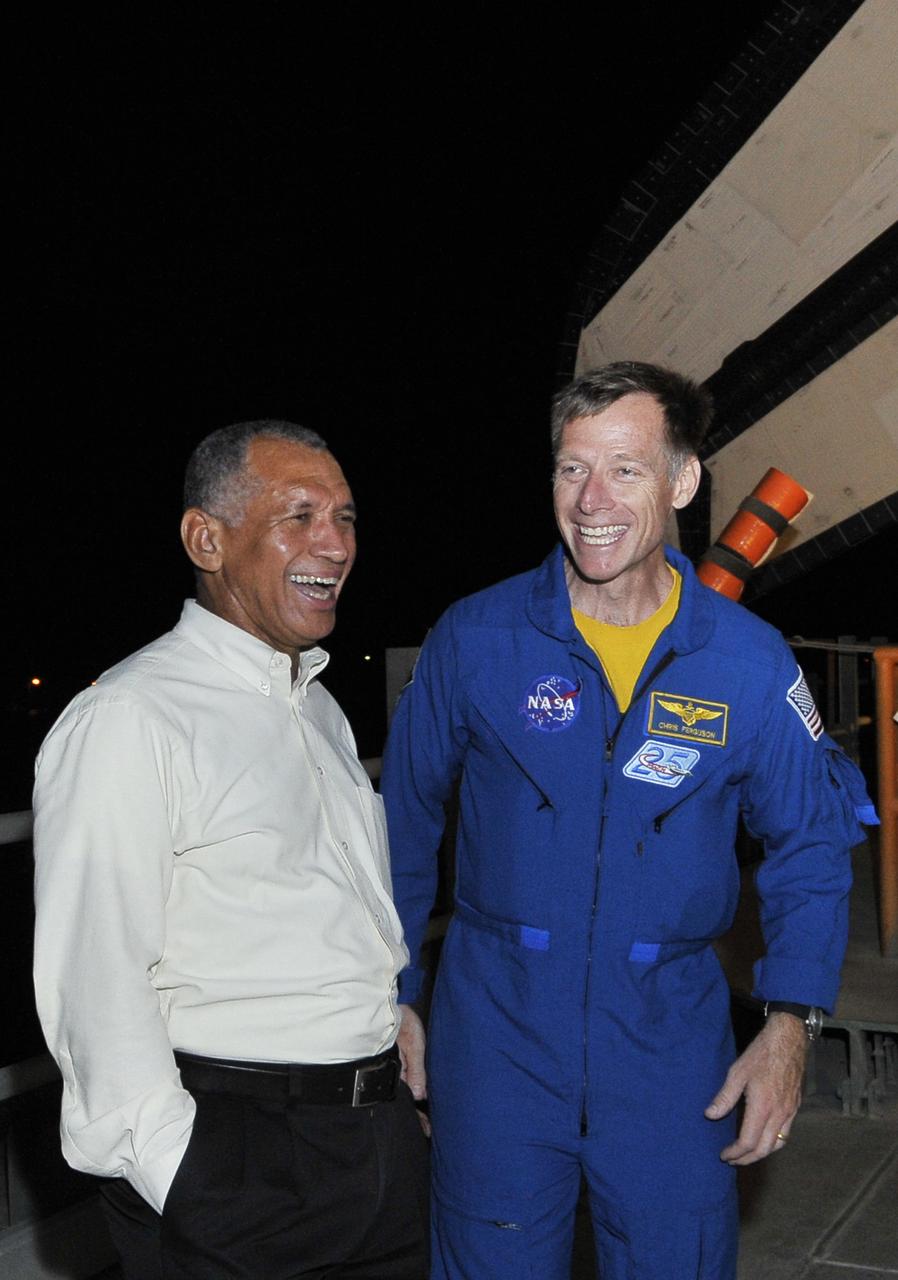
Kennedy Space Center Director Charley Bolden laughs  at a story being told to him by  STS-135 crew Commander Chris Ferguson during rollout of Shuttle Atlantis on the Mobil Launch Platform (MLP) at Kennedy Space Center, Cape Canaveral, Florida, USA 31 May 2011. Launch of Atlantis on the STS-135 mission to deliver supplies to the International Space Station is currently planned for no earlier than 08 July 2011. The STS-135 mission is  planned to last eight days and will be the final flight of the Space Shuttle program.
USA SHUTTLE ATLANTIS ROLLOUT
In this view of Houston/Galveston, Texas, USA (29.5N, 95.5W), heavy spring rains emphasize the several bodies of water in the area. Even though partially cloud covered, the progressive nature of the Houston highway and freeway system can easily be observed in this highly detailed view. To the south, the NASA, Clear Lake area just off of Galveston Bay can easily be seen. In the center, is the downtown business district.
Houston/Galveston, Texas, USA
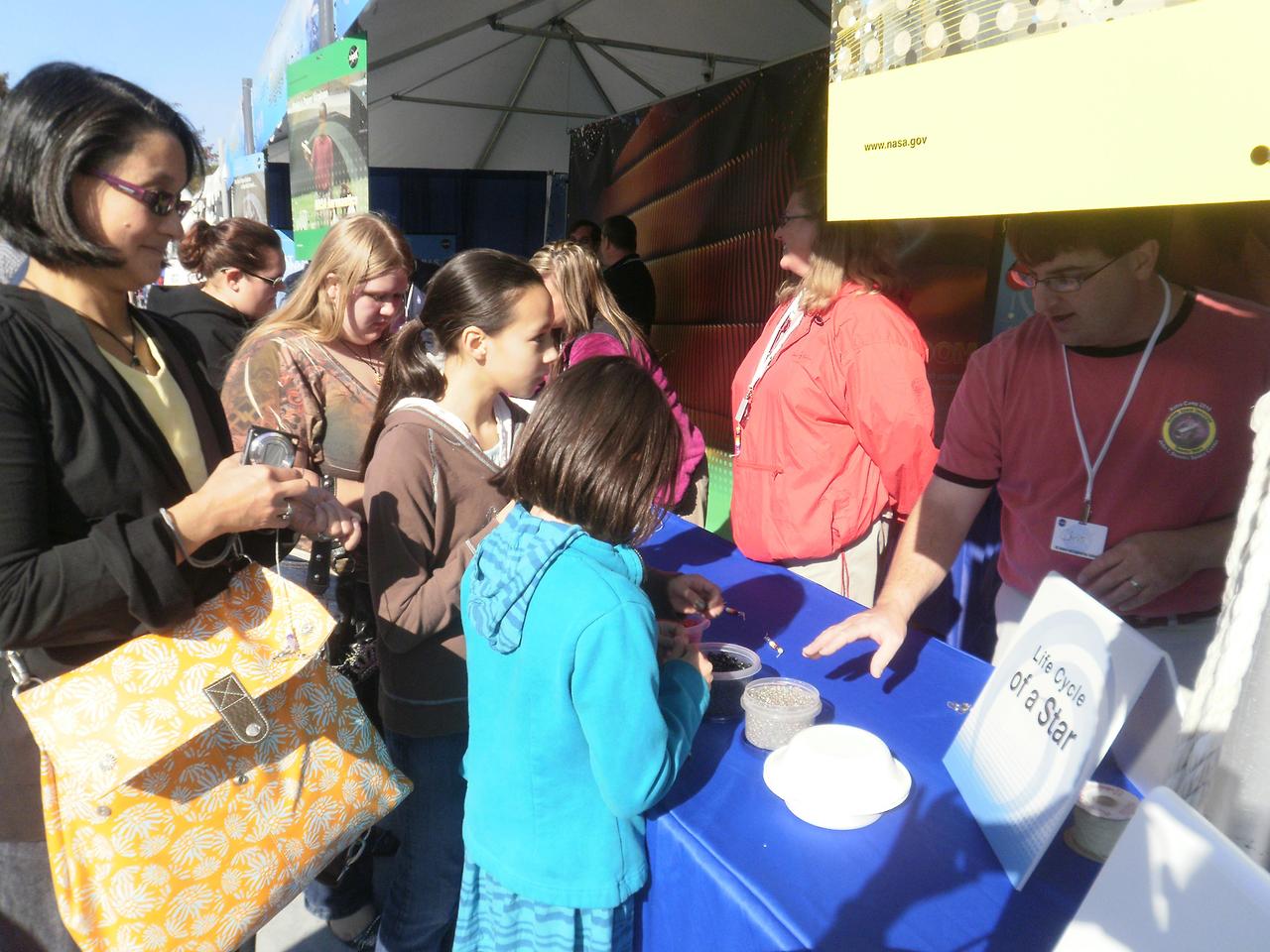
Young visitors to the inaugural USA Science and Engineering Festival at the National Mall in Washington, D.C., learn about the life cycle of a star at an exhibit sponsored by the John C. Stennis Space Center Education Office. Stennis personnel participated in the final weekend of the Oct. 10-24 festival with education activities and to present information on its new Spaced Out Sports Design Challenge.
USA Science and Engineering Festival
Space shuttle Endeavour lands at the Kennedy Space Center, Shuttle Landing Facility, Cape Canaveral, Florida, USA, 26 March 2008. Endeavour completed a sixteen day mission to the International Space Station where it delivered the latest KIBO Experiment Module and the Canadian Robot DEXTRE.   The mission STS-123 also had five space walks associated with the mission.
USA SHUTTLE ENDEAVOUR
Space shuttle Endeavour lands at the Kennedy Space Center, Shuttle Landing Facility, Cape Canaveral, Florida, USA, 26 March 2008. Endeavour completed a sixteen day mission to the International Space Station where it delivered the latest KIBO Experiment Module and the Canadian Robot DEXTRE.   The mission STS-123 also had five space walks associated with the mission.
USA SHUTTLE ENDEAVOUR
Space shuttle Endeavour lands at the Kennedy Space Center, Shuttle Landing Facility, Cape Canaveral, Florida, USA, 26 March 2008. Endeavour completed a sixteen day mission to the International Space Station where it delivered the latest KIBO Experiment Module and the Canadian Robot DEXTRE.   The mission STS-123 also had five space walks associated with the mission.Endeavour landed on  the second landing possibility.
USA SHUTTLE ENDEAVOUR
Shuttle Atlantis viewed from the Mobil Launch Platform (MLP) departs the Vehicle Assembly Building (VAB) during it's final rollout to Launch Pad 39A at Kennedy Space Center, Cape Canaveral, Florida, USA 31 May 2011. Launch of Atlantis on the STS-135 mission to deliver supplies to the International Space Station is  planned for no earlier than 08 July 2011. The STS-135 mission is  planned to last eight days and will be the final flight of the Space Shuttle program.
USA SHUTTLE ATLANTIS ROLLOUT
Space shuttle Endeavour lands at the Kennedy Space Center, Shuttle Landing Facility, Cape Canaveral, Florida, USA, 26 March 2008. Endeavour completed a sixteen day mission to the International Space Station where it delivered the latest KIBO Experiment Module and the Canadian Robot DEXTRE.   The mission STS-123 also had five space walks associated with the mission.Endeavour landed on  the second landing possibility.
USA SHUTTLE ENDEAVOUR
As seen from space, the Great Salt Lake, Utah, USA (41.5N, 112.5W) appears as two separate bodies of water with a narrow divider in the middle. At the turn of the century, a railroad bridge without culverts, was built across the lake and ever since, the water and salinity levels have been uneqal on either side. Fed by snowmelt from the nearby Wasatch Mountains, the lake in recent years has had record high water levels, threatening to flood the local areas.
Great Salt Lake, Utah, USA
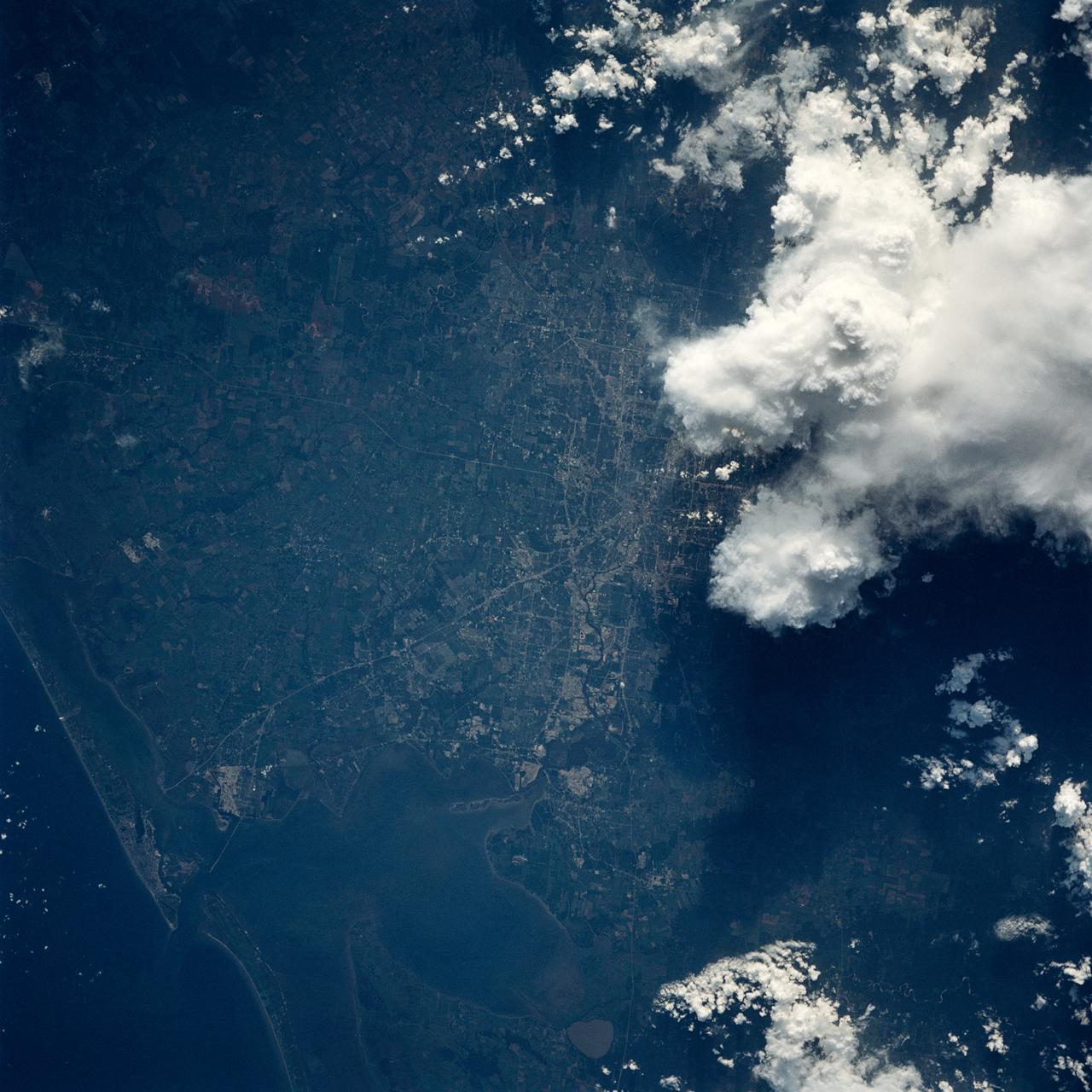
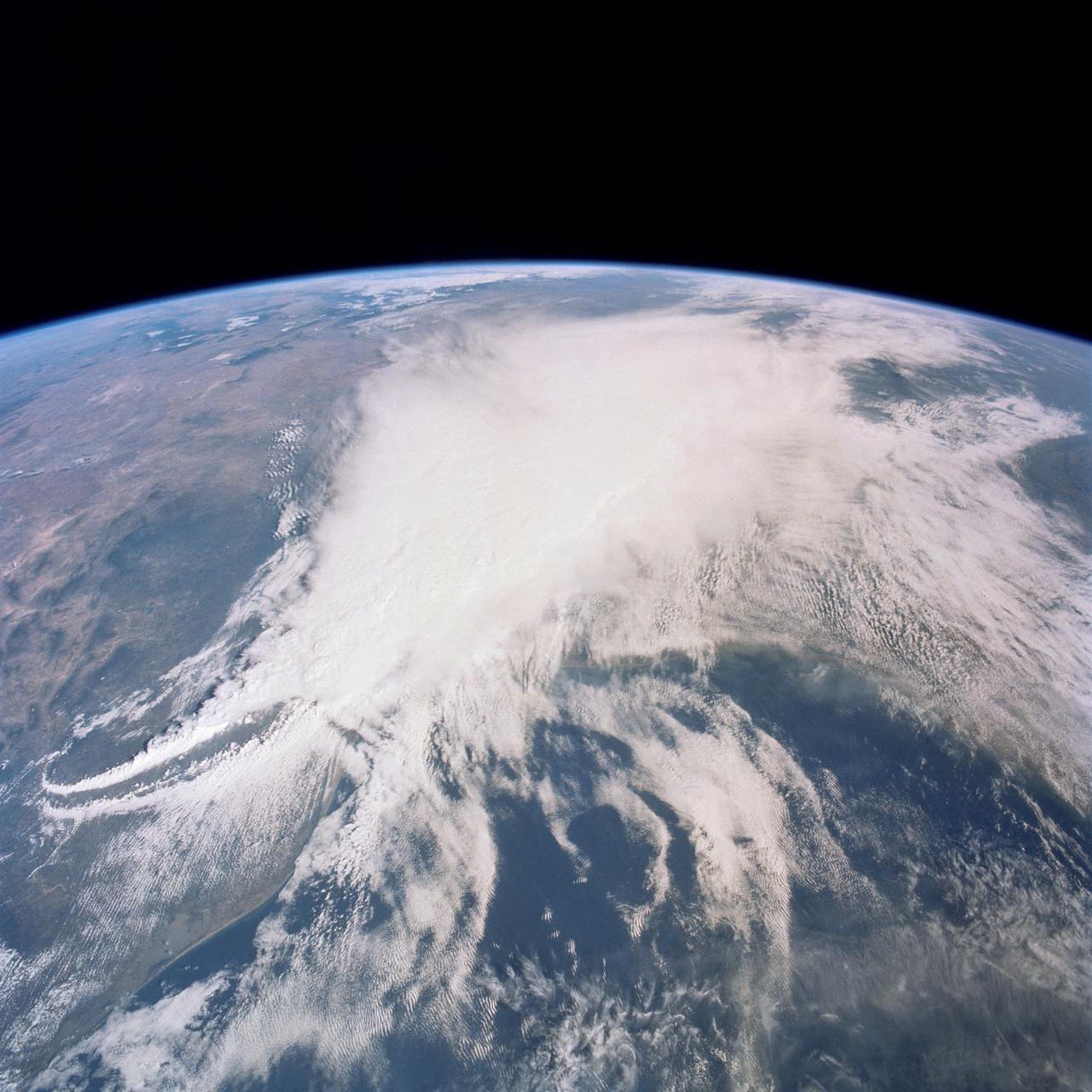
This thunderstorm along the Texas Gulf Coast (29.0N, 95.0W), USA is seen as the trailing edge of a large cloud mass formed along the leading edge of a spring frontal system stretching northwest to southeast across the Texas Gulf Coast. This system brought extensive severe weather and flooding to parts of Texas and surrounding states. Muddy water discharging from coastal streams can be seen in the shallow Gulf of Mexico as far south as Lavaca Bay.
Thunderstorm, Texas Gulf Coast, USA
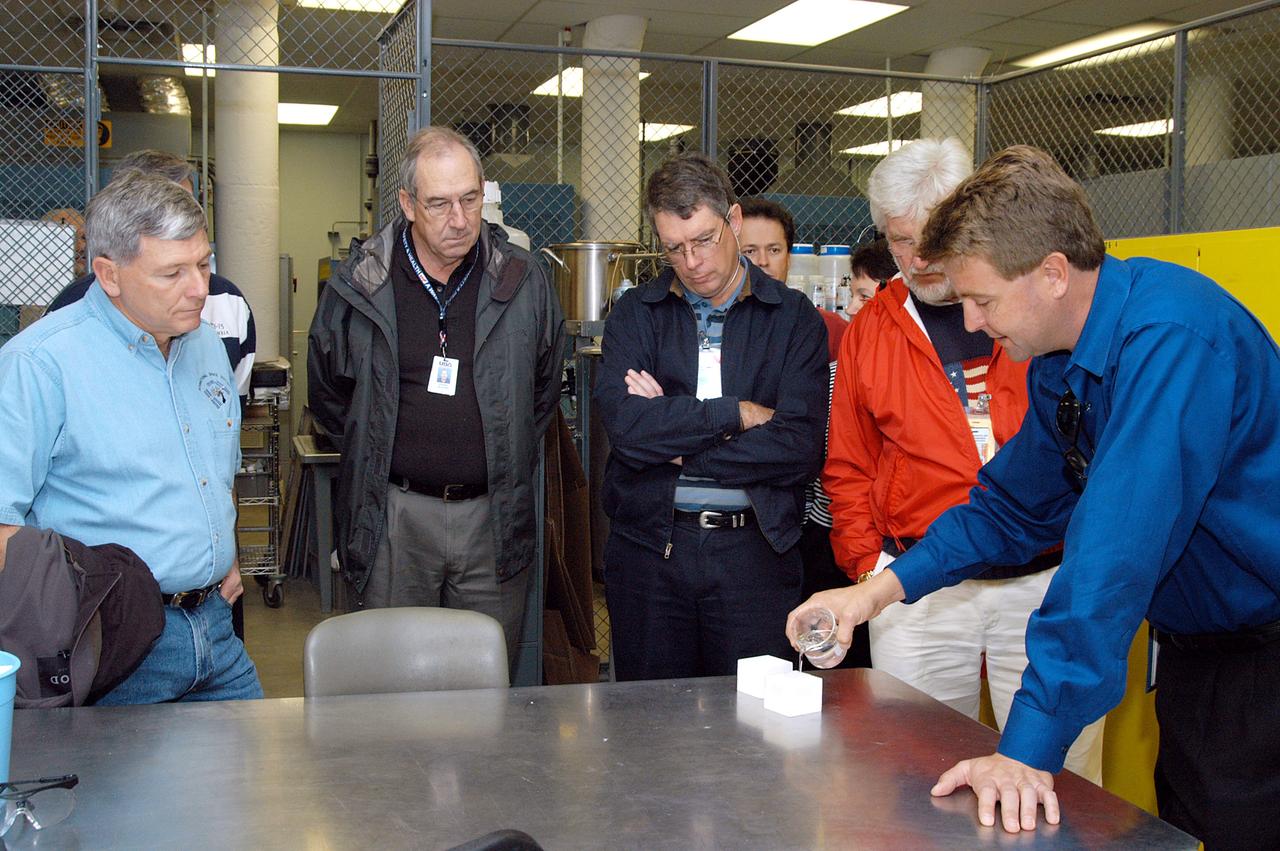
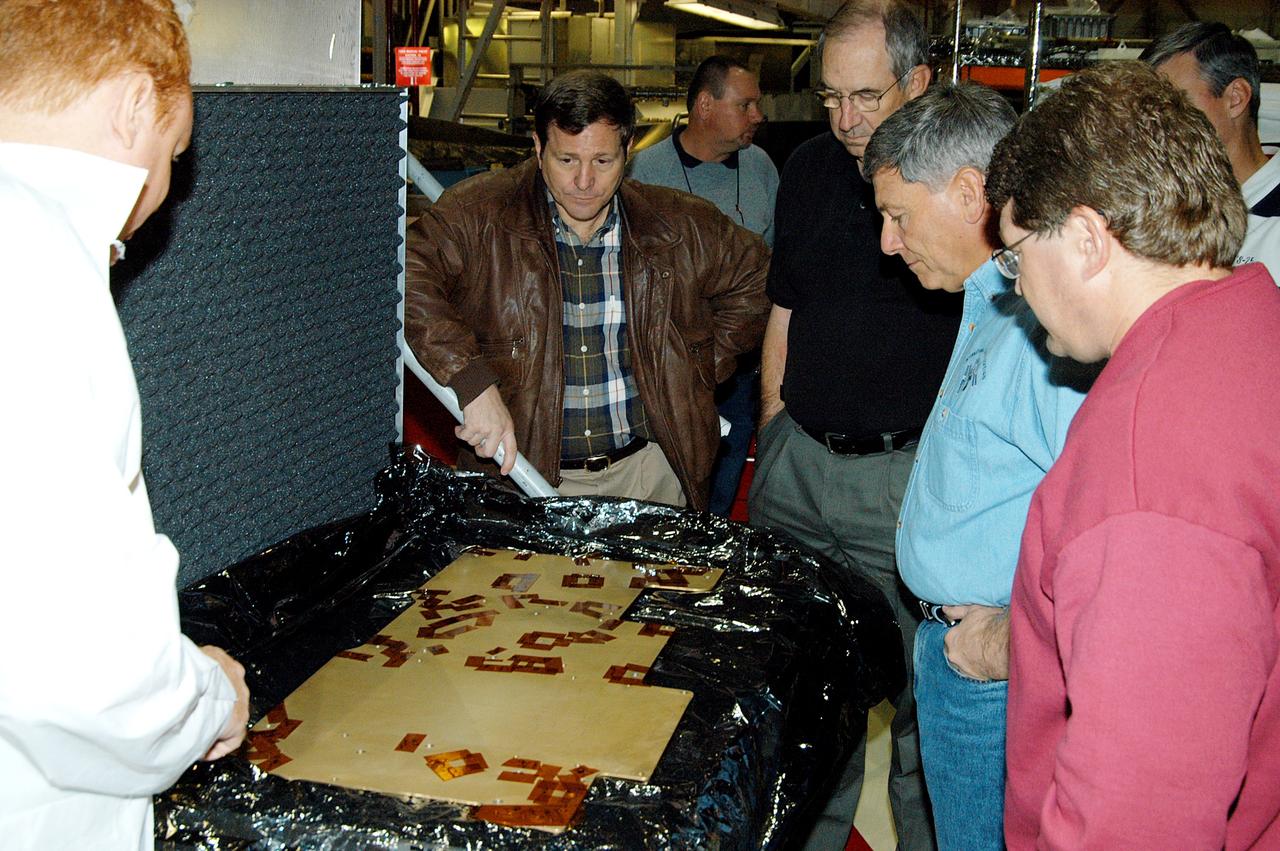
KENNEDY SPACE CENTER, FLA. -- From left, United Space Alliance (USA) Deputy Space Shuttle Program Manager of Operations Loren Shriver, USA Associate Program Manager of Ground Operations Andy Allen, NASA Deputy Associate Administrator for Space Station and Shuttle Programs Michael Kostelnik, and USA Vice President and Space Shuttle Program Manager Howard DeCastro examine a tile used in the Shuttle's Thermal Protection System (TPS) in KSC's TPS Facility.  NASA and USA Space Shuttle program management are participating in a leadership workday.  The day is intended to provide management with an in-depth, hands-on look at Shuttle processing activities at KSC.
KENNEDY SPACE CENTER, FLA. -- From left, United Space Alliance (USA) Deputy Space Shuttle Program Manager of Operations Loren Shriver, USA Associate Program Manager of Ground Operations Andy Allen, NASA Deputy Associate Administrator for Space Station and Shuttle Programs Michael Kostelnik, and USA Vice President and Space Shuttle Program Manager Howard DeCastro examine a tile used in the Shuttle's Thermal Protection System (TPS) in KSC's TPS Facility. NASA and USA Space Shuttle program management are participating in a leadership workday. The day is intended to provide management with an in-depth, hands-on look at Shuttle processing activities at KSC.
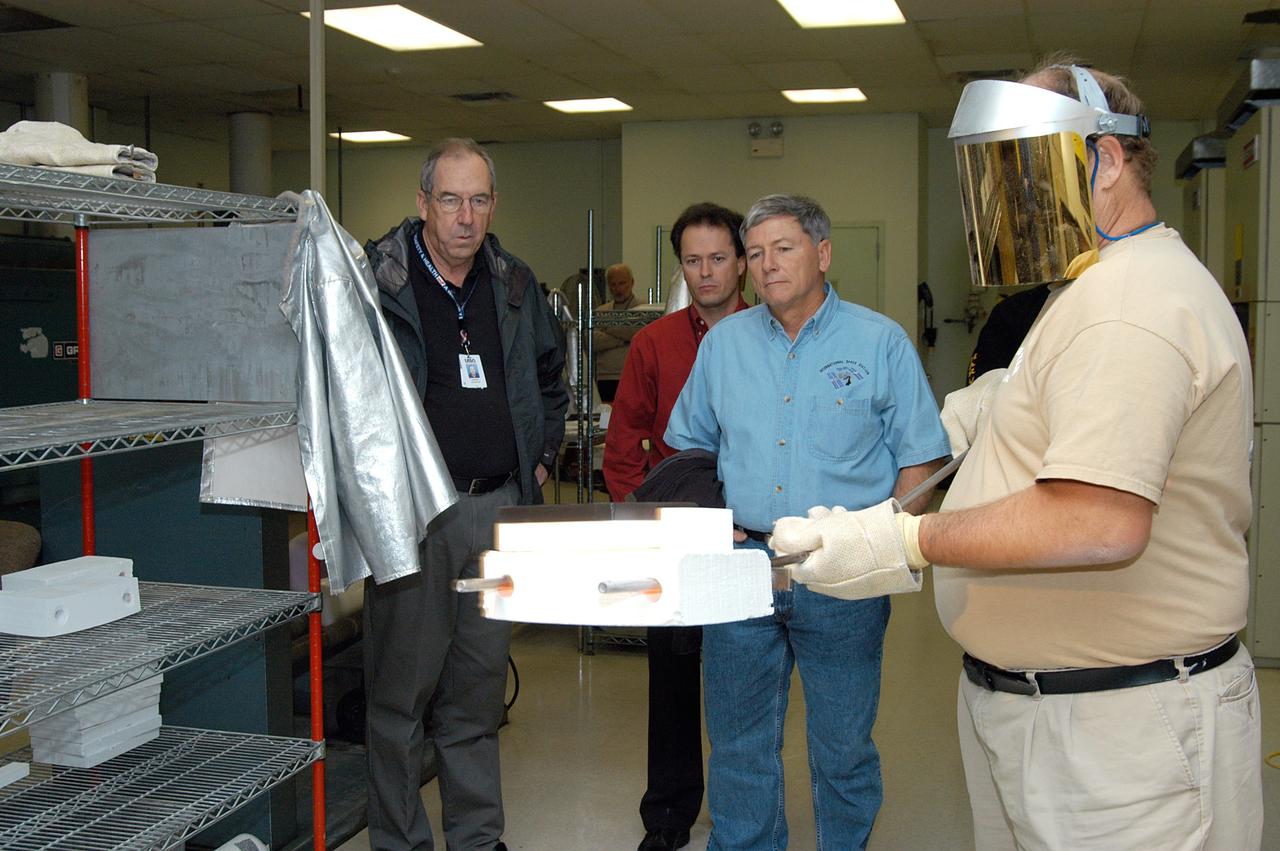
KENNEDY SPACE CENTER, FLA. -- United Space Alliance (USA) Vice President and Space Shuttle Program Manager Howard DeCastro (left) and NASA Deputy Associate Administrator for Space Station and Shuttle Programs Michael Kostelnik (third from left) watch as a USA technician (right) creates a tile for use in the Shuttle's Thermal Protection System (TPS).  NASA and USA Space Shuttle program management are participating in a leadership workday.  The day is intended to provide management with an in-depth, hands-on look at Shuttle processing activities at KSC.
KENNEDY SPACE CENTER, FLA. -- United Space Alliance (USA) Vice President and Space Shuttle Program Manager Howard DeCastro (left) and NASA Deputy Associate Administrator for Space Station and Shuttle Programs Michael Kostelnik (third from left) watch as a USA technician (right) creates a tile for use in the Shuttle's Thermal Protection System (TPS). NASA and USA Space Shuttle program management are participating in a leadership workday. The day is intended to provide management with an in-depth, hands-on look at Shuttle processing activities at KSC.
KENNEDY SPACE CENTER, FLA. -- From left, NASA Deputy Associate Administrator for Space Station and Shuttle Programs Michael Kostelnik and United Space Alliance (USA) Vice President and Space Shuttle Program Manager Howard DeCastro are briefed on the properties of the tile used in the Shuttle's Thermal Protection System (TPS) by USA Manager of the TPS Facility Martin Wilson (right).  NASA and USA Space Shuttle program management are participating in a leadership workday.  The day is intended to provide management with an in-depth, hands-on look at Shuttle processing activities at KSC.
KENNEDY SPACE CENTER, FLA. -- From left, NASA Deputy Associate Administrator for Space Station and Shuttle Programs Michael Kostelnik and United Space Alliance (USA) Vice President and Space Shuttle Program Manager Howard DeCastro are briefed on the properties of the tile used in the Shuttle's Thermal Protection System (TPS) by USA Manager of the TPS Facility Martin Wilson (right). NASA and USA Space Shuttle program management are participating in a leadership workday. The day is intended to provide management with an in-depth, hands-on look at Shuttle processing activities at KSC.
KENNEDY SPACE CENTER, FLA. -- United Space Alliance (USA) technicians demonstrate the construction of a thermal blanket used in the Shuttle's thermal protection system for USA Vice President and Space Shuttle Program Manager Howard DeCastro (second from left) and NASA Deputy Associate Administrator for Space Station and Shuttle Programs Michael Kostelnik (right).  NASA and USA Space Shuttle program management are participating in a leadership workday.  The day is intended to provide management with an in-depth, hands-on look at Shuttle processing activities at KSC.
KENNEDY SPACE CENTER, FLA. -- United Space Alliance (USA) technicians demonstrate the construction of a thermal blanket used in the Shuttle's thermal protection system for USA Vice President and Space Shuttle Program Manager Howard DeCastro (second from left) and NASA Deputy Associate Administrator for Space Station and Shuttle Programs Michael Kostelnik (right). NASA and USA Space Shuttle program management are participating in a leadership workday. The day is intended to provide management with an in-depth, hands-on look at Shuttle processing activities at KSC.
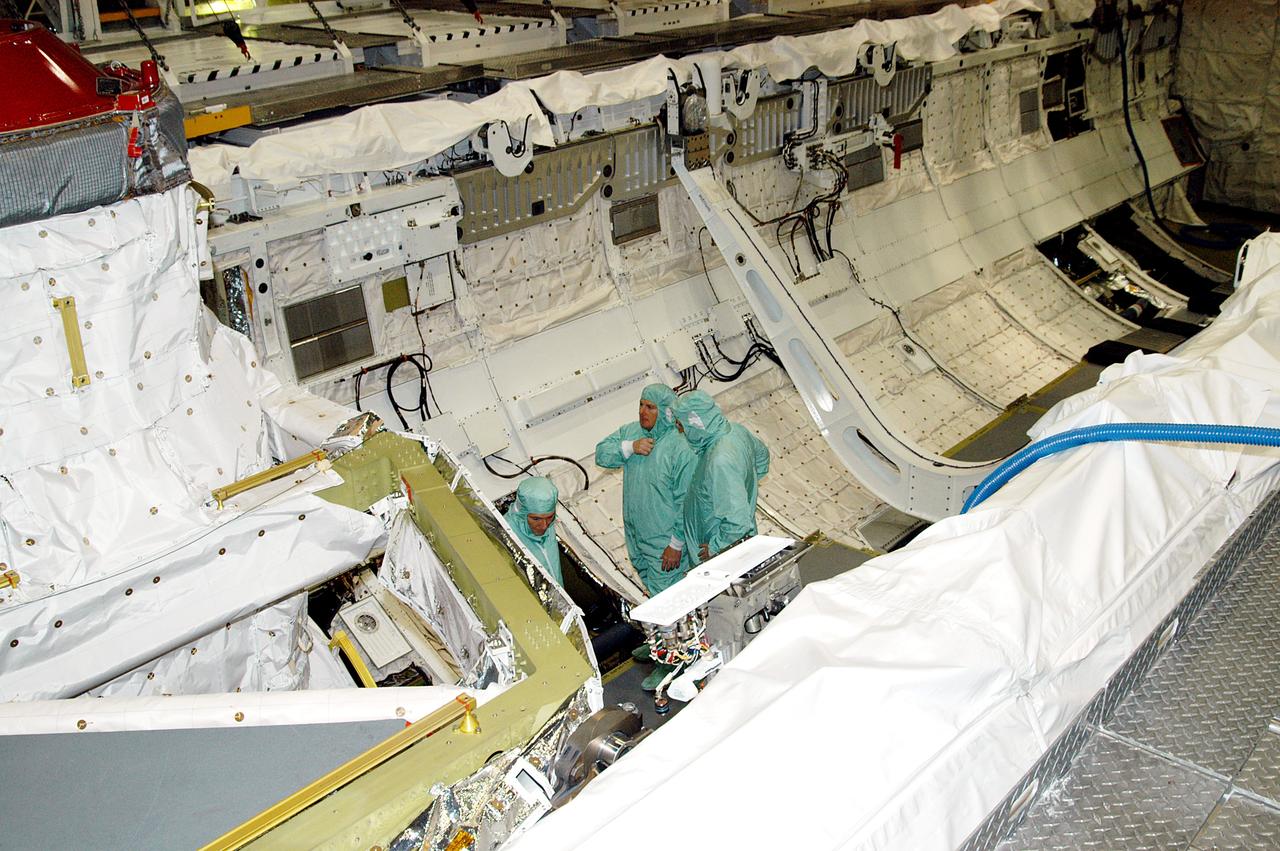
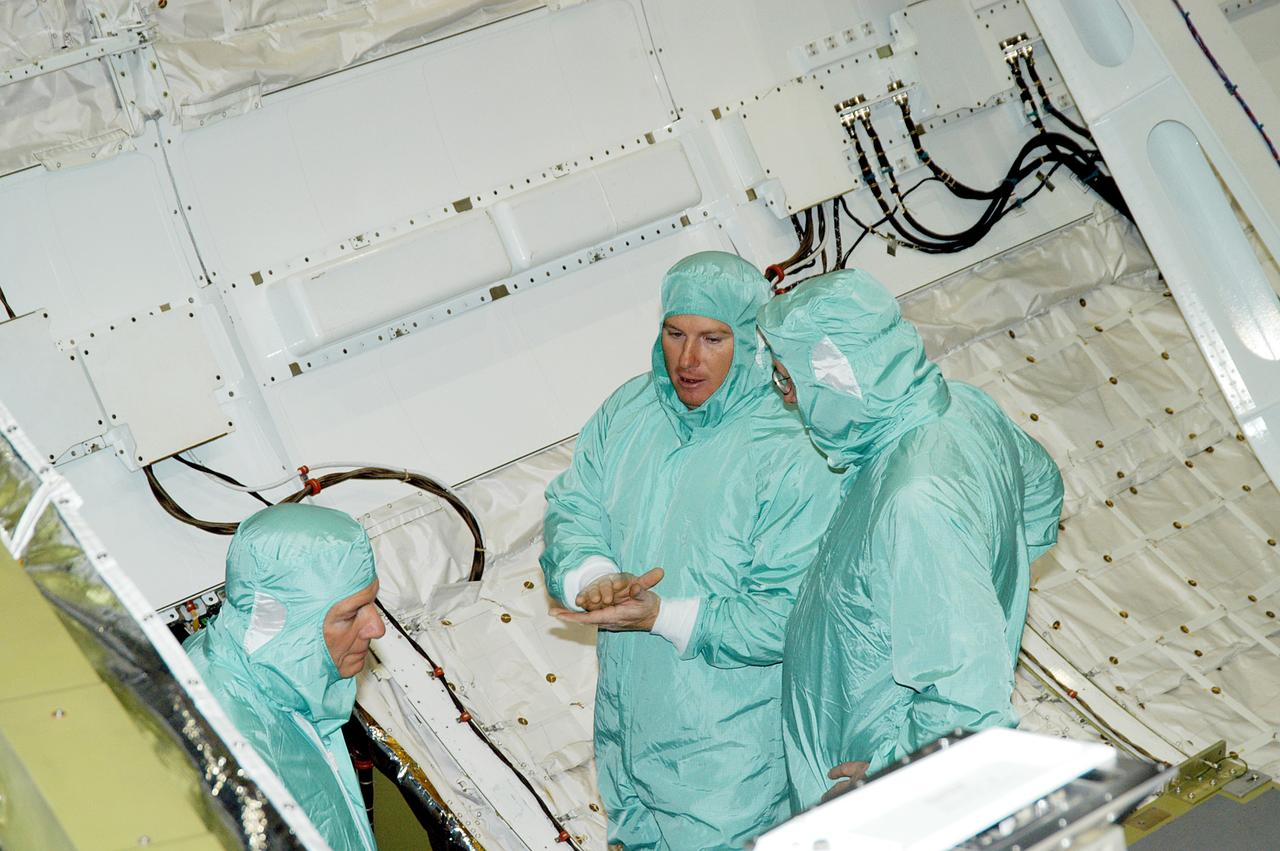
KENNEDY SPACE CENTER, FLA. -- In Orbiter Processing Facility Bay 1, NASA Deputy Associate Administrator for Space Station and Shuttle Programs Michael Kostelnik (left) and United Space Alliance (USA) Vice President and Space Shuttle Program Manager Howard DeCastro (right) are briefed by a USA technician (center) on Shuttle processing in the payload bay of orbiter Atlantis.  NASA and USA Space Shuttle program management are participating in a leadership workday.  The day is intended to provide management with an in-depth, hands-on look at Shuttle processing activities at KSC.
KENNEDY SPACE CENTER, FLA. -- In Orbiter Processing Facility Bay 1, NASA Deputy Associate Administrator for Space Station and Shuttle Programs Michael Kostelnik (left) and United Space Alliance (USA) Vice President and Space Shuttle Program Manager Howard DeCastro (right) are briefed by a USA technician (center) on Shuttle processing in the payload bay of orbiter Atlantis. NASA and USA Space Shuttle program management are participating in a leadership workday. The day is intended to provide management with an in-depth, hands-on look at Shuttle processing activities at KSC.
KENNEDY SPACE CENTER, FLA. -- In Orbiter Processing Facility Bay 1, NASA Deputy Associate Administrator for Space Station and Shuttle Programs Michael Kostelnik (left) and United Space Alliance (USA) Vice President and Space Shuttle Program Manager Howard DeCastro (right) are briefed by a USA technician (center) on Shuttle processing in the payload bay of orbiter Atlantis.  NASA and USA Space Shuttle program management are participating in a leadership workday.  The day is intended to provide management with an in-depth, hands-on look at Shuttle processing activities at KSC.
KENNEDY SPACE CENTER, FLA. -- In Orbiter Processing Facility Bay 1, NASA Deputy Associate Administrator for Space Station and Shuttle Programs Michael Kostelnik (left) and United Space Alliance (USA) Vice President and Space Shuttle Program Manager Howard DeCastro (right) are briefed by a USA technician (center) on Shuttle processing in the payload bay of orbiter Atlantis. NASA and USA Space Shuttle program management are participating in a leadership workday. The day is intended to provide management with an in-depth, hands-on look at Shuttle processing activities at KSC.
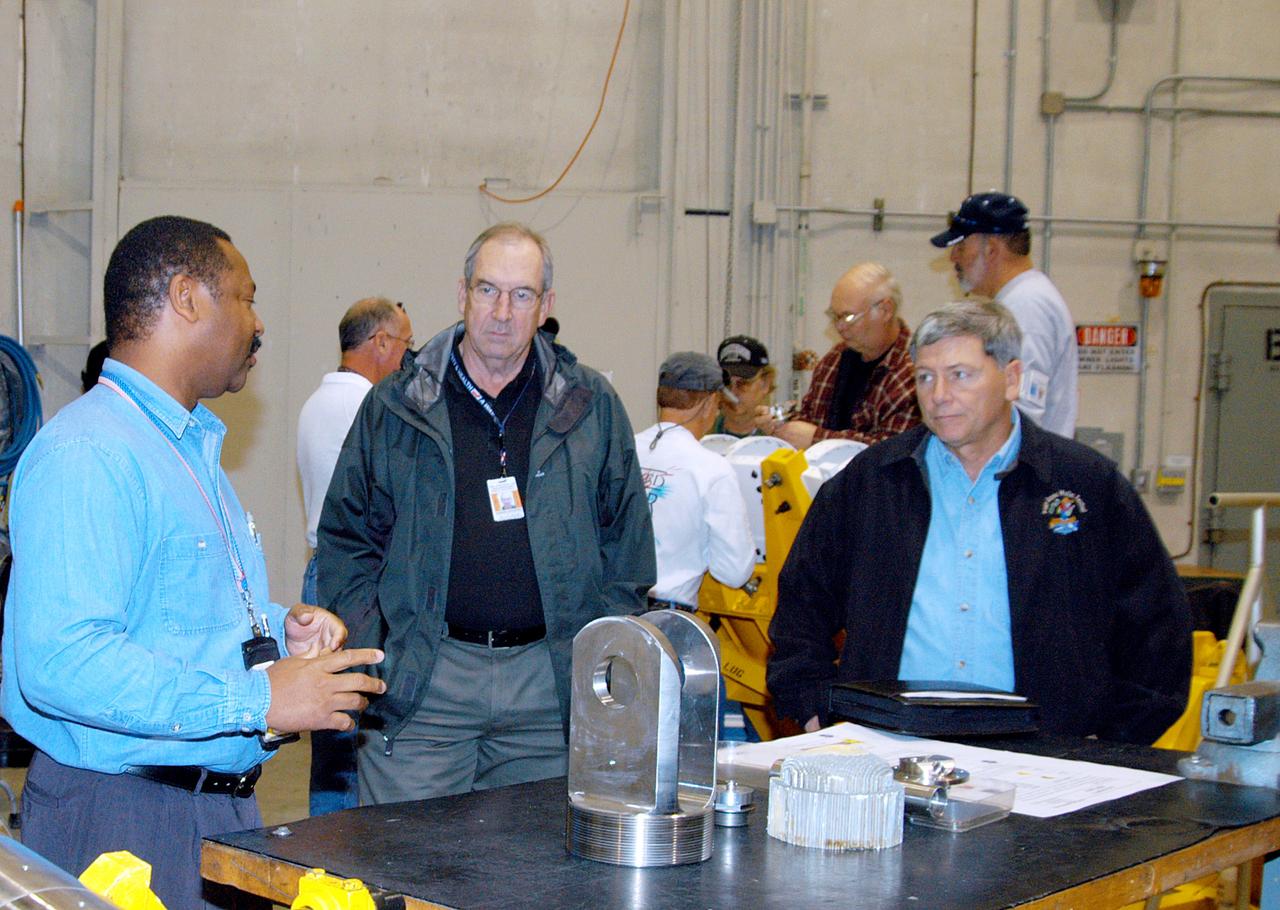
KENNEDY SPACE CENTER, FLA. -- From left, a United Space Alliance (USA) technician discusses aspects of Shuttle processing performed in the Solid Rocket Booster (SRB) Assembly and Refurbishment Facility (ARF) with USA Vice President and Space Shuttle Program Manager Howard DeCastro and NASA Deputy Associate Administrator for Space Station and Shuttle Programs Michael Kostelnik.  NASA and USA Space Shuttle program management are participating in a leadership workday.  The day is intended to provide management with an in-depth, hands-on look at Shuttle processing activities at KSC.
KENNEDY SPACE CENTER, FLA. -- From left, a United Space Alliance (USA) technician discusses aspects of Shuttle processing performed in the Solid Rocket Booster (SRB) Assembly and Refurbishment Facility (ARF) with USA Vice President and Space Shuttle Program Manager Howard DeCastro and NASA Deputy Associate Administrator for Space Station and Shuttle Programs Michael Kostelnik. NASA and USA Space Shuttle program management are participating in a leadership workday. The day is intended to provide management with an in-depth, hands-on look at Shuttle processing activities at KSC.
KENNEDY SPACE CENTER, FLA. -- United Space Alliance (USA) Vice President and Space Shuttle Program Manager Howard DeCastro (left) and NASA Deputy Associate Administrator for Space Station and Shuttle Programs Michael Kostelnik (center) are briefed on the use of a cold plate in Orbiter Processing Facility Bay 2 by a USA technician (right).  NASA and USA Space Shuttle program management are participating in a leadership workday.  The day is intended to provide management with an in-depth, hands-on look at Shuttle processing activities at KSC.
KENNEDY SPACE CENTER, FLA. -- United Space Alliance (USA) Vice President and Space Shuttle Program Manager Howard DeCastro (left) and NASA Deputy Associate Administrator for Space Station and Shuttle Programs Michael Kostelnik (center) are briefed on the use of a cold plate in Orbiter Processing Facility Bay 2 by a USA technician (right). NASA and USA Space Shuttle program management are participating in a leadership workday. The day is intended to provide management with an in-depth, hands-on look at Shuttle processing activities at KSC.
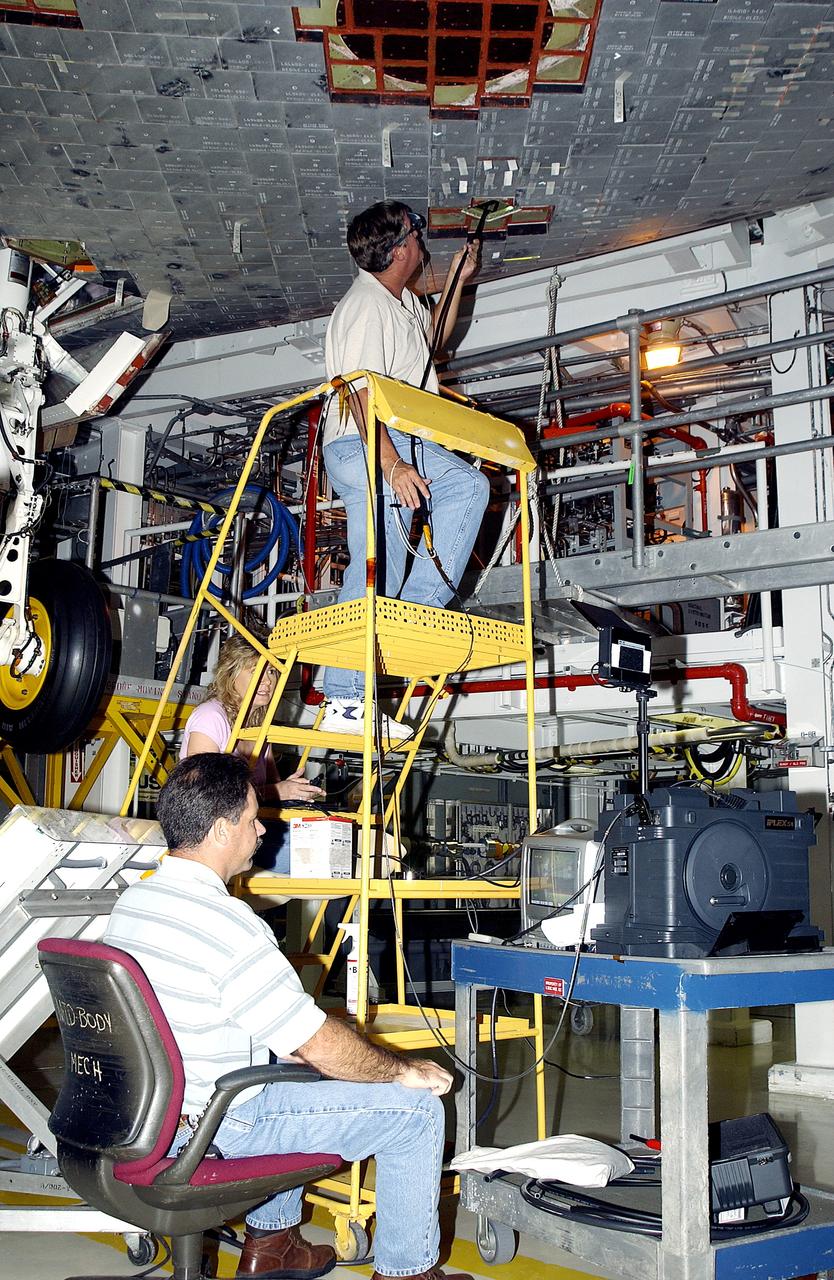
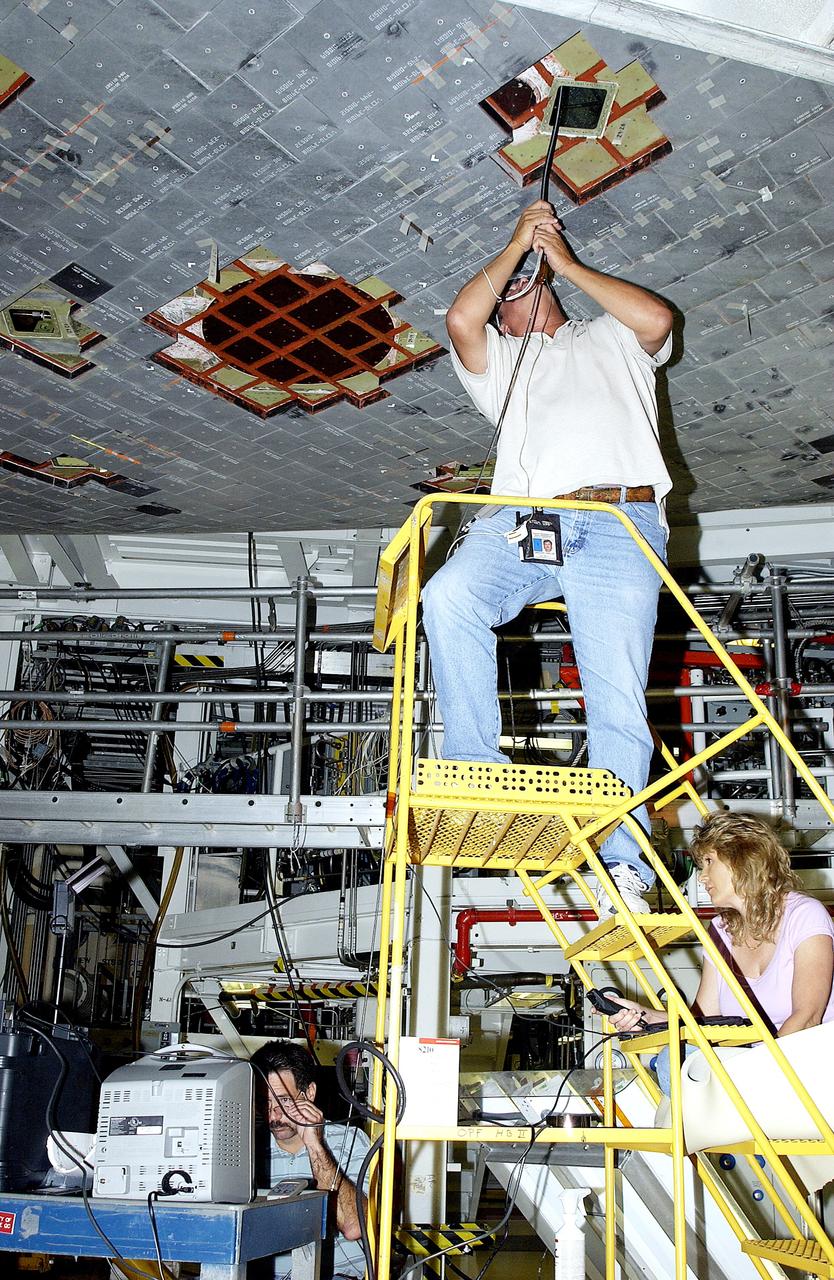
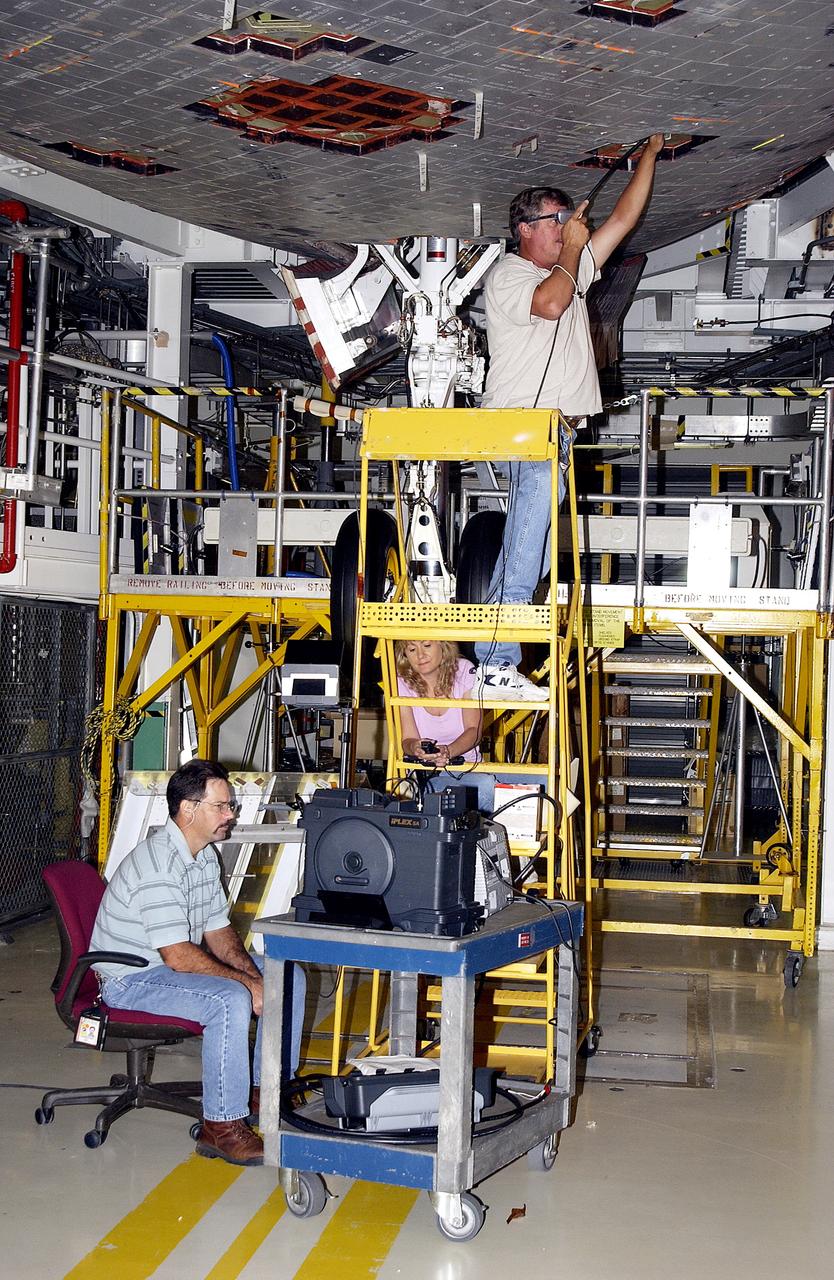
KENNEDY SPACE CENTER, FLA. -  In the Orbiter Processing Facility, while Greg Harlow, with United Space Alliance (USA), (above) threads a camera under the tiles of the orbiter Endeavour, Peggy Ritchie, with USA, (behind the stand) and NASA’s Richard Parker watch the images on a monitor to inspect for corrosion.
KENNEDY SPACE CENTER, FLA. - In the Orbiter Processing Facility, while Greg Harlow, with United Space Alliance (USA), (above) threads a camera under the tiles of the orbiter Endeavour, Peggy Ritchie, with USA, (behind the stand) and NASA’s Richard Parker watch the images on a monitor to inspect for corrosion.
KENNEDY SPACE CENTER, FLA. - In the Orbiter Processing Facility, while Greg Harlow, with United Space Alliance (USA), (above) threads a camera under the tiles of the orbiter Endeavour, NASA’s Richard Parker (below left) and Peggy Ritchie, with USA, (at right) watch the images on a monitor to inspect for corrosion.
KENNEDY SPACE CENTER, FLA. -   In the Orbiter Processing Facility, while Greg Harlow, with United Space Alliance (USA) (above) threads a camera under the tiles of the orbiter Endeavour, Peggy Ritchie, USA, (behind the stand) and NASA’s Richard Parker (seated) watch the images on a monitor to inspect for corrosion.
KENNEDY SPACE CENTER, FLA. - In the Orbiter Processing Facility, while Greg Harlow, with United Space Alliance (USA) (above) threads a camera under the tiles of the orbiter Endeavour, Peggy Ritchie, USA, (behind the stand) and NASA’s Richard Parker (seated) watch the images on a monitor to inspect for corrosion.
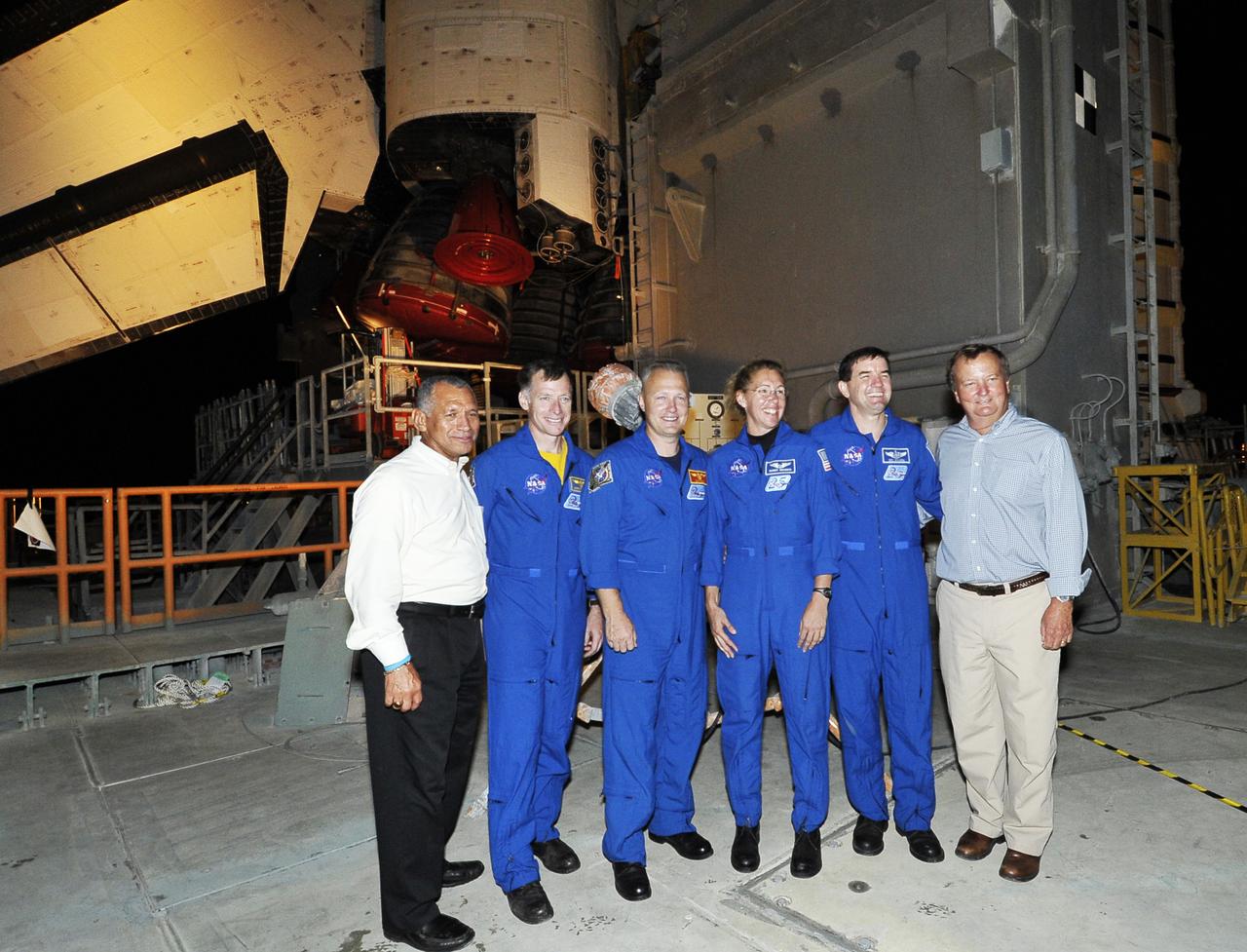
Kennedy Space Center Director Charley Bolden (L) The STS-135 crew (L-R) Commander Chris Ferguson, Pilot Doug Hurley and Mission Specialists Sandra Mangus,  Rex Walheim and Shuttle Launch Director Mike Leinbach pose for a photo  in front of Shuttle Atlantis on the Mobil Launch Platform (MLP) during it's final rollout to Launch Pad 39A at Kennedy Space Center, Cape Canaveral, Florida, USA 31 May 2011. Launch of Atlantis on the STS-135 mission to deliver supplies to the International Space Station is currently planned for no earlier than 08 July 2011. The STS-135 mission is  planned to last eight days and will be the final flight of the Space Shuttle program.
USA SHUTTLE ATLANTIS ROLLOUT
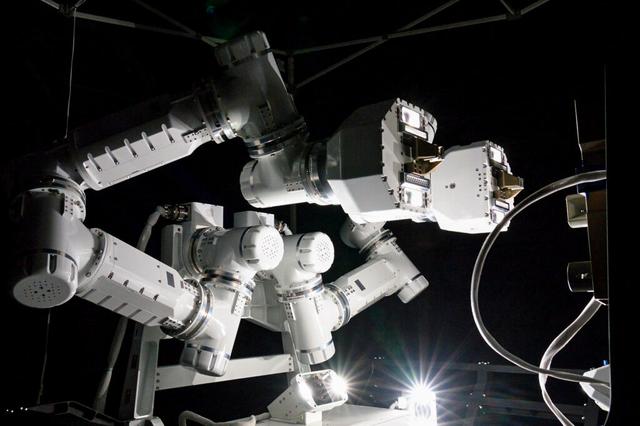
jsc2024e018305 (7/10/2023) --- GITAI aims to demonstrate its capability to design, build, integrate, and operate extravehicular robotic systems through a series of experiments utilizing using the "S2" variant of GITAI’s 2-meter class Modular Robotic Arm. The S2 is , which is developed with the goal of supporting the realization success of ARTEMIS and fulfillment of future commercial visions of lunar permanence. Image courtesy of GITAI USA Inc.
PRO Imagery Submittal - Nanoracks-GITAI S2
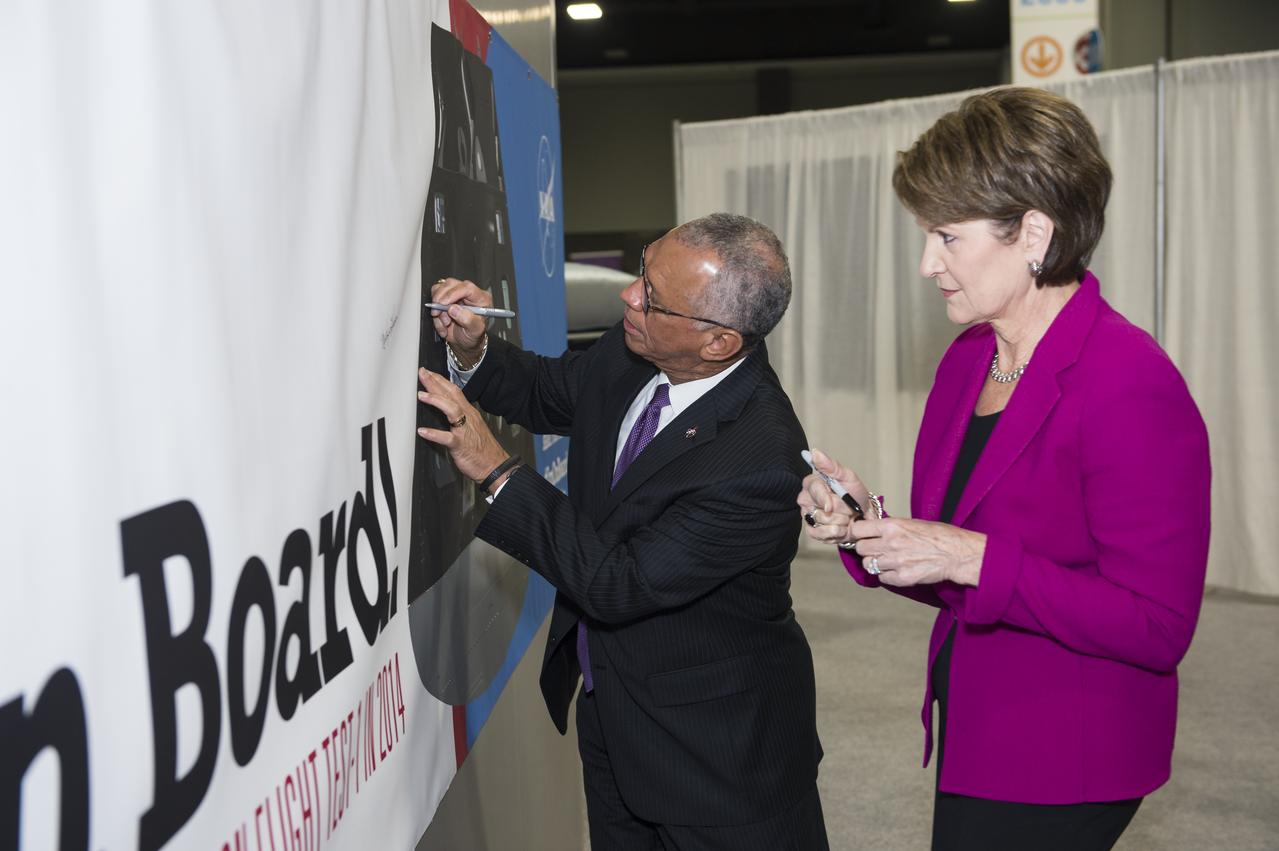
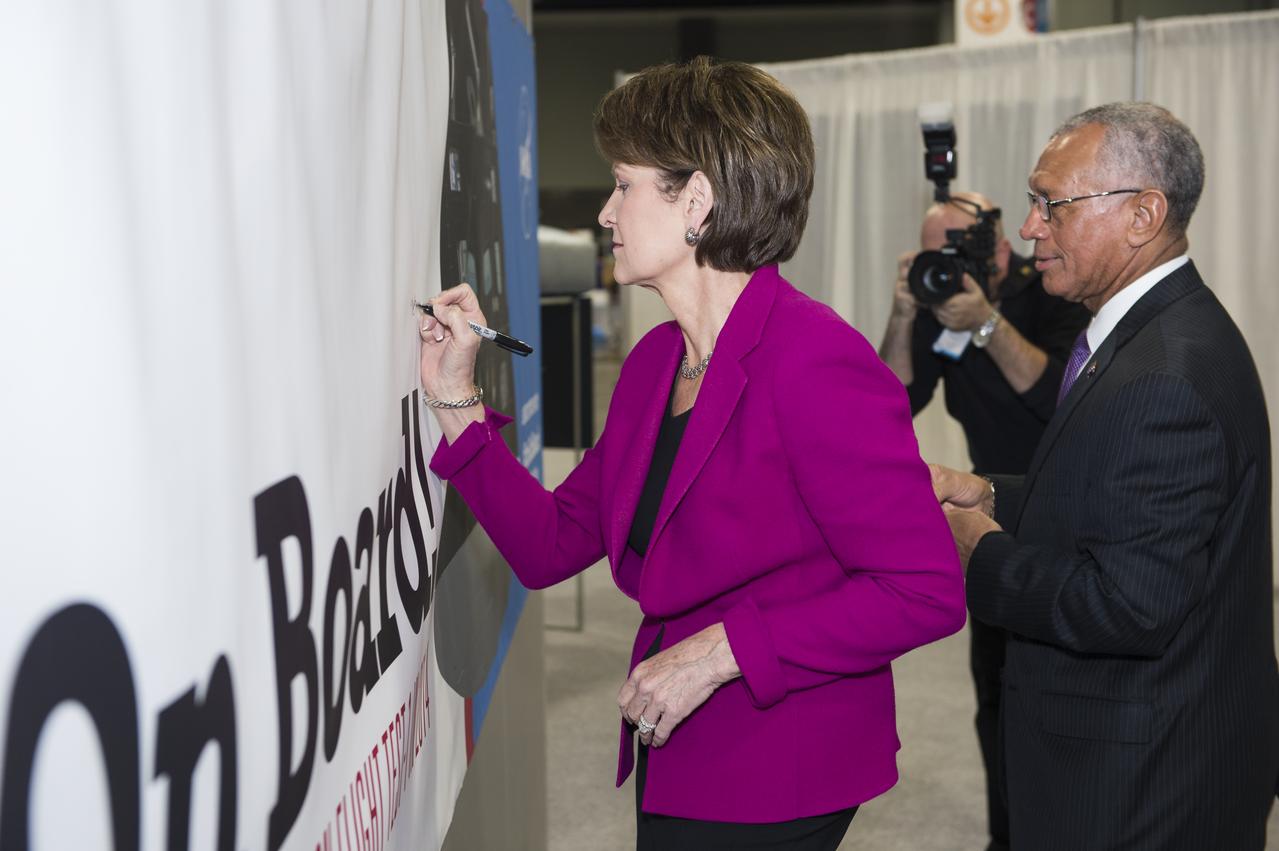
NASA Administrator Charles Bolden and Lockheed Martin CEO Marillyn Hewson sign the poster at the Orion exhibit at the USA Science and Engineering Festival on April 25, 2014. The USA Science and Engineering Festival takes place April 26-27, 2014 at the Washington Convention Center in Washington, DC. Photo Credit: (NASA/Aubrey Gemignani)
Exploration Design Challenge 2014
NASA Administrator Charles Bolden and Lockheed Martin CEO Marillyn Hewson sign the poster at the Orion exhibit at the USA Science and Engineering Festival on April 25, 2014. The USA Science and Engineering Festival takes place April 26-27, 2014 at the Washington Convention Center in Washington, DC. Photo Credit: (NASA/Aubrey Gemignani)
Exploration Design Challenge 2014
KENNEDY SPACE CENTER, FLA. -- From left, NASA Deputy Program Manager of the Space Shuttle Program Michael Wetmore, United Space Alliance (USA) Vice President and Space Shuttle Program Manager Howard DeCastro, NASA Deputy Associate Administrator for Space Station and Shuttle Programs Michael Kostelnik, and a USA technician examine cold plates in Orbiter Processing Facility Bay 2.  NASA and USA Space Shuttle program management are participating in a leadership workday.  The day is intended to provide management with an in-depth, hands-on look at Shuttle processing activities at KSC.
KENNEDY SPACE CENTER, FLA. -- From left, NASA Deputy Program Manager of the Space Shuttle Program Michael Wetmore, United Space Alliance (USA) Vice President and Space Shuttle Program Manager Howard DeCastro, NASA Deputy Associate Administrator for Space Station and Shuttle Programs Michael Kostelnik, and a USA technician examine cold plates in Orbiter Processing Facility Bay 2. NASA and USA Space Shuttle program management are participating in a leadership workday. The day is intended to provide management with an in-depth, hands-on look at Shuttle processing activities at KSC.
KENNEDY SPACE CENTER, FLA. -- From left, a United Space Alliance (USA) technician briefs NASA Deputy Program Manager of the Space Shuttle Program Michael Wetmore, USA Vice President and Space Shuttle Program Manager Howard DeCastro, and NASA Deputy Associate Administrator for Space Station and Shuttle Programs Michael Kostelnik on the use of cold plates in Orbiter Processing Facility Bay 2.  NASA and USA Space Shuttle program management are participating in a leadership workday.  The day is intended to provide management with an in-depth, hands-on look at Shuttle processing activities at KSC.
KENNEDY SPACE CENTER, FLA. -- From left, a United Space Alliance (USA) technician briefs NASA Deputy Program Manager of the Space Shuttle Program Michael Wetmore, USA Vice President and Space Shuttle Program Manager Howard DeCastro, and NASA Deputy Associate Administrator for Space Station and Shuttle Programs Michael Kostelnik on the use of cold plates in Orbiter Processing Facility Bay 2. NASA and USA Space Shuttle program management are participating in a leadership workday. The day is intended to provide management with an in-depth, hands-on look at Shuttle processing activities at KSC.