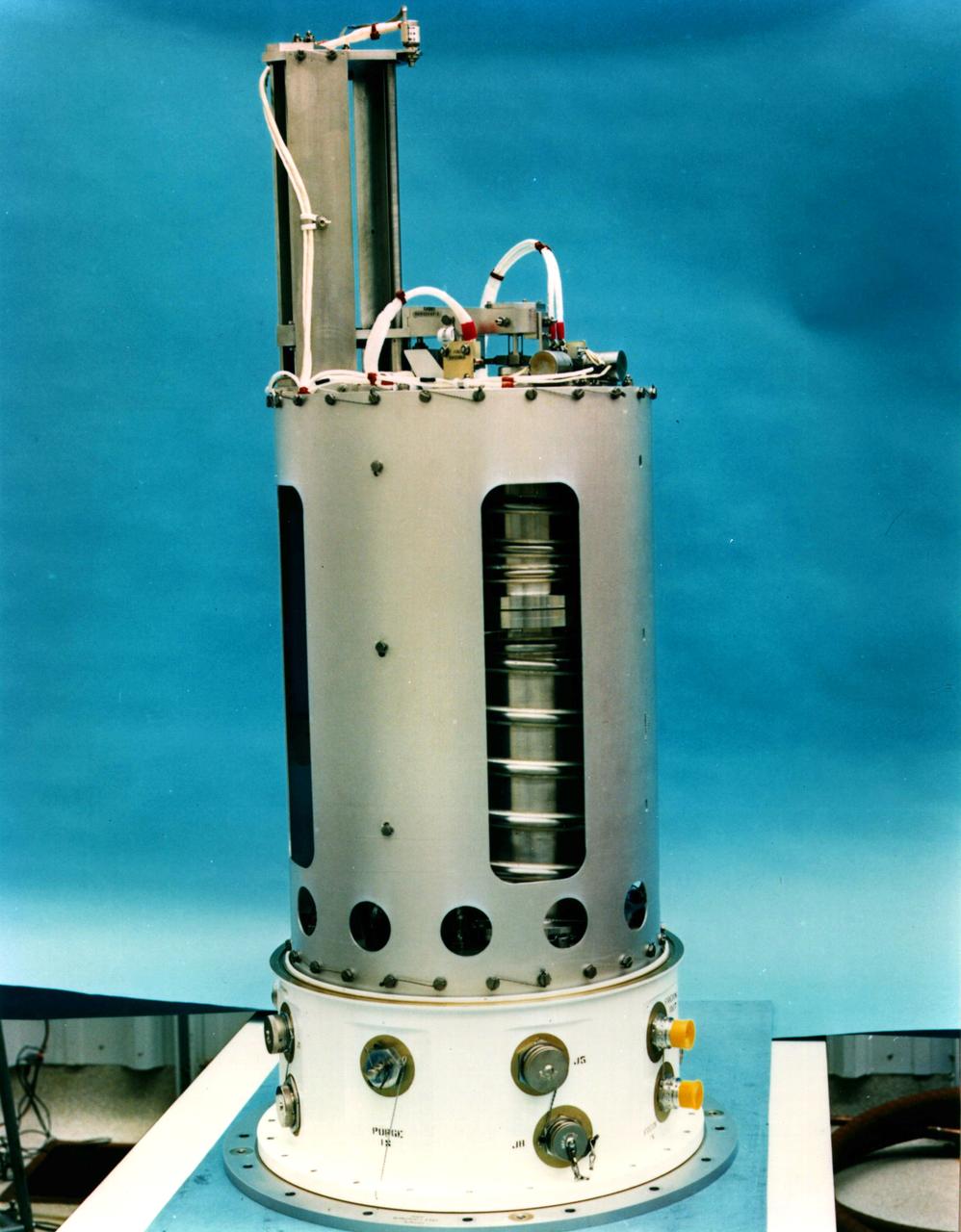
The Advanced Automated Directional Solidification Furnace (AADSF) with the Experimental Apparatus Container (EAC) removed flew during the USMP-2 mission. During USMP-2, the AADSF was used to study the growth of mercury cadmium telluride crystals in microgravity by directional solidification, a process commonly used on earth to process metals and grow crystals. The furnace is tubular and has three independently controlled temperature zones . The sample travels from the hot zone of the furnace (1600 degrees F) where the material solidifies as it cools. The solidification region, known as the solid/liquid interface, moves from one end of the sample to the other at a controlled rate, thus the term directional solidification.
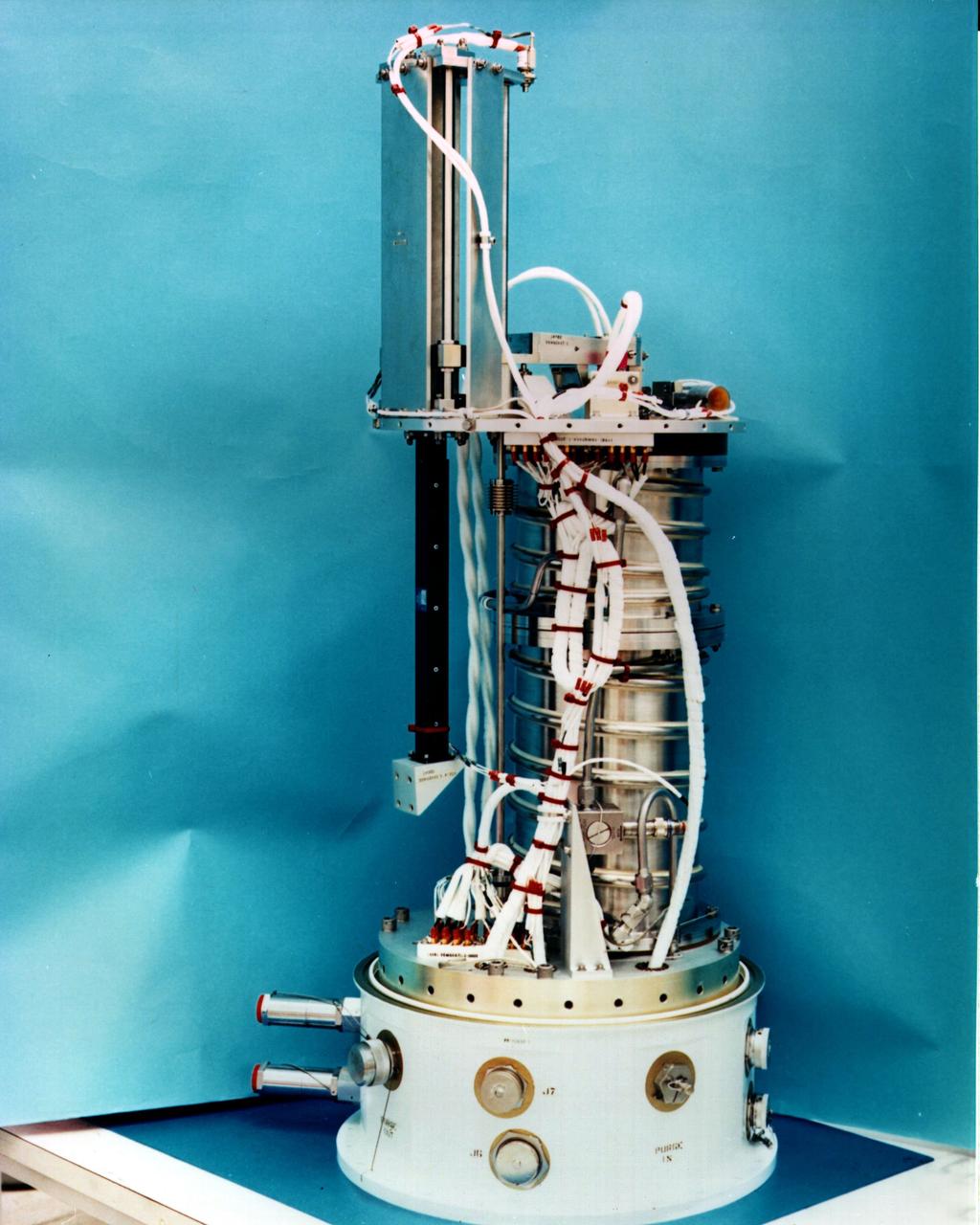
The Advanced Automated Directional Solidification Furnace (AADSF) flew during the USMP-2 mission. During USMP-2, the AADSF was used to study the growth of mercury cadmium telluride crystals in microgravity by directional solidification, a process commonly used on earth to process metals and grow crystals. The furnace is tubular and has three independently controlled temperature zones. The sample travels from the hot zone of the furnace (1600 degrees F) where the material solidifies as it cools. The solidification region, known as the solid/liquid interface, moves from one end of the sample to the other at a controlled rate, thus the term directional solidification.
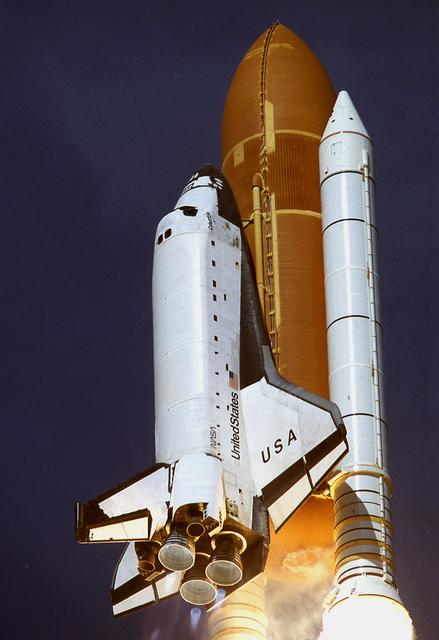
With a veteran crew aboard, the Space Shuttle Columbia (STS-62) roars off Launch Pad 39B to begin a 14-day extended duration stay in space. The two primary payloads for Columbia's 16th spaceflight are the US Microgravity Payload 2 (USMP-2) and the Office of Aeronautics and Space Technology 2 (OAST-2). A diversified variety of secondary payloads are located in the payload bay as well as the middeck.
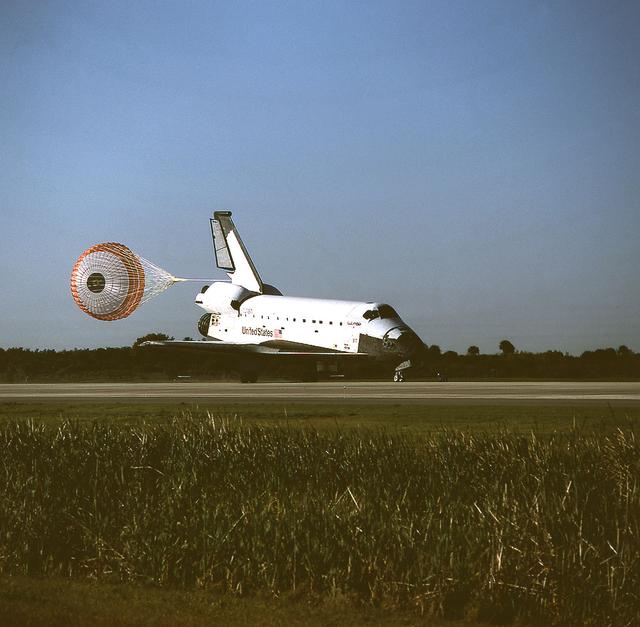
Space Shuttle Columbia (STS-62) comes to a graceful halt with the help of a parachute after a 14-day mission. The five member crew performed materials processing experiments on the United States Microgravity Payload 2 (USMP-2), and also conducted experiments designed to enable or extend space flight technology aboard the Office of Aeornautics and Space Technology 2 payload (OAST-2).
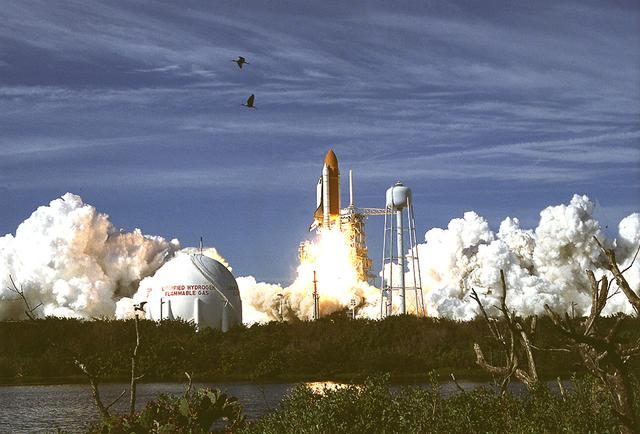
Clear skies, tranquil winds, and a brilliant morning sun mark the ontime liftoff of Space Shuttle Columbia (STS-62) from Launch Pad 39B. Columbia began the 61st Space Shuttle flight, which was a 14-day extended duration flight. On board, five veteran crew members performed materials processing experiments on the United States Microgravity Payload 2 (USMP-2), and also conducted experiments designed to enable or extend space flight technology aboard the Office of Aeornautics and Space Technology 2 payload (OAST-2).
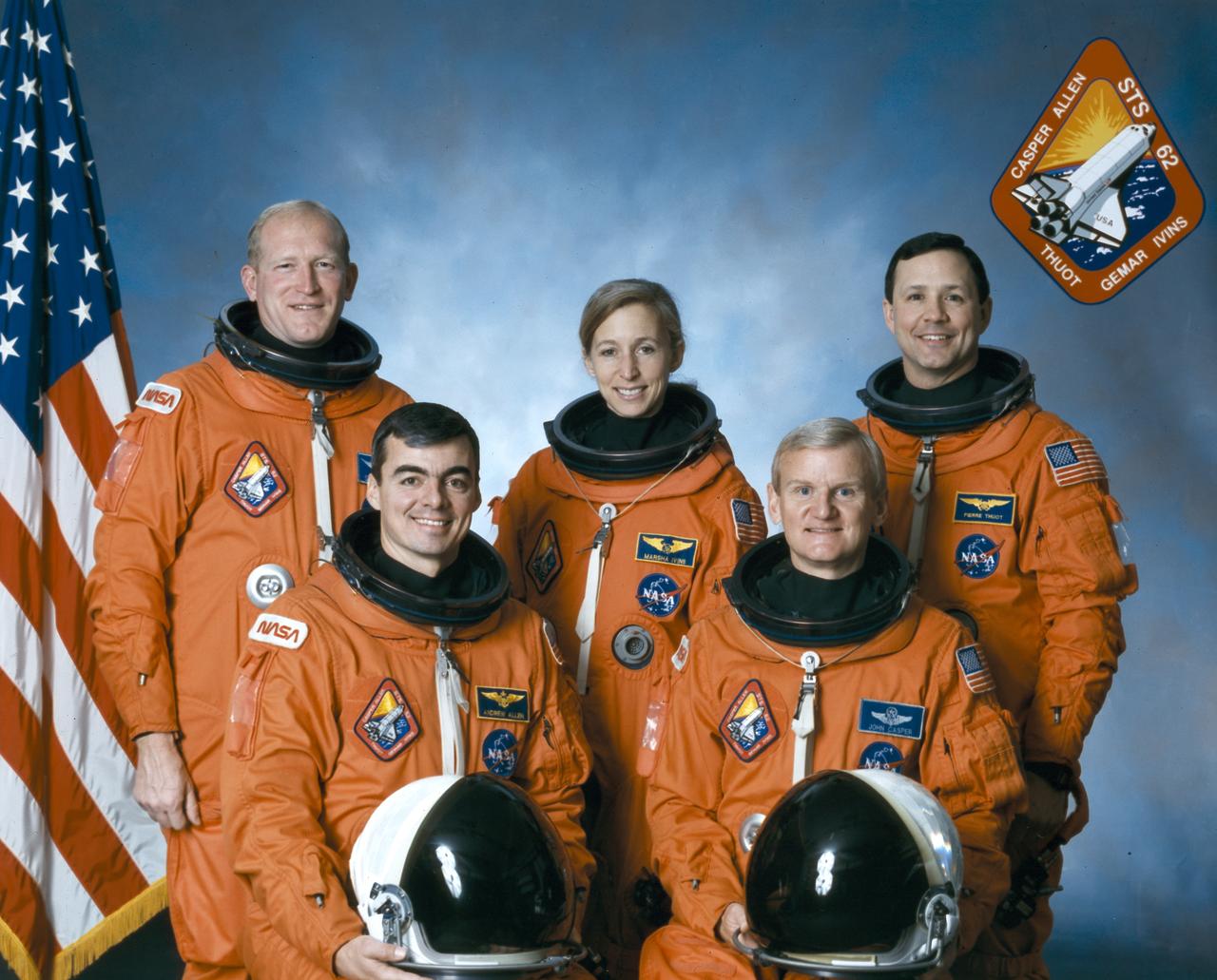
Astronauts included in the STS-62 crew portrait include (standing left to right) mission specialists Charles D. Gemar, Marsha S. Ivins, and Pierre J. Thuot. Seated left to right are Andrew M. Allen, pilot; and John H. Casper, commander. Launched aboard the Space Shuttle Columbia on March 4, 1994 at 8:53:00 am (EST), the STS-62 mission carried two primary payloads; the U.S Microgravity Payload-2 (USMP-2) and the Office of Aeronautics and Space Technology-2 (OAST-2).
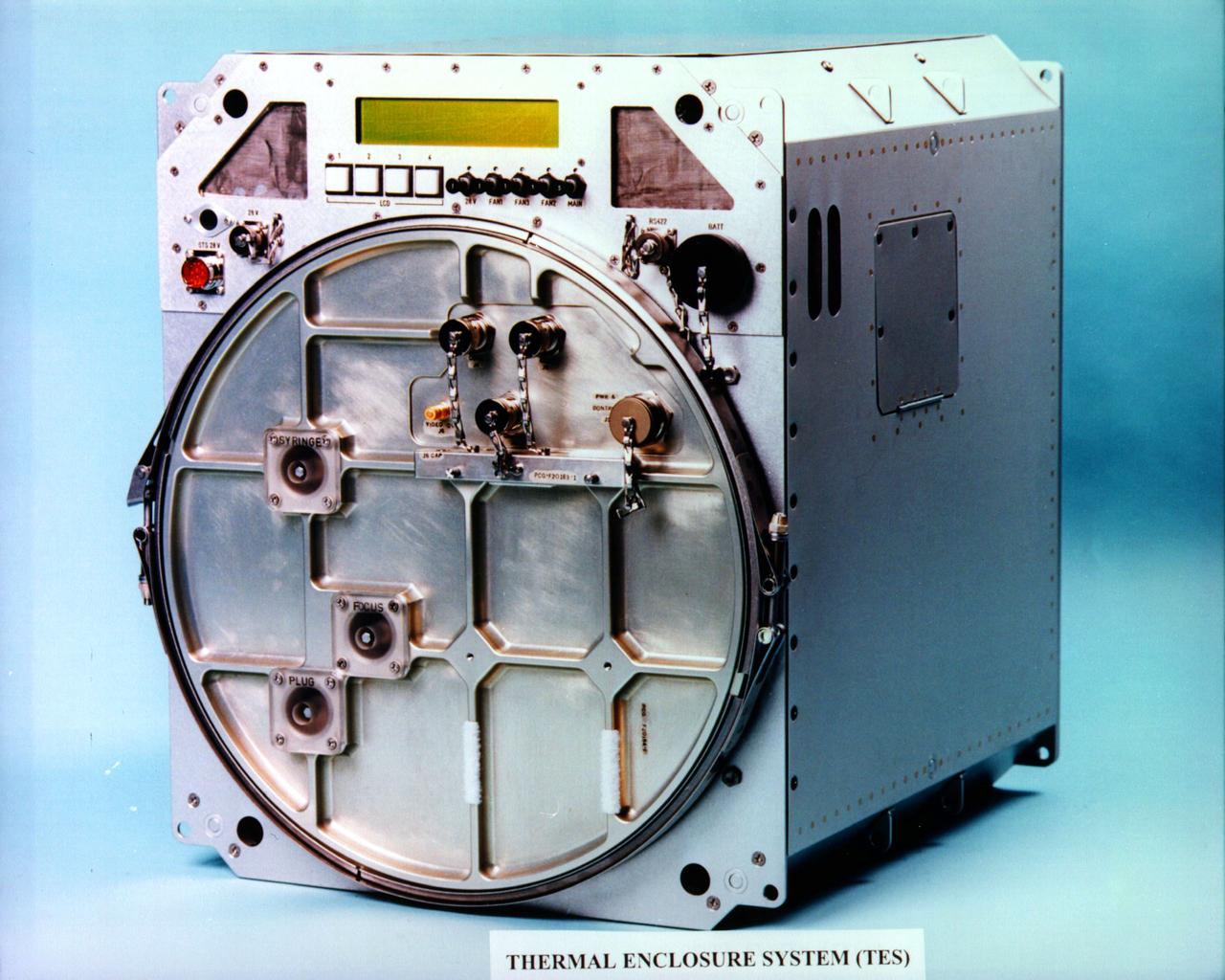
The Thermal Enclosure System (TES) provides thermal control for protein crystal growth experiments. The TES, housed in two middeck lockers on board the Space Shuttle, contains four Vapor Diffusion Apparatus (VDA) trays. Each can act as either a refrigerator or an incubator and its temperature can be controlled to within one-tenth degree C. The first flight of the TES was during USMP-2 (STS-62).
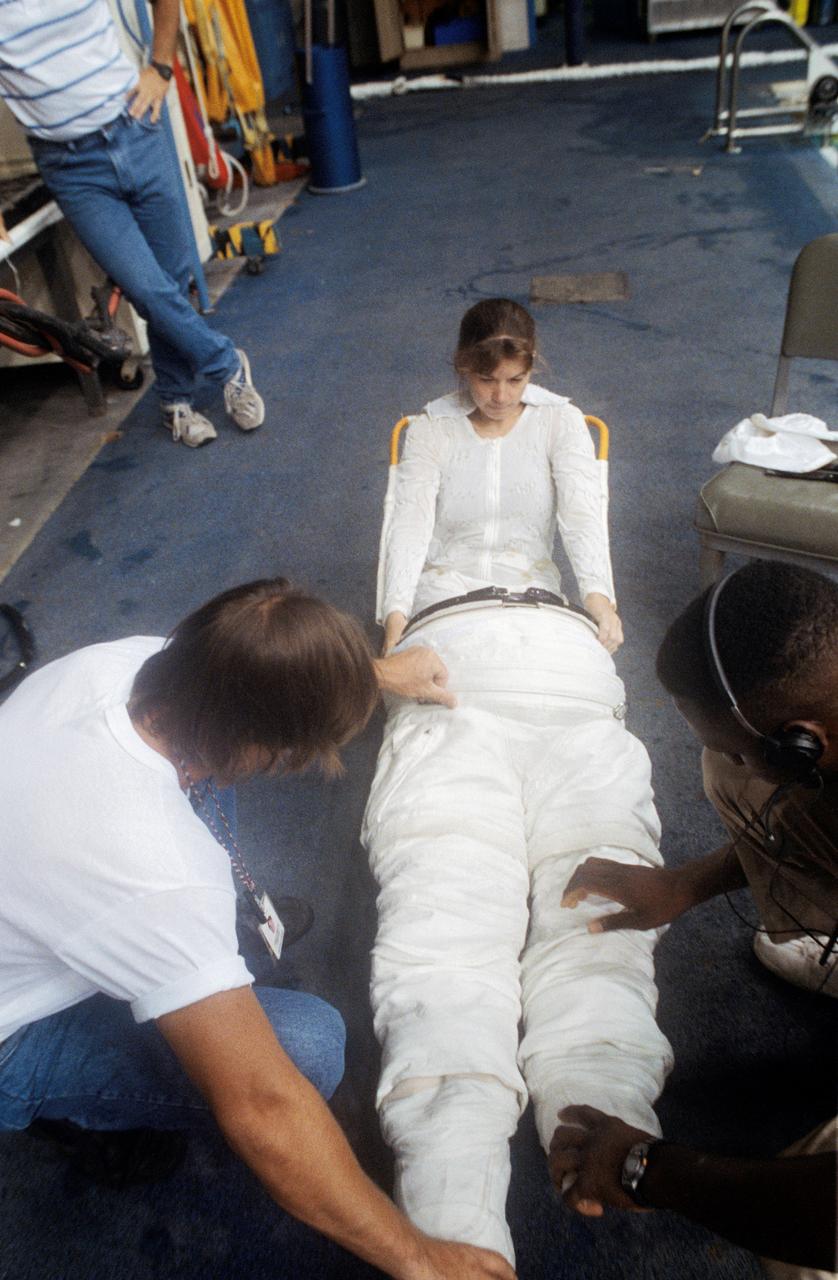
Astronaut and mission specialist for STS-73, Catherine G. Coleman, dons a high fidelity training version of the Extravehicular Mobility Unit (EMU) space suit at the Johnson Space Center’s (JSC) Weightless Environment Training Facility (WET-F) in preparation for the mission. The STS-73 mission was the second flight of the United States Microgravity Laboratory (USML-2), managed by scientists and engineers from the Marshall Space Flight Center.
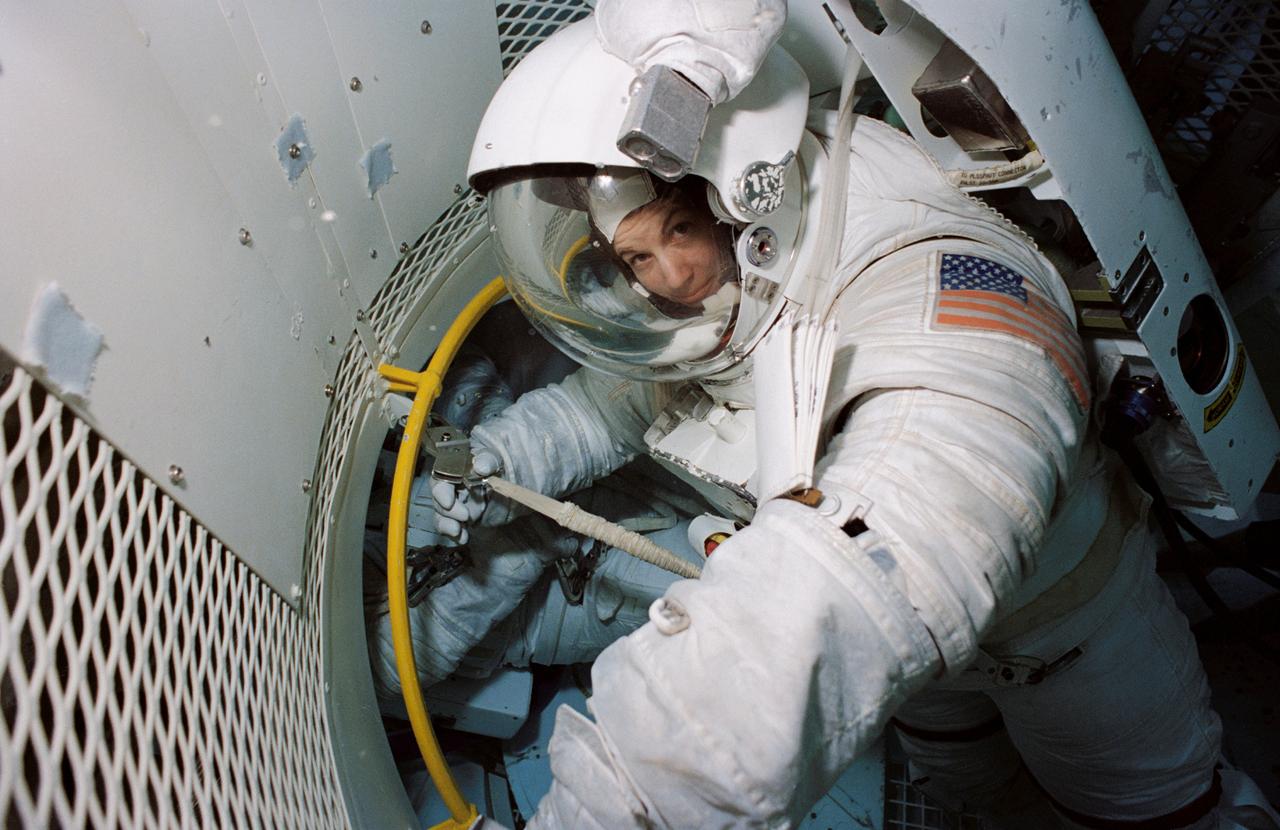
Astronaut and mission specialist Catherine G. Coleman,attired in a high fidelity training version of the Extravehicular Mobility Unit (EMU) space suit, trains for a contingency space walk at the Johnson Space Center’s (JSC) Weightless Environment Training Facility (WET-F). This particular training was in preparation for the STS-73 mission. The STS-73 mission was the second flight of the United States Microgravity Laboratory (USML-2), managed by scientists and engineers from the Marshall Space Flight Center.
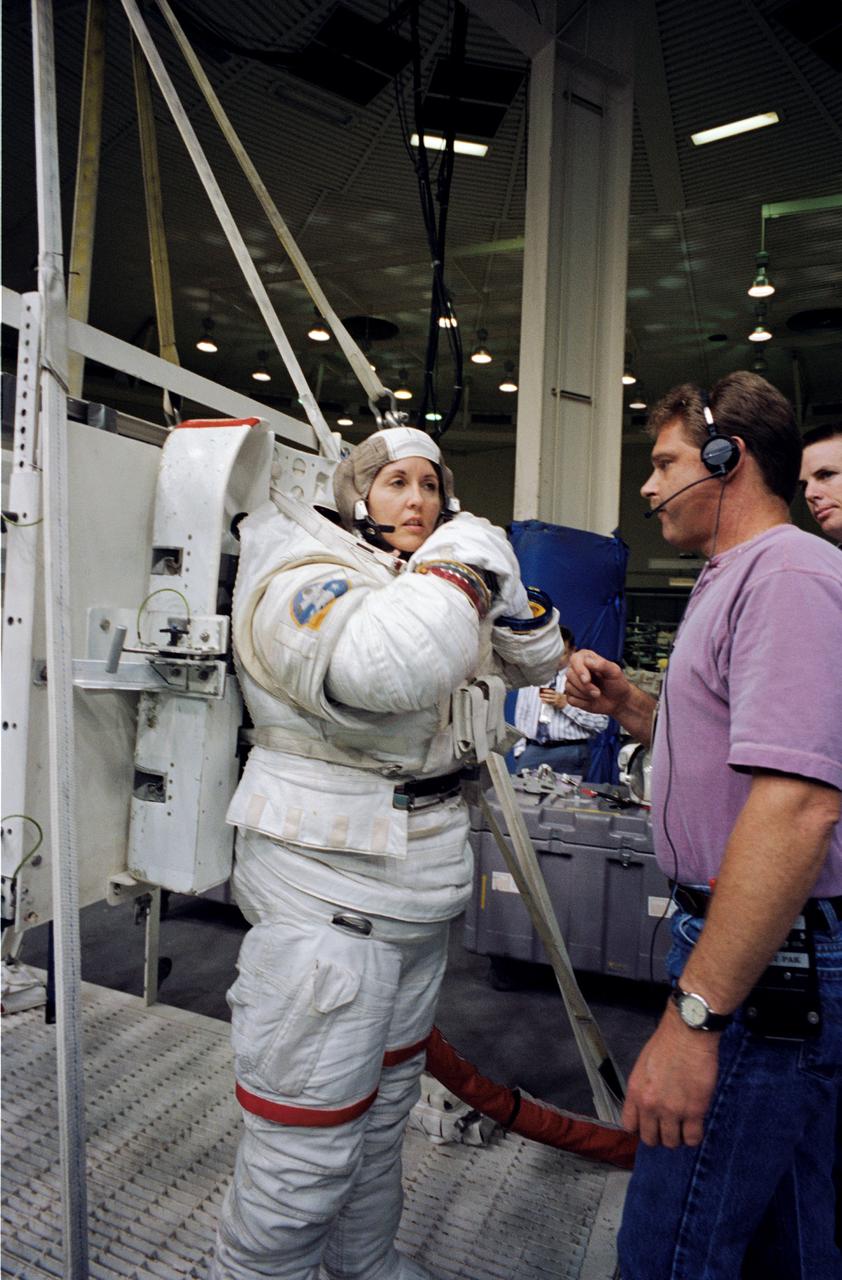
Astronaut Kathryn Thornton, payload commander for the STS-73 mission, attired in a high fidelity training version of the Extravehicular Mobility Unit (EMU) space suit, prepares to go underwater in the Johnson Space Center’s (JSC) Weightless Environment Training Facility (WET-F). The STS-73 mission was the second flight of the United States Microgravity Laboratory (USML-2), managed by scientists and engineers from the Marshall Space Flight Center.
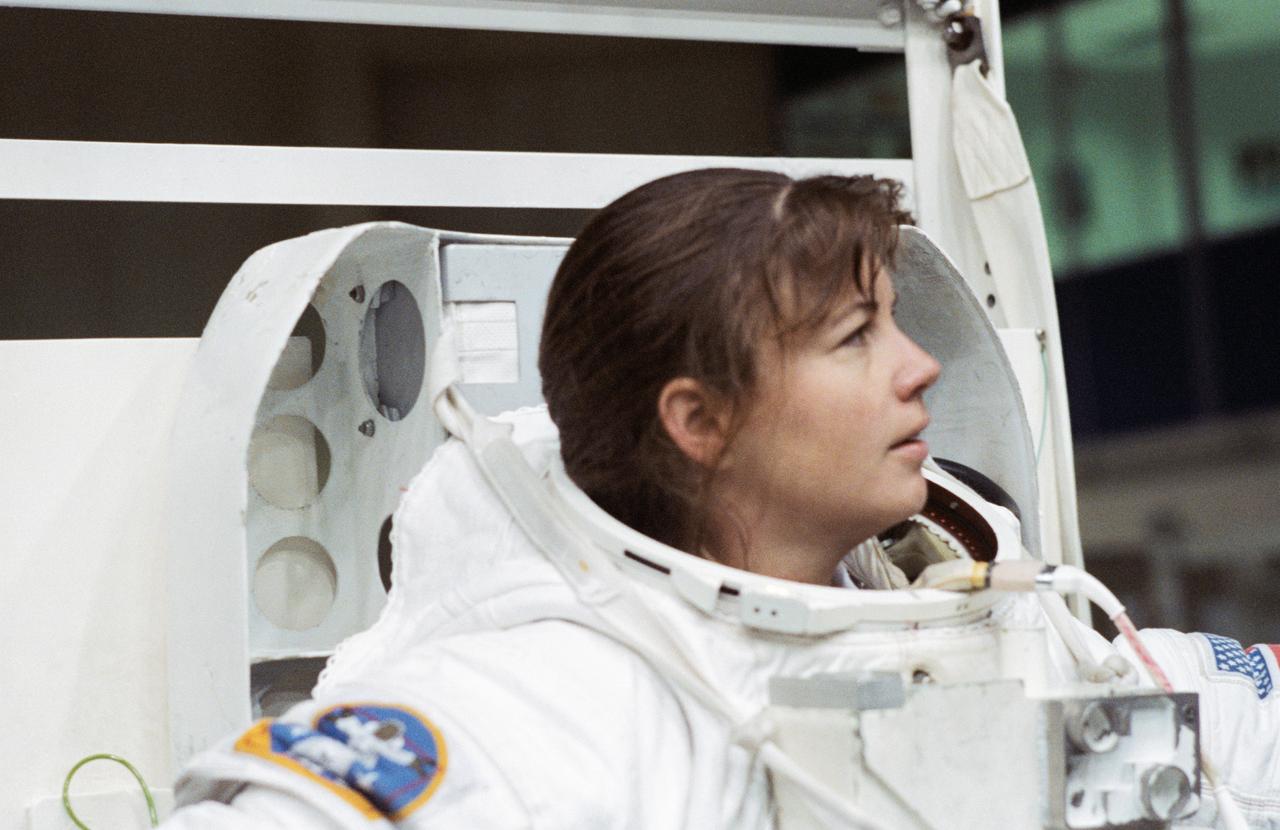
Astronaut and mission specialist Catherine G. Coleman is about to don the helmet portion of a high fidelity training version of the Extravehicular Mobility Unit (EMU) space suit at the Johnson Space Center’s (JSC) Weightless Environment Training Facility (WET-F). This particular training was in preparation for the STS-73 mission. The STS-73 mission was the second flight of the United States Microgravity Laboratory (USML-2), managed by scientists and engineers from the Marshall Space Flight Center.
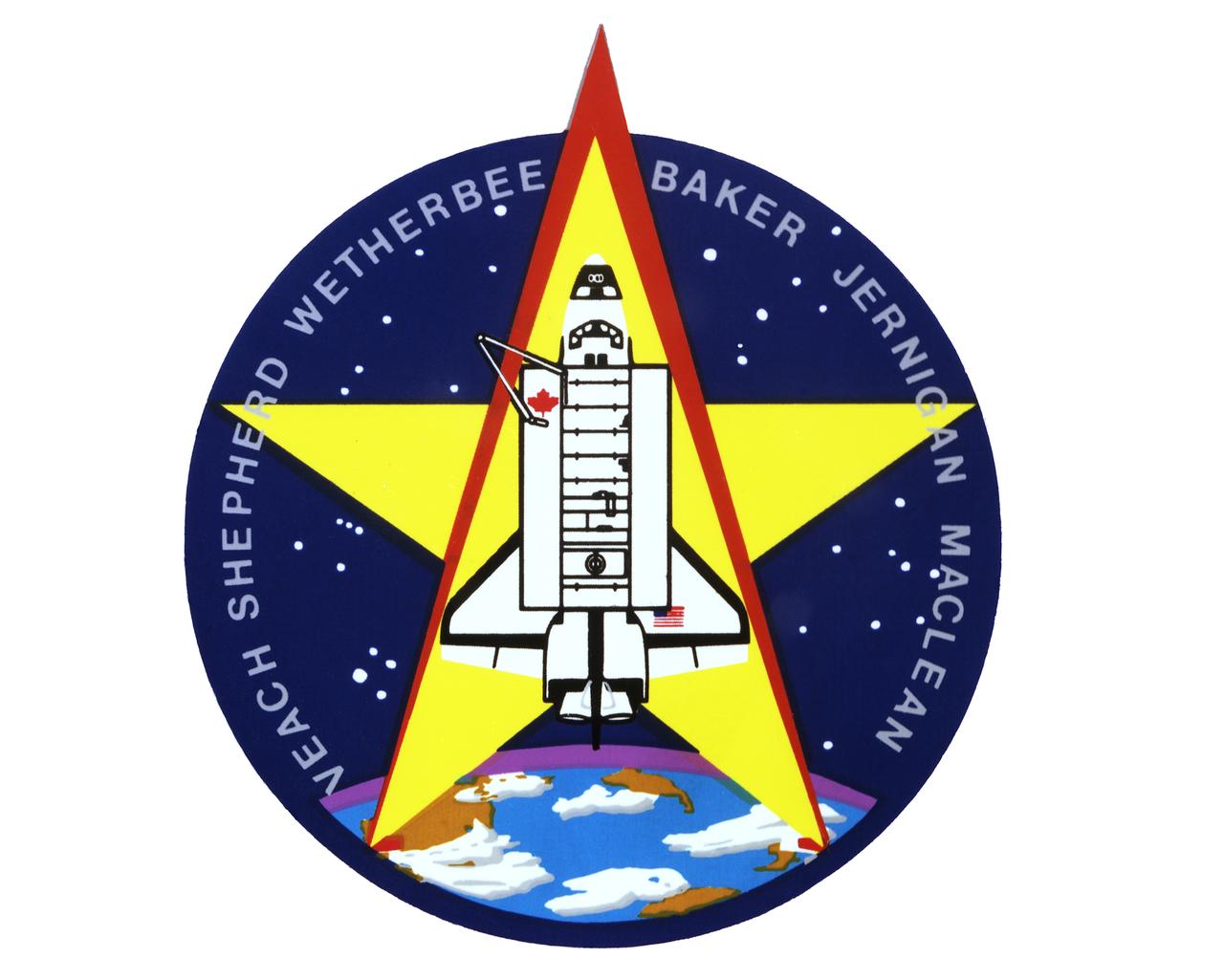
The STS-52 insignia, designed by the mission’s crew members, features a large gold star to symbolize the crew's mission on the frontiers of space. A gold star is often used to symbolize the frontier period of the American West. The red star in the shape of the Greek letter lambda represents both the laser measurements taken from the Laser Geodynamic Satellite (LAGEOS II) and the Lambda Point Experiment, which was part of the United States Microgravity Payload (USMP-l). The remote manipulator and maple leaf are emblematic of the Canadian payload specialist who conducted a series of Canadian flight experiments (CANEX-2), including the Space Vision System test.
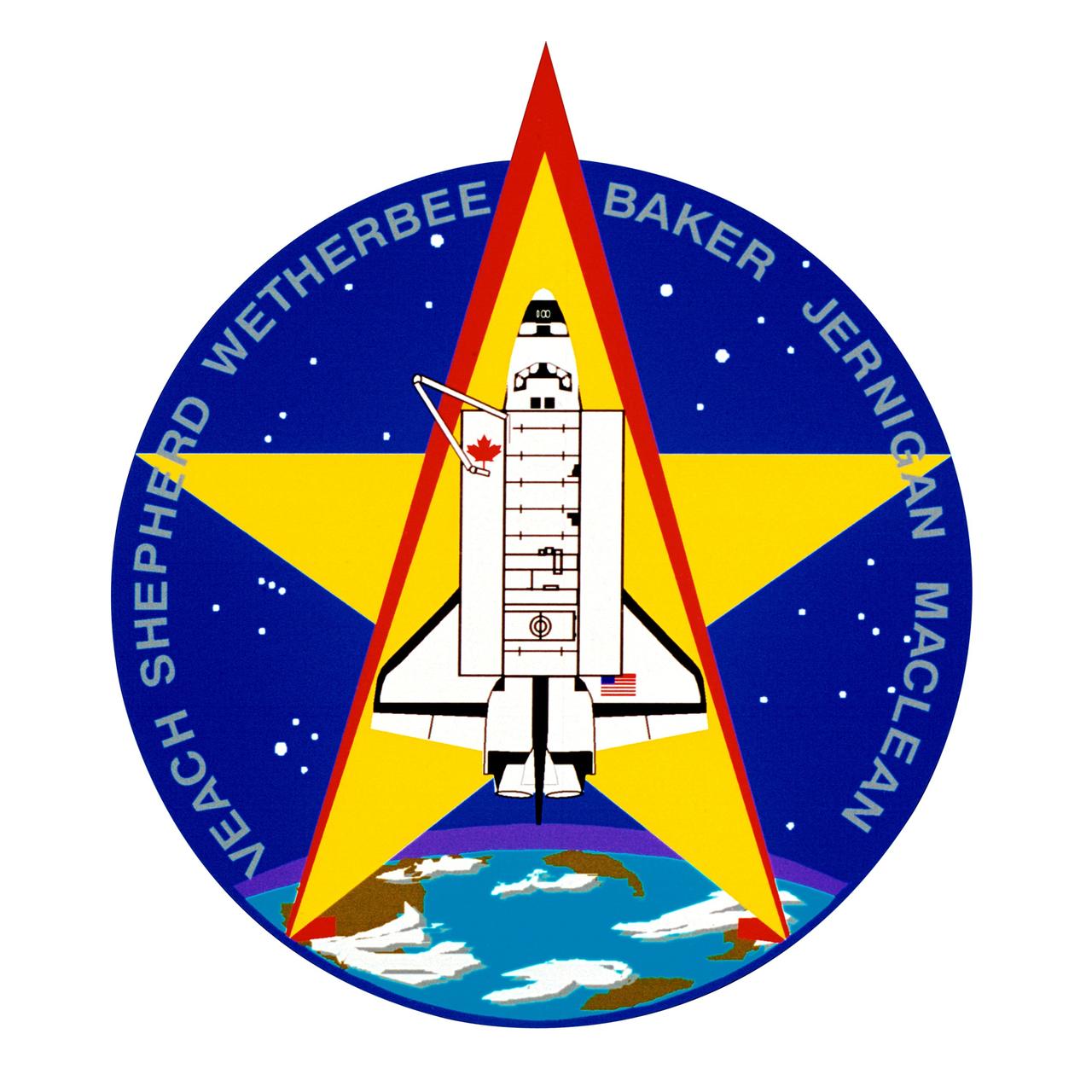
STS052-S-001 (July 1992) --- The insignia, designed by the STS-52 crew members, features a large gold star to symbolize the crew's mission on the frontiers of space. A gold star is often used to symbolize the frontier period of the American West. The red star in the shape of the Greek letter lambda represents both the laser measurements to be taken from the Laser Geodynamic Satellite (LAGEOS II) and the Lambda Point Experiment, which is part of the United States Microgravity Payload (USMP-1). The LAGEOS II is a joint Italian\United States satellite project intended to further our understanding of global plate tectonics. The USMP-1 is a microgravity facility which has French and United States experiments designed to test the theory of cooperative phase transitions and to study the solid\liquid interface of a metallic alloy in the low gravity environment. The Remote Manipulator System (RMS) and maple leaf are emblematic of the Canadian payload specialist who will conduct a series of Canadian flight experiments (CANEX-2), including the Space Vision System test. The NASA insignia design for space shuttle flights is reserved for use by the astronauts and for other official use as the NASA Administrator may authorize. Public availability has been approved only in the form of illustrations by the various news media. When and if there is any change in this policy, which we do not anticipate, it will be publicly announced. Photo credit: NASA
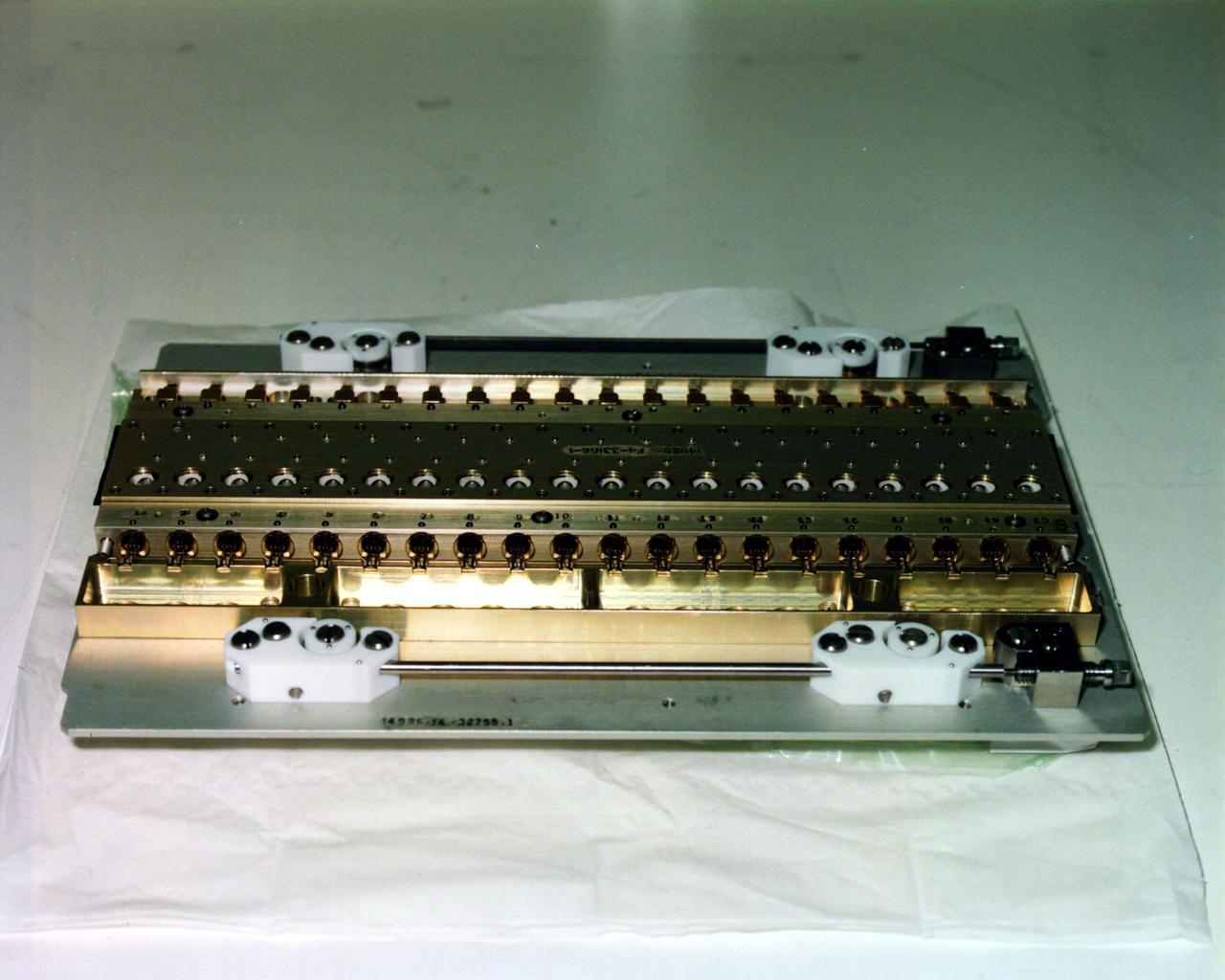
These Vapor Diffusion Apparatus (VDA) trays were first flown in the Thermal Enclosure System (TES) during the USMP-2 (STS-62) mission. Each tray can hold 20 protein crystal growth chambers. Each chamber contains a double-barrel syringe; one barrel holds protein crystal solution and the other holds precipitant agent solution. During the microgravity mission, a torque device is used to simultaneously retract the plugs in all 20 syringes. The two solutions in each chamber are then mixed. After mixing, droplets of the combined solutions are moved onto the syringe tips so vapor diffusion can begin. During the length of the mission, protein crystals are grown in the droplets. Shortly before the Shuttle's return to Earth, the experiment is deactivated by retracting the droplets containing protein crystals, back into the syringes.
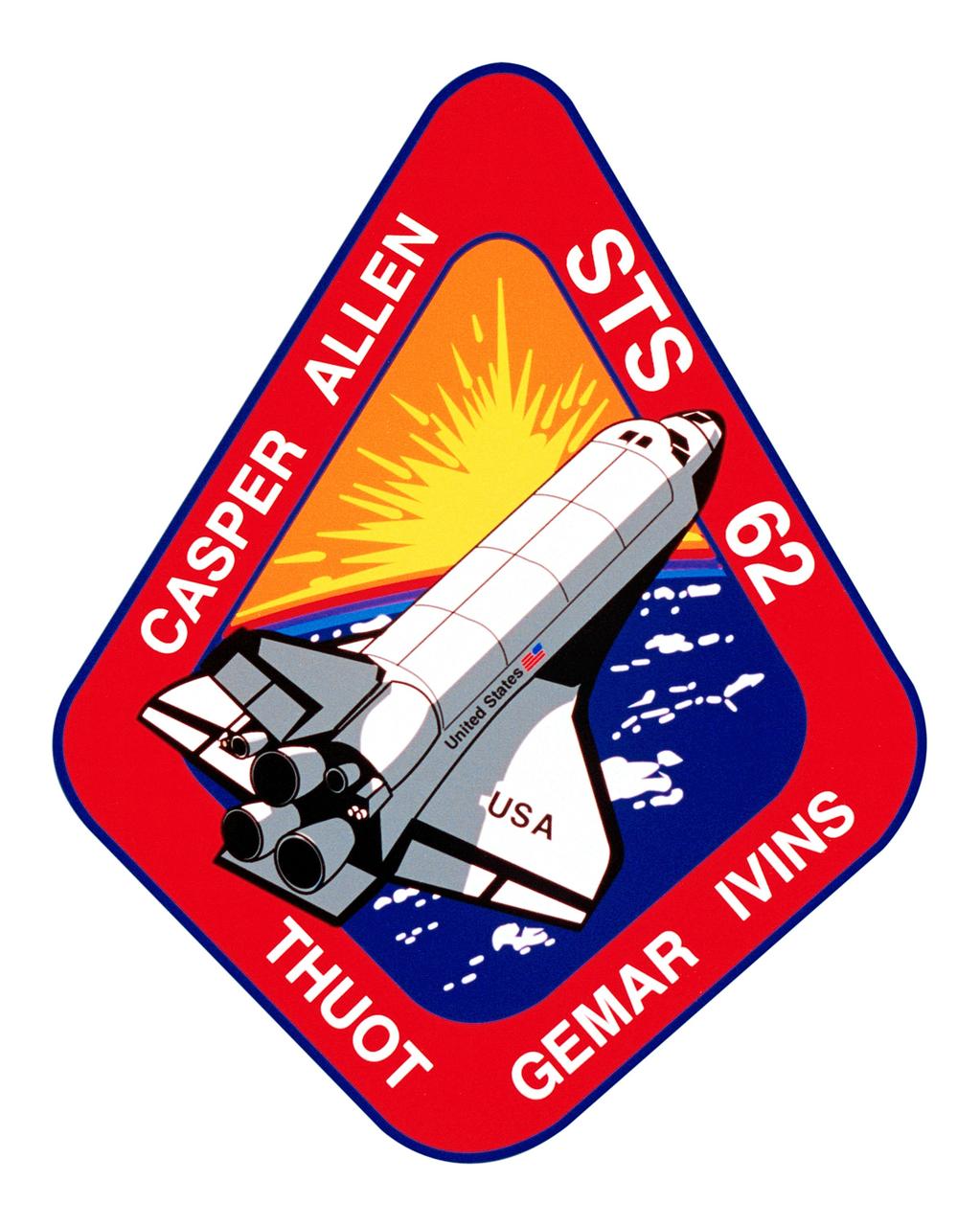
STS062-S-001 (October 1993) --- The crew patch depicts the world's first reusable spacecraft on its sixteenth flight. The space shuttle Columbia is in its entry-interface attitude as it prepares to return to Earth. The primary mission objectives of STS-62 include the United States Microgravity Payload (USMP-2) and the NASA Office of Aeronautics and Space Technology (OAST-2) payloads. These payloads represent a multifaceted array of space science and engineering experiments. The varied hues of the rainbow on the horizon connote the varied, but complementary, nature of all the payloads united on this mission. The upward-pointing vector shape of the patch is symbolic of America's reach for excellence in its in its unswerving pursuit to explore the frontiers of space. The brilliant sunrise just beyond Columbia suggests the promise that research in space holds for the hopes and dreams of future generations. The STS-62 insignia was designed by Mark Pestana. The NASA insignia design for space shuttle flights is reserved for use by the astronauts and for other official use as the NASA Administrator may authorize. Public availability has been approved only in the forms of illustrations by the various news media. When and if there is any change in this policy, which is not anticipated, the change will be publicly announced. Photo credit: NASA