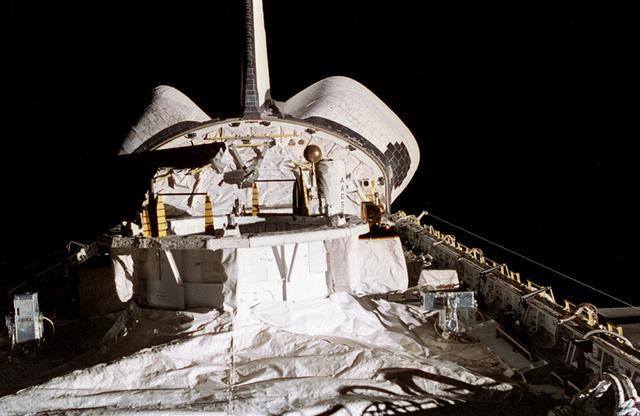
Onboard photo of space shuttle Columbia's (STS-75) open cargo bay carrying the United States Microgravity Payload-3 (USMP-3) at night.
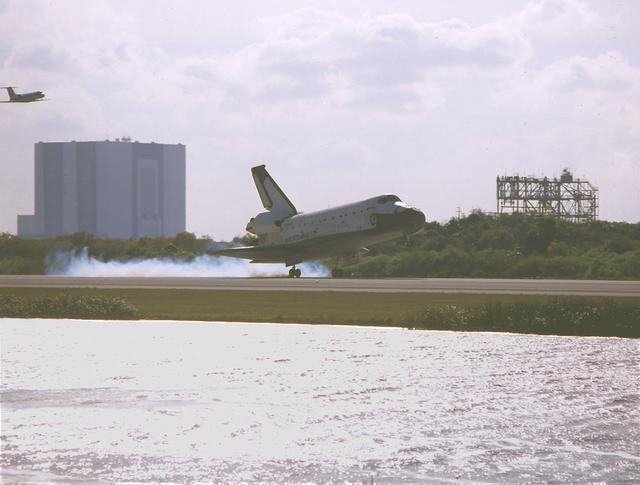
The Space Shuttle Orbiter Columbia's (STS-75) mission came to a close as the orbiter touched down on Runway 33 of Kennedy Space Center's Shuttle Landing Facility on March 9, 1996. Off to the right is the Vehicle Assembly Building and the Shuttle Training Aircraft (STA). The Mate/Demate Device (MDM) is at left. This Marshall Space Flight Center managed mission lasted 15 days and 17-hours, during which time the seven member crew conducted microgravity research with the U.S. Microgravity Payload (USMP-3), which flew for the third time. The other primary payload was the Tethered Satellite System (TSS-1R),a reflight from an earlier mission, but the satellite was lost when the tether broke just short of its fully deployed length of nearly 13 miles.
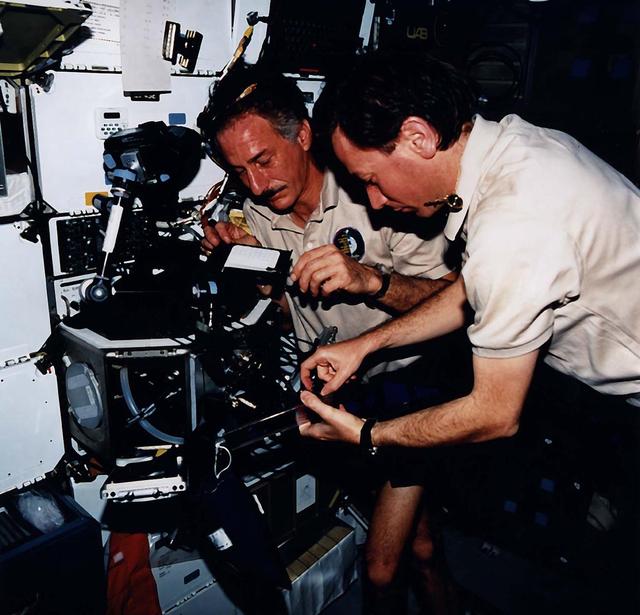
Astronauts Jeffery A. Hoffman (left) and Maurizio Cheli, representing the European Space Agency (ESA), set up an experiment at the glovebox on the Space Shuttle Columbia's mid-deck. The two mission specialists joined three other astronauts and an international payload specialist for more than 16 days of research aboard Columbia.
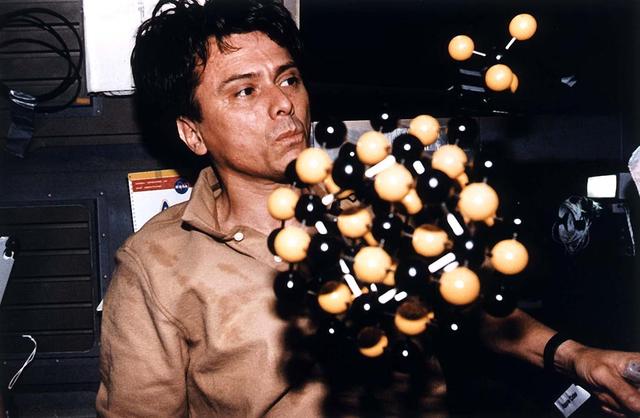
Astronaut Franklin R. Chang-Diaz, payload commander, ponders the elements of a model representing the Commercial Protein Crystal Growth (CPCG) experiment. This flight of the experiment marks the first joint United States--Latin America effort in this discipline. The project brings together a small team of investigators from Costa Rica (Chang-Diaz's native land), Chile, and the United States.
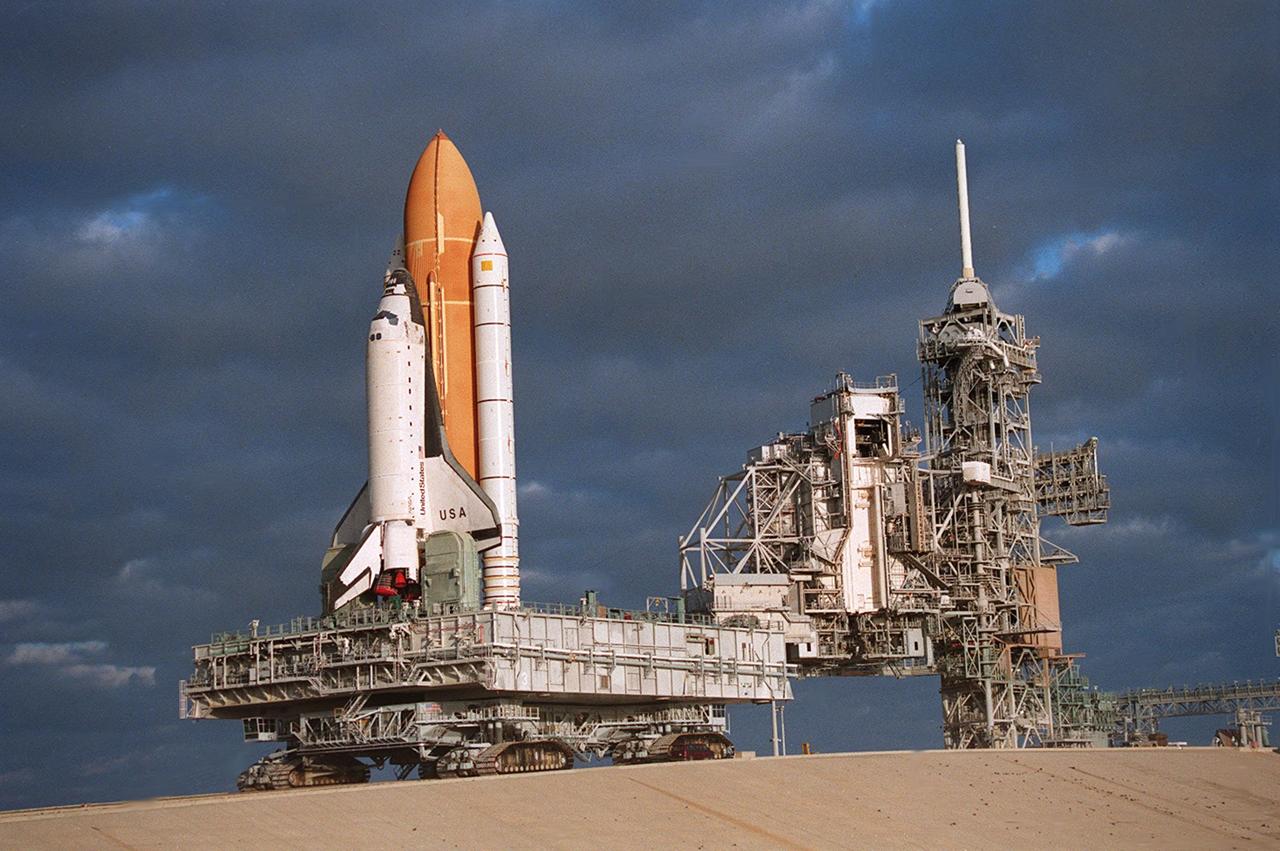
KENNEDY SPACE CENTER, FLA. -- The Space Shuttle Columbia arrives at Launch Pad 39B following an approximate seven-hour journey from the Vehicle Assembly Building. Columbia is being prepared for a targeted Feb. 22 liftoff on Mission STS-75, which will feature a re-flight of the Tethered Satellite System (TSS-1R) and the third flight of the U.S. Microgravity Payload (USMP-3)
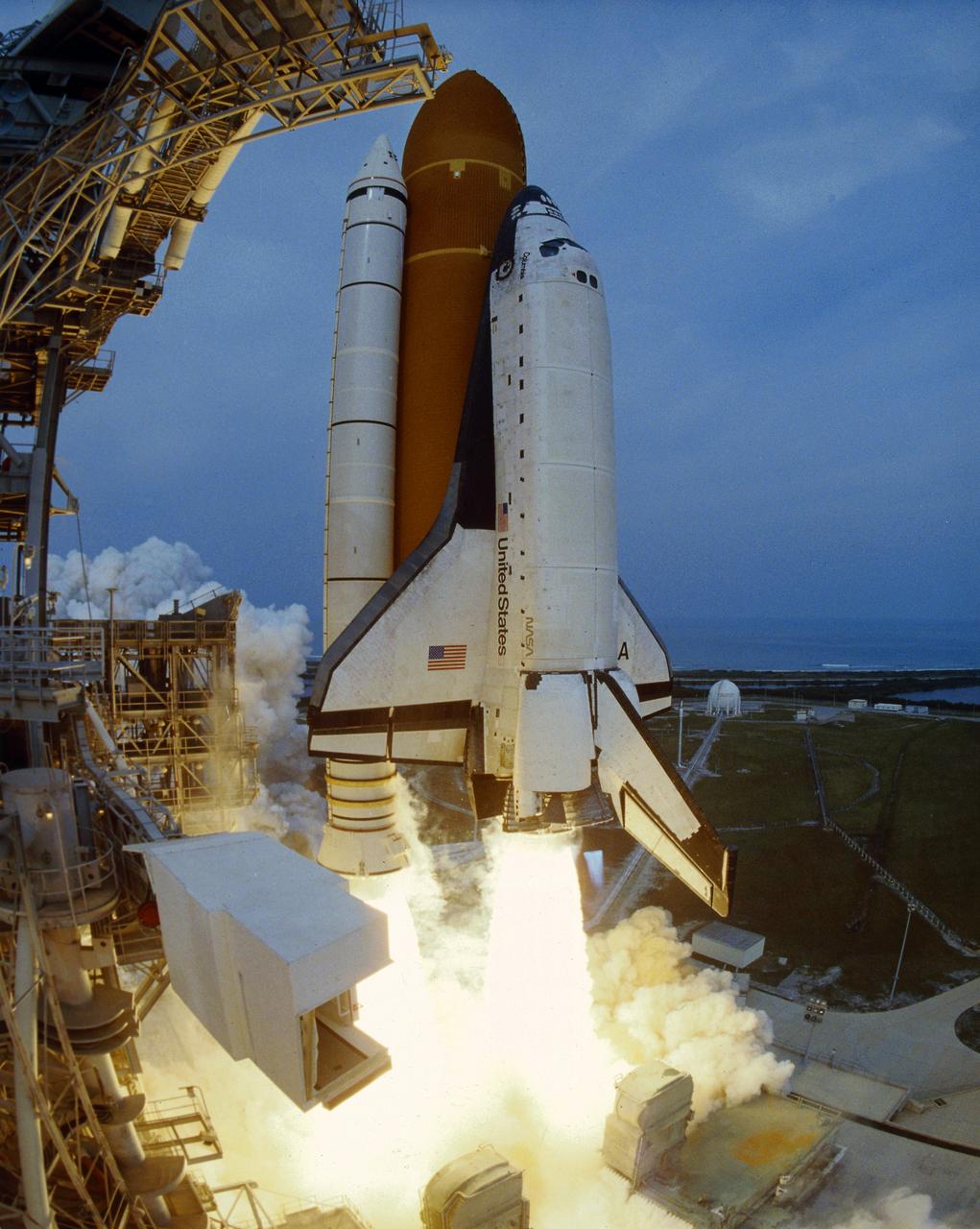
The Space Shuttle Columbia (STS-75) cleared the tower following an on-time liftoff from Launch Pad 39B. Visible at lower left is the white room on the orbiter access arm through which the flight crew entered the orbiter earlier. Columbia's mission lasted 14 days and included retesting of the Tethered Satellite System (TSS-1R) and the third flight of the United States Microgravity Payload (USMP-3), both of which are managed by scientist at Marshall Space Flight Center. Included in Columbia's flight crew were members of the European Space Agency (ESA) and the Italian Space Agency (ASI), Mission Specialists Maurizio Cheli, Claude Nicollier and Payload Specialist Umberto Guidoni, respectively.