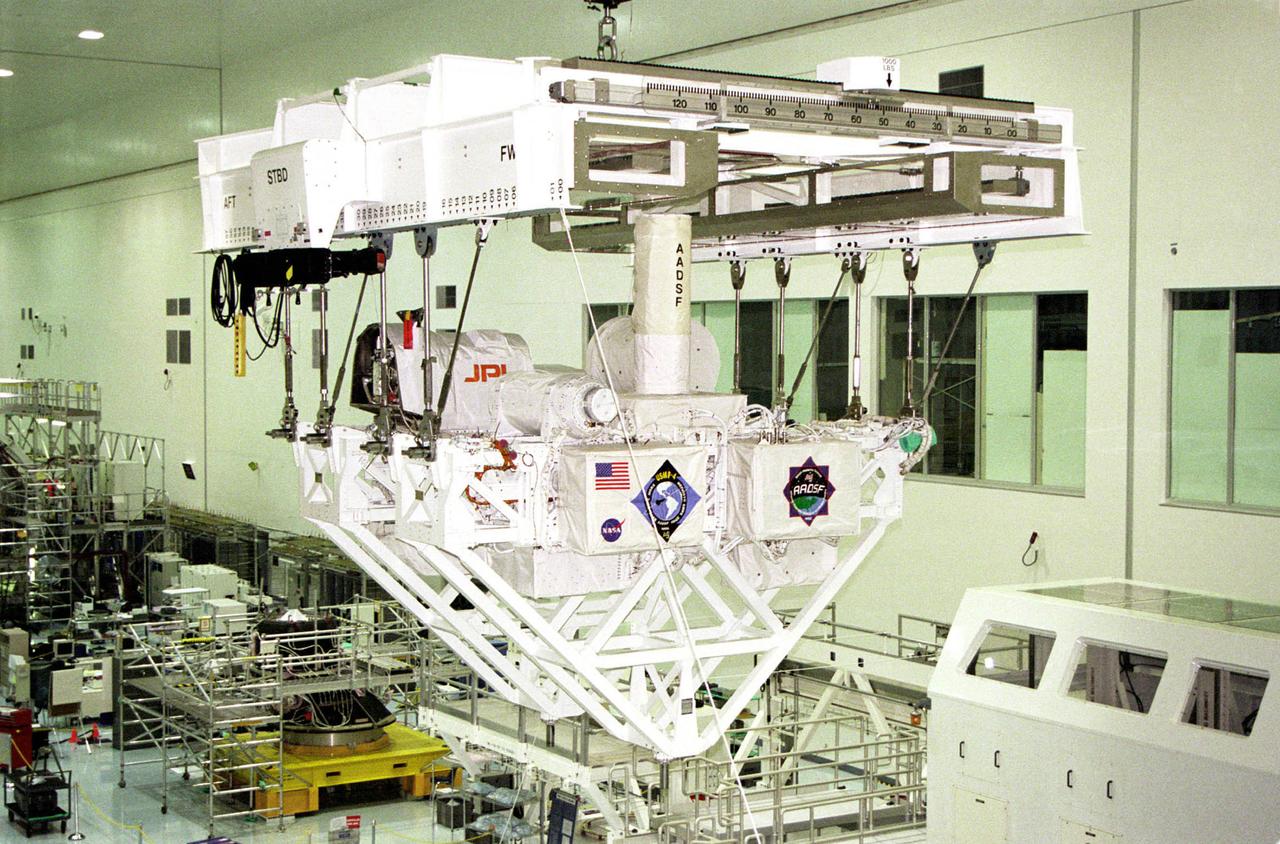
The USMP mission series pioneered sophisticated telescience technology to control experiments in the open cargo bay of the space shuttle. At Kennedy Space Center, the system of trusses that supported the USMP-4 experiments was loaded into the cargo bay. The bay doors were closed during launch but were opened in orbit.
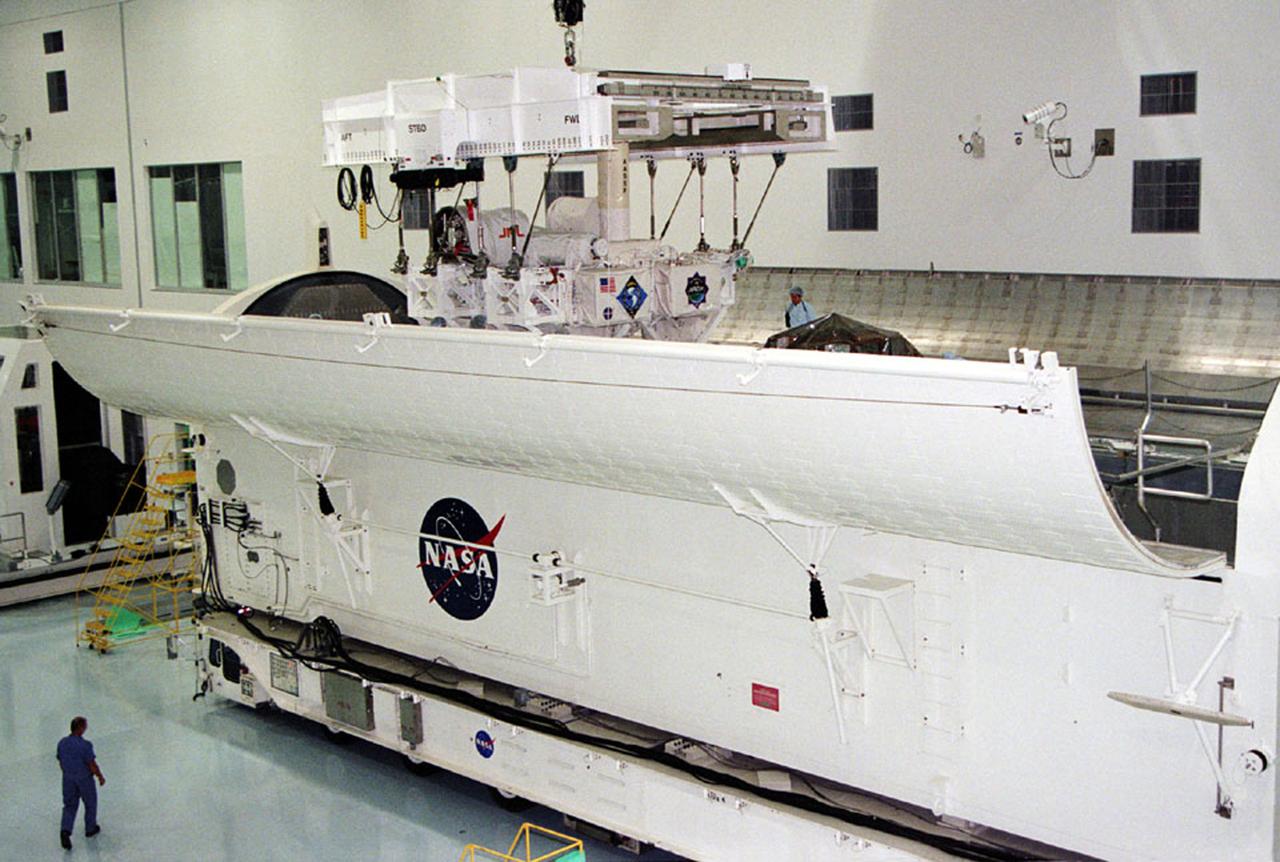
The USMP mission series pioneered sophisticated telescience technology to control experiments in the open cargo bay of the space shuttle. At Kennedy Space Center, the system of trusses that supported the USMP-4 experiments was loaded into the cargo bay. The bay doors were closed during launch but were opened in orbit.
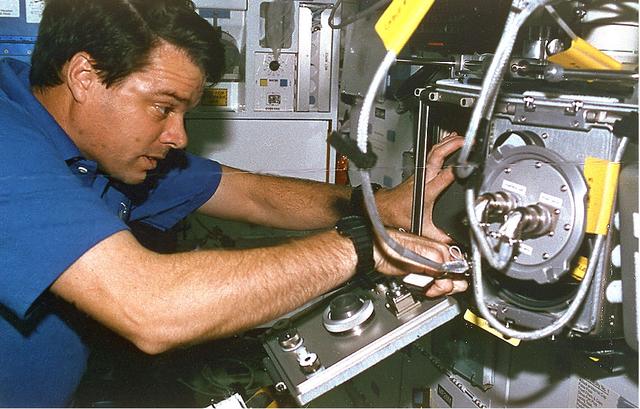
Onboard Space Shuttle Columbia (STS-87) Mission Commander Kevin R. Kregel sets up the mid-deck glove box during early hours of the 16-day United States Microgravity Payload 4 (USMP-4) mission. Kregel was joined by four other astronauts and a Ukrainian payload specialist for the mission.
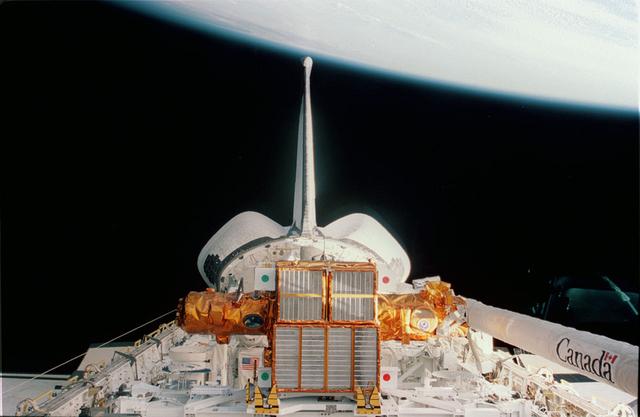
STS-87 Onboard Photo: The U. S. Microgravity Payload-4 (USMP-4) is carried aboard multi-purpose experiment support structures mounted in the shuttle payload bay and sparning the width of the orbiter.
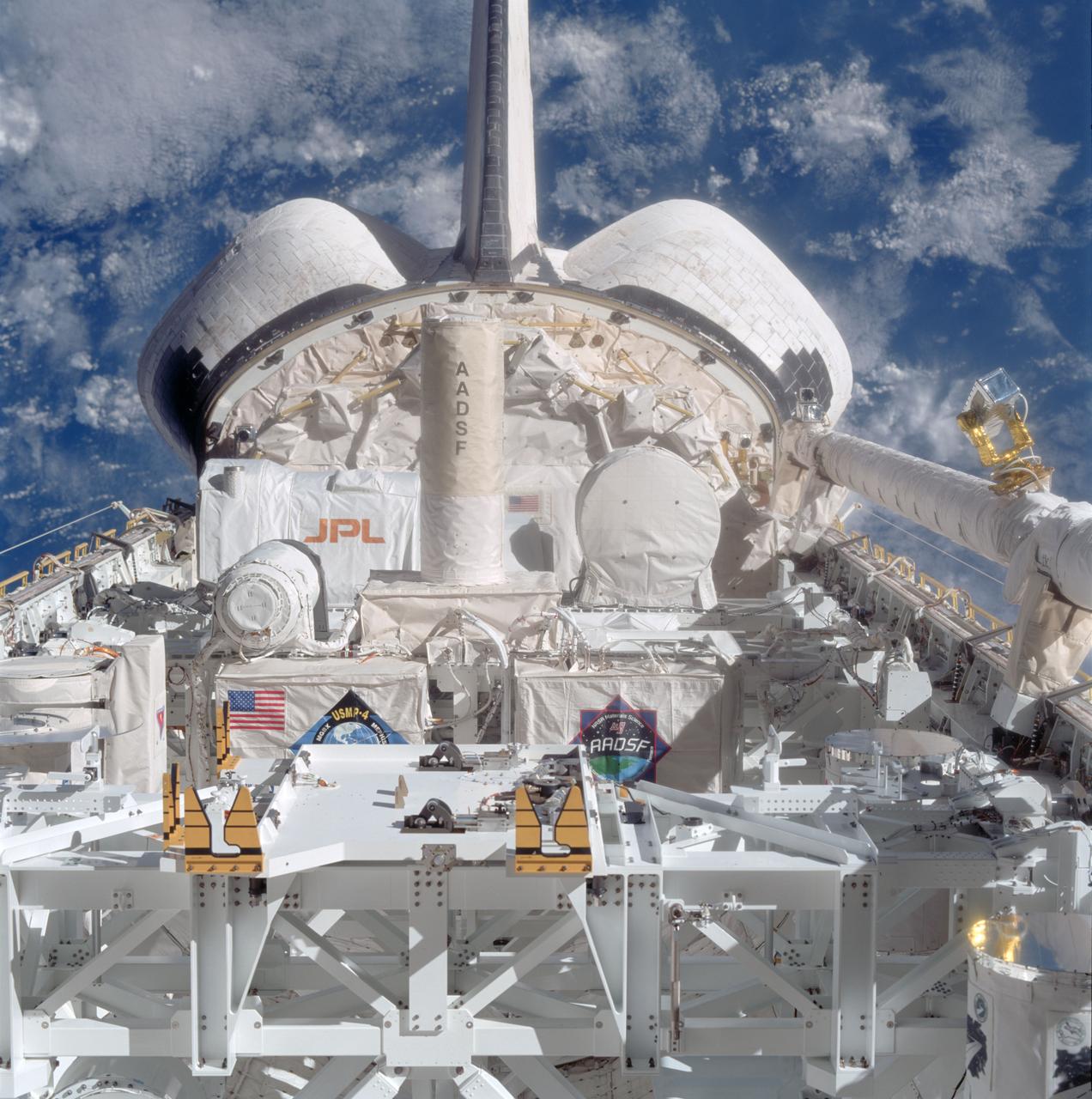
STS087-706-022 (19 November - 5 December 1997) --- This picture of the Space Shuttle Columbia's cargo bay, taken through the aft flight deck windows with a handheld 70mm camera, shows the United States Microgravity Payload 4 (USMP-4) mission's payloads.
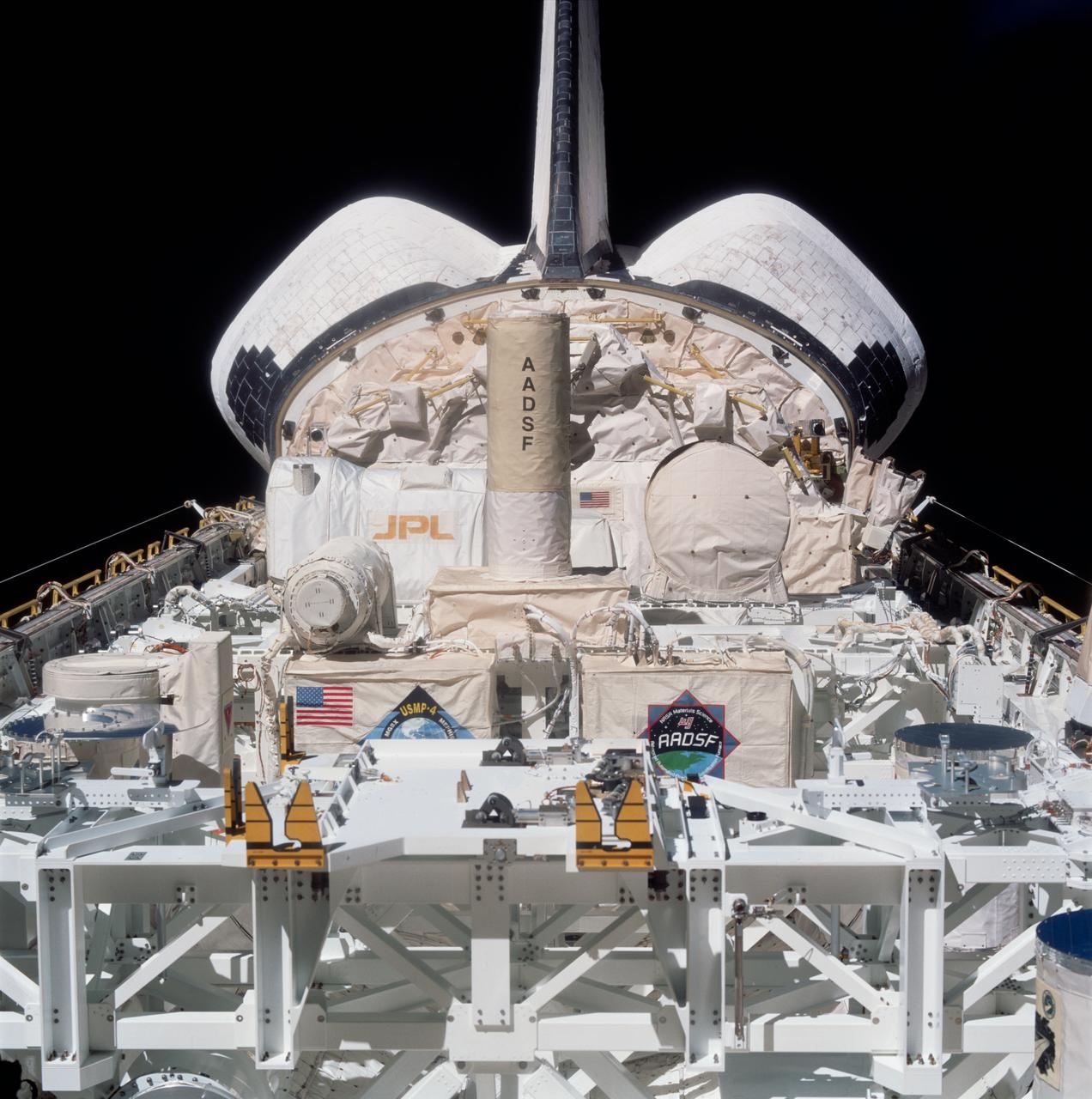
STS087-752-023 (19 November – 5 December 1997) --- This picture of Columbia's cargo bay, taken through the aft flight deck windows with a handheld 70mm camera, shows the U.S. Microgravity Payload (USMP-4) mission's cargo.
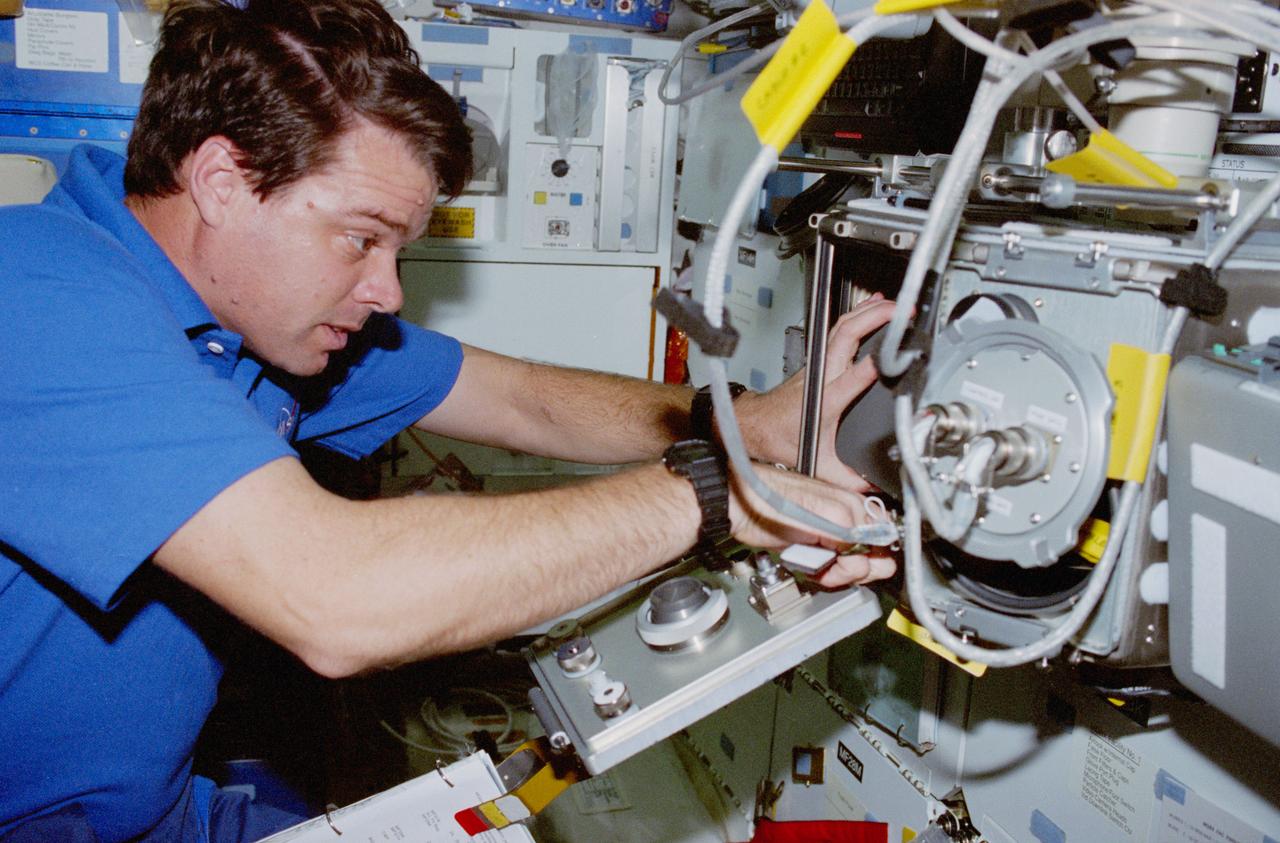
STS087-385-029 (19 November – 5 December 1997) --- Astronaut Kevin R. Kregel, mission commander, sets up the middeck glove box onboard the Space Shuttle Columbia during early hours of the 16-day United States Microgravity Payload 4 (USMP-4) mission. Kevin R. Kregel was joined by four other astronauts and a Ukrainian payload specialist for the mission.
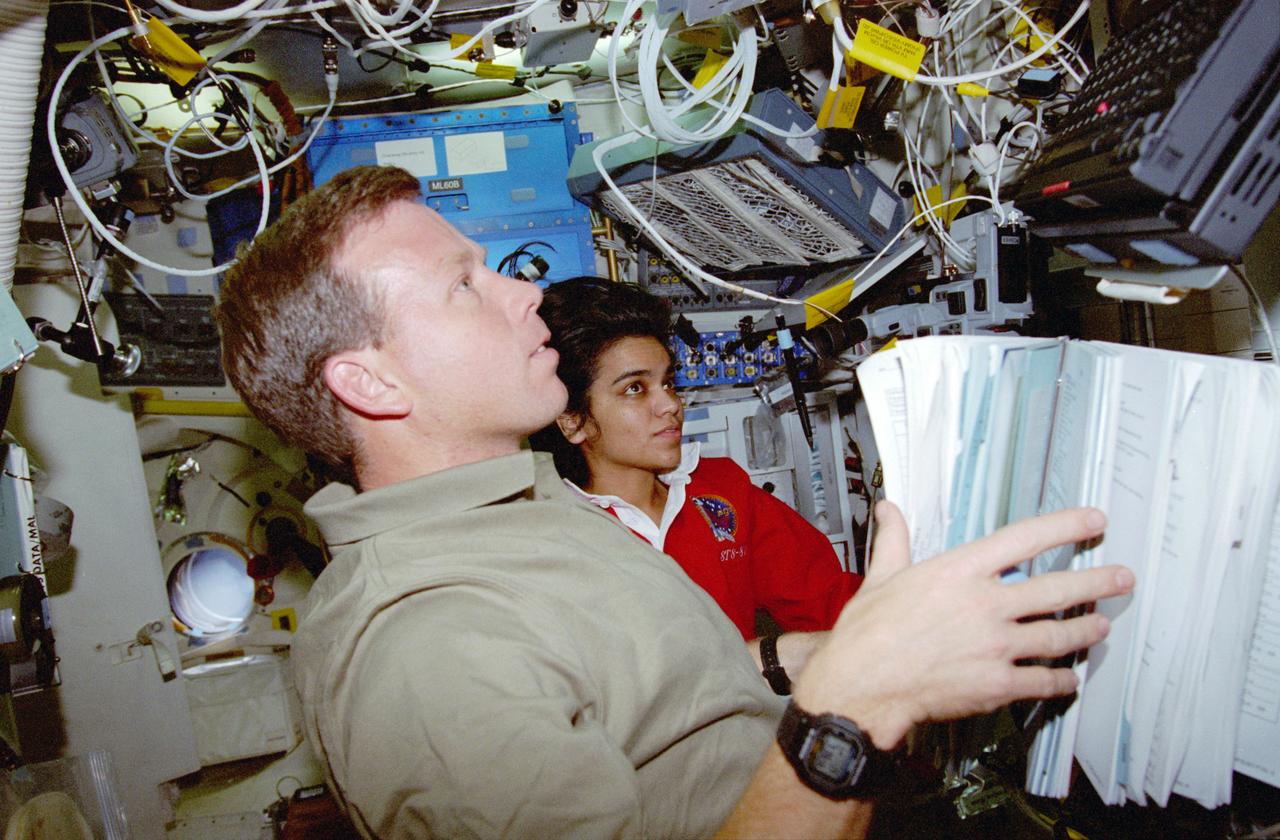
STS087-334-023 (19 November – 5 December 1997) --- On the Space Shuttle Columbia's middeck, astronauts Steven W. Lindsey, pilot, and Kalpana Chawla, mission specialist, check on an experiment in the middeck glove box. The two were joined by three other astronauts and a Ukrainian payload specialist for 16-days in Earth-orbit in support of the United States Microgravity Payload 4 (USMP-4) mission.
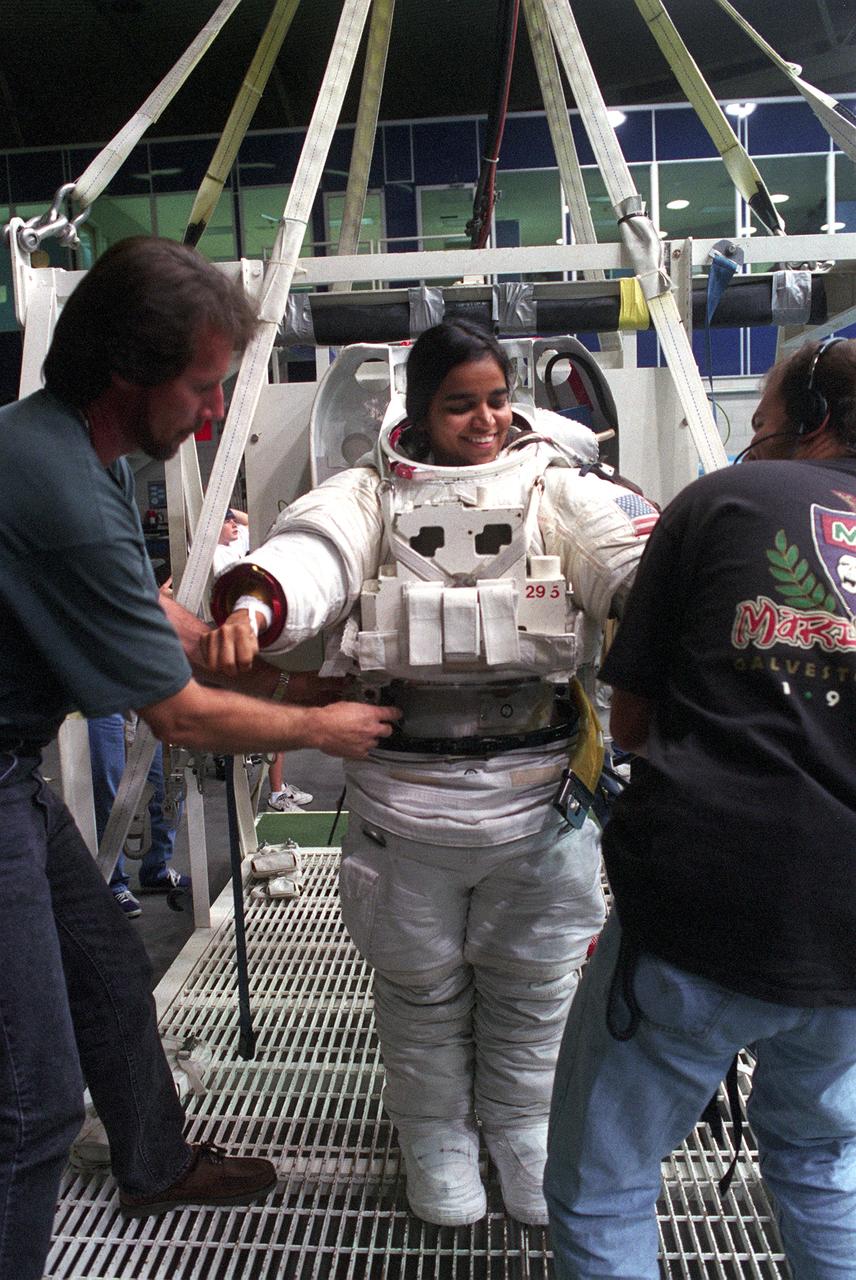
Astronaut and mission specialist Kalpana Chawla, receives assistance in donning a training version of the Extravehicular Mobility Unit (EMU) space suit, prior to an underwater training session in the Neutral Buoyancy Laboratory (NBL) near Johnson Space Center. This particular training was in preparation for the STS-87 mission. The Space Shuttle Columbia (STS-87) was the fourth flight of the United States Microgravity Payload (USMP-4) and Spartan-201 satellite, both managed by scientists and engineers from the Marshall Space Flight Center.
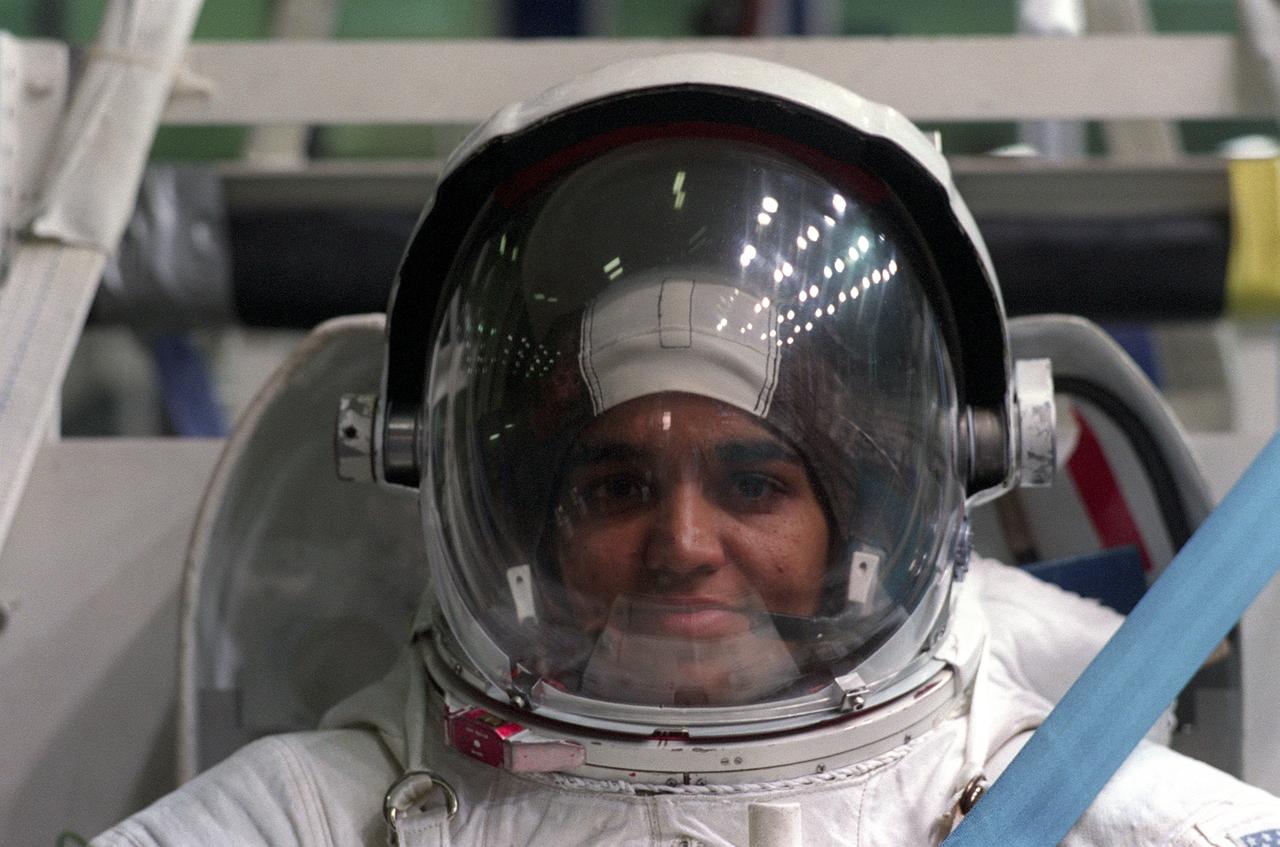
Attired in a training version of the Extravehicular Mobility Unit (EMU) space suit, astronaut and mission specialist Kalpana Chawla, prepares to go underwater in the Neutral Buoyancy Laboratory (NBL) near Johnson Space Center. This particular training was in preparation for the STS-87 mission. The Space Shuttle Columbia (STS-87) was the fourth flight of the United States Microgravity Payload (USMP-4) and Spartan-201 satellite, both managed by scientists and engineers from the Marshall Space Flight Center.
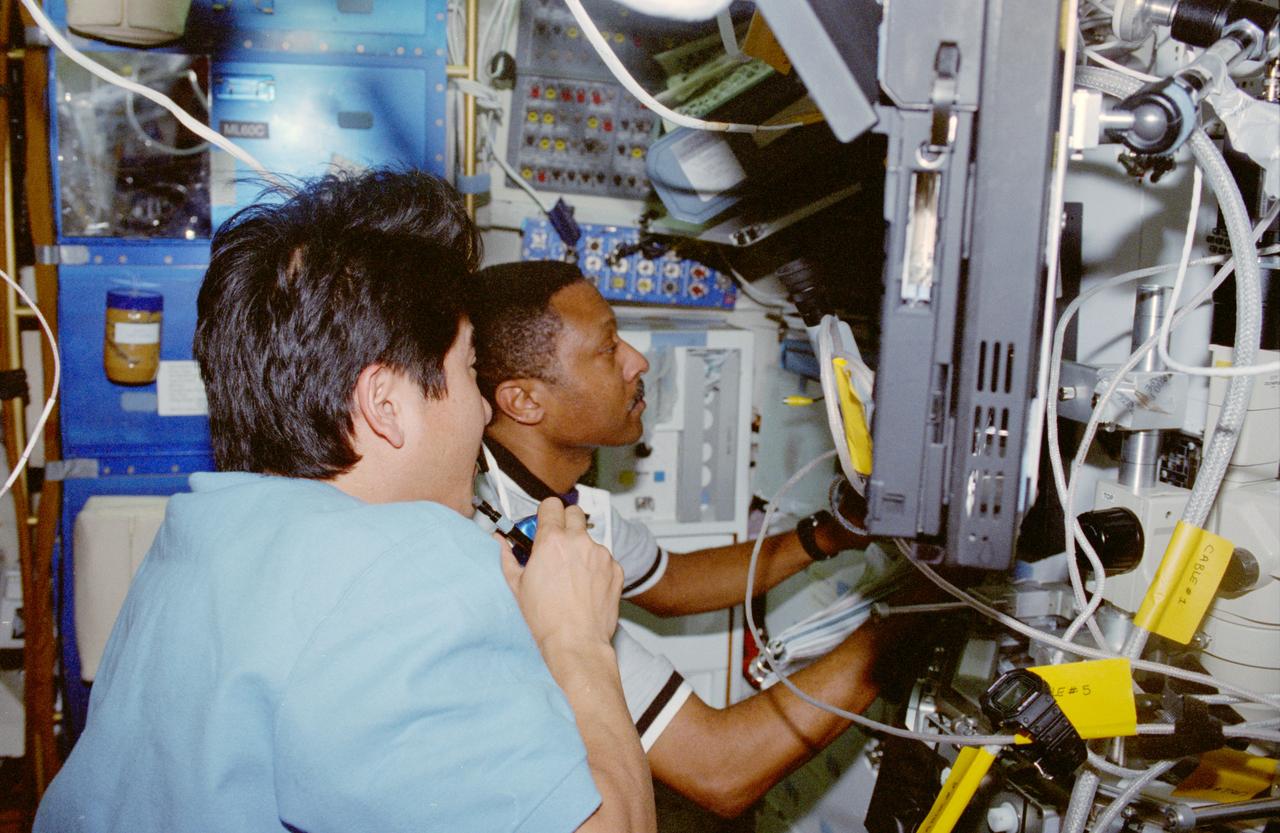
STS087-385-019 (19 November - 5 December 1997) --- Astronaut Winston E. Scott, mission specialist on right, works at the mid-deck glove box while astronaut Takao Doi, international mission specialist representing Japan's National Space Development Agency (NASDA), makes oral commentary regarding the experiment to ground controllers. The two mission specialists not only shared science research in support of the 16-day United States Microgravity Payload (USMP-4) mission, but they also shared two lengthy Extravehicular Activities (EVA) in and around the cargo bay of the Earth-orbiting Space Shuttle Columbia. The space walks marked the first EVA for both Doi and the Columbia, but the mission for Scott provided both his second EVA experience and second space flight.
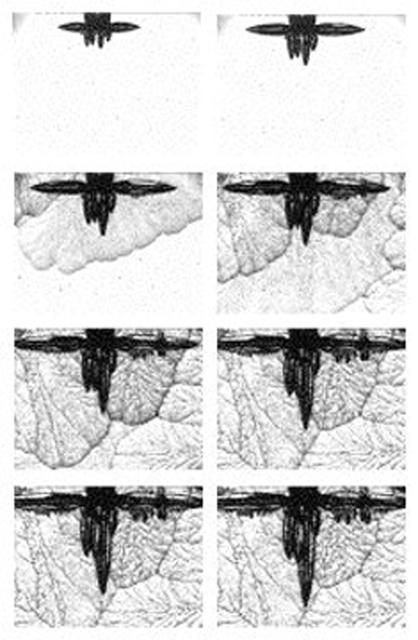
This series of images, captured during the mission, shows the growth of a dendrite in the IDGE. Flown on STS-84 USMP-4.
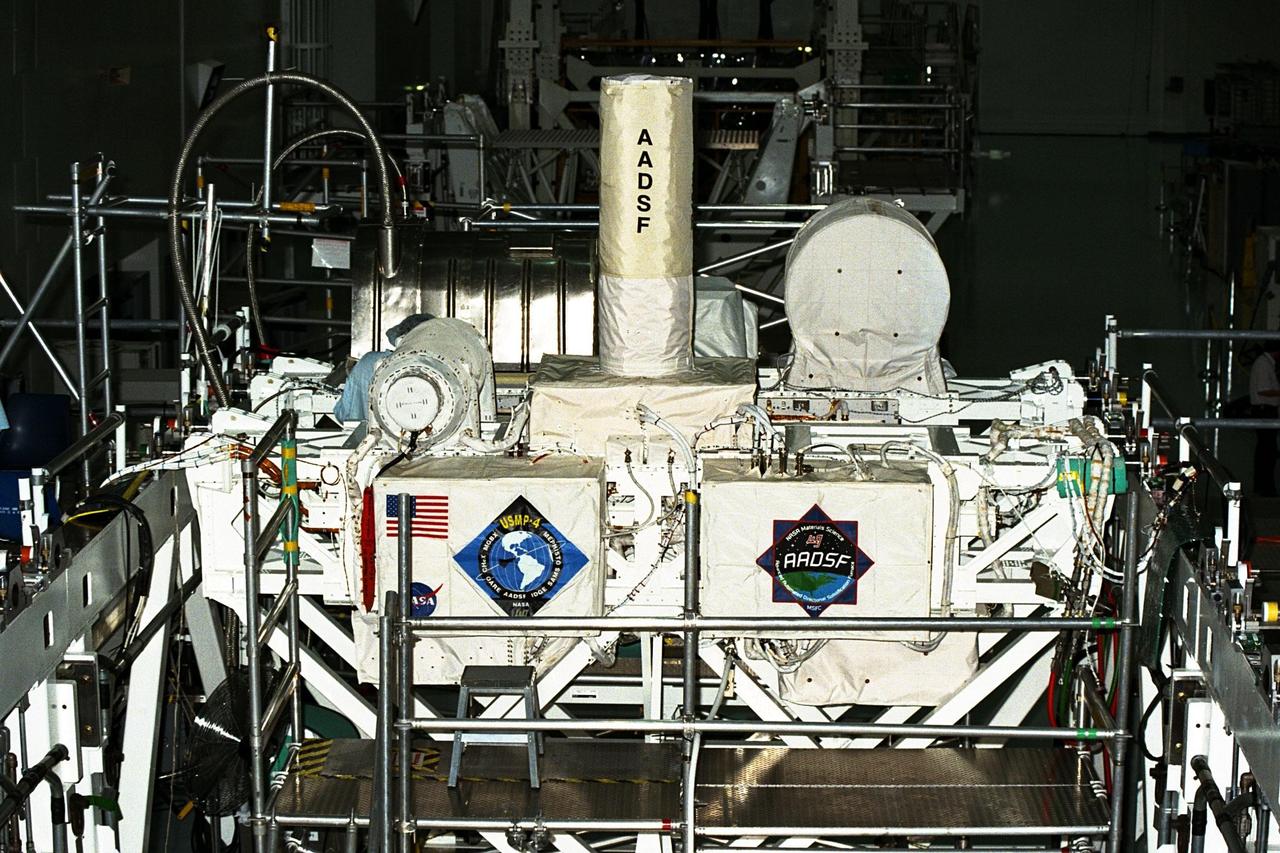
United States Microgravity Payload-4 (USMP-4) experiments are prepared to be flown on Space Shuttle mission STS-87 in the Space Station Processing Facility at Kennedy Space Center (KSC). Seen in the foreground at left is the USMP-4 logo with the acronyms of its experiments. Above the American flag at left is the MEPHISTO experiment, a cooperative American and French investigation of the fundamentals of crystal growth. The large white vertical cylinder in the center of the photo is the Advanced Automated Directional Solidification Furnace (AADSF), which is a sophisticated materials science facility used for studying a common method of processing semiconductor crystals called directional solidification. The white horizontal tube to the right is the Isothermal Dendritic Growth Experiment (IDGE), which will be used to study the dendritic solidification of molten materials in the microgravity environment. All USMP-4 experiments are scheduled for launch aboard STS-87 on Nov. 19 from KSC
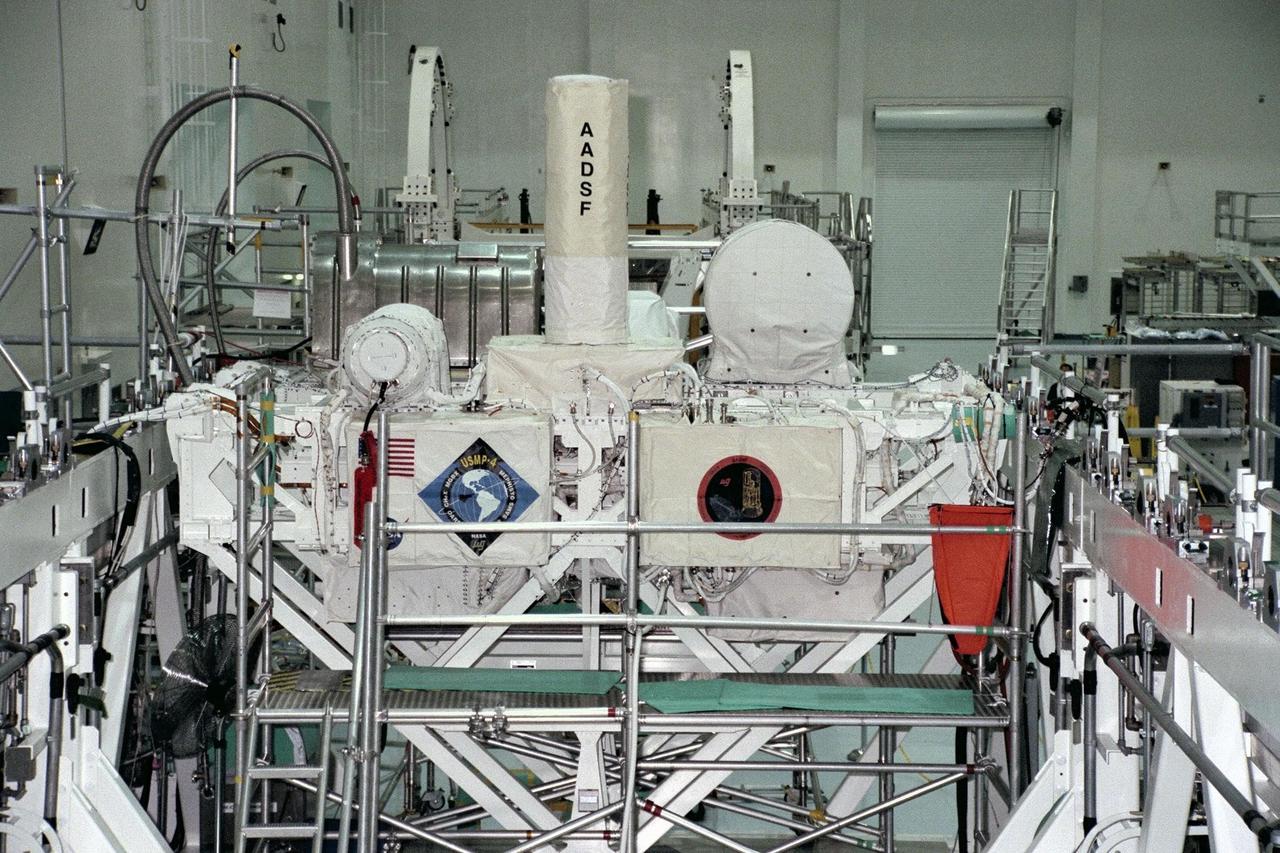
United States Microgravity Payload-4 (USMP-4) experiments are prepared to be flown on Space Shuttle mission STS-87 in the Space Station Processing Facility at Kennedy Space Center (KSC). Seen in the foreground at right is the USMP-4 logo with the acronyms of its experiments. Above the American flag at left is the MEPHISTO experiment, a cooperative American and French investigation of the fundamentals of crystal growth. Scientists will study changes in solidification rates, temperature, and interface shape of an alloy to understand how these changes affect composition and properties of the metal produced. Under the multi-layer insulation with the American flag and mission logo is the Space Acceleration Measurement System, or SAMS, which measures the microgravity conditions in which the experiments are conducted. All USMP-4 experiments are scheduled for launch aboard STS-87 on Nov. 19 from KSC
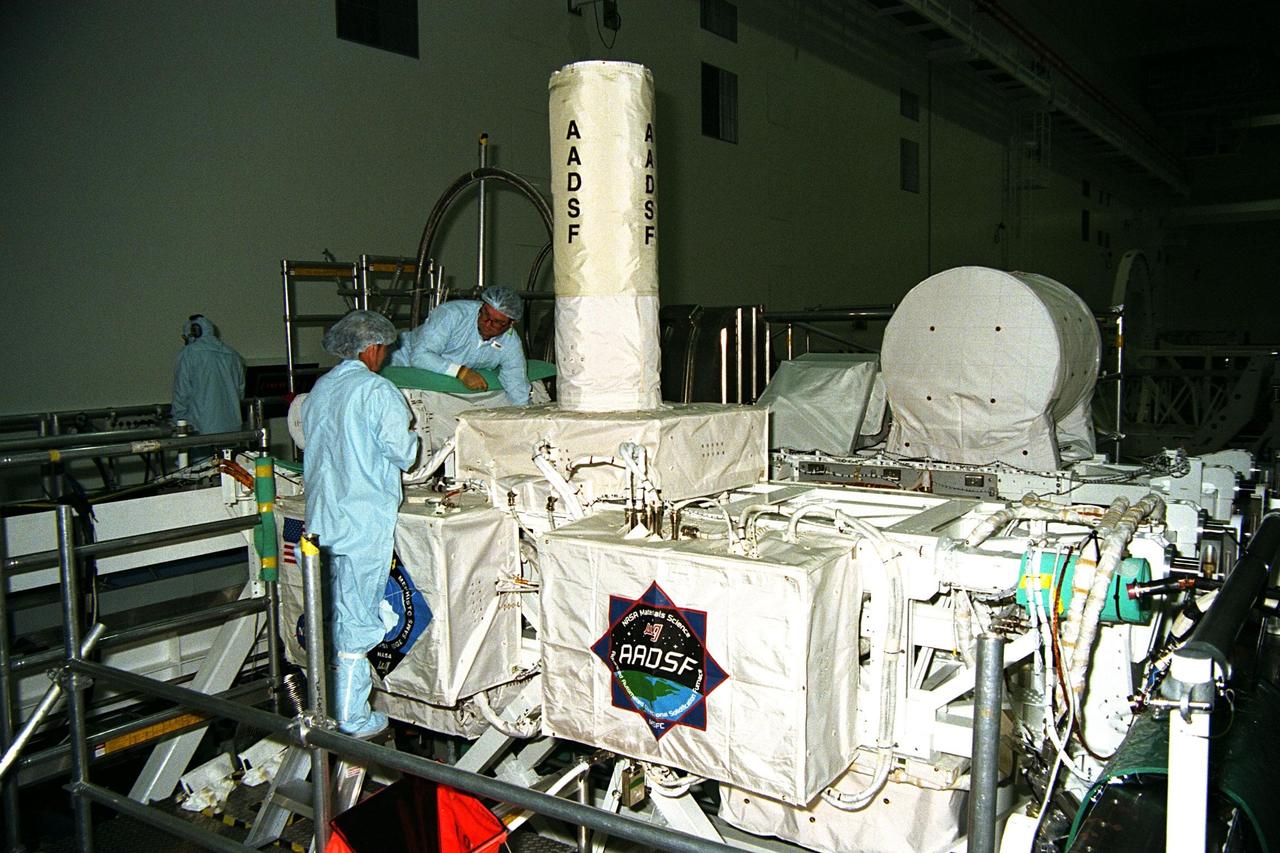
Technicians are monitoring experiments on the United States Microgravity Payload-4 (USMP-4) in preparation for its scheduled launch aboard STS-87 on Nov. 19 from Kennedy Space Center (KSC). USMP-4 experiments are prepared in the Space Station Processing Facility at KSC. The large white vertical cylinder in the center of the photo is the Advanced Automated Directional Solidification Furnace (AADSF), which is a sophisticated materials science facility used for studying a common method of processing semiconductor crystals called directional solidification. The white horizontal tube to the right is the Isothermal Dendritic Growth Experiment (IDGE), which will be used to study the dendritic solidification of molten materials in the microgravity environment
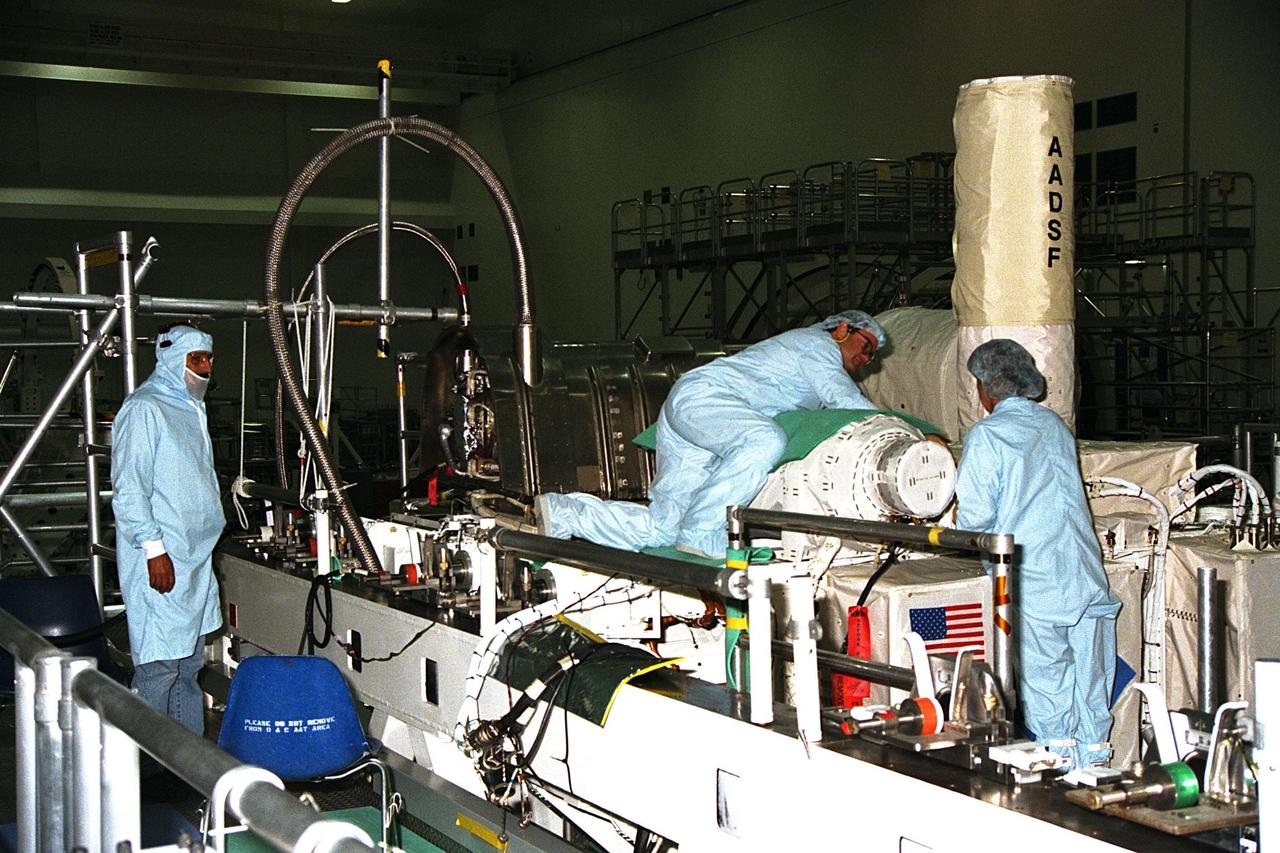
Technicians are monitoring experiments on the United States Microgravity Payload-4 (USMP-4) in preparation for its scheduled launch aboard STS-87 on Nov. 19 from Kennedy Space Center (KSC). USMP-4 experiments are prepared in the Space Station Processing Facility at KSC. The large white vertical cylinder at the right of the photo is the Advanced Automated Directional Solidification Furnace (AADSF ), which is a sophisticated materials science facility used for studying a common method of processing semiconductor crystals called directional solidification. The technician in the middle of the photo is leaning over MEPHISTO, a cooperative American-French investigation of the fundamentals of crystal growth
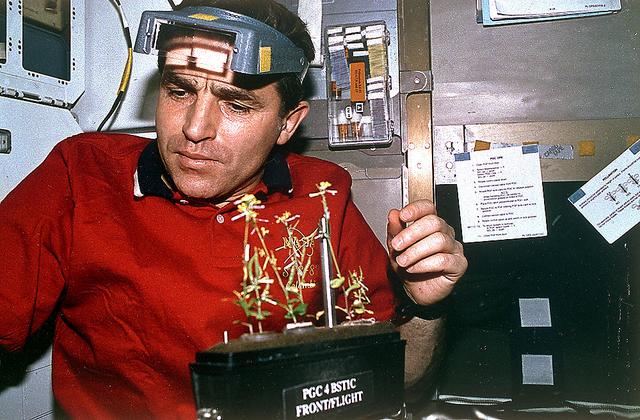
Onboard Space Shuttle Columbia (STS-87) mid-deck, Leonid Kadenyuk, Ukrainian payload specialist, works with the Brassica rapa plants being grown for the Collaborative Ukrainian Experiment (CUE). Kadenyuk joined five astronauts for 16-days in Earth-orbit in support of the United States Microgravity Payload 4 (USMP-4) mission.
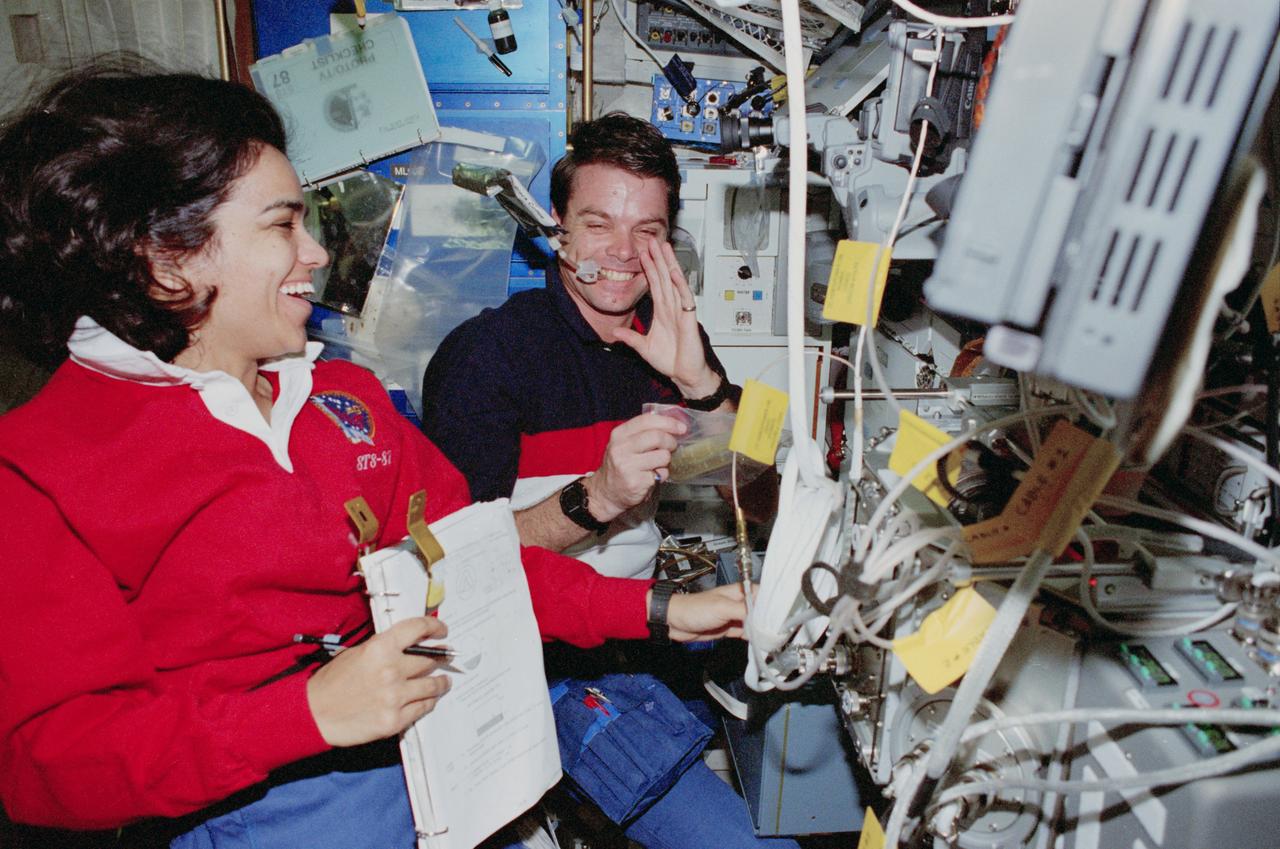
STS087-332-010 (19 November – 5 December 1997) --- Astronaut Kevin R. Kregel doesn't bother to "break" for coffee as he enjoys a serving while sharing work at the Space Shuttle Columbia's microgravity glove box with astronaut Kalpana Chawla. The glove box's (right edge of frame) proximity to the galley (partially obscured behind the mission commander) makes the time economy measure an easy task for the three-time space veteran. Chawla, mission specialist, is making her initial space flight.
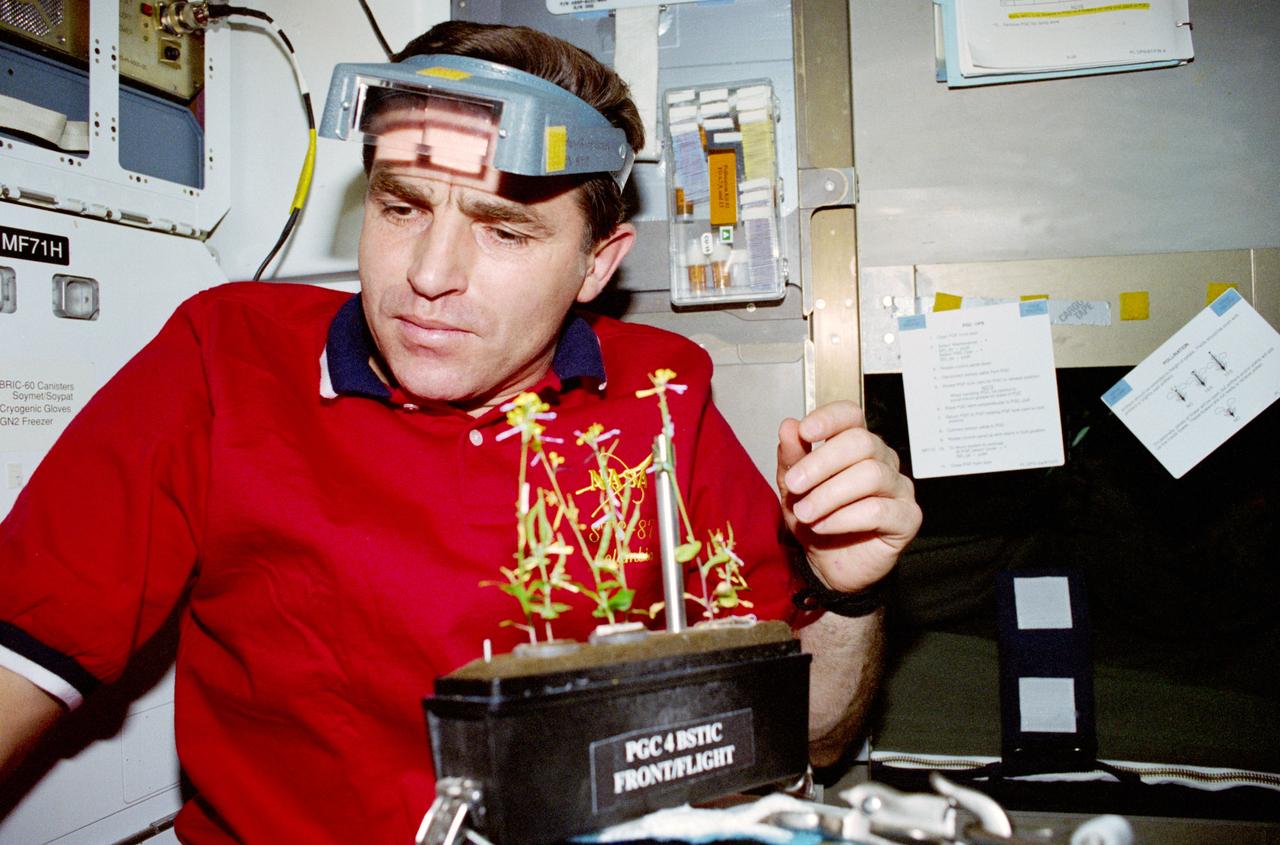
STS087-332-034 (19 November – 5 December 1997) --- On the Space Shuttle Columbia's middeck, Leonid Kadenyuk, Ukrainian payload specialist, works with the Brassica Rapa plants being grown for the Collaborative Ukrainian Experiment (CUE). Leonid Kadenyuk joined five astronauts for 16-days in Earth-orbit in support of the United States Microgravity Payload 4 (USMP-4) mission.
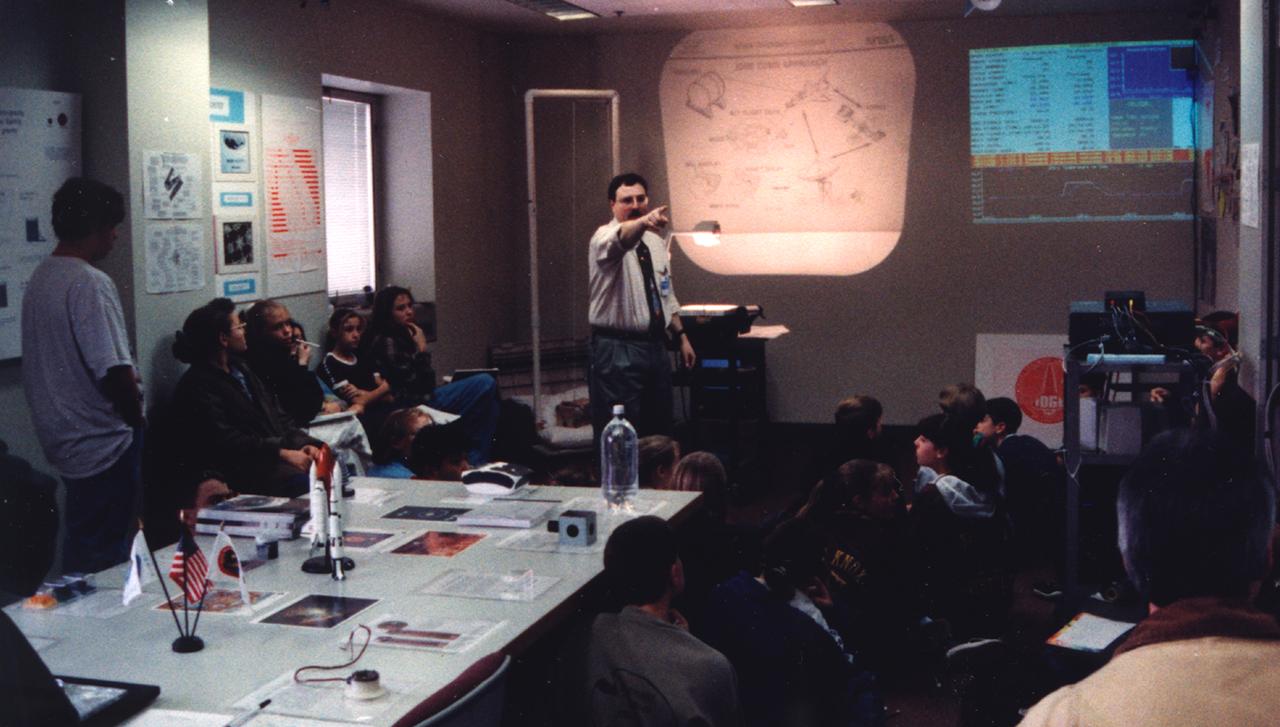
Matthew Koss lectures middle-school students about materials science research in space during the U.S. Microgravity Payload-4 (USMP-4) mission (STS-87, Nov. 19 - Dec. 5, 1997) in the visitor's center set up by the Isothermal Dendritic Growth Experiment (IDGE) team at Rensselaer Polytechnic Institute (RPI)in Troy, NY. IDGE, flown on three Space Shuttle missions, is yielding new insights into virtually all industrially relevant metal and alloy forming operations. Photo credit: RPI
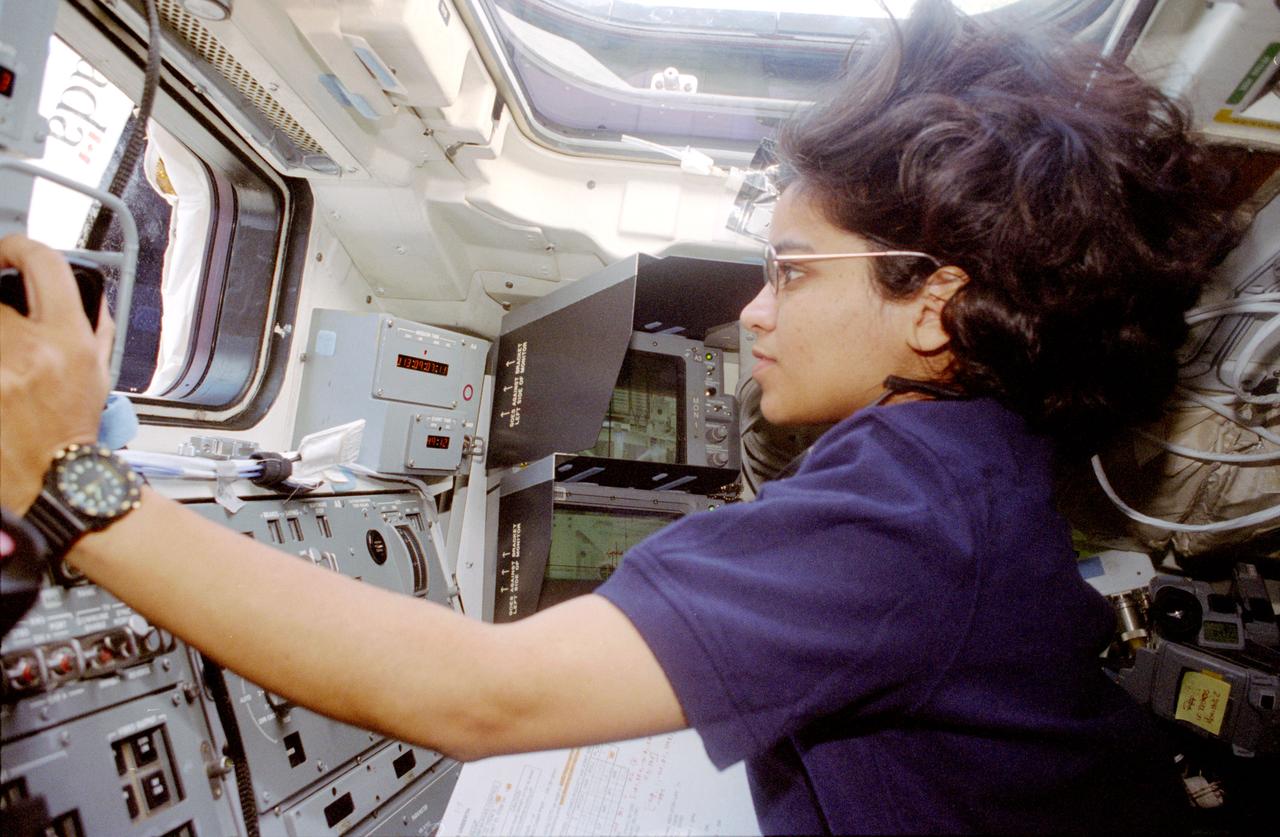
STS087-357-019 (19 November - 5 December 1997) --- Astronaut Kalpana Chawla, mission specialist, operates Columbia's Remote Manipulator System (RMS) on the aft flight deck during operations with the Spartan 201 satellite. Chawla joined four other astronauts and a Ukrainian payload specialist for 16-days of research in Earth-orbit in support of the United States Microgravity Payload 4 (USMP-4) mission.
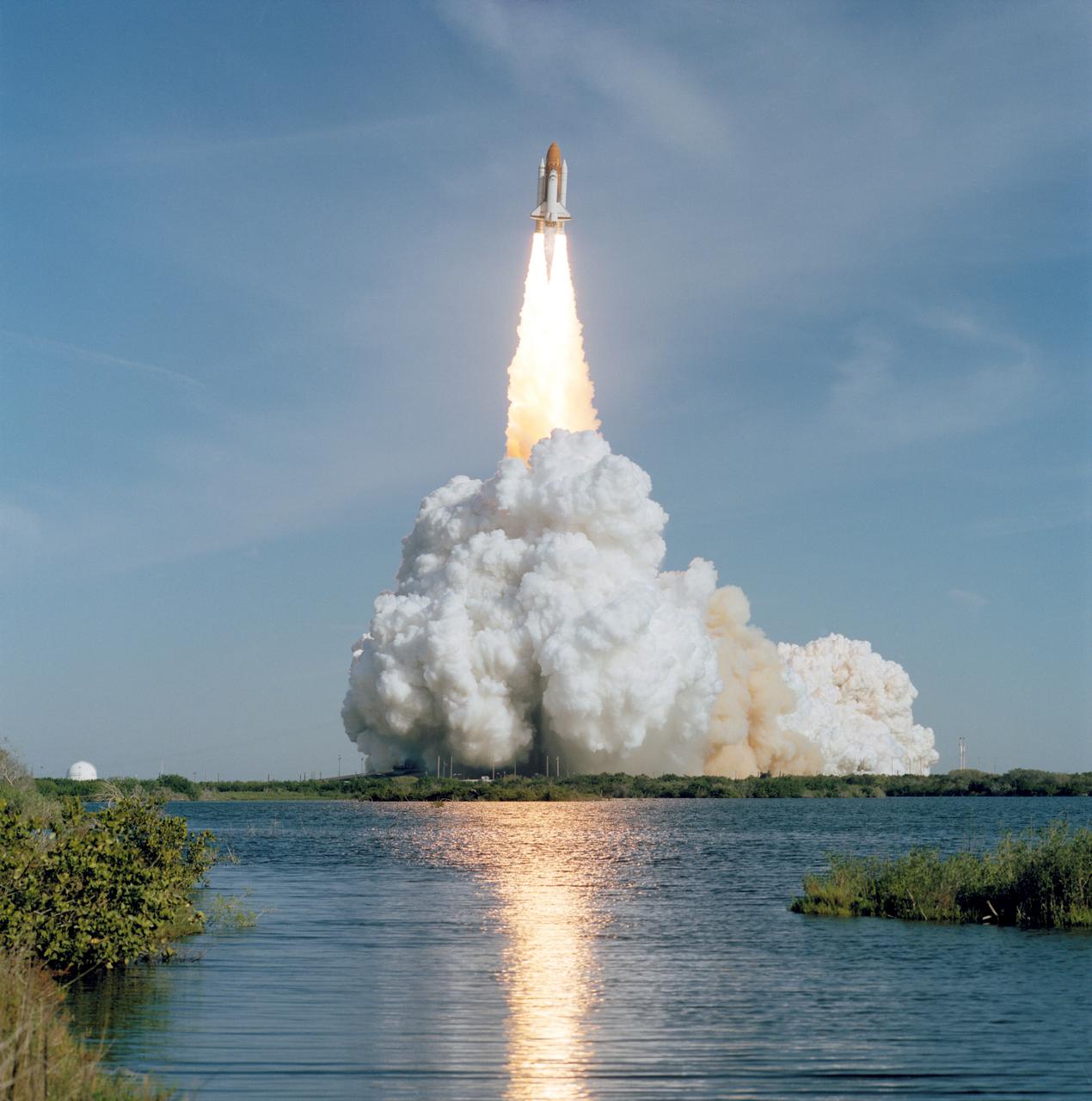
STS062-S-053 (4 March 1994) --- Carrying a crew of five veteran NASA astronauts and the United States Microgravity Payload (USMP), the Space Shuttle Columbia heads toward its sixteenth mission in Earth-orbit. Launch occurred at 8:53 a.m. (EST), March 4, 1994. Onboard were astronauts John H. Casper, Andrew M. Allen, Marsha S. Ivins, Charles D. (Sam) Gemar and Pierre J. Thuot.
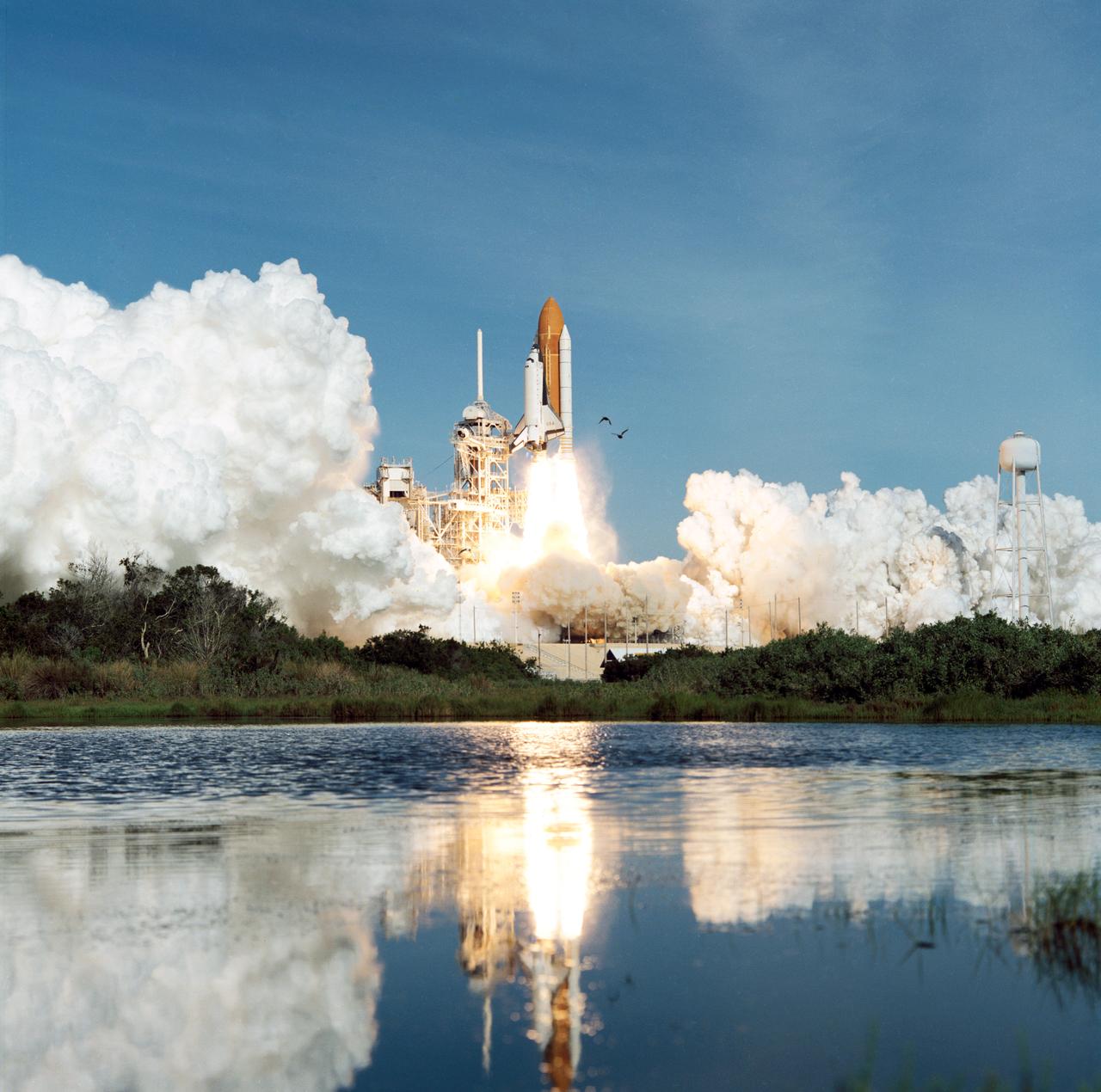
STS062-S-051 (4 March 1994) --- Five veteran astronauts and the United States Microgravity Payload (USMP) are ushered into space via the sixteenth launch of Space Shuttle Columbia. Launch occurred at 8:53 a.m. (EST), March 4, 1994. Onboard were astronauts John H. Casper, Andrew M. Allen, Marsha S. Ivins, Charles D. (Sam) Gemar and Pierre J. Thuot.
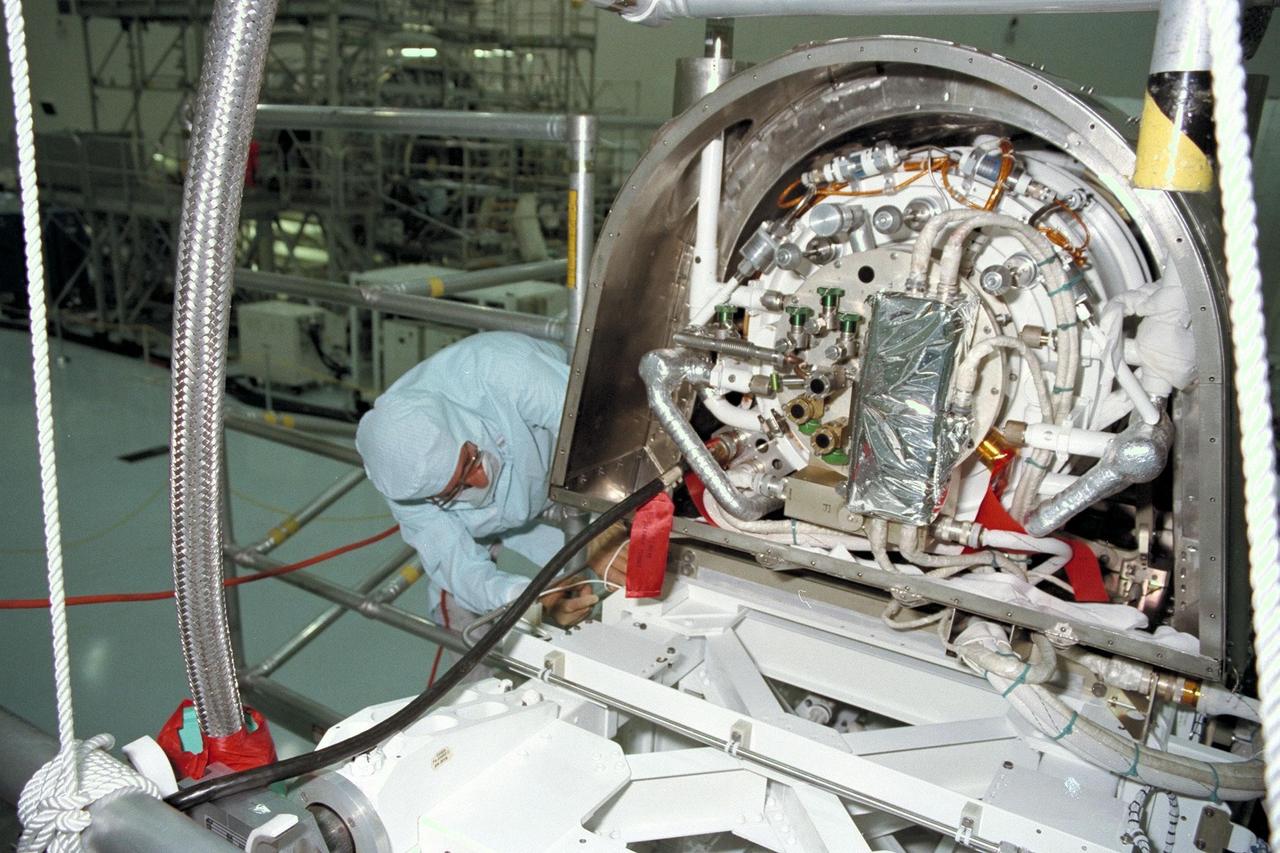
United States Microgravity Payload-4 (USMP-4) experiments are prepared to be flown on Space Shuttle mission STS-87 in the Space Station Processing Facility at Kennedy Space Center (KSC). Here, a technician is monitoring the Confined Helium Experiment, or CHeX, that will use microgravity to study one of the basic influences on the behavior and properties of materials by using liquid helium confined between silicon disks. CHeX and several other experiments are scheduled for launch aboard STS-87 on Nov. 19 from KSC
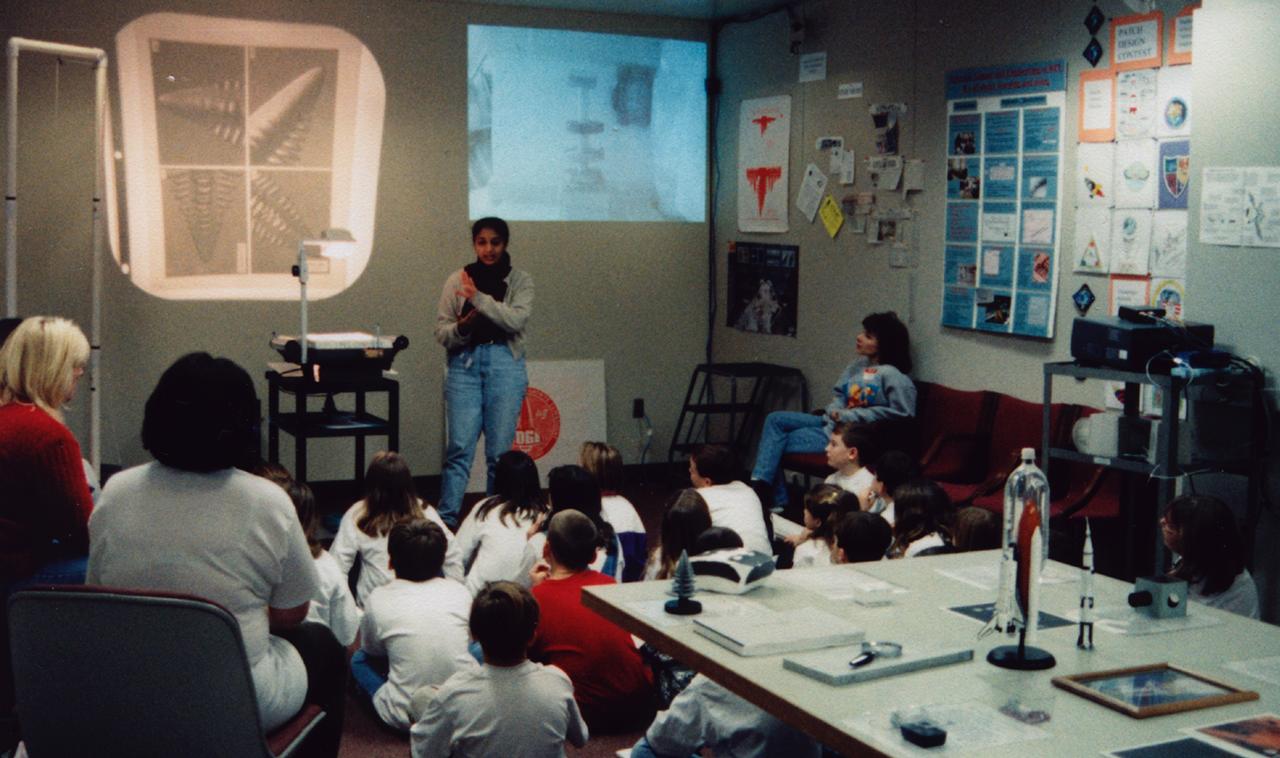
Pratima Rao lectures students about materials science research in space during the U.S. Microgravity Payload-4 (USMP-4) mission (STS-87, Nov. 19 - Dec. 5, 1997) in the visitor's center set up by the Isothermal Dendritic Growth Experiment (IDGE) team at Rensselaer Polytechnic Institute (RPI) in Troy, NY. IDGE, flown on three Space Shuttle missions, is yielding new insights into virtually all industrially relevant metal and alloy forming operations. Photo credit: RPI
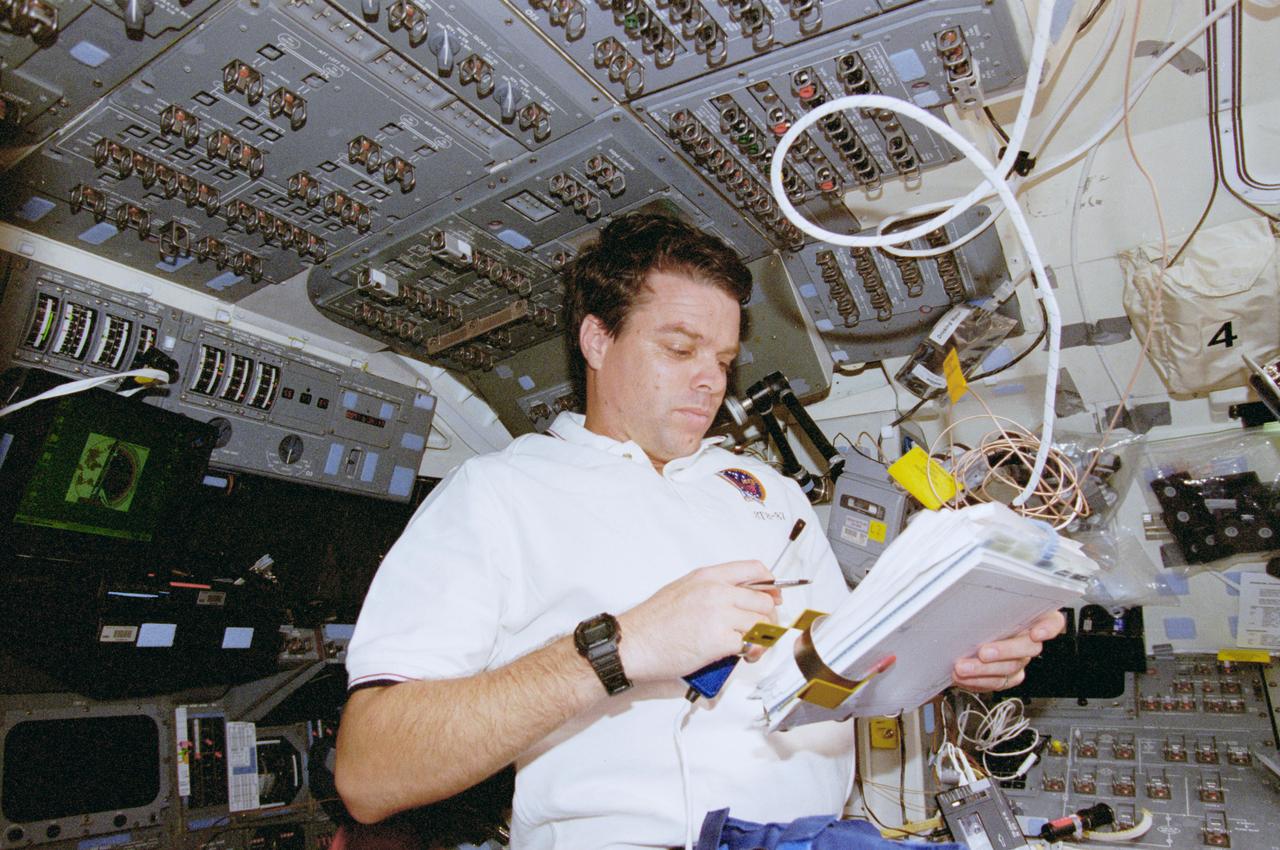
STS087-352-008 (19 November - 5 December 1997) --- Astronaut Kevin R. Kregel, mission commander, looks over the mission flight plan on the forward flight deck of the Space Shuttle Columbia. Kregel was accompanied by four other astronauts and a Ukrainian payload specialist for 16-days in space in support of the United States Microgravity Payload (USMP-4) mission.
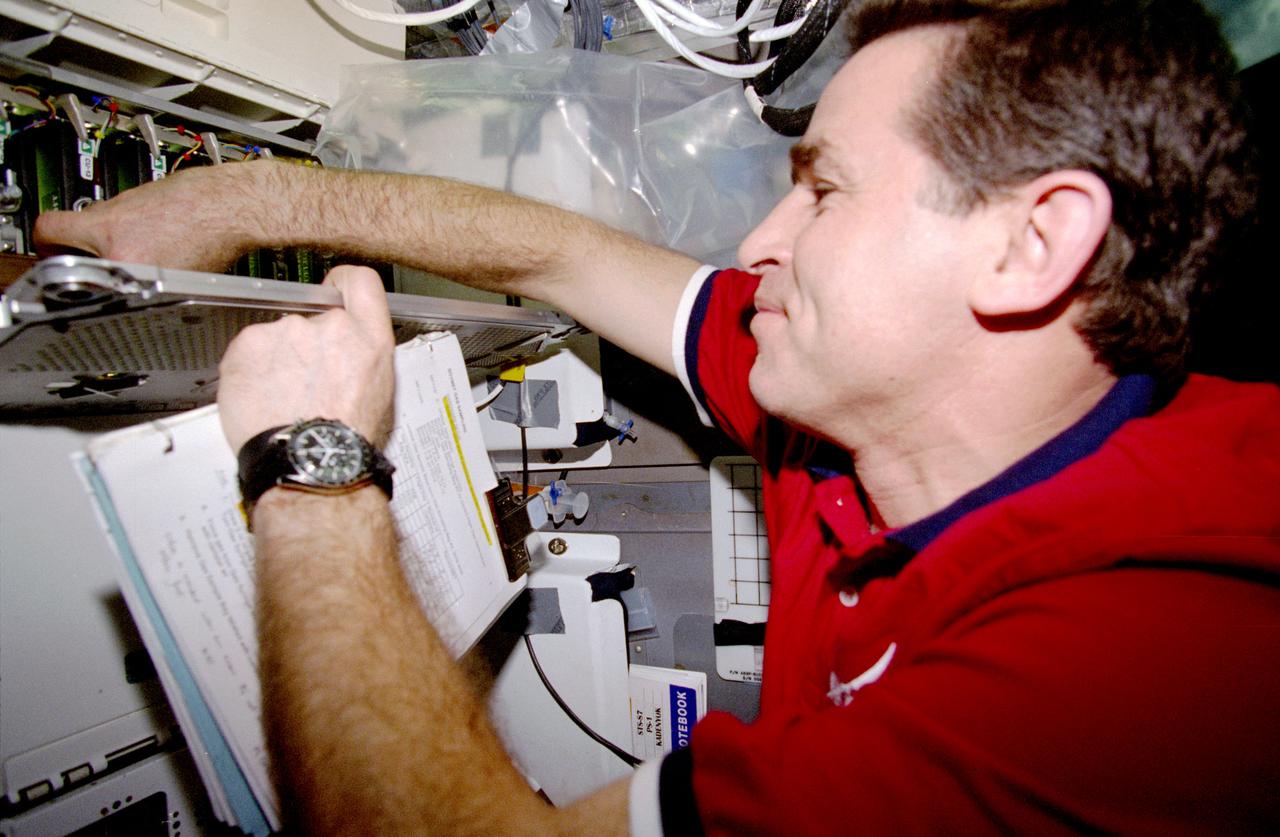
STS087-385-005 (19 November - 5 December 1997) --- Leonid Kadenyuk, Ukrainian payload specialist, retrieves a plant specimen from the plant growth facility on the mid-deck of the Earth-orbiting Space Shuttle Columbia. Kadenyuk and five United States astronauts went on to spend 16-days in Earth-orbit in support of the United States Microgravity Payload (USMP-4) mission.
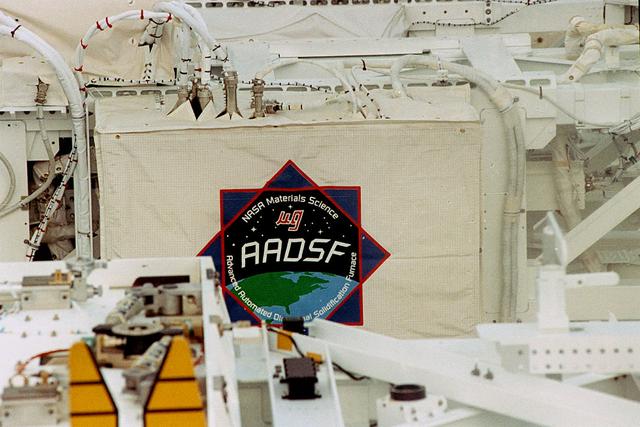
The purpose of the experiments for the Advanced Automated Directional Solidification Furnace (AADSF) is to determine how gravity-driven convection affects the composition and properties of alloys (mixtures of two or more materials, usually metal). During the USMP-4 mission, the AADSF will solidify crystals of lead tin telluride and mercury cadmium telluride, alloys of compound semiconductor materials used to make infrared detectors and lasers, as experiment samples. Although these materials are used for the same type application their properties and compositional uniformity are affected differently during the solidification process.
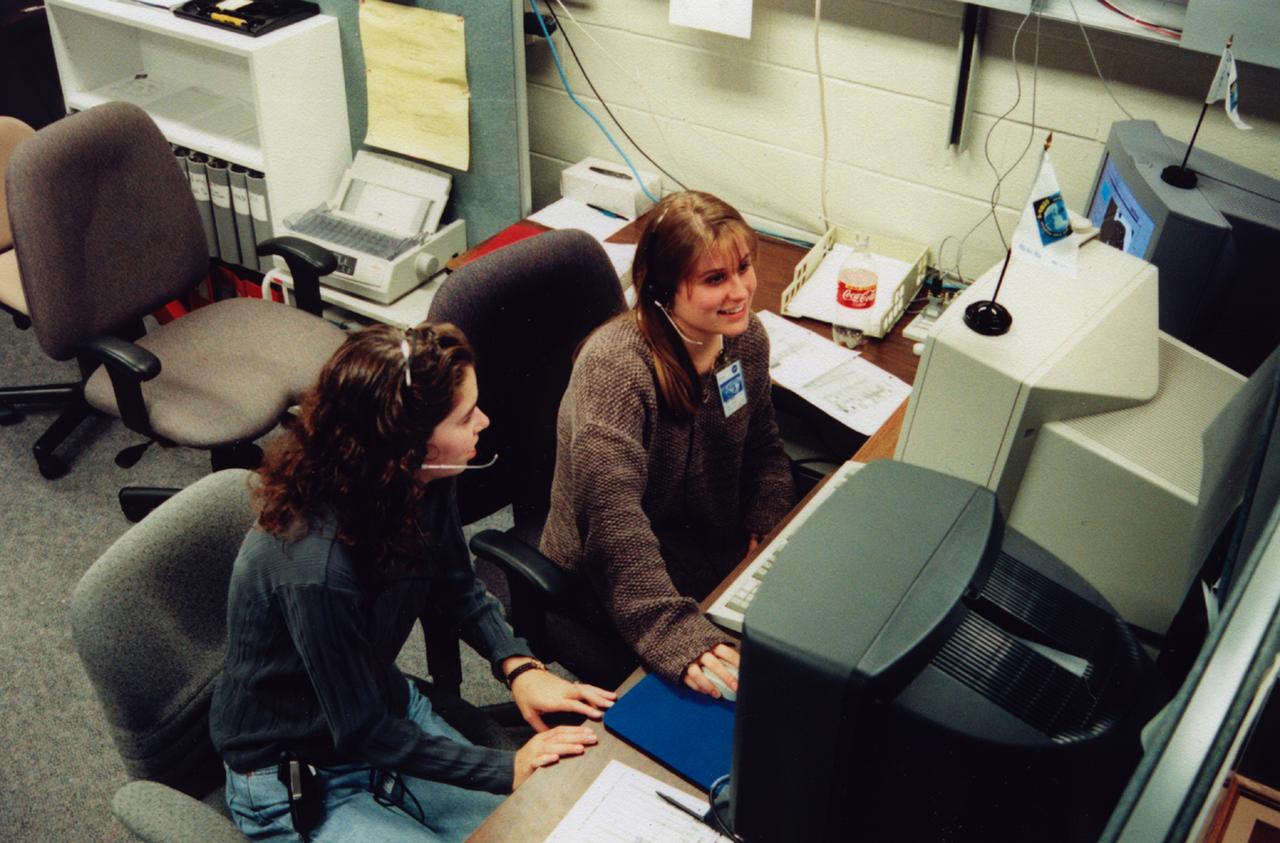
Undergraduate students Kristina Wines and Dena Renzo at Rensselaer Poloytech Institute (RPI) in Troy, NY, monitor the progress of the Isothermal Dendritic Growth Experiment (IDGE) during the U.S. Microgravity Payload-4 (USMP-4) mission (STS-87), Nov. 19 - Dec.5, 1997). Remote Operations Control Center (ROCC) like this one will become more common during operations with the International Space Station. The Isothermal Dendritic Growth Experiment (IDGE), flown on three Space Shuttle missions, is yielding new insights into virtually all industrially relevant metal and alloy forming operations. Photo credit: Rensselaer Polytechnic Institute (RPI)
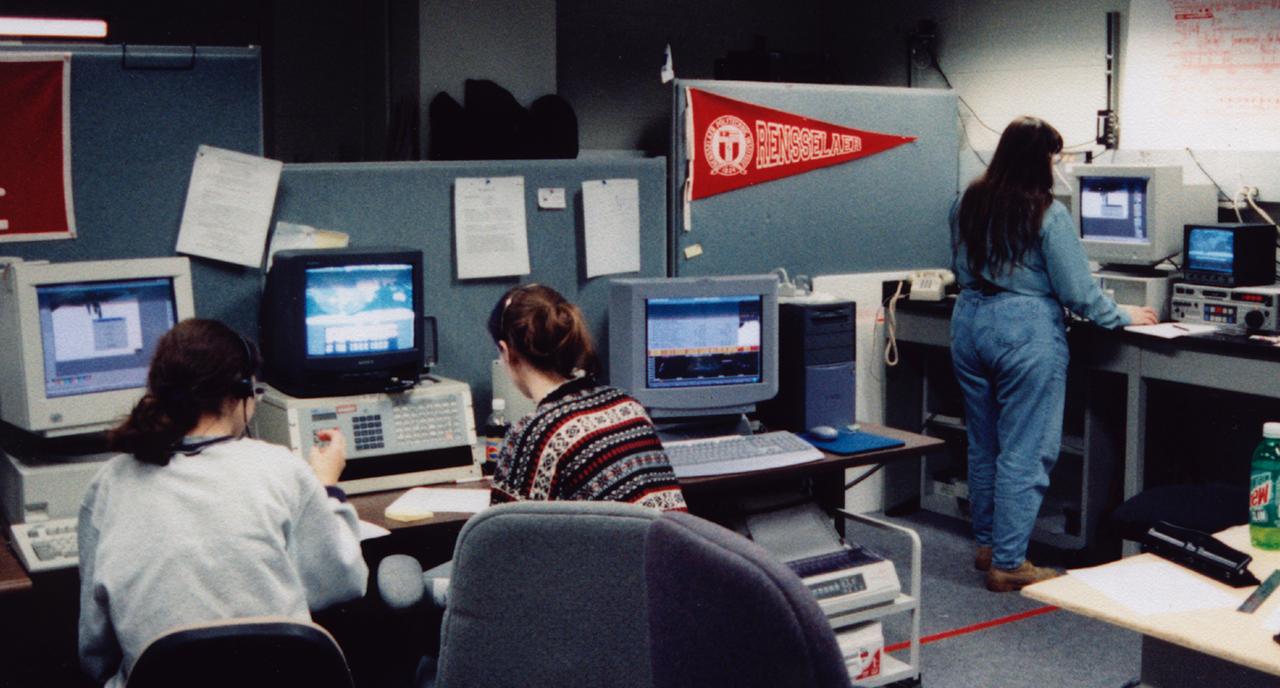
Students at Rensselaer Polytechnic Institute (RPI) in Troy, NY, monitor the progress of the Isothermal Dendritic Growth Experiment (IDGE) during the U.S. Microgravity Payload-4 (USMP-4) mission (STS-87, Nov. 19 - Dec. 5, 1997). Remote Operation Control Center (ROCC) like this one will become more common during operations with International Space Station. IDGE, flown on three Space Shuttle missions, is yielding new insights into virtually all industrially relevant metal and alloy forming operations. Photo credit: Renssenlaer Polythnic Institute (RPI)
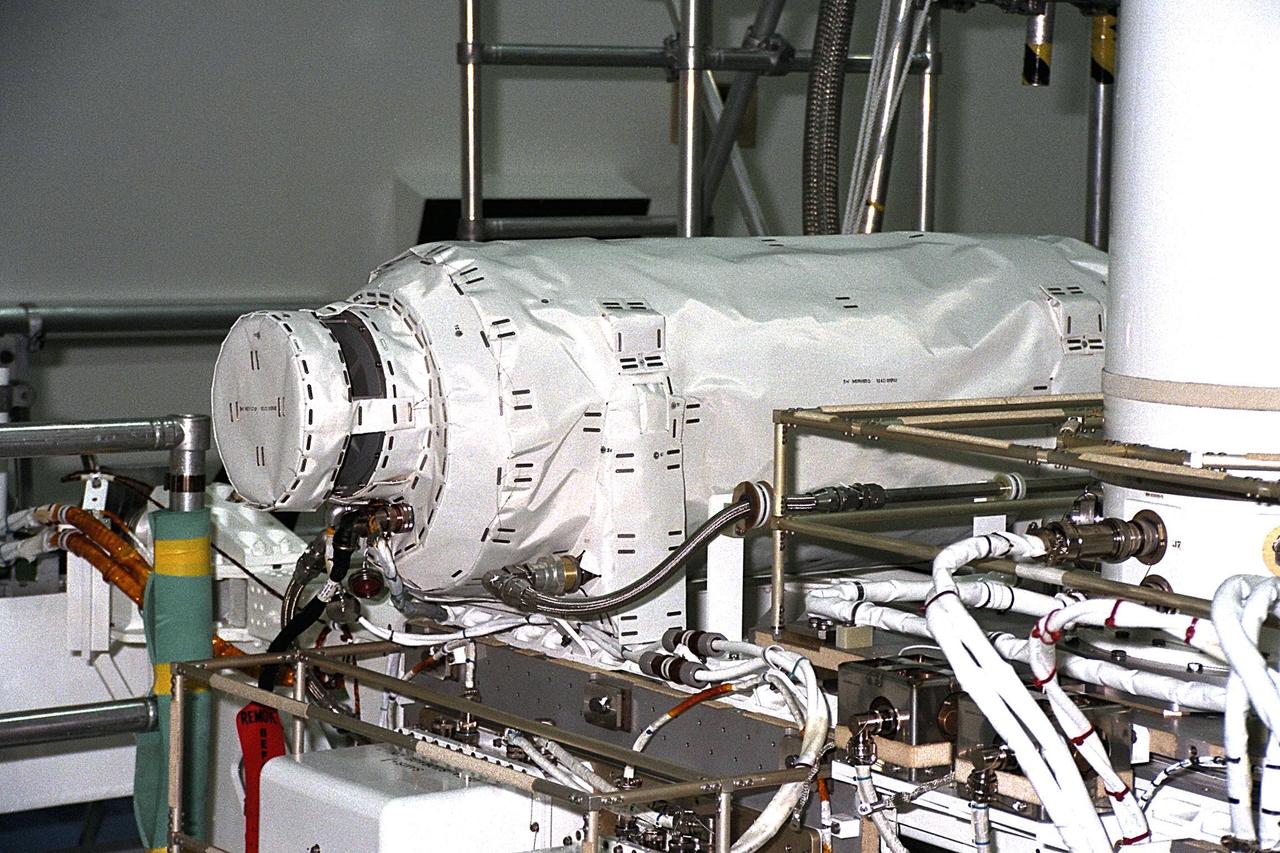
United States Microgravity Payload-4 (USMP-4) experiments are prepared to be flown on Space Shuttle mission STS-87 in the Space Station Processing Facility at Kennedy Space Center (KSC). This horizontal tube is known as MEPHISTO, the French acronym for a cooperative American-French investigation of the fundamentals of crystal growth. This experiment, designed for the study of solidification (or freezing) during the growth cycle of liquid materials used for semiconductor crystals, aims to aid in the development of techniques for growing higher quality crystals on Earth. All STS-87 experiments are scheduled for launch on Nov. 19 from KSC
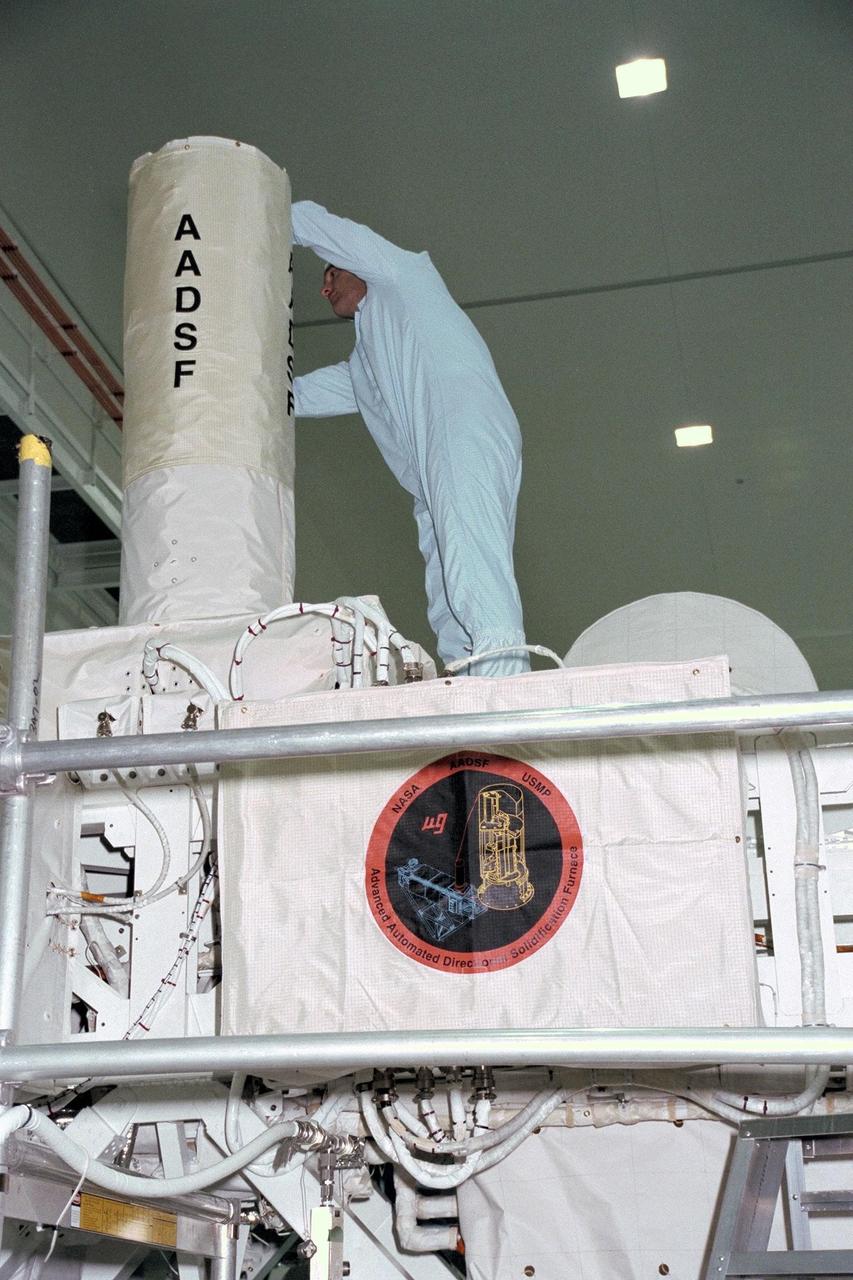
United States Microgravity Payload-4 (USMP-4) experiments are prepared to be flown on Space Shuttle mission STS-87 in the Space Station Processing Facility at Kennedy Space Center (KSC). A technician is working on the Advanced Automated Directional Solidification Furnace (AADSF), which will be used by researchers to study the solidification of semiconductor materials in microgravity. Scientists will be able to better understand how microgravity influences the solidification process of these materials and develop better methods for controlling that process during future Space flights and Earth-based production. All STS-87 experiments are scheduled for launch on Nov. 19 from KSC
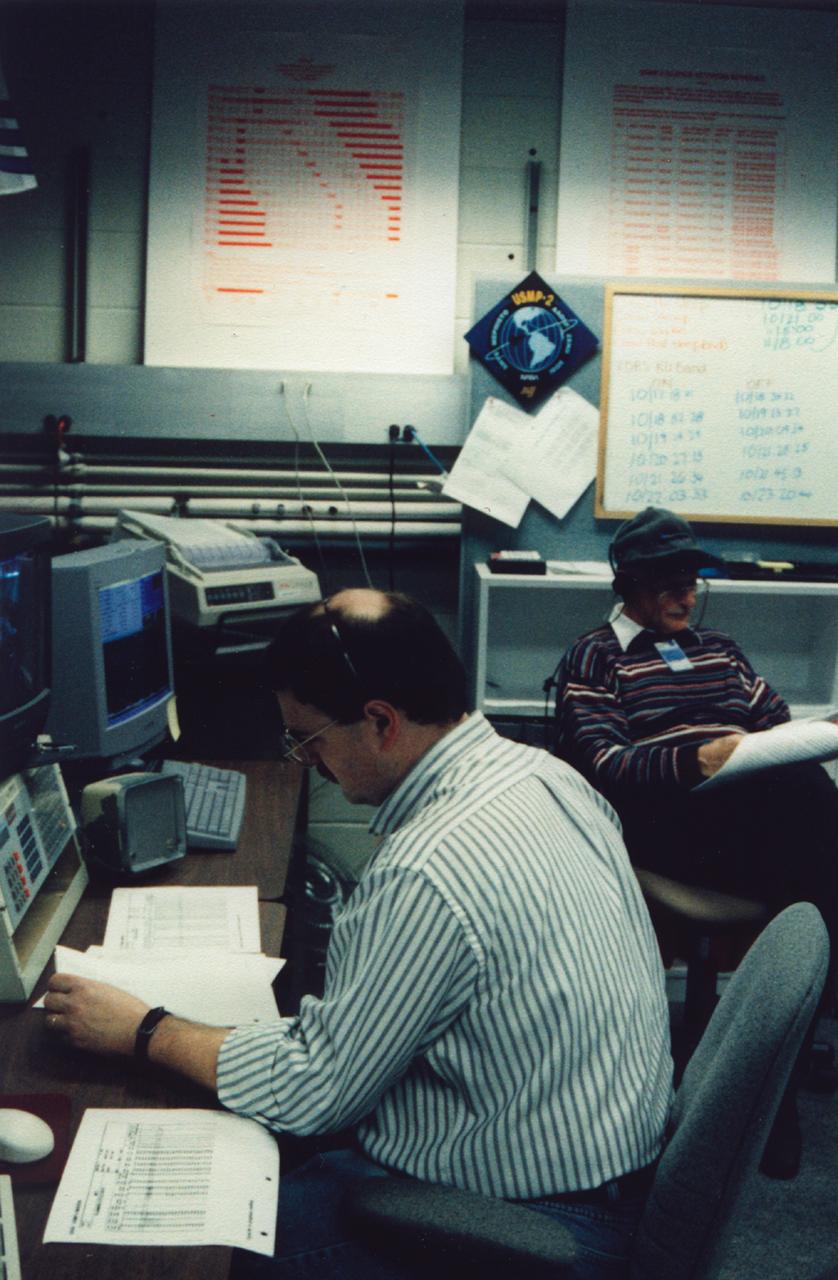
Matthew Koss (forground) and Martin Glicksman (rear), principal investigator and lead scientist (respectively), review plans for the next step in the Isothermal Dendritic Growth Experiment (IDGE) during the U.S. Microgravity Payload-4 (USMP-4) mission (STS-87, Nov. 19 - Dec. 5, 1997). Remote Operations Control Center (ROCC) like this one, at Rensselaer Polytechnic Institute (RPI) in Troy, NY, will become more common during operations with the International Space Station. IDGE, flown on three Space Shuttle missions, is yielding new insights into virtually all industrially relavent metal and alloy forming operations. Photo credit: Rensselaer Polytechnic Institute (RPI)
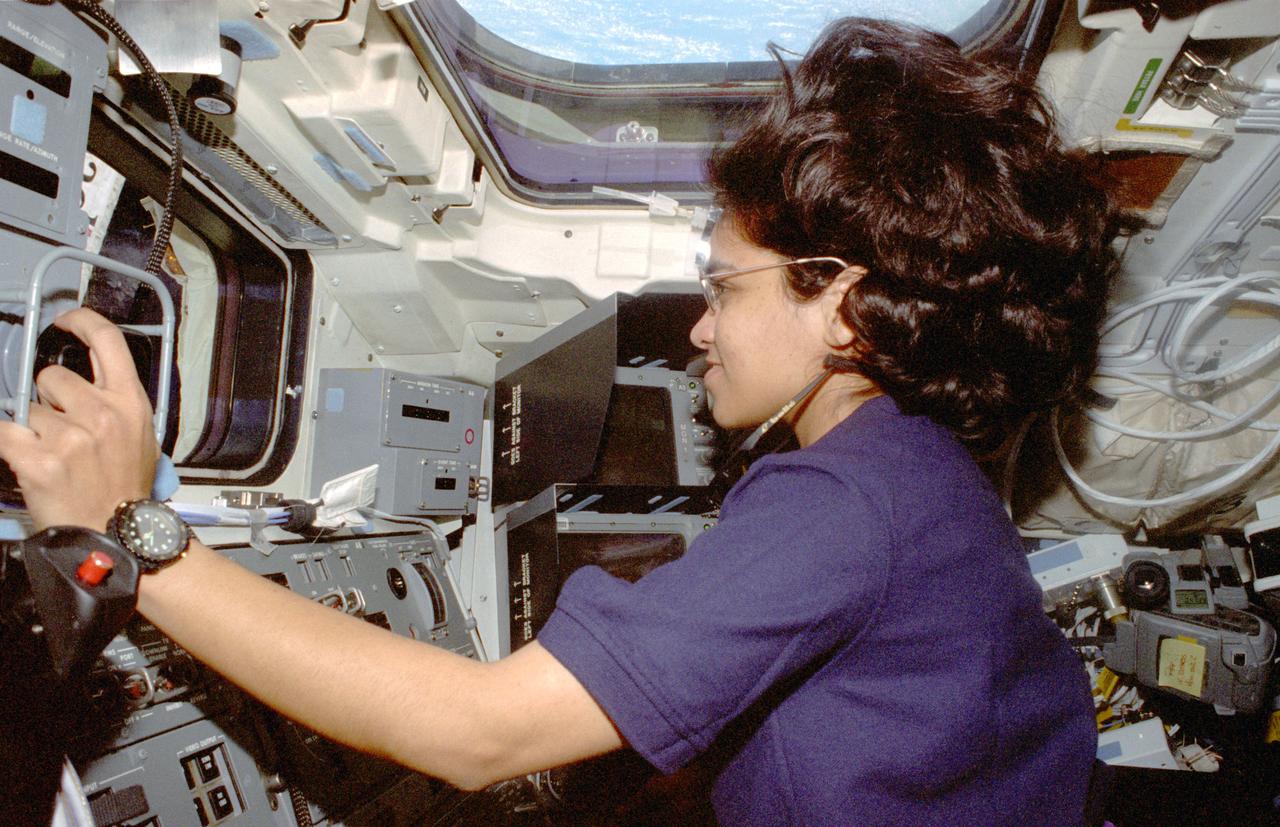
STS087-357-022 (19 November – 5 December 1997) --- Astronaut Kalpana Chawla, mission specialist, operates the Space Shuttle Columbia's Remote Manipulator System (RMS) on the aft flight deck during operations with the Spartan 201 satellite. Kalpana Chawla joined four other astronauts and a Ukrainian payload specialist for 16-days of research in Earth-orbit in support of the United States Microgravity Payload 4 (USMP-4) mission. The light blue and white colors associated with the crew's nearby home planet are visible in the overhead window.
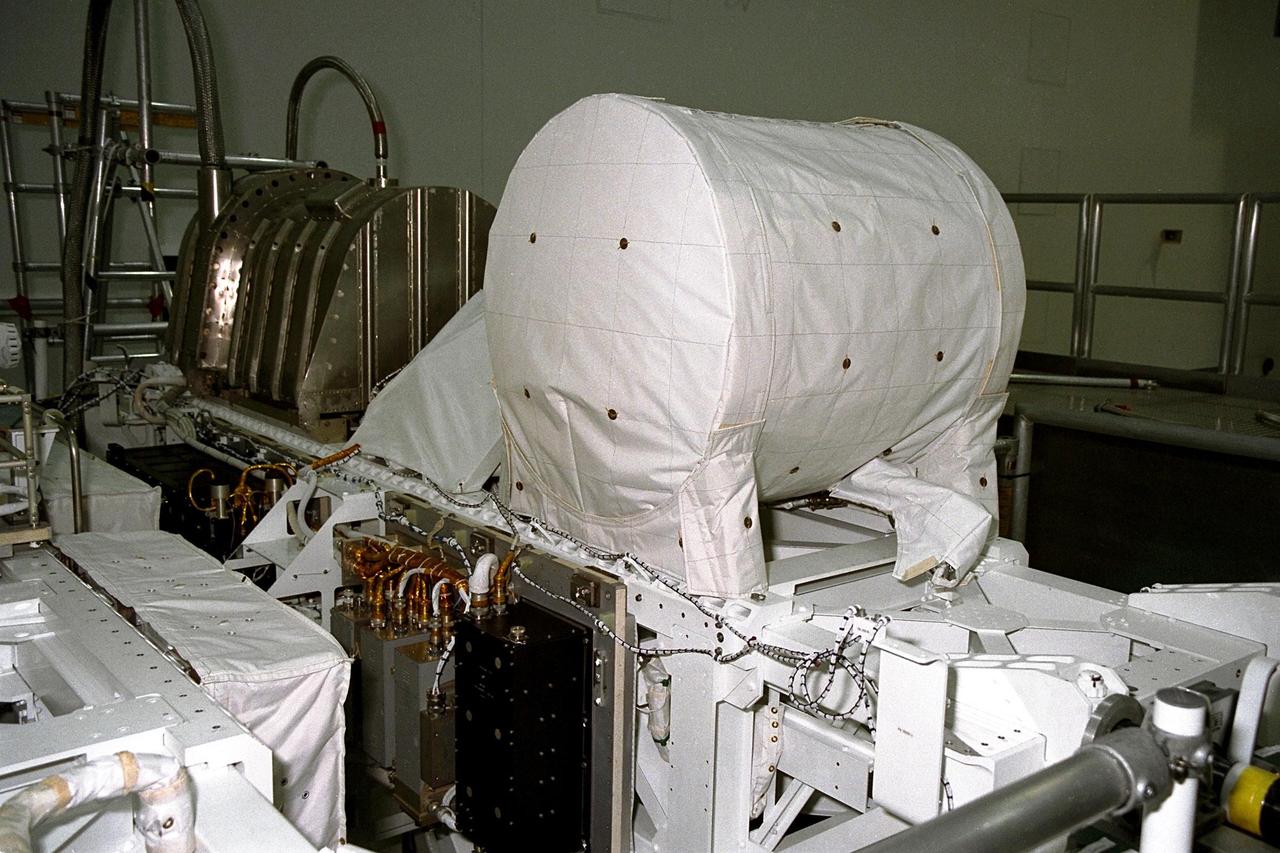
United States Microgravity Payload-4 (USMP-4) experiments are prepared to be flown on Space Shuttle mission STS-87 in the Space Station Processing Facility at Kennedy Space Center (KSC). Seen in the foreground at right is the Isothermal Dendritic Growth Experiment (IDGE), which will be used to study the dendritic solidification of molten materials in the microgravity environment. The metallic breadbox-like structure behind the IDGE is the Confined Helium Experiment (CHeX) that will study one of the basic influences on the behavior and properties of materials by using liquid helium confined between solid surface, and microgravity. These experiments are scheduled for launch aboard STS-87 on Nov. 19 from KSC
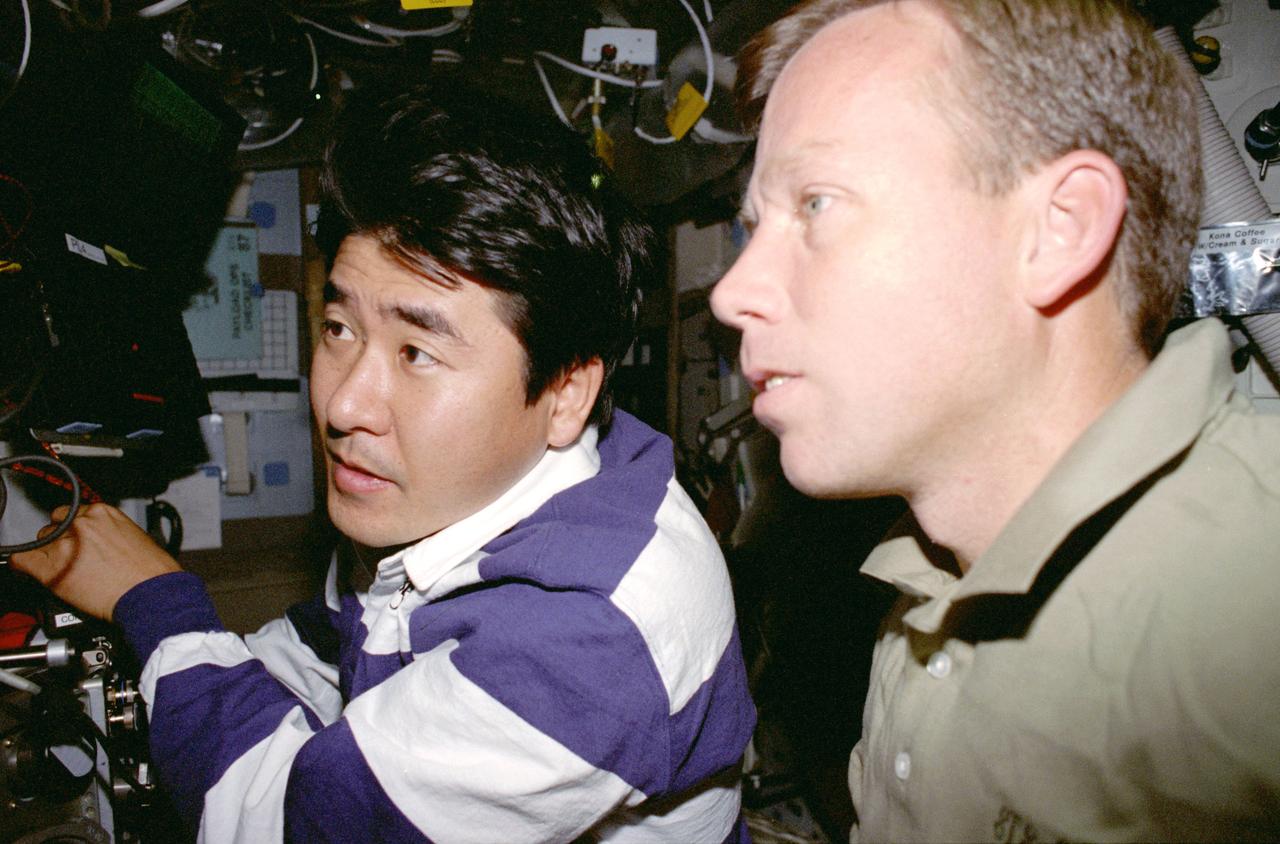
STS087-330-009 (19 November – 5 December 1997) --- Astronauts Takao Doi (left) and Steven W. Lindsey check out the Enclosed Laminar Flames (ELF) experiment on the mid-deck of the Earth-orbiting Space Shuttle Columbia. ELF has been designed to examine the effect of different air flow velocities on the stability of laminar (non-turbulent) flames. Enclosed laminar flames are commonly found in combustion systems such as power plant and gas turbine combustors, and jet engine afterburners. It is hoped that results of this investigation may help to optimize the performance of industrial combustors, including pollutant emissions and heat transfer. The microgravity environment of space makes a perfect setting for a laboratory involving combustion, an activity that creates convection in normal gravity. In microgravity, scientists can study subtle processes ordinarily masked by the effects of gravity. Doi is an international mission specialist representing Japan's National Space Development Agency (NASDA) and Lindsey is the pilot. Both are alumni of NASA's 1995 class of Astronaut Candidates (ASCAN).
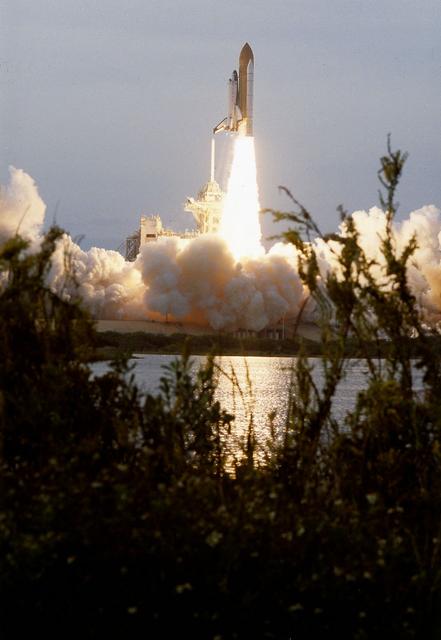
Like a rising sun lighting up the afternoon sky, the Space Shuttle Columbia (STS-87) soared from Launch Pad 39B on the fourth flight of the United States Microgravity Payload (USMP-4) and Spartan-201 satellite which were managed by scientists and engineers from the Marshall Space Flight Center. During the 16-day mission, the crew oversaw experiments in microgravity; deployed and retrieved a solar satellite; and tested a new experimental camera, the AERCam Sprint. Two crew members, Dr. Takao Doi and Winston Scott also performed a spacewalk to practice International Space Station maneuvers.
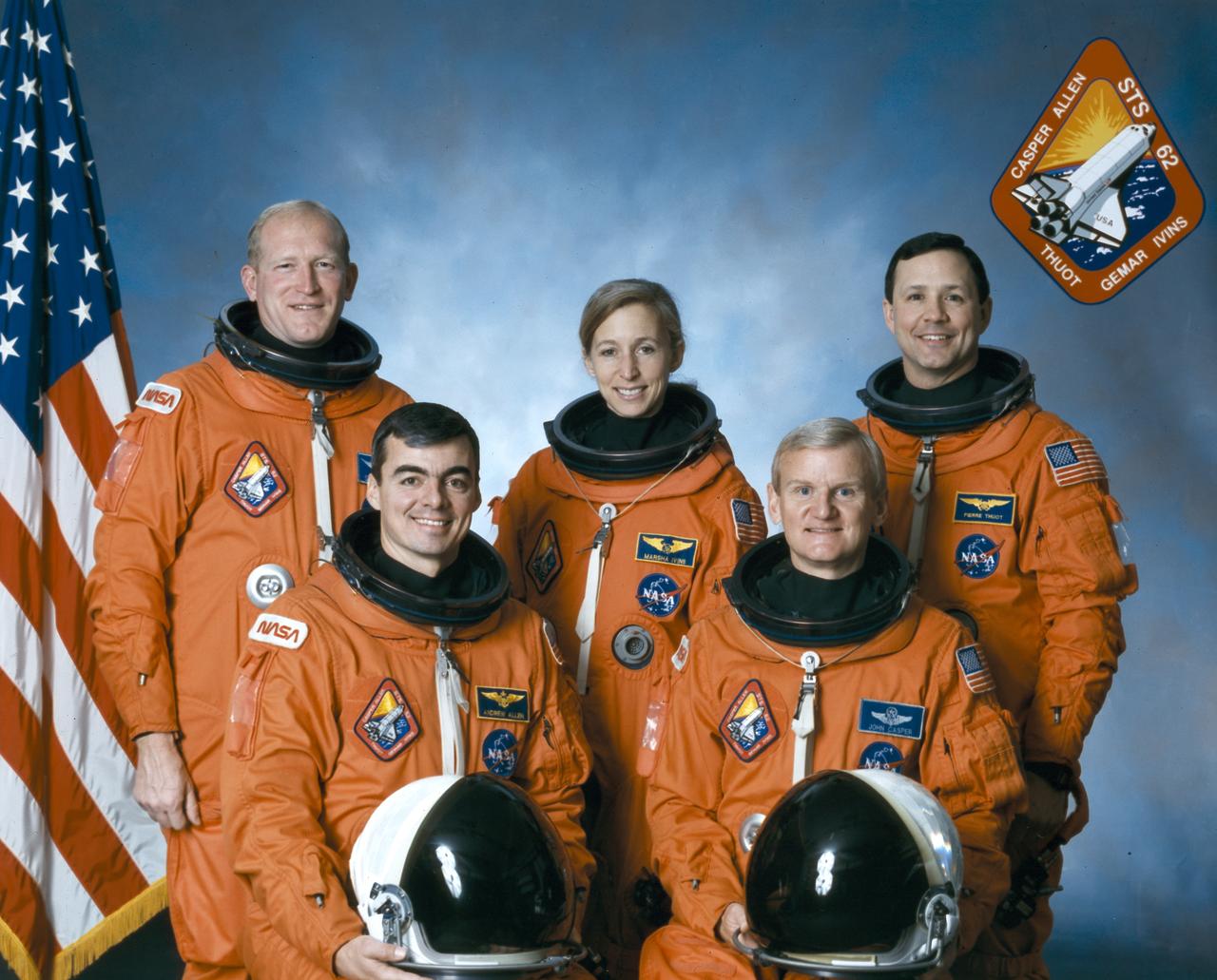
Astronauts included in the STS-62 crew portrait include (standing left to right) mission specialists Charles D. Gemar, Marsha S. Ivins, and Pierre J. Thuot. Seated left to right are Andrew M. Allen, pilot; and John H. Casper, commander. Launched aboard the Space Shuttle Columbia on March 4, 1994 at 8:53:00 am (EST), the STS-62 mission carried two primary payloads; the U.S Microgravity Payload-2 (USMP-2) and the Office of Aeronautics and Space Technology-2 (OAST-2).
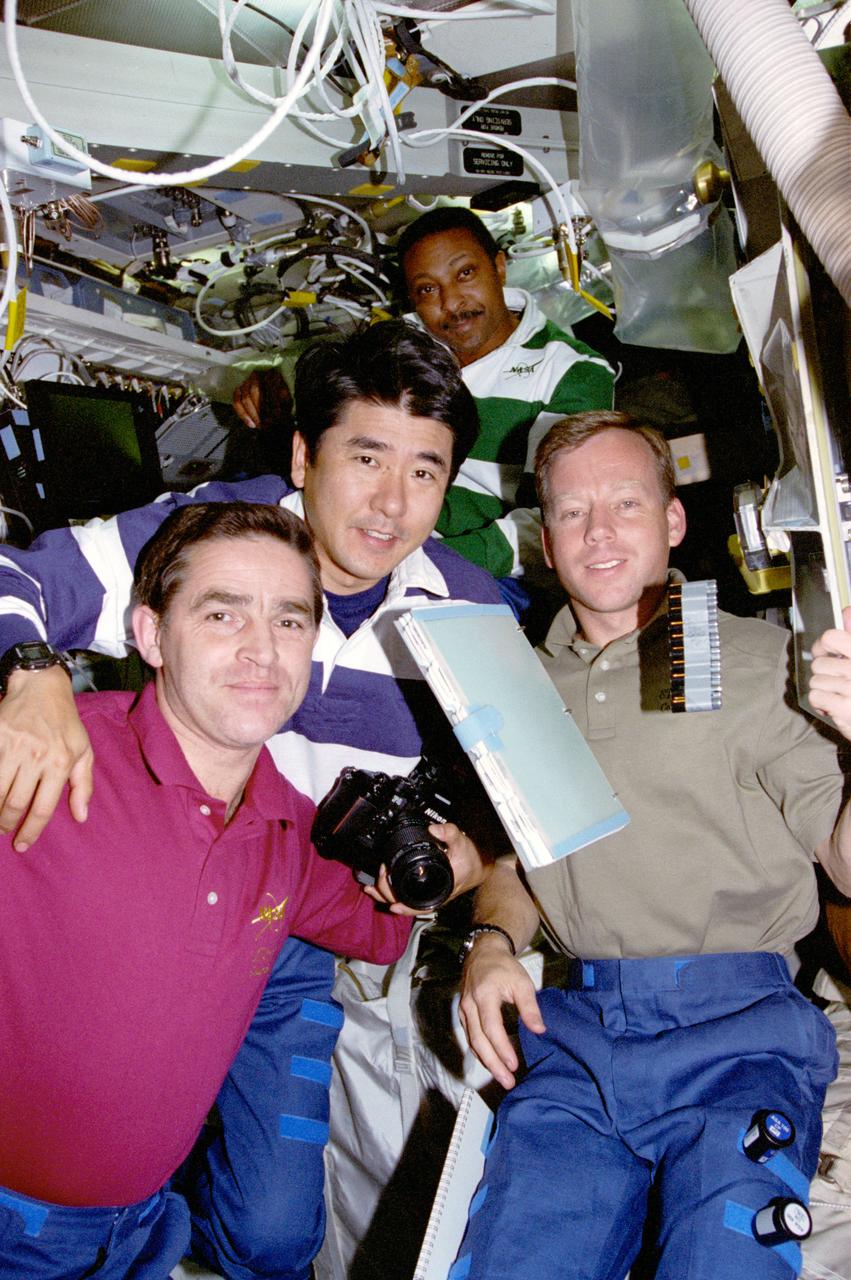
STS087-353-034 (19 November - 5 December 1997) --- Two-thirds of the crew members are pictured on the mid-deck of the Earth-orbiting Space Shuttle Columbia. From the left are Leonid Kadenyuk, payload specialist of the Ukraine; Takao Doi, international mission specialist representing Japan's National Space Development Agency (NASDA); Winston E. Scott, mission specialist; and Steven W. Lindsey, pilot. Doi was joined on two Extravehicular Activities (EVA) during the 16-day United States Microgravity Payload (USMP-4) mission by Scott.
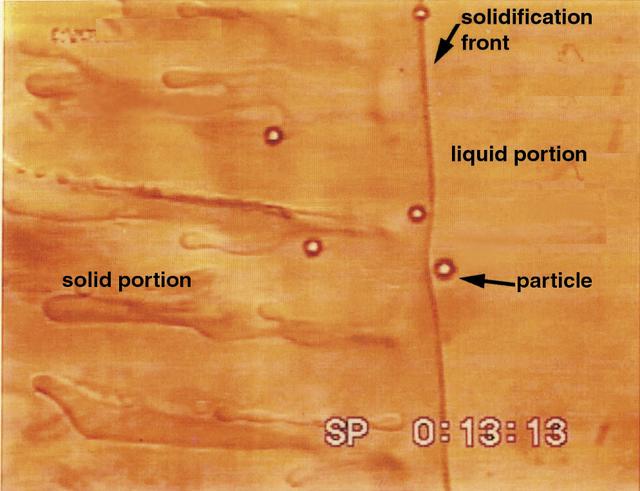
As a liquefied metal solidifies, particles dispersed in the liquid are either pushed ahead of or engulfed by the moving solidification front. Similar effects can be seen when the ground freezes and pushes large particles out of the soil. The Particle Engulfment and Pushing (PEP) experiment, conducted aboard the fourth U.S. Microgravity Payload (USMP-4) mission in 1997, used a glass and plastic beads suspended in a transparent liquid. The liquid was then frozen, trapping or pushing the particles as the solidifying front moved. This simulated the formation of advanced alloys and composite materials. Such studies help scientists to understand how to improve the processes for making advanced materials on Earth. The principal investigator is Dr. Doru Stefanescu of the University of Alabama. This image is from a video downlink.
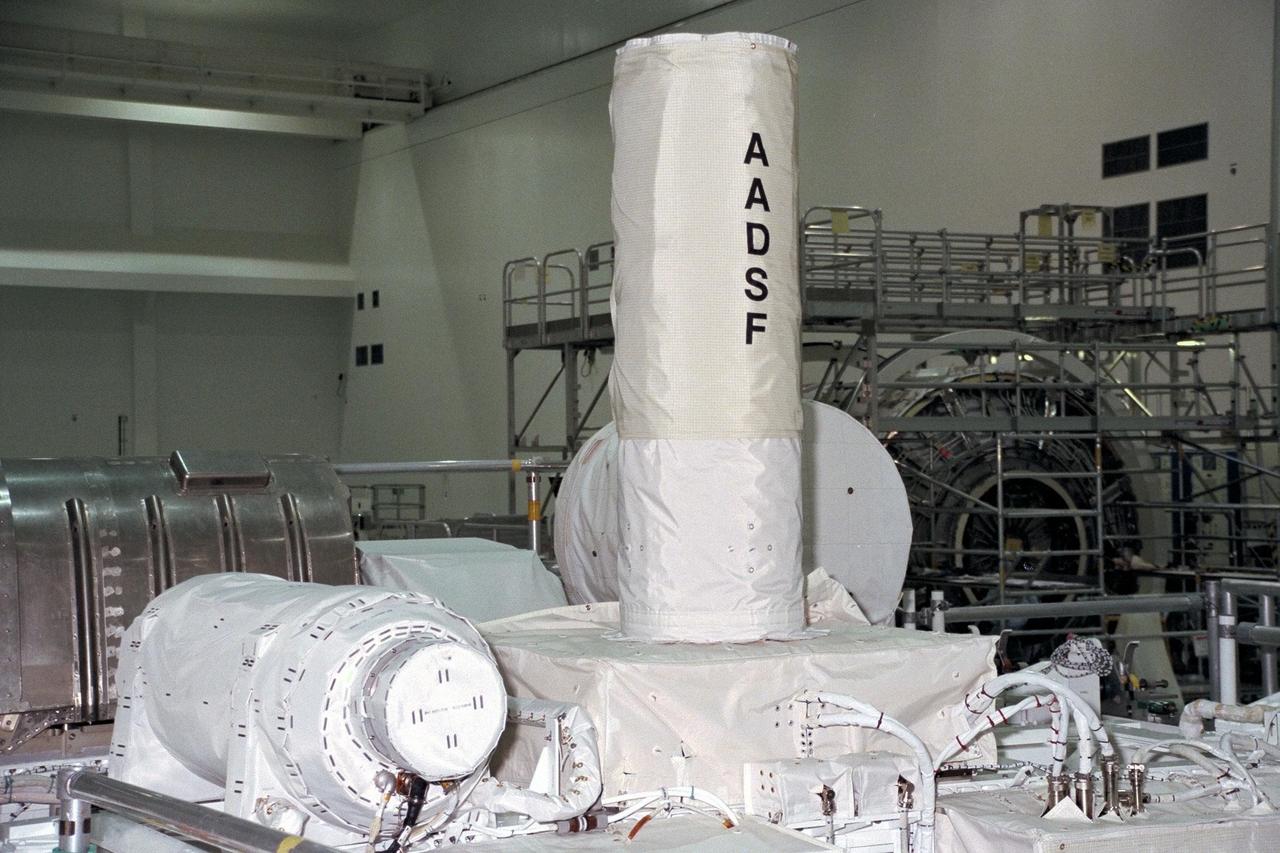
United States Microgravity Payload-4 (USMP-4) experiments are prepared to be flown on Space Shuttle mission STS-87 in the Space Station Processing Facility at Kennedy Space Center (KSC). The vertical tube in the center of the photo is the Advanced Automated Directional Solidification Furnace (AADSF), which will be used by researchers to study the solidification of semiconductor materials in microgravity. Scientists will be able to better understand how microgravity influences the solidification process of these materials and develop better methods for controlling that process during future Space flights and Earth-based production. To its left is MEPHISTO, the French acronym for a cooperative American-French investigation of the fundamentals of crystal growth. All STS-87 experiments are scheduled for launch on Nov. 19 from KSC
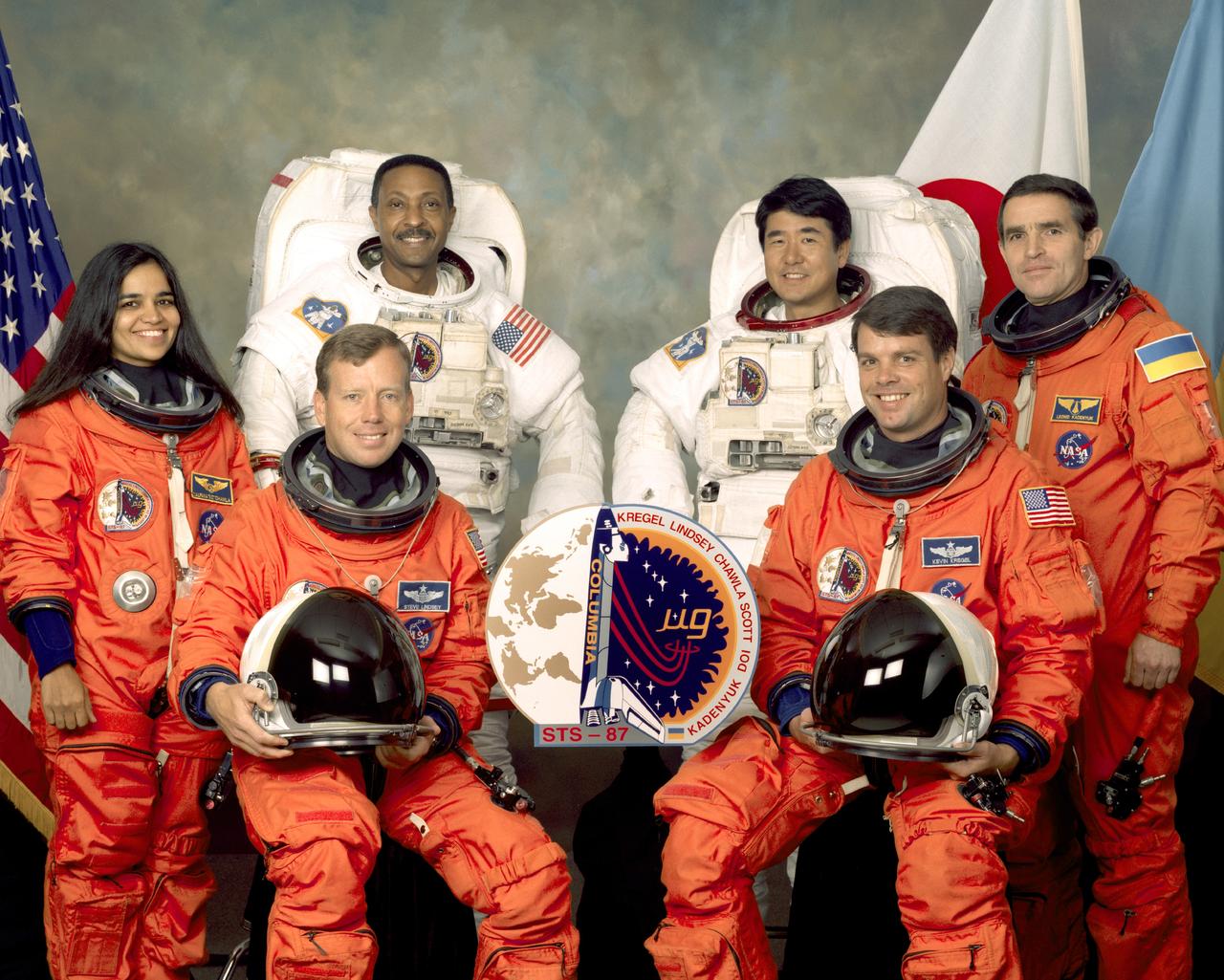
Five astronauts and a payload specialist take a break from training at the Johnson Space Center (JSC) to pose for the STS-87 crew portrait. Wearing the orange partial pressure launch and entry suits, from the left, are Kalpana Chawla, mission specialist; Steven W. Lindsey, pilot; Kevin R. Kregel, mission commander; and Leonid K. Kadenyuk, Ukrainian payload specialist. Wearing the white Extravehicular Mobility Unit (EMU) space suits are mission specialists Winston E. Scott (left) and Takao Doi (right). Doi represents Japan’s National Space Development Agency (NASDA). The STS-87 mission launched aboard the Space Shuttle Columbia on November 19, 1997. The primary payload for the mission was the U.S. Microgravity Payload-4 (USMP-4).
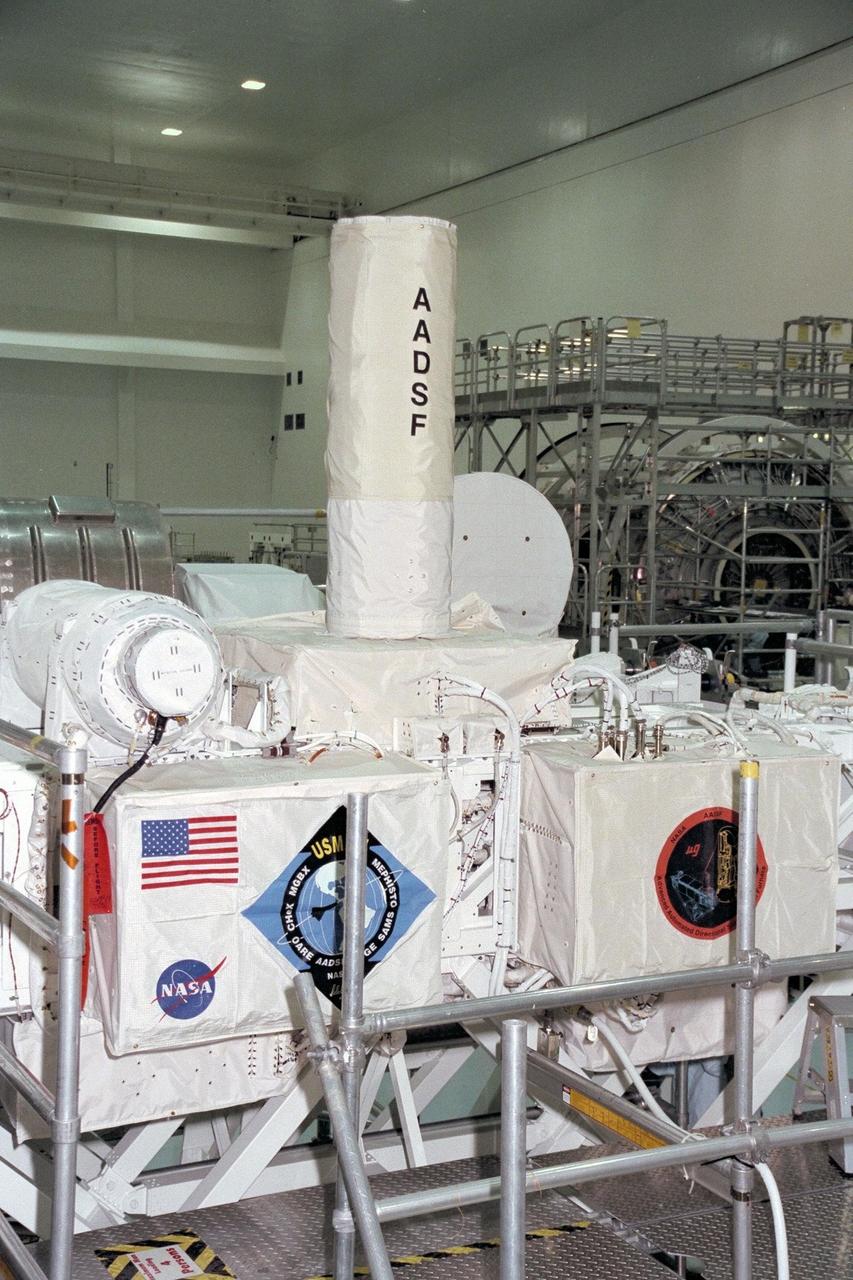
United States Microgravity Payload-4 (USMP-4) experiments are prepared to be flown on Space Shuttle mission STS-87 in the Space Station Processing Facility at Kennedy Space Center (KSC). The large white vertical cylinder in the center of the photo is the Advanced Automated Directional Solidification Furnace (AADSF) and the horizontal tube to the left of it is MEPHISTO, a French acronym for a cooperative American-French investigation of the fundamentals of crystal growth. Seen at right behind the AADSF in the circular white cover is the Isothermal Dendritic Growth Experiment (IDGE), which will be used to study the dendritic solidification of molten materials in the microgravity environment. Under the multi-layer insulation with the American flag and mission logo is the Space Acceleration Measurement System, or SAMS, which measures the microgravity conditions in which the experiments are conducted. All of these experiments are scheduled for launch aboard STS-87 on Nov. 19 from KSC
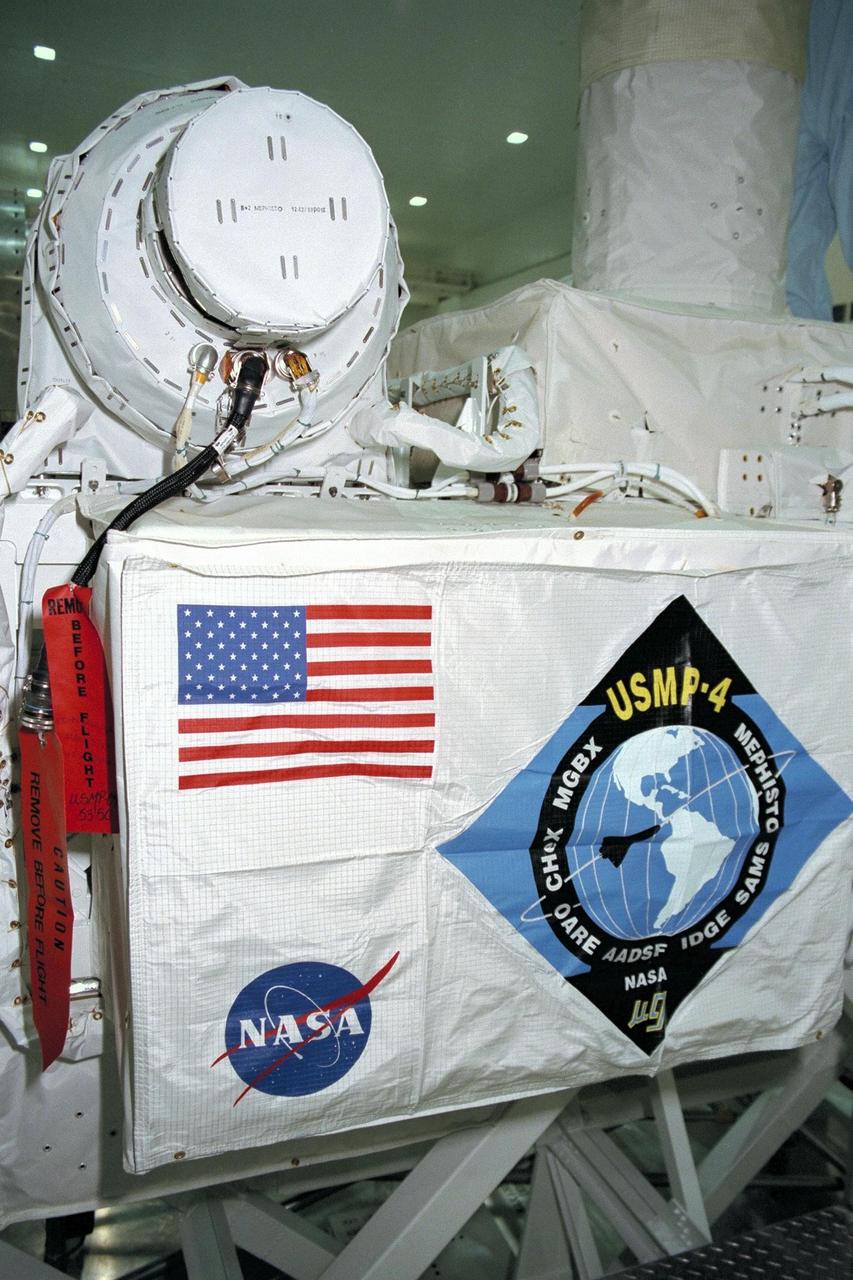
United States Microgravity Payload-4 (USMP-4) experiments are prepared to be flown on Space Shuttle mission STS-87 in the Space Station Processing Facility at Kennedy Space Center (KSC). The large white vertical cylinder in the middle of the photo is the Advanced Automated Directional Solidification Furnace (AADSF) and the horizontal tube to its left is MEPHISTO, the French acronym for a cooperative American-French investigation of the fundamentals of crystal growth. Seen to the right of the AADSF is the Isothermal Dendritic Growth Experiment (IDGE), which will be used to study the dendritic solidification of molten materials in the microgravity environment. Under the multi-layer insulation with the American flag and mission logo is the Space Acceleration Measurement System, or SAMS, which measures the microgravity conditions in which the experiments are conducted. All of these experiments are scheduled for launch aboard STS-87 on Nov. 19 from KSC
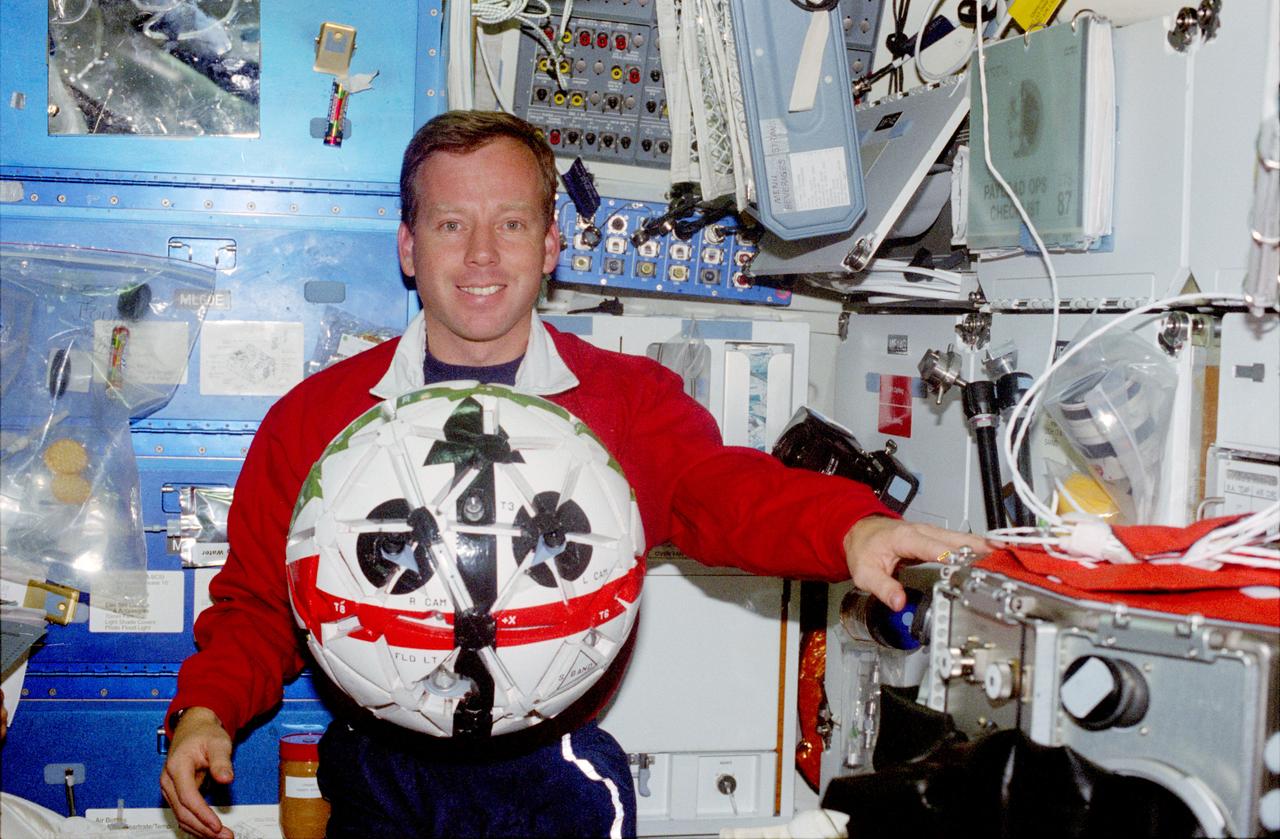
STS087-371-013 (19 November - 5 December 1997) --- On the Space Shuttle Columbia's mid-deck, astronaut Steven W. Lindsey proves that the Autonomous Extravehicular Activity Robotic Camera/Sprint (AERCam/Sprint) experiment is in fact bigger than a soccer ball, to which it is often erroneously compared for dimensional frame of reference, as he allows the Sprint to float near him. The AERCam is a prototype free-flying television camera that could be used for remote inspections of the exterior of the International Space Station (ISS). Later, astronauts Winston E. Scott and Takao Doi took the experiment outside for a brief test during the mission's second Extravehicular Activity (EVA). Lindsey, pilot, is standing with his back to the galley and his left hand on the microgravity glovebox, used extensively during the mission to support the United States Microgravity Payload (USMP-4) mission.
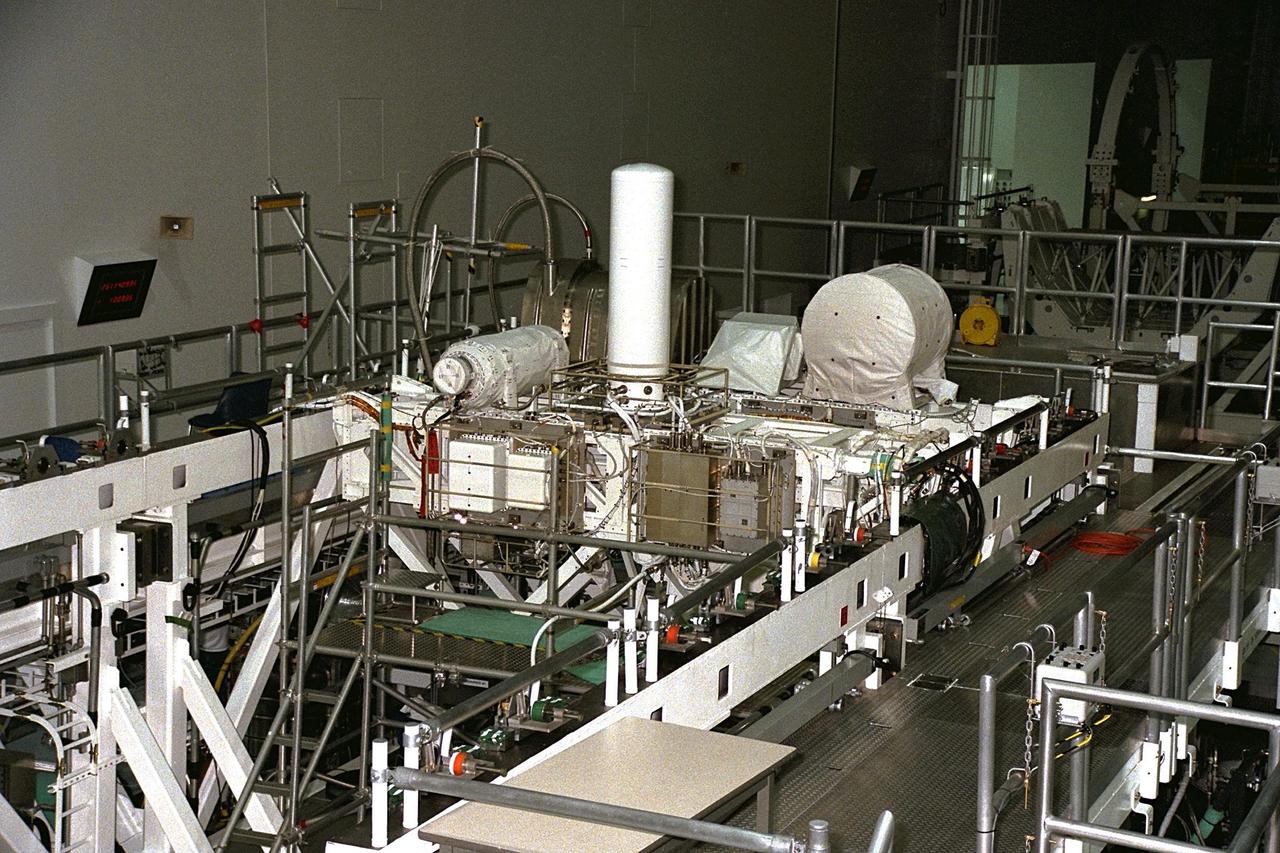
United States Microgravity Payload-4 (USMP-4) experiments are prepared to be flown on Space Shuttle mission STS-87 in the Space Station Processing Facility at Kennedy Space Center (KSC). Seen at right in the circular white cover is the Isothermal Dendritic Growth Experiment (IDGE), which will be used to study the dendritic solidification of molten materials in the microgravity environment. The large white vertical cylinder in the center of the photo is the Advanced Automated Directional Solidification Furnace (AADSF) and the horizontal tube to the left of it is MEPHISTO, a French acronym for a cooperative American-French investigation of the fundamentals of crystal growth. Just below MEPHISTO is the Space Acceleration Measurement System, or SAMS, which measures the microgravity conditions in which the experiments are conducted. The The metallic breadbox-like structure behind the AADSF is the Confined Helium Experiment (CHeX) that will study one of the basic influences on the behavior and properties of materials by using liquid helium confined between solid surfaces and microgravity. All of these experiments are scheduled for launch aboard STS-87 on Nov. 19 from KSC
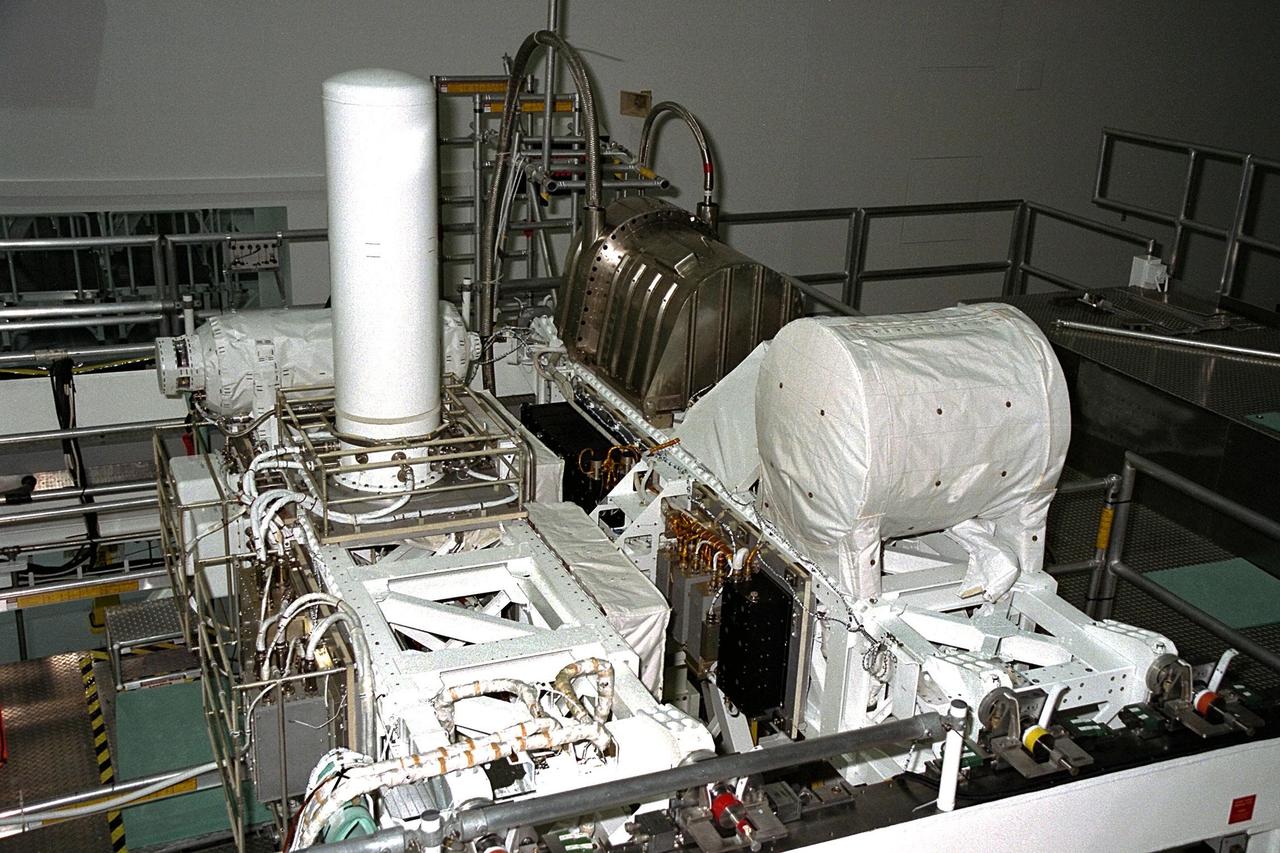
United States Microgravity Payload-4 (USMP-4) experiments are prepared to be flown on Space Shuttle mission STS-87 in the Space Station Processing Facility at Kennedy Space Center (KSC). Seen in the foreground at right is the Isothermal Dendritic Growth Experiment (IDGE), which will be used to study the dendritic solidification of molten materials in the microgravity environment. The metallic breadbox-like structure behind the IDGE is the Confined Helium Experiment (CHeX) that will study one of the basic influences on the behavior and properties of materials by using liquid helium confined between solid surfaces and microgravity. The large white vertical cylinder at left is the Advanced Automated Directional Solidification Furnace (AADSF) and the horizontal tube behind it is MEPHISTO, the French acronym for a cooperative American-French investigation of the fundamentals of crystal growth. Just below the left end of MEPHISTO is the Space Acceleration Measurement System, or SAMS, which measures the microgravity conditions in which the experiments are conducted. All of these experiments are scheduled for launch aboard STS-87 on Nov. 19 from KSC