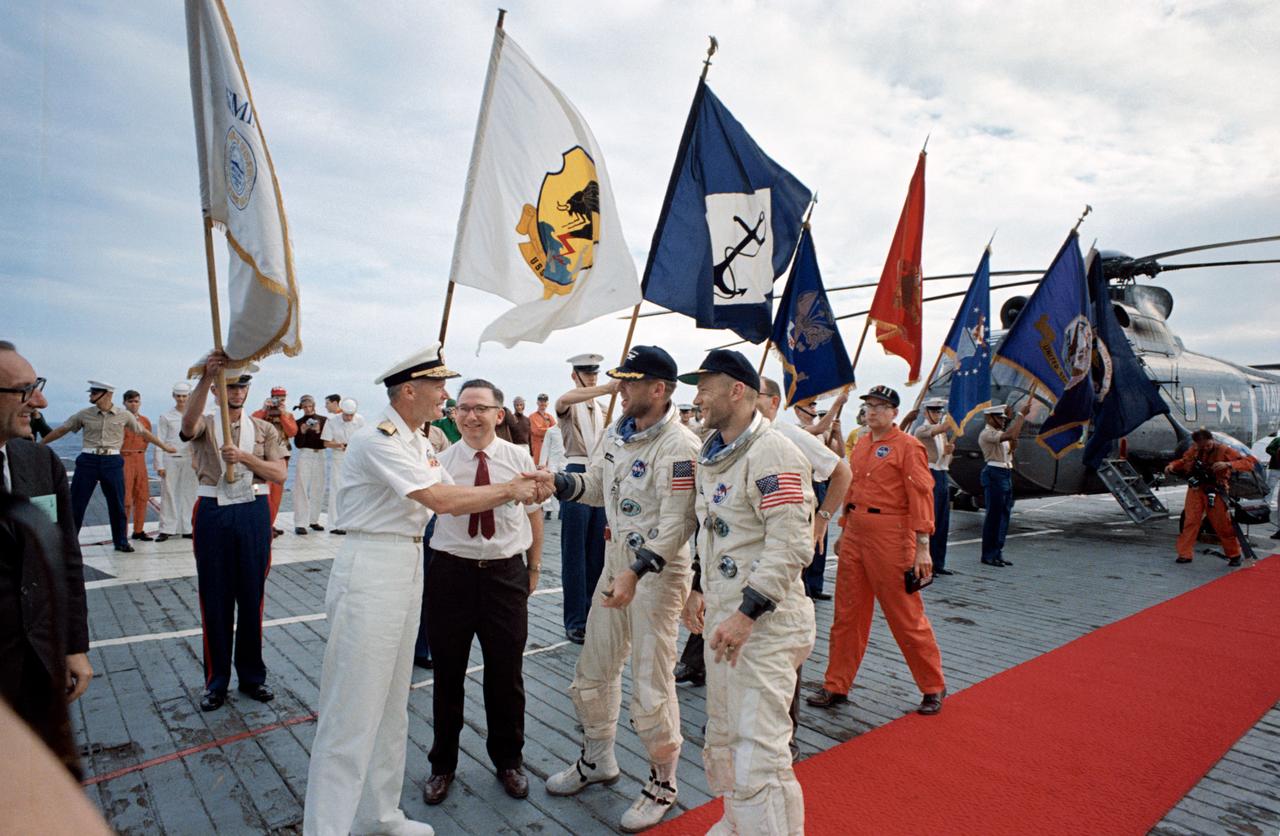
S66-59981 (15 Nov. 1966) --- Astronauts James A. Lovell Jr. (left), command pilot, and Edwin E. Aldrin Jr., pilot, receive official welcome as they arrive aboard the aircraft carrier USS Wasp. Gemini-12 splashed down in the Atlantic Ocean recovery area at 2:21 p.m. (EST), Nov. 15, 1966, to conclude a four-day mission in space. Photo credit: NASA
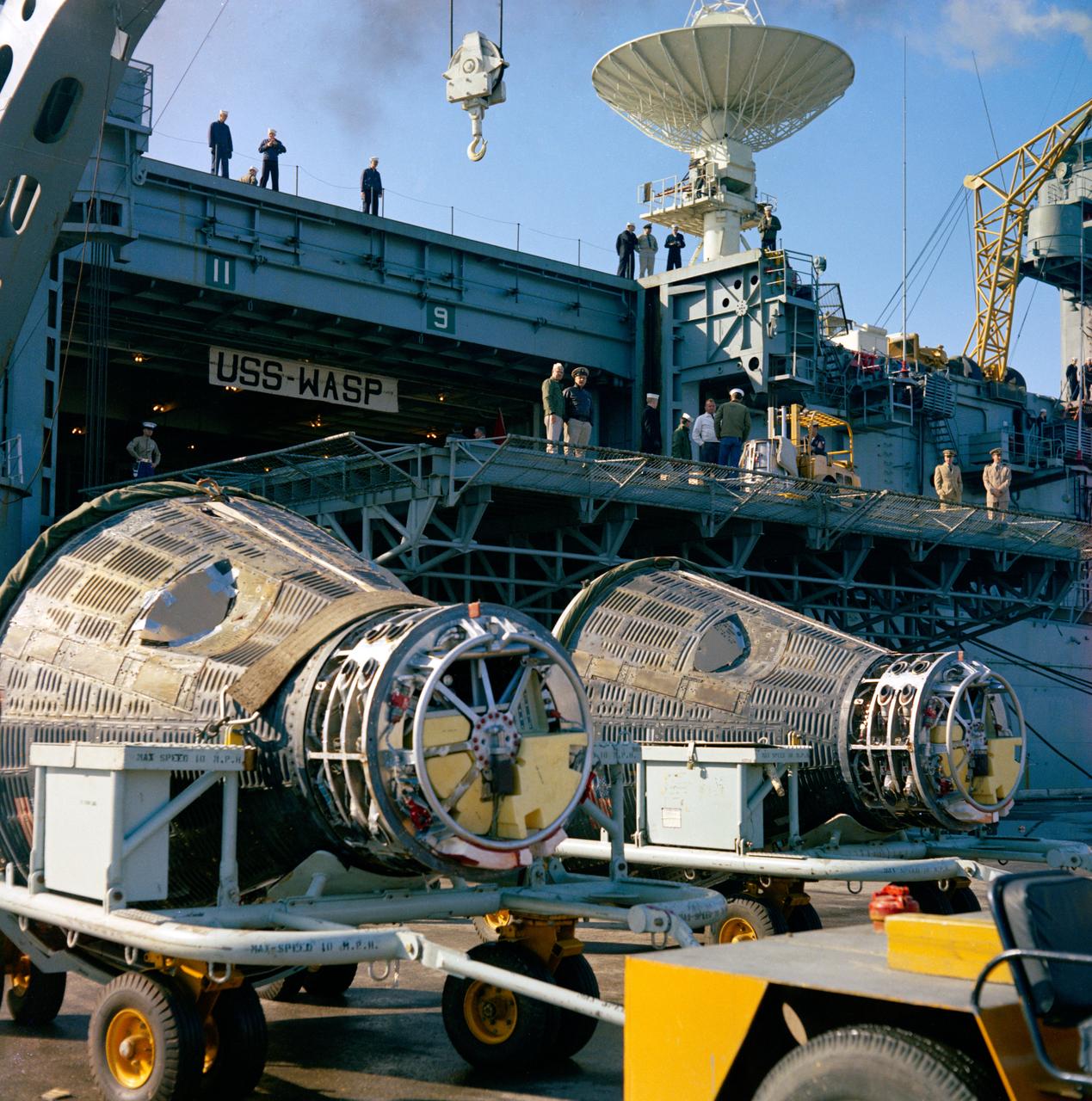
S65-65948 (20 Dec. 1965) --- Gemini-7 (left) and Gemini-6 spacecraft meet up once again, this time at Mayport Naval Station near Jacksonville (Fla.) after unloading Dec. 20, 1965, from the carrier USS Wasp. The two spacecraft accomplished a rendezvous and station keeping exercise in space on Dec. 15. Photo credit: NASA
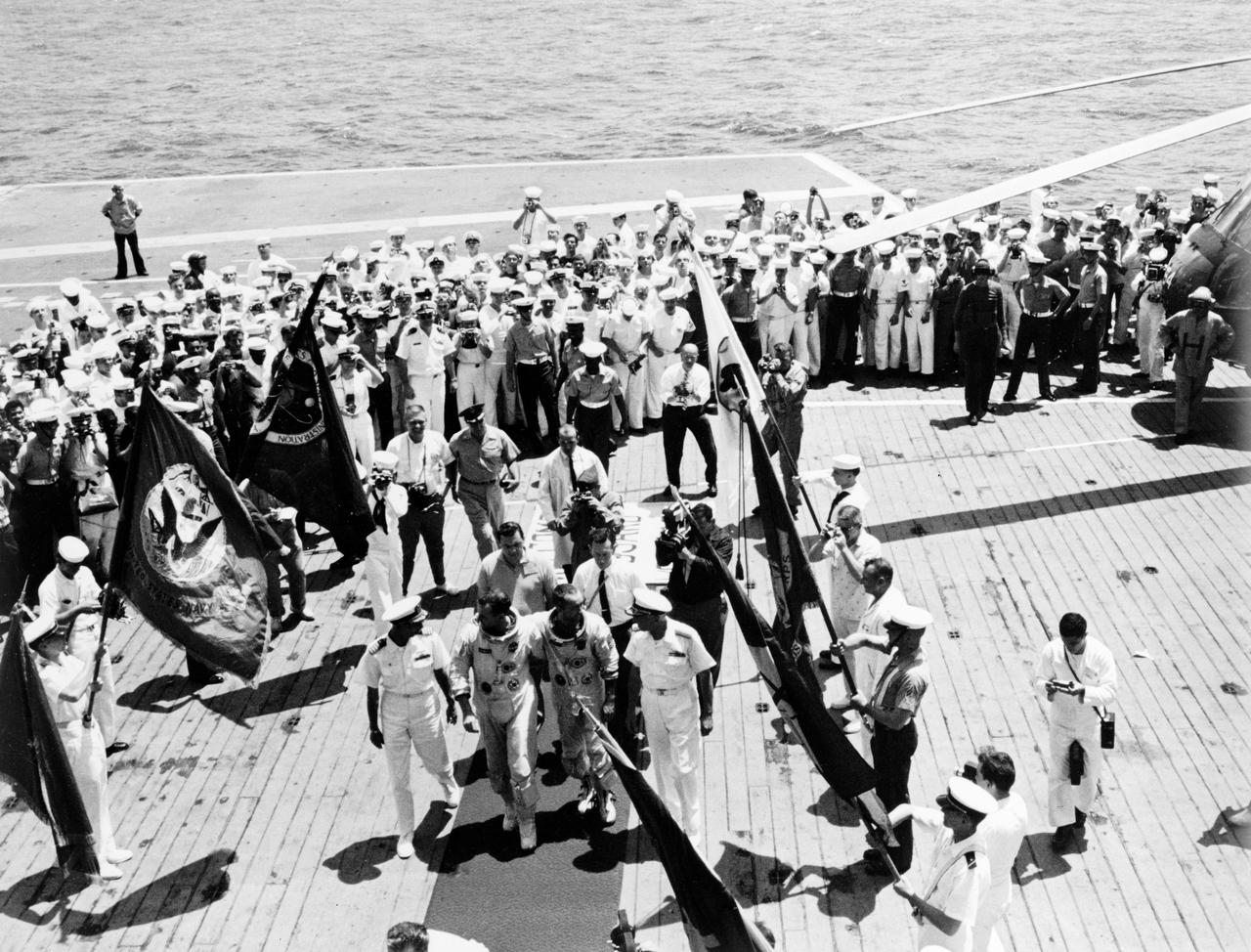
S65-19530 (7 June 1965) --- The red carpet treatment is given to the Gemini-Titan 4 astronauts Edward H. White II and James A. McDivitt as they arrive on the flight deck of the aircraft carrier USS Wasp after their record breaking 62-revolution, 97-hour and 56-minute flight which ended in the Atlantic Ocean about 400 miles east of Cape Kennedy at 12:12 p.m. (EST) on June 7, 1965. Here they are shown being welcomed by members of the crew and NASA people. White and McDivitt (center) walk on the red carpet flanked by Capt. J.W. Conger (left), commander of the ship; and Rear Adm. W.M. McCormick, commander, Carrier Division 14, Atlantic Fleet. NASA's Gemini-4 flight landed about 48 miles short of the aircraft carrier.

S65-59990 (16 Dec. 1965) --- Crewmen of the aircraft carrier USS Wasp gather on deck to watch the recovery of the Gemini-6 spacecraft and astronauts. Note the signs hanging from the railings which say "Seasons Greetings from WASP" and "Spirit of 76". Photo credit: NASA or National Aeronautics and Space Administration
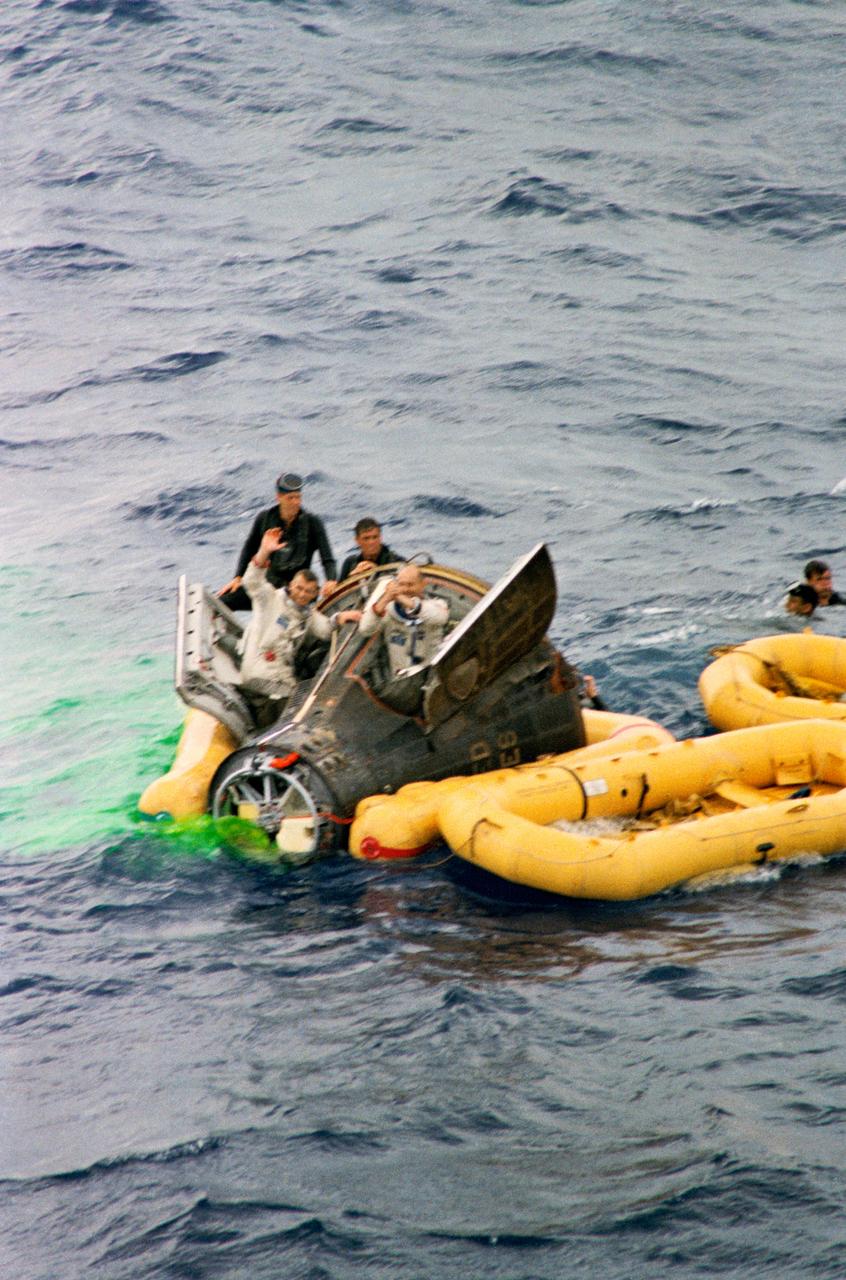
S66-34110 (6 June 1966) --- Astronauts Thomas Stafford (right) and Eugene Cernan wave to those aboard the aircraft carrier USS Wasp as the recovery ship approaches. U.S. Navy frogmen assist in the recovery operations. Gemini-9A splashed down in the Atlantic Ocean only 3.5 miles from the USS Wasp. Gemini-9 splashed down 345 miles east of Cape Kennedy at 9 a.m. (EST), June 6, 1966. Photo credit: NASA
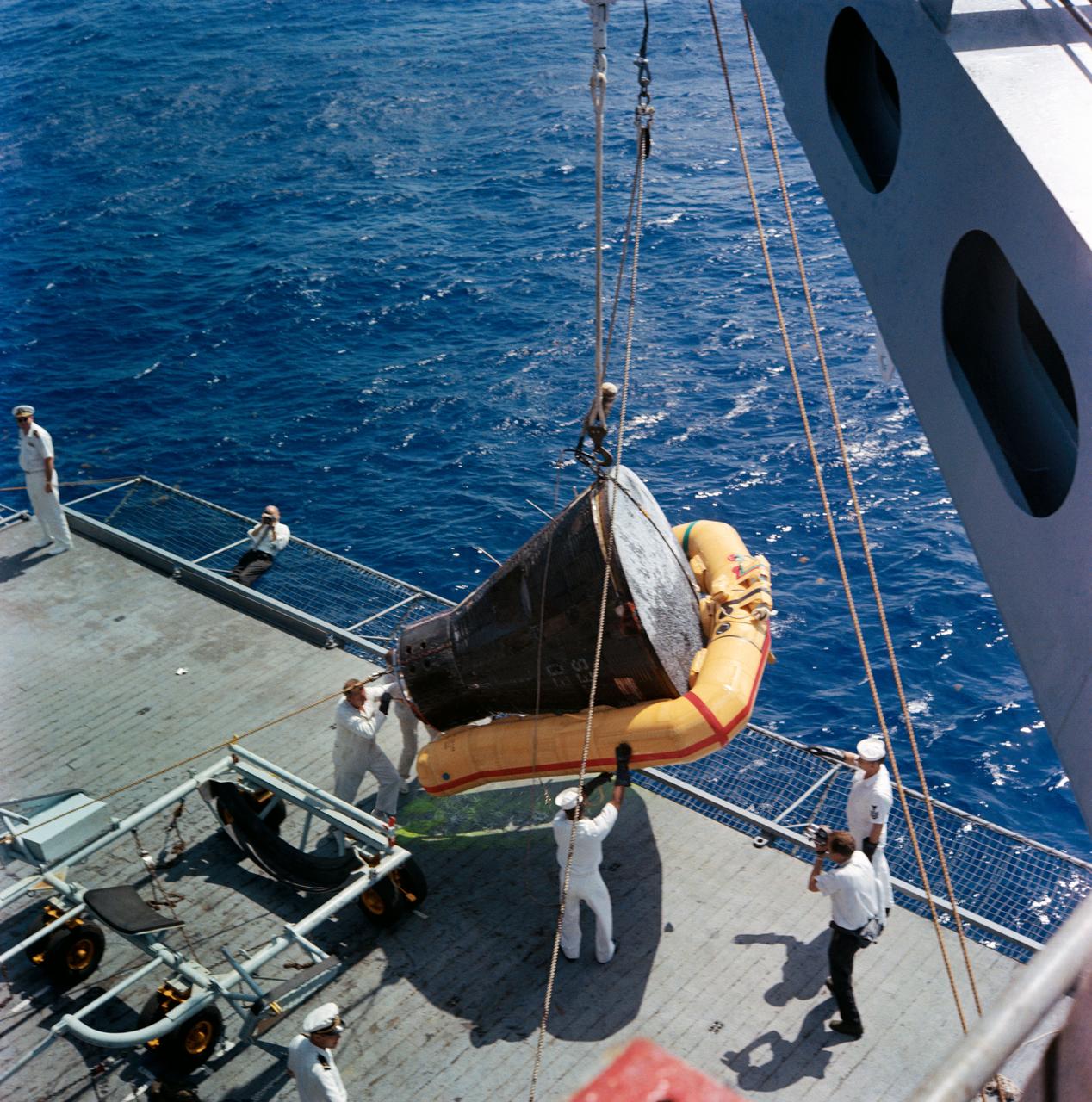
S65-32962 (7 June 1965) --- The Gemini-4 (GT-4) spacecraft is hoisted aboard the recovery ship USS Wasp during recovery operations following the successful four-day mission.
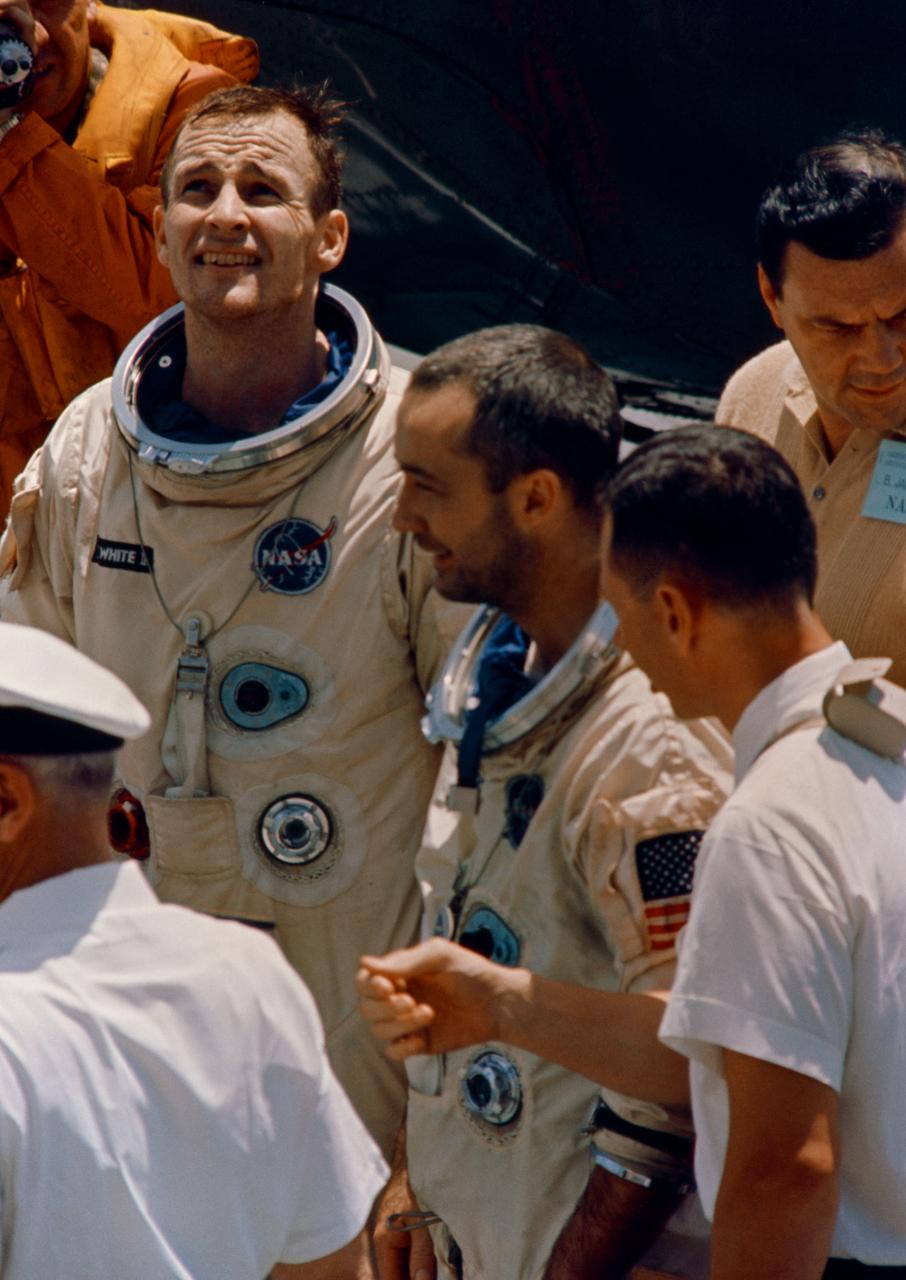
S65-32993 (7 June 1965) --- Astronauts James A. McDivitt (left), Gemini-Titan 4 command pilot; and Edward H. White II, pilot, are seen talking to personnel on the recovery ship USS Wasp.
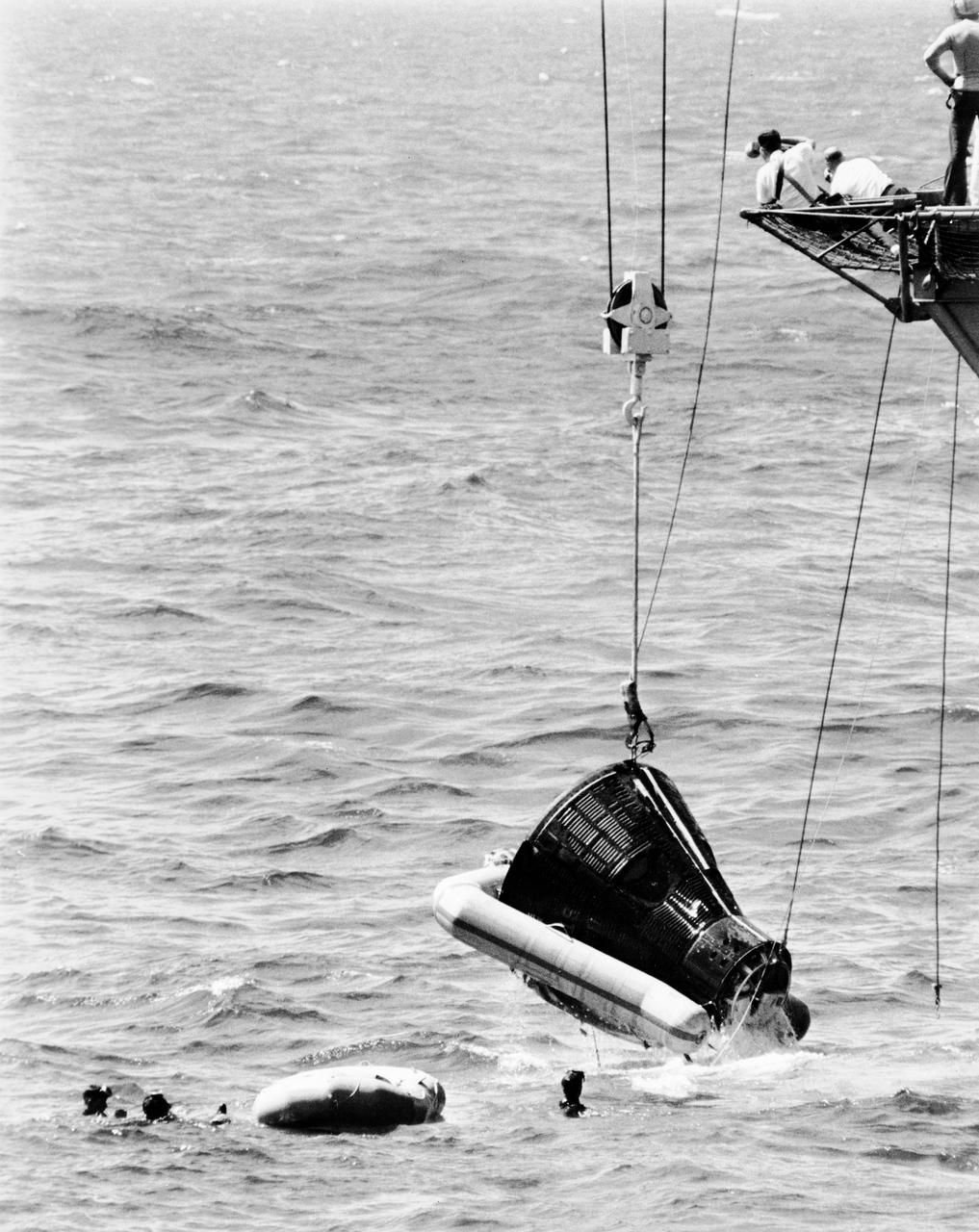
The Gemini-4 Astronauts is shown being hoisted aboard the Aircraft Carrier USS Wasp. The flotation collar is still attached to the spacecraft. DOWNRANGE RECOVERY AREA, ATLANTIC OCEAN B&W
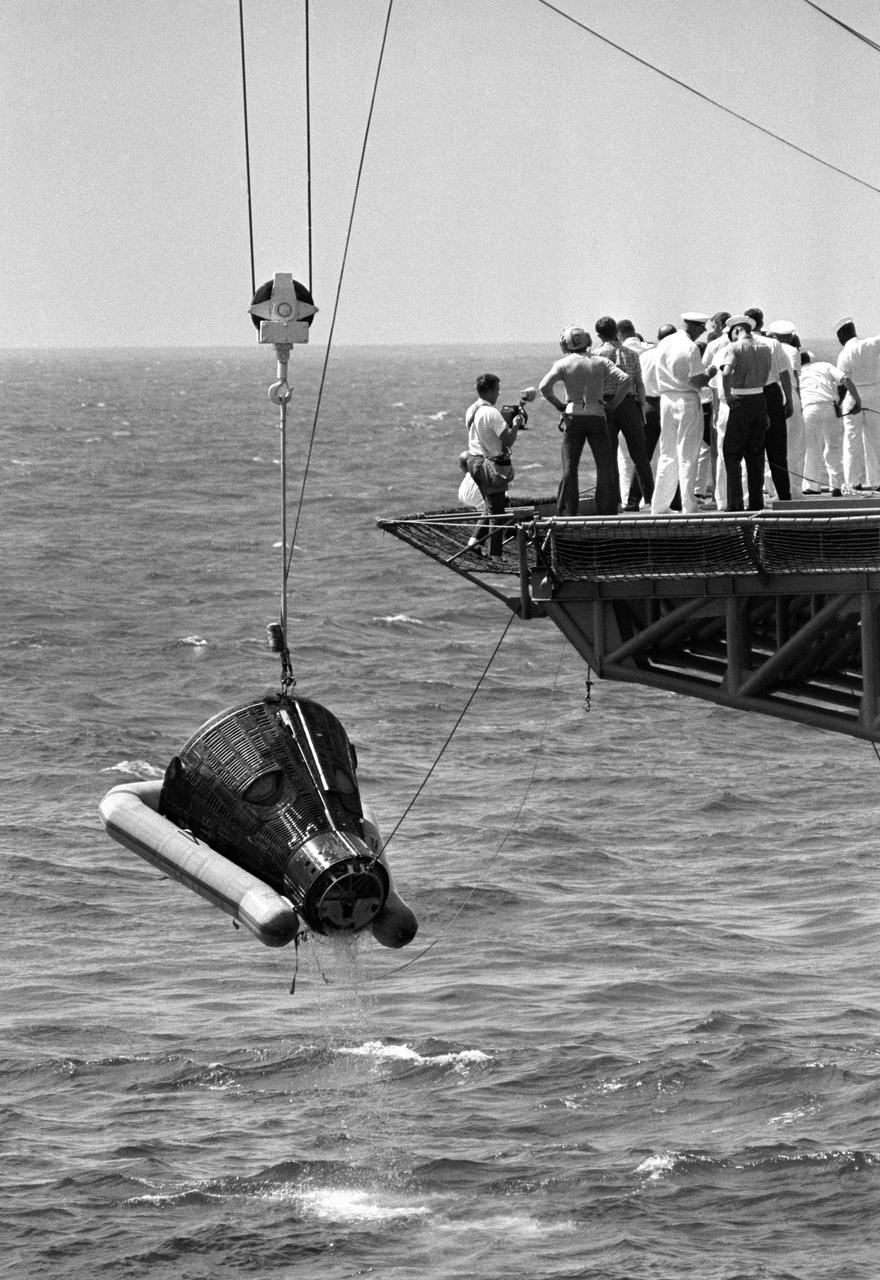
The Gemini-4 Astronauts is shown being hoisted aboard the aircraft carrier USS Wasp. The flotation collar is still attached to the spacecraft. DOWNRANGE RECOVERY AREA, ATLANTIC OCEAN B&W
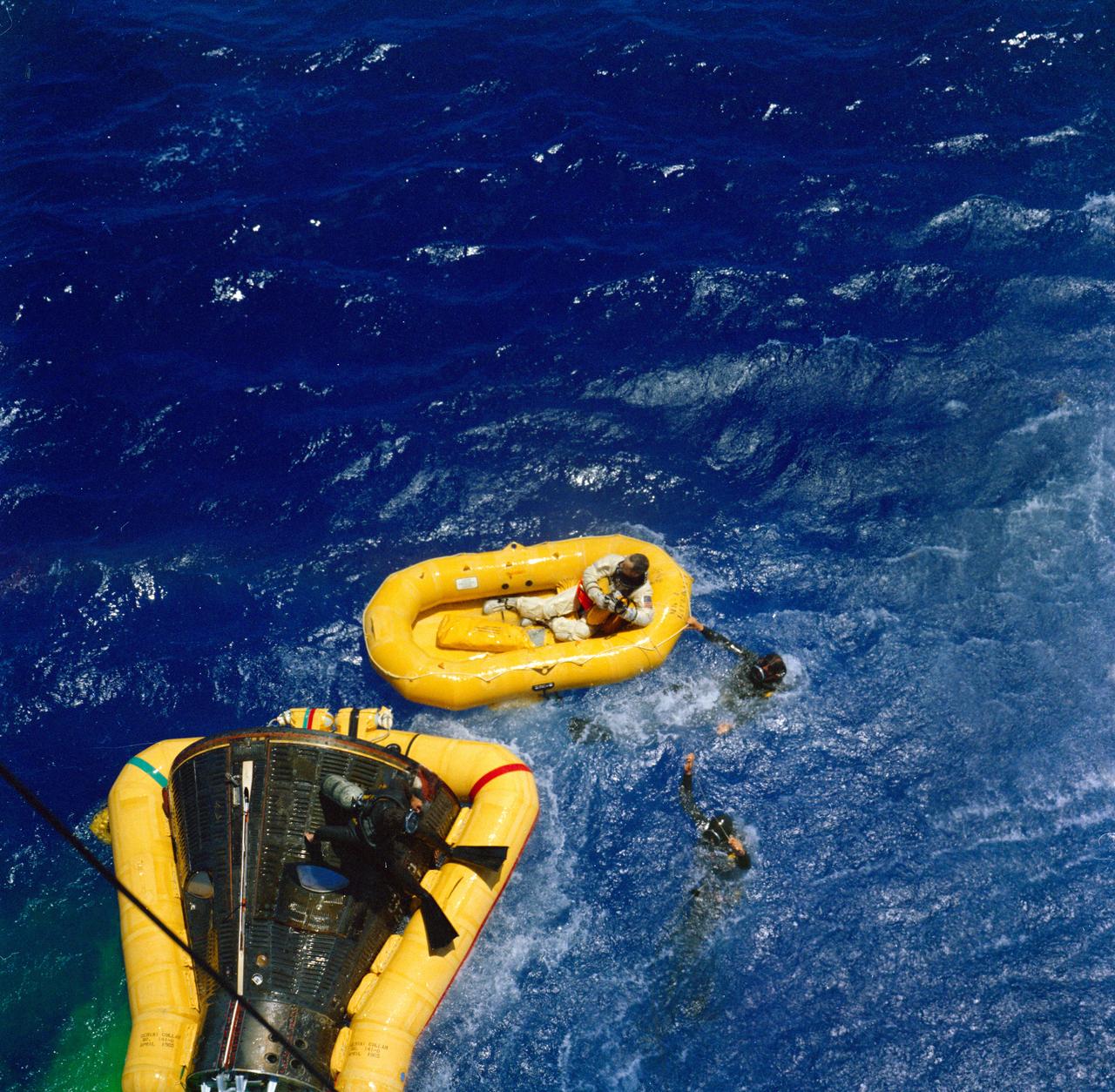
S65-33490 (7 June 1965) --- A United States Navy frogman team participates in the recovery of the Gemini-Titan 4 (GT-4) spacecraft. The USS Wasp was the prime recovery ship for the Gemini-4 mission. The crew of the Gemini-4 spaceflight was astronauts James A. McDivitt, command pilot, and Edward H. White II, pilot.
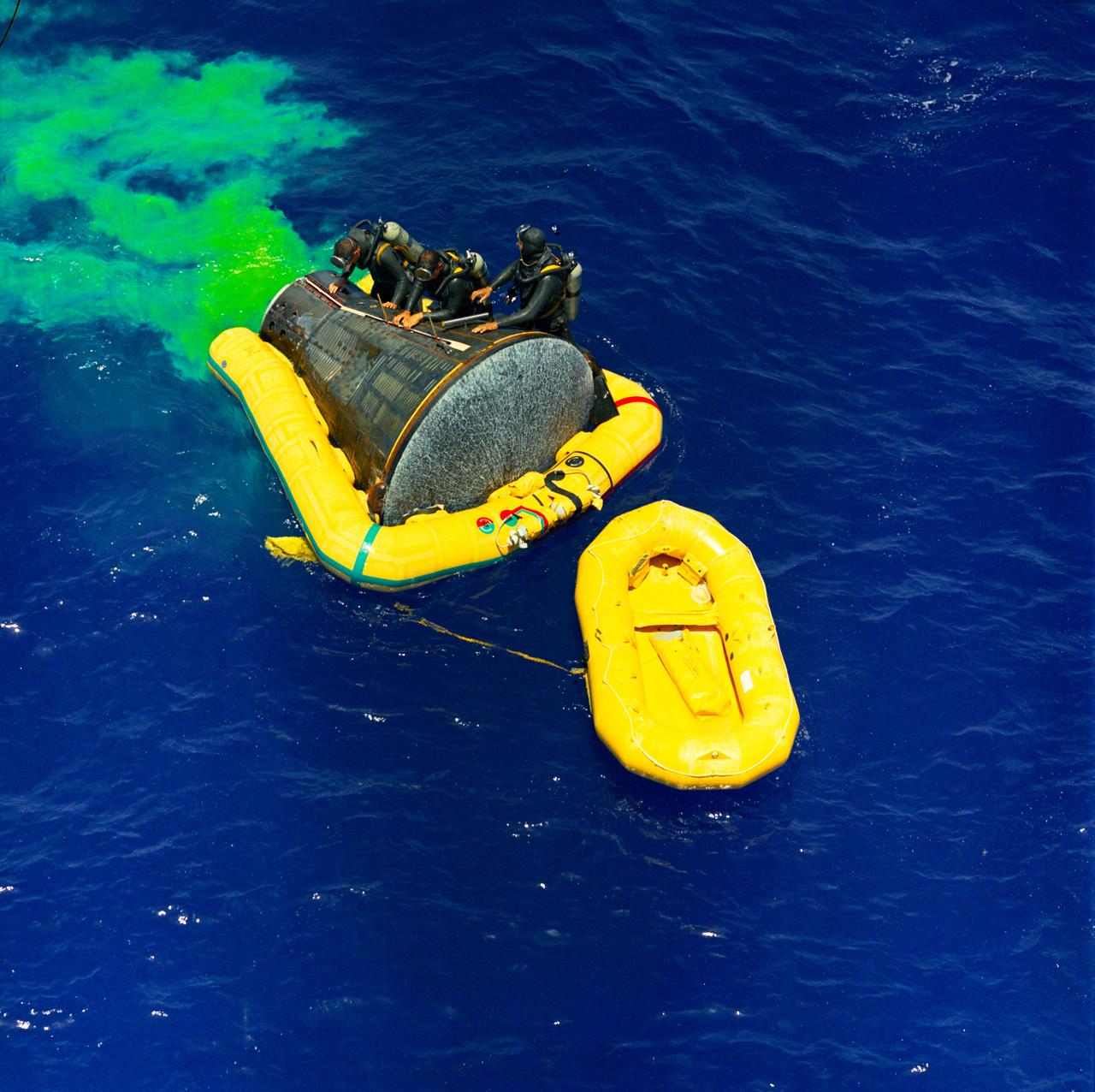
S65-33491 (7 June 1965) --- A United States Navy frogman team participates in the recovery of the Gemini-Titan 4 (GT-4) spacecraft. The USS Wasp was the prime recovery ship for the Gemini-4 mission. The crew of the Gemini-4 spaceflight was astronauts James A. McDivitt, command pilot, and Edward H. White II, pilot.
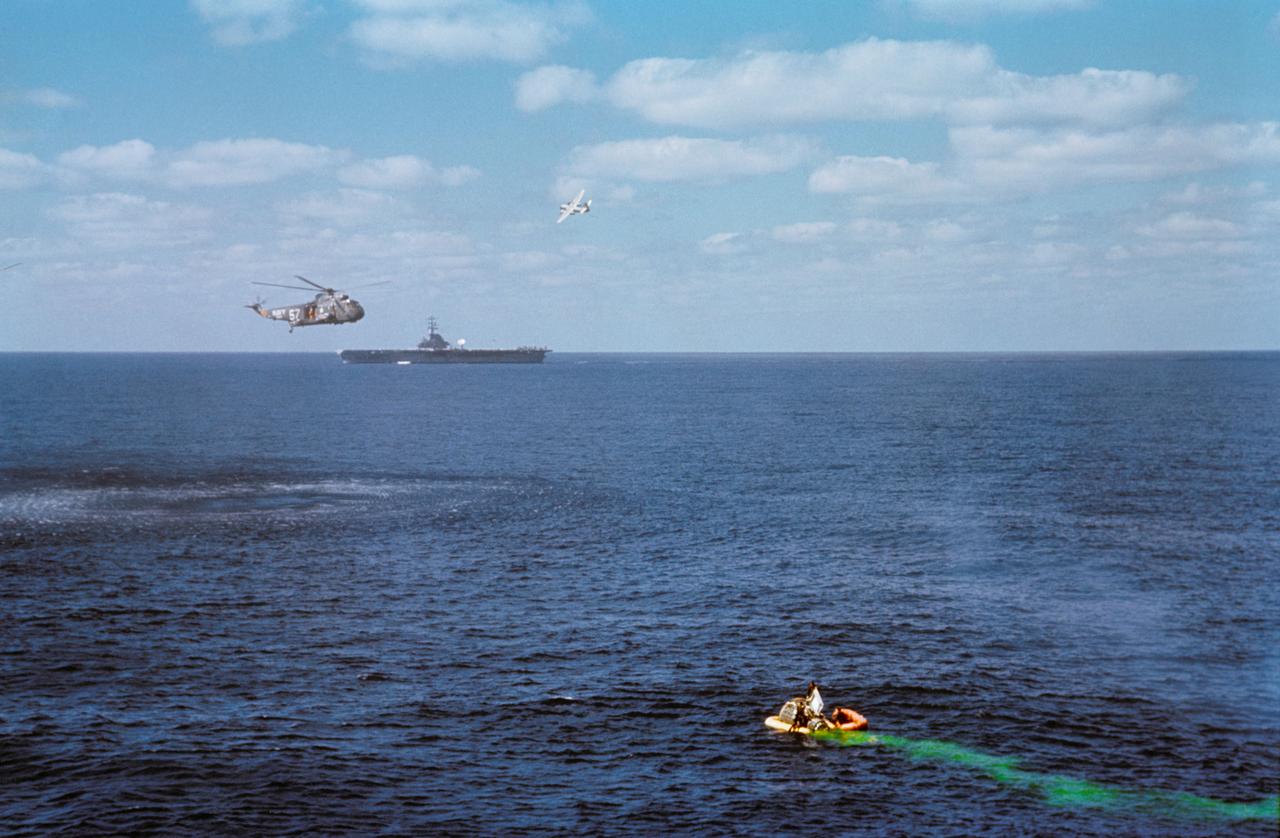
S65-61824 (16 Dec. 1965) --- A helicopter hovers over the Gemini-6 spacecraft after it splashed down 12 miles from the aircraft carrier USS Wasp in the western Atlantic recovery area at 10:29 a.m. Dec. 16, 1965. Photo credit: NASA or National Aeronautics and Space Administration
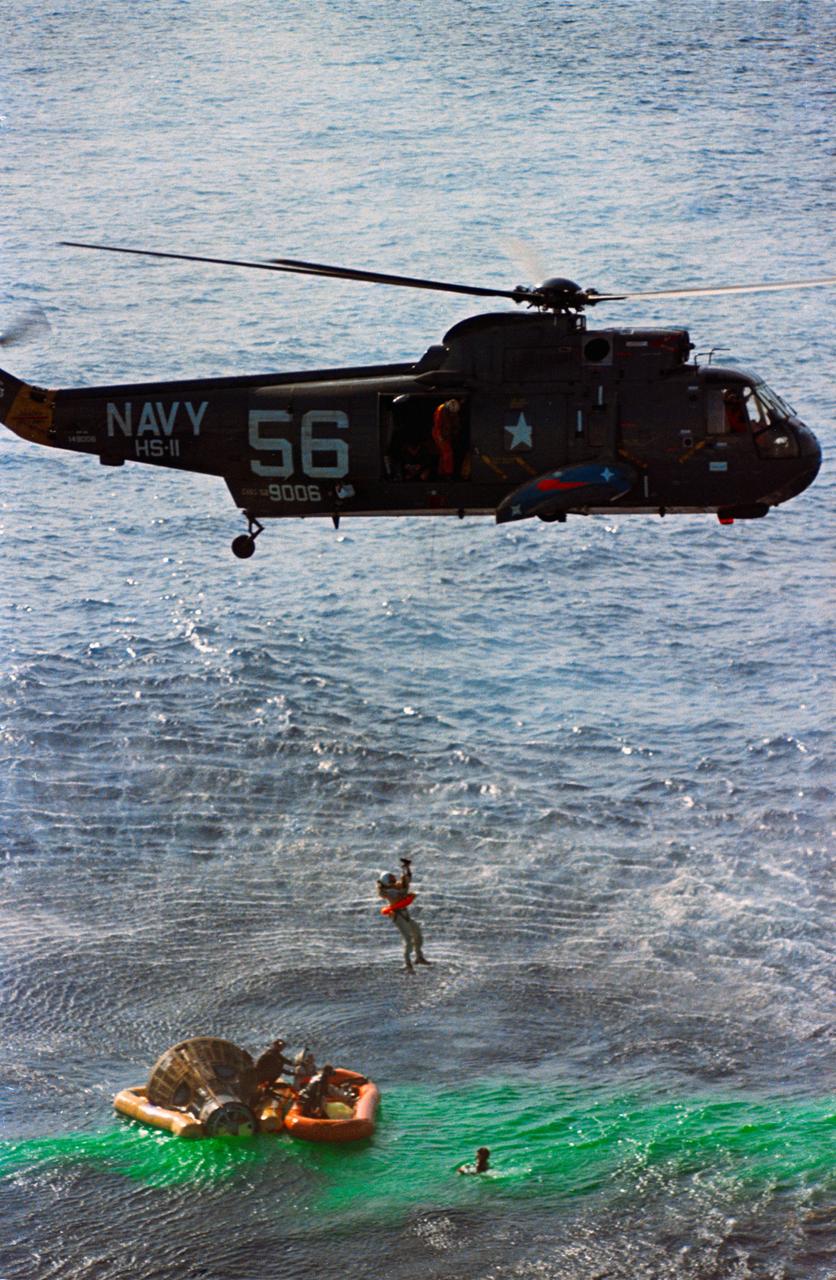
S65-61828 (18 Dec. 1965) --- Astronaut James A. Lovell Jr., pilot of the Gemini-7 spaceflight, is hoisted from the water by a recovery helicopter from the Aircraft Carrier USS Wasp. Astronaut Frank Borman, command pilot, waits in the raft to be hoisted aboard the helicopter. Photo credit: NASA
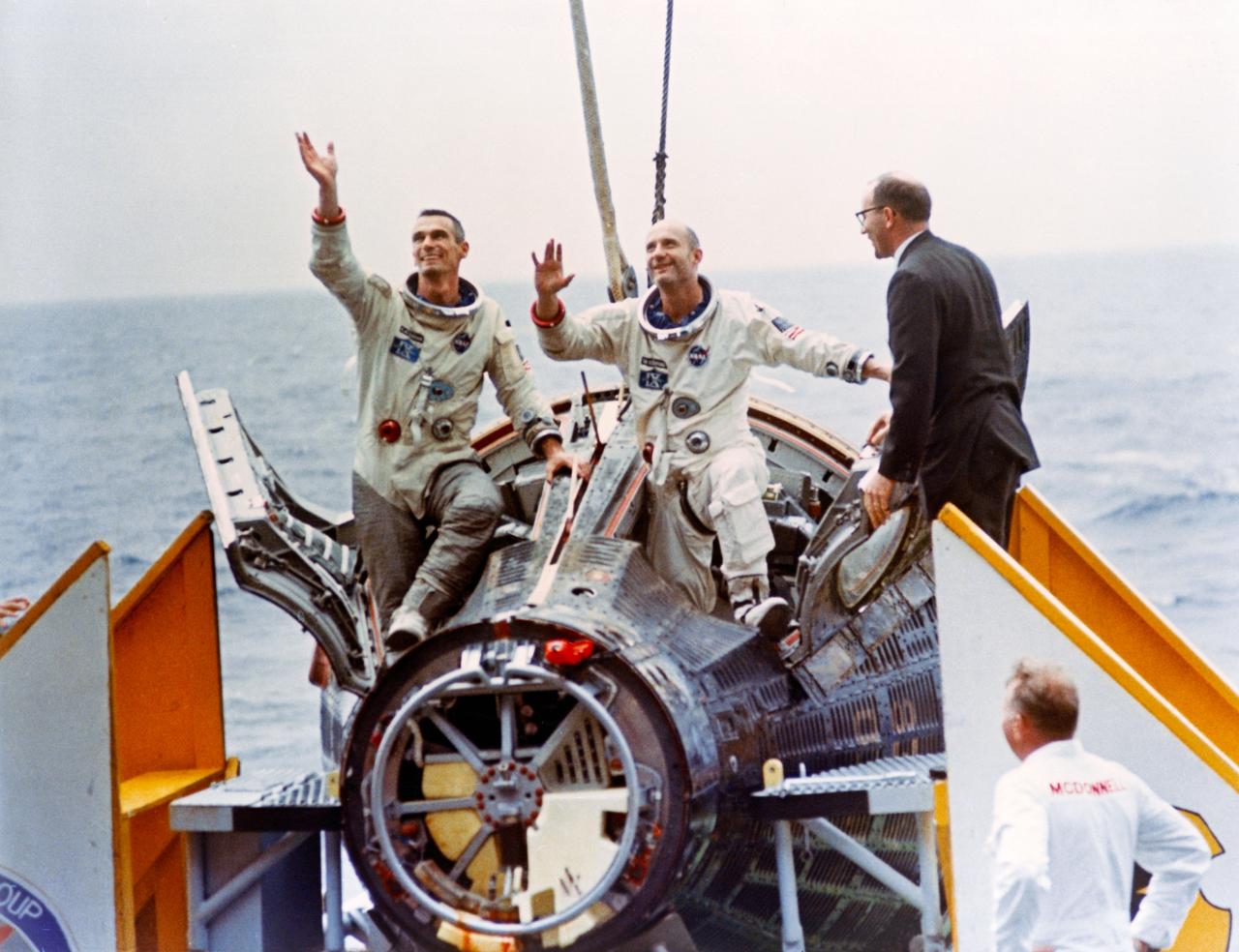
S66-34118 (6 June 1966) --- Astronauts Thomas Stafford (right) and Eugene Cernan wave to the crowd aboard the aircraft carrier USS Wasp as they emerge from their Gemini-9 capsule. John C. Stonesifer (far right), with the Manned Spacecraft Center's Landing and Recovery Division, was onboard to greet the astronauts. Photo credit: NASA
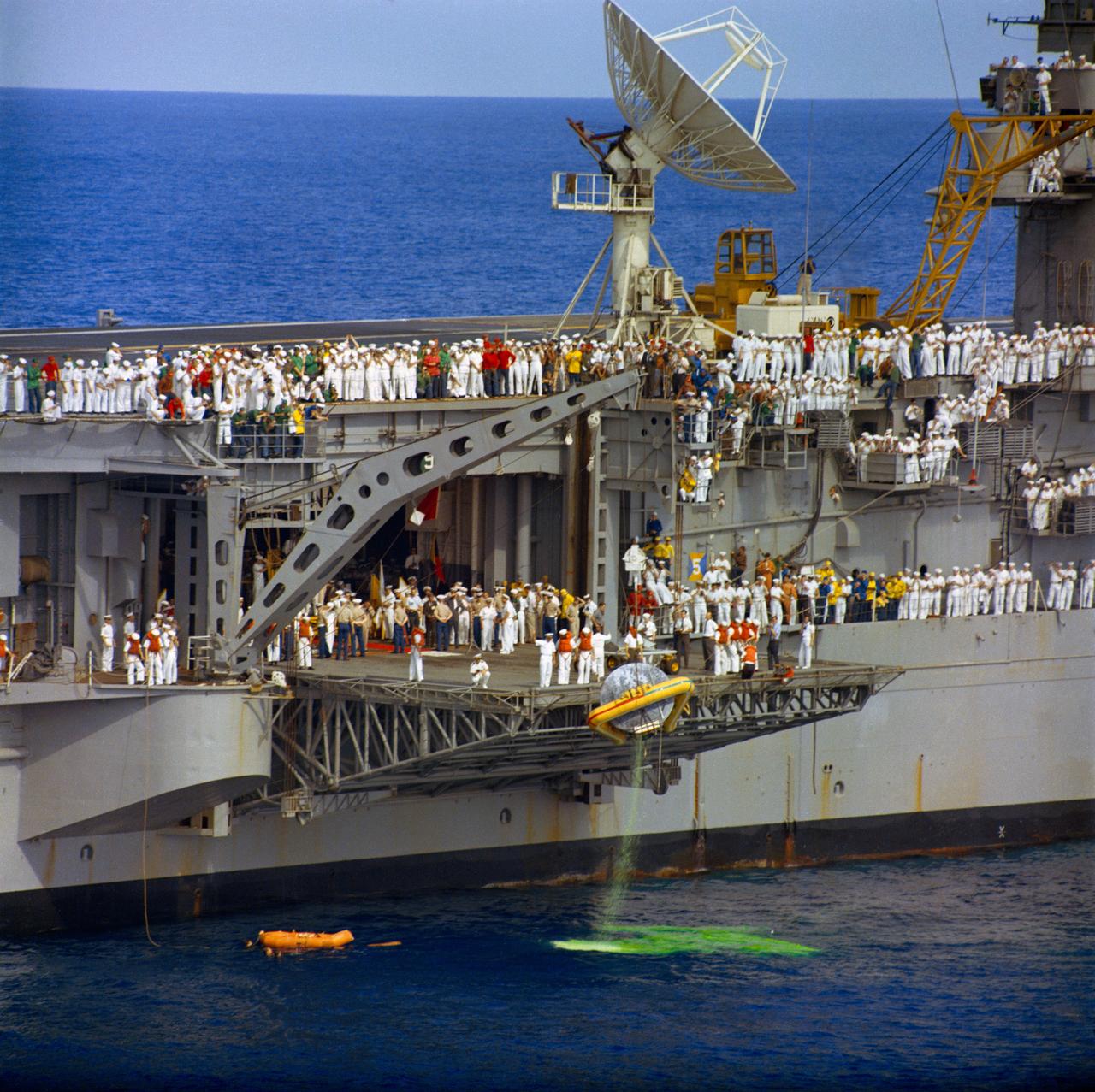
S65-61888 (16 Dec. 1965) --- Crewmen of the aircraft carrier USS Wasp gather on deck to watch the recovery of the Gemini-6 spacecraft and astronauts. The Gemini spacecraft is being hoisted along the side of the ship by crane. Photo credit: NASA or National Aeronautics and Space Administration
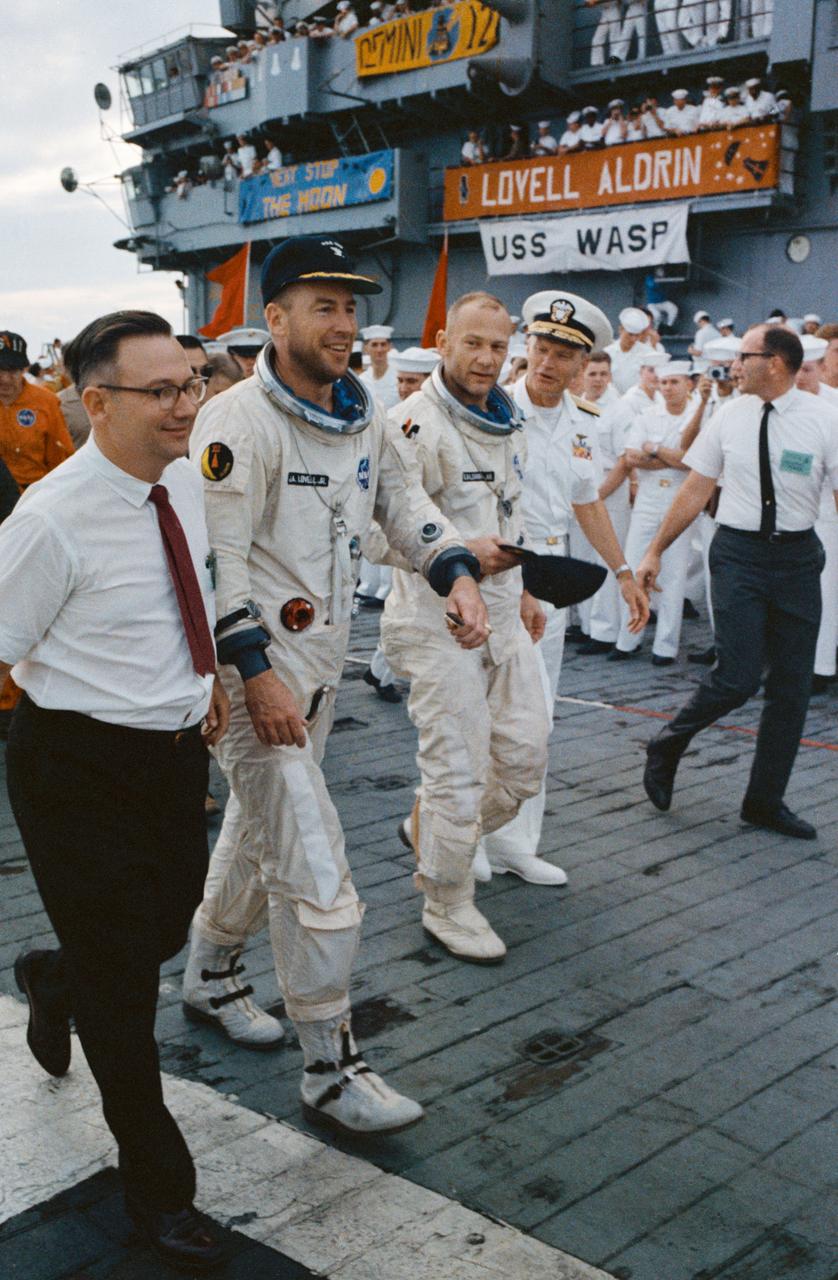
S66-59997 (15 Nov. 1966) --- A happy Gemini-12 prime crew arrives aboard the aircraft carrier, USS Wasp. Astronauts James A. Lovell Jr. (left), command pilot, and Edwin E. Aldrin Jr., pilot, had just been picked up from the splashdown area by helicopter. Photo credit: NASA
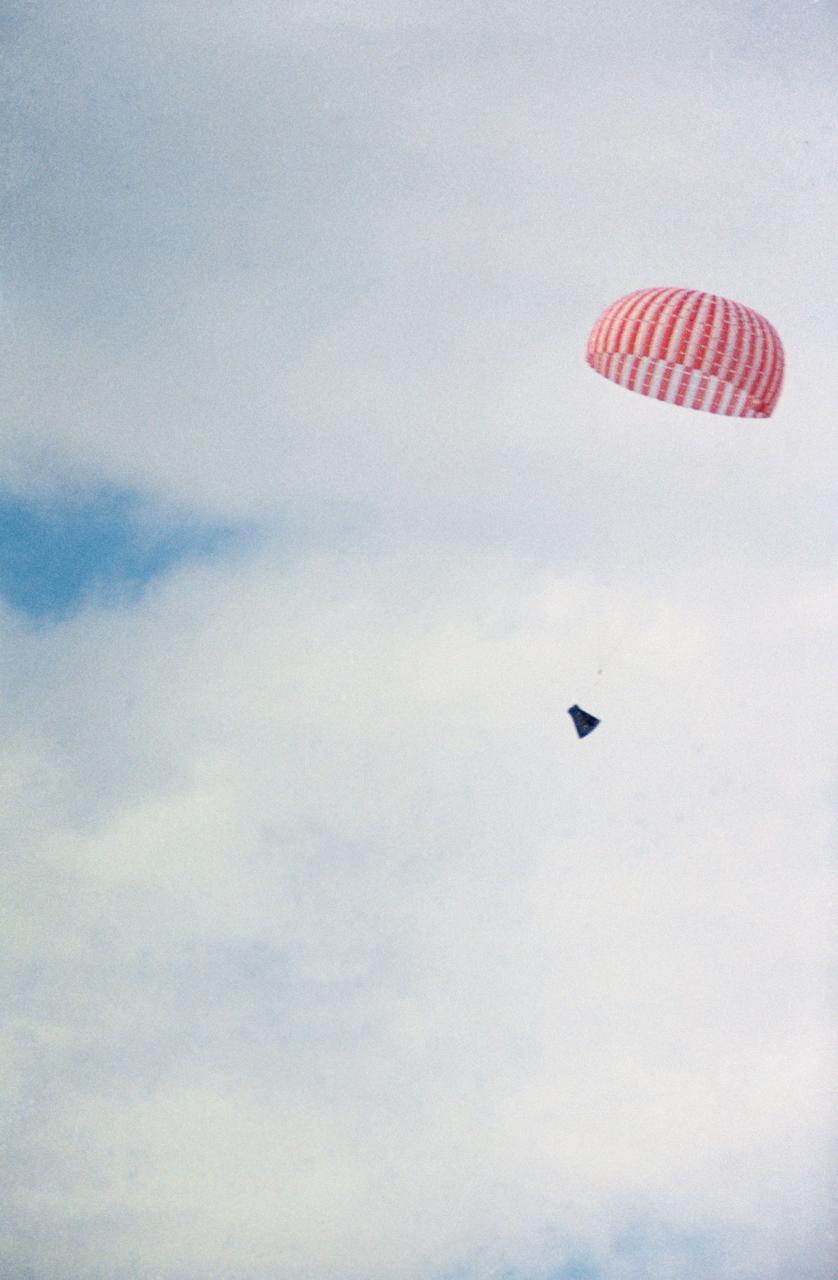
S66-59986 (15 Nov. 1966) --- The Gemini spaceflight program concludes as the Gemini-12 spacecraft, with astronaut James A. Lovell Jr., command pilot, and Edwin E. Aldrin Jr., pilot, aboard, nears touchdown in the Atlantic Ocean 2.5 nautical miles from the prime recovery ship, USS Wasp. Gemini-12 splashed down at 2:21 p.m. (EST), Nov. 11, 1966, to conclude the four-day mission in space. Photo credit: NASA
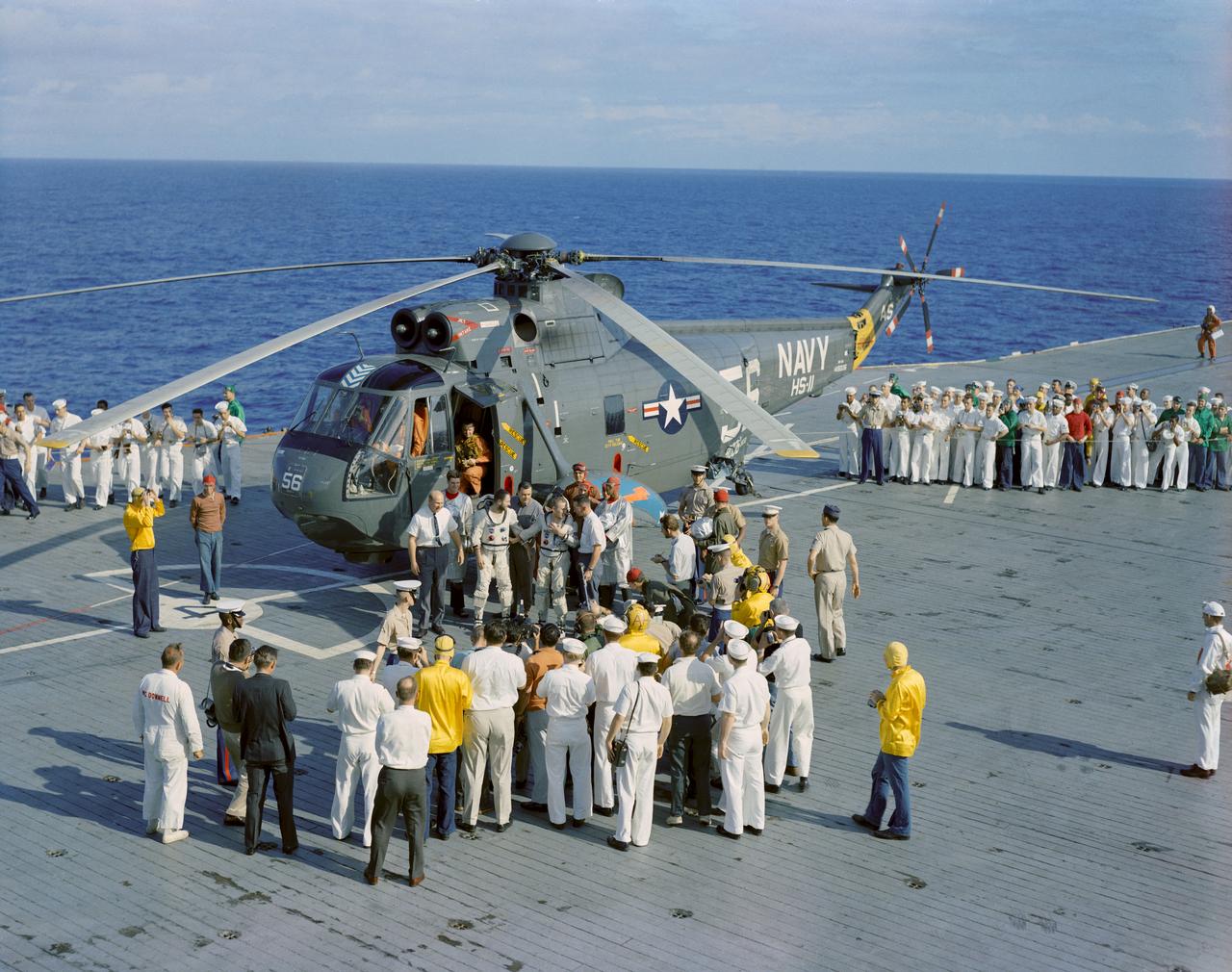
S65-63646 (18 Dec. 1965) --- The crew of the Gemini-7 spaceflight, astronauts Frank Borman, command pilot, and James A. Lovell Jr., pilot, arrive aboard the aircraft carrier USS Wasp. The astronauts were picked up from the ocean, following successful splashdown, by recovery helicopter and flown to the carrier to begin postflight medical and technical debriefings. Photo credit: NASA
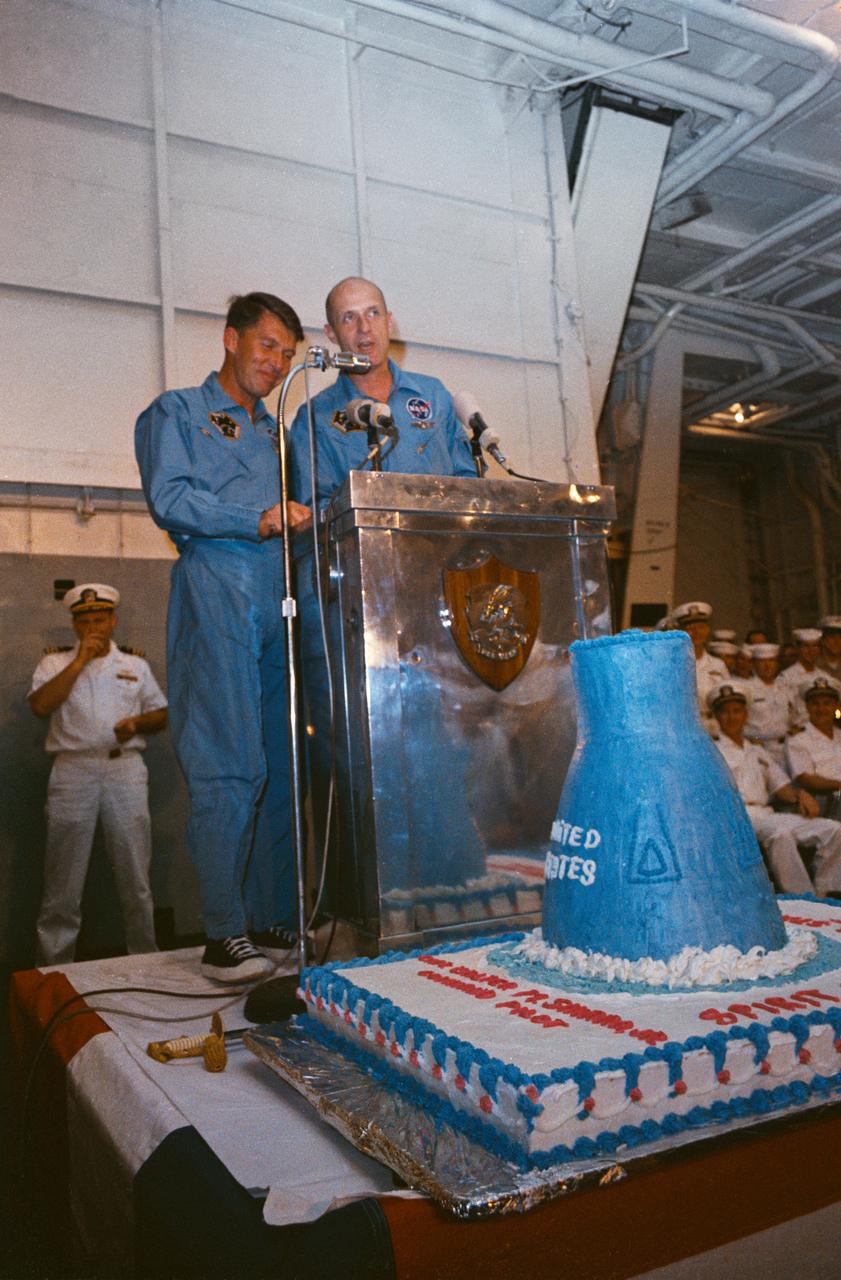
S65-61825 (16 Dec. 1965) --- Astronauts Walter M. Schirra Jr. (left), command pilot, and Thomas P. Stafford, pilot, speak to crewmen onboard the aircraft carrier USS Wasp after successful recovery of the Gemini-6 spacecraft. Note the cake with a model of the Gemini spacecraft in its center, which is positioned in front of the astronauts. Photo credit: NASA or National Aeronautics and Space Administration
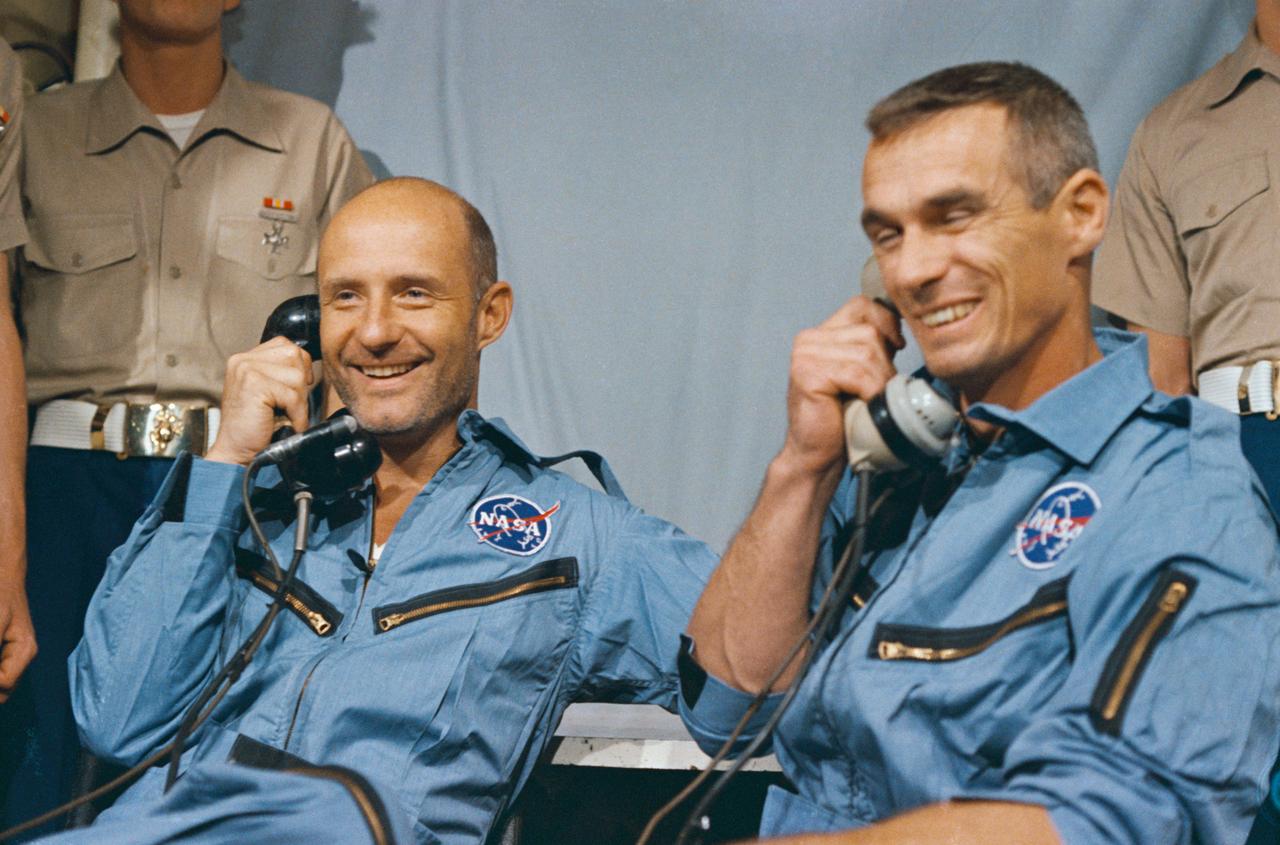
S66-34111 (6 June 1966) --- Astronauts Thomas P. Stafford (left) and Eugene A. Cernan talk to President Lyndon B. Johnson via ship-to-shore telephone from aboard the aircraft carrier USS Wasp. Gemini-9A splashed down only 3.5 miles from the recovery ship at 9 a.m. (EST), June 6, 1966, 345 miles east of Cape Kennedy, to conclude a 72-hour, 21-minute mission in space. Photo credit: NASA
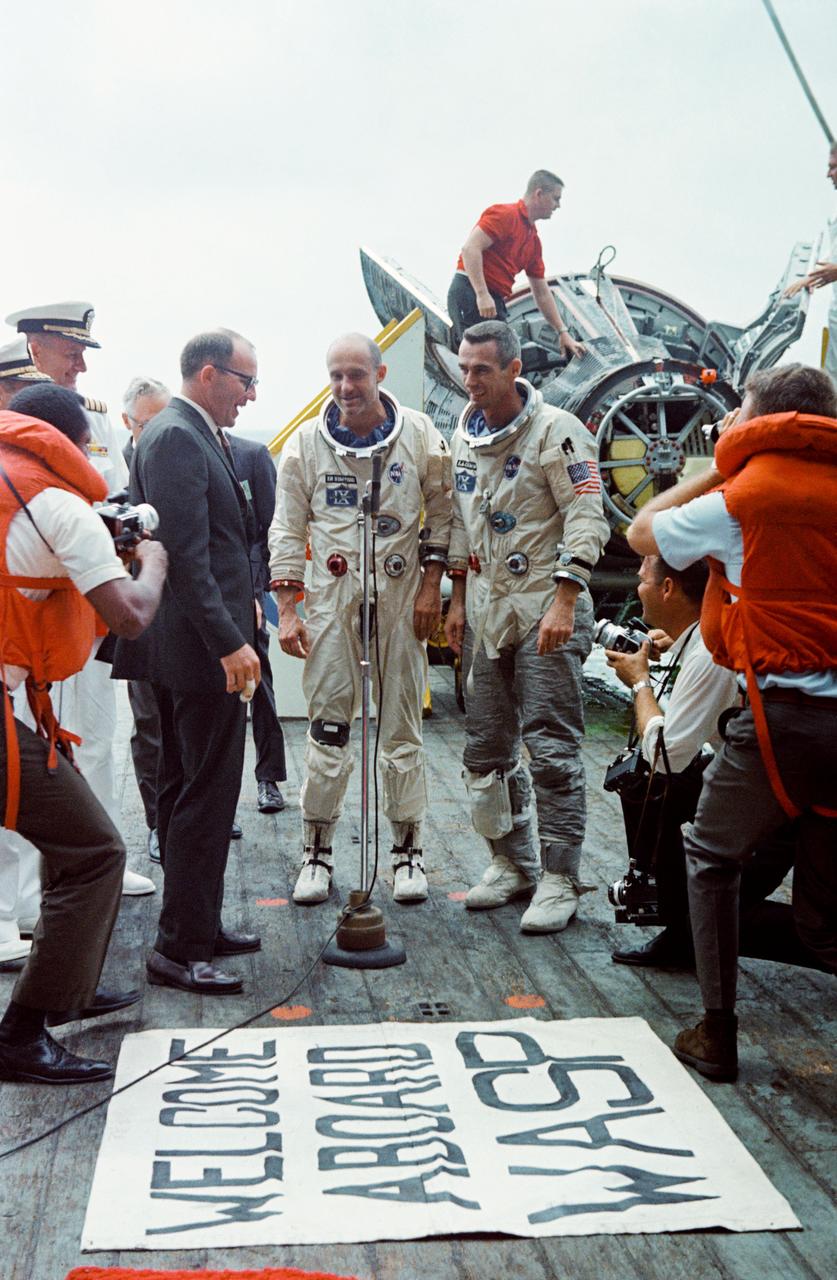
S66-34109 (6 June 1966) --- Astronauts Thomas Stafford and Eugene Cernan (right) receive a warm welcome as they arrive aboard the prime recovery ship, the aircraft carrier USS Wasp. John C. Stonesifer, with the Manned Spacecraft Center's Landing and Recovery Division, stands next to microphone at left. The Gemini-9 spacecraft can be seen in the right background of the view. Photo credit: NASA
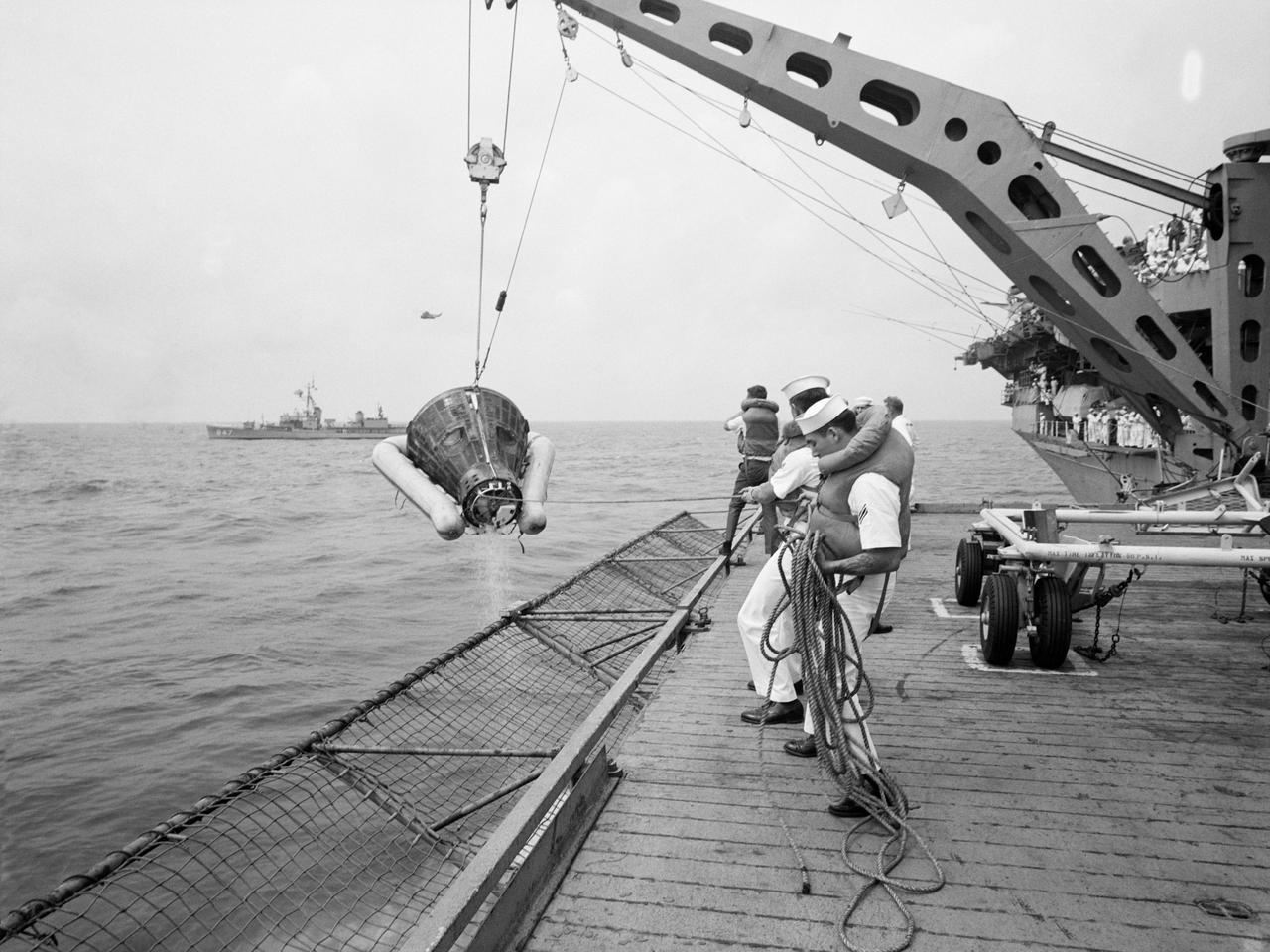
S66-34101 (6 June 1966) --- The Gemini-9 spacecraft, with astronauts Thomas P. Stafford and Eugene A. Cernan still inside, is hoisted aboard the aircraft carrier USS Wasp. Gemini-9 splashed down only 3.5 miles from the big recovery ship at 9 a.m. (EST), June 6, 1966, 345 miles east of Cape Kennedy, to conclude a 72-hour, 21-minute mission in space. Photo credit: NASA
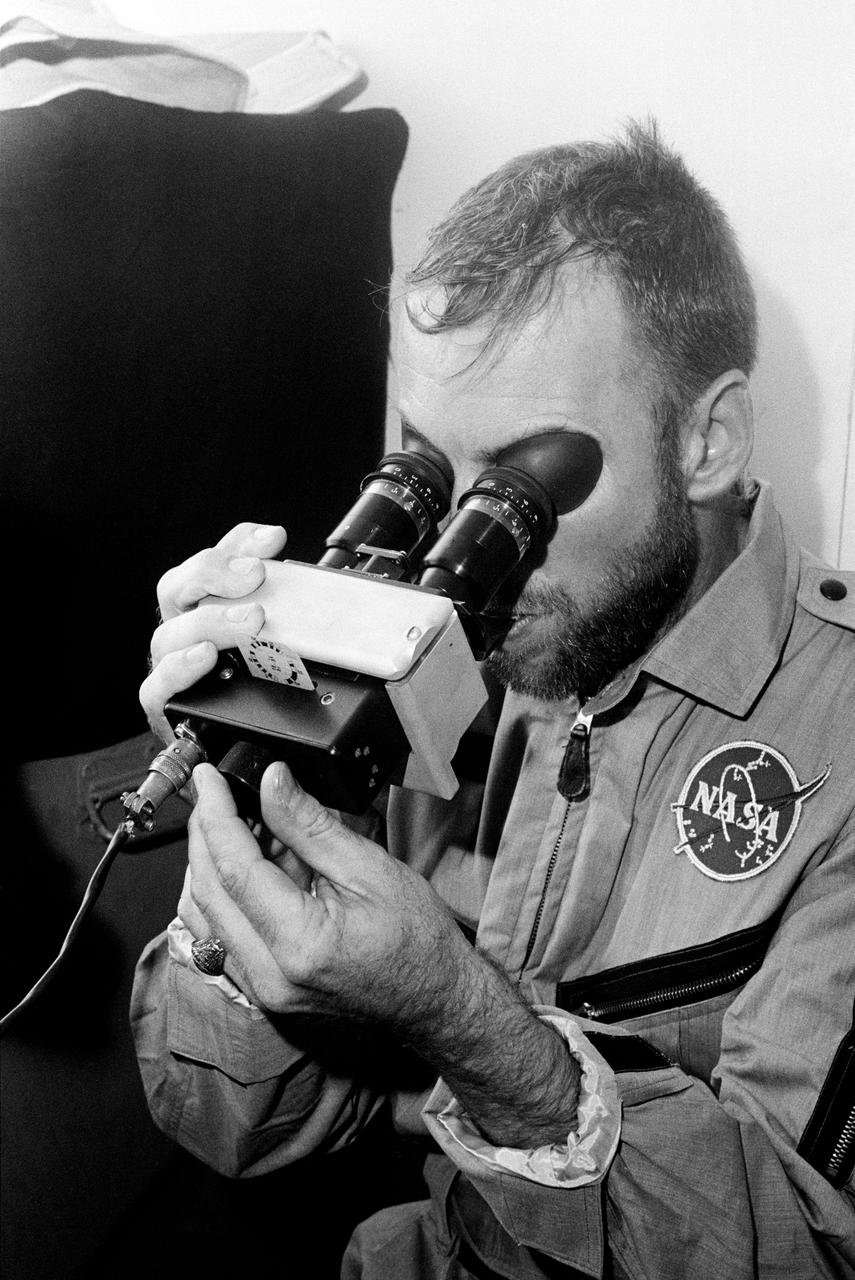
S65-66703 (18 Dec. 1965) --- Astronaut James A. Lovell Jr., pilot of the National Aeronautics and Space Administration's Gemini-7 spaceflight, undergoes an eye examination during a postflight medical checkup aboard the aircraft carrier USS Wasp. Gemini-7 splashed down in the western Atlantic recovery area at 9:05 a.m. (EST) Dec. 16, 1965, after a 14-day mission in space. Photo credit: NASA
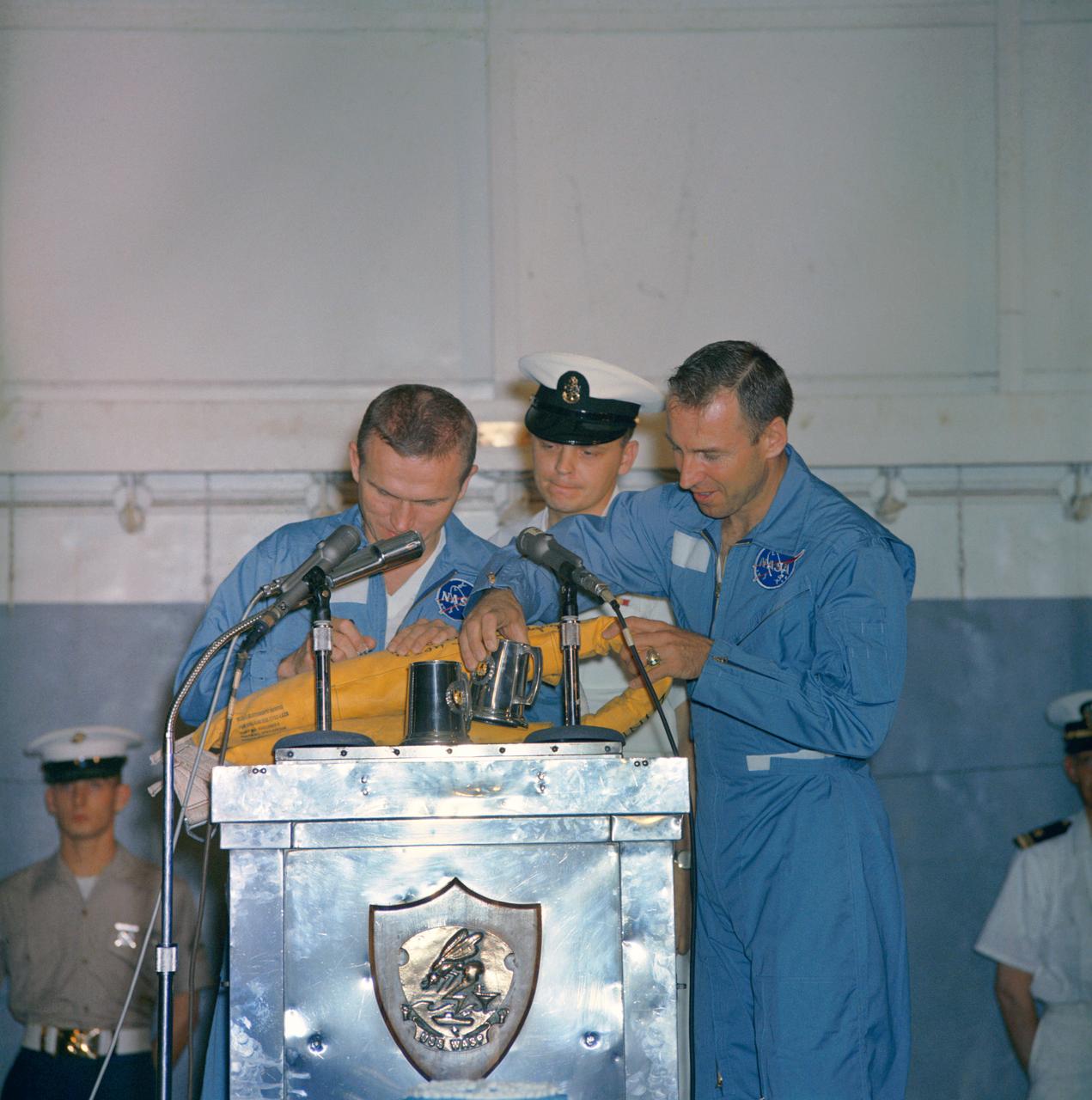
S65-61834 (18 Dec. 1965) --- Astronauts Frank Borman (left), Gemini-7 command pilot, and James A. Lovell Jr., pilot, take time out during their welcoming ceremonies aboard the aircraft carrier USS Wasp to autograph a life preserver. The National Aeronautics and Space Administration's Gemini-7 spacecraft splashed down in the western Atlantic recovery area at 9:05 a.m. (EST), Dec. 18, 1965, to conclude a highly successful 14-day mission in space. Photo credit: NASA
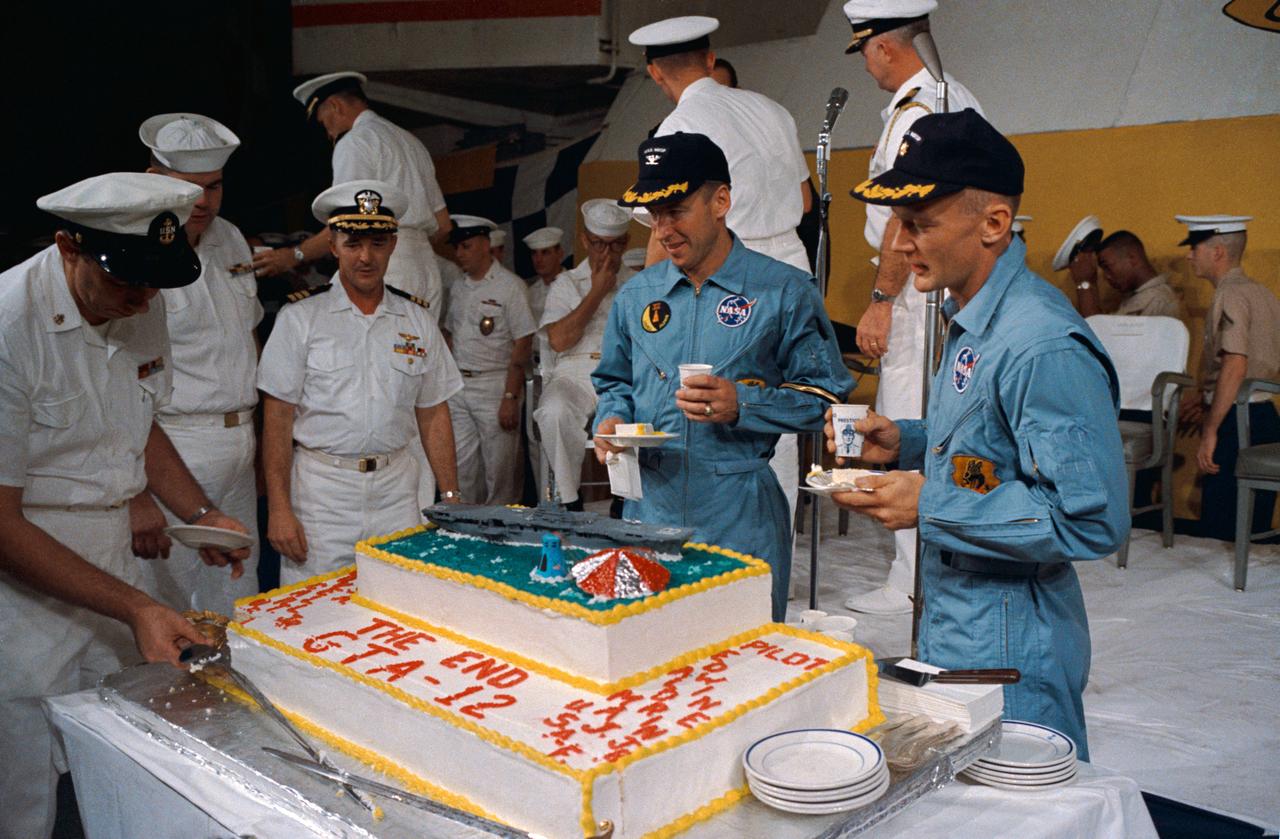
S66-59989 (16 Nov. 1966) --- Gemini-12 astronaut James A. Lovell Jr. (left), command pilot, and Edwin E. Aldrin Jr. (right), pilot, eat a piece of cake presented the two astronauts by crew members of the prime recovery ship, USS Wasp. Gemini-12 splashed down in the Atlantic Ocean at 2:21 p.m. (EST), Nov. 15, 1966, to conclude a four-day mission in space. Photo credit: NASA
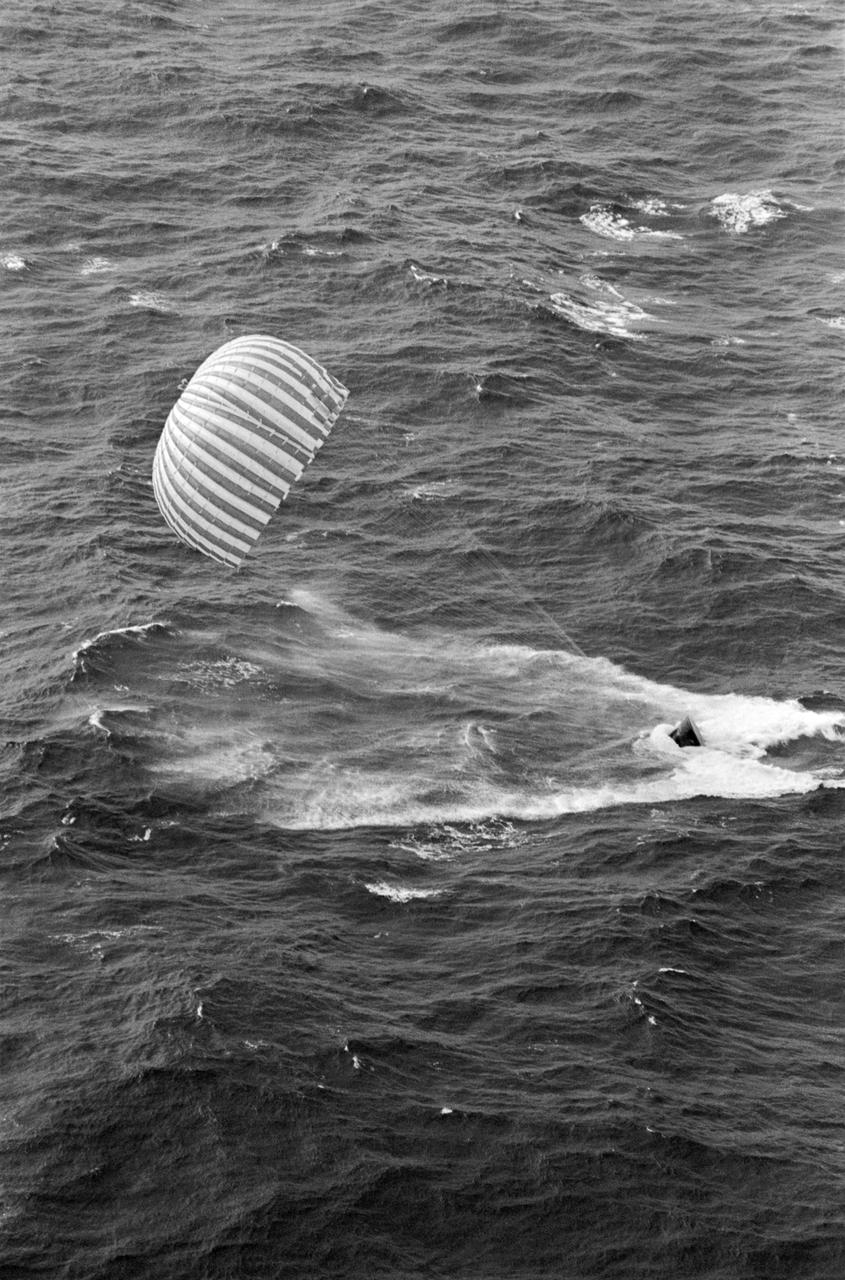
S66-59936 (15 Nov. 1966) --- The last Gemini spaceflight is concluded as the Gemini-12 spacecraft, with astronaut James A. Lovell Jr., command pilot, and Edwin E. Aldrin Jr., pilot, aboard, touches down in the Atlantic Ocean 2.5 nautical miles from the prime recovery ship, USS Wasp. Gemini-12 splashed down at 2:21 p.m. (EST), Nov. 15, 1966, to conclude a four-day mission in space. Photo credit: NASA
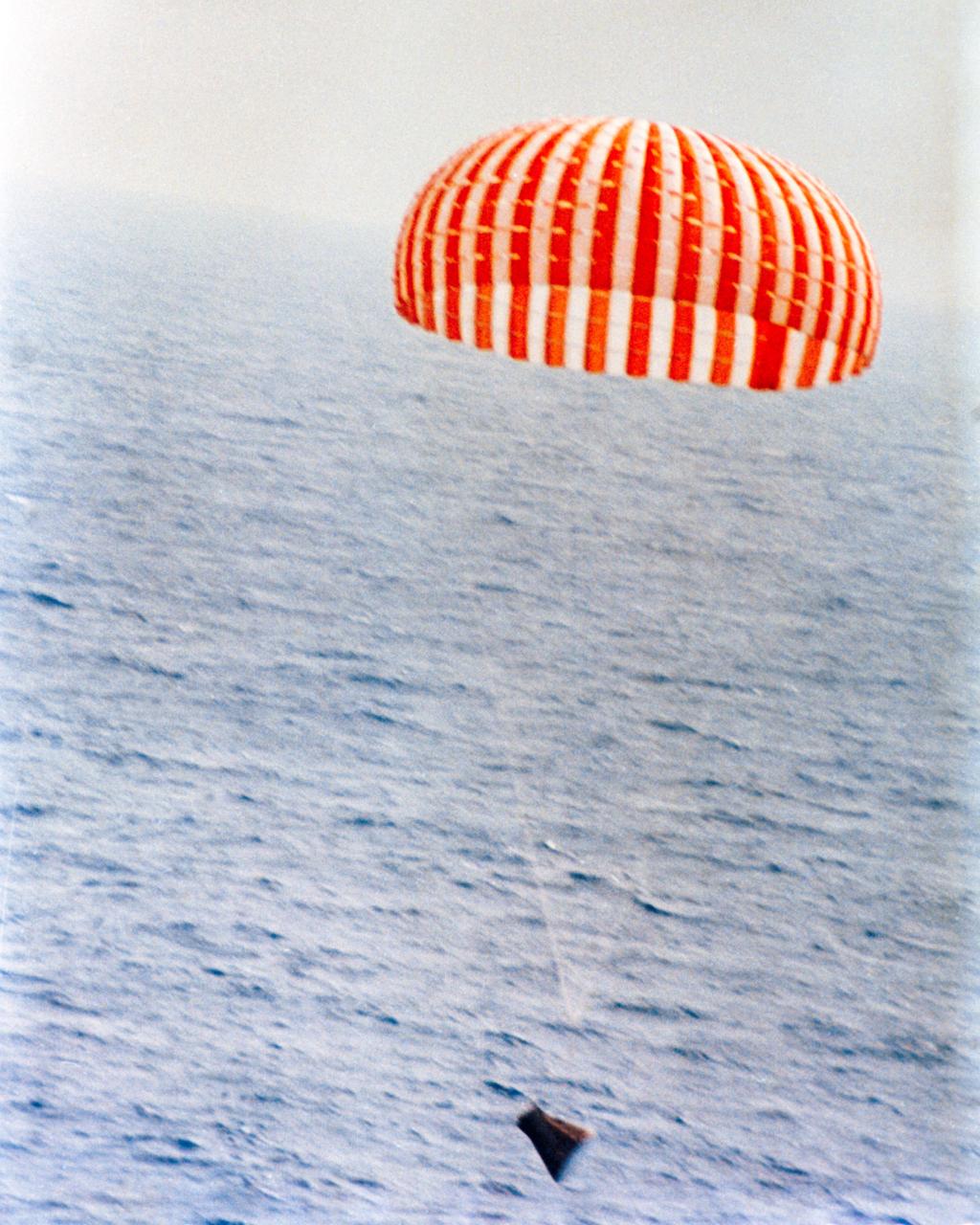
S66-34115 (6 June 1966) --- The 72-hour, 21-minute Gemini-9A spaceflight is concluded as the Gemini spacecraft, with astronaut Thomas P. Stafford and Eugene A. Cernan aboard, touches down in the Atlantic Ocean only 3.5 miles from the prime recovery ship, the aircraft carrier USS Wasp. Gemini-9 splashed down 345 miles east of Cape Kennedy at 9 a.m. (EST), June 6, 1966. Photo credit: NASA
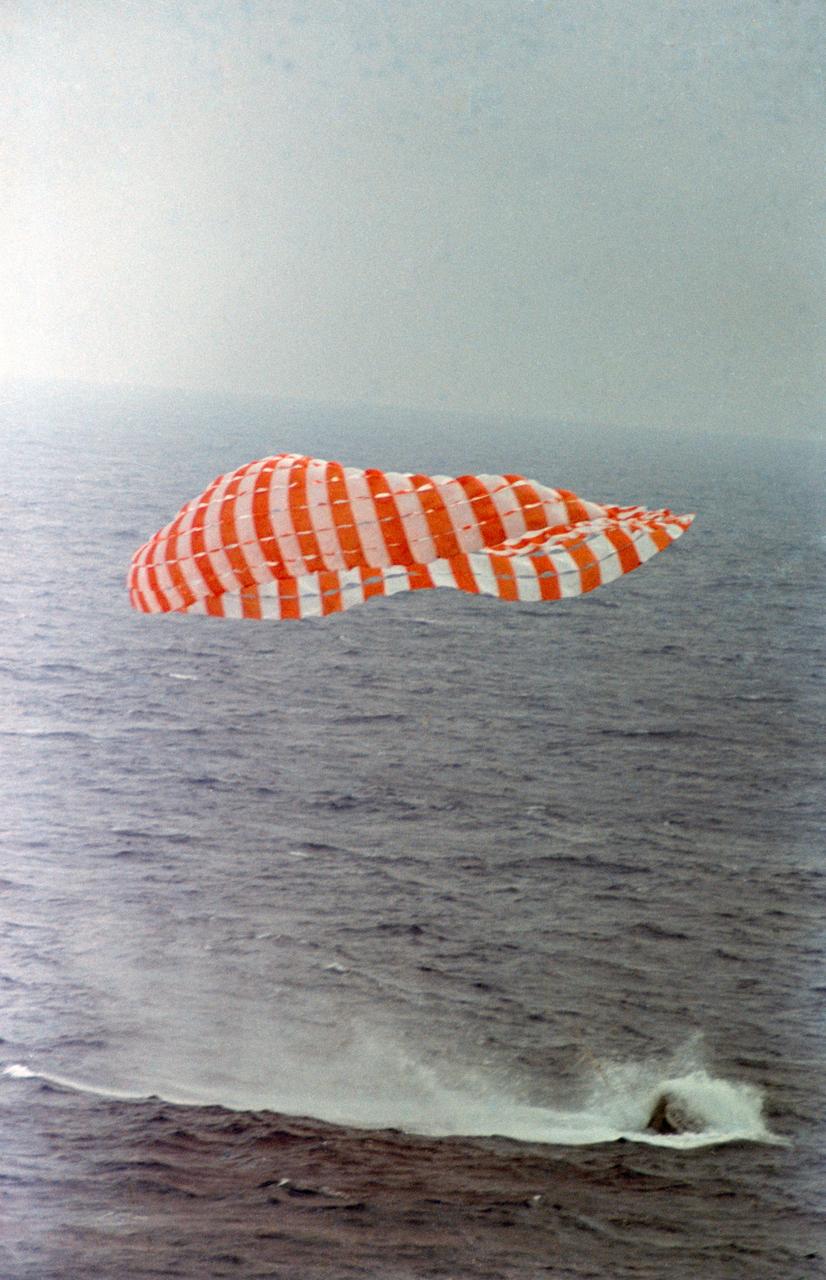
S66-34117 (6 June 1966) --- The 72-hour, 21-minute Gemini-9A spaceflight is concluded as the Gemini spacecraft, with astronaut Thomas P. Stafford and Eugene A. Cernan aboard, touches down in the Atlantic Ocean only 3.5 miles from the prime recovery ship, the aircraft carrier USS Wasp. Gemini-9 splashed down 345 miles east of Cape Kennedy at 9 a.m. (EST), June 6, 1966. Photo credit: NASA
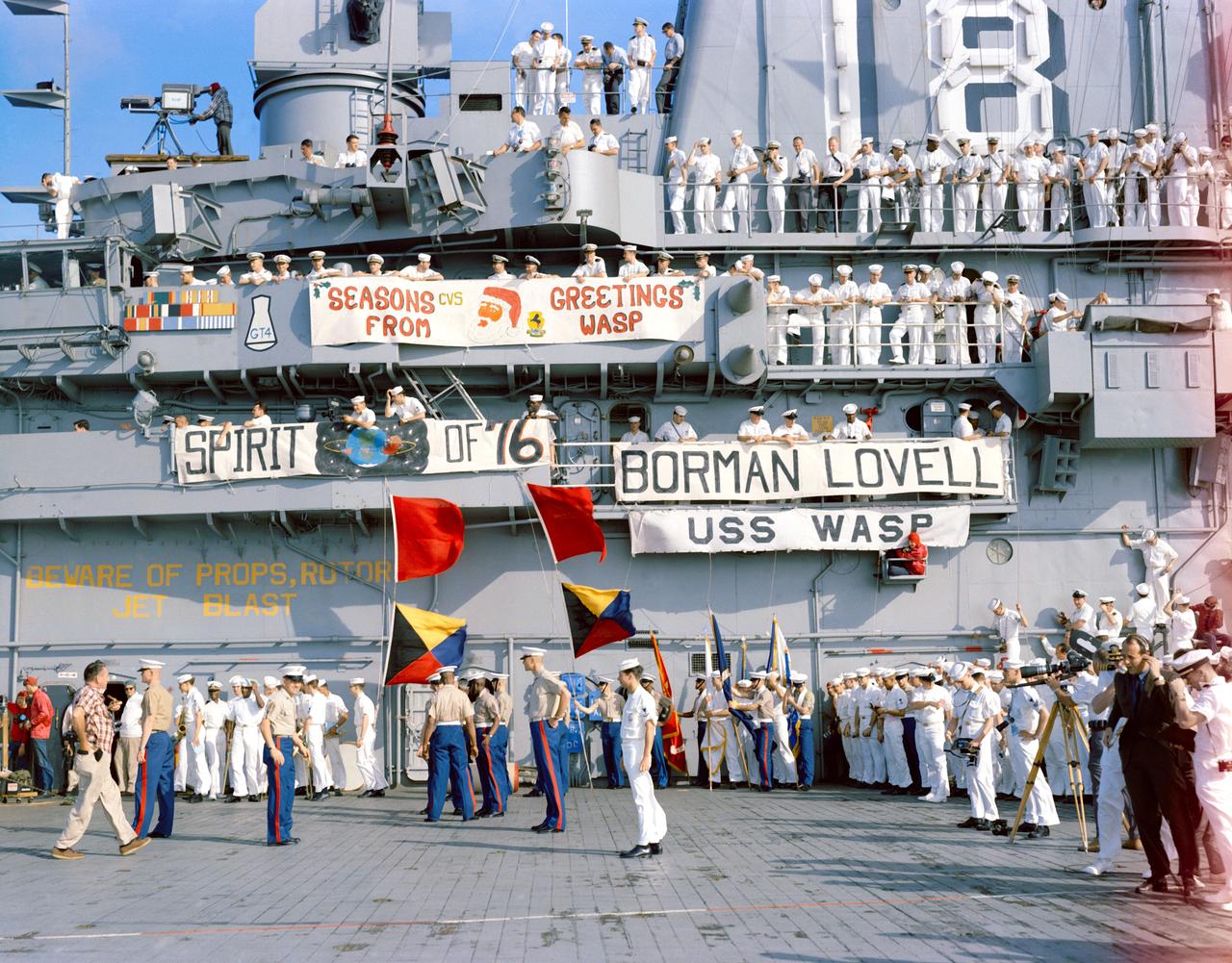
S65-63644 (18 Dec. 1965) --- Crewmen of the aircraft carrier USS Wasp gather on deck to watch the recovery of the National Aeronautics and Space Administration's Gemini-7 spacecraft and astronauts. Gemini-7, with astronauts Frank Borman, command pilot, and James A. Lovell Jr., pilot, splashed down in the western Atlantic at 9:05 a.m. (EST), Dec. 18, 1965, to conclude a record-breaking 14-day mission in space. Photo credit: NASA
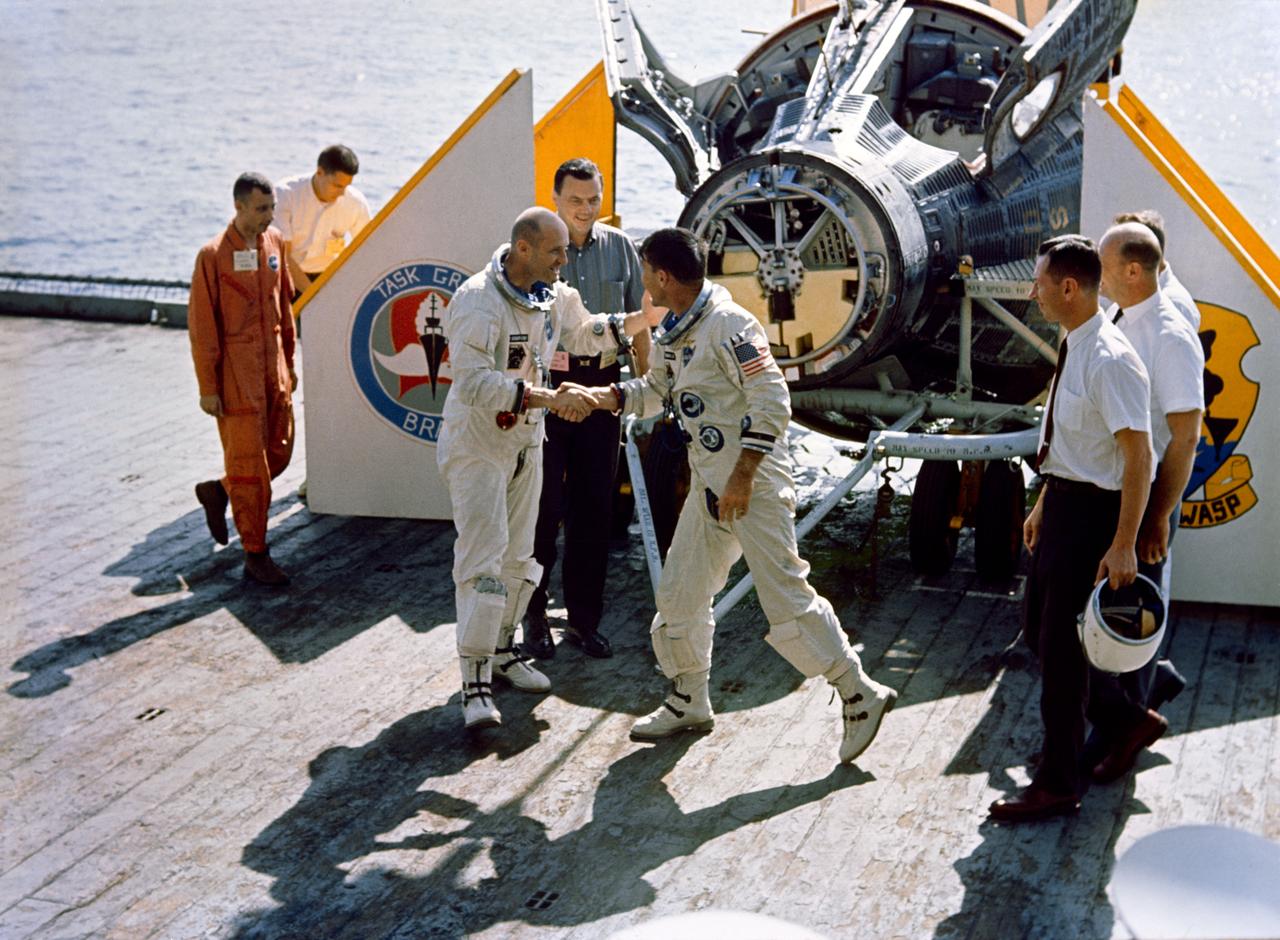
S65-61859 (16 Dec. 1965) --- Astronauts Walter M. Schirra Jr. (right), command pilot, and Thomas P. Stafford, pilot, shake each other's hand as they arrive aboard the aircraft carrier USS Wasp to conclude their 25-hour, 52-minute Gemini-6 spaceflight. Photo credit: NASA or National Aeronautics and Space Administration
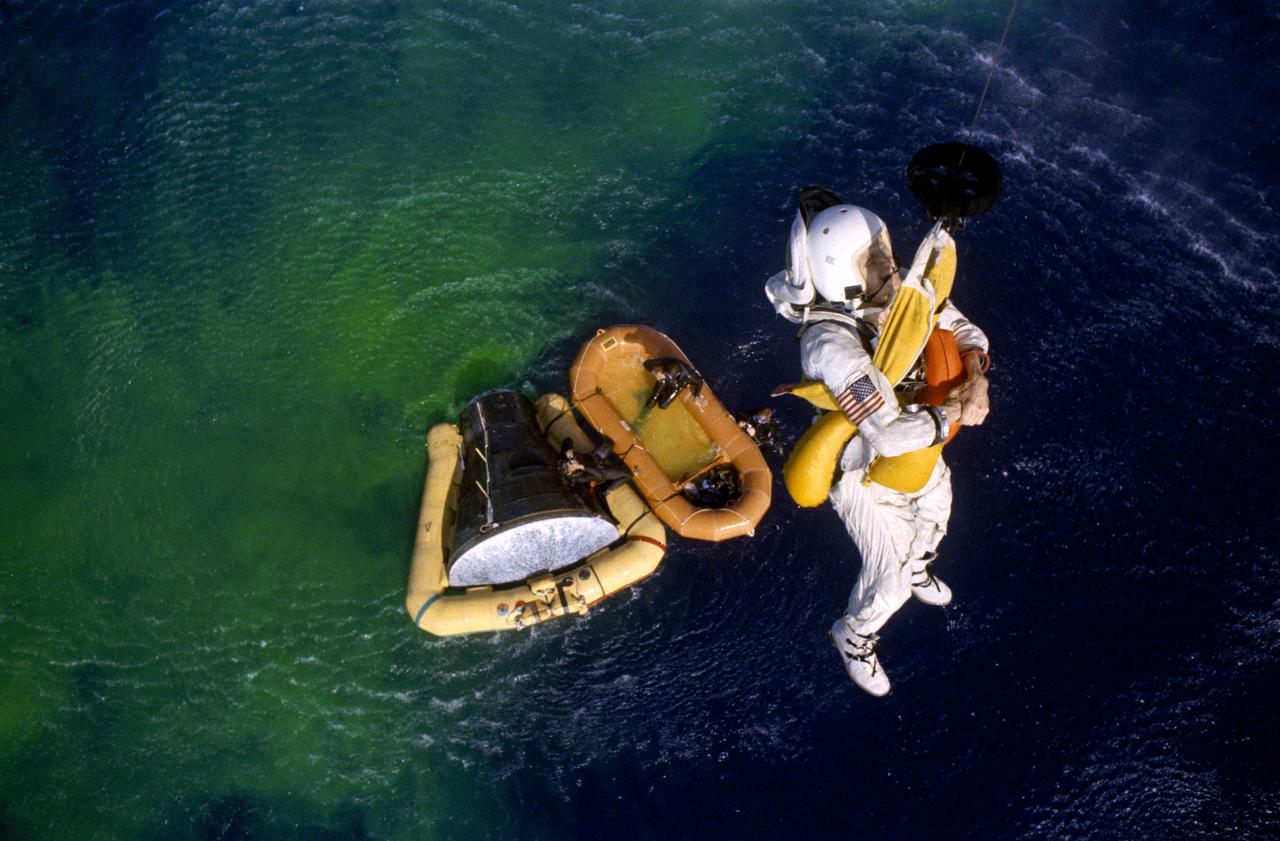
S66-15463 (18 Dec. 1965) --- Astronaut Frank Borman, command pilot of the National Aeronautics and Space Administration's 14-day Gemini-7 spaceflight, is hoisted from the water by a recovery helicopter from the aircraft carrier USS Wasp. Gemini-7 splashed down in the western Atlantic recovery area at 9:05 a.m. (EST), Dec. 18, 1965, to conclude the record-breaking mission in space. Astronaut James A. Lovell Jr. is the Gemini-7 pilot. Photo credit: NASA
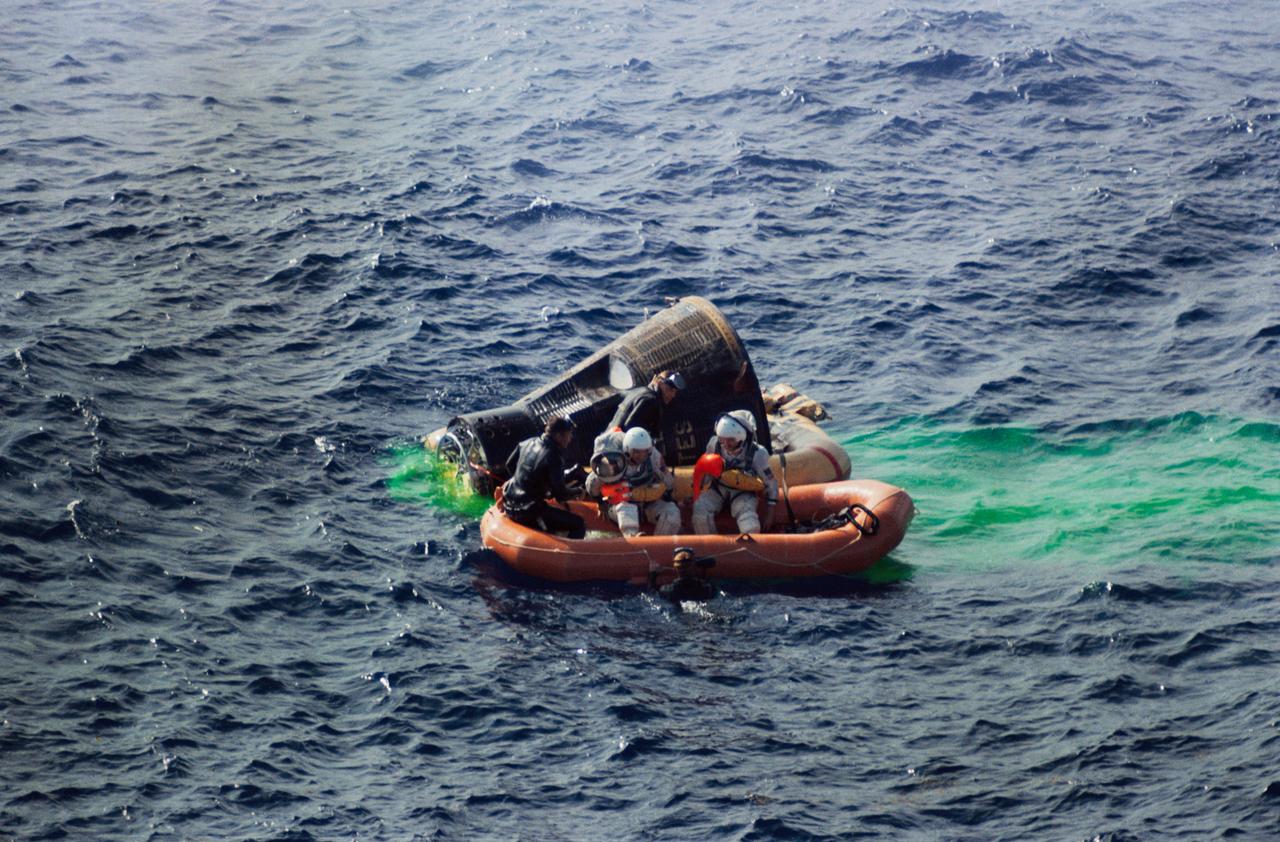
S65-63690 (18 Dec. 1965) --- Astronauts Frank Borman, command pilot, and James A. Lovell Jr., pilot, sit in life raft while awaiting pickup by a helicopter from the aircraft carrier USS Wasp. The three-man Navy frogman team attached the flotation collar to increase the Gemini-7 spacecraft's buoyancy prior to recovery. Photo credit: NASA
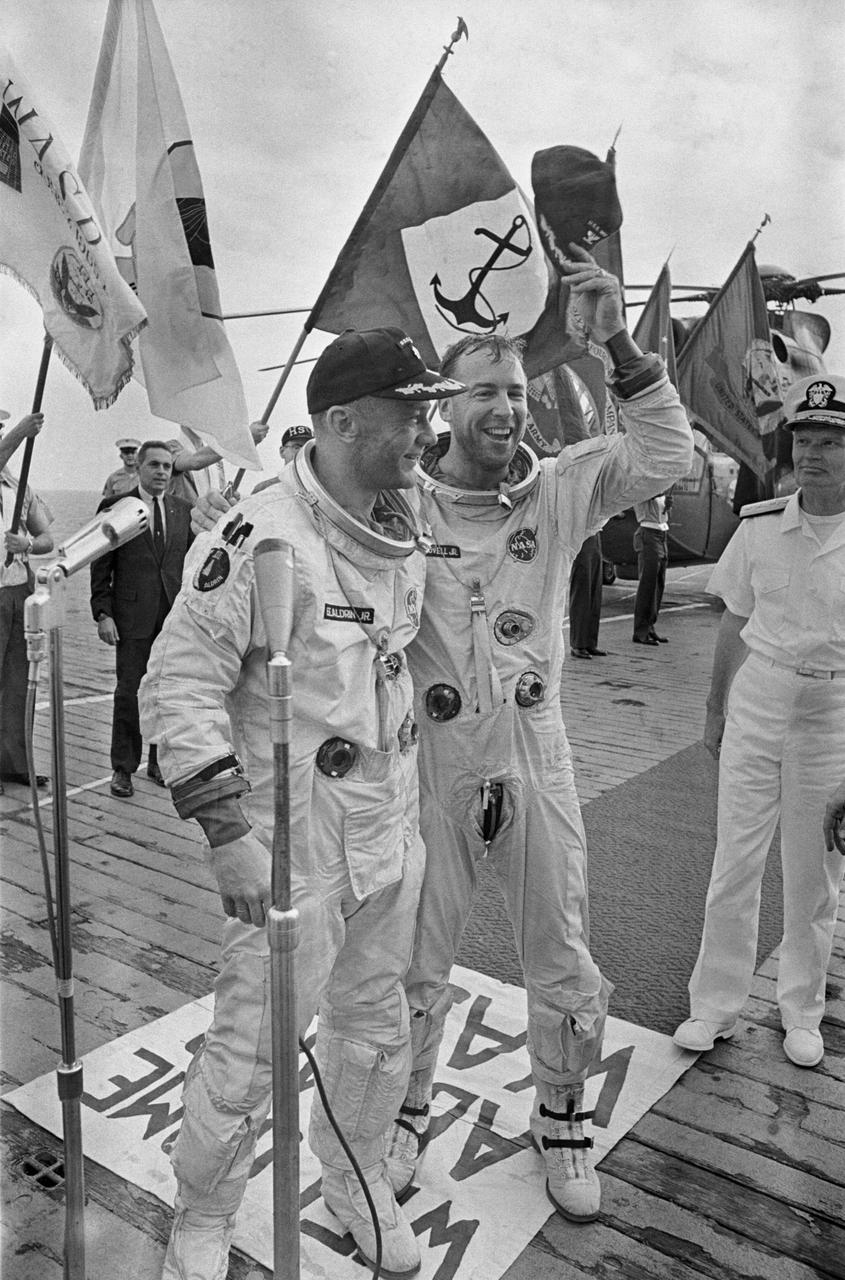
S66-59940 (15 Nov. 1966) --- Astronauts James A. Lovell Jr. (right), command pilot, and Edwin E. Aldrin Jr., pilot, are welcomed aboard the aircraft carrier USS Wasp after their Gemini-12 spacecraft splashed down in the Atlantic Ocean recovery area at 2:21 p.m. (EST), Nov. 15, 1966, to conclude a four-day mission in space. Photo credit: NASA
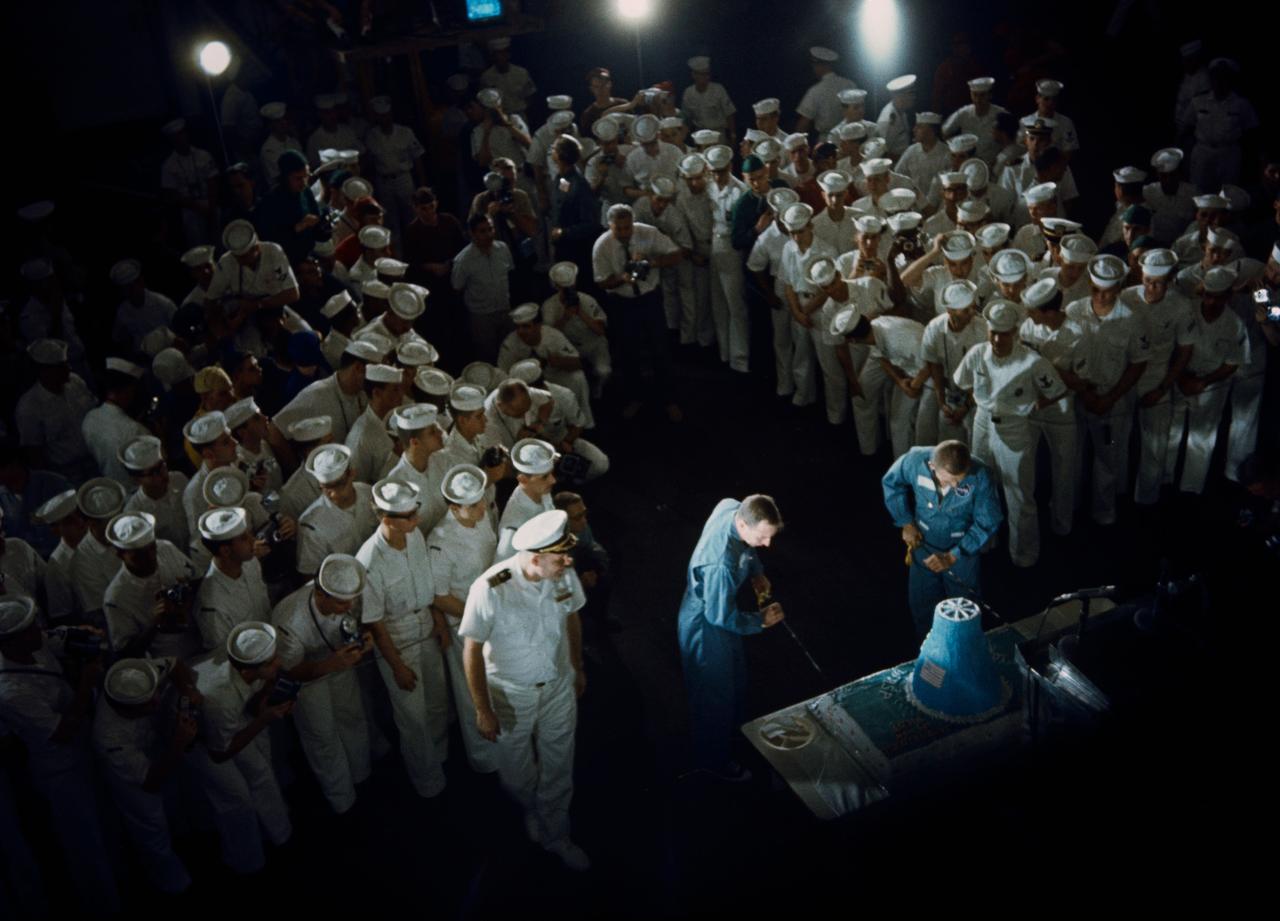
S65-61823 (18 Dec. 1965) --- Astronauts James A. Lovell Jr. (left), Gemini-7 pilot, and Frank Borman (right), command pilot, slice into a huge cake which was part of their warm welcome after arriving aboard the aircraft carrier USS Wasp. The National Aeronautics and Space Administration's Gemini-7 spacecraft splashed down in the Western Atlantic recovery area at 9:05 a.m. (EST), Dec. 18, 1965, to conclude a highly successful 14-day mission in space. Sailors gather around close to watch the cake cutting. Photo credit: NASA
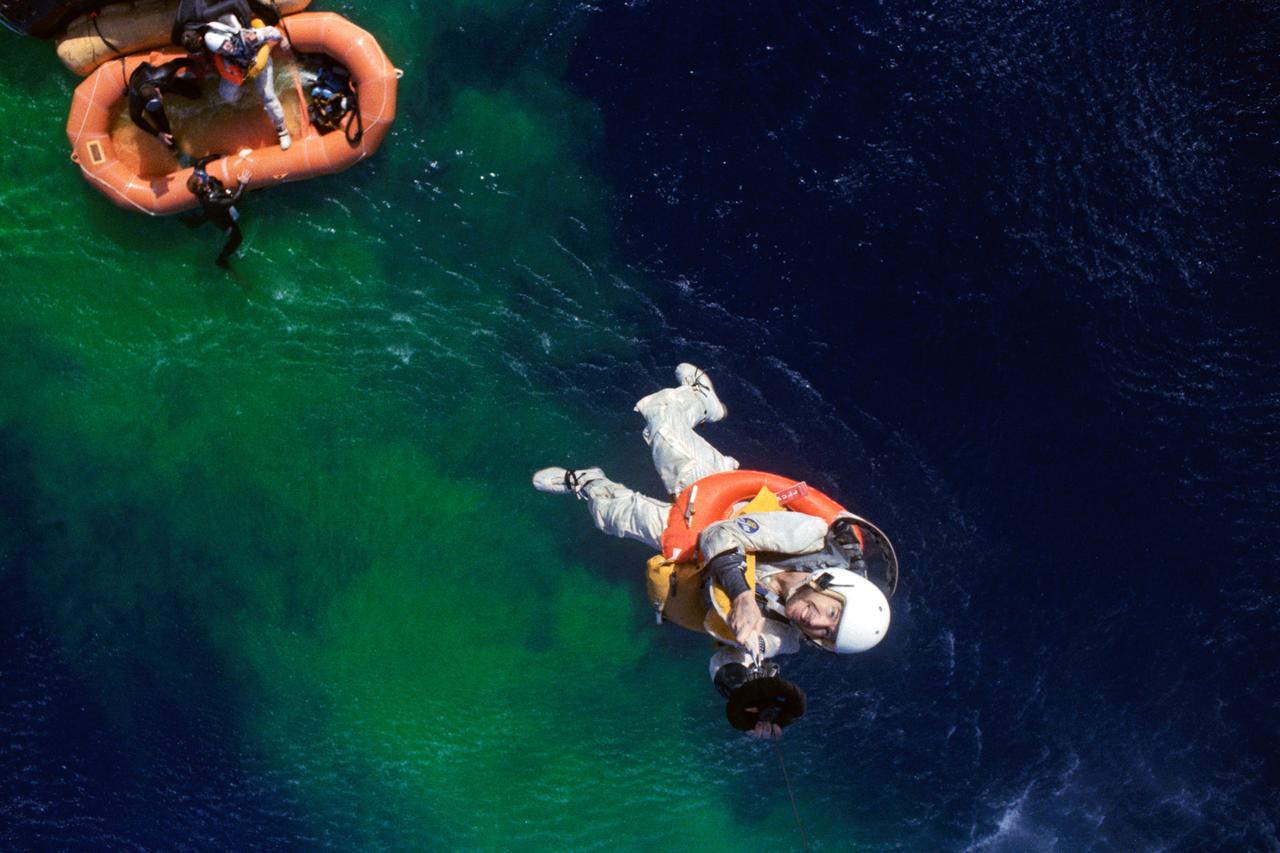
S66-15447 (18 Dec. 1965) --- Astronaut James A. Lovell Jr., pilot of the National Aeronautics Space Administration's 14-day Gemini-7 spaceflight, is hoisted from the water by a recovery helicopter from the aircraft carrier USS Wasp. Gemini-7 splashed down in the western Atlantic recovery area at 9:05 a.m. (EST), Dec. 18, 1965, to conclude the record-breaking mission in space. Astronaut Frank Borman, command pilot and three Navy frogmen sit in a life raft beside the spacecraft. Photo credit: NASA
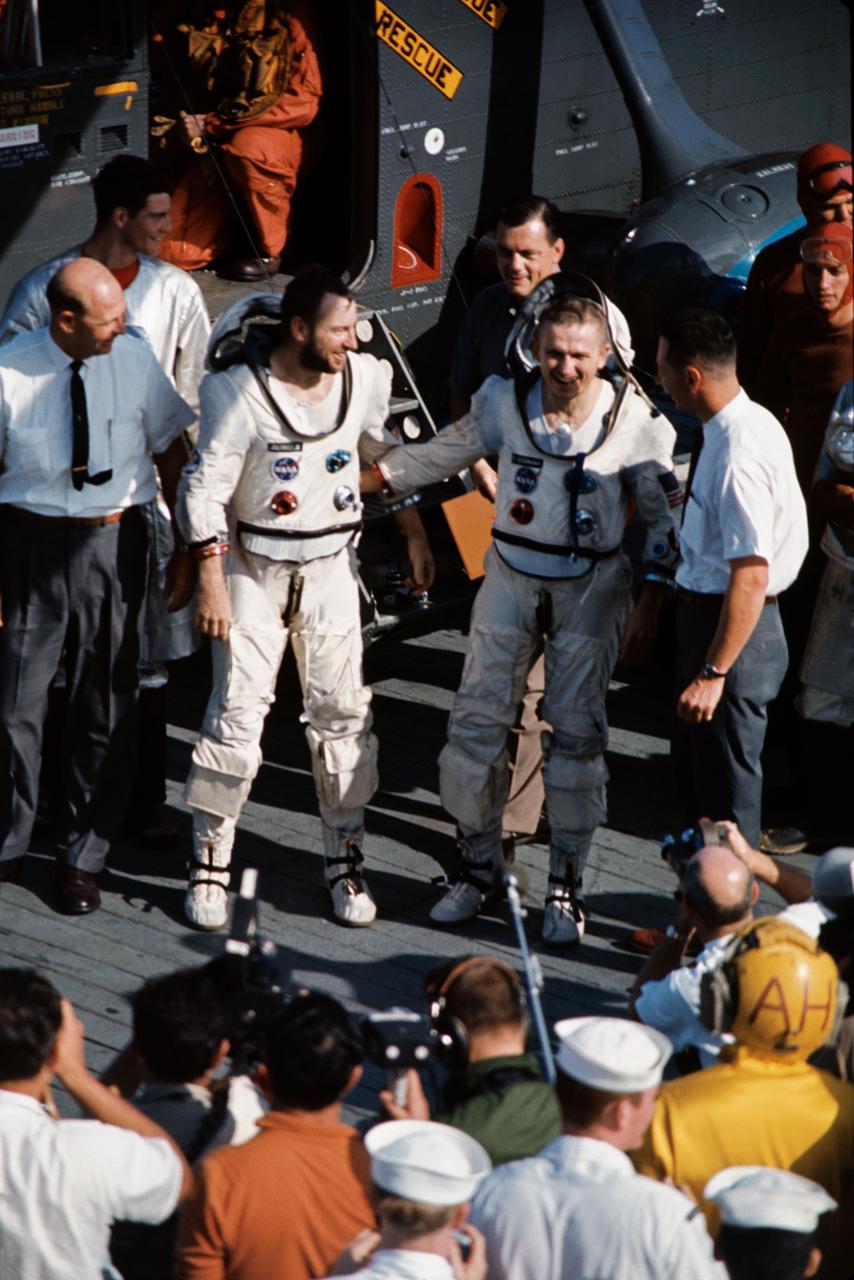
S65-61830 (18 Dec. 1965) --- Astronauts James A. Lovell Jr. (left), Gemini-7 pilot, and Frank Borman, command pilot, are shown just after they arrived aboard the aircraft carrier USS Wasp. Greeting the astronauts are Donald Stullken (at Lovell's right), Recovery Operations Branch, Landing and Recovery Division, Dr. Howard Minners (standing beside Borman), Flight Medicine Branch, Center Medical Office, Manned Spacecraft Center, and Bennett James (standing behind Borman), a NASA Public Affairs Officer. The National Aeronautics and Space Administration's Gemini-7 spacecraft splashed down in the western Atlantic recovery area at 9:05 a.m. (EST), Dec. 18, 1965, to conclude a record-breaking 14-day mission in space. Photo credit: NASA