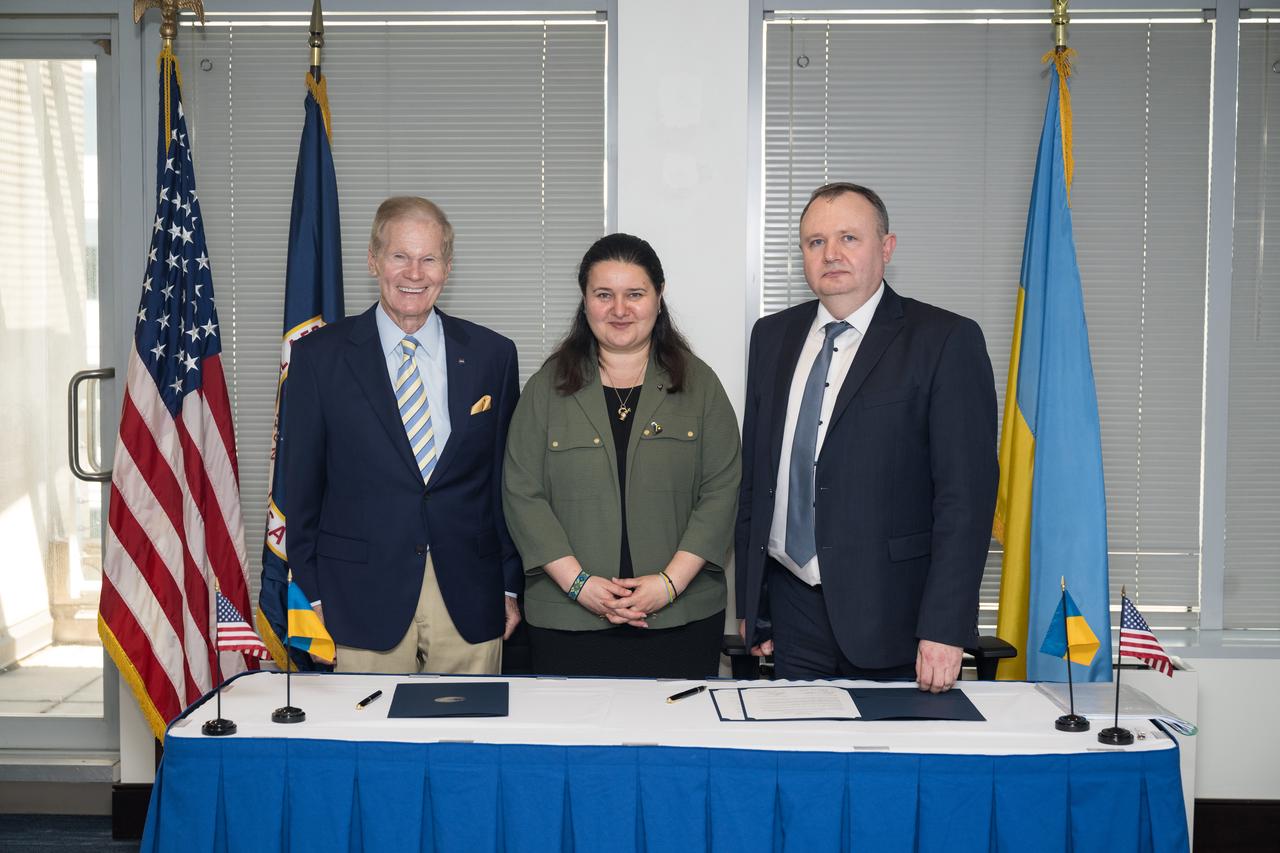
From left to right, NASA Administrator Bill Nelson, Ambassador of Ukraine, Her Excellency Oksana Markarova, and Deputy Chairman of the State Space Agency of Ukraine, Volodymyr Mikheiev, pose for a photo after Nelson and Mikheiev signed a joint statement on civil space cooperation between NASA and the State Space Agency of Ukraine, Friday April 21, 2023 at the Mary W. Jackson NASA Headquarters building in Washington DC. Photo Credit: (NASA/Aubrey Gemignani)
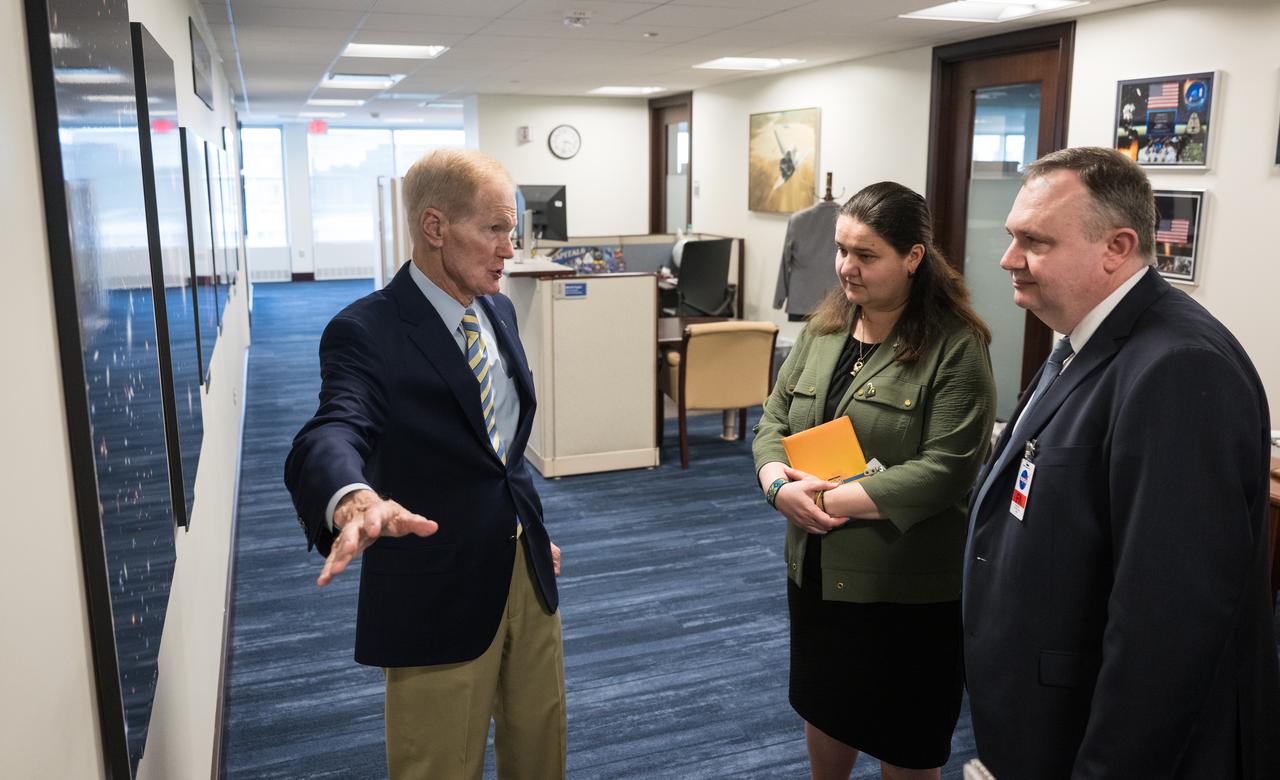
NASA Administrator Bill Nelson, left shows Ambassador of Ukraine, Her Excellency Oksana Markarova, second from right, and Deputy Chairman of the State Space Agency of Ukraine, Volodymyr Mikheiev, right, some of the James Webb Space Telescope (JWST) images before signing a joint statement on civil space cooperation between NASA and the State Space Agency of Ukraine, Friday April 21, 2023 at the Mary W. Jackson NASA Headquarters building in Washington DC. Photo Credit: (NASA/Aubrey Gemignani)
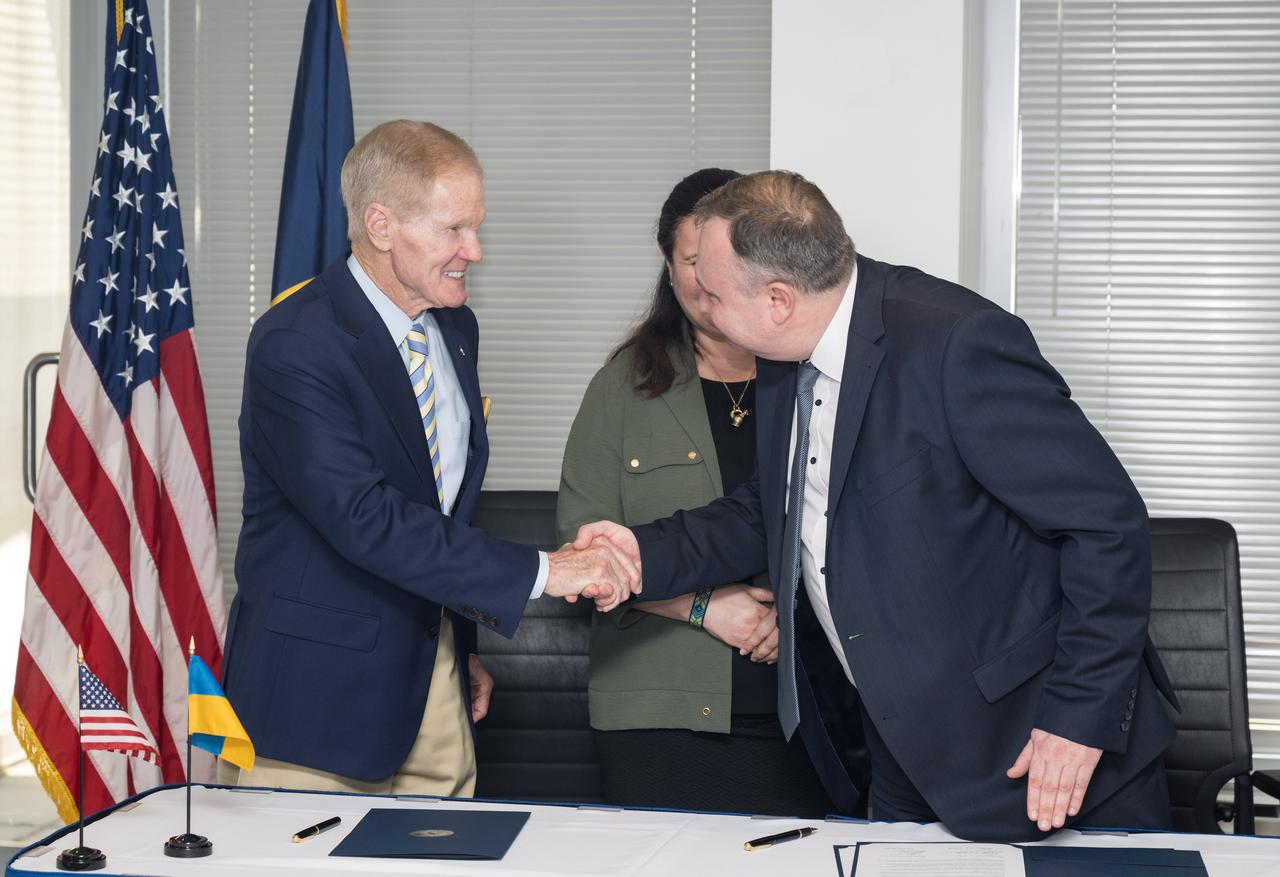
NASA Administrator Bill Nelson, left, shakes hands with Deputy Chairman of the State Space Agency of Ukraine, Volodymyr Mikheiev, while Ambassador of Ukraine, Her Excellency Oksana Markarova looks on, after a joint statement on civil space cooperation between NASA and the State Space Agency of Ukraine was signed, Friday April 21, 2023 at the Mary W. Jackson NASA Headquarters building in Washington DC. Photo Credit: (NASA/Aubrey Gemignani)
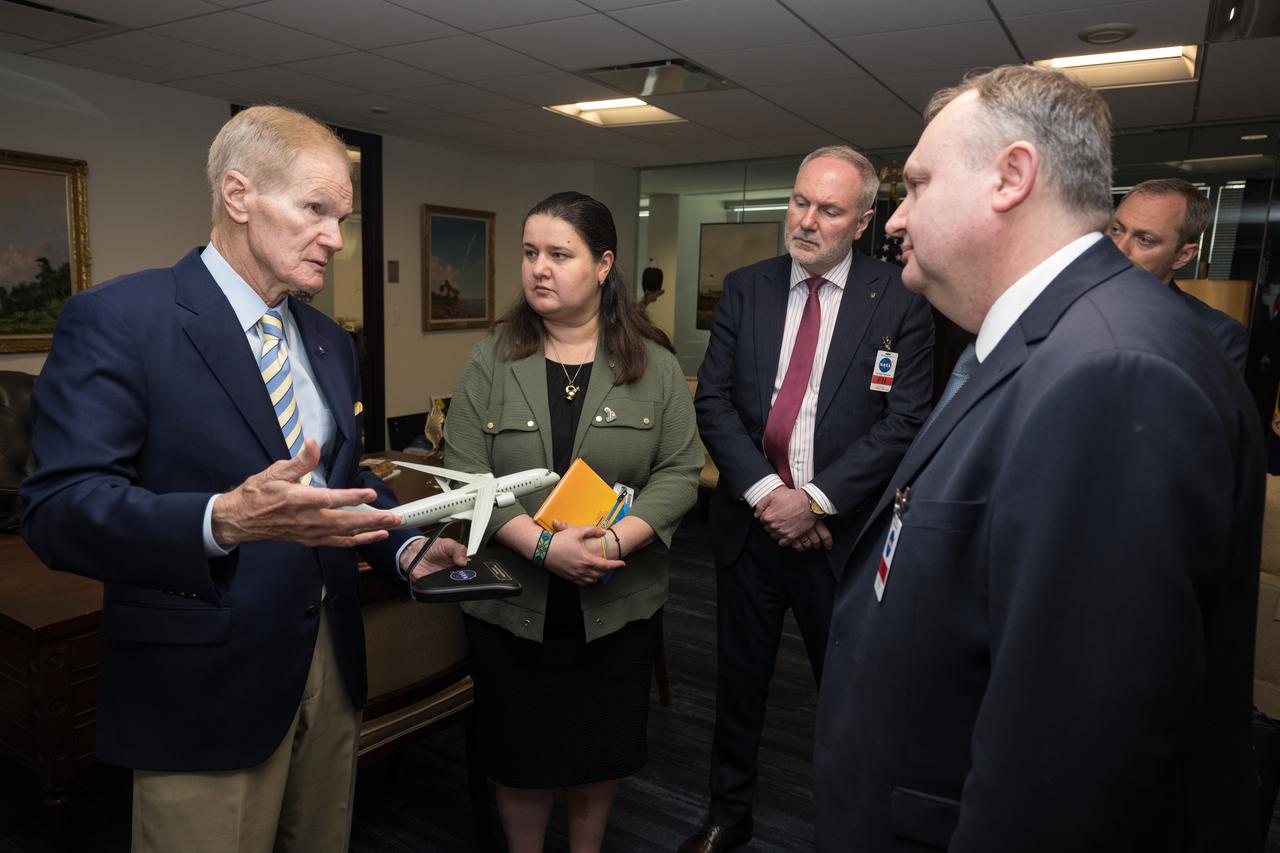
NASA Administrator Bill Nelson, left shows Ambassador of Ukraine, Her Excellency Oksana Markarova, second from left, Ukraine Deputy Minister of Economy, Ihor Fomenko, third from left, Deputy Chairman of the State Space Agency of Ukraine, Volodymyr Mikheiev, right, and Embassy of Ukraine’s Chief of Staff, Denys Sienik, a model in his office before signing a joint statement on civil space cooperation between NASA and the State Space Agency of Ukraine, Friday April 21, 2023 at the Mary W. Jackson NASA Headquarters building in Washington DC. Photo Credit: (NASA/Aubrey Gemignani)

NASA Administrator Bill Nelson, left greets Ambassador of Ukraine, Her Excellency Oksana Markarova, right, Deputy Chairman of the State Space Agency of Ukraine, Volodymyr Mikheiev, second from right, Ukraine Deputy Minister of Economy, Ihor Fomenko, not pictured, and Embassy of Ukraine’s Chief of Staff, Denys Sienik, before signing a joint statement on civil space cooperation between NASA and the State Space Agency of Ukraine, Friday April 21, 2023 at the Mary W. Jackson NASA Headquarters building in Washington DC. Photo Credit: (NASA/Aubrey Gemignani)

From left to right, Ukraine Deputy Minister of Economy, Ihor Fomenko, NASA Administrator Bill Nelson, Ambassador of Ukraine, Her Excellency Oksana Markarova, and Deputy Chairman of the State Space Agency of Ukraine, Volodymyr Mikheiev, pose for a photo after Nelson and Mikheiev signed a joint statement on civil space cooperation between NASA and the State Space Agency of Ukraine, Friday April 21, 2023 at the Mary W. Jackson NASA Headquarters building in Washington DC. Photo Credit: (NASA/Aubrey Gemignani)
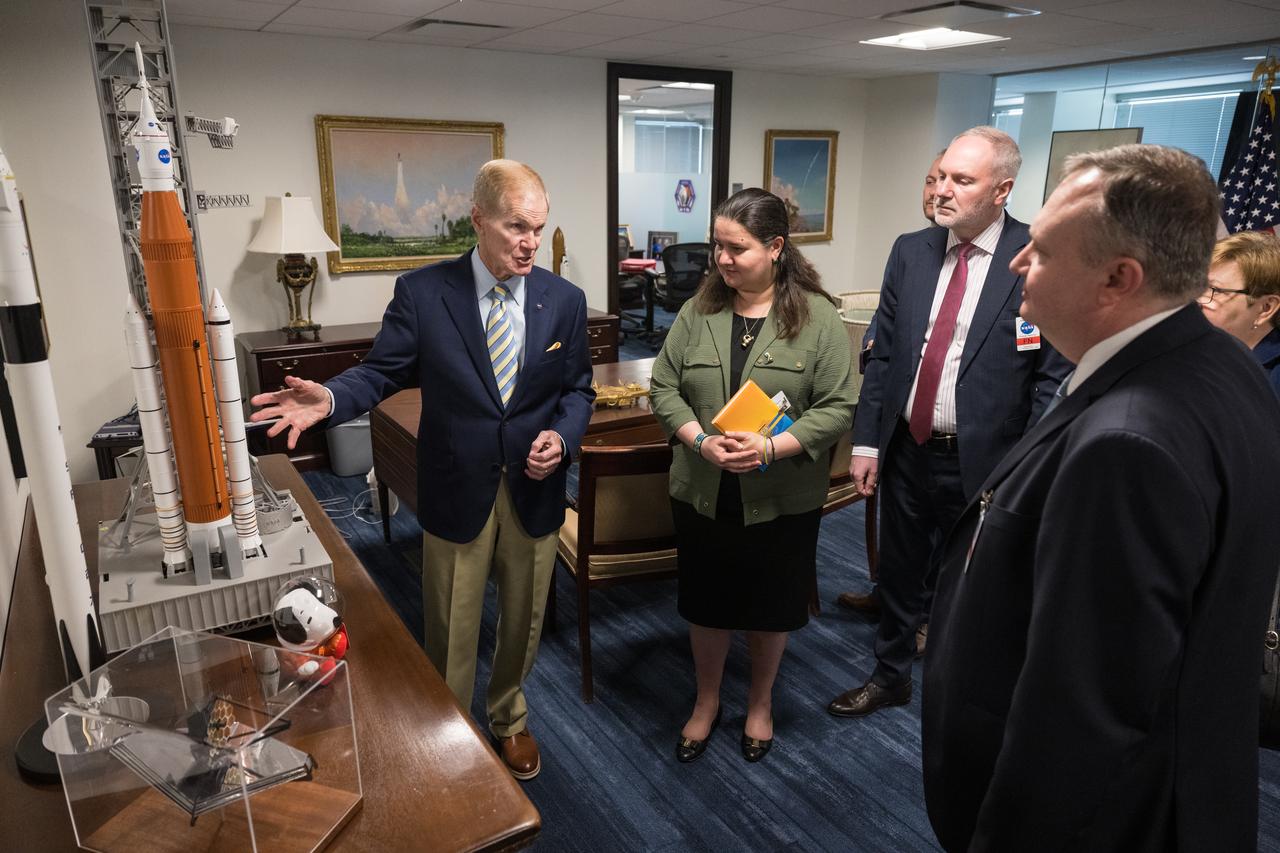
NASA Administrator Bill Nelson, left shows Ambassador of Ukraine, Her Excellency Oksana Markarova, second from left, Ukraine Deputy Minister of Economy, Ihor Fomenko, third from left, and Deputy Chairman of the State Space Agency of Ukraine, Volodymyr Mikheiev, right, a model of the Space Launch System (SLS) before signing a joint statement on civil space cooperation between NASA and the State Space Agency of Ukraine, Friday April 21, 2023 at the Mary W. Jackson NASA Headquarters building in Washington DC. Photo Credit: (NASA/Aubrey Gemignani)
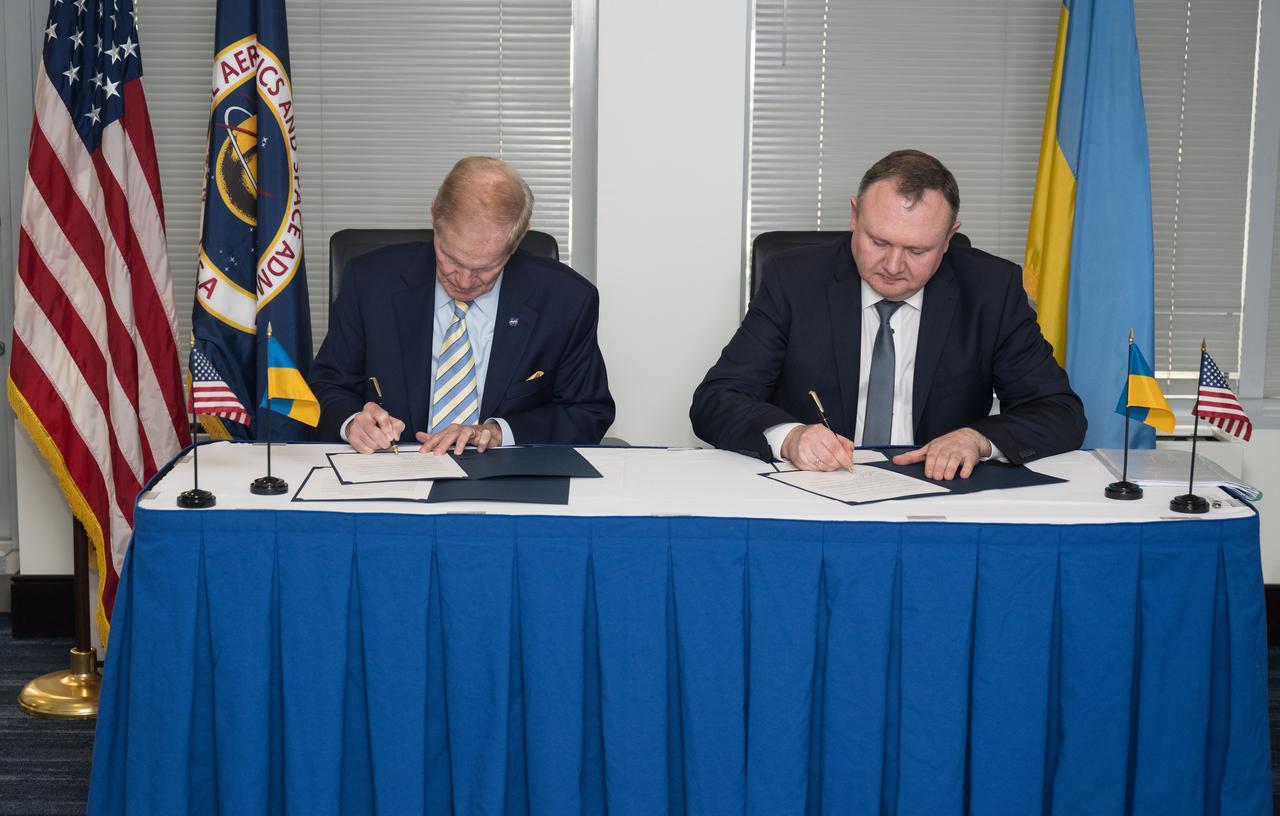
NASA Administrator Bill Nelson, left, and Deputy Chairman of the State Space Agency of Ukraine, Volodymyr Mikheiev, sign a joint statement on civil space cooperation between NASA and the State Space Agency of Ukraine, Friday April 21, 2023 at the Mary W. Jackson NASA Headquarters building in Washington DC. Photo Credit: (NASA/Aubrey Gemignani)
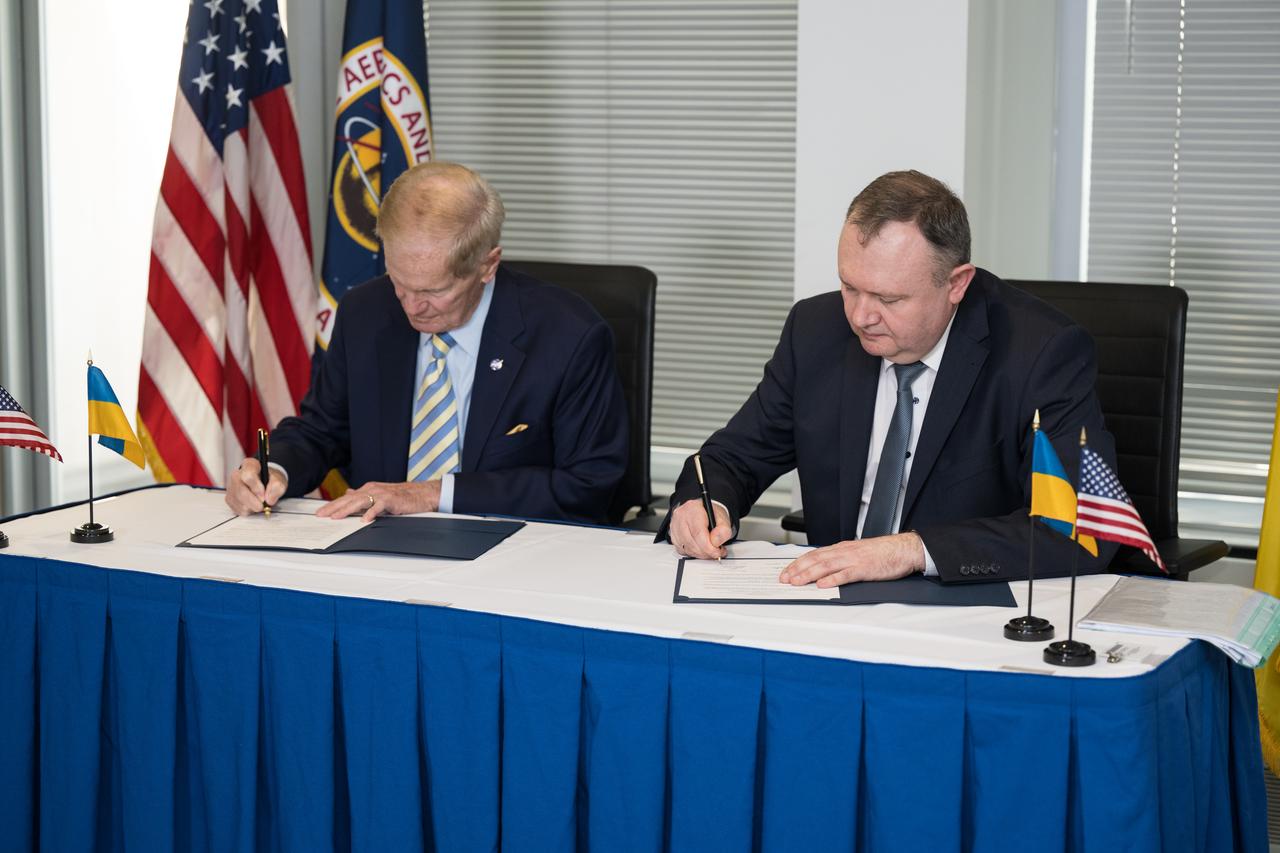
NASA Administrator Bill Nelson, left, and Deputy Chairman of the State Space Agency of Ukraine, Volodymyr Mikheiev, sign a joint statement on civil space cooperation between NASA and the State Space Agency of Ukraine, Friday April 21, 2023 at the Mary W. Jackson NASA Headquarters building in Washington DC. Photo Credit: (NASA/Aubrey Gemignani)
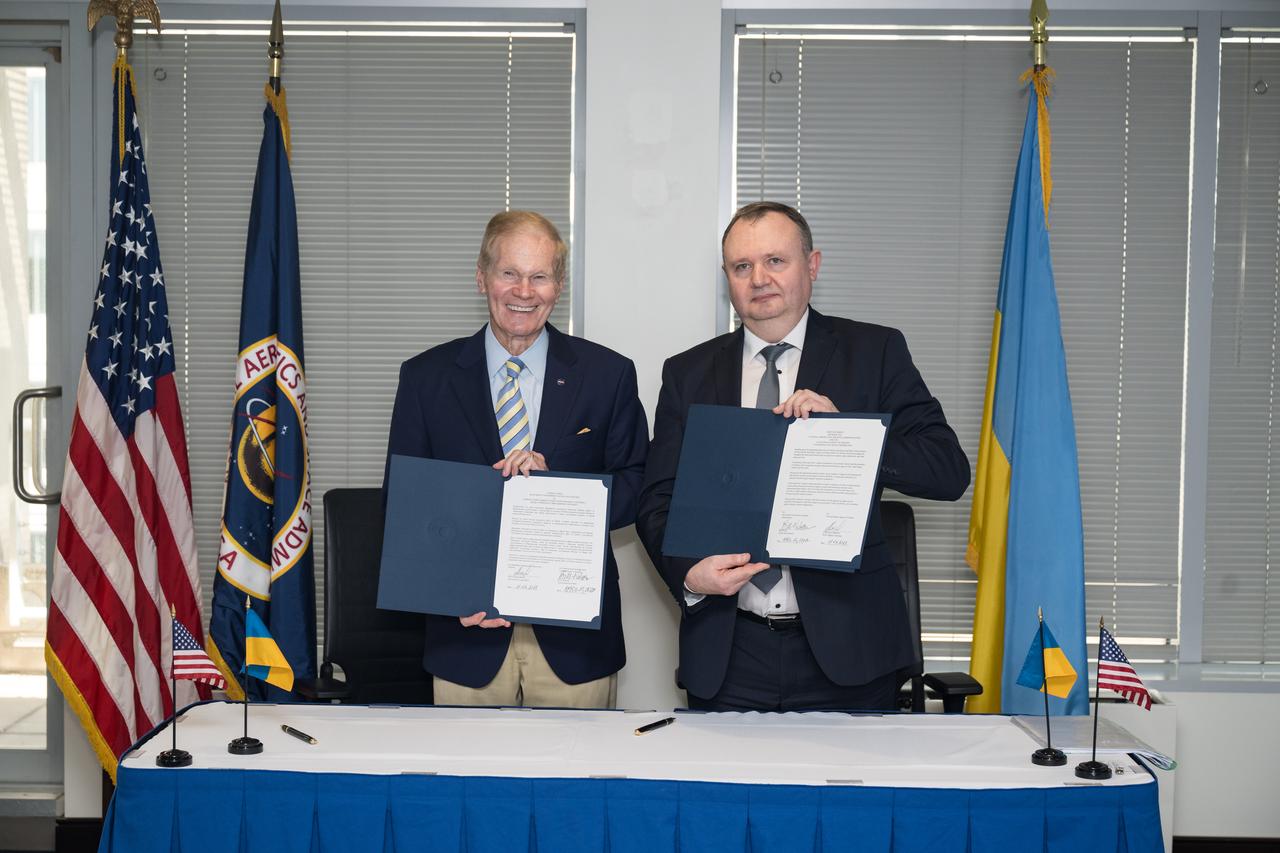
NASA Administrator Bill Nelson, left, and Deputy Chairman of the State Space Agency of Ukraine, Volodymyr Mikheiev, display their signed joint statements on civil space cooperation between NASA and the State Space Agency of Ukraine, Friday April 21, 2023 at the Mary W. Jackson NASA Headquarters building in Washington DC. Photo Credit: (NASA/Aubrey Gemignani)
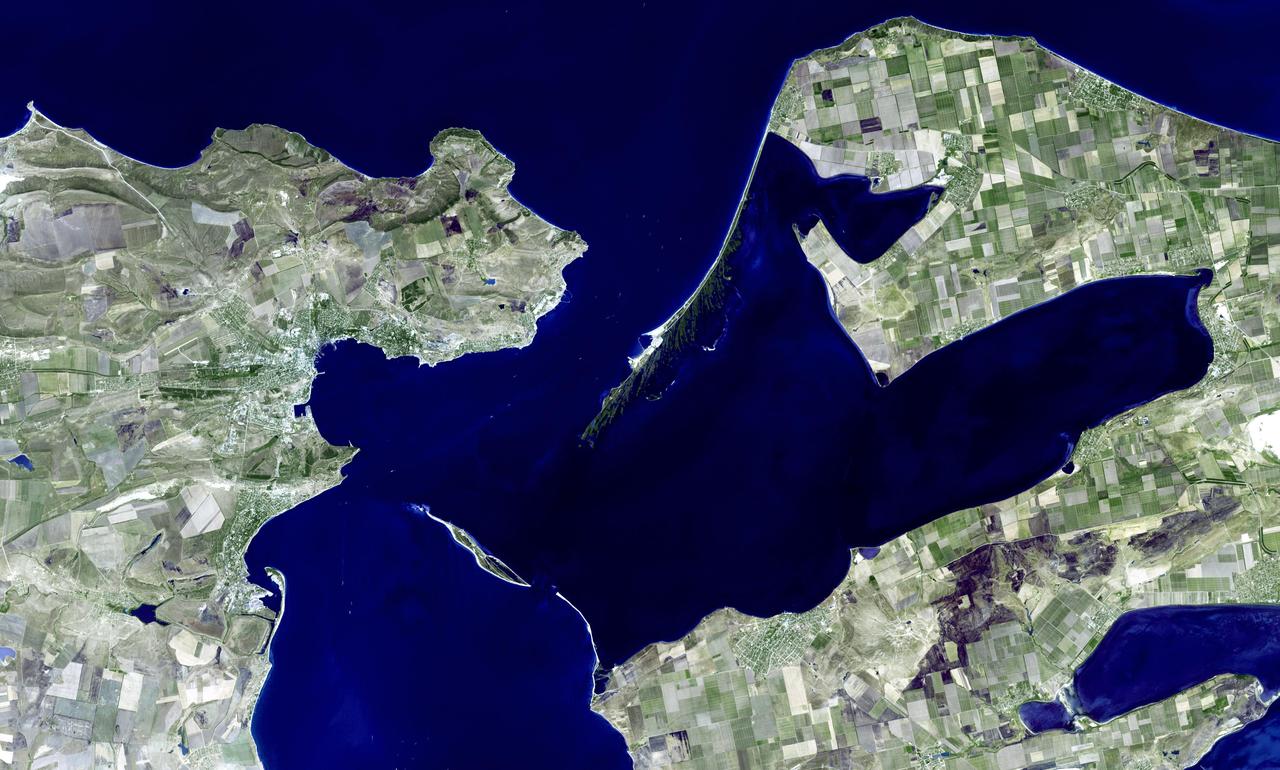
This image, from NASA Advanced Spaceborne Thermal Emission and Reflection Radiometer instrument aboard Terra, shows Kerch, one of the most ancient cities of the Ukraine.
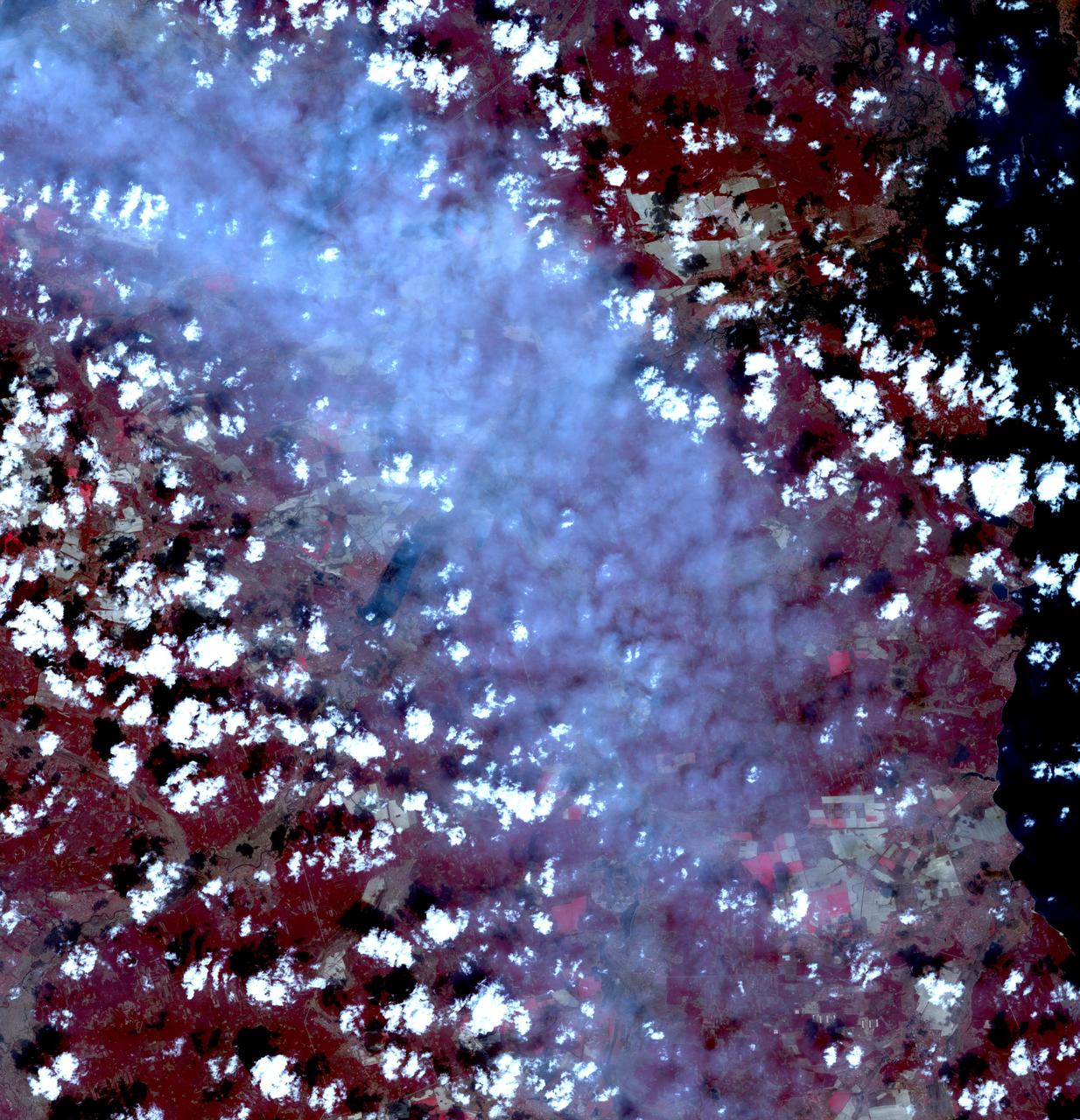
Fires began near the Chernobyl Nuclear Power Plant in Ukraine April 4, 2020. By April 14, the fires were nearly extinguished. On April 16, new fires erupted, sending large, dark gray clouds of smoke traveling over 750 km to the southeast. The ASTER image, acquired April 18, shows part of the billowing smoke plume. The image covers an area of 59.2 by 61.4 km, and is located near 51 degrees north, 30.1 degrees east. https://photojournal.jpl.nasa.gov/catalog/PIA23911
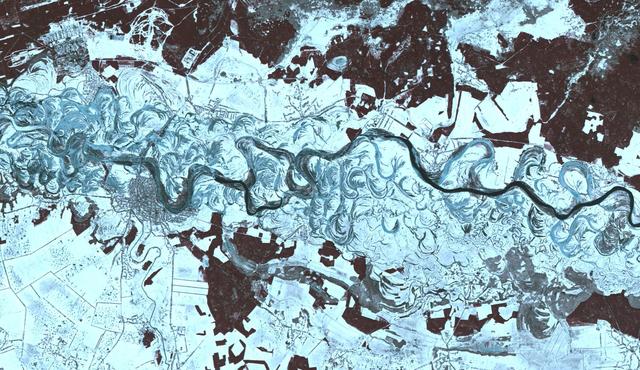
The Dneiper River in the Ukraine is the fourth longest river in Europe, flowing 2200 km into the Black Sea. This wintery scene near the city of Oster shows the many meanders and abandoned paleochannels of this major river. The image was acquired March 6, 2001, covers an area of 18.6 by 32.1 km, and is located at 50.9 degrees north, 30.9 degrees east. https://photojournal.jpl.nasa.gov/catalog/PIA23912
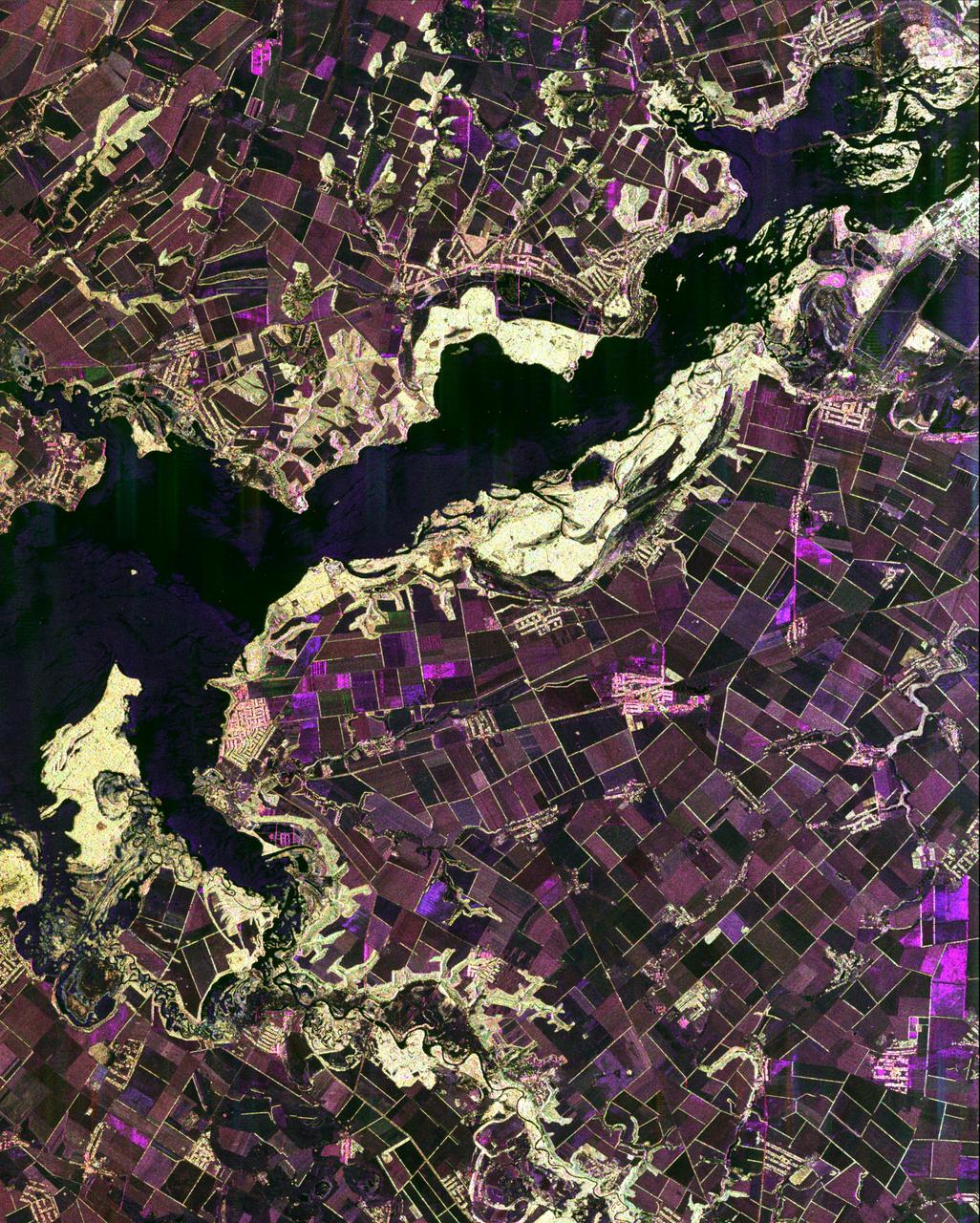
This spaceborne radar image shows the intensive agricultural development in central Ukraine, along the Dnieper River. The area shown lies about 320 kilometers 198 miles southeast of Kiev and about 360 kilometers 223 miles northeast of Odessa.
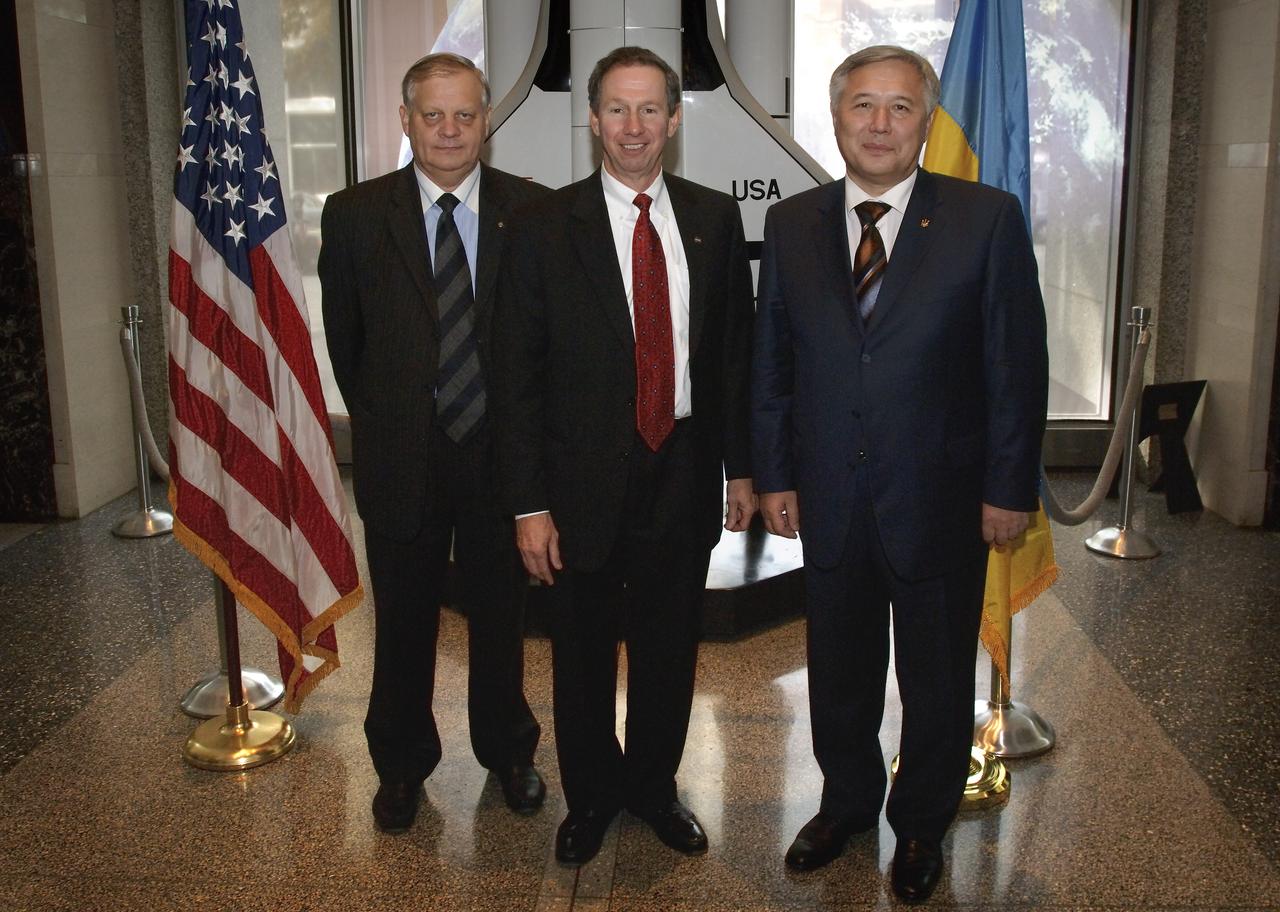
Director General of the National Space Agency of Ukraine Yuriy Sergiyovych Alekseyev, left, NASA Administrator Michael Griffin, center, and Prime Minister of Ukraine Yuriy Yekhanurov pose for a photograph prior to their meeting at NASA Headquarters, Tuesday, Nov. 1, 2005, in Washington. Photo Credit: (NASA/Bill Ingalls)
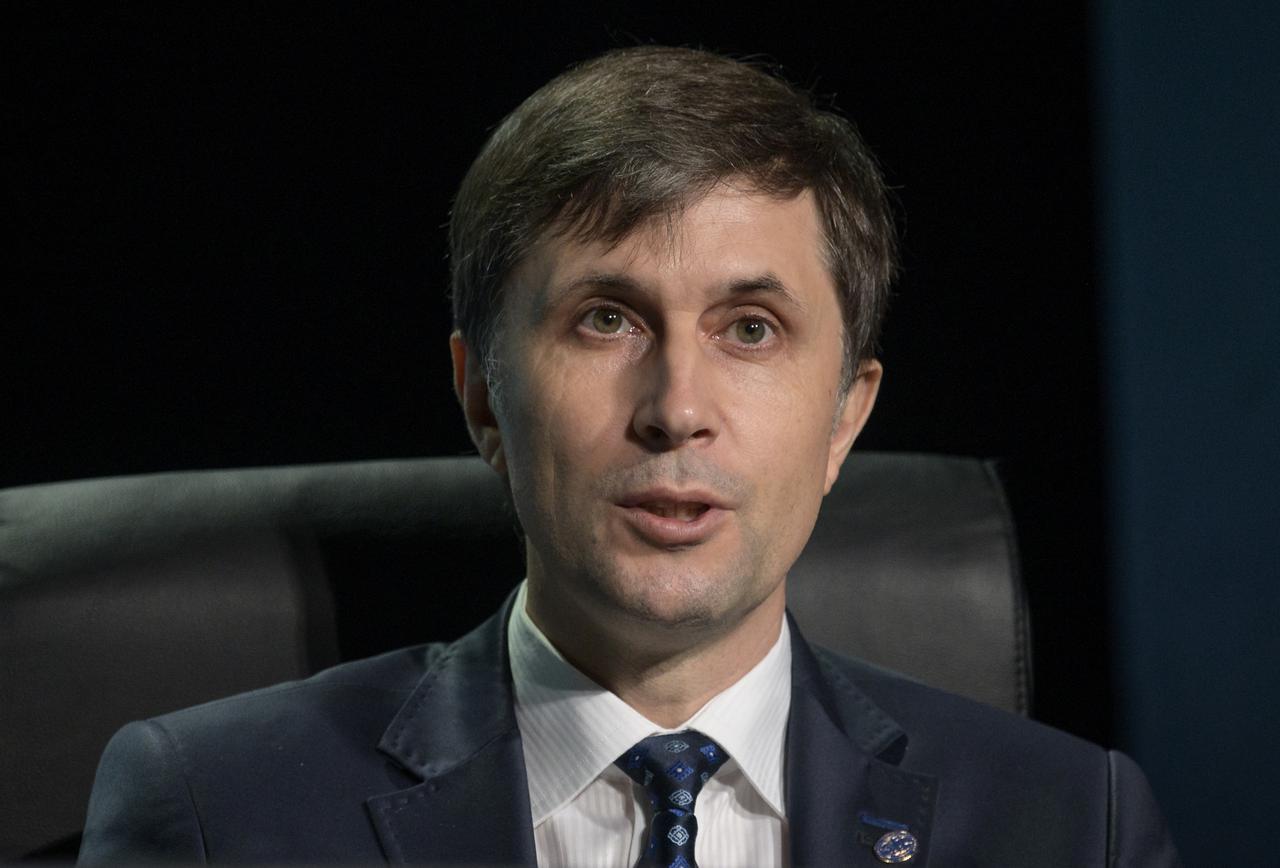
Volodymyr Taftai, Head of Agency, State Space Agency of Ukraine (SSAU) gives remarks in a Heads of Agency panel discussion, during the 36th Space Symposium, Wednesday, Aug. 25, 2021, in Colorado Springs, Colorado. Photo Credit: (NASA/Bill Ingalls)
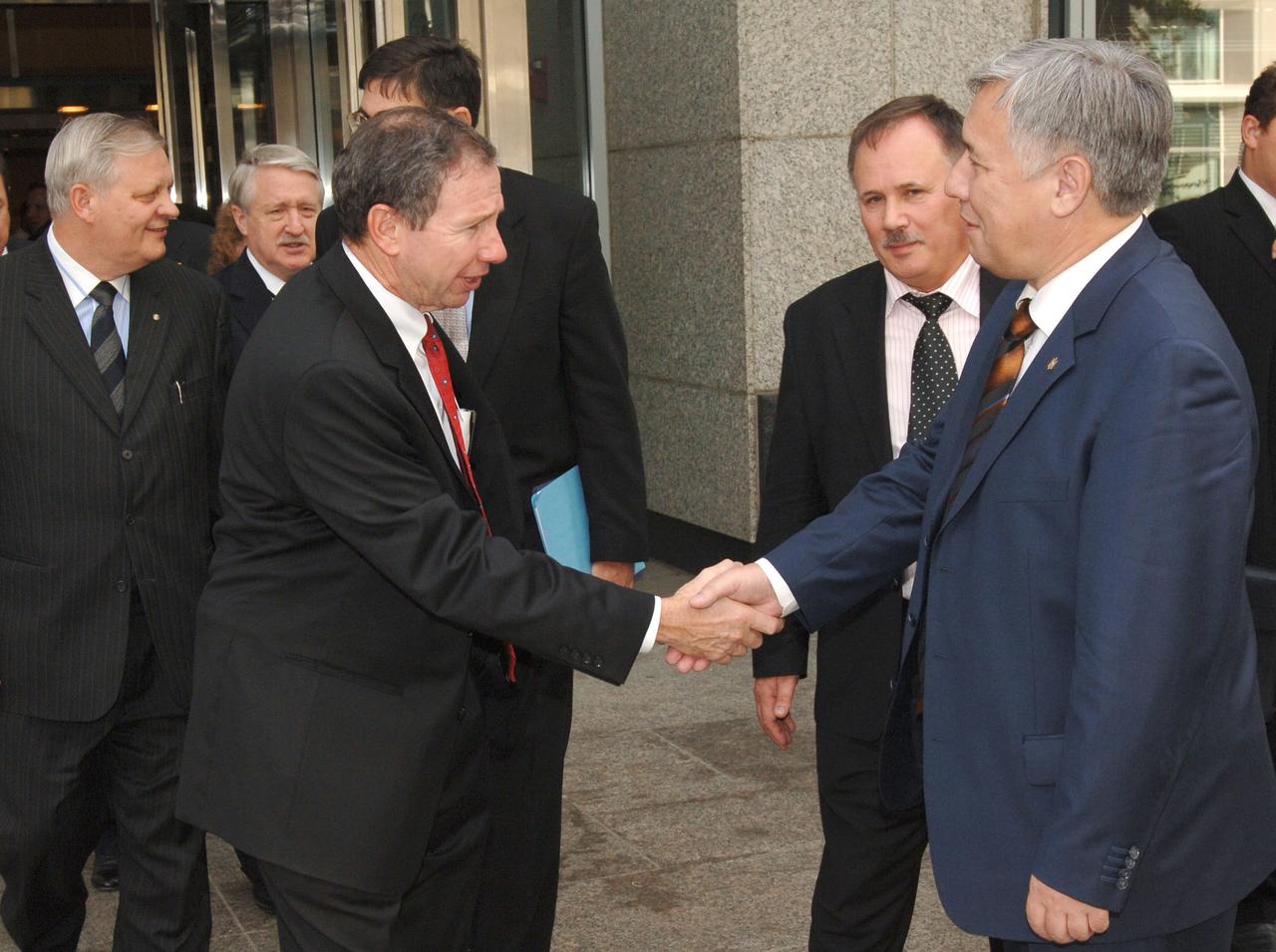
NASA Administrator Michael Griffin, left, shakes hands with Yuriy Yekhanurov, Prime Minister of Ukraine after a visit to NASA Headquarters on Tuesday, Nov. 1, 2005 in Washington. Photo Credit: (NASA/Bill Ingalls)
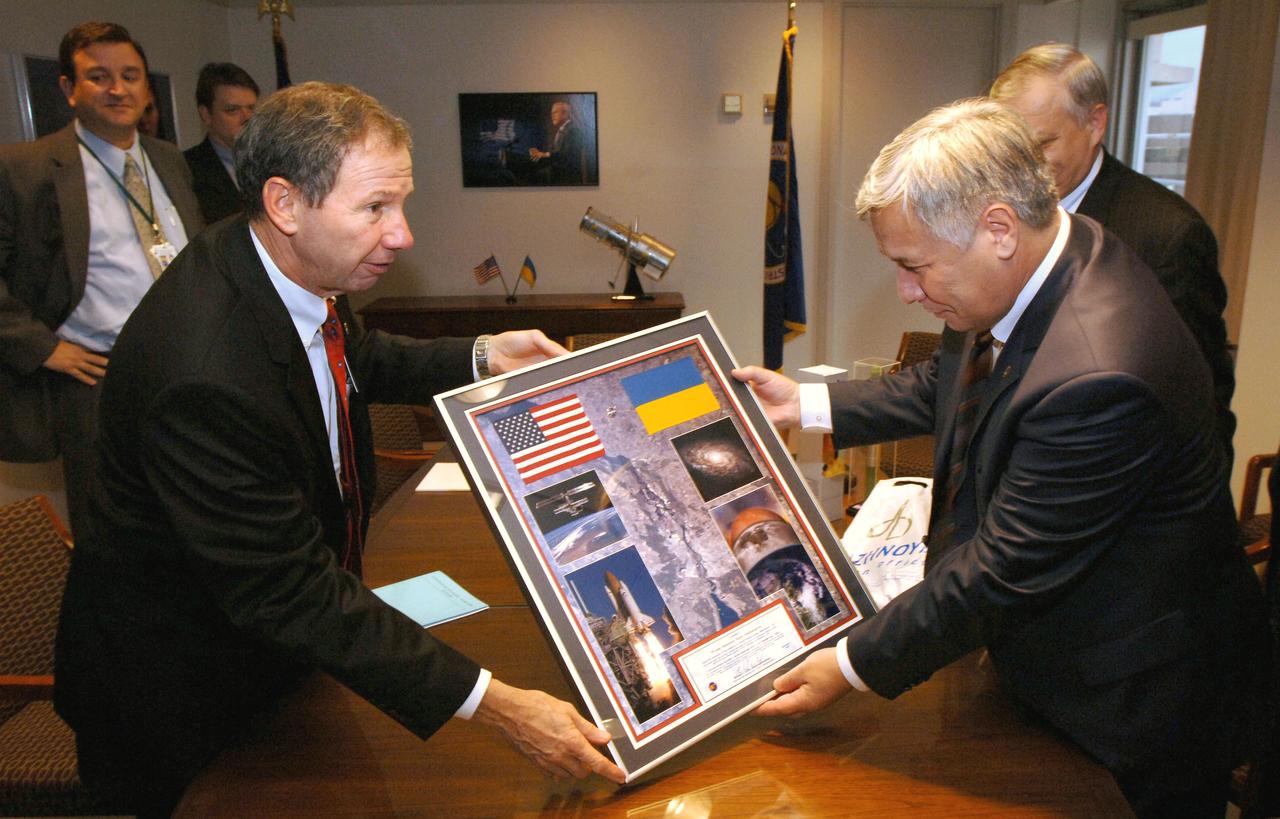
NASA Administrator Michael Griffin, left, presents Yuriy Yekhanurov, Prime Minister of Ukraine, with a montage following a meeting Tuesday, Nov. 1, 2005, at NASA Headquarters in Washington. Photo Credit: (NASA/Bill Ingalls)

iss058e005282 (Jan. 19, 2019) --- A portion of the International Space Station's solar arrays caps this nighttime view of the Earth's limb with an aurora as the orbital complex orbited 258 miles above Ukraine and Russia.
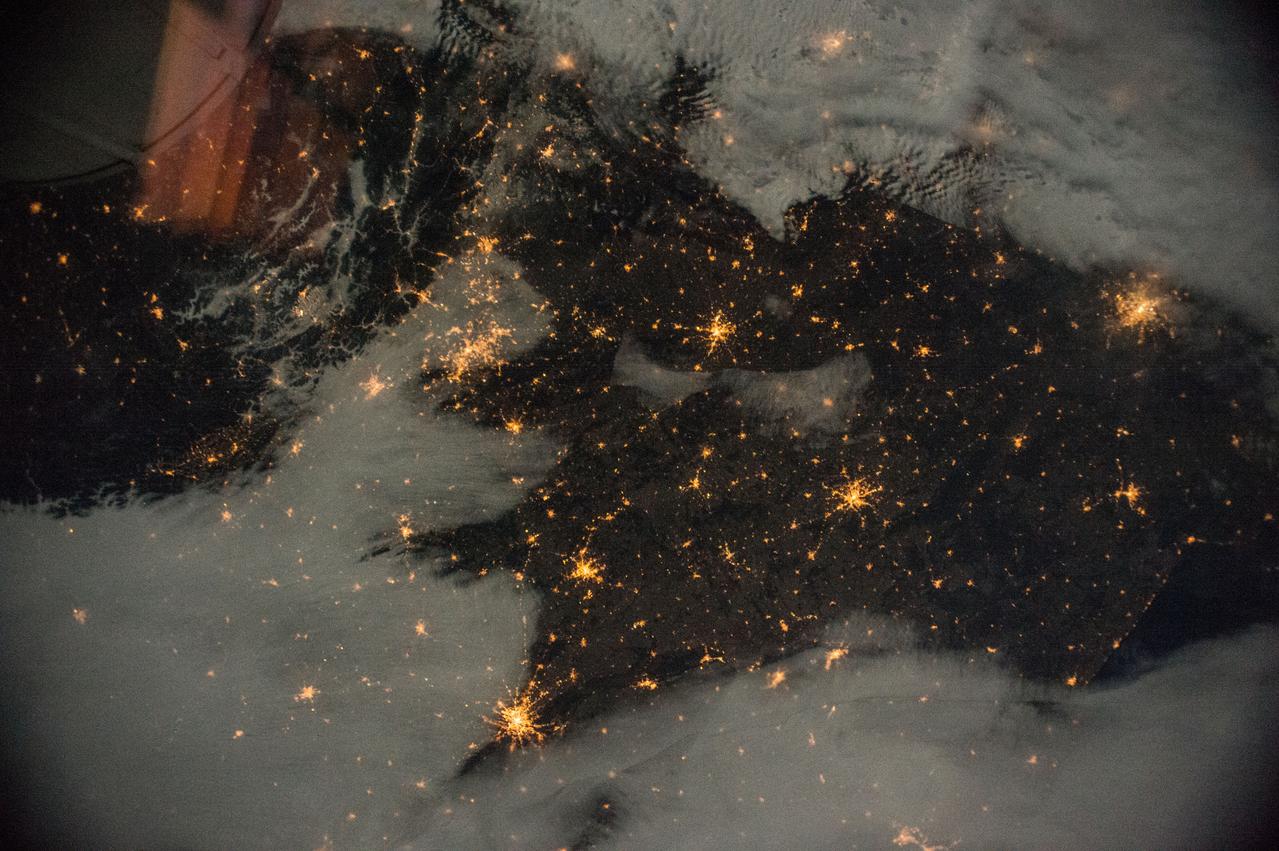
GMT338_22_09_Terry Virts_night france poland ukraine moscow_123
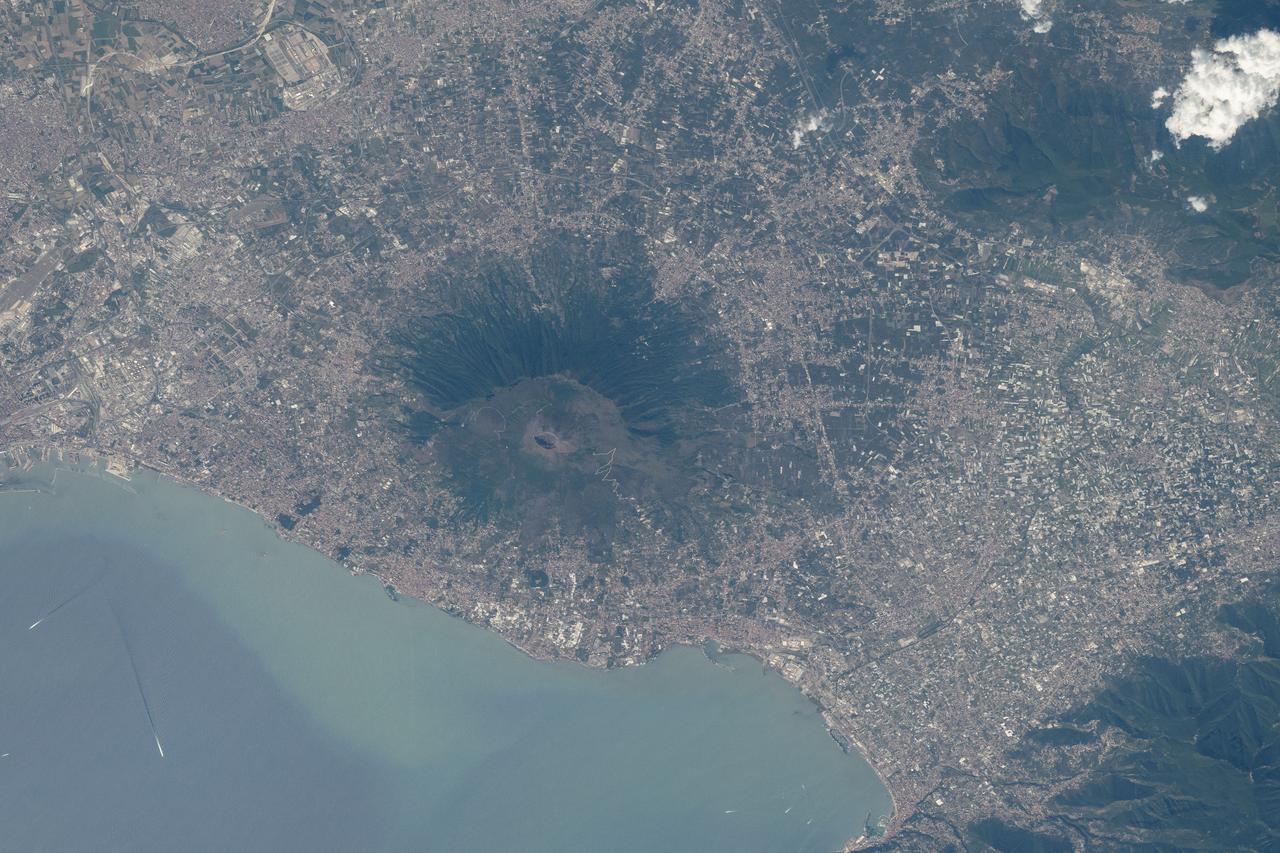
GMT210_15_58_Michael Barratt_CEO N Saharan Africa_Med Port Cities_Mt Vesuvius_Croatia thru Ukraine
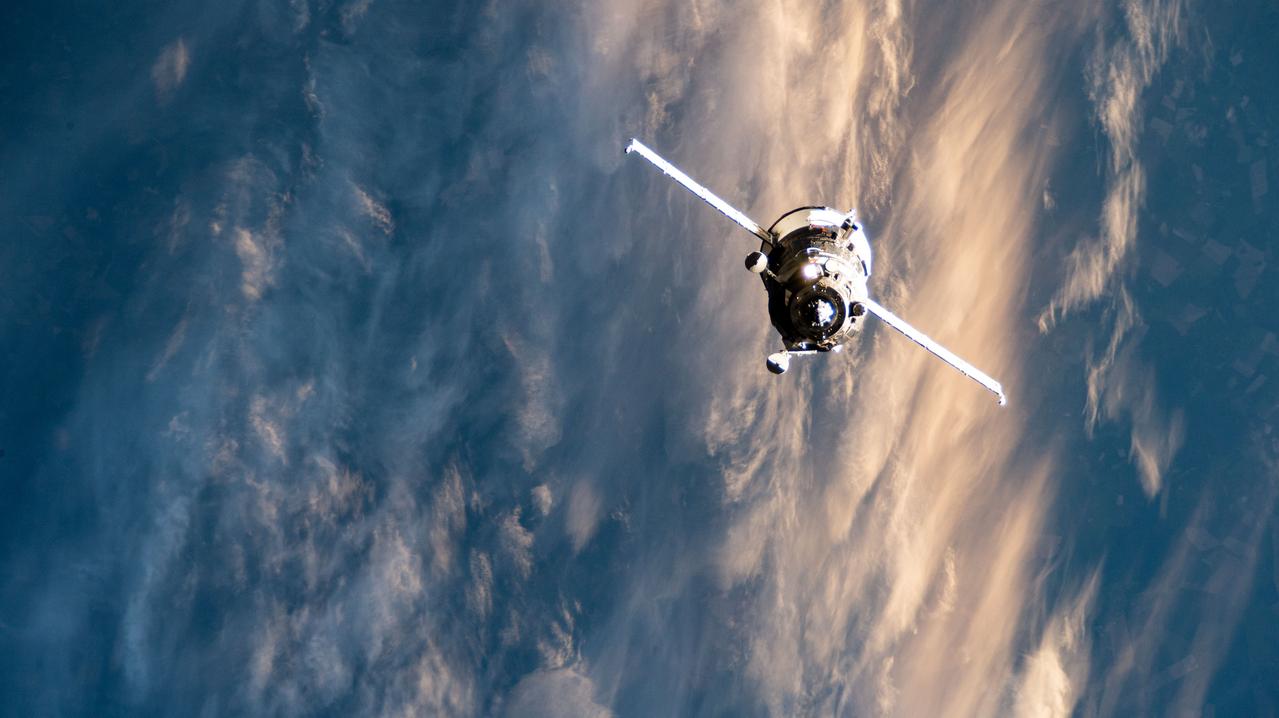
iss063e055171 (July 23, 2020) --- Russia's Progress 76 resupply ship, packed with nearly three tons of food, fuel and supplies, approaches the International Space Station above the eastern European nation of Ukraine.
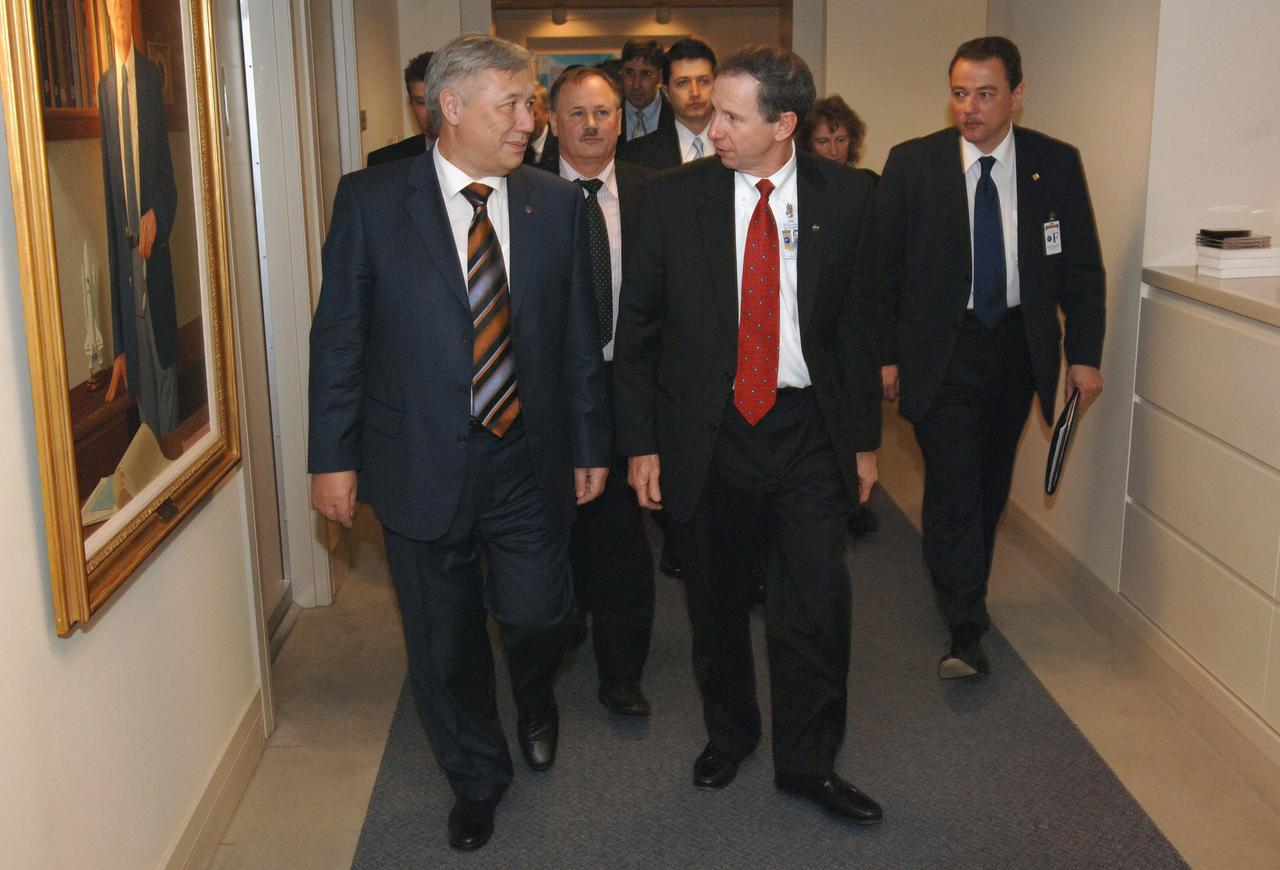
Yuriy Yekhanurov, Prime Minister of Ukraine, left, and NASA Administrator Michael Griffin, walk together prior to the start of a meeting Tuesday, Nov. 1, 2005, at NASA Headquarters in Washington. Photo Credit: (NASA/Bill Ingalls)
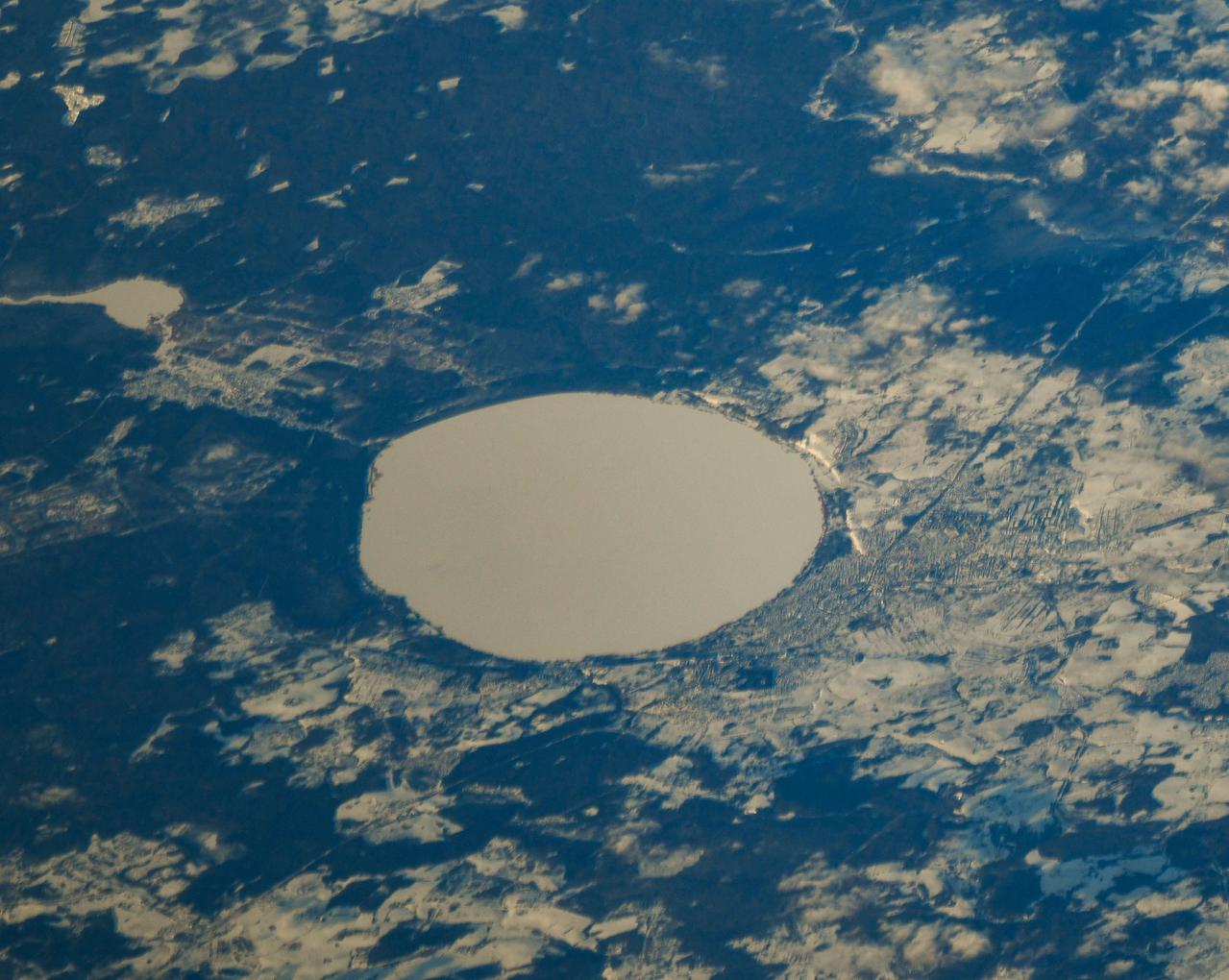
iss064e030131 (Feb. 8, 2021) --- The ice-covered Lake Pleshcheyevo, with the town of Pereslavl-Zalessky on its coast, in Russia is pictured from the International Space Station as it orbited 265 miles above the Ukraine-Russia border. Credit: Roscosmos
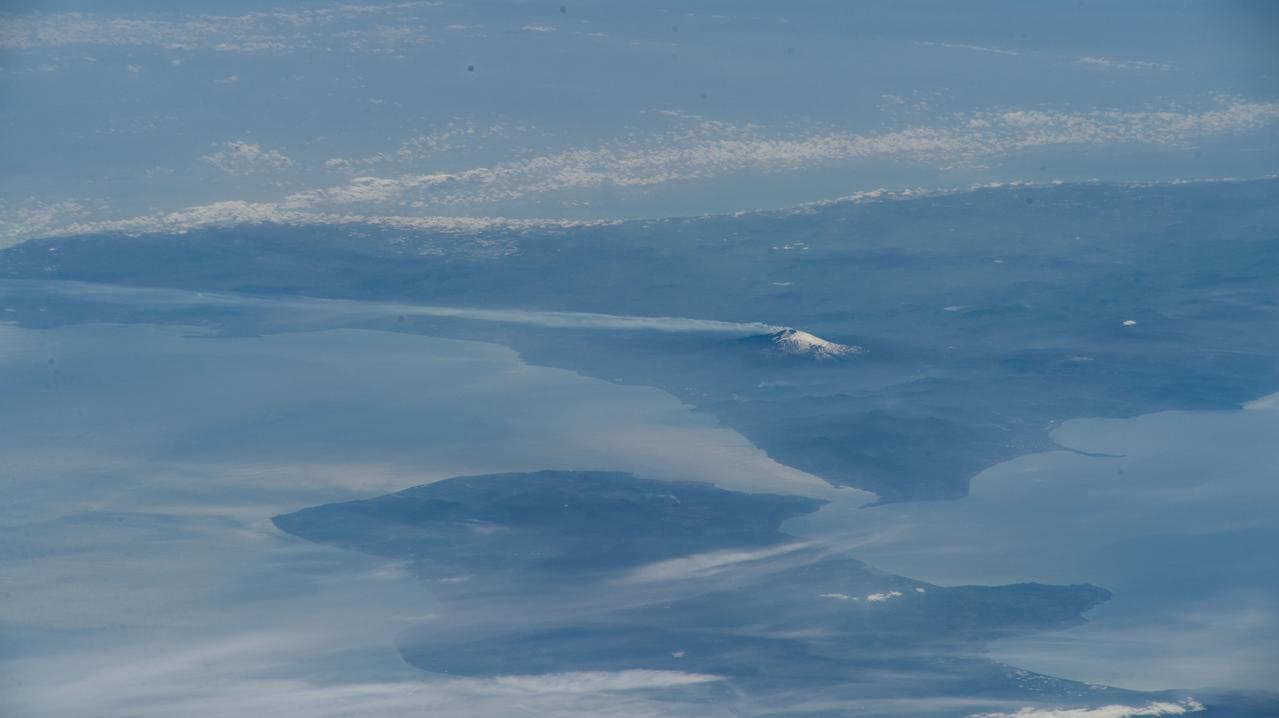
iss069e000127 (March 30, 2023) --- Mount Etna, an active stratovolcano on Italy's island of Sicily, billows smoke in this oblique photograph from the International Space Station as it orbited 262 miles above the Black Sea coast of Ukraine.
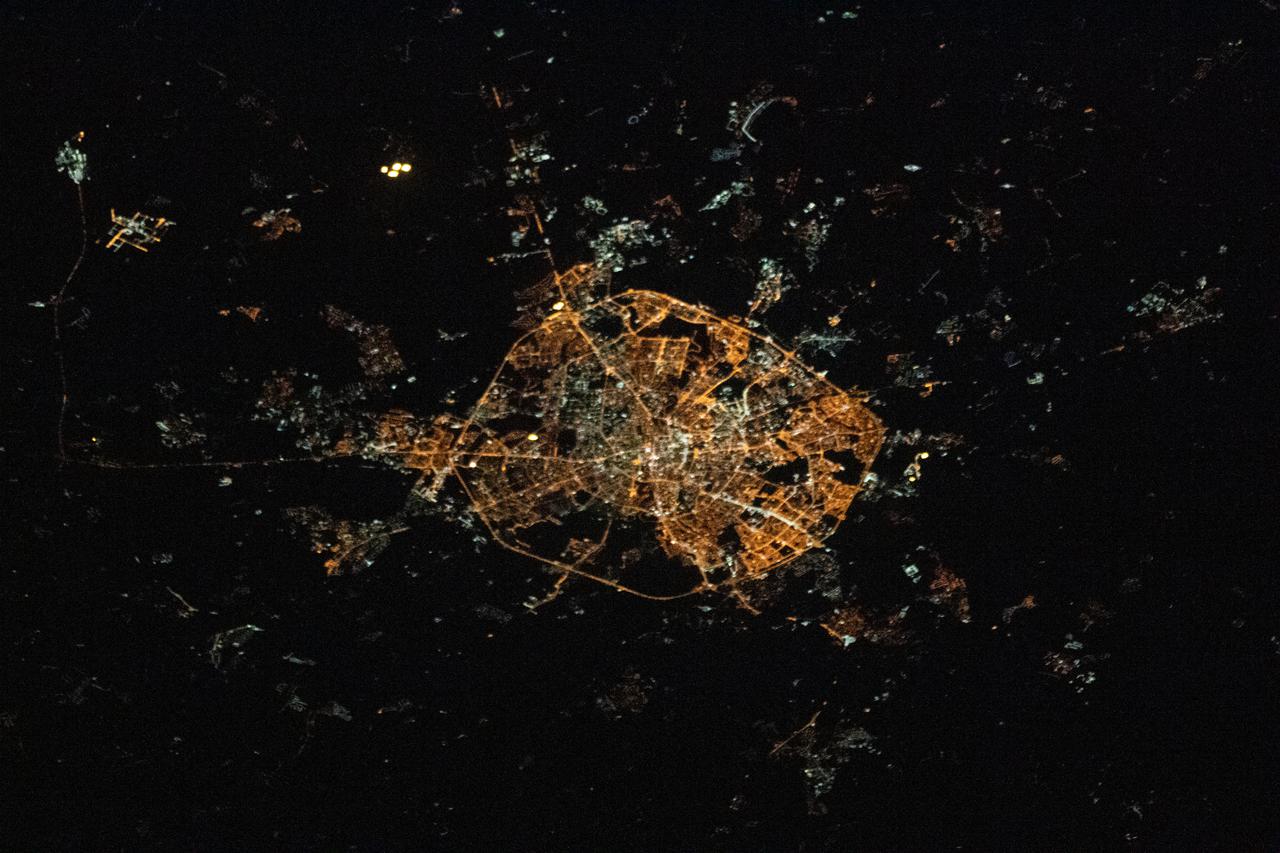
iss066e117709 (Jan. 6, 2022) --- This night time photograph of Minsk, the capital city of Belarus, is pictured from the International Space Station as it orbited 262 above the nation's border with Ukraine.
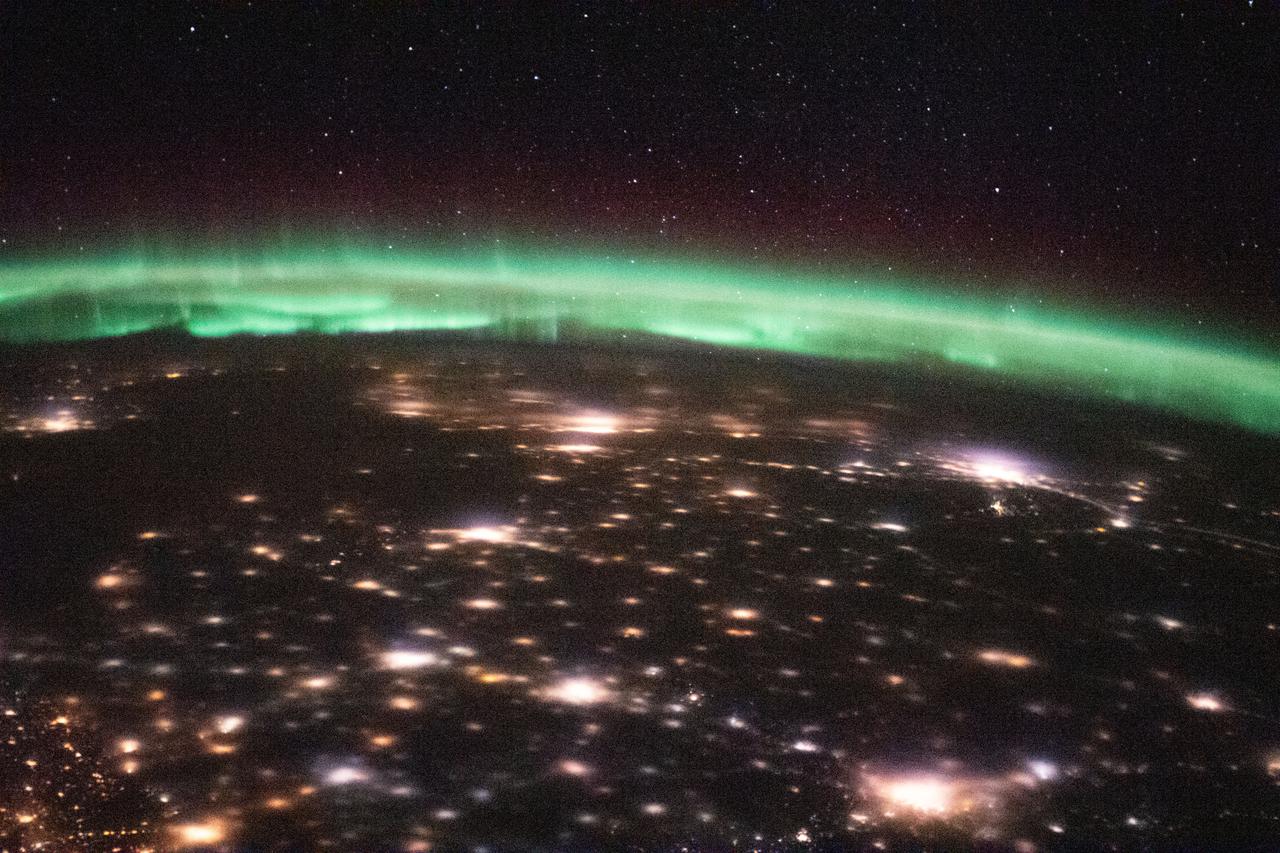
iss064e024095 (Jan. 18, 2021) --- The International Space Station was orbiting 263 miles above Ukraine when this photograph was taken of the city lights and an aurora above Russia. Credit: Roscosmos
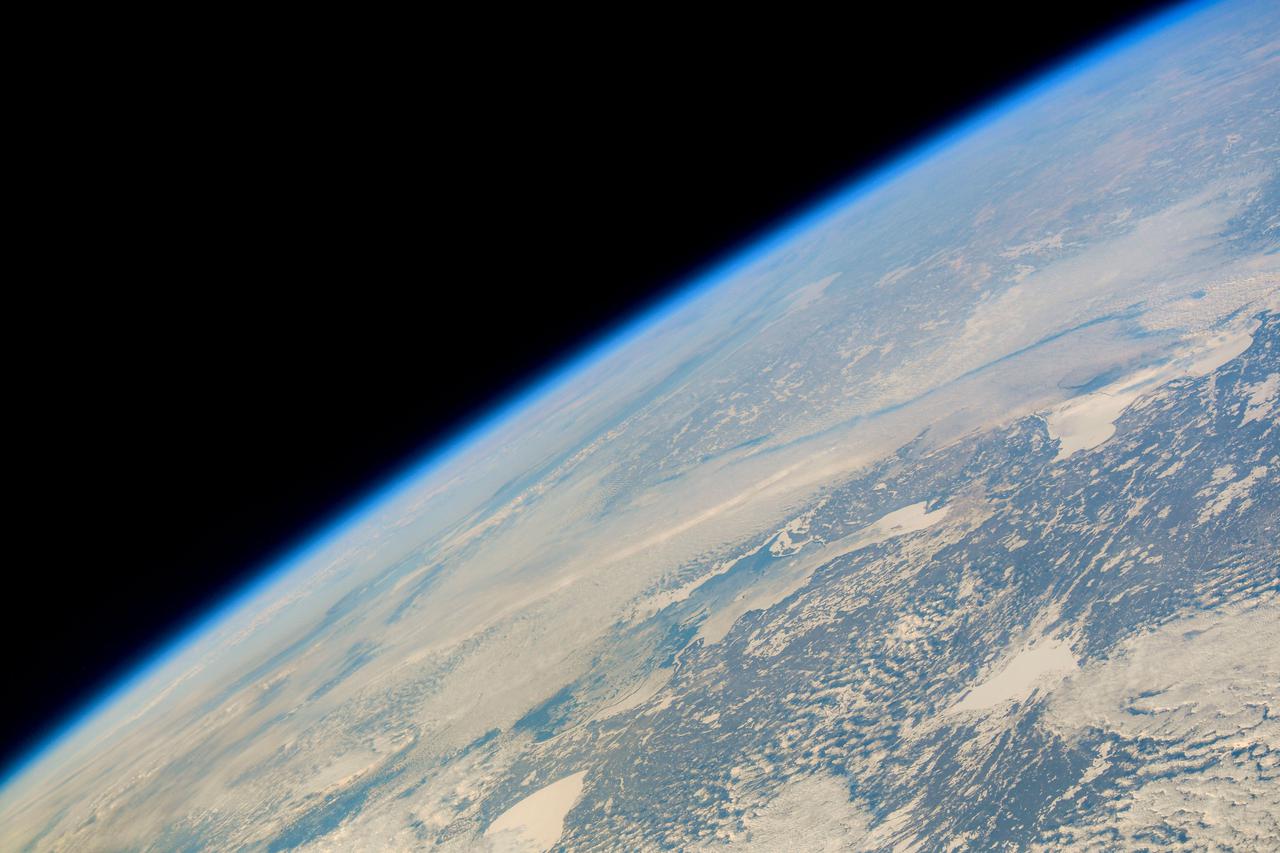
iss064e030134 (Feb. 8, 2021) --- An icy northern Europe, looking across Estonia, Russia and Finland, is pictured from the International Space Station as it orbited 265 miles above Ukraine. Credit: Roscosmos
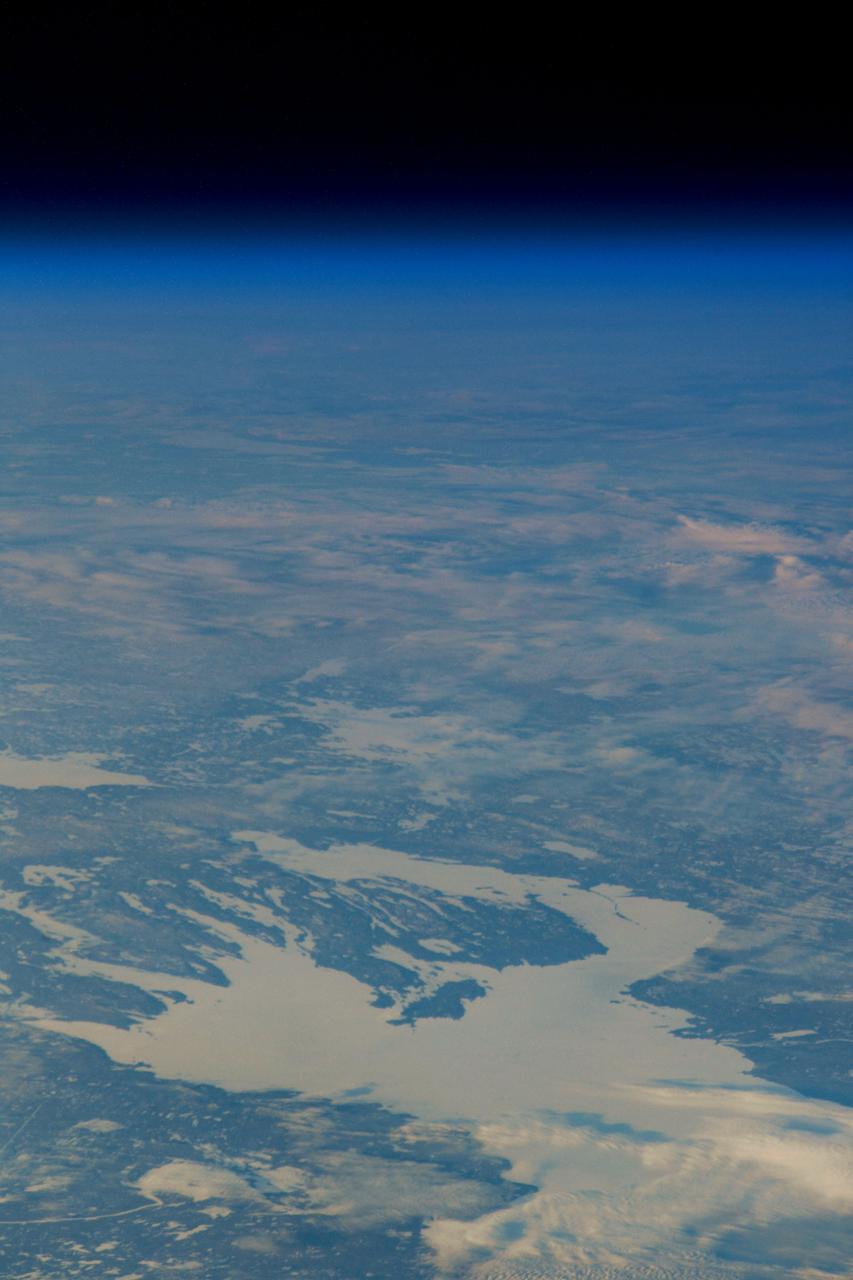
iss064e030130 (Feb. 8, 2021) --- Lake Onega in Russia is pictured from the International Space Station as it orbited 265 miles above the Ukraine-Russia border. Credit: Roscosmos
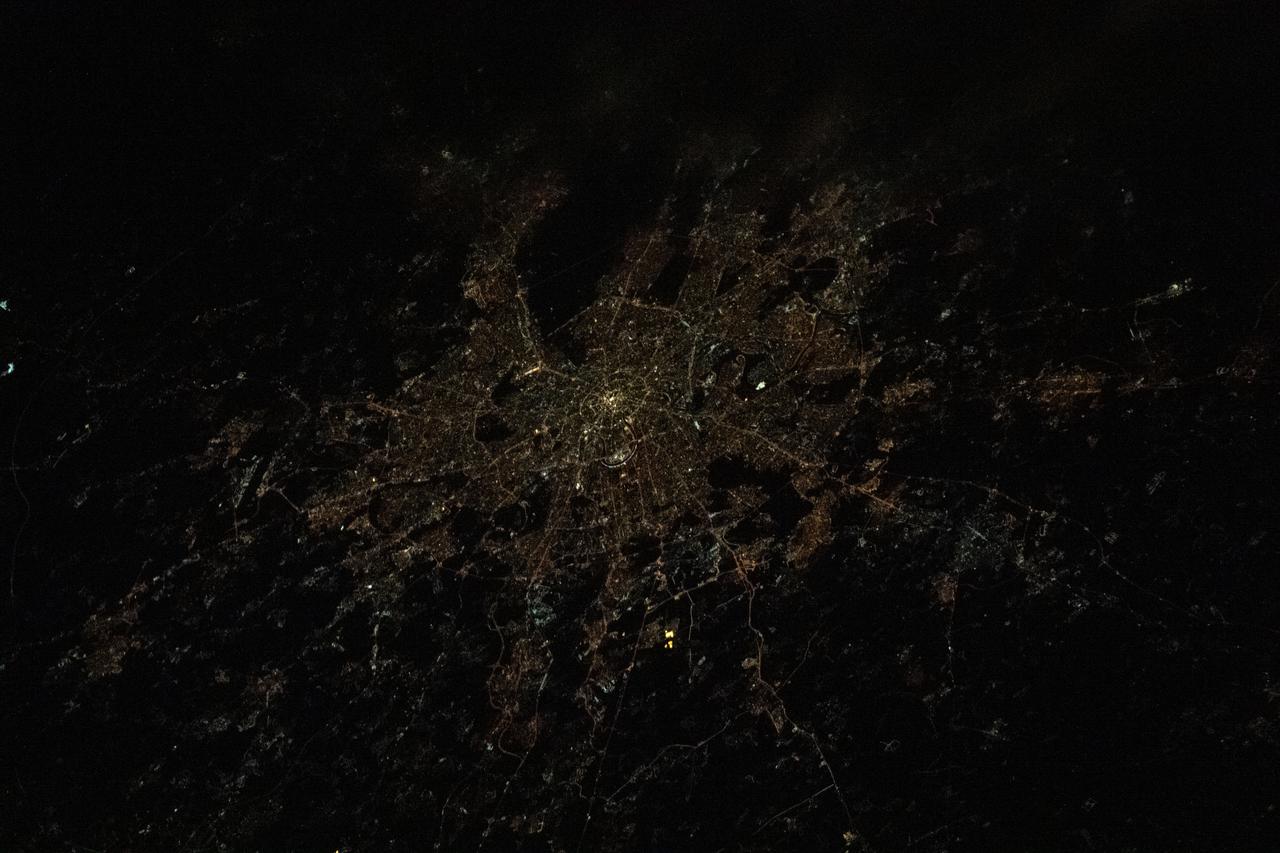
iss064e024687 (June 20, 2021) --- This night time shot of Moscow, Russia, with the Moskva River flowing though it, was taken from the International Space Station as it orbited 264 miles above Ukraine.

iss064e022752 (Jan. 12, 2021) --- A starry night sky and an aurora are pictured above Russia, in between Ukraine and Kazakhstan, as the International Space Station orbited 264 miles overhead.
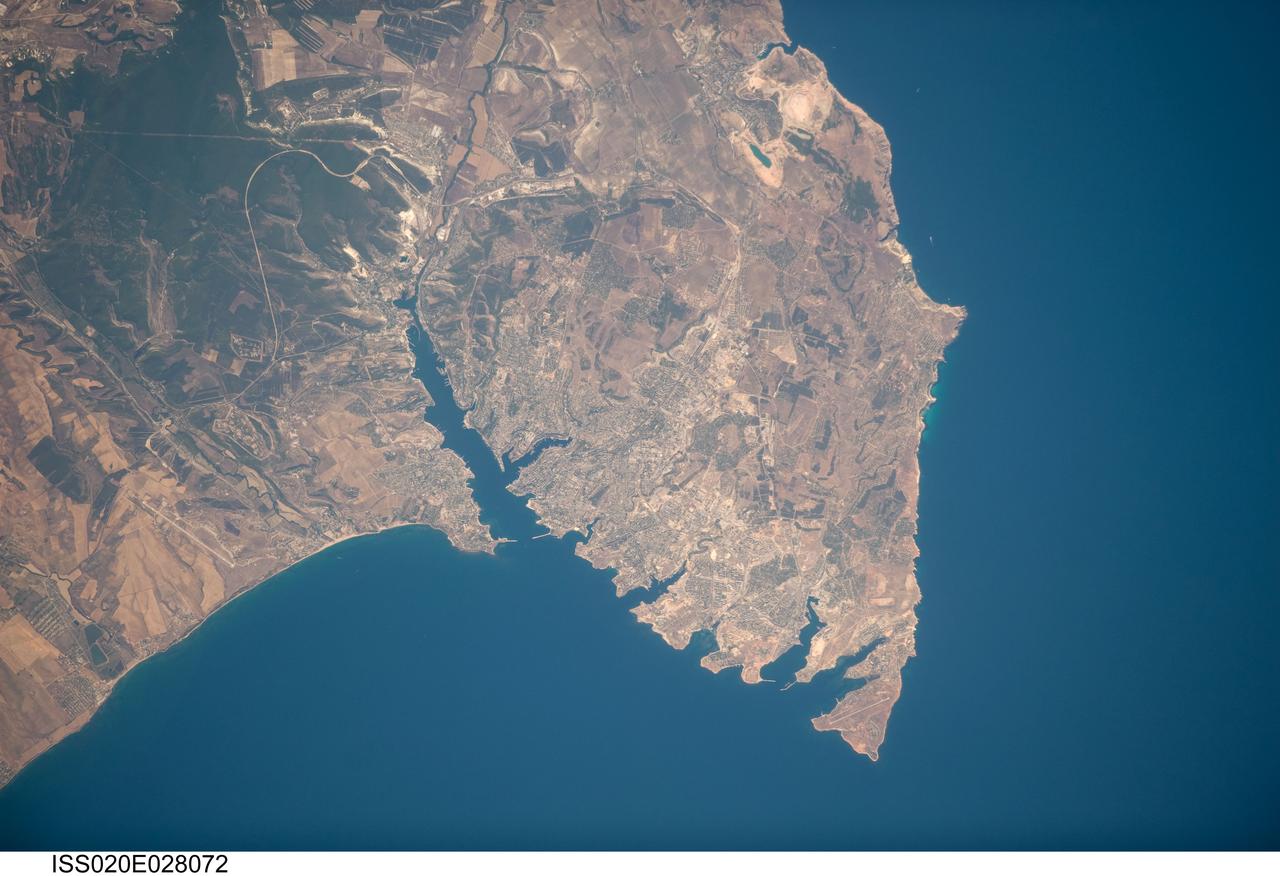
ISS020-E-028072 (5 Aug. 2009) --- Sevastopol, Ukraine is featured in this image photographed by an Expedition 20 crew member on the International Space Station. The port city of Sevastopol is located in southernmost Ukraine on the Crimean Peninsula. The city is an important naval base due to the numerous inlets and bays along the coastline (bottom center). During the Cold War, the city was the base of the Soviet Black Sea Fleet, but now services vessels of both the Ukraine and Russia. The main economy of the city is based on trade and shipbuilding, but Sevastopol is also a popular tourist and resort destination for visitors from the Commonwealth of Independent Countries (formed from former Soviet Republics). This photograph highlights the jagged coastline of the southern Crimean Peninsula and the various docking areas of Sevastopol. The urban area is light gray, and is bounded to the north and west by the Black Sea, to the south by vegetated (light green) and fallow (tan) agricultural fields, and to the east by the city of Inkerman and green vegetated uplands to the northwest of the Crimean Mountains. The city of Balaklava to the south houses another relic of the Cold War ? an underground Soviet submarine base that is now open to the public as a monument. The Chernaya River issues into the Black Sea near Inkerman, flowing into the Sevastopol Inlet to the west.
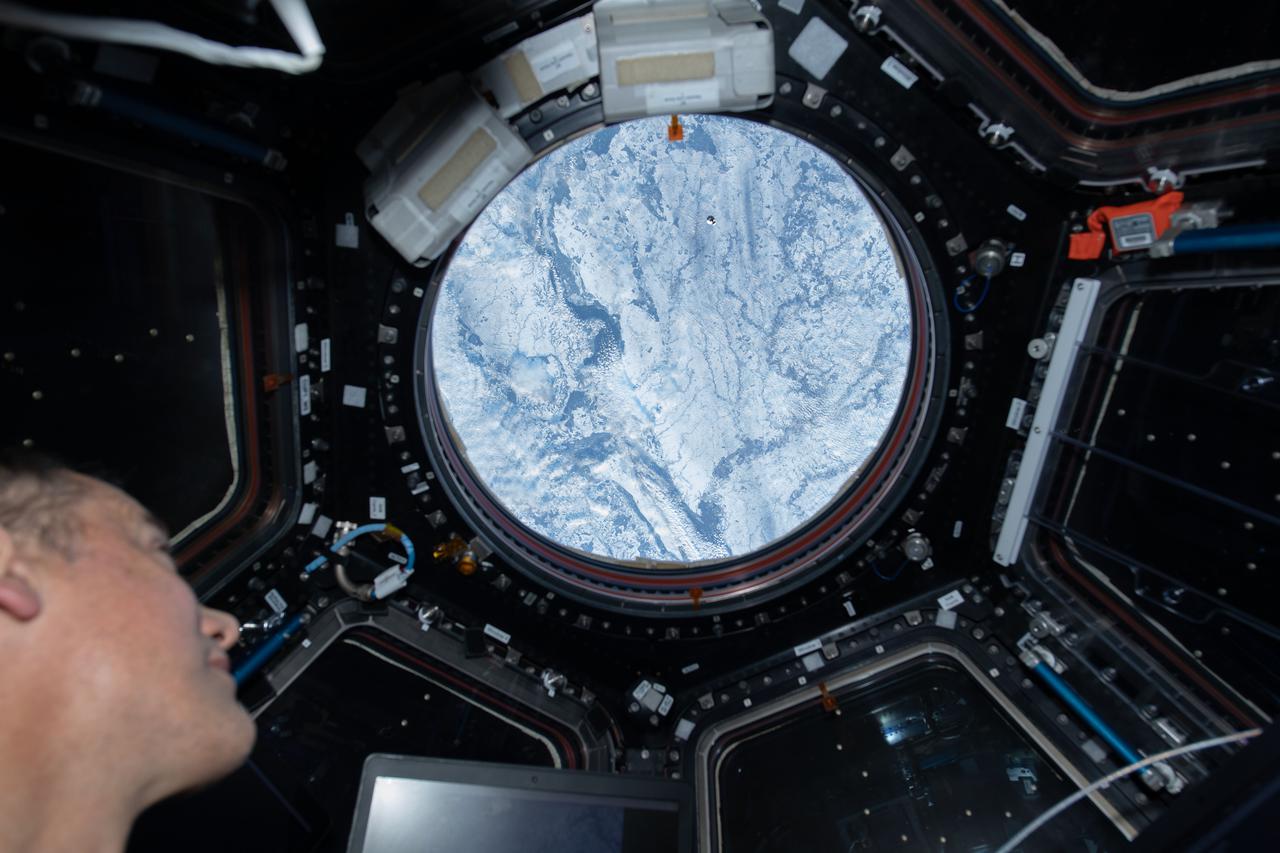
iss066e095334 (Dec. 22, 2021) --- NASA astronaut and Expedition 66 Flight Engineer Thomas Marshburn looks out of the cupola's main window at the approaching SpaceX Cargo Dragon vehicle as the International Space Station orbited 265 miles above northern Ukraine.
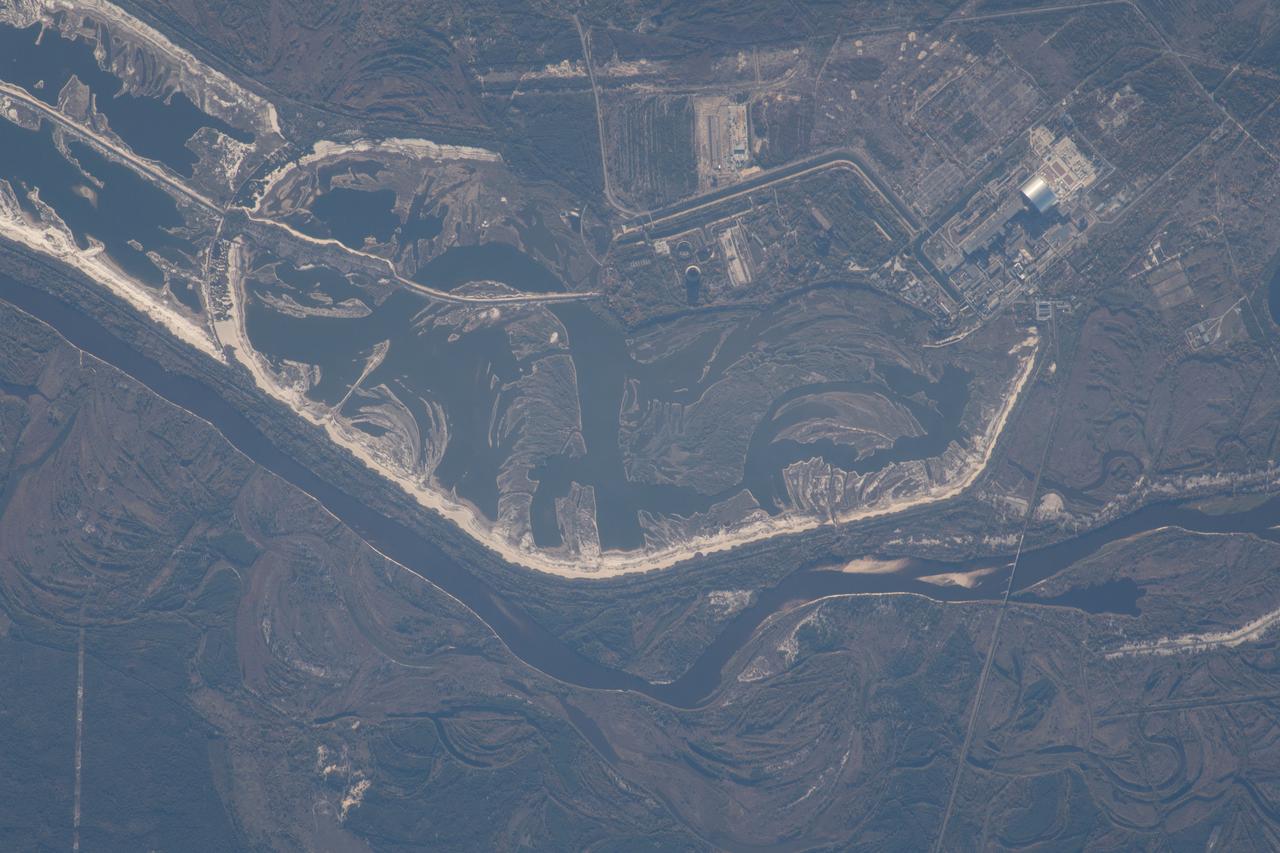
iss057e051419 (Oct. 14, 2018) --- The Chernobyl Nuclear Power Plant on the Pripyat River in northern Ukraine was pictured as the International Space Station orbited 257 miles above Eastern Europe. Across the Ukrainian border in Belarus, the Polesie State Radioecological Reserve was created to enclose territory most affected by radioactive fallout from the Chernobyl disaster.
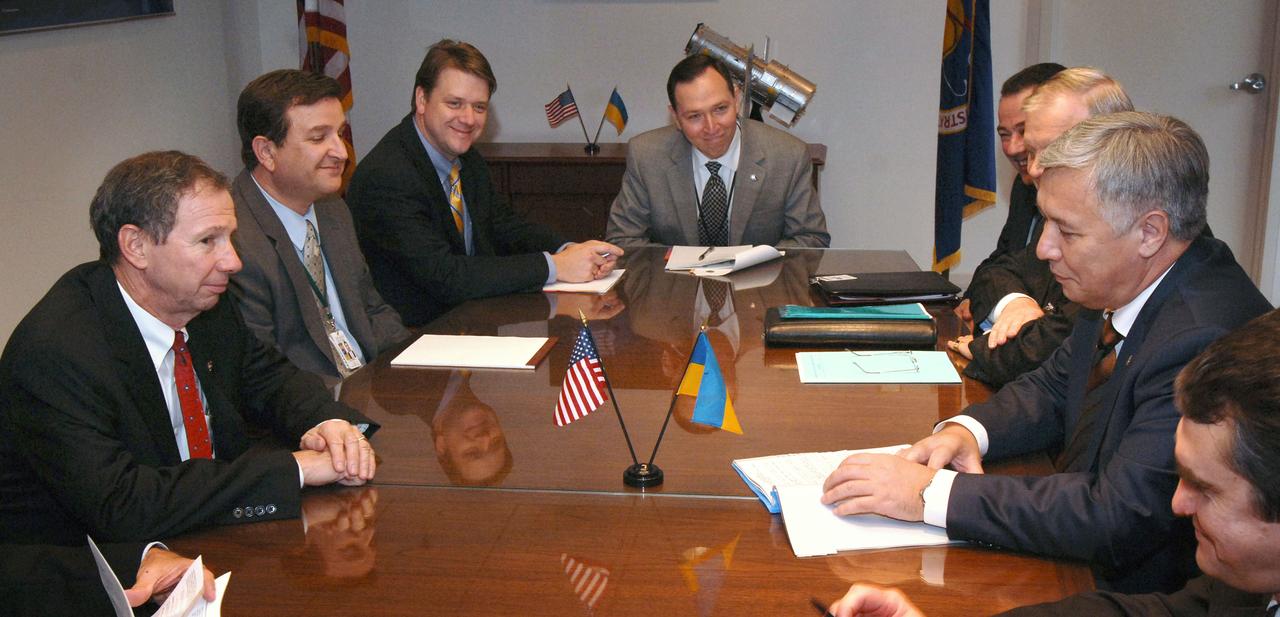
NASA Administrator Michael Griffin, foreground left, sits across the table from Yuriy Yekhanurov, Prime Minister of Ukraine, during a courtesy visit Tuesday, Nov. 1, 2005, at NASA Headquarters in Washington. Photo Credit: (NASA/Bill Ingalls)
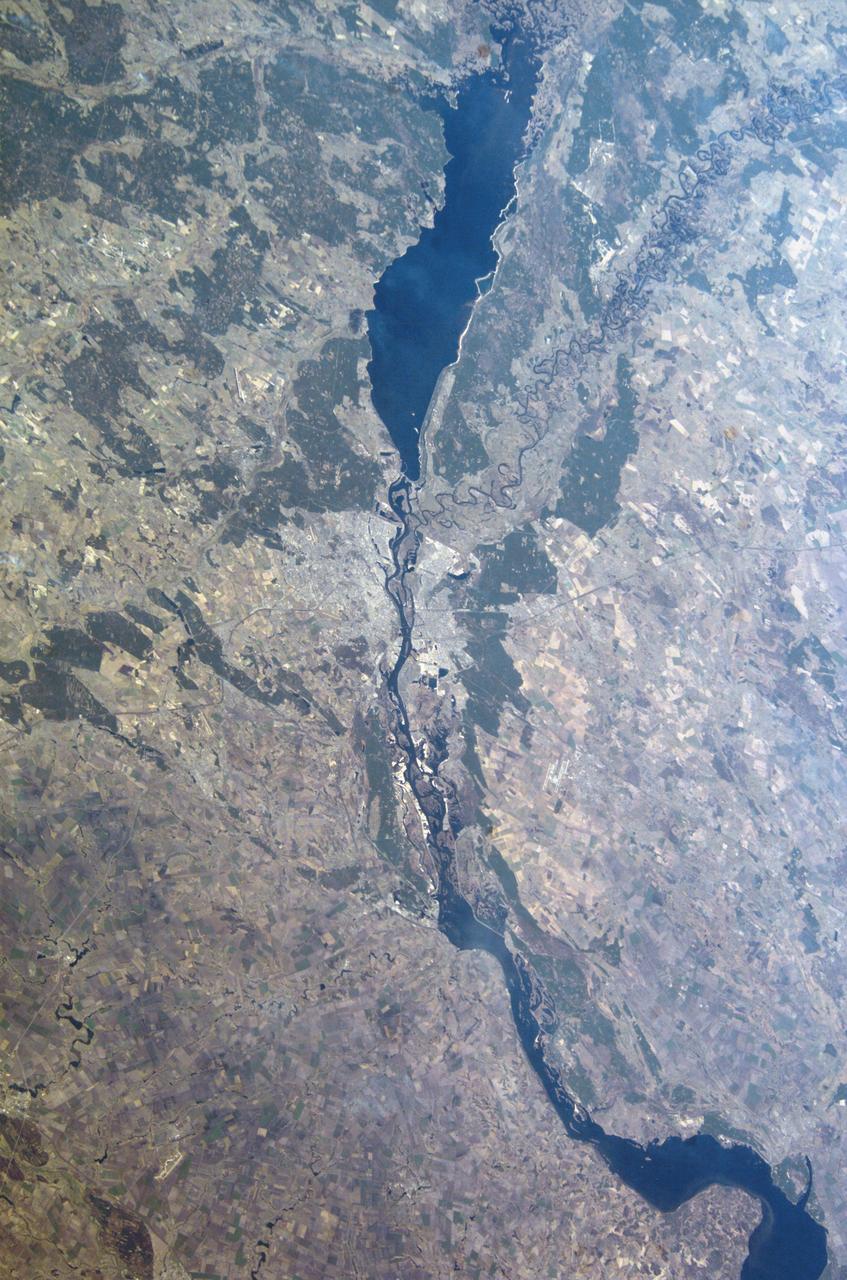
ISS008-E-20656 (4 April 2004) --- This image featuring the Ukrainian city of Kiev on a reservoir on the Dnepr River was taken by an Expedition 8 crewmember on the International Space Station (ISS). Kiev is the capital of Ukraine and home to nearly three million people and rich in the history of western civilization.
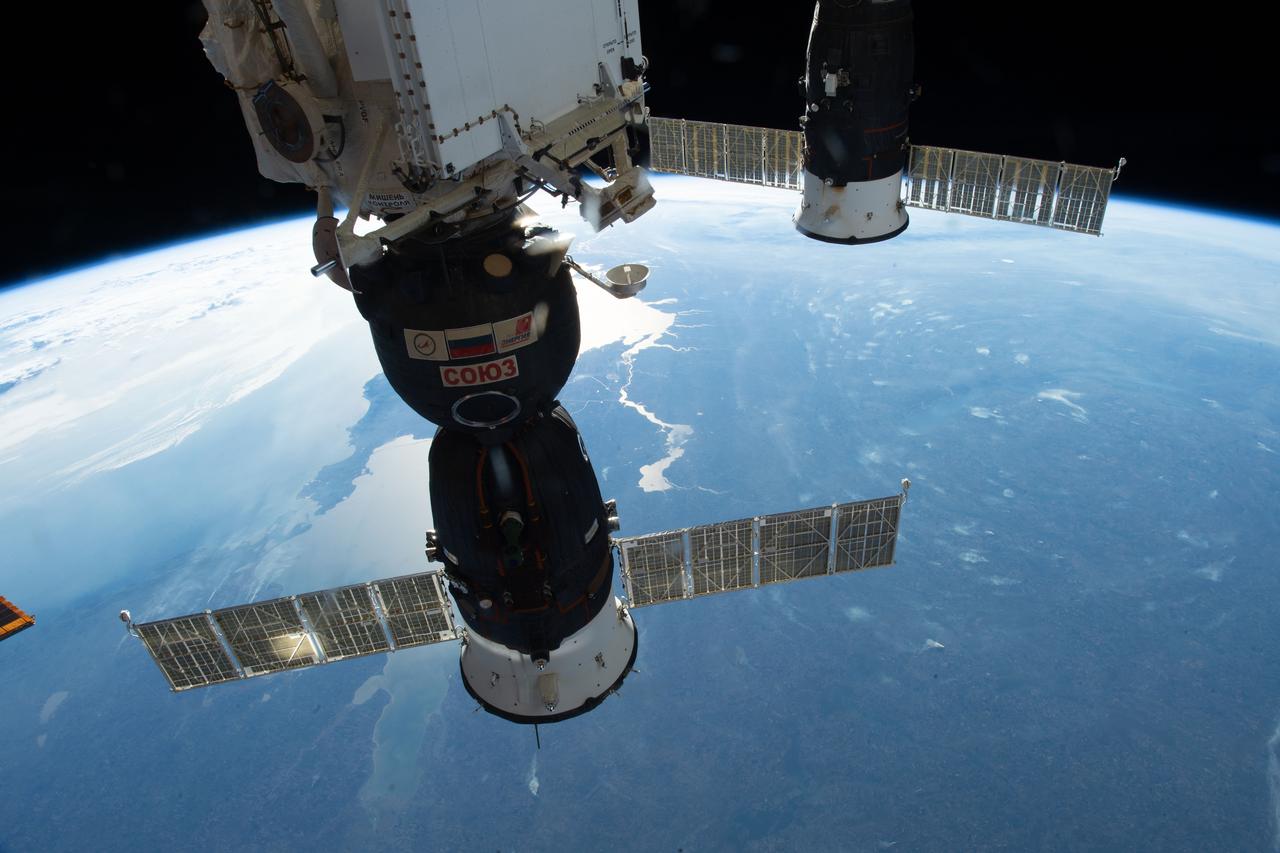
iss057e050440 (Oct. 13, 2018) --- Two Russian spacecraft, the Soyuz MS-09 crew ship (foreground) and the Progress 70 resupply ship, are pictured docked to the International Space Station as the orbital complex orbited nearly 257 miles above Ukraine.
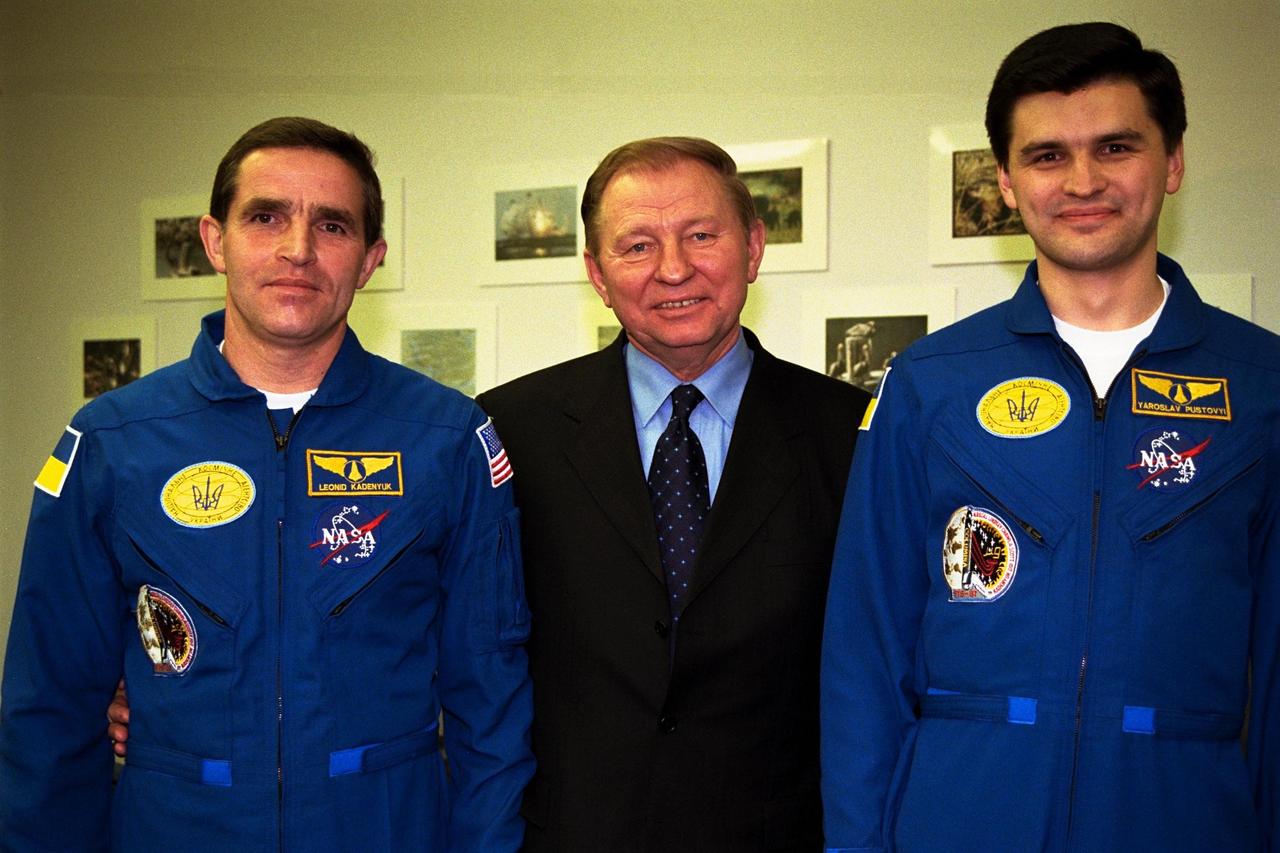
The president of the Ukraine, Leonid Kuchma, is flanked by Payload Specialist Leonid Kadenyuk, at left, and backup Payload Specialist Yaroslav Pustovyi, at right, both of the National Space Agency of Ukraine, during prelaunch activities leading up to the scheduled Nov. 19 launch of STS-87. STS-87 will be the fourth flight of the United States Microgravity Payload and the Spartan-201 deployable satellite. During the mission, Kadenyuk will pollinate Brassica rapa plants as part of the Collaborative Ukrainian Experiment, or CUE, aboard Columbia during its 16-day mission. The CUE experiment is a collection of 10 plant space biology experiments that will fly in Columbia's middeck and will feature an educational component that involves evaluating the effects of microgravity on Brassica rapa seedlings. Students in Ukrainian and American schools will participate in the same experiment with Kadenyuk in space. Kadenyuk will be flying his first Shuttle mission on STS-87
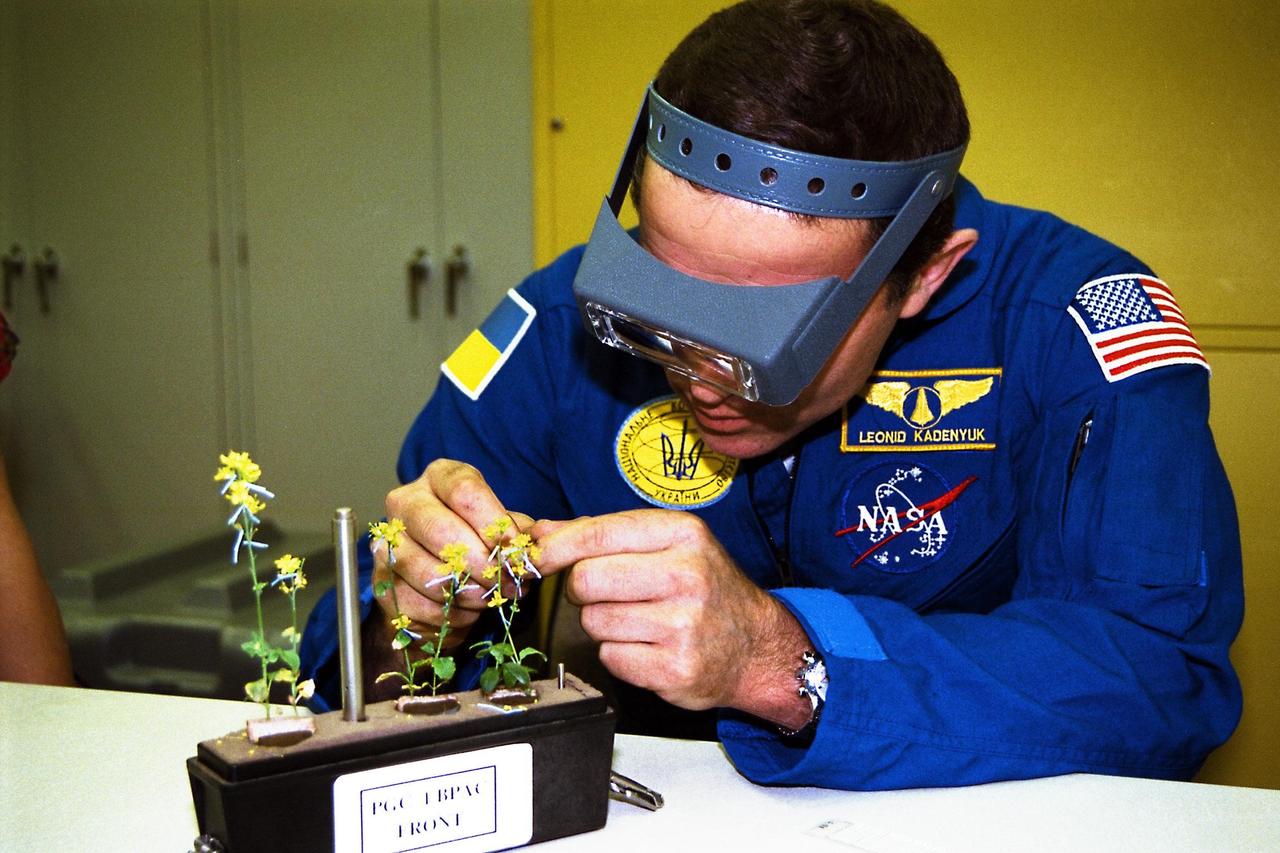
Participating in the Crew Equipment Integration Test (CEIT) at Kennedy Space Center is STS-87 Payload Specialist Leonid Kadenyuk of the National Space Agency of Ukraine (NSAU). Here, Cosmonaut Kadenyuk is inspecting flowers for pollination and fertilization, which will occur as part of the Collaborative Ukrainian Experiment, or CUE, aboard Columbia during its 16-day mission, scheduled to take off from KSC’s Launch Pad 39-B on Nov. 19. The CUE experiment is a collection of 10 plant space biology experiments that will fly in Columbia’s middeck and feature an educational component that involves evaluating the effects of microgravity on the pollinating Brassica rapa seedlings. Students in Ukrainian and American schools will participate in the same experiment on the ground and have several live opportunities to discuss the experiment with Kadenyuk in Space. Kadenyuk of the Ukraine will be flying his first Shuttle mission on STS-87
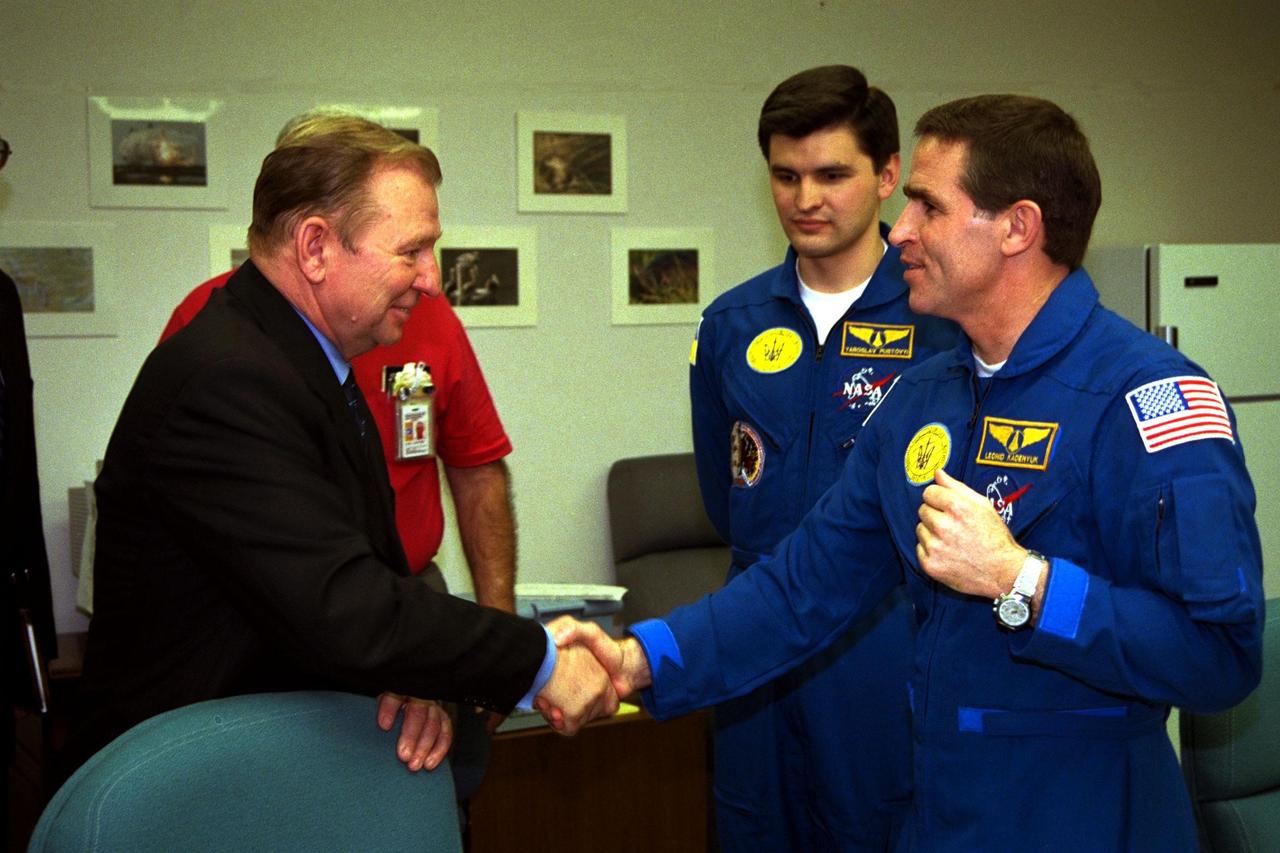
The president of the Ukraine, Leonid Kuchma, shakes hands with Payload Specialist Leonid Kadenyuk, at right, as backup Payload Specialist Yaroslav Pustovyi, both of the National Space Agency of Ukraine, looks on during prelaunch activities leading up to the scheduled Nov. 19 launch of STS-87. STS-87 will be the fourth flight of the United States Microgravity Payload and the Spartan-201 deployable satellite. During the mission, Kadenyuk will pollinate Brassica rapa plants as part of the Collaborative Ukrainian Experiment, or CUE, aboard Columbia during its 16-day mission. The CUE experiment is a collection of 10 plant space biology experiments that will fly in Columbia's middeck and will feature an educational component that involves evaluating the effects of microgravity on Brassica rapa seedlings. Students in Ukrainian and American schools will participate in the same experiment with Kadenyuk in space. Kadenyuk will be flying his first Shuttle mission on STS-87
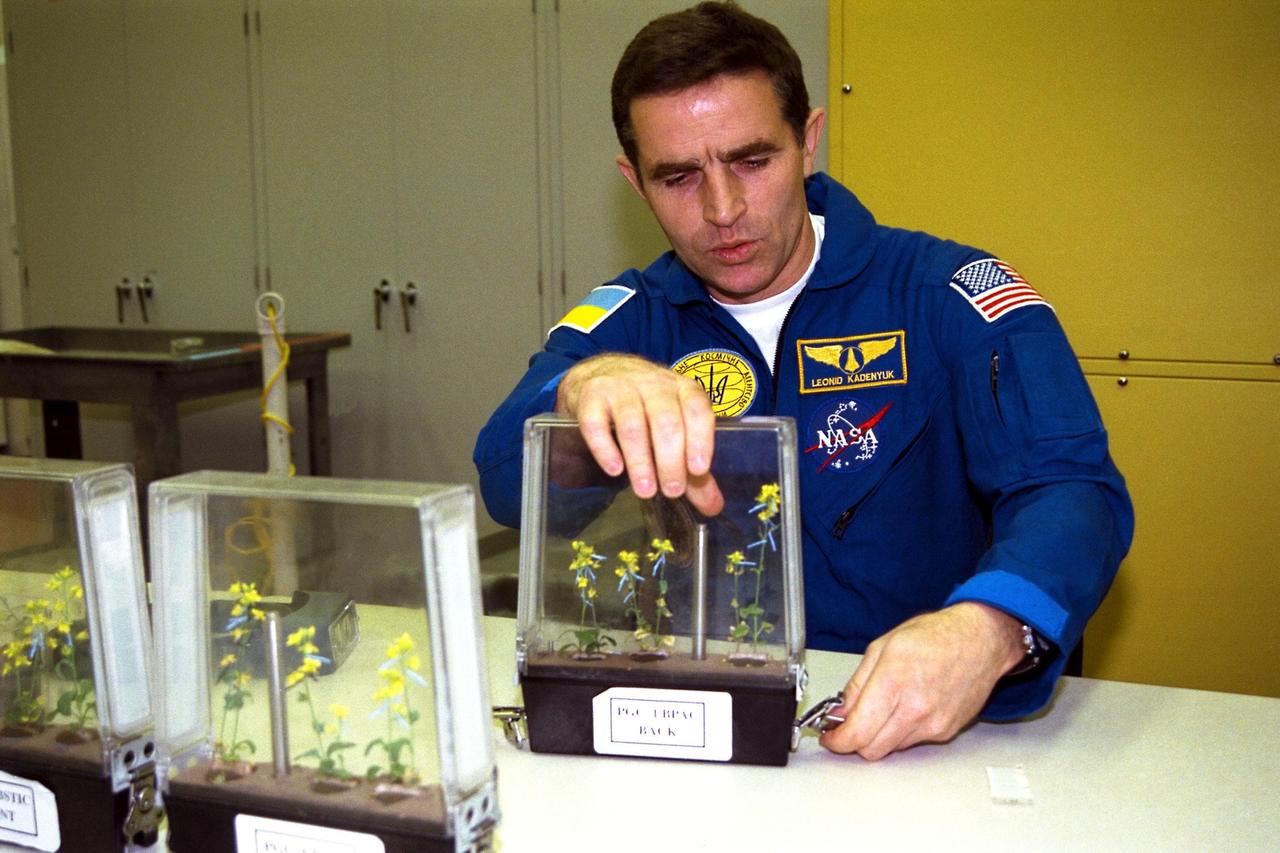
Participating in the Crew Equipment Integration Test (CEIT) at Kennedy Space Center is STS-87 Payload Specialist Leonid Kadenyuk of the National Space Agency of Ukraine (NSAU). Here, Cosmonaut Kadenyuk is inspecting flowers for pollination and fertilization, which will occur as part of the Collaborative Ukrainian Experiment, or CUE, aboard Columbia during its 16-day mission, scheduled to take off from KSC’s Launch Pad 39-B on Nov. 19. The CUE experiment is a collection of 10 plant space biology experiments that will fly in Columbia’s middeck and feature an educational component that involves evaluating the effects of microgravity on the pollinating Brassica rapa seedlings. Students in Ukrainian and American schools will participate in the same experiment on the ground and have several live opportunities to discuss the experiment with Kadenyuk in Space. Kadenyuk of the Ukraine will be flying his first Shuttle mission on STS-87
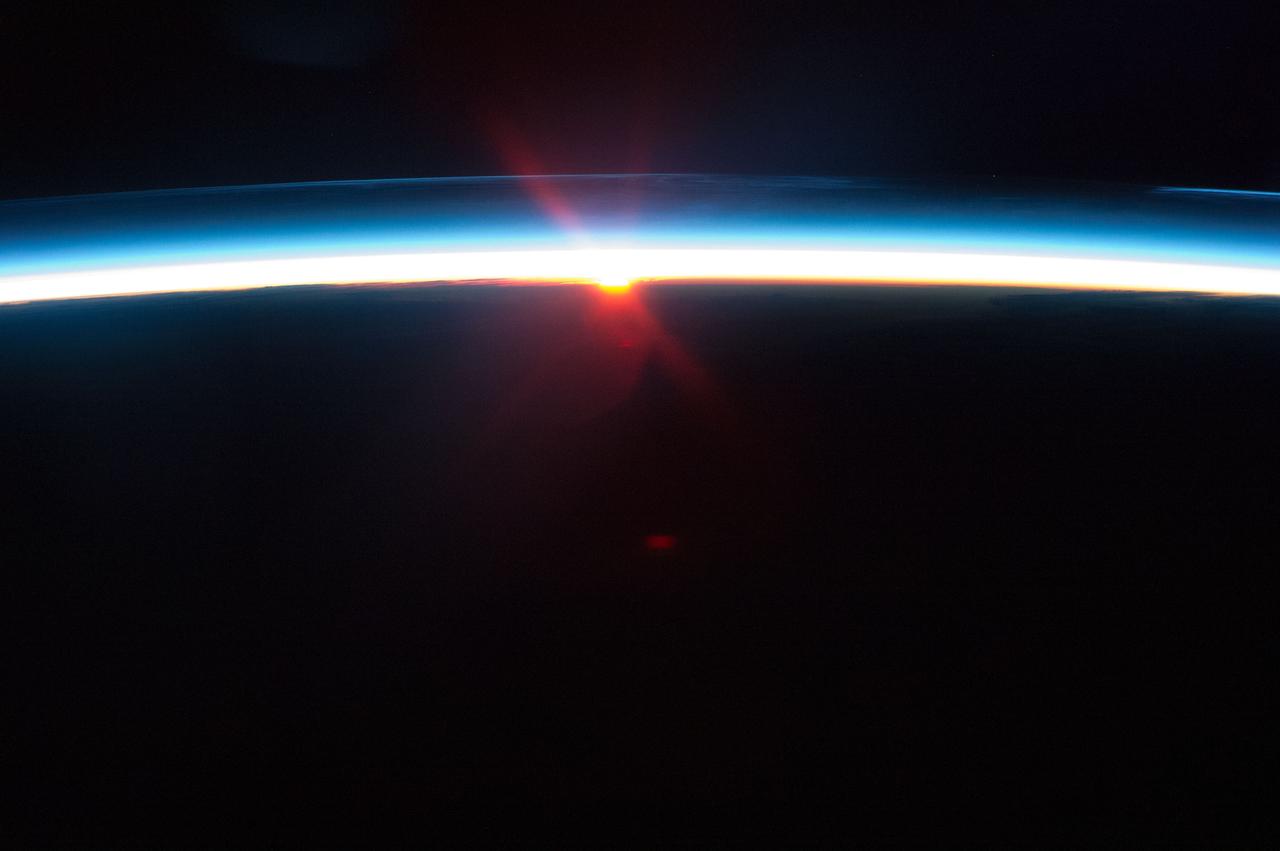
ISS040-E-87351 (1 Aug. 2014) --- This sunset shot, photographed by an Expedition 40 crew member on the International Space Station, shows polar mesospheric clouds only as a thin bright line ? far above the lowest, yellow-brown weather layer of the atmosphere (known as the troposphere) when the space station was flying over southern Ukraine on Aug. 1, 2014.
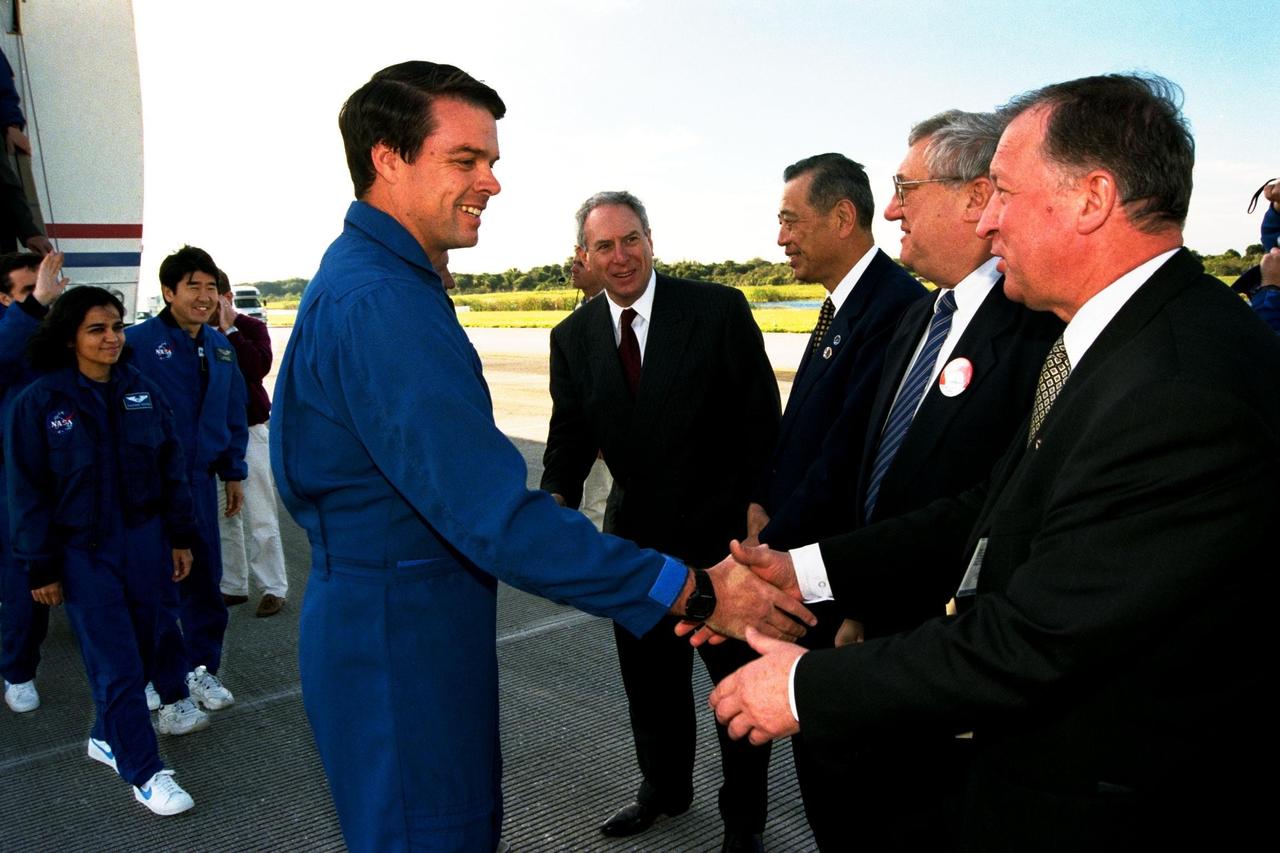
STS-87 Commander Kevin Kregel, center, shakes hands with the deputy director general of the National Space Agency of Ukraine (NSAU), Eduard Kuznetsov, at far right. Next to Kuznetsov is the Honorable Yuri Shcherbak, Ukraine's ambassador to the United States, standing with the president of the National Space Development Agency (NASDA) of Japan, Isao Uchida, and NASA Administrator Daniel Goldin (center). Approaching the VIPs from the left of the photo are Mission Specialists Kalpana Chawla, Ph.D., and Takao Doi, Ph.D., of NASDA. STS-87 concluded its mission with a main gear touchdown at 7:20:04 a.m. EST Dec. 5, at KSC's Shuttle Landing Facility Runway 33, drawing the 15-day, 16-hour and 34-minute-long mission of 6.5 million miles to a close. Also onboard the orbiter were Pilot Steven Lindsey; Mission Specialist Winston Scott; and Payload Specialist Leonid Kadenyuk of NSAU. During the 88th Space Shuttle mission, the crew performed experiments on the United States Microgravity Payload-4 and pollinated plants as part of the Collaborative Ukrainian Experiment. This was the 12th landing for Columbia at KSC and the 41st KSC landing in the history of the Space Shuttle program
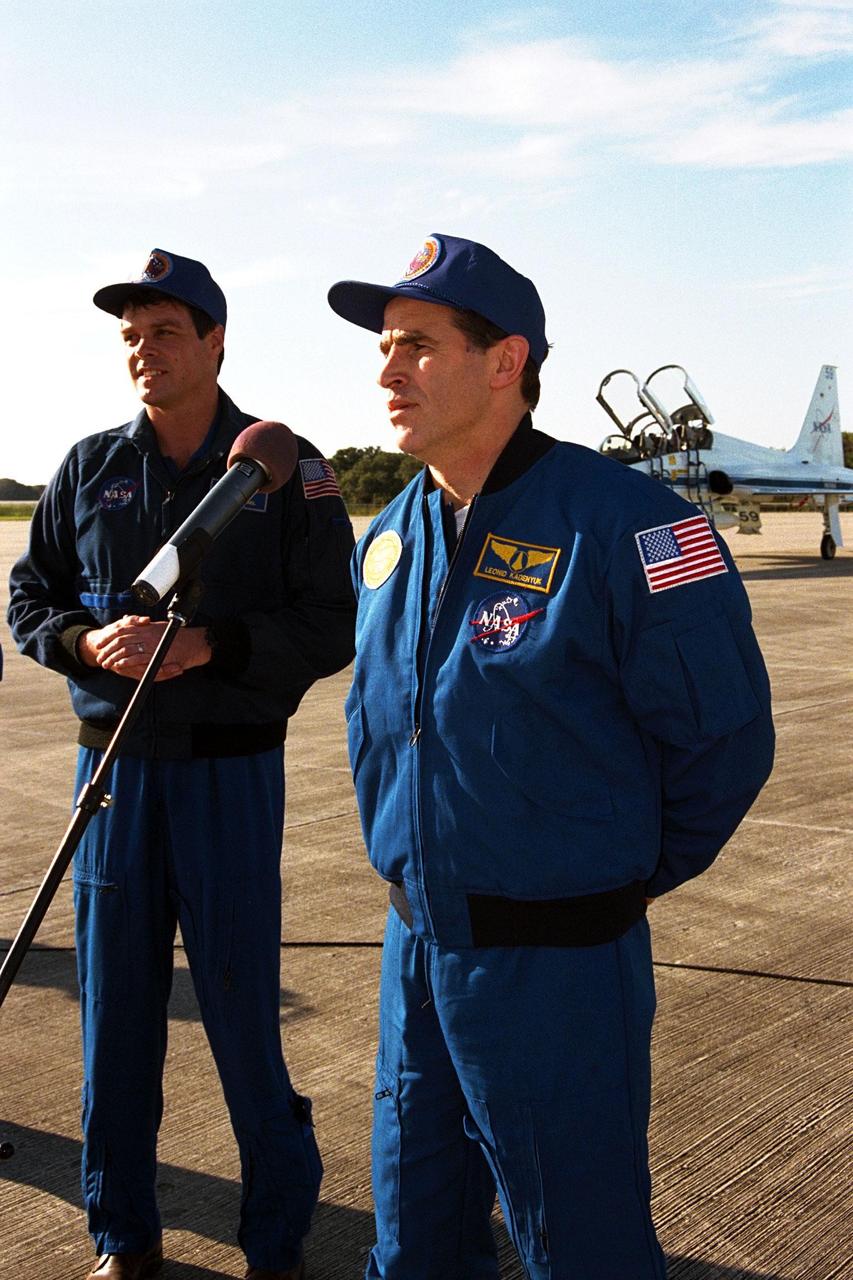
As STS-87 Commander Kevin Kregel looks on, Payload Specialist Leonid Kadenyuk of the National Space Agency of Ukraine addresses members of the press and media at Kennedy Space Center's Shuttle Landing Facility after arriving for the final prelaunch activities leading up to the scheduled Nov. 19 liftoff. Other STS-87 crew members not pictured are Pilot Steven Lindsey; and Mission Specialists Kalpana Chawla, Ph.D.; Takao Doi, Ph.D., of the National Space Development Agency of Japan; and Winston Scott. STS-87 will be the fourth flight of the United States Microgravity Payload and the Spartan-201 deployable satellite
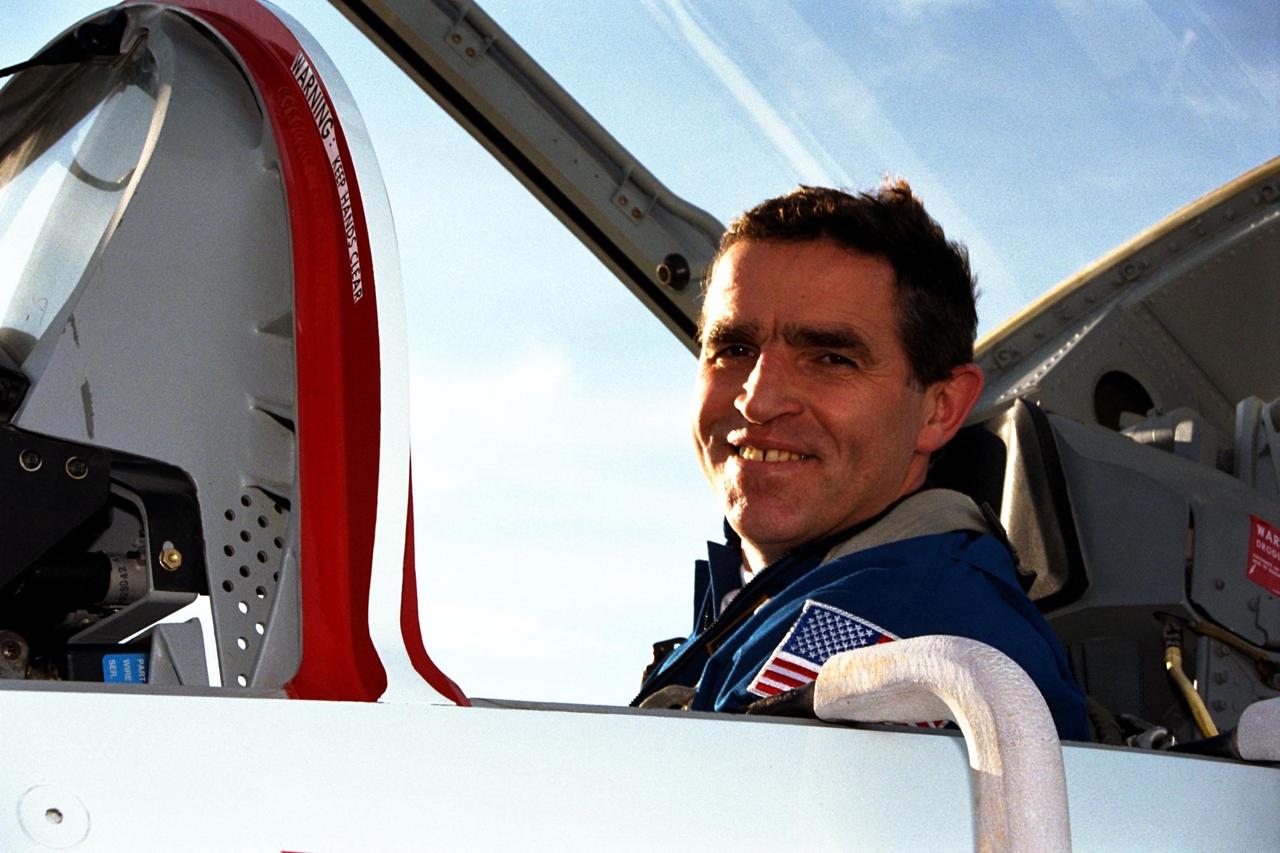
STS-87 Payload Specialist Leonid Kadenyuk of the National Space Agency of Ukraine arrives at Kennedy Space Center's Shuttle Landing Facility aboard a T-38 jet for the final prelaunch activities leading up to the scheduled Nov. 19 liftoff. The other STS-87 crew members are Commander Kevin Kregel; Pilot Steven Lindsey; and Mission Specialists Kalpana Chawla, Ph.D.; Takao Doi, Ph.D., of the National Space Development Agency of Japan; and Winston Scott. STS-87 will be the fourth flight of the United States Microgravity Payload and the Spartan-201 deployable satellite
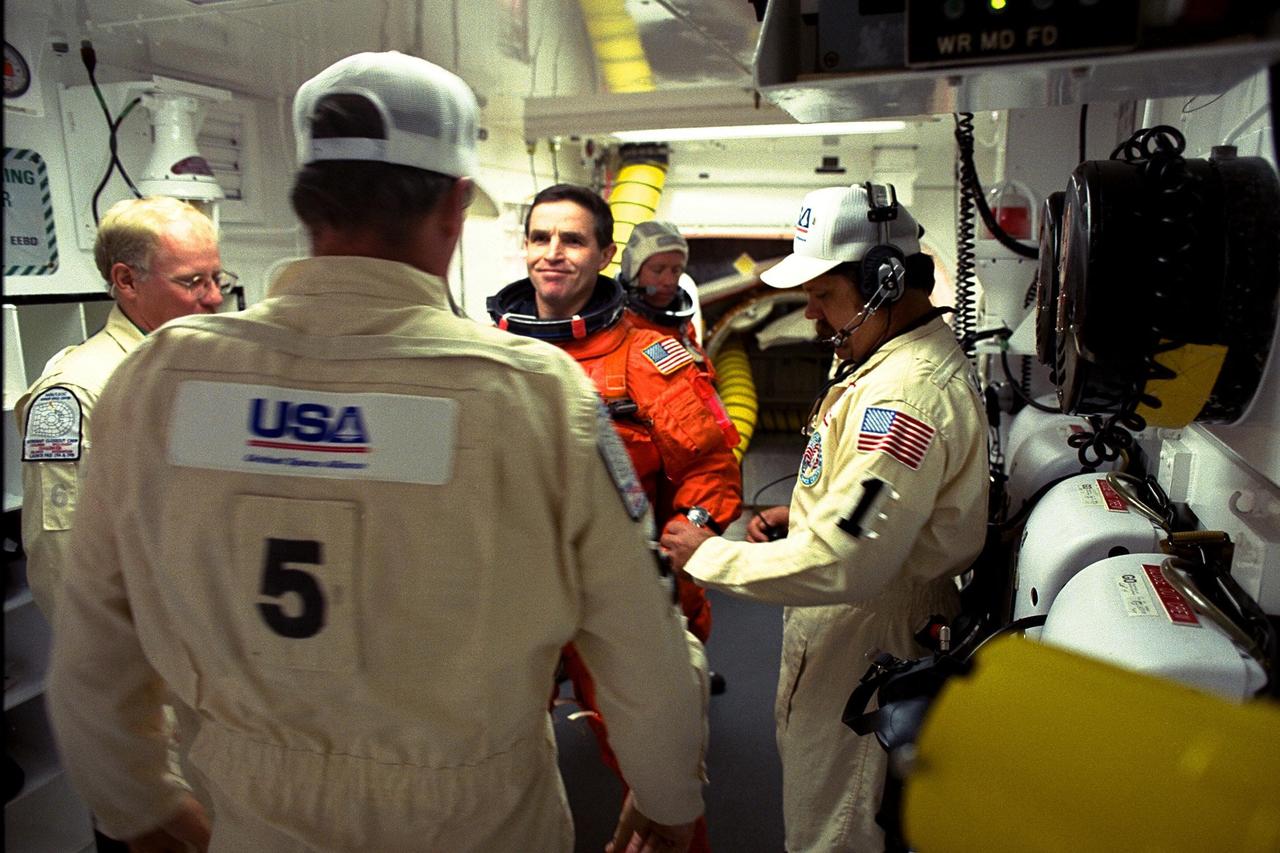
STS-87 Payload Specialist Leonid Kadenyuk of the National Space Agency of Ukraine is assisted with final preparations before launch in the white room at Launch Pad 39B by Danny Wyatt, NASA quality assurance specialist, at left; George Schram, USA mechanical technician, facing Kadenyuk; and Travis Thompson, USA orbiter vehicle closeout chief, at right. STS-87 is the fourth flight of the United States Microgravity Payload and Spartan-201. The 16-day mission will include the Collaborative Ukrainian Experiment (CUE), a collection of 10 plant space biology experiments that will fly in Columbia’s middeck and will feature an educational component that involves evaluating the effects of microgravity on Brassica rapa seedlings
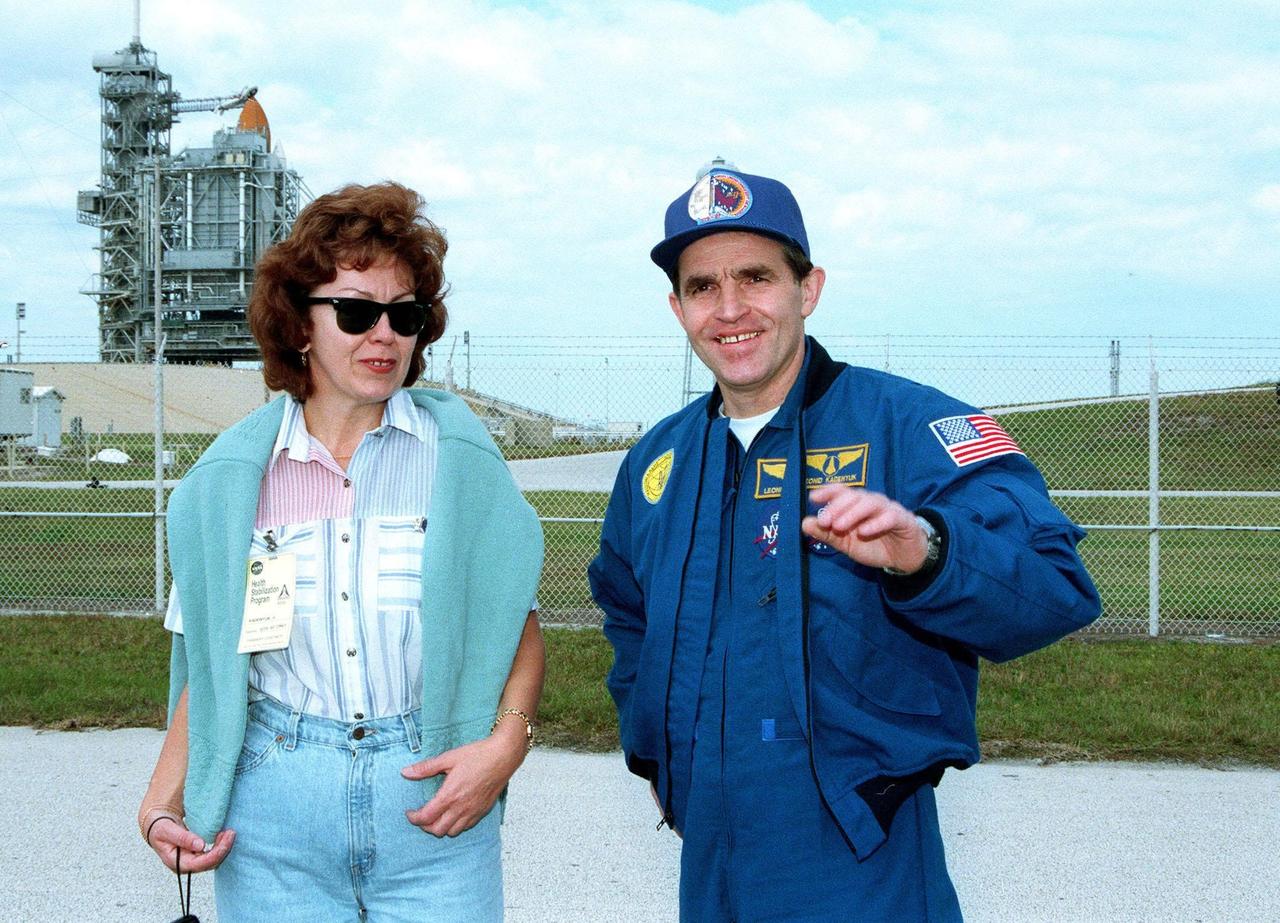
STS-87 Payload Specialist Leonid Kadenyuk of the National Space Agency of Ukraine poses with his wife, Vera Kadenyuk, in front of Kennedy Space Center's Launch Pad 39B during final prelaunch activities leading up to the scheduled Nov. 19 liftoff. The other STS-87 crew members are Commander Kevin Kregel; Pilot Steven Lindsey; and Mission Specialists Kalpana Chawla, Ph.D.; Winston Scott; and Takao Doi, Ph.D., National Space Development Agency of Japan. STS-87 will be the fourth flight of the United States Microgravity Payload and the Spartan-201 deployable satellite
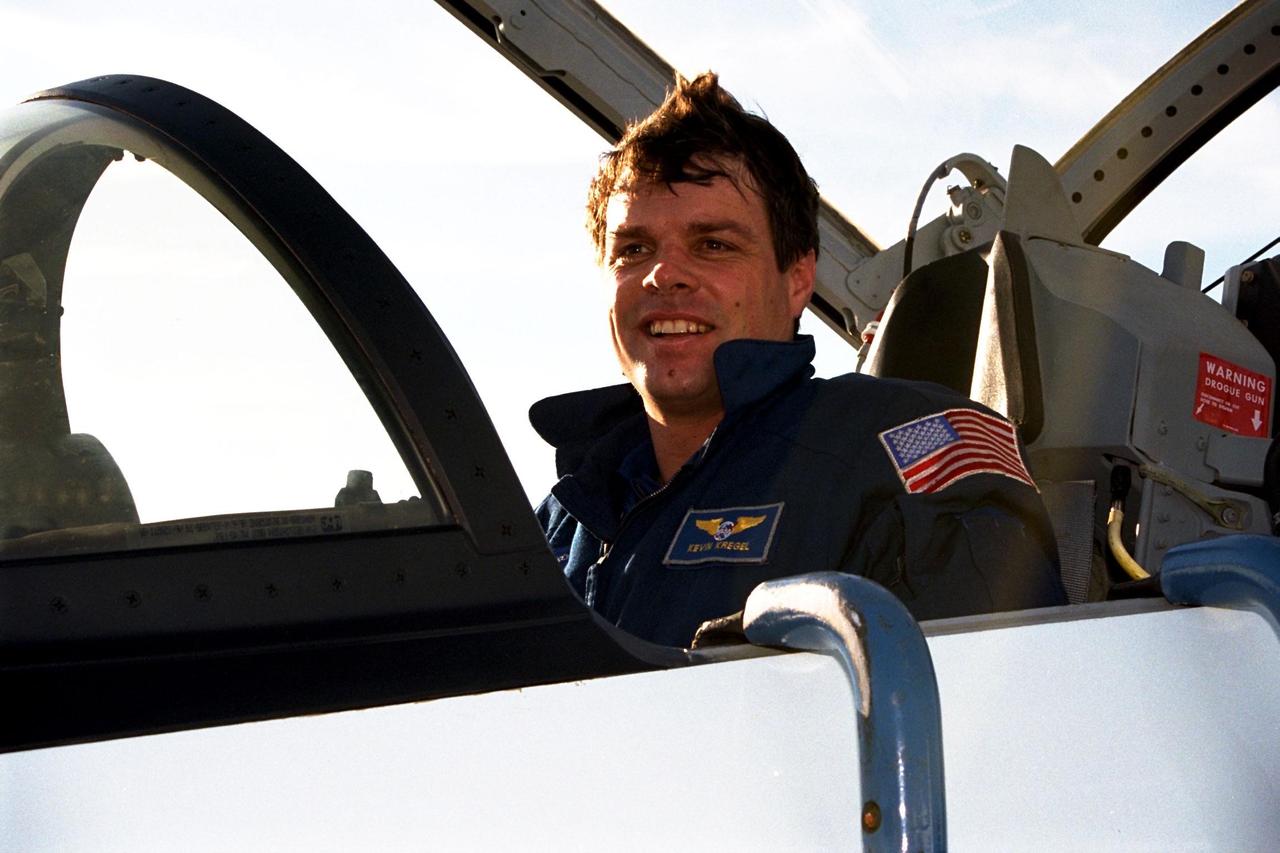
STS-87 Commander Kevin Kregel arrives at Kennedy Space Center's Shuttle Landing Facility aboard a T-38 jet for the final prelaunch activities leading up to the scheduled Nov. 19 liftoff. The other STS-87 crew members are Pilot Steven Lindsey; Mission Specialists Kalpana Chawla, Ph.D.; Takao Doi, Ph.D., of the National Space Development Agency of Japan; and Winston Scott; and Payload Specialist Leonid Kadenyuk of the National Space Agency of Ukraine. STS-87 will be the fourth flight of the United States Microgravity Payload and the Spartan-201 deployable satellite
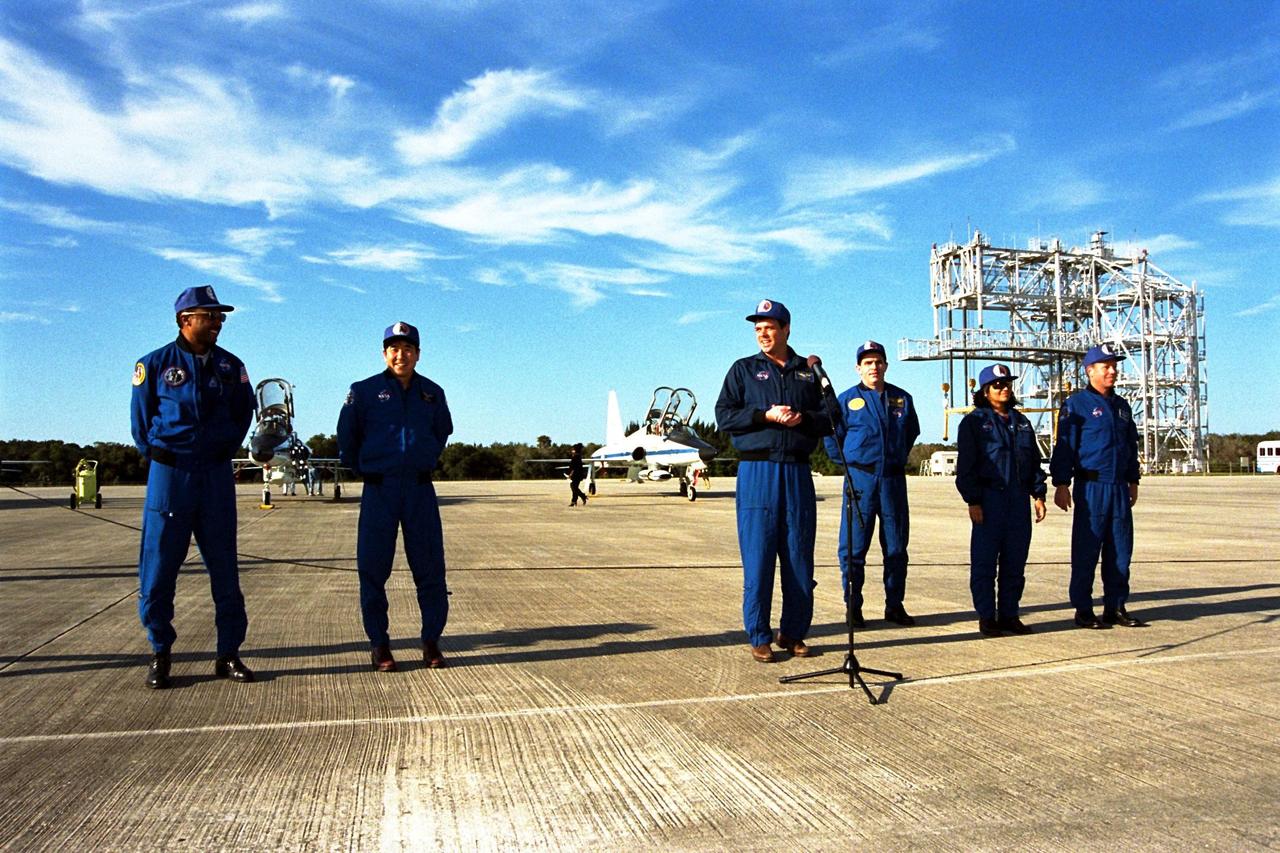
STS-87 Commander Kevin Kregel addresses members of the press and media at Kennedy Space Center's Shuttle Landing Facility after arriving for the final prelaunch activities leading up to the scheduled Nov. 19 liftoff. The STS-87 crew members are, from left to right, Mission Specialists Winston Scott and Takao Doi, Ph.D., of the National Space Development Agency of Japan; Commander Kevin Kregel; Payload Specialist Leonid Kadenyuk of the National Space Agency of Ukraine; Mission Specialist Kalpana Chawla, Ph.D.; and Pilot Steven Lindsey. STS-87 will be the fourth flight of the United States Microgravity Payload and the Spartan-201 deployable satellite
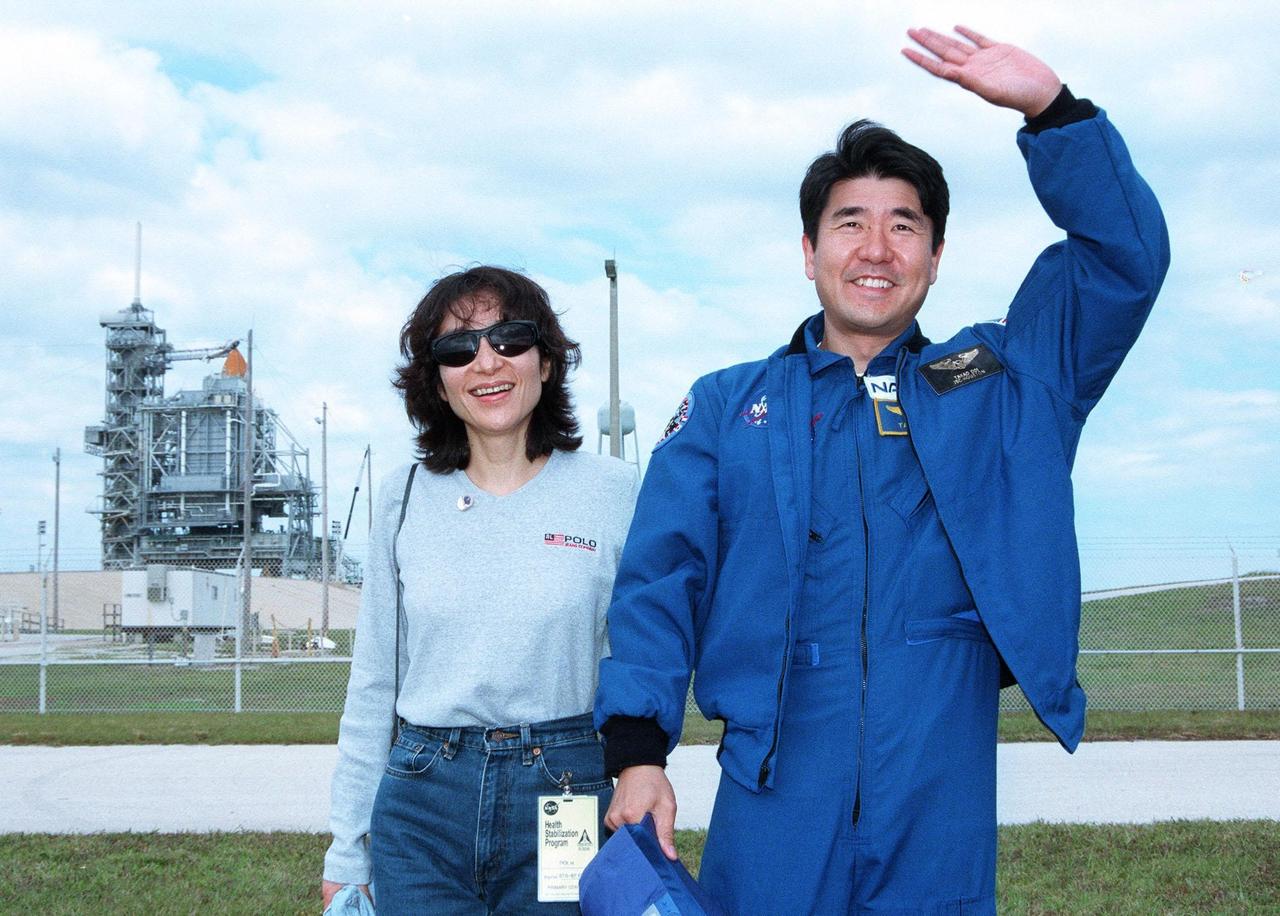
STS-87 Mission Specialist Takao Doi, Ph.D., of the National Space Development Agency of Japan poses with his wife, Hitomi Doi, in front of Kennedy Space Center's Launch Pad 39B during final prelaunch activities leading up to the scheduled Nov. 19 liftoff. The other STS-87 crew members are Commander Kevin Kregel; Pilot Steven Lindsey; Mission Specialists Kalpana Chawla, Ph.D., and Winston Scott; and Payload Specialist Leonid Kadenyuk of the National Space Agency of Ukraine. STS-87 will be the fourth flight of the United States Microgravity Payload and the Spartan-201 deployable satellite
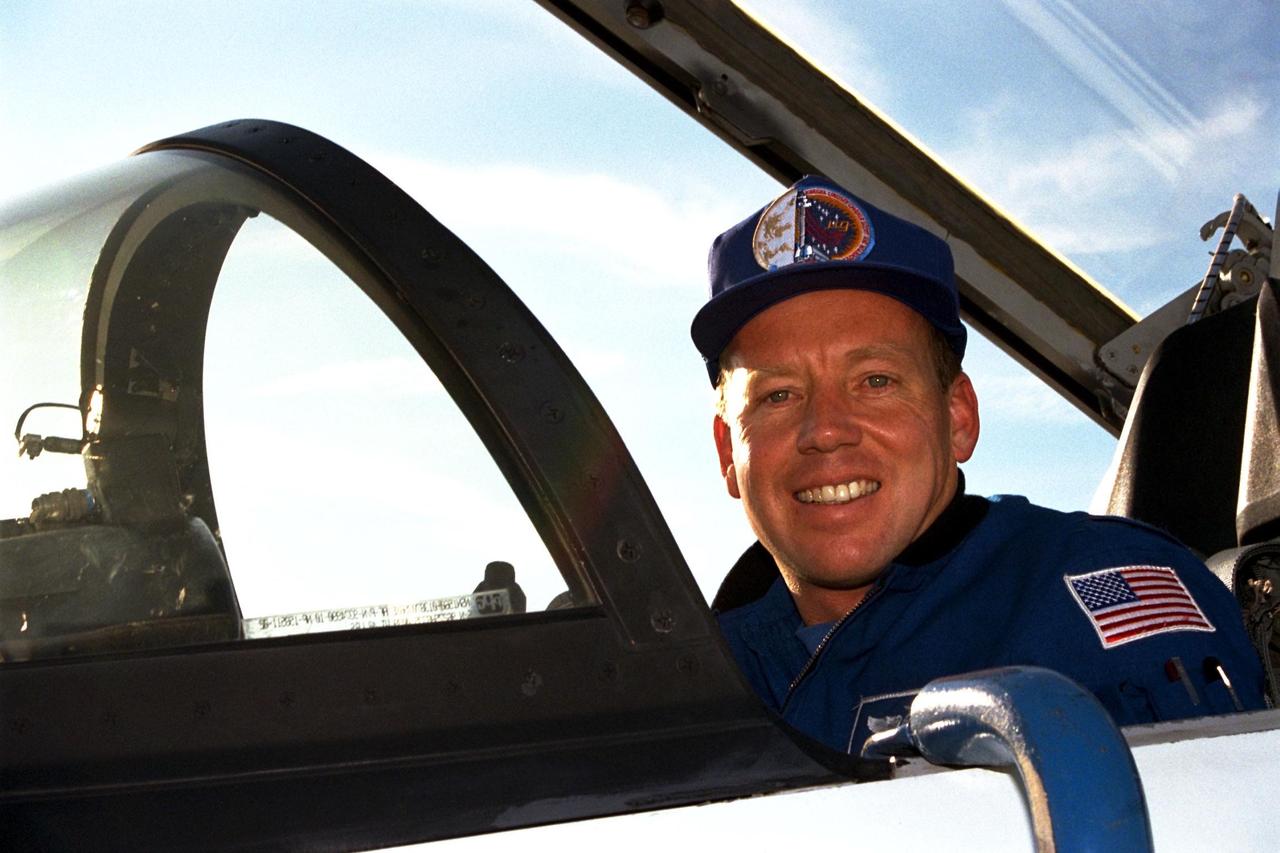
STS-87 Pilot Steven Lindsey arrives at Kennedy Space Center's Shuttle Landing Facility aboard a T-38 jet for the final prelaunch activities leading up to the scheduled Nov. 19 liftoff. The other STS-87 crew members are Commander Kevin Kregel; Mission Specialists Kalpana Chawla, Ph.D.; Takao Doi, Ph.D., of the National Space Development Agency of Japan; and Winston Scott; and Payload Specialist Leonid Kadenyuk of the National Space Agency of Ukraine. STS-87 will be the fourth flight of the United States Microgravity Payload and the Spartan-201 deployable satellite
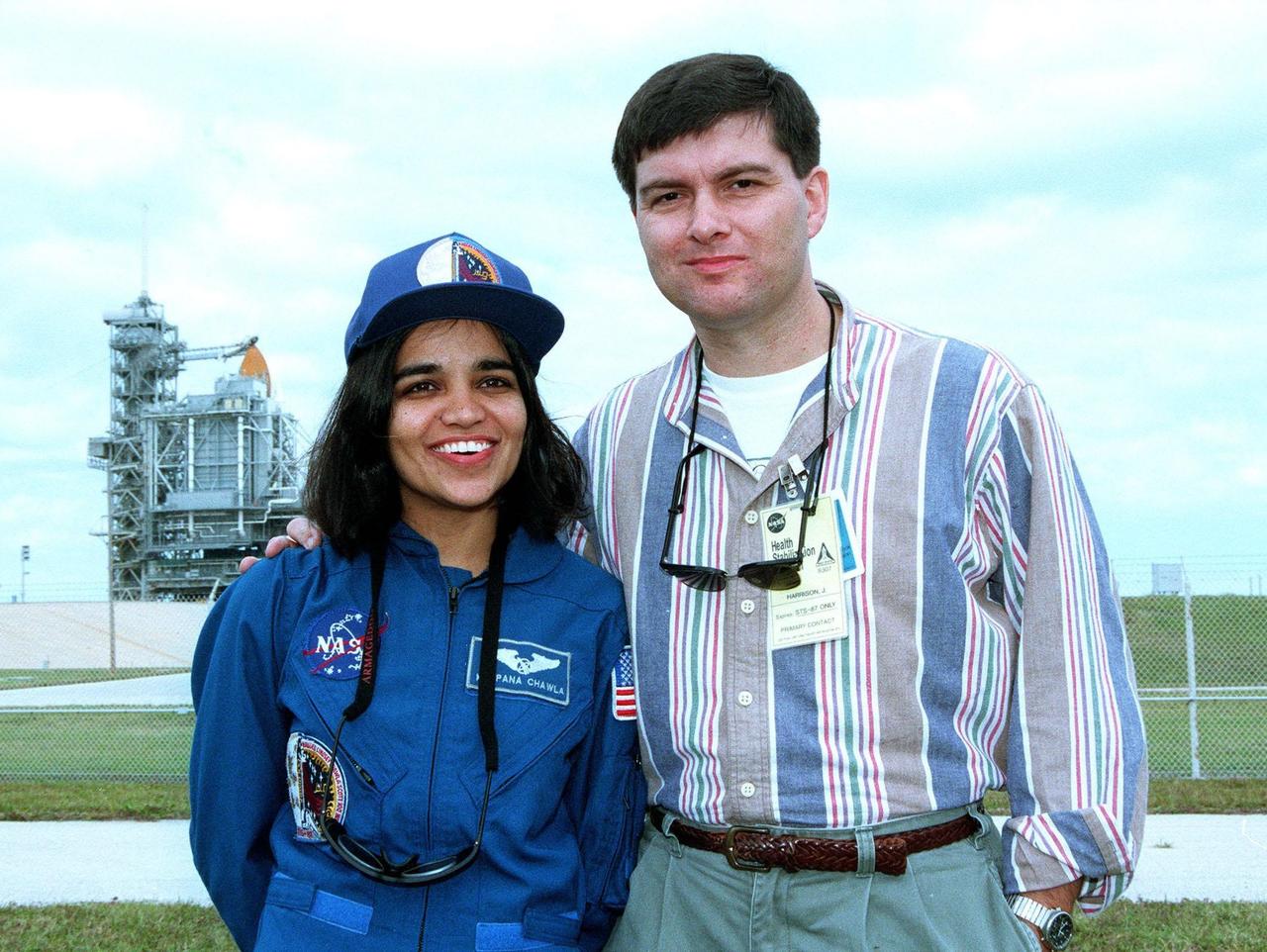
STS-87 Mission Specialist Kalpana Chawla, Ph.D., poses with her husband, Jean-Pierre Harrison, in front of Kennedy Space Center's Launch Pad 39B during final prelaunch activities leading up to the scheduled Nov. 19 liftoff. The other STS-87 crew members are Commander Kevin Kregel; Pilot Steven Lindsey; Mission Specialists Winston Scott and Takao Doi, Ph.D., of the National Space Development Agency of Japan; and Payload Specialist Leonid Kadenyuk of the National Space Agency of Ukraine. STS-87 will be the fourth flight of the United States Microgravity Payload and the Spartan-201 deployable satellite
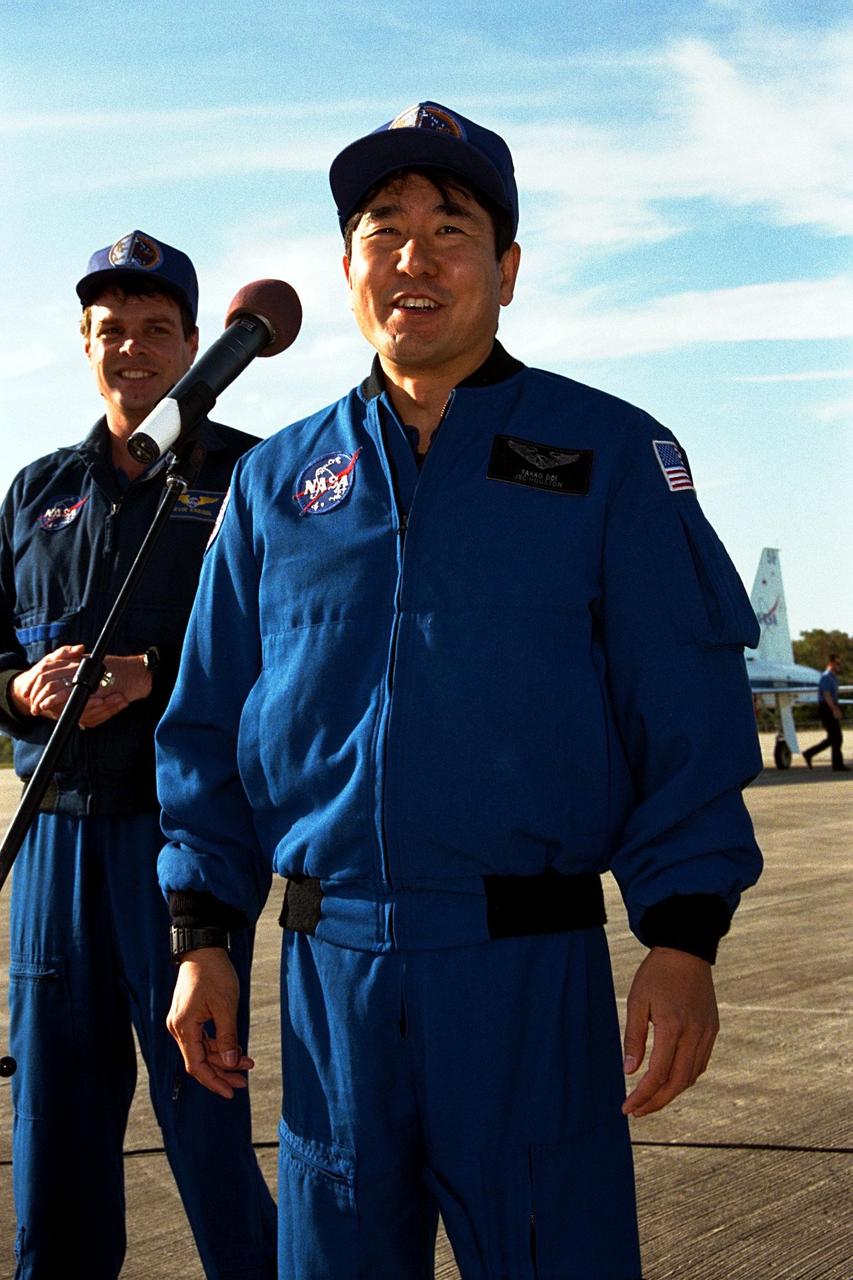
As STS-87 Commander Kevin Kregel looks on, Mission Specialist Takao Doi, Ph.D., of the National Space Development Agency of Japan addresses members of the press and media at Kennedy Space Center's Shuttle Landing Facility after arriving for the final prelaunch activities leading up to the scheduled Nov. 19 liftoff. Other STS-87 crew members not pictured are Pilot Steven Lindsey; Mission Specialists Kalpana Chawla, Ph.D., and Winston Scott; and Payload Specialist Leonid Kadenyuk of the National Space Agency of Ukraine. STS-87 will be the fourth flight of the United States Microgravity Payload and the Spartan-201 deployable satellite
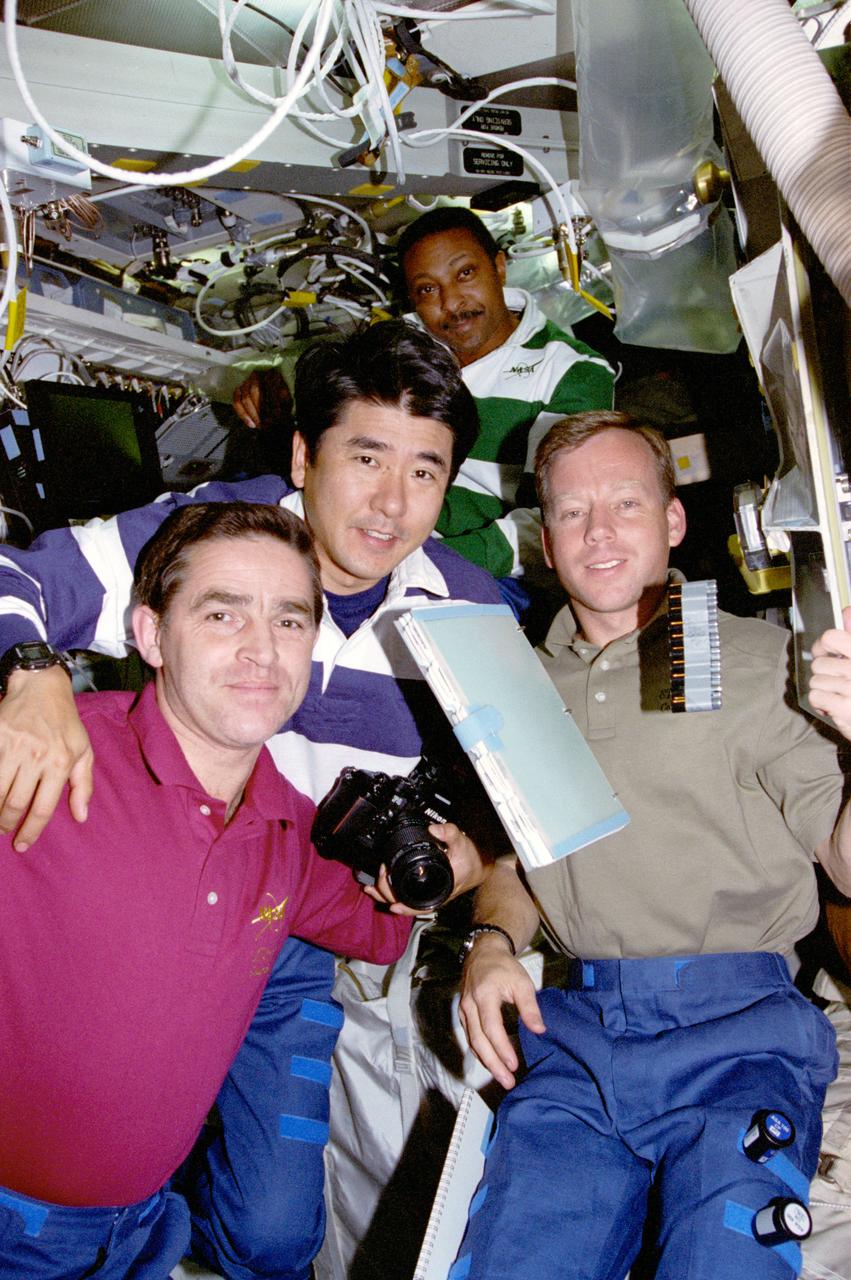
STS087-353-034 (19 November - 5 December 1997) --- Two-thirds of the crew members are pictured on the mid-deck of the Earth-orbiting Space Shuttle Columbia. From the left are Leonid Kadenyuk, payload specialist of the Ukraine; Takao Doi, international mission specialist representing Japan's National Space Development Agency (NASDA); Winston E. Scott, mission specialist; and Steven W. Lindsey, pilot. Doi was joined on two Extravehicular Activities (EVA) during the 16-day United States Microgravity Payload (USMP-4) mission by Scott.
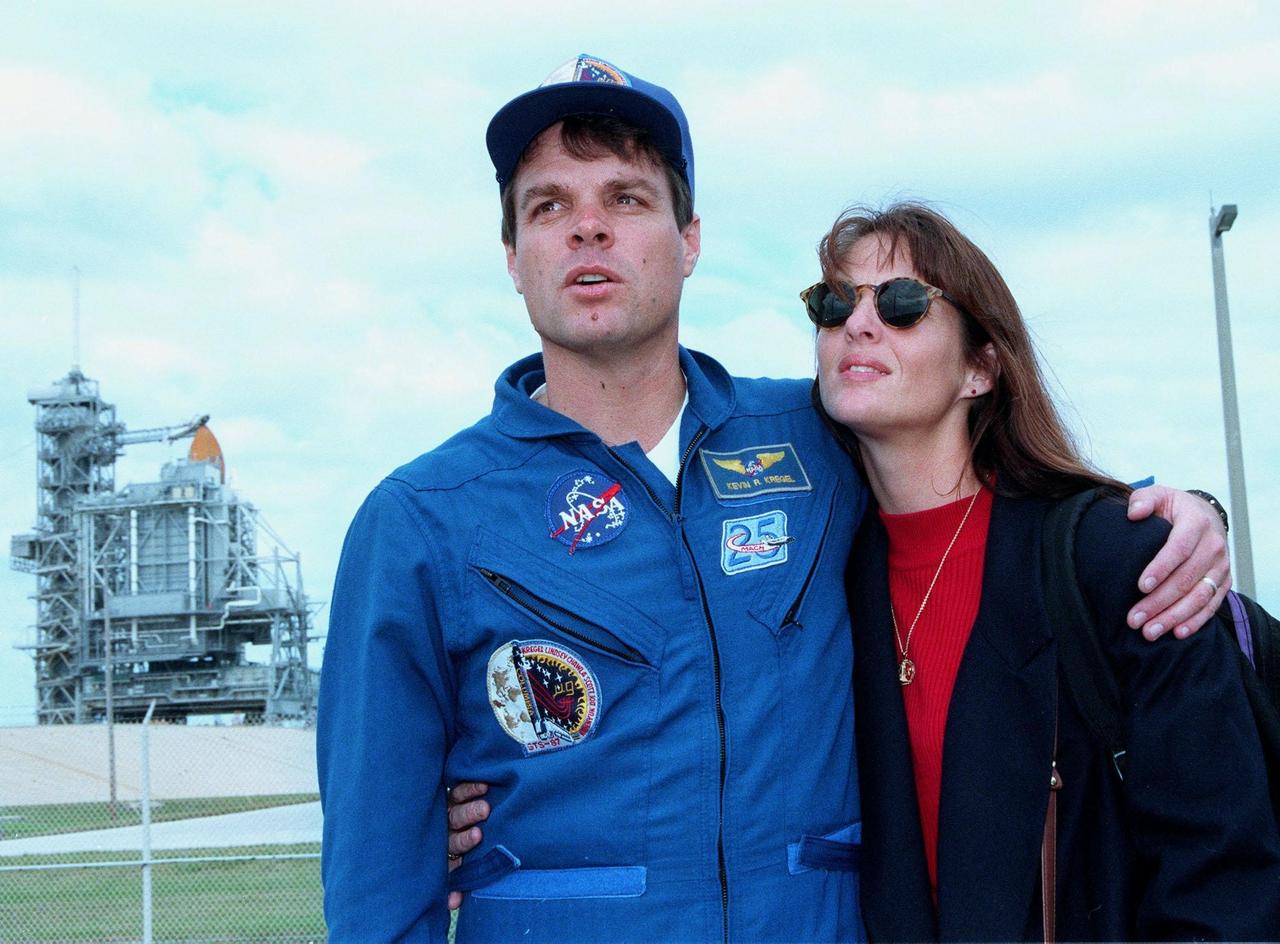
STS-87 Commander Kevin Kregel poses with his wife, Jeannie Kregel, in front of Kennedy Space Center's Launch Pad 39B during final prelaunch activities leading up to the scheduled Nov. 19 liftoff. The other STS-87 crew members are Pilot Steven Lindsey; Mission Specialists Kalpana Chawla, Ph.D., Winston Scott, and Takao Doi, Ph.D., of the National Space Development Agency of Japan; and Payload Specialist Leonid Kadenyuk of the National Space Agency of Ukraine. STS-87 will be the fourth flight of the United States Microgravity Payload and the Spartan-201 deployable satellite
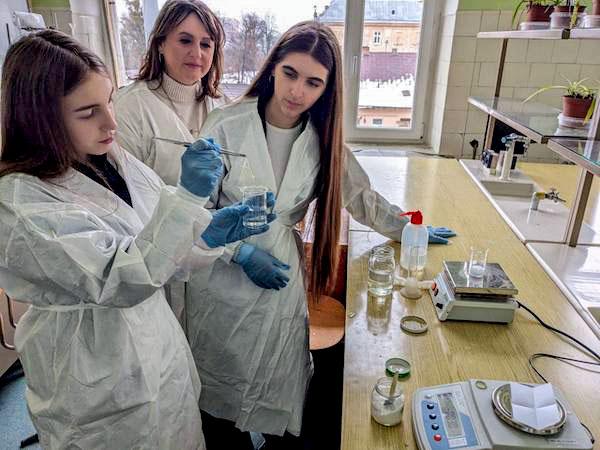
jsc2024e066517 (10/4/2024) --- Young researchers work on their experiment, Production of Biomedical Purpose Hydrogels in Microgravity, part of the Nanoracks-National Center for Earth and Space Science Education-Surveyor-Student Spaceflight Experiments Program Mission 18 to ISS (Nanoracks-NCESSE-Surveyor-SSEP).
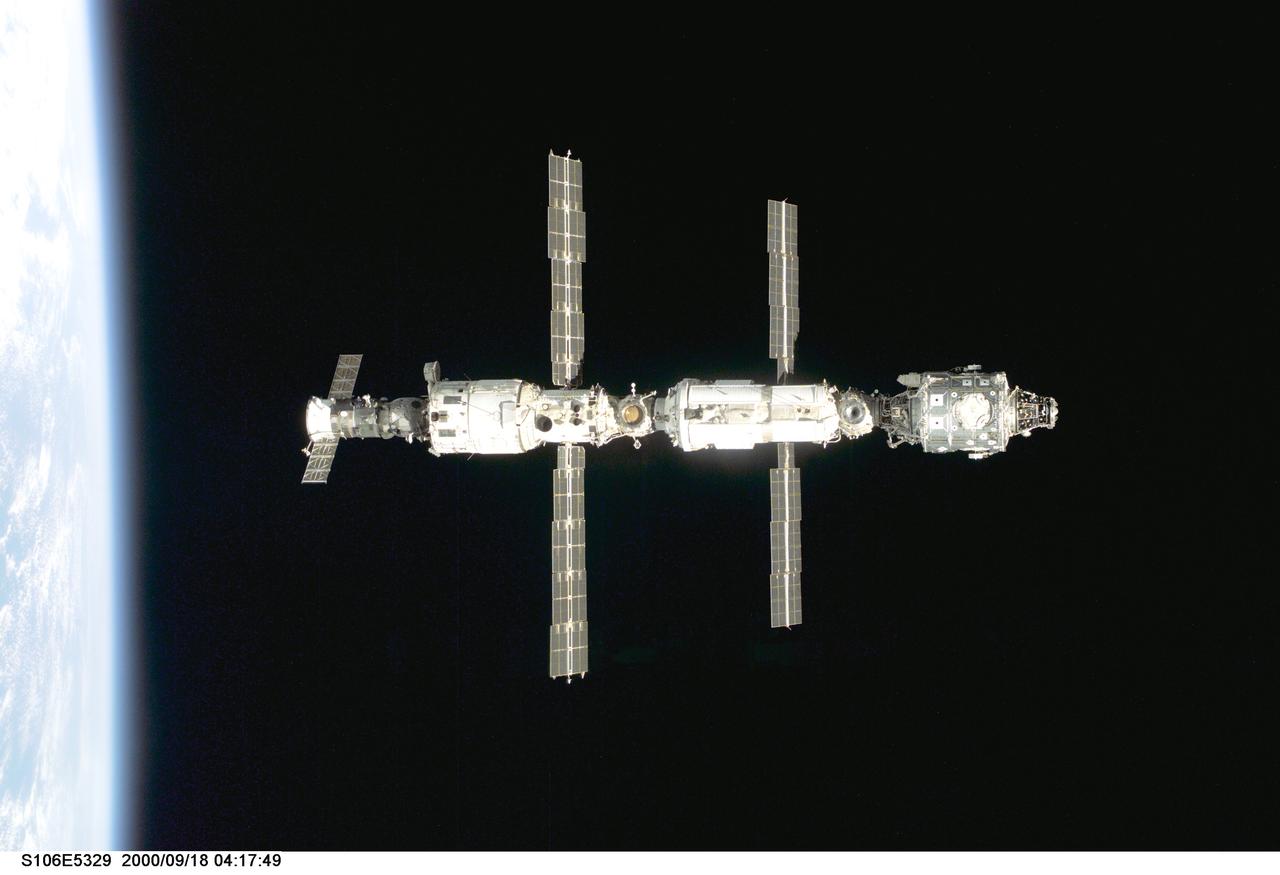
S106-E-5329 (18 September 2000) --- Backdropped against black space above Earth's horizon, the International Space Station (ISS) is seen following its undocking with the Space Shuttle Atlantis. After accomplishing all mission objectives in outfitting the station for the first resident crew, the seven astronauts and cosmonauts undocked at 3:46 GMT on Sept. 18 over Russia near the northeastern portion of Ukraine. When Atlantis was at a safe distance from the station, about 450 feet, astronaut Scott D. Altman, pilot, performed a 90-minute, double-loop fly around to enable the crew to document the station’s exterior. He fired Atlantis’ jets one final time to separate from the station at 5:35 (GMT) September 18.
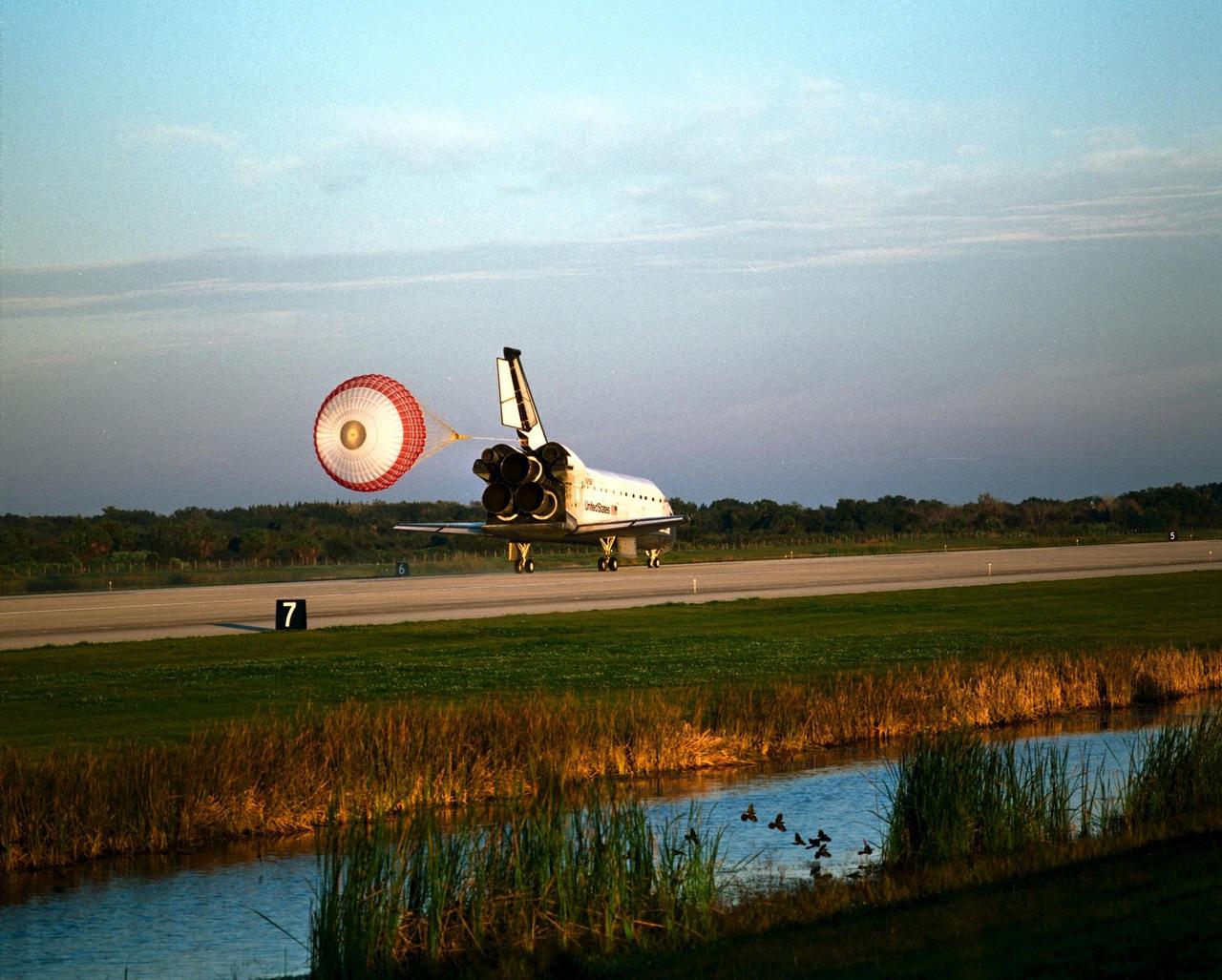
With Commander Kevin Kregel and Pilot Steven Lindsey at the controls, the orbiter Columbia, with its drag chute deployed, touches down on Runway 33 at KSC’s Shuttle Landing Facility at 7:20:04 a.m. EST Dec. 5 to complete the 15-day, 16-hour and 34-minute-long STS-87 mission of 6.5 million miles. Also onboard the orbiter are Mission Specialists Winston Scott; Kalpana Chawla, Ph.D.; and Takao Doi, Ph.D., of the National Space Development Agency of Japan; along with Payload Specialist Leonid Kadenyuk of the National Space Agency of Ukraine. During the 88th Space Shuttle mission, the crew performed experiments on the United States Microgravity Payload-4 and pollinated plants as part of the Collaborative Ukrainian Experiment. This was the 12th landing for Columbia at KSC and the 41st KSC landing in the history of the Space Shuttle program
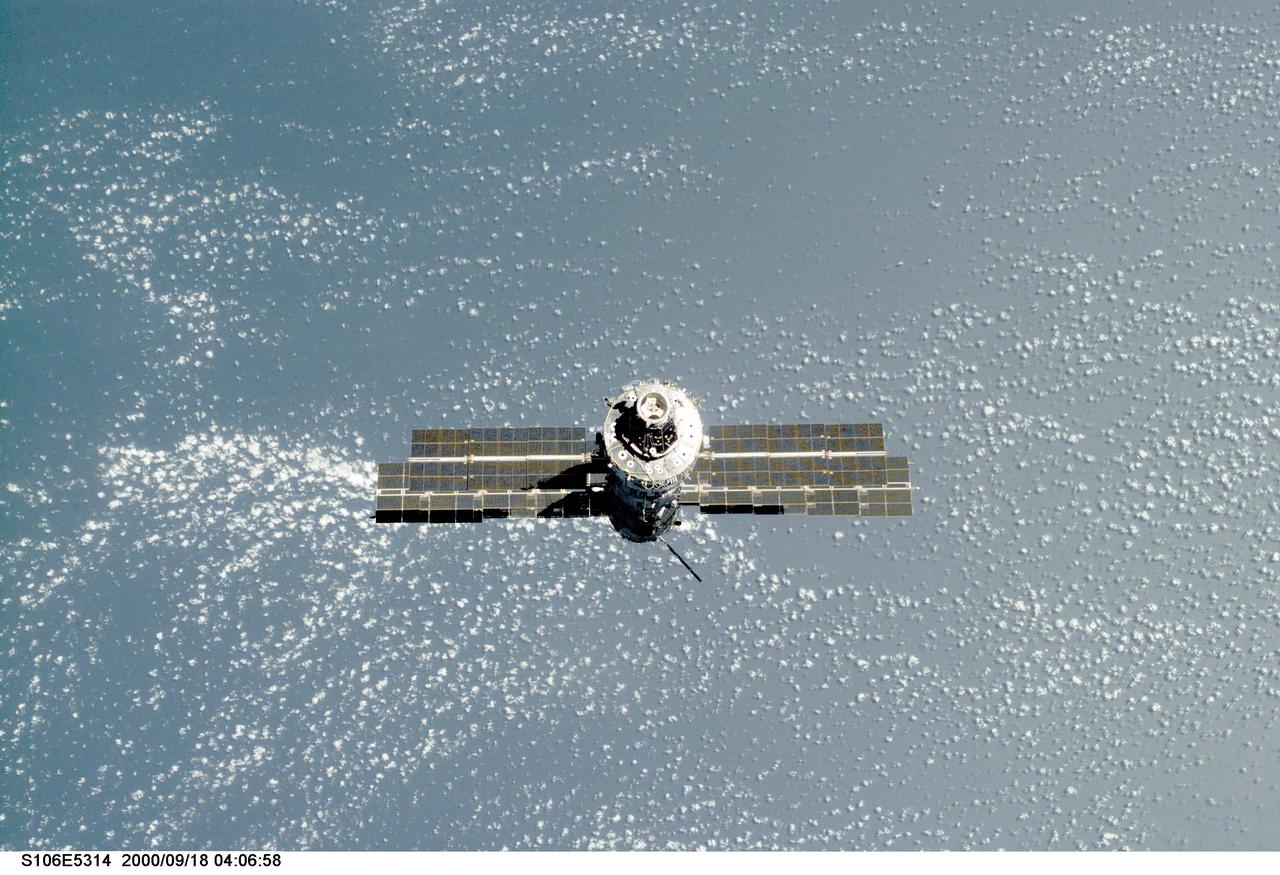
S106-E-5314 (18 September 2000) --- Backdropped against the blue and white Earth, the International Space Station (ISS) is seen following its undocking with the Space Shuttle Atlantis. After accomplishing all mission objectives in outfitting the station for the first resident crew, the seven astronauts and cosmonauts undocked at 3:46 (GMT) on Sept. 18 over Russia near the northeastern portion of the Ukraine. When Atlantis was at a safe distance from the station, about 450 feet, astronaut Scott D. Altman, pilot, performed a 90-minute, double-loop fly around to enable the crew to document the station’s exterior. He fired Atlantis’ jets one final time to separate from the station at 5:35 GMT, September 18.
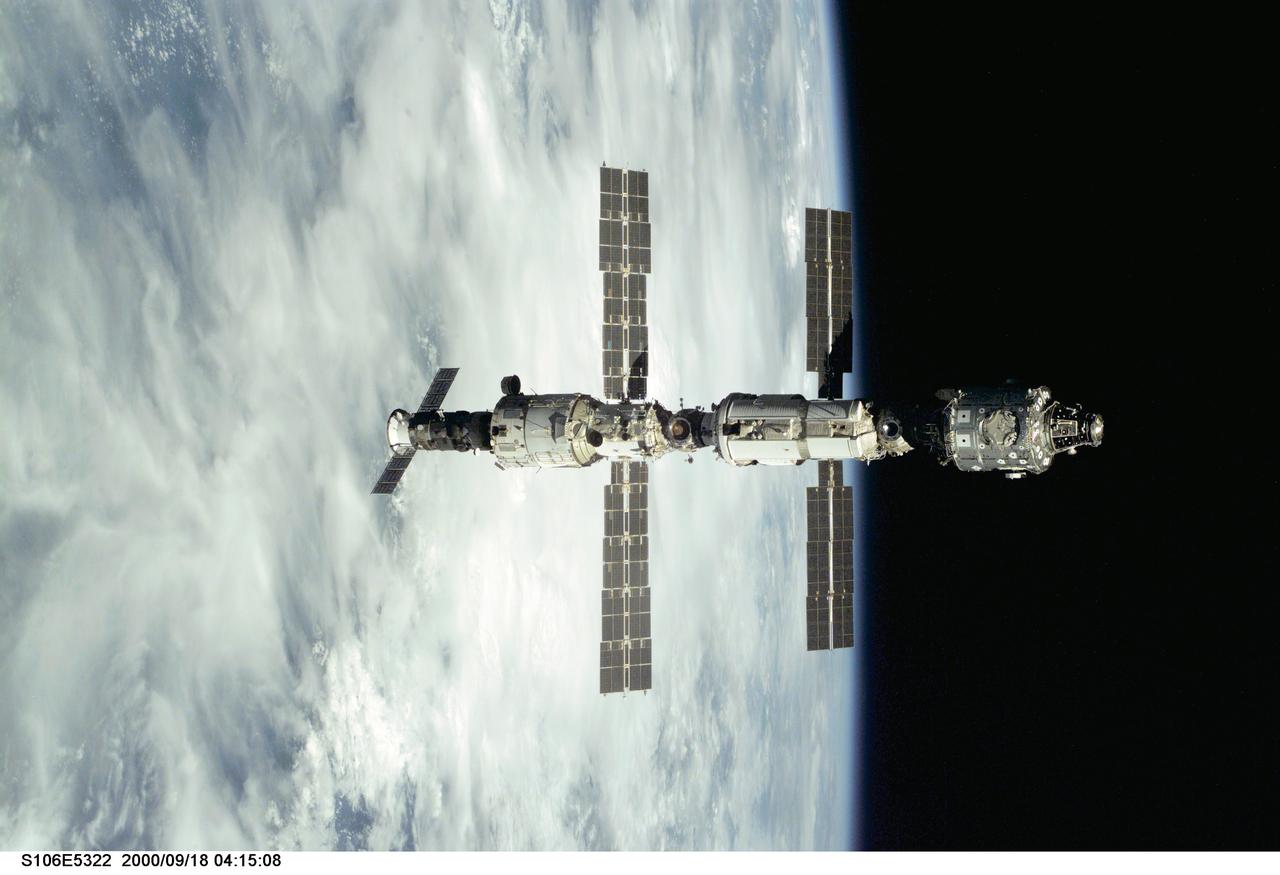
S106-E-5322 (18 September 2000) --- Backdropped against Earth's horizon, the International Space Station (ISS) is seen following its undocking with the Space Shuttle Atlantis. After accomplishing all mission objectives in outfitting the station for the first resident crew, the seven astronauts and cosmonauts undocked at 3:46 GMT on Sept. 18 over Russia near the northeastern portion of Ukraine. When Atlantis was at a safe distance from the station, about 450 feet, astronaut Scott D. Altman, pilot, performed a 90-minute, double-loop fly around to enable the crew to document the station’s exterior. He fired Atlantis’ jets one final time to separate from the station at 5:35 (GMT) September 18.
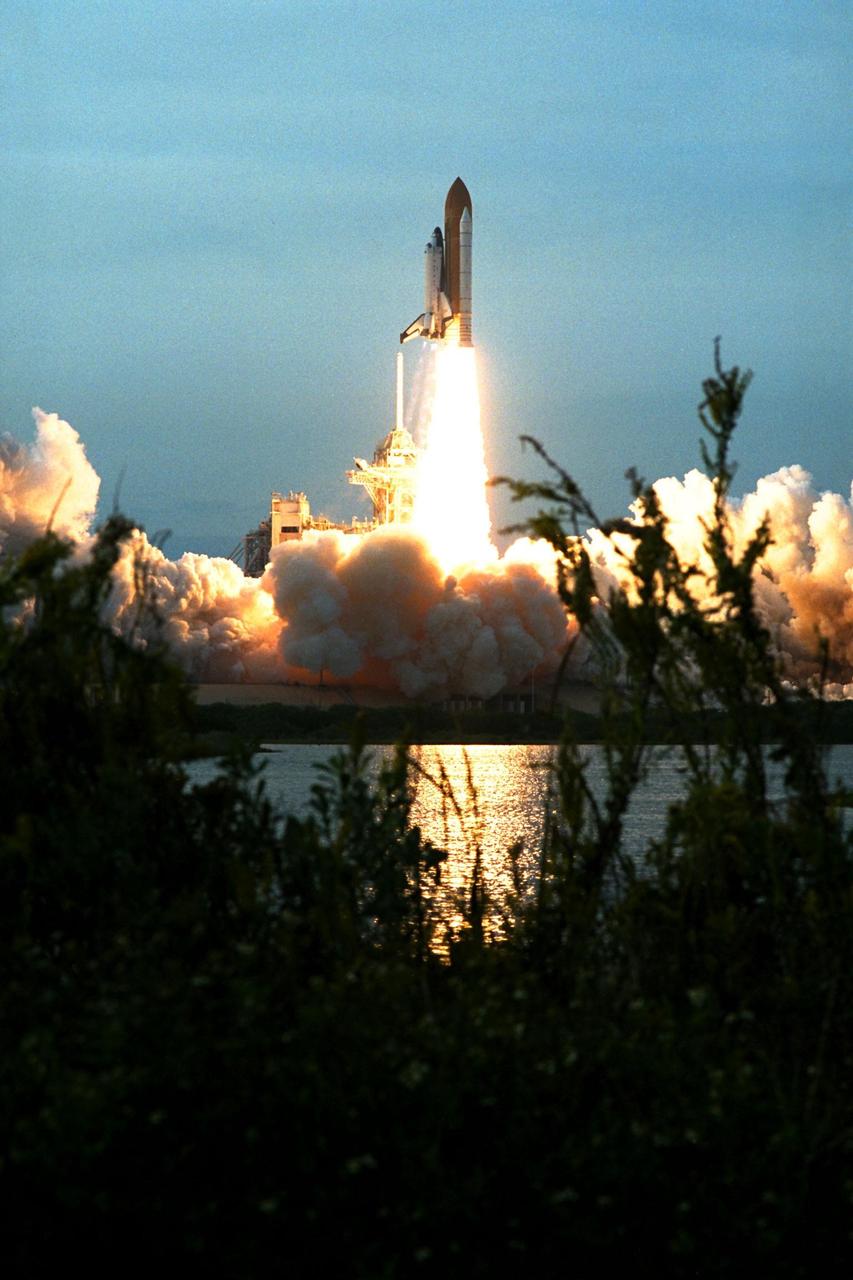
Like a rising sun lighting up the afternoon sky, the Space Shuttle Columbia soars from Launch Pad 39B at 2:46:00 p.m. EST, November 19, on the fourth flight of the United States Microgravity Payload and Spartan-201 satellite. The crew members include Mission Commander Kevin Kregel.; Pilot Steven Lindsey; Mission Specialists Kalpana Chawla, Ph.D., Winston Scott, and Takao Doi, Ph.D., of the National Space Development Agency of Japan; and Payload Specialist Leonid Kadenyuk of the National Space Agency of Ukraine. During the 16-day STS-87 mission, the crew will oversee experiments in microgravity; deploy and retrieve a solar satellite; and test a new experimental camera, the AERCam Sprint. Dr. Doi and Scott also will perform a spacewalk to practice International Space Station maneuvers
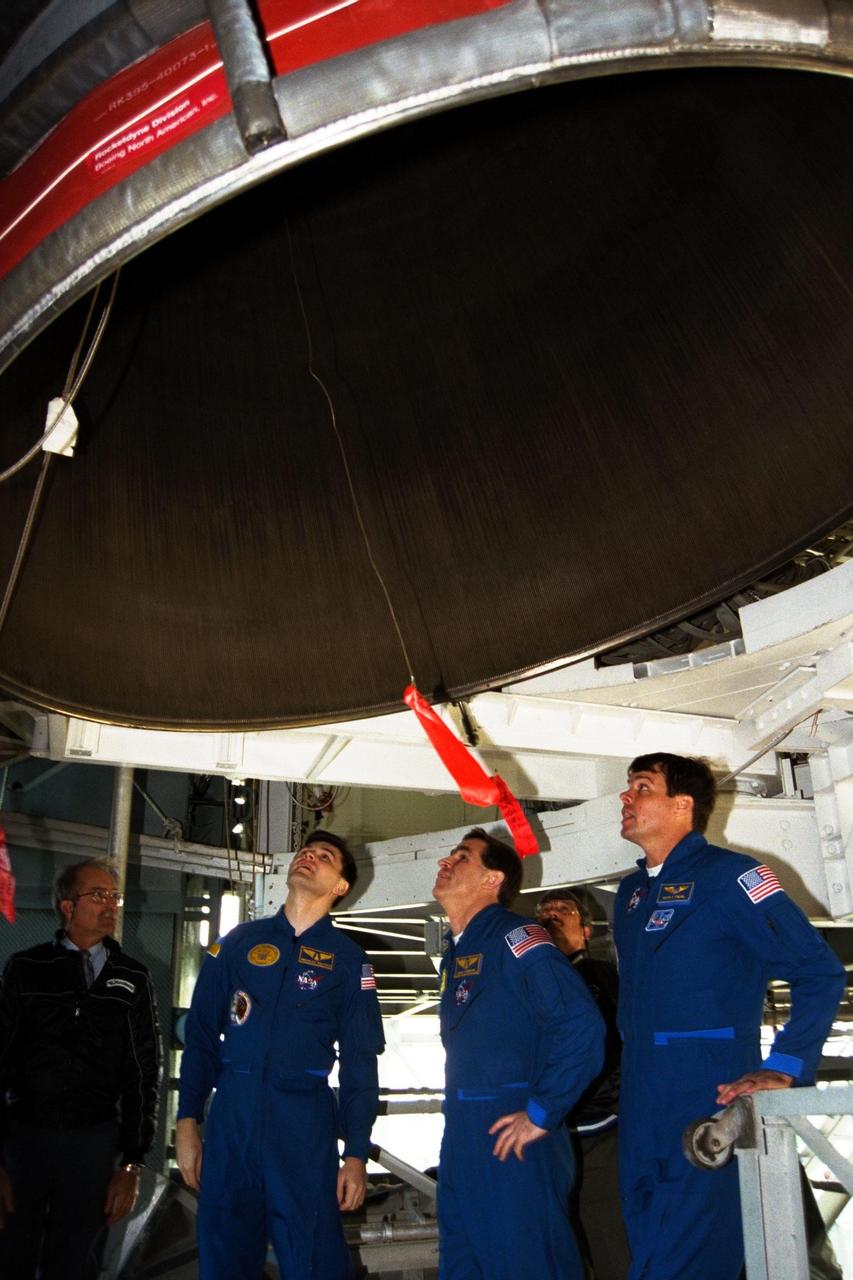
The crew of the STS-87 mission, scheduled for launch Nov. 19 aboard the Space Shuttle Columbia from Pad 39B at Kennedy Space Center (KSC), participates in the Terminal Countdown Demonstration Test (TCDT) at KSC. Getting a close look at one of the Space Shuttle’s main engines are, from right, Commander Kevin Kregel, Payload Specialist Leonid Kadenyuk of the National Space Agency of Ukraine (NSAU), and Kadenyuk’s back-up, Yaroslav Pustovyi, Ph.D., also of NSAU. The TCDT is held at KSC prior to each Space Shuttle flight, providing the crew of each mission opportunities to participate in simulated countdown activities. The TCDT ends with a mock launch countdown culminating in a simulated main engine cut-off. The crew also spends time undergoing emergency egress training exercises at the pad and has an opportunity to view and inspect the payloads in the orbiter's payload bay
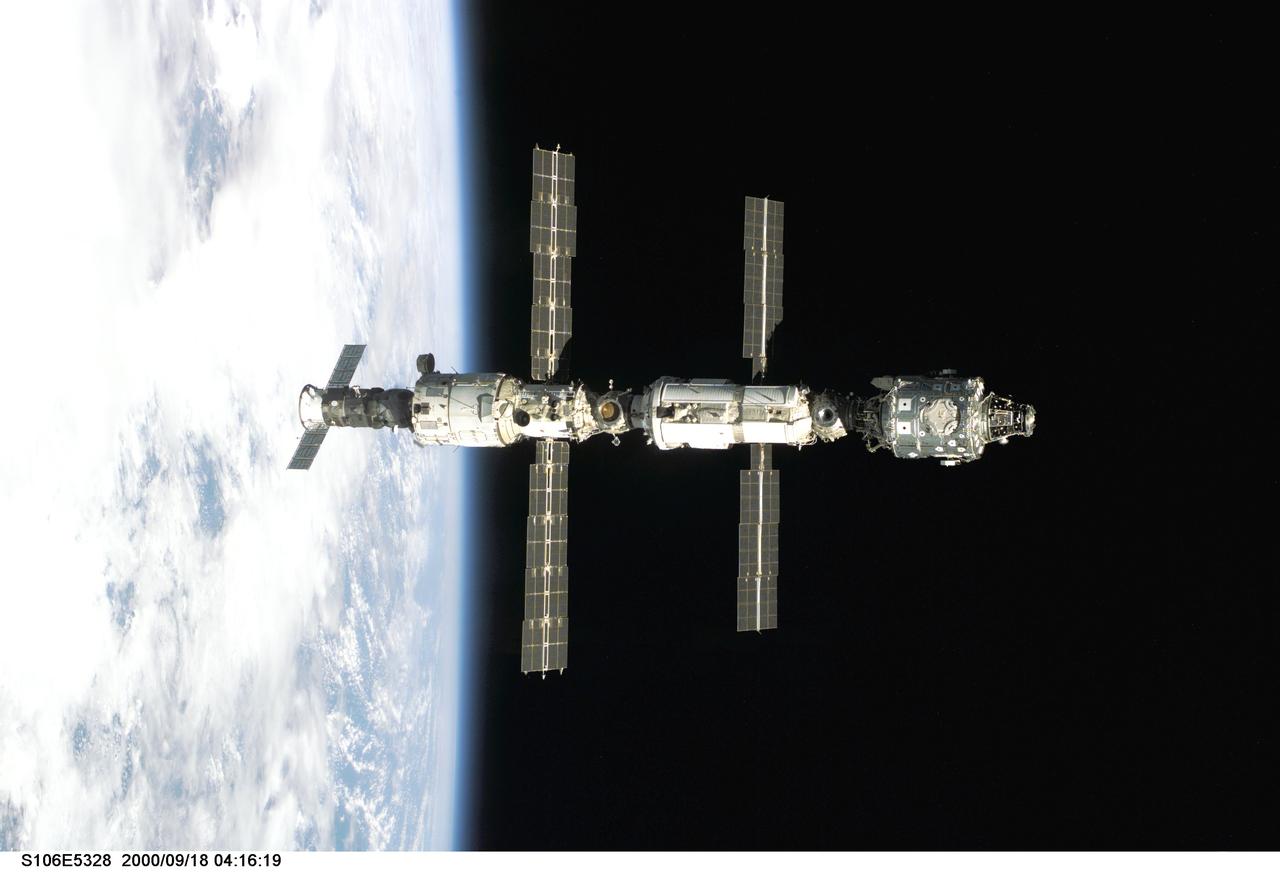
S106-E-5328 (18 September 2000) --- Backdropped against Earth's horizon, the International Space Station (ISS) is seen following its undocking with the Space Shuttle Atlantis. After accomplishing all mission objectives in outfitting the station for the first resident crew, the seven astronauts and cosmonauts undocked at 3:46 GMT on Sept. 18 over Russia near the northeastern portion of Ukraine. When Atlantis was at a safe distance from the station, about 450 feet, astronaut Scott D. Altman, pilot, performed a 90-minute, double-loop fly around to enable the crew to document the station’s exterior. He fired Atlantis’ jets one final time to separate from the station at 5:35 (GMT) September 18.
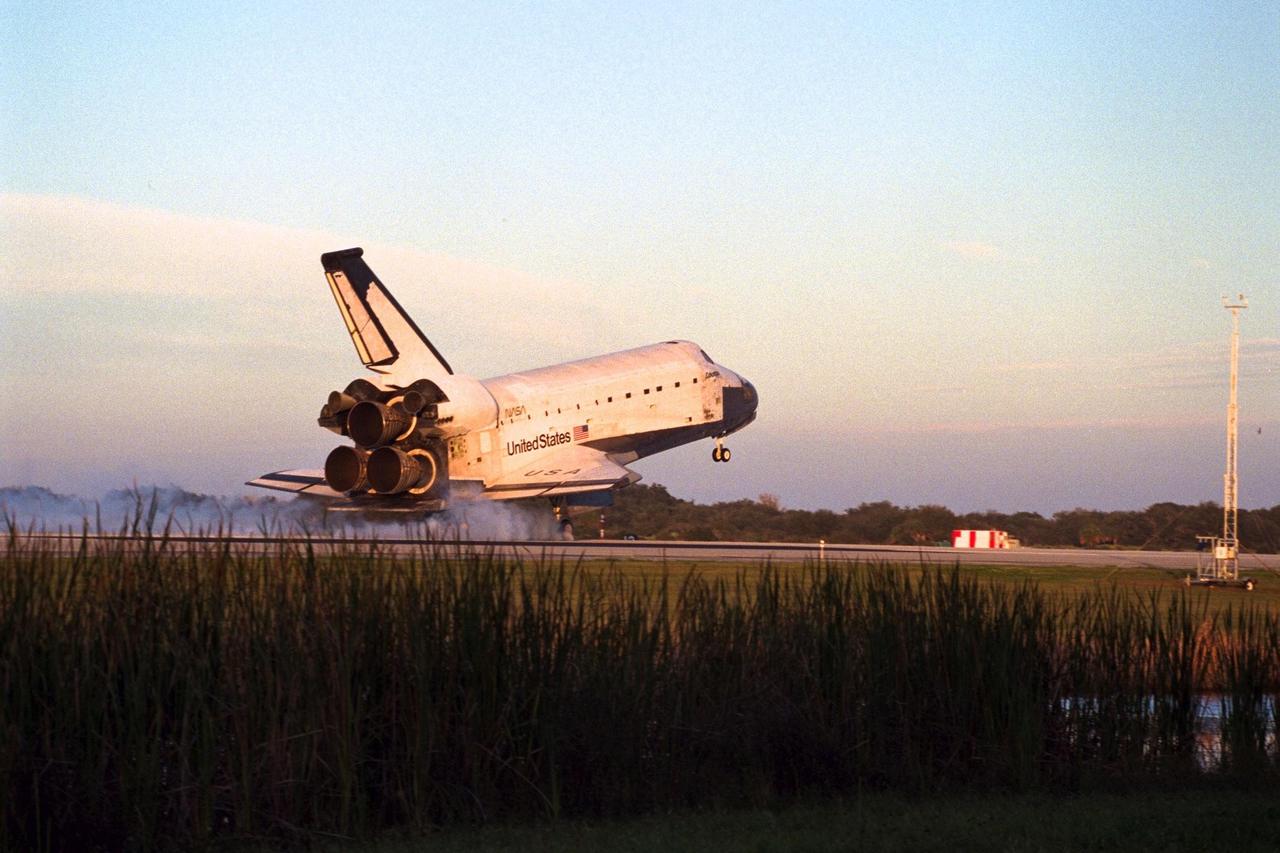
With Commander Kevin Kregel and Pilot Steven Lindsey at the controls, the orbiter Columbia makes a smooth touchdown on Runway 33 at KSC’s Shuttle Landing Facility at 7:20:04 a.m. EST Dec. 5, completing the 15-day, 16-hour and 34-minute-long STS-87 mission of 6.5 million miles. Also onboard the orbiter are Mission Specialists Winston Scott; Kalpana Chawla, Ph.D.; and Takao Doi, Ph.D., of the National Space Development Agency of Japan; along with Payload Specialist Leonid Kadenyuk of the National Space Agency of Ukraine. During the 88th Space Shuttle mission, the crew performed experiments on the United States Microgravity Payload-4 and pollinated plants as part of the Collaborative Ukrainian Experiment. This was the 12th landing for Columbia at KSC and the 41st KSC landing in the history of the Space Shuttle program
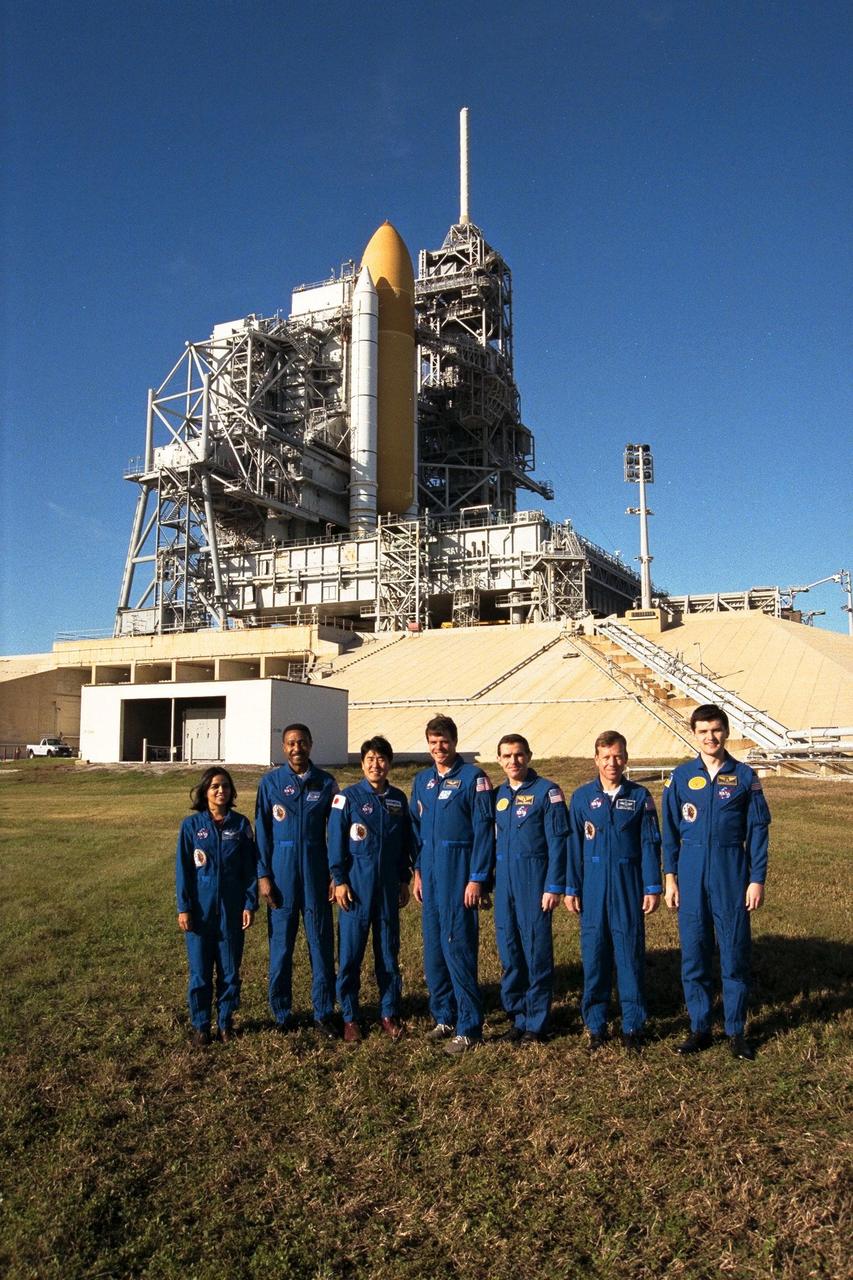
The crew of the STS-87 mission, scheduled for launch Nov. 19 aboard the Space Shuttle Columbia from Pad 39B at Kennedy Space Center (KSC), participate in the Terminal Countdown Demonstration Test (TCDT) at KSC. Posing for a group shot by Pad 39B are, from left to right, Mission Specialist Kalpana Chawla, Ph.D.; Mission Specialist Winston Scott; Mission Specialist Takao Doi, Ph.D., of the National Space Development Agency of Japan; Commander Kevin Kregel; Payload Specialist Leonid Kadenyuk of the National Space Agency of Ukraine (NSAU); Pilot Steven Lindsey; and Kadenyuk’s back-up, Yaroslav Pustovyi, Ph.D., also of NSAU. The TCDT is held at KSC prior to each Space Shuttle flight, providing the crew of each mission opportunities to participate in simulated countdown activities. The crew also spends time undergoing emergency egress training exercises at the pad and has an opportunity to view and inspect the payloads in the orbiter's payload bay
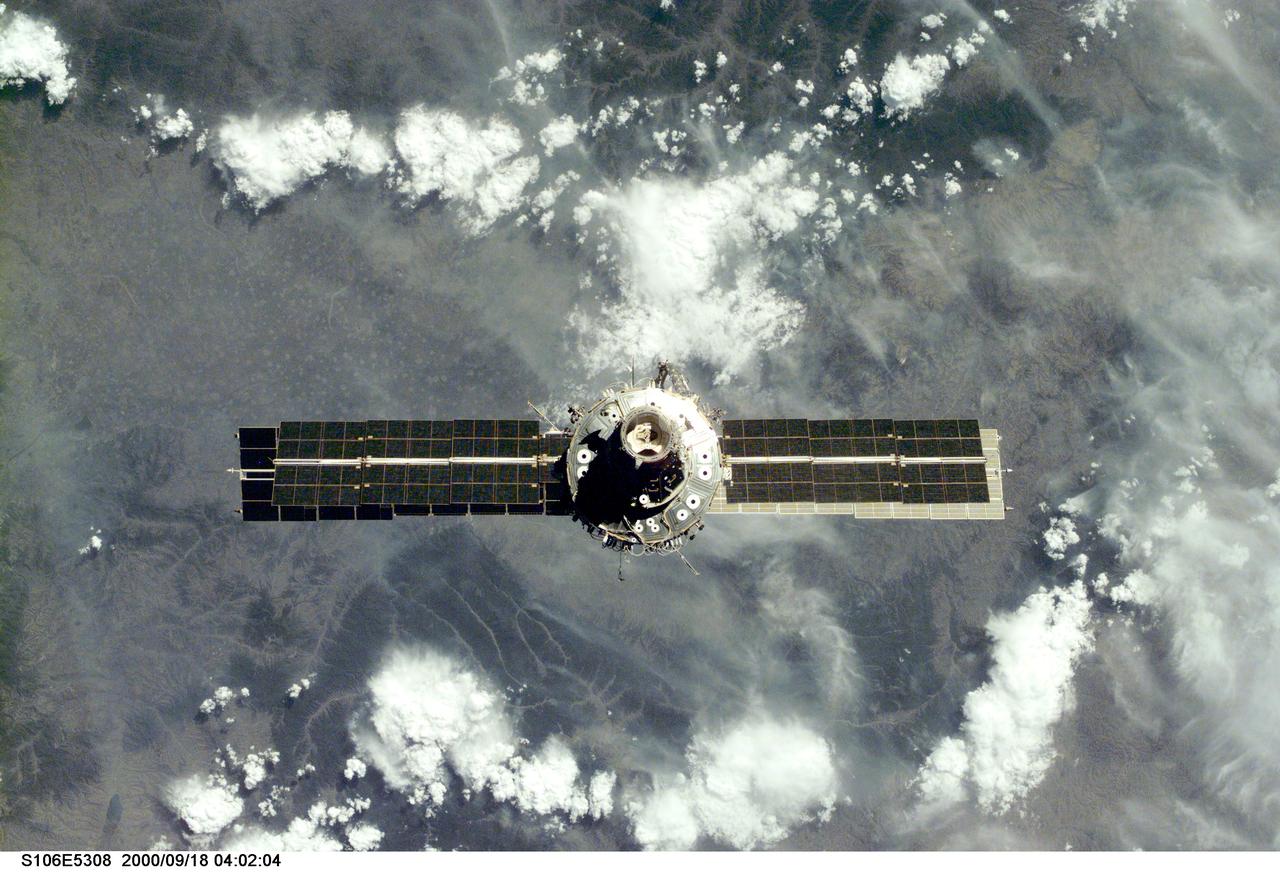
S106-E-5308 (18 September 2000) --- The International Space Station (ISS), with its U.S.-built Unity node facing the camera, is seen following its undocking with the Space Shuttle Atlantis. After accomplishing all mission objectives in outfitting the station for the first resident crew, the seven astronauts and cosmonauts undocked at 3:46 (GMT) on Sept. 18 over Russia near the northeastern portion of Ukraine. When Atlantis was at a safe distance from the station, about 450 feet, astronaut Scott D. Altman, pilot, performed a 90-minute, double-loop fly around to enable the crew to document the station’s exterior. He fired Atlantis’ jets one final time to separate from the station at 5:35 GMT, September 18.

S106-E-5319 (18 September 2000) --- Backdropped against Earth's horizon, the International Space Station (ISS) is seen following its undocking with the Space Shuttle Atlantis. After accomplishing all mission objectives in outfitting the station for the first resident crew, the seven astronauts and cosmonauts undocked at 3:46 GMT on Sept. 18 over Russia near the northeastern portion of Ukraine. When Atlantis was at a safe distance from the station, about 450 feet, astronaut Scott D. Altman, pilot, performed a 90-minute, double-loop fly around to enable the crew to document the station’s exterior. He fired Atlantis’ jets one final time to separate from the station at 5:35 (GMT) September 18.
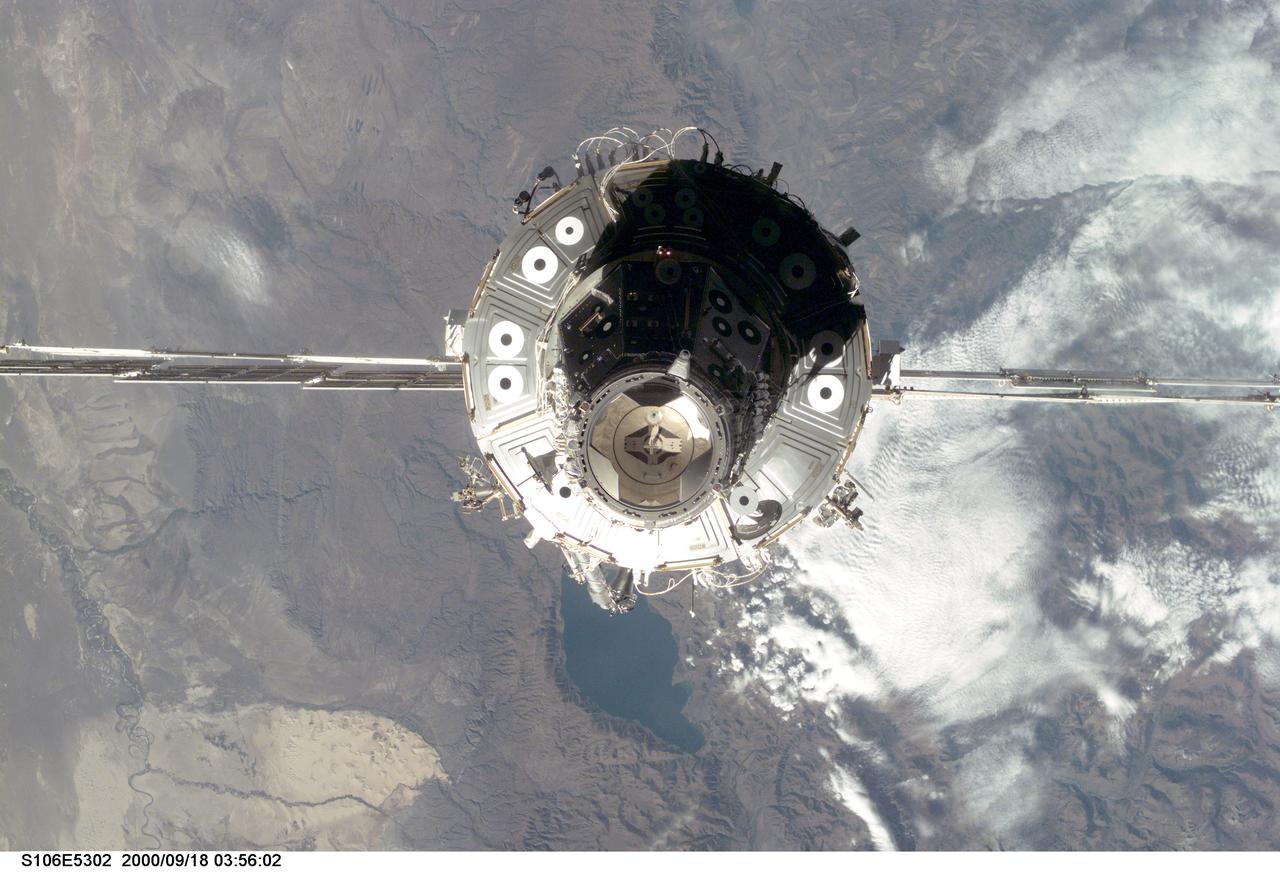
S106-E-5302 (18 September 2000) --- The International Space Station (ISS) is seen with the U.S.-built Unity node facing the camera, following its undocking with the Space Shuttle Atlantis. After accomplishing all mission objectives in outfitting the station for the first resident crew, the seven astronauts and cosmonauts undocked at 3:46 (GMT) on Sept. 18 over Russia near the northeastern portion of Ukraine. When Atlantis was at a safe distance from the station, about 450 feet, astronaut Scott D. Altman, pilot, performed a 90-minute, double-loop fly around to enable the crew to document the station’s exterior. He fired Atlantis’ jets one final time to separate from the station at 5:35 GMT, September 18.
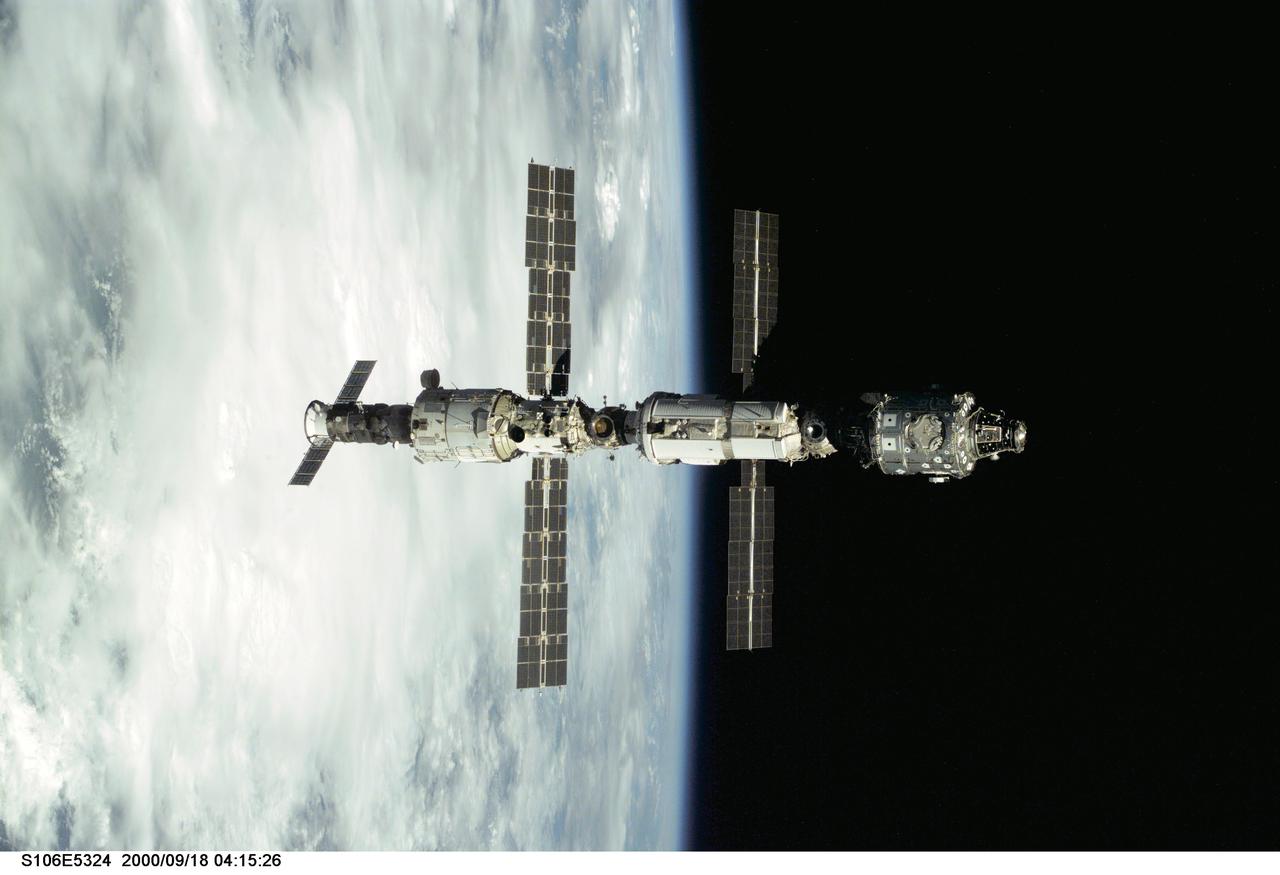
S106-E-5324 (18 September 2000) --- Backdropped against Earth's horizon, the International Space Station (ISS) is seen following its undocking with the Space Shuttle Atlantis. After accomplishing all mission objectives in outfitting the station for the first resident crew, the seven astronauts and cosmonauts undocked at 3:46 GMT on Sept. 18 over Russia near the northeastern portion of Ukraine. When Atlantis was at a safe distance from the station, about 450 feet, astronaut Scott D. Altman, pilot, performed a 90-minute, double-loop fly around to enable the crew to document the station’s exterior. He fired Atlantis’ jets one final time to separate from the station at 5:35 (GMT) September 18.
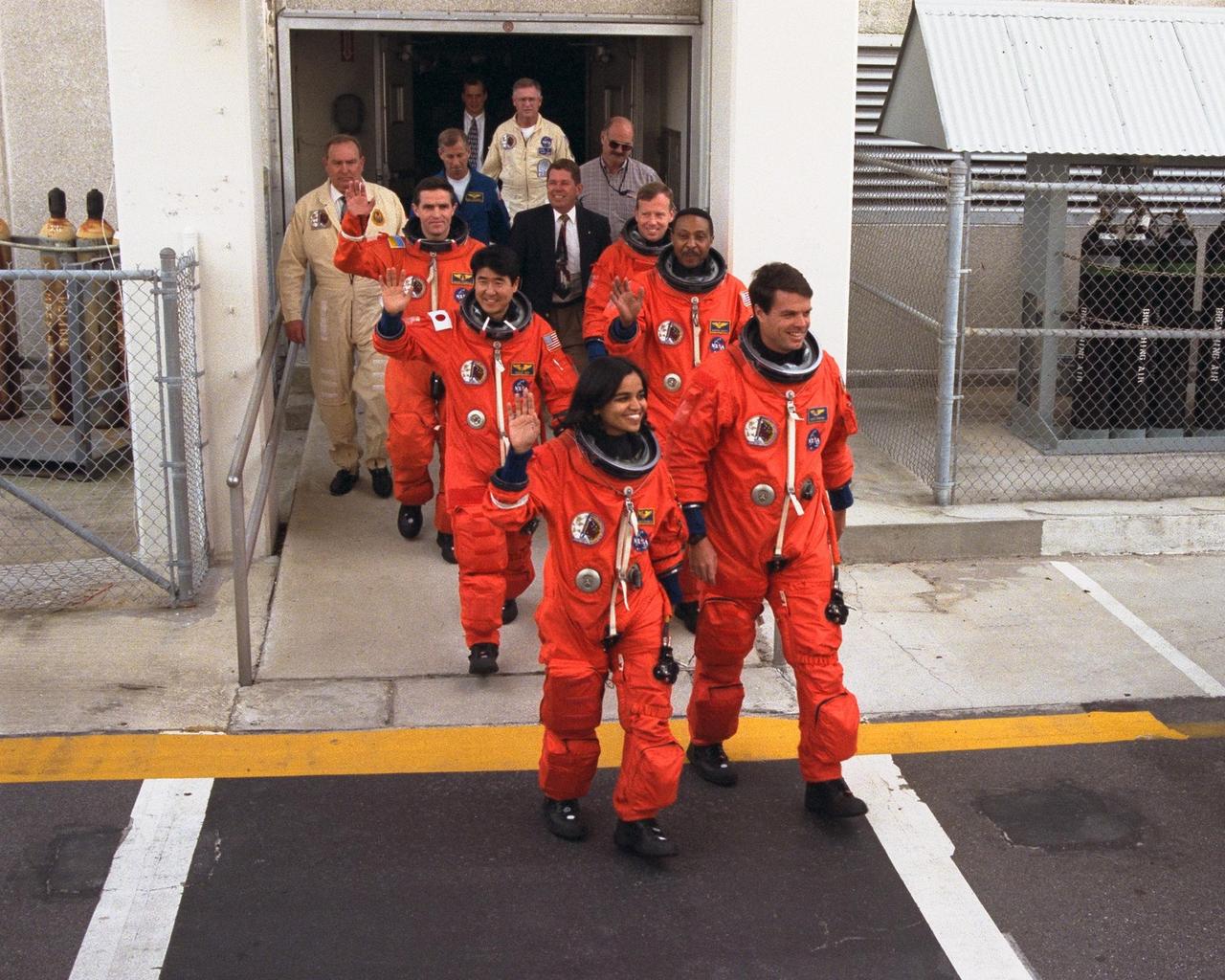
The crew of Mission STS-87 depart from the Operations and Checkout Building en route to Launch Pad 39B, where the Space Shuttle Columbia awaits liftoff on the fourth flight of the United States Microgravity Payload and the Spartan-201 deployable satellite. Leading the way are, from left to right, front to back: Mission Specialist Kalpana Chawla, Ph.D.; Commander Kevin Kregel; Mission Specialist Takao Doi, Ph.D., of the National Space Development Agency of Japan; Mission Specialist Winston Scott; Payload Specialist Leonid Kadenyuk of the National Space Agency of Ukraine; and Pilot Steven Lindsey. The Space Shuttle Columbia and its crew of six members are scheduled to lift off during a two-and-a-half hour launch window, which opens at 2:46 p.m
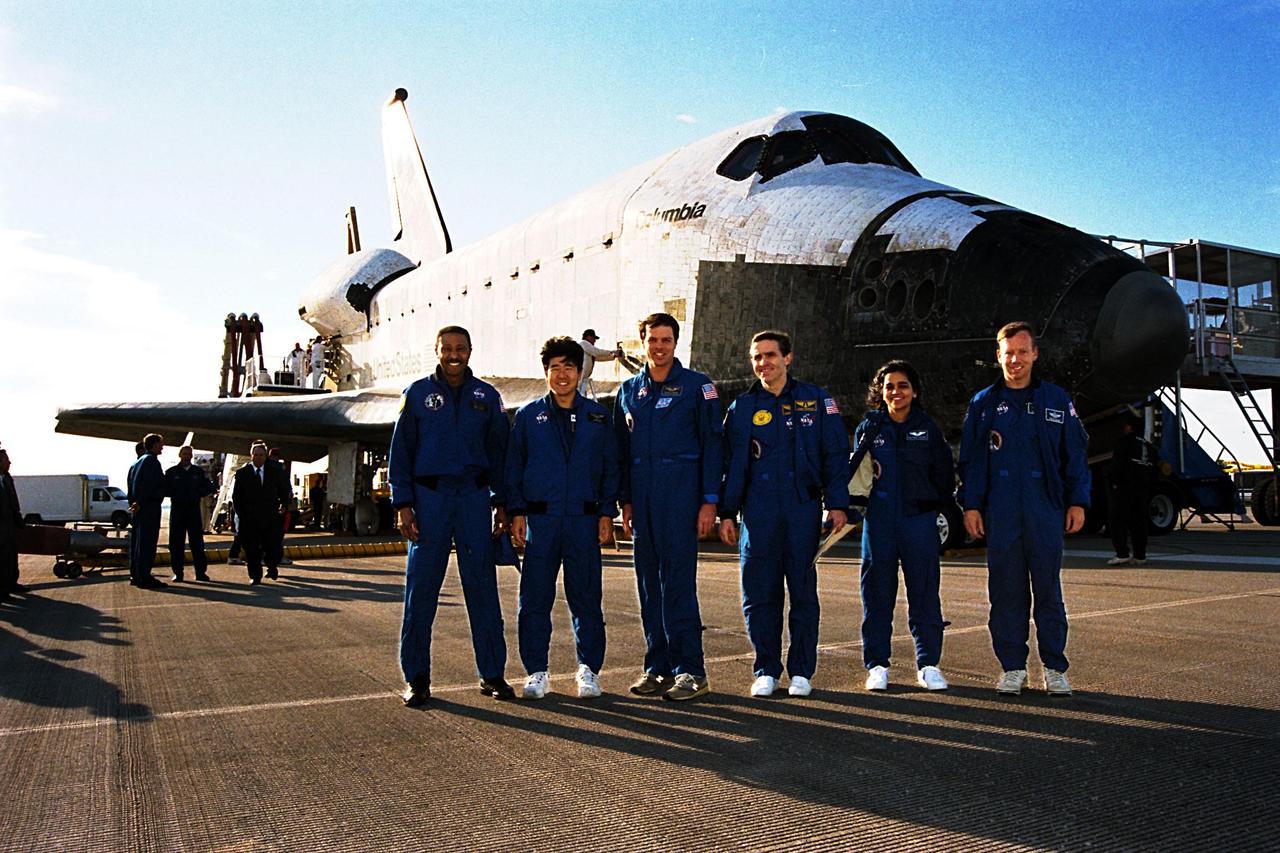
The STS-87 crew pose in front of the orbiter Columbia shortly after landing on Runway 33 at KSC's Shuttle Landing Facility. STS-87 concluded its mission with a main gear touchdown at 7:20:04 a.m. EST Dec. 5, drawing the 15-day, 16-hour and 34-minute-long mission of 6.5 million miles to a close. From left to right are Mission Specialists Winston Scott and Takao Doi, Ph.D., of the National Space Development Agency of Japan; Commander Kevin Kregel; Payload Specialist Leonid Kadenyuk of the National Space Agency of Ukraine; Mission Specialist Kalpana Chawla, Ph.D.; and Pilot Steven Lindsey. During the 88th Space Shuttle mission, the crew performed experiments on the United States Microgravity Payload-4 and pollinated plants as part of the Collaborative Ukrainian Experiment. This was the 12th landing for Columbia at KSC and the 41st KSC landing in the history of the Space Shuttle program
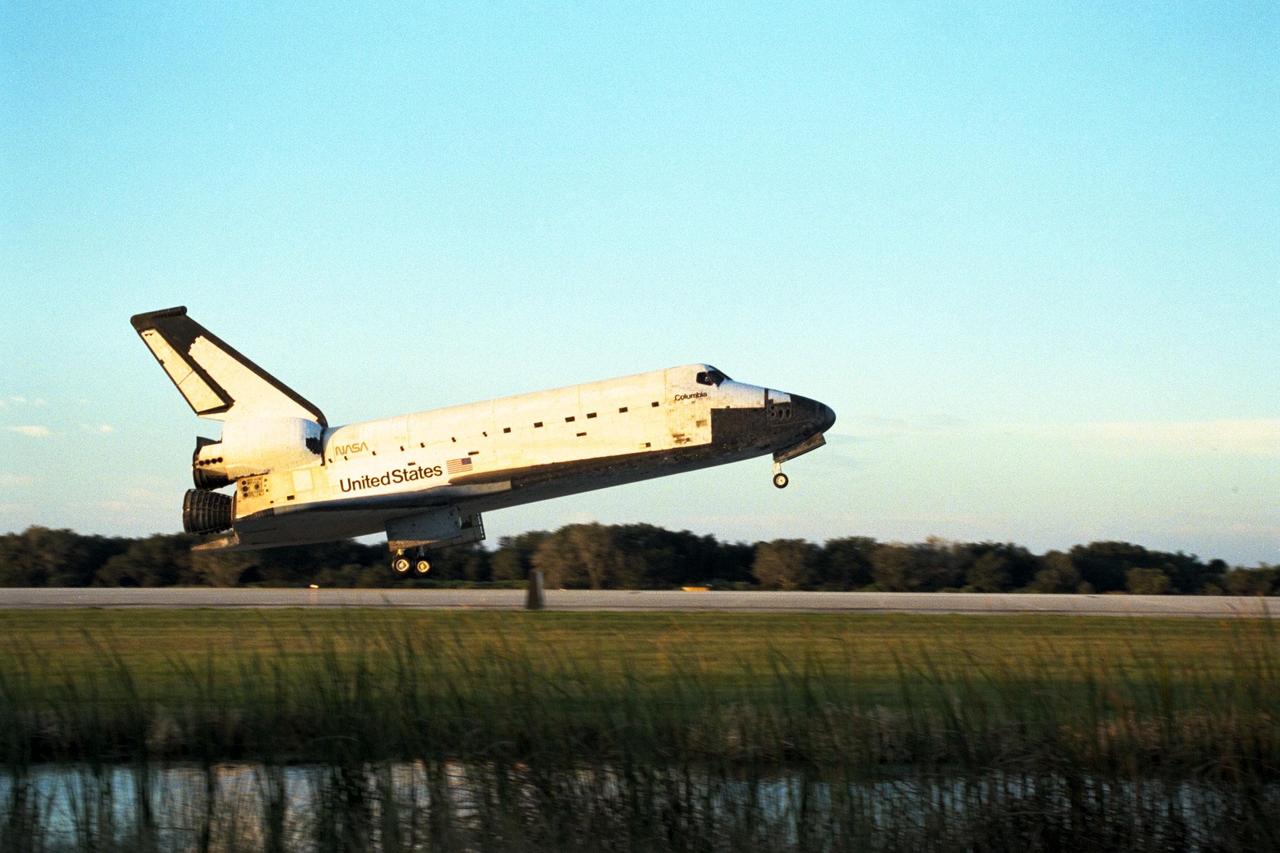
With Commander Kevin Kregel and Pilot Steven Lindsey at the controls, the orbiter Columbia makes a smooth touchdown on Runway 33 at KSC’s Shuttle Landing Facility at 7:20:04 a.m. EST Dec. 5, completing the 15-day, 16-hour and 34-minute-long STS-87 mission of 6.5 million miles. Also onboard the orbiter are Mission Specialists Winston Scott; Kalpana Chawla, Ph.D.; and Takao Doi, Ph.D., of the National Space Development Agency of Japan; along with Payload Specialist Leonid Kadenyuk of the National Space Agency of Ukraine. During the 88th Space Shuttle mission, the crew performed experiments on the United States Microgravity Payload-4 and pollinated plants as part of the Collaborative Ukrainian Experiment. This was the 12th landing for Columbia at KSC and the 41st KSC landing in the history of the Space Shuttle program
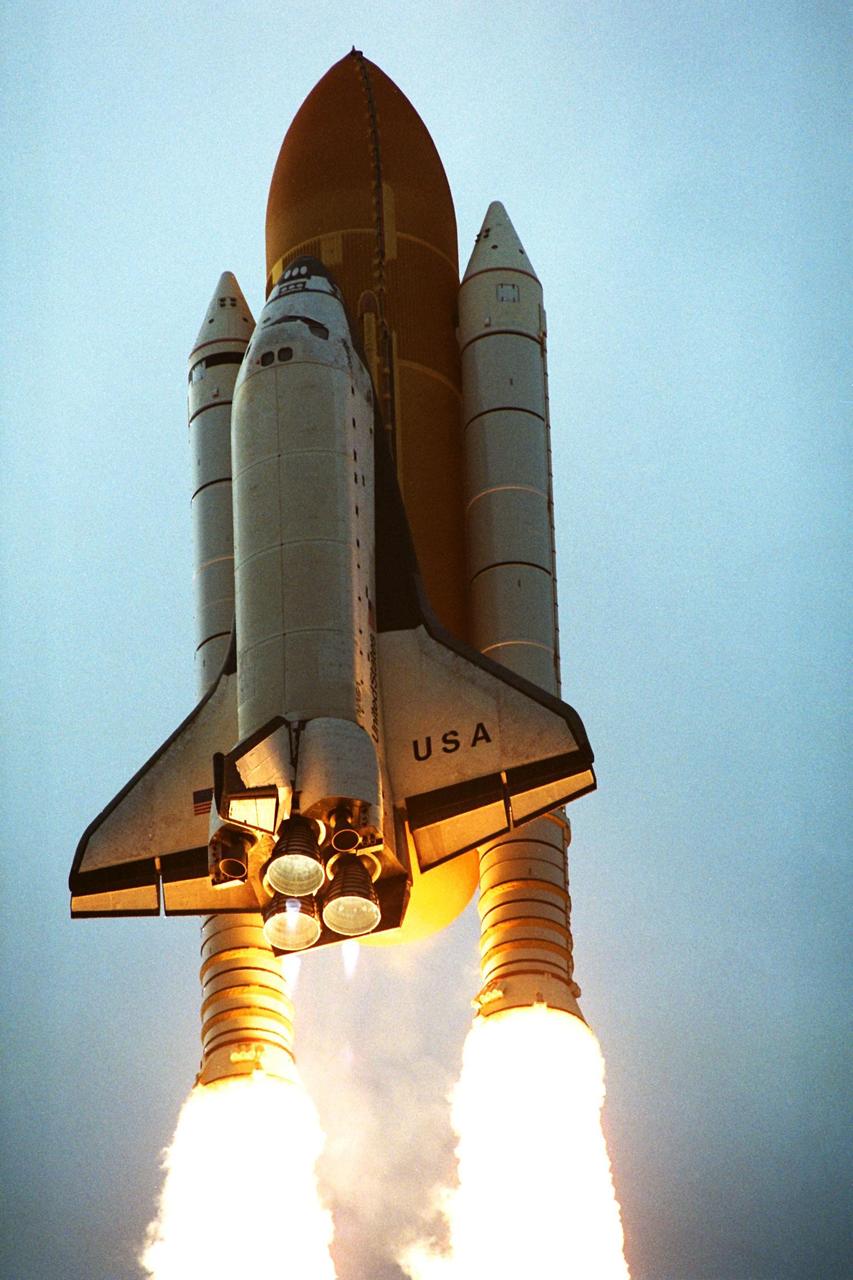
Like a rising sun lighting up the afternoon sky, the Space Shuttle Columbia soars from Launch Pad 39B at 2:46:00 p.m. EST, November 19, on the fourth flight of the United States Microgravity Payload and Spartan-201 satellite. The crew members include Mission Commander Kevin Kregel.; Pilot Steven Lindsey; Mission Specialists Kalpana Chawla, Ph.D., Winston Scott, and Takao Doi, Ph.D., of the National Space Development Agency of Japan; and Payload Specialist Leonid Kadenyuk of the National Space Agency of Ukraine. During the 16-day STS-87 mission, the crew will oversee experiments in microgravity; deploy and retrieve a solar satellite; and test a new experimental camera, the AERCam Sprint. Dr. Doi and Scott also will perform a spacewalk to practice International Space Station maneuvers
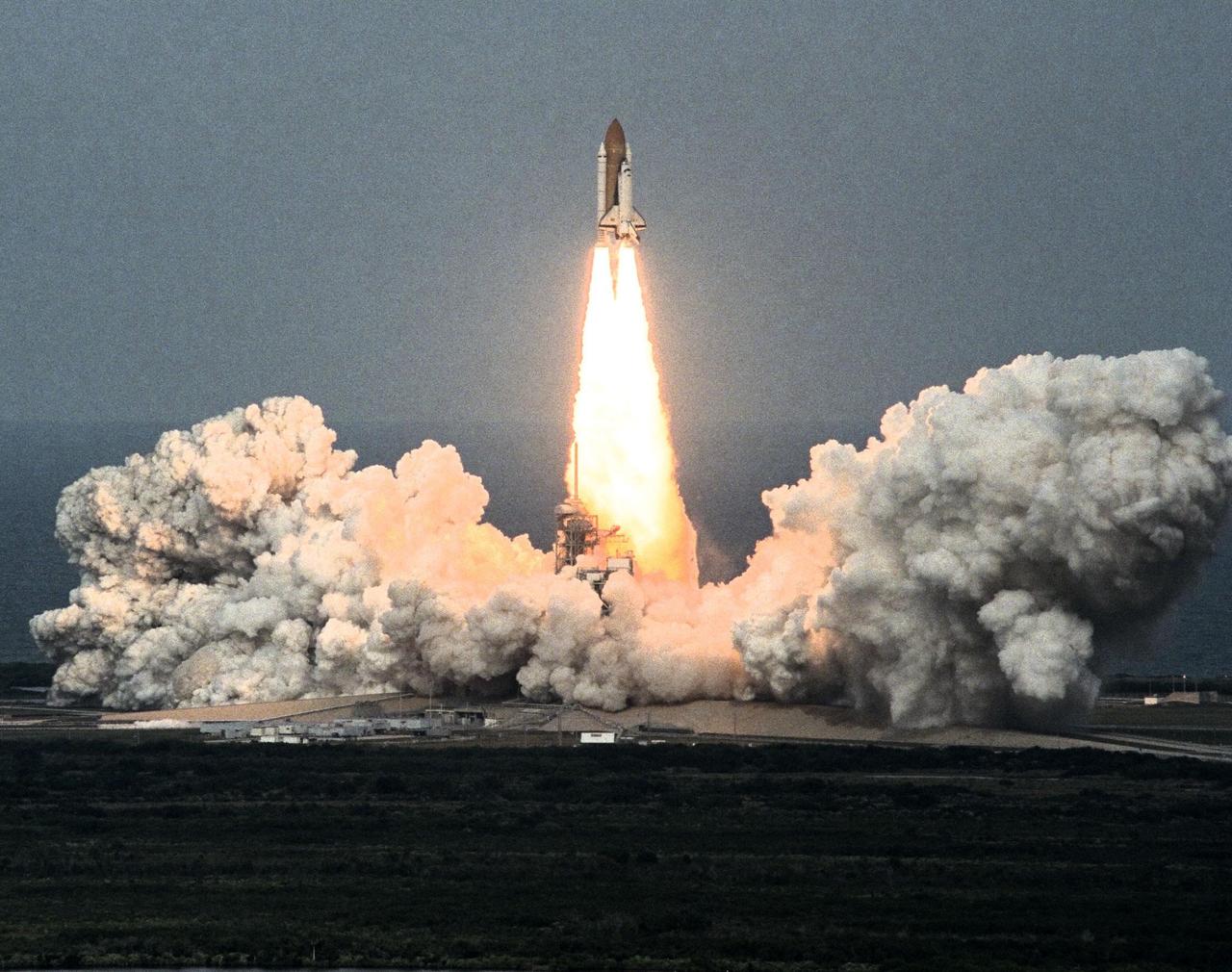
Like a rising sun lighting up the afternoon sky, the Space Shuttle Columbia soars from Launch Pad 39B at 2:46:00 p.m. EST, November 19, on the fourth flight of the United States Microgravity Payload and Spartan-201 satellite. The crew members include Mission Commander Kevin Kregel.; Pilot Steven Lindsey; Mission Specialists Kalpana Chawla, Ph.D., Winston Scott, and Takao Doi, Ph.D., of the National Space Development Agency of Japan; and Payload Specialist Leonid Kadenyuk of the National Space Agency of Ukraine. During the 16-day STS-87 mission, the crew will oversee experiments in microgravity; deploy and retrieve a solar satellite; and test a new experimental camera, the AERCam Sprint. Dr. Doi and Scott also will perform a spacewalk to practice International Space Station maneuvers
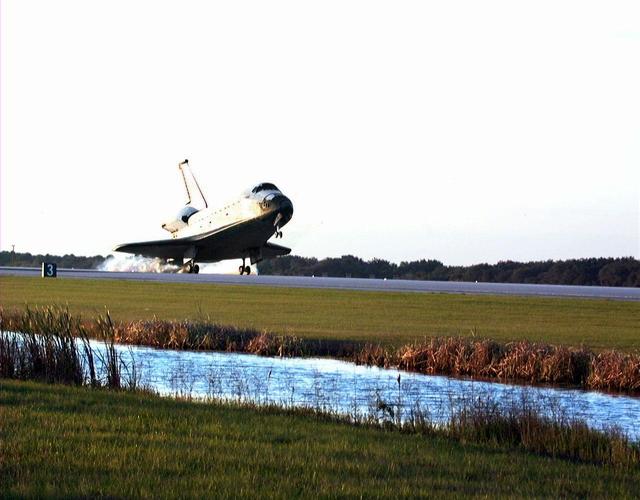
With Commander Kevin Kregel and Pilot Steven Lindsey at the controls, the orbiter Columbia touches its main gear down on Runway 33 at KSC’s Shuttle Landing Facility at 7:20:04 a.m. EST Dec. 5 to complete the 15-day, 16-hour and 34-minute-long STS-87 mission of 6.5 million miles. Also onboard the orbiter are Mission Specialists Winston Scott; Kalpana Chawla, Ph.D.; and Takao Doi, Ph.D., of the National Space Development Agency of Japan; along with Payload Specialist Leonid Kadenyuk of the National Space Agency of Ukraine. During the 88th Space Shuttle mission, the crew performed experiments on the United States Microgravity Payload-4 and pollinated plants as part of the Collaborative Ukrainian Experiment. This was the 12th landing for Columbia at KSC and the 41st KSC landing in the history of the Space Shuttle program
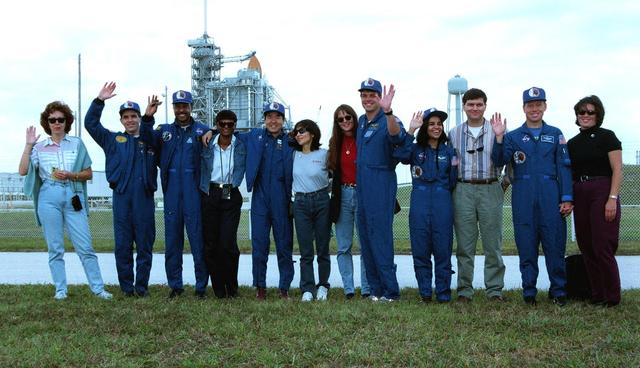
The crew of STS-87 pose with their spouses in front of Kennedy Space Center’s Launch Pad 39B during final prelaunch activities leading up to the scheduled Nov. 19 liftoff. From left to right are: Vera Kadenyuk, wife of Payload Specialist Leonid Kadenyuk of the National Space Agency of Ukraine who is next to Vera; Mission Specialist Winston Scott and his wife, Marilyn; Mission Specialist Takao Doi, Ph.D., of the National Space Development Agency of Japan, and his wife, Hitomi; Jeannie Kregel, who is married to Commander Kevin Kregel standing next to her; Mission Specialist Kalpana Chawla, Ph.D., and her husband, Jean-Pierre Harrison; and Pilot Steven Lindsey and his wife Diane. STS-87 will be the fourth flight of the United States Microgravity Payload and the Spartan-201 deployable satellite
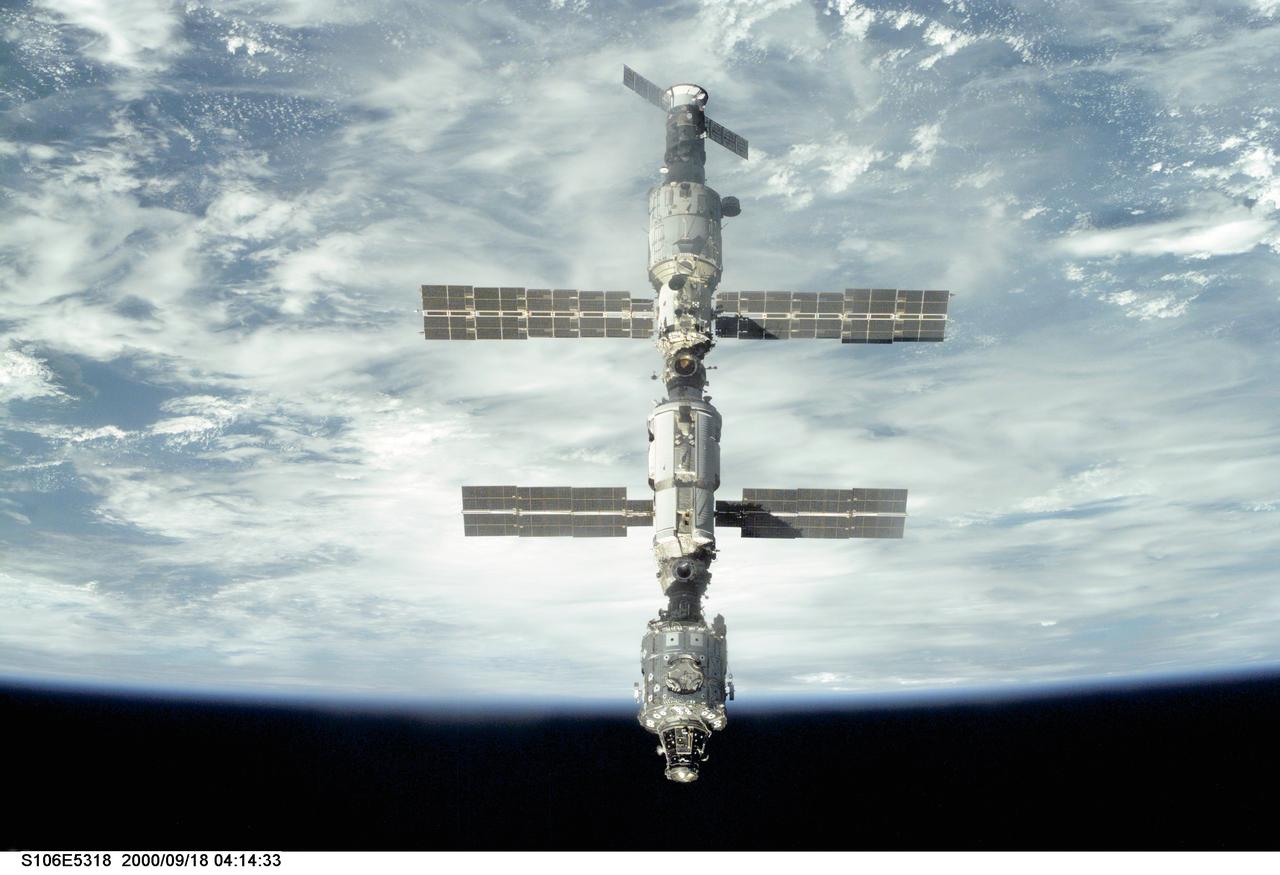
S106-E-5318 (18 September 2000) --- Backdropped against Earth's horizon, the International Space Station (ISS) is seen following its undocking with the Space Shuttle Atlantis. After accomplishing all mission objectives in outfitting the station for the first resident crew, the seven astronauts and cosmonauts undocked at 3:46 GMT on Sept. 18 over Russia near the northeastern portion of Ukraine. When Atlantis was at a safe distance from the station, about 450 feet, astronaut Scott D. Altman, pilot, performed a 90-minute, double-loop fly around to enable the crew to document the station’s exterior. He fired Atlantis’ jets one final time to separate from the station at 5:35 (GMT) September 18.
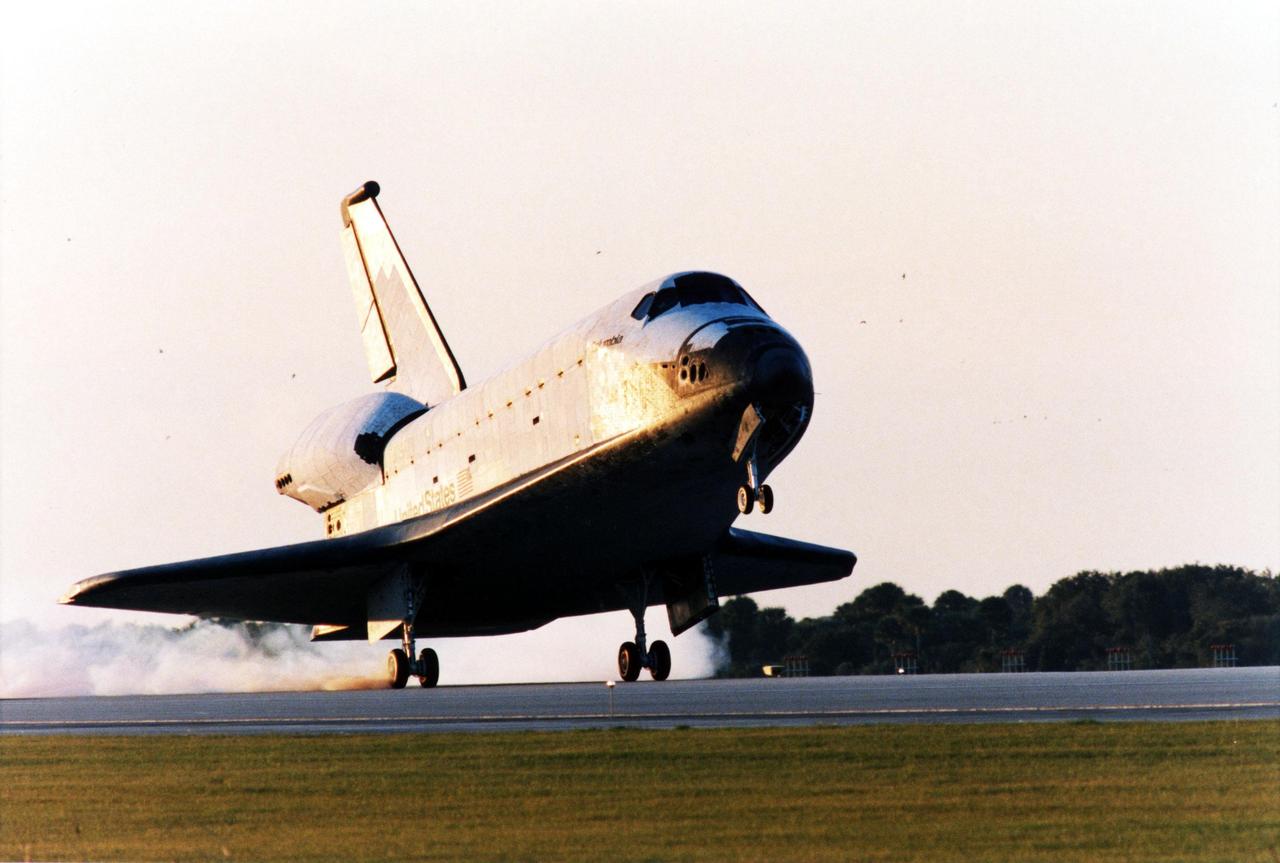
With Commander Kevin Kregel and Pilot Steven Lindsey at the controls, the orbiter Columbia touches its main gear down on Runway 33 at KSC’s Shuttle Landing Facility at 7:20:04 a.m. EST Dec. 5 to complete the 15-day, 16-hour and 34-minute-long STS-87 mission of 6.5 million miles. Also onboard the orbiter are Mission Specialists Winston Scott; Kalpana Chawla, Ph.D.; and Takao Doi, Ph.D., of the National Space Development Agency of Japan; along with Payload Specialist Leonid Kadenyuk of the National Space Agency of Ukraine. During the 88th Space Shuttle mission, the crew performed experiments on the United States Microgravity Payload-4 and pollinated plants as part of the Collaborative Ukrainian Experiment. This was the 12th landing for Columbia at KSC and the 41st KSC landing in the history of the Space Shuttle program
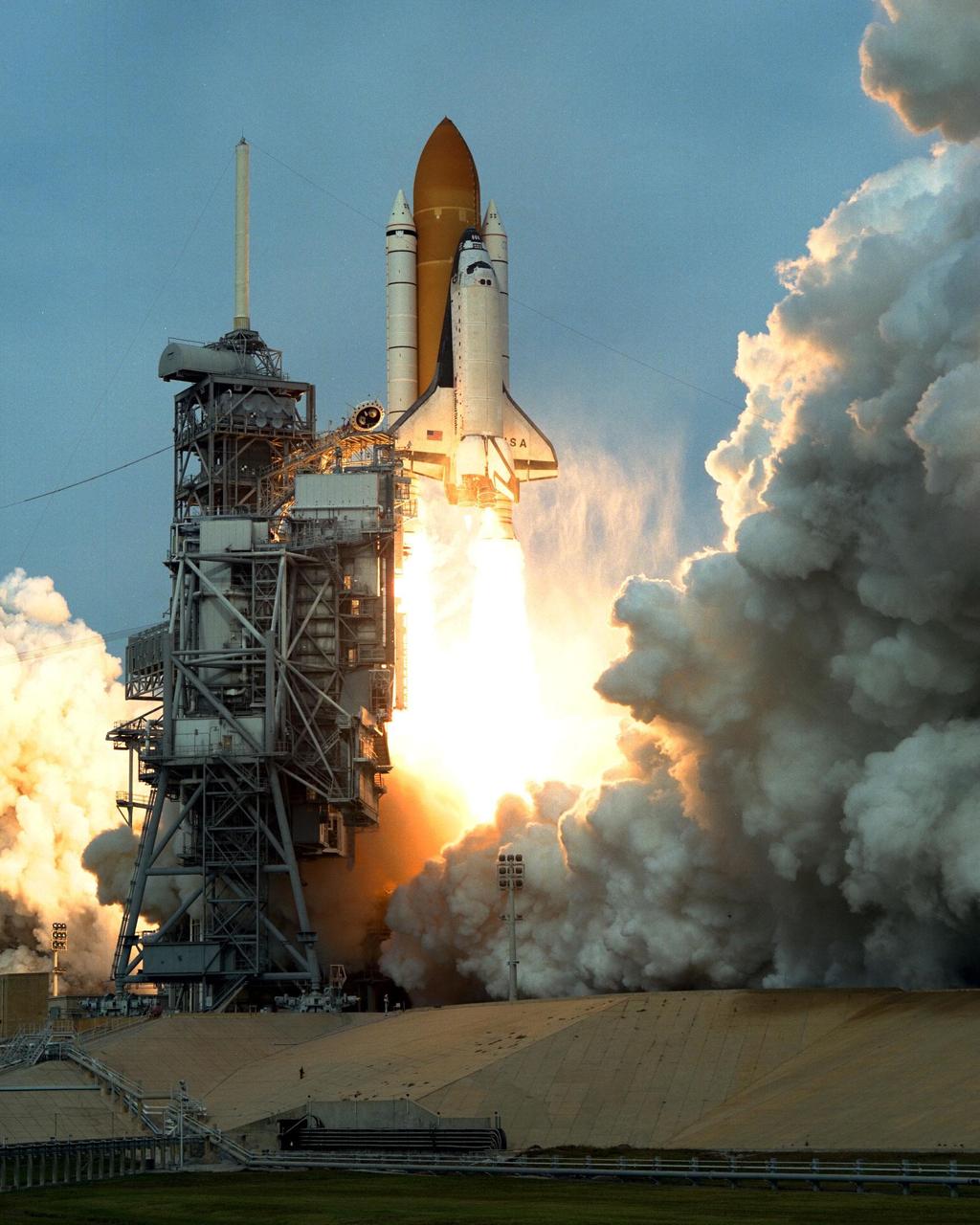
Like a rising sun lighting up the afternoon sky, the Space Shuttle Columbia soars from Launch Pad 39B at 2:46:00 p.m. EST, November 19, on the fourth flight of the United States Microgravity Payload and Spartan-201 satellite. The crew members include Mission Commander Kevin Kregel.; Pilot Steven Lindsey; Mission Specialists Kalpana Chawla, Ph.D., Winston Scott, and Takao Doi, Ph.D., of the National Space Development Agency of Japan; and Payload Specialist Leonid Kadenyuk of the National Space Agency of Ukraine. During the 16-day STS-87 mission, the crew will oversee experiments in microgravity; deploy and retrieve a solar satellite; and test a new experimental camera, the AERCam Sprint. Dr. Doi and Scott also will perform a spacewalk to practice International Space Station maneuvers
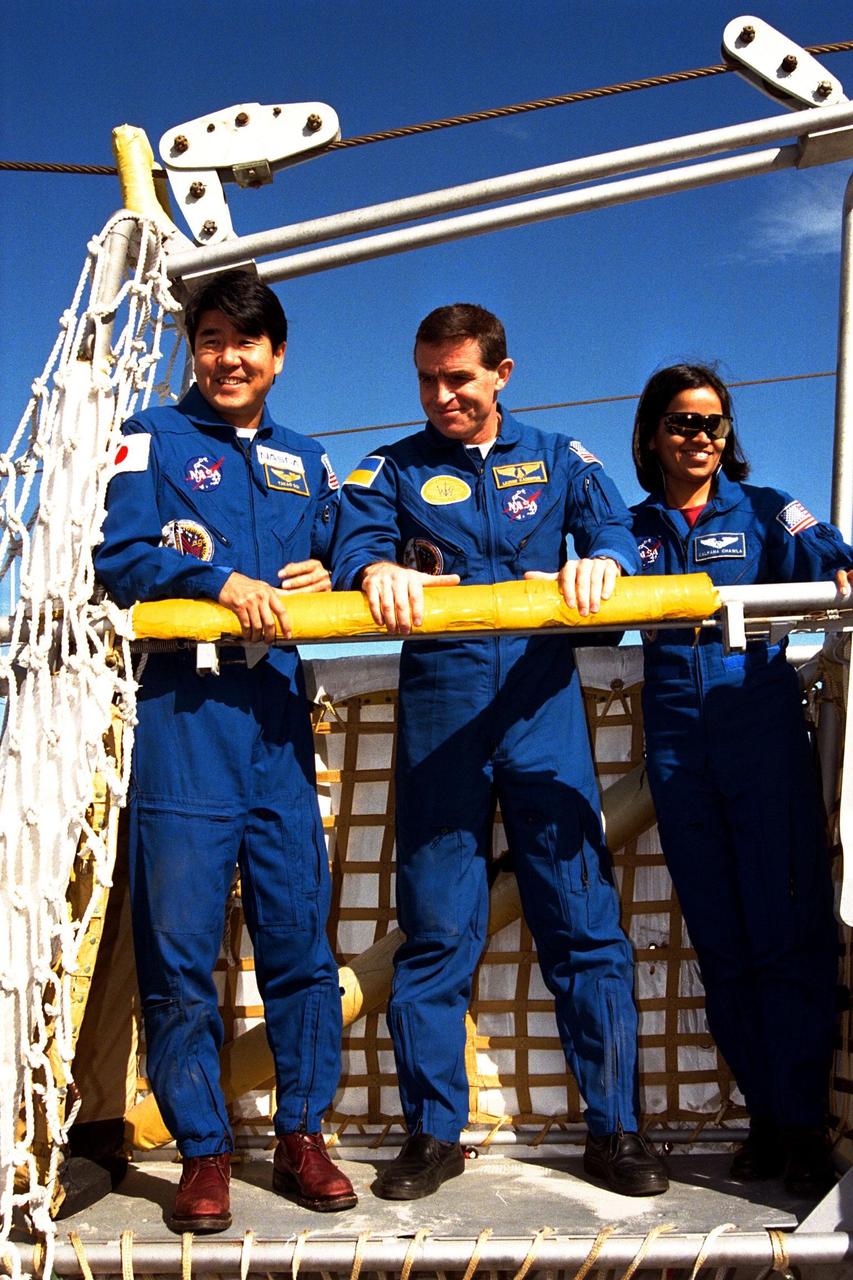
The crew of the STS-87 mission, scheduled for launch Nov. 19 aboard the Space Shuttle Columbia from pad 39B at Kennedy Space Center (KSC), participates in the Terminal Countdown Demonstration Test (TCDT) at KSC. Testing a slidewire basket that is part of the pad’s emergency egress system are, from left, Mission Specialist Takao Doi, Ph.D., of the National Space Development Agency of Japan; Payload Specialist Leonid Kadenyuk of the National Space Agency of Ukraine (NSAU); and Mission Specialist Kalpana Chawla, Ph.D. The TCDT is held at KSC prior to each Space Shuttle flight providing the crew of each mission opportunities to participate in simulated countdown activities. The TCDT ends with a mock launch countdown culminating in a simulated main engine cut-off. The crew also spends time undergoing emergency egress training exercises at the pad and has an opportunity to view and inspect the payloads in the orbiter's payload bay
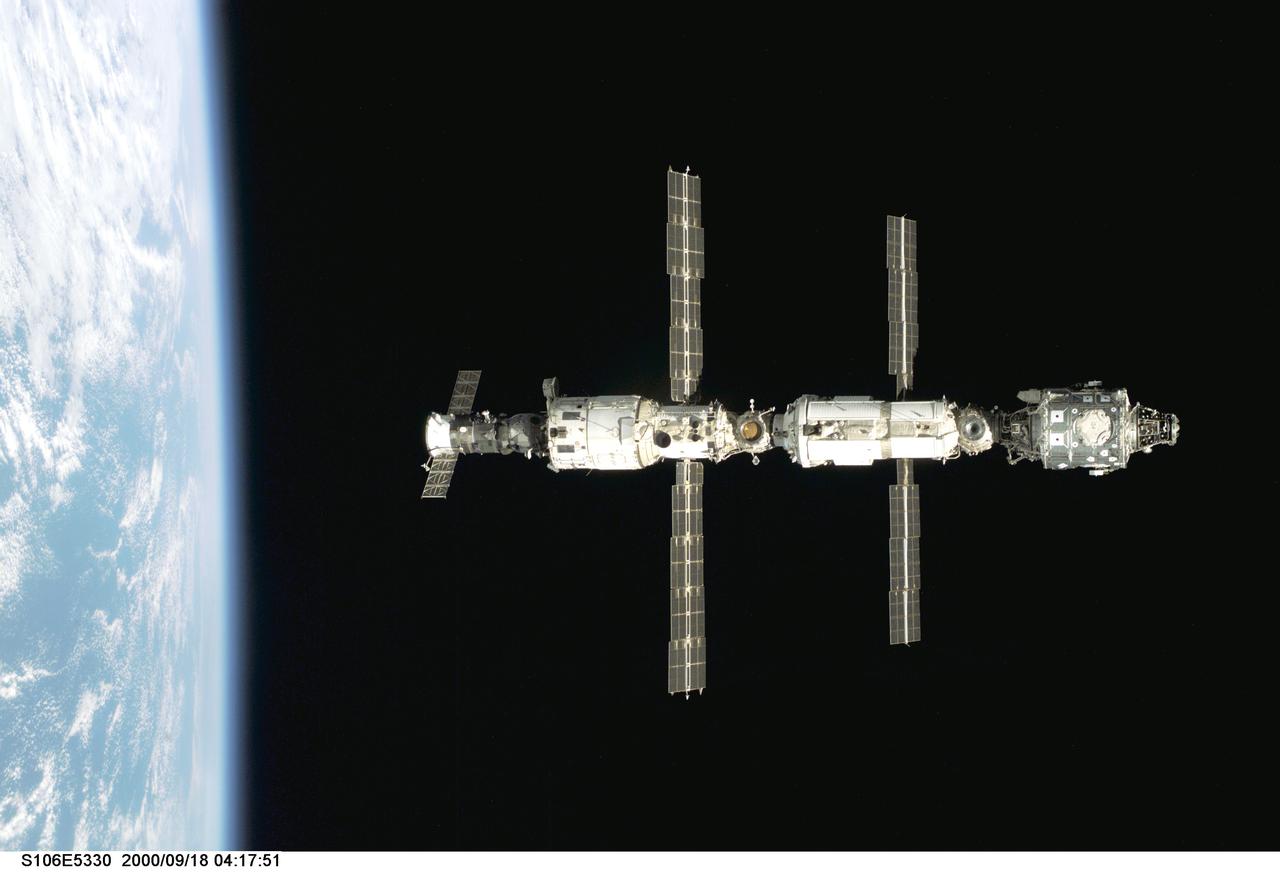
S106-E-5330 (18 September 2000) --- Backdropped against black space above Earth's horizon, the International Space Station (ISS) is seen following its undocking with the Space Shuttle Atlantis. After accomplishing all mission objectives in outfitting the station for the first resident crew, the seven astronauts and cosmonauts undocked at 3:46 GMT on Sept. 18 over Russia near the northeastern portion of Ukraine. When Atlantis was at a safe distance from the station, about 450 feet, astronaut Scott D. Altman, pilot, performed a 90-minute, double-loop fly around to enable the crew to document the station’s exterior. He fired Atlantis’ jets one final time to separate from the station at 5:35 (GMT) September 18.
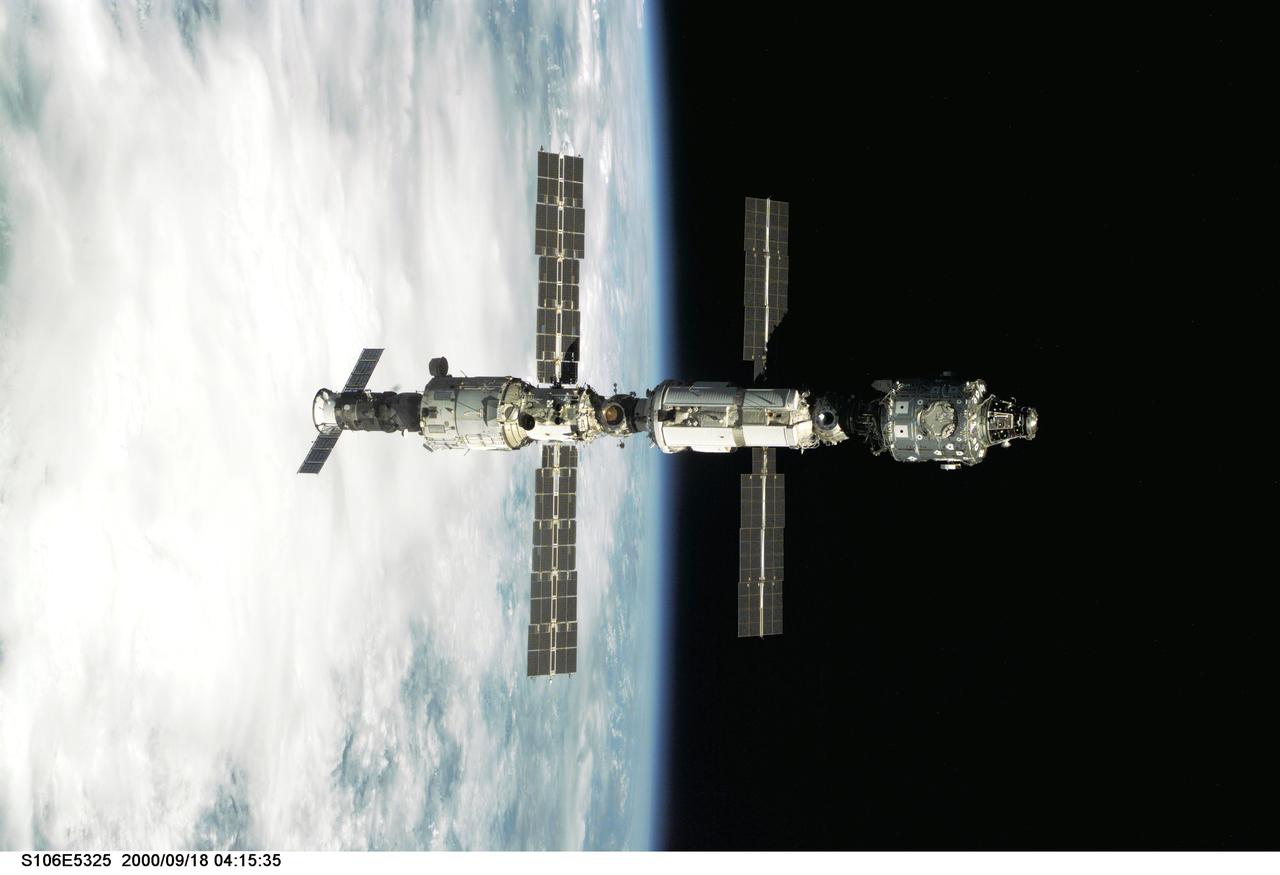
S106-E-5325 (18 September 2000) --- Backdropped against Earth's horizon, the International Space Station (ISS) is seen following its undocking with the Space Shuttle Atlantis. After accomplishing all mission objectives in outfitting the station for the first resident crew, the seven astronauts and cosmonauts undocked at 3:46 GMT on Sept. 18 over Russia near the northeastern portion of Ukraine. When Atlantis was at a safe distance from the station, about 450 feet, astronaut Scott D. Altman, pilot, performed a 90-minute, double-loop fly around to enable the crew to document the station’s exterior. He fired Atlantis’ jets one final time to separate from the station at 5:35 (GMT) September 18.
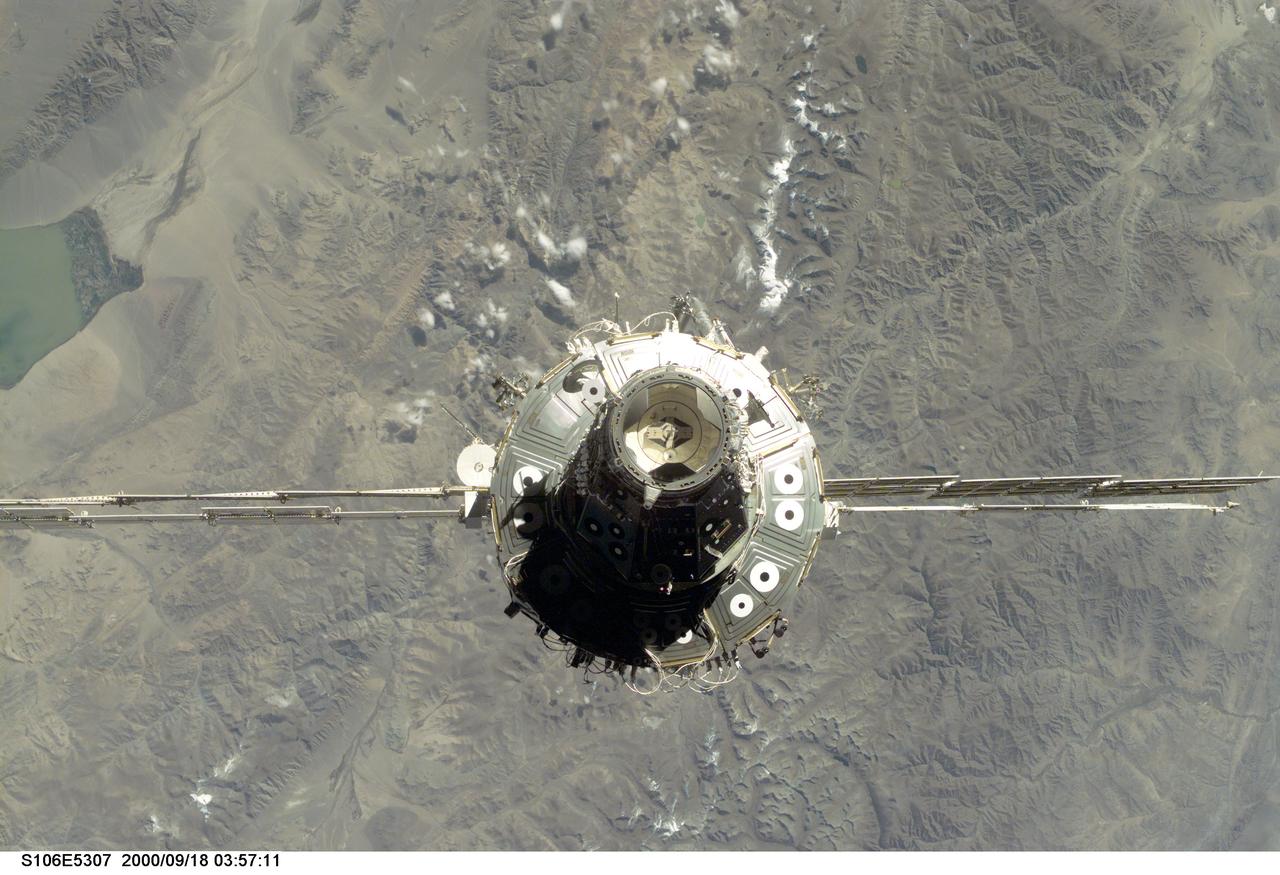
S106-E-5307 (18 September 2000) --- The International Space Station (ISS), with its U.S.-built Unity node facing the camera, is seen following its undocking with the Space Shuttle Atlantis. After accomplishing all mission objectives in outfitting the station for the first resident crew, the seven astronauts and cosmonauts undocked at 3:46 (GMT) on Sept. 18 over Russia near the northeastern portion of Ukraine. When Atlantis was at a safe distance from the station, about 450 feet, astronaut Scott D. Altman, pilot, performed a 90-minute, double-loop fly around to enable the crew to document the station’s exterior. He fired Atlantis’ jets one final time to separate from the station at 5:35 GMT, September 18.
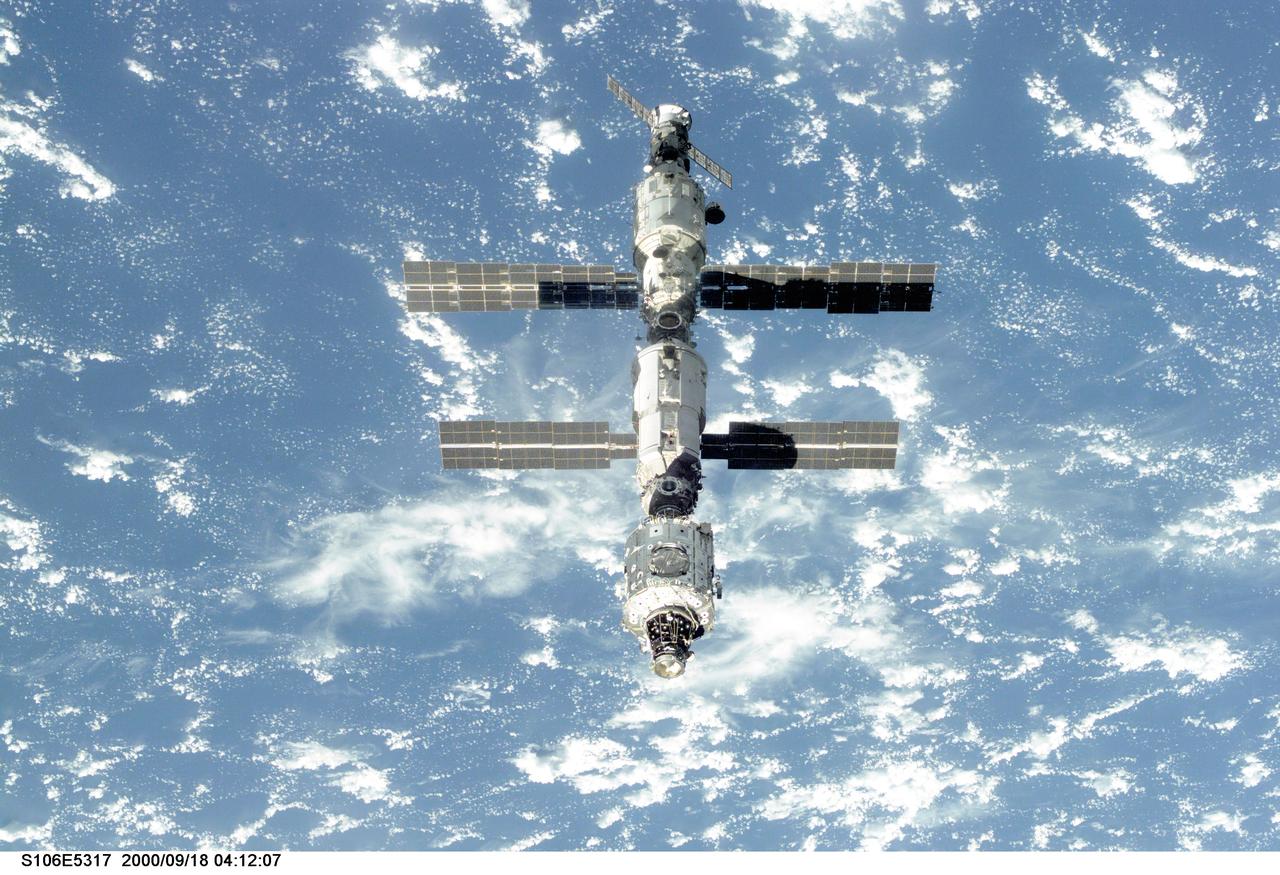
S106-E-5317 (18 September 2000) --- The International Space Station (ISS) is seen following its undocking with the Space Shuttle Atlantis. After accomplishing all mission objectives in outfitting the station for the first resident crew, the seven astronauts and cosmonauts undocked at 3:46 (GMT) on Sept. 18 over Russia near the northeastern portion of Ukraine. When Atlantis was at a safe distance from the station, about 450 feet, astronaut Scott D. Altman, pilot, performed a 90-minute, double-loop fly around to enable the crew to document the station’s exterior. He fired Atlantis’ jets one final time to separate from the station at 5:35 GMT, September 18.
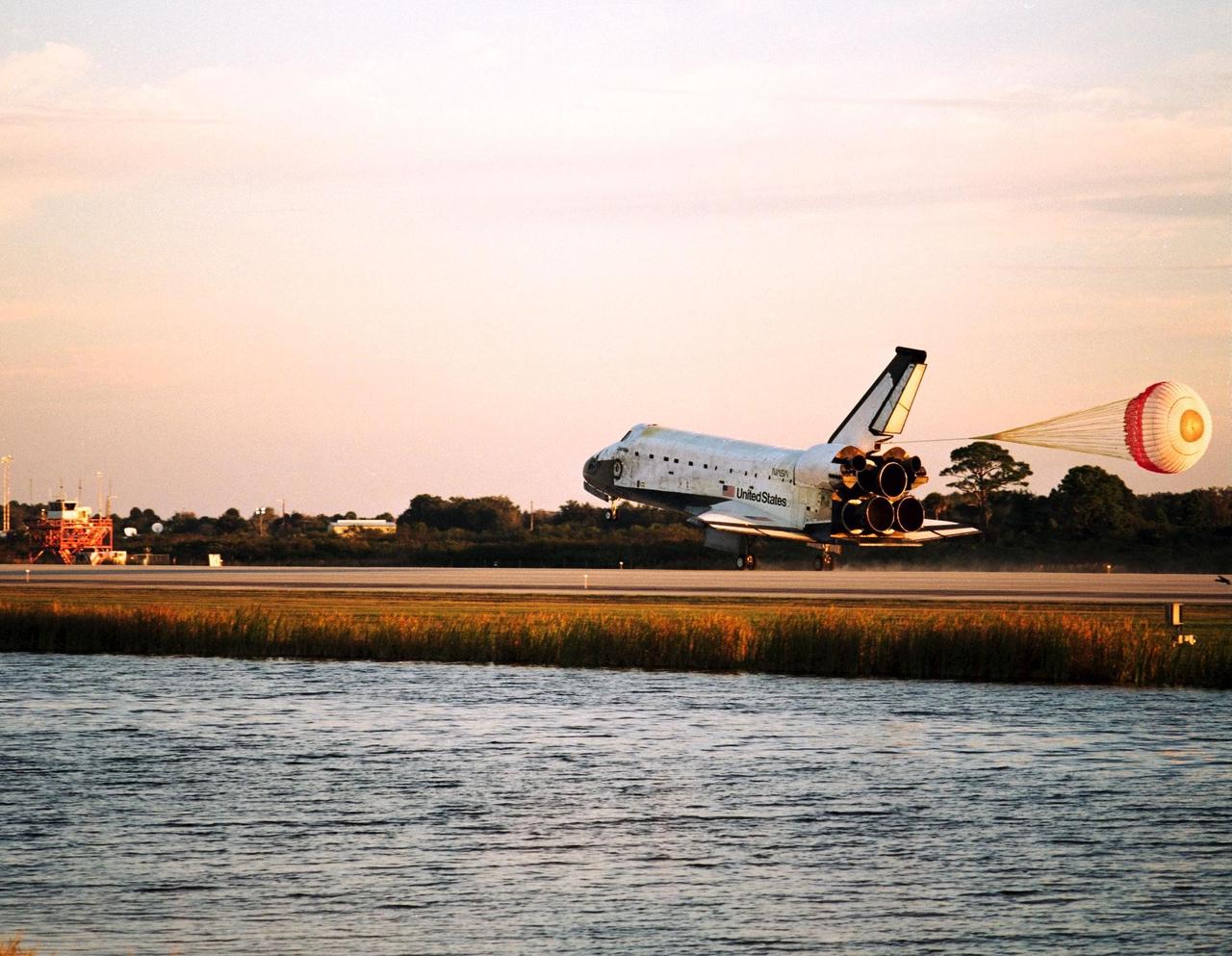
With Commander Kevin Kregel and Pilot Steven Lindsey at the controls, the orbiter Columbia, with its drag chute deployed, touches its main gear down on Runway 33 at KSC’s Shuttle Landing Facility at 7:20:04 a.m. EST Dec. 5 to complete the 15-day, 16-hour and 34-minute-long STS-87 mission of 6.5 million miles. Also onboard the orbiter are Mission Specialists Winston Scott; Kalpana Chawla, Ph.D.; and Takao Doi, Ph.D., of the National Space Development Agency of Japan; along with Payload Specialist Leonid Kadenyuk of the National Space Agency of Ukraine. During the 88th Space Shuttle mission, the crew performed experiments on the United States Microgravity Payload-4 and pollinated plants as part of the Collaborative Ukrainian Experiment. This was the 12th landing for Columbia at KSC and the 41st KSC landing in the history of the Space Shuttle program
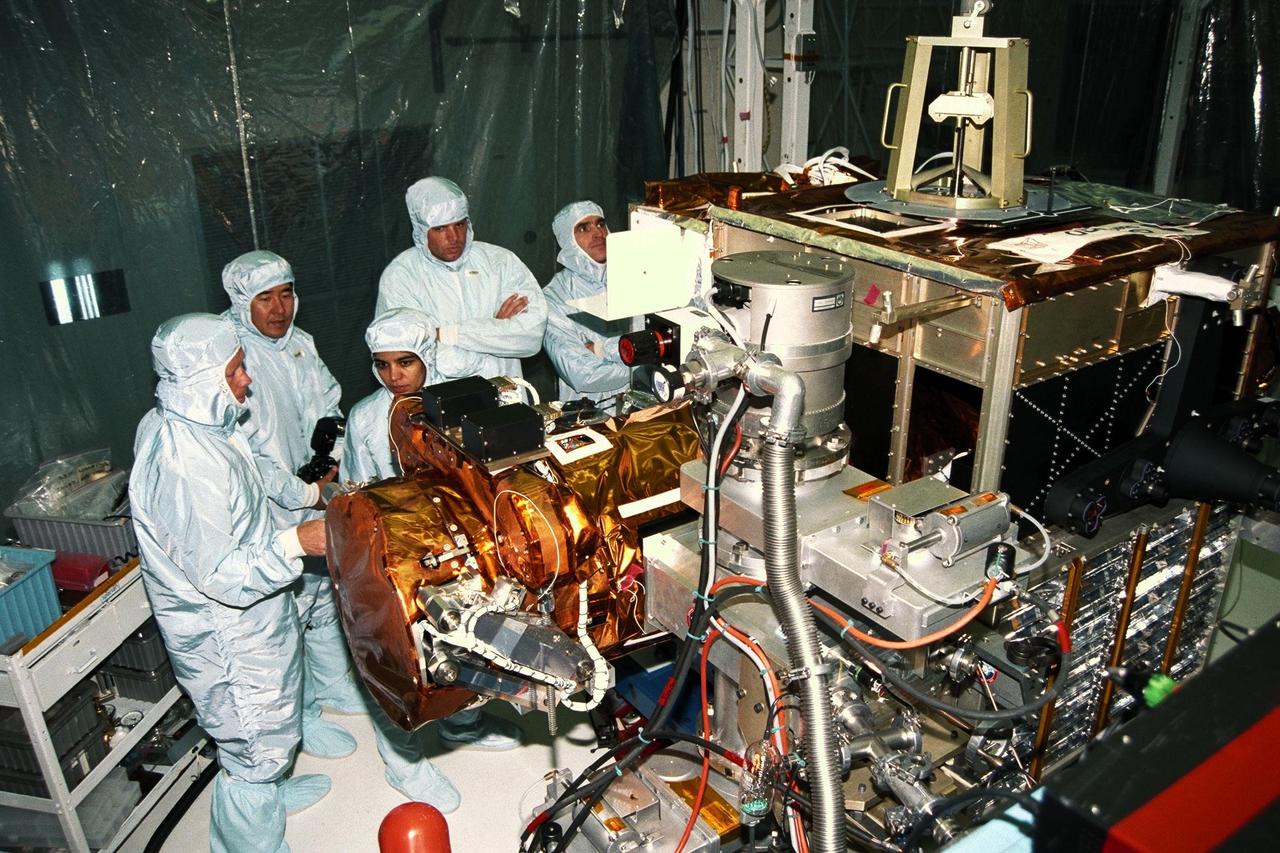
STS-87 astronaut crew members participate in the Crew Equipment Integration Test (CEIT) with the Spartan-201 payload in Kennedy Space Center’s (KSC's) Vertical Processing Facility. From left are Pilot Steven Lindsey; Mission Specialist Takao Doi, Ph.D., of the National Space Development Agency of Japan; Mission Specialist Kalpana Chawla, Ph.D.; Commander Kevin Kregel; and Payload Specialist Leonid Kadenyuk of the National Space Agency of Ukraine. The CEIT gives astronauts an opportunity to get a hands-on look at the payloads with which they will be working on-orbit. STS-87 will be the fourth United States Microgravity Payload and flight of the Spartan-201 deployable satellite. During the mission, Dr. Doi will be the first Japanese astronaut to perform a spacewalk. STS-87 is scheduled for a Nov. 19 liftoff from KSC
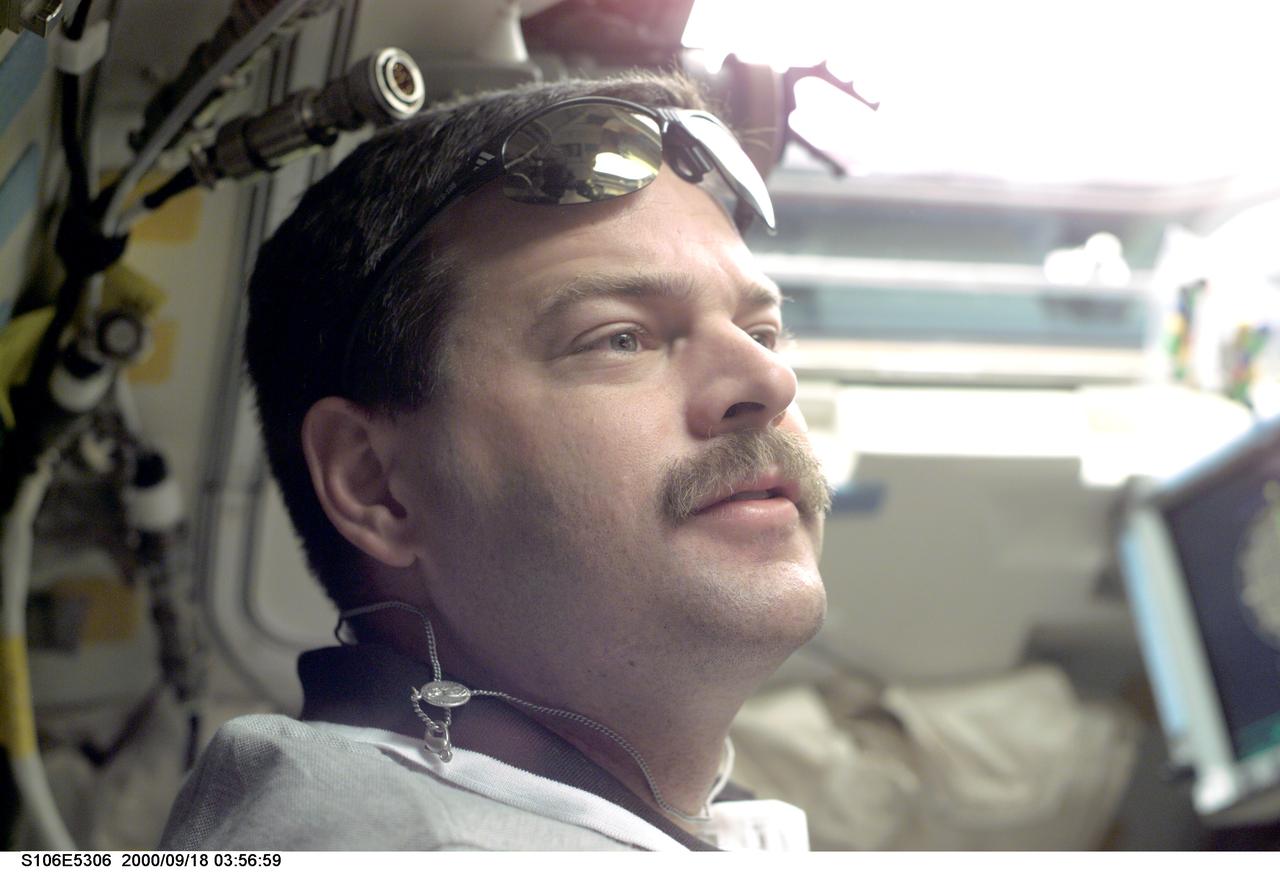
S106-E-5306 (18 September 2000) --- Astronaut Scott D. Altman, pilot, occupies the commander's station for some important maneuvers. Atlantis’ seven astronauts and cosmonauts successfully undocked from the International Space Station after accomplishing all mission objectives in outfitting the station for the first resident crew. Undocking occurred at 3:46 GMT, Sept. 18, over Russia near the northeastern portion of Ukraine. When Atlantis was at a safe distance from the station, about 450 feet, Altman performed a 90-minute, double-loop fly around to enable the crew to document the station’s exterior. He fired Atlantis’ jets one final time to separate from the station at 5:35 GMT, September 18.
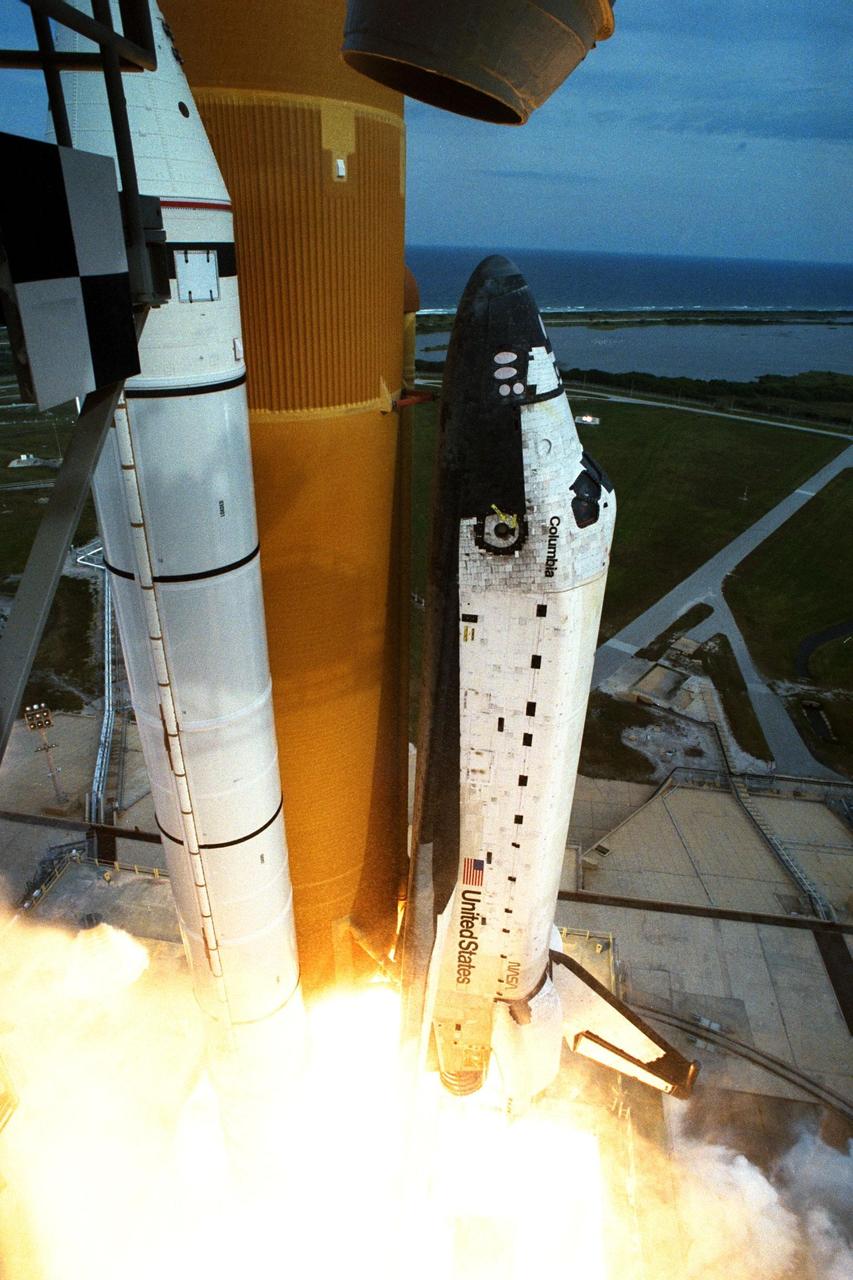
Like a rising sun lighting up the afternoon sky, the Space Shuttle Columbia soars from Launch Pad 39B at 2:46:00 p.m. EST, November 19, on the fourth flight of the United States Microgravity Payload and Spartan-201 satellite. The crew members include Mission Commander Kevin Kregel.; Pilot Steven Lindsey; Mission Specialists Kalpana Chawla, Ph.D., Winston Scott, and Takao Doi, Ph.D., of the National Space Development Agency of Japan; and Payload Specialist Leonid Kadenyuk of the National Space Agency of Ukraine. During the 16-day STS-87 mission, the crew will oversee experiments in microgravity; deploy and retrieve a solar satellite; and test a new experimental camera, the AERCam Sprint. Dr. Doi and Scott also will perform a spacewalk to practice International Space Station maneuvers
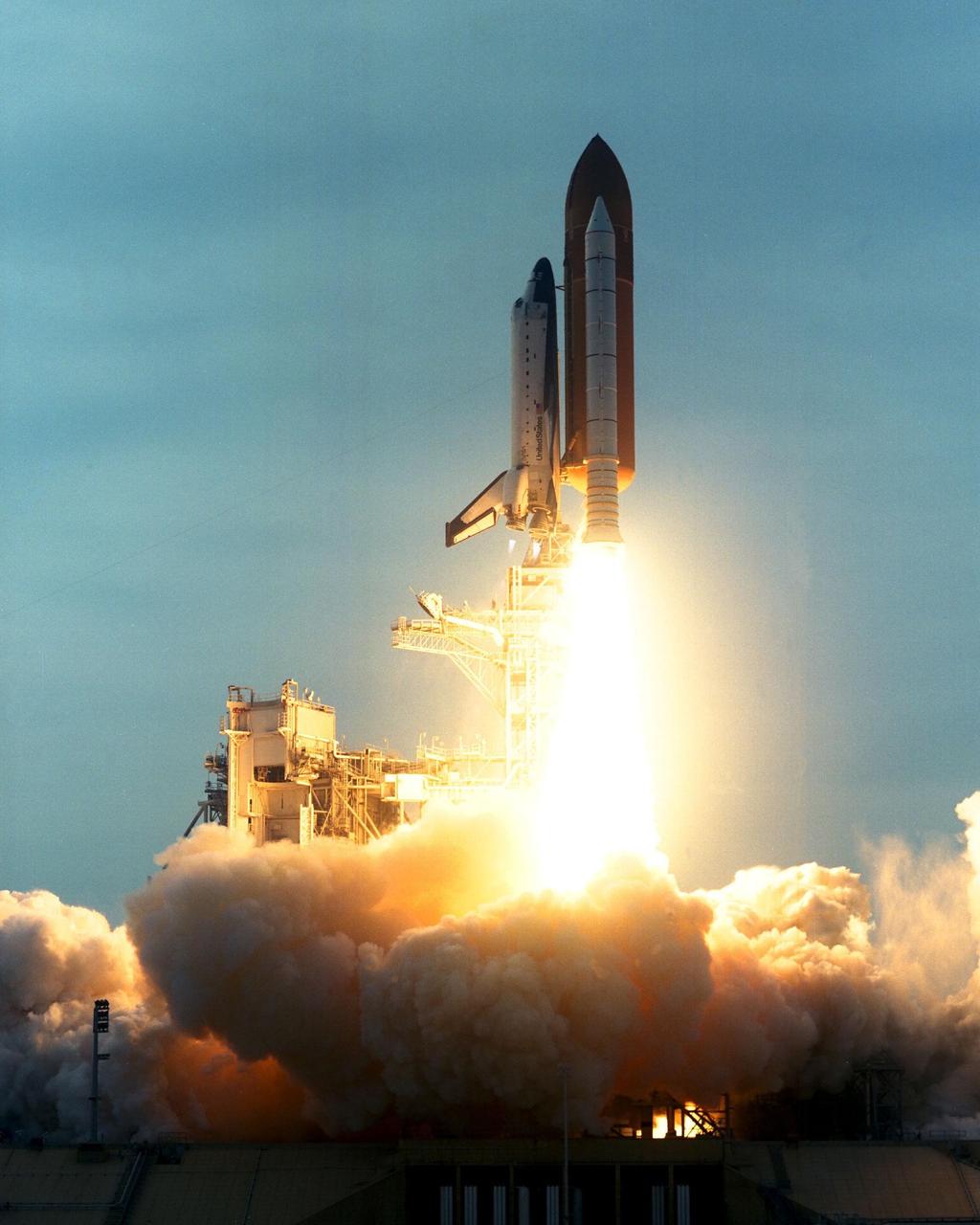
Like a rising sun lighting up the afternoon sky, the Space Shuttle Columbia soars from Launch Pad 39B at 2:46:00 p.m. EST, November 19, on the fourth flight of the United States Microgravity Payload and Spartan-201 satellite. The crew members include Mission Commander Kevin Kregel.; Pilot Steven Lindsey; Mission Specialists Kalpana Chawla, Ph.D., Winston Scott, and Takao Doi, Ph.D., of the National Space Development Agency of Japan; and Payload Specialist Leonid Kadenyuk of the National Space Agency of Ukraine. During the 16-day STS-87 mission, the crew will oversee experiments in microgravity; deploy and retrieve a solar satellite; and test a new experimental camera, the AERCam Sprint. Dr. Doi and Scott also will perform a spacewalk to practice International Space Station maneuvers

Like a rising sun lighting up the afternoon sky, the Space Shuttle Columbia soars from Launch Pad 39B at 2:46:00 p.m. EST, November 19, on the fourth flight of the United States Microgravity Payload and Spartan-201 satellite. The crew members include Mission Commander Kevin Kregel.; Pilot Steven Lindsey; Mission Specialists Kalpana Chawla, Ph.D., Winston Scott, and Takao Doi, Ph.D., of the National Space Development Agency of Japan; and Payload Specialist Leonid Kadenyuk of the National Space Agency of Ukraine. During the 16-day STS-87 mission, the crew will oversee experiments in microgravity; deploy and retrieve a solar satellite; and test a new experimental camera, the AERCam Sprint. Dr. Doi and Scott also will perform a spacewalk to practice International Space Station maneuvers

Like a rising sun lighting up the afternoon sky, the Space Shuttle Columbia soars from Launch Pad 39B at 2:46:00 p.m. EST, November 19, on the fourth flight of the United States Microgravity Payload and Spartan-201 satellite. The crew members include Mission Commander Kevin Kregel.; Pilot Steven Lindsey; Mission Specialists Kalpana Chawla, Ph.D., Winston Scott, and Takao Doi, Ph.D., of the National Space Development Agency of Japan; and Payload Specialist Leonid Kadenyuk of the National Space Agency of Ukraine. During the 16-day STS-87 mission, the crew will oversee experiments in microgravity; deploy and retrieve a solar satellite; and test a new experimental camera, the AERCam Sprint. Dr. Doi and Scott also will perform a spacewalk to practice International Space Station maneuvers
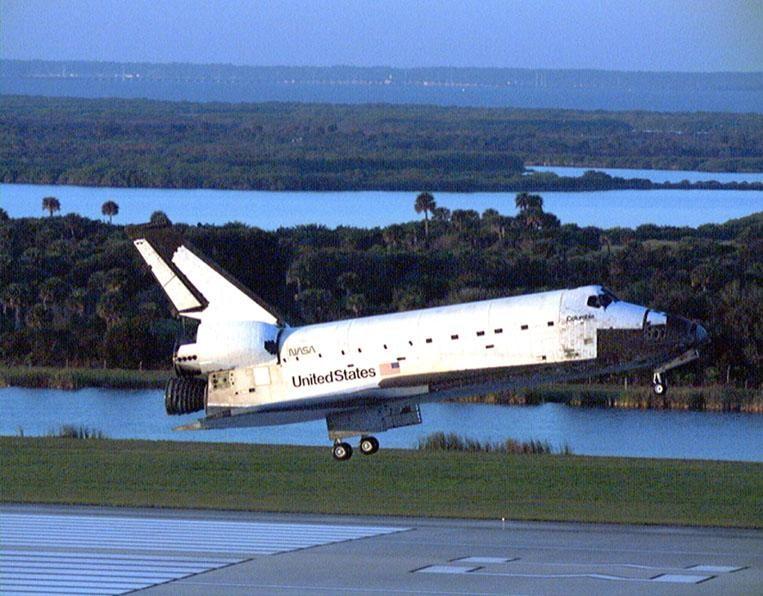
With Commander Kevin Kregel and Pilot Steven Lindsey at the controls, the orbiter Columbia glides to its touchdown on Runway 33, the numbers visible below the orbiter, at KSC’s Shuttle Landing Facility. Main gear touchdown occurred at 7:20:04 a.m. EST on Dec. 5 to complete the 15-day, 16-hour and 34-minutelong STS-87 mission of 6.5 million miles. Also onboard the orbiter are Mission Specialists Winston Scott; Kalpana Chawla, Ph.D.; and Takao Doi, Ph.D., of the National Space Development Agency of Japan; along with Payload Specialist Leonid Kadenyuk of the National Space Agency of Ukraine. During the 88th Space Shuttle mission, the crew performed experiments on the United States Microgravity Payload-4 and pollinated plants as part of the Collaborative Ukrainian Experiment. This was the 12th landing for Columbia at KSC and the 41st KSC landing in the history of the Space Shuttle program

The crew of Mission STS-87 depart from the Operations and Checkout Building en route to Launch Pad 39B, where the Space Shuttle Columbia awaits liftoff on the fourth flight of the United States Microgravity Payload and the Spartan-201 deployable satellite. They are, from left to right, front to back: Mission Specialist Takao Doi, Ph.D., of the National Space Development Agency of Japan; Mission Specialist Winston Scott (near van); Payload Specialist Leonid Kadenyuk of the National Space Agency of Ukraine; and Pilot Steven Lindsey (near van). Missing from this photo are Commander Kevin Kregel and Mission Specialist Kalpana Chawla, Ph.D. The Space Shuttle Columbia and its crew of six members are scheduled to lift off during a two-and-a-half hour launch window, which opens at 2:46 p.m
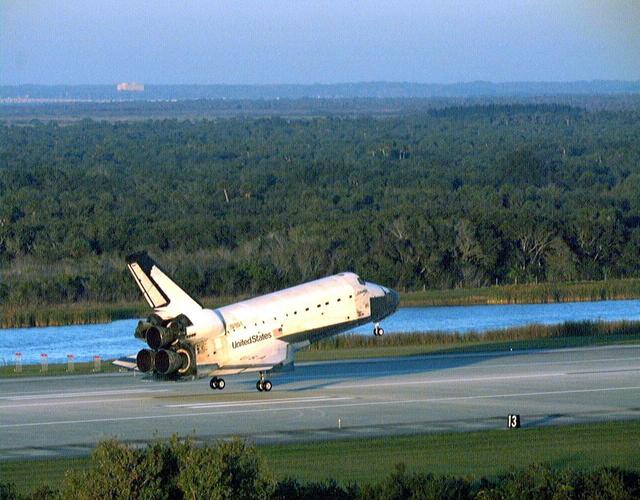
With Commander Kevin Kregel and Pilot Steven Lindsey at the controls, the orbiter Columbia glides moments before its touchdown on Runway 33 at KSC’s Shuttle Landing Facility. Main gear touchdown occurred at 7:20:04 a.m. EST on Dec. 5 to complete the 15-day, 16-hour and 34-minute-long STS-87 mission of 6.5 million miles. Also onboard the orbiter are Mission Specialists Winston Scott; Kalpana Chawla, Ph.D.; and Takao Doi, Ph.D., of the National Space Development Agency of Japan; along with Payload Specialist Leonid Kadenyuk of the National Space Agency of Ukraine. During the 88th Space Shuttle mission, the crew performed experiments on the United States Microgravity Payload-4 and pollinated plants as part of the Collaborative Ukrainian Experiment. This was the 12th landing for Columbia at KSC and the 41st KSC landing in the history of the Space Shuttle program
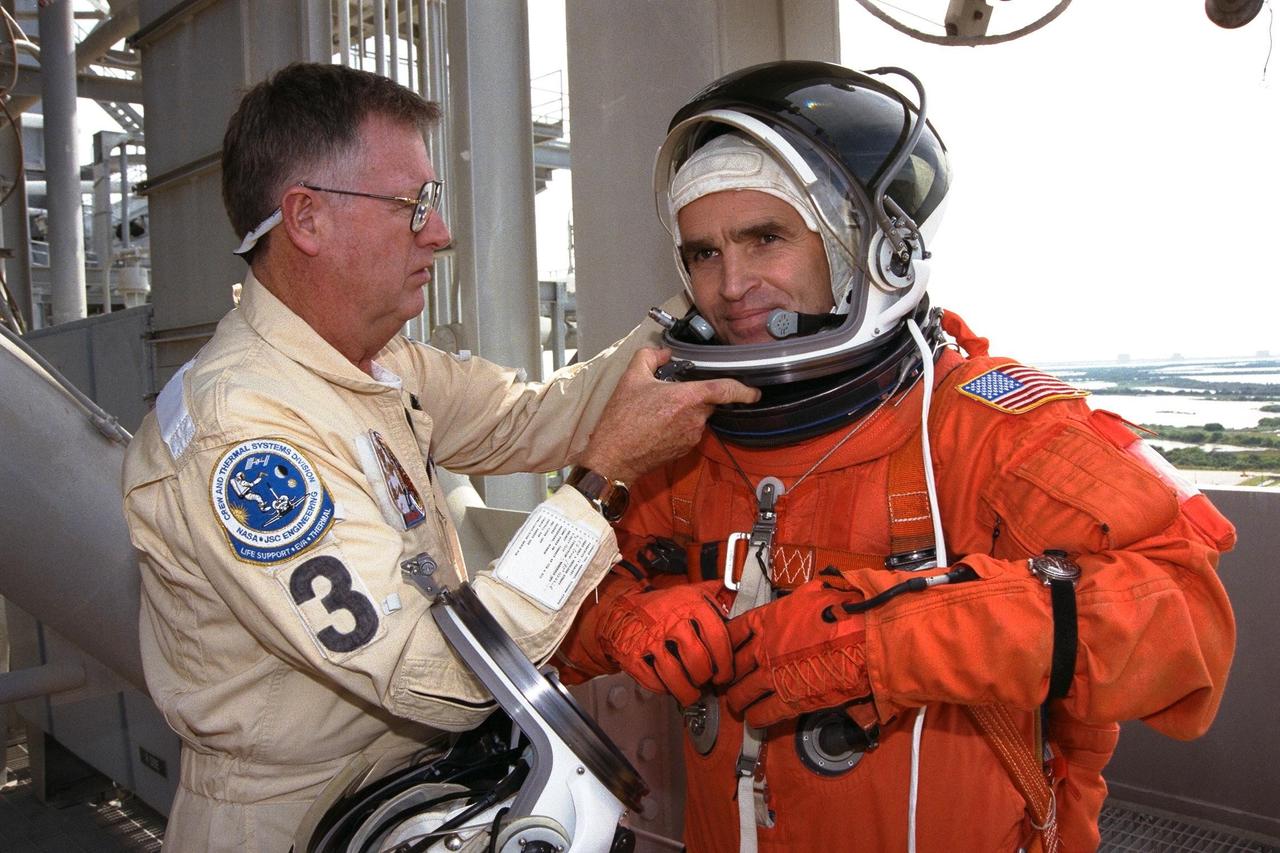
STS-87 Payload Specialist Leonid Kadenyuk, at right, of the National Space Agency of Ukraine (NSAU) is assisted into his orange launch and entry spacesuit ensemble by NASA Suit Technician Al Rochford, at left, before participating in Terminal Countdown Demonstration Test (TCDT) activities. The crew of the STS-87 mission is scheduled for launch Nov. 19 aboard the Space Shuttle Columbia. The TCDT is held at KSC prior to each Space Shuttle flight providing the crew of each mission opportunities to participate in simulated countdown activities. The TCDT ends with a mock launch countdown culminating in a simulated main engine cut-off. The crew also spends time undergoing emergency egress training exercises at the pad and has an opportunity to view and inspect the payloads in the orbiter's payload bay
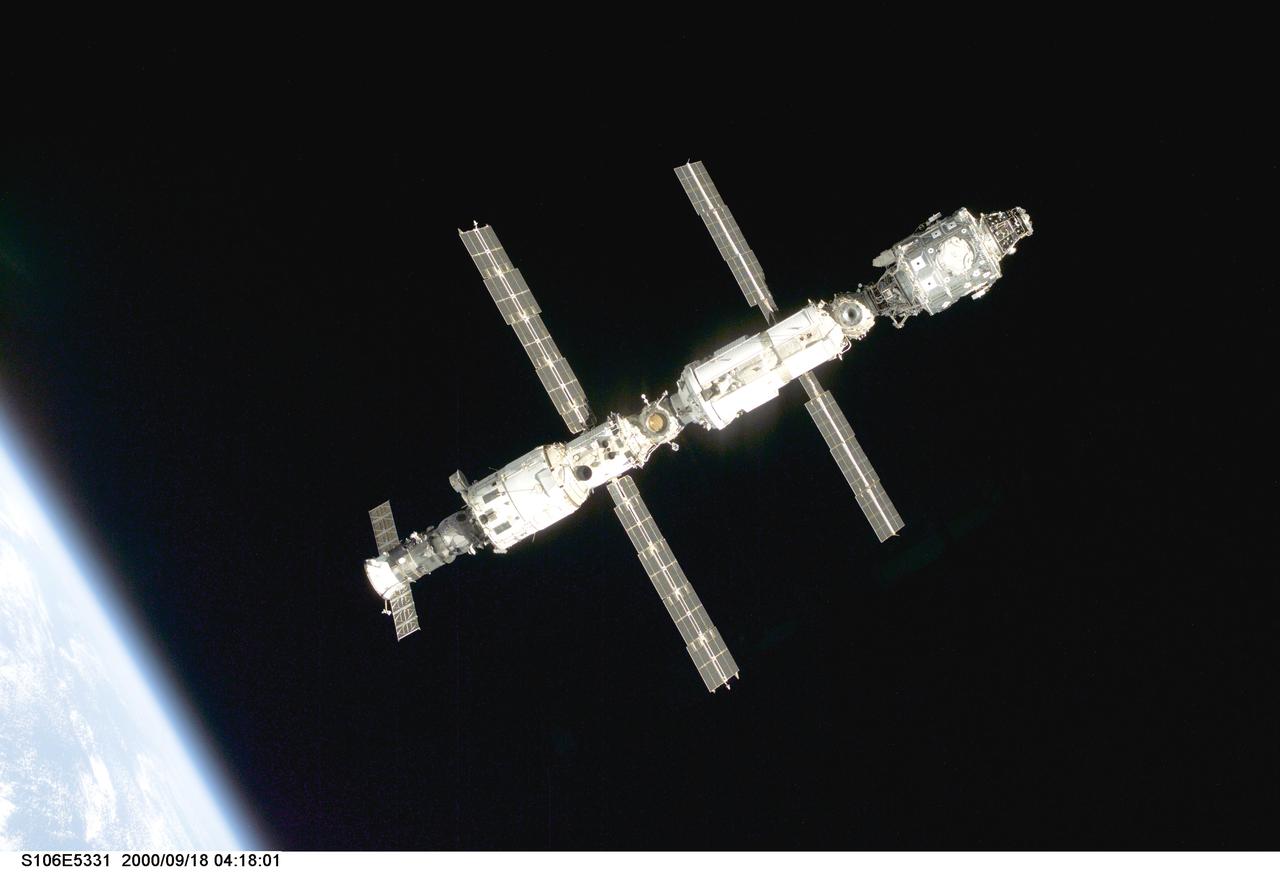
S106-E-5331 (18 September 2000) --- Backdropped against black space above Earth's horizon, the International Space Station (ISS) is seen following its undocking with the Space Shuttle Atlantis. After accomplishing all mission objectives in outfitting the station for the first resident crew, the seven astronauts and cosmonauts undocked at 3:46 GMT on Sept. 18 over Russia near the northeastern portion of Ukraine. When Atlantis was at a safe distance from the station, about 450 feet, astronaut Scott D. Altman, pilot, performed a 90-minute, double-loop fly around to enable the crew to document the station’s exterior. He fired Atlantis’ jets one final time to separate from the station at 5:35 (GMT) September 18.
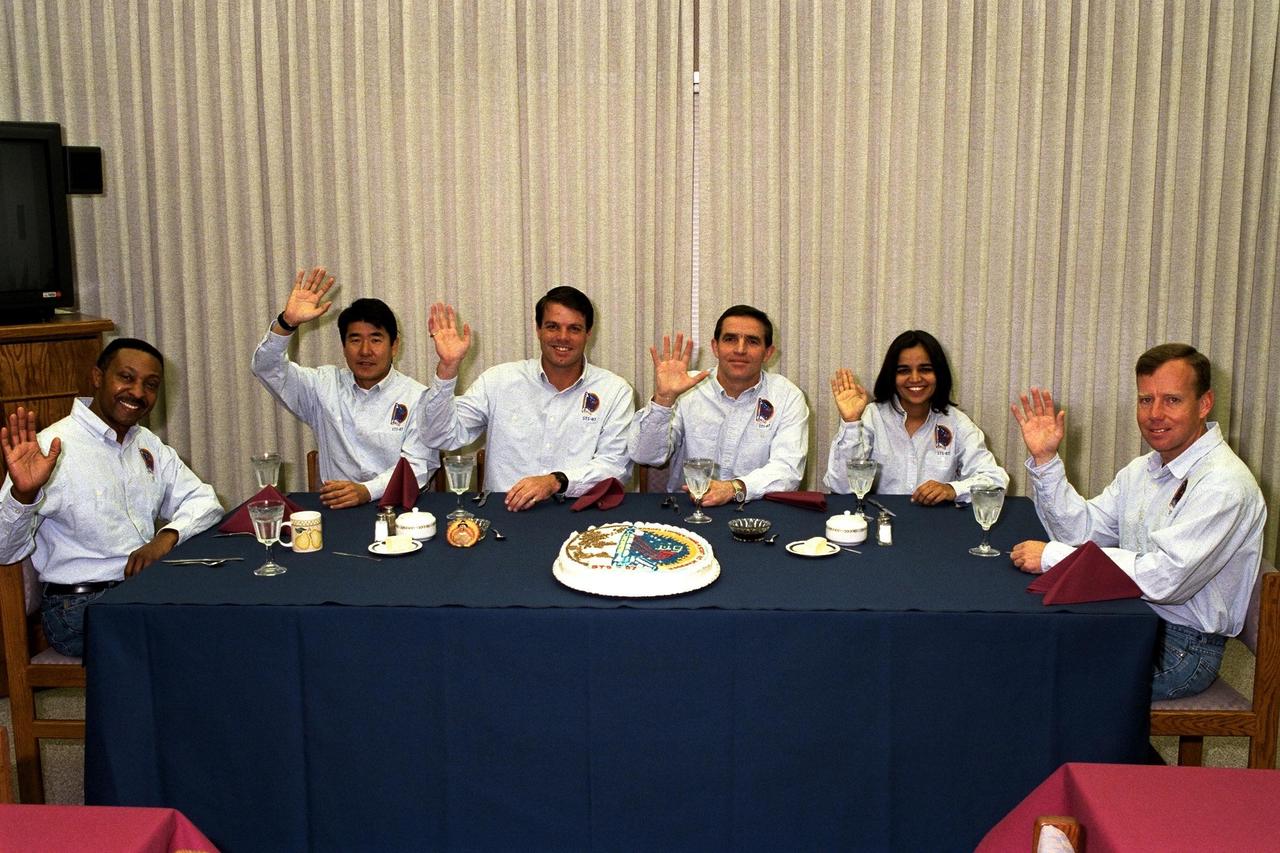
The STS-87 flight crew enjoy the traditional pre-liftoff breakfast in the crew quarters of the Operations and Checkout Building. They are, from left, Mission Specialist Winston Scott; Mission Specialist Takao Doi, Ph.D., of the National Space Development Agency of Japan; Commander Kevin Kregel; Payload Specialist Leonid Kadenyuk of the National Space Agency of Ukraine; Mission Specialist Kalpana Chawla, Ph.D.; and Pilot Steven Lindsey. After a weather briefing, the flight crew will be fitted with their launch and entry suits and depart for Launch Pad 39B. Once there, they will take their positions in the crew cabin of the Space Shuttle Columbia to await liftoff during a two-and-a-half-hour window that will open at 2:46 p.m. EDT, Nov. 19
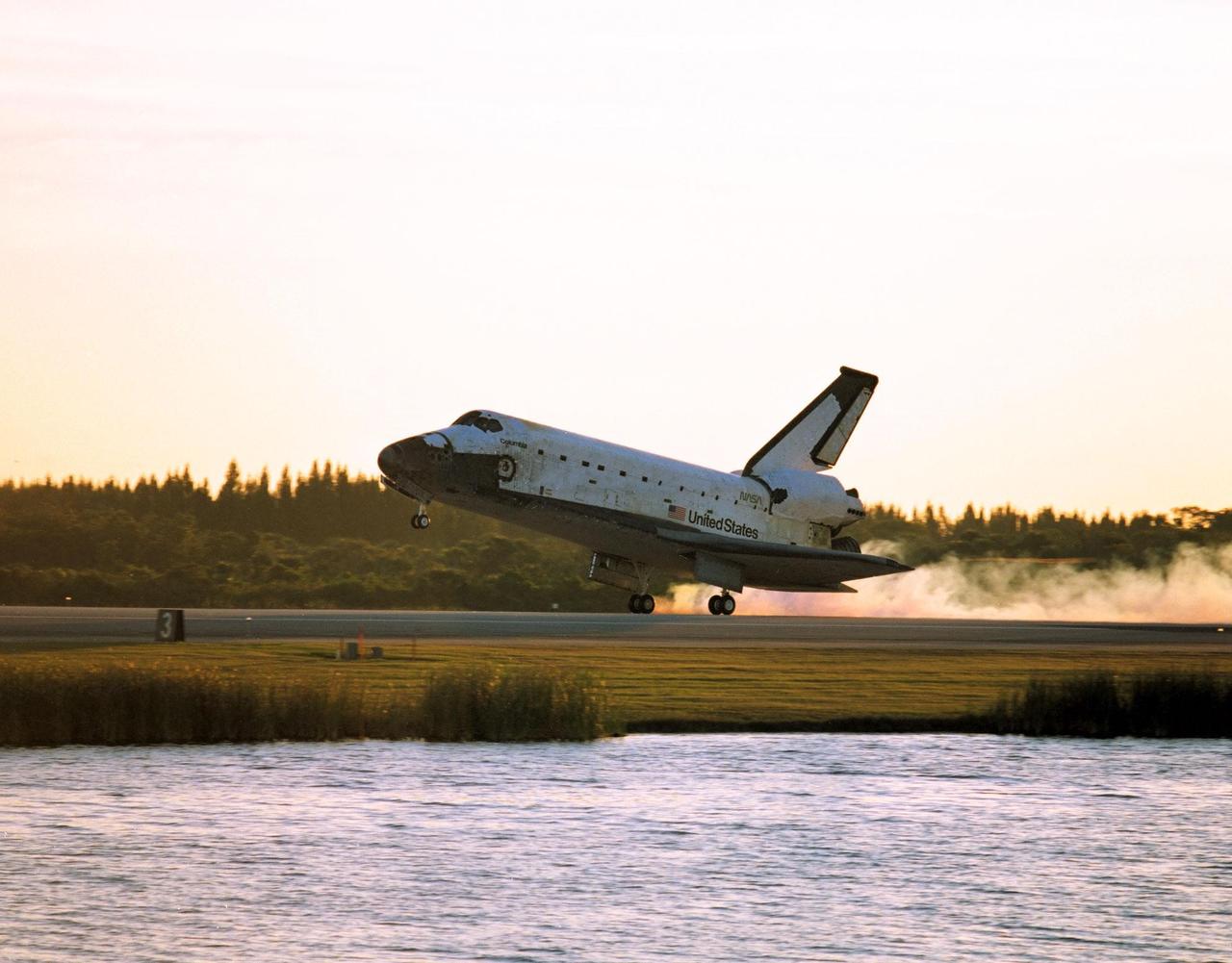
With Commander Kevin Kregel and Pilot Steven Lindsey at the controls, the orbiter Columbia touches its main gear down on Runway 33 at KSC’s Shuttle Landing Facility at 7:20:04 a.m. EST Dec. 5 to complete the 15-day, 16-hour and 34-minute-long STS-87 mission of 6.5 million miles. Also onboard the orbiter are Mission Specialists Winston Scott; Kalpana Chawla, Ph.D.; and Takao Doi, Ph.D., of the National Space Development Agency of Japan; along with Payload Specialist Leonid Kadenyuk of the National Space Agency of Ukraine. During the 88th Space Shuttle mission, the crew performed experiments on the United States Microgravity Payload-4 and pollinated plants as part of the Collaborative Ukrainian Experiment. This was the 12th landing for Columbia at KSC and the 41st KSC landing in the history of the Space Shuttle program
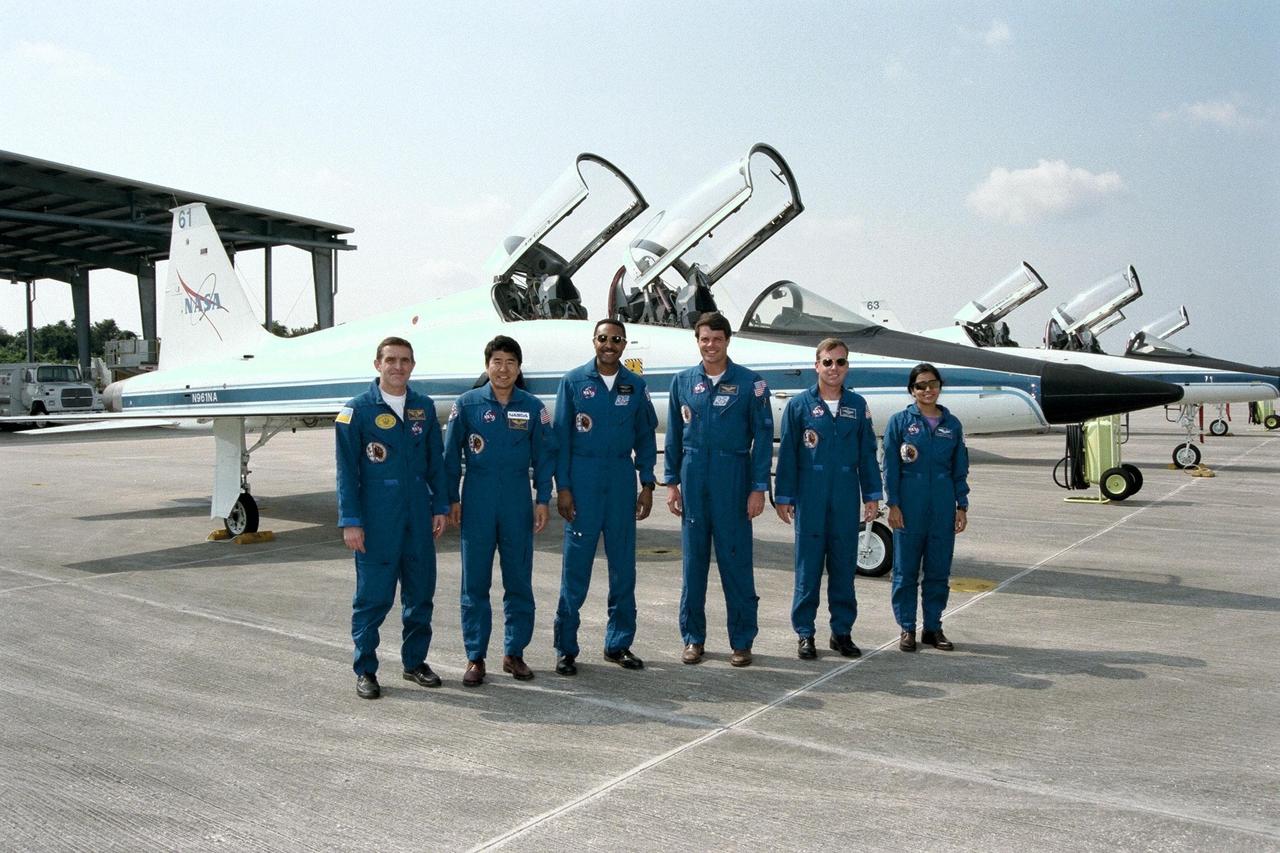
STS-87 astronaut crew members prepare to fly back to Johnson Space Center in Houston after participating in the Crew Equipment Integration Test (CEIT) at Kennedy Space Center (KSC) in early October. From left are Payload Specialist Leonid Kadenyuk of the National Space Agency of Ukraine; Mission Specialist Takao Doi, Ph.D., of the National Space Development Agency of Japan; Mission Specialist Winston Scott; Commander Kevin Kregel; Pilot Steven Lindsey; and Mission Specialist Kalpana Chawla, Ph.D. The CEIT gives astronauts an opportunity to get a hands-on look at the payloads with which they will be working on-orbit. STS-87 will be the fourth United States Microgravity Payload and flight of the Spartan-201 deployable satellite. During the STS-87 mission, scheduled for a Nov. 19 liftoff from KSC, Dr. Doi and Scott will both perform spacewalks
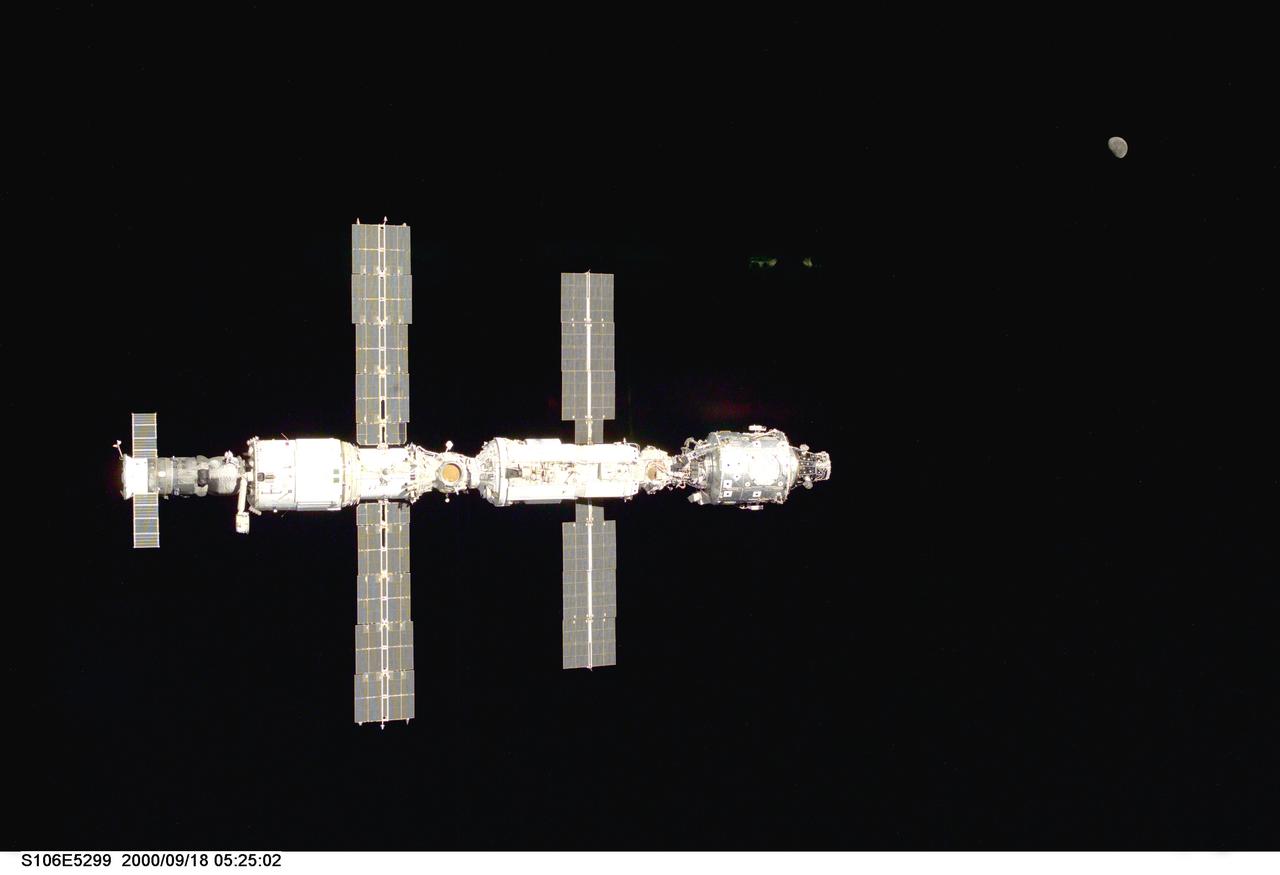
S106-E-5299 (18 September 2000) --- Backdropped against the blackness of space, the International Space Station (ISS) is seen following its undocking with the Space Shuttle Atlantis. After accomplishing all mission objectives in outfitting the station for the first resident crew, the seven astronauts and cosmonauts undocked at 3:46 (GMT) on Sept. 18 over Russia near the northeastern portion of Ukraine. When Atlantis was at a safe distance from the station, about 450 feet, astronaut Scott D. Altman, pilot, performed a 90-minute, double-loop fly around to enable the crew to document the station’s exterior. He fired Atlantis’ jets one final time to separate from the station at 5:35 GMT, September 18.