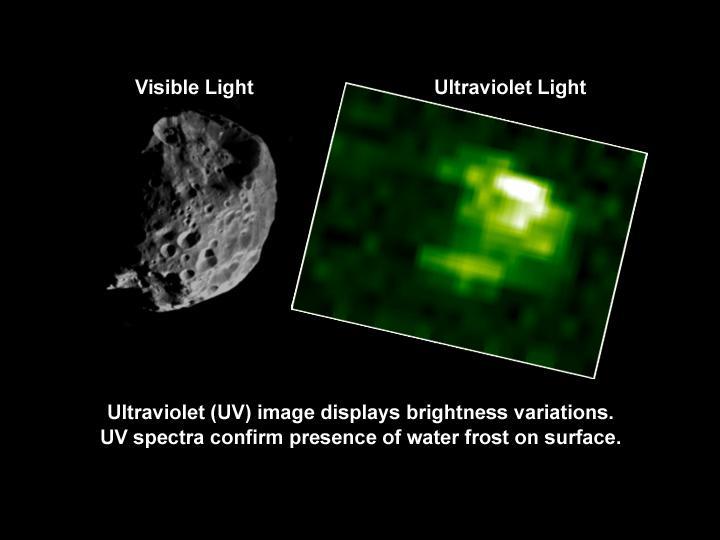
Phoebe in Ultraviolet
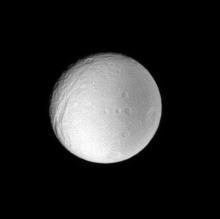
Ultraviolet Revelation
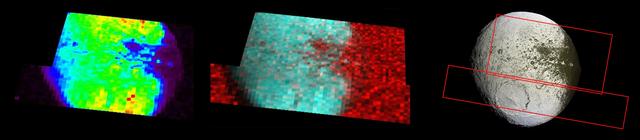
Two Ultraviolet Views of Iapetus
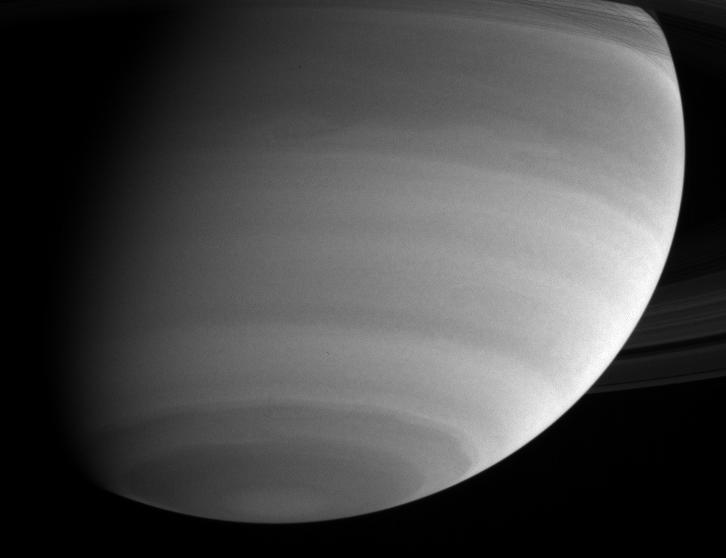
Southern Hemisphere in Ultraviolet
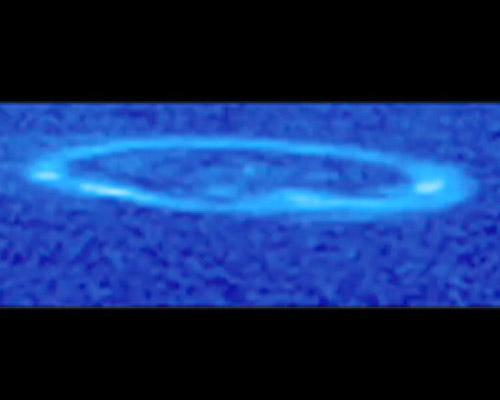
Ultraviolet Aurora Movie
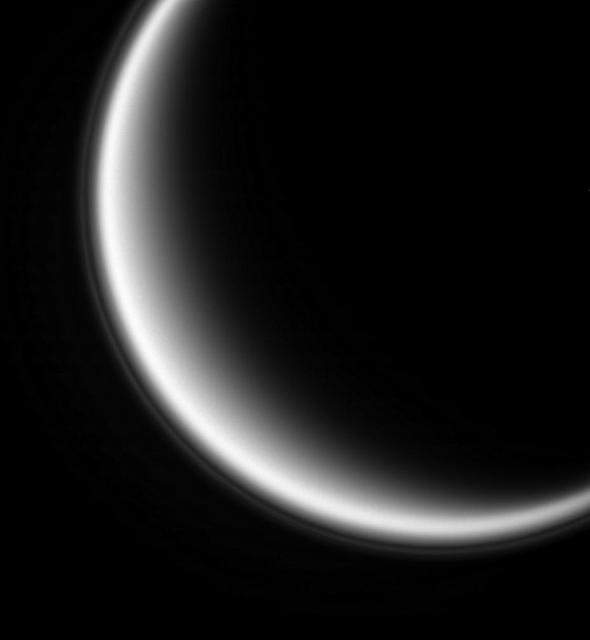
Titan Ultraviolet Haze
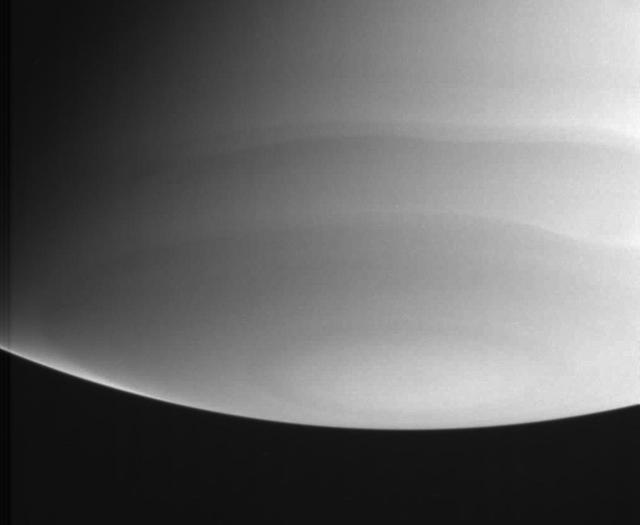
Ultraviolet South Pole
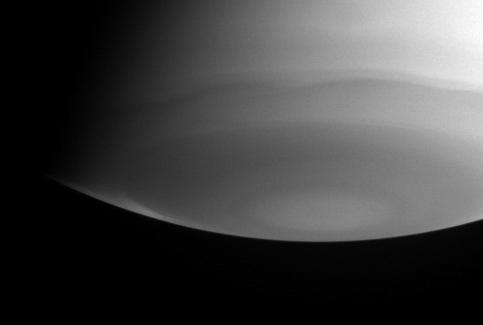
South Pole in Ultraviolet

Ultraviolet View Shows Jupiter Stratosphere

Ultraviolet Movie of Jupiter Polar Stratosphere
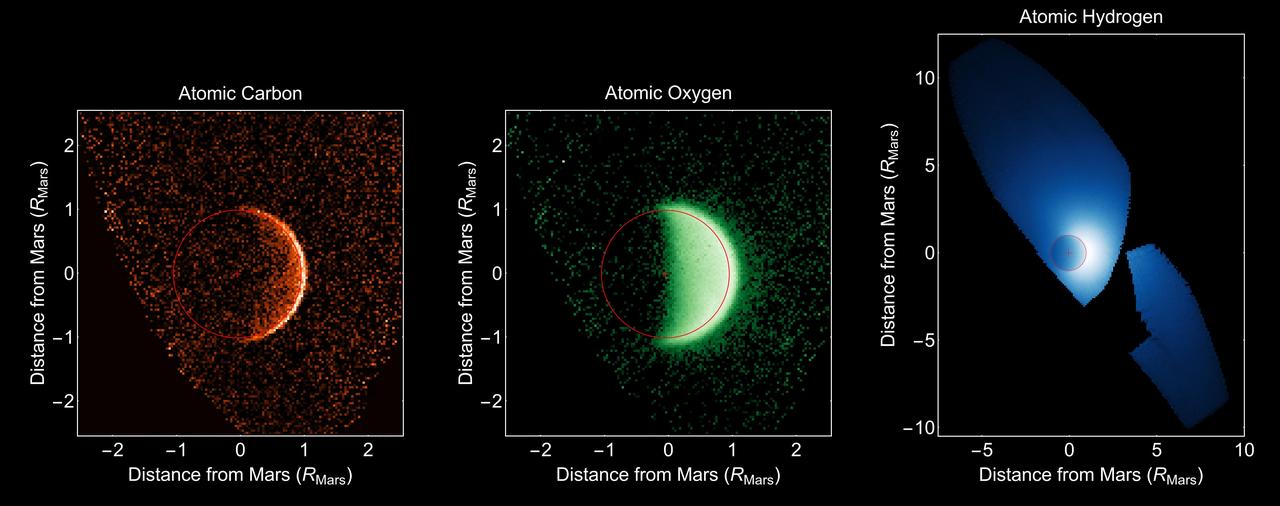
Three views of an escaping atmosphere around Mars, obtained by NASA MAVEN Imaging Ultraviolet Spectrograph, are shown here.

This ultraviolet image from NASA Galaxy Evolution Explorer shows the Southern Pinwheel galaxy, also know as Messier 83 or M83. It is located 15 million light-years away in the southern constellation Hydra.
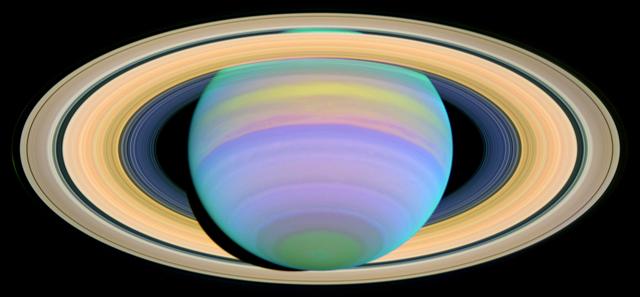
Saturn's Rings in Ultraviolet Light Credit: NASA and E. Karkoschka (University of Arizona) The Hubble Space Telescope is a project of international cooperation between NASA and the European Space Agency. NASA's Goddard Space Flight Center manages the telescope. The Space Telescope Science Institute conducts Hubble science operations. Goddard is responsible for HST project management, including mission and science operations, servicing missions, and all associated development activities. To learn more about the Hubble Space Telescope go here: <a href="http://www.nasa.gov/mission_pages/hubble/main/index.html" rel="nofollow">www.nasa.gov/mission_pages/hubble/main/index.html</a>
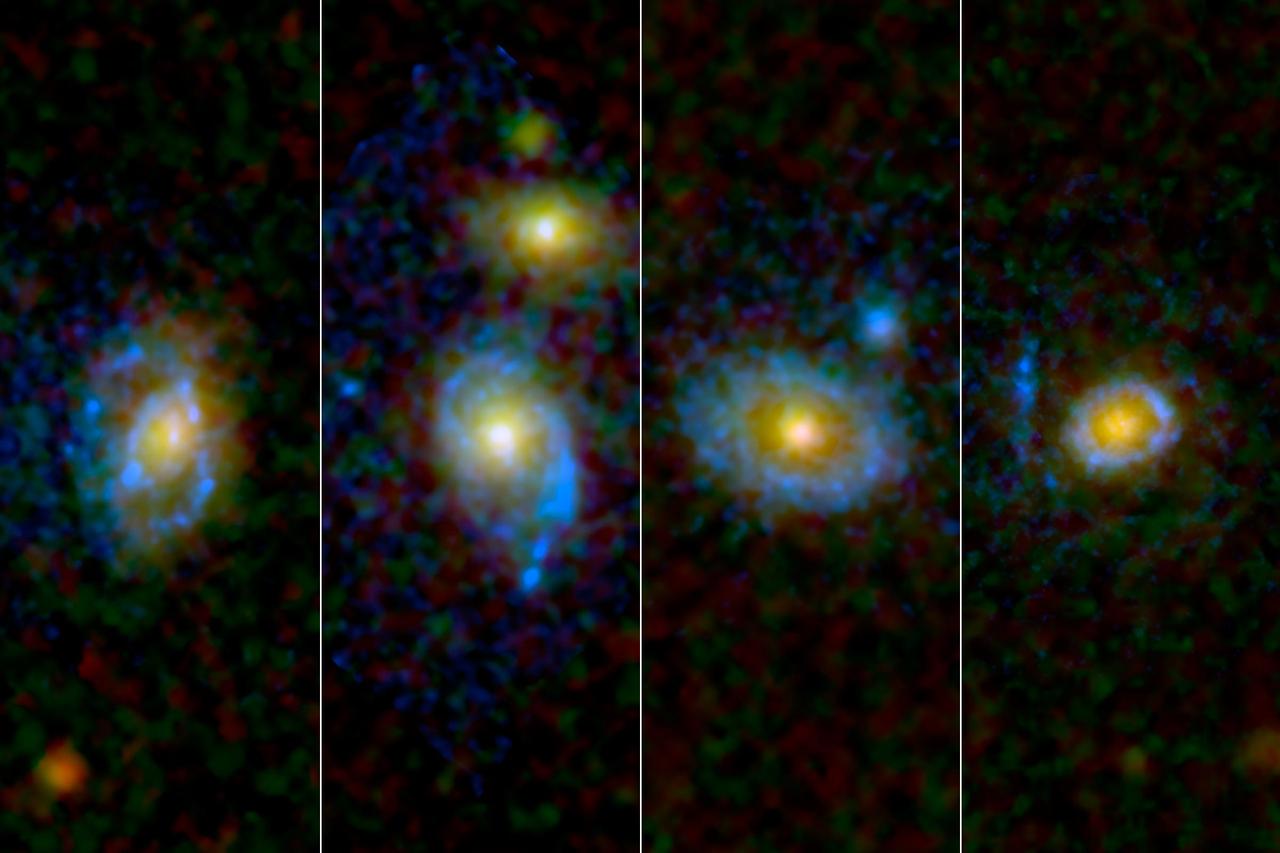
Astronomers have found unexpected rings and arcs of ultraviolet light around a selection of galaxies, four of which are shown here as viewed by NASA and the European Space Agency Hubble Space Telescope.
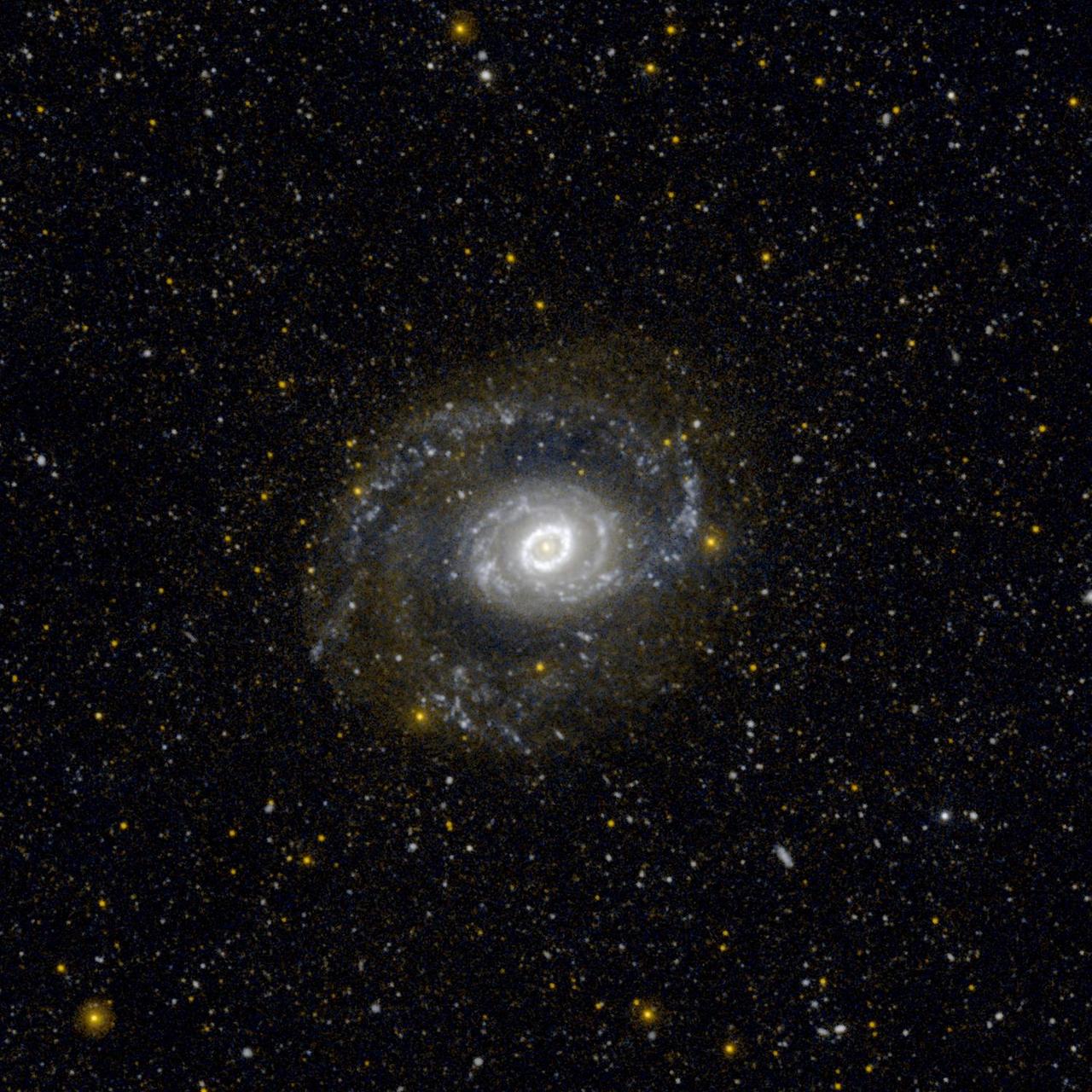
This image from NASA Galaxy Evolution Explorer GALEX shows Messier 94, also known as NGC 4736, in ultraviolet light. It is located 17 million light-years away in the constellation Canes Venatici.

Jupiter Upper Atmospheric Winds Revealed in Ultraviolet Images by Hubble Telescope
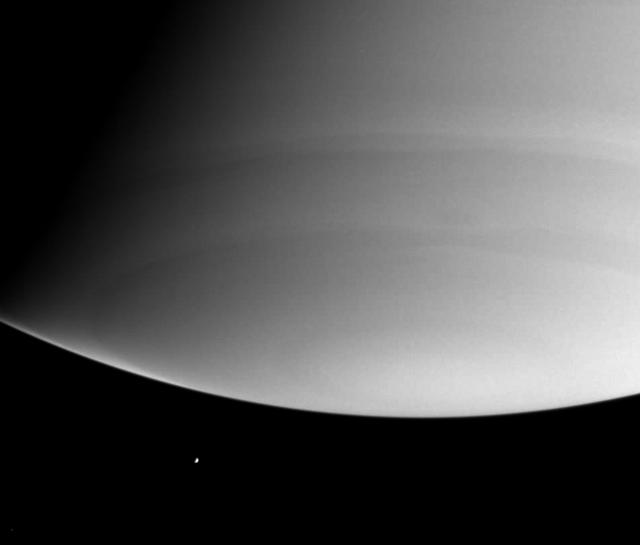
Looking beyond Saturn's south pole, this was the Cassini spacecraft's view of the distant, icy moon Enceladus on July 28, 2004. The planet itself shows few obvious features at these ultraviolet wavelengths, due to scattering of light by molecules of the gases high in the atmosphere. Enceladus is 499 kilometers (310 miles) wide. The image was taken with the Cassini spacecraft narrow angle camera at a distance of 7.4 million kilometers (4.6 million miles) from Saturn through a filter sensitive to ultraviolet wavelengths of light. The image scale is 44 kilometers (27 miles) per pixel of Saturn. http://photojournal.jpl.nasa.gov/catalog/PIA06483
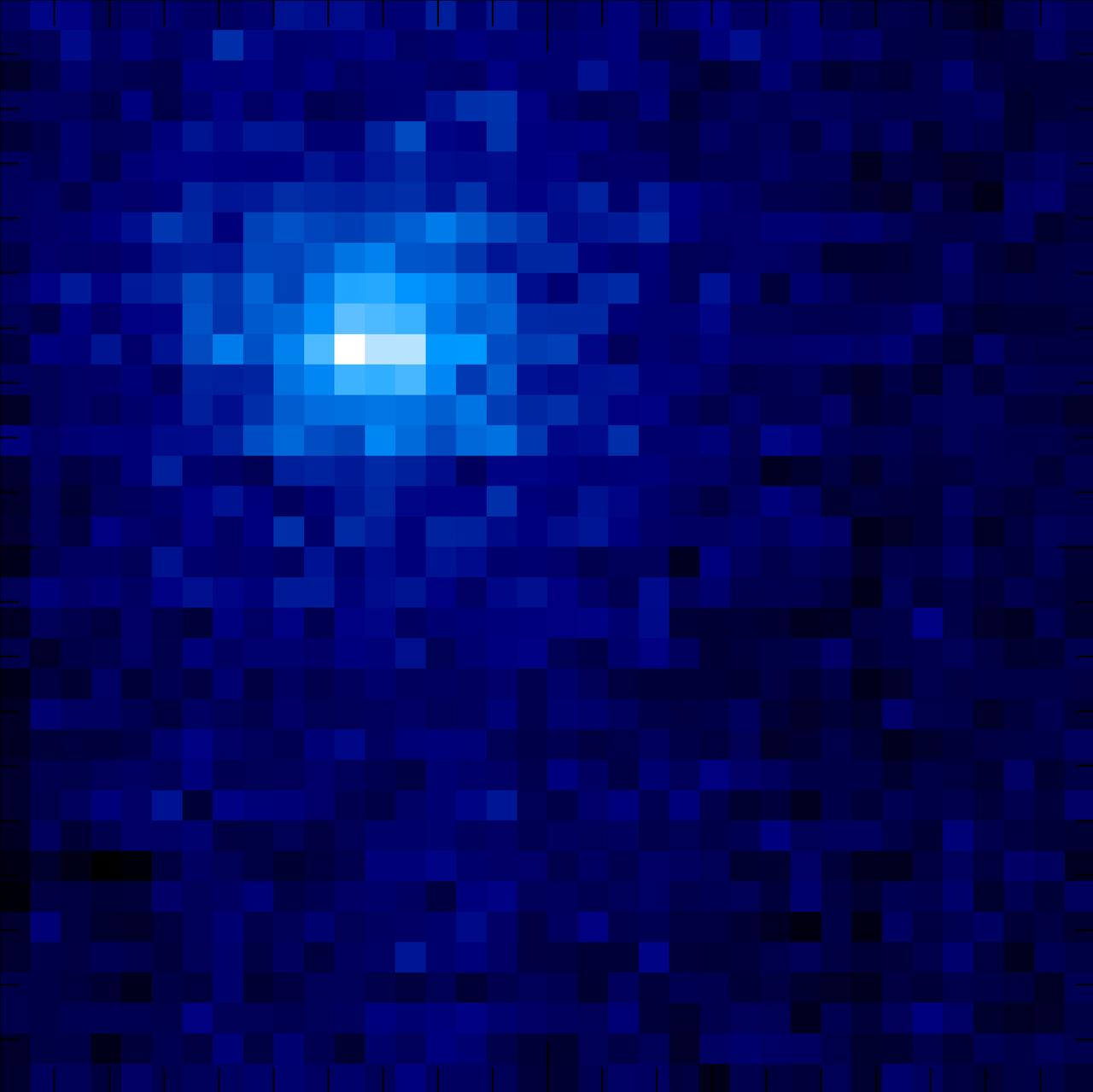
NASA’s Mars Atmosphere and Volatile Evolution (MAVEN) spacecraft obtained this ultraviolet image of hydrogen surrounding comet Siding Spring on Friday, Oct. 17, two days before the comet’s closest approach to Mars. The Imaging Ultraviolet Spectrograph (IUVS) instrument imaged the comet at a distance of 5.3 million miles (8.5 million kilometers). The image shows sunlight that has been scattered by atomic hydrogen, and is shown as blue in this false-color representation. Comets are surrounded by a huge cloud of atomic hydrogen because water (H2O) vaporizes from the icy nucleus, and solar ultraviolet light breaks it apart into hydrogen and oxygen. Hydrogen atoms scatter solar ultraviolet light, and it was this light that was imaged by the IUVS. Two observations were combined to create this image, after removing the foreground signal that results from sunlight being scattered from hydrogen surrounding Mars. The bulk of the scattered sunlight shows a cloud that was about a half degree across on the “sky” background, comparable in size to Earth’s moon as seen from Earth. Hydrogen was detected to as far as 93,000 miles (150,000 kilometers) away from the comet’s nucleus. The distance is comparable to the distance of the comet from Mars at its closest approach. Gas from the comet is likely to have hit Mars, and would have done so at a speed of 125,000 mph (56 kilometers/second. This gas may have disturbed the Mars atmosphere. Credit: Laboratory for Atmospheric and Space Physics, University of Colorado; NASA <b><a href="http://www.nasa.gov/audience/formedia/features/MP_Photo_Guidelines.html" rel="nofollow">NASA image use policy.</a></b> <b><a href="http://www.nasa.gov/centers/goddard/home/index.html" rel="nofollow">NASA Goddard Space Flight Center</a></b> enables NASA’s mission through four scientific endeavors: Earth Science, Heliophysics, Solar System Exploration, and Astrophysics. Goddard plays a leading role in NASA’s accomplishments by contributing compelling scientific knowledge to advance the Agency’s mission. <b>Follow us on <a href="http://twitter.com/NASAGoddardPix" rel="nofollow">Twitter</a></b> <b>Like us on <a href="http://www.facebook.com/pages/Greenbelt-MD/NASA-Goddard/395013845897?ref=tsd" rel="nofollow">Facebook</a></b> <b>Find us on <a href="http://instagram.com/nasagoddard?vm=grid" rel="nofollow">Instagram</a></b>

During pre-flight testing in March 2011, the Mars Hand Lens Imager MAHLI camera on NASA Mars rover Curiosity took this image of the MAHLI calibration target under illumination from MAHLI two ultraviolet LEDs light emitting diodes.
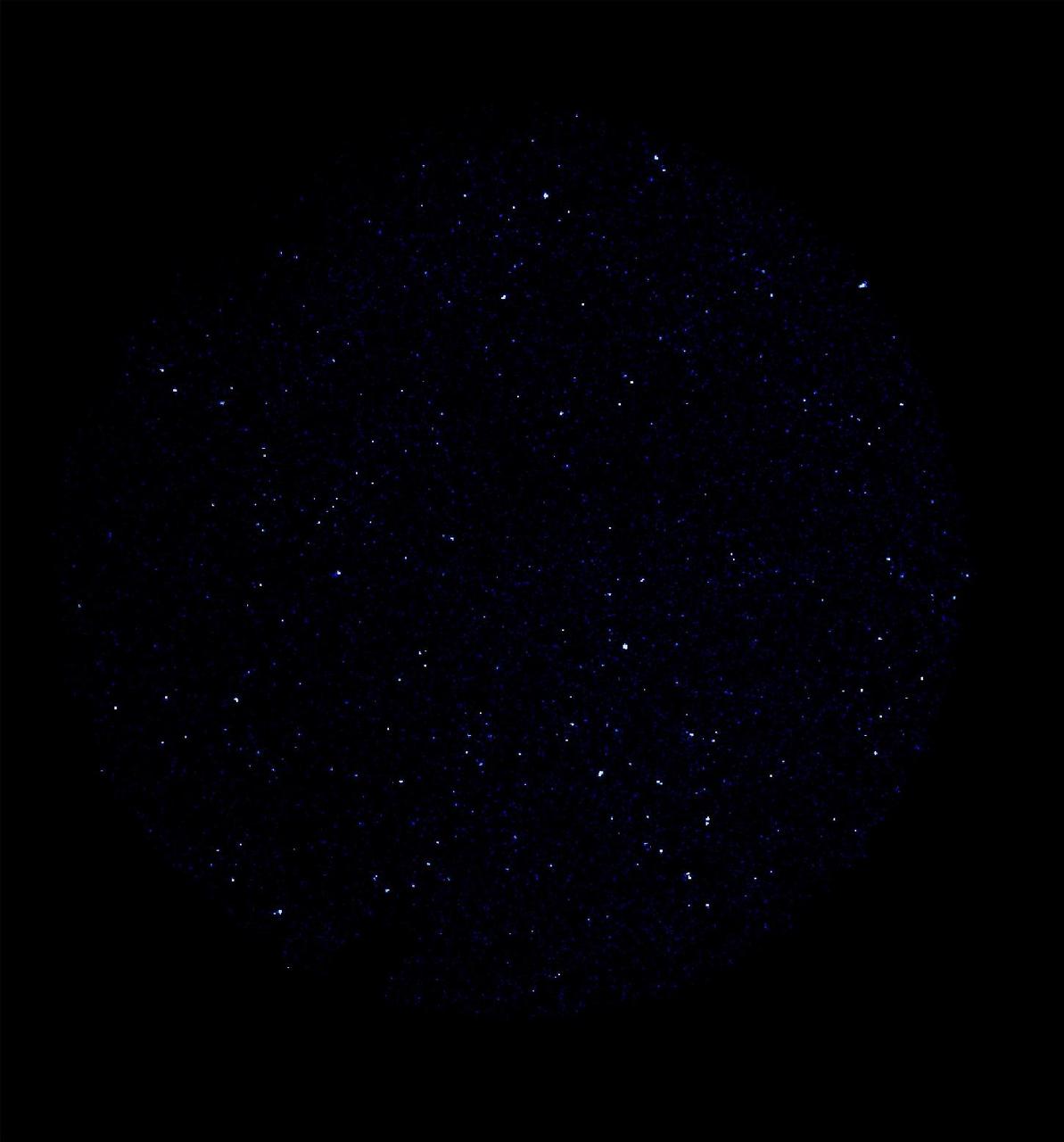
This image was taken May 21 and 22, 2003 by NASA Galaxy Evolution Explorer. The image was made from data gathered by the far ultraviolet channel of the spacecraft camera during the mission first light milestone. It shows about 400 celestial objects
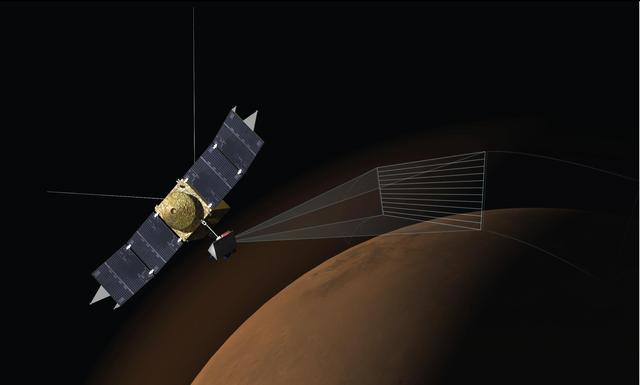
This artist concept depicts the Imaging Ultraviolet Spectrograph IUVS on NASA MAVEN spacecraft scanning the upper atmosphere of Mars. IUVS uses limb scans to map the chemical makeup and vertical structure across Mars upper atmosphere.
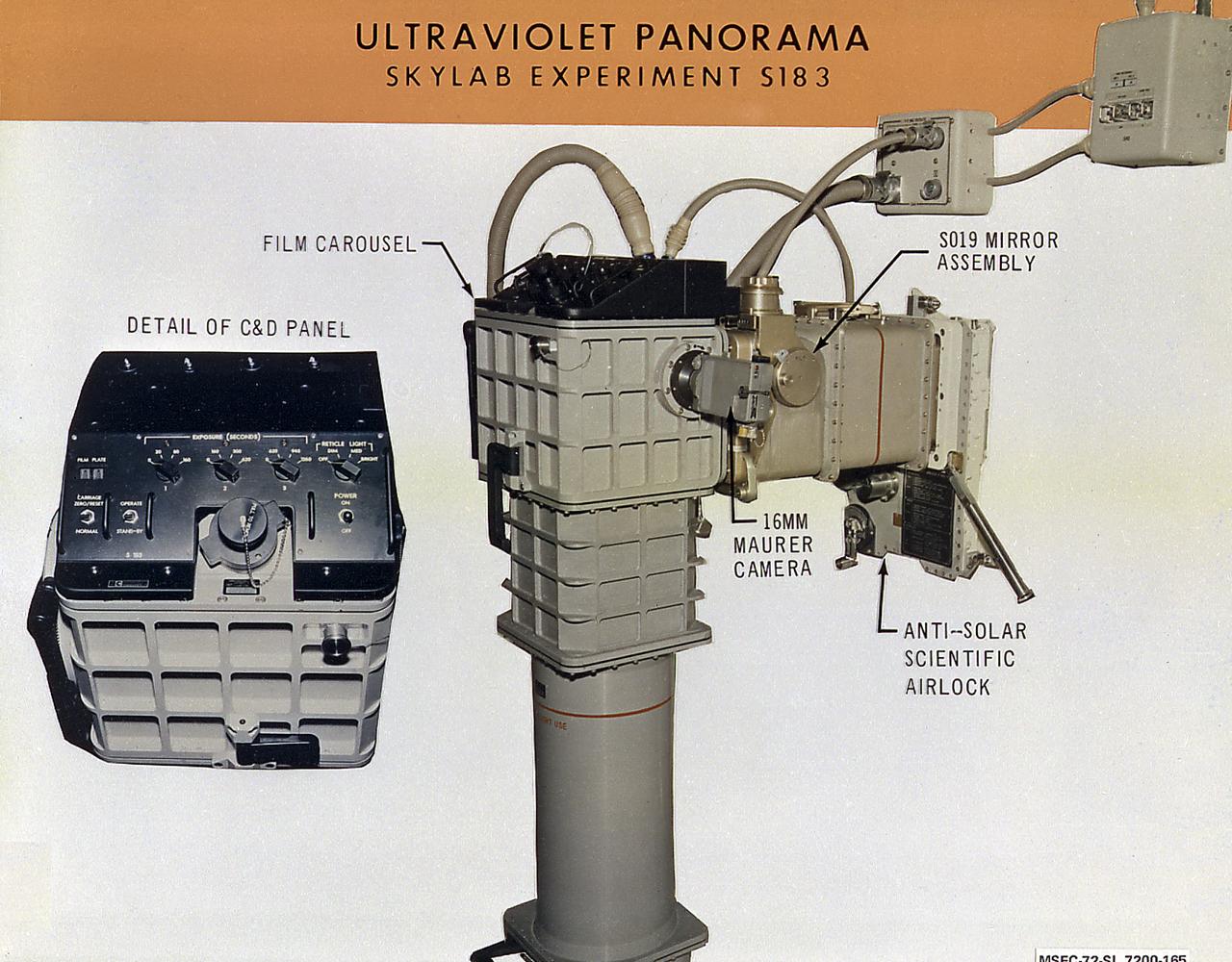
This photograph describes details of the telescopic camera for ultraviolet star photography for Skylab's Ultraviolet Panorama experiment (S183) placed in the Skylab airlock. The S183 experiment was designed to obtain ultraviolet photographs at three wavelengths of hot stars, clusters of stars, large stellar clouds in the Milky Way, and nuclei of other galaxies. The Marshall Space Flight Center had program responsibility for the development of Skylab hardware and experiments.
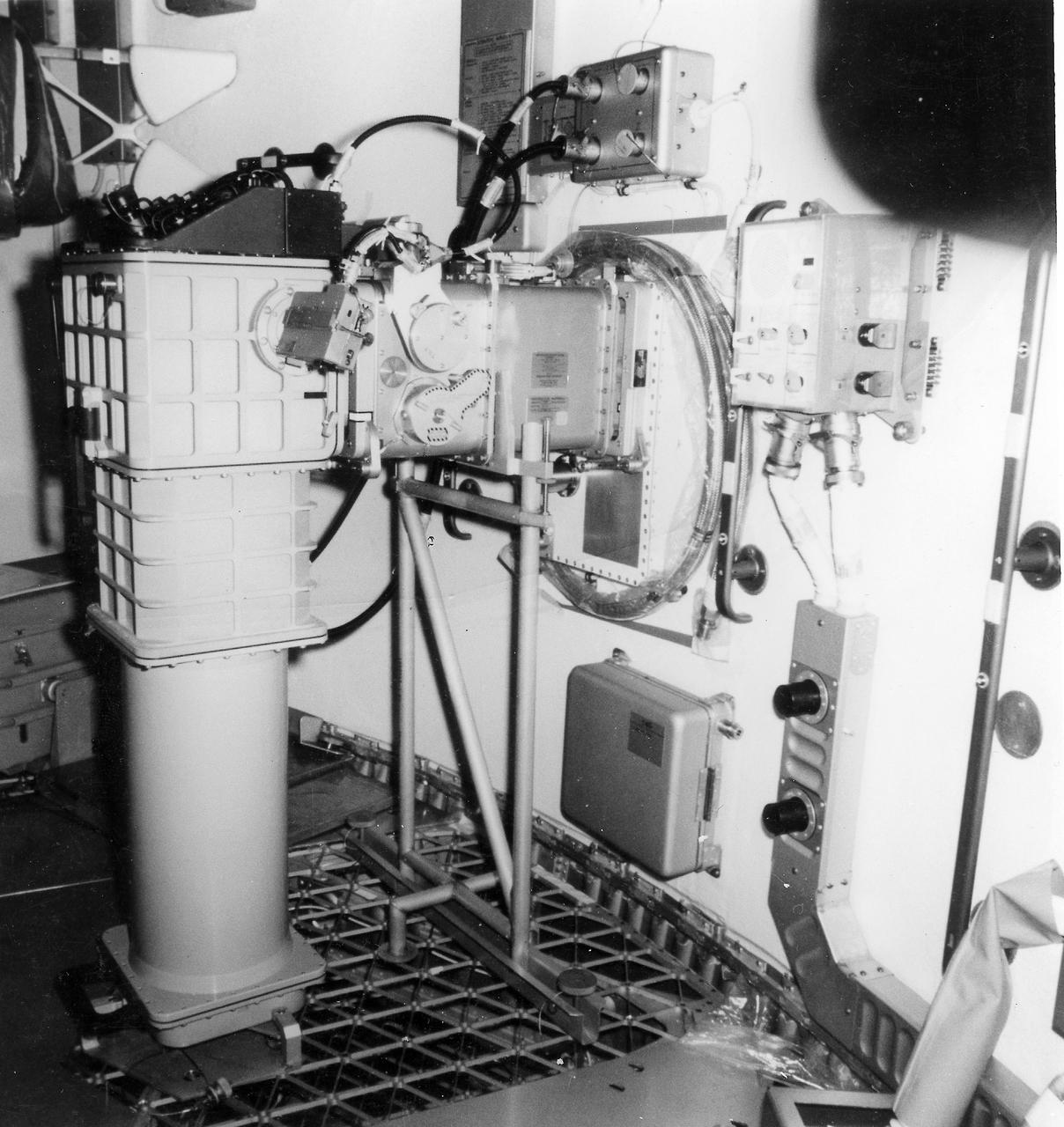
This photograph shows a telescopic camera for ultraviolet star photography for Skylab's Ultraviolet Panorama experiment (S183) placed in the Skylab airlock. The S183 experiment was designed to obtain ultraviolet photographs, at three wavelengths, of hot stars, clusters of stars, large stellar clouds in the Milky Way, and nuclei of other galaxies. The Marshall Space Flight Center had program responsibility for the development of Skylab hardware and experiments.
ASTRO-2 was the second dedicated Spacelab mission to conduct astronomical observations in the ultraviolet spectral regions. It consisted of three unique instruments: the Hopkins Ultraviolet Telescope (HUT), the Ultraviolet Imaging Telescope (UIT) and the Wisconsin Ultraviolet Photo-Polorimeter Experiment ((WUPPE). These experiments selected targets from a list of over 600 and observed objects ranging from some inside the solar system to individual stars, nebulae, supernova remnants, galaxies, and active extra galactic objects. This data supplemented data collected on the ASTRO-1 mission flown on the STS-35 mission in December 1990. Because most ultraviolet radiation is absorbed by Earth's atmosphere, it carnot be studied from the ground. The far and extreme ultraviolet regions of the spectrum were largely unexplored before ASTRO-1, but knowledge of all wavelengths is essential to obtain an accurate picture of the universe. ASTRO-2 had almost twice the duration of its predecessor, and a launch at a different time of year allows the telescopes to view different portions of the sky. The mission served to fill in large gaps in astronomers' understanding of the universe and laid the foundations for more discovery in the future. ASTRO-2, a primary payload of STS-67 flight, was launched on March 2, 1995 aboard the Space Shuttle Orbiter Endeavour.
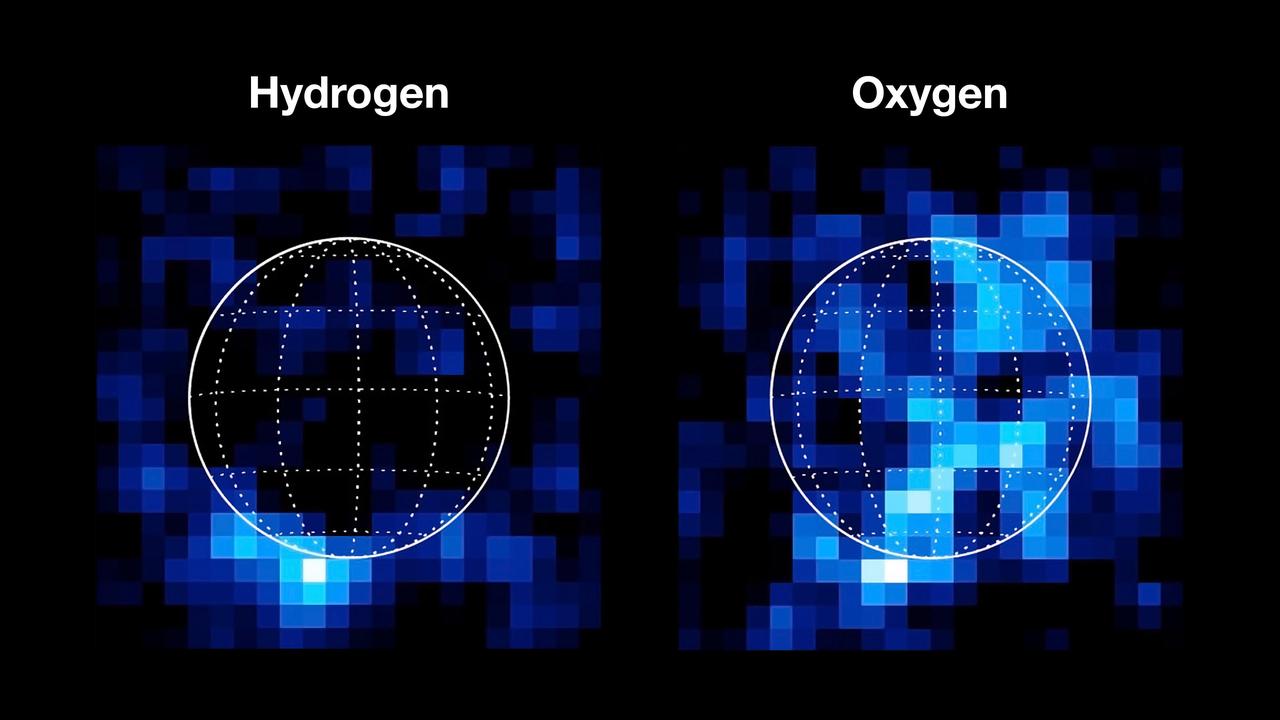
Ultraviolet observations made by NASA's Hubble Space Telescope in 2012 illustrate two key elements in the thin atmosphere of Jupiter's moon Europa: hydrogen and oxygen. A white circle indicates the outline of Europa. The hydrogen data could potentially be evidence of an active plume venting water from the ocean beneath Europa's icy crust. If plumes do exist at the Jovian moon, the ultraviolet spectrograph on NASA's Europa Clipper spacecraft (Europa-UVS) could detect their activity at much higher resolution. Europa Clipper's three main science objectives are to determine the thickness of the moon's icy shell and its interactions with the ocean below, to investigate its composition, and to characterize its geology. The mission's detailed exploration of Europa will help scientists better understand the astrobiological potential for habitable worlds beyond our planet. https://photojournal.jpl.nasa.gov/catalog/PIA26462
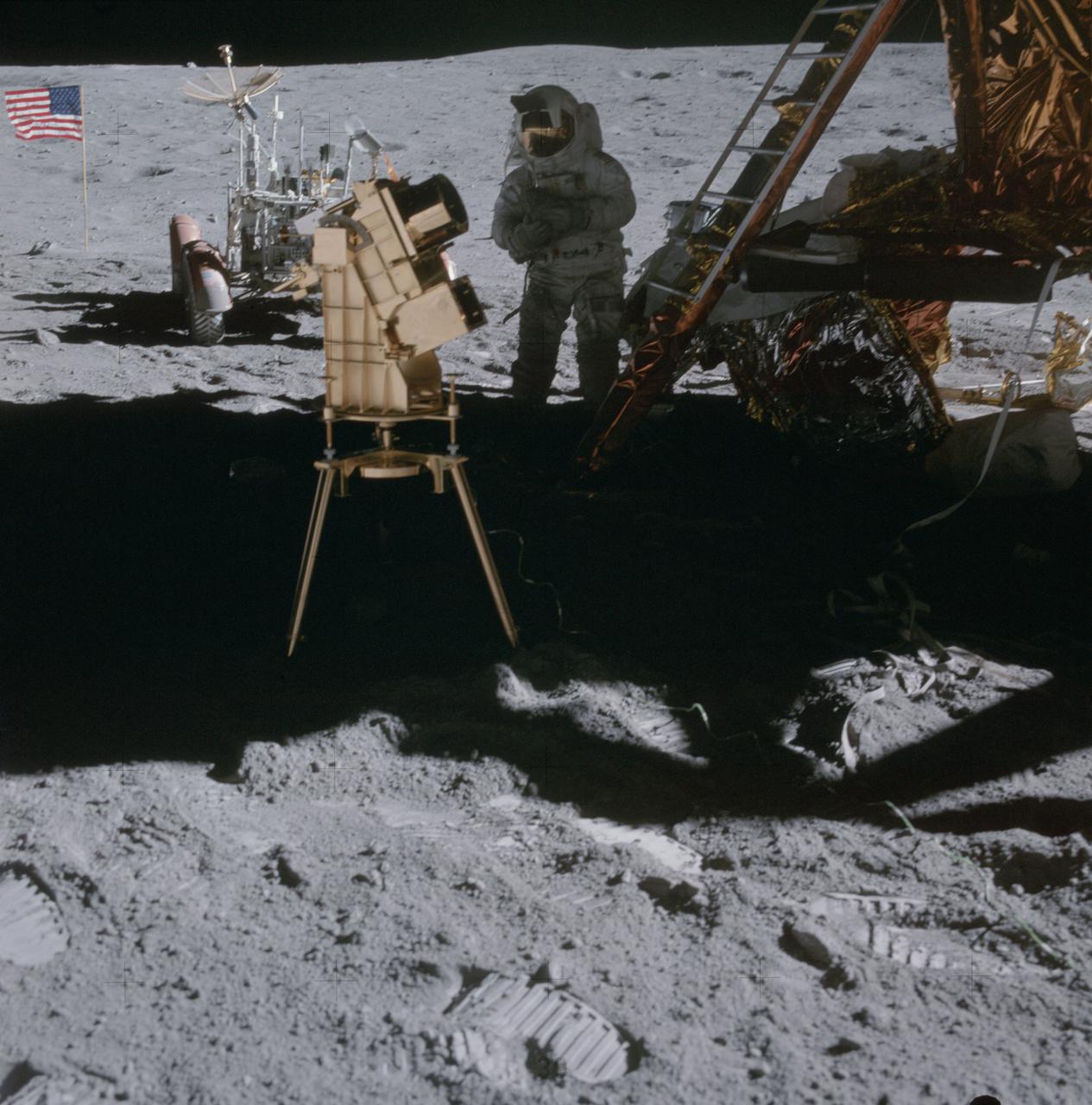
AS16-114-18439 (22 April 1972) --- Astronaut Charles M. Duke Jr., lunar module pilot, stands in the shadow of the Lunar Module (LM) behind the ultraviolet (UV) camera which is in operation. This photograph was taken by astronaut John W. Young, commander, during the mission's second extravehicular activity (EVA). The UV camera's gold surface is designed to maintain the correct temperature. The astronauts set the prescribed angles of azimuth and elevation (here 14 degrees for photography of the large Magellanic Cloud) and pointed the camera. Over 180 photographs and spectra in far-ultraviolet light were obtained showing clouds of hydrogen and other gases and several thousand stars. The United States flag and Lunar Roving Vehicle (LRV) are in the left background. While astronauts Young and Duke descended in the Apollo 16 Lunar Module (LM) "Orion" to explore the Descartes highlands landing site on the moon, astronaut Thomas K. Mattingly II, command module pilot, remained with the Command and Service Modules (CSM) "Casper" in lunar orbit.

In 1986, NASA introduced a Shuttle-borne ultraviolet observatory called Astro. The Astro Observatory was designed to explore the universe by observing and measuring the ultraviolet radiation from celestial objects. Astronomical targets of observation selected for Astro missions included planets, stars, star clusters, galaxies, clusters of galaxies, quasars, remnants of exploded stars (supernovae), clouds of gas and dust (nebulae), and the interstellar medium. Astro-1 used a Spacelab pallet system with an instrument pointing system and a cruciform structure for bearing the three ultraviolet instruments mounted in a parallel configuration. The three instruments were: The Hopkins Ultraviolet Telescope (HUT), which was designed to obtain far-ultraviolet spectroscopic data from white dwarfs, emission nebulae, active galaxies, and quasars; the Wisconsin Ultraviolet Photo-Polarimeter Experiment (WUPPE) which was to study polarized ultraviolet light from magnetic white dwarfs, binary stars, reflection nebulae, and active galaxies; and the Ultraviolet Imaging Telescope (UIT) which was to record photographic images in ultraviolet light of galaxies, star clusters, and nebulae. The star trackers that supported the instrument pointing system were also mounted on the cruciform. Also in the payload bay was the Broad Band X-Ray Telescope (BBXRT), which was designed to obtain high-resolution x-ray spectra from stellar corona, x-ray binary stars, active galactic nuclei, and galaxy clusters. Managed by the Marshall Space Flight Center, the Astro-1 observatory was launched aboard the Space Shuttle Orbiter Columbia (STS-35) on December 2, 1990.
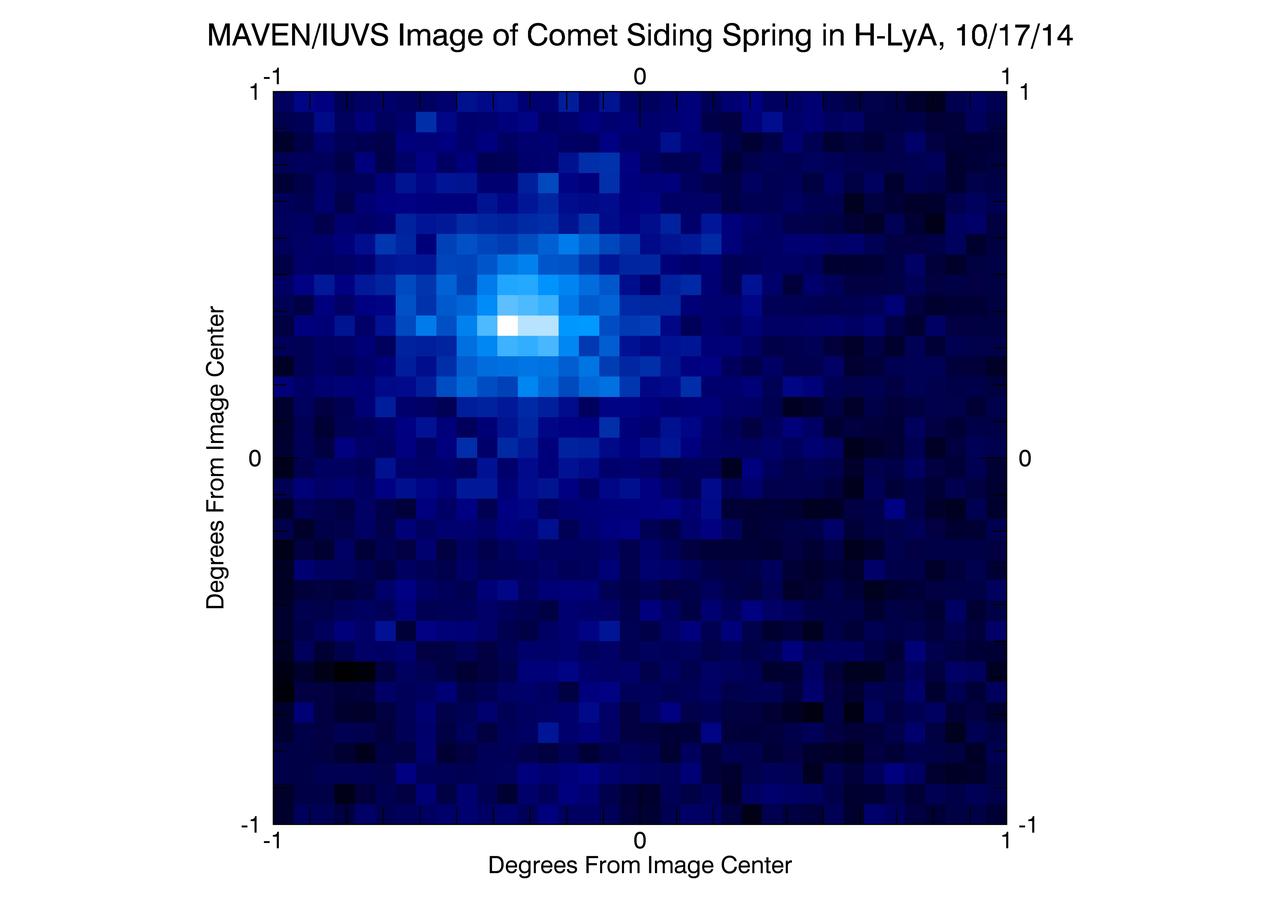
NASA MAVEN spacecraft obtained this ultraviolet image of hydrogen surrounding comet Siding Spring on Oct. 17, 2014, two days before the comet closest approach to Mars.
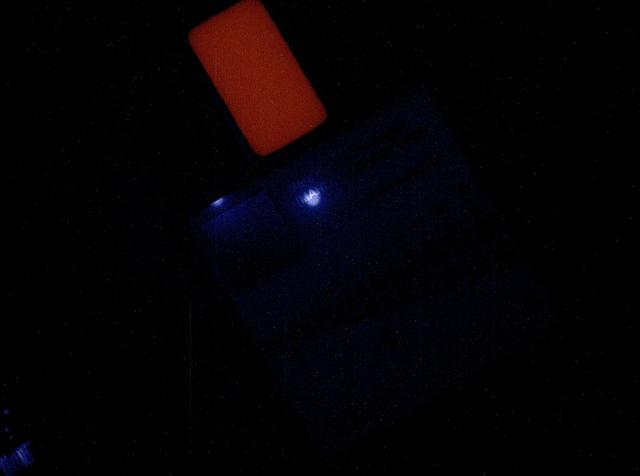
Illumination in this image comes from MAHLI two ultraviolet LEDs, which emit light in a waveband centered at a wavelength of 365 nanometers in this image of a calibration target on NASA Mars rover Curiosity.
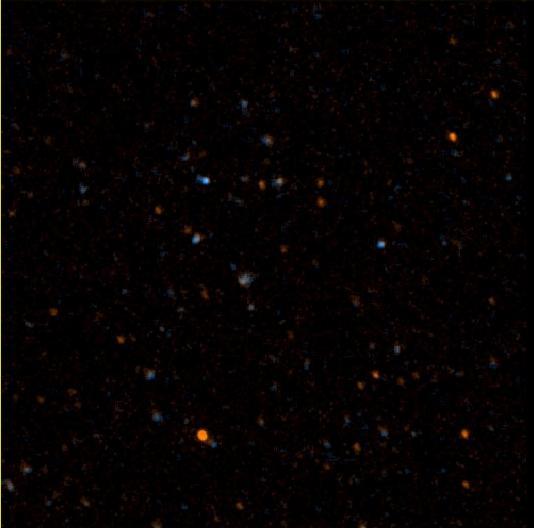
NASA's Galaxy Evolution Explorer took this image on May 21 and 22, 2003. The image was made from data gathered by the two channels of the spacecraft camera during the mission's "first light" milestone. It shows about 100 celestial objects in the constellation Hercules. The reddish objects represent those detected by the camera's near ultraviolet channel over a 5-minute period, while bluish objects were detected over a 3-minute period by the camera's far ultraviolet channel. The Galaxy Evolution Explorer's first light images are dedicated to the crew of the Space Shuttle Columbia. The Hercules region was directly above Columbia when it made its last contact with NASA Mission Control on February 1, over the skies of Texas. The Galaxy Evolution Explorer launched on April 28 on a mission to map the celestial sky in the ultraviolet and determine the history of star formation in the universe over the last 10 billion years. http://photojournal.jpl.nasa.gov/catalog/PIA04281
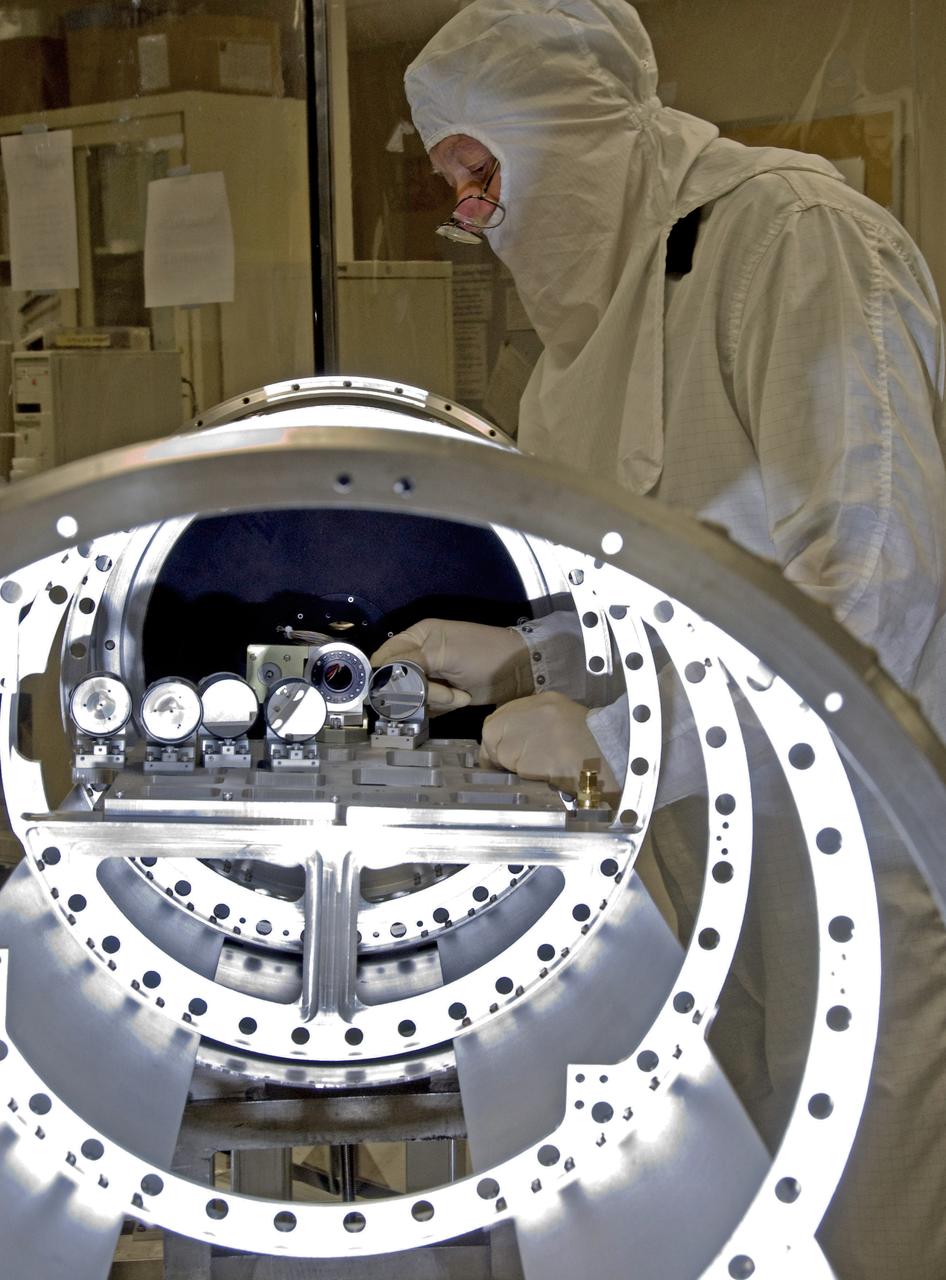
MARSHALL SCIENTIST ED WEST ASSEMBLES THE OPTICAL SYSTEM OF THE SOLAR ULTRAVIOLET MAGNETOGRAPH INVESTIGATION TELESCOPE

This photograph was taken during the integration of the Astro-1 mission payloads at the Kennedy Space Center on March 20, 1990, showing the Broad Band X-Ray Telescope (BBXRT) at the left, as three telescopes for the Astro-1 Observatory are settled into the Orbiter Columbia payload bay. Above Earth's atmospheric interference, Astro-1 would make precise measurements of objects such as planets, stars, and galaxies in relatively small fields of view and would observe and measure ultraviolet radiation from celestial objects. The Astro-1 used a Spacelab pallet system with an instrument pointing system and a cruciform structure for bearing the three ultraviolet instruments mounted in a parallel configuration. The three instruments were: The Hopkins Ultraviolet Telescope (HUT), which was designed to obtain far-ultraviolet spectroscopic data from white dwarfs, emission nebulae, active galaxies, and quasars; the Wisconsin Ultraviolet Photo-Polarimeter Experiment (WUPPE) which was to study polarized ultraviolet light from magnetic white dwarfs, binary stars, reflection nebulae, and active galaxies; and the Ultraviolet Imaging Telescope (UIT), which was to record photographic images in ultraviolet light of galaxies, star clusters, and nebulae. The star trackers that supported the instrument pointing system, were also mounted on the cruciform. Also in the payload bay was the Broad Band X-Ray Telescope (BBXRT), which was designed to obtain high-resolution x-ray spectra from stellar corona, x-ray binary stars, active galactic nuclei, and galaxy clusters. Managed by the Marshall Space Flight Center, the Astro-1 observatory was launched aboard the Space Shuttle Orbiter Columbia (STS-35) on December 2, 1990.

In this photograph, the instruments of the Astro-1 Observatory are erected in the cargo bay of the Columbia orbiter. Astro-1 was launched aboard the the Space Shuttle Orbiter Columbia (STS-35) mission on December 2, 1990. The Astro Observatory was designed to explore the universe by observing and measuring the ultraviolet radiation from celestial objects. Astronomical targets of observation selected for Astro missions included planets, stars, star clusters, galaxies, clusters of galaxies, quasars, remnants of exploded stars (supernovae), clouds of gas and dust (nebulae), and the interstellar medium. Astro-1 used a Spacelab pallet system with an instrument pointing system and a cruciform structure for bearing the three ultraviolet instruments mounted in a parallel configuration. The three instruments were:The Hopkins Ultraviolet Telescope (HUT), the Wisconsin Ultraviolet Photo-Polarimeter Experiment (WUPPE), and the Ultraviolet Imaging Telescope (UIT). Also in the payload bay was the Broad Band X-Ray Telescope (BBXRT). Scientific return included approximately 1,000 photographs of the ultraviolet sky in the most extensive ultraviolet imagery ever attempted, the longest ultraviolet spectral observation of a comet ever made, and data never before seen on types of active galaxies called Seyfert galaxies. The mission also provided data on a massive supergiant star captured in outburst and confirmed that a spectral feature observed in the interstellar medium was due to graphite. In addition, Astro-1 acquired superb observations of the Jupiter magnetic interaction with one of its satellites.

A technician performs a ultraviolet light inspection of the Orbital ATK Pegasus starboard on May 22, 2018, prior to fully mating NASA's Ionospheric Connection Explorer (ICON) to Pegasus inside Building 1555 at Vandenberg Air Force Base in California. The explorer will launch on June 15, 2018, from Kwajalein Atoll in the Marshall Islands (June 14 in the continental United States) on the Pegasus XL, which is attached to the company's L-1011 Stargazer aircraft. ICON will study the frontier of space - the dynamic zone high in Earth's atmosphere where terrestrial weather from below meets space weather above. The explorer will help determine the physics of Earth's space environment and pave the way for mitigating its effects on our technology and communications systems.

A technician begins a ultraviolet light inspection of the Orbital ATK Pegasus starboard on May 22, 2018, prior to mating NASA's Ionospheric Connection Explorer (ICON) to Pegasus inside Building 1555 at Vandenberg Air Force Base in California. The explorer will launch on June 15, 2018, from Kwajalein Atoll in the Marshall Islands (June 14 in the continental United States) on the Pegasus XL, which is attached to the company's L-1011 Stargazer aircraft. ICON will study the frontier of space - the dynamic zone high in Earth's atmosphere where terrestrial weather from below meets space weather above. The explorer will help determine the physics of Earth's space environment and pave the way for mitigating its effects on our technology and communications systems.

A technician performs a ultraviolet light inspection of the Orbital ATK Pegasus starboard on May 22, 2018, prior to fully mating NASA's Ionospheric Connection Explorer (ICON) to Pegasus inside Building 1555 at Vandenberg Air Force Base in California. The explorer will launch on June 15, 2018, from Kwajalein Atoll in the Marshall Islands (June 14 in the continental United States) on the Pegasus XL, which is attached to the company's L-1011 Stargazer aircraft. ICON will study the frontier of space - the dynamic zone high in Earth's atmosphere where terrestrial weather from below meets space weather above. The explorer will help determine the physics of Earth's space environment and pave the way for mitigating its effects on our technology and communications systems.

A technician begins a ultraviolet light inspection of the Orbital ATK Pegasus starboard on May 22, 2018, prior to mating NASA's Ionospheric Connection Explorer (ICON) to Pegasus inside Building 1555 at Vandenberg Air Force Base in California. The explorer will launch on June 15, 2018, from Kwajalein Atoll in the Marshall Islands (June 14 in the continental United States) on the Pegasus XL, which is attached to the company's L-1011 Stargazer aircraft. ICON will study the frontier of space - the dynamic zone high in Earth's atmosphere where terrestrial weather from below meets space weather above. The explorer will help determine the physics of Earth's space environment and pave the way for mitigating its effects on our technology and communications systems.
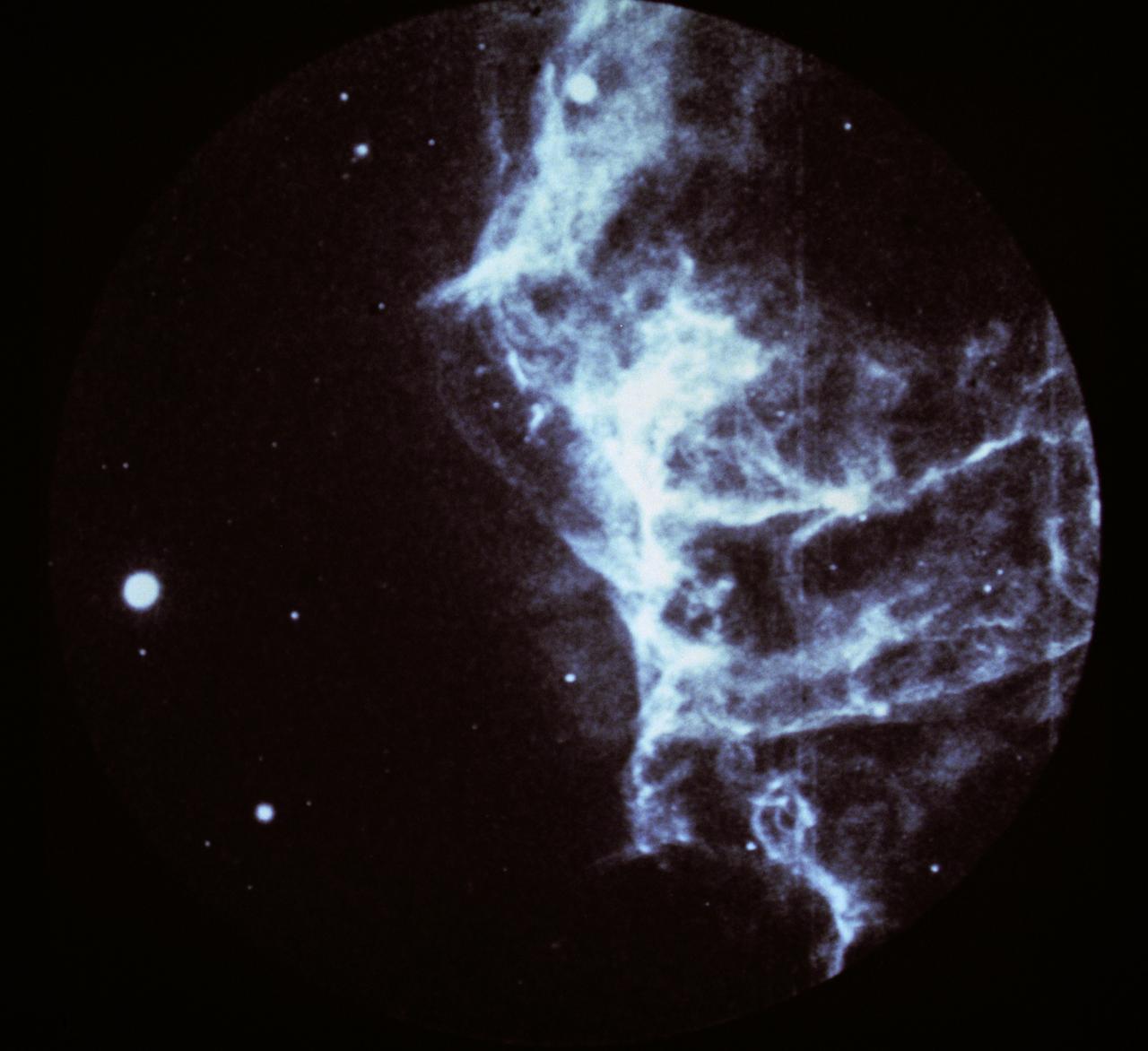
This image shows a part of the Cygnus loop supernova remnant, taken by the Ultraviolet Imaging Telescope (UIT) on the Astro Observatory during the Astro-1 mission (STS-35) on December 5, 1990. Pictured is a portion of the huge Cygnus loop, an array of interstellar gas clouds that have been blasted by a 900,000 mile per hour shock wave from a prehistoric stellar explosion, which occurred about 20,000 years ago, known as supernova. With ultraviolet and x-rays, astronomers can see emissions from extremely hot gases, intense magnetic fields, and other high-energy phenomena that more faintly appear in visible and infrared light or in radio waves that are crucial to deepening the understanding of the universe. The Astro Observatory was designed to explore the universe by observing and measuring the ultraviolet radiation from celestial objects. Three instruments make up the Astro Observatory: The Hopkins Ultraviolet Telescope (HUT), the Ultraviolet Imaging Telescope (UIT), and the Wisconsin Ultraviolet Photo-Polarimetry Experiment (WUPPE). The Marshall Space Flight Center had managment responsibilities for the Astro-1 mission. The Astro-1 Observatory was launched aboard the Space Shuttle Orbiter Columbia (STS-35) on December 2, 1990.
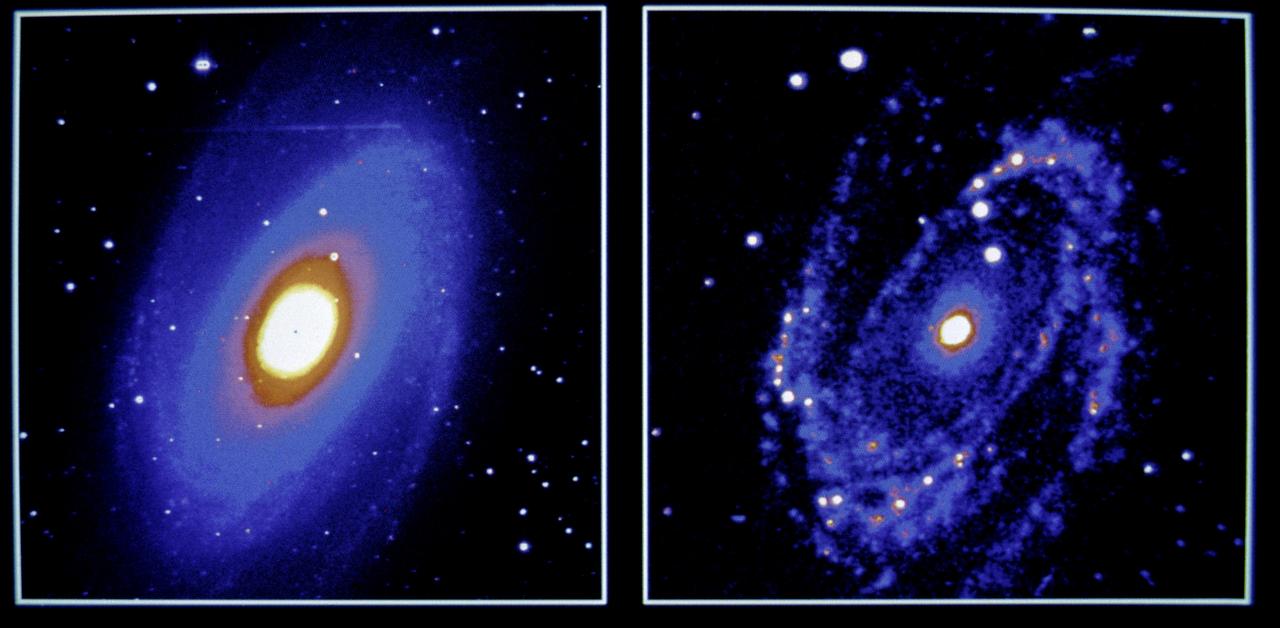
This is a presentation of two comparison images of the Spiral Galaxy M81 in the constellation URA Major. The galaxy is about 12-million light years from Earth. The left image is the Spiral Galaxy M81 as photographed by the Ultraviolet Imaging Telescope (UIT) during the Astro-1 Mission (STS-35) on December 9, 1990. This UIT photograph, made with ultraviolet light, reveals regions where new stars are forming at a rapid rate. The right image is a photograph of the same galaxy in red light made with a 36-inch (0.9-meter) telescope at the Kitt Peak National Observatory near Tucson, Arizona. The Astro Observatory was designed to explore the universe by observing and measuring ultraviolet radiation from celestial objects. Three instruments made up the Astro Observatory: The Hopkins Ultraviolet Telescope (HUT), the Ultraviolet Imaging Telescope (UIT), and the Wisconsin Ultraviolet Photo-Polarimetry Experiment (WUPPE). The Marshall Space Flight Center had management responsibilities for the Astro-1 mission. The Astro-1 Observatory was launched aboard the Space Shuttle Orbiter Columbia (STS-35) on December 2, 1990.
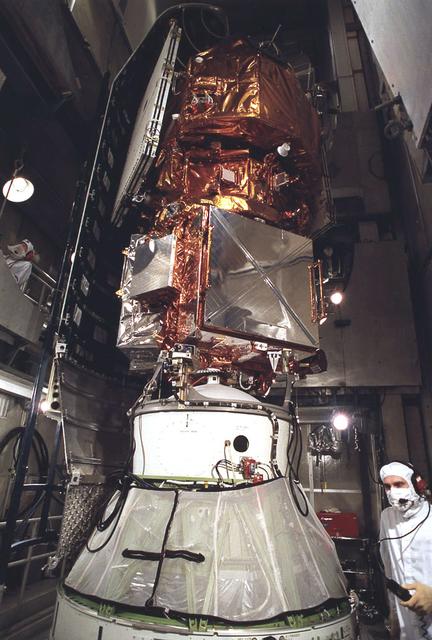
At Launch Complex 17 Pad A, Kennedy Space Center (KSC) workers are installing the payload fairing around the Extreme Ultraviolet Explorer (EUVE) mated to a Delta II rocket. The EUVE spacecraft is designed to study the extreme ultraviolet portion of the spectrum.
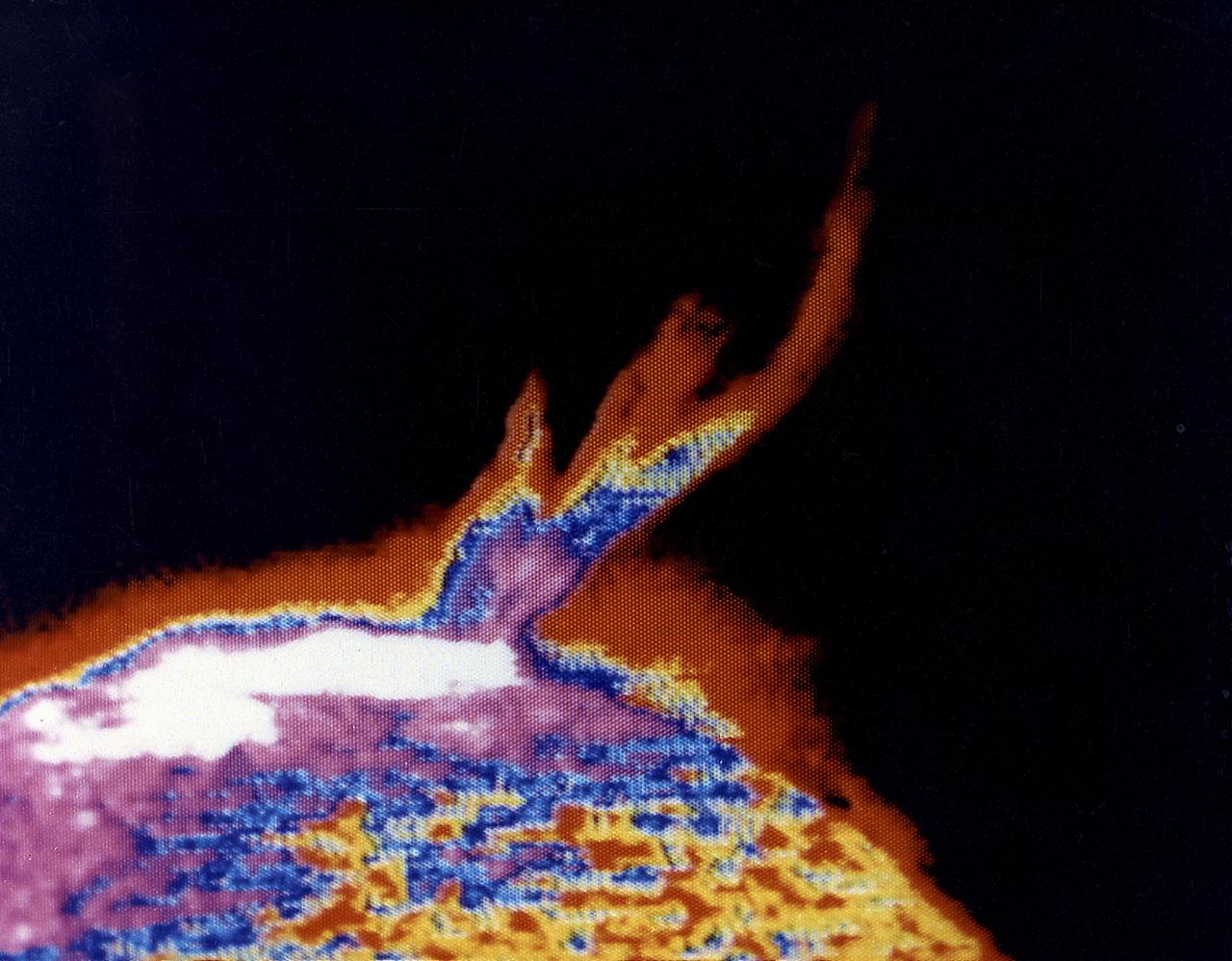
This photograph shows a solar prominence in action, one of Skylab's many splendorous views. It was taken on August 21, 1973. Interpretation of the rich store of Skylab ultraviolet solar data was facilitated by computerized color enhancement of the original black-and-white images, highlighting subtle but important brightness differences.
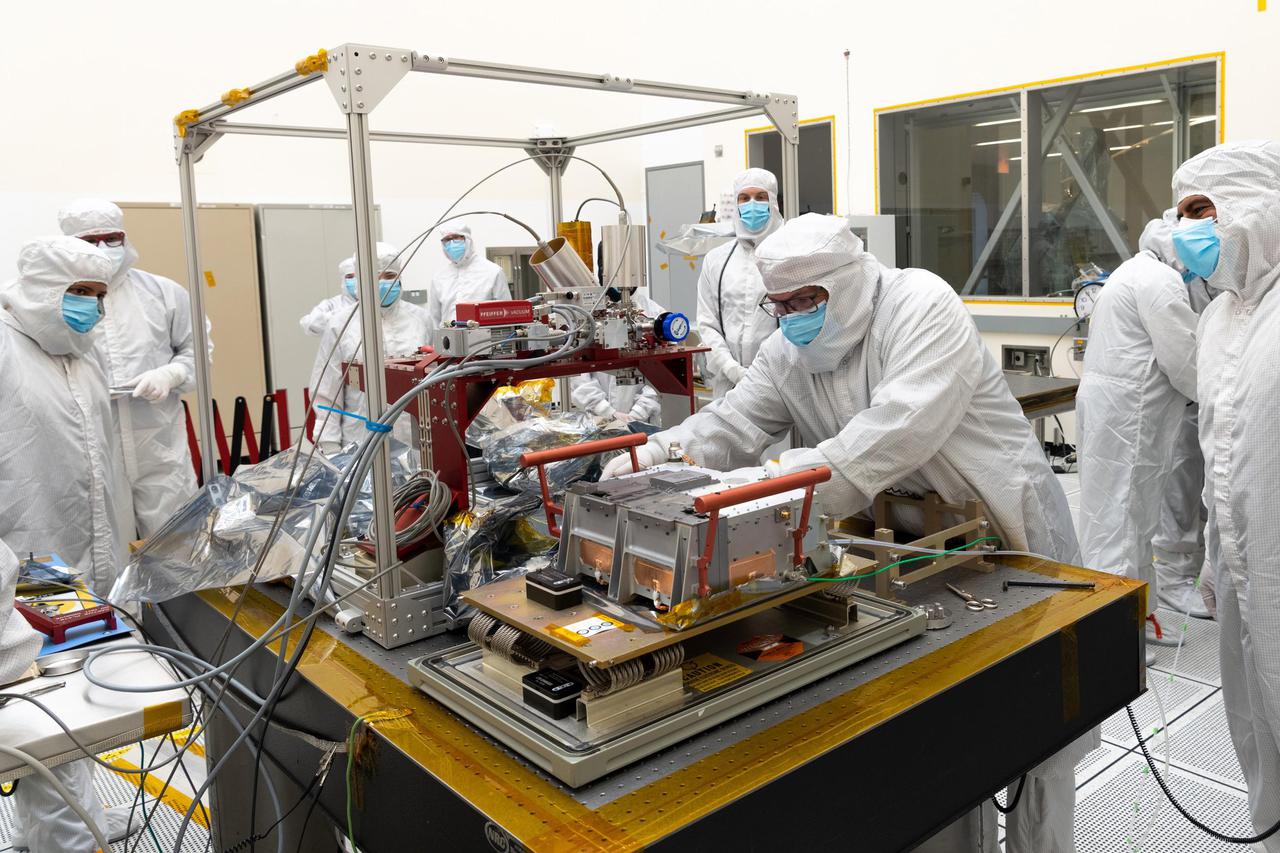
Engineers and technicians examine and test the first of NASA's Europa Clipper's science instruments to be delivered to the agency's Jet Propulsion Laboratory in Southern California. The ultraviolet spectrograph, called Europa-UVS and led by the Southwest Research Institute in San Antonio, Texas, will be integrated into the spacecraft during the phase of the mission called assembly, test, and launch operations. Europa-UVS is part of a payload of nine science instruments aboard Europa Clipper. In this photo, captured in February 2022, the instrument's custom testing equipment is seen at left, with a boxy, red frame. The instrument itself is seen at right. During testing, technicians shined ultraviolet light into the instrument's front aperture. With an internal global ocean under a thick layer of ice, Jupiter's moon Europa may have the potential to harbor existing life. Europa Clipper will swoop around Jupiter in an elliptical orbit, dipping close to the moon on each flyby to collect data. Understanding Europa's habitability will help scientists better understand how life developed on Earth and the potential for finding life beyond our planet. Europa Clipper is set to launch in 2024. Europa-UVS will search above the surface of Europa for signs of potential plumes that may be venting subsurface water into space. The instrument collects ultraviolet light, then separates the wavelengths of that light to help determine the composition of the moon's surface and gases in the atmosphere. https://photojournal.jpl.nasa.gov/catalog/PIA24897
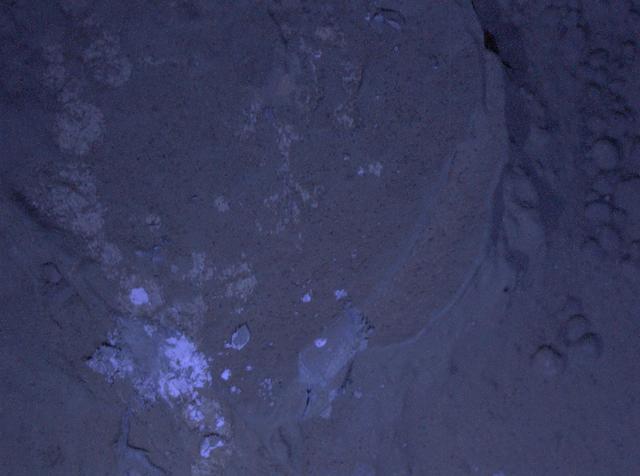
This image of a Martian rock dubbed Sayunei is illuminated by ultraviolet LEDs light emitting diodes is part of the first set of nighttime images taken by the Mars Hand Lens Imagery camera at the end of the robotic arm of NASA Mars rover Curiosity.
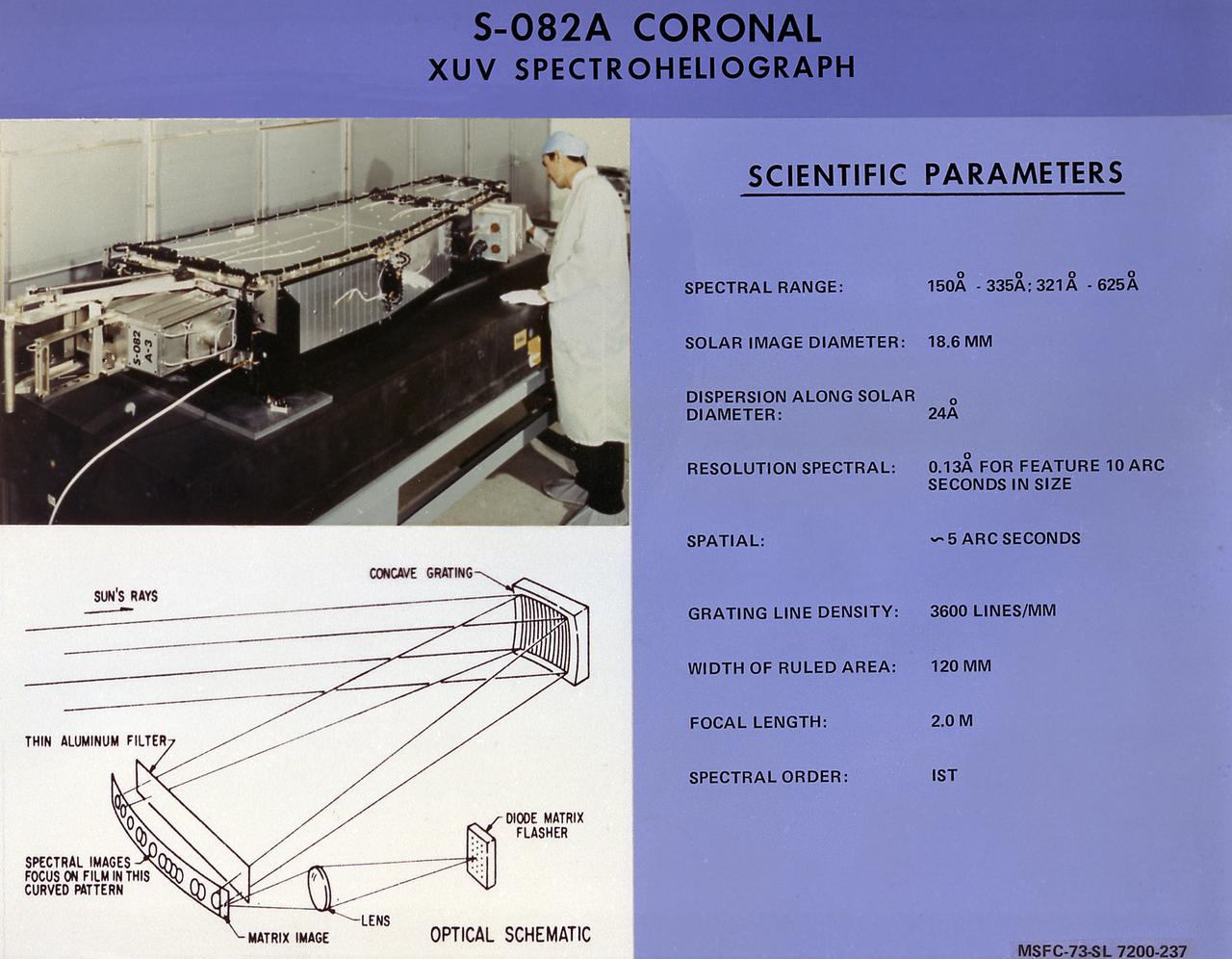
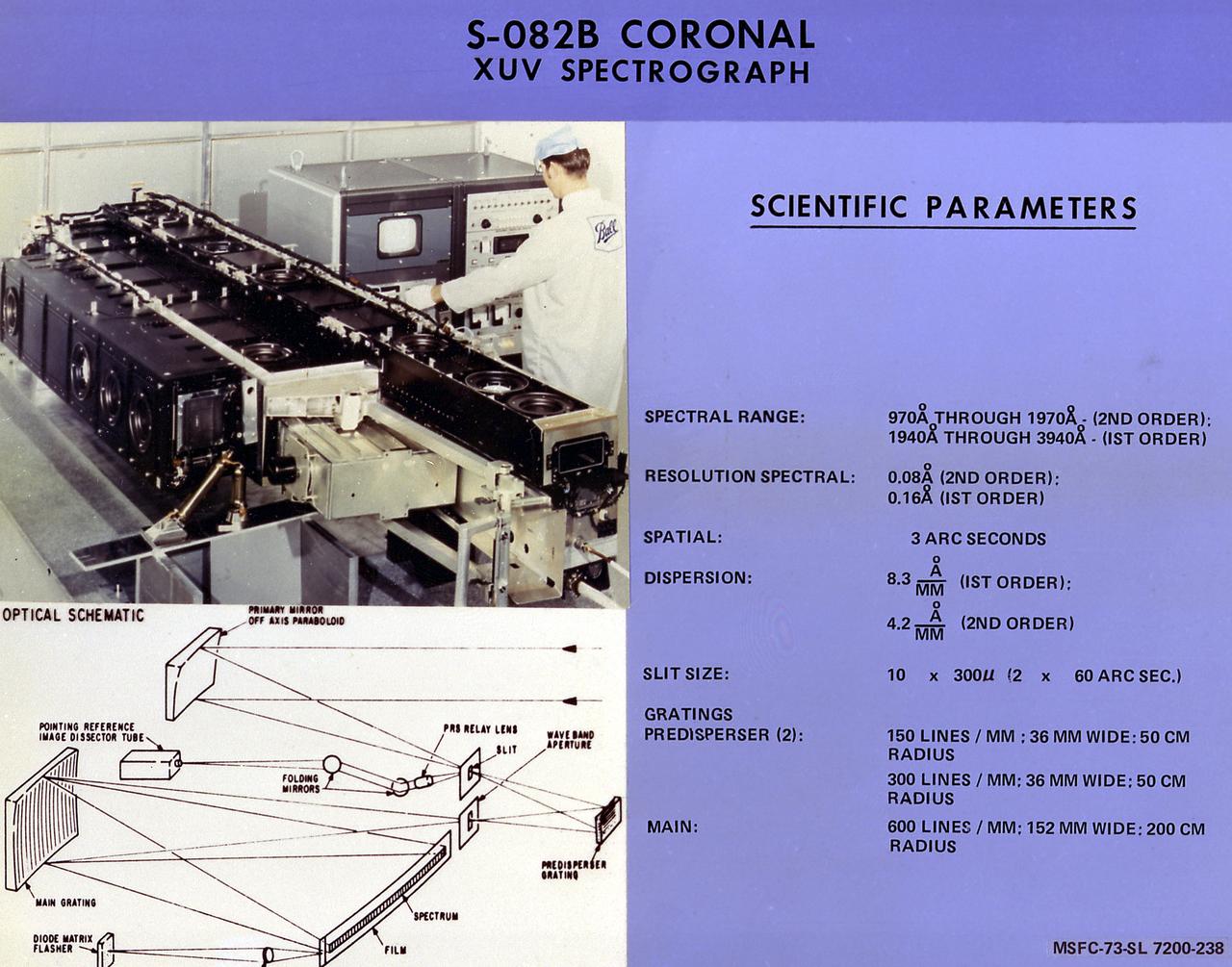
This chart describes Skylab's Extreme Ultraviolet (XUV) Coronal Spectroheliograph, one of the eight Apollo Telescope Mount facilities. It was designed to sequentially photograph the solar chromosphere and corona in selected ultraviolet wavelengths . The instrument also obtained information about composition, temperature, energy conversion and transfer, and plasma processes of the chromosphere and lower corona. The Marshall Space Flight Center had program management responsibility for the development of Skylab hardware and experiments.
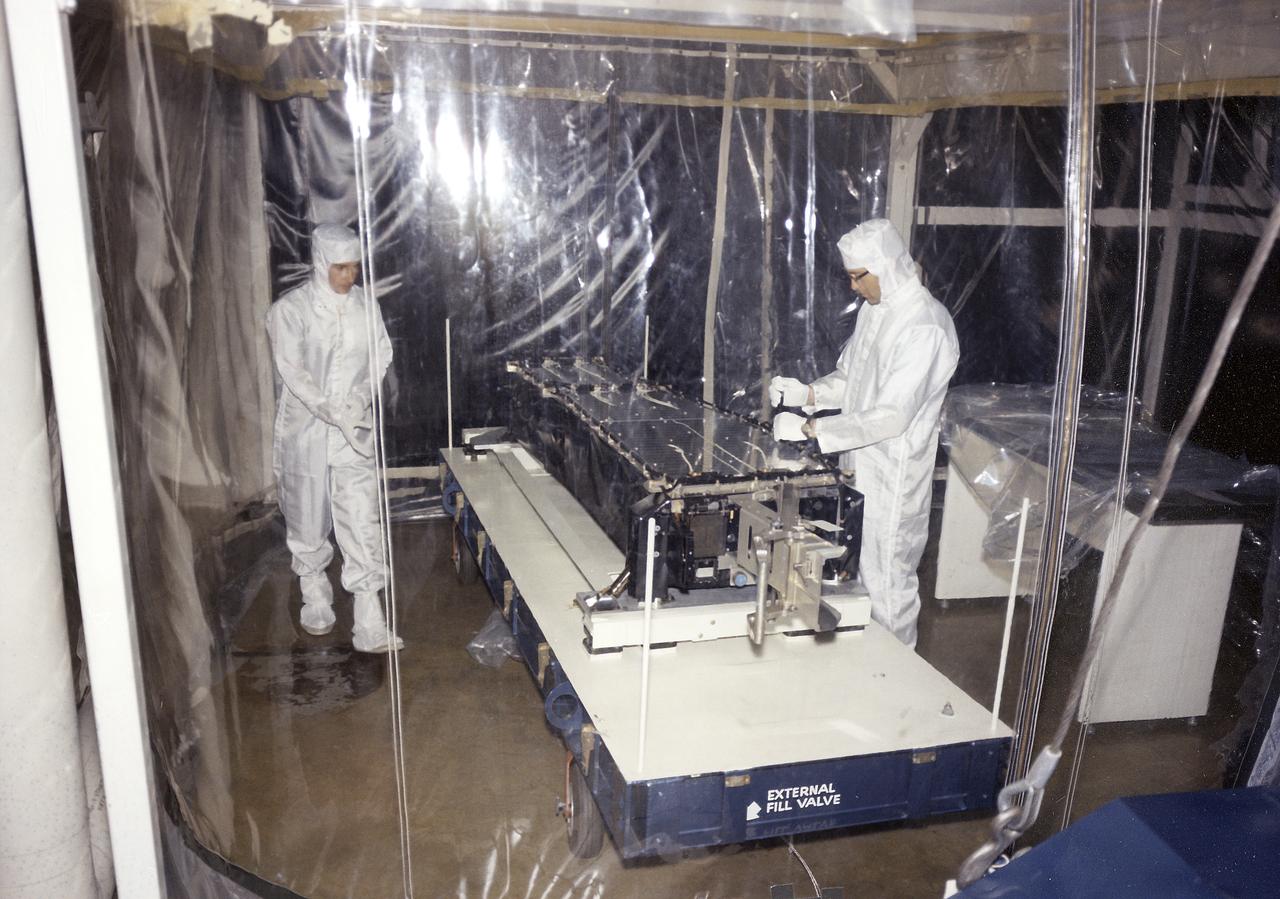
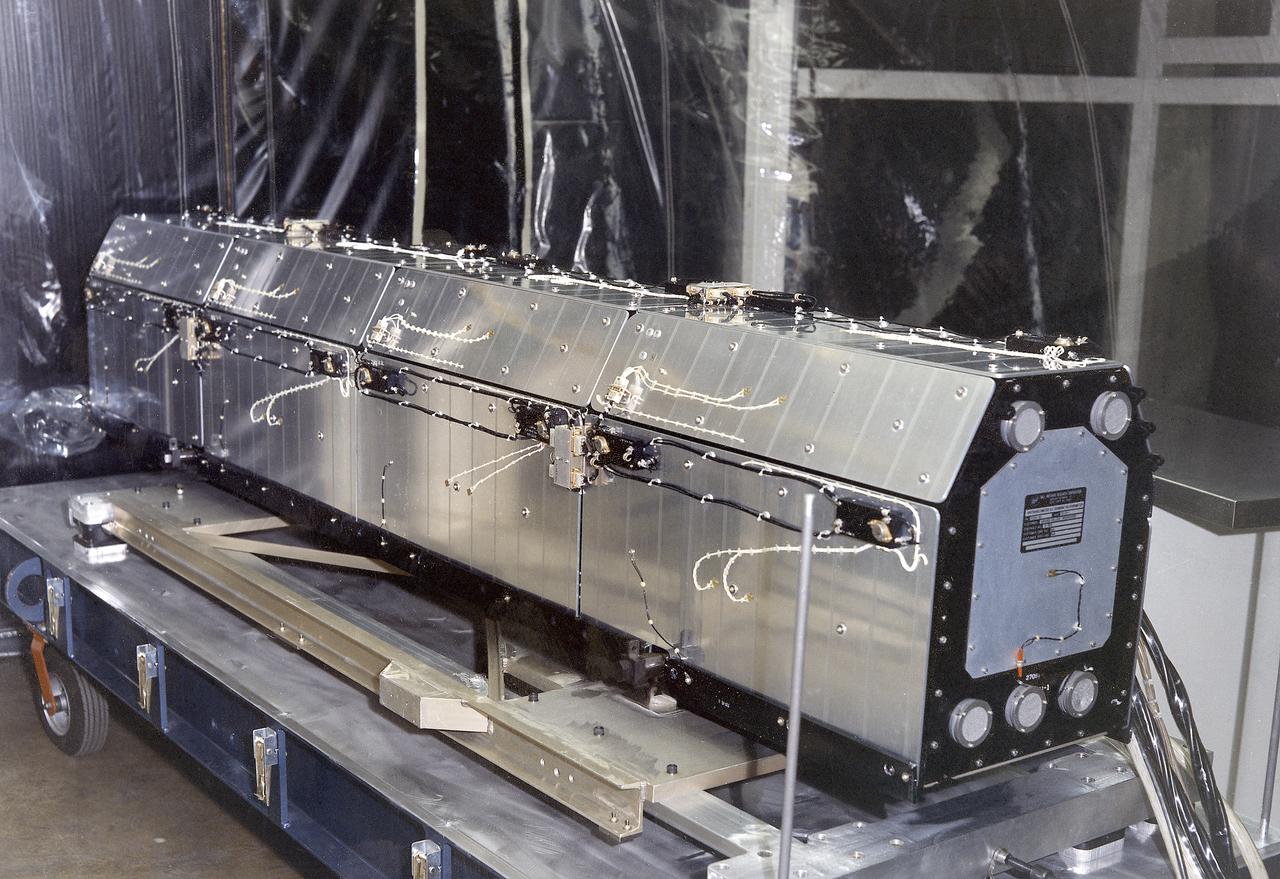
This photograph shows Skylab's Extreme Ultraviolet (XUV) Spectroheliograph during an acceptance test and checkout procedures in April 1971. The unit was an Apollo Telescope Mount (ATM) instrument designed to sequentially photograph the solar chromosphere and corona in selected ultraviolet wavelengths. The instrument also obtained information about composition, temperature, energy conversion and transfer, and plasma processes of the chromosphere and lower corona. The Marshall Space Flight Center had program management responsibility for the development of Skylab hardware and experiments.
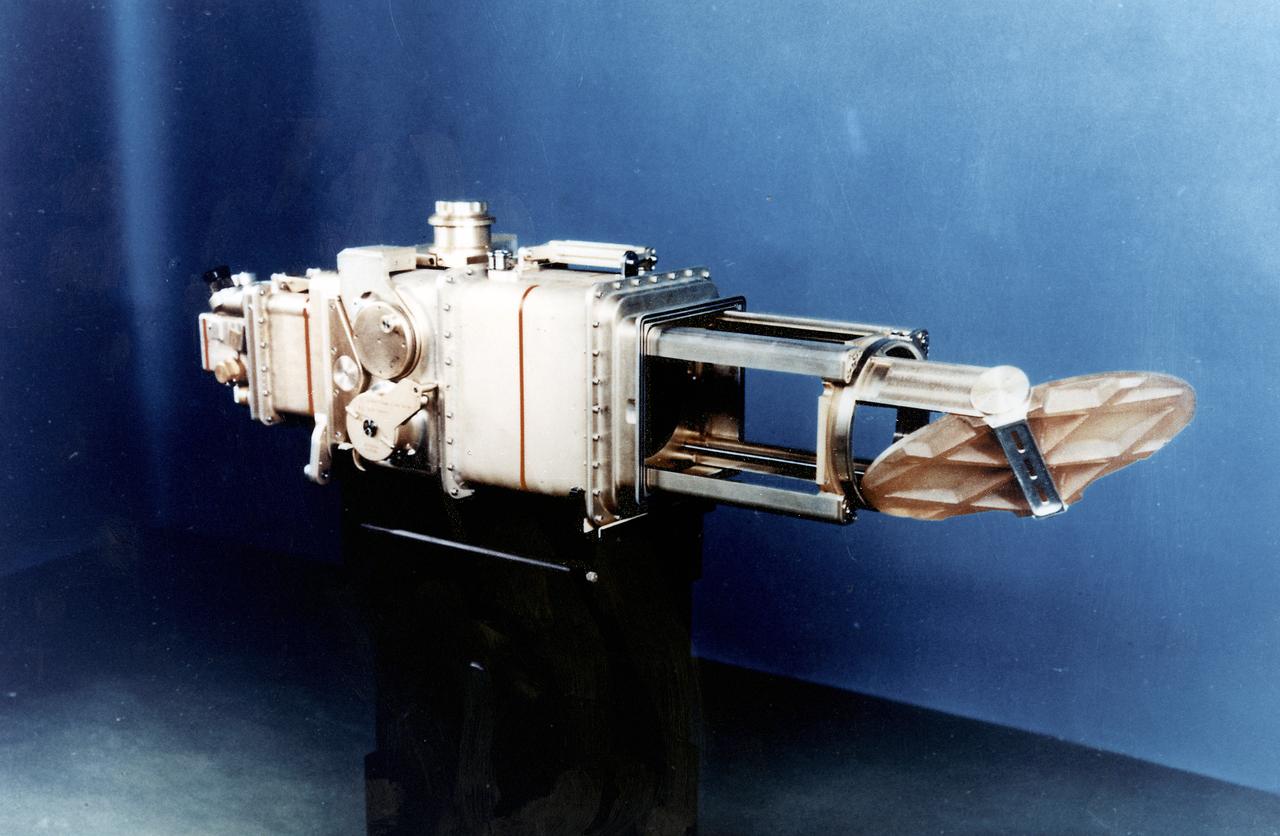
This 1970 photograph shows Skylab's Ultraviolet (UV) Stellar Astronomy experiment, a scientific airlock-based facility/experiment that would study UV spectra of early-type stars and galaxies. The Marshall Space Flight Center had program management responsibility for the development of Skylab hardware and experiments.
This 1970 photograph shows the flight unit for Skylab's Ultraviolet (UV) Scarning Polychromator Spectroheliometer, an Apollo Telescope Mount (ATM) facility. It was designed to observe temporal changes in UV radiation emitted by the Sun's chromosphere and lower corona. The Marshall Space Flight Center had program management responsibility for the development of Skylab hardware and experiments.
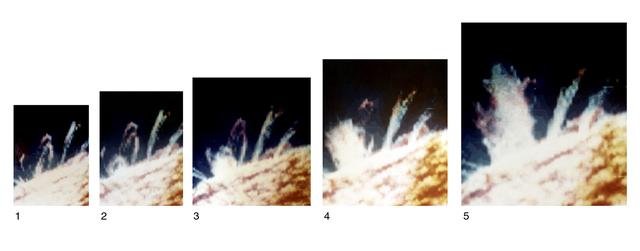
Breaking the grip of the closed magnetic loops that constrain other gases around it, a spray of chromospheric material surges upward, free of the Sun. Views 1 through 5 were recorded about 5 minutes apart by Skylab and comprise a composite of separate images made in chromospheric (red), transition region (green), and coronal (blue) temperatures of an ultraviolet sequence that depicts a solar eruption. Eruption begins (view 2) as material in or near a small, compact loop develops enough energy to overcome the Sun's magnetic bonds.
This 1973 chart details Skylab's Ultraviolet (UV) Spectrograph, an Apollo Telescope Mount instrument. Its telescope, with camera and TV capability, photographed the Sun in selected ultraviolet wavelengths. The spectrograph was used to record the spectrum of UV emissions, such as flares or filaments, from a small individual feature on the solar disc. Real-time TV was used by the crew to monitor performance of the telescope, transmit to the ground and record. The exposed films were retrieved by astronaut extravehicular activities. The Marshall Space Flight Center had program management responsibility for the development of the Skylab hardware and experiments.
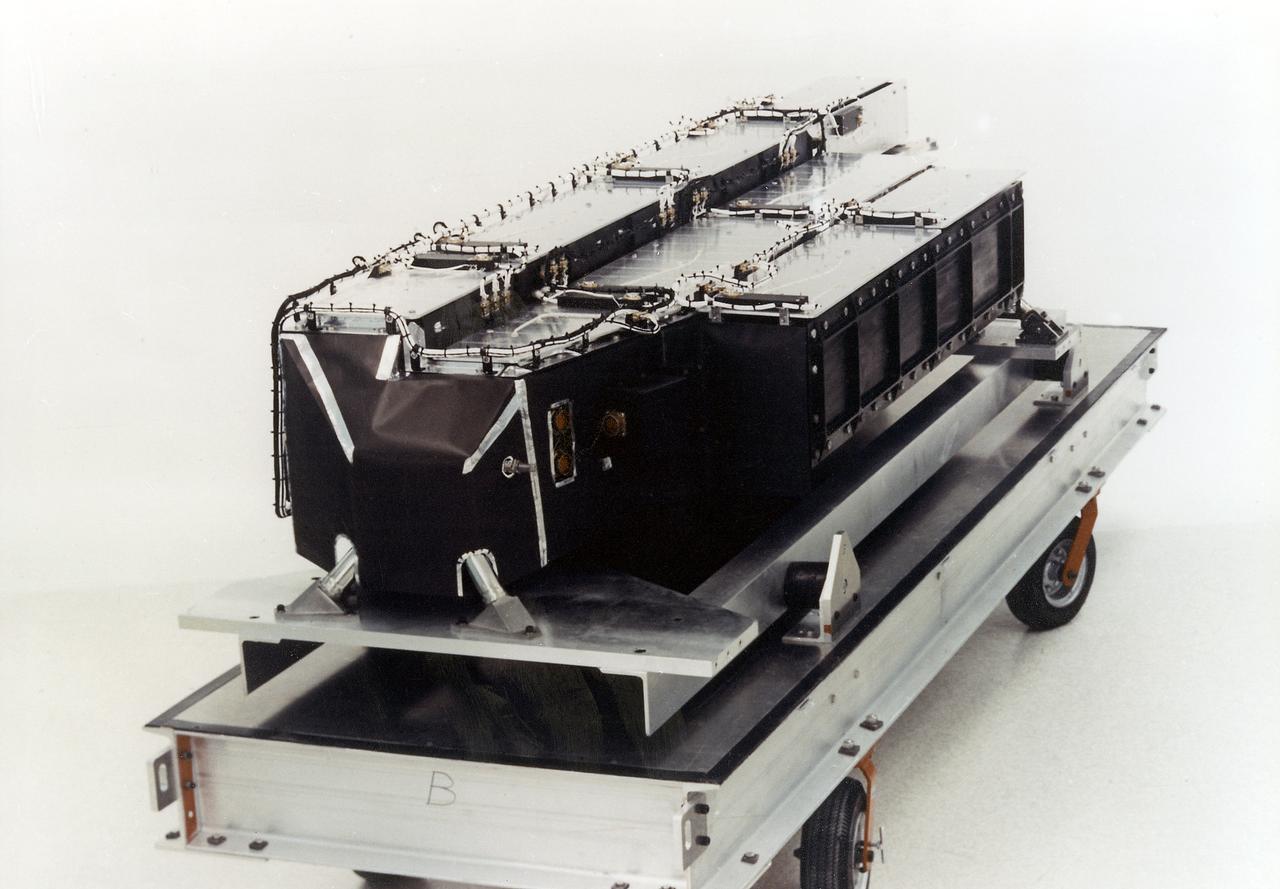
This 1970 photograph shows the Skylab's Ultraviolet (UV) Spectrograph, an Apollo Telescope Mount instrument. Its telescope, with camera and TV capability, photographed the Sun in selected ultraviolet wavelengths. The spectrograph was used to record the spectrum of UV emissions, such as flares or filaments, from a small individual feature on the solar disc. Real-time TV was used by the crew to monitor the performance of the telescope, transmit to the ground, and record. The exposed films were retrieved by astronaut extravehicular activities. The Marshall Space Flight Center had program management responsibility for the development of the Skylab hardware and experiments.
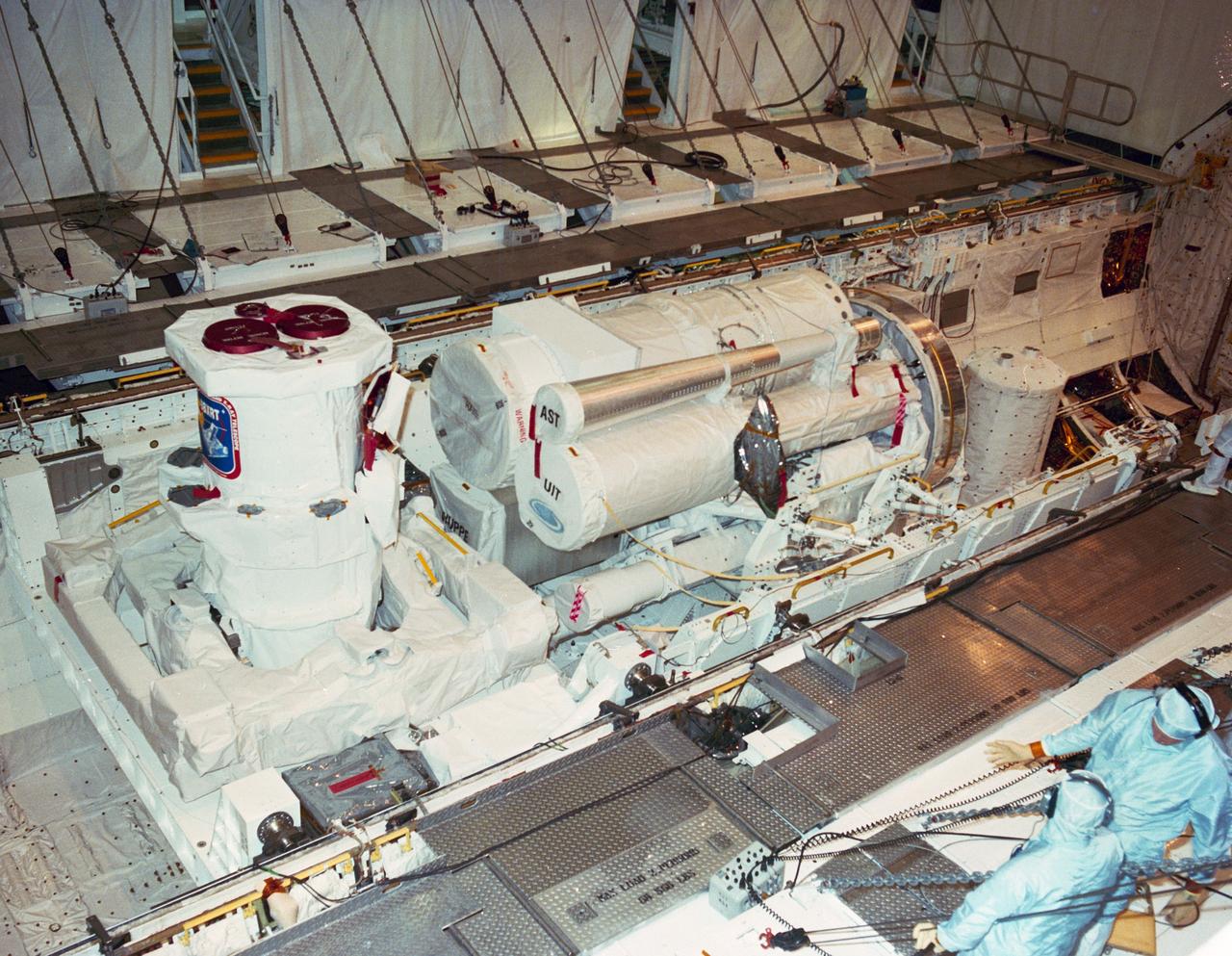
STS-35 Astronomy Laboratory 1 (ASTRO-1) is installed in Columbia's, Orbiter Vehicle (OV) 102's, payload bay (PLB) at the Kennedy Space Center (KSC) Orbiter Processing Facility (OPF). On the left, in the aft PLB is the Broad Band X Ray Telescope (BBXRT) mounted on the two axis pointing system (TAPS). In the center, the three ultraviolet telescopes - Wisconsin Ultraviolet Photo-Polarimeter Experiment (WUPPE), the Hopkins Ultraviolet Telescope (HUT), and the Ultraviolet Imaging Telescope (UIT) - are mounted on the instrument pointing system (IPS) and are in stowed position. At the far right is the Spacelab Pallet System (SPS) igloo. View provided by KSC with alternate number KSSC-90PC-421.

This 1970 photograph shows Skylab's Ultraviolet (UV) Airglow Horizon Photography experiment. It was an astrophysics investigation designed to photograph the twilight airflow and Earth's ozone layer simultaneously in visible and UV wavelengths. These observations provided information on oxygen, nitrogen, and ozone layers in the Earth's atmosphere, and on their variation during night and day cycles. The Marshall Space Flight Center had program management responsibility for the development of Skylab hardware and experiments.
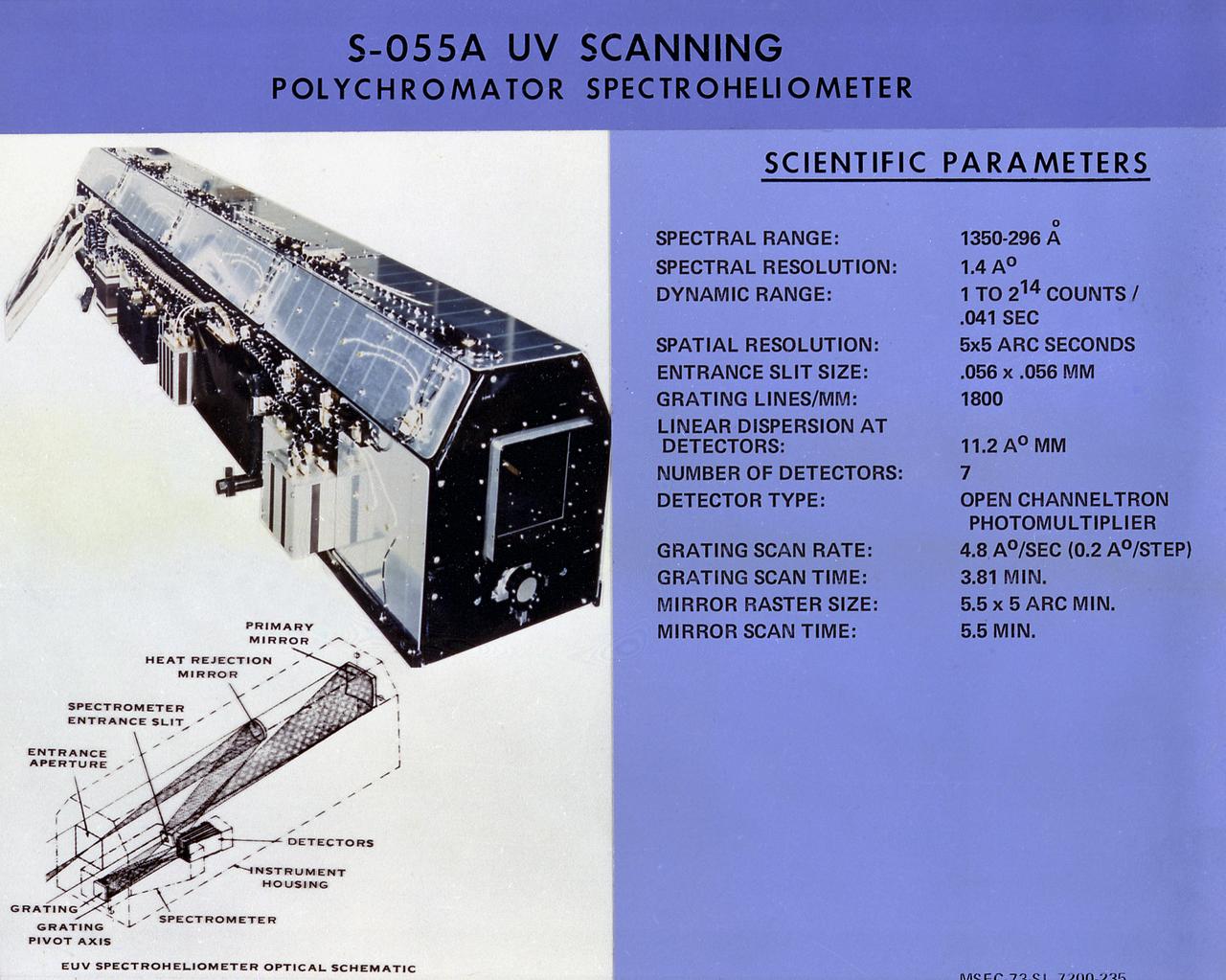
This chart describes scientific parameters of the Skylab Ultraviolet (UV) Scanning Polychromator Spectroheliometer, one the eight Apollo Telescope Mount facilities. It was designed to observe and provide temporal changes in UV radiation emitted by the Sun's chromosphere and lower corona. The Marshall Space Flight Center had program management responsibility for the development of skylab hardware and experiments.
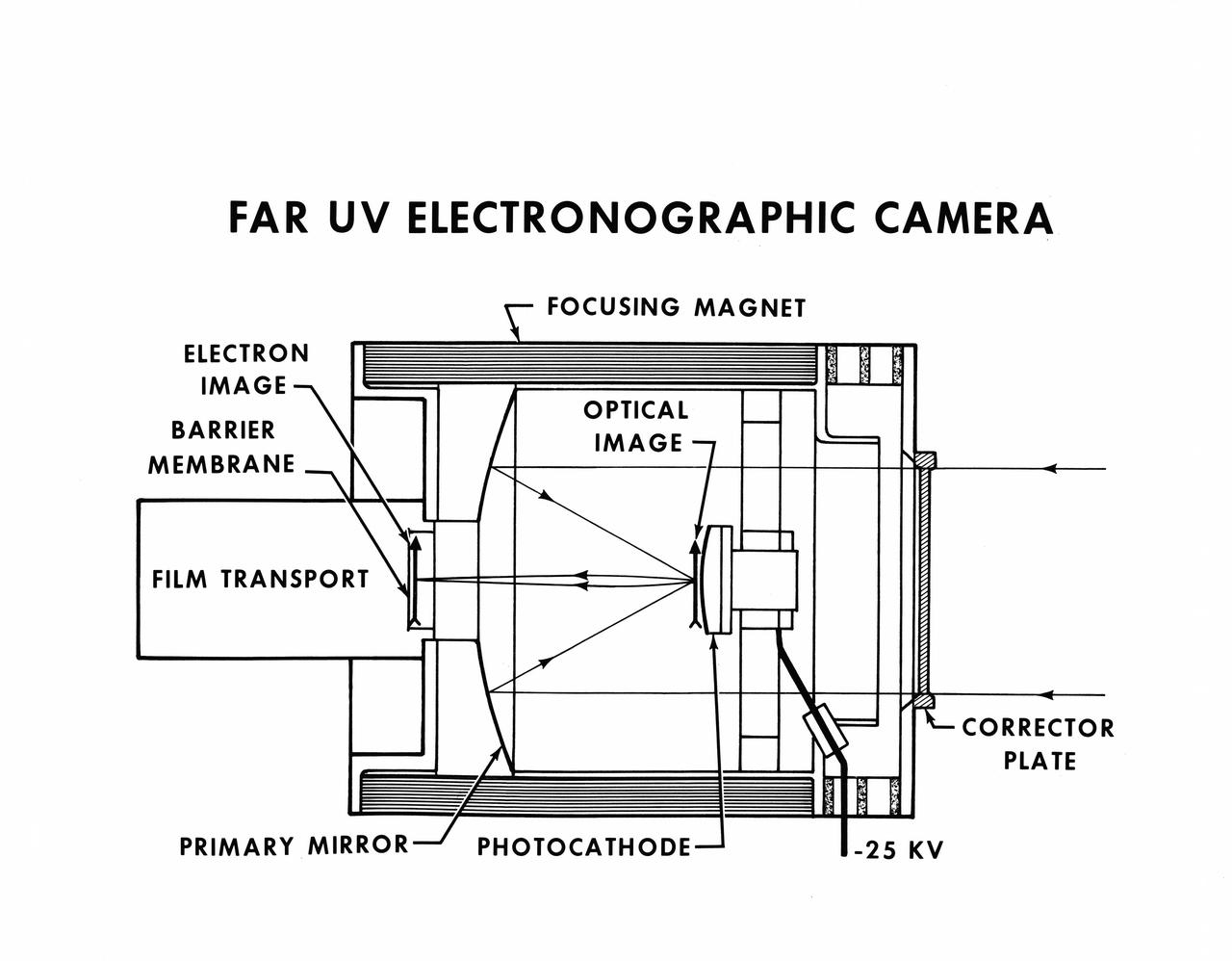
S73-36910 (November 1973) --- An engineer's drawing of the Skylab 4 Far Ultraviolet Electronographic camera (Experiment S201). Arrows point to various features and components of the camera. As the Comet Kohoutek streams through space at speeds of 100,000 miles per hour, the Skylab 4 crewmen will use the S201 UV camera to photograph features of the comet not visible from the Earth's surface. While the comet is some distance from the sun, the camera will be pointed through the scientific airlock in the wall of the Skylab space station Orbital Workshop (OWS). By using a movable mirror system built for the Ultraviolet Stellar Astronomy (S019) Experiment and rotating the space station, the S201 camera will be able to photograph the comet around the side of the space station. Photo credit: NASA
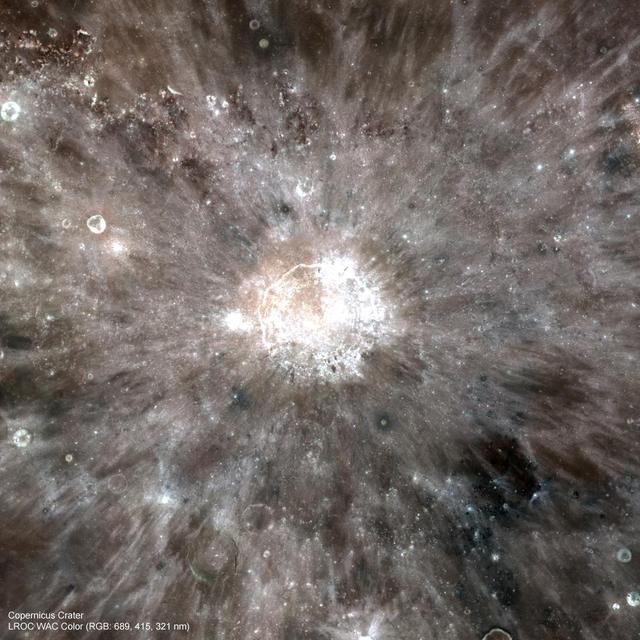
LROC Wide Angle Camera WAC visible to ultraviolet portrait of Copernicus crater
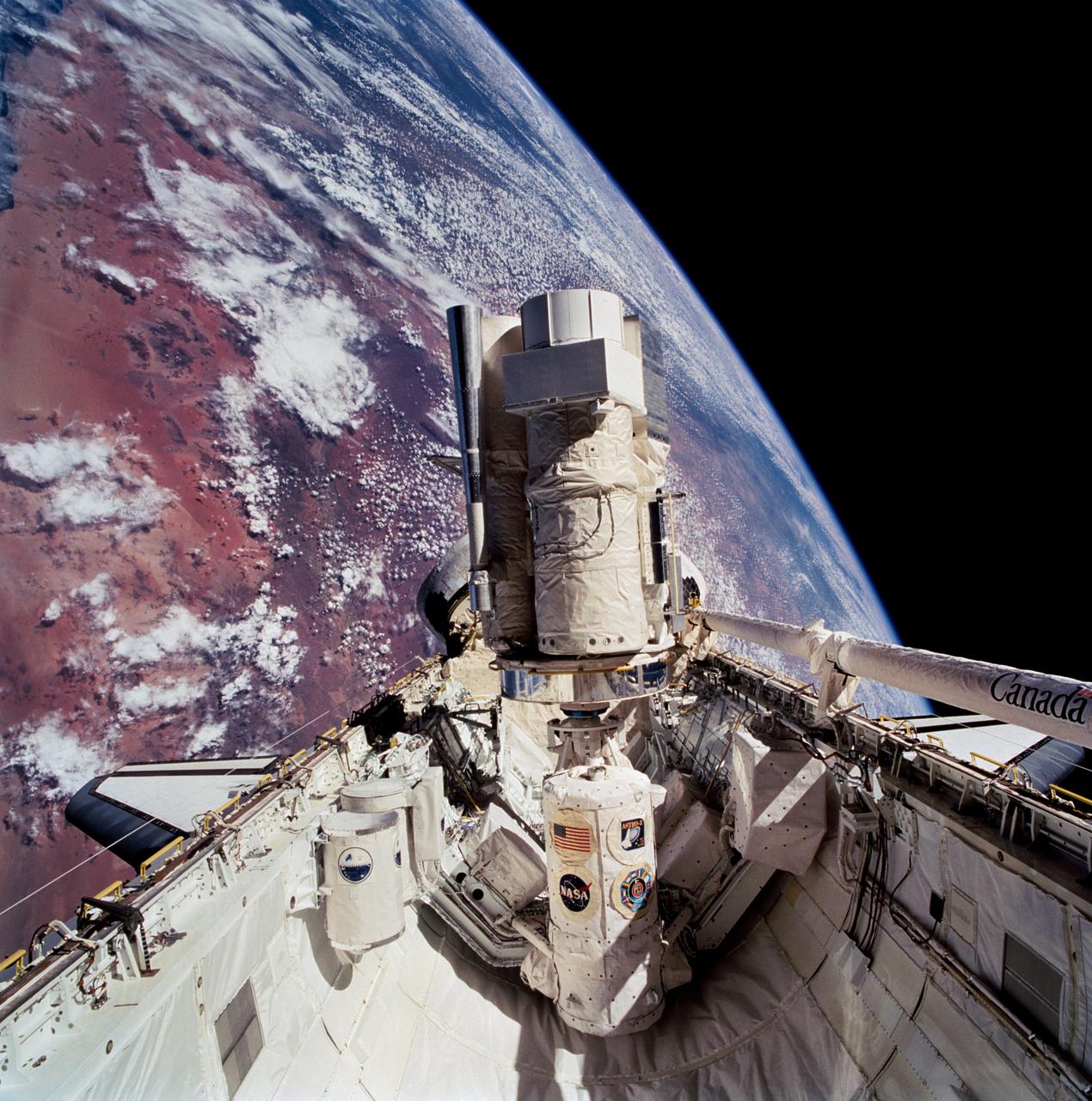
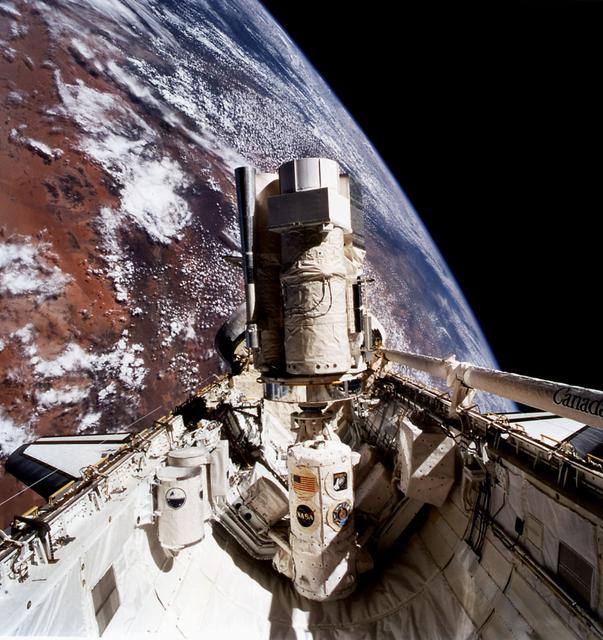
STS067-713-072 (2-18 March 1995) --- This 70mm cargo bay scene, backdropped against a desert area of Namibia, typifies the view that daily greeted the Astro-2 crew members during their almost 17-days aboard the Space Shuttle Endeavour. Positioned on the Spacelab pallet amidst other hardware, the Astro-2 payload is in its operational mode. Visible here are the Instrument Pointing System (IPS), Hopkins Ultraviolet Telescope (HUT), Star Tracker (ST), Ultraviolet Imaging Telescope (UIT), Wisconsin Ultraviolet Photo-Polarimeter Experiment (WUPPE), and Integrated Radiator System (IRS). At this angle, the Optical Sensor Package (OPS) is not seen. The Igloo, which supports the package of experiments, is in center foreground. Two Get-Away Special (GAS) canisters are in lower left foreground. The Extended Duration Orbiter (EDO) pallet, located aft of the cargo bay, is obscured by the Astro-2 payload. The Endeavour was 190 nautical miles above Earth.

This illustration depicts ultraviolet polar aurorae on Jupiter and Earth. While the diameter of the Jovian world is 10 times larger than that of Earth, both planets have markedly similar aurora. https://photojournal.jpl.nasa.gov/catalog/PIA24433
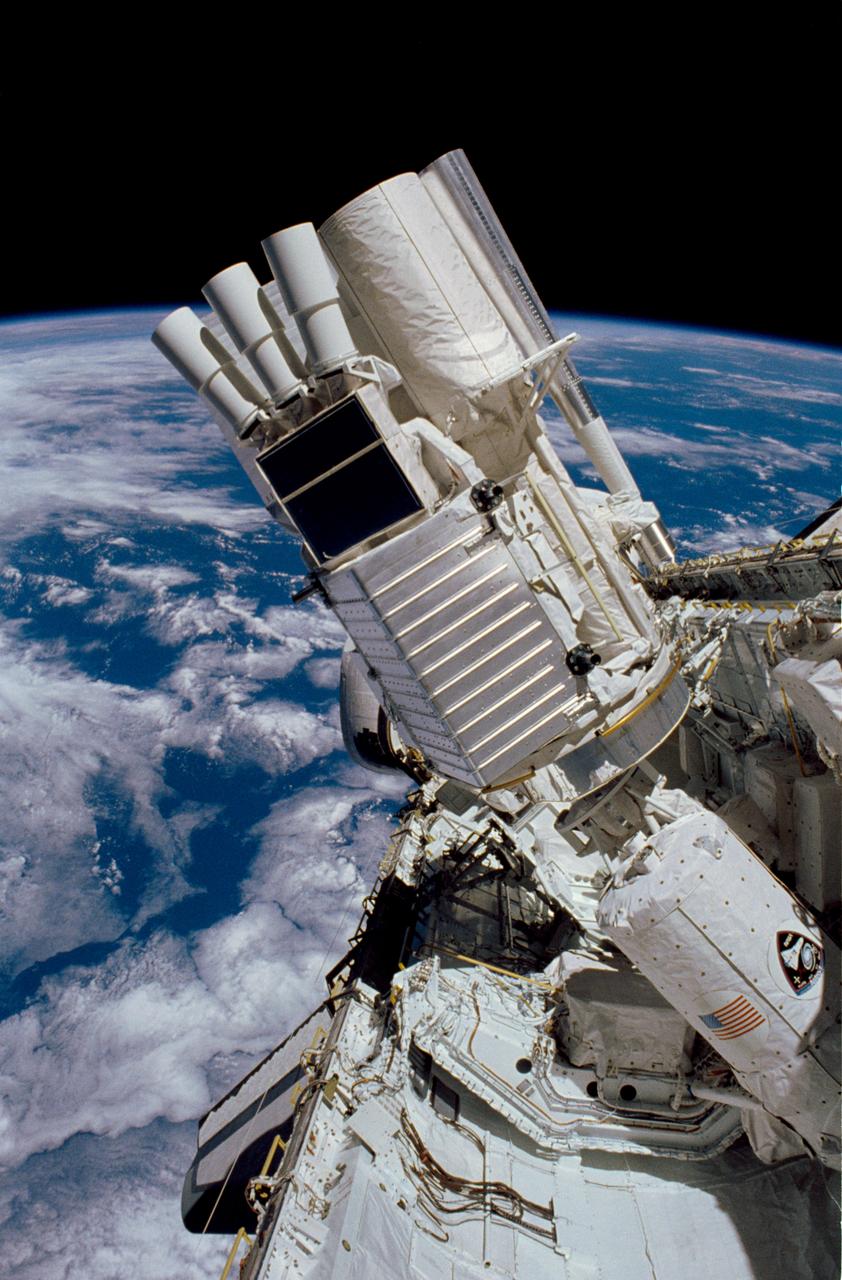
STS035-13-008 (2-10 Dec. 1990) --- The various components of the Astro-1 payload are seen backdropped against the blue and white Earth in this 35mm scene photographed through Columbia's aft flight deck windows. Parts of the Hopkins Ultraviolet Telescope (HUT), Ultraviolet Imaging Telescope (UIT) and the Wisconsin Ultraviolet Photo-Polarimeter Experiment (WUPPE) are visible on the Spacelab Pallet in the foreground. The Broad Band X-Ray Telescope (BBXRT) is behind this pallet and is not visible in this scene. The smaller cylinder in the foreground is the "Igloo," which is a pressurized container housing the Command and Data Management System, which interfaces with the in-cabin controllers to control the Instrument Pointing System (IPS) and the telescopes.
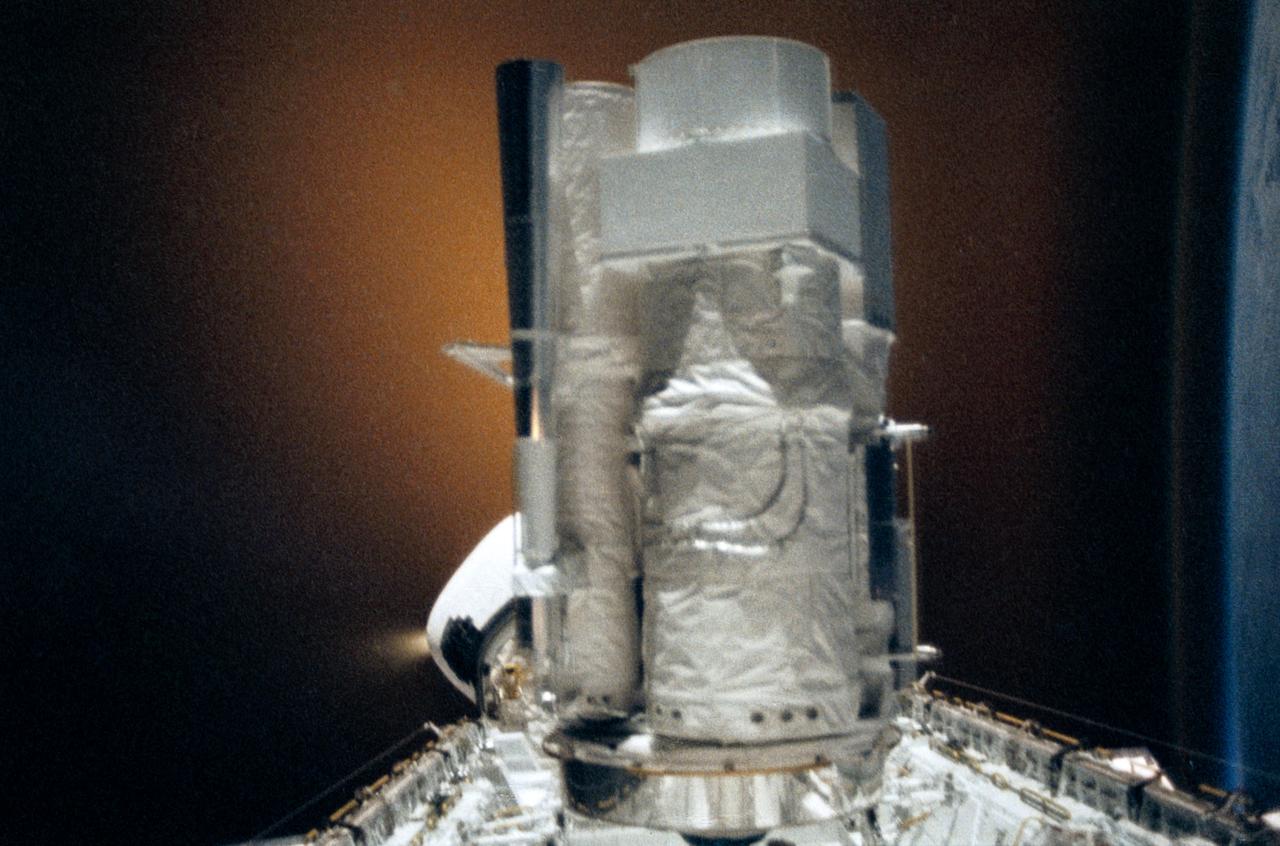
STS035-28-006 (2-10 Dec 1990) --- STS-35 Astronomy Laboratory 1 (ASTRO-1) telescopes, in on-orbit operating position in the payload bay (PLB), are silhouetted against an reaction control system (RCS) right thruster firing. Three ultraviolet telescopes are mounted and precisely co-aligned on a common structure, called the cruciform, that is attached to the instrument pointing system (IPS). Here the IPS holds the telescopes in a position that is parallel to the Earth's limb below. Visible on the cruciform are the star tracker (S TRK) (silver cone at the top), the Ultraviolet Imaging Telescope (UIT) (behind S TRK), and the Hopkins Ultraviolet Telescope(HUT).
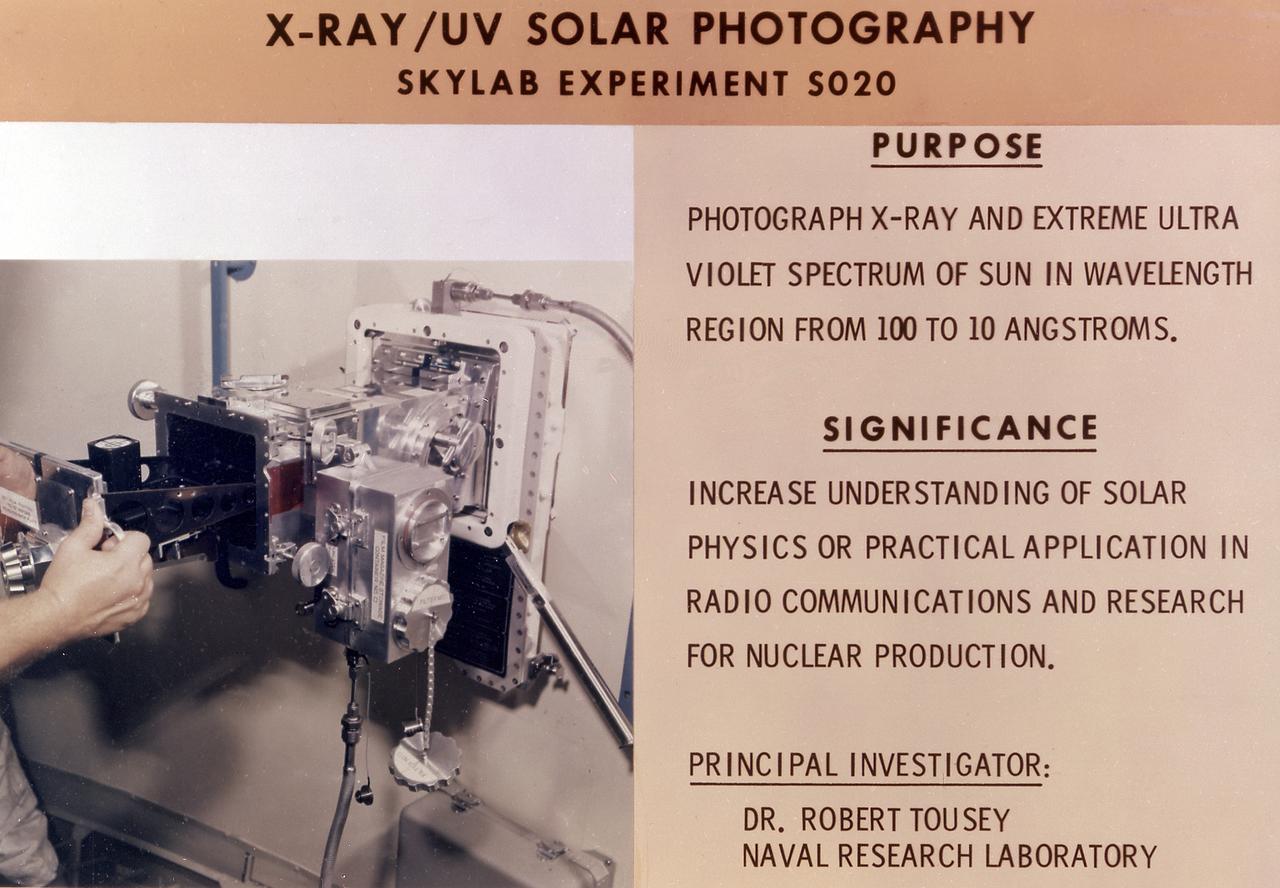
This chart details Skylab's Ultraviolet (UV) X-Ray Solar Photography experiment (S020) in an Apollo Telescope Mount facility. It was designed to photograph normal and explosive areas within the solar atmosphere in the UV and x-ray spectra. The Marshall Space Flight Center had program management responsibility for the development of Skylab hardware and experiments.
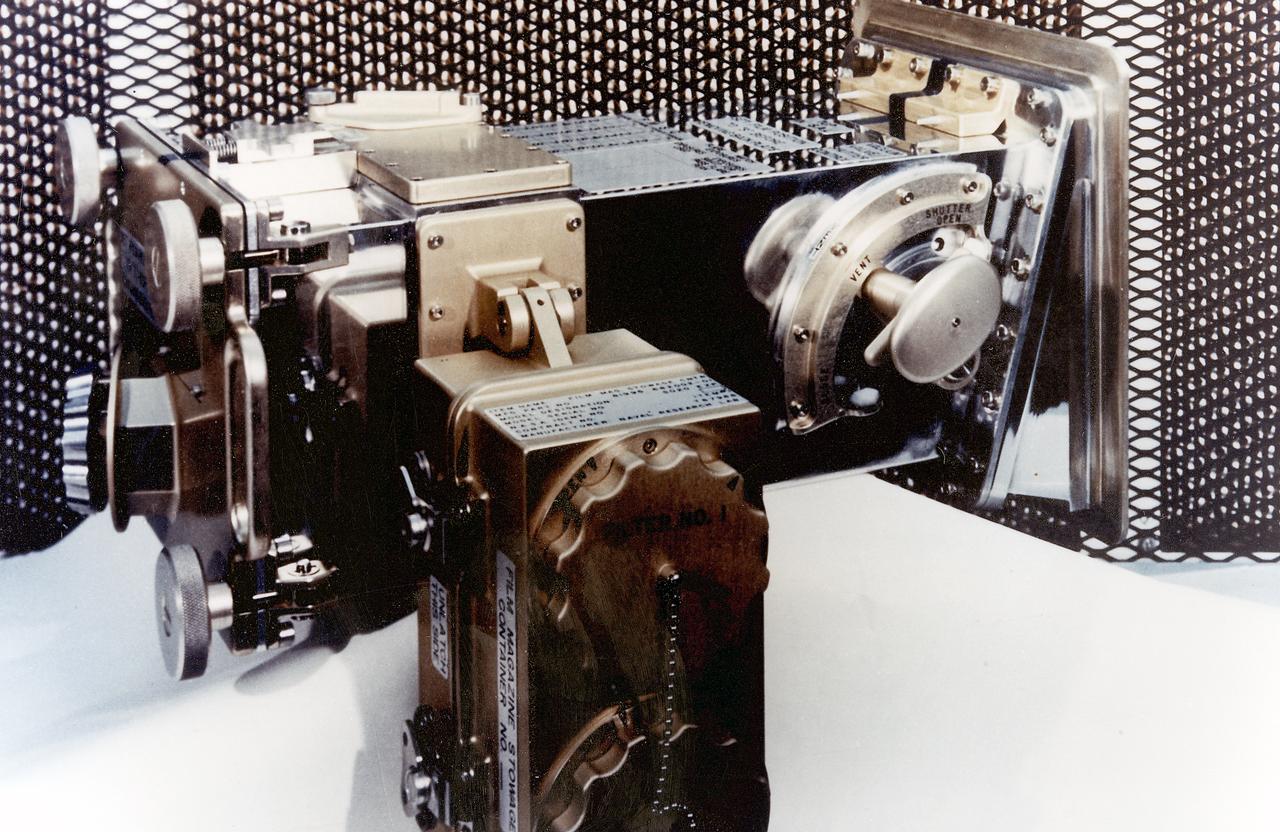
This 1970 photograph shows Skylab's Ultraviolet (UV)/X-Ray Solar Photography instrument, an Apollo Telescope Mount (ATM) facility designed to photograph normal and explosive areas in the solar atmosphere in the x-ray and UV spectra. The Marshall Space Flight Center had program management responsibility for the development of Skylab hardware and experiments.

Some of the prominences that float like lazy clouds above the solar surface suddenly erupt and break away from the Sun in cataclysmic action. The trigger of this coronal transient, like many others seen by Skylab's coronagraph, was an eruptive prominence that surged outward from the limb of the Sun, ejecting matter that disturbed the outer corona. This image is of the surge in action in ultraviolet light of ionized helium. Simultaneous observations like this made possible an almost immediate understanding of the new-found cosmic phenomenon. The elbow prominence was accidentally photographed by Astronaut Garriott (Skylab-3) while observing a small flare near the limb of the Sun beneath the mighty arch on August 9, 1973.
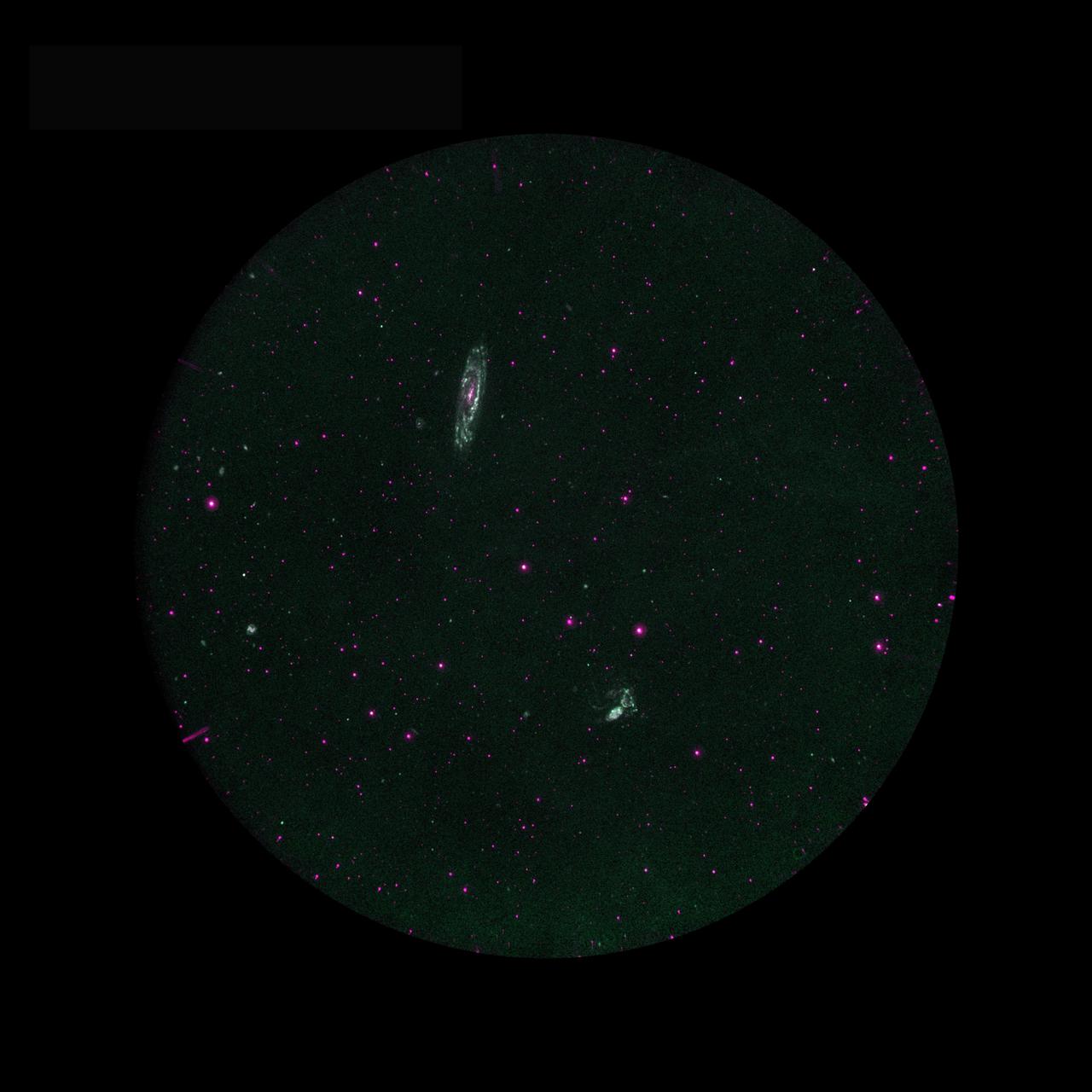
Galaxy Evolution Explorer observation of Stephan's Quintet and the nearby galaxy NGC 7331. Blue represents far ultraviolet, and red near ultraviolet. Stephan's quintet is an interacting group of galaxies. Close inspection of the group (lower center-right) shows blue regions of recent star formation associated with streamers of gas (tidal tails) created by the interaction. NGC 7331 shows prominent star formation in spiral arms. http://photojournal.jpl.nasa.gov/catalog/PIA04925
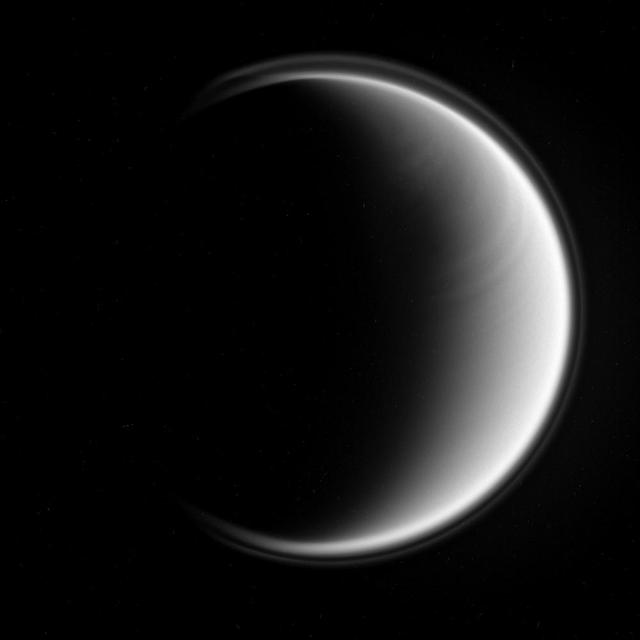
Titan bears a distinct east-west banded pattern in this Cassini spacecraft image taken in the ultraviolet
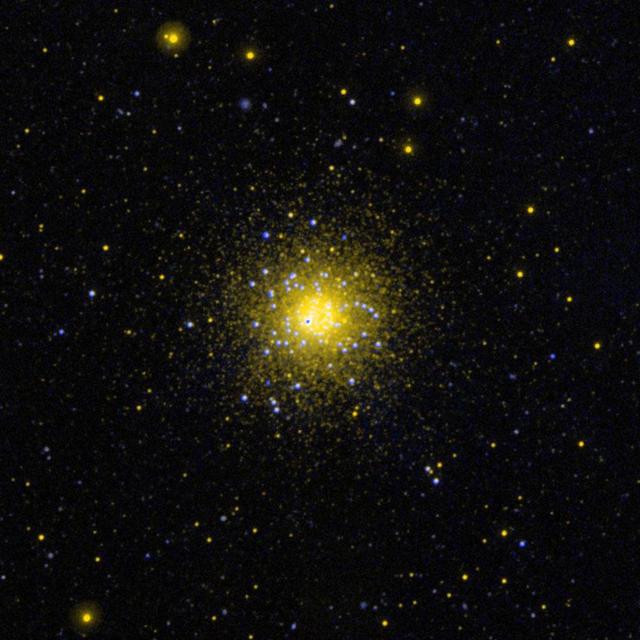
This ultraviolet image from NASA Galaxy Evolution Explorer is of the globular cluster NGC 1851 in the southern constellation Columba.

This ultraviolet image from NASA Galaxy Evolution Explorer is of a small area of the Virgo Cluster of galaxies. http://photojournal.jpl.nasa.gov/catalog/PIA07906
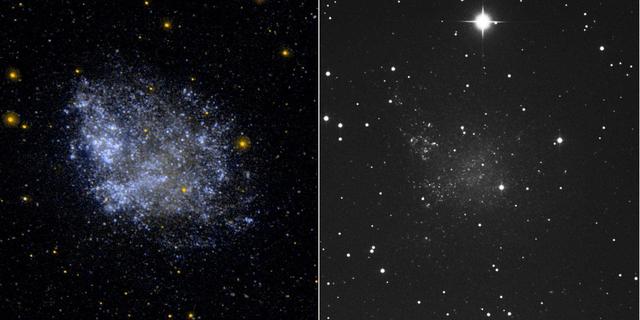
This ultraviolet image left and visual image right from NASA Galaxy Evolution Explorer is of the irregular dwarf galaxy IC 1613.
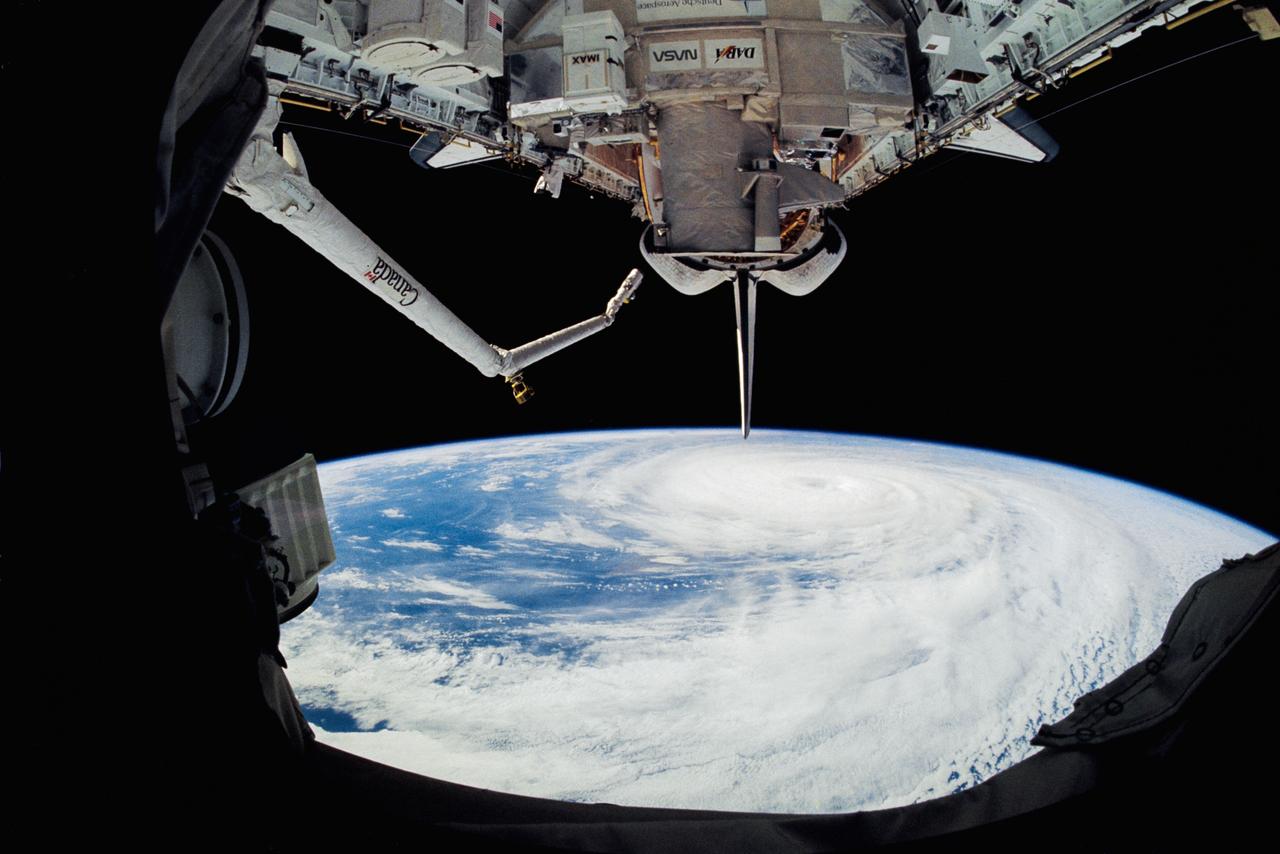
One of the STS-51 astronauts used a "fish-eye" lens on a 35mm cmaera to photograph this view of Hurricane Kenneth in the Pacific Ocean. The Orbiting Retrievable Far and Extreme Ultraviolet Spectrometer/Shuttle Pallet Satellite (ORFEUS/SPAS) is still in the cargo bay. The Remote Manipulator System (RMS) is extended towards the open payload bay.
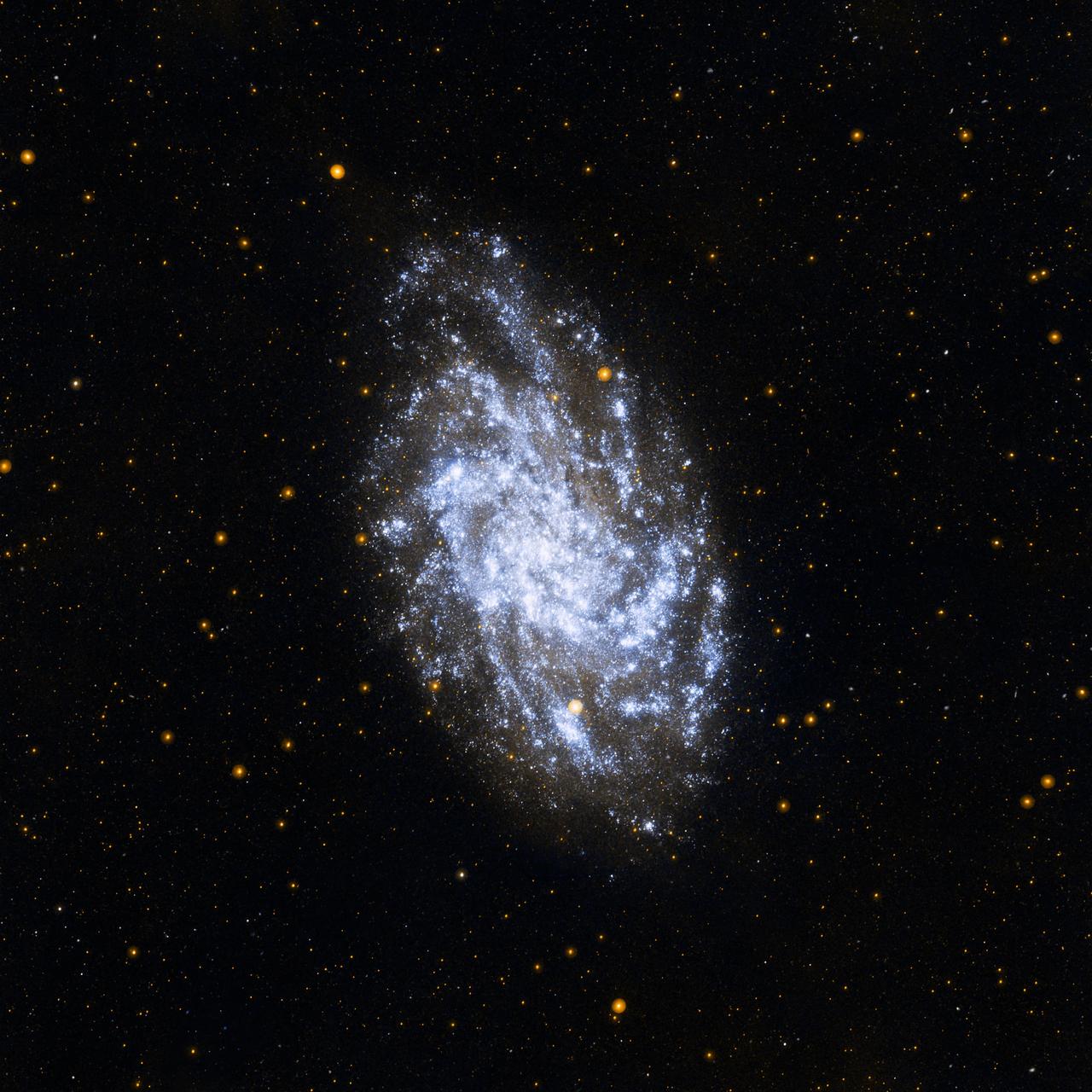
NASA Galaxy Evolution Explorer Mission celebrates its sixth anniversary studying galaxies beyond our Milky Way through its sensitive ultraviolet telescope, the only such far-ultraviolet detector in space. The mission studies the shape, brightness, size and distance of distant galaxies across 10 billion years of cosmic history, giving scientists a wealth of data to help us better understand the origins of the universe. One such object is pictured here, the galaxy NGC598, more commonly known as M33. The image shows a map of the recent star formation history of M33. The bright blue and white areas are where star formation has been extremely active over the past few million years. The patches of yellow and gold are regions where star formation was more active 100 million years ago. In addition, the ultraviolet image shows the most massive young stars in M33. These stars burn their large supply of hydrogen fuel quickly, burning hot and bright while emitting most of their energy at ultraviolet wavelengths. Compared with low-mass stars like our sun, which live for billions of years, these massive stars never reach old age, having a lifespan as short as a few million years. http://photojournal.jpl.nasa.gov/catalog/PIA12000

This chart describes the Skylab student experiment Ultraviolet (UV) From Pulsars, proposed by Neal W. Sharnon of Atlanta, Georgia. This experiment was to observe several pulsars with Skylab's UV spectrometer to determine their intensities in that portion of their spectra. A more detailed description of a pulsar's electromagnetic emission profile would be expected to further define means by which its energy is released. Unfortunately, upon examination of the photographic plates containing the data from the experiment, it was found that an alignment error of the spectrometer prevented detection of any of the pulsars. In March 1972, NASA and the National Science Teachers Association selected 25 experiment proposals for flight on Skylab. Science advisors from the Marshall Space Flight Center aided and assisted the students in developing the proposals for flight on Skylab.
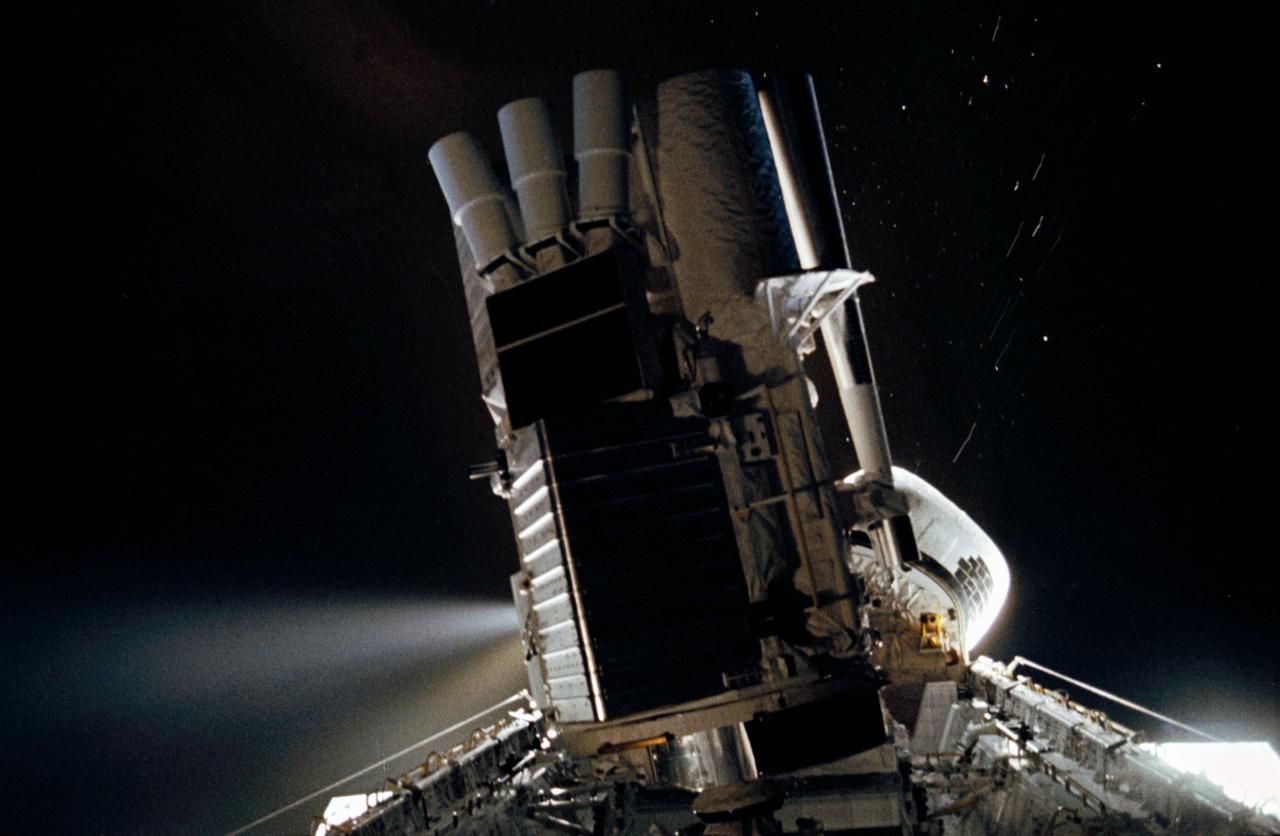
STS035-35-007 (2-10 Dec 1990) --- During the STS-35 mission, the Astronomy Laboratory 1 (ASTRO-1) payload, in its on-orbit operating configuration in the payload bay (PLB), is silhouetted against the firing of a reaction control system (RCS) jet. In the center of the frame, three ultraviolet telescopes are mounted and precisely co-aligned on a common structure, called the cruciform, that is attached to the instrument pointing system (IPS). Visible on the cruciform are Integrated Radiator System (IRS) (silver box on left), the Optical Sensor Package (OSP) (above IRS), the Ultraviolet Imaging Telescope (UIT), and the star tracker (S TRK) (far right). A right RCS jet is fired during this maneuver of Columbia, Orbiter Vehicle (OV) 102.

A group of six streaking objects, the identities of which remain unknown, can be seen here flying across the telescope sight in this image from NASA Galaxy Evolution Explorer.
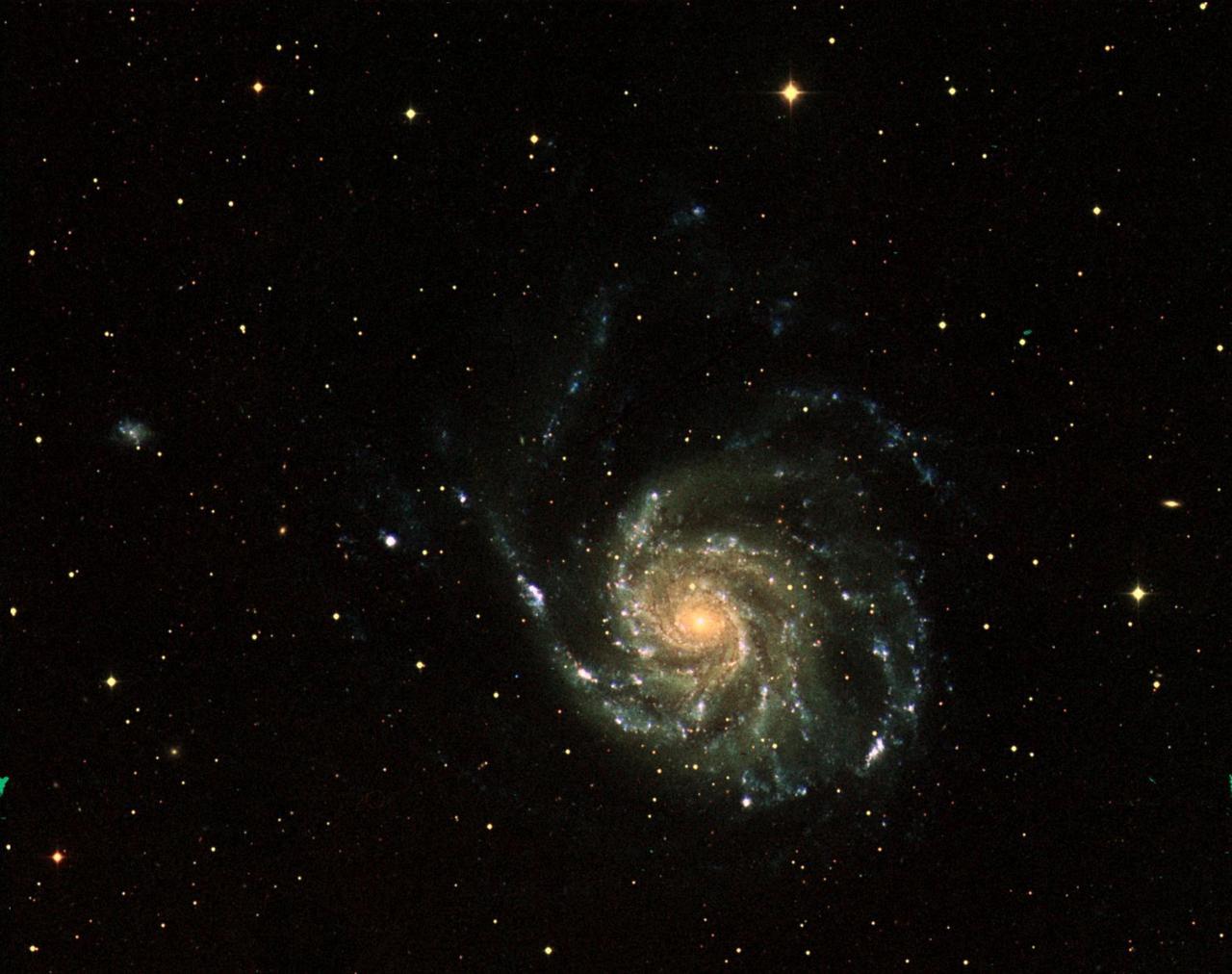
This three-color image of galaxy M101 was taken by NASA's Galaxy Evolution Explorer on June 20, 2003. The far ultraviolet emissions are shown in blue, the near ultraviolet emissions are green, and the red emissions, which were taken from NASA's Digital Sky Survey, represent visible light. This image combines short, medium, and long "exposure" pictures to best display the evolution of star formation in a spiral galaxy. http://photojournal.jpl.nasa.gov/catalog/PIA04630
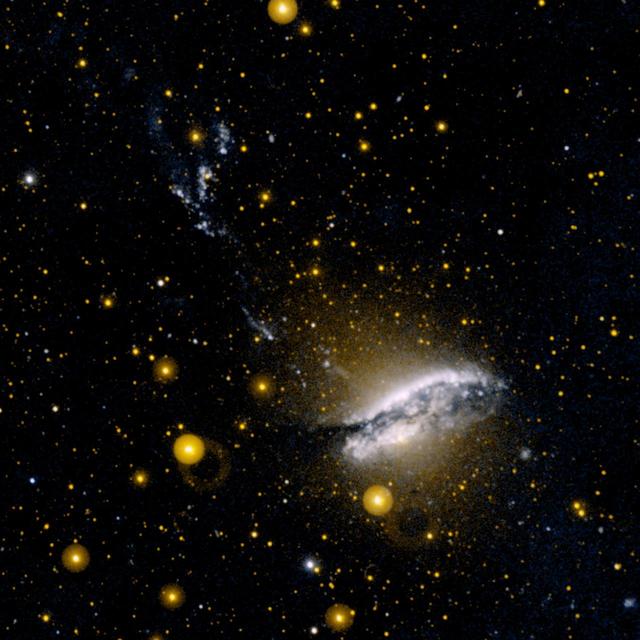
This ultraviolet image from NASA Galaxy Evolution Explorer is of NGC 5128 Centaurus-A. This unusual galaxy is believed to be the result of a collision of two normal galaxies.
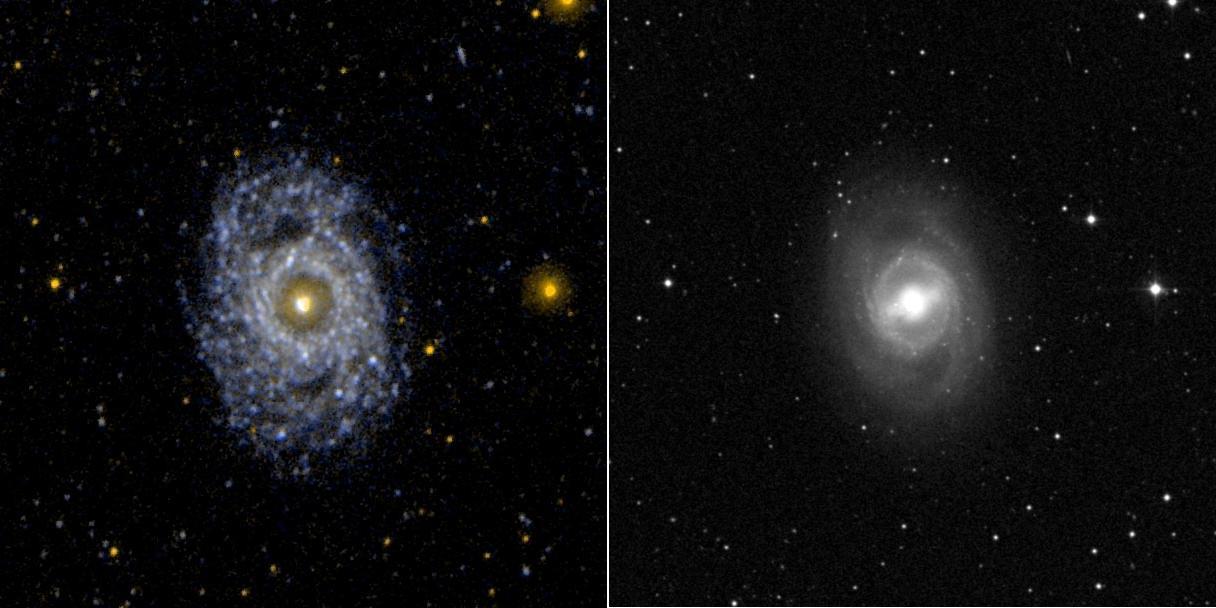
This ultraviolet image from NASA Galaxy Evolution Explorer left and visual image right of the face on barred and ringed spiral galaxy NGC 3351 M95.

This image taken by the ultraviolet-light monitoring camera on the European Space Agency ESA XMM-Newton telescope shows the beautiful spiral arms of the galaxy NGC1365.

This graphic depicts what Mars atmosphere would have looked like to a viewer with ultraviolet-seeing eyes after a meteor shower on Oct. 19, 2014.
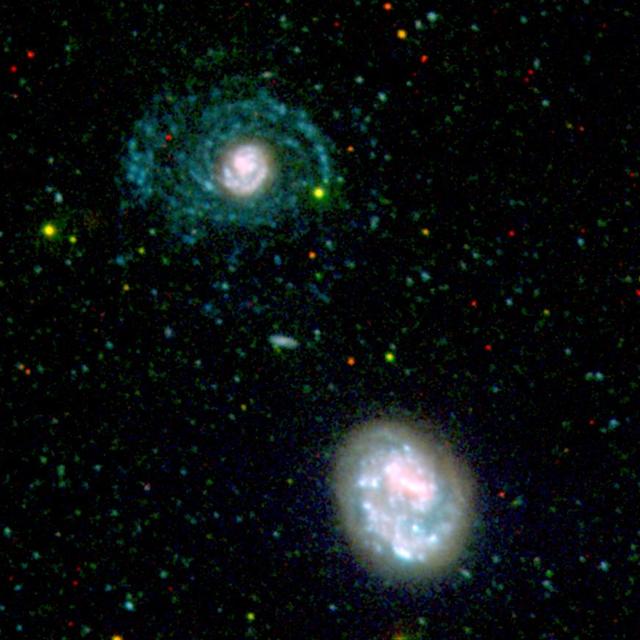
This image highlights the hidden spiral arms blue that were discovered around the nearby galaxy NGC 4625 by the ultraviolet eyes of NASA Galaxy Evolution Explorer.
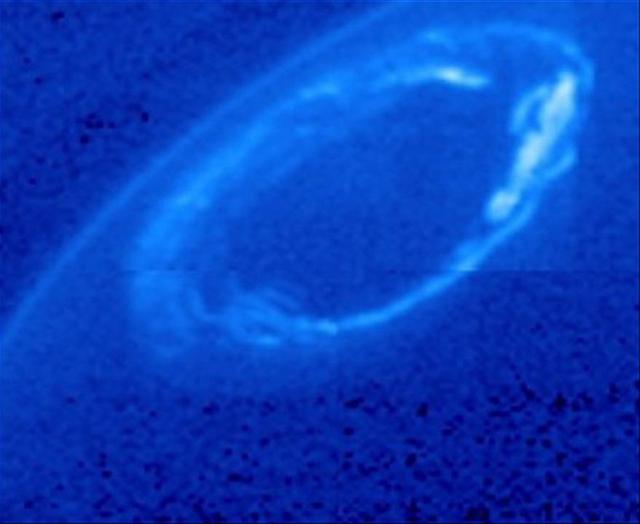
Ultraviolet and infrared images from NASA Cassini spacecraft and Hubble Space Telescope show active and quiet auroras at Saturn north and south poles.
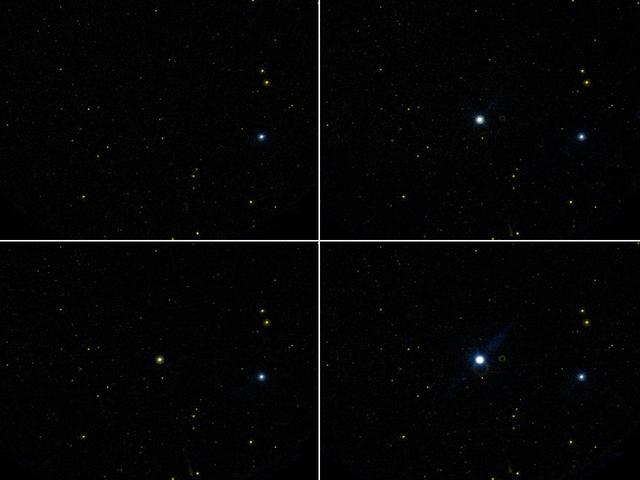
This image taken by NASAS Galaxy Evolution Explorer shows one of the largest flares, or star eruptions, ever recorded at ultraviolet wavelengths. This star is called GJ 3685A.
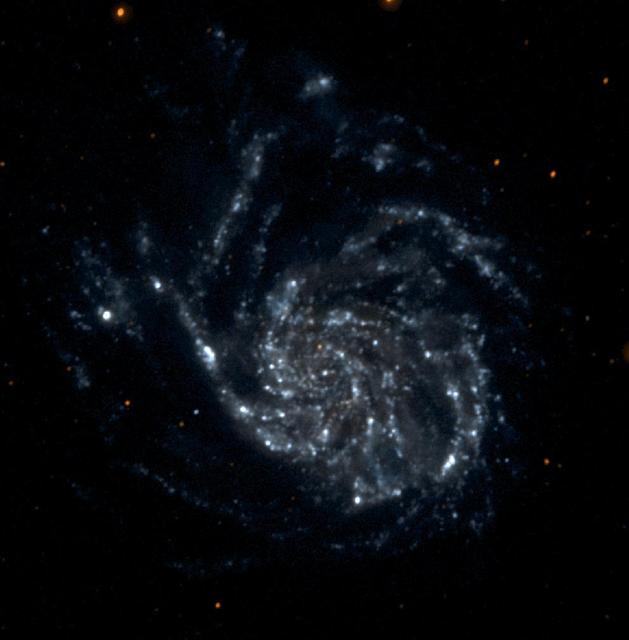
This single orbit exposure, ultraviolet color image of Messier 101 was taken by NASA's Galaxy Evolution Explorer on June 20, 2003. Messier 101 is a large spiral galaxy located 20 million light-years from Earth. This image is a short and medium "exposure" picture of the evolution of star formation in a spiral galaxy. The far ultraviolet emission detects the younger stars as concentrated in tight spiral arms, while the near ultraviolet emission, which traces stars living for more than 100 million years, displays the movement of the spiral pattern over a 100 million year period. The red stars in the foreground of the image are Milky Way stars. http://photojournal.jpl.nasa.gov/catalog/PIA04632
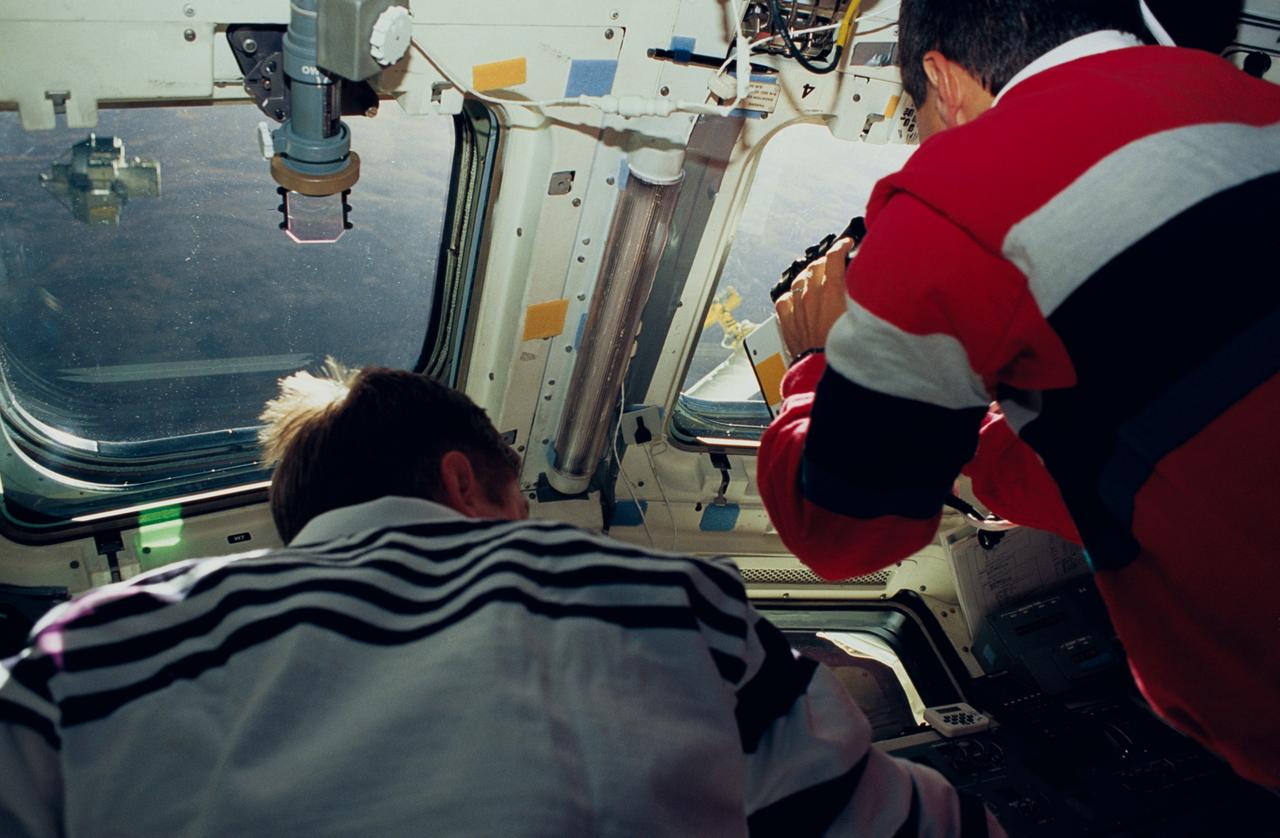
Astronauts Frank L. Culbertson Jr., STS-51 mission commander, and Daniel W. Bursch, mission specialist, are seen on Discovery's flight deck. The two were supporting operations free-flying Orbiting and Retrievable Far and Extreme Ultraviolet Spectrometer (ORFEUS) and its Shuttle Pallet Satellite (SPAS), pictured through the left window.
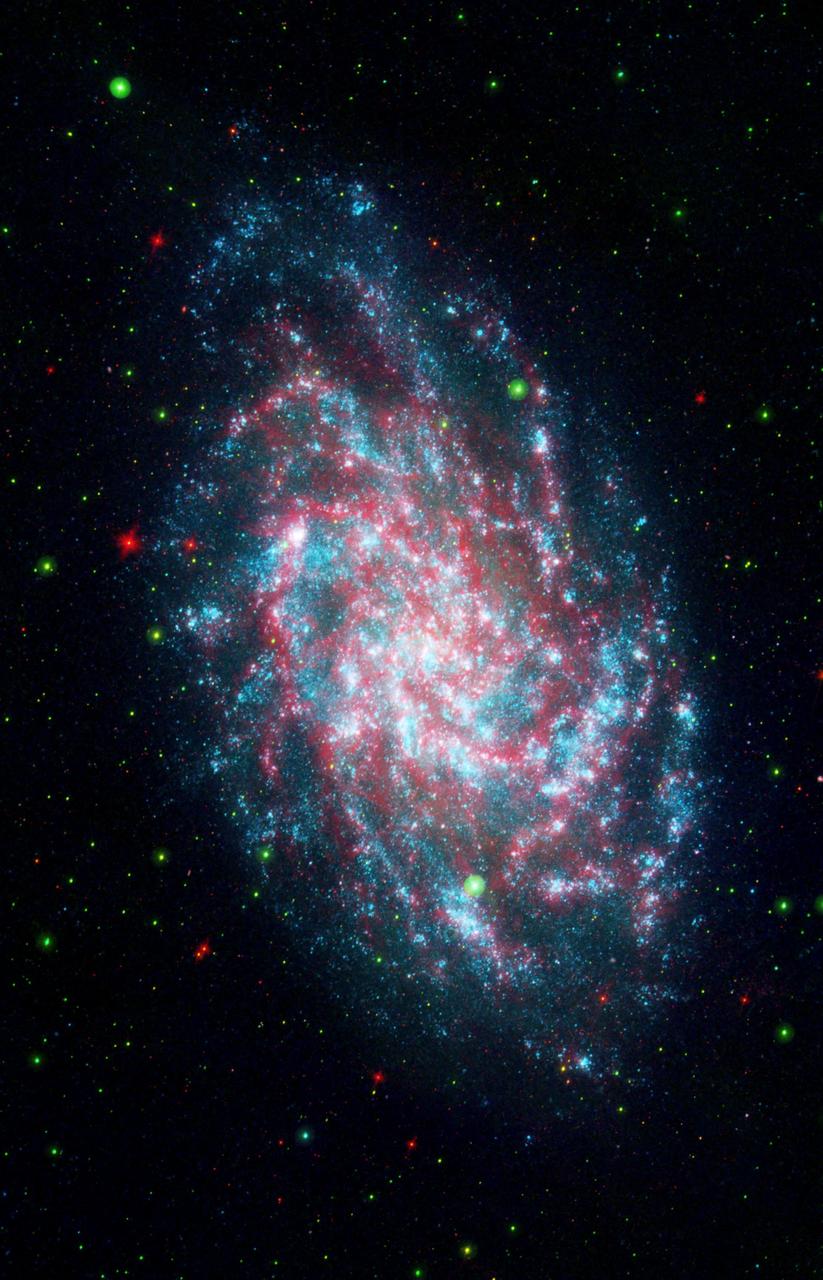
NASA Galaxy Evolution Explorer Mission celebrates its sixth anniversary studying galaxies beyond our Milky Way through its sensitive ultraviolet telescope, the only such far-ultraviolet detector in space. Pictured here, the galaxy NGC598 known as M33. The mission studies the shape, brightness, size and distance of distant galaxies across 10 billion years of cosmic history, giving scientists a wealth of data to help us better understand the origins of the universe. One such object is pictured here, the galaxy NGC598, more commonly known as M33. This image is a blend of the Galaxy Evolution Explorer's M33 image and another taken by NASA's Spitzer Space Telescope. M33, one of our closest galactic neighbors, is about 2.9 million light-years away in the constellation Triangulum, part of what's known as our Local Group of galaxies. Together, the Galaxy Evolution Explorer and Spitzer can see a broad spectrum of sky. Spitzer, for example, can detect mid-infrared radiation from dust that has absorbed young stars' ultraviolet light. That's something the Galaxy Evolution Explorer cannot see. This combined image shows in amazing detail the beautiful and complicated interlacing of the heated dust and young stars. In some regions of M33, dust gathers where there is very little far-ultraviolet light, suggesting that the young stars are obscured or that stars farther away are heating the dust. In some of the outer regions of the galaxy, just the opposite is true: There are plenty of young stars and very little dust. Far-ultraviolet light from young stars glimmers blue, near-ultraviolet light from intermediate age stars glows green, and dust rich in organic molecules burns red. This image is a 3-band composite including far infrared as red. http://photojournal.jpl.nasa.gov/catalog/PIA11998
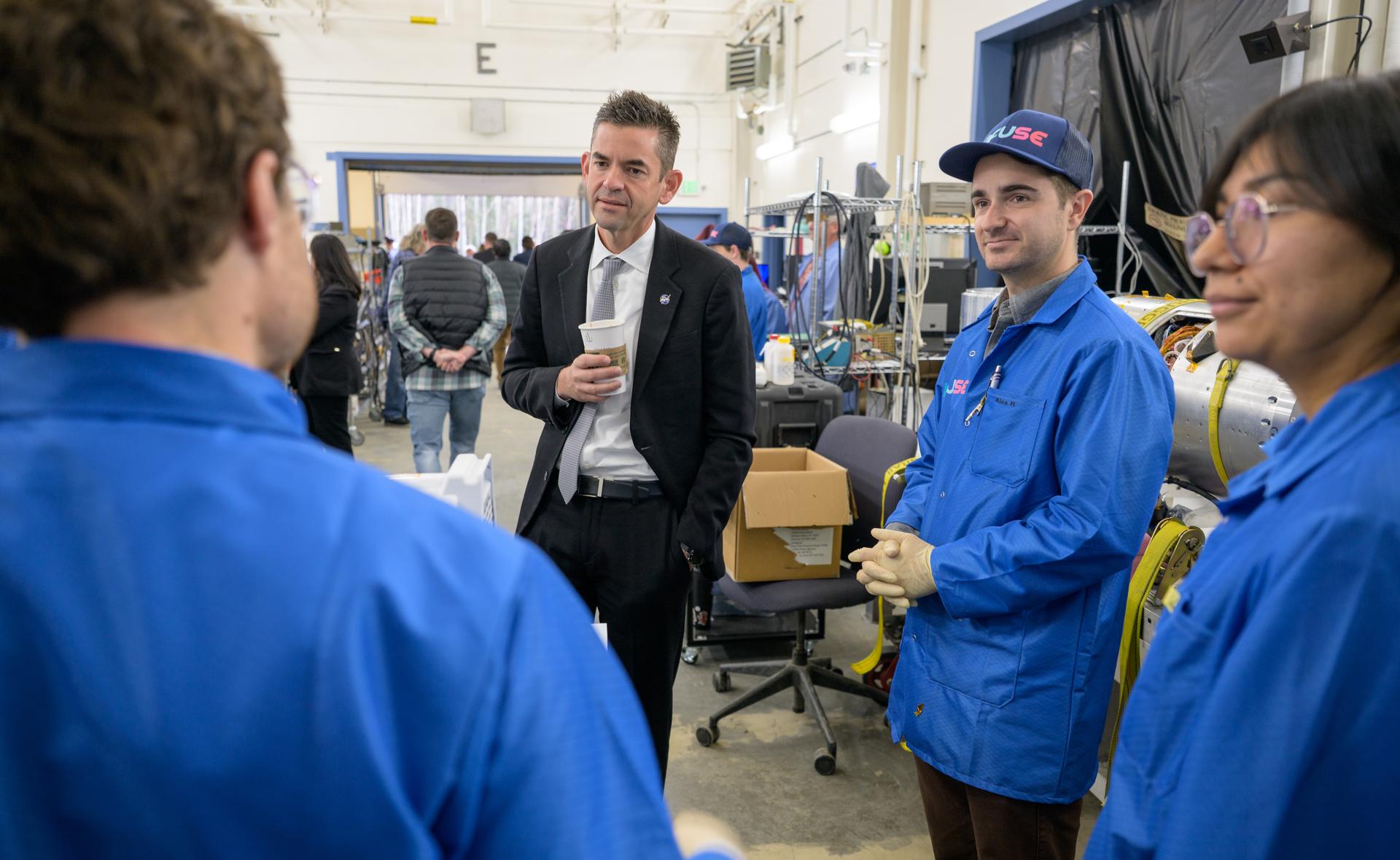
NASA Administrator Jared Isaacman, center, talks to employees working on the INtegral Field far-Ultraviolet Spectroscopic Experiment (INFUSE), at the Poker Flat Research Range, Monday, Oct. 5, 2026, in Fairbanks, Alaska. NASA’s visit to Alaska is part of the agency's Inspiration Tour, aimed at strengthening connections between NASA and its partners and showcasing innovation in air and space in the lead up to the MAX POWER aerospace technology expo and airshow at the agency's Kennedy Space Center in early November. Photo Credit: (NASA/Bill Ingalls)
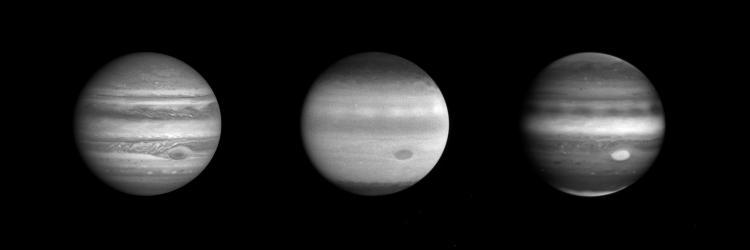
These three images of Jupiter, taken through the narrow angle camera of NASA Cassini spacecraft from a distance of 77.6 million kilometers 48.2 million miles on October 8, reveal more than is apparent to the naked eye through a telescope.
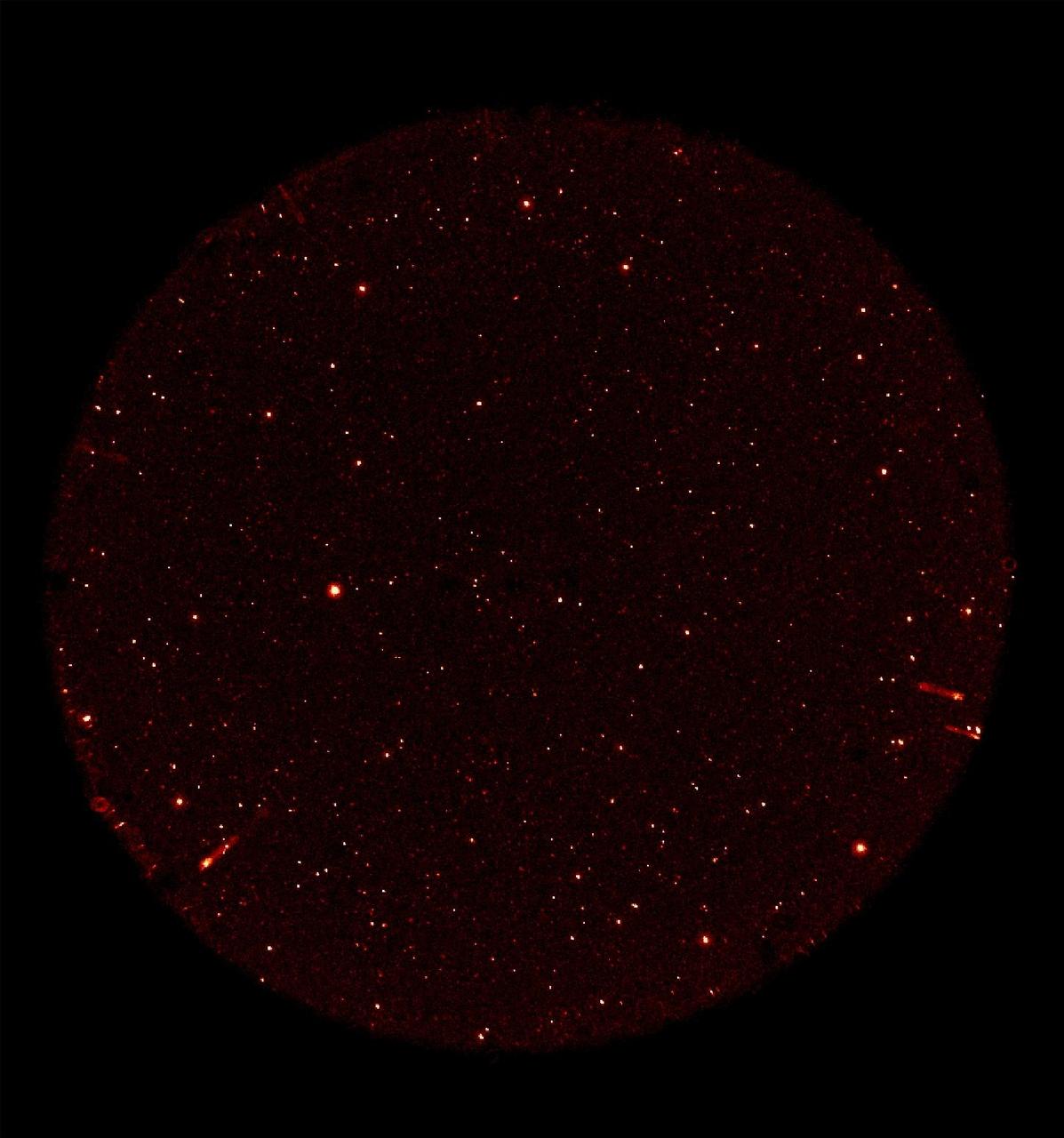
This image was taken on May 21 and 22, 2003, by NASA Galaxy Evolution Explorer. The image was made from data gathered during the missions first light milestone, and shows celestial objects in the constellation Hercules.
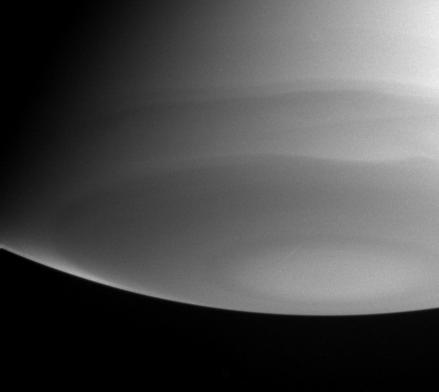
Wavy bands of clouds near Saturn's south pole dominate this ultraviolet image from the Cassini spacecraft. A bright wedge is visible near the lower left limb (apparent edge) of the planet. That wedge falls in a latitude band that borders a darker latitude band a little closer to the pole. Viewing the limb of the planet in ultraviolet light allows researchers to sample the high part of the atmosphere (the stratosphere). Imaging scientists can discern from this image that the stratosphere in this latitude band is relatively pure hydrogen and helium and contains very little stratospheric haze, which causes darkening closer to the pole. The image was taken on July 22, 2004, from a distance of 6.7 million kilometers (4.1 million miles) from Saturn. The image scale is 79 kilometers (49 miles) per pixel. Contrast was slightly enhanced to bring out features in the atmosphere. http://photojournal.jpl.nasa.gov/catalog/PIA06462

NASA Extreme Ultraviolet Imaging Telescope aboard ESA’s SOHO spacecraft took this image of a huge, handle-shaped prominence in 1999. Prominences are huge clouds of relatively cool dense plasma suspended in the Sun hot, thin corona.

In the Multi-Payload Processing Facility, workers check the deployment of the cover of the telescope on NASA Galaxy Evolution Explorer, an orbiting space telescope observing galaxies in ultraviolet light across 10 billion years of cosmic history.
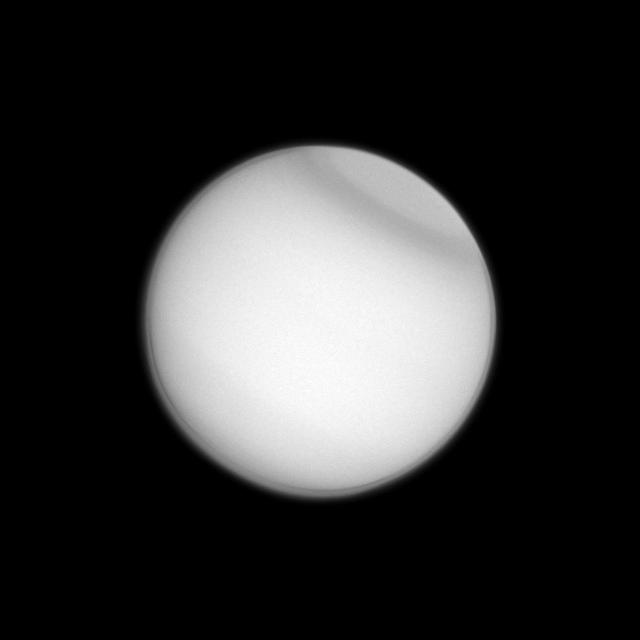
Titan polar collar, previously seen by Voyager 2 and the Hubble Space Telescope, has now been observed by the Cassini spacecraft, seen here in ultraviolet light. The collar is believed to be seasonal in nature.

Three of NASA contributions to the ESA Rosetta mission are pictured here: an ultraviolet spectrometer called Alice top, the Ion and Electron Sensor IES bottom left, and the Microwave Instrument for Rosetta Orbiter MIRO bottom right.
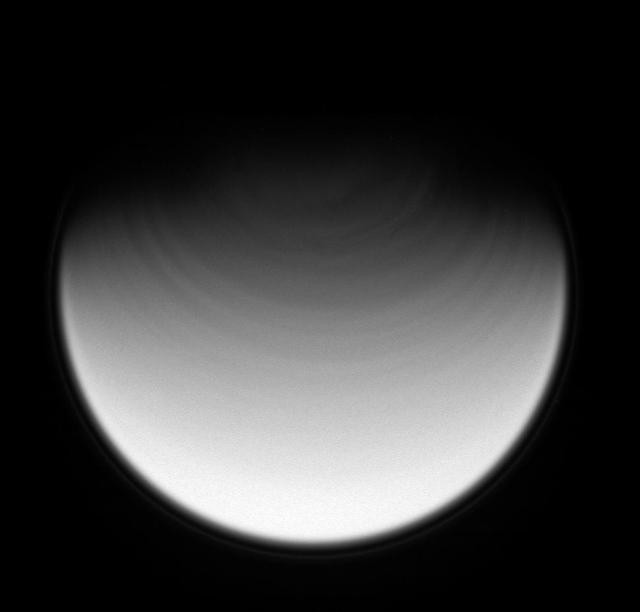
The rapidly rotating clouds above Titan northernmost latitudes stretch into streaks that circumscribe the pole. The ultraviolet spectral filter used to take this image allows the Cassini spacecraft to view the moon stratosphere

NASA Galaxy Evolution Explorer is celebrates its fourth year in space with some of M81 hottest stars. In this ultraviolet image, the magnificent M81 spiral galaxy is shown at the center.
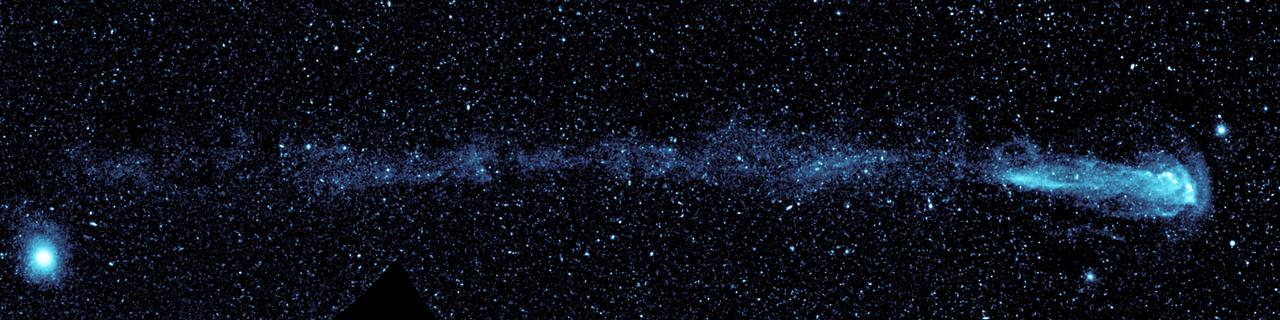
New ultraviolet images from NASA Galaxy Evolution Explorer shows a speeding star that is leaving an enormous trail of eeds for new solar systems. The star, named Mira pronounced my-rah after the latin word for wonderful.
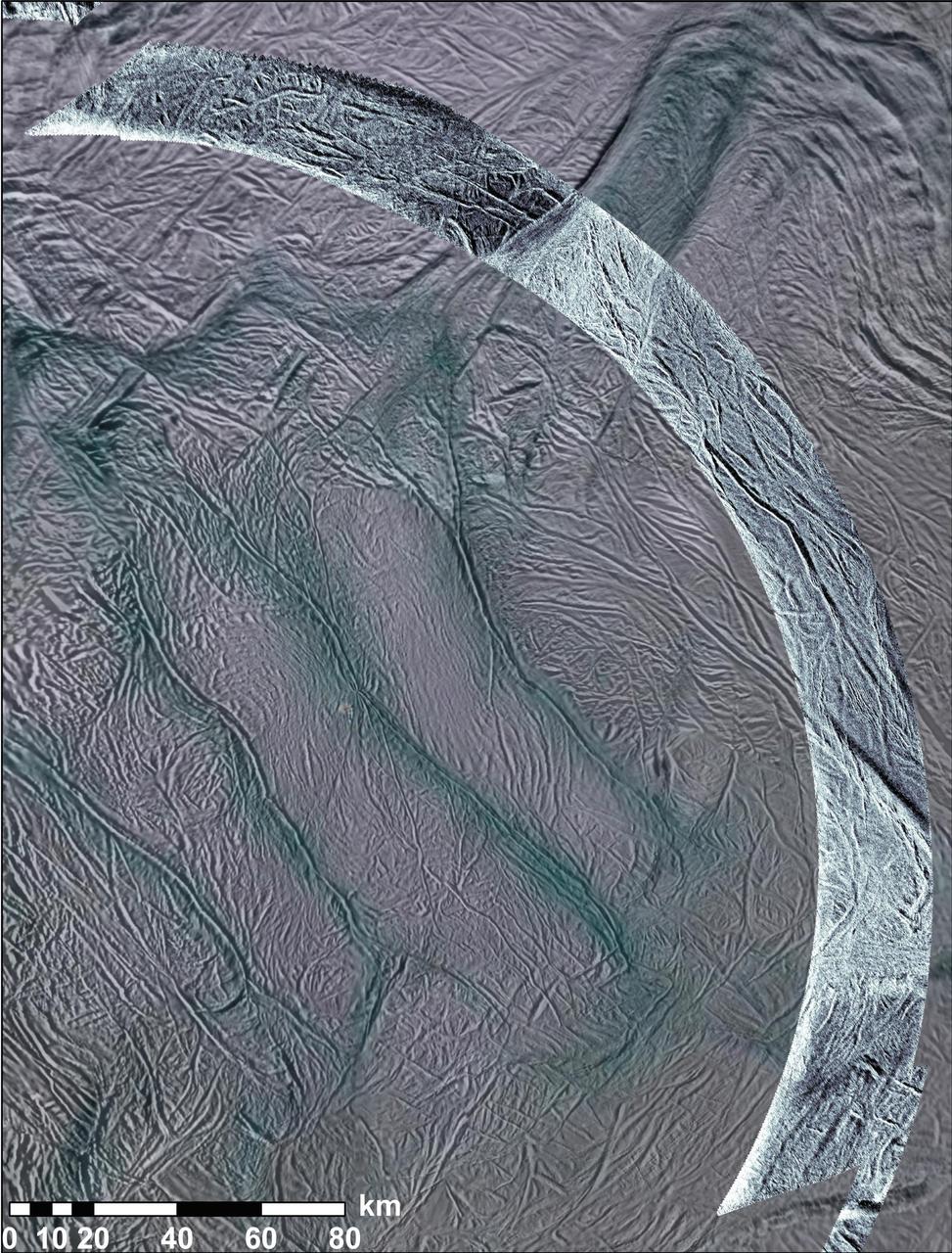
NASA Cassini spacecraft obtained this view of the south polar area of Saturn moon Enceladus in visible and near-visible ultraviolet and infrared light and synthetic-aperture radar SAR.
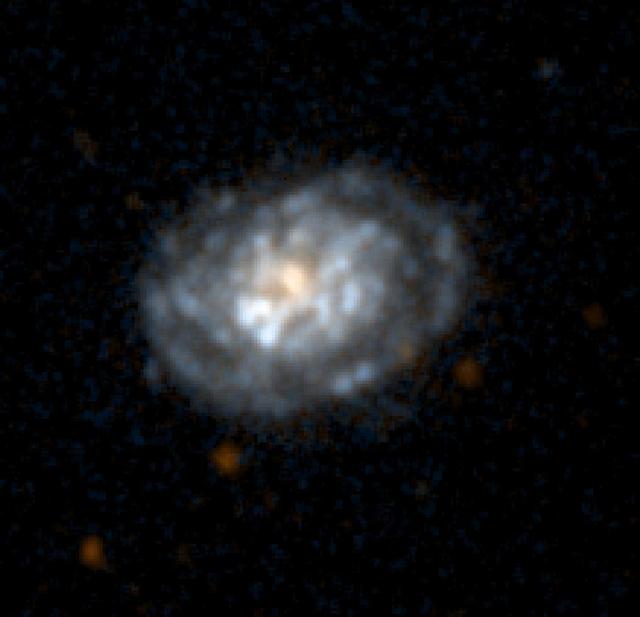
NASA Galaxy Evolution Explorer took this ultraviolet color image of the galaxy NGC5962 on June 7, 2003. This spiral galaxy is located 90 million light-years from Earth. http://photojournal.jpl.nasa.gov/catalog/PIA04635

This artist concept illustrates a young, red dwarf star surrounded by three planets. NASA Galaxy Evolution Explorer is helping to identify young, red dwarf stars that are close to us by detecting their ultraviolet light.

Three days after the Mars Reconnaissance Orbiter Aug. 12, 2005, launch, the NASA spacecraft was pointed toward Earth and the Mars Color Imager camera was powered up to acquire a suite of color and ultraviolet images of Earth and the Moon.
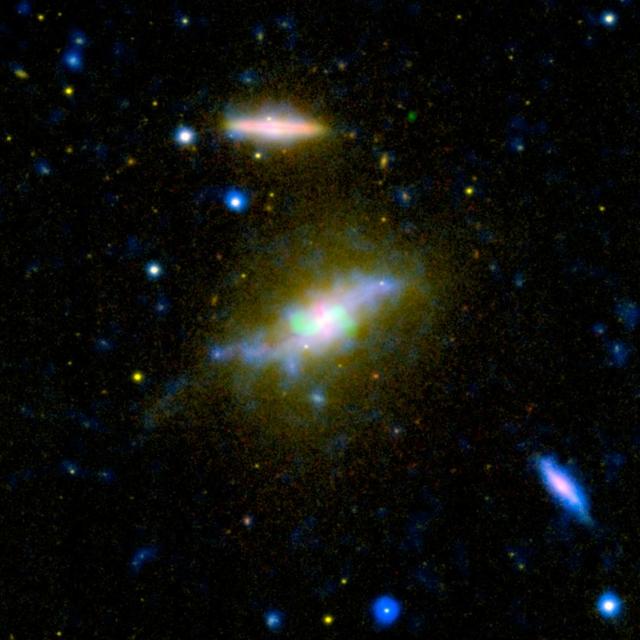
Time is running out for the galaxy NGC 3801, seen in this composite image from NASA Galaxy Evolution Explorer and other instruments combining light from across the spectrum, ranging from ultraviolet to radio.
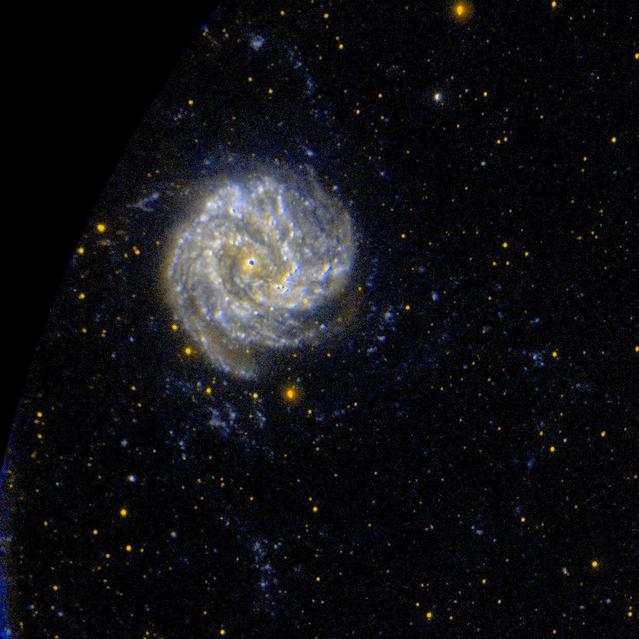
Ultraviolet images such as this one from NASA's Galaxy Evolution Explorer suggest the M83 has unusual pockets of star formation separated by large distances from the spiral arms in the main disk of the galaxy. http://photojournal.jpl.nasa.gov/catalog/PIA07903