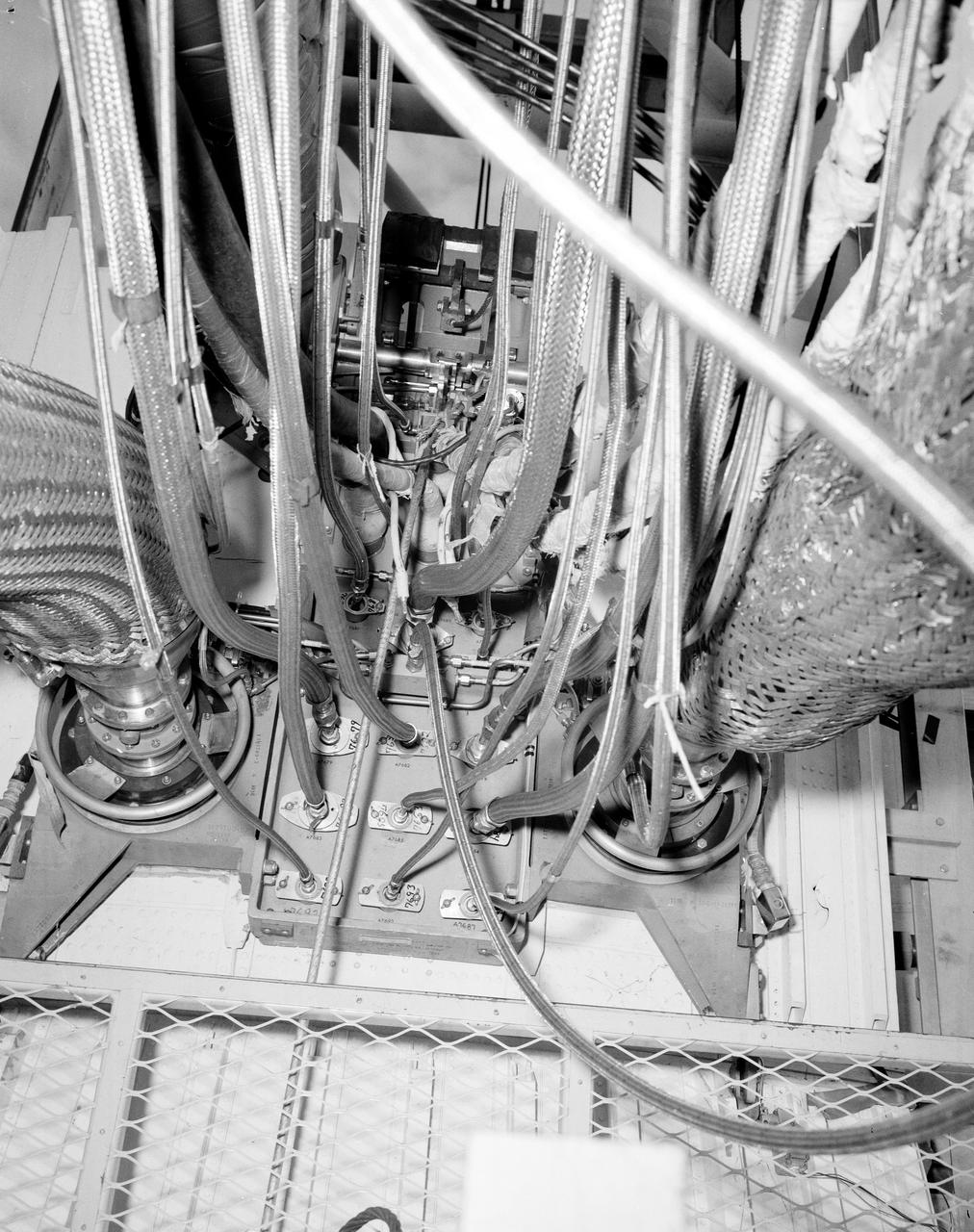
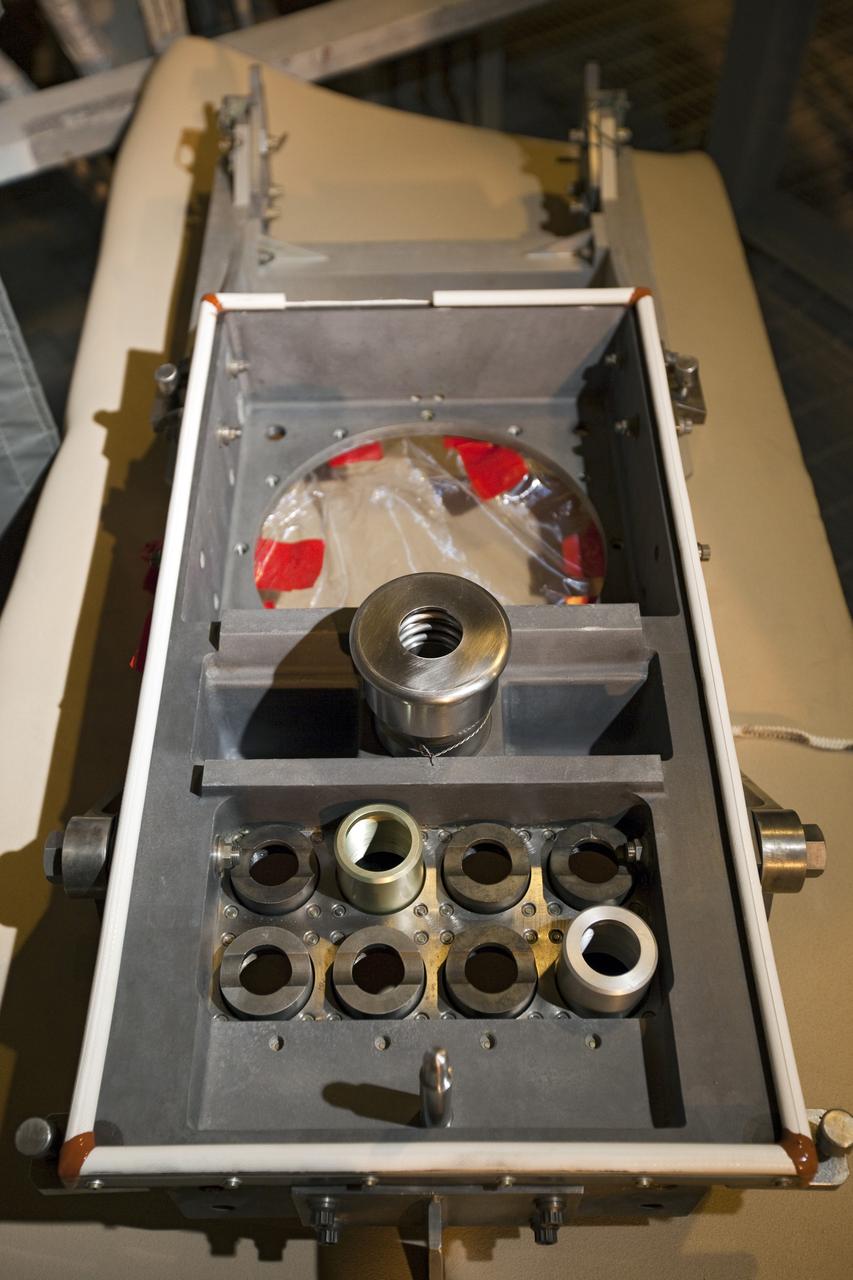
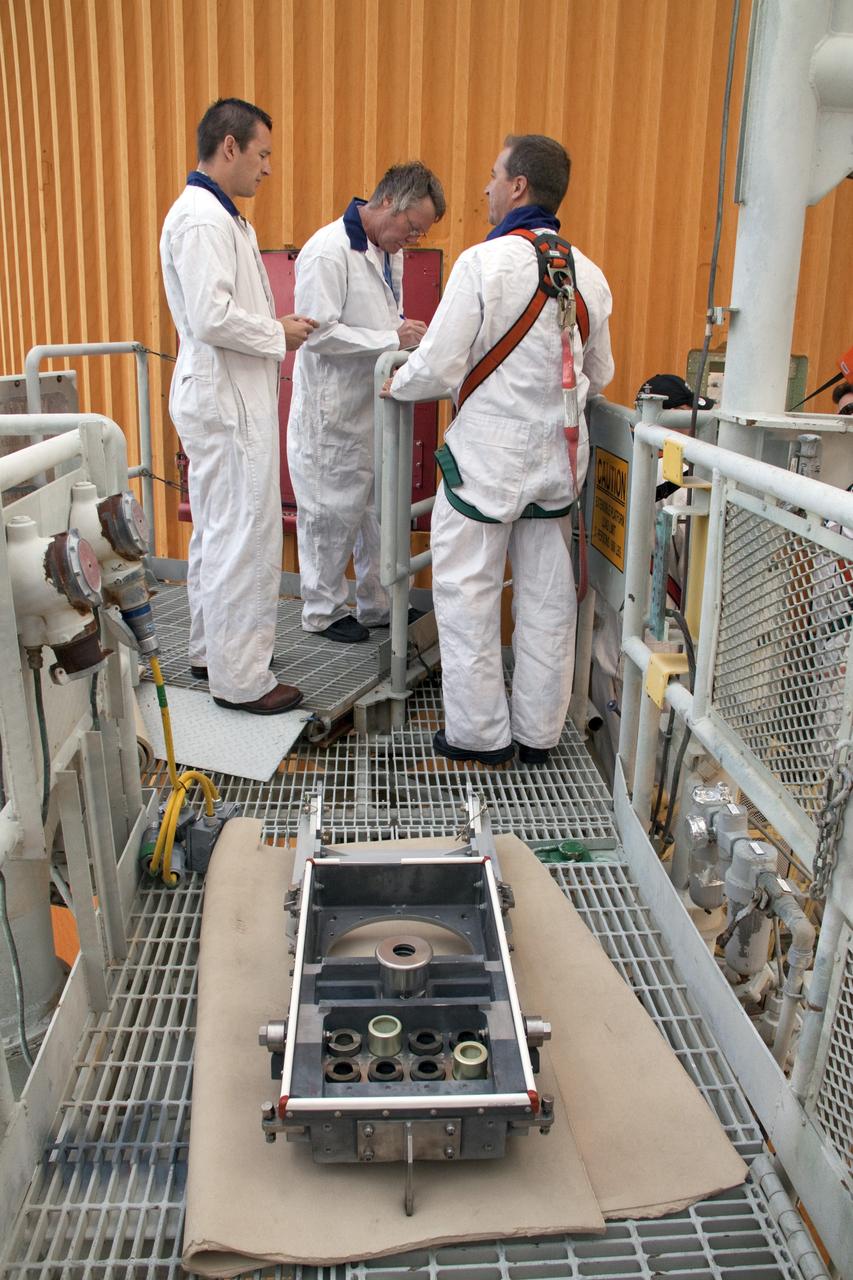
The Marshall Space Flight Center (MSFC) played a crucial role in the development of the huge Saturn rockets that delivered humans to the moon in the 1960s. Many unique facilities existed at MSFC for the development and testing of the Saturn rockets. Affectionately nicknamed “The Arm Farm”, the Random Motion/ liftoff Simulator was one of those unique facilities. This facility was developed to test the swing arm mechanisms that were used to hold the rocket in position until liftoff. The Arm Farm provided the capability of testing the detachment and reconnection of various arms under brutally realistic conditions. The 18-acre facility consisted of more than a half dozen arm test positions and one position for testing access arms used by the Apollo astronauts. Each test position had two elements: a vehicle simulator for duplicating motions during countdown and launch; and a section duplicating the launch tower. The vehicle simulator duplicated the portion of the vehicle skin that contained the umbilical connections and personnel access hatches. Driven by a hydraulic servo system, the vehicle simulator produced relative motion between the vehicle and tower. On the Arm Farm, extreme environmental conditions (such as a launch scrub during an approaching Florida thunderstorm) could be simulated. The dramatic scenes that the Marshall engineers and technicians created at the Arm Farm permitted the gathering of crucial technical and engineering data to ensure a successful real time launch from the Kennedy Space Center. This photo depicts a general view of the S-IV-B aft swing arm umbilical carrier line tray modification.
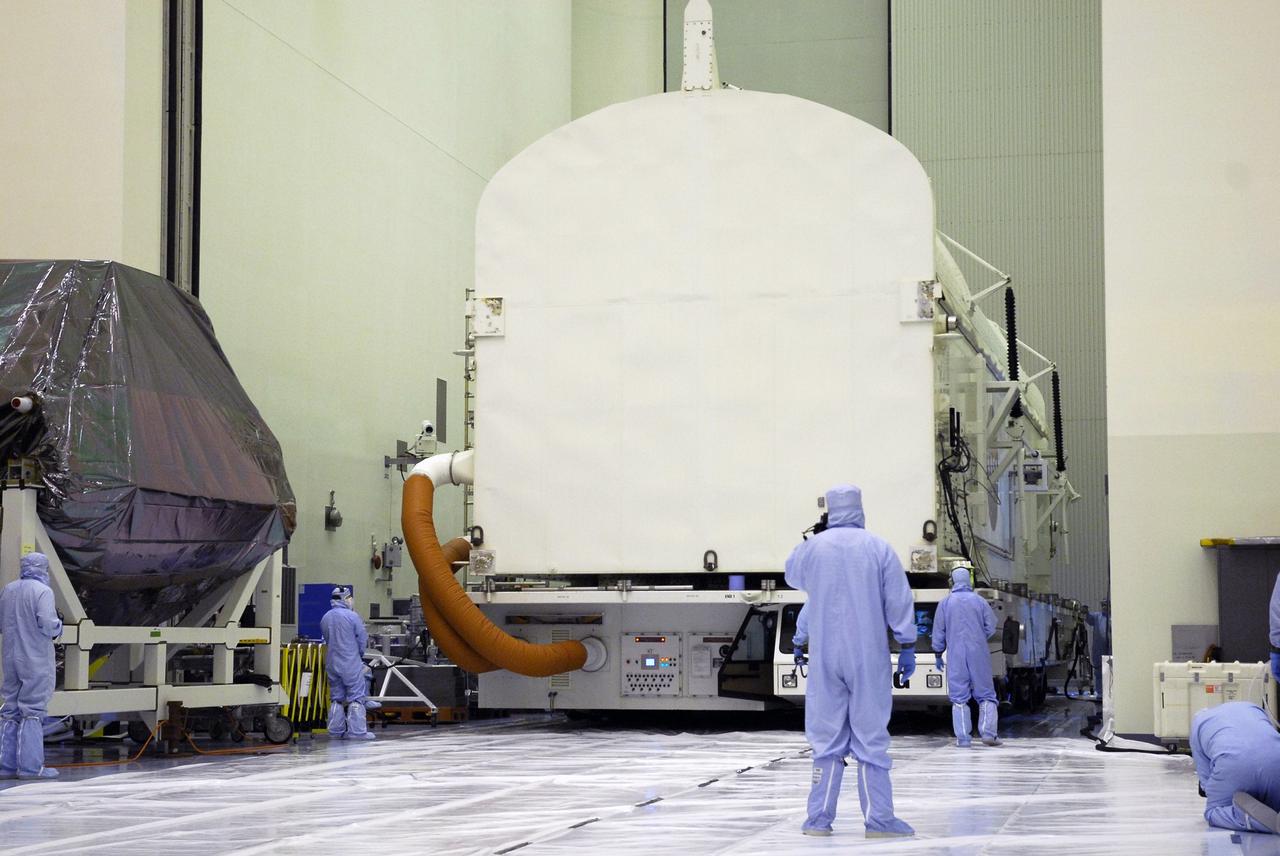
CAPE CANAVERAL, Fla. - The payload canister backs into the Payload Hazardous Servicing Facility at NASA’s Kennedy Space Center. The equipment and carriers associated with the STS-125 mission to service the Hubble Space Telescope will be installed in the canister for transfer to Launch Pad 39A. The canister contains an environmental con¬trol system, signified by the red umbilical lines at left. At the pad, the carriers will be loaded into space shuttle Atlantis’ payload bay. Launch of Atlantis is targeted for Oct. 10. Photo credit: NASA/Cory Huston
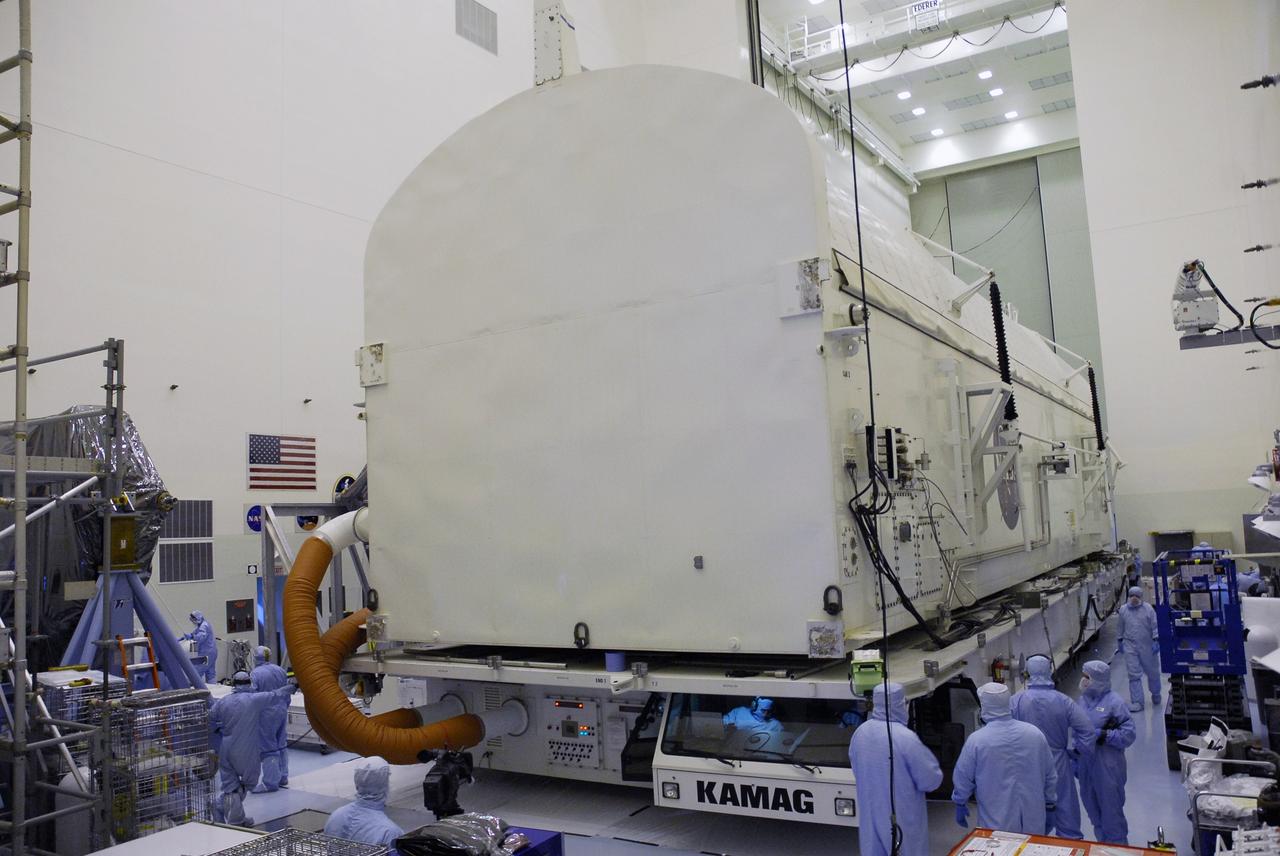
CAPE CANAVERAL, Fla. - The payload canister backs into the Payload Hazardous Servicing Facility at NASA’s Kennedy Space Center. The equipment and carriers associated with the STS-125 mission to service the Hubble Space Telescope will be installed in the canister for transfer to Launch Pad 39A. The canister contains an environmental control system, signified by the red umbilical lines at left. At the pad, the carriers will be loaded into space shuttle Atlantis’ payload bay. Launch of Atlantis is targeted for Oct. 10. Photo credit: NASA/Cory Huston
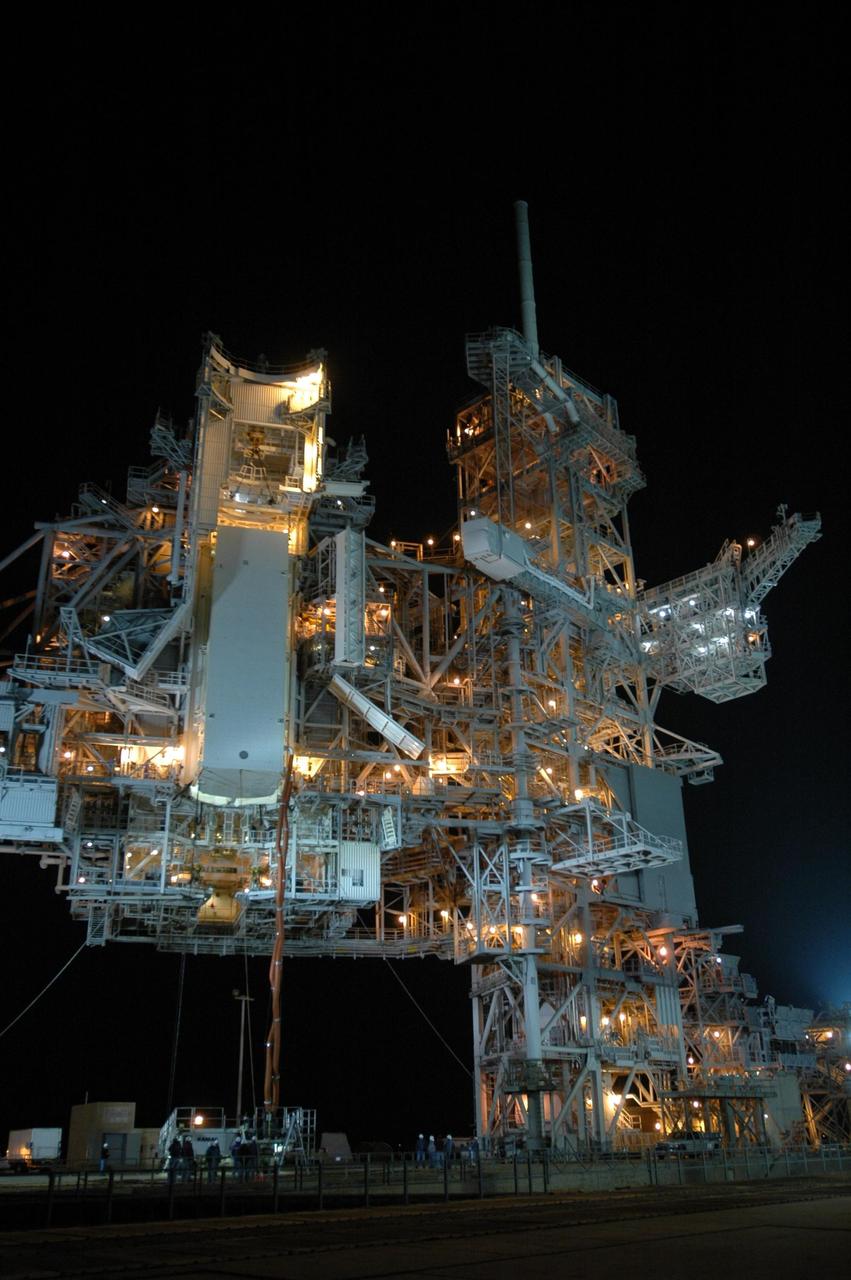
KENNEDY SPACE CENTER, FLA. -- With umbilical lines still attached, the payload canister containing the Columbus Laboratory module and integrated cargo carrier-lite is lifted up toward the payload changeout room on Launch Pad 39A at NASA's Kennedy Space Center. Once in place, the canister will be opened and the module transferred inside the payload changeout room. The payload will be installed in space shuttle Atlantis' payload bay. The canister contains the Columbus Lab module and integrated cargo carrier-lite payloads for space shuttle Atlantis on mission STS-122. Atlantis is targeted to launch on Dec. 6. Photo credit: NASA/Dimitri Gerondidakis
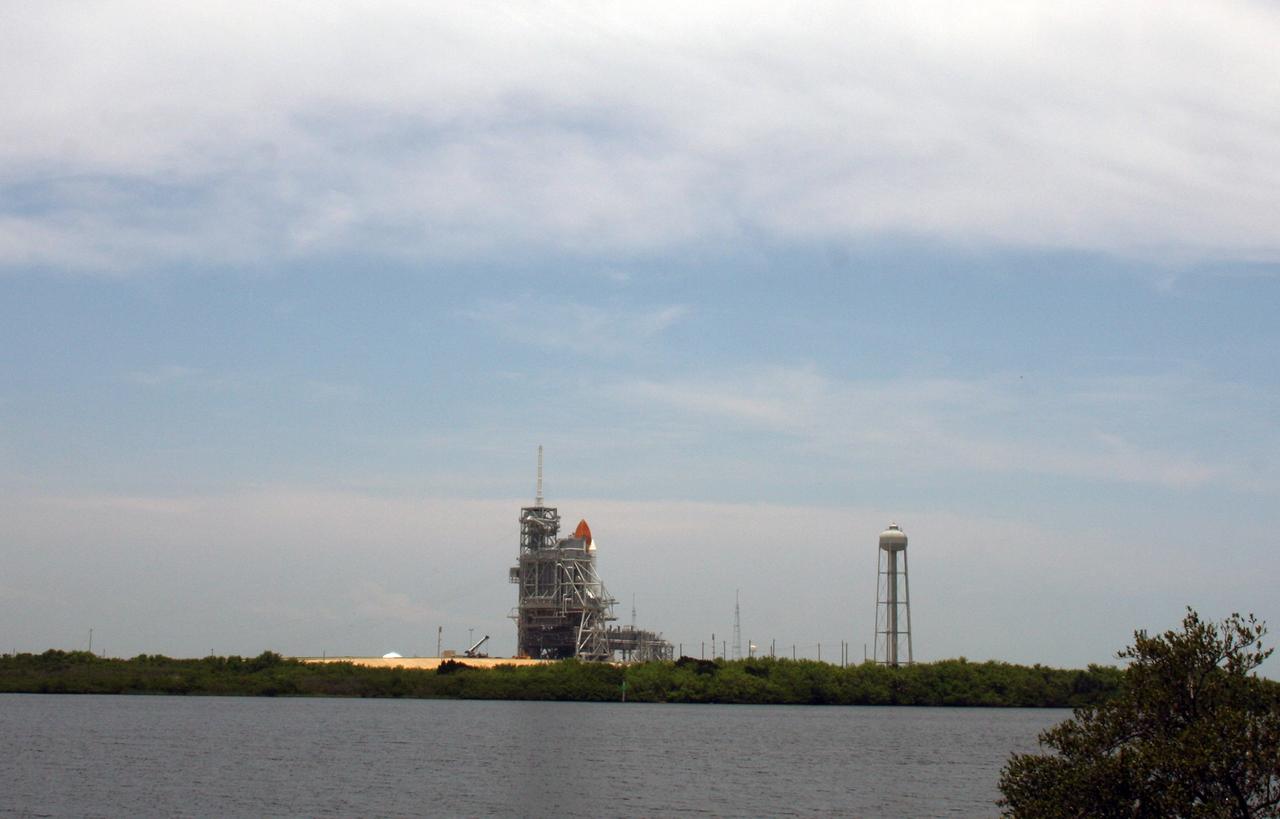
CAPE CANAVERAL, Fla. – The rotating service structure is closed around space shuttle Endeavour on Launch Pad 39A at NASA's Kennedy Space Center in Florida after its launch for the STS-127 mission was scrubbed at 1:55 a.m. EDT June 17 due to a gaseous hydrogen leak at the Ground Umbilical Carrier Plate. Endeavour’s next launch attempt for the mission is targeted for July 11 at 7:39 p.m. EDT. Photo credit: NASA/Ken Thornsley
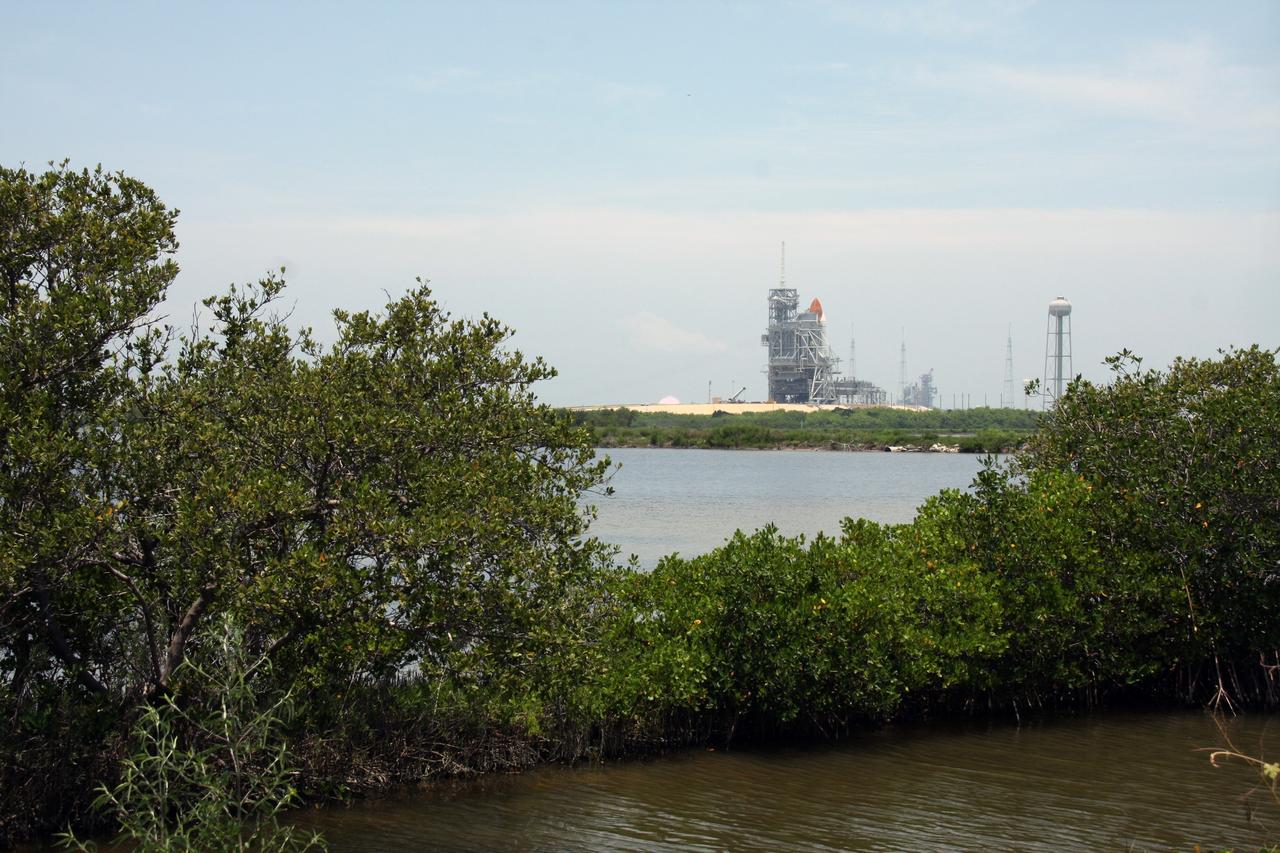
CAPE CANAVERAL, Fla. – Space Shuttle Endeavour is still on launch Pad 39A at NASA's Kennedy Space Center in Florida after the launch for the STS-127 mission was scrubbed at 1:55 a.m. EDT June 17 due to a gaseous hydrogen leak at the Ground Umbilical Carrier Plate. Endeavour’s next launch attempt for the mission is targeted for July 11 at 7:39 p.m. EDT. Photo credit: NASA/Ken Thornsley
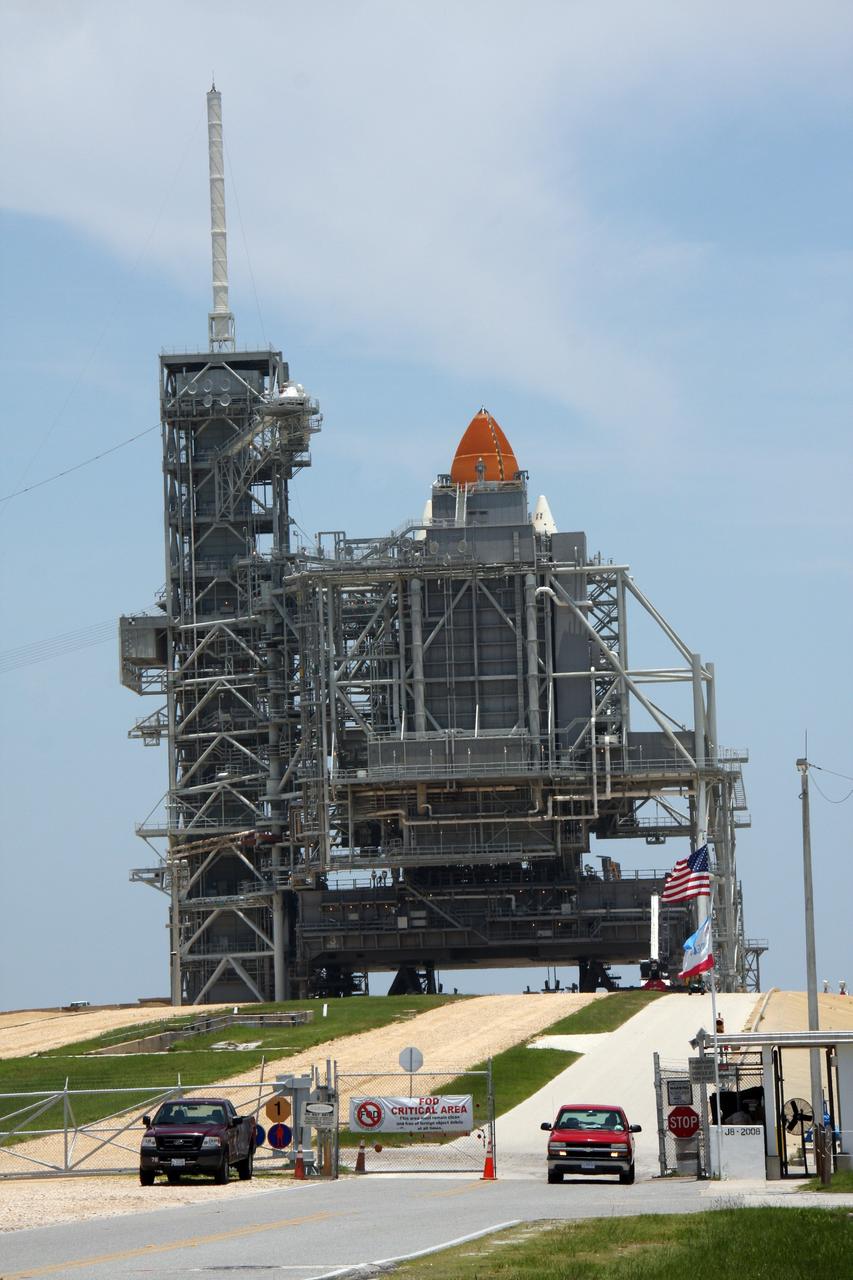
CAPE CANAVERAL, Fla. – The rotating service structure is closed around space shuttle Endeavour on Launch Pad 39A at NASA's Kennedy Space Center in Florida after its launch for the STS-127 mission was scrubbed at 1:55 a.m. EDT June 17 due to a gaseous hydrogen leak at the Ground Umbilical Carrier Plate. Endeavour’s next launch attempt for the mission is targeted for July 11 at 7:39 p.m. EDT. Photo credit: NASA/Ken Thornsley
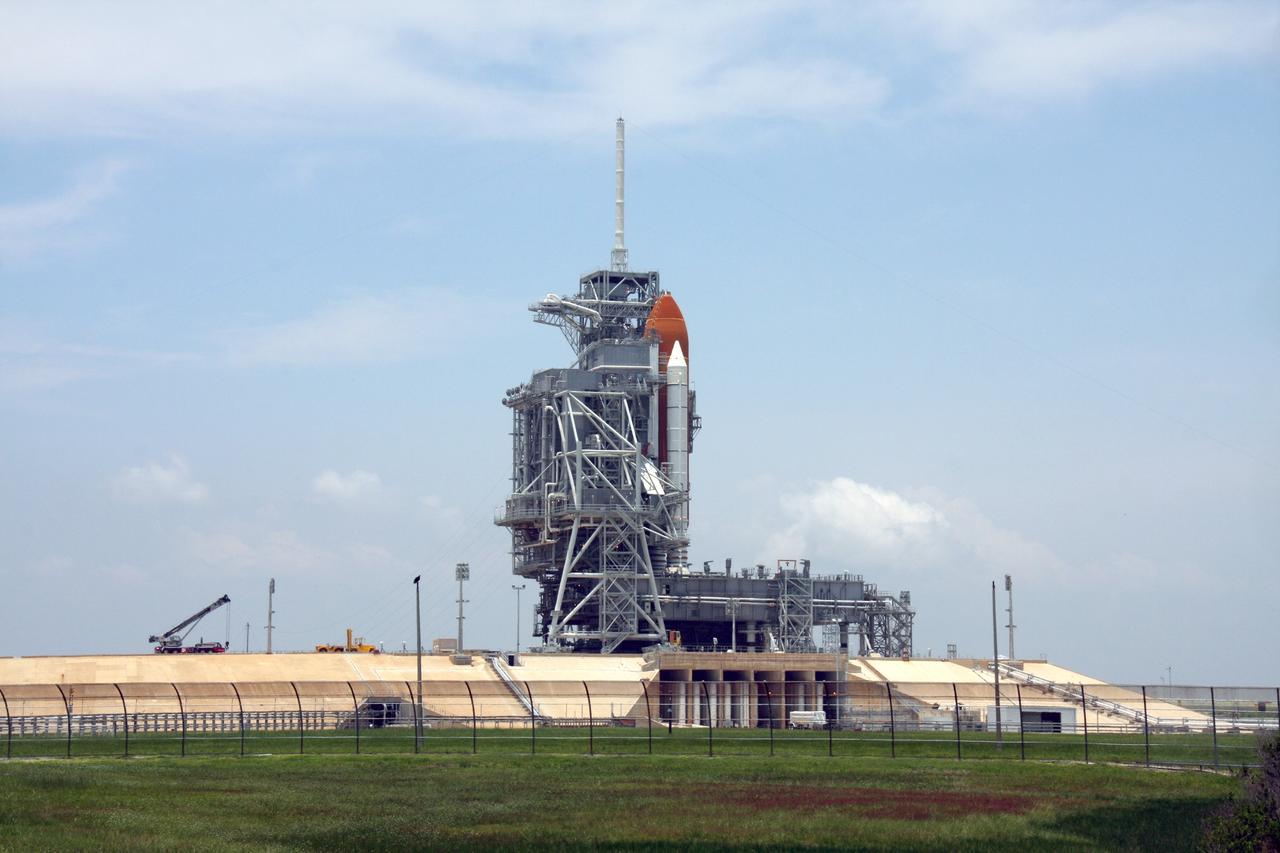
CAPE CANAVERAL, Fla. – The rotating service structure is closed around space shuttle Endeavour on Launch Pad 39A at NASA's Kennedy Space Center in Florida after its launch for the STS-127 mission was scrubbed at 1:55 a.m. EDT June 17 due to a gaseous hydrogen leak at the Ground Umbilical Carrier Plate. Endeavour’s next launch attempt for the mission is targeted for July 11 at 7:39 p.m. EDT. Photo credit: NASA/Ken Thornsley
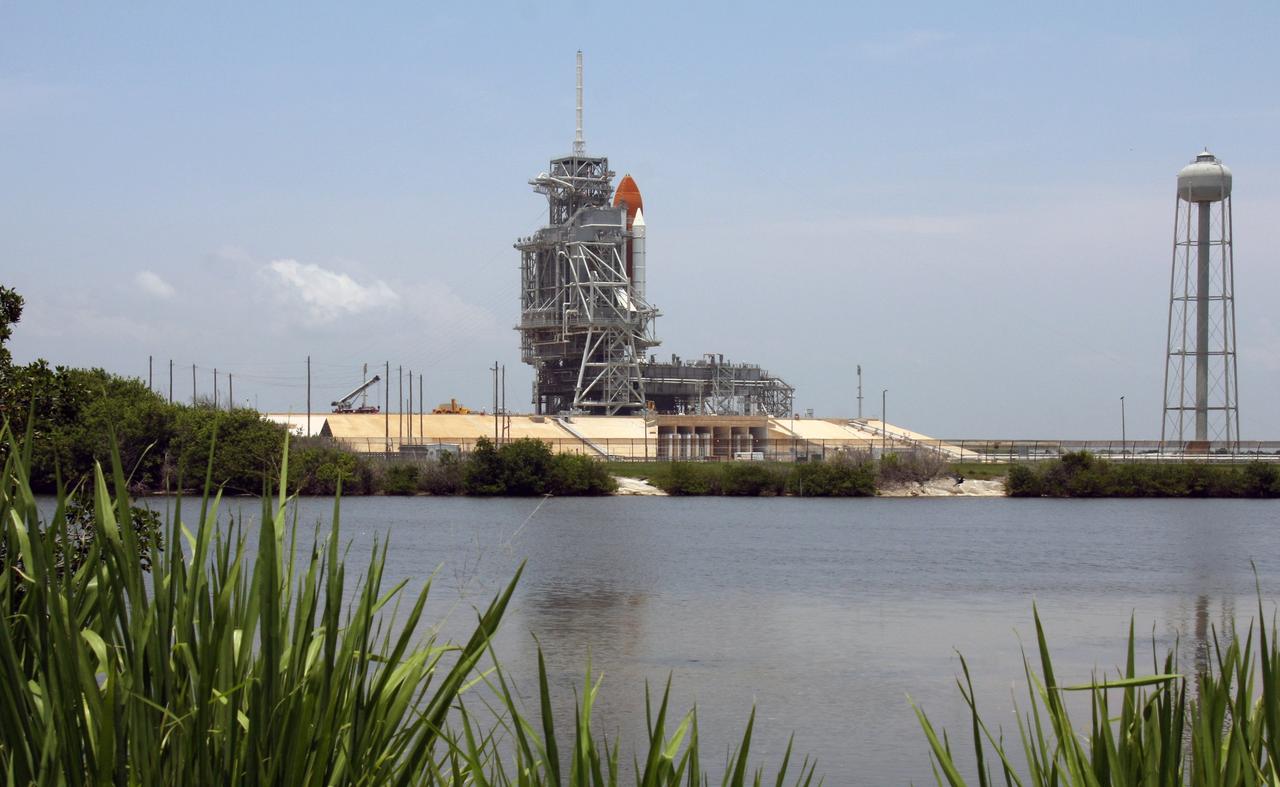
CAPE CANAVERAL, Fla. – The rotating service structure is closed around space shuttle Endeavour on Launch Pad 39A at NASA's Kennedy Space Center in Florida after its launch for the STS-127 mission was scrubbed at 1:55 a.m. EDT June 17 due to a gaseous hydrogen leak at the Ground Umbilical Carrier Plate. Endeavour’s next launch attempt for the mission is targeted for July 11 at 7:39 p.m. EDT. Photo credit: NASA/Ken Thornsley
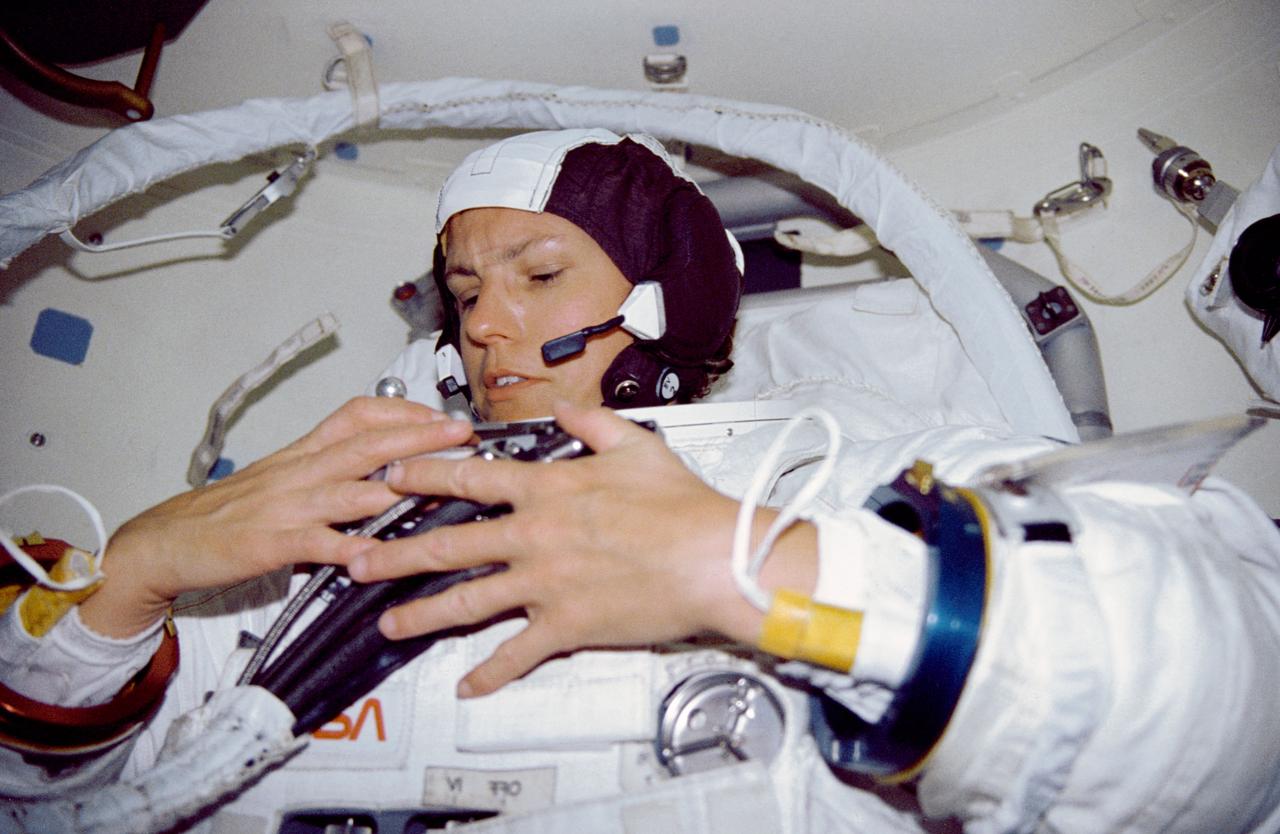
STS-31 Mission Specialist (MS) Kathryn D. Sullivan, wearing extravehicular mobility unit (EMU) & communications carrier assembly (CCA), attaches service and cooling umbilical (SCU) to the EMU connection on the display & control module (DCM) during contingency extravehicular activity (EVA) preparations in the airlock of Discovery, Orbiter Vehicle (OV) 103. The procedure was completed in case an EVA was required to support Hubble Space Telescope (HST) deployment.

KENNEDY SPACE CENTER, FLA. -- With umbilical lines still attached, the payload canister is hoisted up alongside the Rotating Service Structure (RSS) on Launch Pad 39B. The canister with its cargo of the SPACEHAB module and Integrated Cargo Carrier will be moved into the Payload Changeout Room (PCR) near the top of the RSS for transfer to the payload bay of Shuttle Atlantis for mission STS-106. The PCR provides an environmentally controlled facility for the transfer. The 11-day mission to the International Space Station will include service module support tasks on orbit, transfer supplies and outfit the Space Station for the first long-duration crew. Atlantis is scheduled to launch Sept. 8 at 8:31 a.m. EDT
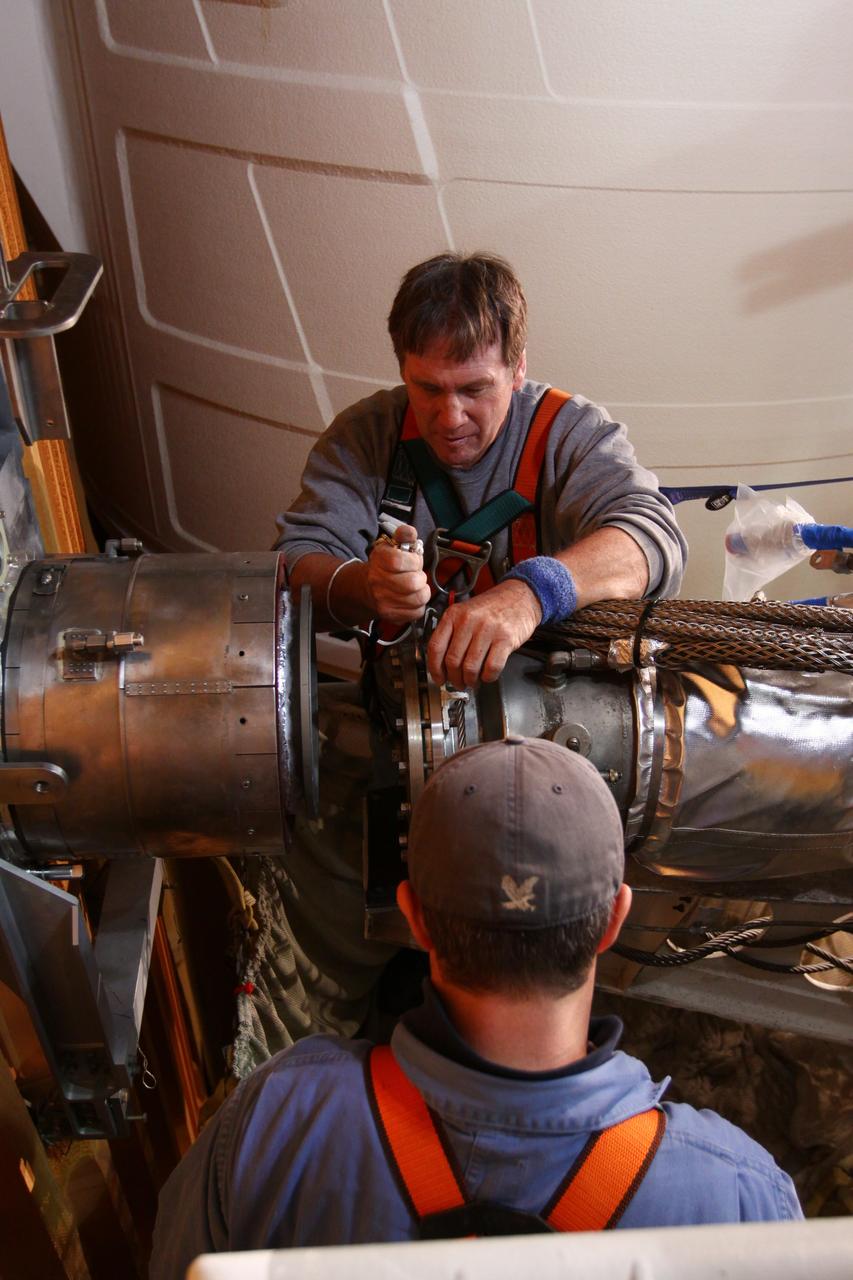
CAPE CANAVERAL, Fla. -- On Launch Pad 39A at NASA's Kennedy Space Center in Florida, technicians reattach the vent line to the ground umbilical carrier plate (GUCP) on space shuttle Discovery's external fuel tank. A hydrogen gas leak at that location during tanking for Discovery's STS-133 mission to the International Space Station caused the launch attempt to be scrubbed Nov. 5. The GUCP is the overboard vent to the pad and the flame stack where the excess hydrogen is burned off. Discovery's next launch attempt is no earlier than Nov. 30 at 4:02 a.m. EST. For more information on STS-133, visit www.nasa.gov/mission_pages/shuttle/shuttlemissions/sts133/. Photo credit: NASA/Ben Smegelsky
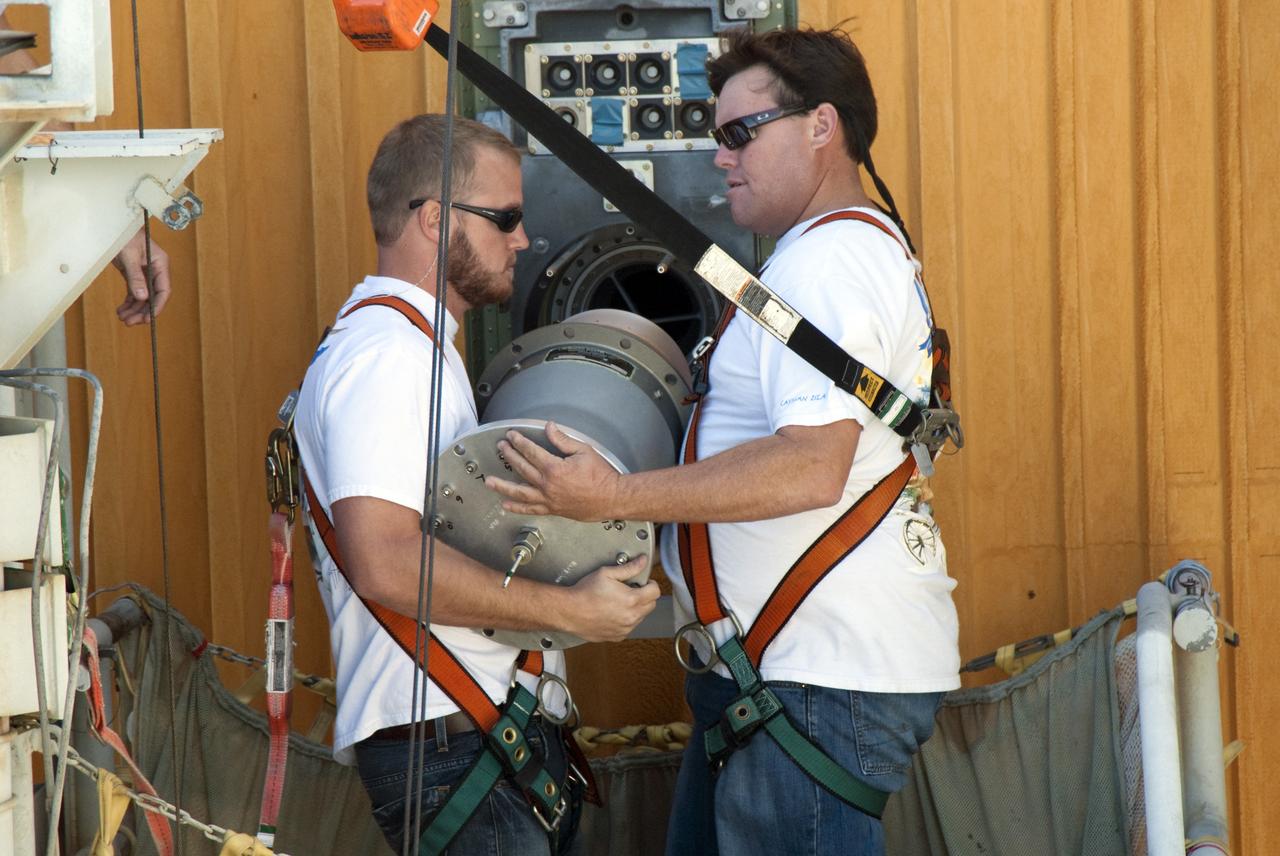
CAPE CANAVERAL, Fla. -- On Launch Pad 39A at NASA's Kennedy Space Center in Florida, workers install a new 7-inch quick disconnect on the ground umbilical carrier plate (GUCP) of space shuttle Discovery's external fuel tank. A hydrogen gas leak at that location during tanking for Discovery's STS-133 mission to the International Space Station caused the launch attempt to be scrubbed Nov. 5. The GUCP is the overboard vent to the pad and the flame stack where the excess hydrogen is burned off. For more information on STS-133, visit www.nasa.gov/mission_pages/shuttle/shuttlemissions/sts133/. Photo credit: NASA/Charisse Nahser
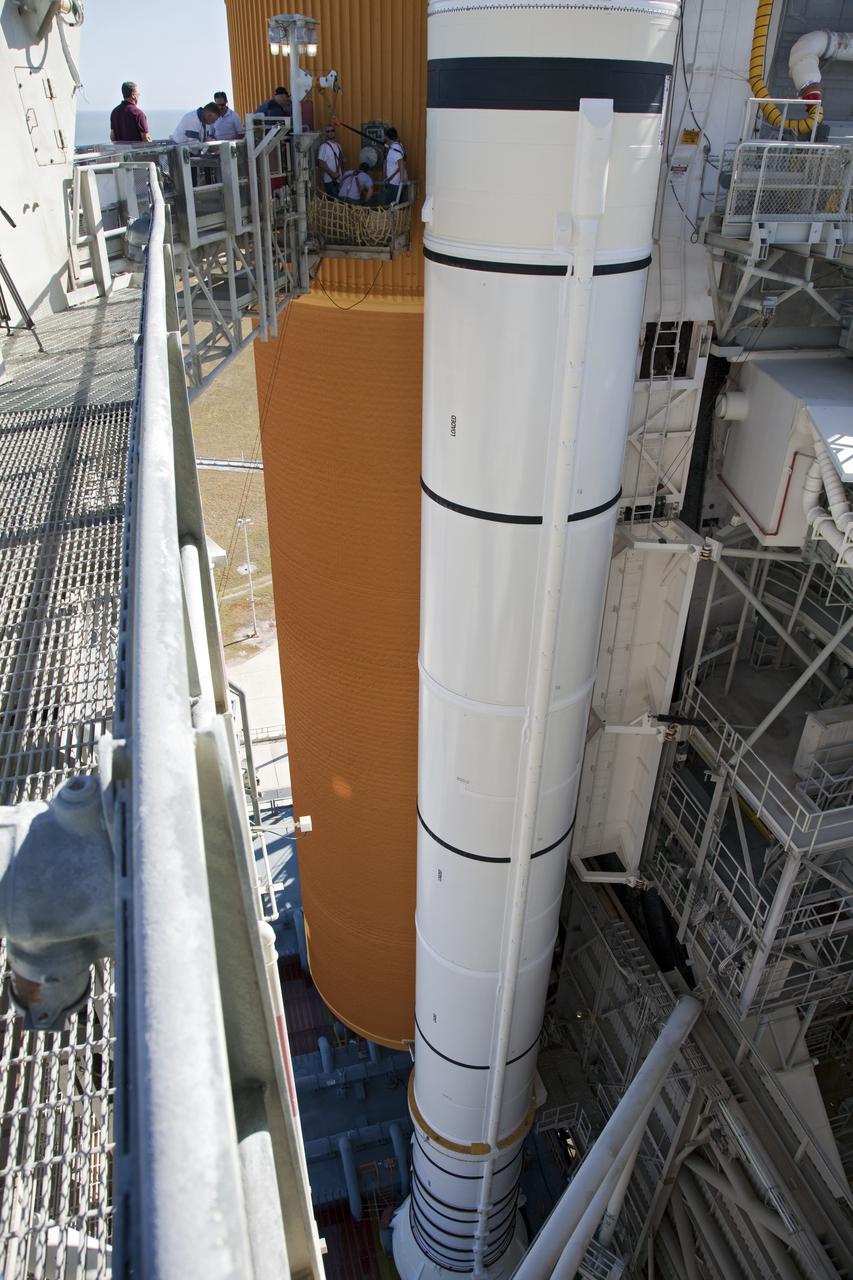
CAPE CANAVERAL, Fla. -- On Launch Pad 39A at NASA's Kennedy Space Center in Florida, workers install a new 7-inch quick disconnect on the ground umbilical carrier plate (GUCP) of space shuttle Discovery's external fuel tank. A hydrogen gas leak at that location during tanking for Discovery's STS-133 mission to the International Space Station caused the launch attempt to be scrubbed Nov. 5. The GUCP is the overboard vent to the pad and the flame stack where the excess hydrogen is burned off. For more information on STS-133, visit www.nasa.gov/mission_pages/shuttle/shuttlemissions/sts133/. Photo credit: NASA/Frankie Martin
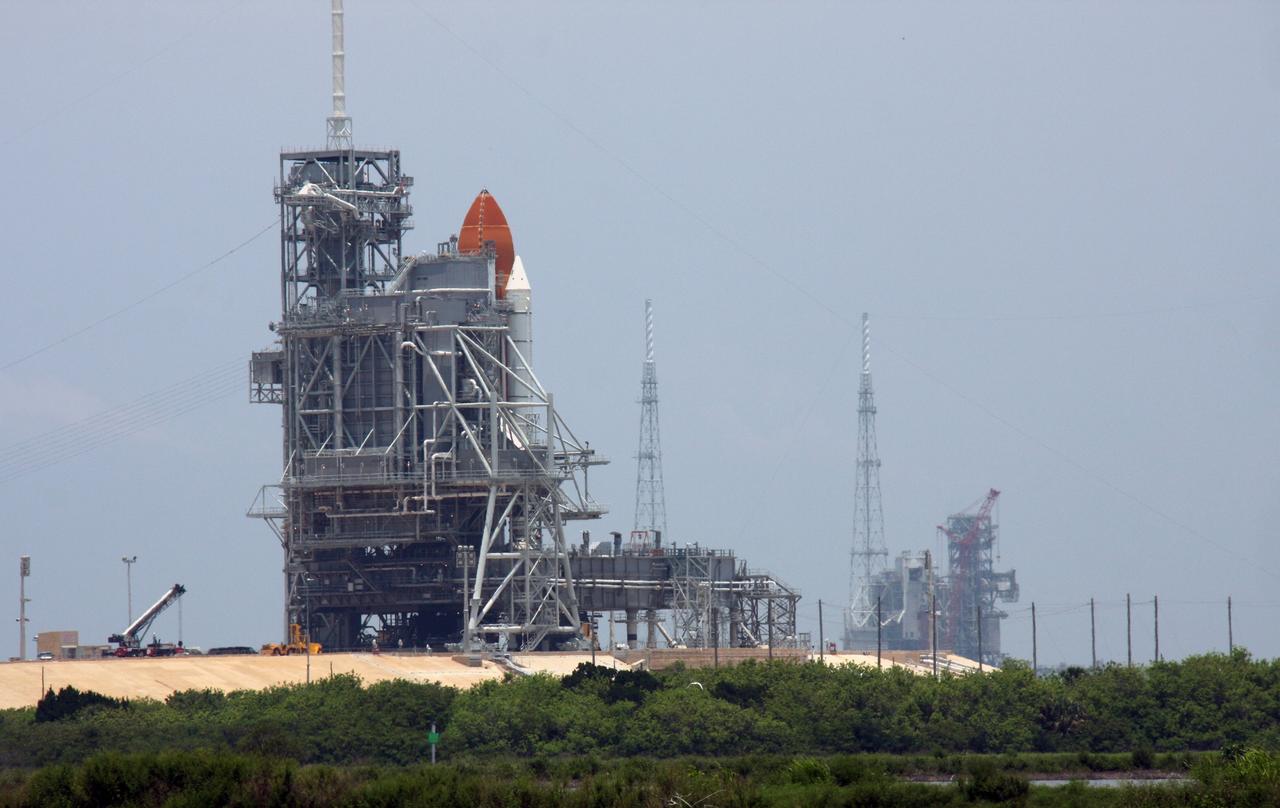
CAPE CANAVERAL, Fla. – The rotating service structure is closed around space shuttle Endeavour on Launch Pad 39A at NASA's Kennedy Space Center in Florida after its launch for the STS-127 mission was scrubbed at 1:55 a.m. EDT June 17 due to a gaseous hydrogen leak at the Ground Umbilical Carrier Plate. Endeavour’s next launch attempt for the mission is targeted for July 11 at 7:39 p.m. EDT. At right in the background is Launch Pad 39B, surrounded by lightning towers, which will be used for the Constellation Program. Photo credit: NASA/Ken Thornsley
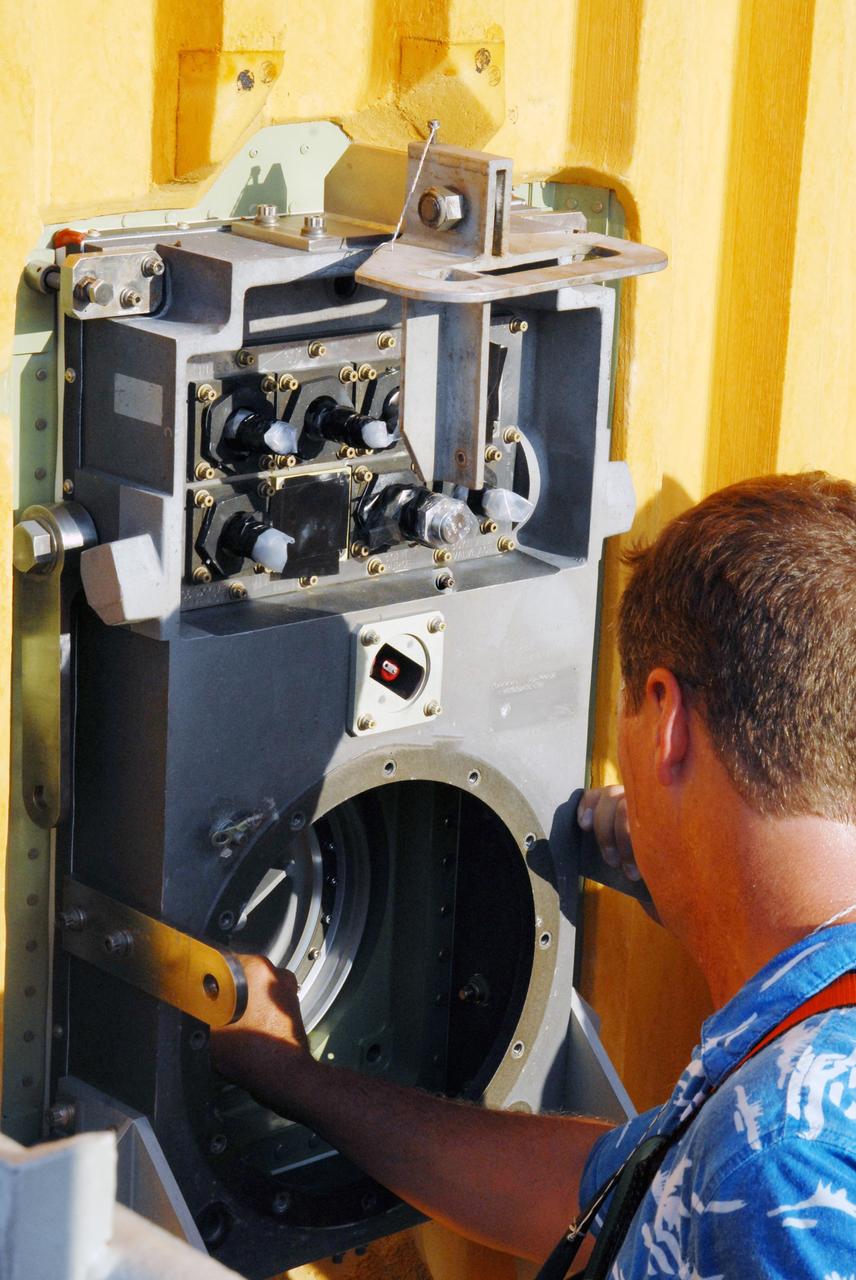
CAPE CANAVERAL, Fla. – On Launch Pad 39A at NASA's Kennedy Space Center in Florida, a worker checks the area on the Ground Umbilical Carrier Plate, or GUCP, where the 7-inch quick disconnect was removed. A leak of hydrogen at the location during tanking June 12 for the STS-127 mission caused the mission to be scrubbed at 12:26 a.m. June 13. The GUCP is the overboard vent to the pad and the flare stack where the vented hydrogen is burned off. Endeavour is scheduled to launch on its STS-127 mission on June 17 at 5:40 a.m. EDT. Photo credit: NASA/Tim Jacobs
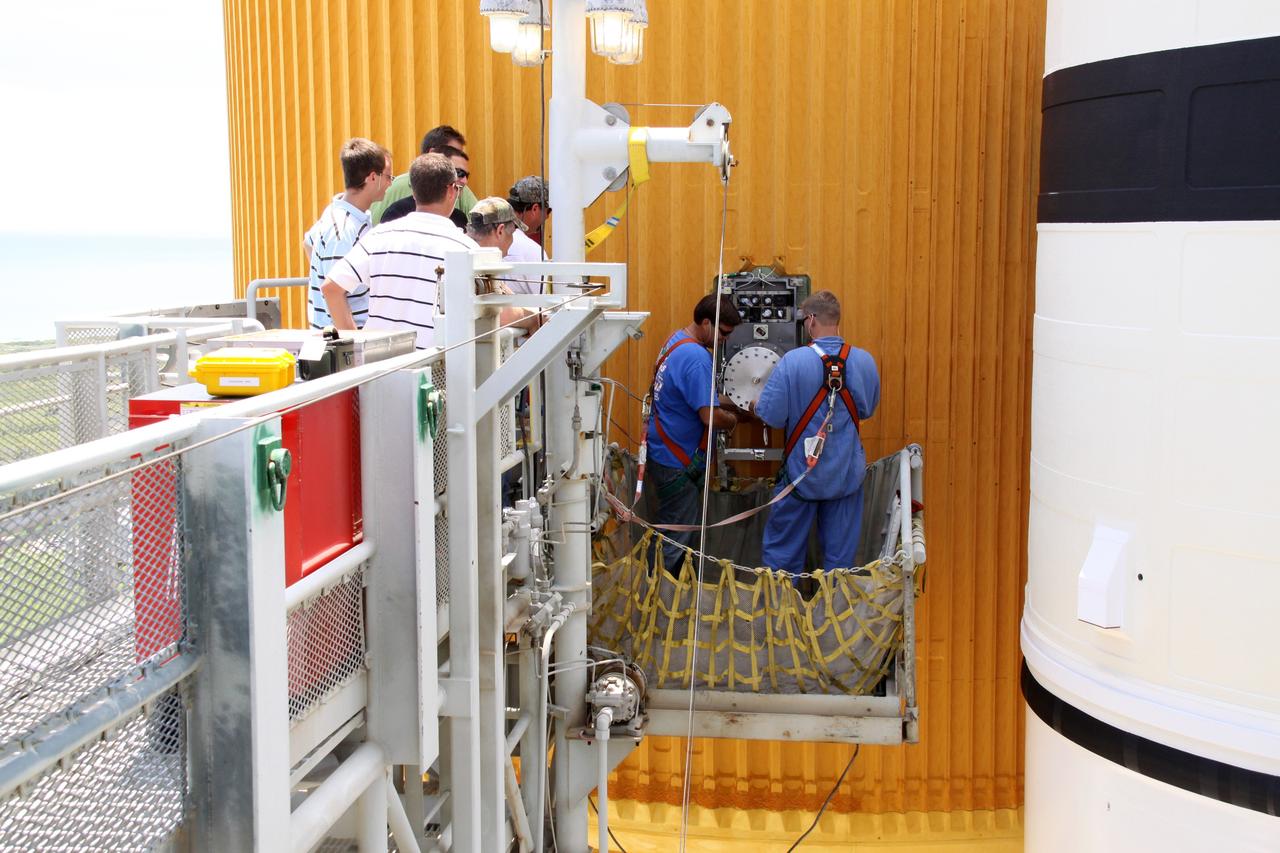
CAPE CANAVERAL, Fla. – On Launch Pad 39A at NASA's Kennedy Space Center in Florida, workers prepare to remove the 7-inch quick disconnect on the Ground Umbilical Carrier Plate, or GUCP, on space shuttle Endeavour's external fuel tank. A hydrogen leak at the location during tanking for the STS-127 mission caused the launch attempts to be scrubbed on June 13 and June 17. The GUCP will be examined to determine the cause of the hydrogen leak and repaired. The GUCP is the overboard vent to the pad and the flame stack where the vented hydrogen is burned off. Endeavour's next launch attempt is targeted for July 11 at 7:39 p.m. EDT. Photo credit: NASA/Jack Pfaller
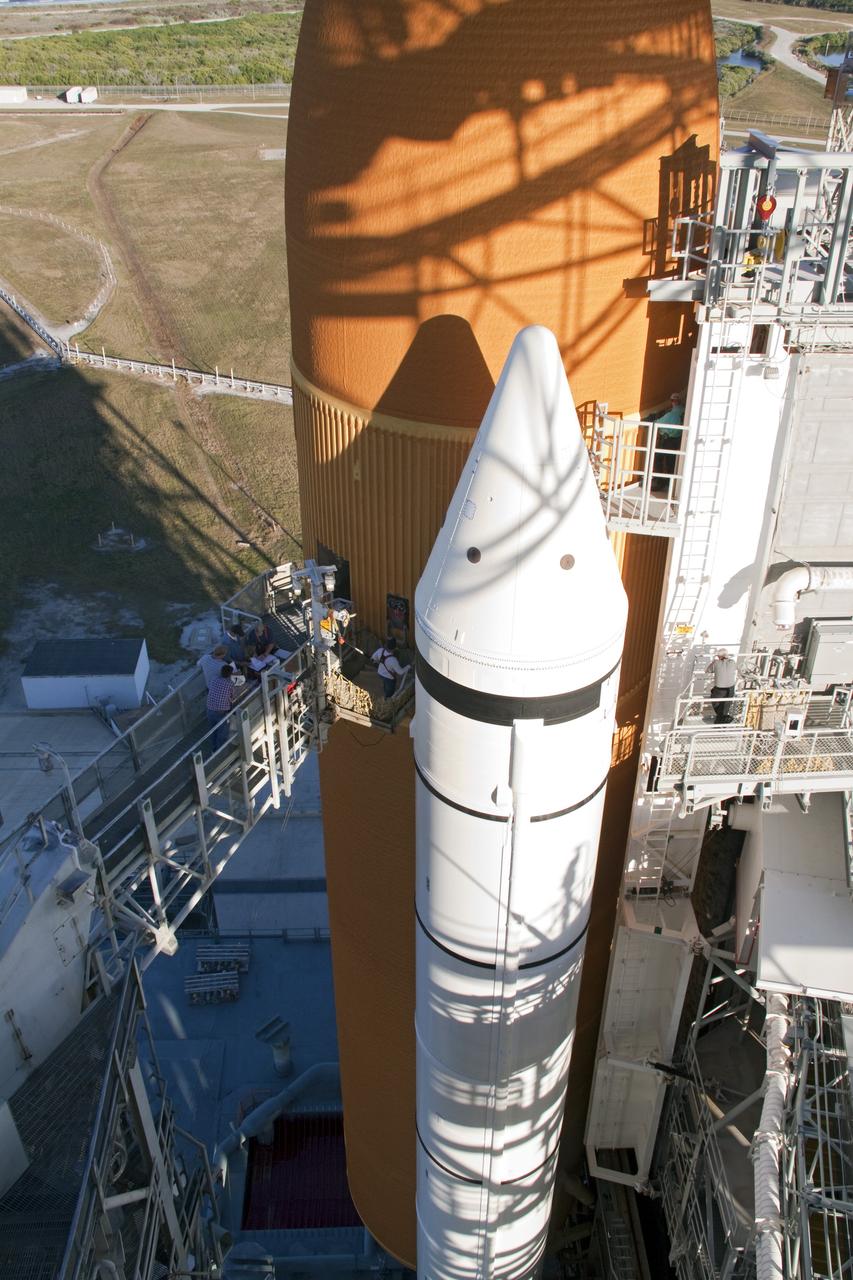
CAPE CANAVERAL, Fla. -- On Launch Pad 39A at NASA's Kennedy Space Center in Florida, workers are focusing their attention on the ground umbilical carrier plate (GUCP), which is on space shuttle Discovery's orange external fuel tank at the end of the access arm. A hydrogen gas leak at that location during tanking for Discovery's STS-133 mission to the International Space Station caused the launch attempt to be scrubbed Nov. 5. The GUCP will be examined to determine the cause of the hydrogen leak and then repaired. The GUCP is the overboard vent to the pad and the flame stack where the excess hydrogen is burned off. For more information on STS-133, visit www.nasa.gov/mission_pages/shuttle/shuttlemissions/sts133/. Photo credit: NASA/Jack Pfaller

CAPE CANAVERAL, Fla. -- On Launch Pad 39A at NASA's Kennedy Space Center in Florida, technicians reattach the vent line to the ground umbilical carrier plate (GUCP) on space shuttle Discovery's external fuel tank. A hydrogen gas leak at that location during tanking for Discovery's STS-133 mission to the International Space Station caused the launch attempt to be scrubbed Nov. 5. The GUCP is the overboard vent to the pad and the flame stack where the excess hydrogen is burned off. Discovery's next launch attempt is no earlier than Nov. 30 at 4:02 a.m. EST. For more information on STS-133, visit www.nasa.gov/mission_pages/shuttle/shuttlemissions/sts133/. Photo credit: NASA/Ben Smegelsky
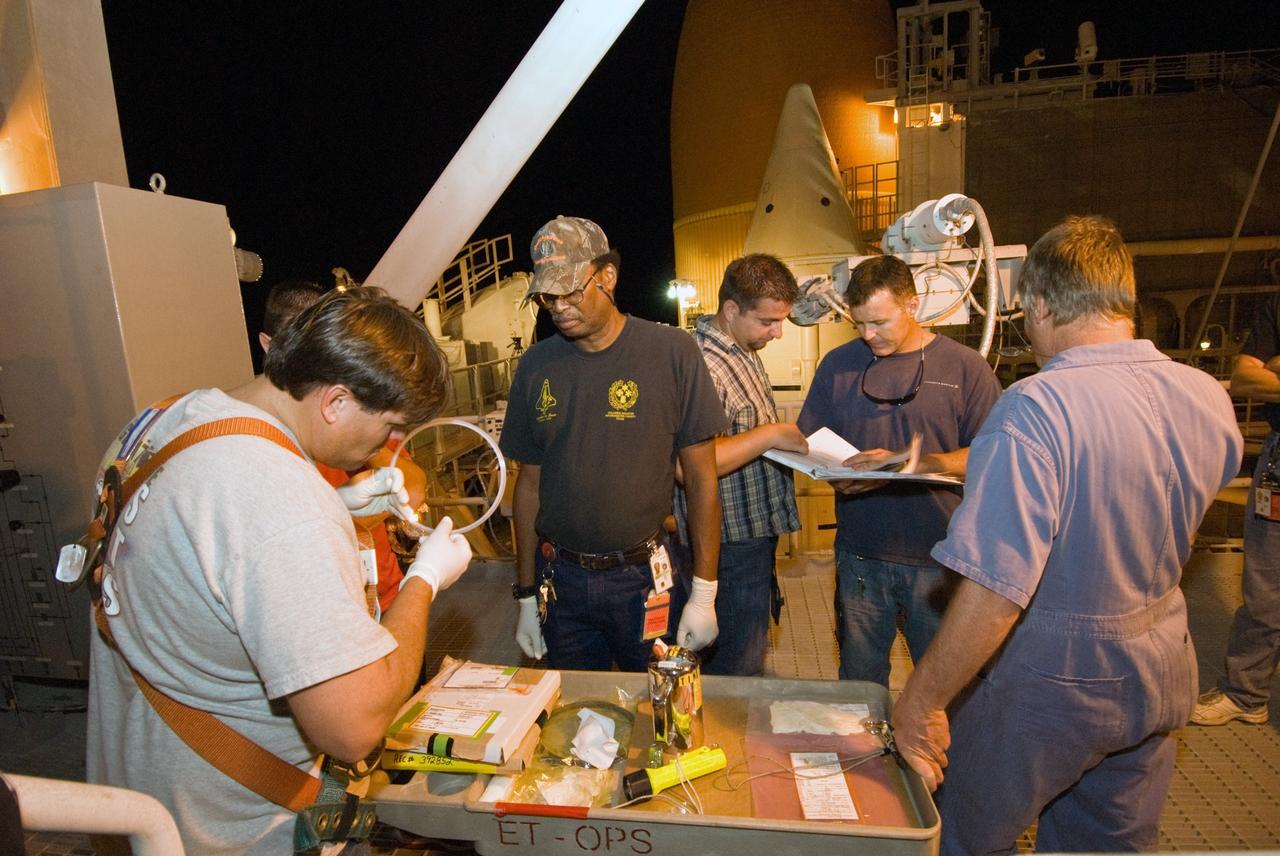
CAPE CANAVERAL, Fla. – On Launch Pad 39A at NASA's Kennedy Space Center in Florida, a worker (left) checks a seal that may be used to repair the 7-inch quick disconnect from the Ground Umbilical Carrier Plate, or GUCP. A leak of hydrogen at the location during tanking June 12 for the STS-127 mission caused the mission to be scrubbed at 12:26 a.m. June 13. The GUCP is the overboard vent to the pad and the flare stack where the vented hydrogen is burned off. Endeavour is scheduled to launch on its STS-127 mission on June 17 at 5:40 a.m. EDT. Photo credit: NASA/Tim Jacobs
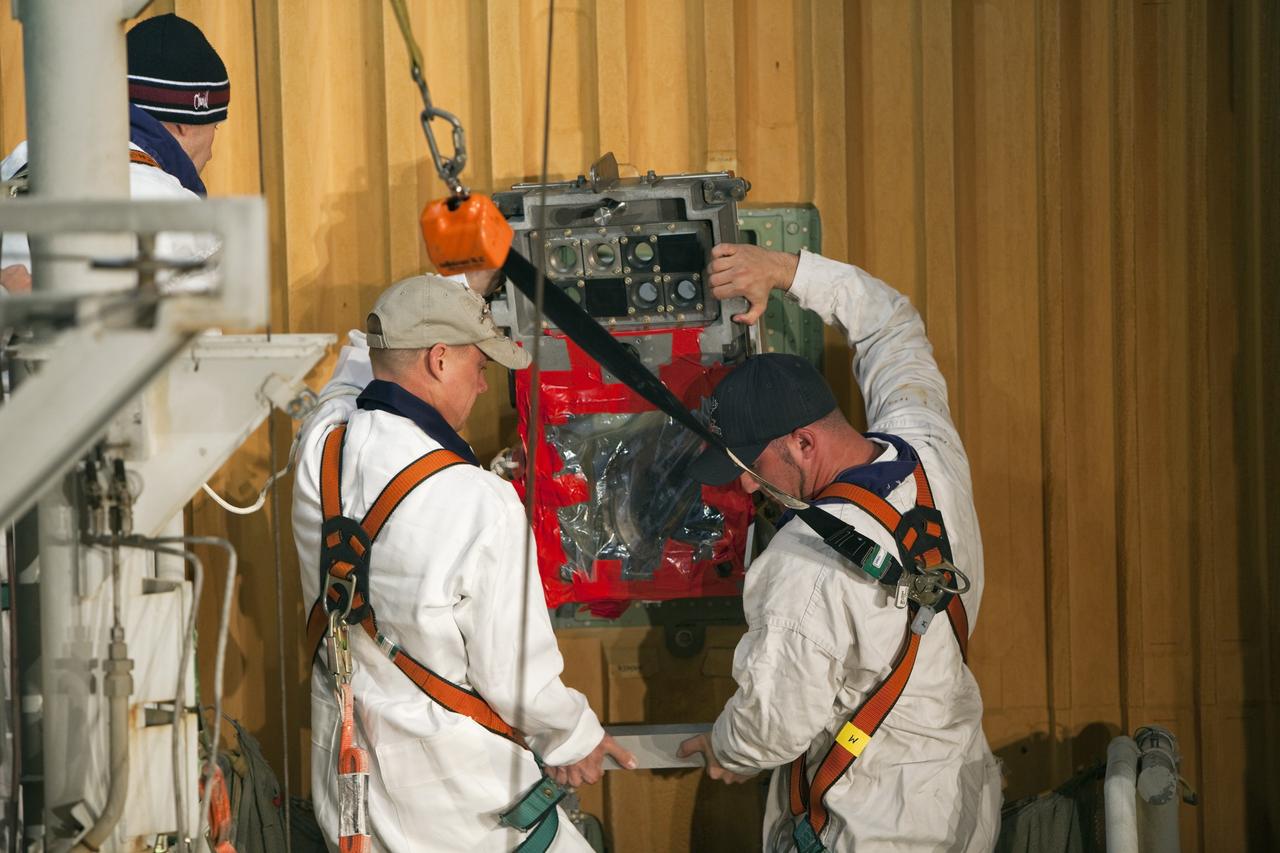
CAPE CANAVERAL, Fla. -- On Launch Pad 39A at NASA's Kennedy Space Center in Florida, workers remove the ground umbilical carrier plate (GUCP) from space shuttle Discovery's external fuel tank. A hydrogen gas leak at that location during tanking for Discovery's STS-133 mission to the International Space Station caused the launch attempt to be scrubbed Nov. 5. The GUCP will be examined to determine the cause of the hydrogen leak and then repaired. The GUCP is the overboard vent to the pad and the flame stack where the excess hydrogen is burned off. For more information on STS-133, visit www.nasa.gov/mission_pages/shuttle/shuttlemissions/sts133/. Photo credit: NASA/Dimitri Gerondidakis

CAPE CANAVERAL, Fla. -- On Launch Pad 39A at NASA's Kennedy Space Center in Florida, workers install a new 7-inch quick disconnect on the ground umbilical carrier plate (GUCP) of space shuttle Discovery's external fuel tank. A hydrogen gas leak at that location during tanking for Discovery's STS-133 mission to the International Space Station caused the launch attempt to be scrubbed Nov. 5. The GUCP is the overboard vent to the pad and the flame stack where the excess hydrogen is burned off. For more information on STS-133, visit www.nasa.gov/mission_pages/shuttle/shuttlemissions/sts133/. Photo credit: NASA/Charisse Nahser
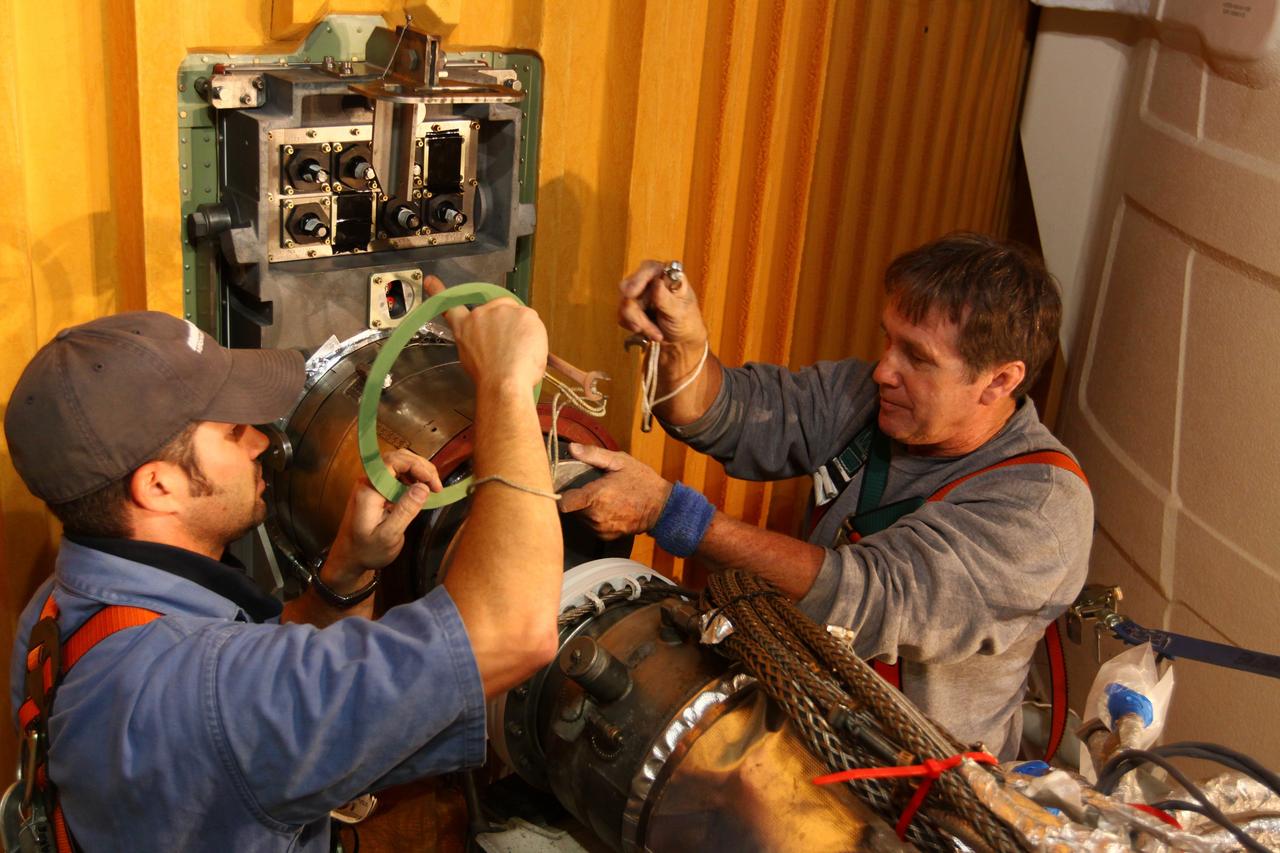
CAPE CANAVERAL, Fla. -- On Launch Pad 39A at NASA's Kennedy Space Center in Florida, technicians reattach the vent line to the ground umbilical carrier plate (GUCP) on space shuttle Discovery's external fuel tank. A hydrogen gas leak at that location during tanking for Discovery's STS-133 mission to the International Space Station caused the launch attempt to be scrubbed Nov. 5. The GUCP is the overboard vent to the pad and the flame stack where the excess hydrogen is burned off. Discovery's next launch attempt is no earlier than Nov. 30 at 4:02 a.m. EST. For more information on STS-133, visit www.nasa.gov/mission_pages/shuttle/shuttlemissions/sts133/. Photo credit: NASA/Ben Smegelsky
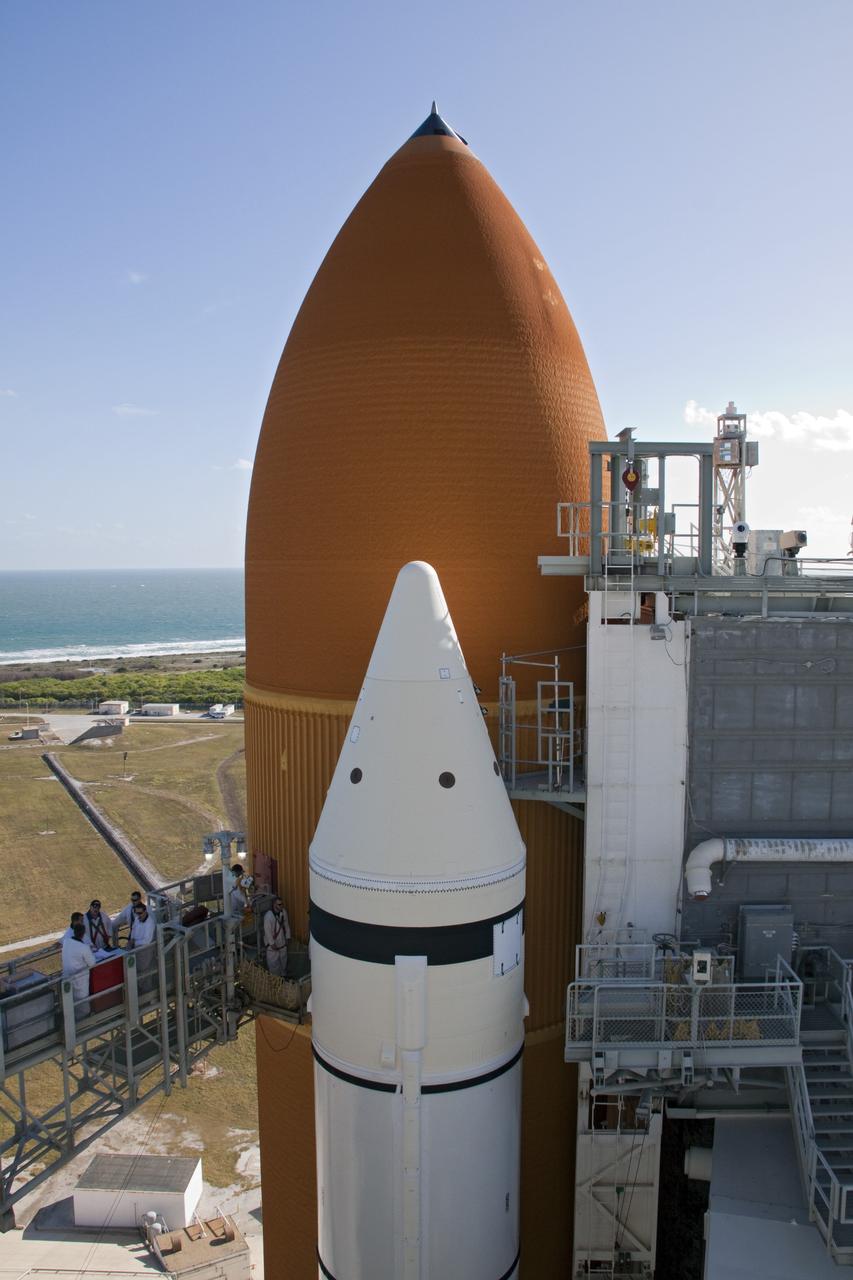
CAPE CANAVERAL, Fla. -- On Launch Pad 39A at NASA's Kennedy Space Center in Florida, workers begin to install a new ground umbilical carrier plate (GUCP) on space shuttle Discovery's external fuel tank. A hydrogen gas leak at that location during tanking for Discovery's STS-133 mission to the International Space Station caused the launch attempt to be scrubbed Nov. 5. The GUCP is the overboard vent to the pad and the flame stack where the excess hydrogen is burned off. For more information on STS-133, visit www.nasa.gov/mission_pages/shuttle/shuttlemissions/sts133/. Photo credit: NASA/Troy Cryder

CAPE CANAVERAL, Fla. -- On Launch Pad 39A at NASA's Kennedy Space Center in Florida, technicians reattach the vent line to the ground umbilical carrier plate (GUCP) on space shuttle Discovery's external fuel tank. A hydrogen gas leak at that location during tanking for Discovery's STS-133 mission to the International Space Station caused the launch attempt to be scrubbed Nov. 5. The GUCP is the overboard vent to the pad and the flame stack where the excess hydrogen is burned off. Discovery's next launch attempt is no earlier than Nov. 30 at 4:02 a.m. EST. For more information on STS-133, visit www.nasa.gov/mission_pages/shuttle/shuttlemissions/sts133/. Photo credit: NASA/Ben Smegelsky
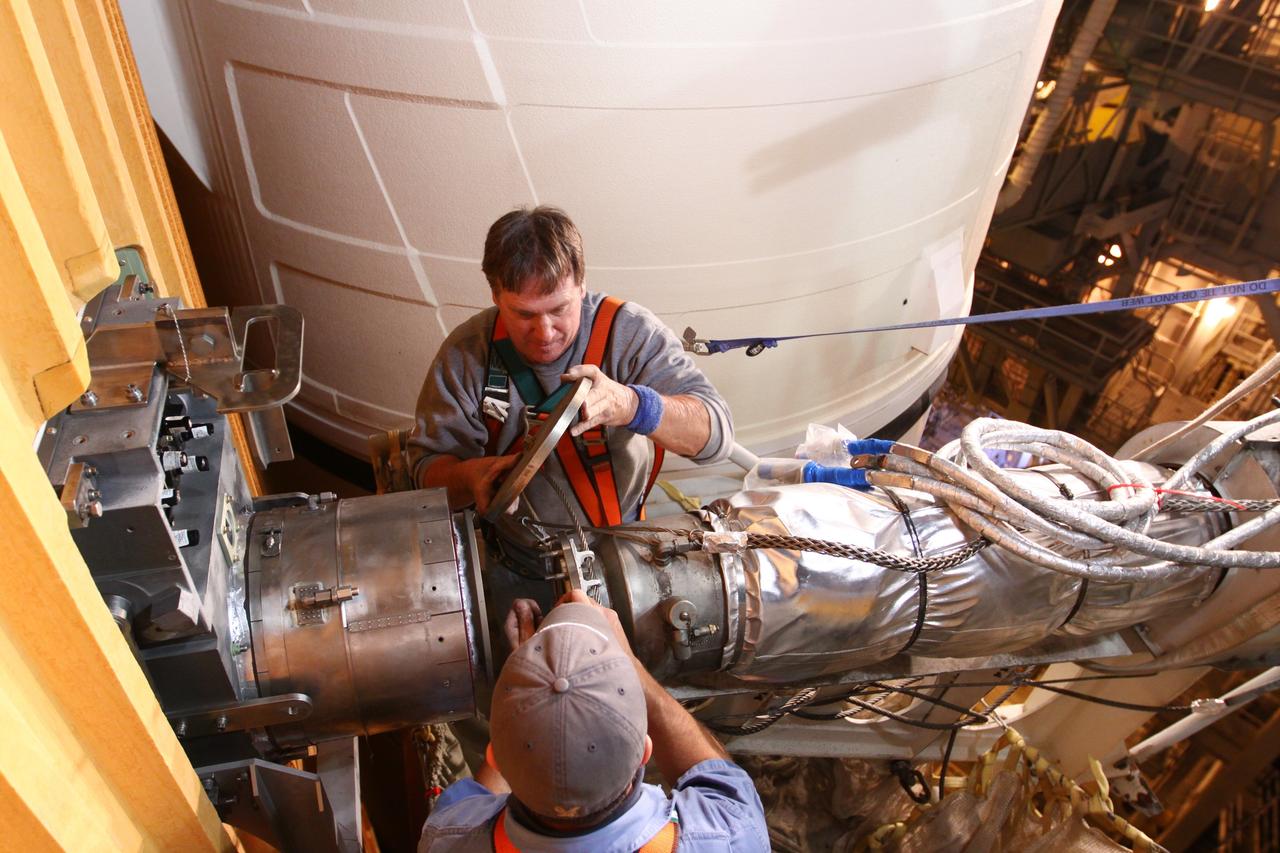
CAPE CANAVERAL, Fla. -- On Launch Pad 39A at NASA's Kennedy Space Center in Florida, technicians reattach the vent line to the ground umbilical carrier plate (GUCP) on space shuttle Discovery's external fuel tank. A hydrogen gas leak at that location during tanking for Discovery's STS-133 mission to the International Space Station caused the launch attempt to be scrubbed Nov. 5. The GUCP is the overboard vent to the pad and the flame stack where the excess hydrogen is burned off. Discovery's next launch attempt is no earlier than Nov. 30 at 4:02 a.m. EST. For more information on STS-133, visit www.nasa.gov/mission_pages/shuttle/shuttlemissions/sts133/. Photo credit: NASA/Ben Smegelsky
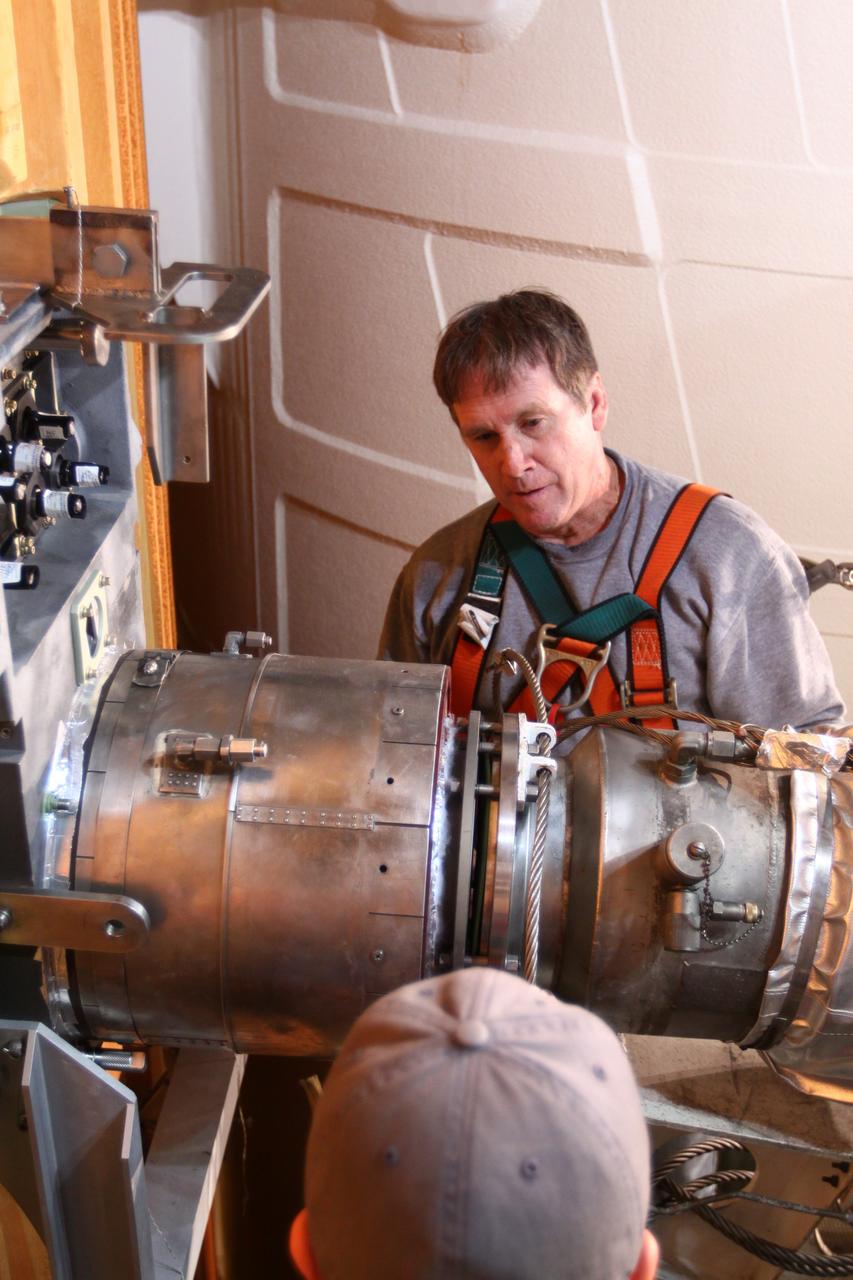
CAPE CANAVERAL, Fla. – On Launch Pad 39A at NASA's Kennedy Space Center in Florida, workers remove the 7-inch quick disconnect on the Ground Umbilical Carrier Plate, or GUCP, on space shuttle Endeavour's external fuel tank. A hydrogen leak at the location during tanking for the STS-127 mission caused the launch attempts to be scrubbed on June 13 and June 17. The GUCP will be examined to determine the cause of the hydrogen leak and repaired. The GUCP is the overboard vent to the pad and the flame stack where the vented hydrogen is burned off. Endeavour's next launch attempt is targeted for July 11 at 7:39 p.m. EDT. Photo credit: NASA/Jack Pfaller
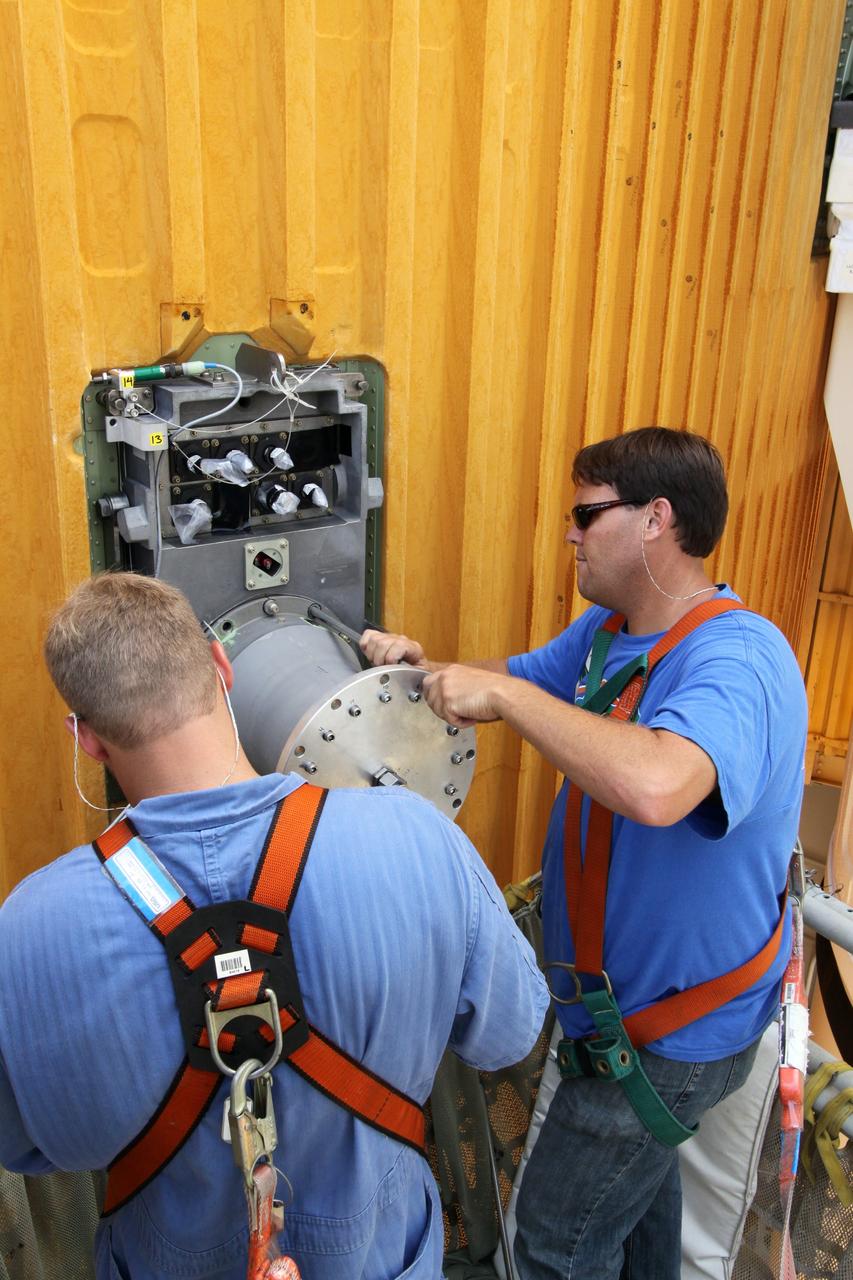
CAPE CANAVERAL, Fla. -- On Launch Pad 39A at NASA's Kennedy Space Center in Florida, technicians reattach the vent line to the ground umbilical carrier plate (GUCP) on space shuttle Discovery's external fuel tank. A hydrogen gas leak at that location during tanking for Discovery's STS-133 mission to the International Space Station caused the launch attempt to be scrubbed Nov. 5. The GUCP is the overboard vent to the pad and the flame stack where the excess hydrogen is burned off. Discovery's next launch attempt is no earlier than Nov. 30 at 4:02 a.m. EST. For more information on STS-133, visit www.nasa.gov/mission_pages/shuttle/shuttlemissions/sts133/. Photo credit: NASA/Ben Smegelsky
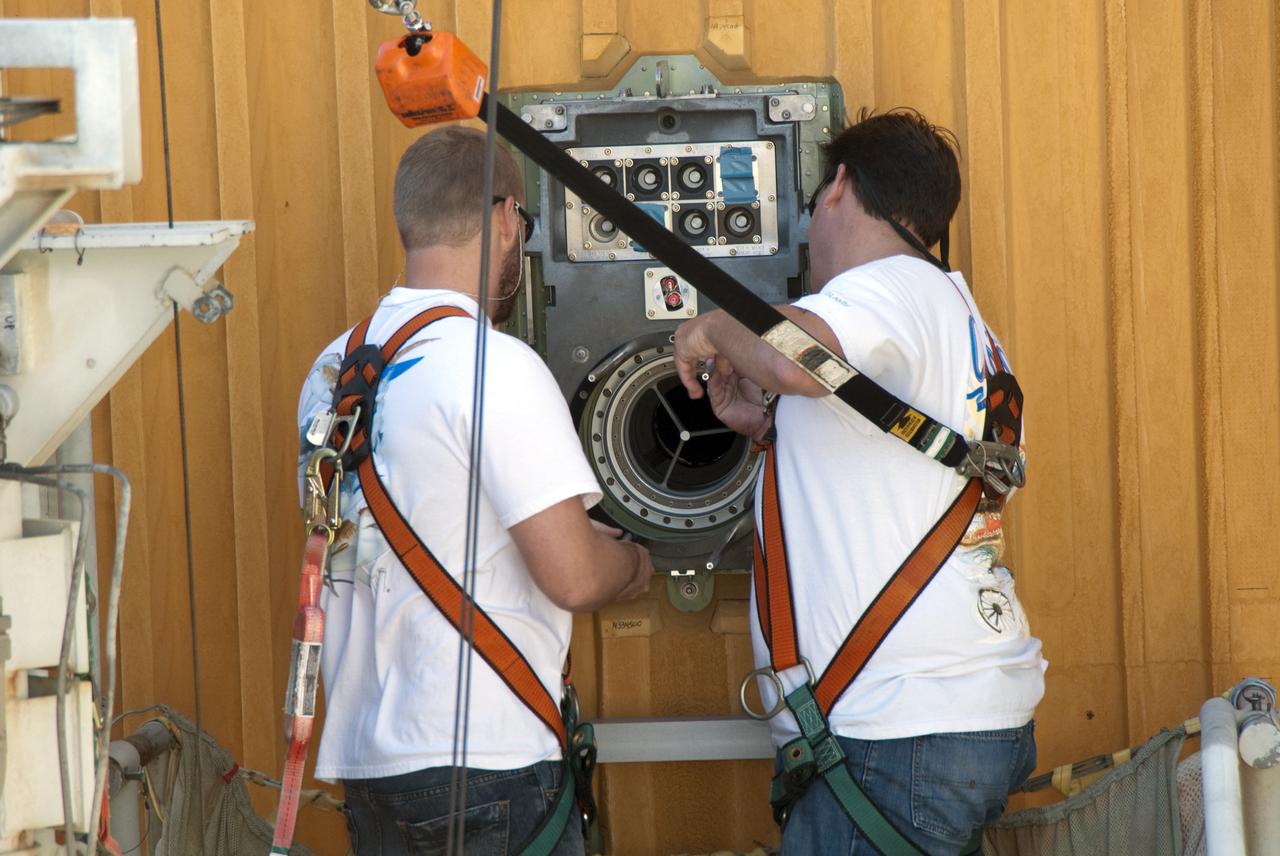
CAPE CANAVERAL, Fla. -- On Launch Pad 39A at NASA's Kennedy Space Center in Florida, workers prepare to install a new 7-inch quick disconnect on the ground umbilical carrier plate (GUCP) of space shuttle Discovery's external fuel tank. A hydrogen gas leak at that location during tanking for Discovery's STS-133 mission to the International Space Station caused the launch attempt to be scrubbed Nov. 5. The GUCP is the overboard vent to the pad and the flame stack where the excess hydrogen is burned off. For more information on STS-133, visit www.nasa.gov/mission_pages/shuttle/shuttlemissions/sts133/. Photo credit: NASA/Charisse Nahser
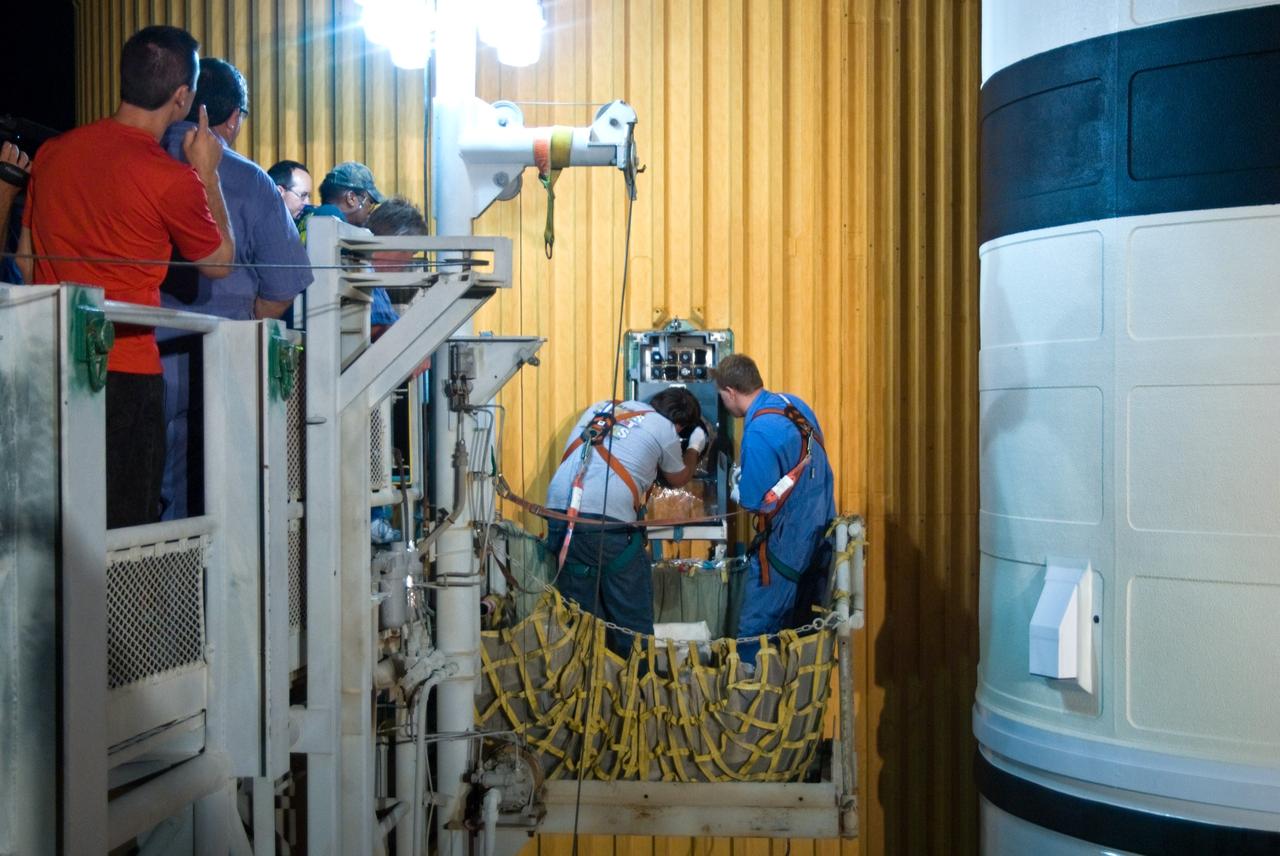
CAPE CANAVERAL, Fla. – On Launch Pad 39A at NASA's Kennedy Space Center in Florida, workers at right repair the Ground Umbilical Carrier Plate, or GUCP. A leak of hydrogen at the location during tanking June 12 for the STS-127 mission caused the mission to be scrubbed at 12:26 a.m. June 13. The GUCP is the overboard vent to the pad and the flare stack where the vented hydrogen is burned off. Endeavour is scheduled to launch on its STS-127 mission on June 17 at 5:40 a.m. EDT. Photo credit: NASA/Tim Jacobs
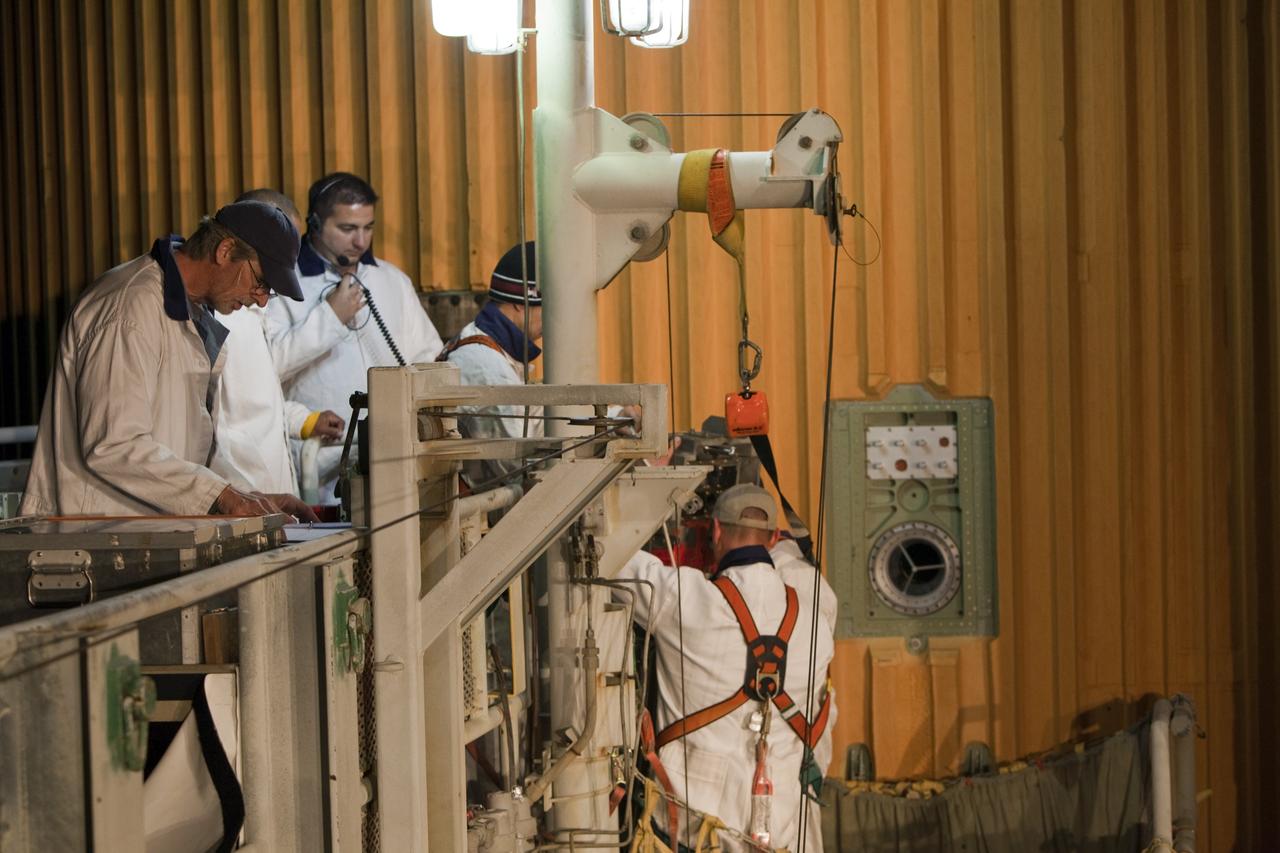
CAPE CANAVERAL, Fla. -- On Launch Pad 39A at NASA's Kennedy Space Center in Florida, the ground umbilical carrier plate (GUCP) is removed from space shuttle Discovery's external fuel tank. A hydrogen gas leak at that location during tanking for Discovery's STS-133 mission to the International Space Station caused the launch attempt to be scrubbed Nov. 5. The GUCP will be examined to determine the cause of the hydrogen leak and then repaired. The GUCP is the overboard vent to the pad and the flame stack where the excess hydrogen is burned off. For more information on STS-133, visit www.nasa.gov/mission_pages/shuttle/shuttlemissions/sts133/. Photo credit: NASA/Dimitri Gerondidakis

CAPE CANAVERAL, Fla. -- On Launch Pad 39A at NASA's Kennedy Space Center in Florida, technicians reattach the vent line to the ground umbilical carrier plate (GUCP) on space shuttle Discovery's external fuel tank. A hydrogen gas leak at that location during tanking for Discovery's STS-133 mission to the International Space Station caused the launch attempt to be scrubbed Nov. 5. The GUCP is the overboard vent to the pad and the flame stack where the excess hydrogen is burned off. Discovery's next launch attempt is no earlier than Nov. 30 at 4:02 a.m. EST. For more information on STS-133, visit www.nasa.gov/mission_pages/shuttle/shuttlemissions/sts133/. Photo credit: NASA/Ben Smegelsky
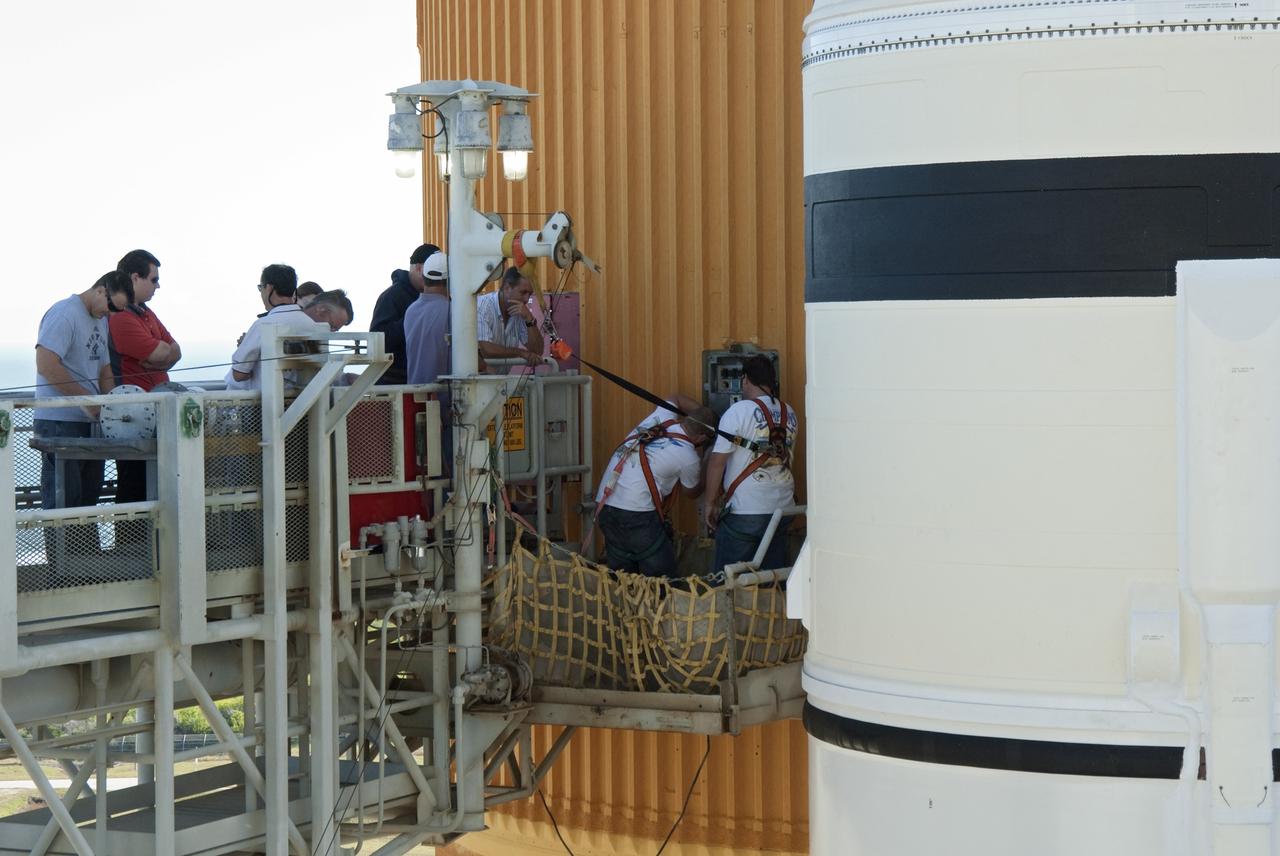
CAPE CANAVERAL, Fla. -- On Launch Pad 39A at NASA's Kennedy Space Center in Florida, workers prepare to install a new 7-inch quick disconnect on the ground umbilical carrier plate (GUCP) of space shuttle Discovery's external fuel tank. A hydrogen gas leak at that location during tanking for Discovery's STS-133 mission to the International Space Station caused the launch attempt to be scrubbed Nov. 5. The GUCP is the overboard vent to the pad and the flame stack where the excess hydrogen is burned off. For more information on STS-133, visit www.nasa.gov/mission_pages/shuttle/shuttlemissions/sts133/. Photo credit: NASA/Charisse Nahser
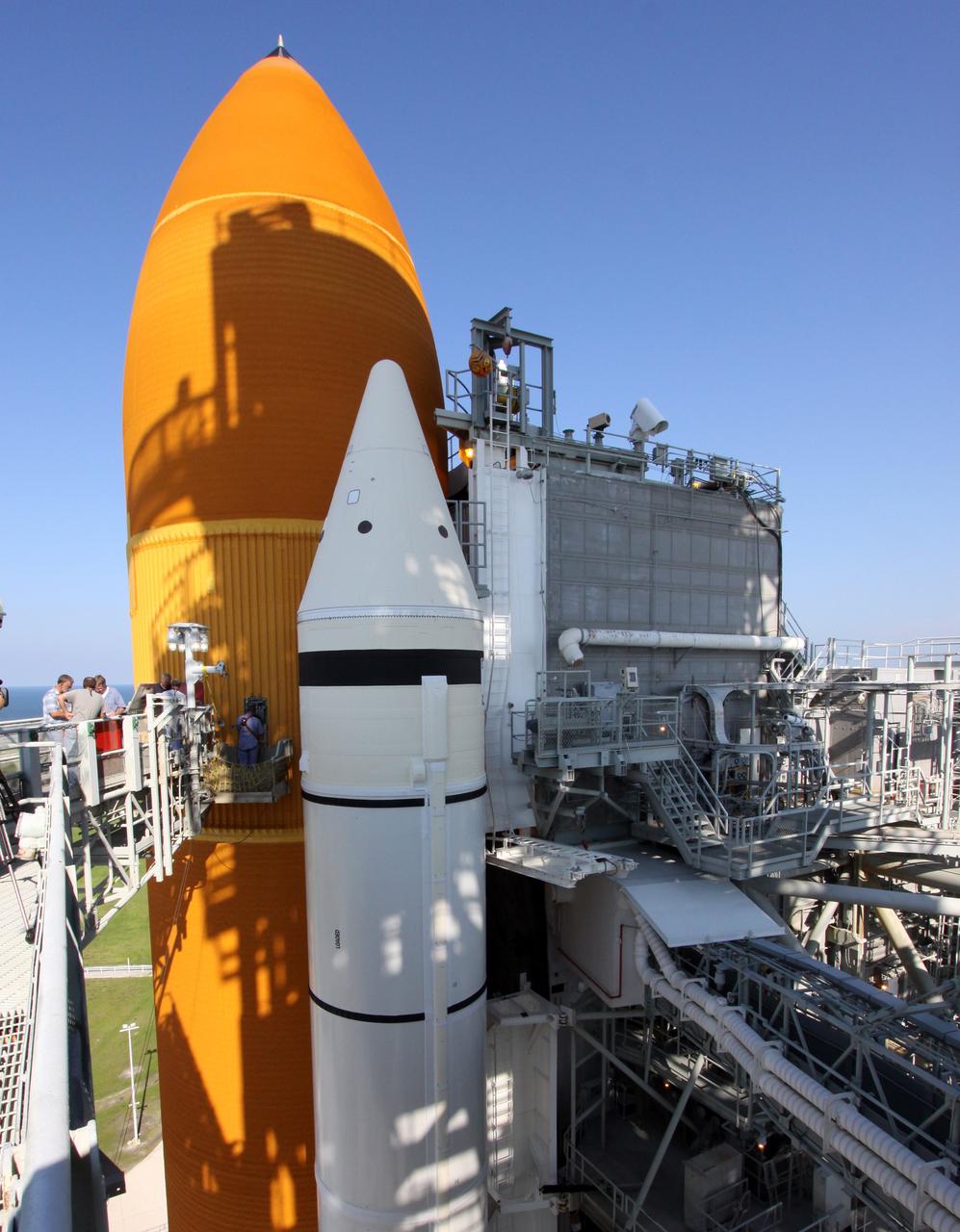
CAPE CANAVERAL, Fla. – The afternoon sun casts shadows on space shuttle Endeavour's external fuel tank as workers remove the seal from the Ground Umbilical Carrier Plate, or GUCP, on the tank. A hydrogen leak at the location during tanking for the STS-127 mission caused the launch attempts to be scrubbed on June 13 and June 17. The GUCP will be examined to determine the cause of the hydrogen leak and repaired. The GUCP is the overboard vent to the pad and the flame stack where the vented hydrogen is burned off. Endeavour's next launch attempt is targeted for July 11 at 7:39 p.m. EDT. Photo credit: NASA/Jack Pfaller

CAPE CANAVERAL, Fla. -- On Launch Pad 39A at NASA's Kennedy Space Center in Florida, workers begin to remove the seal from the ground umbilical carrier plate (GUCP). A hydrogen gas leak at that location on the external fuel tank during tanking for space shuttle Discovery's STS-133 mission to the International Space Station caused the launch attempt to be scrubbed Nov. 5. The GUCP will be examined to determine the cause of the hydrogen leak and then repaired. The GUCP is the overboard vent to the pad and the flame stack where the excess hydrogen is burned off. For more information on STS-133, visit www.nasa.gov/mission_pages/shuttle/shuttlemissions/sts133/. Photo credit: NASA/Jack Pfaller
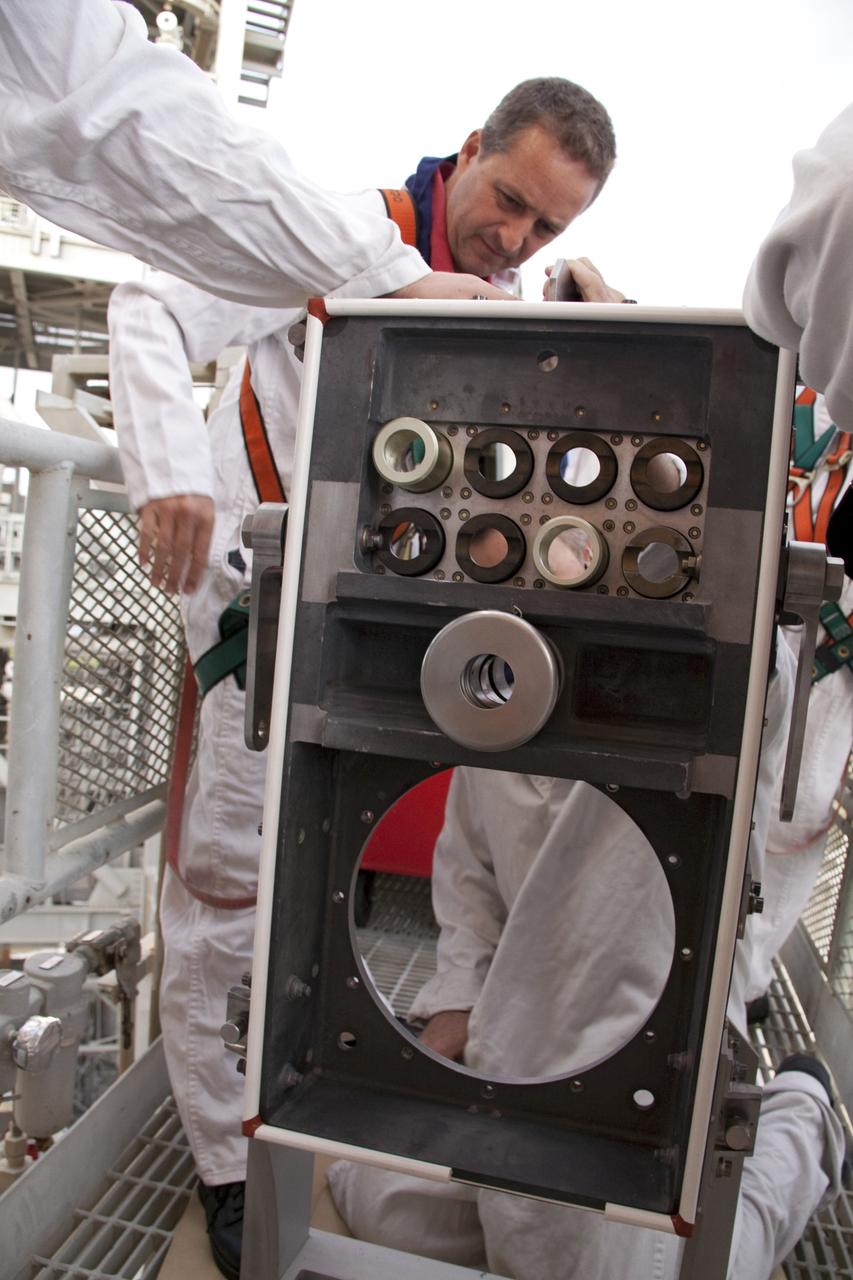
CAPE CANAVERAL, Fla. -- On Launch Pad 39A at NASA's Kennedy Space Center in Florida, workers prepare to install a new ground umbilical carrier plate (GUCP) on space shuttle Discovery's external fuel tank. A hydrogen gas leak at that location during tanking for Discovery's STS-133 mission to the International Space Station caused the launch attempt to be scrubbed Nov. 5. The GUCP is the overboard vent to the pad and the flame stack where the excess hydrogen is burned off. For more information on STS-133, visit www.nasa.gov/mission_pages/shuttle/shuttlemissions/sts133/. Photo credit: NASA/Troy Cryder
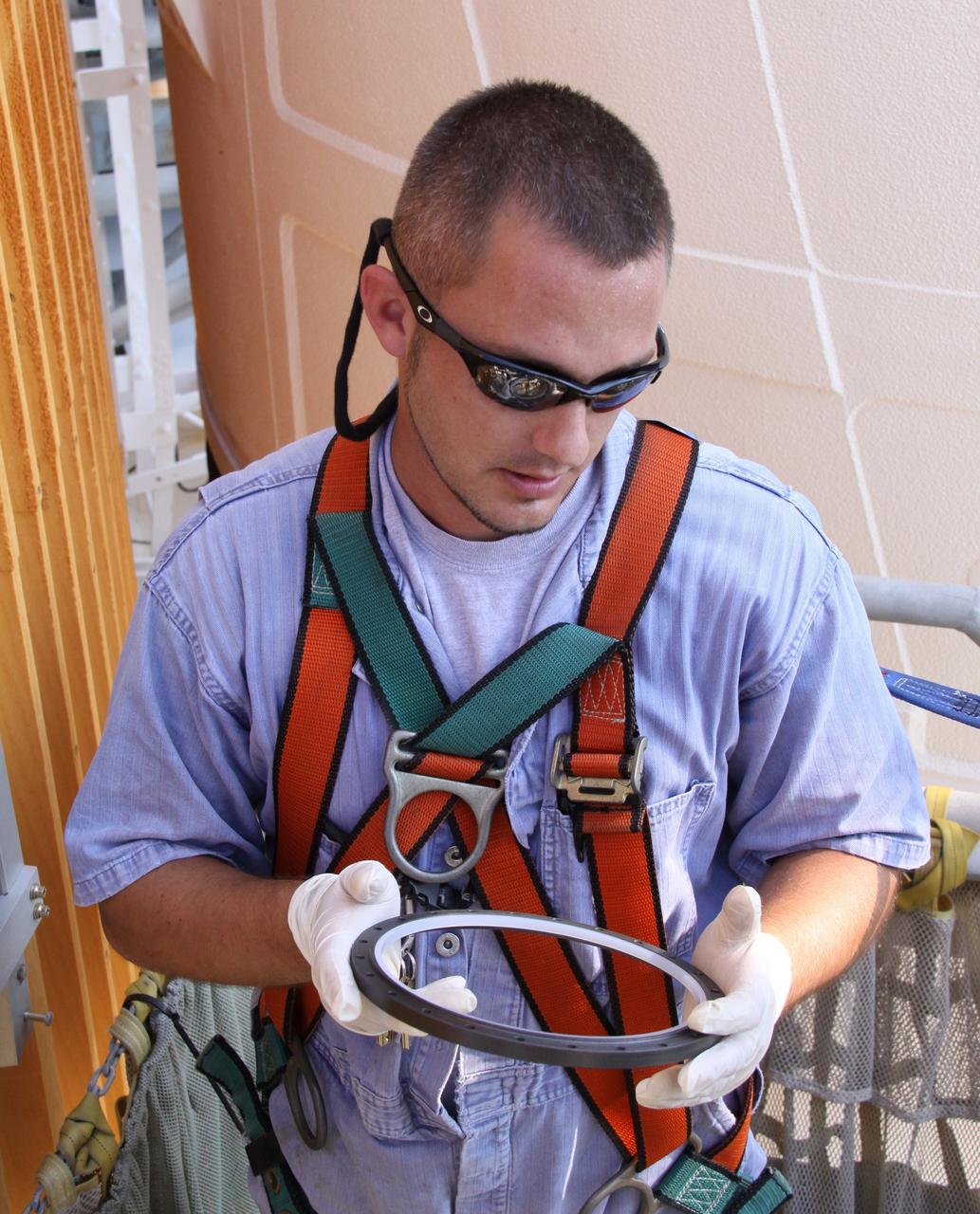
CAPE CANAVERAL, Fla. – On Launch Pad 39A at NASA's Kennedy Space Center in Florida, a worker has removed the seal from the Ground Umbilical Carrier Plate, or GUCP, on space shuttle Endeavour's external fuel tank. A hydrogen leak at the location during tanking for the STS-127 mission caused the launch attempts to be scrubbed on June 13 and June 17. The GUCP will be examined to determine the cause of the hydrogen leak and repaired. The GUCP is the overboard vent to the pad and the flame stack where the vented hydrogen is burned off. Endeavour's next launch attempt is targeted for July 11 at 7:39 p.m. EDT. Photo credit: NASA/Jack Pfaller
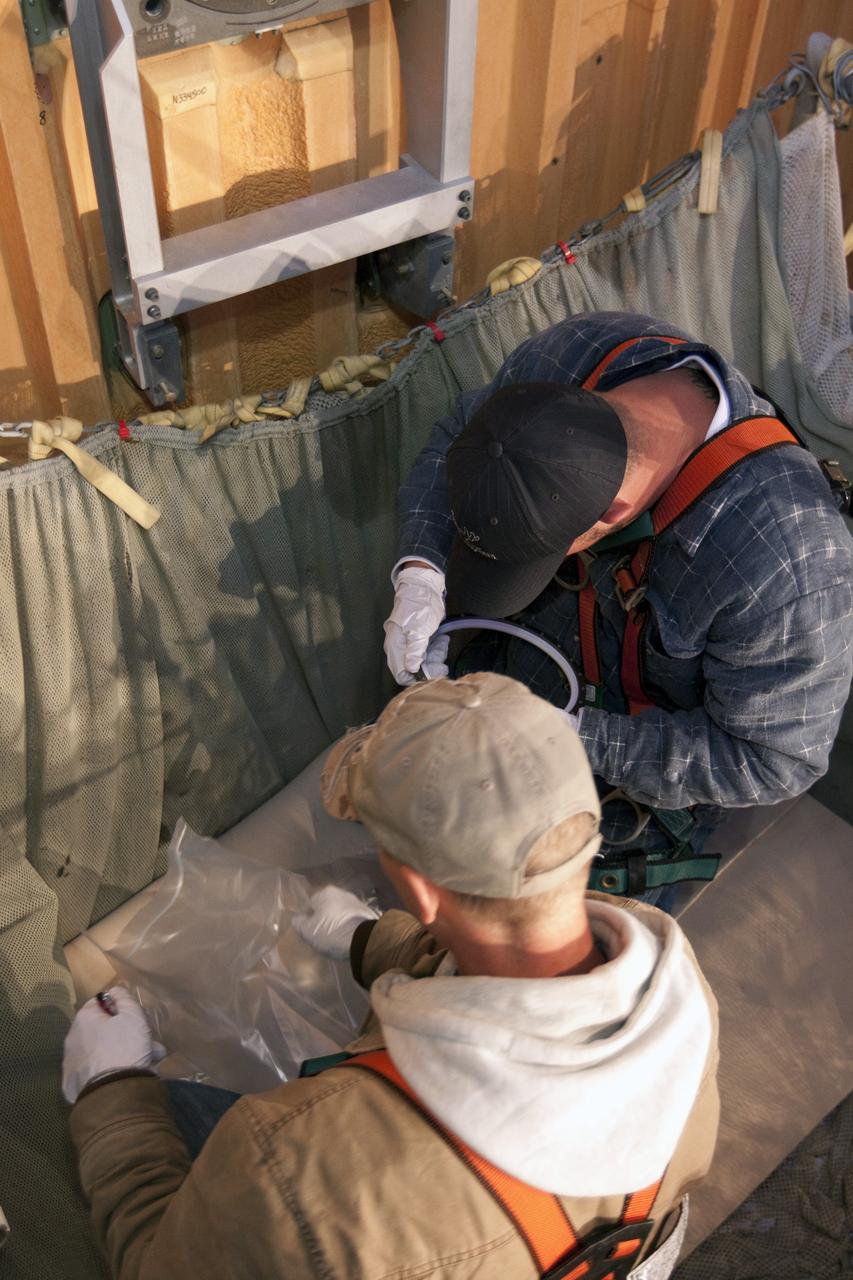
CAPE CANAVERAL, Fla. -- On Launch Pad 39A at NASA's Kennedy Space Center in Florida, workers examine the seal from the ground umbilical carrier plate (GUCP). A hydrogen gas leak at that location on the external fuel tank during tanking for space shuttle Discovery's STS-133 mission to the International Space Station caused the launch attempt to be scrubbed Nov. 5. The GUCP will be examined to determine the cause of the hydrogen leak and then repaired. The GUCP is the overboard vent to the pad and the flame stack where the excess hydrogen is burned off. For more information on STS-133, visit www.nasa.gov/mission_pages/shuttle/shuttlemissions/sts133/. Photo credit: NASA/Jack Pfaller
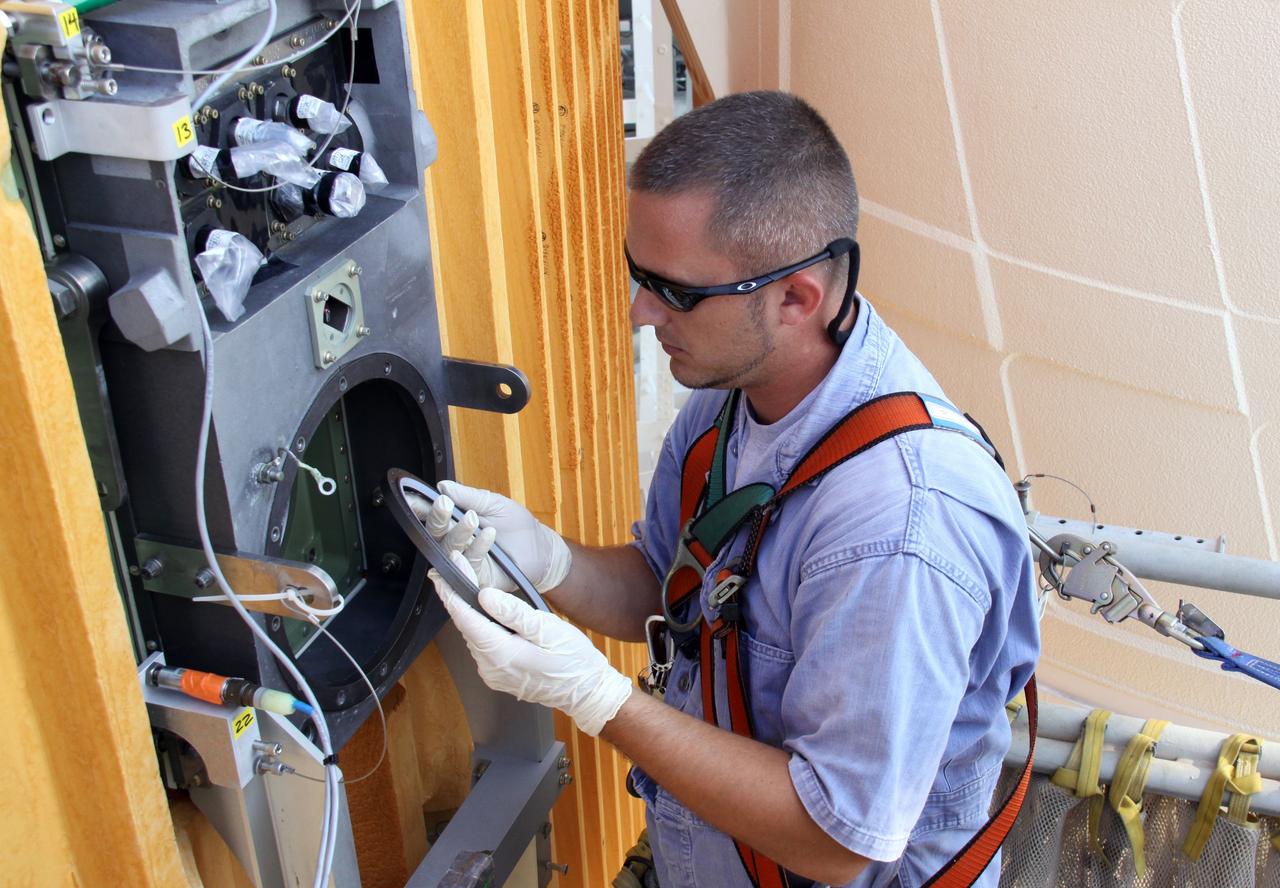
CAPE CANAVERAL, Fla. – On Launch Pad 39A at NASA's Kennedy Space Center in Florida, a worker has removed the seal from the Ground Umbilical Carrier Plate, or GUCP, on space shuttle Endeavour's external fuel tank. A hydrogen leak at the location during tanking for the STS-127 mission caused the launch attempts to be scrubbed on June 13 and June 17. The GUCP will be examined to determine the cause of the hydrogen leak and repaired. The GUCP is the overboard vent to the pad and the flame stack where the vented hydrogen is burned off. Endeavour's next launch attempt is targeted for July 11 at 7:39 p.m. EDT. Photo credit: NASA/Jack Pfaller
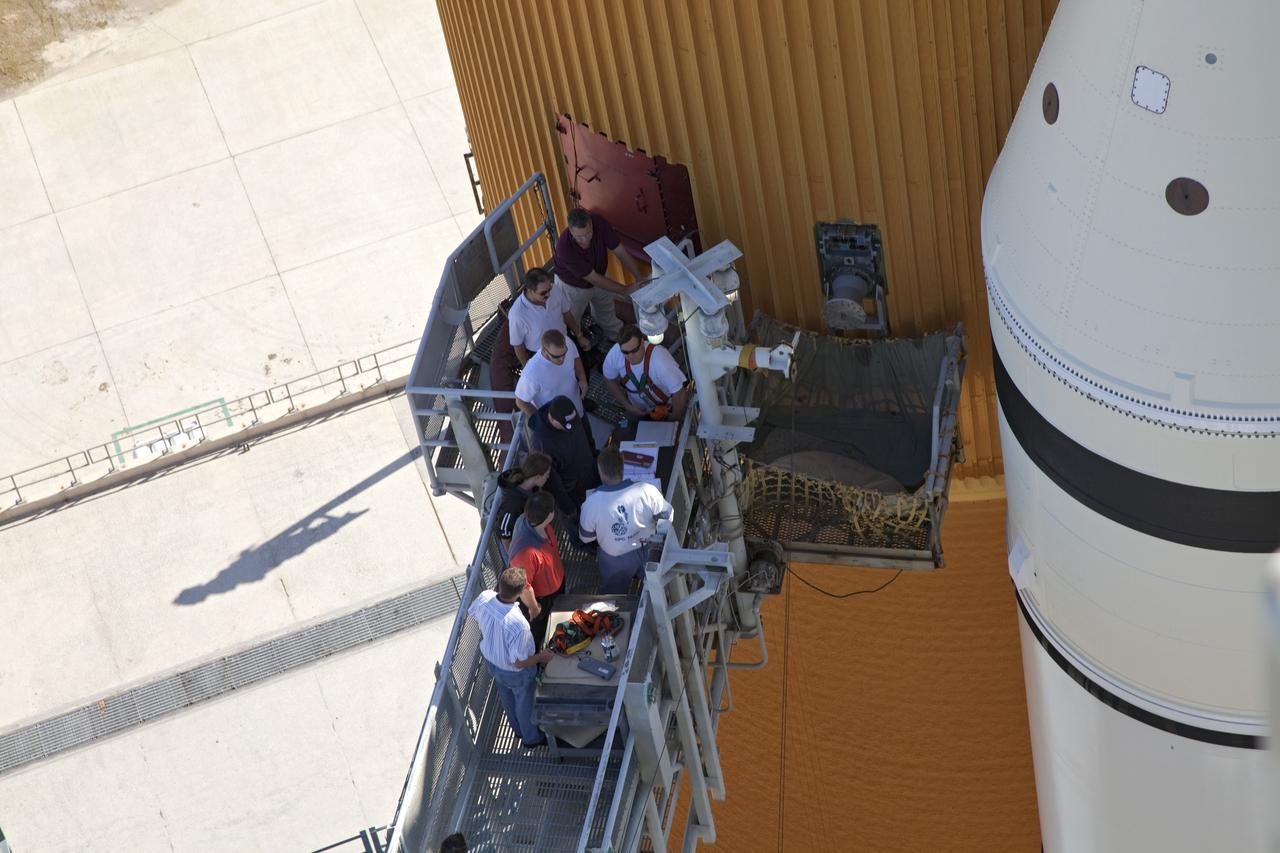
CAPE CANAVERAL, Fla. -- On Launch Pad 39A at NASA's Kennedy Space Center in Florida, a new 7-inch quick disconnect is installed on the ground umbilical carrier plate (GUCP) of space shuttle Discovery's external fuel tank. A hydrogen gas leak at that location during tanking for Discovery's STS-133 mission to the International Space Station caused the launch attempt to be scrubbed Nov. 5. The GUCP is the overboard vent to the pad and the flame stack where the excess hydrogen is burned off. For more information on STS-133, visit www.nasa.gov/mission_pages/shuttle/shuttlemissions/sts133/. Photo credit: NASA/Frankie Martin
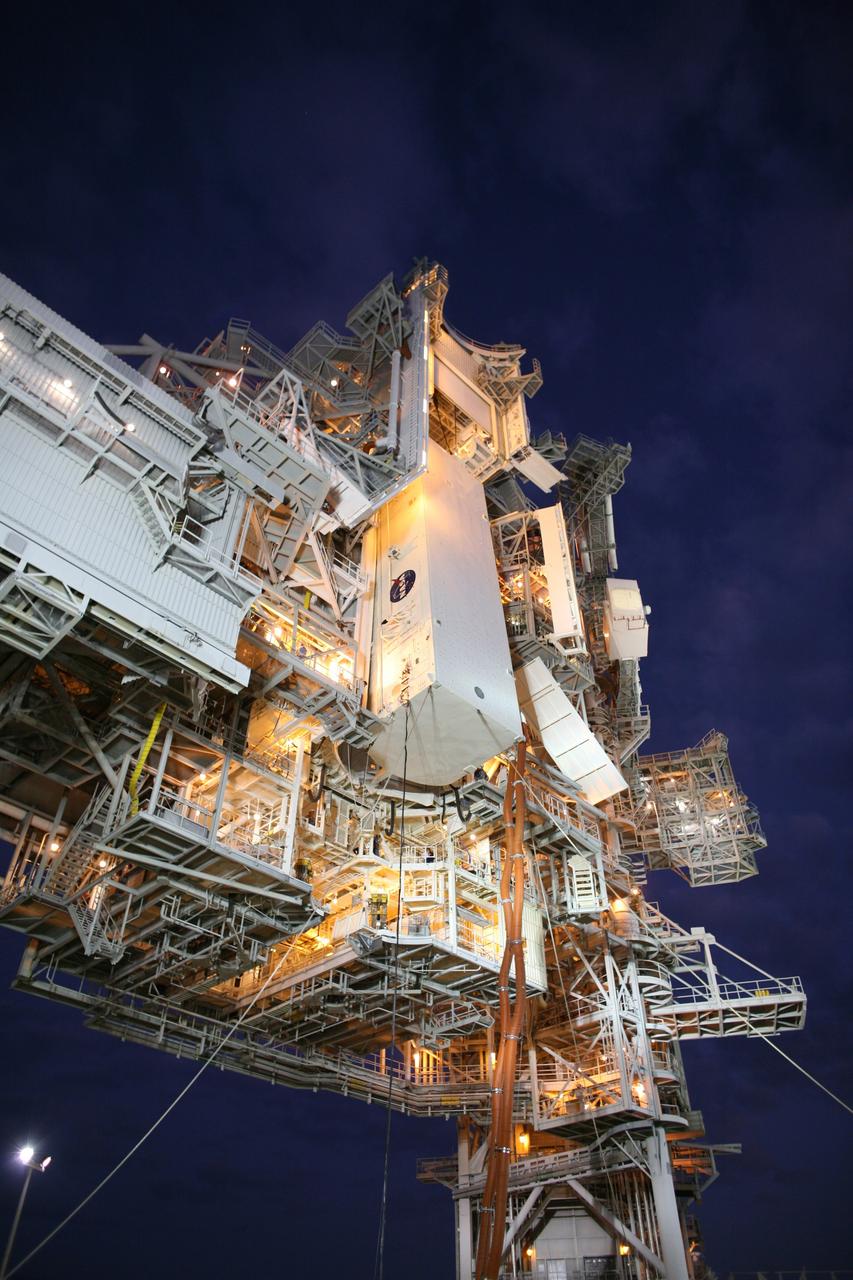
CAPE CANAVERAL, Fla. - On Launch Pad 39A at NASA's Kennedy Space Center in Florida, the payload canister with space shuttle Endeavour's STS-126 mission payload inside is lifted to the Payload Changeout Room, or PCR, above. Inside the canister are the Multi-Purpose Logistics Module Leonardo and the Lightweight Multi-Purpose Experiment Support Structure Carrier. The red umbilical lines attached preserve the environmentally controlled interior. The payload canister will release its cargo into the PCR. Later, the payload will be installed in Endeavour's payload bay. Endeavour is targeted for launch on Nov. 14. Photo credit: NASA/Dimitri Gerondidakis
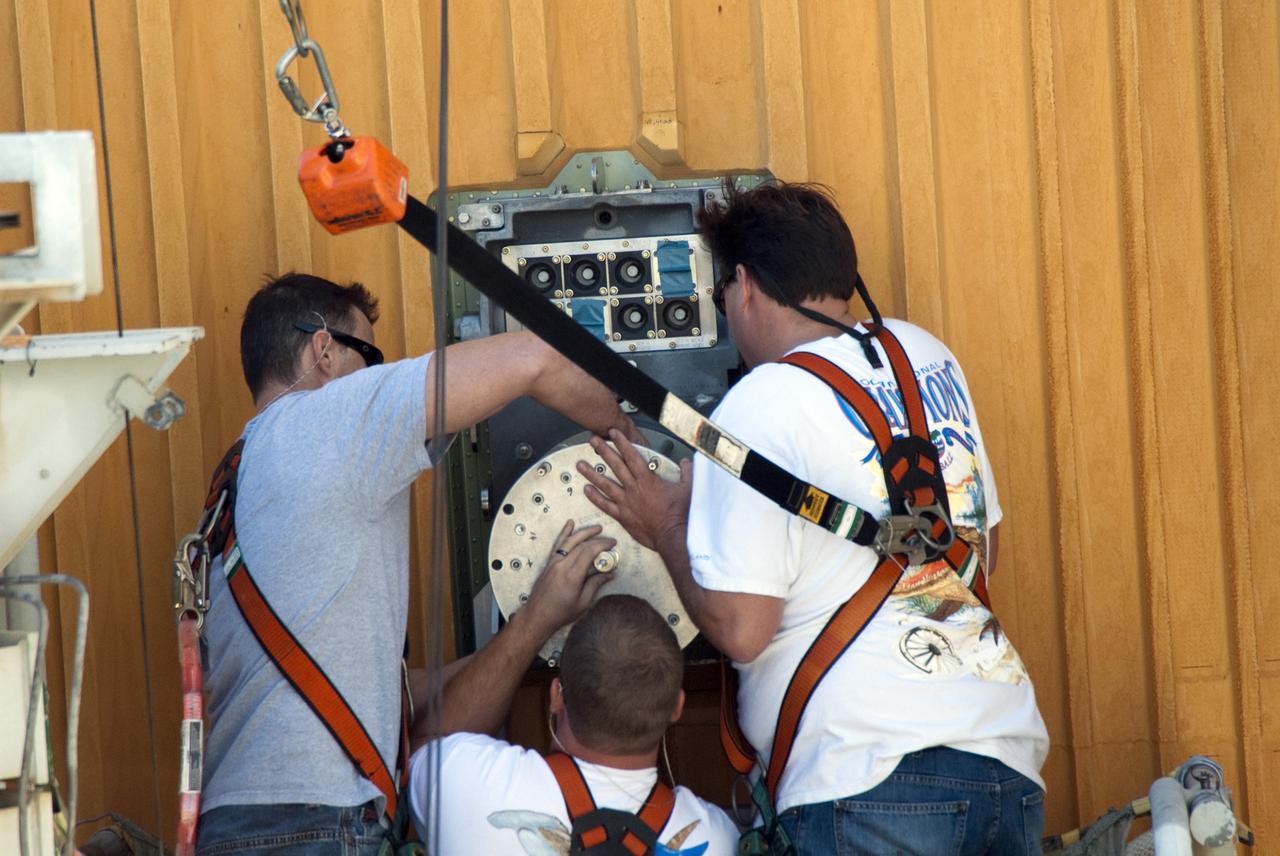
CAPE CANAVERAL, Fla. -- On Launch Pad 39A at NASA's Kennedy Space Center in Florida, workers install a new 7-inch quick disconnect on the ground umbilical carrier plate (GUCP) of space shuttle Discovery's external fuel tank. A hydrogen gas leak at that location during tanking for Discovery's STS-133 mission to the International Space Station caused the launch attempt to be scrubbed Nov. 5. The GUCP is the overboard vent to the pad and the flame stack where the excess hydrogen is burned off. For more information on STS-133, visit www.nasa.gov/mission_pages/shuttle/shuttlemissions/sts133/. Photo credit: NASA/Charisse Nahser
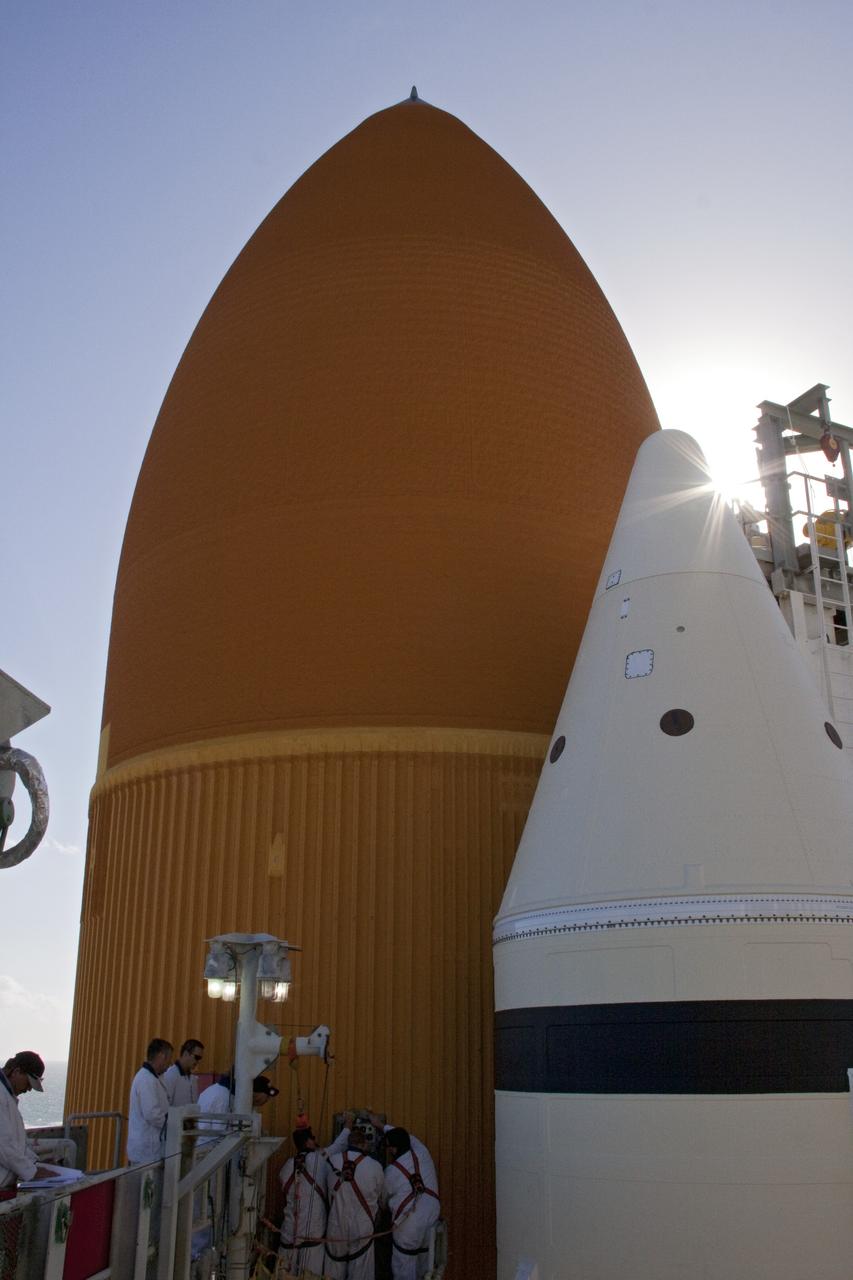
CAPE CANAVERAL, Fla. -- On Launch Pad 39A at NASA's Kennedy Space Center in Florida, workers begin to install a new ground umbilical carrier plate (GUCP) on space shuttle Discovery's external fuel tank. A hydrogen gas leak at that location during tanking for Discovery's STS-133 mission to the International Space Station caused the launch attempt to be scrubbed Nov. 5. The GUCP is the overboard vent to the pad and the flame stack where the excess hydrogen is burned off. For more information on STS-133, visit www.nasa.gov/mission_pages/shuttle/shuttlemissions/sts133/. Photo credit: NASA/Troy Cryder
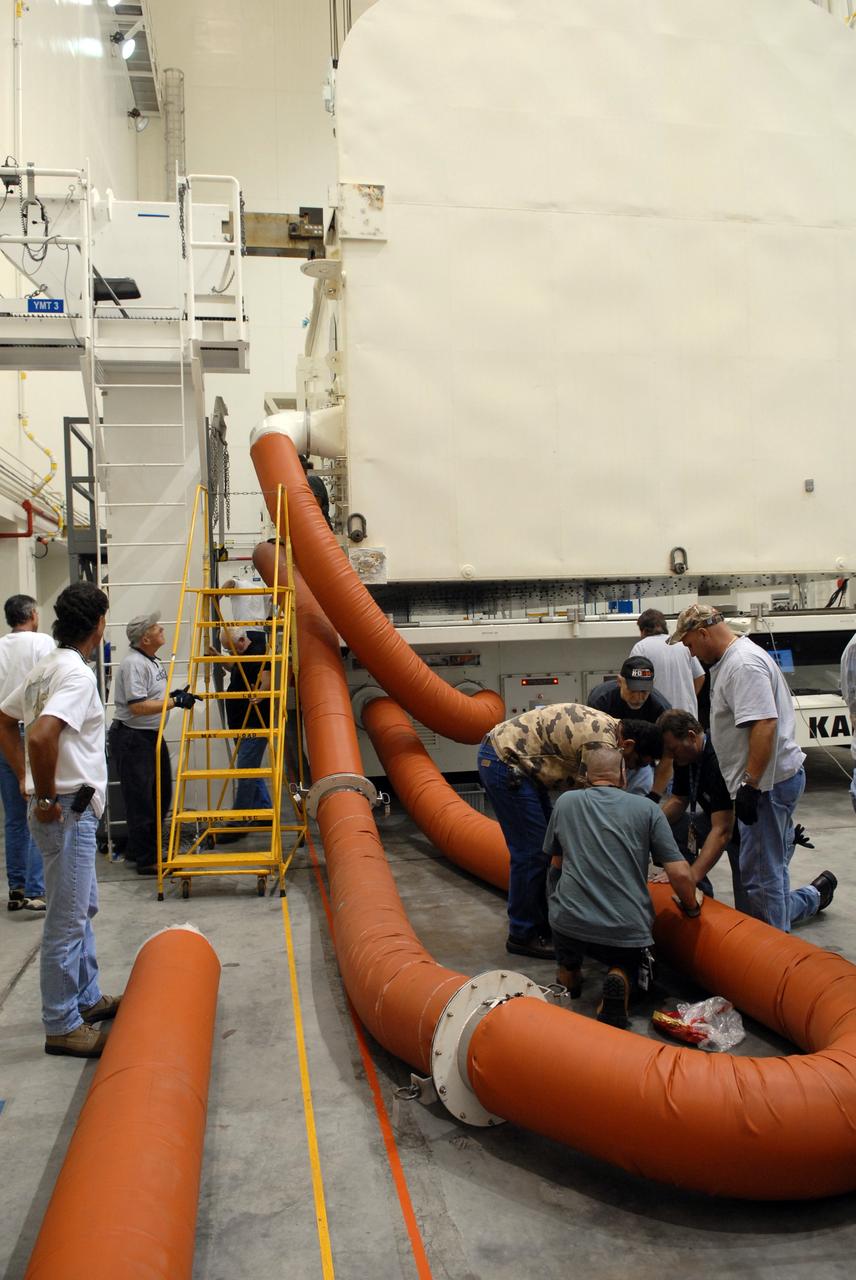
CAPE CANAVERAL, Fla. - At NASA's Kennedy Space Center, the payload canister is in the Canister Rotation Facility where it will be lifted to a vertical position. Workers check the umbilical lines that keep a controlled environment in the canister. The canister’s cargo consists of four carriers holding various equipment for the STS-125 mission aboard space shuttle Atlantis to service NASA’s Hubble Space Telescope. At the pad, the cargo will be moved into the Payload Changeout Room. The changeout room is the enclosed, environmentally controlled portion of the rotating service structure that supports cargo delivery to the pad and subsequent vertical installation into the shuttle’s payload bay. Launch of Atlantis is targeted for Oct. 10. Photo credit: NASA/Jack Pfaller

CAPE CANAVERAL, Fla. -- On Launch Pad 39A at NASA's Kennedy Space Center in Florida, workers install a cap over the hole in space shuttle Discovery's external fuel tank where the ground umbilical carrier plate (GUCP) was removed. A hydrogen gas leak at that location during tanking for Discovery's STS-133 mission to the International Space Station caused the launch attempt to be scrubbed Nov. 5. The GUCP will be examined to determine the cause of the hydrogen leak and then repaired. The GUCP is the overboard vent to the pad and the flame stack where the excess hydrogen is burned off. For more information on STS-133, visit www.nasa.gov/mission_pages/shuttle/shuttlemissions/sts133/. Photo credit: NASA/Dimitri Gerondidakis
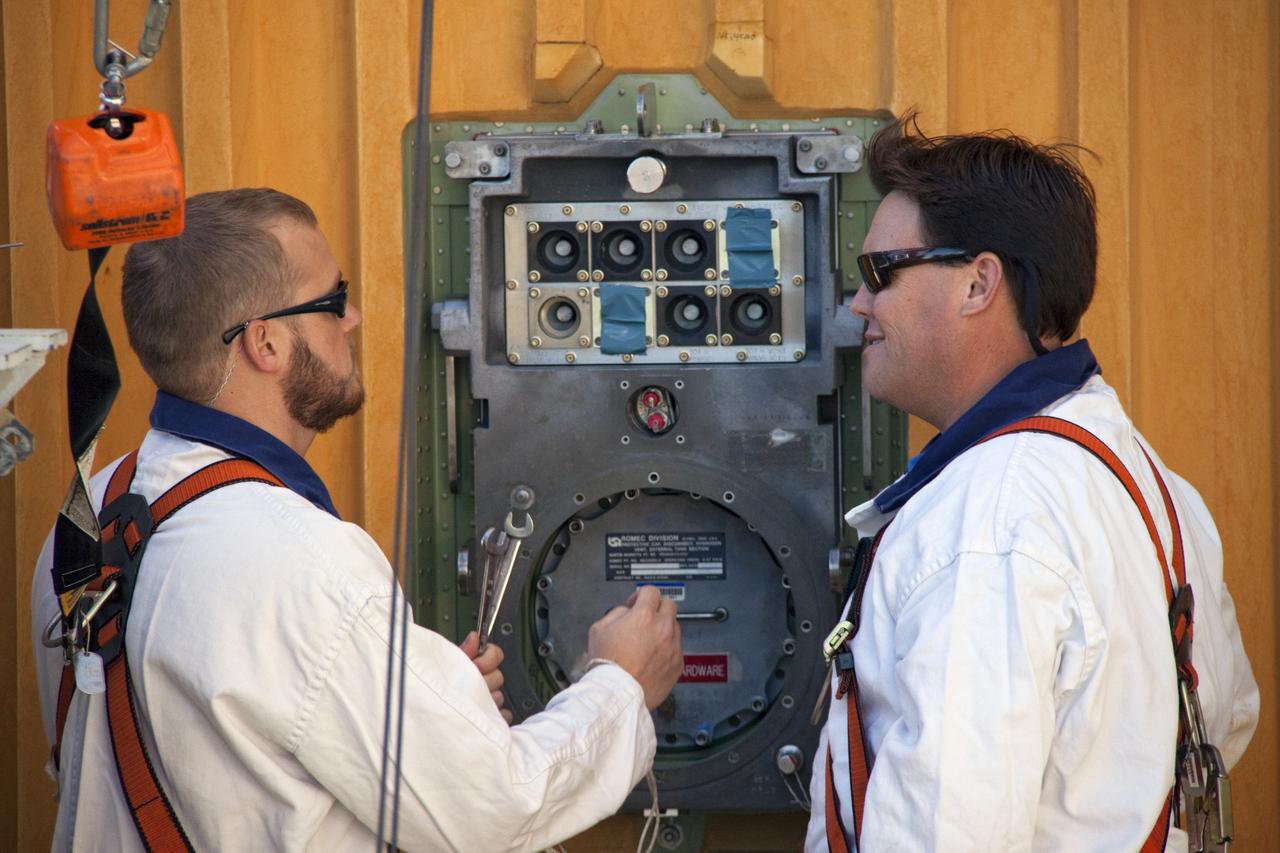
CAPE CANAVERAL, Fla. -- On Launch Pad 39A at NASA's Kennedy Space Center in Florida, workers begin to install a new ground umbilical carrier plate (GUCP) on space shuttle Discovery's external fuel tank. A hydrogen gas leak at that location during tanking for Discovery's STS-133 mission to the International Space Station caused the launch attempt to be scrubbed Nov. 5. The GUCP is the overboard vent to the pad and the flame stack where the excess hydrogen is burned off. For more information on STS-133, visit www.nasa.gov/mission_pages/shuttle/shuttlemissions/sts133/. Photo credit: NASA/Troy Cryder
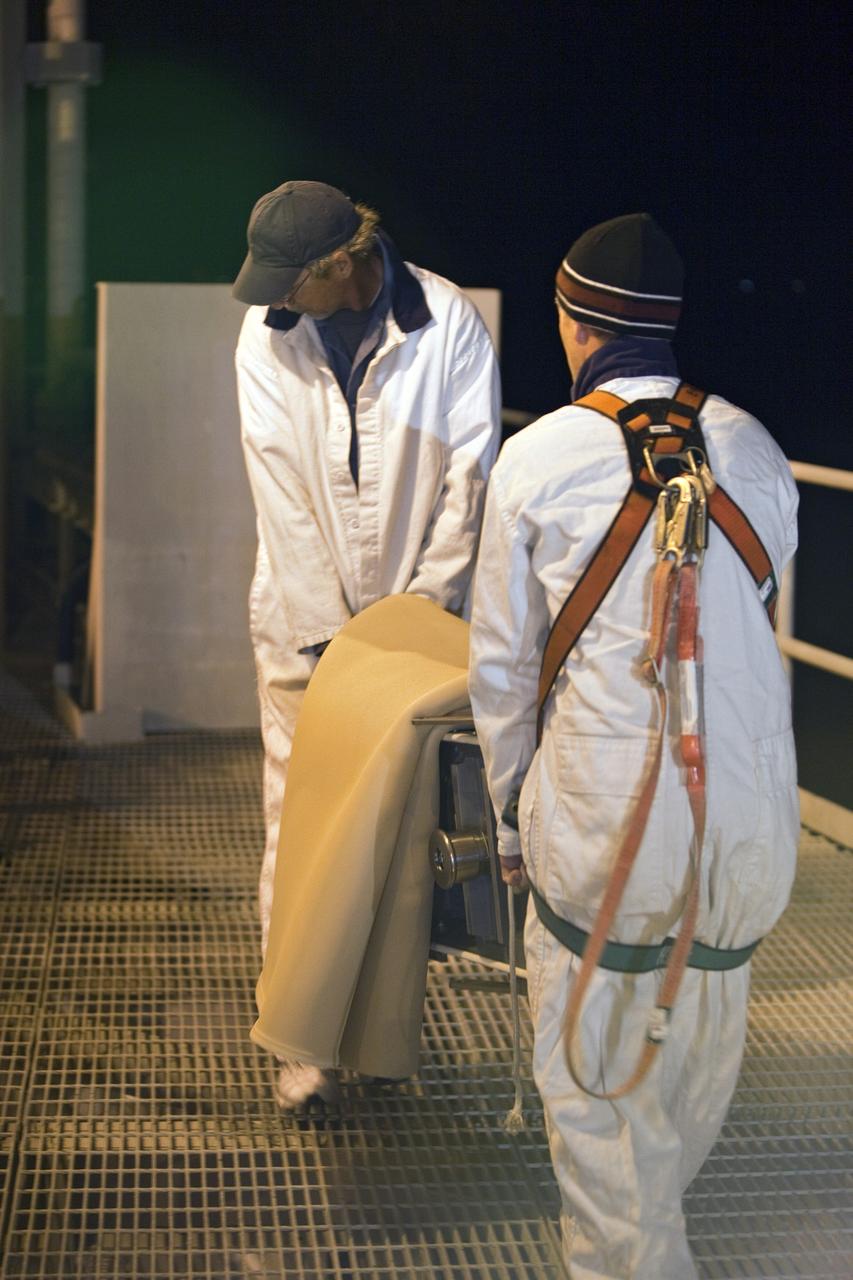
CAPE CANAVERAL, Fla. -- On Launch Pad 39A at NASA's Kennedy Space Center in Florida, workers move the ground umbilical carrier plate (GUCP) to a location where it can be examined. A hydrogen gas leak at that location on the external fuel tank during tanking for space shuttle Discovery's STS-133 mission to the International Space Station caused the launch attempt to be scrubbed Nov. 5. The GUCP will be examined to determine the cause of the hydrogen leak and then repaired. The GUCP is the overboard vent to the pad and the flame stack where the excess hydrogen is burned off. For more information on STS-133, visit www.nasa.gov/mission_pages/shuttle/shuttlemissions/sts133/. Photo credit: NASA/Dimitri Gerondidakis

CAPE CANAVERAL, Fla. -- On Launch Pad 39A at NASA's Kennedy Space Center in Florida, technicians reattach the vent line to the ground umbilical carrier plate (GUCP) on space shuttle Discovery's external fuel tank. A hydrogen gas leak at that location during tanking for Discovery's STS-133 mission to the International Space Station caused the launch attempt to be scrubbed Nov. 5. The GUCP is the overboard vent to the pad and the flame stack where the excess hydrogen is burned off. Discovery's next launch attempt is no earlier than Nov. 30 at 4:02 a.m. EST. For more information on STS-133, visit www.nasa.gov/mission_pages/shuttle/shuttlemissions/sts133/. Photo credit: NASA/Ben Smegelsky
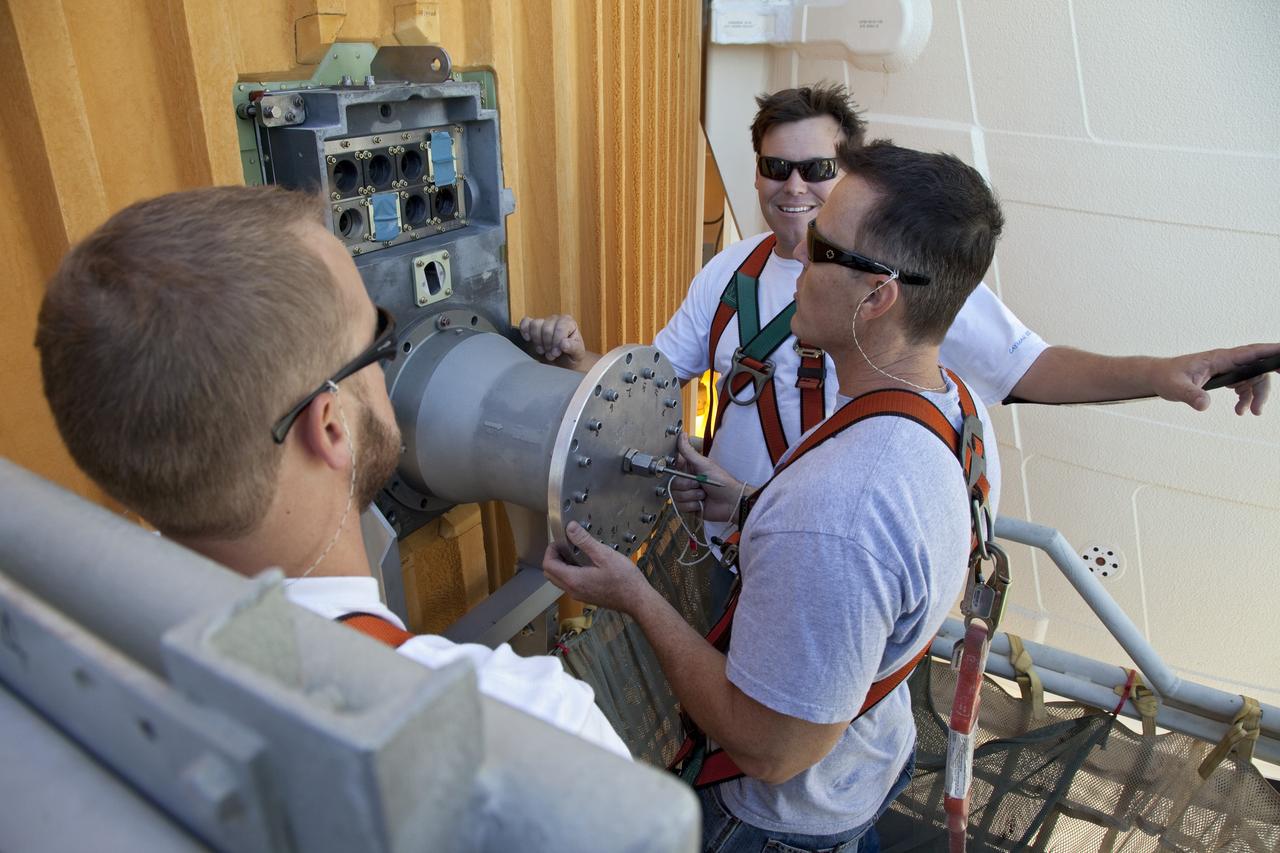
CAPE CANAVERAL, Fla. -- On Launch Pad 39A at NASA's Kennedy Space Center in Florida, workers install a new 7-inch quick disconnect on the ground umbilical carrier plate (GUCP) of space shuttle Discovery's external fuel tank. A hydrogen gas leak at that location during tanking for Discovery's STS-133 mission to the International Space Station caused the launch attempt to be scrubbed Nov. 5. The GUCP is the overboard vent to the pad and the flame stack where the excess hydrogen is burned off. For more information on STS-133, visit www.nasa.gov/mission_pages/shuttle/shuttlemissions/sts133/. Photo credit: NASA/Frankie Martin
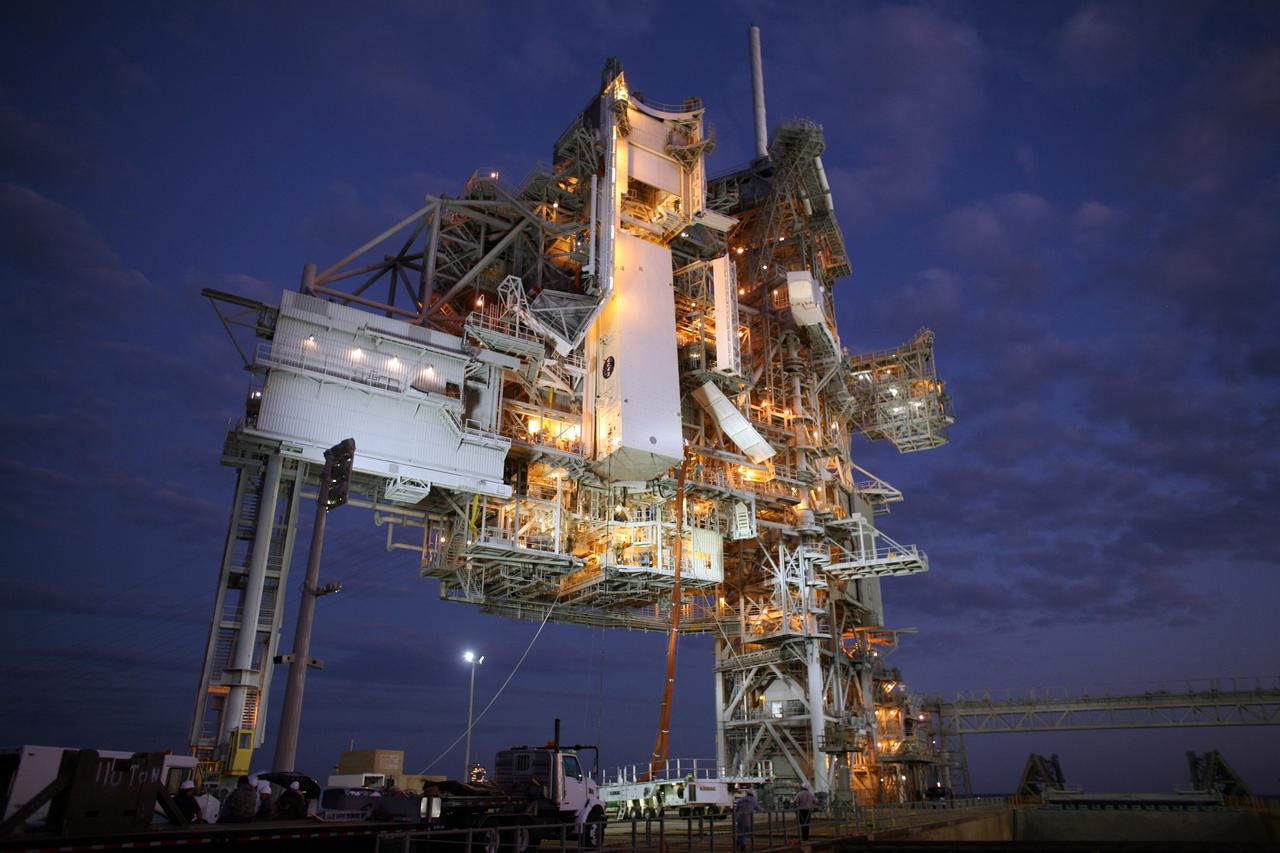
CAPE CANAVERAL, Fla. - On Launch Pad 39A at NASA's Kennedy Space Center in Florida, the payload canister with space shuttle Endeavour's STS-126 mission payload inside is lifted to the Payload Changeout Room, or PCR, above. Inside the canister are the Multi-Purpose Logistics Module Leonardo and the Lightweight Multi-Purpose Experiment Support Structure Carrier. The red umbilical lines attached preserve the environmentally controlled interior. The payload canister will release its cargo into the PCR. Later, the payload will be installed in Endeavour's payload bay. Endeavour is targeted for launch on Nov. 14. Photo credit: NASA/Dimitri Gerondidakis
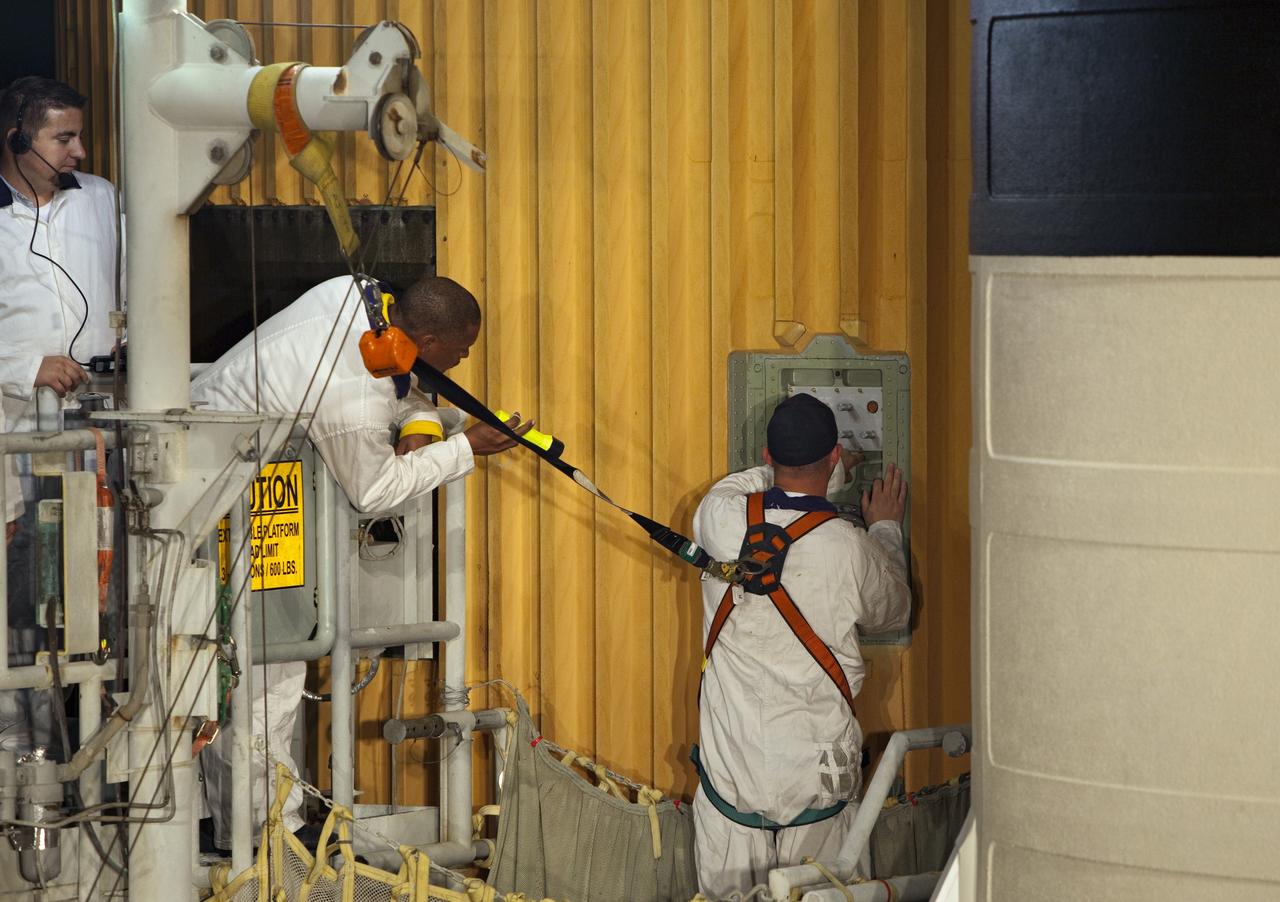
CAPE CANAVERAL, Fla. -- On Launch Pad 39A at NASA's Kennedy Space Center in Florida, workers install a cap over the hole in space shuttle Discovery's external fuel tank where the ground umbilical carrier plate (GUCP) was removed. A hydrogen gas leak at that location during tanking for Discovery's STS-133 mission to the International Space Station caused the launch attempt to be scrubbed Nov. 5. The GUCP will be examined to determine the cause of the hydrogen leak and then repaired. The GUCP is the overboard vent to the pad and the flame stack where the excess hydrogen is burned off. For more information on STS-133, visit www.nasa.gov/mission_pages/shuttle/shuttlemissions/sts133/. Photo credit: NASA/Dimitri Gerondidakis
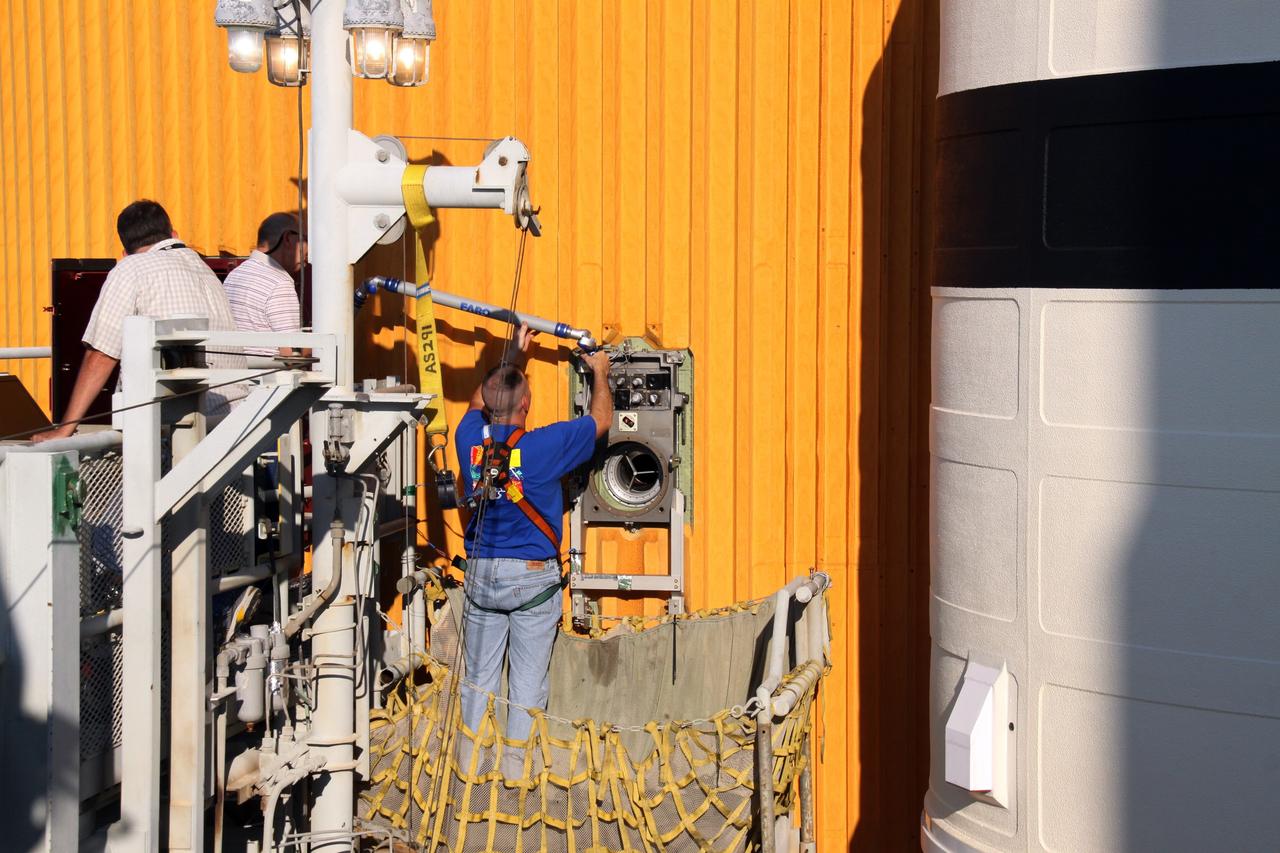
CAPE CANAVERAL, Fla. – On Launch Pad 39A at NASA's Kennedy Space Center in Florida, work continues on removing the Ground Umbilical Carrier Plate, or GUCP, on space shuttle Endeavour's external fuel tank. A hydrogen leak at the location during tanking for the STS-127 mission caused the launch attempts to be scrubbed on June 13 and June 17. The GUCP will be examined to determine the cause of the hydrogen leak and repaired. The GUCP is the overboard vent to the pad and the flame stack where the vented hydrogen is burned off. Endeavour's next launch attempt is targeted for July 11 at 7:39 p.m. EDT. Photo credit: NASA/Jack Pfaller
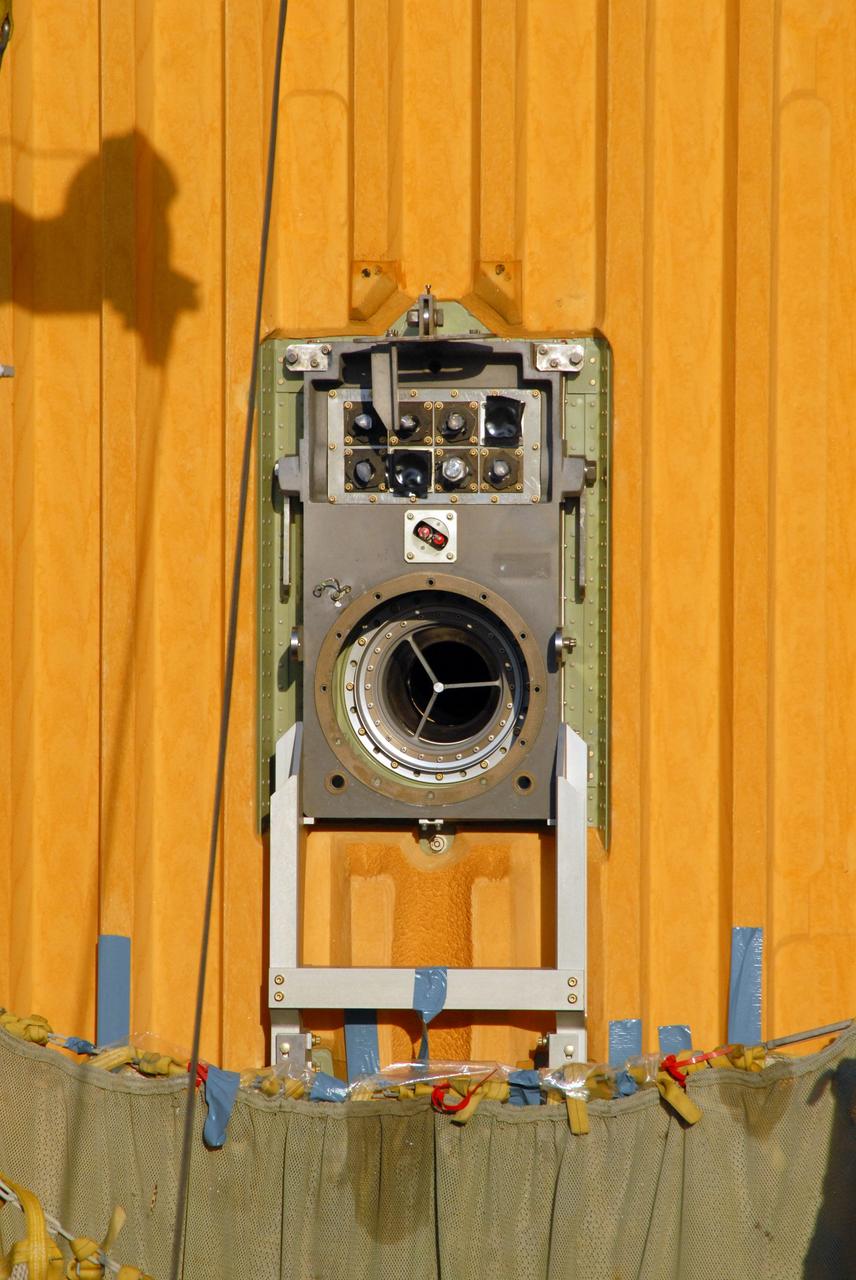
CAPE CANAVERAL, Fla. – Seen in the photo is the Ground Umbilical Carrier Plate, or GUCP, on space shuttle Endeavour's external fuel tank. Workers have removed the 7-inch quick disconnect to change out seals in the internal connection points. A leak of hydrogen at the location during tanking June 12 for the STS-127 mission caused the mission to be scrubbed at 12:26 a.m. June 13. The GUCP is the overboard vent to the pad and the flare stack where the vented hydrogen is burned off. Endeavour is scheduled to launch on its STS-127 mission on June 17 at 5:40 a.m. EDT. Photo credit: NASA/Tim Jacobs
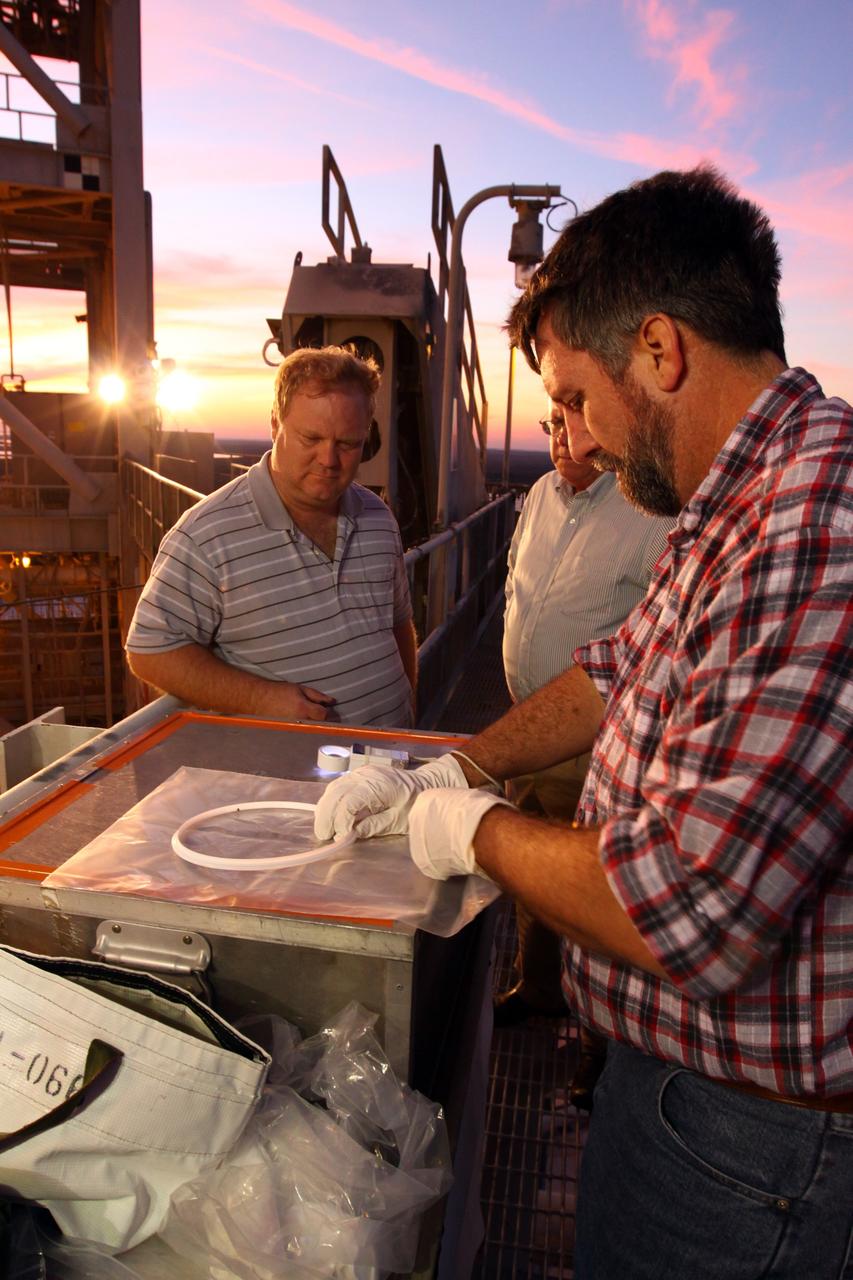
CAPE CANAVERAL, Fla. -- On Launch Pad 39A at NASA's Kennedy Space Center in Florida, workers examine the seal from the ground umbilical carrier plate (GUCP). A hydrogen gas leak at that location on the external fuel tank during tanking for space shuttle Discovery's STS-133 mission to the International Space Station caused the launch attempt to be scrubbed Nov. 5. The GUCP will be examined to determine the cause of the hydrogen leak and then repaired. The GUCP is the overboard vent to the pad and the flame stack where the excess hydrogen is burned off. For more information on STS-133, visit www.nasa.gov/mission_pages/shuttle/shuttlemissions/sts133/. Photo credit: NASA/Jack Pfaller
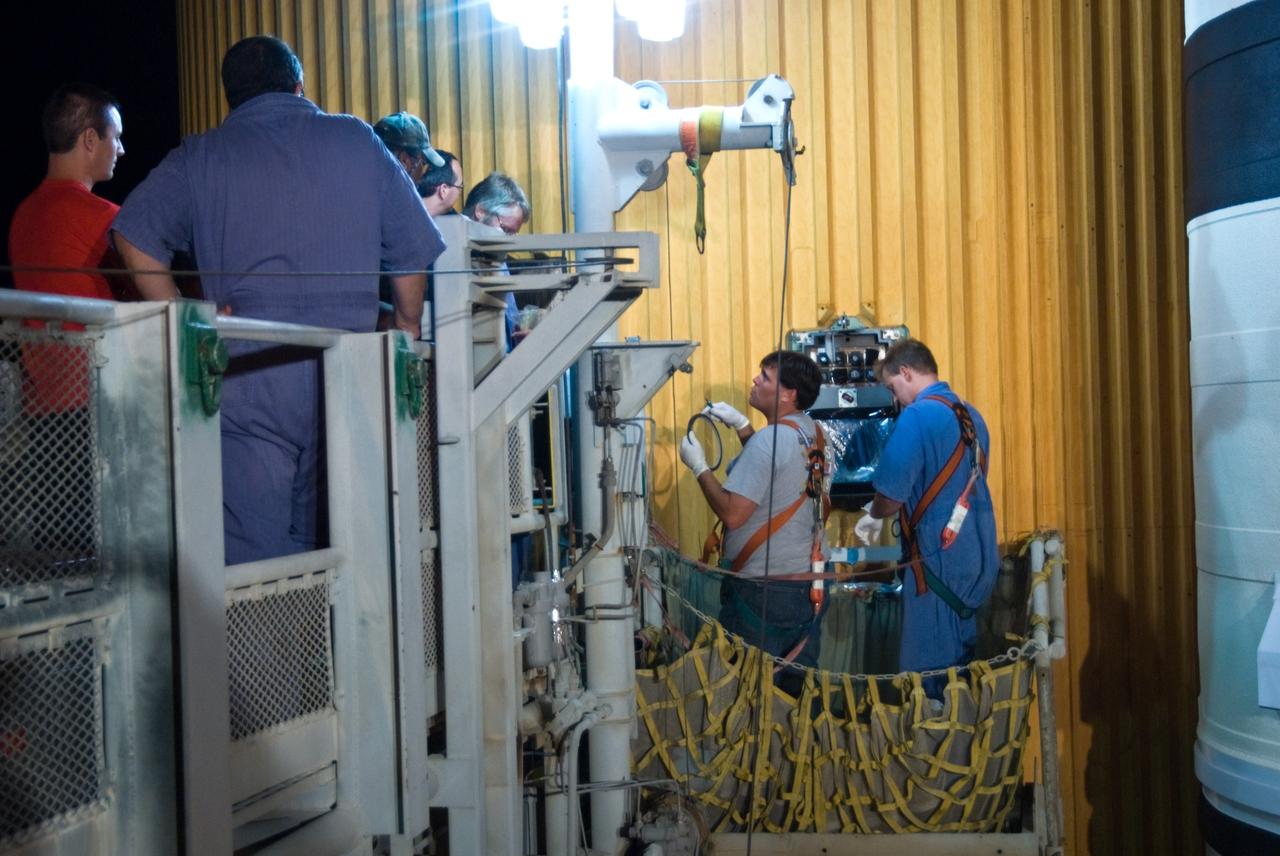
CAPE CANAVERAL, Fla. – On Launch Pad 39A at NASA's Kennedy Space Center in Florida, workers at right repair the Ground Umbilical Carrier Plate, or GUCP. A leak of hydrogen at the location during tanking June 12 for the STS-127 mission caused the mission to be scrubbed at 12:26 a.m. June 13. The GUCP is the overboard vent to the pad and the flare stack where the vented hydrogen is burned off. Endeavour is scheduled to launch on its STS-127 mission on June 17 at 5:40 a.m. EDT. Photo credit: NASA/Tim Jacobs
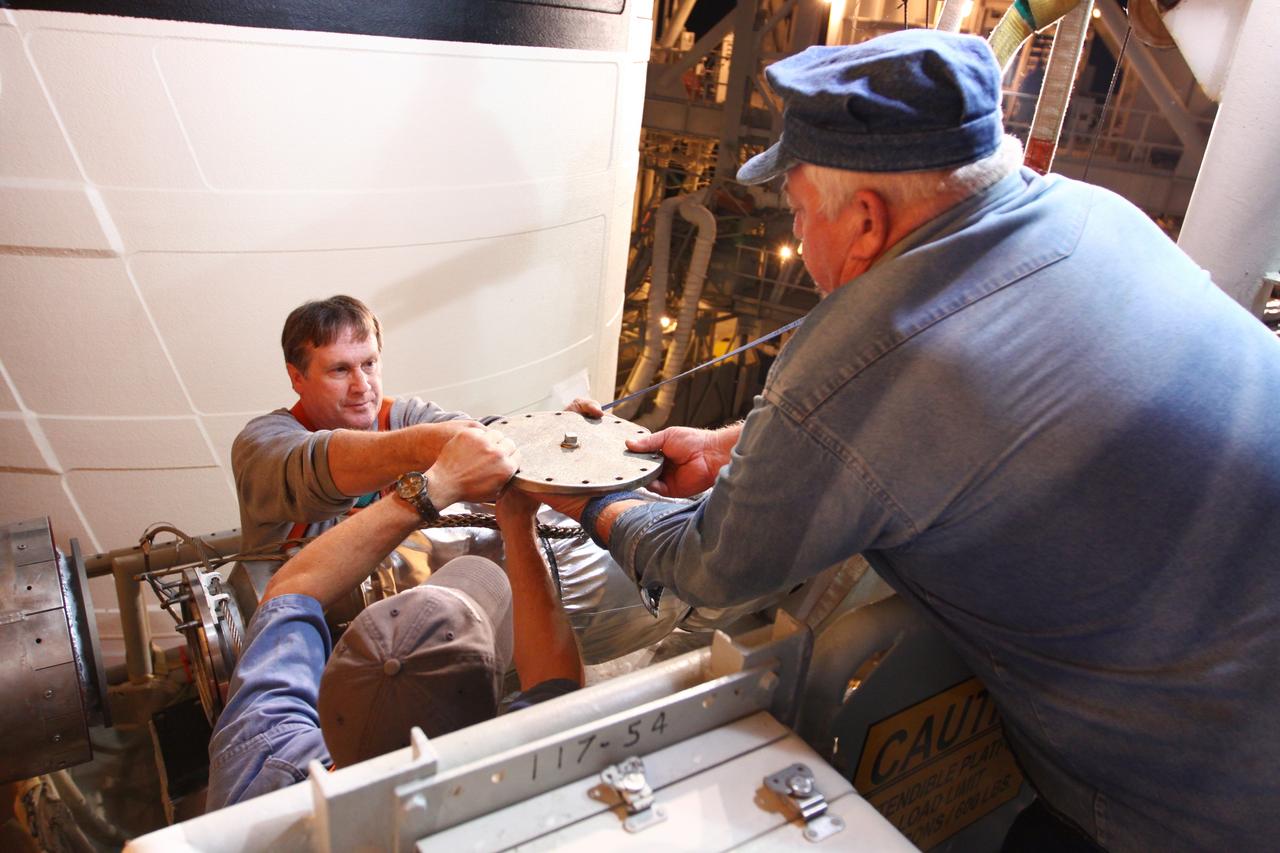
CAPE CANAVERAL, Fla. -- On Launch Pad 39A at NASA's Kennedy Space Center in Florida, technicians reattach the vent line to the ground umbilical carrier plate (GUCP) on space shuttle Discovery's external fuel tank. A hydrogen gas leak at that location during tanking for Discovery's STS-133 mission to the International Space Station caused the launch attempt to be scrubbed Nov. 5. The GUCP is the overboard vent to the pad and the flame stack where the excess hydrogen is burned off. Discovery's next launch attempt is no earlier than Nov. 30 at 4:02 a.m. EST. For more information on STS-133, visit www.nasa.gov/mission_pages/shuttle/shuttlemissions/sts133/. Photo credit: NASA/Ben Smegelsky
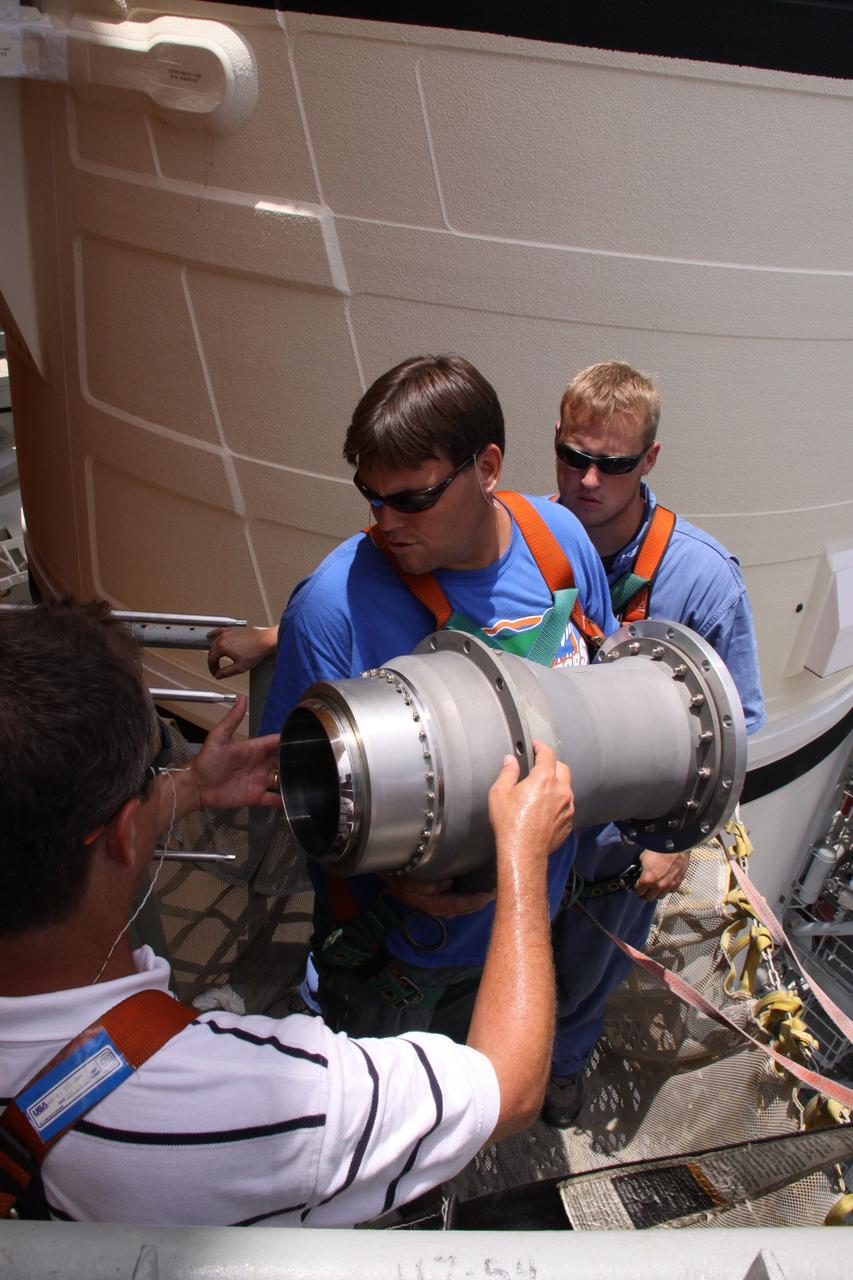
CAPE CANAVERAL, Fla. – On Launch Pad 39A at NASA's Kennedy Space Center in Florida, workers remove the 7-inch quick disconnect from the Ground Umbilical Carrier Plate, or GUCP, on space shuttle Endeavour's external fuel tank. A hydrogen leak at the location during tanking for the STS-127 mission caused the launch attempts to be scrubbed on June 13 and June 17. The GUCP will be examined to determine the cause of the hydrogen leak and repaired. The GUCP is the overboard vent to the pad and the flame stack where the vented hydrogen is burned off. Endeavour's next launch attempt is targeted for July 11 at 7:39 p.m. EDT. Photo credit: NASA/Jack Pfaller
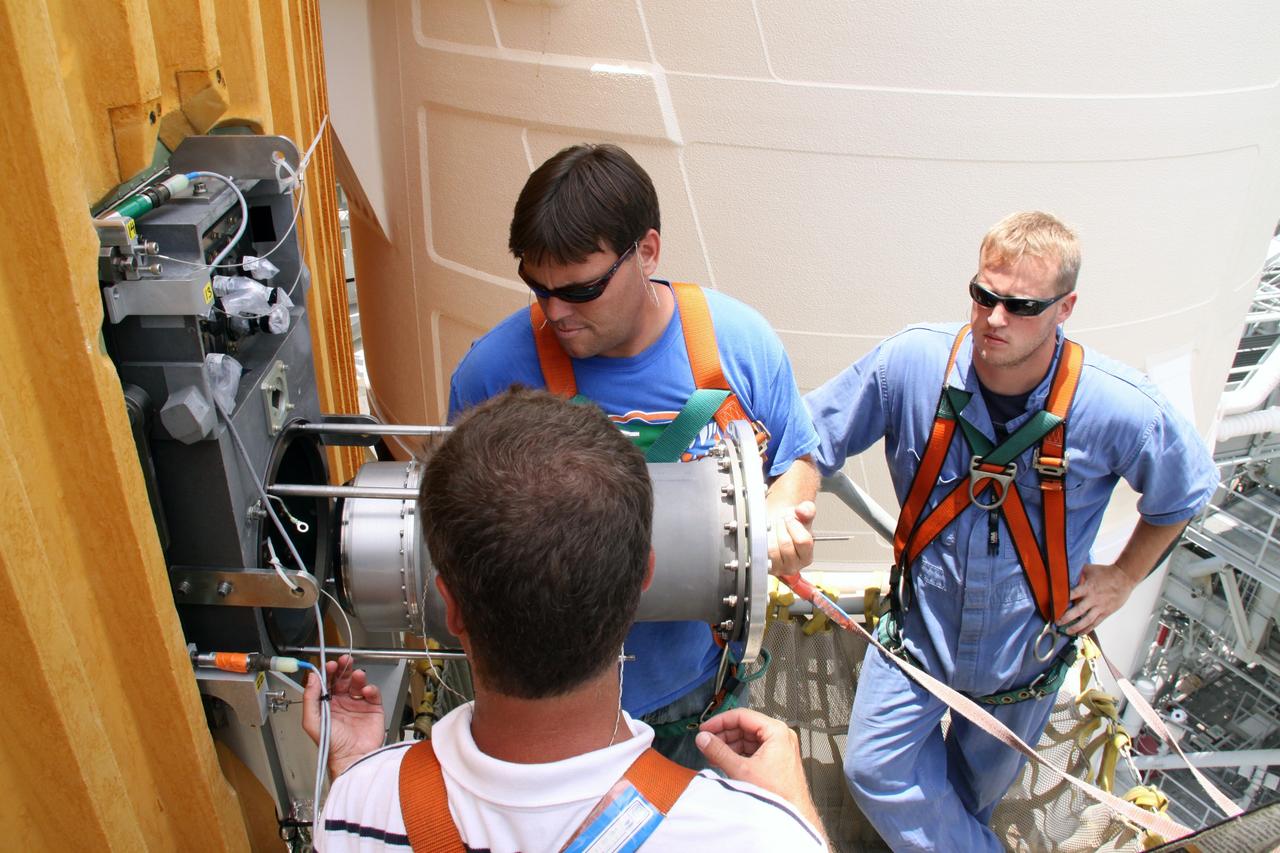
CAPE CANAVERAL, Fla. – On Launch Pad 39A at NASA's Kennedy Space Center in Florida, a worker has removed the 7-inch quick disconnect from the Ground Umbilical Carrier Plate, or GUCP, on space shuttle Endeavour's external fuel tank. A hydrogen leak at the location during tanking for the STS-127 mission caused the launch attempts to be scrubbed on June 13 and June 17. The GUCP will be examined to determine the cause of the hydrogen leak and repaired. The GUCP is the overboard vent to the pad and the flame stack where the vented hydrogen is burned off. Endeavour's next launch attempt is targeted for July 11 at 7:39 p.m. EDT. Photo credit: NASA/Jack Pfaller
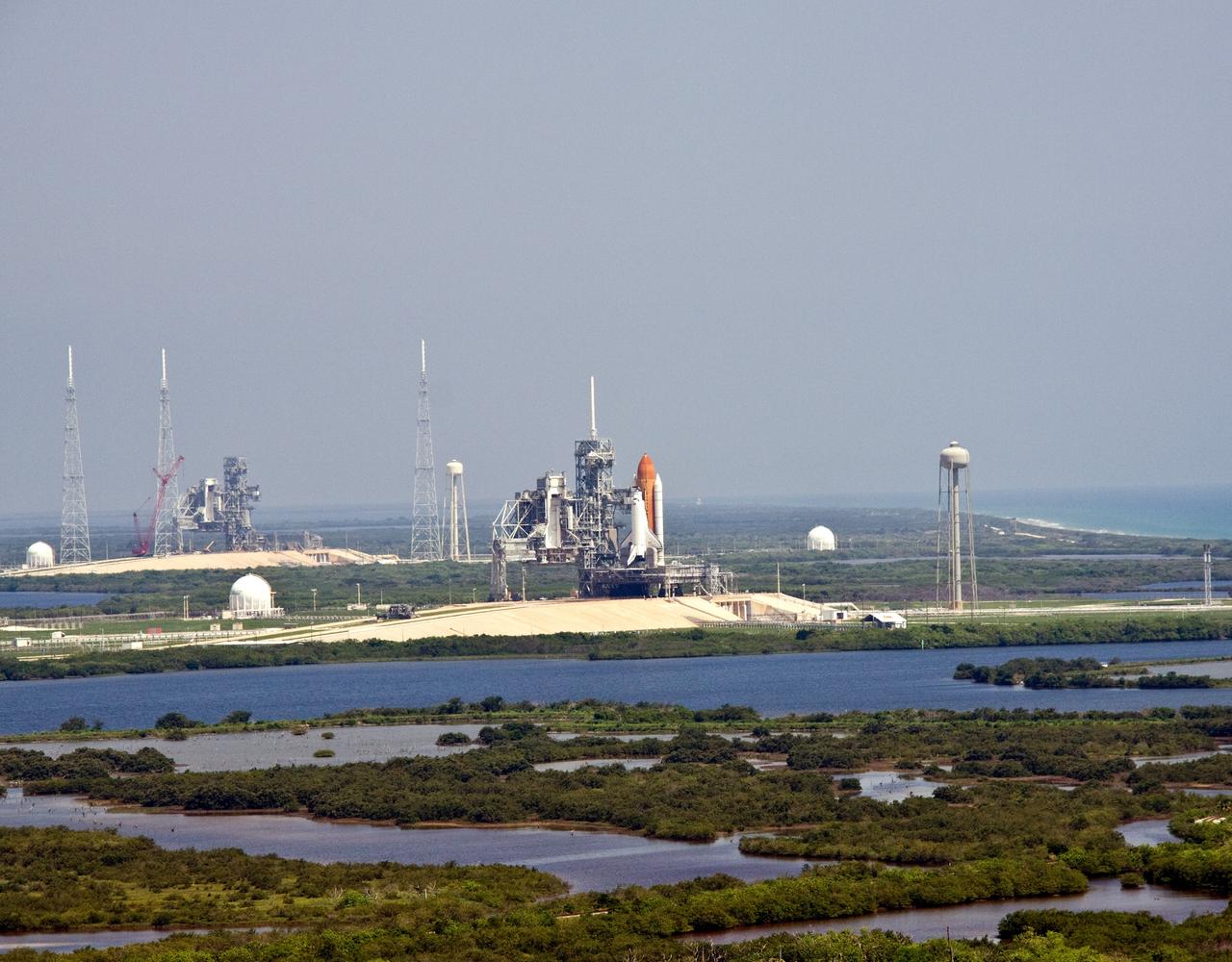
CAPE CANAVERAL, Fla. – Space Shuttle Endeavour (center) is still on launch Pad 39A midday after the launch for the STS-127 mission was scrubbed at 1:55 a.m. EDT June 17 due to a gaseous hydrogen leak at the Ground Umbilical Carrier Plate, the same cause for the June 13 delay. On the left is Launch Pad 39B, surrounded by lightning towers, which will be used for the Constellation Program. Endeavour’s next launch attempt for the mission is targeted for July 11 at 7:39 p.m. EDT. Photo credit: NASA/Jack Pfaller
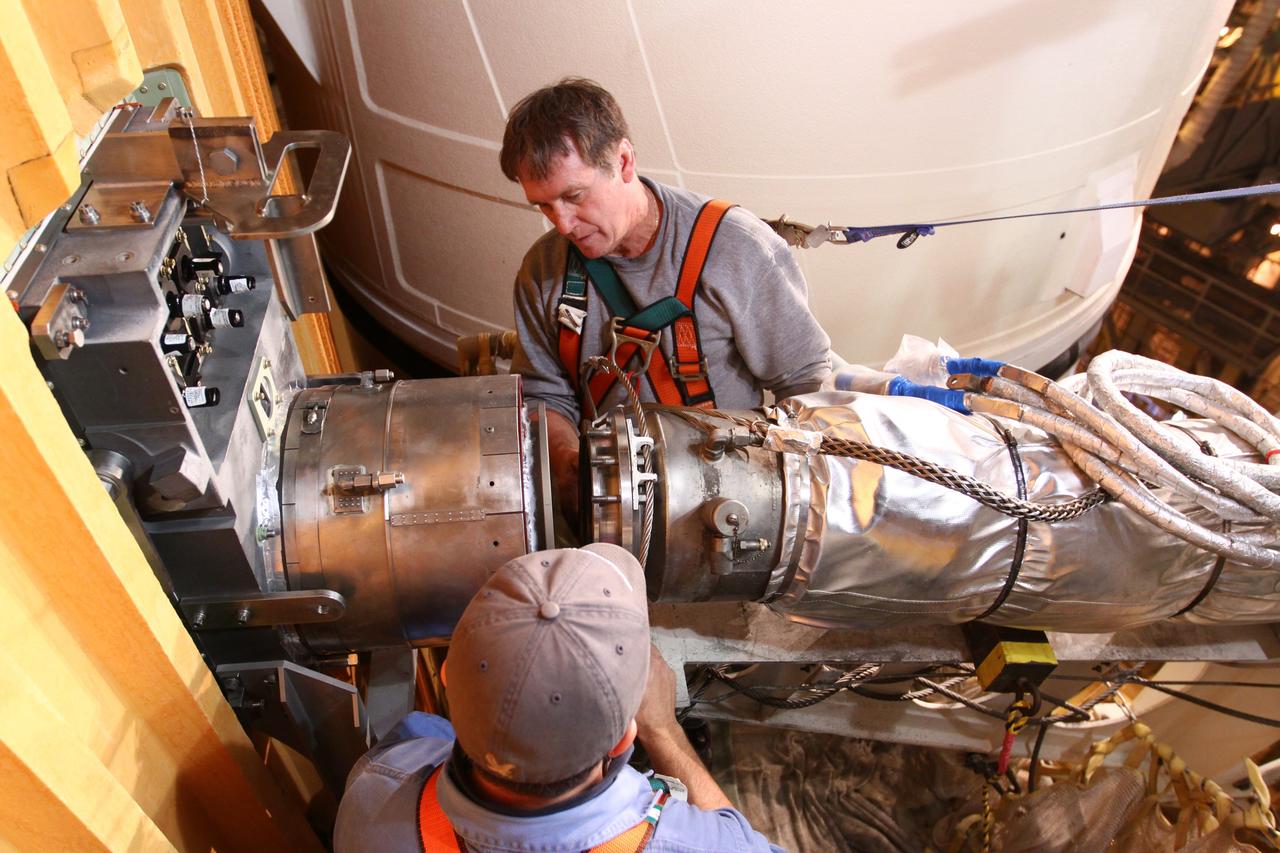
CAPE CANAVERAL, Fla. -- On Launch Pad 39A at NASA's Kennedy Space Center in Florida, technicians reattach the vent line to the ground umbilical carrier plate (GUCP) on space shuttle Discovery's external fuel tank. A hydrogen gas leak at that location during tanking for Discovery's STS-133 mission to the International Space Station caused the launch attempt to be scrubbed Nov. 5. The GUCP is the overboard vent to the pad and the flame stack where the excess hydrogen is burned off. Discovery's next launch attempt is no earlier than Nov. 30 at 4:02 a.m. EST. For more information on STS-133, visit www.nasa.gov/mission_pages/shuttle/shuttlemissions/sts133/. Photo credit: NASA/Ben Smegelsky
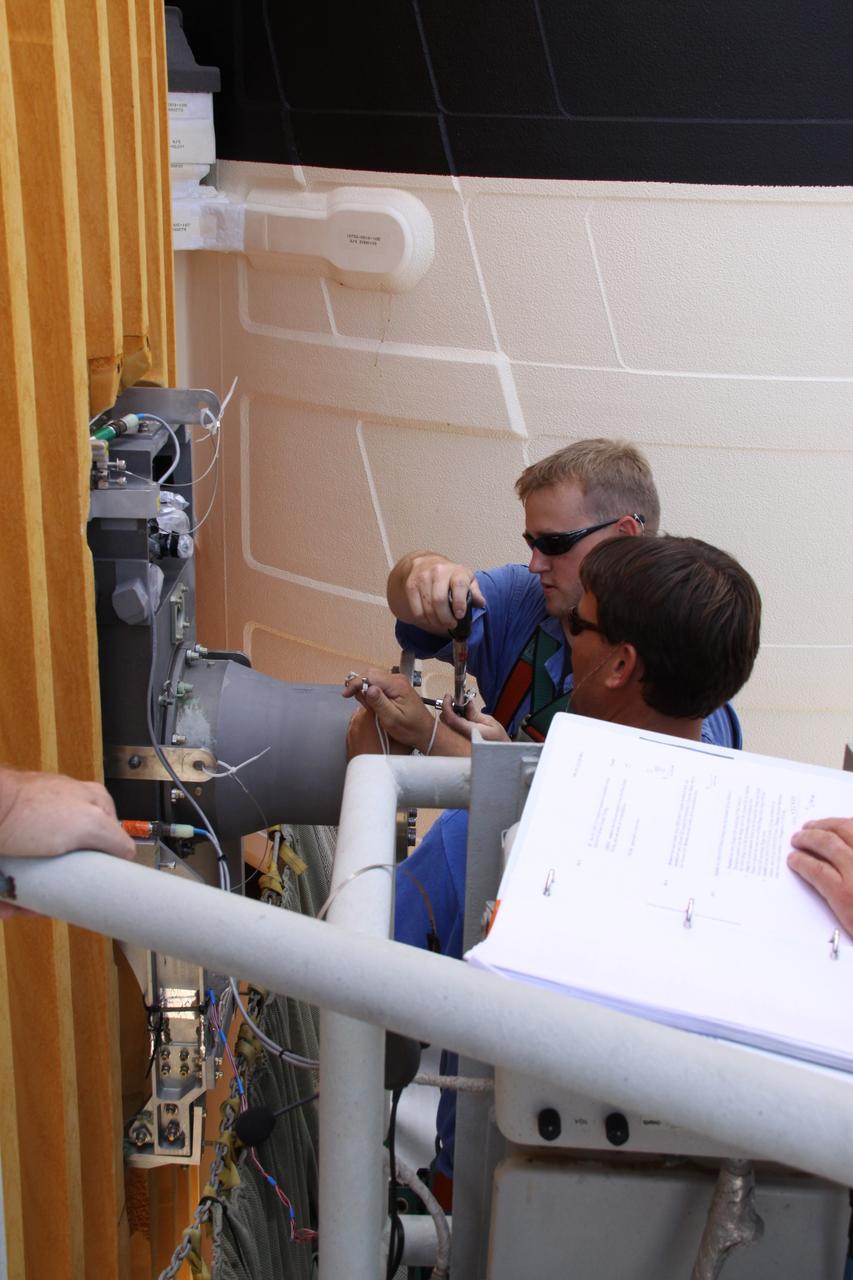
CAPE CANAVERAL, Fla. -- On Launch Pad 39A at NASA's Kennedy Space Center in Florida, the ground umbilical carrier plate (GUCP) is ready to be examined. A hydrogen gas leak at that location on the external fuel tank during tanking for space shuttle Discovery's STS-133 mission to the International Space Station caused the launch attempt to be scrubbed Nov. 5. The GUCP will be examined to determine the cause of the hydrogen leak and then repaired. The GUCP is the overboard vent to the pad and the flame stack where the excess hydrogen is burned off. For more information on STS-133, visit www.nasa.gov/mission_pages/shuttle/shuttlemissions/sts133/. Photo credit: NASA/Dimitri Gerondidakis
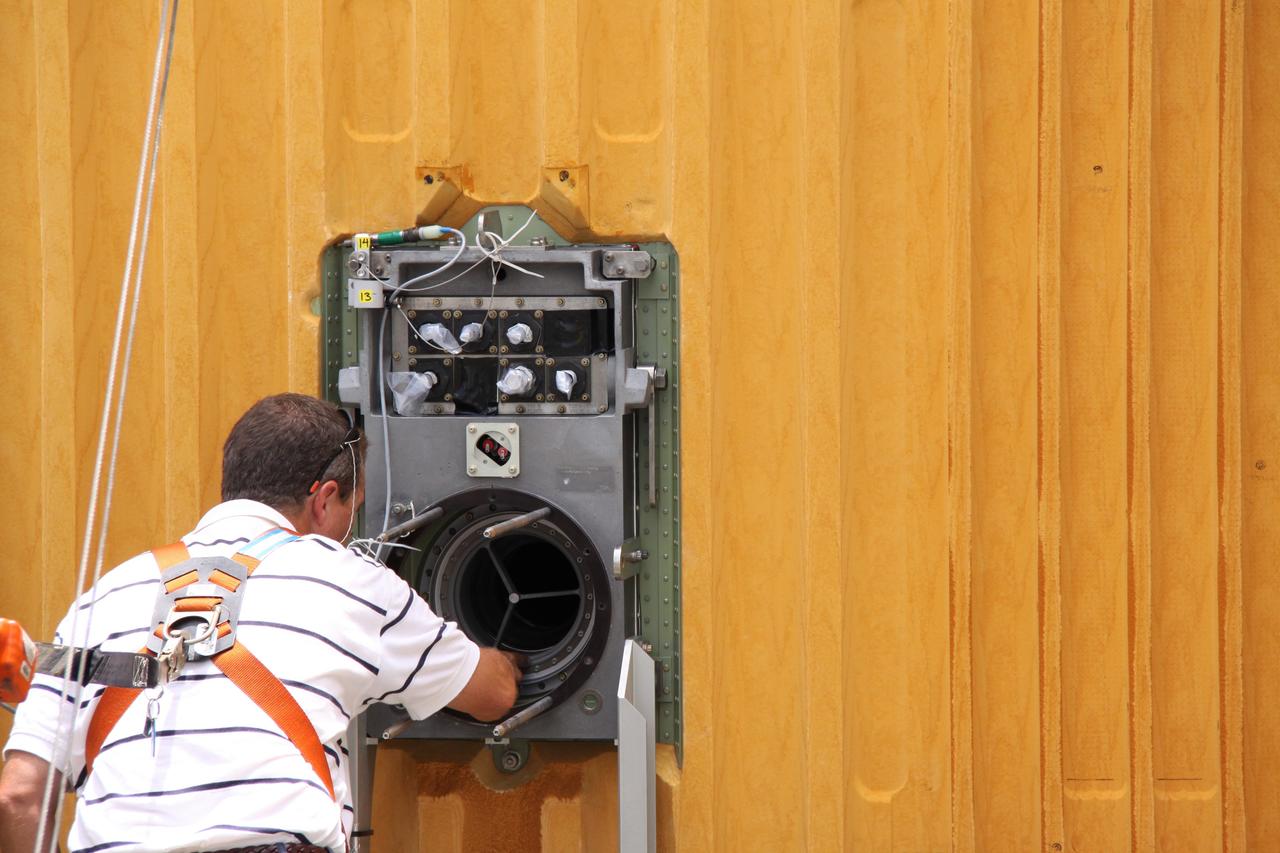
CAPE CANAVERAL, Fla. – On Launch Pad 39A at NASA's Kennedy Space Center in Florida, workers remove the 7-inch quick disconnect on the Ground Umbilical Carrier Plate, or GUCP, on space shuttle Endeavour's external fuel tank. A hydrogen leak at the location during tanking for the STS-127 mission caused the launch attempts to be scrubbed on June 13 and June 17. The GUCP will be examined to determine the cause of the hydrogen leak and repaired. The GUCP is the overboard vent to the pad and the flame stack where the vented hydrogen is burned off. Endeavour's next launch attempt is targeted for July 11 at 7:39 p.m. EDT. Photo credit: NASA/Jack Pfaller
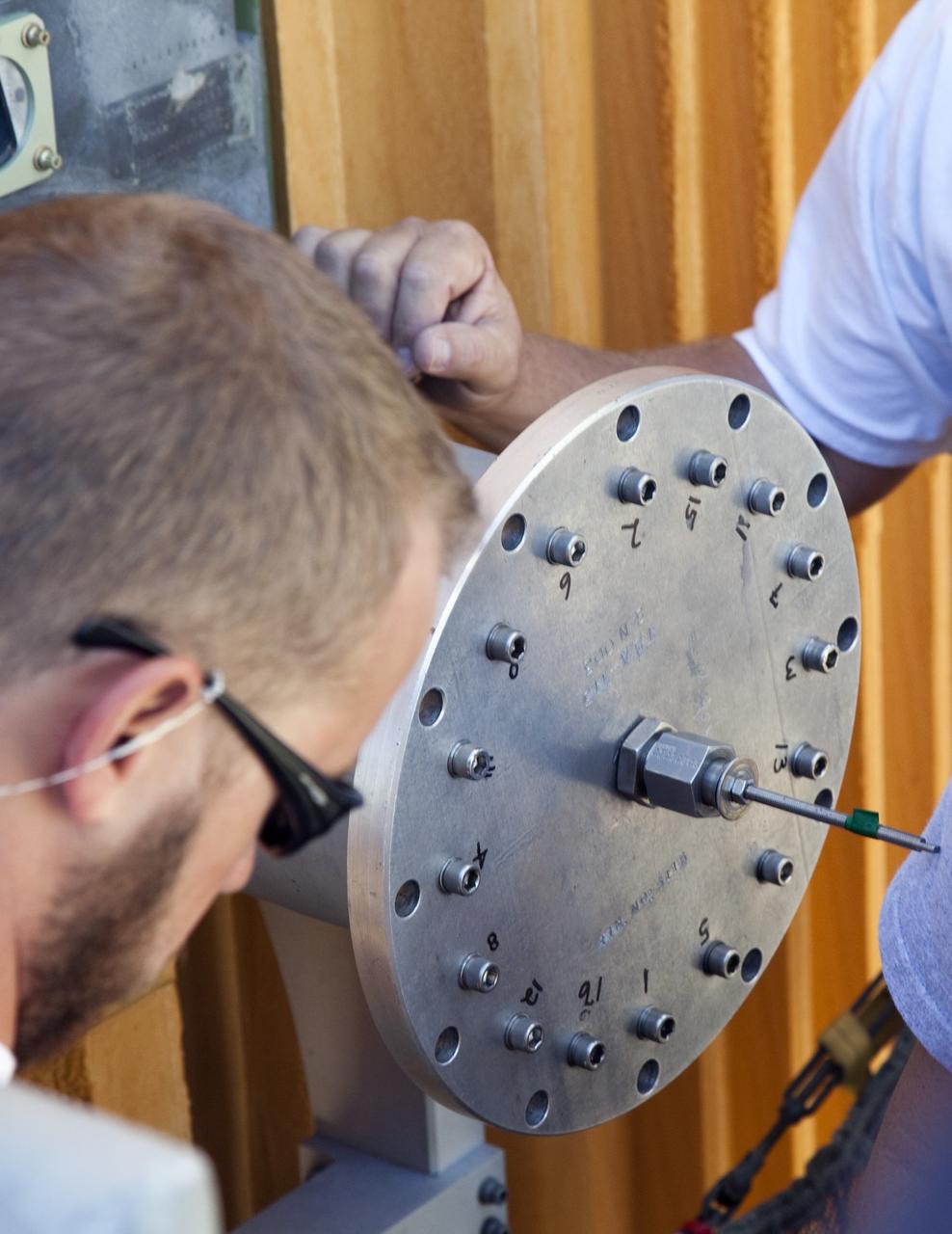
CAPE CANAVERAL, Fla. – On Launch Pad 39A at NASA's Kennedy Space Center in Florida, a worker examines the location of the quick disconnect on the Ground Umbilical Carrier Plate, or GUCP, being removed from space shuttle Endeavour's external fuel tank. A hydrogen leak at the location during tanking for the STS-127 mission caused the launch attempts to be scrubbed on June 13 and June 17. The GUCP will be examined to determine the cause of the hydrogen leak and repaired. The GUCP is the overboard vent to the pad and the flame stack where the vented hydrogen is burned off. Endeavour's next launch attempt is targeted for July 11 at 7:39 p.m. EDT. Photo credit: NASA/Jack Pfaller
CAPE CANAVERAL, Fla. -- On Launch Pad 39A at NASA's Kennedy Space Center in Florida, workers install a new 7-inch quick disconnect on the ground umbilical carrier plate (GUCP) of space shuttle Discovery's external fuel tank. A hydrogen gas leak at that location during tanking for Discovery's STS-133 mission to the International Space Station caused the launch attempt to be scrubbed Nov. 5. The GUCP is the overboard vent to the pad and the flame stack where the excess hydrogen is burned off. For more information on STS-133, visit www.nasa.gov/mission_pages/shuttle/shuttlemissions/sts133/. Photo credit: NASA/Frankie Martin
CAPE CANAVERAL, Fla. -- On Launch Pad 39A at NASA's Kennedy Space Center in Florida, workers prepare to install a new ground umbilical carrier plate (GUCP) on space shuttle Discovery's external fuel tank. A hydrogen gas leak at that location during tanking for Discovery's STS-133 mission to the International Space Station caused the launch attempt to be scrubbed Nov. 5. The GUCP is the overboard vent to the pad and the flame stack where the excess hydrogen is burned off. For more information on STS-133, visit www.nasa.gov/mission_pages/shuttle/shuttlemissions/sts133/. Photo credit: NASA/Troy Cryder
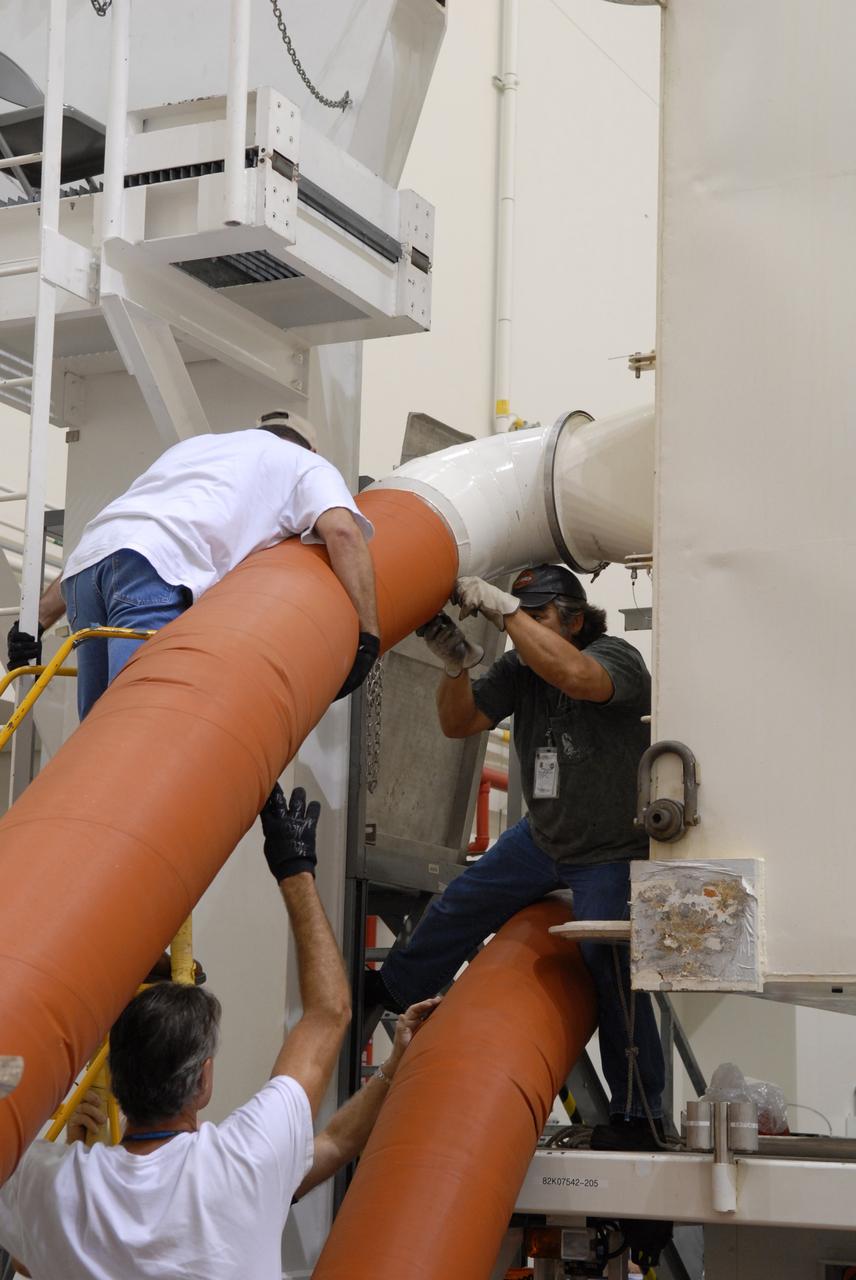
CAPE CANAVERAL, Fla. - In the Canister Rotation Facility at NASA's Kennedy Space Center, workers check the umbilical lines that keep a controlled environment in the payload canister. The canister will be lifted to a vertical position for the trip to Launch Pad 39A. The canister’s cargo consists of four carriers holding various equipment for the STS-125 mission aboard space shuttle Atlantis to service NASA’s Hubble Space Telescope. At the pad, the cargo will be moved into the Payload Changeout Room. The changeout room is the enclosed, environmentally controlled portion of the rotating service structure that supports cargo delivery to the pad and subsequent vertical installation into the shuttle’s payload bay. Launch of Atlantis is targeted for Oct. 10. Photo credit: NASA/Jack Pfaller
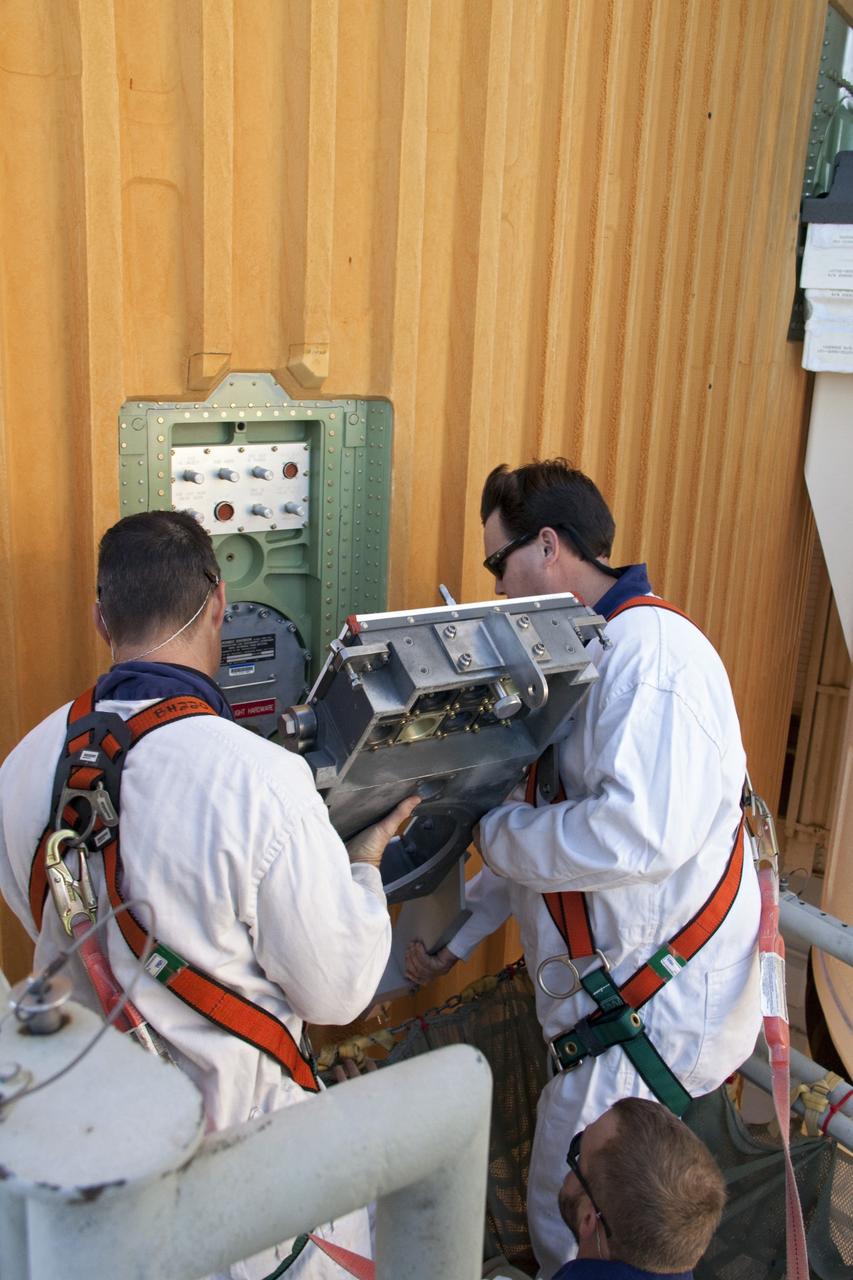
CAPE CANAVERAL, Fla. -- On Launch Pad 39A at NASA's Kennedy Space Center in Florida, workers begin to install a new ground umbilical carrier plate (GUCP) on space shuttle Discovery's external fuel tank. A hydrogen gas leak at that location during tanking for Discovery's STS-133 mission to the International Space Station caused the launch attempt to be scrubbed Nov. 5. The GUCP is the overboard vent to the pad and the flame stack where the excess hydrogen is burned off. For more information on STS-133, visit www.nasa.gov/mission_pages/shuttle/shuttlemissions/sts133/. Photo credit: NASA/Troy Cryder
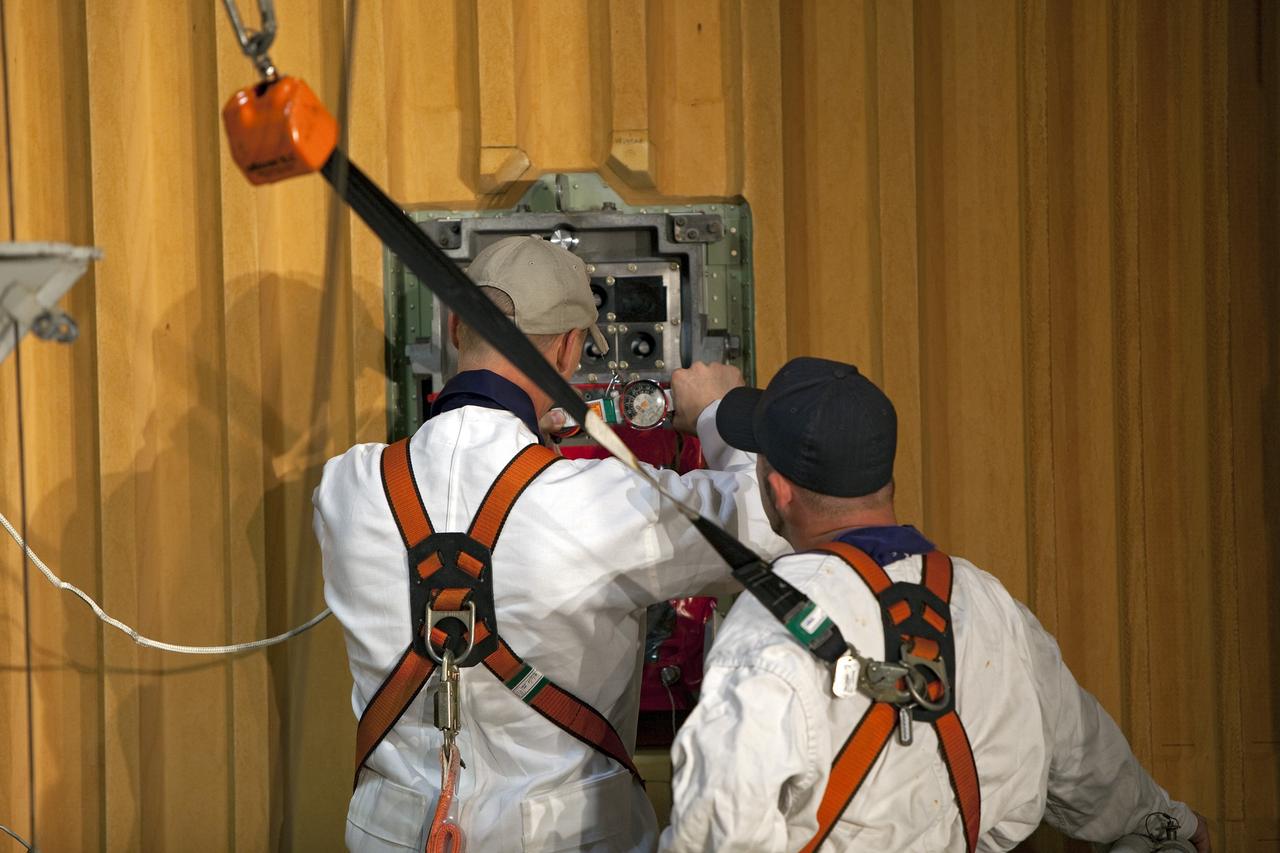
CAPE CANAVERAL, Fla. -- On Launch Pad 39A at NASA's Kennedy Space Center in Florida, workers prepare to remove the ground umbilical carrier plate (GUCP) from space shuttle Discovery's external fuel tank. A hydrogen gas leak at that location during tanking for Discovery's STS-133 mission to the International Space Station caused the launch attempt to be scrubbed Nov. 5. The GUCP will be examined to determine the cause of the hydrogen leak and then repaired. The GUCP is the overboard vent to the pad and the flame stack where the excess hydrogen is burned off. For more information on STS-133, visit www.nasa.gov/mission_pages/shuttle/shuttlemissions/sts133/. Photo credit: NASA/Dimitri Gerondidakis
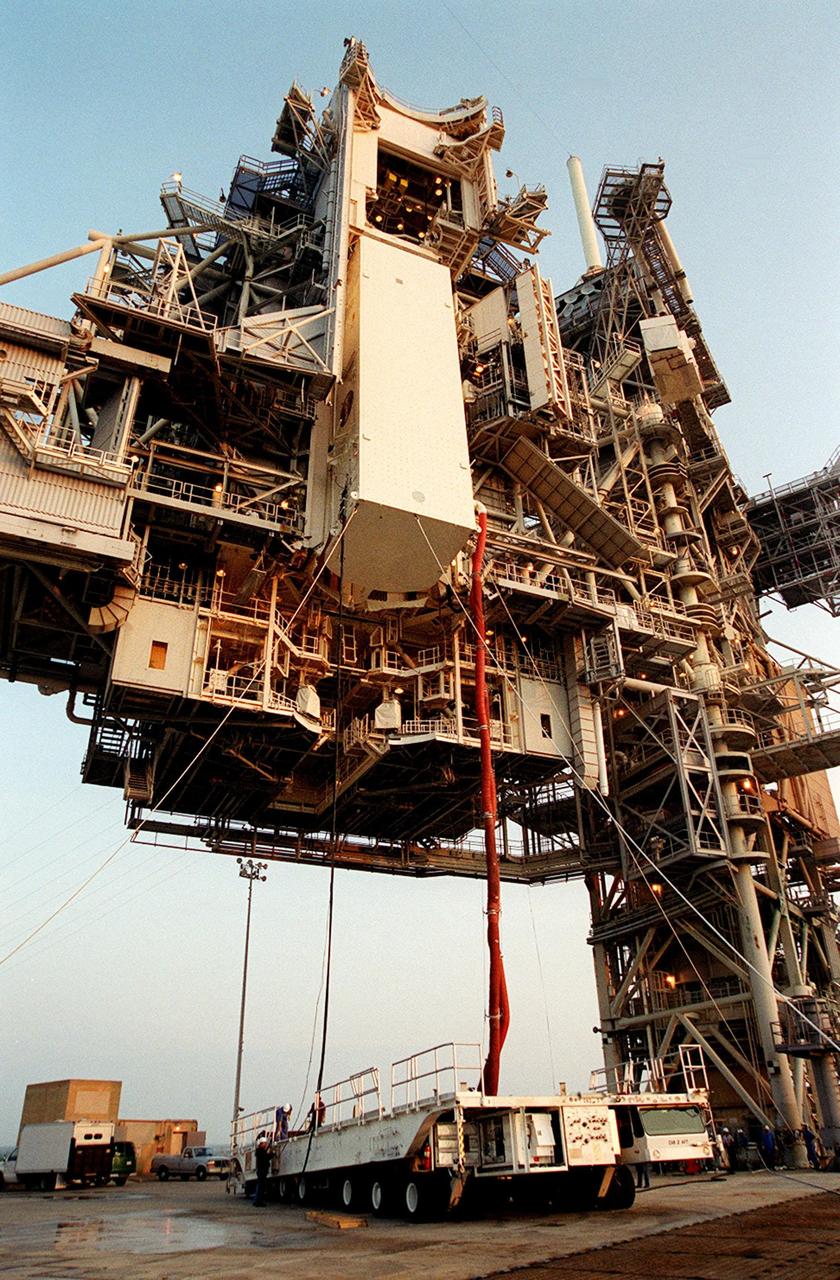
KENNEDY SPACE CENTER, FLA. -- With umbilical lines still attached, the payload canister is hoisted up alongside the Rotating Service Structure (RSS) on Launch Pad 39B. The canister with its cargo of the SPACEHAB module and Integrated Cargo Carrier will be moved into the Payload Changeout Room (PCR) near the top of the RSS for transfer to the payload bay of Shuttle Atlantis for mission STS-106. The PCR provides an environmentally controlled facility for the transfer. The 11-day mission to the International Space Station will include service module support tasks on orbit, transfer supplies and outfit the Space Station for the first long-duration crew. Atlantis is scheduled to launch Sept. 8 at 8:31 a.m. EDT
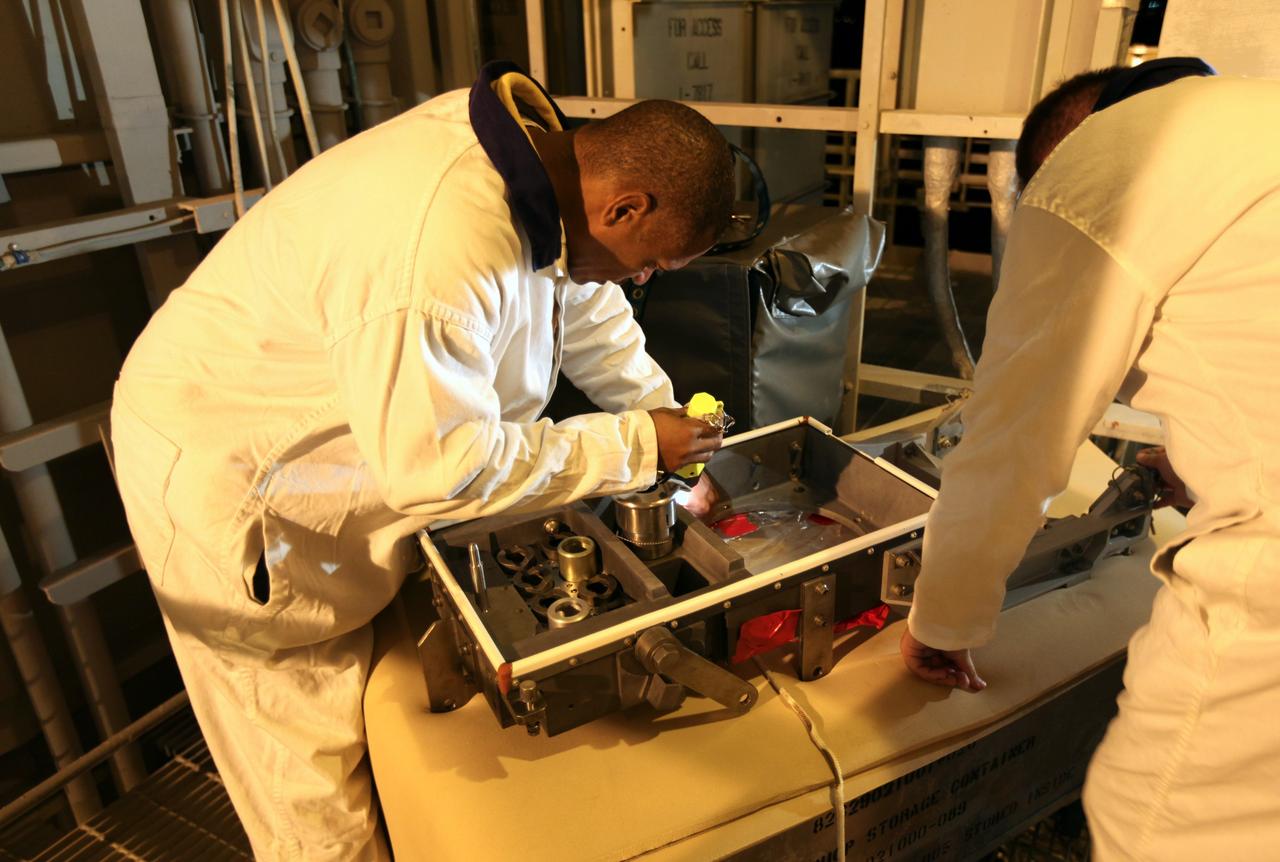
CAPE CANAVERAL, Fla. -- On Launch Pad 39A at NASA's Kennedy Space Center in Florida, workers examine the ground umbilical carrier plate (GUCP). A hydrogen gas leak at that location on the external fuel tank during tanking for space shuttle Discovery's STS-133 mission to the International Space Station caused the launch attempt to be scrubbed Nov. 5. The GUCP will be examined to determine the cause of the hydrogen leak and then repaired. The GUCP is the overboard vent to the pad and the flame stack where the excess hydrogen is burned off. For more information on STS-133, visit www.nasa.gov/mission_pages/shuttle/shuttlemissions/sts133/. Photo credit: NASA/Dimitri Gerondidakis
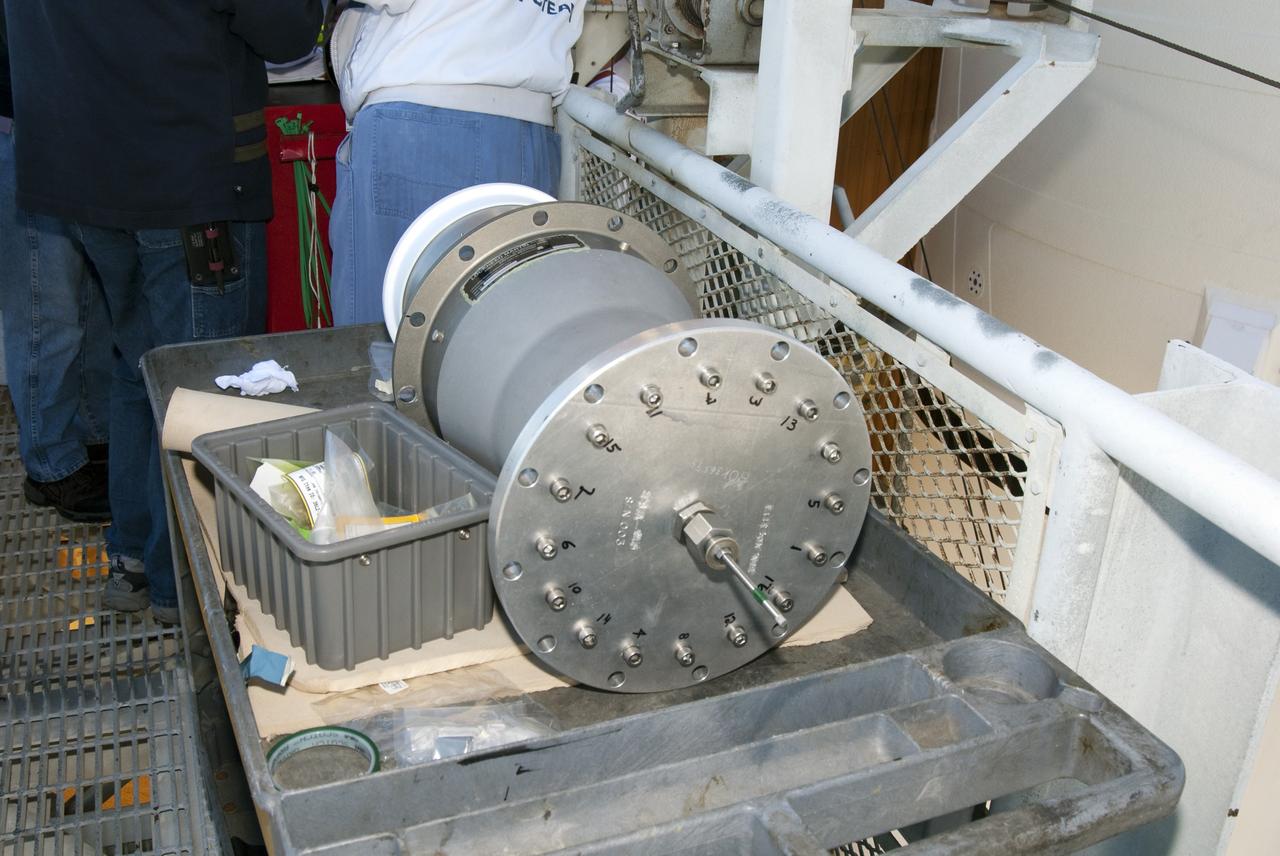
CAPE CANAVERAL, Fla. -- On Launch Pad 39A at NASA's Kennedy Space Center in Florida, workers prepare to install this new 7-inch quick disconnect on the ground umbilical carrier plate (GUCP) of space shuttle Discovery's external fuel tank. A hydrogen gas leak at that location during tanking for Discovery's STS-133 mission to the International Space Station caused the launch attempt to be scrubbed Nov. 5. The GUCP is the overboard vent to the pad and the flame stack where the excess hydrogen is burned off. For more information on STS-133, visit www.nasa.gov/mission_pages/shuttle/shuttlemissions/sts133/. Photo credit: NASA/Charisse Nahser
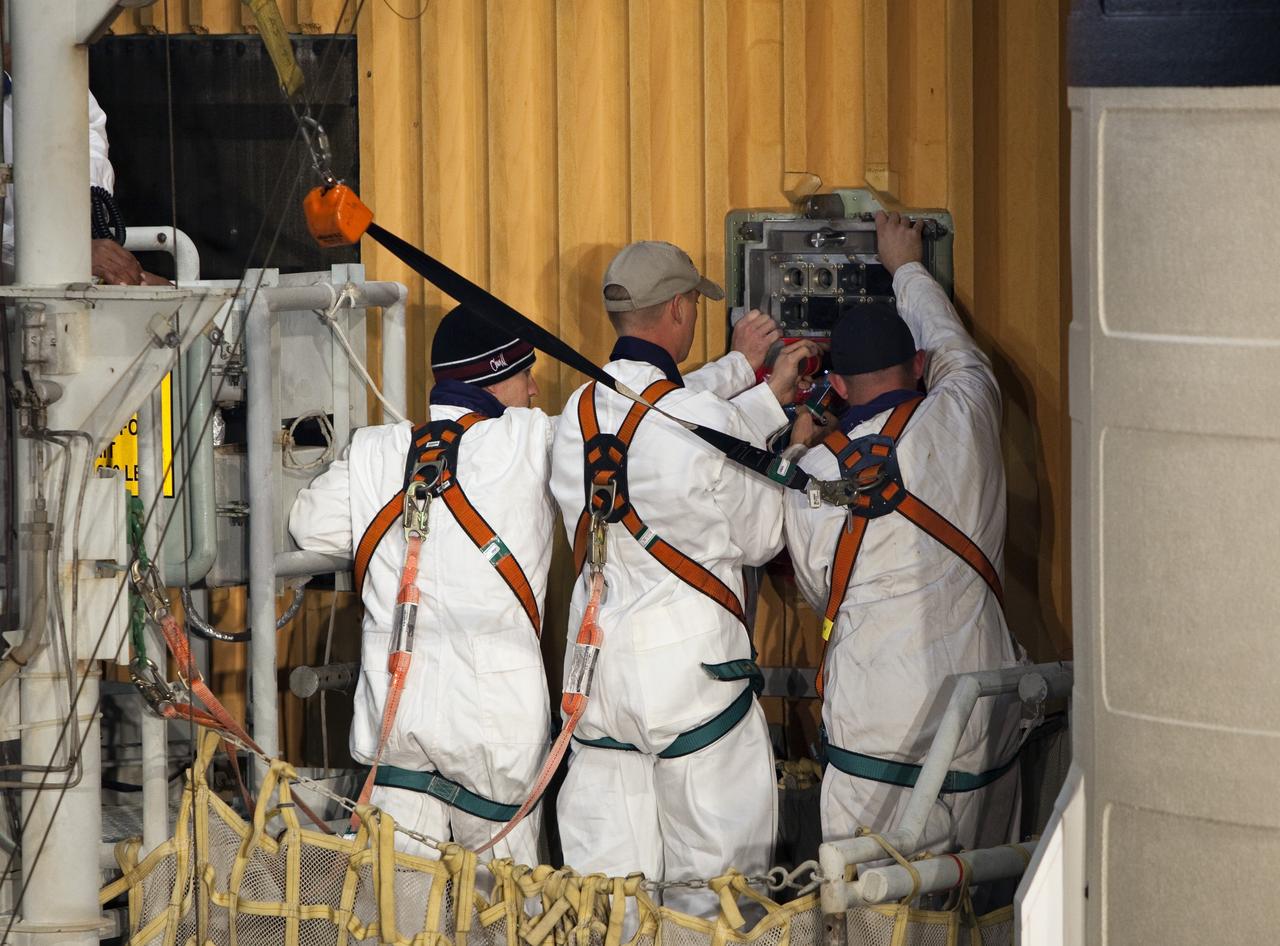
CAPE CANAVERAL, Fla. -- On Launch Pad 39A at NASA's Kennedy Space Center in Florida, workers begin to remove the ground umbilical carrier plate (GUCP) from space shuttle Discovery's external fuel tank. A hydrogen gas leak at that location during tanking for Discovery's STS-133 mission to the International Space Station caused the launch attempt to be scrubbed Nov. 5. The GUCP will be examined to determine the cause of the hydrogen leak and then repaired. The GUCP is the overboard vent to the pad and the flame stack where the excess hydrogen is burned off. For more information on STS-133, visit www.nasa.gov/mission_pages/shuttle/shuttlemissions/sts133/. Photo credit: NASA/Dimitri Gerondidakis
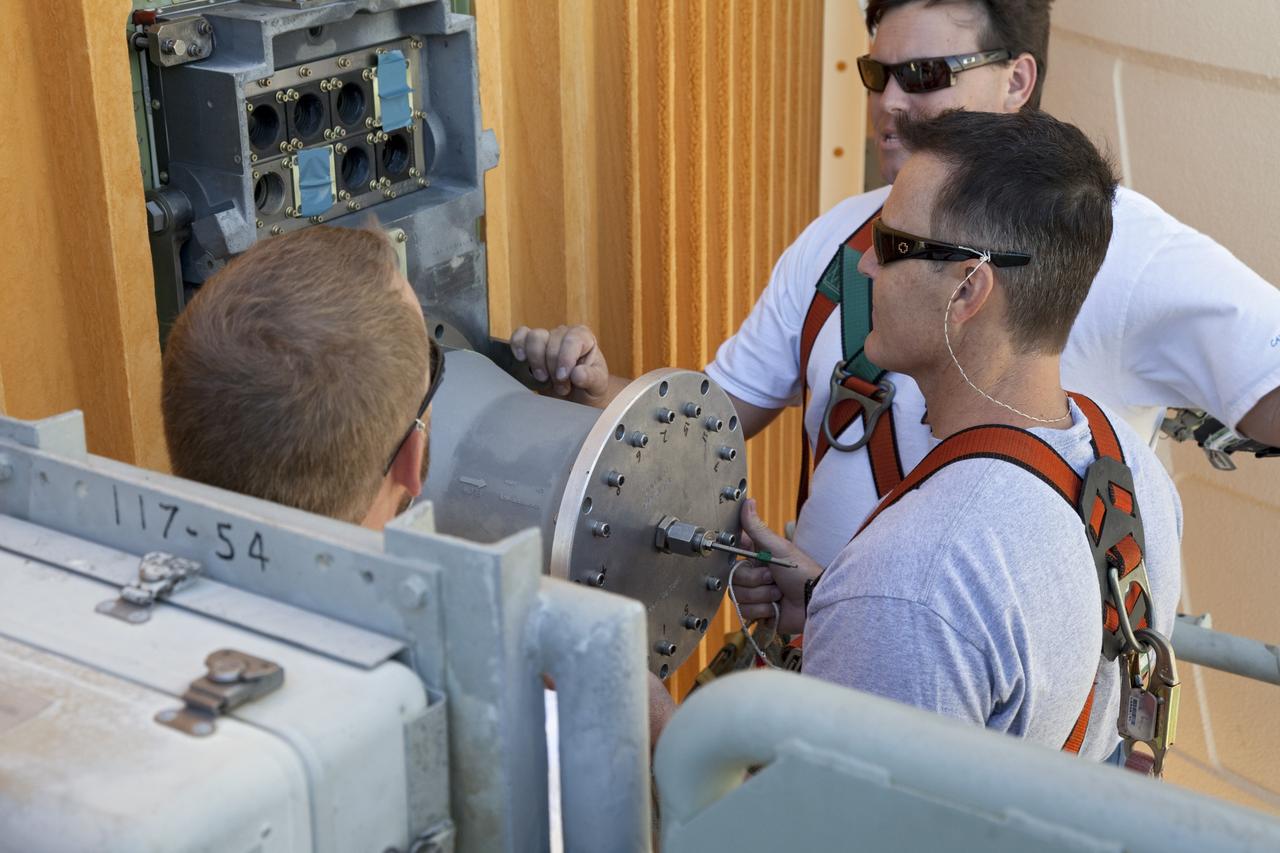
CAPE CANAVERAL, Fla. -- On Launch Pad 39A at NASA's Kennedy Space Center in Florida, workers install a new 7-inch quick disconnect on the ground umbilical carrier plate (GUCP) of space shuttle Discovery's external fuel tank. A hydrogen gas leak at that location during tanking for Discovery's STS-133 mission to the International Space Station caused the launch attempt to be scrubbed Nov. 5. The GUCP is the overboard vent to the pad and the flame stack where the excess hydrogen is burned off. For more information on STS-133, visit www.nasa.gov/mission_pages/shuttle/shuttlemissions/sts133/. Photo credit: NASA/Frankie Martin
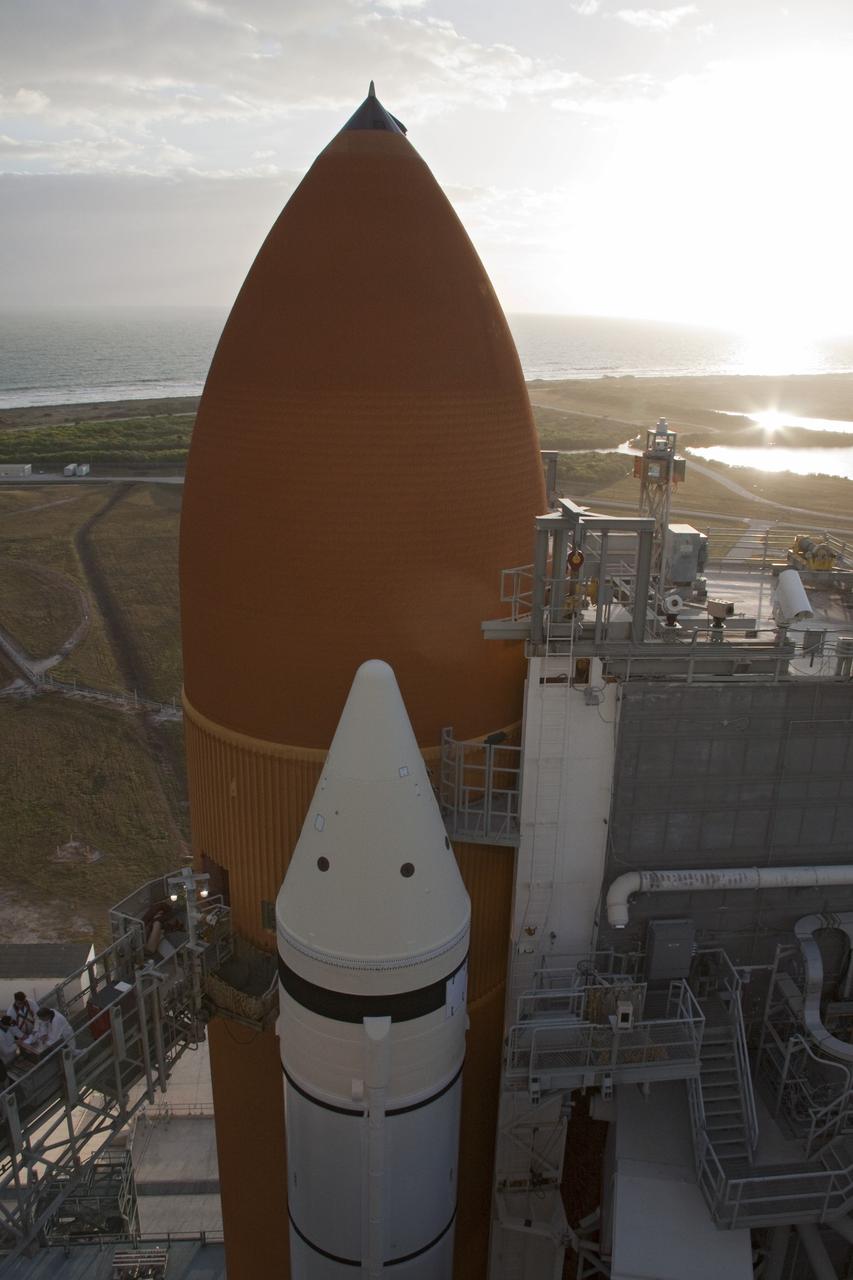
CAPE CANAVERAL, Fla. -- On Launch Pad 39A at NASA's Kennedy Space Center in Florida, workers prepare to install a new ground umbilical carrier plate (GUCP) on space shuttle Discovery's external fuel tank. A hydrogen gas leak at that location during tanking for Discovery's STS-133 mission to the International Space Station caused the launch attempt to be scrubbed Nov. 5. The GUCP is the overboard vent to the pad and the flame stack where the excess hydrogen is burned off. For more information on STS-133, visit www.nasa.gov/mission_pages/shuttle/shuttlemissions/sts133/. Photo credit: NASA/Troy Cryder
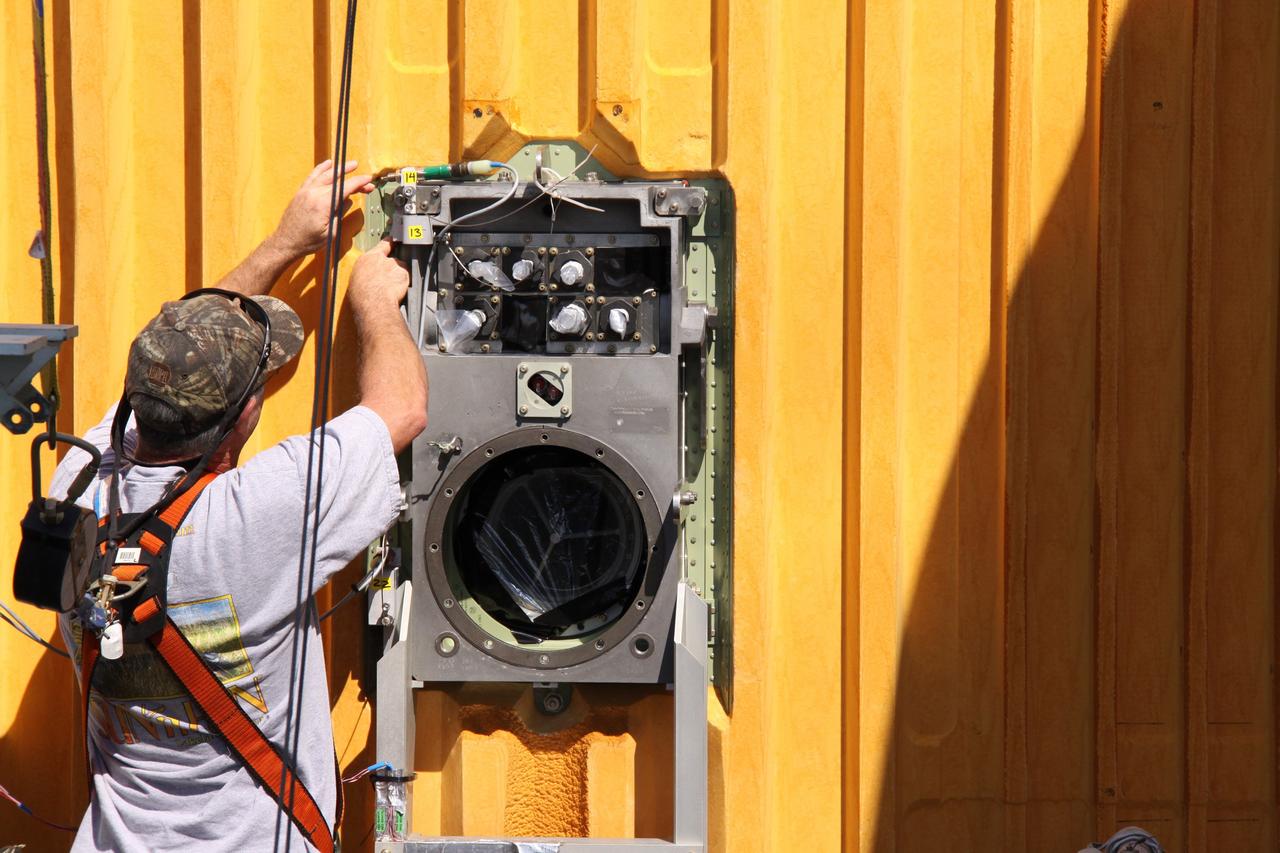
CAPE CANAVERAL, Fla. – On Launch Pad 39A at NASA's Kennedy Space Center in Florida, workers prepare to remove the seal from the Ground Umbilical Carrier Plate, or GUCP, on space shuttle Endeavour's external fuel tank. A hydrogen leak at the location during tanking for the STS-127 mission caused the launch attempts to be scrubbed on June 13 and June 17. The GUCP will be examined to determine the cause of the hydrogen leak and repaired. The GUCP is the overboard vent to the pad and the flame stack where the vented hydrogen is burned off. Endeavour's next launch attempt is targeted for July 11 at 7:39 p.m. EDT. Photo credit: NASA/Jack Pfaller

CAPE CANAVERAL, Fla. -- On Launch Pad 39A at NASA's Kennedy Space Center in Florida, workers prepare to remove the ground umbilical carrier plate (GUCP) from space shuttle Discovery's external fuel tank. A hydrogen gas leak at that location during tanking for Discovery's STS-133 mission to the International Space Station caused the launch attempt to be scrubbed Nov. 5. The GUCP will be examined to determine the cause of the hydrogen leak and then repaired. The GUCP is the overboard vent to the pad and the flame stack where the excess hydrogen is burned off. For more information on STS-133, visit www.nasa.gov/mission_pages/shuttle/shuttlemissions/sts133/. Photo credit: NASA/Dimitri Gerondidakis

CAPE CANAVERAL, Fla. -- On Launch Pad 39A at NASA's Kennedy Space Center in Florida, workers will focus their attention on the ground umbilical carrier plate (GUCP), which is on space shuttle Discovery's orange external fuel tank at the end of the access arm. A hydrogen gas leak at that location during tanking for Discovery's STS-133 mission to the International Space Station caused the launch attempt to be scrubbed Nov. 5. The GUCP will be examined to determine the cause of the hydrogen leak and then repaired. The GUCP is the overboard vent to the pad and the flame stack where the excess hydrogen is burned off. For more information on STS-133, visit www.nasa.gov/mission_pages/shuttle/shuttlemissions/sts133/. Photo credit: NASA/Jack Pfaller
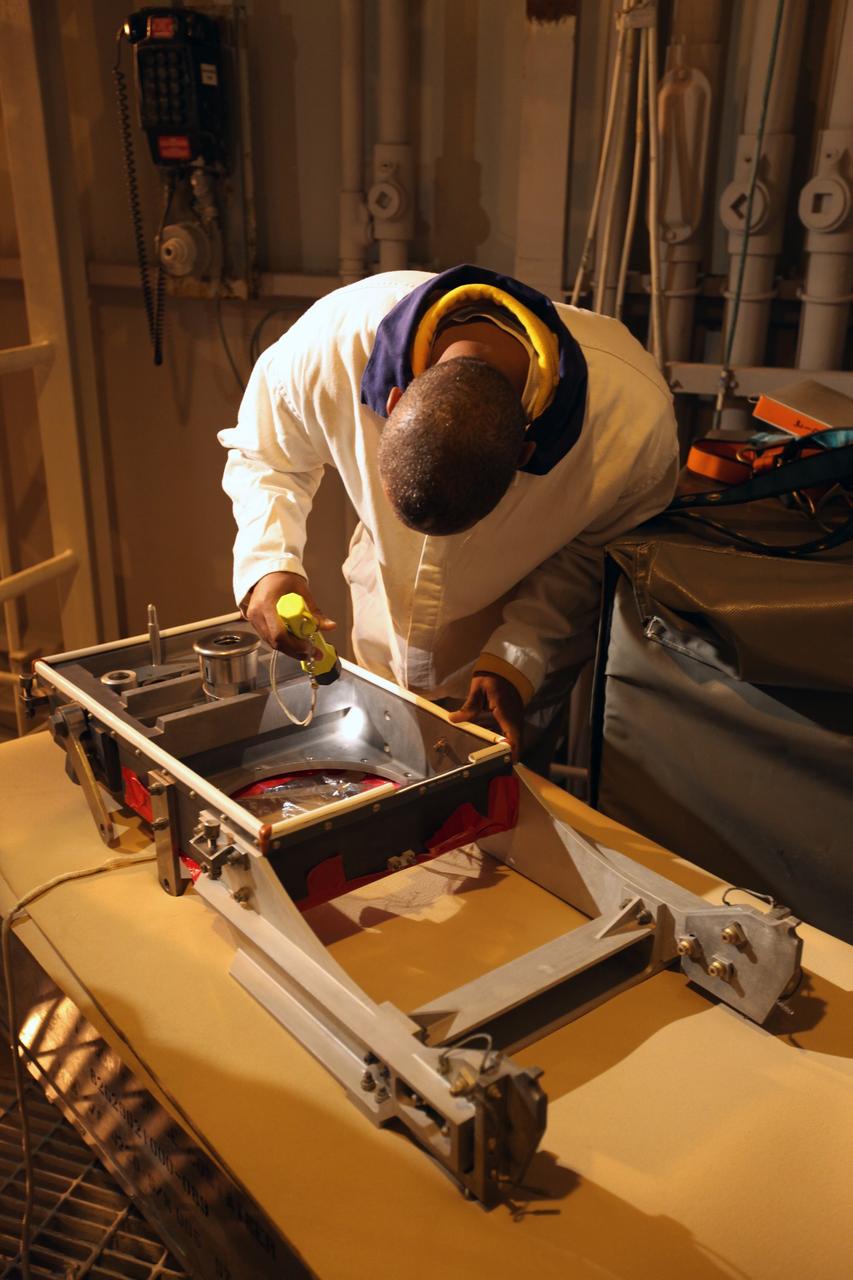
CAPE CANAVERAL, Fla. -- On Launch Pad 39A at NASA's Kennedy Space Center in Florida, workers examine the ground umbilical carrier plate (GUCP). A hydrogen gas leak at that location on the external fuel tank during tanking for space shuttle Discovery's STS-133 mission to the International Space Station caused the launch attempt to be scrubbed Nov. 5. The GUCP will be examined to determine the cause of the hydrogen leak and then repaired. The GUCP is the overboard vent to the pad and the flame stack where the excess hydrogen is burned off. For more information on STS-133, visit www.nasa.gov/mission_pages/shuttle/shuttlemissions/sts133/. Photo credit: NASA/Dimitri Gerondidakis
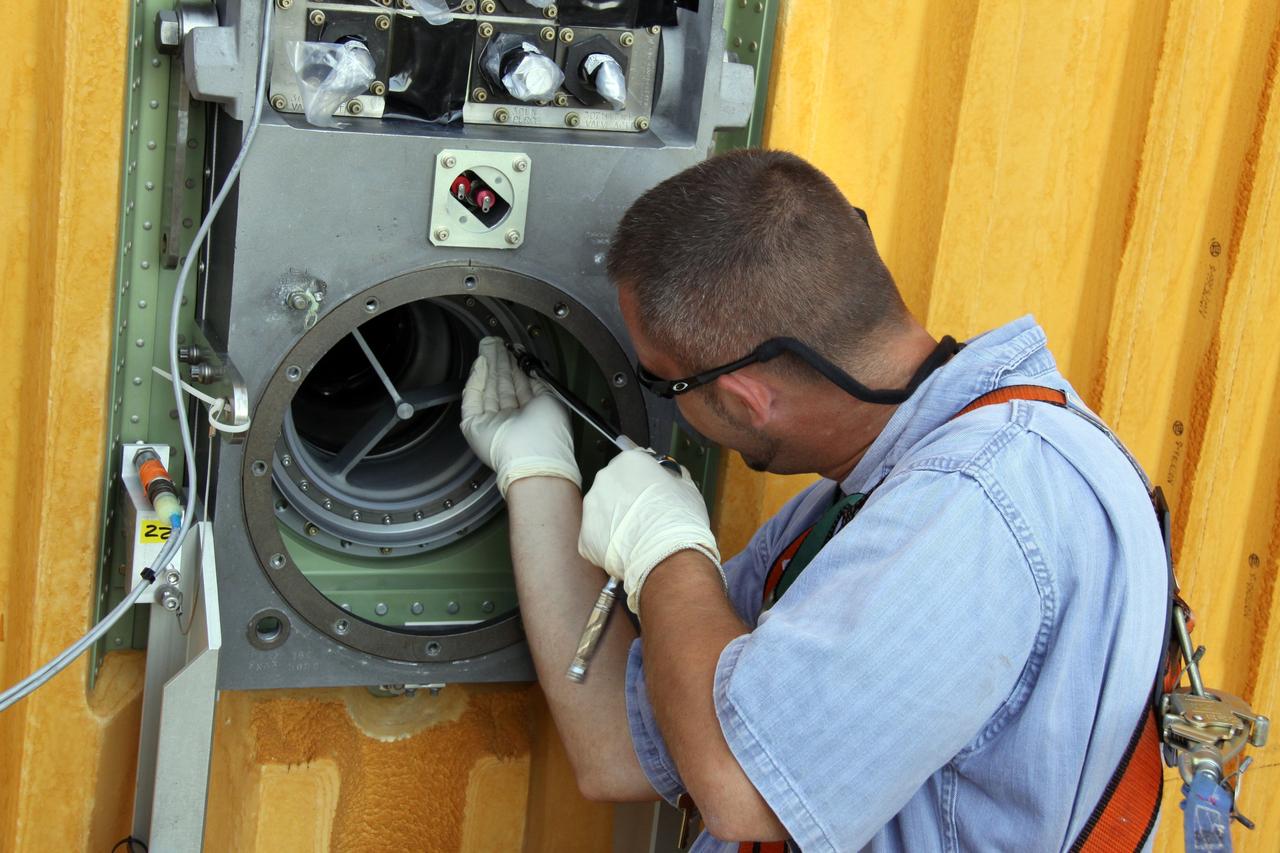
CAPE CANAVERAL, Fla. – On Launch Pad 39A at NASA's Kennedy Space Center in Florida, a worker removes the seal from the Ground Umbilical Carrier Plate, or GUCP, on space shuttle Endeavour's external fuel tank. A hydrogen leak at the location during tanking for the STS-127 mission caused the launch attempts to be scrubbed on June 13 and June 17. The GUCP will be examined to determine the cause of the hydrogen leak and repaired. The GUCP is the overboard vent to the pad and the flame stack where the vented hydrogen is burned off. Endeavour's next launch attempt is targeted for July 11 at 7:39 p.m. EDT. Photo credit: NASA/Jack Pfaller

CAPE CANAVERAL, Fla. – Seen in the photo is the hydrogen vent line attached to the Ground Umbilical Carrier Plate on space shuttle Discovery's external fuel tank. The shuttle is on Launch Pad 39A at NASA's Kennedy Space Center in Florida. A leak of hydrogen at the location during tanking caused the STS-119 mission to be scrubbed at 2:36 p.m. March 11. The vent line is at the intertank and is the overboard vent to the pad and the flare stack where the vented hydrogen is burned off. Mission management teams believe they have sufficient understanding of the repair plan to continue toward a March 15 launch at 7:43 p.m. EDT. Photo courtesy of United Space Alliance
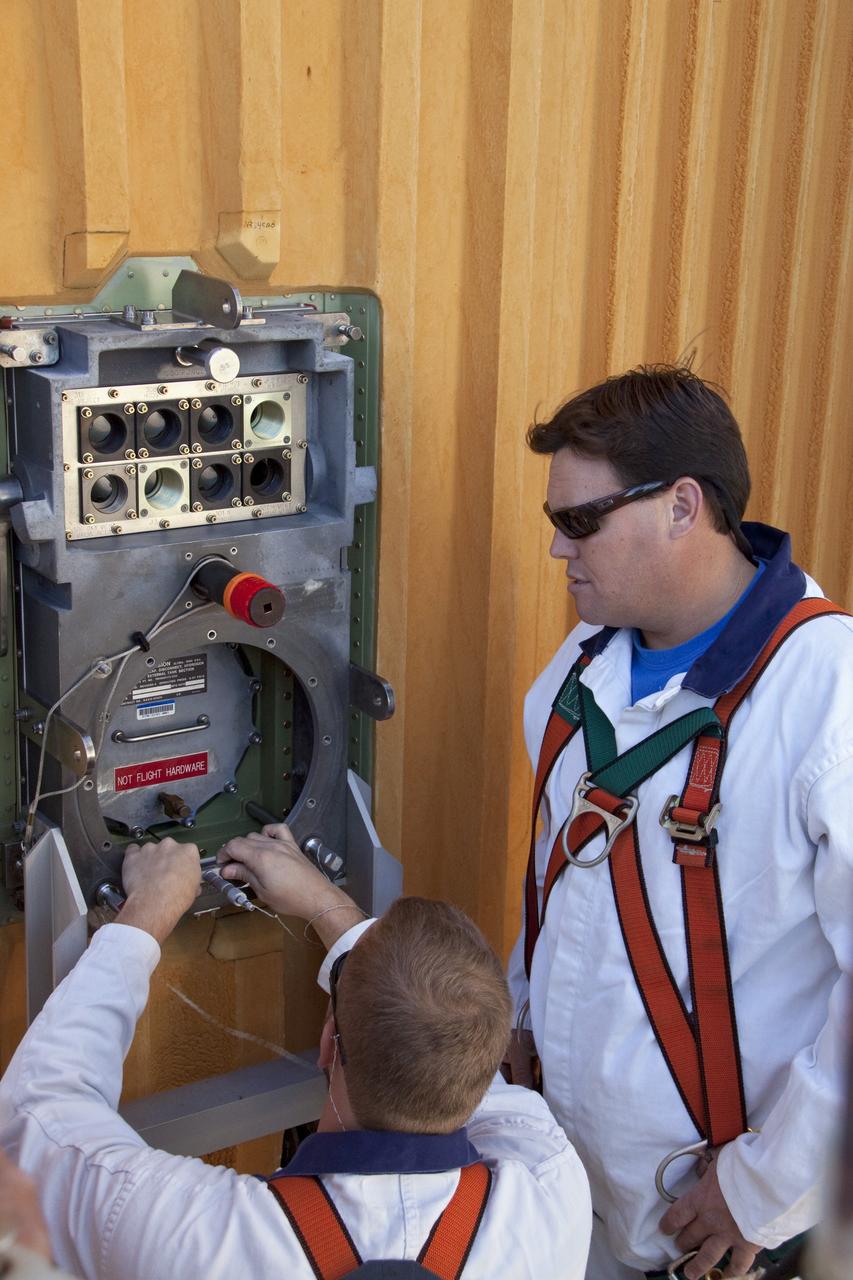
CAPE CANAVERAL, Fla. -- On Launch Pad 39A at NASA's Kennedy Space Center in Florida, workers begin to install a new ground umbilical carrier plate (GUCP) on space shuttle Discovery's external fuel tank. A hydrogen gas leak at that location during tanking for Discovery's STS-133 mission to the International Space Station caused the launch attempt to be scrubbed Nov. 5. The GUCP is the overboard vent to the pad and the flame stack where the excess hydrogen is burned off. For more information on STS-133, visit www.nasa.gov/mission_pages/shuttle/shuttlemissions/sts133/. Photo credit: NASA/Troy Cryder
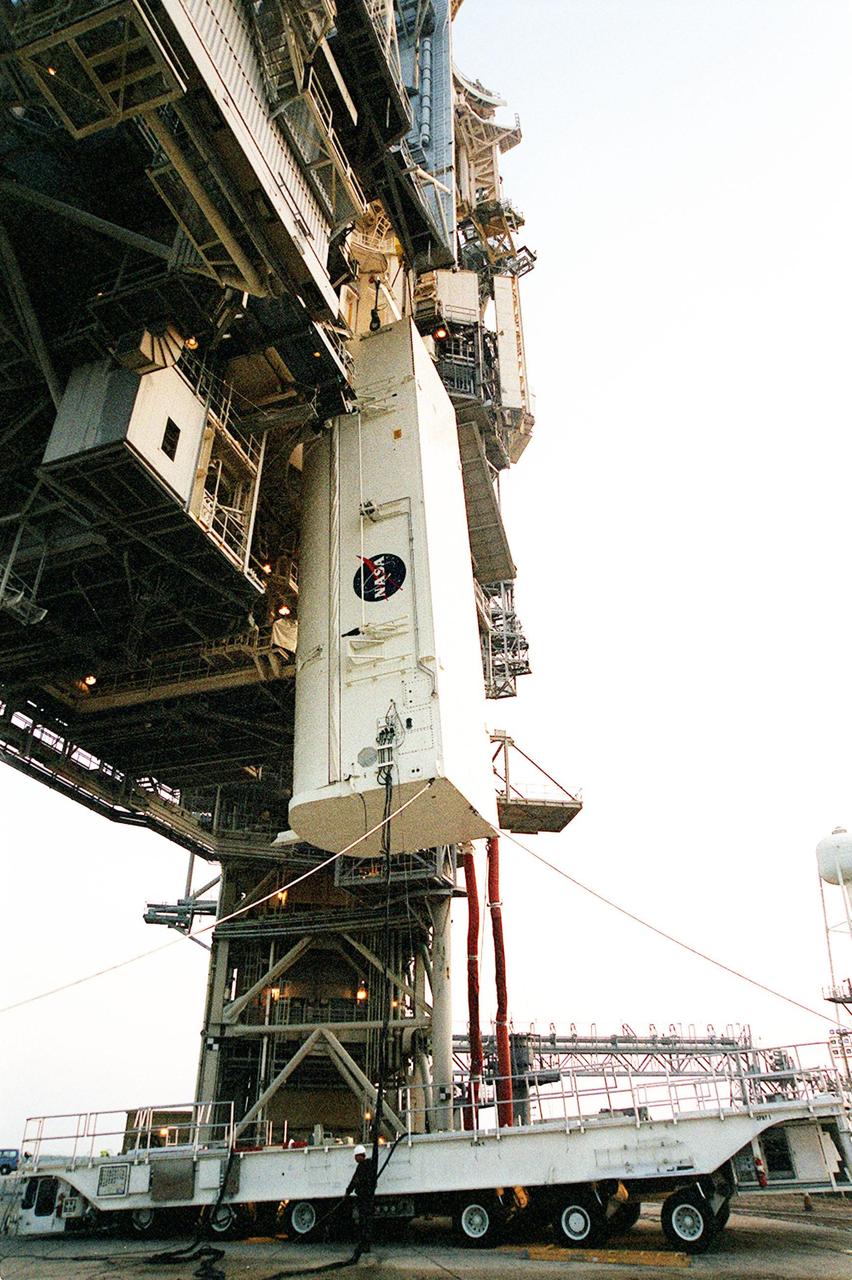
With umbilical lines still attached, the payload canister is hoisted up alongside the Rotating Service Structure (RSS) on Launch Pad 39B. The canister with its cargo of the SPACEHAB module and Integrated Cargo Carrier will be moved into the Payload Changeout Room (PCR) near the top of the RSS for transfer to the payload bay of Shuttle Atlantis for mission STS-106. The PCR provides an environmentally controlled facility for the transfer. The 11-day mission to the International Space Station will include service module support tasks on orbit, transfer supplies and outfit the Space Station for the first long-duration crew. Atlantis is scheduled to launch Sept. 8 at 8:31 a.m. EDT.
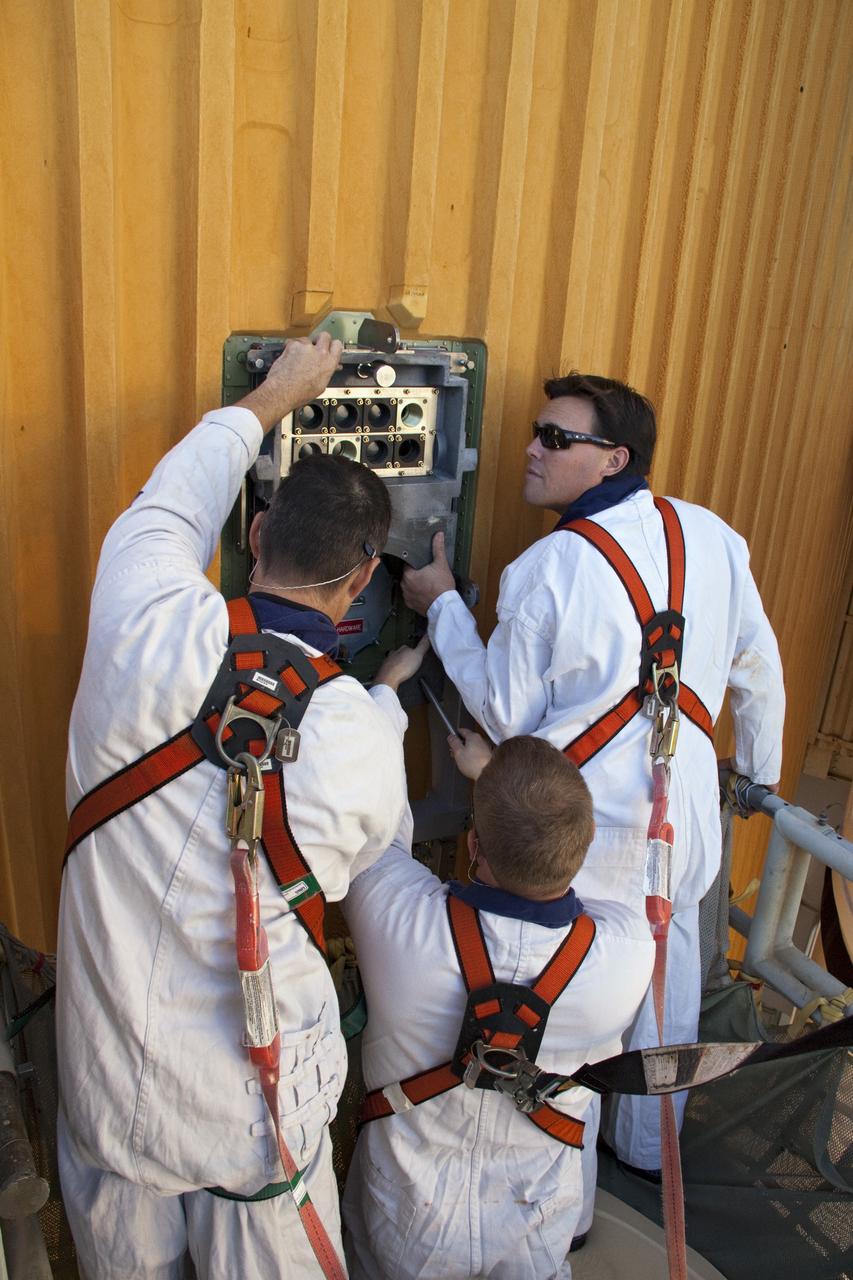
CAPE CANAVERAL, Fla. -- On Launch Pad 39A at NASA's Kennedy Space Center in Florida, workers begin to install a new ground umbilical carrier plate (GUCP) on space shuttle Discovery's external fuel tank. A hydrogen gas leak at that location during tanking for Discovery's STS-133 mission to the International Space Station caused the launch attempt to be scrubbed Nov. 5. The GUCP is the overboard vent to the pad and the flame stack where the excess hydrogen is burned off. For more information on STS-133, visit www.nasa.gov/mission_pages/shuttle/shuttlemissions/sts133/. Photo credit: NASA/Troy Cryder
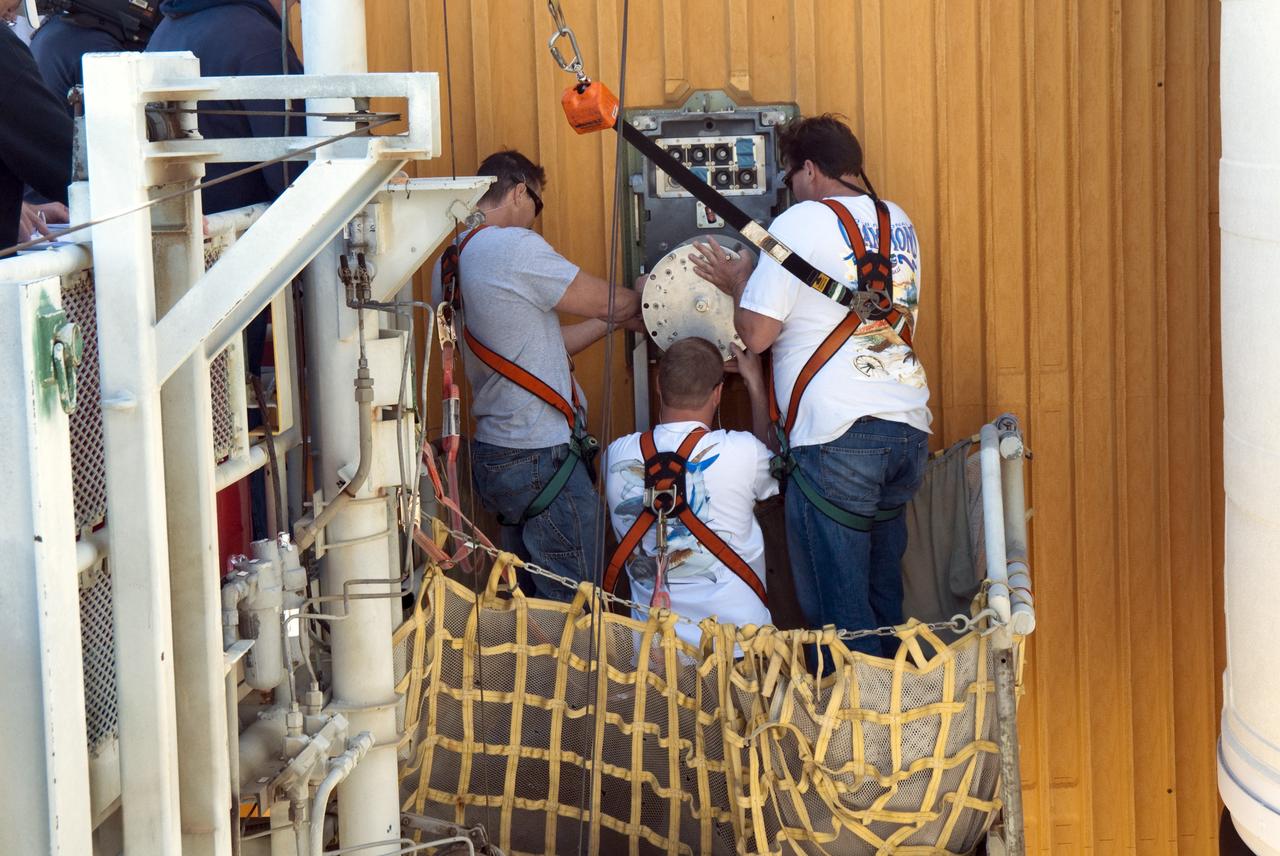
CAPE CANAVERAL, Fla. -- On Launch Pad 39A at NASA's Kennedy Space Center in Florida, workers install a new 7-inch quick disconnect on the ground umbilical carrier plate (GUCP) of space shuttle Discovery's external fuel tank. A hydrogen gas leak at that location during tanking for Discovery's STS-133 mission to the International Space Station caused the launch attempt to be scrubbed Nov. 5. The GUCP is the overboard vent to the pad and the flame stack where the excess hydrogen is burned off. For more information on STS-133, visit www.nasa.gov/mission_pages/shuttle/shuttlemissions/sts133/. Photo credit: NASA/Charisse Nahser
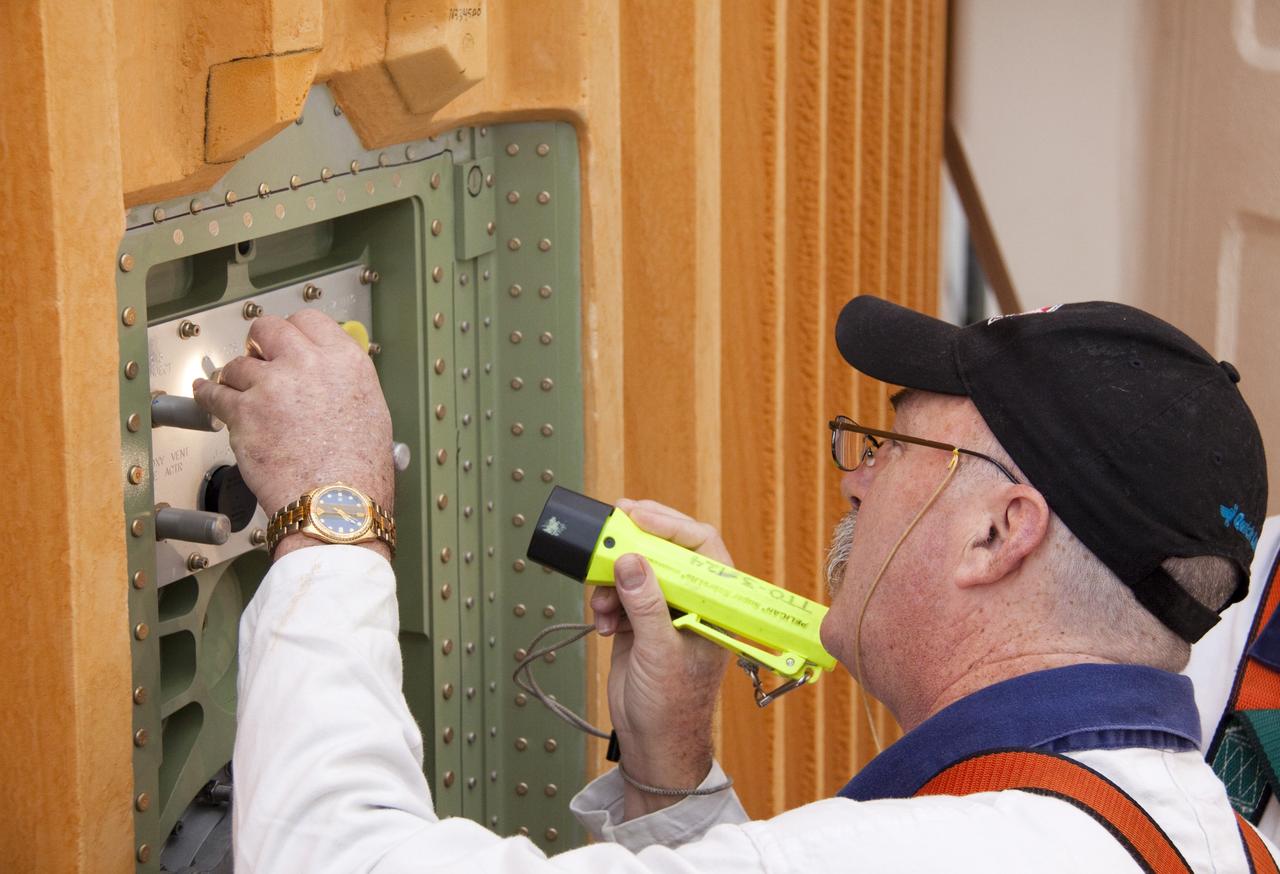
CAPE CANAVERAL, Fla. -- On Launch Pad 39A at NASA's Kennedy Space Center in Florida, workers prepare to install a new ground umbilical carrier plate (GUCP) on space shuttle Discovery's external fuel tank. A hydrogen gas leak at that location during tanking for Discovery's STS-133 mission to the International Space Station caused the launch attempt to be scrubbed Nov. 5. The GUCP is the overboard vent to the pad and the flame stack where the excess hydrogen is burned off. For more information on STS-133, visit www.nasa.gov/mission_pages/shuttle/shuttlemissions/sts133/. Photo credit: NASA/Troy Cryder
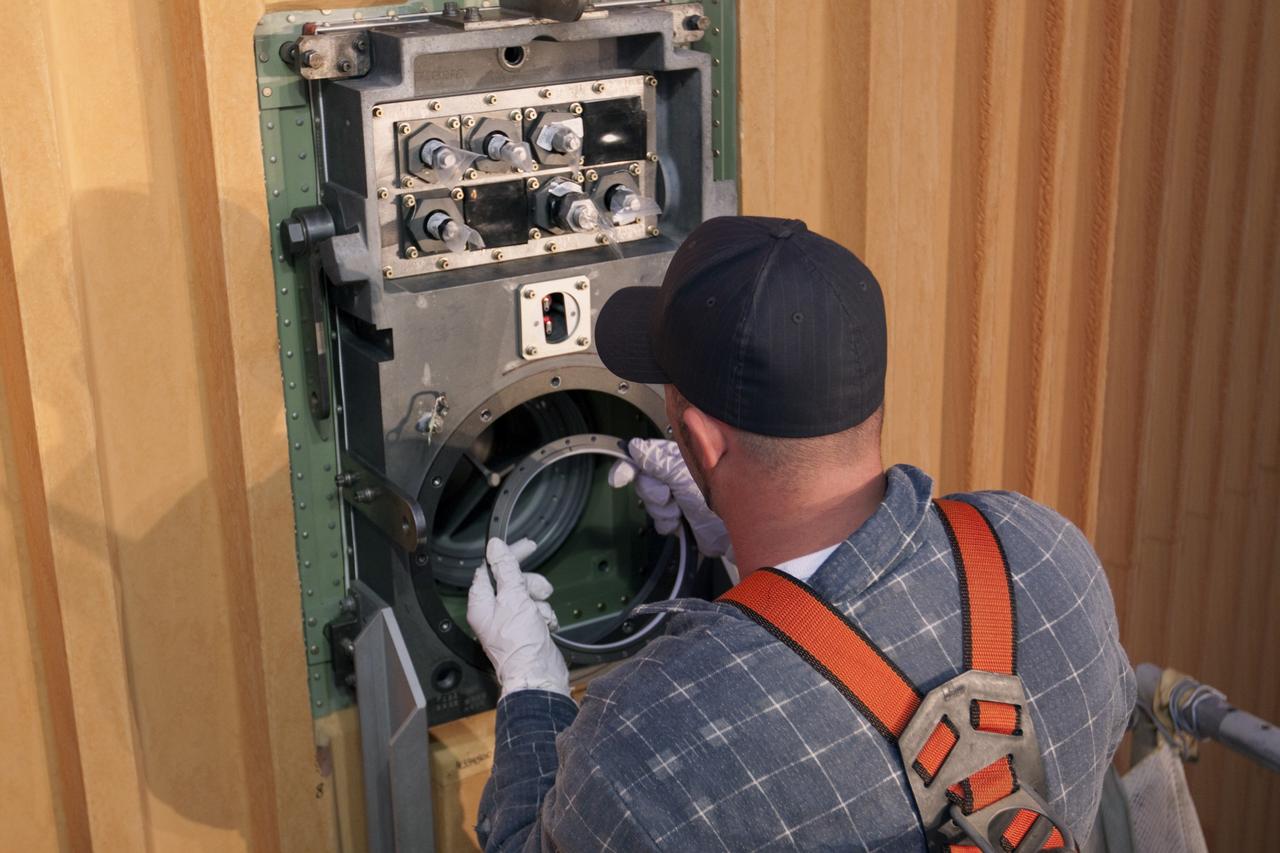
CAPE CANAVERAL, Fla. -- On Launch Pad 39A at NASA's Kennedy Space Center in Florida, workers remove the seal from the ground umbilical carrier plate (GUCP). A hydrogen gas leak at that location on the external fuel tank during tanking for space shuttle Discovery's STS-133 mission to the International Space Station caused the launch attempt to be scrubbed Nov. 5. The GUCP will be examined to determine the cause of the hydrogen leak and then repaired. The GUCP is the overboard vent to the pad and the flame stack where the excess hydrogen is burned off. For more information on STS-133, visit www.nasa.gov/mission_pages/shuttle/shuttlemissions/sts133/. Photo credit: NASA/Jack Pfaller
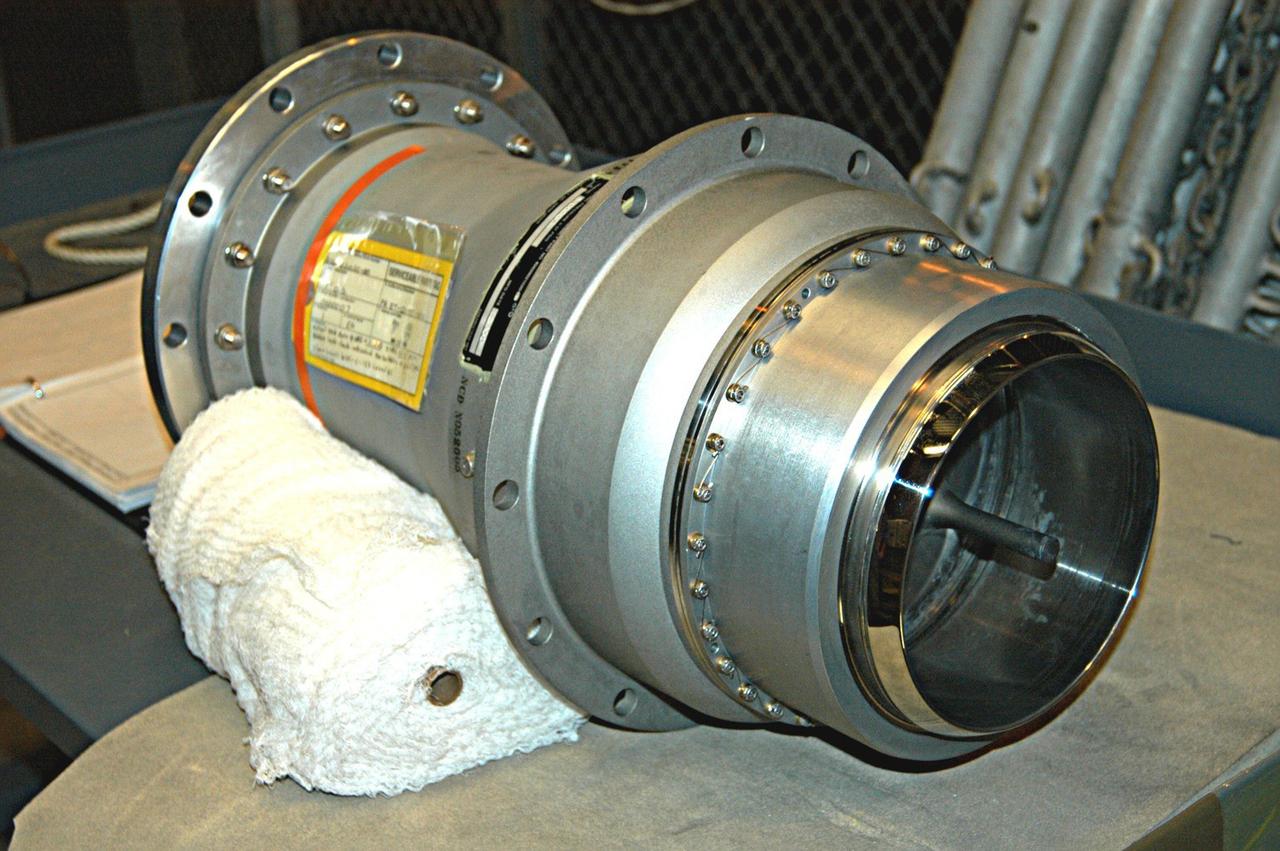
CAPE CANAVERAL, Fla. – A closeup of the 7-inch quick disconnect that will be replaced on the hydrogen vent line to the Ground Umbilical Carrier Plate of space shuttle Discovery's external fuel tank. The replacement will be made on Launch Pad 39A at NASA's Kennedy Space Center in Florida. A leak of hydrogen at the site during fueling caused the STS-119 mission to be scrubbed at 2:36 p.m. March 11. The vent line is at the intertank and is the overboard vent to the pad and the flare stack where the vented hydrogen is burned off. Mission management teams believe they have sufficient understanding of the repair plan to continue toward a March 15 launch at 7:43 p.m. EDT. Photo courtesy of United Space Alliance
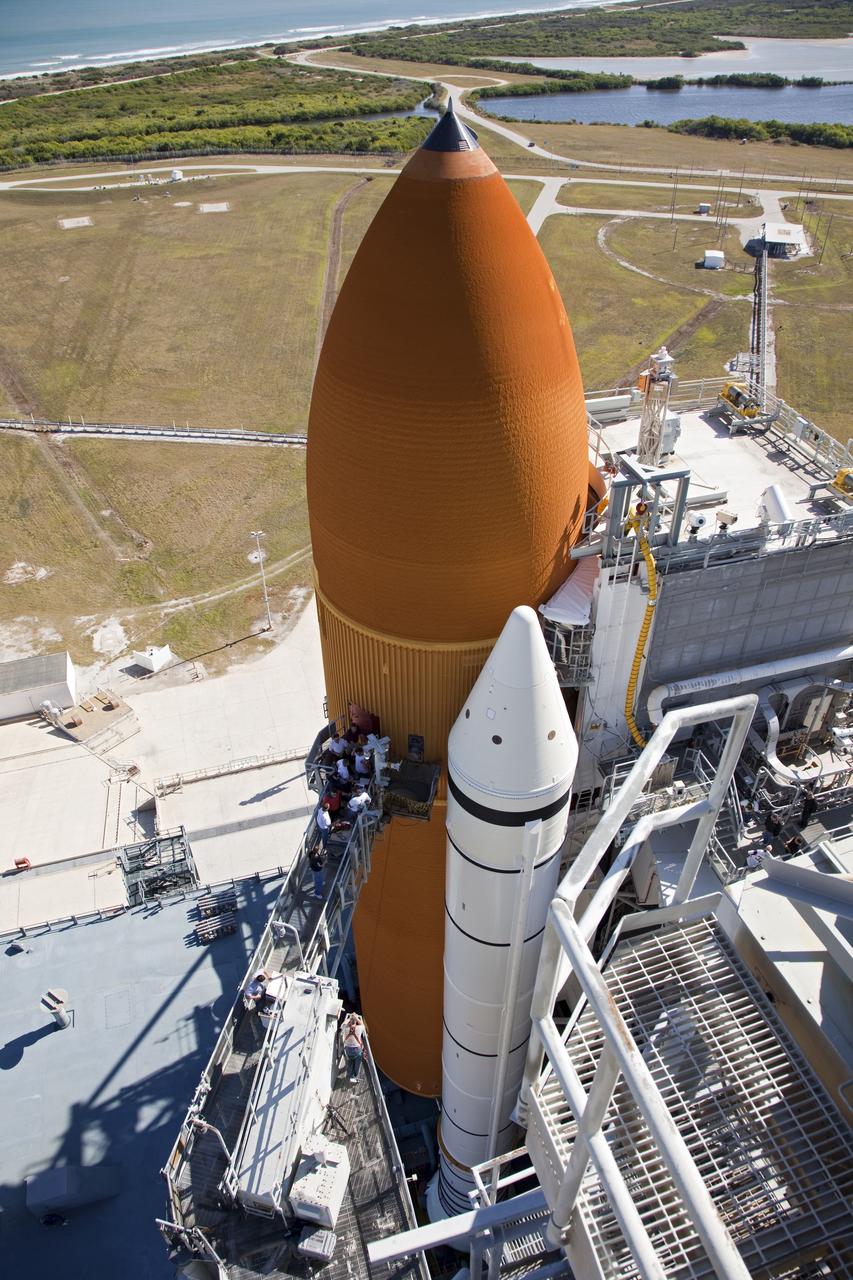
CAPE CANAVERAL, Fla. -- On Launch Pad 39A at NASA's Kennedy Space Center in Florida, a new 7-inch quick disconnect is installed on the ground umbilical carrier plate (GUCP) of space shuttle Discovery's external fuel tank. A hydrogen gas leak at that location during tanking for Discovery's STS-133 mission to the International Space Station caused the launch attempt to be scrubbed Nov. 5. The GUCP is the overboard vent to the pad and the flame stack where the excess hydrogen is burned off. For more information on STS-133, visit www.nasa.gov/mission_pages/shuttle/shuttlemissions/sts133/. Photo credit: NASA/Frankie Martin
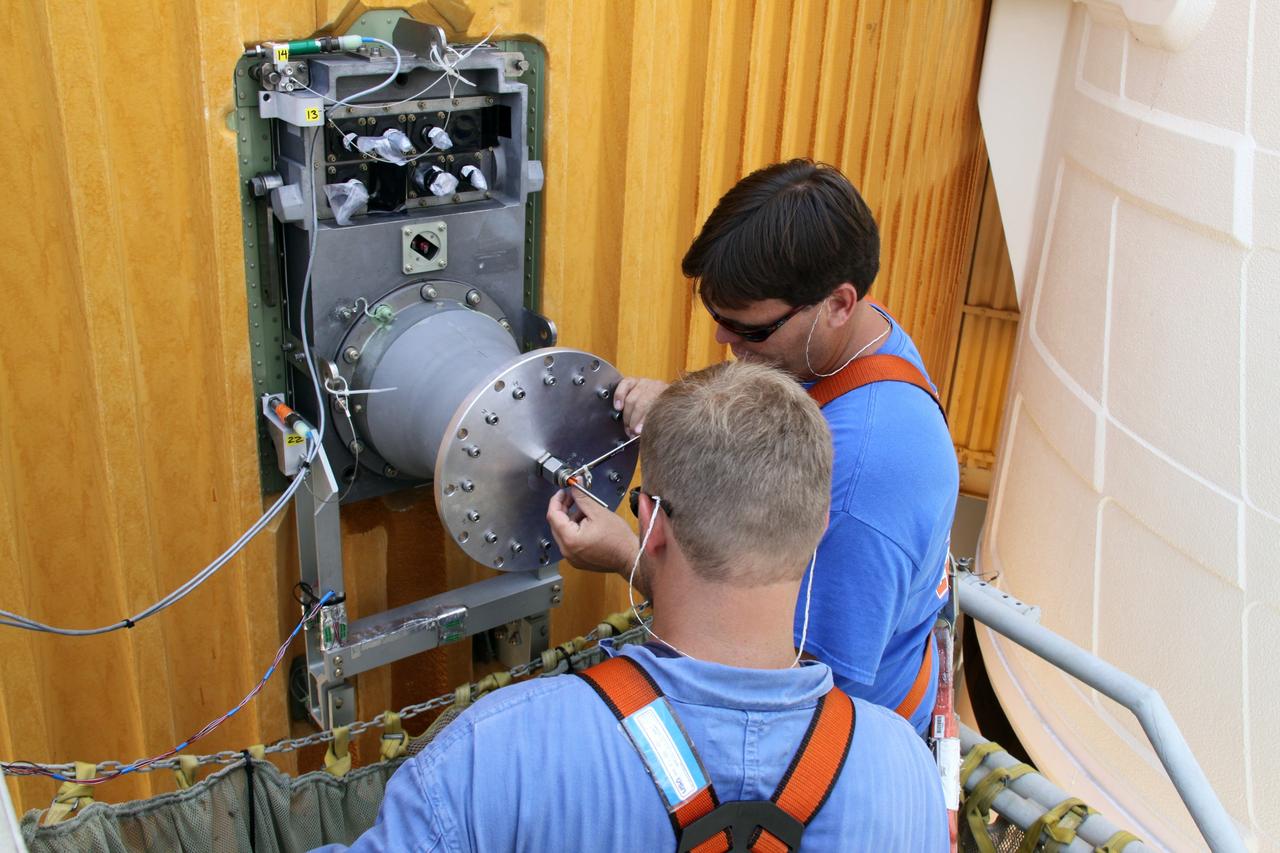
CAPE CANAVERAL, Fla. – On Launch Pad 39A at NASA's Kennedy Space Center in Florida, workers remove the 7-inch quick disconnect on the Ground Umbilical Carrier Plate, or GUCP, on space shuttle Endeavour's external fuel tank. A hydrogen leak at the location during tanking for the STS-127 mission caused the launch attempts to be scrubbed on June 13 and June 17. The GUCP will be examined to determine the cause of the hydrogen leak and repaired. The GUCP is the overboard vent to the pad and the flame stack where the vented hydrogen is burned off. Endeavour's next launch attempt is targeted for July 11 at 7:39 p.m. EDT. Photo credit: NASA/Jack Pfaller

CAPE CANAVERAL, Fla. -- On Launch Pad 39A at NASA's Kennedy Space Center in Florida, technicians reattach the vent line to the ground umbilical carrier plate (GUCP) on space shuttle Discovery's external fuel tank. A hydrogen gas leak at that location during tanking for Discovery's STS-133 mission to the International Space Station caused the launch attempt to be scrubbed Nov. 5. The GUCP is the overboard vent to the pad and the flame stack where the excess hydrogen is burned off. Discovery's next launch attempt is no earlier than Nov. 30 at 4:02 a.m. EST. For more information on STS-133, visit www.nasa.gov/mission_pages/shuttle/shuttlemissions/sts133/. Photo credit: NASA/Ben Smegelsky
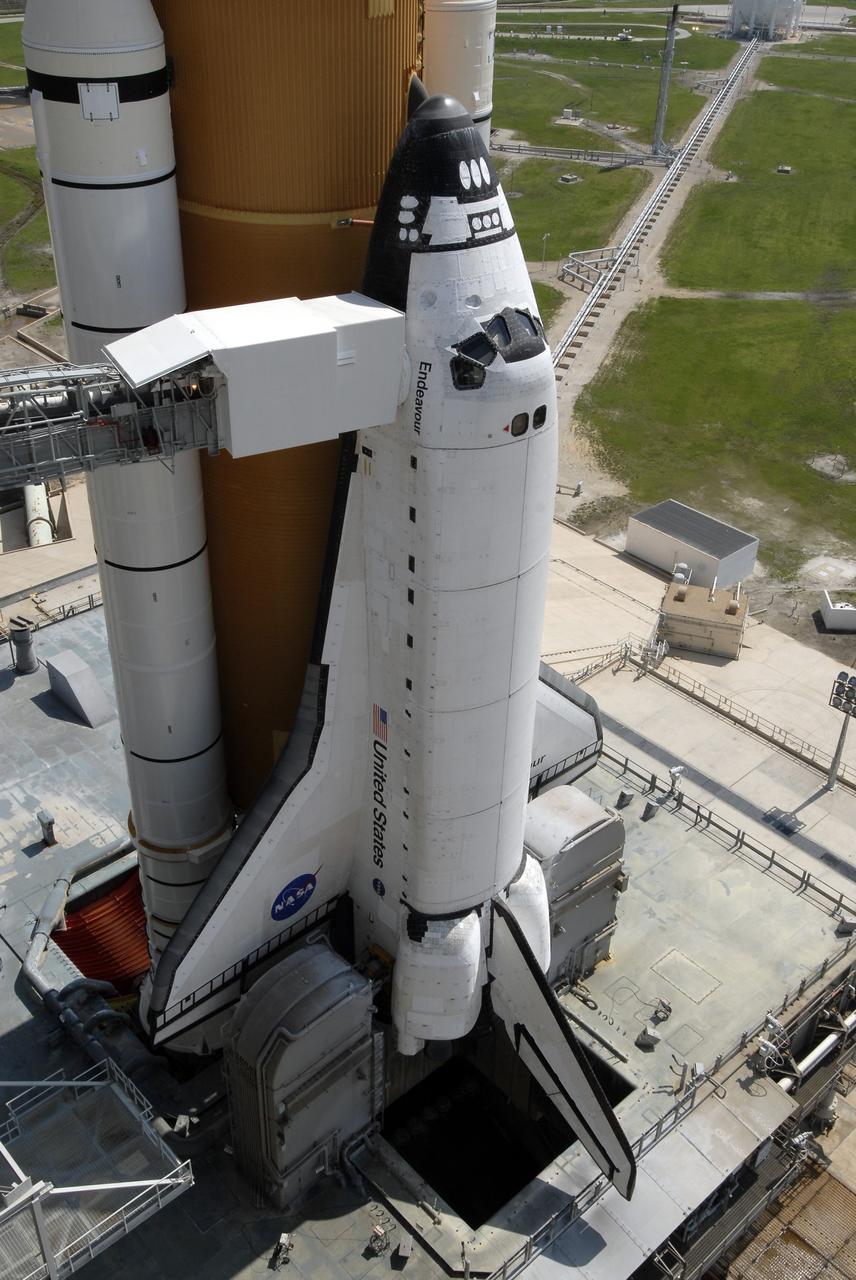
CAPE CANAVERAL, Fla. – After rollback of the rotating service structure, or RSS, on Launch Pad 39A at NASA's Kennedy Space Center in Florida, space shuttle Endeavour is closer to launch. Against Endeavour's cockpit is seen the White Room at the end of the orbiter access arm. The White Room provides the astronauts entry into the shuttle. Endeavour sits on the mobile launcher platform, which straddles the flame trench below. On either side of the engine nozzles are the tail masts, which provide several umbilical connections to the orbiter, including a liquid-oxygen line through one and a liquid-hydrogen line through another. First motion of the RSS was at 10:15 a.m. EDT. The rollback is in preparation for Endeavour's liftoff on the STS-127 mission with a crew of seven. This is the second launch attempt for Endeavour after the June 13 launch was scrubbed due to a hydrogen leak at the Ground Umbilical Carrier Plate during tanking June 12. The launch will be Endeavour's 23rd flight. The shuttle will carry the Japanese Experiment Module's Exposed Facility, or JEM-EF, and the Experiment Logistics Module-Exposed Section, or ELM-ES, on STS-127. The mission is the final of three flights dedicated to the assembly of the Japan Aerospace Exploration Agency's Kibo laboratory complex on the space station. Endeavour's launch is scheduled for June 17 at 5:40 a.m. EDT. Photo credit: NASA/Kim Shiflett
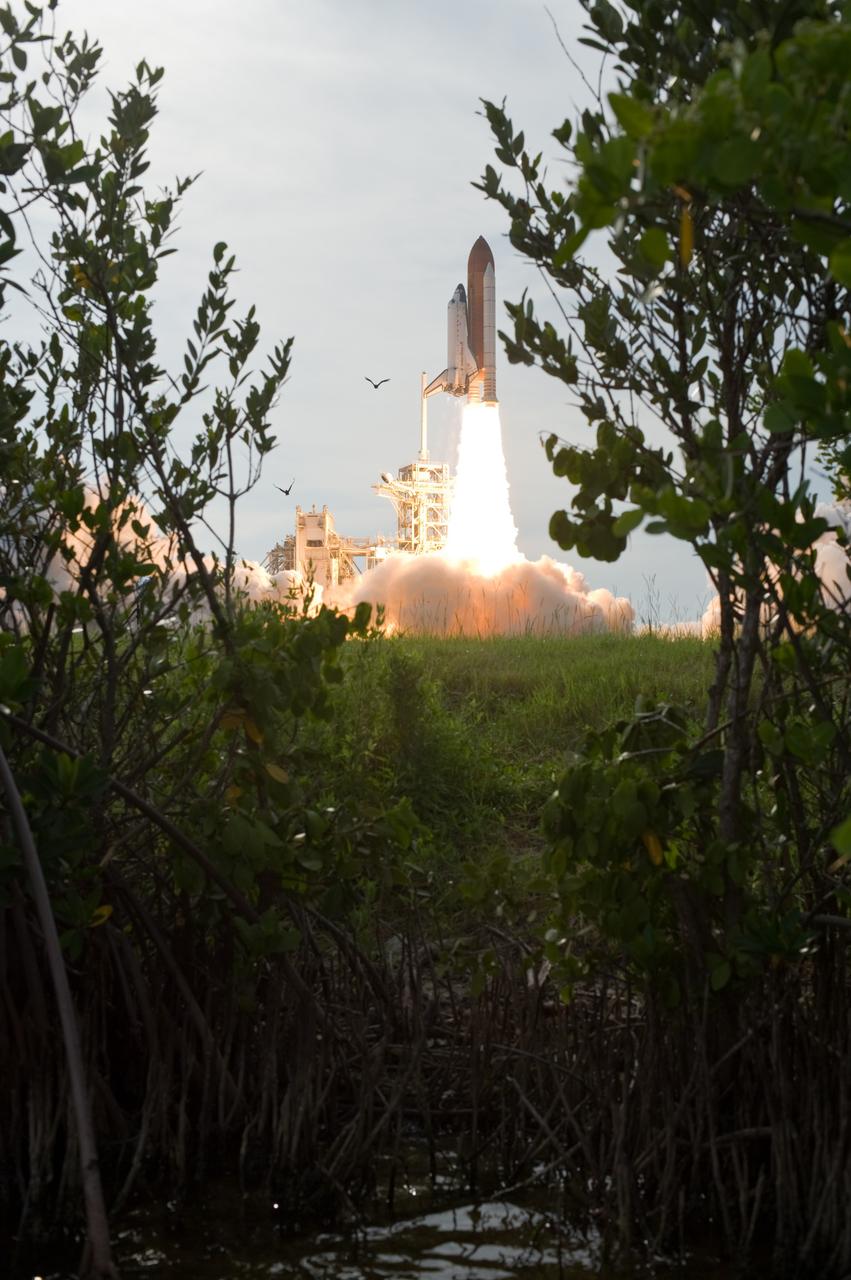
CAPE CANAVERAL, Fla. – Branches on the nearby shore frame startled birds and space shuttle Endeavour as it roars into space from NASA Kennedy Space Center's Launch Pad 39A. This was the sixth launch attempt for the STS-127 mission. The launch was scrubbed on June 13 and June 17 when a hydrogen gas leak occurred during tanking due to a misaligned Ground Umbilical Carrier Plate. The mission was postponed July 11, 12 and 13 due to weather conditions near the Shuttle Landing Facility at Kennedy that violated rules for launching, and lightning issues. Endeavour will deliver the Japanese Experiment Module's Exposed Facility and the Experiment Logistics Module-Exposed Section in the final of three flights dedicated to the assembly of the Japan Aerospace Exploration Agency's Kibo laboratory complex on the International Space Station. Photo credit: NASA/Tony Gray, Tom Farrar
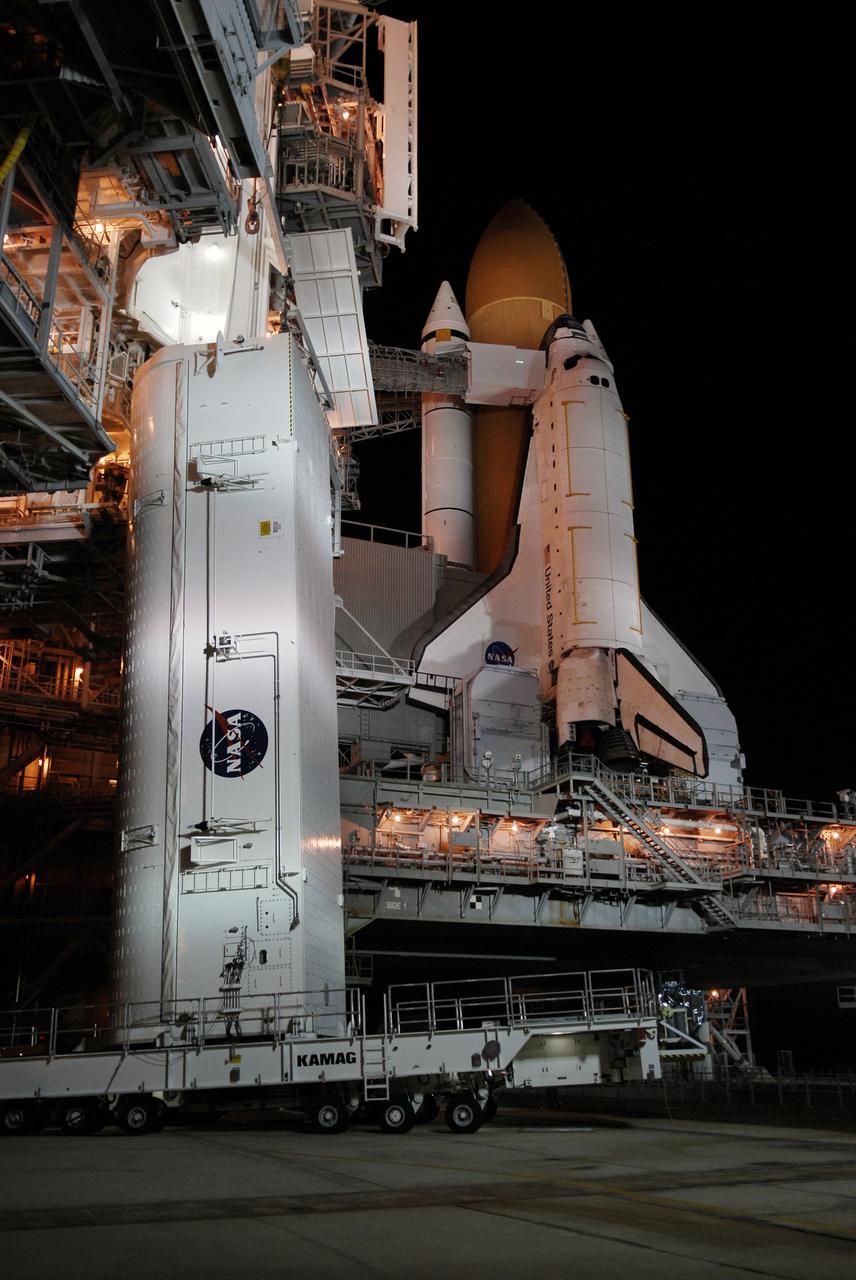
CAPE CANAVERAL, Fla. – After transfer of space shuttle Atlantis’ HST payload on Launch Pad 39A on NASA's Kennedy Space Center in Florida, the payload canister has been lowered onto the transporter. Umbilical lines keep the payload in an environmentally controlled environment. The payload comprises four carriers holding various equipment for the mission. The hardware will be transported back to Kennedy’s Payload Hazardous Servicing Facility where it will be stored until a new target launch date can be set for Atlantis’ STS-125 mission in 2009. Atlantis’ October target launch date was delayed after a device on board Hubble used in the storage and transmission of science data to Earth shut down on Sept. 27. Replacing the broken device will be added to Atlantis’ servicing mission to the telescope. Photo credit: NASA/Kim Shiflett
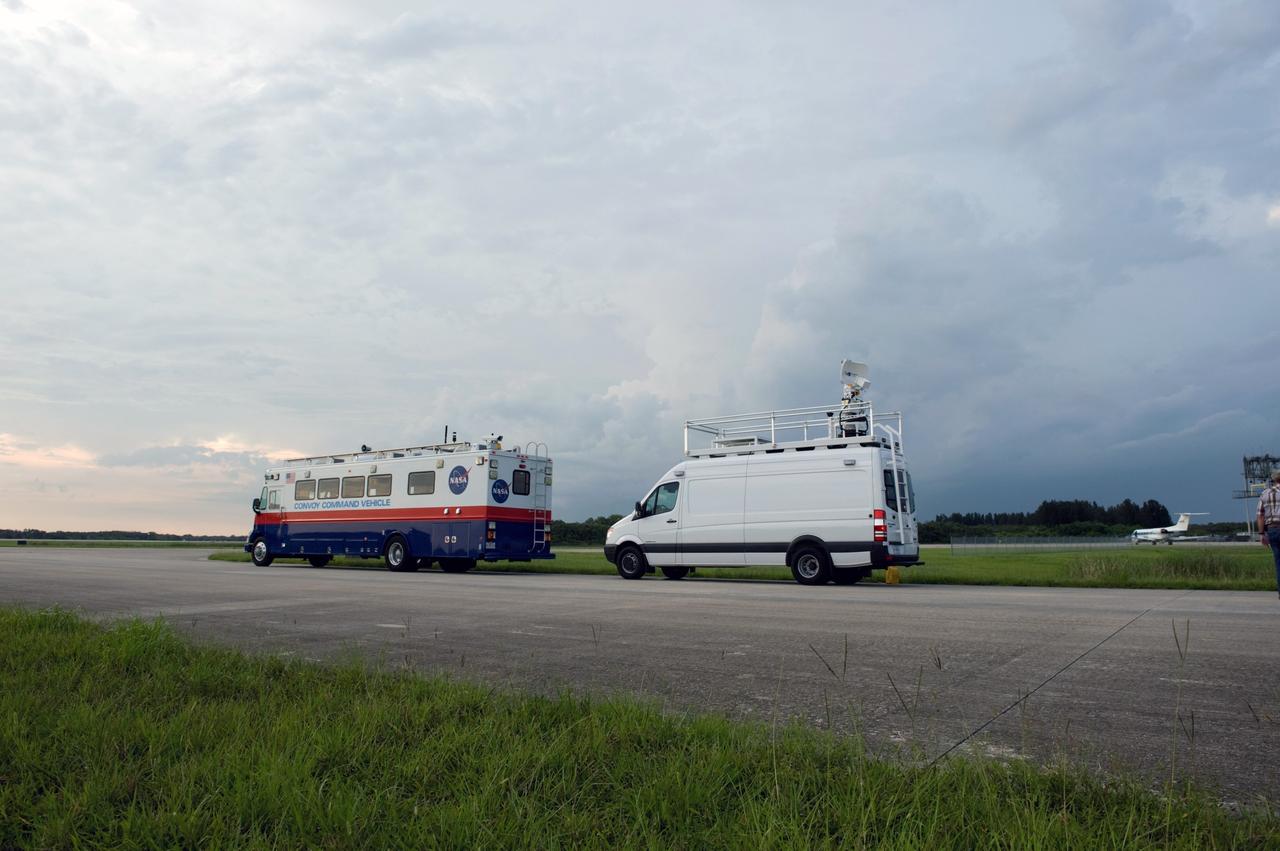
CAPE CANAVERAL, Fla. – The convoy command and SCAPE vehicles are in position at the Shuttle Landing Facility at NASA's Kennedy Space Center in Florida in the event of a return-to-landing-site is needed after launch of space shuttle Endeavour on the STS-127 mission. This is the fifth launch attempt for the STS-127 mission. The first two launch attempts on June 13 and June 17 were scrubbed when a hydrogen gas leak occurred during tanking due to a misaligned Ground Umbilical Carrier Plate. Mission managers also decided to delay tanking on July 11 for a launch attempt later in the day to allow engineers and safety personnel time to analyze data captured during lightning strikes near the pad on July 10. The fourth attempt on July 12 was scrubbed due to weather concerns as well. Photo credit: NASA/Carl Winebarger
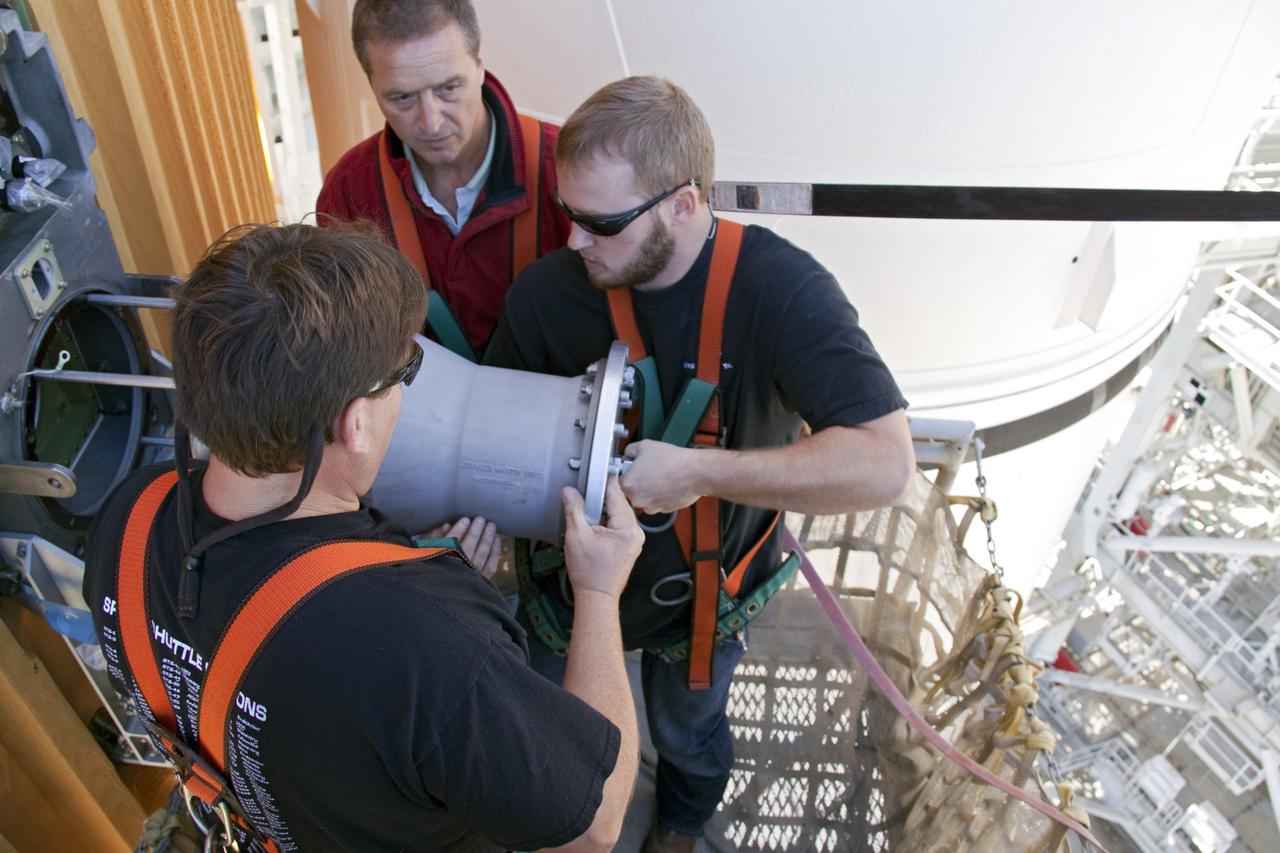
CAPE CANAVERAL, Fla. -- On Launch Pad 39A at NASA's Kennedy Space Center in Florida, workers remove the ground umbilical carrier plate's (GUCP) 7-inch quick disconnect. A hydrogen gas leak at that location on the external fuel tank during tanking for space shuttle Discovery's STS-133 mission to the International Space Station caused the launch attempt to be scrubbed Nov. 5. The GUCP will be examined to determine the cause of the hydrogen leak and then repaired. The GUCP is the overboard vent to the pad and the flame stack where the vented hydrogen is burned off. Discovery's next launch attempt is no earlier than Nov. 30 at 4:02 a.m. EST. For more information on STS-133, visit www.nasa.gov/mission_pages/shuttle/shuttlemissions/sts133/. Photo credit: NASA/Troy Cryder
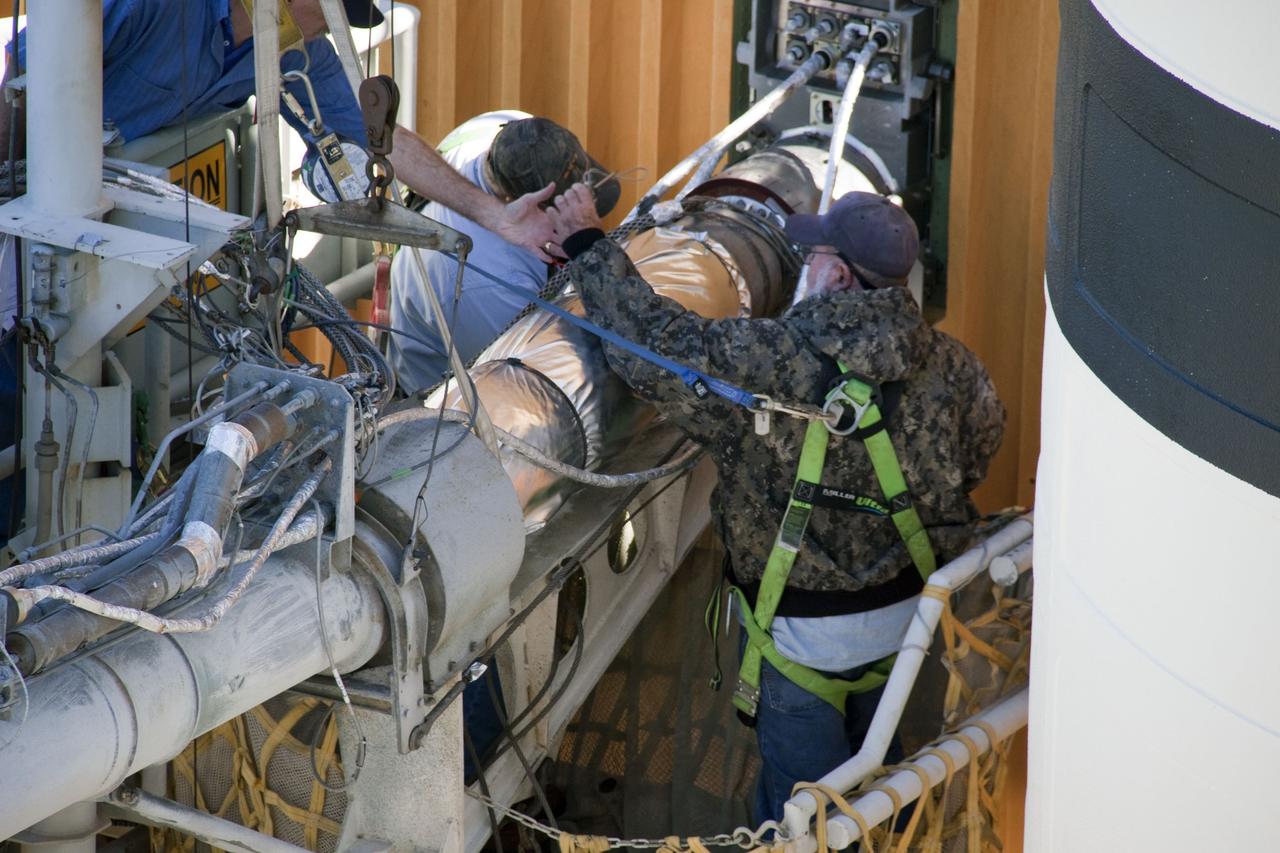
CAPE CANAVERAL, Fla. -- On Launch Pad 39A at NASA's Kennedy Space Center in Florida, workers prepare to begin removing the quick disconnect from the ground umbilical carrier plate (GUCP) on space shuttle Discovery's external fuel tank. A hydrogen gas leak at that location during tanking for the STS-133 mission to the International Space Station caused the launch attempt to be scrubbed Nov. 5. The GUCP will be examined to determine the cause of the hydrogen leak and then repaired. The GUCP is the overboard vent to the pad and the flame stack where the vented hydrogen is burned off. Discovery's next launch attempt is targeted for no earlier than Nov. 30 at 4:02 a.m. EST. For more information on STS-133, visit www.nasa.gov/mission_pages/shuttle/shuttlemissions/sts133/. Photo credit: NASA/Troy Cryder

CAPE CANAVERAL, Fla. – In the Operations and Checkout Building at NASA's Kennedy Space Center in Florida, STS-119 Pilot Tony Antonelli puts on his launch-and-entry suit for the launch of space shuttle Discovery. The crew will be heading for Launch Pad 39A and liftoff of Discovery, scheduled for 7:43 p.m. EDT on March 15. An earlier launch attempt March 11 was scrubbed at 2:36 p.m. due to a gaseous hydrogen leak from the external tank at the Ground Umbilical Carrier Plate during tanking. A seven-inch quick disconnect and two seals were replaced. The STS-119 mission is the 28th to the International Space Station and the 125th space shuttle flight. Discovery will deliver the final pair of power-generating solar array wings and the S6 truss segment. Installation of S6 will signal the station's readiness to house a six-member crew for conducting increased science. Photo credit: NASA/Kim Shiflett
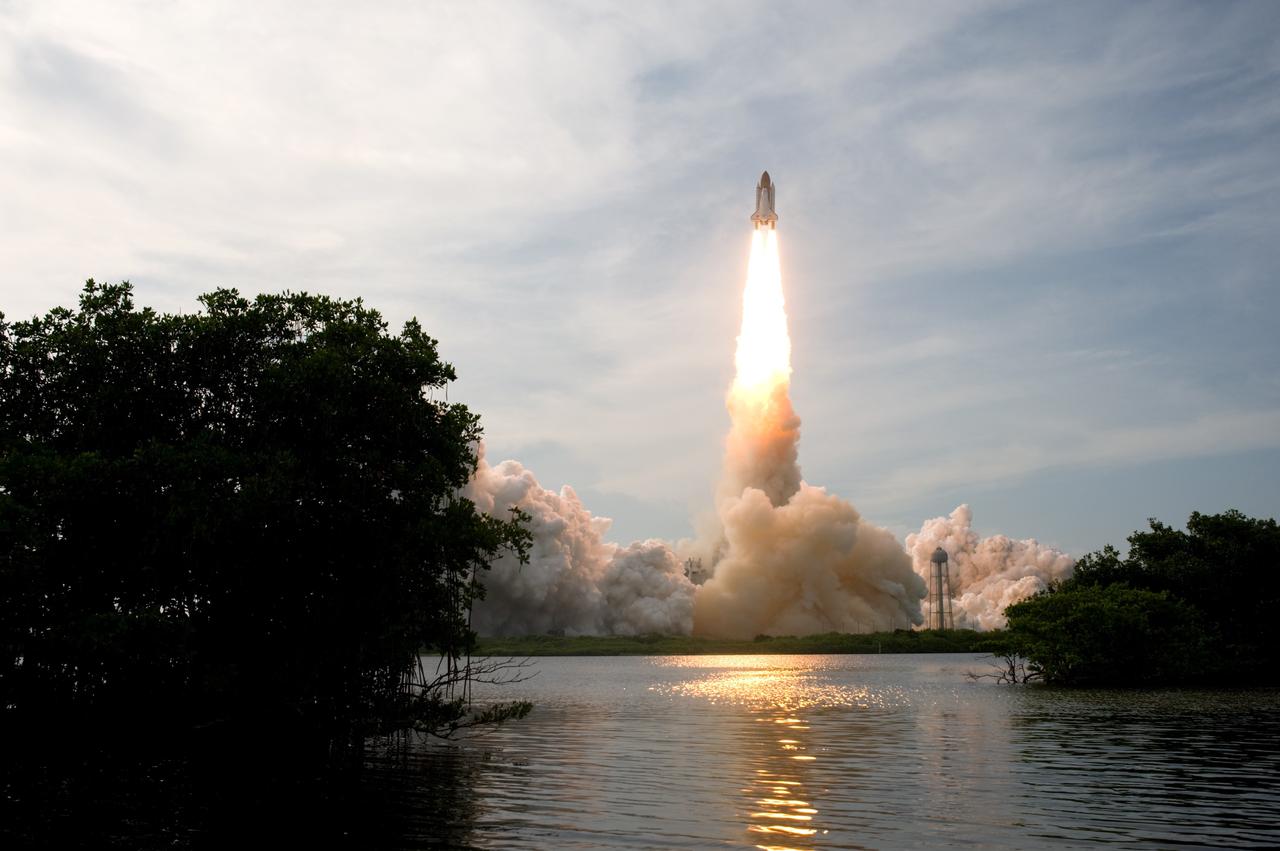
CAPE CANAVERAL, Fla. – Trailing fire, space shuttle Endeavour roars into the cloud-washed sky from Launch Pad 39A at NASA's Kennedy Space Center in Florida on the STS-127 mission. Liftoff was on-time at 6:03 p.m. EDT. Today was the sixth launch attempt for the STS-127 mission. The launch was scrubbed on June 13 and June 17 when a hydrogen gas leak occurred during tanking due to a misaligned Ground Umbilical Carrier Plate. The mission was postponed July 11, 12 and 13 due to weather conditions near the Shuttle Landing Facility at Kennedy that violated rules for launching, and lightning issues. Endeavour will deliver the Japanese Experiment Module's Exposed Facility and the Experiment Logistics Module-Exposed Section in the final of three flights dedicated to the assembly of the Japan Aerospace Exploration Agency's Kibo laboratory complex on the International Space Station. Photo credit: NASA/Sandra Joseph, Kevin O'Connell
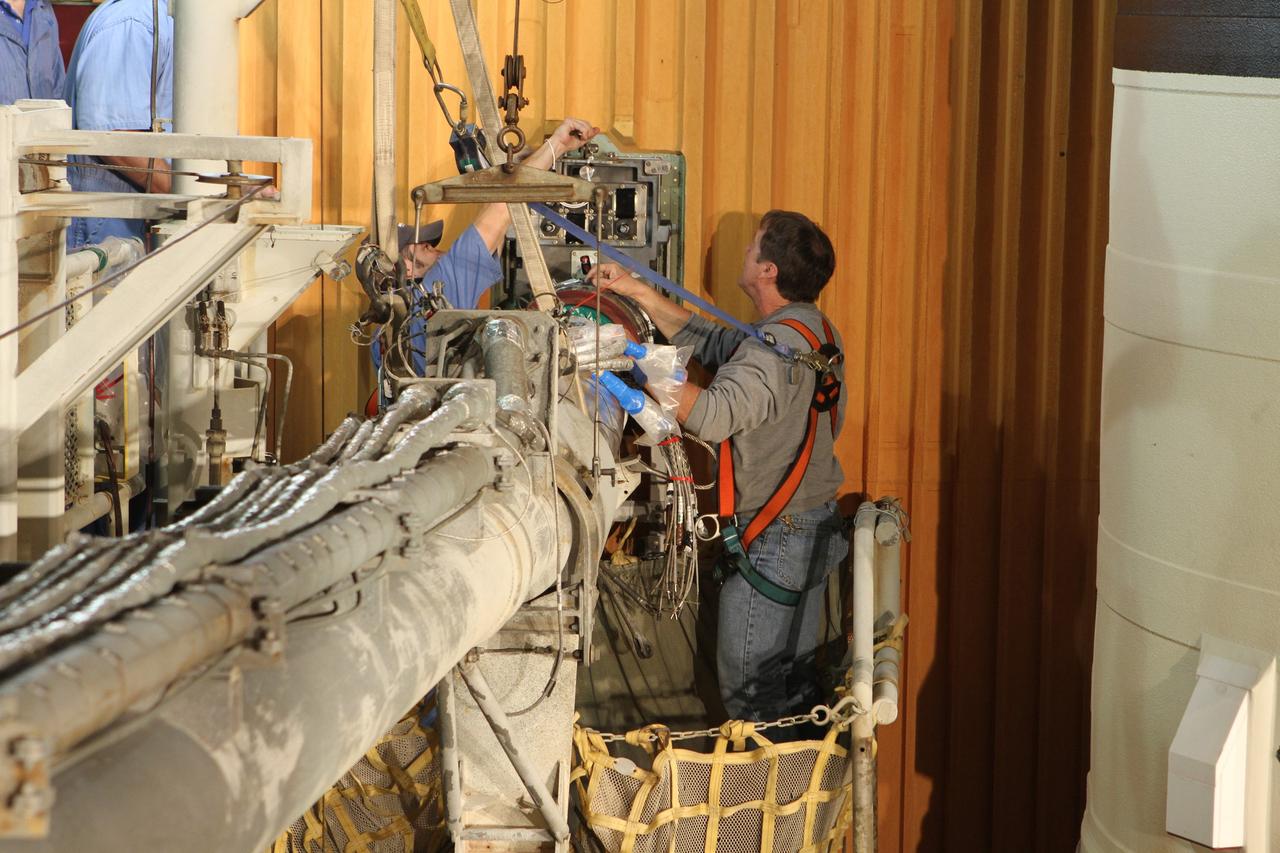
CAPE CANAVERAL, Fla. -- On Launch Pad 39A at NASA's Kennedy Space Center in Florida, technicians are begin to reattach the vent line to the ground umbilical carrier plate (GUCP) on space shuttle Discovery's external fuel tank. A hydrogen gas leak at that location during tanking for Discovery's STS-133 mission to the International Space Station caused the launch attempt to be scrubbed Nov. 5. The GUCP is the overboard vent to the pad and the flame stack where the excess hydrogen is burned off. Discovery's next launch attempt is no earlier than Nov. 30 at 4:02 a.m. EST. For more information on STS-133, visit www.nasa.gov/mission_pages/shuttle/shuttlemissions/sts133/. Photo credit: NASA/Ben Smegelsky

CAPE CANAVERAL, Fla. – On Launch Pad 39A at NASA's Kennedy Space Center in Florida, technicians in the control booth (lower left) begin to roll away the rotating service structure, or RSS, from space shuttle Endeavour. First motion was at 11:00 p.m. EDT. The rollback is in preparation for Endeavour's liftoff on the STS-127 mission with a crew of seven. This is the third launch attempt for the STS-127 mission. The first two attempts on June 13 and June 17 were scrubbed when a hydrogen gas leak occurred during tanking due to a misaligned Ground Umbilical Carrier Plate. Endeavour will deliver the Japanese Experiment Module's Exposed Facility, or JEM-EF, and the Experiment Logistics Module-Exposed Section, or ELM-ES, in the final of three flights dedicated to the assembly of the Japan Aerospace Exploration Agency's Kibo laboratory complex on the International Space Station. STS-127 is the 29th flight for the assembly of the space station. Photo credit: NASA/Jack Pfaller