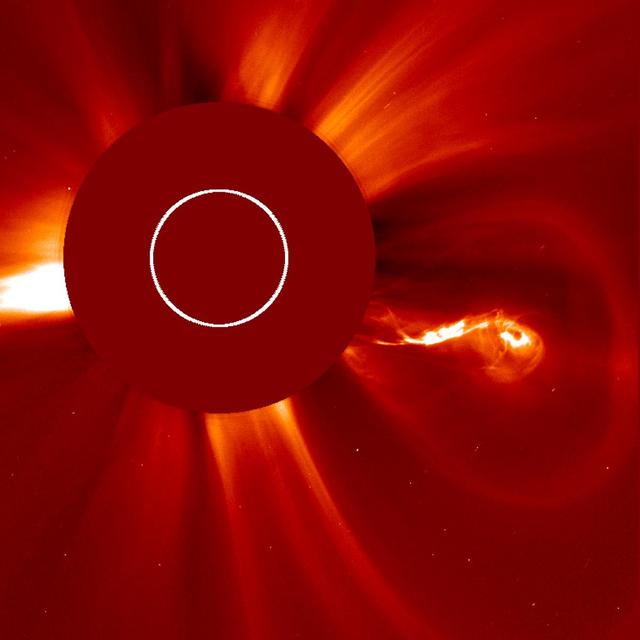
The Sun blasted out five coronal mass ejections (CMEs) over about two days (Feb. 26-28, 2013) and each one had quite a different shape and structure, seen here in a video <a href="http://bit.ly/Za8Aso" rel="nofollow">bit.ly/Za8Aso</a>. The most interesting one (seen above) blew out to the right with a bright, elongated center, likely part of a solar filament, that maintained its curly-Q shape as it expanded out of view. The images were taken by SOHO LASCO C2 coronagraph. The Sun is represented by the white circle and the red disk blocks out the Sun and part of the corona. Credit: NASA/Goddard/SOHO <b><a href="http://www.nasa.gov/audience/formedia/features/MP_Photo_Guidelines.html" rel="nofollow">NASA image use policy.</a></b> <b><a href="http://www.nasa.gov/centers/goddard/home/index.html" rel="nofollow">NASA Goddard Space Flight Center</a></b> enables NASA’s mission through four scientific endeavors: Earth Science, Heliophysics, Solar System Exploration, and Astrophysics. Goddard plays a leading role in NASA’s accomplishments by contributing compelling scientific knowledge to advance the Agency’s mission. <b>Follow us on <a href="http://twitter.com/NASA_GoddardPix" rel="nofollow">Twitter</a></b> <b>Like us on <a href="http://www.facebook.com/pages/Greenbelt-MD/NASA-Goddard/395013845897?ref=tsd" rel="nofollow">Facebook</a></b> <b>Find us on <a href="http://instagram.com/nasagoddard?vm=grid" rel="nofollow">Instagram</a></b>
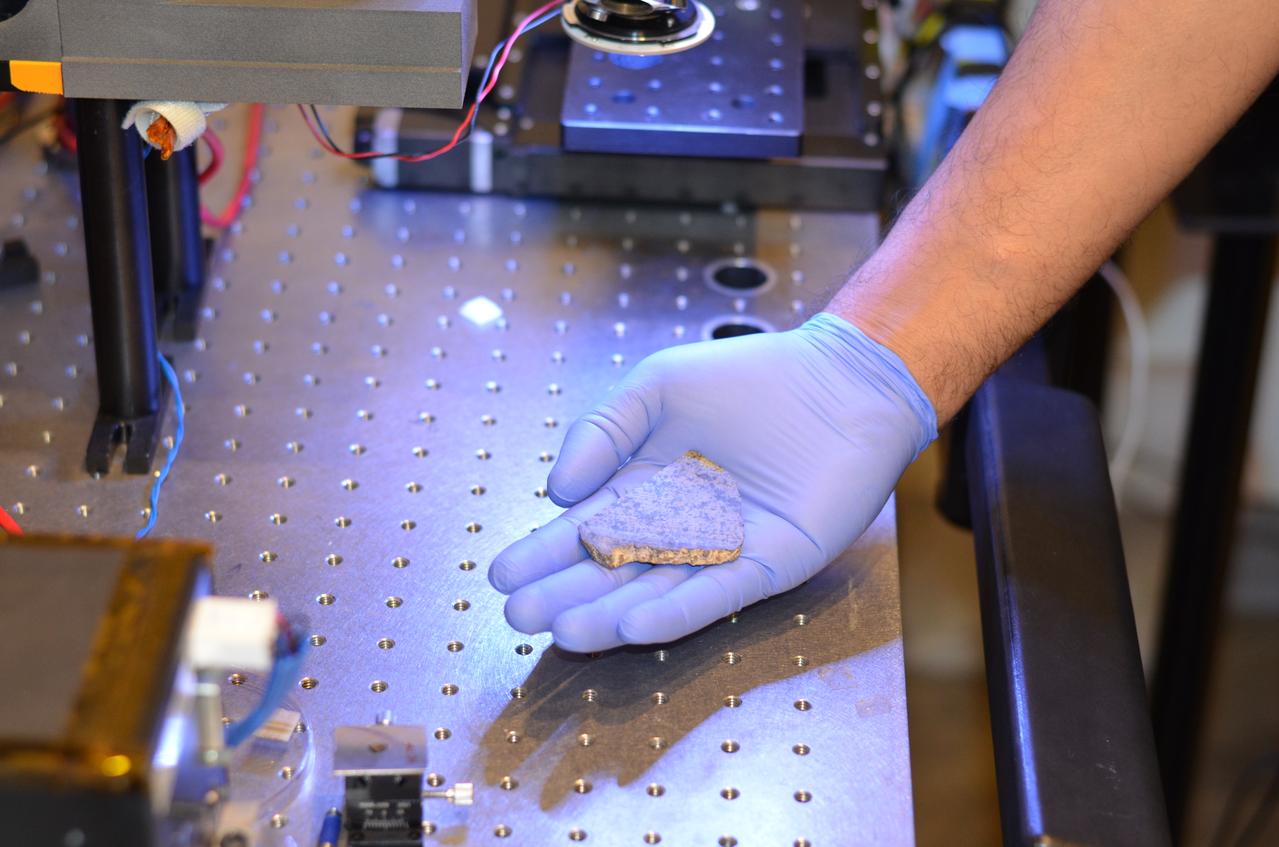
Rohit Bhartia of NASA's Mars 2020 mission holds a slice of a meteorite scientists have determined came from Mars. This slice will likely be used here on Earth for testing a laser instrument for NASA's Mars 2020 rover; a separate slice will go to Mars on the rover. Martian meteorites are believed to be the result of impacts to the Red Planet's surface, resulting in rock being blasted into the atmosphere. After traveling through space for eons, some of these rocks entered Earth's atmosphere. Scientists determine whether they are true Martian meteorites based on their rock and noble gas chemistry and mineralogy. The gases trapped in these meteorites bear the unique fingerprint of the Martian atmosphere, as recorded by NASA's Viking mission in 1976. The rock types also show clear signs of igneous processing not possible on smaller bodies, such as asteroids. https://photojournal.jpl.nasa.gov/catalog/PIA22245
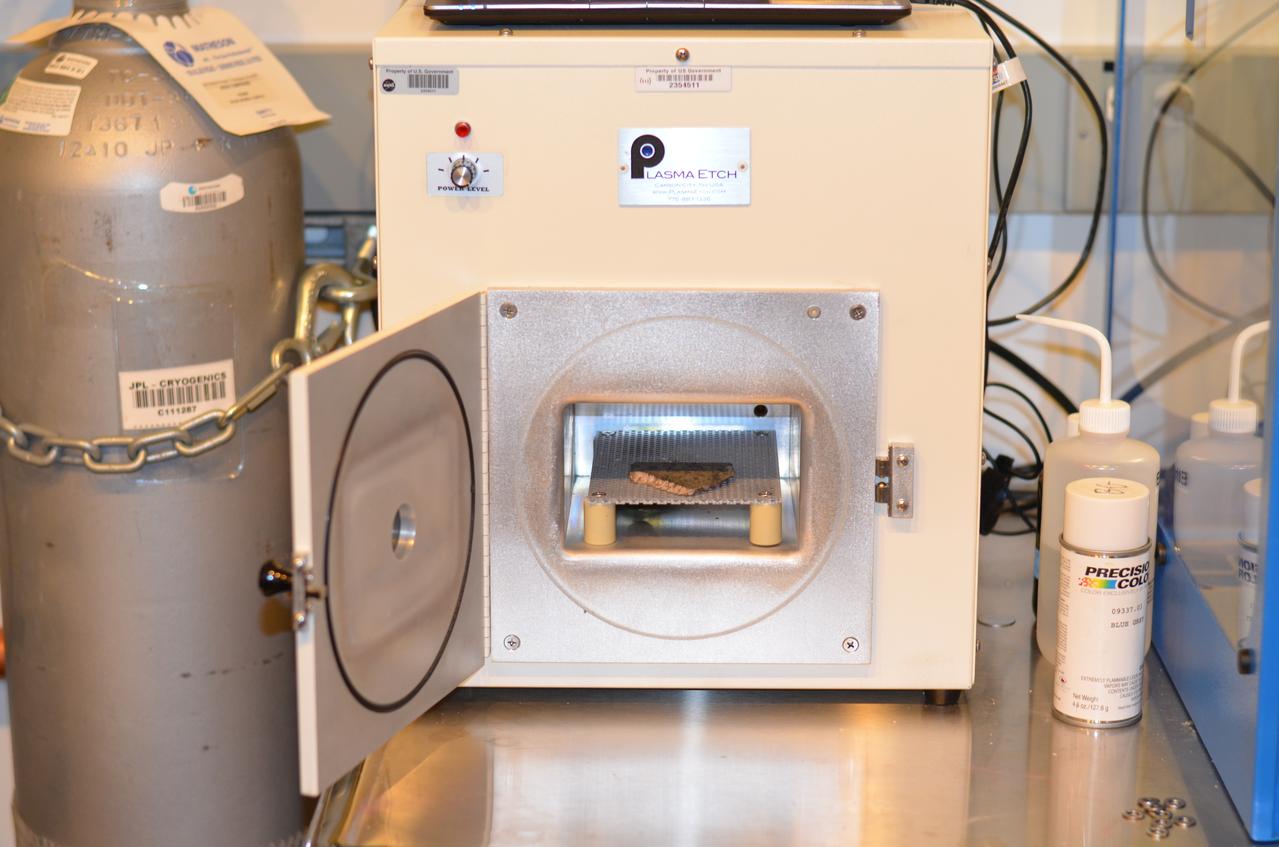
A slice of a meteorite scientists have determined came from Mars placed inside an oxygen plasma cleaner, which removes organics from the outside of surfaces. This slice will likely be used here on Earth for testing a laser instrument for NASA's Mars 2020 rover; a separate slice will go to Mars on the rover. Martian meteorites are believed to be the result of impacts to the Red Planet's surface, resulting in rock being blasted into the atmosphere. After traveling through space for eons, some of these rocks entered Earth's atmosphere. Scientists determine whether they are true Martian meteorites based on their rock and noble gas chemistry and mineralogy. The gases trapped in these meteorites bear the unique fingerprint of the Martian atmosphere, as recorded by NASA's Viking mission in 1976. The rock types also show clear signs of igneous processing not possible on smaller bodies, such as asteroids. https://photojournal.jpl.nasa.gov/catalog/PIA22247