
At Port Canaveral in Florida, a United Launch Alliance Atlas V rocket booster is transported from the company's Mariner ship to the Atlas Spaceflight Operations Center at Cape Canaveral Air Force Station. The rocket is scheduled to launch the Tracking and Data Relay Satellite, TDRS-M. It will be the latest spacecraft destined for the agency's constellation of communications satellites that allows nearly continuous contact with orbiting spacecraft ranging from the International Space Station and Hubble Space Telescope to the array of scientific observatories. Liftoff atop the ULA Atlas V rocket is scheduled to take place from Cape Canaveral's Space Launch Complex 41 on Aug. 3, 2017 at 9:02 a.m. EDT.

A United Launch Alliance Atlas V rocket booster arrives at the Atlas Spaceflight Operations Center at Cape Canaveral Air Force Station in Florida. The rocket is scheduled to launch the Tracking and Data Relay Satellite, TDRS-M. It will be the latest spacecraft destined for the agency's constellation of communications satellites that allows nearly continuous contact with orbiting spacecraft ranging from the International Space Station and Hubble Space Telescope to the array of scientific observatories. Liftoff atop the ULA Atlas V rocket is scheduled to take place from Cape Canaveral's Space Launch Complex 41 on Aug. 3, 2017 at 9:02 a.m. EDT.
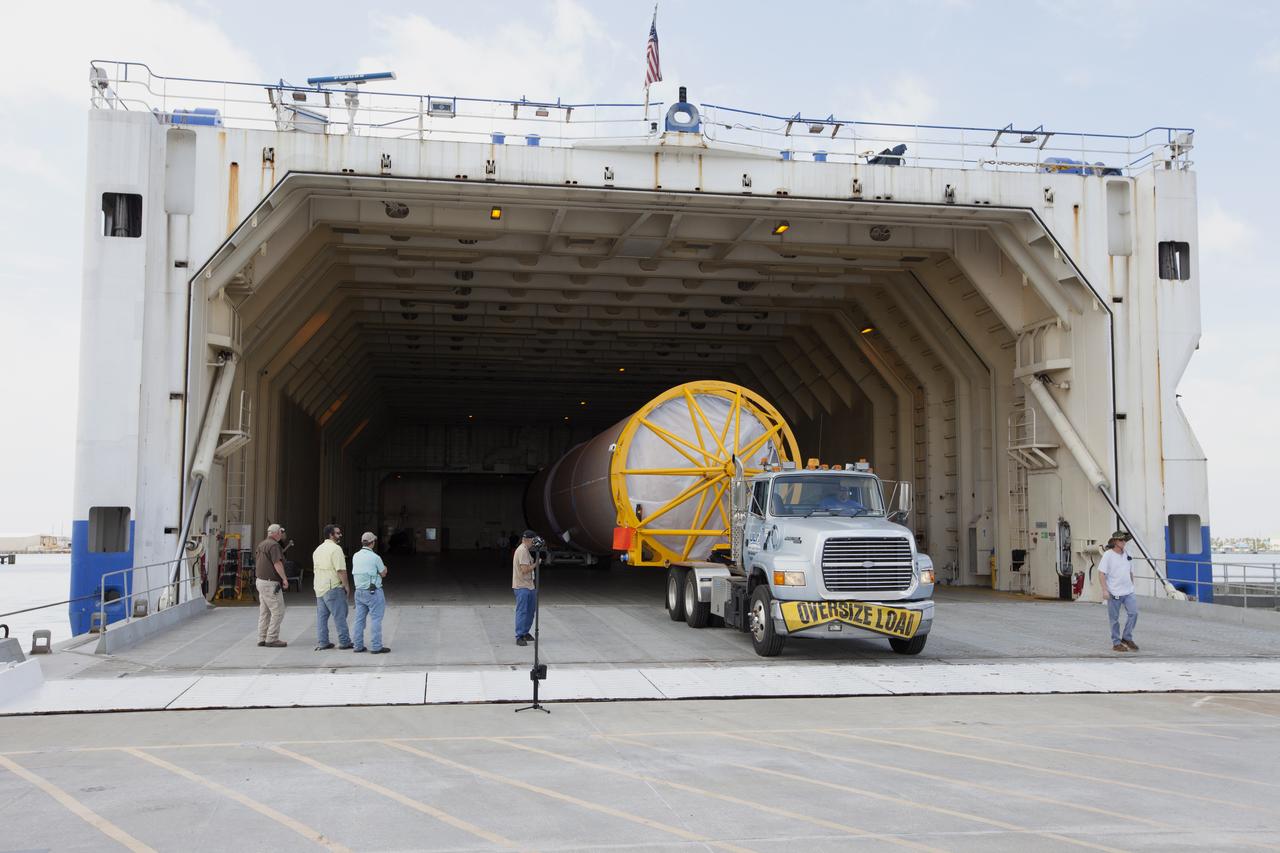
At Port Canaveral in Florida, a United Launch Alliance Atlas V rocket booster is transported from the company's Mariner ship to the Atlas Spaceflight Operations Center at Cape Canaveral Air Force Station. The rocket is scheduled to launch the Tracking and Data Relay Satellite, TDRS-M. It will be the latest spacecraft destined for the agency's constellation of communications satellites that allows nearly continuous contact with orbiting spacecraft ranging from the International Space Station and Hubble Space Telescope to the array of scientific observatories. Liftoff atop the ULA Atlas V rocket is scheduled to take place from Cape Canaveral's Space Launch Complex 41 on Aug. 3, 2017 at 9:02 a.m. EDT.
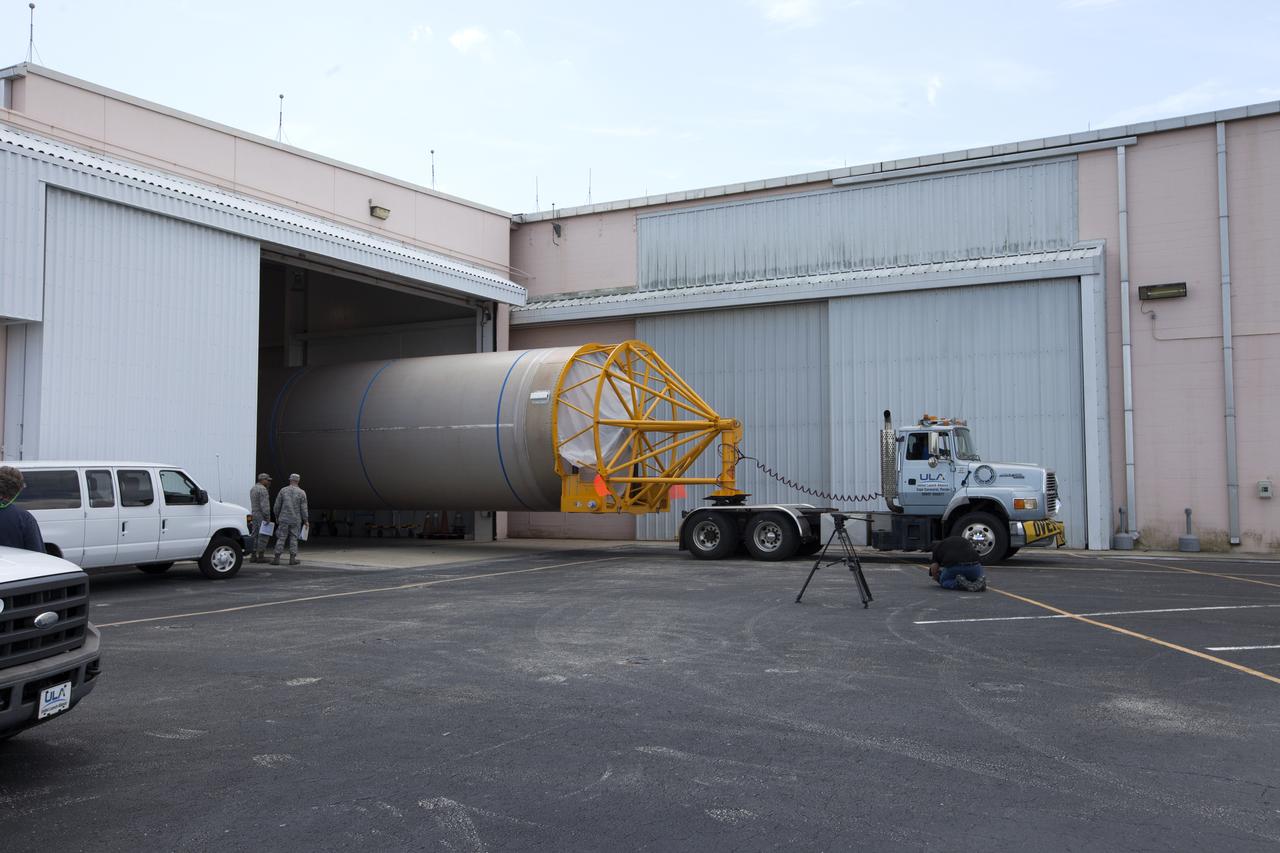
A United Launch Alliance Atlas V rocket booster arrives at the Atlas Spaceflight Operations Center at Cape Canaveral Air Force Station in Florida. The rocket is scheduled to launch the Tracking and Data Relay Satellite, TDRS-M. It will be the latest spacecraft destined for the agency's constellation of communications satellites that allows nearly continuous contact with orbiting spacecraft ranging from the International Space Station and Hubble Space Telescope to the array of scientific observatories. Liftoff atop the ULA Atlas V rocket is scheduled to take place from Cape Canaveral's Space Launch Complex 41 on Aug. 3, 2017 at 9:02 a.m. EDT.

A United Launch Alliance Atlas V rocket booster is transported to the Atlas Spaceflight Operations Center at Cape Canaveral Air Force Station in Florida. The rocket is scheduled to launch the Tracking and Data Relay Satellite, TDRS-M. It will be the latest spacecraft destined for the agency's constellation of communications satellites that allows nearly continuous contact with orbiting spacecraft ranging from the International Space Station and Hubble Space Telescope to the array of scientific observatories. Liftoff atop the ULA Atlas V rocket is scheduled to take place from Cape Canaveral's Space Launch Complex 41 on Aug. 3, 2017 at 9:02 a.m. EDT.
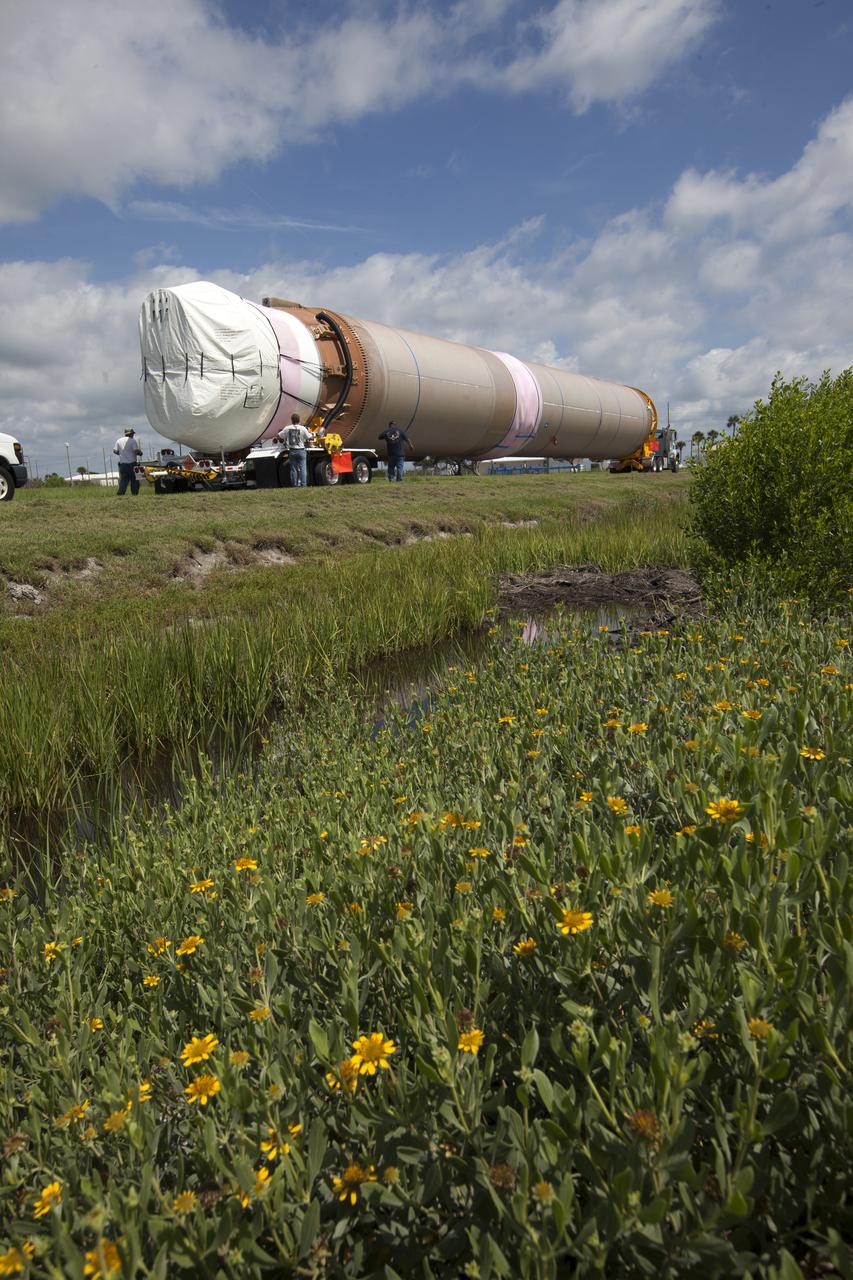
A United Launch Alliance Atlas V rocket booster is transported to the Atlas Spaceflight Operations Center at Cape Canaveral Air Force Station in Florida. The rocket is scheduled to launch the Tracking and Data Relay Satellite, TDRS-M. It will be the latest spacecraft destined for the agency's constellation of communications satellites that allows nearly continuous contact with orbiting spacecraft ranging from the International Space Station and Hubble Space Telescope to the array of scientific observatories. Liftoff atop the ULA Atlas V rocket is scheduled to take place from Cape Canaveral's Space Launch Complex 41 on Aug. 3, 2017 at 9:02 a.m. EDT.
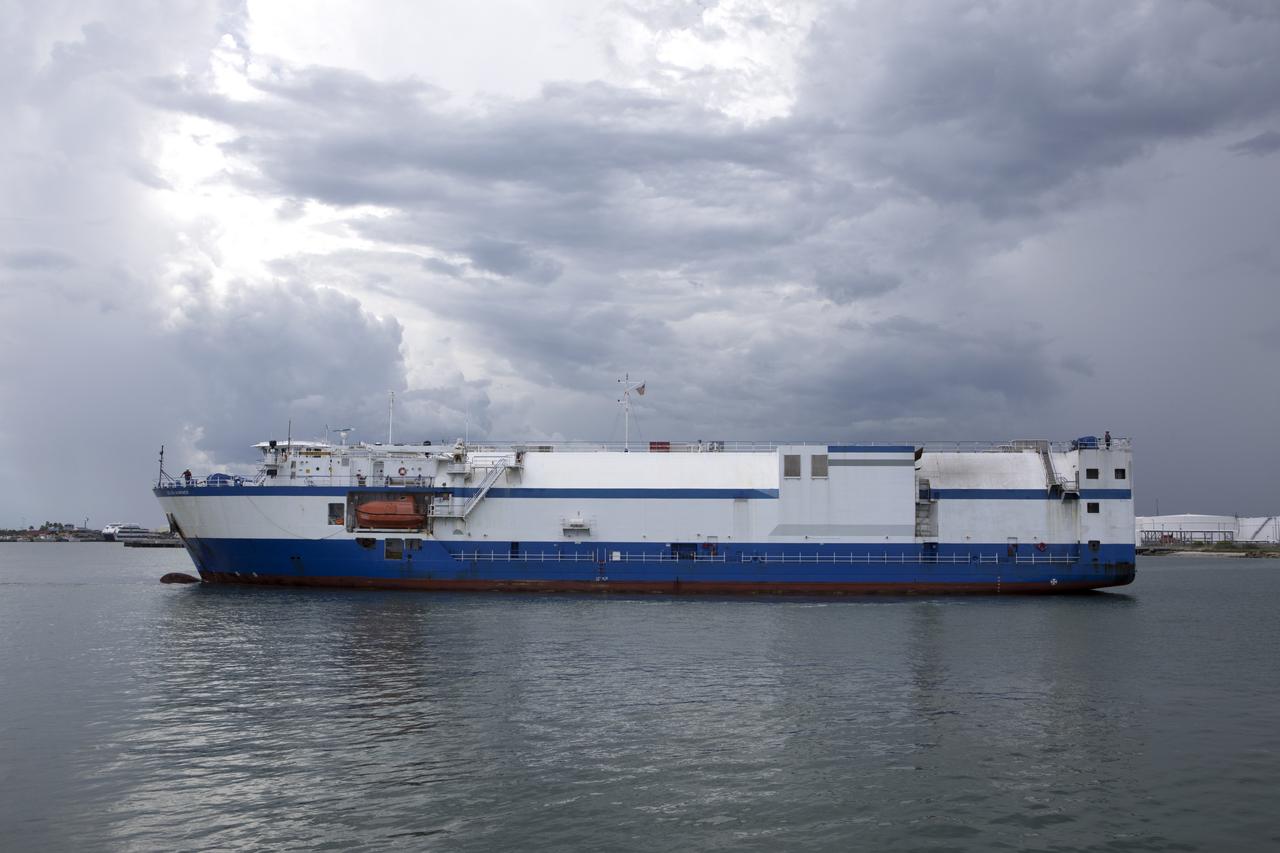
The United Launch Alliance (ULA) Mariner arrives at Port Canaveral in Florida carrying an Atlas V rocket booster bound for nearby Cape Canaveral Air Force Station. The rocket is scheduled to launch the Tracking and Data Relay Satellite, TDRS-M. It will be the latest spacecraft destined for the agency's constellation of communications satellites that allows nearly continuous contact with orbiting spacecraft ranging from the International Space Station and Hubble Space Telescope to the array of scientific observatories. Liftoff atop the ULA Atlas V rocket is scheduled to take place from Cape Canaveral's Space Launch Complex 41 on Aug. 3, 2017 at 9:02 a.m. EDT.
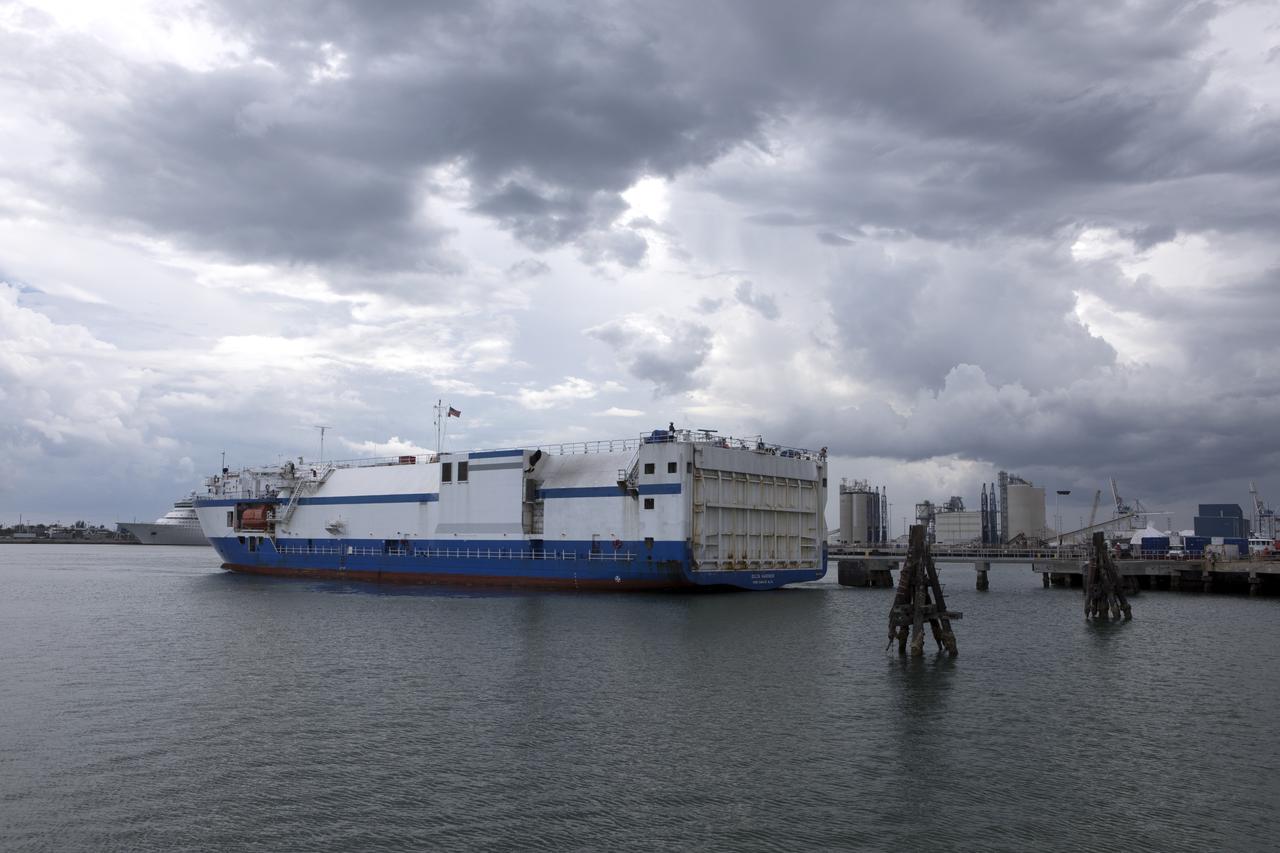
The United Launch Alliance (ULA) Mariner arrives at Port Canaveral in Florida carrying an Atlas V rocket booster bound for nearby Cape Canaveral Air Force Station. The rocket is scheduled to launch the Tracking and Data Relay Satellite, TDRS-M. It will be the latest spacecraft destined for the agency's constellation of communications satellites that allows nearly continuous contact with orbiting spacecraft ranging from the International Space Station and Hubble Space Telescope to the array of scientific observatories. Liftoff atop the ULA Atlas V rocket is scheduled to take place from Cape Canaveral's Space Launch Complex 41 on Aug. 3, 2017 at 9:02 a.m. EDT.
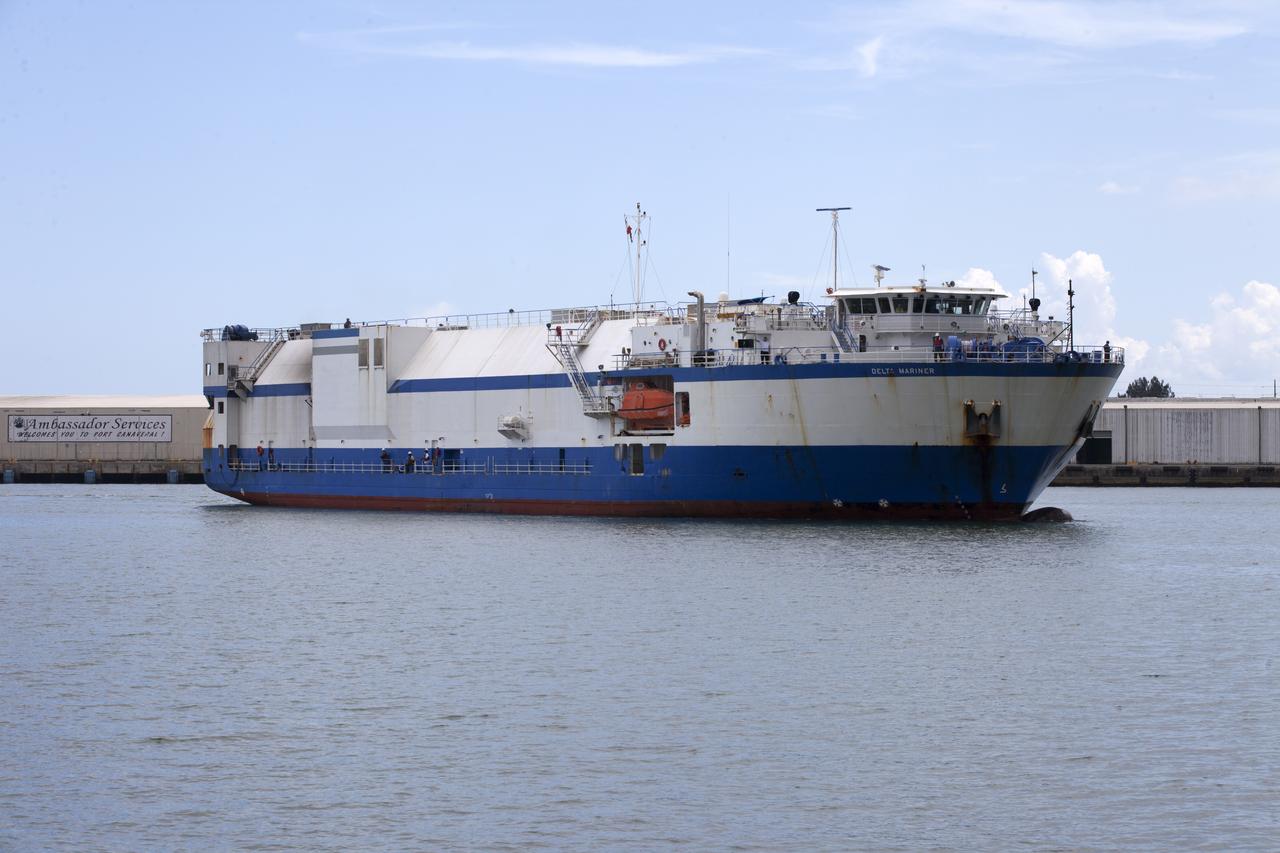
The United Launch Alliance (ULA) Mariner arrives at Port Canaveral in Florida carrying an Atlas V rocket booster bound for nearby Cape Canaveral Air Force Station. The rocket is scheduled to launch the Tracking and Data Relay Satellite, TDRS-M. It will be the latest spacecraft destined for the agency's constellation of communications satellites that allows nearly continuous contact with orbiting spacecraft ranging from the International Space Station and Hubble Space Telescope to the array of scientific observatories. Liftoff atop the ULA Atlas V rocket is scheduled to take place from Cape Canaveral's Space Launch Complex 41 on Aug. 3, 2017 at 9:02 a.m. EDT.
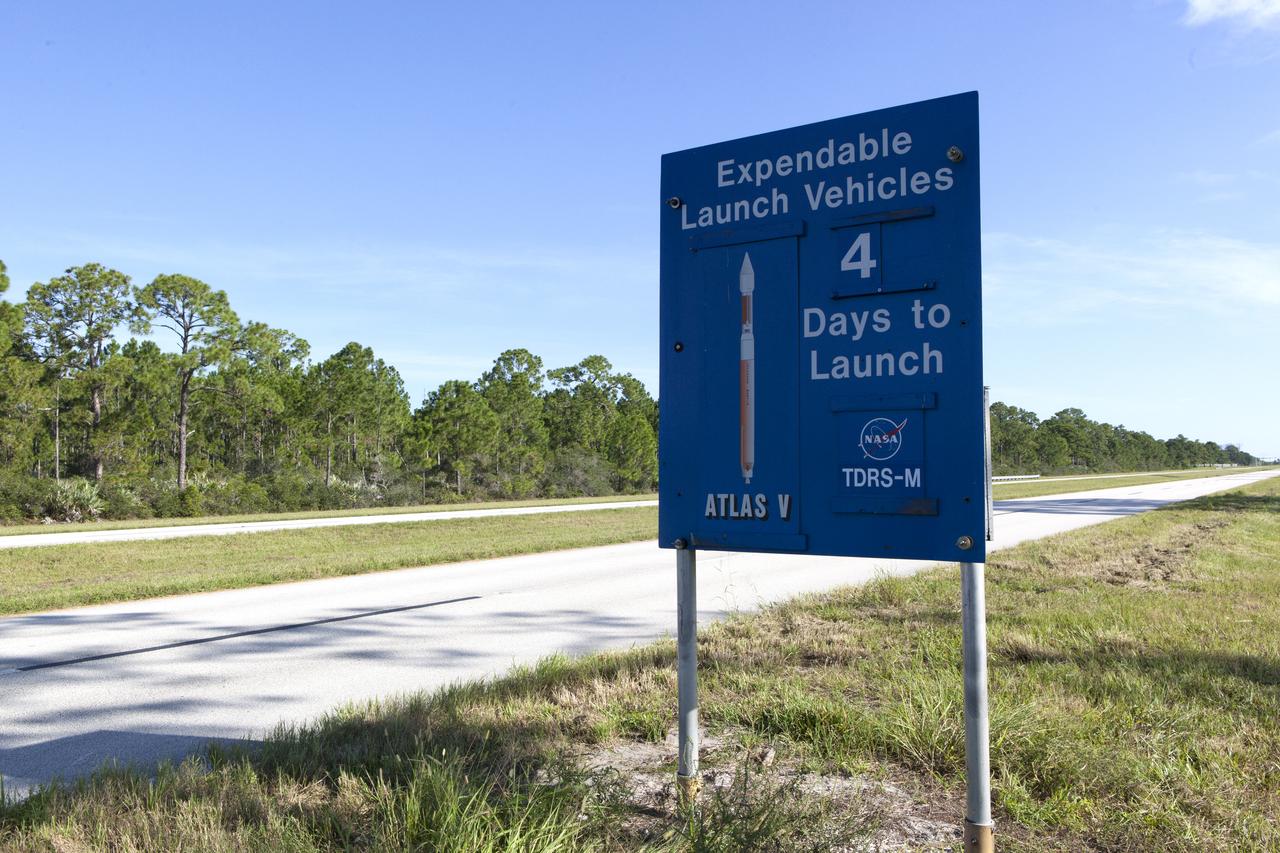
A sign just inside the gate to NASA's Kennedy Space Center in Florida notes that in four days an Atlas V rocket is scheduled to launch the agency's Tracking and Data Relay Satellite (TDRS-M). Liftoff atop the Unite Launch Alliance Atlas V rocket is scheduled to take place from Cape Canaveral's Space Launch Complex 41 on Aug. 18, 2017. TDRS-M will be the latest spacecraft destined for the agency's constellation of communications satellites that allows nearly continuous contact with orbiting spacecraft ranging from the International Space Station and Hubble Space Telescope to the array of scientific observatories.
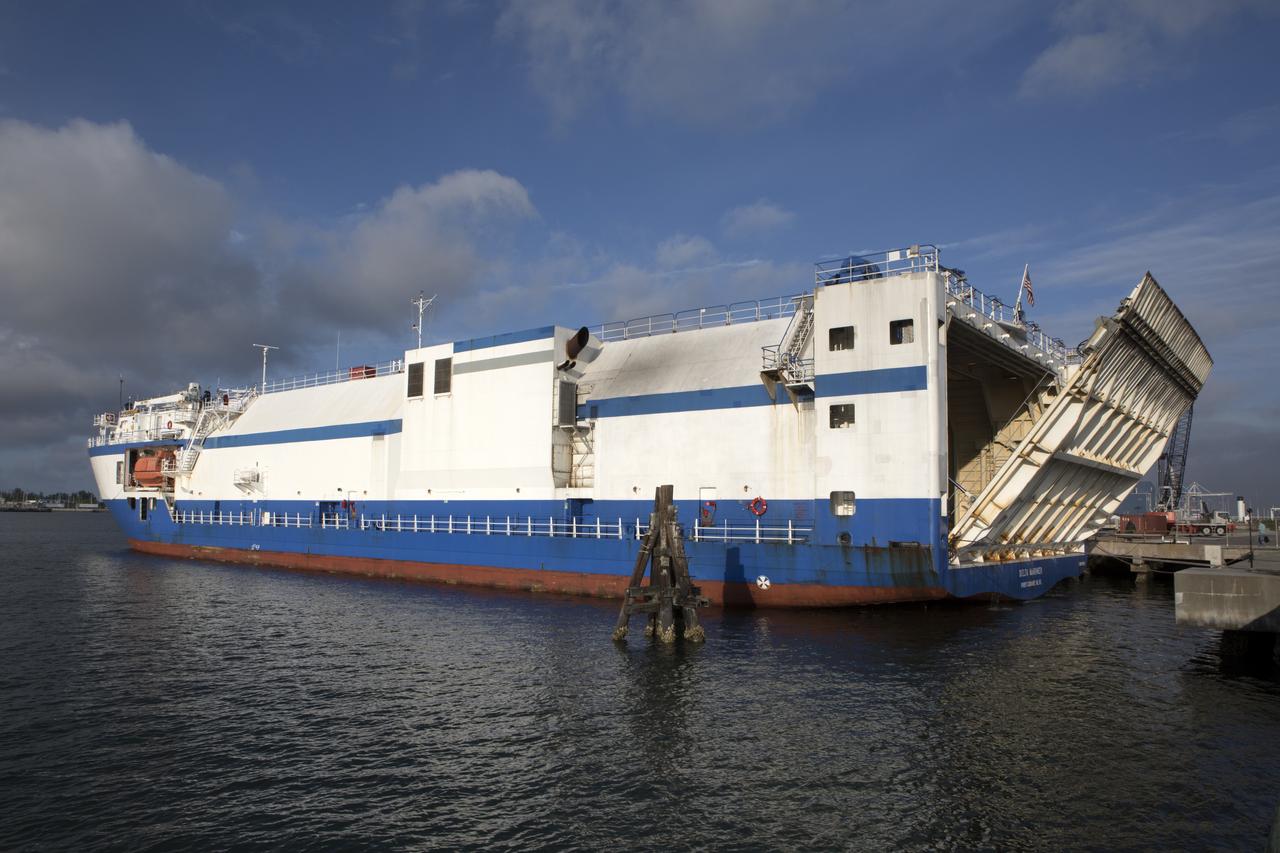
The United Launch Alliance (ULA) Mariner arrives at Port Canaveral in Florida carrying an Atlas V rocket booster bound for nearby Cape Canaveral Air Force Station. The rocket is scheduled to launch the Tracking and Data Relay Satellite, TDRS-M. It will be the latest spacecraft destined for the agency's constellation of communications satellites that allows nearly continuous contact with orbiting spacecraft ranging from the International Space Station and Hubble Space Telescope to the array of scientific observatories. Liftoff atop the ULA Atlas V rocket is scheduled to take place from Cape Canaveral's Space Launch Complex 41 on Aug. 3, 2017 at 9:02 a.m. EDT.
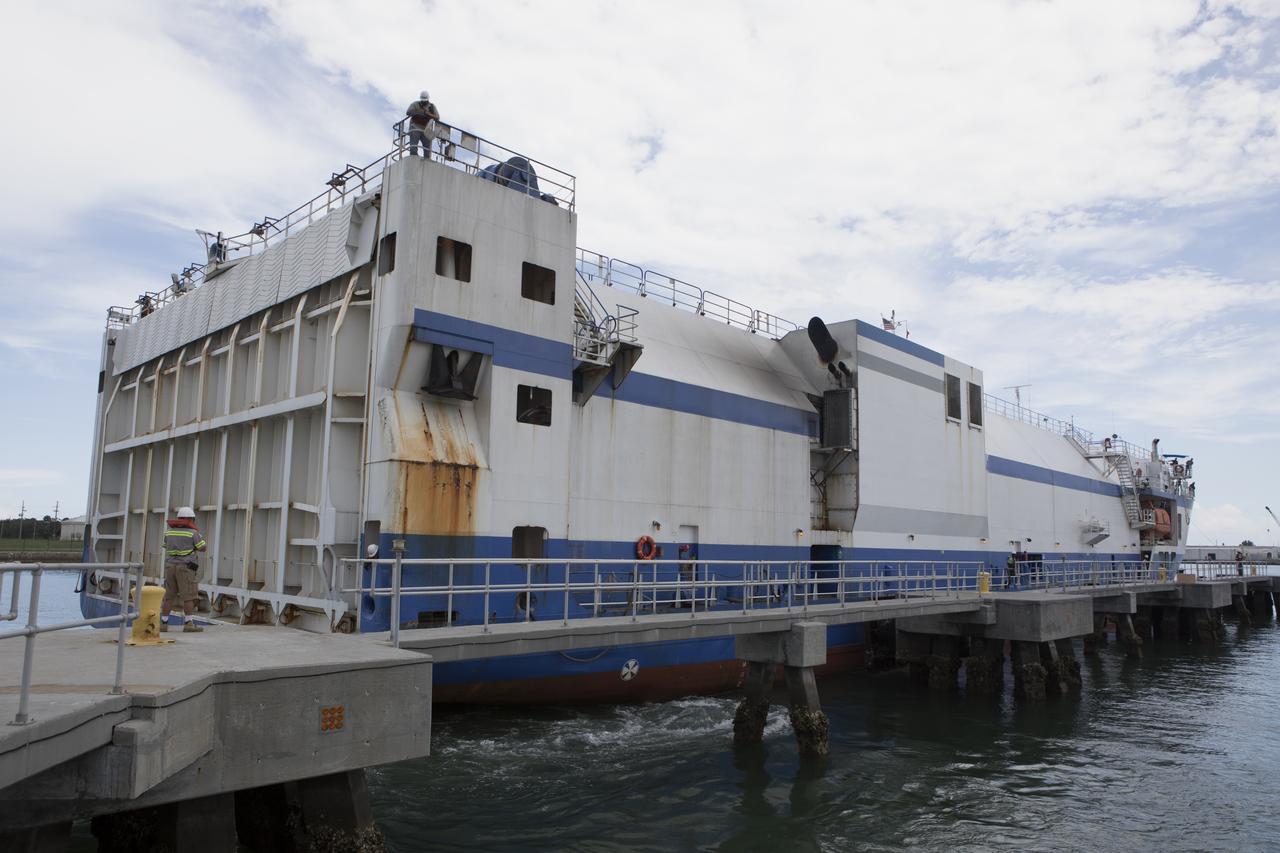
The United Launch Alliance (ULA) Mariner arrives at Port Canaveral in Florida carrying an Atlas V rocket booster bound for nearby Cape Canaveral Air Force Station. The rocket is scheduled to launch the Tracking and Data Relay Satellite, TDRS-M. It will be the latest spacecraft destined for the agency's constellation of communications satellites that allows nearly continuous contact with orbiting spacecraft ranging from the International Space Station and Hubble Space Telescope to the array of scientific observatories. Liftoff atop the ULA Atlas V rocket is scheduled to take place from Cape Canaveral's Space Launch Complex 41 on Aug. 3, 2017 at 9:02 a.m. EDT.
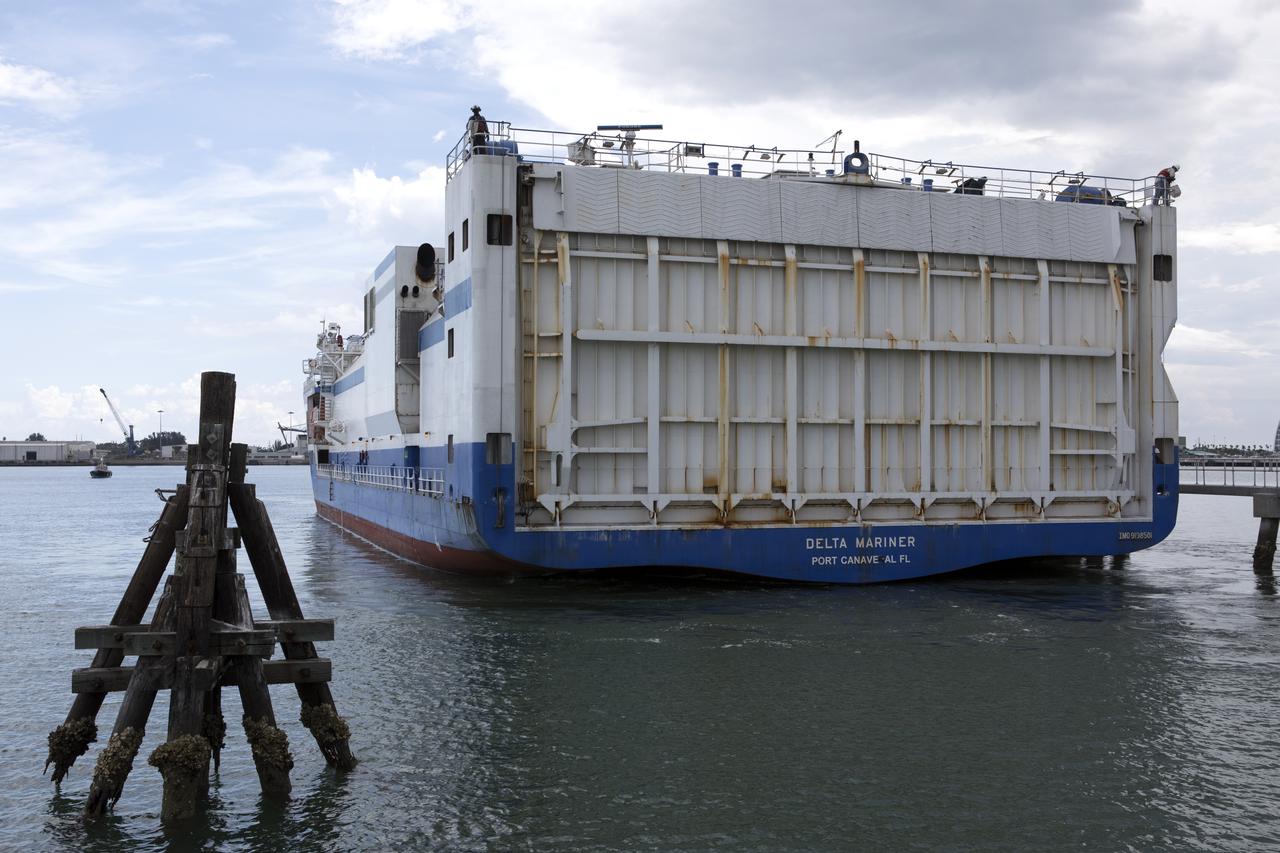
The United Launch Alliance (ULA) Mariner arrives at Port Canaveral in Florida carrying an Atlas V rocket booster bound for nearby Cape Canaveral Air Force Station. The rocket is scheduled to launch the Tracking and Data Relay Satellite, TDRS-M. It will be the latest spacecraft destined for the agency's constellation of communications satellites that allows nearly continuous contact with orbiting spacecraft ranging from the International Space Station and Hubble Space Telescope to the array of scientific observatories. Liftoff atop the ULA Atlas V rocket is scheduled to take place from Cape Canaveral's Space Launch Complex 41 on Aug. 3, 2017 at 9:02 a.m. EDT.
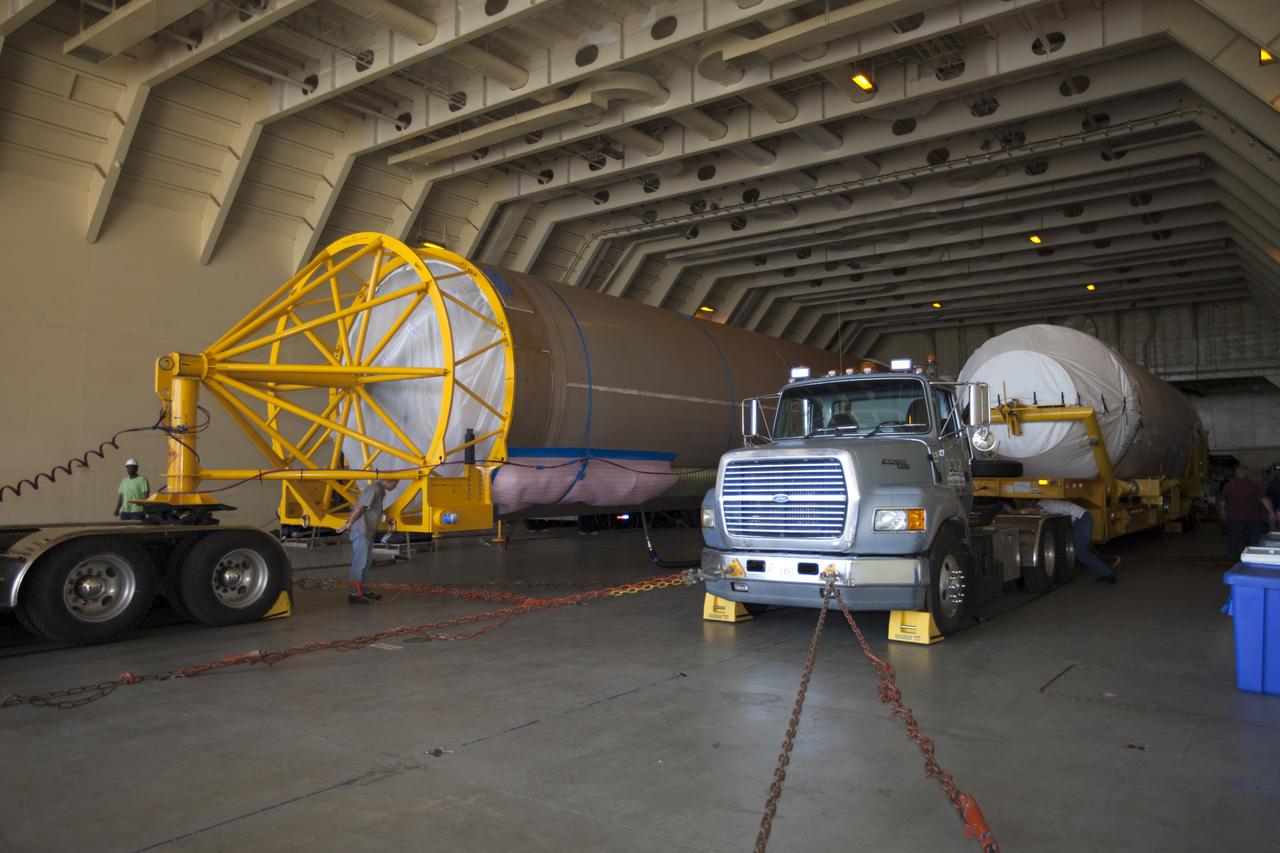
At Port Canaveral in Florida, a United Launch Alliance Atlas V rocket booster and Centaur upper stage are about to be transported from the company's Mariner ship to the Atlas Spaceflight Operations Center at Cape Canaveral Air Force Station. The rocket is scheduled to launch the Tracking and Data Relay Satellite, TDRS-M. It will be the latest spacecraft destined for the agency's constellation of communications satellites that allows nearly continuous contact with orbiting spacecraft ranging from the International Space Station and Hubble Space Telescope to the array of scientific observatories. Liftoff atop the ULA Atlas V rocket is scheduled to take place from Cape Canaveral's Space Launch Complex 41 on Aug. 3, 2017 at 9:02 a.m. EDT.
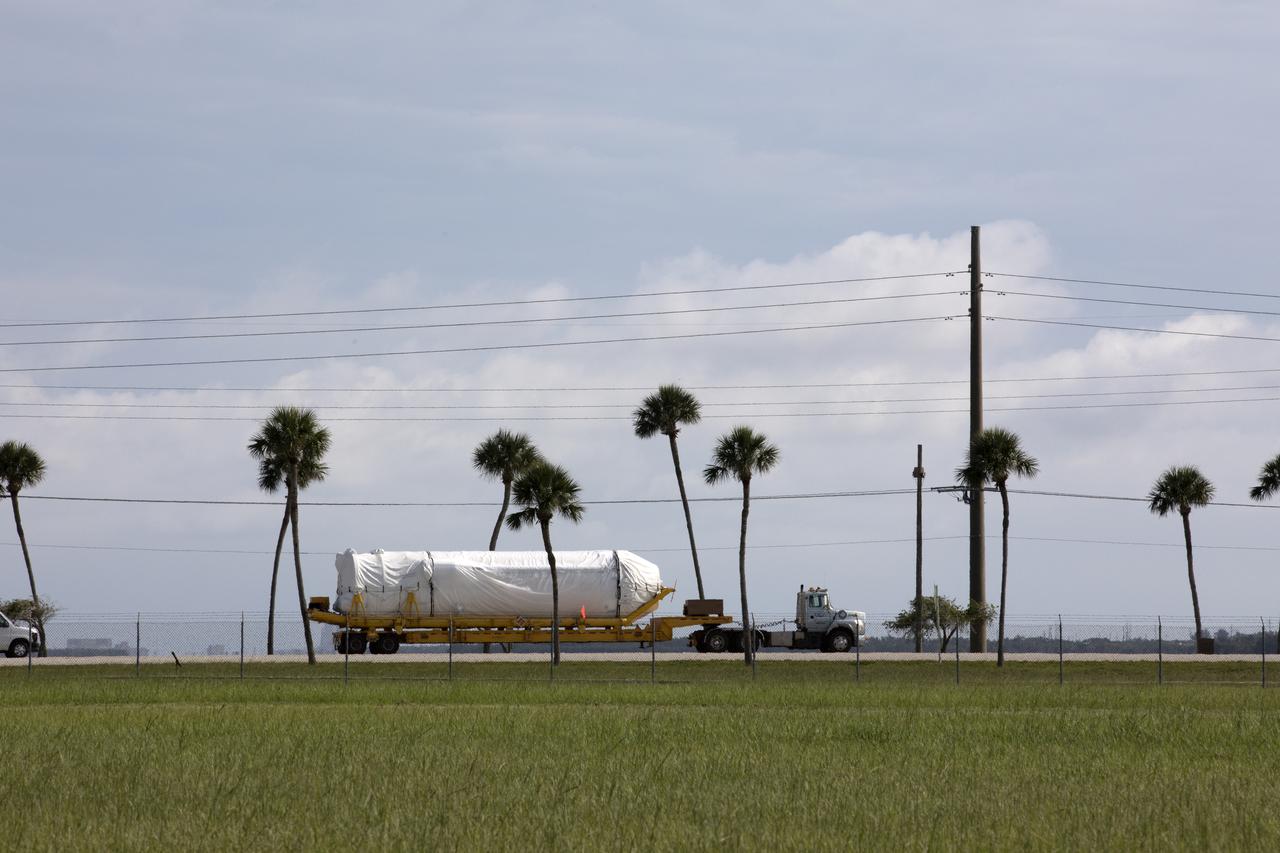
A United Launch Alliance Centaur uppoer stage is transported to the Atlas Spaceflight Operations Center at Cape Canaveral Air Force Station in Florida. The rocket is scheduled to launch the Tracking and Data Relay Satellite, TDRS-M. It will be the latest spacecraft destined for the agency's constellation of communications satellites that allows nearly continuous contact with orbiting spacecraft ranging from the International Space Station and Hubble Space Telescope to the array of scientific observatories. Liftoff atop the ULA Atlas V rocket is scheduled to take place from Cape Canaveral's Space Launch Complex 41 on Aug. 3, 2017 at 9:02 a.m. EDT.
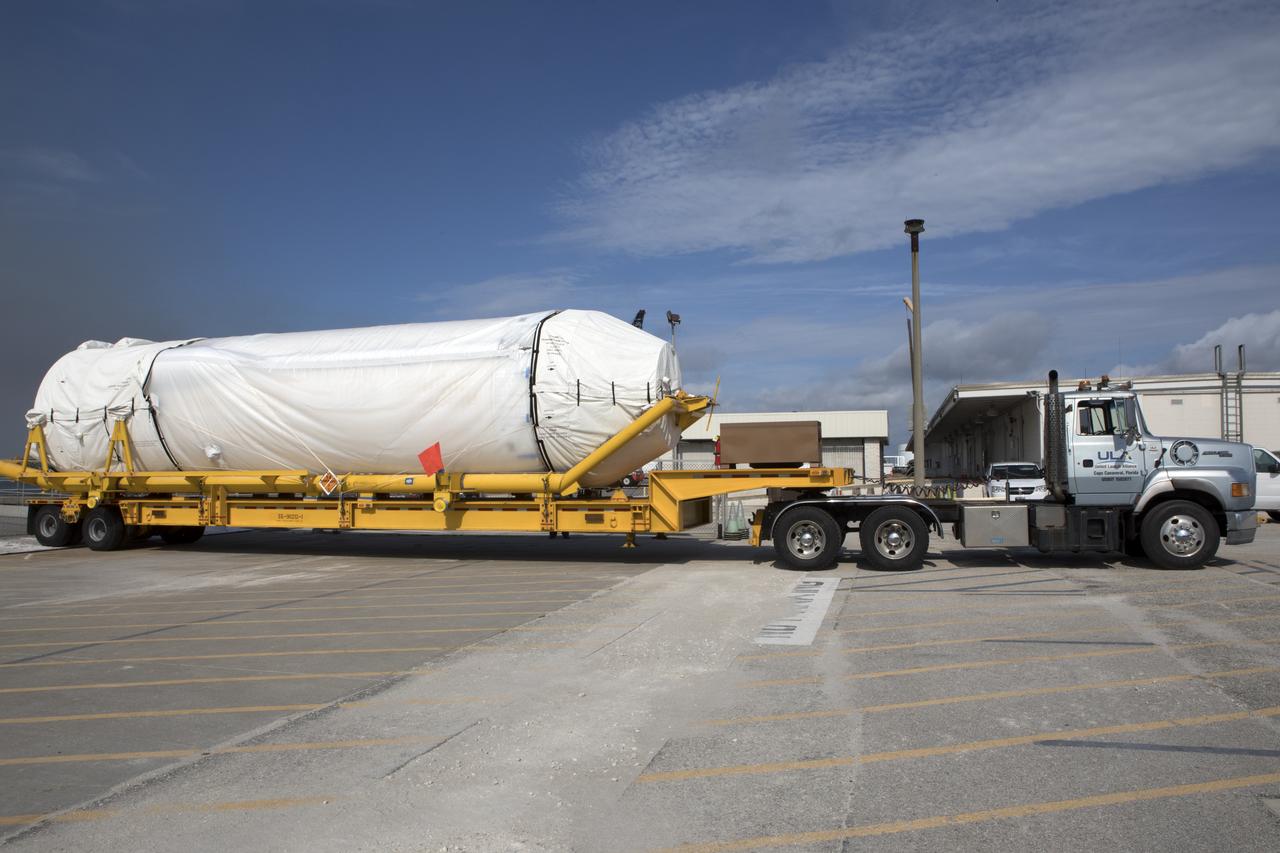
At Port Canaveral in Florida, a United Launch Alliance Centaur uppoer stage is transported from the company's Mariner ship to the Atlas Spaceflight Operations Center at Cape Canaveral Air Force Station. The rocket is scheduled to launch the Tracking and Data Relay Satellite, TDRS-M. It will be the latest spacecraft destined for the agency's constellation of communications satellites that allows nearly continuous contact with orbiting spacecraft ranging from the International Space Station and Hubble Space Telescope to the array of scientific observatories. Liftoff atop the ULA Atlas V rocket is scheduled to take place from Cape Canaveral's Space Launch Complex 41 on Aug. 3, 2017 at 9:02 a.m. EDT.

NASA's TDRS-M satellite arrives inside its shipping container at Space Coast Regional Airport in Titusville, Florida. The spacecraft will be transported to the nearby Astrotech facility, also in Titusville, for preflight processing. The TDRS-M is the latest spacecraft destined for the agency's constellation of communications satellites that allows nearly continuous contact with orbiting spacecraft ranging from the International Space Station and Hubble Space Telescope to the array of scientific observatories. Liftoff atop a United Launch Alliance Atlas V rocket is scheduled to take place from Space Launch Complex 41 at Cape Canaveral Air Force Station at 9:02 a.m. EDT Aug. 3, 2017.
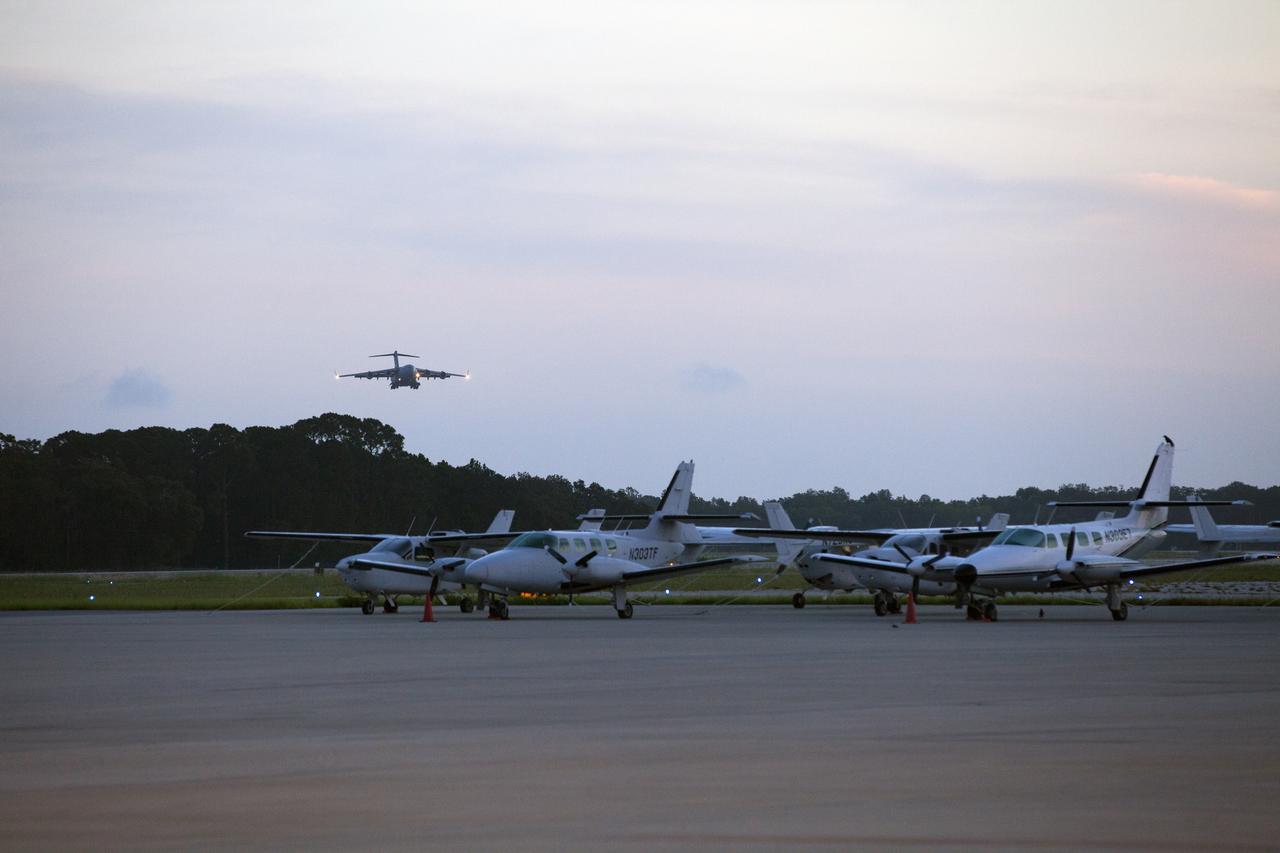
In early morning hours, NASA's TDRS-M satellite arrives at Space Coast Regional Airport in Titusville, Florida, aboard a U.S. Air Force transport aircraft. The spacecraft will be transported to the nearby Astrotech facility, also in Titusville, for preflight processing. The TDRS-M is the latest spacecraft destined for the agency's constellation of communications satellites that allows nearly continuous contact with orbiting spacecraft ranging from the International Space Station and Hubble Space Telescope to the array of scientific observatories. Liftoff atop a United Launch Alliance Atlas V rocket is scheduled to take place from Space Launch Complex 41 at Cape Canaveral Air Force Station at 9:02 a.m. EDT Aug. 3, 2017.
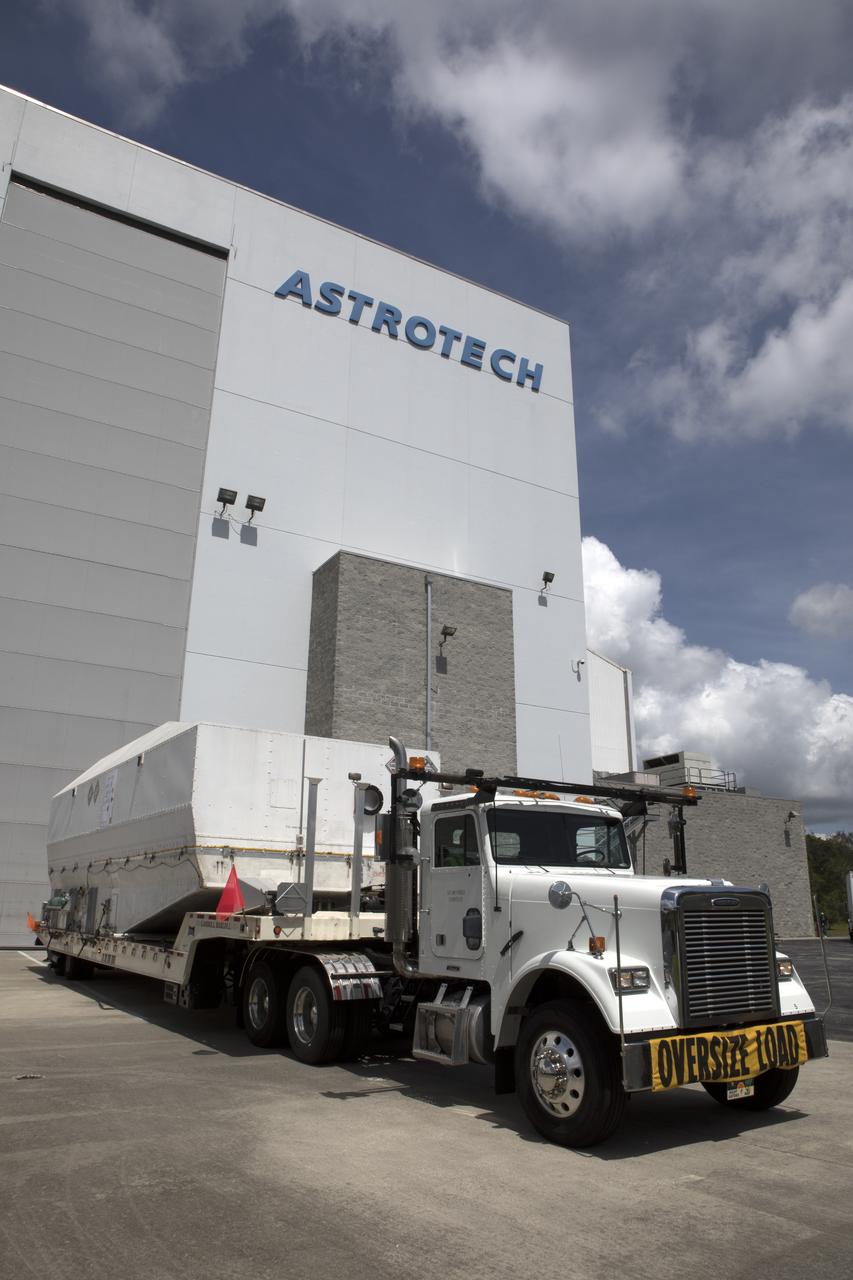
NASA's TDRS-M satellite arrives inside its shipping container at the Astrotech facility in Titusville, Florida, for preflight processing. The TDRS-M is the latest spacecraft destined for the agency's constellation of communications satellites that allows nearly continuous contact with orbiting spacecraft ranging from the International Space Station and Hubble Space Telescope to the array of scientific observatories. Liftoff atop a United Launch Alliance Atlas V rocket is scheduled to take place from Space Launch Complex 41 at Cape Canaveral Air Force Station at 9:02 a.m. EDT Aug. 3, 2017.
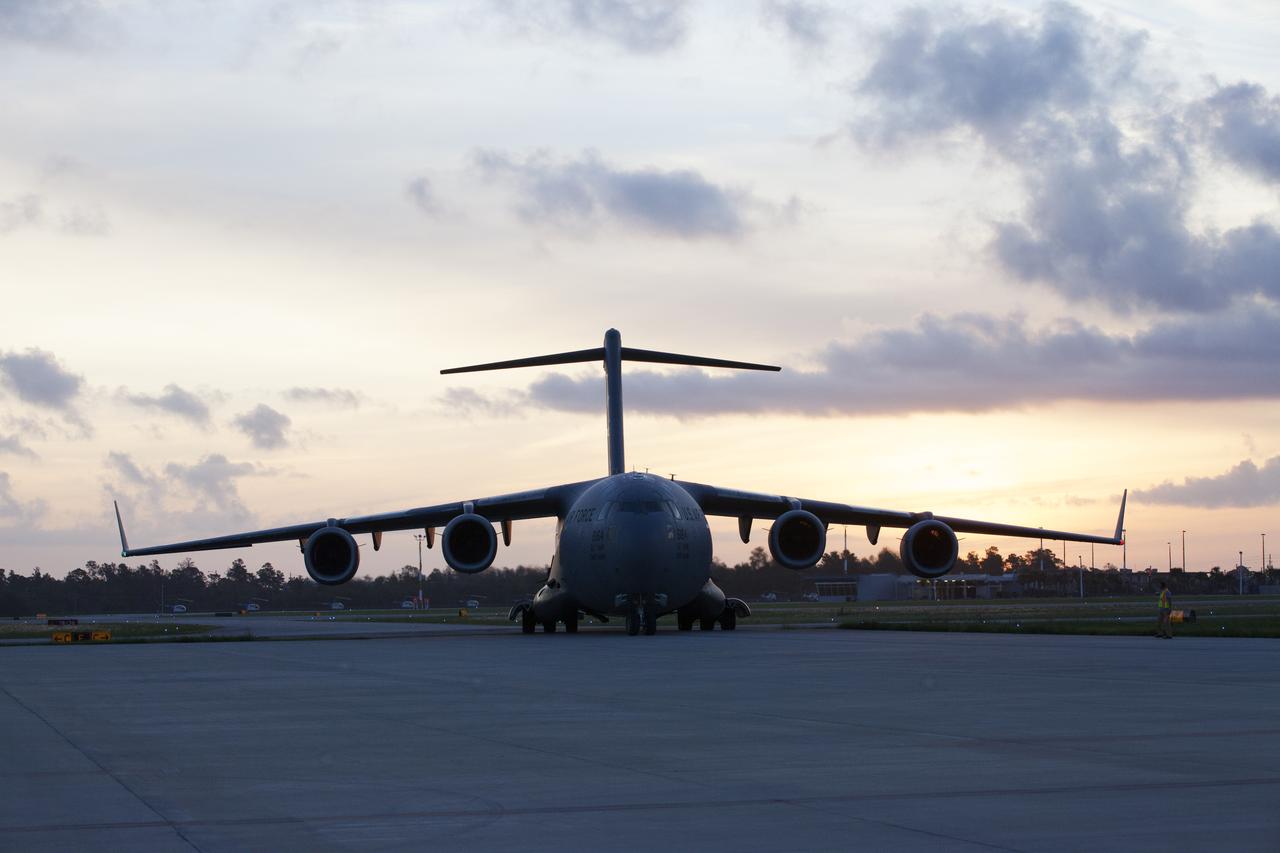
NASA's TDRS-M satellite arrives at Space Coast Regional Airport in Titusville, Florida, aboard a U.S. Air Force transport aircraft. The spacecraft will be transported to the nearby Astrotech facility, also in Titusville, for preflight processing. The TDRS-M is the latest spacecraft destined for the agency's constellation of communications satellites that allows nearly continuous contact with orbiting spacecraft ranging from the International Space Station and Hubble Space Telescope to the array of scientific observatories. Liftoff atop a United Launch Alliance Atlas V rocket is scheduled to take place from Space Launch Complex 41 at Cape Canaveral Air Force Station at 9:02 a.m. EDT Aug. 3, 2017.
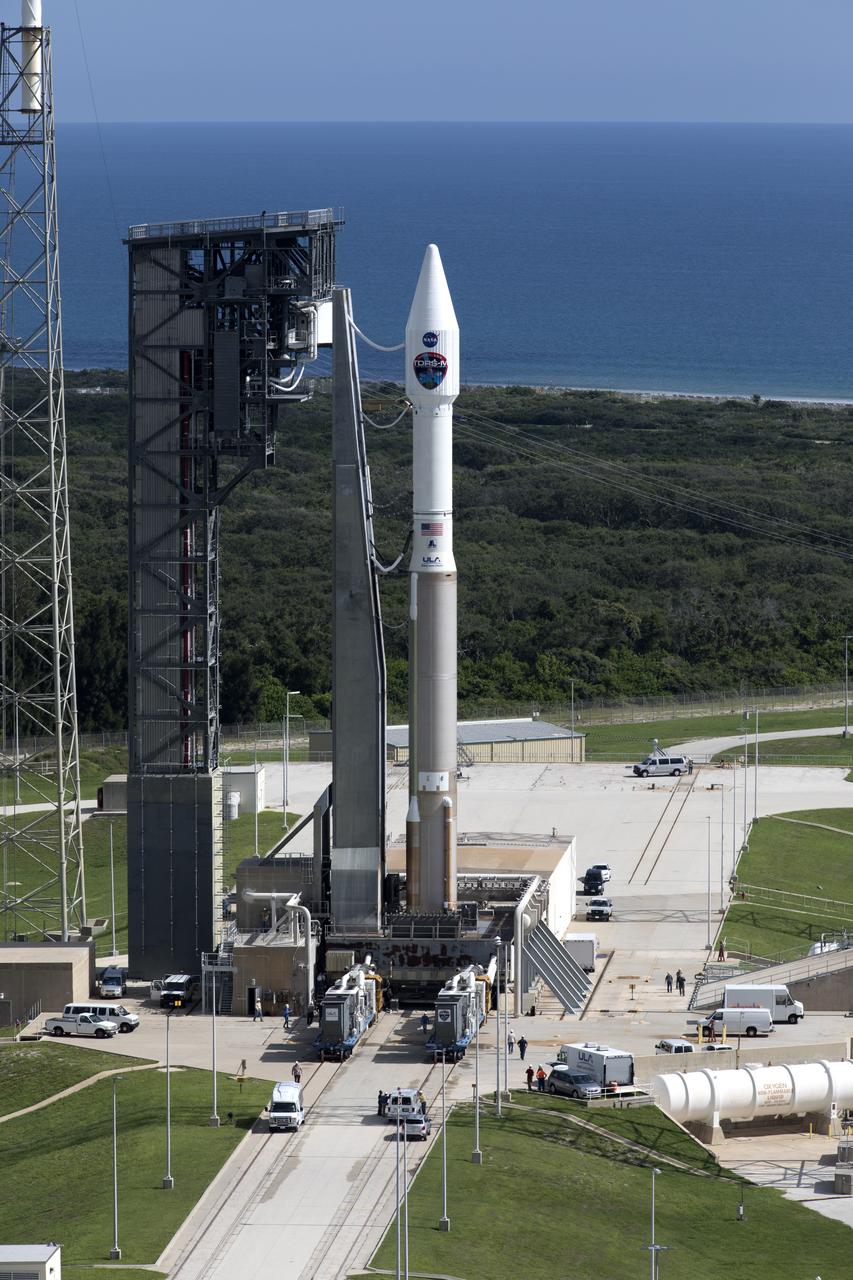
A United Launch Alliance Atlas V rocket stands at Space Launch Complex 41 at Cape Canaveral Air Force Station in Florida. The launch vehicle will send NASA's Tracking and Data Relay Satellite, TDRS-M to orbit. TDRS-M is the latest spacecraft destined for the agency's constellation of communications satellites that allows nearly continuous contact with orbiting spacecraft ranging from the International Space Station and Hubble Space Telescope to the array of scientific observatories. Liftoff atop a United Launch Alliance Atlas V rocket is scheduled to take place from Space Launch Complex 41 at Cape Canaveral Air Force Station at 8:03 a.m. EDT Aug. 18.
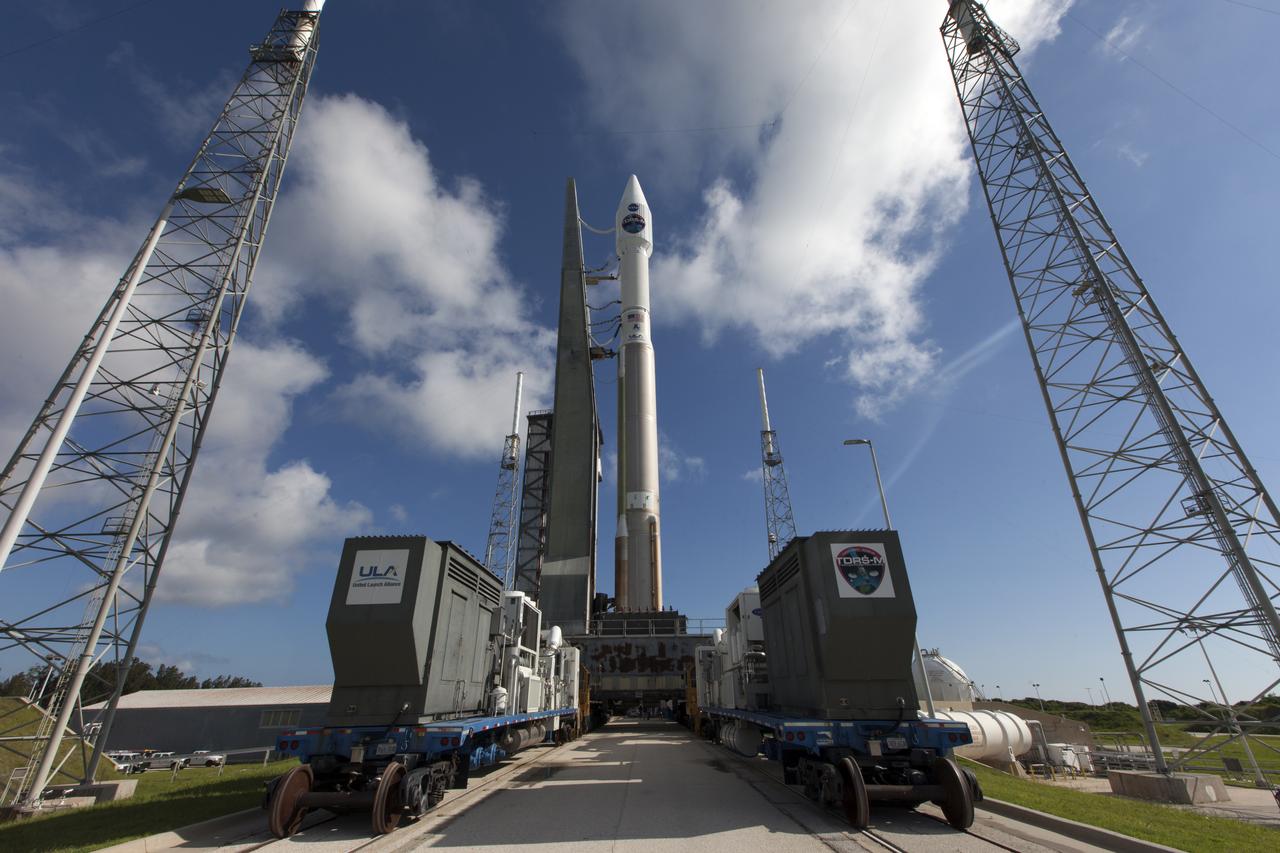
A United Launch Alliance Atlas V rocket is rolled to Space Launch Complex 41 at Cape Canaveral Air Force Station in Florida. The launch vehicle will send NASA's Tracking and Data Relay Satellite, TDRS-M to orbit. TDRS-M is the latest spacecraft destined for the agency's constellation of communications satellites that allows nearly continuous contact with orbiting spacecraft ranging from the International Space Station and Hubble Space Telescope to the array of scientific observatories. Liftoff atop a United Launch Alliance Atlas V rocket is scheduled to take place from Space Launch Complex 41 at Cape Canaveral Air Force Station at 8:03 a.m. EDT Aug. 18.
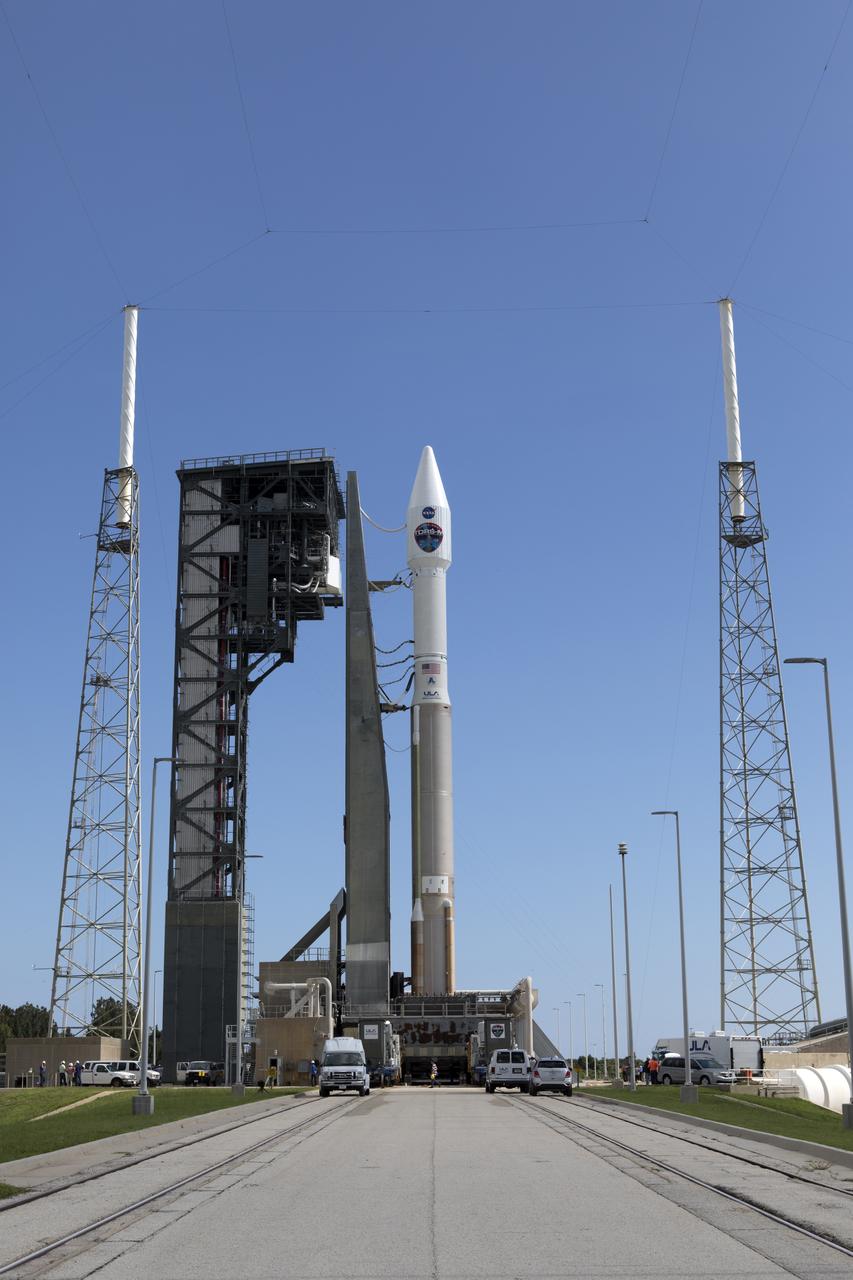
A United Launch Alliance Atlas V rocket arrives at Space Launch Complex 41 at Cape Canaveral Air Force Station in Florida. The launch vehicle will send NASA's Tracking and Data Relay Satellite, TDRS-M to orbit. TDRS-M is the latest spacecraft destined for the agency's constellation of communications satellites that allows nearly continuous contact with orbiting spacecraft ranging from the International Space Station and Hubble Space Telescope to the array of scientific observatories. Liftoff atop a United Launch Alliance Atlas V rocket is scheduled to take place from Space Launch Complex 41 at Cape Canaveral Air Force Station at 8:03 a.m. EDT Aug. 18.
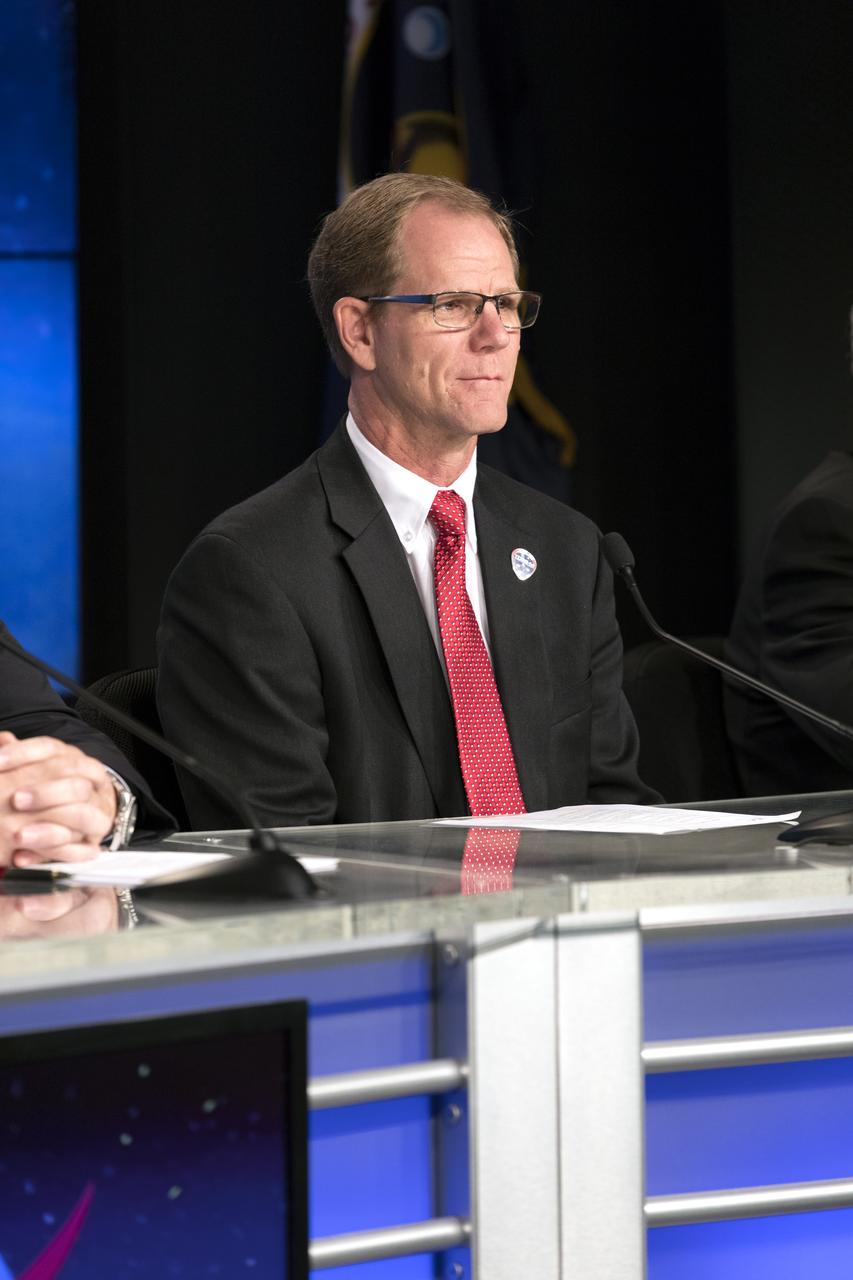
In the Kennedy Space Center's Press Site auditorium, Scott Messer, United Launch Alliance program manager for NASA missions, speaks to members of the media at a prelaunch news conference for NASA's Tracking and Data Relay Satellite, TDRS-M. It is the latest spacecraft destined for the agency's constellation of communications satellites that allows nearly continuous contact with orbiting spacecraft ranging from the International Space Station and Hubble Space Telescope to the array of scientific observatories. Liftoff atop a United Launch Alliance Atlas V rocket is scheduled to take place from Space Launch Complex 41 at Cape Canaveral Air Force Station at 8:03 a.m. EDT Aug. 18.
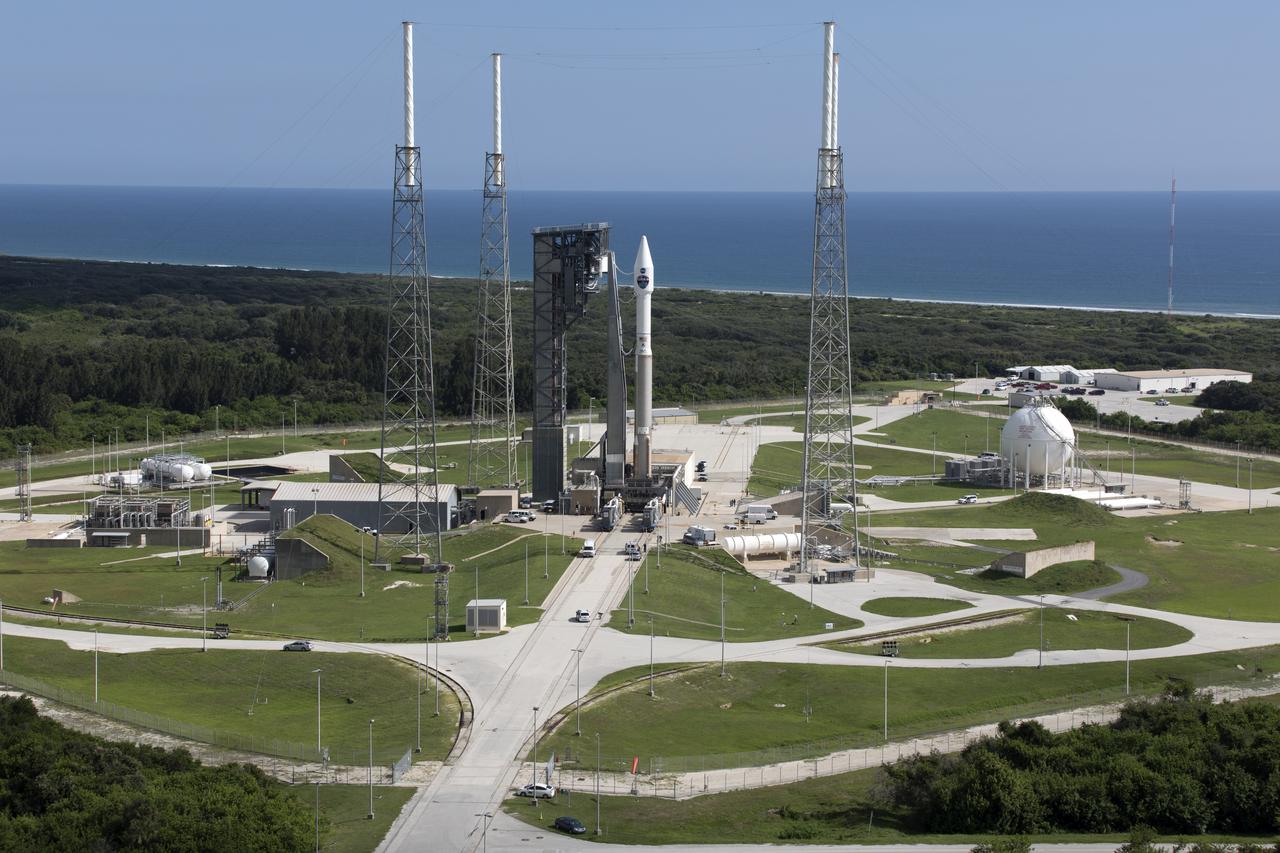
A United Launch Alliance Atlas V rocket stands at Space Launch Complex 41 at Cape Canaveral Air Force Station in Florida. The launch vehicle will send NASA's Tracking and Data Relay Satellite, TDRS-M to orbit. TDRS-M is the latest spacecraft destined for the agency's constellation of communications satellites that allows nearly continuous contact with orbiting spacecraft ranging from the International Space Station and Hubble Space Telescope to the array of scientific observatories. Liftoff atop a United Launch Alliance Atlas V rocket is scheduled to take place from Space Launch Complex 41 at Cape Canaveral Air Force Station at 8:03 a.m. EDT Aug. 18.

A United Launch Alliance Atlas V rocket is rolled to Space Launch Complex 41 at Cape Canaveral Air Force Station in Florida. The launch vehicle will send NASA's Tracking and Data Relay Satellite, TDRS-M to orbit. TDRS-M is the latest spacecraft destined for the agency's constellation of communications satellites that allows nearly continuous contact with orbiting spacecraft ranging from the International Space Station and Hubble Space Telescope to the array of scientific observatories. Liftoff atop a United Launch Alliance Atlas V rocket is scheduled to take place from Space Launch Complex 41 at Cape Canaveral Air Force Station at 8:03 a.m. EDT Aug. 18.
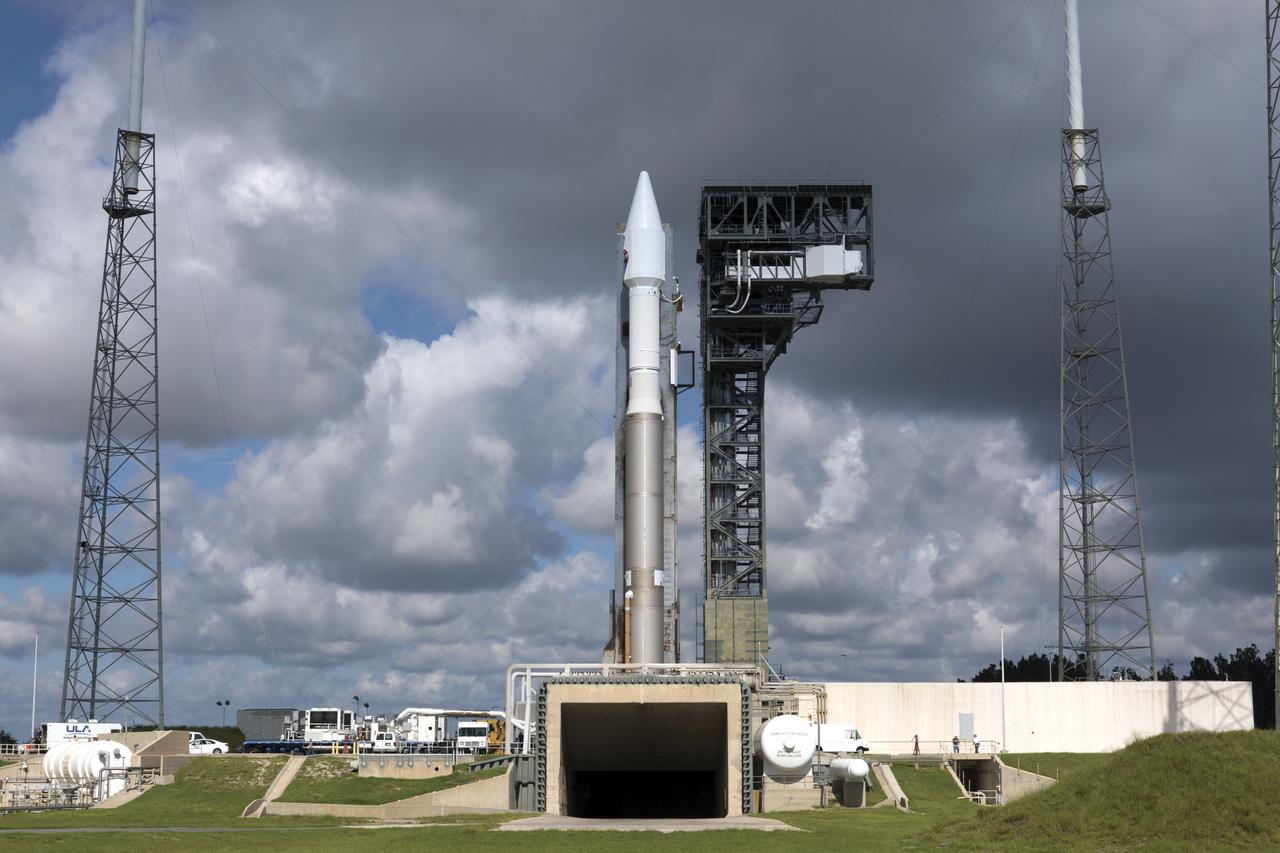
A United Launch Alliance Atlas V rocket arrives at Space Launch Complex 41 at Cape Canaveral Air Force Station in Florida. The launch vehicle will send NASA's Tracking and Data Relay Satellite, TDRS-M to orbit. TDRS-M is the latest spacecraft destined for the agency's constellation of communications satellites that allows nearly continuous contact with orbiting spacecraft ranging from the International Space Station and Hubble Space Telescope to the array of scientific observatories. Liftoff atop a United Launch Alliance Atlas V rocket is scheduled to take place from Space Launch Complex 41 at Cape Canaveral Air Force Station at 8:03 a.m. EDT Aug. 18.
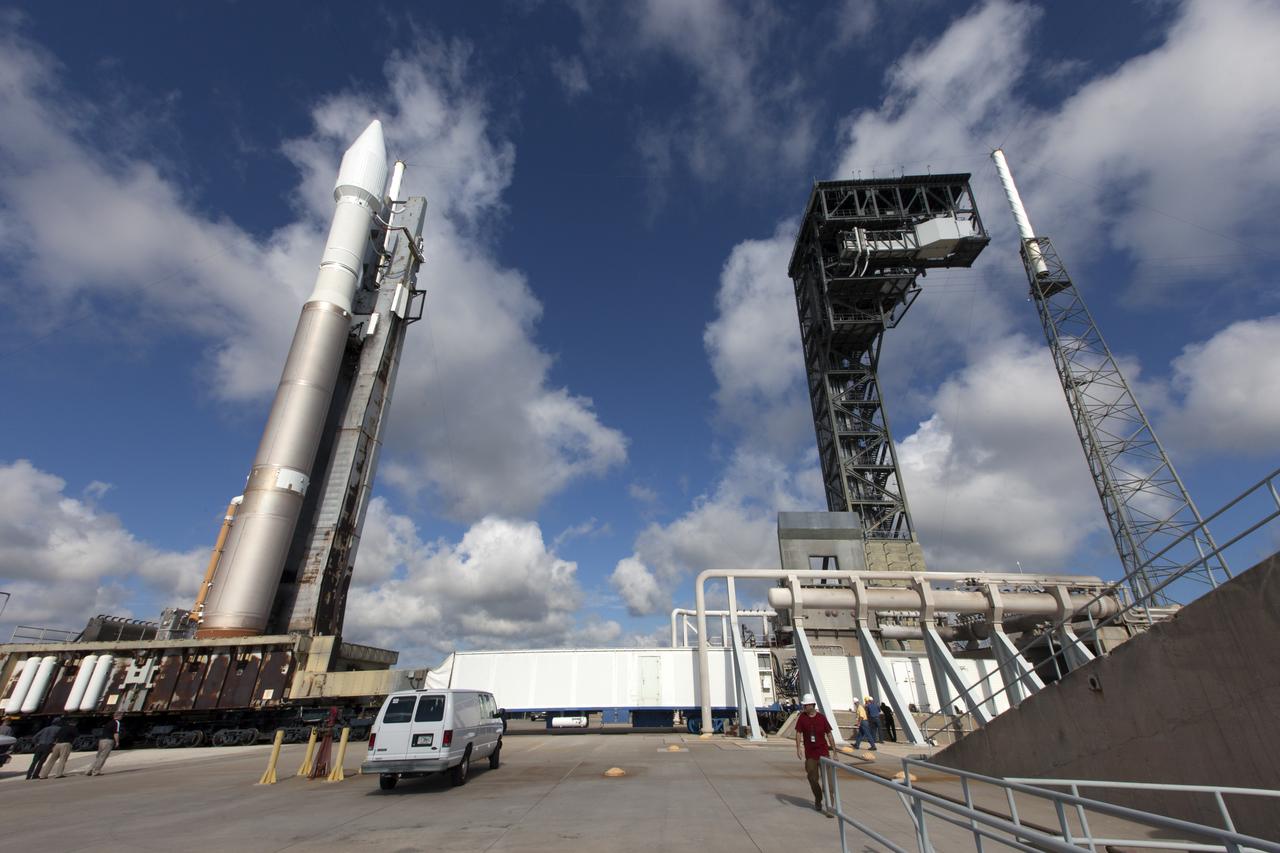
A United Launch Alliance Atlas V rocket is rolled to Space Launch Complex 41 at Cape Canaveral Air Force Station in Florida. The launch vehicle will send NASA's Tracking and Data Relay Satellite, TDRS-M to orbit. TDRS-M is the latest spacecraft destined for the agency's constellation of communications satellites that allows nearly continuous contact with orbiting spacecraft ranging from the International Space Station and Hubble Space Telescope to the array of scientific observatories. Liftoff atop a United Launch Alliance Atlas V rocket is scheduled to take place from Space Launch Complex 41 at Cape Canaveral Air Force Station at 8:03 a.m. EDT Aug. 18.
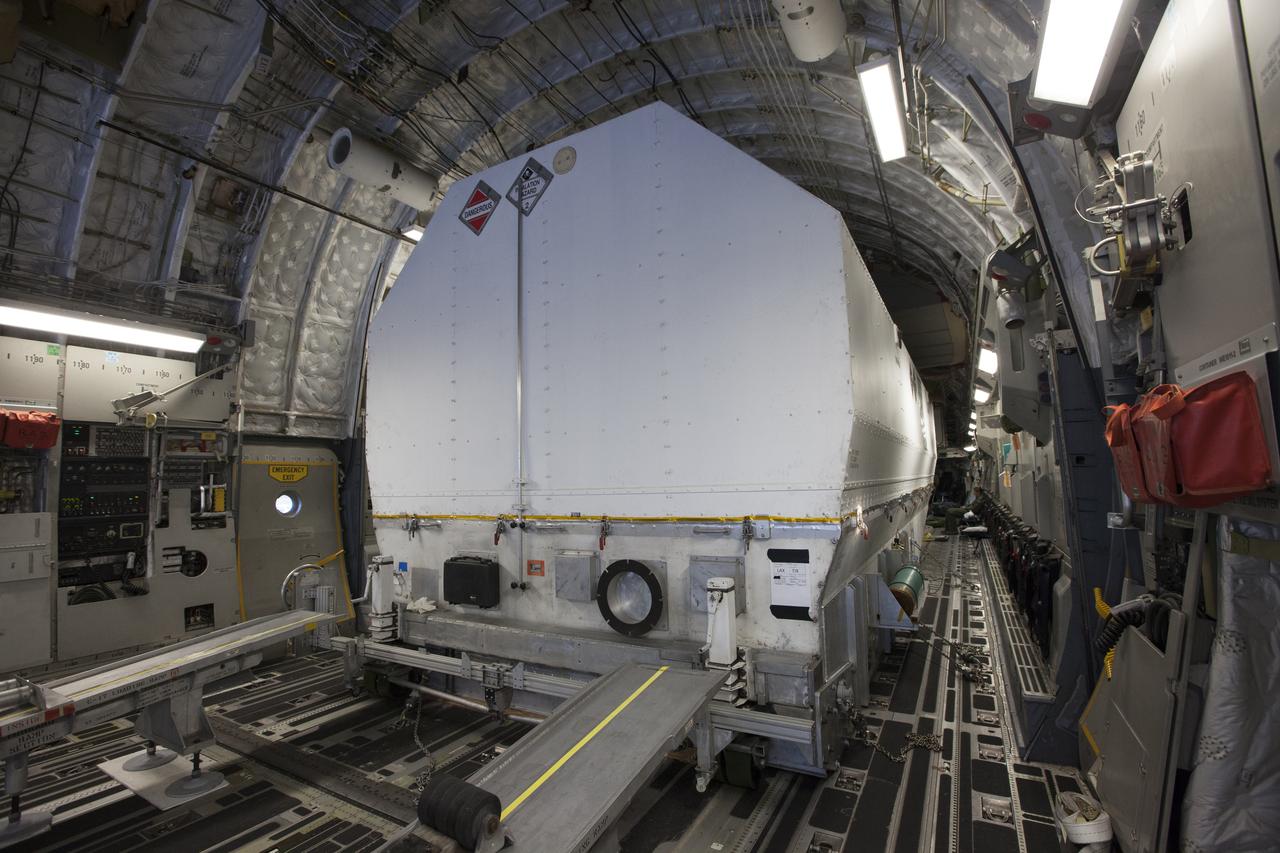
NASA's TDRS-M satellite arrives inside its shipping container at Space Coast Regional Airport in Titusville, Florida, aboard a U.S. Air Force transport aircraft. The spacecraft will be transported to the nearby Astrotech facility, also in Titusville, for preflight processing. The TDRS-M is the latest spacecraft destined for the agency's constellation of communications satellites that allows nearly continuous contact with orbiting spacecraft ranging from the International Space Station and Hubble Space Telescope to the array of scientific observatories. Liftoff atop a United Launch Alliance Atlas V rocket is scheduled to take place from Space Launch Complex 41 at Cape Canaveral Air Force Station at 9:02 a.m. EDT Aug. 3, 2017.

NASA's TDRS-M satellite arrives inside its shipping container at Space Coast Regional Airport in Titusville, Florida, aboard a U.S. Air Force transport aircraft. The spacecraft will be transported to the nearby Astrotech facility, also in Titusville, for preflight processing. The TDRS-M is the latest spacecraft destined for the agency's constellation of communications satellites that allows nearly continuous contact with orbiting spacecraft ranging from the International Space Station and Hubble Space Telescope to the array of scientific observatories. Liftoff atop a United Launch Alliance Atlas V rocket is scheduled to take place from Space Launch Complex 41 at Cape Canaveral Air Force Station at 9:02 a.m. EDT Aug. 3, 2017.
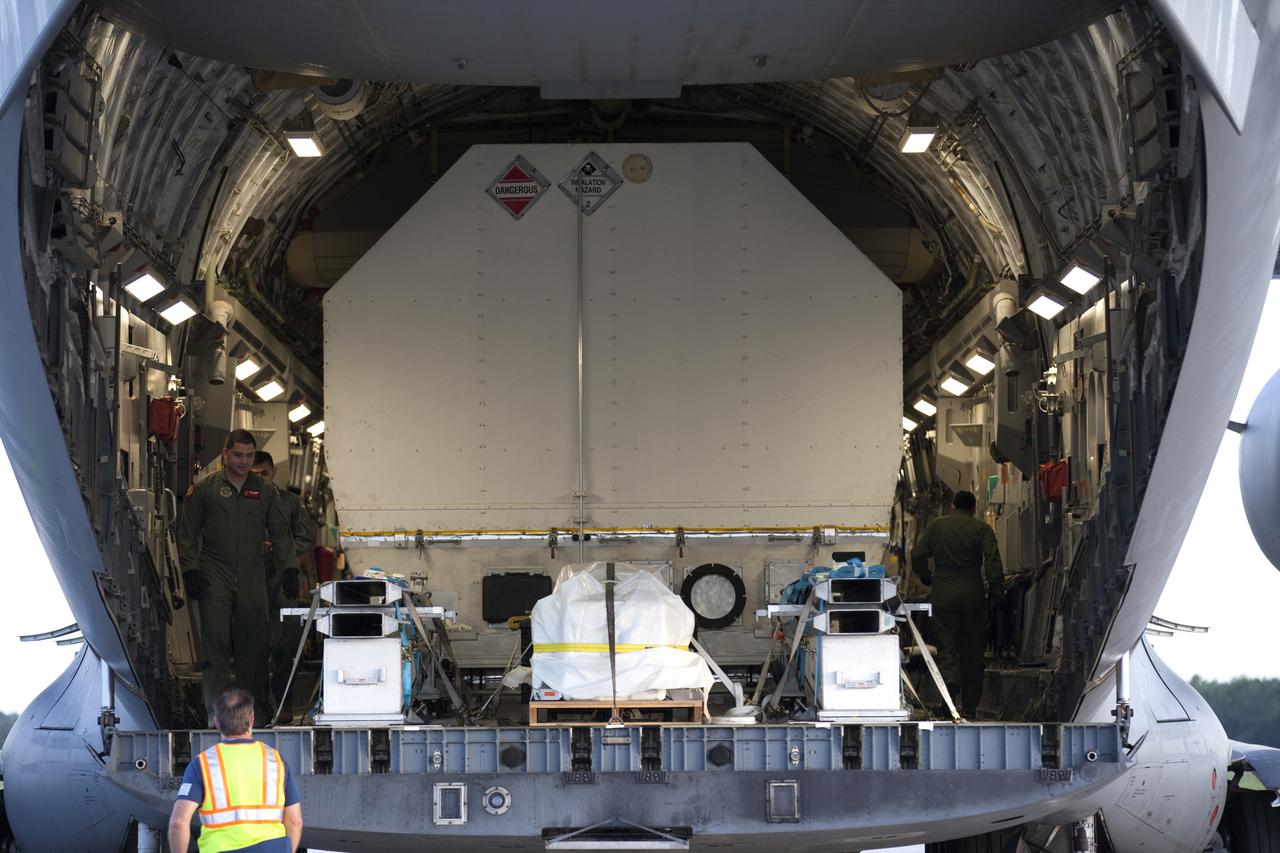
NASA's TDRS-M satellite arrives inside its shipping container at Space Coast Regional Airport in Titusville, Florida, aboard a U.S. Air Force transport aircraft. The spacecraft will be transported to the nearby Astrotech facility, also in Titusville, for preflight processing. The TDRS-M is the latest spacecraft destined for the agency's constellation of communications satellites that allows nearly continuous contact with orbiting spacecraft ranging from the International Space Station and Hubble Space Telescope to the array of scientific observatories. Liftoff atop a United Launch Alliance Atlas V rocket is scheduled to take place from Space Launch Complex 41 at Cape Canaveral Air Force Station at 9:02 a.m. EDT Aug. 3, 2017.
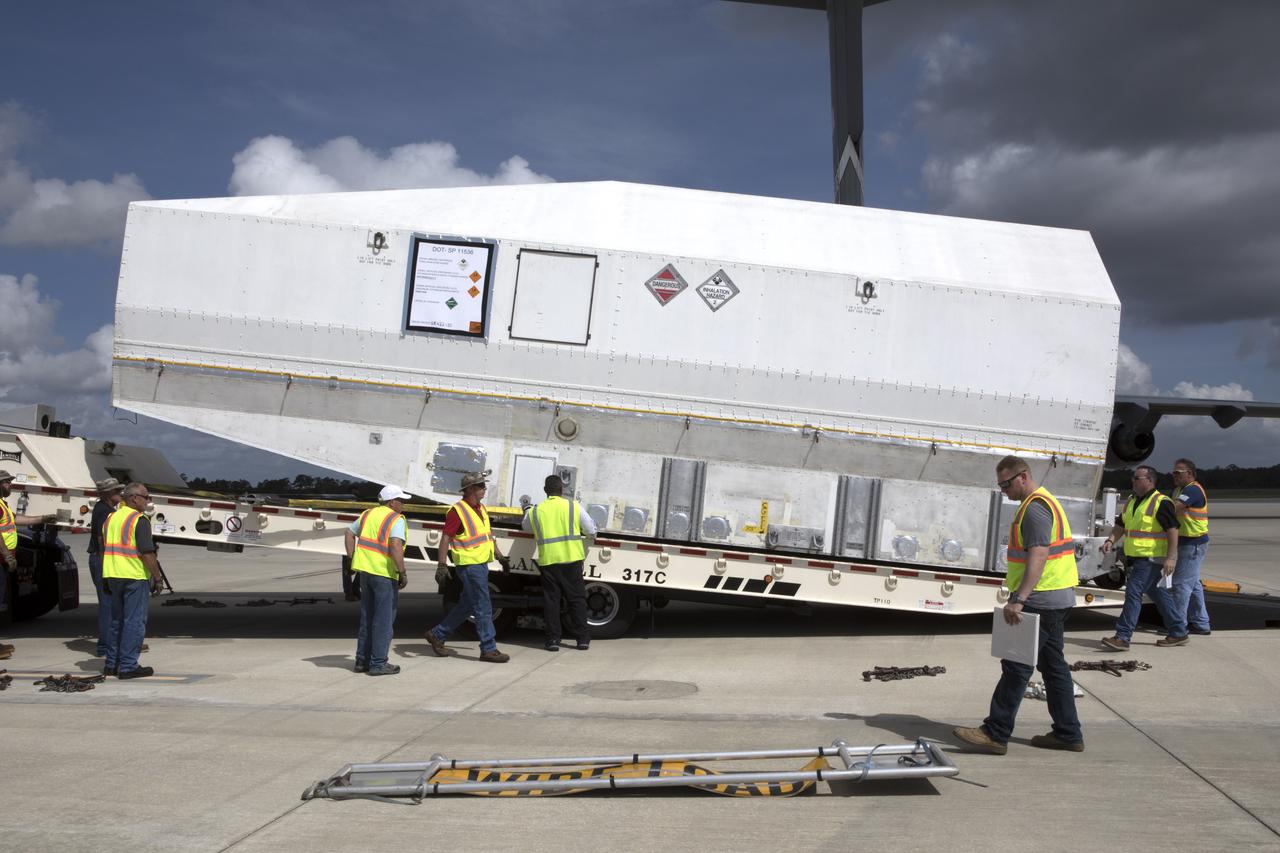
NASA's TDRS-M satellite arrives inside its shipping container at Space Coast Regional Airport in Titusville, Florida, aboard a U.S. Air Force transport aircraft. The spacecraft will be transported to the nearby Astrotech facility, also in Titusville, for preflight processing. The TDRS-M is the latest spacecraft destined for the agency's constellation of communications satellites that allows nearly continuous contact with orbiting spacecraft ranging from the International Space Station and Hubble Space Telescope to the array of scientific observatories. Liftoff atop a United Launch Alliance Atlas V rocket is scheduled to take place from Space Launch Complex 41 at Cape Canaveral Air Force Station at 9:02 a.m. EDT Aug. 3, 2017.
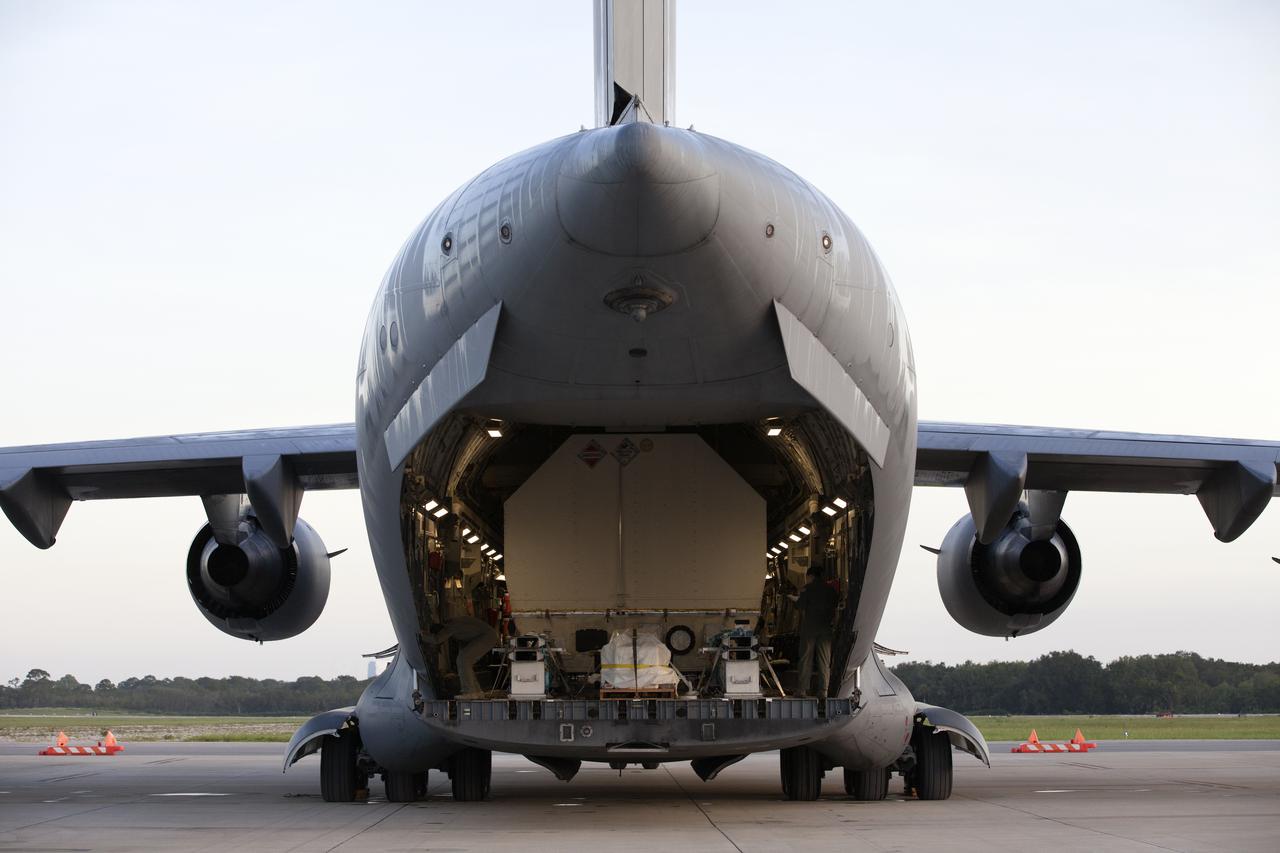
NASA's TDRS-M satellite arrives inside its shipping container at Space Coast Regional Airport in Titusville, Florida, aboard a U.S. Air Force transport aircraft. The spacecraft will be transported to the nearby Astrotech facility, also in Titusville, for preflight processing. The TDRS-M is the latest spacecraft destined for the agency's constellation of communications satellites that allows nearly continuous contact with orbiting spacecraft ranging from the International Space Station and Hubble Space Telescope to the array of scientific observatories. Liftoff atop a United Launch Alliance Atlas V rocket is scheduled to take place from Space Launch Complex 41 at Cape Canaveral Air Force Station at 9:02 a.m. EDT Aug. 3, 2017.

NASA's TDRS-M satellite arrives inside its shipping container at Space Coast Regional Airport in Titusville, Florida, aboard a U.S. Air Force transport aircraft. The spacecraft will be transported to the nearby Astrotech facility, also in Titusville, for preflight processing. The TDRS-M is the latest spacecraft destined for the agency's constellation of communications satellites that allows nearly continuous contact with orbiting spacecraft ranging from the International Space Station and Hubble Space Telescope to the array of scientific observatories. Liftoff atop a United Launch Alliance Atlas V rocket is scheduled to take place from Space Launch Complex 41 at Cape Canaveral Air Force Station at 9:02 a.m. EDT Aug. 3, 2017.
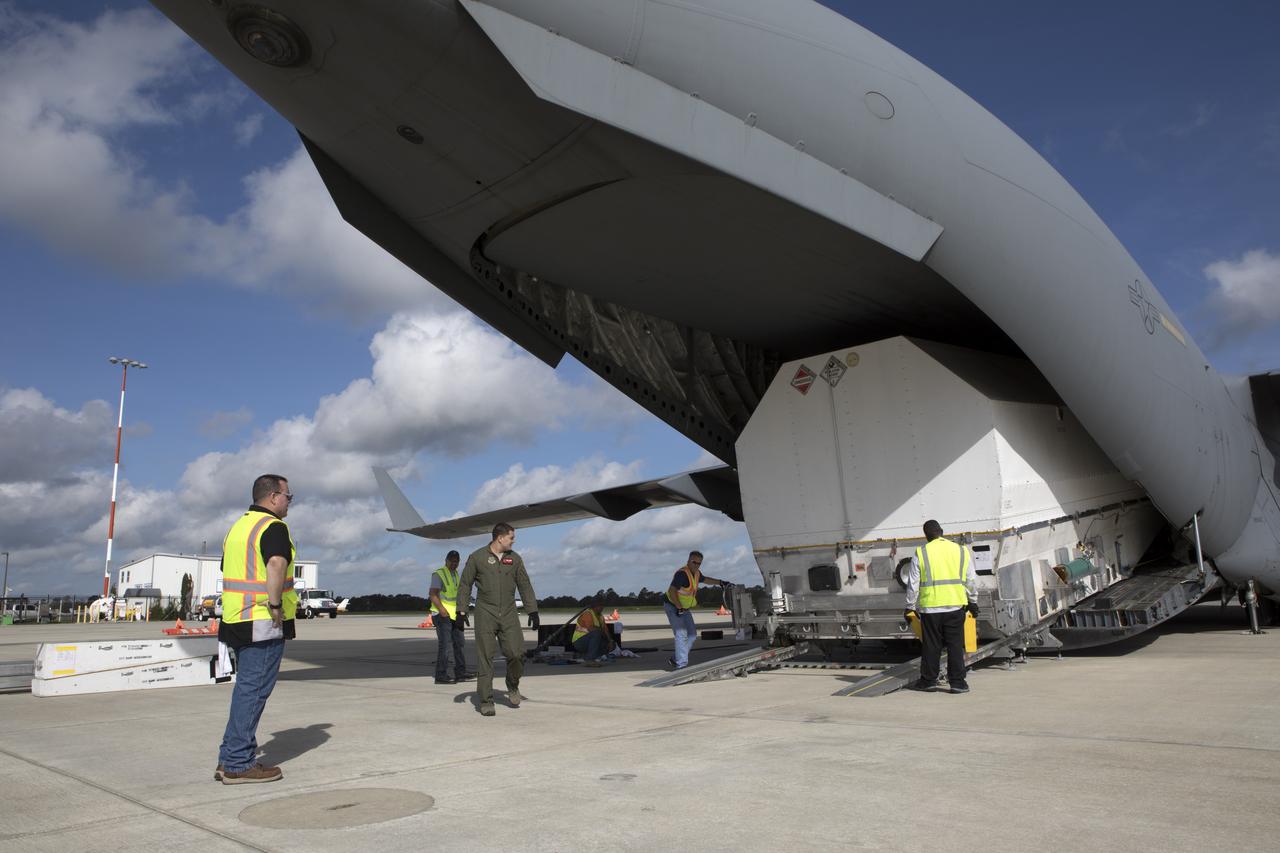
NASA's TDRS-M satellite arrives inside its shipping container at Space Coast Regional Airport in Titusville, Florida, aboard a U.S. Air Force transport aircraft. The spacecraft will be transported to the nearby Astrotech facility, also in Titusville, for preflight processing. The TDRS-M is the latest spacecraft destined for the agency's constellation of communications satellites that allows nearly continuous contact with orbiting spacecraft ranging from the International Space Station and Hubble Space Telescope to the array of scientific observatories. Liftoff atop a United Launch Alliance Atlas V rocket is scheduled to take place from Space Launch Complex 41 at Cape Canaveral Air Force Station at 9:02 a.m. EDT Aug. 3, 2017.
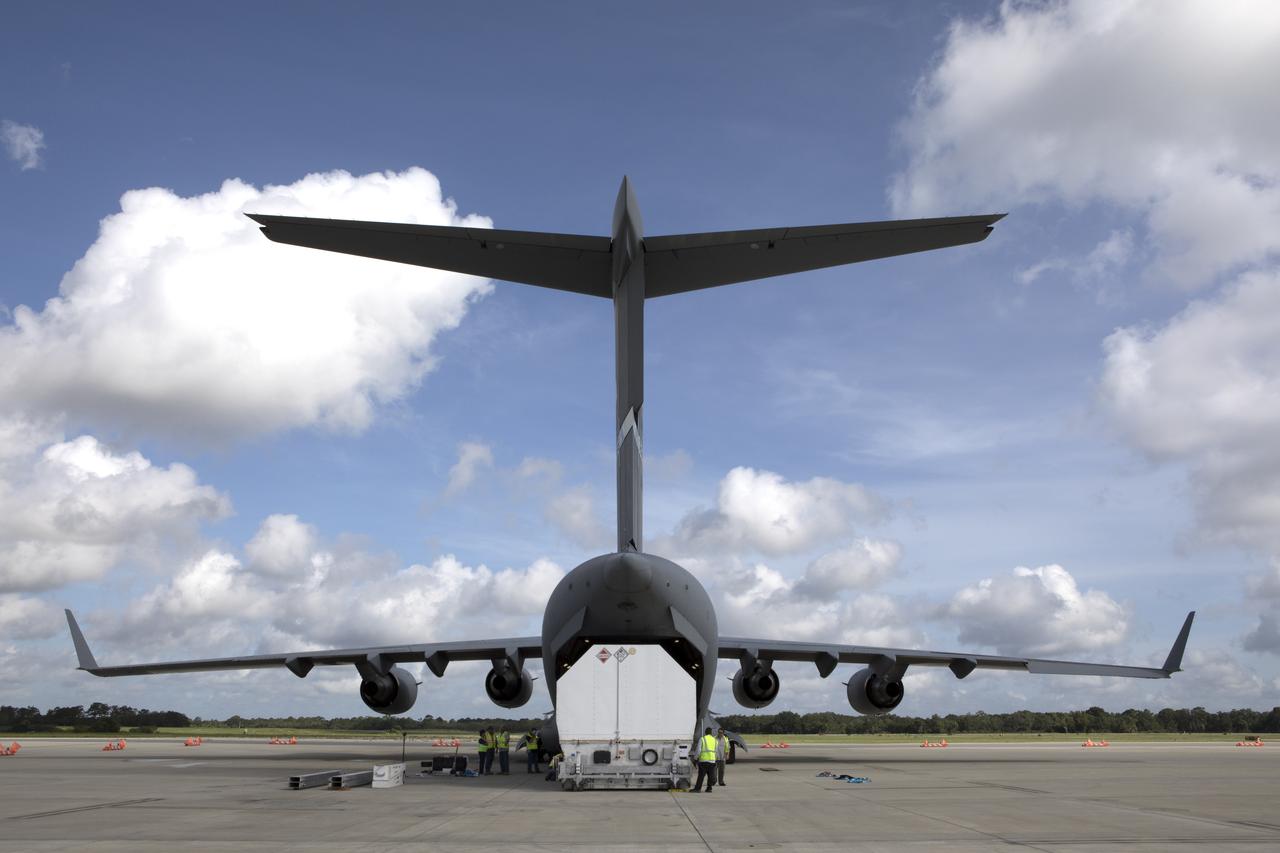
NASA's TDRS-M satellite arrives inside its shipping container at Space Coast Regional Airport in Titusville, Florida, aboard a U.S. Air Force transport aircraft. The spacecraft will be transported to the nearby Astrotech facility, also in Titusville, for preflight processing. The TDRS-M is the latest spacecraft destined for the agency's constellation of communications satellites that allows nearly continuous contact with orbiting spacecraft ranging from the International Space Station and Hubble Space Telescope to the array of scientific observatories. Liftoff atop a United Launch Alliance Atlas V rocket is scheduled to take place from Space Launch Complex 41 at Cape Canaveral Air Force Station at 9:02 a.m. EDT Aug. 3, 2017.
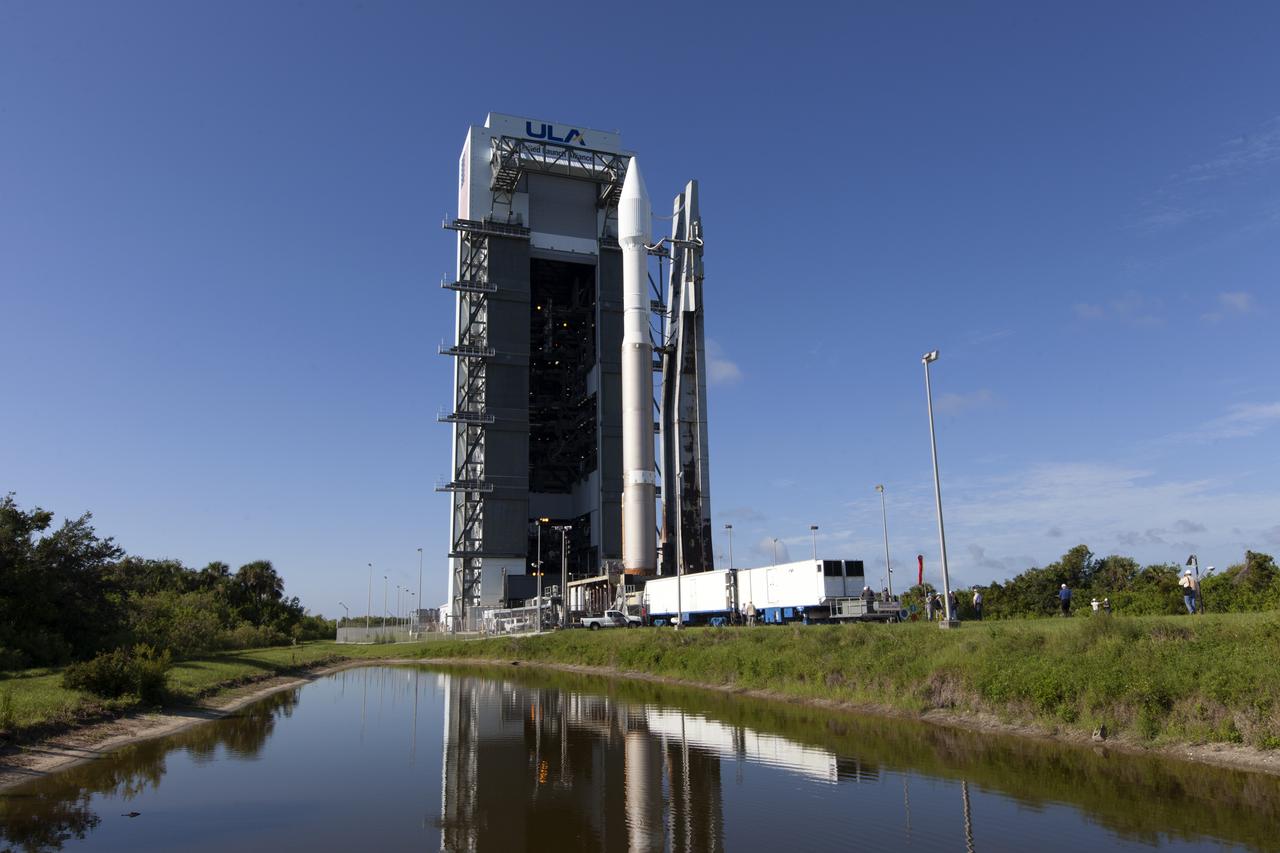
A United Launch Alliance Atlas V rocket rolls out of the Vertical Integration Facility at Cape Canaveral Air Force Station in Florida on its way to Space Launch Complex 41. The launch vehicle will send NASA's Tracking and Data Relay Satellite, TDRS-M to orbit. TDRS-M is the latest spacecraft destined for the agency's constellation of communications satellites that allows nearly continuous contact with orbiting spacecraft ranging from the International Space Station and Hubble Space Telescope to the array of scientific observatories. Liftoff atop a United Launch Alliance Atlas V rocket is scheduled to take place from Space Launch Complex 41 at Cape Canaveral Air Force Station at 8:03 a.m. EDT Aug. 18.
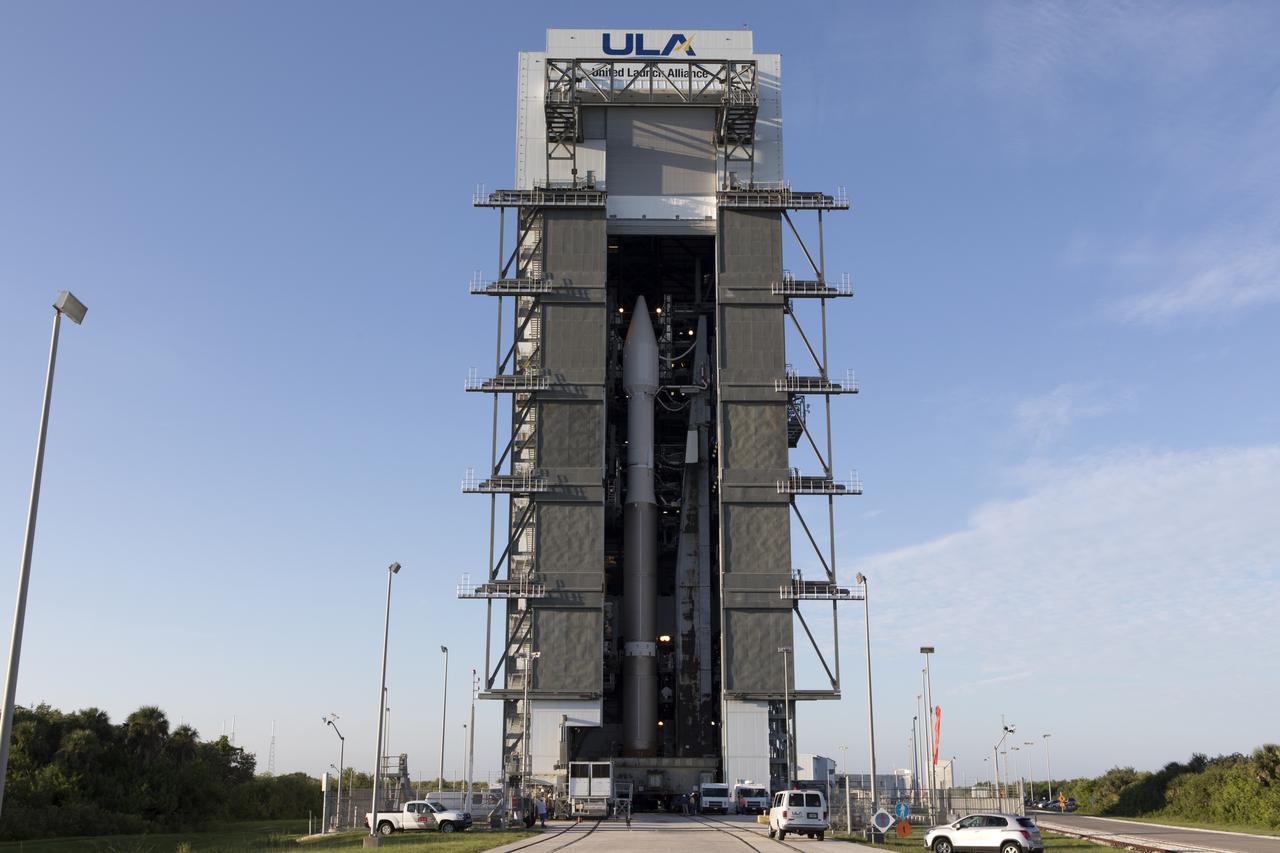
In the Vertical Integration Facility at Cape Canaveral Air Force Station in Florida, a United Launch Alliance Atlas V rocket is ready to be rolled to Space Launch Complex 41. The launch vehicle will send NASA's Tracking and Data Relay Satellite, TDRS-M to orbit. TDRS-M is the latest spacecraft destined for the agency's constellation of communications satellites that allows nearly continuous contact with orbiting spacecraft ranging from the International Space Station and Hubble Space Telescope to the array of scientific observatories. Liftoff atop a United Launch Alliance Atlas V rocket is scheduled to take place from Space Launch Complex 41 at Cape Canaveral Air Force Station at 8:03 a.m. EDT Aug. 18.
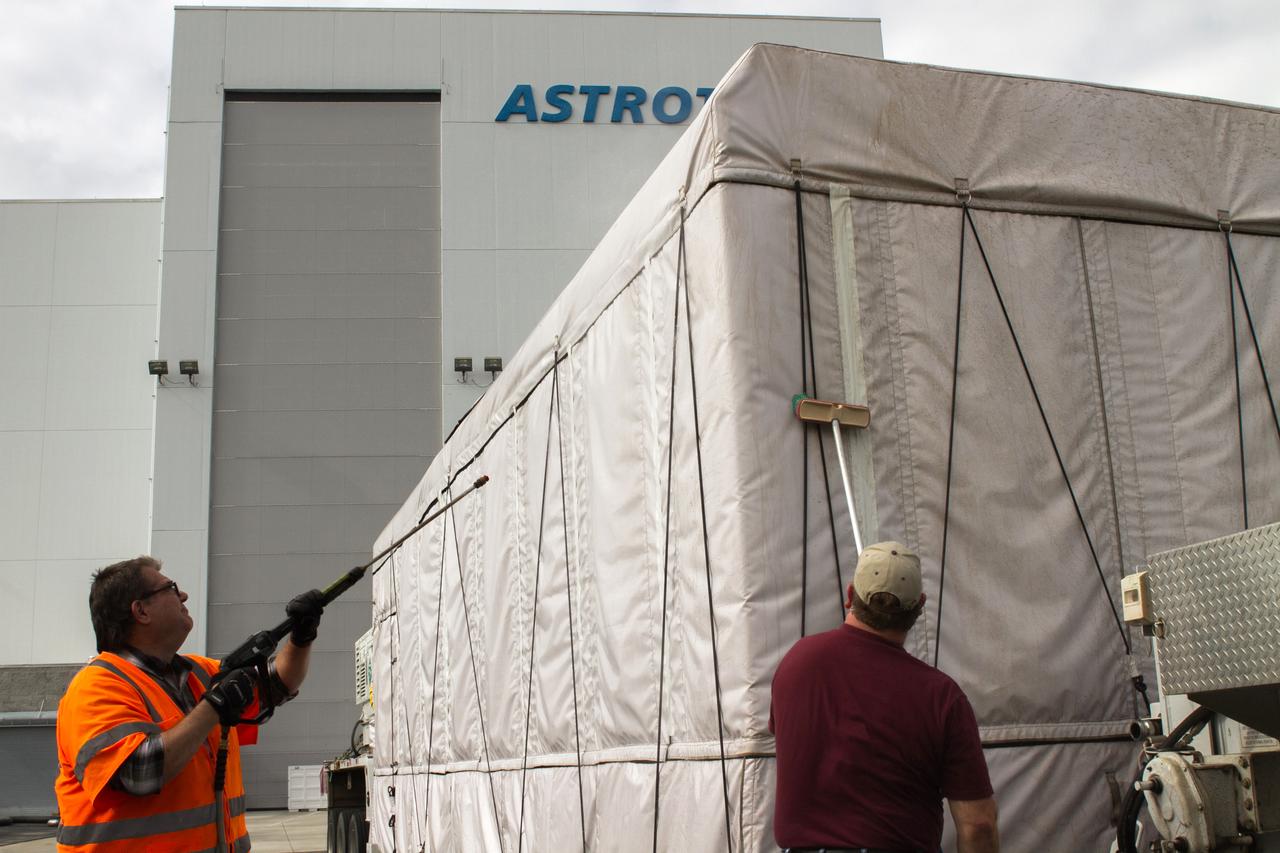
NOAA's Geostationary Operation Environmental Satellite-S (GOES-S) arrives at Astrotech Space Operations in Titusville, Florida, to prepare it for launch. The facility is located near NASA's Kennedy Space Center. GOES-S is the second in a series of four advanced geostationary weather satellites. The GOES-R series - consisting of the GOES-R, GOES-S, GOES-T and GOES-U spacecraft - will significantly improve the detection and observation of environmental phenomena that directly affect public safety, protection of property and the nation's economic health and prosperity. GOES-S is slated to launch March 1, 2018 aboard a United Launch Alliance Atlas V rocket from Cape Canaveral Air Force Station in Florida.
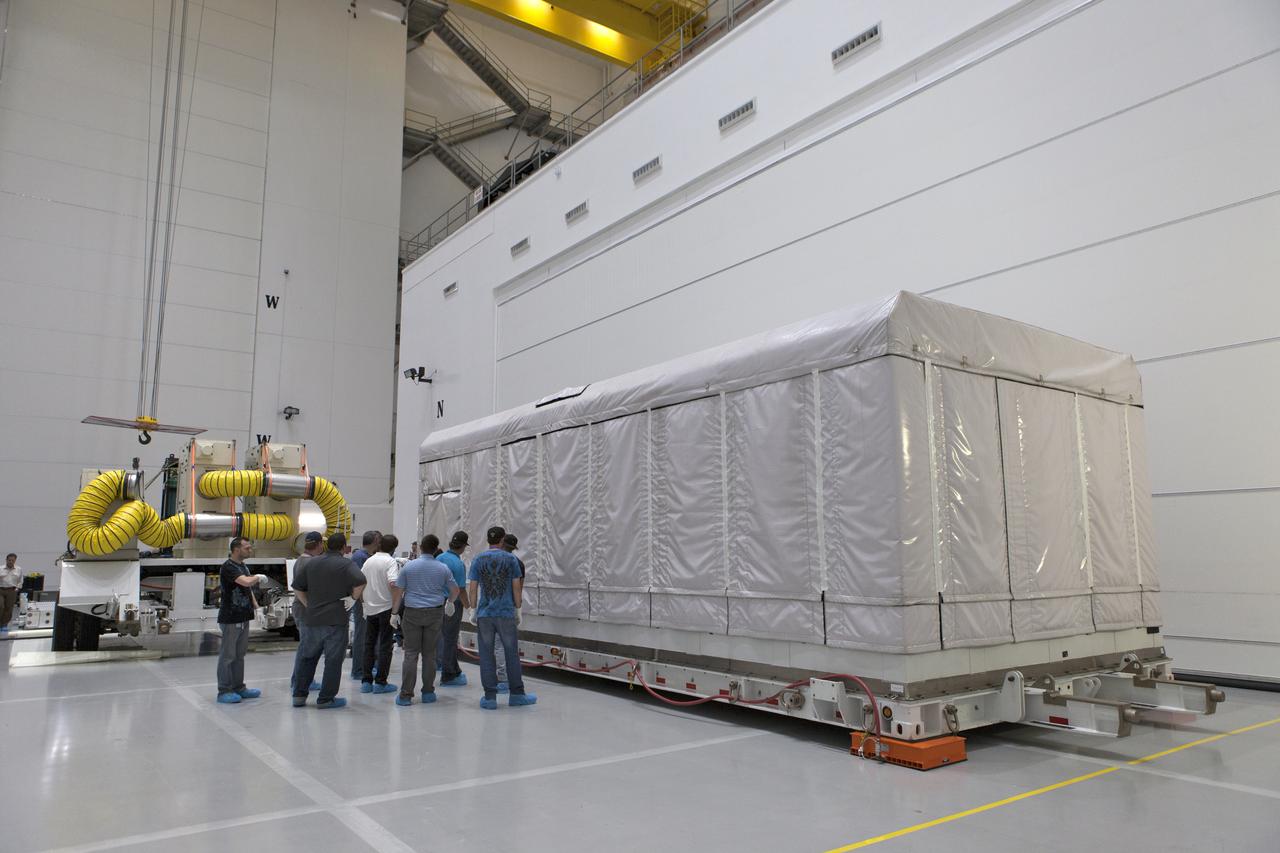
NOAA's Geostationary Operation Environmental Satellite-S (GOES-S) arrives inside Astrotech Space Operations in Titusville, Florida, to prepare it for launch. The facility is located near NASA's Kennedy Space Center. GOES-S is the second in a series of four advanced geostationary weather satellites. The GOES-R series - consisting of the GOES-R, GOES-S, GOES-T and GOES-U spacecraft - will significantly improve the detection and observation of environmental phenomena that directly affect public safety, protection of property and the nation's economic health and prosperity. GOES-S is slated to launch March 1, 2018 aboard a United Launch Alliance Atlas V rocket from Cape Canaveral Air Force Station in Florida.
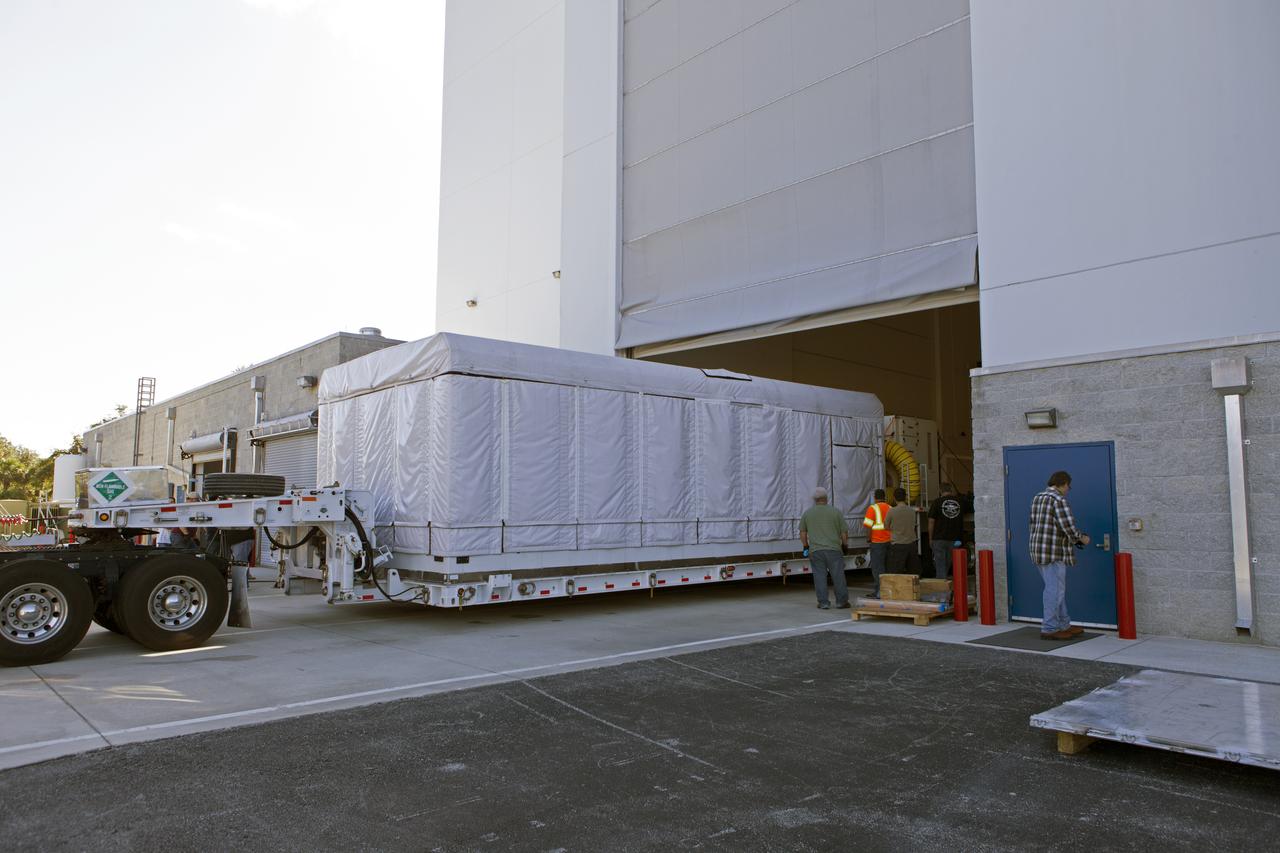
NOAA's Geostationary Operation Environmental Satellite-S (GOES-S) arrives at Astrotech Space Operations in Titusville, Florida, to prepare it for launch. The facility is located near NASA's Kennedy Space Center. GOES-S is the second in a series of four advanced geostationary weather satellites. The GOES-R series - consisting of the GOES-R, GOES-S, GOES-T and GOES-U spacecraft - will significantly improve the detection and observation of environmental phenomena that directly affect public safety, protection of property and the nation's economic health and prosperity. GOES-S is slated to launch March 1, 2018 aboard a United Launch Alliance Atlas V rocket from Cape Canaveral Air Force Station in Florida.
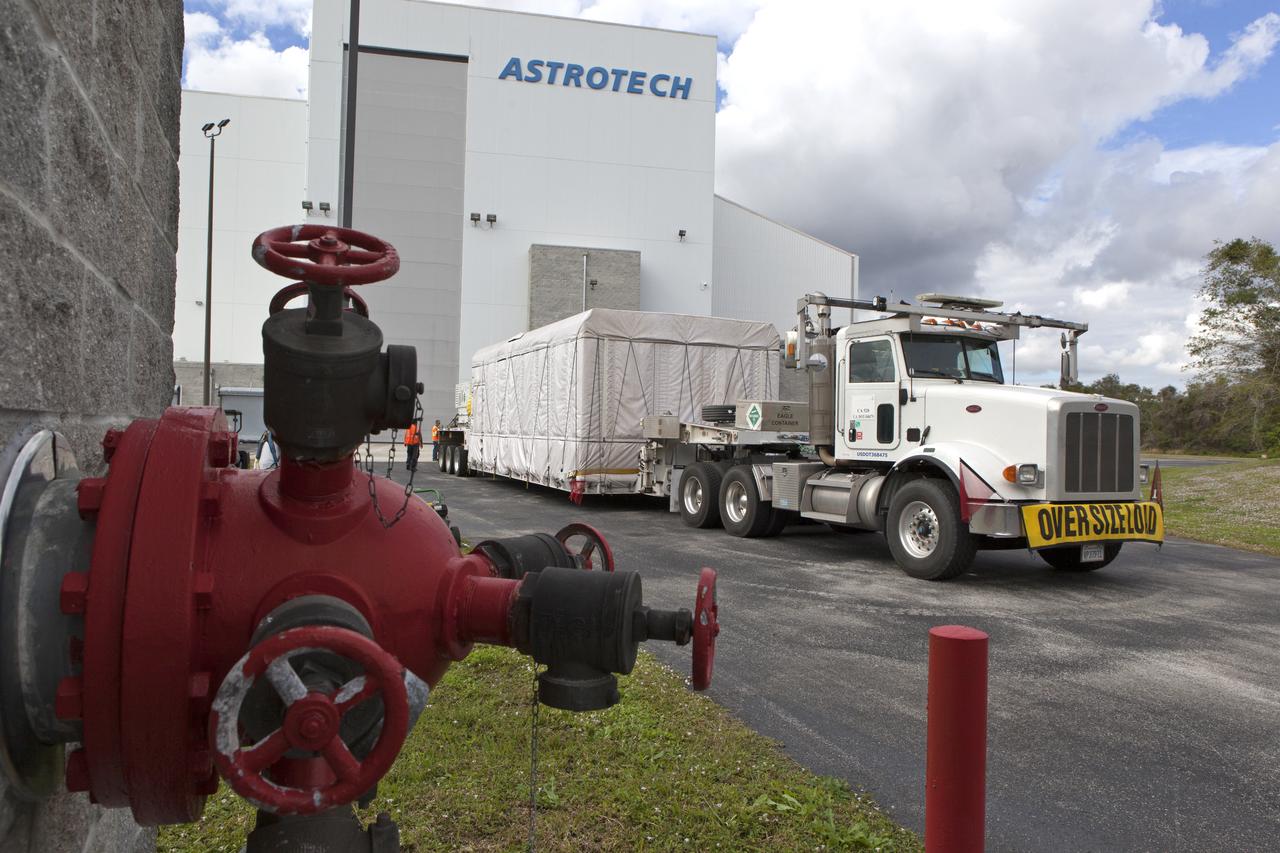
NOAA's Geostationary Operation Environmental Satellite-S (GOES-S) arrives at Astrotech Space Operations in Titusville, Florida, to prepare it for launch. The facility is located near NASA's Kennedy Space Center. GOES-S is the second in a series of four advanced geostationary weather satellites. The GOES-R series - consisting of the GOES-R, GOES-S, GOES-T and GOES-U spacecraft - will significantly improve the detection and observation of environmental phenomena that directly affect public safety, protection of property and the nation's economic health and prosperity. GOES-S is slated to launch March 1, 2018 aboard a United Launch Alliance Atlas V rocket from Cape Canaveral Air Force Station in Florida.
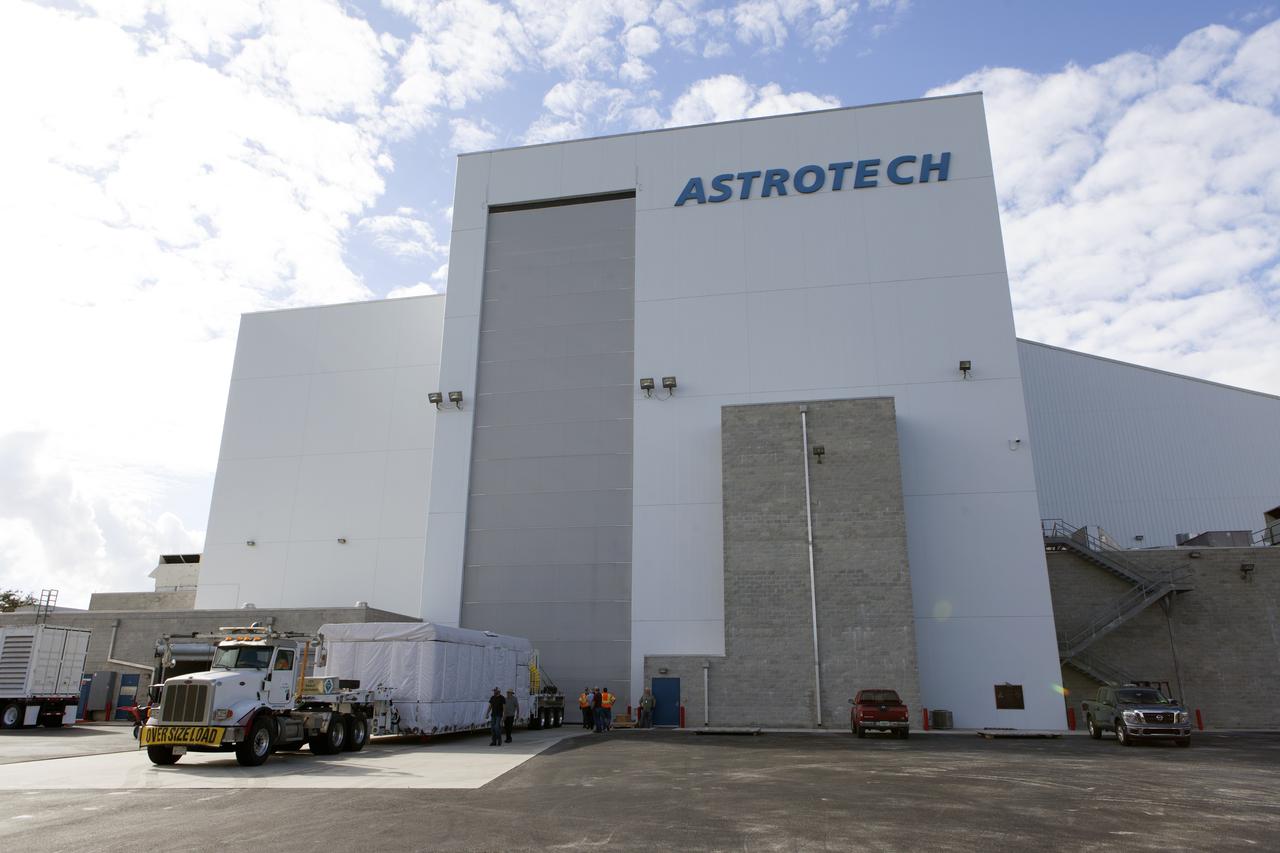
NOAA's Geostationary Operation Environmental Satellite-S (GOES-S) arrives at Astrotech Space Operations in Titusville, Florida, to prepare it for launch. The facility is located near NASA's Kennedy Space Center. GOES-S is the second in a series of four advanced geostationary weather satellites. The GOES-R series - consisting of the GOES-R, GOES-S, GOES-T and GOES-U spacecraft - will significantly improve the detection and observation of environmental phenomena that directly affect public safety, protection of property and the nation's economic health and prosperity. GOES-S is slated to launch March 1, 2018 aboard a United Launch Alliance Atlas V rocket from Cape Canaveral Air Force Station in Florida.
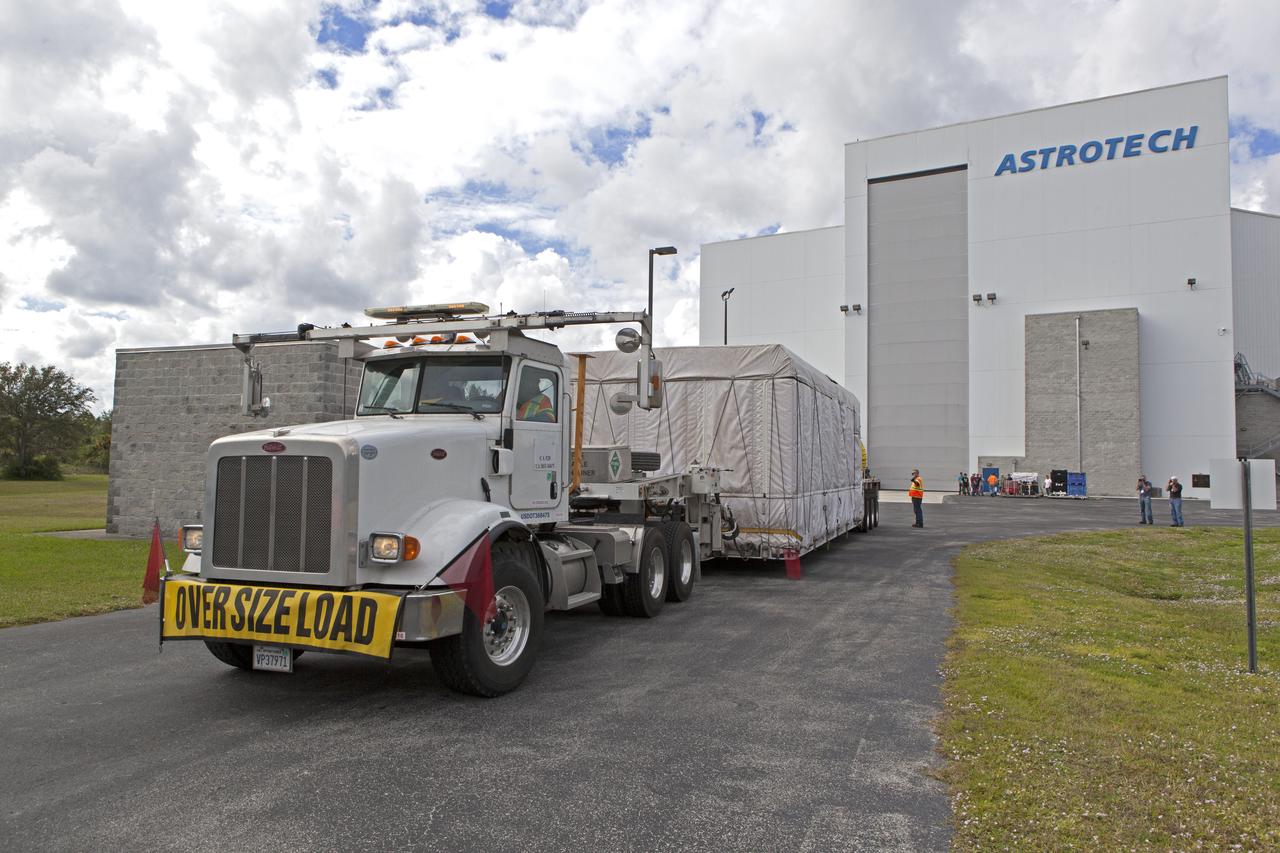
NOAA's Geostationary Operation Environmental Satellite-S (GOES-S) arrives at Astrotech Space Operations in Titusville, Florida, to prepare it for launch. The facility is located near NASA's Kennedy Space Center. GOES-S is the second in a series of four advanced geostationary weather satellites. The GOES-R series - consisting of the GOES-R, GOES-S, GOES-T and GOES-U spacecraft - will significantly improve the detection and observation of environmental phenomena that directly affect public safety, protection of property and the nation's economic health and prosperity. GOES-S is slated to launch March 1, 2018 aboard a United Launch Alliance Atlas V rocket from Cape Canaveral Air Force Station in Florida.
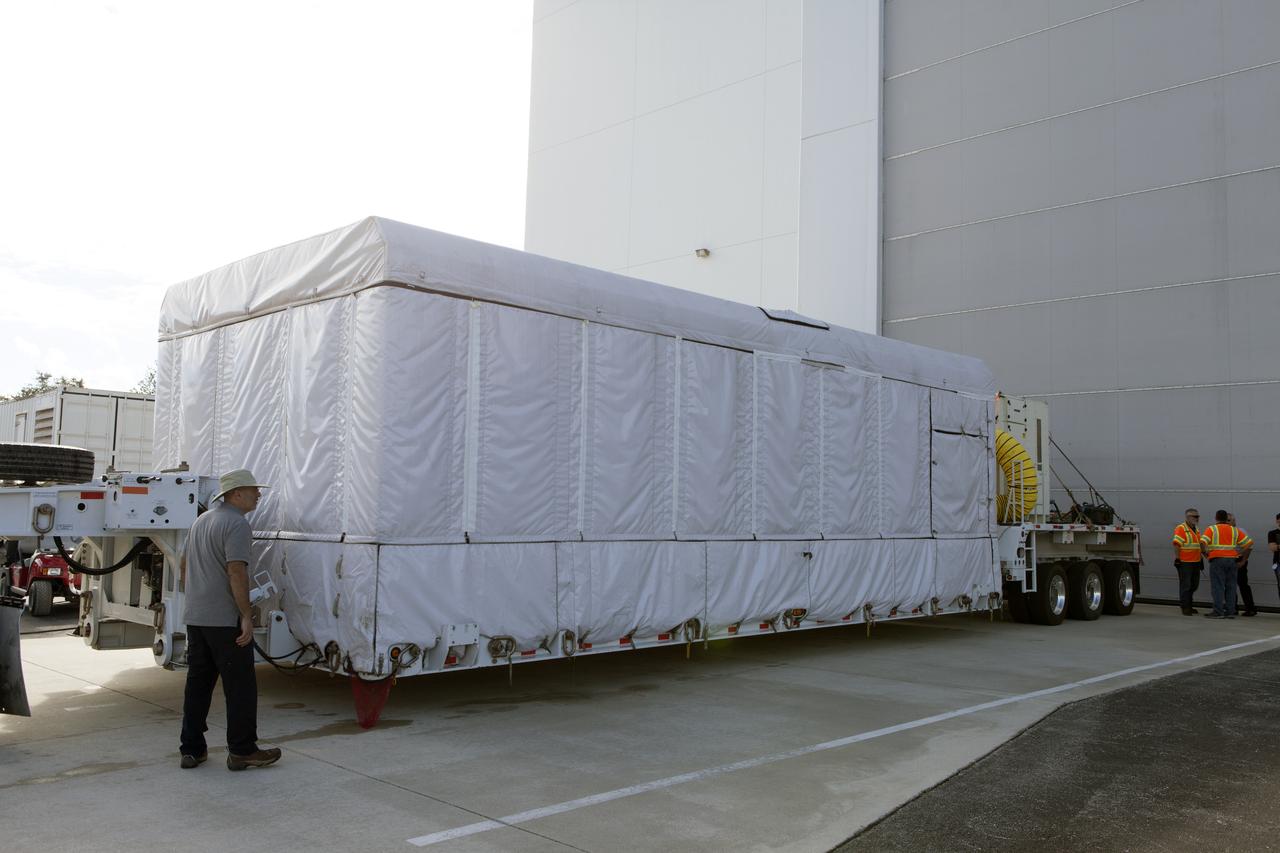
NOAA's Geostationary Operation Environmental Satellite-S (GOES-S) arrives at Astrotech Space Operations in Titusville, Florida, to prepare it for launch. The facility is located near NASA's Kennedy Space Center. GOES-S is the second in a series of four advanced geostationary weather satellites. The GOES-R series - consisting of the GOES-R, GOES-S, GOES-T and GOES-U spacecraft - will significantly improve the detection and observation of environmental phenomena that directly affect public safety, protection of property and the nation's economic health and prosperity. GOES-S is slated to launch March 1, 2018 aboard a United Launch Alliance Atlas V rocket from Cape Canaveral Air Force Station in Florida.
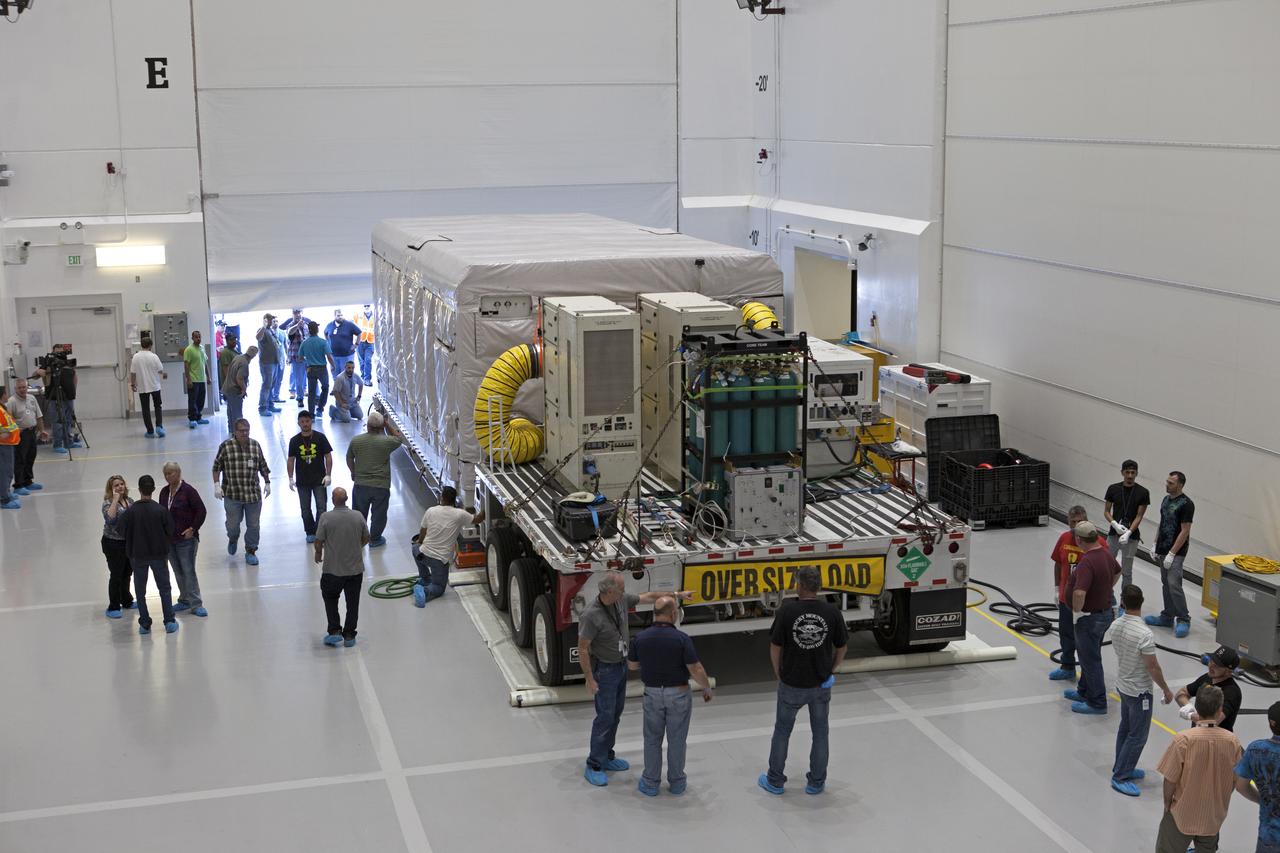
NOAA's Geostationary Operation Environmental Satellite-S (GOES-S) arrives inside Astrotech Space Operations in Titusville, Florida, to prepare it for launch. The facility is located near NASA's Kennedy Space Center. GOES-S is the second in a series of four advanced geostationary weather satellites. The GOES-R series - consisting of the GOES-R, GOES-S, GOES-T and GOES-U spacecraft - will significantly improve the detection and observation of environmental phenomena that directly affect public safety, protection of property and the nation's economic health and prosperity. GOES-S is slated to launch March 1, 2018 aboard a United Launch Alliance Atlas V rocket from Cape Canaveral Air Force Station in Florida.
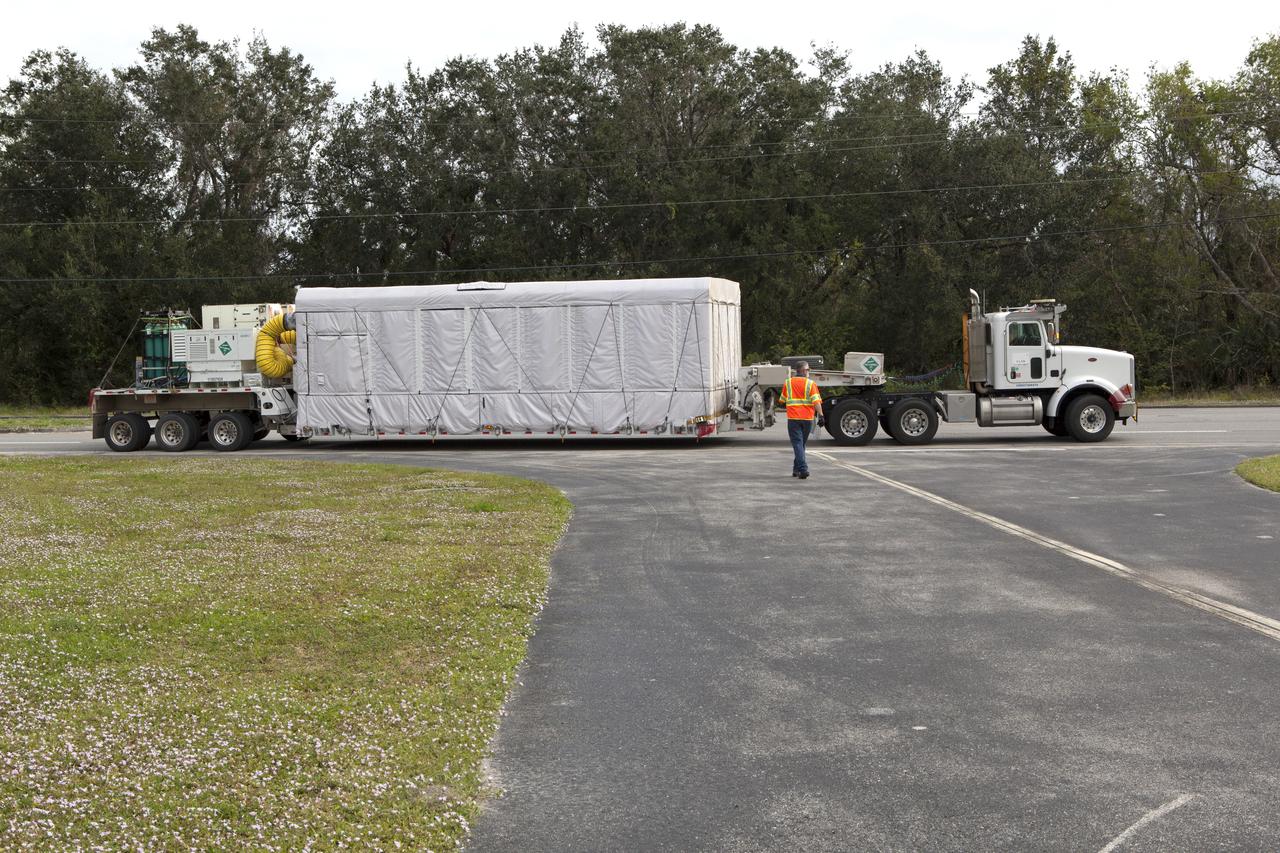
NOAA's Geostationary Operation Environmental Satellite-S (GOES-S) arrives at Astrotech Space Operations in Titusville, Florida, to prepare it for launch. The facility is located near NASA's Kennedy Space Center. GOES-S is the second in a series of four advanced geostationary weather satellites. The GOES-R series - consisting of the GOES-R, GOES-S, GOES-T and GOES-U spacecraft - will significantly improve the detection and observation of environmental phenomena that directly affect public safety, protection of property and the nation's economic health and prosperity. GOES-S is slated to launch March 1, 2018 aboard a United Launch Alliance Atlas V rocket from Cape Canaveral Air Force Station in Florida.
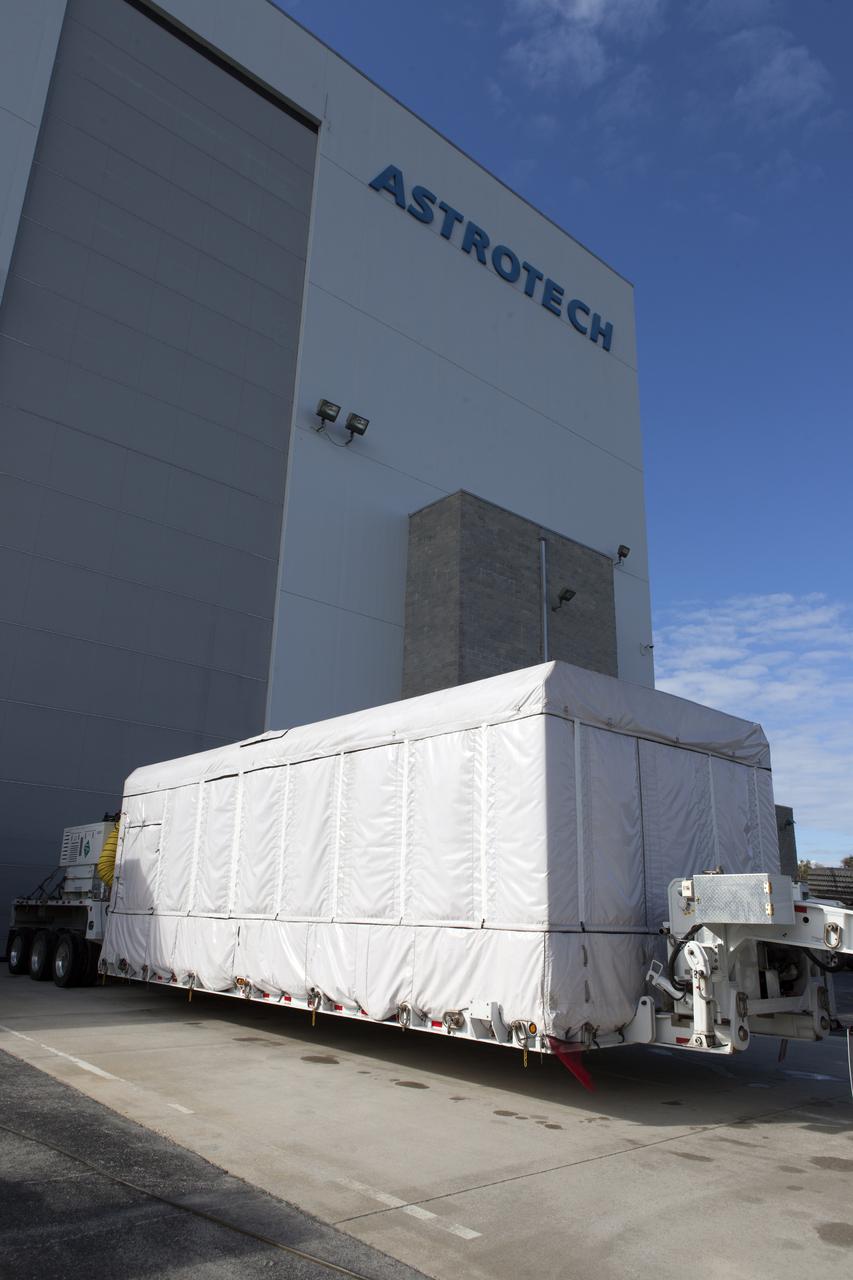
NOAA's Geostationary Operation Environmental Satellite-S (GOES-S) arrives at Astrotech Space Operations in Titusville, Florida, to prepare it for launch. The facility is located near NASA's Kennedy Space Center. GOES-S is the second in a series of four advanced geostationary weather satellites. The GOES-R series - consisting of the GOES-R, GOES-S, GOES-T and GOES-U spacecraft - will significantly improve the detection and observation of environmental phenomena that directly affect public safety, protection of property and the nation's economic health and prosperity. GOES-S is slated to launch March 1, 2018 aboard a United Launch Alliance Atlas V rocket from Cape Canaveral Air Force Station in Florida.
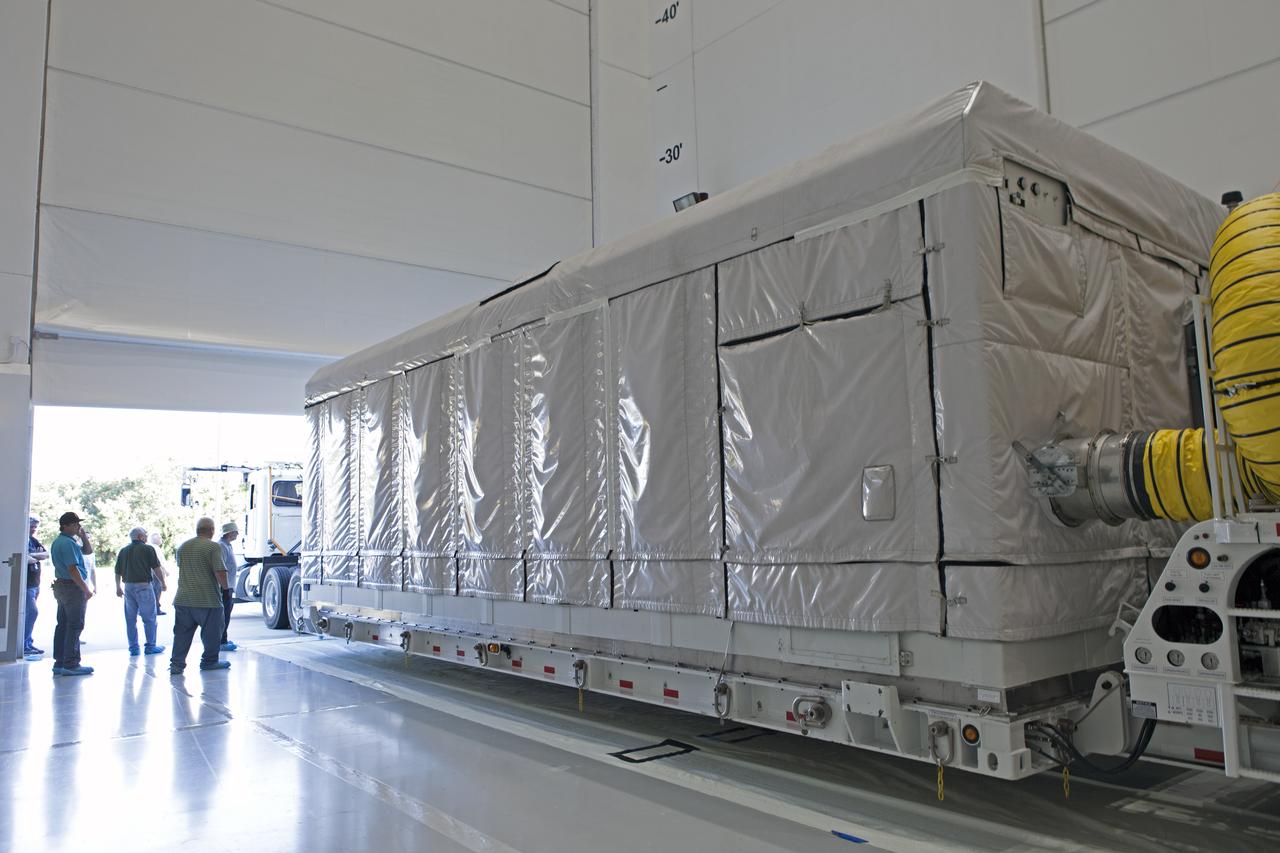
NOAA's Geostationary Operation Environmental Satellite-S (GOES-S) arrives at Astrotech Space Operations in Titusville, Florida, to prepare it for launch. The facility is located near NASA's Kennedy Space Center. GOES-S is the second in a series of four advanced geostationary weather satellites. The GOES-R series - consisting of the GOES-R, GOES-S, GOES-T and GOES-U spacecraft - will significantly improve the detection and observation of environmental phenomena that directly affect public safety, protection of property and the nation's economic health and prosperity. GOES-S is slated to launch March 1, 2018 aboard a United Launch Alliance Atlas V rocket from Cape Canaveral Air Force Station in Florida.
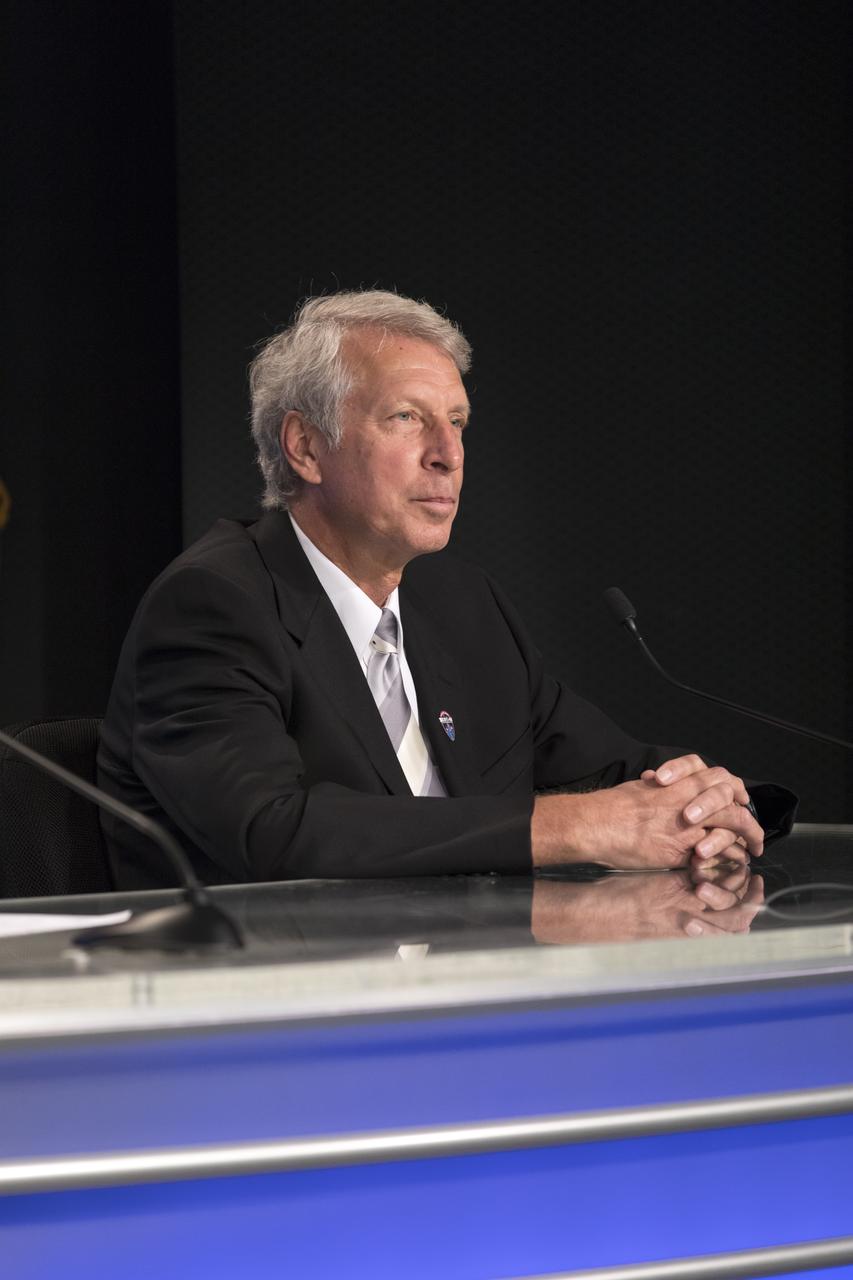
In the Kennedy Space Center's Press Site auditorium, Clay Flinn, launch weather officer with the 45th Space Wing at Cape Canaveral Air Force Station, speaks to members of the media at a prelaunch news conference for NASA's Tracking and Data Relay Satellite, TDRS-M. It is the latest spacecraft destined for the agency's constellation of communications satellites that allows nearly continuous contact with orbiting spacecraft ranging from the International Space Station and Hubble Space Telescope to the array of scientific observatories. Liftoff atop a United Launch Alliance Atlas V rocket is scheduled to take place from Space Launch Complex 41 at Cape Canaveral Air Force Station at 8:03 a.m. EDT Aug. 18.

In the Kennedy Space Center's Press Site auditorium, Tim Dunn, launch director at NASA Kennedy, speaks to members of the media at a prelaunch news conference for NASA's Tracking and Data Relay Satellite, TDRS-M. It is the latest spacecraft destined for the agency's constellation of communications satellites that allows nearly continuous contact with orbiting spacecraft ranging from the International Space Station and Hubble Space Telescope to the array of scientific observatories. Liftoff atop a United Launch Alliance Atlas V rocket is scheduled to take place from Space Launch Complex 41 at Cape Canaveral Air Force Station at 8:03 a.m. EDT Aug. 18.
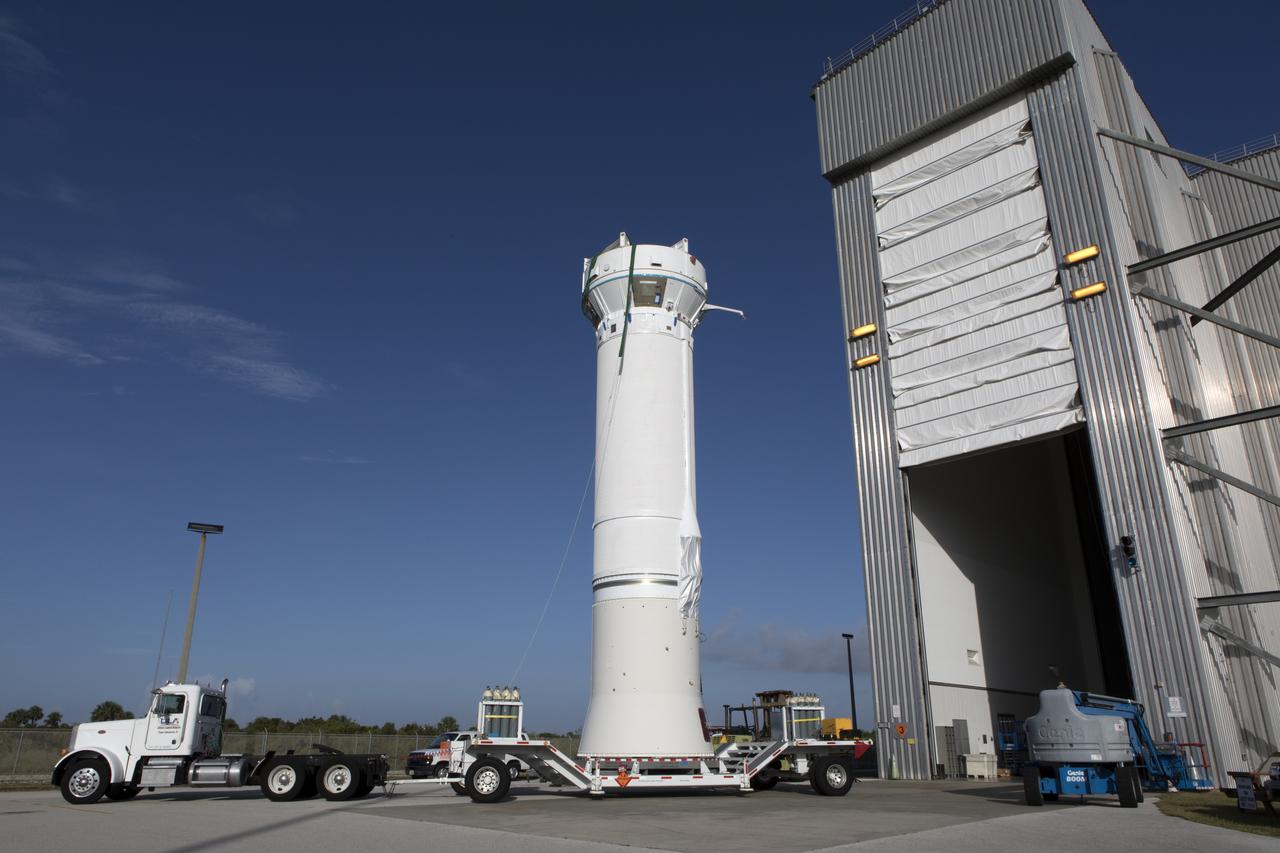
A United Launch Alliance Atlas V Centaur upper stage leaves the Delta Operations Center aboard a transport trailer for delivery to the Vertical Integration Facility at Space Launch Complex 41 at Cape Canaveral Air Force Station in Florida. The rocket is scheduled to help launch the Tracking and Data Relay Satellite, TDRS-M. It will be the latest spacecraft destined for the agency's constellation of communications satellites that allows nearly continuous contact with orbiting spacecraft ranging from the International Space Station and Hubble Space Telescope to the array of scientific observatories. Liftoff atop the ULA Atlas V rocket is scheduled to take place from Cape Canaveral's Space Launch Complex 41 in early August.
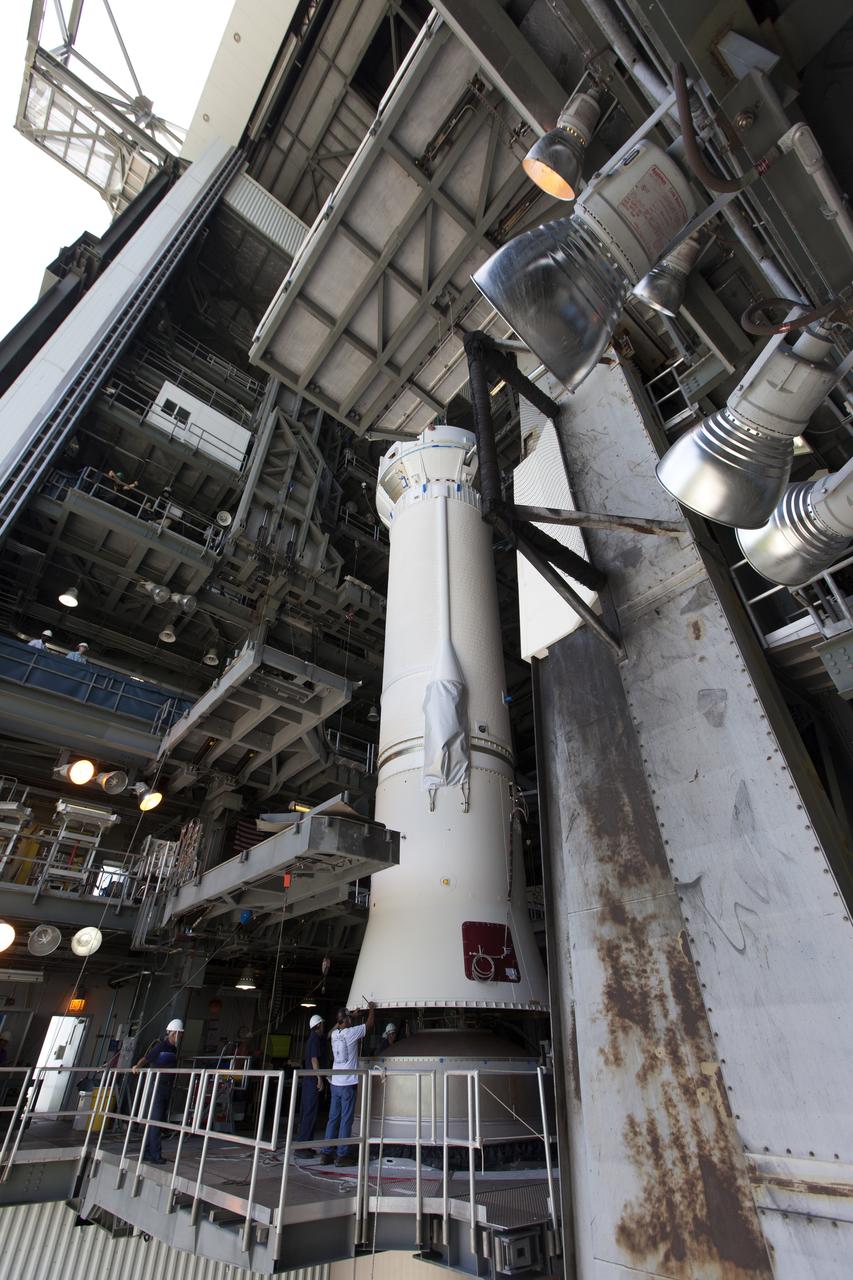
At the Vertical Integration Facility at Space Launch Complex 41 at Cape Canaveral Air Force Station in Florida, United Launch Alliance team members monitor progress as a Centaur upper stage is positioned prior to mating to an Atlas V booster. The rocket is scheduled to launch the Tracking and Data Relay Satellite, TDRS-M. It will be the latest spacecraft destined for the agency's constellation of communications satellites that allows nearly continuous contact with orbiting spacecraft ranging from the International Space Station and Hubble Space Telescope to the array of scientific observatories. Liftoff atop the ULA Atlas V rocket is scheduled to take place from Cape Canaveral's Space Launch Complex 41 in early August.
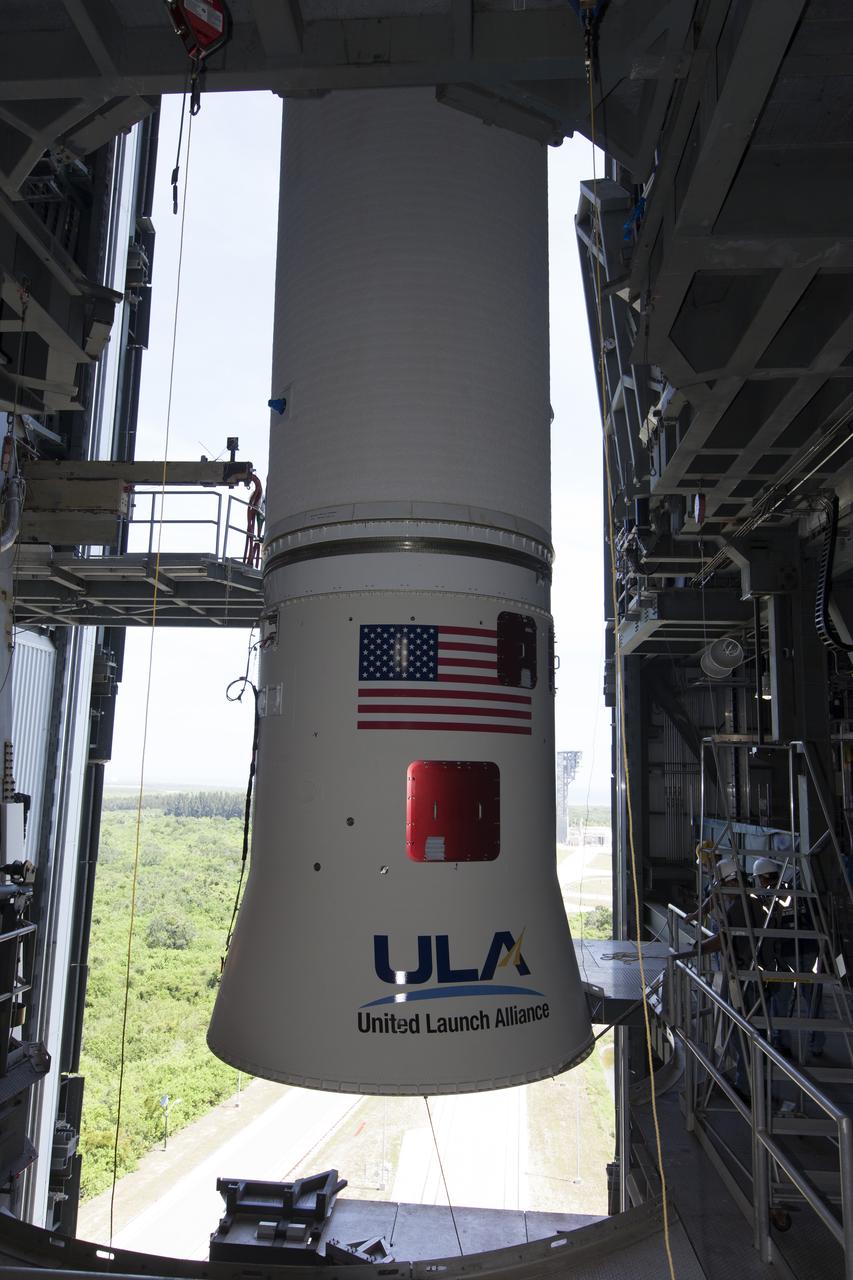
At the Vertical Integration Facility at Space Launch Complex 41 at Cape Canaveral Air Force Station in Florida, a United Launch Alliance Centaur upper stage is positioned prior to mating to an Atlas V booster. The rocket is scheduled to launch the Tracking and Data Relay Satellite, TDRS-M. It will be the latest spacecraft destined for the agency's constellation of communications satellites that allows nearly continuous contact with orbiting spacecraft ranging from the International Space Station and Hubble Space Telescope to the array of scientific observatories. Liftoff atop the ULA Atlas V rocket is scheduled to take place from Cape Canaveral's Space Launch Complex 41 in early August.
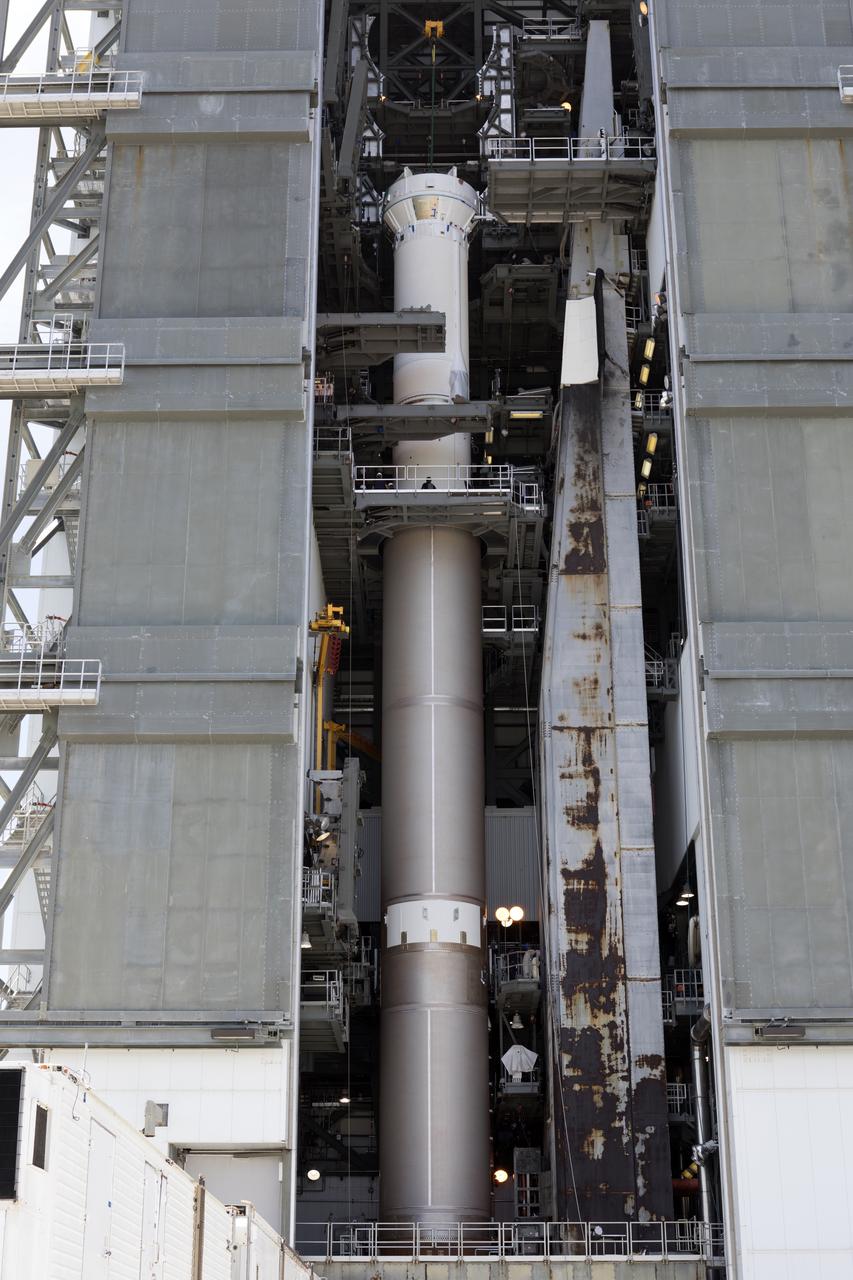
At the Vertical Integration Facility at Space Launch Complex 41 at Cape Canaveral Air Force Station in Florida, a United Launch Alliance Centaur upper stage has been mated to an Atlas V booster. The rocket is scheduled to launch the Tracking and Data Relay Satellite, TDRS-M. It will be the latest spacecraft destined for the agency's constellation of communications satellites that allows nearly continuous contact with orbiting spacecraft ranging from the International Space Station and Hubble Space Telescope to the array of scientific observatories. Liftoff atop the ULA Atlas V rocket is scheduled to take place from Cape Canaveral's Space Launch Complex 41 in early August.
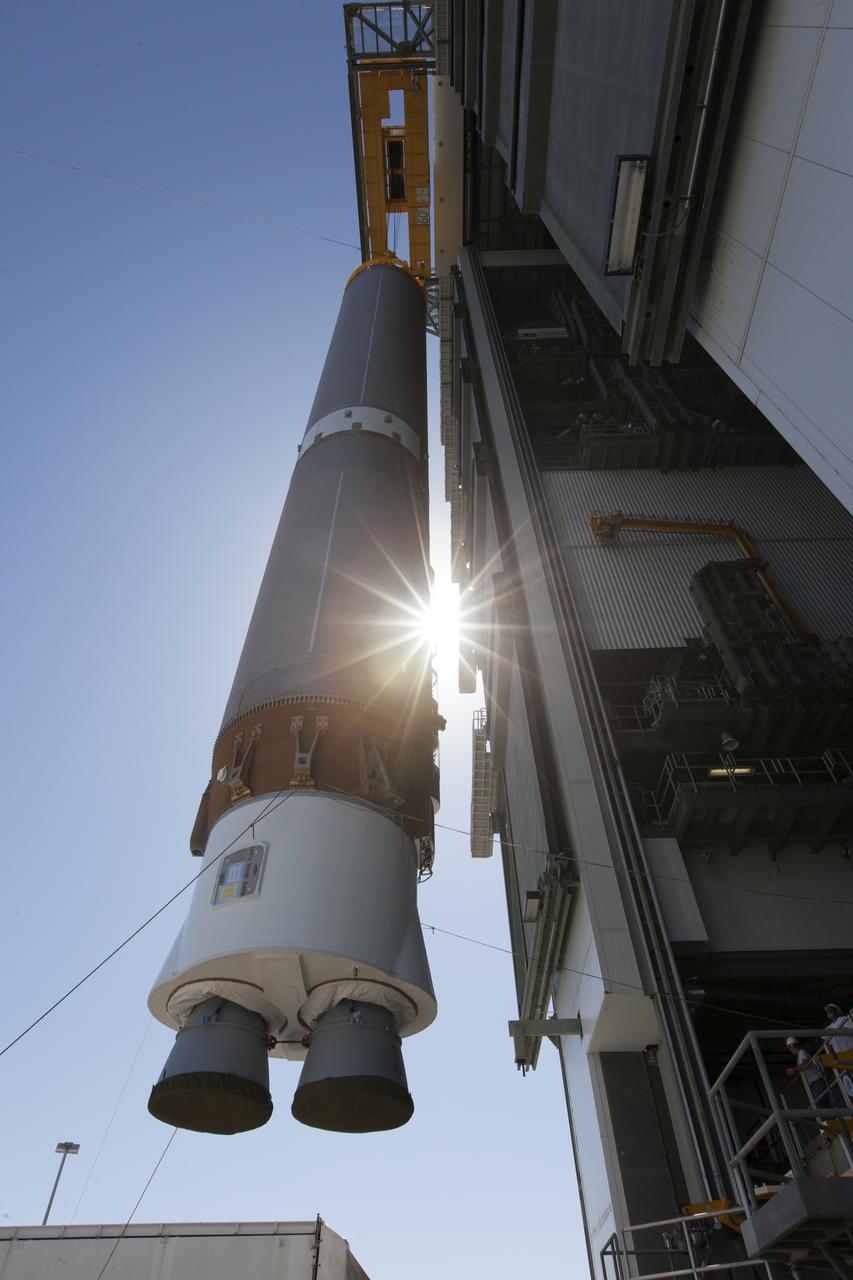
A United Launch Alliance Atlas V first stage is lifted at the Vertical Integration Facility at Space Launch Complex 41 at Cape Canaveral Air Force Station in Florida. The rocket is scheduled to launch the Tracking and Data Relay Satellite, TDRS-M. It will be the latest spacecraft destined for the agency's constellation of communications satellites that allows nearly continuous contact with orbiting spacecraft ranging from the International Space Station and Hubble Space Telescope to the array of scientific observatories. Liftoff atop the ULA Atlas V rocket is scheduled to take place from Cape Canaveral's Space Launch Complex 41 on Aug. 3, 2017 at 9:02 a.m. EDT.
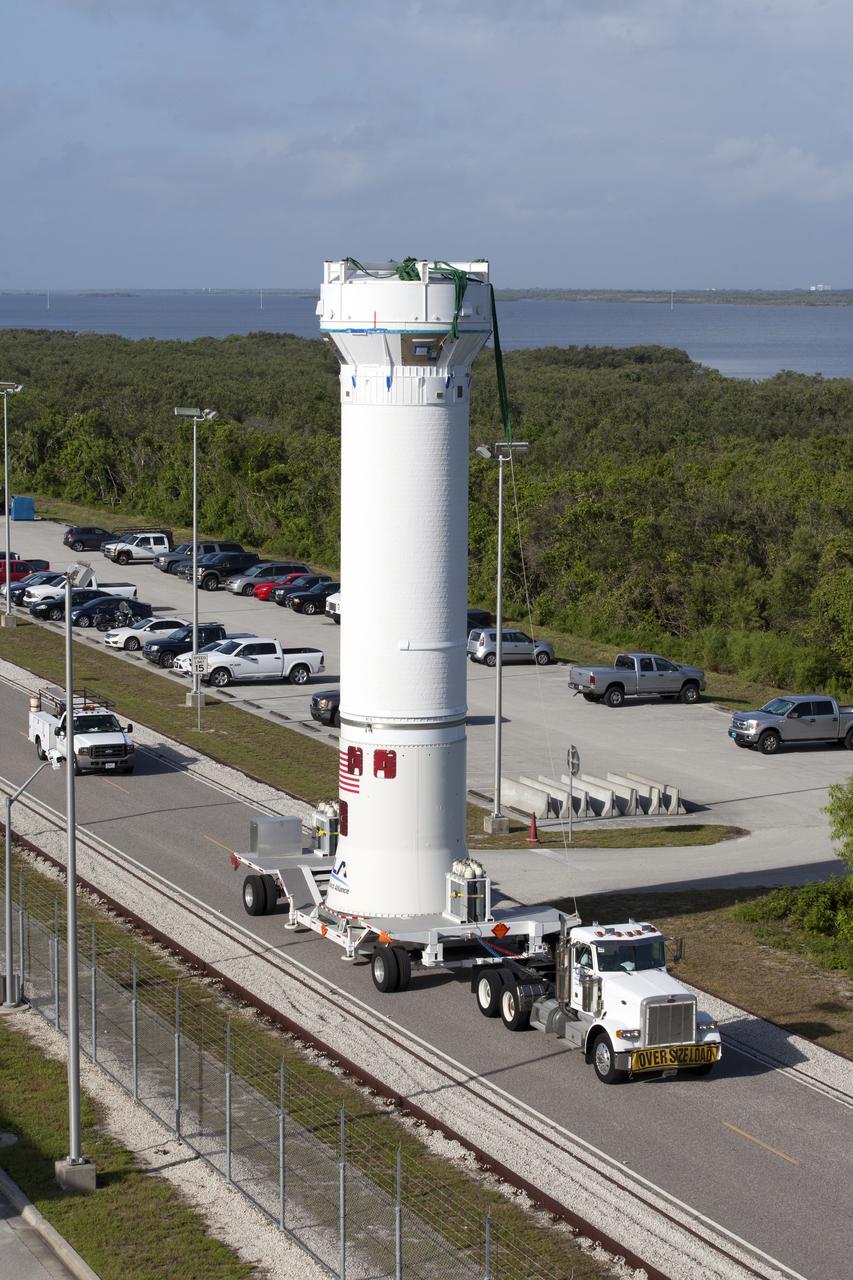
A United Launch Alliance Atlas V Centaur upper stage is on its wat to the Vertical Integration Facility at Space Launch Complex 41 at Cape Canaveral Air Force Station in Florida. The rocket is scheduled to help launch the Tracking and Data Relay Satellite, TDRS-M. It will be the latest spacecraft destined for the agency's constellation of communications satellites that allows nearly continuous contact with orbiting spacecraft ranging from the International Space Station and Hubble Space Telescope to the array of scientific observatories. Liftoff atop the ULA Atlas V rocket is scheduled to take place from Cape Canaveral's Space Launch Complex 41 in early August.
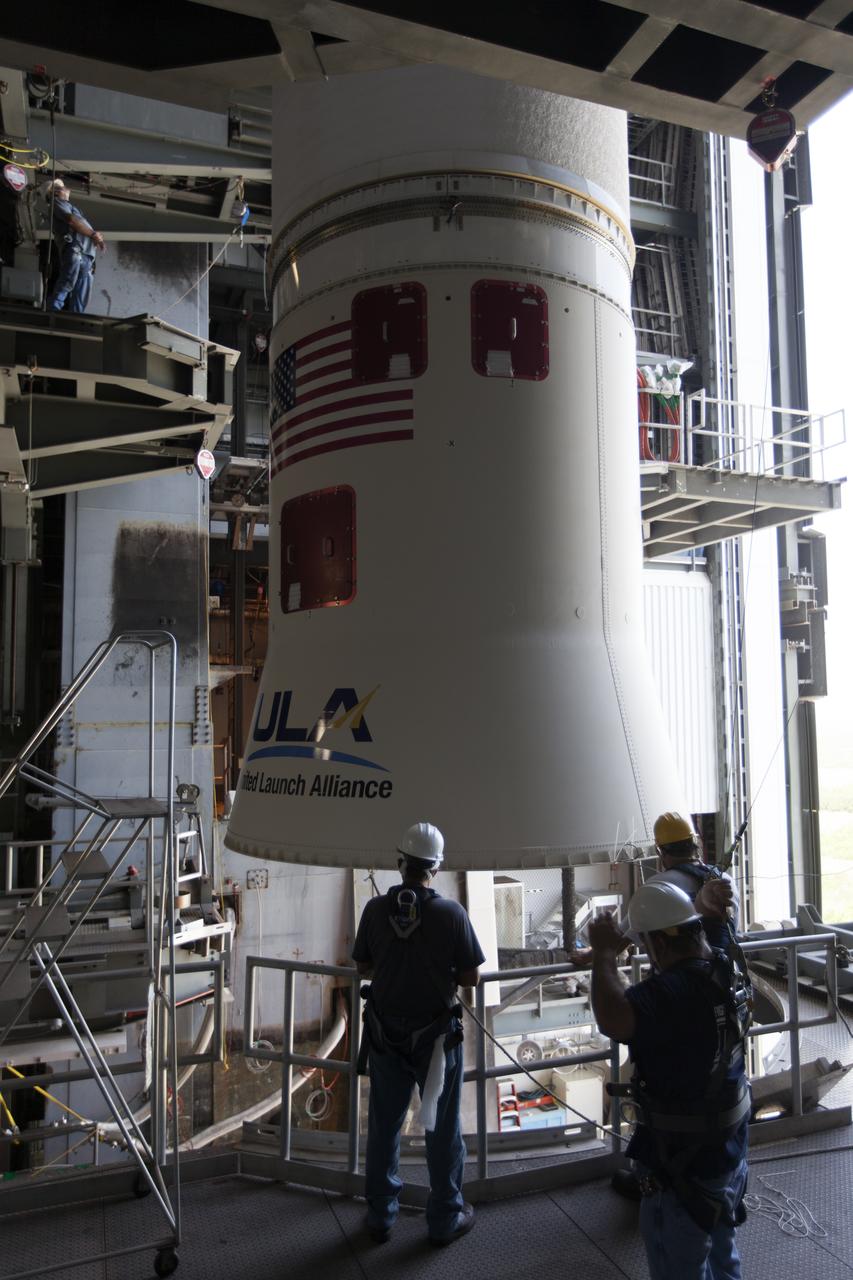
At the Vertical Integration Facility at Space Launch Complex 41 at Cape Canaveral Air Force Station in Florida, United Launch Alliance team members monitor the progress as a Centaur upper stage is positioned prior to mating to an Atlas V booster. The rocket is scheduled to launch the Tracking and Data Relay Satellite, TDRS-M. It will be the latest spacecraft destined for the agency's constellation of communications satellites that allows nearly continuous contact with orbiting spacecraft ranging from the International Space Station and Hubble Space Telescope to the array of scientific observatories. Liftoff atop the ULA Atlas V rocket is scheduled to take place from Cape Canaveral's Space Launch Complex 41 in early August.
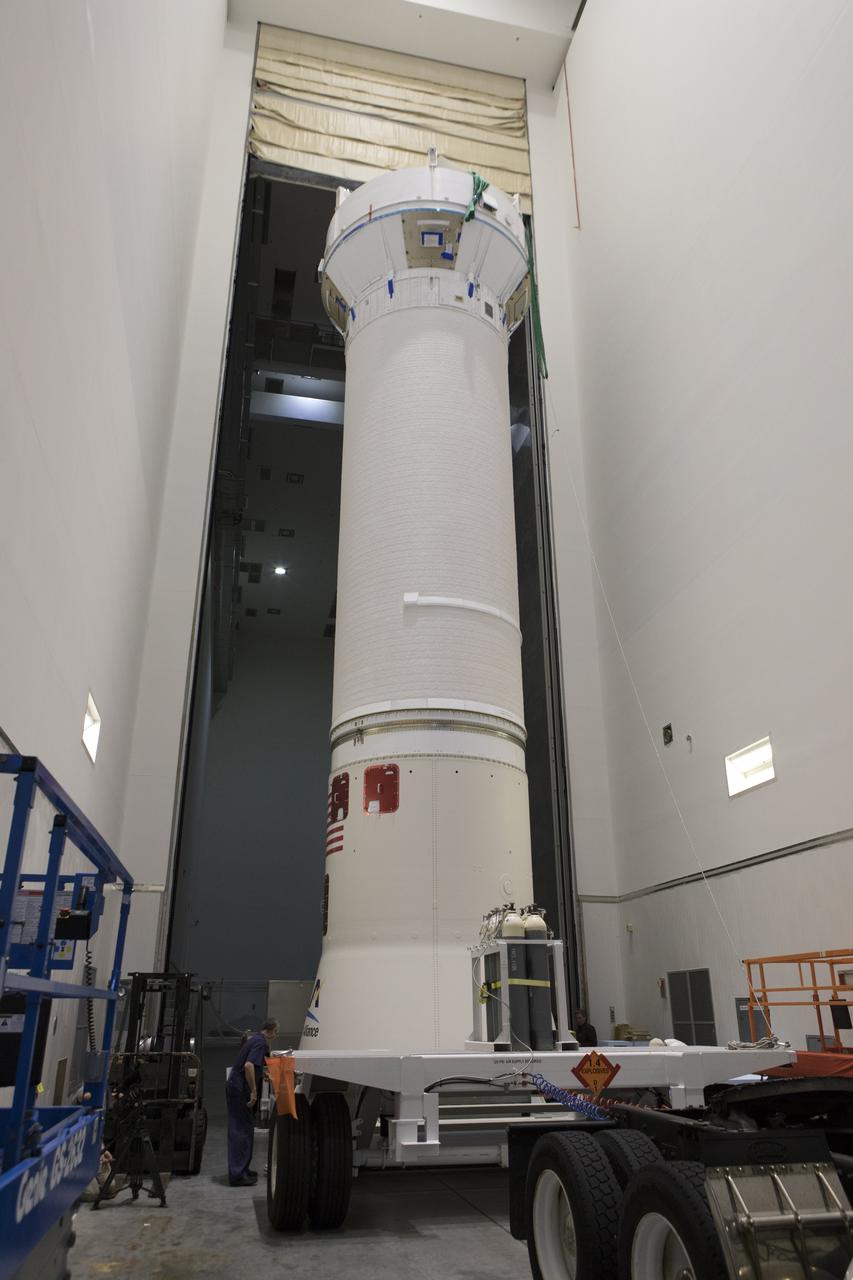
A United Launch Alliance Atlas V Centaur upper stage is prepared to leave the Delta Operations Center aboard a transport trailer for delivery to the Vertical Integration Facility at Space Launch Complex 41 at Cape Canaveral Air Force Station in Florida. The rocket is scheduled to help launch the Tracking and Data Relay Satellite, TDRS-M. It will be the latest spacecraft destined for the agency's constellation of communications satellites that allows nearly continuous contact with orbiting spacecraft ranging from the International Space Station and Hubble Space Telescope to the array of scientific observatories. Liftoff atop the ULA Atlas V rocket is scheduled to take place from Cape Canaveral's Space Launch Complex 41 in early August.
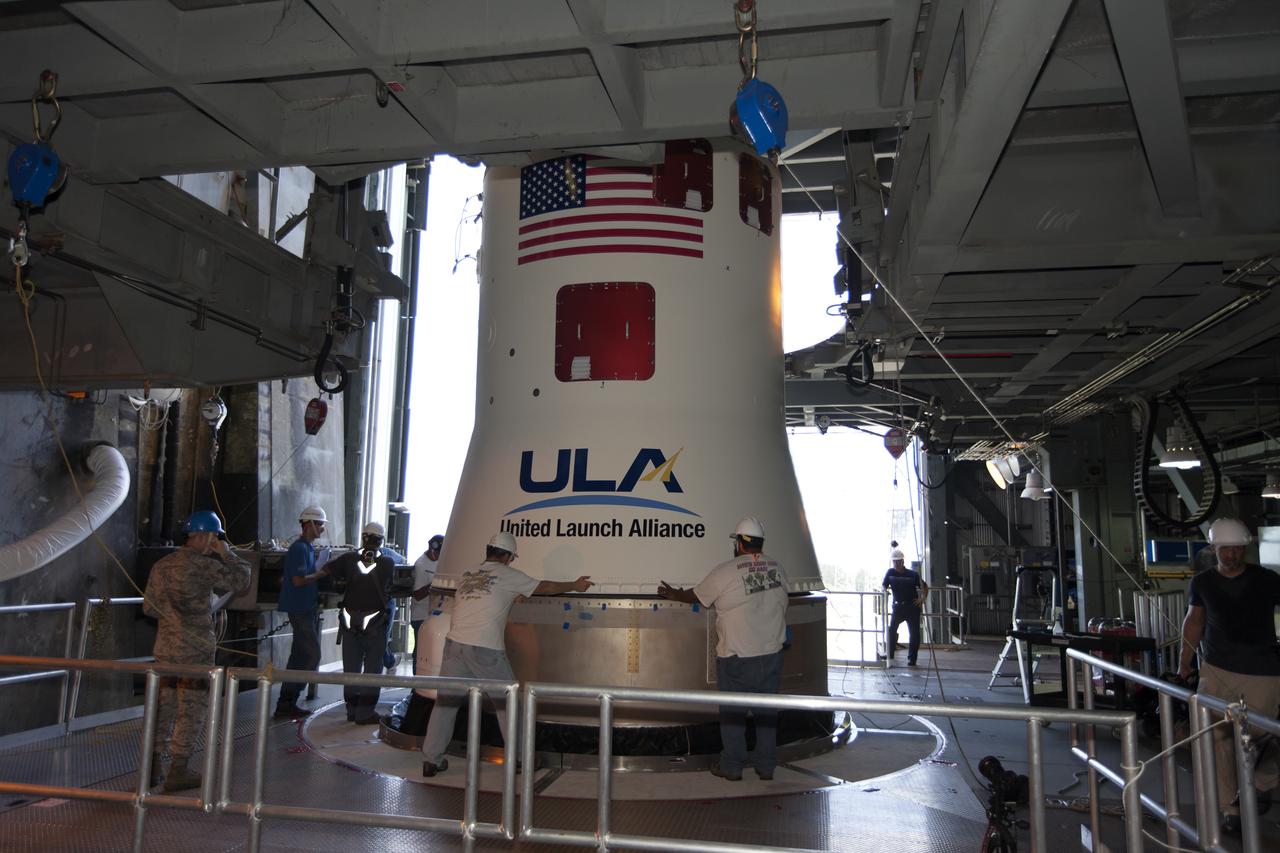
At the Vertical Integration Facility at Space Launch Complex 41 at Cape Canaveral Air Force Station in Florida, United Launch Alliance team members mate a Centaur upper stage to an Atlas V booster. The rocket is scheduled to launch the Tracking and Data Relay Satellite, TDRS-M. It will be the latest spacecraft destined for the agency's constellation of communications satellites that allows nearly continuous contact with orbiting spacecraft ranging from the International Space Station and Hubble Space Telescope to the array of scientific observatories. Liftoff atop the ULA Atlas V rocket is scheduled to take place from Cape Canaveral's Space Launch Complex 41 in early August.
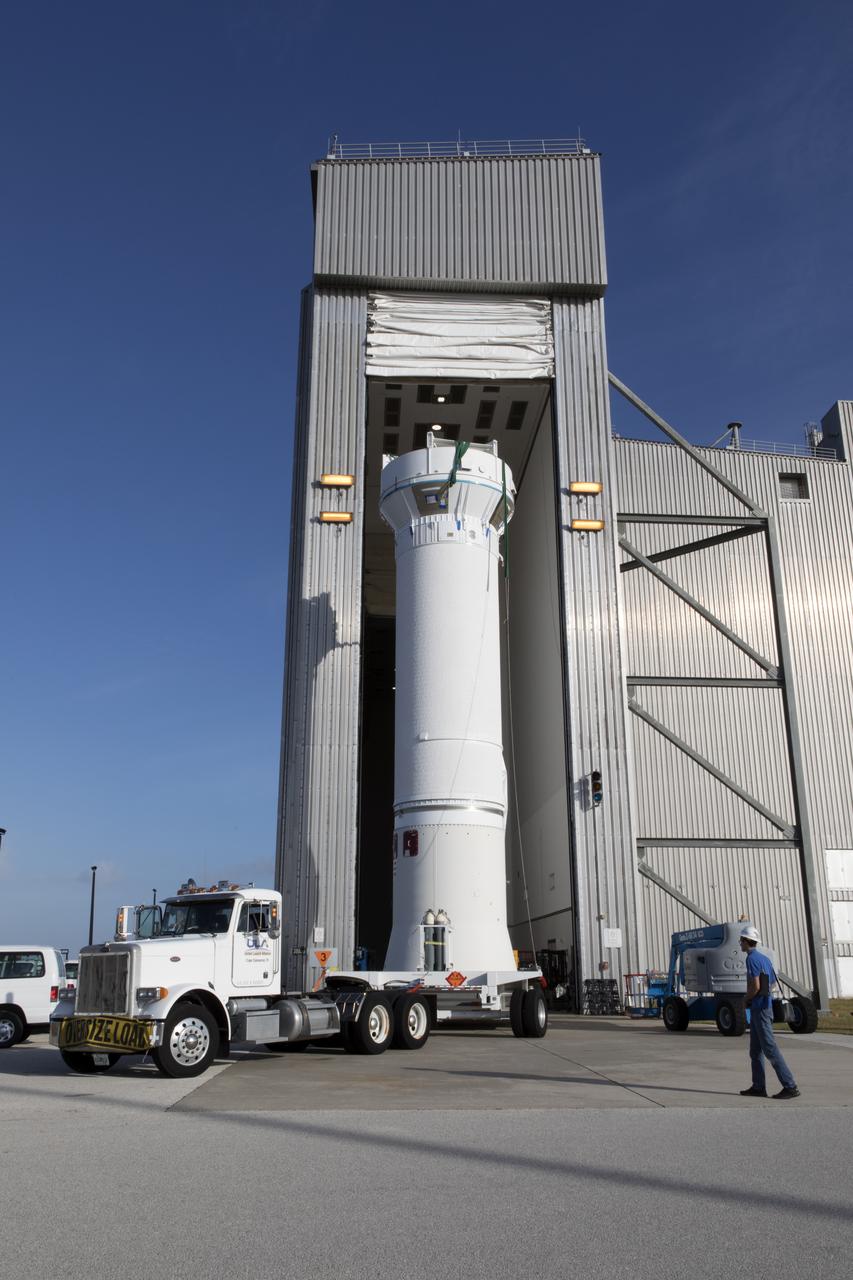
A United Launch Alliance Atlas V Centaur upper stage leaves the Delta Operations Center aboard a transport trailer for delivery to the Vertical Integration Facility at Space Launch Complex 41 at Cape Canaveral Air Force Station in Florida. The rocket is scheduled to help launch the Tracking and Data Relay Satellite, TDRS-M. It will be the latest spacecraft destined for the agency's constellation of communications satellites that allows nearly continuous contact with orbiting spacecraft ranging from the International Space Station and Hubble Space Telescope to the array of scientific observatories. Liftoff atop the ULA Atlas V rocket is scheduled to take place from Cape Canaveral's Space Launch Complex 41 in early August.
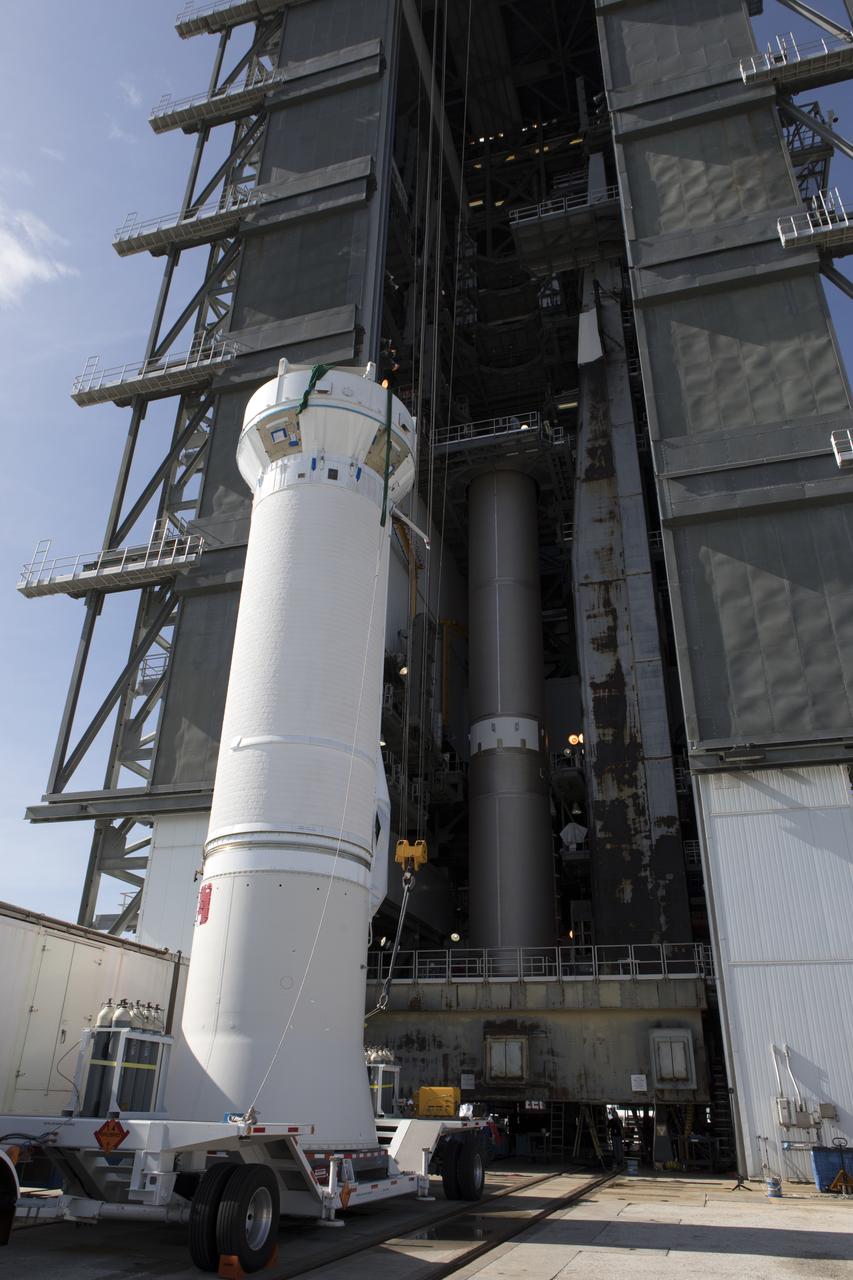
A United Launch Alliance Atlas V Centaur upper stage arrives at the Vertical Integration Facility at Space Launch Complex 41 at Cape Canaveral Air Force Station in Florida. The rocket is scheduled to help launch the Tracking and Data Relay Satellite, TDRS-M. It will be the latest spacecraft destined for the agency's constellation of communications satellites that allows nearly continuous contact with orbiting spacecraft ranging from the International Space Station and Hubble Space Telescope to the array of scientific observatories. Liftoff atop the ULA Atlas V rocket is scheduled to take place from Cape Canaveral's Space Launch Complex 41 in early August.
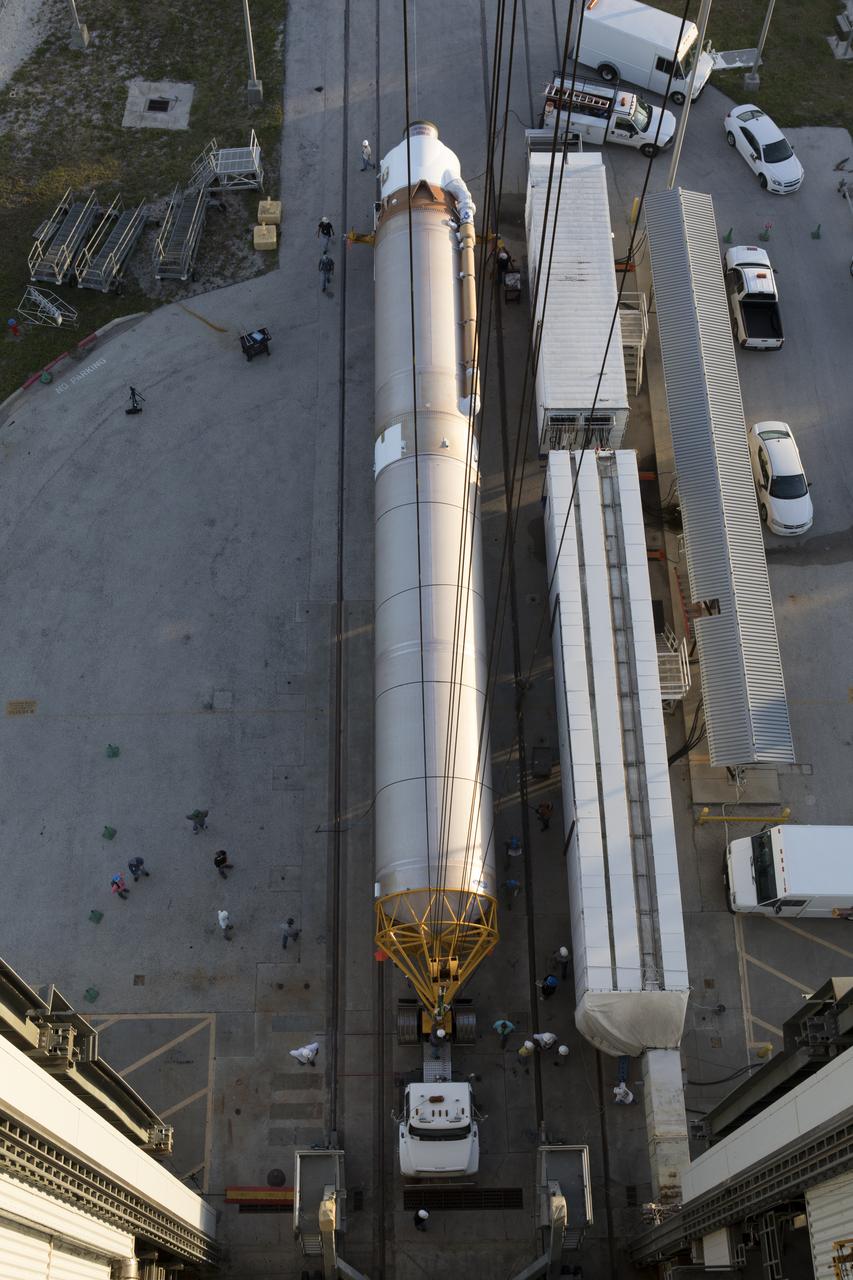
Viewed overhead from the Vertical Integration Facility at Space Launch Complex 41 at Cape Canaveral Air Force Station in Florida, a United Launch Alliance Atlas V first stage arrives for the Tracking and Data Relay Satellite, TDRS-M, mission. The rocket is scheduled to launch the latest TDRS satellite as part of the agency's constellation of communications satellites that allows nearly continuous contact with orbiting spacecraft ranging from the International Space Station and Hubble Space Telescope to the array of scientific observatories. Liftoff atop the ULA Atlas V rocket is scheduled to take place from Cape Canaveral's Space Launch Complex 41 on Aug. 3, 2017 at 9:02 a.m. EDT.
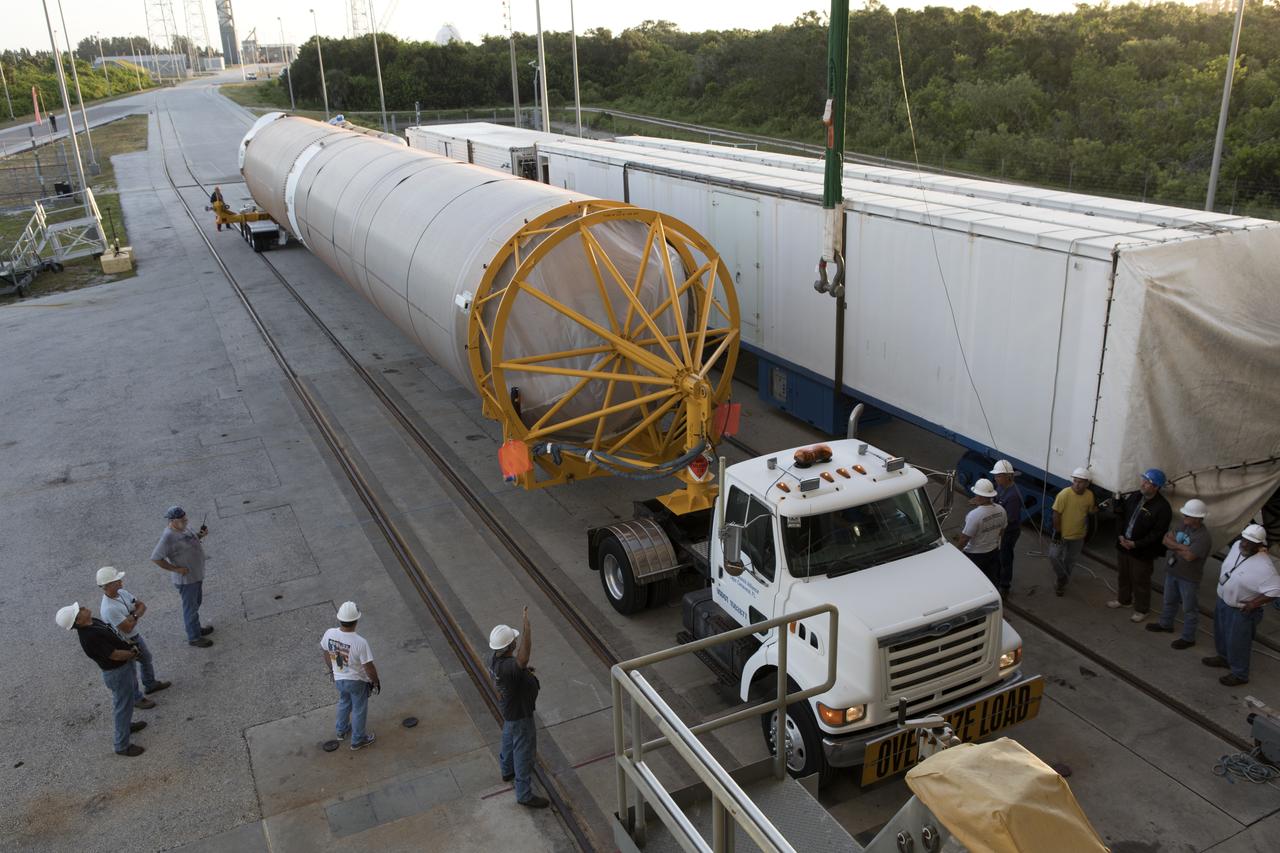
A United Launch Alliance Atlas V first stage arrives at the Vertical Integration Facility at Space Launch Complex 41 at Cape Canaveral Air Force Station in Florida. The rocket is scheduled to launch the Tracking and Data Relay Satellite, TDRS-M. It will be the latest spacecraft destined for the agency's constellation of communications satellites that allows nearly continuous contact with orbiting spacecraft ranging from the International Space Station and Hubble Space Telescope to the array of scientific observatories. Liftoff atop the ULA Atlas V rocket is scheduled to take place from Cape Canaveral's Space Launch Complex 41 on Aug. 3, 2017 at 9:02 a.m. EDT.
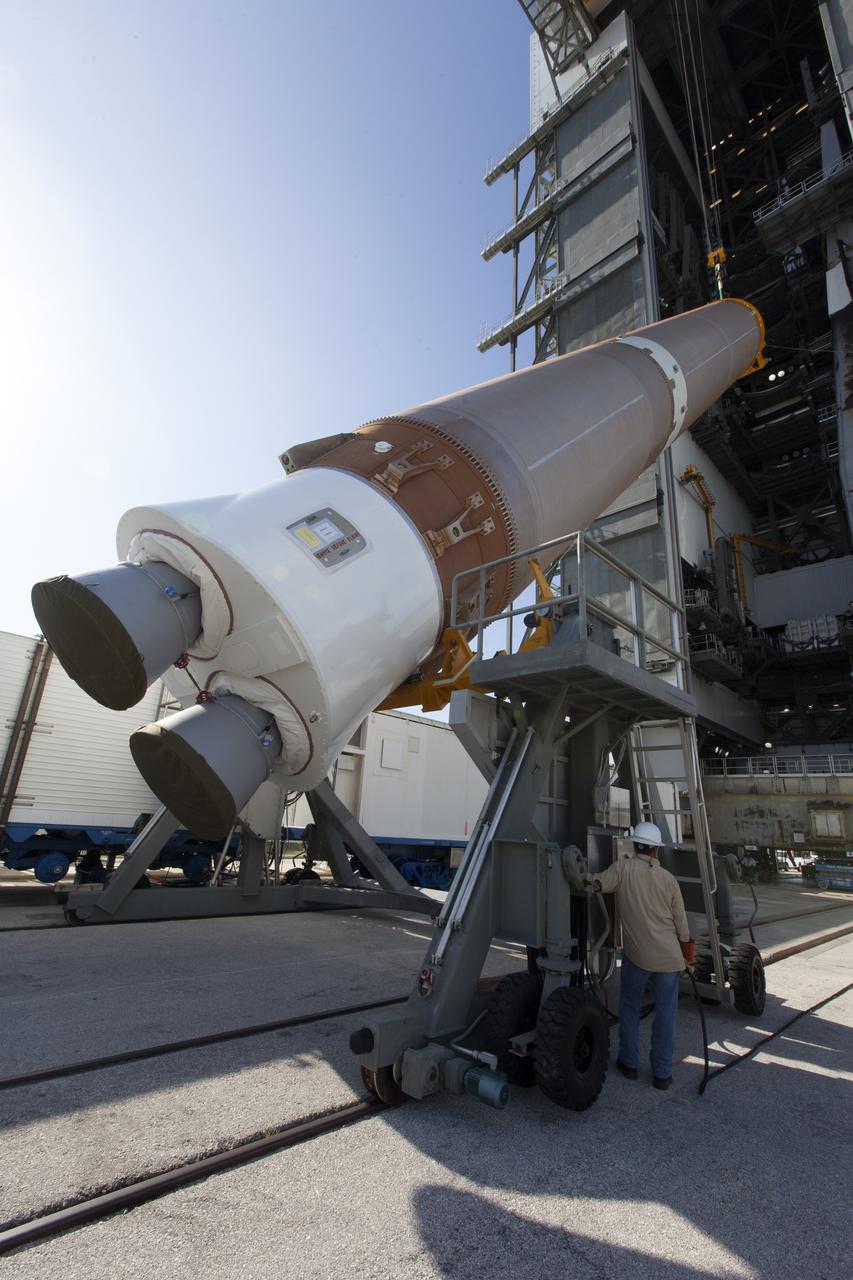
A United Launch Alliance Atlas V first stage is lifted at the Vertical Integration Facility at Space Launch Complex 41 at Cape Canaveral Air Force Station in Florida. The rocket is scheduled to launch the Tracking and Data Relay Satellite, TDRS-M. It will be the latest spacecraft destined for the agency's constellation of communications satellites that allows nearly continuous contact with orbiting spacecraft ranging from the International Space Station and Hubble Space Telescope to the array of scientific observatories. Liftoff atop the ULA Atlas V rocket is scheduled to take place from Cape Canaveral's Space Launch Complex 41 on Aug. 3, 2017 at 9:02 a.m. EDT.
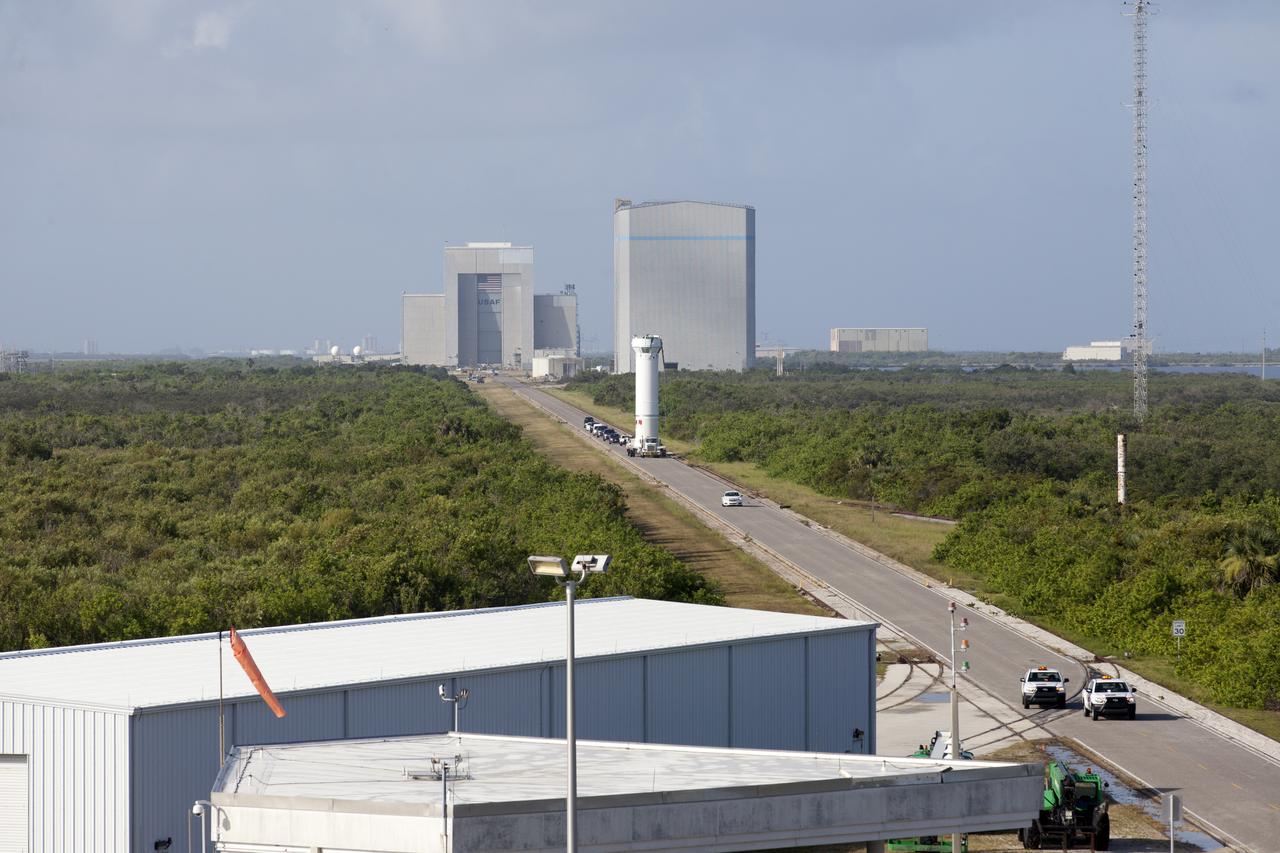
A United Launch Alliance Atlas V Centaur upper stage is on its wat to the Vertical Integration Facility at Space Launch Complex 41 at Cape Canaveral Air Force Station in Florida. The rocket is scheduled to help launch the Tracking and Data Relay Satellite, TDRS-M. It will be the latest spacecraft destined for the agency's constellation of communications satellites that allows nearly continuous contact with orbiting spacecraft ranging from the International Space Station and Hubble Space Telescope to the array of scientific observatories. Liftoff atop the ULA Atlas V rocket is scheduled to take place from Cape Canaveral's Space Launch Complex 41 in early August.
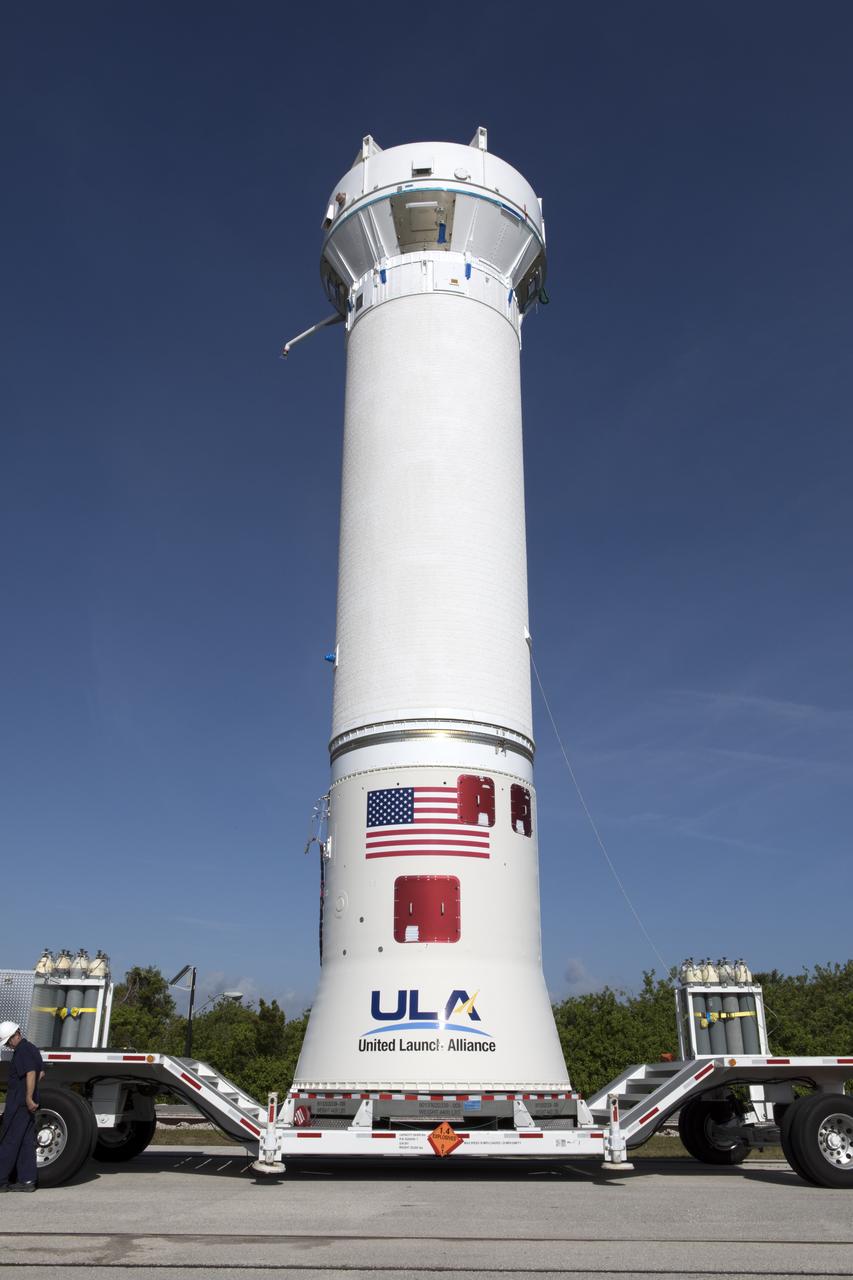
A United Launch Alliance Atlas V Centaur upper stage is on its wat to the Vertical Integration Facility at Space Launch Complex 41 at Cape Canaveral Air Force Station in Florida. The rocket is scheduled to help launch the Tracking and Data Relay Satellite, TDRS-M. It will be the latest spacecraft destined for the agency's constellation of communications satellites that allows nearly continuous contact with orbiting spacecraft ranging from the International Space Station and Hubble Space Telescope to the array of scientific observatories. Liftoff atop the ULA Atlas V rocket is scheduled to take place from Cape Canaveral's Space Launch Complex 41 in early August.
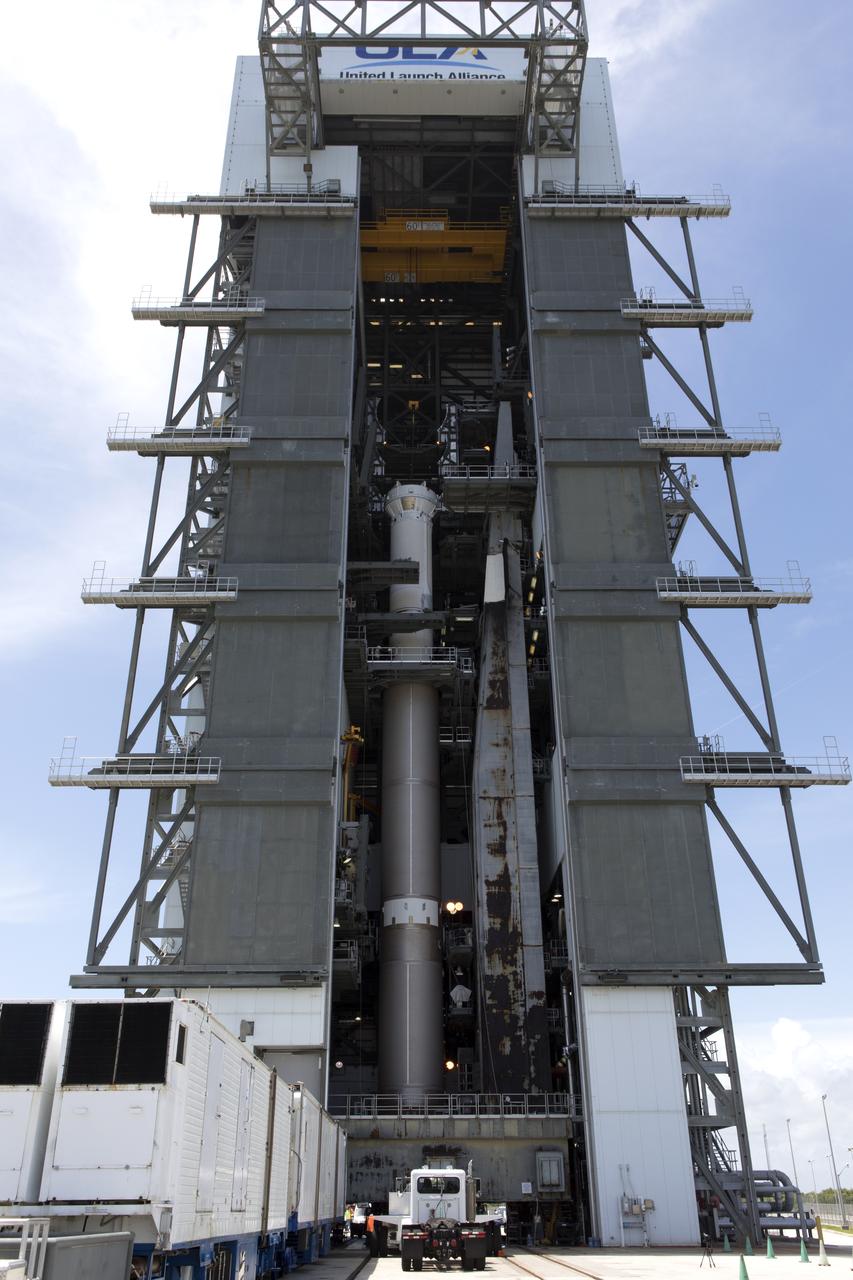
At the Vertical Integration Facility at Space Launch Complex 41 at Cape Canaveral Air Force Station in Florida, a United Launch Alliance Centaur upper stage has been mated to an Atlas V booster. The rocket is scheduled to launch the Tracking and Data Relay Satellite, TDRS-M. It will be the latest spacecraft destined for the agency's constellation of communications satellites that allows nearly continuous contact with orbiting spacecraft ranging from the International Space Station and Hubble Space Telescope to the array of scientific observatories. Liftoff atop the ULA Atlas V rocket is scheduled to take place from Cape Canaveral's Space Launch Complex 41 in early August.
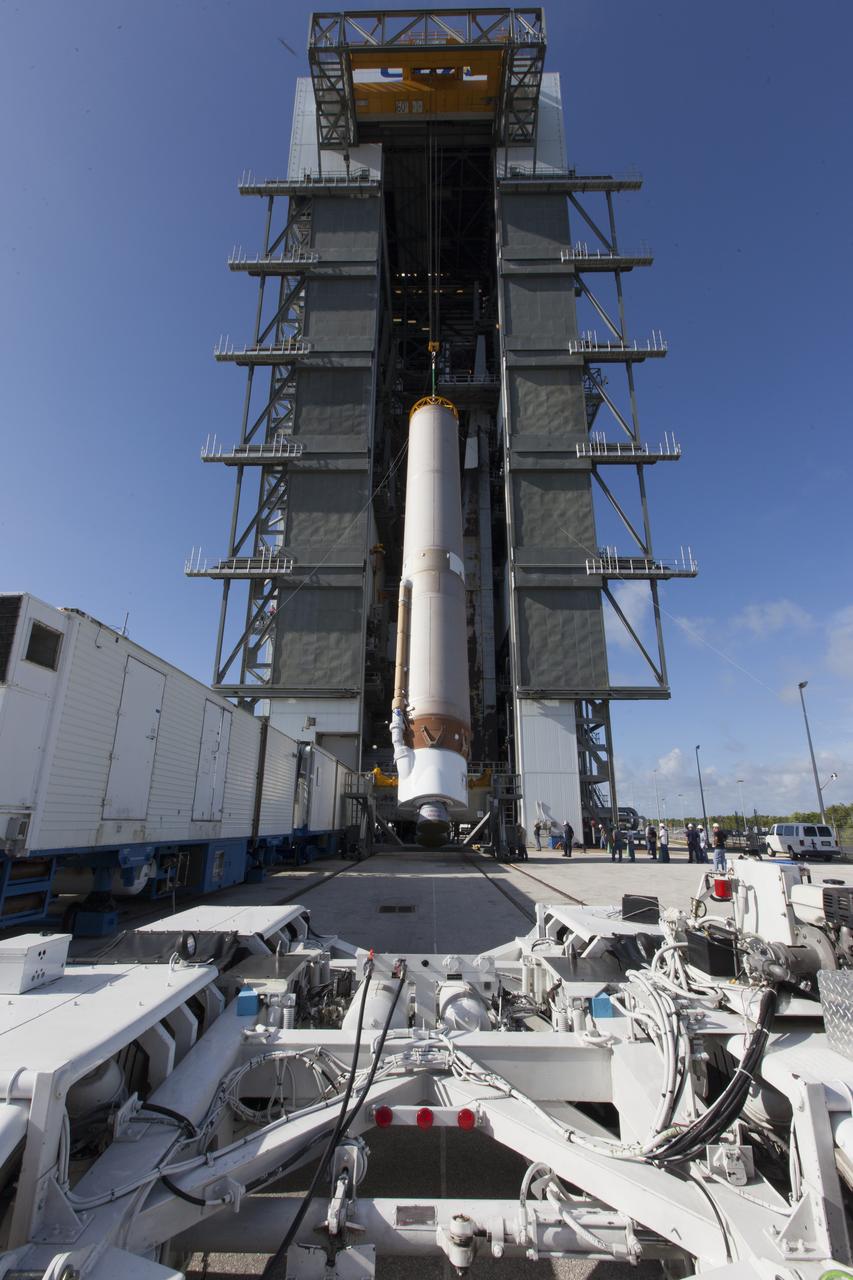
A United Launch Alliance Atlas V first stage is lifted at the Vertical Integration Facility at Space Launch Complex 41 at Cape Canaveral Air Force Station in Florida. The rocket is scheduled to launch the Tracking and Data Relay Satellite, TDRS-M. It will be the latest spacecraft destined for the agency's constellation of communications satellites that allows nearly continuous contact with orbiting spacecraft ranging from the International Space Station and Hubble Space Telescope to the array of scientific observatories. Liftoff atop the ULA Atlas V rocket is scheduled to take place from Cape Canaveral's Space Launch Complex 41 on Aug. 3, 2017 at 9:02 a.m. EDT.
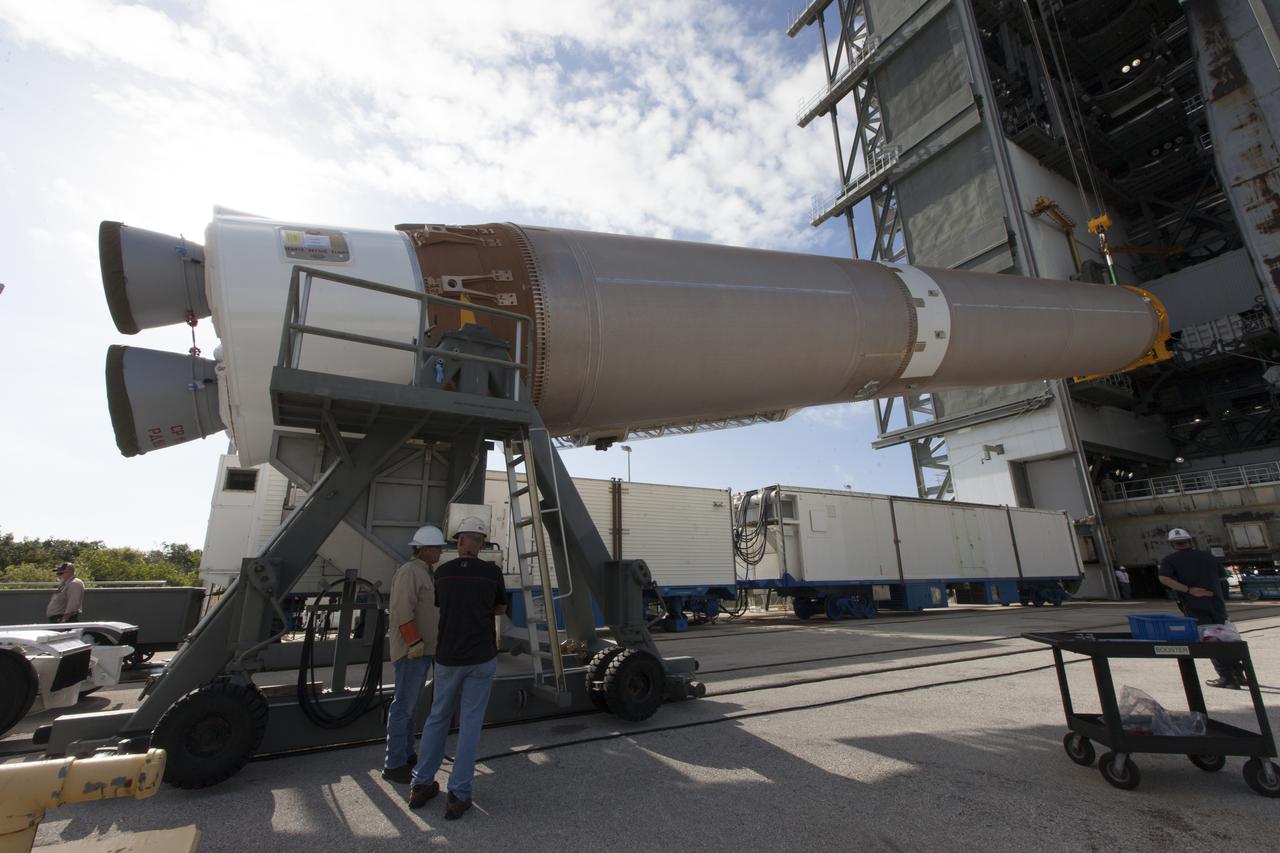
A United Launch Alliance Atlas V first stage is lifted at the Vertical Integration Facility at Space Launch Complex 41 at Cape Canaveral Air Force Station in Florida. The rocket is scheduled to launch the Tracking and Data Relay Satellite, TDRS-M. It will be the latest spacecraft destined for the agency's constellation of communications satellites that allows nearly continuous contact with orbiting spacecraft ranging from the International Space Station and Hubble Space Telescope to the array of scientific observatories. Liftoff atop the ULA Atlas V rocket is scheduled to take place from Cape Canaveral's Space Launch Complex 41 on Aug. 3, 2017 at 9:02 a.m. EDT.
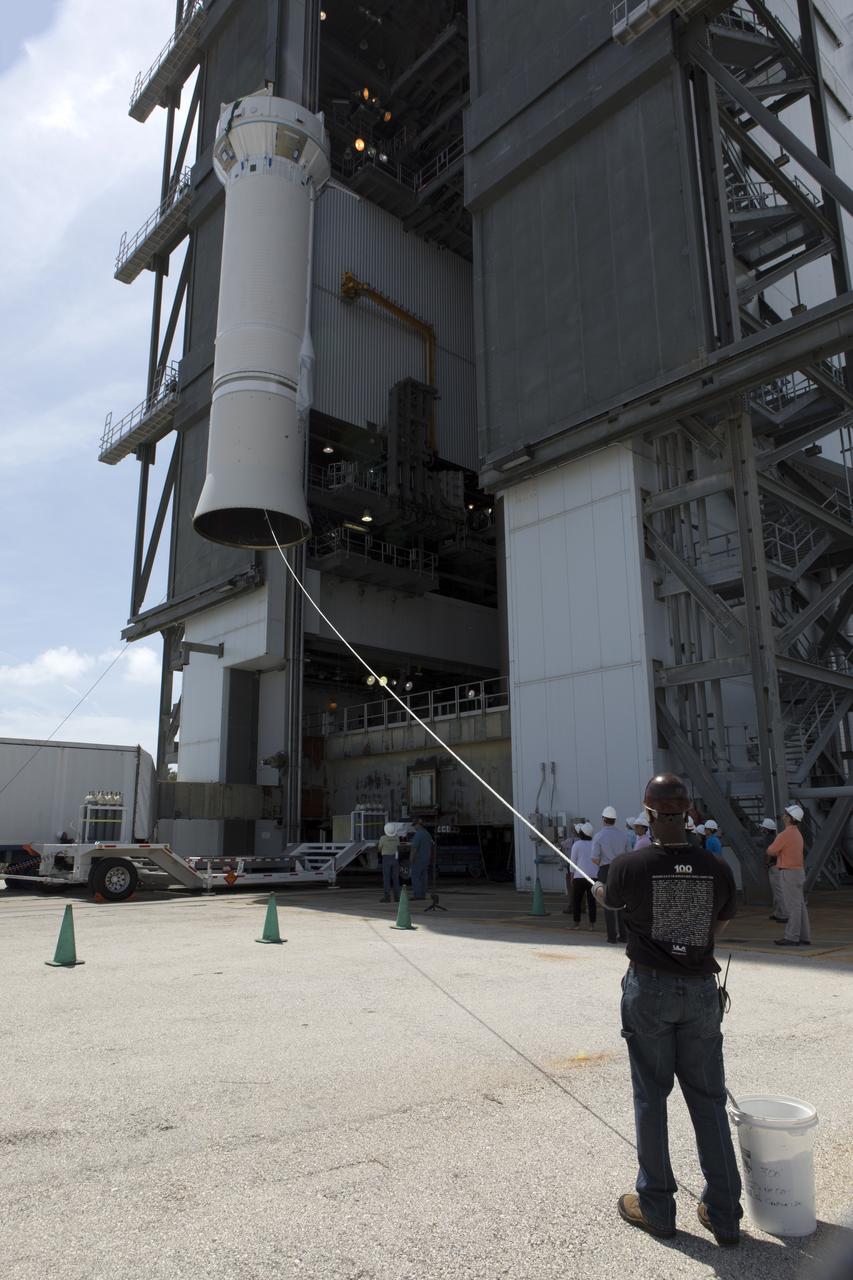
United Launch Alliance team members assist as the operation begins to lift the Centaur upper stage for mating to the Atlas V booster at the Vertical Integration Facility at Space Launch Complex 41 at Cape Canaveral Air Force Station in Florida. The rocket is scheduled to launch the Tracking and Data Relay Satellite, TDRS-M. It will be the latest spacecraft destined for the agency's constellation of communications satellites that allows nearly continuous contact with orbiting spacecraft ranging from the International Space Station and Hubble Space Telescope to the array of scientific observatories. Liftoff atop the ULA Atlas V rocket is scheduled to take place from Cape Canaveral's Space Launch Complex 41 in early August.
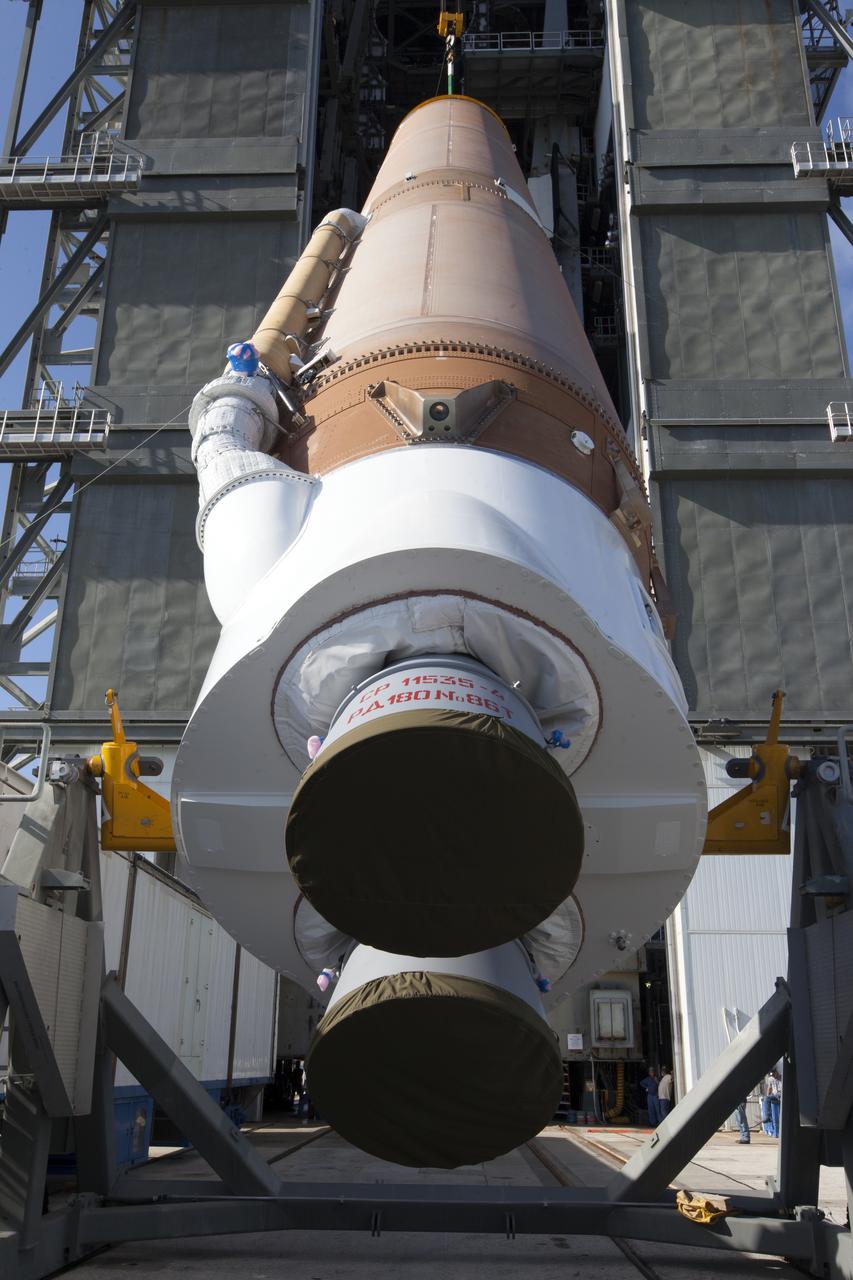
A United Launch Alliance Atlas V first stage is lifted at the Vertical Integration Facility at Space Launch Complex 41 at Cape Canaveral Air Force Station in Florida. The rocket is scheduled to launch the Tracking and Data Relay Satellite, TDRS-M. It will be the latest spacecraft destined for the agency's constellation of communications satellites that allows nearly continuous contact with orbiting spacecraft ranging from the International Space Station and Hubble Space Telescope to the array of scientific observatories. Liftoff atop the ULA Atlas V rocket is scheduled to take place from Cape Canaveral's Space Launch Complex 41 on Aug. 3, 2017 at 9:02 a.m. EDT.
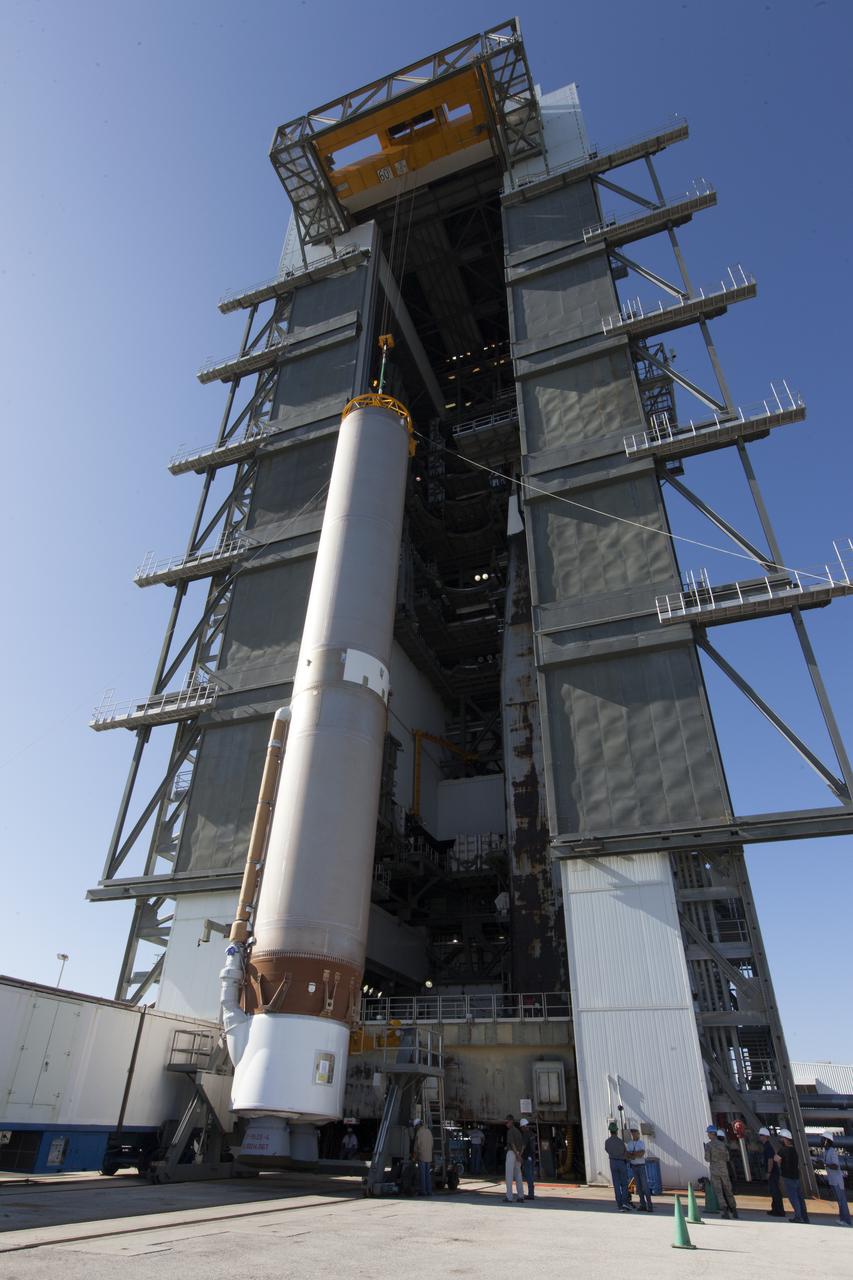
A United Launch Alliance Atlas V first stage is lifted at the Vertical Integration Facility at Space Launch Complex 41 at Cape Canaveral Air Force Station in Florida. The rocket is scheduled to launch the Tracking and Data Relay Satellite, TDRS-M. It will be the latest spacecraft destined for the agency's constellation of communications satellites that allows nearly continuous contact with orbiting spacecraft ranging from the International Space Station and Hubble Space Telescope to the array of scientific observatories. Liftoff atop the ULA Atlas V rocket is scheduled to take place from Cape Canaveral's Space Launch Complex 41 on Aug. 3, 2017 at 9:02 a.m. EDT.
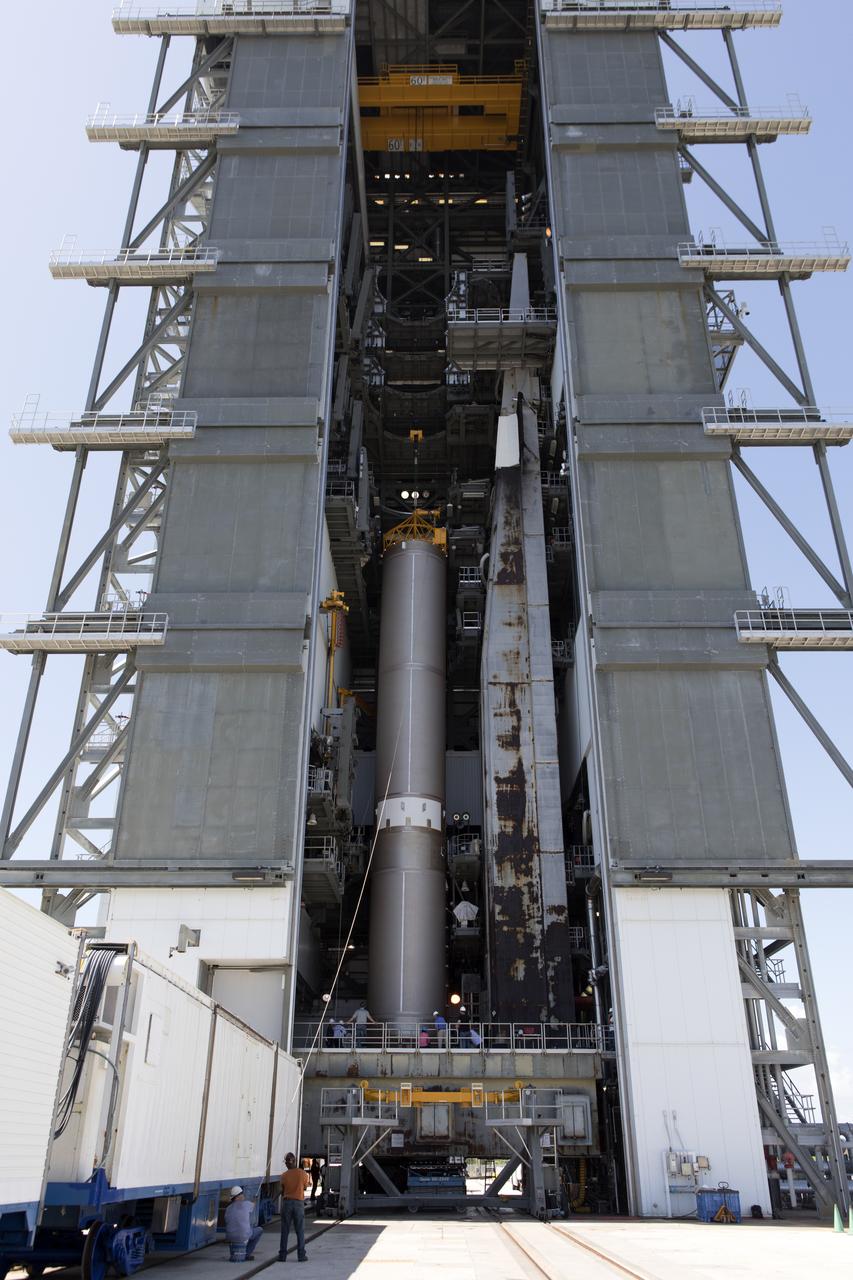
The United Launch Alliance Atlas V first stage has been positioned inside the Vertical Integration Facility at Space Launch Complex 41 at Cape Canaveral Air Force Station in Florida. The rocket is scheduled to launch the Tracking and Data Relay Satellite, TDRS-M. It will be the latest spacecraft destined for the agency's constellation of communications satellites that allows nearly continuous contact with orbiting spacecraft ranging from the International Space Station and Hubble Space Telescope to the array of scientific observatories. Liftoff atop the ULA Atlas V rocket is scheduled to take place from Cape Canaveral's Space Launch Complex 41 on Aug. 3, 2017 at 9:02 a.m. EDT.
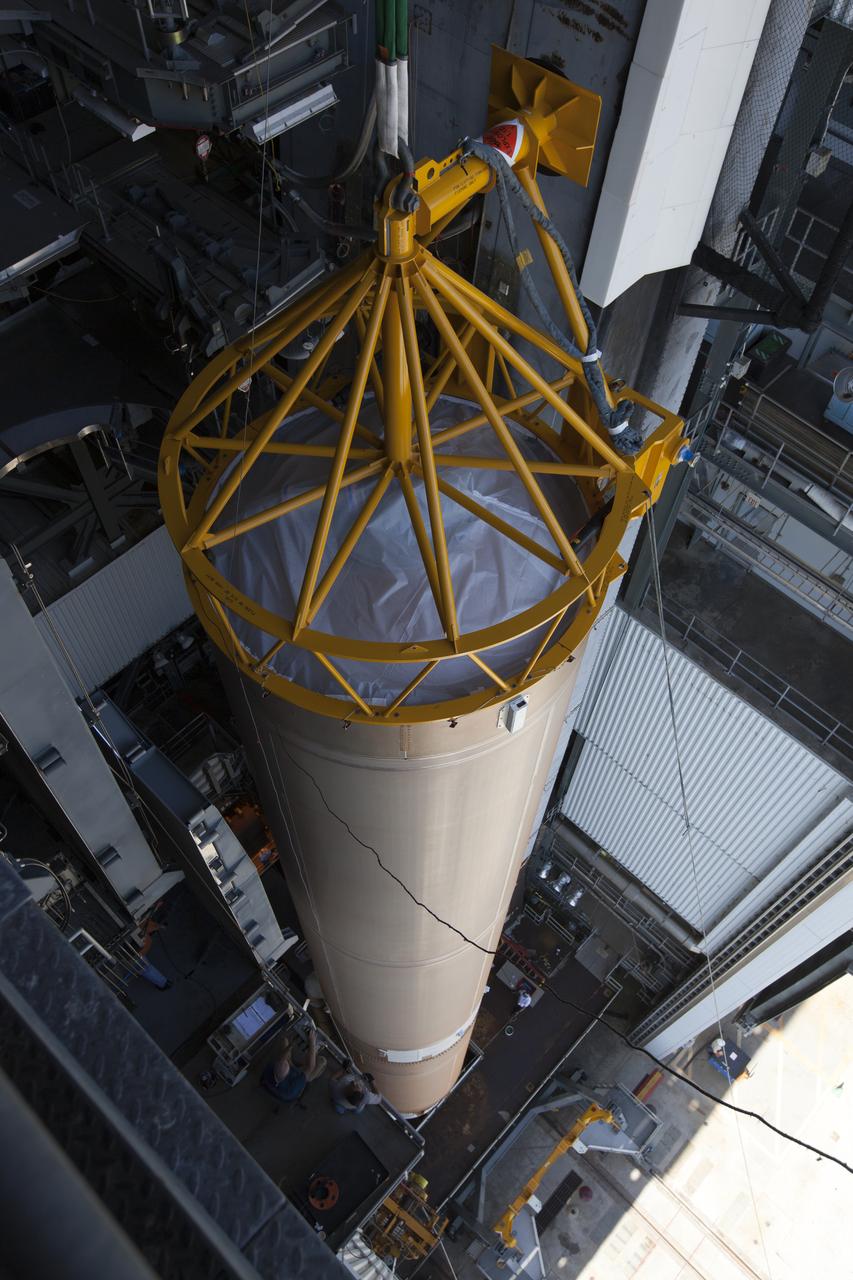
The United Launch Alliance Atlas V first stage has been positioned inside the Vertical Integration Facility at Space Launch Complex 41 at Cape Canaveral Air Force Station in Florida. The rocket is scheduled to launch the Tracking and Data Relay Satellite, TDRS-M. It will be the latest spacecraft destined for the agency's constellation of communications satellites that allows nearly continuous contact with orbiting spacecraft ranging from the International Space Station and Hubble Space Telescope to the array of scientific observatories. Liftoff atop the ULA Atlas V rocket is scheduled to take place from Cape Canaveral's Space Launch Complex 41 on Aug. 3, 2017 at 9:02 a.m. EDT.
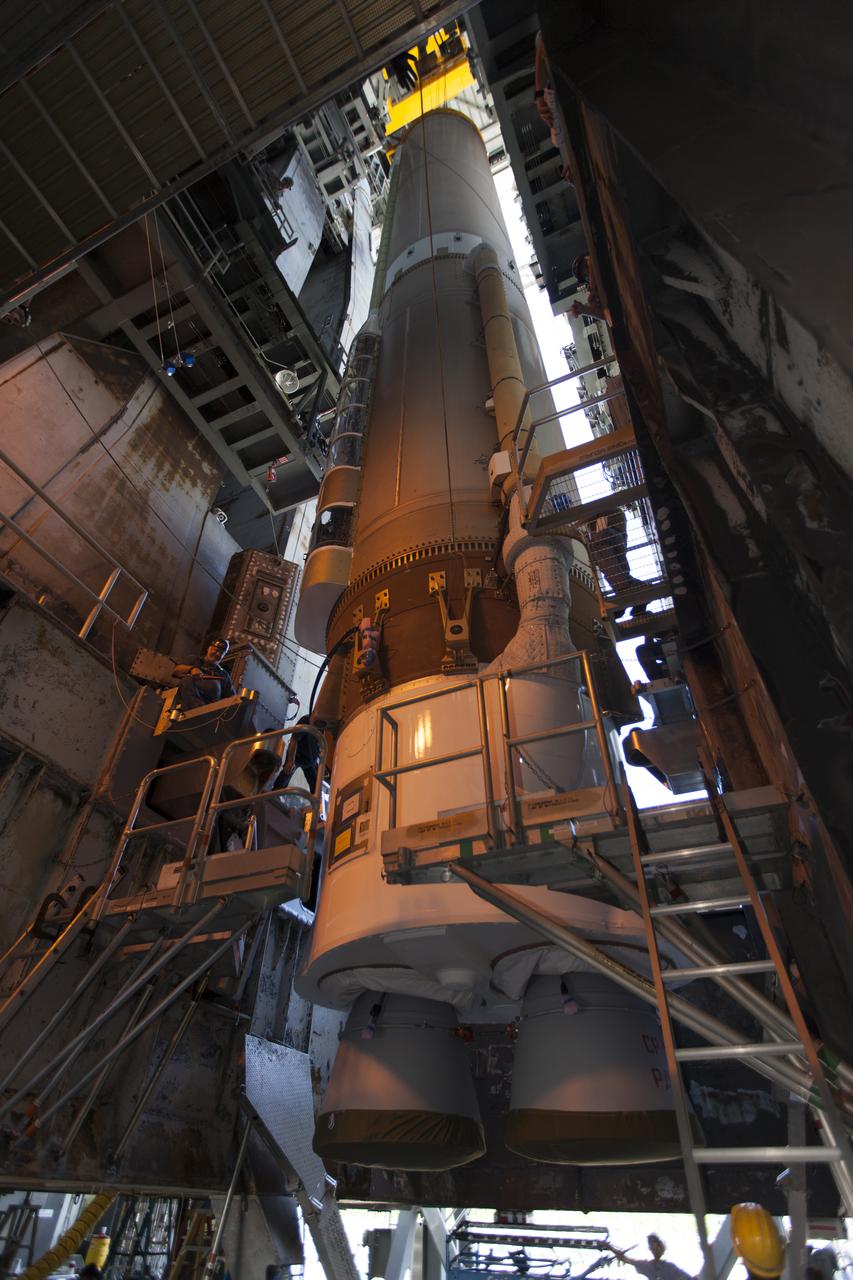
The United Launch Alliance Atlas V first stage has been positioned inside the Vertical Integration Facility at Space Launch Complex 41 at Cape Canaveral Air Force Station in Florida. The rocket is scheduled to launch the Tracking and Data Relay Satellite, TDRS-M. It will be the latest spacecraft destined for the agency's constellation of communications satellites that allows nearly continuous contact with orbiting spacecraft ranging from the International Space Station and Hubble Space Telescope to the array of scientific observatories. Liftoff atop the ULA Atlas V rocket is scheduled to take place from Cape Canaveral's Space Launch Complex 41 on Aug. 3, 2017 at 9:02 a.m. EDT.
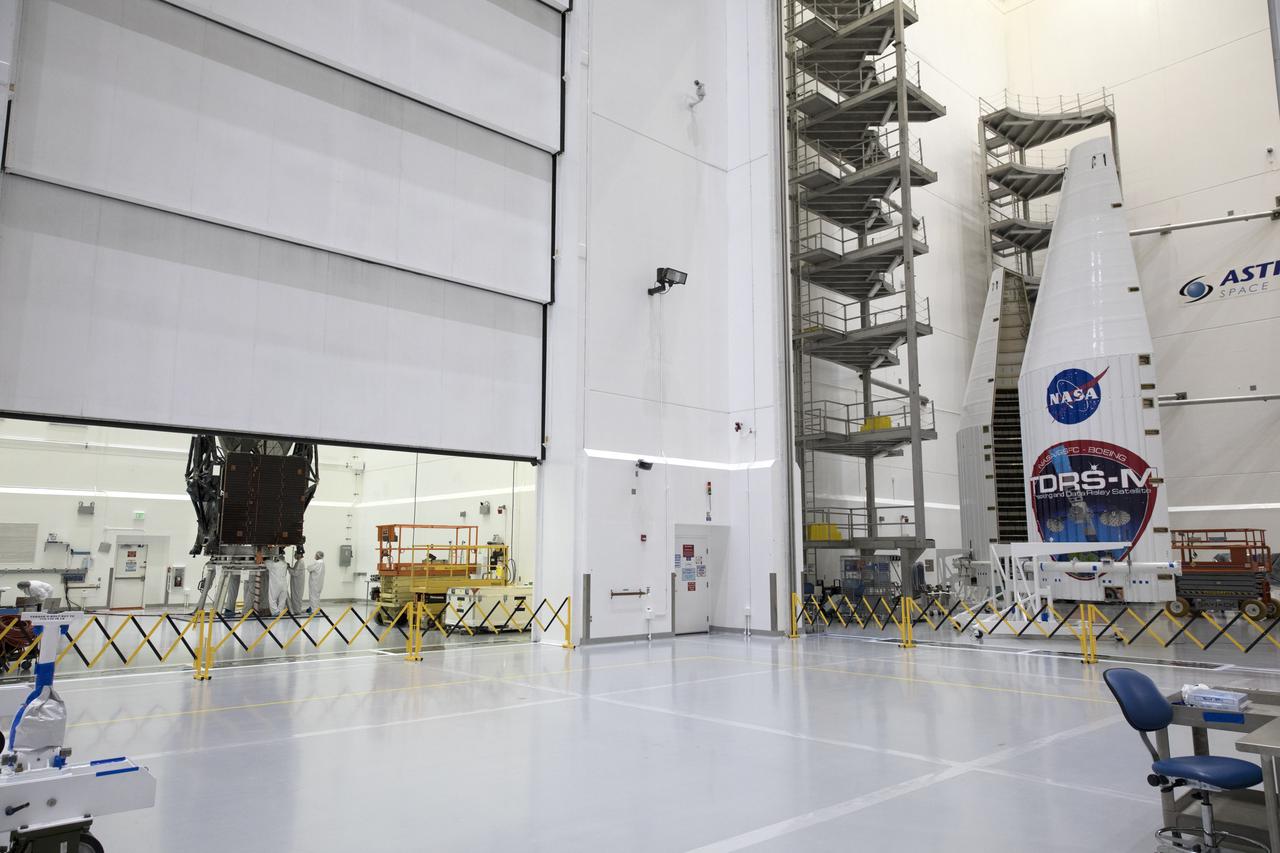
Inside the Astrotech facility in Titusville, Florida, NASA's Tracking and Data Relay Satellite, TDRS-M, is undergoing final checkouts in a test cell behind a large door. The spacecraft soon will be encapsulated in its payload fairing, seen on the right. TDRS-M is the latest spacecraft destined for the agency's constellation of communications satellites that allows nearly continuous contact with orbiting spacecraft ranging from the International Space Station and Hubble Space Telescope to the array of scientific observatories. Liftoff atop a United Launch Alliance Atlas V rocket is scheduled to take place from Space Launch Complex 41 at Cape Canaveral Air Force Station at 9:02 a.m. EDT Aug. 3, 2017.
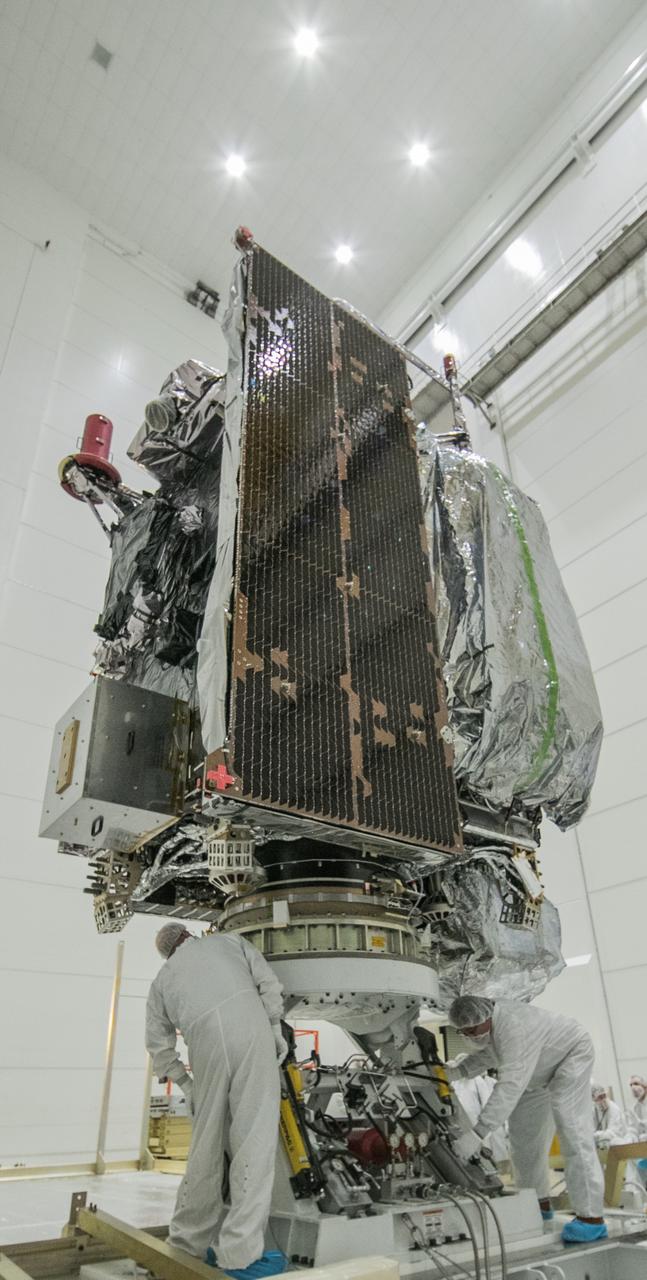
At Astrotech Space Operations in Titusville, Florida, technicians and engineers inspect NOAA's Geostationary Operation Environmental Satellite-S (GOES-S) after removal from its shipping container. GOES-S is the second in a series of four advanced geostationary weather satellites. The GOES-R series - consisting of the GOES-R, GOES-S, GOES-T and GOES-U spacecraft - will significantly improve the detection and observation of environmental phenomena that directly affect public safety, protection of property and the nation's economic health and prosperity. GOES-S is slated to launch March 1, 2018 aboard a United Launch Alliance Atlas V rocket from Cape Canaveral Air Force Station in Florida.
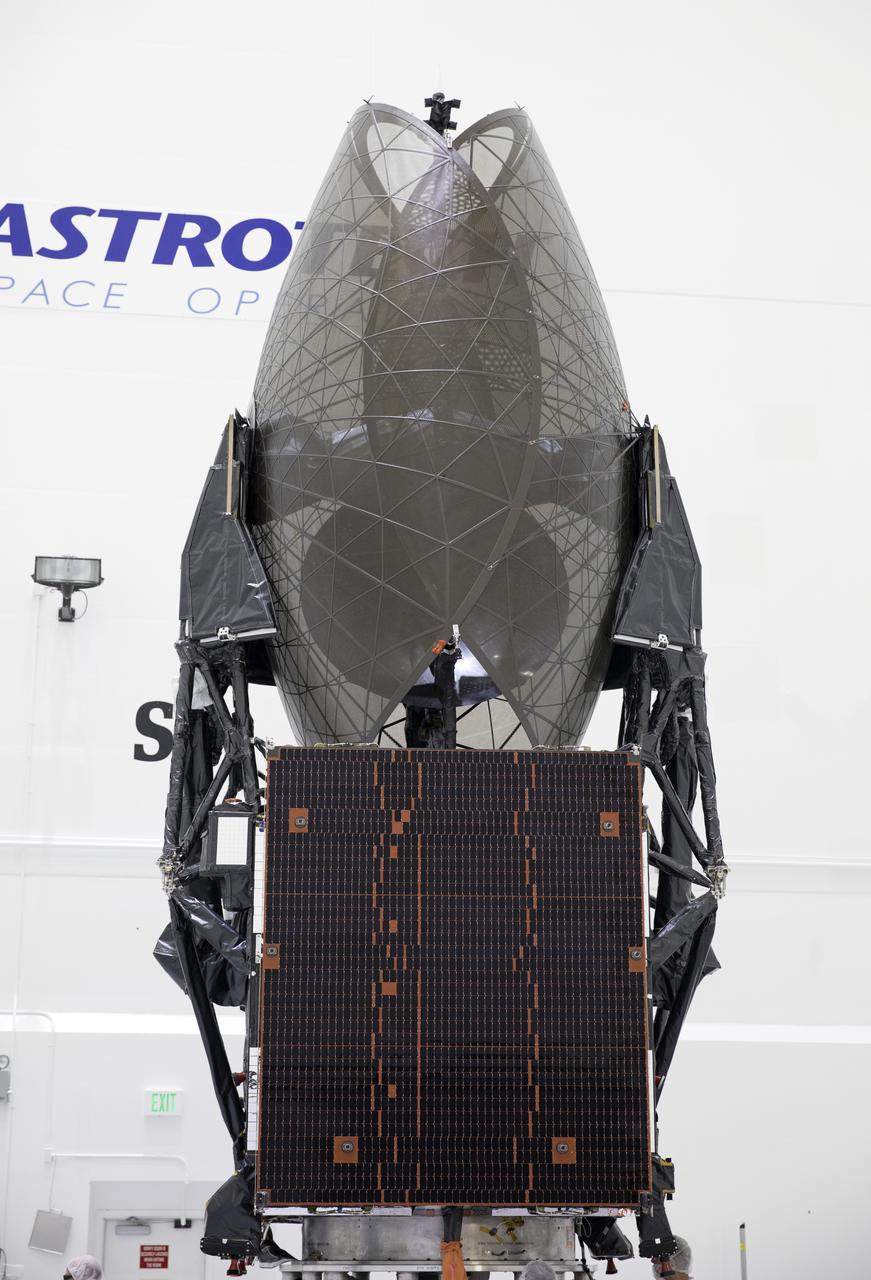
Inside the Astrotech facility in Titusville, Florida, NASA's Tracking and Data Relay Satellite, TDRS-M, is undergoing final checkouts prior to encapsulation in its payload fairing. TDRS-M is the latest spacecraft destined for the agency's constellation of communications satellites that allows nearly continuous contact with orbiting spacecraft ranging from the International Space Station and Hubble Space Telescope to the array of scientific observatories. Liftoff atop a United Launch Alliance Atlas V rocket is scheduled to take place from Space Launch Complex 41 at Cape Canaveral Air Force Station at 9:02 a.m. EDT Aug. 3, 2017.
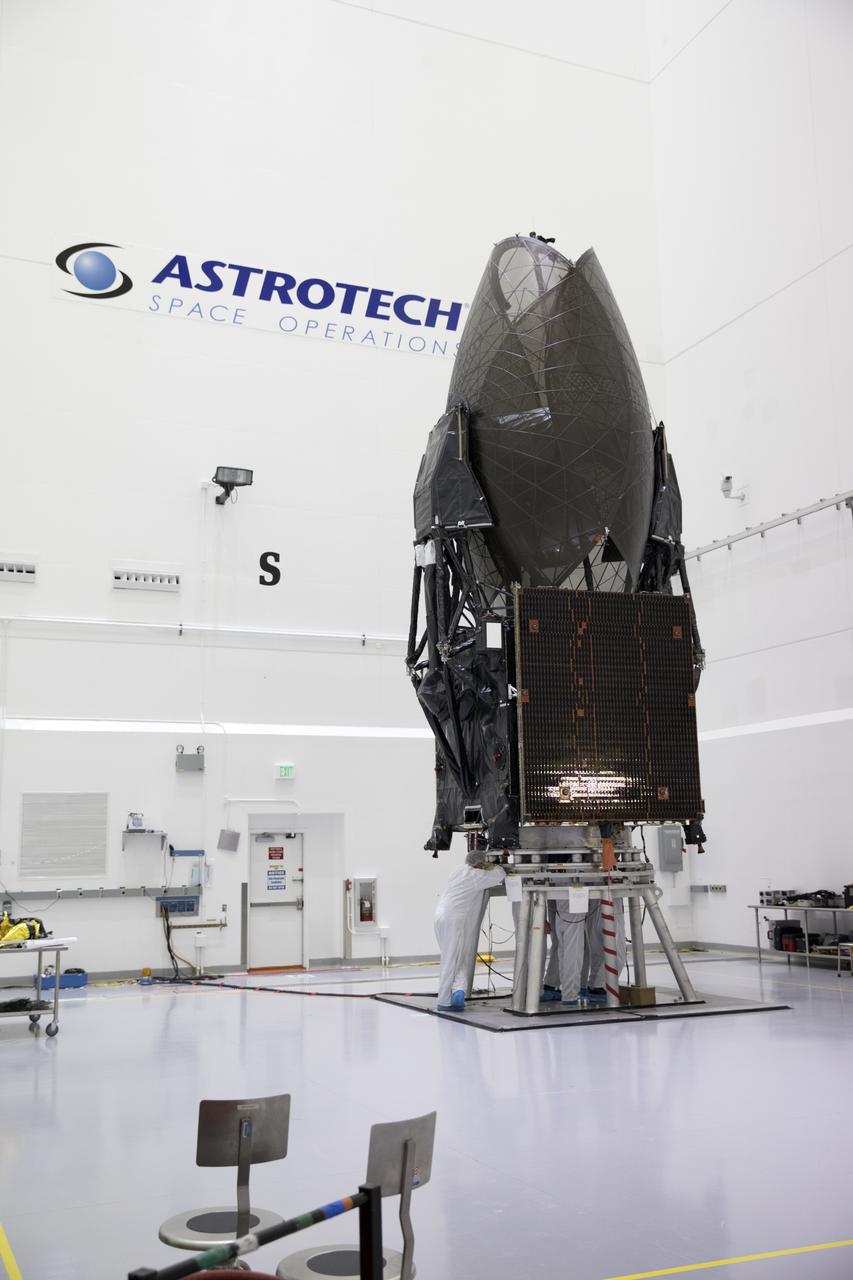
Inside the Astrotech facility in Titusville, Florida, NASA's Tracking and Data Relay Satellite, TDRS-M, is undergoing final checkouts prior to encapsulation in its payload fairing. TDRS-M is the latest spacecraft destined for the agency's constellation of communications satellites that allows nearly continuous contact with orbiting spacecraft ranging from the International Space Station and Hubble Space Telescope to the array of scientific observatories. Liftoff atop a United Launch Alliance Atlas V rocket is scheduled to take place from Space Launch Complex 41 at Cape Canaveral Air Force Station at 9:02 a.m. EDT Aug. 3, 2017.
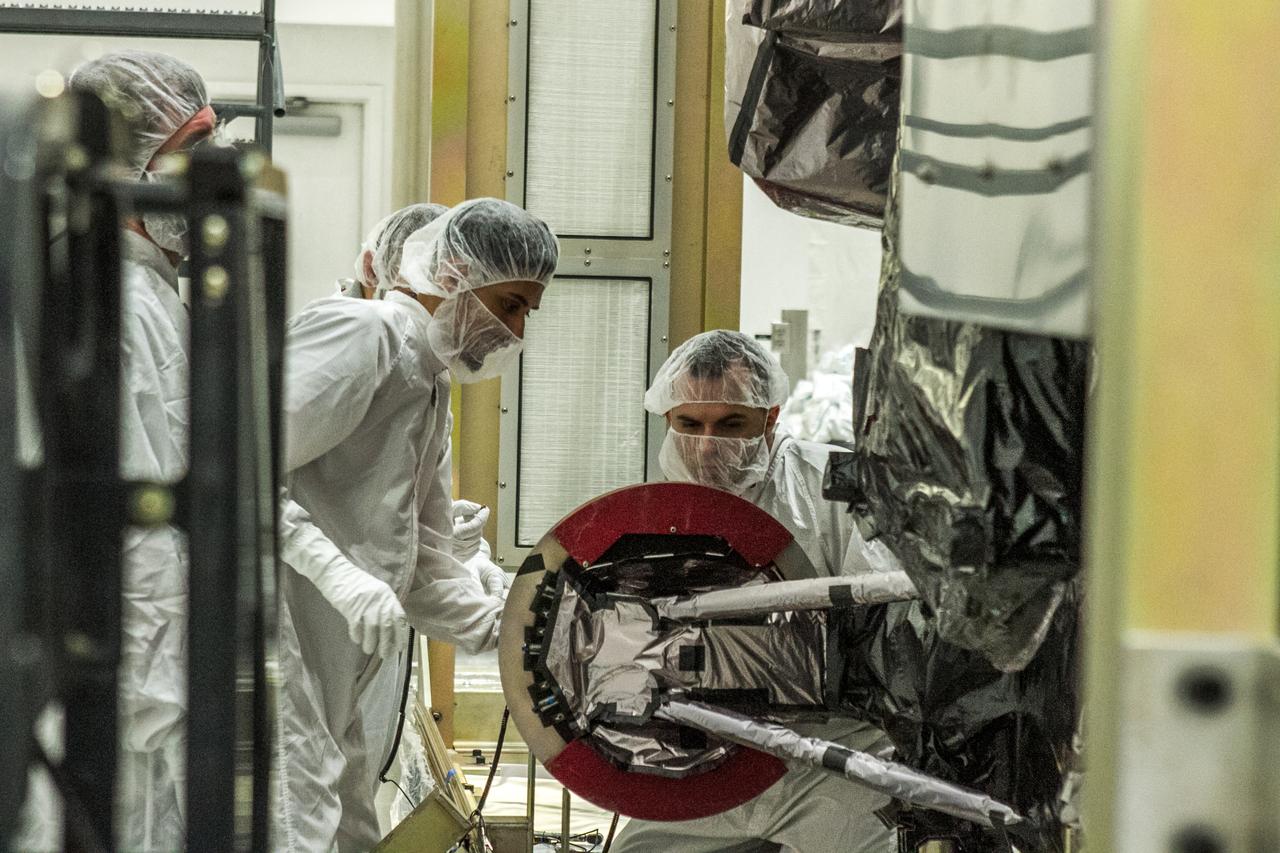
At Astrotech Space Operations in Titusville, Florida, technicians and engineers inspect NOAA's Geostationary Operation Environmental Satellite-S (GOES-S) after removal from its shipping container. GOES-S is the second in a series of four advanced geostationary weather satellites. The GOES-R series - consisting of the GOES-R, GOES-S, GOES-T and GOES-U spacecraft - will significantly improve the detection and observation of environmental phenomena that directly affect public safety, protection of property and the nation's economic health and prosperity. GOES-S is slated to launch March 1, 2018 aboard a United Launch Alliance Atlas V rocket from Cape Canaveral Air Force Station in Florida.
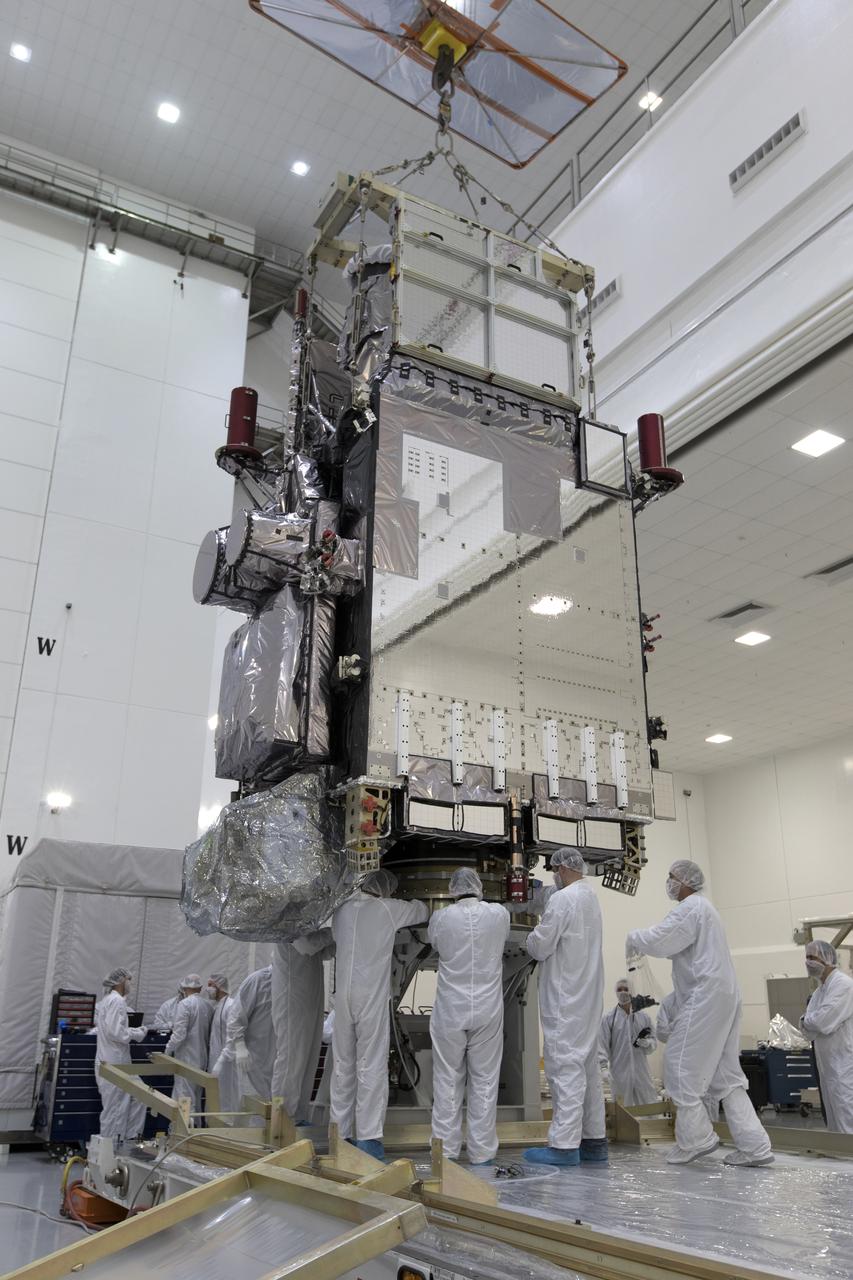
At Astrotech Space Operations in Titusville, Florida, technicians and engineers inspect NOAA's Geostationary Operational Environmental Satellite-S (GOES-S). The facility is located near NASA's Kennedy Space Center. GOES-S is the second in a series of four advanced geostationary weather satellites. The GOES-R series - consisting of the GOES-R, GOES-S, GOES-T and GOES-U spacecraft - will significantly improve the detection and observation of environmental phenomena that directly affect public safety, protection of property and the nation's economic health and prosperity. GOES-S is slated to launch March 1, 2018 aboard a United Launch Alliance Atlas V rocket from Cape Canaveral Air Force Station in Florida.
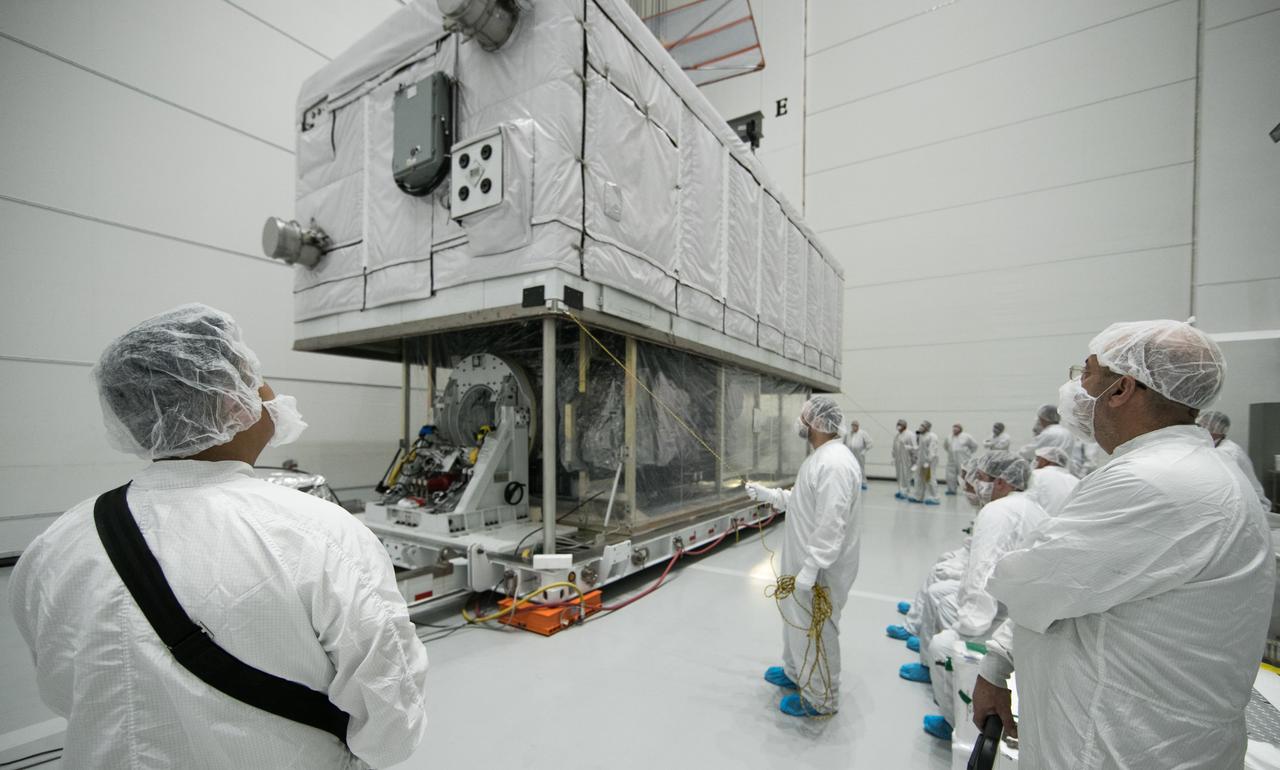
At Astrotech Space Operations in Titusville, Florida, technicians and engineers remove NOAA's Geostationary Operation Environmental Satellite-S (GOES-S) from its shipping container. GOES-S is the second in a series of four advanced geostationary weather satellites. The GOES-R series - consisting of the GOES-R, GOES-S, GOES-T and GOES-U spacecraft - will significantly improve the detection and observation of environmental phenomena that directly affect public safety, protection of property and the nation's economic health and prosperity. GOES-S is slated to launch March 1, 2018 aboard a United Launch Alliance Atlas V rocket from Cape Canaveral Air Force Station in Florida.
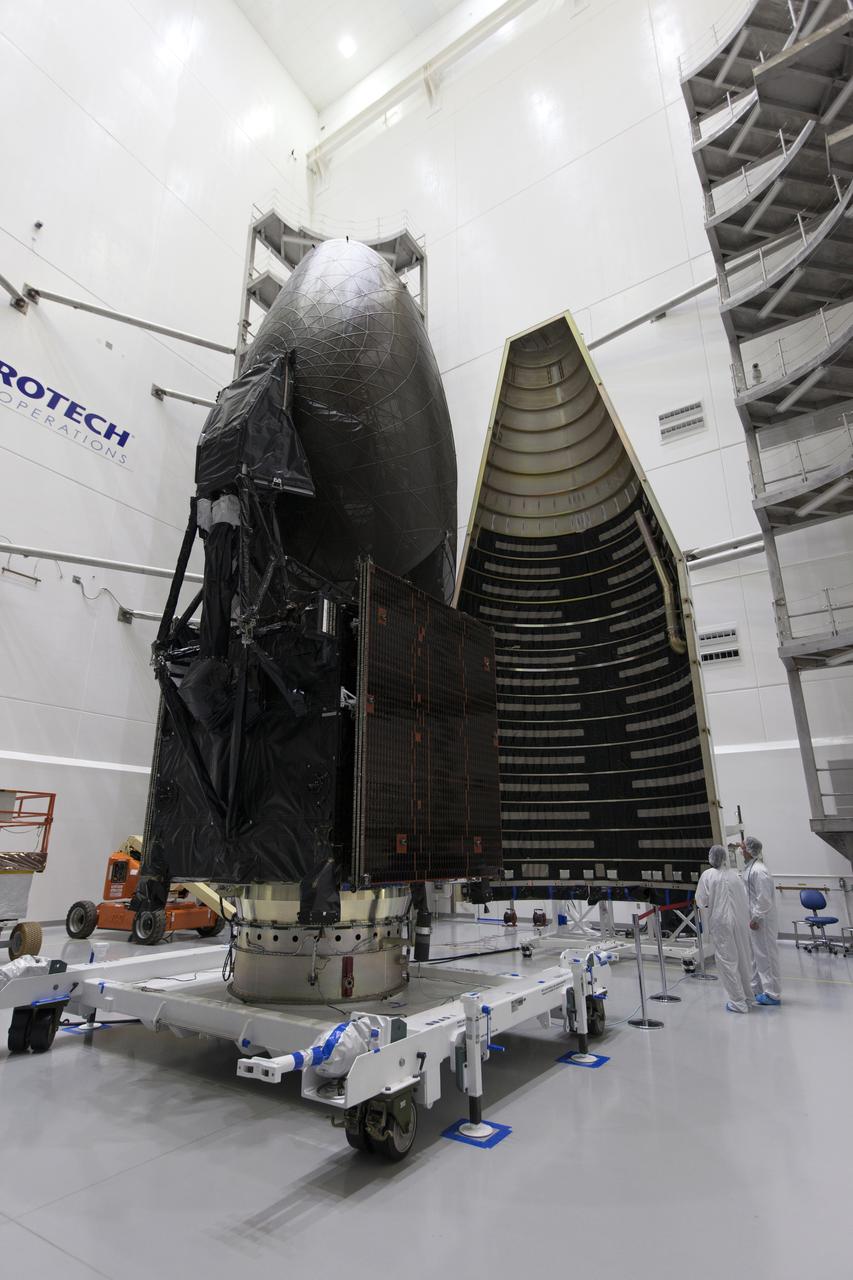
Inside the Astrotech facility in Titusville, Florida, the payload fairing for NASA's Tracking and Data Relay Satellite, TDRS-M, is moved into position to encapsulate the spacecraft. TDRS-M is the latest spacecraft destined for the agency's constellation of communications satellites that allows nearly continuous contact with orbiting spacecraft ranging from the International Space Station and Hubble Space Telescope to the array of scientific observatories. Liftoff atop a United Launch Alliance Atlas V rocket is scheduled to take place from Space Launch Complex 41 at Cape Canaveral Air Force Station at 8:03 a.m. EDT Aug. 18, 2017.
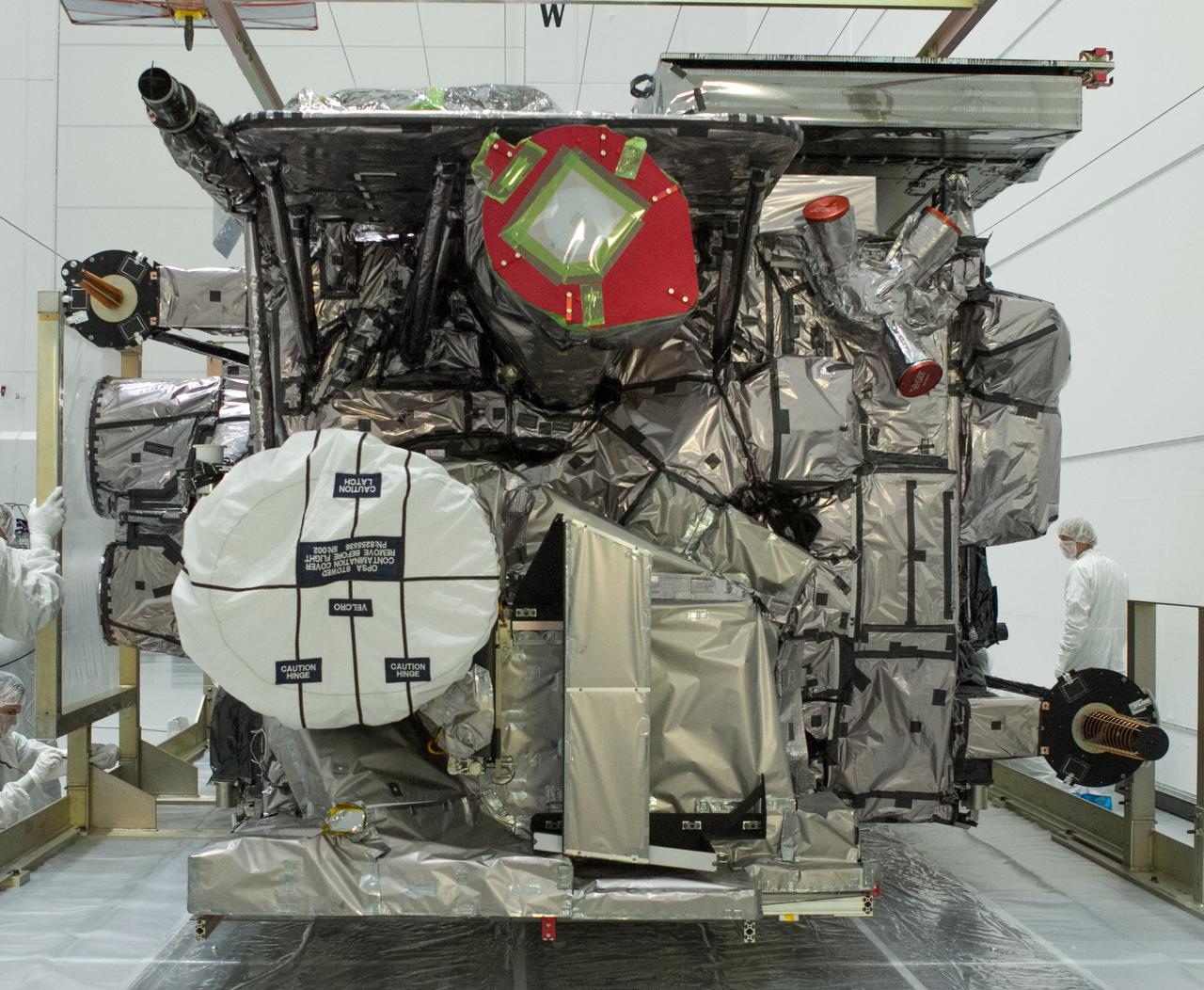
At Astrotech Space Operations in Titusville, Florida, NOAA's Geostationary Operation Environmental Satellite-S (GOES-S) has been removed from its shipping container. GOES-S is the second in a series of four advanced geostationary weather satellites. The GOES-R series - consisting of the GOES-R, GOES-S, GOES-T and GOES-U spacecraft - will significantly improve the detection and observation of environmental phenomena that directly affect public safety, protection of property and the nation's economic health and prosperity. GOES-S is slated to launch March 1, 2018 aboard a United Launch Alliance Atlas V rocket from Cape Canaveral Air Force Station in Florida.
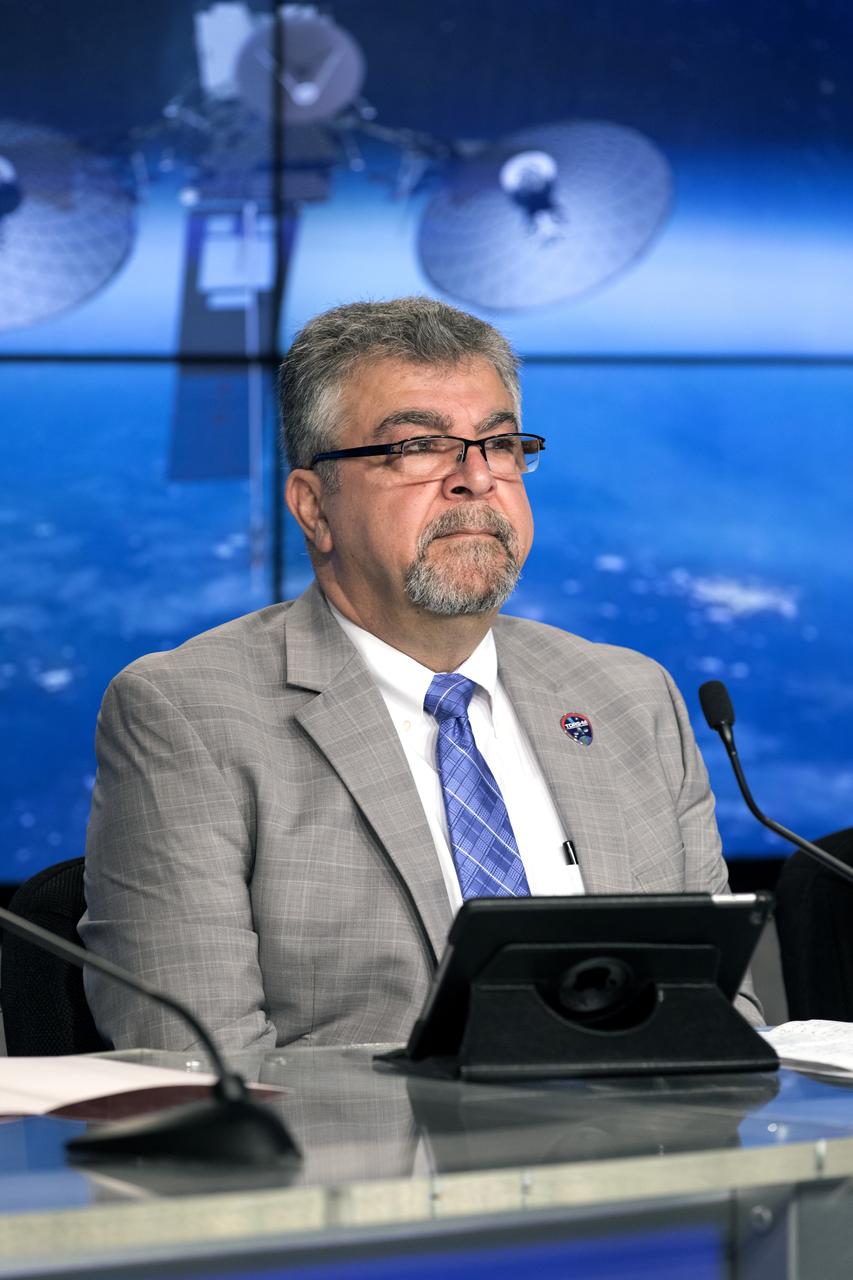
In the Kennedy Space Center's Press Site auditorium, Badri Younes, deputy associate administrator for Space Communications and Navigation at NASA Headquarters in Washington, speaks to members of the media at a prelaunch news conference for NASA's Tracking and Data Relay Satellite, TDRS-M. It is the latest spacecraft destined for the agency's constellation of communications satellites that allows nearly continuous contact with orbiting spacecraft ranging from the International Space Station and Hubble Space Telescope to the array of scientific observatories. Liftoff atop a United Launch Alliance Atlas V rocket is scheduled to take place from Space Launch Complex 41 at Cape Canaveral Air Force Station at 8:03 a.m. EDT Aug. 18.
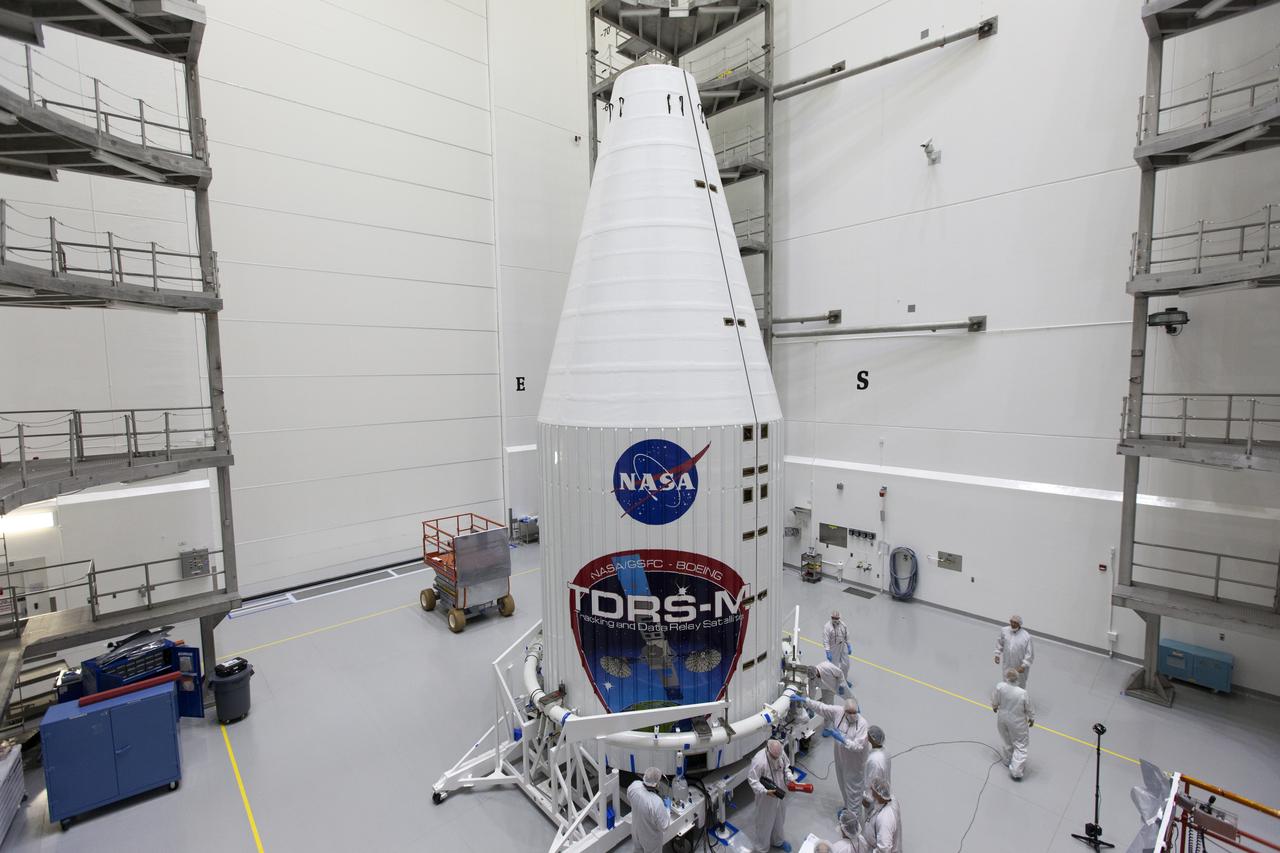
Inside the Astrotech facility in Titusville, Florida, technicians and engineers inspect the NASA's Tracking and Data Relay Satellite, TDRS-M, after it was encapsulated in its payload fairing. TDRS-M is the latest spacecraft destined for the agency's constellation of communications satellites that allows nearly continuous contact with orbiting spacecraft ranging from the International Space Station and Hubble Space Telescope to the array of scientific observatories. Liftoff atop a United Launch Alliance Atlas V rocket is scheduled to take place from Space Launch Complex 41 at Cape Canaveral Air Force Station at 8:03 a.m. EDT Aug. 18, 2017.

In the Kennedy Space Center's Press Site auditorium, Dave Littmann, project manager for TDRS-M at NASA’s Goddard Space Flight Center in Greenbelt, Maryland, speaks to members of the media at a prelaunch news conference for NASA's Tracking and Data Relay Satellite, TDRS-M. It is the latest spacecraft destined for the agency's constellation of communications satellites that allows nearly continuous contact with orbiting spacecraft ranging from the International Space Station and Hubble Space Telescope to the array of scientific observatories. Liftoff atop a United Launch Alliance Atlas V rocket is scheduled to take place from Space Launch Complex 41 at Cape Canaveral Air Force Station at 8:03 a.m. EDT Aug. 18.
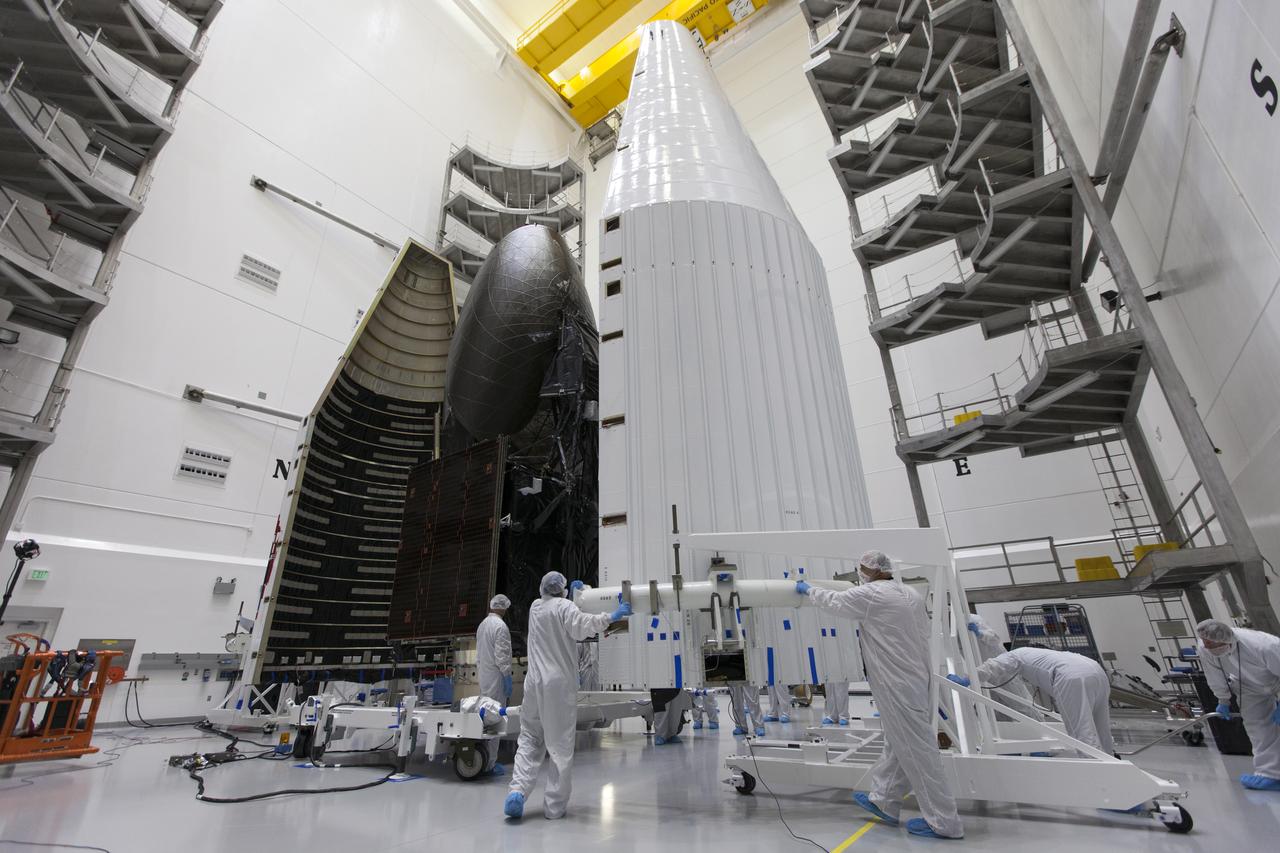
Inside the Astrotech facility in Titusville, Florida, the payload fairing for NASA's Tracking and Data Relay Satellite, TDRS-M, is moved into position to encapsulate the spacecraft. TDRS-M is the latest spacecraft destined for the agency's constellation of communications satellites that allows nearly continuous contact with orbiting spacecraft ranging from the International Space Station and Hubble Space Telescope to the array of scientific observatories. Liftoff atop a United Launch Alliance Atlas V rocket is scheduled to take place from Space Launch Complex 41 at Cape Canaveral Air Force Station at 8:03 a.m. EDT Aug. 18, 2017.
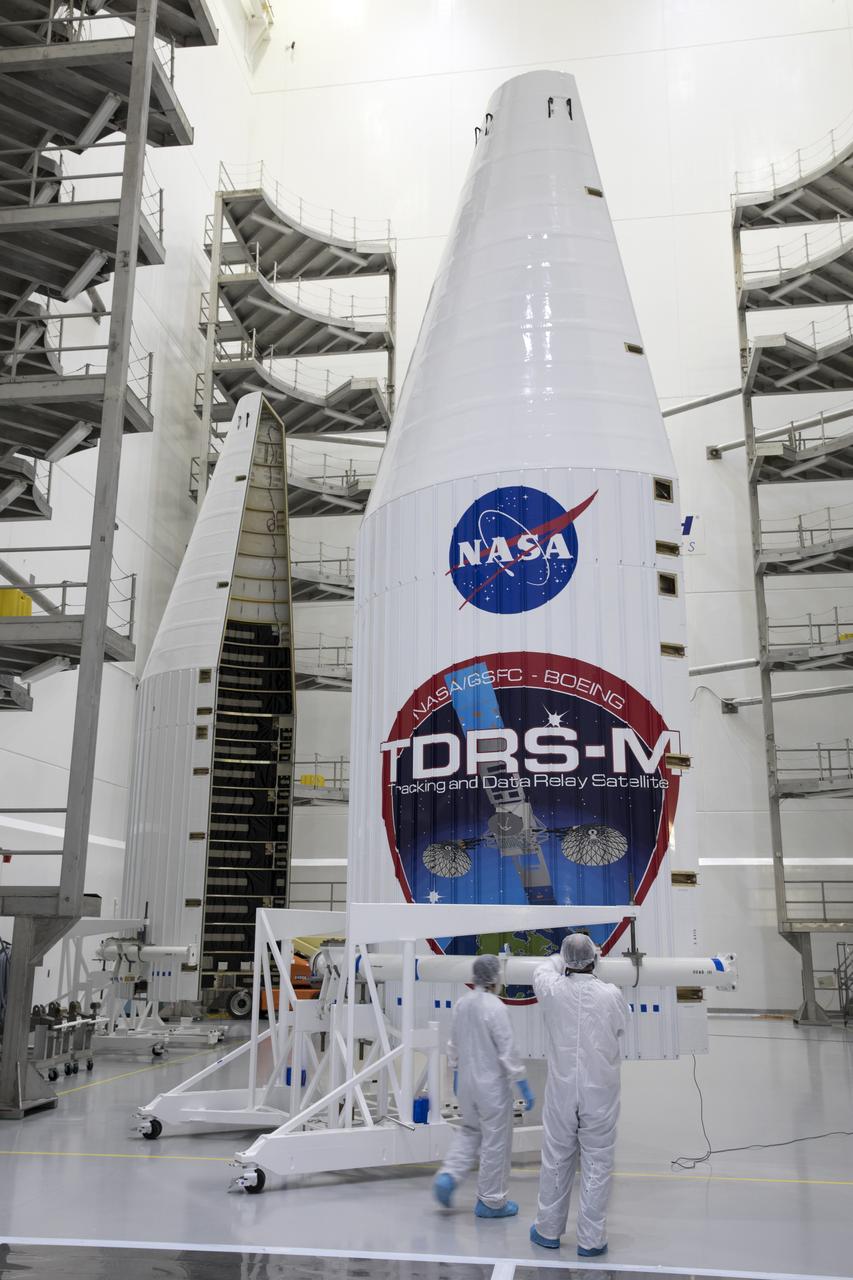
Inside the Astrotech facility in Titusville, Florida, the payload fairing for NASA's Tracking and Data Relay Satellite, TDRS-M, is inspected prior to encapsulating the spacecraft. TDRS-M is the latest spacecraft destined for the agency's constellation of communications satellites that allows nearly continuous contact with orbiting spacecraft ranging from the International Space Station and Hubble Space Telescope to the array of scientific observatories. Liftoff atop a United Launch Alliance Atlas V rocket is scheduled to take place from Space Launch Complex 41 at Cape Canaveral Air Force Station at 9:02 a.m. EDT Aug. 3, 2017.
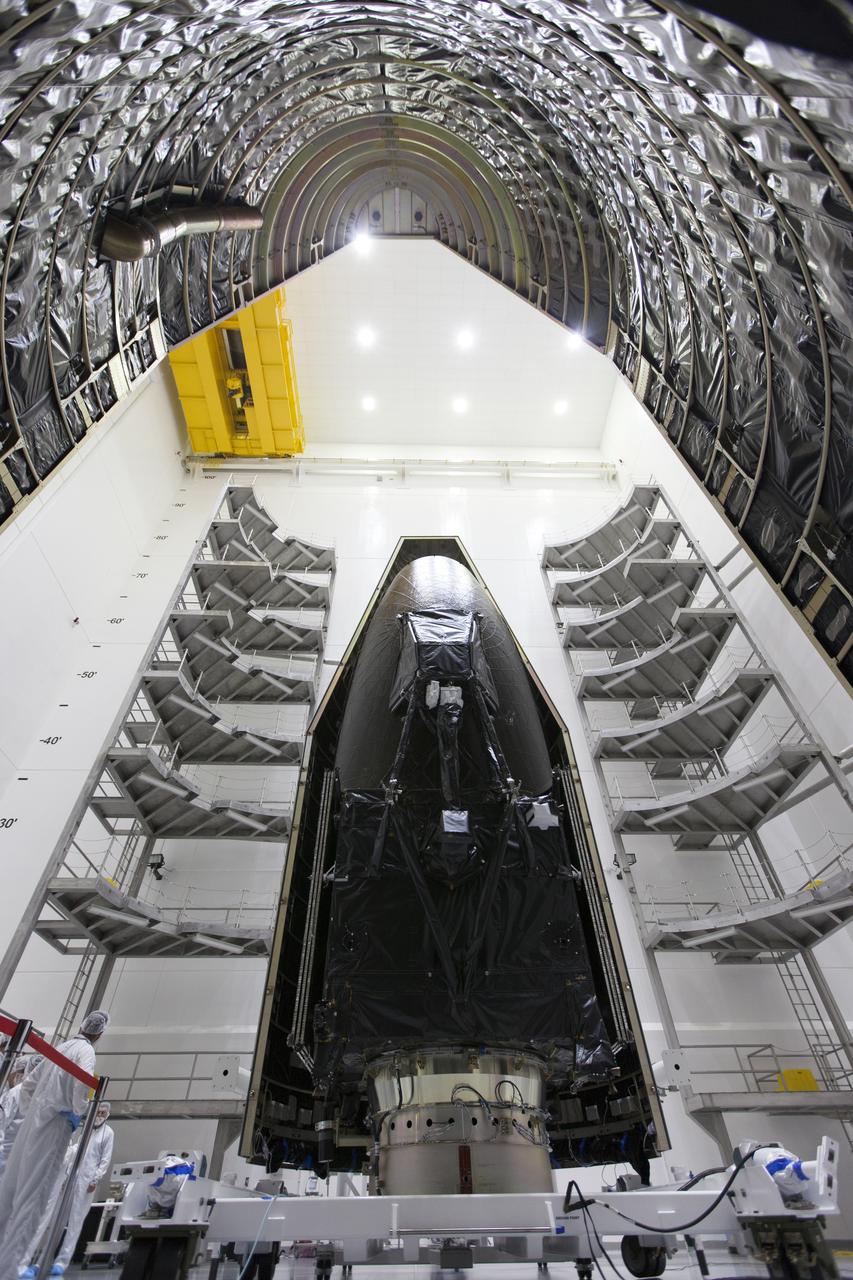
Inside the Astrotech facility in Titusville, Florida, the payload fairing for NASA's Tracking and Data Relay Satellite, TDRS-M, is positioned to encapsulate the spacecraft. TDRS-M is the latest spacecraft destined for the agency's constellation of communications satellites that allows nearly continuous contact with orbiting spacecraft ranging from the International Space Station and Hubble Space Telescope to the array of scientific observatories. Liftoff atop a United Launch Alliance Atlas V rocket is scheduled to take place from Space Launch Complex 41 at Cape Canaveral Air Force Station at 8:03 a.m. EDT Aug. 18, 2017.
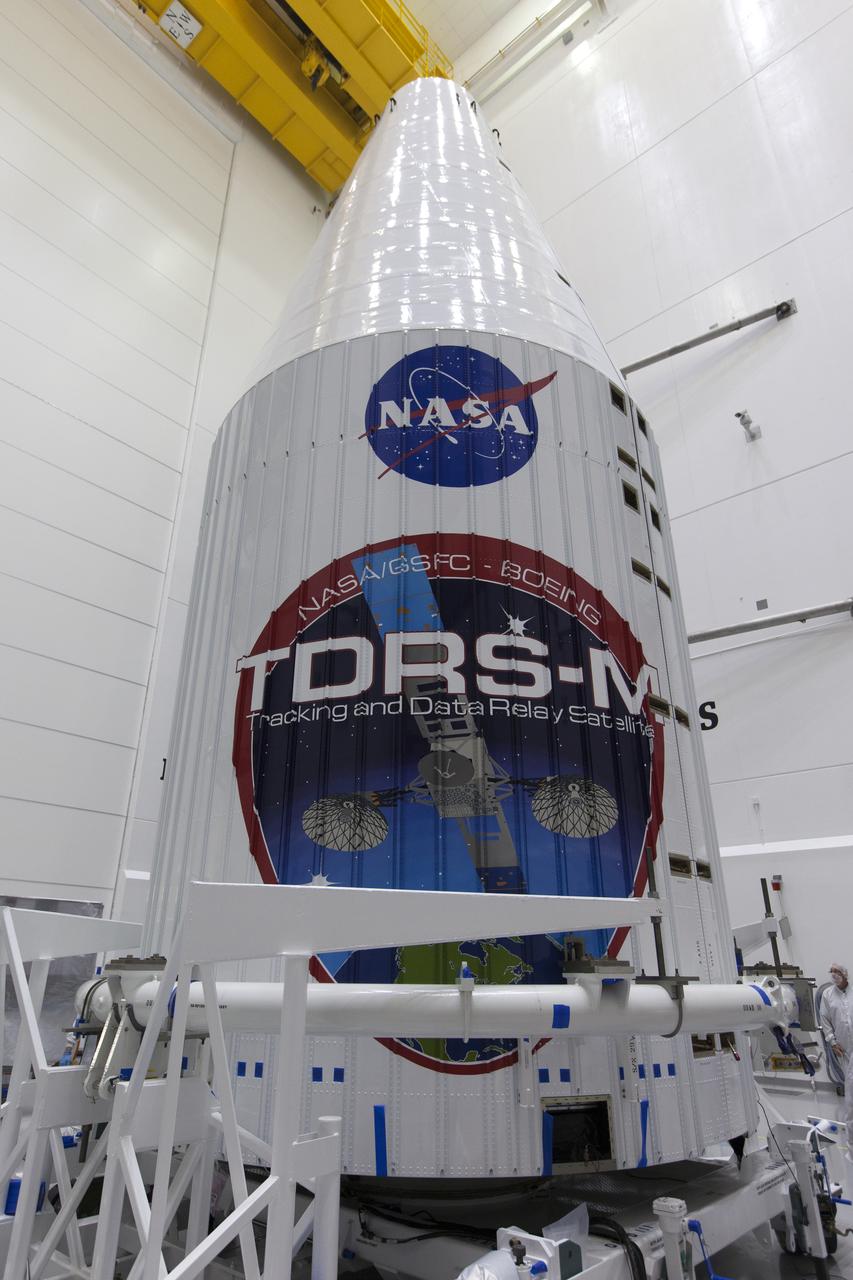
Inside the Astrotech facility in Titusville, Florida, the NASA's Tracking and Data Relay Satellite, TDRS-M, has been encapsulated in its payload fairing. TDRS-M is the latest spacecraft destined for the agency's constellation of communications satellites that allows nearly continuous contact with orbiting spacecraft ranging from the International Space Station and Hubble Space Telescope to the array of scientific observatories. Liftoff atop a United Launch Alliance Atlas V rocket is scheduled to take place from Space Launch Complex 41 at Cape Canaveral Air Force Station at 8:03 a.m. EDT Aug. 18, 2017.
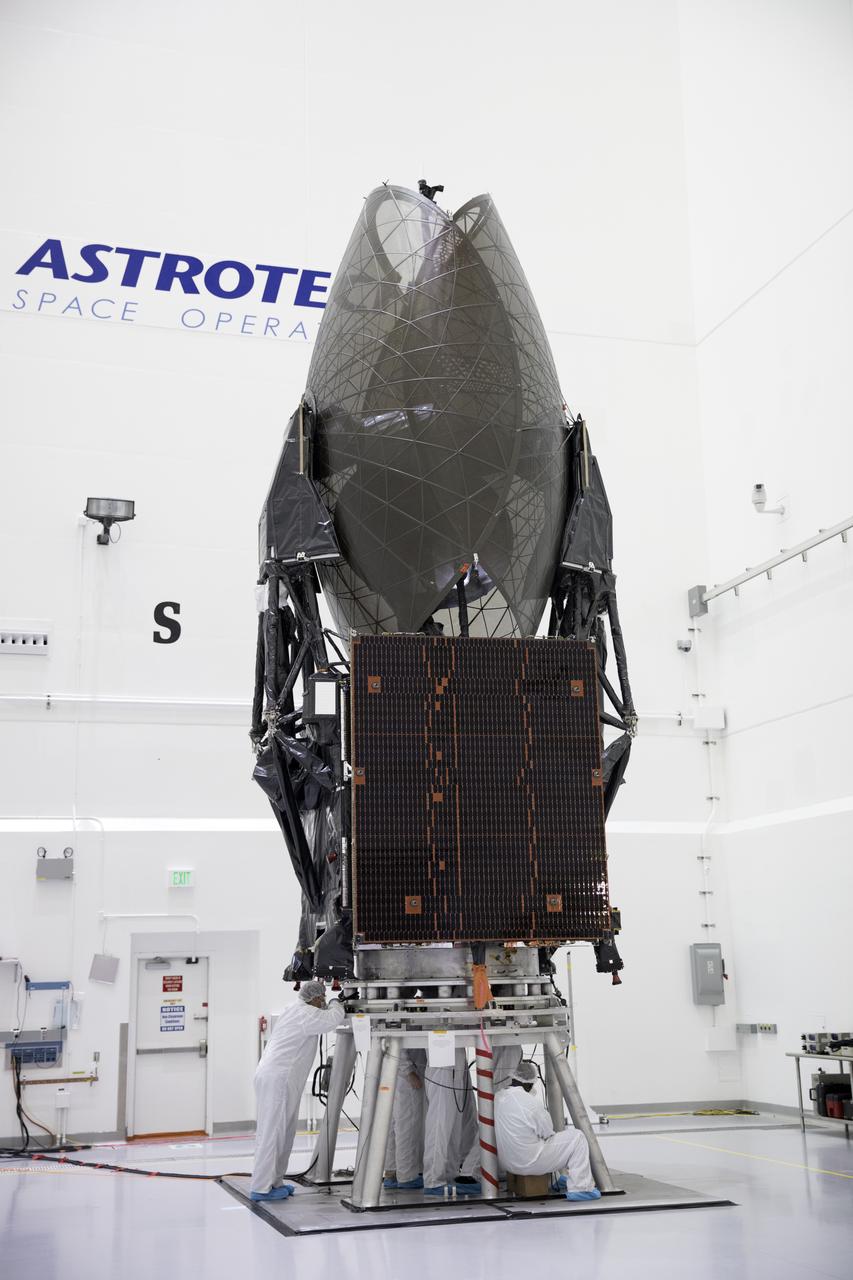
Inside the Astrotech facility in Titusville, Florida, NASA's Tracking and Data Relay Satellite, TDRS-M, is undergoing final checkouts prior to encapsulation in its payload fairing. TDRS-M is the latest spacecraft destined for the agency's constellation of communications satellites that allows nearly continuous contact with orbiting spacecraft ranging from the International Space Station and Hubble Space Telescope to the array of scientific observatories. Liftoff atop a United Launch Alliance Atlas V rocket is scheduled to take place from Space Launch Complex 41 at Cape Canaveral Air Force Station at 9:02 a.m. EDT Aug. 3, 2017.
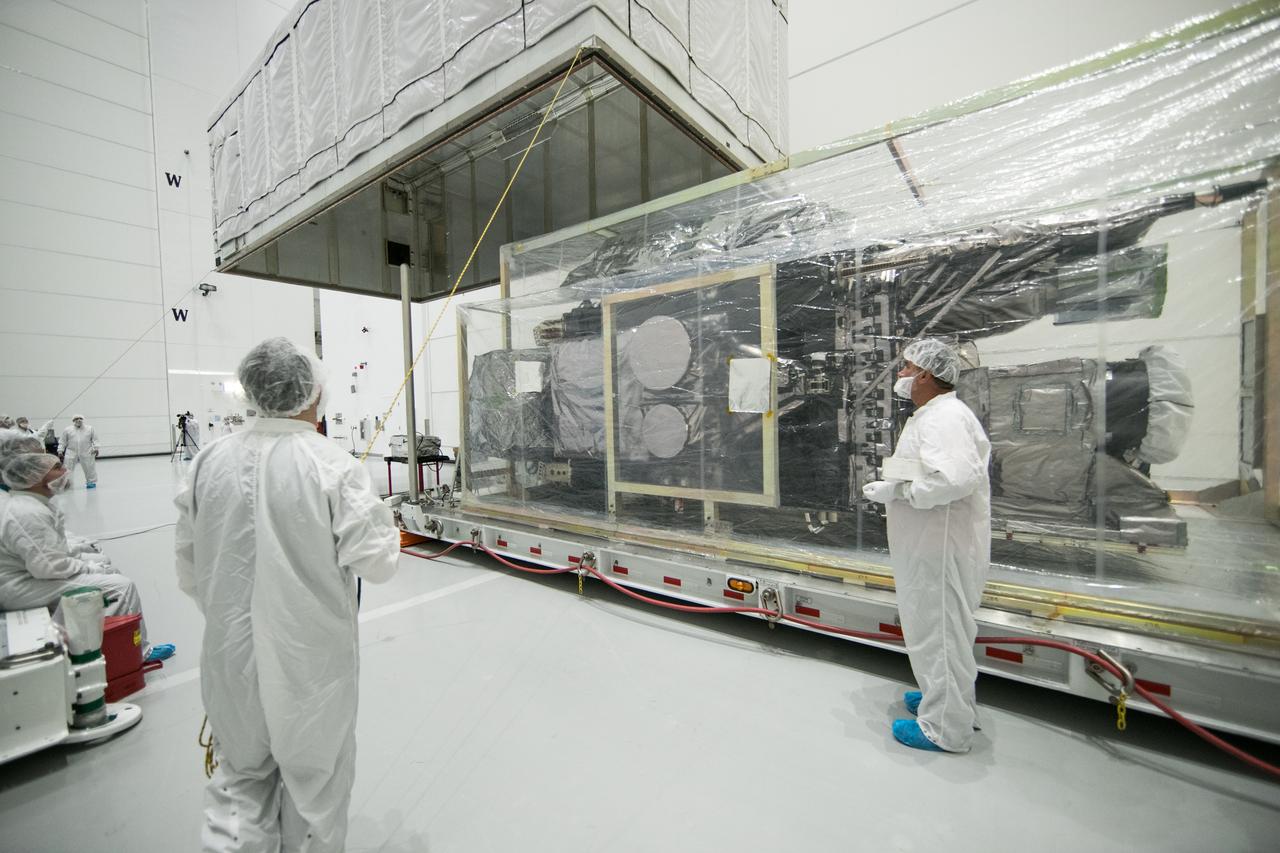
At Astrotech Space Operations in Titusville, Florida, technicians and engineers remove NOAA's Geostationary Operation Environmental Satellite-S (GOES-S) from its shipping container. GOES-S is the second in a series of four advanced geostationary weather satellites. The GOES-R series - consisting of the GOES-R, GOES-S, GOES-T and GOES-U spacecraft - will significantly improve the detection and observation of environmental phenomena that directly affect public safety, protection of property and the nation's economic health and prosperity. GOES-S is slated to launch March 1, 2018 aboard a United Launch Alliance Atlas V rocket from Cape Canaveral Air Force Station in Florida.
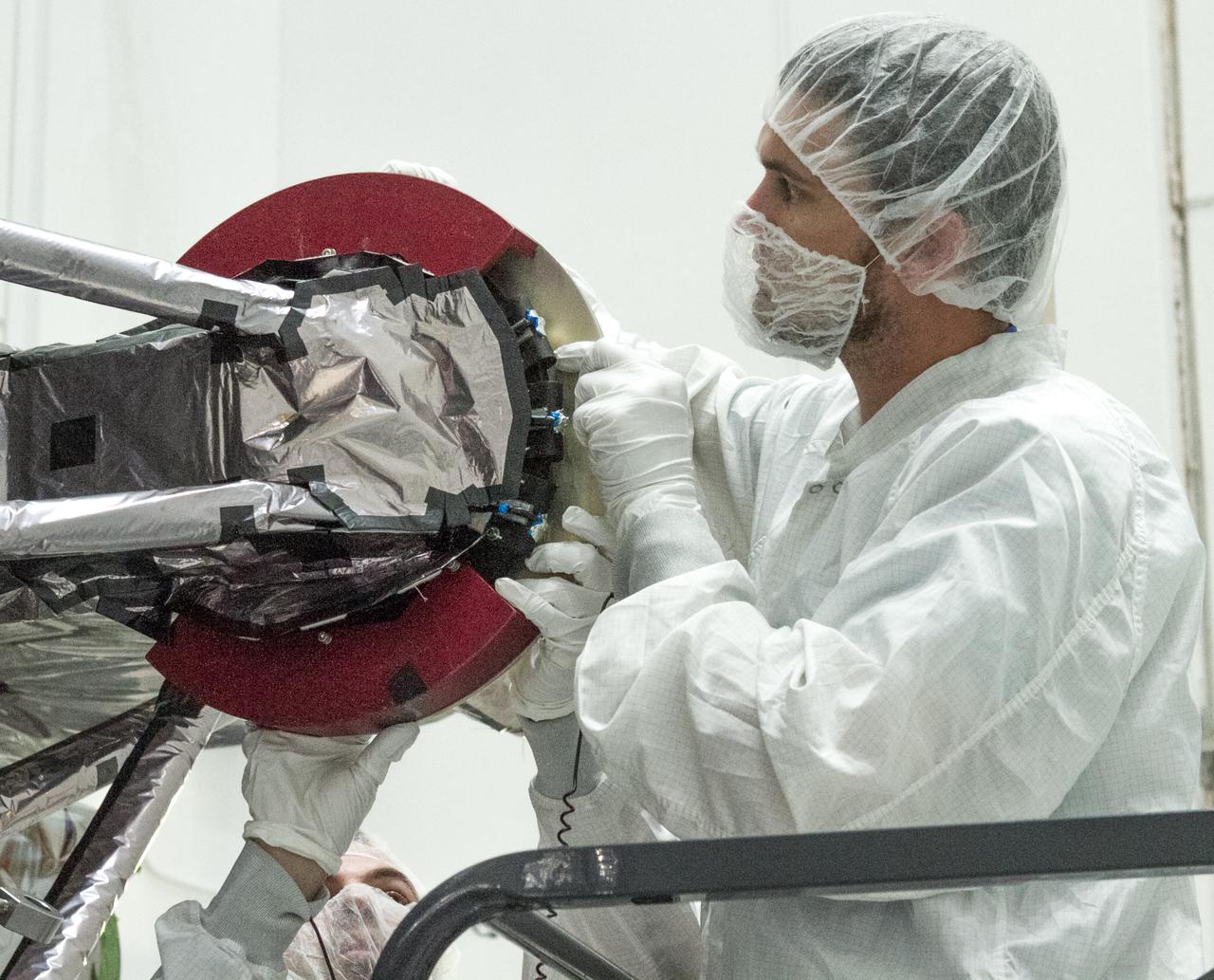
At Astrotech Space Operations in Titusville, Florida, technicians and engineers inspect NOAA's Geostationary Operation Environmental Satellite-S (GOES-S) after removal from its shipping container. GOES-S is the second in a series of four advanced geostationary weather satellites. The GOES-R series - consisting of the GOES-R, GOES-S, GOES-T and GOES-U spacecraft - will significantly improve the detection and observation of environmental phenomena that directly affect public safety, protection of property and the nation's economic health and prosperity. GOES-S is slated to launch March 1, 2018 aboard a United Launch Alliance Atlas V rocket from Cape Canaveral Air Force Station in Florida.

Inside the Astrotech facility in Titusville, Florida, the NASA's Tracking and Data Relay Satellite, TDRS-M, has been encapsulated in its payload fairing. TDRS-M is the latest spacecraft destined for the agency's constellation of communications satellites that allows nearly continuous contact with orbiting spacecraft ranging from the International Space Station and Hubble Space Telescope to the array of scientific observatories. Liftoff atop a United Launch Alliance Atlas V rocket is scheduled to take place from Space Launch Complex 41 at Cape Canaveral Air Force Station at 8:03 a.m. EDT Aug. 18, 2017.
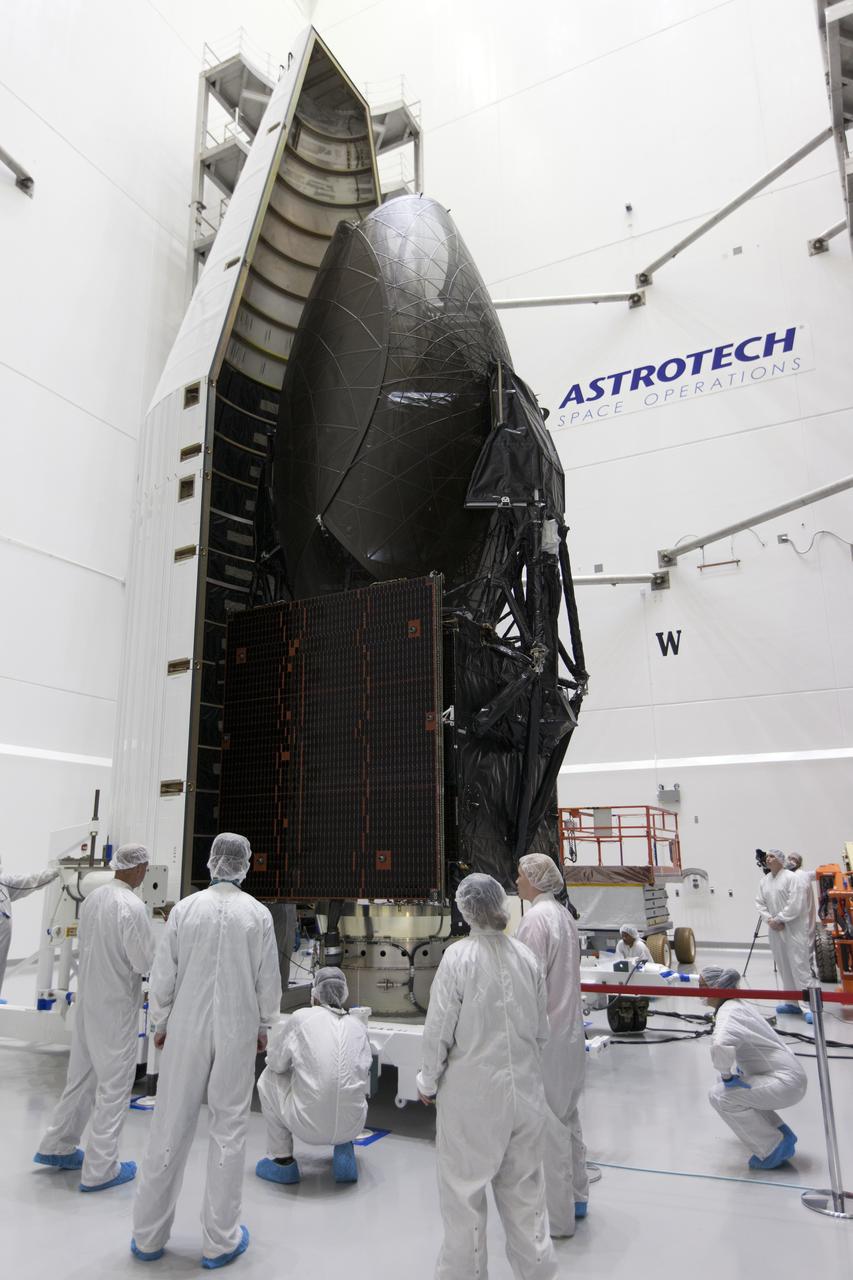
Inside the Astrotech facility in Titusville, Florida, technicians and engineers monitor progress as the payload fairing for NASA's Tracking and Data Relay Satellite, TDRS-M, is moved into position to encapsulate the spacecraft. TDRS-M is the latest spacecraft destined for the agency's constellation of communications satellites that allows nearly continuous contact with orbiting spacecraft ranging from the International Space Station and Hubble Space Telescope to the array of scientific observatories. Liftoff atop a United Launch Alliance Atlas V rocket is scheduled to take place from Space Launch Complex 41 at Cape Canaveral Air Force Station at 8:03 a.m. EDT Aug. 18, 2017.
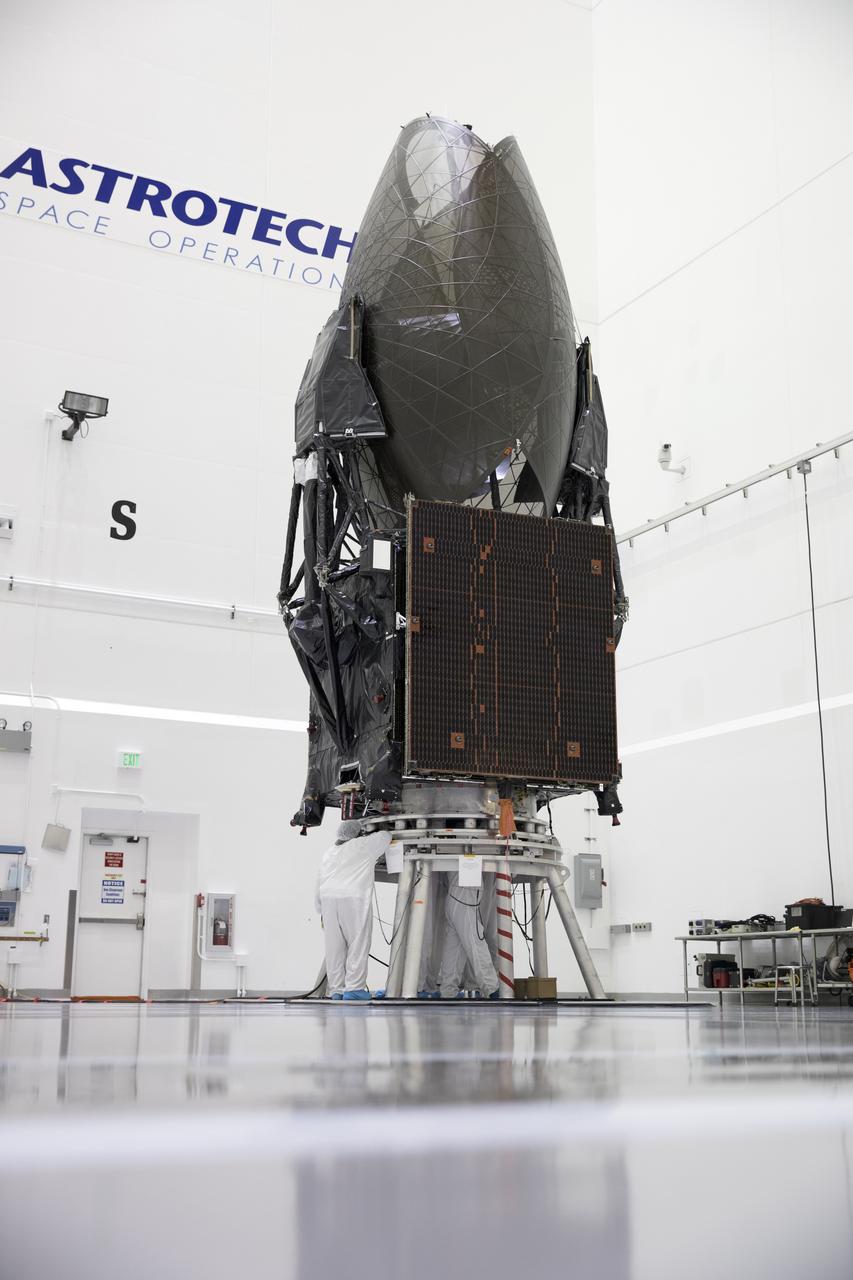
Inside the Astrotech facility in Titusville, Florida, NASA's Tracking and Data Relay Satellite, TDRS-M, is undergoing final checkouts prior to encapsulation in its payload fairing. TDRS-M is the latest spacecraft destined for the agency's constellation of communications satellites that allows nearly continuous contact with orbiting spacecraft ranging from the International Space Station and Hubble Space Telescope to the array of scientific observatories. Liftoff atop a United Launch Alliance Atlas V rocket is scheduled to take place from Space Launch Complex 41 at Cape Canaveral Air Force Station at 9:02 a.m. EDT Aug. 3, 2017.
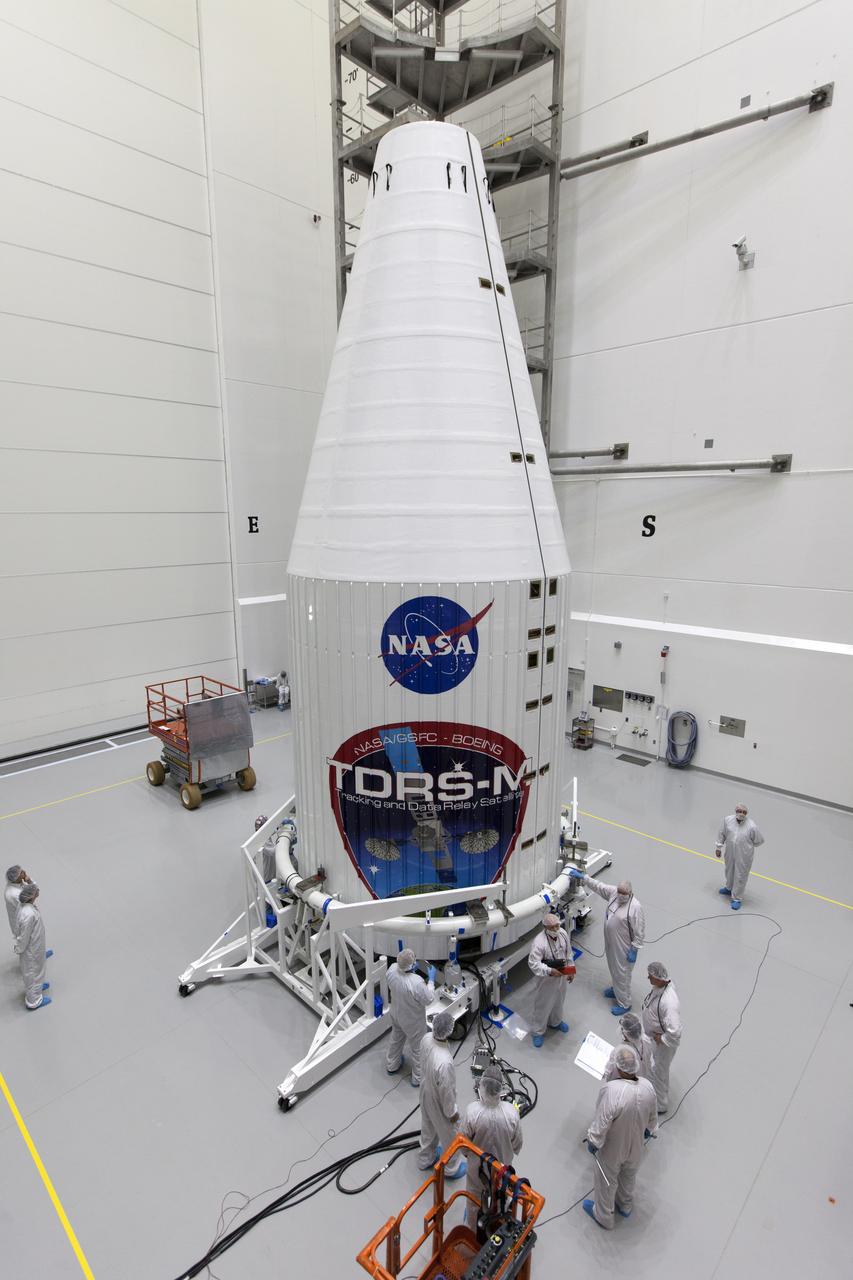
Inside the Astrotech facility in Titusville, Florida, technicians and engineers inspect the NASA's Tracking and Data Relay Satellite, TDRS-M, after it was encapsulated in its payload fairing. TDRS-M is the latest spacecraft destined for the agency's constellation of communications satellites that allows nearly continuous contact with orbiting spacecraft ranging from the International Space Station and Hubble Space Telescope to the array of scientific observatories. Liftoff atop a United Launch Alliance Atlas V rocket is scheduled to take place from Space Launch Complex 41 at Cape Canaveral Air Force Station at 8:03 a.m. EDT Aug. 18, 2017.
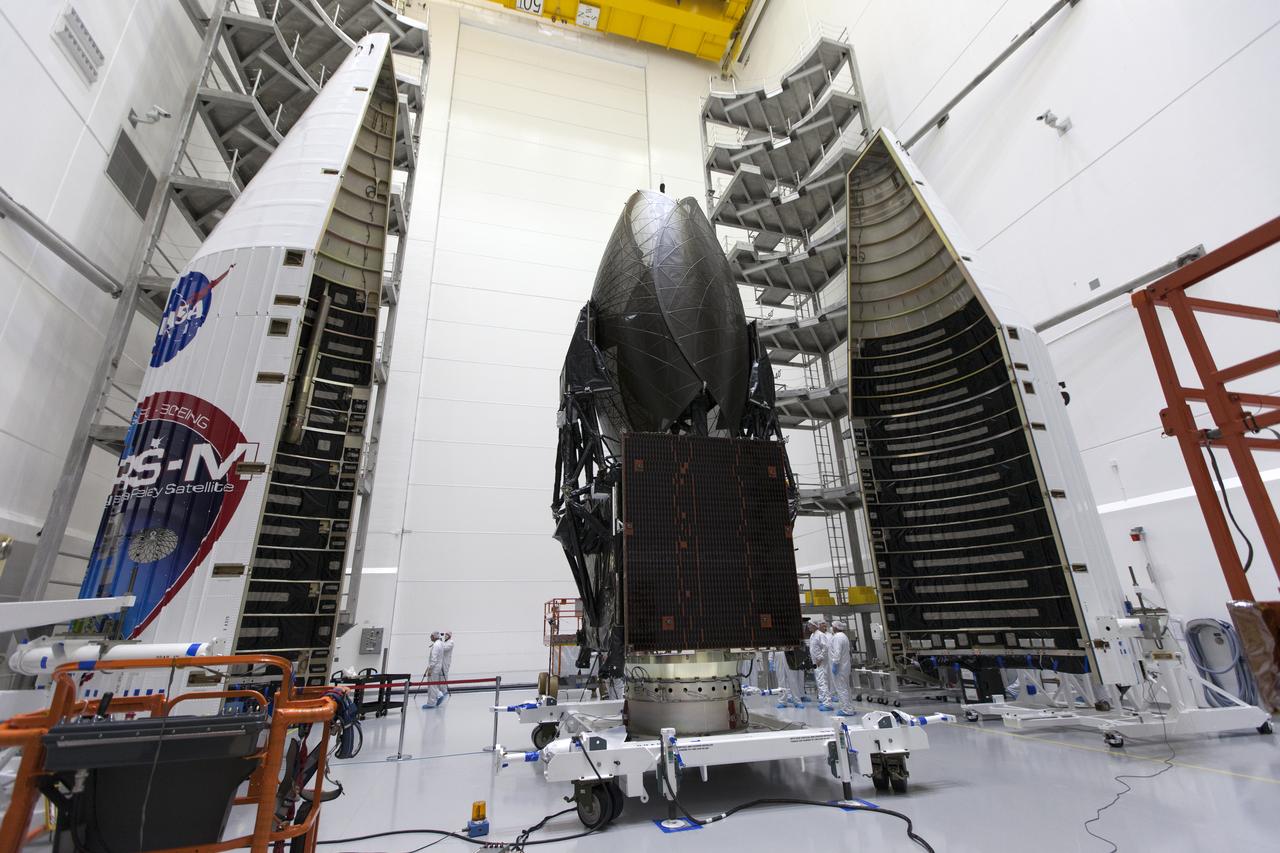
Inside the Astrotech facility in Titusville, Florida, the payload fairing for NASA's Tracking and Data Relay Satellite, TDRS-M, is moved into position to encapsulate the spacecraft. TDRS-M is the latest spacecraft destined for the agency's constellation of communications satellites that allows nearly continuous contact with orbiting spacecraft ranging from the International Space Station and Hubble Space Telescope to the array of scientific observatories. Liftoff atop a United Launch Alliance Atlas V rocket is scheduled to take place from Space Launch Complex 41 at Cape Canaveral Air Force Station at 8:03 a.m. EDT Aug. 18, 2017.