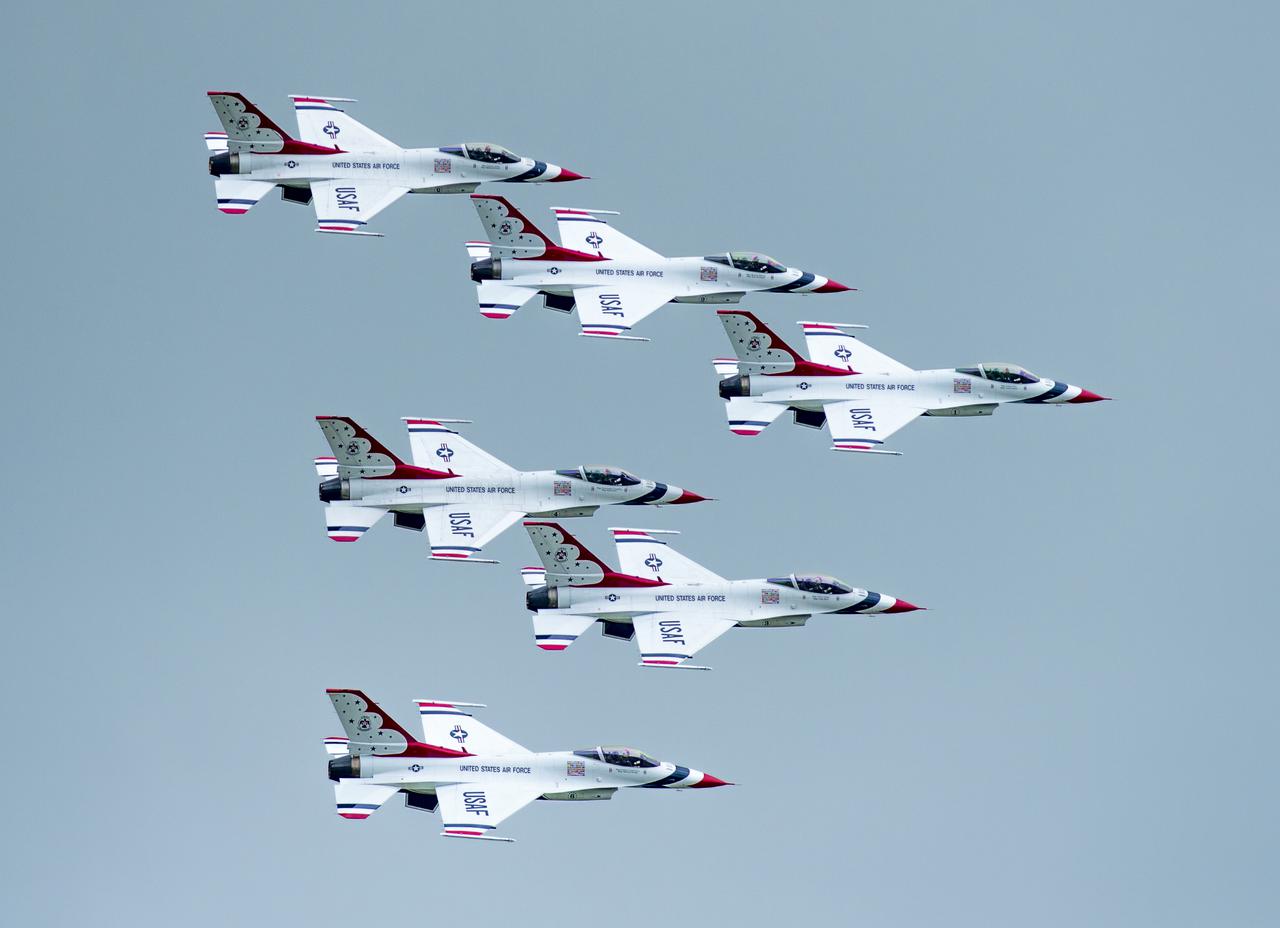
The United States Air Force Thunderbirds flying over NASA Langley Research Center while practicing for an air show at Langley Air Force Base Virginia.
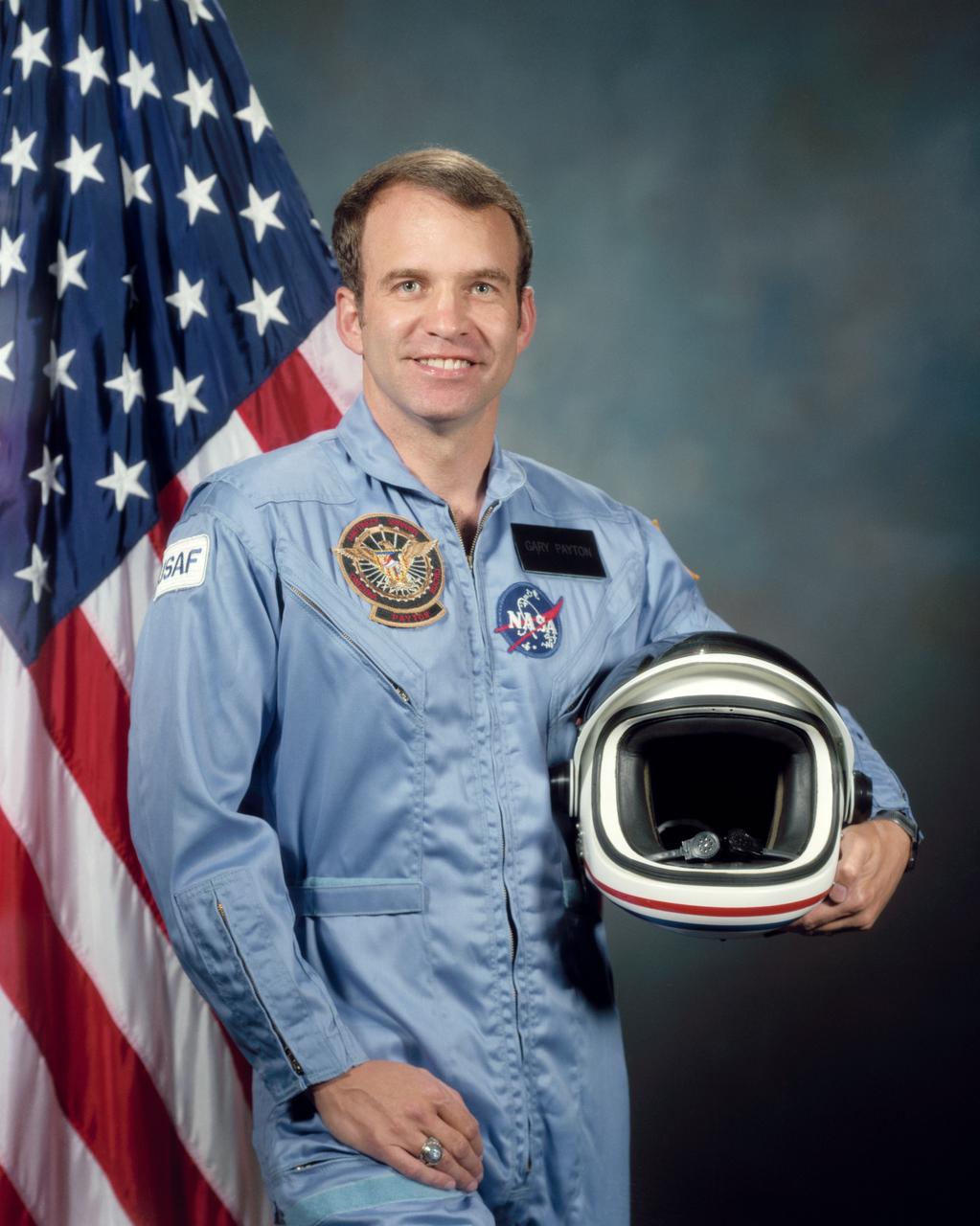
S84-44373 ( 4 Oct 1984) --- Payload Specialist Gary E. Payton, representing United States Air Force.
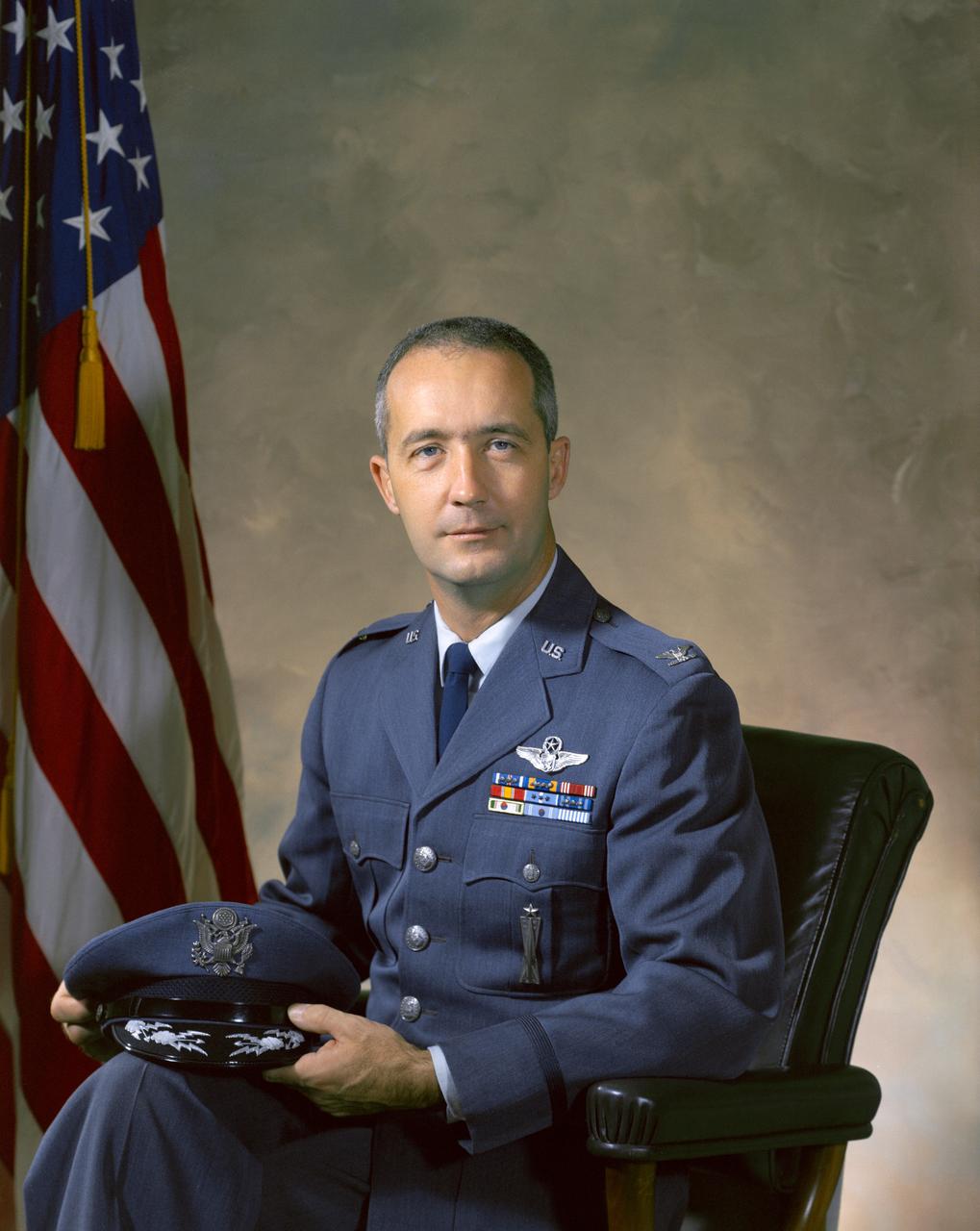
S68-55278 (December 1968) --- Portrait of astronaut James A. McDivitt, in his Air Force uniform with rank insignia showing he is Air Force Colonel. Editor's Note: Since the photo was made, James A. McDivitt retired as Brigadier General from the United States Air Force, and left NASA in June of 1972.
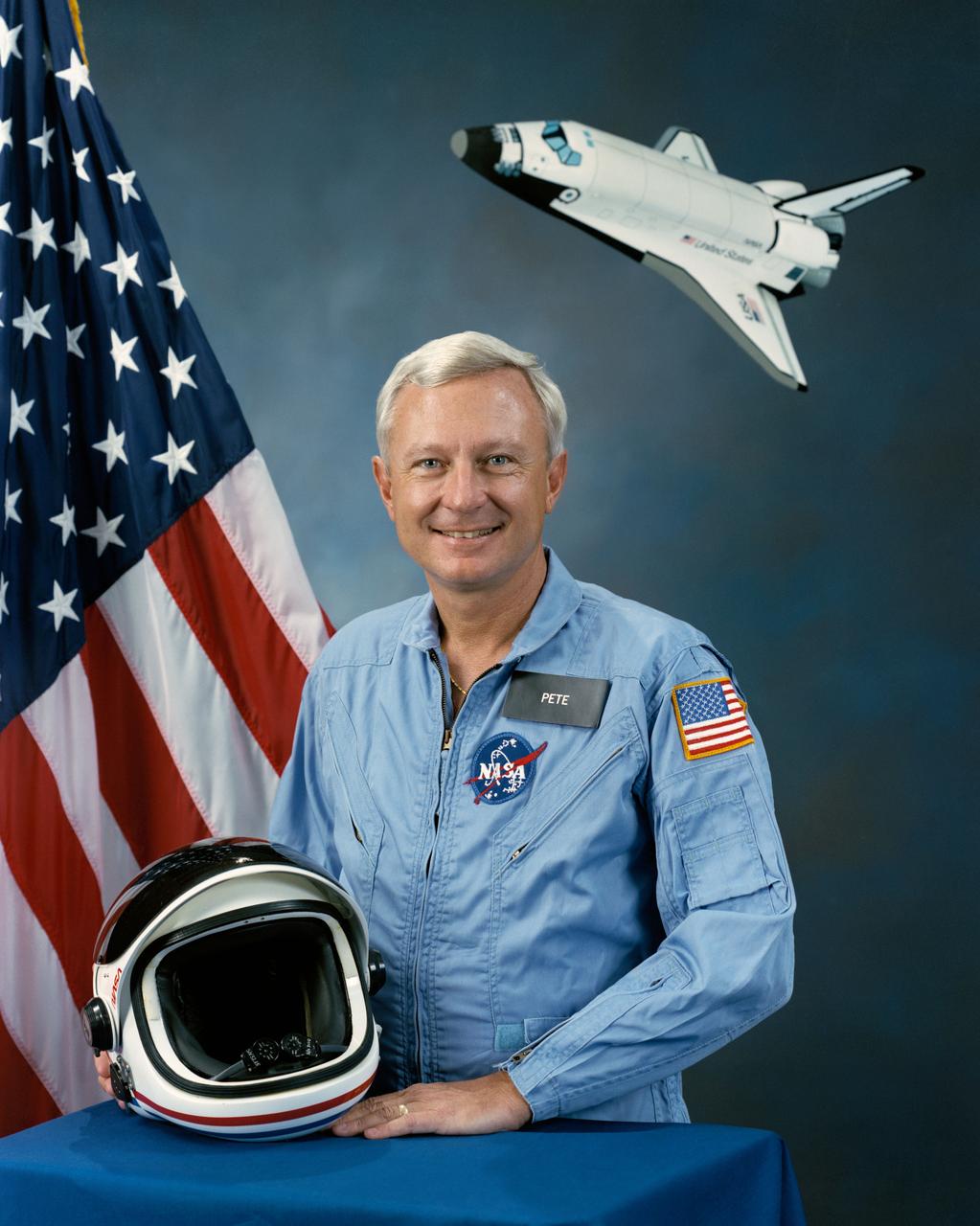
S86-39745 (Oct. 1986) --- Edward C. "Pete" Aldridge, Jr., Under Secretary, United States Air Force, payload specialist.
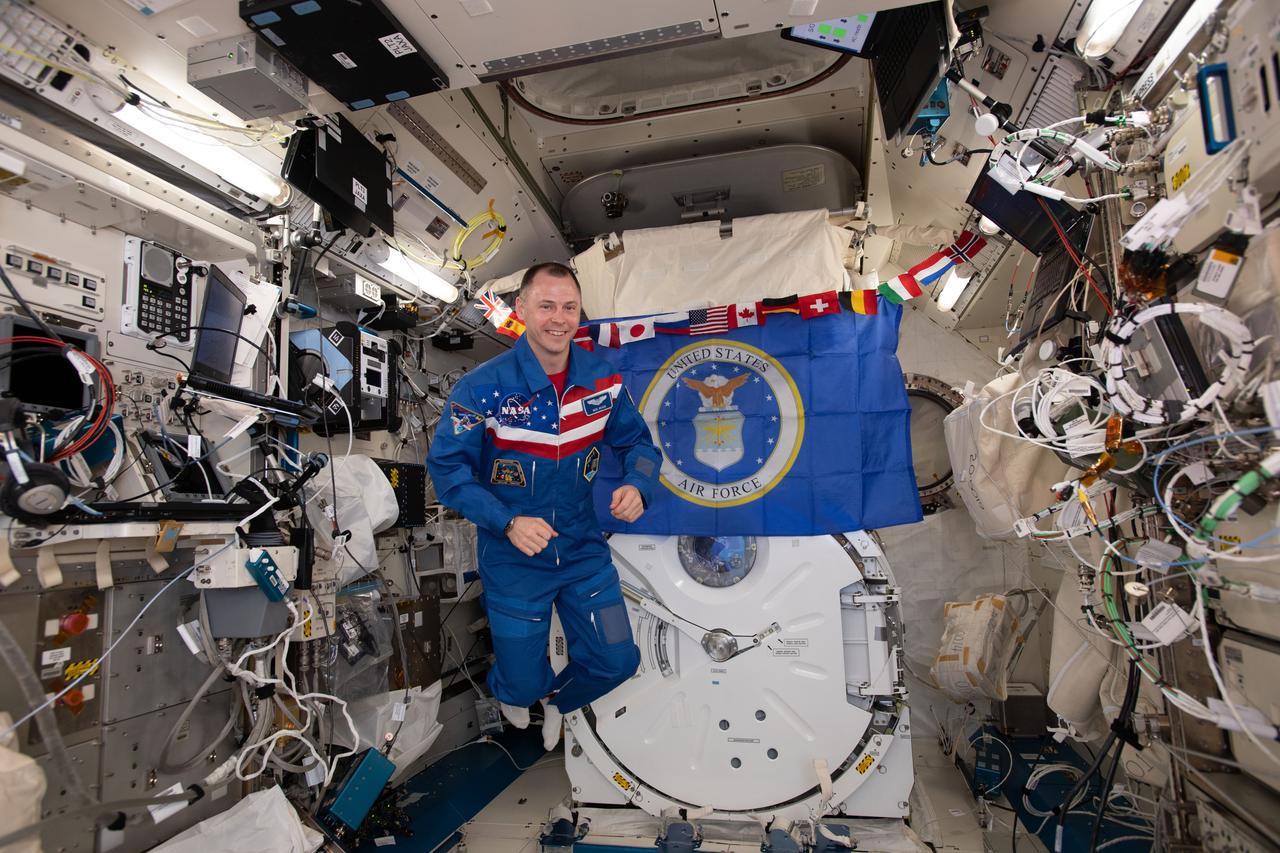
iss059e042272 (April 30, 2019) --- NASA astronaut Nick Hague poses for a portrait with the insignia of the United States Air Force behind him aboard the International Space Station.

iss066e129698 (Jan. 27, 2022) --- Edwards Air Force Base (upper right) in California is pictured from the International Space Station as it orbited 258 miles above the southwestern United States.
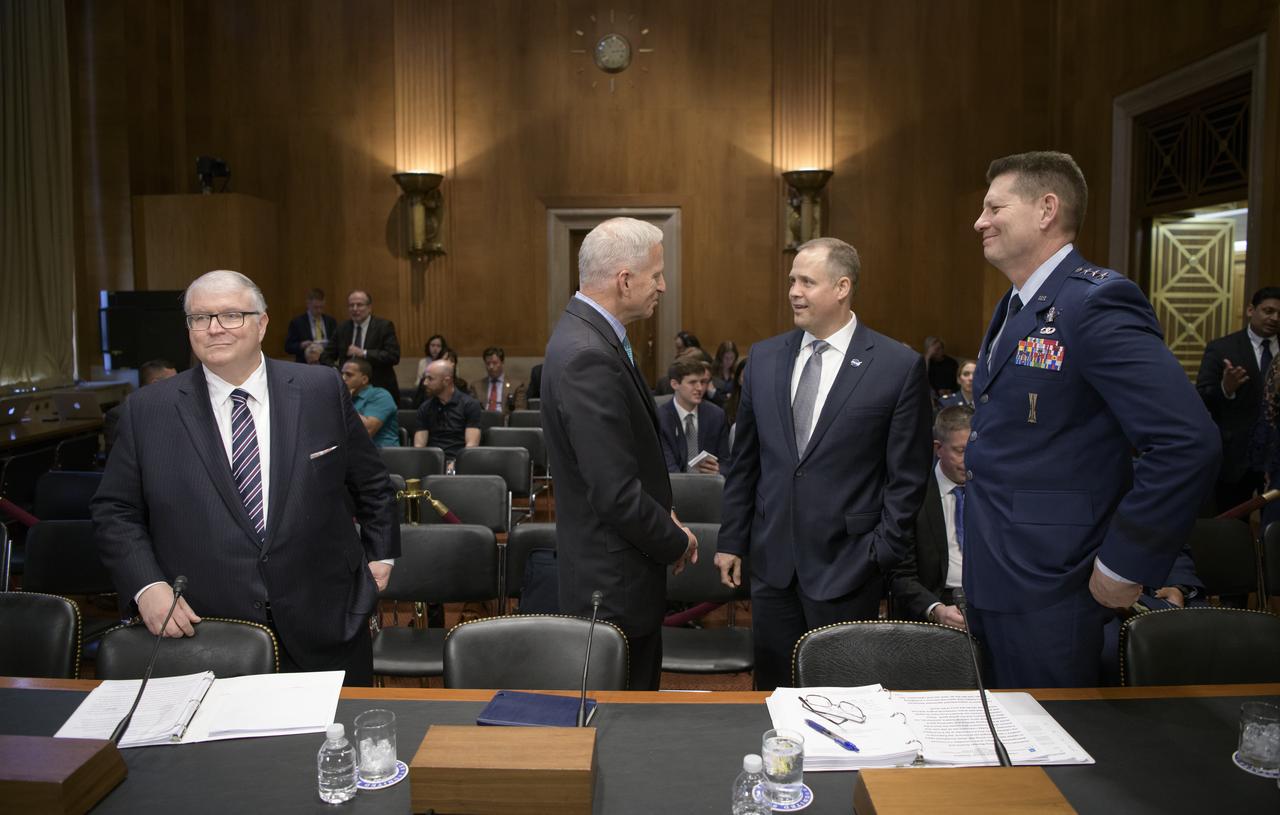
Kevin O’Connell, Director, Office of Space Commerce, Department of Commerce, left, Robert Cardillo, Former Director, National Geospatial-Intelligence Agency, NASA Administrator Jim Bridenstine, and Lt. Gen. David D. Thompson, Vice Commander, Space Command, United States Air Force, right, gather ahead of testifying along with Col. Pamela A. Melroy, United States Air Force (ret.) (former astronaut), before the Aviation and Space Subcommittee of the Senate Commerce, Science, and Transportation Committee, Tuesday, May 14, 2019, at the Dirksen Senate Office Building in Washington. Photo Credit: (NASA/Bill Ingalls)
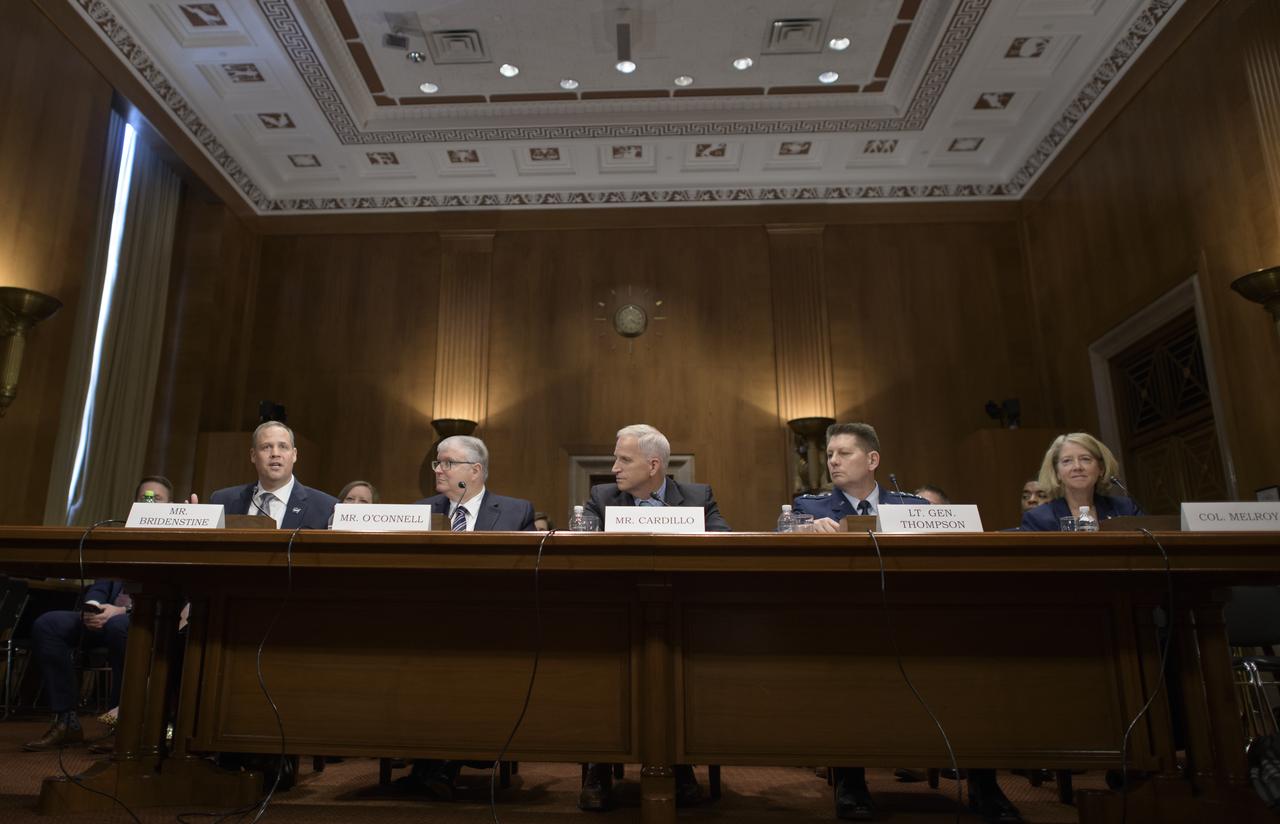
NASA Administrator Jim Bridenstine, left, Kevin O’Connell, Director, Office of Space Commerce, Department of Commerce, Robert Cardillo, Former Director, National Geospatial-Intelligence Agency, Lt. Gen. David D. Thompson, Vice Commander, Space Command, United States Air Force, and Col. Pamela A. Melroy, United States Air Force (ret.) (former astronaut), right, testify before the Senate Aviation and Space Subcommittee during a hearing titled “The Emerging Space Environment: Operational, Technical, and Policy Challenges.”, Tuesday, May 14, 2019, at the Dirksen Senate Office Building in Washington. Photo Credit: (NASA/Bill Ingalls)
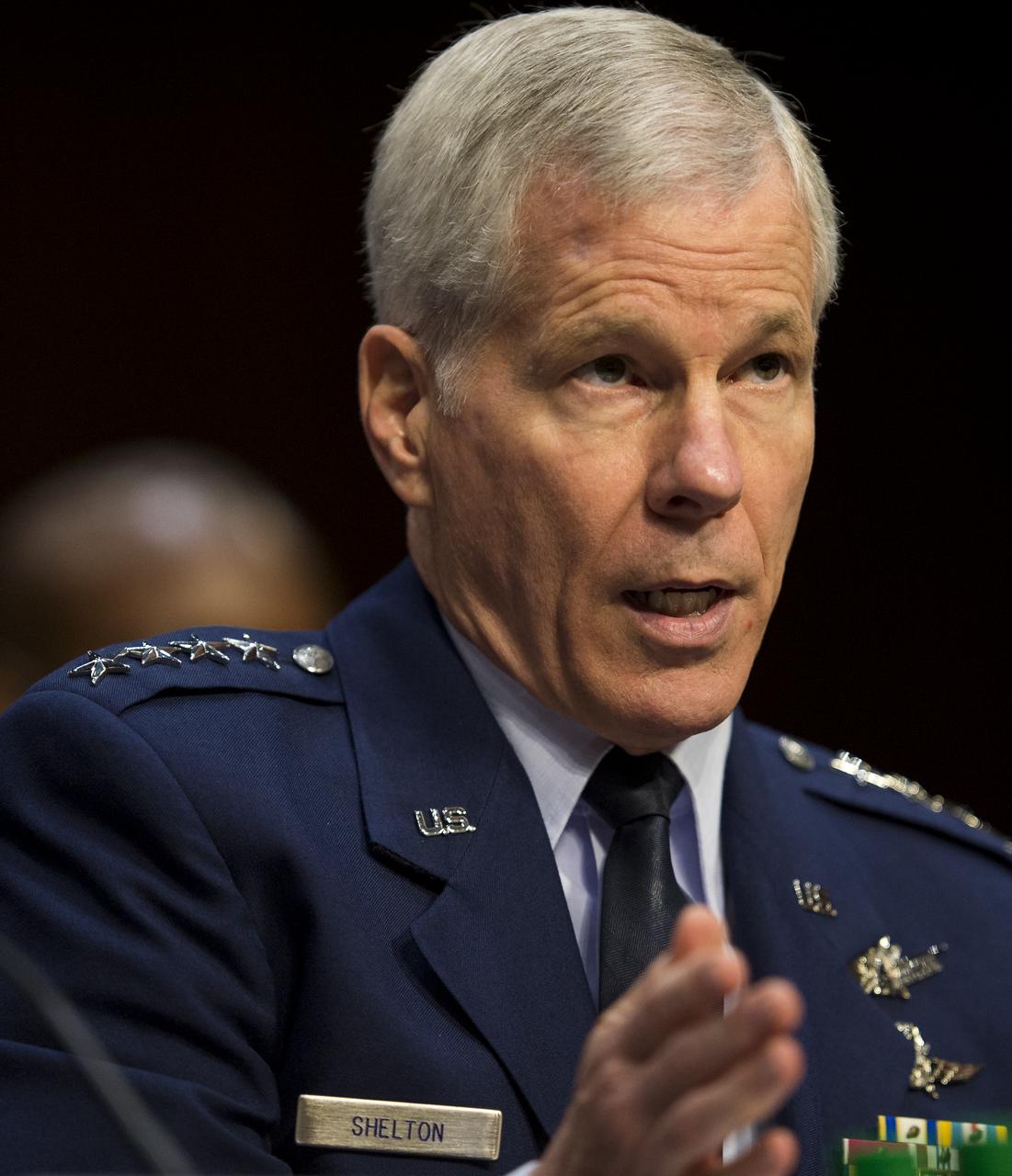
General William Sherlton, Commander of the United States Air Force Space Command, answers a question during testimony in front of the Senate Subcommittee on Strategic Forces and Senate Committee on Commerce, Science, and Transportation on Wednesday, July 16, 2014, at the Hart Senate Office Building in Washington, DC. The Senate hearing focused on assured access to space.
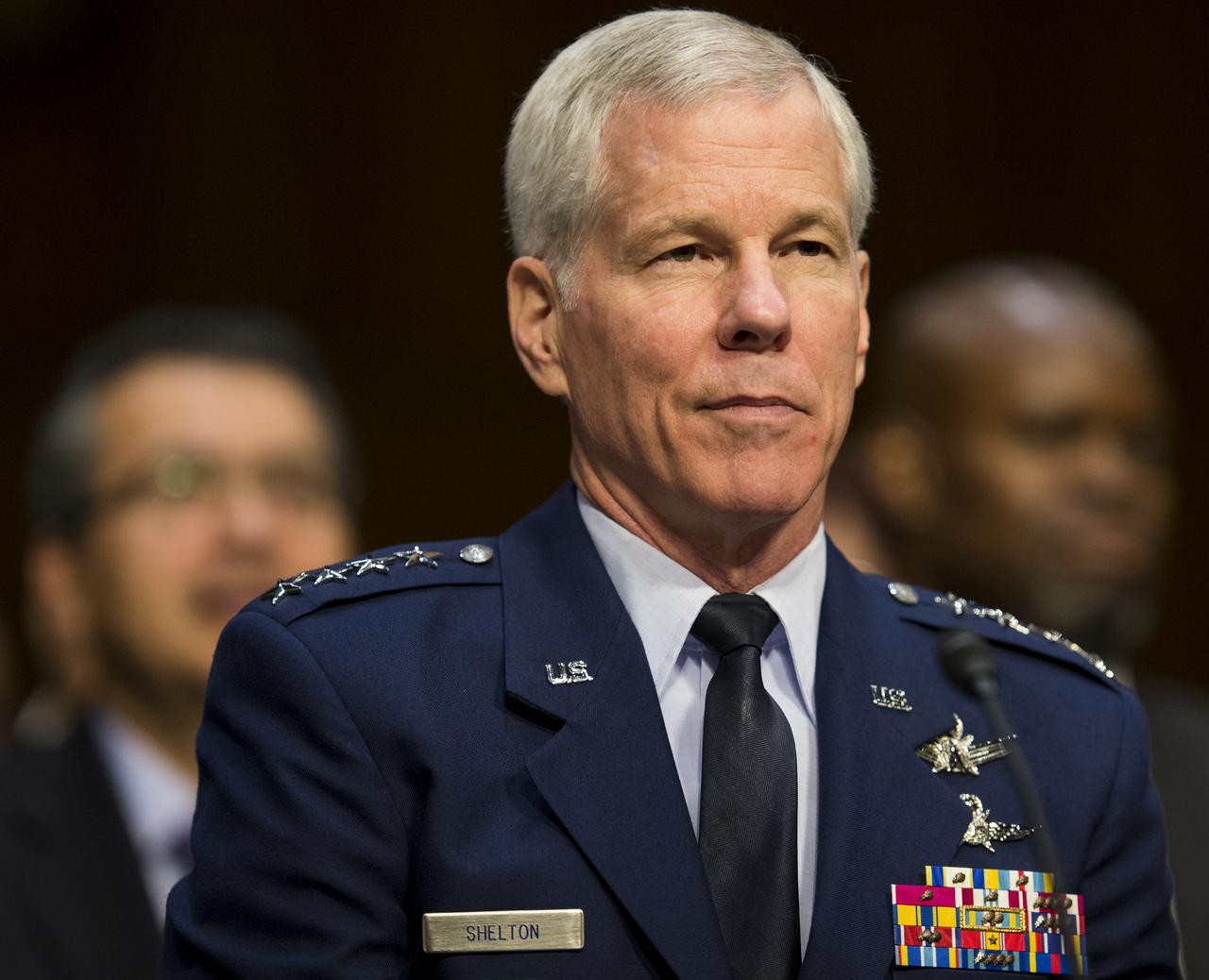
General William Sherlton, Commander of the United States Air Force Space Command, answers a question during testimony in front of the Senate Subcommittee on Strategic Forces and Senate Committee on Commerce, Science, and Transportation on Wednesday, July 16, 2014, at the Hart Senate Office Building in Washington, DC. The Senate hearing focused on assured access to space.
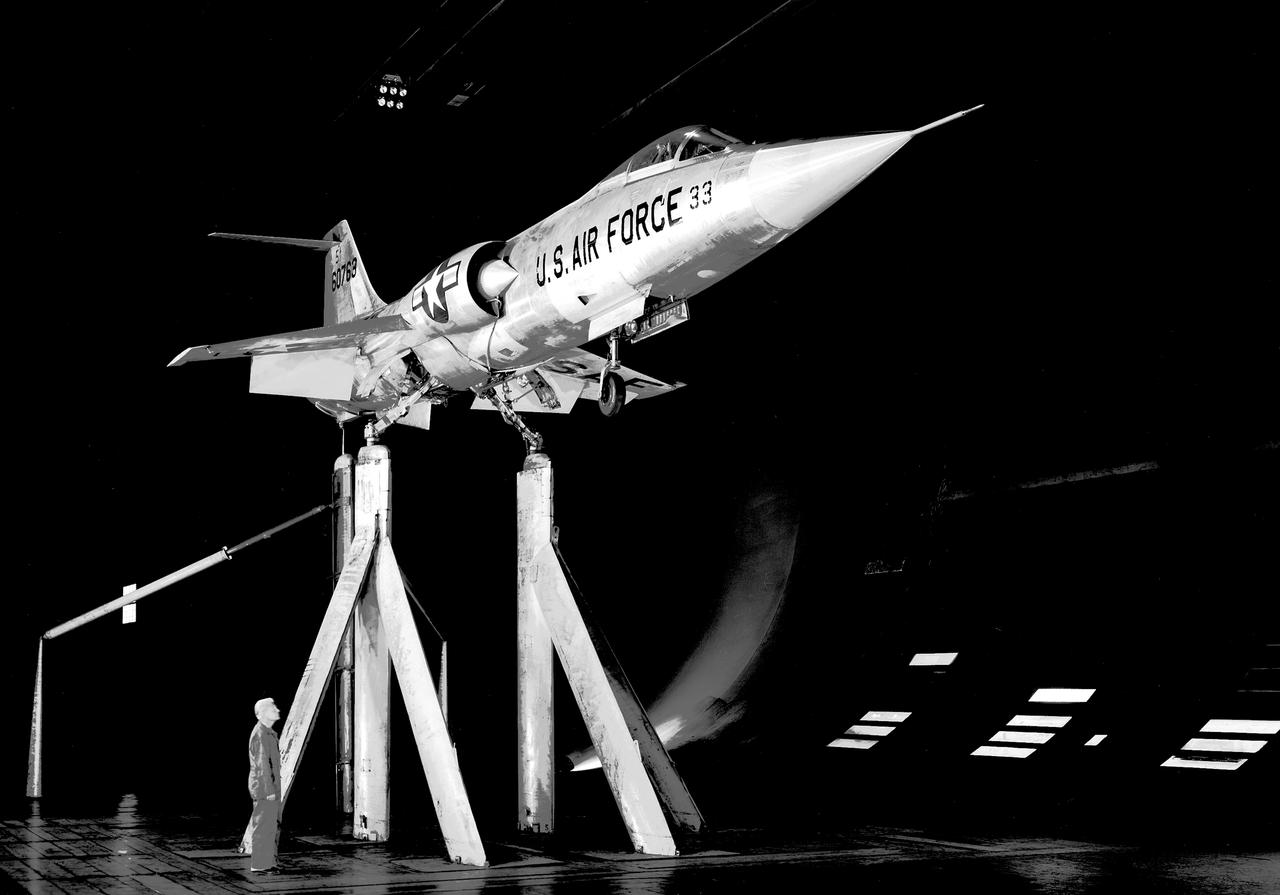
3/4 front view from below of Air Force F-104. The Lockheed F-104 Starfighter is a single-engine, supersonic interceptor aircraft originally developed by Lockheed for the United States Air Force (USAF). One of the Century Series of fighter aircraft, it was operated by the air forces of more than a dozen nations from 1958 to 2004.
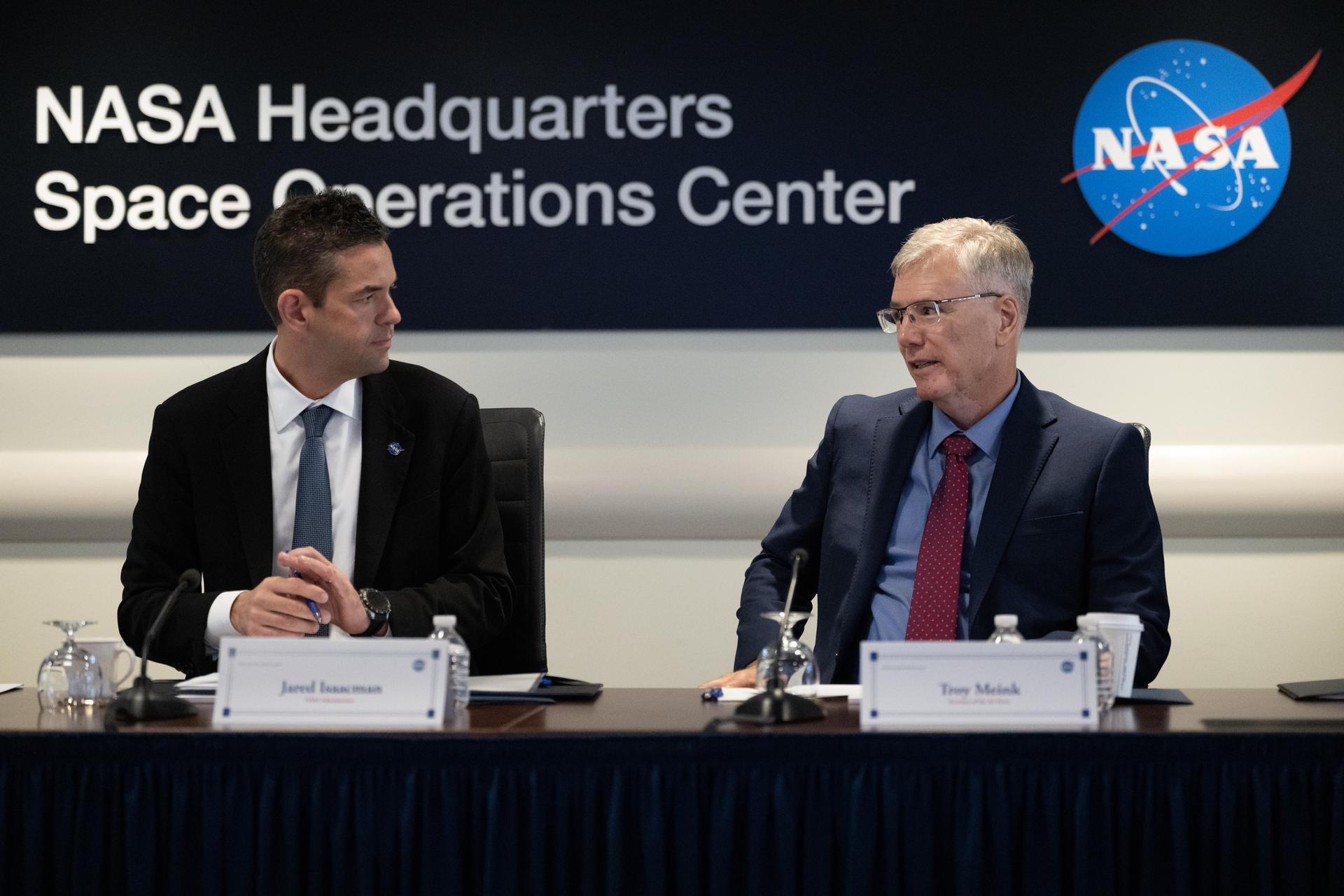
NASA Administrator Jared Isaacman, left, listens to Troy Meink, Secretary of the United States Air Force, right, during a meeting of the Presidential Commission on the United States Space Academy in the Space Operations Center, Wednesday, Sept. 9, 2026, at the Mary W. Jackson NASA Headquarters Building in Washington. The commission will meet and submit a report proposing recommendations for the establishment of the Space Academy. Photo Credit (NASA/Joel Kowsky)

F-111B Fighter, Variable Sweep wings, wings swept forward, landing gear down. Slat experiments. The General Dynamics/Grumman F-111B was a long-range carrier-based interceptor aircraft that was planned to be a follow-on to the F-4 Phantom II. The F-111B was developed in the 1960s by General Dynamics in conjunction with Grumman for the United States Navy (USN) as part of the joint Tactical Fighter Experimental (TFX) with the United States Air Force (USAF) to produce a common fighter for the services that could perform a variety of missions.
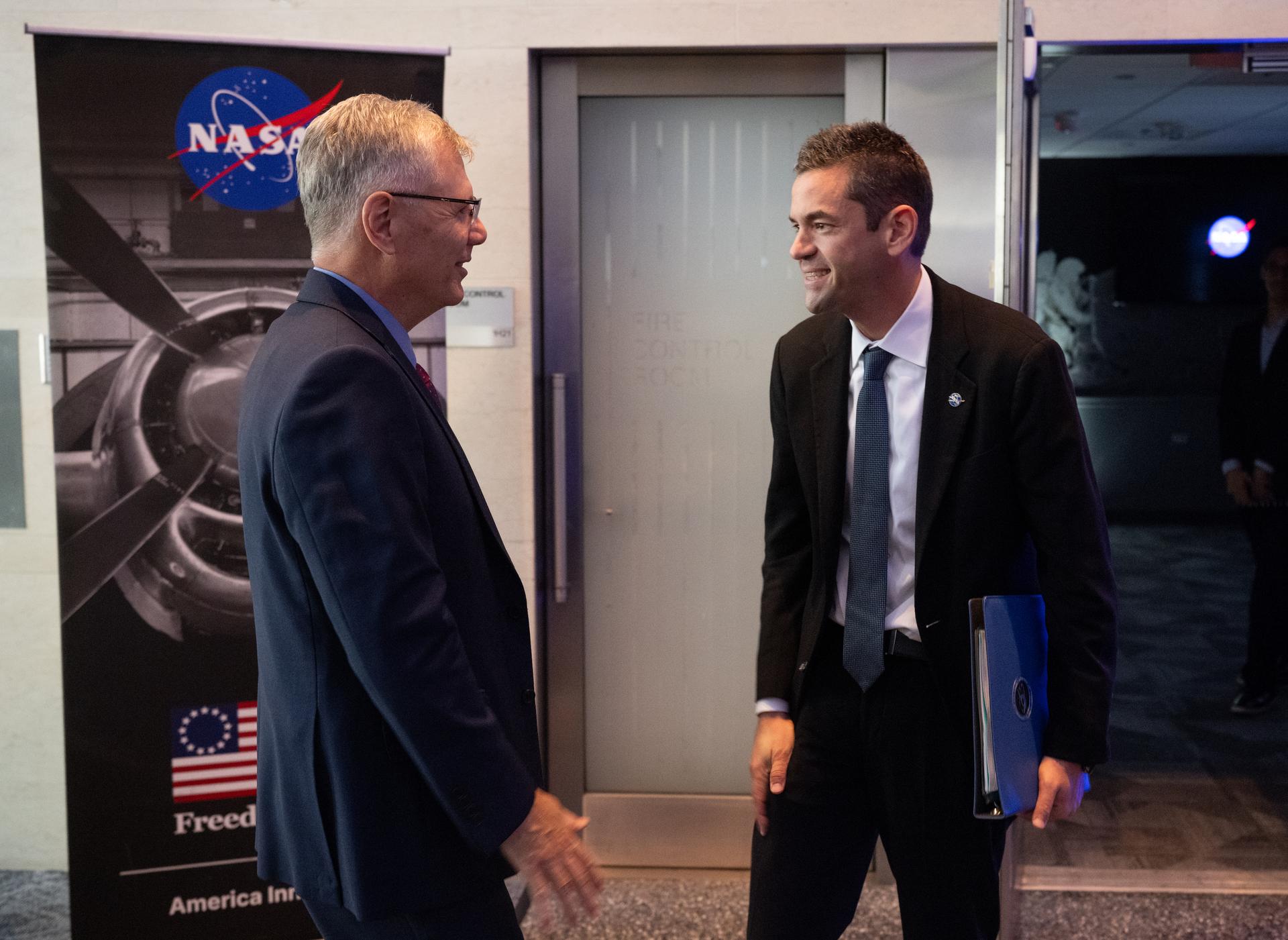
Troy Meink, Secretary of the United States Air Force, left, is greeted by NASA Administrator Jared Isaacman as he arrives for a meeting of the Presidential Commission on the United States Space Academy at the Mary W. Jackson NASA Headquarters Building, Wednesday, Sept. 9, 2026, in Washington. The commission will meet and submit a report proposing recommendations for the establishment of the Space Academy. Photo Credit (NASA/Joel Kowsky)
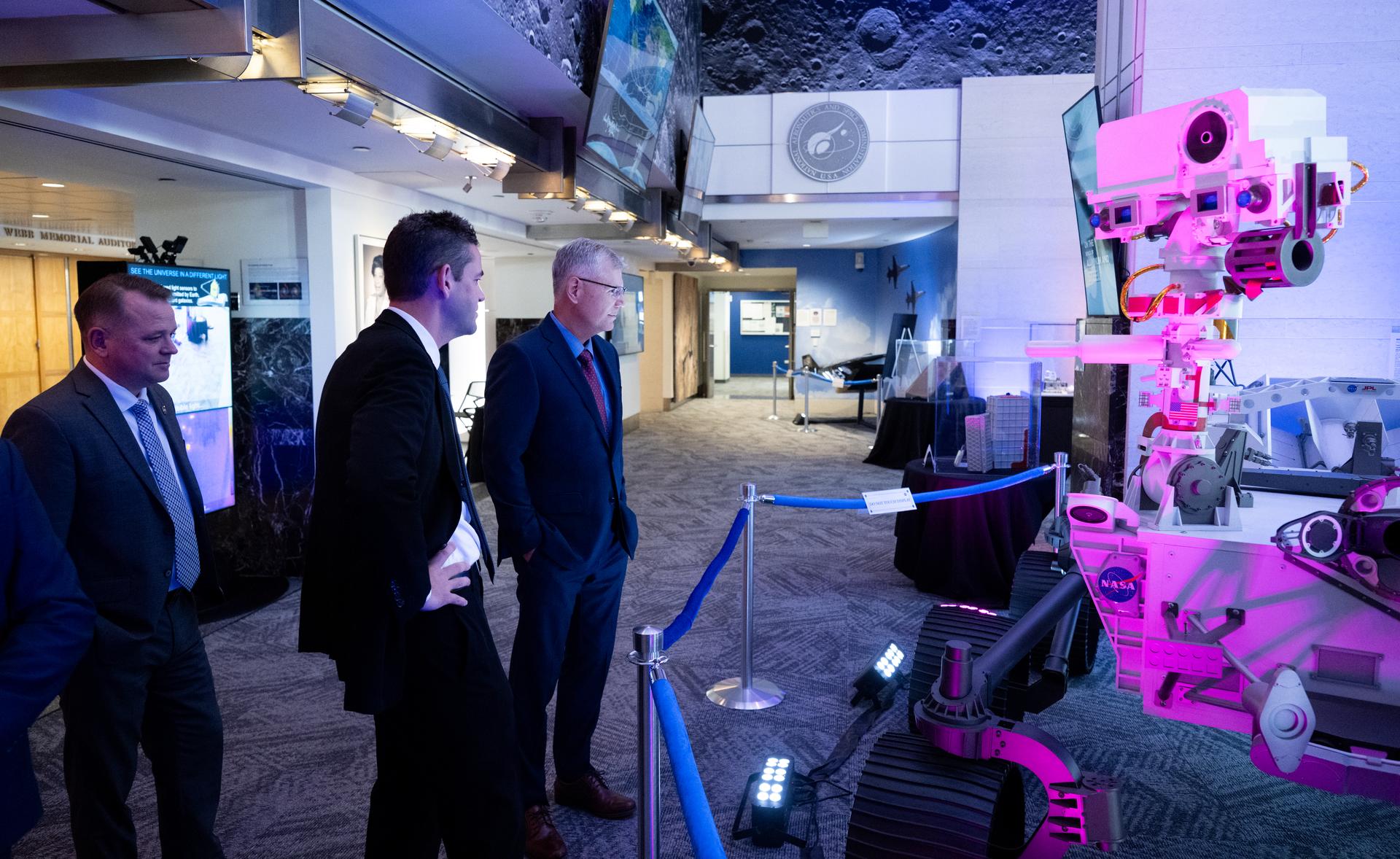
Troy Meink, Secretary of the United States Air Force, right, looks at a model of NASA’s Perseverance rover NASA Administrator Jared Isaacman, center, and NASA Deputy Administrator Matt Anderson, left, after arriving for a meeting of the Presidential Commission on the United States Space Academy at the Mary W. Jackson NASA Headquarters Building, Wednesday, Sept. 9, 2026, in Washington. The commission will meet and submit a report proposing recommendations for the establishment of the Space Academy. Photo Credit (NASA/Joel Kowsky)

S66-20017 (3 Feb. 1966) --- Astronaut David R. Scott holds maneuvering unit while suspended in a weightless state during extravehicular activity (EVA) training in a C-135 Air Force plane. Photo credit: NASA
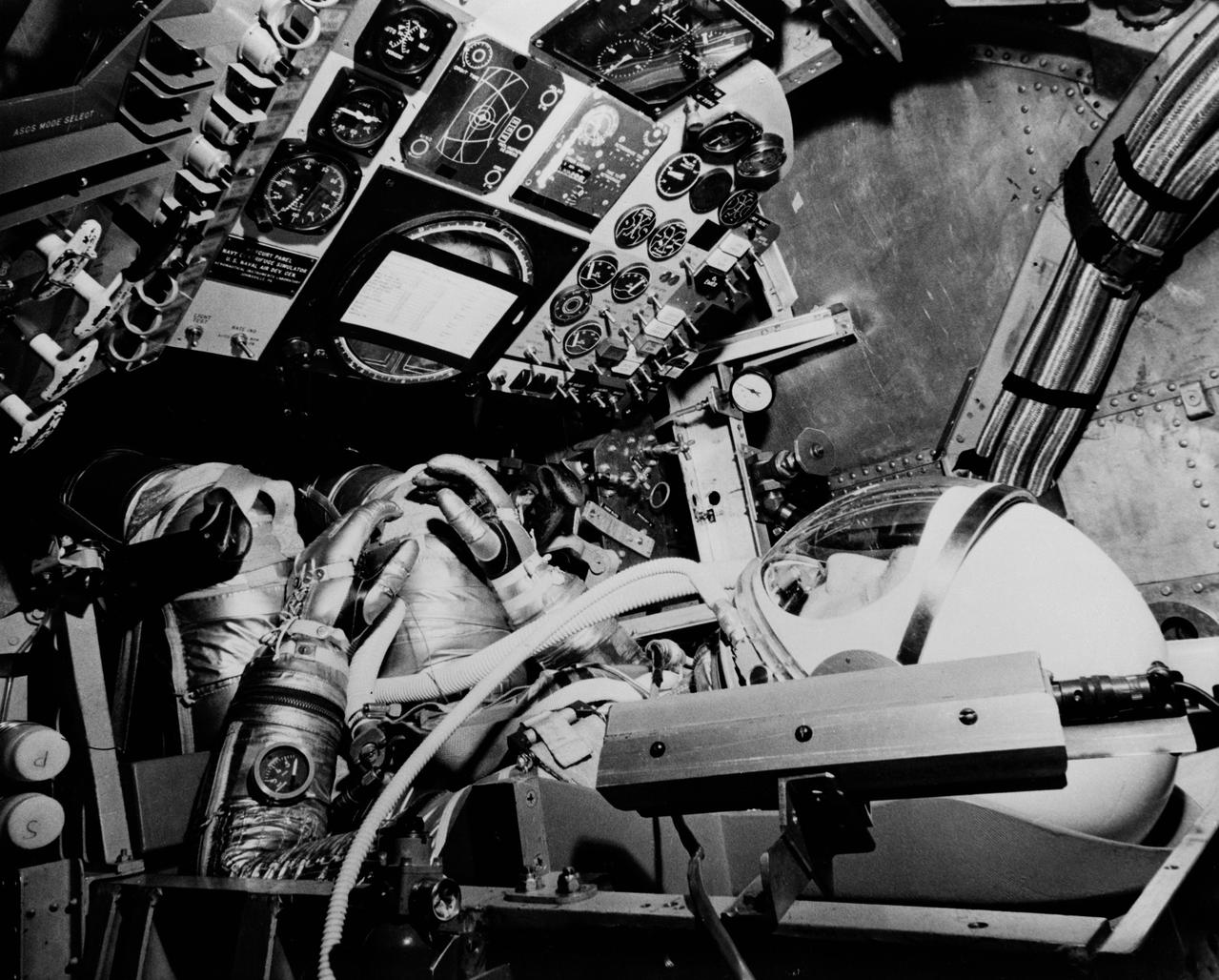
S61-03506 (1961) --- Project Mercury astronaut M. Scott Carpenter, prime pilot for the United States second manned orbital flight, undergoes a simulated mission in the procedures trainer at Langley Air Force Base, Virginia, headquarters for the National Aeronautics and Space Administration?s Manned Spacecraft Center. Photo credit: NASA

NASA Administrator Bill Nelson listens as Cadet First Class Celina Guan, second from left, talks about her classes work in the astronautics lab of the United States Air Force Academy, Wednesday, Aug. 25, 2021, north of Colorado Springs, Colorado. Photo Credit: (NASA/Bill Ingalls)
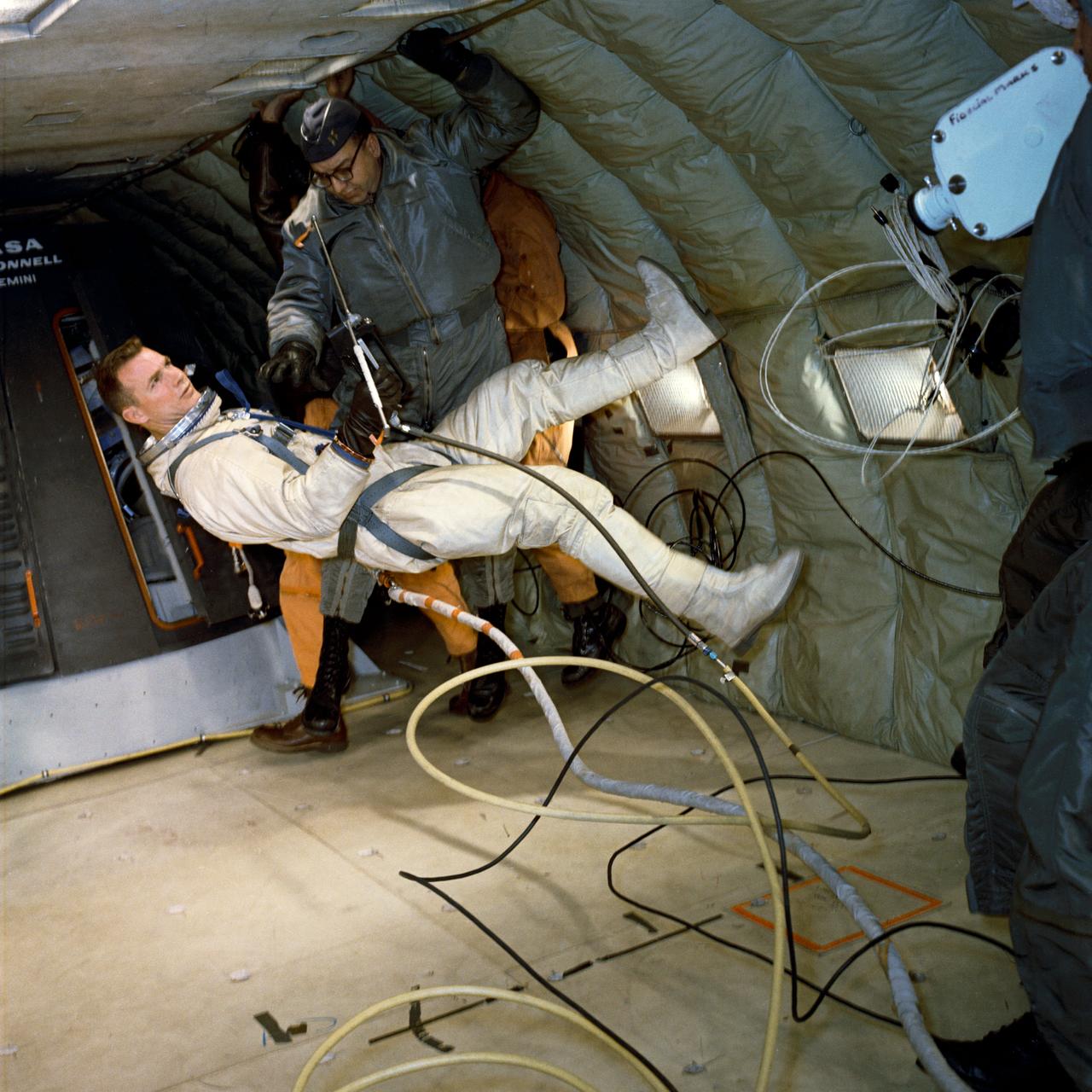
S66-20016 (3 Feb. 1966) --- Astronaut David R. Scott holds maneuvering unit while suspended in a weightless state during extravehicular activity (EVA) training in a C-135 Air Force plane. Photo credit: NASA
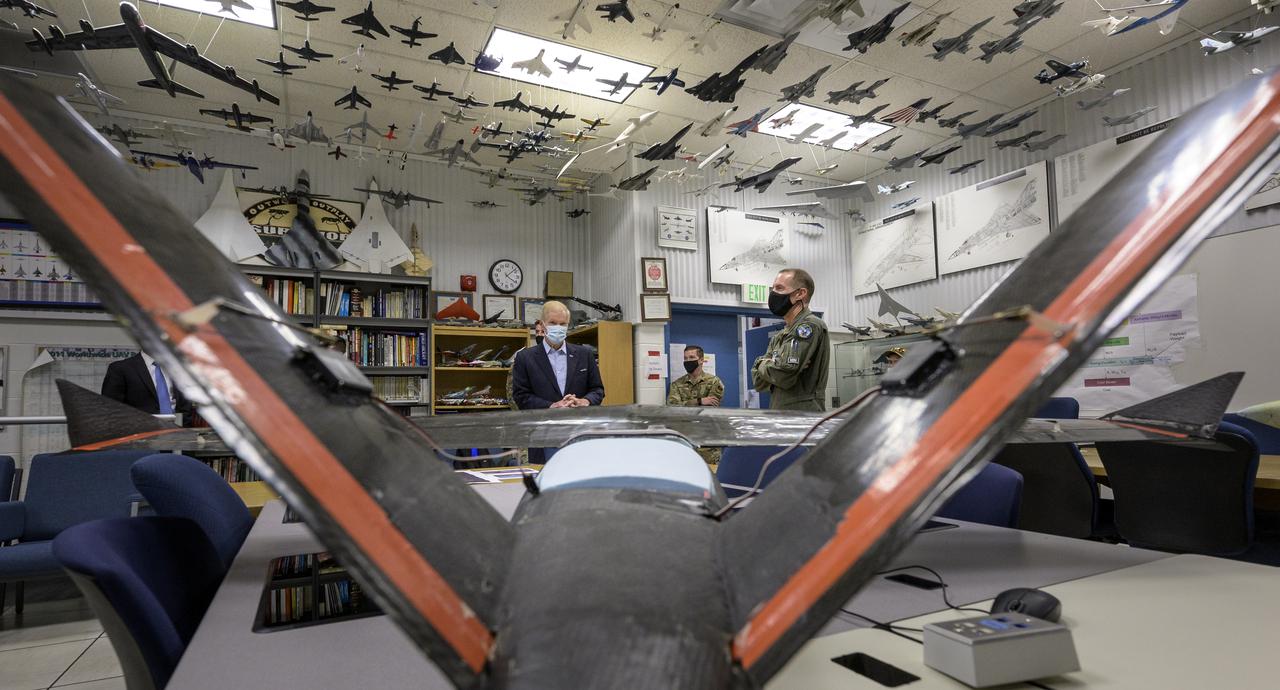
NASA Administrator Bill Nelson, left, listens to Col Douglas “Beaker” Wickert, right, during a tour of the aeronautics lab at the United States Air Force Academy, Wednesday, Aug. 25, 2021, north of Colorado Springs, Colorado. Photo Credit: (NASA/Bill Ingalls)
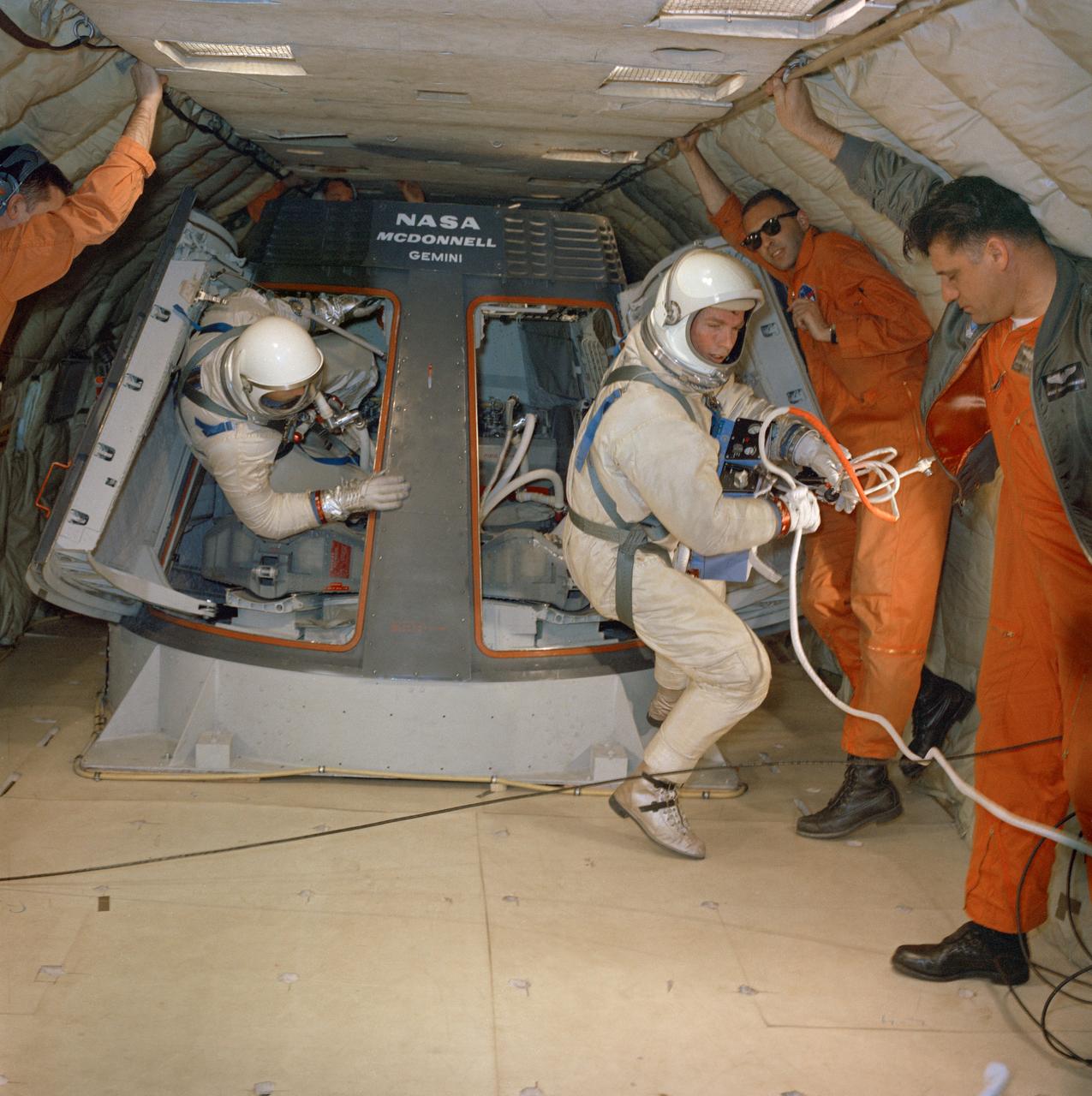
S66-21409 (18 Feb. 1966) --- Astronaut David R. Scott, in full spacesuit, holds maneuvering unit while suspended in a weightless state during extravehicular activity (EVA) training in a C-135 Air Force plane. Photo credit: NASA
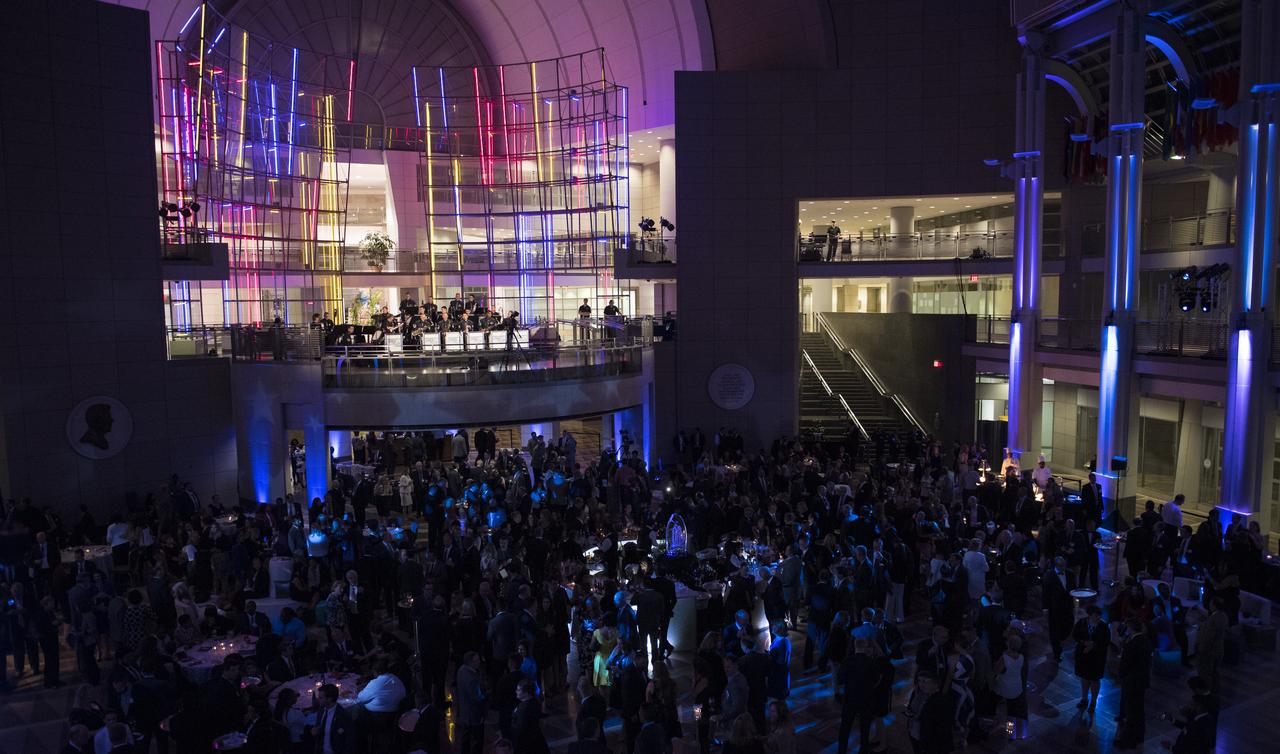
The United States Air Force's Airmen of Note perform during a reception hosted by the American Institute of Aeronautics and Astronautics (AIAA) to celebrate NASA's 60th anniversary, Thursday, Sept. 20, 2018 at the Ronald Reagan Building and International Trade Center in Washington, DC. Photo Credit: (NASA/Joel Kowsky)
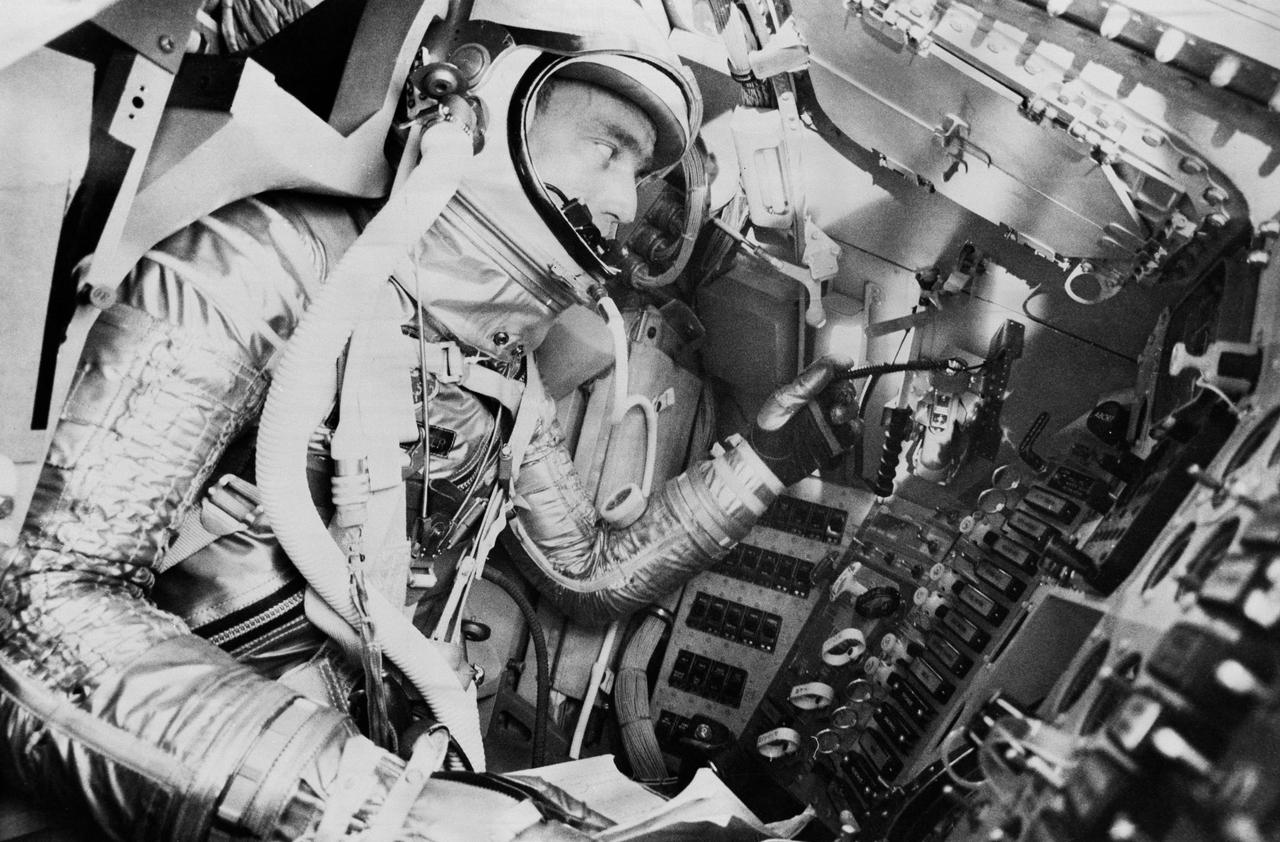
S62-01033 (1961) --- Project Mercury astronaut M. Scott Carpenter, prime pilot for the United States second manned orbital flight, undergoes a simulated mission in the procedures trainer at Langley Air Force Base, Virginia, headquarters for the National Aeronautics and Space Administration?s Manned Spacecraft Center. Photo credit: NASA
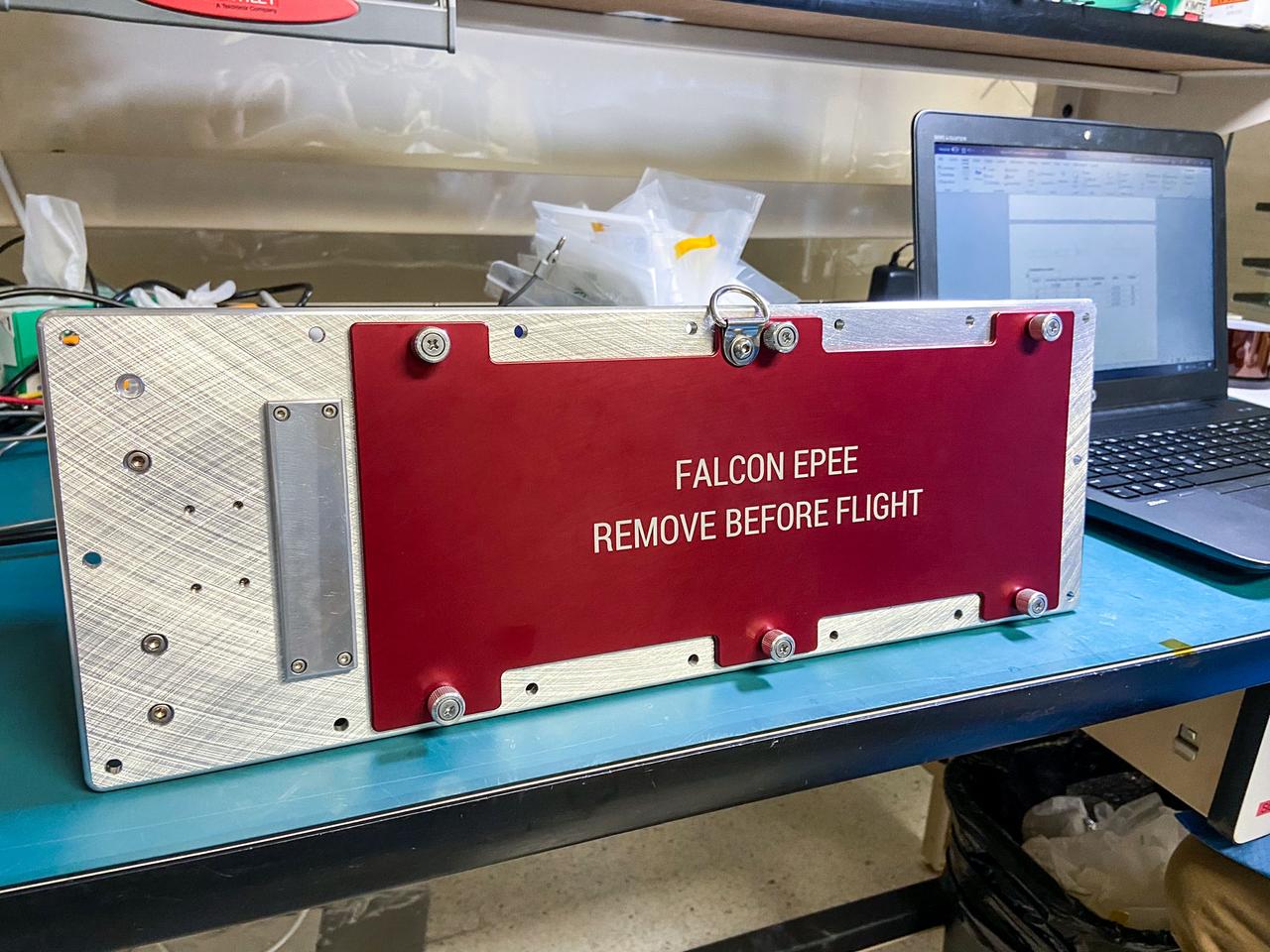
jsc2023e010197 (3/1/2023) --- Space Test Program - Houston 9 - Falcon Electric Propulsion Electrostatic Analyzer Experiment (STP-H9-Falcon-EPEE) with Remove Before Flight Cover upon completion of assembly. Image courtesy of the United States Air Force Academy.
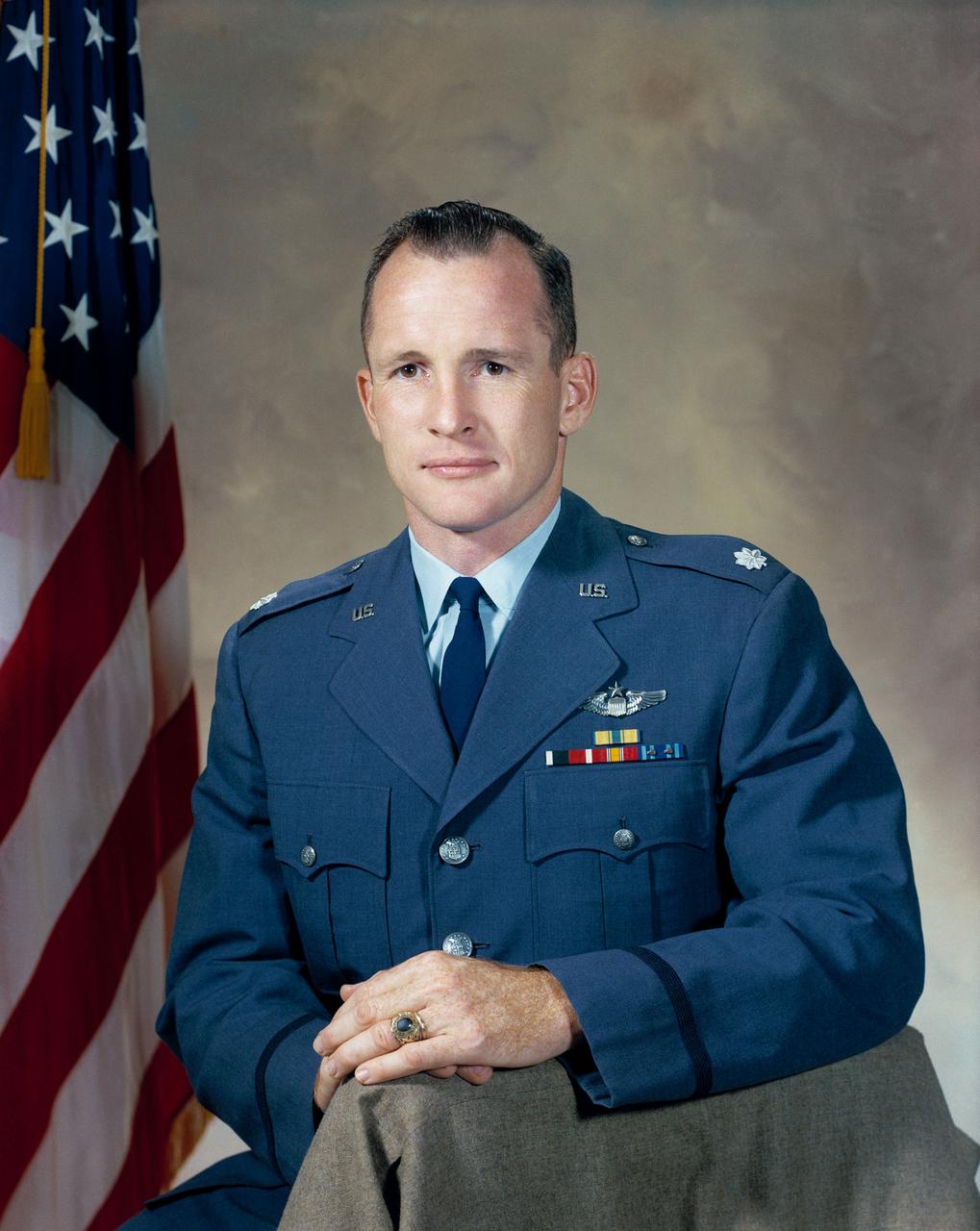
S66-35219 (1966) --- Astronaut Edward H. White II (United States Air Force Lieutenant Colonel), Gemini 4 pilot. Editor's Note: Since this portrait was taken astronaut White lost his life on Jan. 27, 1967, in the Apollo 1/Saturn 204 fire at Cape Kennedy, KSC, Florida.
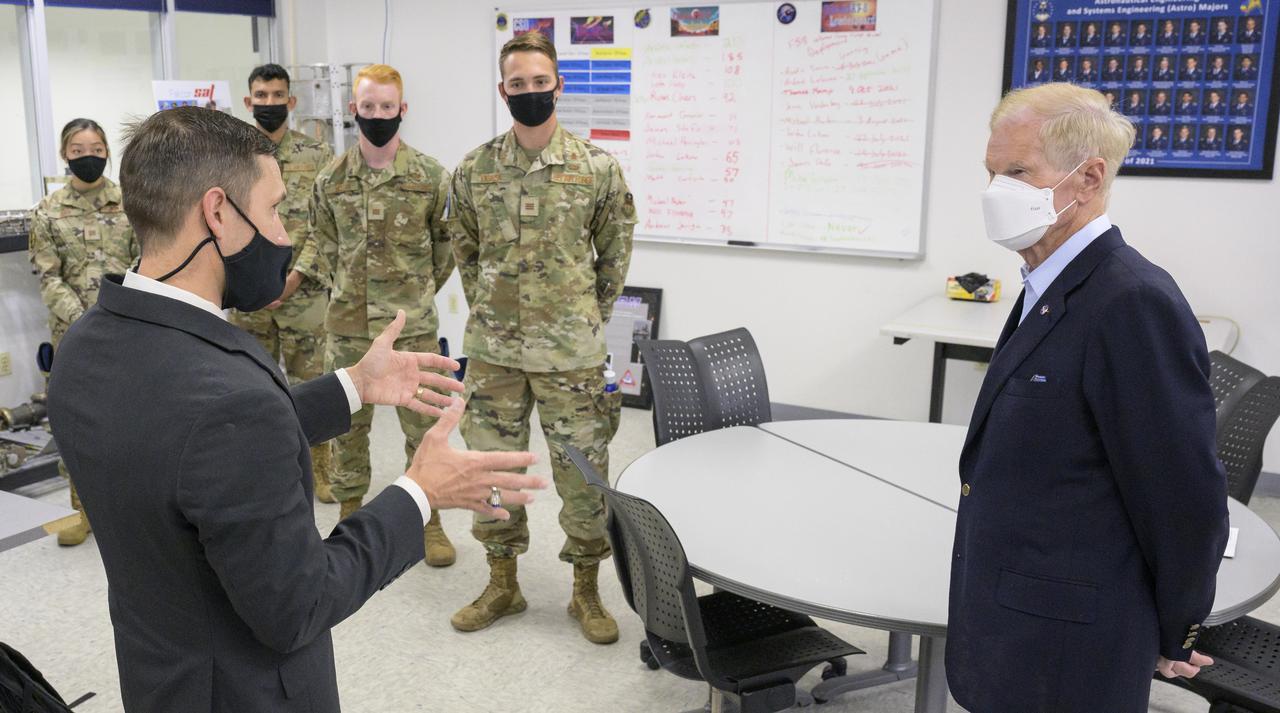
NASA Administrator Bill Nelson, right, listens as Col Luke Sauter, Permanent Professor and Head, Department of Astronautics, introduces Nelson to cadets in the astronautics lab at the United States Air Force Academy, Wednesday, Aug. 25, 2021, north of Colorado Springs, Colorado. Photo Credit: (NASA/Bill Ingalls)
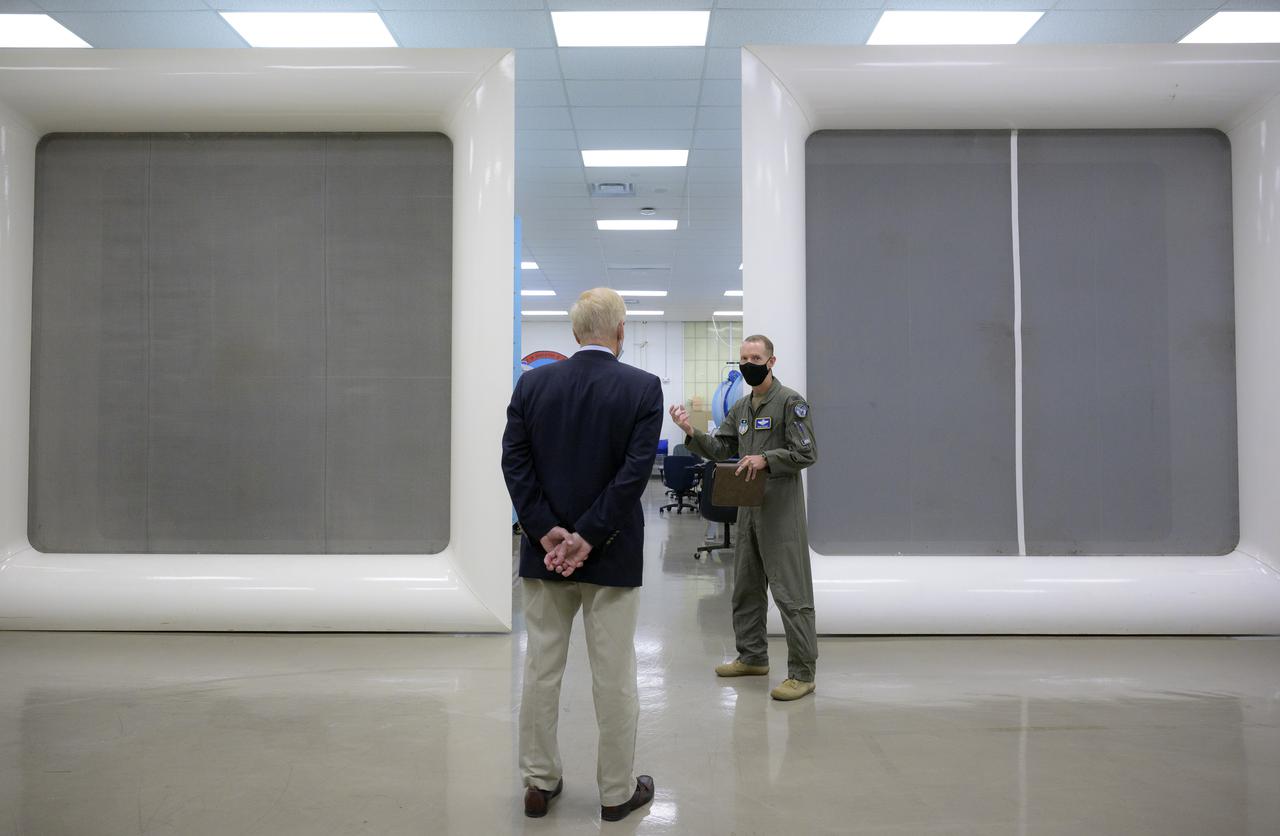
NASA Administrator Bill Nelson, left, listens to Col Douglas “Beaker” Wickert during a tour of the aeronautics lab at the United States Air Force Academy, Wednesday, Aug. 25, 2021, north of Colorado Springs, Colorado. Photo Credit: (NASA/Bill Ingalls)

NASA Administrator Bill Nelson, left, listens to Col Douglas “Beaker” Wickert, right, during a tour of the aeronautics lab at the United States Air Force Academy, Wednesday, Aug. 25, 2021, north of Colorado Springs, Colorado. Photo Credit: (NASA/Bill Ingalls)
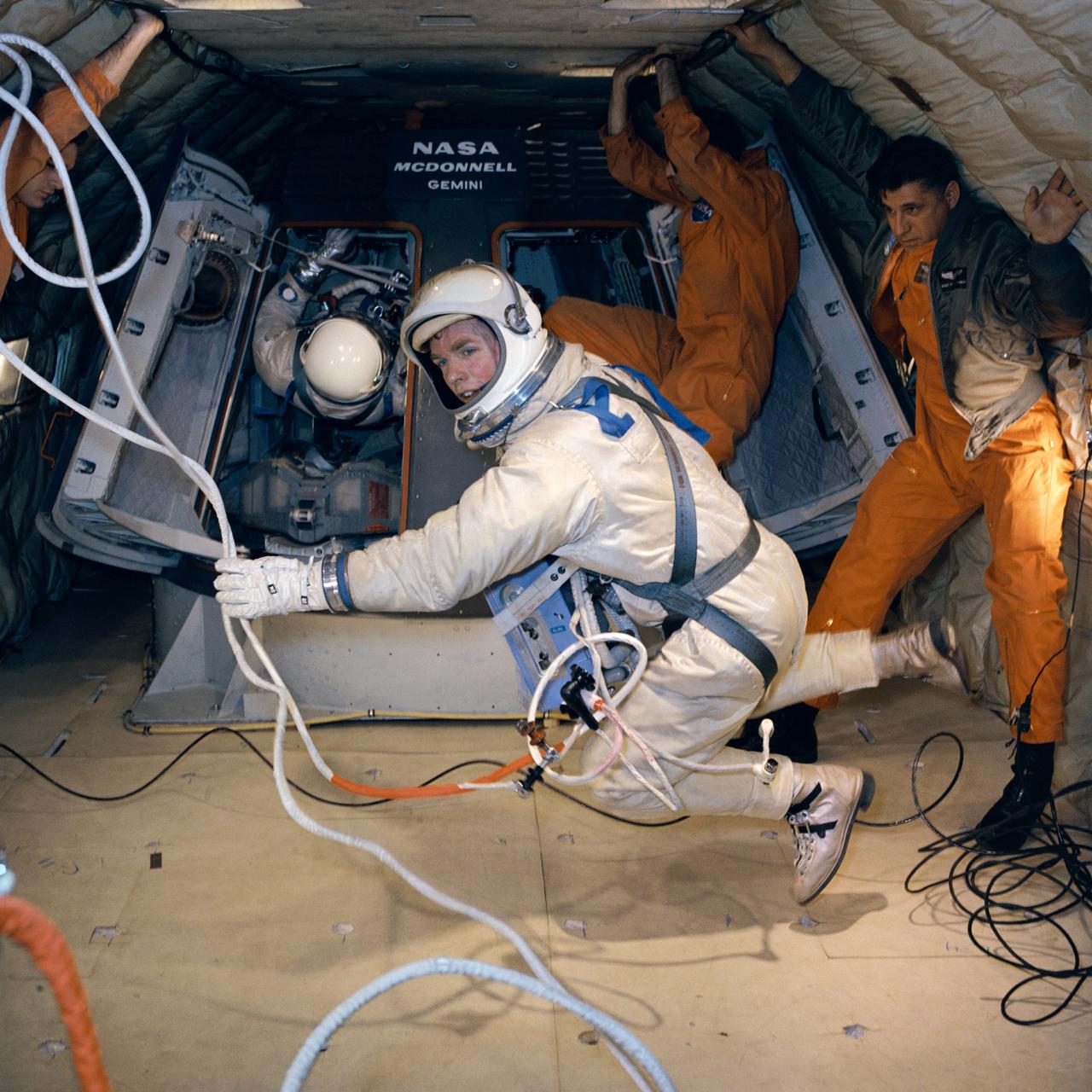
S66-21416 (18 Feb. 1966) --- Astronaut David R. Scott, in full spacesuit, holds maneuvering unit while suspended in a weightless state during extravehicular activity (EVA) training in a C-135 Air Force plane. Photo credit: NASA
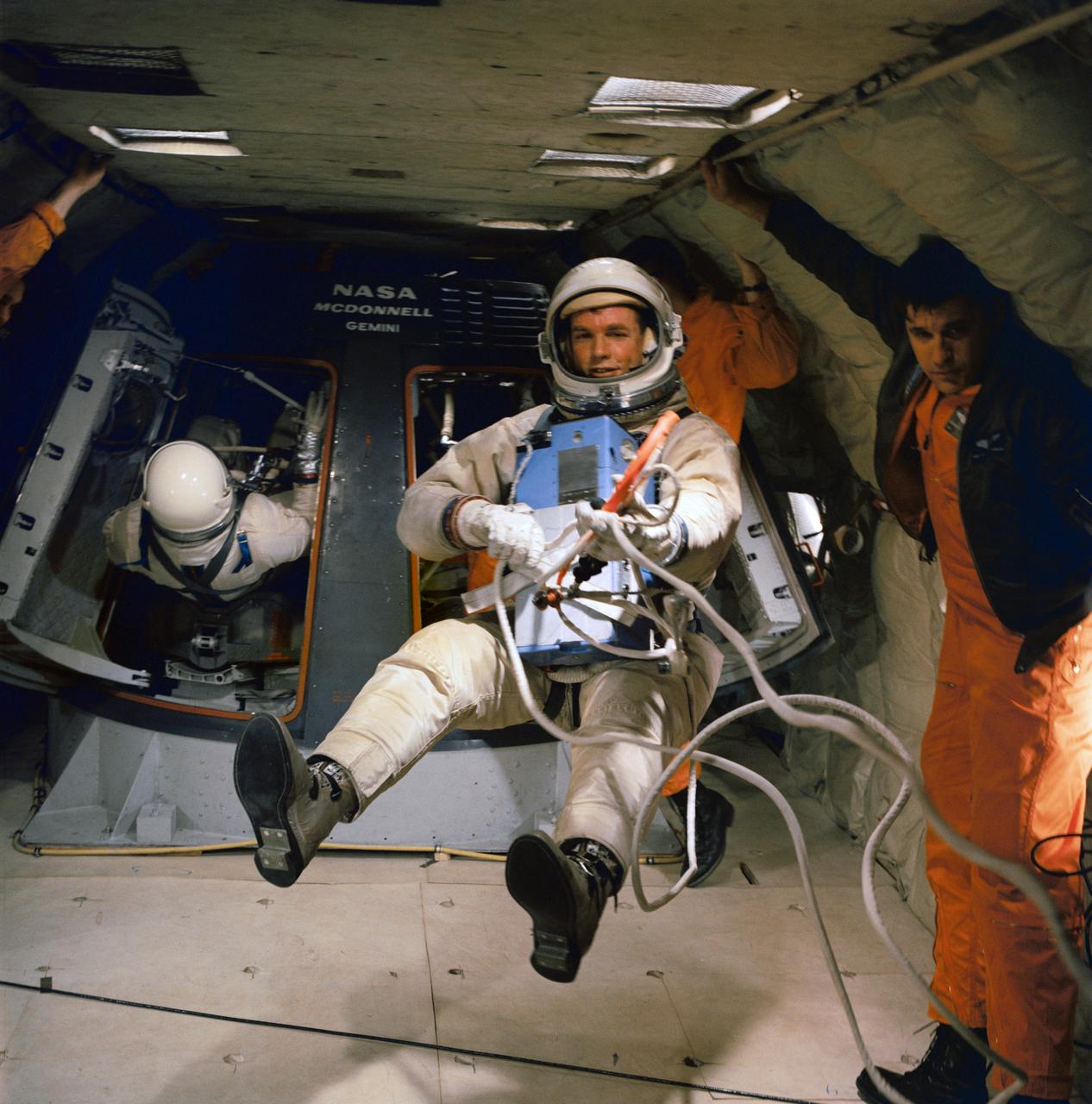
S66-21411 (18 Feb. 1966) --- Astronaut David R. Scott, in full spacesuit, holds maneuvering unit while suspended in a weightless state during extravehicular activity (EVA) training in a C-135 Air Force plane. Photo credit: NASA
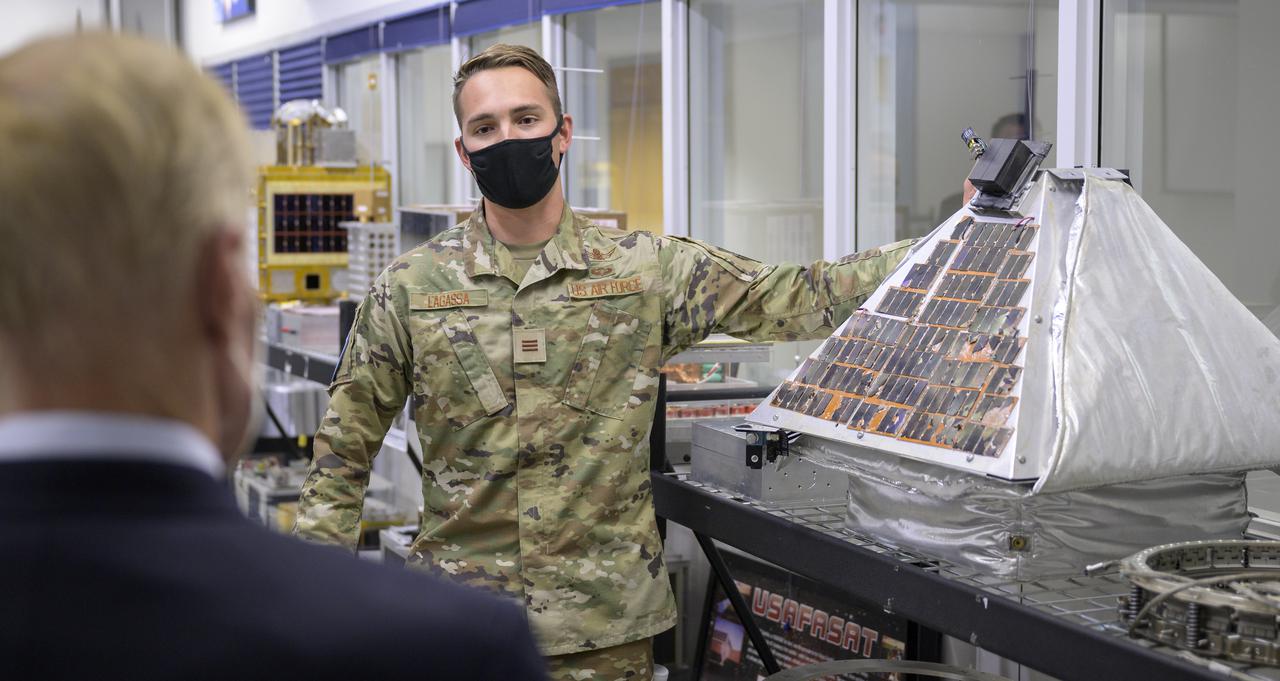
NASA Administrator Bill Nelson listens as Cadet First Class Andrew LaGassa talks about his classes work in the astronautics lab of the United States Air Force Academy, Wednesday, Aug. 25, 2021, north of Colorado Springs, Colorado. Photo Credit: (NASA/Bill Ingalls)
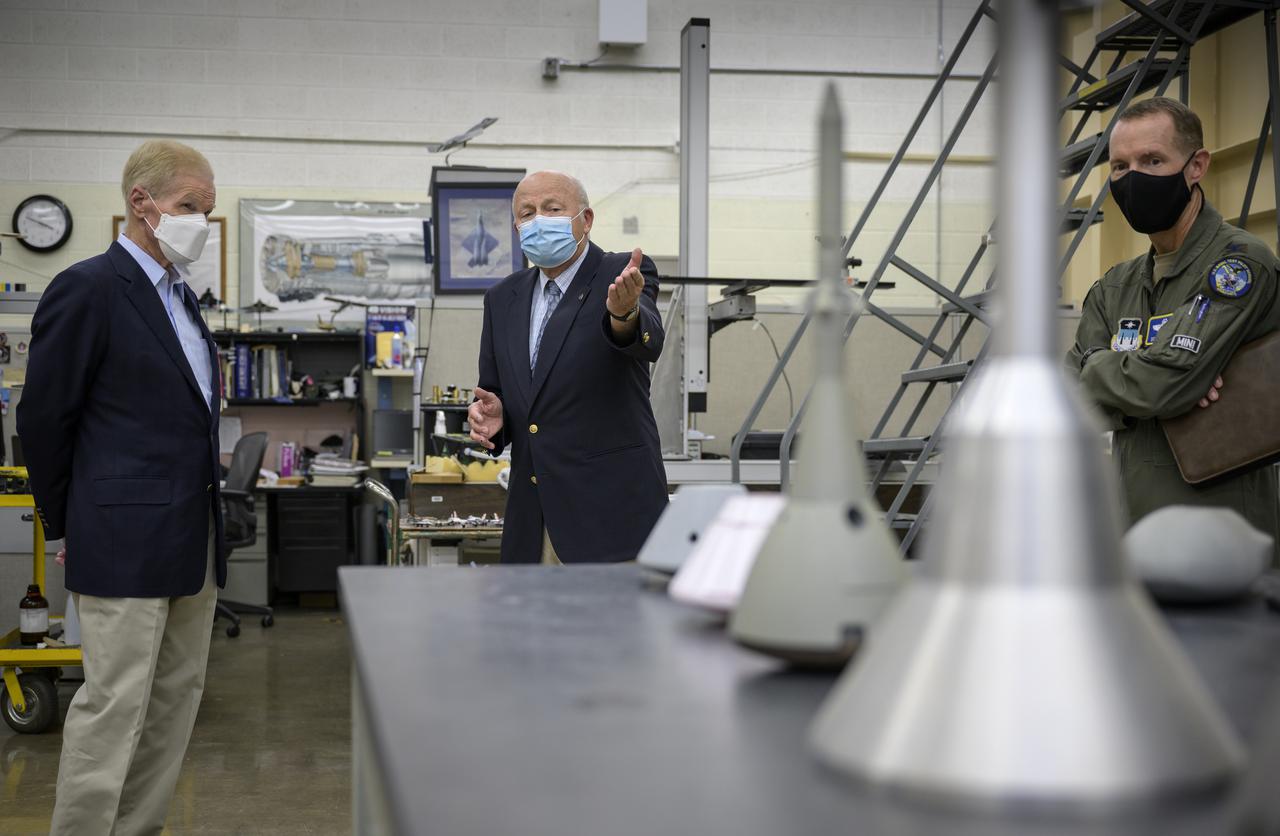
NASA Administrator Bill Nelson, left, listens as Dr. Tom Yechout, center, and Col Douglas “Beaker” Wickert provide a tour of the aeronautics lab at the United States Air Force Academy, Wednesday, Aug. 25, 2021, north of Colorado Springs, Colorado. Photo Credit: (NASA/Bill Ingalls)

S95-00355 (12-14 September 1992) --- Astronaut candidate Koichi Wakata prepares to jump off a box during a parachute landing demonstration at Vance Air Force Base. This portion of the training is designed to familiarize the trainees with the proper way to hit the ground following a parachute jump. Looking on are astronaut candidates Michael L. Gernhardt (left) and Andrew W. S. Thomas (second left), along with a United States Air Force (USAF) instructor. Wakata, representing Japan's National Space Development Agency (NASDA), is one of seven international mission specialist candidates who joined 19 United States astronaut candidates, including Gernhardt and Thomas, for the three-day parachute/survival training school at the Oklahoma Base. EDITORS NOTE: Since this photograph was taken, Gernhardt, Wakata and Thomas have been named as mission specialists for the STS-69, STS-72 and STS-77 missions, respectively.
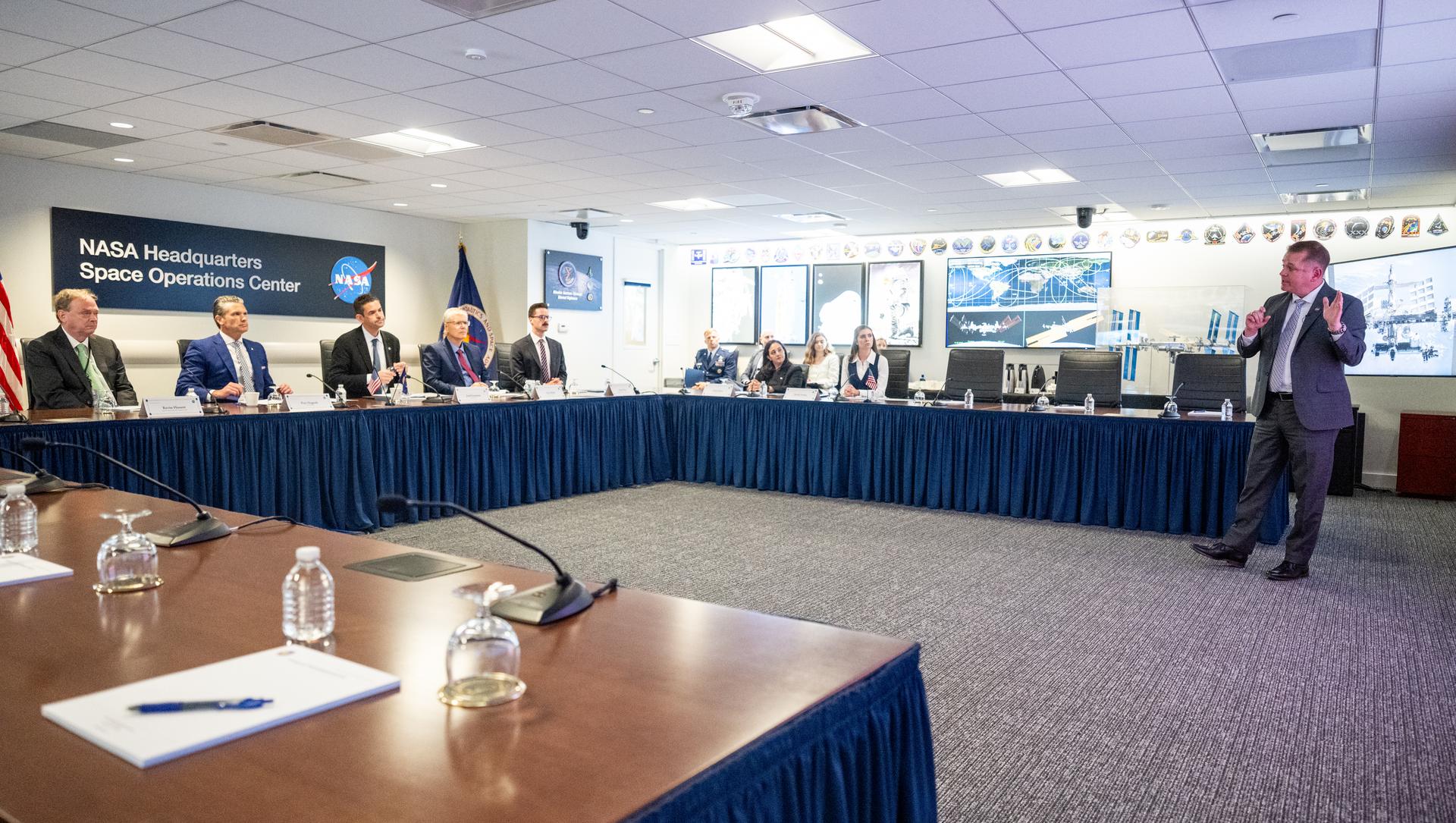
NASA Deputy Administrator Matt Anderson, right, presents to Kevin Hassett, Director of the National Economic Council, left, Secretary of War Pete Hegseth, second from left, NASA Administrator Jared Isaacman, center, Troy Meink, Secretary of the United States Air Force, second from right, and Ethan Klein, U.S. Chief Technology Officer, right, during a meeting of the Presidential Commission on the United States Space Academy in the Space Operations Center, Wednesday, Sept. 9, 2026, at the Mary W. Jackson NASA Headquarters Building in Washington. The commission will meet and submit a report proposing recommendations for the establishment of the Space Academy. Photo Credit (NASA/Joel Kowsky)
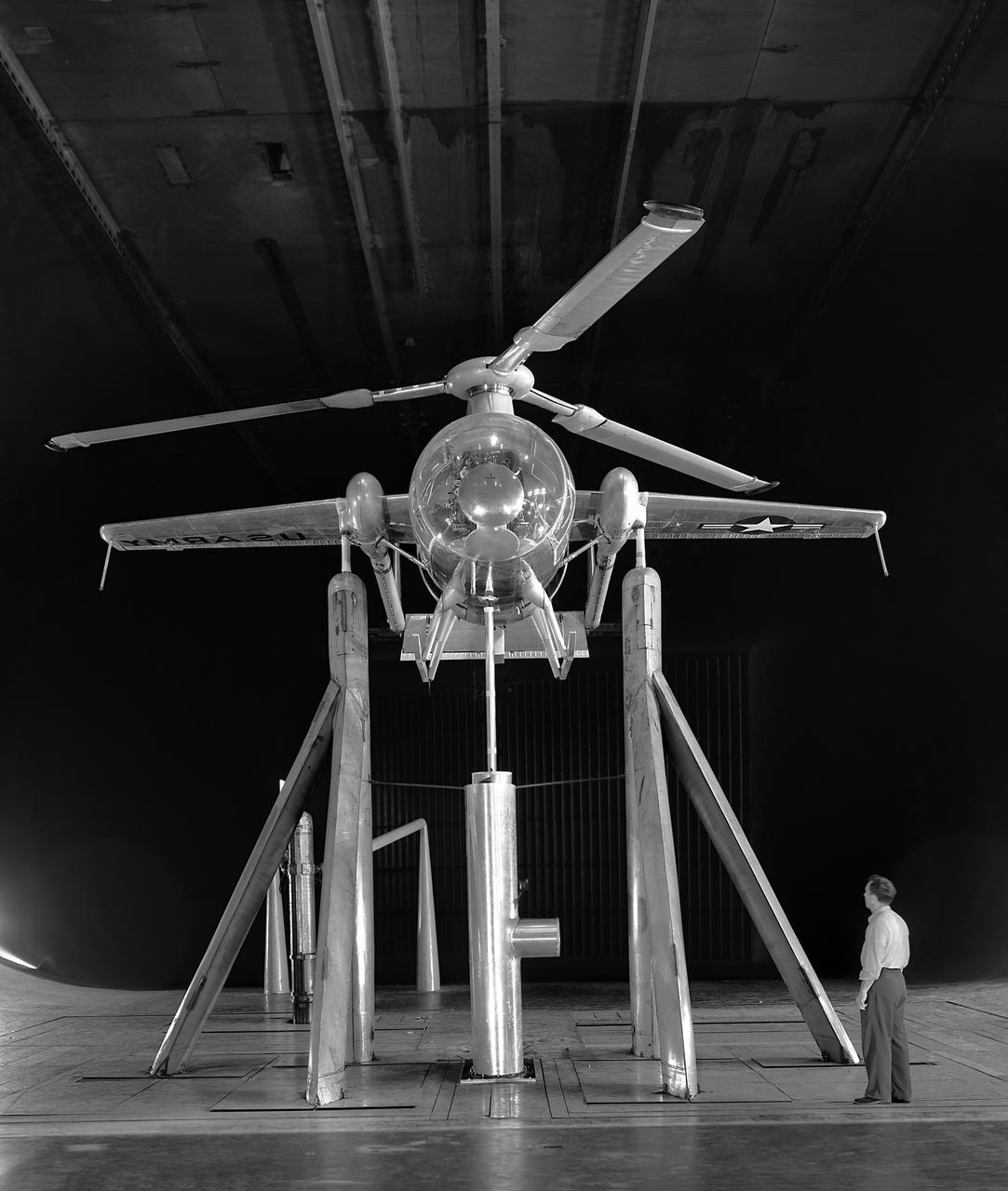
Foreword, front view of McDonnell Model XV-1 Convertiplane in the Ames 40x80 Foot Wind Tunnel. The McDonnell XV-1 was an experimental compound gyroplane developed for a joint research program between the United States Air Force and the United States Army to explore technologies to develop an aircraft that could take off and land like a helicopter but fly at faster airspeeds, similar to a conventional airplane. The XV-1 would reach a speed of 200 mph (322 km/h), faster than any previous rotorcraft, but the program was terminated due to the tip-jet noise and complexity of the technology which gave only a modest gain in performance.
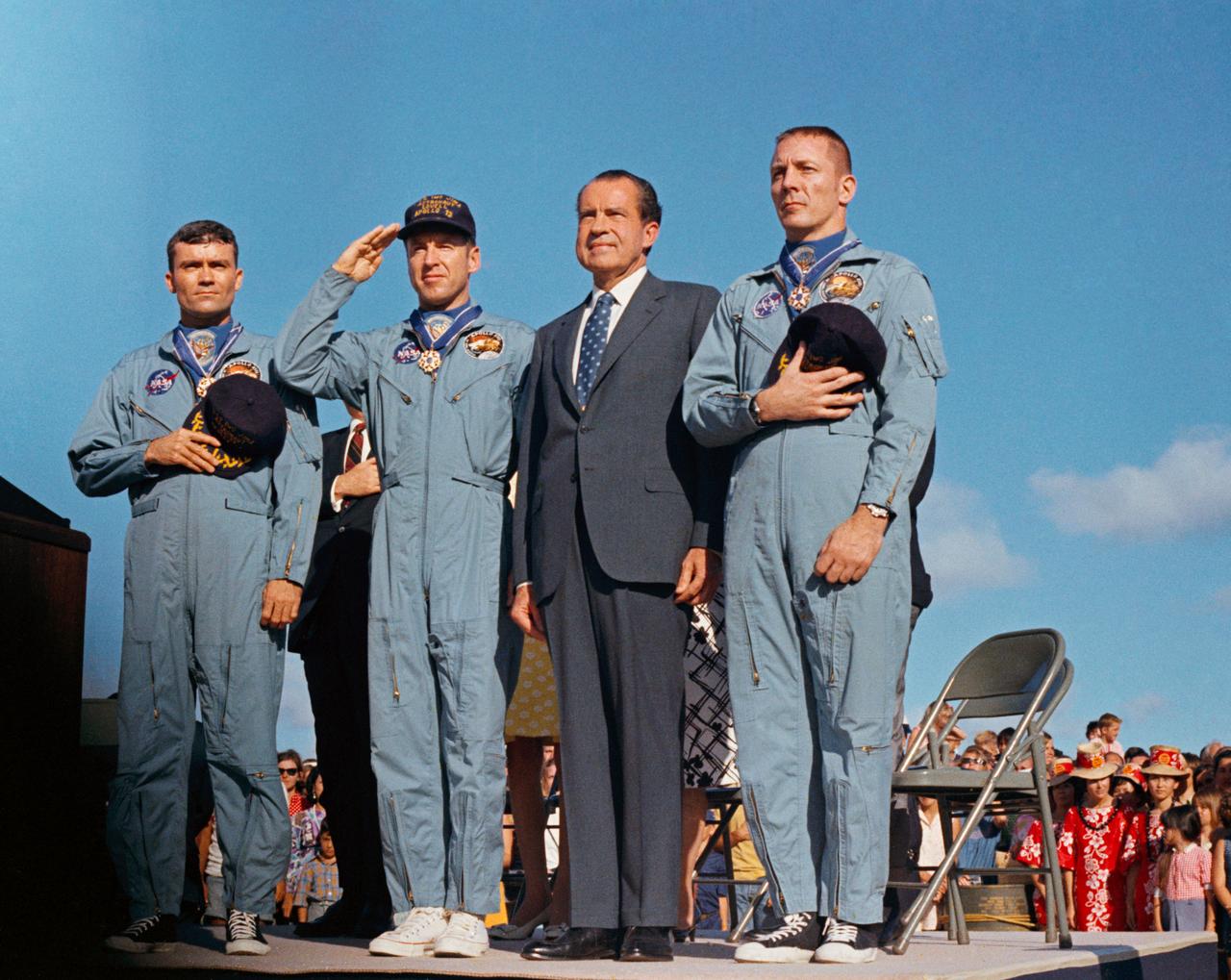
S70-15526 (18 April 1970) --- President Richard M. Nixon and the Apollo 13 crew members pay honor to the United States flag during the post-mission ceremonies at Hickam Air Force Base, Hawaii. Astronauts James A. Lovell Jr., (United States Navy Captain, salutes the flag) commander; John L. Swigert Jr., command module pilot (right); and Fred W. Haise Jr., lunar module pilot (left), were presented the Presidential Medal of Freedom by the Chief Executive. The Apollo 13 splashdown occurred at 12:07:44 p.m. (CST), April 17, 1970, about a day and a half prior to the award presentation.
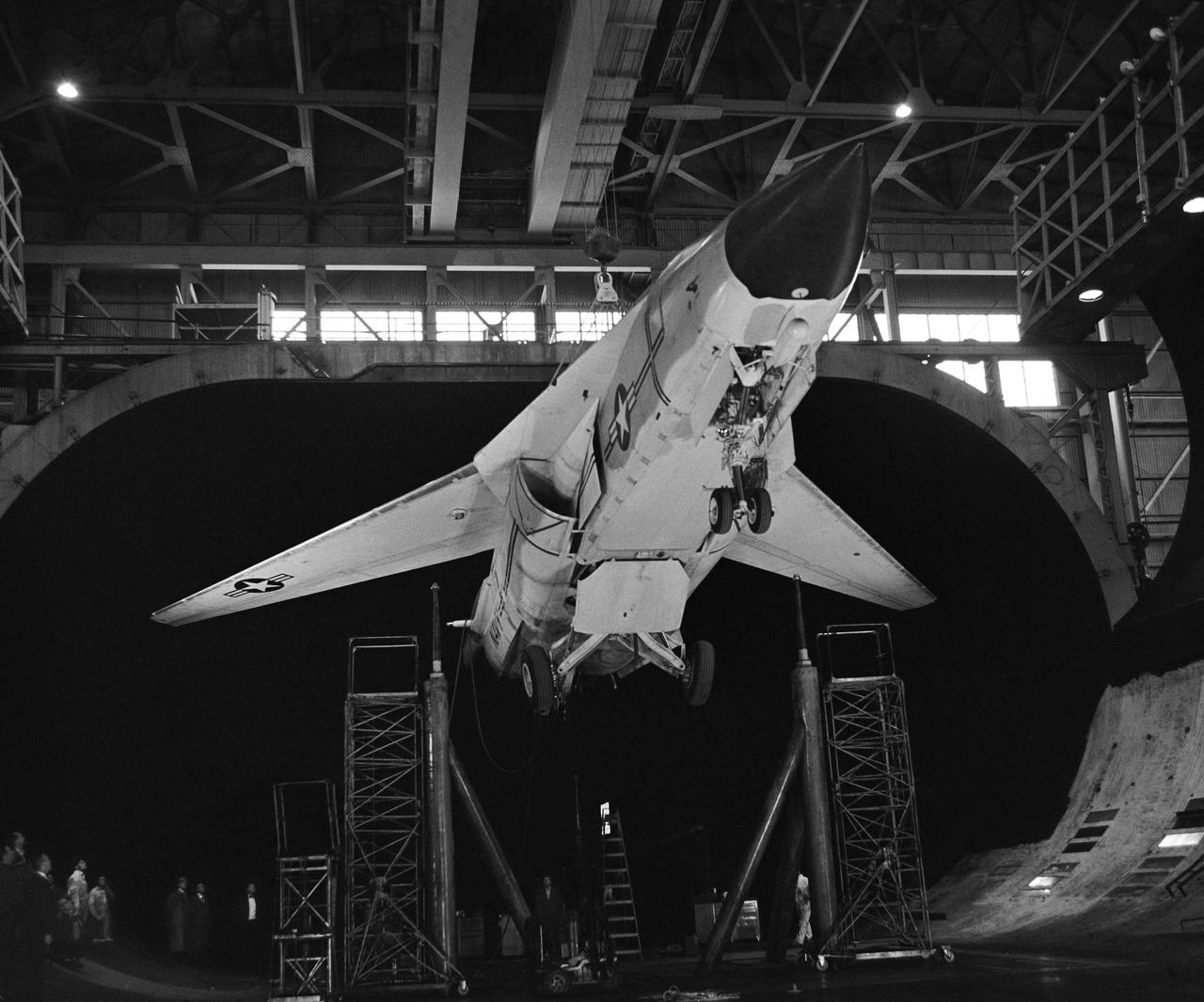
Installation Photos, 3/4 front view from below. F-111B in Ames 40x80 Foot Wind Tunnel. The General Dynamics/Grumman F-111B was a long-range carrier-based interceptor aircraft that was planned to be a follow-on to the F-4 Phantom II. The F-111B was developed in the 1960s by General Dynamics in conjunction with Grumman for the United States Navy (USN) as part of the joint Tactical Fighter Experimental (TFX) with the United States Air Force (USAF) to produce a common fighter for the services that could perform a variety of missions. It incorporated innovations such as variable-geometry wings, afterburning turbofan engines, and a long-range radar and missile weapons system.
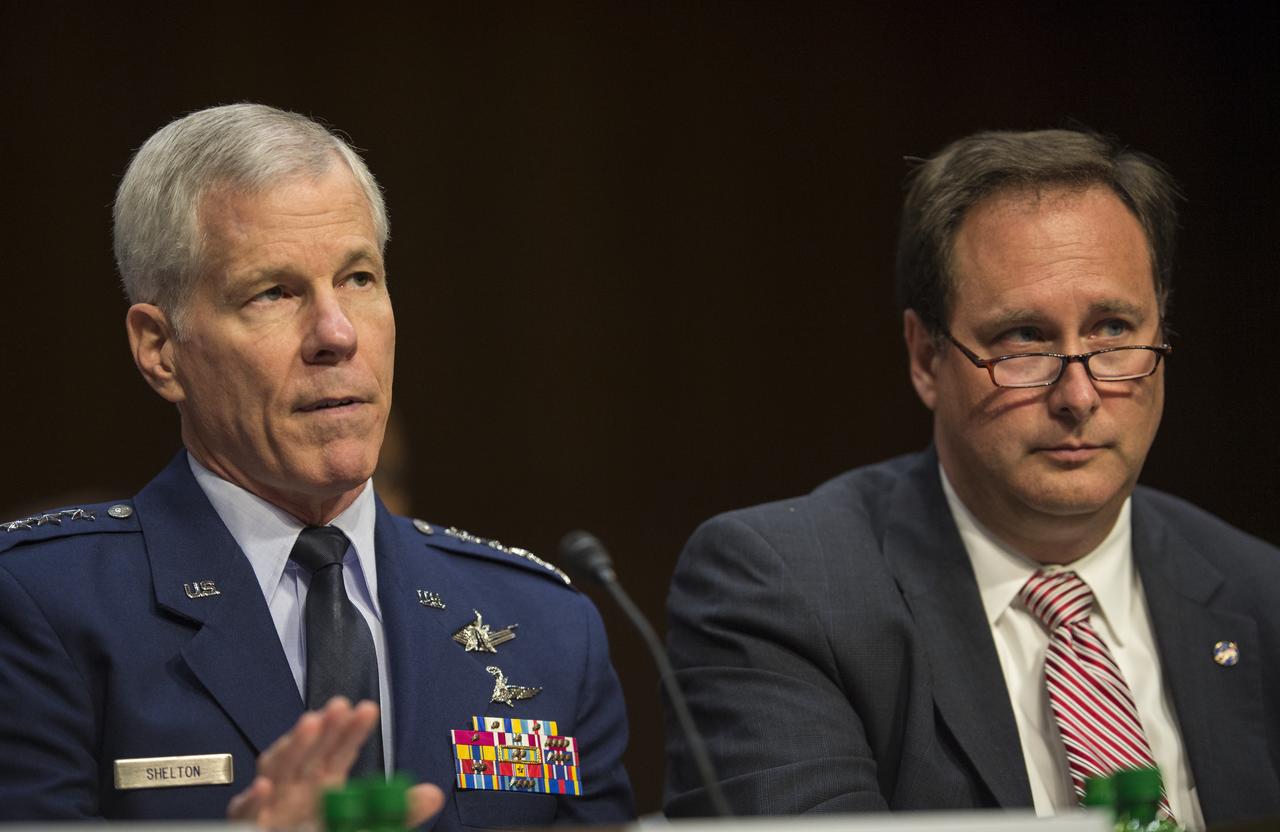
General William Sherlton, Commander of the United States Air Force Space Command, left; answers a question during testimony in front of the Senate Subcommittee on Strategic Forces and Senate Committee on Commerce, Science, and Transportation on Wednesday, July 16, 2014, at the Hart Senate Office Building in Washington, DC. The Senate hearing focused on assured access to space.
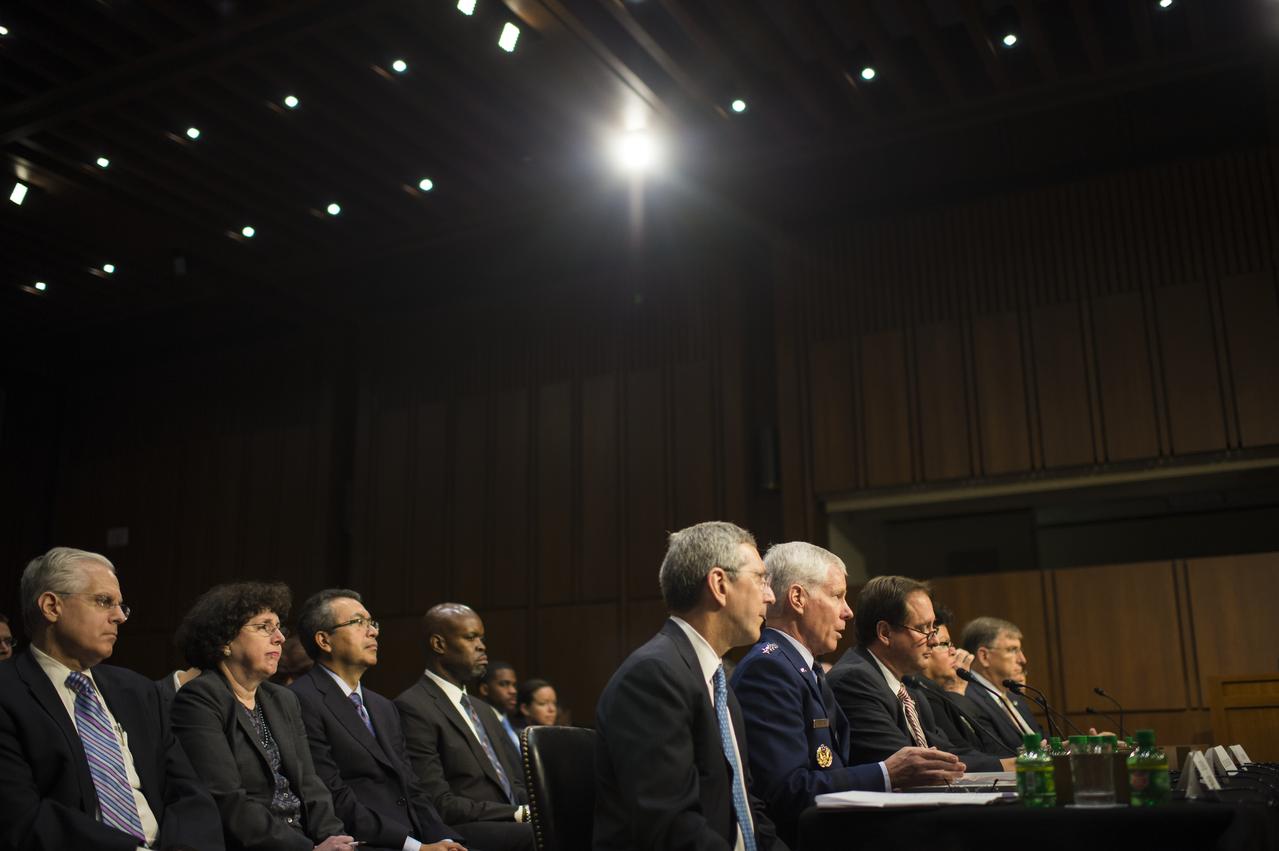
General William Shelton, Commander of the United States Air Force Space Command, second from right, answers a question during testimony in front of the Senate Subcommittee on Strategic Forces and Senate Committee on Commerce, Science, and Transportation on Wednesday, July 16, 2014, at the Hart Senate Office Building in Washington, DC. The Senate hearing focused on assured access to space.
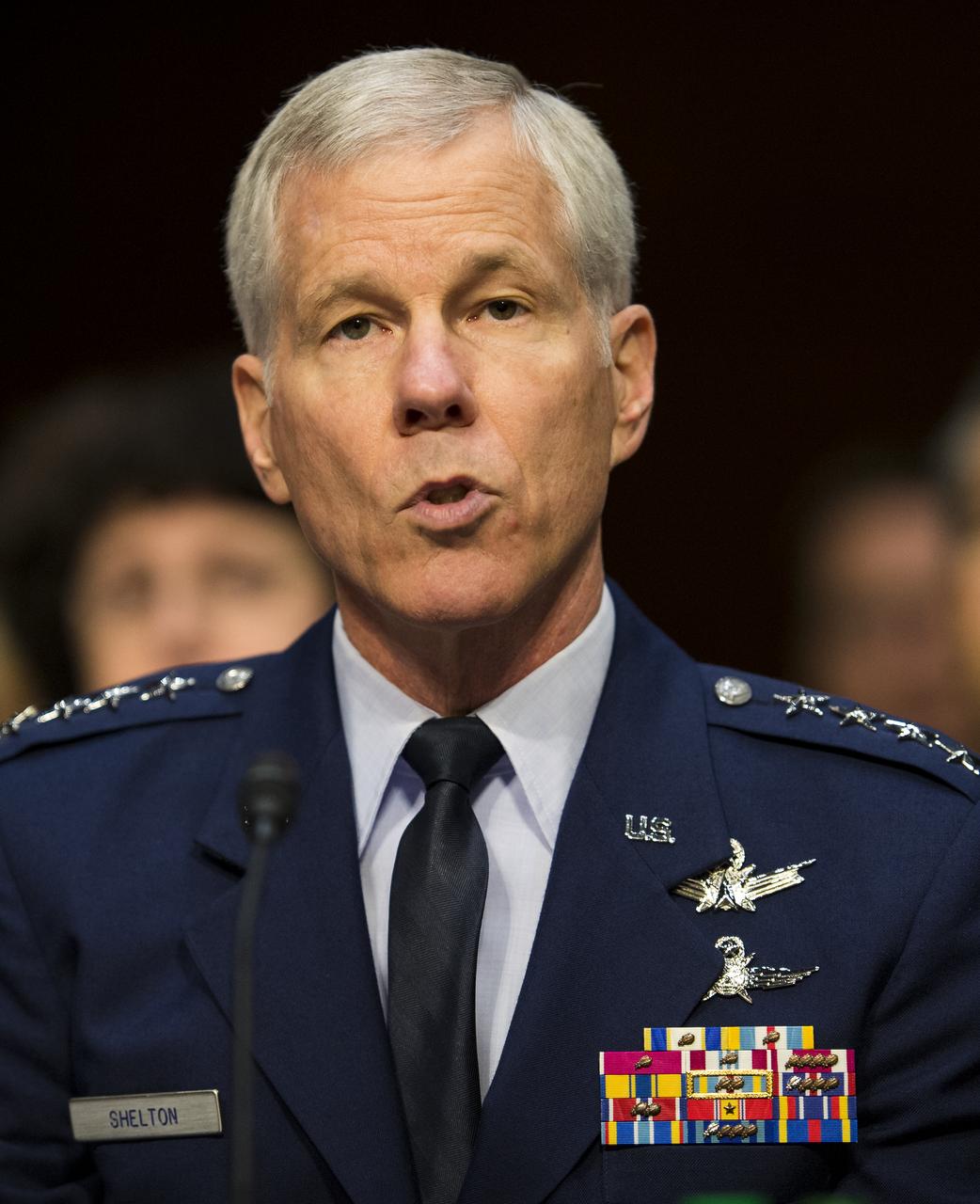
General William Shelton, Commander of the United States Air Force Space Command, delivers his opening statement during testimony in front of the Senate Subcommittee on Strategic Forces and Senate Committee on Commerce, Science, and Transportation on Wednesday, July 16, 2014, at the Hart Senate Office Building in Washington, DC. The Senate hearing focused on assured access to space.
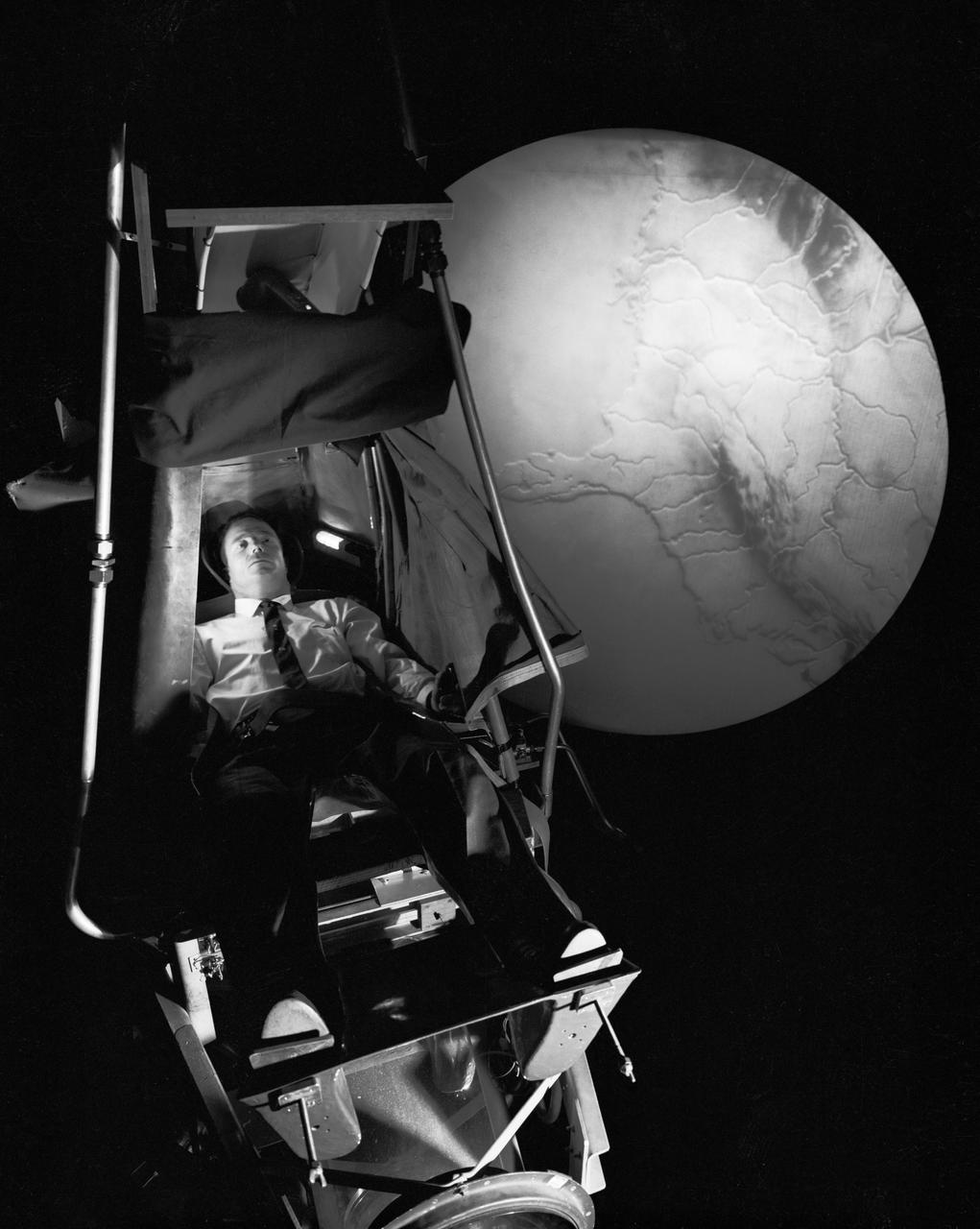
S62-01145 (1961) --- Project Mercury astronaut M. Scott Carpenter practices manual control of a spacecraft in the Air Lubricated Free Attitude (ALFA) trainer located at NASA?s Langley Air Force Base, Virginia. This trainer allows the astronaut to see the image of Earth?s surface at his feet while manually controlling the spacecraft. Carpenter has been selected as the prime pilot of the United States? second orbital flight. Photo credit: NASA
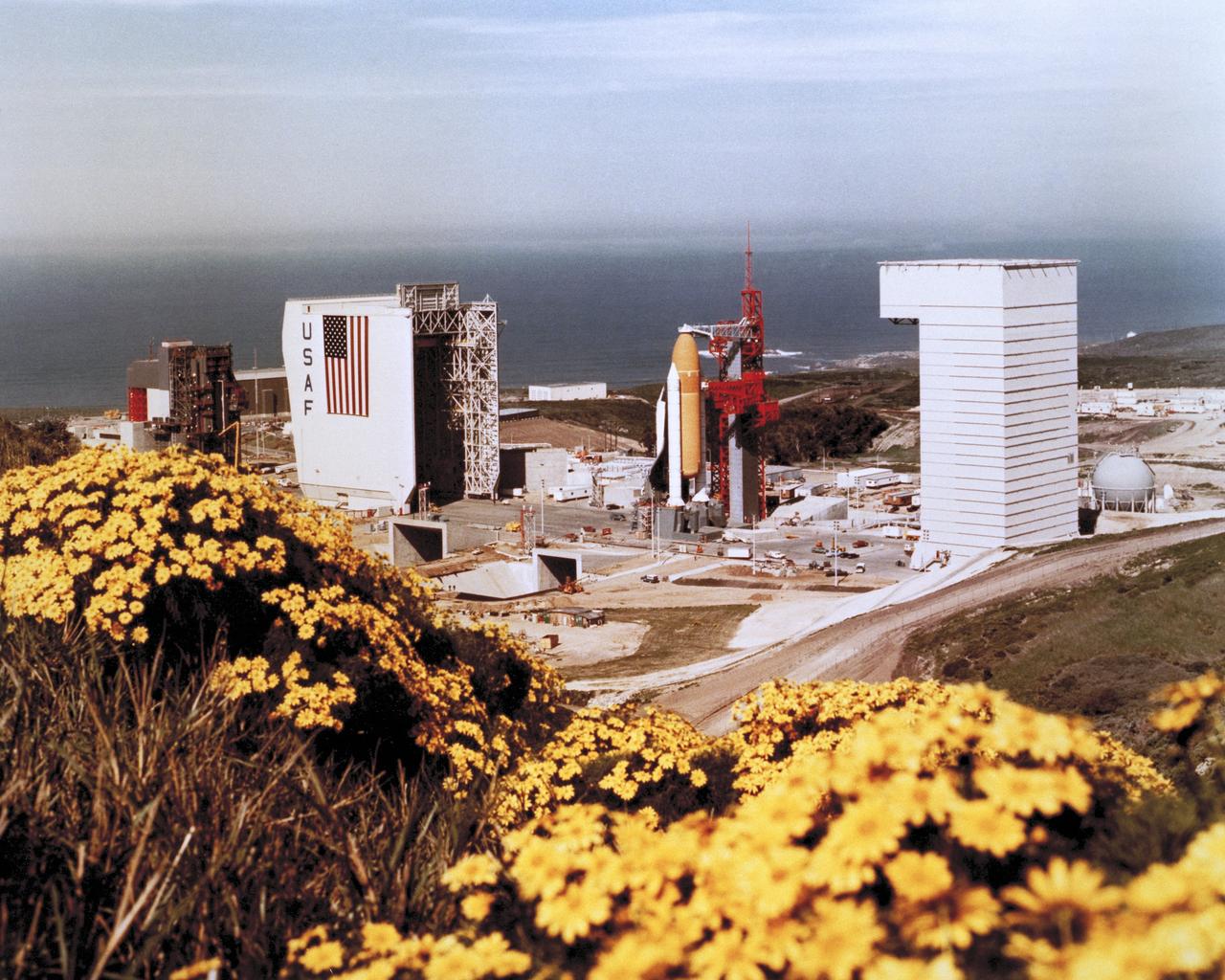
VANDENBERG AIR FORCE BASE, Calif. -- At Vandenberg Air Force Base in the early '80s, the Space Shuttle Enterprise undergoes Pathfinder fit checks at a tower. The Enterprise was built as a test vehicle and was not equipped for spaceflight. Enterprise eventually became the property of the Smithsonian Institution. Vandenberg AFB is located on the Central Coast of California about 150 miles northwest of Los Angeles. The property is comprised of parts of five Mexican land grants and a sixth grant that was transferred virtually intact to the Army. Vandenberg now is operated by the 30th Space Wing, and is the only military installation in the United States from which unmanned government and commercial satellites are launched into polar orbit. It is also the only site from which intercontinental ballistic missiles ICBMs are launched toward the Kwajalein Atoll to verify weapon systems performance. Vandenberg's military service dates back to 1941, when known as Camp Cooke it served as an Army training facility for armored and infantry troops. The main camp closed in June 1946 and was reactivated in August 1950 after the outbreak of the Korean War. The 13th and 20th Armored Divisions and the 40th, 44th, 86th, and 91st Infantry Divisions trained at Cooke. With the advent of the missile age in the 1950s, the Air Force persuaded Secretary of Defense Charles E. Wilson to direct the Army to transfer 64,000 acres of North Camp Cooke to the Air Force for use as a missile launch and training base. In 1958, Camp Cooke was renamed Vandenberg Air Force Base in honor of the late General Hoyt S. Vandenberg, second Air Force Chief of Staff of the United States Air Force and chief architect of today's modern Air Force. Photo Credit: NASA
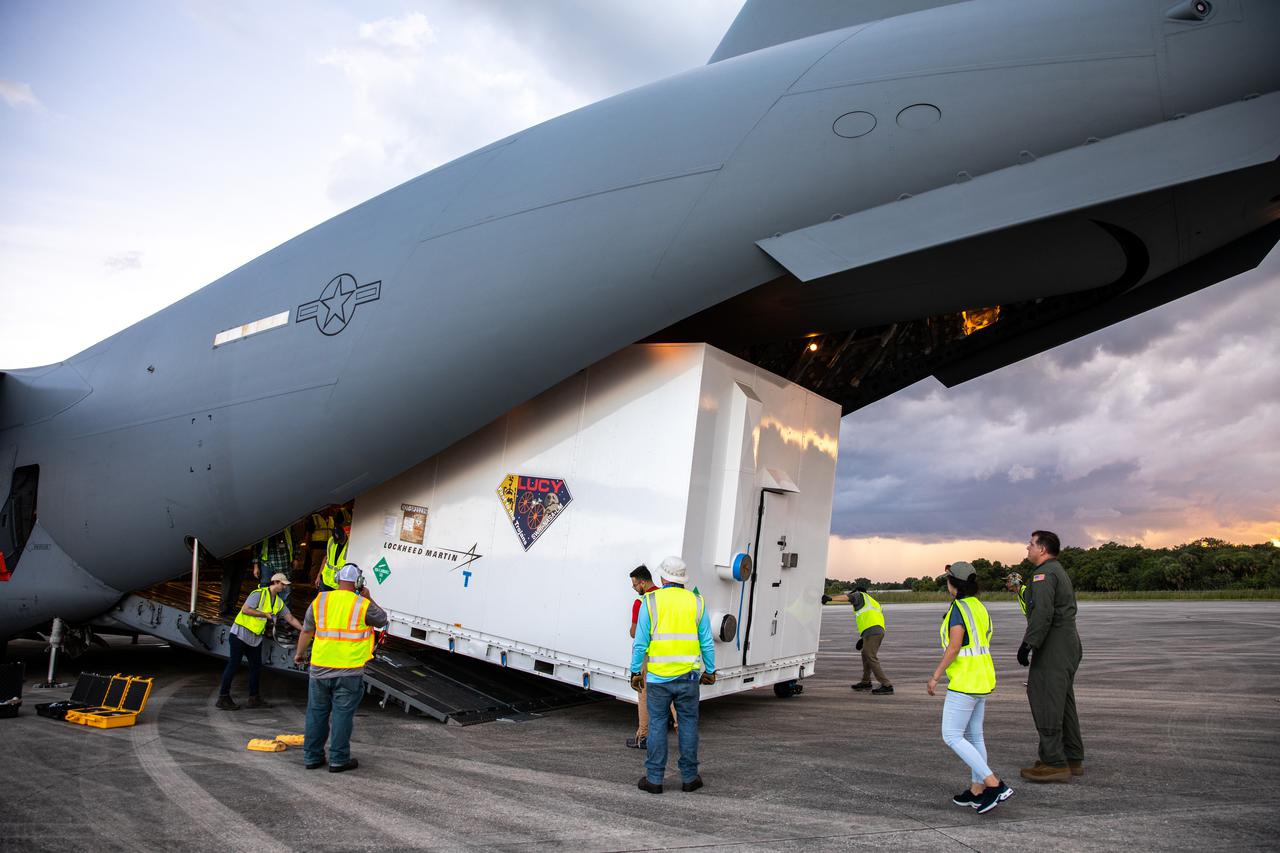
The shipping container holding NASA's Lucy spacecraft is unloaded from a United States Air Force C-17 cargo plane, stationed out of Charleston Air Force Base in South Carolina, on the runway of the Launch and Landing Facility at Kennedy Space Center in Florida on July 30, 2021. From there, the Lucy spacecraft will move to the Astrotech Space Operations payload processing facility in nearby Titusville, Florida, before its scheduled launch on a United Launch Alliance (ULA) Atlas V rocket from Cape Canaveral Space Force Station on October 16, 2021. The Lucy mission will be the first space mission to explore a diverse population of small bodies known as the Jupiter Trojan asteroids. The launch is being managed by NASA's Launch Services Program based at Kennedy, America's multi-user spaceport.
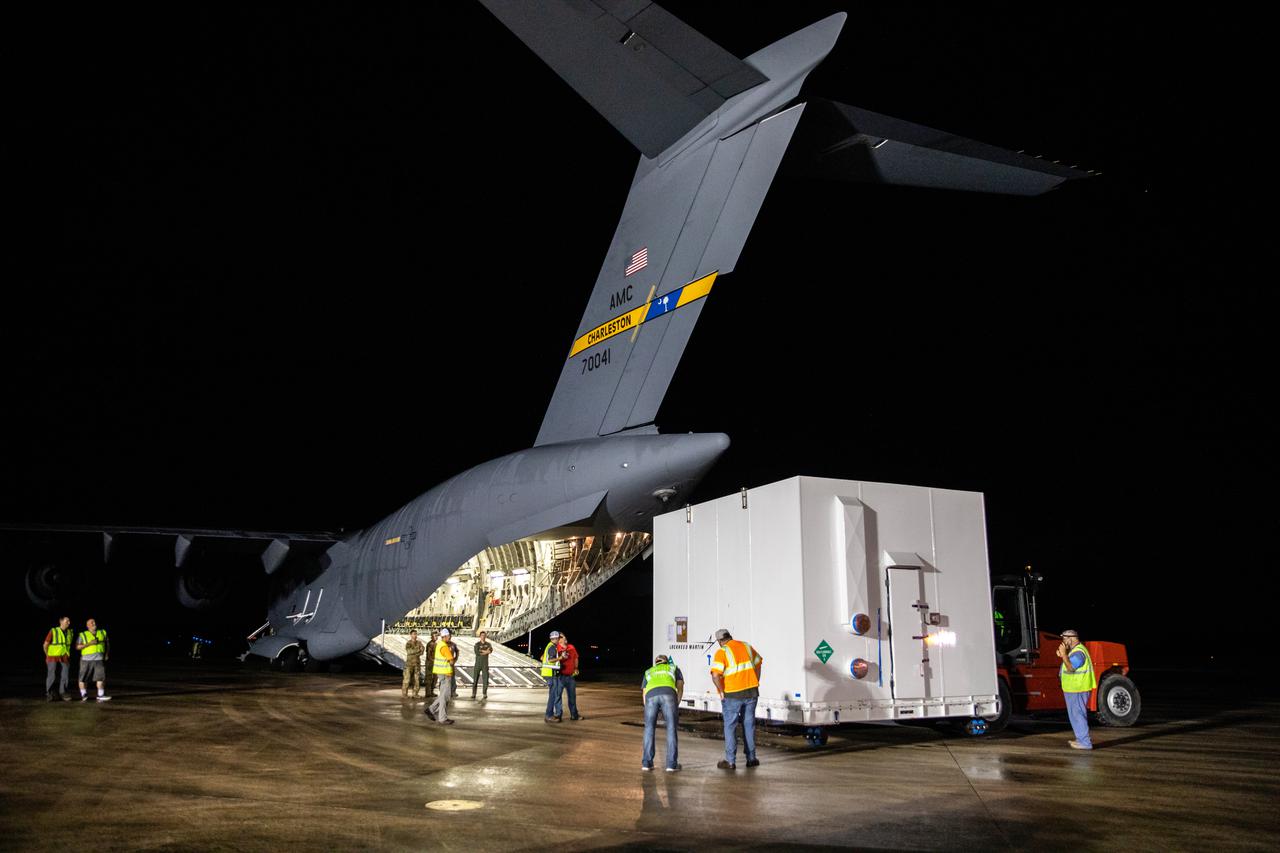
The shipping container holding NASA's Lucy spacecraft is unloaded from a United States Air Force C-17 cargo plane, stationed out of Charleston Air Force Base in South Carolina, on the runway of the Launch and Landing Facility at Kennedy Space Center in Florida on July 30, 2021. From there, the Lucy spacecraft will move to the Astrotech Space Operations payload processing facility in nearby Titusville, Florida, before its scheduled launch on a United Launch Alliance (ULA) Atlas V rocket from Cape Canaveral Space Force Station on October 16, 2021. The Lucy mission will be the first space mission to explore a diverse population of small bodies known as the Jupiter Trojan asteroids. The launch is being managed by NASA's Launch Services Program based at Kennedy, America's multi-user spaceport.
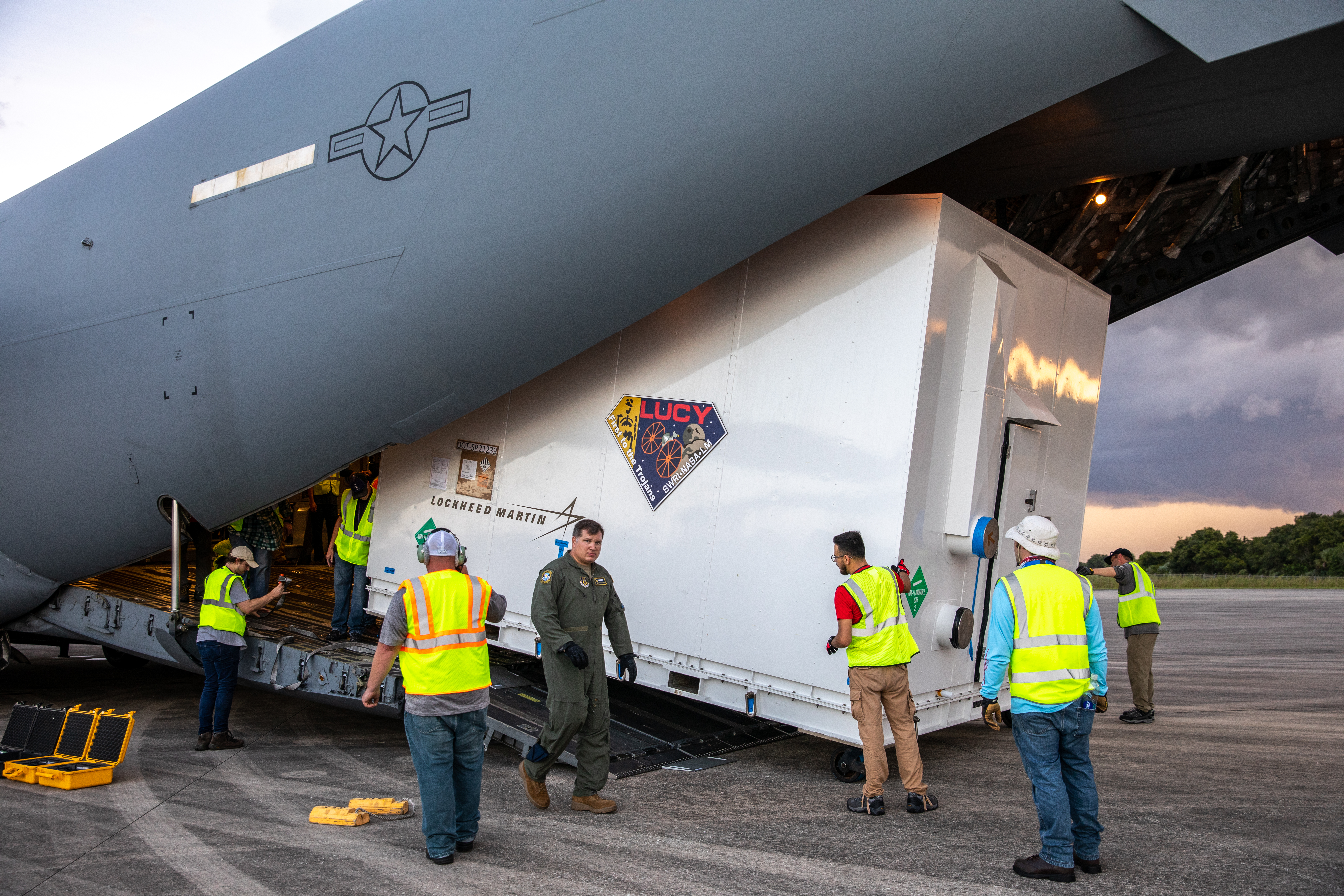
The shipping container holding NASA's Lucy spacecraft is unloaded from a United States Air Force C-17 cargo plane, stationed out of Charleston Air Force Base in South Carolina, on the runway of the Launch and Landing Facility at Kennedy Space Center in Florida on July 30, 2021. From there, the Lucy spacecraft will move to the Astrotech Space Operations payload processing facility in nearby Titusville, Florida, before its scheduled launch on a United Launch Alliance (ULA) Atlas V rocket from Cape Canaveral Space Force Station on October 16, 2021. The Lucy mission will be the first space mission to explore a diverse population of small bodies known as the Jupiter Trojan asteroids. The launch is being managed by NASA's Launch Services Program based at Kennedy, America's multi-user spaceport.
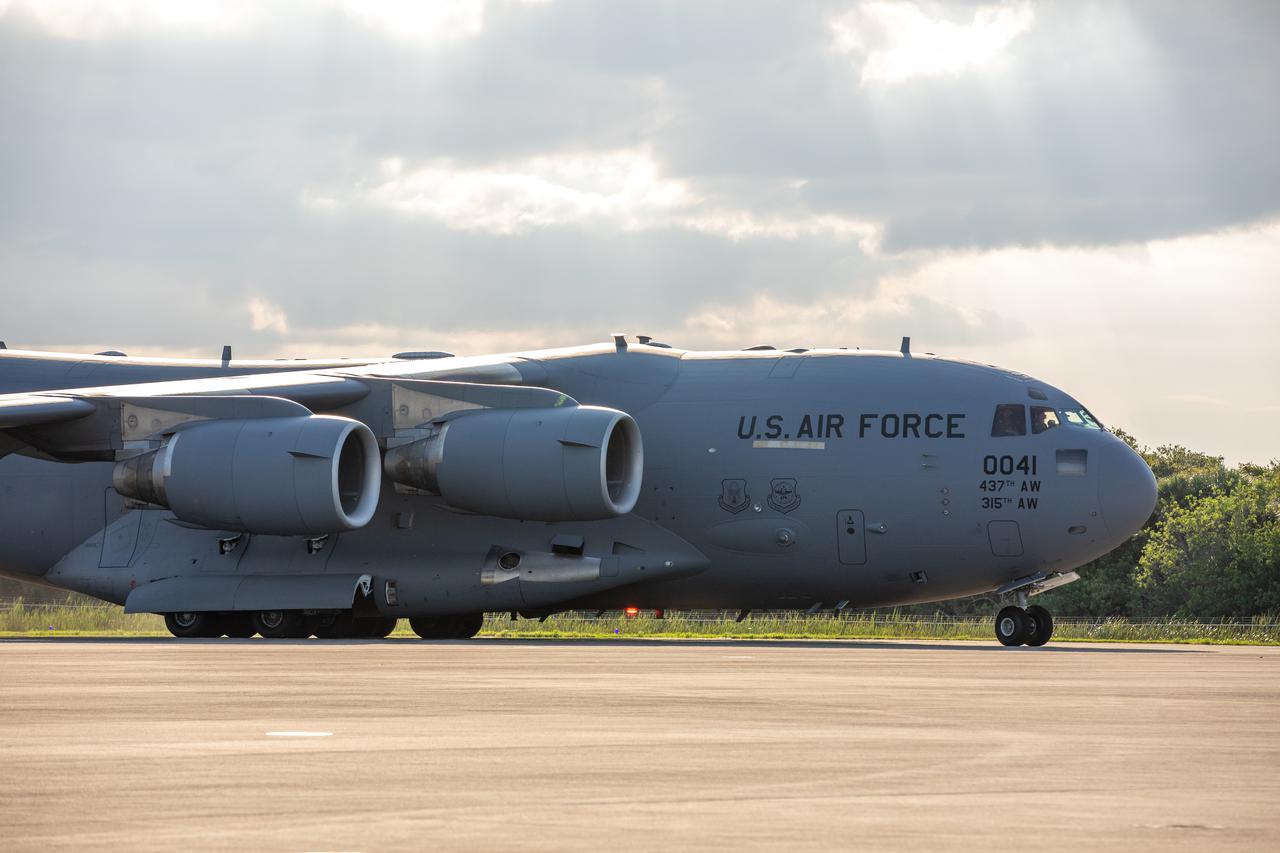
A United States Air Force C-17 cargo plane, stationed out of Charleston Air Force Base in South Carolina, holding NASA's Lucy spacecraft lands on the runway of the Launch and Landing Facility at Kennedy Space Center in Florida on July 30, 2021. From there, the Lucy spacecraft will move to the Astrotech Space Operations payload processing facility in nearby Titusville, Florida, before its scheduled launch on a United Launch Alliance (ULA) Atlas V rocket from Cape Canaveral Space Force Station on October 16, 2021. The Lucy mission will be the first space mission to explore a diverse population of small bodies known as the Jupiter Trojan asteroids. The launch is being managed by NASA's Launch Services Program based at Kennedy, America's multi-user spaceport.
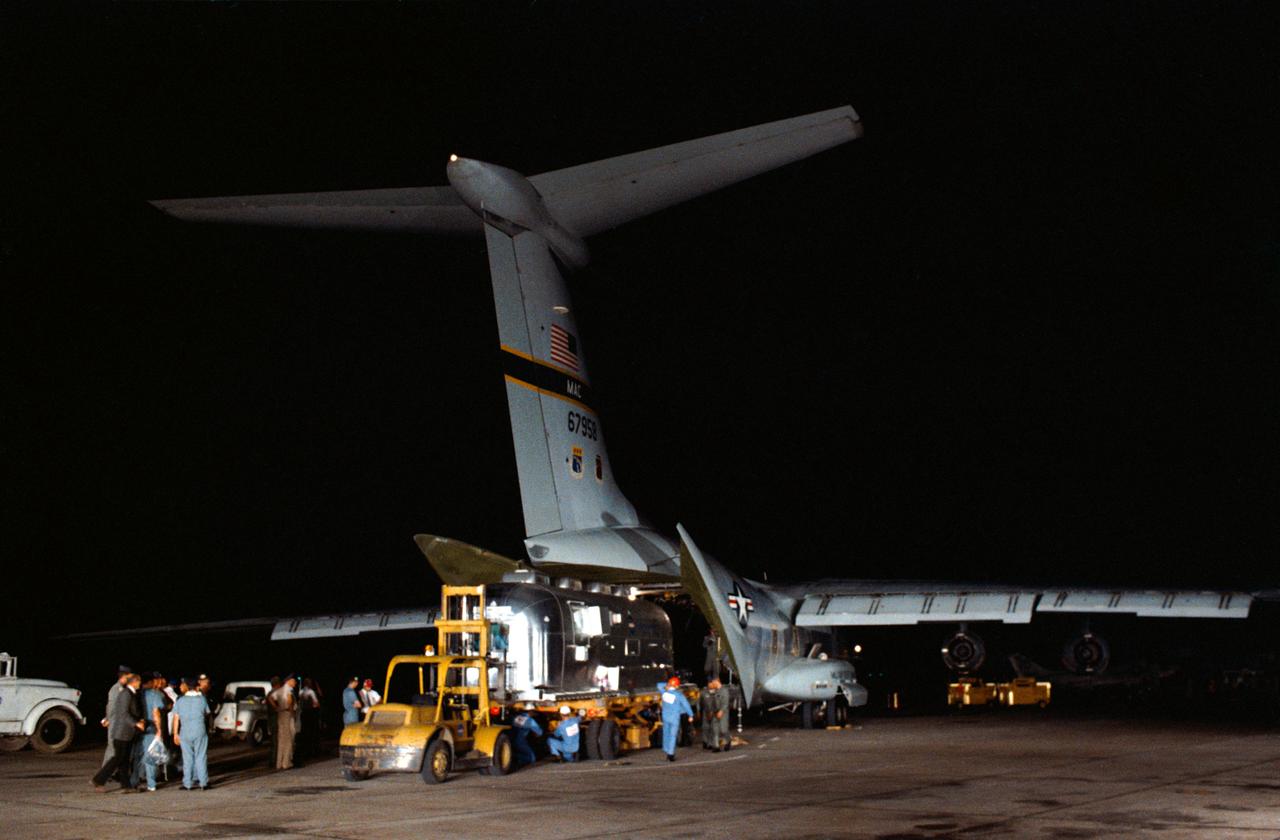
S69-40132 (27 July 1969) --- A Mobile Quarantine Facility (MQF), with the three Apollo 11 crewmembers inside, is unloaded from a United States Air Force C-141 transport at Ellington Air Force Base very early Sunday after a flight from Hawaii. A large crowd was present to welcome astronauts Neil A. Armstrong, Michael Collins, and Edwin E. Aldrin Jr. back to Houston following their historic lunar landing mission. The crew remained in the MQF until they arrived at the Crew Reception Area of the Lunar Receiving Laboratory (LRL) at the Manned Spacecraft Center (MSC). The crew will be released from quarantine on Aug. 11, 1969.

S69-40152 (27 July 1969) --- A Mobile Quarantine Facility (MQF), with the three Apollo 11 crewmen inside, is unloaded from a United States Air Force C-141 transport at Ellington Air Force Base very early Sunday after a flight from Hawaii. A large crowd was present to welcome astronauts Neil A. Armstrong, Michael Collins, and Edwin E. Aldrin Jr. back to Houston following their historic lunar landing mission. The crew remained in the MQF until they arrived at the Crew Reception Area of the Lunar Receiving Laboratory (LRL) at the Manned Spacecraft Center (MSC). The crew will be released from quarantine on Aug. 11, 1969.
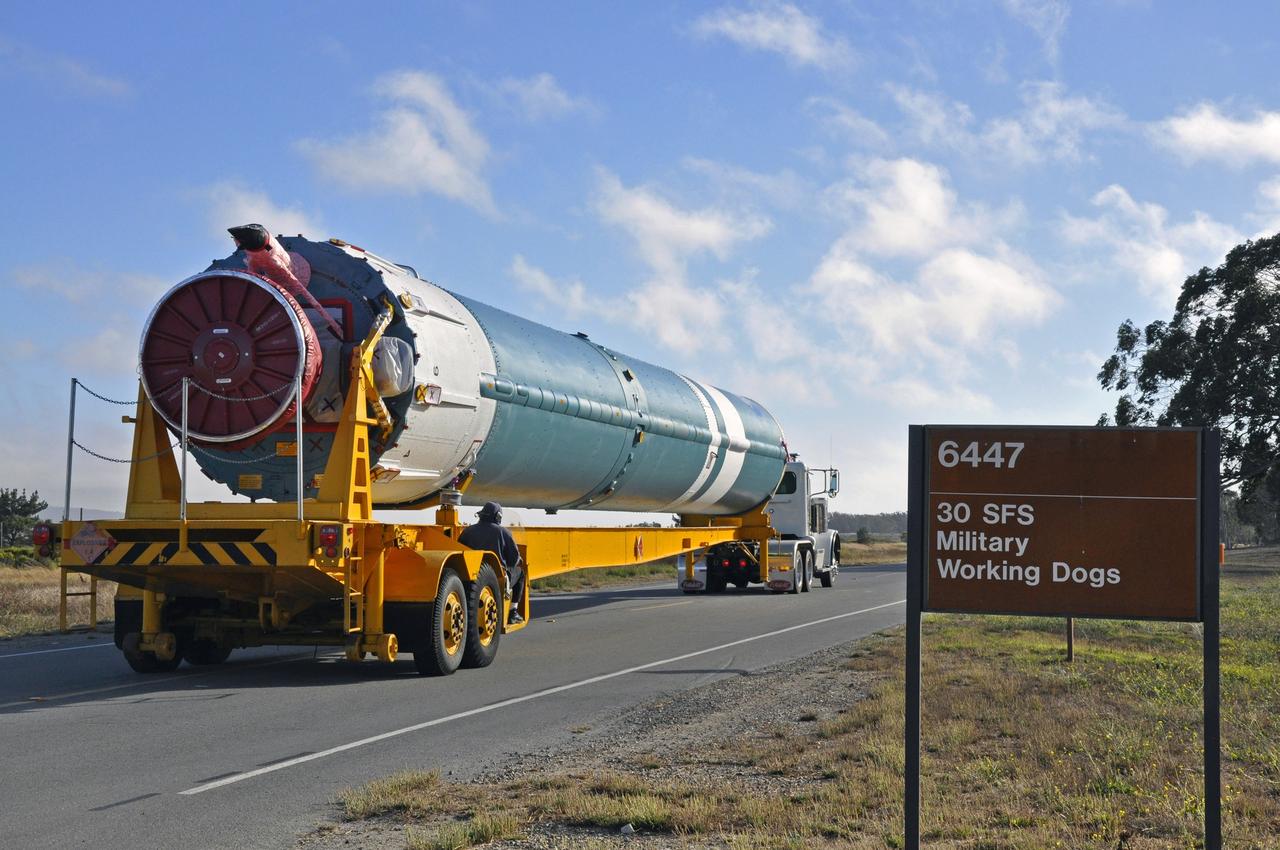
VANDENBERG AIR FORCE BASE, Calif. – The U.S. Air Force 30th Security Forces Squadron is responsible for the safety of the first stage of the United Launch Alliance Delta II rocket for NASA's Soil Moisture Active Passive mission, or SMAP, on its move from the Building 836 hangar to the Horizontal Processing Facility at Space Launch Complex 2 on Vandenberg Air Force Base in California. SMAP will provide global measurements of soil moisture and its freeze/thaw state. These measurements will be used to enhance understanding of processes that link the water, energy and carbon cycles, and to extend the capabilities of weather and climate prediction models. SMAP data also will be used to quantify net carbon flux in boreal landscapes and to develop improved flood prediction and drought monitoring capabilities. Launch is scheduled for November 2014. To learn more about SMAP, visit http://smap.jpl.nasa.gov. Photo credit: NASA/Randy Beaudoin

VANDENBERG AIR FORCE BASE, Calif. – The first stage of the United Launch Alliance Delta II rocket for NASA's Soil Moisture Active Passive mission, or SMAP, crosses a railroad bridge on its move from the Building 836 hangar to the Horizontal Processing Facility at Space Launch Complex 2 on Vandenberg Air Force Base in California. SMAP will provide global measurements of soil moisture and its freeze/thaw state. These measurements will be used to enhance understanding of processes that link the water, energy and carbon cycles, and to extend the capabilities of weather and climate prediction models. SMAP data also will be used to quantify net carbon flux in boreal landscapes and to develop improved flood prediction and drought monitoring capabilities. Launch is scheduled for November 2014. To learn more about SMAP, visit http://smap.jpl.nasa.gov. Photo credit: NASA/U.S. Air Force 30th Space Wing
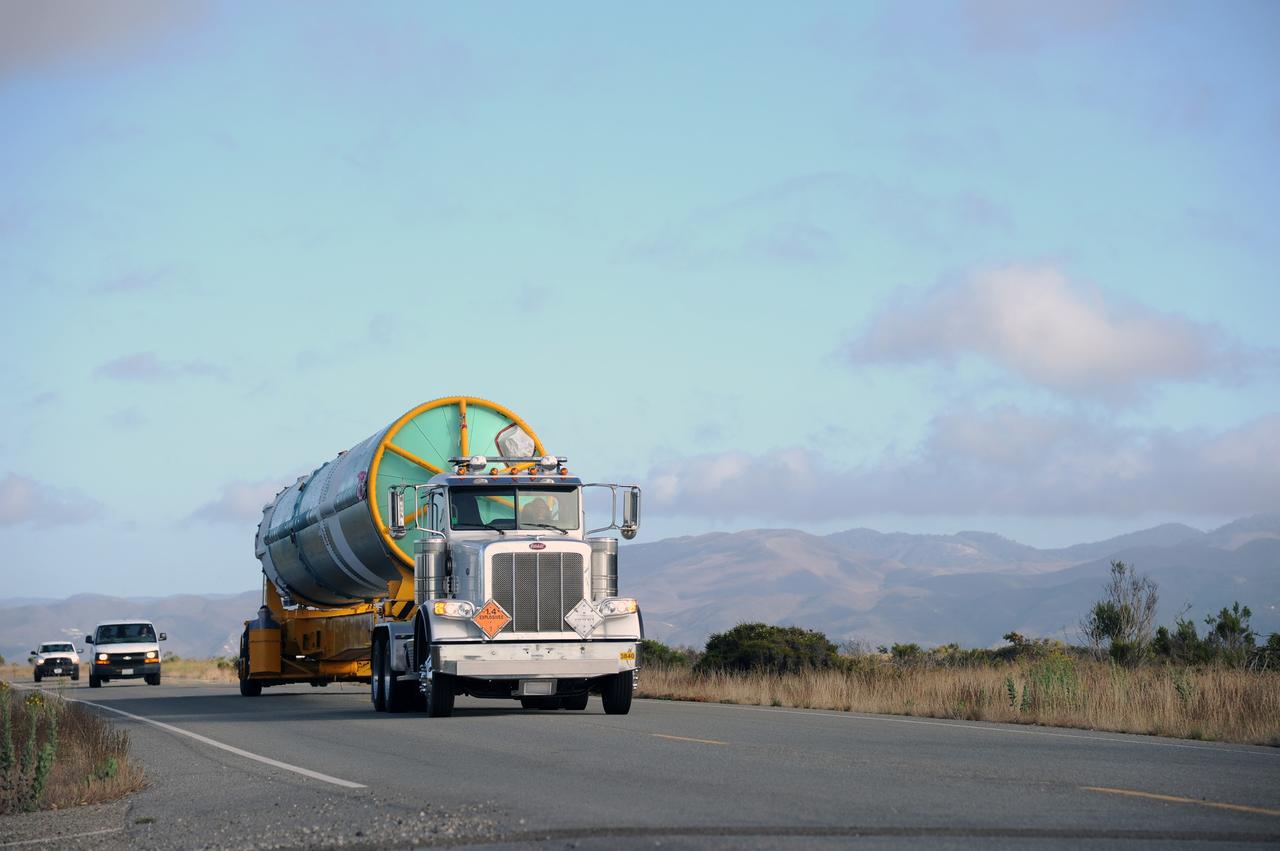
VANDENBERG AIR FORCE BASE, Calif. – The first stage of the United Launch Alliance Delta II rocket for NASA's Soil Moisture Active Passive mission, or SMAP, makes its way along the roadways on Vandenberg Air Force Base in California from the Building 836 hangar to the Horizontal Processing Facility at Space Launch Complex 2. SMAP will provide global measurements of soil moisture and its freeze/thaw state. These measurements will be used to enhance understanding of processes that link the water, energy and carbon cycles, and to extend the capabilities of weather and climate prediction models. SMAP data also will be used to quantify net carbon flux in boreal landscapes and to develop improved flood prediction and drought monitoring capabilities. Launch is scheduled for November 2014. To learn more about SMAP, visit http://smap.jpl.nasa.gov. Photo credit: NASA/U.S. Air Force 30th Space Wing
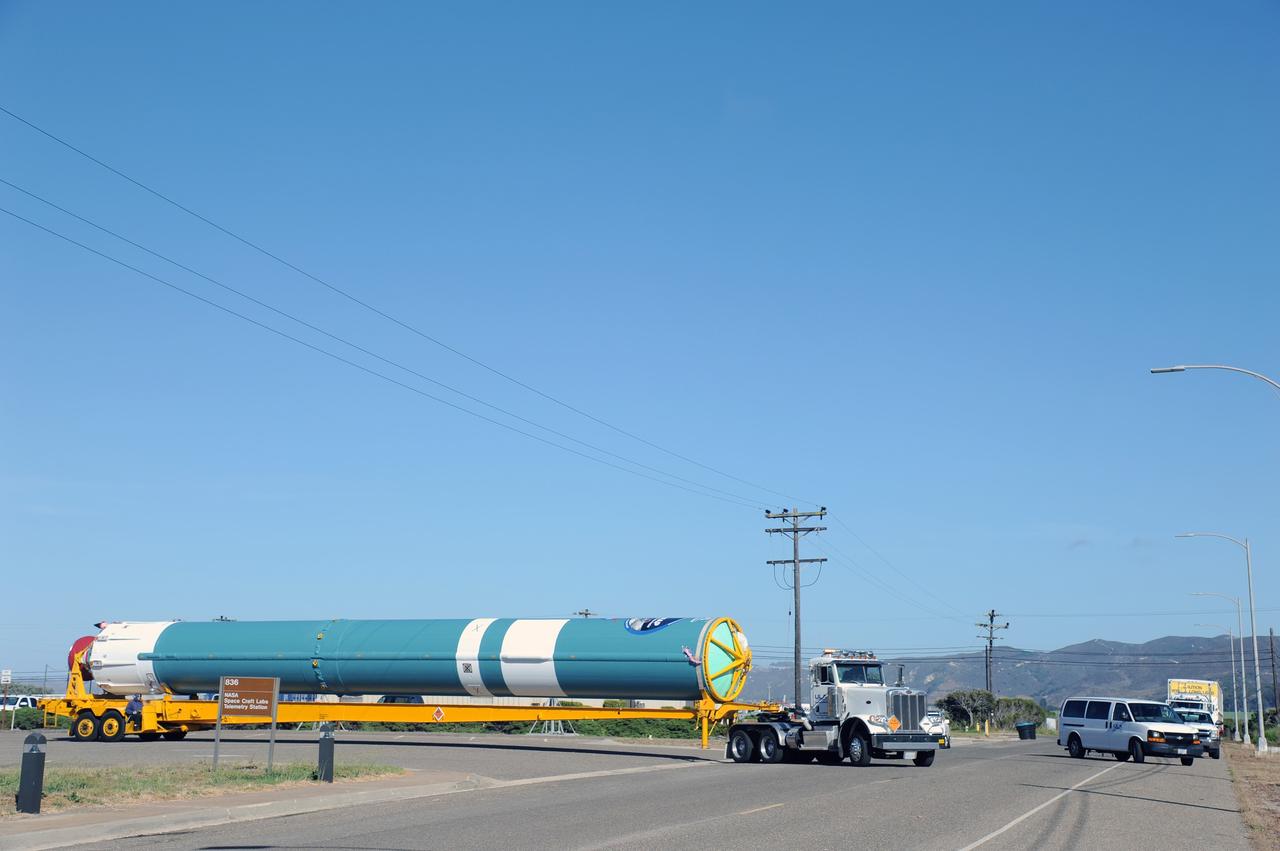
VANDENBERG AIR FORCE BASE, Calif. – The first stage of the United Launch Alliance Delta II rocket for NASA's Soil Moisture Active Passive mission, or SMAP, is transported from the Building 836 hangar to the Horizontal Processing Facility at Space Launch Complex 2 on Vandenberg Air Force Base in California. SMAP will provide global measurements of soil moisture and its freeze/thaw state. These measurements will be used to enhance understanding of processes that link the water, energy and carbon cycles, and to extend the capabilities of weather and climate prediction models. SMAP data also will be used to quantify net carbon flux in boreal landscapes and to develop improved flood prediction and drought monitoring capabilities. Launch is scheduled for November 2014. To learn more about SMAP, visit http://smap.jpl.nasa.gov. Photo credit: NASA/U.S. Air Force 30th Space Wing
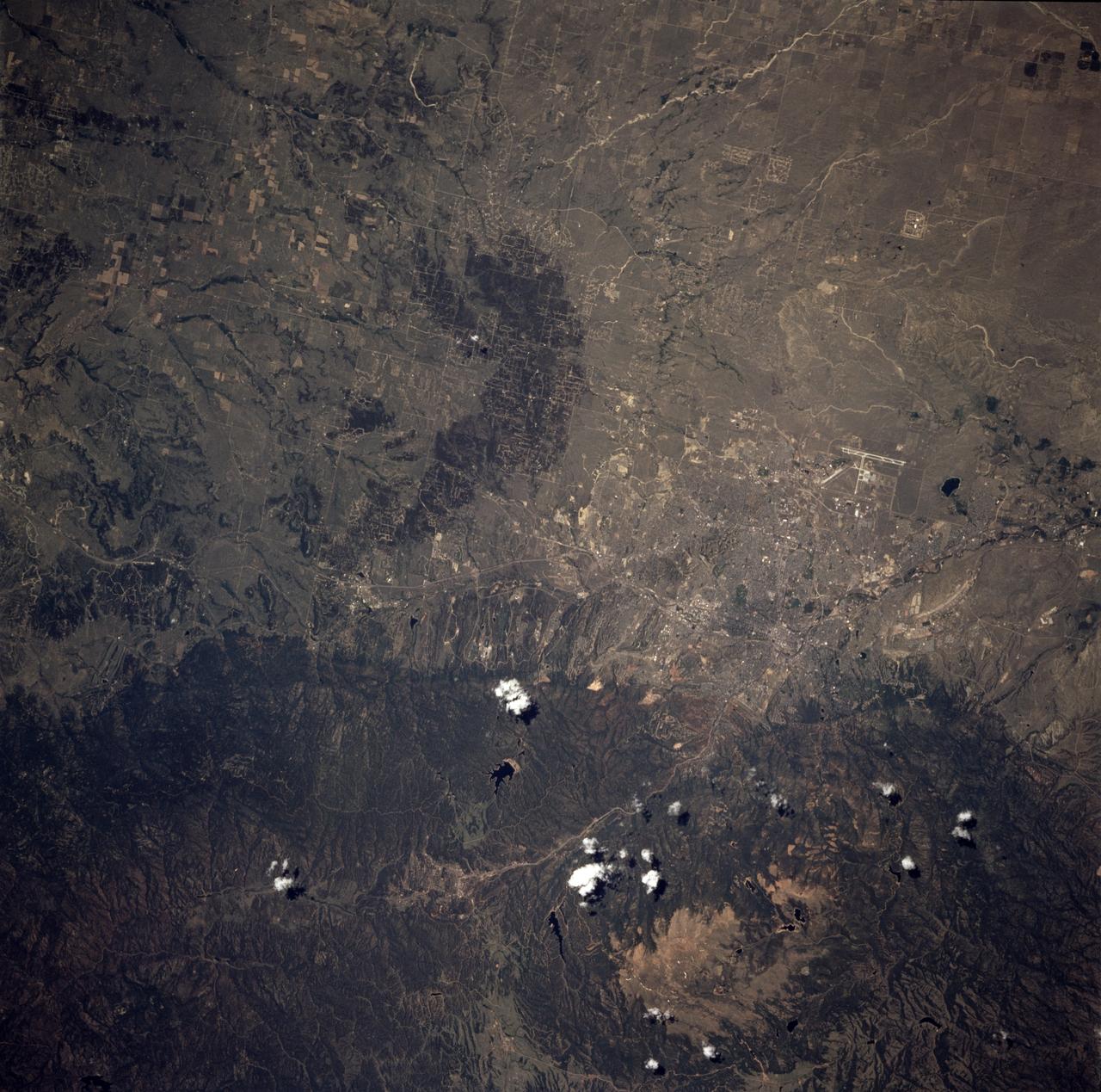
STS078-736-064 (20 June - 7 July 1996) --- As photographed by the flight crew of the Space Shuttle Columbia in Earth-orbit, the city of Colorado Springs, Colorado, is seen near the eastern base of Pikes Peak. It was built on a mesa at 6,008 feet (1,831 meters) sea level. Pikes Peak is the large tan patch on the bottom left or west portion of the photo. The city is the headquarters of Pike National Forest, located on its west side. Founded in 1871 as Fountain Colony by General William J. Palmer, builder of the Denver and Rio Grande Western Railroad, it was renamed for the nearby Manitou mineral springs. Growth of the area followed the Cripple Creek gold strikes in the 1890s and the promotion of the tourist-health-resort trade in the area. The establishment of military installations gave further impetus to development. The North American Air Defense and Aerospace Defense commands are headquartered at Peterson Air Force Base (Peterson Field). Fort Carson (1942), on the city's southern edge, is the home of the Fourth United States Infantry Division. The United States Air Force Academy (1954), just to the north, is set against a backdrop of the Rampart Range. Its population in 1990 was 281,140.
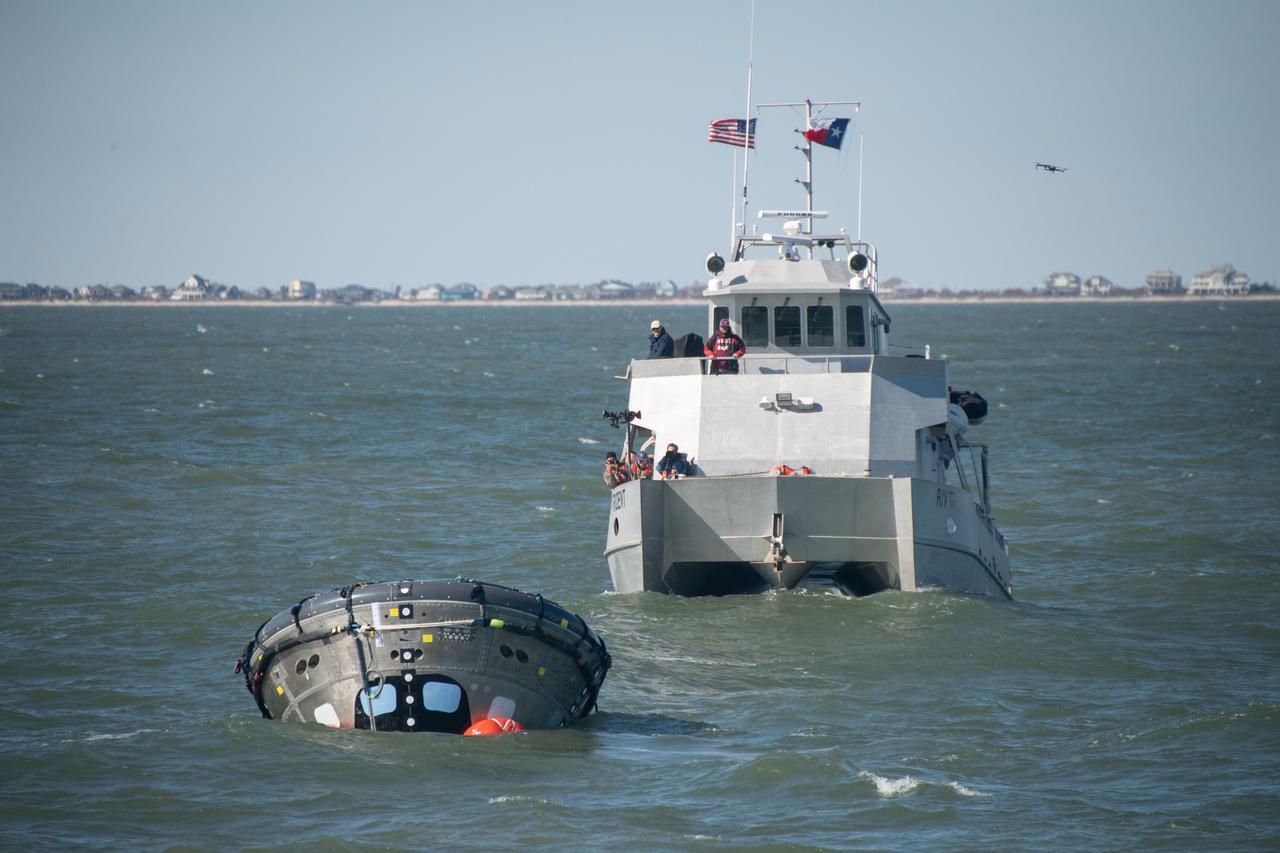
The Orion Crew Module Uprighting System (CMUS) and Neutral Buoyancy Laboratory team completed two successful sea tests off the coast of Galveston, Texas, Dec. 1-3, 2018. CMUS is designed to inflate five bags after the Orion spacecraft and its crew splash down after returning from deep space missions, enabling the capsule to upright itself. NASA partnered with United States Coast Guard and Air Force and Texas A&M Galveston teams to perform the tests operations.
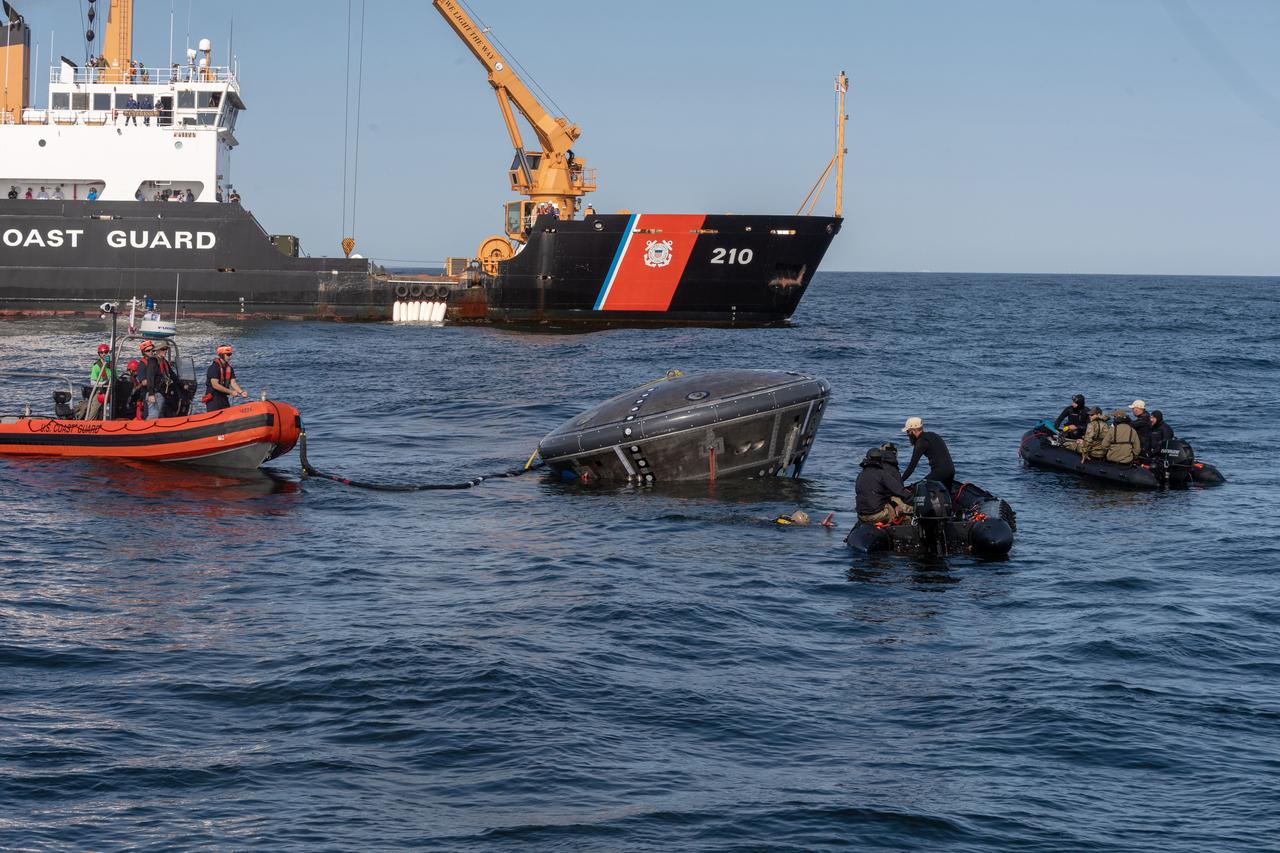
The Orion Crew Module Uprighting System (CMUS) and Neutral Buoyancy Laboratory team completed two successful sea tests off the coast of Galveston, Texas, Dec. 1-3, 2018. CMUS is designed to inflate five bags after the Orion spacecraft and its crew splash down after returning from deep space missions, enabling the capsule to upright itself. NASA partnered with United States Coast Guard and Air Force and Texas A&M Galveston teams to perform the tests operations.
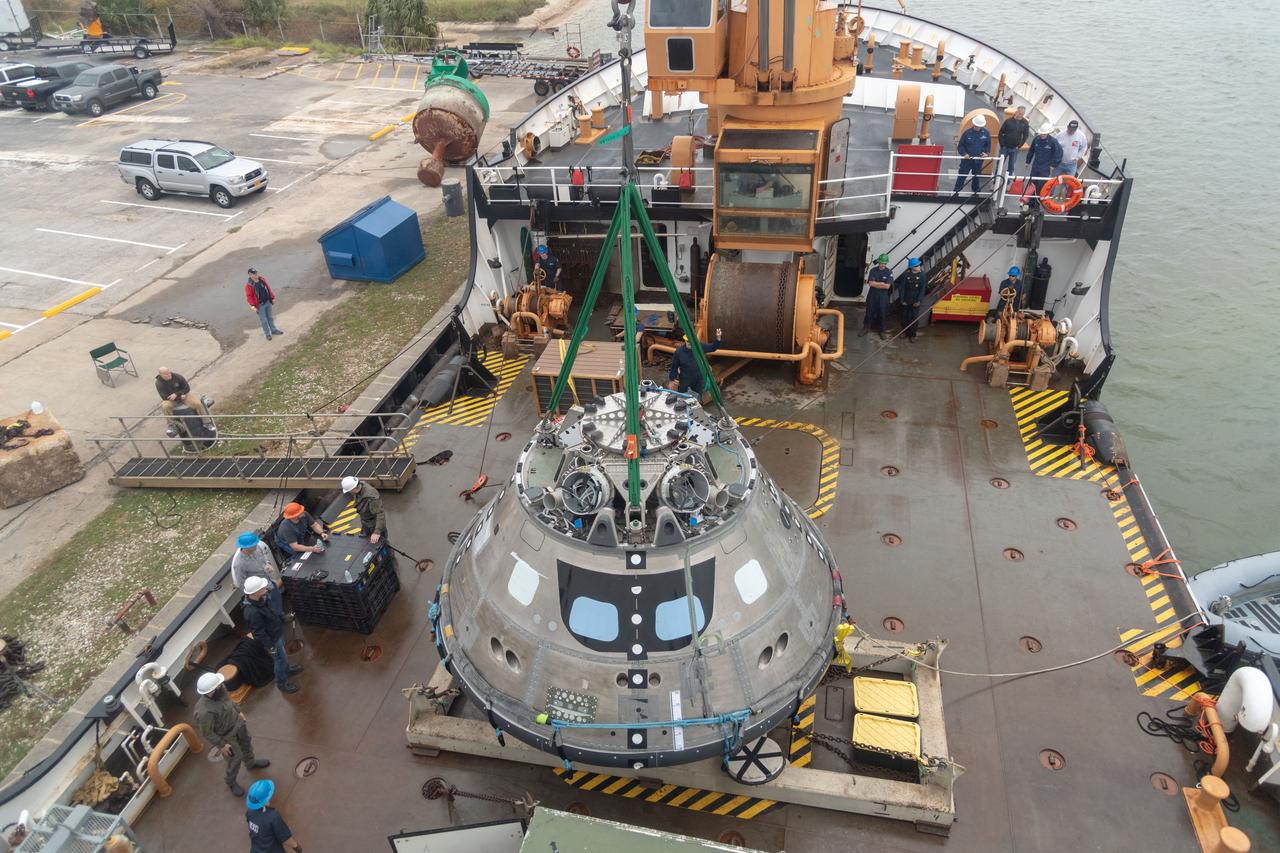
The Orion Crew Module Uprighting System (CMUS) and Neutral Buoyancy Laboratory team completed two successful sea tests off the coast of Galveston, Texas, Dec. 1-3, 2018. CMUS is designed to inflate five bags after the Orion spacecraft and its crew splash down after returning from deep space missions, enabling the capsule to upright itself. NASA partnered with United States Coast Guard and Air Force and Texas A&M Galveston teams to perform the tests operations.
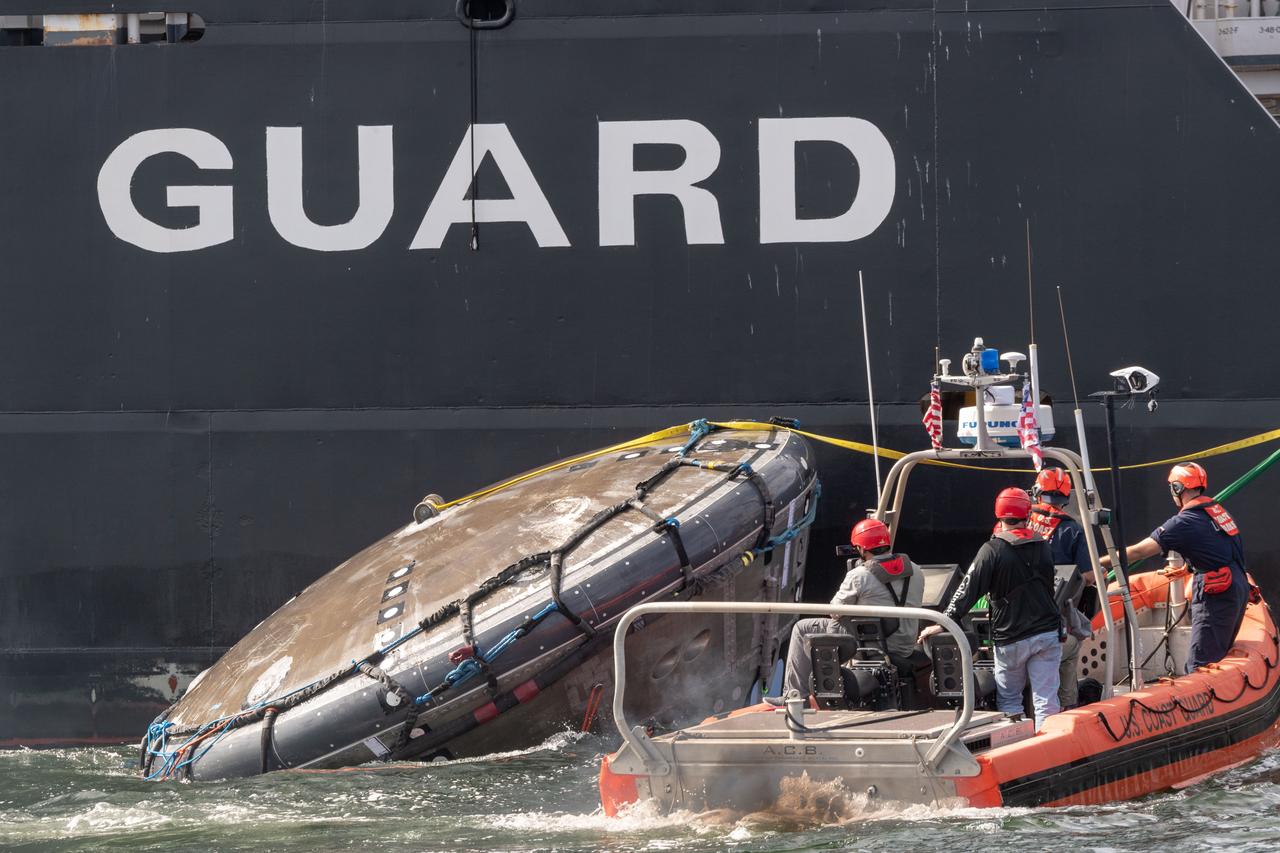
The Orion Crew Module Uprighting System (CMUS) and Neutral Buoyancy Laboratory team completed two successful sea tests off the coast of Galveston, Texas, Dec. 1-3, 2018. CMUS is designed to inflate five bags after the Orion spacecraft and its crew splash down after returning from deep space missions, enabling the capsule to upright itself. NASA partnered with United States Coast Guard and Air Force and Texas A&M Galveston teams to perform the tests operations.

The Orion Crew Module Uprighting System (CMUS) and Neutral Buoyancy Laboratory team completed two successful sea tests off the coast of Galveston, Texas, Dec. 1-3, 2018. CMUS is designed to inflate five bags after the Orion spacecraft and its crew splash down after returning from deep space missions, enabling the capsule to upright itself. NASA partnered with United States Coast Guard and Air Force and Texas A&M Galveston teams to perform the tests operations.
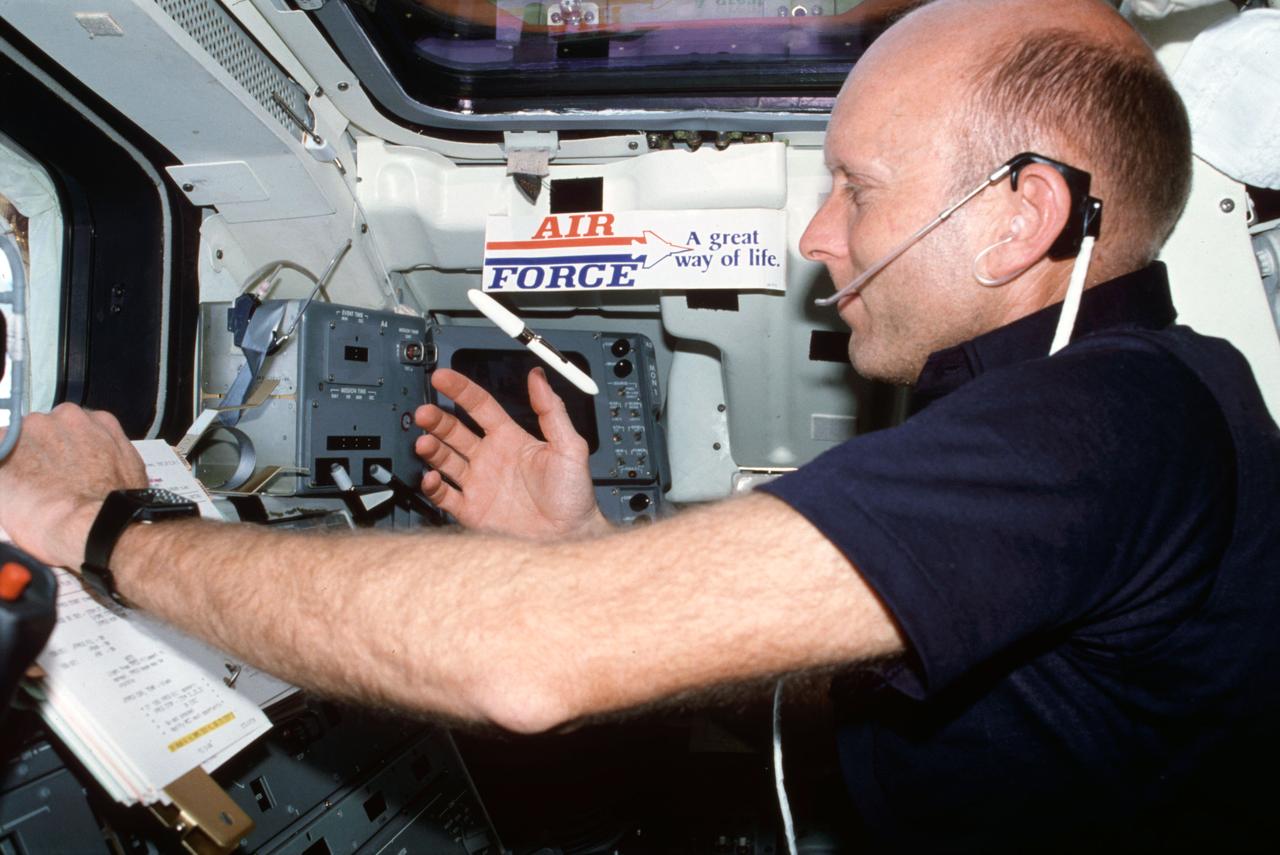
STS003-21-086 (22-30 March 1982) --- Astronaut Gordon Fullerton, STS-3 pilot, wearing communications kit assembly mini-headset, watches a free-floating pen during checklist procedures at the aft flight deck on-orbit station. Taken from the aft flight deck starboard side, Fullerton is seen in front of panels A7 and A8 with W8 and a "United States Air Force - a Great Way of Life" decal overhead. Photo credit: NASA
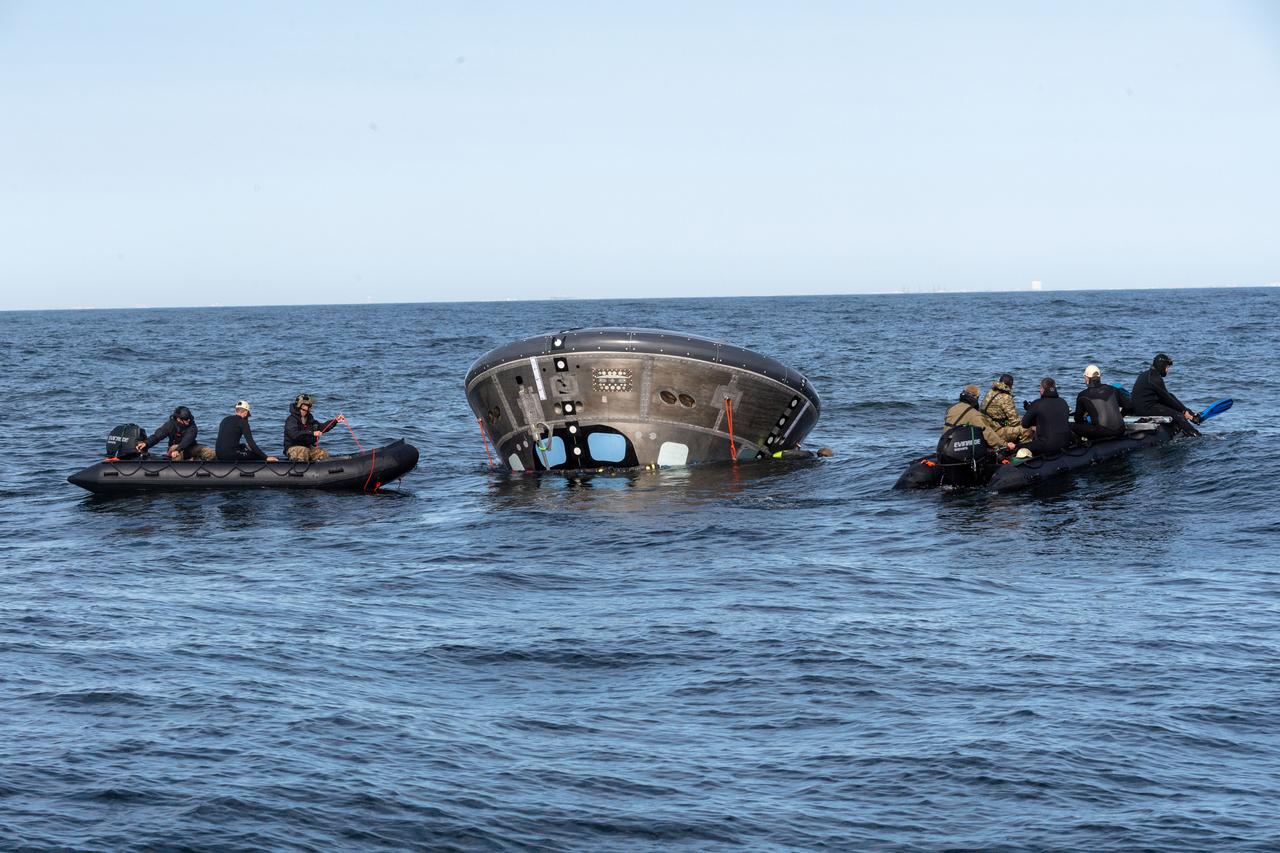
The Orion Crew Module Uprighting System (CMUS) and Neutral Buoyancy Laboratory team completed two successful sea tests off the coast of Galveston, Texas, Dec. 1-3, 2018. CMUS is designed to inflate five bags after the Orion spacecraft and its crew splash down after returning from deep space missions, enabling the capsule to upright itself. NASA partnered with United States Coast Guard and Air Force and Texas A&M Galveston teams to perform the tests operations.
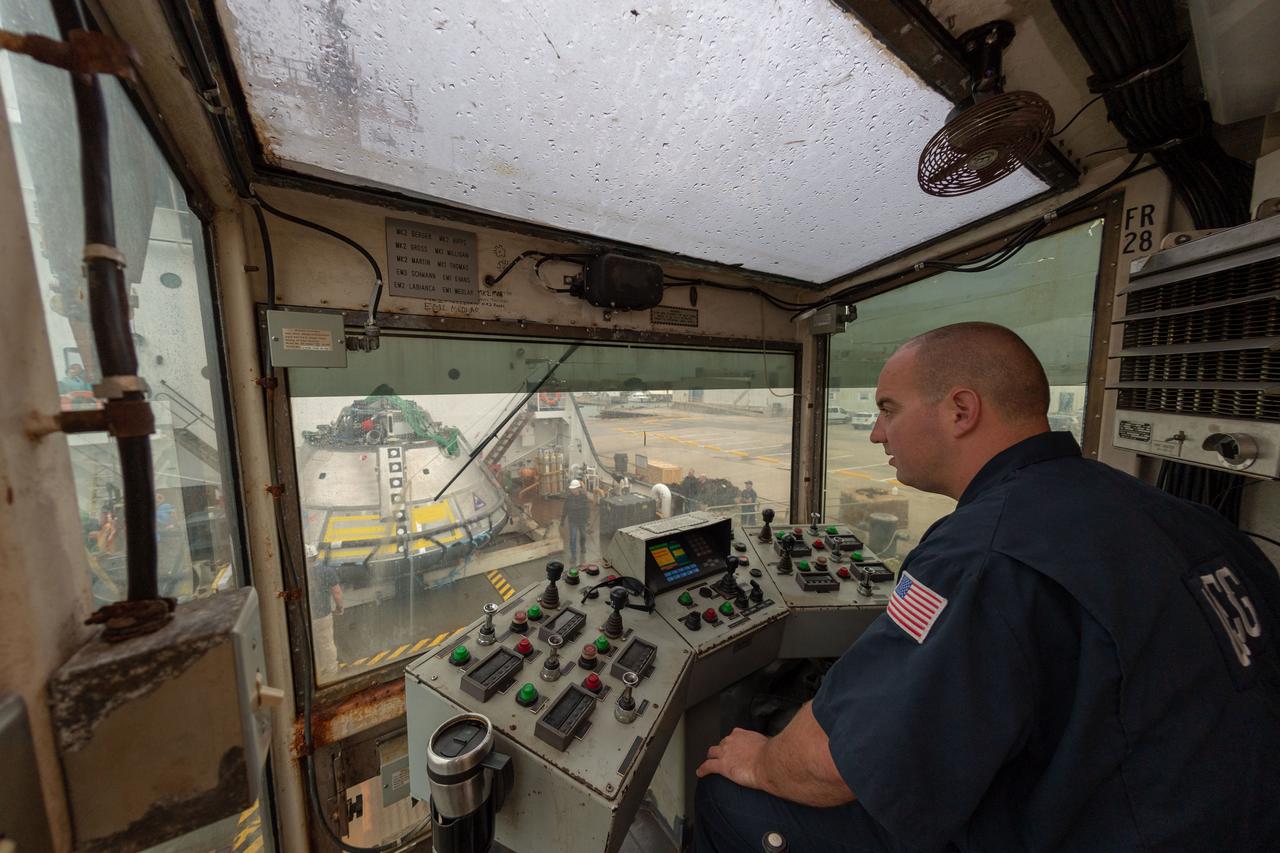
The Orion Crew Module Uprighting System (CMUS) and Neutral Buoyancy Laboratory team completed two successful sea tests off the coast of Galveston, Texas, Dec. 1-3, 2018. CMUS is designed to inflate five bags after the Orion spacecraft and its crew splash down after returning from deep space missions, enabling the capsule to upright itself. NASA partnered with United States Coast Guard and Air Force and Texas A&M Galveston teams to perform the tests operations.

The Orion Crew Module Uprighting System (CMUS) and Neutral Buoyancy Laboratory team completed two successful sea tests off the coast of Galveston, Texas, Dec. 1-3, 2018. CMUS is designed to inflate five bags after the Orion spacecraft and its crew splash down after returning from deep space missions, enabling the capsule to upright itself. NASA partnered with United States Coast Guard and Air Force and Texas A&M Galveston teams to perform the tests operations.
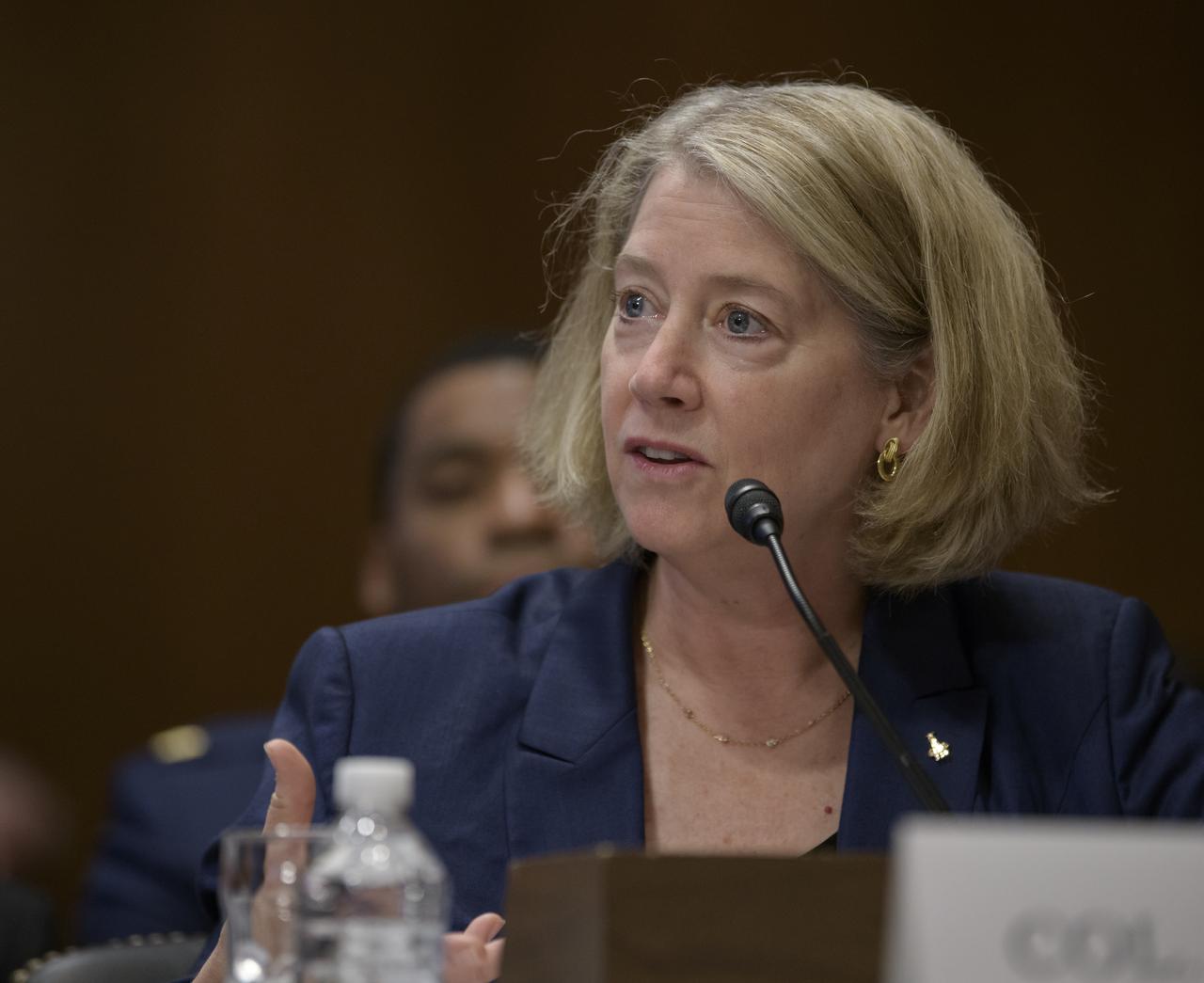
Col. Pamela A. Melroy, United States Air Force (ret.) (former astronaut) testifies before the Aviation and Space Subcommittee of the Senate Commerce, Science, and Transportation Committee during a hearing titled “The Emerging Space Environment: Operational, Technical, and Policy Challenges.”, Tuesday, May 14, 2019, at the Dirksen Senate Office Building in Washington. Photo Credit: (NASA/Bill Ingalls)

The Orion Crew Module Uprighting System (CMUS) and Neutral Buoyancy Laboratory team completed two successful sea tests off the coast of Galveston, Texas, Dec. 1-3, 2018. CMUS is designed to inflate five bags after the Orion spacecraft and its crew splash down after returning from deep space missions, enabling the capsule to upright itself. NASA partnered with United States Coast Guard and Air Force and Texas A&M Galveston teams to perform the tests operations.
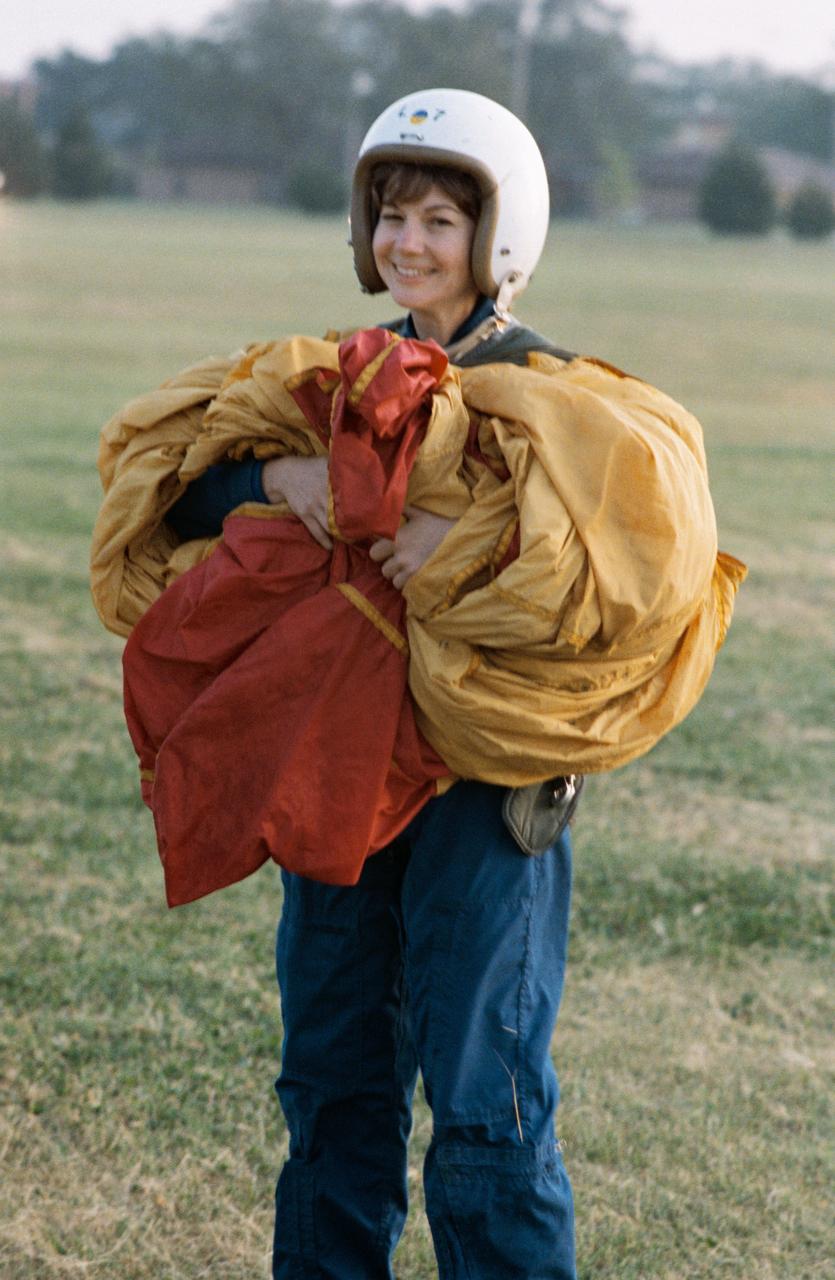
S93-38725 (12-14 Sept. 1992) --- Catherine G. Coleman, a member of the 1992 class of astronaut candidates at the Johnson Space Center (JSC), gathers up a parachute. The chute had just been used in one of many exercises experienced by the trainees at a three-day parachute/survival course hosted by Vance Air Force Base near Enid, Oklahoma. EDITOR?S NOTE: Coleman was later named as mission specialist for the United States Microgravity Laboratory (USML-2) mission, scheduled to fly as STS-73 in 1995.
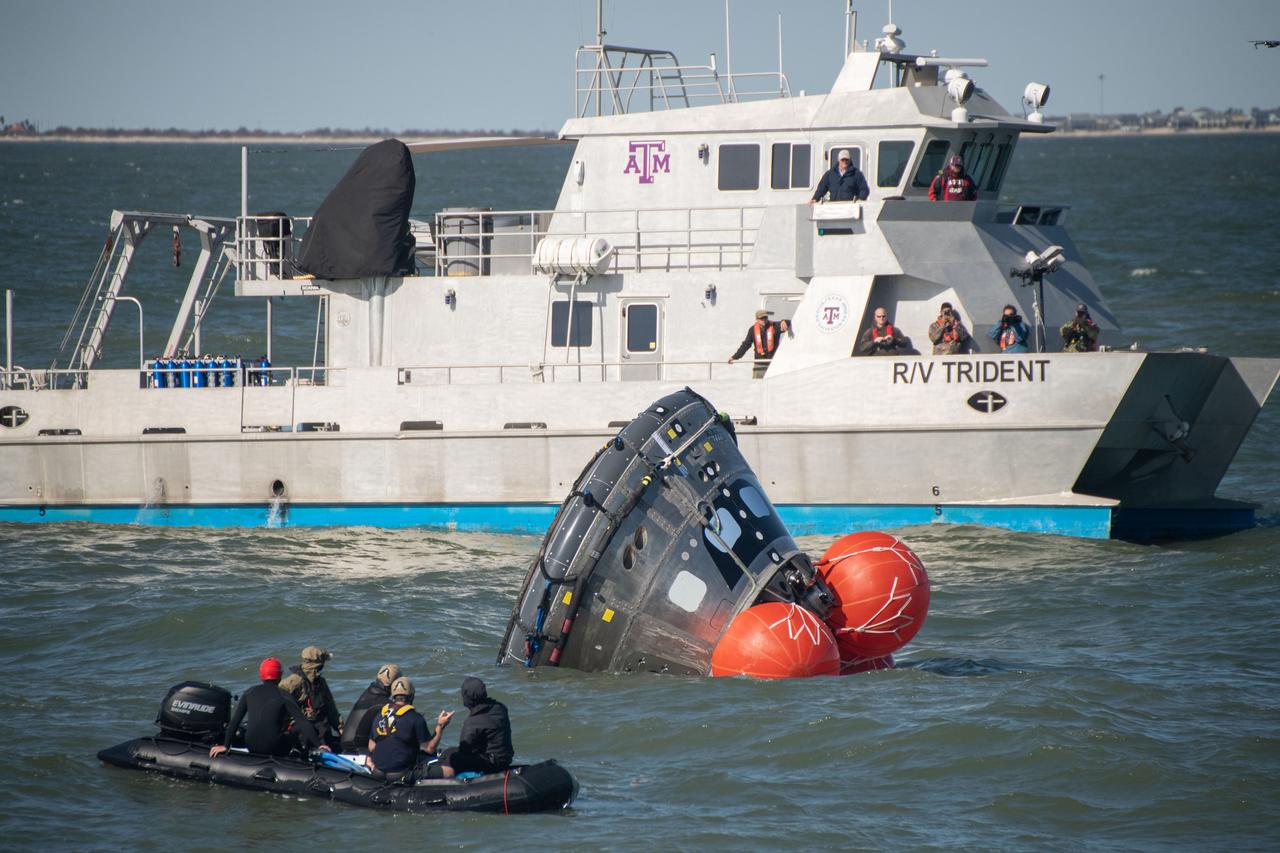
The Orion Crew Module Uprighting System (CMUS) and Neutral Buoyancy Laboratory team completed two successful sea tests off the coast of Galveston, Texas, Dec. 1-3, 2018. CMUS is designed to inflate five bags after the Orion spacecraft and its crew splash down after returning from deep space missions, enabling the capsule to upright itself. NASA partnered with United States Coast Guard and Air Force and Texas A&M Galveston teams to perform the tests operations.

The Orion Crew Module Uprighting System (CMUS) and Neutral Buoyancy Laboratory team completed two successful sea tests off the coast of Galveston, Texas, Dec. 1-3, 2018. CMUS is designed to inflate five bags after the Orion spacecraft and its crew splash down after returning from deep space missions, enabling the capsule to upright itself. NASA partnered with United States Coast Guard and Air Force and Texas A&M Galveston teams to perform the tests operations.
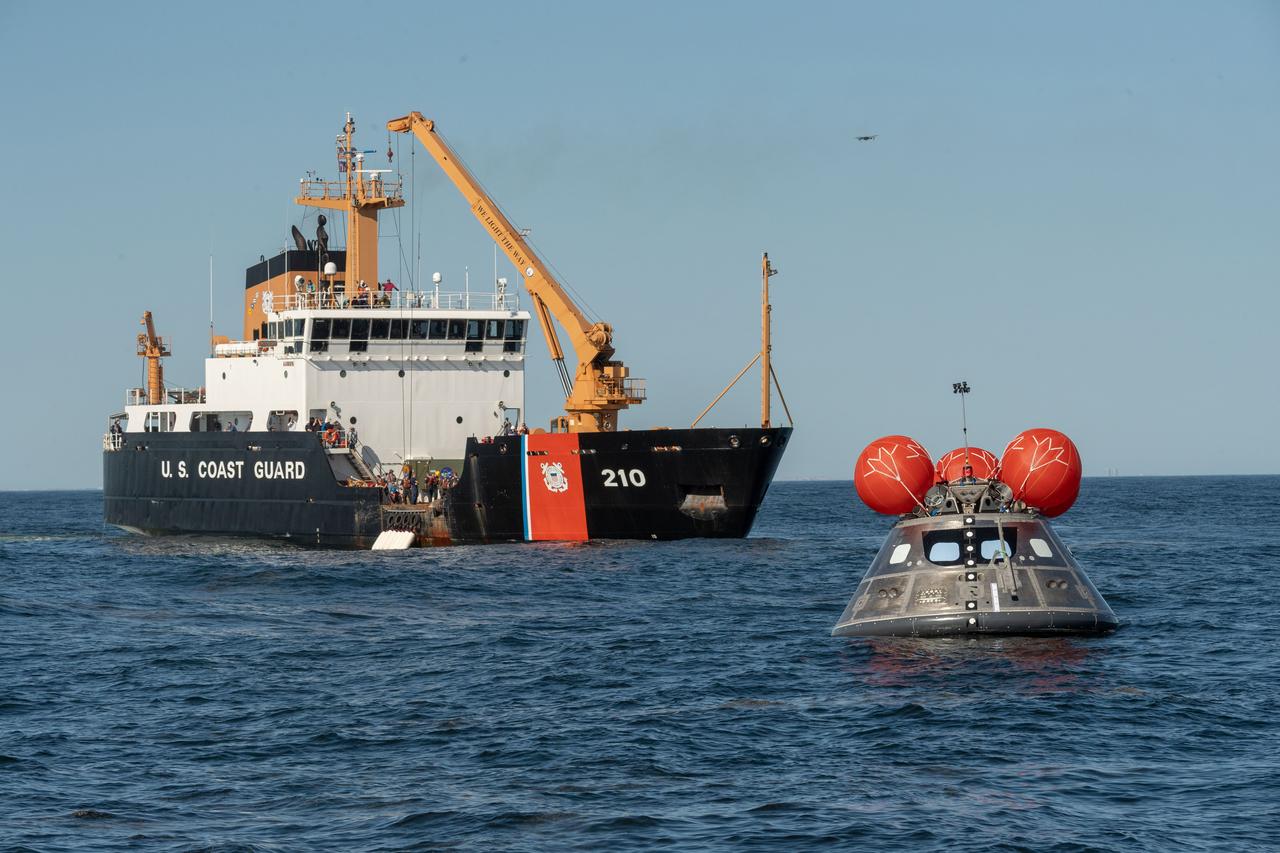
The Orion Crew Module Uprighting System (CMUS) and Neutral Buoyancy Laboratory team completed two successful sea tests off the coast of Galveston, Texas, Dec. 1-3, 2018. CMUS is designed to inflate five bags after the Orion spacecraft and its crew splash down after returning from deep space missions, enabling the capsule to upright itself. NASA partnered with United States Coast Guard and Air Force and Texas A&M Galveston teams to perform the tests operations.

The Orion Crew Module Uprighting System (CMUS) and Neutral Buoyancy Laboratory team completed two successful sea tests off the coast of Galveston, Texas, Dec. 1-3, 2018. CMUS is designed to inflate five bags after the Orion spacecraft and its crew splash down after returning from deep space missions, enabling the capsule to upright itself. NASA partnered with United States Coast Guard and Air Force and Texas A&M Galveston teams to perform the tests operations.

The Orion Crew Module Uprighting System (CMUS) and Neutral Buoyancy Laboratory team completed two successful sea tests off the coast of Galveston, Texas, Dec. 1-3, 2018. CMUS is designed to inflate five bags after the Orion spacecraft and its crew splash down after returning from deep space missions, enabling the capsule to upright itself. NASA partnered with United States Coast Guard and Air Force and Texas A&M Galveston teams to perform the tests operations.
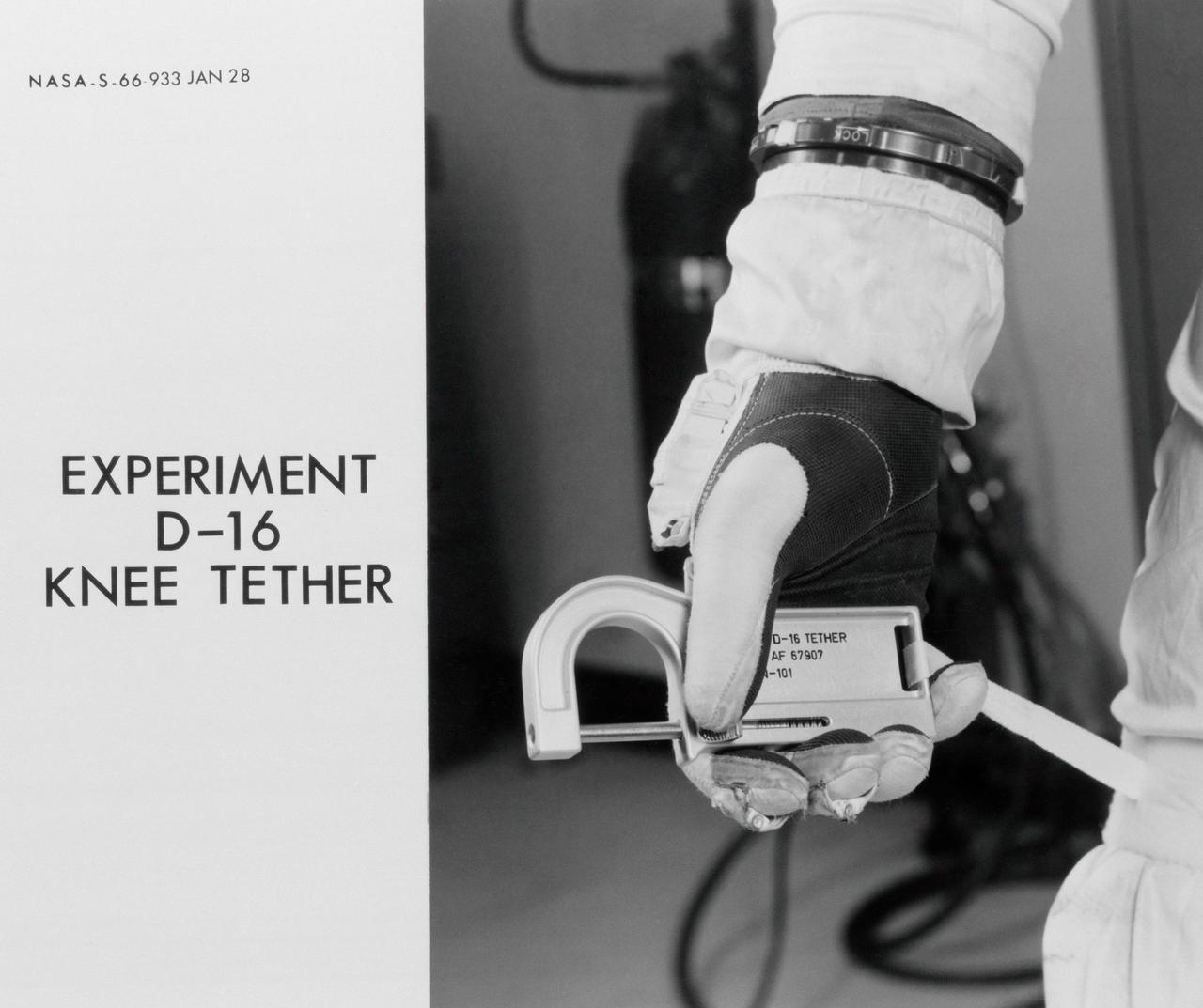
S66-00933 (28 Jan. 1966) --- Gemini-11 Experiment D-16 Knee Tether, sponsored by the Department of Defense and the United States Air Force. The astronaut tightens and loosens bolts in a prescribed pattern during his extravehicular activity, once with his body held to the spacecraft by a nine-inch tether looped around his knee and through the handrail, and once without the tether. Photo credit: NASA
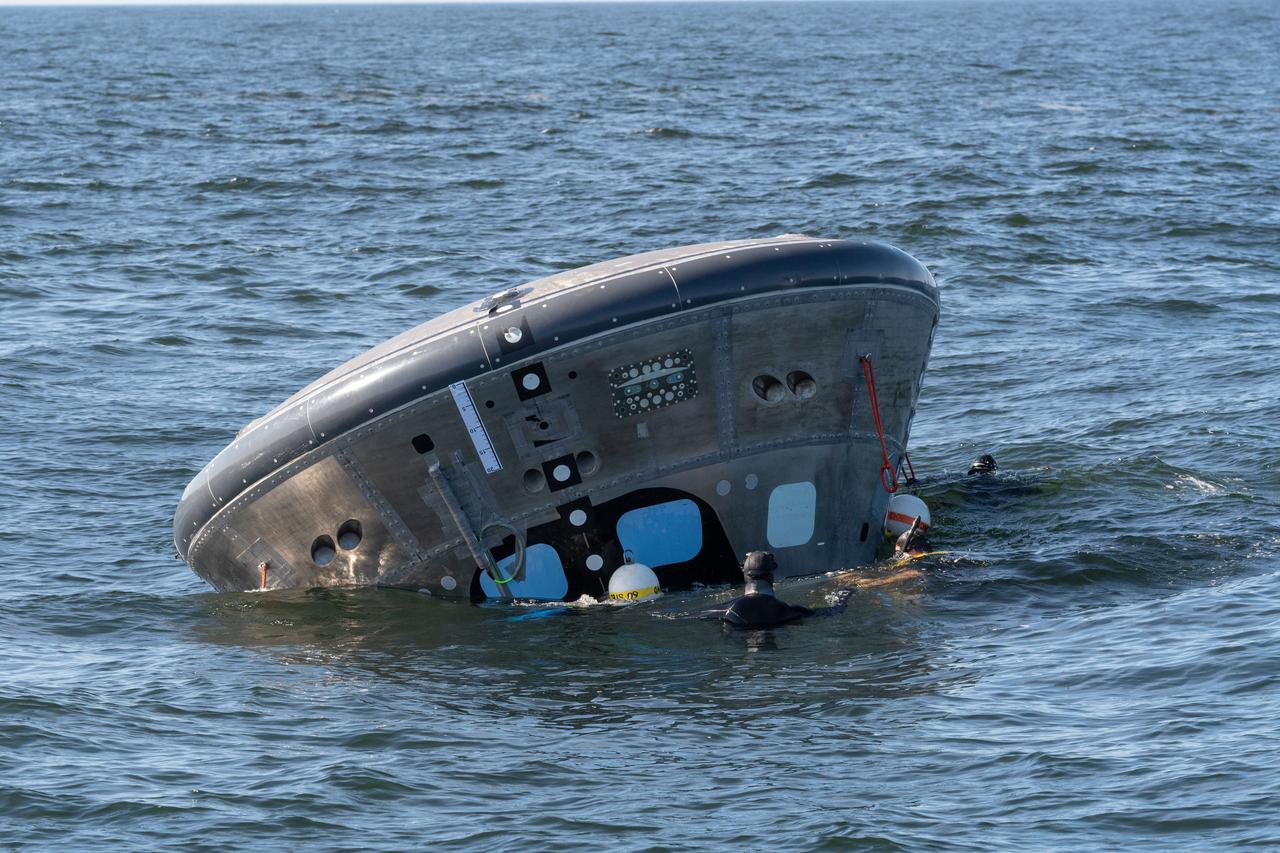
The Orion Crew Module Uprighting System (CMUS) and Neutral Buoyancy Laboratory team completed two successful sea tests off the coast of Galveston, Texas, Dec. 1-3, 2018. CMUS is designed to inflate five bags after the Orion spacecraft and its crew splash down after returning from deep space missions, enabling the capsule to upright itself. NASA partnered with United States Coast Guard and Air Force and Texas A&M Galveston teams to perform the tests operations.

NASA Administrator Bill Nelson, 4th from left, along with Cadet First Class Grant Schlichting, left, Cadet Second Class Colt Crowson, and Cadet First Class Gavin Ross listen to Col Douglas “Beaker” Wickert, right, during a tour of the aeronautics lab at the United States Air Force Academy, Wednesday, Aug. 25, 2021, north of Colorado Springs, Colorado. Photo Credit: (NASA/Bill Ingalls)
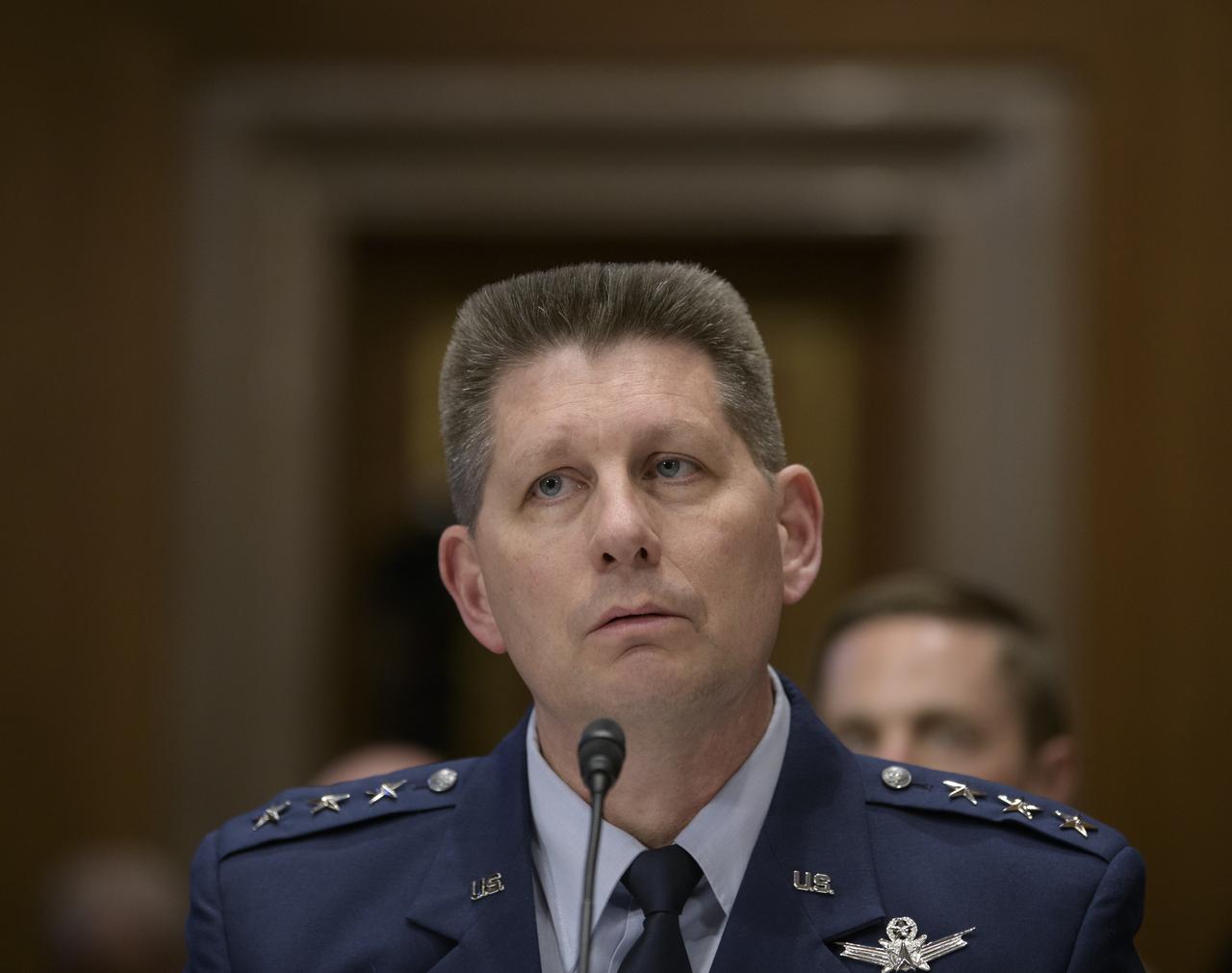
Lt. Gen. David D. Thompson, Vice Commander, Space Command, United States Air Force testifies before the Aviation and Space Subcommittee of the Senate Commerce, Science, and Transportation Committee during a hearing titled “The Emerging Space Environment: Operational, Technical, and Policy Challenges.”, Tuesday, May 14, 2019, at the Dirksen Senate Office Building in Washington. Photo Credit: (NASA/Bill Ingalls)

The Orion Crew Module Uprighting System (CMUS) and Neutral Buoyancy Laboratory team completed two successful sea tests off the coast of Galveston, Texas, Dec. 1-3, 2018. CMUS is designed to inflate five bags after the Orion spacecraft and its crew splash down after returning from deep space missions, enabling the capsule to upright itself. NASA partnered with United States Coast Guard and Air Force and Texas A&M Galveston teams to perform the tests operations.
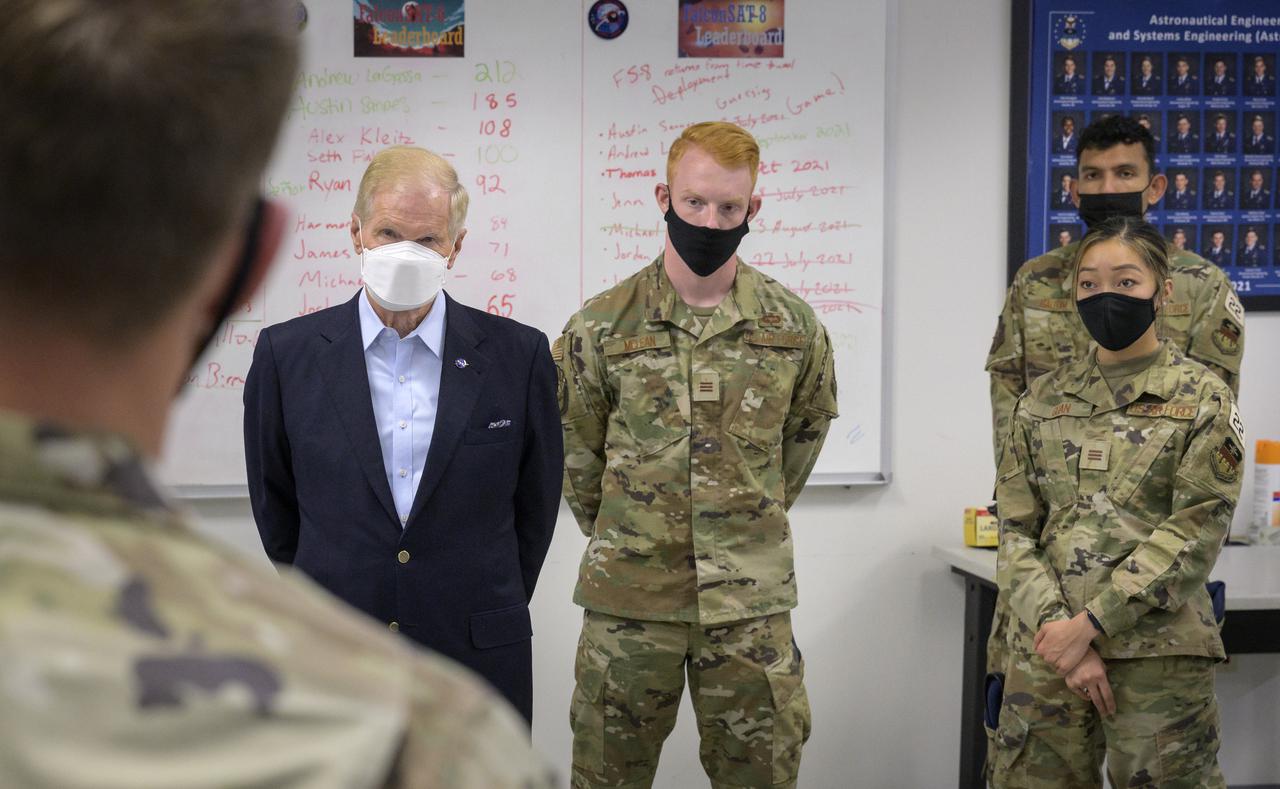
NASA Administrator Bill Nelson listens as Cadet First Class Andrew LaGassa talks about his classes work in the astronautics lab of the United States Air Force Academy as Cadets First Class Thomas McLean, Celina Guan, and Ritesh Gautam look on, Wednesday, Aug. 25, 2021, north of Colorado Springs, Colorado. Photo Credit: (NASA/Bill Ingalls)
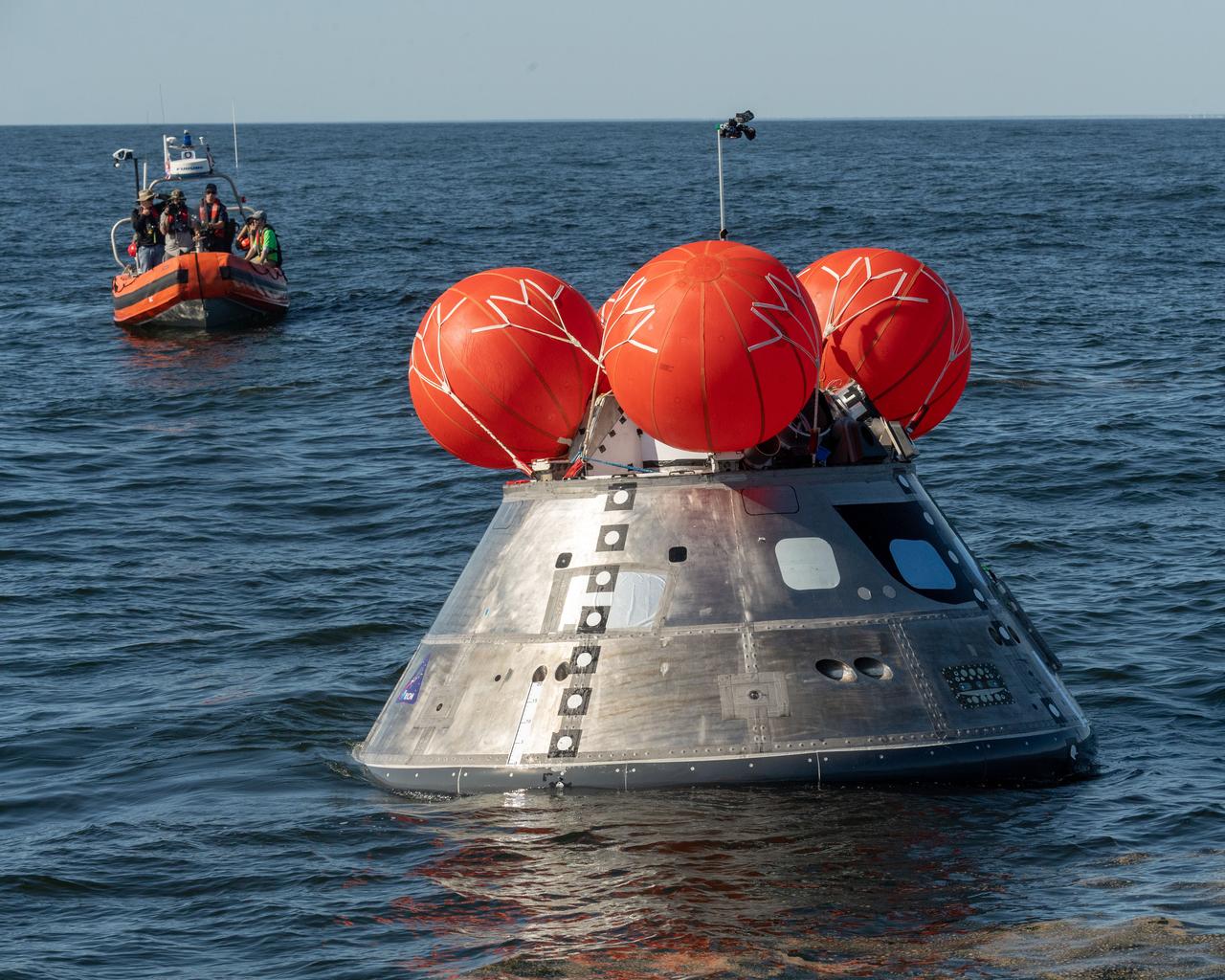
The Orion Crew Module Uprighting System (CMUS) and Neutral Buoyancy Laboratory team completed two successful sea tests off the coast of Galveston, Texas, Dec. 1-3, 2018. CMUS is designed to inflate five bags after the Orion spacecraft and its crew splash down after returning from deep space missions, enabling the capsule to upright itself. NASA partnered with United States Coast Guard and Air Force and Texas A&M Galveston teams to perform the tests operations.

The Orion Crew Module Uprighting System (CMUS) and Neutral Buoyancy Laboratory team completed two successful sea tests off the coast of Galveston, Texas, Dec. 1-3, 2018. CMUS is designed to inflate five bags after the Orion spacecraft and its crew splash down after returning from deep space missions, enabling the capsule to upright itself. NASA partnered with United States Coast Guard and Air Force and Texas A&M Galveston teams to perform the tests operations.
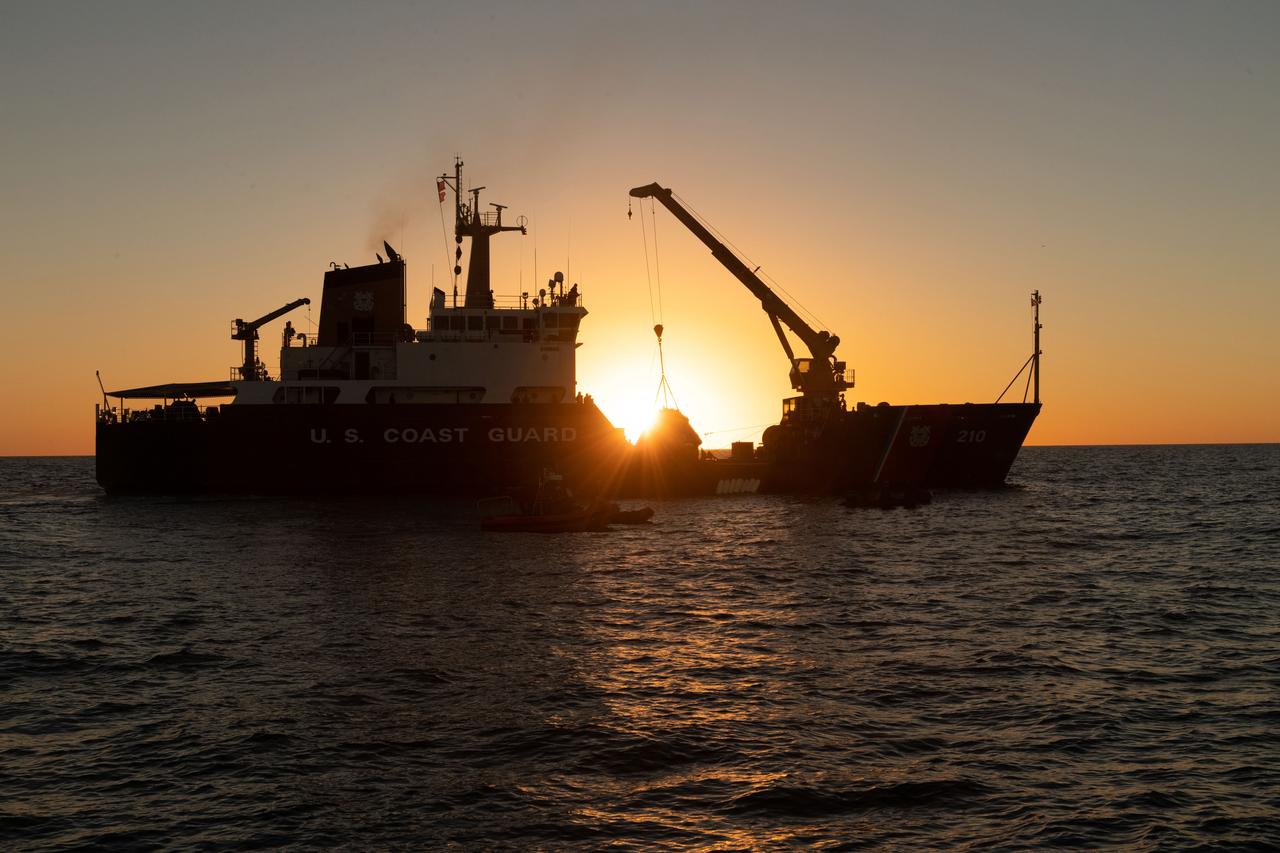
The Orion Crew Module Uprighting System (CMUS) and Neutral Buoyancy Laboratory team completed two successful sea tests off the coast of Galveston, Texas, Dec. 1-3, 2018. CMUS is designed to inflate five bags after the Orion spacecraft and its crew splash down after returning from deep space missions, enabling the capsule to upright itself. NASA partnered with United States Coast Guard and Air Force and Texas A&M Galveston teams to perform the tests operations.
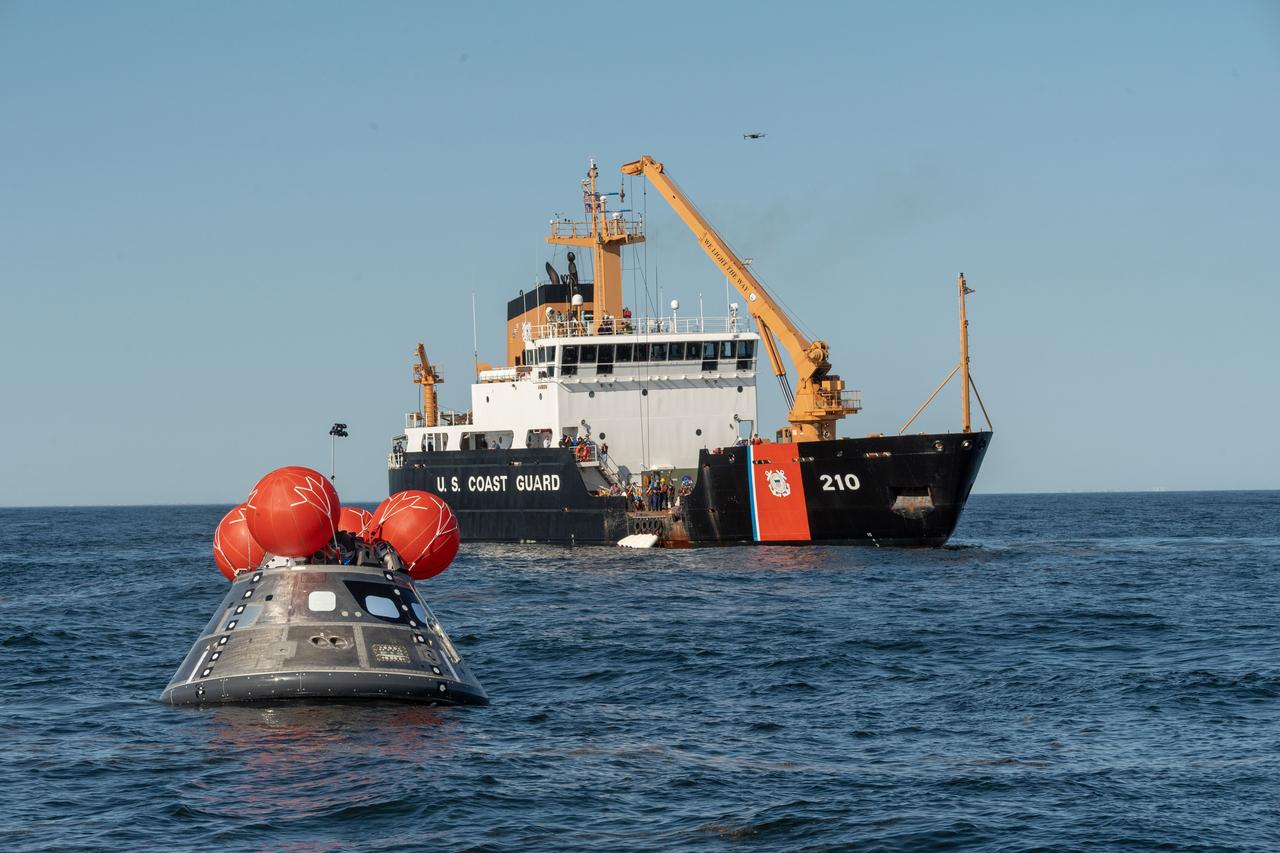
The Orion Crew Module Uprighting System (CMUS) and Neutral Buoyancy Laboratory team completed two successful sea tests off the coast of Galveston, Texas, Dec. 1-3, 2018. CMUS is designed to inflate five bags after the Orion spacecraft and its crew splash down after returning from deep space missions, enabling the capsule to upright itself. NASA partnered with United States Coast Guard and Air Force and Texas A&M Galveston teams to perform the tests operations.
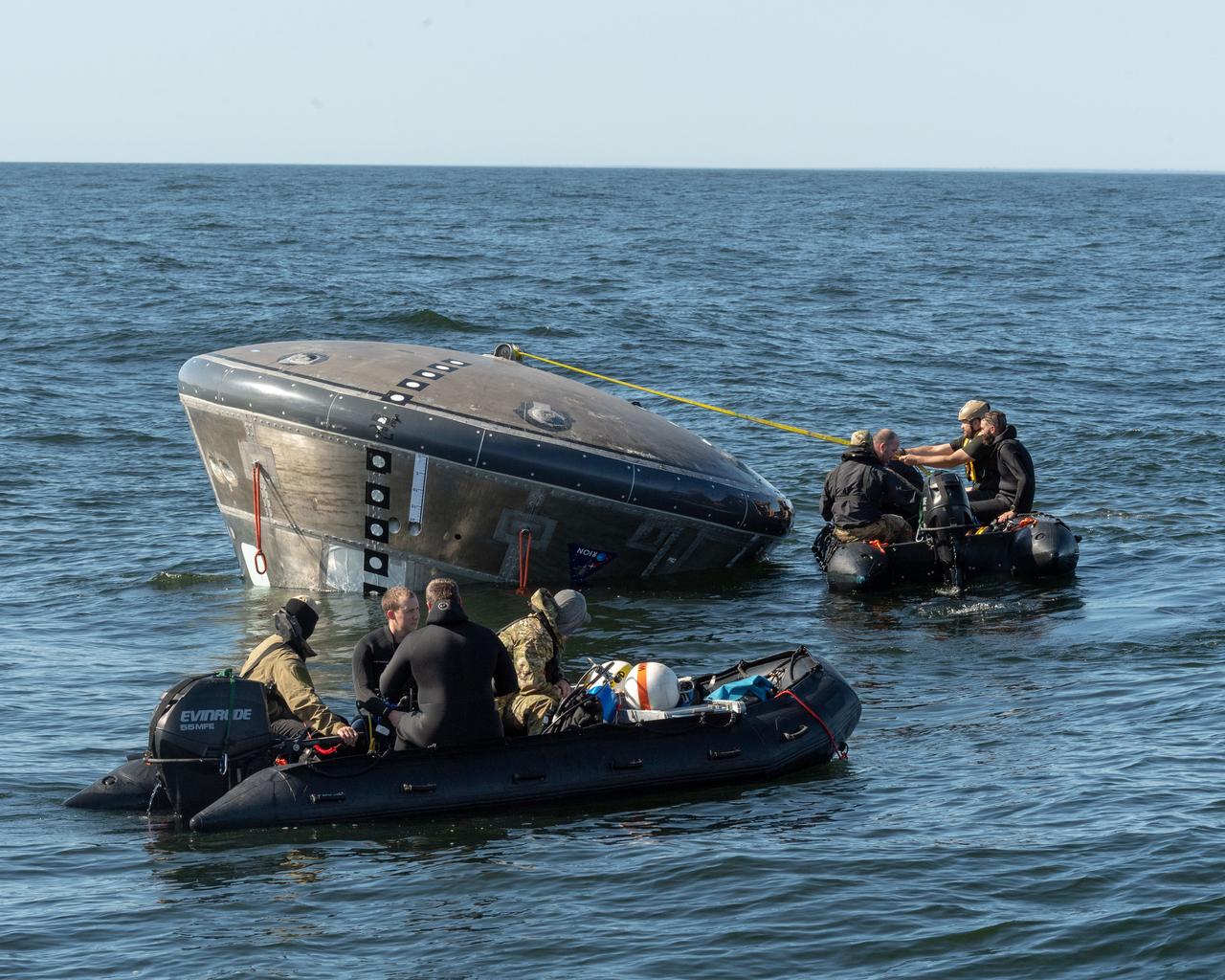
The Orion Crew Module Uprighting System (CMUS) and Neutral Buoyancy Laboratory team completed two successful sea tests off the coast of Galveston, Texas, Dec. 1-3, 2018. CMUS is designed to inflate five bags after the Orion spacecraft and its crew splash down after returning from deep space missions, enabling the capsule to upright itself. NASA partnered with United States Coast Guard and Air Force and Texas A&M Galveston teams to perform the tests operations.
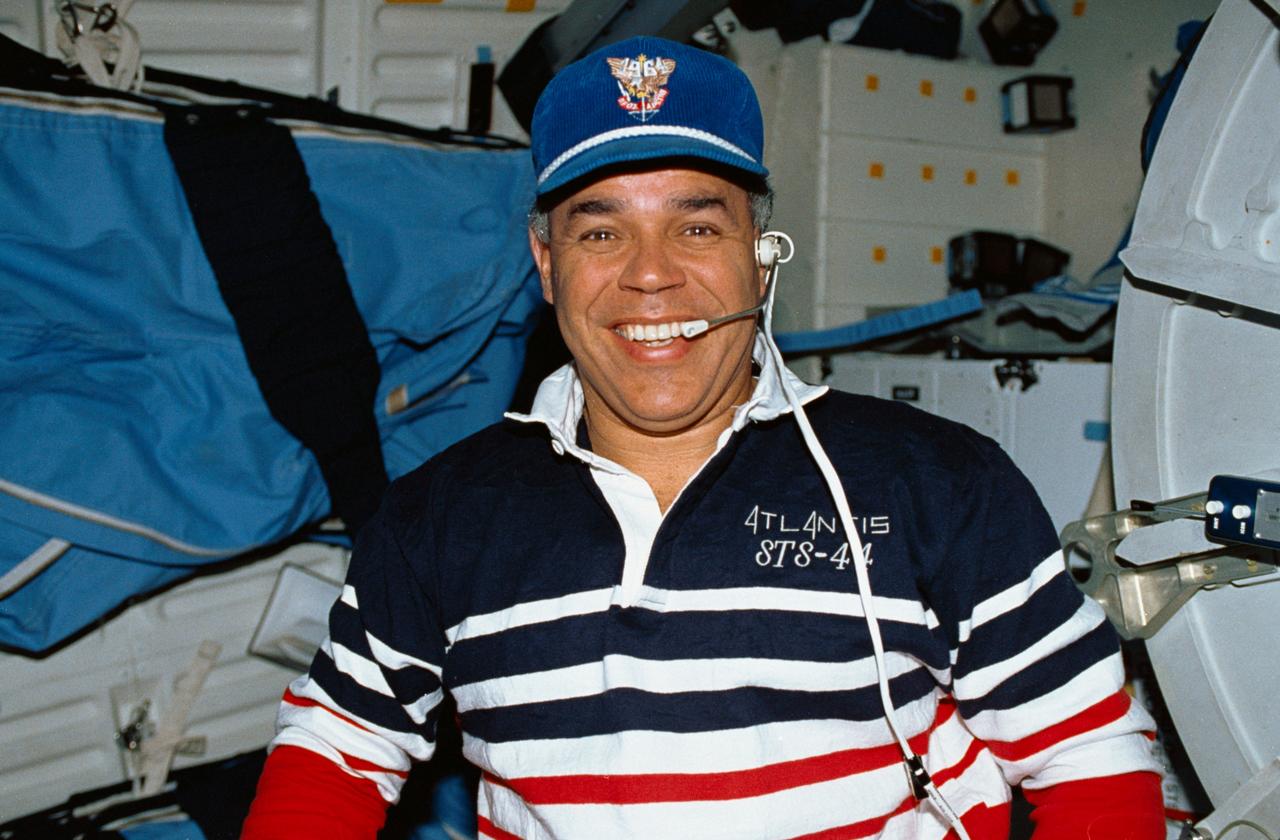
STS044-32-030 (24 Nov-1 Dec 1991) --- STS-44 Commander Frederick D. Gregory wears a cap honoring his alma mater, the United States Air Force (USAF) Academy, on the middeck of Atlantis, Orbiter Vehicle (OV) 104. Gregory, who also has his lightweight headset on, was photographed while talking to ground controllers.
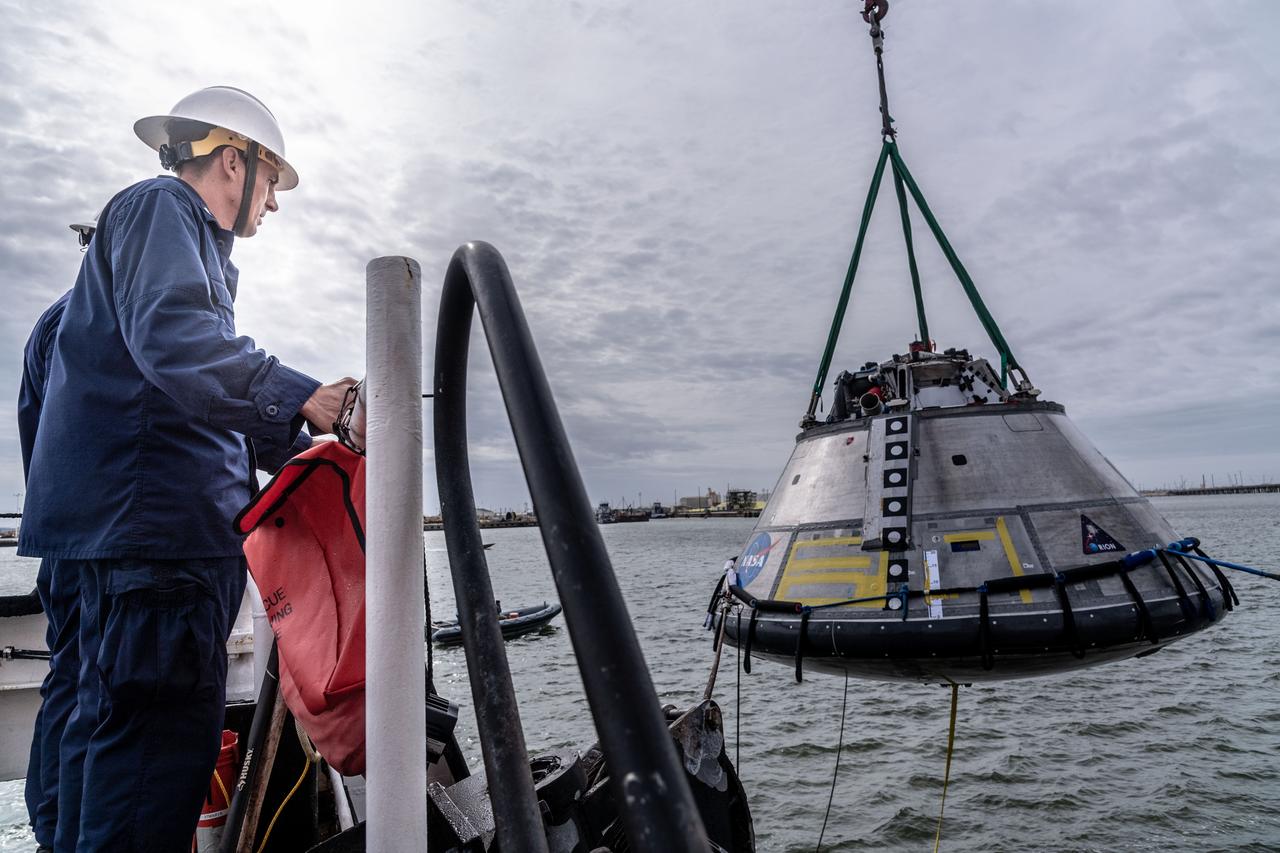
The Orion Crew Module Uprighting System (CMUS) and Neutral Buoyancy Laboratory team completed two successful sea tests off the coast of Galveston, Texas, Dec. 1-3, 2018. CMUS is designed to inflate five bags after the Orion spacecraft and its crew splash down after returning from deep space missions, enabling the capsule to upright itself. NASA partnered with United States Coast Guard and Air Force and Texas A&M Galveston teams to perform the tests operations.

NASA Administrator Bill Nelson, left, talks with Col Douglas “Beaker” Wickert, Cadet First Class Gavin Ross, and Cadet First Class Grant Schlichting, right, during a tour of the aeronautics lab at the United States Air Force Academy, Wednesday, Aug. 25, 2021, north of Colorado Springs, Colorado. Photo Credit: (NASA/Bill Ingalls)

The Orion Crew Module Uprighting System (CMUS) and Neutral Buoyancy Laboratory team completed two successful sea tests off the coast of Galveston, Texas, Dec. 1-3, 2018. CMUS is designed to inflate five bags after the Orion spacecraft and its crew splash down after returning from deep space missions, enabling the capsule to upright itself. NASA partnered with United States Coast Guard and Air Force and Texas A&M Galveston teams to perform the tests operations.
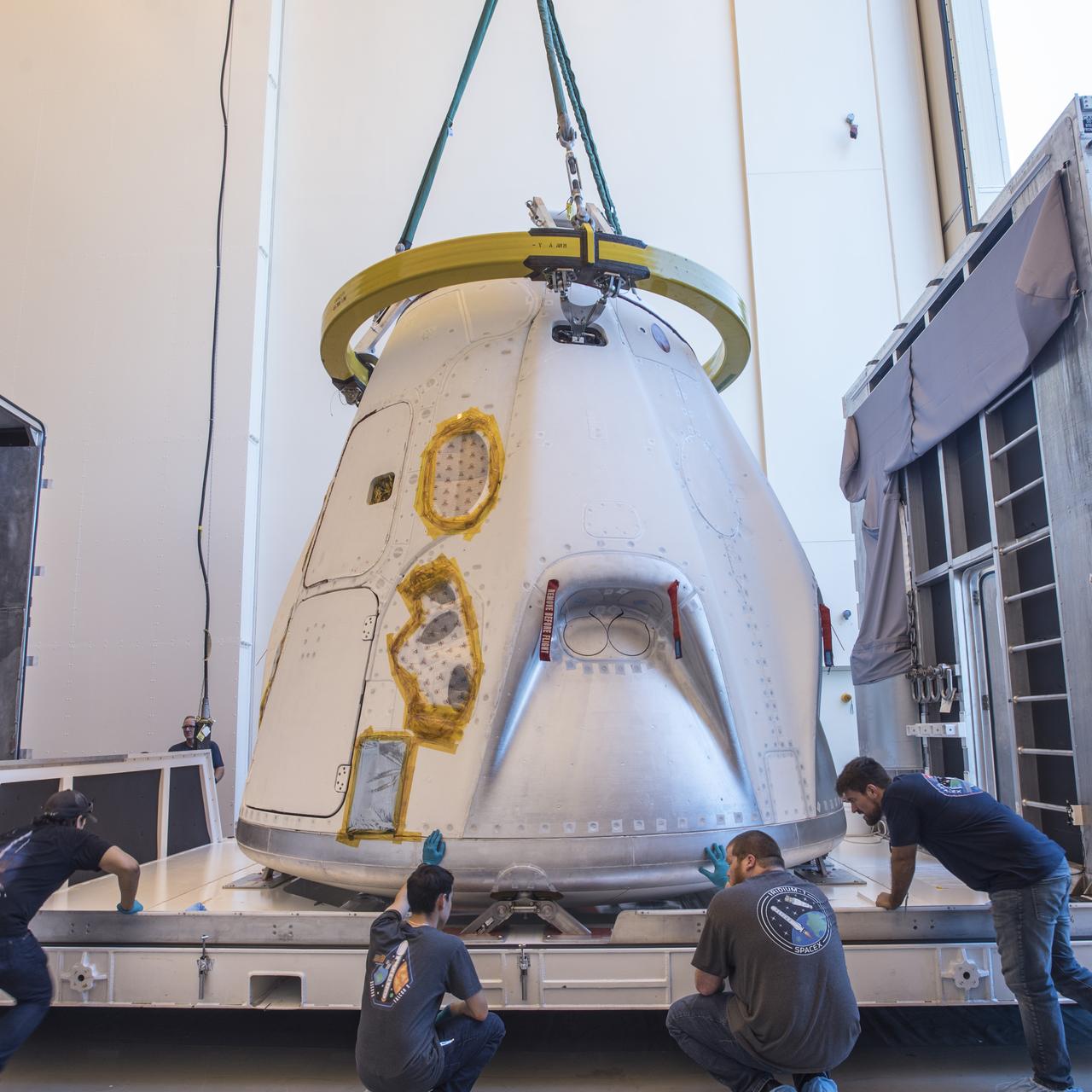
The SpaceX Crew Dragon spacecraft that will be used for the company’s uncrewed flight test, known as Demonstration Mission 1, arrived to Cape Canaveral Air Force Station in Florida on Tuesday, July 10, 2018. The spacecraft recently underwent thermal vacuum and acoustic testing at NASA’s Plum Brook Station in Ohio. The Demonstration Mission 1 flight test is part of NASA’s Commercial Crew Transportation Capability contract with the goal of returning human spaceflight launch capabilities to the United States.

The Orion Crew Module Uprighting System (CMUS) and Neutral Buoyancy Laboratory team completed two successful sea tests off the coast of Galveston, Texas, Dec. 1-3, 2018. CMUS is designed to inflate five bags after the Orion spacecraft and its crew splash down after returning from deep space missions, enabling the capsule to upright itself. NASA partnered with United States Coast Guard and Air Force and Texas A&M Galveston teams to perform the tests operations.

The Orion Crew Module Uprighting System (CMUS) and Neutral Buoyancy Laboratory team completed two successful sea tests off the coast of Galveston, Texas, Dec. 1-3, 2018. CMUS is designed to inflate five bags after the Orion spacecraft and its crew splash down after returning from deep space missions, enabling the capsule to upright itself. NASA partnered with United States Coast Guard and Air Force and Texas A&M Galveston teams to perform the tests operations.

S95-00359 (12-14 September 1992) --- Astronaut candidate Koichi Wakata gathers his parachute following a simulated chute drop at Vance Air Force Base. Wakata is one of seven international mission specialist candidates who joined 19 United States astronaut candidates for the three-day parachute/survival training school at the Oklahoma Base. EDITORS NOTE: Since this photograph was taken, Wakata has been named as mission specialist for the STS-72 mission.

The Orion Crew Module Uprighting System (CMUS) and Neutral Buoyancy Laboratory team completed two successful sea tests off the coast of Galveston, Texas, Dec. 1-3, 2018. CMUS is designed to inflate five bags after the Orion spacecraft and its crew splash down after returning from deep space missions, enabling the capsule to upright itself. NASA partnered with United States Coast Guard and Air Force and Texas A&M Galveston teams to perform the tests operations.

The Orion Crew Module Uprighting System (CMUS) and Neutral Buoyancy Laboratory team completed two successful sea tests off the coast of Galveston, Texas, Dec. 1-3, 2018. CMUS is designed to inflate five bags after the Orion spacecraft and its crew splash down after returning from deep space missions, enabling the capsule to upright itself. NASA partnered with United States Coast Guard and Air Force and Texas A&M Galveston teams to perform the tests operations.

The Orion Crew Module Uprighting System (CMUS) and Neutral Buoyancy Laboratory team completed two successful sea tests off the coast of Galveston, Texas, Dec. 1-3, 2018. CMUS is designed to inflate five bags after the Orion spacecraft and its crew splash down after returning from deep space missions, enabling the capsule to upright itself. NASA partnered with United States Coast Guard and Air Force and Texas A&M Galveston teams to perform the tests operations.

The Orion Crew Module Uprighting System (CMUS) and Neutral Buoyancy Laboratory team completed two successful sea tests off the coast of Galveston, Texas, Dec. 1-3, 2018. CMUS is designed to inflate five bags after the Orion spacecraft and its crew splash down after returning from deep space missions, enabling the capsule to upright itself. NASA partnered with United States Coast Guard and Air Force and Texas A&M Galveston teams to perform the tests operations.

The Orion Crew Module Uprighting System (CMUS) and Neutral Buoyancy Laboratory team completed two successful sea tests off the coast of Galveston, Texas, Dec. 1-3, 2018. CMUS is designed to inflate five bags after the Orion spacecraft and its crew splash down after returning from deep space missions, enabling the capsule to upright itself. NASA partnered with United States Coast Guard and Air Force and Texas A&M Galveston teams to perform the tests operations.
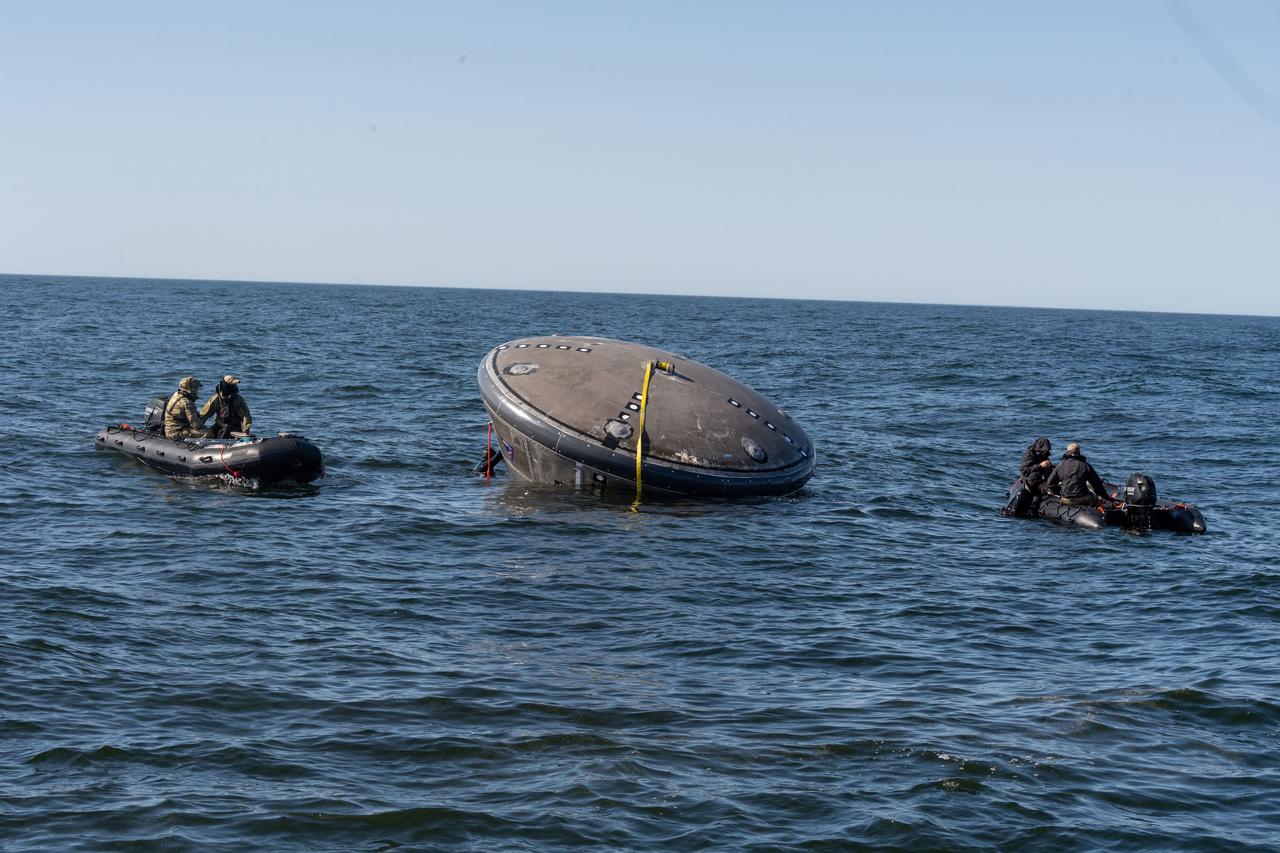
The Orion Crew Module Uprighting System (CMUS) and Neutral Buoyancy Laboratory team completed two successful sea tests off the coast of Galveston, Texas, Dec. 1-3, 2018. CMUS is designed to inflate five bags after the Orion spacecraft and its crew splash down after returning from deep space missions, enabling the capsule to upright itself. NASA partnered with United States Coast Guard and Air Force and Texas A&M Galveston teams to perform the tests operations.
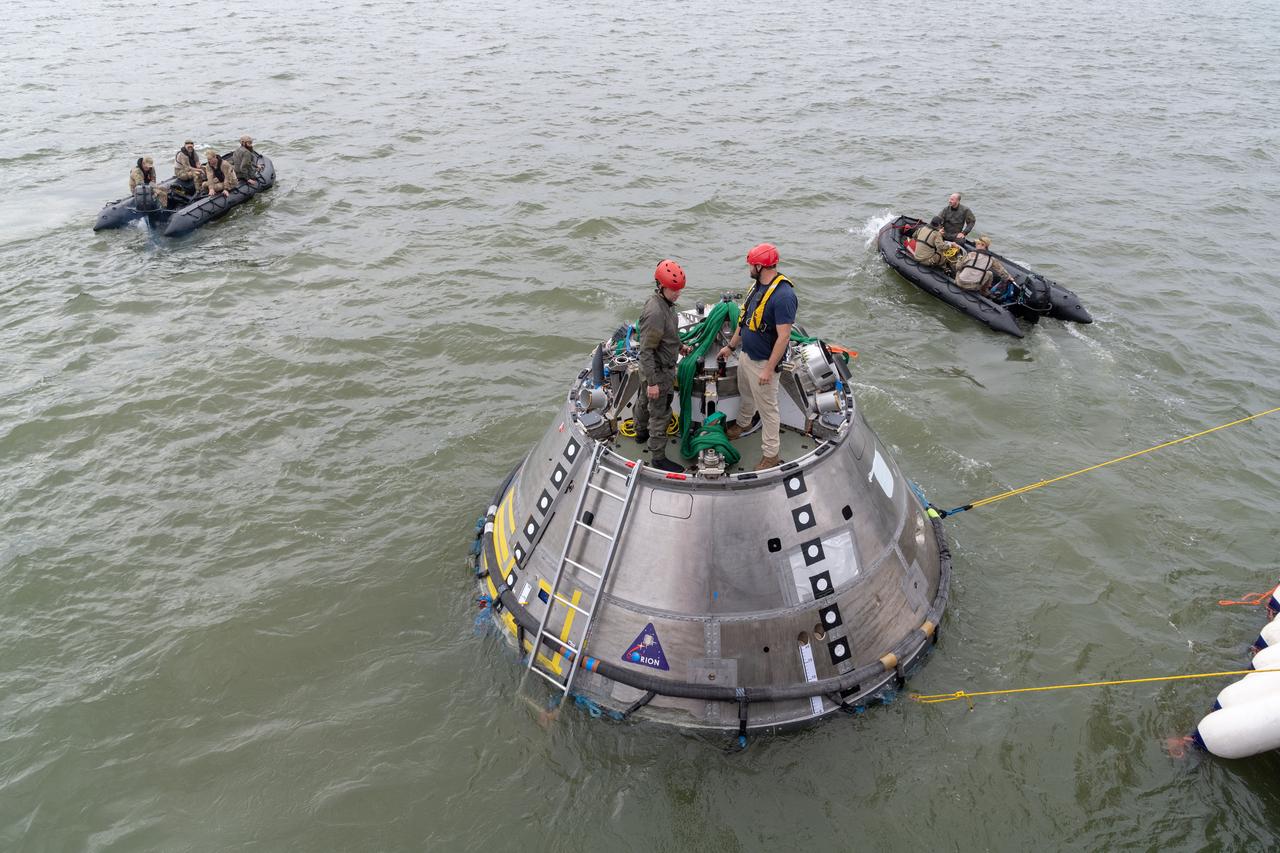
The Orion Crew Module Uprighting System (CMUS) and Neutral Buoyancy Laboratory team completed two successful sea tests off the coast of Galveston, Texas, Dec. 1-3, 2018. CMUS is designed to inflate five bags after the Orion spacecraft and its crew splash down after returning from deep space missions, enabling the capsule to upright itself. NASA partnered with United States Coast Guard and Air Force and Texas A&M Galveston teams to perform the tests operations.
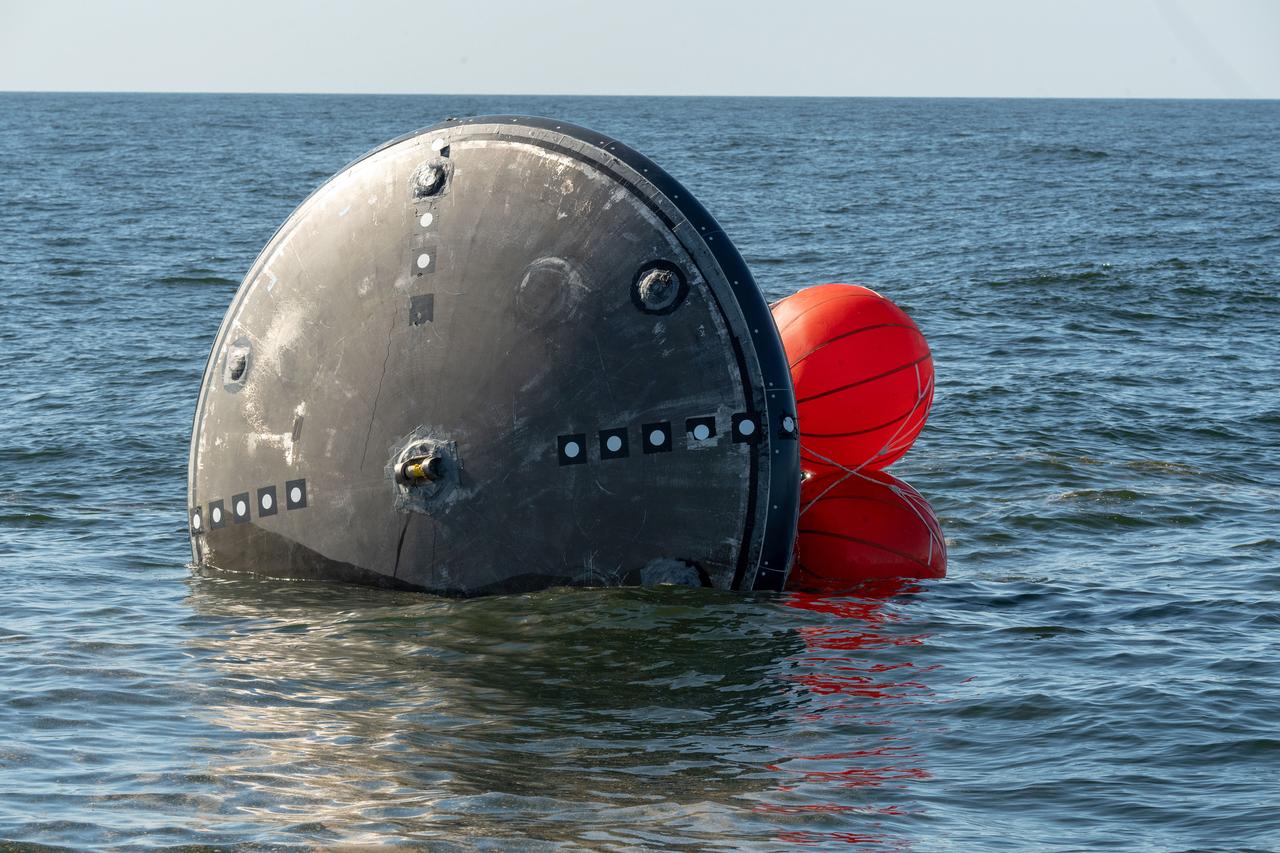
The Orion Crew Module Uprighting System (CMUS) and Neutral Buoyancy Laboratory team completed two successful sea tests off the coast of Galveston, Texas, Dec. 1-3, 2018. CMUS is designed to inflate five bags after the Orion spacecraft and its crew splash down after returning from deep space missions, enabling the capsule to upright itself. NASA partnered with United States Coast Guard and Air Force and Texas A&M Galveston teams to perform the tests operations.

The Orion Crew Module Uprighting System (CMUS) and Neutral Buoyancy Laboratory team completed two successful sea tests off the coast of Galveston, Texas, Dec. 1-3, 2018. CMUS is designed to inflate five bags after the Orion spacecraft and its crew splash down after returning from deep space missions, enabling the capsule to upright itself. NASA partnered with United States Coast Guard and Air Force and Texas A&M Galveston teams to perform the tests operations.

51J-S-001 (3 Oct 1985) --- This 35mm frame was taken moments after the Space Shuttle Atlantis cleared the launch tower to begin its first mission in space. Onboard, ready to carry out STS-51J mission were astronauts Karol J. Bobko, commander; Ronald J. Grabe, pilot; Robert L. Stewart and David C. Hilmers, mission specialist; and United States Air Force Major William A. Pailes, payload specialist.
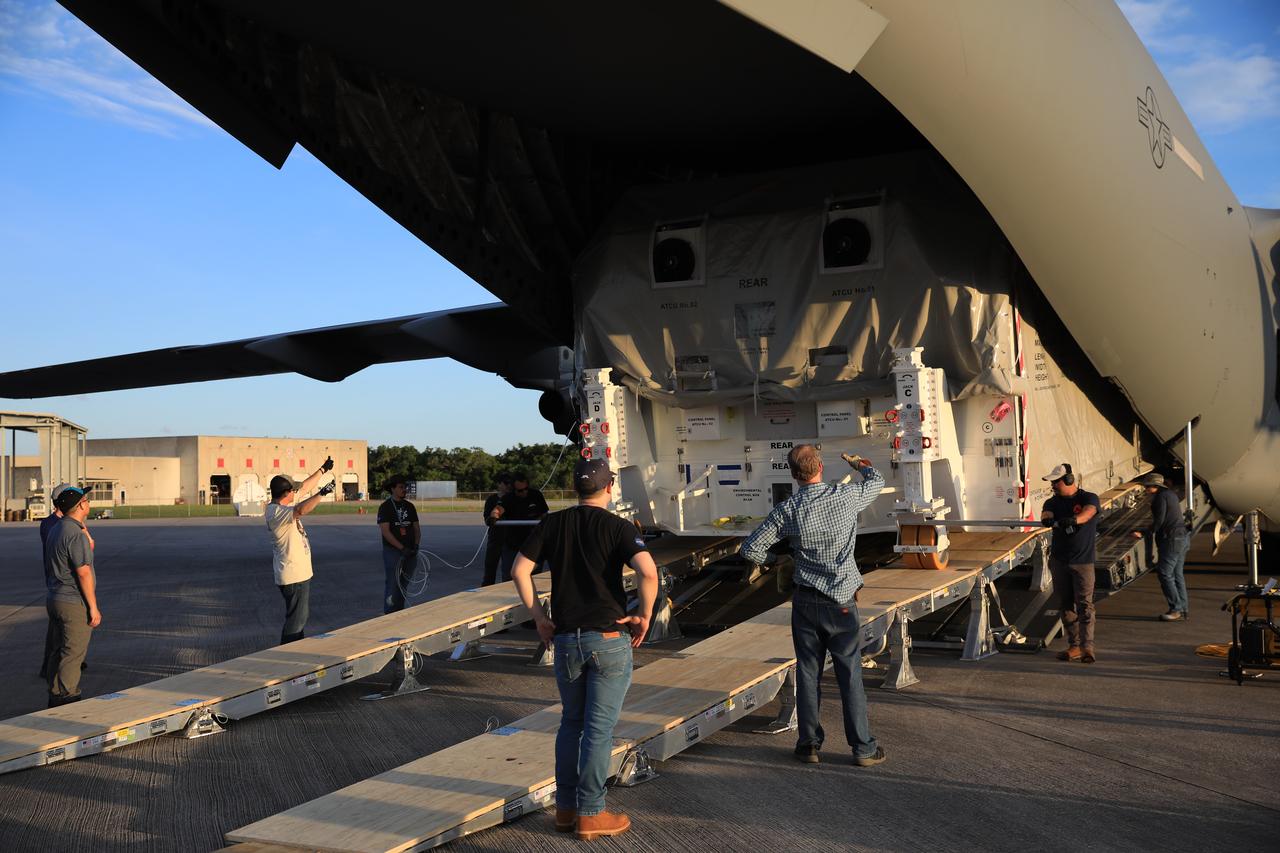
Technicians offload NASA’s largest planetary mission spacecraft, Europa Clipper, from a United States Air Force C-17 Globemaster III transport aircraft at the Launch and Landing Facility at NASA’s Kennedy Space Center in Florida on Thursday, May 23, 2024. Crews will prepare it for launch aboard a SpaceX Falcon Heavy rocket from Launch Complex 39A at the Florida spaceport, targeting liftoff in October. Europa Clipper will help determine if life-sustaining conditions exist below the surface of Jupiter’s fourth largest moon, Europa.