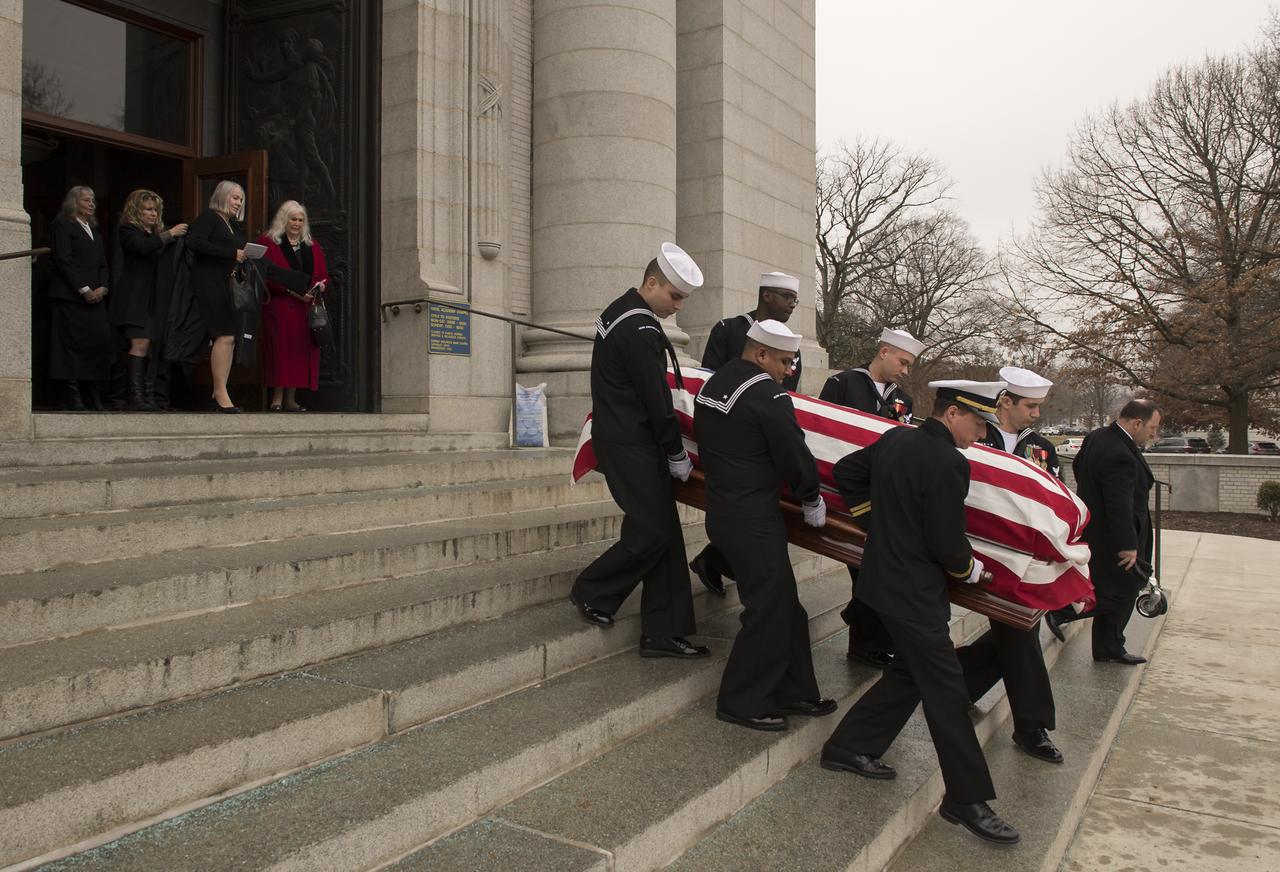
Funeral service for former NASA astronaut Captain Bruce McCandless II, USN (Ret.), Tuesday, Jan. 16, 2018 at the United States Naval Academy Chapel in Annapolis, Maryland. Photo Credit: (NASA/Bill Ingalls)
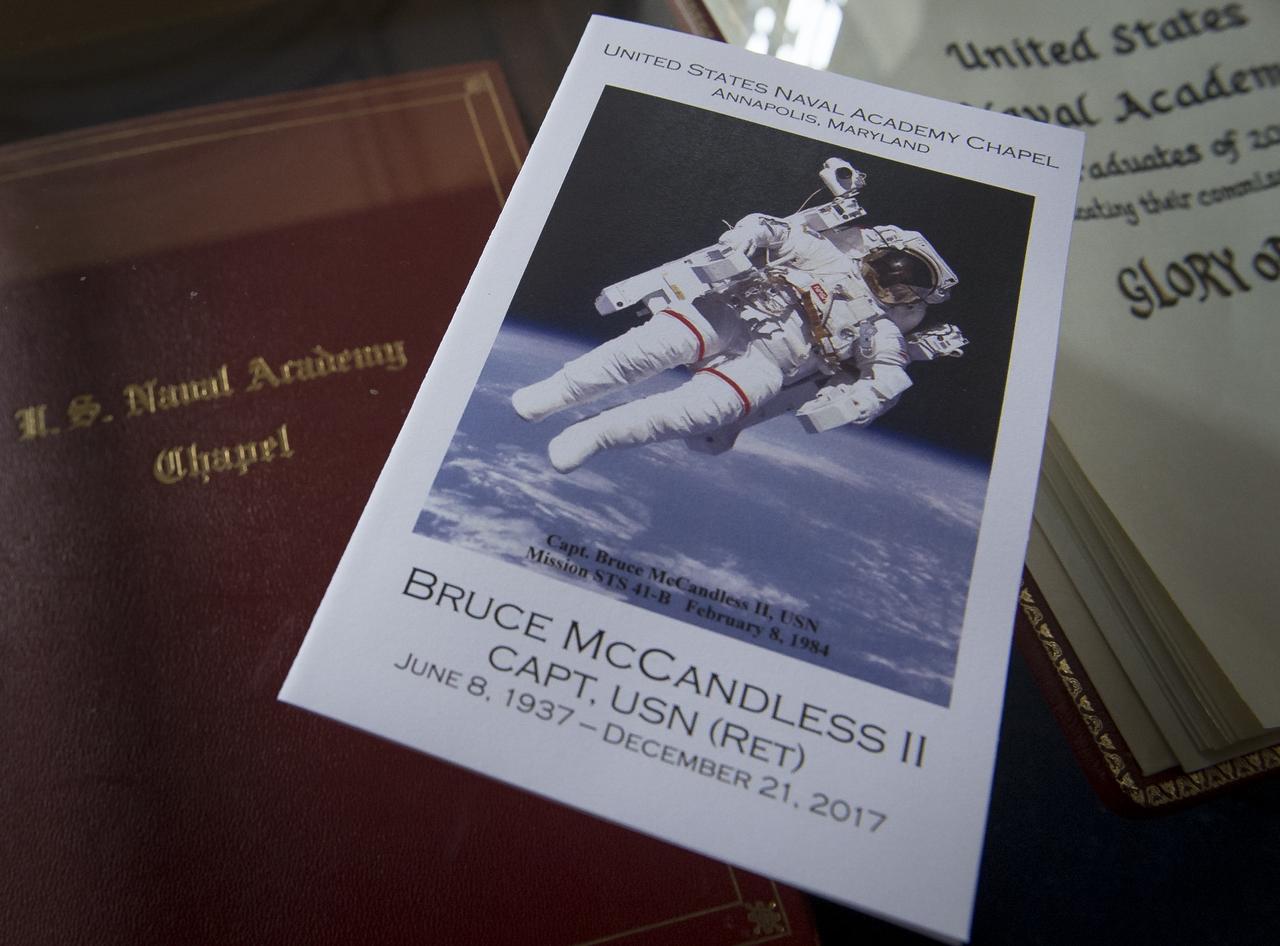
Program for the funeral service of former NASA astronaut Captain Bruce McCandless II, USN (Ret.), Tuesday, Jan. 16, 2018 at the United States Naval Academy Chapel in Annapolis, Maryland. Photo Credit: (NASA/Bill Ingalls)
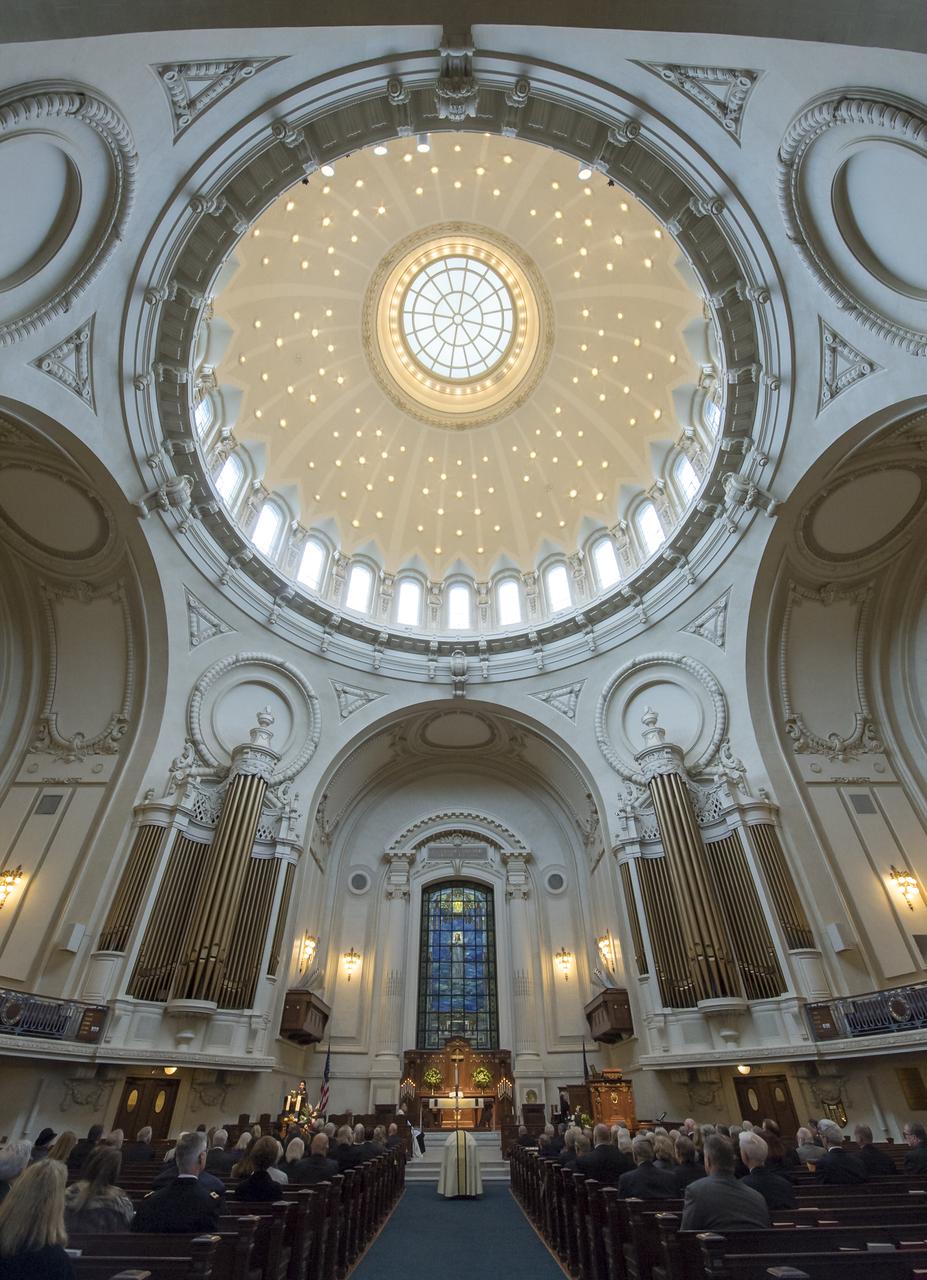
Funeral service for former NASA astronaut Captain Bruce McCandless II, USN (Ret.), Tuesday, Jan. 16, 2018 at the United States Naval Academy Chapel in Annapolis, Maryland. Photo Credit: (NASA/Bill Ingalls)
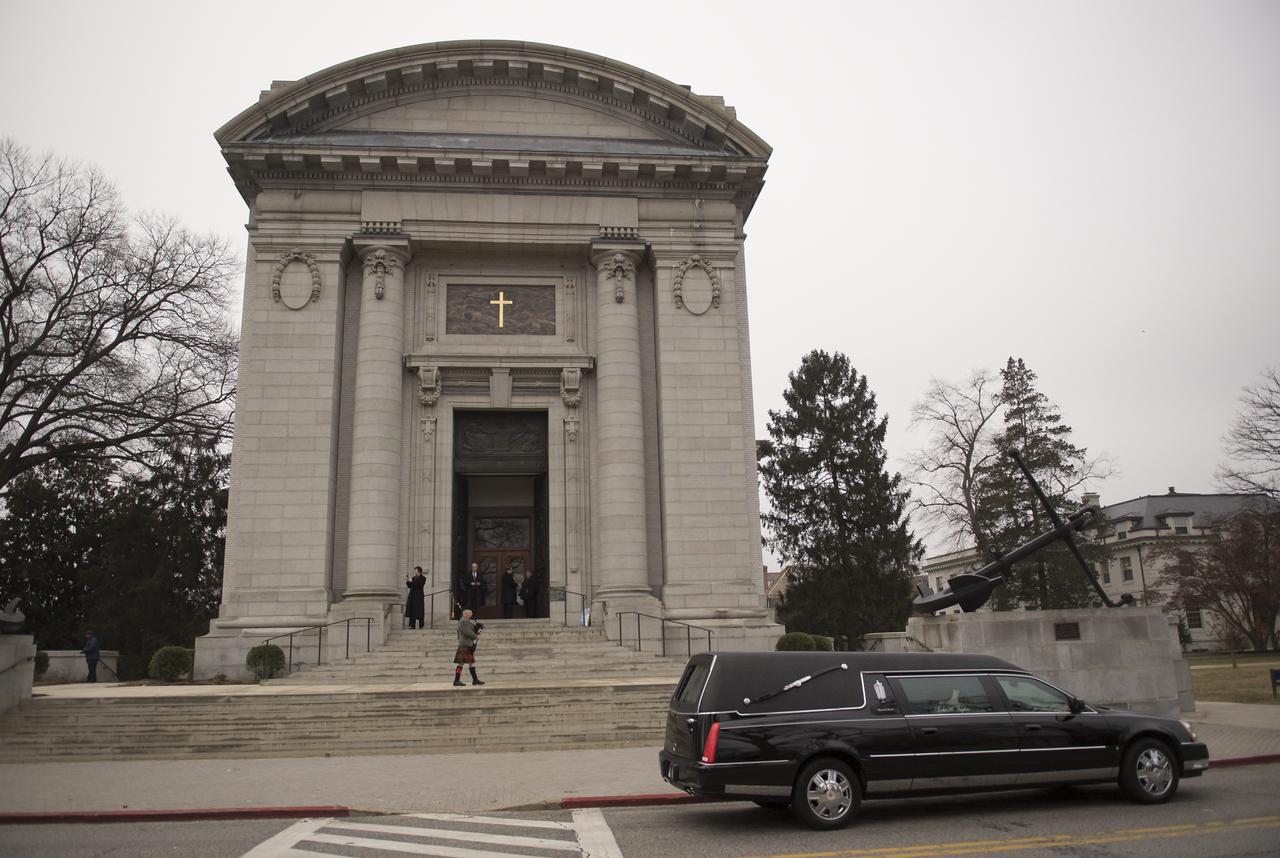
Funeral service for former NASA astronaut Captain Bruce McCandless II, USN (Ret.), Tuesday, Jan. 16, 2018 at the United States Naval Academy Chapel in Annapolis, Maryland. Photo Credit: (NASA/Bill Ingalls)
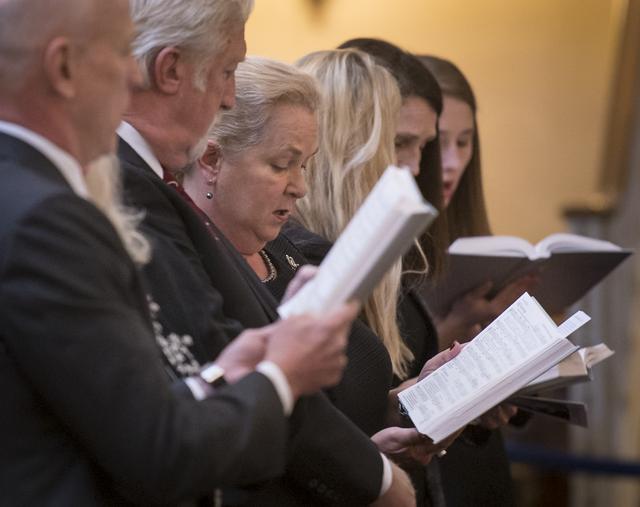
Family and friends attend the funeral service for former NASA astronaut Captain Bruce McCandless II, USN (Ret.), Tuesday, Jan. 16, 2018 at the United States Naval Academy Chapel in Annapolis, Maryland. Photo Credit: (NASA/Bill Ingalls)
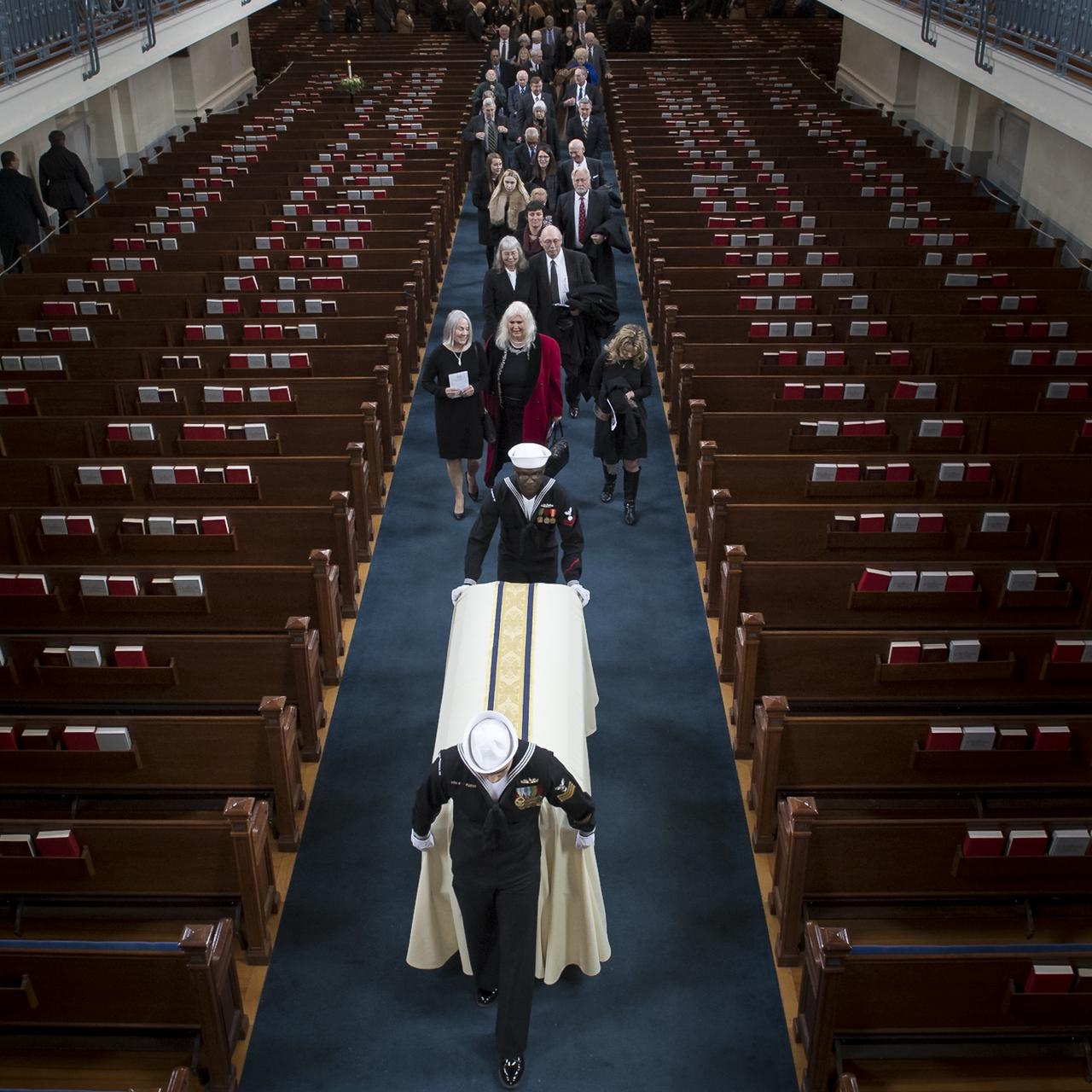
Family and friends depart the funeral service for former NASA astronaut Captain Bruce McCandless II, USN (Ret.), Tuesday, Jan. 16, 2018 at the United States Naval Academy Chapel in Annapolis, Maryland. Photo Credit: (NASA/Bill Ingalls)
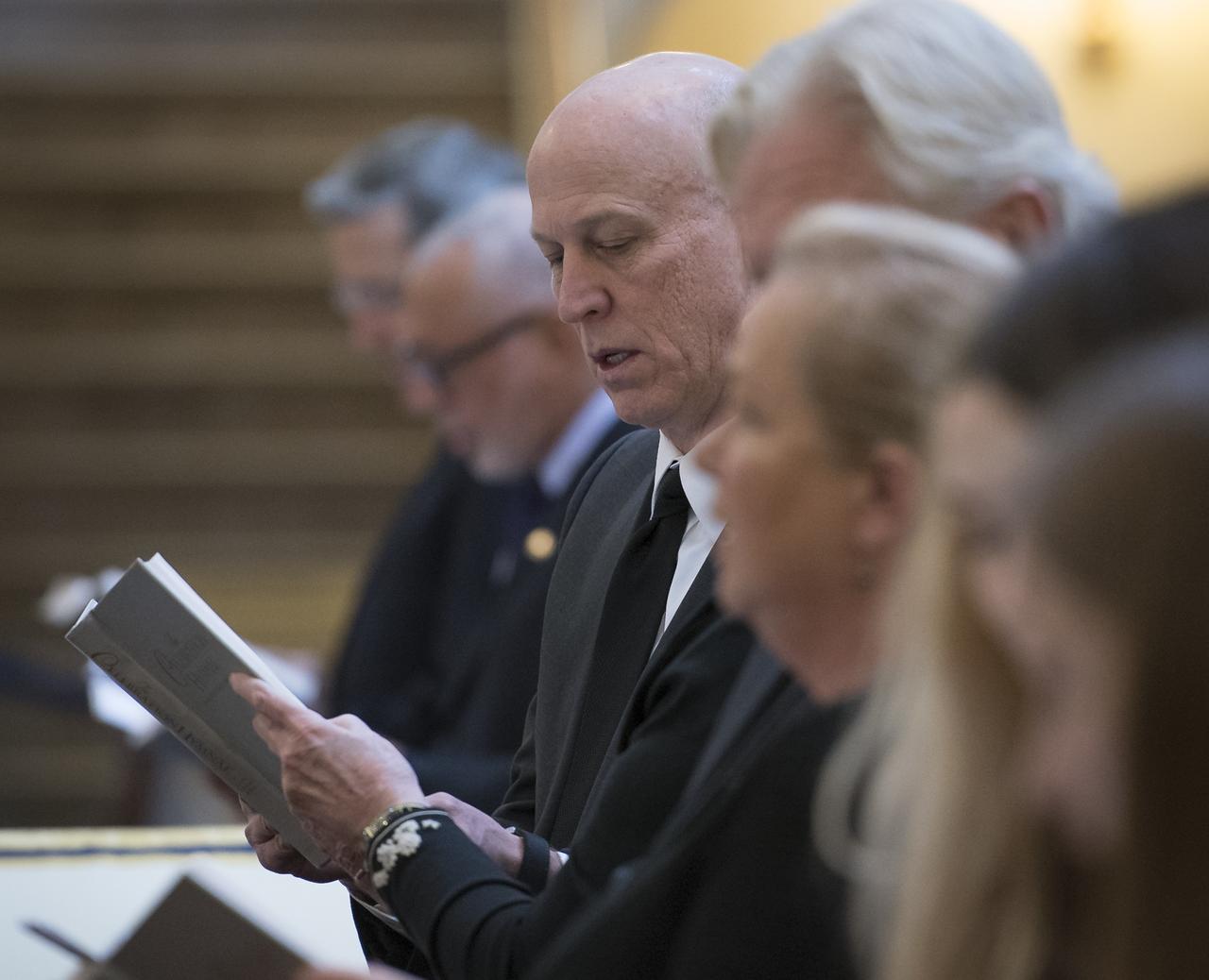
Family and friends attend the funeral service for former NASA astronaut Captain Bruce McCandless II, USN (Ret.), Tuesday, Jan. 16, 2018 at the United States Naval Academy Chapel in Annapolis, Maryland. Photo Credit: (NASA/Bill Ingalls)
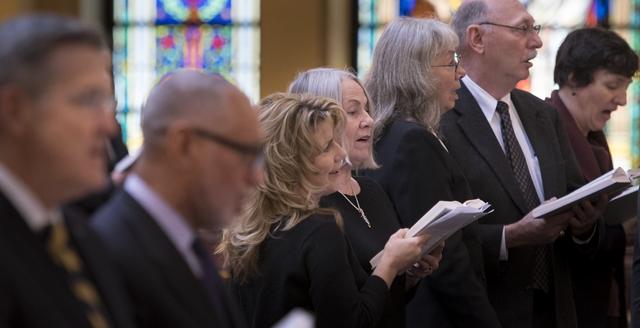
Family and friends attend the funeral service for former NASA astronaut Captain Bruce McCandless II, USN (Ret.), Tuesday, Jan. 16, 2018 at the United States Naval Academy Chapel in Annapolis, Maryland. Photo Credit: (NASA/Bill Ingalls)
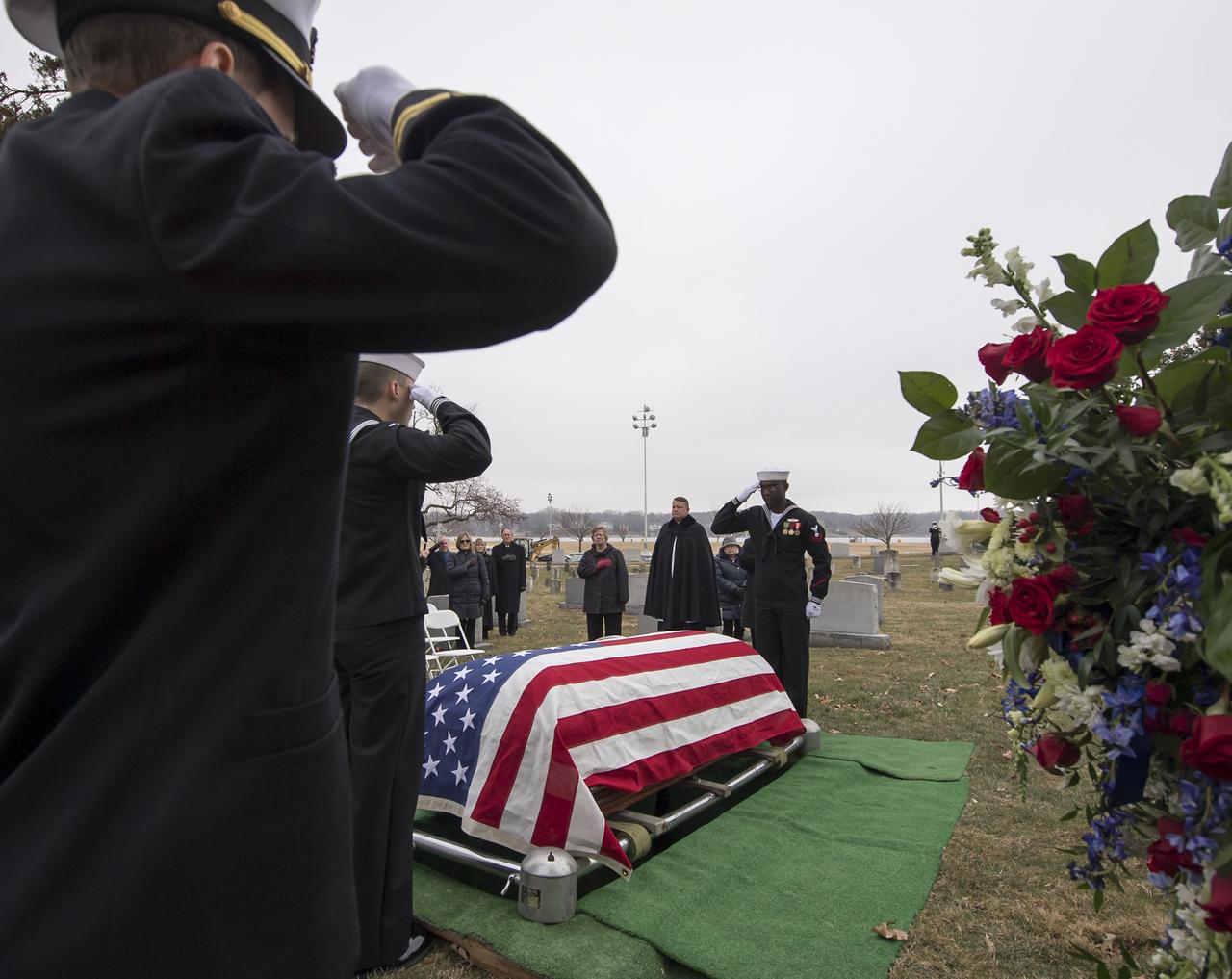
Funeral service for former NASA astronaut Captain Bruce McCandless II, USN (Ret.), Tuesday, Jan. 16, 2018 at the United States Naval Academy Cemetery in Annapolis, Maryland. Photo Credit: (NASA/Bill Ingalls)
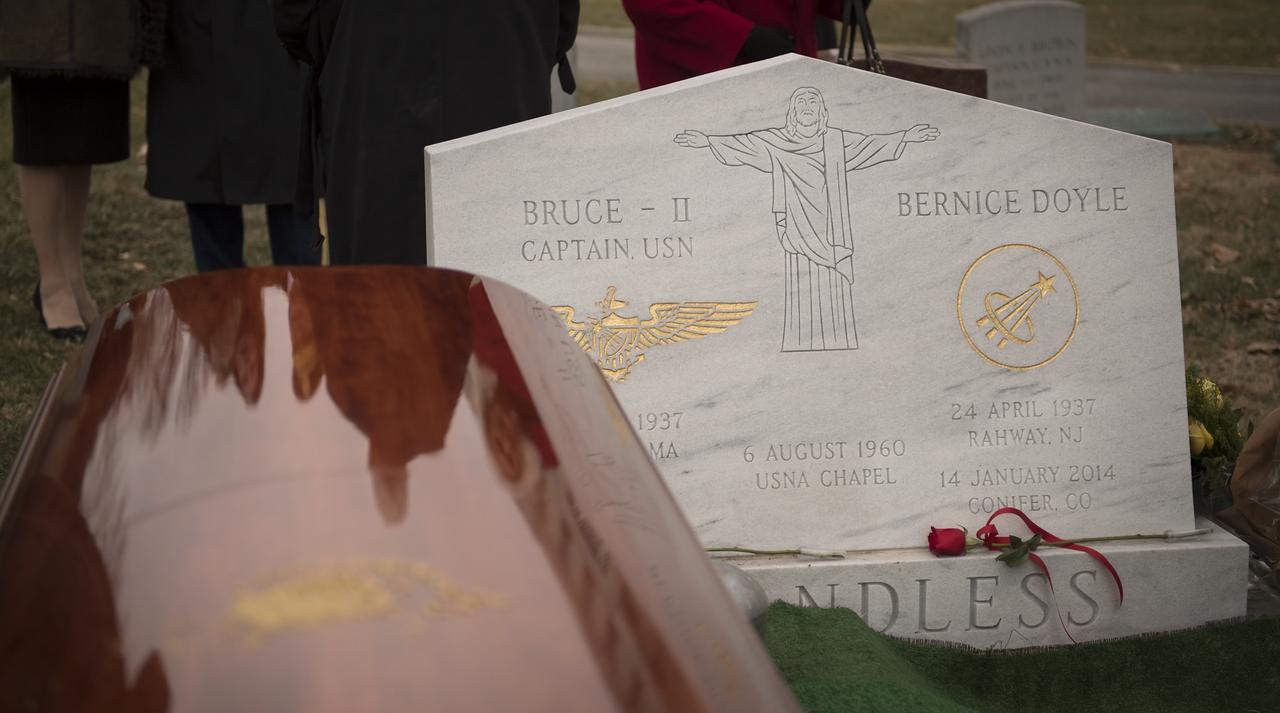
Interment service for former NASA astronaut Captain Bruce McCandless II, USN (Ret.), Tuesday, Jan. 16, 2018 at the United States Naval Academy Cemetery in Annapolis, Maryland. Photo Credit: (NASA/Bill Ingalls)
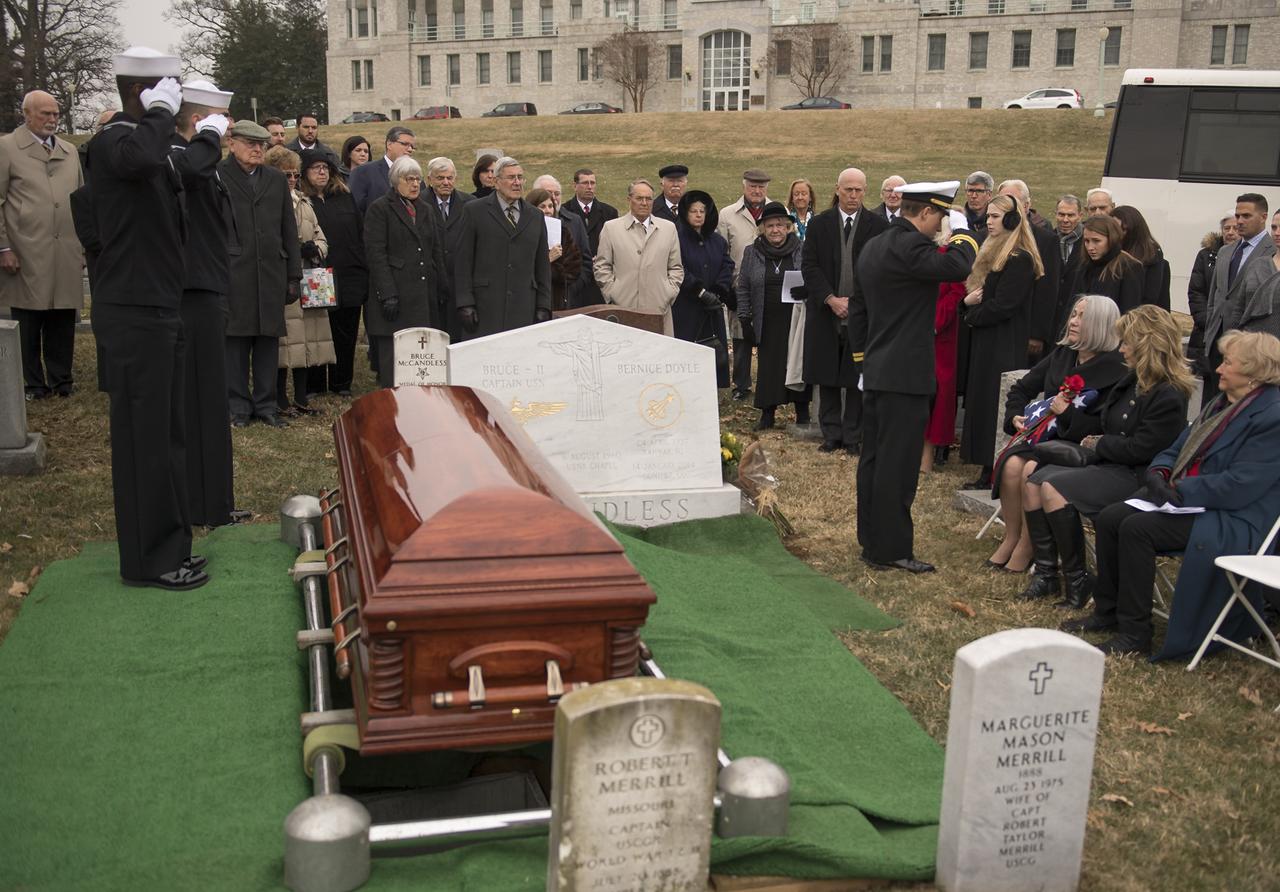
Interment service for former NASA astronaut Captain Bruce McCandless II, USN (Ret.), Tuesday, Jan. 16, 2018 at the United States Naval Academy Cemetery in Annapolis, Maryland. Photo Credit: (NASA/Bill Ingalls)
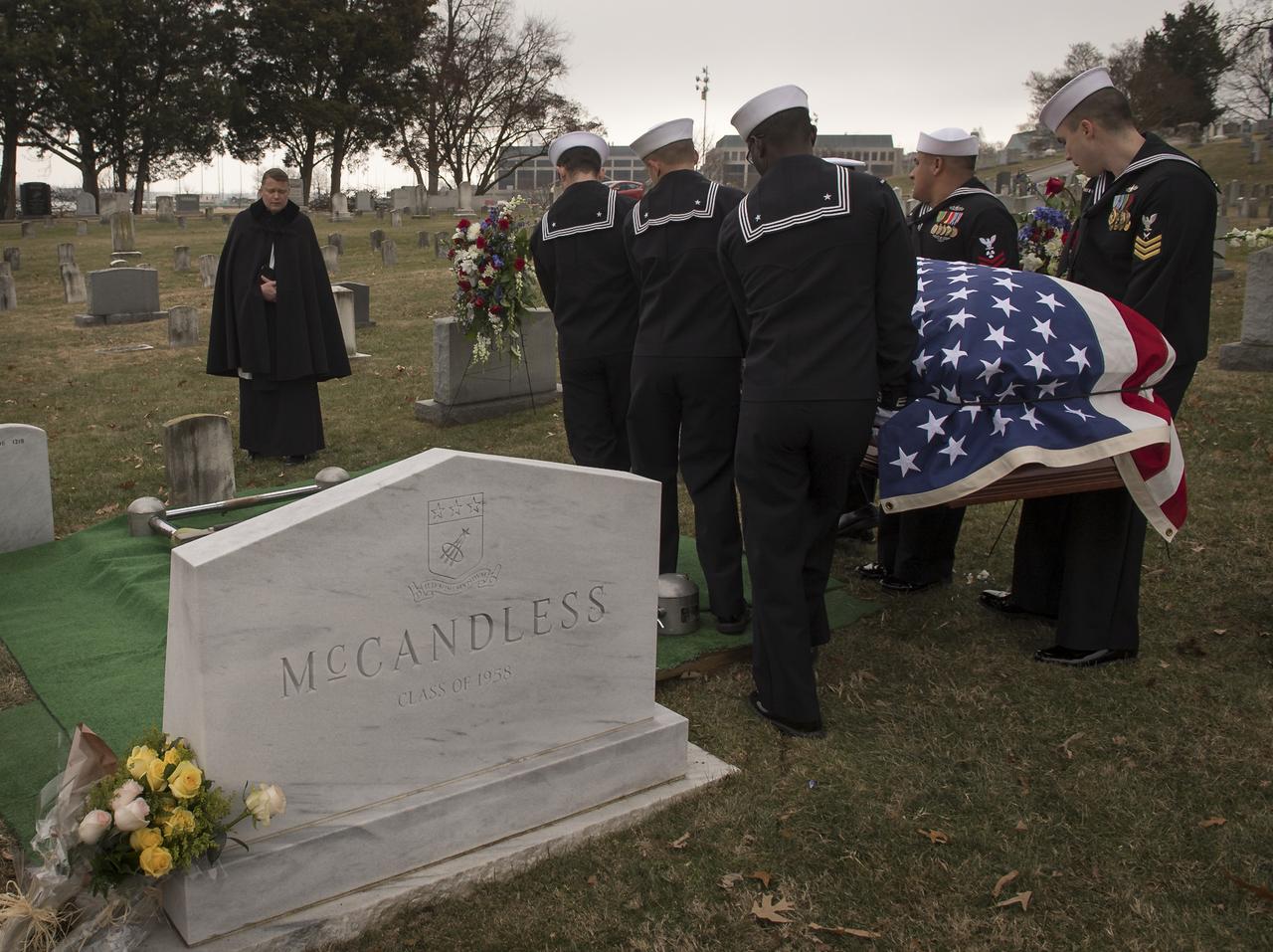
Funeral service for former NASA astronaut Captain Bruce McCandless II, USN (Ret.), Tuesday, Jan. 16, 2018 at the United States Naval Academy Cemetery in Annapolis, Maryland. Photo Credit: (NASA/Bill Ingalls)
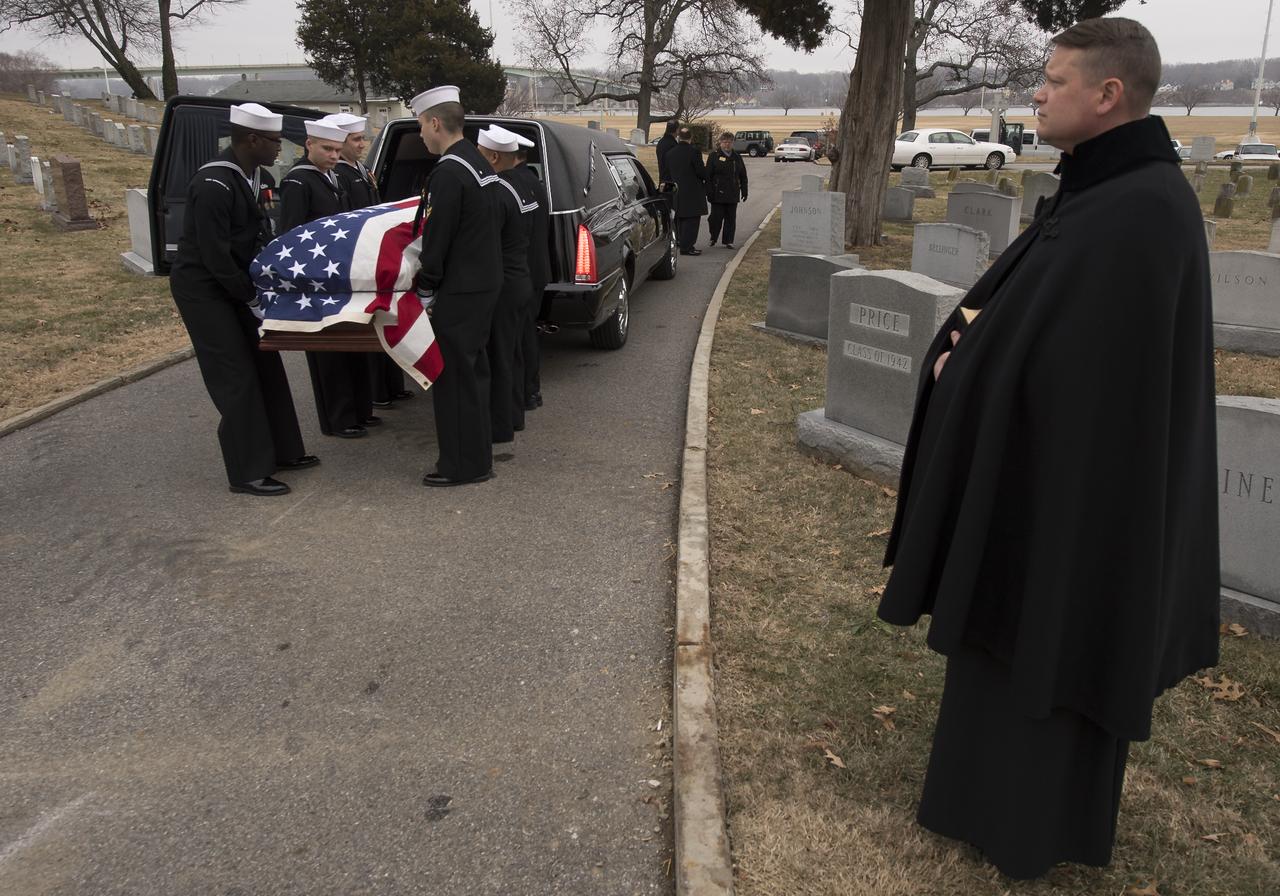
Funeral service for former NASA astronaut Captain Bruce McCandless II, USN (Ret.), Tuesday, Jan. 16, 2018 at the United States Naval Academy Cemetery in Annapolis, Maryland. Photo Credit: (NASA/Bill Ingalls)
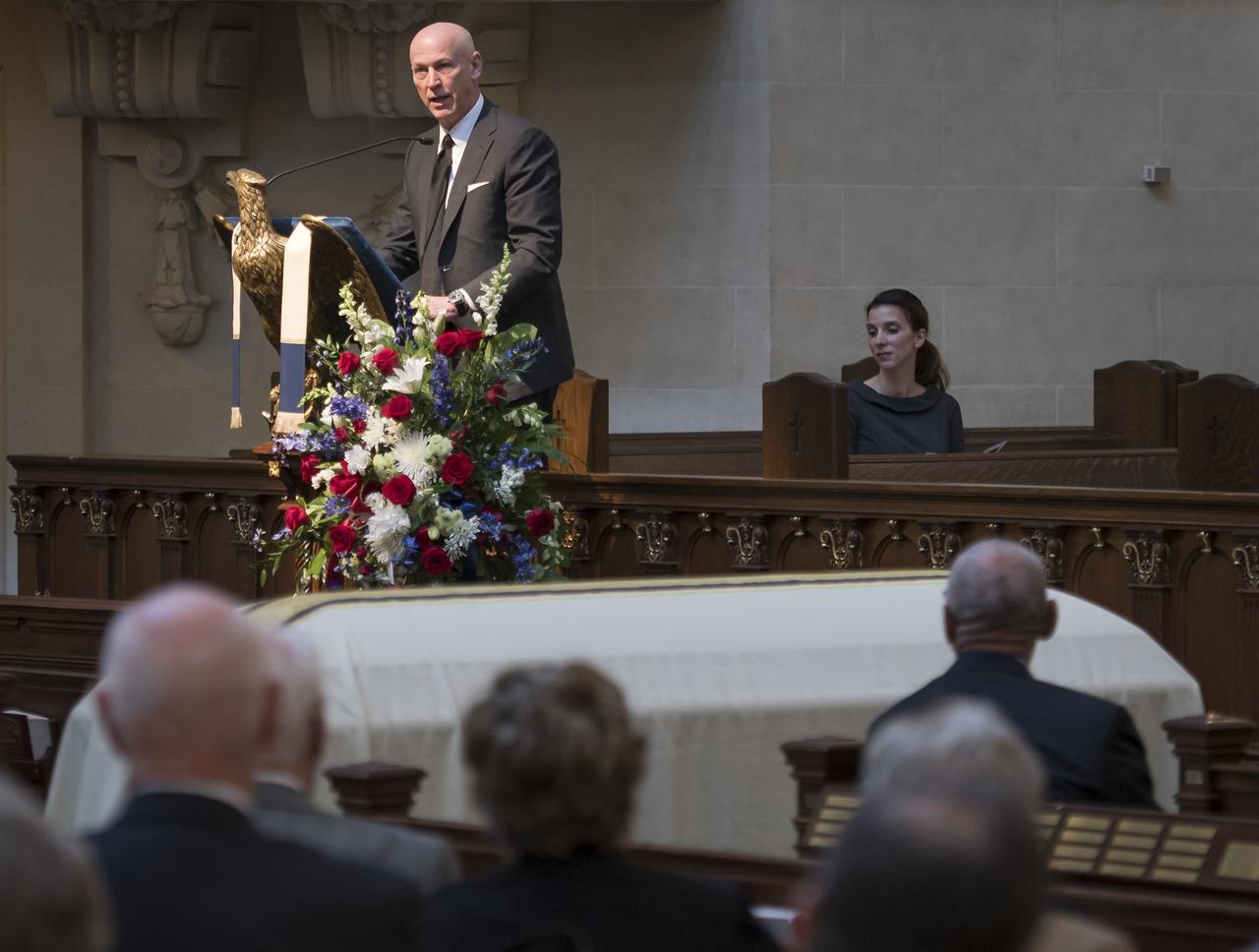
Bruce McCandless III gives remarks during the funeral service for his father, former NASA astronaut Captain Bruce McCandless II, USN (Ret.), Tuesday, Jan. 16, 2018 at the United States Naval Academy Chapel in Annapolis, Maryland. Photo Credit: (NASA/Bill Ingalls)
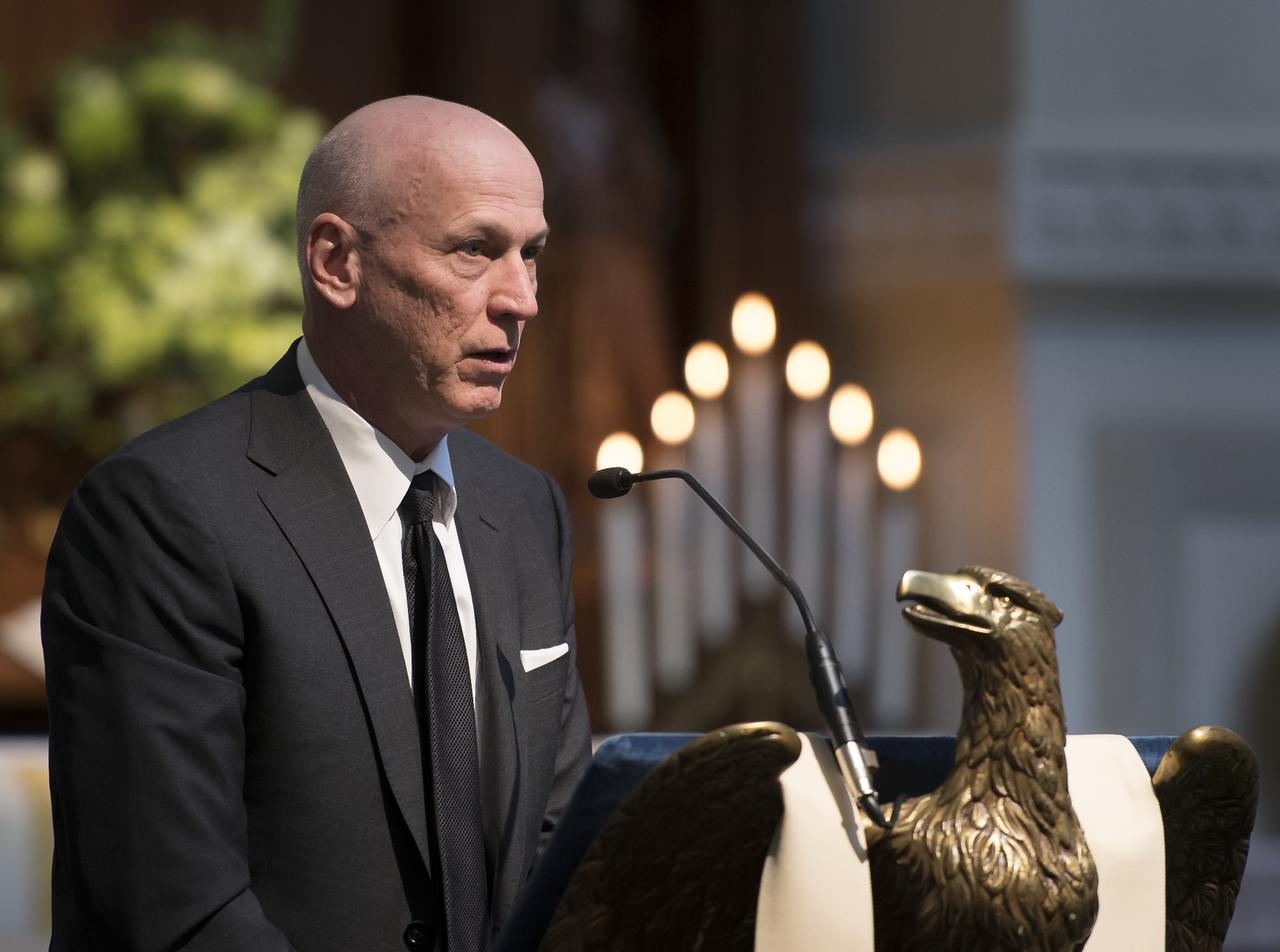
Bruce McCandless III gives remarks during the funeral service for his father, former NASA astronaut Captain Bruce McCandless II, USN (Ret.), Tuesday, Jan. 16, 2018 at the United States Naval Academy Chapel in Annapolis, Maryland. Photo Credit: (NASA/Bill Ingalls)
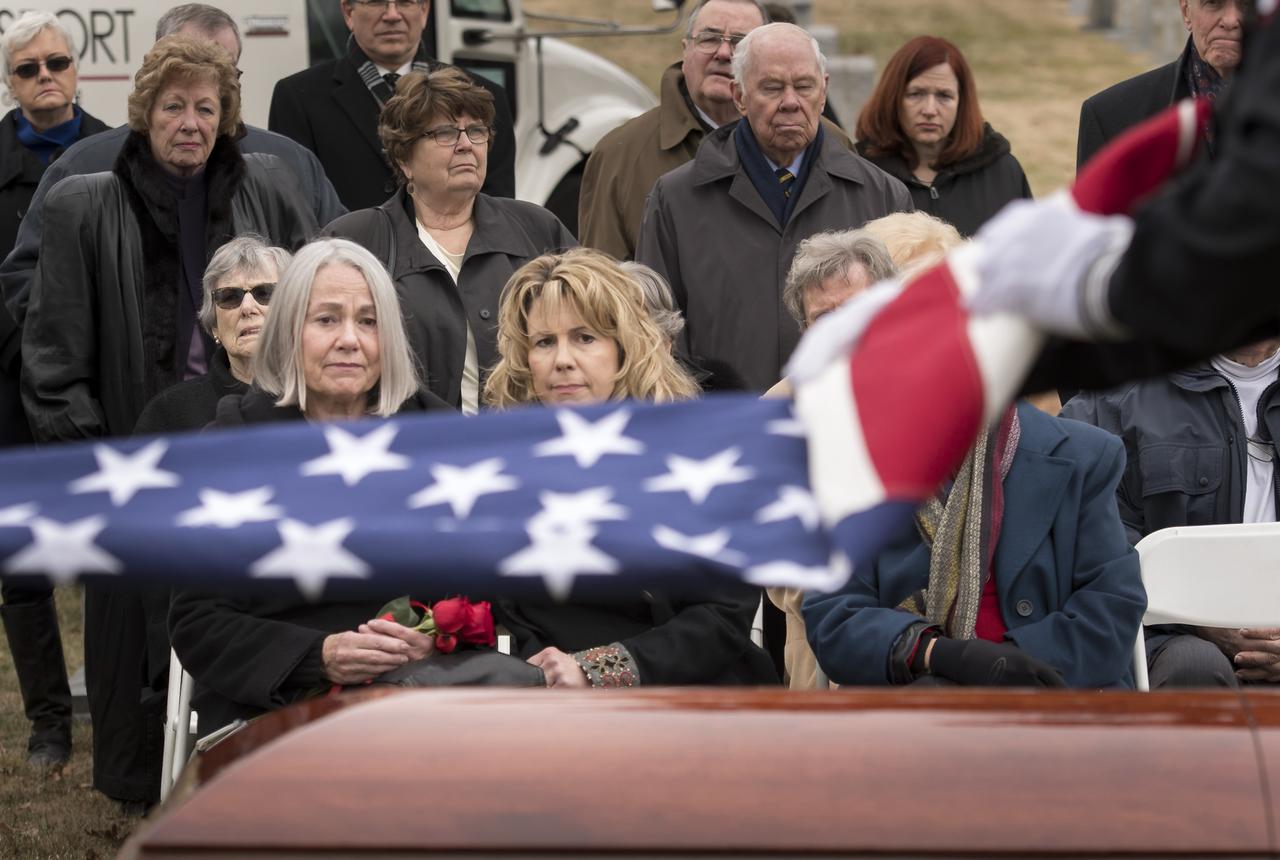
Family and friends watch as the flag that draped the casket of former NASA astronaut Captain Bruce McCandless II, USN (Ret.) is folded during his interment service, Tuesday, Jan. 16, 2018 at the United States Naval Academy Cemetery in Annapolis, Maryland. Photo Credit: (NASA/Bill Ingalls)
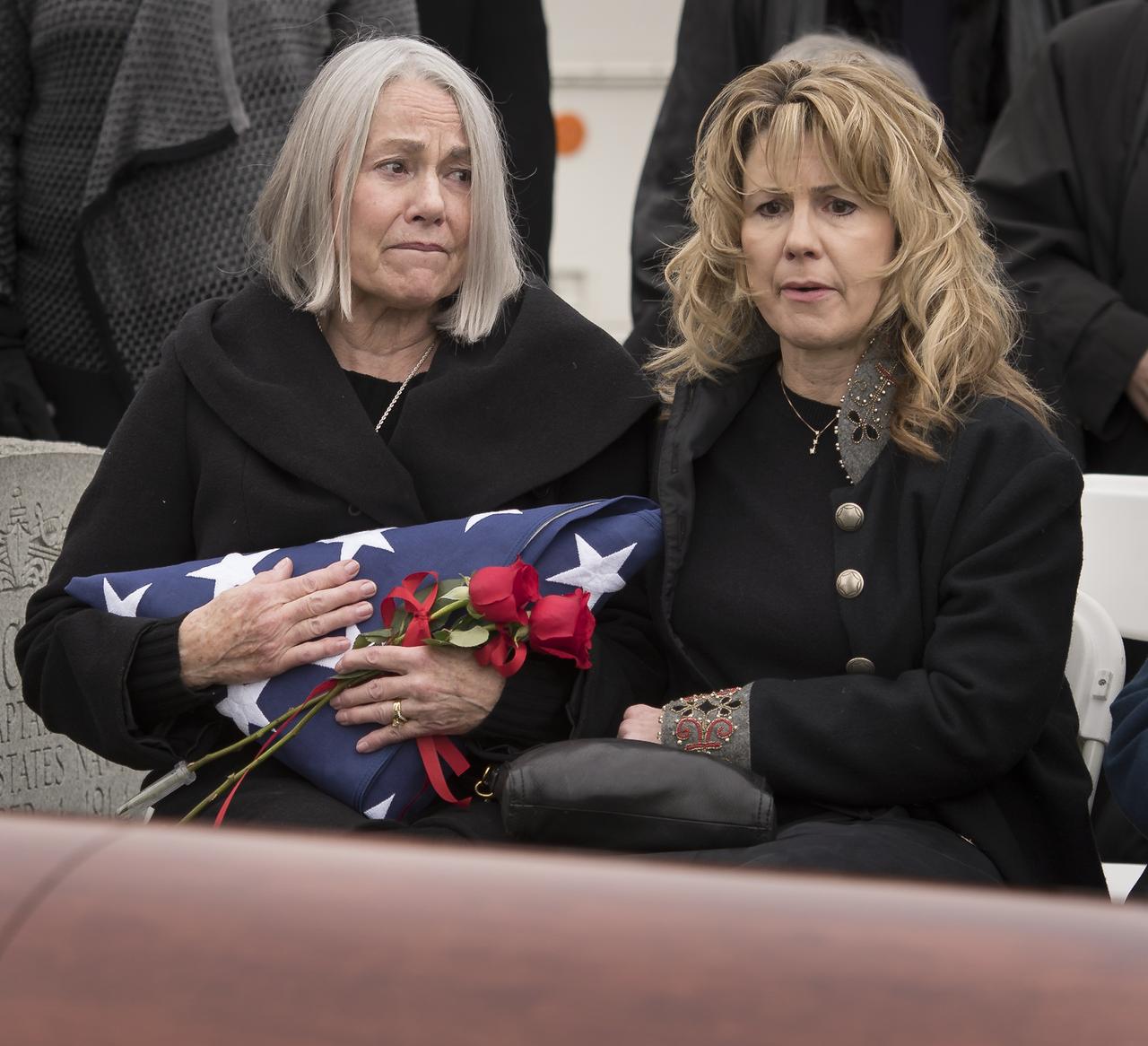
Ellen Shields McCandless, wife of former NASA astronaut Captain Bruce McCandless II, USN (Ret.), left, is seen during her husband's interment service, Tuesday, Jan. 16, 2018 at the United States Naval Academy Cemetery in Annapolis, Maryland. Photo Credit: (NASA/Bill Ingalls)
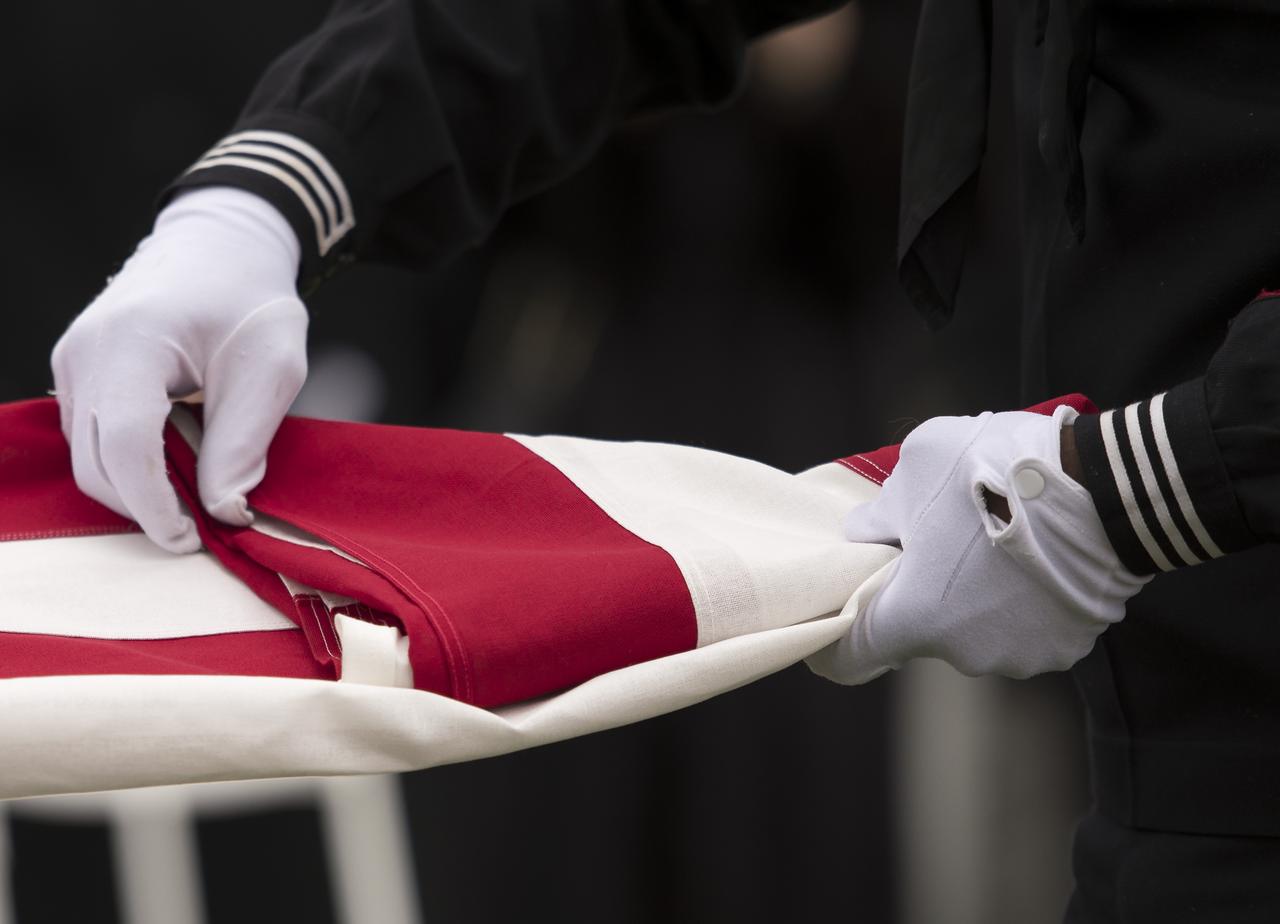
The flag that draped the casket of former NASA astronaut Captain Bruce McCandless II, USN (Ret.) is folded during his interment service, Tuesday, Jan. 16, 2018 at the United States Naval Academy Cemetery in Annapolis, Maryland. Photo Credit: (NASA/Bill Ingalls)
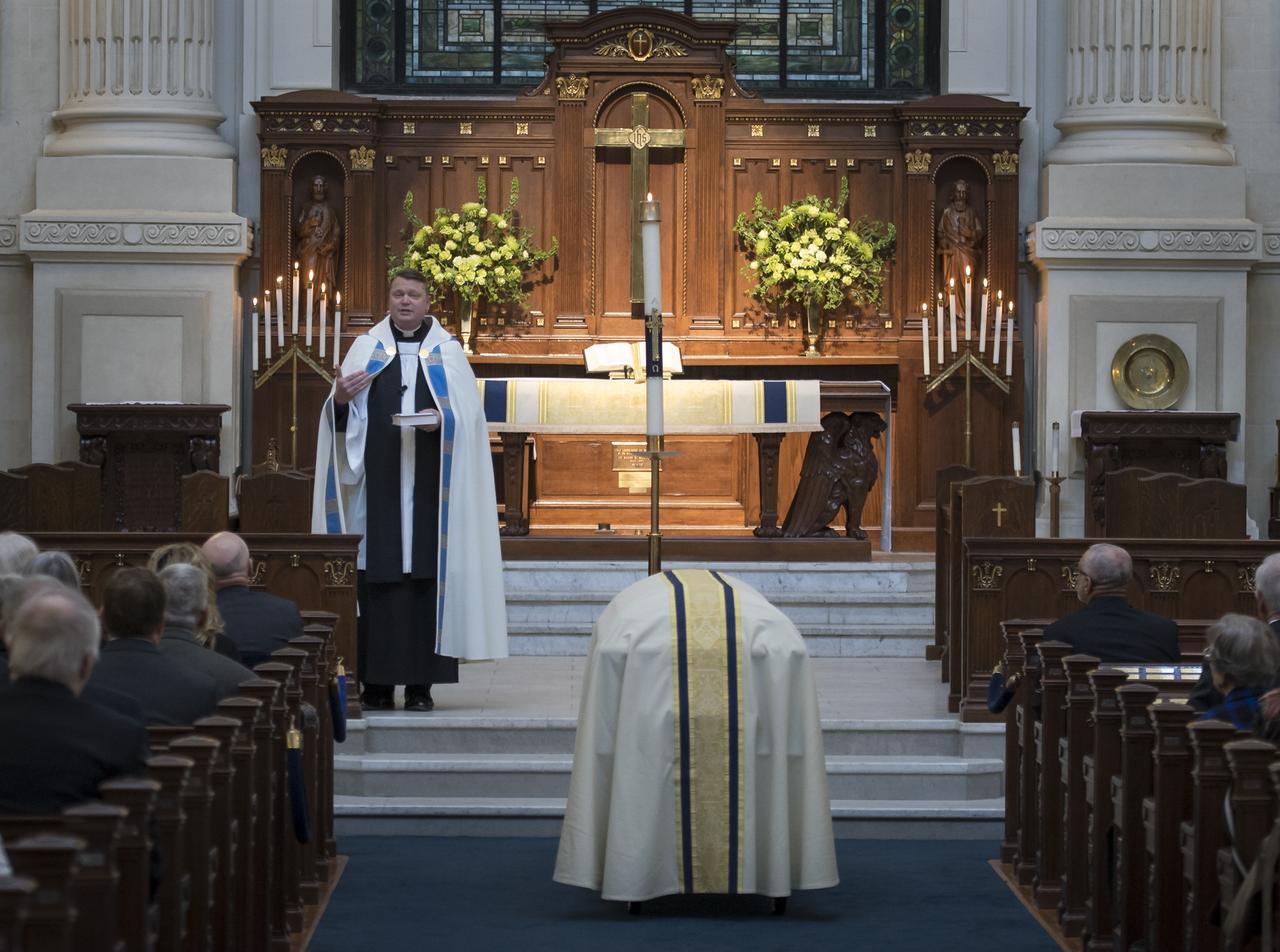
Chaplain McGrath over sees the funeral service for former NASA astronaut Captain Bruce McCandless II, USN (Ret.), Tuesday, Jan. 16, 2018 at the United States Naval Academy Chapel in Annapolis, Maryland. Photo Credit: (NASA/Bill Ingalls)
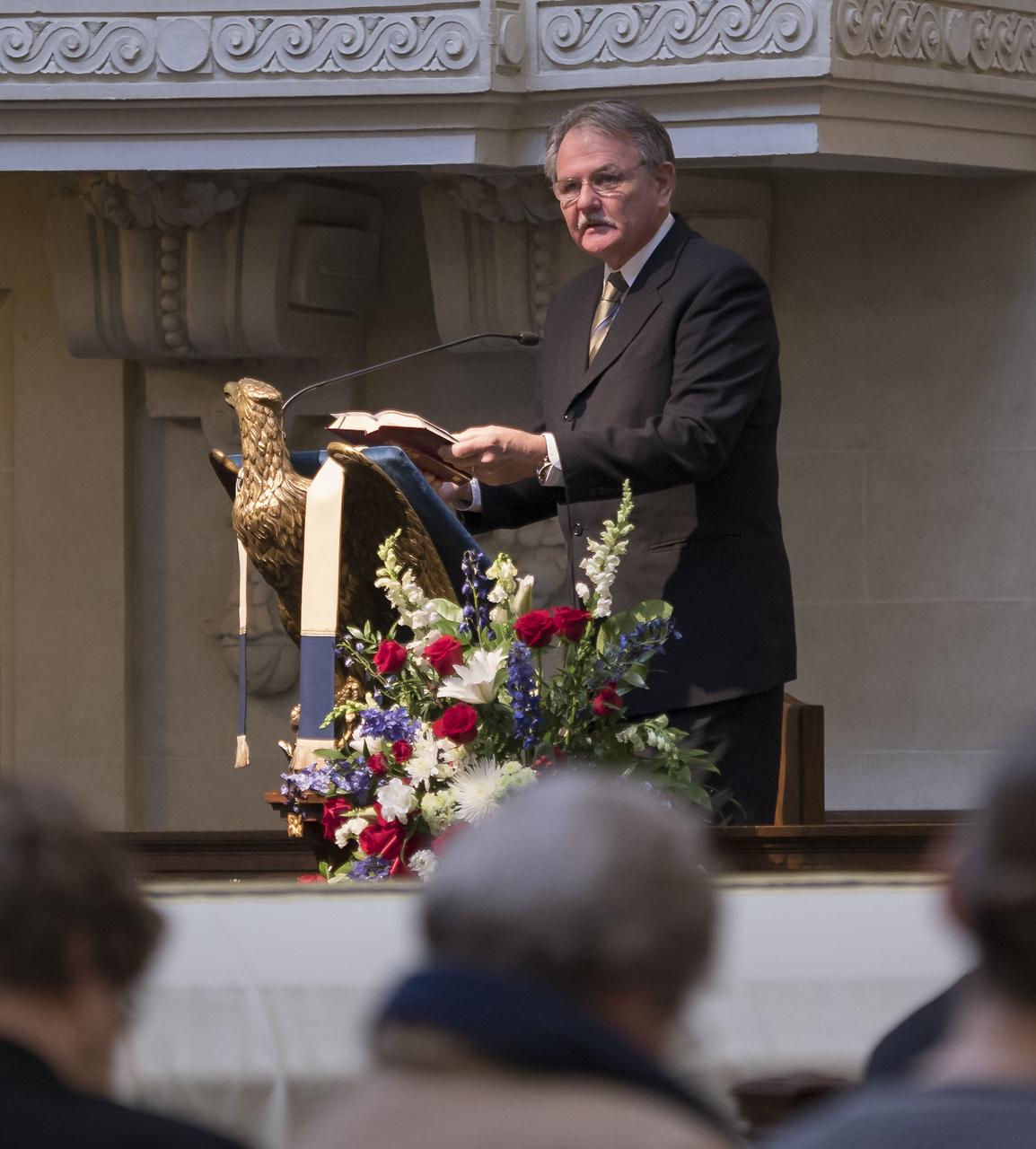
The Rev. Mark Anderson talks during the funeral service for former NASA astronaut Captain Bruce McCandless II, USN (Ret.), Tuesday, Jan. 16, 2018 at the United States Naval Academy Chapel in Annapolis, Maryland. Photo Credit: (NASA/Bill Ingalls)
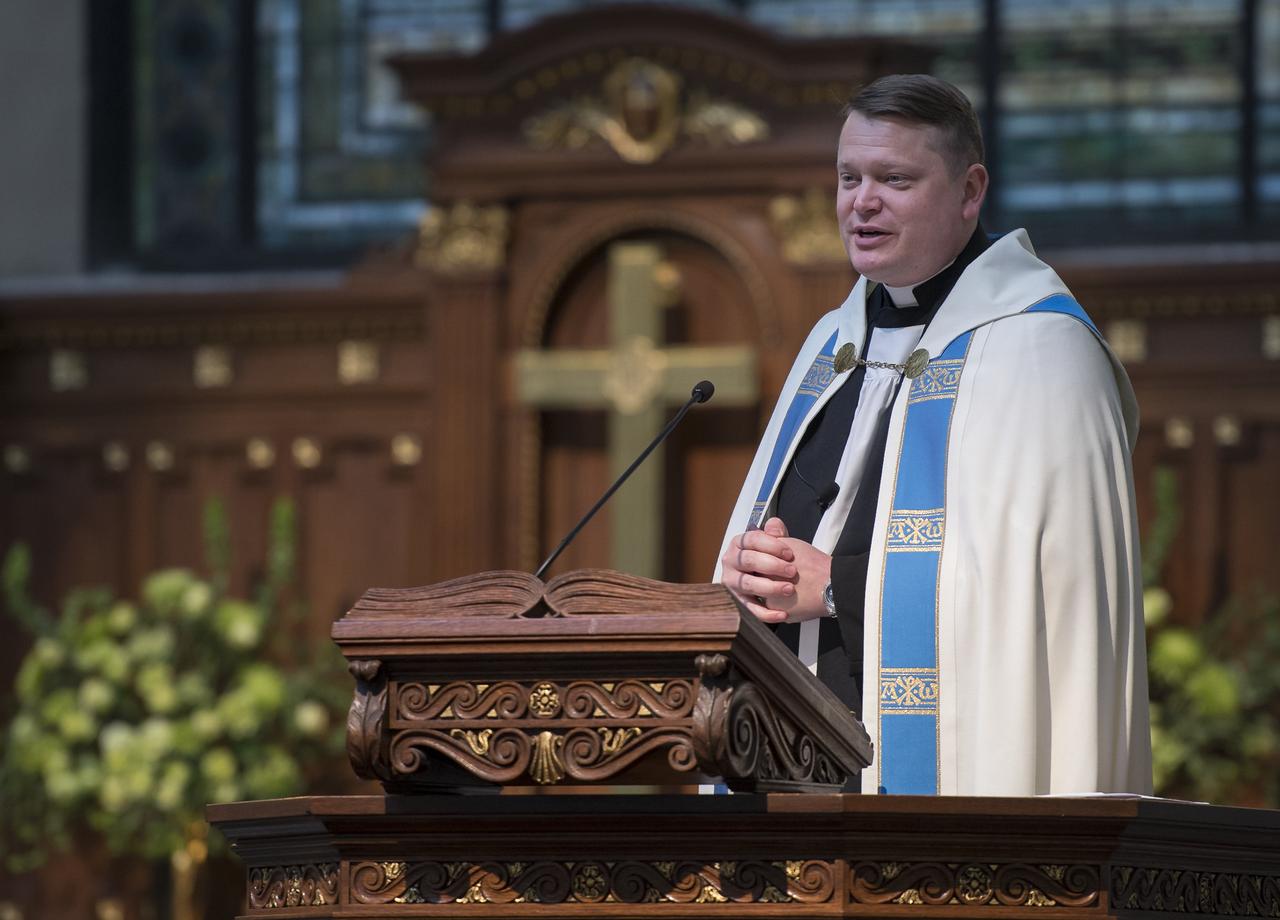
Chaplain McGrath over sees the funeral service for former NASA astronaut Captain Bruce McCandless II, USN (Ret.), Tuesday, Jan. 16, 2018 at the United States Naval Academy Chapel in Annapolis, Maryland. Photo Credit: (NASA/Bill Ingalls)
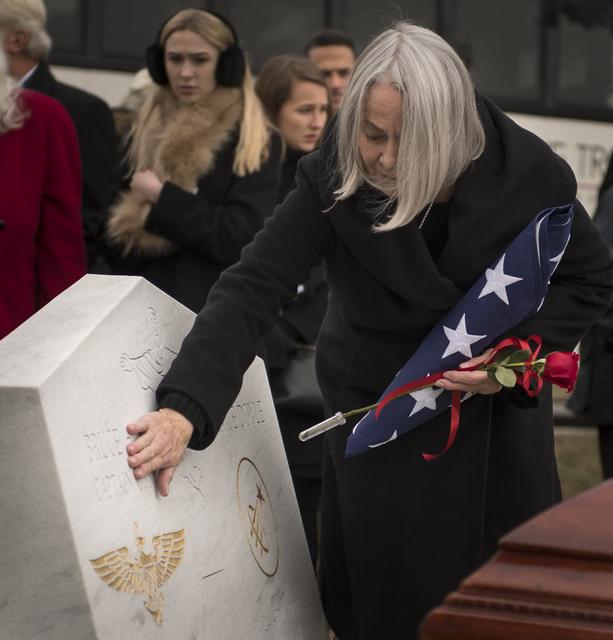
Ellen Shields McCandless, wife of former NASA astronaut Captain Bruce McCandless II, USN (Ret.), left, pays her respects during her husband's interment service, Tuesday, Jan. 16, 2018 at the United States Naval Academy Cemetery in Annapolis, Maryland. Photo Credit: (NASA/Bill Ingalls)
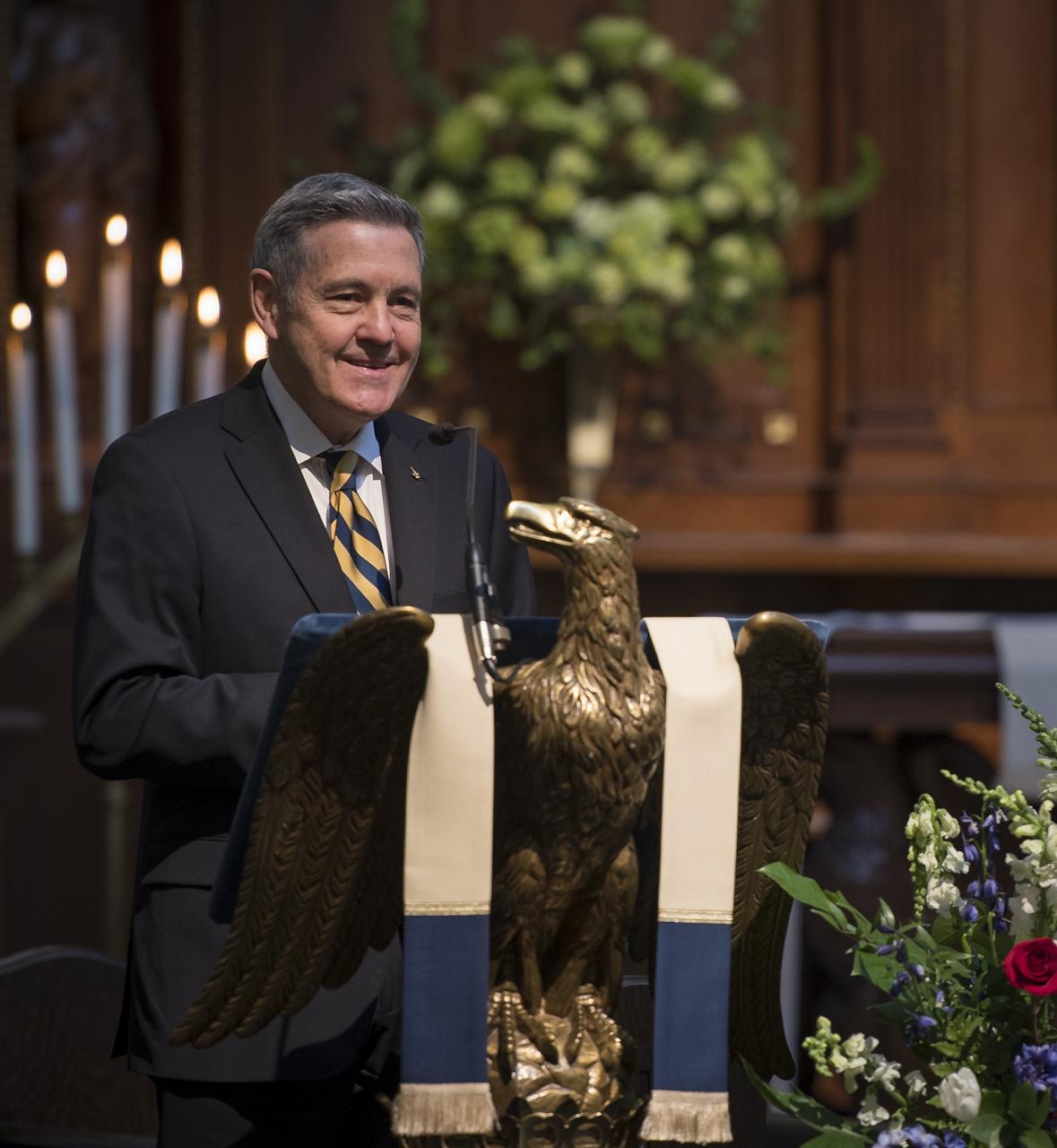
NASA Kennedy Space Center Director Robert Cabana speaks at the funeral service for former NASA astronaut Captain Bruce McCandless II, USN (Ret.), Tuesday, Jan. 16, 2018 at the United States Naval Academy Chapel in Annapolis, Maryland. Photo Credit: (NASA/Bill Ingalls)
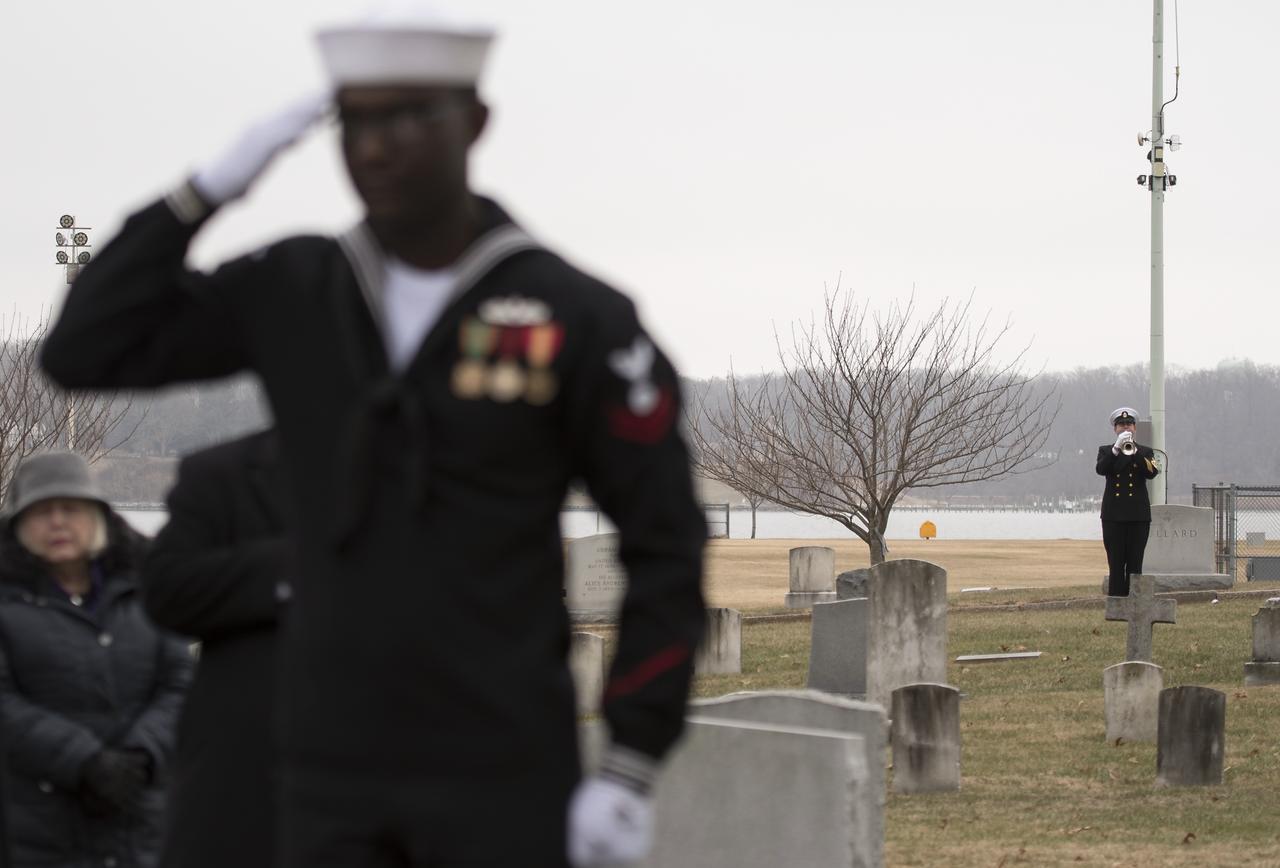
Taps is played during the interment service for former NASA astronaut Captain Bruce McCandless II, USN (Ret.), Tuesday, Jan. 16, 2018 at the United States Naval Academy Cemetery in Annapolis, Maryland. Photo Credit: (NASA/Bill Ingalls)
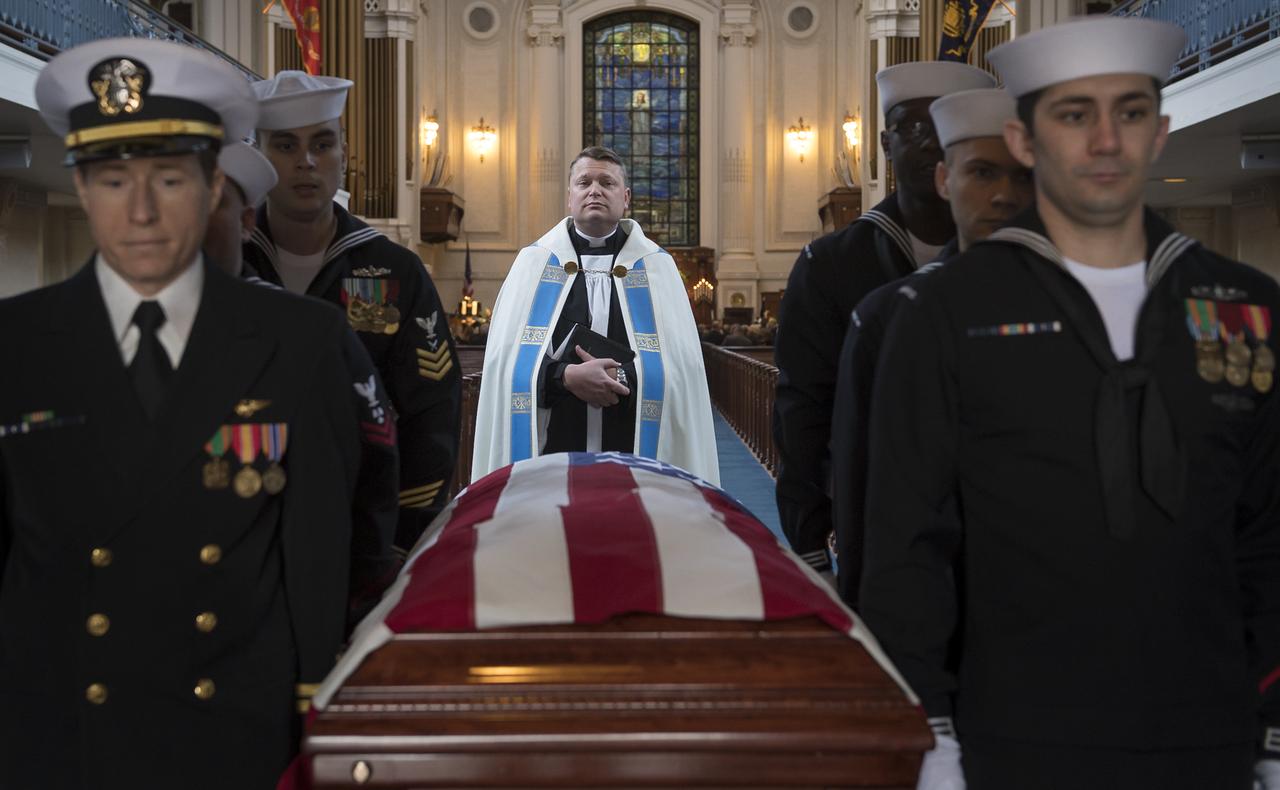
Chaplain McGrath over sees the funeral service for former NASA astronaut Captain Bruce McCandless II, USN (Ret.), Tuesday, Jan. 16, 2018 at the United States Naval Academy Chapel in Annapolis, Maryland. Photo Credit: (NASA/Bill Ingalls)
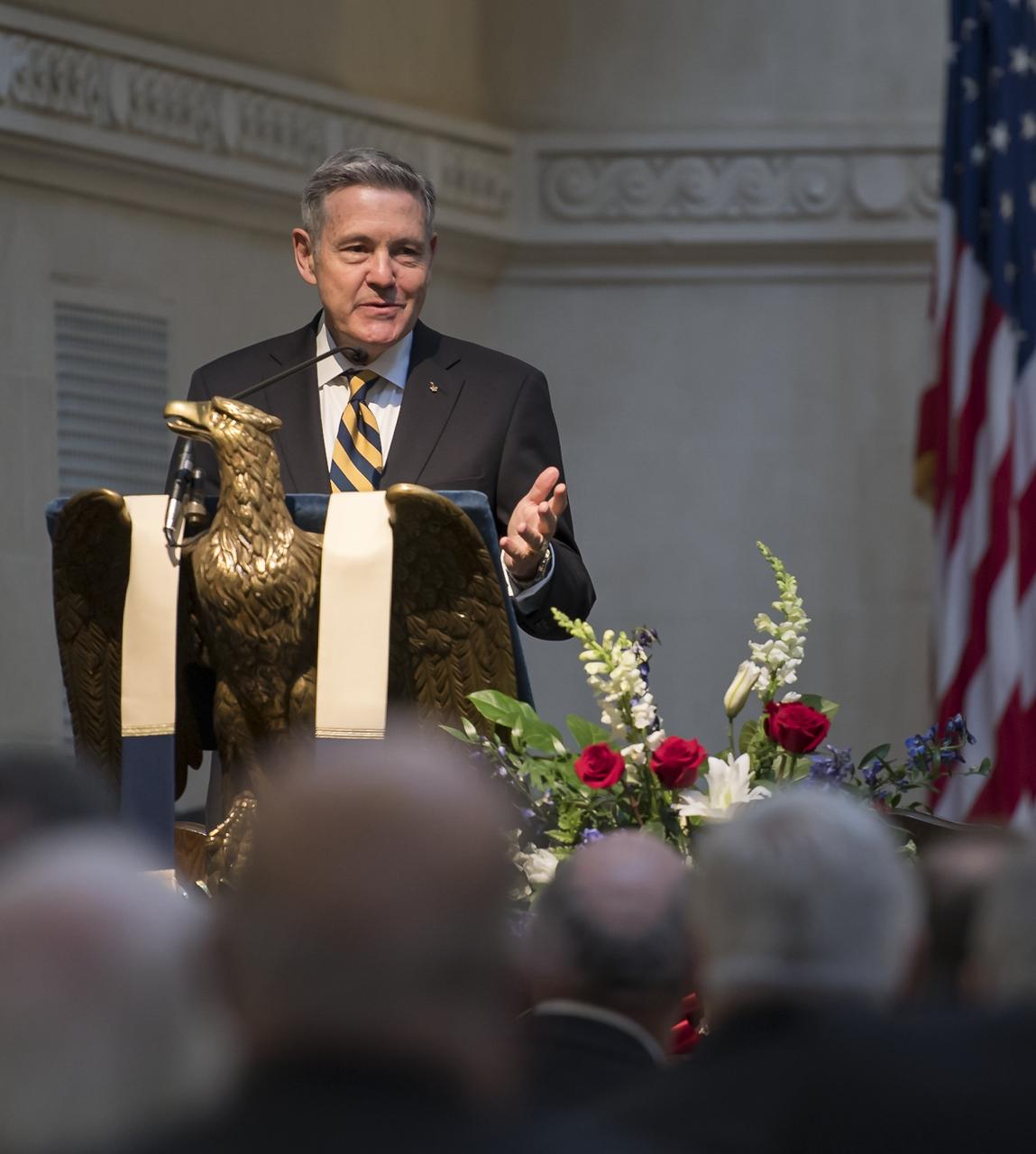
NASA Kennedy Space Center Director Robert Cabana speaks at the funeral service for former NASA astronaut Captain Bruce McCandless II, USN (Ret.), Tuesday, Jan. 16, 2018 at the United States Naval Academy Chapel in Annapolis, Maryland. Photo Credit: (NASA/Bill Ingalls)
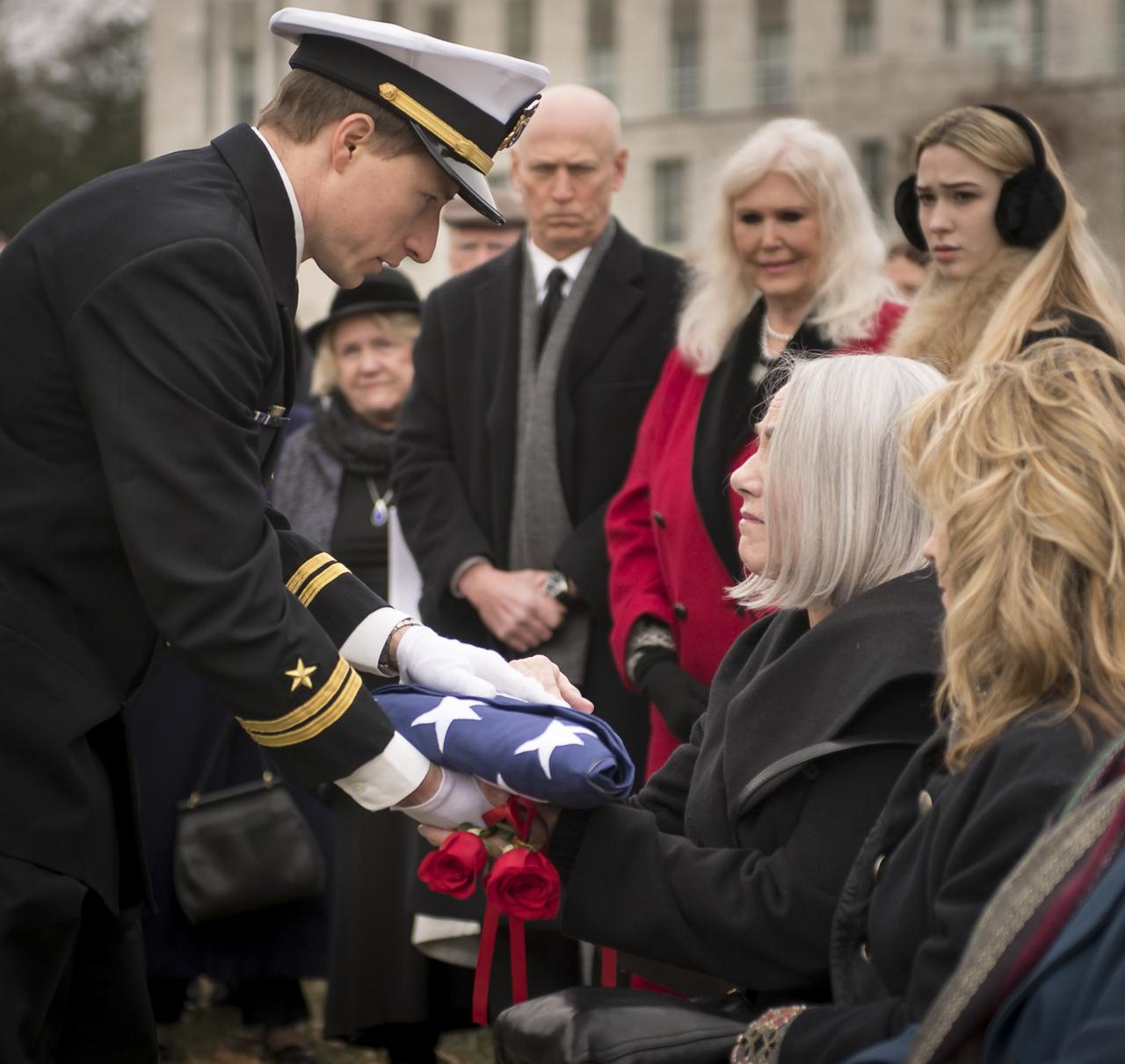
The flag that draped the casket of former NASA astronaut Captain Bruce McCandless II, USN (Ret.) is presented to his wife Ellen Shields McCandless during his interment service, Tuesday, Jan. 16, 2018 at the United States Naval Academy Cemetery in Annapolis, Maryland. Photo Credit: (NASA/Bill Ingalls)
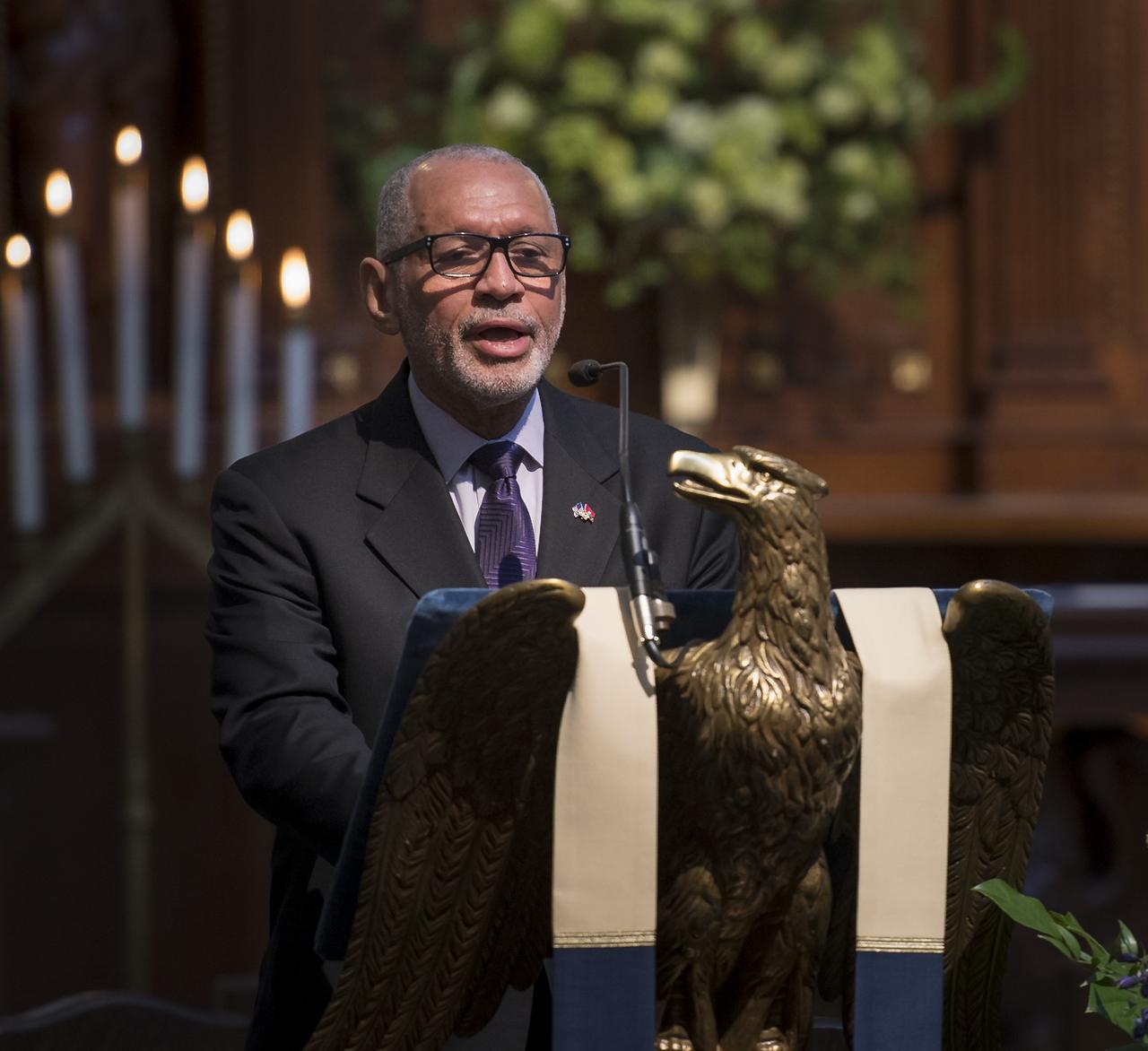
Former NASA Administrator Charlie Bolden speaks at the funeral service for former NASA astronaut Captain Bruce McCandless II, USN (Ret.), Tuesday, Jan. 16, 2018 at the United States Naval Academy Chapel in Annapolis, Maryland. Photo Credit: (NASA/Bill Ingalls)
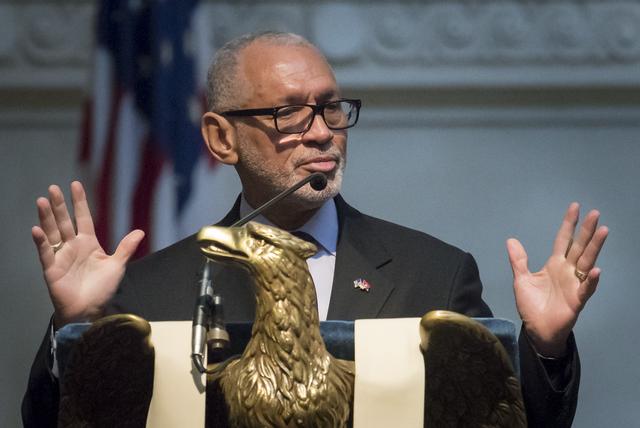
Former NASA Administrator Charlie Bolden speaks at the funeral service for former NASA astronaut Captain Bruce McCandless II, USN (Ret.), Tuesday, Jan. 16, 2018 at the United States Naval Academy Chapel in Annapolis, Maryland. Photo Credit: (NASA/Bill Ingalls)
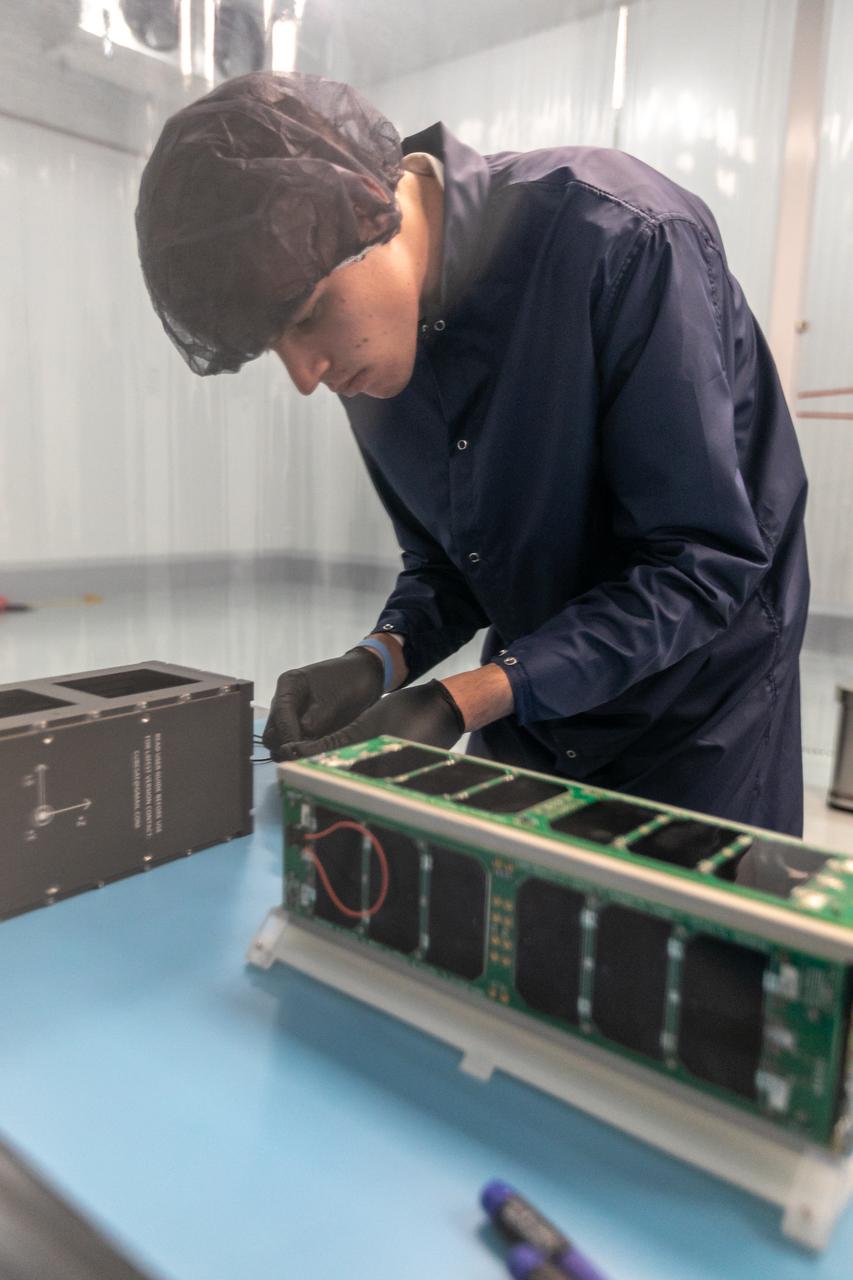
RSat is a 3U CubeSat with two seven degree of freedom robotic arms designed to latch onto a host satellite and maneuver around to image and potentially repair malfunctioning components. RSat is part of the AMODS research project developed by a team of Midshipmen from the United States Naval Academy. The three-year-old program aims to employ a small satellite platform to provide both new and legacy spacecraft with cost-effective on-orbit assessments and repair services. Currently, if a satellite makes it to orbit, there is no guarantee it will work as intended. In these cases, not only is the spacecraft lost, but invaluable experience vanishes with it. RSat takes advantage of cost and profile efficiencies of the small satellite platform to offer satellite developers and operators a fundamentally new way to reduce risk, protect investment and effect design improvements correlated against observed space environment experience. RSat-P is launching as part of ELaNa XIX as a free-flying unit intended to validate the on-orbit effectiveness of compact robotic manipulators.

RSat is a 3U CubeSat with two seven degree of freedom robotic arms designed to latch onto a host satellite and maneuver around to image and potentially repair malfunctioning components. RSat is part of the AMODS research project developed by a team of Midshipmen from the United States Naval Academy. The three-year-old program aims to employ a small satellite platform to provide both new and legacy spacecraft with cost-effective on-orbit assessments and repair services. Currently, if a satellite makes it to orbit, there is no guarantee it will work as intended. In these cases, not only is the spacecraft lost, but invaluable experience vanishes with it. RSat takes advantage of cost and profile efficiencies of the small satellite platform to offer satellite developers and operators a fundamentally new way to reduce risk, protect investment and effect design improvements correlated against observed space environment experience. RSat-P is launching as part of ELaNa XIX as a free-flying unit intended to validate the on-orbit effectiveness of compact robotic manipulators.
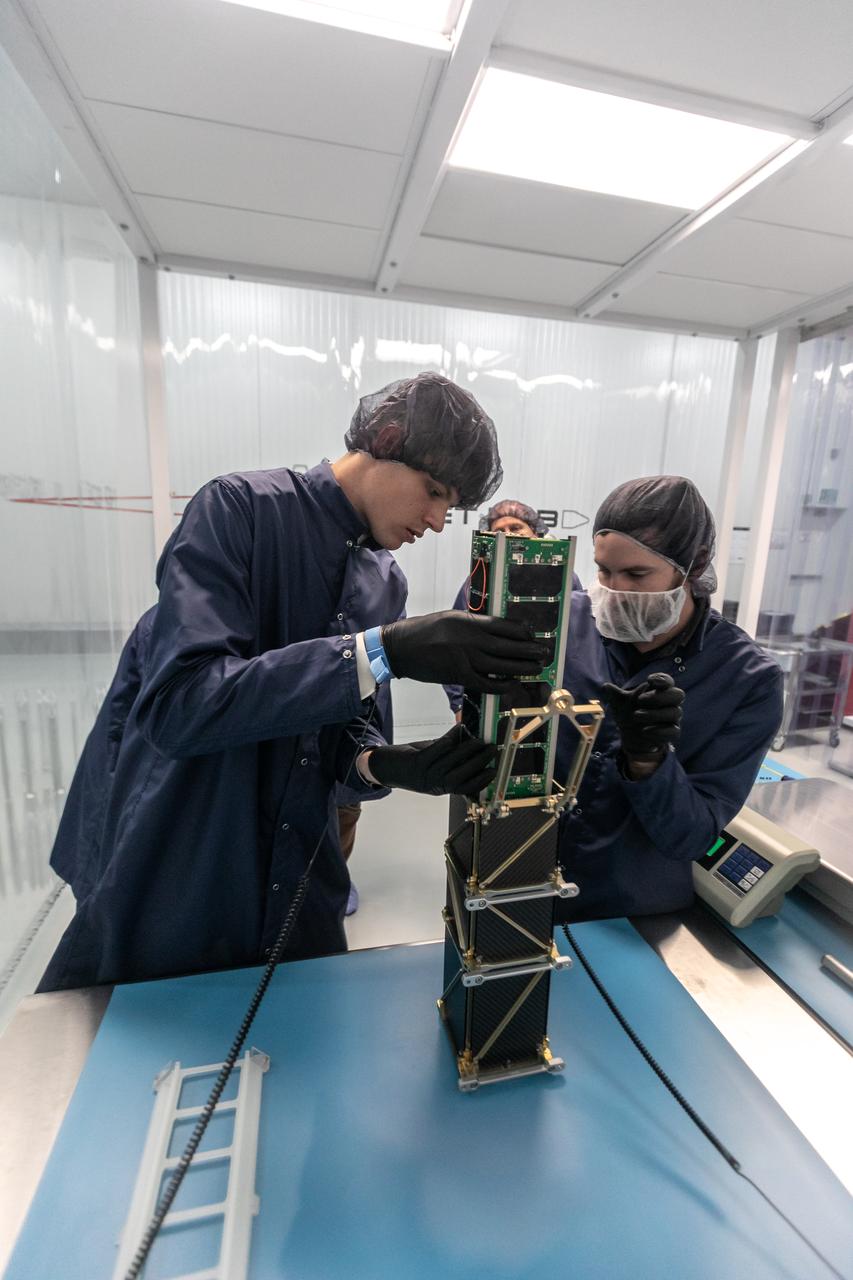
RSat is a 3U CubeSat with two seven degree of freedom robotic arms designed to latch onto a host satellite and maneuver around to image and potentially repair malfunctioning components. RSat is part of the AMODS research project developed by a team of Midshipmen from the United States Naval Academy. The three-year-old program aims to employ a small satellite platform to provide both new and legacy spacecraft with cost-effective on-orbit assessments and repair services. Currently, if a satellite makes it to orbit, there is no guarantee it will work as intended. In these cases, not only is the spacecraft lost, but invaluable experience vanishes with it. RSat takes advantage of cost and profile efficiencies of the small satellite platform to offer satellite developers and operators a fundamentally new way to reduce risk, protect investment and effect design improvements correlated against observed space environment experience. RSat-P is launching as part of ELaNa XIX as a free-flying unit intended to validate the on-orbit effectiveness of compact robotic manipulators.
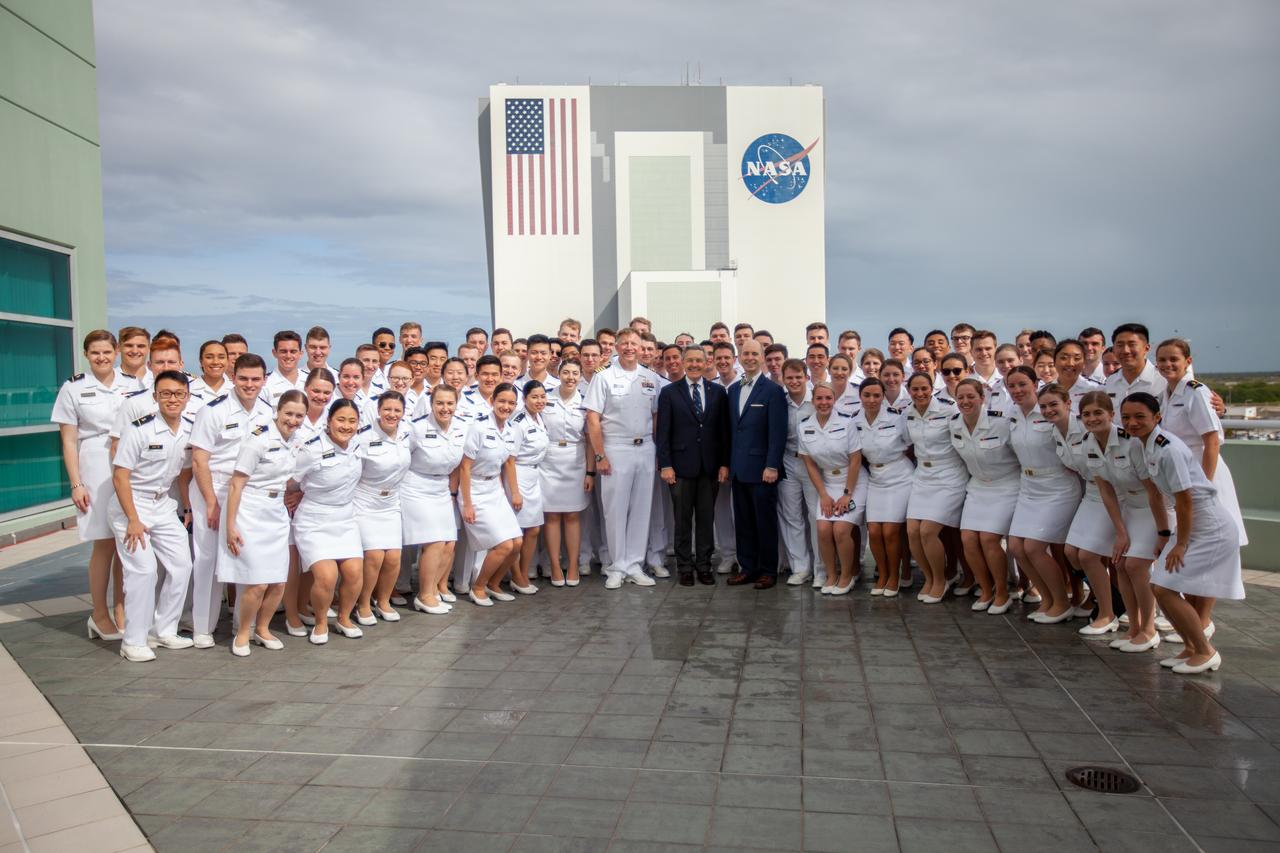
At center, from left to right, Captain Ben Shupp, commanding officer, Naval Ordnance Test Unit; Bob Cabana, Kennedy Space Center director; and Dr. Aaron Smith, director and chairman, Musical Activities Department, United States Naval Academy; pose with the U.S. Naval Academy Glee Club with the Florida spaceport’s Vehicle Assembly Building in the background on March 10, 2020. The highly acclaimed Glee Club, which performed for Kennedy employees, has achieved prominence as one of America’s premier choral ensembles.
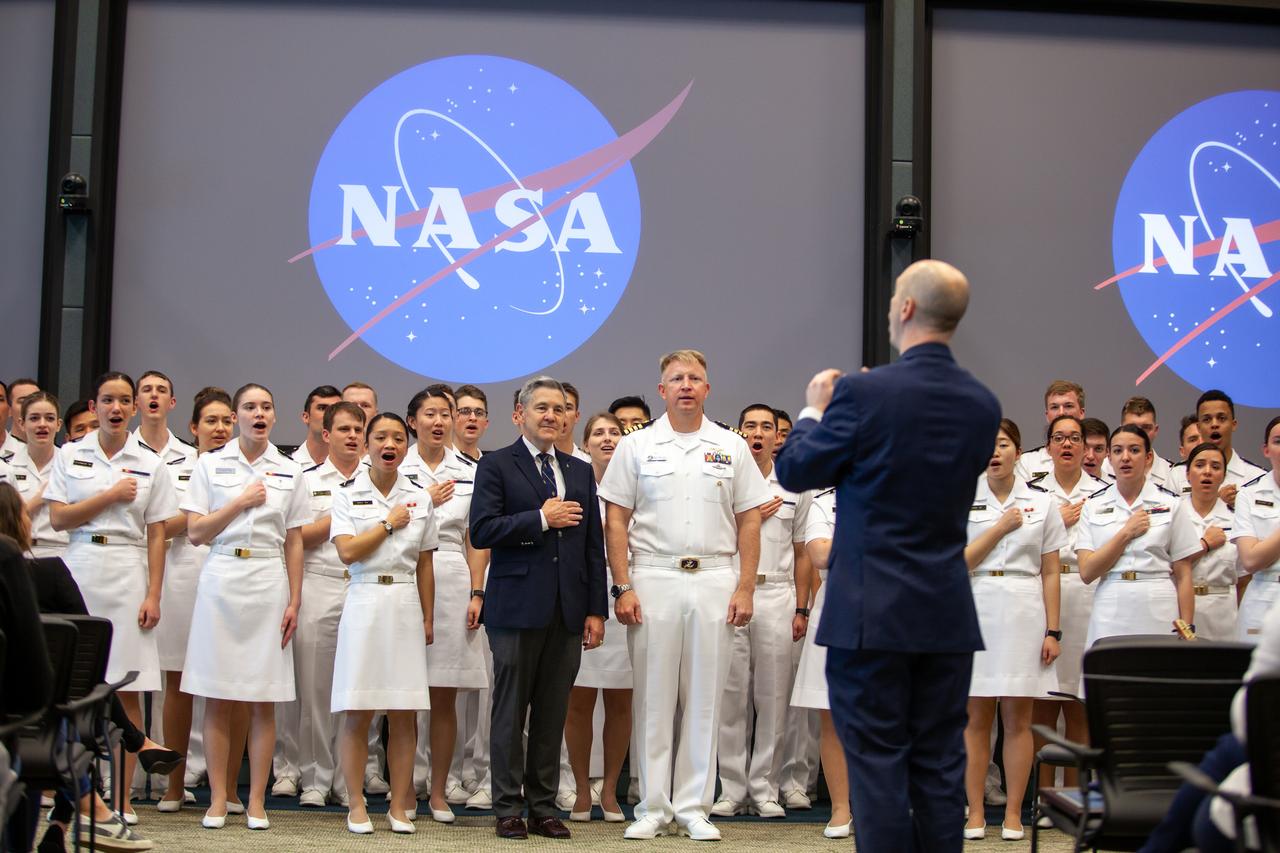
Kennedy Space Center Director Bob Cabana, left, and Captain Ben Shupp, commanding officer, Naval Ordnance Test Unit, stand with the U.S. Naval Academy Glee Club at the Florida spaceport on March 10, 2020. Leading the Glee Club is Dr. Aaron Smith, director and chairman, Musical Activities Department, United States Naval Academy. As part of the special celebration, Cabana discussed the deep historical ties between NASA and the U.S. Navy. The highly acclaimed Glee Club has achieved prominence as one of America’s premier choral ensembles, performing throughout the nation each year.
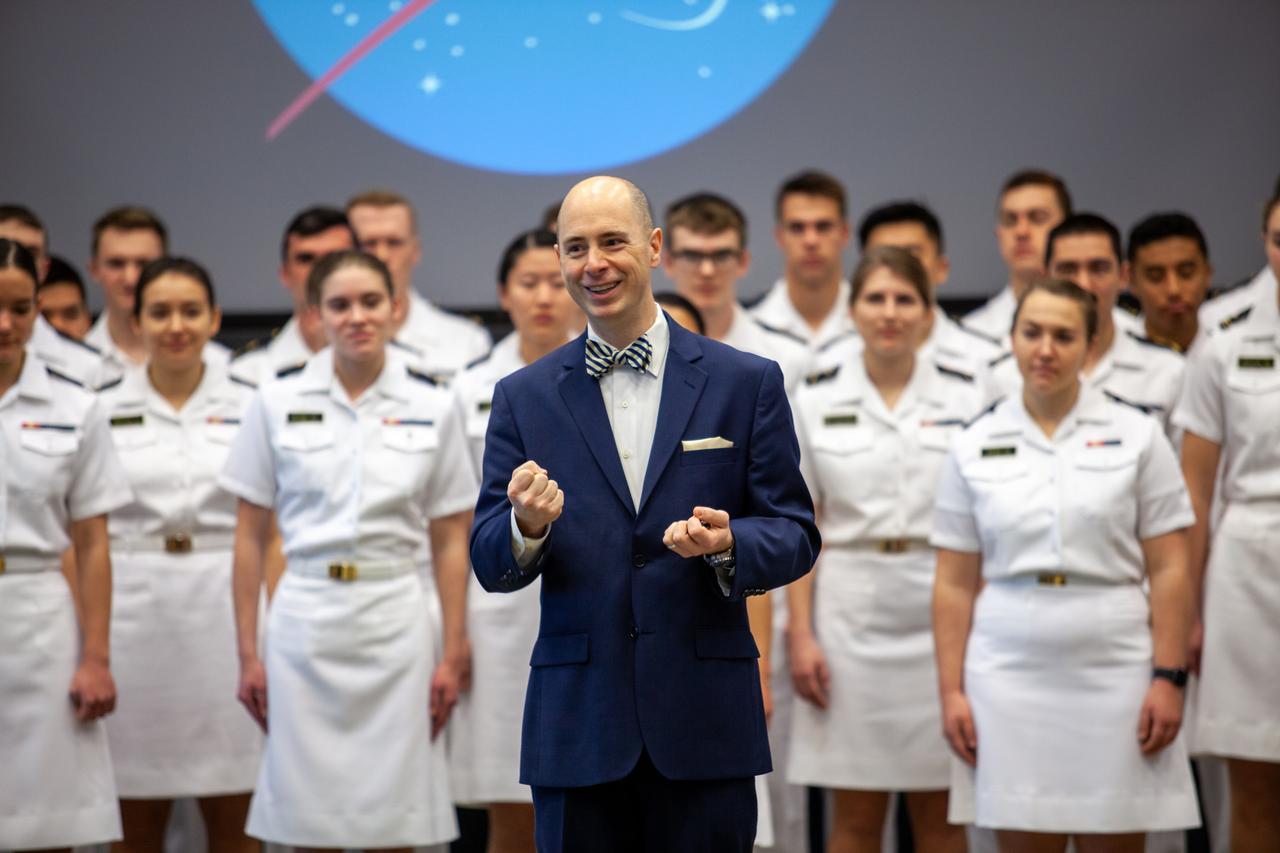
Dr. Aaron Smith, director and chairman, Musical Activities Department, United States Naval Academy, stands in front of the U.S. Naval Academy Glee Club during a performance for Kennedy Space Center employees at the Florida spaceport on March 10, 2020. As part of the celebration, Kennedy Director Bob Cabana discussed the deep historical ties between NASA and the U.S. Navy. The highly acclaimed Glee Club has achieved prominence as one of America’s premier choral ensembles, performing throughout the nation each year.
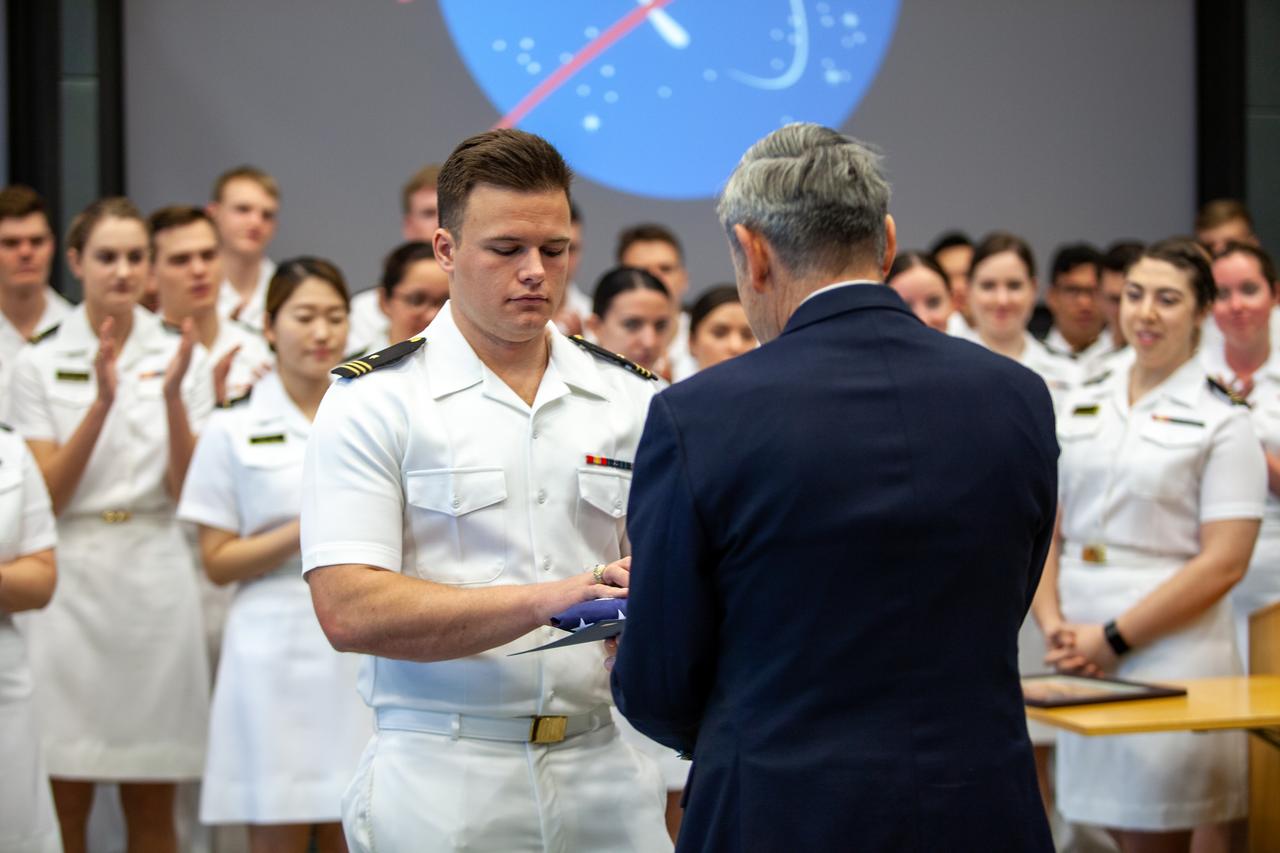
Kennedy Space Center Director Bob Cabana is presented with a flag that was flown over the United States Naval Academy in his honor during a special event at the Florida spaceport on March 10, 2020. The event included a performance by the U.S. Naval Academy Glee Club and a presentation by Cabana, who discussed the deep historical ties between NASA and the U.S. Navy. The highly acclaimed Glee Club has achieved prominence as one of America’s premier choral ensembles, performing throughout the nation each year.
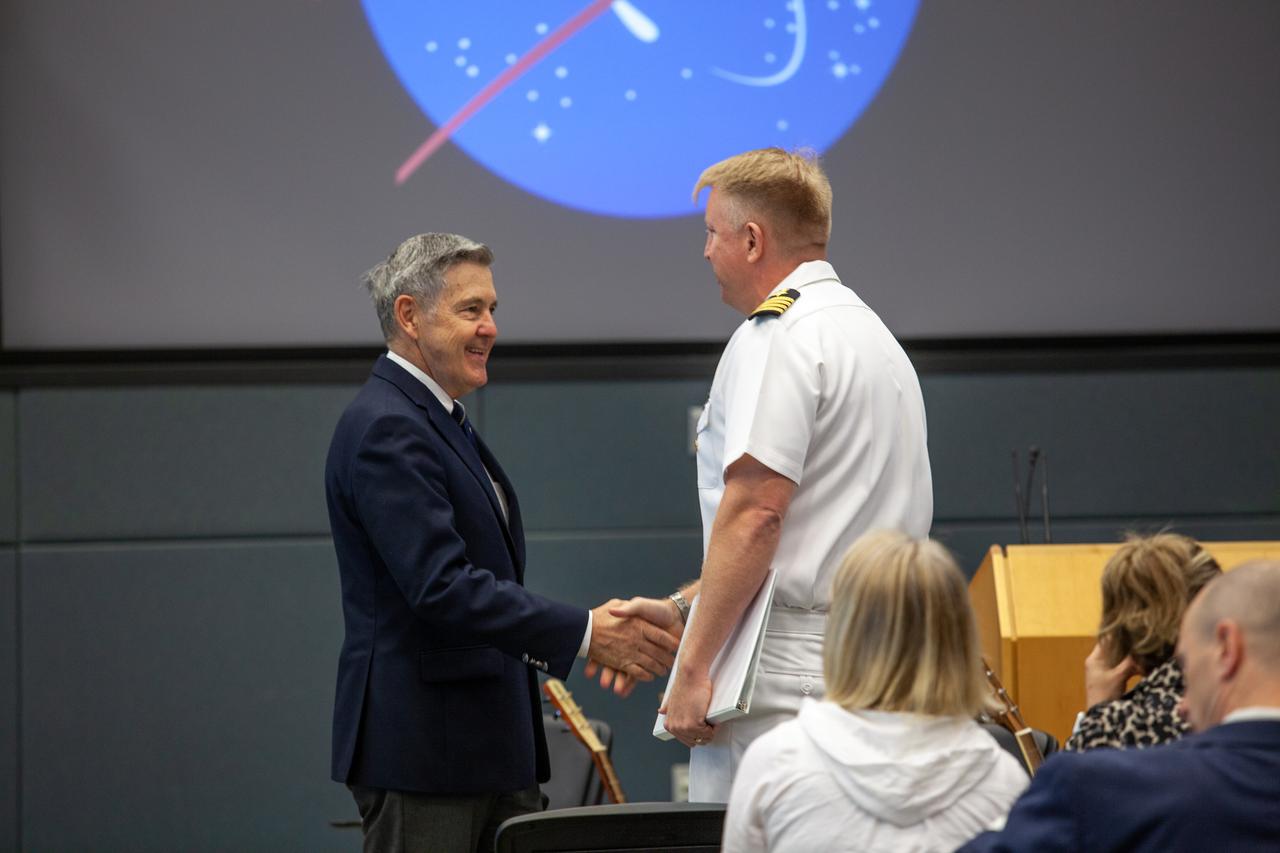
Kennedy Space Center Director Bob Cabana, left, shakes hands with Captain Ben Shupp, commanding officer, Naval Ordnance Test Unit, at the Florida spaceport on March 10, 2020. The United States Naval Academy Glee Club performed for Kennedy employees during a special celebration, which included Cabana discussing the deep historical ties between NASA and the U.S. Navy. The highly acclaimed Glee Club has achieved prominence as one of America’s premier choral ensembles, performing throughout the nation each year.
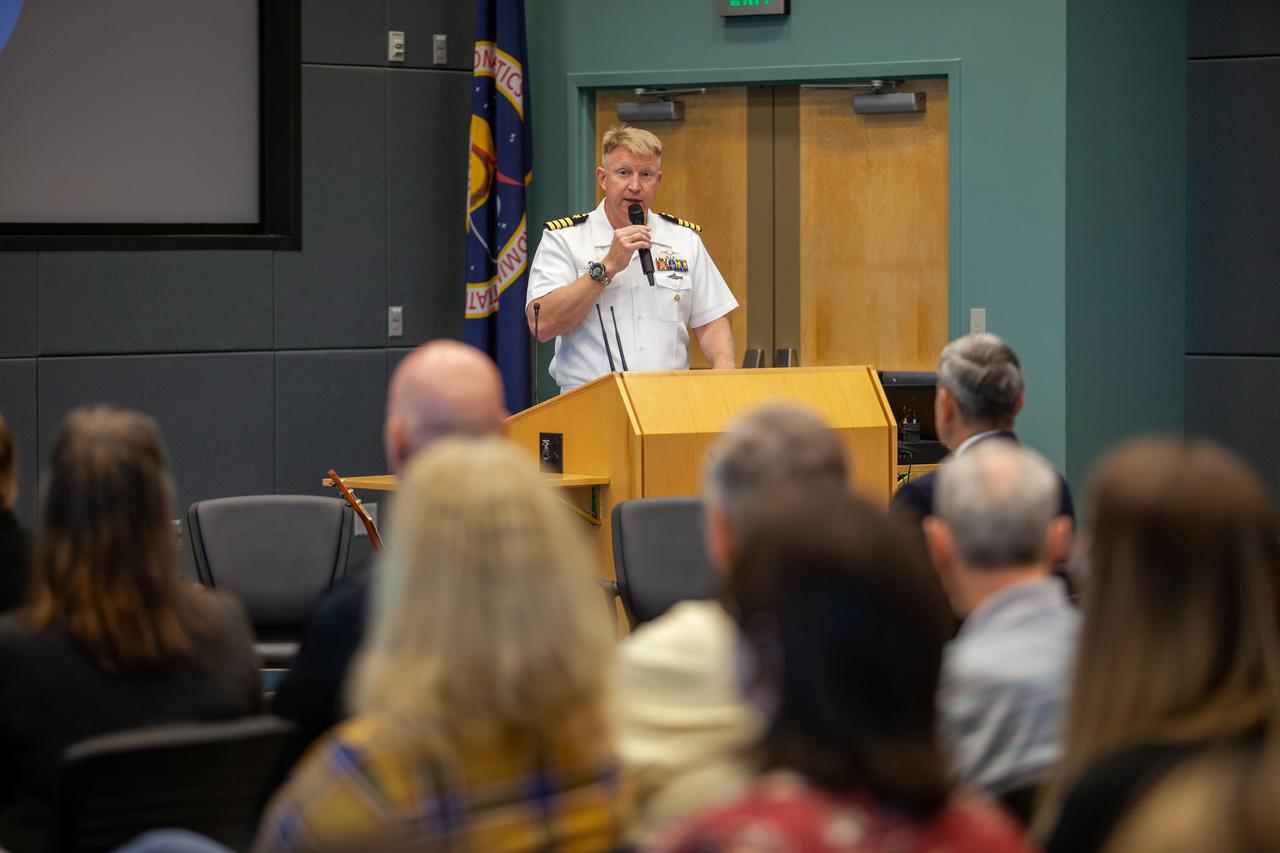
Captain Ben Shupp, commanding officer, Naval Ordnance Test Unit, addresses the crowd during a special performance by the United States Naval Academy Glee Club at the Florida spaceport on March 10, 2020. As part of the celebration, Kennedy Director Bob Cabana discussed the deep historical ties between NASA and the U.S. Navy. The highly acclaimed Glee Club has achieved prominence as one of America’s premier choral ensembles, performing throughout the nation each year.
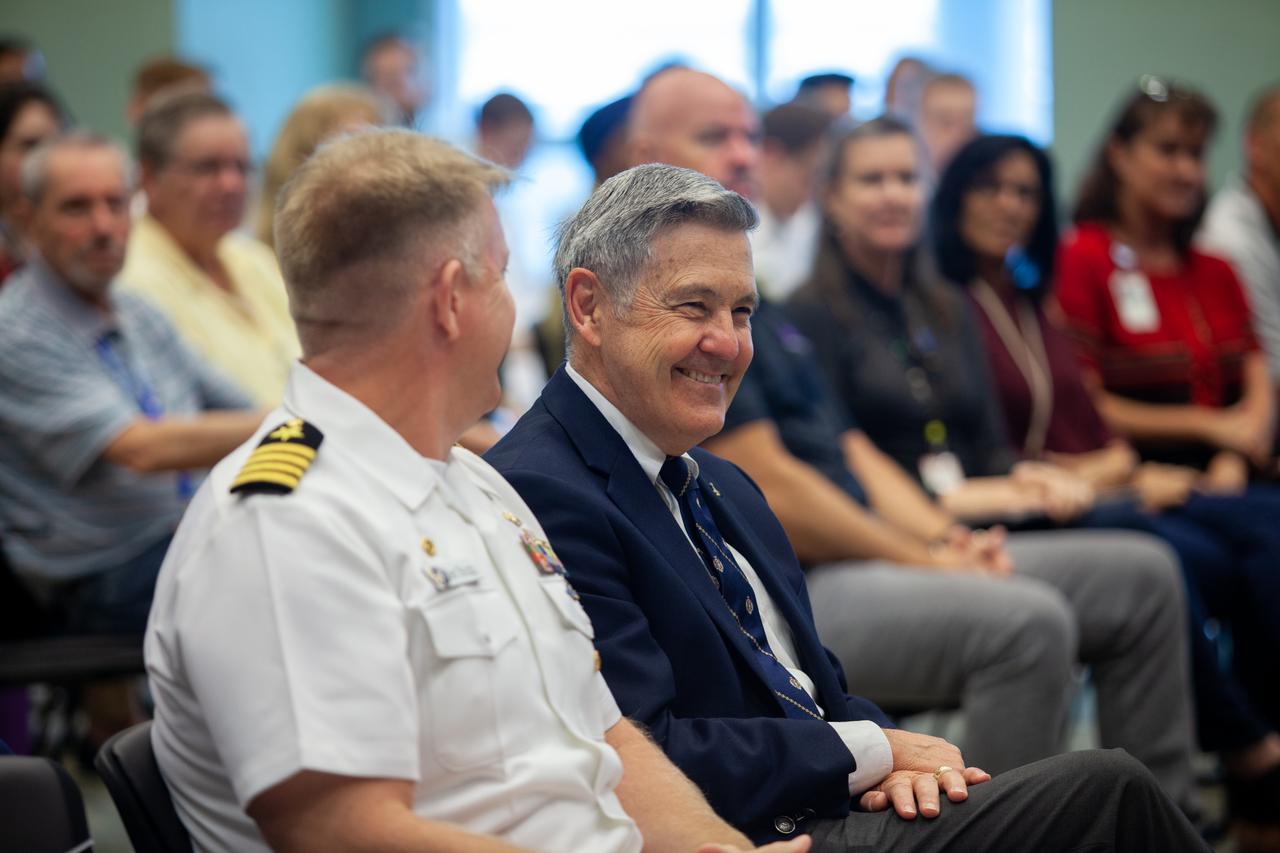
Kennedy Space Center Director Bob Cabana shares a laugh with Captain Ben Shupp, commanding officer, Naval Ordnance Test Unit, at the Florida spaceport on March 10, 2020. The United States Naval Academy Glee Club performed for Kennedy employees as part of a special celebration. Cabana also discussed the deep historical ties between NASA and the U.S. Navy. The highly acclaimed Glee Club has achieved prominence as one of America’s premier choral ensembles, performing throughout the nation each year.
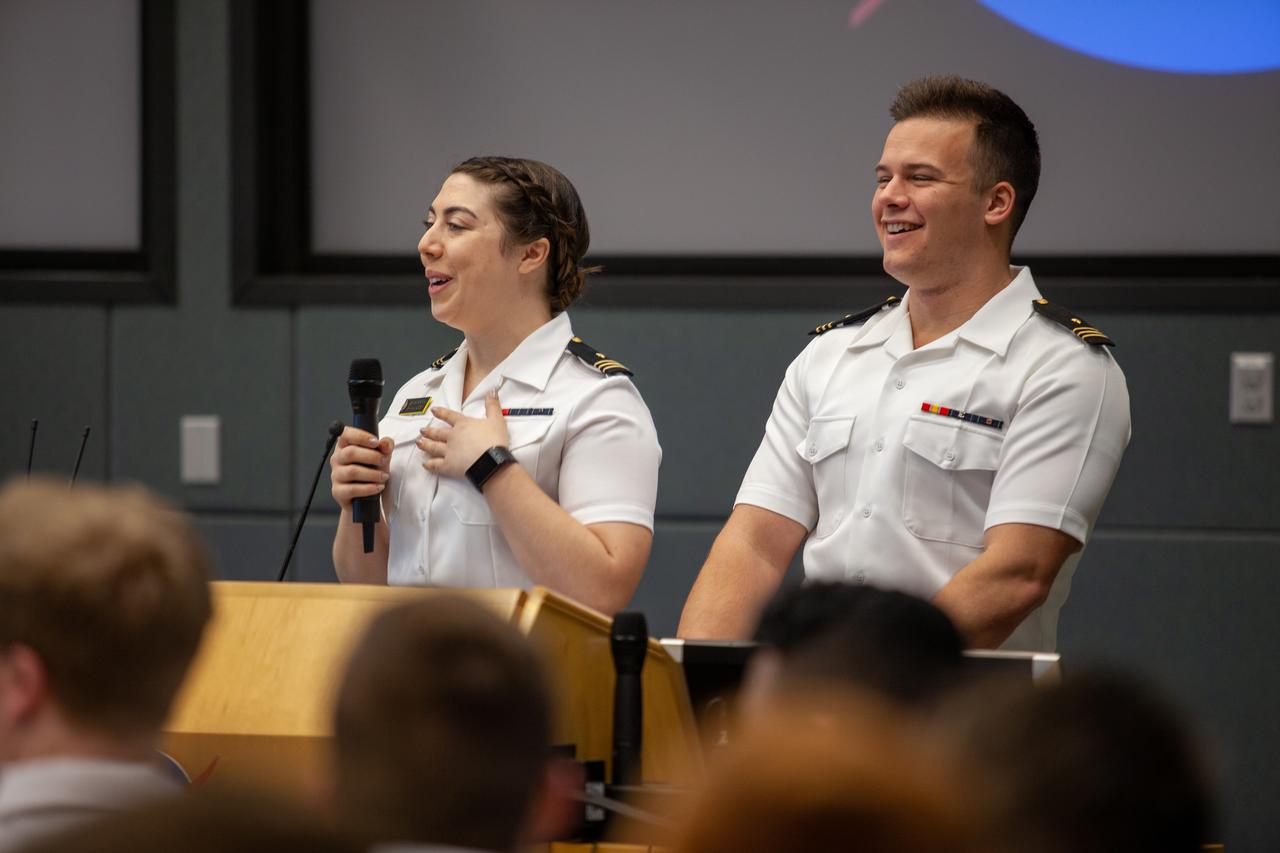
Members of the United States Naval Academy Glee Club address the crowd during a special performance for Kennedy Space Center employees at the Florida spaceport on March 10, 2020. As part of the celebration, Kennedy Director Bob Cabana discussed the deep historical ties between NASA and the U.S. Navy. The highly acclaimed Glee Club has achieved prominence as one of America’s premier choral ensembles, performing throughout the nation each year.
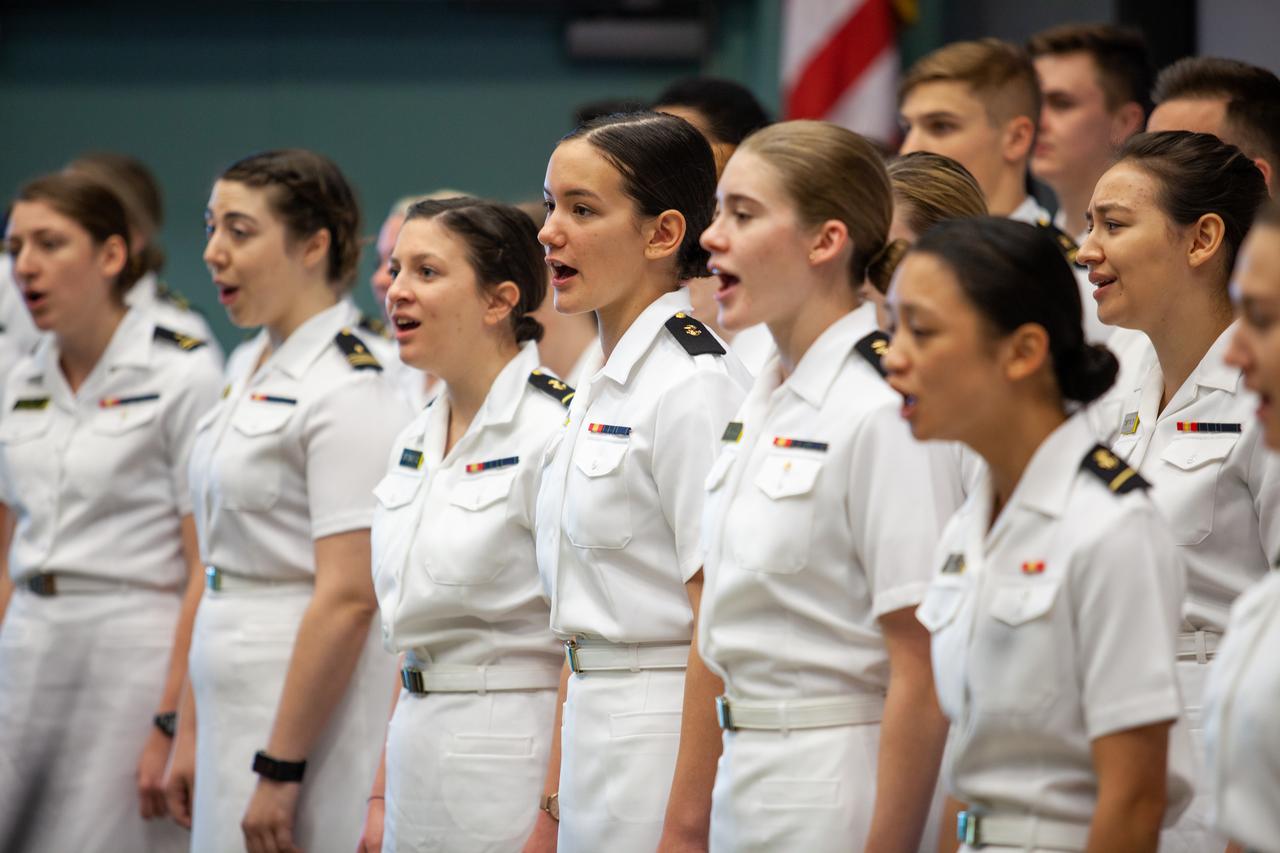
The United States Naval Academy Glee Club performs for Kennedy Space Center employees at the Florida spaceport on March 10, 2020. As part of the celebration, Kennedy Director Bob Cabana discussed the deep historical ties between NASA and the U.S. Navy. The highly acclaimed Glee Club has achieved prominence as one of America’s premier choral ensembles, performing throughout the nation each year.
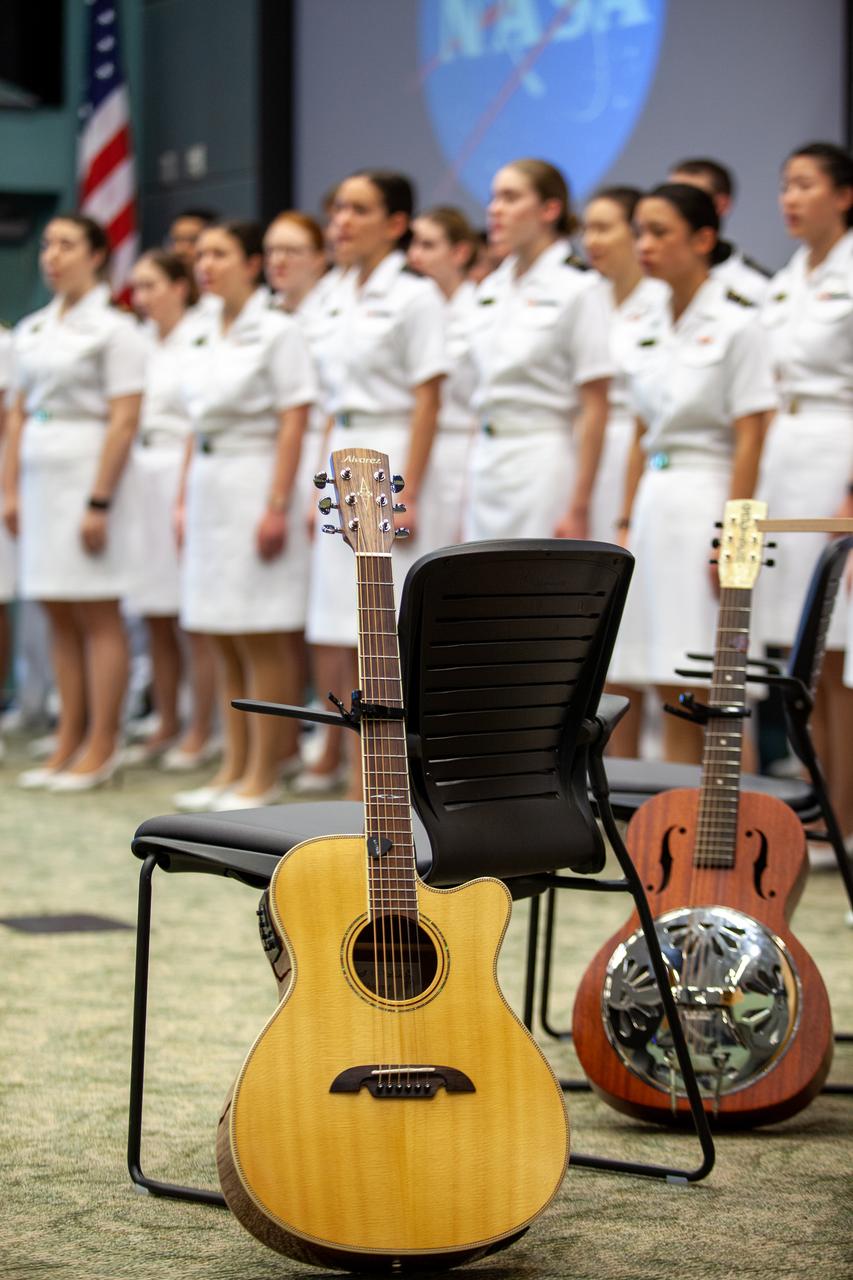
The United States Naval Academy Glee Club performs for Kennedy Space Center employees at the Florida spaceport on March 10, 2020. As part of the celebration, Kennedy Director Bob Cabana discussed the deep historical ties between NASA and the U.S. Navy. The highly acclaimed Glee Club has achieved prominence as one of America’s premier choral ensembles, performing throughout the nation each year.
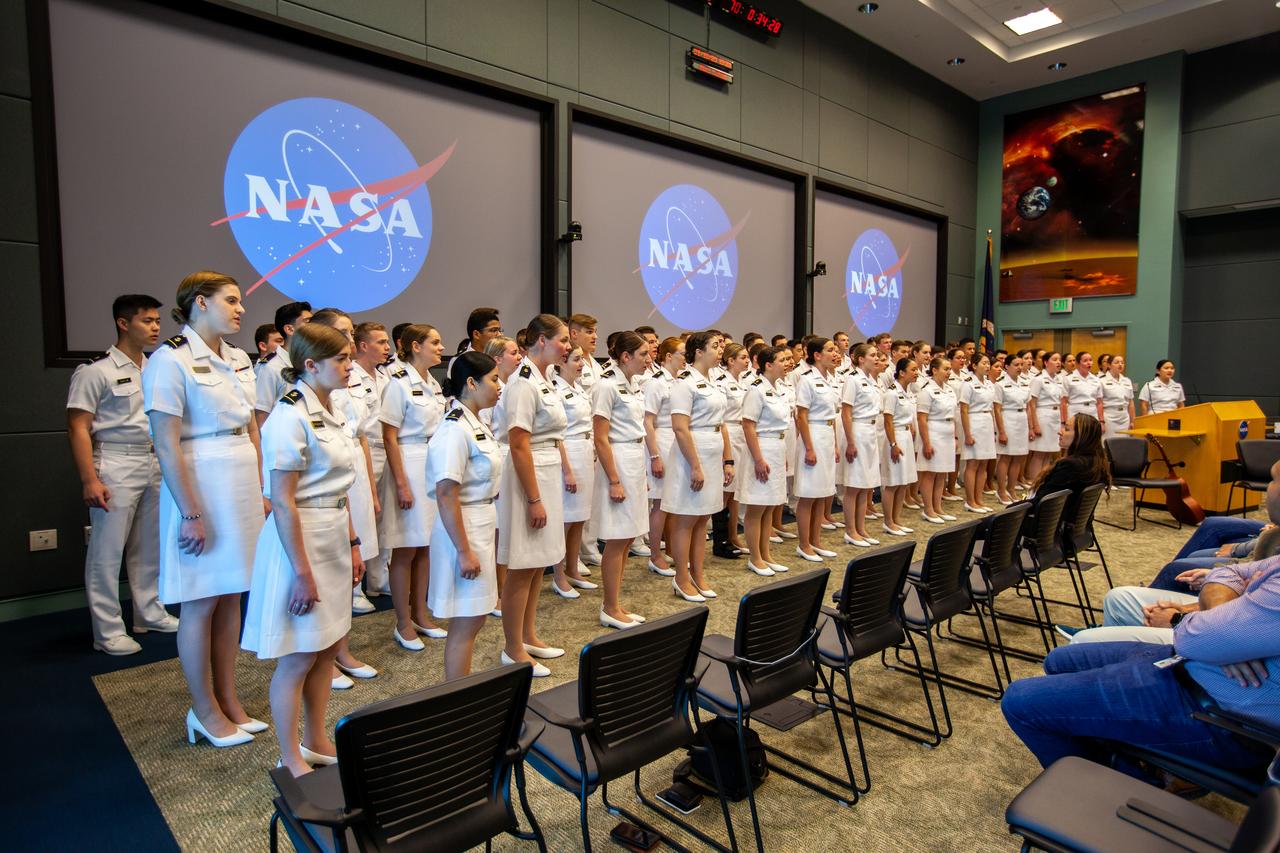
The United States Naval Academy Glee Club performs for Kennedy Space Center employees at the Florida spaceport on March 10, 2020. As part of the celebration, Kennedy Director Bob Cabana discussed the deep historical ties between NASA and the U.S. Navy. The highly acclaimed Glee Club has achieved prominence as one of America’s premier choral ensembles, performing throughout the nation each year.

Kennedy Space Center Director Bob Cabana addresses members of the United States Naval Academy Glee Club at the Florida spaceport on March 10, 2020. The highly acclaimed Glee Club, which performed for Kennedy employees, has achieved prominence as one of America’s premier choral ensembles. As part of the celebration, Cabana discussed the deep historical ties between NASA and the U.S. Navy.
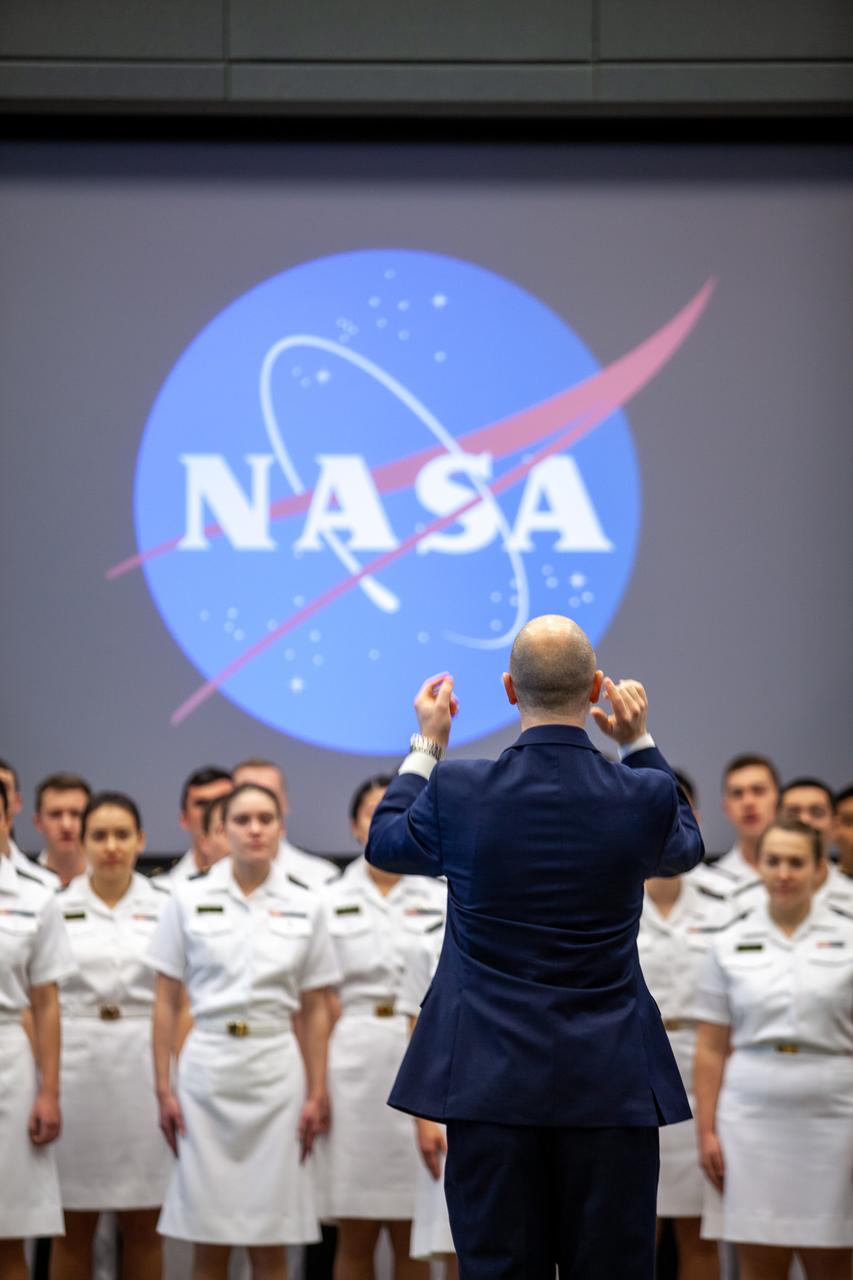
The United States Naval Academy Glee Club performs for Kennedy Space Center employees at the Florida spaceport on March 10, 2020. As part of the celebration, Kennedy Director Bob Cabana discussed the deep historical ties between NASA and the U.S. Navy. The highly acclaimed Glee Club has achieved prominence as one of America’s premier choral ensembles, performing throughout the nation each year.
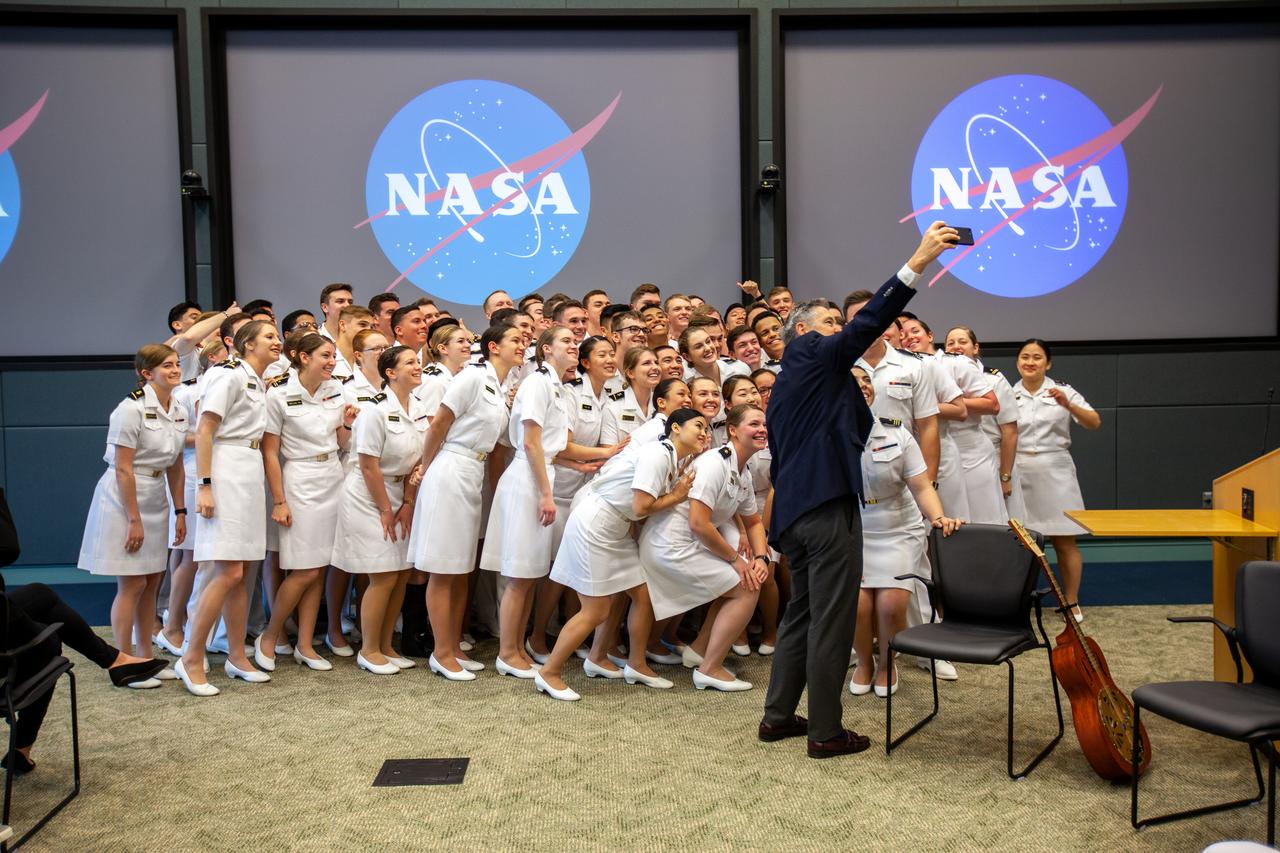
Kennedy Space Center Director Bob Cabana takes a selfie with members of the United States Naval Academy Glee Club at the Florida spaceport on March 10, 2020. The highly acclaimed Glee Club, which performed for Kennedy employees, has achieved prominence as one of America’s premier choral ensembles. As part of the celebration, Cabana discussed the deep historical ties between NASA and the U.S. Navy.
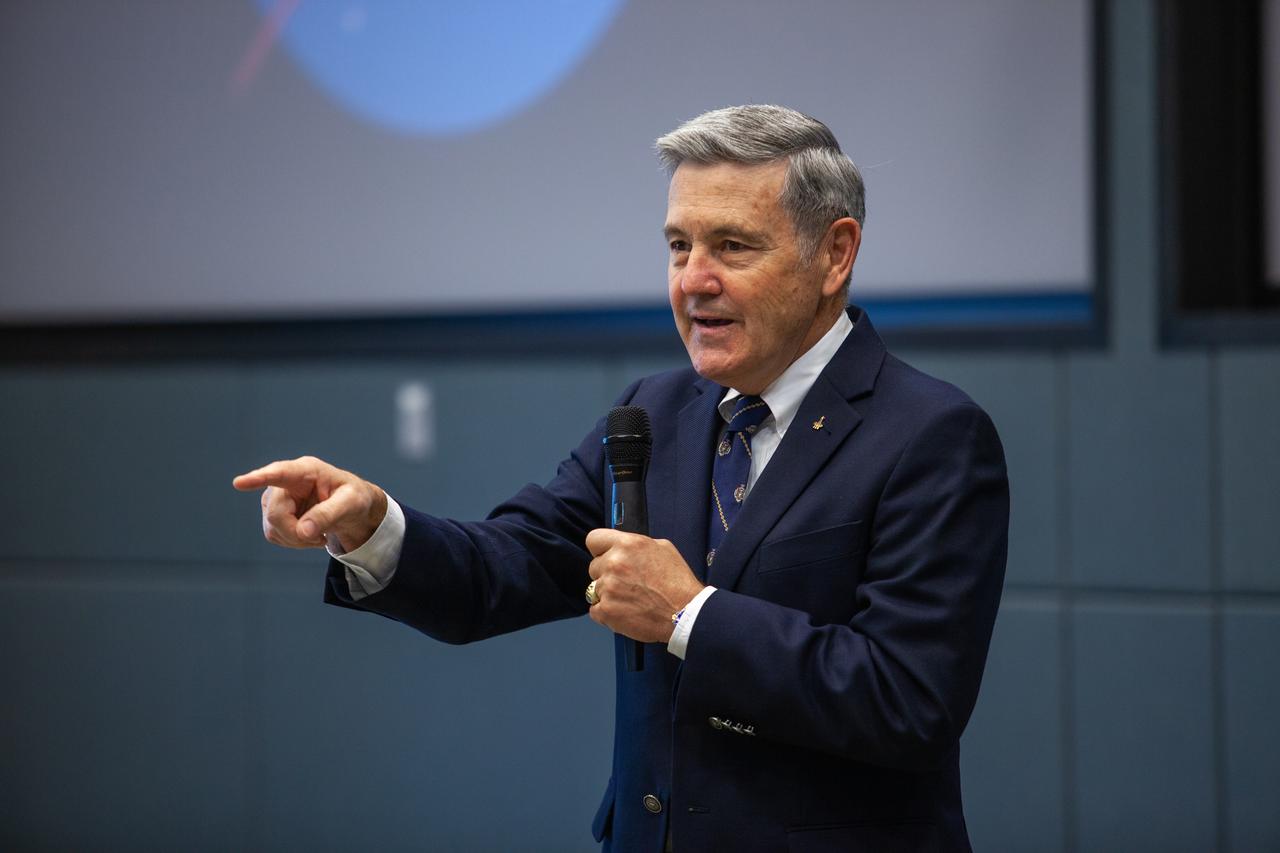
Kennedy Space Center Director Bob Cabana addresses the crowd during a special performance by the United States Naval Academy Glee Club at the Florida spaceport on March 10, 2020. As part of the celebration, Cabana discussed the deep historical ties between NASA and the U.S. Navy. The highly acclaimed Glee Club has achieved prominence as one of America’s premier choral ensembles, performing throughout the nation each year.
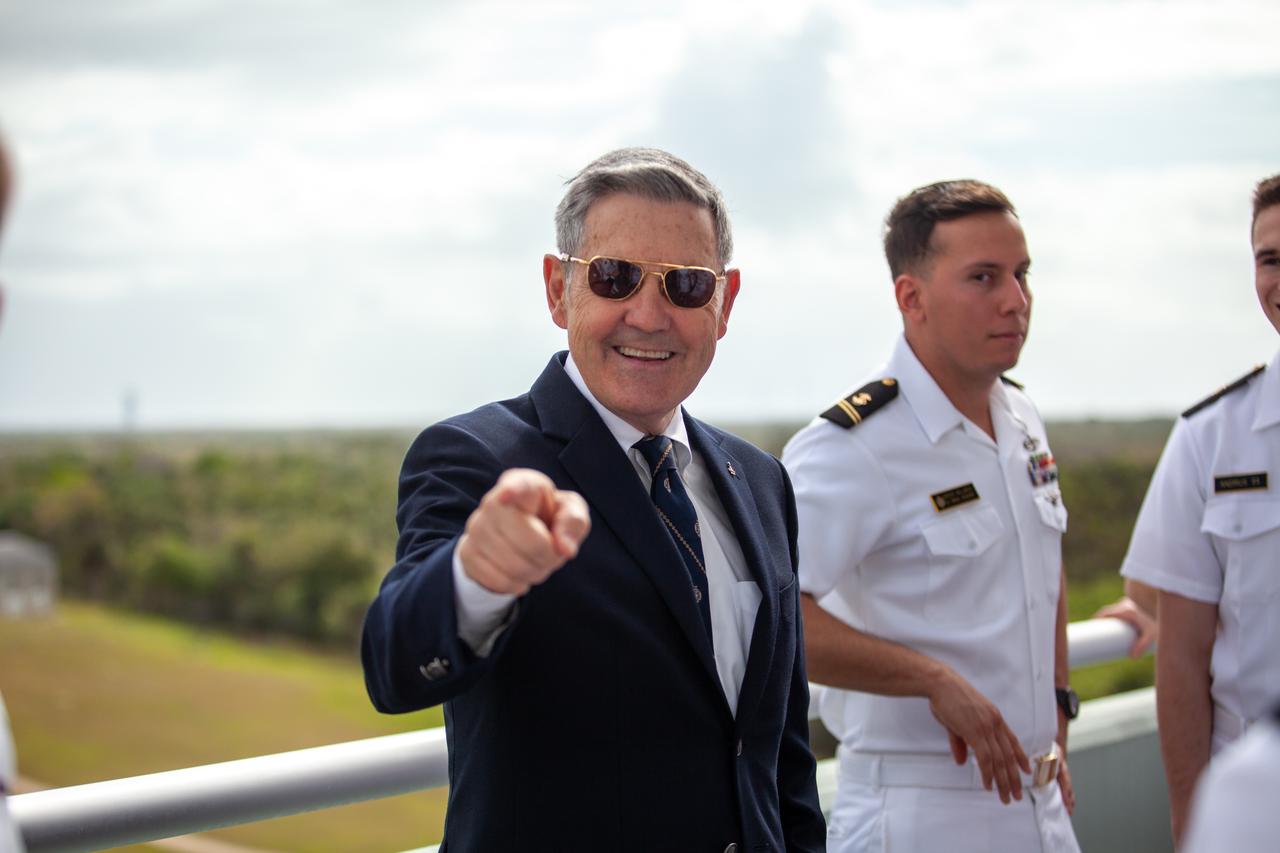
Kennedy Space Center Director Bob Cabana stands with members of the United States Naval Academy Glee Club at the Florida spaceport on March 10, 2020. The highly acclaimed Glee Club, which performed for Kennedy employees, has achieved prominence as one of America’s premier choral ensembles. As part of the special celebration, Cabana also discussed the deep historical ties between NASA and the U.S. Navy.
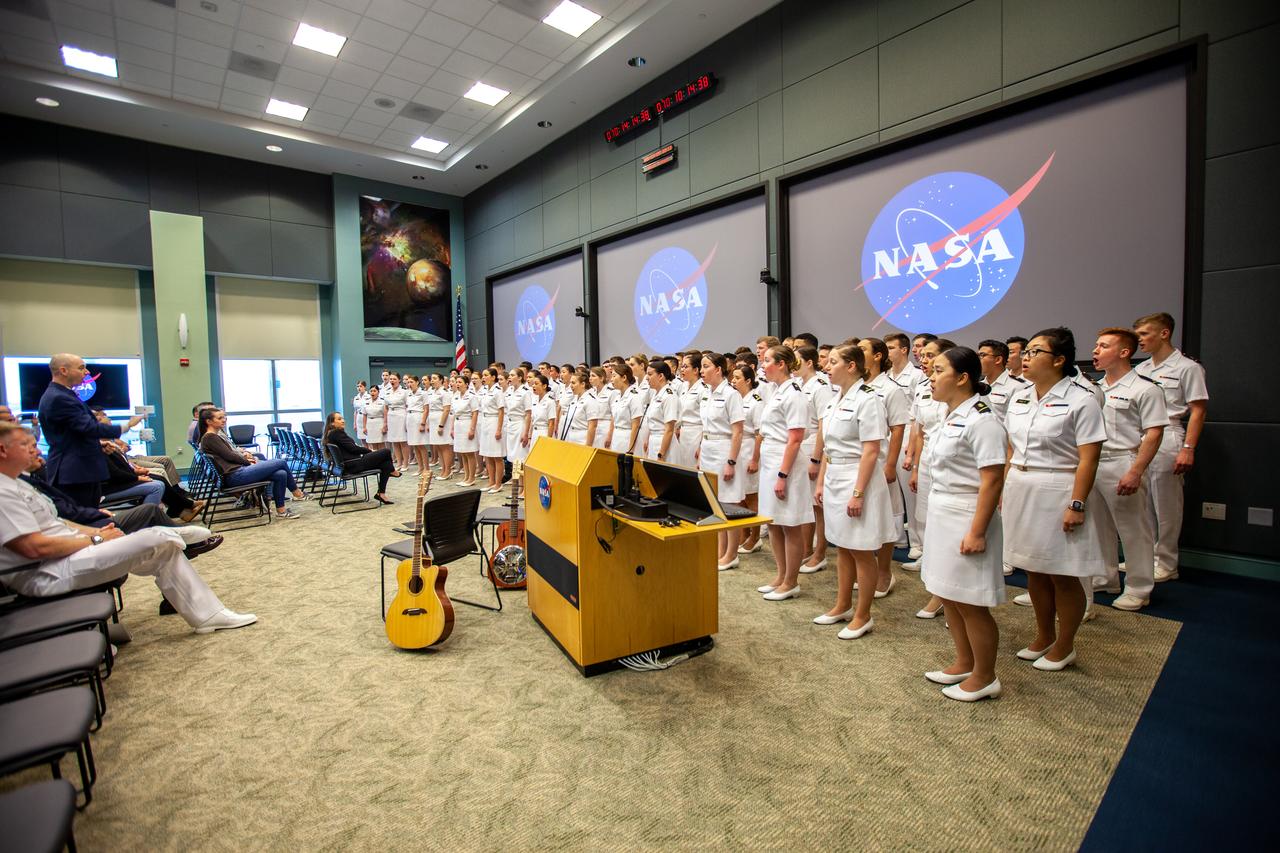
The United States Naval Academy Glee Club performs for Kennedy Space Center employees at the Florida spaceport on March 10, 2020. As part of the celebration, Kennedy Director Bob Cabana discussed the deep historical ties between NASA and the U.S. Navy. The highly acclaimed Glee Club has achieved prominence as one of America’s premier choral ensembles, performing throughout the nation each year.
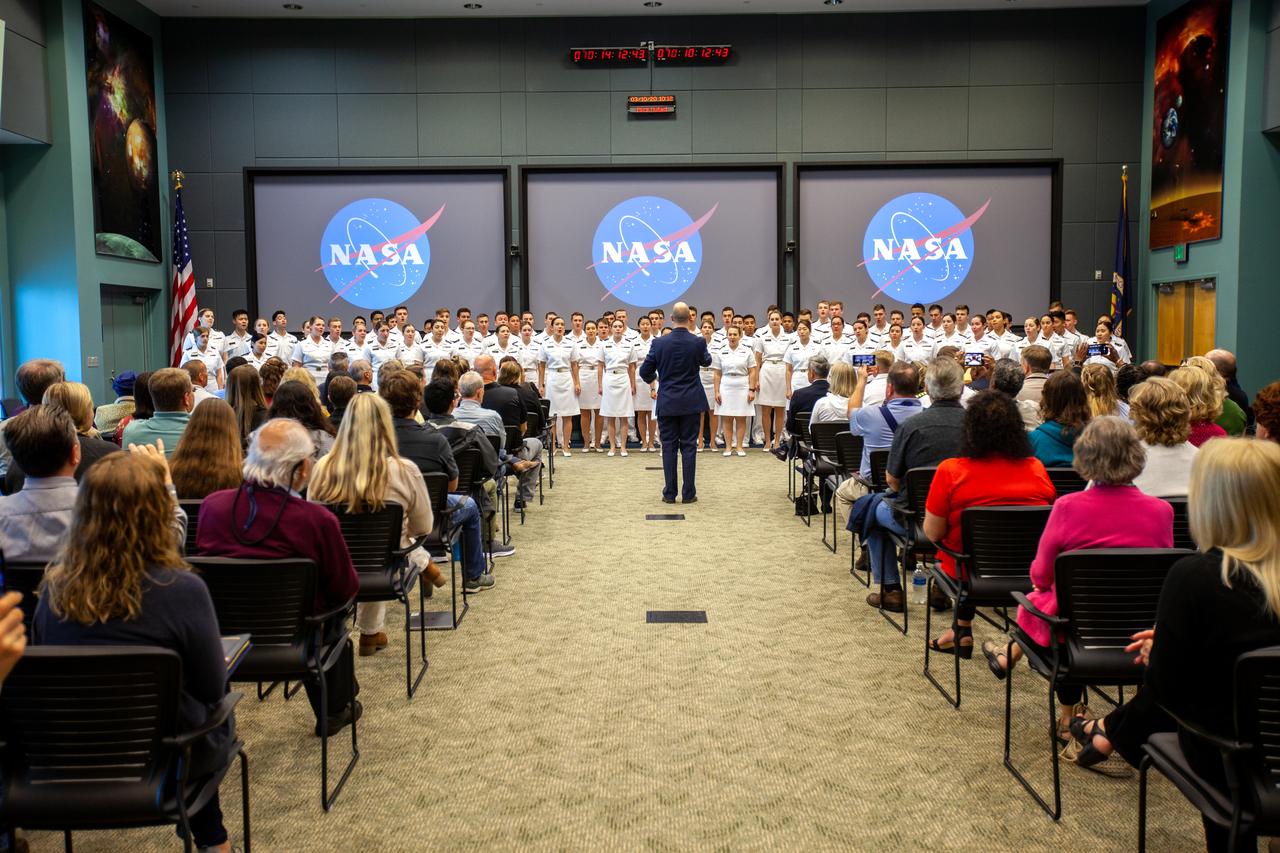
The United States Naval Academy Glee Club performs for Kennedy Space Center employees at the Florida spaceport on March 10, 2020. As part of the celebration, Kennedy Director Bob Cabana discussed the deep historical ties between NASA and the U.S. Navy. The highly acclaimed Glee Club has achieved prominence as one of America’s premier choral ensembles, performing throughout the nation each year.
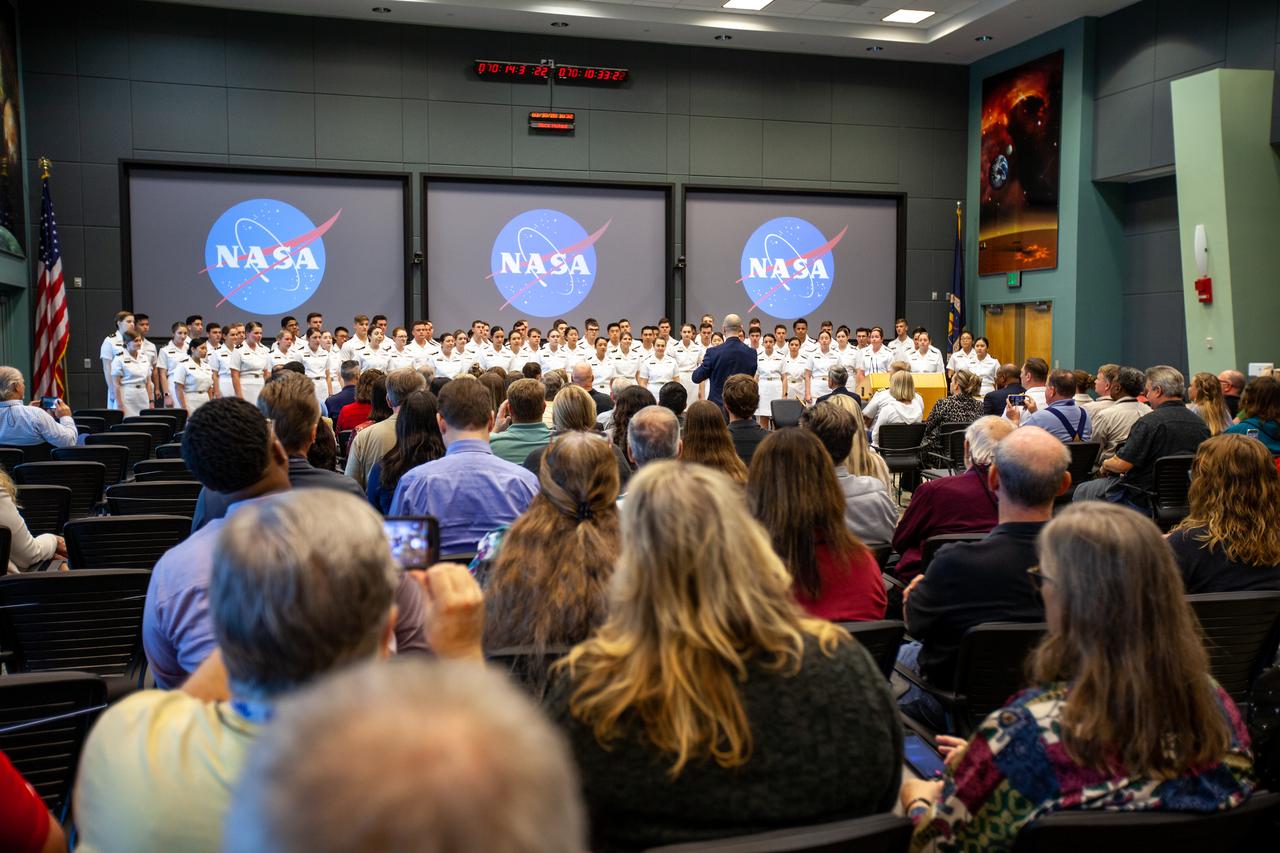
The United States Naval Academy Glee Club performs for Kennedy Space Center employees at the Florida spaceport on March 10, 2020. As part of the celebration, Kennedy Director Bob Cabana discussed the deep historical ties between NASA and the U.S. Navy. The highly acclaimed Glee Club has achieved prominence as one of America’s premier choral ensembles, performing throughout the nation each year.
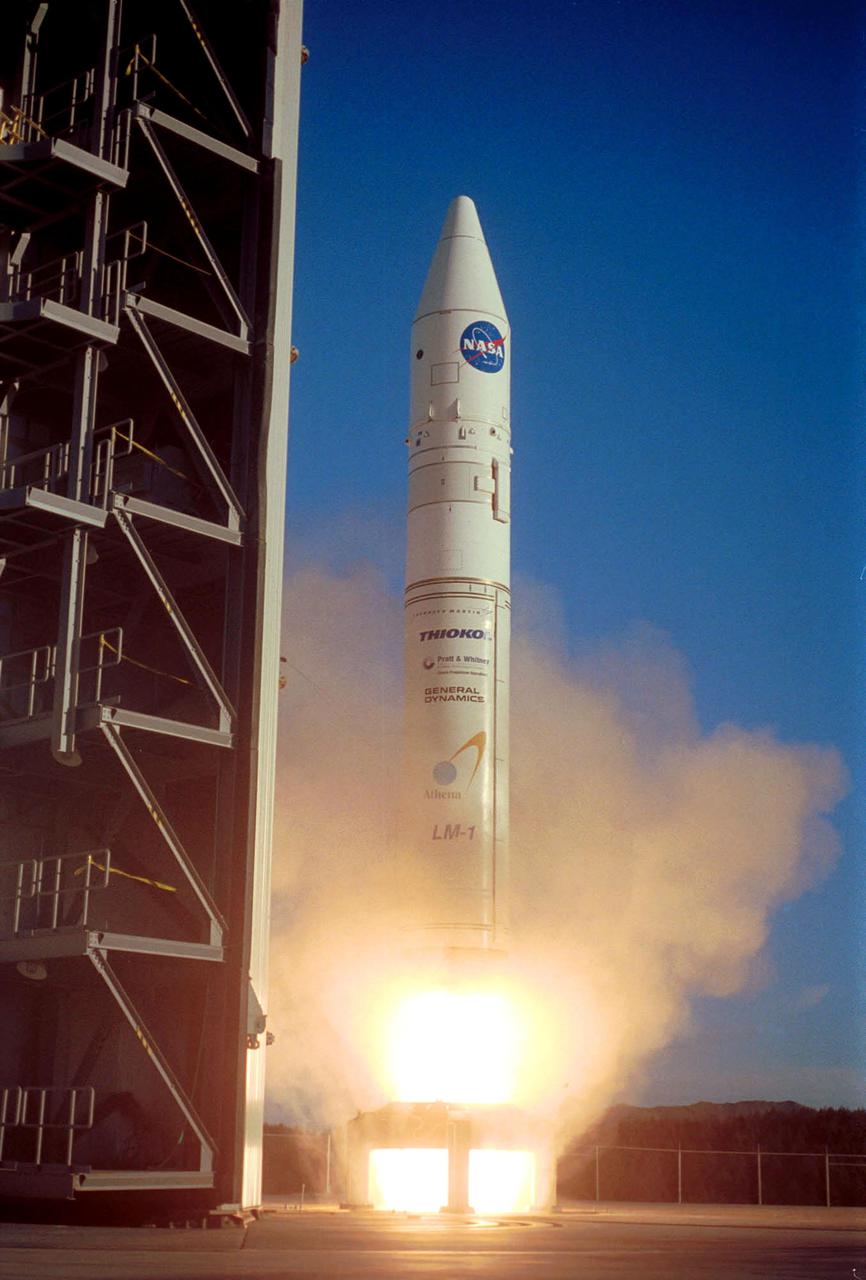
KODIAK ISLAND, Alaska -- Into a still-blue sky, a Lockheed Martin Athena I launch vehicle lifts off the launch pad at Kodiak Launch Complex (KSC) with the Kodiak Star spacecraft on board. Liftoff occurred at 10:40 p.m. EDT, Sept. 29. The Kodiak Star payload consists of four satellites: PICOSat, PCSat, Sapphire and Starshine 3. Starshine is sponsored by NASA. The 200-pound sphere will be used by students to study orbital decay. The other three satellites, also on educational missions, are sponsored by the department of defense. PICOSat is a technology demonstration satellite with four experiments on board. PCSat was designed by midshipmen at the U.S. Naval Academy, and will become part of the amateur radio community's automatic position reporting system. Sapphire is a micro-satellite built by students at Stanford University and Washington University - St. Louis to test infrared sensors for space use. KLC is the newest commercial launch complex in the United States, ideal for launch payloads requiring low-Earth polar or sun-synchronous orbits
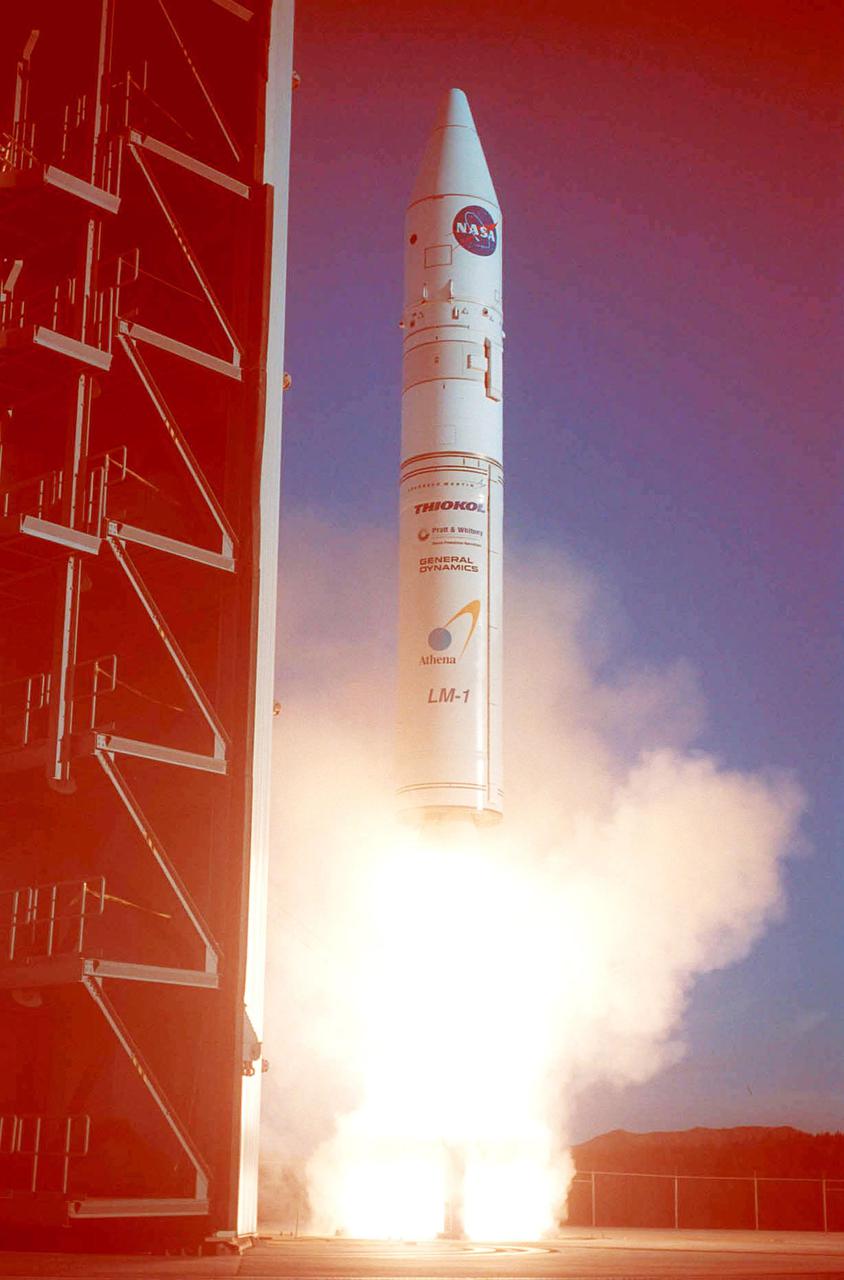
KODIAK ISLAND, Alaska -- A Lockheed Martin Athena I launch vehicle rockets off the launch pad at Kodiak Launch Complex (KSC) with the Kodiak Star spacecraft on board. Liftoff occurred at 10:40 p.m. EDT, Sept. 29. The Kodiak Star payload consists of four satellites: PICOSat, PCSat, Sapphire and Starshine 3. Starshine is sponsored by NASA. The 200-pound sphere will be used by students to study orbital decay. The other three satellites, also on educational missions, are sponsored by the department of defense. PICOSat is a technology demonstration satellite with four experiments on board. PCSat was designed by midshipmen at the U.S. Naval Academy, and will become part of the amateur radio community's automatic position reporting system. Sapphire is a micro-satellite built by students at Stanford University and Washington University - St. Louis to test infrared sensors for space use. KLC is the newest commercial launch complex in the United States, ideal for launch payloads requiring low-Earth polar or sun-synchronous orbits
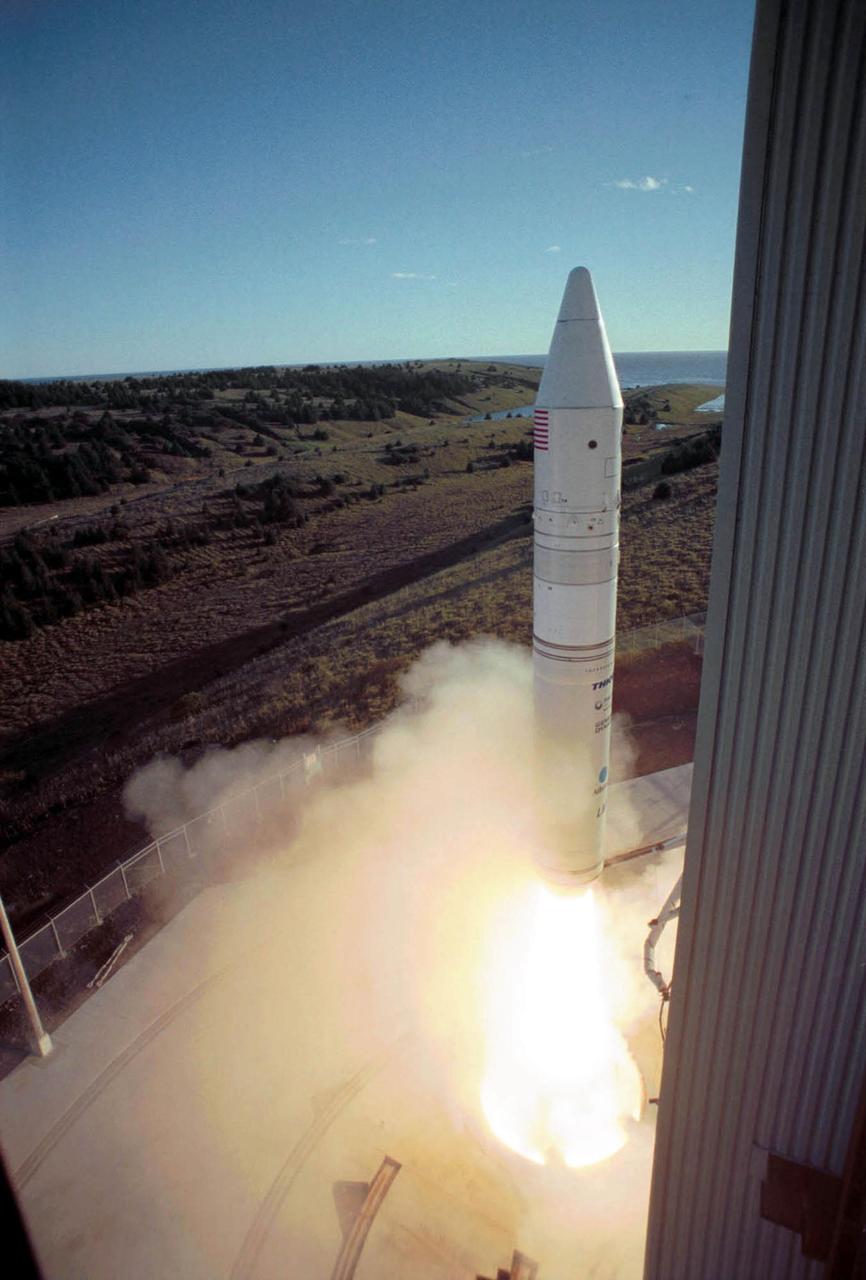
KODIAK ISLAND, Alaska. -- With light still on the horizon, a Lockheed Martin Athena I launch vehicle lifts off the launch pad at Kodiak Launch Complex (KSC) with the Kodiak Star spacecraft on board. Liftoff occurred at 10:40 p.m. EDT, Sept. 29. The Kodiak Star payload consists of four satellites: PICOSat, PCSat, Sapphire and Starshine 3. Starshine is sponsored by NASA. The 200-pound sphere will be used by students to study orbital decay. The other three satellites, also on educational missions, are sponsored by the department of defense. PICOSat is a technology demonstration satellite with four experiments on board. PCSat was designed by midshipmen at the U.S. Naval Academy, and will become part of the amateur radio community's automatic position reporting system. Sapphire is a micro-satellite built by students at Stanford University and Washington University - St. Louis to test infrared sensors for space use. KLC is the newest commercial launch complex in the United States, ideal for launch payloads requiring low-Earth polar or sun-synchronous orbits
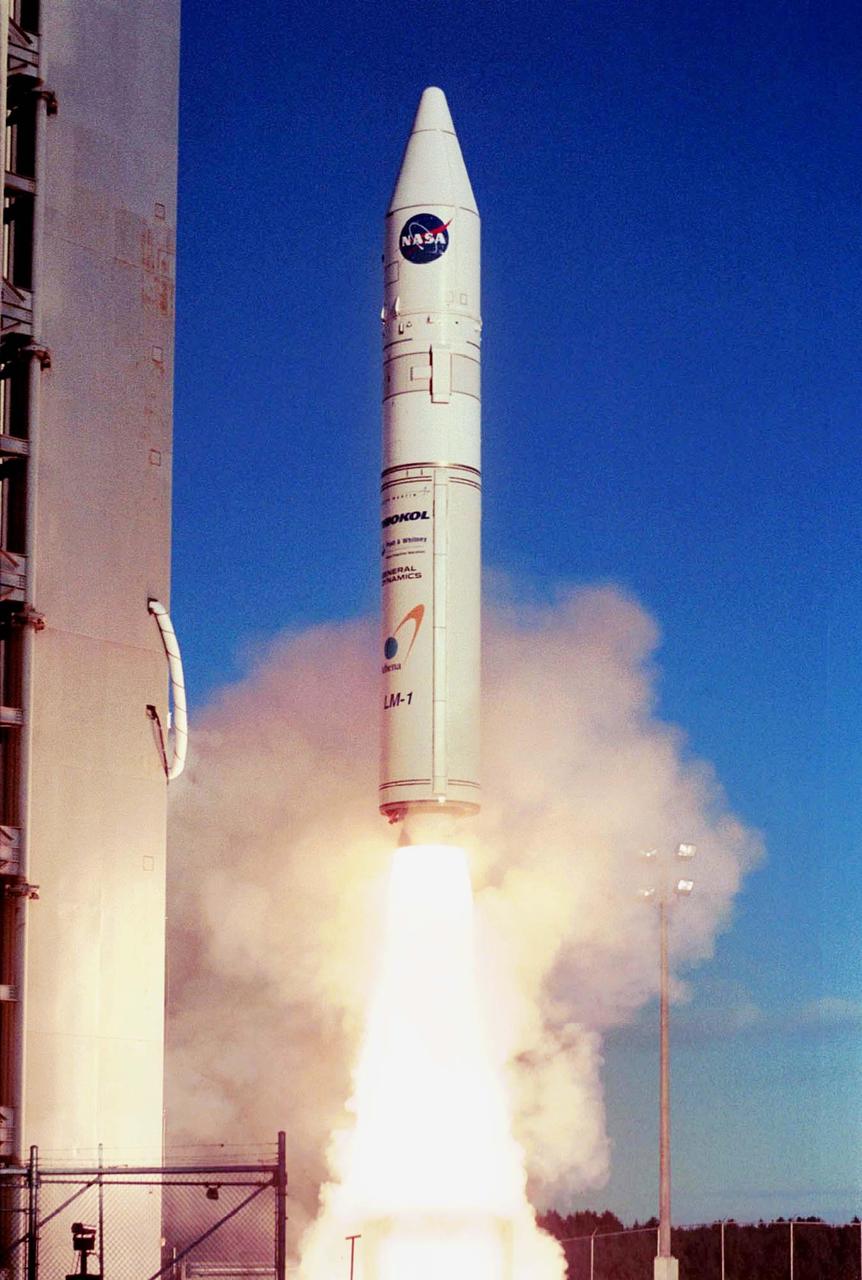
KODIAK ISLAND, Alaska -- A Lockheed Martin Athena I launch vehicle lifts off the launch pad at Kodiak Launch Complex (KSC) with the Kodiak Star spacecraft on board. Liftoff occurred at 10:40 p.m. EDT, Sept. 29. The Kodiak Star payload consists of four satellites: PICOSat, PCSat, Sapphire and Starshine 3. Starshine is sponsored by NASA. The 200-pound sphere will be used by students to study orbital decay. The other three satellites, also on educational missions, are sponsored by the department of defense. PICOSat is a technology demonstration satellite with four experiments on board. PCSat was designed by midshipmen at the U.S. Naval Academy, and will become part of the amateur radio community's automatic position reporting system. Sapphire is a micro-satellite built by students at Stanford University and Washington University - St. Louis to test infrared sensors for space use. KLC is the newest commercial launch complex in the United States, ideal for launch payloads requiring low-Earth polar or sun-synchronous orbits
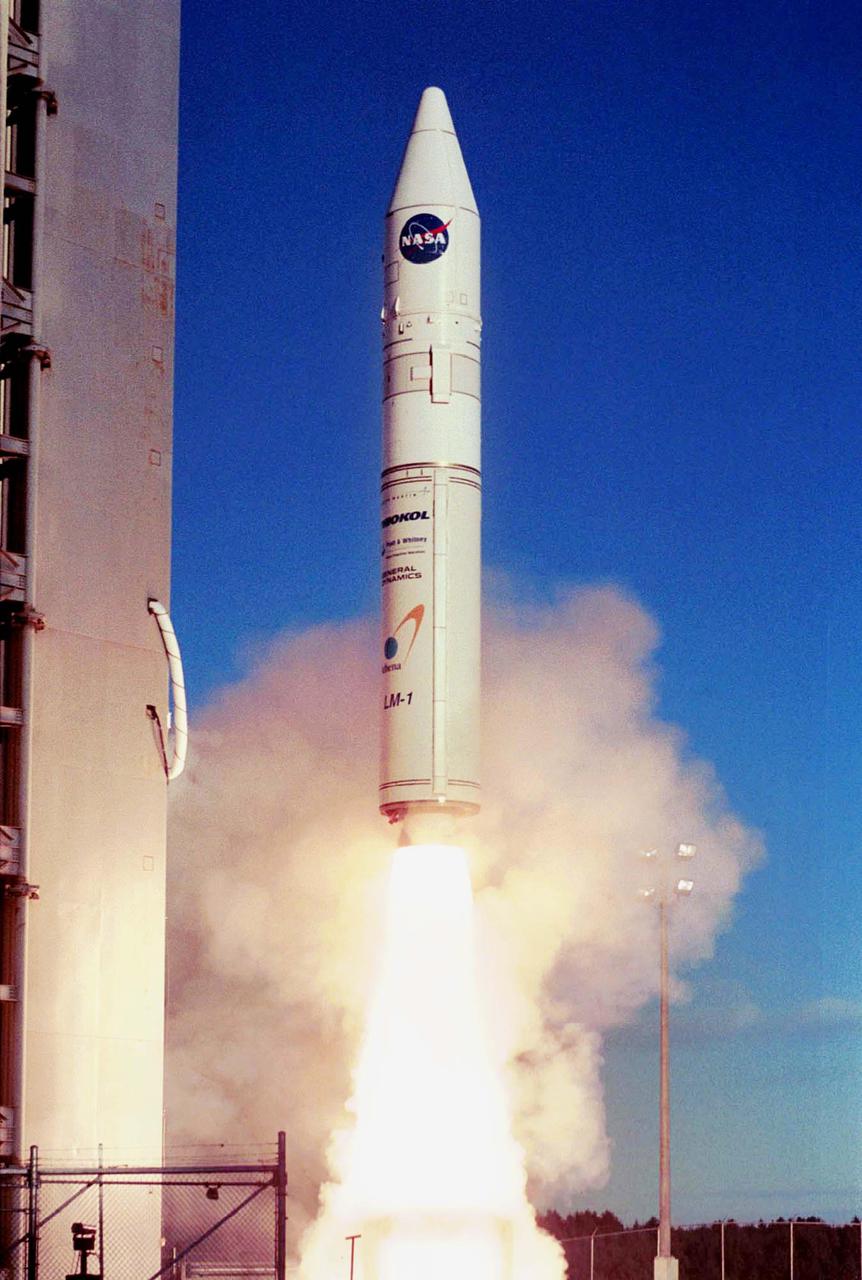
KODIAK ISLAND, Alaska -- A Lockheed Martin Athena I launch vehicle lifts off the launch pad at Kodiak Launch Complex (KSC) with the Kodiak Star spacecraft on board. Liftoff occurred at 10:40 p.m. EDT, Sept. 29. The Kodiak Star payload consists of four satellites: PICOSat, PCSat, Sapphire and Starshine 3. Starshine is sponsored by NASA. The 200-pound sphere will be used by students to study orbital decay. The other three satellites, also on educational missions, are sponsored by the department of defense. PICOSat is a technology demonstration satellite with four experiments on board. PCSat was designed by midshipmen at the U.S. Naval Academy, and will become part of the amateur radio community's automatic position reporting system. Sapphire is a micro-satellite built by students at Stanford University and Washington University - St. Louis to test infrared sensors for space use. KLC is the newest commercial launch complex in the United States, ideal for launch payloads requiring low-Earth polar or sun-synchronous orbits
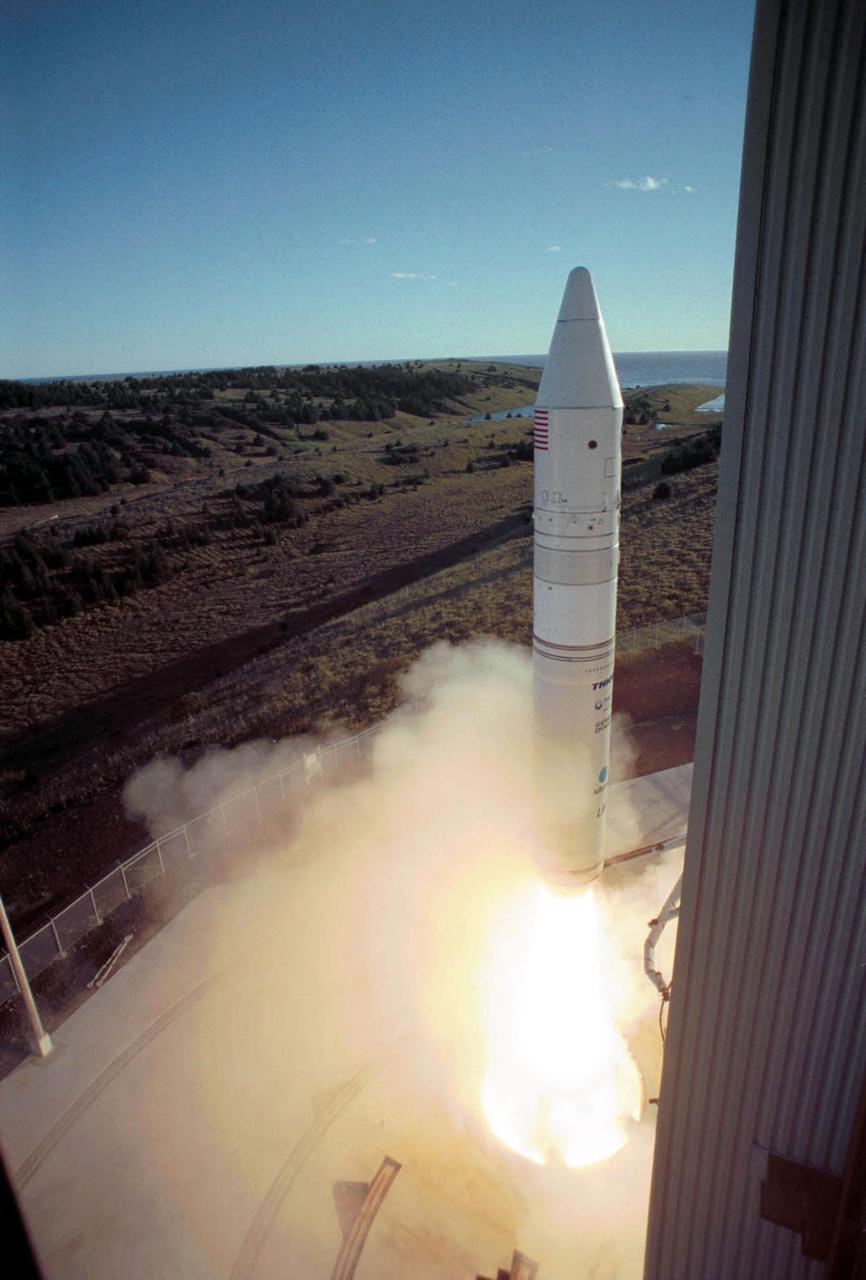
KODIAK ISLAND, Alaska. -- With light still on the horizon, a Lockheed Martin Athena I launch vehicle lifts off the launch pad at Kodiak Launch Complex (KSC) with the Kodiak Star spacecraft on board. Liftoff occurred at 10:40 p.m. EDT, Sept. 29. The Kodiak Star payload consists of four satellites: PICOSat, PCSat, Sapphire and Starshine 3. Starshine is sponsored by NASA. The 200-pound sphere will be used by students to study orbital decay. The other three satellites, also on educational missions, are sponsored by the department of defense. PICOSat is a technology demonstration satellite with four experiments on board. PCSat was designed by midshipmen at the U.S. Naval Academy, and will become part of the amateur radio community's automatic position reporting system. Sapphire is a micro-satellite built by students at Stanford University and Washington University - St. Louis to test infrared sensors for space use. KLC is the newest commercial launch complex in the United States, ideal for launch payloads requiring low-Earth polar or sun-synchronous orbits
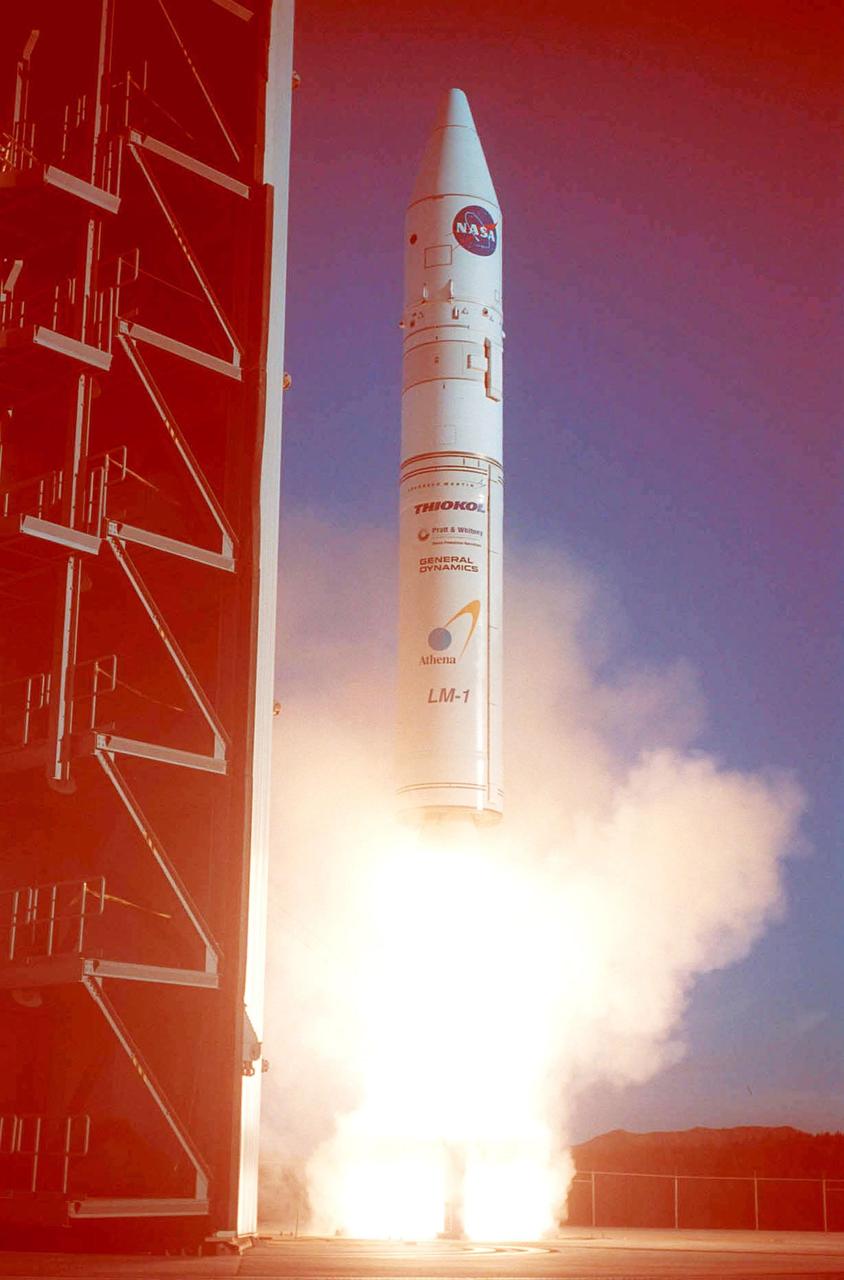
KODIAK ISLAND, Alaska -- A Lockheed Martin Athena I launch vehicle rockets off the launch pad at Kodiak Launch Complex (KSC) with the Kodiak Star spacecraft on board. Liftoff occurred at 10:40 p.m. EDT, Sept. 29. The Kodiak Star payload consists of four satellites: PICOSat, PCSat, Sapphire and Starshine 3. Starshine is sponsored by NASA. The 200-pound sphere will be used by students to study orbital decay. The other three satellites, also on educational missions, are sponsored by the department of defense. PICOSat is a technology demonstration satellite with four experiments on board. PCSat was designed by midshipmen at the U.S. Naval Academy, and will become part of the amateur radio community's automatic position reporting system. Sapphire is a micro-satellite built by students at Stanford University and Washington University - St. Louis to test infrared sensors for space use. KLC is the newest commercial launch complex in the United States, ideal for launch payloads requiring low-Earth polar or sun-synchronous orbits
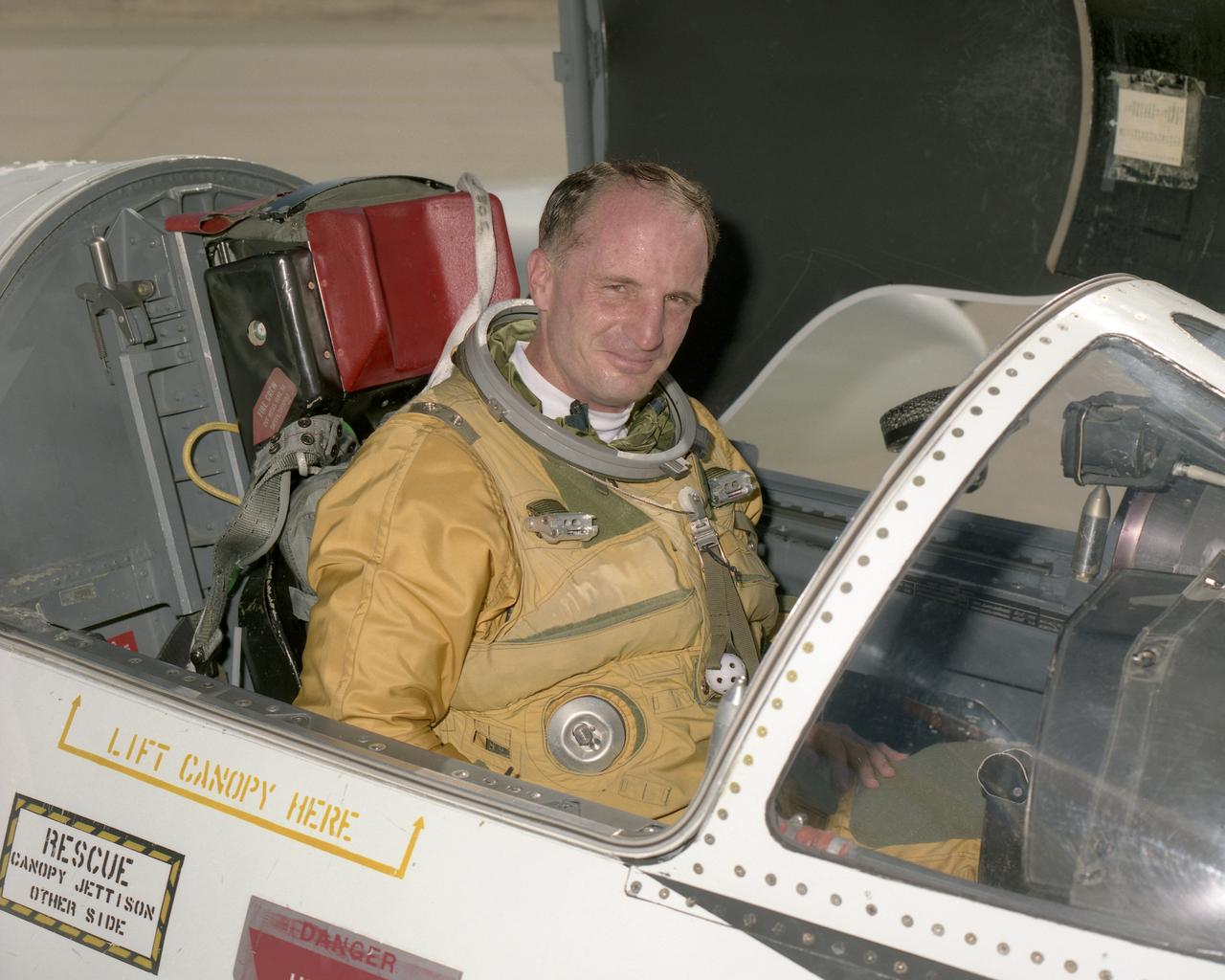
David A. Wright is associate director for Center Operations at the NASA Dryden Flight Research Center, Edwards, Calif. He was formerly director of Flight Operations. He is also a research pilot, flying NASA's ER-2 and T-38. The ER-2s are civilian variants of the military U-2S reconnaissance aircraft and carry scientific instruments to study the Earth during worldwide deployments. Wright has more than 4,500 hours in six different aircraft. He held the position of deputy director of the Airborne Science Program at Dryden from 2002 until 2004. Wright came to Dryden after retiring from the U.S. Air Force as a lieutenant colonel. His final assignment was to the Joint Staff J3, Directorate of Operations at the Pentagon from November 1996 until August 1999. Prior to the Pentagon assignment, he served as commander of the 1st Reconnaissance Squadron at Beale Air Force Base near Marysville, Calif., the unit responsible for training all U-2 pilots. He was the operations officer for one the largest U-2 operations in history, flying combat missions against Iraq and managing an unprecedented U-2 flying schedule during the 1991 Desert Storm conflict. He was selected for the Air Force U-2 program in 1987 following duty as an aircraft commander in the E-3A AWACS (Airborne Warning and Control System) aircraft. Wright was a T-38 instructor for three years at Reese Air Force Base, Lubbock, Texas, following completion of pilot training in 1978. He graduated from the U.S. Air Force Academy in 1977 with a Bachelor of Science in mathematics and computer science. Wright earned a Master of Arts in Adult Education from Troy State University, Montgomery, Ala., in 1987, and a Master of Science in National Security and Strategic Studies from the Naval War College, Newport, R.I., in 1995.