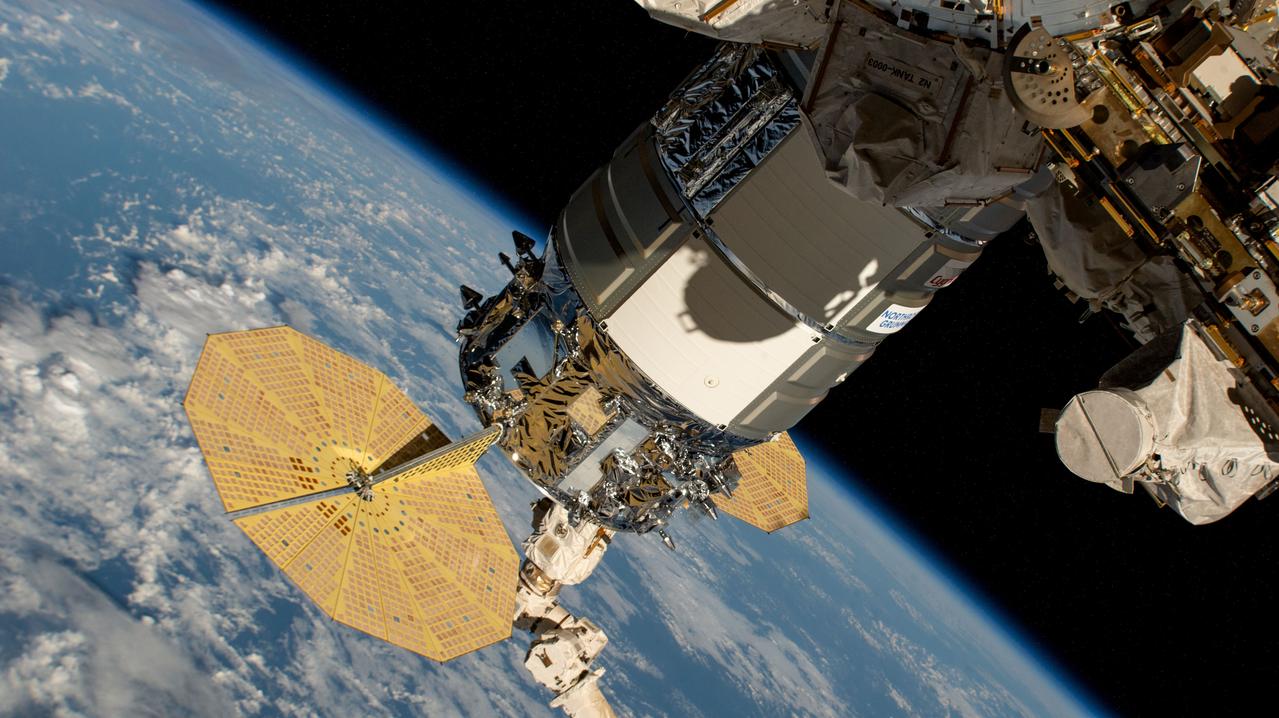
iss071e439629 (Aug. 6, 2024) --- Still in the grips of the Canadarm2 robotic arm, the Northrop Grumman Cygnus space freighter is pictured attached to the Unity module's Earth-facing port. The International Space Station was orbiting 262 miles above a cloudy Pacific Ocean halfway between the U.S. island of Hawaii and the island nation of the Republic of Kiribati at the time of this photograph.
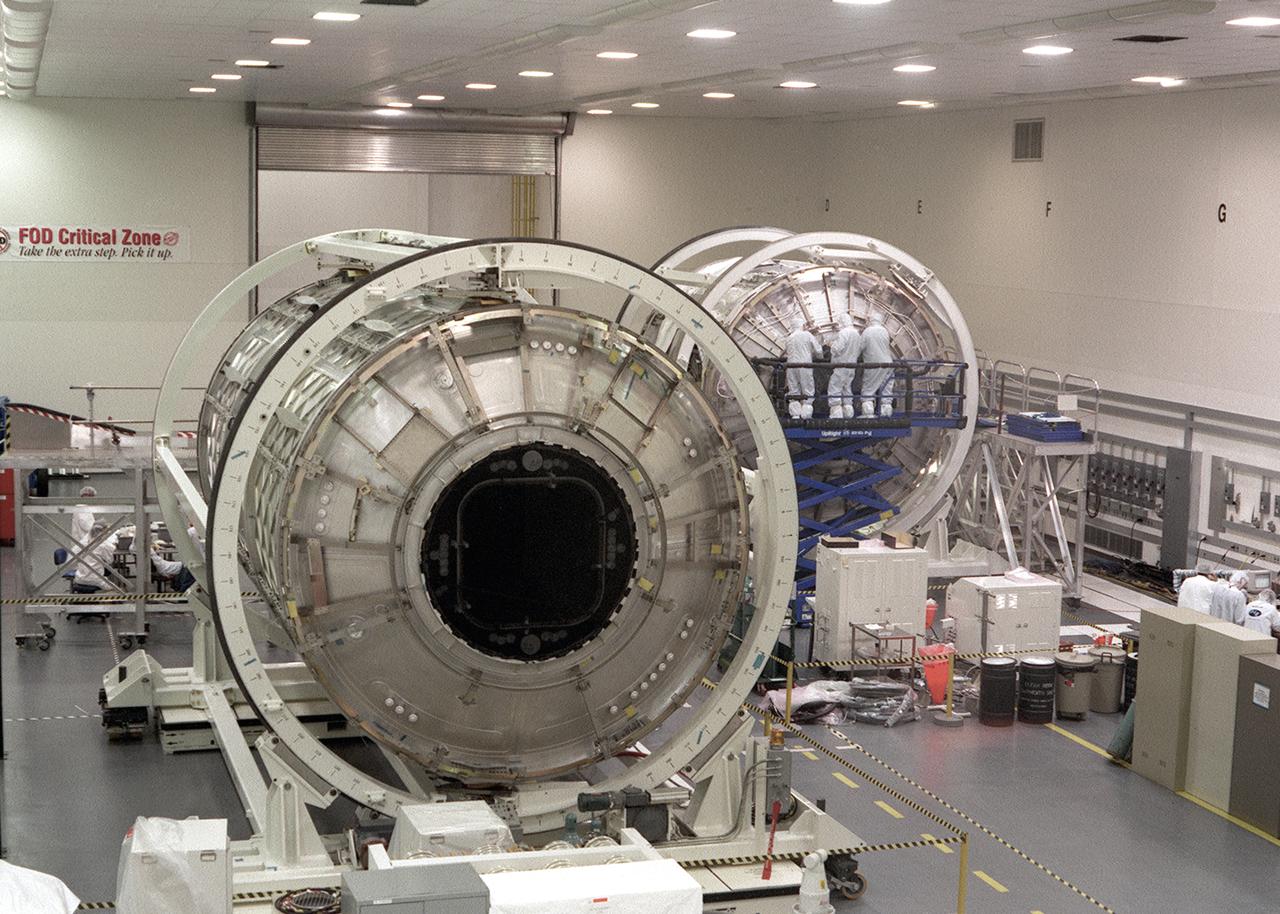
This Boeing photograph shows the Node 1, Unity module, Flight Article (at right) and the U.S. Laboratory module, Destiny, Flight Article for the International Space Station (ISS) being manufactured in the High Bay Clean Room of the Space Station Manufacturing Facility at the Marshall Space Flight Center. The Node 1, or Unity, serves as a cornecting passageway to Space Station modules. The U.S. built Unity module was launched aboard the orbiter Endeavour (STS-88 mission) on December 4, 1998 and connected to the Zarya, the Russian-built Functional Energy Block (FGB). The U.S. Laboratory (Destiny) module is the centerpiece of the ISS, where science experiments will be performed in the near-zero gravity of space. The U.S. Laboratory/Destiny was launched aboard the orbiter Atlantis (STS-98 mission) on February 7, 2001. The ISS is a multidisciplinary laboratory, technology test bed, and observatory that will provide unprecedented undertakings in scientific, technological, and international experimentation.
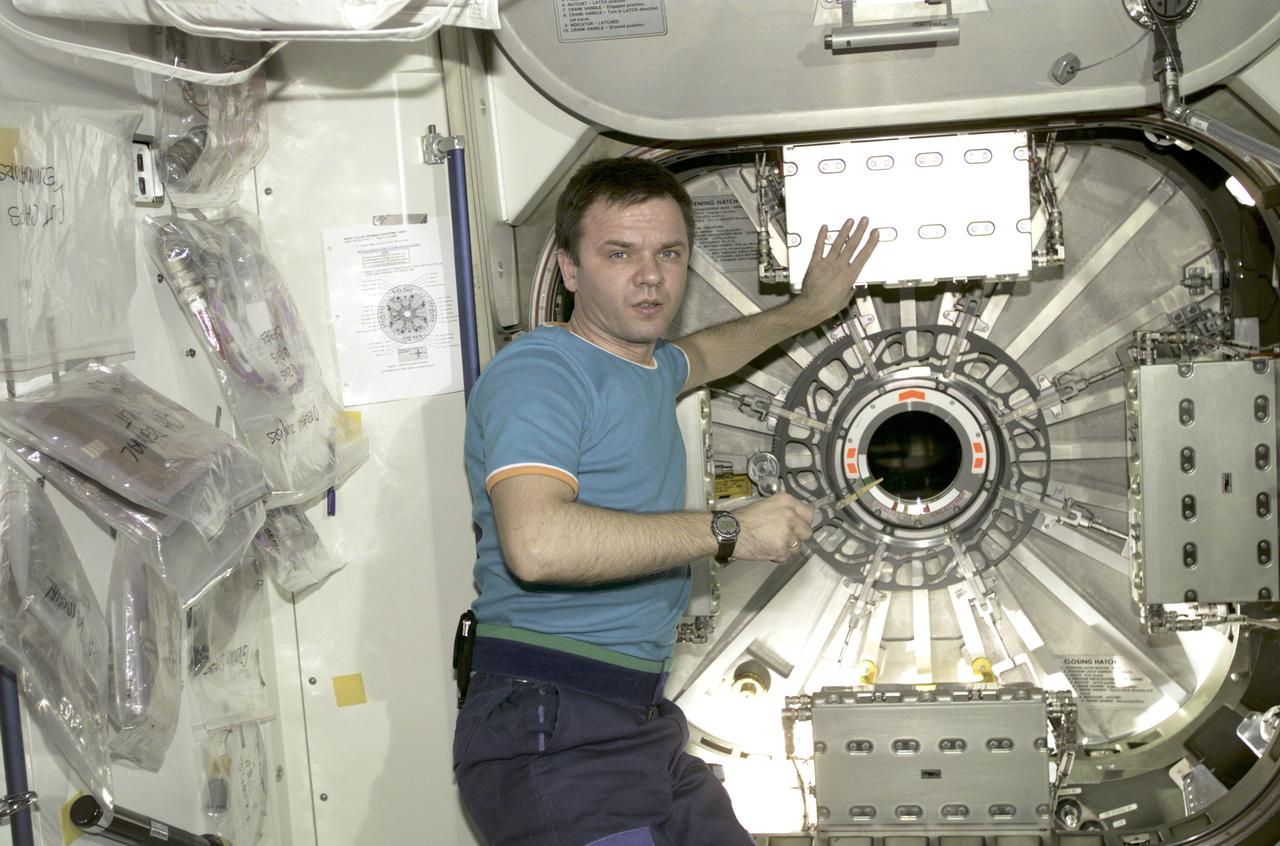
Cosmonaut Yuri P. Gidzenko, Expedition One Soyuz commander, stands near the hatch leading from the Unity node into the newly-attached Destiny laboratory aboard the International Space Station (ISS). The Node 1, or Unity, serves as a cornecting passageway to Space Station modules. The U.S.-built Unity module was launched aboard the Orbiter Endeavour (STS-88 mission) on December 4, 1998, and connected to Zarya, the Russian-built Functional Cargo Block (FGB). The U.S. Laboratory (Destiny) module is the centerpiece of the ISS, where science experiments will be performed in the near-zero gravity in space. The Destiny Module was launched aboard the Space Shuttle Orbiter Atlantis (STS-98 mission) on February 7, 2001. The aluminum module is 8.5 meters (28 feet) long and 4.3 meters (14 feet) in diameter. The laboratory consists of three cylindrical sections and two endcones with hatches that will be mated to other station components. A 50.9-centimeter- (20-inch-) diameter window is located on one side of the center module segment. This pressurized module is designed to accommodate pressurized payloads. It has a capacity of 24 rack locations, and payload racks will occupy 13 locations especially designed to support experiments.
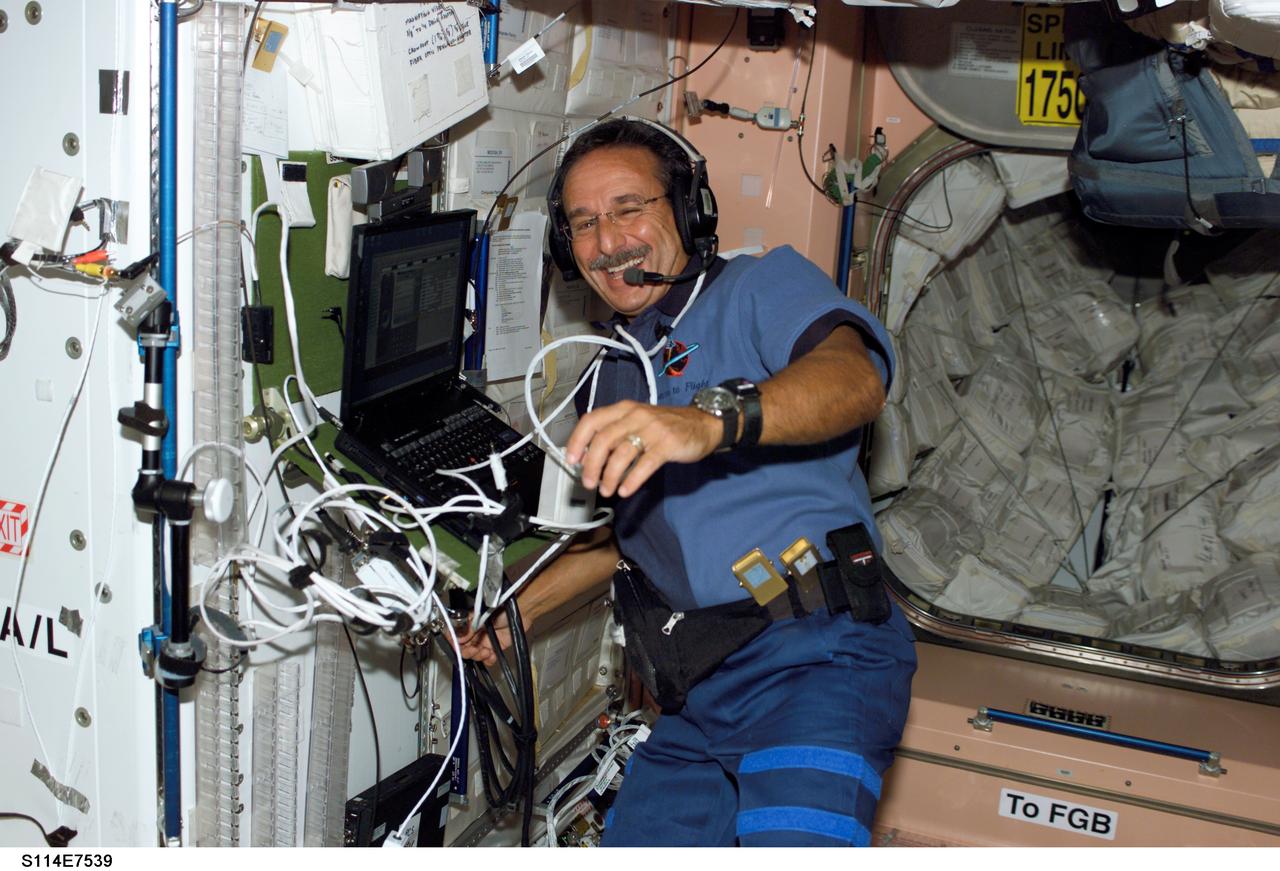
S114-E-7539 (6 August 2005) --- Astronaut Charles J. Camarda, STS-114 mission specialist, uses a communication system in the Unity node of the International Space Station while Space Shuttle Discovery was docked to the Station.
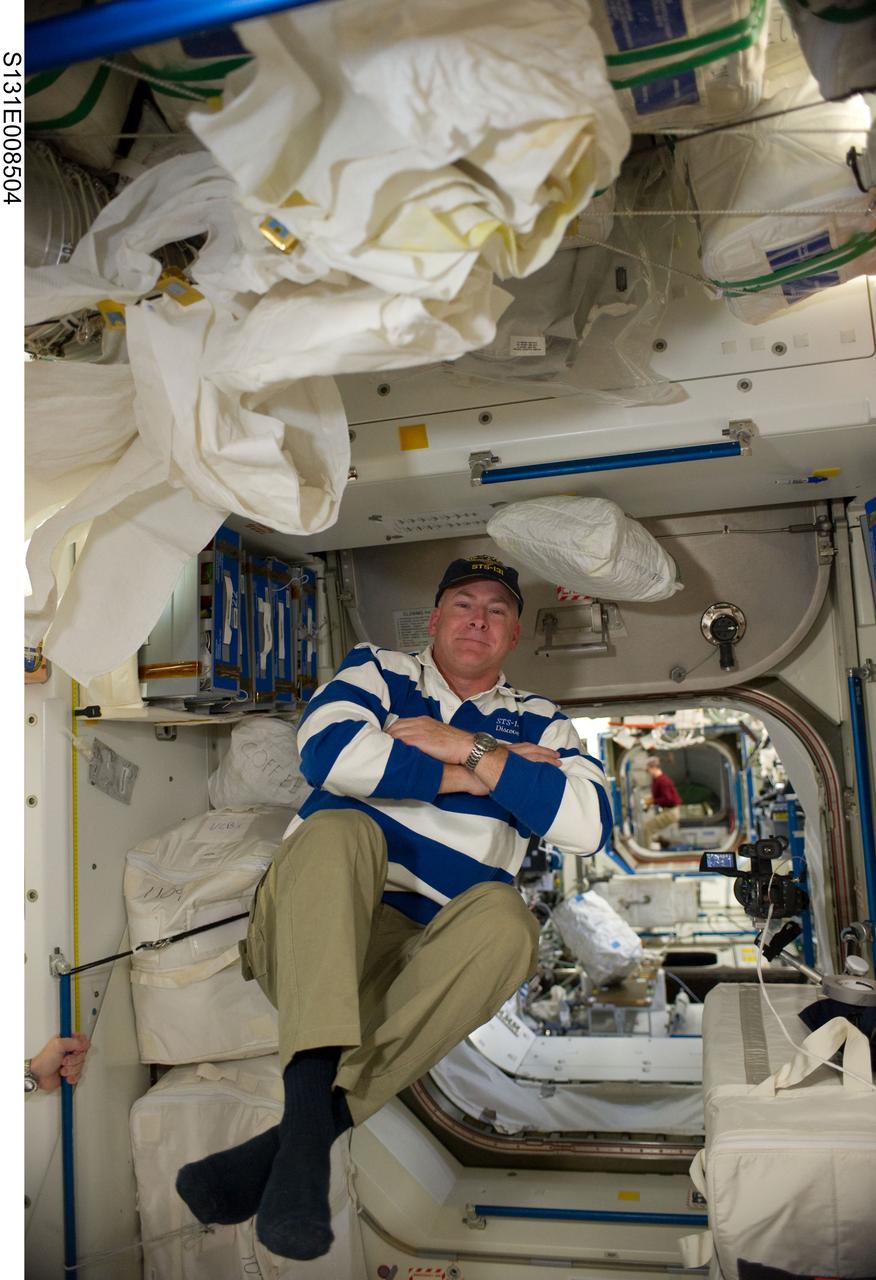
S131-E-008504 (10 April 2010) --- NASA astronaut Alan Poindexter, STS-131 commander, floats freely in the Unity node of the International Space Station while space shuttle Discovery remains docked with the station.
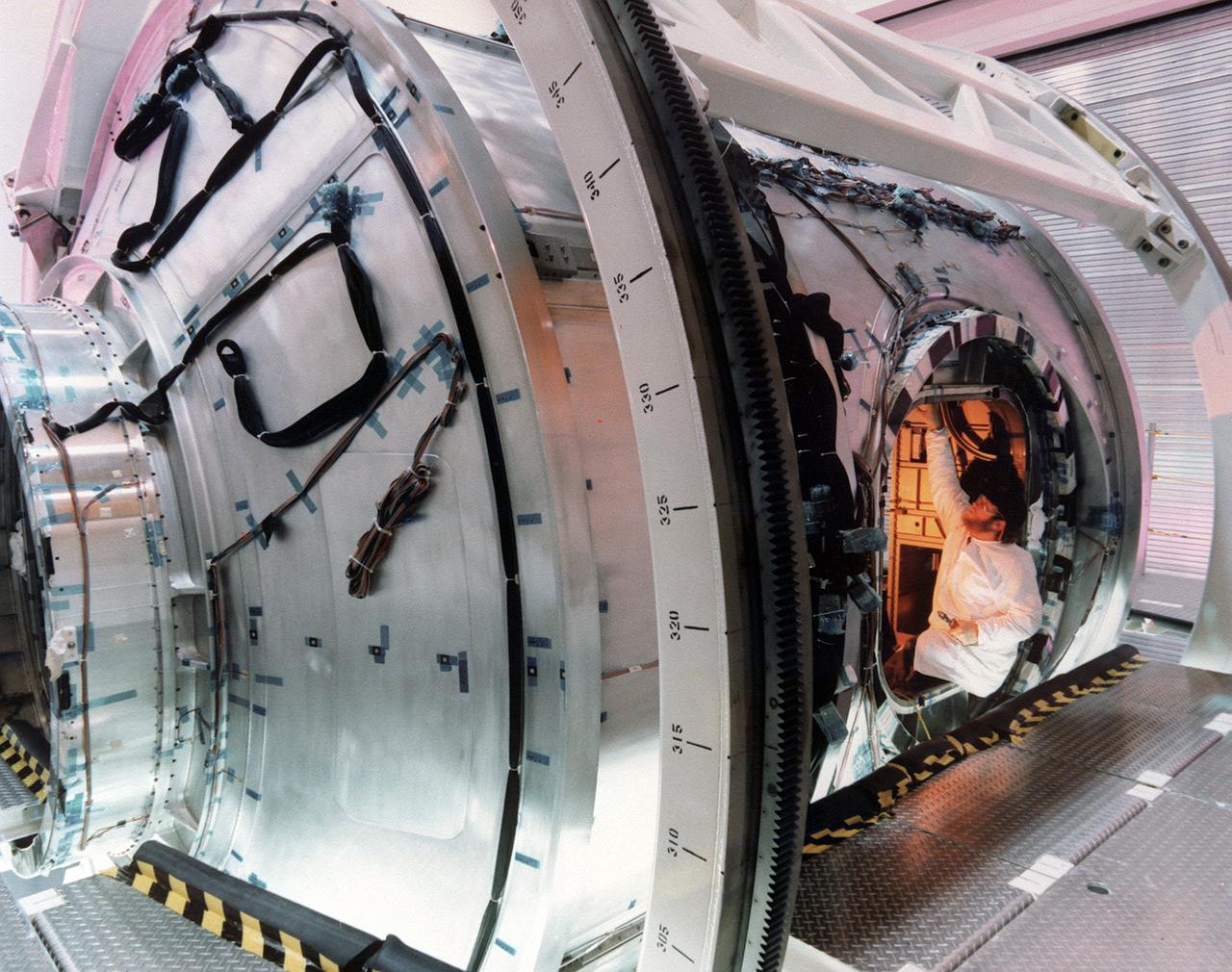
This photograph, taken by the Boeing Company,shows Boeing technicians preparing to install one of six hatches or doors to the Node 1 (also called Unity), the first U.S. Module for the International Space Station (ISS). The Node 1, or Unity, serves as a cornecting passageway to Space Station modules and was manufactured by the Boeing Company at the Marshall Space Flight Center from 1994 to 1997. The U.S. built Unity module was launched aboard the orbiter Endeavour (STS-88 mission) on December 4, 1998 and connected to the Zarya, the Russian-built Functional Energy Block (FGB). The Zarya was launched on a Russian proton rocket prior to the launch of the Unity. The ISS is a multidisciplinary laboratory, technology test bed, and observatory that will provide unprecedented undertakings in scientific, technological, and international experimentation.
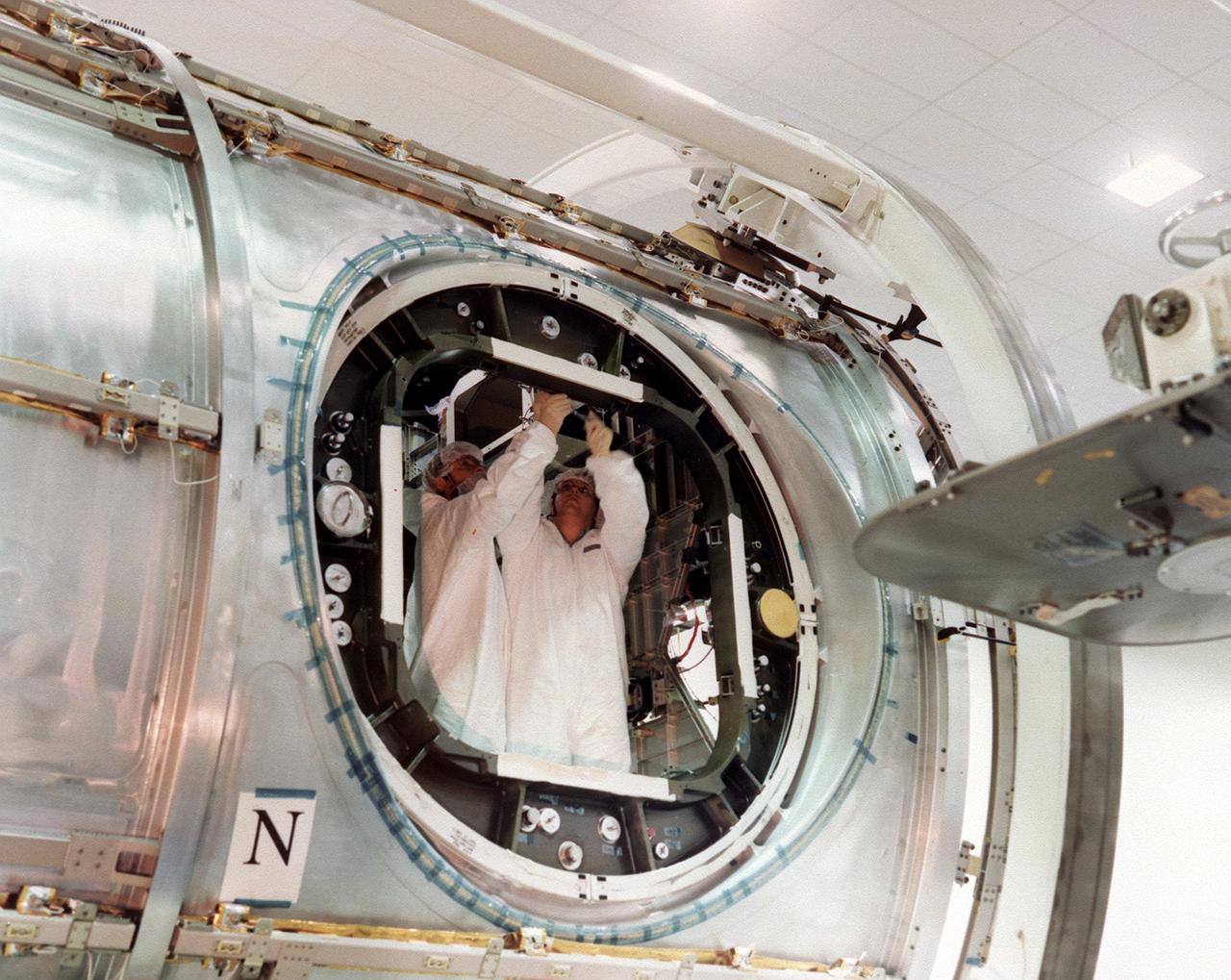
This photograph, taken by the Boeing Company, shows Boeing technicians preparing to install one of six hatches or doors to the Node 1 (also called Unity), the first U.S. Module for the International Space Station (ISS). The Node 1, or Unity, serves as a cornecting passageway to Space Station modules and was manufactured by the Boeing Company at the Marshall Space Flight Center from 1994 to 1997. The U.S. built Unity module was launched aboard the orbiter Endeavour (STS-88 mission) on December 4, 1998 and connected to the Zarya, the Russian-built Functional Energy Block (FGB). The Zarya was launched on a Russian proton rocket prior to the launch of the Unity. The ISS is a multidisciplinary laboratory, technology test bed, and observatory that will provide unprecedented undertakings in scientific, technological, and international experimentation.
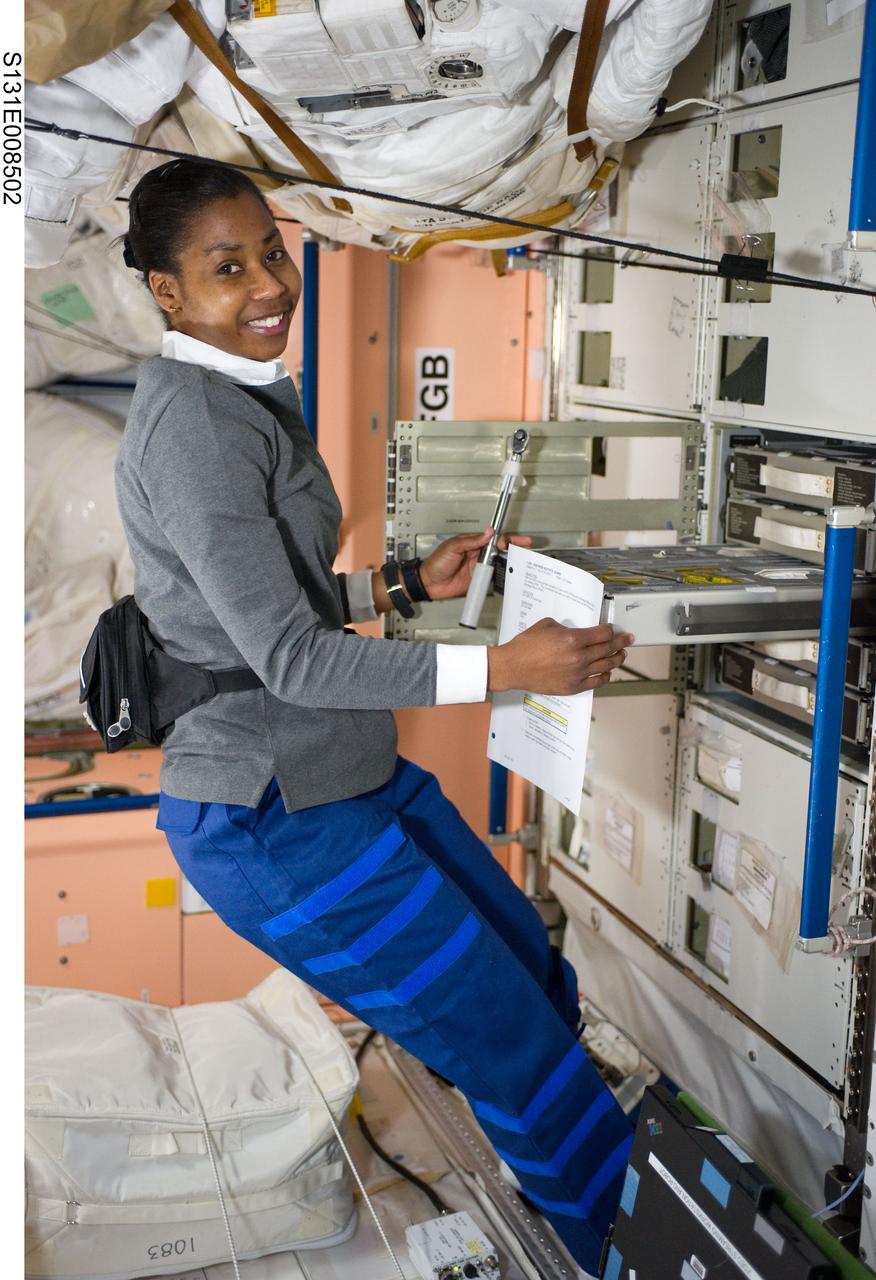
S131-E-008502 (10 April 2010) --- NASA astronaut Stephanie Wilson, STS-131 mission specialist, retrieves a tool from a drawer in the Unity node of the International Space Station while space shuttle Discovery remains docked with the station.
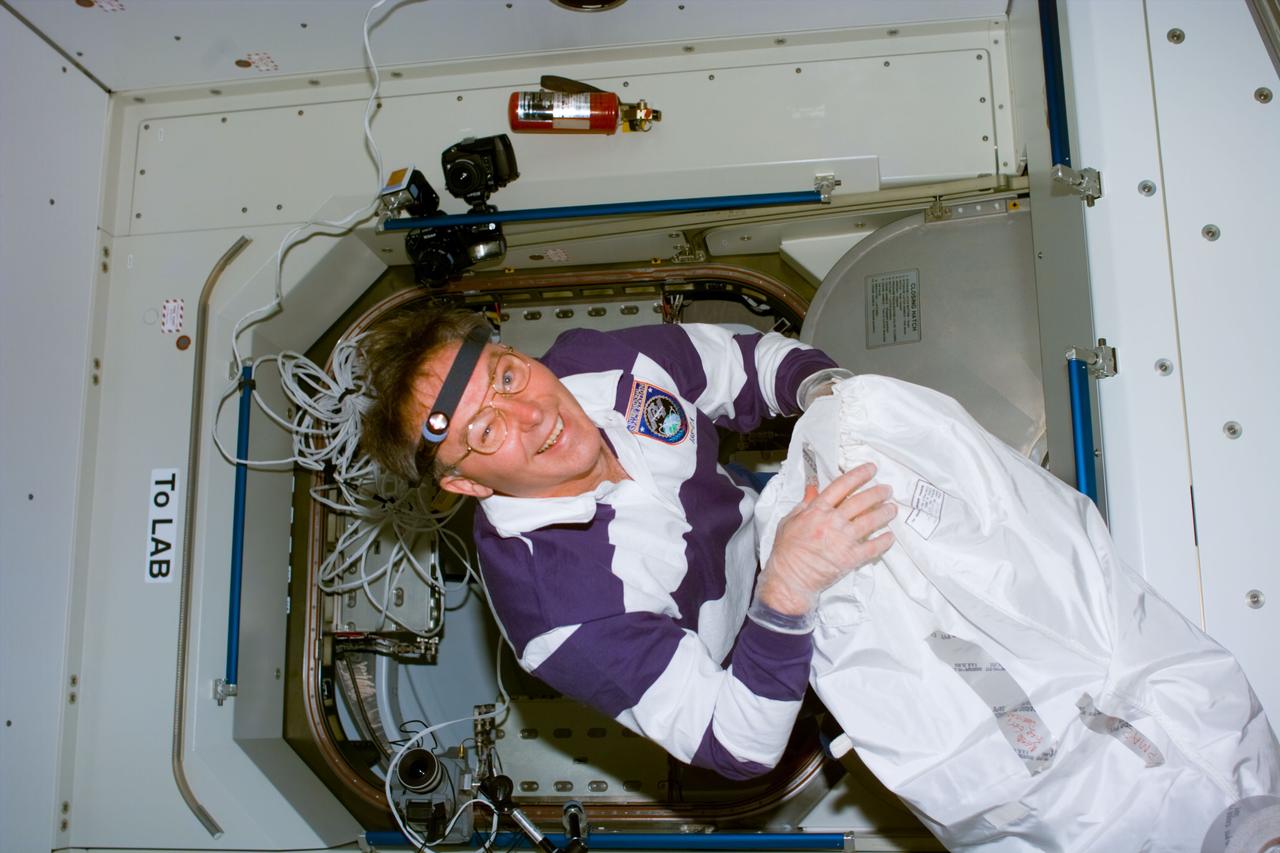
S88-E-5112 (12-10-98)) --- Astronaut Jerry L. Ross, mission specialist, packs a bag of tools and equipment in the hatchway of the Unity connecting module. Ross and his crewmates were installing hand rails and other equipment and performing various tasks to ready the Unity and Zarya for their ISS roles. The photo was taken with an electronic still camera at 20:26:02 GMT, Dec. 10.
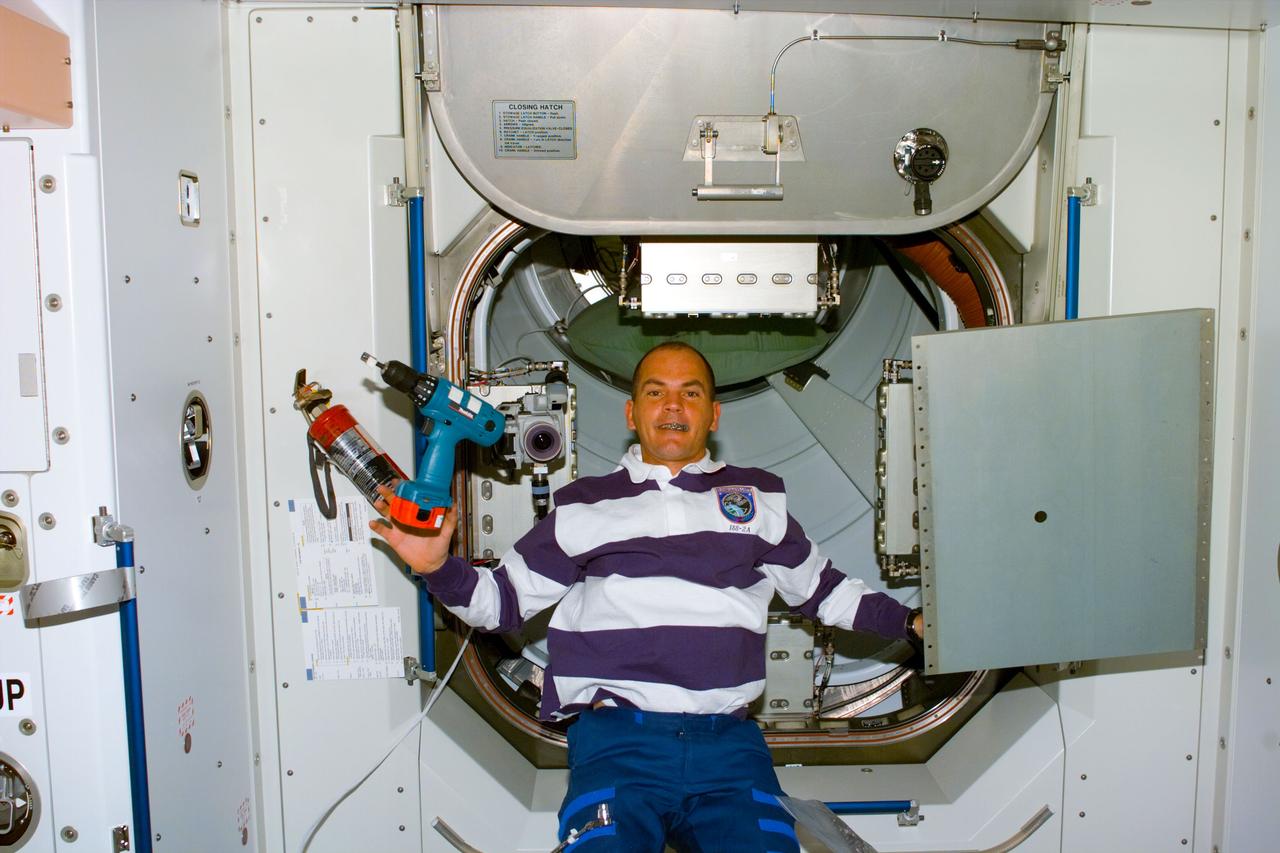
S88-E-5126 (12-11-98) --- Astronaut Frederick W. Sturckow, pilot, is pictured with a power tool near the hatchway between Unity and a pressurized mating adapter (PMA). Members of the STS-88 crew used this type tool and others to attach handrails and accessories and perform other tasks on Unity. The photo was taken with an electronic still camera (ESC) at 01:09:40 GMT, Dec. 11.
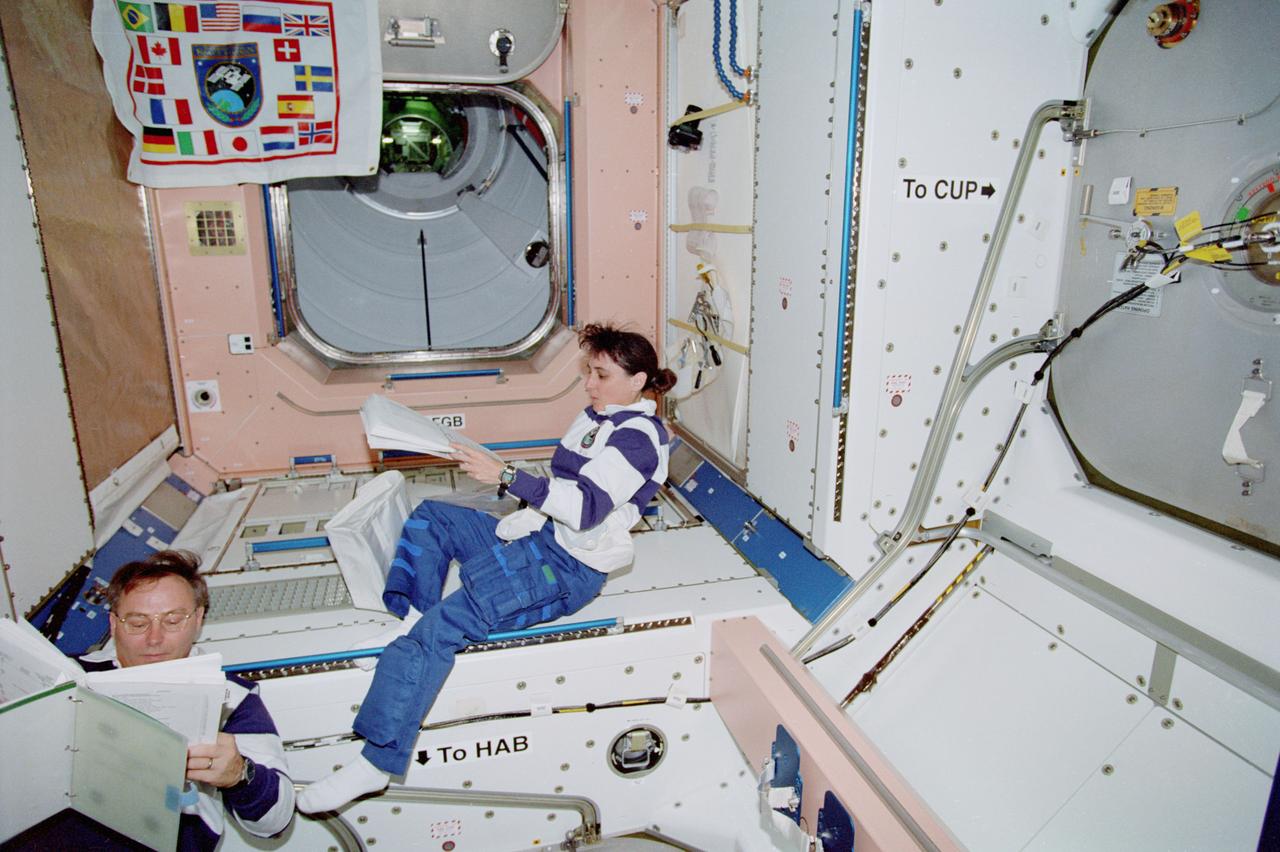
STS088-357-020 (4-15 Dec. 1998) --- Astronauts Jerry L. Ross and Nancy J. Currie, both mission specialists, check procedures list prior to performing a variety of tasks in the United States-built Node 1 or Unity Module. The hatchway in upper left corner accesses the Russian-built FGB or Zarya Module, which had earlier been retrieved with the aid of the Canadian-built Remote Manipulator System (RMS) and linked with Unity.
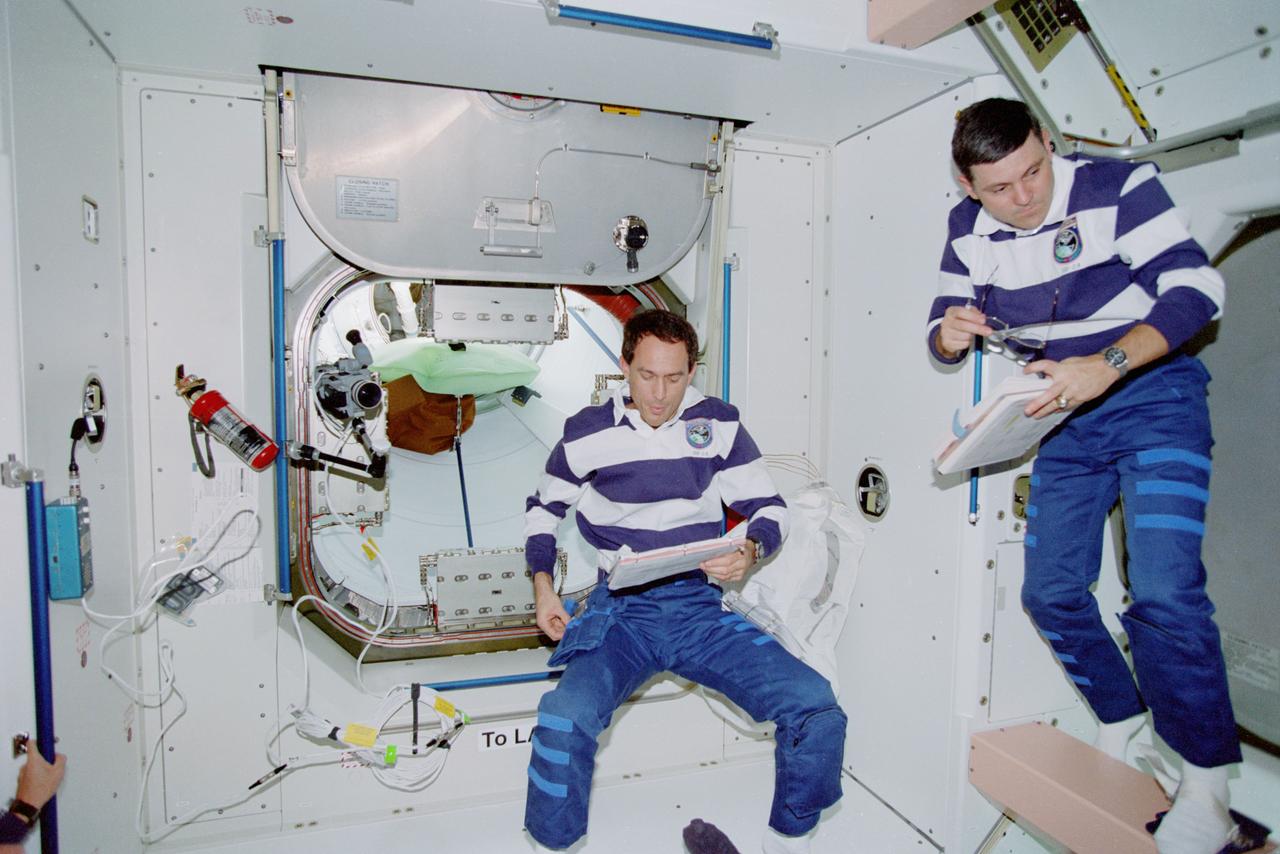
STS088-357-016 (4-15 Dec. 1998) --- Astronauts James H. Newman (left), mission specialist, and Robert D. Cabana, mission commander, look over checklists as they prepare to continue work in the U.S.-built Unity connecting module in Earth orbit. The STS-88 crew went on to spend eleven days in space preparing Unity and the attached Russian-built Zarya module for their International Space Station (ISS) roles.
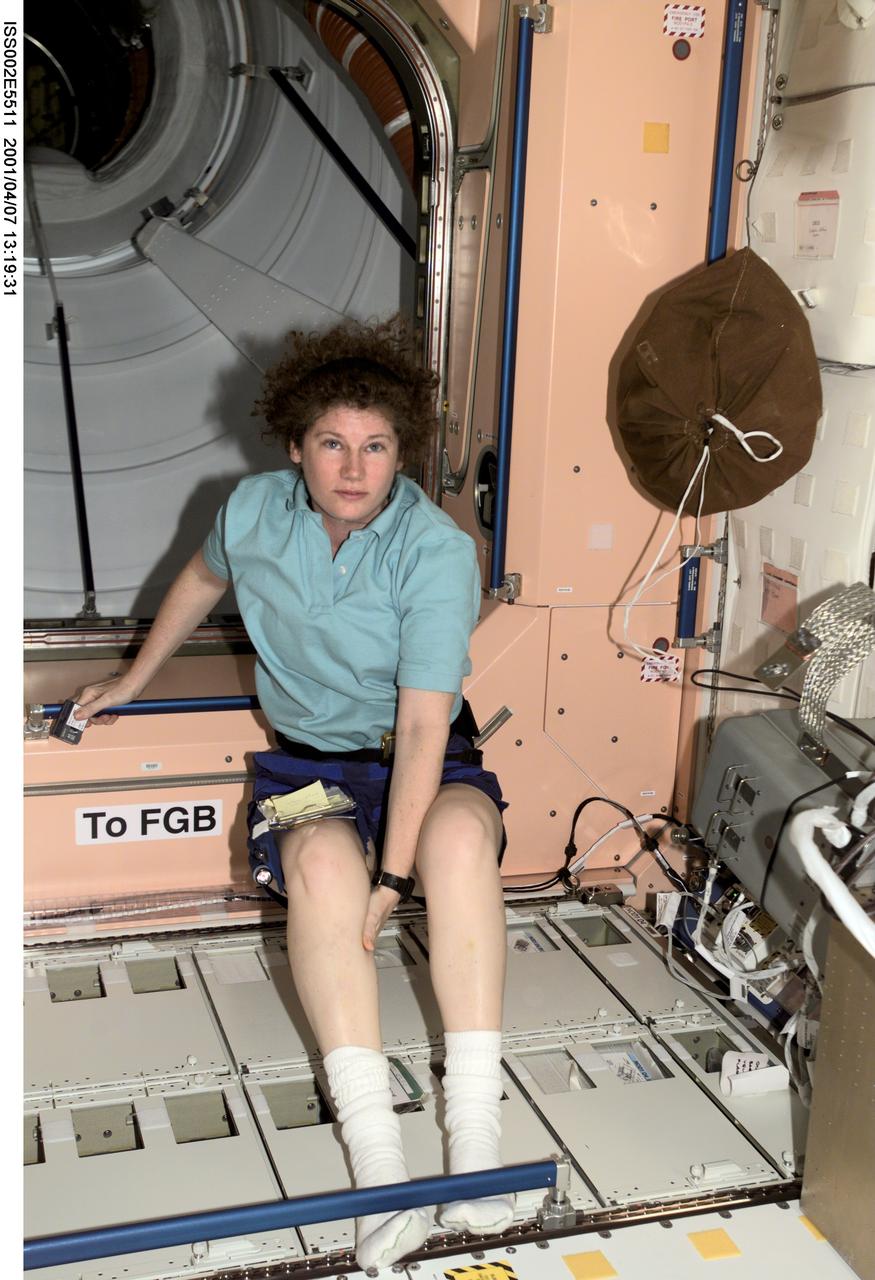
ISS002-E-5511 (07 April 2001) --- Astronaut Susan J. Helms, Expedition Two flight engineer, pauses from moving through the Node 1 / Unity module of the International Space Station (ISS) to pose for a photograph. This image was recorded with a digital still camera.
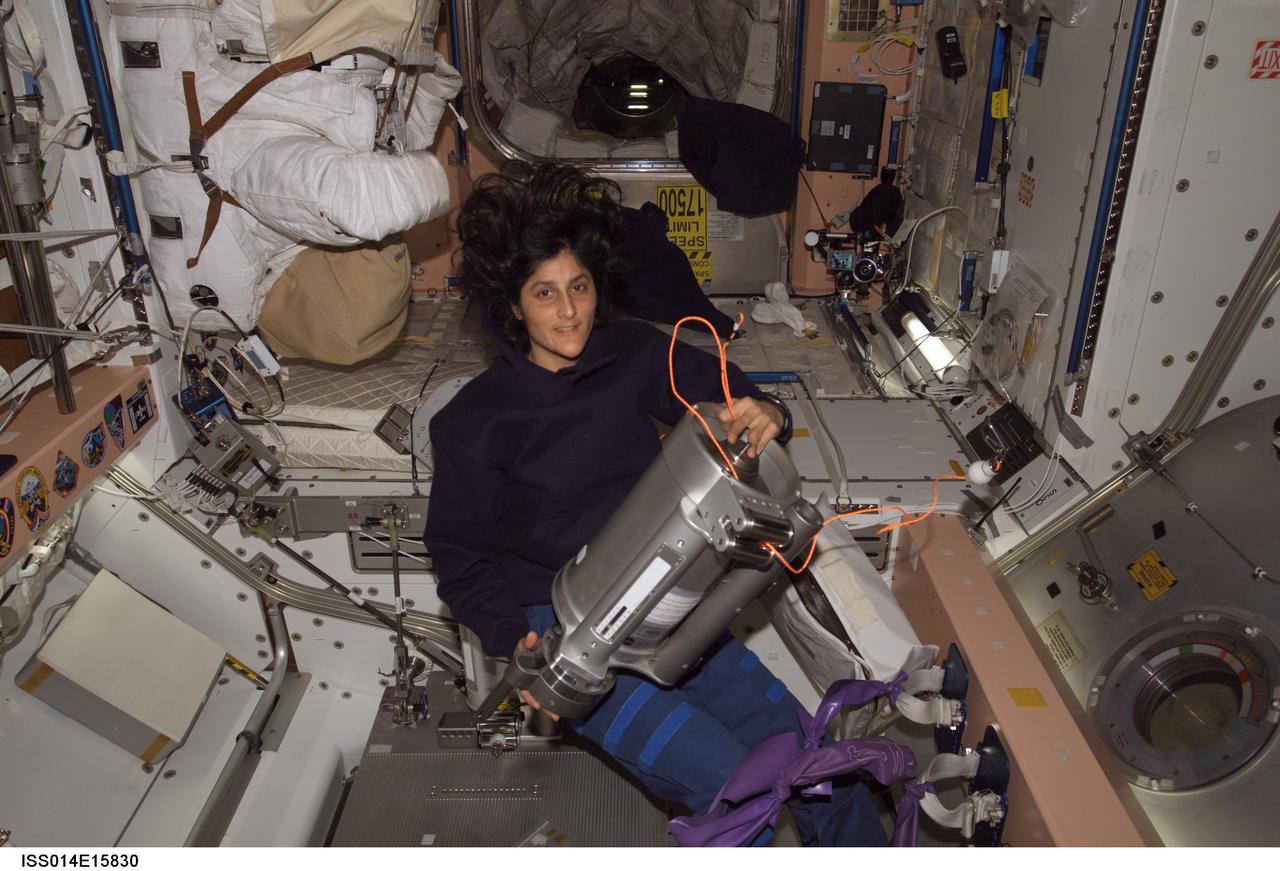
ISS014-E-15830 (4 March 2007) --- Astronaut Sunita L. Williams, Expedition 14 flight engineer, works with a portion of the Treadmill Vibration Isolation System (TVIS) during in-flight maintenance (IFM) in the Unity node of the International Space Station.
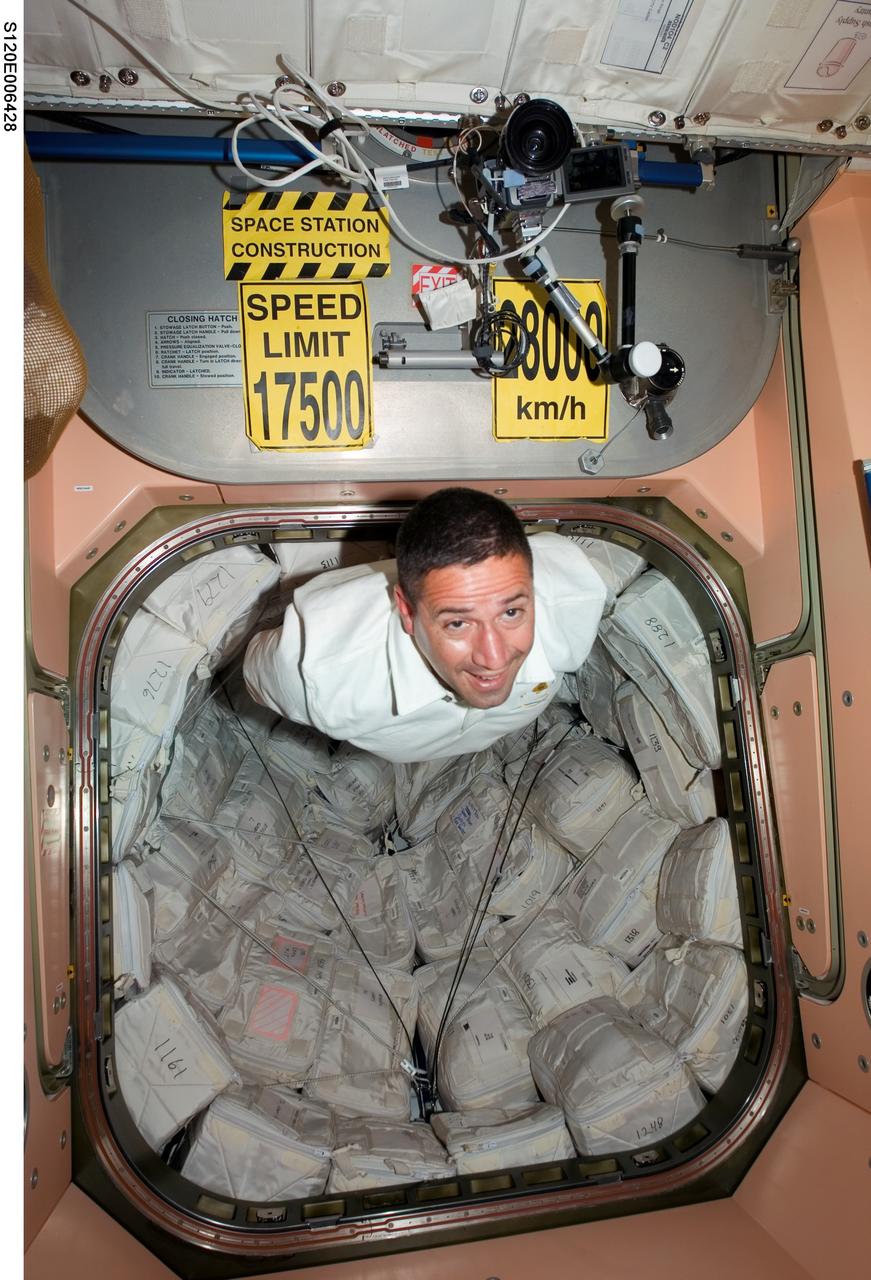
S120-E-006428 (25 Oct. 2007) --- Astronaut George Zamka, STS-120 pilot, floats into the Unity node of the International Space Station while Space Shuttle Discovery is docked with the station.
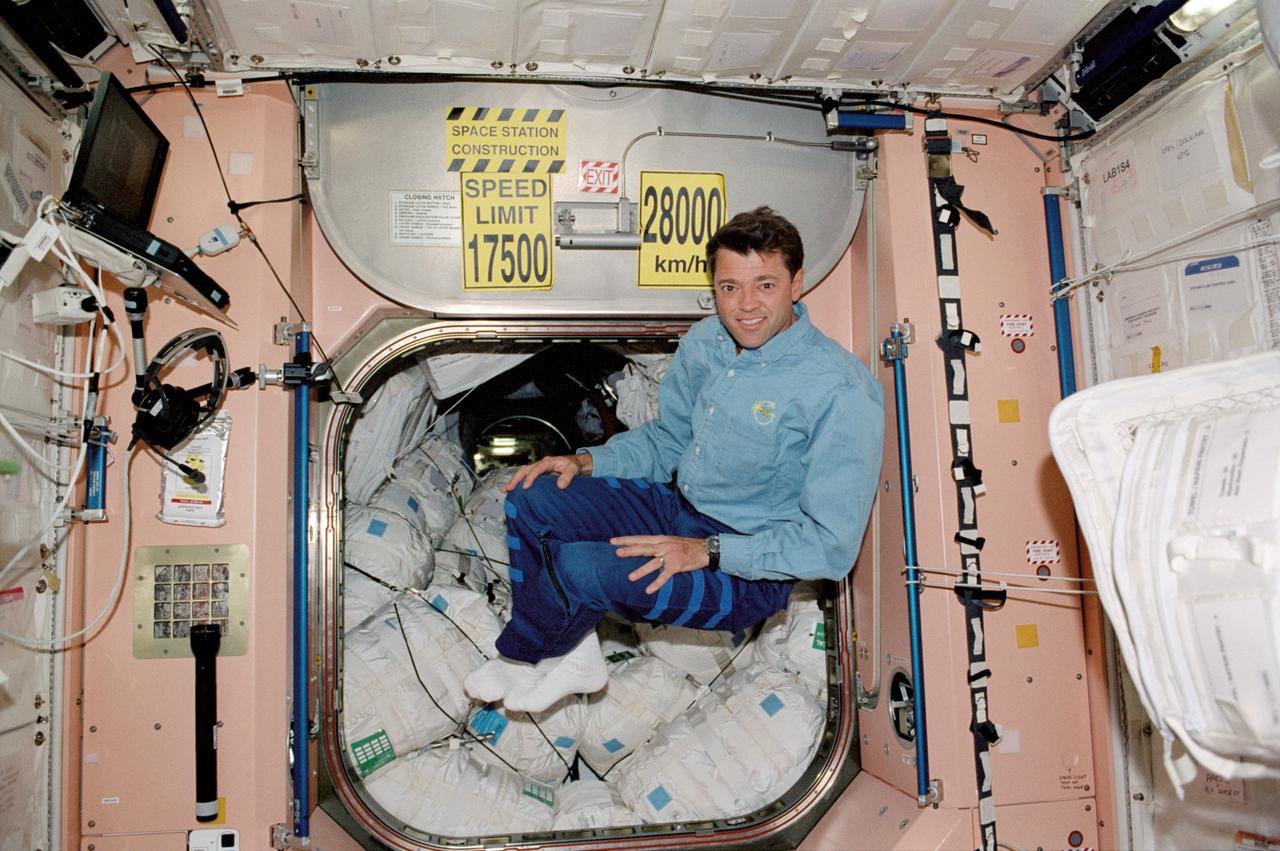
STS112-316-008 (7-18 October 2002) --- Astronaut Jeffrey S. Ashby, STS-112 mission commander, floats in the Unity node on the International Space Station (ISS).
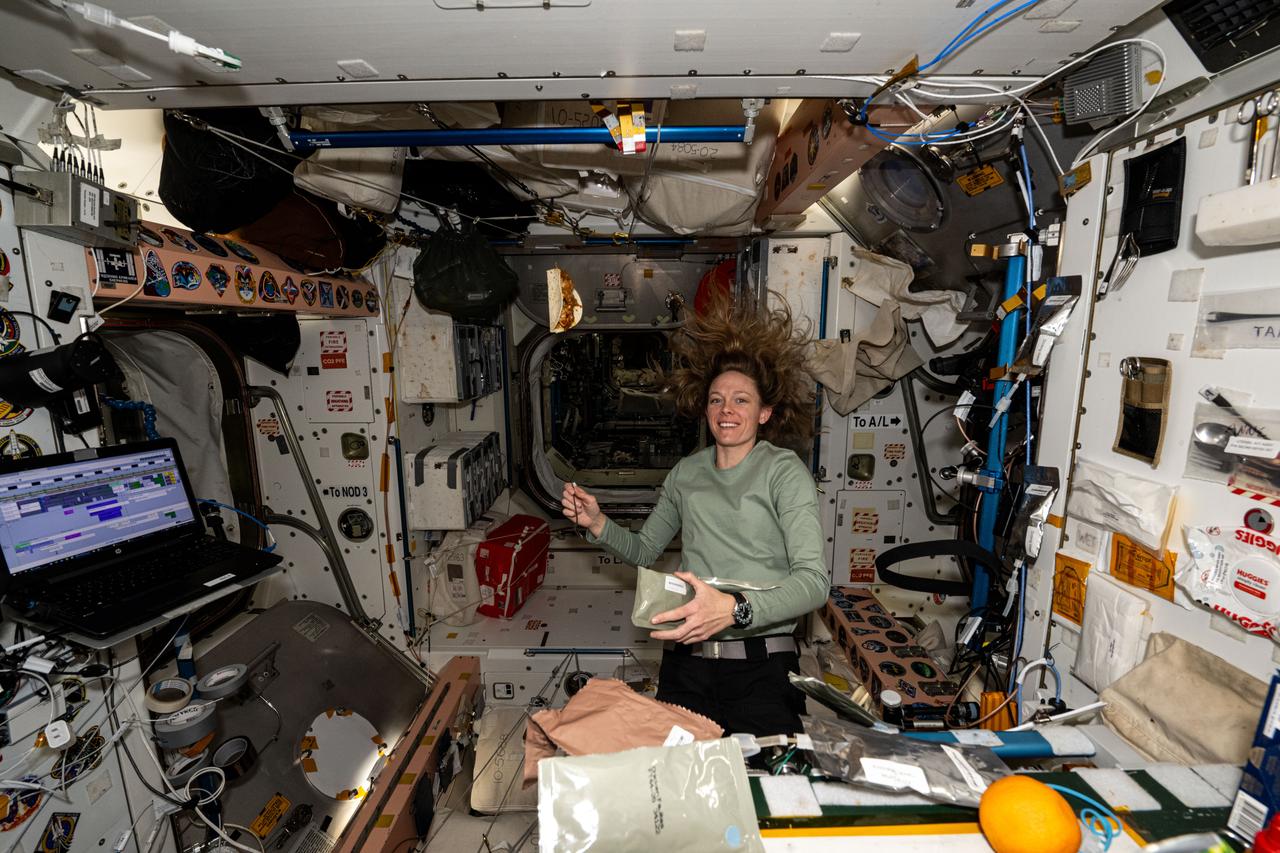
iss073e0000877 (April 21, 2025) --- NASA astronaut and Expedition 73 Flight Engineer Nichole Ayers prepares for a midday meal aboard the Unity module where the International Space Station's galley is located.
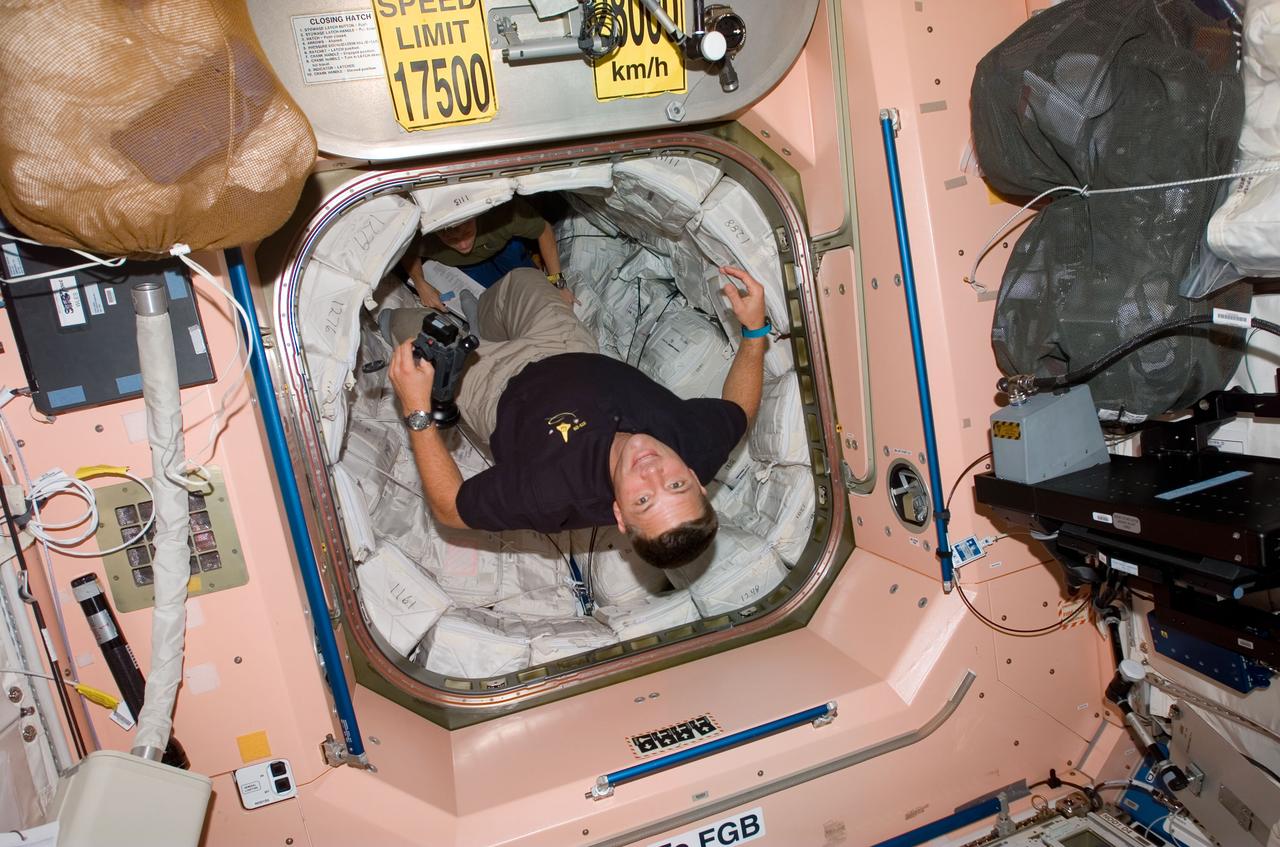
S120-E-006435 (25 Oct. 2007) --- Astronaut Doug Wheelock, STS-120 mission specialist, floats into the Unity node of the International Space Station while Space Shuttle Discovery is docked with the station.
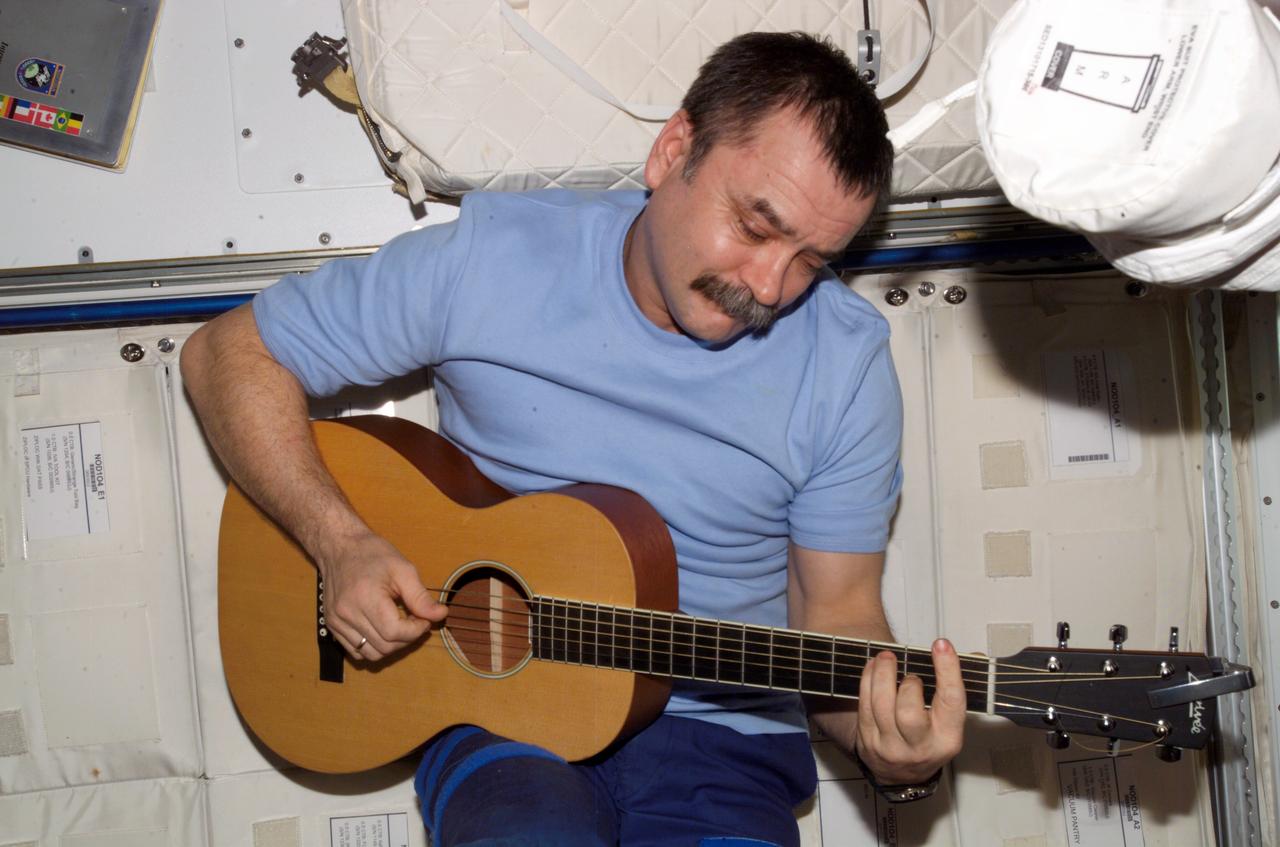
ISS014-E-12466 (19 Jan. 2007) --- Cosmonaut Mikhail Tyurin, Expedition 14 flight engineer representing Russia's Federal Space Agency, plays a guitar in the Unity node of the International Space Station.
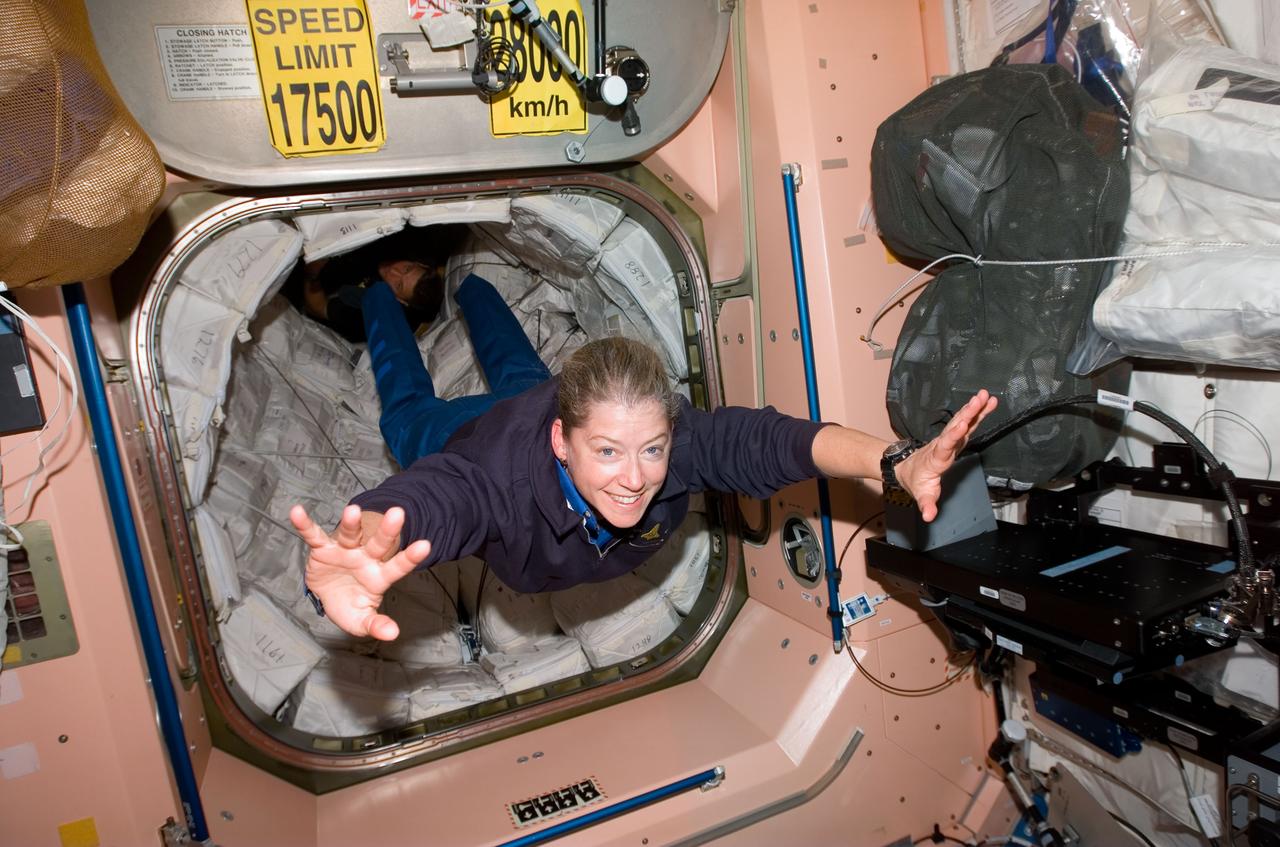
S120-E-006433 (25 Oct. 2007) --- Astronaut Pam Melroy, STS-120 commander, floats into the Unity node of the International Space Station while Space Shuttle Discovery is docked with the station.
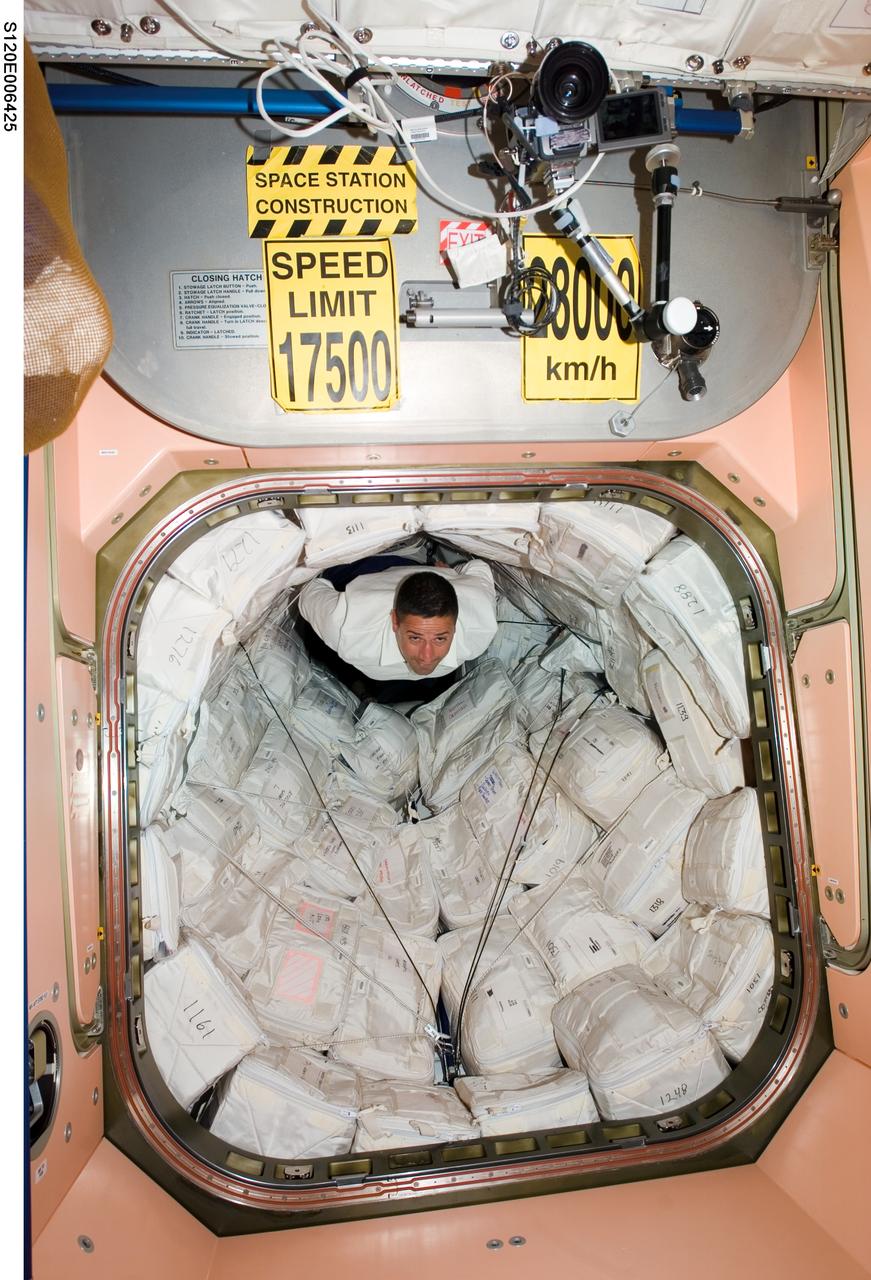
S120-E-006425 (25 Oct. 2007) --- Astronaut George Zamka, STS-120 pilot, floats into the Unity node of the International Space Station while Space Shuttle Discovery is docked with the station.
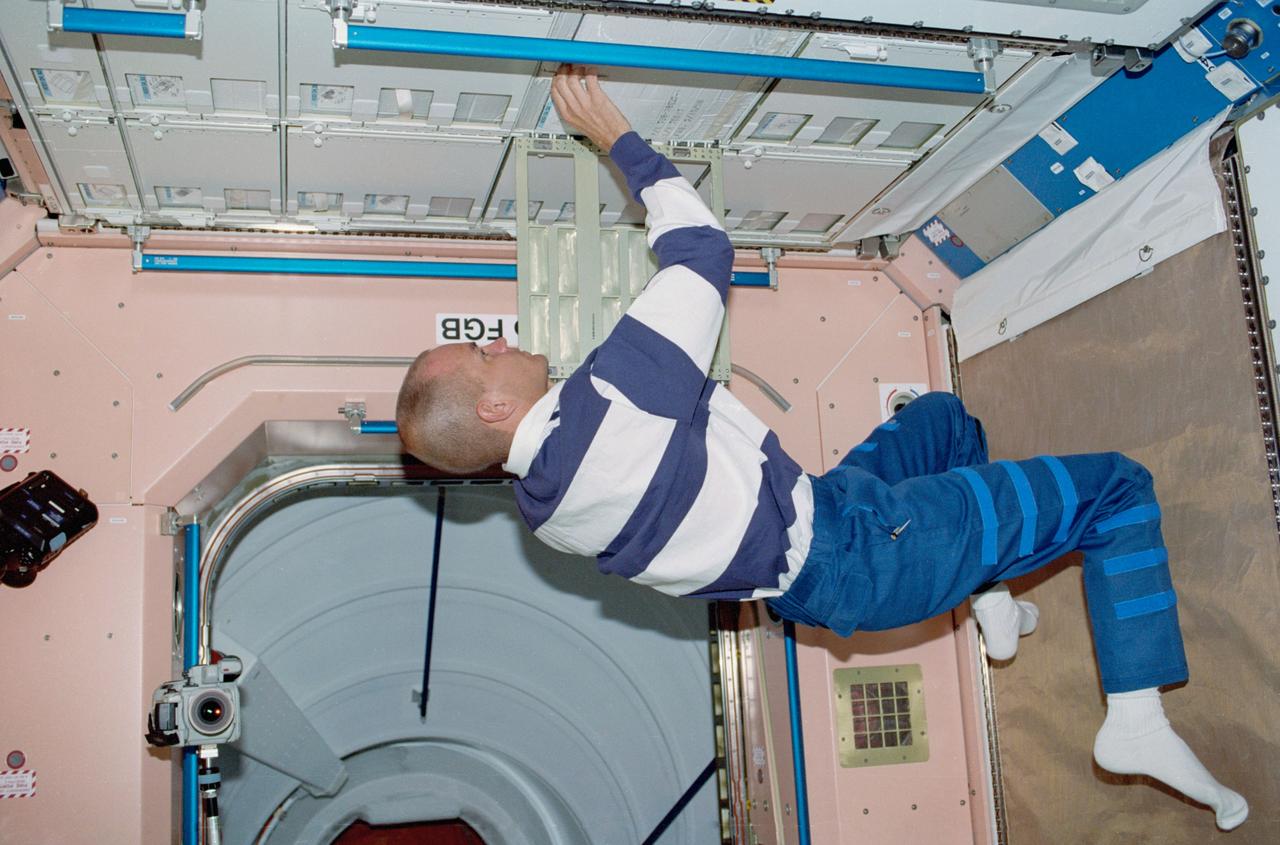
STS088-334-012 (4-15 Dec. 1998) --- Astronaut Frederick W. Sturckow, pilot, works with furnishings on the U.S.-built Unity module as he and five crew mates teamed up to prepare Unity and the connected Russian-built Zarya module for their International Space Station (ISS) roles.
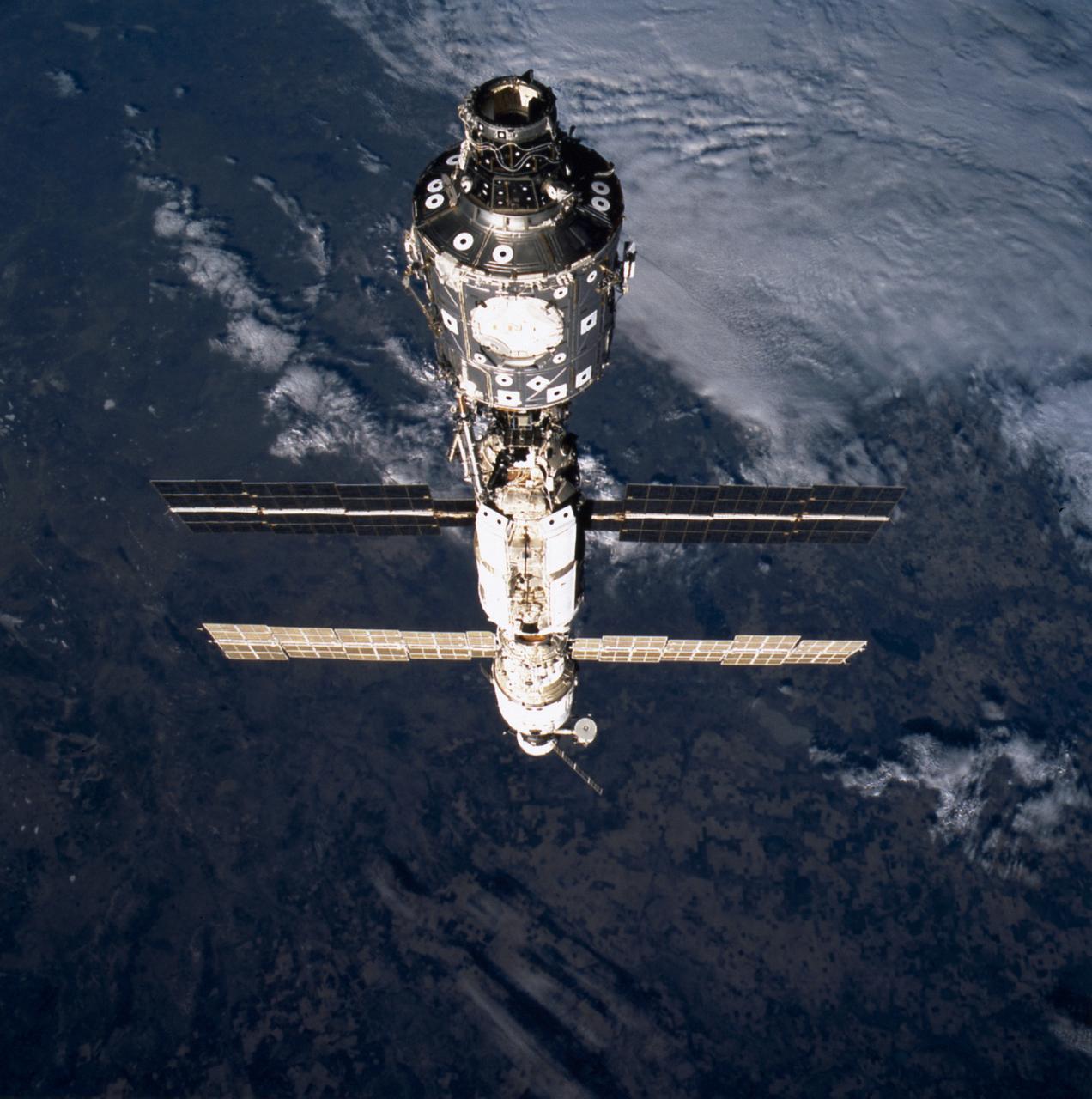
This image of the International Space Station (ISS) was taken during the STS-106 mission. The ISS component nearest the camera is the U.S. built Node 1 or Unity module, which cornected with the Russian built Functional Cargo Block (FGB) or Zarya. The FGB was linked with the Service Module or Zvezda. On the far end is the Russian Progress supply ship.
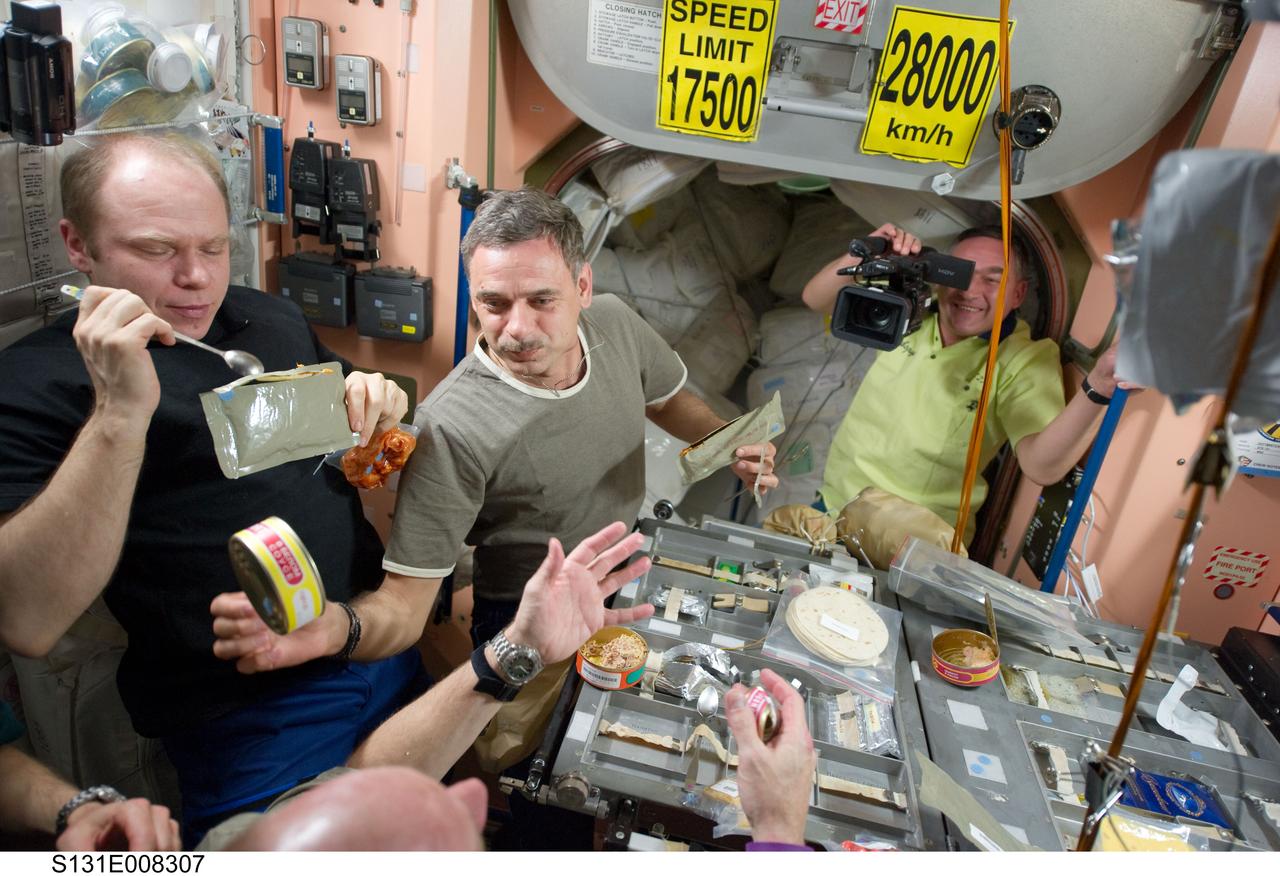
S131-E-008307 (9 April 2010) --- Three Expedition 23 crew members share a meal at the galley in the Unity node of the International Space Station. Pictured from the left are Russian cosmonauts Oleg Kotov, commander; Mikhail Kornienko and Alexander Skvortsov, both flight engineers. Skvortsov had interrupted his meal to document the station crew members and the visiting Discovery astronauts (out of frame) during the meal. Thirteen cosmonauts and astronauts will continue their joint activities over the next several days aboard the orbital complex.
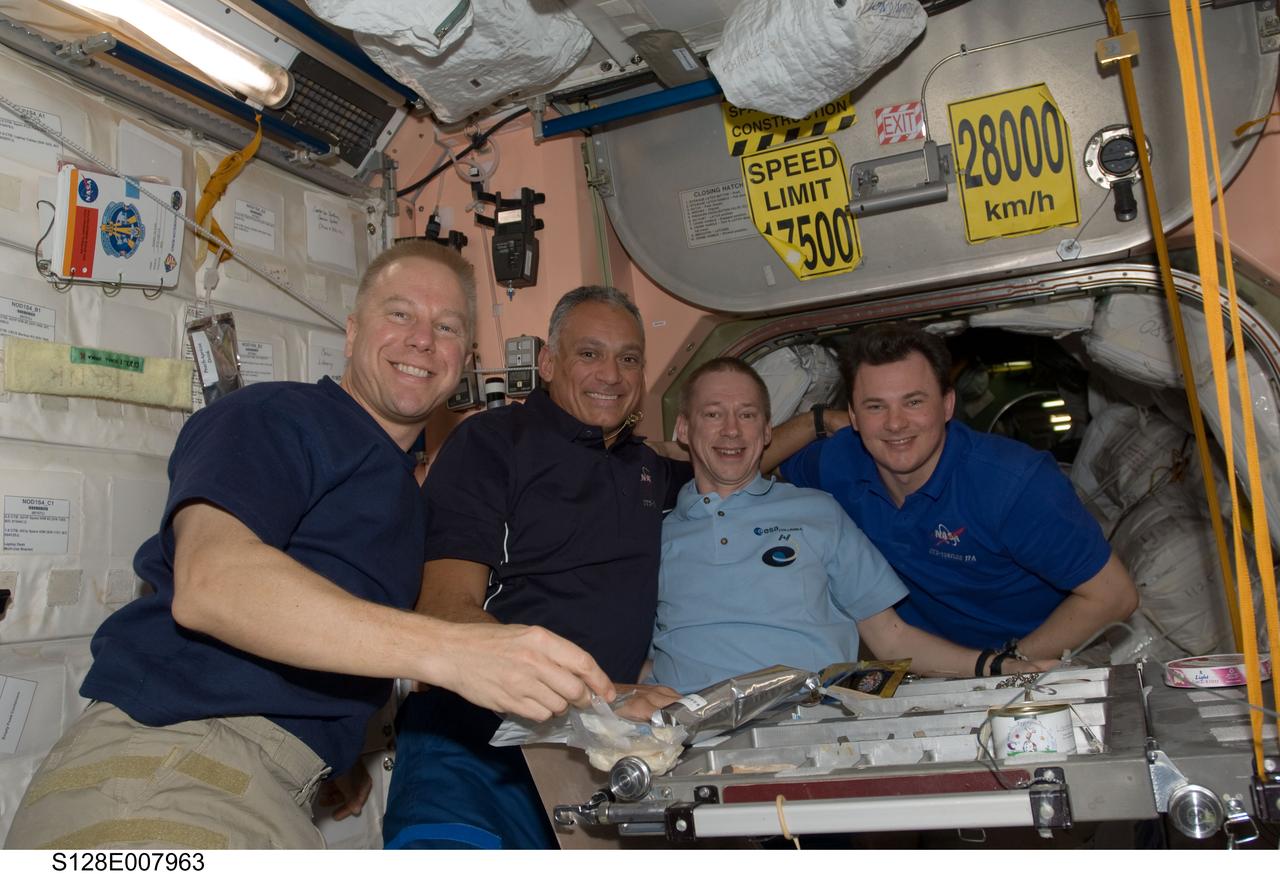
S128-E-007963 (7 Sept. 2009) --- NASA astronauts Tim Kopra (left) and John “Danny” Olivas, both STS-128 mission specialists; along with European Space Agency astronaut Frank De Winne and Russian cosmonaut Roman Romanenko, both Expedition 20 flight engineers, pose for a photo in the Unity node of the International Space Station while Space Shuttle Discovery remains docked with the station.
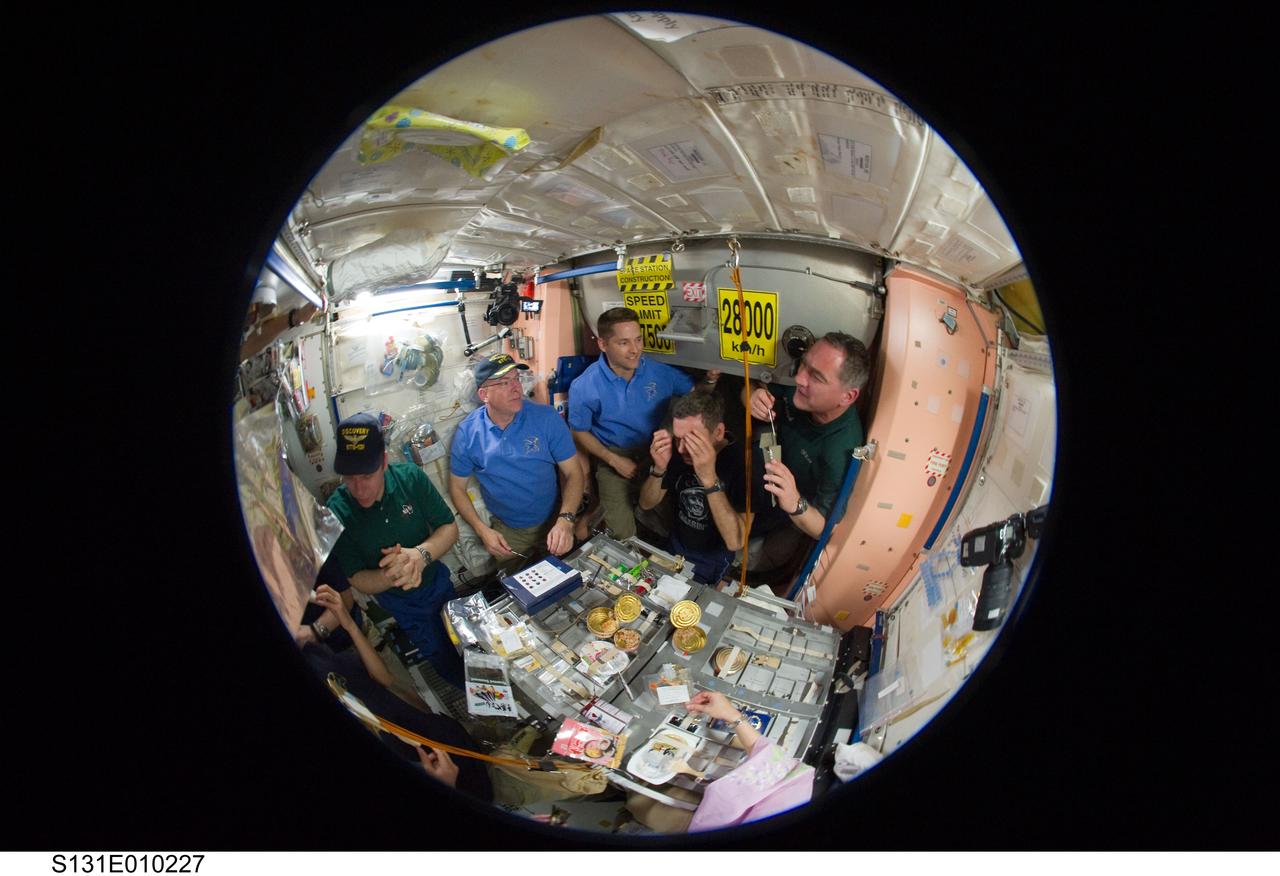
S131-E-010227 (14 April 2010) --- A fish-eye lens attached to an electronic still camera was used to capture this image of STS-131 and Expedition 23 crew members as they share a meal in the Unity node of the International Space Station while space shuttle Discovery remains docked with the station. Pictured are NASA astronauts Alan Poindexter, James P. Dutton Jr.; and Russian cosmonauts Oleg Kotov, Mikhail Kornienko and Alexander Skvortsov.
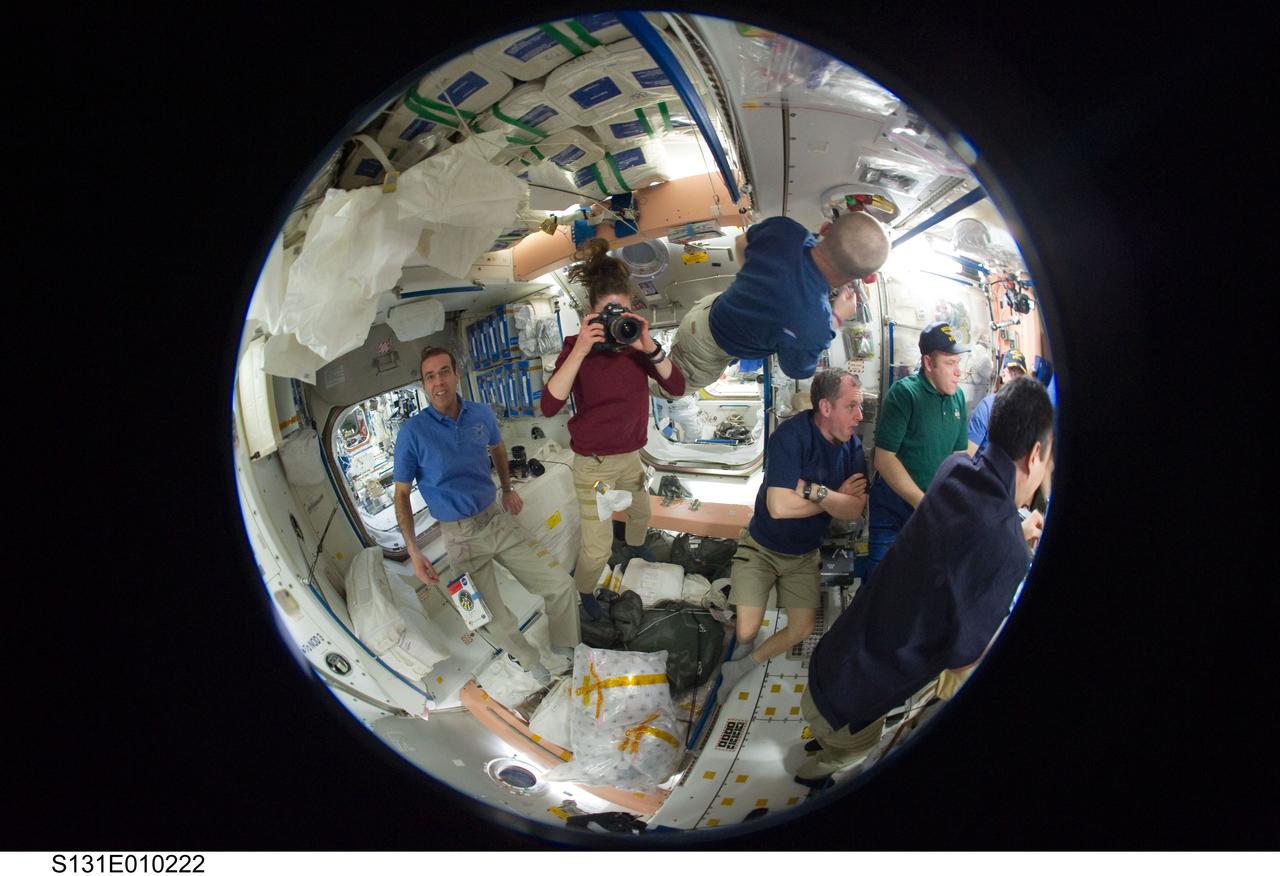
S131-E-010222 (14 April 2010) --- A fish-eye lens attached to an electronic still camera was used to capture this image of STS-131 and Expedition 23 crew members in the Unity node of the International Space Station while space shuttle Discovery remains docked with the station. Pictured are NASA astronauts Rick Mastracchio, Tracy Caldwell Dyson, Clayton Anderson and T.J. Creamer; along with Russian cosmonaut Oleg Kotov and Japan Aerospace Exploration Agency (JAXA) astronaut Soichi Noguchi.
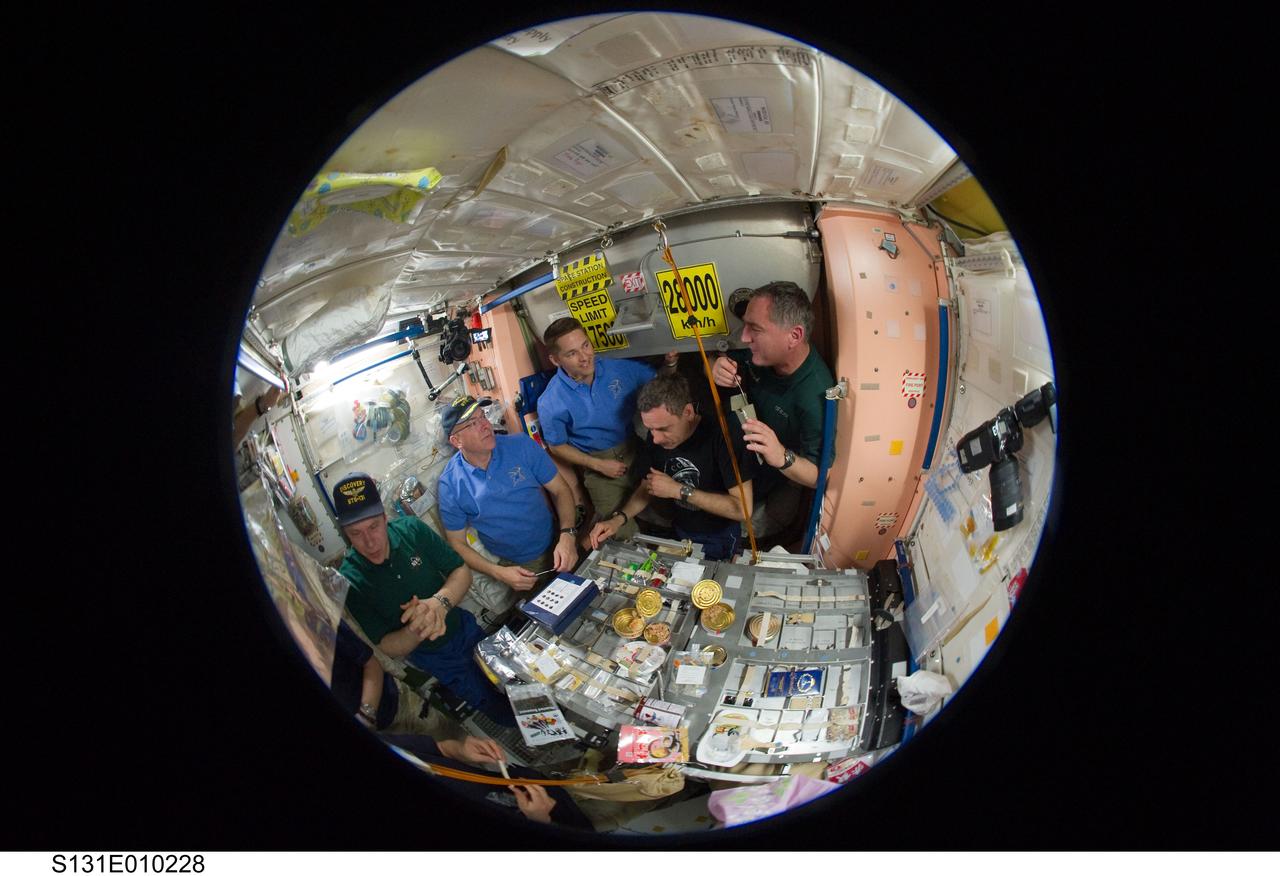
S131-E-010228 (14 April 2010) --- A fish-eye lens attached to an electronic still camera was used to capture this image of STS-131 and Expedition 23 crew members as they share a meal in the Unity node of the International Space Station while space shuttle Discovery remains docked with the station. Pictured are NASA astronauts Alan Poindexter, James P. Dutton Jr.; and Russian cosmonauts Oleg Kotov, Mikhail Kornienko and Alexander Skvortsov.
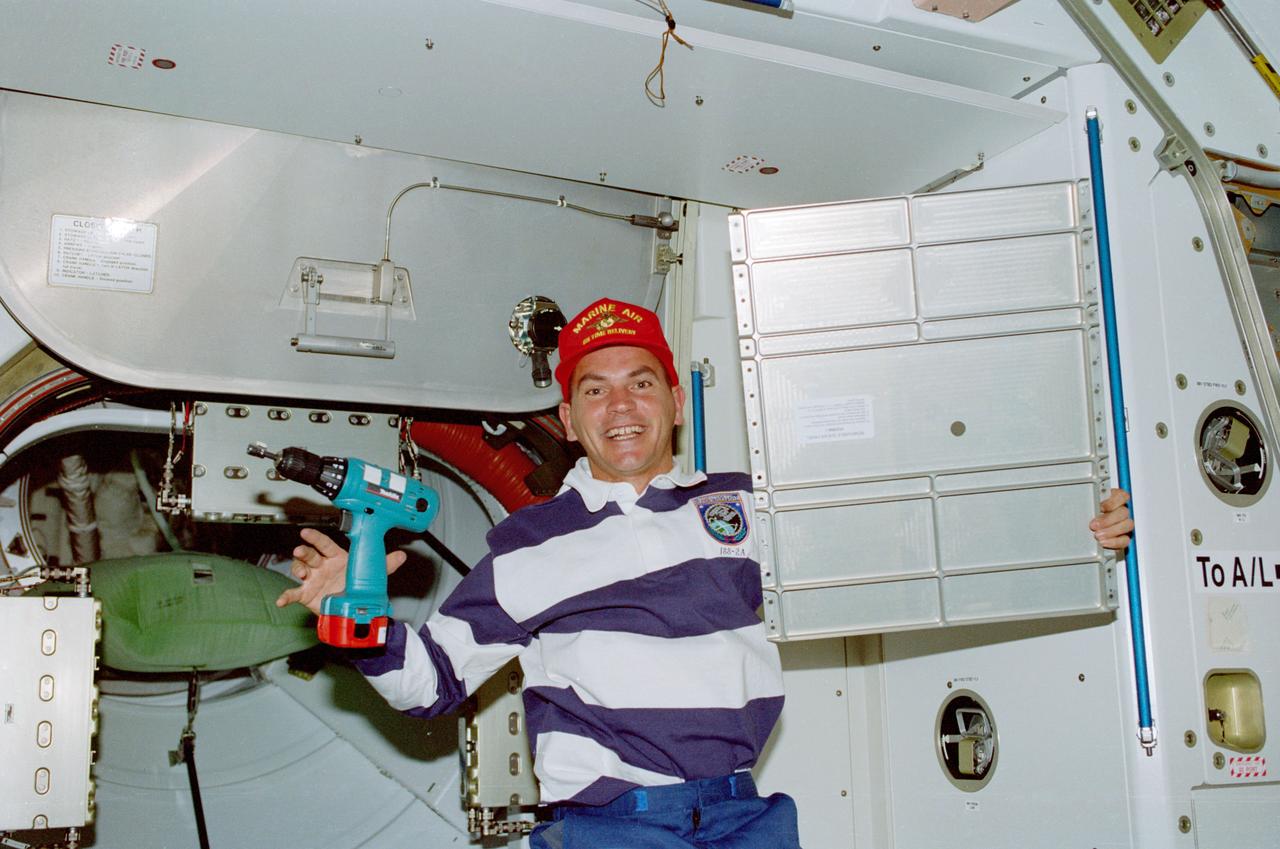
STS088-359-003 (4-15 Dec. 1998) --- Astronaut Frederick W. ?Rick? Sturckow, pilot, holds up a panel while putting final touches on the interior of Node 1 or Unity. Sturckow, who had been working with a battery-powered tool, was joined by other crew members in preparing the module for its International Space Station (ISS) duty.
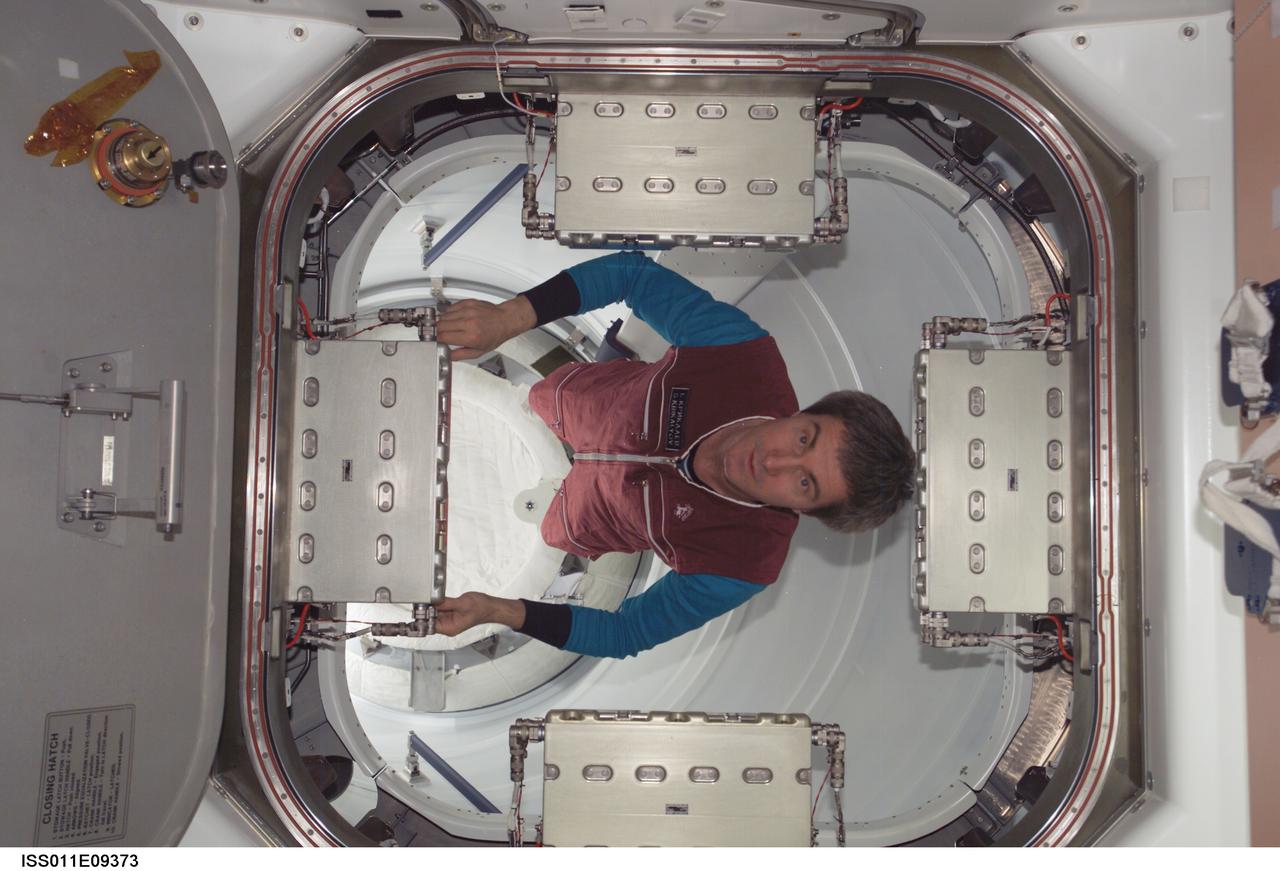
ISS011-E-09373 (21 June 2005) --- Cosmonaut Sergei K. Krikalev, Expedition 11 commander representing Russia's Federal Space Agency, prepares to uninstall two of the four Control Panel Assemblies (CPA) from the Unity node’s Common Berthing Assembly (CBA) on the International Space Station (ISS).
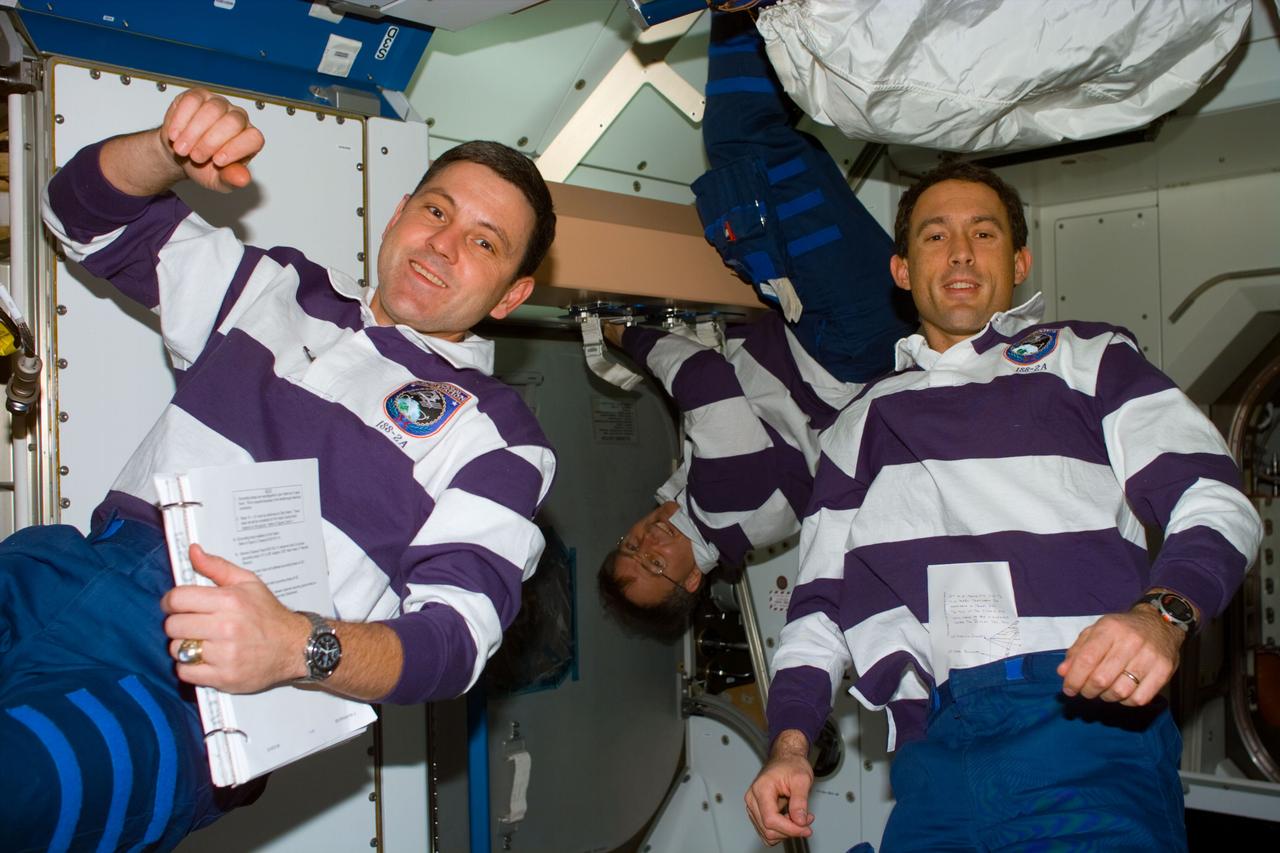
S88-E-5124 (12-11-98) --- From the left, astronauts Robert D. Cabana, Jerry L. Ross and James H. Newman are pictured during work to ready the Unity connecting module for its ISS role. The photo was taken with an electronic still camera (ESC) at 00:23:27 GMT, Dec. 11.
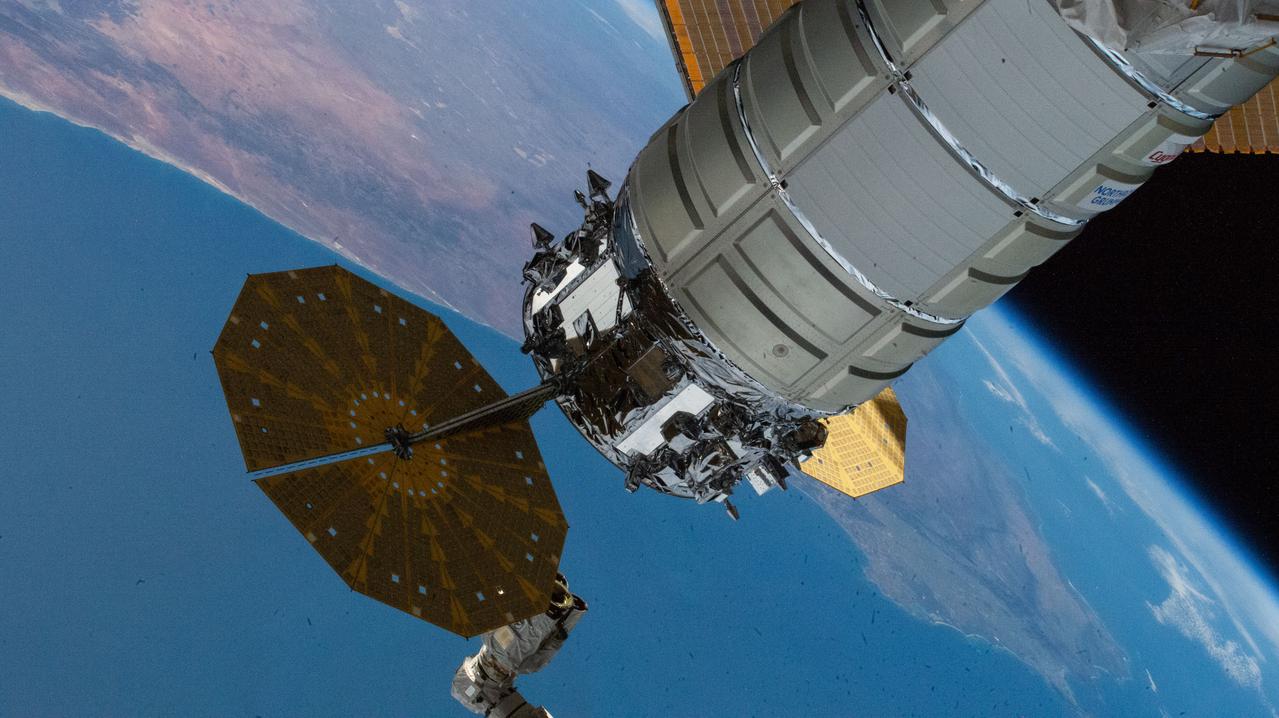
iss073e0768303 (Sept. 25, 2025) --- Northrop Grumman's Cygnus XL cargo craft is pictured installed to the Unity module's Earth-facing port as the International Space Station orbited 262 miles above the Atlantic Ocean off the coast of South Africa.
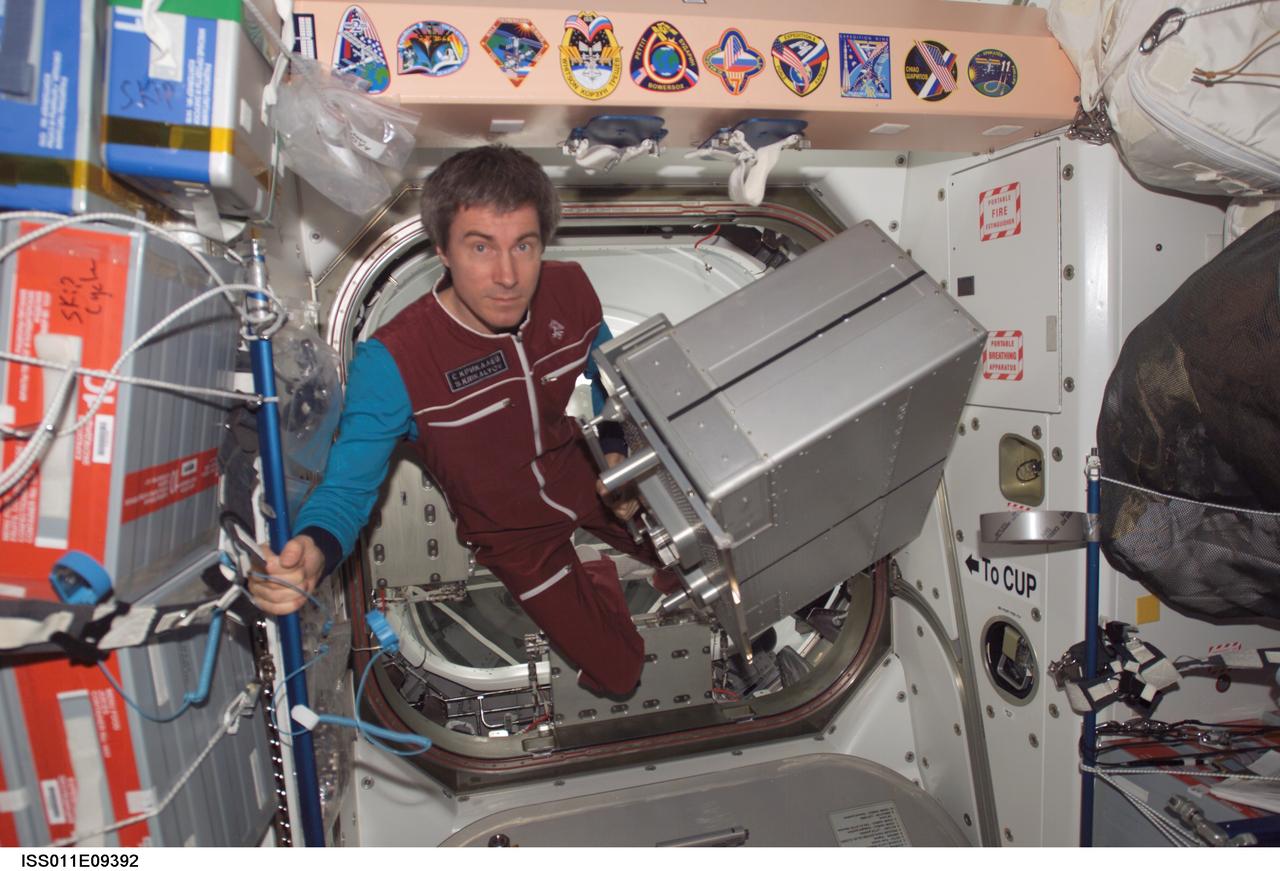
ISS011-E-09392 (21 June 2005) --- Cosmonaut Sergei K. Krikalev, Expedition 11 commander representing Russia's Federal Space Agency, moves one of the two Control Panel Assemblies (CPA) from the Unity node’s Common Berthing Assembly (CBA) on the International Space Station (ISS).

ISS007-E-18035 (26 October 2003) --- Cosmonaut Alexander Y. Kaleri (left), Expedition 8 flight engineer, and astronaut Edward T. Lu, Expedition 7 NASA ISS science officer and flight engineer, hold tools in the Unity node on the International Space Station (ISS). Kaleri represents Rosaviakosmos.

ISS011-E-09363 (21 June 2005) --- Cosmonaut Sergei K. Krikalev, Expedition 11 commander representing Russia's Federal Space Agency, adds the Expedition 11 patch to the Unity node’s growing collection of insignias representing crews who have worked on the international space station.

ISS002-E-5508 (7 April 2001) --- Cosmonaut Yury V. Usachev, Expedition Two commander, wears a harness while conducting resistance exercises in the Unity Node 1 on the International Space Station (ISS). The image was recorded with a digital still camera.
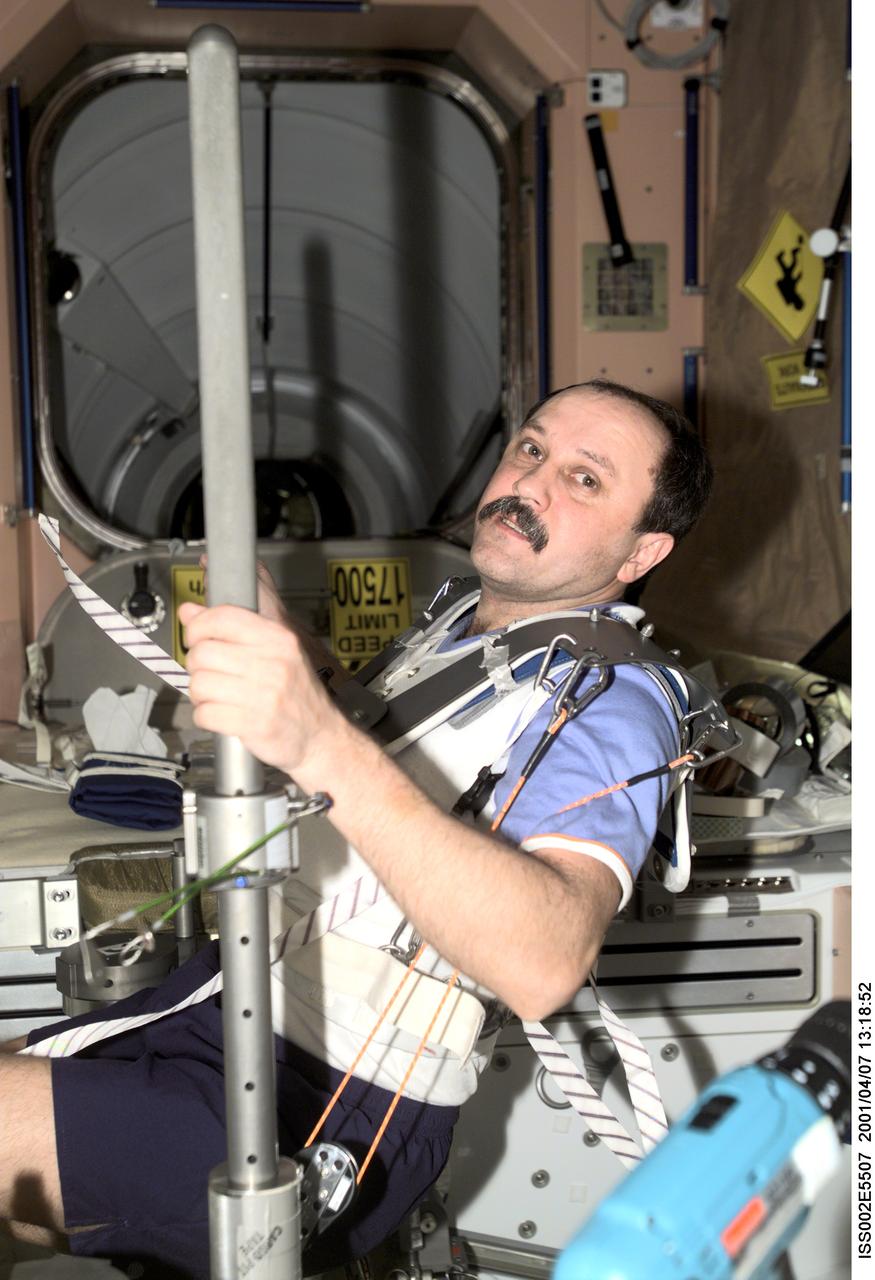
ISS002-E-5507 (07 April 2001) --- Cosmonaut Yury V. Usachev, Expedition Two mission commander, wears a harness while conducting resistance exercises in the Node 1 / Unity module of the International Space Station (ISS). This image was recorded with a digital still camera.
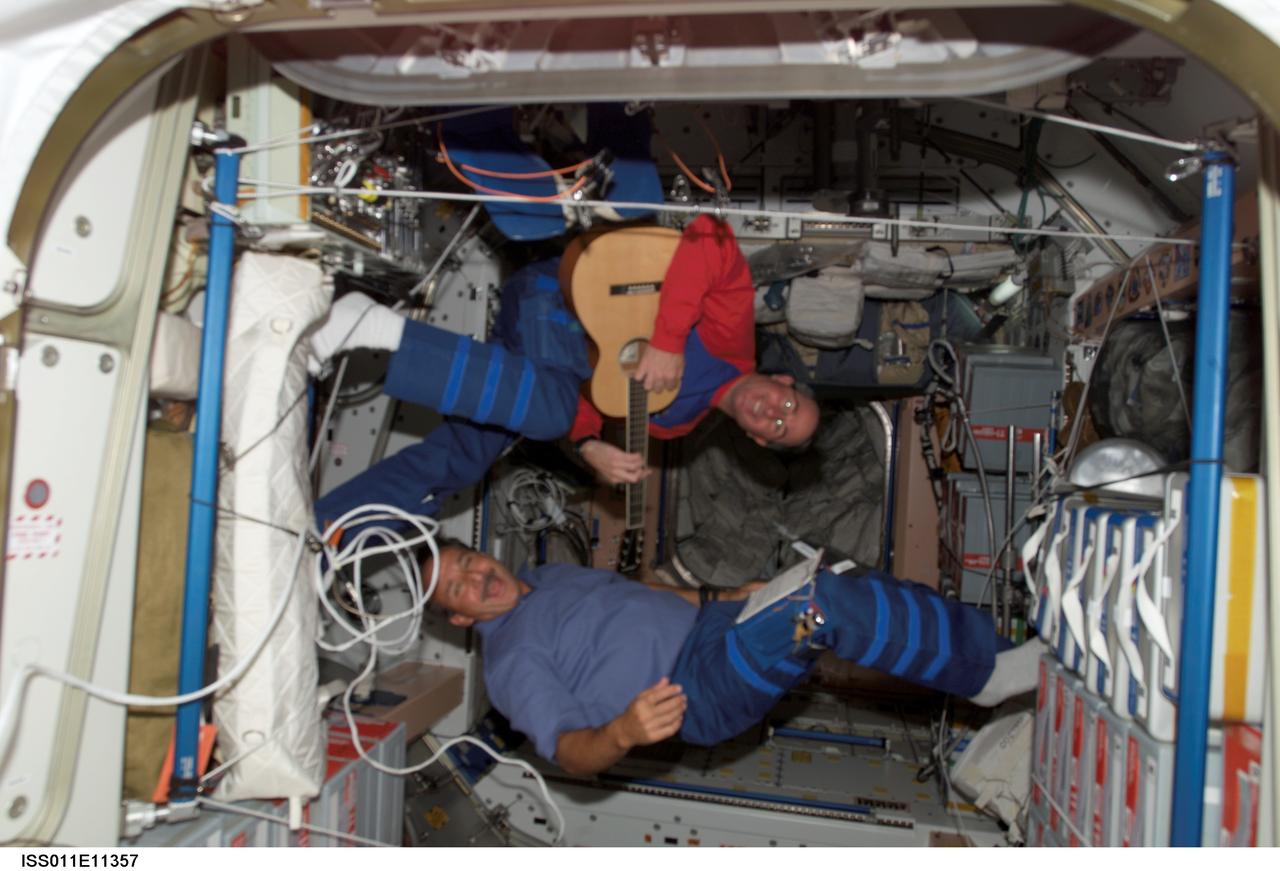
ISS011-E-11357 (30 July 2005) --- Astronauts Stephen K. Robinson and Charles J. Camarda, STS-114 mission specialists, share a light moment while Robinson plays a guitar in the Unity node of the International Space Station.
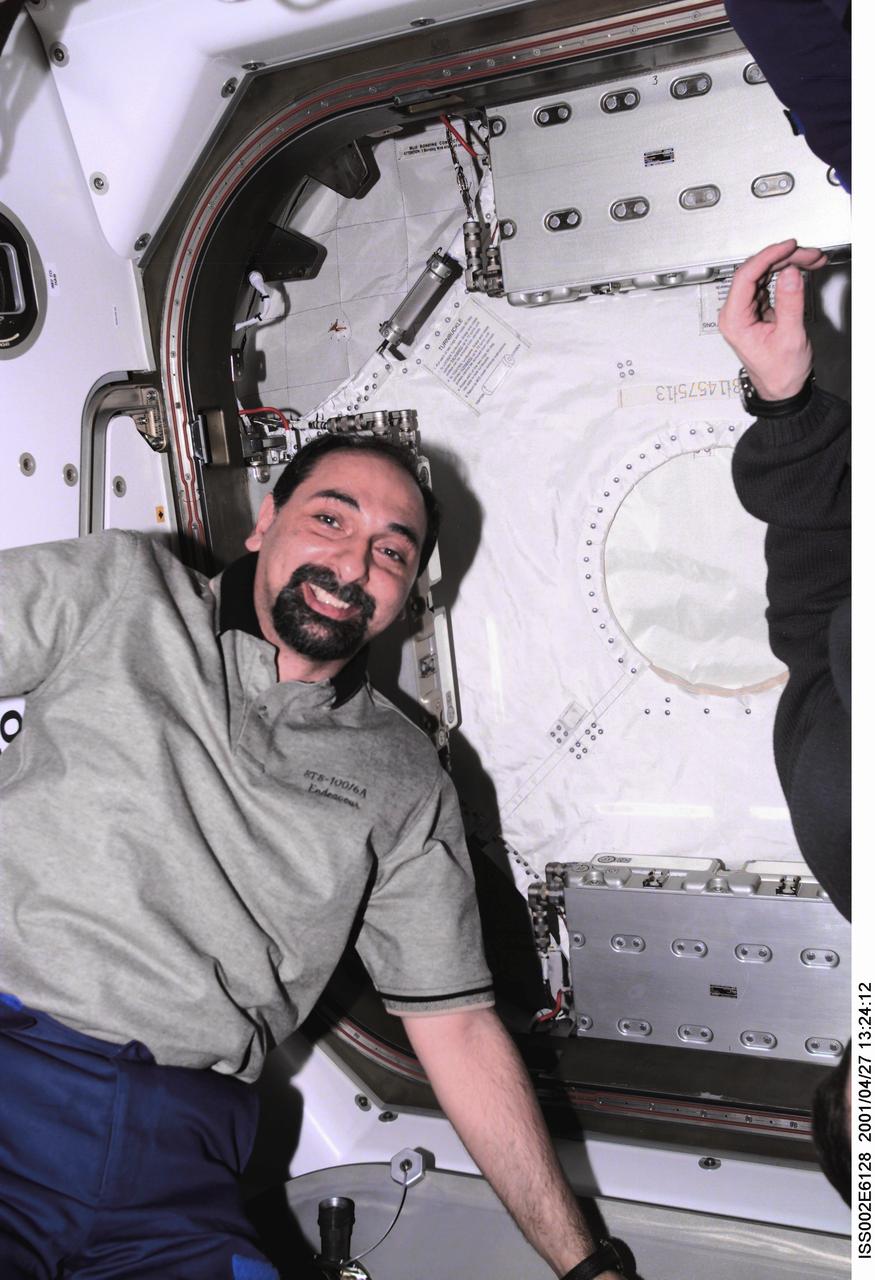
ISS002-E-6128 (27 April 2001) --- Umberto Guidoni of the European Space Agency (ESA), STS-100 mission specialist, poses for a photograph in Unity Node 1 as the hatch to the Multipurpose Logistics Module (MPLM) Raphaello is being closed near the end of the STS-100 mission. The image was taken with a digital still camera.
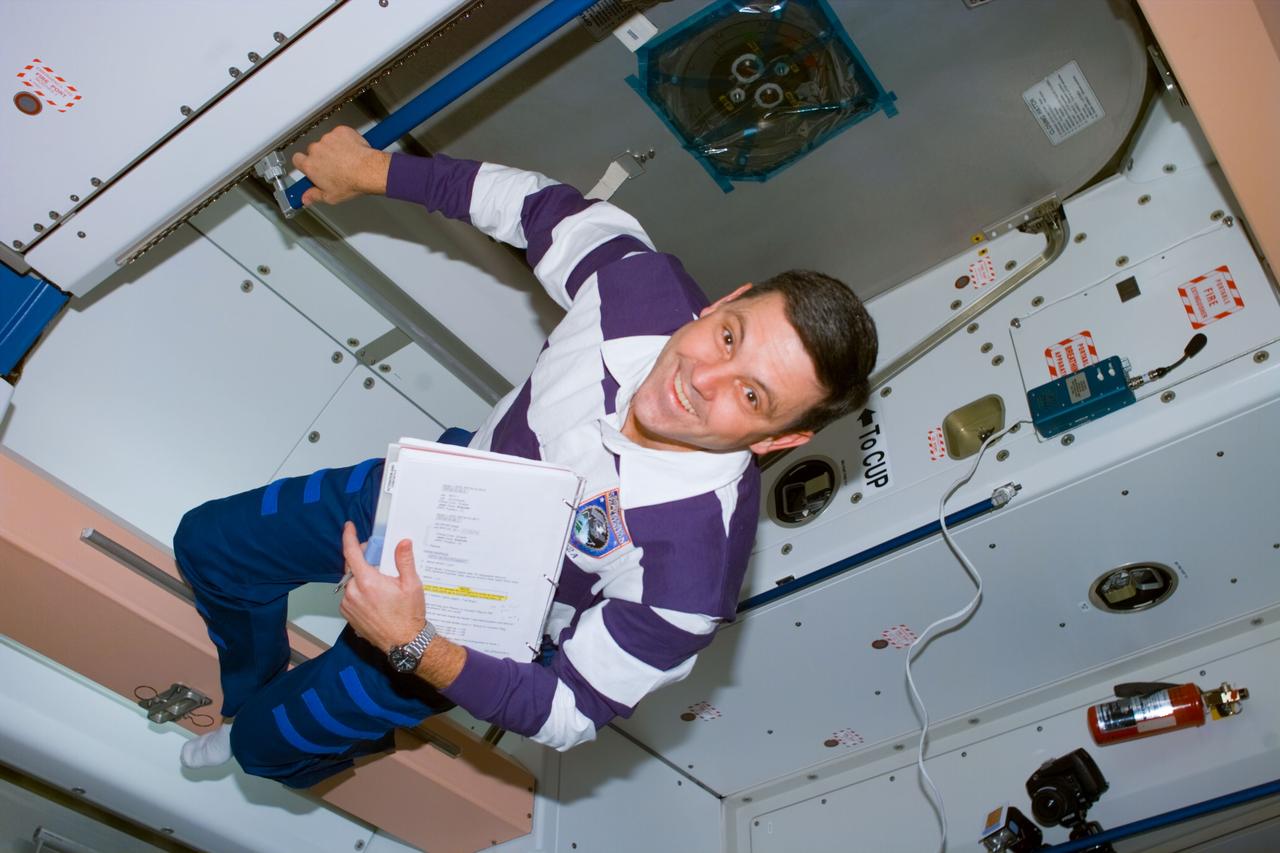
S88-E-5111 (12-10-98) --- Astronaut Robert D. Cabana, mission commander, totes a notebook while checking on the progress of readiness tasks onboard the Unity connecting module. The photo was taken with an electronic still camera (ESC) at 20:25:57 GMT, Dec. 10.
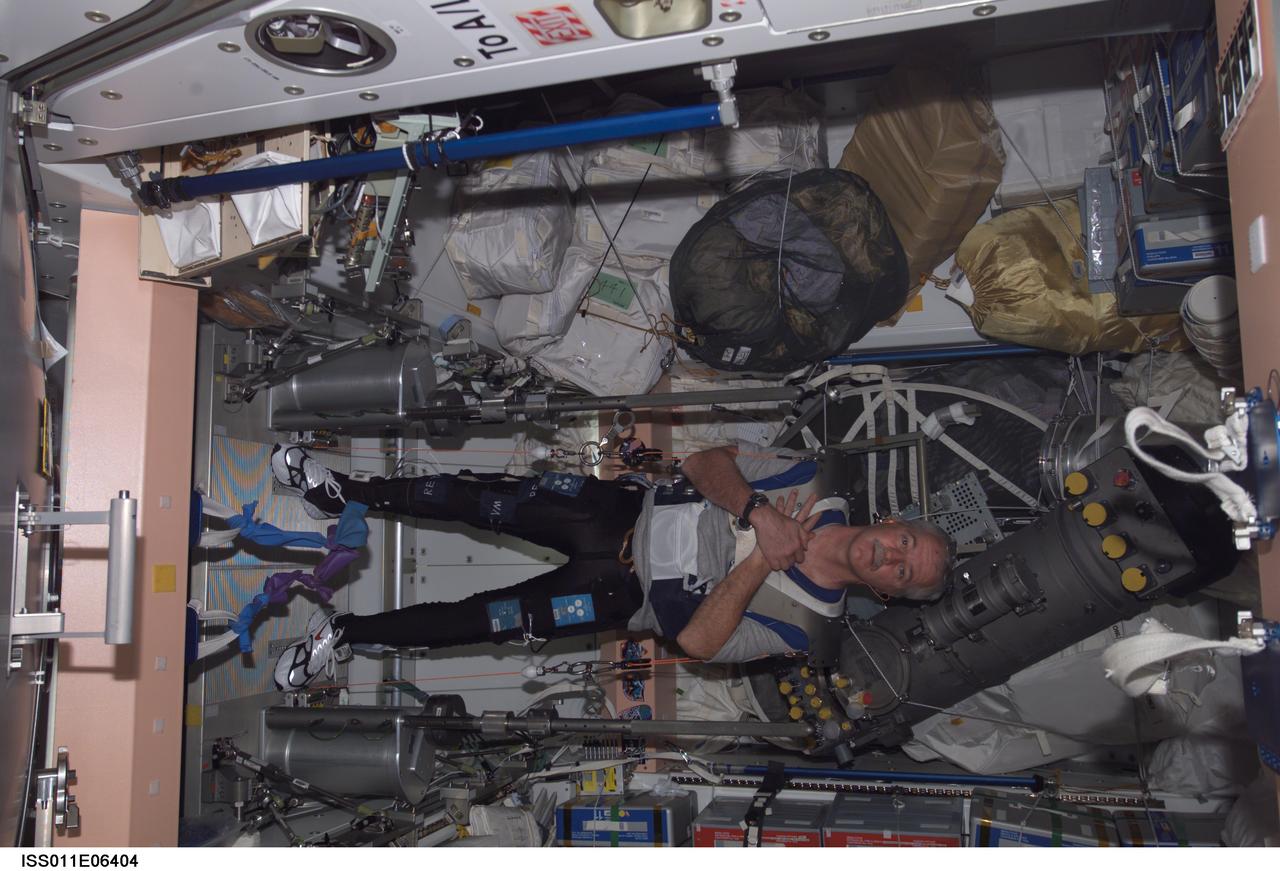
ISS011-E-06404 (18 May 2005) --- Astronaut John L. Phillips, Expedition 11 NASA space station science officer and flight engineer, wearing squat harness pads, exercises using the Interim Resistive Exercise Device (IRED) equipment in the Unity node of the International Space Station.
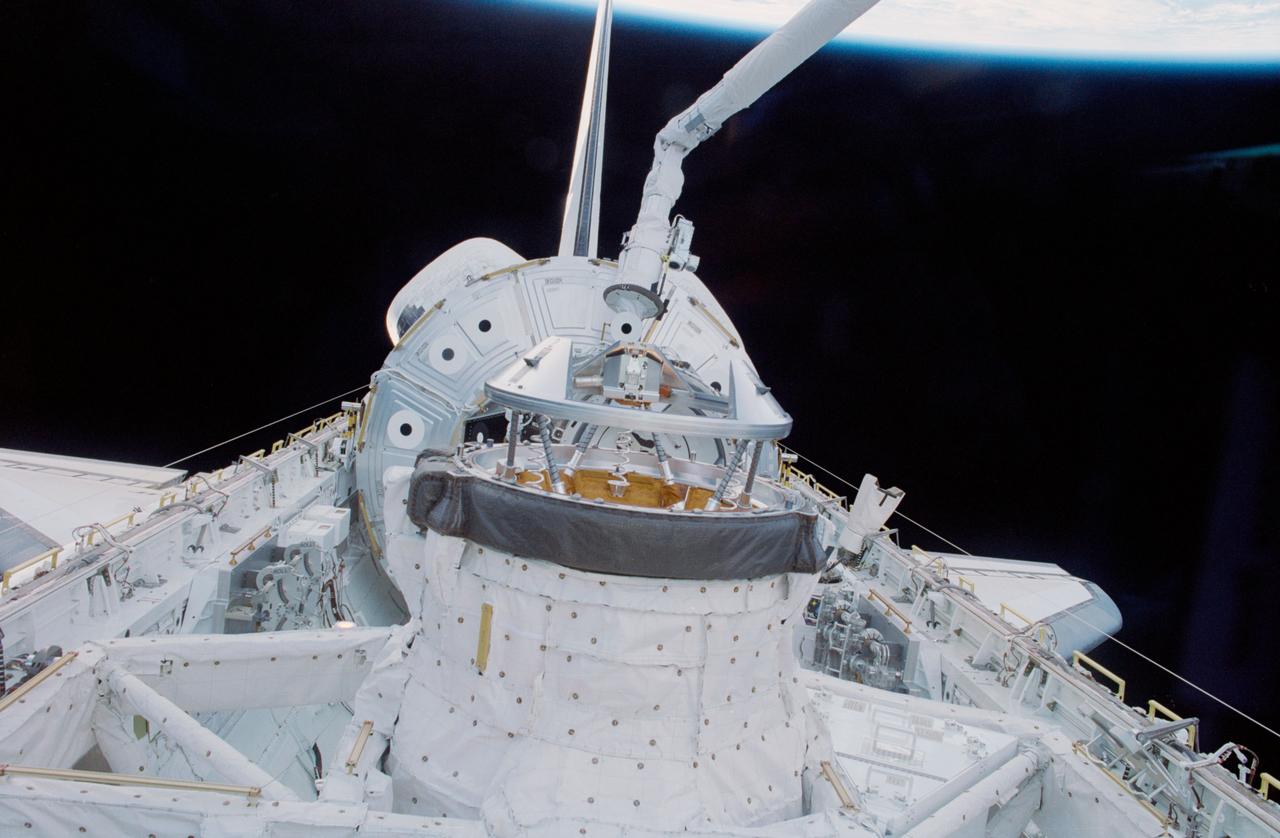
STS088-361-021 (4-15 Dec. 1998) --- The Canadian-built Remote Manipulator System (RMS) arm is about to grapple the Node 1 or Unity Module for mating to the Space Shuttle Endeavour. The move marked the first of many steps that allowed the United States-built Unity Module to be docked with the Russian-built FGB or Zarya Module later in the mission.
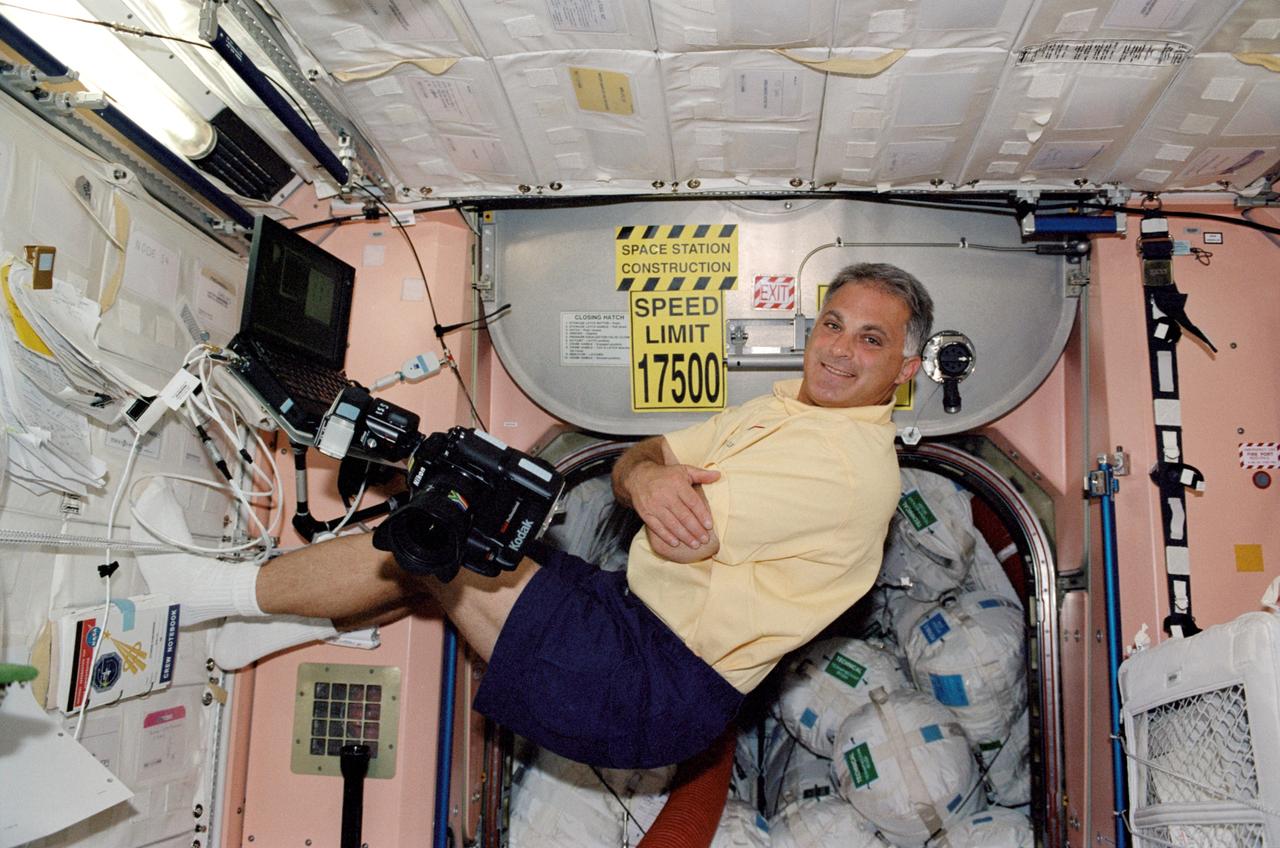
STS112-314-010 (7-18 October 2002) --- Astronaut David A. Wolf, STS-112 mission specialist, floats in the Unity node on the International Space Station (ISS).
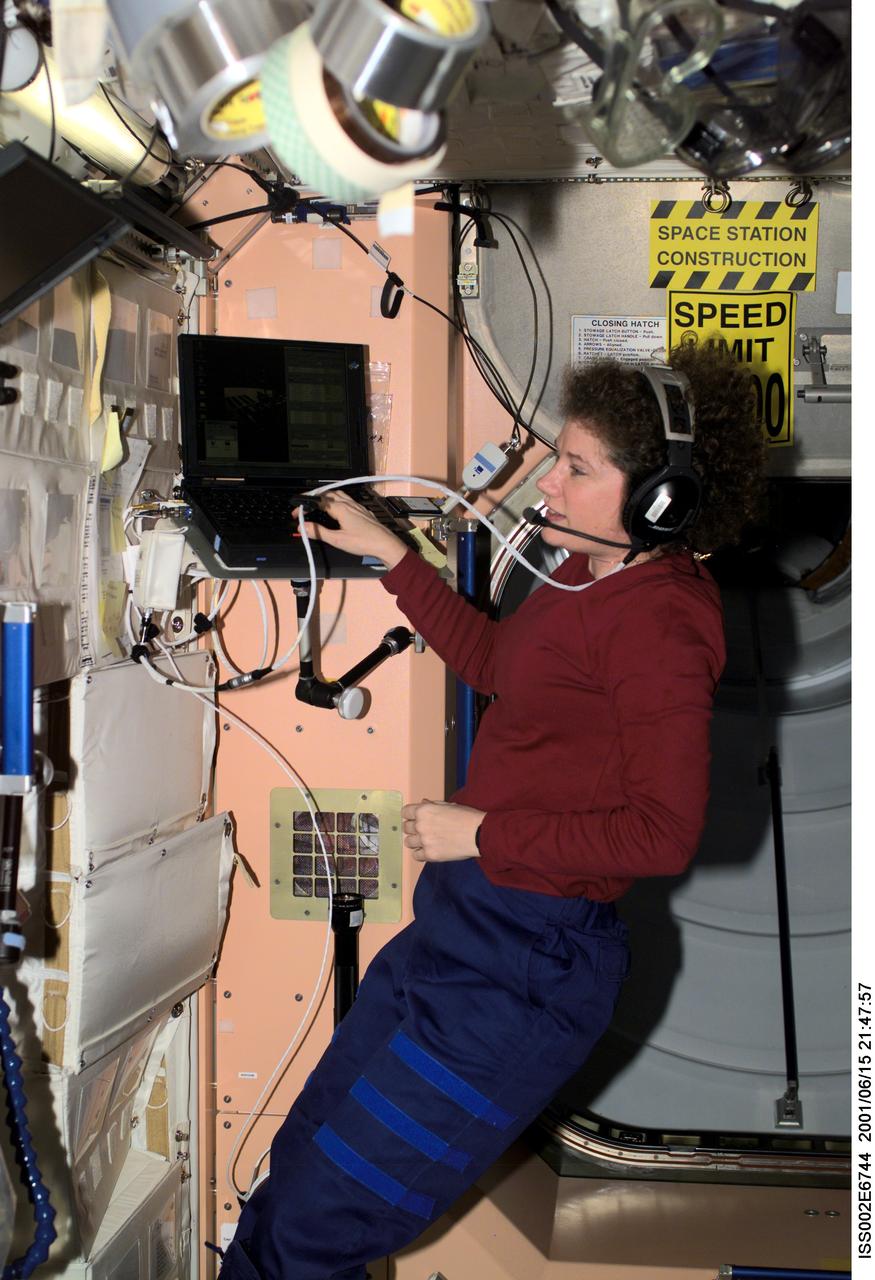
ISS002-E-6744 (15 June 2001) --- Susan J. Helms, Expedition Two flight engineer, talks with mission control while working on a laptop computer in Unity Node 1.
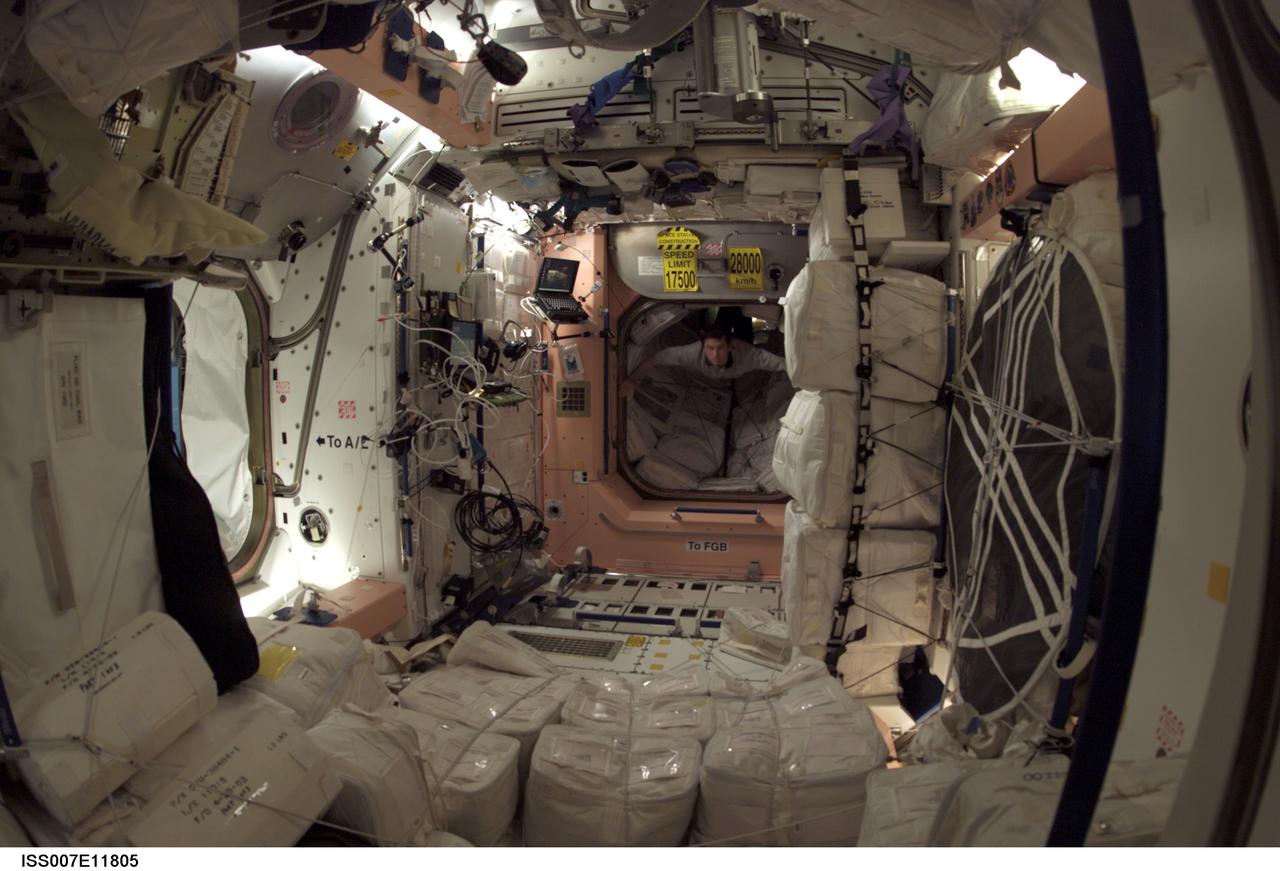
ISS007-E-11805 (3 August 2003) --- Cosmonaut Yuri I. Malenchenko, Expedition 7 mission commander representing Rosaviakosmos, floats into the Unity node on the International Space Station (ISS).
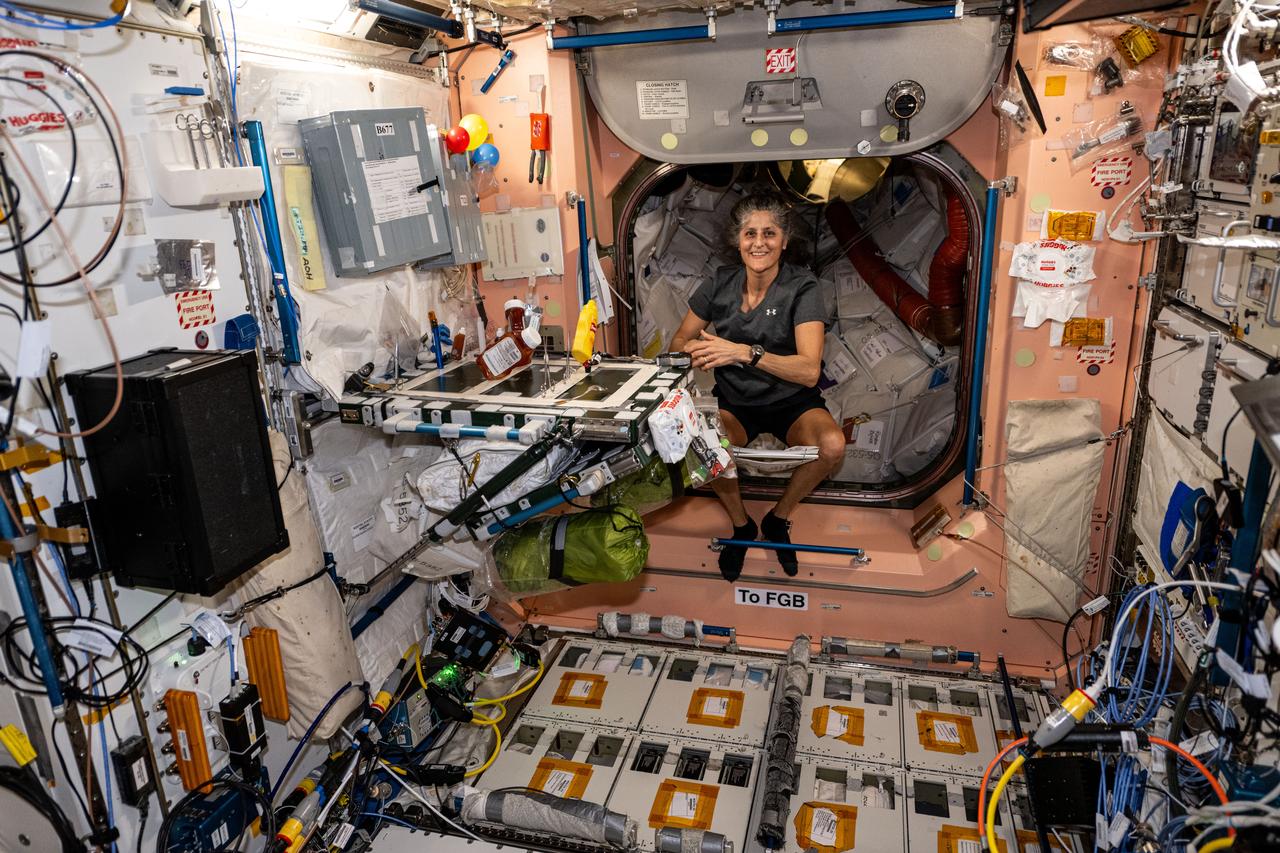
iss072e099560 (Oct. 25, 2024) --- NASA astronaut and Expedition 72 Commander Suni Williams is pictured at the galley inside the International Space Station's Unity module at the beginning of her day.
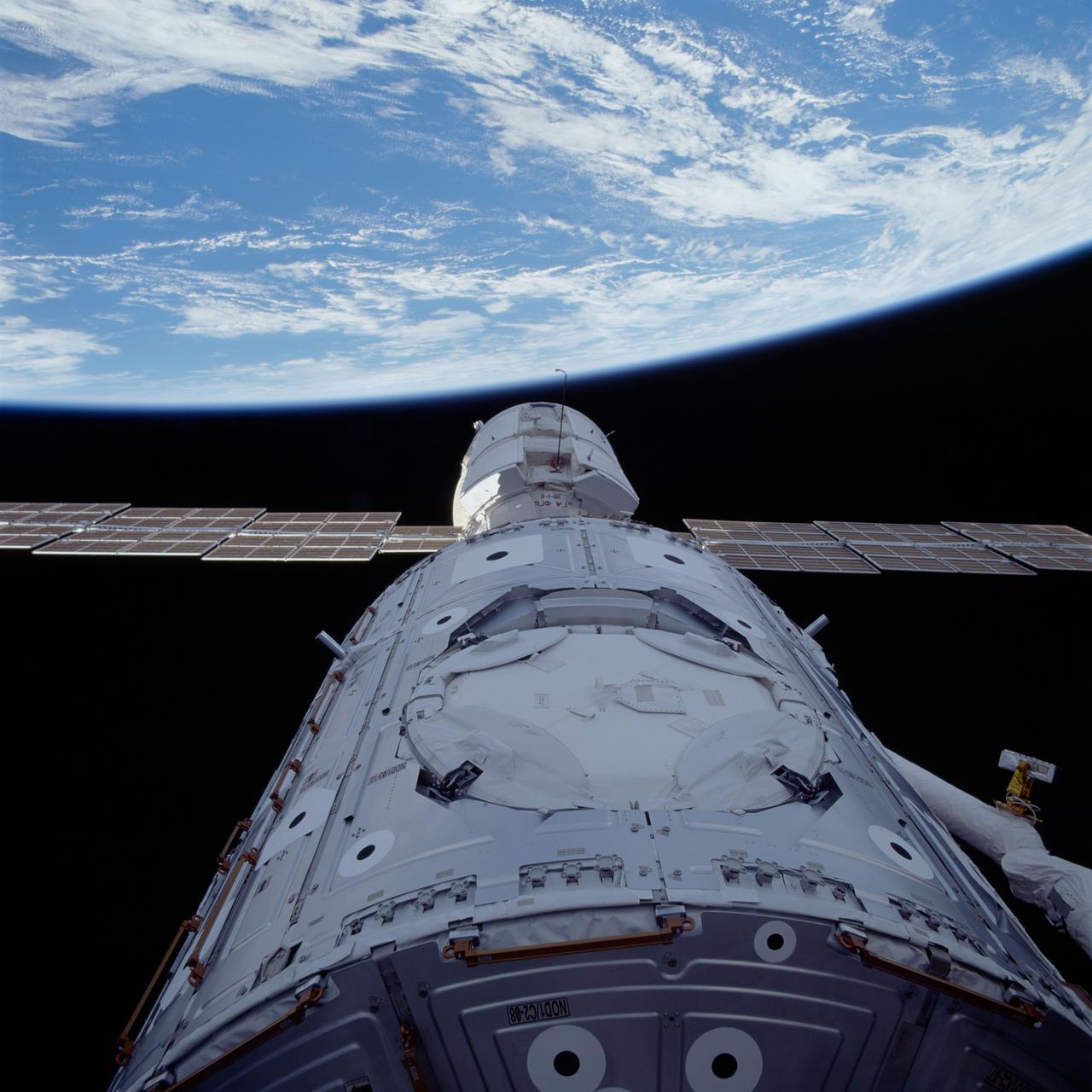
STS088-719-071 (6 Dec. 1998) --- Just a few feet away from a 70mm camera onboard the Space Shuttle Endeavour, the Russian-built control module and the U.S.-built Unity connecting module are mated in the shuttle's cargo bay. Using Endeavour's 50-ft. long Canadian-built Remote Manipulator System (RMS) robot arm, astronaut Nancy J. Currie working from the aft flight deck, plucked Zarya out of orbit at 5:47 p.m. (CST), December 6. The craft had been orbiting Earth for a little over 16 days prior to grapple and subsequent docking to Unity.
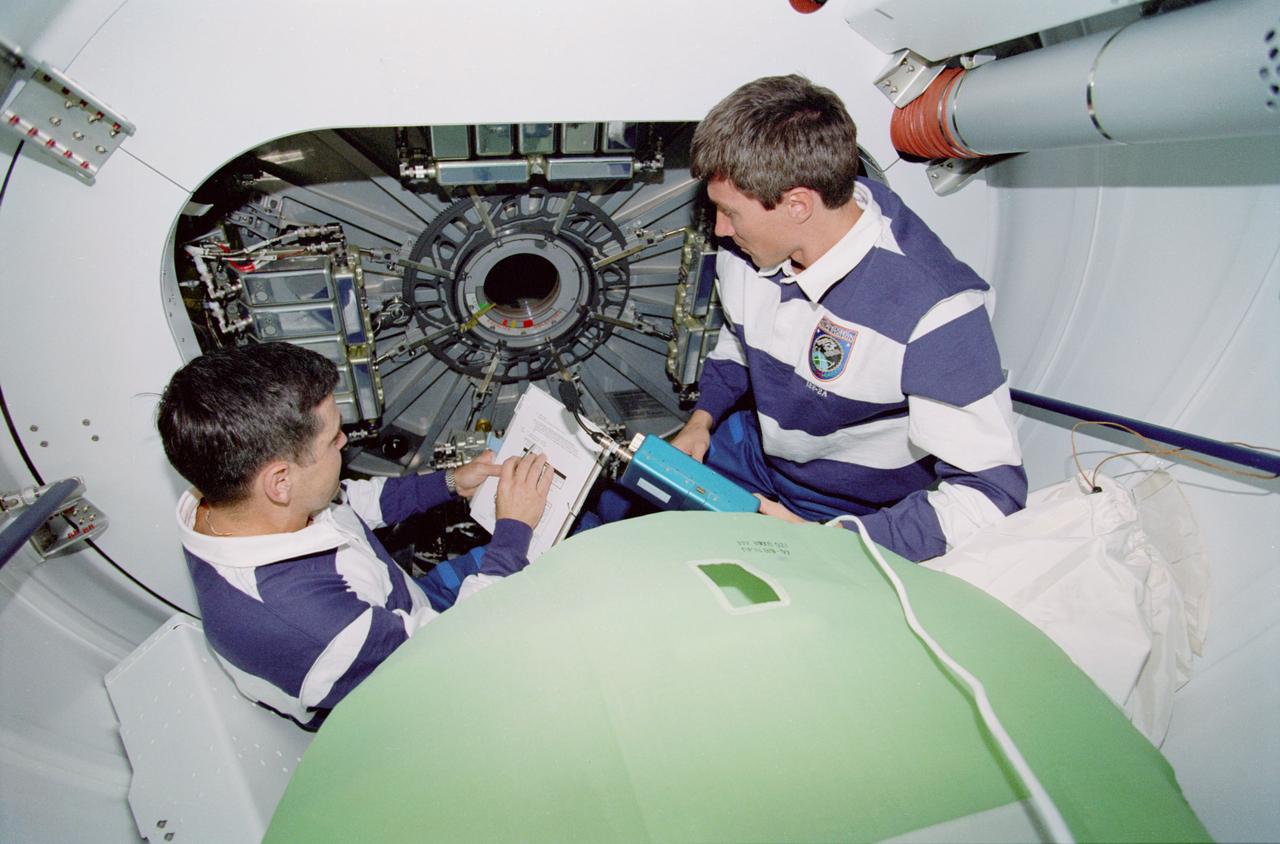
STS088-322-021 (4-15 DECEMBER 1998) --- Astronaut Robert D. Cabana (left), mission commander, and cosmonaut Sergei K. Krikalev, mission specialist representing the Russian Space Agency (RSA), plan their approach to tasks in the U.S.-built Unity module. All six STS-88 crew members were involved in tasks to ready Unity and the now-connected Russian-built FGB module, also called Zarya, for their International Space Station (ISS) roles. Krikalev has been named as a member of the first ISS crew.
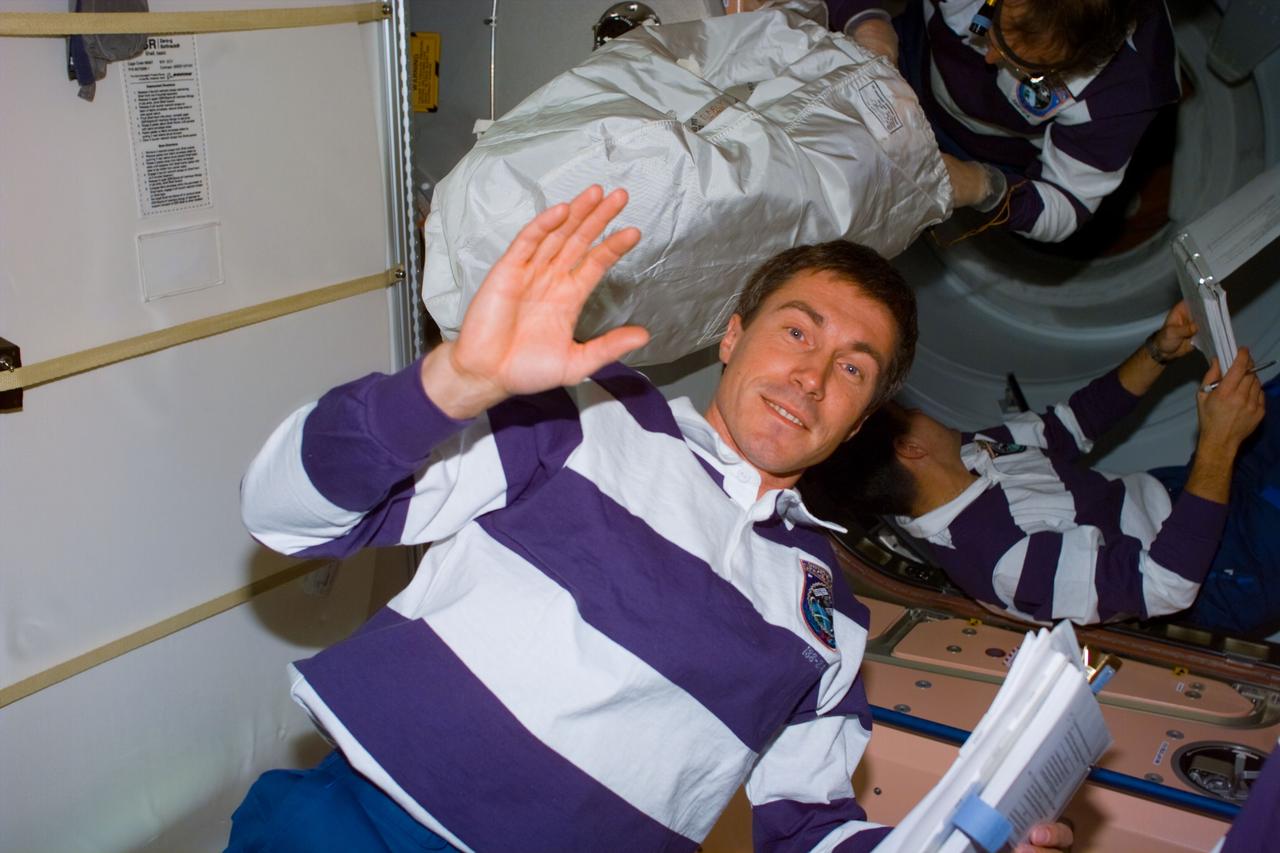
S88-E-5113 (12-10-98) --- Sergei Krikalev, mission specialist representing the Russian Space Agency (RSA), totes a notebook onboard the Unity connecting module while he and two crewmates perform various tasks to ready it for its ISS role. The photo was taken with an electronic still camera (ESC) at 20:27:03 GMT, Dec. 10.
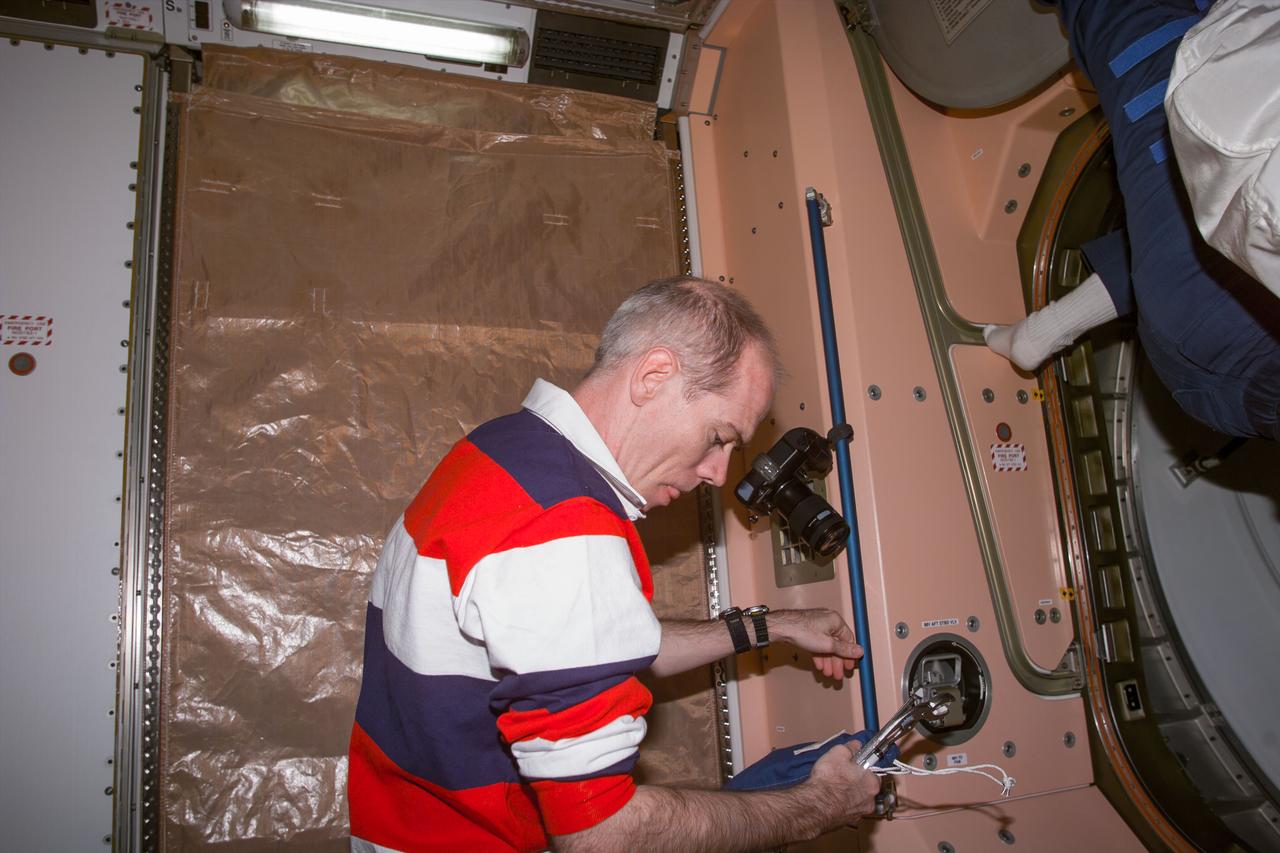
S96-E-5080 (31 May 1999) --- Astronaut Daniel T. Barry, mission specialist, participates in the Flight Day 5 team effort to ready International Space Station (ISS) hardware. After ingressing the Pressurized Mating Adapter (PMA2), Barry and fellow crew members went into the Unity node to perform a variety of chores. The scene was recorded with an electronic still camera (ESC) at 01:54:41 GMT, May 31, 1999.
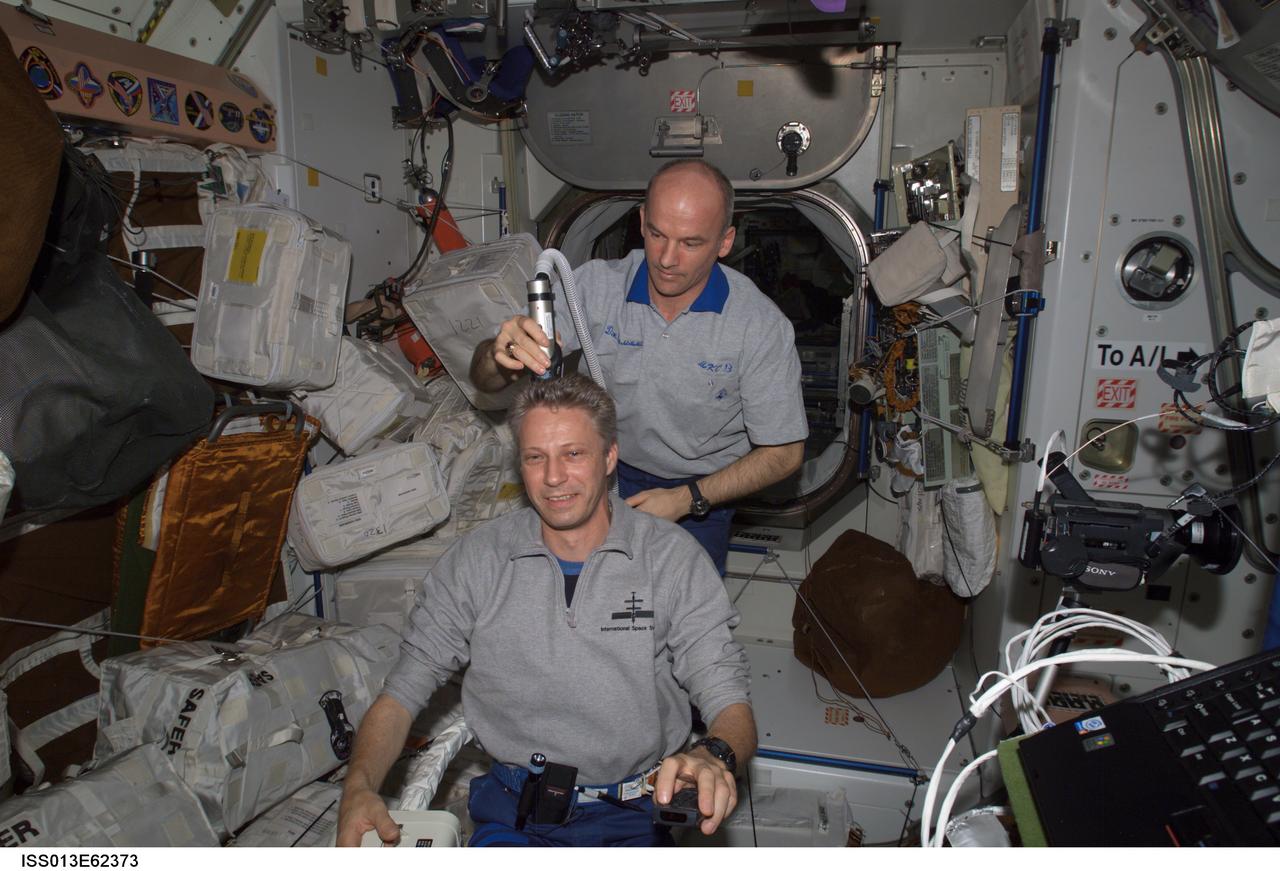
ISS013-E-62373 (29 July 2006) --- Astronaut Jeffrey N. Williams, Expedition 13 NASA space station science officer and flight engineer, trims astronaut Thomas Reiter's hair in the Unity node of the International Space Station. Williams used hair clippers fashioned with a vacuum device to garner freshly cut hair. Reiter, flight engineer, represents the European Space Agency (ESA).
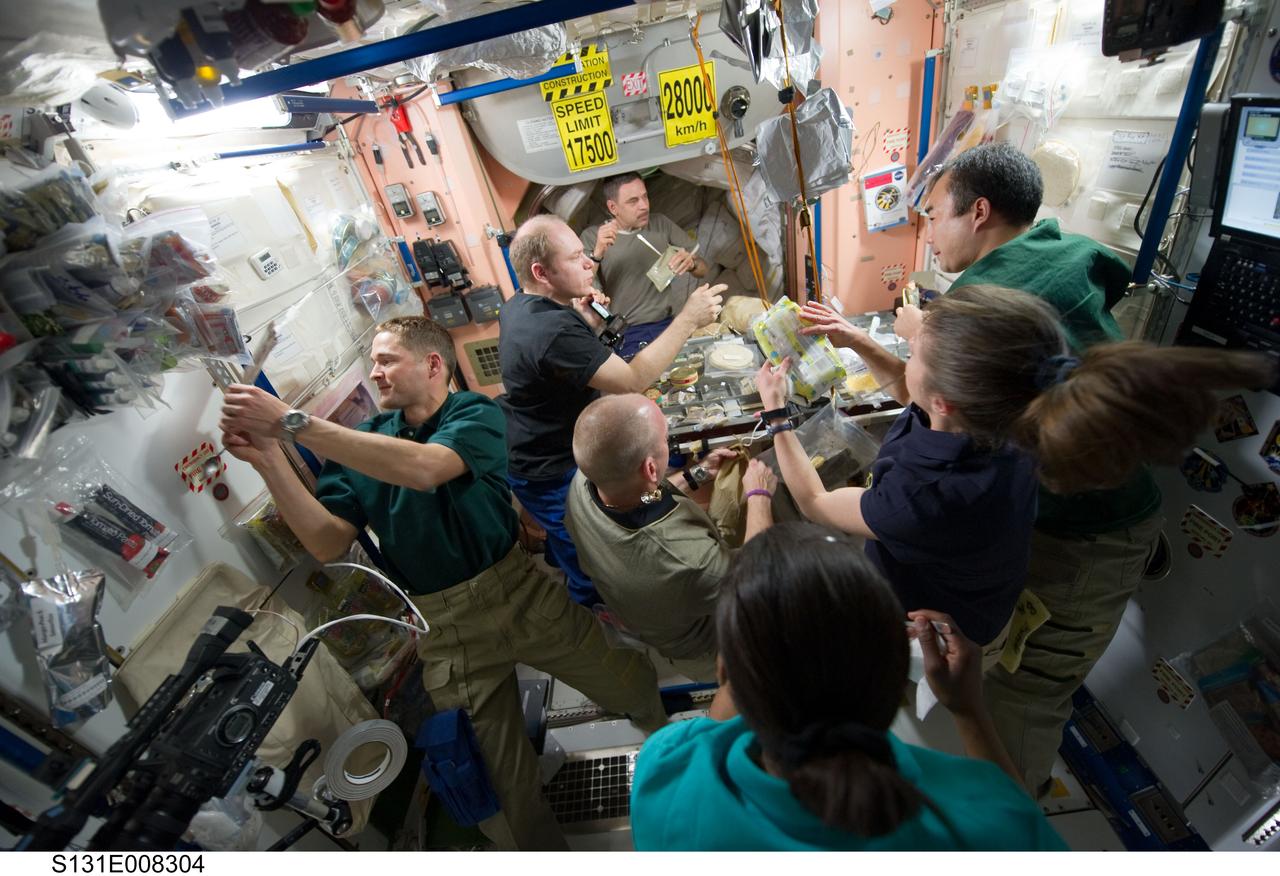
S131-E-008304 (9 April 2010) --- With 13 astronauts and cosmonauts onboard the station at one time, activities around the galley in the Unity node get rather busy at meal time. Over half the 13 are seen in this flight day five aggregation. NASA astronaut James P. Dutton Jr., STS-131 pilot, prepares part of his meal at left. Also pictured clockwise (from the right) are JAXA astronaut Soichi Noguchi and NASA astronaut Tracy Caldwell Dyson, both Expedition 23 flight engineers; NASA astronauts Stephanie Wilson and Clayton Anderson, both STS-131 mission specialists; along with Russian cosmonauts Oleg Kotov and Mikhail Kornienko, Expedition 23 commander and flight engineer, respectively.
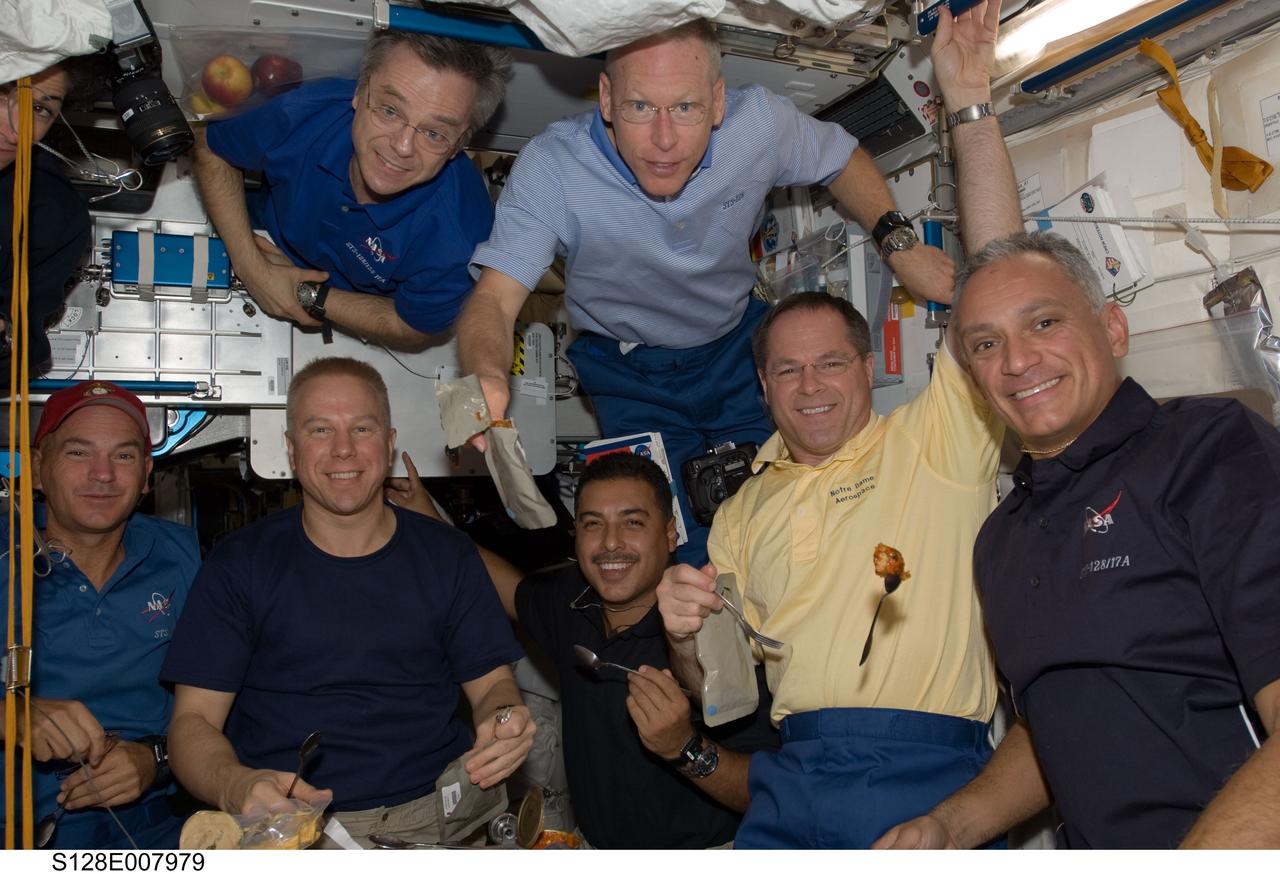
S128-E-007979 (7 Sept. 2009) --- Crew members onboard the International Space Station share a meal in the Unity node while Space Shuttle Discovery remains docked with the station. Pictured from the left (bottom) are NASA astronauts Rick Sturckow, STS-128 commander; Tim Kopra and Jose Hernandez, both STS-128 mission specialists; along with Kevin Ford, STS-128 pilot; and John “Danny” Olivas, STS-128 mission specialist. Pictured from the left (top) are NASA astronaut Nicole Stott (mostly out of frame) and Canadian Space Agency astronaut Robert Thirsk, both Expedition 20 flight engineers; along with NASA astronaut Patrick Forrester, STS-128 mission specialist.
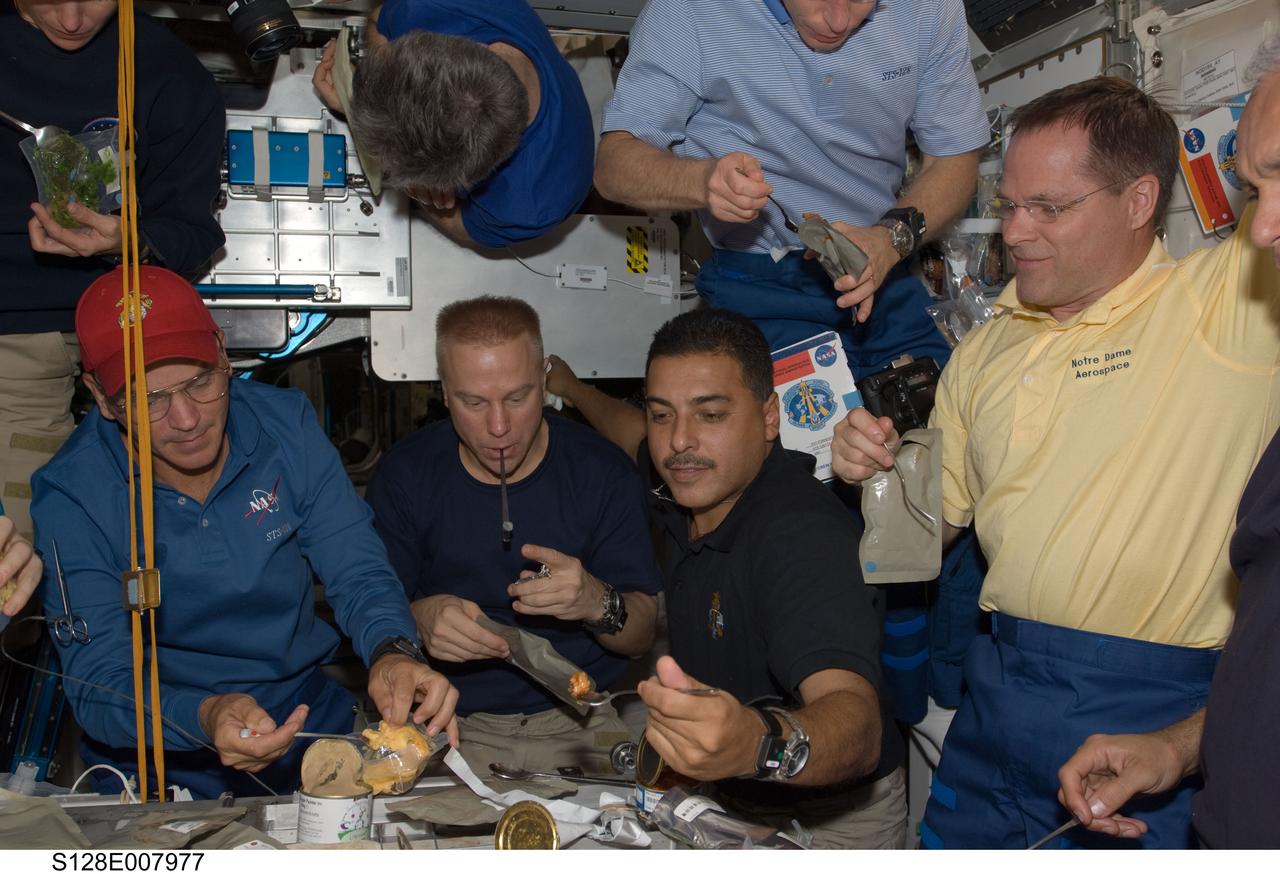
S128-E-007977 (7 Sept. 2009) --- Crew members onboard the International Space Station share a meal in the Unity node while Space Shuttle Discovery remains docked with the station. Pictured from the left (bottom) are NASA astronauts Rick Sturckow, STS-128 commander; Tim Kopra and Jose Hernandez, both STS-128 mission specialists; along with Kevin Ford, STS-128 pilot; and John “Danny” Olivas (mostly out of frame at right), STS-128 mission specialist. Pictured from the left (top, partially out of frame) are NASA astronaut Nicole Stott and Canadian Space Agency astronaut Robert Thirsk, both Expedition 20 flight engineers; along with NASA astronaut Patrick Forrester, STS-128 mission specialist.
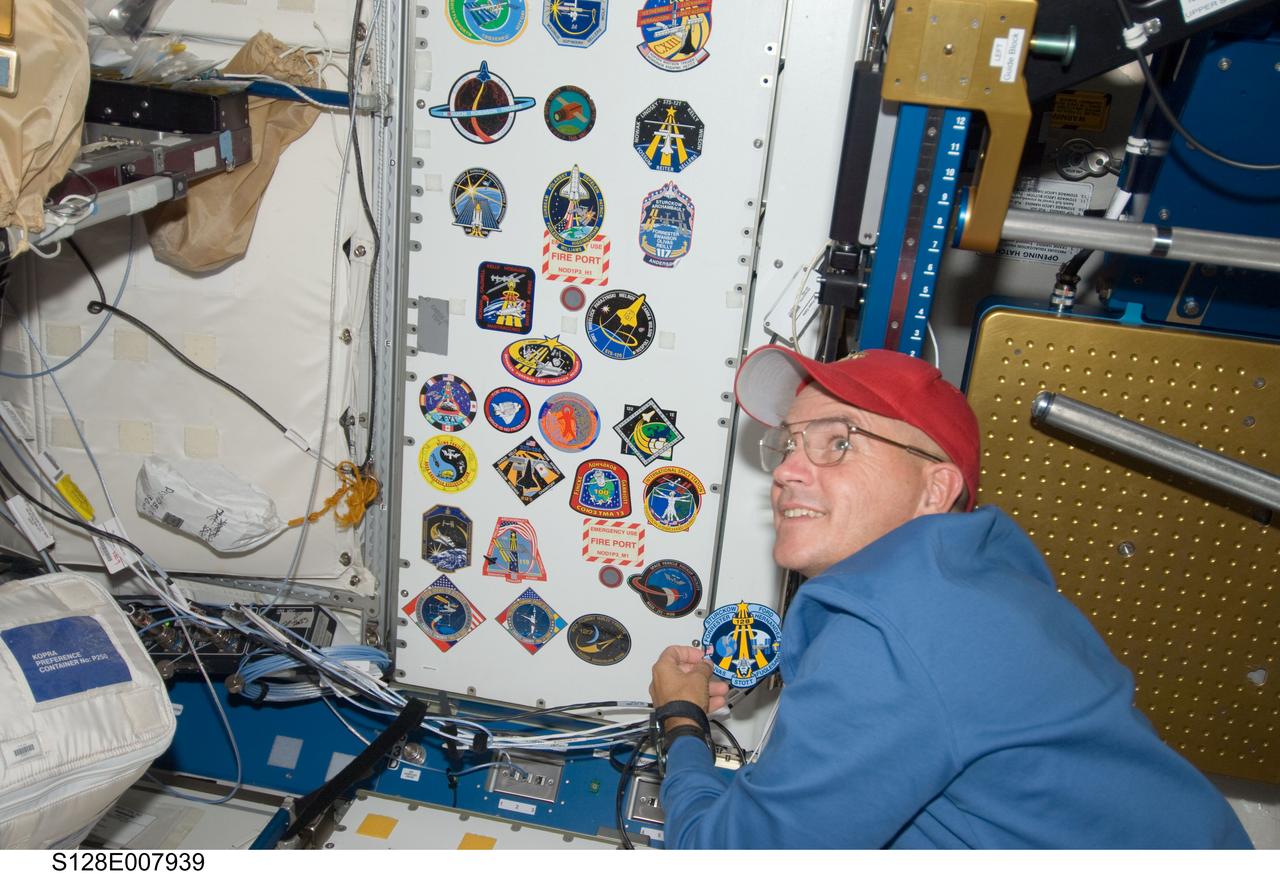
S128-E-007939 (7 Sept. 2009) --- NASA astronaut Rick Sturckow, STS-128 commander, adds his crew’s patch to the growing collection, in the Unity node, of insignias representing crews who have worked on the International Space Station.
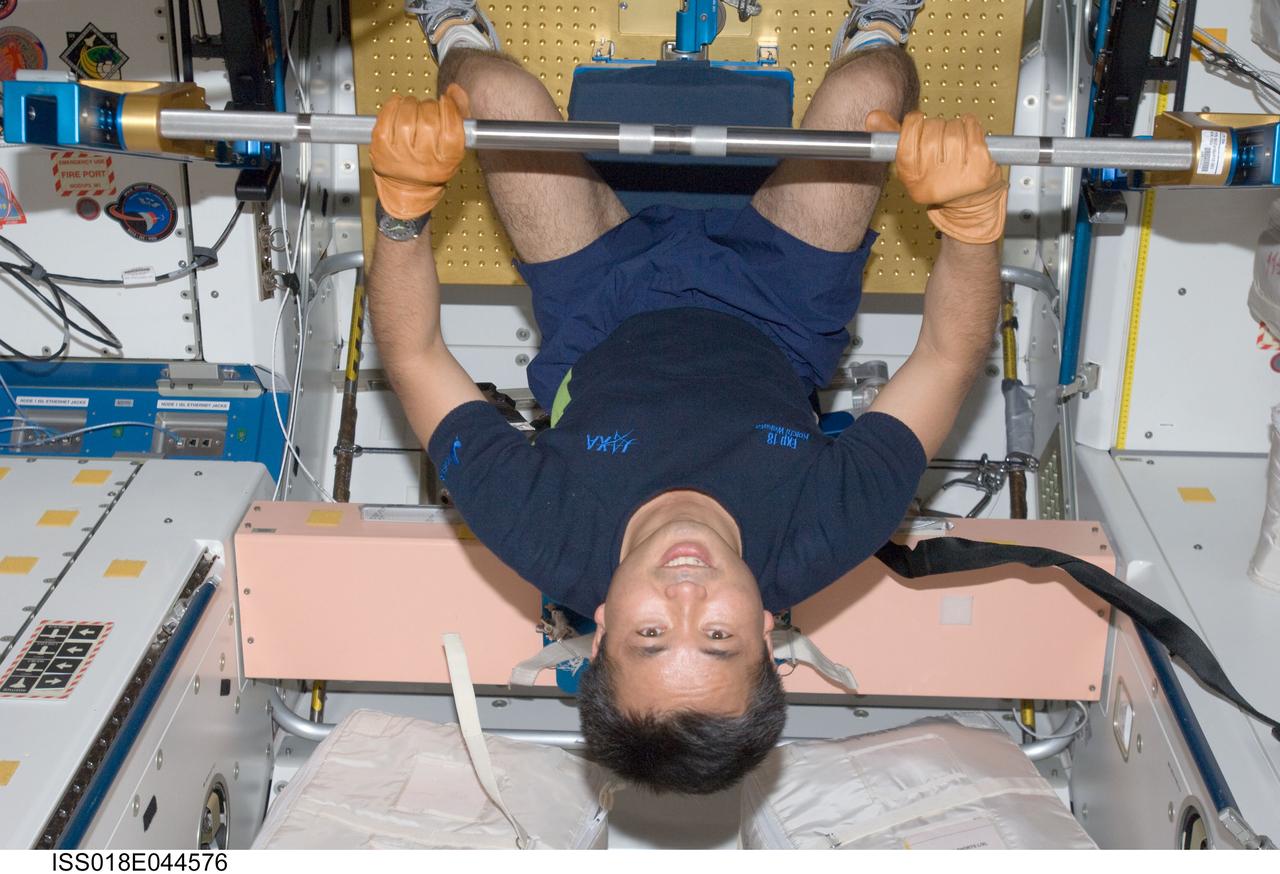
ISS018-E-044576 (4 April 2009) --- Japan Aerospace Exploration Agency (JAXA) astronaut Koichi Wakata, Expedition 18/19 flight engineer, exercises using the advanced Resistive Exercise Device (aRED) in the Unity node of the International Space Station.
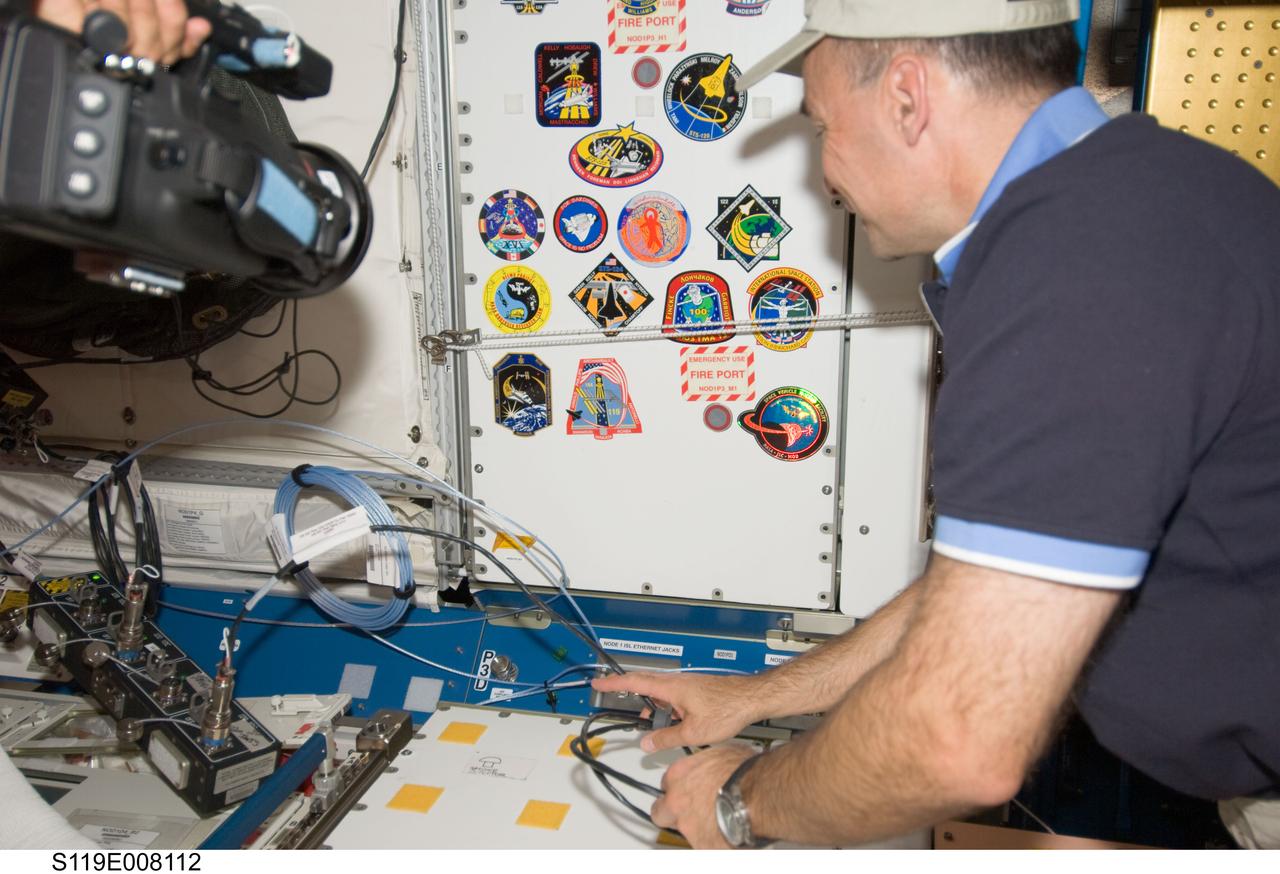
S119-E-008112 (24 March 2009) --- Astronaut Lee Archambault, STS-119 commander, is pictured after adding his crew patch in the Unity node to the growing collection of those representing shuttle crews who have worked on the International Space Station.
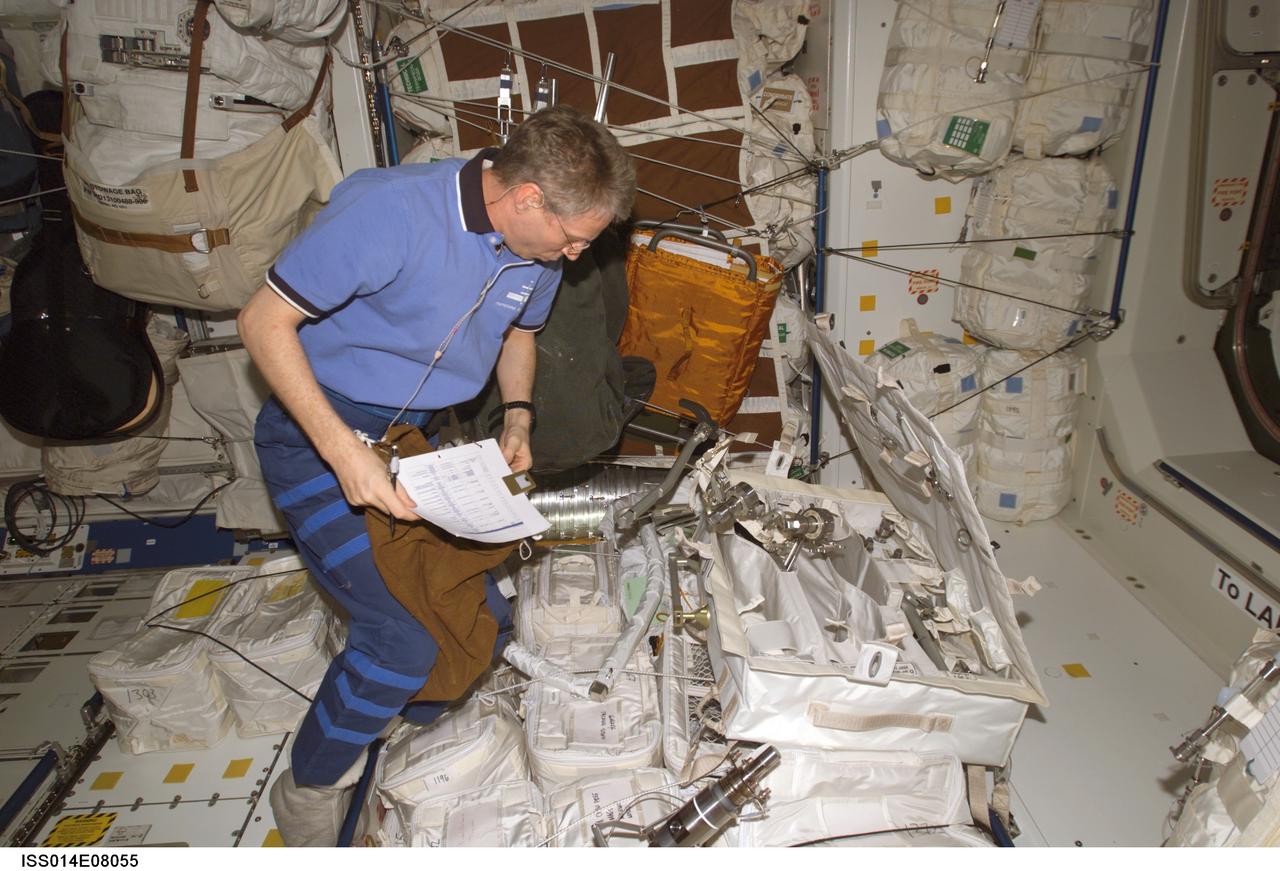
ISS014-E-08055 (16 Nov. 2006) --- European Space Agency (ESA) astronaut Thomas Reiter, Expedition 14 flight engineer, takes inventory of hardware during an Information Management System (IMS) update in the Unity node of the International Space Station.
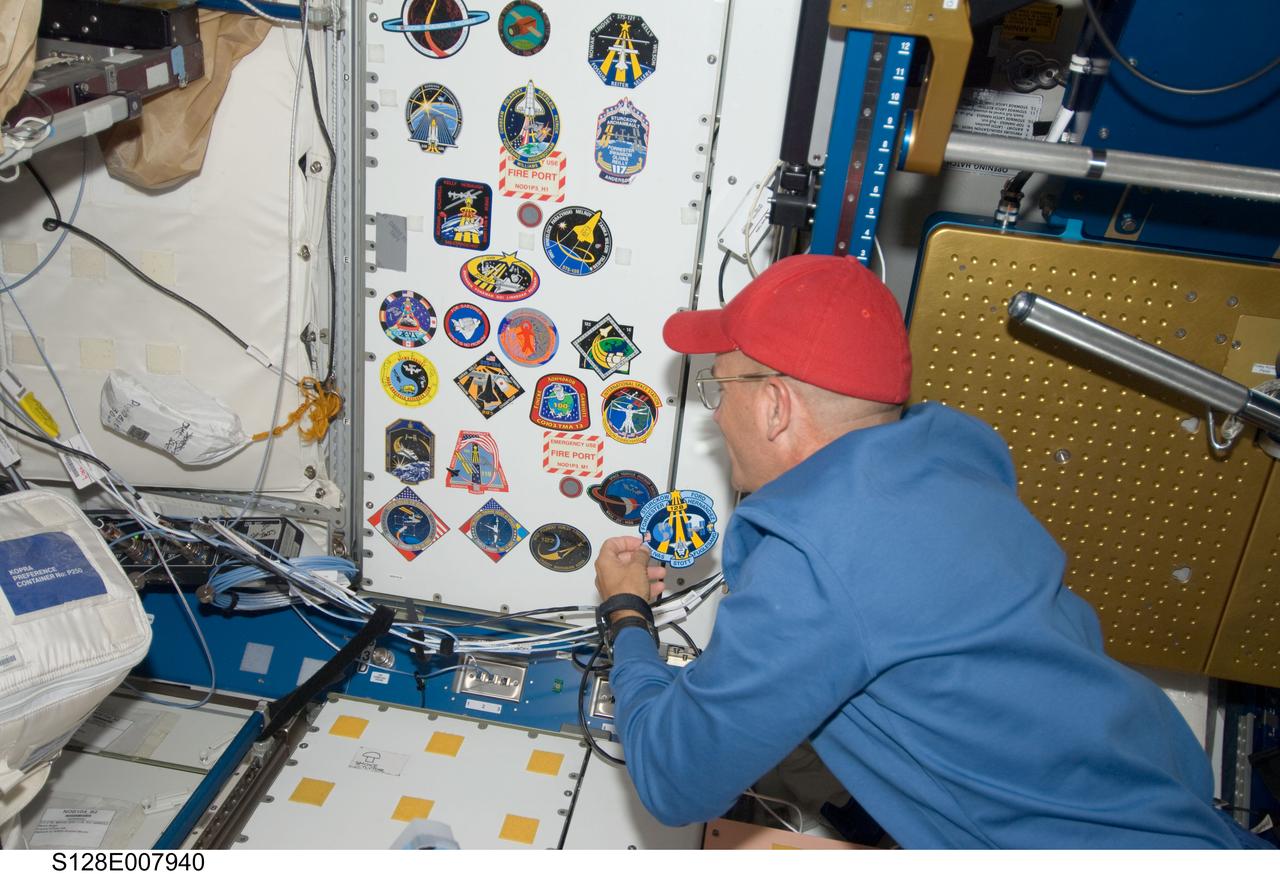
S128-E-007940 (7 Sept. 2009) --- NASA astronaut Rick Sturckow, STS-128 commander, adds his crew’s patch to the growing collection, in the Unity node, of insignias representing crews who have worked on the International Space Station.
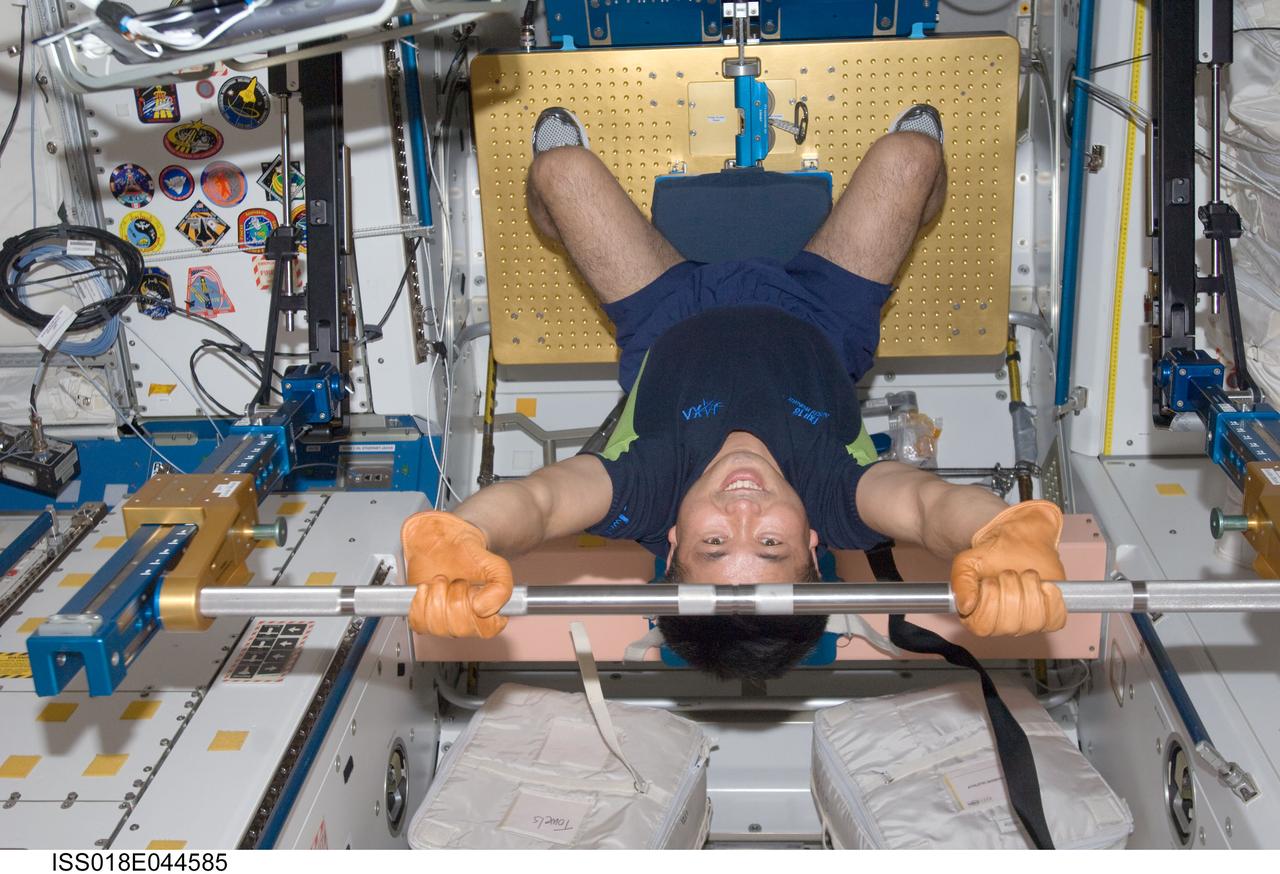
ISS018-E-044585 (4 April 2009) --- Japan Aerospace Exploration Agency (JAXA) astronaut Koichi Wakata, Expedition 18/19 flight engineer, exercises using the advanced Resistive Exercise Device (aRED) in the Unity node of the International Space Station.
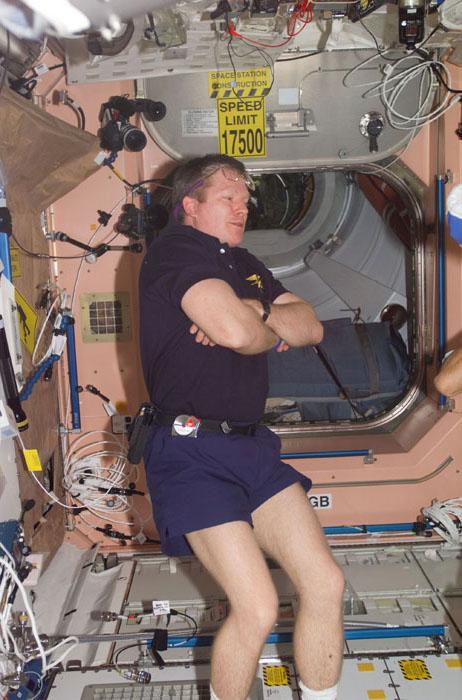
STS98-E-5287 (16 February 2001) --- Astronaut William M. (Bill) Shepherd, Expedition One commander, participates in a parting chat with some astronaut visitors (out of frame), about to conclude their time on the outpost. The scene was recorded with a digital still camera during farewells in the Unity node.
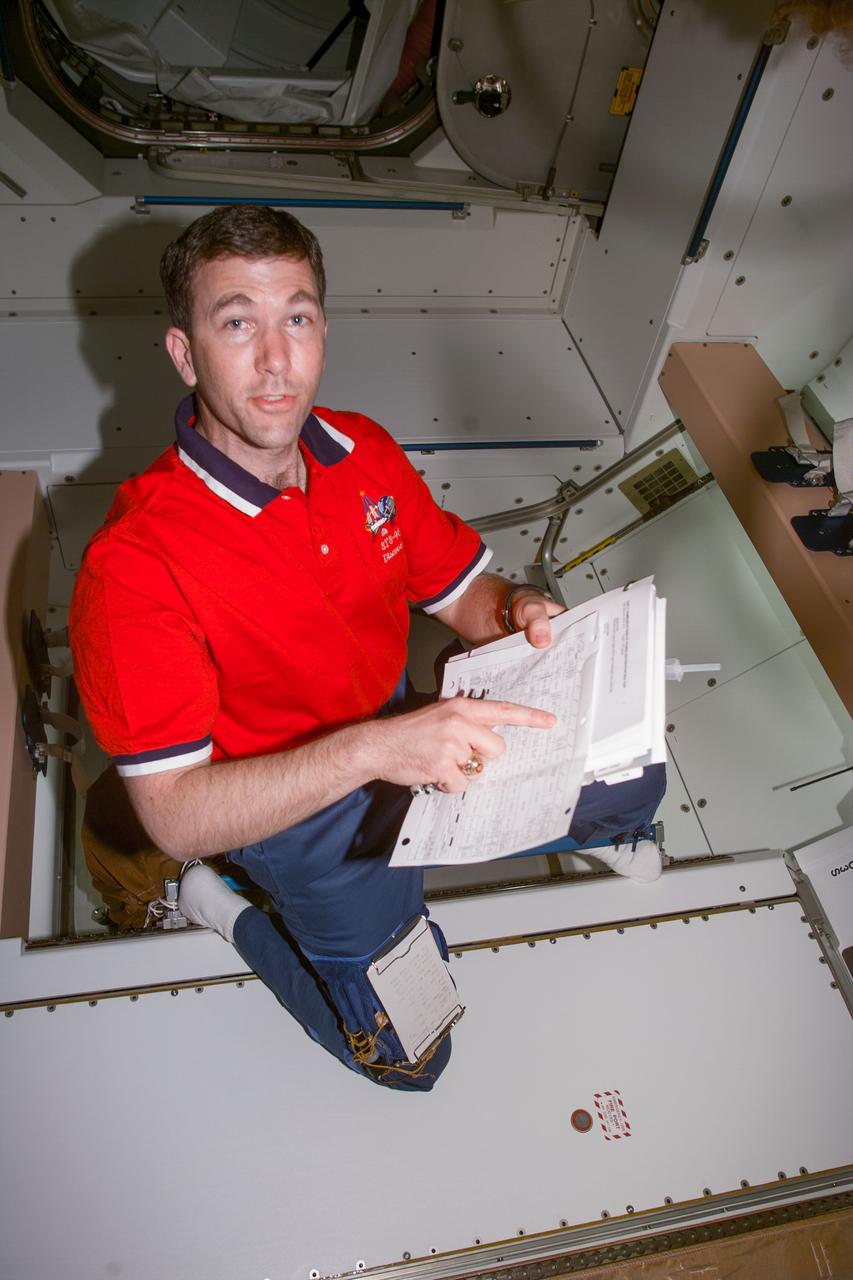
S96-E-5081 (31 May 1999) --- Astronaut Rick D. Husband, pilot, looks over a checklist of tasks to be performed inside Unity on Flight Day 5. The photo was recorded with an electronic still camera (ESC) at 01:54:45 GMT, May 31, 1999.
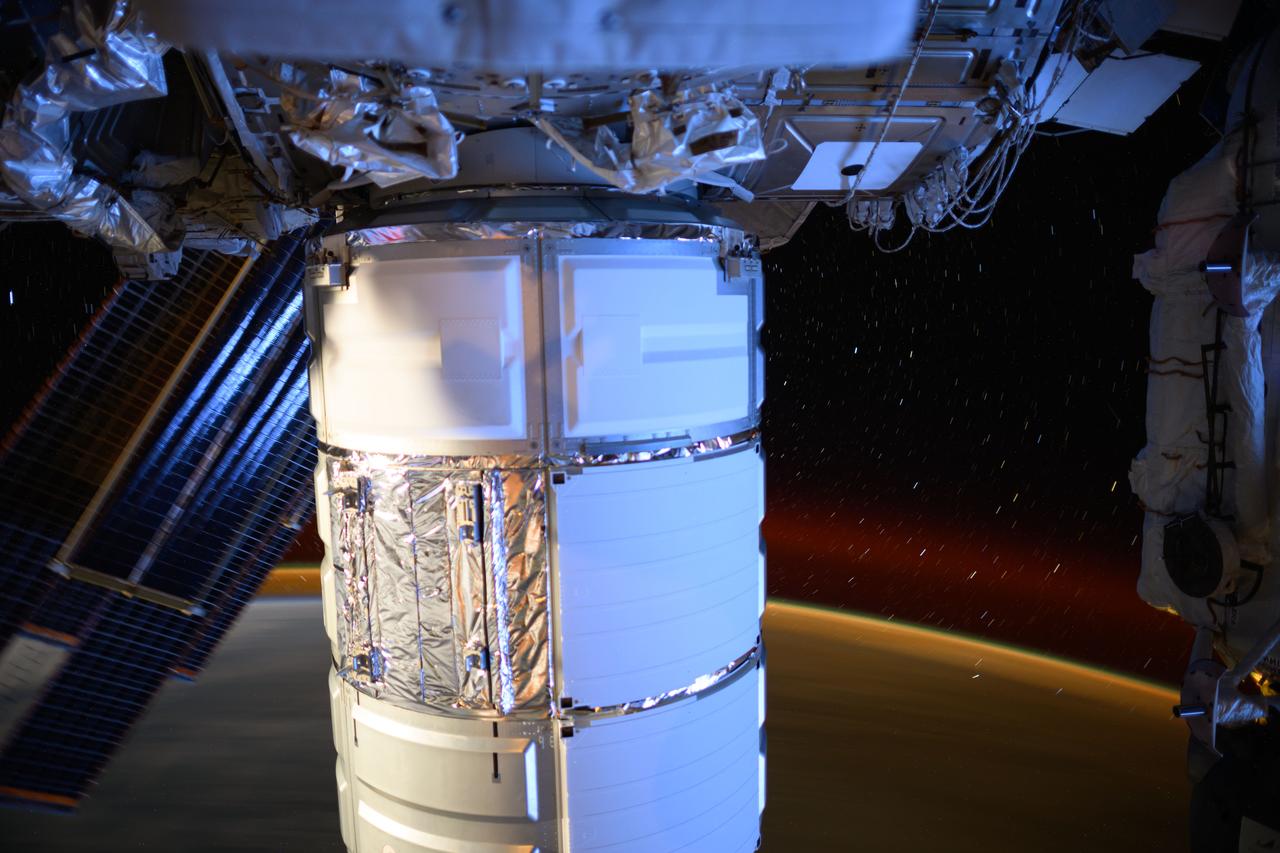
iss072e515922 (Jan. 16, 2025) --- Northrop Grumman's Cygnus space freighter is pictured berthed to the International Space Station's Earth-facing port on the Unity module. This long-duration photograph also highlights Earth's atmospheric glow and star trails as the orbital outpost soared 262 miles above the North Atlantic Ocean.

ISS013-E-75813 (4 Sept. 2006) --- Cosmonaut Pavel V. Vinogradov, Expedition 13 commander representing Russia's Federal Space Agency, adds the Expedition 13 patch to the Unity node's growing collection of insignias representing crews who have lived and worked on the International Space Station.
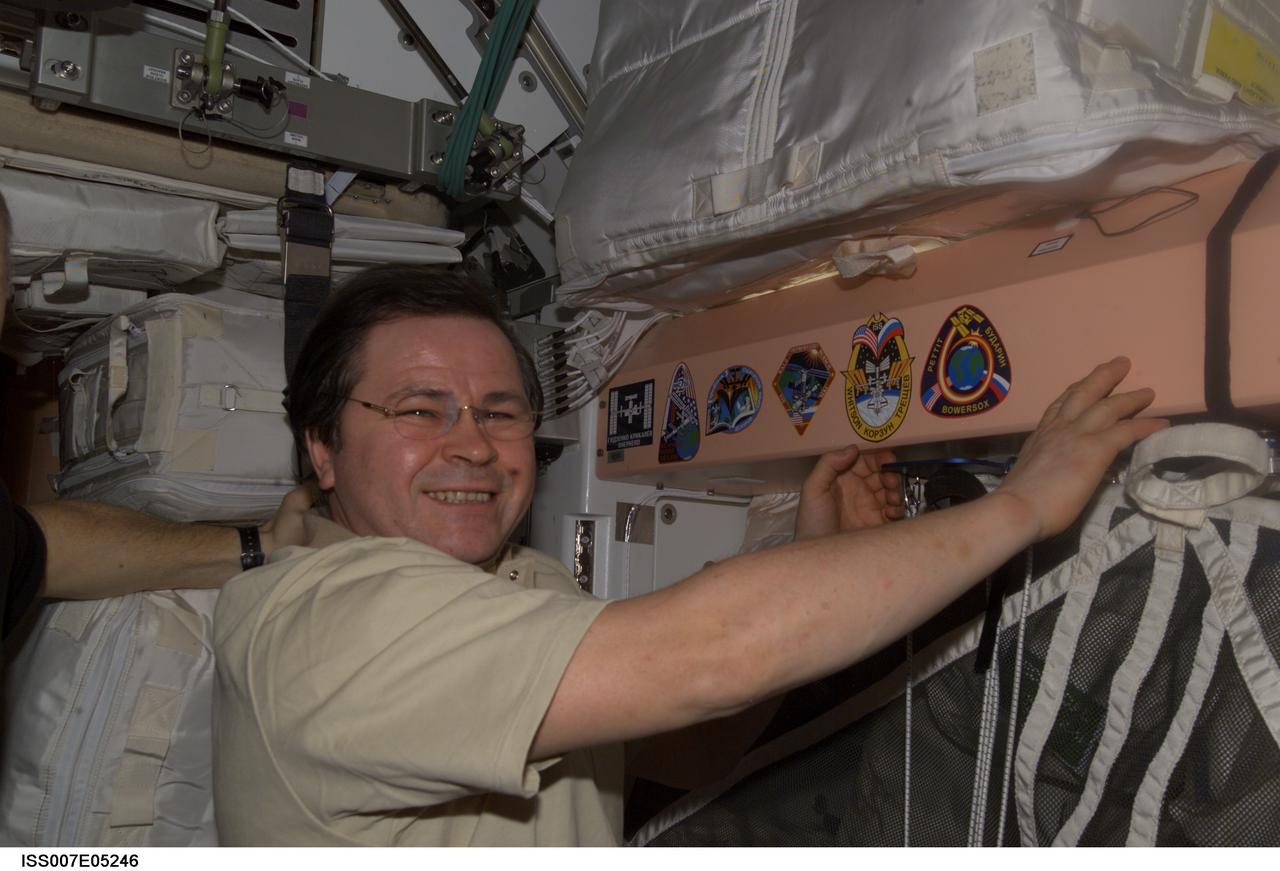
ISS007-E-05246 (3 May 2003) --- Cosmonaut Nikolai M. Budarin, Expedition Six flight engineer, adds his crew’s patch to the growing collection, in the Unity node, of insignias representing crews who have worked on the International Space Station (ISS). Budarin represents Rosaviakosmos.
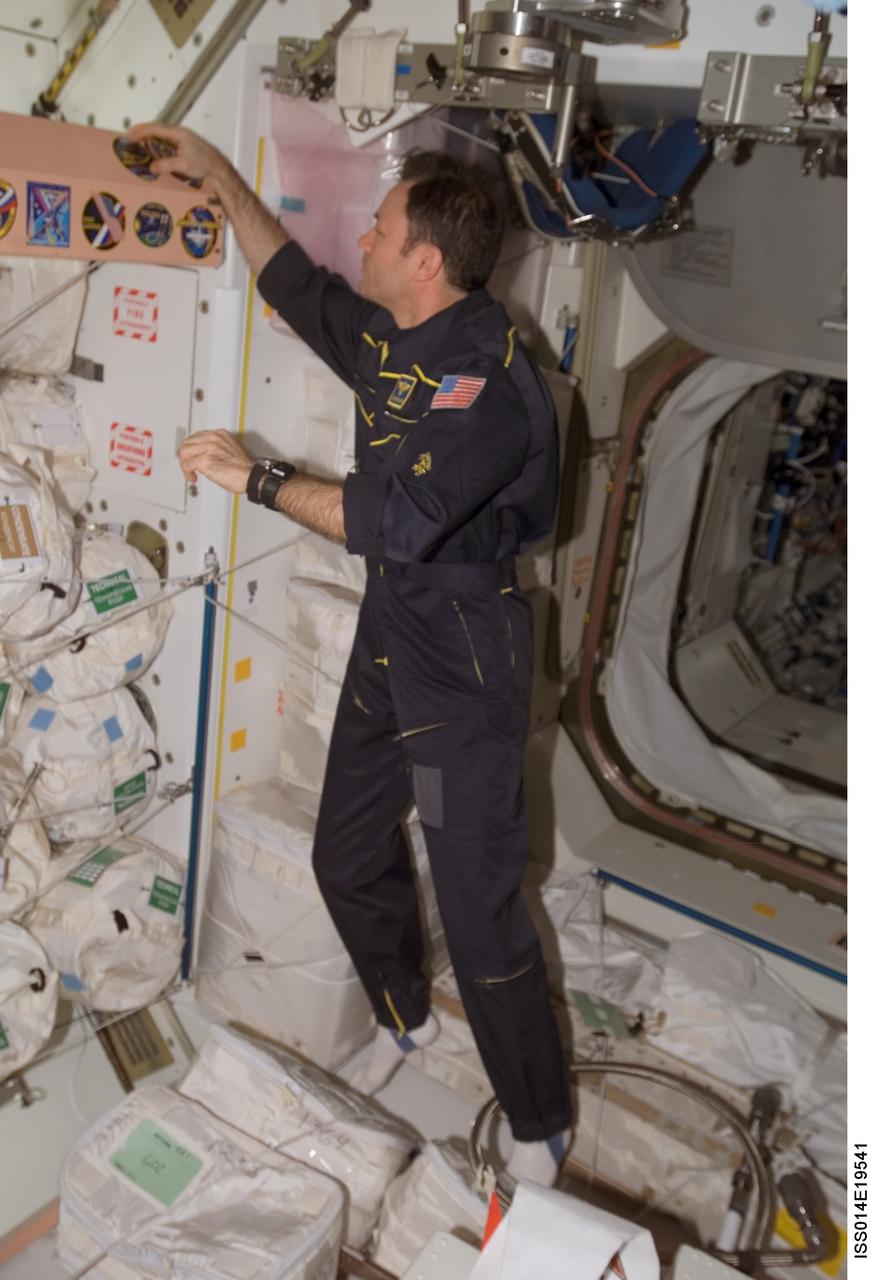
ISS014-E-19541 (17 April 2007) --- Astronaut Michael E. Lopez-Alegria, Expedition 14 commander and NASA space station science officer, adds the Expedition 14 patch to the Unity node's growing collection of insignias representing crews who have lived and worked on the International Space Station.
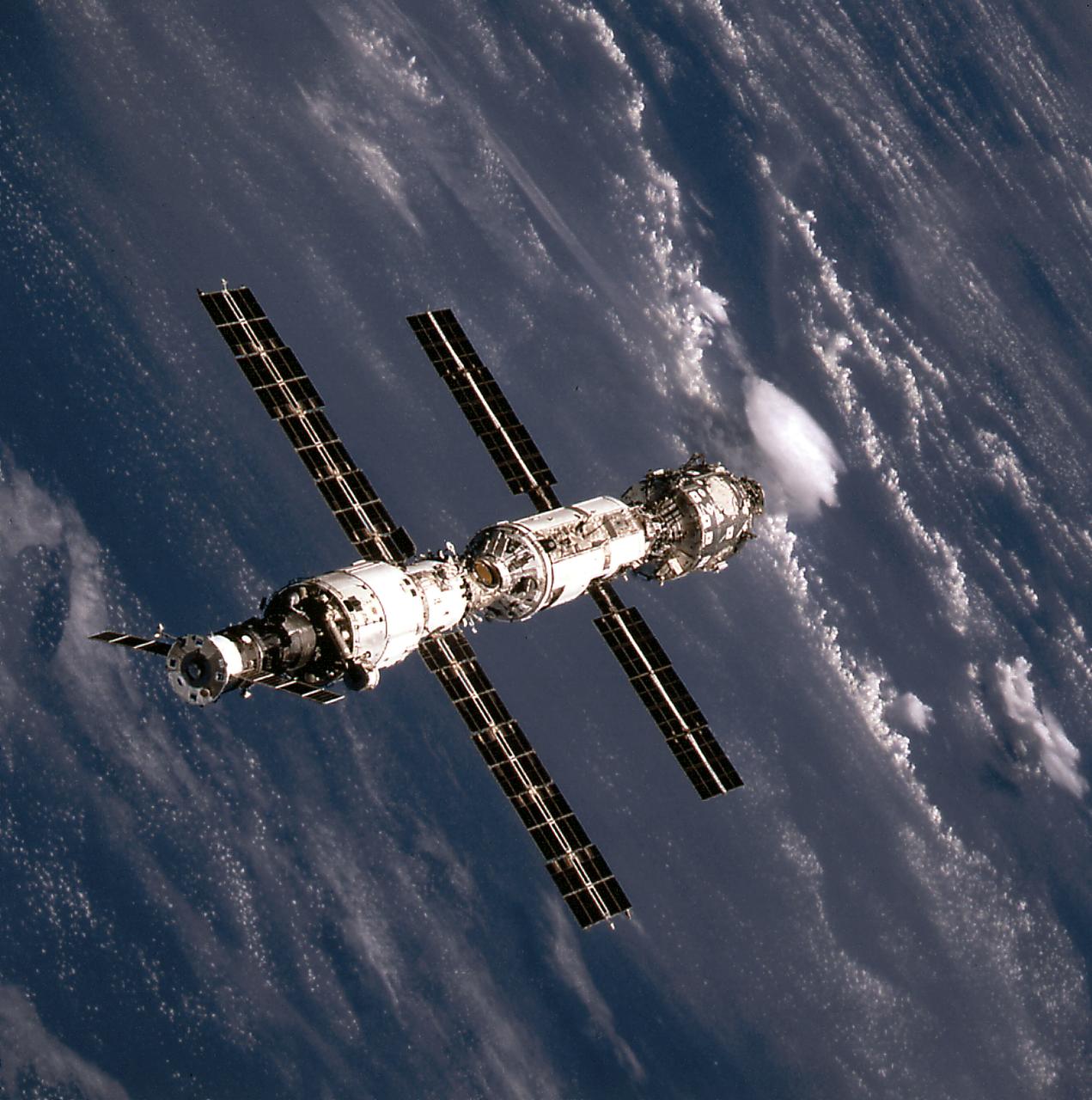
This image of the International Space Station (ISS) was taken when Space Shuttle Atlantis (STS-106 mission) approached the ISS for docking. At the top is the Russian Progress supply ship that is linked with the Russian built Service Module or Zvezda. The Zvezda is cornected with the Russian built Functional Cargo Block (FGB) or Zarya. The U.S. built Node 1 or Unity module is seen at the bottom.
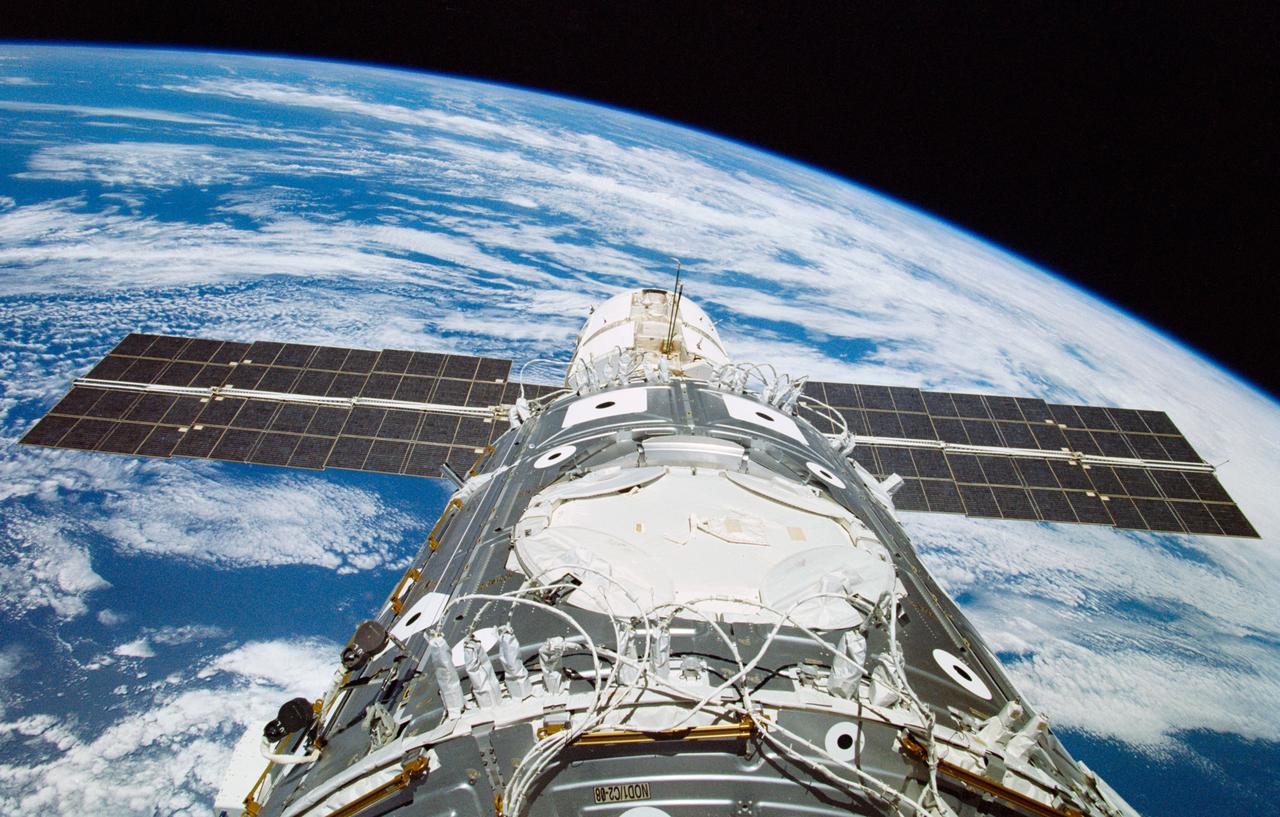
STS088-363-023 (4-15 Dec. 1998) --- Wires and cables on the Unity module (foreground) are telltale clues that the space walking astronauts of STS-88 had performed their first extravehicular activity (EVA) when this 35mm frame was exposed from the aft windows of Endeavour. The Zarya module can be seen mated to the top end of Unity.
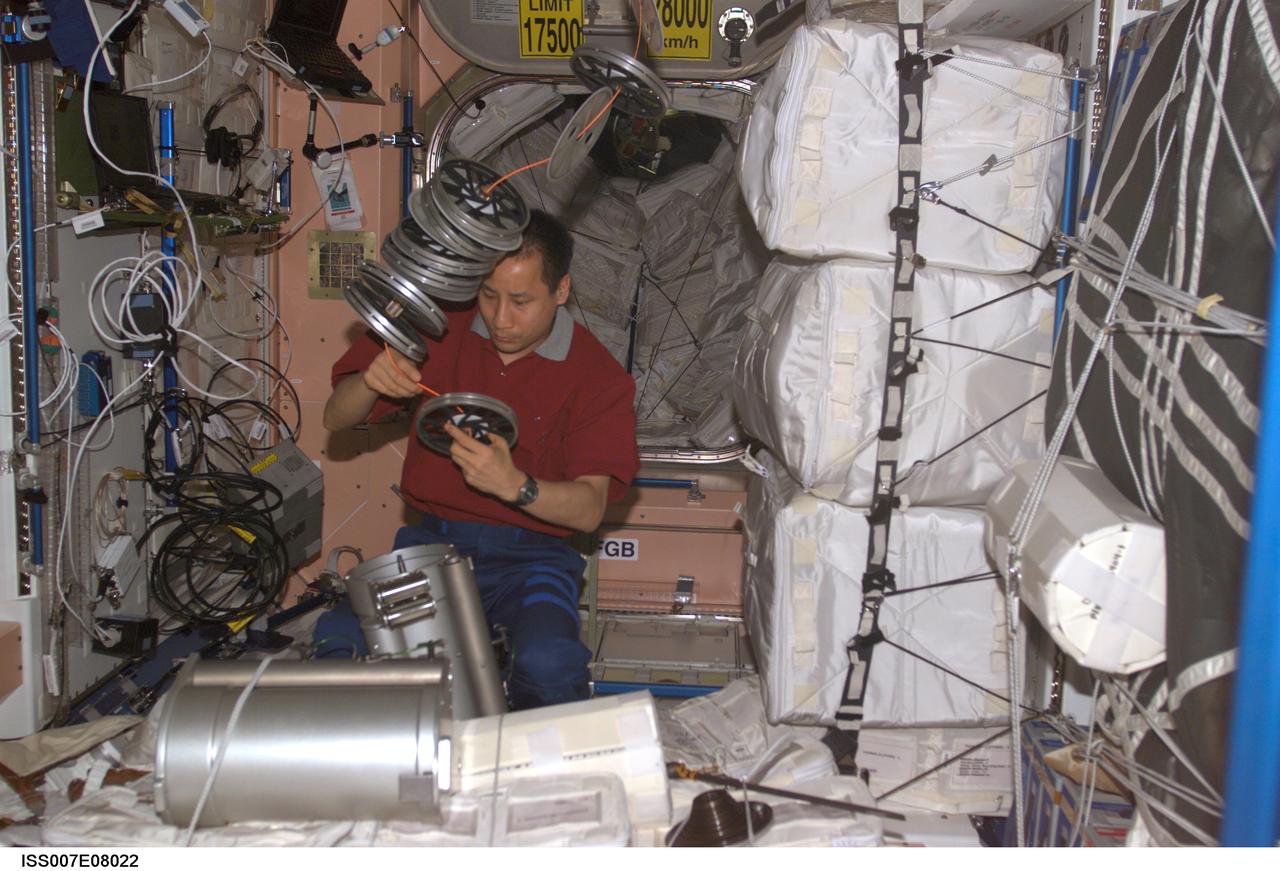
ISS007-E-08022 (23 June 2003) --- Astronaut Edward T. Lu, Expedition 7 NASA ISS science officer and flight engineer, works in the Unity node on the International Space Station (ISS).
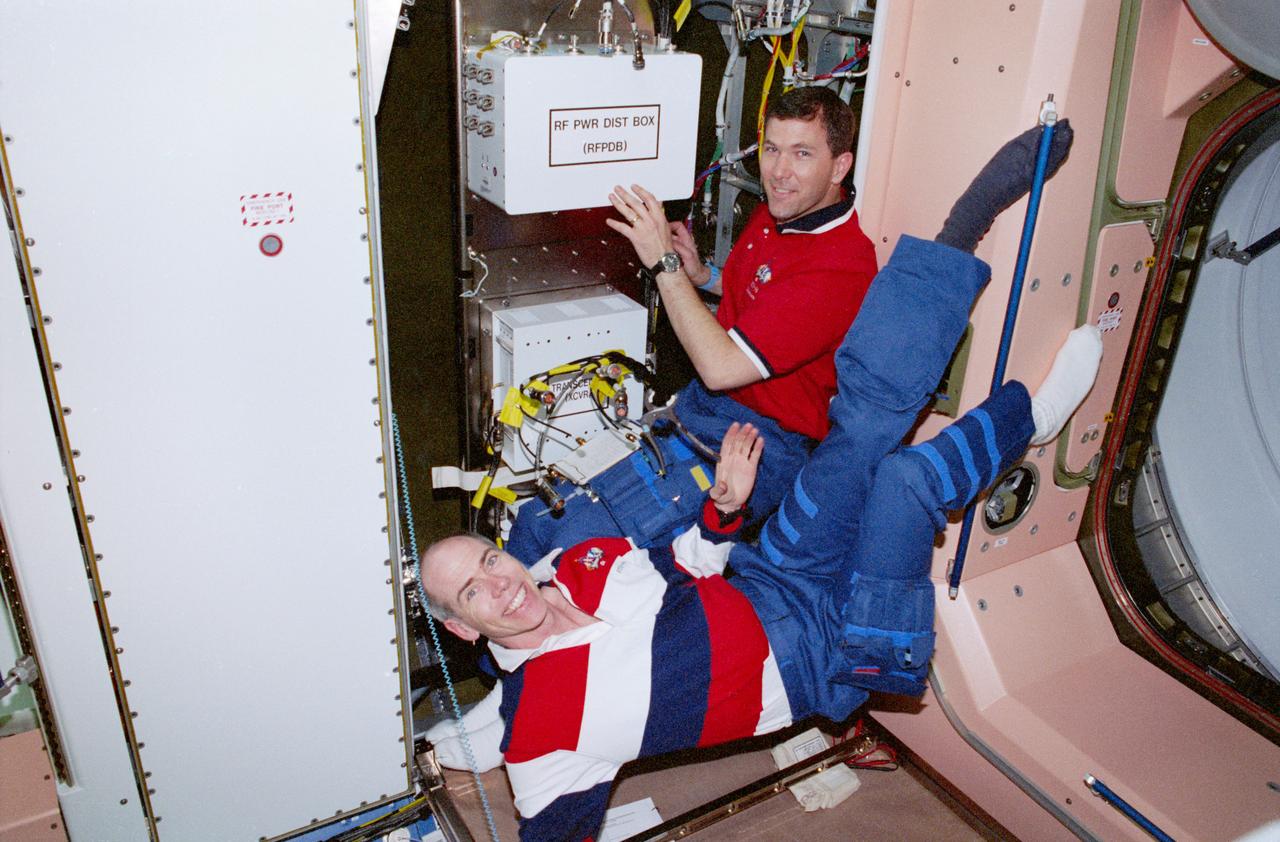
STS096-369-008 (27 May - 6 June 1999) --- Onboard the U.S.-built Unity node, astronauts Daniel T. Barry (left), mission specialist, and Rick D. Husband, pilot, repair the early communications system.
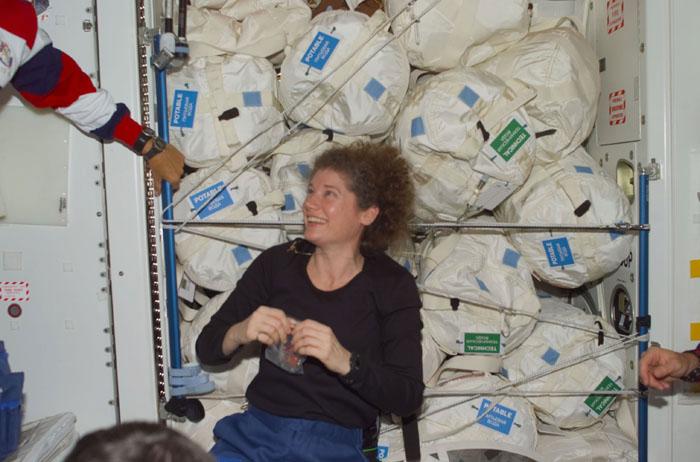
STS105-E-5152 (12 August 2001) --- Astronaut Susan J. Helms, Expedition Two flight engineer, is positioned near a large amount of water temporarily stored in the Unity node aboard the International Space Station (ISS). The photo was taken with a digital still camera by one of the STS-105 crew members currently visiting the ISS. Helms will accompany the shuttle crew back to Earth after having spent five months with two crew mates aboard the orbital outpost.
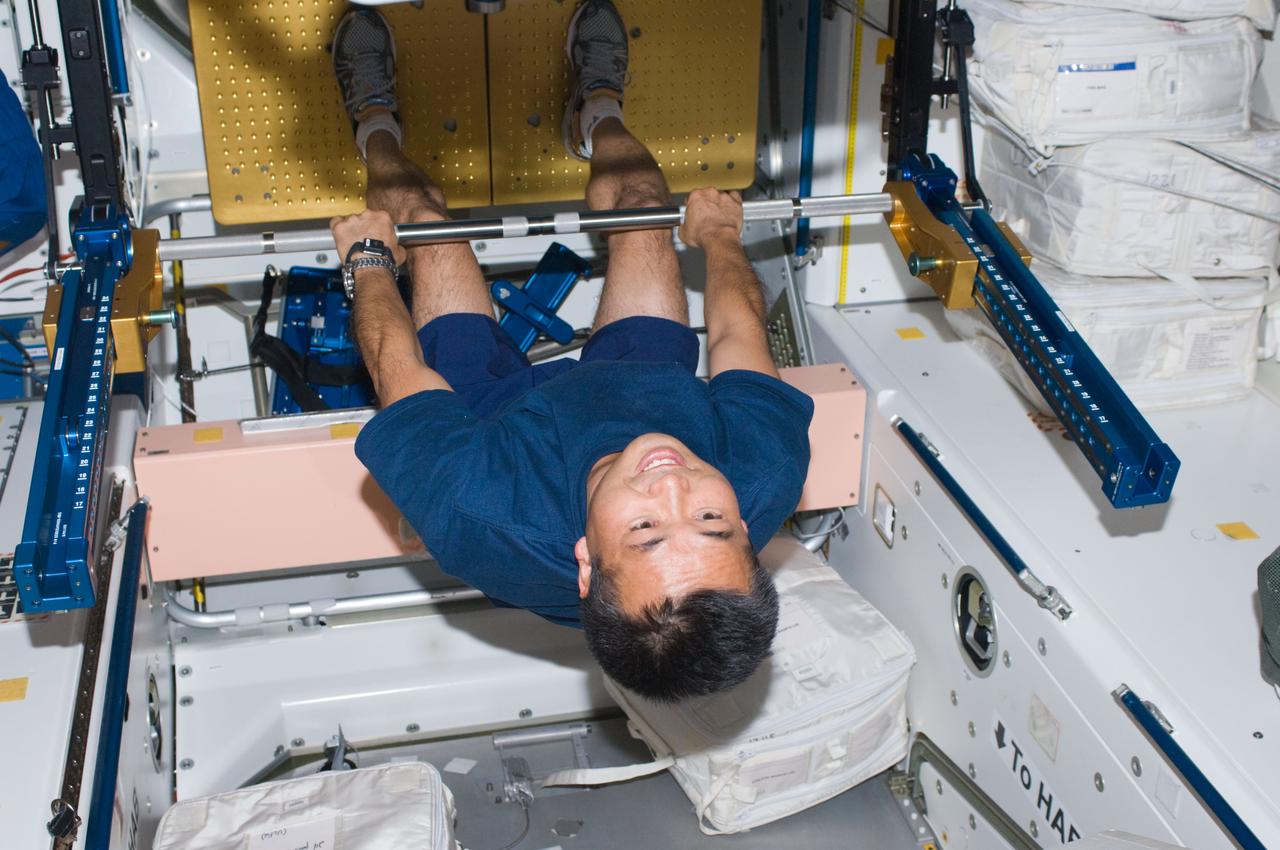
ISS018-E-042651 (22 March 2009) --- Japan Aerospace Exploration Agency (JAXA) astronaut Koichi Wakata, Expedition 18 flight engineer, uses the short bar for the advanced Resistive Exercise Device (aRED) equipment to perform upper body strengthening pull-ups in the Unity node of the International Space Station while Space Shuttle Discovery (STS-119) remains docked with the station.
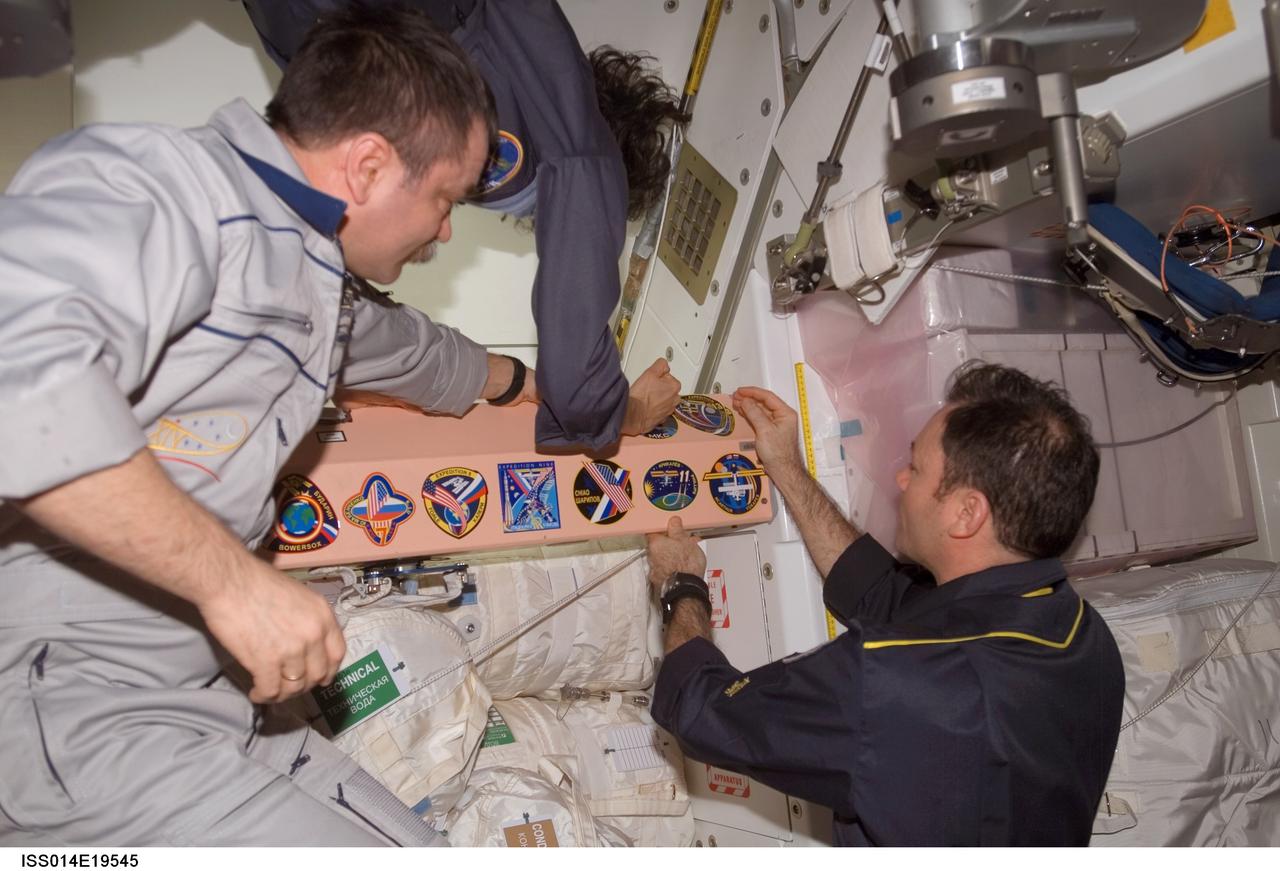
ISS014-E-19545 (17 April 2007) --- Astronauts Michael E. Lopez-Alegria (right), Expedition 14 commander and NASA space station science officer; Sunita L. Williams, flight engineer; and cosmonaut Mikhail Tyurin (left), flight engineer representing Russia's Federal Space Agency, add the Expedition 14 patch to the Unity node's growing collection of insignias representing crews who have lived and worked on the International Space Station.
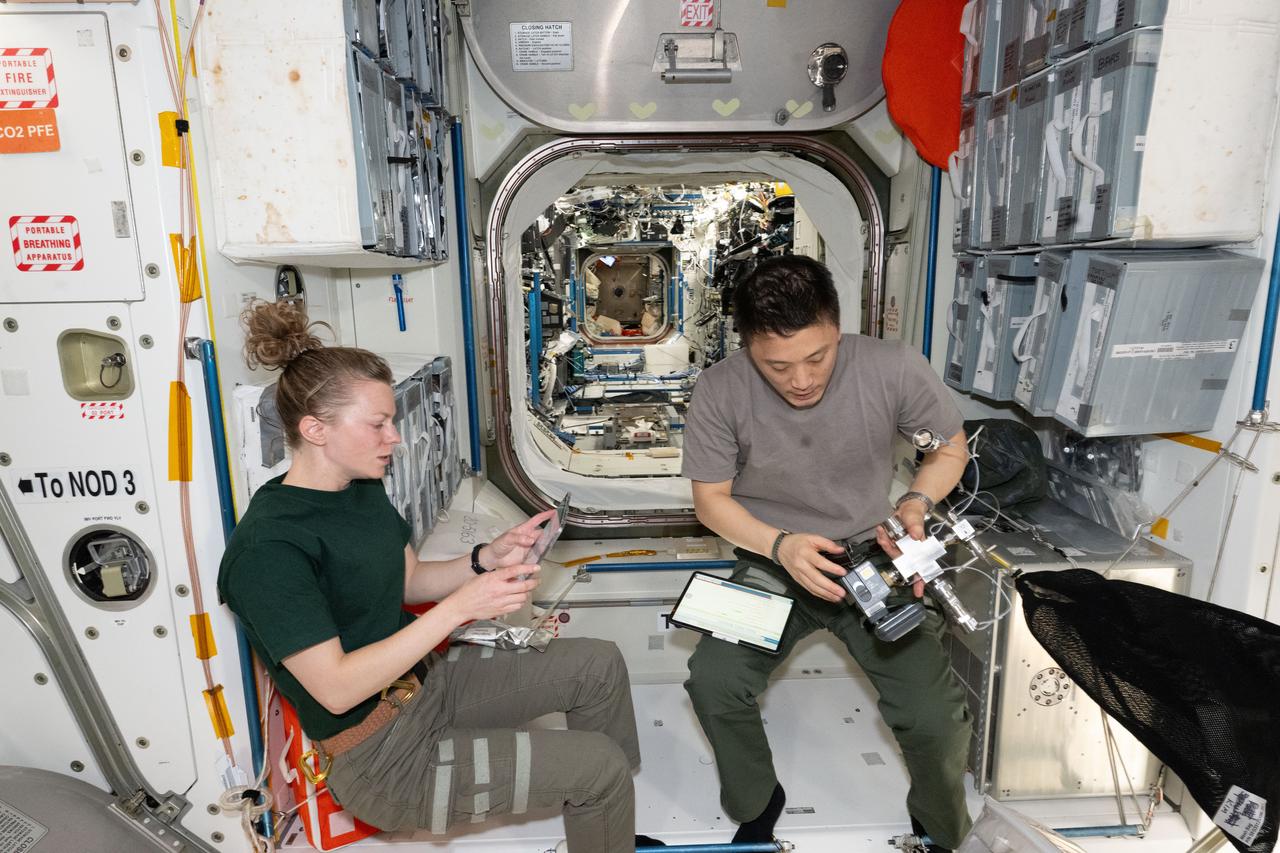
iss073e0505793 (Aug. 9, 2025) --- NASA astronauts Zena Cardman and Jonny Kim, both Expedition 73 Flight Engineers, are pictured inside the International Space Station's Unity module during weekend housecleaning and maintenance activities. Kim and Cardman are both part of NASA Astronaut Group 22 selected in June 2017 with 12 other astronauts, including two Canadian Space Agency astronauts, and affectionately nicknamed "The Turtles."
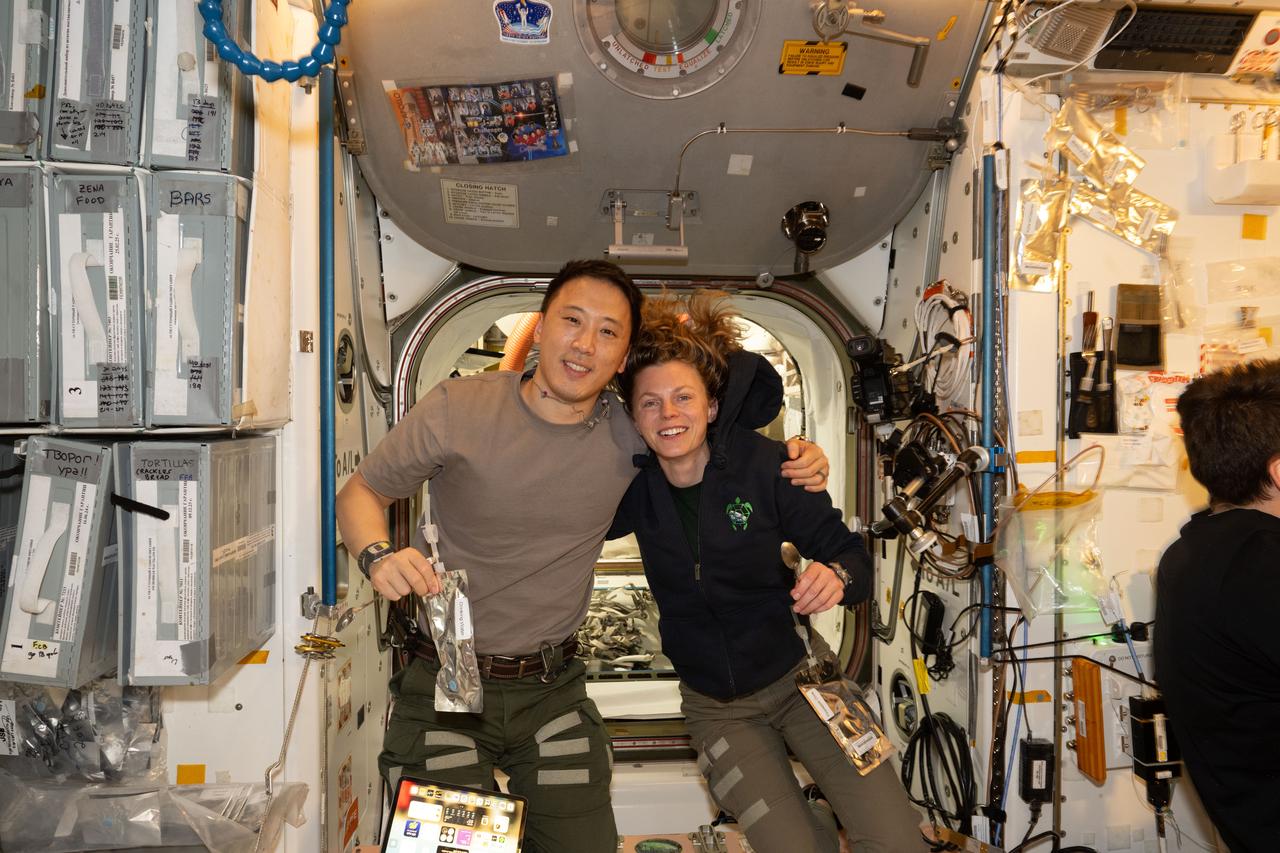
iss073e0505687 (Aug. 4, 2025) --- NASA astronauts Jonny Kim and Zena Cardman, both Expedition 73 Flight Engineers, pose for a portrait inside the International Space Station's Unity module during a break in weekend housecleaning and maintenance activities. Kim and Cardman are both part of NASA Astronaut Group 22 selected in June 2017 with 12 other astronauts, including two Canadian Space Agency astronauts, and affectionately nicknamed "The Turtles."
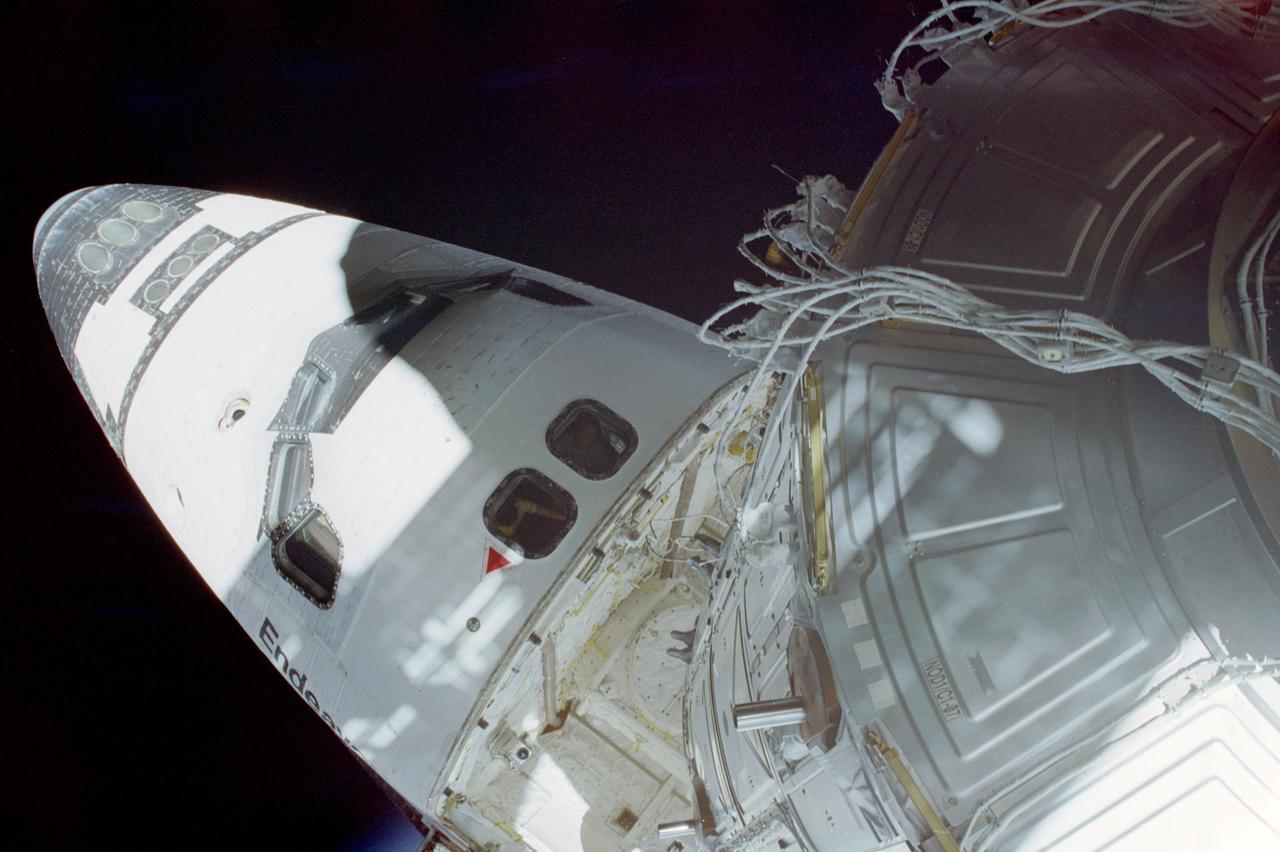
STS088-344-016 (4-15 Dec. 1998) --- This scene photographed from the top of Node 1 shows the nose of the Space Shuttle Endeavour, during one of three Extravehicular Activities (EVA) by astronaut Jerry L. Ross and James H. Newman (both out of frame). The EVA was part of the overall effort to ready for release the recently-joined Russian-built Zarya Module (FGB) and the United States-built Unity (Node 1) Module.
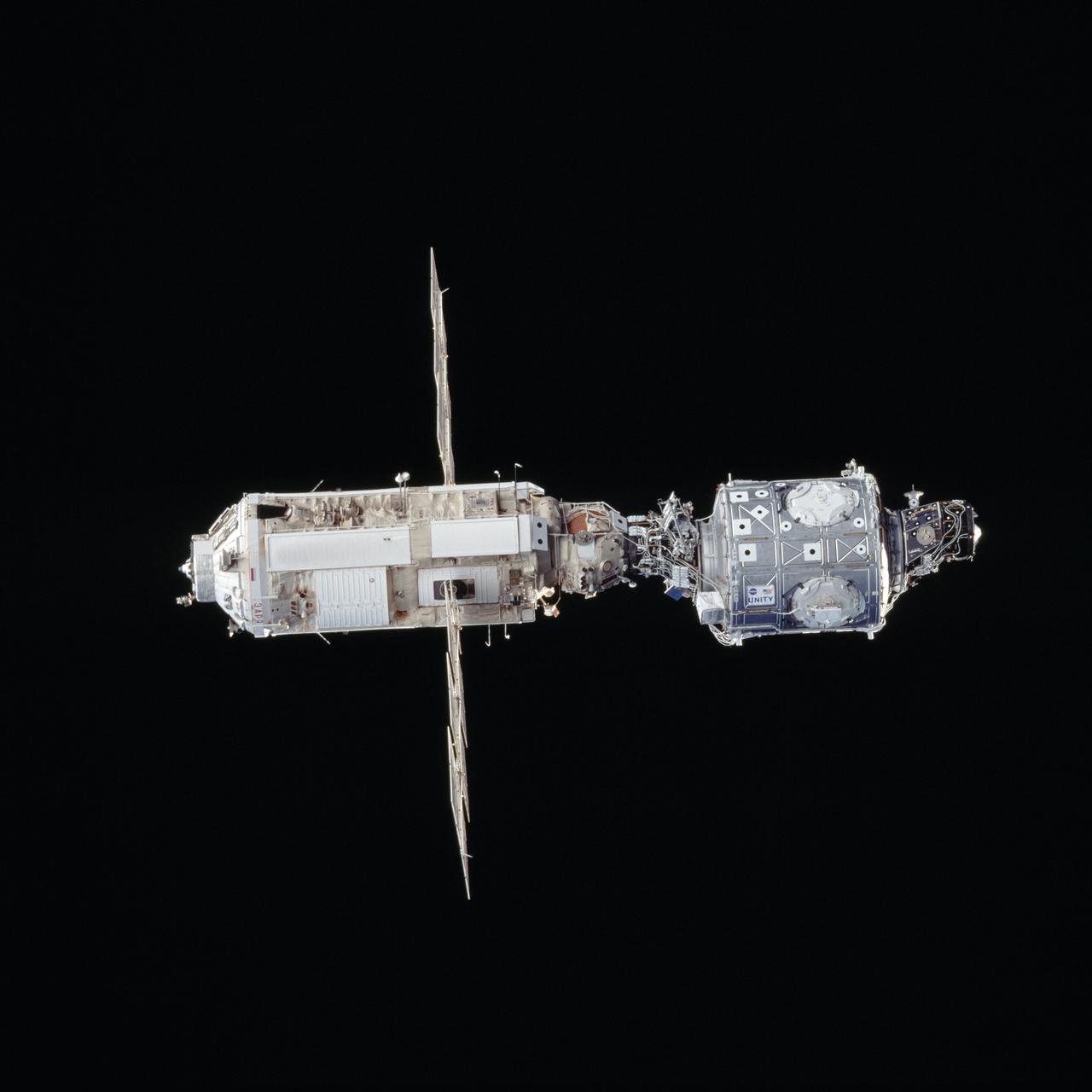
STS088-703-019 (4-15 Dec. 1998) --- The U.S.-built Unity connecting module (bottom) and the Russian-built Zarya module are backdropped against the blackness of space in this 70mm photograph taken from the Space Shuttle Endeavour. After devoting the major portion of its mission time to various tasks to ready the two docked modules for their International Space Station (ISS) roles, the six-member STS-88 crew released the tandem and performed a fly-around survey of the hardware.
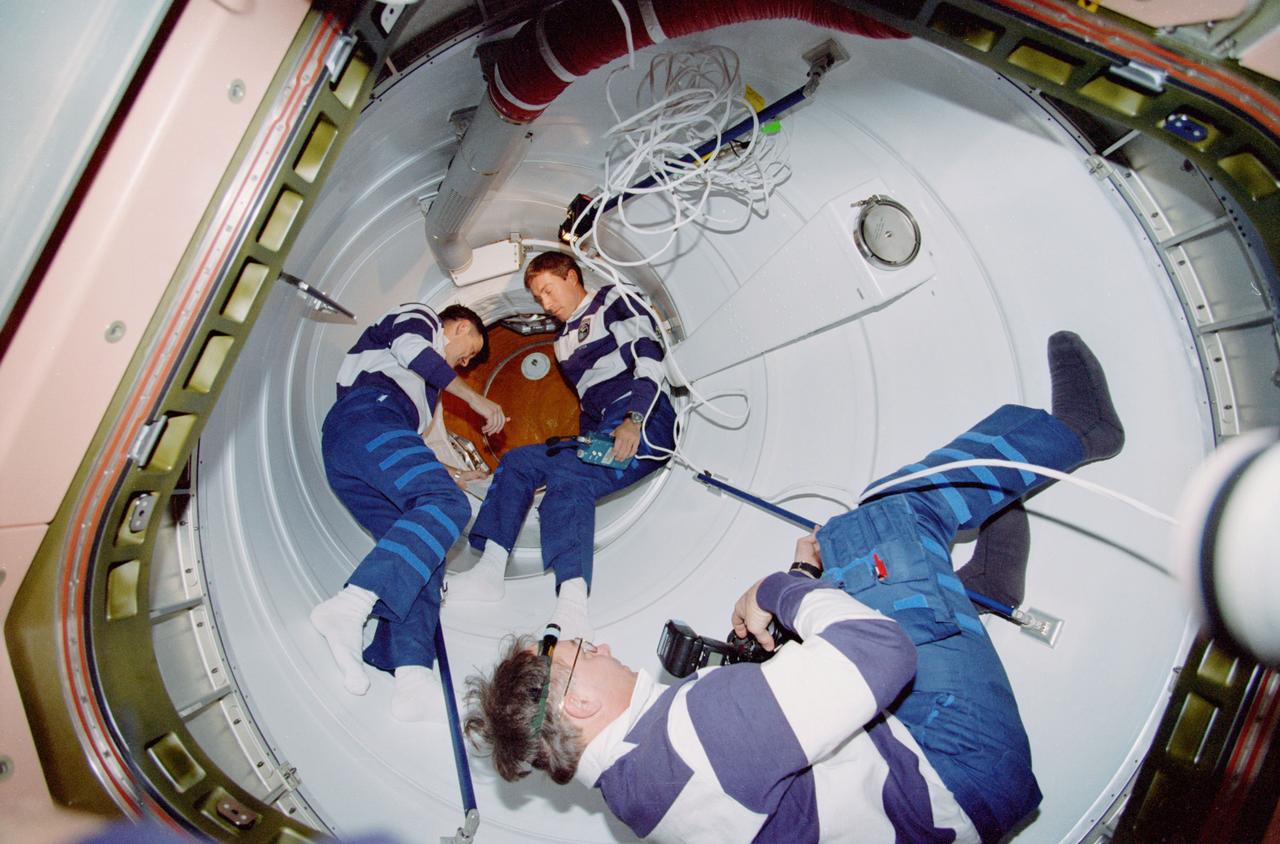
STS088-322-035 (4 - 15 DECEMBER 1998) --- Three STS-88 crew members are pictured in one of two Pressurized Mating Adapters (PMA) connected to the Unity and Zarya modules. Taking pictures in the foreground is astronaut Jerry L. Ross, mission specialist. Others are astronaut Robert D. Cabana (left), mission commander, and cosmonaut Sergei K. Krikalev, mission specialist representing the Russian Space Agency (RSA).
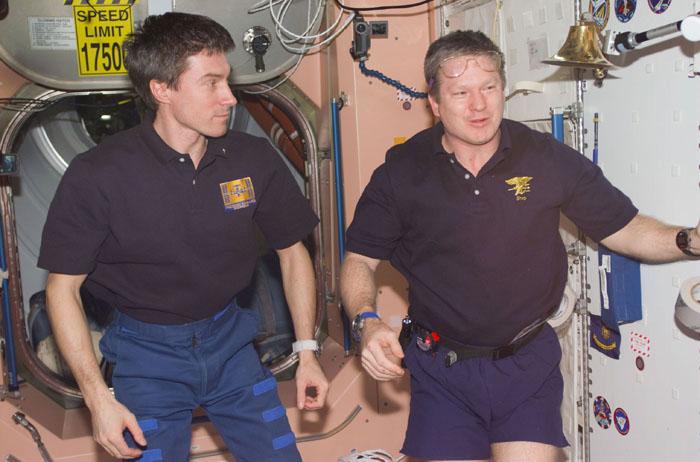
STS98-E-5291 (16 February 2001) --- Cosmonaut Sergei K. Krikalev (left), Expedition One flight engineer representing the Russian Aviation and Space Agency, and astronaut William M. (Bill) Shepherd, Expedition One commander, look toward their astronaut visitors (out of frame), about to conclude their time on the outpost. The scene was recorded with a digital still camera during farewells in the Unity node.
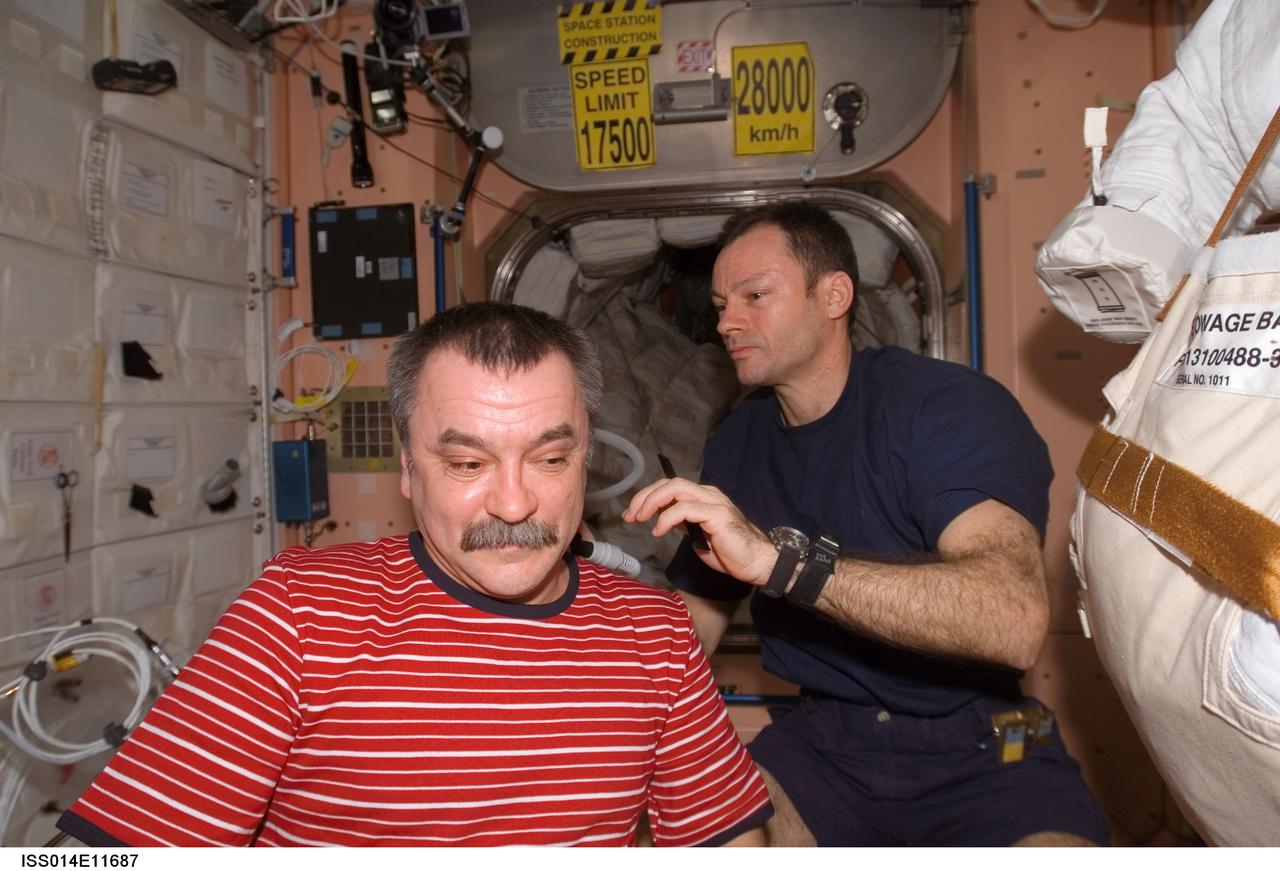
ISS014-E-11687 (11 Jan. 2007) --- Astronaut Michael E. Lopez-Alegria, Expedition 14 commander and NASA space station science officer, trims cosmonaut Mikhail Tyurin's hair in the Unity node of the International Space Station. Lopez-Alegria used hair clippers fashioned with a vacuum device to garner freshly cut hair. Tyurin, flight engineer, represents Russia's Federal Space Agency.
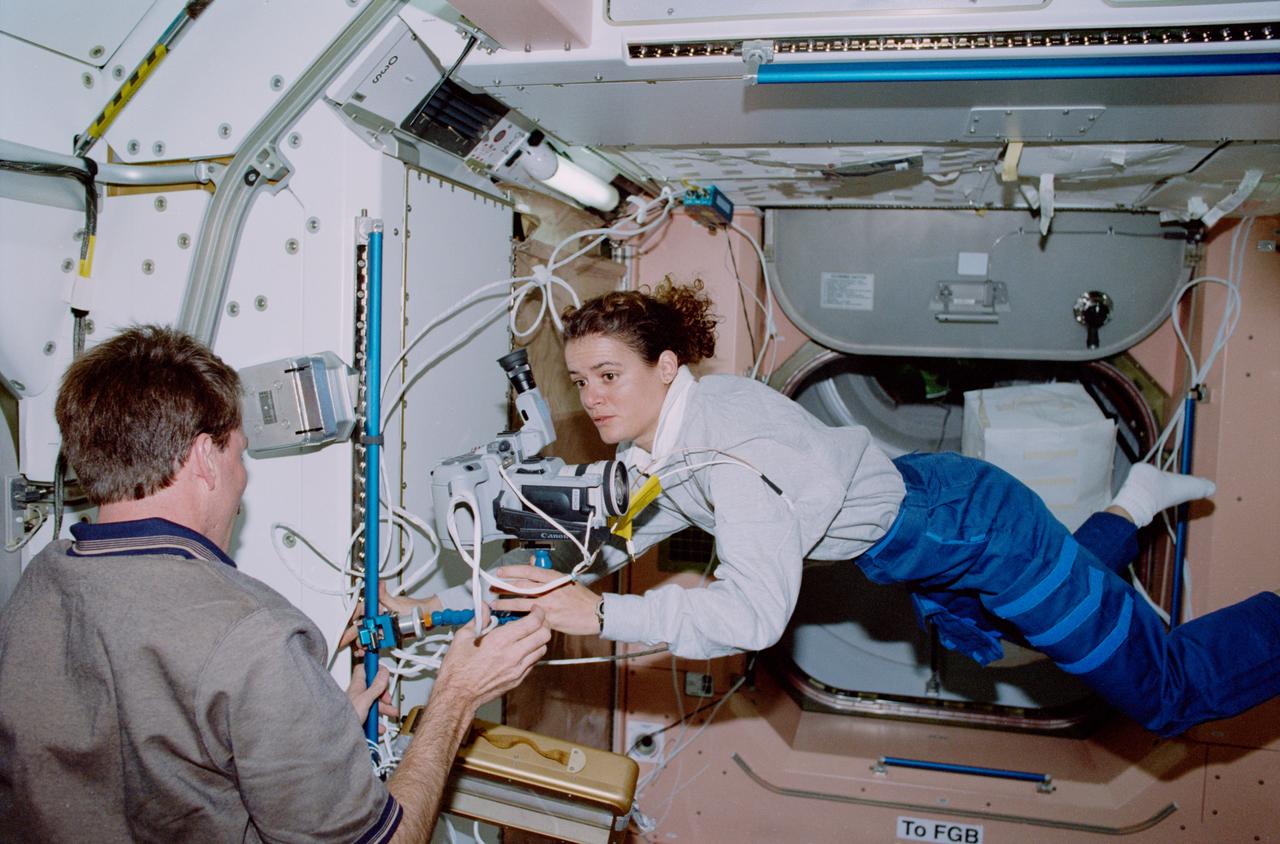
STS096-407-011 (27 May - 6 June 1999) --- Astronauts Kent V. Rominger, mission commander, and Julie Payette, mission specialist, participate in the overall chore of STS-96 of preparing International Space Station (ISS) for occupancy. The two are in the U.S.-built Unity node near the hatch leading to the Russian-built Zarya or FGB. Payette, an alumnus of the 1996 class of astronaut trainees, represents the Canadian Space Agency (CSA).
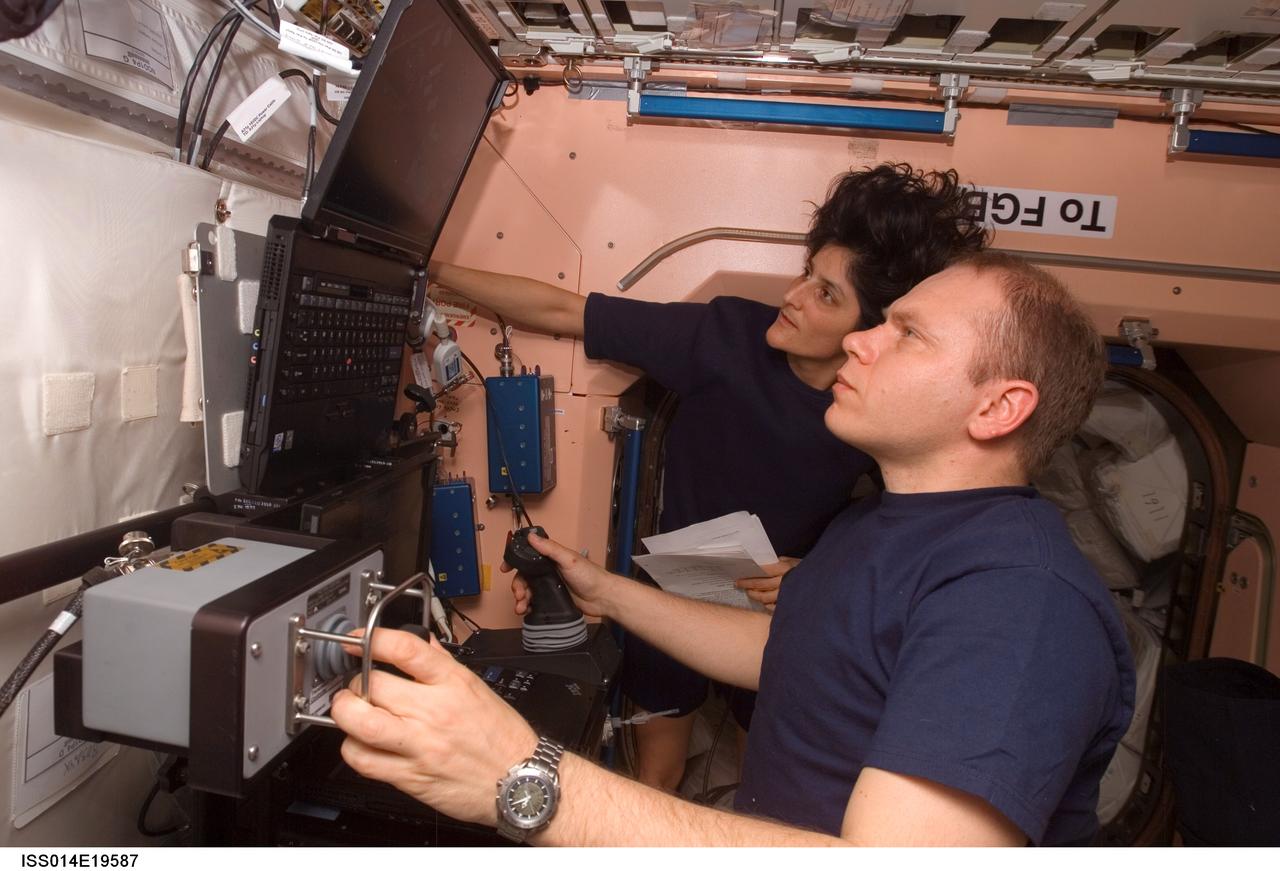
ISS014-E-19587 (17 April 2007) --- Cosmonaut Oleg V. Kotov (foreground), Expedition 15 flight engineer representing Russia's Federal Space Agency, and astronaut Sunita L. Williams, flight engineer, participate in a Space Station Remote Manipulator System (SSRMS) training session using the Robotic Onboard Trainer (ROBOT) simulator in the Unity node of the International Space Station.
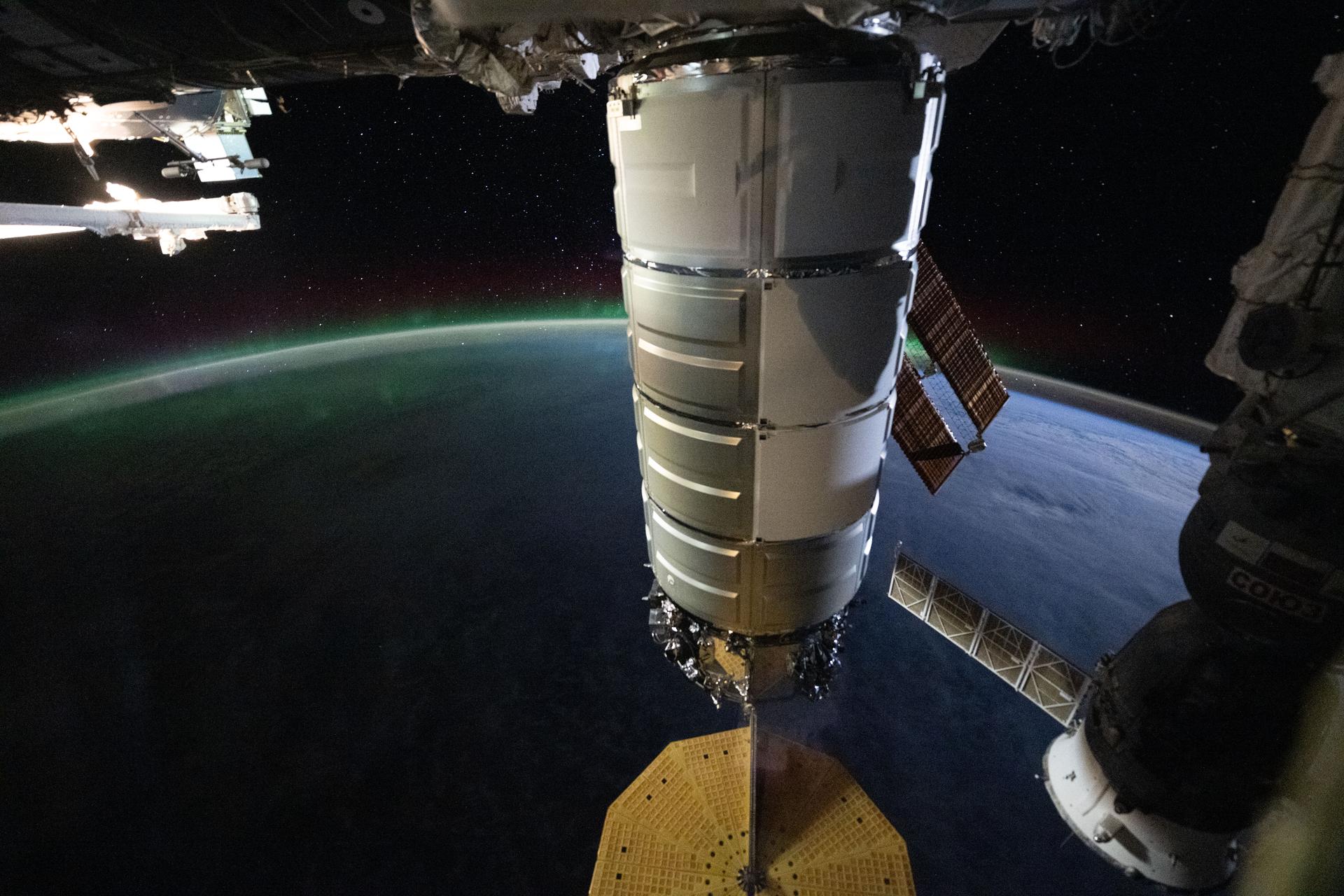
iss074e0609033 (May 26, 2026) --- Northrop Grumman's Cygnus XL cargo spacecraft, berthed to the Earth-facing port of the Unity module, is pictured from a window in the International Space Station's cupola. The orbital outpost was soaring 274 miles above the South Indian Ocean east of the French Southern and Antarctic Lands as an aurora australis beamed above Earth's horizon beneath a starry sky. Credit: NASA/Chris Williams
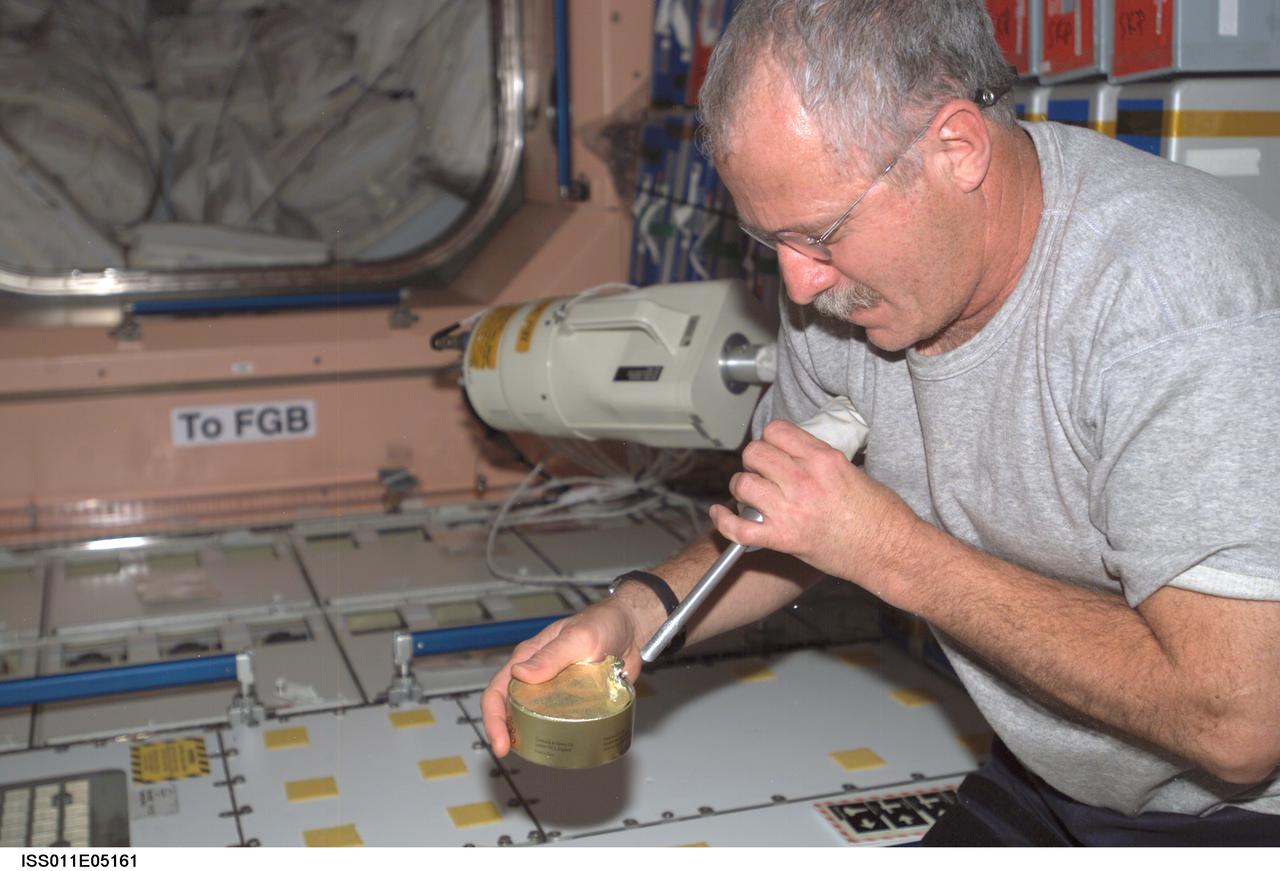
ISS011-E-05161 (17 April 2005) --- Astronaut John L. Phillips, Expedition 11 NASA ISS science officer and flight engineer, uses the ISS wet/dry vacuum cleaner assembly to catch floating debris from the top of a food can in the Unity node of the International Space Station (ISS).
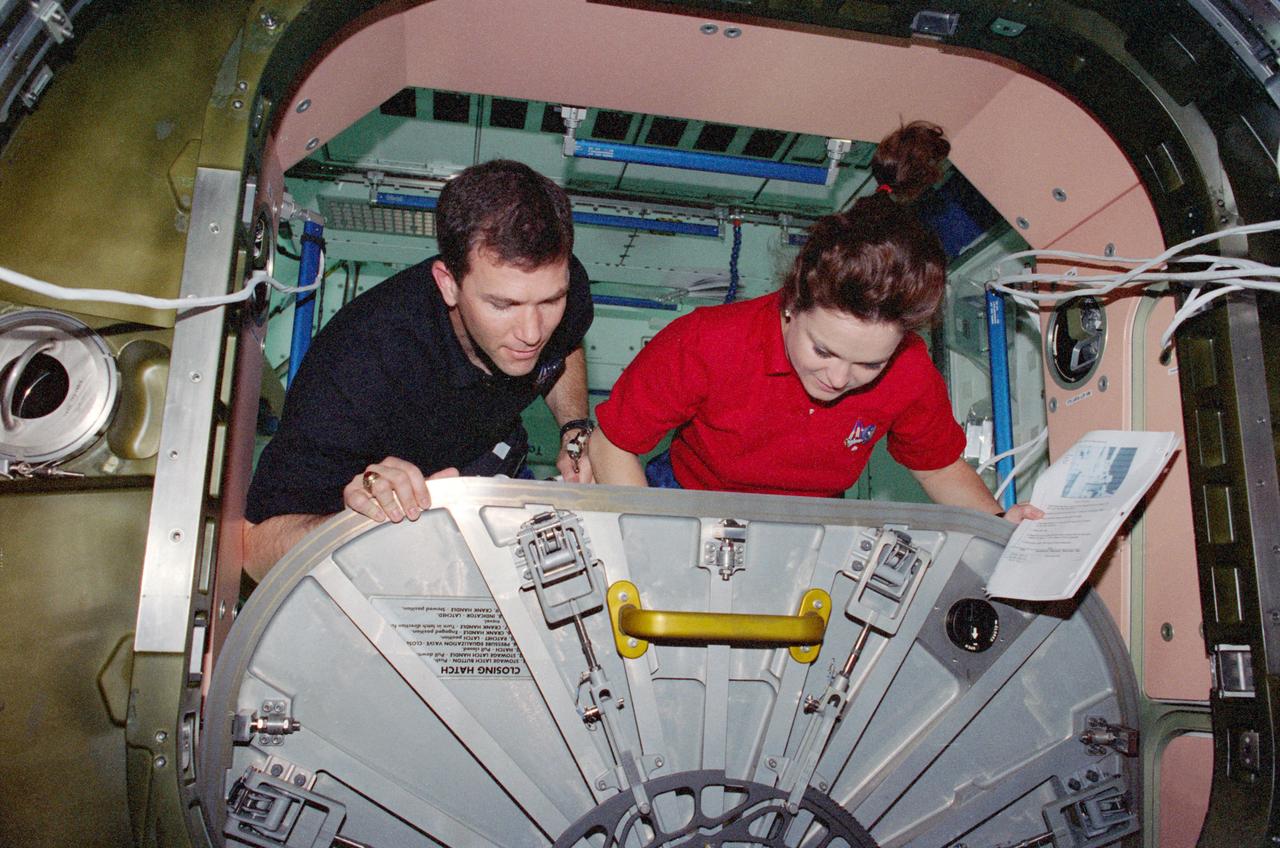
STS096-383-021 (27 May - 6 June 1999) -- Astronauts Rick D. Husband and Tamara E. Jernigan adjust the hatch for the U.S.-built Unity node. The task was part of the overall effort by the seven-member STS-96 crew to prepare the existing portion of the International Space Station (ISS).
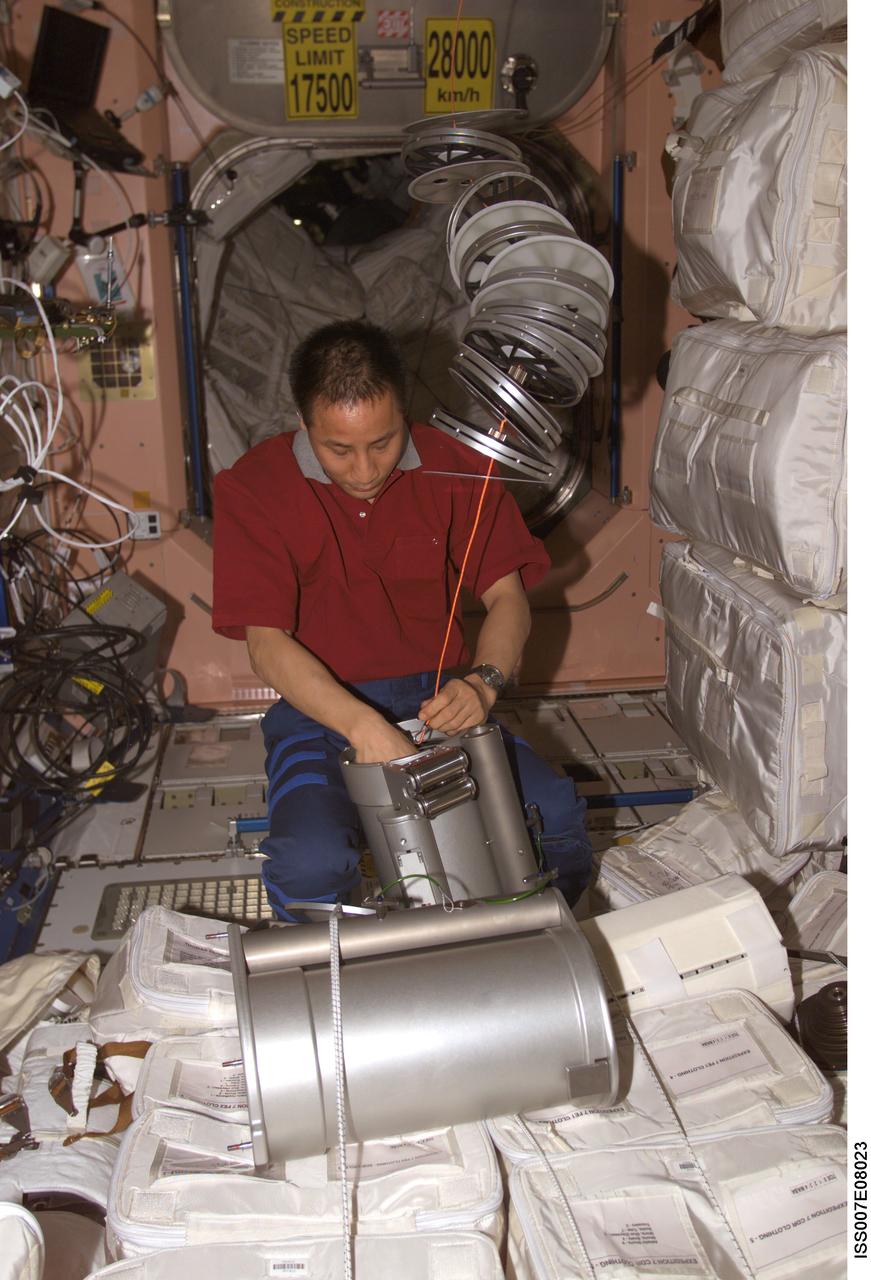
ISS007-E-08023 (23 June 2003) --- Astronaut Edward T. Lu, Expedition 7 NASA ISS science officer and flight engineer, performs maintenance on the Interim Resistive Exercise Device (IRED) Assembly in the Unity node on the International Space Station (ISS).
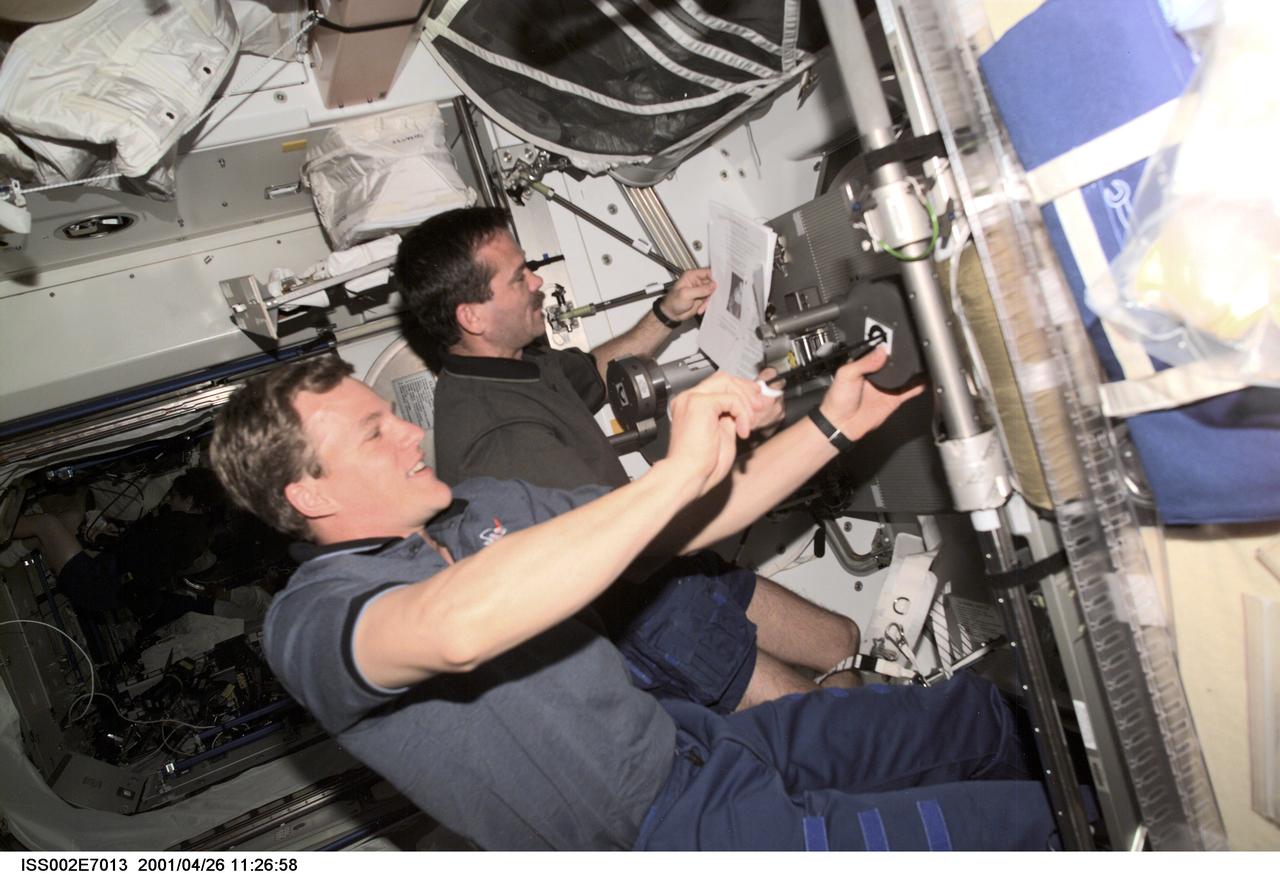
ISS002-E-7013 (26 April 2001) --- Astronauts Scott E. Parazynski and Chris A. Hadfield, mission specialists, install the Interim Resistive Exercise Devise (IRED) in the Unity/Node 1. Hadfield represents the Canadian Space Agency (CSA). A digital still camera was used to record this image.
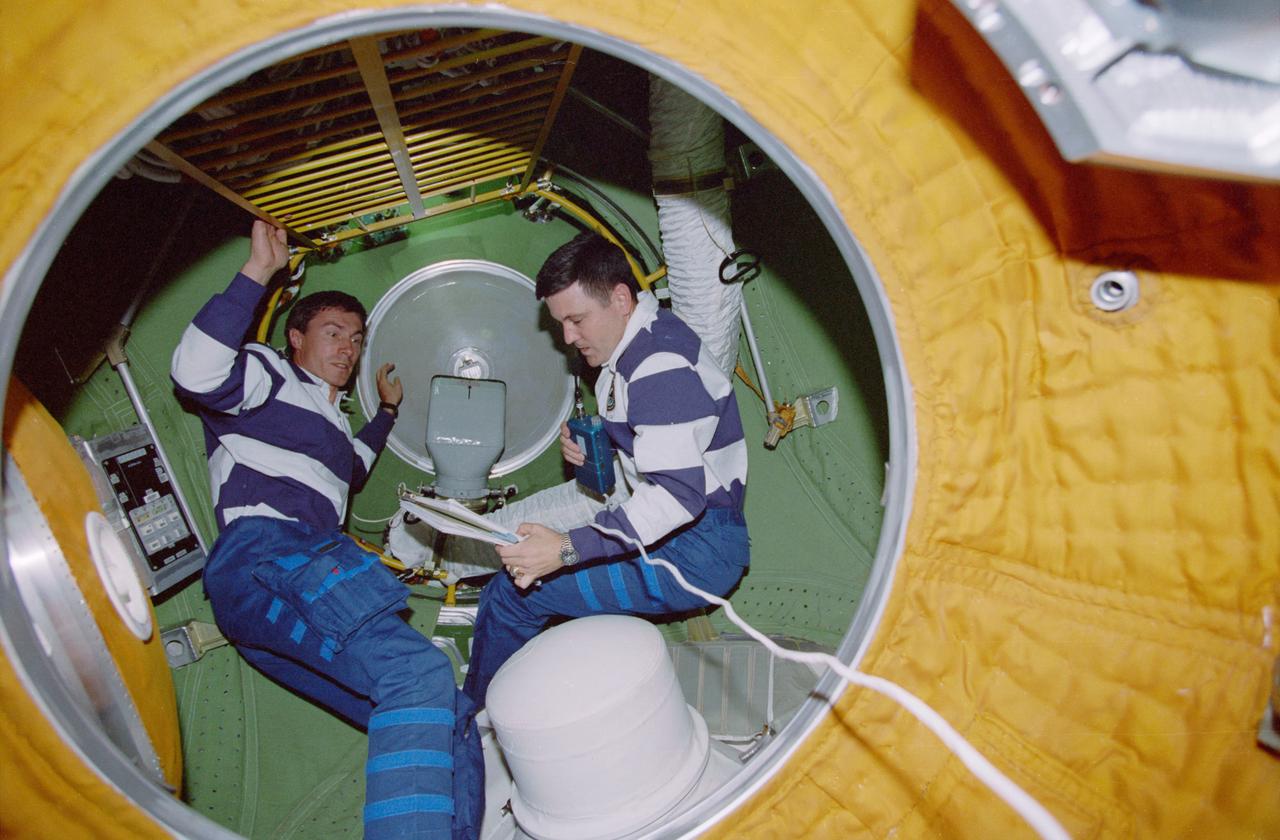
STS088-332-010 (4-15 Dec. 1998) --- Cosmonaut Sergei K. Krikalev (left), mission specialist representing the Russian Space Agency (RSA), and astronaut Robert D. Cabana mission commander, plan their approach to tasks as they huddle at an internal hatch in the Russian built FGB, also called Zarya. All six STS-88 crew members were involved in tasks to ready Zarya and the now-connected U.S. Node 1, also called Unity, for their International Space Station (ISS) roles. Krikalev has been named as a member of the first ISS crew.
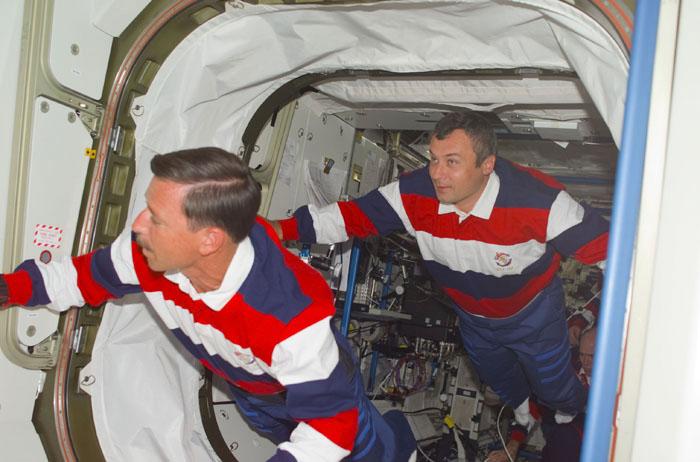
STS105-E-5109 (12 August 2001) --- Scott J. Horowitz (left), STS-105 commander, and cosmonaut Vladimir N. Dezhurov, Expedition Three flight engineer, move into Unity Node 1 during the initial ingress into the International Space Station (ISS) during the STS-105 mission. Dezhurov, accompanied by cosmonaut Mikhail Tyurin and astronaut Frank L. Culbertson, Jr., will be replacing astronauts Susan J. Helms and James S. Voss and cosmonaut Yury V. Usachev as the temporary residents of the ISS. This image was taken with a digital still camera.
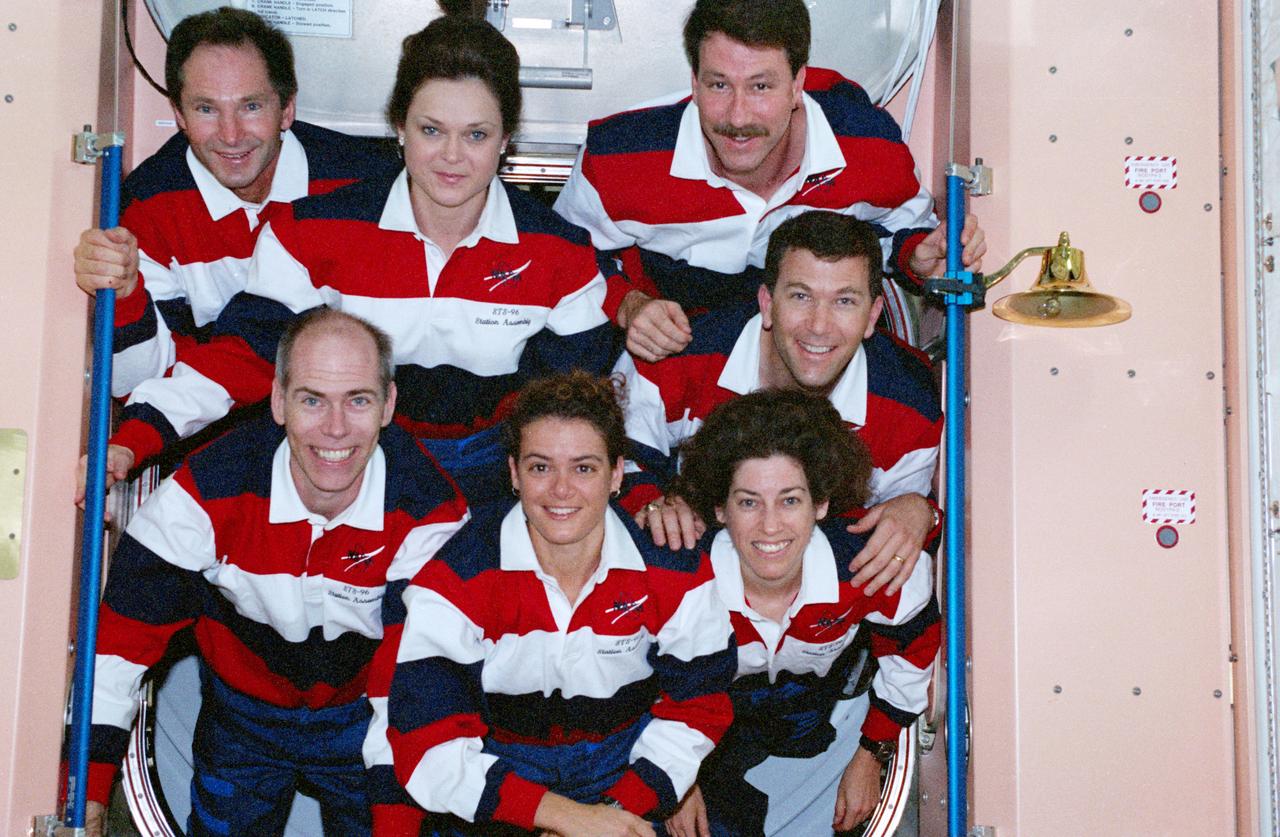
STS096-380-019 (27 May - 6 June 1999) --- The seven crew members for the STS-96 mission pose for the traditional inflight crew portrait in the hatch way of the U.S.-built Unity node for the International Space Station (ISS). From to left to right, bottom, are astronauts Daniel T. Barry, Julie Payette and Ellen Ochoa. On top are cosmonaut Valery I. Tokarev, along with astronauts Tamara E. Jernigan and Kent V. Rominger. Astronaut Rick D. Husband is between Rominger and Ochoa. Payette represents the Canadian Space Agency (CSA) and Tokarev is with the Russian Space Agency (RSA).
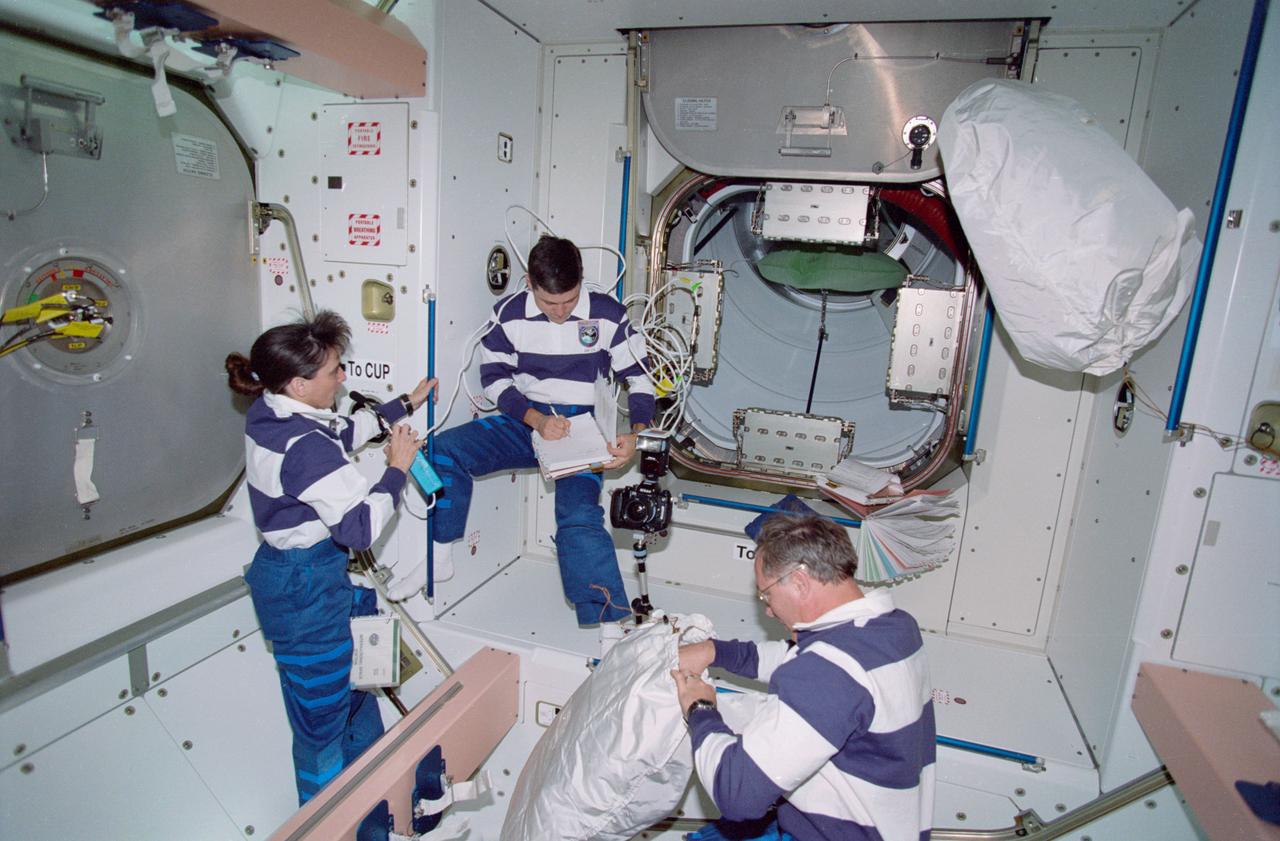
STS088-332-017 (4-15 Dec. 1998) --- From the left, astronauts Nancy J. Currie, mission specialist; Robert D. Cabana, commander, and Jerry L. Ross, mission specialist, go about various chores designed to put the United States-built Unity Connecting Module (Node 1) in readiness for its impending release in Earth-orbit. Currie talks with ground controllers while Cabana logs a note and Ross checks a supply bag. After devoting the major portion of its mission time to various tasks to ready the Russian-built FGB Module (Zarya) and the docked United States-built node, the six-member crew released the tandem from the Space Shuttle Endeavour’s cargo bay toward mission’s end.
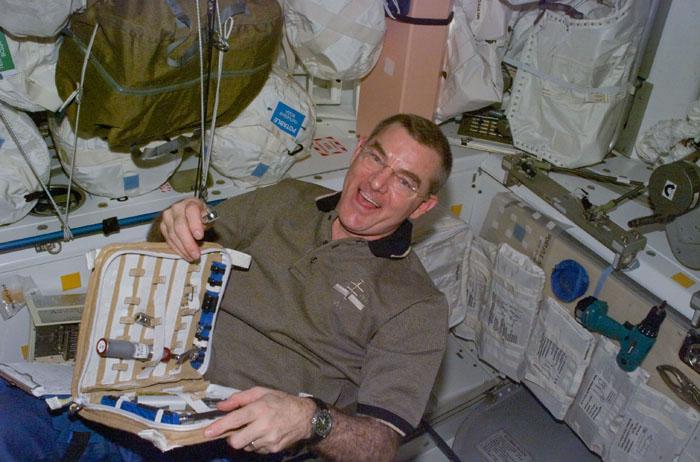
STS105-E-5175 (13 August 2001) --- Astronaut James S. Voss, retrieves a small tool from a tool case in the U.S.-built Unity node aboard the International Space Station (ISS). The Expedition Two flight engineer is only days away from returning to Earth following five months aboard the orbital outpost. The image was recorded with a digital still camera.
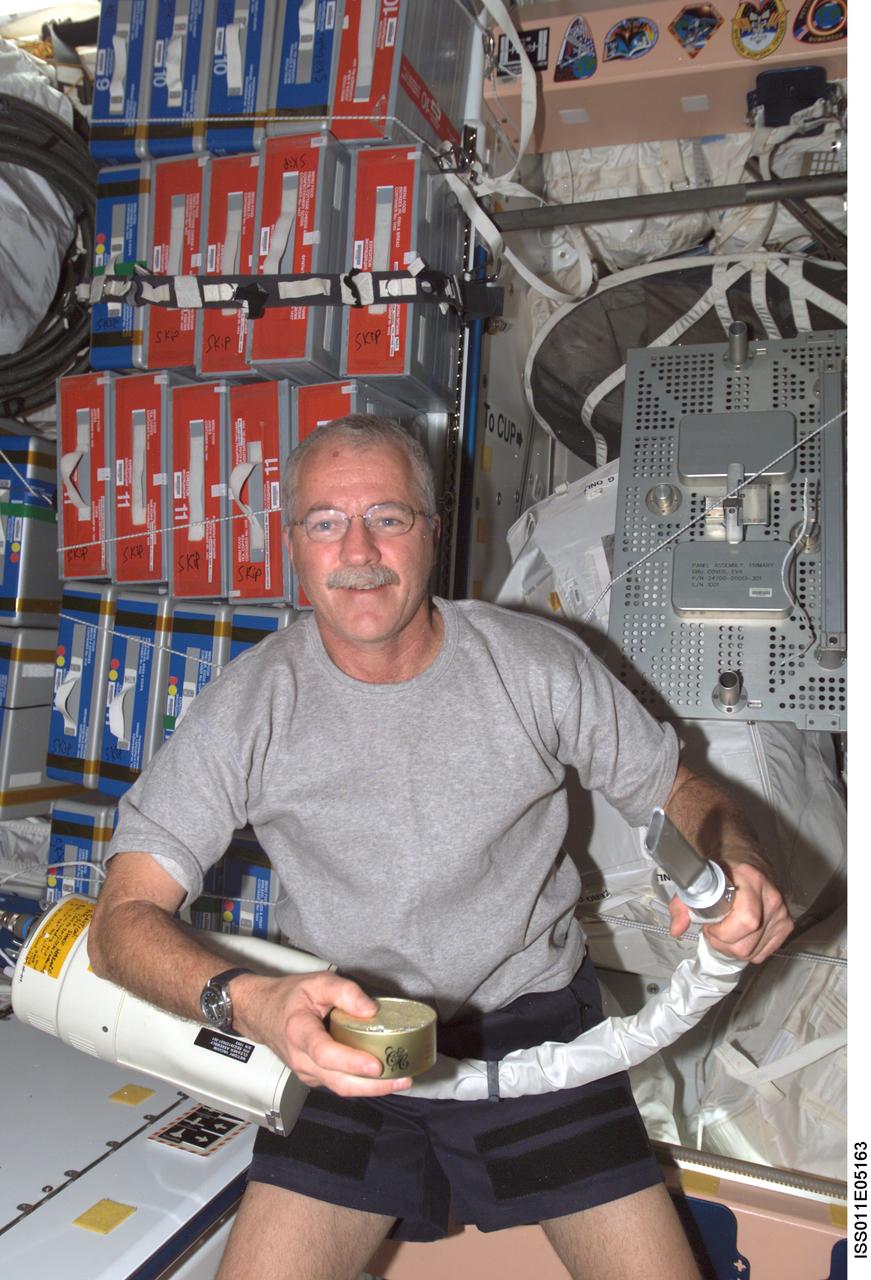
ISS011-E-05163 (17 April 2005) --- Astronaut John L. Phillips, Expedition 11 NASA ISS science officer and flight engineer, poses for a photo with the ISS wet/dry vacuum cleaner assembly he used to catch floating debris from the top of a food can in the Unity node of the International Space Station (ISS).
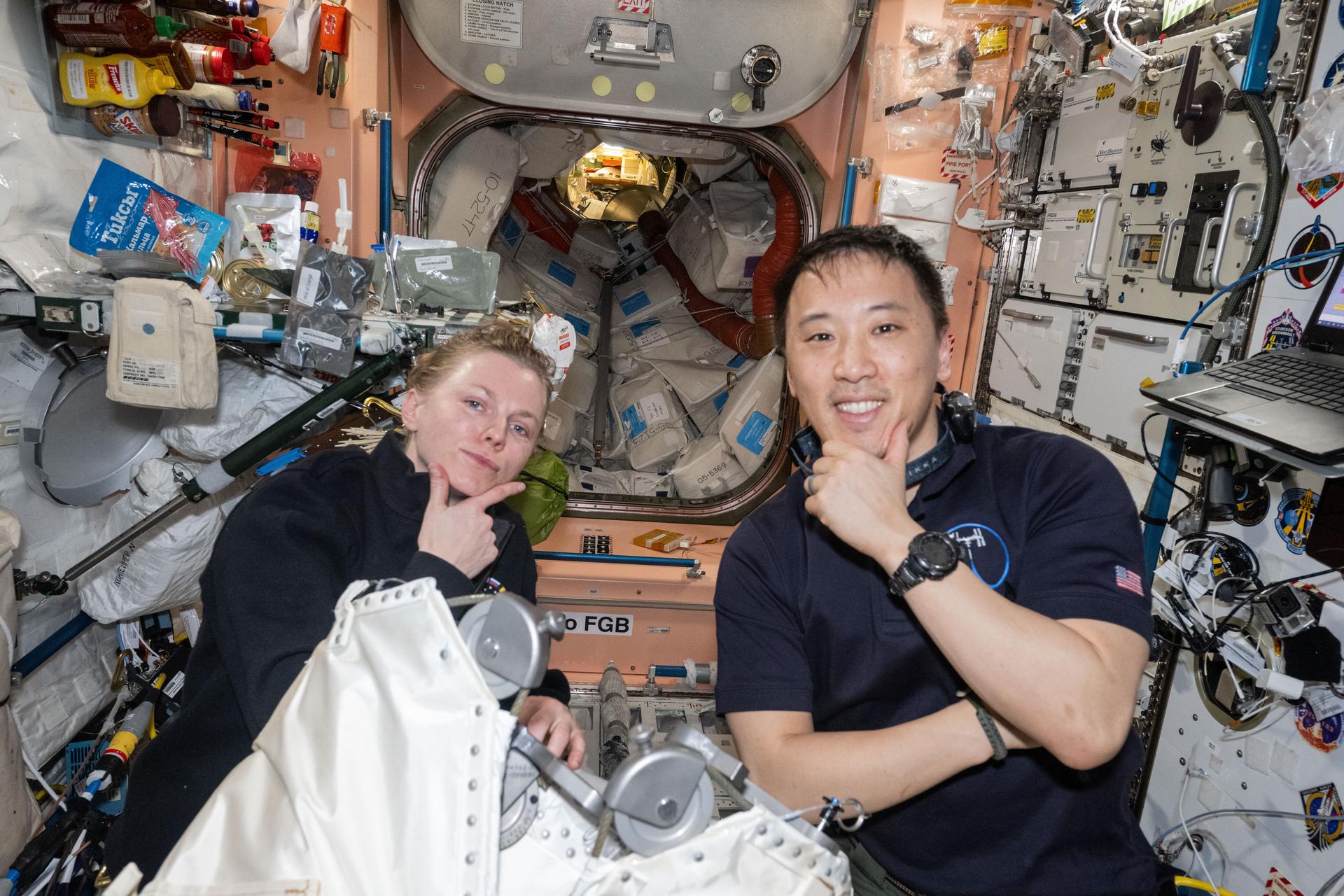
iss073e0814466 (Sept. 18, 2025) --- NASA astronauts Zena Cardman and Jonny Kim, both Expedition 73 flight engineers, pose for a fun portrait inside the International Space Station’s Unity module shortly after the arrival of Northrop Grumman’s Cygnus XL cargo craft. The duo had just begun unpacking several tons of new science experiments, supplies, and hardware.
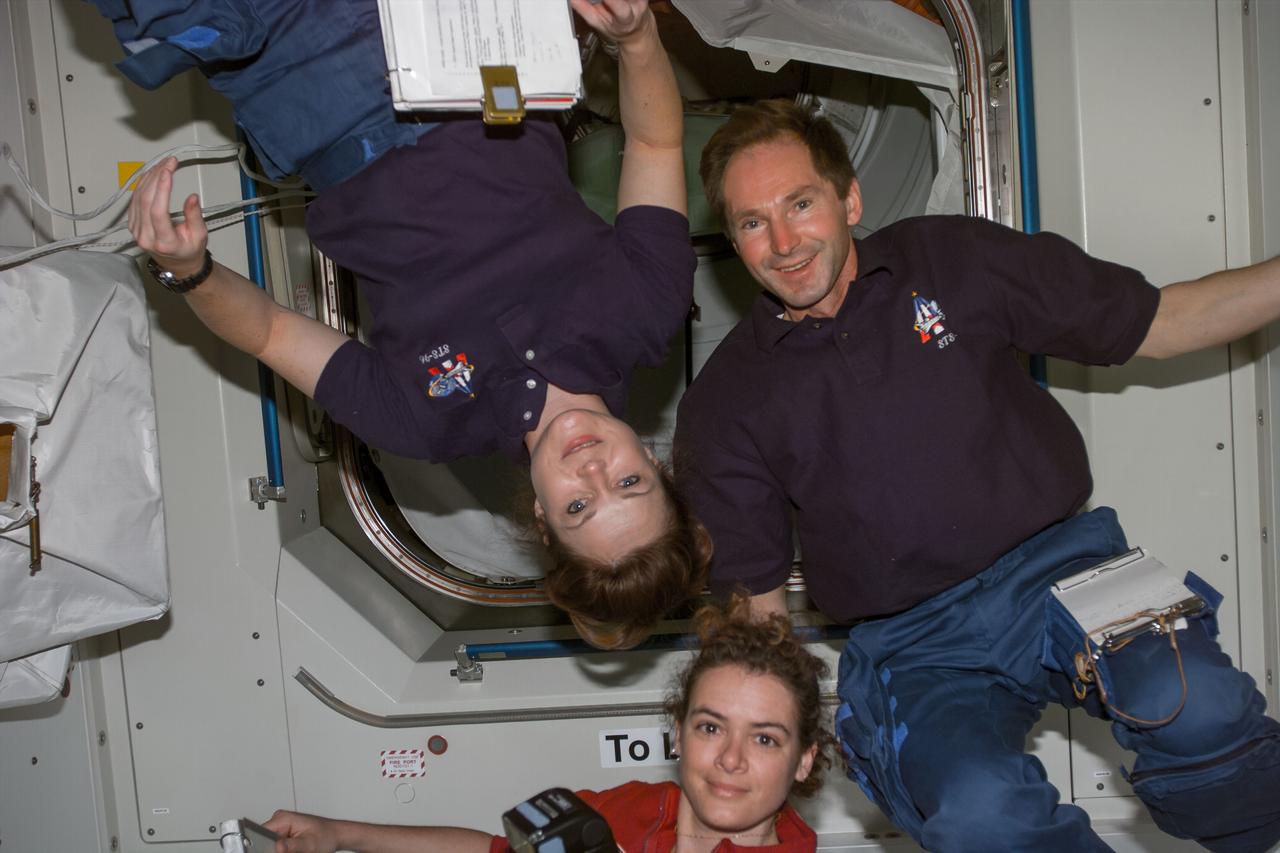
S96-E-5078 (31 May 1999) --- Flight Day 5 activity called for some of Discovery's crew members to work in the Unity node, part of the International Space Station (ISS). From the left are astronauts Tamara Jernigan and Julie Payette, along with cosmonaut Valery I. Tokarev. Payette represents the Canadian Space Agency (CSA) and Tokarev is with the Russian Space Agency (RSA). The photo was taken at 01:50:38, May 31, 1999.
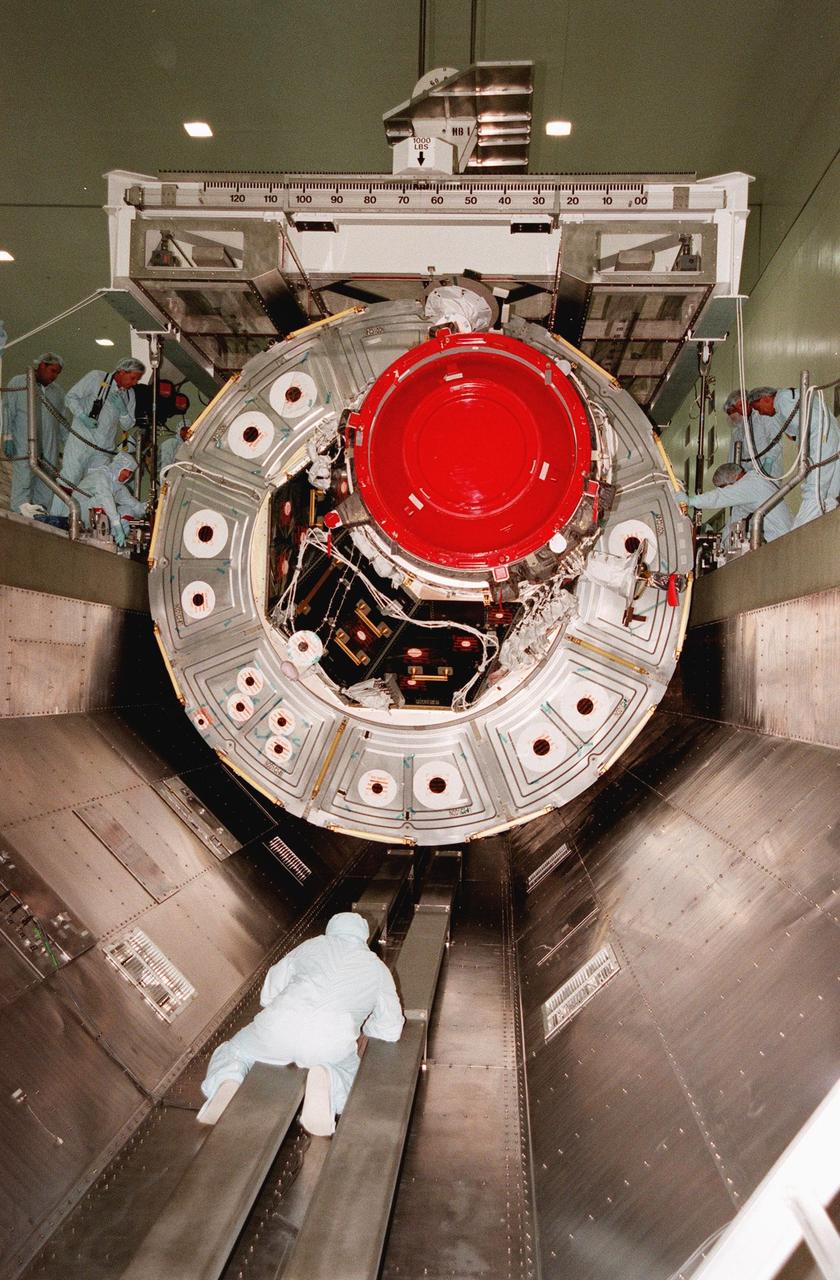
In the Space Station Processing Facility, workers at the side and on the floor of the payload canister guide the Unity connecting module into position for transfer to the launch pad. Part of the International Space Station (ISS), Unity is scheduled for launch aboard Space Shuttle Endeavour on Mission STS-88 in December. The Unity is a connecting passageway to the living and working areas of ISS. While on orbit, the flight crew will deploy Unity from the payload bay and attach Unity to the Russian-built Zarya control module which will be in orbit at that time
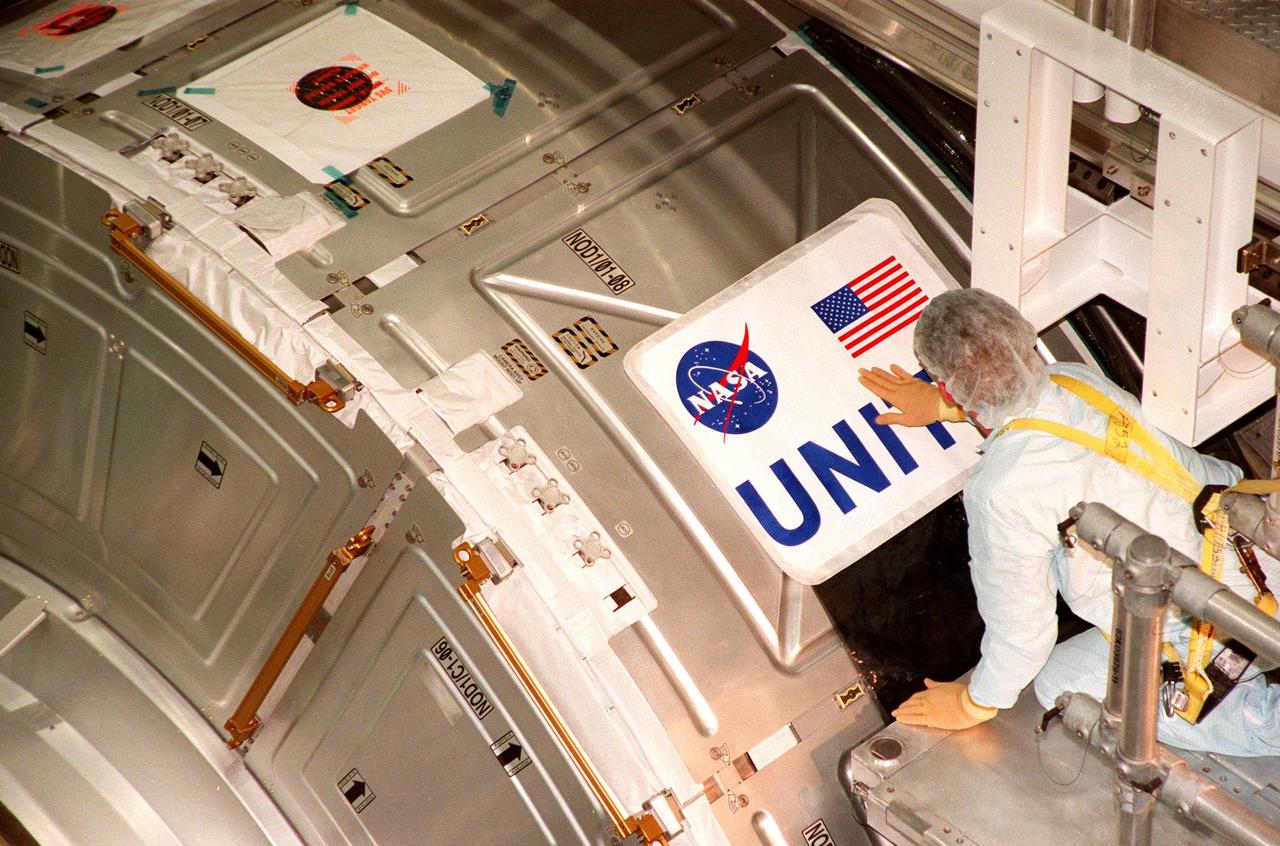
In the Space Station Processing Facility, a worker places the nameplate on the side of the Unity connecting module, part of the International Space Station. Unity was expected to be transported to Launch Pad 39A on Oct. 26 for launch aboard Space Shuttle Endeavour on Mission STS-88 in December. The Unity is a connecting passageway to the living and working areas of ISS. While on orbit, the flight crew will deploy Unity from the payload bay and attach Unity to the Russian-built Zarya control module which will be in orbit at that time
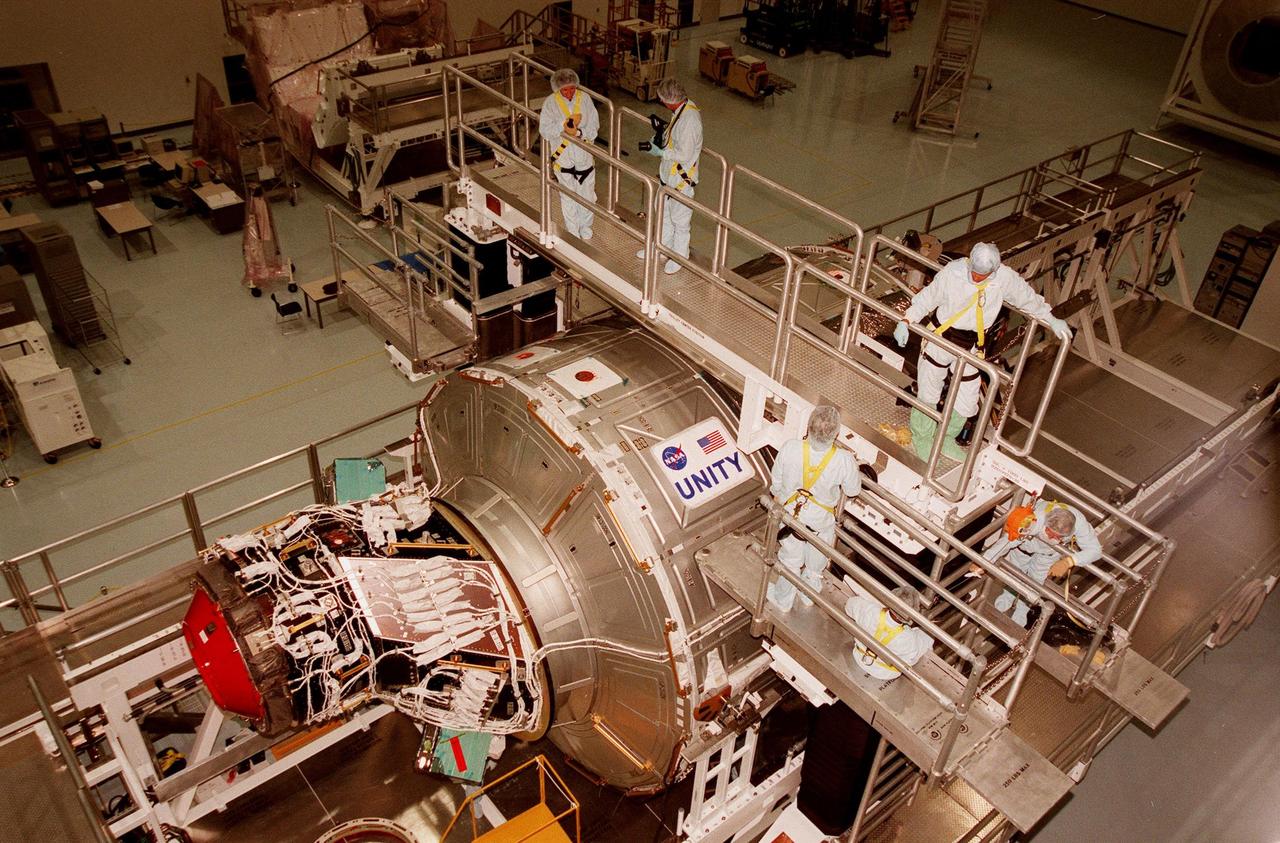
In the Space Station Processing Facility, workers look over the Unity connecting module, part of the International Space Station, after attaching the nameplate. Unity was expected to be transported to Launch Pad 39A on Oct. 26 for launch aboard Space Shuttle Endeavour on Mission STS-88 in December. The Unity is a connecting passageway to the living and working areas of ISS. While on orbit, the flight crew will deploy Unity from the payload bay and attach Unity to the Russian-built Zarya control module which will be in orbit at that time
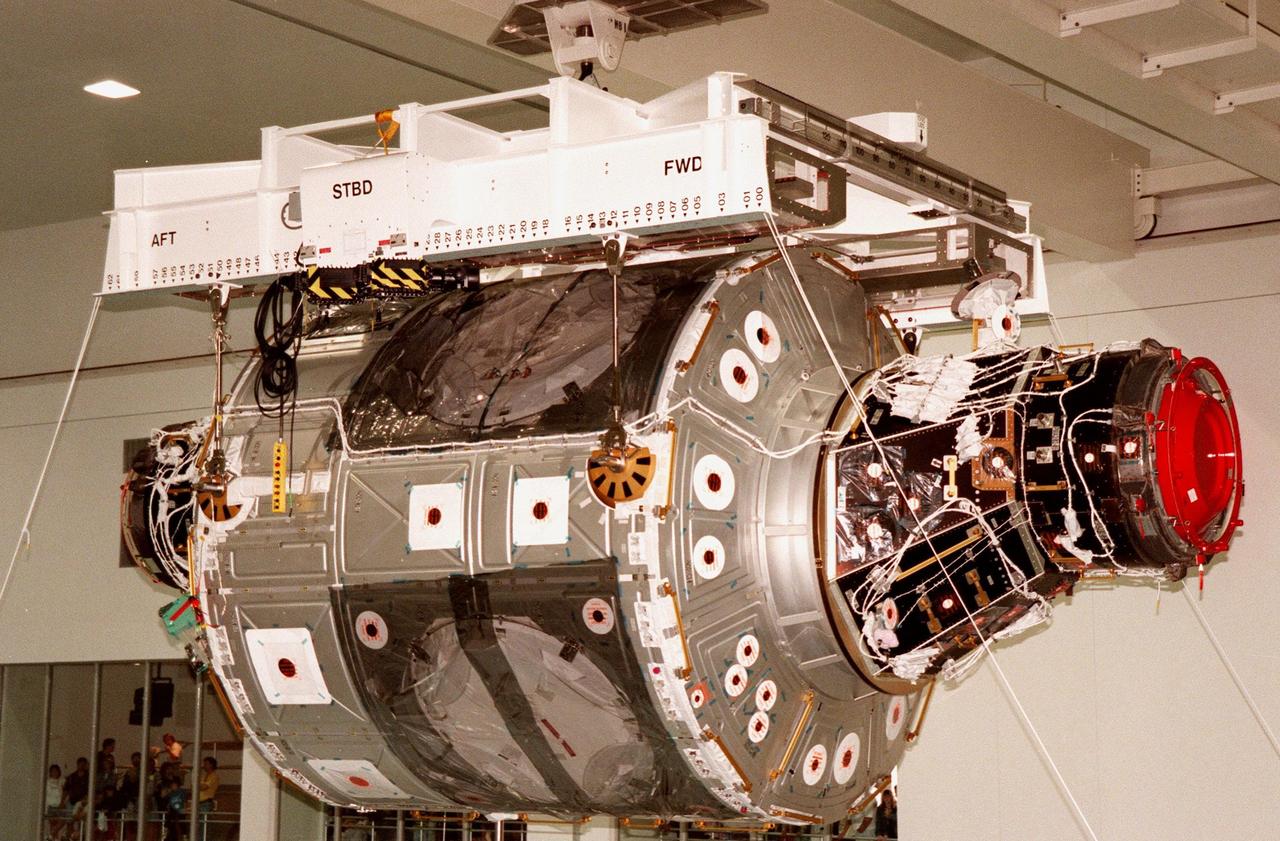
In the Space Station Processing Facility, a closeup view shows the overhead crane holding the Unity connecting module as it moves it to the payload canister for transfer to the launch pad. Part of the International Space Station (ISS), Unity is scheduled for launch aboard Space Shuttle Endeavour on Mission STS-88 in December. The Unity is a connecting passageway to the living and working areas of ISS. While on orbit, the flight crew will deploy Unity from the payload bay and attach Unity to the Russian-built Zarya control module which will be in orbit at that time
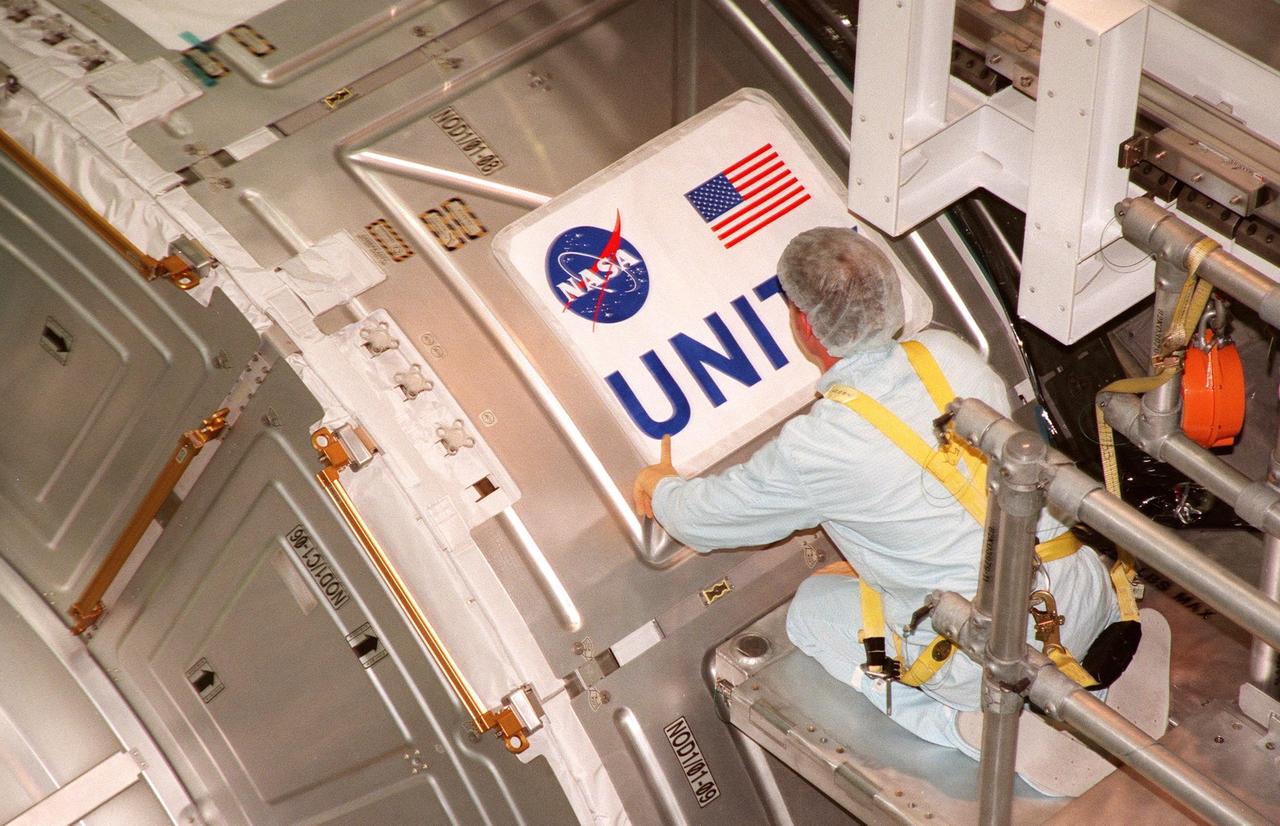
In the Space Station Processing Facility, a worker checks placement of the nameplate for the Unity connecting module, part of the International Space Station. Unity was expected to be transported to Launch Pad 39A on Oct. 26 for launch aboard Space Shuttle Endeavour on Mission STS-88 in December. The Unity is a connecting passageway to the living and working areas of ISS. While on orbit, the flight crew will deploy Unity from the payload bay and attach Unity to the Russian-built Zarya control module which will be in orbit at that time