
Robert Smith, from the University of Alberta, speaks during a panel discussion alongside Rebecca Charbonneau, from the American Institute of Physics and Patrick McCray, from the University of California Santa Barbara, on history of the Hubble Space Telescope during an event titled “Beyond the Deep Field: Hubble’s Legacy and the Future of Cosmic Observation,” Thursday, June 4, 2026, at the Mary W. Jackson NASA Headquarters building in Washington. Photo Credit: (NASA/Joel Kowsky)

Rebecca Charbonneau, from the American Institute of Physics, right, speaks alongside Robert Smith, from the University of Alberta, left, and Patrick McCray, from the University of California Santa Barbara, during a panel discussion on history of the Hubble Space Telescope during an event titled “Beyond the Deep Field: Hubble’s Legacy and the Future of Cosmic Observation,” Thursday, June 4, 2026, at the Mary W. Jackson NASA Headquarters building in Washington. Photo Credit: (NASA/Joel Kowsky)
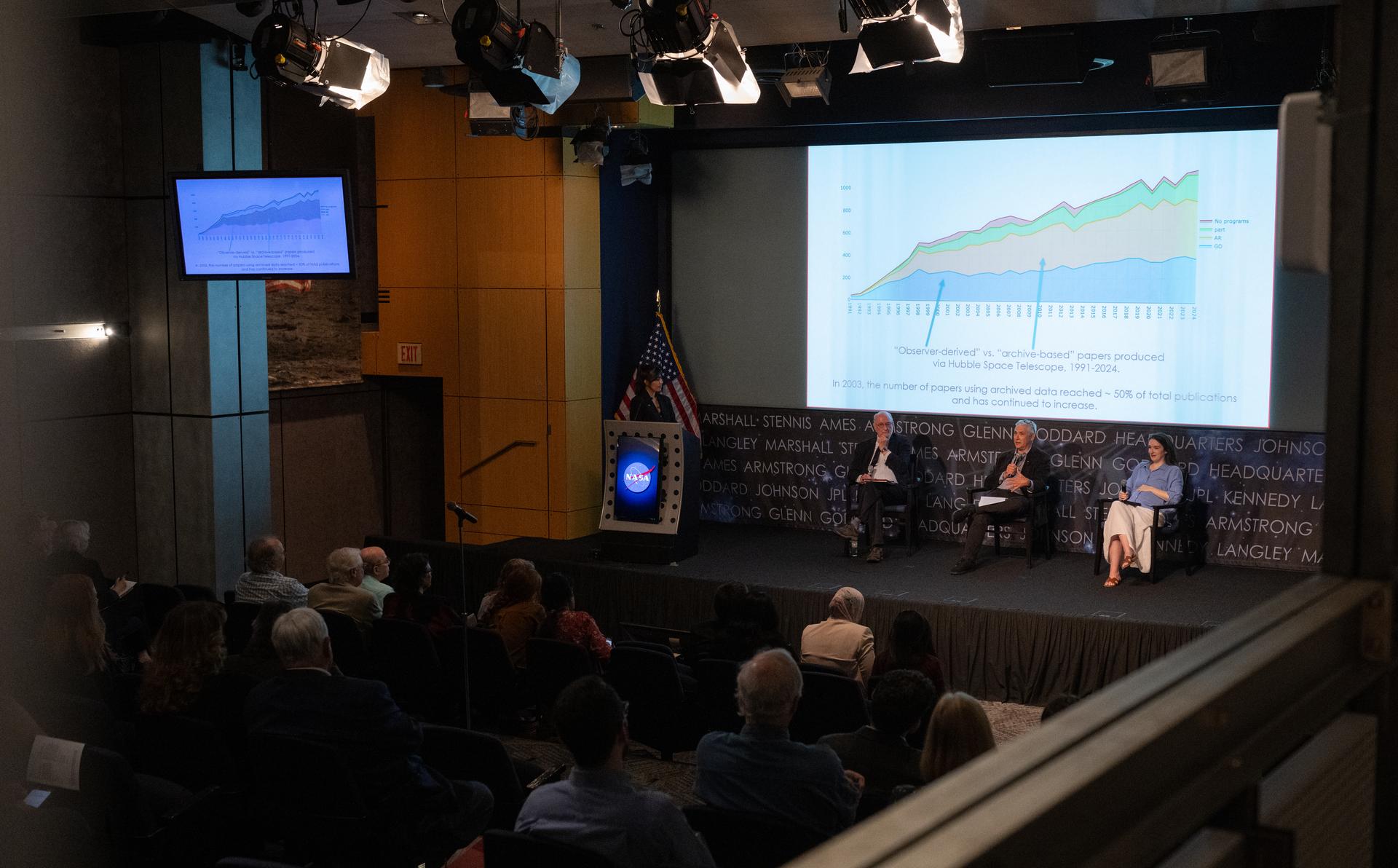
Patrick McCray, from the University of California Santa Barbara, center, speaks alongside Robert Smith, from the University of Alberta, second from left, and Rebecca Charbonneau, from the American Institute of Physics, right, during a panel discussion on history of the Hubble Space Telescope during an event titled “Beyond the Deep Field: Hubble’s Legacy and the Future of Cosmic Observation,” Thursday, June 4, 2026, at the Mary W. Jackson NASA Headquarters building in Washington. Photo Credit: (NASA/Joel Kowsky)

Rebecca Charbonneau, from the American Institute of Physics, speaks during a panel discussion alongside Robert Smith, from the University of Alberta and Patrick McCray, from the University of California Santa Barbara, on history of the Hubble Space Telescope during an event titled “Beyond the Deep Field: Hubble’s Legacy and the Future of Cosmic Observation,” Thursday, June 4, 2026, at the Mary W. Jackson NASA Headquarters building in Washington. Photo Credit: (NASA/Joel Kowsky)

Lois Rossin, a historian in NASA’s History Office, moderates a panel with Rebecca Charbonneau, from the American Institute of Physics, Robert Smith, from the University of Alberta, and Patrick McCray, from the University of California Santa Barbara, on history of the Hubble Space Telescope during an event titled “Beyond the Deep Field: Hubble’s Legacy and the Future of Cosmic Observation,” Thursday, June 4, 2026, at the Mary W. Jackson NASA Headquarters building in Washington. Photo Credit: (NASA/Joel Kowsky)

Patrick McCray, from the University of California Santa Barbara, speaks during a panel discussion with Robert Smith, from the University of Alberta and Rebecca Charbonneau, from the American Institute of Physics, on history of the Hubble Space Telescope during an event titled “Beyond the Deep Field: Hubble’s Legacy and the Future of Cosmic Observation,” Thursday, June 4, 2026, at the Mary W. Jackson NASA Headquarters building in Washington. Photo Credit: (NASA/Joel Kowsky)

Rebecca Charbonneau, from the American Institute of Physics, right, speaks alongside Robert Smith, from the University of Alberta, left, and Patrick McCray, from the University of California Santa Barbara, during a panel discussion on history of the Hubble Space Telescope during an event titled “Beyond the Deep Field: Hubble’s Legacy and the Future of Cosmic Observation,” Thursday, June 4, 2026, at the Mary W. Jackson NASA Headquarters building in Washington. Photo Credit: (NASA/Joel Kowsky)

An audience member asks a question during a panel moderated by Lois Rossin, a historian in NASA’s History Office, left, with Robert Smith, from the University of Alberta, second from left, Patrick McCray, from the University of California Santa Barbara, center, and Rebecca Charbonneau, from the American Institute of Physics, right, on history of the Hubble Space Telescope during an event titled “Beyond the Deep Field: Hubble’s Legacy and the Future of Cosmic Observation,” Thursday, June 4, 2026, at the Mary W. Jackson NASA Headquarters building in Washington. Photo Credit: (NASA/Joel Kowsky)
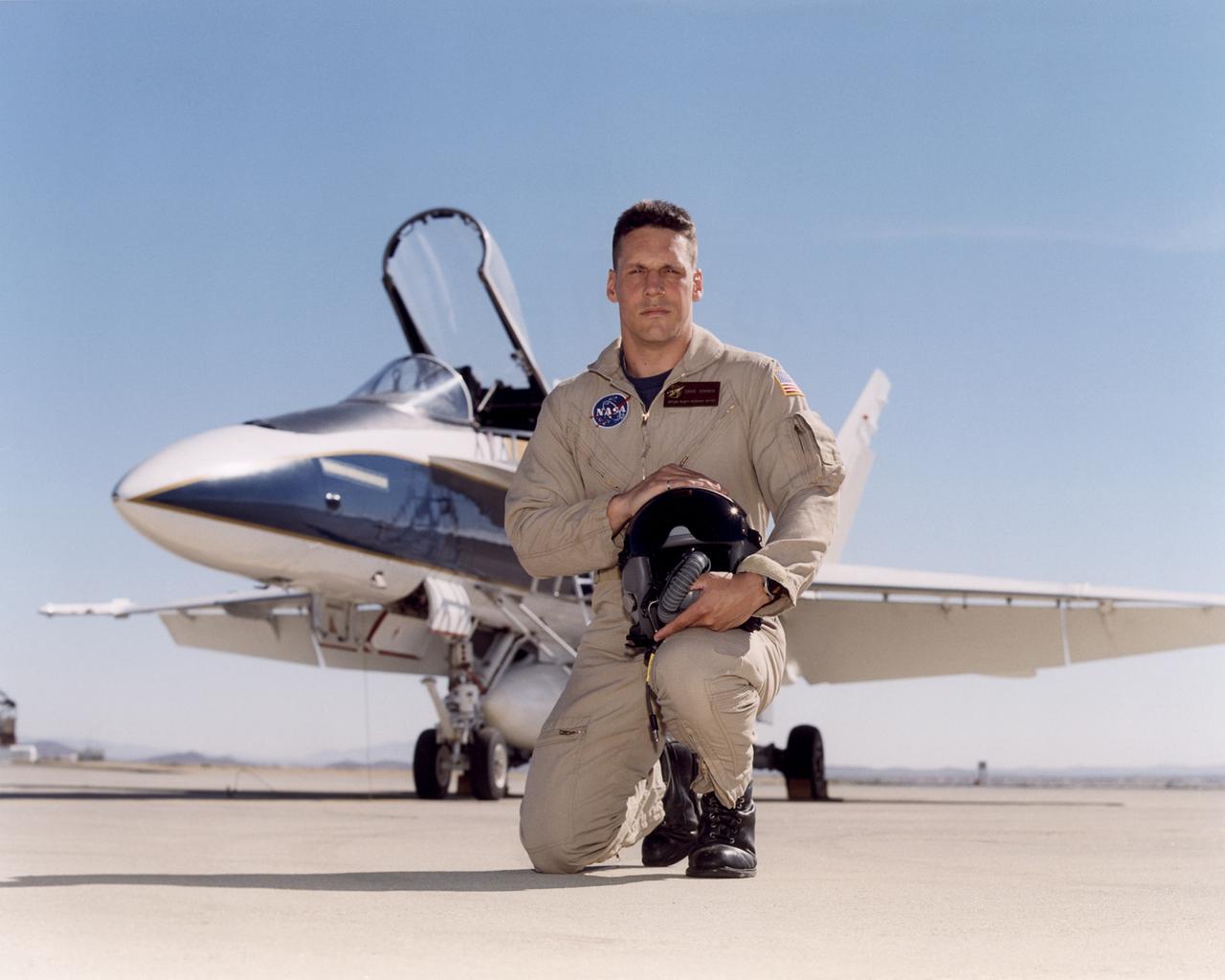
Craig R. Bomben became a pilot in the Flight Crew Branch of NASA's Dryden Flight Research Center, Edwards, Calif., in June 2001. His flying duties include a variety of research and support activities while piloting the F/A-18, DC-8, T-34C and King Air aircraft. He has more than 17 years and 3,800 hours of military and civilian flight experience in over 50 different aircraft types. Bomben came to NASA Dryden from a U.S. Navy assignment to the Personnel Exchange Program, Canada. He served as a test pilot in the Canadian Armed Forces located in Cold Lake, Alberta. He participated in numerous developmental programs to include CT-133 airborne ejection seat testing, F/A-18 weapons flutter testing and F/A-18 night vision goggles integration. Bomben performed U.S. Navy fleet service in 1995 as a strike-fighter department head. He completed two overseas deployments onboard the USS George Washington and USS Stennis. As a combat strike leader, he headed numerous multi-national missions over Iraq in support of Operation Southern Watch. Bomben graduated from the U.S. Naval Test Pilot School in 1992 and was subsequently assigned to the Naval Weapons Test Squadron at Pt. Mugu, Calif. During this tour he developed the F-14D bombsight and worked on various other F-14D and F/A-18 weapon systems developmental programs. Bomben is a 1985 graduate of Washington State University with a bachelor of science degree in electrical engineering. He graduated from naval flight training in 1987 and was recognized as a Commodore List graduate. His first assignment was to Naval Air Station Pensacola, Fla., where he was an instructor in the T-2B Buckeye. When selected to fly the F/A-18 in 1989, he joined a fleet squadron and deployed aboard the USS Forrestal. Bomben is married to the former Aissa Asuncion. They live in Lancaster, Calif., with their 3 children.
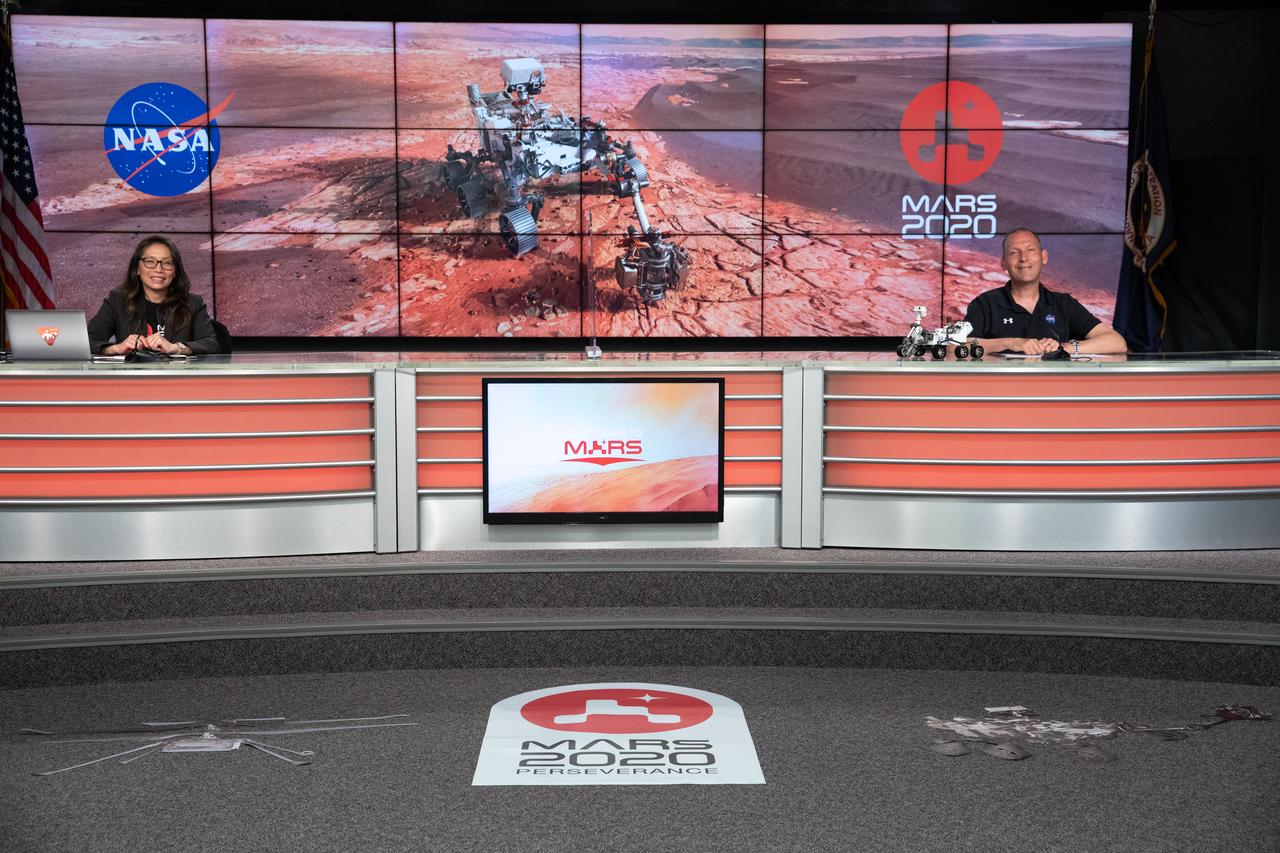
A Mars 2020 Sample Return briefing is held at NASA’s Kennedy Space Center in Florida on July 28, 2020. Participating in the briefing, from left, are Moderator Jia-Rui Cook, NASA’s Jet Propulsion Laboratory; and Thomas Zurbuchen, NASA associate administrator, Science Mission Directorate, The Mars Perseverance rover is scheduled to launch July 30, on a United Launch Alliance Atlas V 541 rocket from Space Launch Complex 41 at nearby Cape Canaveral Air Force Station. The rover is part of NASA’s Mars Exploration Program, a long-term effort of robotic exploration of the Red Planet. The rover will search for habitable conditions in the ancient past and signs of past microbial life on Mars. The Launch Services Program at Kennedy is responsible for launch management.
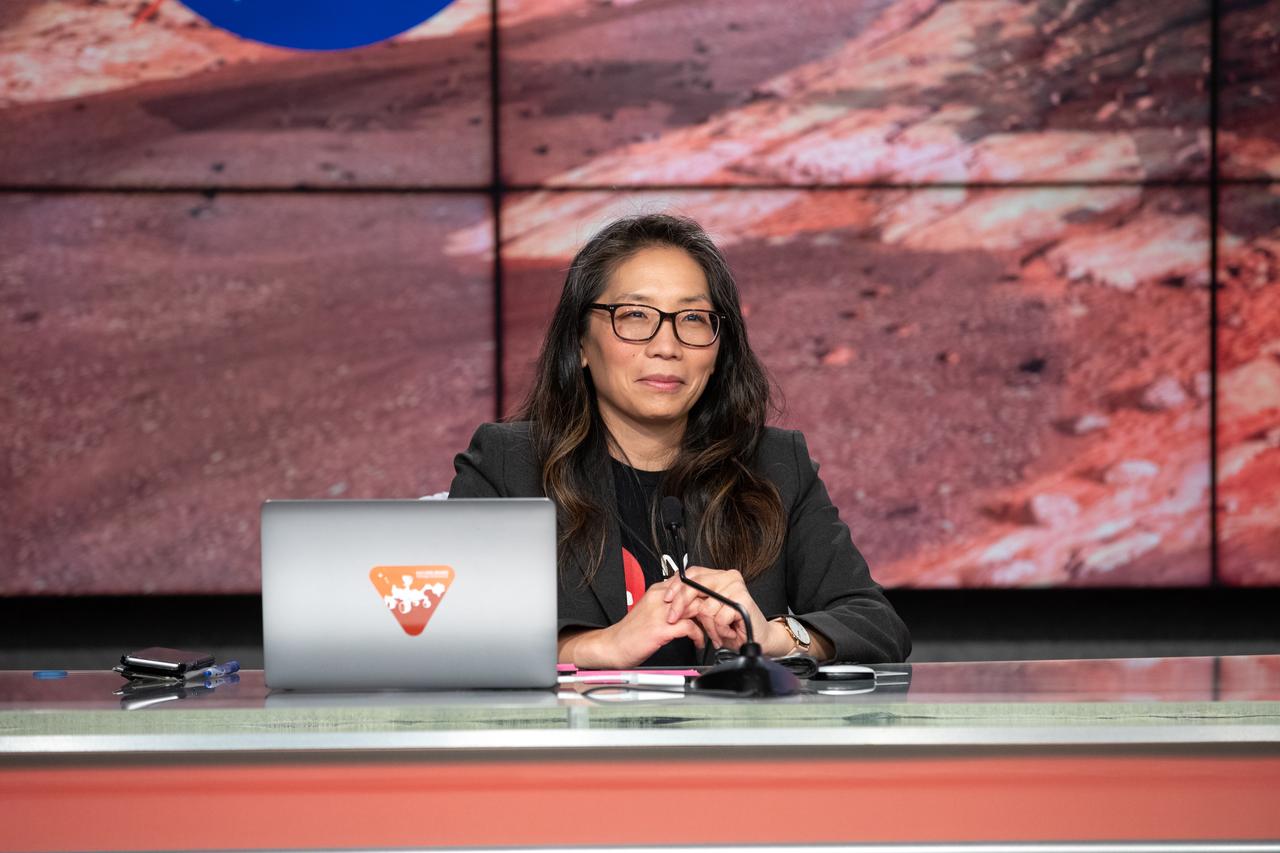
Jia-Rui Cook with NASA’s Jet Propulsion Laboratory moderates a Mars 2020 Sample Return briefing at NASA’s Kennedy Space Center in Florida on July 28, 2020. The Mars Perseverance rover is scheduled to launch on July 30, on a United Launch Alliance Atlas V 541 rocket from Space Launch Complex 41 at nearby Cape Canaveral Air Force Station. The rover is part of NASA’s Mars Exploration Program, a long-term effort of robotic exploration of the Red Planet. The rover will search for habitable conditions in the ancient past and signs of past microbial life on Mars. The Launch Services Program at Kennedy is responsible for launch management.
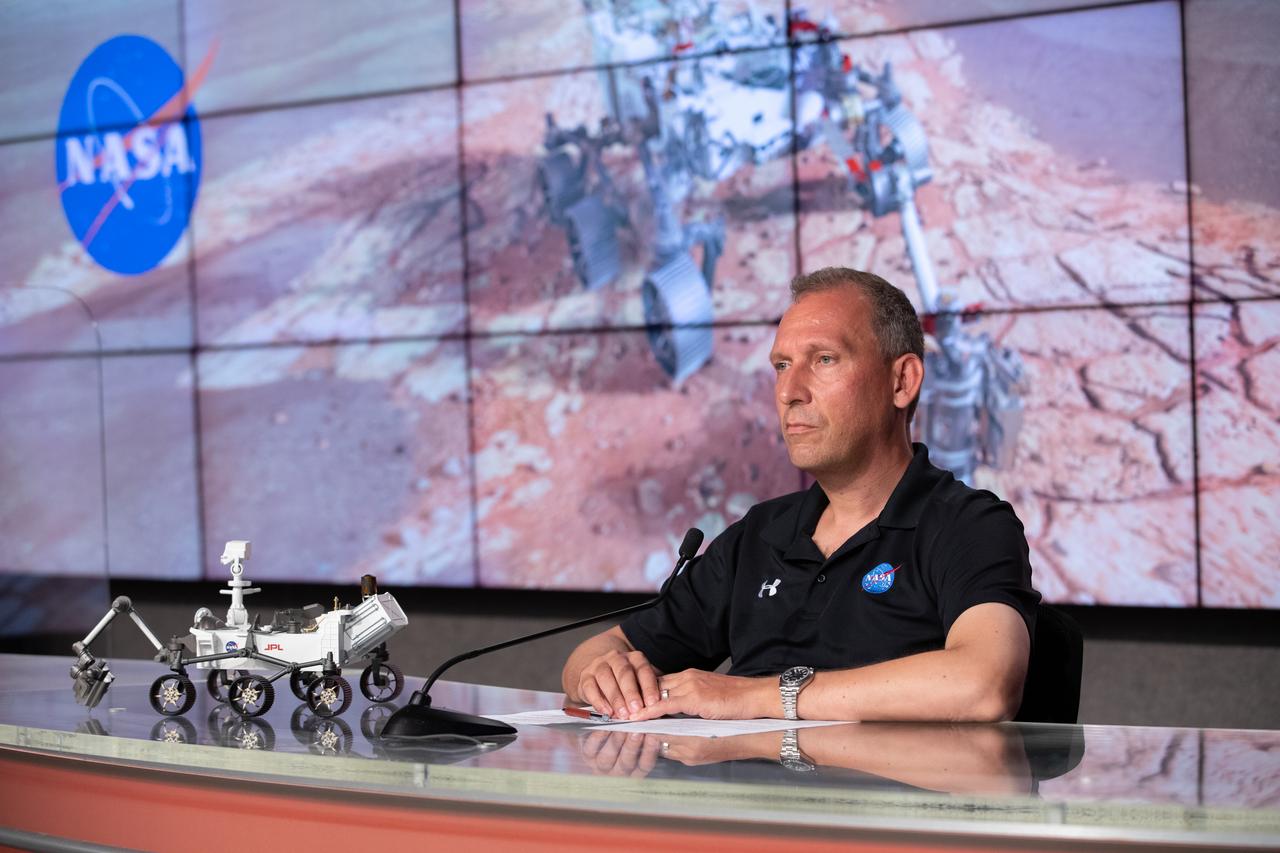
Thomas Zurbuchen, NASA associate administrator, Science Mission Directorate, participates in a Mars 2020 Sample Return briefing at NASA’s Kennedy Space Center in Florida on July 28, 2020. The Mars Perseverance rover is scheduled to launch on July 30, on a United Launch Alliance Atlas V 541 rocket from Space Launch Complex 41 at nearby Cape Canaveral Air Force Station. The rover is part of NASA’s Mars Exploration Program, a long-term effort of robotic exploration of the Red Planet. The rover will search for habitable conditions in the ancient past and signs of past microbial life on Mars. The Launch Services Program at Kennedy is responsible for launch management.

Climate researchers from the National Center for Atmospheric Research (NCAR) and several universities install and perform functional checkouts of a variety of sensitive atmospheric instruments on NASA's DC-8 airborne laboratory prior to beginning the ARCTAS mission.
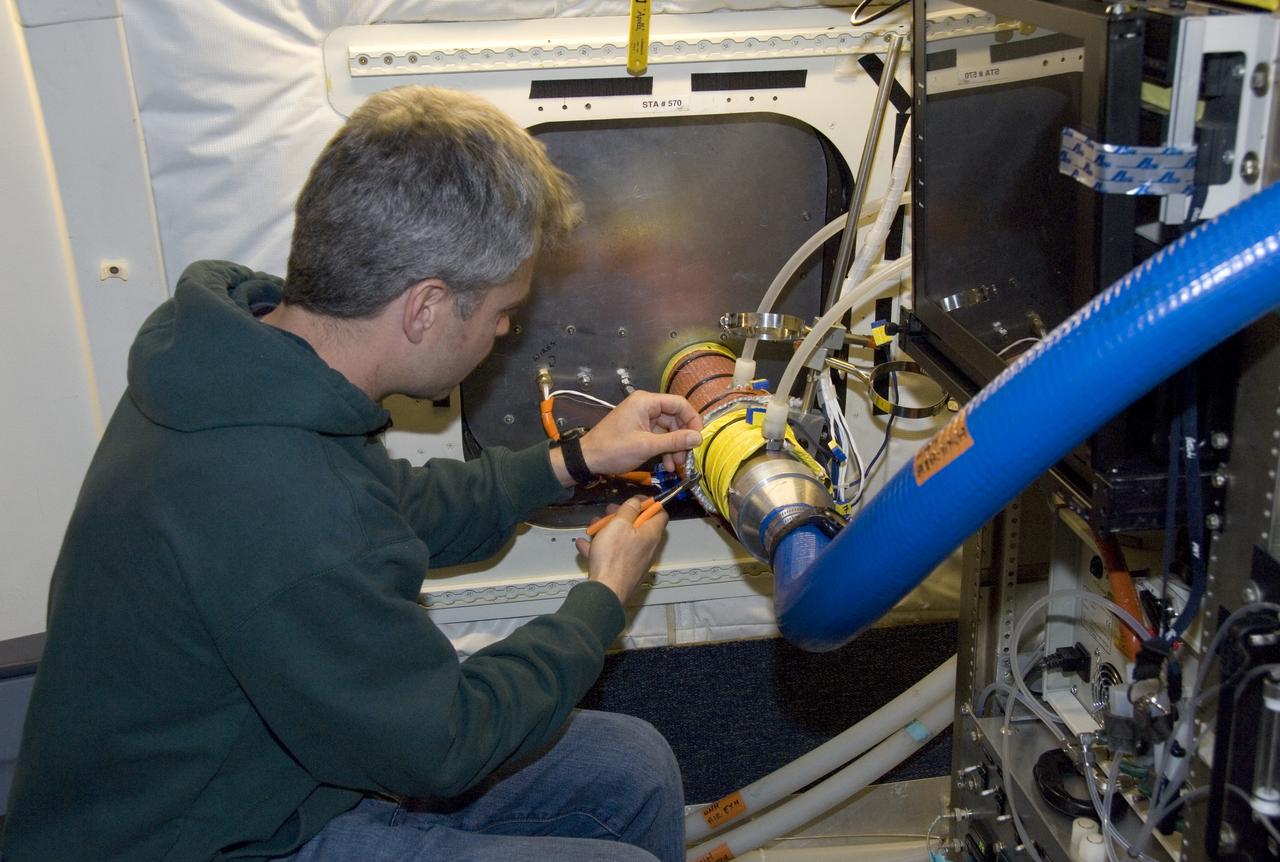
Climate researchers from the National Center for Atmospheric Research (NCAR) and several universities install and perform functional checkouts of a variety of sensitive atmospheric instruments on NASA's DC-8 airborne laboratory prior to beginning the ARCTAS mission.