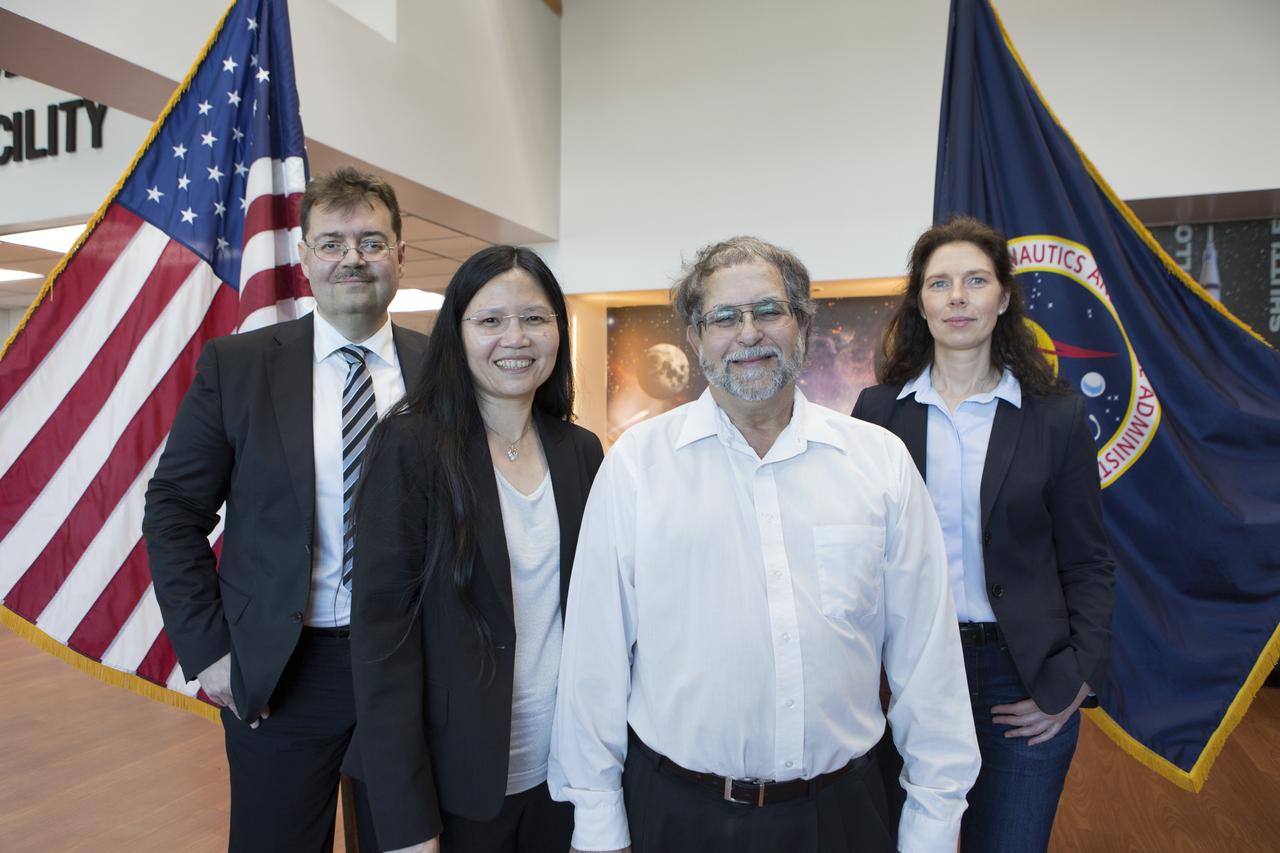
From left to right: Dr. Oliver Ullrich from the University of Zurich, Dr. Ye Zhang and Dr. Howard Levine of NASA's Kennedy Space Center, and Dr. Cora Thiel of the University of Zurich stood in the Space Station Processing Facility on Dec. 18, 2018. NASA recently signed a Space Act Agreement with the university, which is located in Switzerland, to collaborate on biological research. The team is studying gene expression in altered gravity.
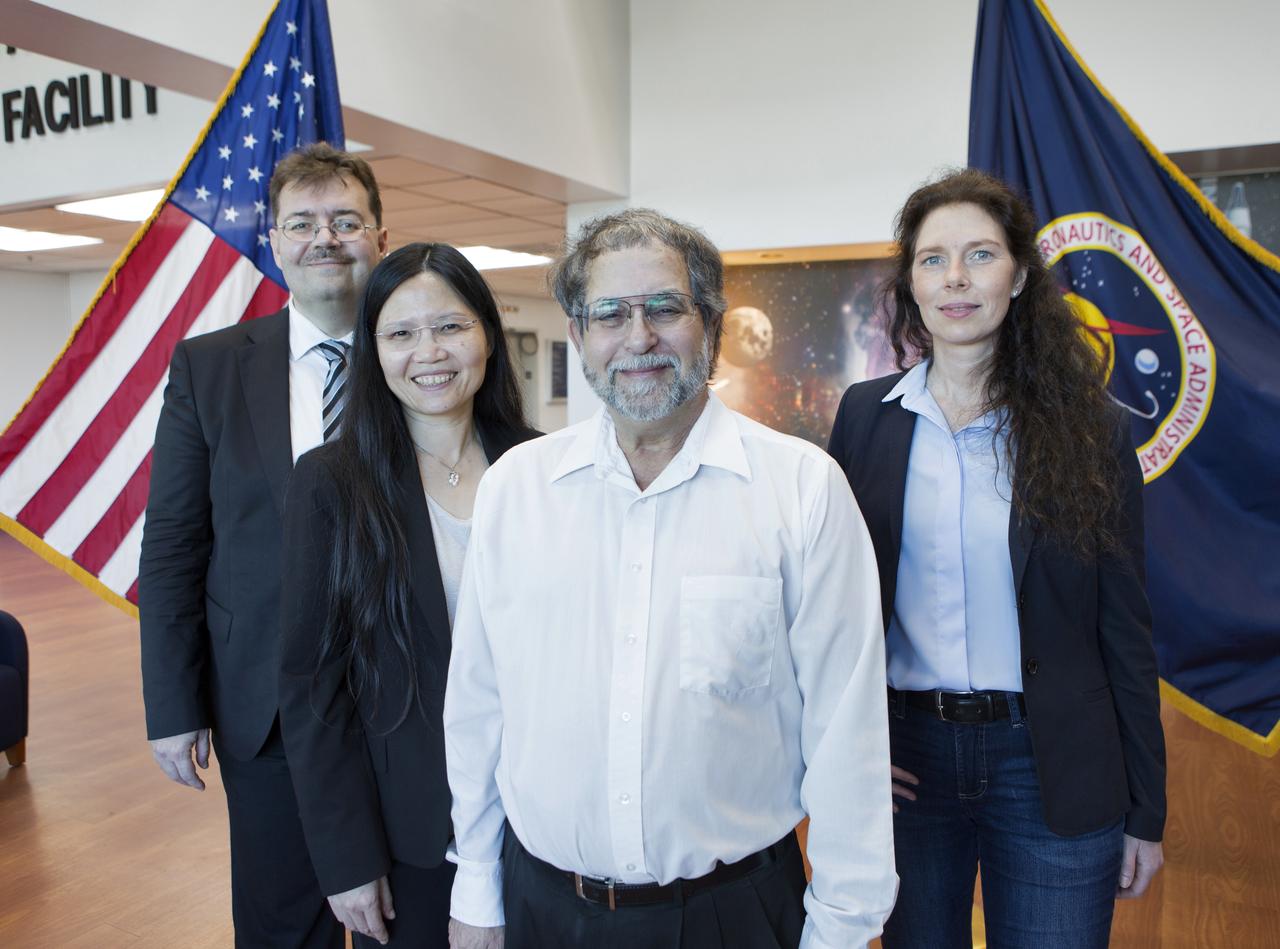
From left to right: Dr. Oliver Ullrich from the University of Zurich, Dr. Ye Zhang and Dr. Howard Levine of NASA's Kennedy Space Center, and Dr. Cora Thiel of the University of Zurich stood in the Space Station Processing Facility on Dec. 18, 2018. NASA recently signed a Space Act Agreement with the university, which is located in Switzerland, to collaborate on biological research. The team is studying gene expression in altered gravity.
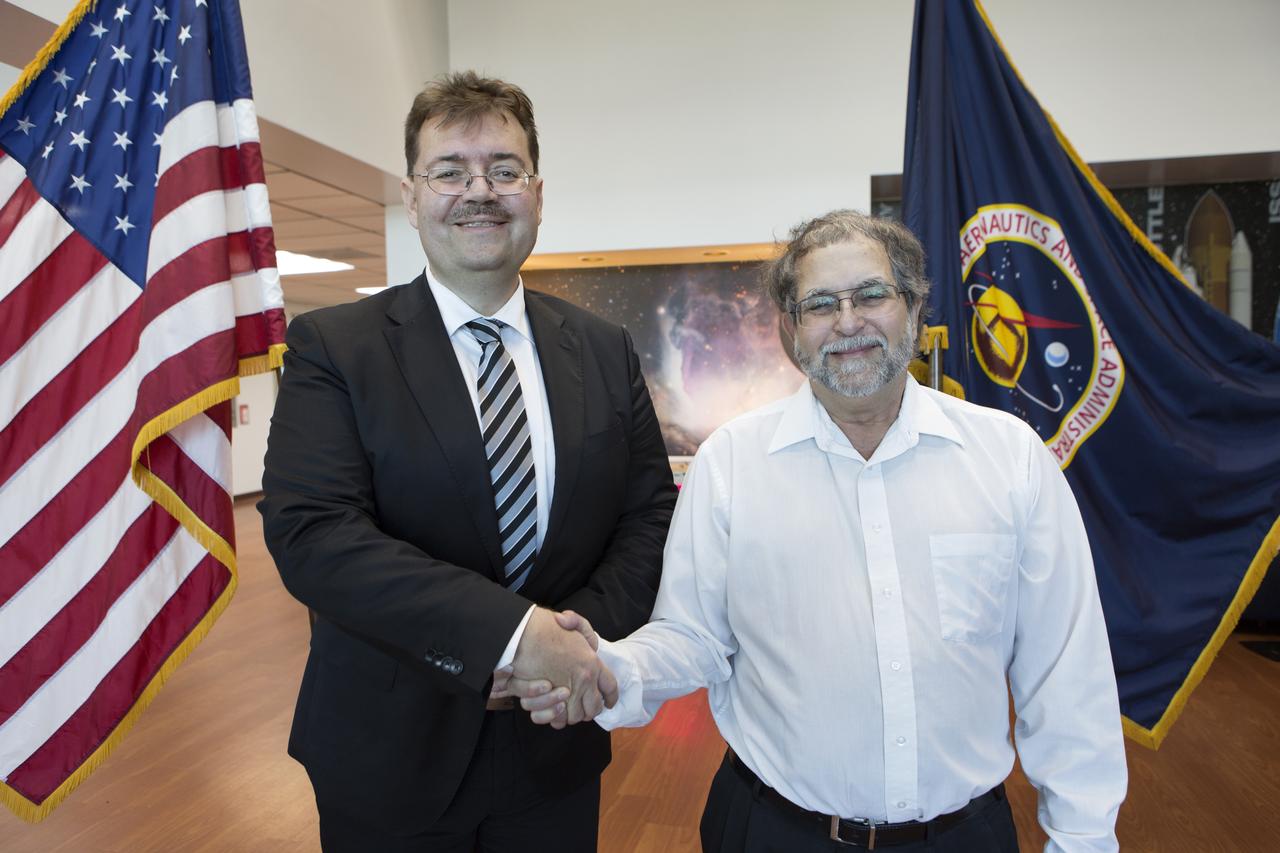
Dr. Oliver Ullrich (left) from the University of Zurich and Dr. Howard Levine of NASA's Kennedy Space Center stood in the Space Station Processing Facility on Dec. 18, 2018. NASA recently signed a Space Act Agreement with the university, which is located in Switzerland, to collaborate on biological research. The team is studying gene expression in altered gravity.
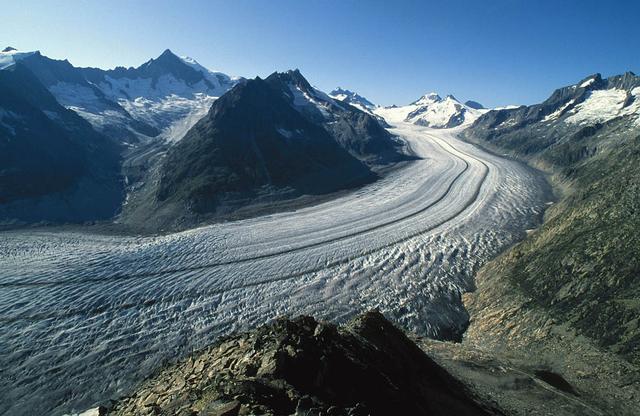
The Aletsch Glacier in Switzerland is the largest valley glacier in the Alps. Its volume loss since the middle of the 19th century is well-visible from the trimlines to the right of the image. To learn about the contributions of glaciers to sea level rise, visit: <a href="http://www.nasa.gov/topics/earth/features/glacier-sea-rise.html" rel="nofollow">www.nasa.gov/topics/earth/features/glacier-sea-rise.html</a> Credit: Frank Paul, University of Zurich <b><a href="http://www.nasa.gov/audience/formedia/features/MP_Photo_Guidelines.html" rel="nofollow">NASA image use policy.</a></b> <b><a href="http://www.nasa.gov/centers/goddard/home/index.html" rel="nofollow">NASA Goddard Space Flight Center</a></b> enables NASA’s mission through four scientific endeavors: Earth Science, Heliophysics, Solar System Exploration, and Astrophysics. Goddard plays a leading role in NASA’s accomplishments by contributing compelling scientific knowledge to advance the Agency’s mission. <b>Follow us on <a href="http://twitter.com/NASA_GoddardPix" rel="nofollow">Twitter</a></b> <b>Like us on <a href="http://www.facebook.com/pages/Greenbelt-MD/NASA-Goddard/395013845897?ref=tsd" rel="nofollow">Facebook</a></b> <b>Find us on <a href="http://instagram.com/nasagoddard?vm=grid" rel="nofollow">Instagram</a></b>
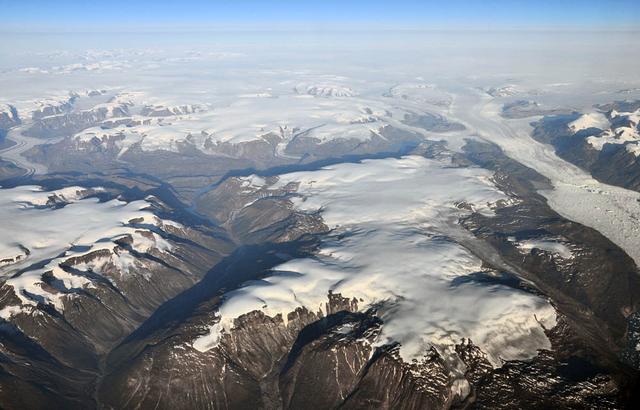
Peripheral glaciers and ice caps (isolated from the main ice sheet, which is seen in the upper right section of the image) in eastern Greenland. To learn about the contributions of glaciers to sea level rise, visit: <a href="http://www.nasa.gov/topics/earth/features/glacier-sea-rise.html" rel="nofollow">www.nasa.gov/topics/earth/features/glacier-sea-rise.html</a> Credit: Frank Paul, University of Zurich <b><a href="http://www.nasa.gov/audience/formedia/features/MP_Photo_Guidelines.html" rel="nofollow">NASA image use policy.</a></b> <b><a href="http://www.nasa.gov/centers/goddard/home/index.html" rel="nofollow">NASA Goddard Space Flight Center</a></b> enables NASA’s mission through four scientific endeavors: Earth Science, Heliophysics, Solar System Exploration, and Astrophysics. Goddard plays a leading role in NASA’s accomplishments by contributing compelling scientific knowledge to advance the Agency’s mission. <b>Follow us on <a href="http://twitter.com/NASA_GoddardPix" rel="nofollow">Twitter</a></b> <b>Like us on <a href="http://www.facebook.com/pages/Greenbelt-MD/NASA-Goddard/395013845897?ref=tsd" rel="nofollow">Facebook</a></b> <b>Find us on <a href="http://instagram.com/nasagoddard?vm=grid" rel="nofollow">Instagram</a></b>
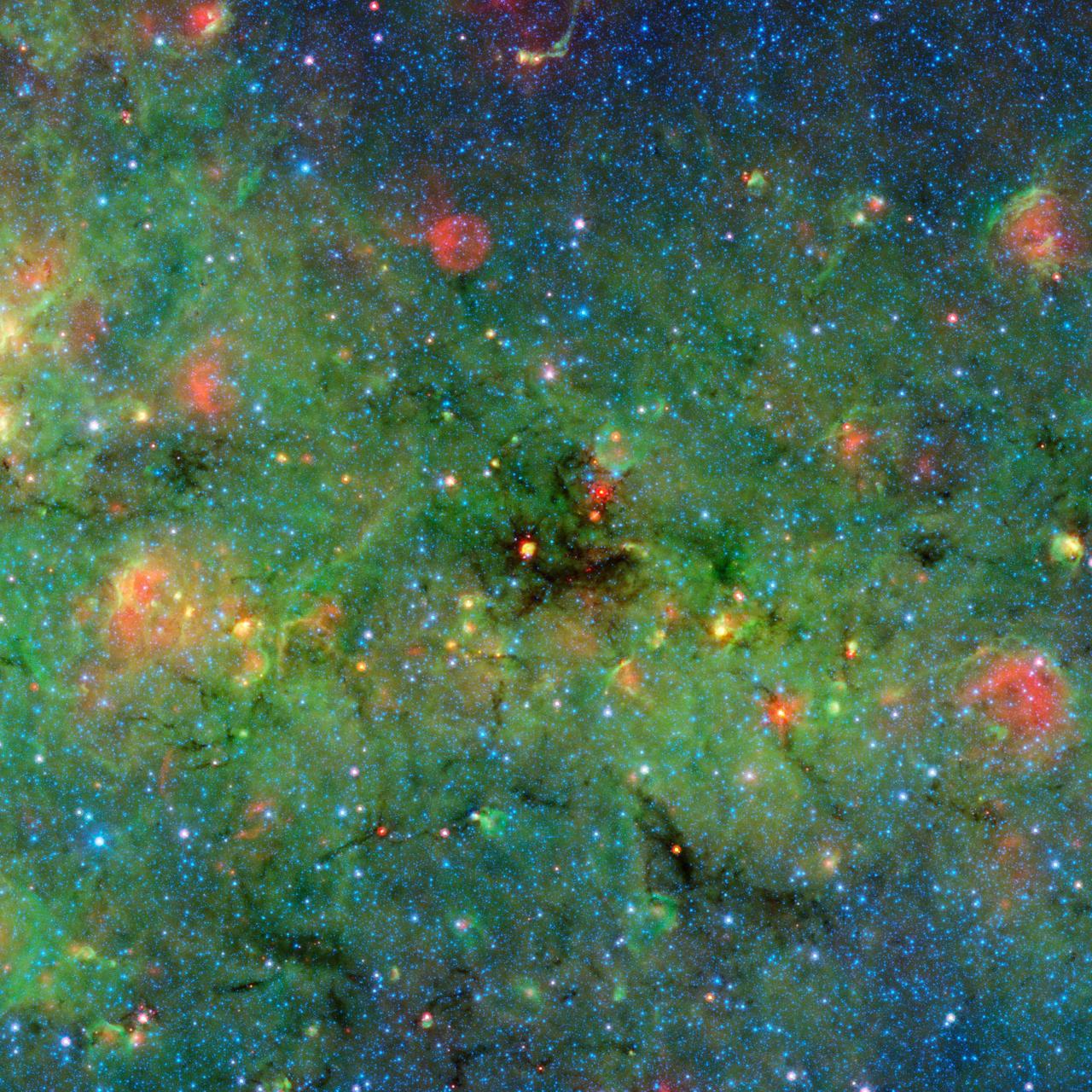
Astronomers have found cosmic clumps so dark, dense and dusty that they throw the deepest shadows ever recorded. A large cloud looms in the center of this image of the galactic plane from NASA Spitzer Space Telescope.