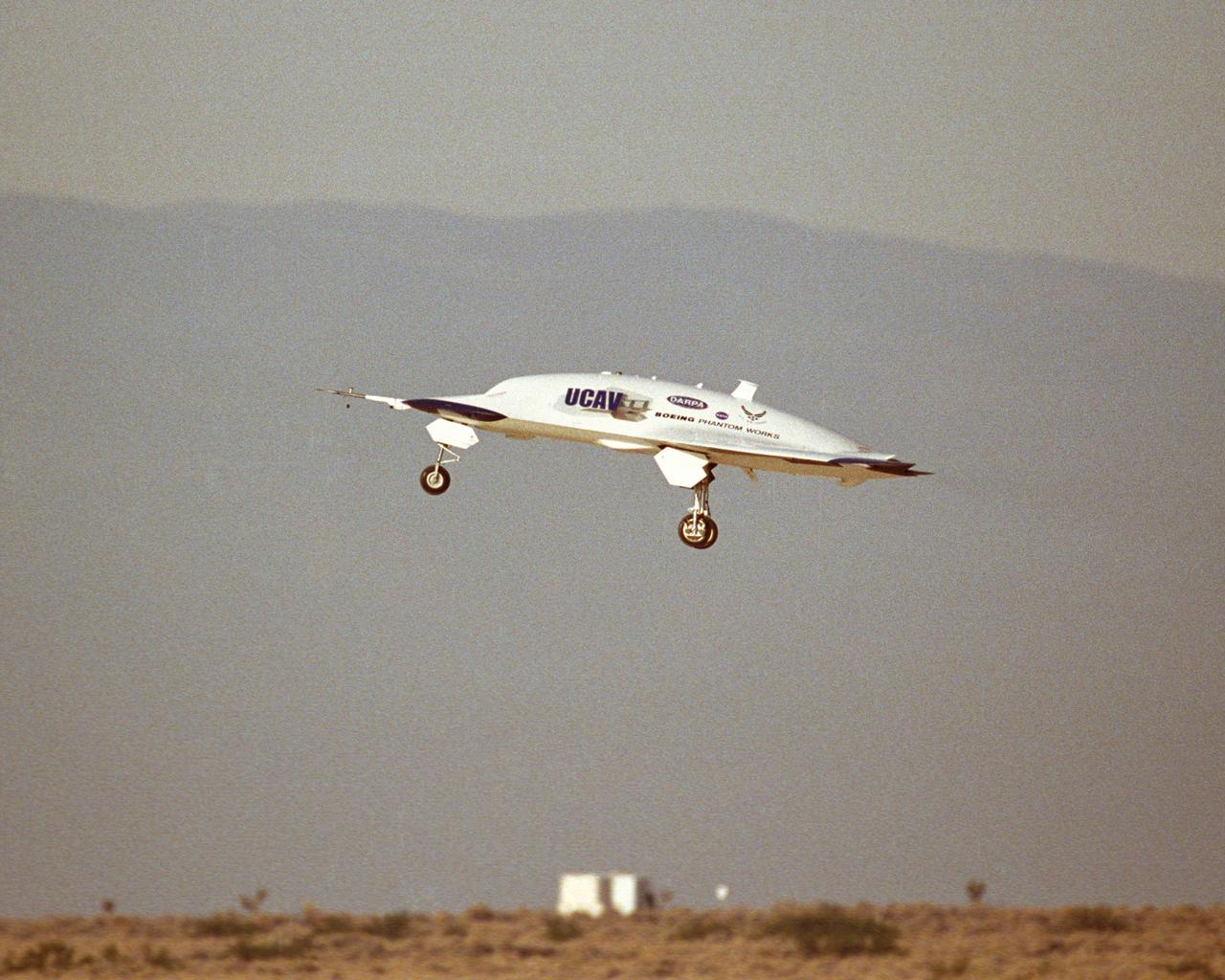
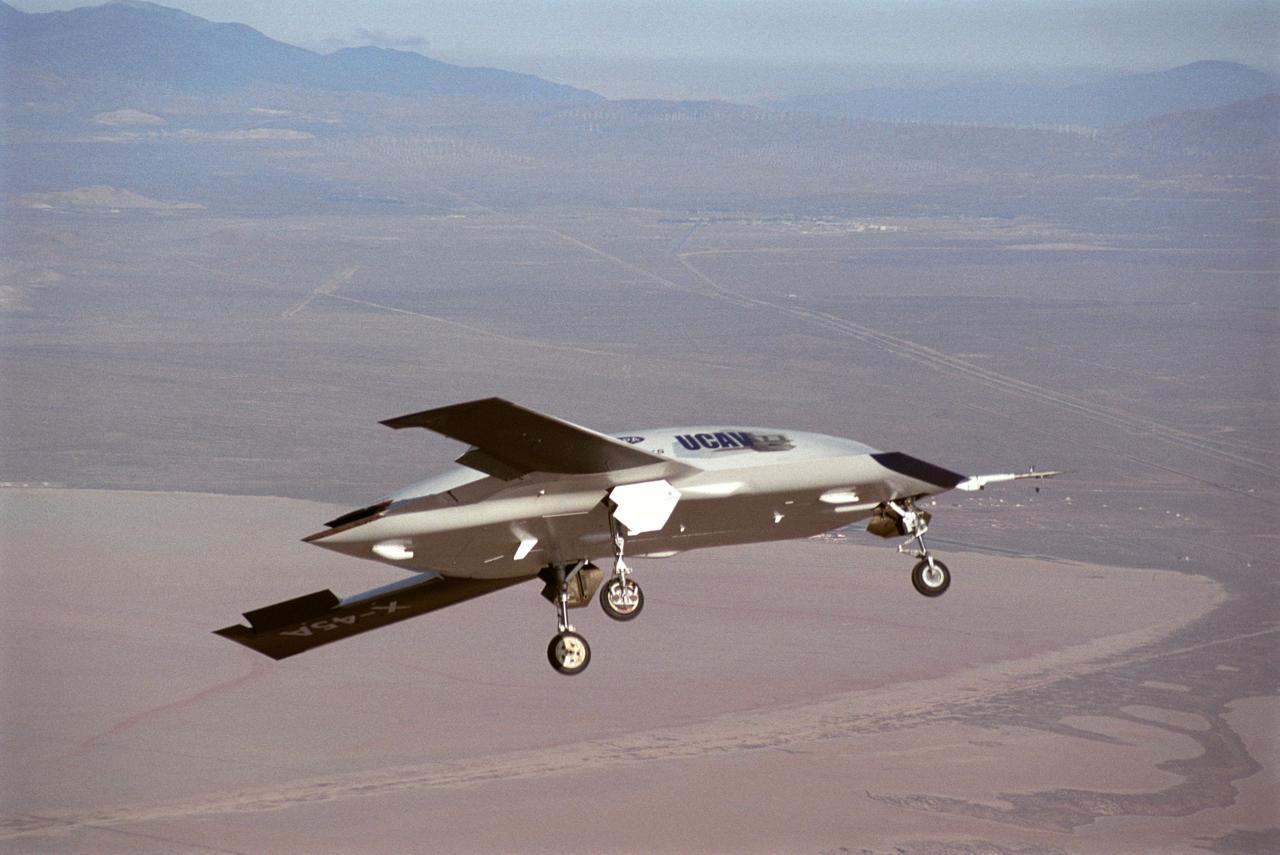
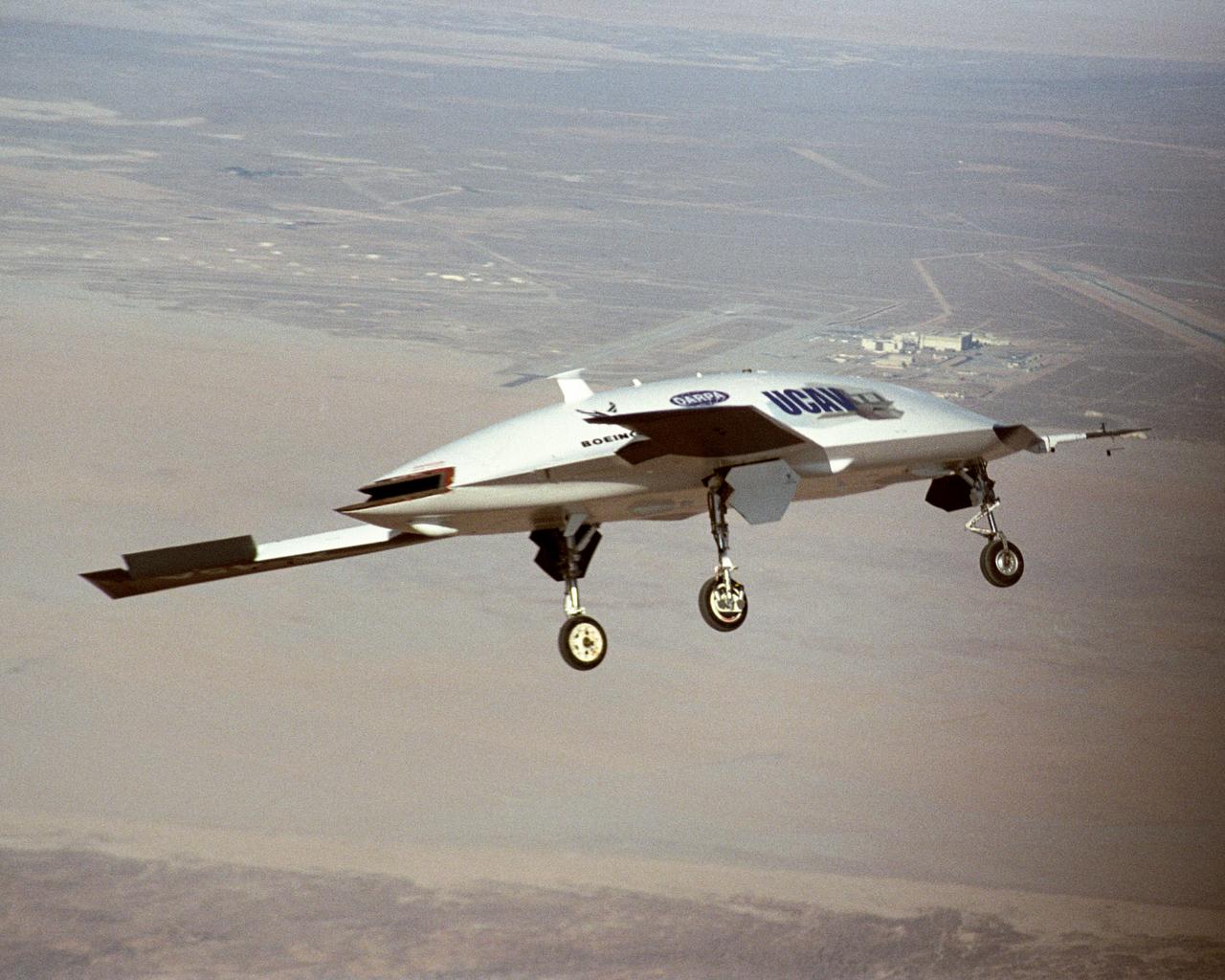
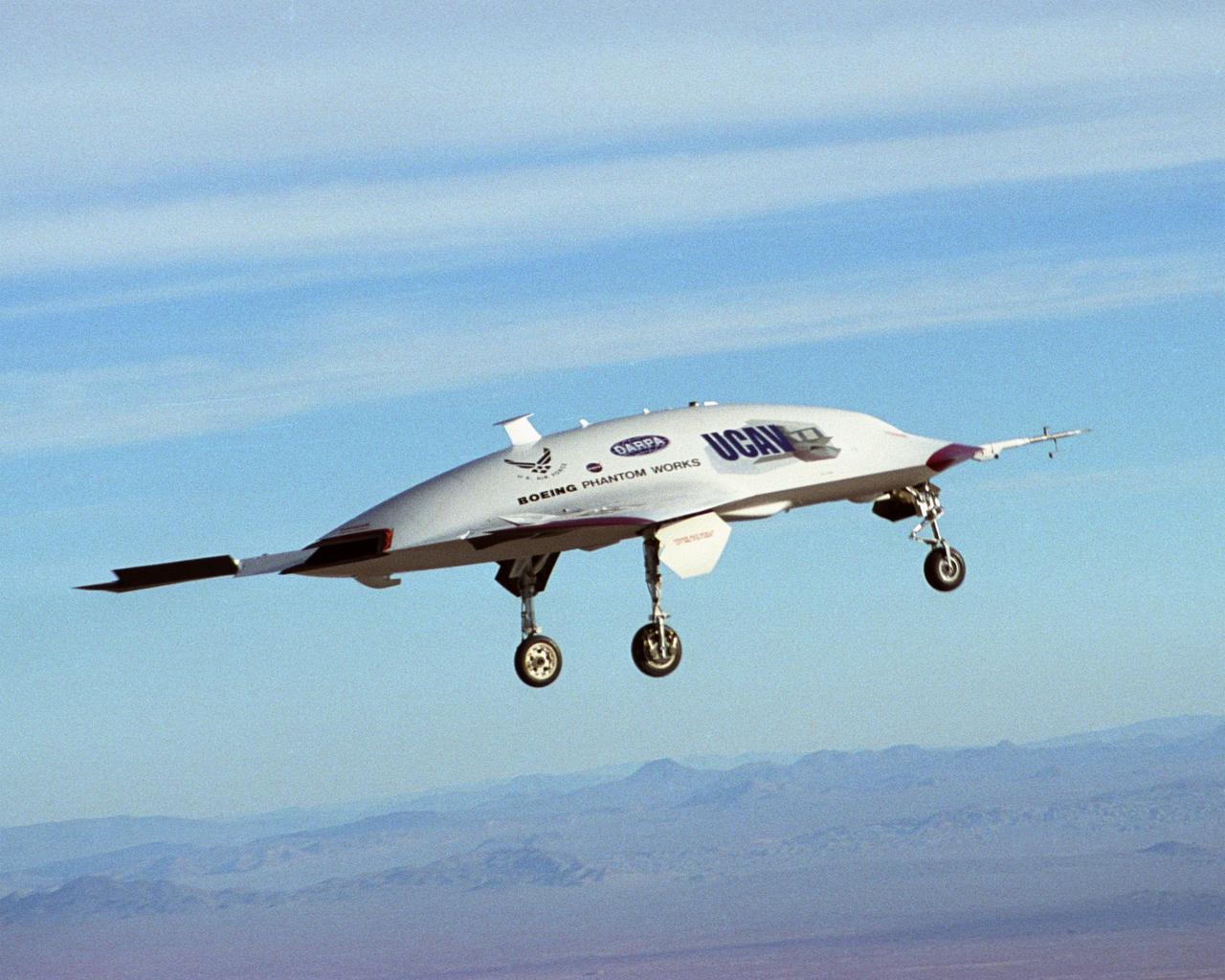
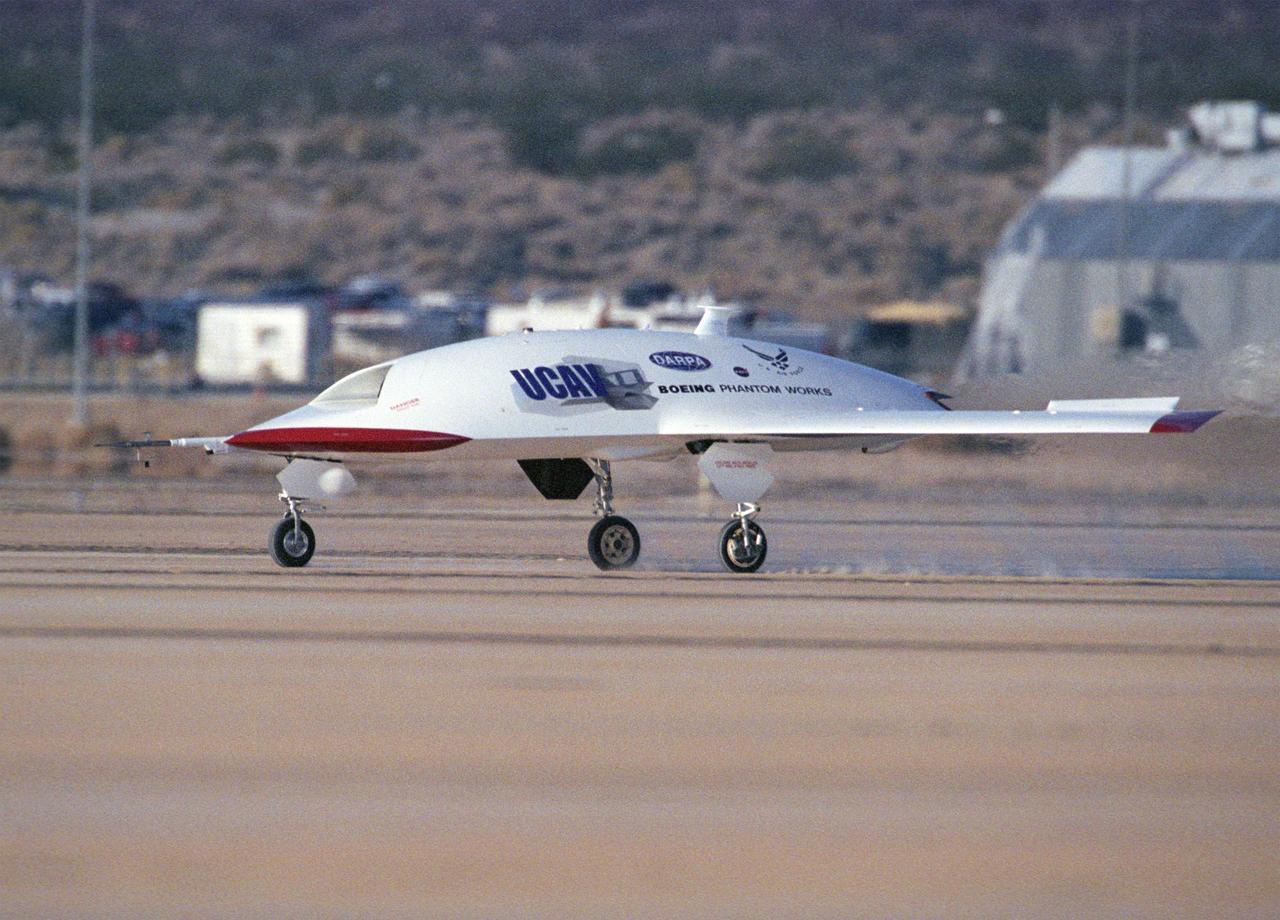
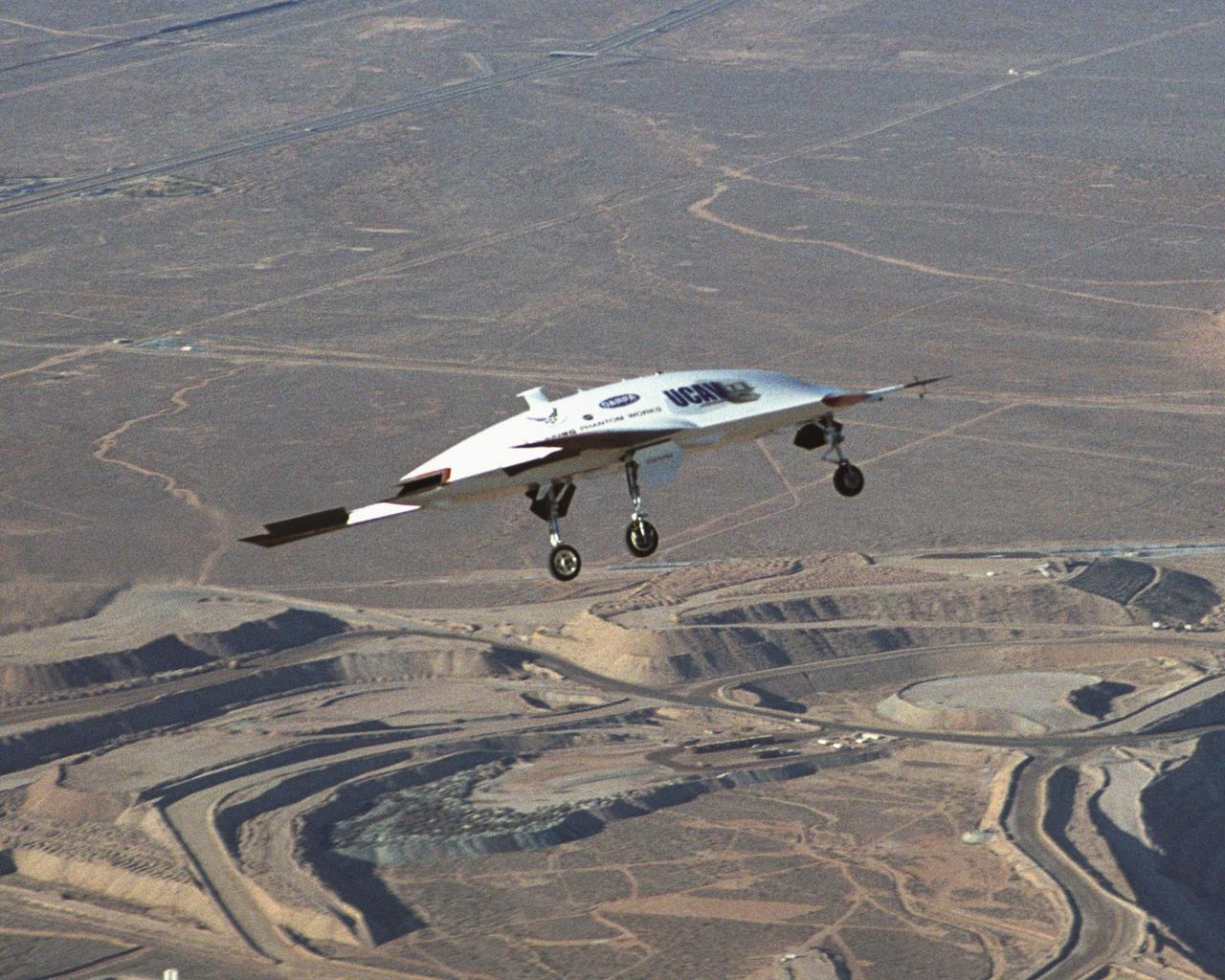
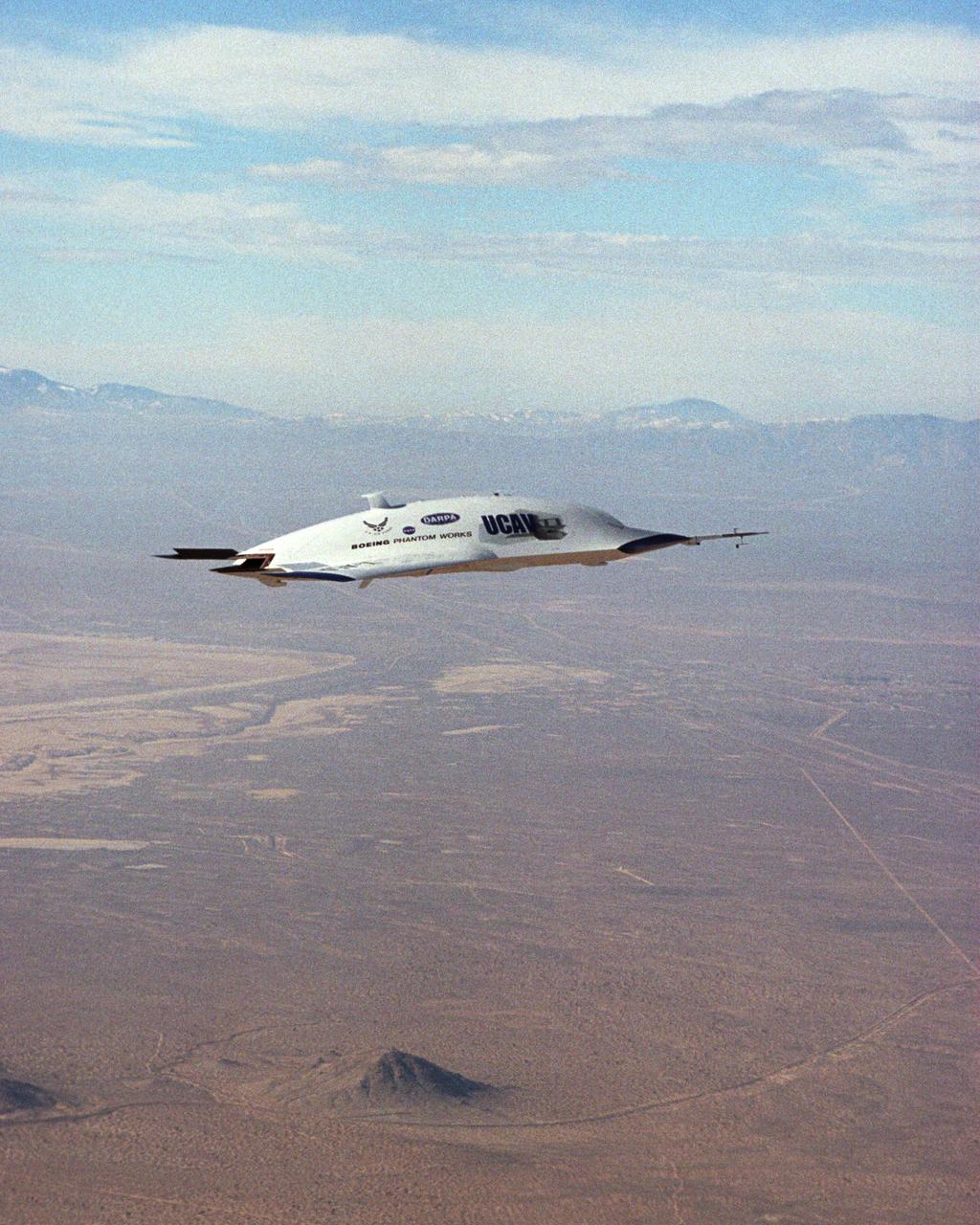
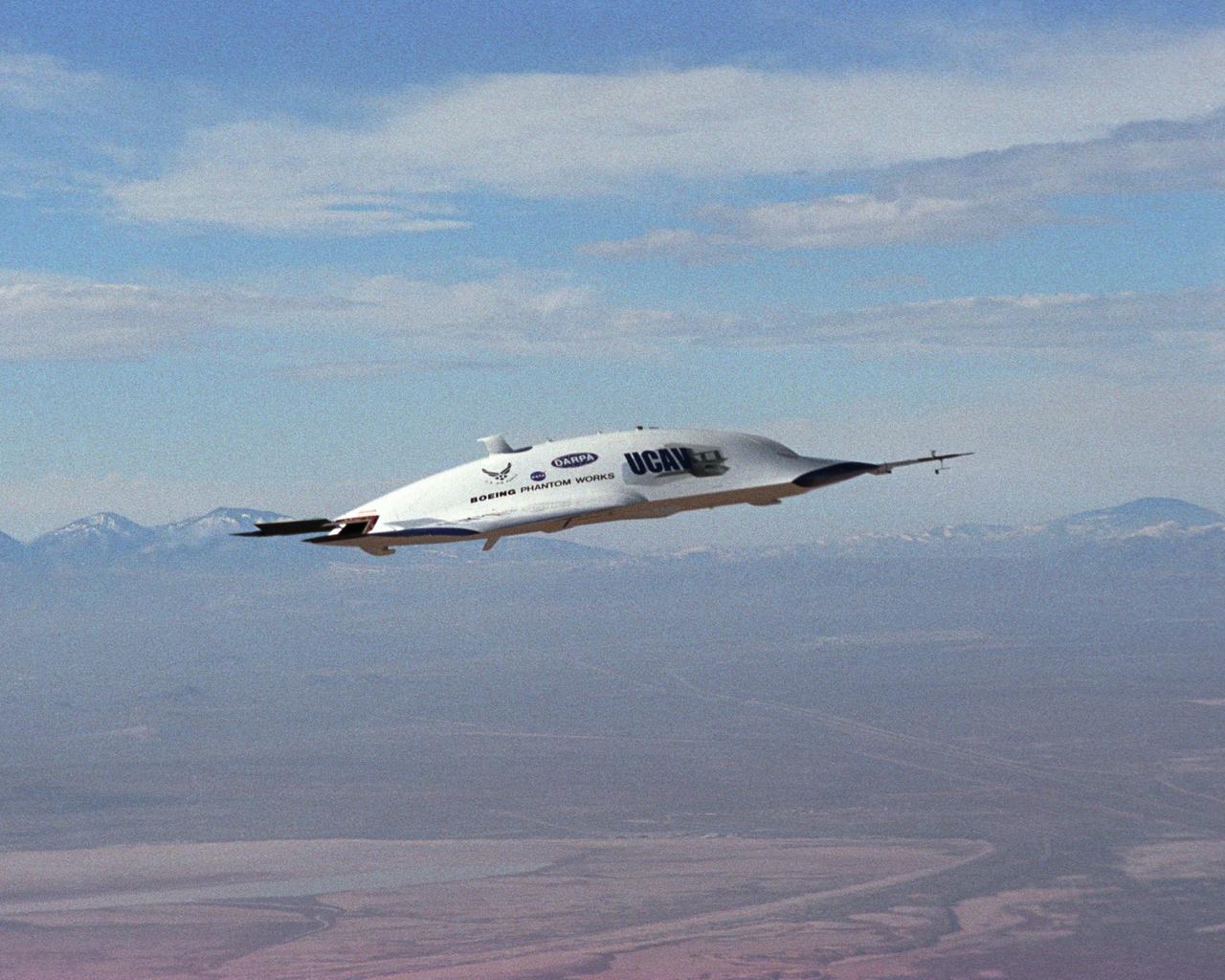
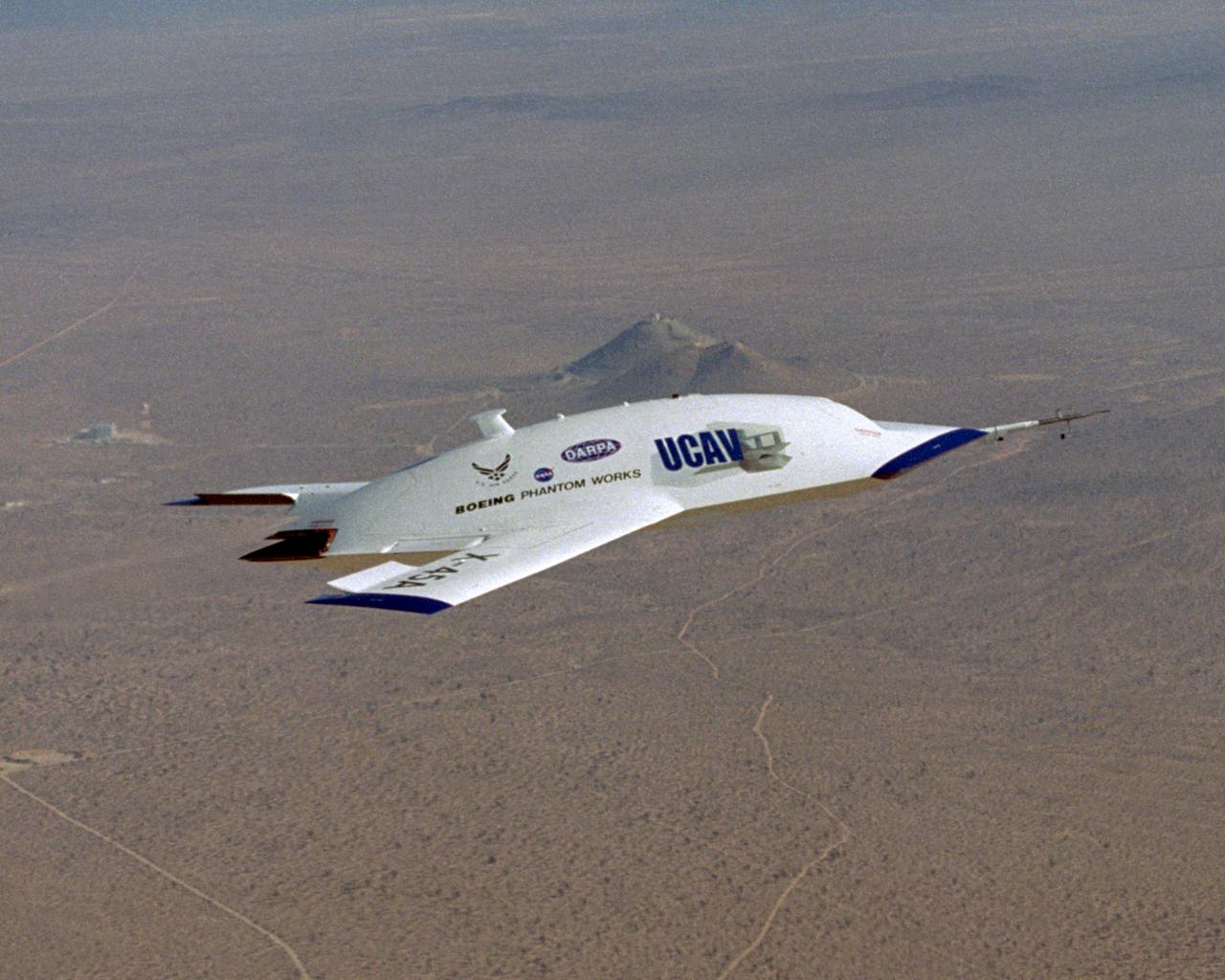
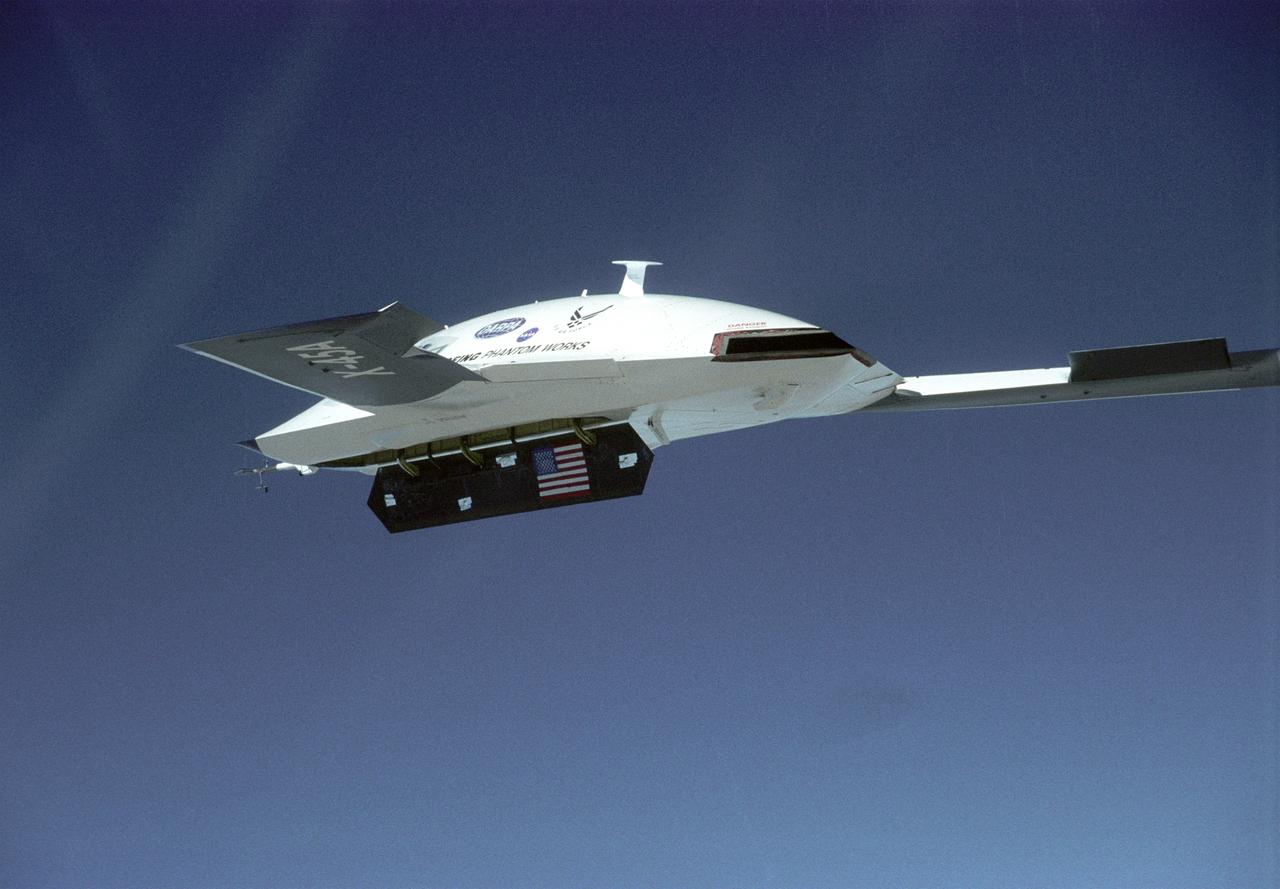
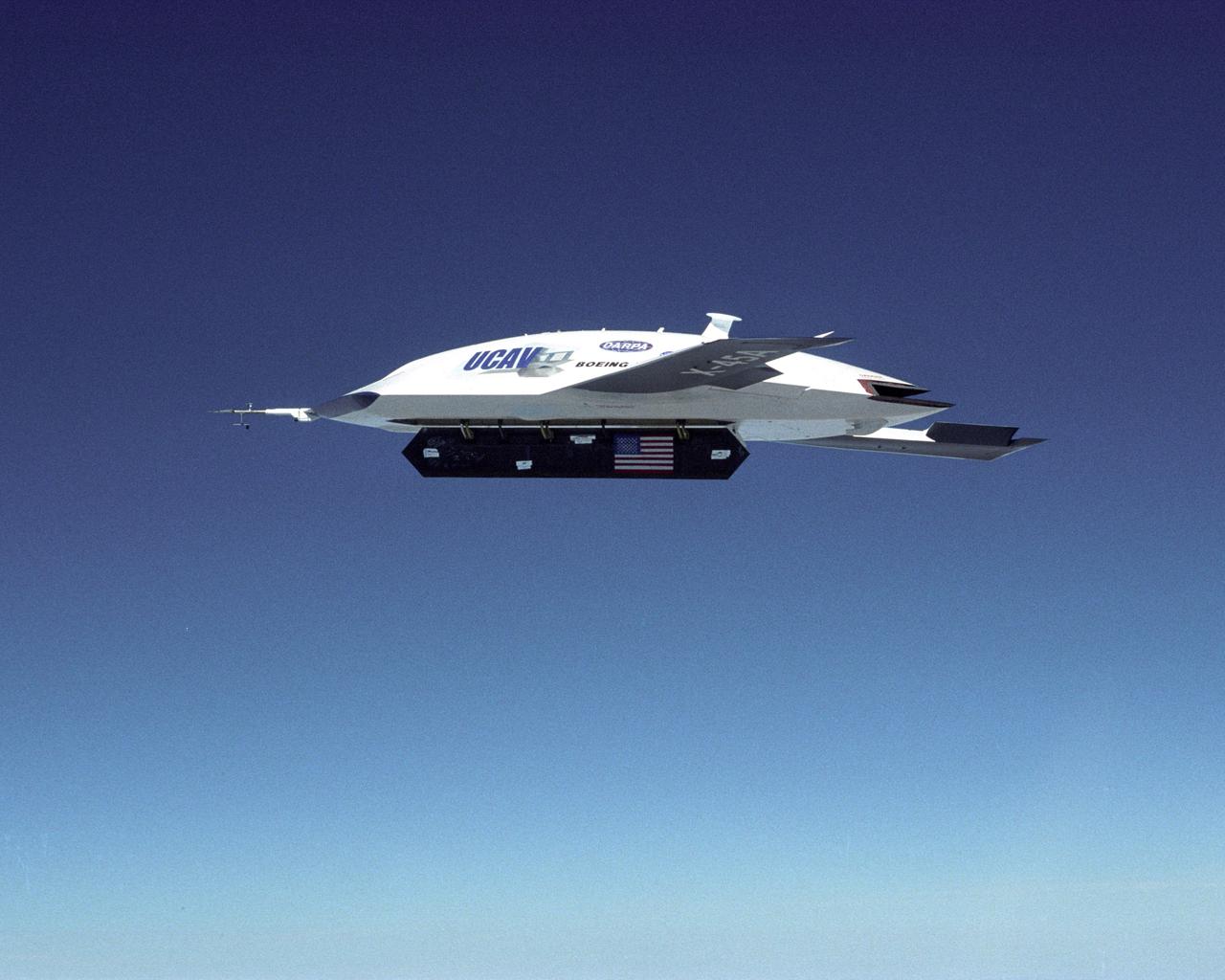
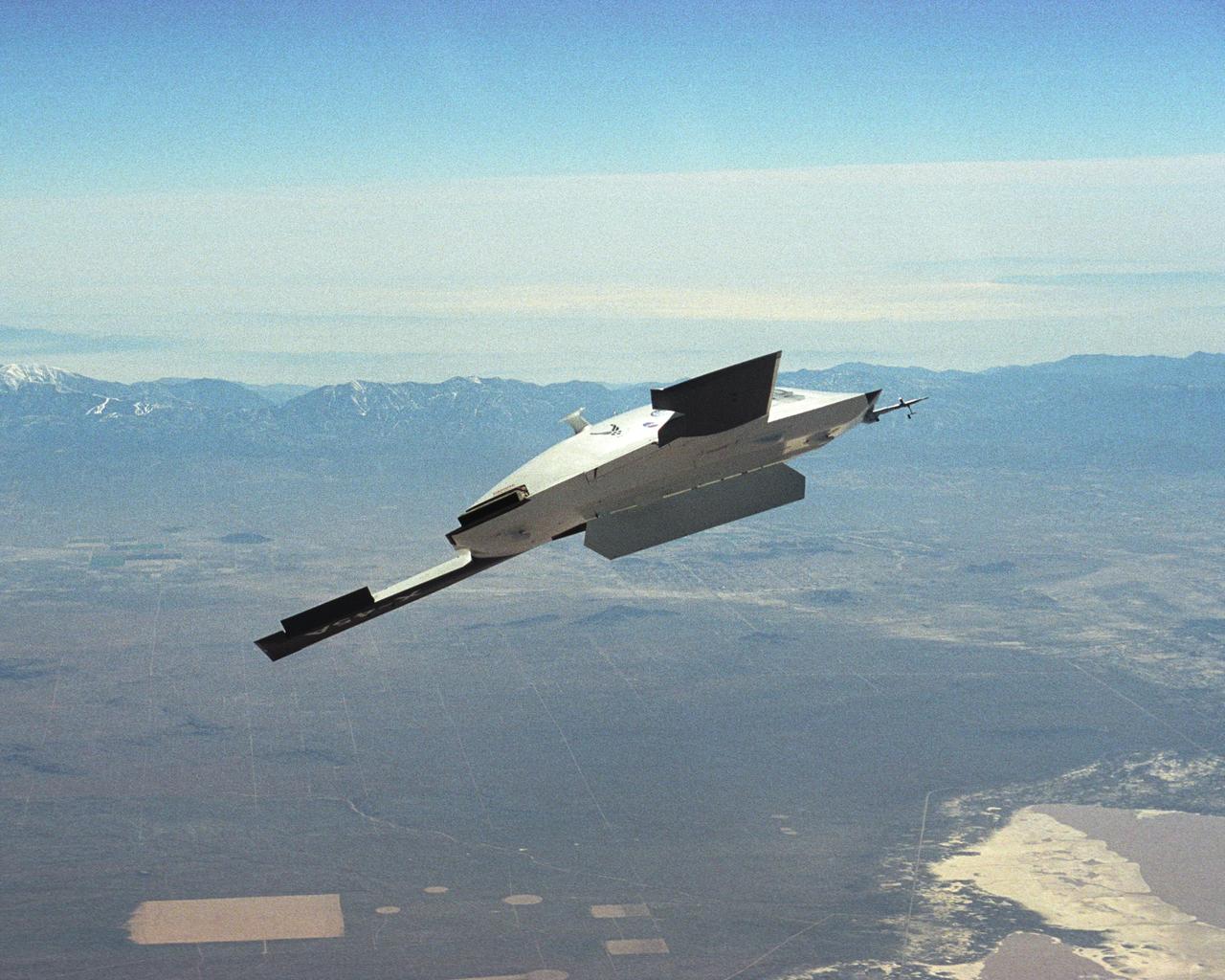
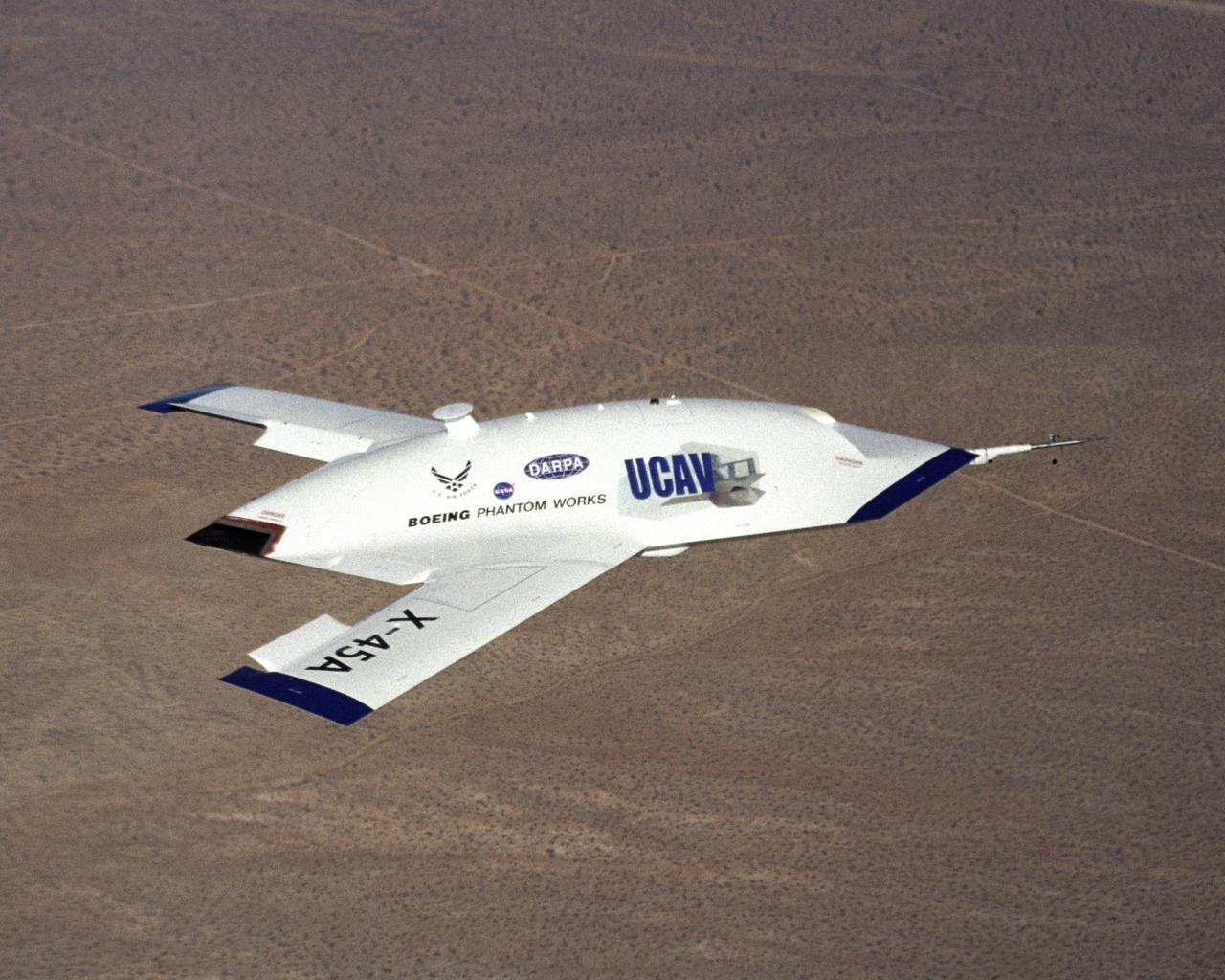
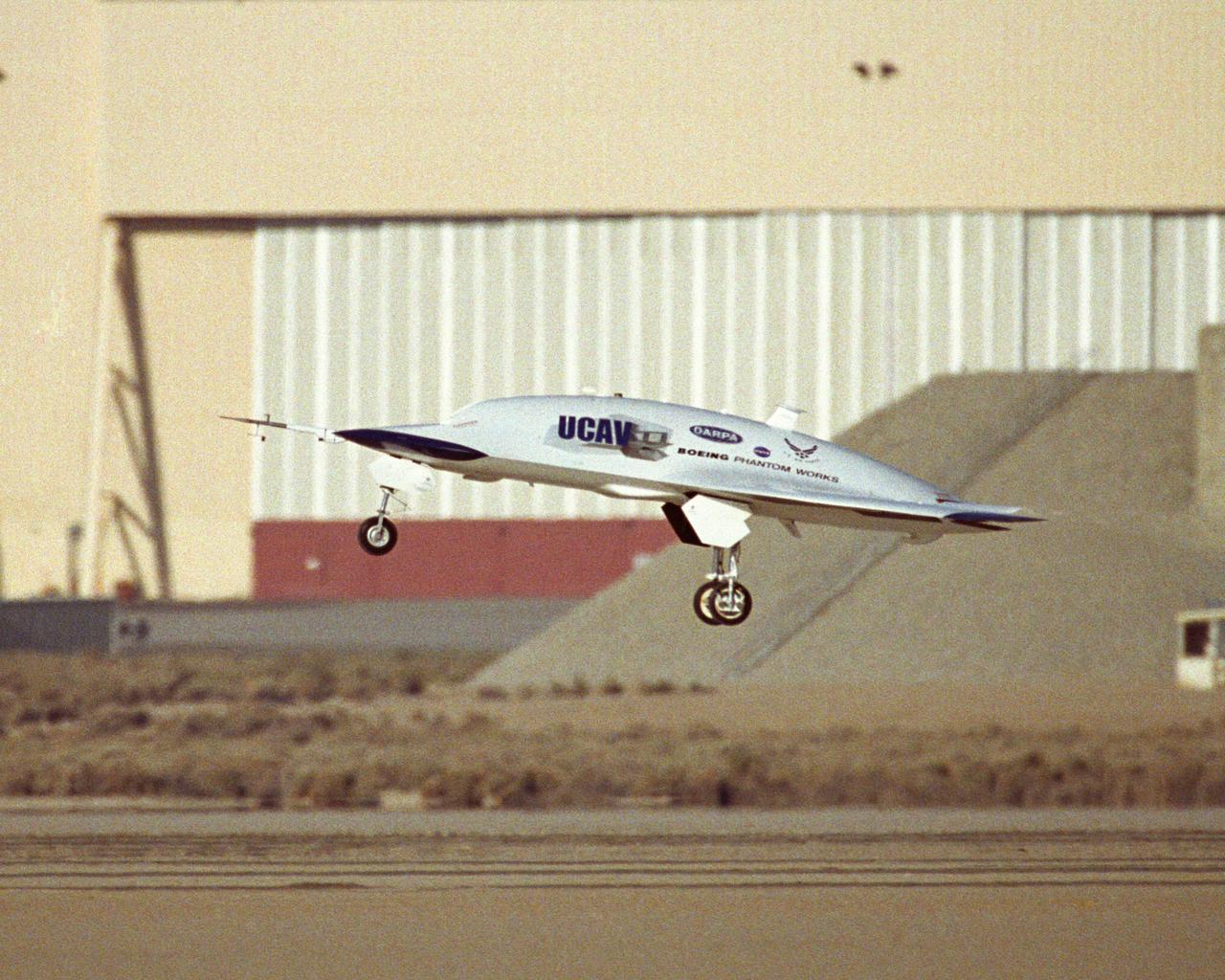
X-45A Unmanned Combat Air Vehicle, or UCAV, technology demonstration aircraft in flight during its first flight at Edwards Air Force Base, California.
X-45A Unmanned Combat Air Vehicle, or UCAV, technology demonstration aircraft in flight during its first flight at Edwards Air Force Base, California
X-45A Unmanned Combat Air Vehicle, or UCAV, technology demonstration aircraft in flight during its first flight at Edwards Air Force Base, California.
X-45A Unmanned Combat Air Vehicle, or UCAV, technology demonstration aircraft in flight during its first flight at Edwards Air Force Base, California
X-45A Unmanned Combat Air Vehicle, or UCAV, technology demonstration aircraft in flight during its first flight at Edwards Air Force Base, California.
X-45A Unmanned Combat Air Vehicle, or UCAV, technology demonstration aircraft in flight during its first flight at Edwards Air Force Base, California
X-45A Unmanned Combat Air Vehicle, or UCAV, technology demonstration aircraft in flight during its first flight at Edwards Air Force Base, California.
X-45A Unmanned Combat Air Vehicle, or UCAV, technology demonstration aircraft in flight during its first flight at Edwards Air Force Base, California
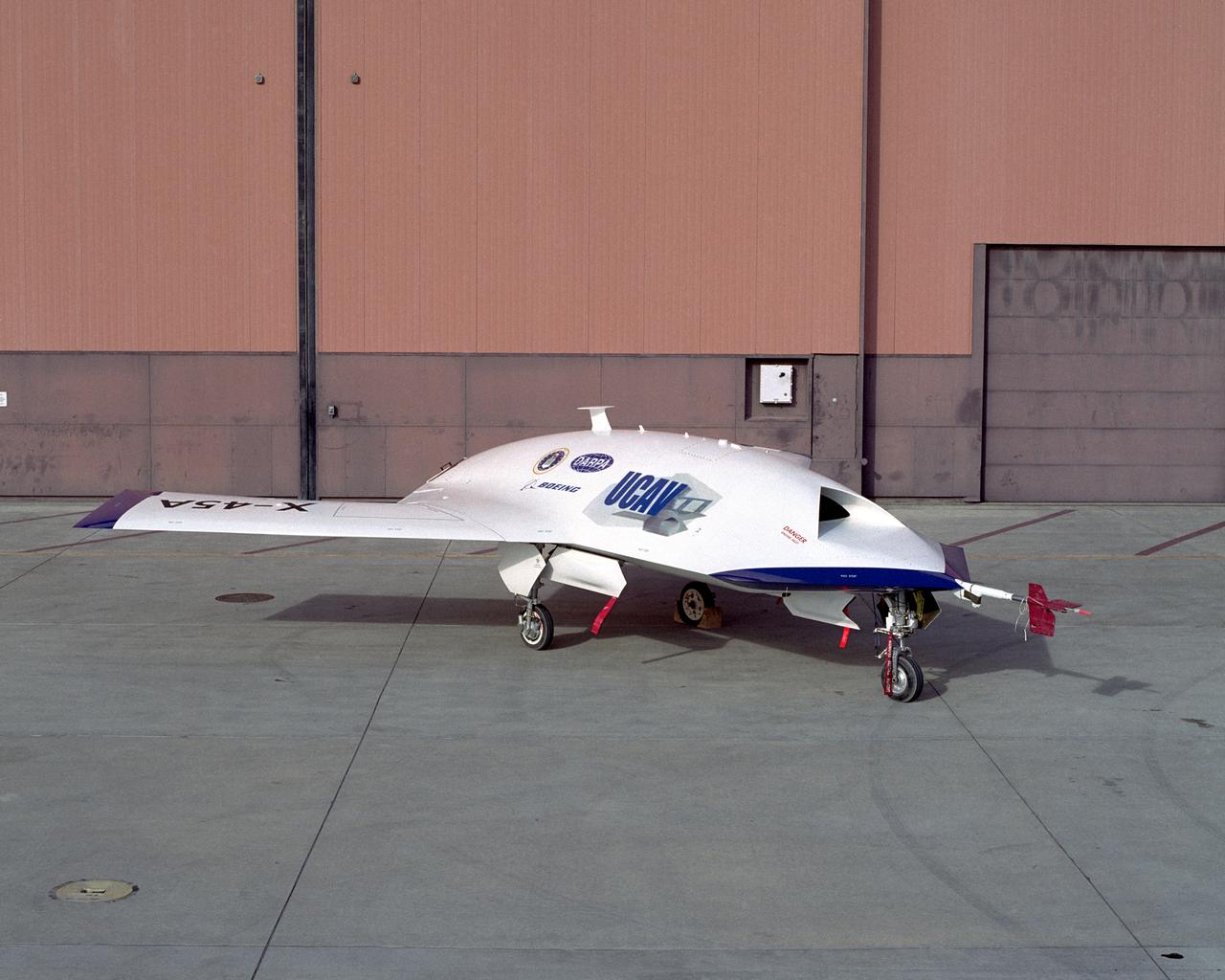
DARPA, U.S. Air Force, Boeing X-45A UCAV (Unmanned Combat Air Vehicle) at NASA Dryden Flight Research Center.
DARPA, U.S. Air Force, Boeing X-45A UCAV at NASA Dryden
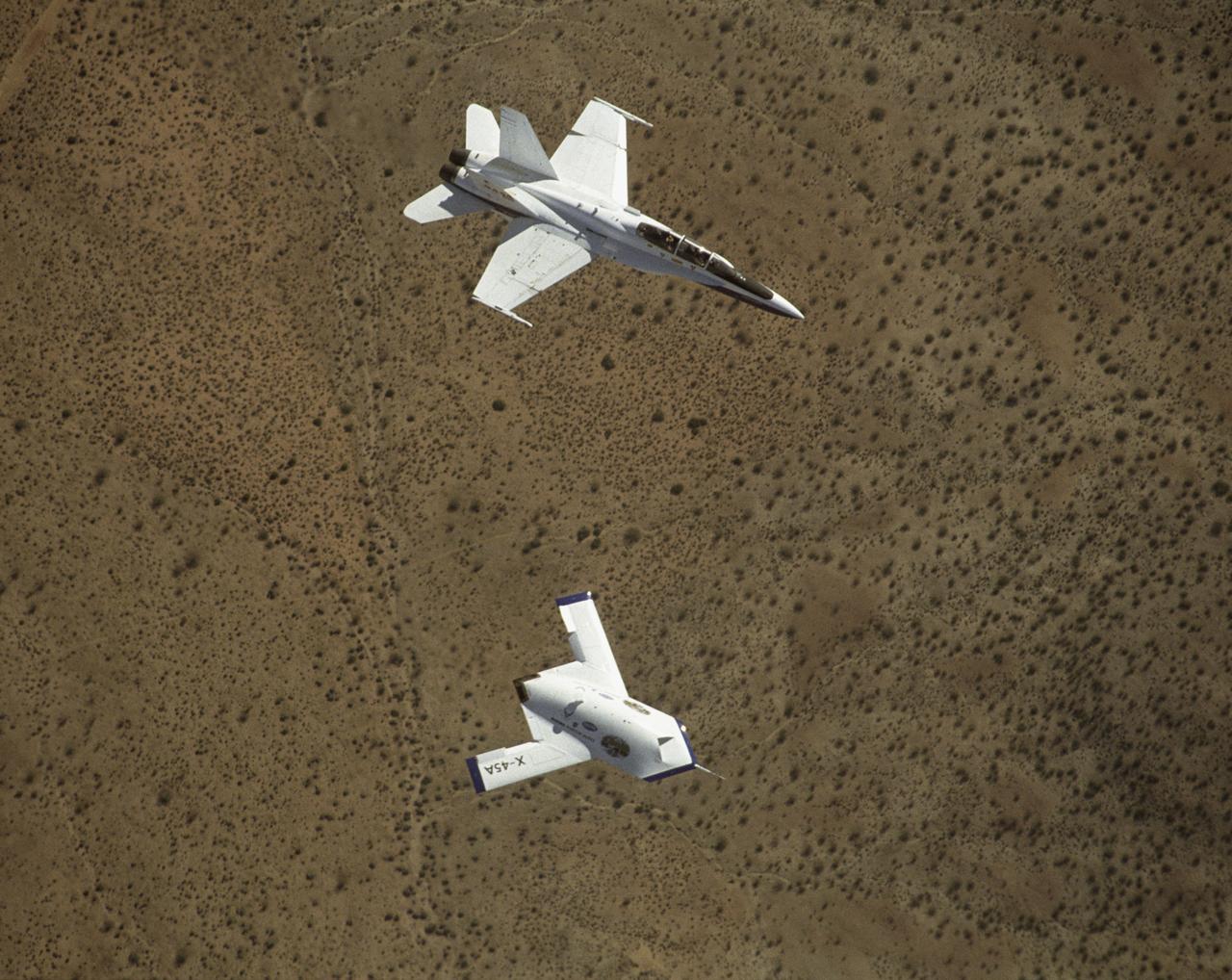
The second X-45A Unmanned Combat Air Vehicle (UCAV) technology demonstrator completed its first flight on November 21, 2002, after taking off from a dry lakebed at NASA's Dryden Flight Research Center, Edwards Air Force Base, California.  X-45A vehicle two flew for approximately 30 minutes and reached an airspeed of 195 knots and an altitude of 7500 feet. This flight validated the functionality of the UCAV flight software on the second air vehicle.  Dryden is supporting the DARPA/Boeing team in the design, development, integration, and demonstration of the critical technologies, processes, and system attributes leading to an operational UCAV system. Dryden support of the X-45A demonstrator system includes analysis, component development, simulations, ground and flight tests.
The second X-45A Unmanned Combat Air Vehicle (UCAV) technology demonstrator aircraft during its maiden flight. The flight marks another milestone for the UCAV program, and verified the aircraft's flight control software
The second X-45A Unmanned Combat Air Vehicle (UCAV) technology demonstrator completed its first flight on November 21, 2002, after taking off from a dry lakebed at NASA's Dryden Flight Research Center, Edwards Air Force Base, California.  X-45A vehicle two flew for approximately 30 minutes and reached an airspeed of 195 knots and an altitude of 7500 feet. This flight validated the functionality of the UCAV flight software on the second air vehicle.  Dryden is supporting the DARPA/Boeing team in the design, development, integration, and demonstration of the critical technologies, processes, and system attributes leading to an operational UCAV system. Dryden support of the X-45A demonstrator system includes analysis, component development, simulations, ground and flight tests.
The second X-45A Unmanned Combat Air Vehicle (UCAV) technology demonstrator aircraft during its maiden flight. The flight marks another milestone for the UCAV program, and verified the aircraft's flight control software
The second X-45A Unmanned Combat Air Vehicle (UCAV) technology demonstrator completed its first flight on November 21, 2002, after taking off from a dry lakebed at NASA's Dryden Flight Research Center, Edwards Air Force Base, California.  X-45A vehicle two flew for approximately 30 minutes and reached an airspeed of 195 knots and an altitude of 7500 feet. This flight validated the functionality of the UCAV flight software on the second air vehicle.  Dryden is supporting the DARPA/Boeing team in the design, development, integration, and demonstration of the critical technologies, processes, and system attributes leading to an operational UCAV system. Dryden support of the X-45A demonstrator system includes analysis, component development, simulations, ground and flight tests.
The second X-45A Unmanned Combat Air Vehicle (UCAV) technology demonstrator aircraft during its maiden flight. The flight marks another milestone for the UCAV program, and verified the aircraft's flight control software
The second X-45A Unmanned Combat Air Vehicle (UCAV) technology demonstrator completed its first flight on November 21, 2002, after taking off from a dry lakebed at NASA's Dryden Flight Research Center, Edwards Air Force Base, California.  X-45A vehicle two flew for approximately 30 minutes and reached an airspeed of 195 knots and an altitude of 7500 feet. This flight validated the functionality of the UCAV flight software on the second air vehicle.  Dryden is supporting the DARPA/Boeing team in the design, development, integration, and demonstration of the critical technologies, processes, and system attributes leading to an operational UCAV system. Dryden support of the X-45A demonstrator system includes analysis, component development, simulations, ground and flight tests.
The second X-45A Unmanned Combat Air Vehicle (UCAV) technology demonstrator aircraft during its maiden flight. The flight marks another milestone for the UCAV program, and verified the aircraft's flight control software
The first X-45A Unmanned Combat Air Vehicle (UCAV) technology demonstrator completed its sixth flight on Dec. 19, 2002, raising its landing gear in flight for the first time. The X-45A flew for 40 minutes and reached an airspeed of 195 knots and an altitude of 7,500 feet.  Dryden is supporting the DARPA/Boeing team in the design, development, integration, and demonstration of the critical technologies, processes, and system attributes leading to an operational UCAV system. Dryden support of the X-45A demonstrator system includes analysis, component development, simulations, ground and flight tests.
The first X-45A Unmanned Combat Air Vehicle (UCAV) technology demonstrator completed its sixth flight on Dec. 19, 2002, raising its landing gear in flight for the first time. The X-45A flew for 40 minutes and reached an airspeed of 195 knots
The first X-45A Unmanned Combat Air Vehicle (UCAV) technology demonstrator completed its sixth flight on Dec. 19, 2002, raising its landing gear in flight for the first time. The X-45A flew for 40 minutes and reached an airspeed of 195 knots and an altitude of 7,500 feet.  Dryden is supporting the DARPA/Boeing team in the design, development, integration, and demonstration of the critical technologies, processes, and system attributes leading to an operational UCAV system. Dryden support of the X-45A demonstrator system includes analysis, component development, simulations, ground and flight tests.
The first X-45A Unmanned Combat Air Vehicle (UCAV) technology demonstrator completed its sixth flight on Dec. 19, 2002, raising its landing gear in flight for the first time. The X-45A flew for 40 minutes and reached an airspeed of 195 knots
The first X-45A Unmanned Combat Air Vehicle (UCAV) technology demonstrator completed its sixth flight on Dec. 19, 2002, raising its landing gear in flight for the first time. The X-45A flew for 40 minutes and reached an airspeed of 195 knots and an altitude of 7,500 feet.  Dryden is supporting the DARPA/Boeing team in the design, development, integration, and demonstration of the critical technologies, processes, and system attributes leading to an operational UCAV system. Dryden support of the X-45A demonstrator system includes analysis, component development, simulations, ground and flight tests.
The first X-45A Unmanned Combat Air Vehicle (UCAV) technology demonstrator completed its sixth flight on Dec. 19, 2002, raising its landing gear in flight for the first time. The X-45A flew for 40 minutes and reached an airspeed of 195 knots
The first X-45A Unmanned Combat Air Vehicle (UCAV) technology demonstrator completed its sixth flight on Dec. 19, 2002, raising its landing gear in flight for the first time. The X-45A flew for 40 minutes and reached an airspeed of 195 knots and an altitude of 7,500 feet.  Dryden is supporting the DARPA/Boeing team in the design, development, integration, and demonstration of the critical technologies, processes, and system attributes leading to an operational UCAV system. Dryden support of the X-45A demonstrator system includes analysis, component development, simulations, ground and flight tests.
The first X-45A Unmanned Combat Air Vehicle (UCAV) technology demonstrator completed its sixth flight on Dec. 19, 2002, raising its landing gear in flight for the first time. The X-45A flew for 40 minutes and reached an airspeed of 195 knots
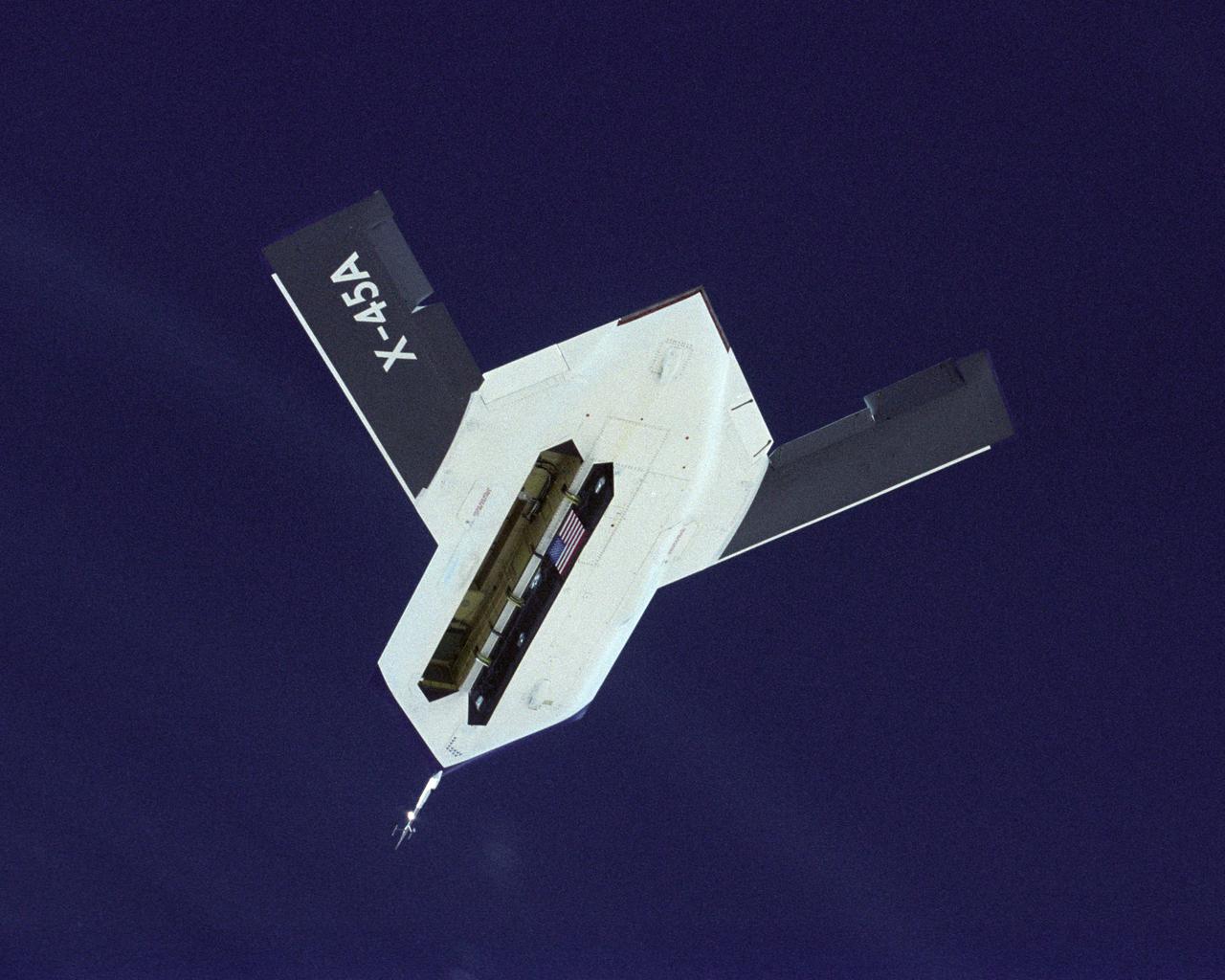
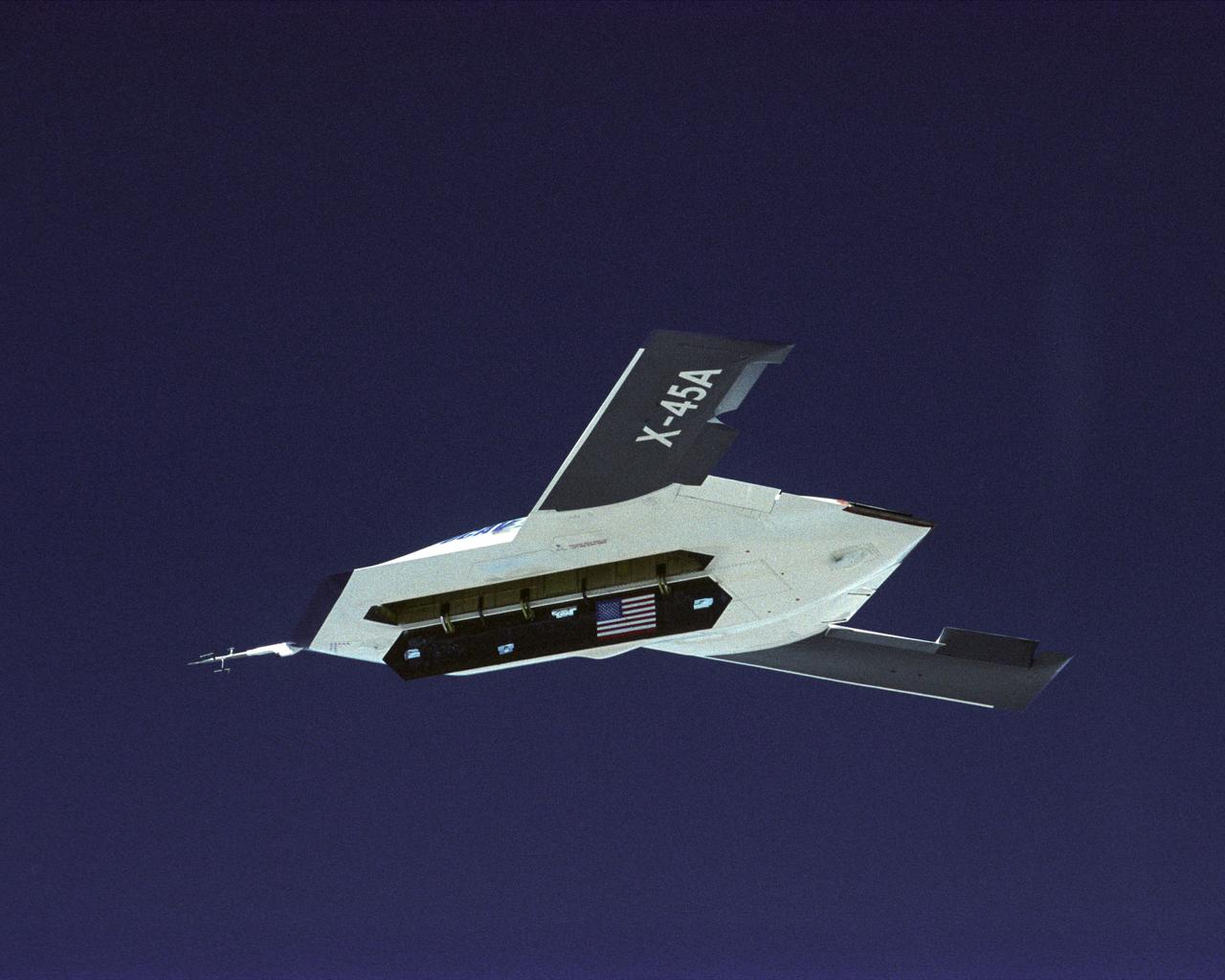
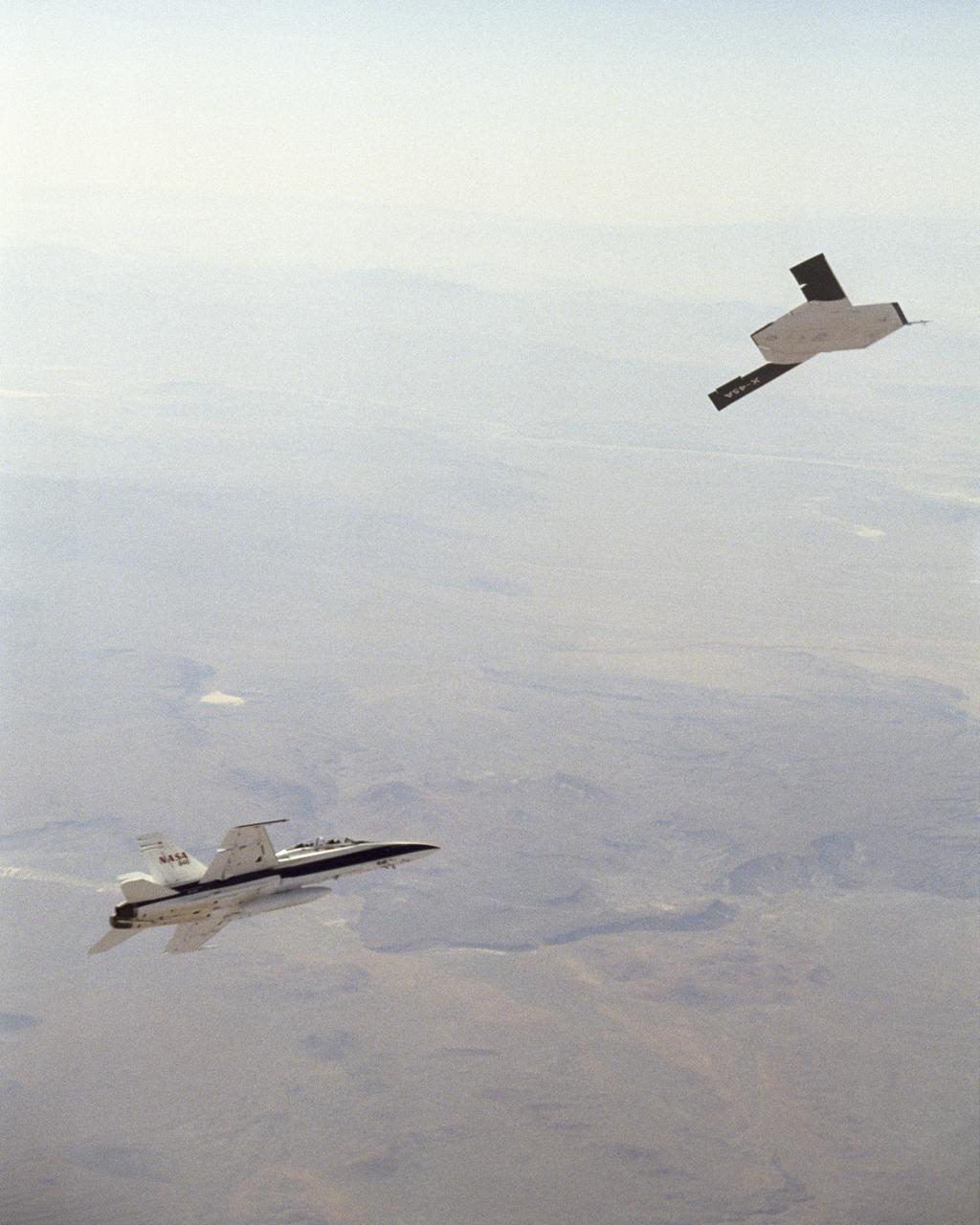
The DARPA/U.S. Air Force X-45A Unmanned Combat Air Vehicle (UCAV) system demonstration program completed the first phase of demonstrations, known as Block I, on Feb. 28, 2003. The final Block I activities included two flights at Dryden, during which safe operation of the weapons bay door was verified at 35,000 feet and speeds of Mach 0.75, the maximum planned altitude and speed for the two X-45A demonstrator vehicles.
X-45A Air Vehicle #1 during flight #13, with weapons bay door open
The DARPA/U.S. Air Force X-45A Unmanned Combat Air Vehicle (UCAV) system demonstration program completed the first phase of demonstrations, known as Block I, on Feb. 28, 2003. The final Block I activities included two flights at Dryden, during which safe operation of the weapons bay door was verified at 35,000 feet and speeds of Mach 0.75, the maximum planned altitude and speed for the two X-45A demonstrator vehicles.
X-45A Air Vehicle #1 during flight #13, with weapons bay door open
The DARPA/U.S. Air Force X-45A Unmanned Combat Air Vehicle (UCAV) system demonstration program completed the first phase of demonstrations, known as Block I, on Feb. 28, 2003. The final Block I activities included two flights at Dryden, during which safe operation of the weapons bay door was verified at 35,000 feet and speeds of Mach 0.75, the maximum planned altitude and speed for the two X-45A demonstrator vehicles.
X-45A Air Vehicle #1 during flight #13, with weapons bay door open
The DARPA/U.S. Air Force X-45A Unmanned Combat Air Vehicle (UCAV) system demonstration program completed the first phase of demonstrations, known as Block I, on Feb. 28, 2003. The final Block I activities included two flights at Dryden, during which safe operation of the weapons bay door was verified at 35,000 feet and speeds of Mach 0.75, the maximum planned altitude and speed for the two X-45A demonstrator vehicles.
X-45A Air Vehicle #1 during flight #13, with weapons bay door open
The DARPA/U.S. Air Force X-45A Unmanned Combat Air Vehicle (UCAV) system demonstration program completed the first phase of demonstrations, known as Block I, on Feb. 28, 2003. The final Block I activities included two flights at Dryden, during which safe operation of the weapons bay door was verified at 35,000 feet and speeds of Mach 0.75, the maximum planned altitude and speed for the two X-45A demonstrator vehicles.
X-45A Air Vehicle #1 during flight #13, with weapons bay door open
The first X-45A Unmanned Combat Air Vehicle (UCAV) technology demonstrator completed its sixth flight on Dec. 19, 2002, raising its landing gear in flight for the first time. The X-45A flew for 40 minutes and reached an airspeed of 195 knots and an altitude of 7,500 feet. Dryden is supporting the DARPA/Boeing team in the design, development, integration, and demonstration of the critical technologies, processes, and system attributes leading to an operational UCAV system. Dryden support of the X-45A demonstrator system includes analysis, component development, simulations, ground and flight tests.
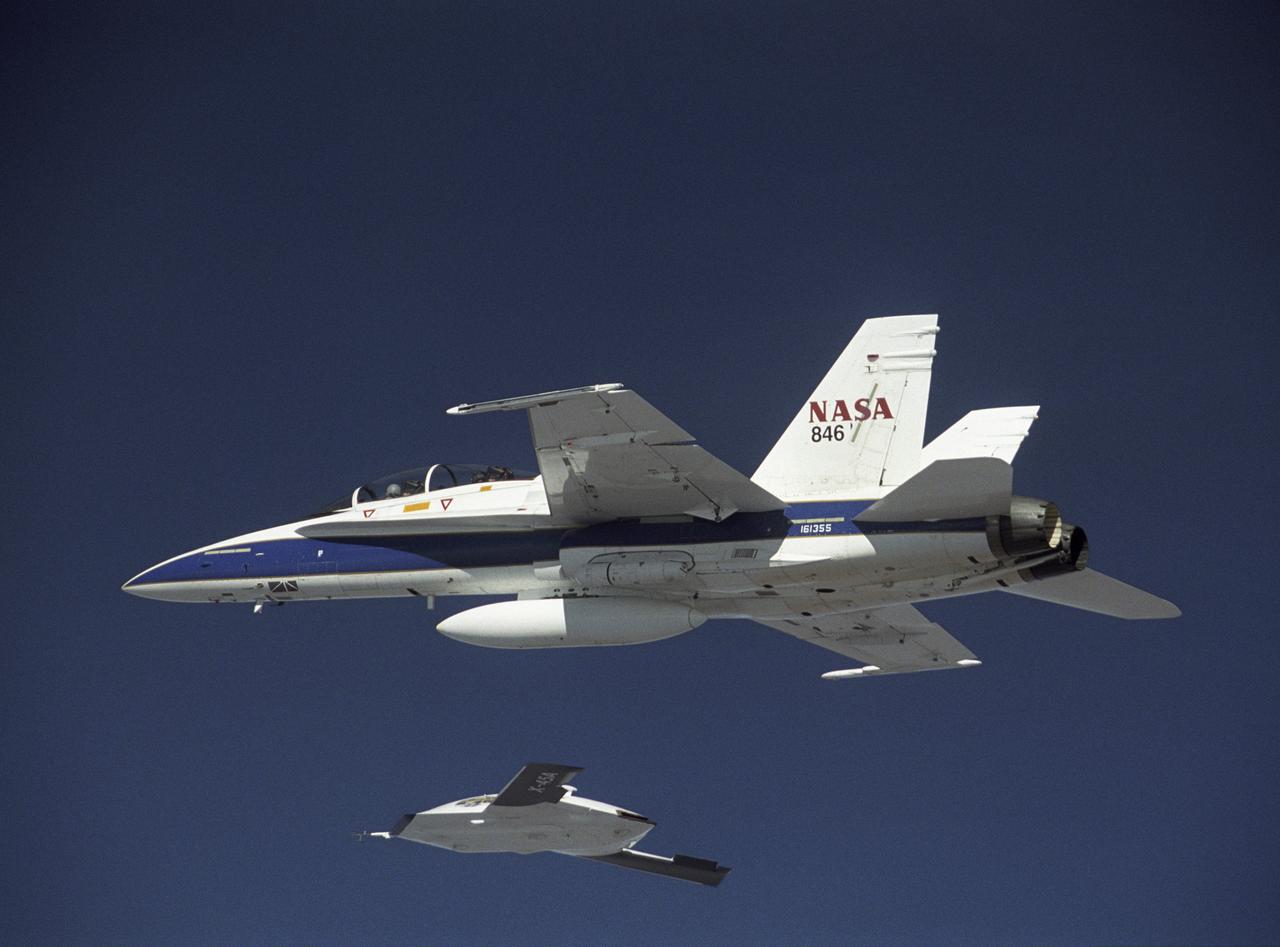
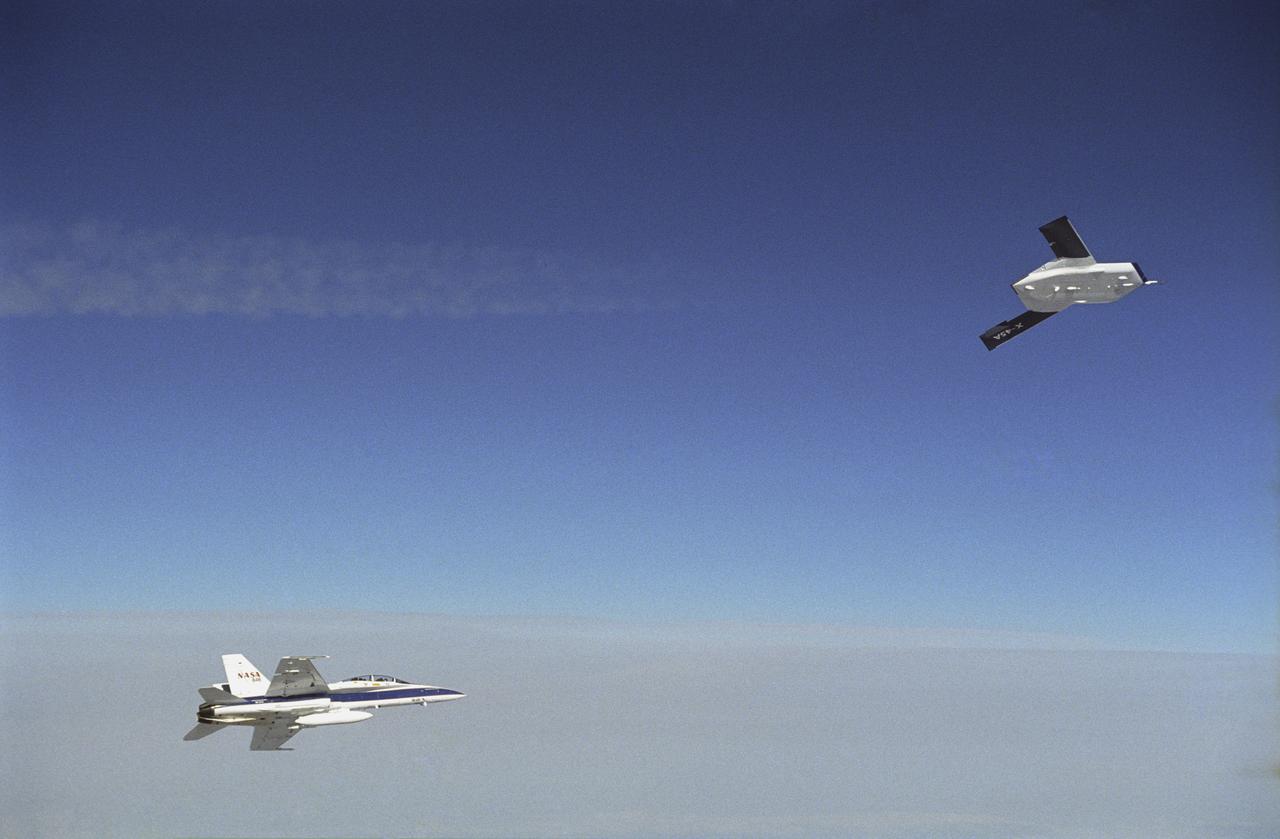
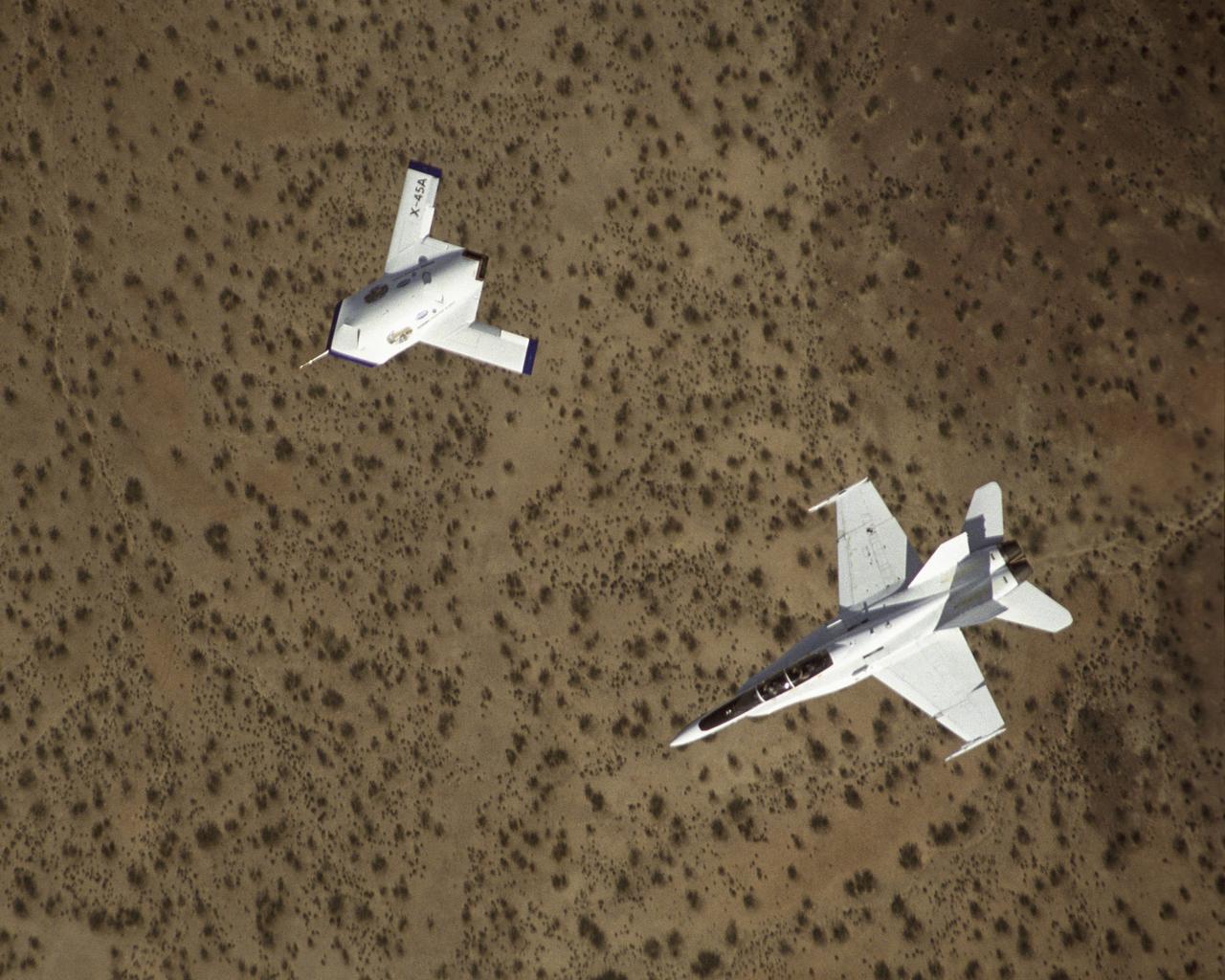
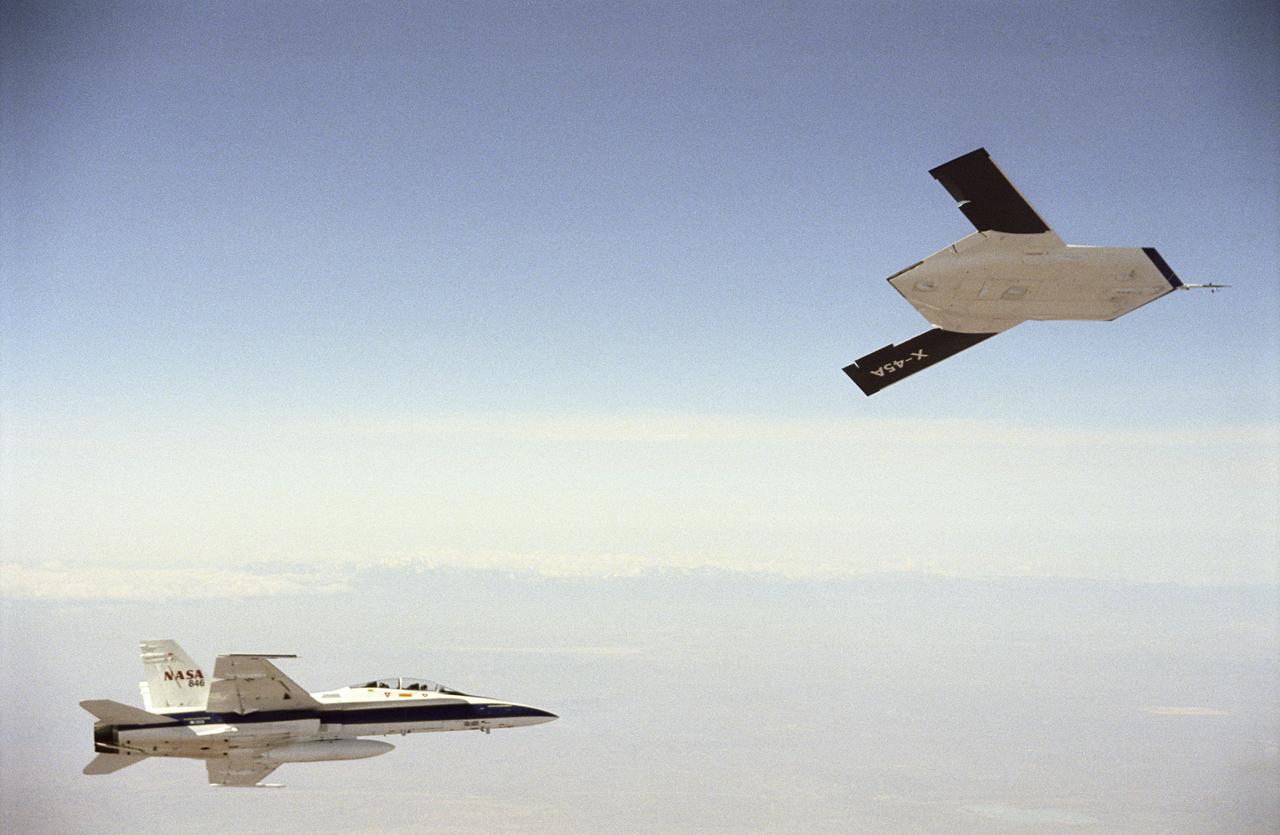
X-45A in flight with F-18 #846 chase aircraft, during first GPS-guided weapon demonstration flight
X-45A in flight with F-18 #846 chase aircraft, during first GPS-guided weapon demonstration flight.
X-45A in flight with F-18 #846 chase aircraft, during first GPS-guided weapon demonstration flight
X-45A in flight with F-18 #846 chase aircraft, during first GPS-guided weapon demonstration flight.
X-45A in flight with F-18 #846 chase aircraft, during first GPS-guided weapon demonstration flight
X-45A in flight with F-18 #846 chase aircraft, during first GPS-guided weapon demonstration flight.
X-45A in flight with F-18 #846 chase aircraft, during first GPS-guided weapon demonstration flight
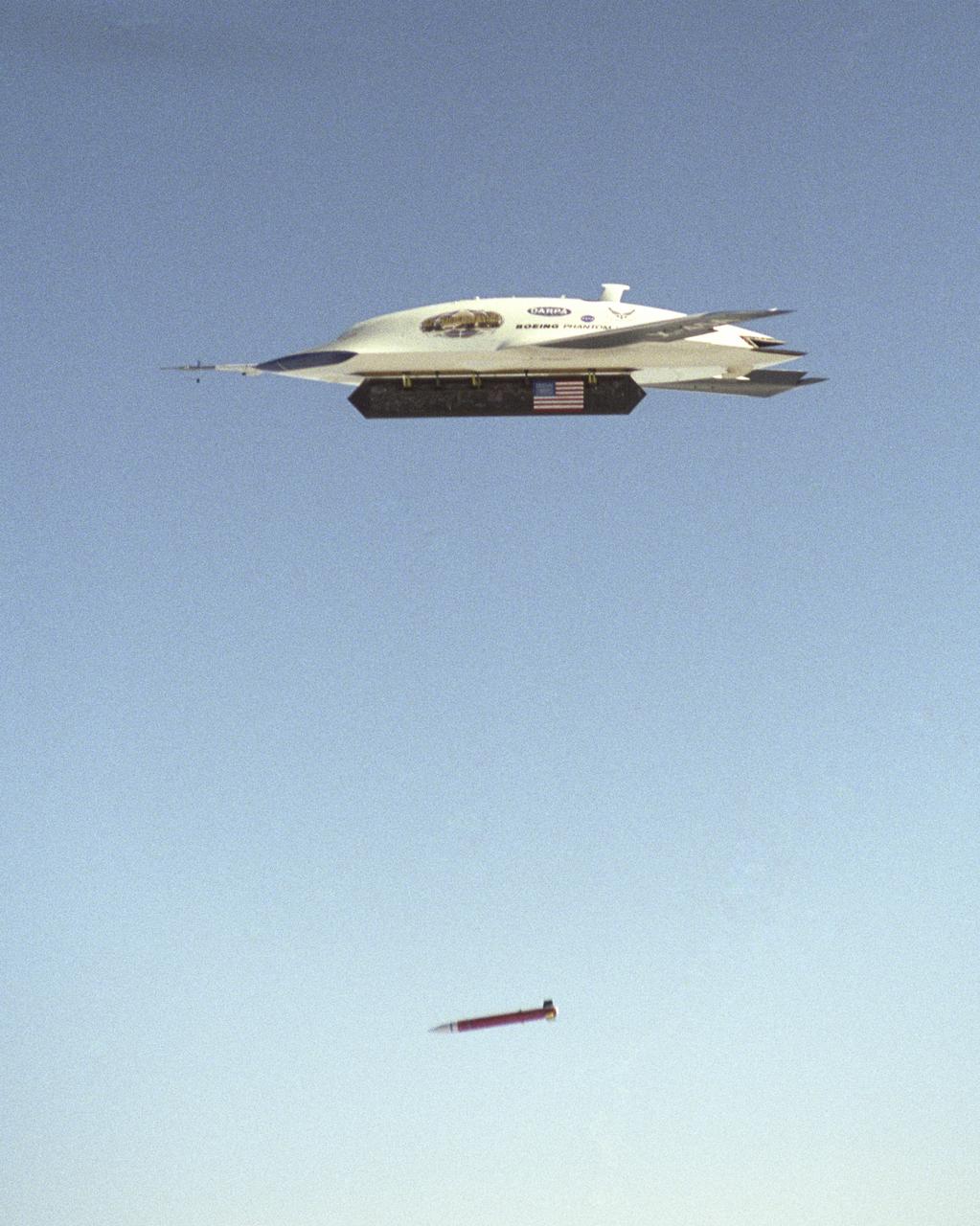
X-45A first GPS-guided weapon demonstration - weapon release
X-45A in flight with F-18 #846 chase aircraft, during first GPS-guided weapon demonstration flight.
X-45A in flight with F-18 #846 chase aircraft, during first GPS-guided weapon demonstration flight
X-45A first GPS-guided weapon demonstration - weapon release
X-45A in flight with F-18 #846 chase aircraft, during first GPS-guided weapon demonstration flight.
X-45A in flight with F-18 #846 chase aircraft, during first GPS-guided weapon demonstration flight
X-45A in flight with F-18 #846 chase aircraft, during first GPS-guided weapon demonstration flight.
X-45A in flight with F-18 #846 chase aircraft, during first GPS-guided weapon demonstration flight
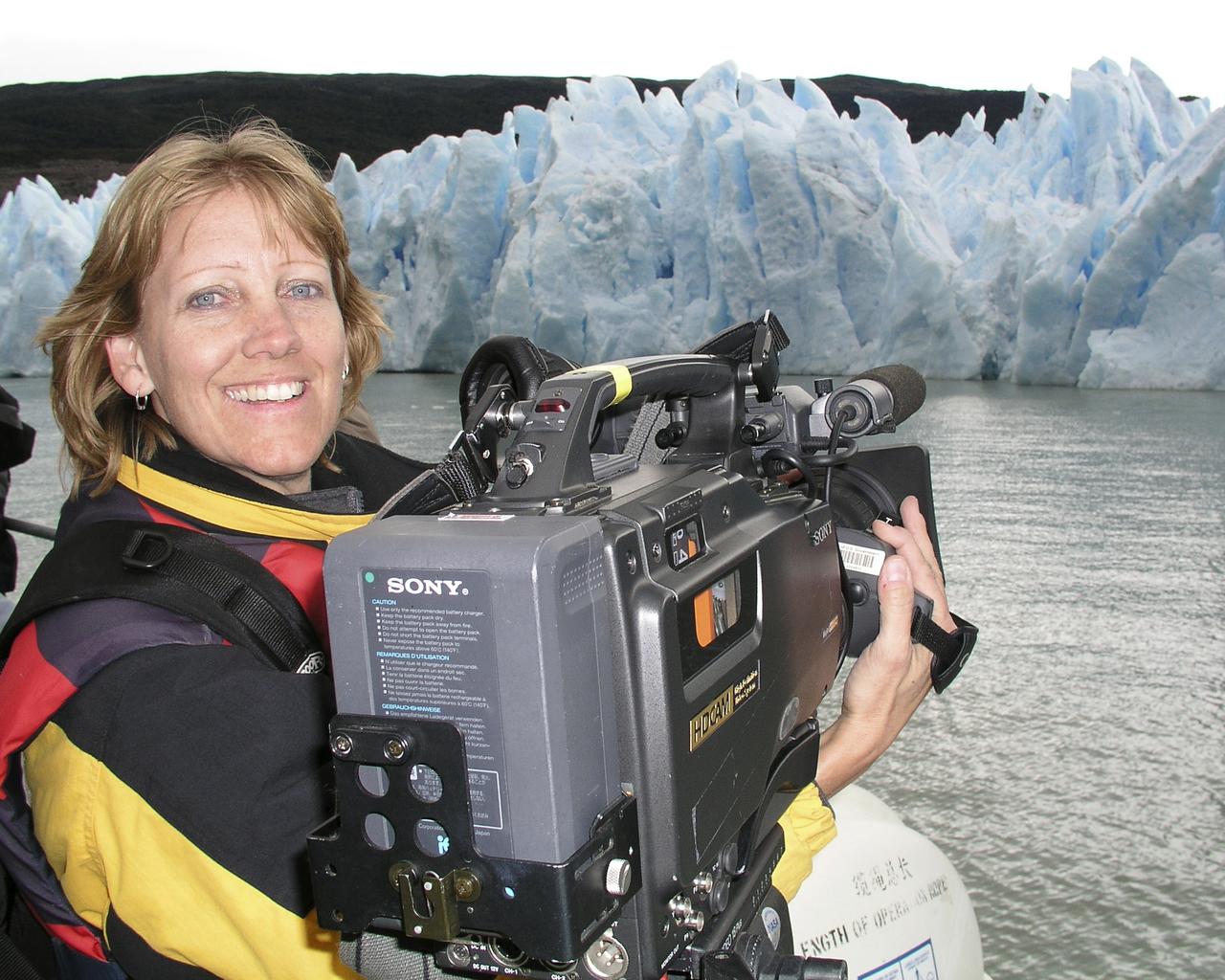
Lori Losey, an employee of Arcata Associates at Dryden, was honored with NASA's 2004 Videographer of the Year award for her work in two of the three categories in the NASA video competition, public affairs and documentation. In the public affairs category, Losey received a first-place citation for her footage of an Earth Science mission that was flown aboard NASA's DC-8 Flying Laboratory in South America last year. Her footage not only depicted the work of the scientists aboard the aircraft and on the ground, but she also obtained spectacular footage of flora and fauna in the mission's target area that helped communicate the environmental research goals of the project.  Losey also took first place in the documentation category for her acquisition of technical videography of the X-45A Unmanned Combat Air Vehicle flight tests. The video, shot with a hand-held camera from the rear seat of a NASA F/A-18 mission support aircraft, demonstrated her capabilities in recording precise technical visual data in a very challenging airborne environment.  The award was presented to Losey during a NASA reception at the National Association of Broadcasters convention in Las Vegas April 19.  A three-judge panel evaluated entries for public affairs, documentation and production videography on professional excellence, technical quality, originality, creativity within restrictions of the project, and applicability to NASA and its mission. Entries consisted of a continuous video sequence or three views of the same subject for a maximum of three minutes duration.  Linda Peters, Arcata Associates' Video Systems Supervisor at NASA Dryden, noted, "Lori is a talented videographer who has demonstrated extraordinary abilities with the many opportunities she has received in her career at NASA."  Losey's award was the second major NASA video award won by members of the Dryden video team in two years. Steve Parcel took first place in the documentation category last year for his camera and editing
NASA Dryden's Lori Losey was named NASA's 2004 Videographer of the Year in part for her camera work during NASA's AirSAR 2004 science mission in Chile.