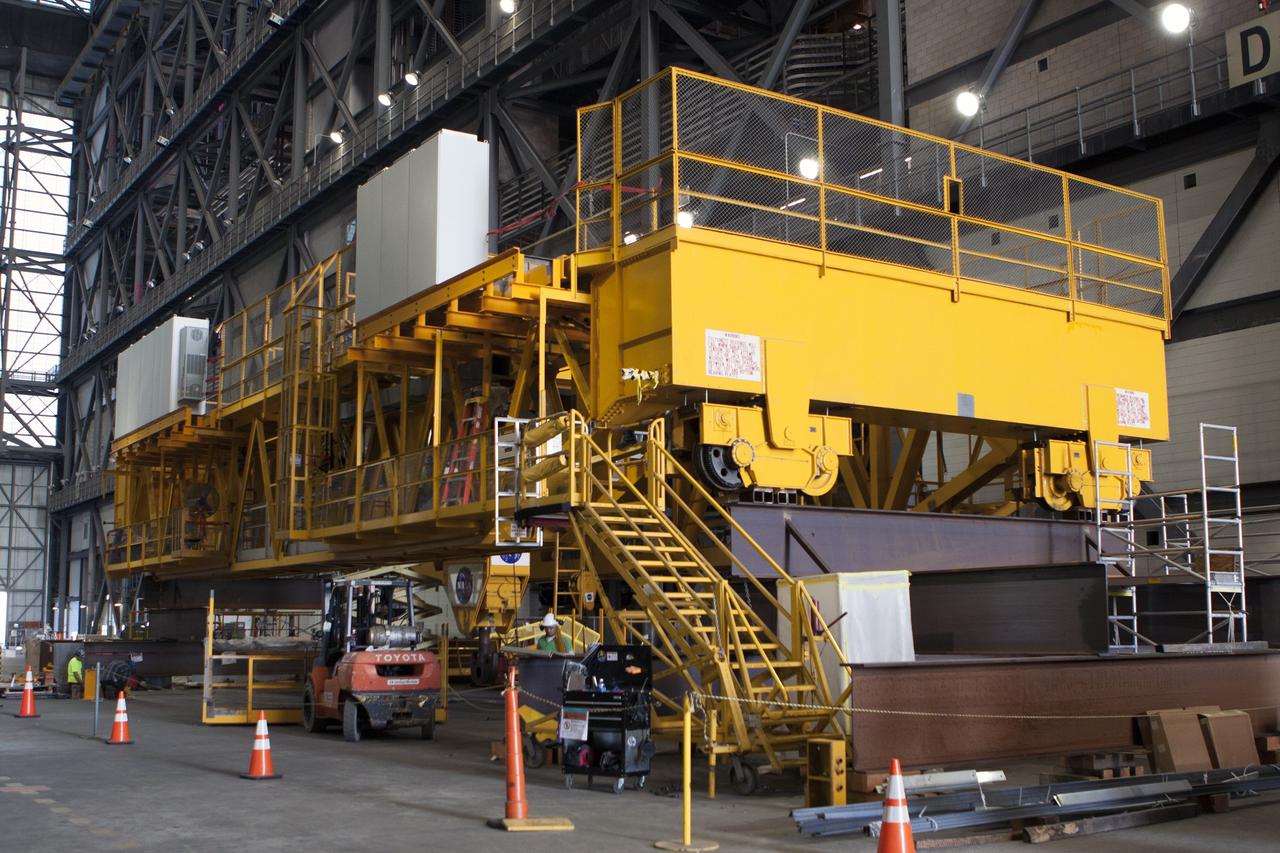
CAPE CANAVERAL, Fla. – Inside the Vehicle Assembly Building at NASA's Kennedy Space Center in Florida, refurbishment and upgrades to the 175-ton crane are under way on the ground floor of the transfer aisle. The crane's 45-year-old controls are being upgraded to improve reliability, precision and safety. The Ground Systems Development and Operations Program is overseeing upgrades and modifications to the crane so that it can support lifting needs for NASA and other exploration vehicles, including the agency's Space Launch System and Orion spacecraft. Photo credit: NASA/Kim Shiflett
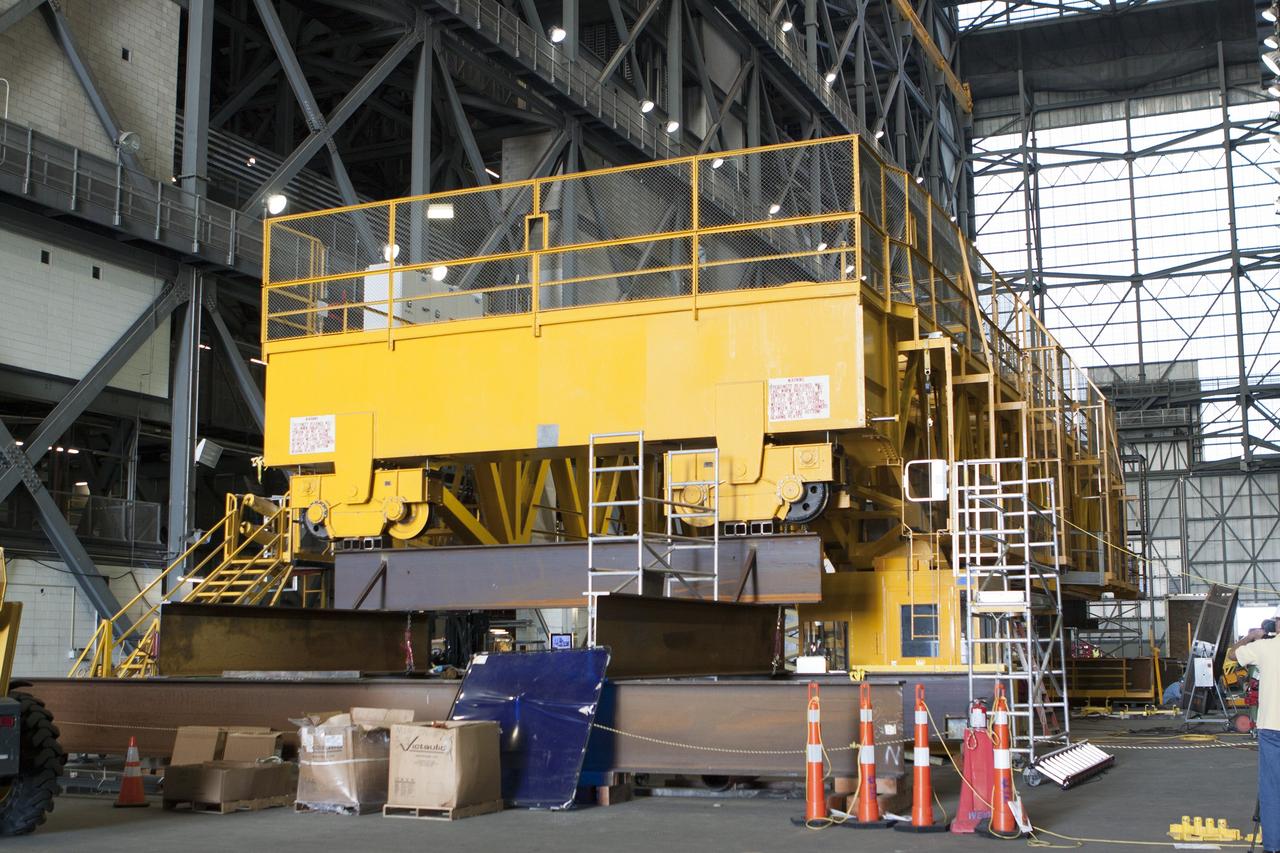
CAPE CANAVERAL, Fla. – Upgrades and modifications continue on the 175-ton crane on the ground floor of the transfer aisle inside the Vehicle Assembly Building at NASA's Kennedy Space Center in Florida. The crane's 45-year-old controls are being upgraded to improve reliability, precision and safety. The Ground Systems Development and Operations Program is overseeing upgrades and modifications to the crane so that it can support lifting needs for NASA and other exploration vehicles, including the agency's Space Launch System and Orion spacecraft. Photo credit: NASA/Kim Shiflett
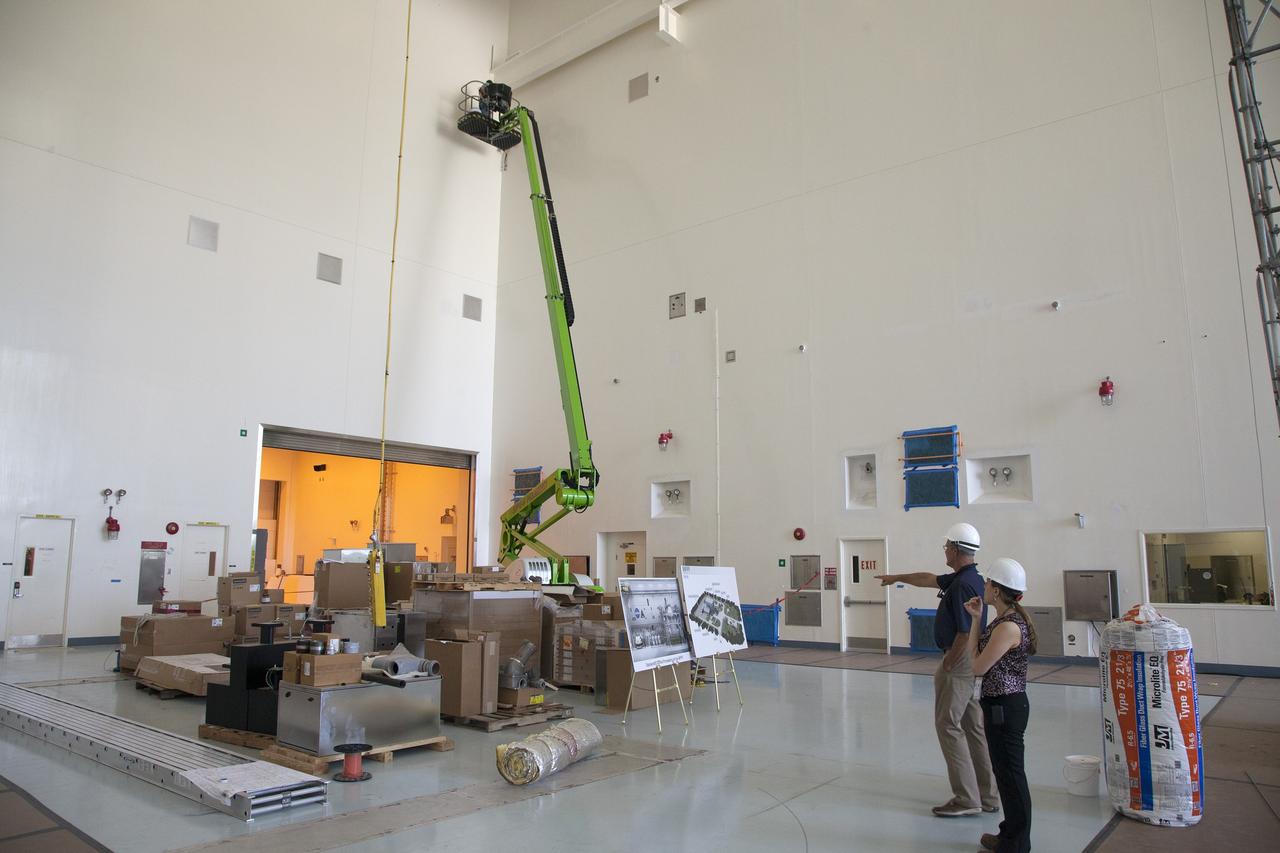
CAPE CANAVERAL, Fla. – Modifications continue on the Multi-Payload Processing Facility, or MPPF, at NASA's Kennedy Space Center in Florida. Inside the high bay, Skip Williams, Ground Systems Development and Operations, or GSDO, deputy project manager for the spacecraft offline element integration team, points out artist illustrations of how the MPPF's interior and exterior will look after modifications and upgrades have been completed. Kennedy's Center Operations Directorate is overseeing upgrades to the MPPF for GSDO Program. The extensive upgrades and modernizations will support processing of Orion spacecraft for NASA's exploration missions. The 19,647-square-foot building, originally constructed in 1995, primarily will be used for Orion hypergolic fueling, ammonia servicing and high-pressure gas servicing and checkout before being transported to the Vehicle Assembly Building for integration with the Space Launch System. Photo credit: NASA/Daniel Casper
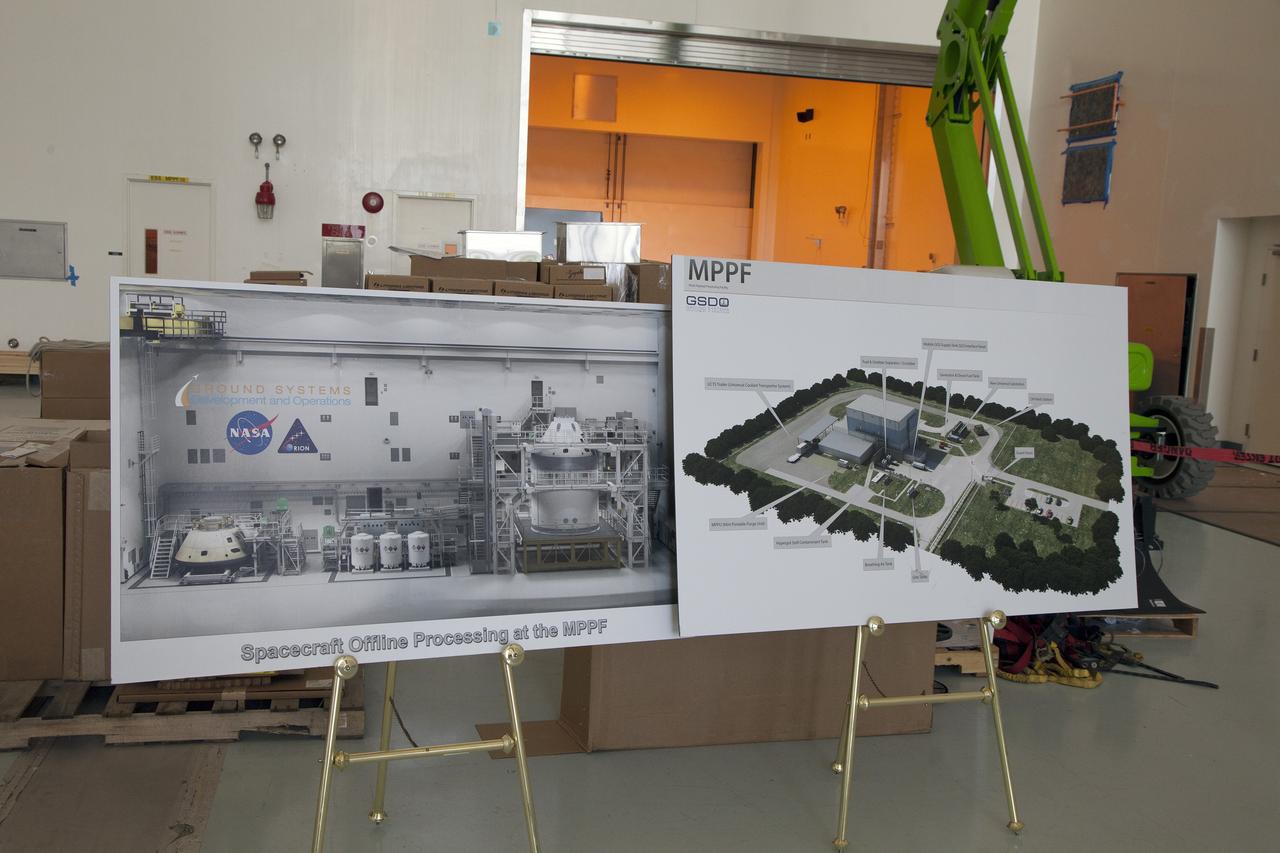
CAPE CANAVERAL, Fla. – Modifications continue on the Multi-Payload Processing Facility, or MPPF, at NASA's Kennedy Space Center in Florida. Artist illustrations on display inside the high bay show how the interior and exterior will look after the modifications and upgrades have been completed. Kennedy's Center Operations Directorate is overseeing upgrades to the MPPF for the Ground Systems Development and Operations Program. The extensive upgrades and modernizations will support processing of Orion spacecraft for NASA's exploration missions. The 19,647-square-foot building, originally constructed in 1995, primarily will be used for Orion hypergolic fueling, ammonia servicing and high-pressure gas servicing and checkout before being transported to the Vehicle Assembly Building for integration with the Space Launch System. Photo credit: NASA/Daniel Casper
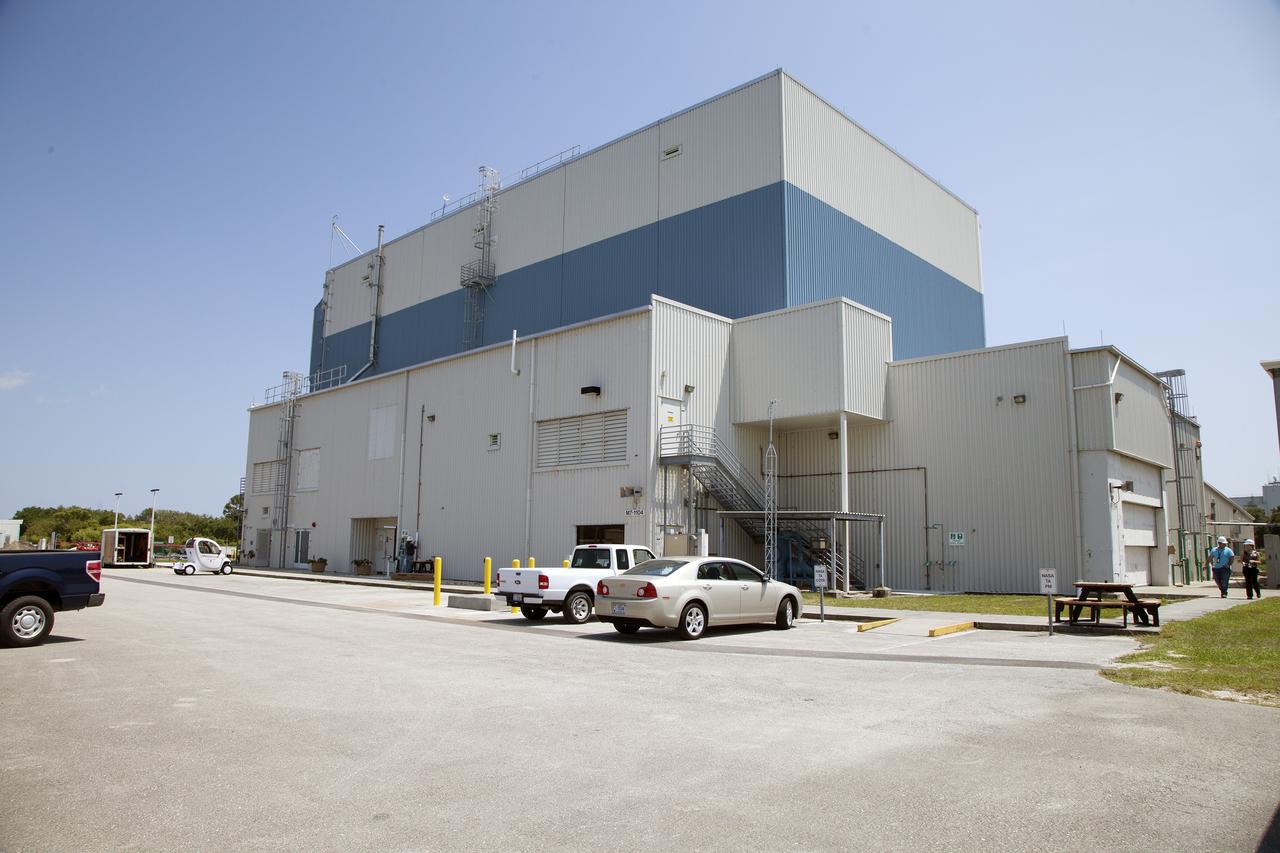
CAPE CANAVERAL, Fla. – Modifications continue on the Multi-Payload Processing Facility, or MPPF, at NASA's Kennedy Space Center in Florida. A view looking northwest, shows the exterior of the MPPF. Kennedy's Center Operations Directorate is overseeing upgrades to the MPPF for the Ground Systems Development and Operations Program. The extensive upgrades and modernizations will support processing of Orion spacecraft for NASA's exploration missions. The 19,647-square-foot building, originally constructed in 1995, primarily will be used for Orion hypergolic fueling, ammonia servicing and high-pressure gas servicing and checkout before being transported to the Vehicle Assembly Building for integration with the Space Launch System. Photo credit: NASA/Daniel Casper

CAPE CANAVERAL, Fla. – Modifications continue on the Multi-Payload Processing Facility, or MPPF, at NASA's Kennedy Space Center in Florida. Inside the high bay, a new fire suppression system and piping are being installed in the ceiling. Kennedy's Center Operations Directorate is overseeing upgrades to the MPPF for the Ground Systems Development and Operations Program. The extensive upgrades and modernizations will support processing of Orion spacecraft for NASA's exploration missions. The 19,647-square-foot building, originally constructed in 1995, primarily will be used for Orion hypergolic fueling, ammonia servicing and high-pressure gas servicing and checkout before being transported to the Vehicle Assembly Building for integration with the Space Launch System. Photo credit: NASA/Daniel Casper

Astronaut Christina Koch assists with a hardware upgrade for NASA's Cold Atom Lab aboard the International Space Station in January 2020. https://photojournal.jpl.nasa.gov/catalog/PIA23862
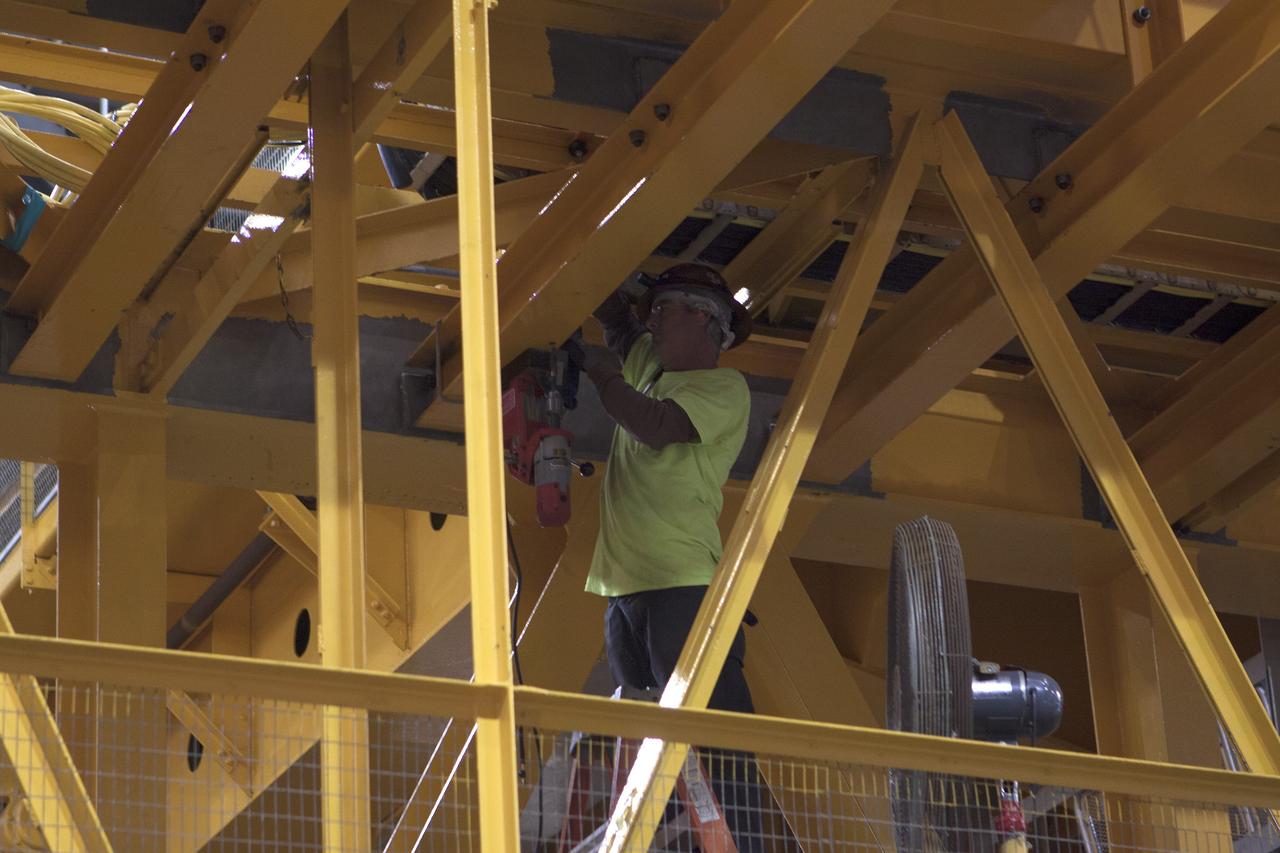
CAPE CANAVERAL, Fla. – Inside the Vehicle Assembly Building at NASA's Kennedy Space Center in Florida, a construction worker continues with refurbishment and upgrades to the 175-ton crane on the ground floor of the transfer aisle. The crane's 45-year-old controls are being upgraded to improve reliability, precision and safety. The Ground Systems Development and Operations Program is overseeing upgrades and modifications to the crane so that it can support lifting needs for NASA and other exploration vehicles, including the agency's Space Launch System and Orion spacecraft. Photo credit: NASA/Kim Shiflett
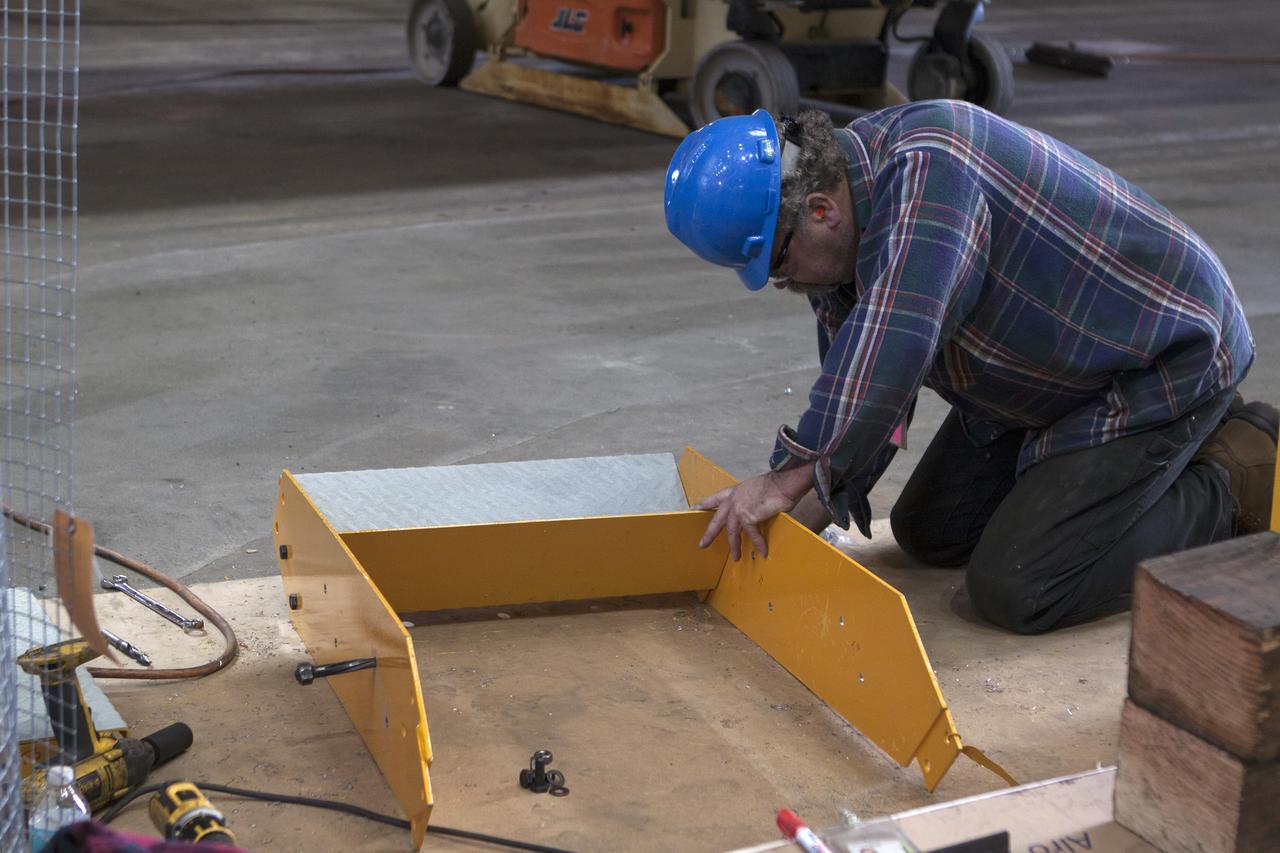
CAPE CANAVERAL, Fla. – Inside the Vehicle Assembly Building at NASA's Kennedy Space Center in Florida, a construction worker continues with refurbishment and upgrades to parts of the 175-ton crane on the ground floor of the transfer aisle. The crane's 45-year-old controls are being upgraded to improve reliability, precision and safety. The Ground Systems Development and Operations Program is overseeing upgrades and modifications to the crane so that it can support lifting needs for NASA and other exploration vehicles, including the agency's Space Launch System and Orion spacecraft. Photo credit: NASA/Kim Shiflett
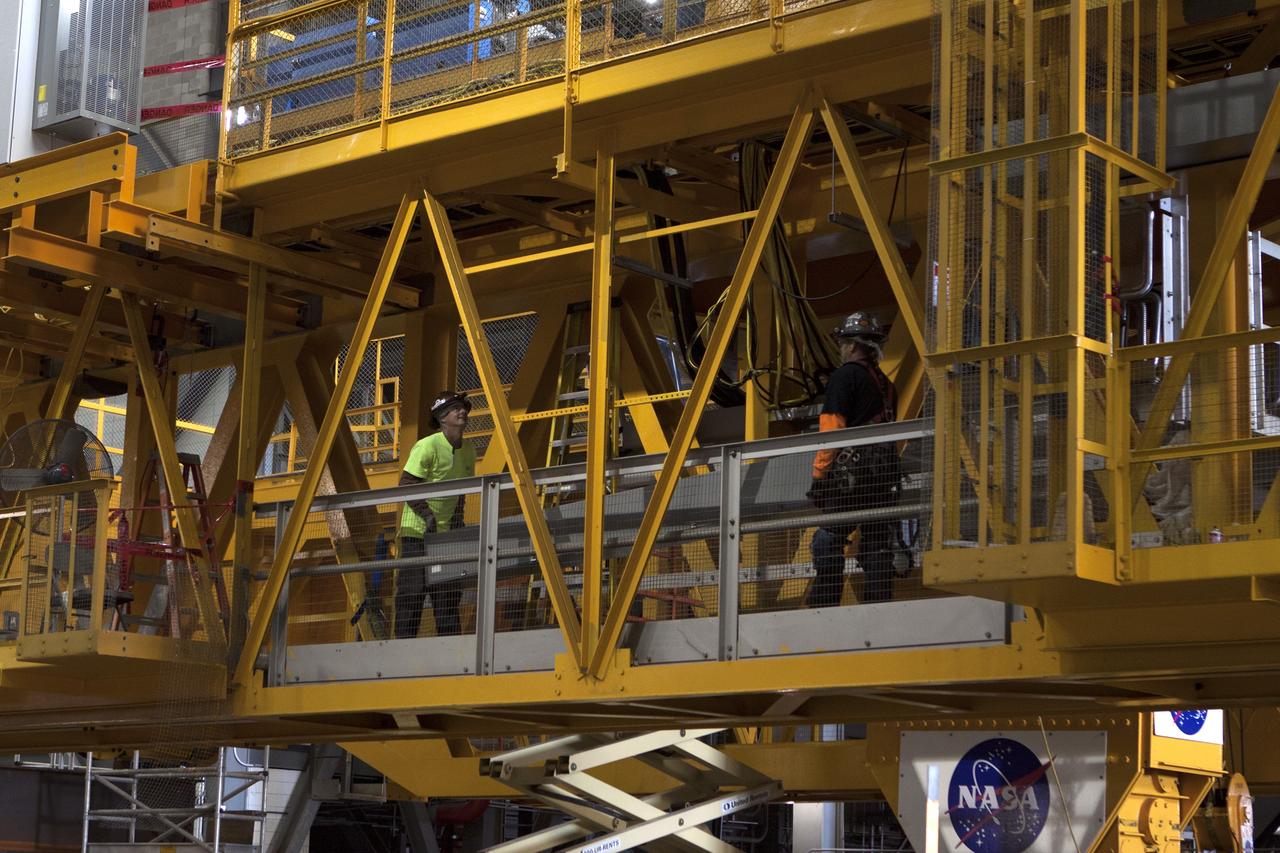
CAPE CANAVERAL, Fla. – Inside the Vehicle Assembly Building at NASA's Kennedy Space Center in Florida, construction workers continue with refurbishment and upgrades to the 175-ton crane on the ground floor of the transfer aisle. The crane's 45-year-old controls are being upgraded to improve reliability, precision and safety. The Ground Systems Development and Operations Program is overseeing upgrades and modifications to the crane so that it can support lifting needs for NASA and other exploration vehicles, including the agency's Space Launch System and Orion spacecraft. Photo credit: NASA/Kim Shiflett
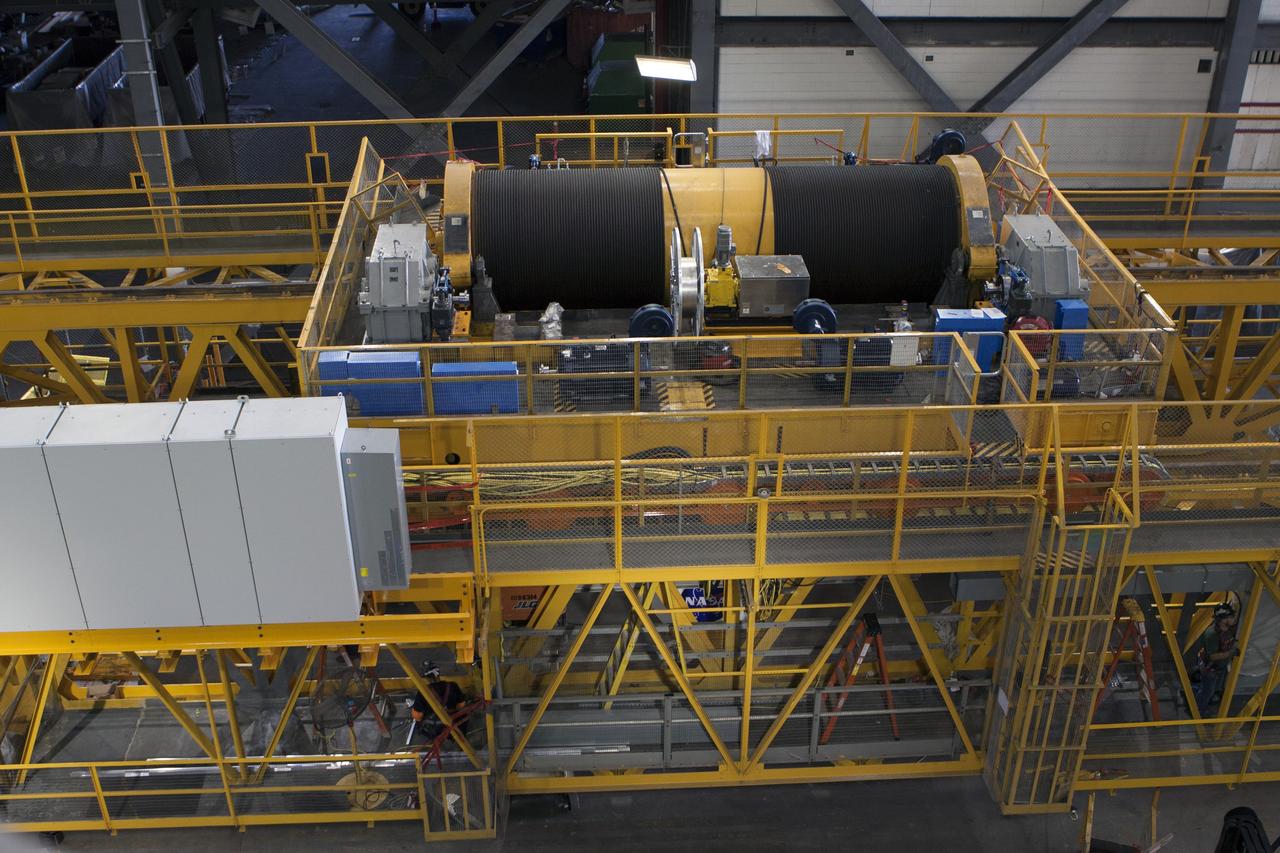
CAPE CANAVERAL, Fla. – A view from above inside the Vehicle Assembly Building at NASA's Kennedy Space Center in Florida, shows the 175-ton crane on the ground floor of the transfer aisle. The crane's 45-year-old controls are being upgraded to improve reliability, precision and safety. The Ground Systems Development and Operations Program is overseeing upgrades and modifications to the crane so that it can support lifting needs for NASA and other exploration vehicles, including the agency's Space Launch System and Orion spacecraft. Photo credit: NASA/Kim Shiflett
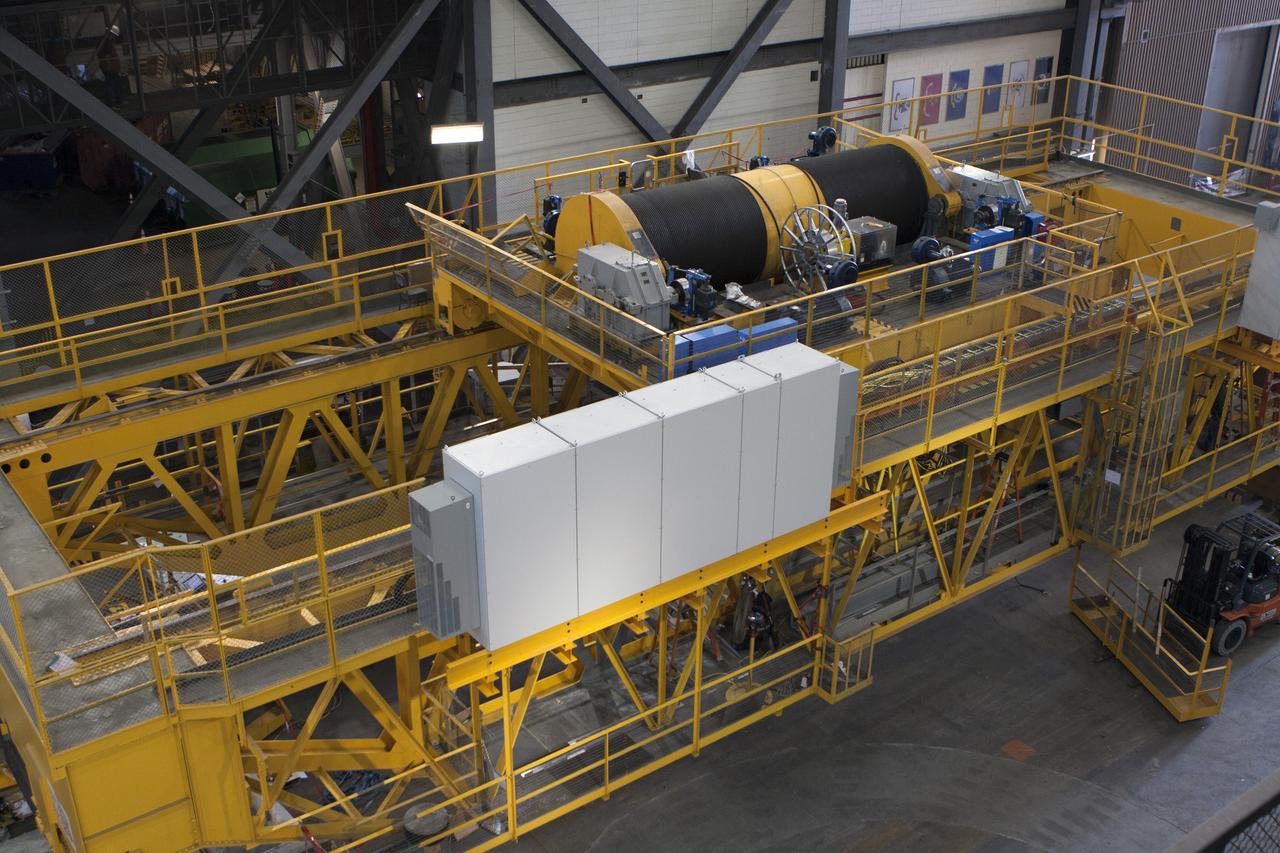
CAPE CANAVERAL, Fla. – A view from above inside the Vehicle Assembly Building at NASA's Kennedy Space Center in Florida, shows the 175-ton crane on the ground floor of the transfer aisle. The crane's 45-year-old controls are being upgraded to improve reliability, precision and safety. The Ground Systems Development and Operations Program is overseeing upgrades and modifications to the crane so that it can support lifting needs for NASA and other exploration vehicles, including the agency's Space Launch System and Orion spacecraft. Photo credit: NASA/Kim Shiflett
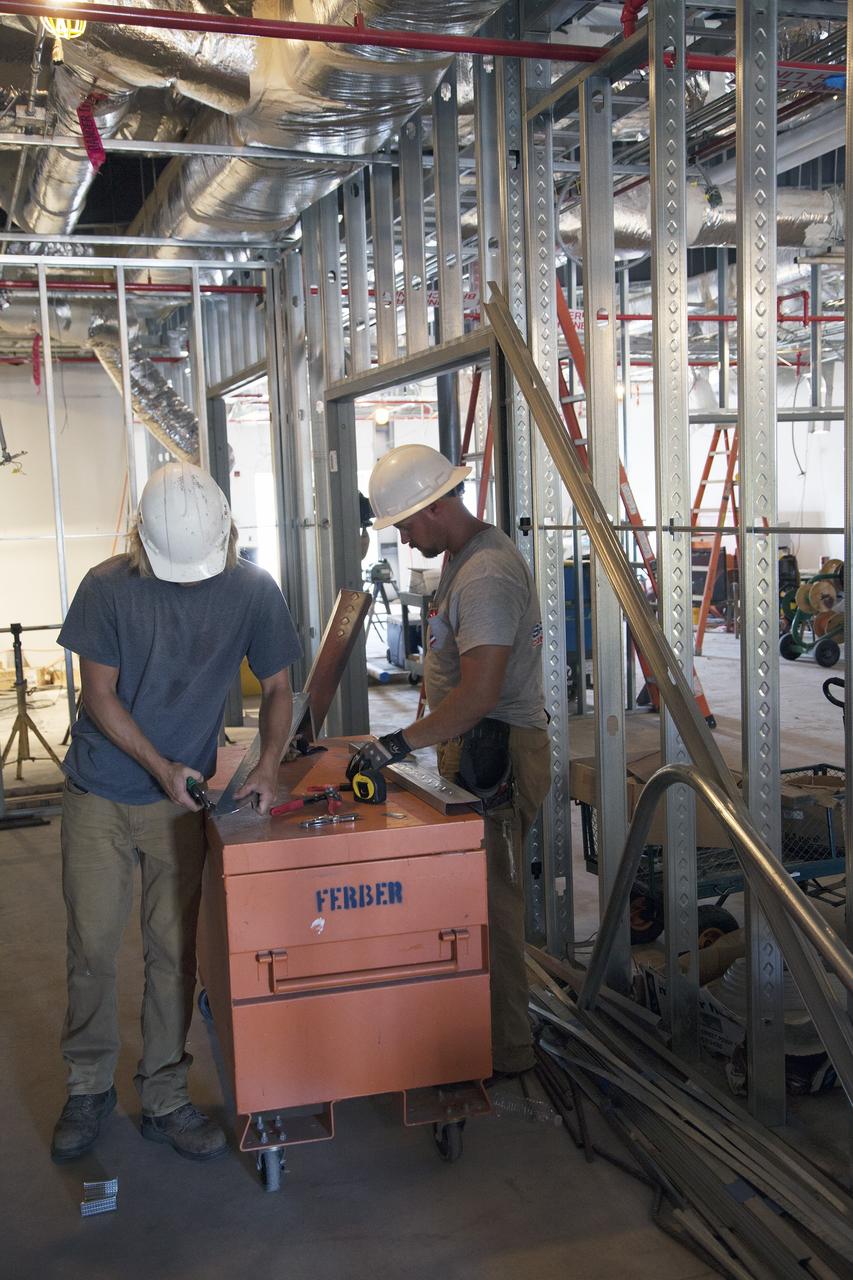
CAPE CANAVERAL, Fla. – Modifications continue on the Multi-Payload Processing Facility, or MPPF, at NASA's Kennedy Space Center in Florida. Inside the MPPF annex building, construction workers are converting the building to a ground support equipment storage area and work area. The pipes overhead are part of the Environmental Control System. Kennedy's Center Operations Directorate is overseeing upgrades to the MPPF for the Ground Systems Development and Operations Program. The extensive upgrades and modernizations will support processing of Orion spacecraft for NASA's exploration missions. The 19,647-square-foot building, originally constructed in 1995, primarily will be used for Orion hypergolic fueling, ammonia servicing and high-pressure gas servicing and checkout before being transported to the Vehicle Assembly Building for integration with the Space Launch System. Photo credit: NASA/Daniel Casper
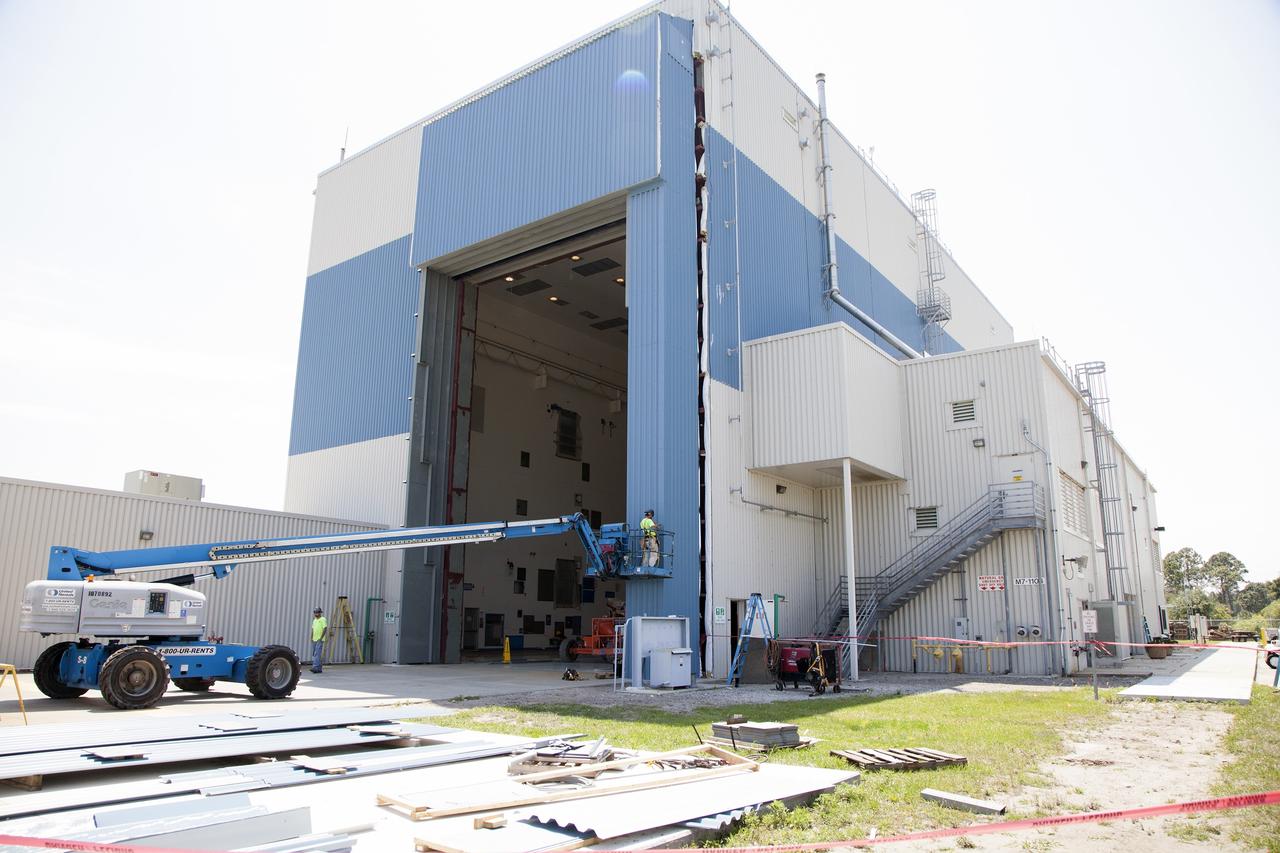
CAPE CANAVERAL, Fla. – Modifications continue on the Multi-Payload Processing Facility, or MPPF, at NASA's Kennedy Space Center in Florida. The high bay entrance was recently enlarged and a new door installed. Construction workers are installing new siding around the entrance. Kennedy's Center Operations Directorate is overseeing upgrades to the MPPF for the Ground Systems Development and Operations Program. The extensive upgrades and modernizations will support processing of Orion spacecraft for NASA's exploration missions. The 19,647-square-foot building, originally constructed in 1995, primarily will be used for Orion hypergolic fueling, ammonia servicing and high-pressure gas servicing and checkout before being transported to the Vehicle Assembly Building for integration with the Space Launch System. Photo credit: NASA/Daniel Casper
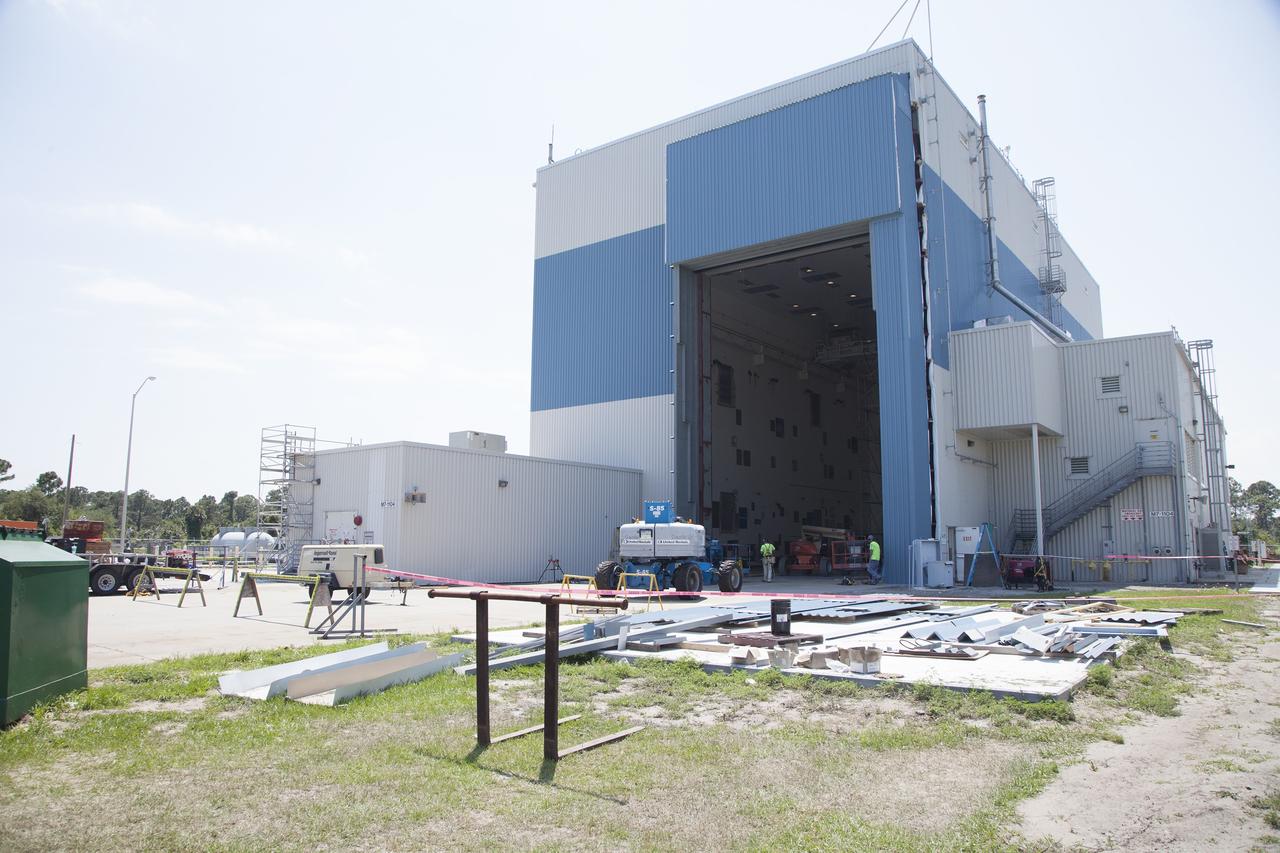
CAPE CANAVERAL, Fla. – Modifications continue on the Multi-Payload Processing Facility, or MPPF, at NASA's Kennedy Space Center in Florida. The high bay entrance was recently enlarged and a new door installed. New siding is being installed around the entrance. Kennedy's Center Operations Directorate is overseeing upgrades to the MPPF for the Ground Systems Development and Operations Program. The extensive upgrades and modernizations will support processing of Orion spacecraft for NASA's exploration missions. The 19,647-square-foot building, originally constructed in 1995, primarily will be used for Orion hypergolic fueling, ammonia servicing and high-pressure gas servicing and checkout before being transported to the Vehicle Assembly Building for integration with the Space Launch System. Photo credit: NASA/Daniel Casper
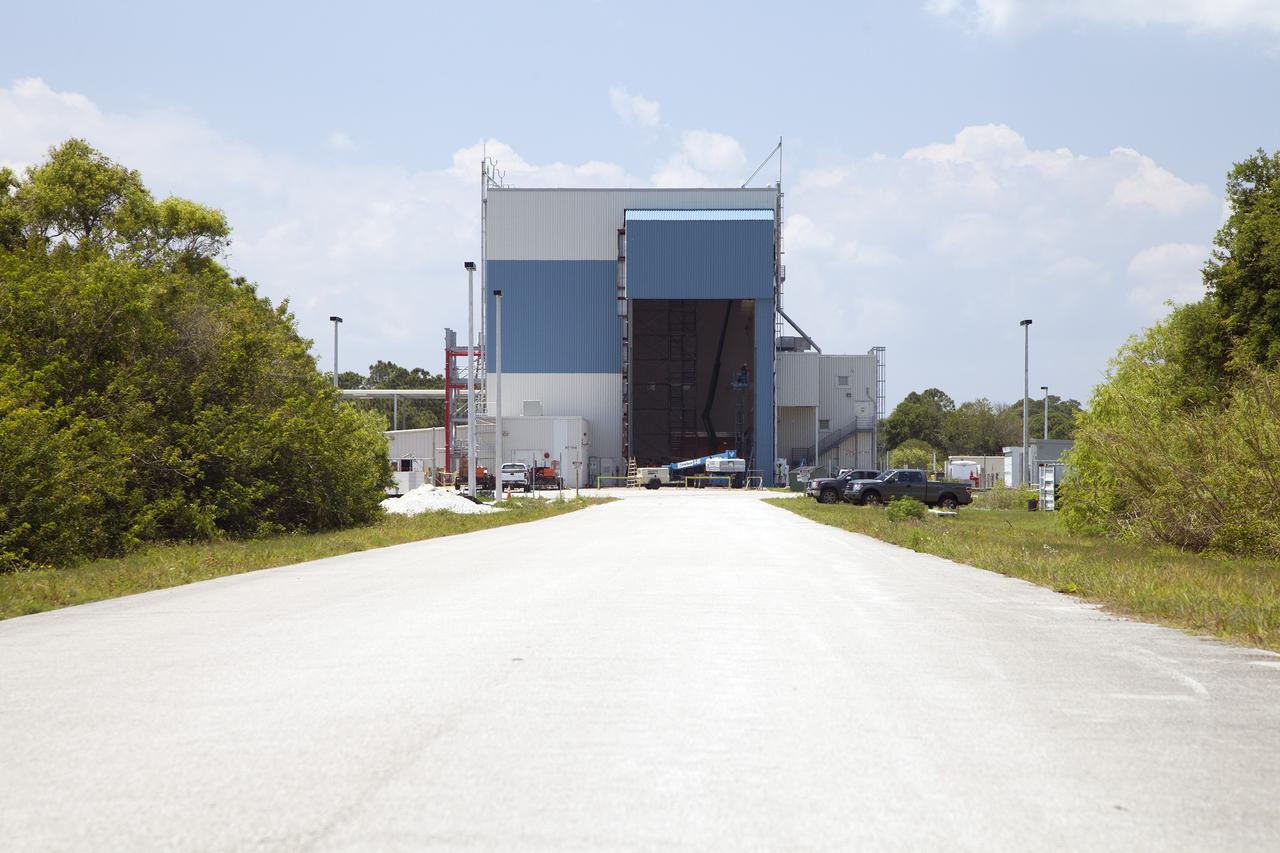
CAPE CANAVERAL, Fla. – Modifications continue on the Multi-Payload Processing Facility, or MPPF, at NASA's Kennedy Space Center in Florida. The high bay entrance was recently enlarged and a new door installed. New siding is being installed around the entrance. Kennedy's Center Operations Directorate is overseeing upgrades to the MPPF for the Ground Systems Development and Operations Program. The extensive upgrades and modernizations will support processing of Orion spacecraft for NASA's exploration missions. The 19,647-square-foot building, originally constructed in 1995, primarily will be used for Orion hypergolic fueling, ammonia servicing and high-pressure gas servicing and checkout before being transported to the Vehicle Assembly Building for integration with the Space Launch System. Photo credit: NASA/Daniel Casper
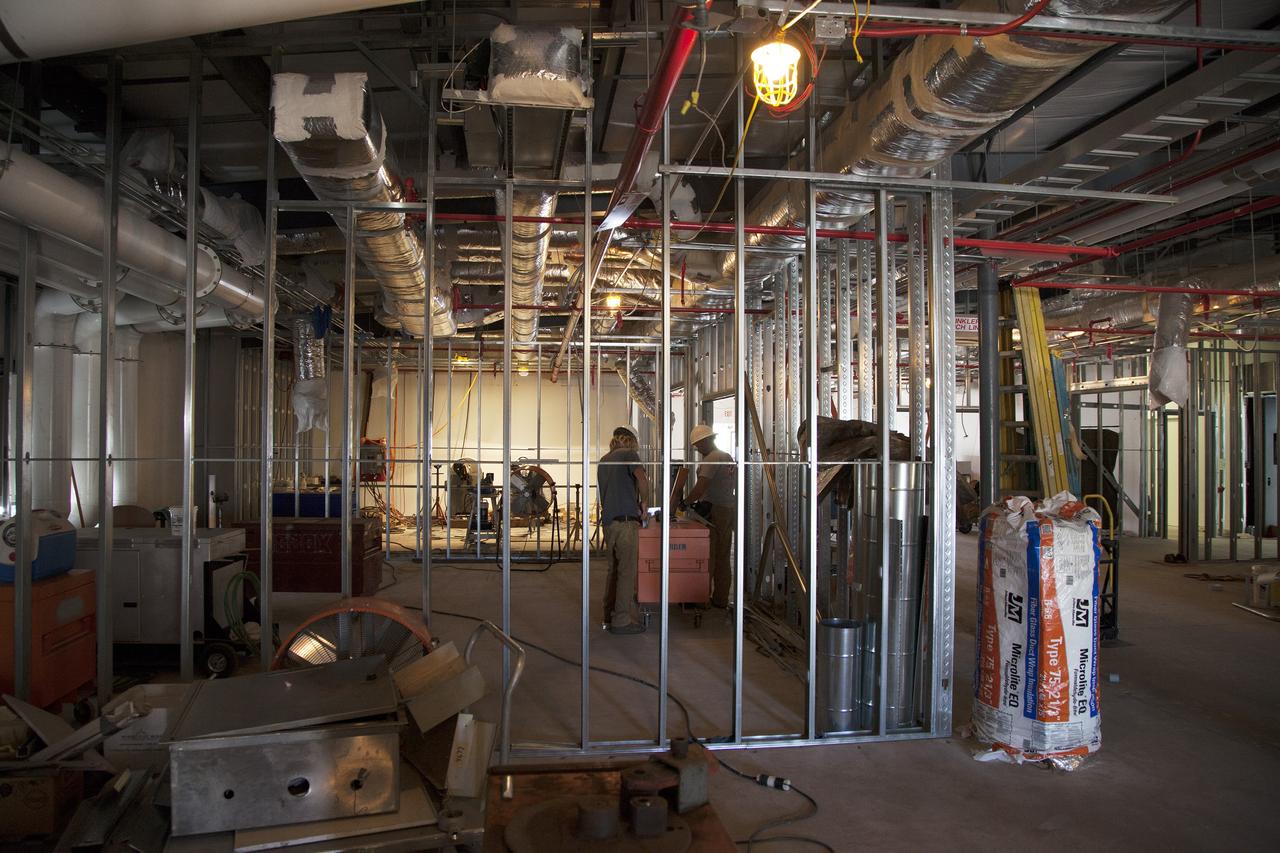
CAPE CANAVERAL, Fla. – Modifications continue on the Multi-Payload Processing Facility, or MPPF, at NASA's Kennedy Space Center in Florida. Inside the MPPF annex building, construction workers are converting the building to a ground support equipment storage area and work area. The pipes overhead are part of the Environmental Control System. Kennedy's Center Operations Directorate is overseeing upgrades to the MPPF for the Ground Systems Development and Operations Program. The extensive upgrades and modernizations will support processing of Orion spacecraft for NASA's exploration missions. The 19,647-square-foot building, originally constructed in 1995, primarily will be used for Orion hypergolic fueling, ammonia servicing and high-pressure gas servicing and checkout before being transported to the Vehicle Assembly Building for integration with the Space Launch System. Photo credit: NASA/Daniel Casper
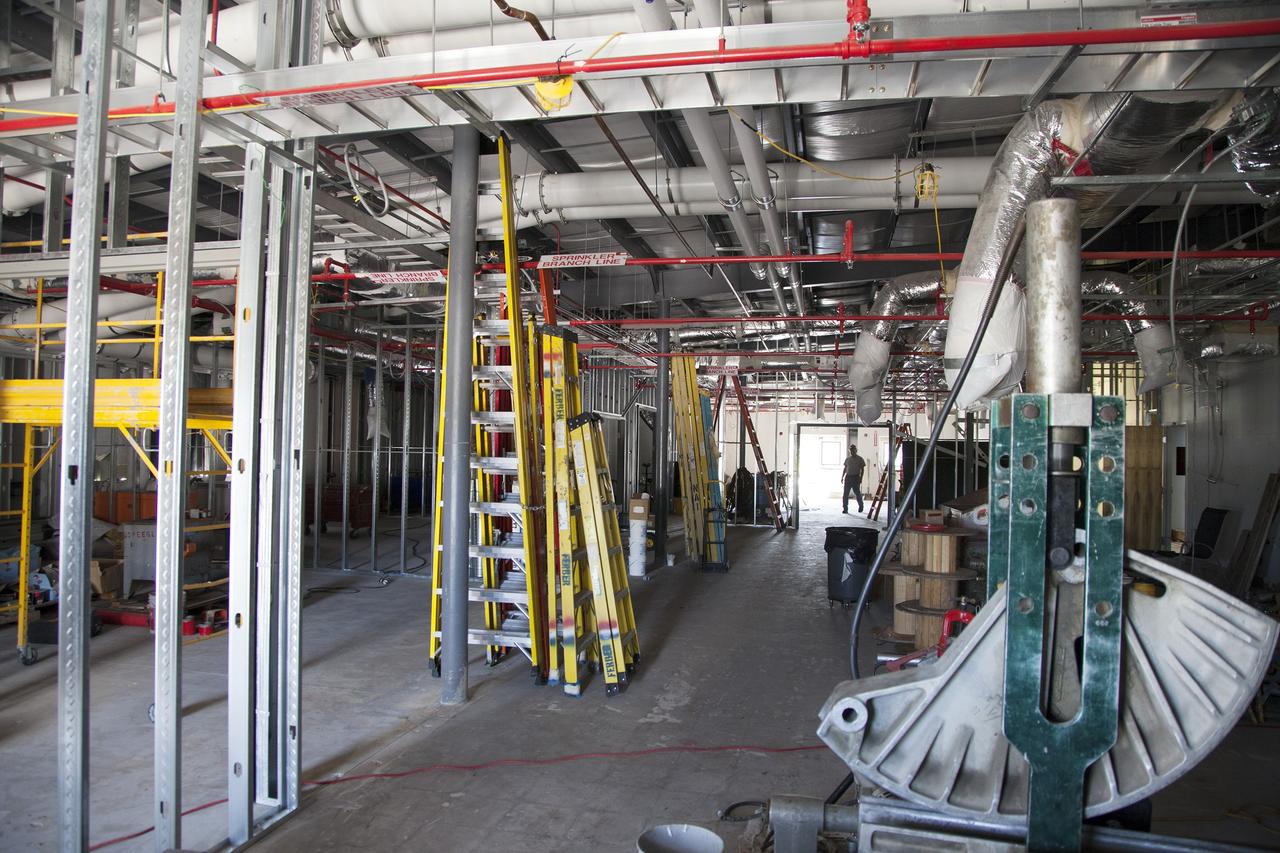
CAPE CANAVERAL, Fla. – Modifications continue on the Multi-Payload Processing Facility, or MPPF, at NASA's Kennedy Space Center in Florida. Inside the MPPF annex building, construction workers are converting the building to a ground support equipment storage area and work area. The pipes overhead are part of the Environmental Control System. Kennedy's Center Operations Directorate is overseeing upgrades to the MPPF for the Ground Systems Development and Operations Program. The extensive upgrades and modernizations will support processing of Orion spacecraft for NASA's exploration missions. The 19,647-square-foot building, originally constructed in 1995, primarily will be used for Orion hypergolic fueling, ammonia servicing and high-pressure gas servicing and checkout before being transported to the Vehicle Assembly Building for integration with the Space Launch System. Photo credit: NASA/Daniel Casper
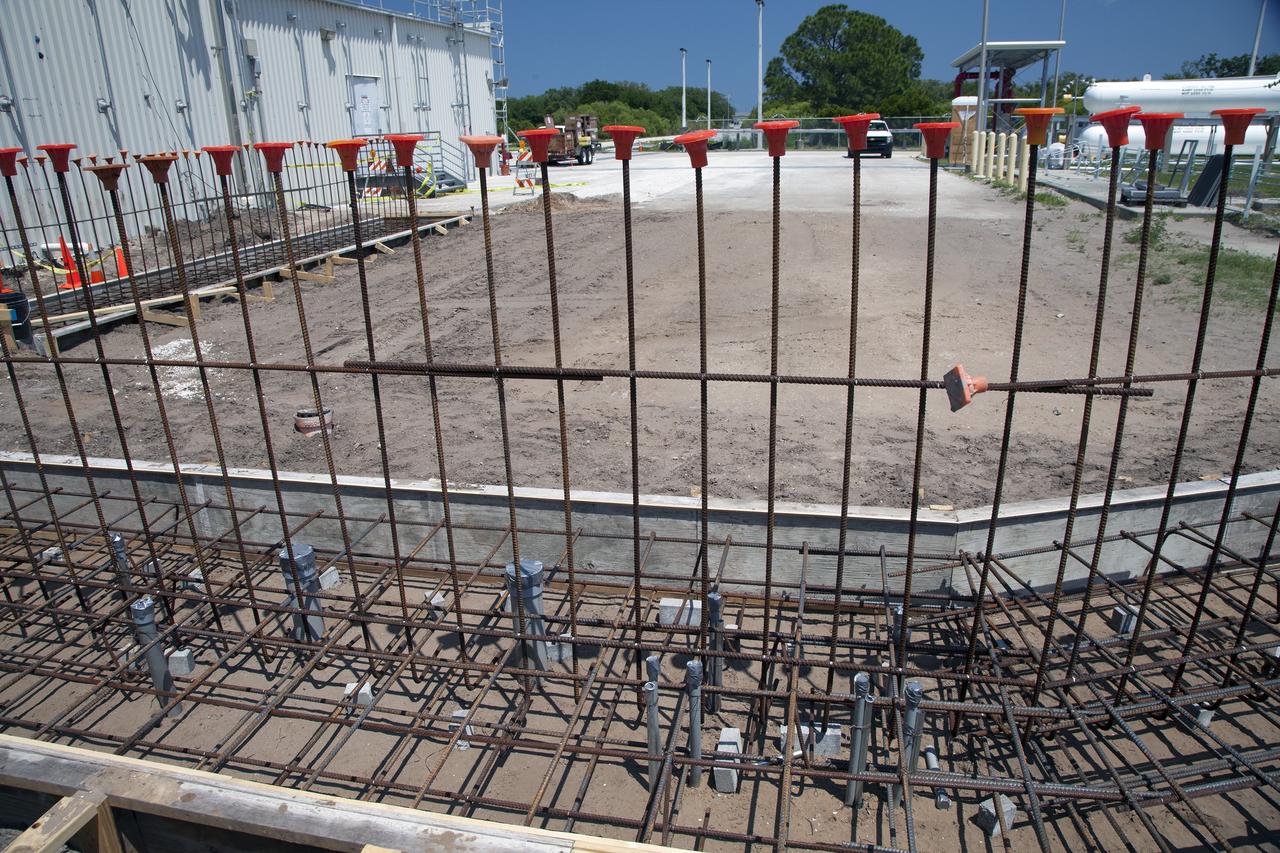
CAPE CANAVERAL, Fla. – Modifications continue on the Multi-Payload Processing Facility, or MPPF, at NASA's Kennedy Space Center in Florida. Construction workers have laid rebar and conduits have been placed for the hypergol scrubber containment wall. Kennedy's Center Operations Directorate is overseeing upgrades to the MPPF for the Ground Systems Development and Operations Program. The extensive upgrades and modernizations will support processing of Orion spacecraft for NASA's exploration missions. The 19,647-square-foot building, originally constructed in 1995, primarily will be used for Orion hypergolic fueling, ammonia servicing and high-pressure gas servicing and checkout before being transported to the Vehicle Assembly Building for integration with the Space Launch System. Photo credit: NASA/Daniel Casper
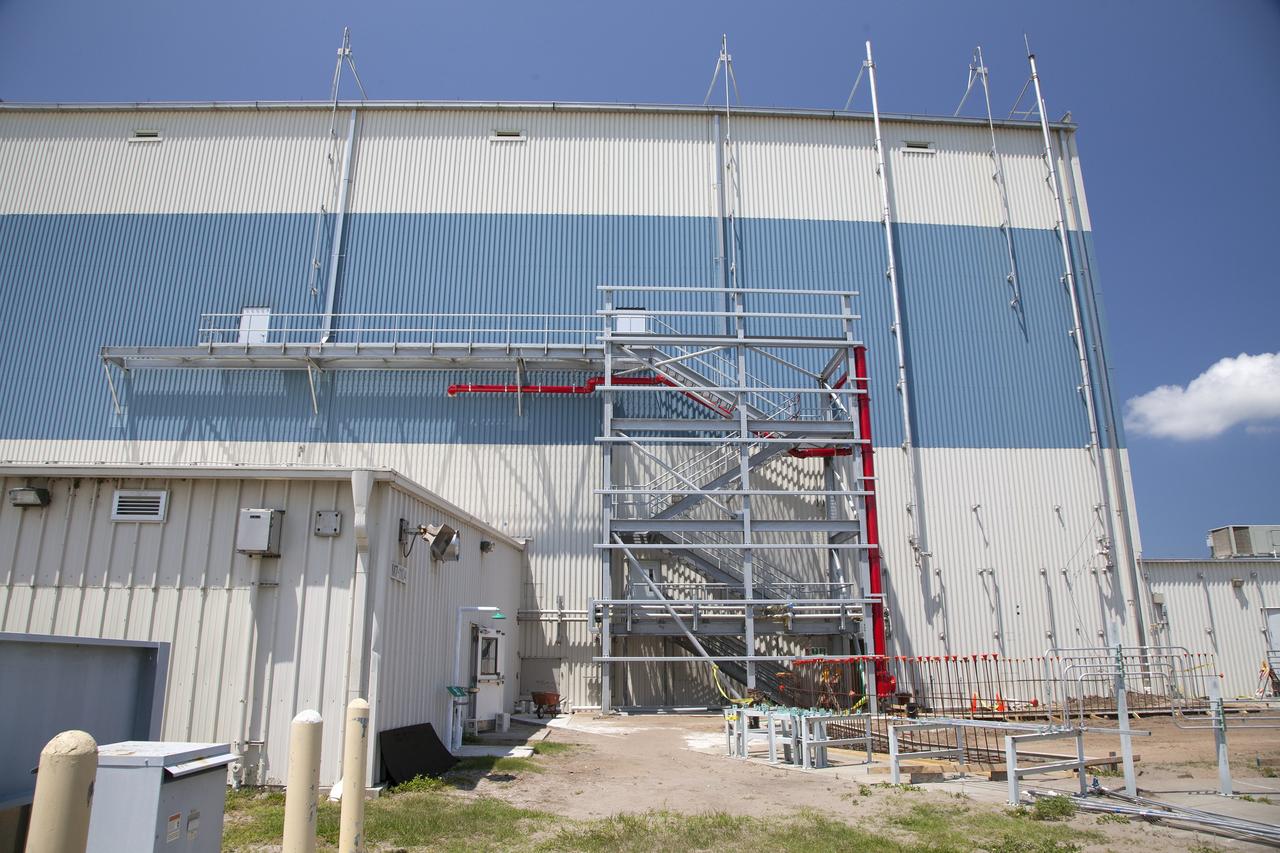
CAPE CANAVERAL, Fla. – Modifications continue on the Multi-Payload Processing Facility, or MPPF, at NASA's Kennedy Space Center in Florida. A new emergency egress stairway has been constructed and a steel structure has been built around it so that walls can be added. The red pipes are the recently-installed fire deluge system. The gray pipes are the hazardous gas venting system. Kennedy's Center Operations Directorate is overseeing upgrades to the MPPF for the Ground Systems Development and Operations Program. The extensive upgrades and modernizations will support processing of Orion spacecraft for NASA's exploration missions. The 19,647-square-foot building, originally constructed in 1995, primarily will be used for Orion hypergolic fueling, ammonia servicing and high-pressure gas servicing and checkout before being transported to the Vehicle Assembly Building for integration with the Space Launch System. Photo credit: NASA/Daniel Casper
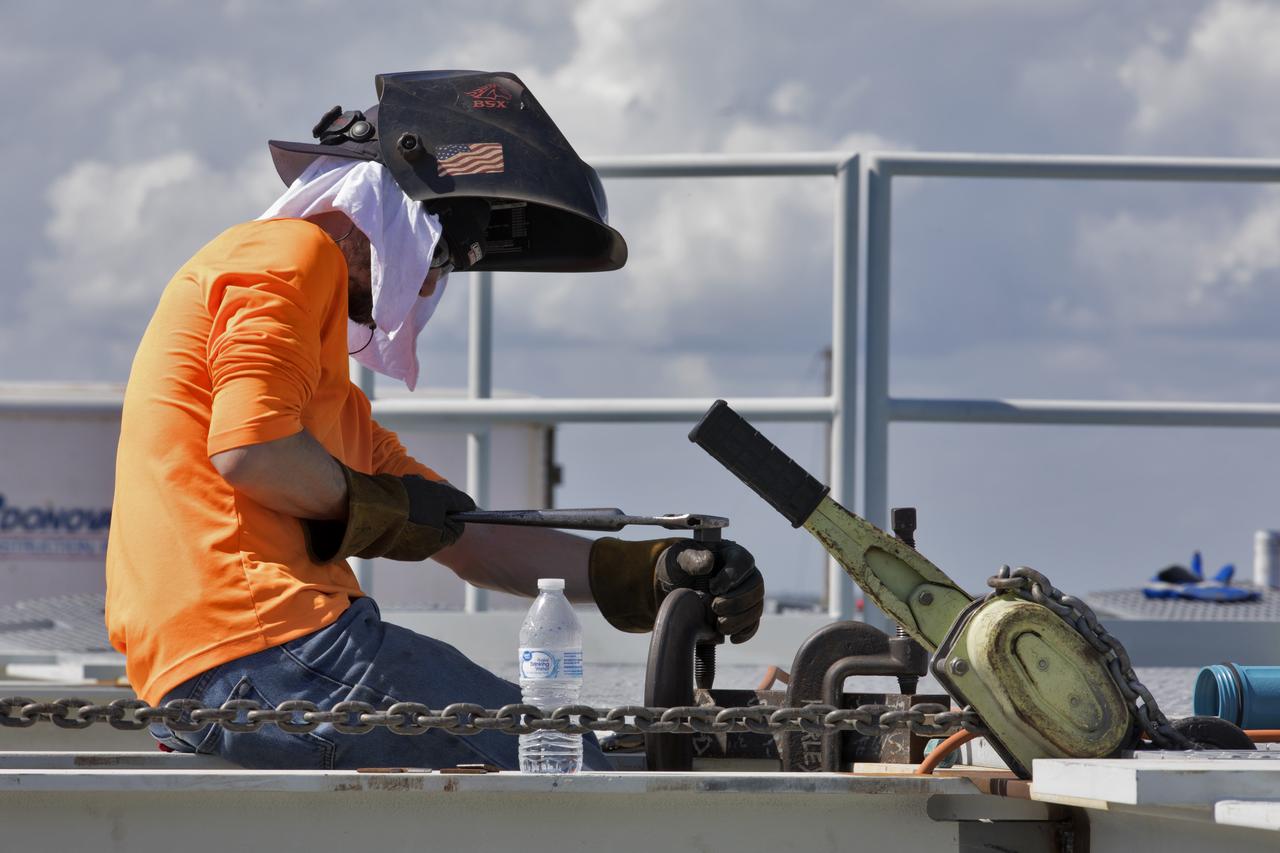
To continue his work, a construction worker secures clamps on a section of metal on the surface of Launch Pad 39B at NASA's Kennedy Space Center in Florida on July 26, 2018. The launch pad has undergone upgrades and modifications to accommodate NASA's Space Launch System and Orion spacecraft for Exploration Mission-1 and subsequent missions. Upgrades include new heat-resistant bricks on the walls of the flame trench and installation of a new flame deflector. All of the upgrades have been managed by Exploration Ground Systems.
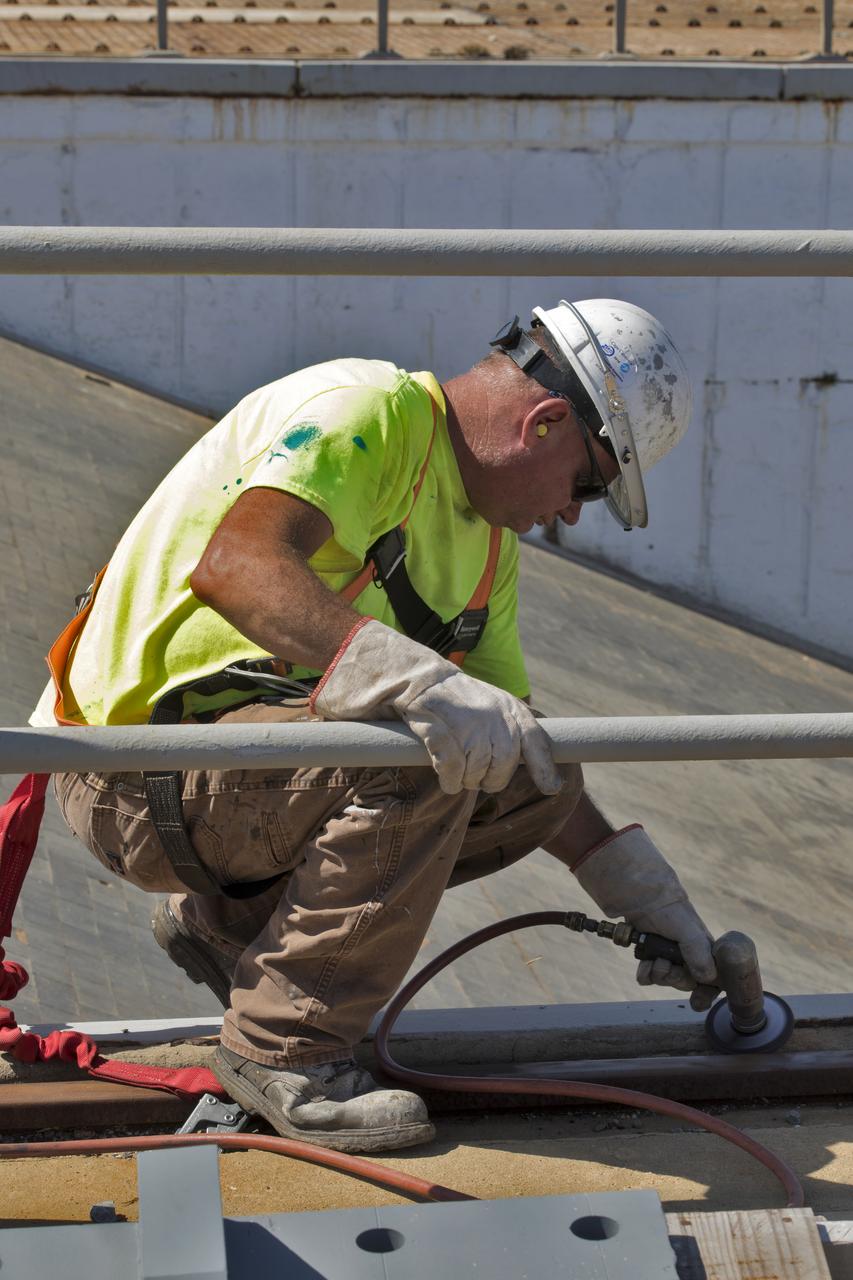
A construction worker sands a section of a wood beam on the surface of Launch Pad 39B at NASA’s Kennedy Space Center in Florida on Feb. 22, 2019. The launch pad has undergone upgrades and modifications to accommodate NASA's Space Launch System and Orion spacecraft for Exploration Mission-1 and subsequent missions. Upgrades include new heat-resistant bricks on the walls of the flame trench and installation of a new flame deflector. All of the upgrades have been managed by Exploration Ground Systems.
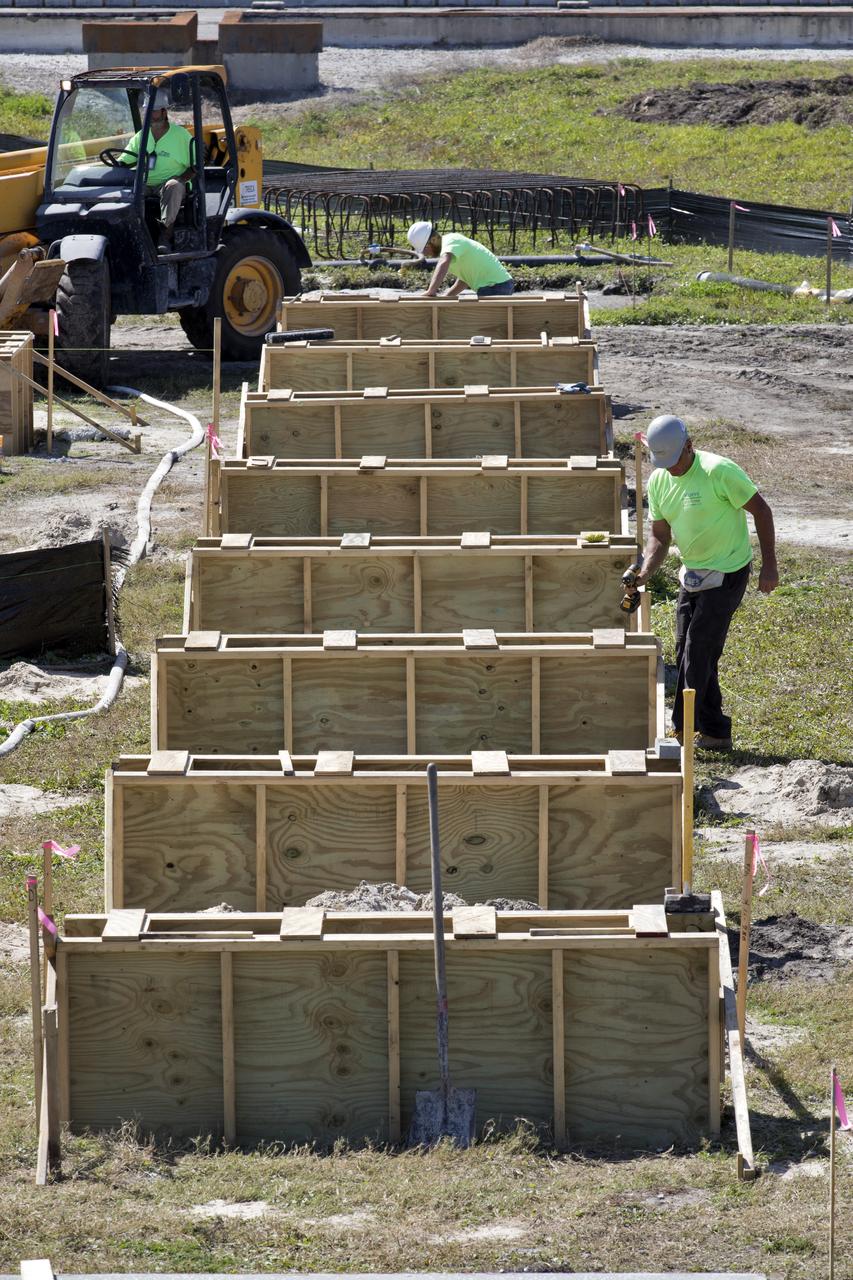
Construction workers stage parts and equipment nearby Launch Pad 39B at NASA’s Kennedy Space Center in Florida on Feb. 22, 2019. The launch pad has undergone upgrades and modifications to accommodate NASA's Space Launch System and Orion spacecraft for Exploration Mission-1 and subsequent missions. Upgrades include new heat-resistant bricks on the walls of the flame trench and installation of a new flame deflector. All of the upgrades have been managed by Exploration Ground Systems.
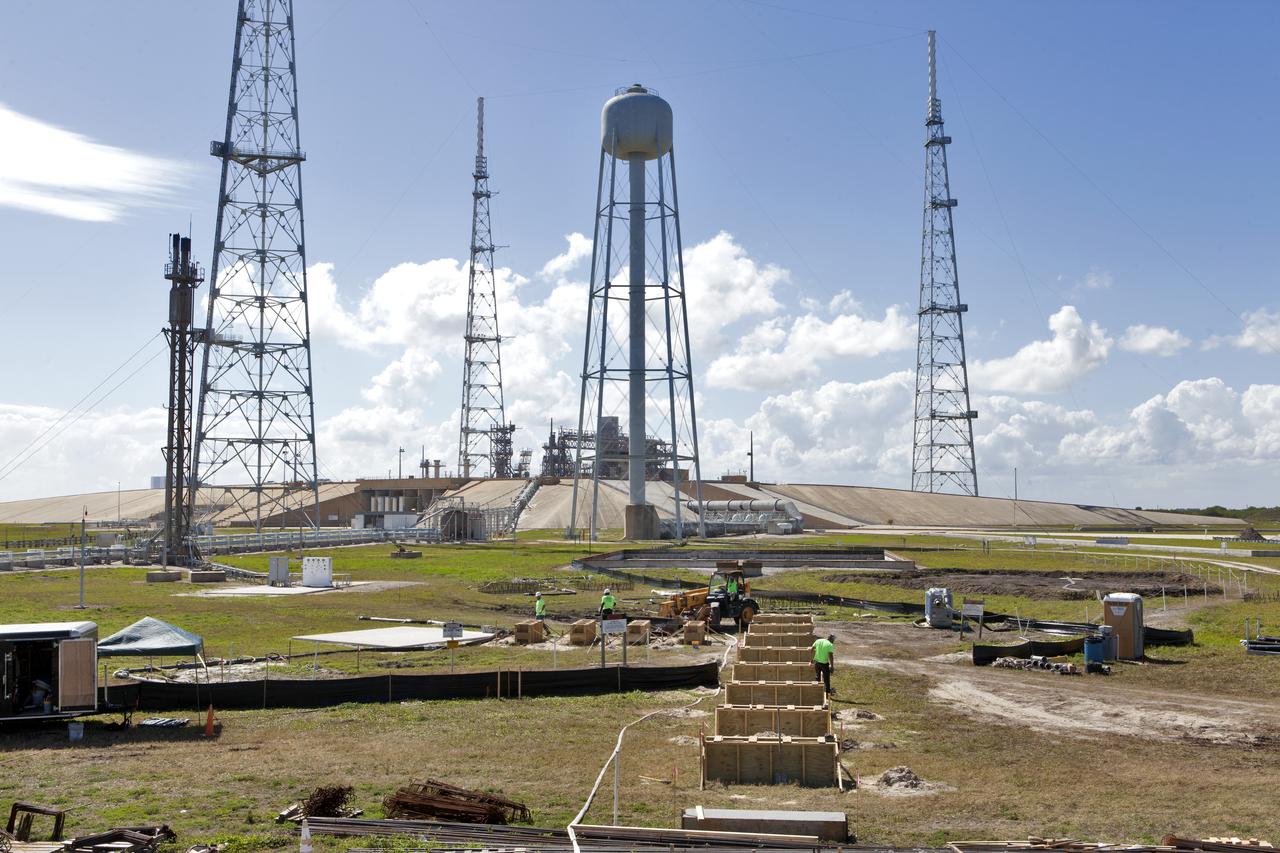
Construction workers stage parts and equipment nearby Launch Pad 39B at NASA’s Kennedy Space Center in Florida on Feb. 22, 2019. The launch pad has undergone upgrades and modifications to accommodate NASA's Space Launch System and Orion spacecraft for Exploration Mission-1 and subsequent missions. Upgrades include new heat-resistant bricks on the walls of the flame trench and installation of a new flame deflector. All of the upgrades have been managed by Exploration Ground Systems.
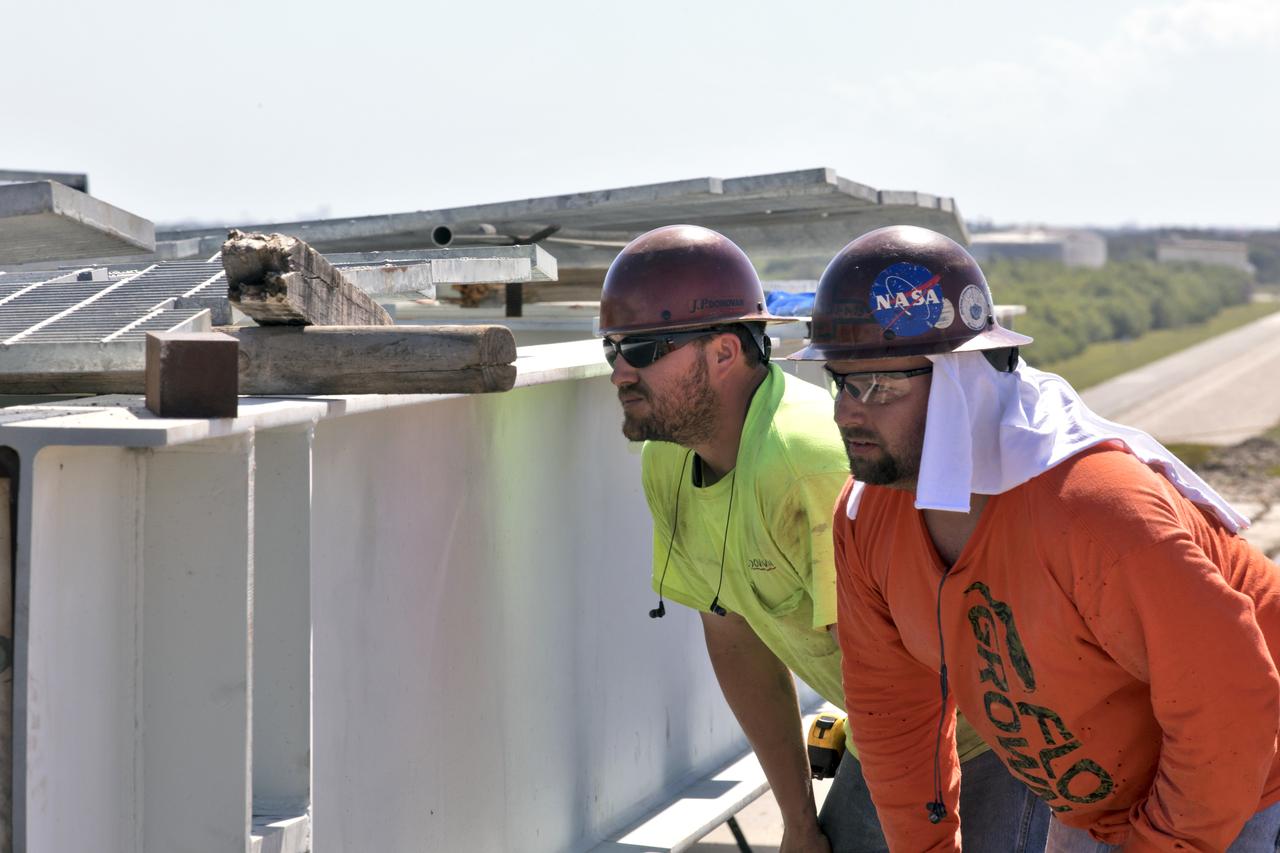
Construction workers assess the repairs needed on the surface of Launch Pad 39B at NASA’s Kennedy Space Center in Florida on Feb. 22, 2019. The launch pad has undergone upgrades and modifications to accommodate NASA's Space Launch System and Orion spacecraft for Exploration Mission-1 and subsequent missions. Upgrades include new heat-resistant bricks on the walls of the flame trench and installation of a new flame deflector. All of the upgrades have been managed by Exploration Ground Systems.
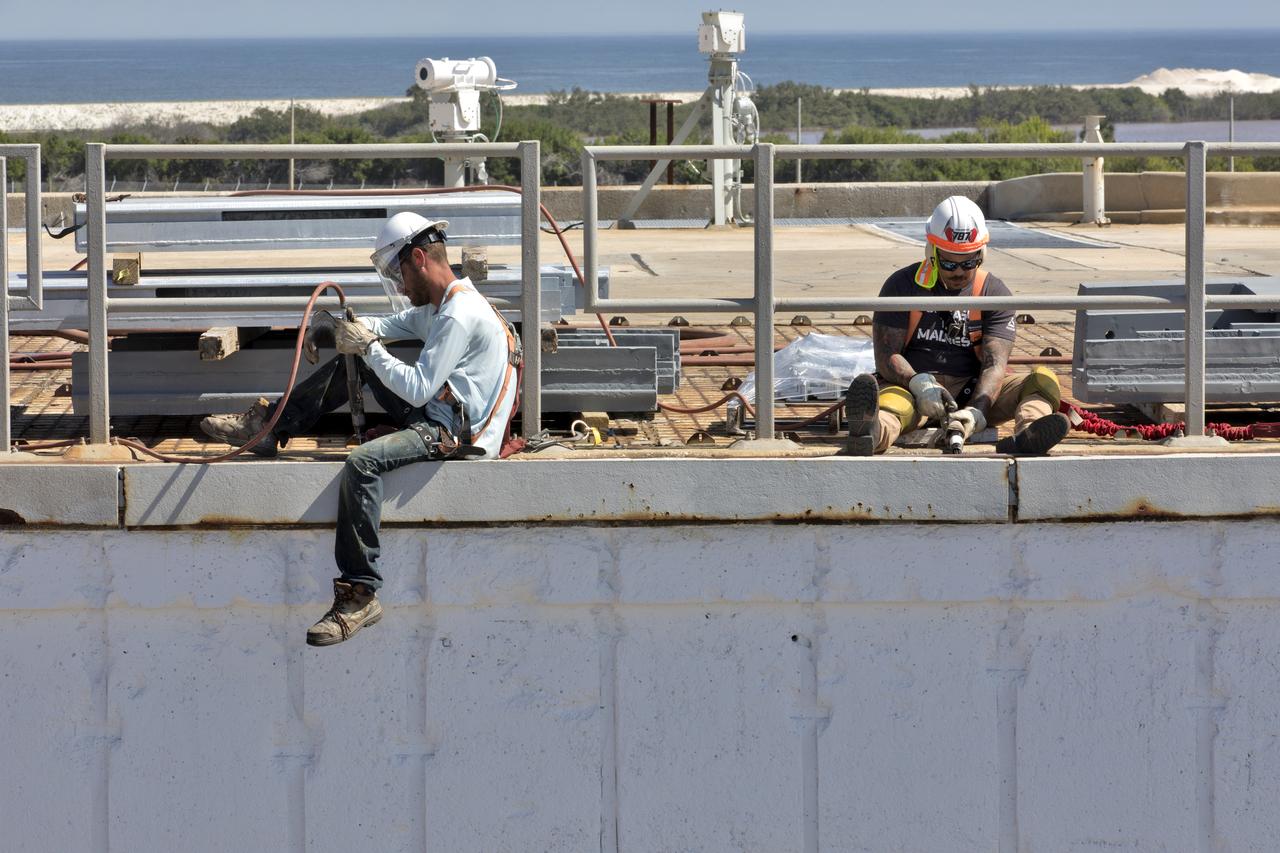
Constructions workers are busy repairing the concrete on the surface of Launch Pad 39B at NASA’s Kennedy Space Center in Florida on Feb. 22, 2019. The launch pad has undergone upgrades and modifications to accommodate NASA's Space Launch System and Orion spacecraft for Exploration Mission-1 and subsequent missions. Upgrades include new heat-resistant bricks on the walls of the flame trench and installation of a new flame deflector. All of the upgrades have been managed by Exploration Ground Systems.
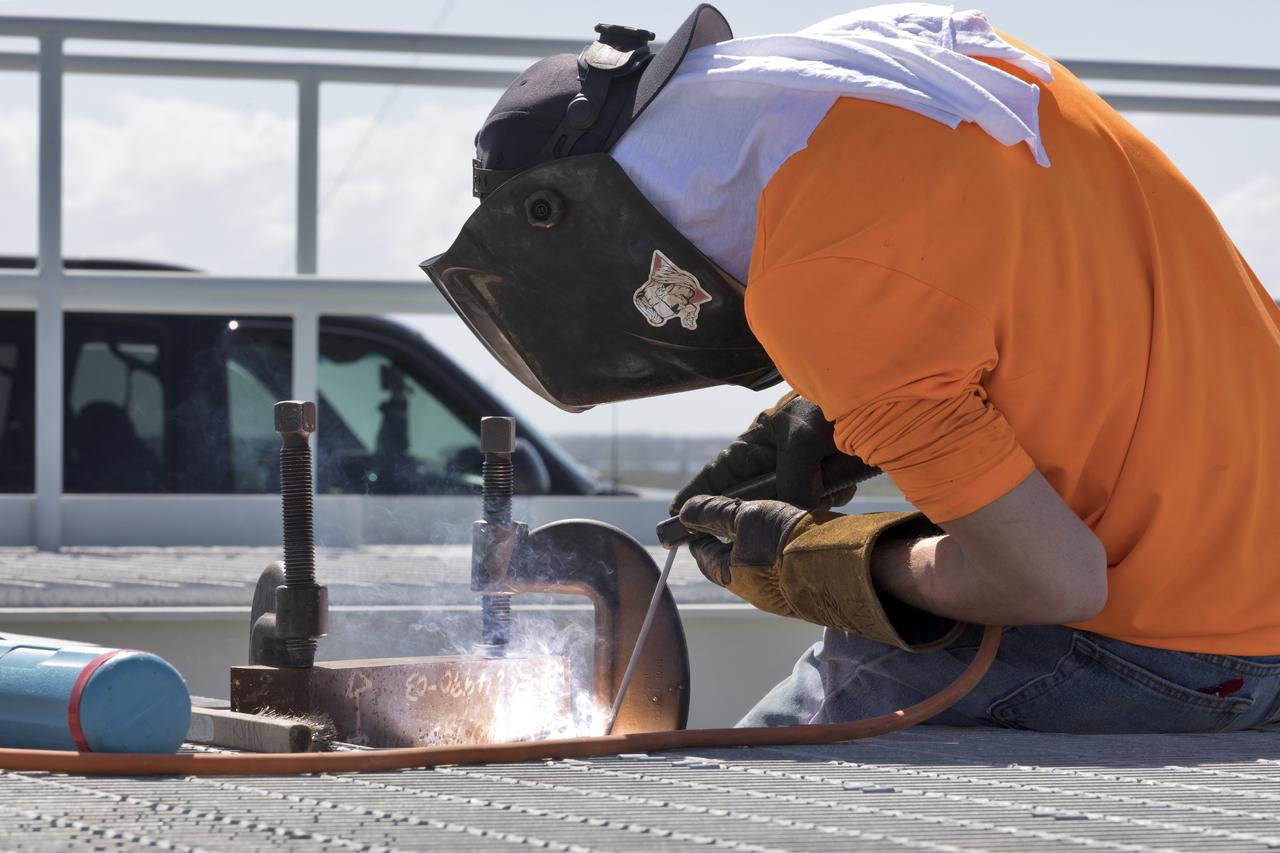
A construction worker welds a section of metal on the surface of Launch Pad 39B at NASA’s Kennedy Space Center in Florida on Feb. 22, 2019. The launch pad has undergone upgrades and modifications to accommodate NASA's Space Launch System and Orion spacecraft for Exploration Mission-1 and subsequent missions. Upgrades include new heat-resistant bricks on the walls of the flame trench and installation of a new flame deflector. All of the upgrades have been managed by Exploration Ground Systems.
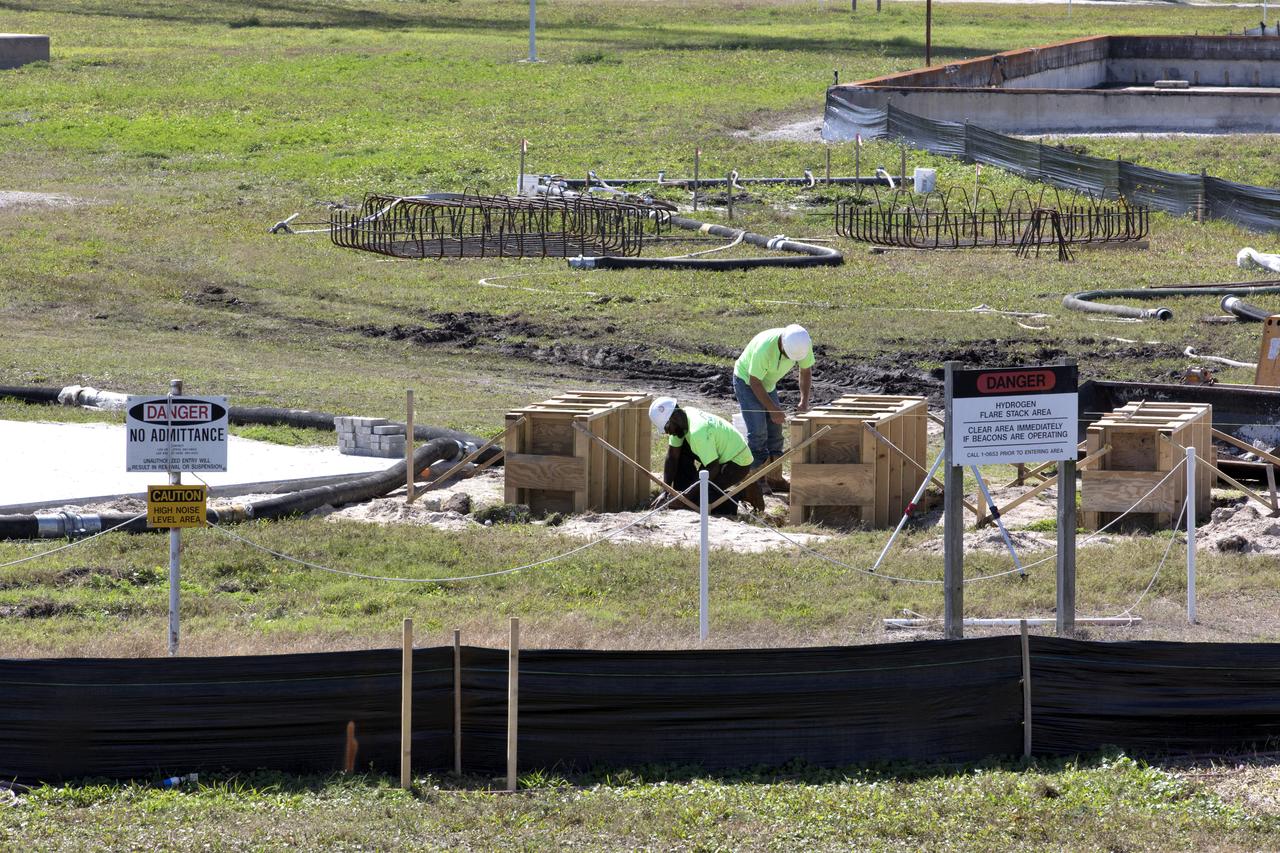
Construction workers stage parts and equipment nearby Launch Pad 39B at NASA’s Kennedy Space Center in Florida on Feb. 22, 2019. The launch pad has undergone upgrades and modifications to accommodate NASA's Space Launch System and Orion spacecraft for Exploration Mission-1 and subsequent missions. Upgrades include new heat-resistant bricks on the walls of the flame trench and installation of a new flame deflector. All of the upgrades have been managed by Exploration Ground Systems.
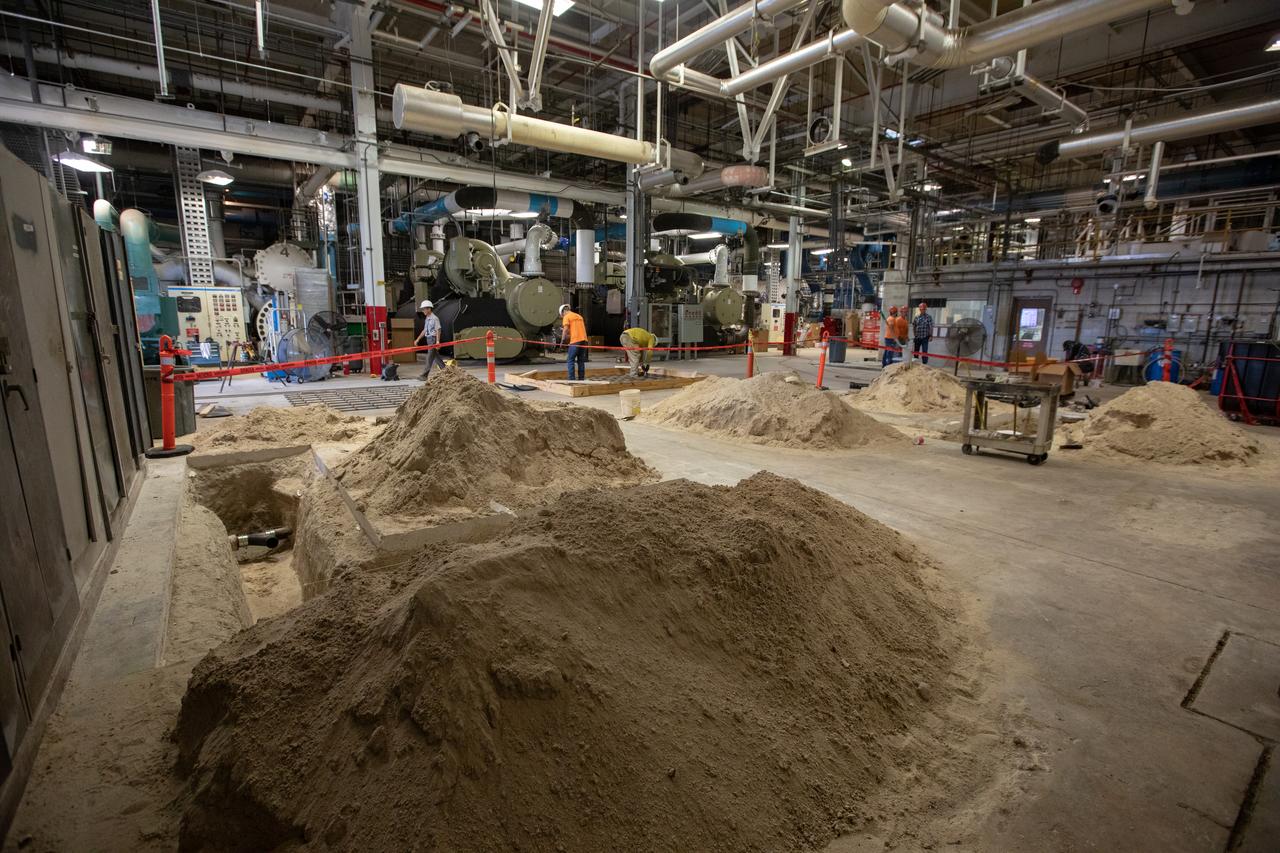
Upgrades are in progress inside the Utility Annex near the Vehicle Assembly (VAB) Building at NASA’s Kennedy Space Center in Florida on July 24, 2019. The Utility Annex, which provides 8,000 gallons of chilled water per minute to the VAB and other facilities in the Launch Complex 39 area, is being upgraded and repaired. The facility also contains boilers necessary to provide hot water to the VAB. The center’s Engineering Directorate is making the repairs and upgrades to the facility to prepare for the agency’s Artemis missions to the Moon and on to Mars.
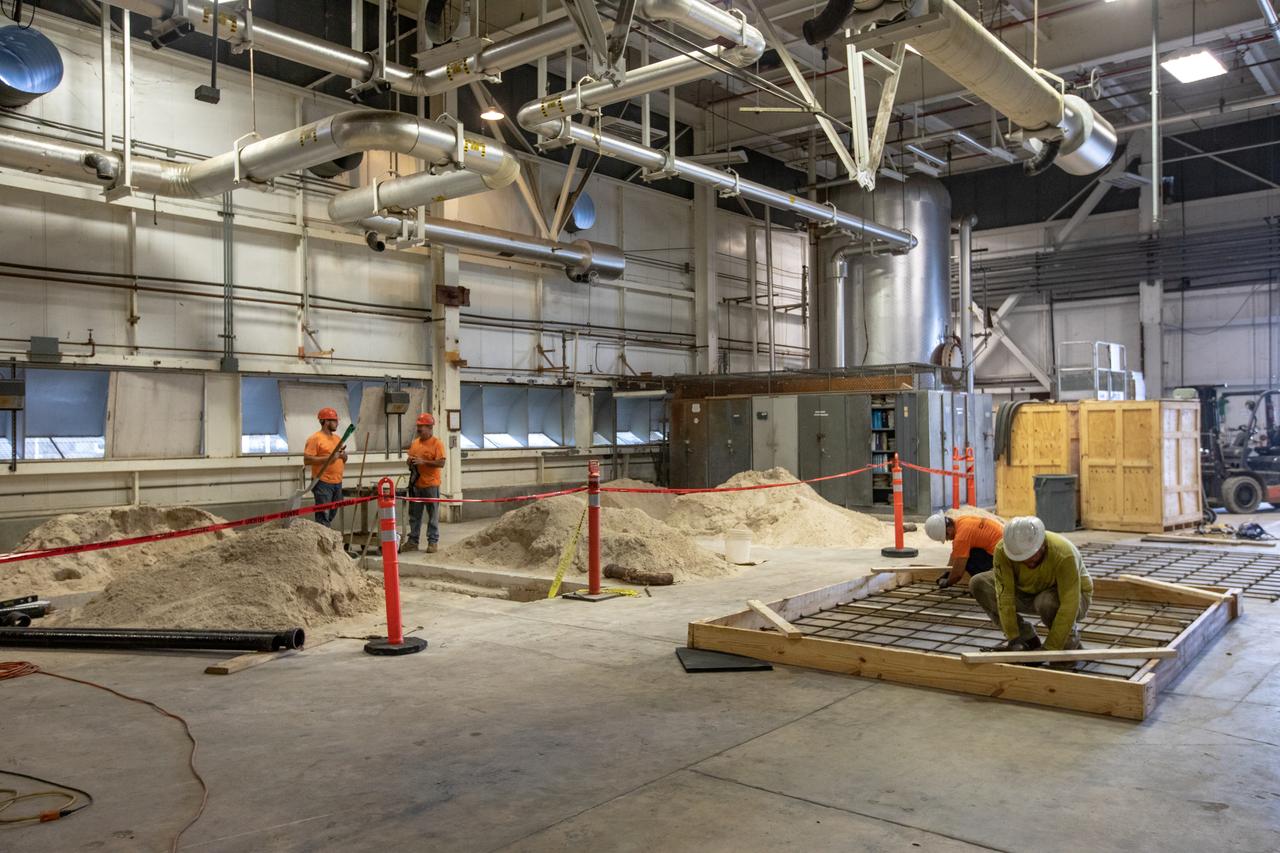
Upgrades are in progress inside the Utility Annex near the Vehicle Assembly (VAB) Building at NASA’s Kennedy Space Center in Florida on July 24, 2019. The Utility Annex, which provides 8,000 gallons of chilled water per minute to the VAB and other facilities in the Launch Complex 39 area, is being upgraded and repaired. The facility also contains boilers necessary to provide hot water to the VAB. The center’s Engineering Directorate is making the repairs and upgrades to the facility to prepare for the agency’s Artemis missions to the Moon and on to Mars.
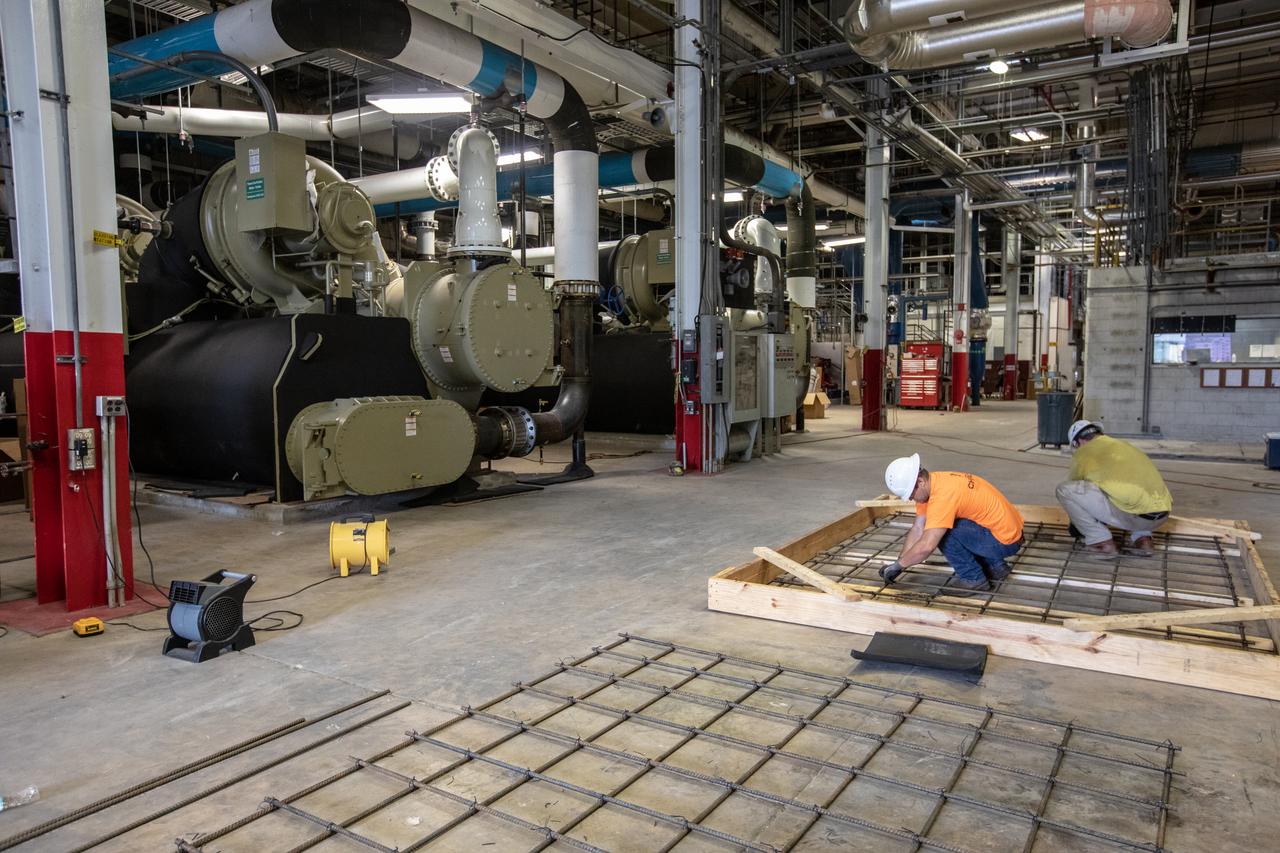
Upgrades are in progress inside the Utility Annex near the Vehicle Assembly (VAB) Building at NASA’s Kennedy Space Center in Florida on July 24, 2019. The Utility Annex, which provides 8,000 gallons of chilled water per minute to the VAB and other facilities in the Launch Complex 39 area, is being upgraded and repaired. The facility also contains boilers necessary to provide hot water to the VAB. The center’s Engineering Directorate is making the repairs and upgrades to the facility to prepare for the agency’s Artemis missions to the Moon and on to Mars.
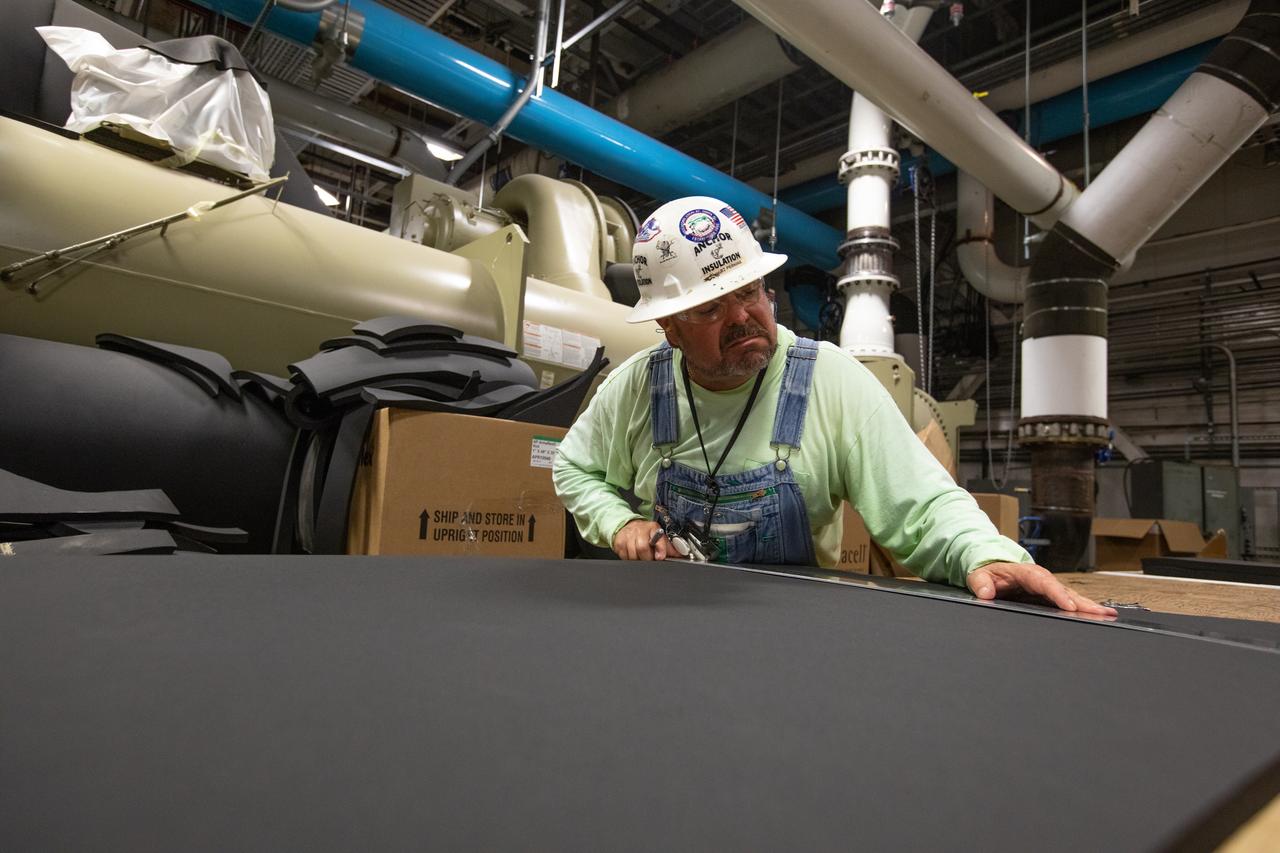
A technician measures foam insulation inside the Utility Annex near the Vehicle Assembly (VAB) Building at NASA’s Kennedy Space Center in Florida on July 24, 2019. The Utility Annex, which provides 8,000 gallons of chilled water per minute to the VAB and other facilities in the Launch Complex 39 area, is being upgraded and repaired. The facility also contains boilers necessary to provide hot water to the VAB. The center’s Engineering Directorate is making the repairs and upgrades to the facility to prepare for the agency’s Artemis missions to the Moon and on to Mars.

A technician measures foam insulation inside the Utility Annex near the Vehicle Assembly (VAB) Building at NASA’s Kennedy Space Center in Florida on July 24, 2019. The Utility Annex, which provides 8,000 gallons of chilled water per minute to the VAB and other facilities in the Launch Complex 39 area, is being upgraded and repaired. The facility also contains boilers necessary to provide hot water to the VAB. The center’s Engineering Directorate is making the repairs and upgrades to the facility to prepare for the agency’s Artemis missions to the Moon and on to Mars.
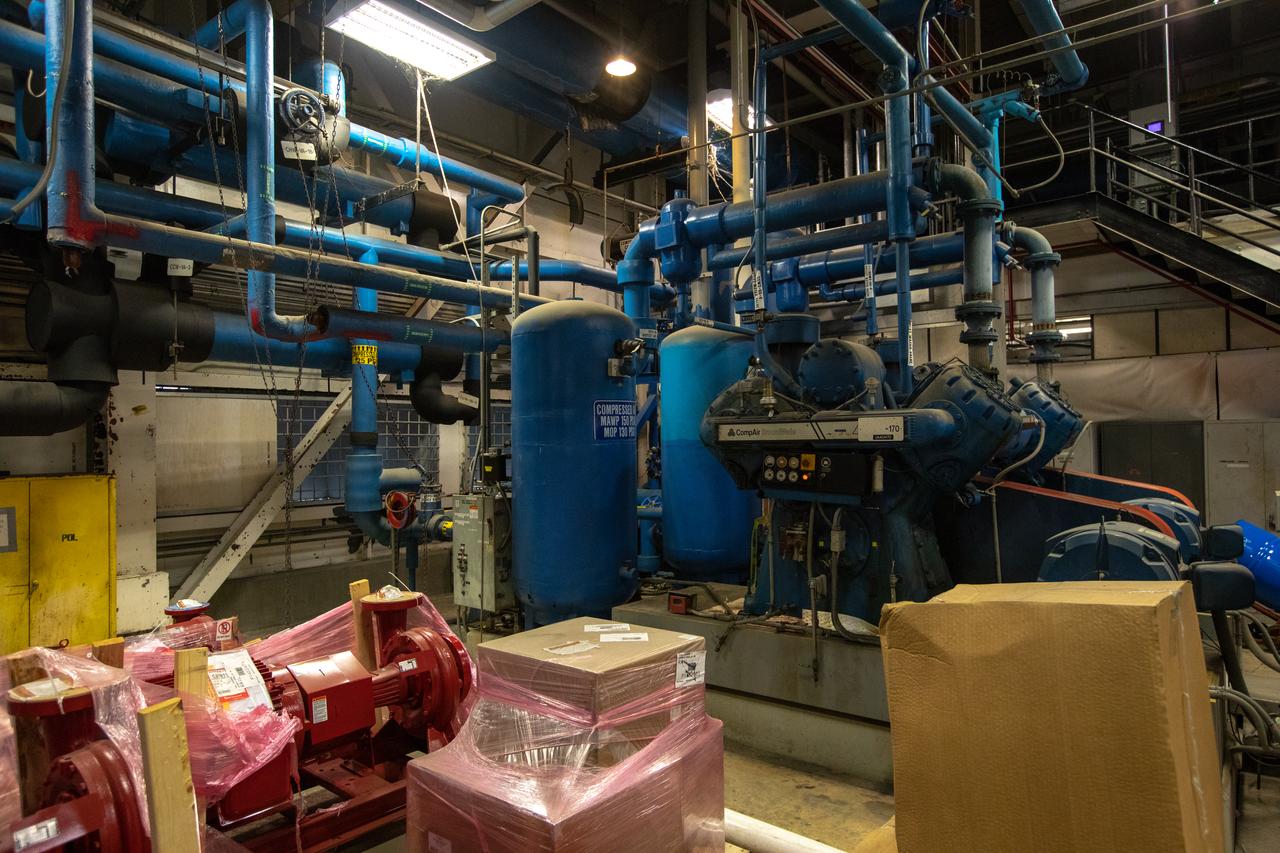
A view of the inside of the Utility Annex near the Vehicle Assembly (VAB) Building at NASA’s Kennedy Space Center in Florida on July 24, 2019. The Utility Annex, which provides 8,000 gallons of chilled water per minute to the VAB and other facilities in the Launch Complex 39 area, is being upgraded and repaired. The facility also contains boilers necessary to provide hot water to the VAB. The center’s Engineering Directorate is making the repairs and upgrades to the facility to prepare for the agency’s Artemis missions to the Moon and on to Mars.
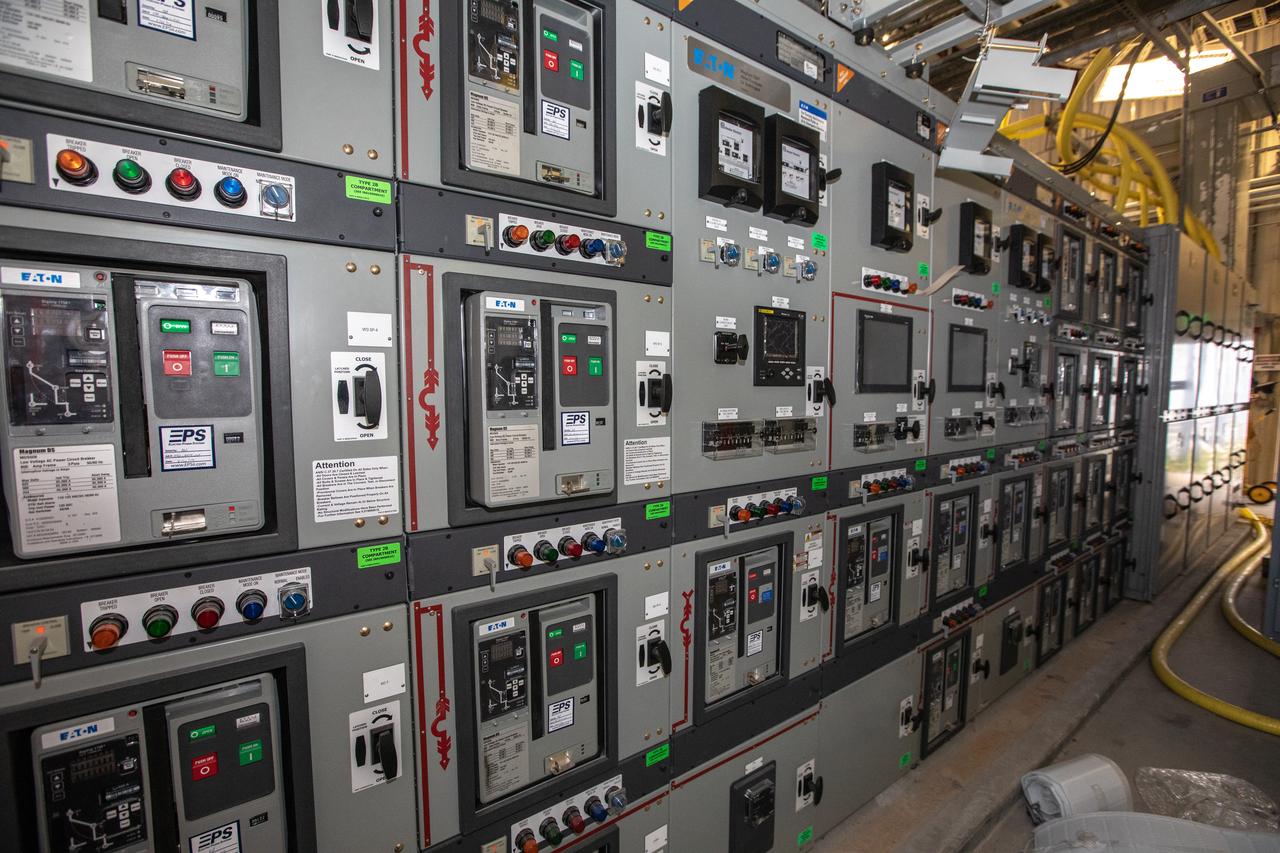
Control panels are in view inside the Utility Annex near the Vehicle Assembly (VAB) Building at NASA’s Kennedy Space Center in Florida on July 24, 2019. The Utility Annex, which provides 8,000 gallons of chilled water per minute to the VAB and other facilities in the Launch Complex 39 area, is being upgraded and repaired. The facility also contains boilers necessary to provide hot water to the VAB. The center’s Engineering Directorate is making the repairs and upgrades to the facility to prepare for the agency’s Artemis missions to the Moon and on to Mars.
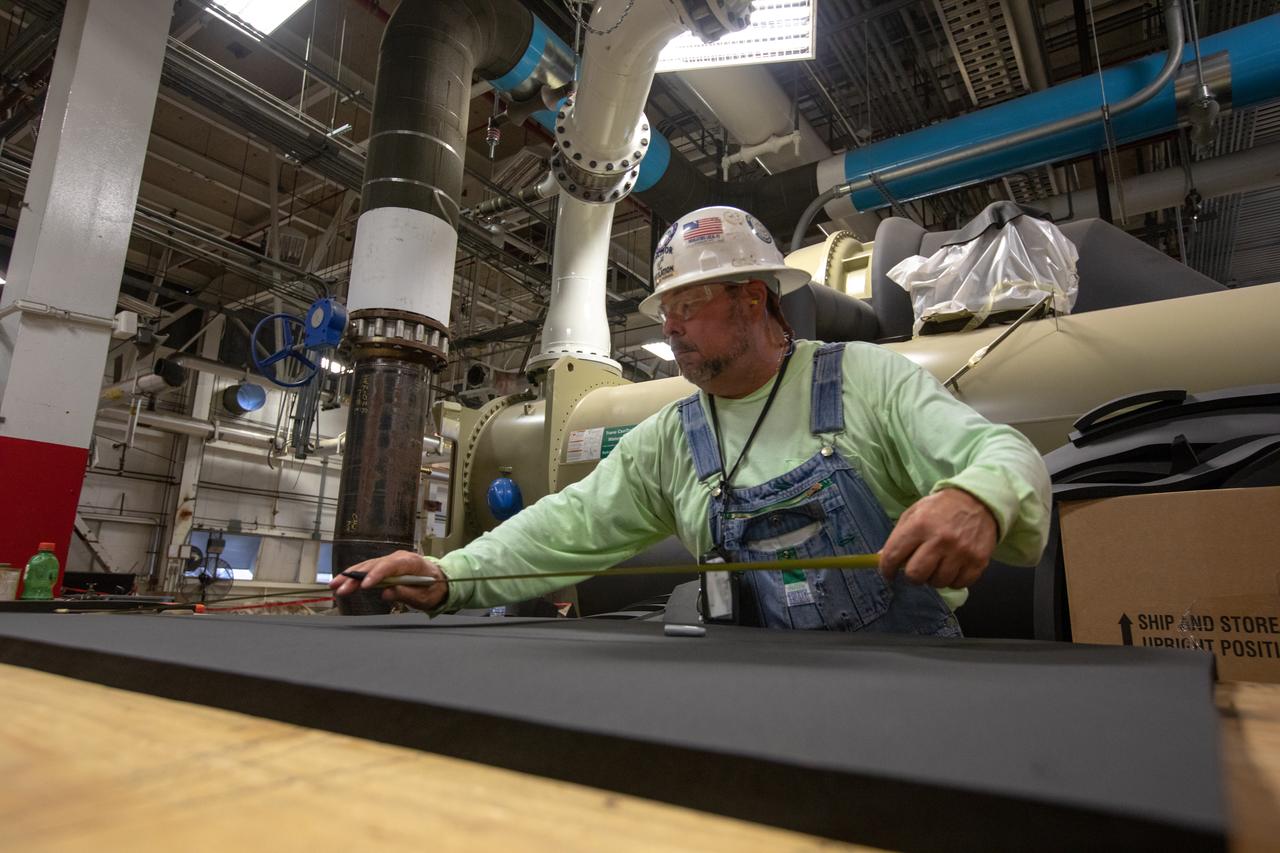
A technician measures foam insulation inside the Utility Annex near the Vehicle Assembly (VAB) Building at NASA’s Kennedy Space Center in Florida on July 24, 2019. The Utility Annex, which provides 8,000 gallons of chilled water per minute to the VAB and other facilities in the Launch Complex 39 area, is being upgraded and repaired. The facility also contains boilers necessary to provide hot water to the VAB. The center’s Engineering Directorate is making the repairs and upgrades to the facility to prepare for the agency’s Artemis missions to the Moon and on to Mars.
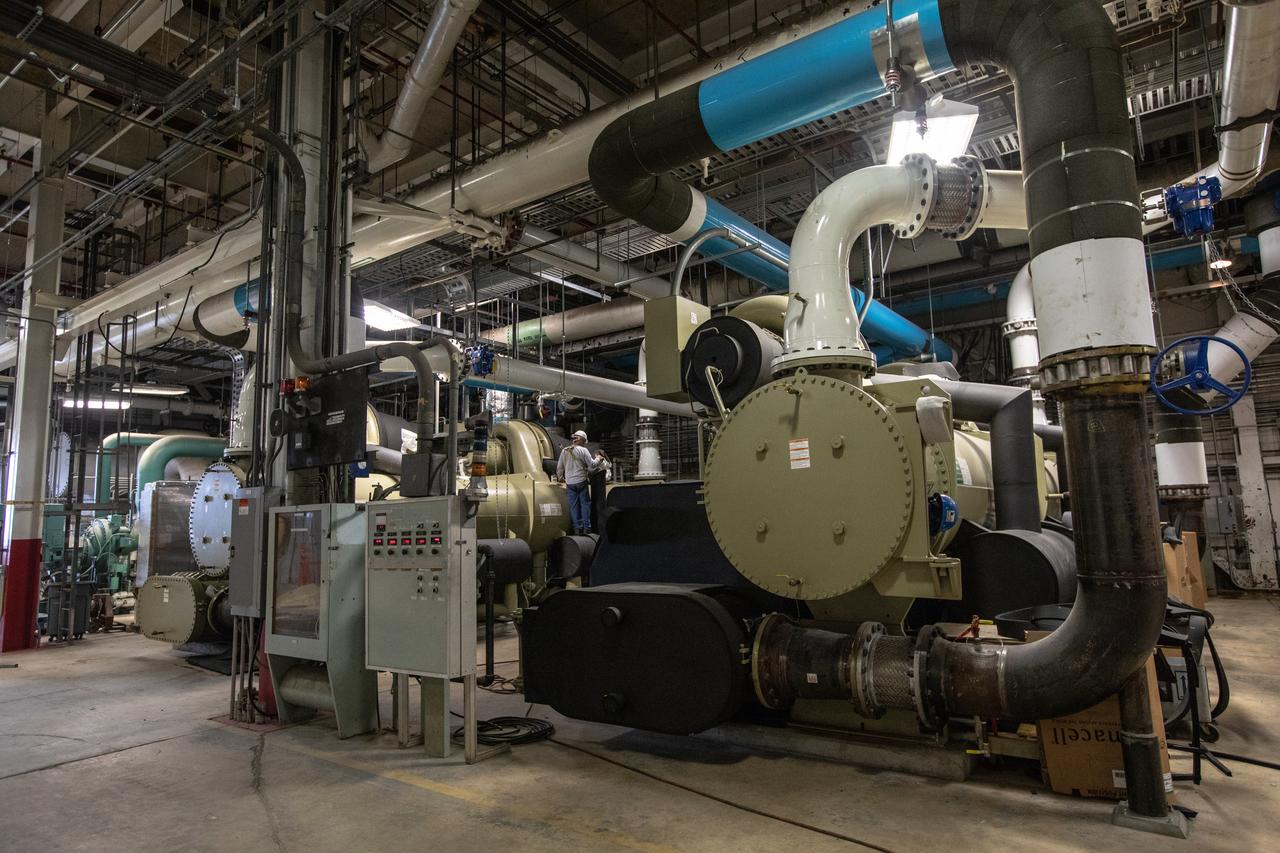
A view of the inside of the Utility Annex near the Vehicle Assembly (VAB) Building at NASA’s Kennedy Space Center in Florida on July 24, 2019. The Utility Annex, which provides 8,000 gallons of chilled water per minute to the VAB and other facilities in the Launch Complex 39 area, is being upgraded and repaired. The facility also contains boilers necessary to provide hot water to the VAB. The center’s Engineering Directorate is making the repairs and upgrades to the facility to prepare for the agency’s Artemis missions to the Moon and on to Mars.
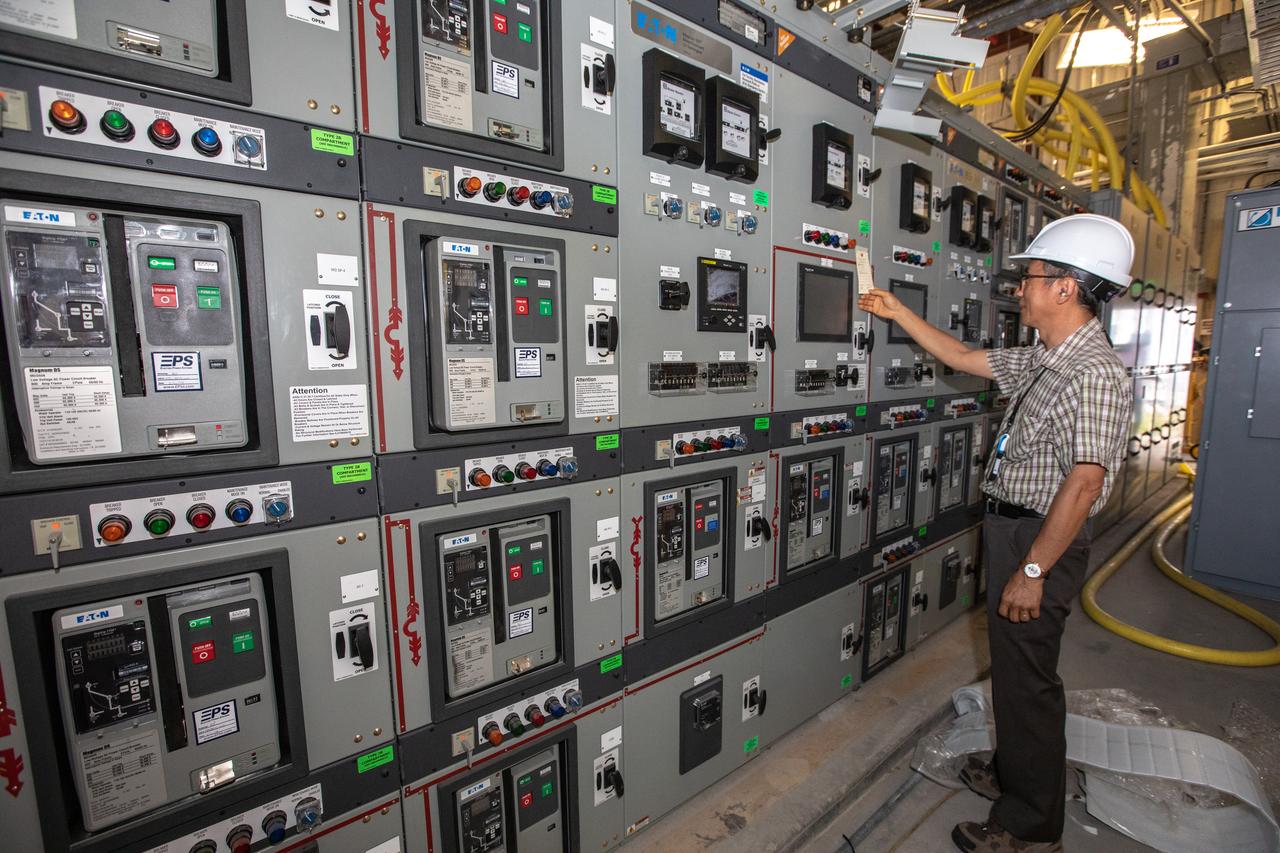
Control panels are in view inside the Utility Annex near the Vehicle Assembly (VAB) Building at NASA’s Kennedy Space Center in Florida on July 24, 2019. The Utility Annex, which provides 8,000 gallons of chilled water per minute to the VAB and other facilities in the Launch Complex 39 area, is being upgraded and repaired. The facility also contains boilers necessary to provide hot water to the VAB. The center’s Engineering Directorate is making the repairs and upgrades to the facility to prepare for the agency’s Artemis missions to the Moon and on to Mars.
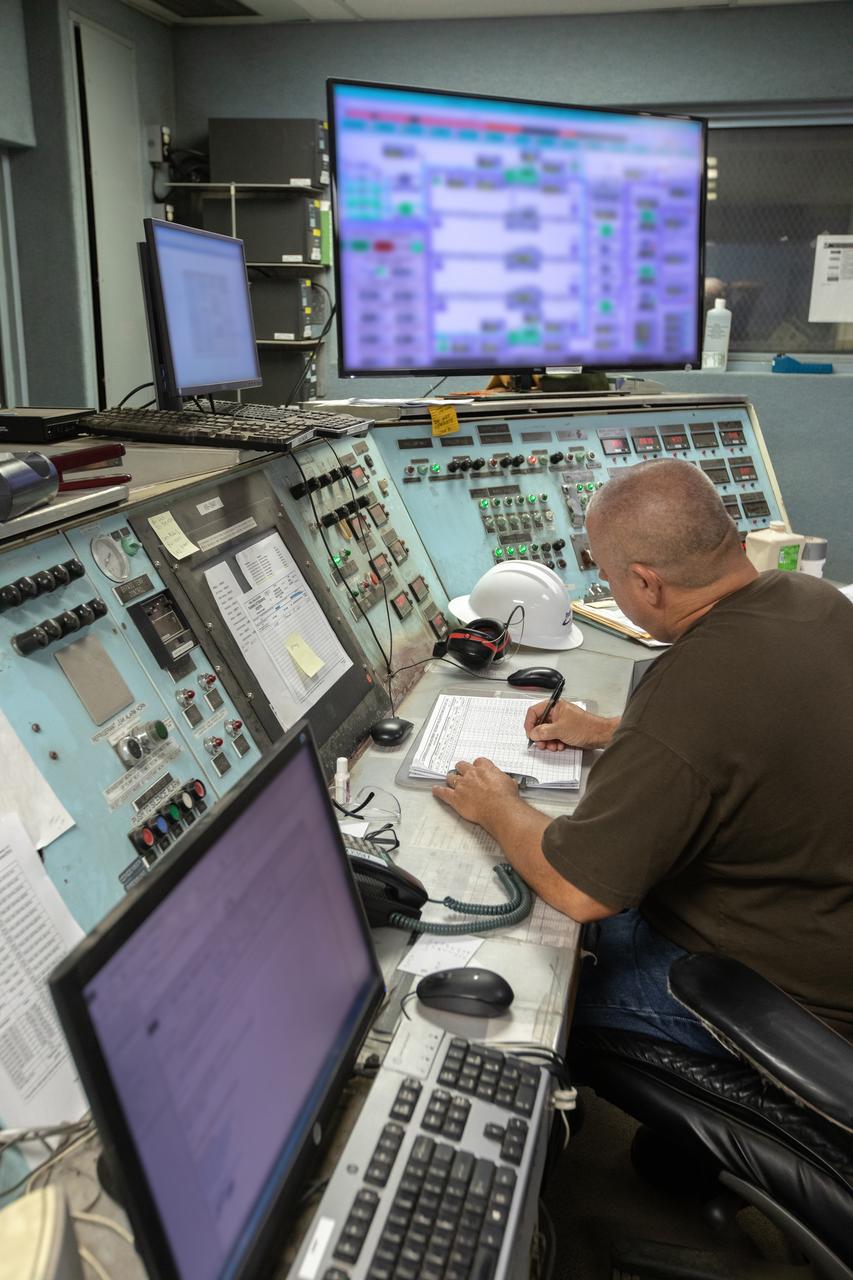
A technician monitors conditions in a control room inside the Utility Annex near the Vehicle Assembly (VAB) Building at NASA’s Kennedy Space Center in Florida on July 24, 2019. The Utility Annex, which provides 8,000 gallons of chilled water per minute to the VAB and other facilities in the Launch Complex 39 area, is being upgraded and repaired. The facility also contains boilers necessary to provide hot water to the VAB. The center’s Engineering Directorate is making the repairs and upgrades to the facility to prepare for the agency’s Artemis missions to the Moon and on to Mars.
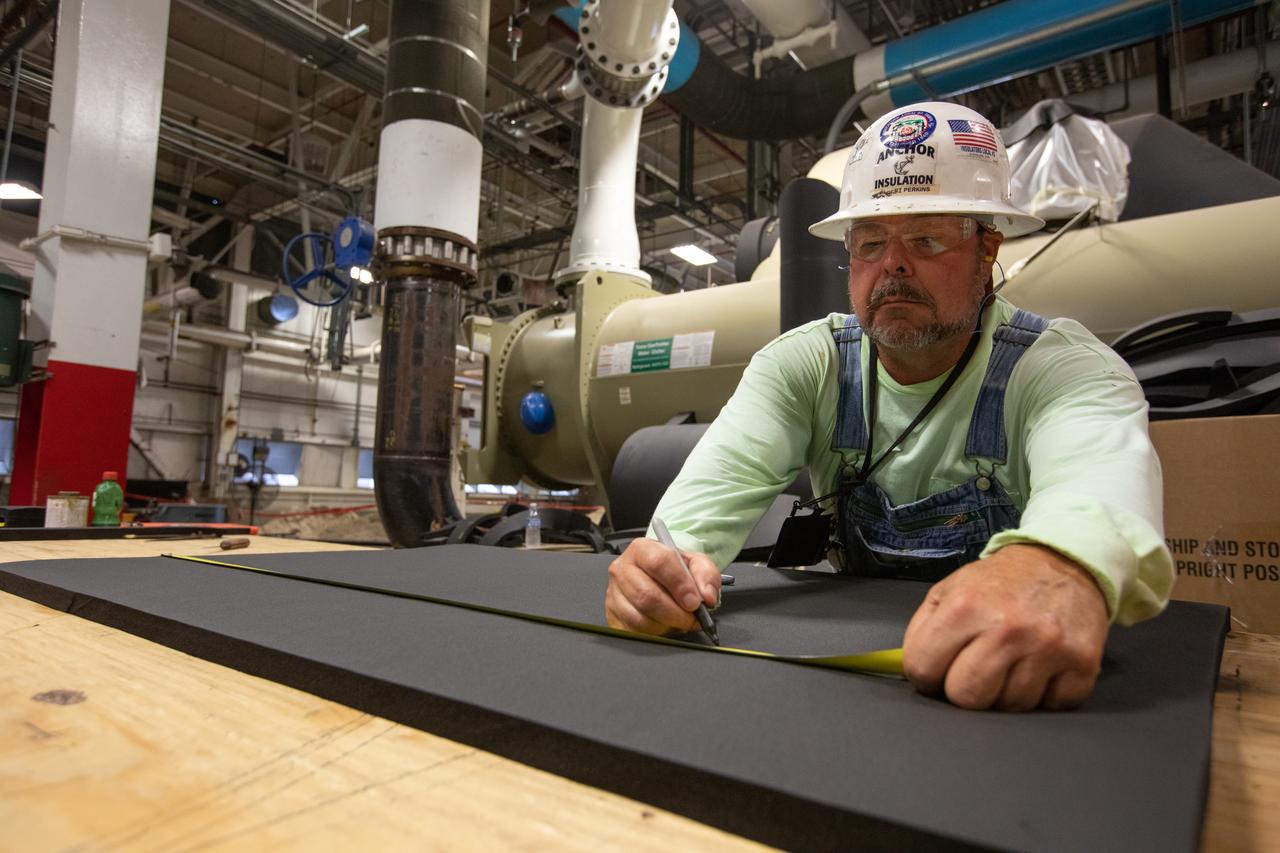
A technician measures foam insulation inside the Utility Annex near the Vehicle Assembly (VAB) Building at NASA’s Kennedy Space Center in Florida on July 24, 2019. The Utility Annex, which provides 8,000 gallons of chilled water per minute to the VAB and other facilities in the Launch Complex 39 area, is being upgraded and repaired. The facility also contains boilers necessary to provide hot water to the VAB. The center’s Engineering Directorate is making the repairs and upgrades to the facility to prepare for the agency’s Artemis missions to the Moon and on to Mars.
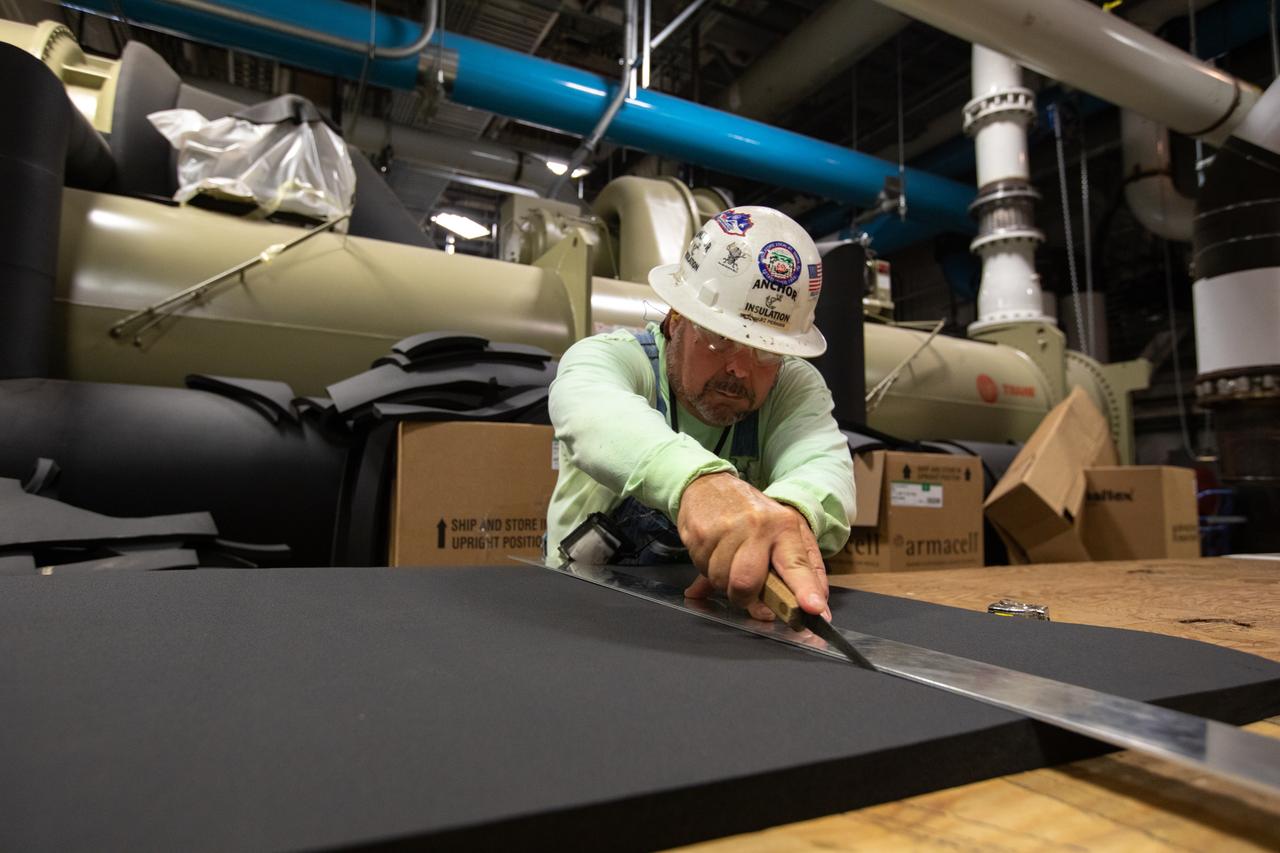
A technician cuts a section of foam insulation inside the Utility Annex near the Vehicle Assembly (VAB) Building at NASA’s Kennedy Space Center in Florida on July 24, 2019. The Utility Annex, which provides 8,000 gallons of chilled water per minute to the VAB and other facilities in the Launch Complex 39 area, is being upgraded and repaired. The facility also contains boilers necessary to provide hot water to the VAB. The center’s Engineering Directorate is making the repairs and upgrades to the facility to prepare for the agency’s Artemis missions to the Moon and on to Mars.
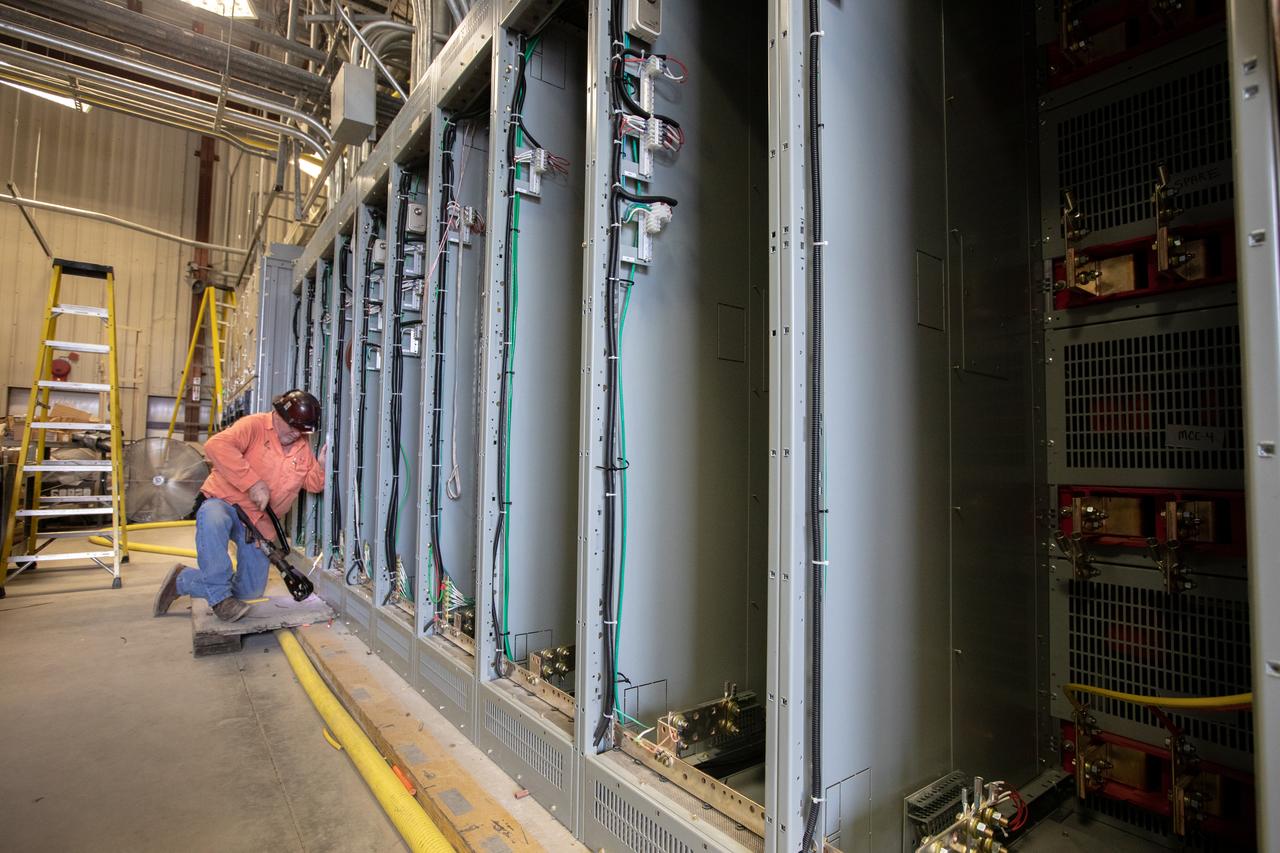
A construction worker installs new wiring inside the Utility Annex near the Vehicle Assembly (VAB) Building at NASA’s Kennedy Space Center in Florida on July 24, 2019. The Utility Annex, which provides 8,000 gallons of chilled water per minute to the VAB and other facilities in the Launch Complex 39 area, is being upgraded and repaired. The facility also contains boilers necessary to provide hot water to the VAB. The center’s Engineering Directorate is making the repairs and upgrades to the facility to prepare for the agency’s Artemis missions to the Moon and on to Mars.
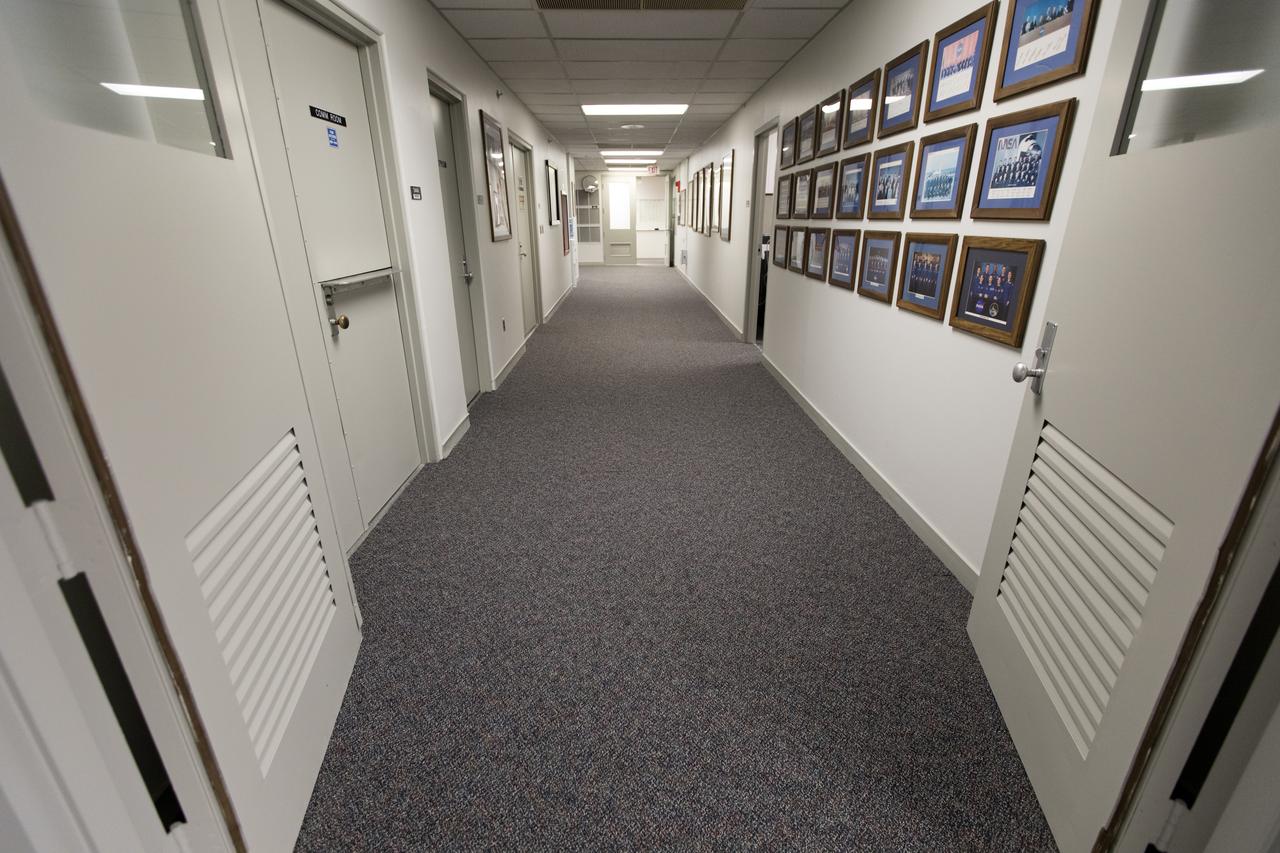
The hallway of the astronaut crew quarters at Kennedy Space Center in Florida reflects new carpeting and a fresh coat of paint. The crew quarters, located on the third floor of the Neil Armstrong Operations and Checkout Building, has been recently upgraded in preparation for Kennedy’s return to human spaceflight.
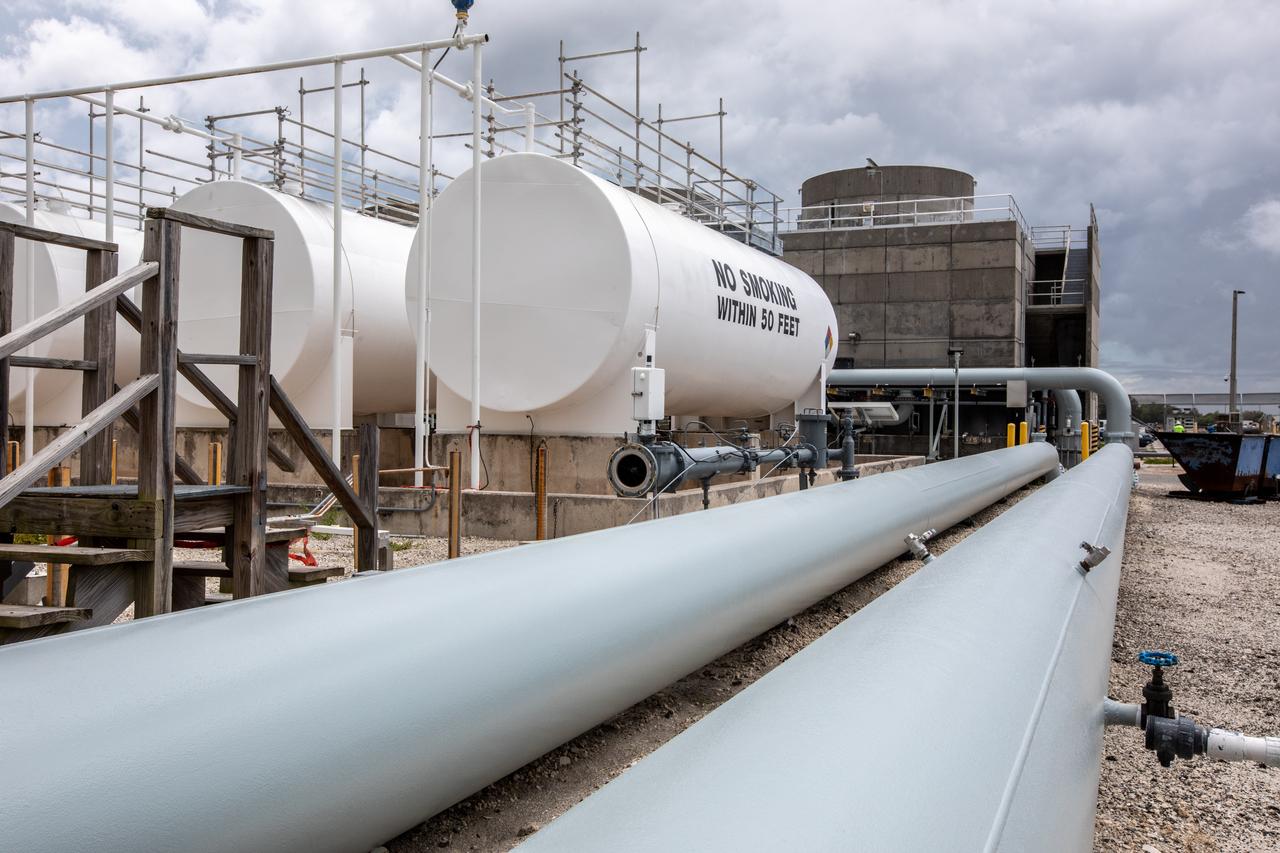
A photograph taken July 24, 2019, shows new tanks and piping were installed outside of the Utility Annex near the Vehicle Assembly (VAB) Building at NASA’s Kennedy Space Center in Florida. The Utility Annex, which provides 8,000 gallons of chilled water per minute to the VAB and other facilities in the Launch Complex 39 area, is being upgraded and repaired. The facility also contains boilers necessary to provide hot water to the VAB. The center’s Engineering Directorate is making the repairs and upgrades to the facility to prepare for the agency’s Artemis missions to the Moon and on to Mars.
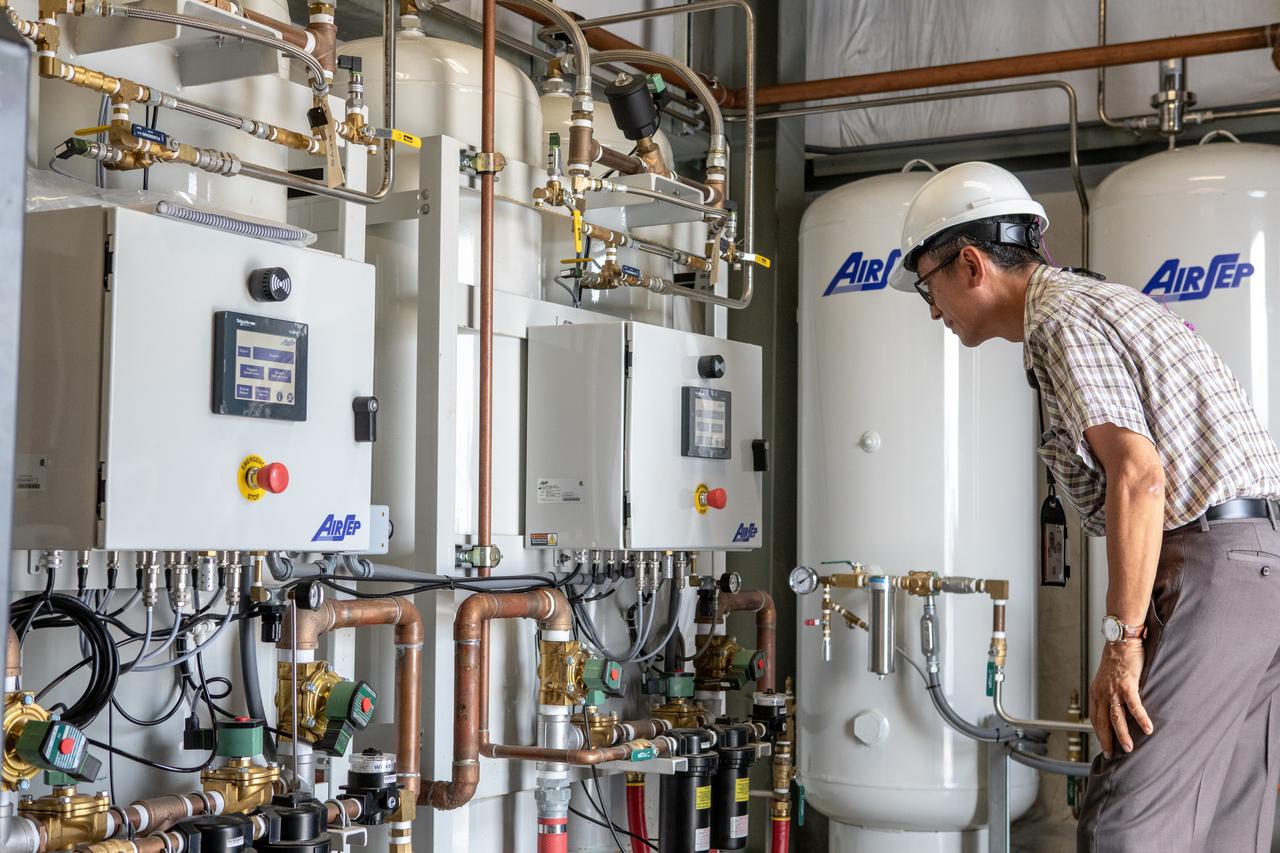
A photograph taken July 24, 2019, shows new air tanks, piping and control panels were installed in the Utility Annex near the Vehicle Assembly (VAB) Building at NASA’s Kennedy Space Center in Florida. The Utility Annex, which provides 8,000 gallons of chilled water per minute to the VAB and other facilities in the Launch Complex 39 area, is being upgraded and repaired. The facility also contains boilers necessary to provide hot water to the VAB. The center’s Engineering Directorate is making the repairs and upgrades to the facility to prepare for the agency’s Artemis missions to the Moon and on to Mars.
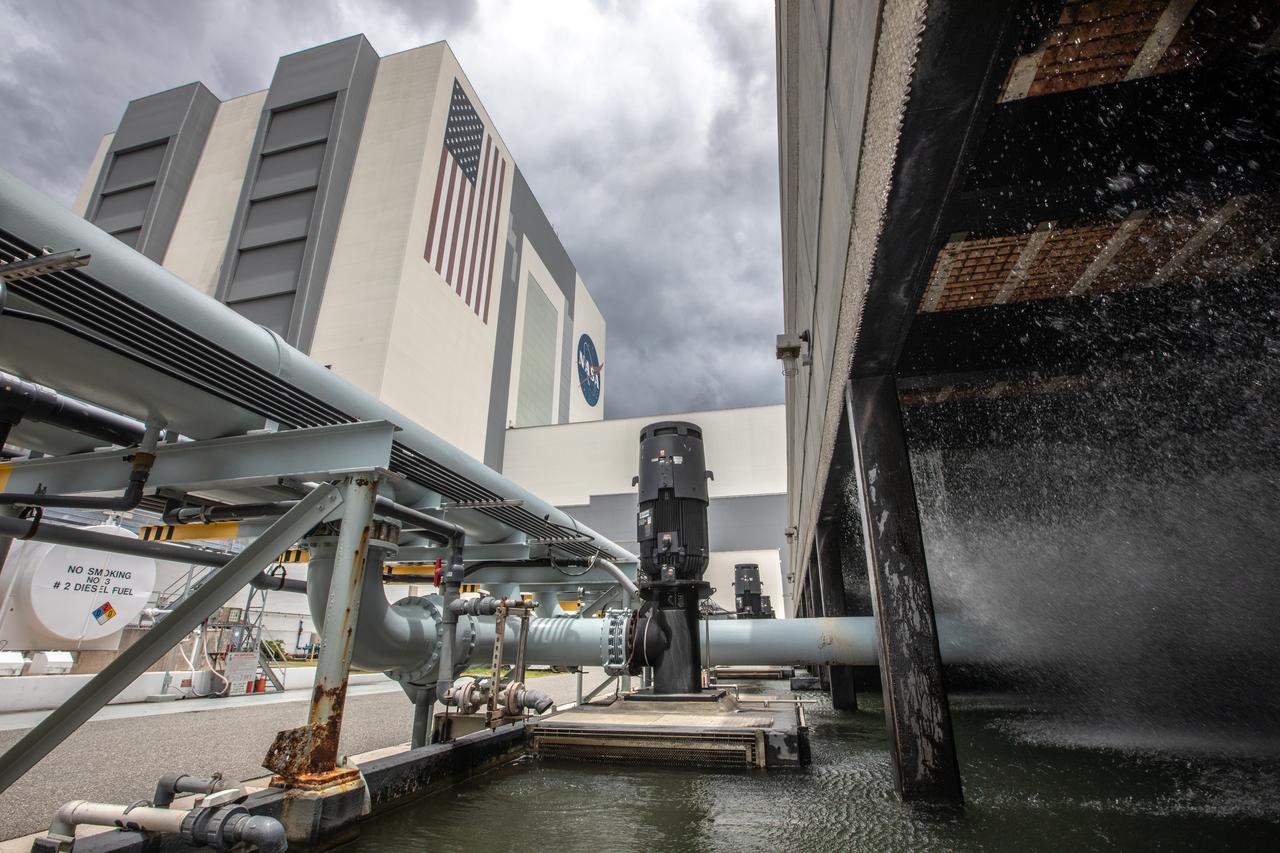
A photograph taken July 24, 2019, shows new tanks and piping were installed outside of the Utility Annex near the Vehicle Assembly (VAB) Building at NASA’s Kennedy Space Center in Florida. The Utility Annex, which provides 8,000 gallons of chilled water per minute to the VAB and other facilities in the Launch Complex 39 area, is being upgraded and repaired. The facility also contains boilers necessary to provide hot water to the VAB. The center’s Engineering Directorate is making the repairs and upgrades to the facility to prepare for the agency’s Artemis missions to the Moon and on to Mars.
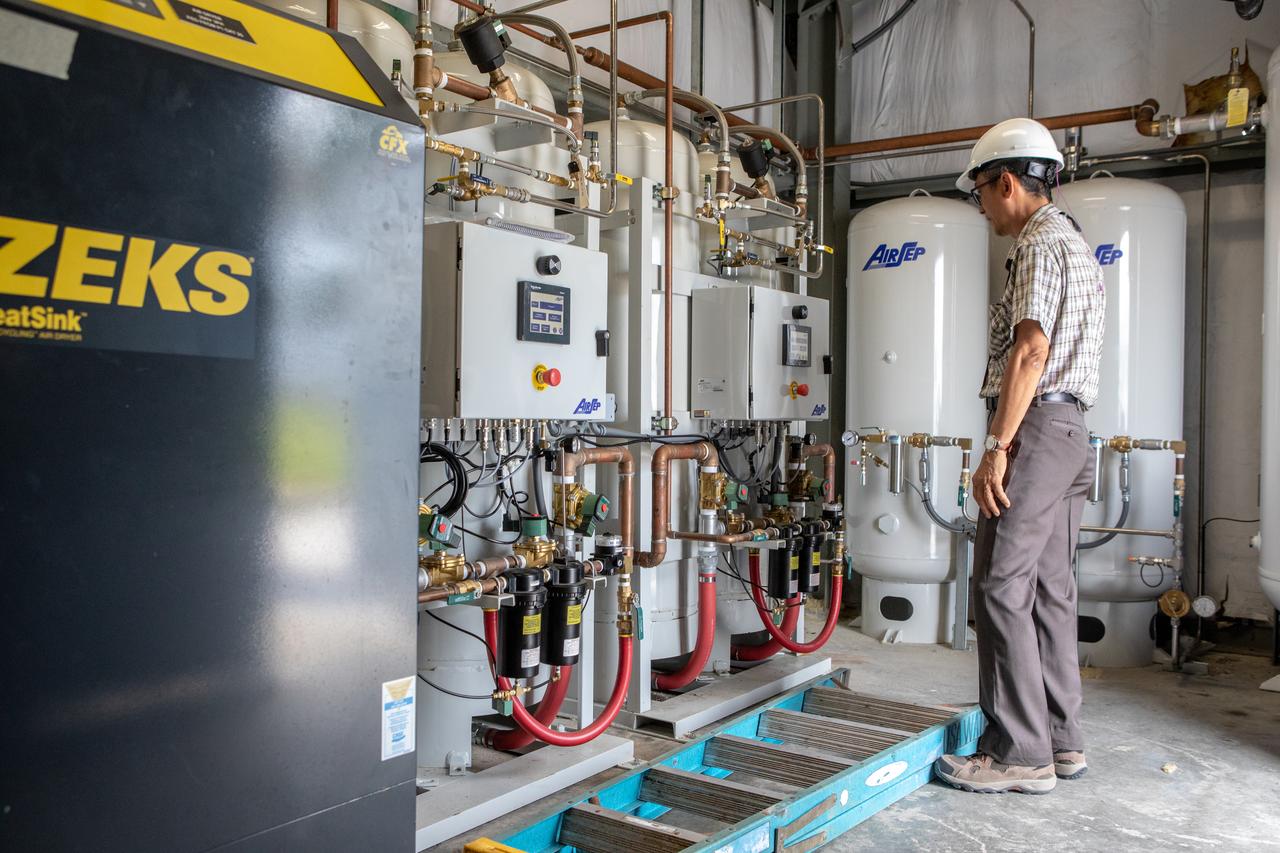
A photograph taken July 24, 2019, shows new air tanks, piping and control panels were installed in the Utility Annex near the Vehicle Assembly (VAB) Building at NASA’s Kennedy Space Center in Florida. The Utility Annex, which provides 8,000 gallons of chilled water per minute to the VAB and other facilities in the Launch Complex 39 area, is being upgraded and repaired. The facility also contains boilers necessary to provide hot water to the VAB. The center’s Engineering Directorate is making the repairs and upgrades to the facility to prepare for the agency’s Artemis missions to the Moon and on to Mars.
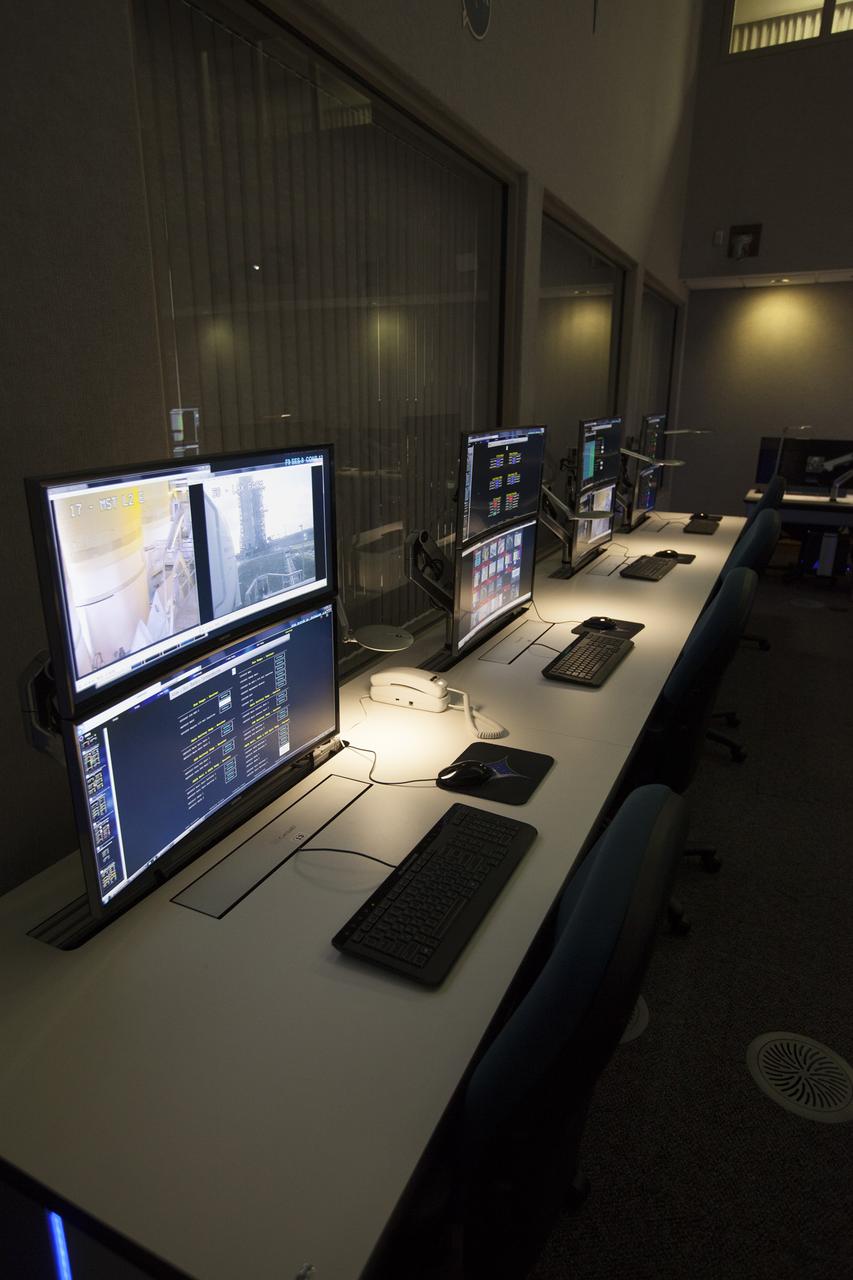
Photos of the Launch Vehicle Data Center (LVDC) in Hangar AE - Room #1 of LVDC - showing the engineering consule upgrades.

Photos of the Launch Vehicle Data Center (LVDC) in Hangar AE - Room #2 of LVDC - showing the engineering consule upgrades.
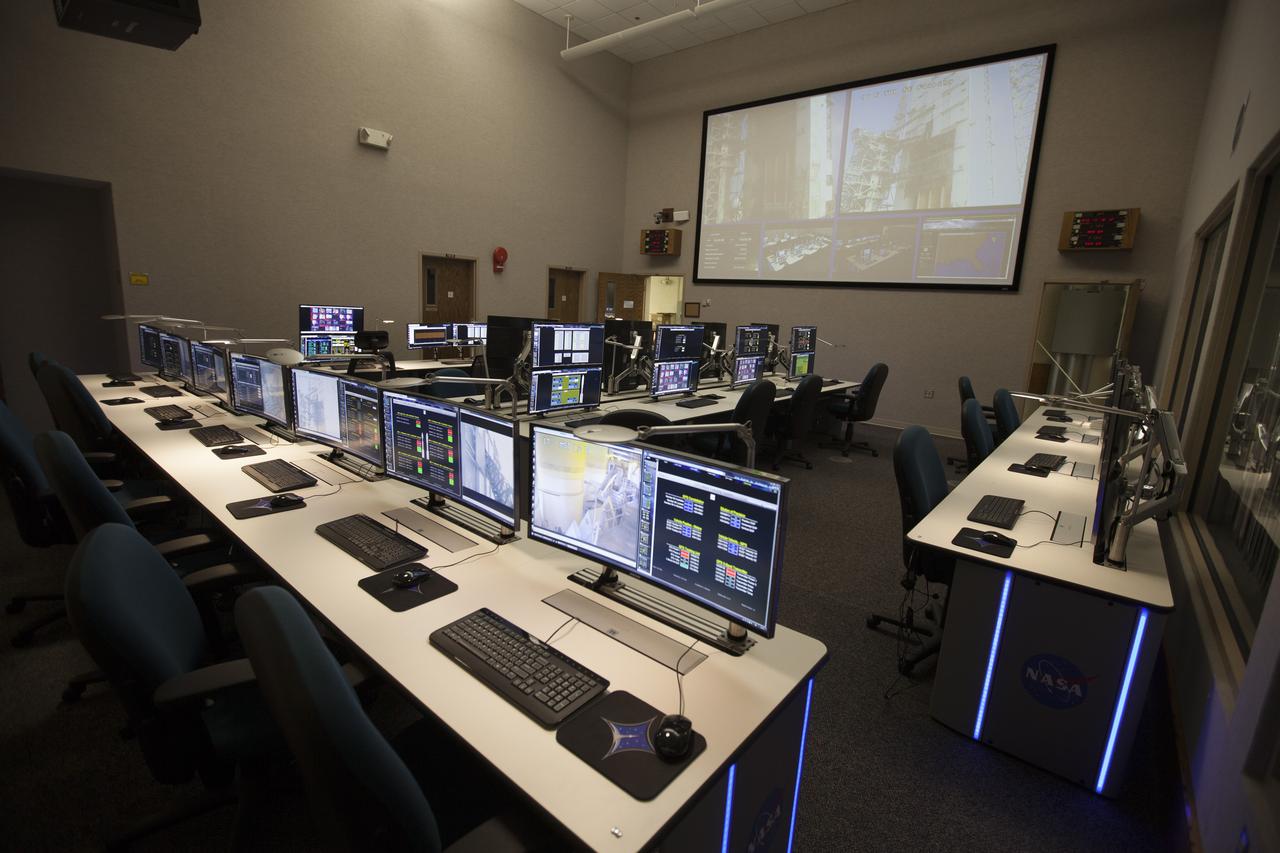
Photos of the Launch Vehicle Data Center (LVDC) in Hangar AE - Room #1 of LVDC - showing the engineering consule upgrades.
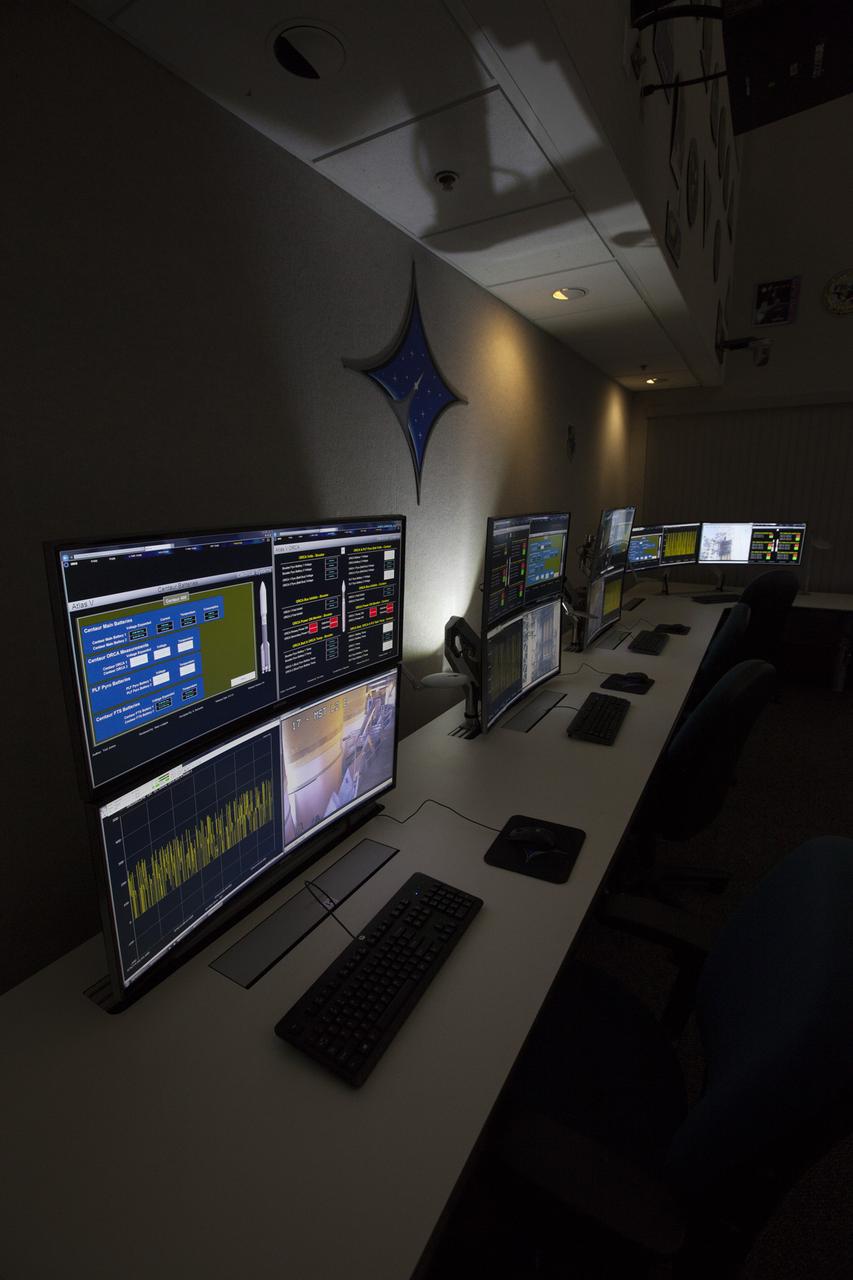
Photos of the Launch Vehicle Data Center (LVDC) in Hangar AE - Room #2 of LVDC - showing the engineering consule upgrades.

Photos of the Launch Vehicle Data Center (LVDC) in Hangar AE - Room #1 of LVDC - showing the engineering consule upgrades.

Photos of the Launch Vehicle Data Center (LVDC) in Hangar AE - Room #1 of LVDC - showing the engineering consule upgrades.
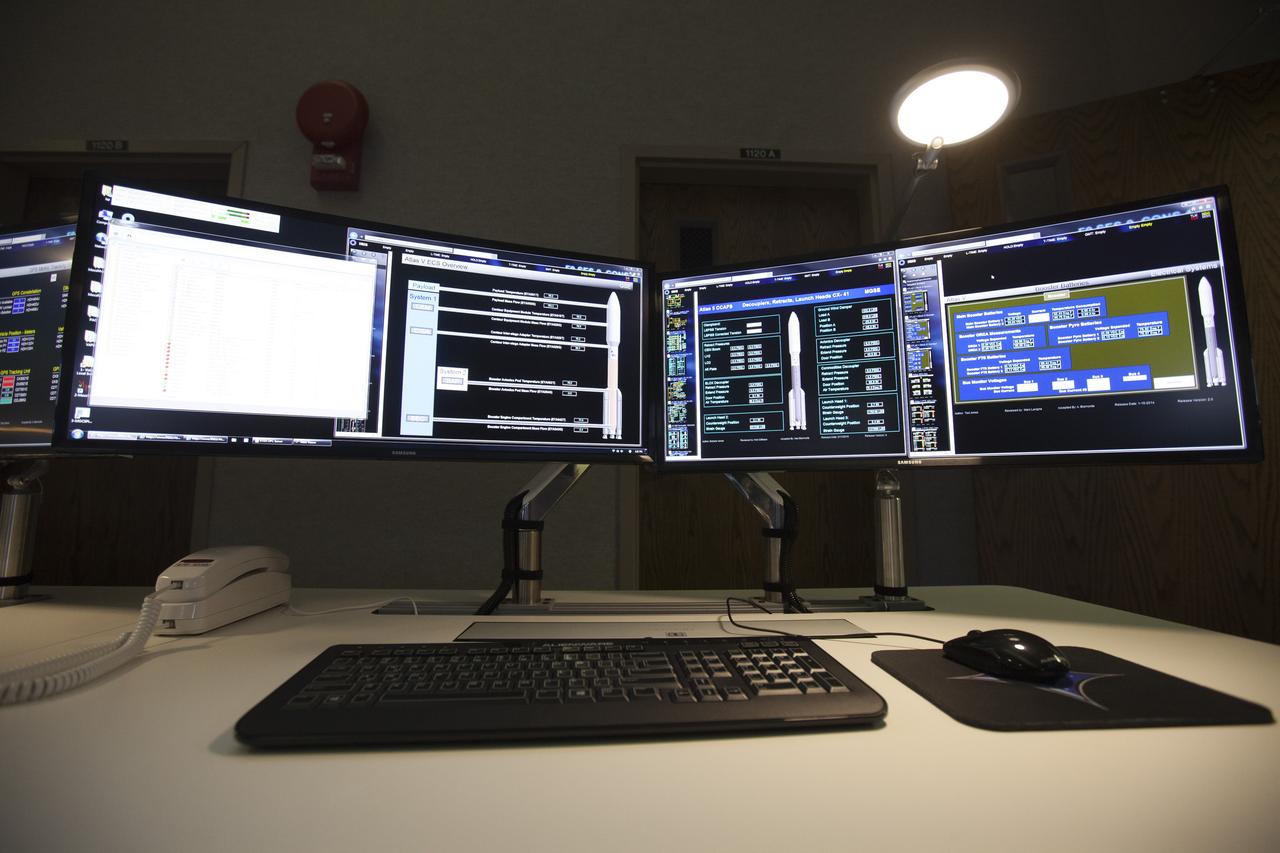
Photos of the Launch Vehicle Data Center (LVDC) in Hangar AE - Room #1 of LVDC - showing the engineering consule upgrades.

Photos of the Launch Vehicle Data Center (LVDC) in Hangar AE - Room #2 of LVDC - showing the engineering consule upgrades.
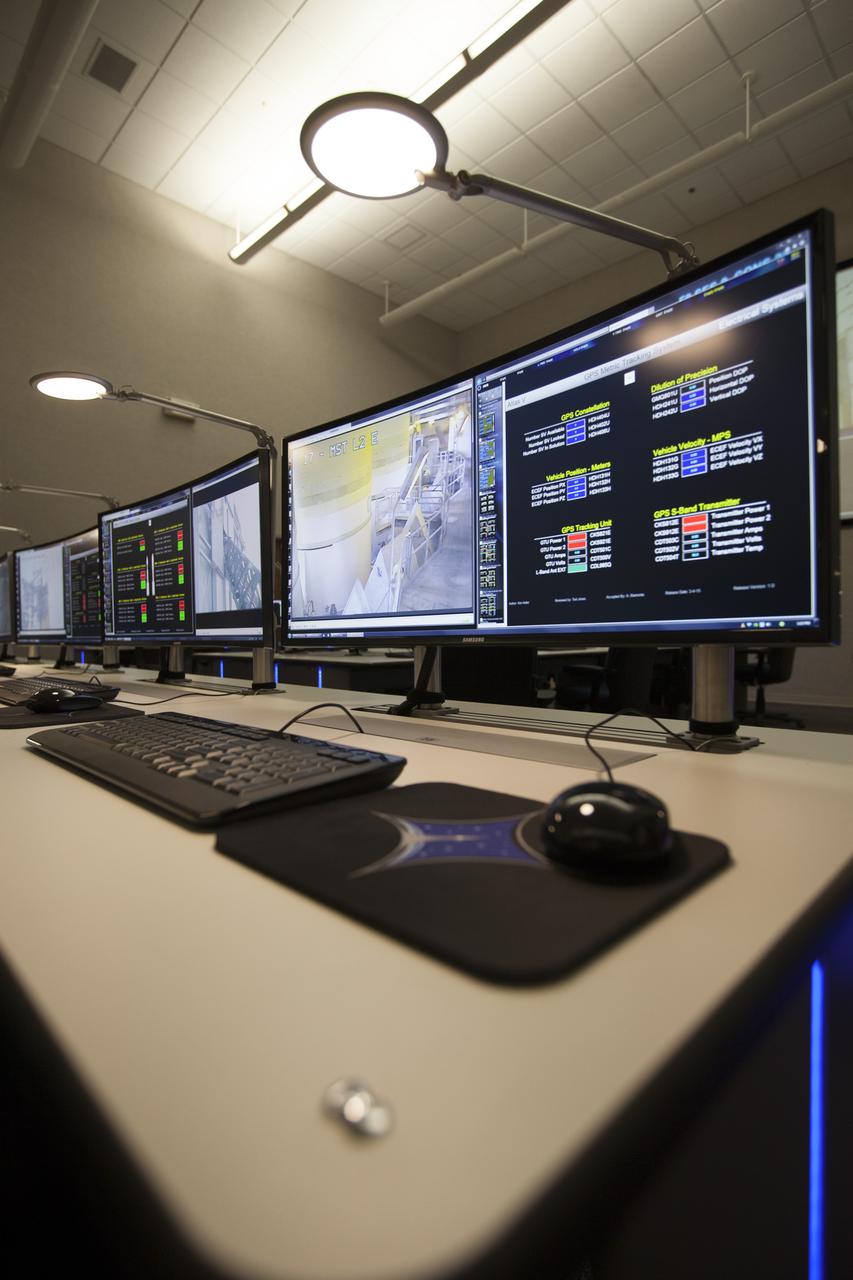
Photos of the Launch Vehicle Data Center (LVDC) in Hangar AE - Room #1 of LVDC - showing the engineering consule upgrades.
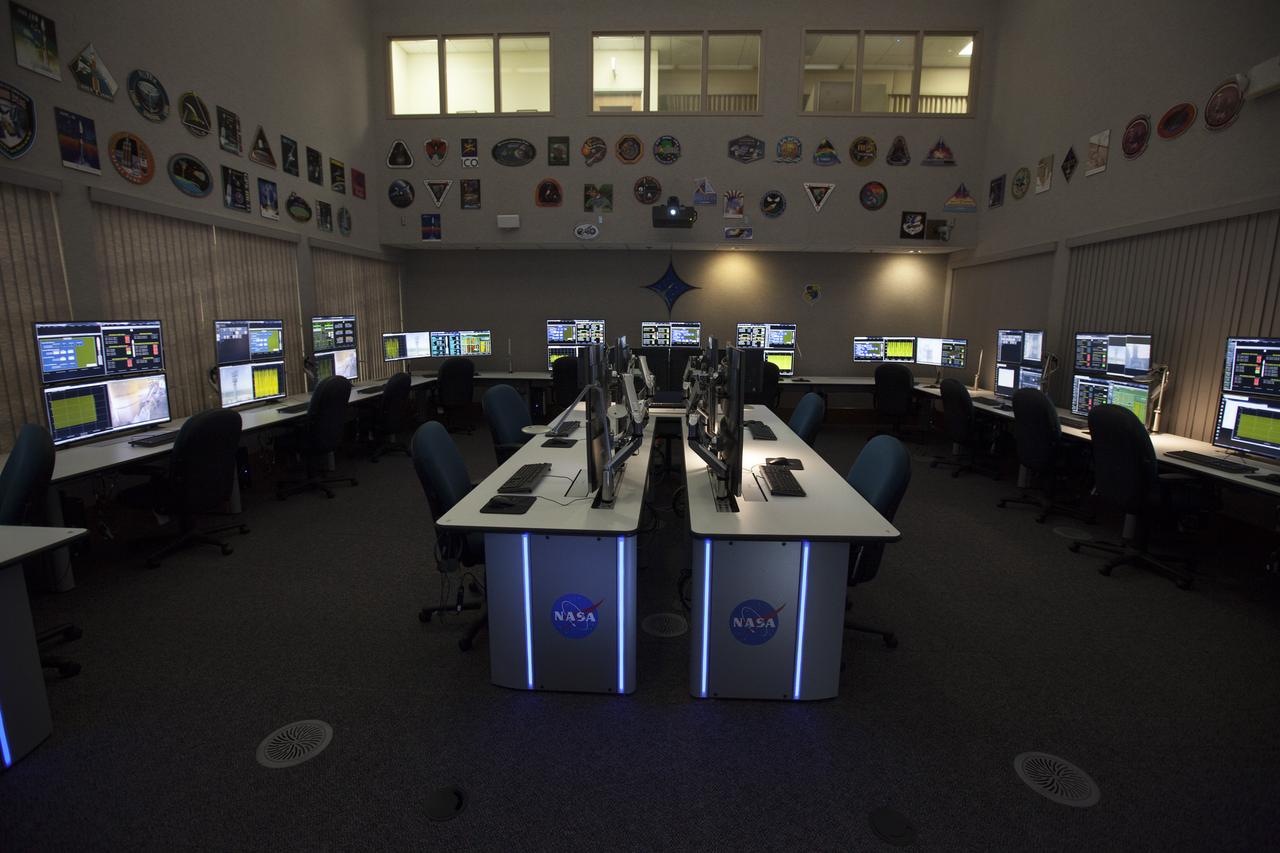
Photos of the Launch Vehicle Data Center (LVDC) in Hangar AE - Room #2 of LVDC - showing the engineering consule upgrades.

Photos of the Launch Vehicle Data Center (LVDC) in Hangar AE - Room #2 of LVDC - showing the engineering consule upgrades.

Photos of the Launch Vehicle Data Center (LVDC) in Hangar AE - Telemetry Room - showing the engineering consule upgrades.
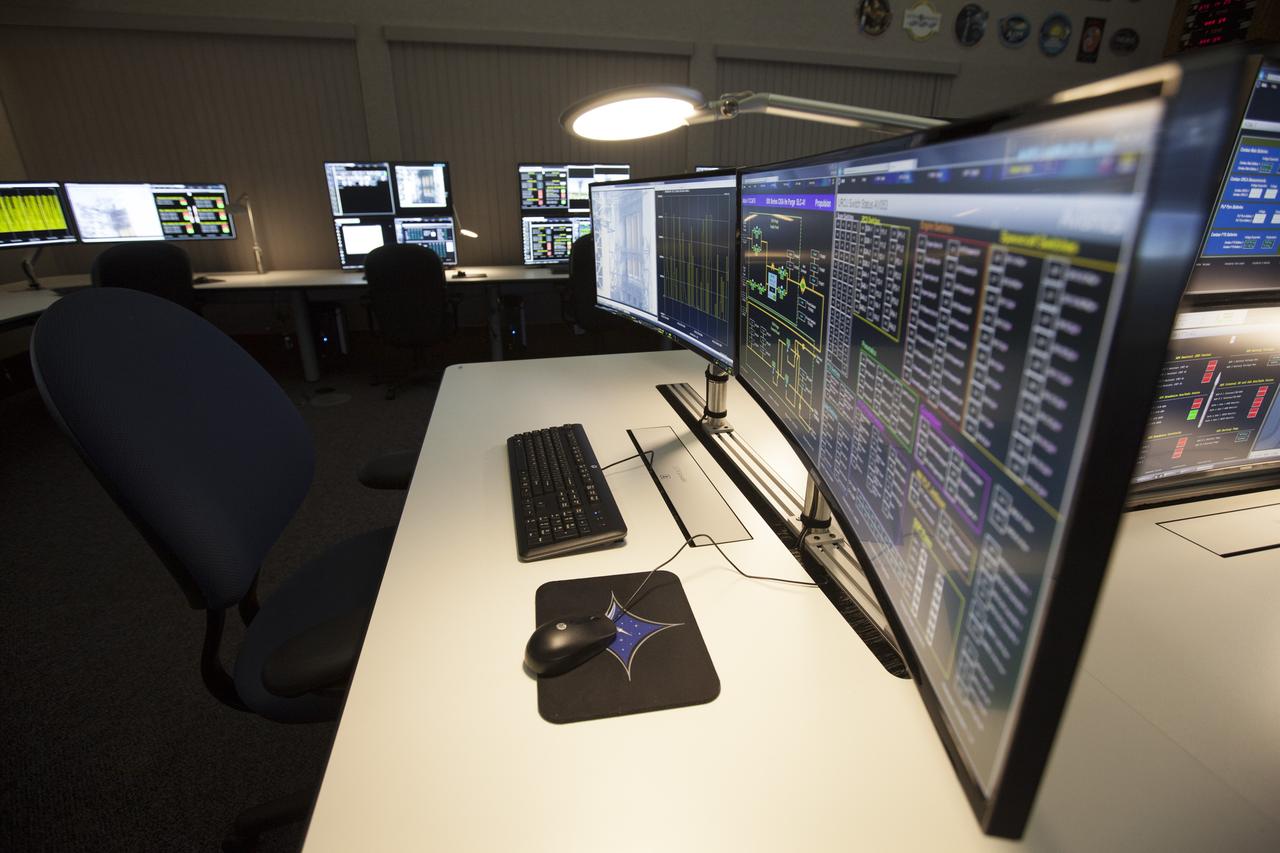
Photos of the Launch Vehicle Data Center (LVDC) in Hangar AE - Room #2 of LVDC - showing the engineering consule upgrades.
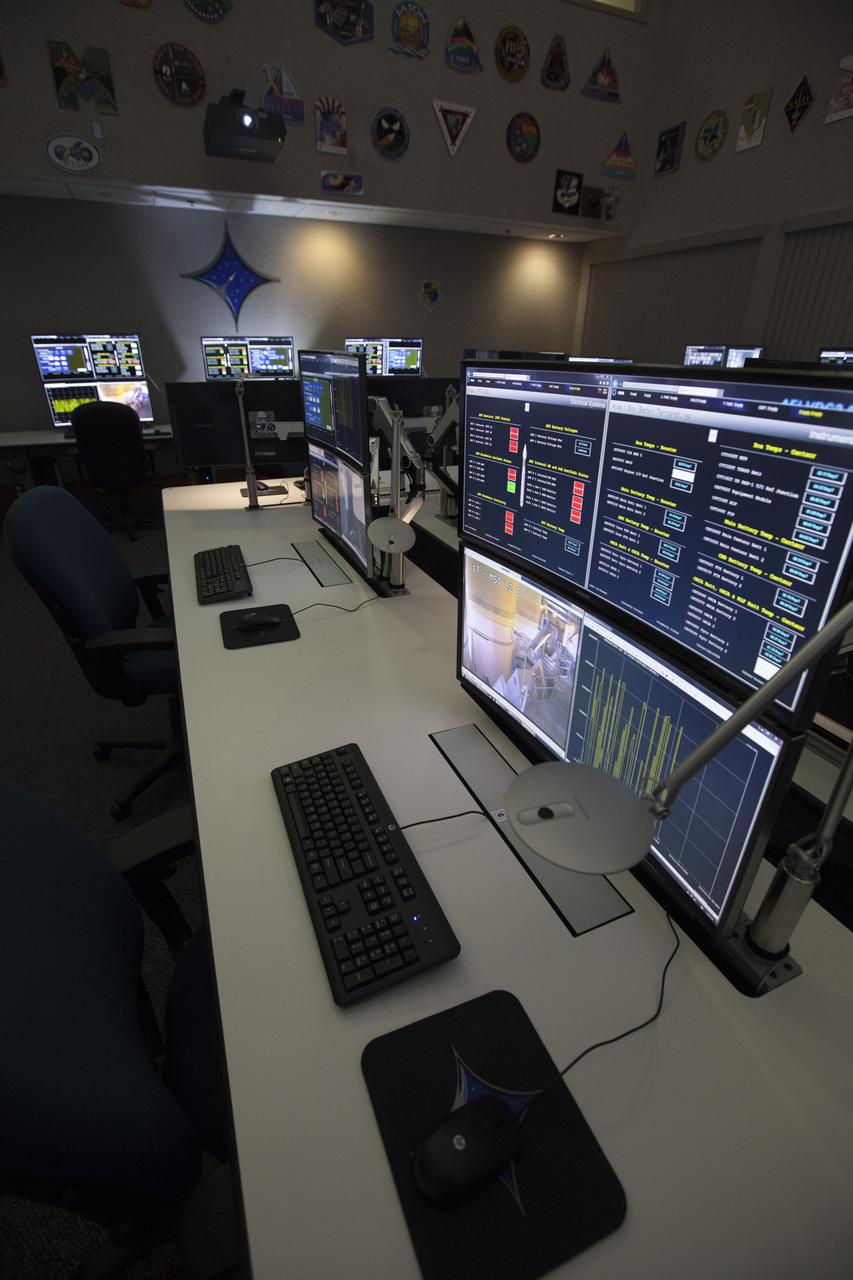
Photos of the Launch Vehicle Data Center (LVDC) in Hangar AE - Room #2 of LVDC - showing the engineering consule upgrades.

Photos of the Launch Vehicle Data Center (LVDC) in Hangar AE - Room #2 of LVDC - showing the engineering consule upgrades.
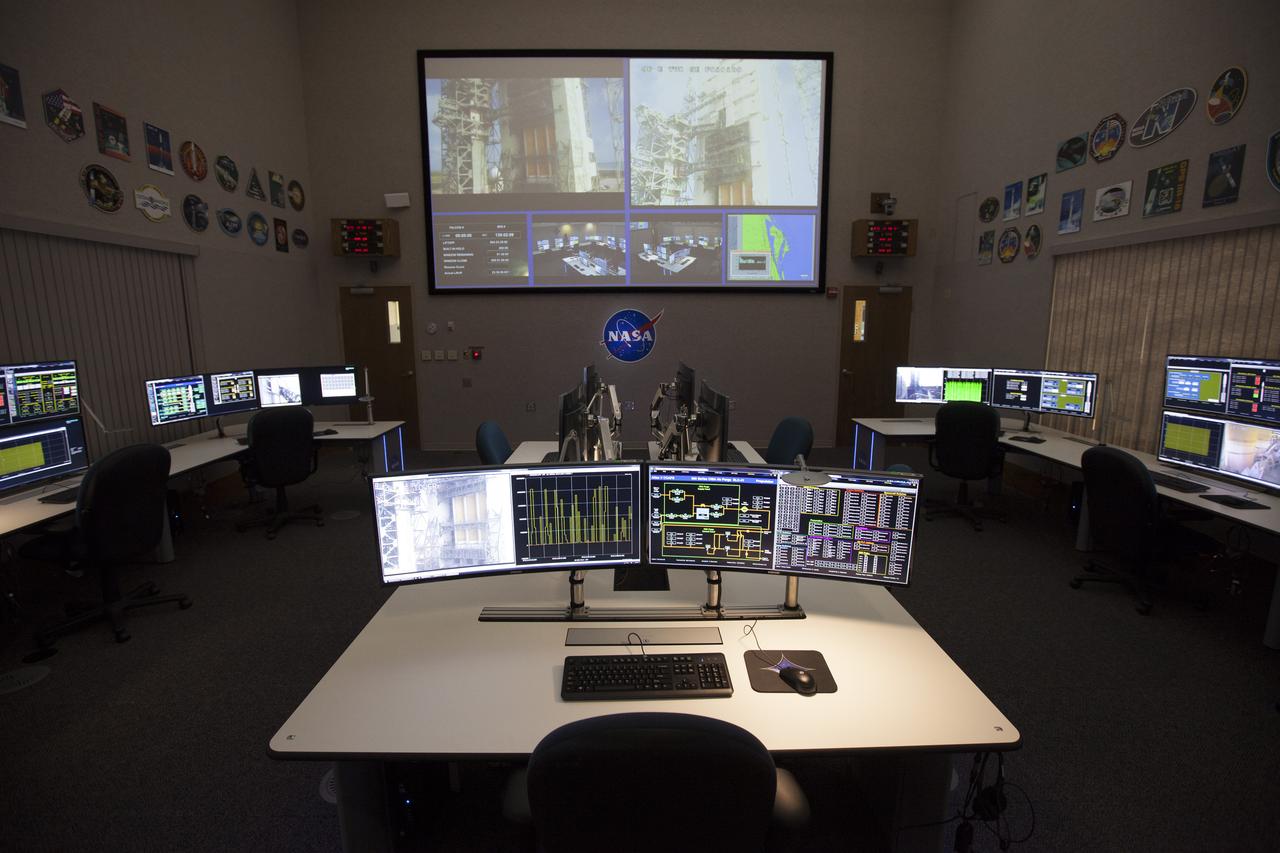
Photos of the Launch Vehicle Data Center (LVDC) in Hangar AE - Room #2 of LVDC - showing the engineering consule upgrades.
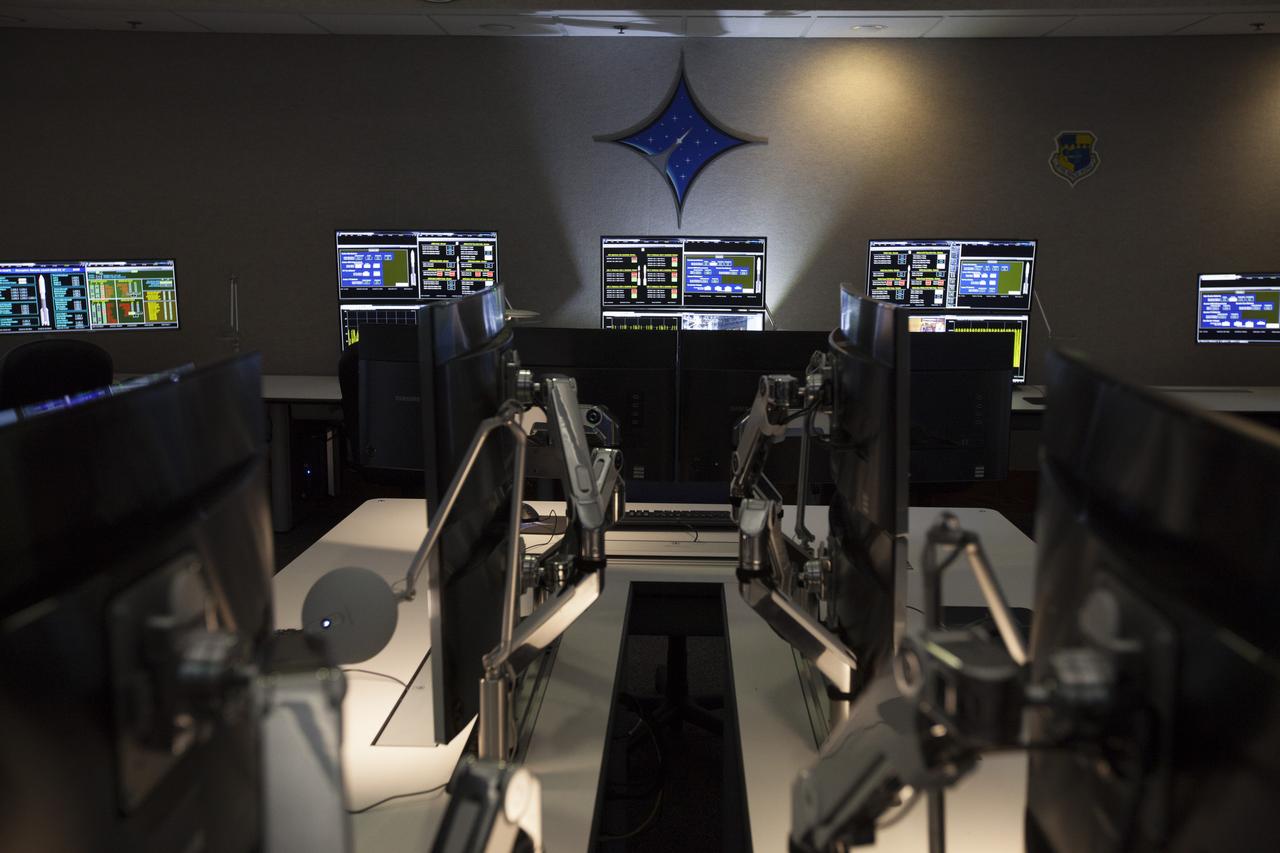
Photos of the Launch Vehicle Data Center (LVDC) in Hangar AE - Room #2 of LVDC - showing the engineering consule upgrades.
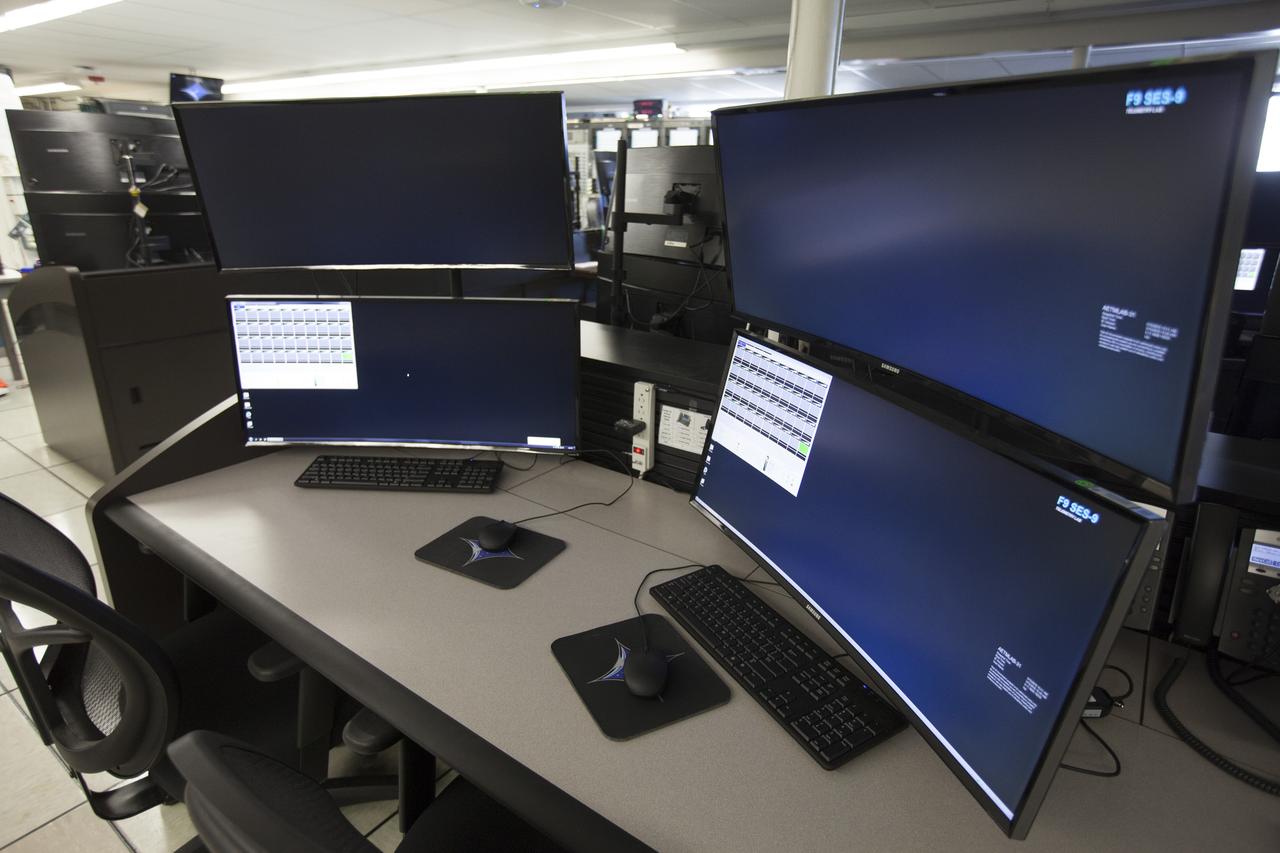
Photos of the Launch Vehicle Data Center (LVDC) in Hangar AE - Telemetry Room - showing the engineering consule upgrades.

Photos of the Launch Vehicle Data Center (LVDC) in Hangar AE - Room #2 of LVDC - showing the engineering consule upgrades.
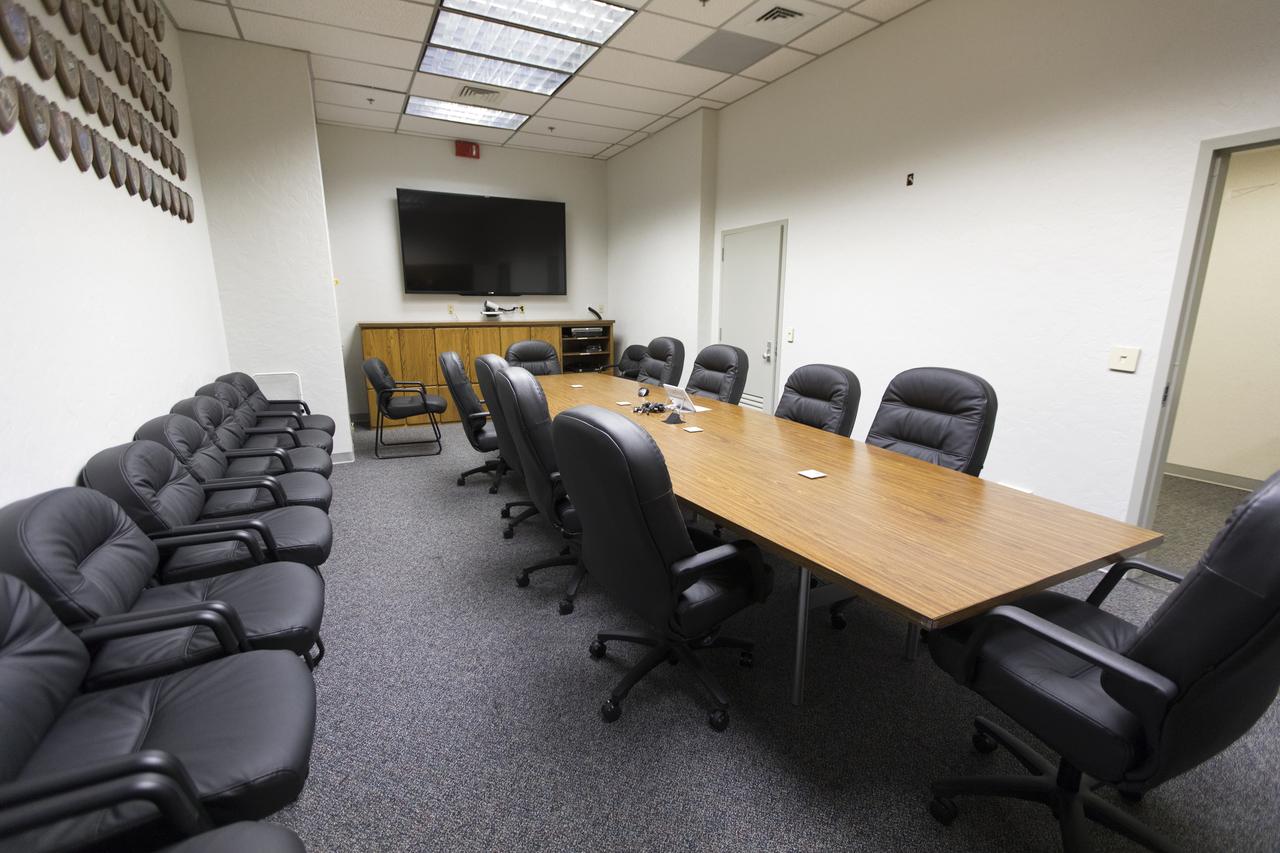
Several upgrades have been completed in the crew quarters at Kennedy Space Center in Florida. This includes new carpeting, paint, furniture and ceiling tiles. Located on the third floor of the Neil Armstrong Operations and Checkout Building, the crew quarters serves as the astronauts’ home as they prepare for missions. This will once again be the case as Kennedy moves closer to a return to human spaceflight. Pictured is a meeting room in the crew quarters.
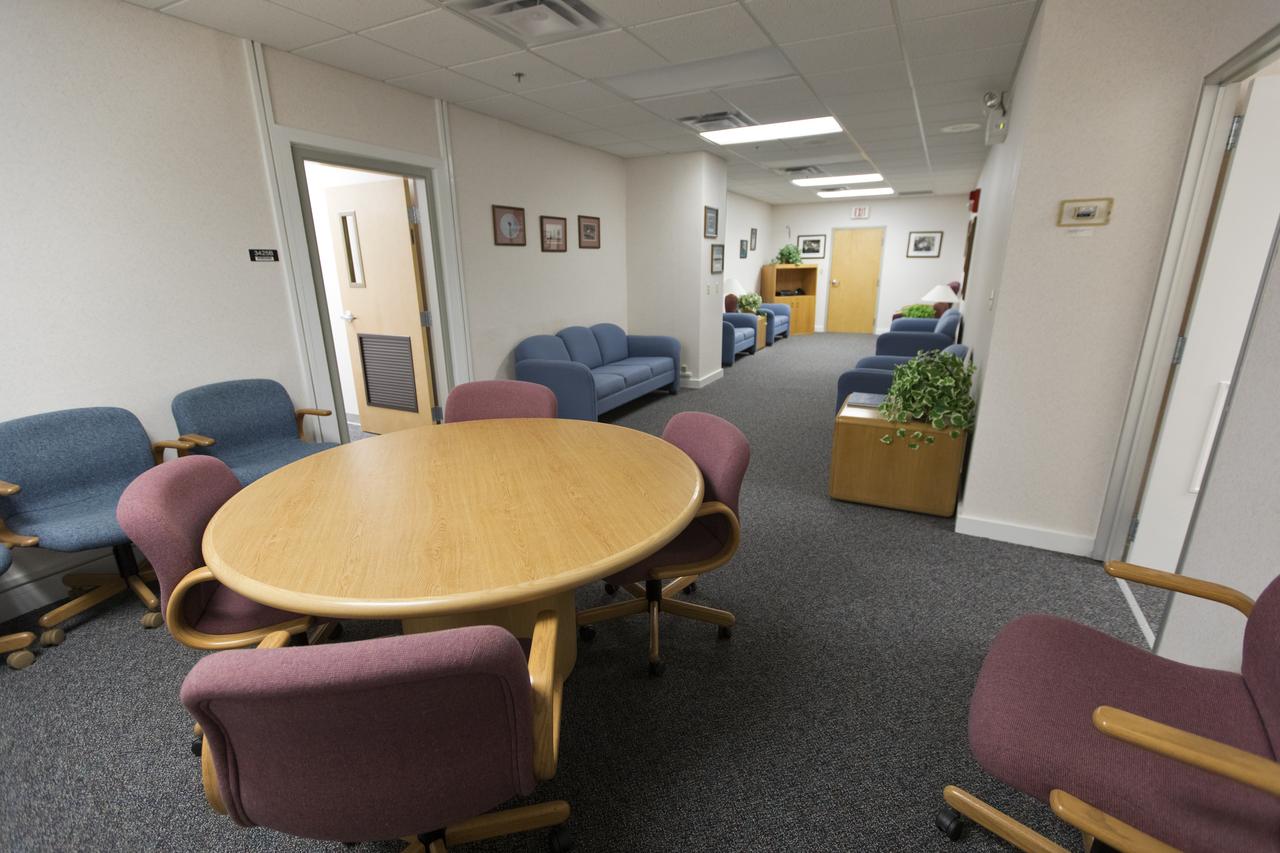
The lounge area inside the astronaut crew quarters is where astronauts’ family members waited for their return upon landing during the Space Shuttle Program. The crew quarters, located on the third floor of Kennedy Space Center’s Neil Armstrong Operations and Checkout Building, recently received a number of upgrades, including new paint, ceiling tiles, carpeting, appliances and furniture.
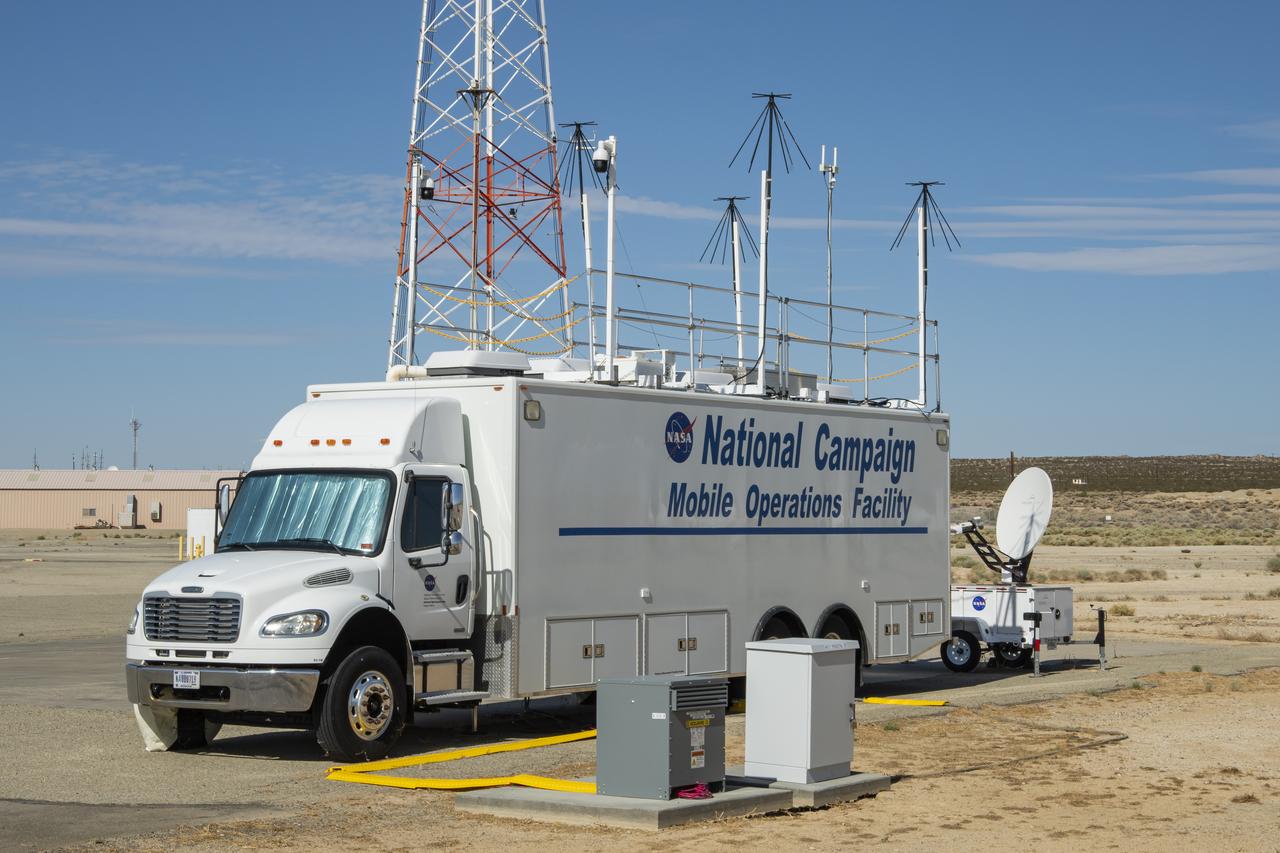
Photos taken on July 20, 2022, show new logos added to the side of the National Campaign’s upgraded Mobile Operations Facility, which has been outfitted to obtain and transmit data from anywhere in the country. This mobile command unit is housed at NASA Armstrong Flight Research Center in Edwards, California.
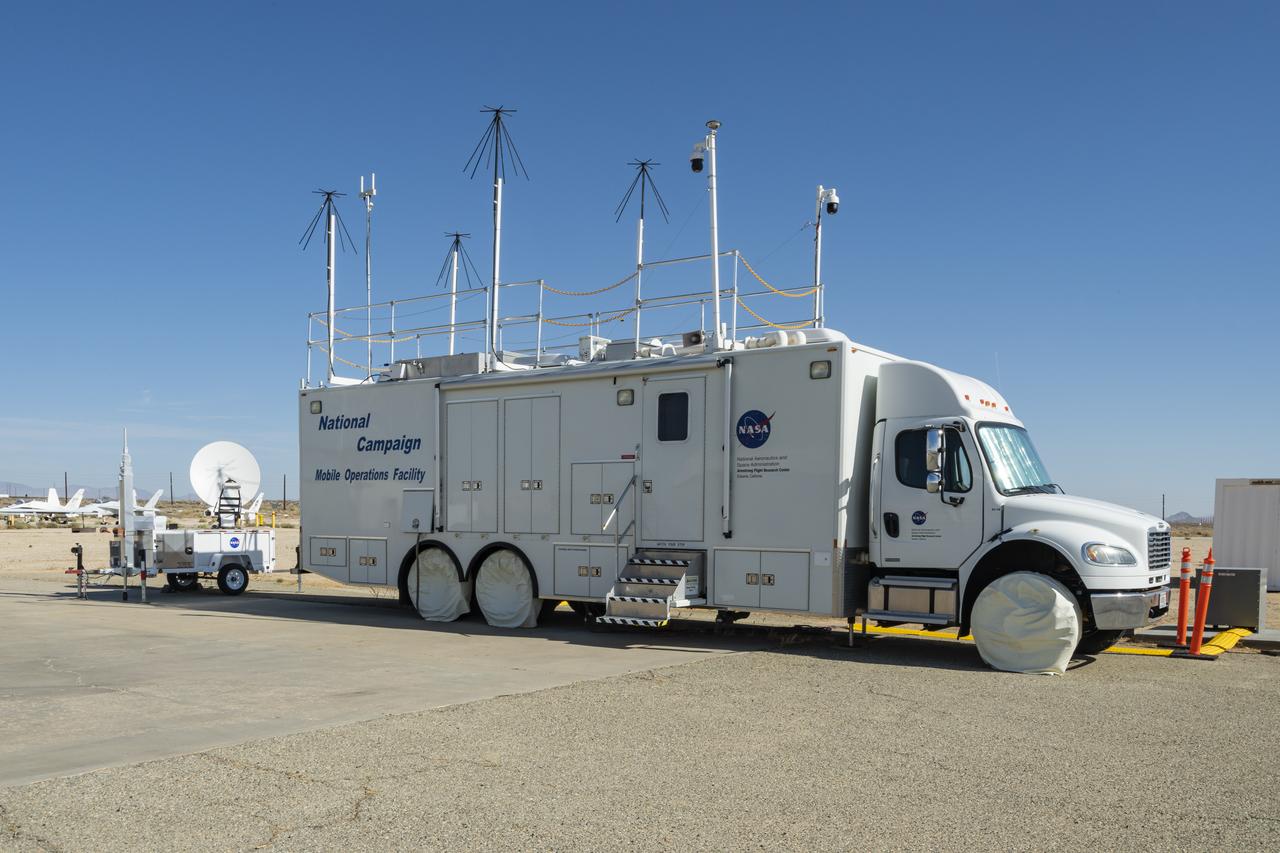
The upgraded NASA Mobile Operations Facility, a mission control and data collection center on wheels, is shown parked at NASA’s Armstrong Flight Research Center in Edwards, California on July 20, 2022. This vehicle is used for NASA's Advanced Air Mobility project’s National Campaign testing.
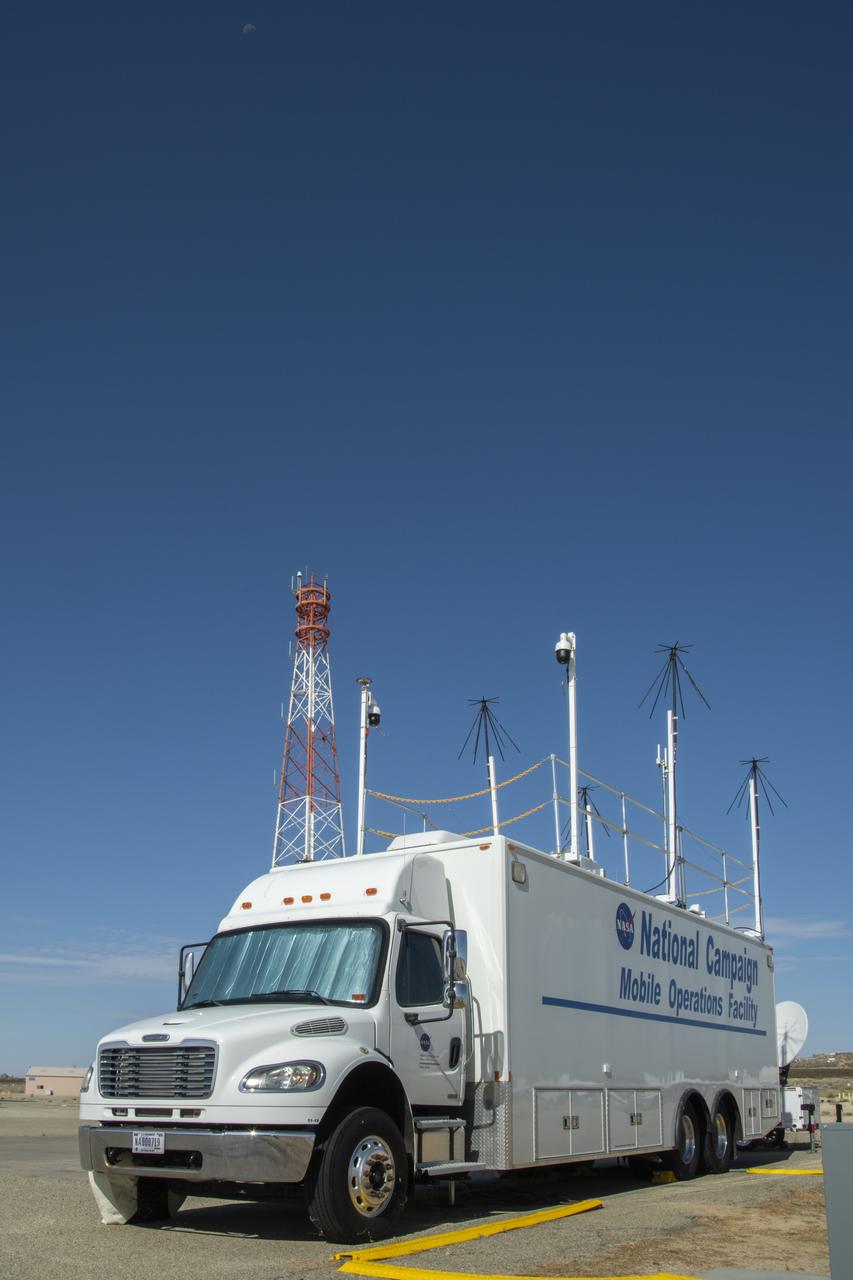
Housed at NASA Armstrong Flight Research Center in Edwards, California, the Advanced Air Mobility project's National Campaign upgraded the Mobile Operations Facility, pictured here on July 20, 2022. This command center on wheels is a key piece of NASA's AAM testing.
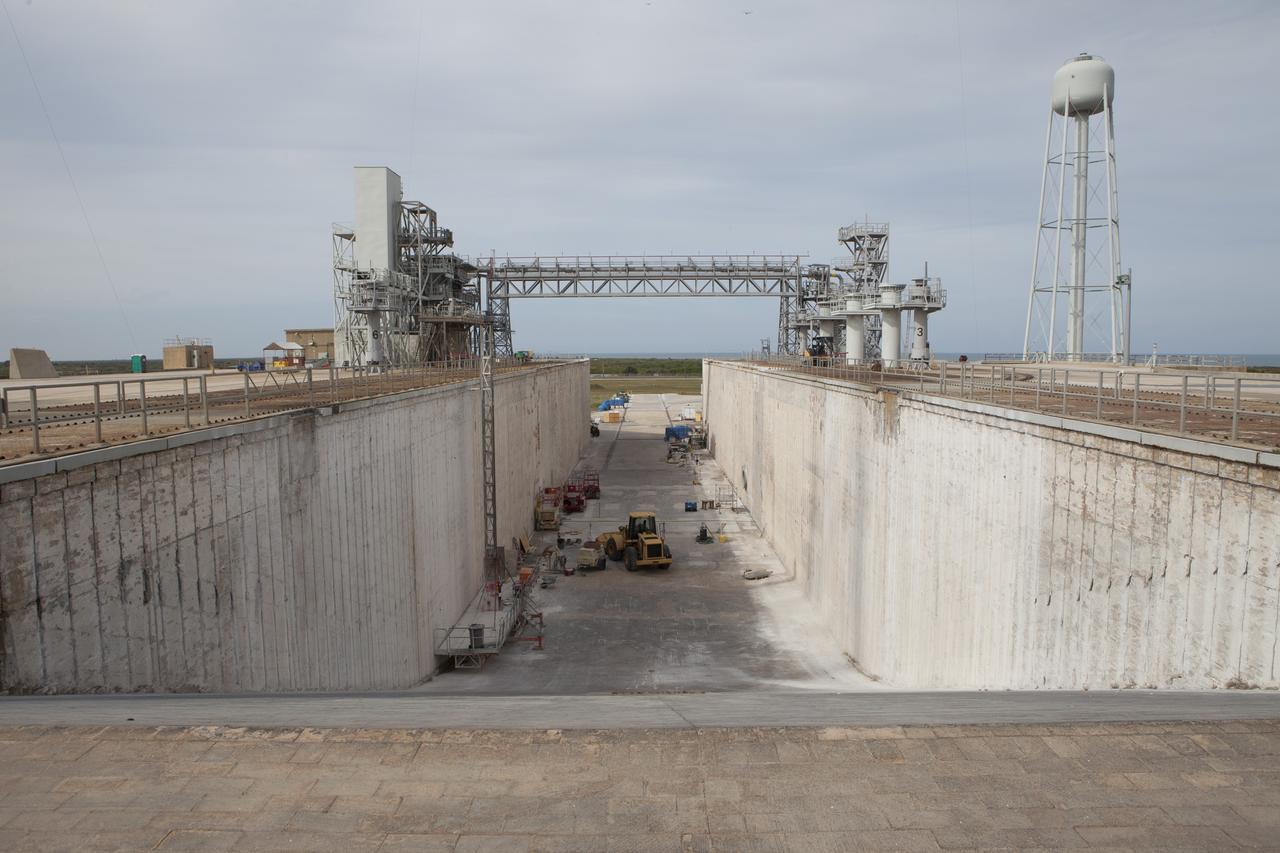
Upgrades and modifications continue to the flame trench at Launch Pad 39B at NASA’s Kennedy Space Center in Florida. Pad B is being refurbished to support the launch of NASA’s Space Launch System rocket. The Ground Systems Development and Operations (GSDO) Program at Kennedy is helping transform the space center into a multi-user spaceport and prepare for Exploration Mission-1, deep-space missions, and the journey to Mars.
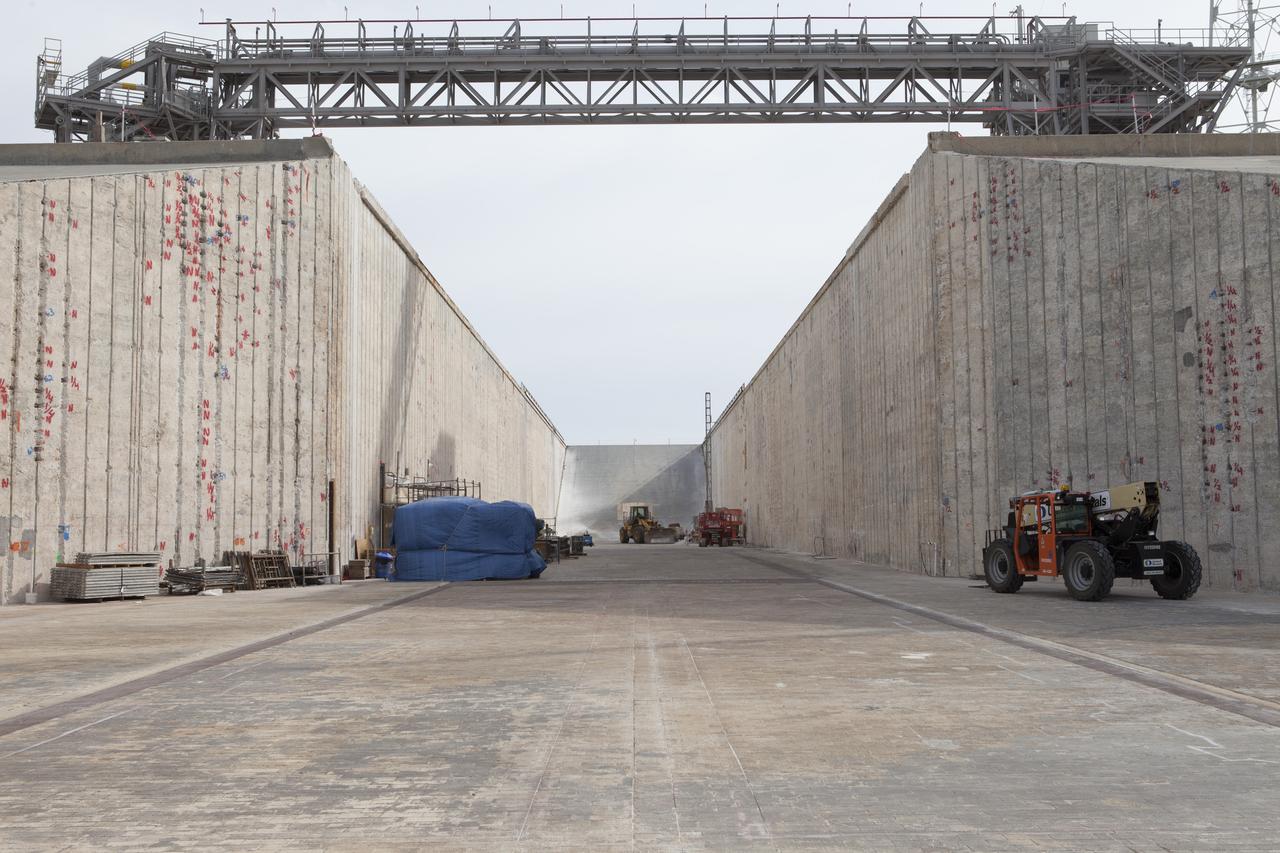
Upgrades and modifications continue to the flame trench at Launch Pad 39B at NASA’s Kennedy Space Center in Florida. Pad B is being refurbished to support the launch of NASA’s Space Launch System rocket. The Ground Systems Development and Operations (GSDO) Program at Kennedy is helping transform the space center into a multi-user spaceport and prepare for Exploration Mission-1, deep-space missions, and the journey to Mars.
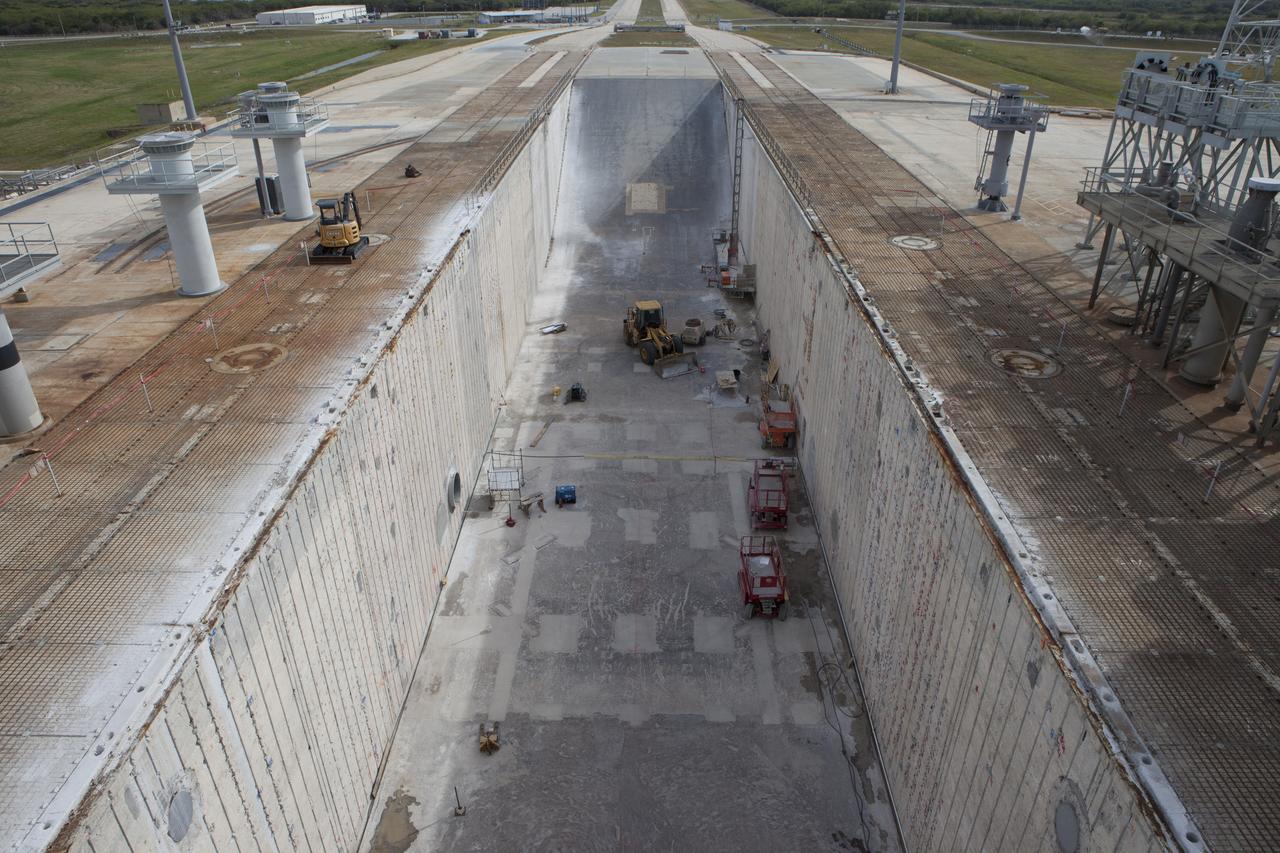
Upgrades and modifications continue to the flame trench at Launch Pad 39B at NASA’s Kennedy Space Center in Florida. Pad B is being refurbished to support the launch of NASA’s Space Launch System rocket. The Ground Systems Development and Operations (GSDO) Program at Kennedy is helping transform the space center into a multi-user spaceport and prepare for Exploration Mission-1, deep-space missions, and the journey to Mars.
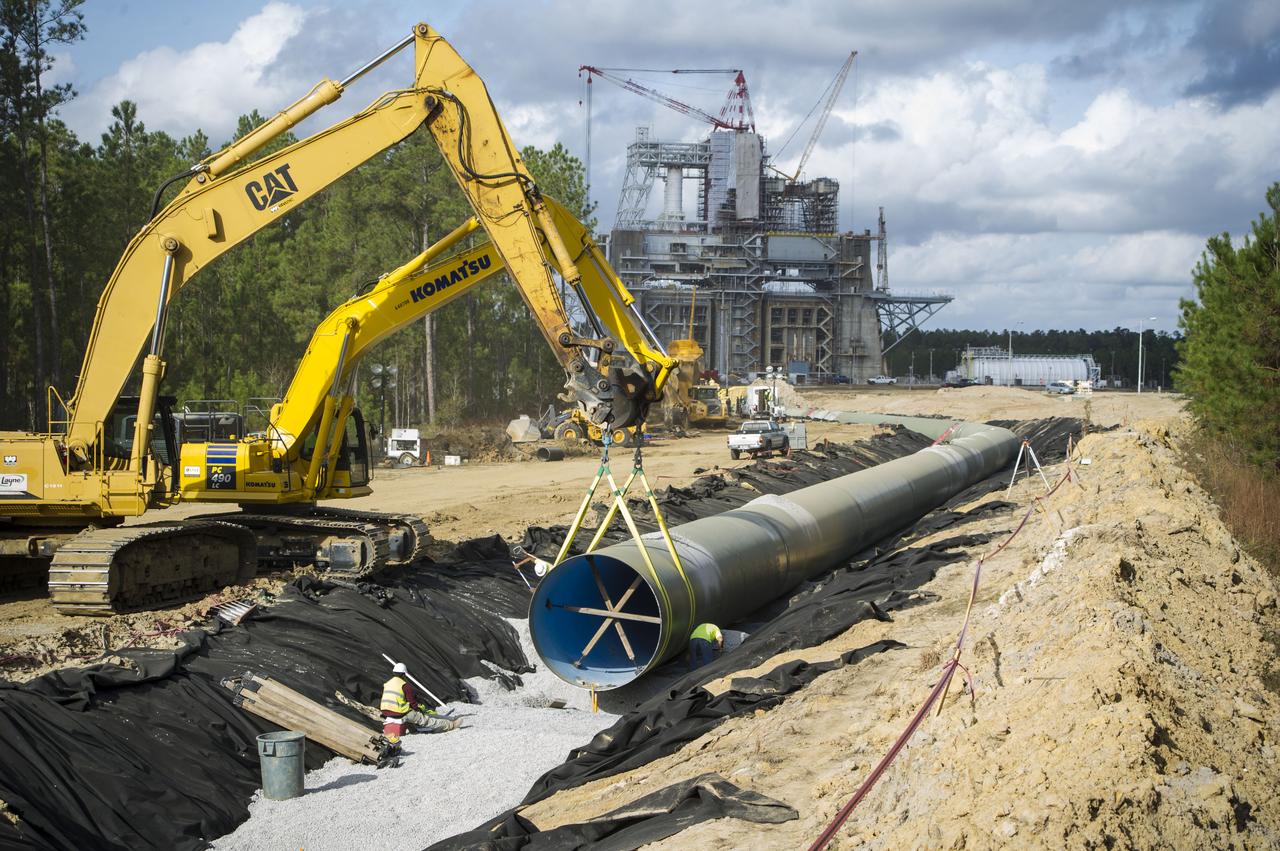
Water piping is installed near the Thad Cochran Test Stand (B-1/B-2) at NASA’s Stennis Space Center in December 2014. The project to replace and upgrade the center’s high pressure industrial water system was a key milestone in preparations to test the SLS (Space Launch System) core stage ahead of the successful Artemis I launch.
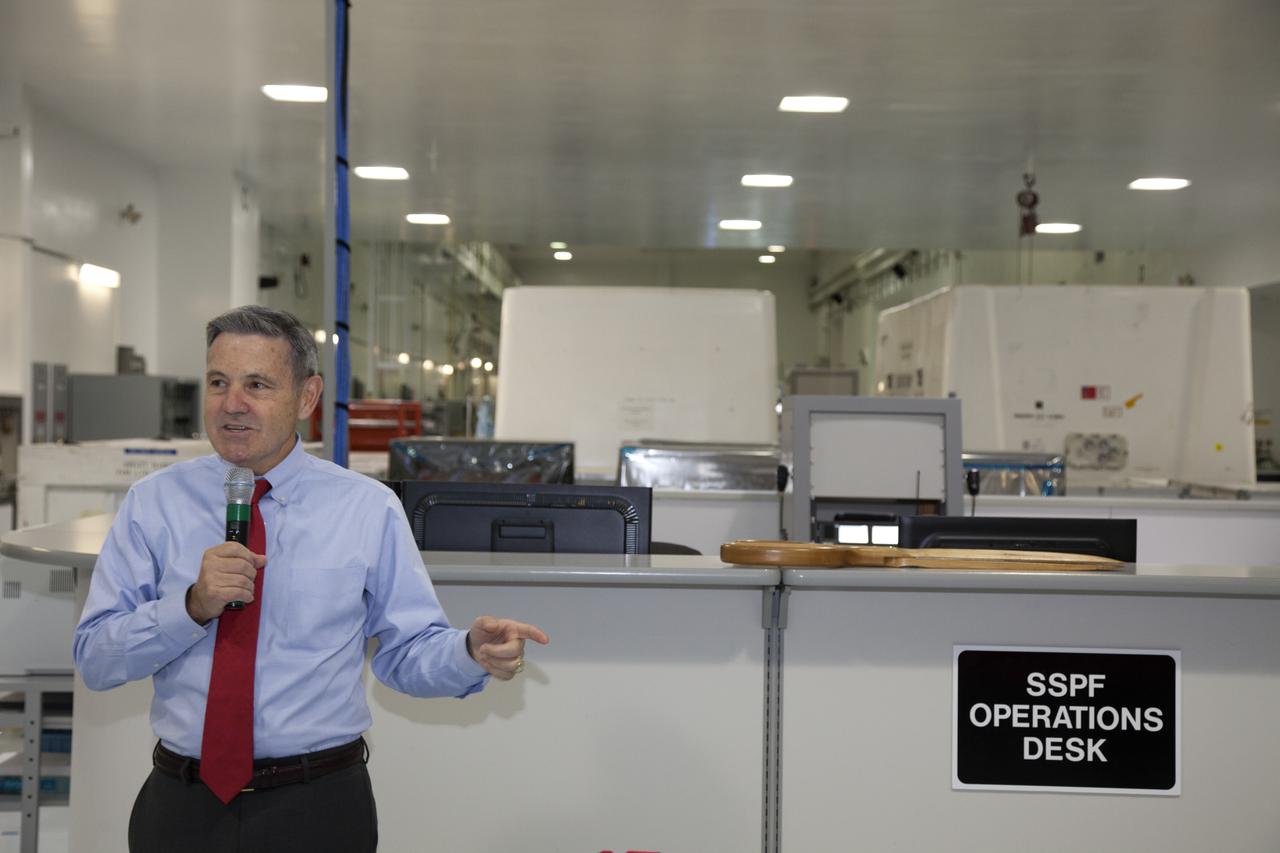
Kennedy Space Center Director Bob Cabana speaks to guests during a ribbon cutting ceremony in the high bay of the Space Station Processing Facility at the Florida spaceport. The event celebrated completion of facility modifications to improve processing and free up zones tailored to a variety of needs supporting a robust assortment of space-bound hardware including NASA programs and commercial space companies.
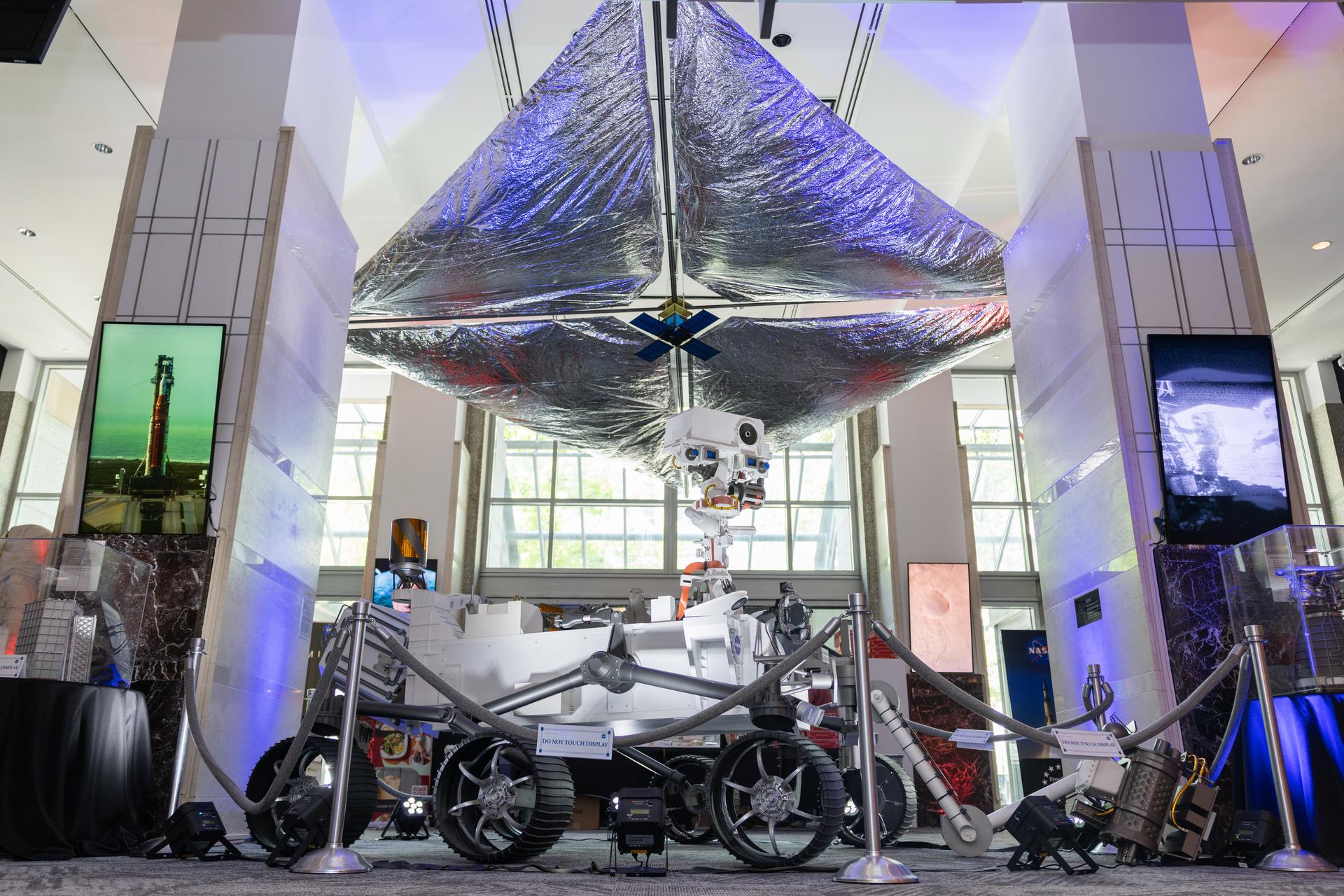
NASA Headquarters redesign featuring artifacts, interactive exhibits, replica mars rover, and donut shop at NASA Headquarters in Washington, DC. Photo Credit: (NASA/Tiffany Coutris)
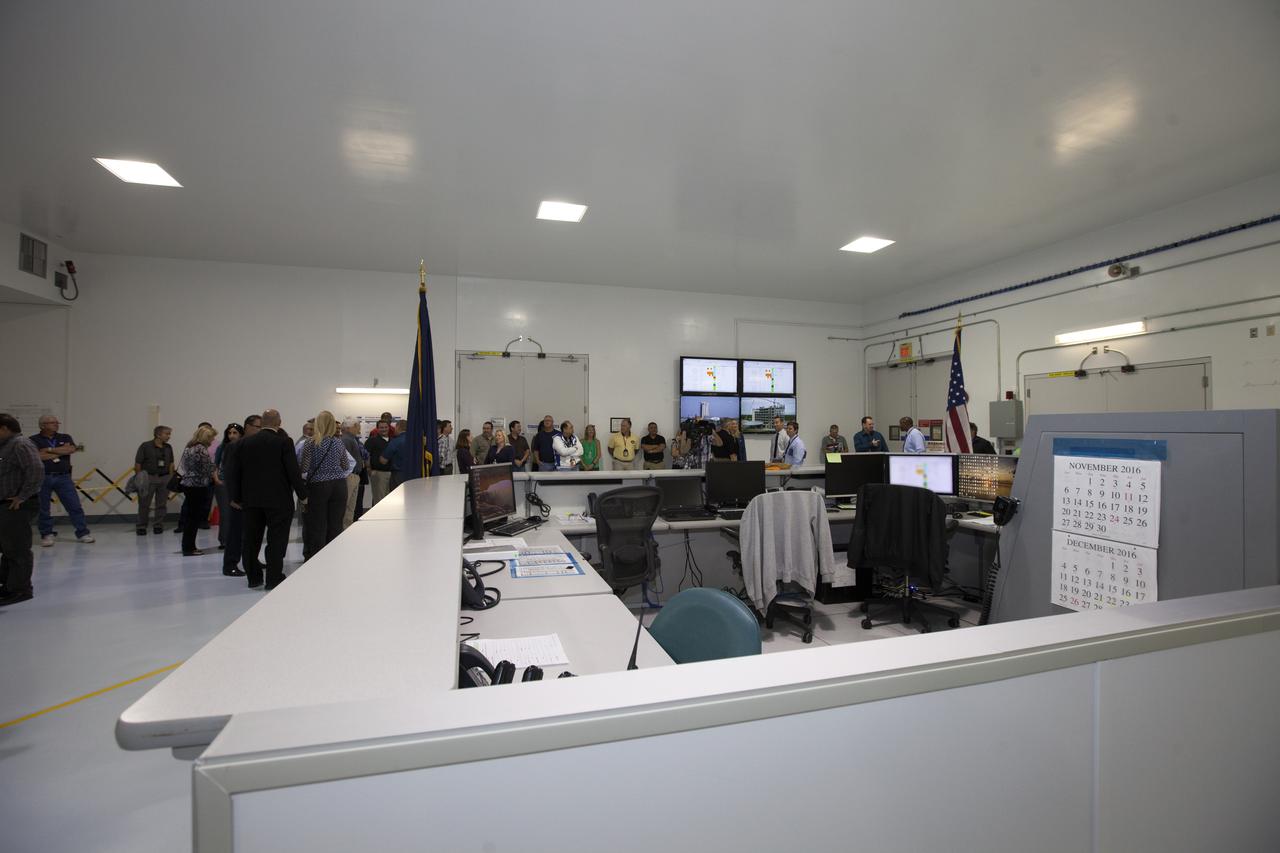
A crowd gathers for a ribbon cutting ceremony in the high bay of the Space Station Processing Facility at NASA's Kennedy Space Center in Florida. The event celebrated completion of facility modifications to improve processing and free up zones tailored to a variety of needs supporting a robust assortment of space-bound hardware including NASA programs and commercial space companies.
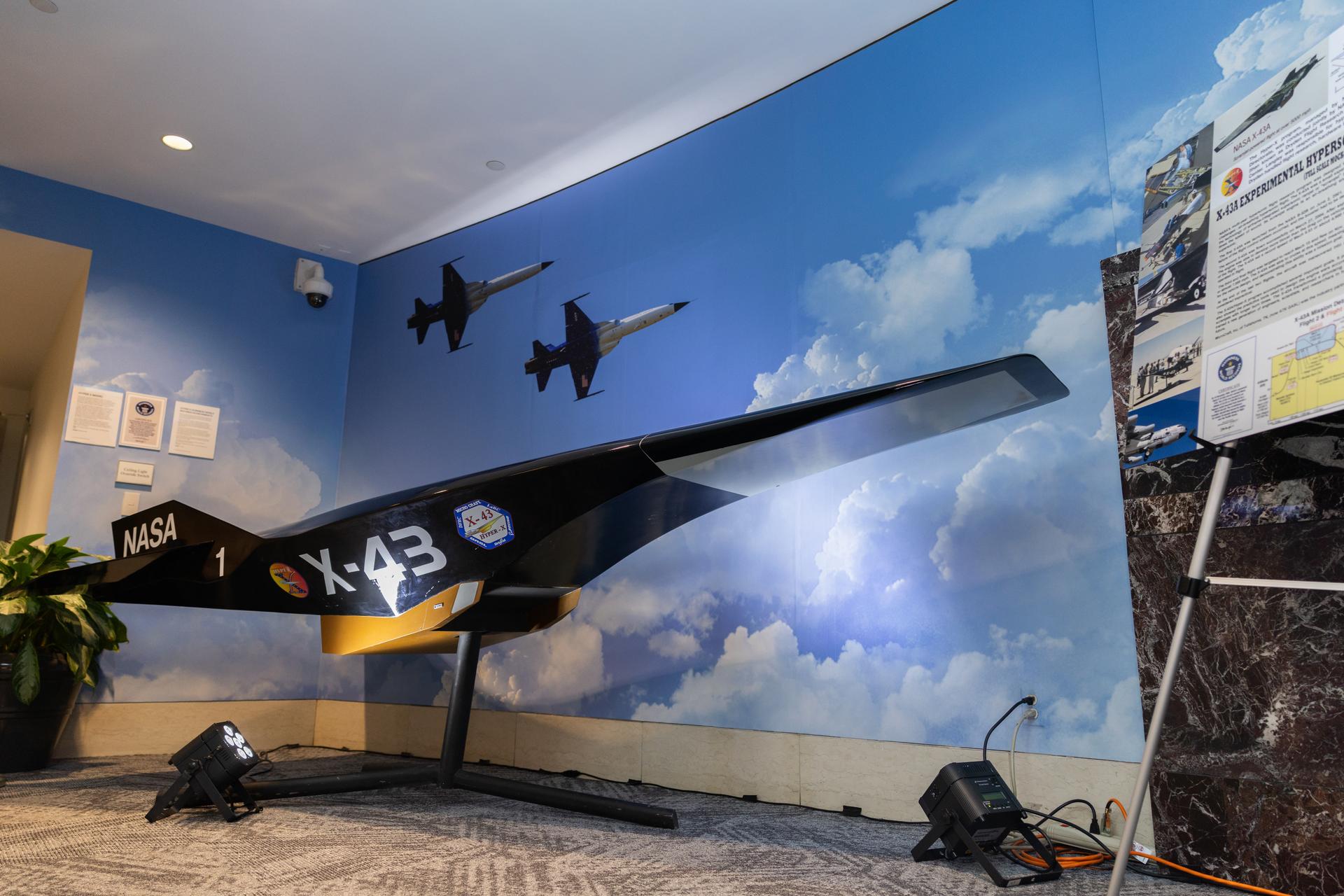
NASA Headquarters redesign featuring artifacts, interactive exhibits, replica mars rover, and donut shop at NASA Headquarters in Washington, DC. Photo Credit: (NASA/Tiffany Coutris)
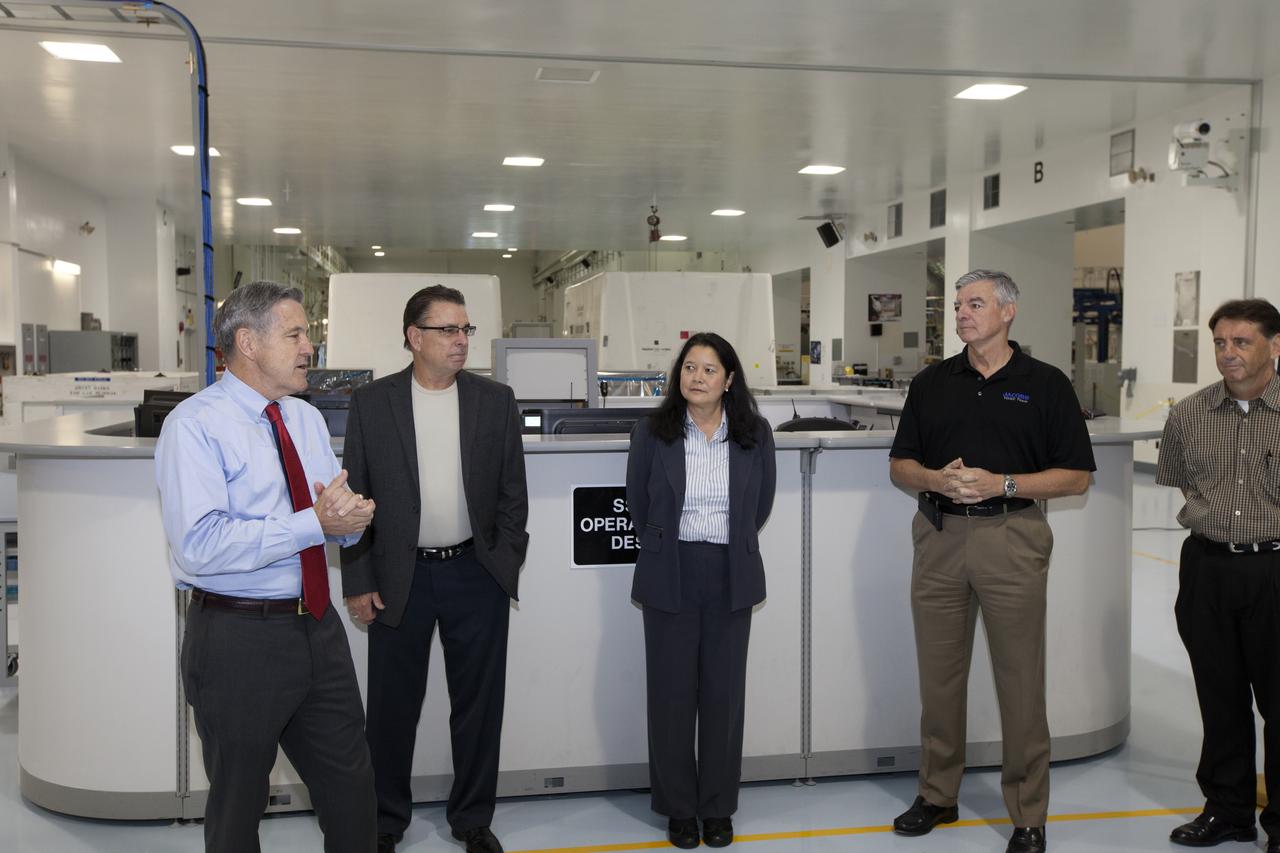
Kennedy Space Center Director Bob Cabana, far left, speaks to guests during a ribbon cutting ceremony in the high bay of the Space Station Processing Facility at the Florida spaceport. Joining Cabana, from the left, are Bill Dowdell, Kennedy's International Space Station technical director, Josephine Burnett, director of Exploration Research and Technology, Andy Allen, Jacobs vice president and general manager and Test and Operations Support Contract program manager, and Jeff McAlear, Jacobs director of Processing Services. The event celebrated completion of facility modifications to improve processing and free up zones tailored to a variety of needs supporting a robust assortment of space-bound hardware including NASA programs and commercial space companies.
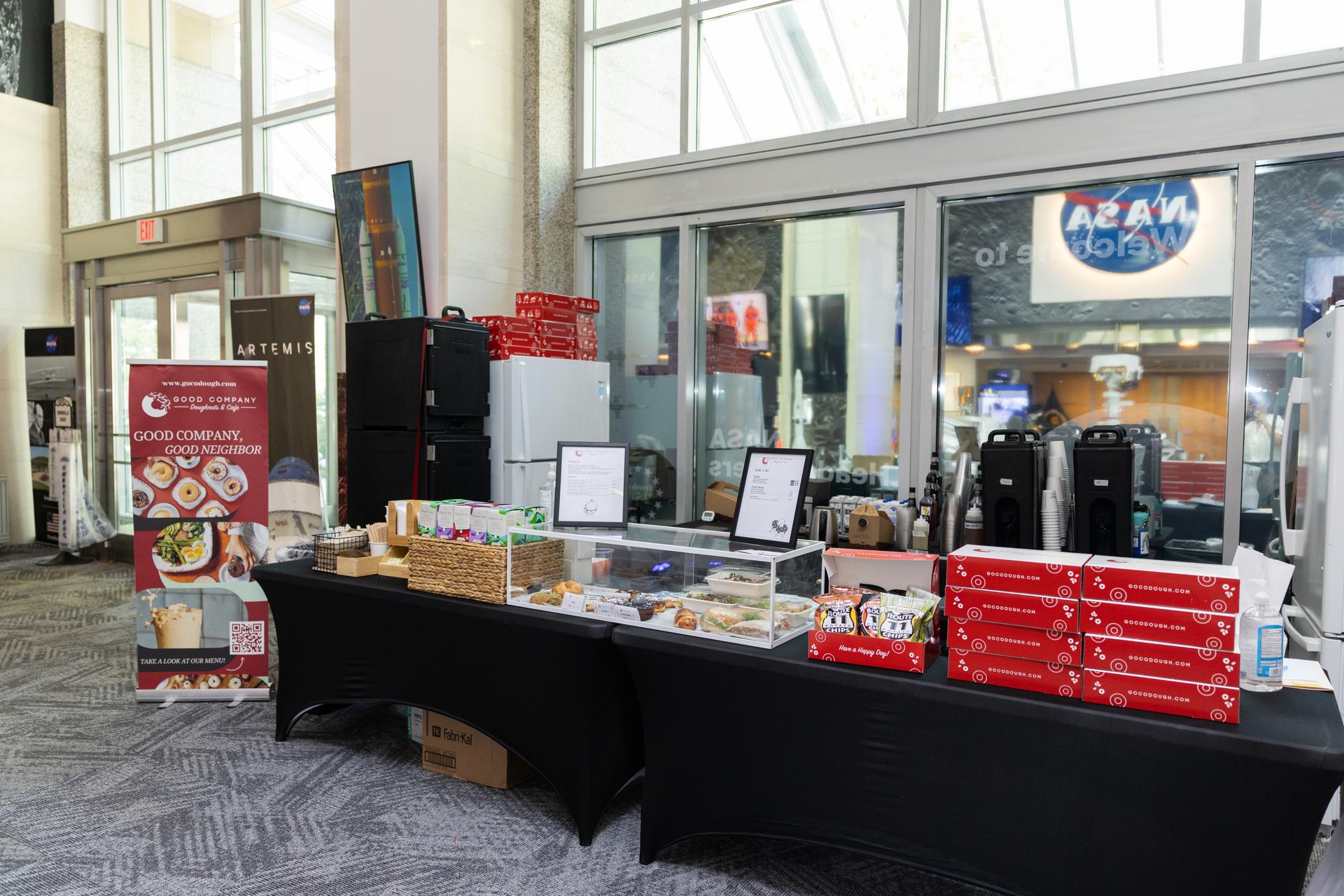
NASA Headquarters redesign featuring artifacts, interactive exhibits, replica mars rover, and donut shop at NASA Headquarters in Washington, DC. Photo Credit: (NASA/Tiffany Coutris)
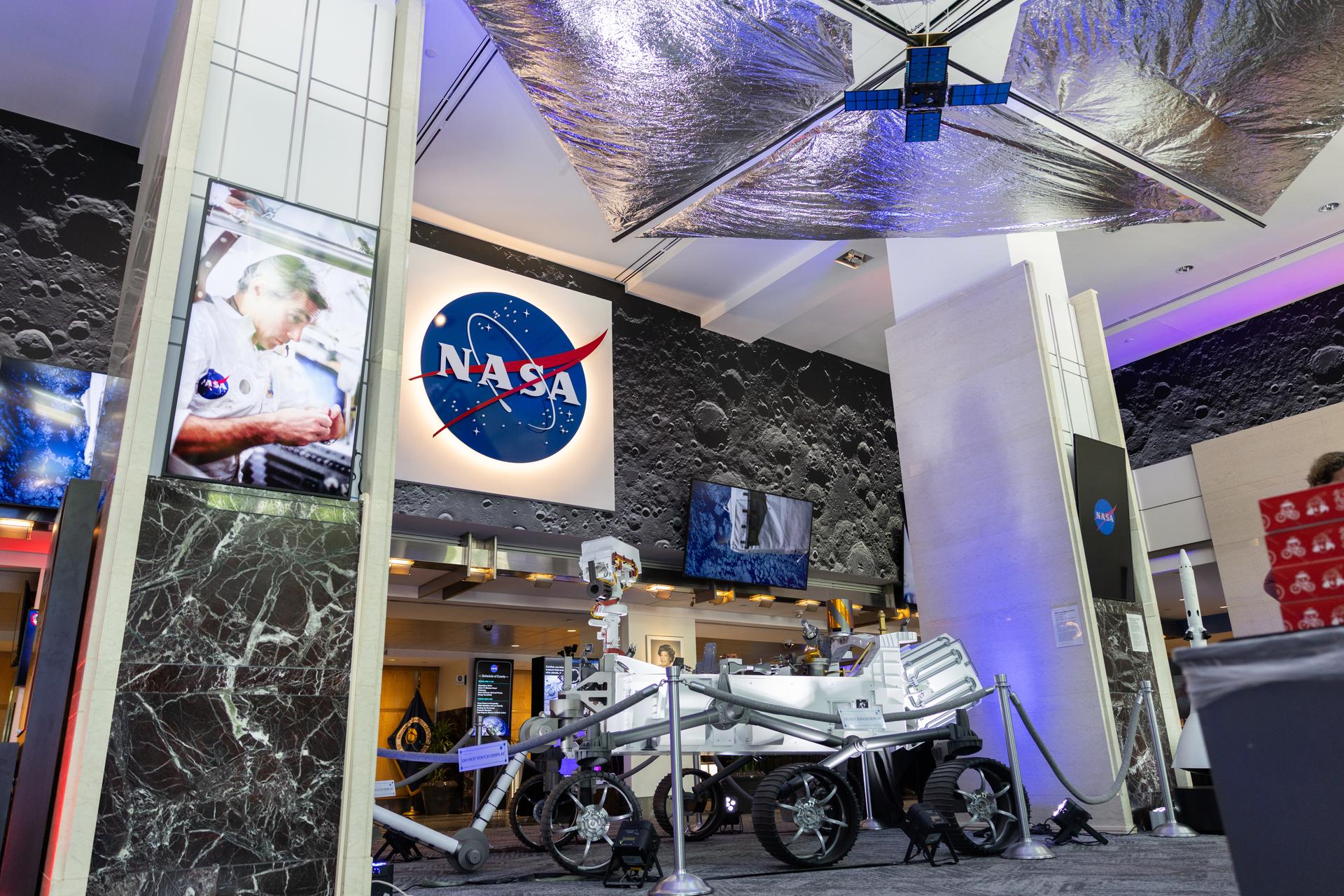
NASA Headquarters redesign featuring artifacts, interactive exhibits, replica mars rover, and donut shop at NASA Headquarters in Washington, DC. Photo Credit: (NASA/Tiffany Coutris)
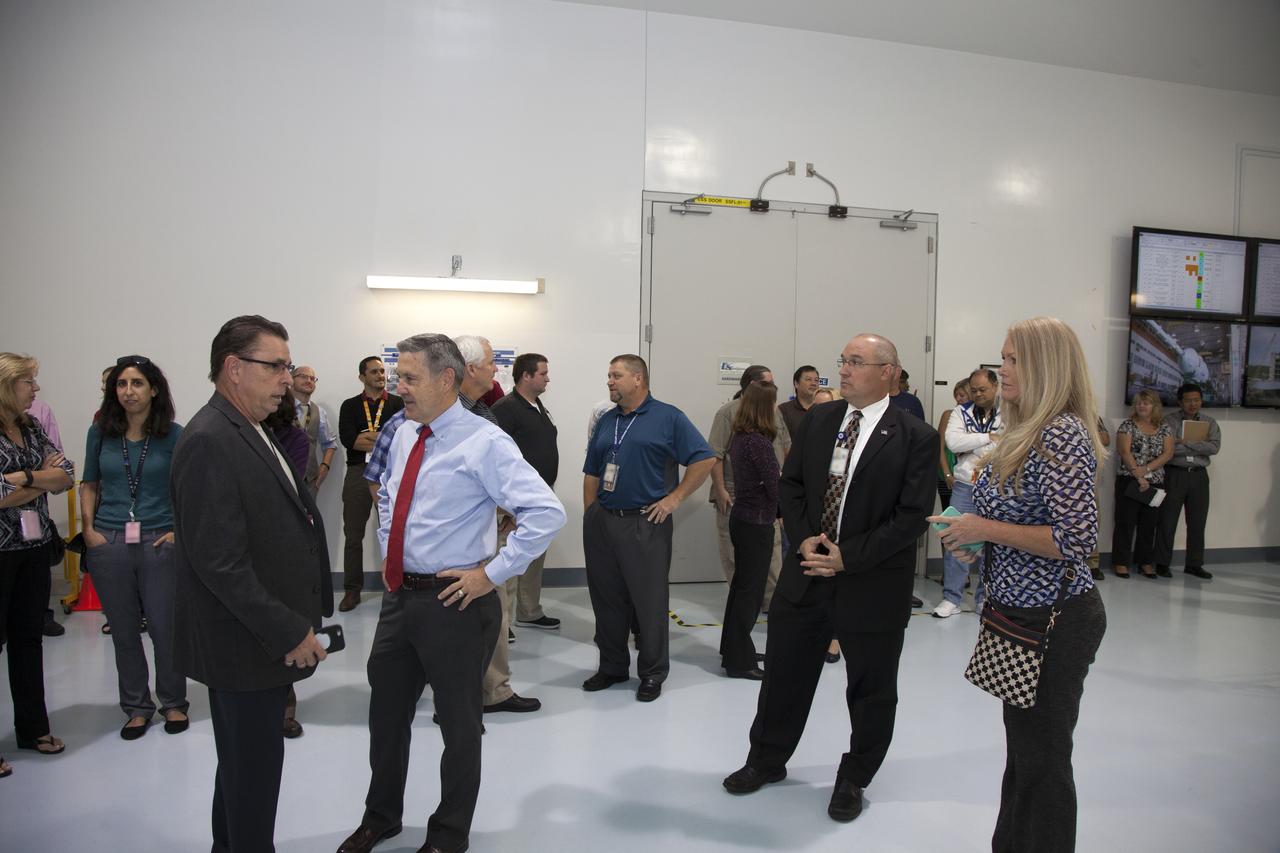
Kennedy Space Center Director Bob Cabana, center, talks with Bill Dowdell, Kennedy's International Space Station technical director, during a ribbon cutting ceremony in the high bay of the Space Station Processing Facility at the Florida spaceport. The event celebrated completion of facility modifications to improve processing and free up zones tailored to a variety of needs supporting a robust assortment of space-bound hardware including NASA programs and commercial space companies.
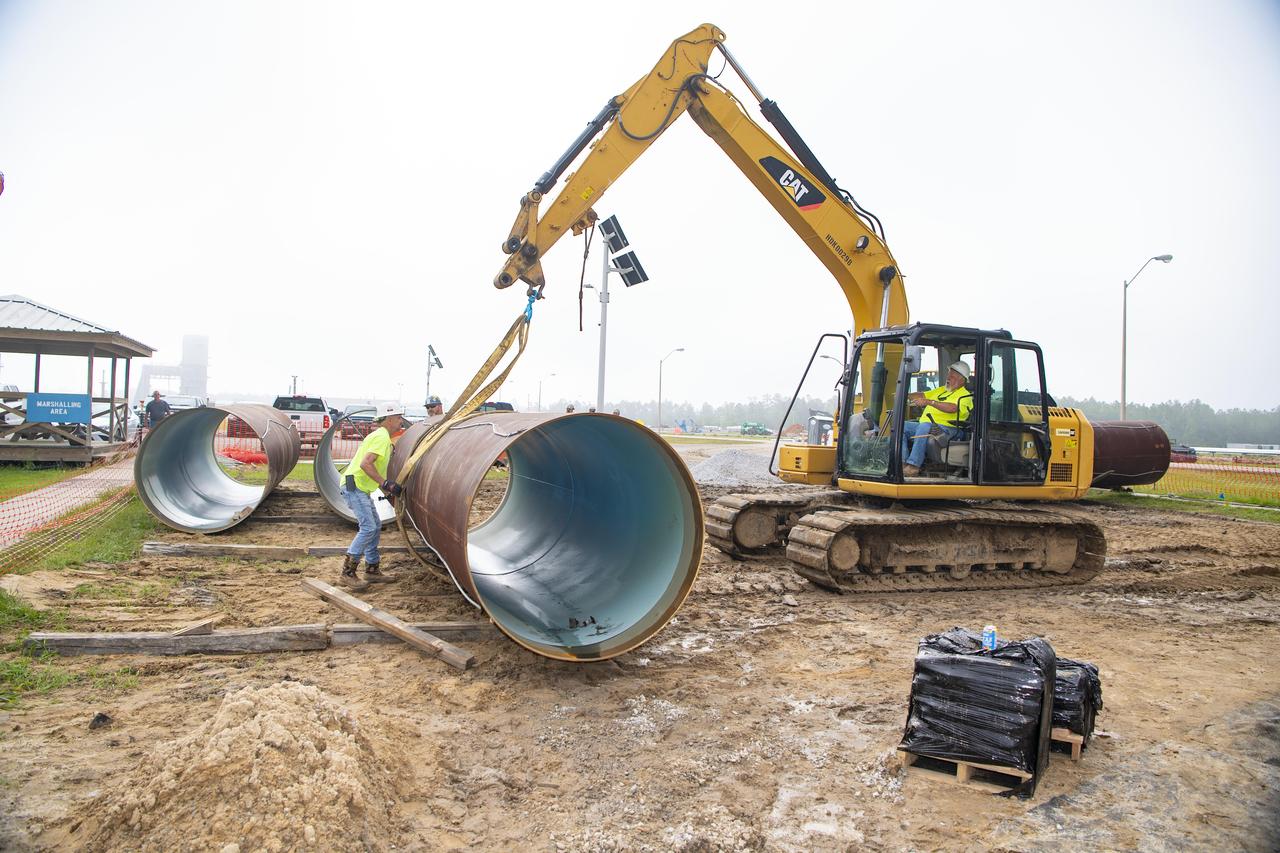
Crews lift a new pipeline liner section near the Fred Haise Test Stand on May 1 in the last phase of updating the original test complex water system at NASA’s Stennis Space Center.
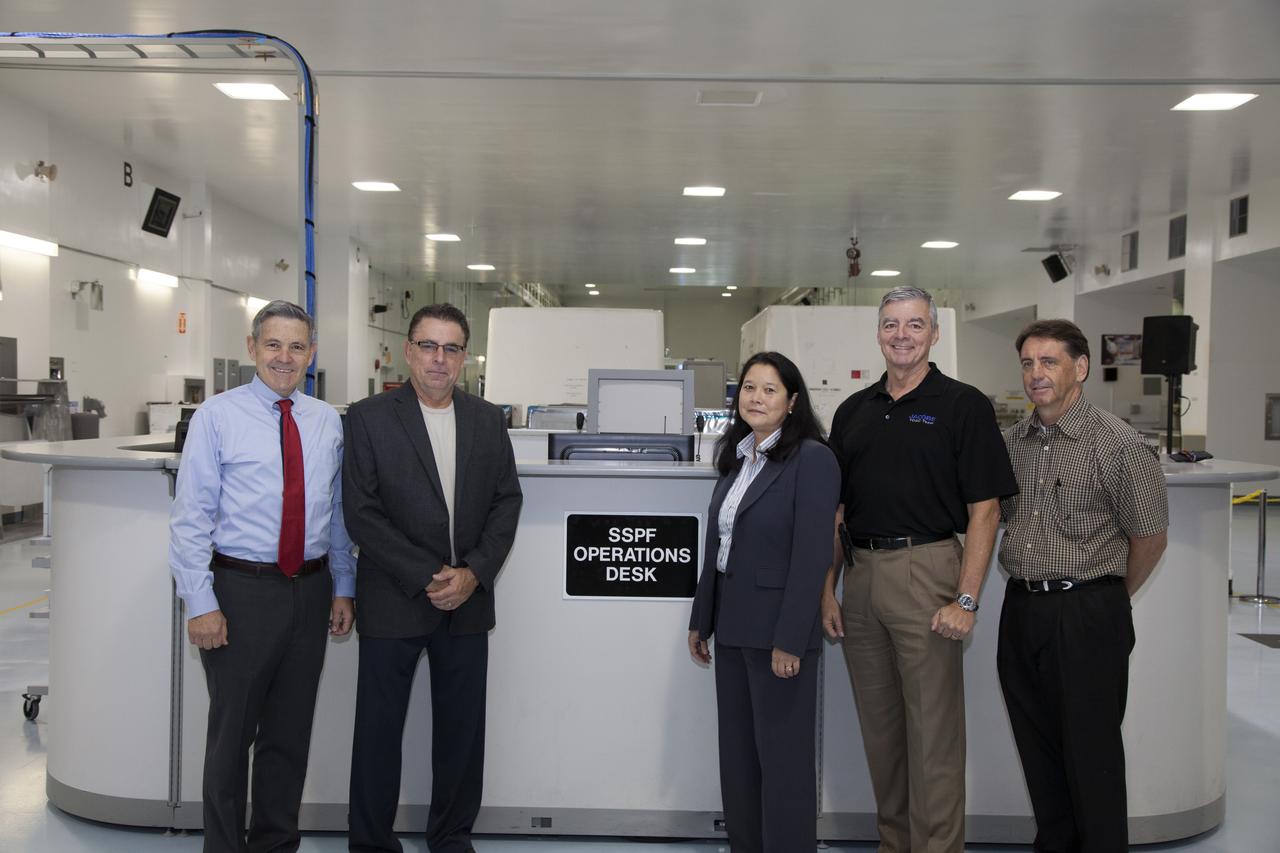
During a ribbon cutting ceremony in the high bay of the Space Station Processing Facility at NASA's Kennedy Space Center in Florida, center director Bob Cabana, far left, is joined by Bill Dowdell, Kennedy's International Space Station technical director, Josephine Burnett, director of Exploration Research and Technology, Andy Allen, Jacobs vice president and general manager and Test and Operations Support Contract program manager, and Jeff McAlear, Jacobs director of Processing Services. The event celebrated completion of facility modifications to improve processing and free up zones tailored to a variety of needs supporting a robust assortment of space-bound hardware including NASA programs and commercial space companies.
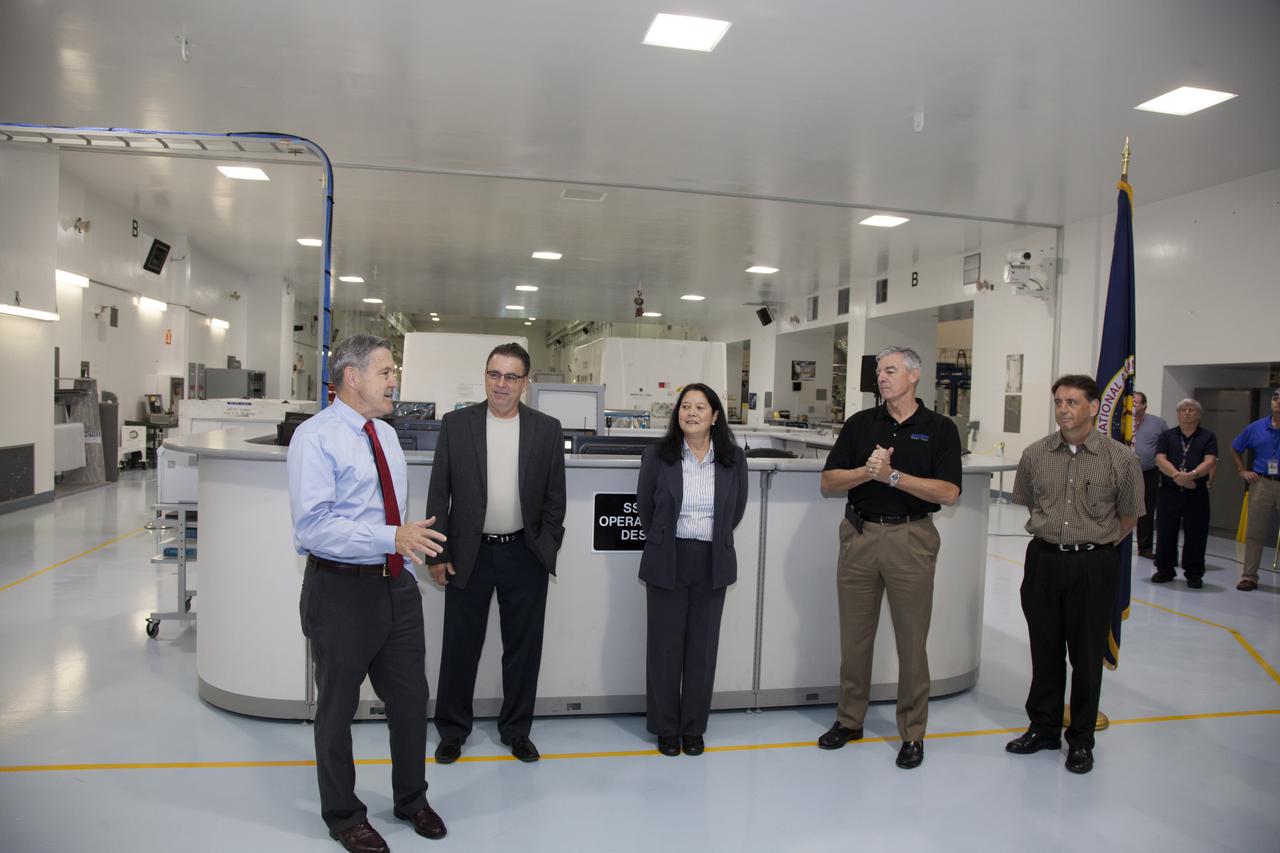
During a ribbon cutting ceremony in the high bay of the Space Station Processing Facility at NASA's Kennedy Space Center in Florida, center director Bob Cabana, far left, is joined by Bill Dowdell, Kennedy's International Space Station technical director, Josephine Burnett, director of Exploration Research and Technology, Andy Allen, Jacobs vice president and general manager and Test and Operations Support Contract program manager, and Jeff McAlear, Jacobs director of Processing Services. The event celebrated completion of facility modifications to improve processing and free up zones tailored to a variety of needs supporting a robust assortment of space-bound hardware including NASA programs and commercial space companies.
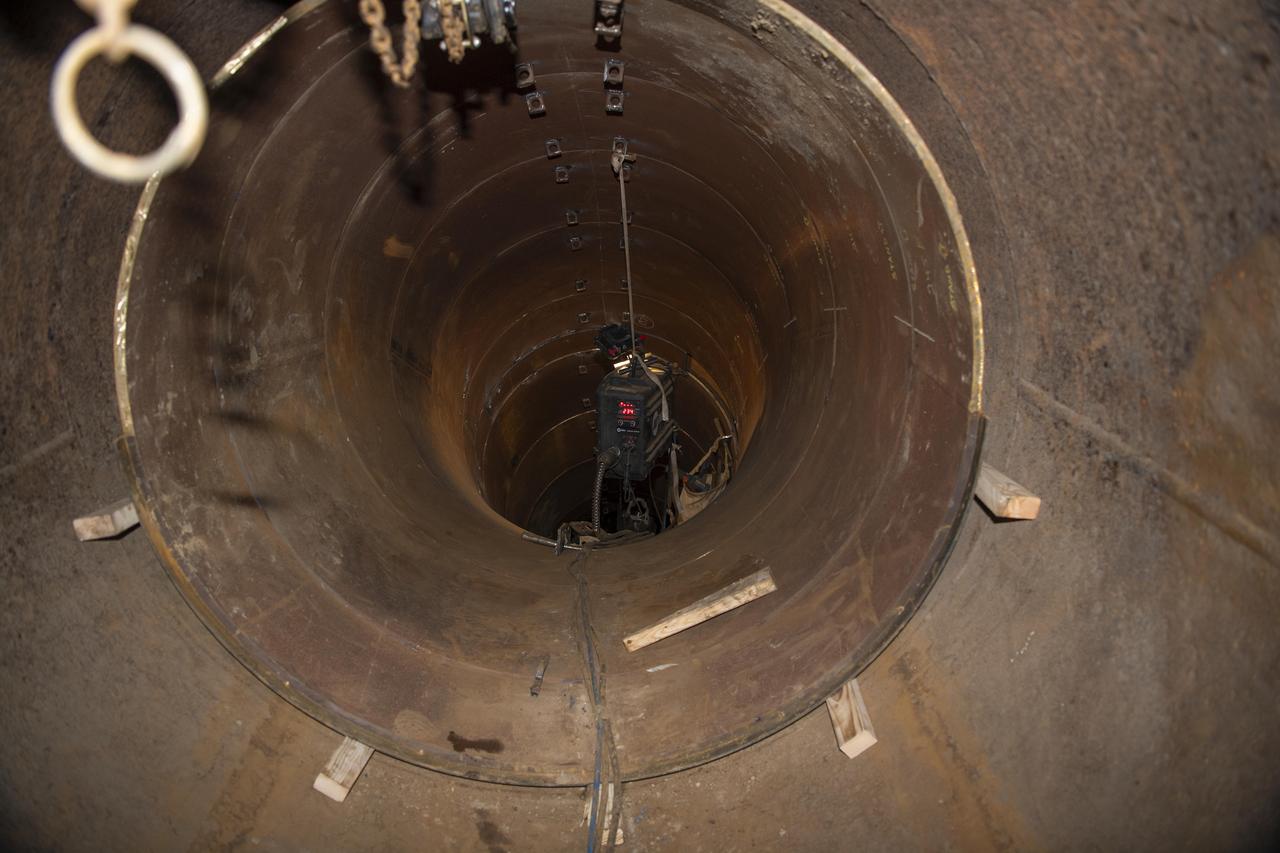
An image shows a new pipeline liner section being place inside the existing carrier pipe near the Fred Haise Test Stand on May 1 in the last phase of updating the original test complex industrial water system at NASA’s Stennis Space Center.
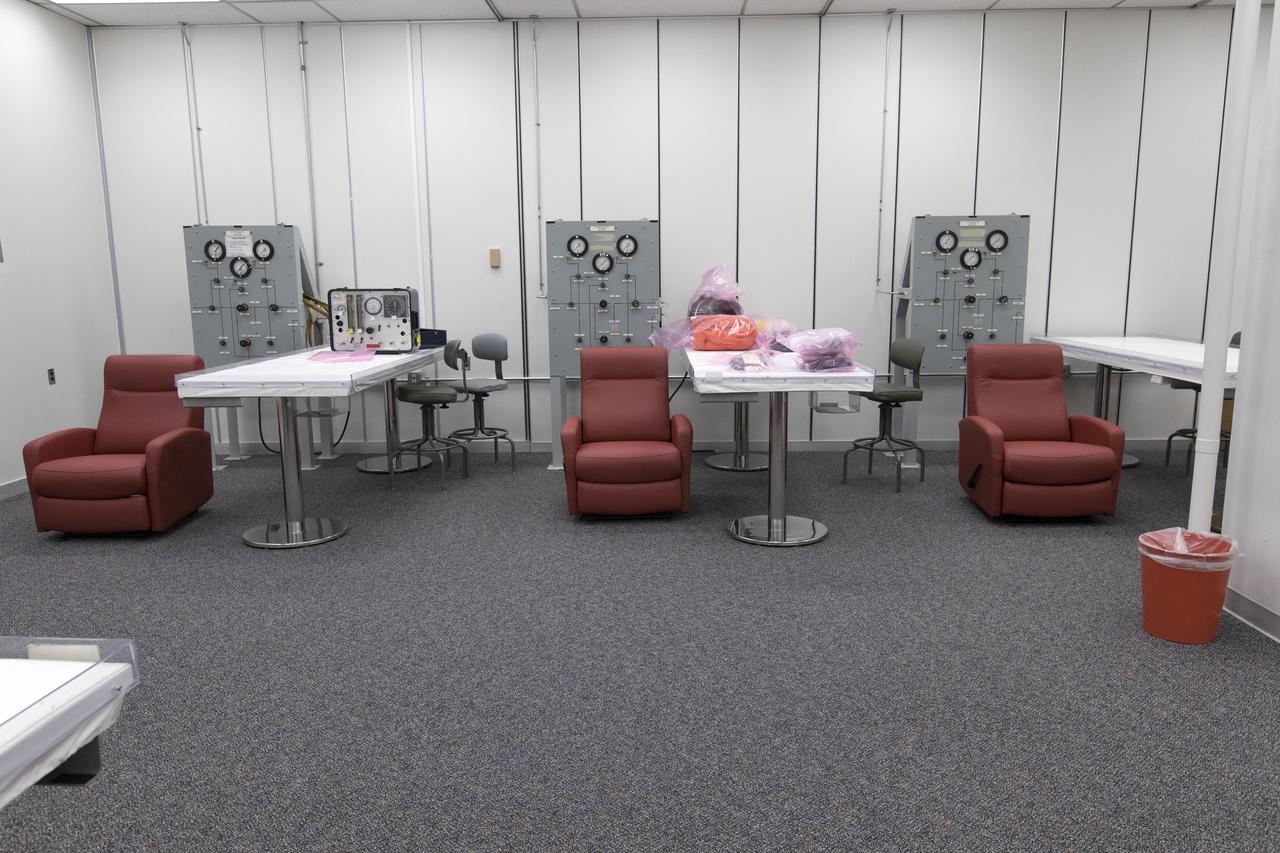
New carpeting, ceiling tiles, appliances and fresh paint are among the improvements that have been made to the astronaut crew quarters, located in the Neil Armstrong Operations and Checkout Building at Kennedy Space Center in Florida. Shown here is the suit room, where astronauts are helped into their pressure suits before leaving the crew quarters for a mission. This room now features three suit containment rooms — one each for Orion, Boeing and SpaceX.
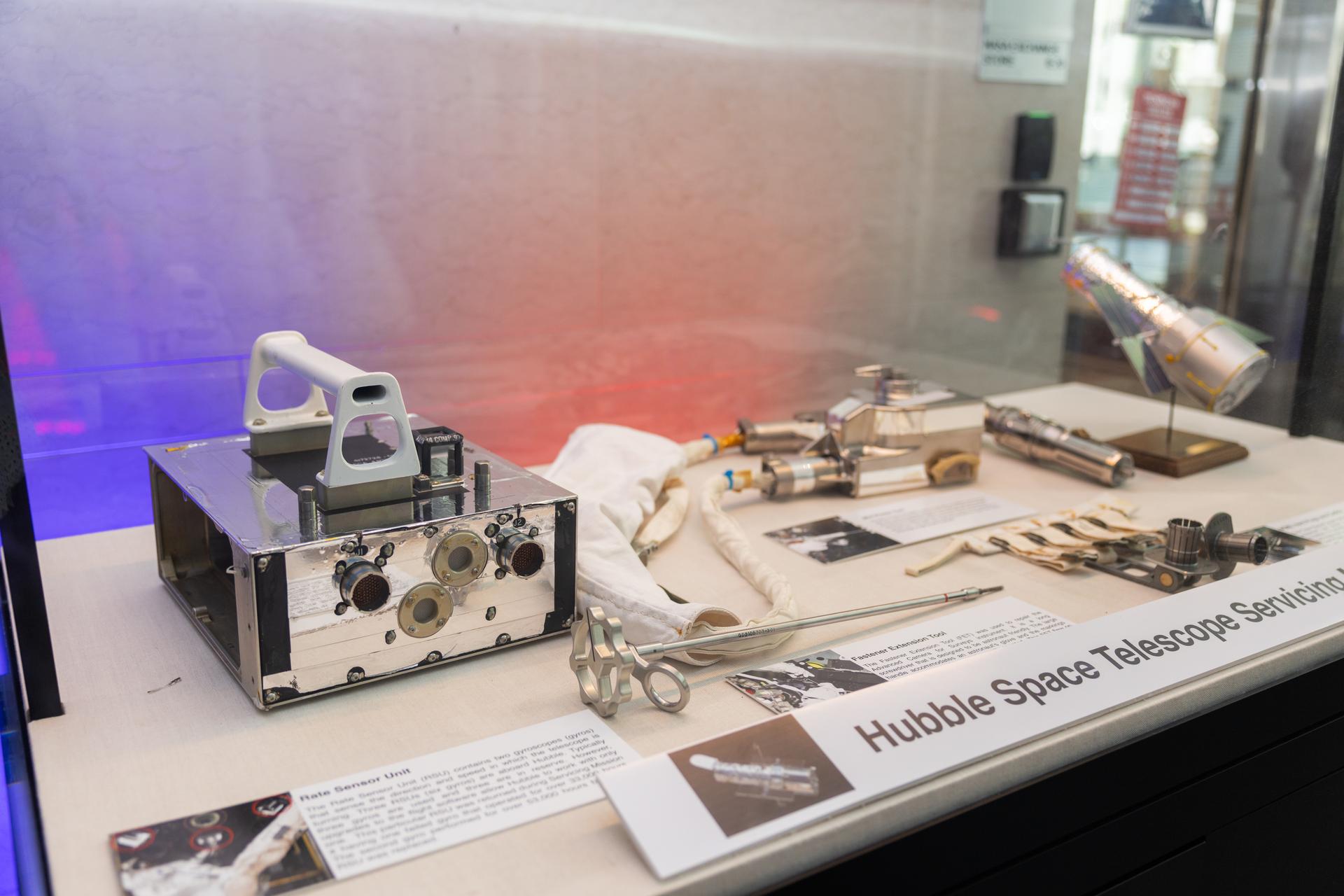
NASA Headquarters redesign featuring artifacts, interactive exhibits, replica mars rover, and donut shop at NASA Headquarters in Washington, DC. Photo Credit: (NASA/Tiffany Coutris)
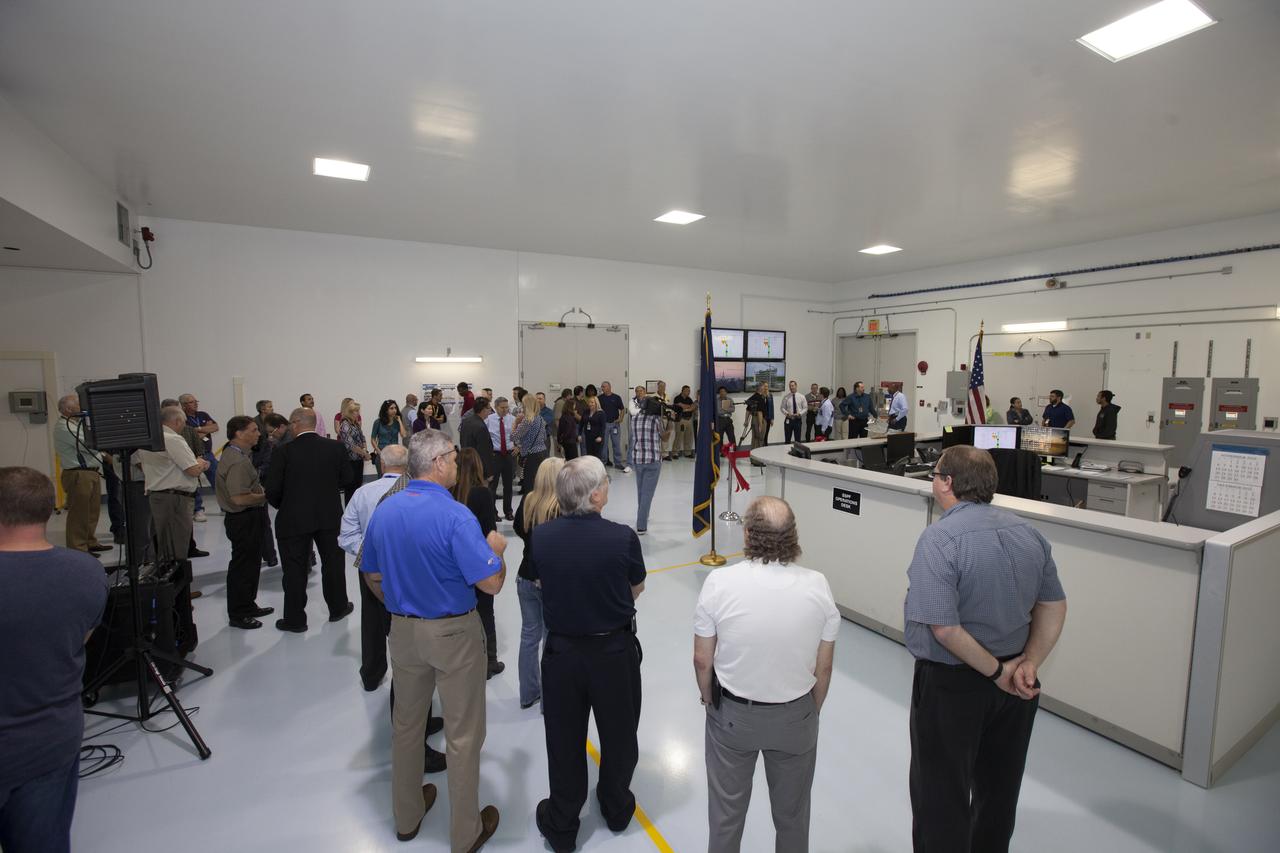
A crowd gathers for a ribbon cutting ceremony in the high bay of the Space Station Processing Facility at NASA's Kennedy Space Center in Florida. The event celebrated completion of facility modifications to improve processing and free up zones tailored to a variety of needs supporting a robust assortment of space-bound hardware including NASA programs and commercial space companies.
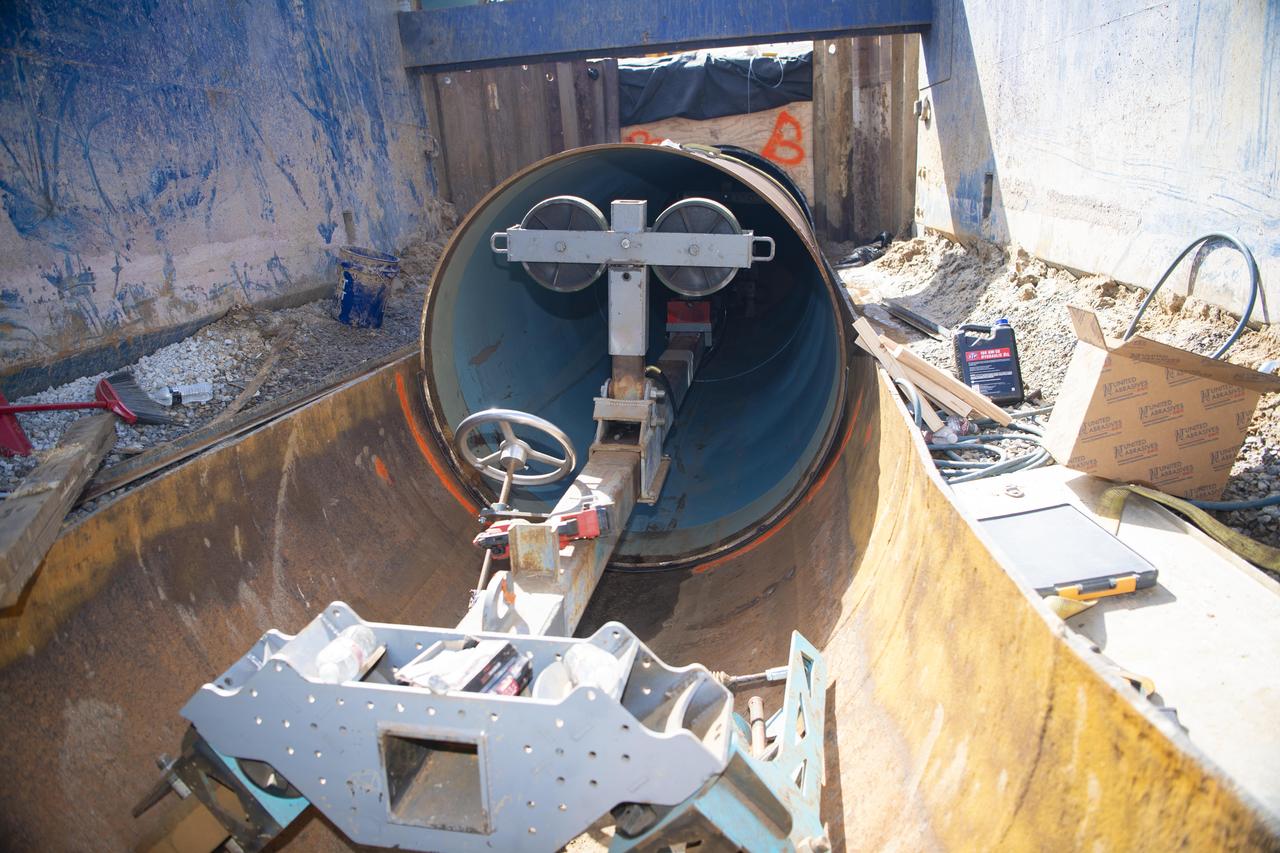
Crews use a special tool to place a new pipeline liner section inside the existing carrier pipe near the Fred Haise Test Stand on May 1 in the last phase of updating the original test complex industrial water system at NASA’s Stennis Space Center.
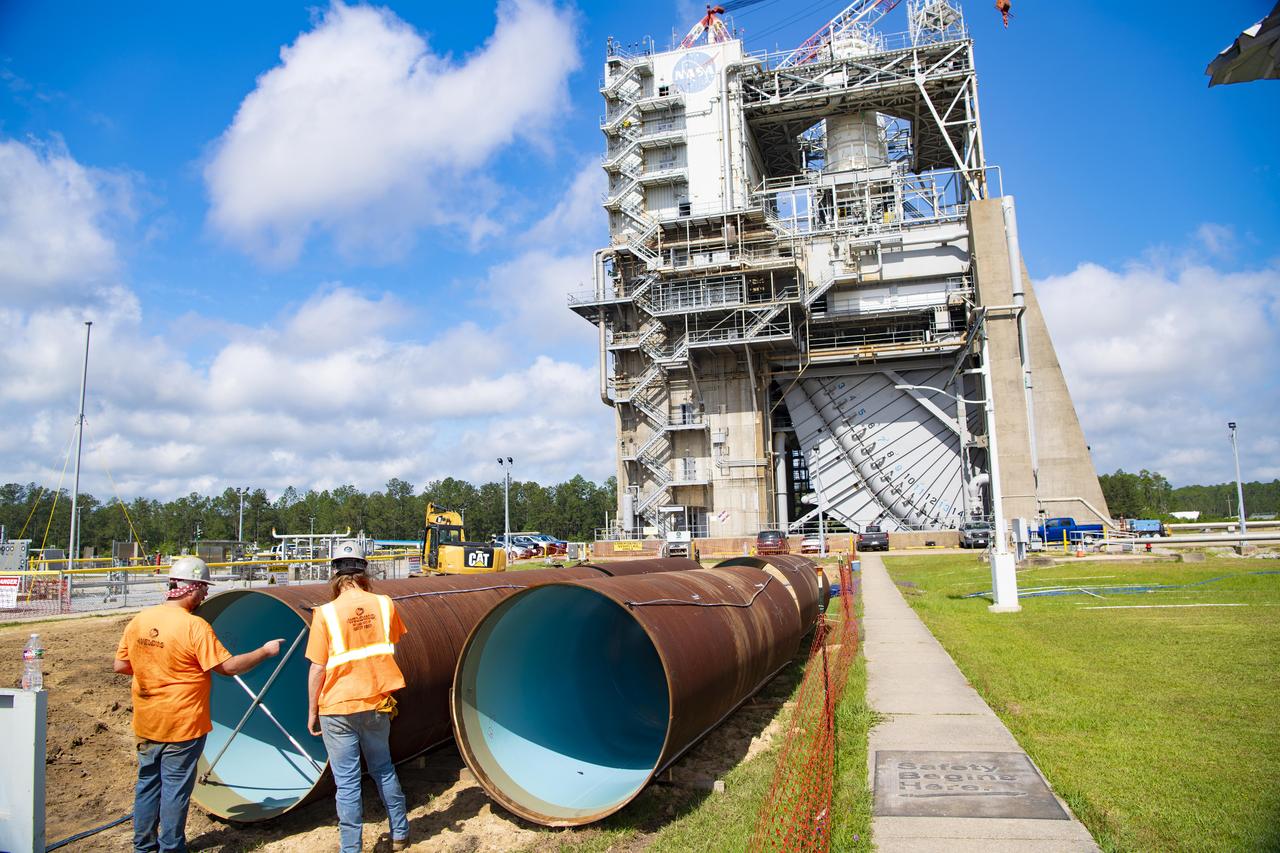
Crews prepare new pipeline liner sections for installation near the Fred Haise Test Stand on May 1 in the last phase of updating the original test complex industrial water system at NASA’s Stennis Space Center.
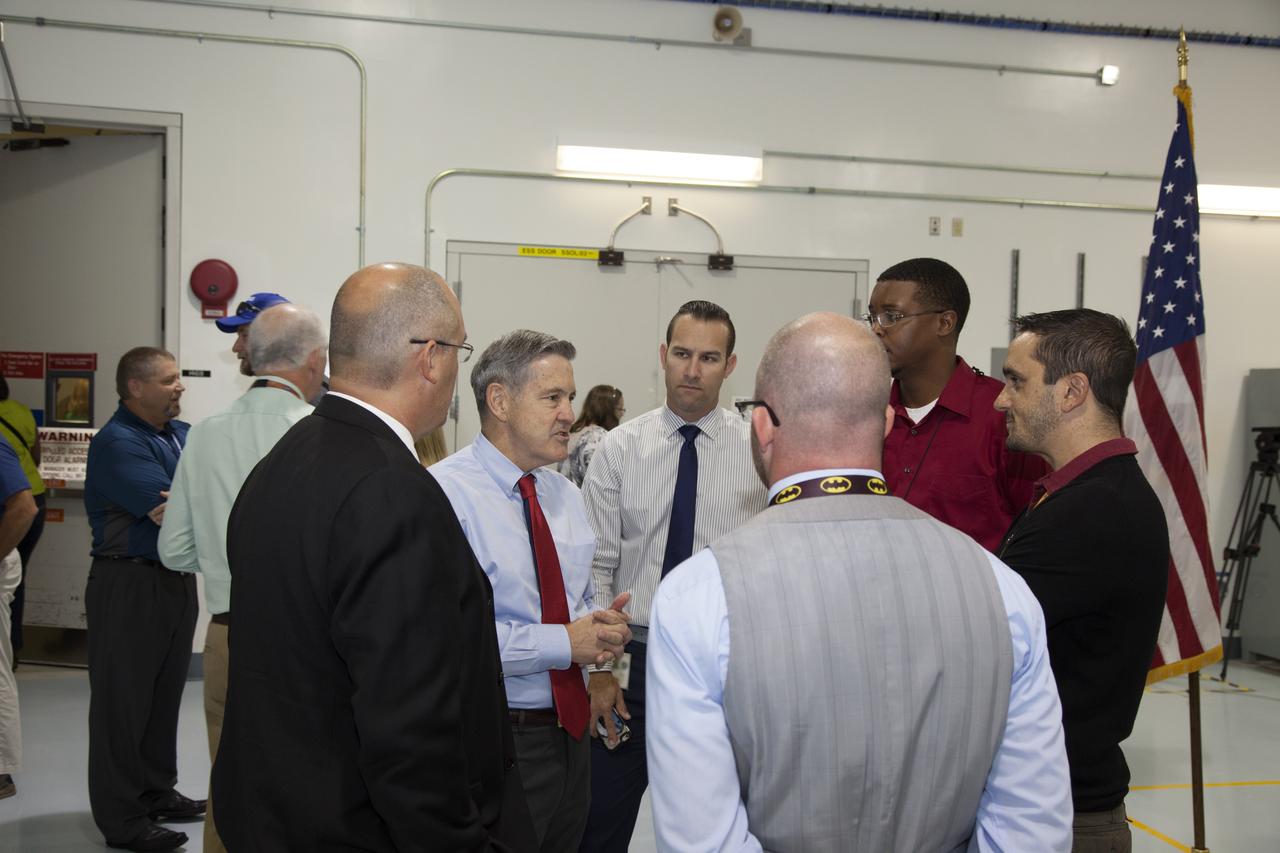
Kennedy Space Center Director Bob Cabana, center, speaks to guests during a ribbon cutting ceremony in the high bay of the Space Station Processing Facility at the Florida Spaceport. The event celebrated completion of facility modifications to improve processing and free up zones tailored to a variety of needs supporting a robust assortment of space-bound hardware including NASA programs and commercial space companies.
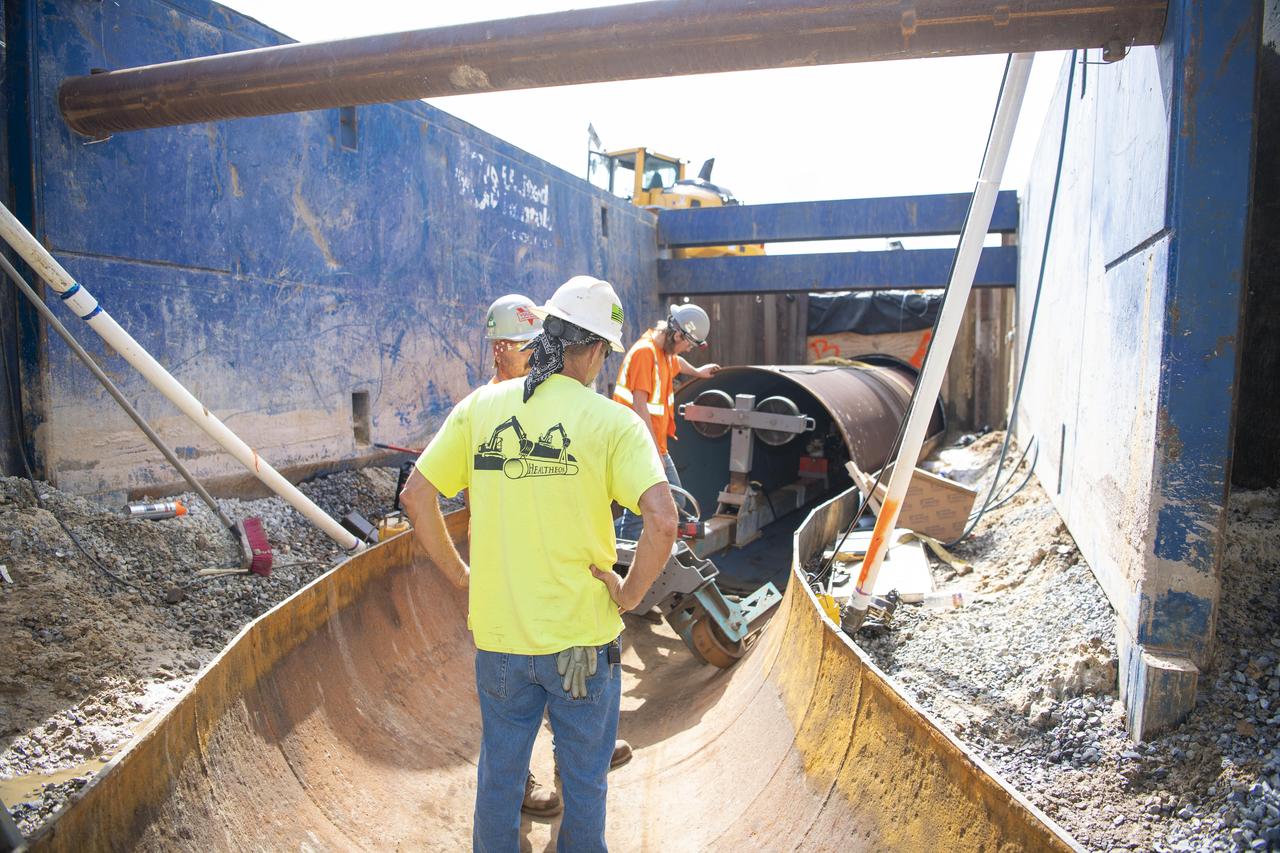
Crews use a special tool to place a new pipeline liner inside the existing carrier pipe near the Fred Haise Test Stand on May 1 in the last phase of updating the original test complex industrial water system at NASA’s Stennis Space Center.
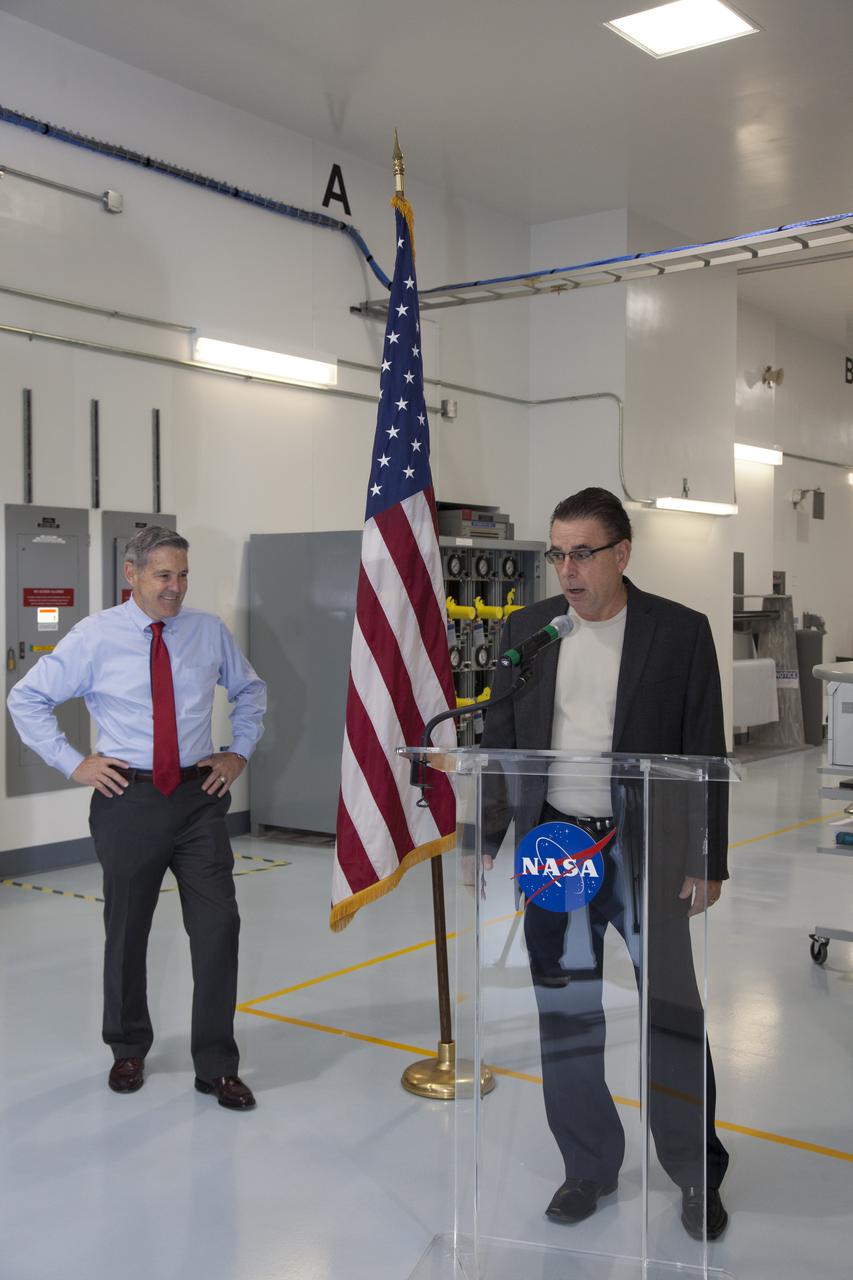
Bill Dowdell, International Space Station technical director, speaks to guests during a ribbon cutting ceremony in the high bay of the Space Station Processing Facility at NASA's Kennedy Space Center in Florida spaceport. Joining him is Kennedy's director, Bob Cabana. The event celebrated completion of facility modifications to improve processing and free up zones tailored to a variety of needs supporting a robust assortment of space-bound hardware including NASA programs and commercial space companies.
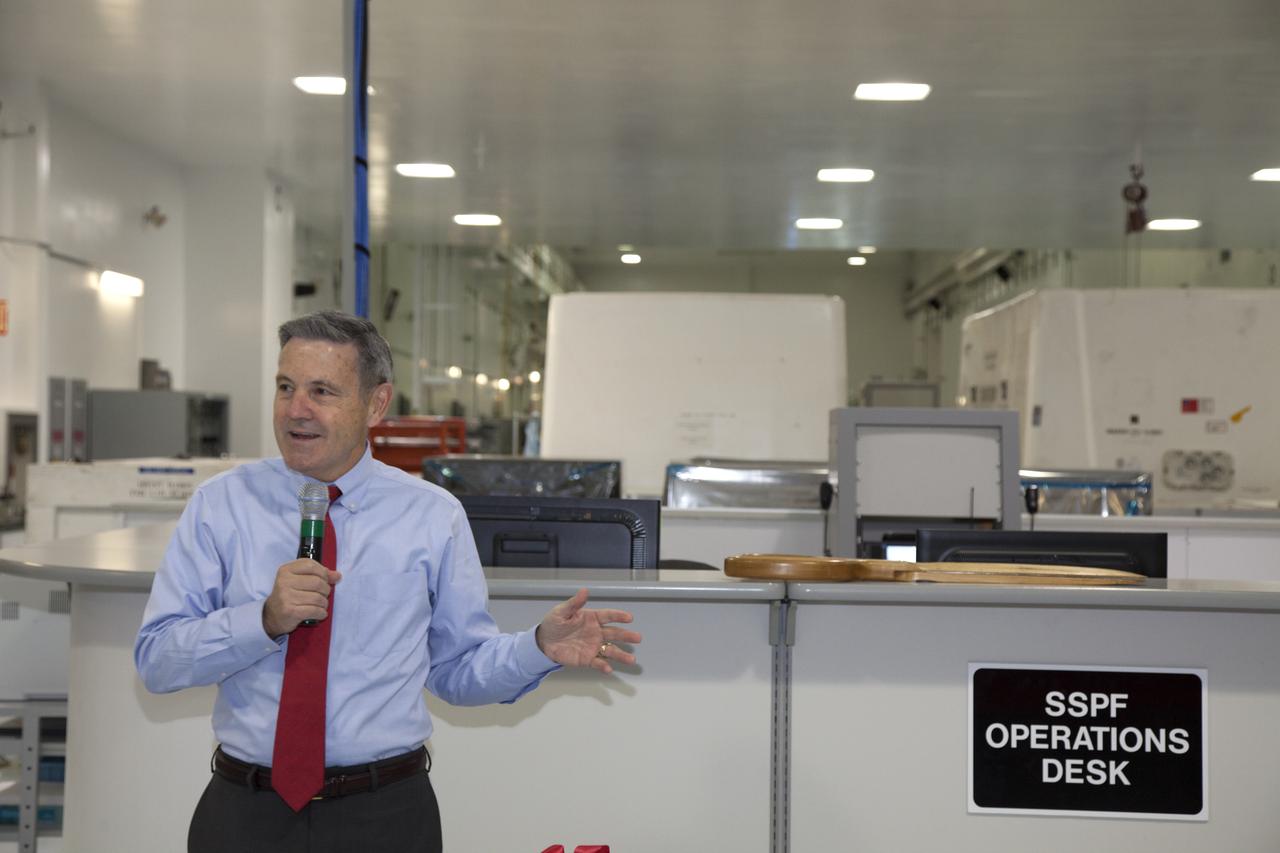
Kennedy Space Center Director Bob Cabana speaks to guests during a ribbon cutting ceremony in the high bay of the Space Station Processing Facility at the Florida spaceport. The event celebrated completion of facility modifications to improve processing and free up zones tailored to a variety of needs supporting a robust assortment of space-bound hardware including NASA programs and commercial space companies.
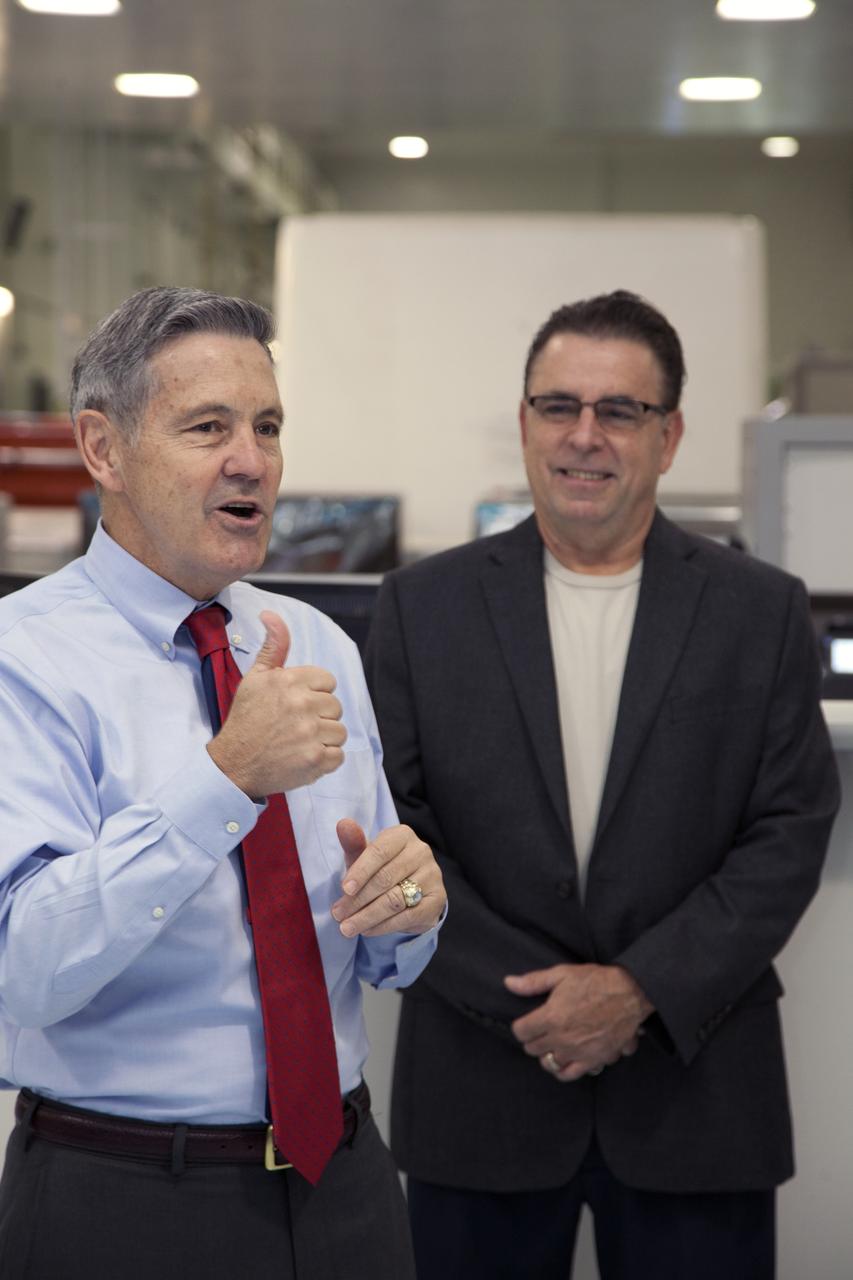
Kennedy Space Center Director Bob Cabana, left, speaks to guests during a ribbon cutting ceremony in the high bay of the Space Station Processing Facility at the Florida Space port. With him is Bill Dowdell, International Space Station technical director. The event celebrated completion of facility modifications to improve processing and free up zones tailored to a variety of needs supporting a robust assortment of space-bound hardware including NASA programs and commercial space companies.
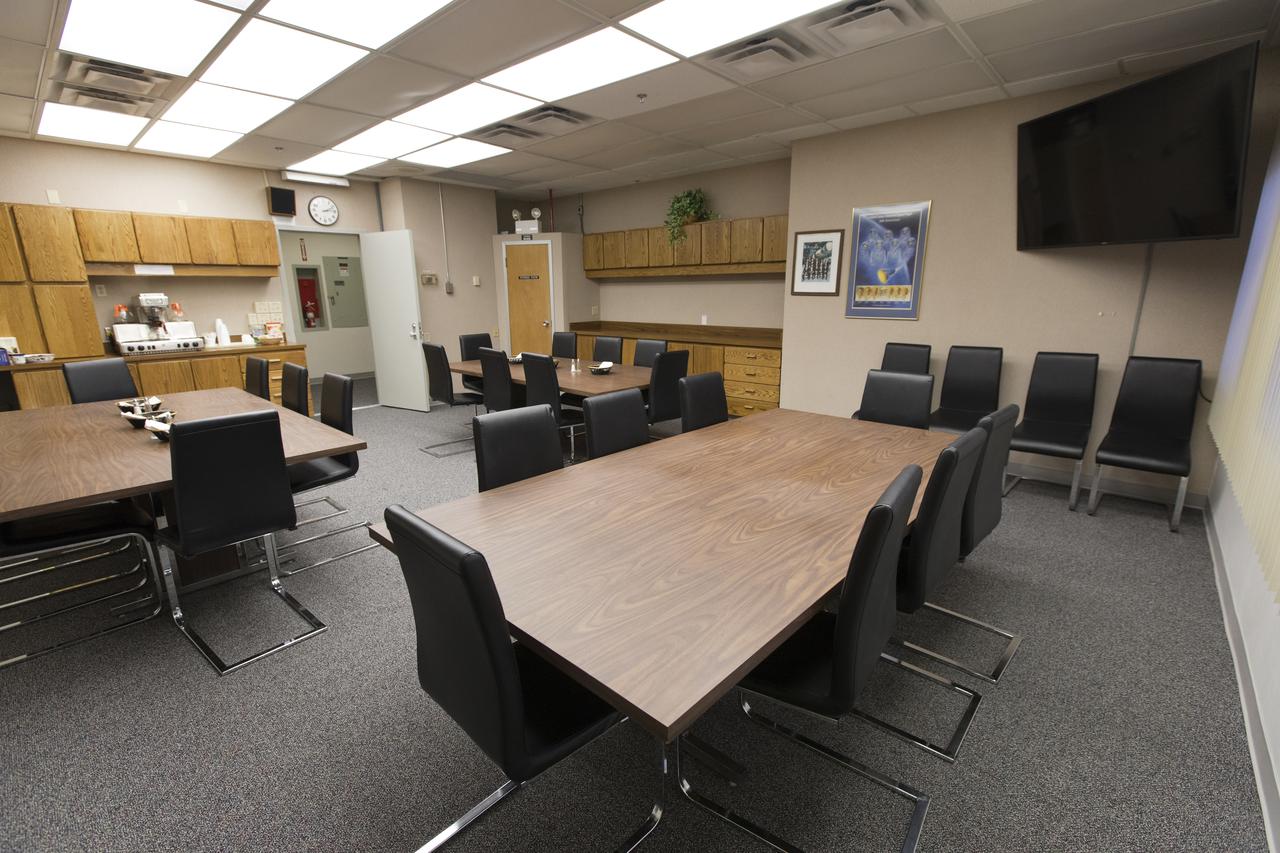
During the Space Shuttle Program, the dining room of the astronaut crew quarters, located in the Neil Armstrong Operations and Checkout Building at Kennedy Space Center in Florida, was a popular place. Located just off of the kitchen, the dining room features lighting that can simulate broad daylight or evening hours. As Kennedy builds toward a return to human spaceflight, the crew quarters are being prepared to once again house mission-bound astronauts.
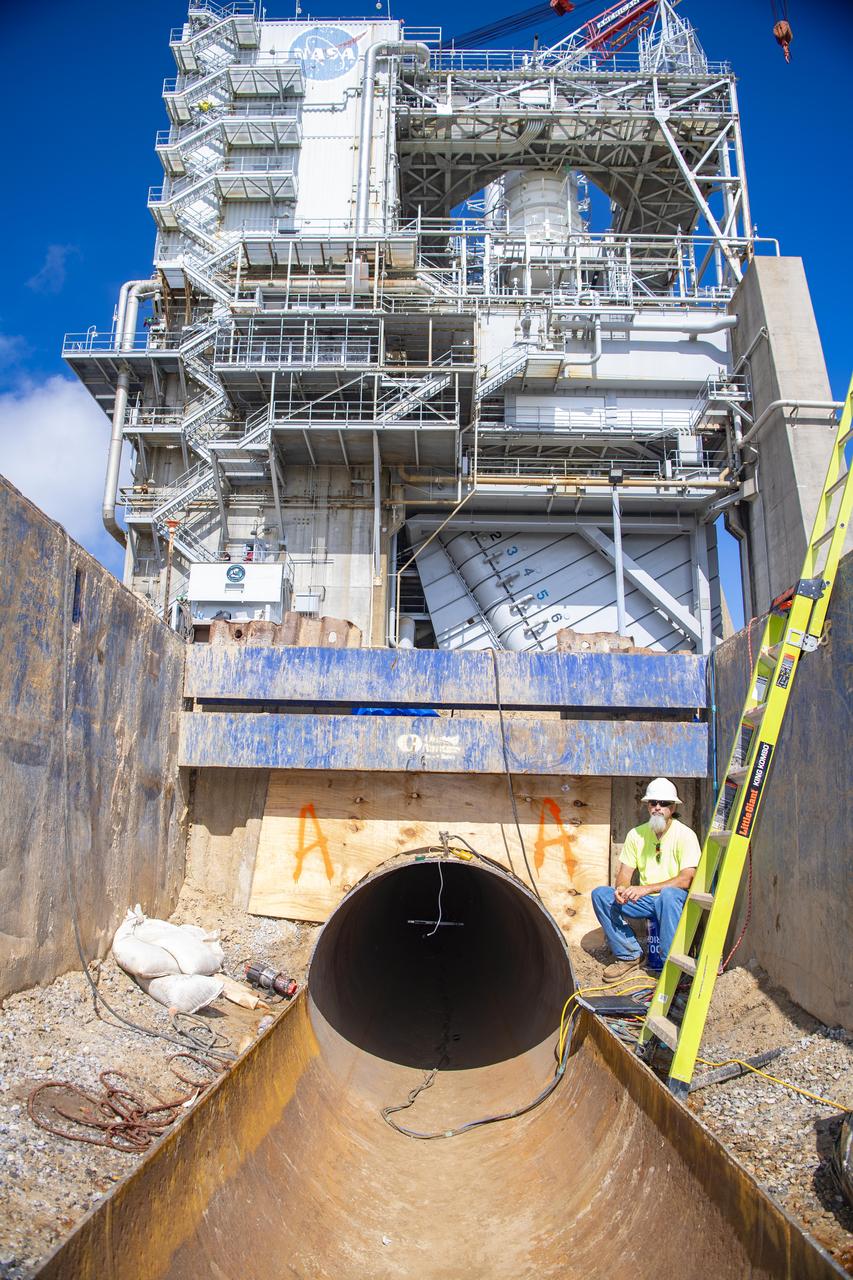
: An image shows the entry location of the existing carrier pipe where new liner sections are being placed at the base of the Fred Haise Test Stand at NASA’s Stennis Space Center in the last phase of updating the original test complex industrial water system.
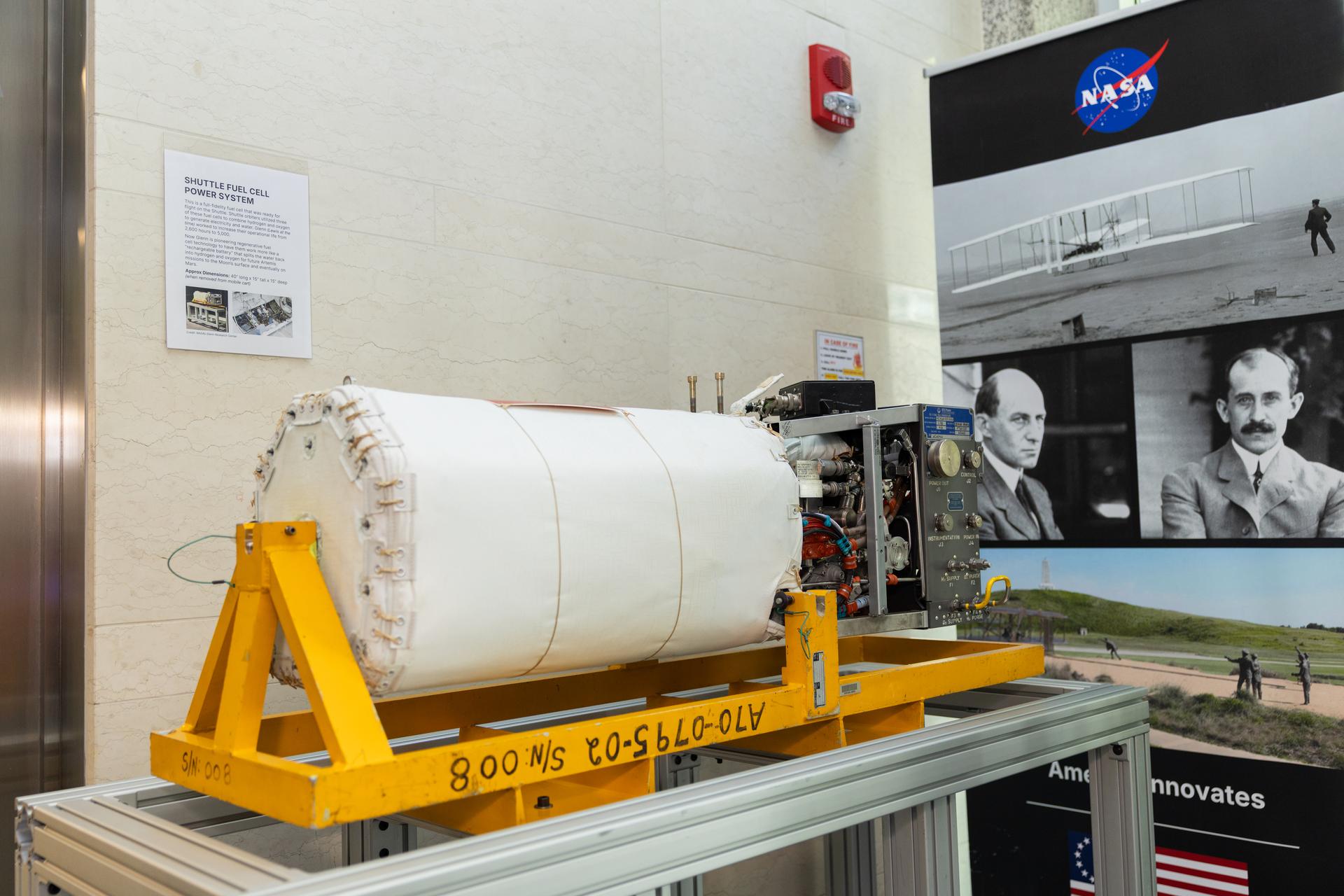
NASA Headquarters redesign featuring artifacts, interactive exhibits, replica mars rover, and donut shop at NASA Headquarters in Washington, DC. Photo Credit: (NASA/Tiffany Coutris)