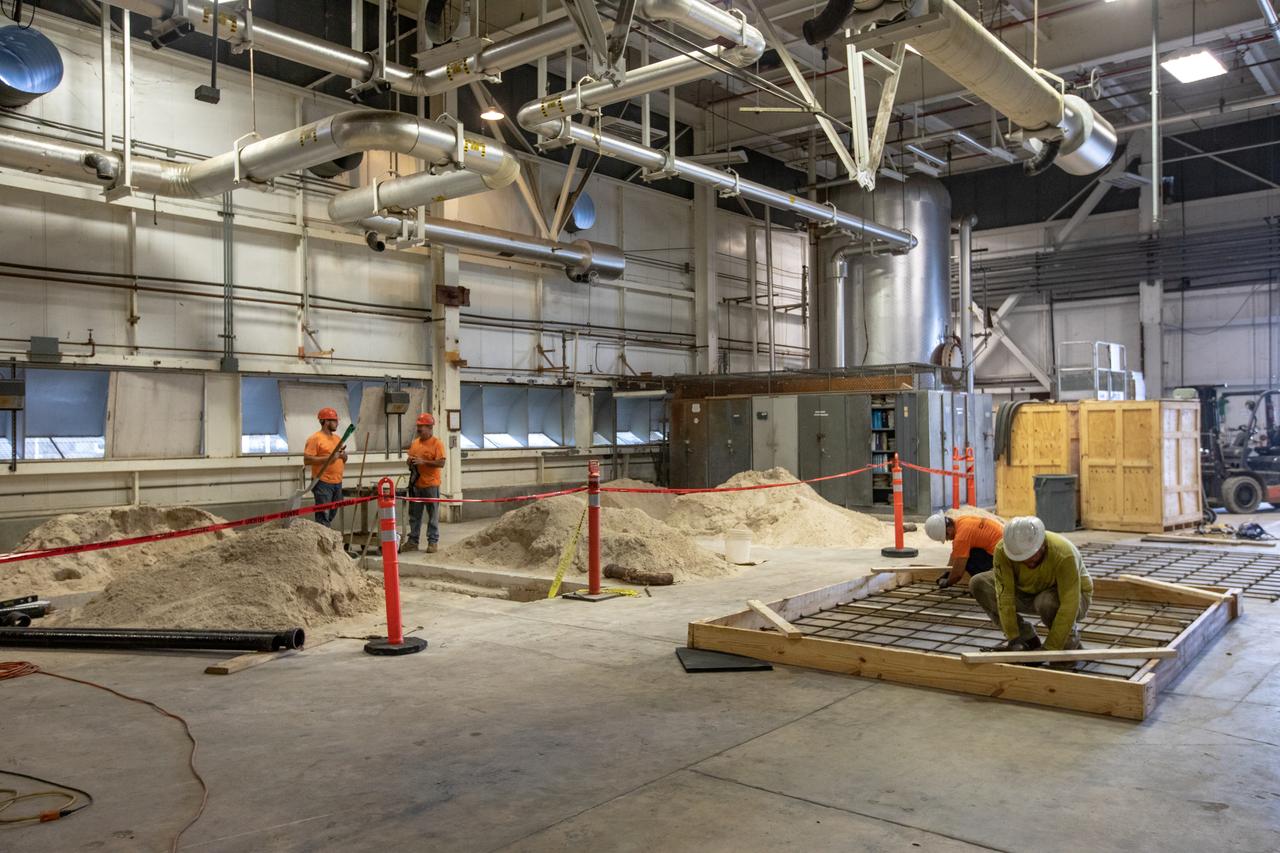
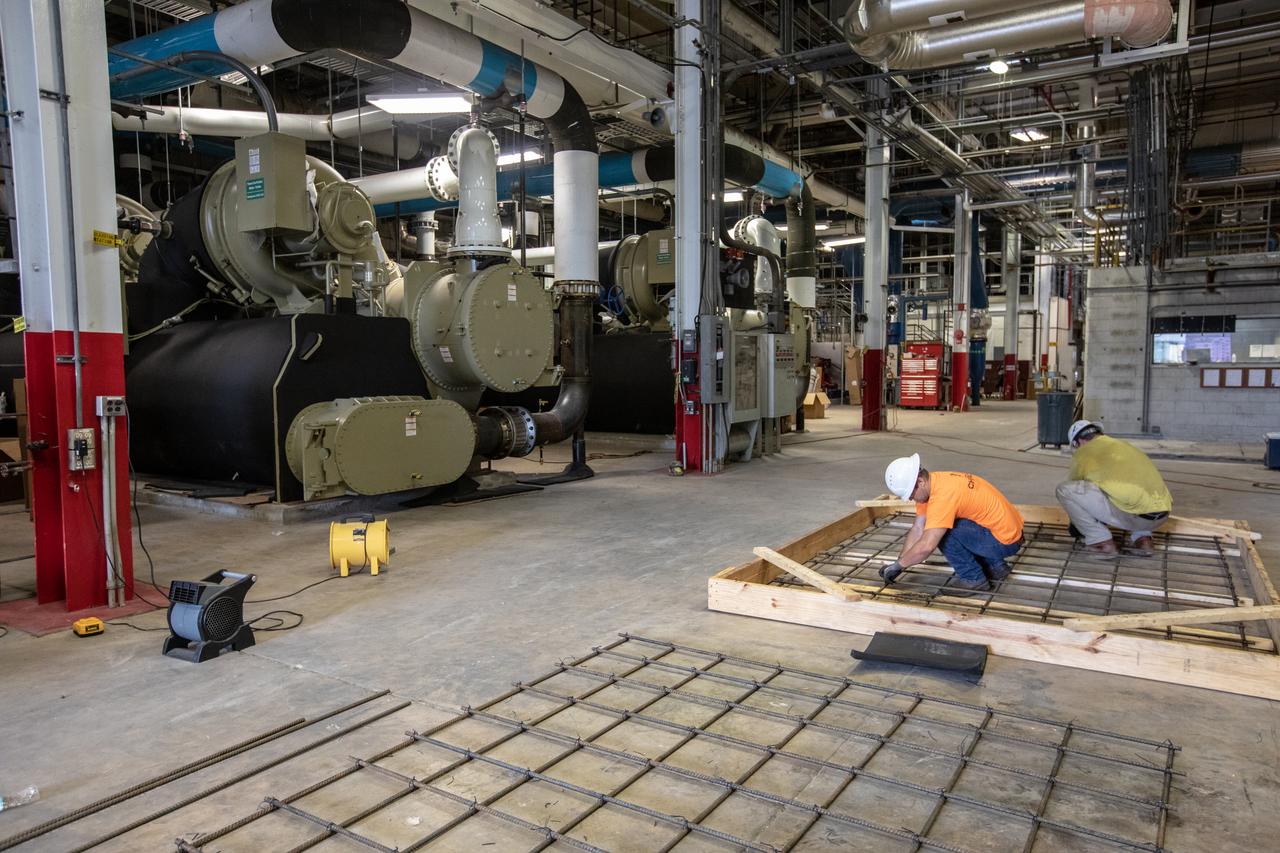
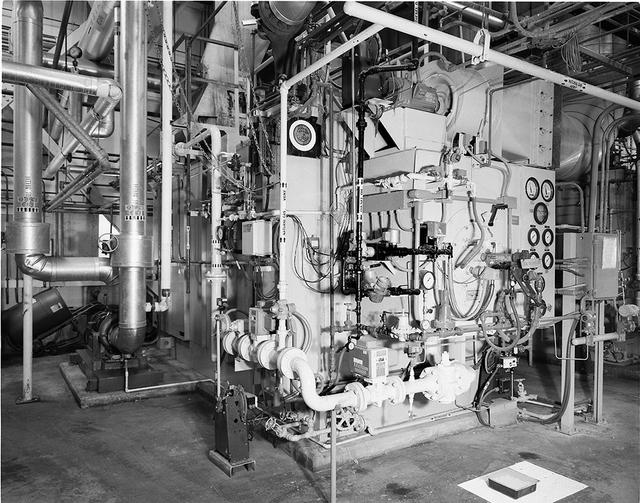
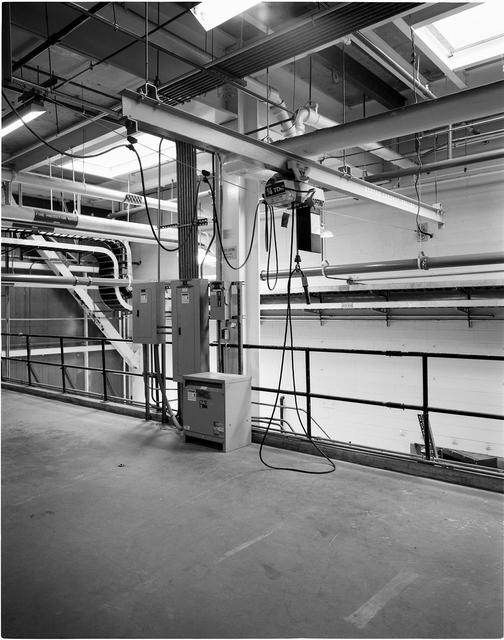
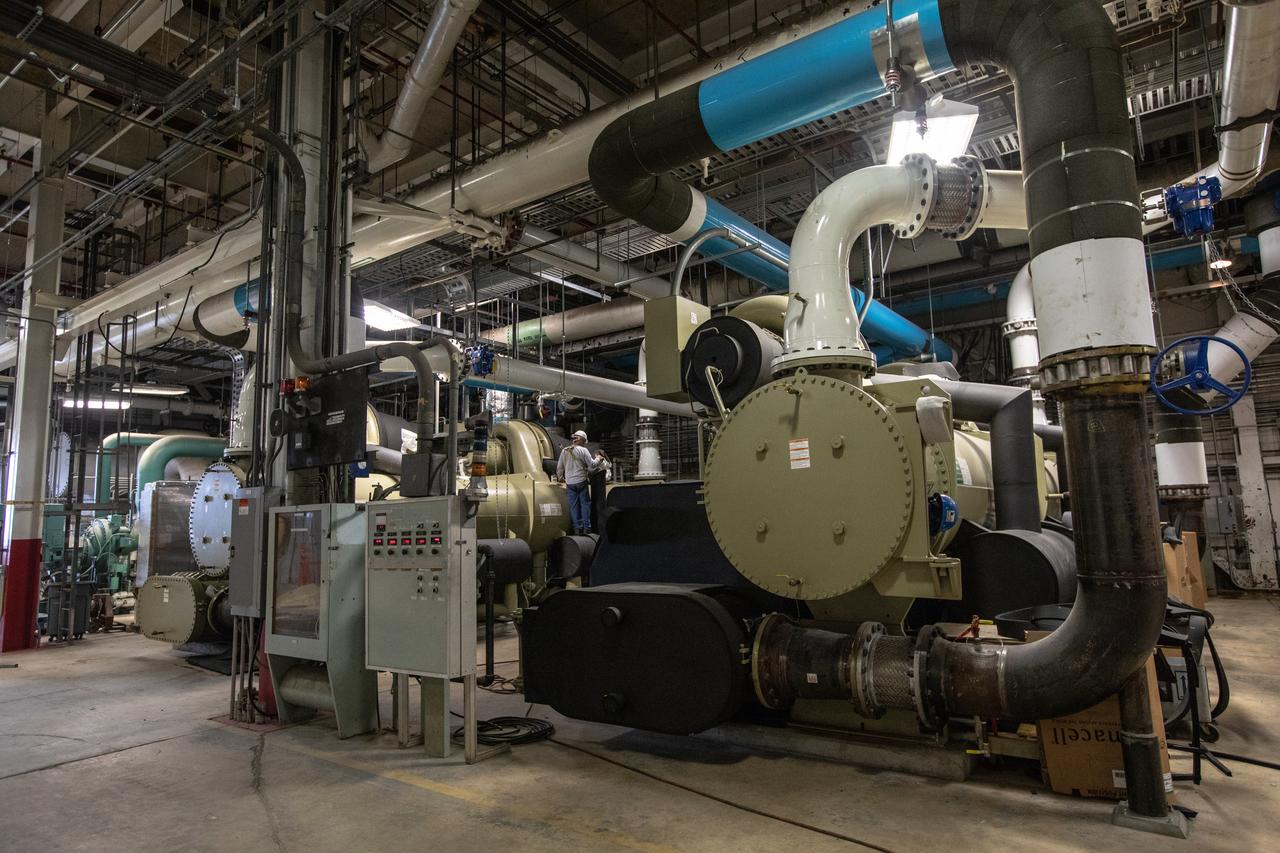
Upgrades are in progress inside the Utility Annex near the Vehicle Assembly (VAB) Building at NASA’s Kennedy Space Center in Florida on July 24, 2019. The Utility Annex, which provides 8,000 gallons of chilled water per minute to the VAB and other facilities in the Launch Complex 39 area, is being upgraded and repaired. The facility also contains boilers necessary to provide hot water to the VAB. The center’s Engineering Directorate is making the repairs and upgrades to the facility to prepare for the agency’s Artemis missions to the Moon and on to Mars.
Utility Annex Story - Refurbishment of Chilled Water Plant
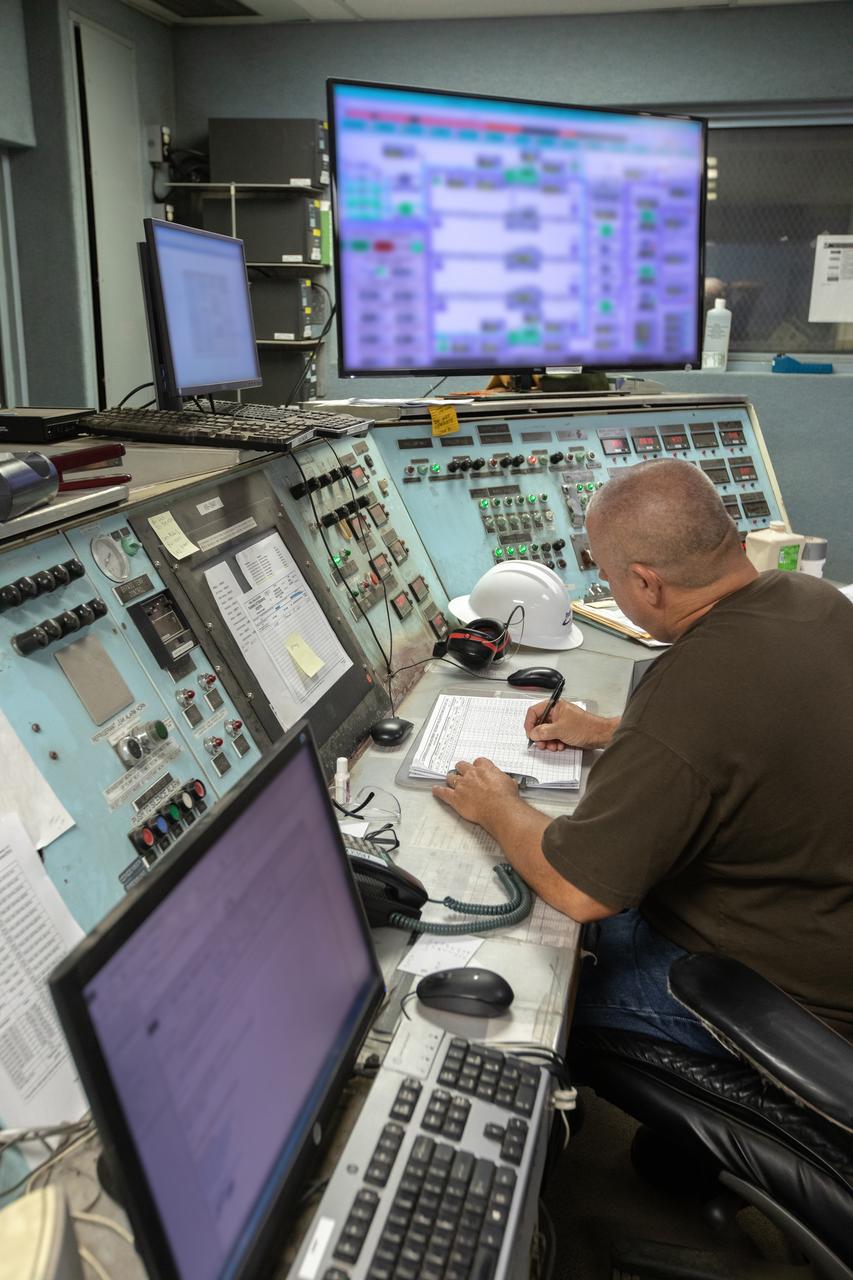
A technician monitors conditions in a control room inside the Utility Annex near the Vehicle Assembly (VAB) Building at NASA’s Kennedy Space Center in Florida on July 24, 2019. The Utility Annex, which provides 8,000 gallons of chilled water per minute to the VAB and other facilities in the Launch Complex 39 area, is being upgraded and repaired. The facility also contains boilers necessary to provide hot water to the VAB. The center’s Engineering Directorate is making the repairs and upgrades to the facility to prepare for the agency’s Artemis missions to the Moon and on to Mars.
Utility Annex Story - Refurbishment of Chilled Water Plant
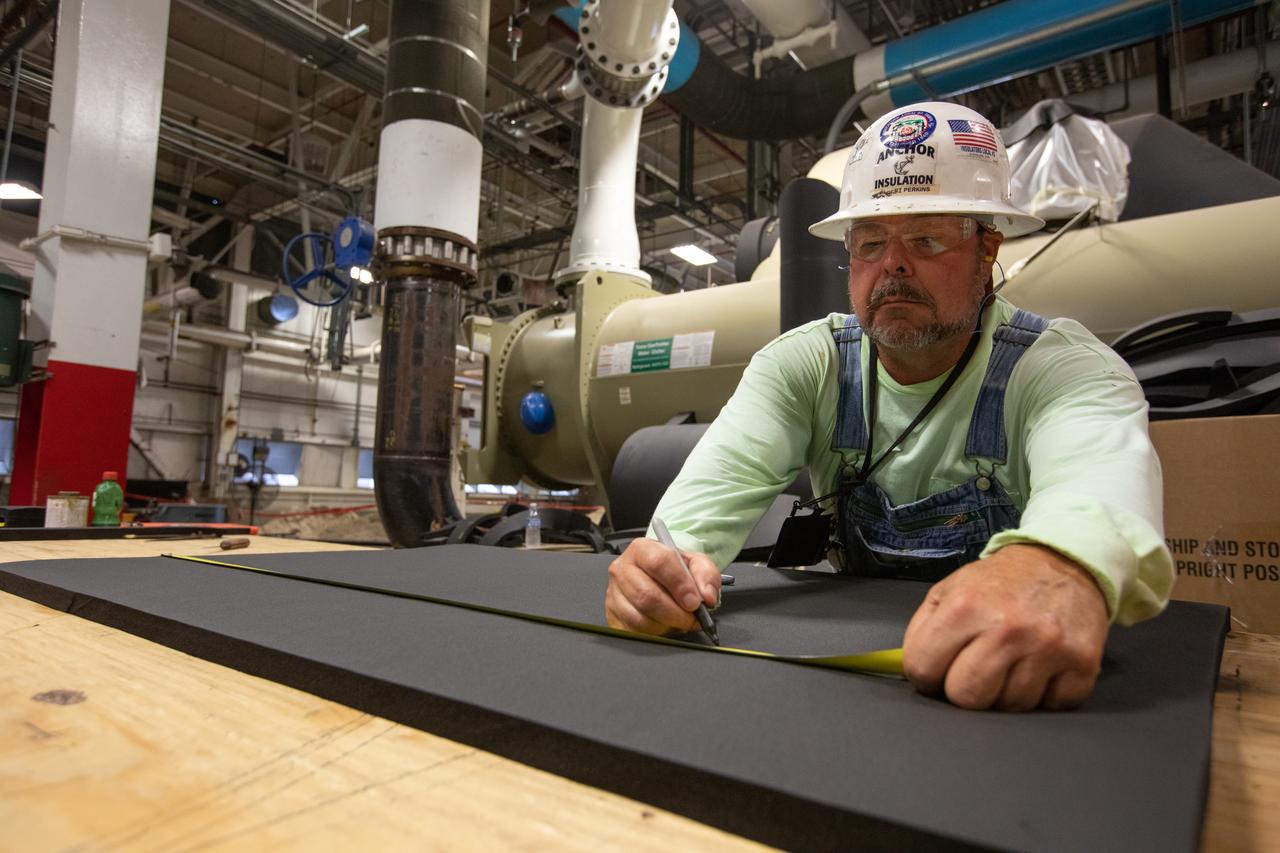
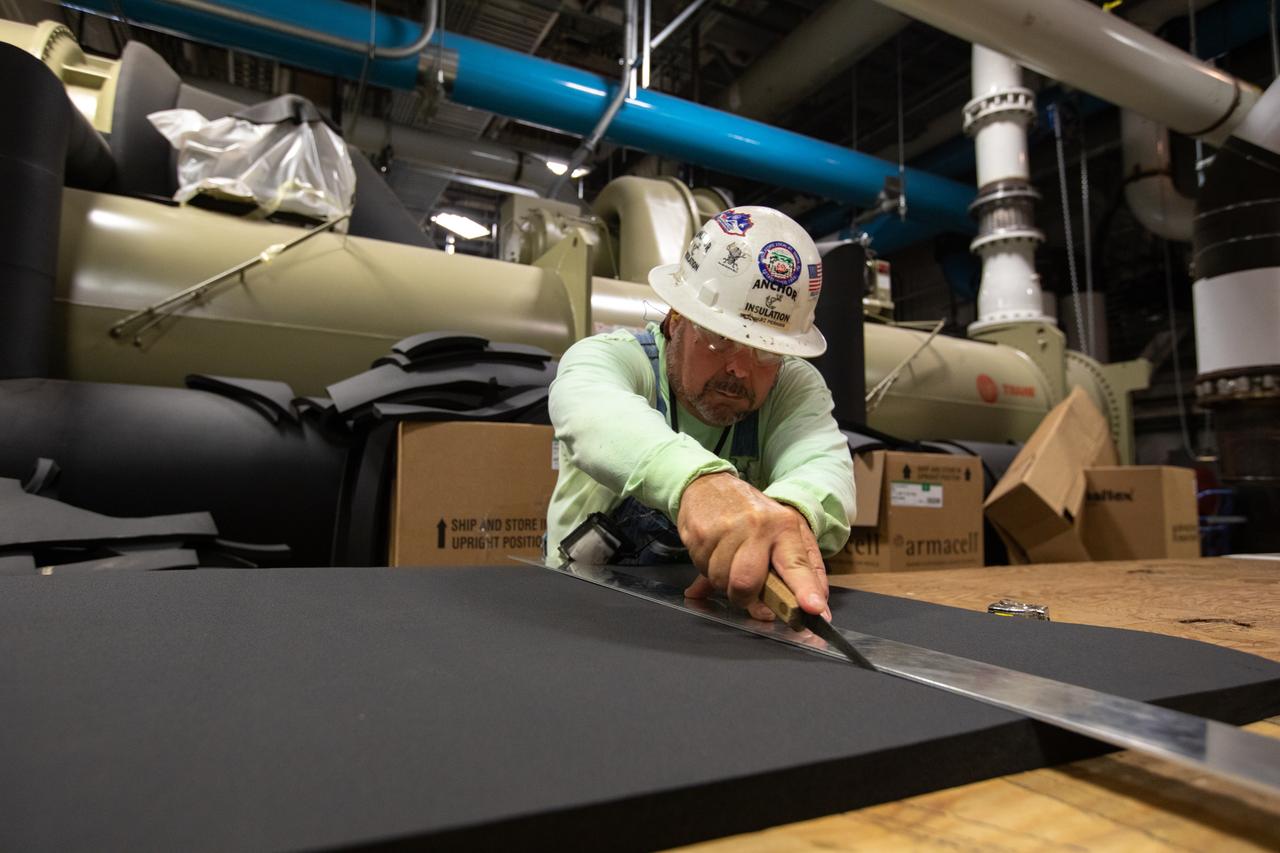
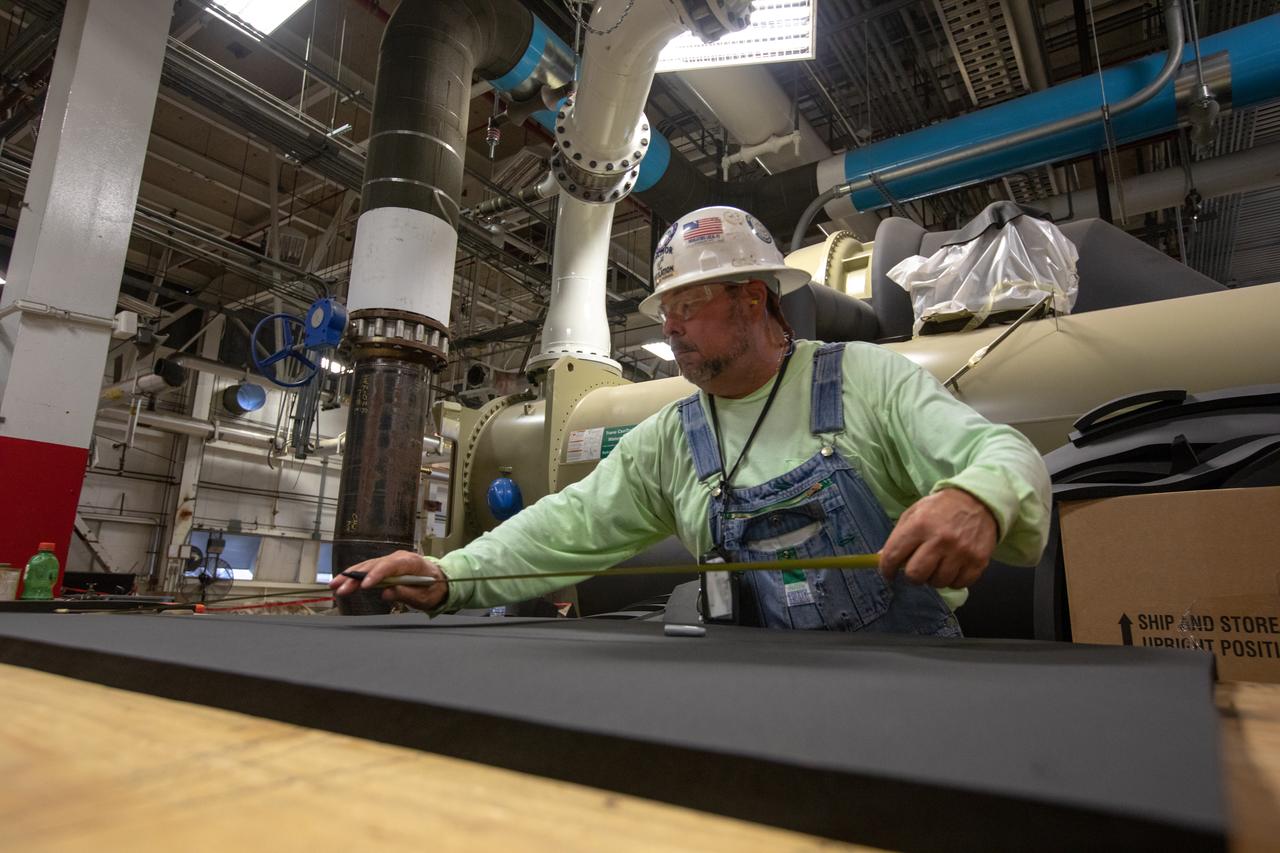
A technician measures foam insulation inside the Utility Annex near the Vehicle Assembly (VAB) Building at NASA’s Kennedy Space Center in Florida on July 24, 2019. The Utility Annex, which provides 8,000 gallons of chilled water per minute to the VAB and other facilities in the Launch Complex 39 area, is being upgraded and repaired. The facility also contains boilers necessary to provide hot water to the VAB. The center’s Engineering Directorate is making the repairs and upgrades to the facility to prepare for the agency’s Artemis missions to the Moon and on to Mars.
Utility Annex Story - Refurbishment of Chilled Water Plant
A technician measures foam insulation inside the Utility Annex near the Vehicle Assembly (VAB) Building at NASA’s Kennedy Space Center in Florida on July 24, 2019. The Utility Annex, which provides 8,000 gallons of chilled water per minute to the VAB and other facilities in the Launch Complex 39 area, is being upgraded and repaired. The facility also contains boilers necessary to provide hot water to the VAB. The center’s Engineering Directorate is making the repairs and upgrades to the facility to prepare for the agency’s Artemis missions to the Moon and on to Mars.
Utility Annex Story - Refurbishment of Chilled Water Plant
A technician measures foam insulation inside the Utility Annex near the Vehicle Assembly (VAB) Building at NASA’s Kennedy Space Center in Florida on July 24, 2019. The Utility Annex, which provides 8,000 gallons of chilled water per minute to the VAB and other facilities in the Launch Complex 39 area, is being upgraded and repaired. The facility also contains boilers necessary to provide hot water to the VAB. The center’s Engineering Directorate is making the repairs and upgrades to the facility to prepare for the agency’s Artemis missions to the Moon and on to Mars.
Utility Annex Story - Refurbishment of Chilled Water Plant
A construction worker installs new wiring inside the Utility Annex near the Vehicle Assembly (VAB) Building at NASA’s Kennedy Space Center in Florida on July 24, 2019. The Utility Annex, which provides 8,000 gallons of chilled water per minute to the VAB and other facilities in the Launch Complex 39 area, is being upgraded and repaired. The facility also contains boilers necessary to provide hot water to the VAB. The center’s Engineering Directorate is making the repairs and upgrades to the facility to prepare for the agency’s Artemis missions to the Moon and on to Mars.
Utility Annex Story - Refurbishment of Chilled Water Plant
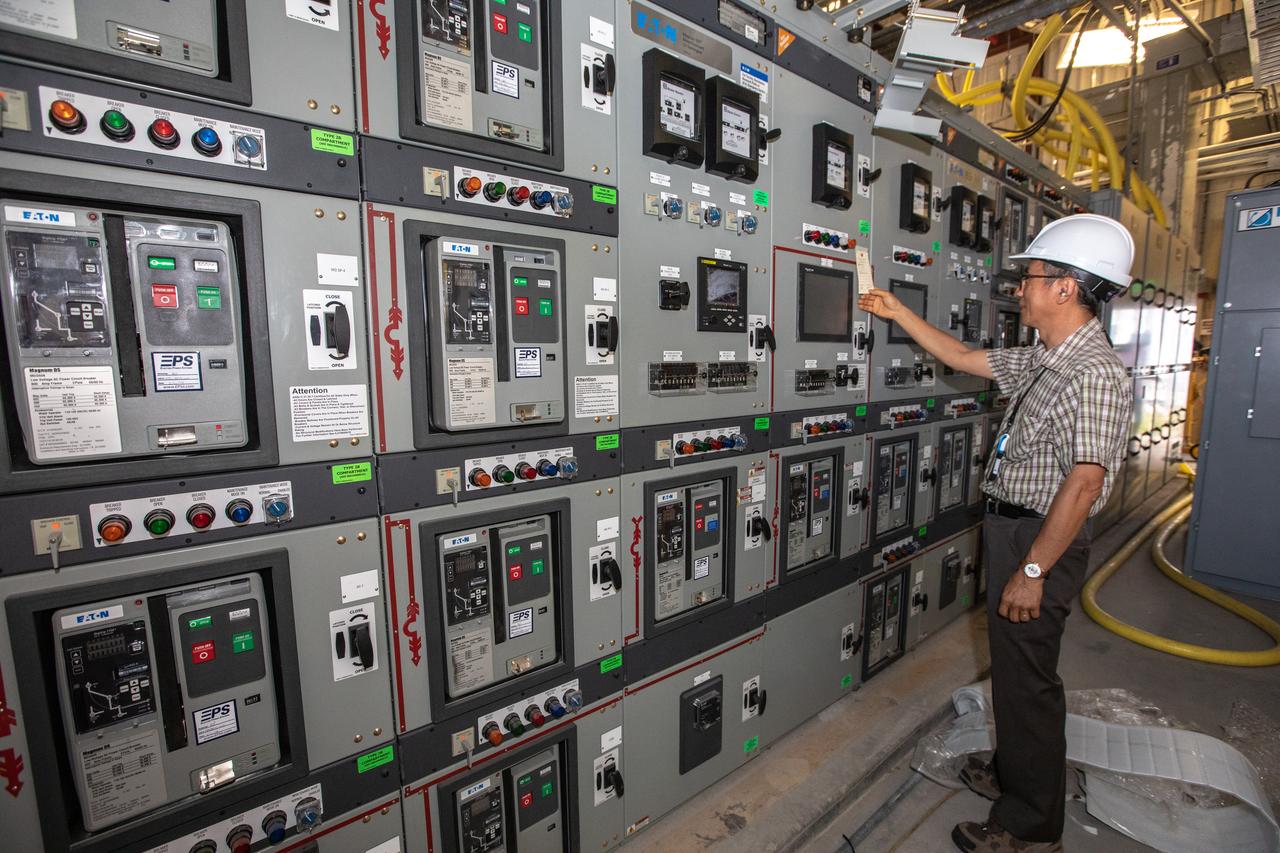
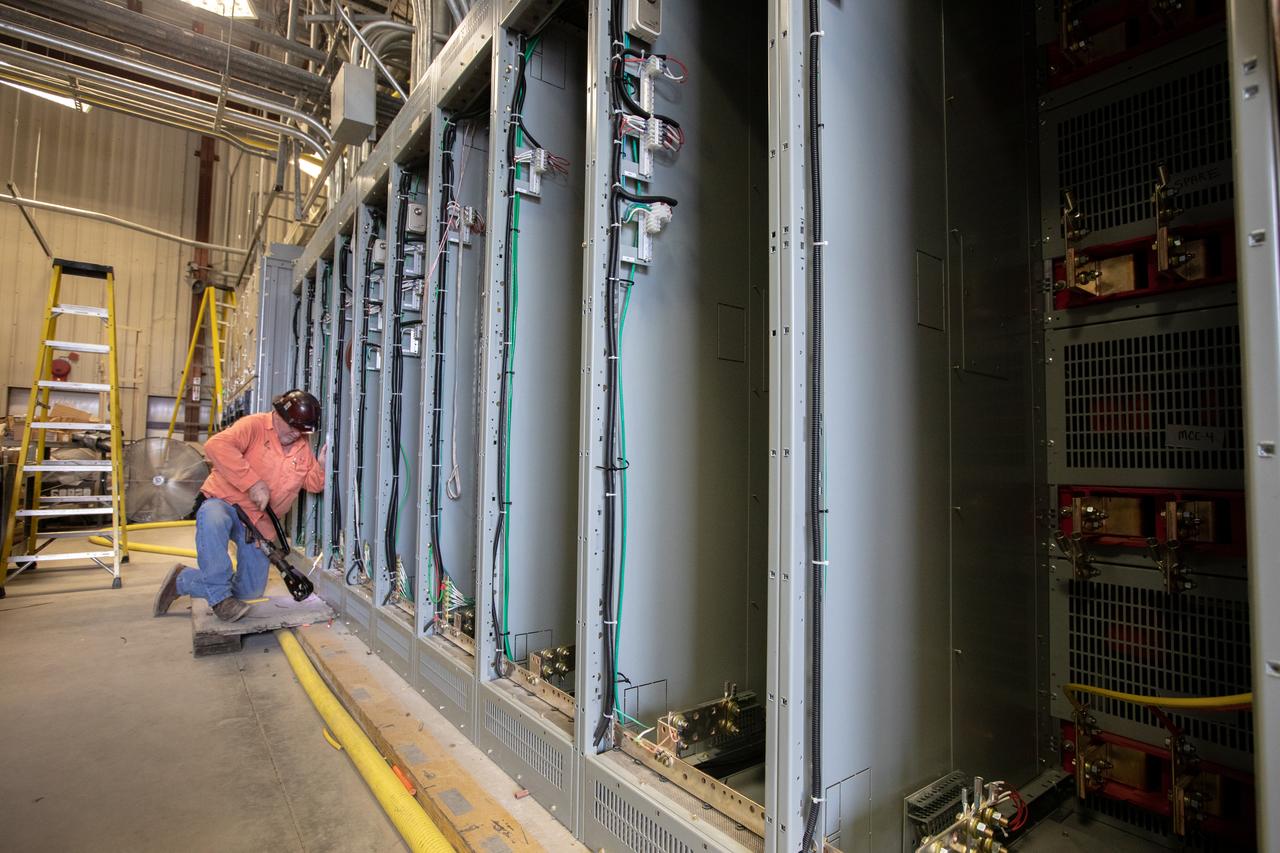
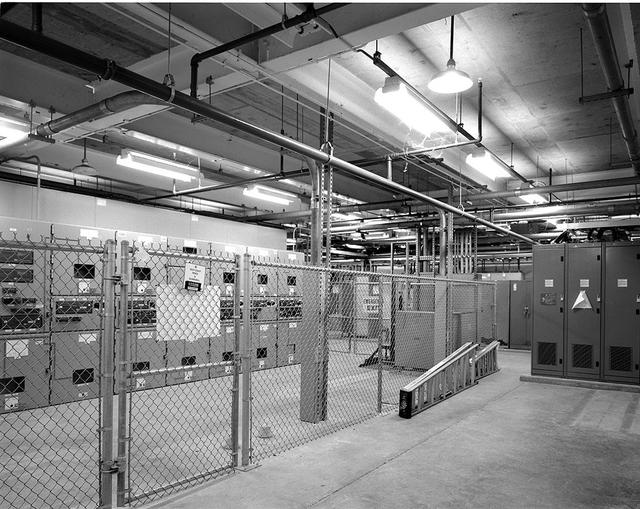
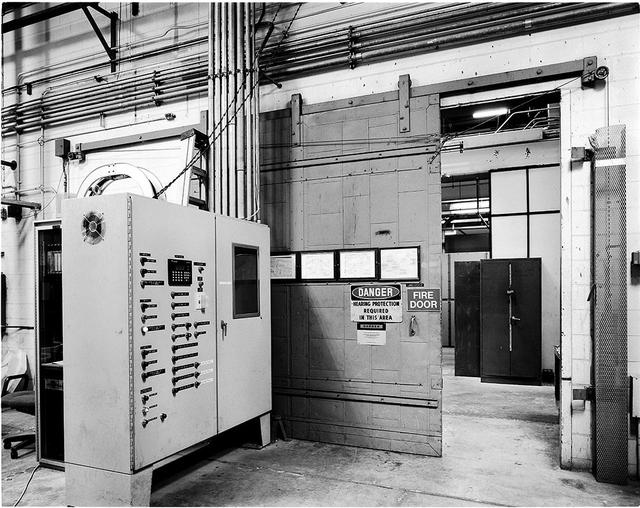
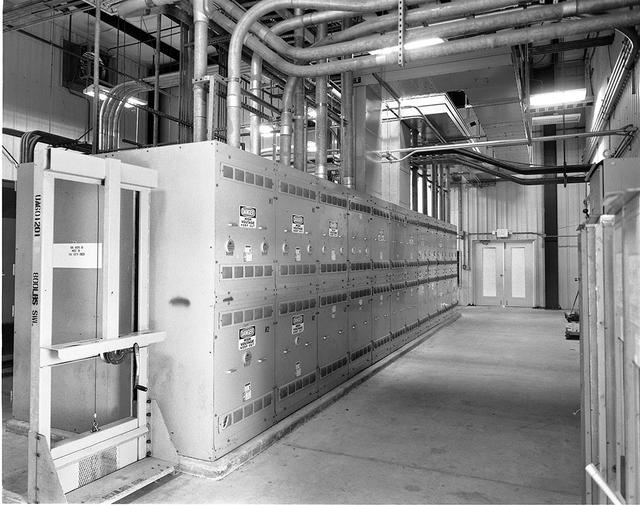
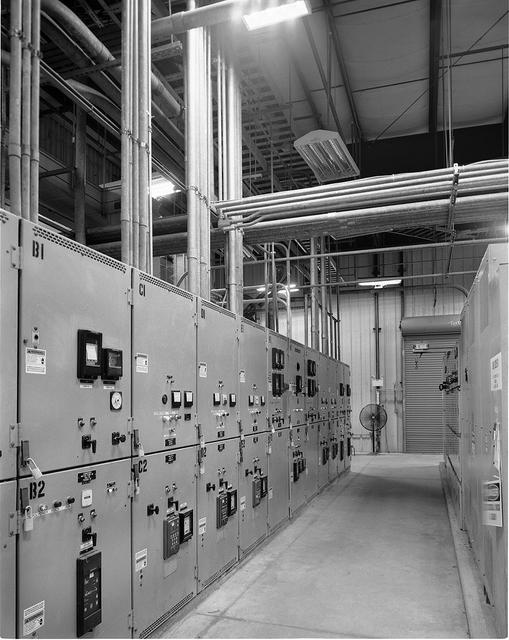
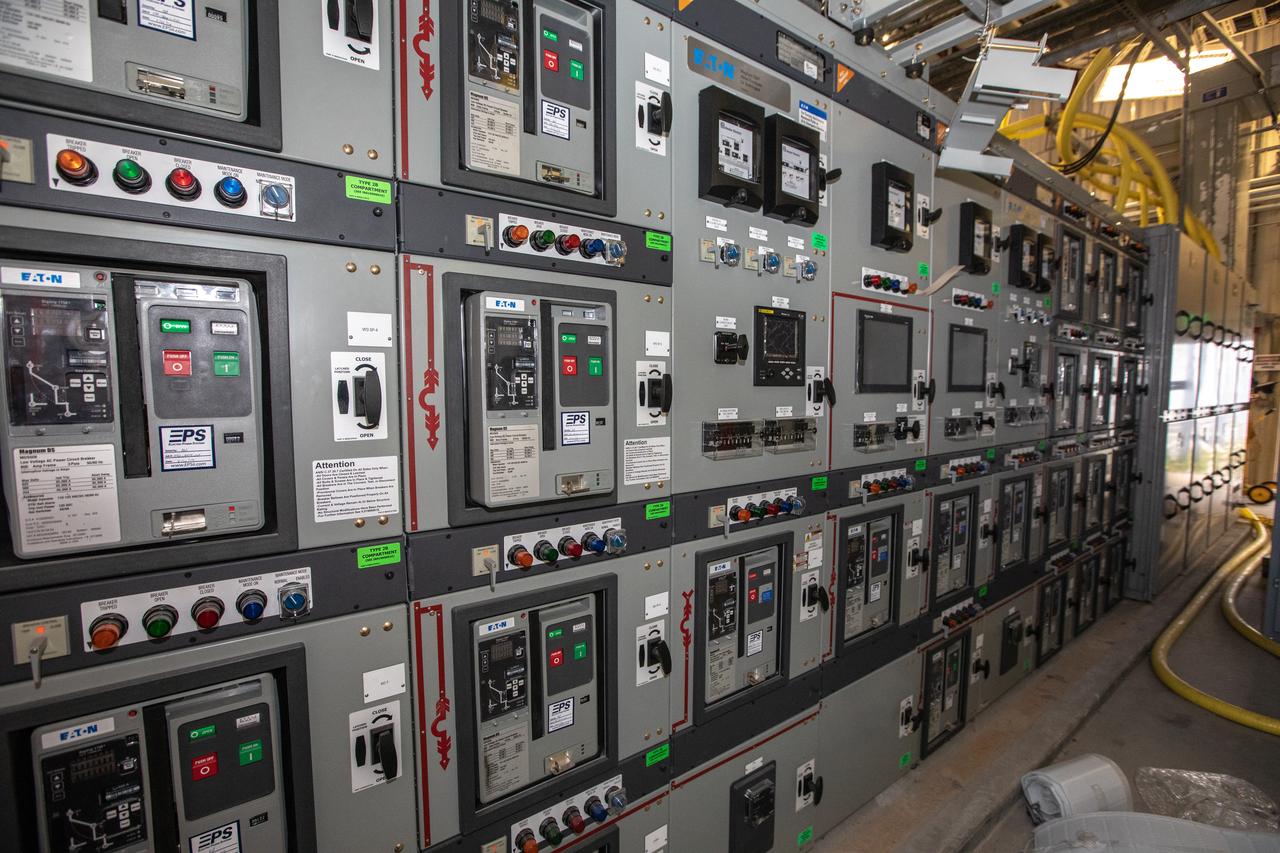
Control panels are in view inside the Utility Annex near the Vehicle Assembly (VAB) Building at NASA’s Kennedy Space Center in Florida on July 24, 2019. The Utility Annex, which provides 8,000 gallons of chilled water per minute to the VAB and other facilities in the Launch Complex 39 area, is being upgraded and repaired. The facility also contains boilers necessary to provide hot water to the VAB. The center’s Engineering Directorate is making the repairs and upgrades to the facility to prepare for the agency’s Artemis missions to the Moon and on to Mars.
Utility Annex Story - Refurbishment of Chilled Water Plant
Upgrades are in progress inside the Utility Annex near the Vehicle Assembly (VAB) Building at NASA’s Kennedy Space Center in Florida on July 24, 2019. The Utility Annex, which provides 8,000 gallons of chilled water per minute to the VAB and other facilities in the Launch Complex 39 area, is being upgraded and repaired. The facility also contains boilers necessary to provide hot water to the VAB. The center’s Engineering Directorate is making the repairs and upgrades to the facility to prepare for the agency’s Artemis missions to the Moon and on to Mars.
Utility Annex Story - Refurbishment of Chilled Water Plant
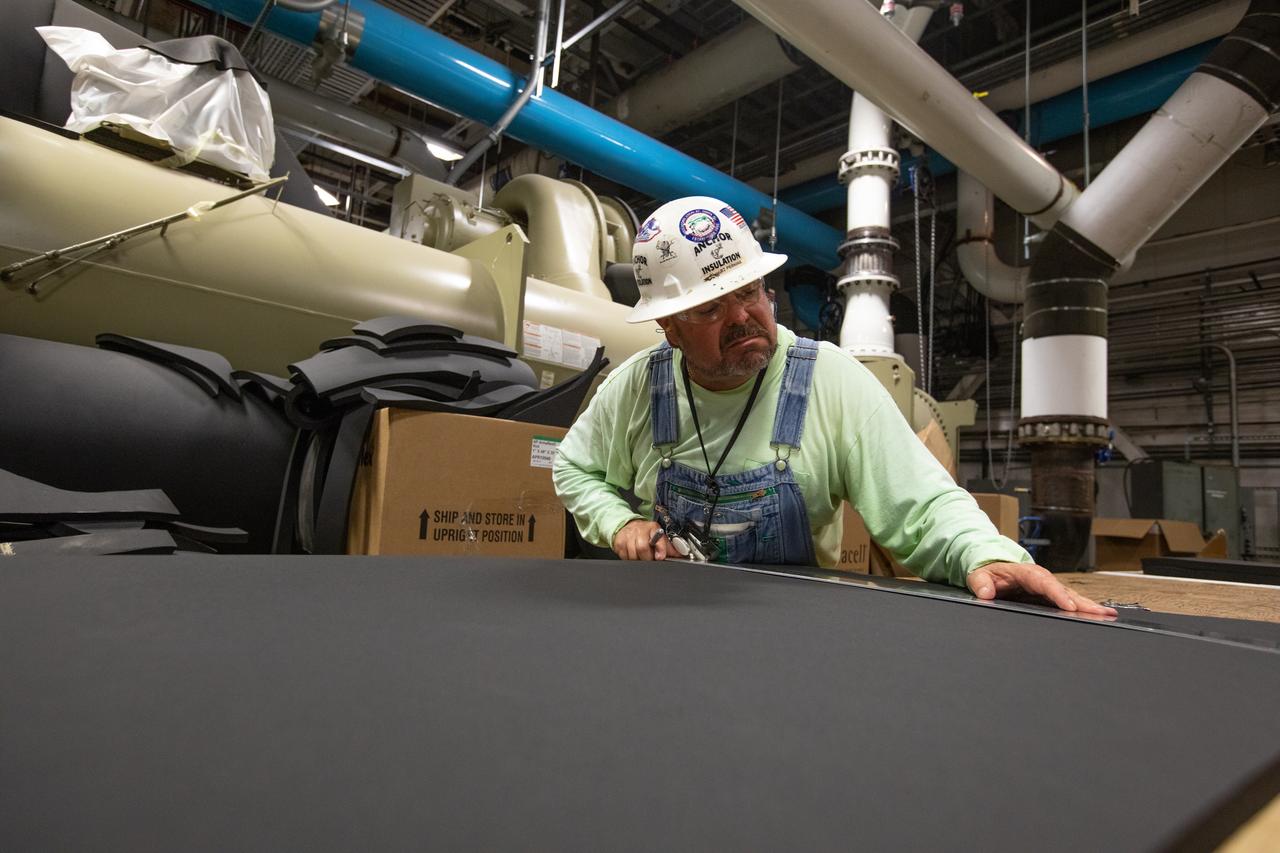
A technician cuts a section of foam insulation inside the Utility Annex near the Vehicle Assembly (VAB) Building at NASA’s Kennedy Space Center in Florida on July 24, 2019. The Utility Annex, which provides 8,000 gallons of chilled water per minute to the VAB and other facilities in the Launch Complex 39 area, is being upgraded and repaired. The facility also contains boilers necessary to provide hot water to the VAB. The center’s Engineering Directorate is making the repairs and upgrades to the facility to prepare for the agency’s Artemis missions to the Moon and on to Mars.
Utility Annex Story - Refurbishment of Chilled Water Plant
Control panels are in view inside the Utility Annex near the Vehicle Assembly (VAB) Building at NASA’s Kennedy Space Center in Florida on July 24, 2019. The Utility Annex, which provides 8,000 gallons of chilled water per minute to the VAB and other facilities in the Launch Complex 39 area, is being upgraded and repaired. The facility also contains boilers necessary to provide hot water to the VAB. The center’s Engineering Directorate is making the repairs and upgrades to the facility to prepare for the agency’s Artemis missions to the Moon and on to Mars.
Utility Annex Story - Refurbishment of Chilled Water Plant
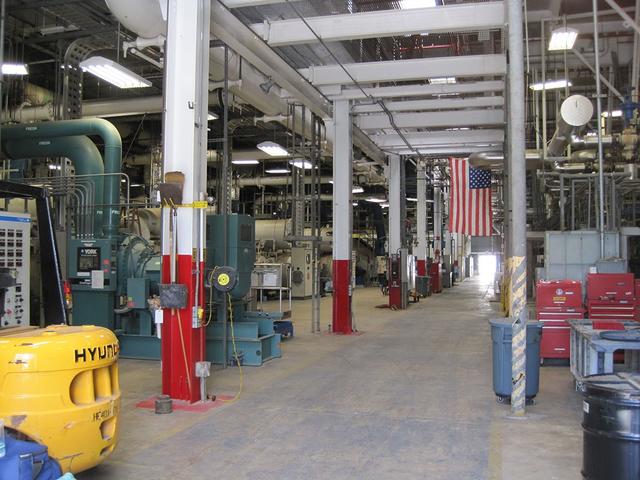
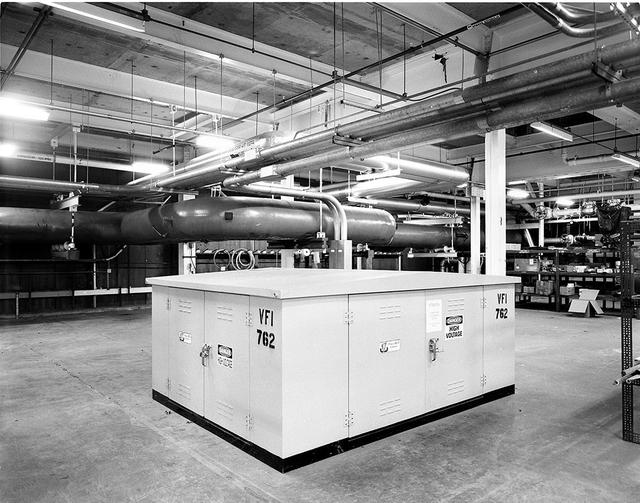
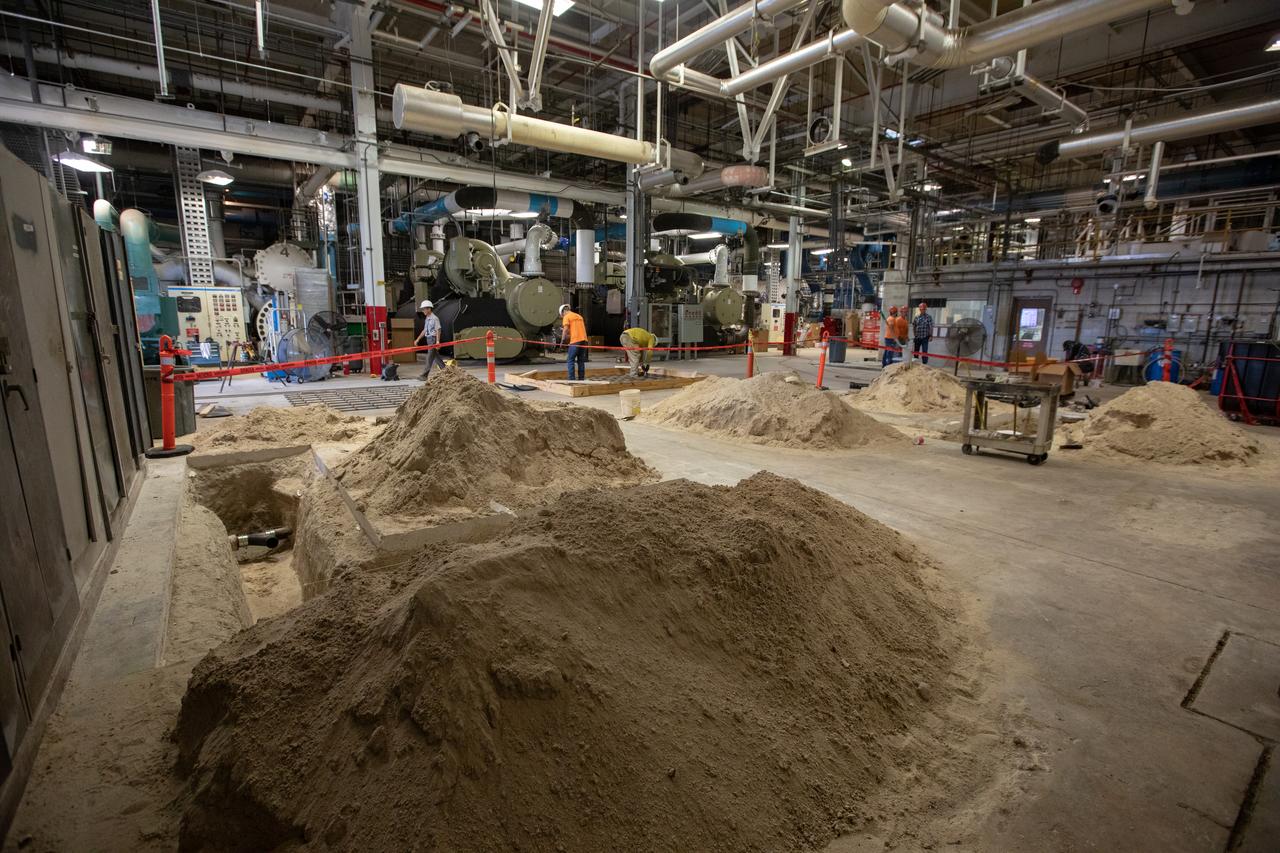
A view of the inside of the Utility Annex near the Vehicle Assembly (VAB) Building at NASA’s Kennedy Space Center in Florida on July 24, 2019. The Utility Annex, which provides 8,000 gallons of chilled water per minute to the VAB and other facilities in the Launch Complex 39 area, is being upgraded and repaired. The facility also contains boilers necessary to provide hot water to the VAB. The center’s Engineering Directorate is making the repairs and upgrades to the facility to prepare for the agency’s Artemis missions to the Moon and on to Mars.
Utility Annex Story - Refurbishment of Chilled Water Plant
A technician measures foam insulation inside the Utility Annex near the Vehicle Assembly (VAB) Building at NASA’s Kennedy Space Center in Florida on July 24, 2019. The Utility Annex, which provides 8,000 gallons of chilled water per minute to the VAB and other facilities in the Launch Complex 39 area, is being upgraded and repaired. The facility also contains boilers necessary to provide hot water to the VAB. The center’s Engineering Directorate is making the repairs and upgrades to the facility to prepare for the agency’s Artemis missions to the Moon and on to Mars.
Utility Annex Story - Refurbishment of Chilled Water Plant
A view of the inside of the Utility Annex near the Vehicle Assembly (VAB) Building at NASA’s Kennedy Space Center in Florida on July 24, 2019. The Utility Annex, which provides 8,000 gallons of chilled water per minute to the VAB and other facilities in the Launch Complex 39 area, is being upgraded and repaired. The facility also contains boilers necessary to provide hot water to the VAB. The center’s Engineering Directorate is making the repairs and upgrades to the facility to prepare for the agency’s Artemis missions to the Moon and on to Mars.
Utility Annex Story - Refurbishment of Chilled Water Plant
Upgrades are in progress inside the Utility Annex near the Vehicle Assembly (VAB) Building at NASA’s Kennedy Space Center in Florida on July 24, 2019. The Utility Annex, which provides 8,000 gallons of chilled water per minute to the VAB and other facilities in the Launch Complex 39 area, is being upgraded and repaired. The facility also contains boilers necessary to provide hot water to the VAB. The center’s Engineering Directorate is making the repairs and upgrades to the facility to prepare for the agency’s Artemis missions to the Moon and on to Mars.
Utility Annex Story - Refurbishment of Chilled Water Plant
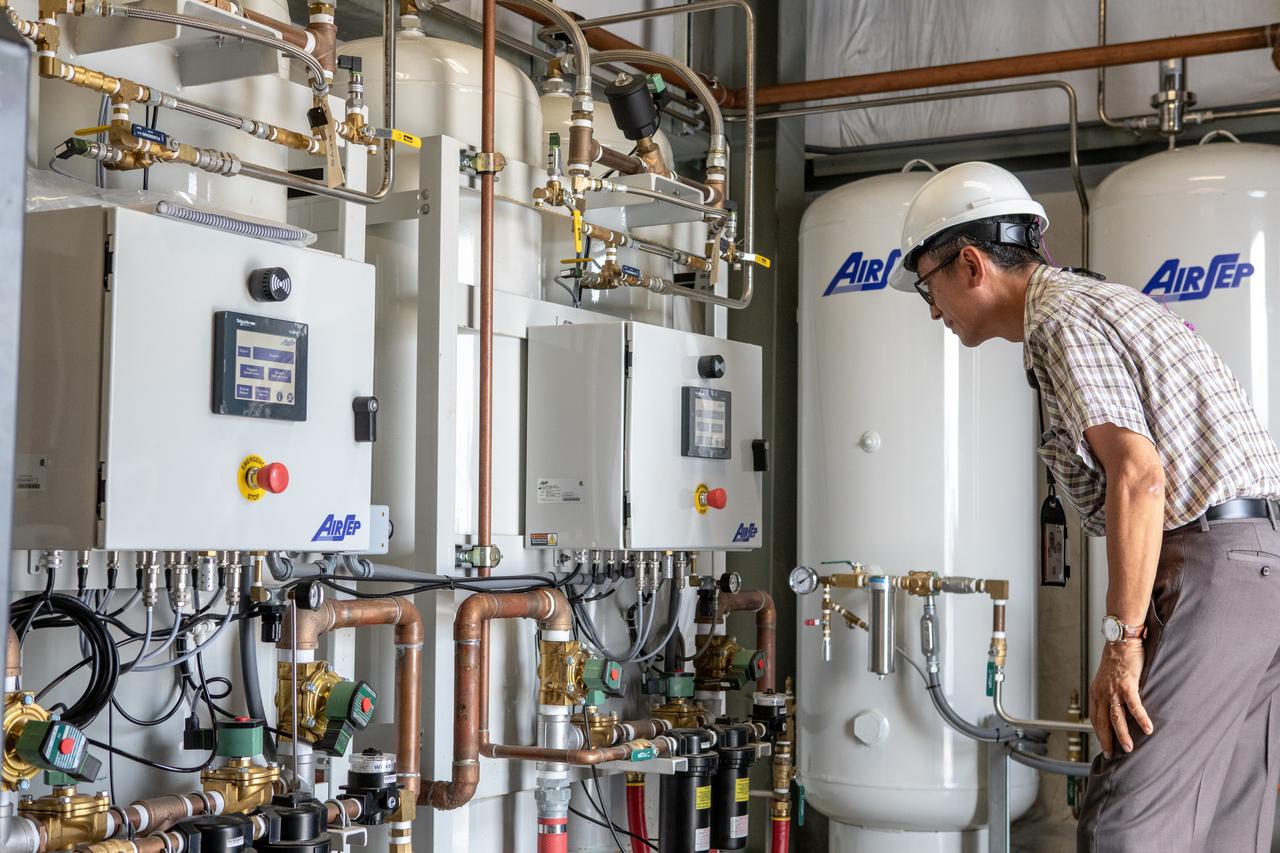
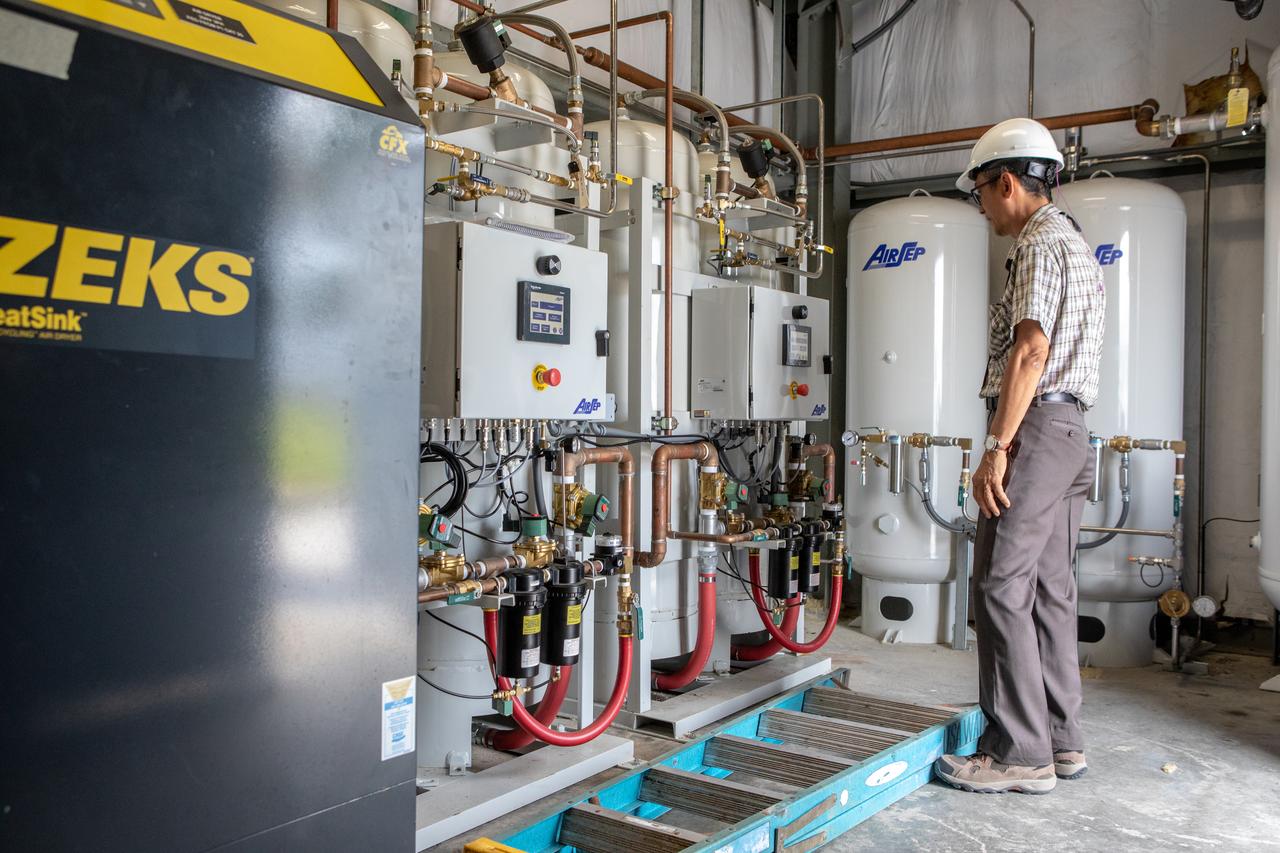
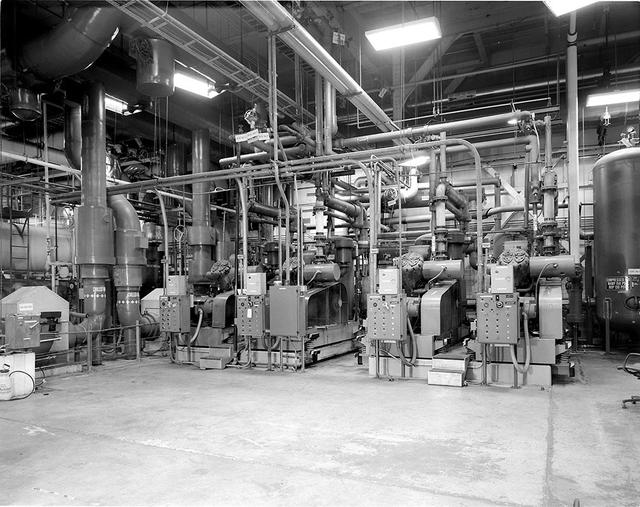
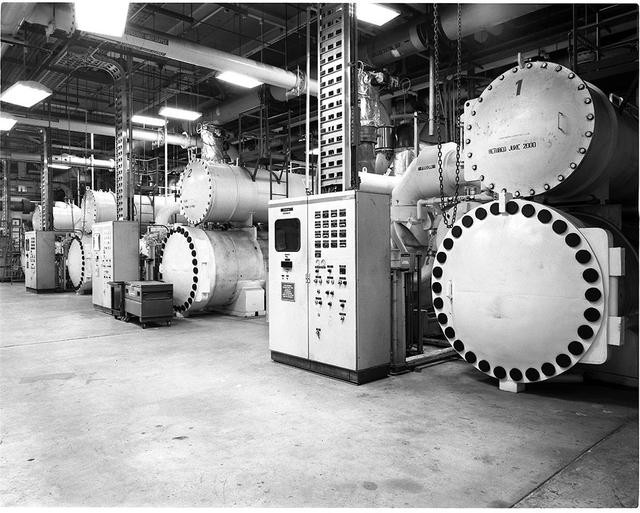
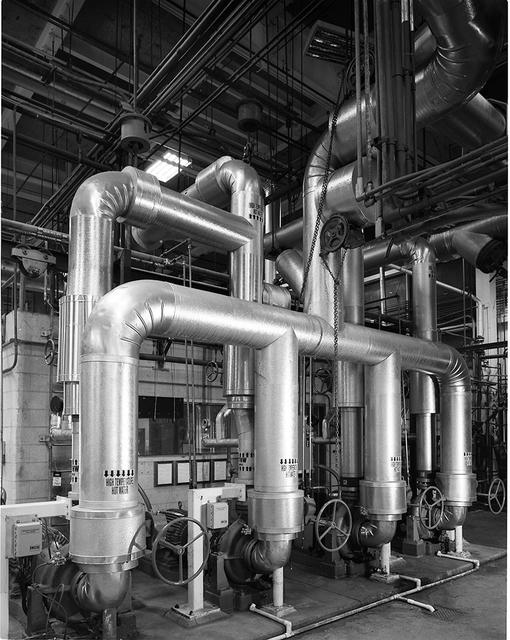
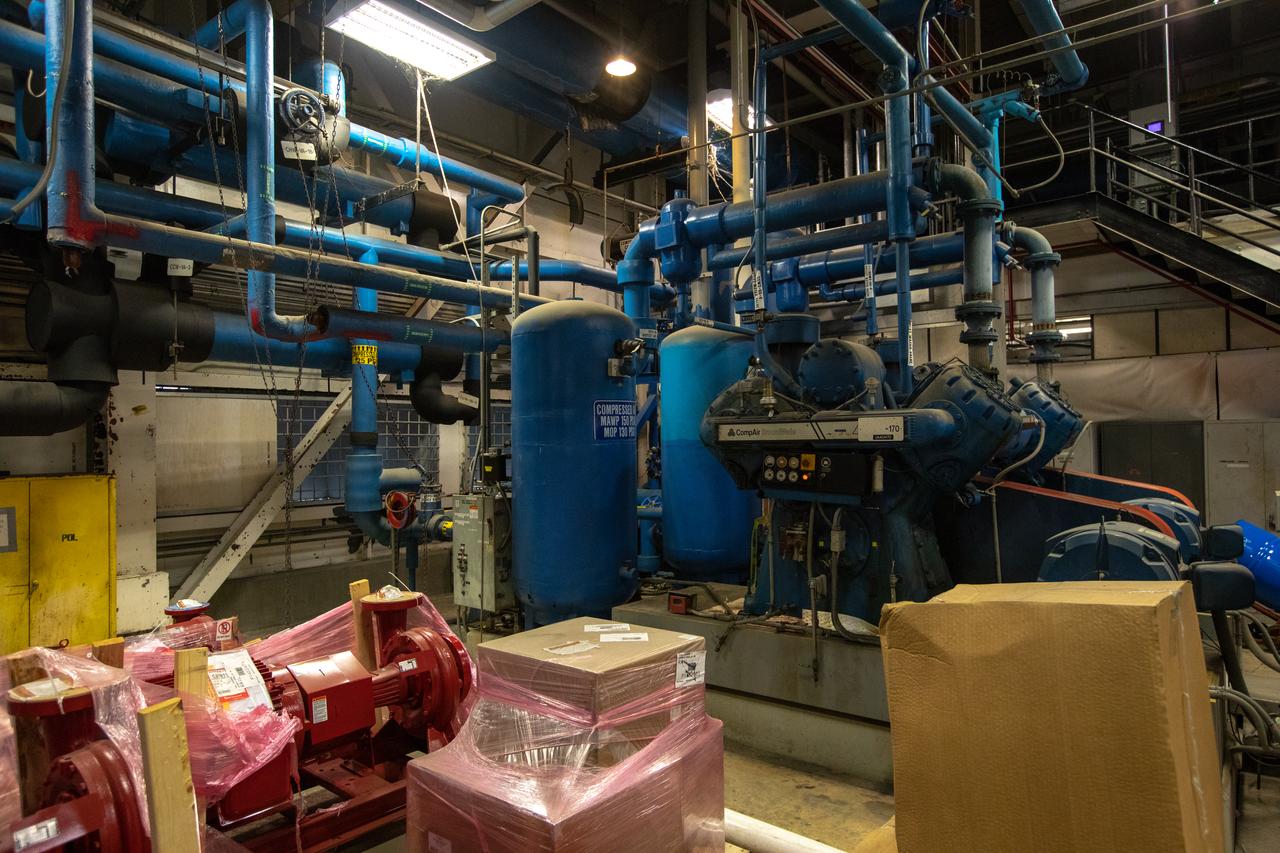
A photograph taken July 24, 2019, shows new air tanks, piping and control panels were installed in the Utility Annex near the Vehicle Assembly (VAB) Building at NASA’s Kennedy Space Center in Florida. The Utility Annex, which provides 8,000 gallons of chilled water per minute to the VAB and other facilities in the Launch Complex 39 area, is being upgraded and repaired. The facility also contains boilers necessary to provide hot water to the VAB. The center’s Engineering Directorate is making the repairs and upgrades to the facility to prepare for the agency’s Artemis missions to the Moon and on to Mars.
Utility Annex Story - Refurbishment of Chilled Water Plant
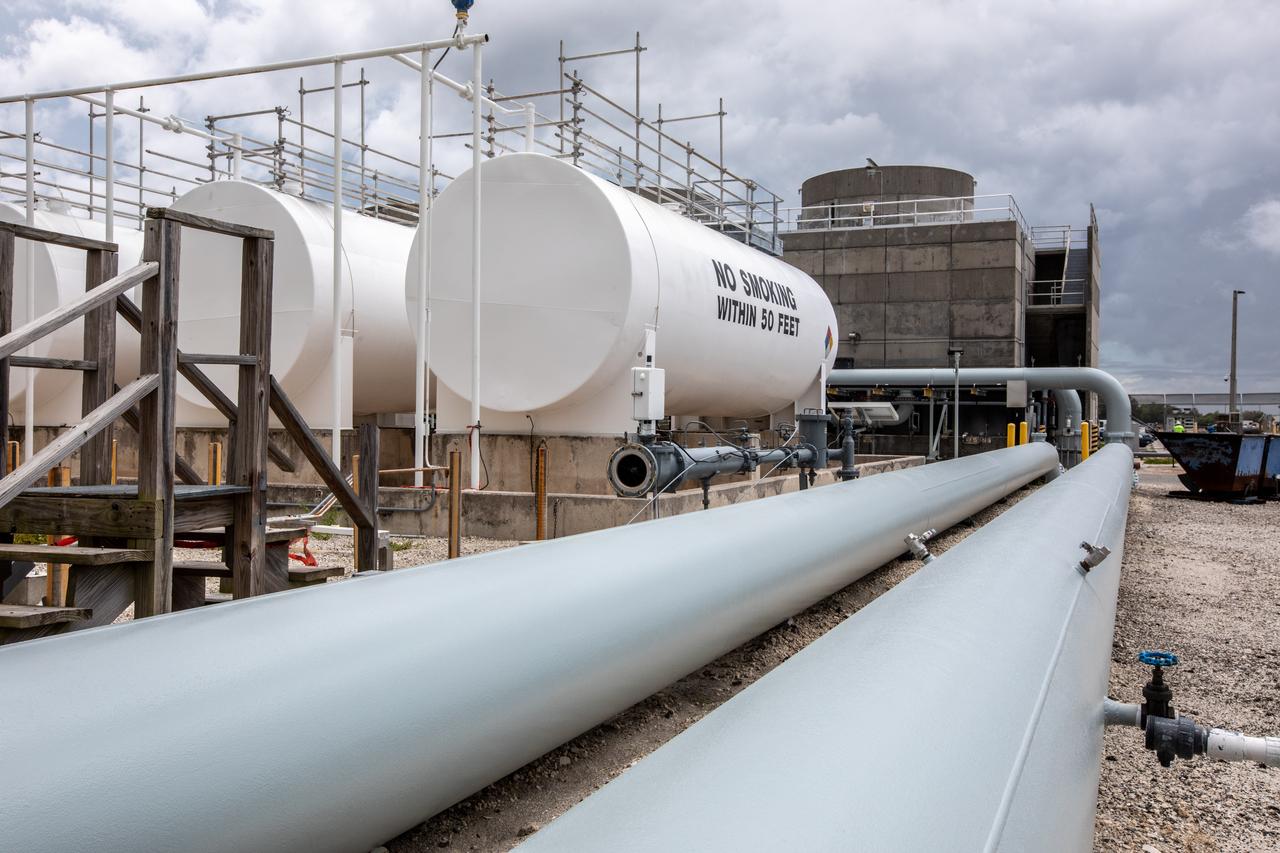
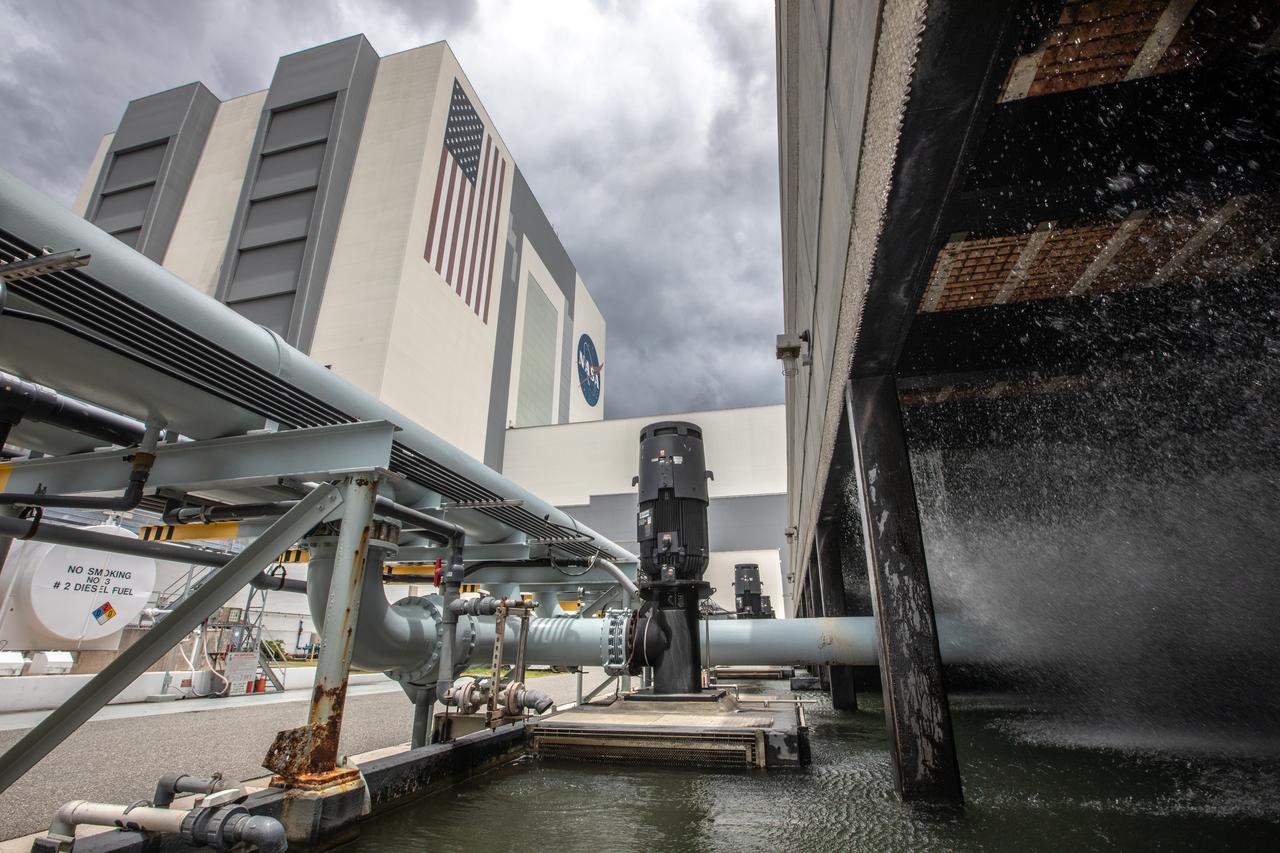
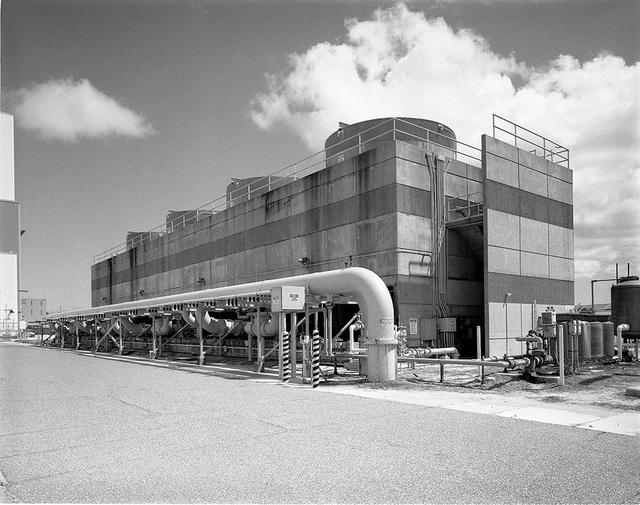
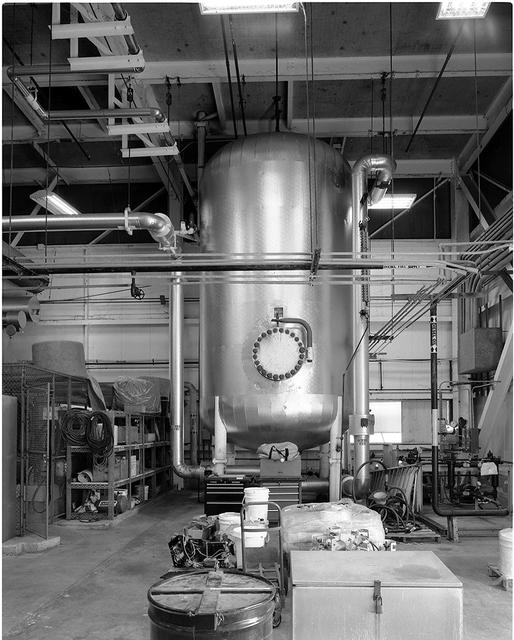
A photograph taken July 24, 2019, shows new tanks and piping were installed outside of the Utility Annex near the Vehicle Assembly (VAB) Building at NASA’s Kennedy Space Center in Florida. The Utility Annex, which provides 8,000 gallons of chilled water per minute to the VAB and other facilities in the Launch Complex 39 area, is being upgraded and repaired. The facility also contains boilers necessary to provide hot water to the VAB. The center’s Engineering Directorate is making the repairs and upgrades to the facility to prepare for the agency’s Artemis missions to the Moon and on to Mars.
Utility Annex Story - Refurbishment of Chilled Water Plant
A photograph taken July 24, 2019, shows new tanks and piping were installed outside of the Utility Annex near the Vehicle Assembly (VAB) Building at NASA’s Kennedy Space Center in Florida. The Utility Annex, which provides 8,000 gallons of chilled water per minute to the VAB and other facilities in the Launch Complex 39 area, is being upgraded and repaired. The facility also contains boilers necessary to provide hot water to the VAB. The center’s Engineering Directorate is making the repairs and upgrades to the facility to prepare for the agency’s Artemis missions to the Moon and on to Mars.
Utility Annex Story - Refurbishment of Chilled Water Plant
A photograph taken July 24, 2019, shows new air tanks, piping and control panels were installed in the Utility Annex near the Vehicle Assembly (VAB) Building at NASA’s Kennedy Space Center in Florida. The Utility Annex, which provides 8,000 gallons of chilled water per minute to the VAB and other facilities in the Launch Complex 39 area, is being upgraded and repaired. The facility also contains boilers necessary to provide hot water to the VAB. The center’s Engineering Directorate is making the repairs and upgrades to the facility to prepare for the agency’s Artemis missions to the Moon and on to Mars.
Utility Annex Story - Refurbishment of Chilled Water Plant
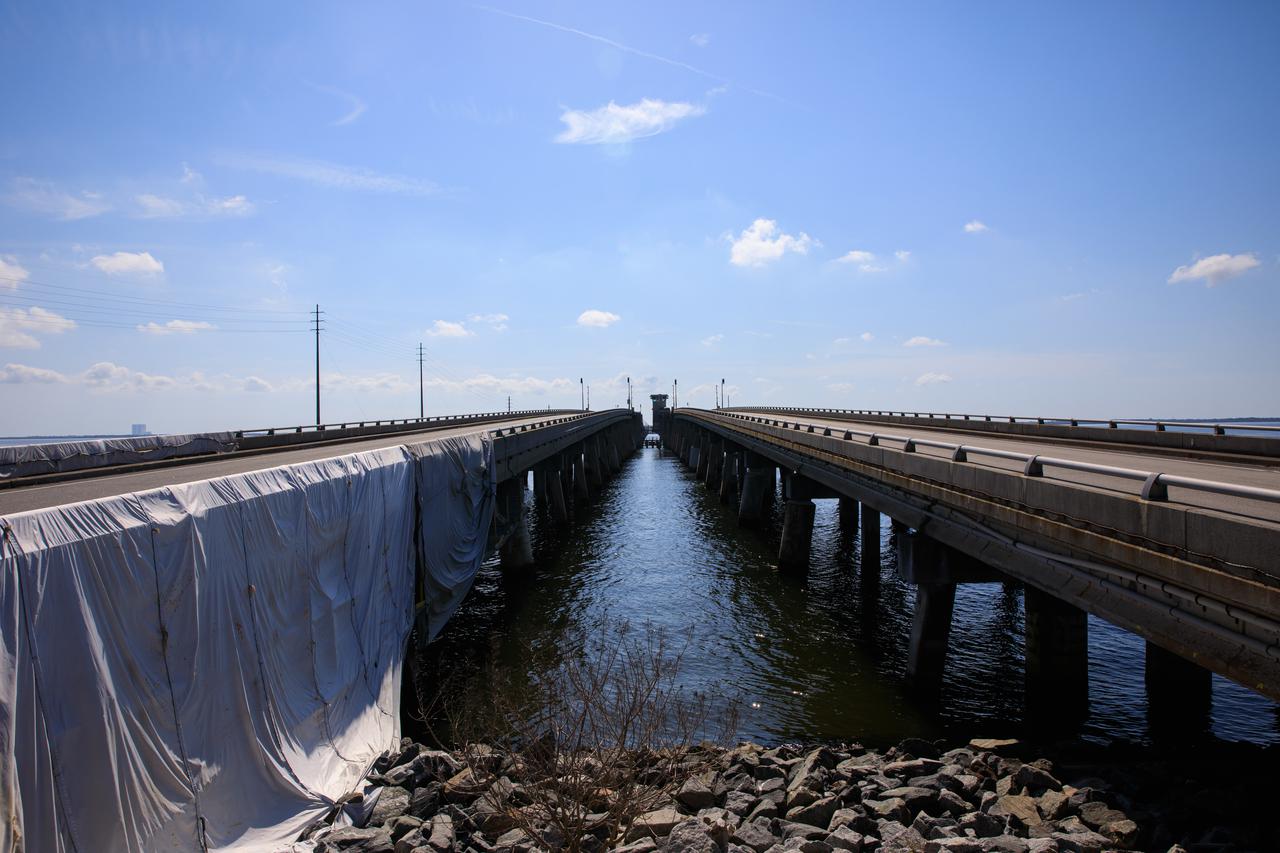
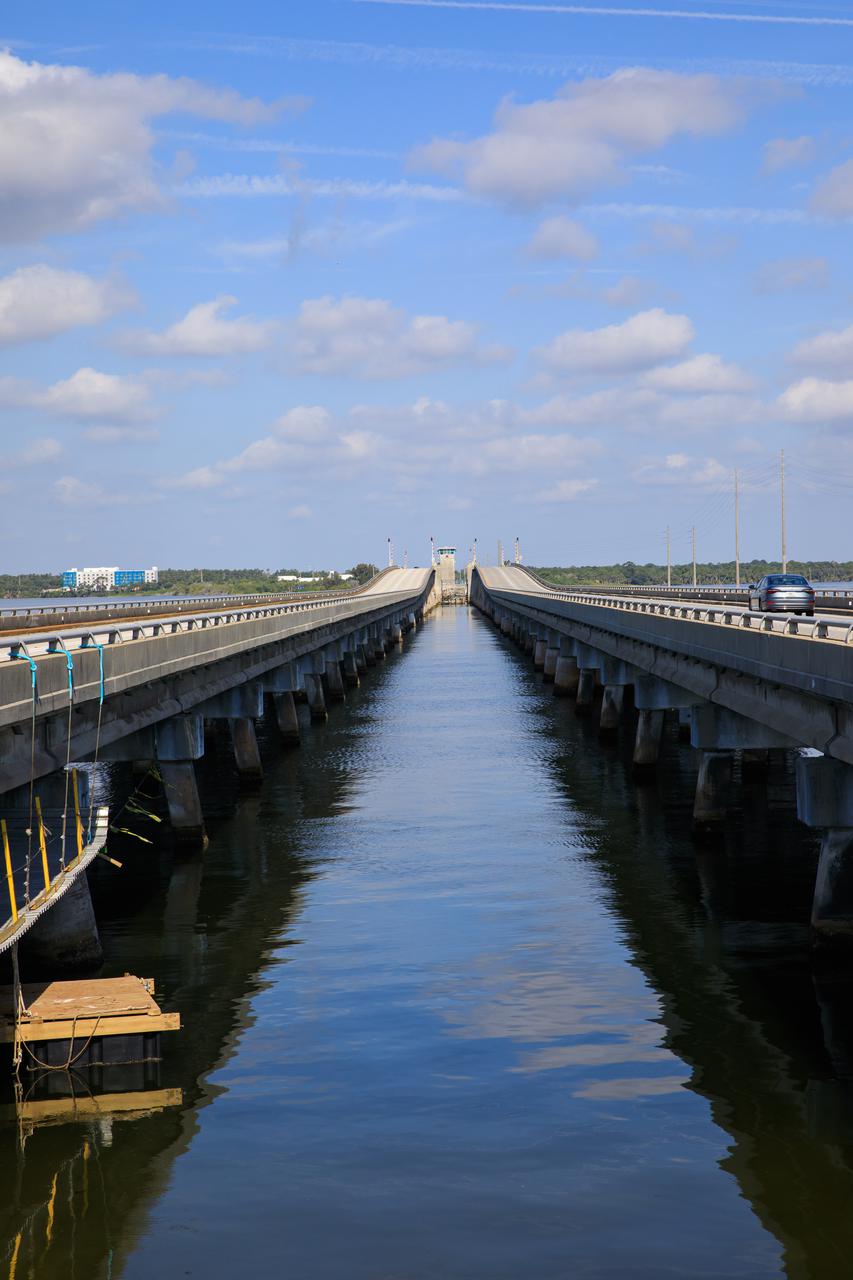
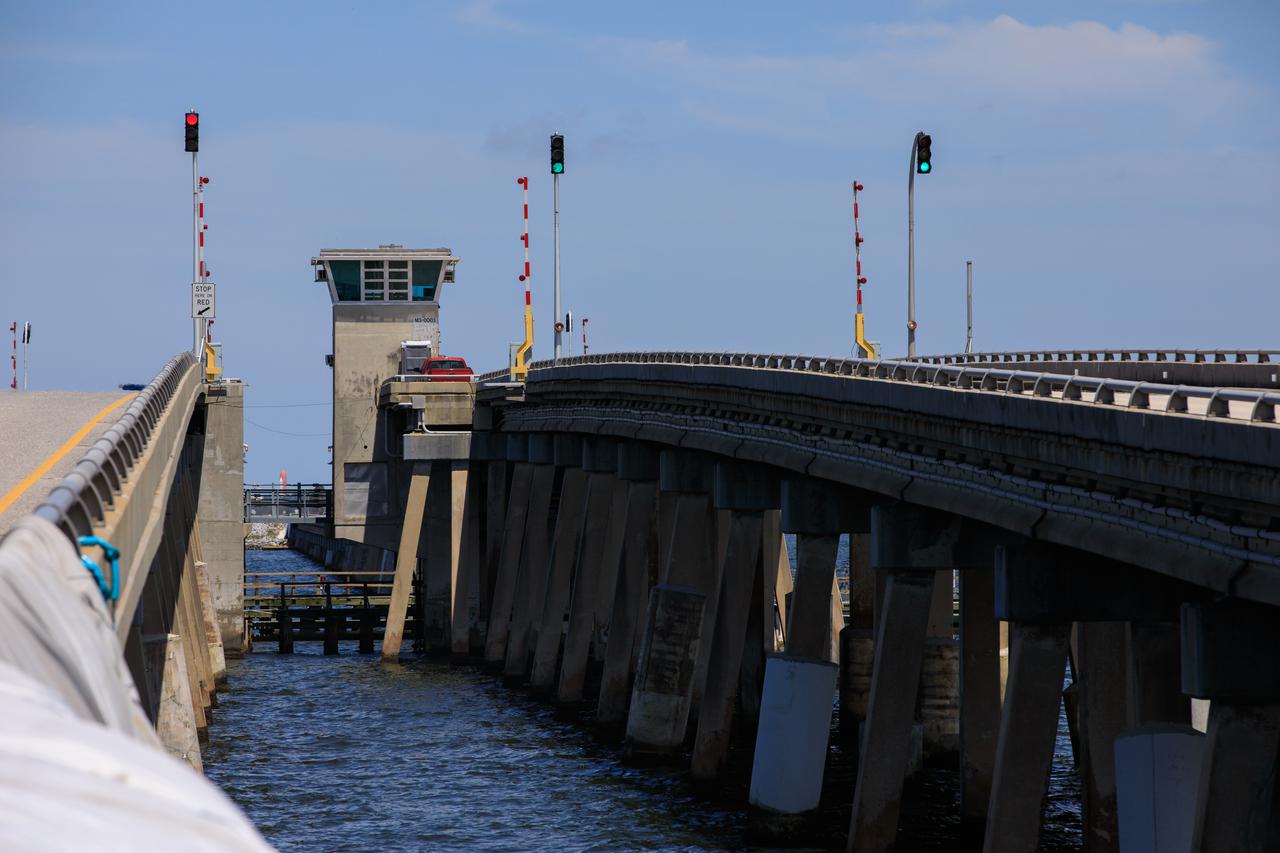
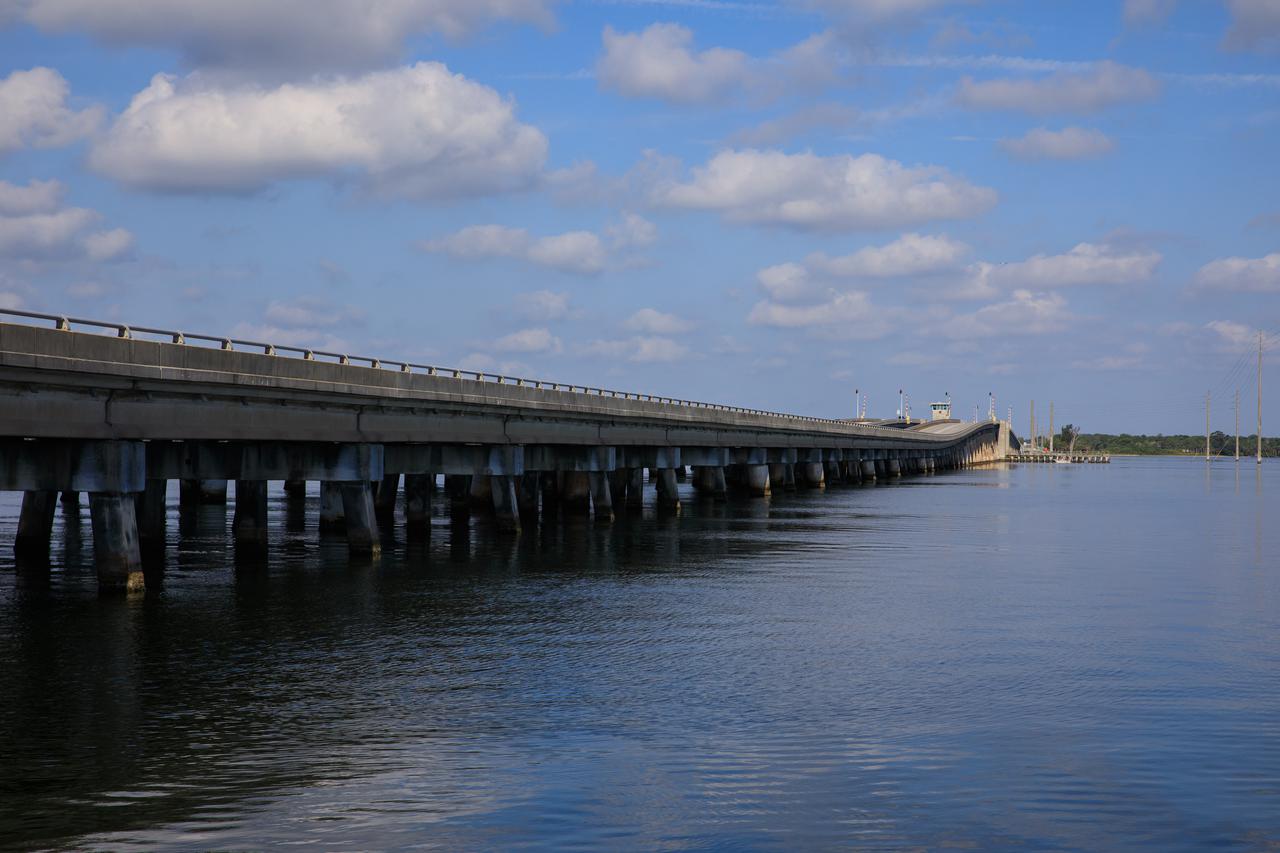
NASA’s bridge engineering team at Kennedy Space Center is managing multiple critical projects on the Indian River Bridge. This includes running new utility lines and safeguarding the existing wires and piping prior to the beginning of construction of the new Brevard County bridge. The much-traveled structure is a key access and evacuation route for the Florida spaceport and Cape Canaveral Space Force Station. Also known as the NASA Causeway Bridge, the Indian River Bridge was built in 1964.
Indian River Bridge Utilities Work
NASA’s bridge engineering team at Kennedy Space Center is managing multiple critical projects on the Indian River Bridge. This includes running new utility lines and safeguarding the existing wires and piping prior to the beginning of construction of the new Brevard County bridge. The much-traveled structure is a key access and evacuation route for the Florida spaceport and Cape Canaveral Space Force Station. Also known as the NASA Causeway Bridge, the Indian River Bridge was built in 1964.
Indian River Bridge Utilities Work
NASA’s bridge engineering team at Kennedy Space Center is managing multiple critical projects on the Indian River Bridge. This includes running new utility lines and safeguarding the existing wires and piping prior to the beginning of construction of the new Brevard County bridge. The much-traveled structure is a key access and evacuation route for the Florida spaceport and Cape Canaveral Space Force Station. Also known as the NASA Causeway Bridge, the Indian River Bridge was built in 1964.
Indian River Bridge Utilities Work
NASA’s bridge engineering team at Kennedy Space Center is managing multiple critical projects on the Indian River Bridge. This includes running new utility lines and safeguarding the existing wires and piping prior to the beginning of construction of the new Brevard County bridge. The much-traveled structure is a key access and evacuation route for the Florida spaceport and Cape Canaveral Space Force Station. Also known as the NASA Causeway Bridge, the Indian River Bridge was built in 1964.
Indian River Bridge Utilities Work
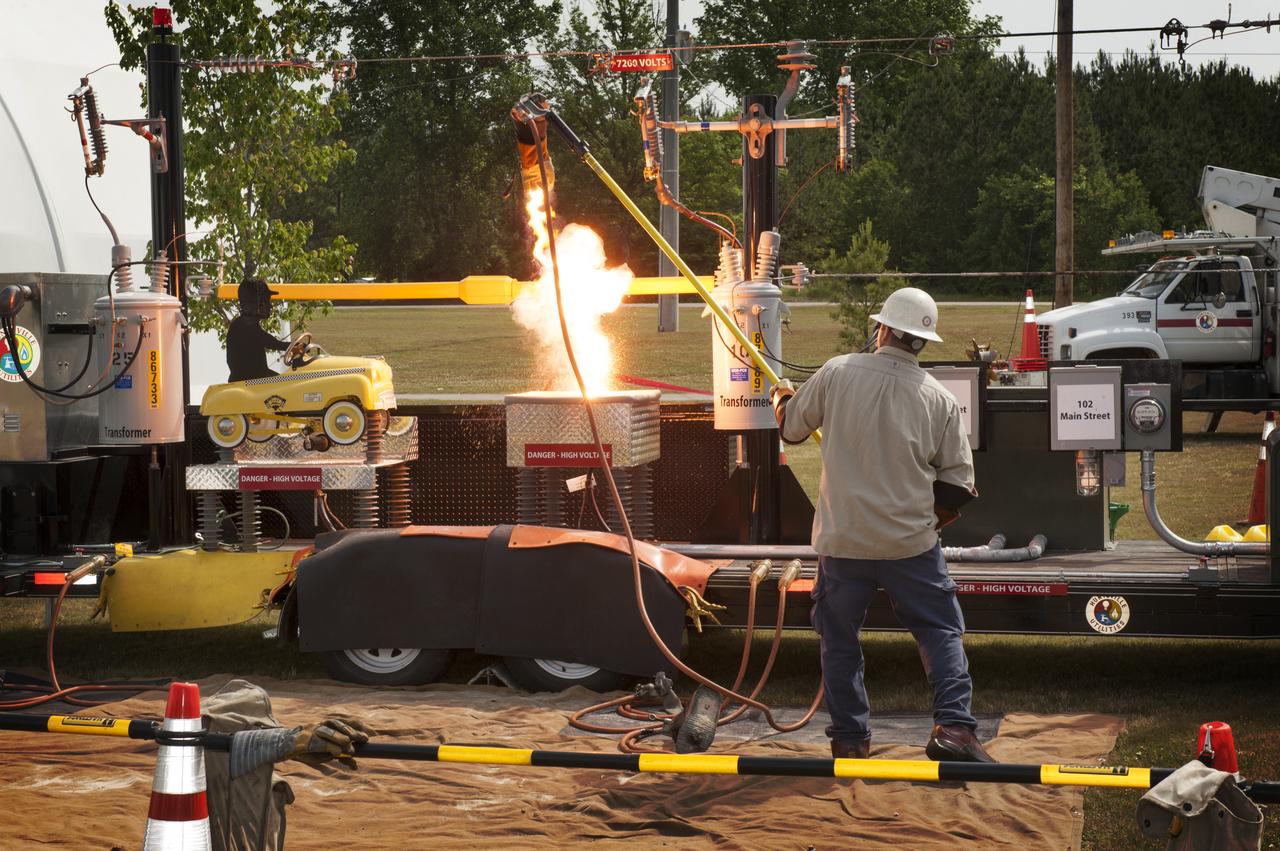
HUNTSVILLE UTILITIES EMPLOYEES GIVE A DEMONSTRATION OF ELECTRICAL SAFETY AND HOW OUR LOCAL ELECTRICAL SYSTEM WORKS AT SHE/EARTH DAY.
1200233
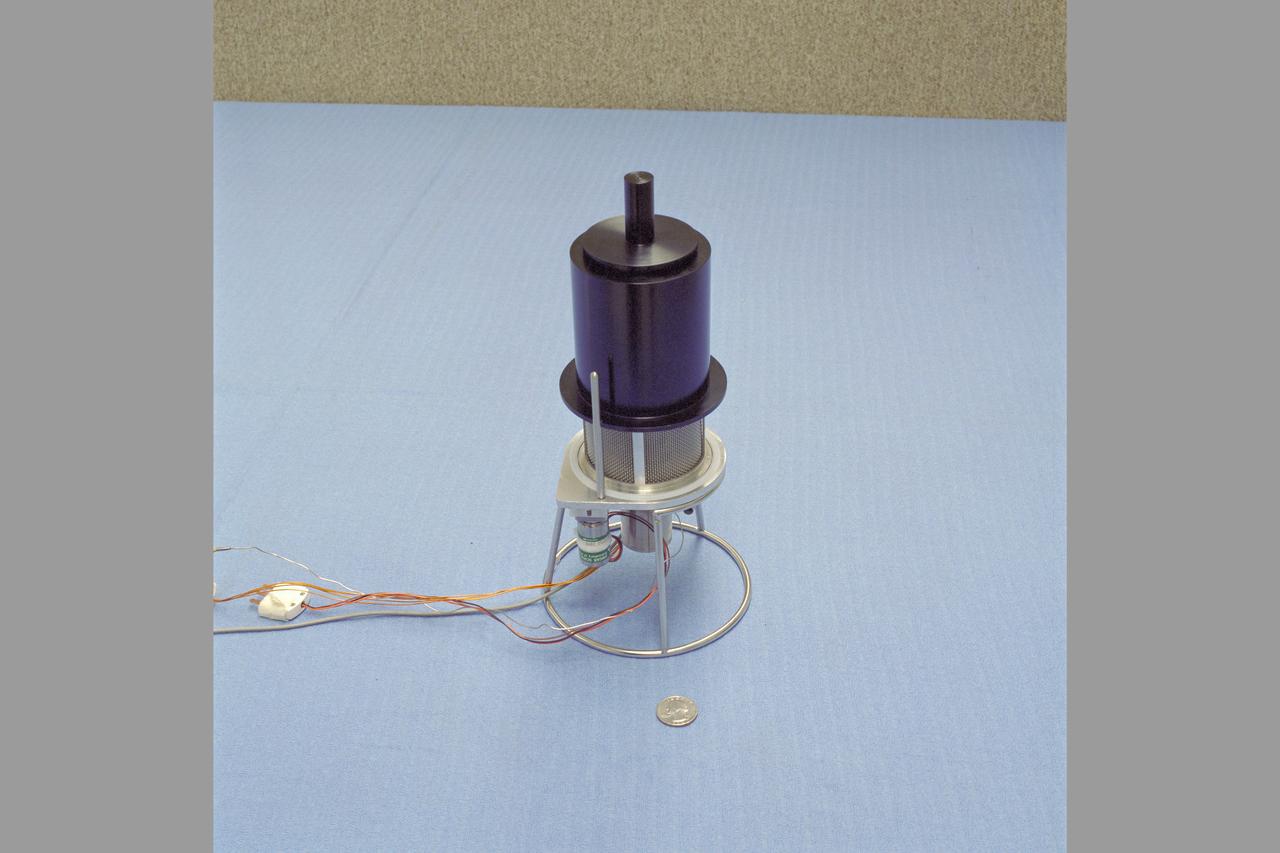
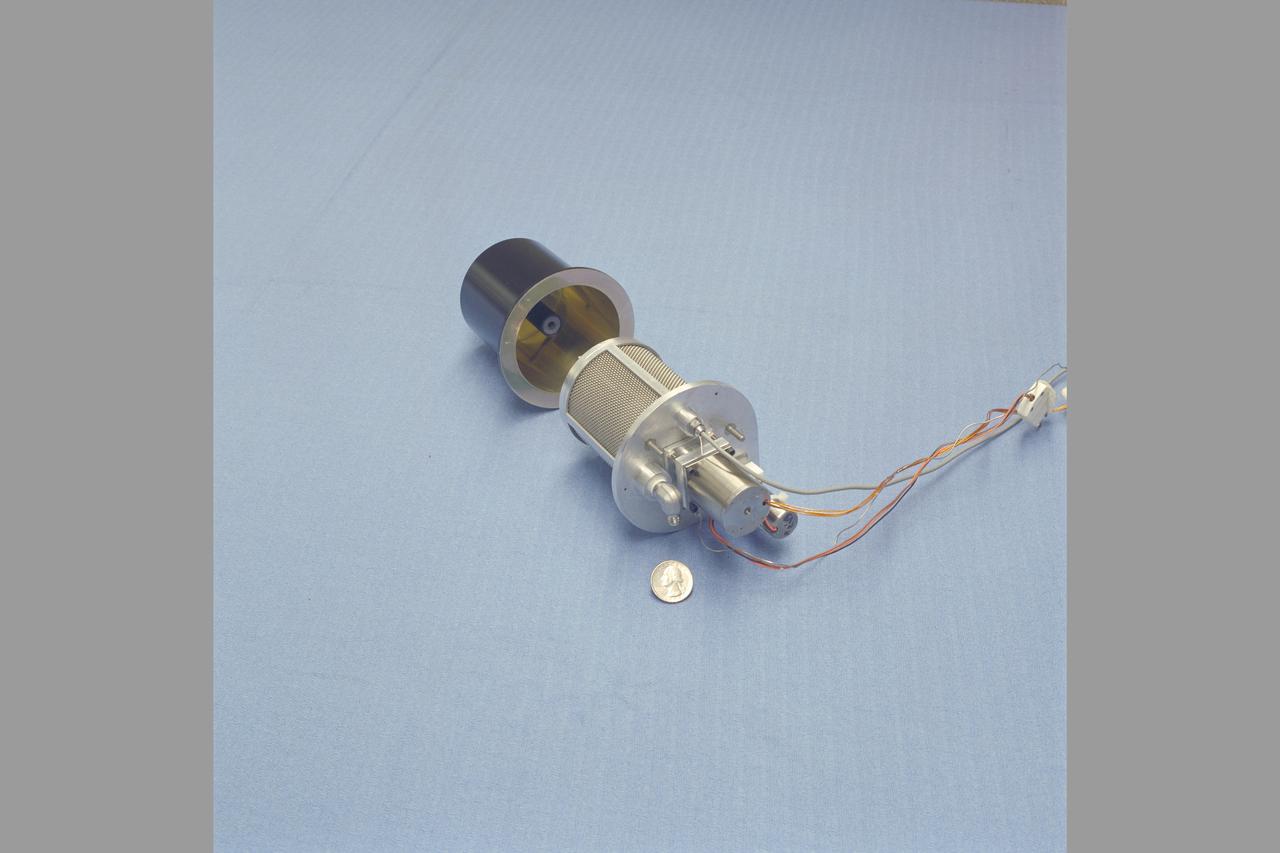
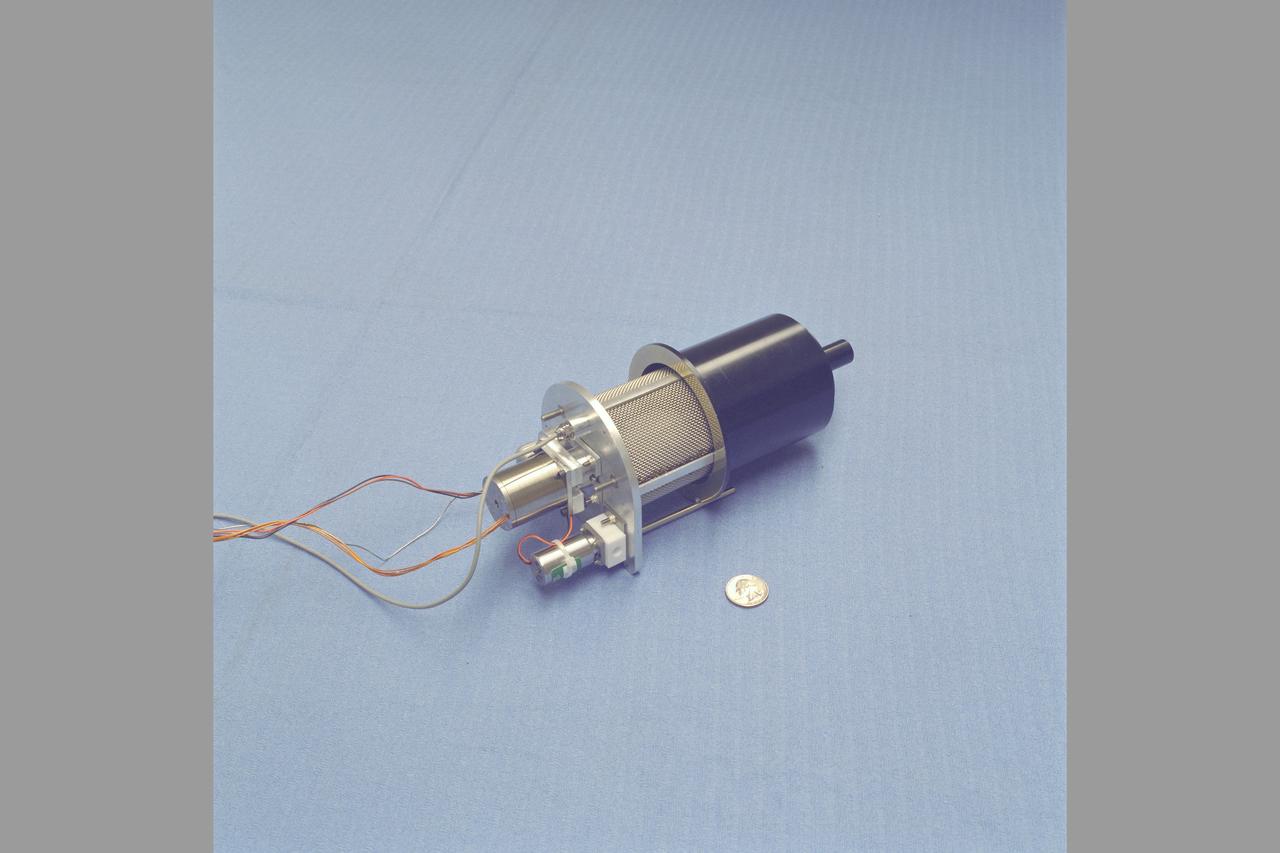
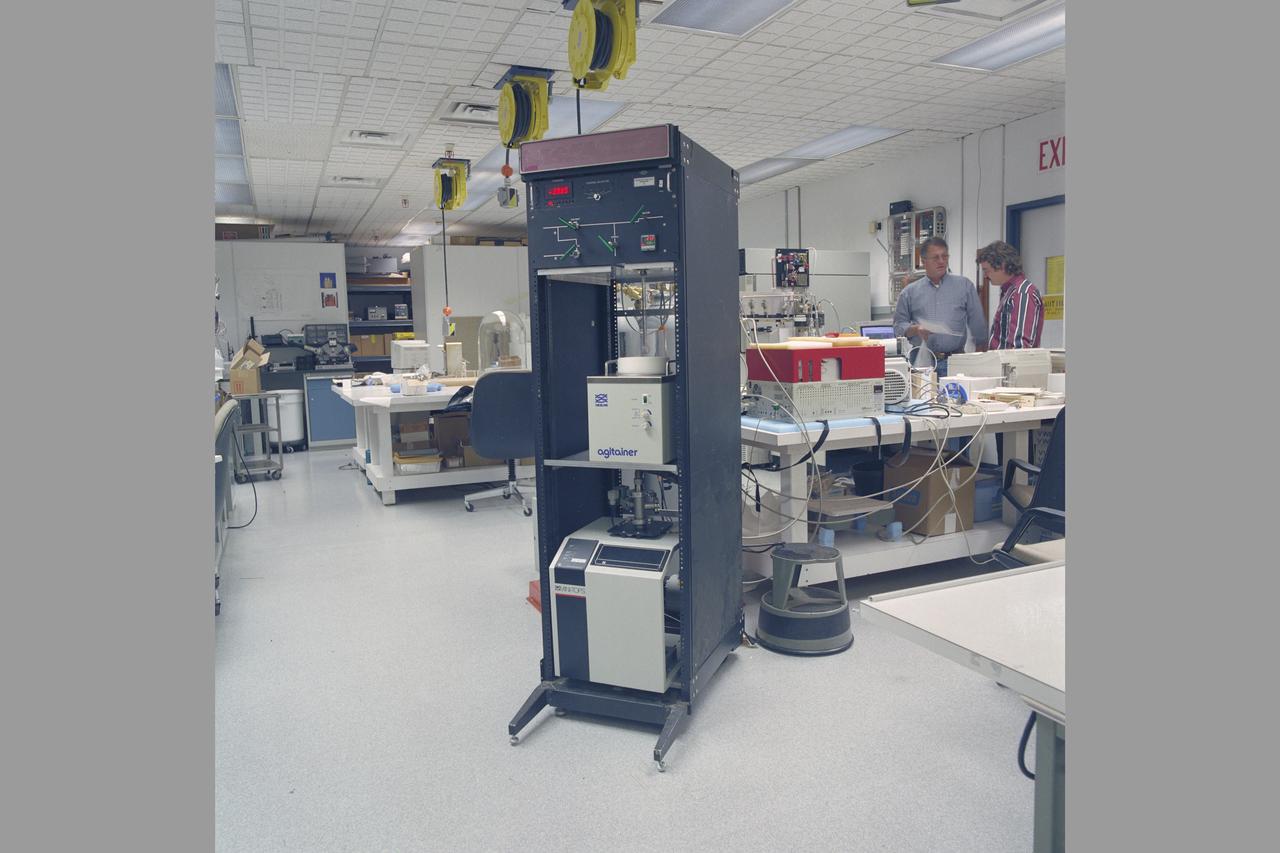
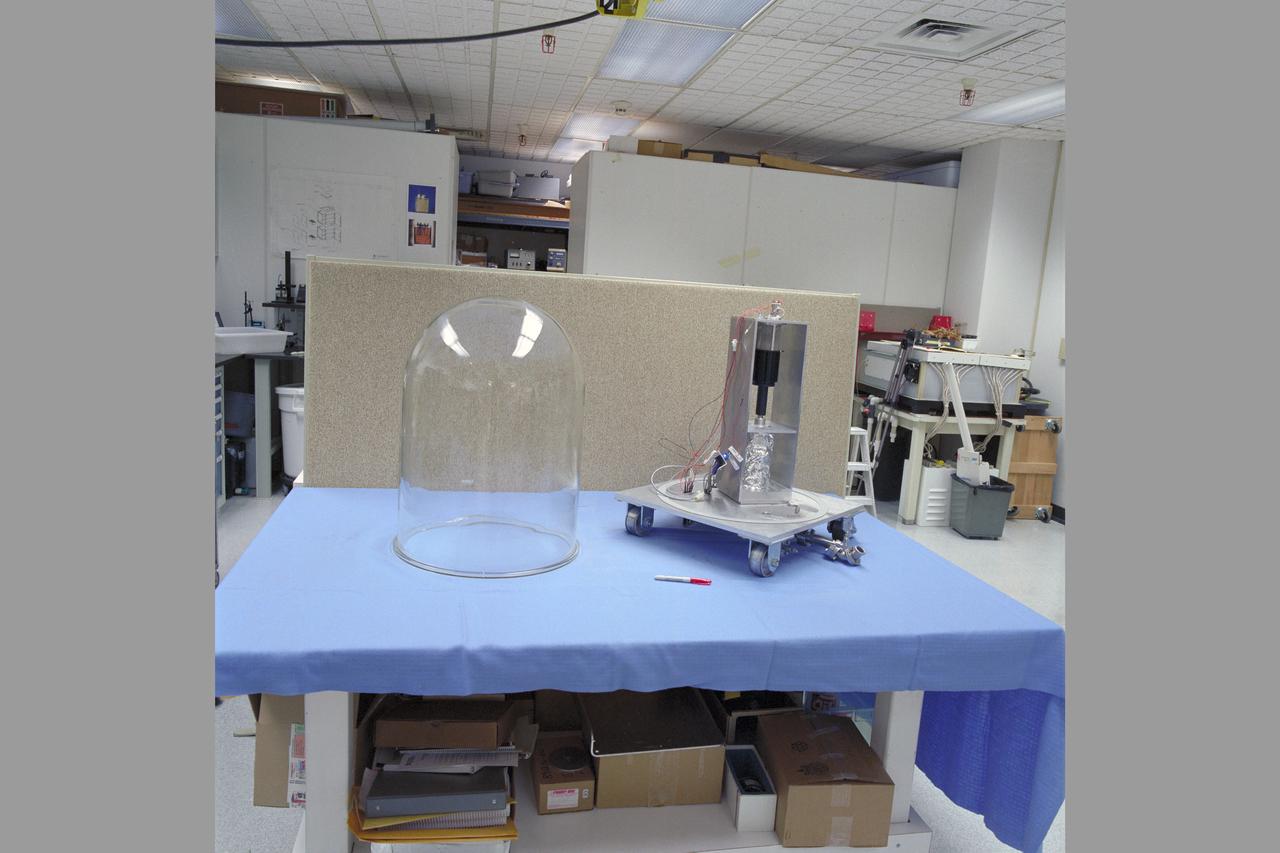
adsorption compression for Mars ISRU ( In-SITU Resource Utilization) N-239 lab
ARC-1999-AC99-0008-11
adsorption compression for Mars ISRU ( In-SITU Resource Utilization) N-239 lab
ARC-1999-AC99-0008-9
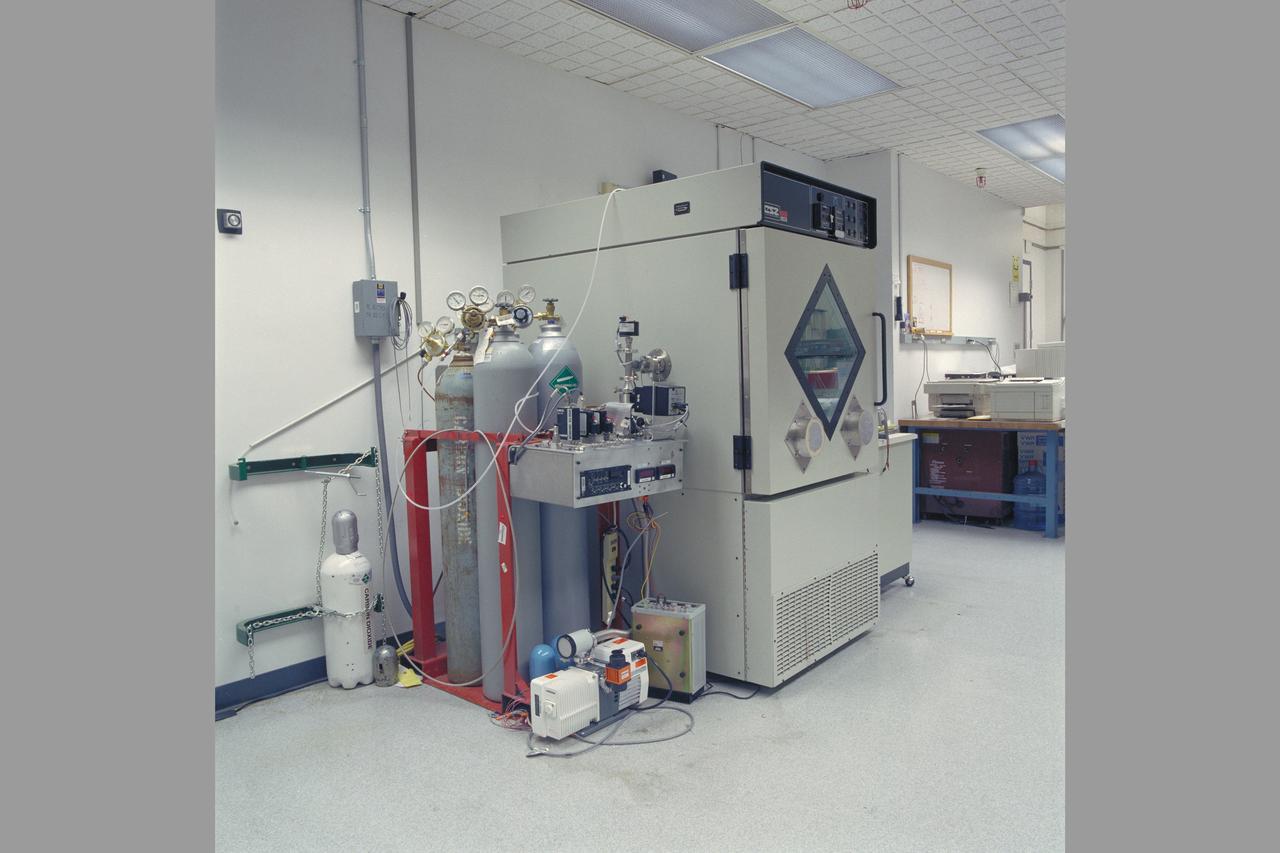
adsorption compression for Mars ISRU ( In-SITU Resource Utilization) N-239 lab
ARC-1999-AC99-0008-10
adsorption compression for Mars ISRU ( In-SITU Resource Utilization) N-239 lab
ARC-1999-AC99-0008-8
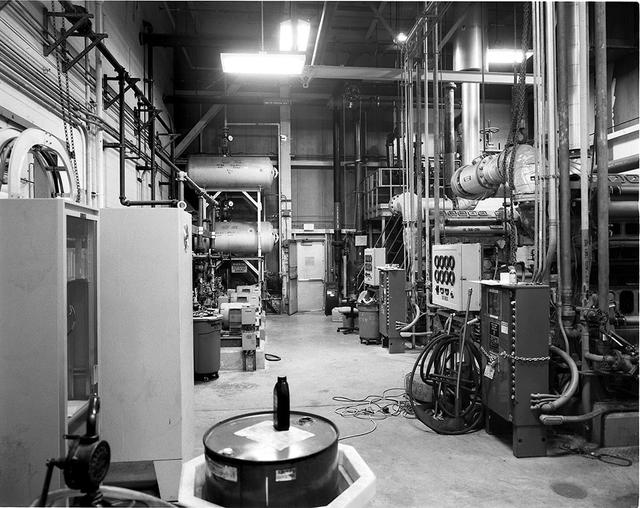
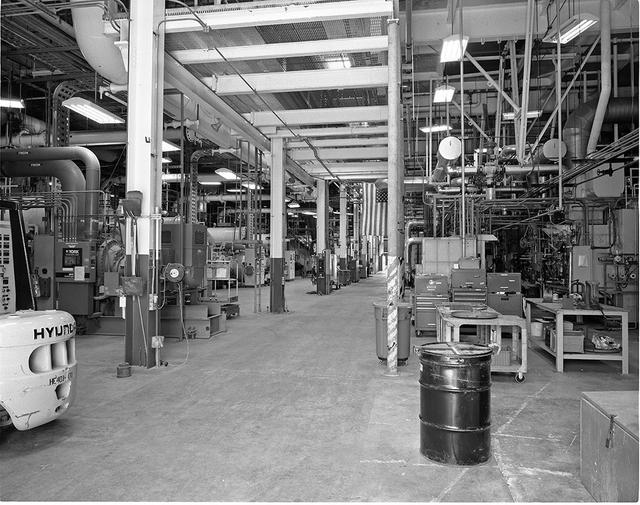
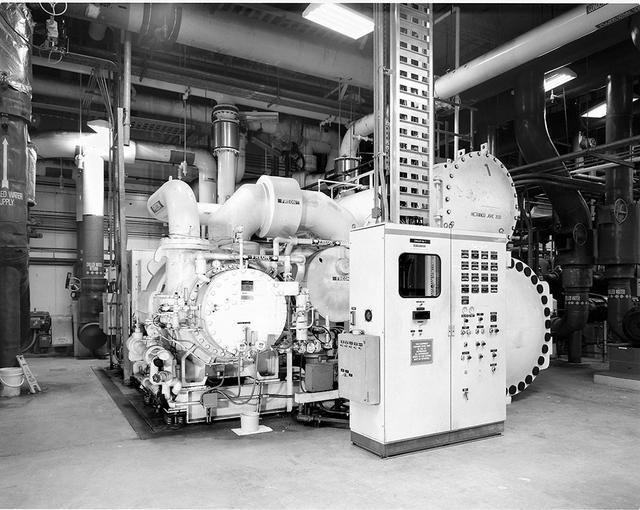
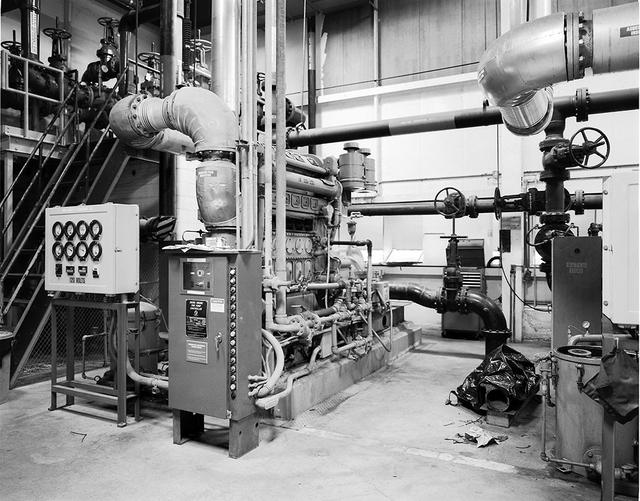
Internal view of the VAB Utility Annex
KSC-20150610-PH-PR_17vabAnnex
Internal view of the VAB Utility Annex
KSC-20150610-PH-PR_13vabAnnex
Internal view of the VAB Utility Annex
KSC-20150610-PH-PR_23vabAnnex
Internal view of the VAB Utility Annex
KSC-20150610-PH-PR_9vabAnnex
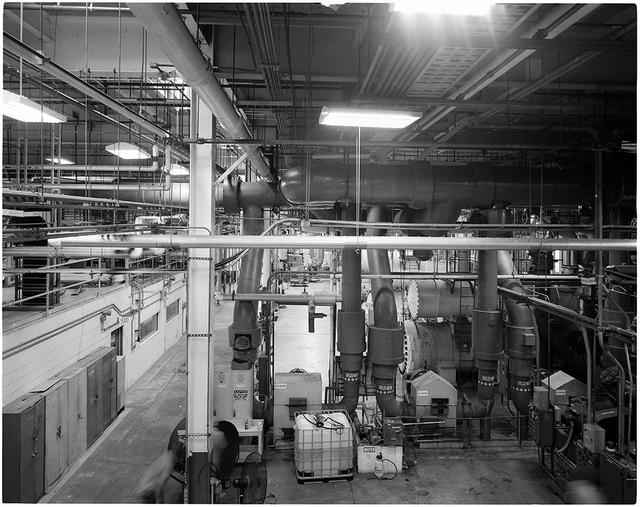
Internal view of the VAB Utility Annex
KSC-20150610-PH-PR_11vabAnnex
Internal view of the VAB Utility Annex
KSC-20150610-PH-PR_27vabAnnex
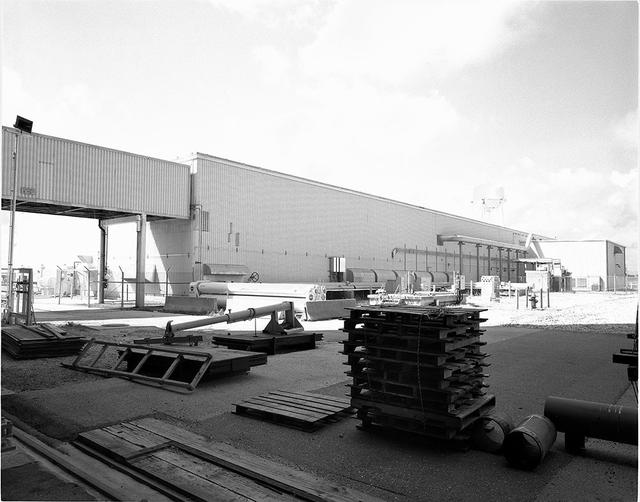
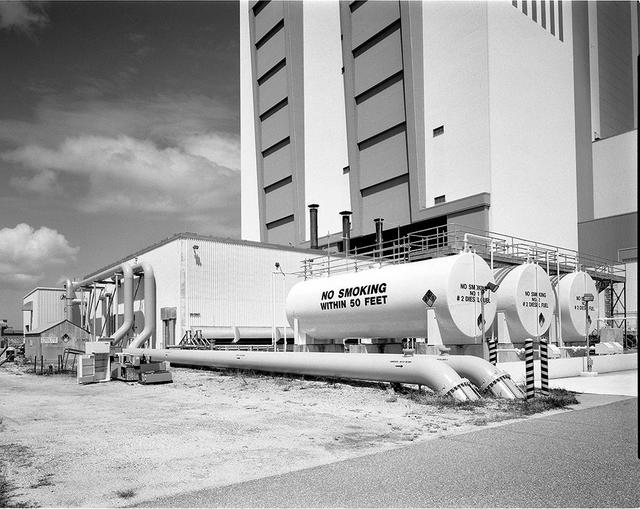
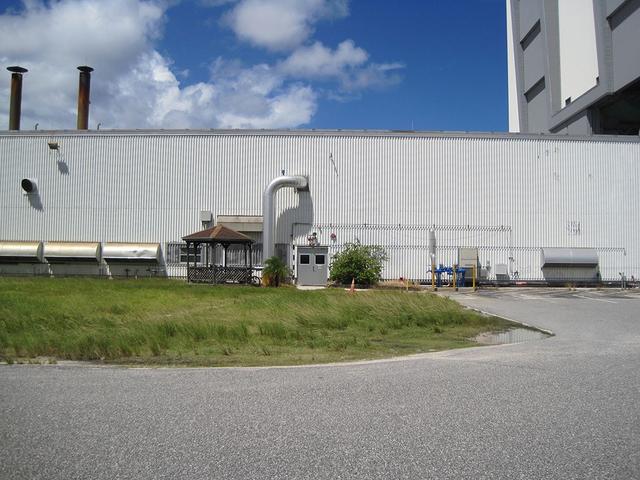
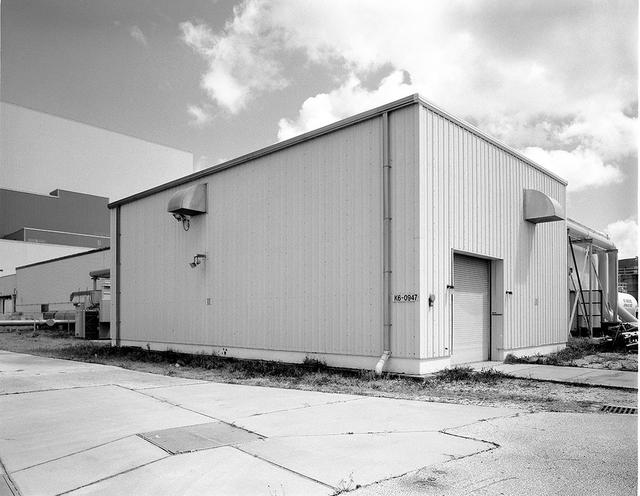
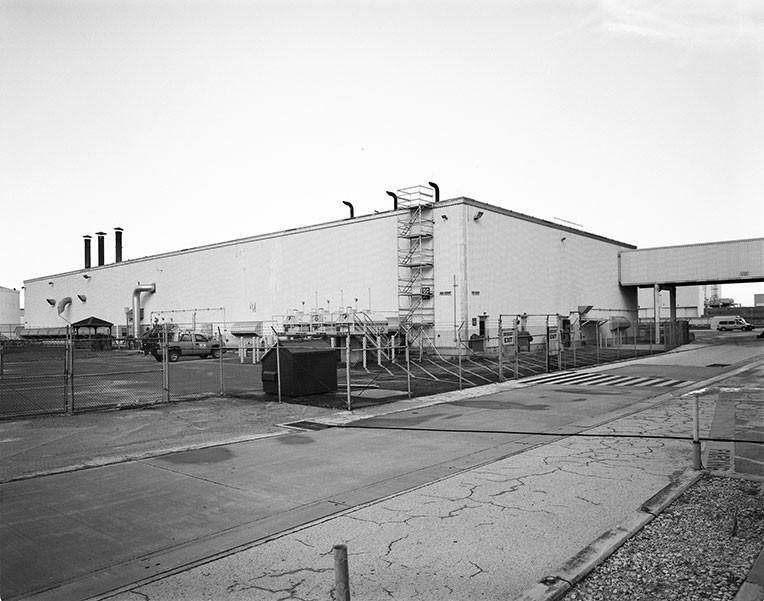
External view of the VAB Utility Annex
KSC-20150610-PH-PR_1vabAnnex
Internal view of the VAB Utility Annex
KSC-20150610-PH-PR_25vabAnnex
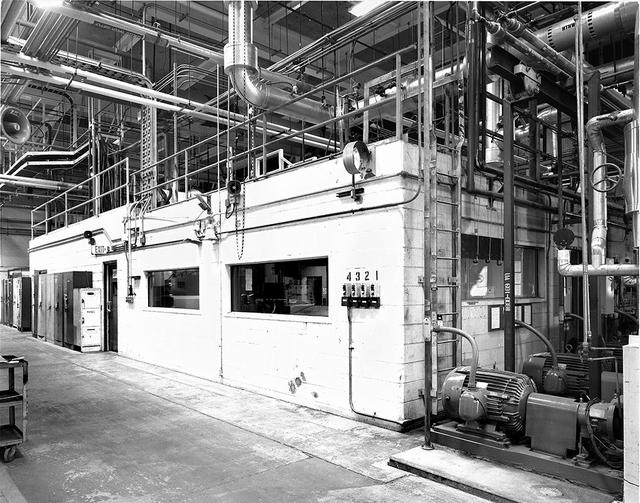
Internal view of the VAB Utility Annex
KSC-20150610-PH-PR_16vabAnnex
External view of the VAB Utility Annex
KSC-20150610-PH-PR_3vabAnnex
Internal view of the VAB Utility Annex
KSC-20150610-PH-PR_7vabAnnex
Internal view of the VAB Utility Annex
KSC-20150610-PH-PR_21vabAnnex
Internal view of the VAB Utility Annex
KSC-20150610-PH-PR_20vabAnnex
External view of the VAB Utility Annex
KSC-20150610-PH-PR_4vabAnnex
External view of the VAB Utility Annex
KSC-20150610-PH-PR_2vabAnnex
Internal view of the VAB Utility Annex
KSC-20150610-PH-PR_24vabAnnex
Internal view of the VAB Utility Annex
KSC-20150610-PH-PR_14vabAnnex
Internal view of the VAB Utility Annex
KSC-20150610-PH-PR_18vabAnnex
Internal view of the VAB Utility Annex
KSC-20150610-PH-PR_15vabAnnex
Internal view of the VAB Utility Annex
KSC-20150610-PH-PR_8vabAnnex
External view of the VAB Utility Annex
KSC-20150610-PH-PR_6vabAnnex
Internal view of the VAB Utility Annex
KSC-20150610-PH-PR_26vabAnnex
Internal view of the VAB Utility Annex
KSC-20150610-PH-UK_38vabAnnex
Internal view of the VAB Utility Annex
KSC-20150610-PH-PR_12vabAnnex
Internal view of the VAB Utility Annex
KSC-20150610-PH-PR_10vabAnnex
External view of the VAB Utility Annex
KSC-20150610-PH-PR_5vabAnnex
Internal view of the VAB Utility Annex
KSC-20150610-PH-PR_19vabAnnex
Internal view of the VAB Utility Annex
KSC-20150610-PH-PR_22vabAnnex
External view of the VAB Utility Annex
KSC-20150610-PH-UK_37vabAnnex
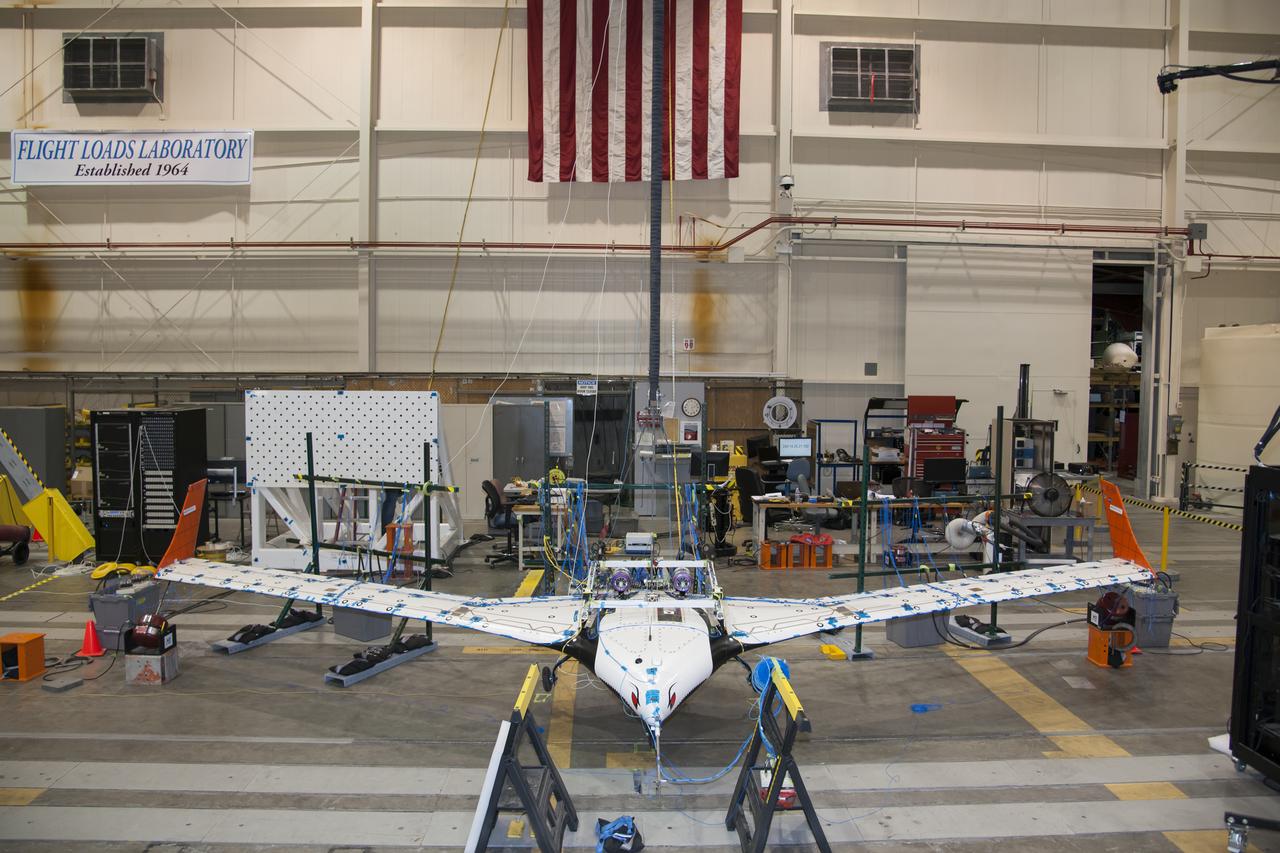
The X-56 Multi-Utility Technology Testbed (MUTT) undergoes ground vibration tests in Armstrong's Flight Loads Laboratory.
AFRC2016-0258-123
This engineering model of Mars Oxygen In-Situ Resource Utilization Experiment (MOXIE) instrument is about to undergo vibration testing in a lab at the Jet Propulsion Laboratory in Pasadena, California. Vibration tests demonstrate the ability of instruments to survive the extreme conditions of both a rocket launch from Earth and a landing on Mars.  https://photojournal.jpl.nasa.gov/catalog/PIA24202
MOXIE Shakes it UP
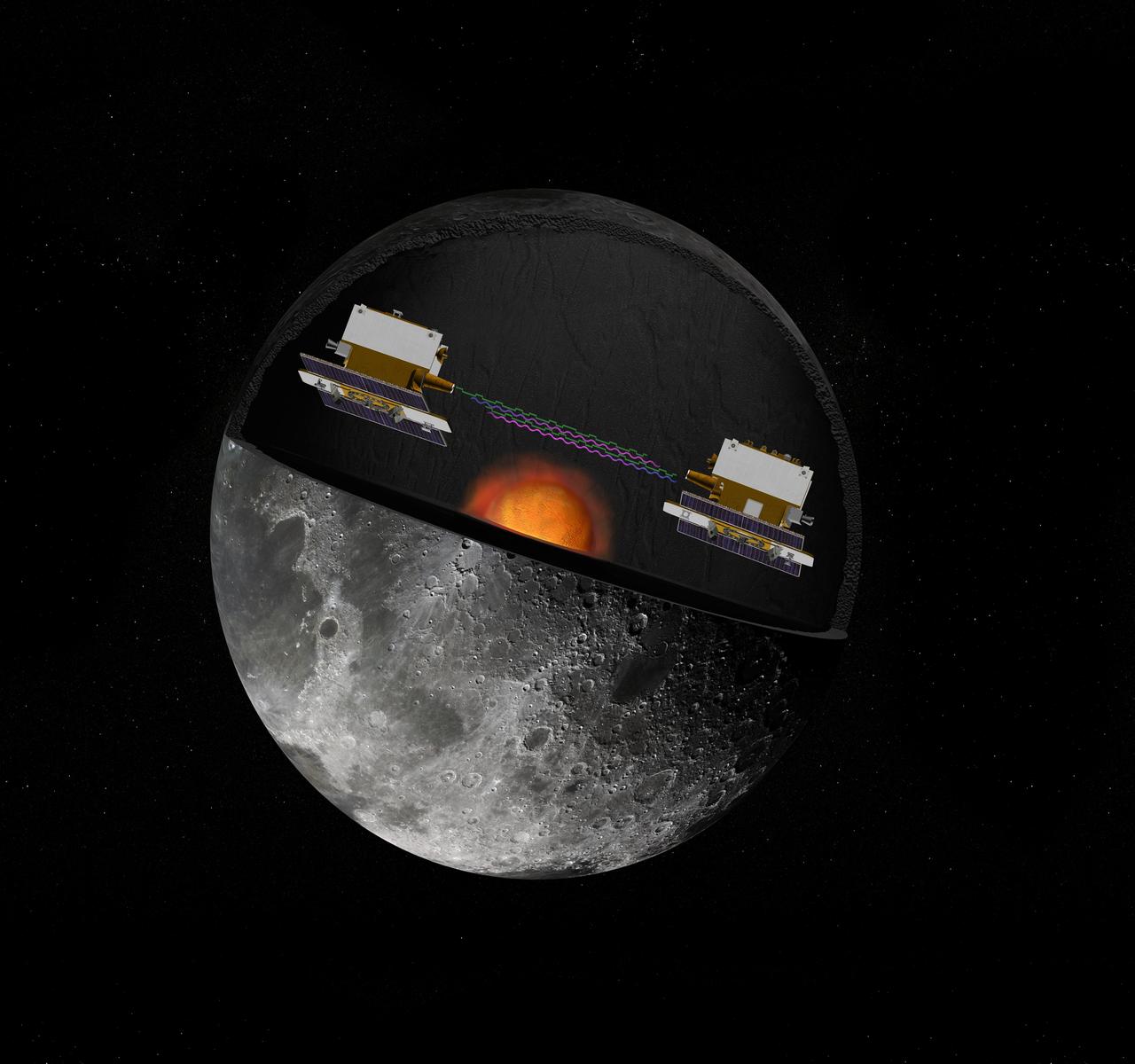
The Gravity Recovery and Interior Laboratory GRAIL mission utilizes the technique of twin spacecraft flying in formation with a known altitude above the lunar surface and known separation distance to investigate the gravity field of the moon.
GRAIL Twin Spacecraft -- Crust to Core Artist Concept
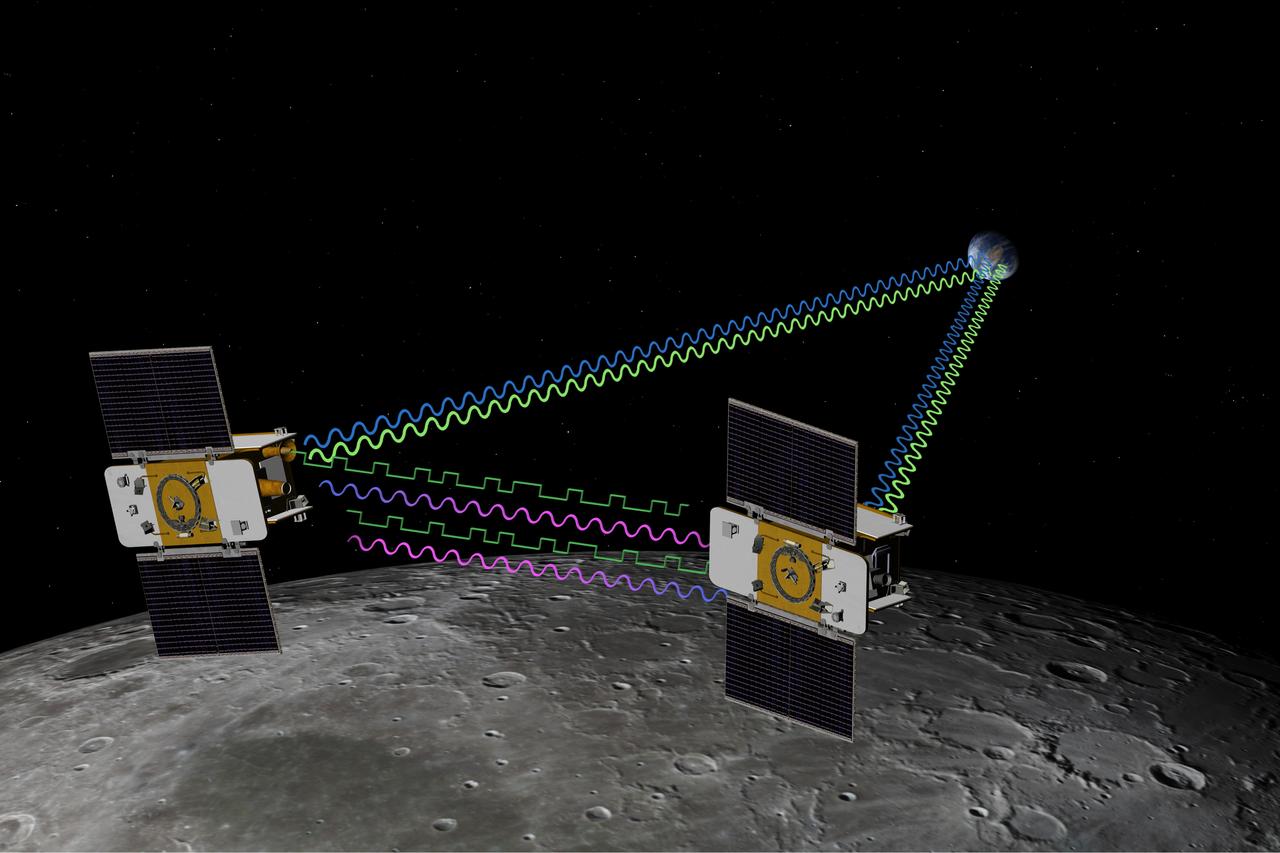
The Gravity Recovery and Interior Laboratory GRAIL mission utilizes the technique of twin spacecraft flying in formation with a known altitude above the lunar surface and known separation distance to investigate the gravity field of the moon.
GRAIL Twin Spacecraft fly in Tandem Around the Moon Artist Concept
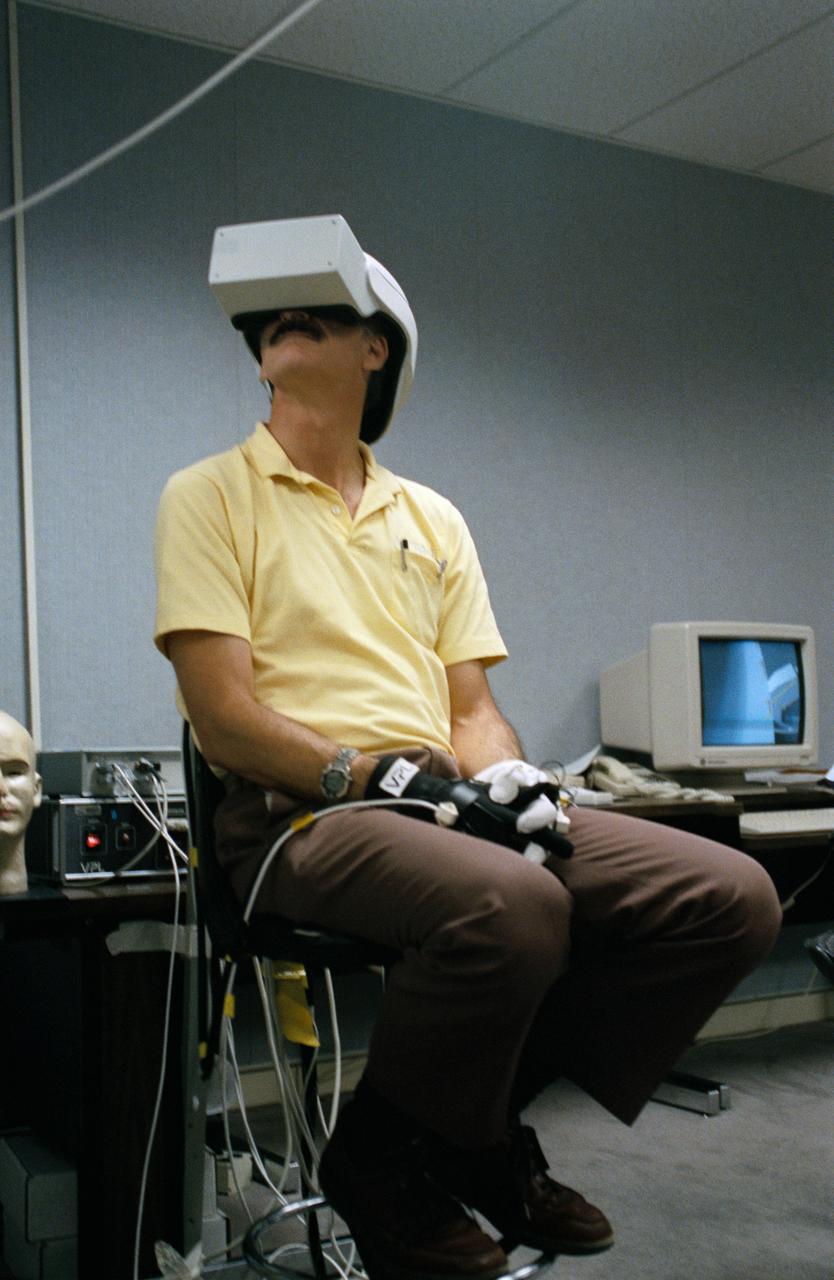
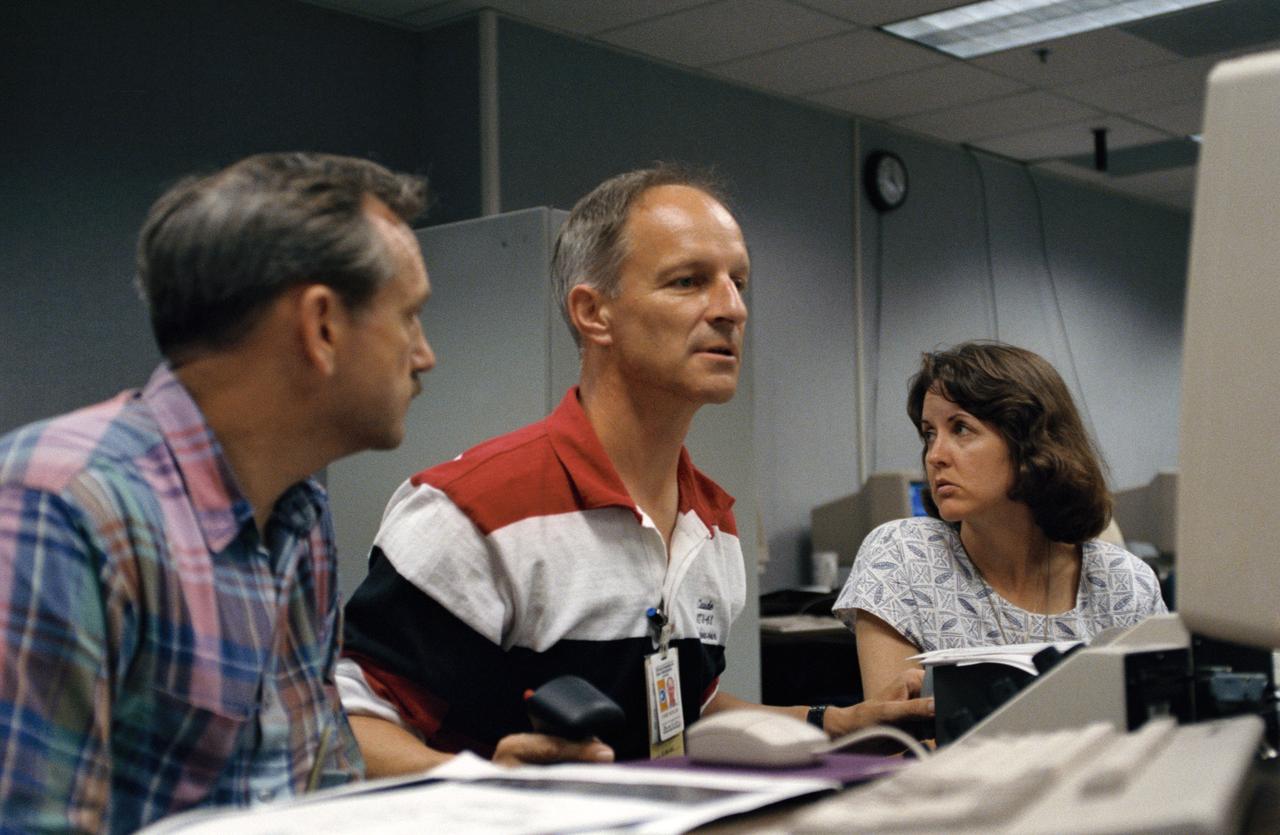
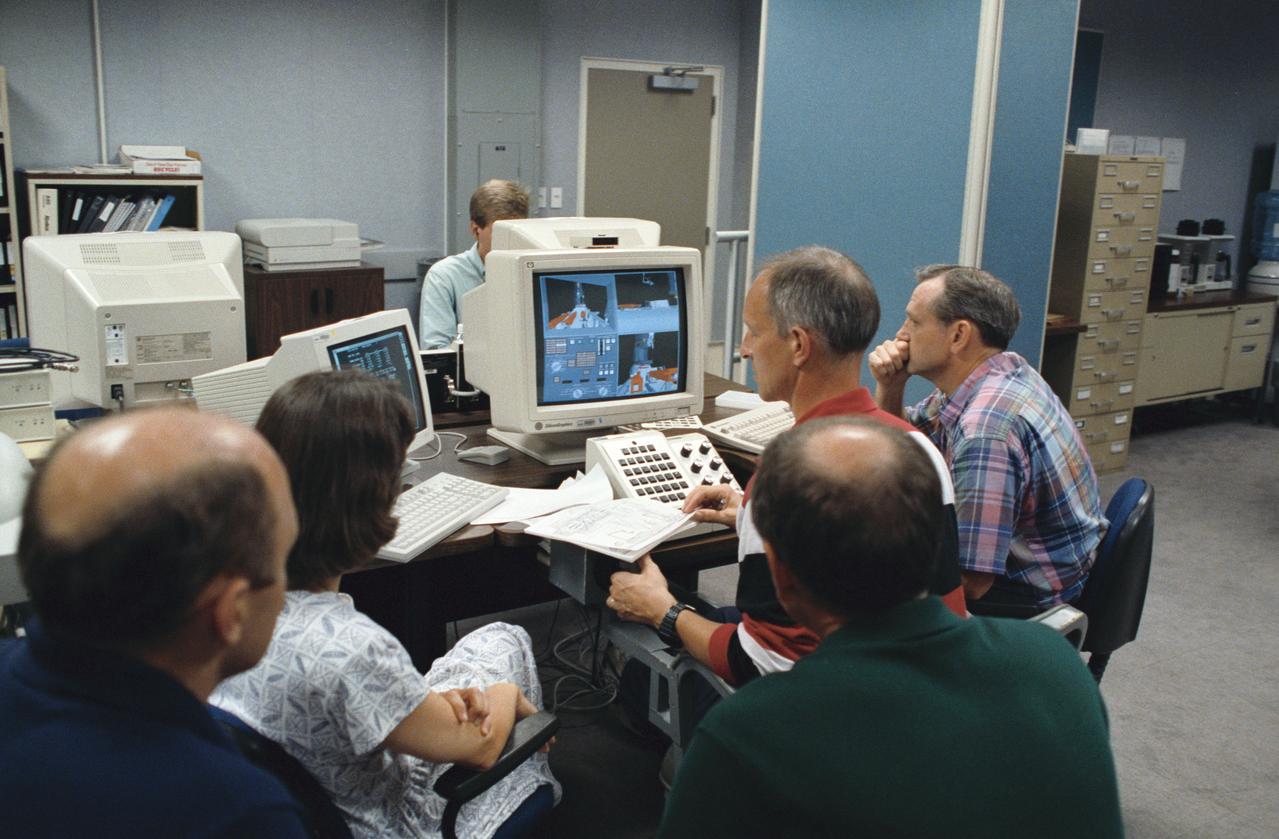
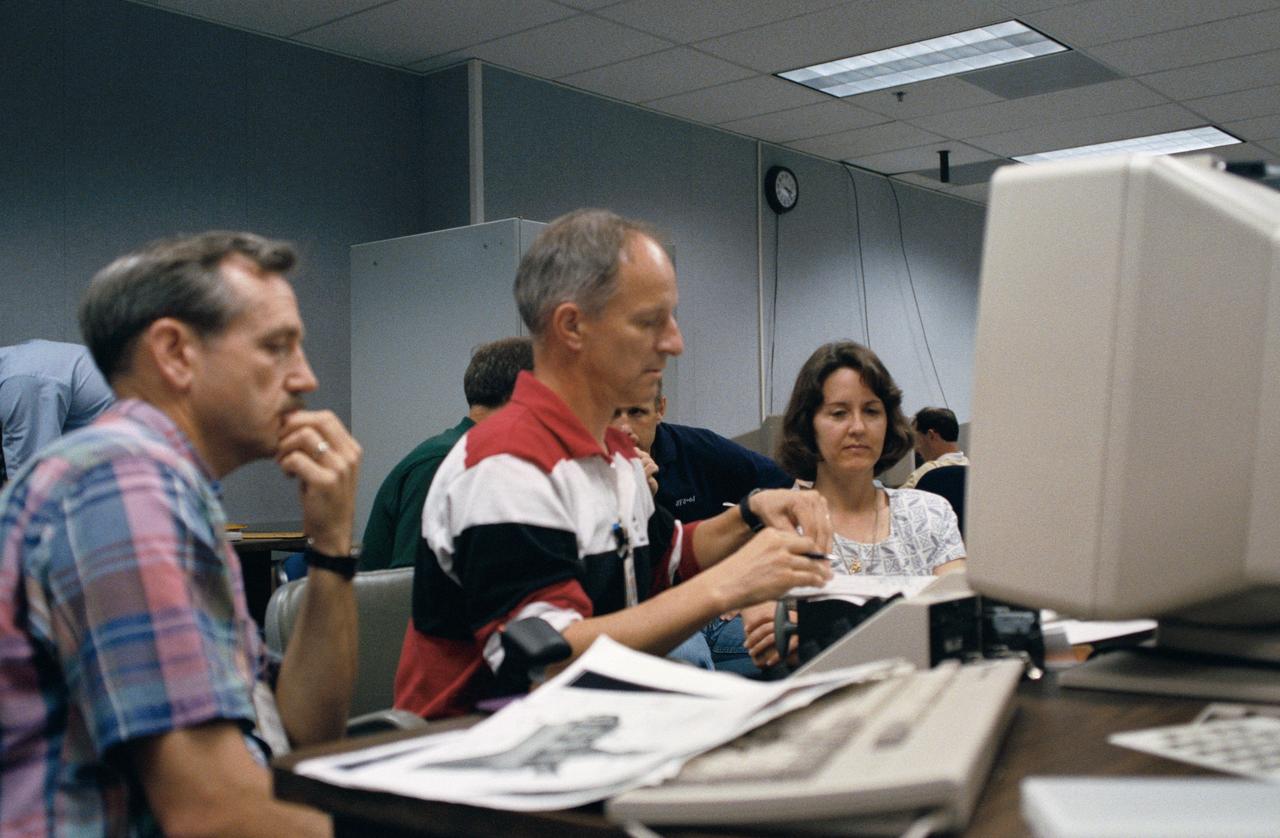
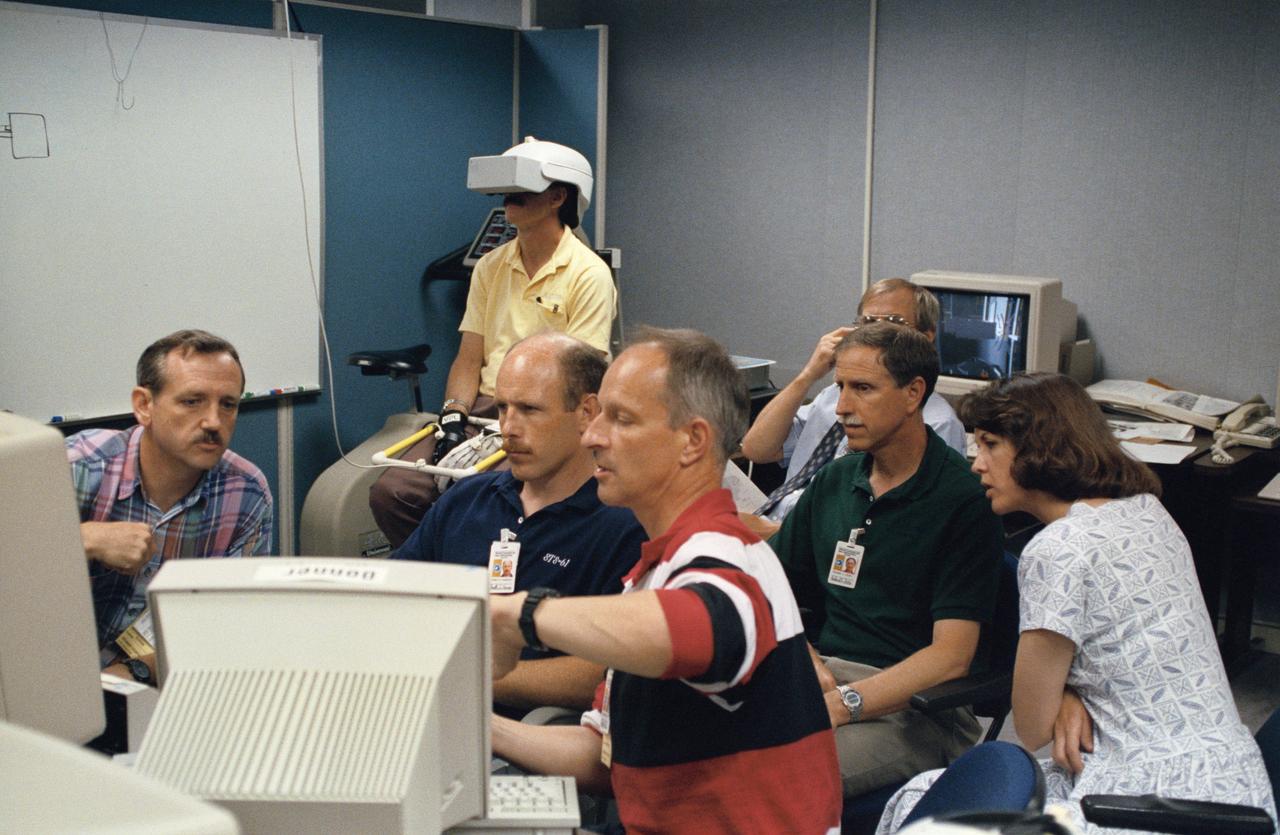
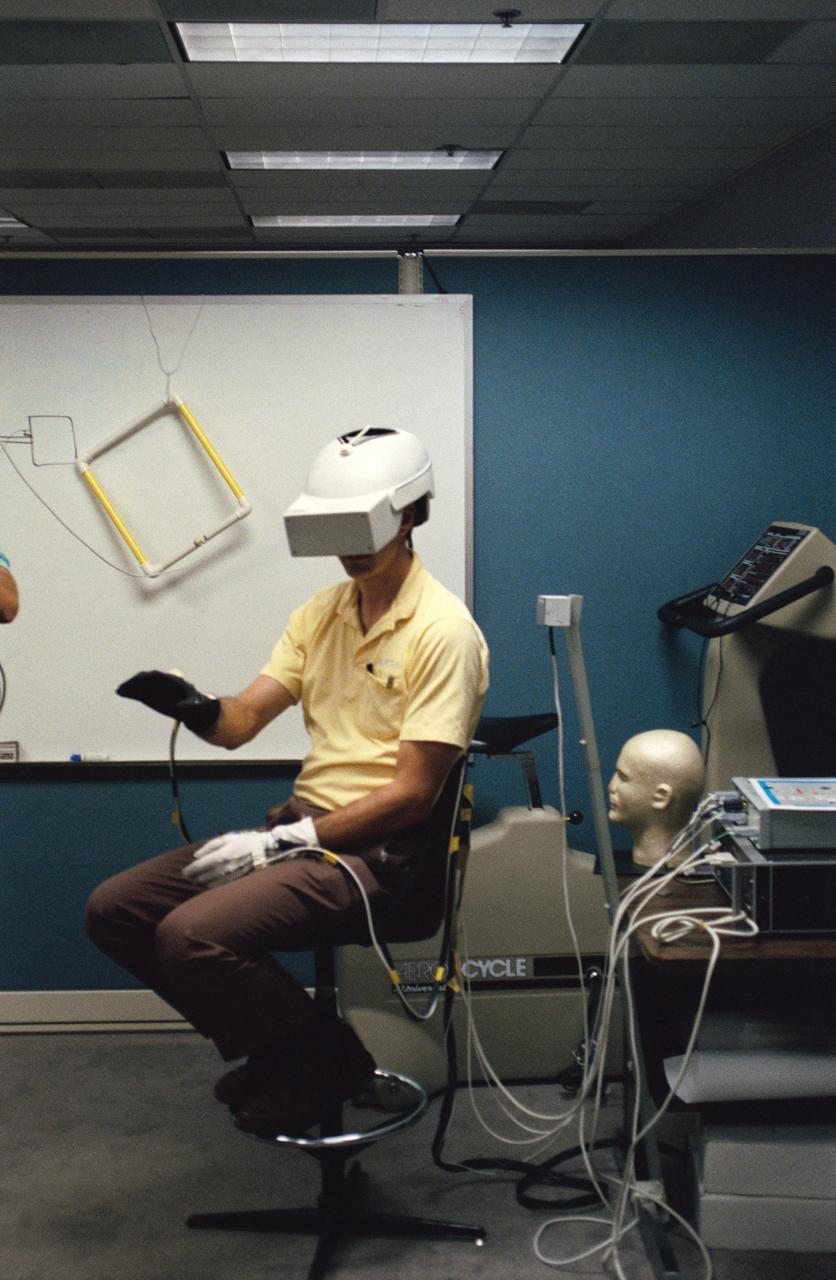
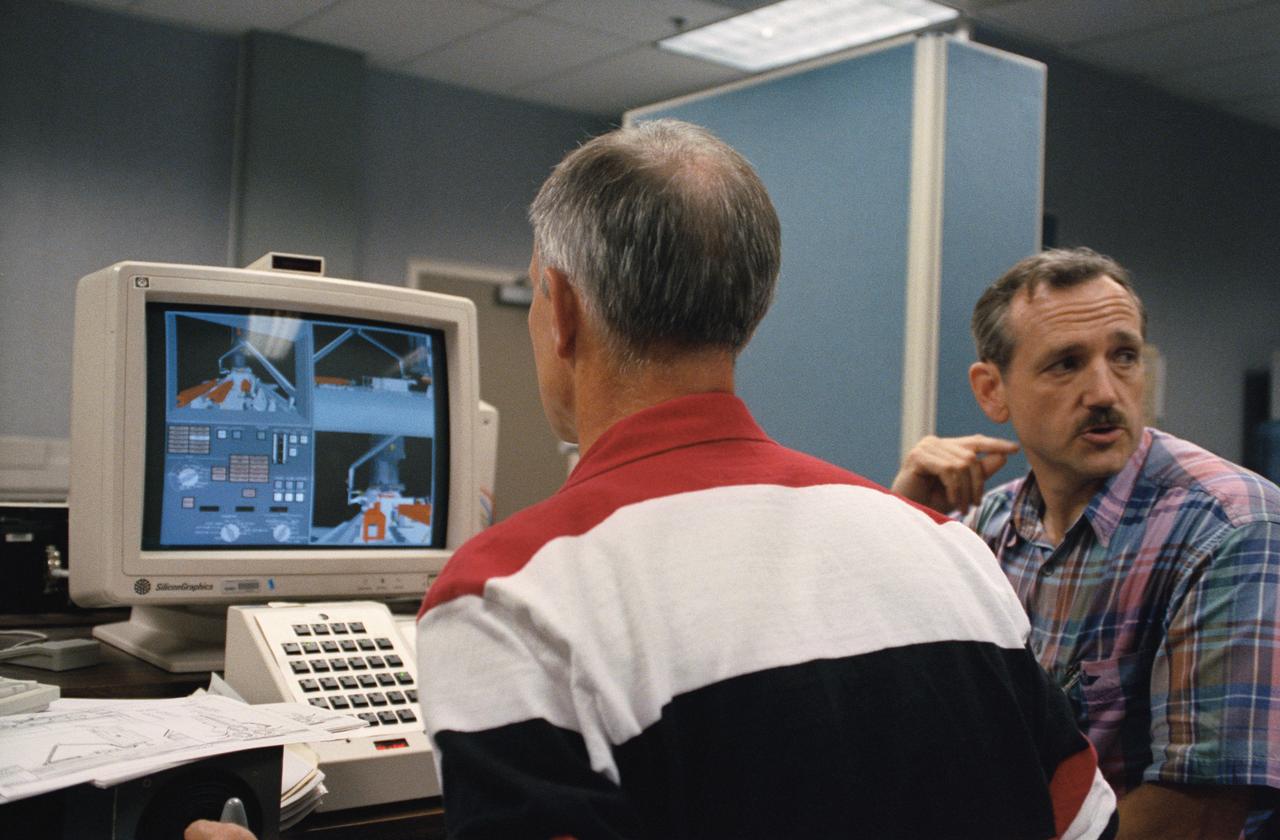
Astronaut Jeffrey A. Hoffman, one of four crewmembers for STS-61 that will conduct scheduled spacewalks during the flight, wears a special helmet and gloves designed to assist in proper positioning near the telescope while on the end of the robot arm. Crewmembers are utilizing a new virtual reality training aid which assists in refining positioning patterns for Space Shuttle Endeavour's Remote Manipulator System (RMS) (36890); Astronaut Claude Nicollier looks at a computer display of the Shuttle's robot arm movements as Thomas D. Akers and Kathryn C. Thornton, mission specialists look on. Nicollier will be responsible for maneuvering the astronauts while they stand in a foot restraint on the end of the RMS arm (36891,36894); Hoffman wears a special helmet and gloves designed to assist in proper positioning near the telescope while on the end of the robot arm (35892); Nicollier looks at a computer display of the Shuttle's robot arm movements as Akers looks on (36893); While (l-r) Astronauts Kenneth Bowersox, Kathryn Thornton, Richard O. Covey and Thomas D. Akers watch, Nicollier moves the Robot arm to desired locations in the Shuttle's payload bay using the Virtual Reality program (36895); Bowersox takes his turn maneuvering the RMS while mission specialist Hoffman, wearing the Virtual Reality helmet, follows his own progress on the end of the robot arm. Crewmembers participating during the training session are (l-r) Astronauts Akers, Hoffman, Bowersox, Nicollier, Covey, and Thornton. In the background, David Homan, an engineer in the JSC Engineering Directorate's Automation and Robotics Division, looks on (36896).
STS-61 crew utilizing Virtual Reality in training for HST repair mission
Astronaut Jeffrey A. Hoffman, one of four crewmembers for STS-61 that will conduct scheduled spacewalks during the flight, wears a special helmet and gloves designed to assist in proper positioning near the telescope while on the end of the robot arm. Crewmembers are utilizing a new virtual reality training aid which assists in refining positioning patterns for Space Shuttle Endeavour's Remote Manipulator System (RMS) (36890); Astronaut Claude Nicollier looks at a computer display of the Shuttle's robot arm movements as Thomas D. Akers and Kathryn C. Thornton, mission specialists look on. Nicollier will be responsible for maneuvering the astronauts while they stand in a foot restraint on the end of the RMS arm (36891,36894); Hoffman wears a special helmet and gloves designed to assist in proper positioning near the telescope while on the end of the robot arm (35892); Nicollier looks at a computer display of the Shuttle's robot arm movements as Akers looks on (36893); While (l-r) Astronauts Kenneth Bowersox, Kathryn Thornton, Richard O. Covey and Thomas D. Akers watch, Nicollier moves the Robot arm to desired locations in the Shuttle's payload bay using the Virtual Reality program (36895); Bowersox takes his turn maneuvering the RMS while mission specialist Hoffman, wearing the Virtual Reality helmet, follows his own progress on the end of the robot arm. Crewmembers participating during the training session are (l-r) Astronauts Akers, Hoffman, Bowersox, Nicollier, Covey, and Thornton. In the background, David Homan, an engineer in the JSC Engineering Directorate's Automation and Robotics Division, looks on (36896).
STS-61 crew utilizing Virtual Reality in training for HST repair mission
Astronaut Jeffrey A. Hoffman, one of four crewmembers for STS-61 that will conduct scheduled spacewalks during the flight, wears a special helmet and gloves designed to assist in proper positioning near the telescope while on the end of the robot arm. Crewmembers are utilizing a new virtual reality training aid which assists in refining positioning patterns for Space Shuttle Endeavour's Remote Manipulator System (RMS) (36890); Astronaut Claude Nicollier looks at a computer display of the Shuttle's robot arm movements as Thomas D. Akers and Kathryn C. Thornton, mission specialists look on. Nicollier will be responsible for maneuvering the astronauts while they stand in a foot restraint on the end of the RMS arm (36891,36894); Hoffman wears a special helmet and gloves designed to assist in proper positioning near the telescope while on the end of the robot arm (35892); Nicollier looks at a computer display of the Shuttle's robot arm movements as Akers looks on (36893); While (l-r) Astronauts Kenneth Bowersox, Kathryn Thornton, Richard O. Covey and Thomas D. Akers watch, Nicollier moves the Robot arm to desired locations in the Shuttle's payload bay using the Virtual Reality program (36895); Bowersox takes his turn maneuvering the RMS while mission specialist Hoffman, wearing the Virtual Reality helmet, follows his own progress on the end of the robot arm. Crewmembers participating during the training session are (l-r) Astronauts Akers, Hoffman, Bowersox, Nicollier, Covey, and Thornton. In the background, David Homan, an engineer in the JSC Engineering Directorate's Automation and Robotics Division, looks on (36896).
STS-61 crew utilizing Virtual Reality in training for HST repair mission
Astronaut Jeffrey A. Hoffman, one of four crewmembers for STS-61 that will conduct scheduled spacewalks during the flight, wears a special helmet and gloves designed to assist in proper positioning near the telescope while on the end of the robot arm. Crewmembers are utilizing a new virtual reality training aid which assists in refining positioning patterns for Space Shuttle Endeavour's Remote Manipulator System (RMS) (36890); Astronaut Claude Nicollier looks at a computer display of the Shuttle's robot arm movements as Thomas D. Akers and Kathryn C. Thornton, mission specialists look on. Nicollier will be responsible for maneuvering the astronauts while they stand in a foot restraint on the end of the RMS arm (36891,36894); Hoffman wears a special helmet and gloves designed to assist in proper positioning near the telescope while on the end of the robot arm (35892); Nicollier looks at a computer display of the Shuttle's robot arm movements as Akers looks on (36893); While (l-r) Astronauts Kenneth Bowersox, Kathryn Thornton, Richard O. Covey and Thomas D. Akers watch, Nicollier moves the Robot arm to desired locations in the Shuttle's payload bay using the Virtual Reality program (36895); Bowersox takes his turn maneuvering the RMS while mission specialist Hoffman, wearing the Virtual Reality helmet, follows his own progress on the end of the robot arm. Crewmembers participating during the training session are (l-r) Astronauts Akers, Hoffman, Bowersox, Nicollier, Covey, and Thornton. In the background, David Homan, an engineer in the JSC Engineering Directorate's Automation and Robotics Division, looks on (36896).
STS-61 crew utilizing Virtual Reality in training for HST repair mission
Astronaut Jeffrey A. Hoffman, one of four crewmembers for STS-61 that will conduct scheduled spacewalks during the flight, wears a special helmet and gloves designed to assist in proper positioning near the telescope while on the end of the robot arm. Crewmembers are utilizing a new virtual reality training aid which assists in refining positioning patterns for Space Shuttle Endeavour's Remote Manipulator System (RMS) (36890); Astronaut Claude Nicollier looks at a computer display of the Shuttle's robot arm movements as Thomas D. Akers and Kathryn C. Thornton, mission specialists look on. Nicollier will be responsible for maneuvering the astronauts while they stand in a foot restraint on the end of the RMS arm (36891,36894); Hoffman wears a special helmet and gloves designed to assist in proper positioning near the telescope while on the end of the robot arm (35892); Nicollier looks at a computer display of the Shuttle's robot arm movements as Akers looks on (36893); While (l-r) Astronauts Kenneth Bowersox, Kathryn Thornton, Richard O. Covey and Thomas D. Akers watch, Nicollier moves the Robot arm to desired locations in the Shuttle's payload bay using the Virtual Reality program (36895); Bowersox takes his turn maneuvering the RMS while mission specialist Hoffman, wearing the Virtual Reality helmet, follows his own progress on the end of the robot arm. Crewmembers participating during the training session are (l-r) Astronauts Akers, Hoffman, Bowersox, Nicollier, Covey, and Thornton. In the background, David Homan, an engineer in the JSC Engineering Directorate's Automation and Robotics Division, looks on (36896).
STS-61 crew utilizing Virtual Reality in training for HST repair mission
Astronaut Jeffrey A. Hoffman, one of four crewmembers for STS-61 that will conduct scheduled spacewalks during the flight, wears a special helmet and gloves designed to assist in proper positioning near the telescope while on the end of the robot arm. Crewmembers are utilizing a new virtual reality training aid which assists in refining positioning patterns for Space Shuttle Endeavour's Remote Manipulator System (RMS) (36890); Astronaut Claude Nicollier looks at a computer display of the Shuttle's robot arm movements as Thomas D. Akers and Kathryn C. Thornton, mission specialists look on. Nicollier will be responsible for maneuvering the astronauts while they stand in a foot restraint on the end of the RMS arm (36891,36894); Hoffman wears a special helmet and gloves designed to assist in proper positioning near the telescope while on the end of the robot arm (35892); Nicollier looks at a computer display of the Shuttle's robot arm movements as Akers looks on (36893); While (l-r) Astronauts Kenneth Bowersox, Kathryn Thornton, Richard O. Covey and Thomas D. Akers watch, Nicollier moves the Robot arm to desired locations in the Shuttle's payload bay using the Virtual Reality program (36895); Bowersox takes his turn maneuvering the RMS while mission specialist Hoffman, wearing the Virtual Reality helmet, follows his own progress on the end of the robot arm. Crewmembers participating during the training session are (l-r) Astronauts Akers, Hoffman, Bowersox, Nicollier, Covey, and Thornton. In the background, David Homan, an engineer in the JSC Engineering Directorate's Automation and Robotics Division, looks on (36896).
STS-61 crew utilizing Virtual Reality in training for HST repair mission
Astronaut Jeffrey A. Hoffman, one of four crewmembers for STS-61 that will conduct scheduled spacewalks during the flight, wears a special helmet and gloves designed to assist in proper positioning near the telescope while on the end of the robot arm. Crewmembers are utilizing a new virtual reality training aid which assists in refining positioning patterns for Space Shuttle Endeavour's Remote Manipulator System (RMS) (36890); Astronaut Claude Nicollier looks at a computer display of the Shuttle's robot arm movements as Thomas D. Akers and Kathryn C. Thornton, mission specialists look on. Nicollier will be responsible for maneuvering the astronauts while they stand in a foot restraint on the end of the RMS arm (36891,36894); Hoffman wears a special helmet and gloves designed to assist in proper positioning near the telescope while on the end of the robot arm (35892); Nicollier looks at a computer display of the Shuttle's robot arm movements as Akers looks on (36893); While (l-r) Astronauts Kenneth Bowersox, Kathryn Thornton, Richard O. Covey and Thomas D. Akers watch, Nicollier moves the Robot arm to desired locations in the Shuttle's payload bay using the Virtual Reality program (36895); Bowersox takes his turn maneuvering the RMS while mission specialist Hoffman, wearing the Virtual Reality helmet, follows his own progress on the end of the robot arm. Crewmembers participating during the training session are (l-r) Astronauts Akers, Hoffman, Bowersox, Nicollier, Covey, and Thornton. In the background, David Homan, an engineer in the JSC Engineering Directorate's Automation and Robotics Division, looks on (36896).
STS-61 crew utilizing Virtual Reality in training for HST repair mission
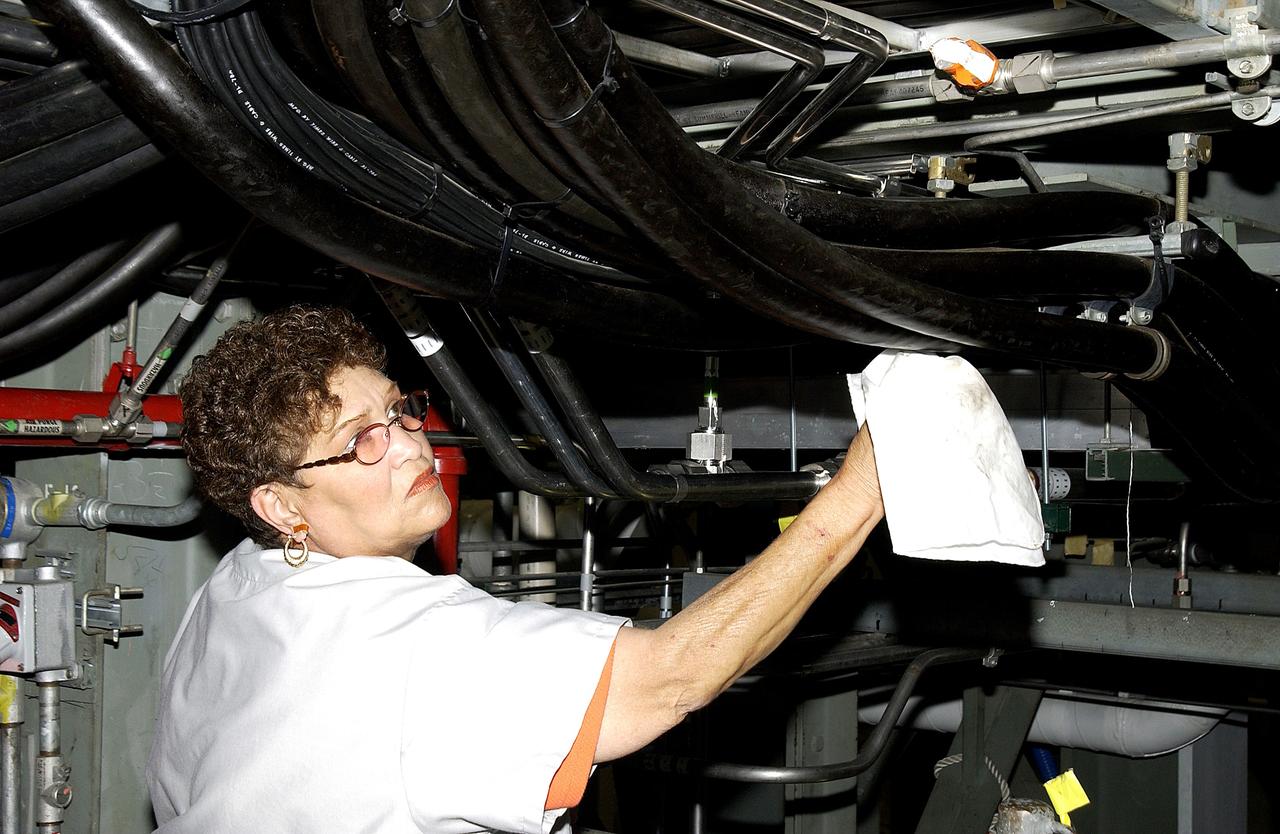
KENNEDY SPACE CENTER, FLA. - A KSC employee wipes down some of the hoses of the ground support equipment in the Orbiter Processing Facility (OPF) where Space Shuttle Atlantis is being processed for flight.  Preparations are under way for the next launch of Atlantis on mission STS-114, a utilization and logistics flight to the International Space Station.
KENNEDY SPACE CENTER, FLA. - A KSC employee wipes down some of the hoses of the ground support equipment in the Orbiter Processing Facility (OPF) where Space Shuttle Atlantis is being processed for flight. Preparations are under way for the next launch of Atlantis on mission STS-114, a utilization and logistics flight to the International Space Station.
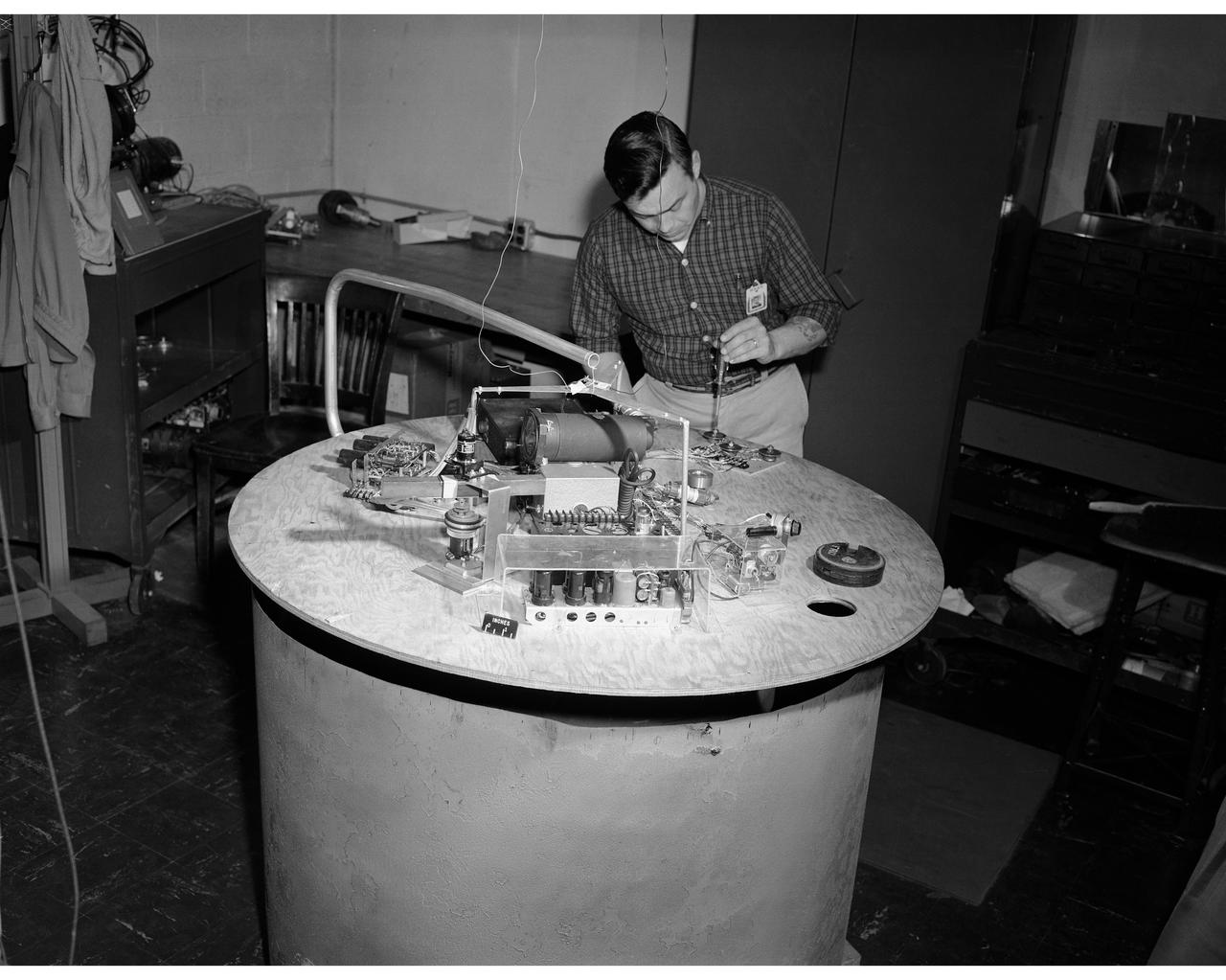
Control utilizing inertia wheel and bar magnet.
Satellite control
Control utilizing inertia wheel and bar magnet.
Satellite control
Control utilizing inertia wheel and bar magnet.
Satellite control
Control utilizing inertia wheel and bar magnet.
Satellite control
Control utilizing inertia wheel and bar magnet.
Satellite control
Control utilizing inertia wheel and bar magnet.
Satellite control
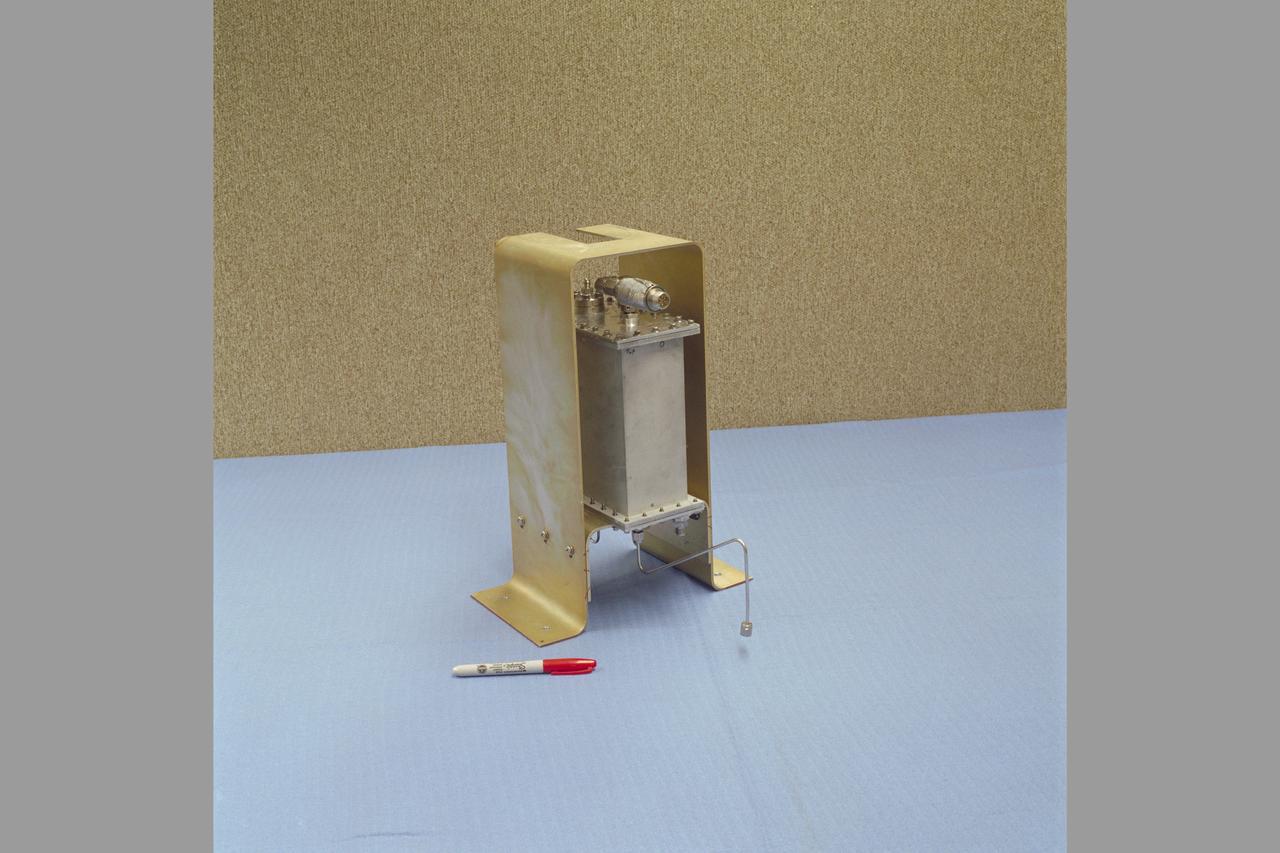
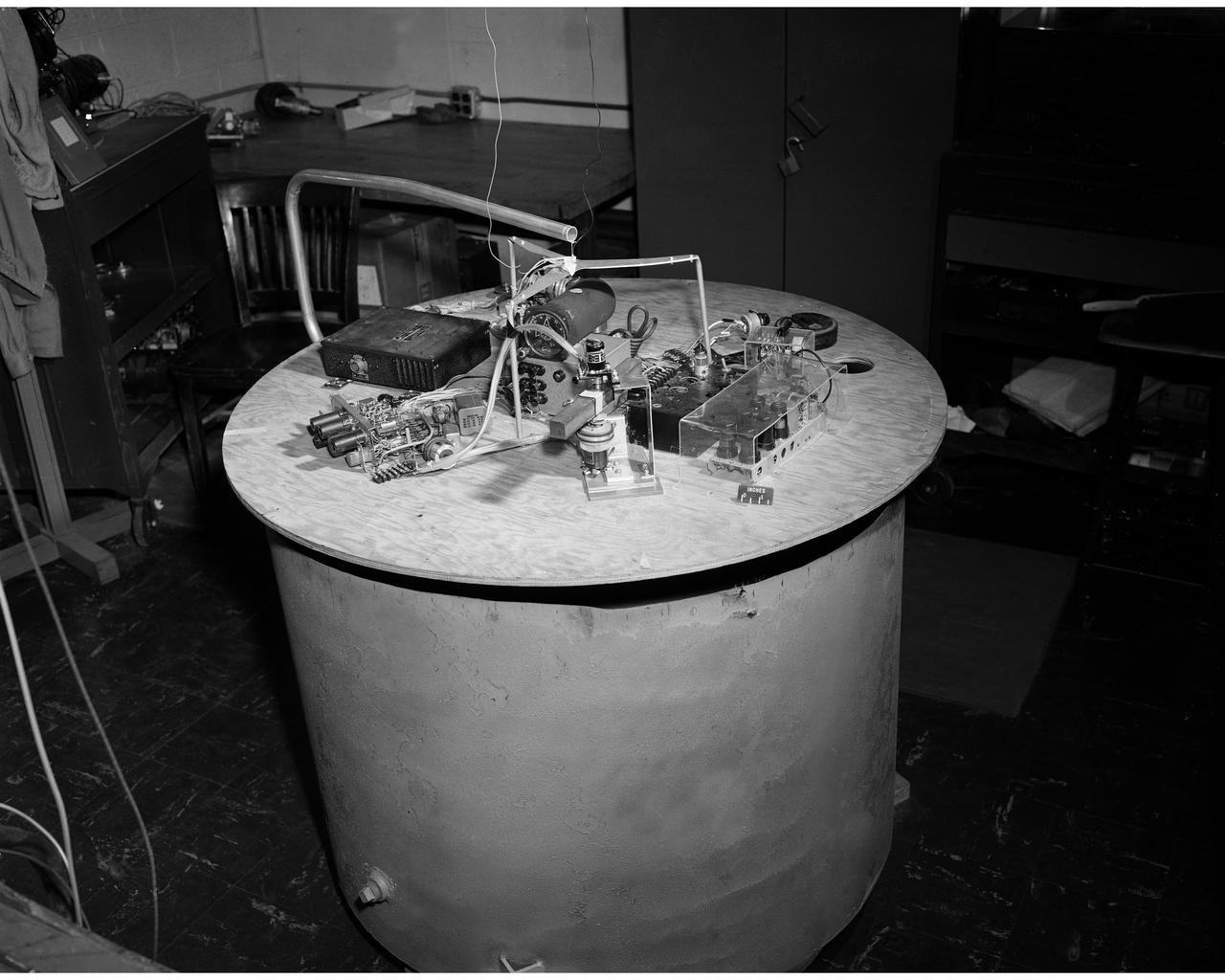
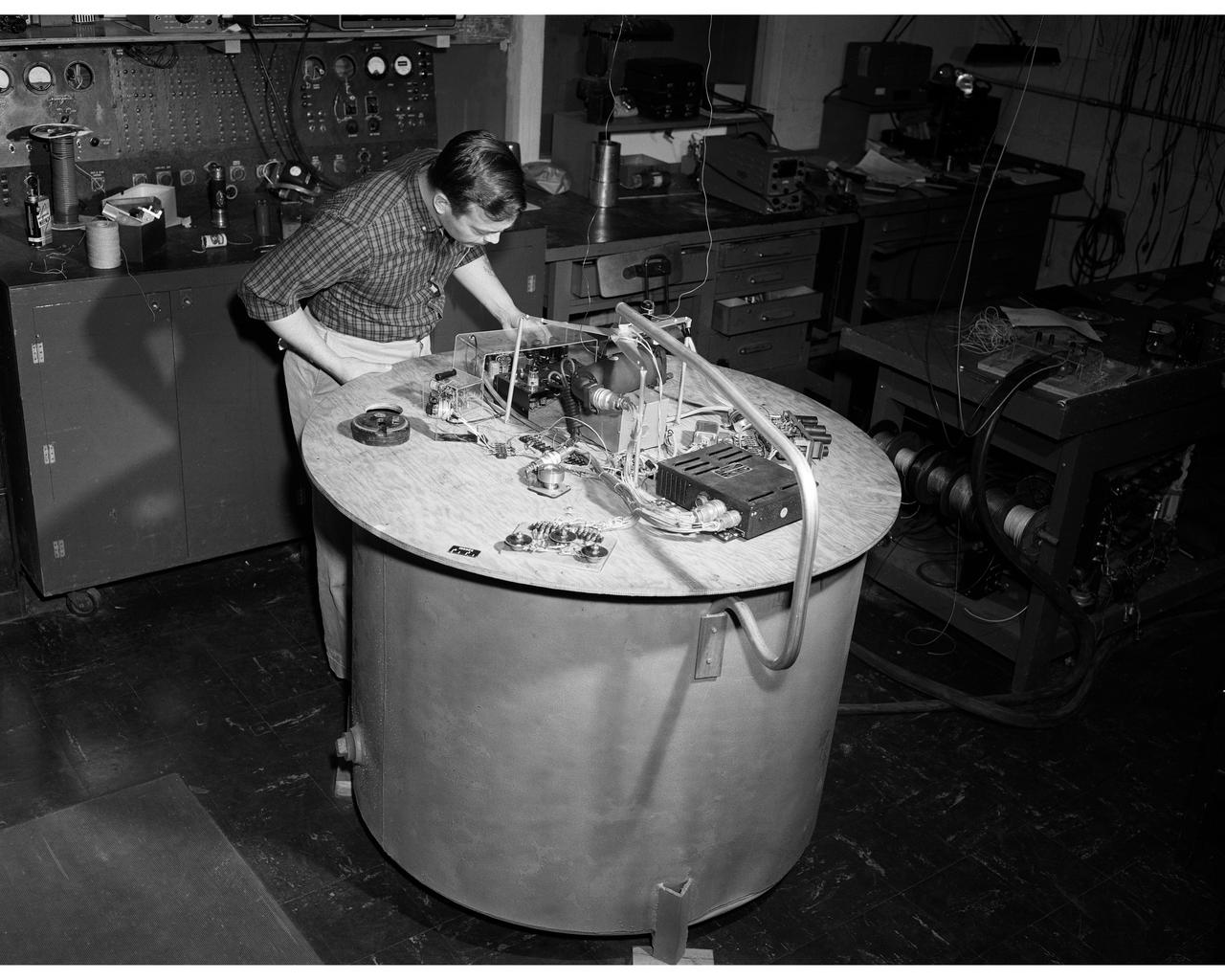
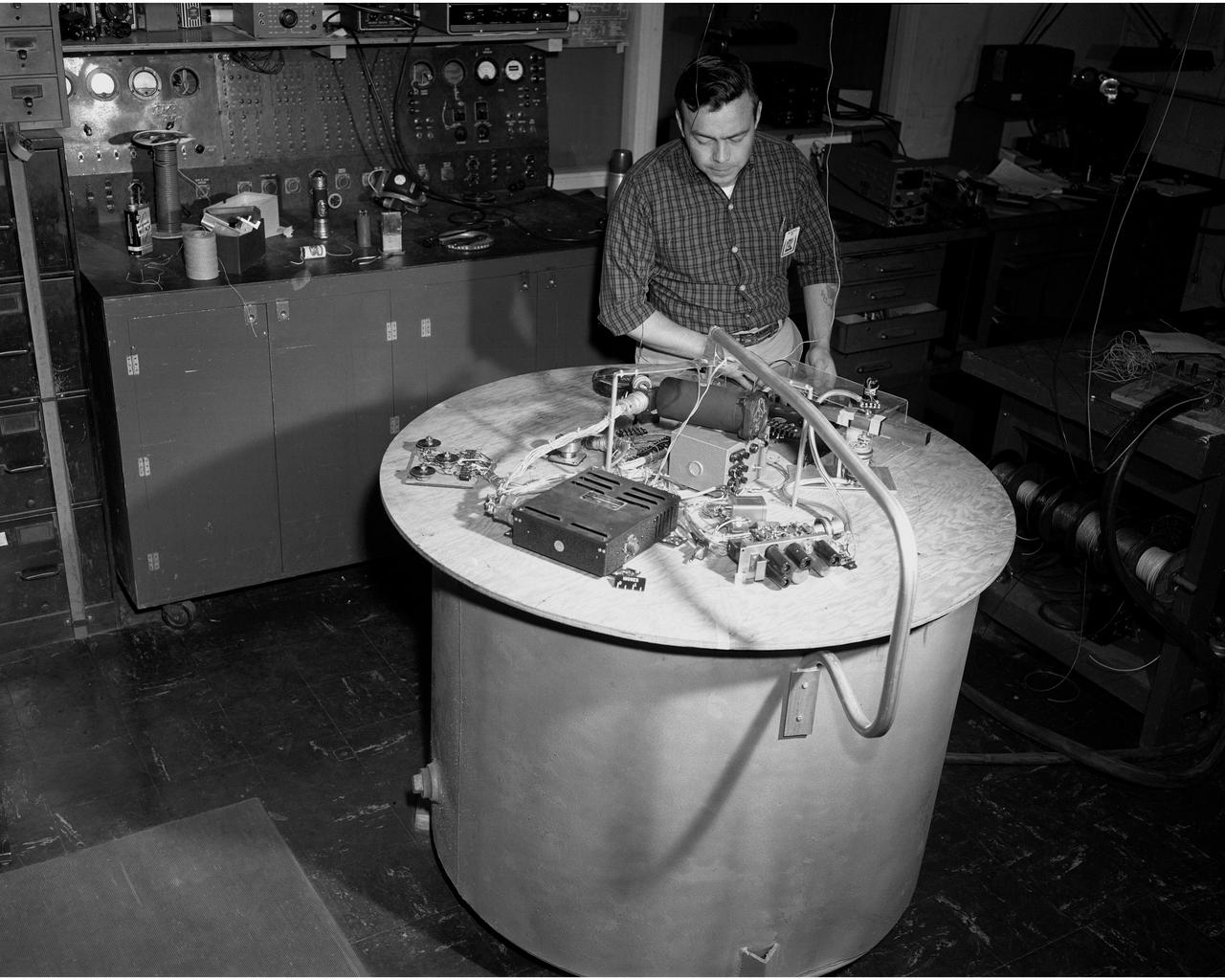
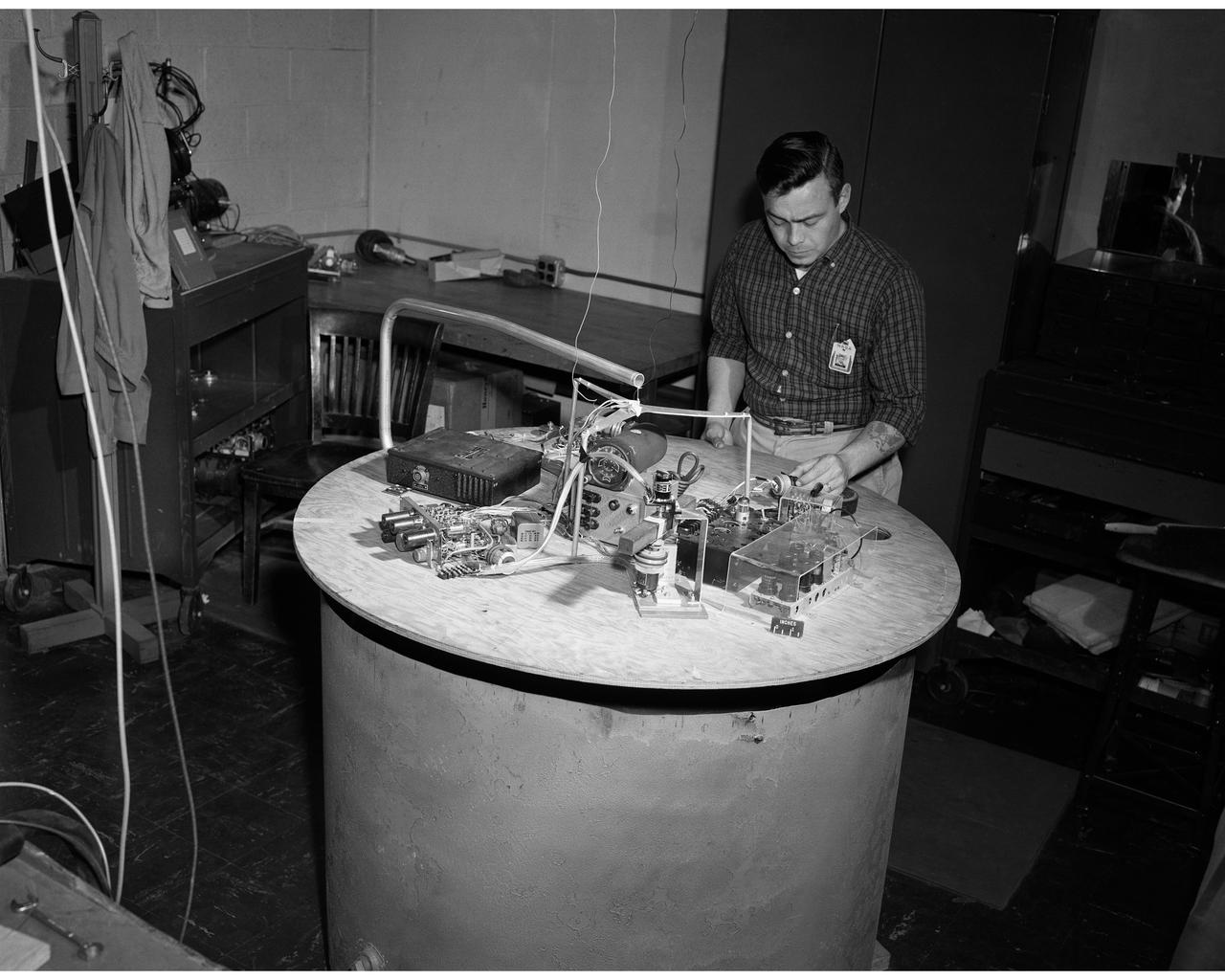
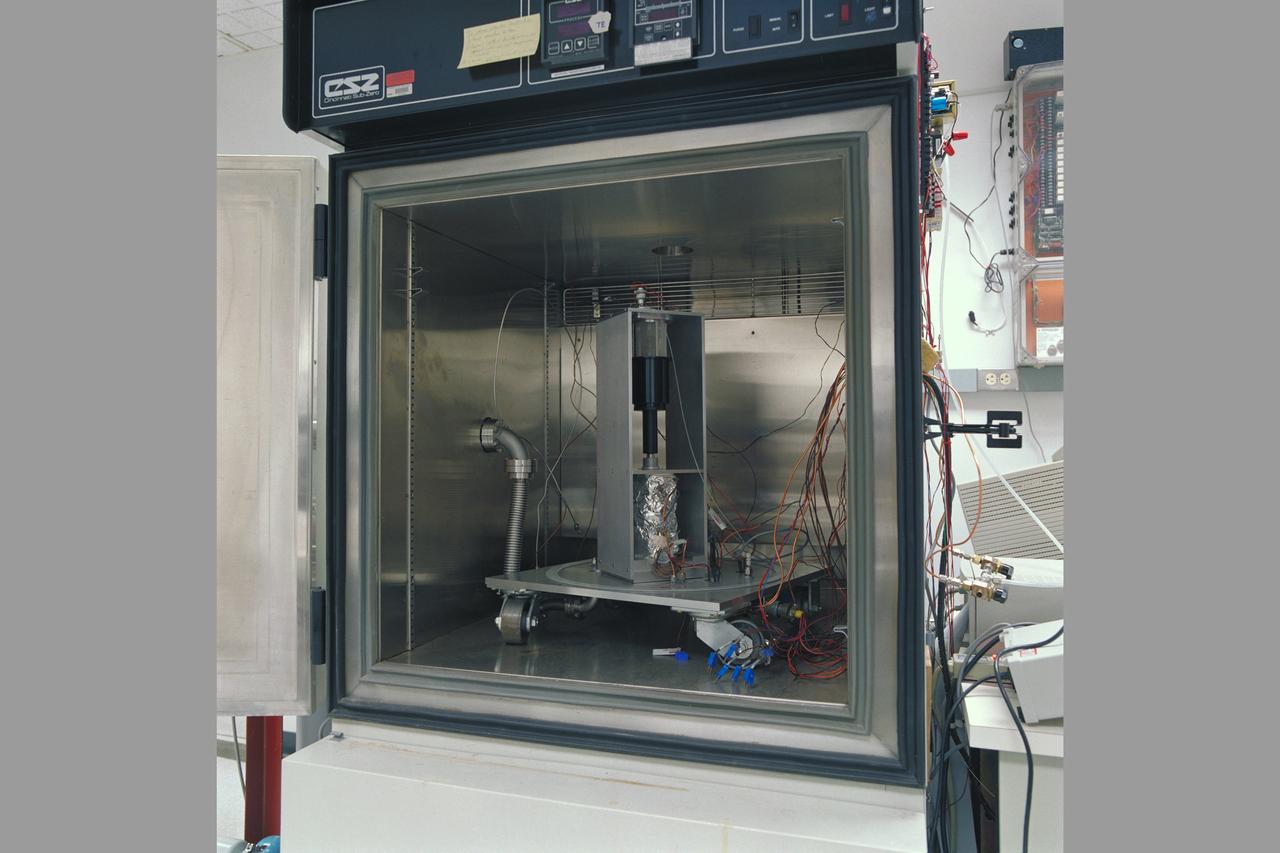
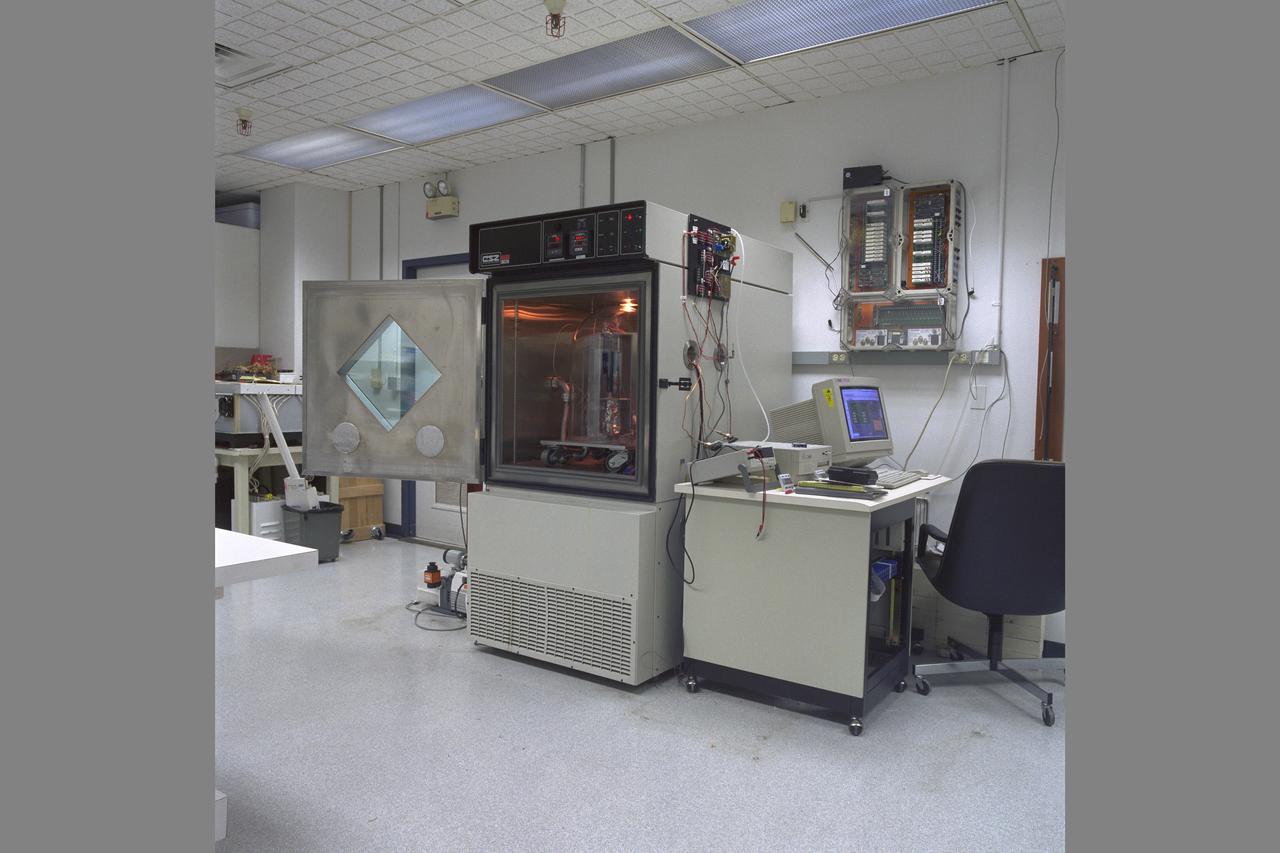
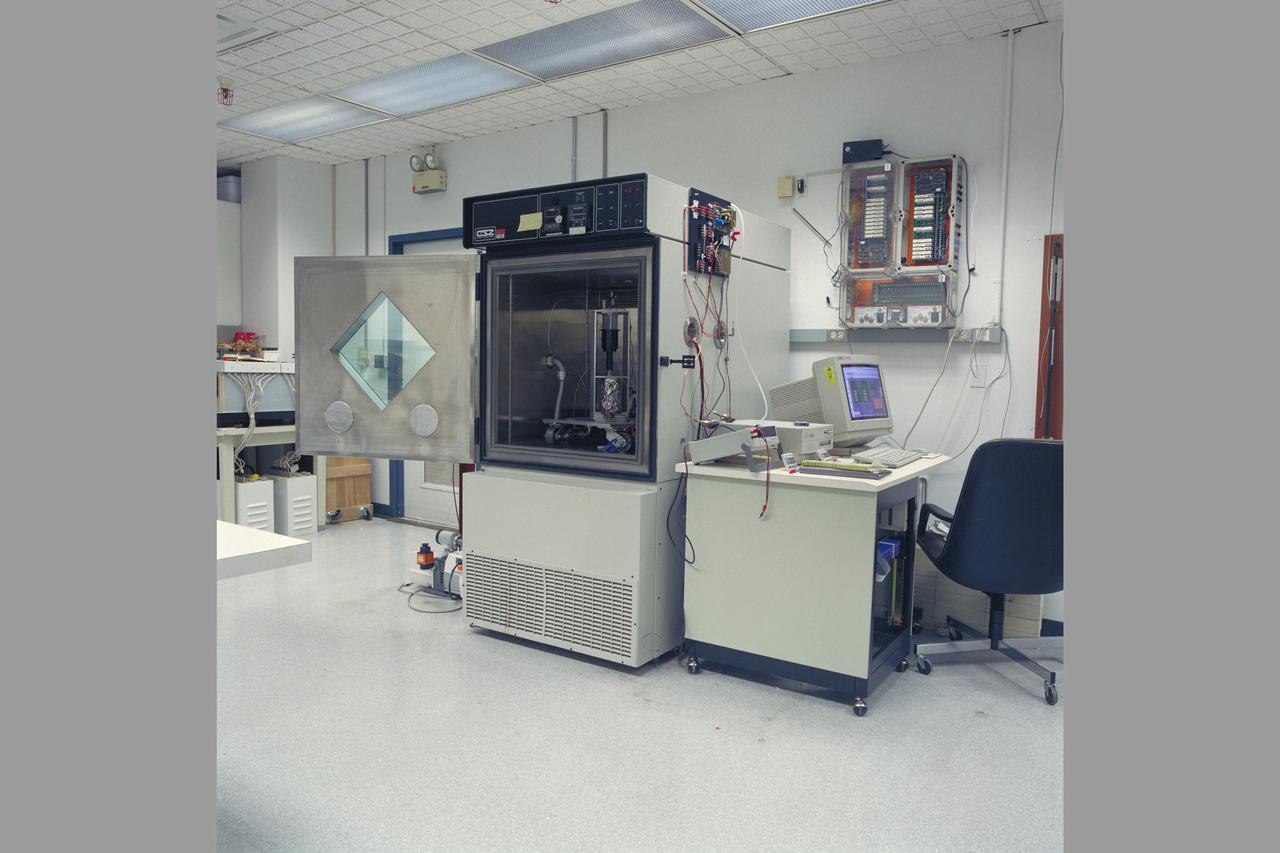
Mars Environmental Chamber.  Absorption Compression for Mars ISRU (In-SITU Resource Utilization) N-239.
ARC-1969-AC99-0008-1
Mars Environmental Chamber.  Absorption Compression for Mars ISRU (In-SITU Resource Utilization) N-239.
ARC-1969-AC99-0008-3
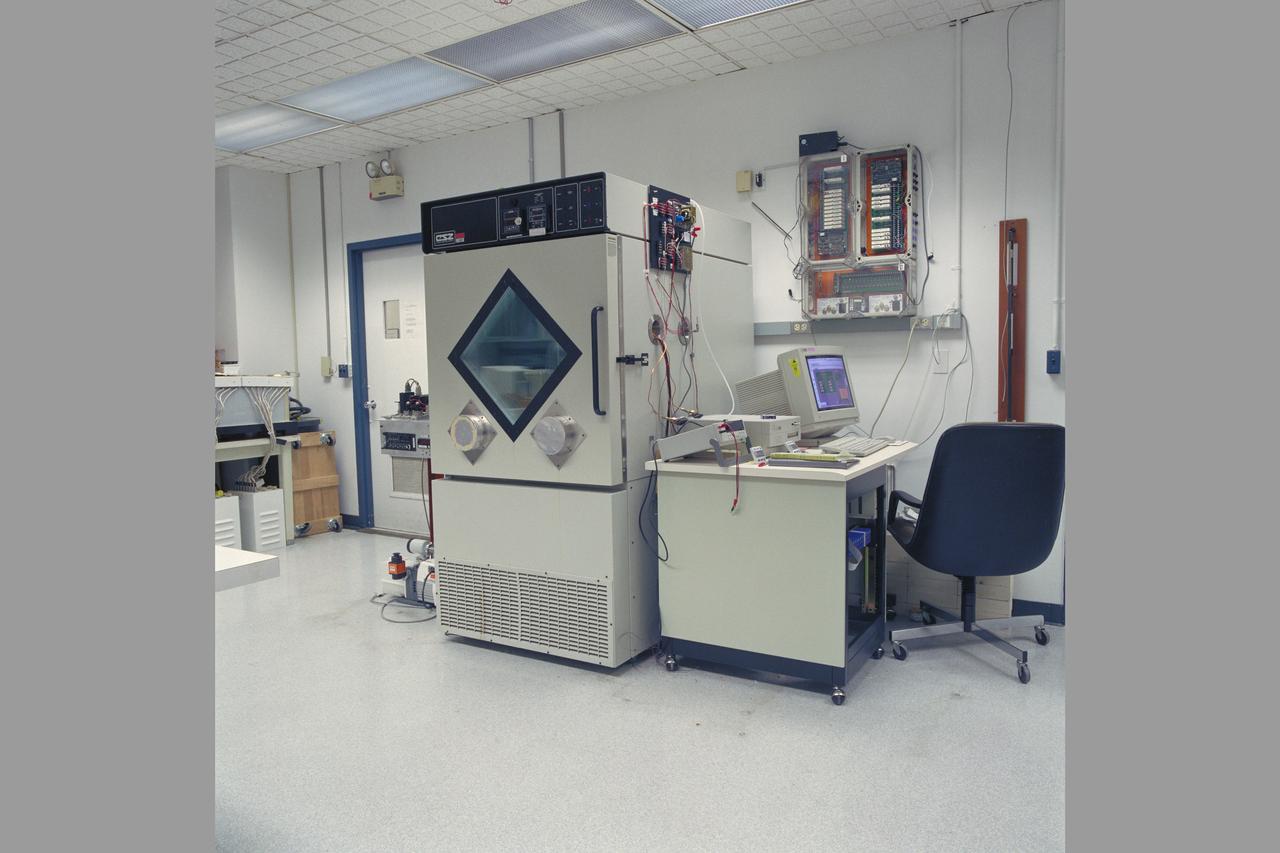
Mars Environmental Chamber.  Absorption Compression for Mars ISRU (In-SITU Resource Utilization) N-239.
ARC-1969-AC99-0008-5
Mars Environmental Chamber.  Absorption Compression for Mars ISRU (In-SITU Resource Utilization) N-239.
ARC-1969-AC99-0008-4
Mars Environmental Chamber.  Absorption Compression for Mars ISRU (In-SITU Resource Utilization) N-239.
ARC-1969-AC99-0008-7
Mars Environmental Chamber.  Absorption Compression for Mars ISRU (In-SITU Resource Utilization) N-239.
ARC-1969-AC99-0008-2
Mars Environmental Chamber.  Absorption Compression for Mars ISRU (In-SITU Resource Utilization) N-239.
ARC-1969-AC99-0008-6
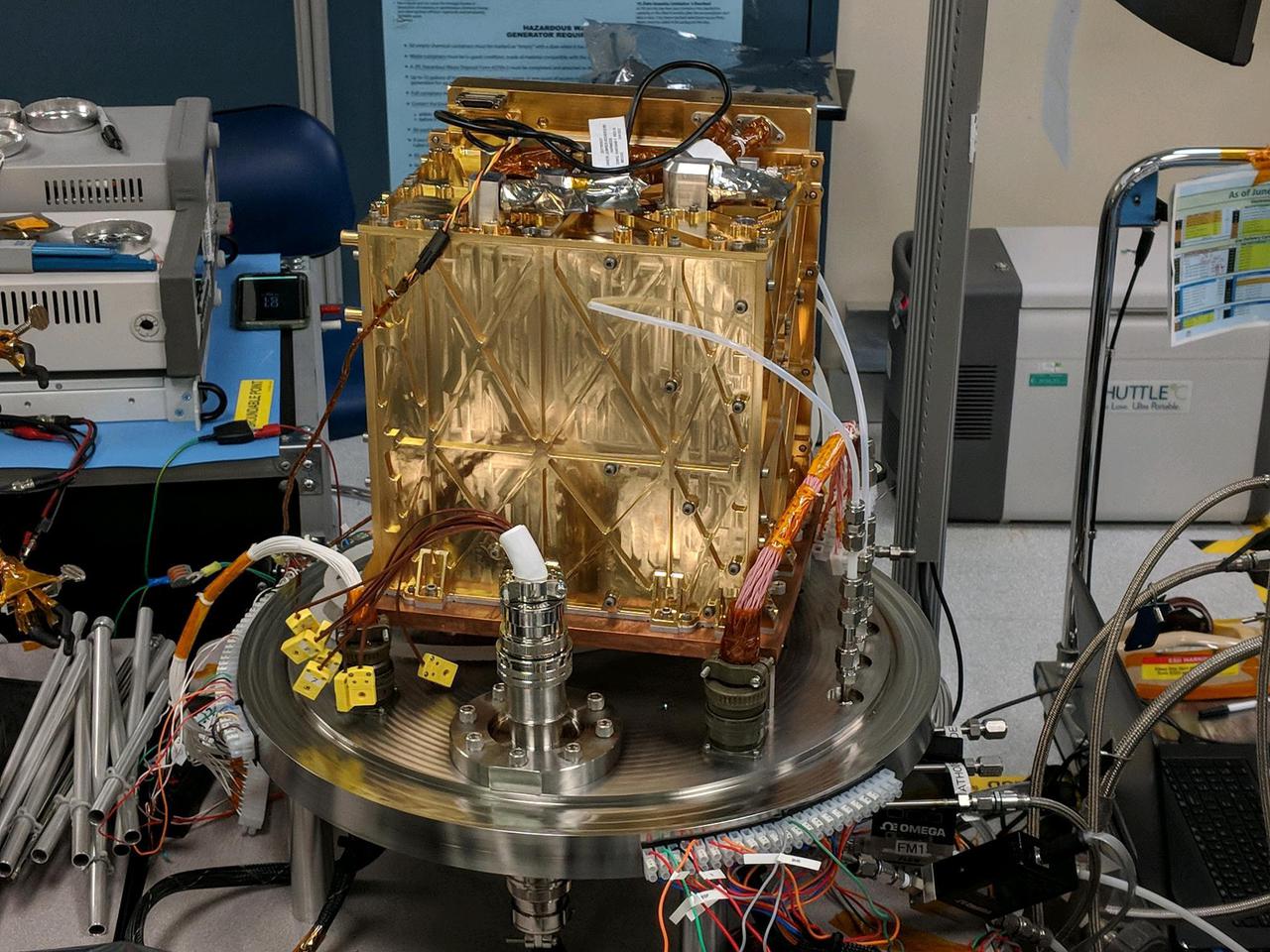
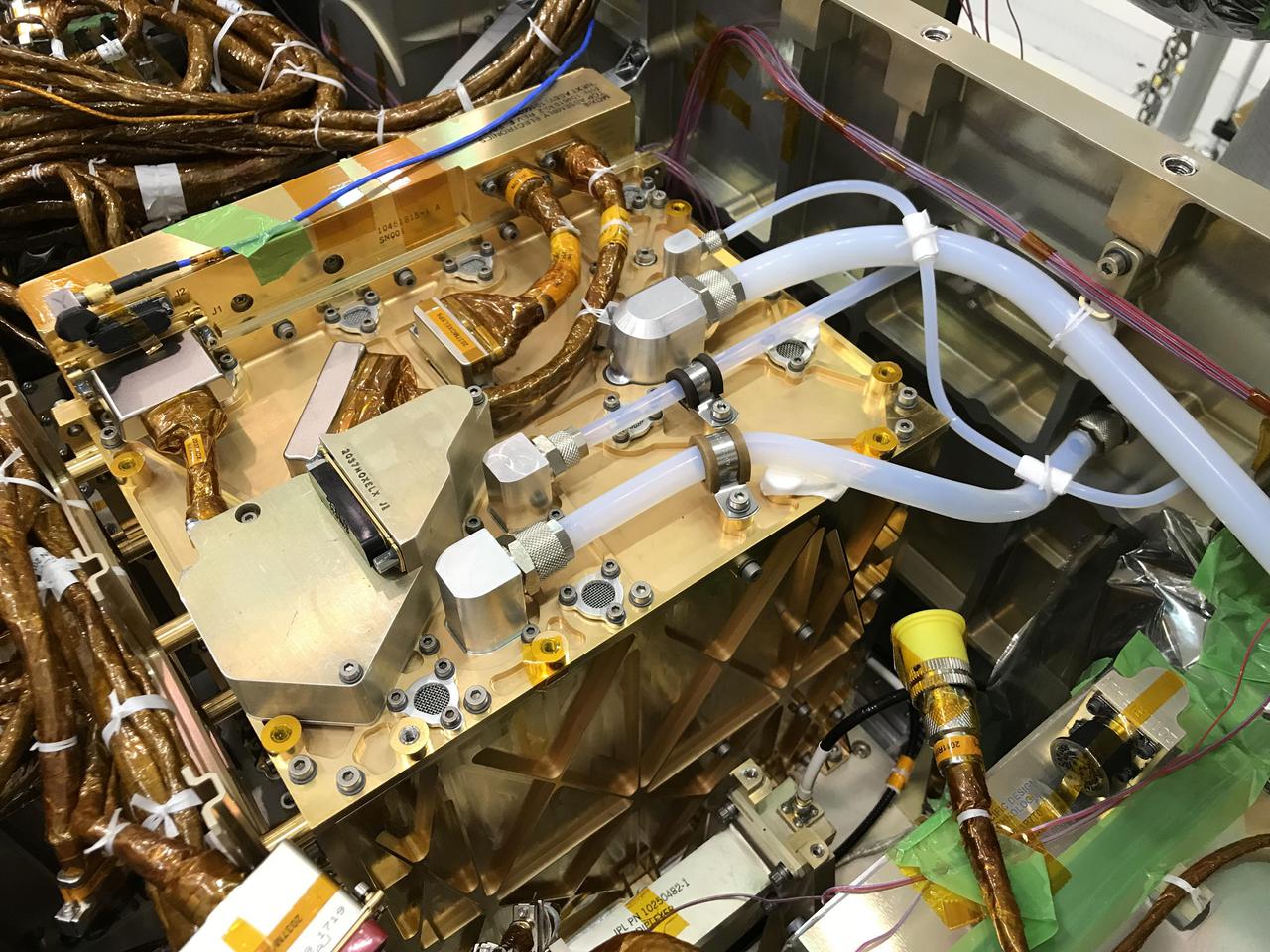
In this image, the gold-plated Mars Oxygen In-Situ Resource Utilization Experiment (MOXIE) Instrument shines after being installed inside the Perseverance rover. The largest white tube on the top surface of MOXIE takes in filtered carbon dioxide-rich Martian atmosphere. That CO2 is pressurized and passed through the Solid Oxide Electrolysis unit, where it is split into carbon monoxide and oxygen. The smallest tube snaking across the top of the unit sends the oxygen produced by MOXIE through a composition sensor to measure purity, then vents the oxygen out to the Martian atmosphere. This technology demonstration may guide the design of future, larger devices that could enable human exploration of Mars.  https://photojournal.jpl.nasa.gov/catalog/PIA24203
MOXIE All Tucked In
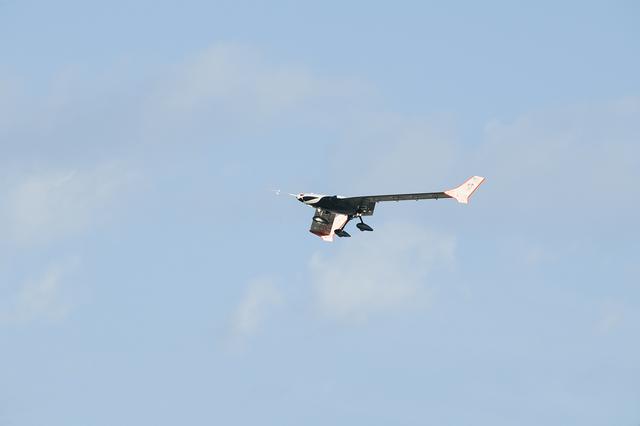
Long, thin, high-aspect-ratio wings are considered crucial to the design of future long-range aircraft, including fuel-efficient airliners and cargo transports. Unlike the short, stiff wings found on most aircraft today, slender, flexible airfoils are susceptible to uncontrollable vibrations, known as flutter, and may be stressed by bending forces from wind gusts and atmospheric turbulence. To improve ride quality, efficiency, safety, and the long-term health of flexible aircraft structures, NASA is using the X-56A Multi-Utility Technology Testbed (MUTT) to investigate key technologies for active flutter suppression and gust-load alleviation.
ED13-0325-025
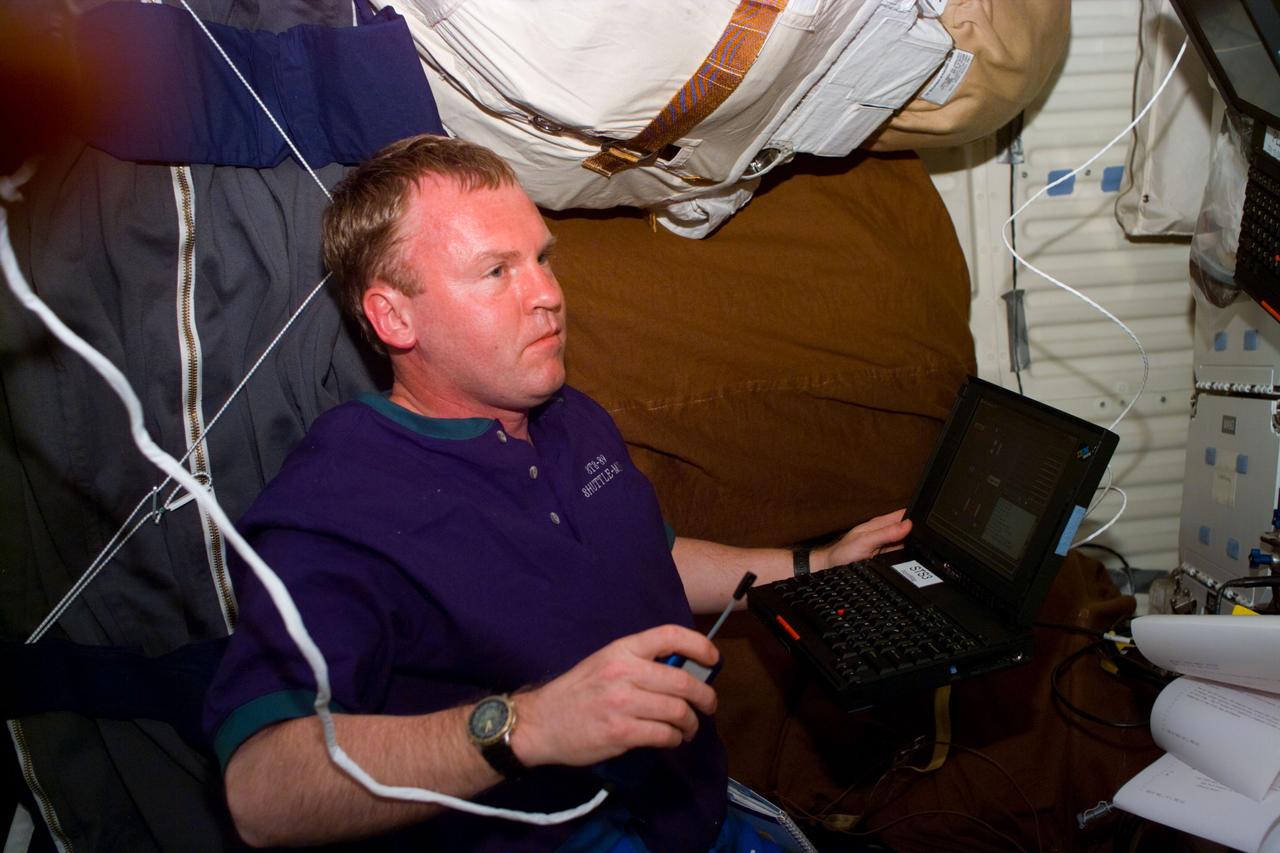
S89-E-5096 (24 Jan 1998) --- Astronaut Andrew S. W. Thomas, mission specialist, is pictured onboard the Space Shuttle Endeavour in one of the first STS-89 still scenes downlinked to flight controllers.  Thomas will be the final U.S. astronaut to put in an extended stint aboard the Mir Space Station when he replaces astronaut David A. Wolf later in the week.  The photo was taken with the Electronic Still Camera (ESC) at 5:31:59 GMT, January 24, 1998.
STS-89 crewmembers utilize PGSCs onboard Endeavour
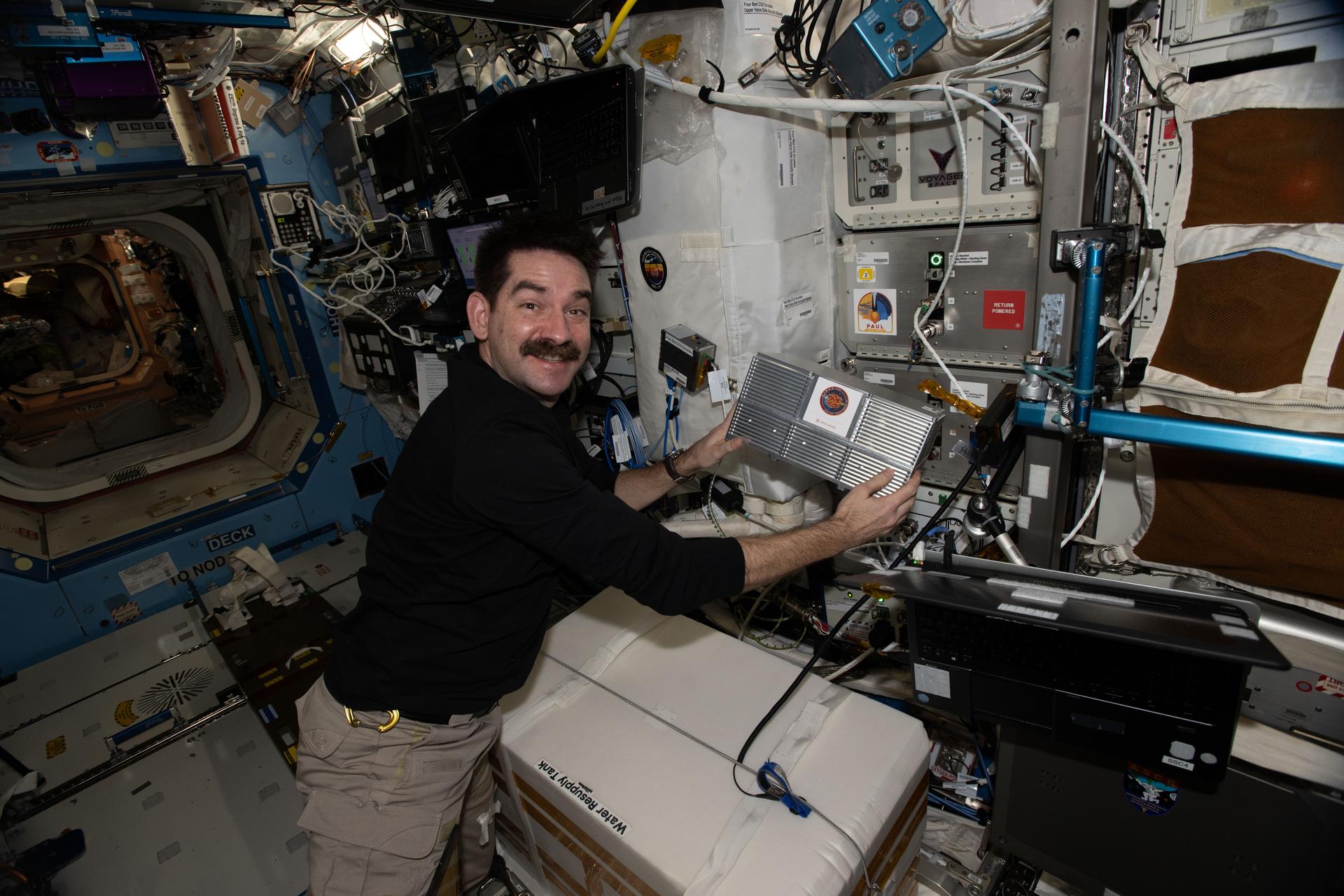
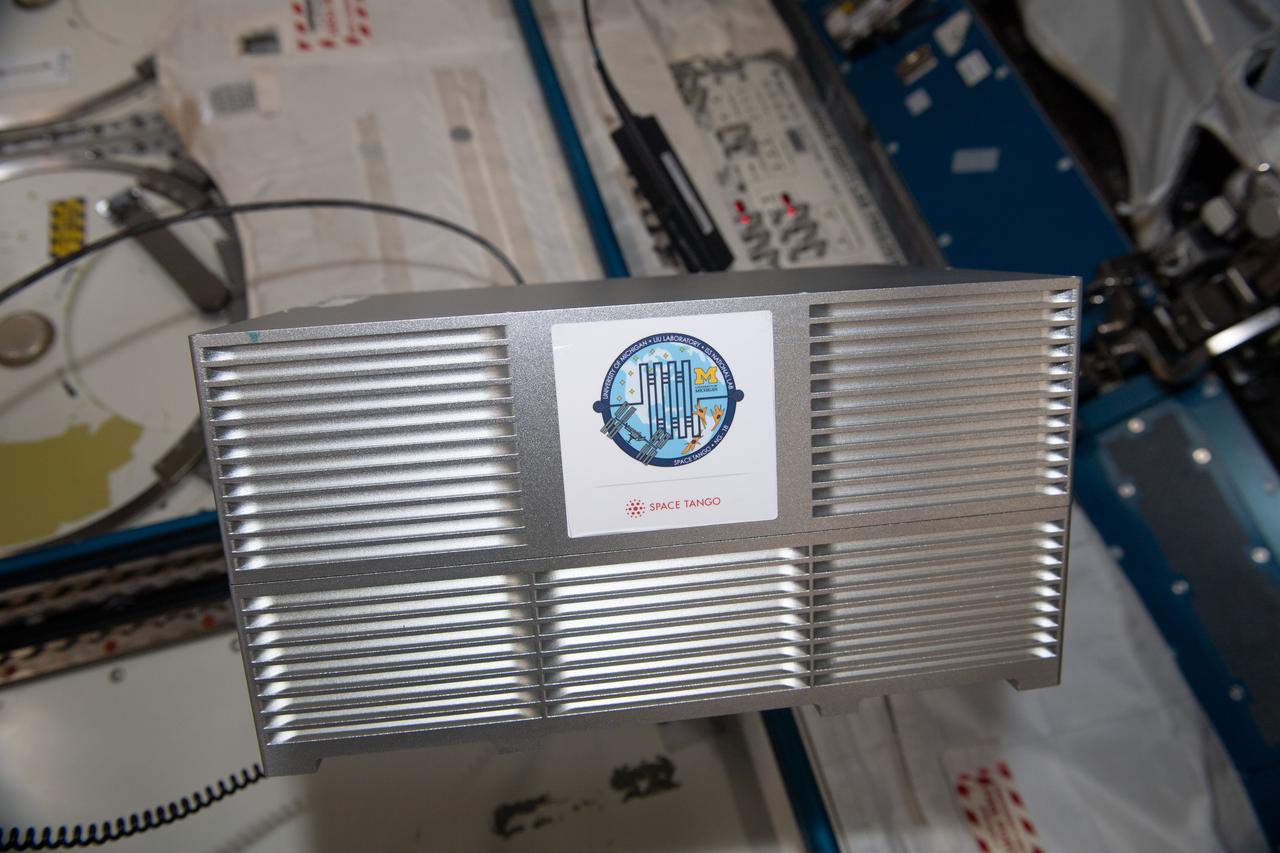
iss068e021879 (11/11/2022) --- A view of the Cellular Mechanotransduction by Osteoblasts CubeLab aboard the International Space Station (ISS). The Cellular Mechanotransduction by Osteoblasts in Microgravity (Cellular Mechanotransduction by Osteoblasts) investigation uses a special device to measure the stiffness of human osteoblasts, cells involved in the formation of bone. This research provides insight into techniques for measuring the stiffness of osteoblasts, which could be combined with other research on Earth to help people who have or could develop osteoporosis.
Powered Ascent Utility Locker Cube Replace
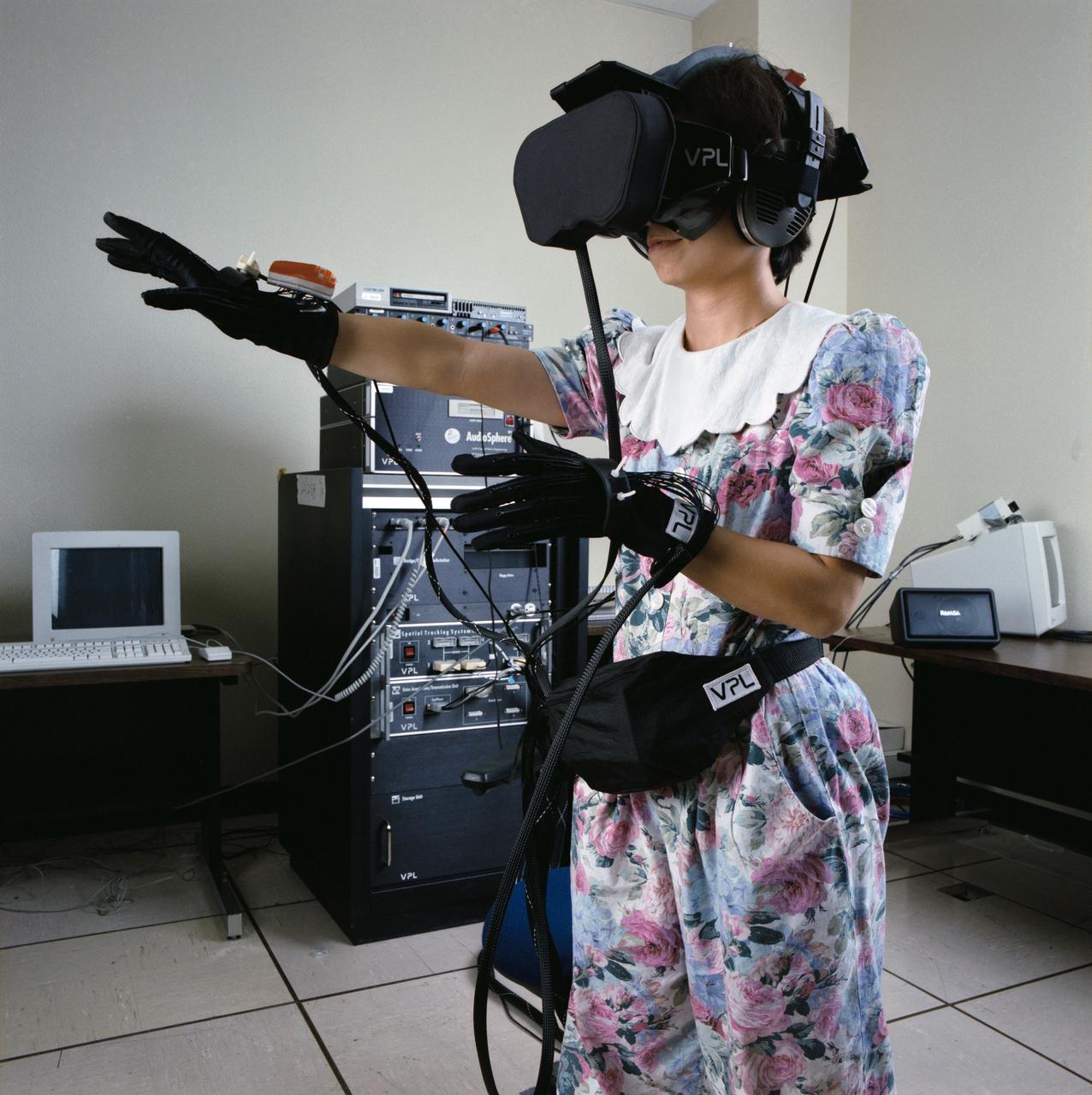
S91-50404 (1 Nov 1991) --- Bebe Ly of the Information Systems Directorate's (ISD) Software Technology Branch at the Johnson Space Center (JSC) gives virtual reality a try.  The stereo video goggles and head[phones allow her to see and hear in a computer-generated world and the gloves allow her to move around and grasp objects.  Ly is a member of the team that developed the C Language Integrated production System (CLIPS) which has been instrumental in developing several of the systems to be demonstrated in an upcoming Software Technology Exposition at JSC.
NASA employee utilizes Virtual Reality (VR) equipment
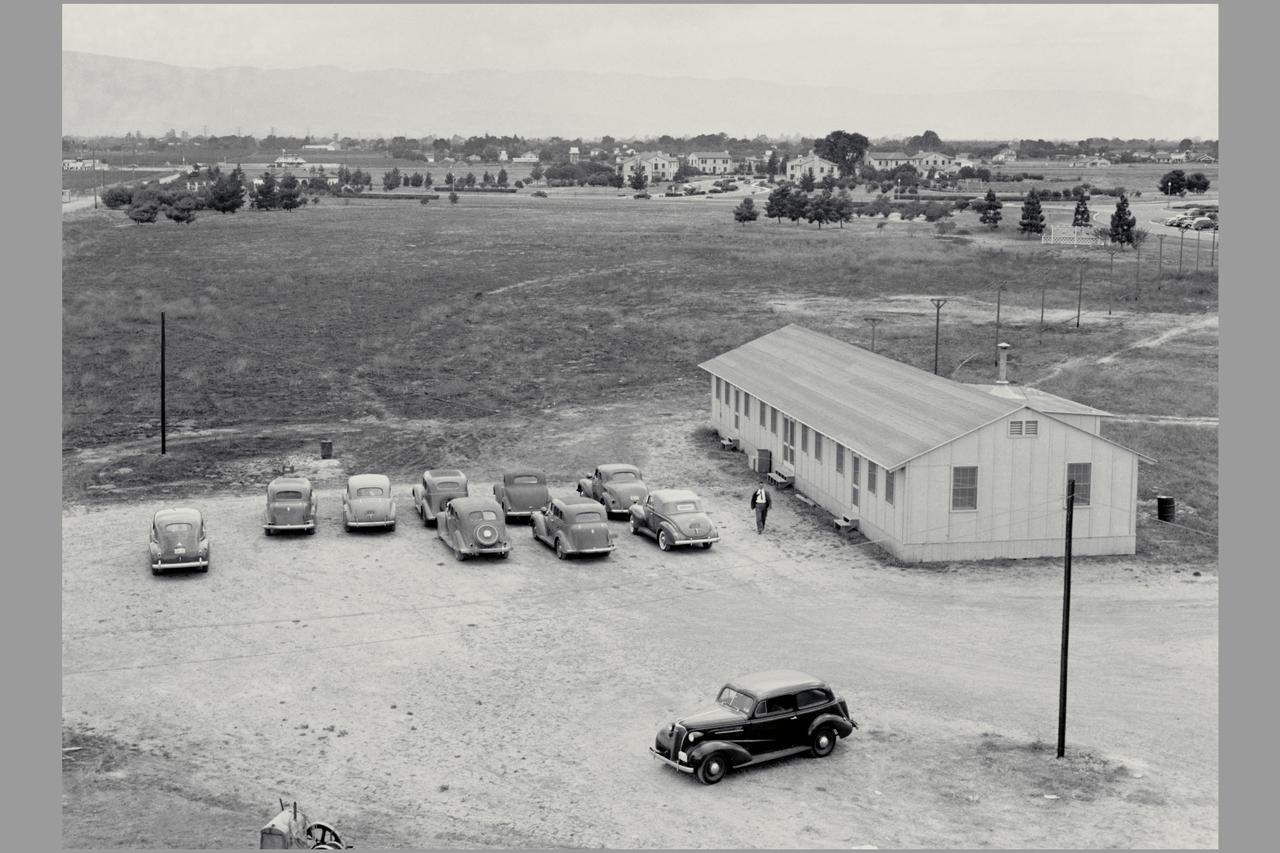
The original construction shack at Ames is featured in this view looking toward the southwest. Navy housing and buildings, still being utilized, can be observed in the center background.
ARC-1940-M-253-1
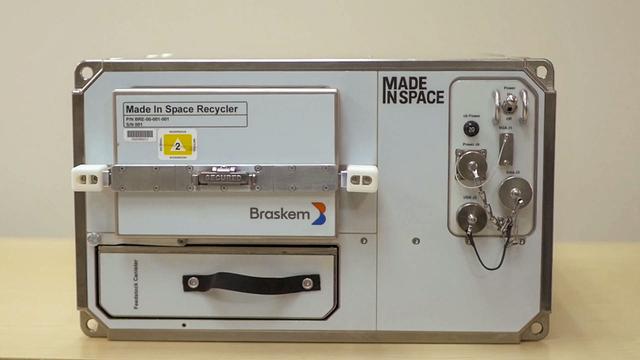
jsc2019e053733 (9/12/2019) --- Preflight imagery of the Made in Space - Recycler. The Made in Space - Recycler will utilize polymer materials to produce filament that is transferred to Manufacturing Device to perform printing operations. This experiment shows the value of closing the loop between the printer and recycling materials utilized by the printer. This has implications for space conservation and deep space missions. Image courtesy of: Made In Space, Inc.
jsc2019e053733
One investigation on NASA's Mars 2020 rover will extract oxygen from the Martian atmosphere. It is called MOXIE, for Mars Oxygen In-Situ Resource Utilization Experiment. In this image, MOXIE Principal Investigator Michael Hecht, of the Massachusetts Institute of Technology, Cambridge, is in the MOXIE development laboratory at NASA's Jet Propulsion Laboratory, Pasadena, California.  Mars' atmosphere is mostly carbon dioxide. Demonstration of the capability for extracting oxygen from it, under Martian environmental conditions, will be a pioneering step toward how humans on Mars will use the Red Planet's natural resources. Oxygen can be used in the rocket   http://photojournal.jpl.nasa.gov/catalog/PIA20761
Mars 2020 MOXIE Laboratory and Principal Investigator
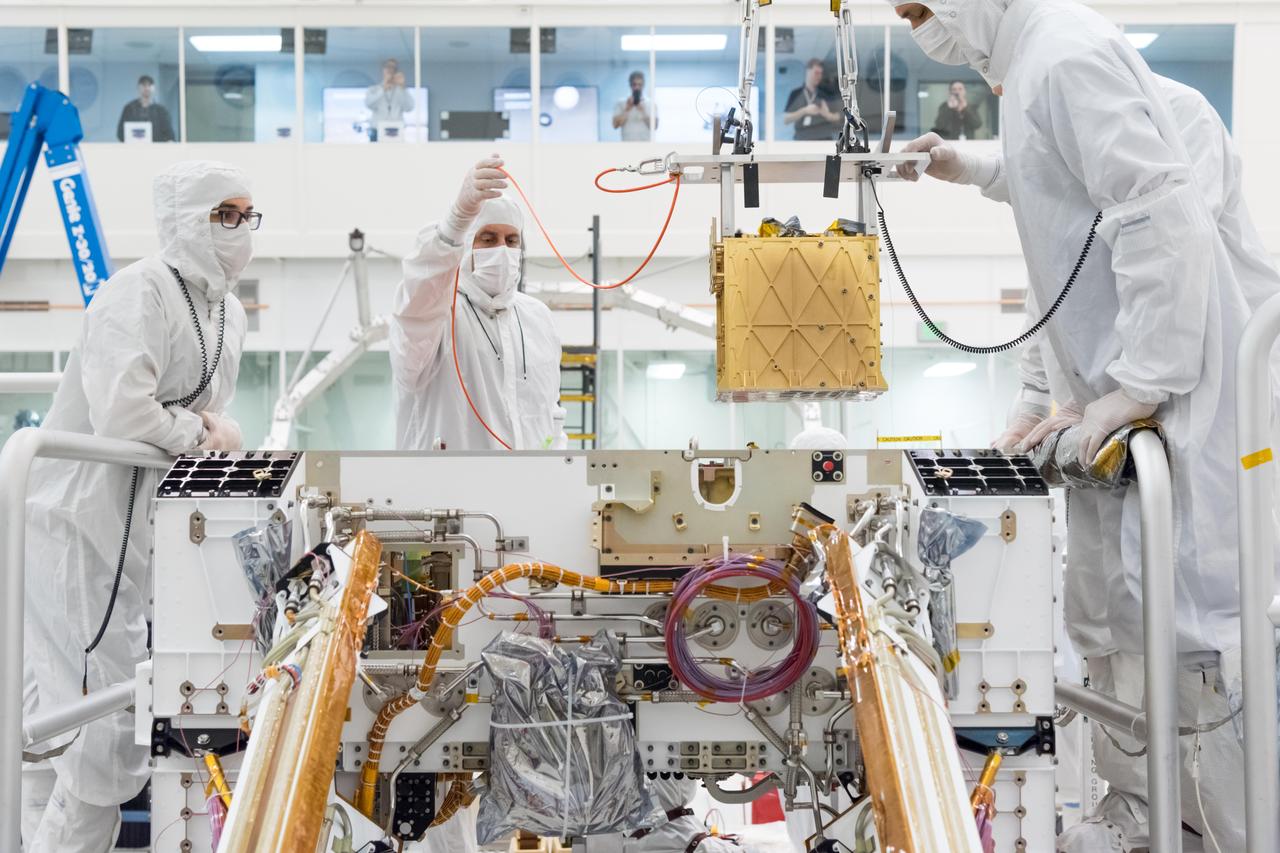
Members of NASA's Mars 2020 project install the Mars Oxygen In-Situ Resource Utilization Experiment (MOXIE) into the chassis of NASA's next Mars rover. MOXIE will demonstrate a way that future explorers might produce oxygen from the Martian atmosphere for propellant and for breathing. The car-battery-sized instrument does this by collecting carbon dioxide (CO2) from the Martian atmosphere and electrochemically splitting the carbon dioxide molecules into oxygen and carbon monoxide molecules. The oxygen is then analyzed for purity before being vented back out to the Martian atmosphere along with the carbon monoxide and other exhaust products.  The image was taken on March 20, 2019, in the Spacecraft Assembly Facility's High Bay 1 Cleanroom at NASA's Jet Propulsion Laboratory, in Pasadena, California.  https://photojournal.jpl.nasa.gov/catalog/PIA23154
This Is One Mars Rover With MOXIE
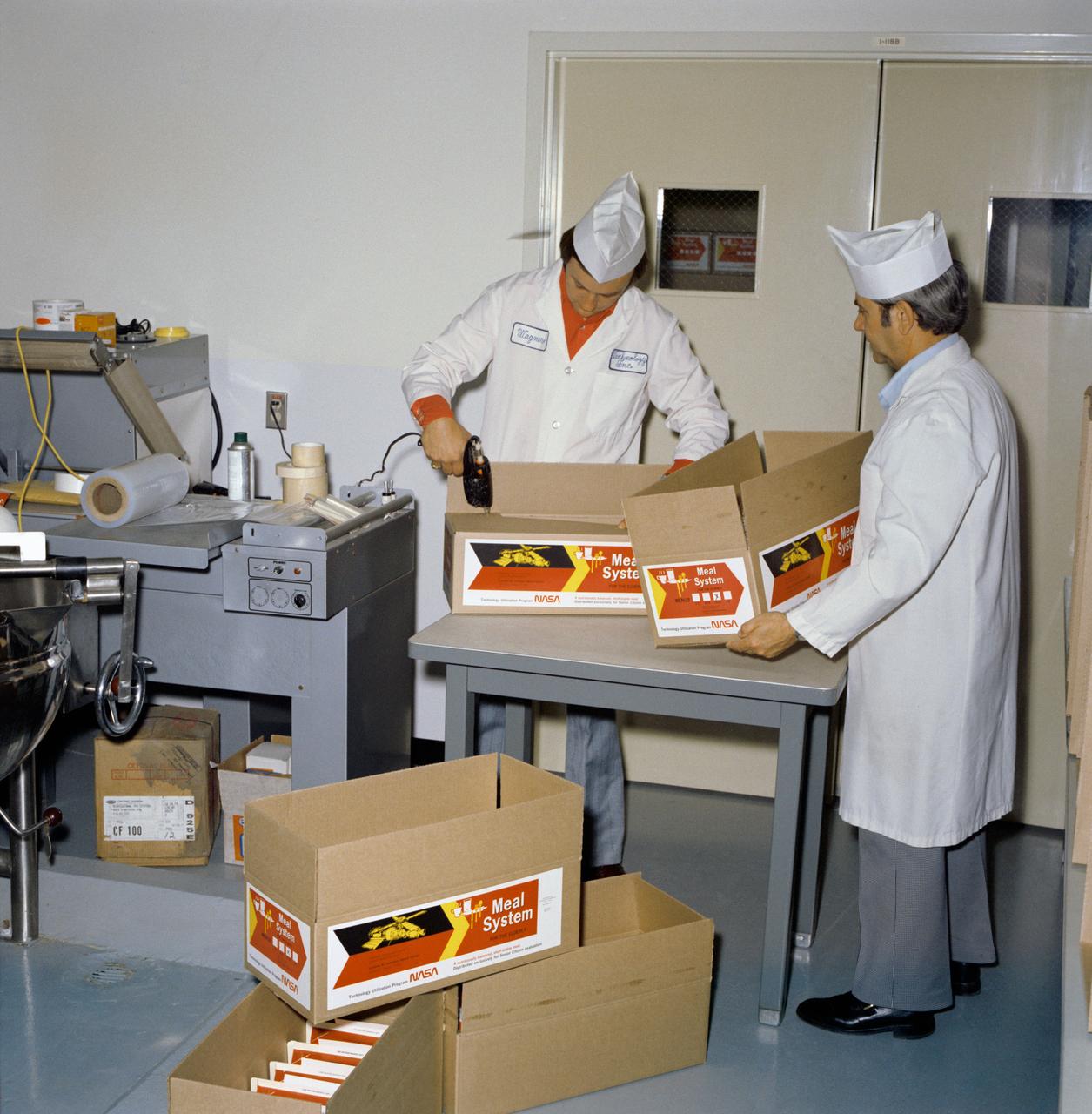
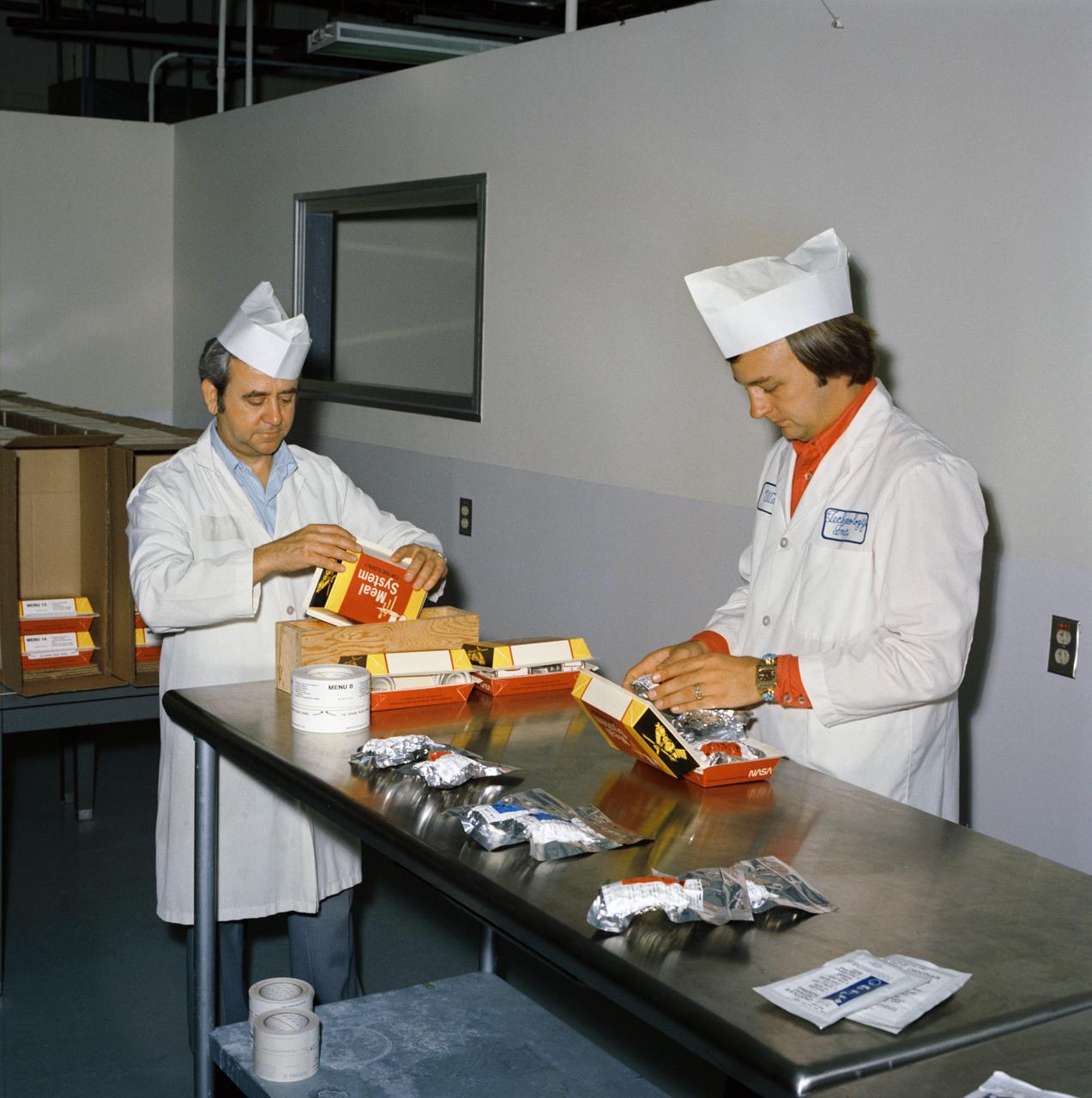
View of men packaging special food for the elderly, a spinoff program from the space program under auspices of Technology Utilization Program. Men and food are in the Bldg.37, where food has been stowed.
Food For Elderly -Space Benefits
View of men packaging special food for the elderly, a spinoff program from the space program under auspices of Technology Utilization Program. Men and food are in the Bldg.37, where food has been stowed
Food For Elderly -Space Benefits
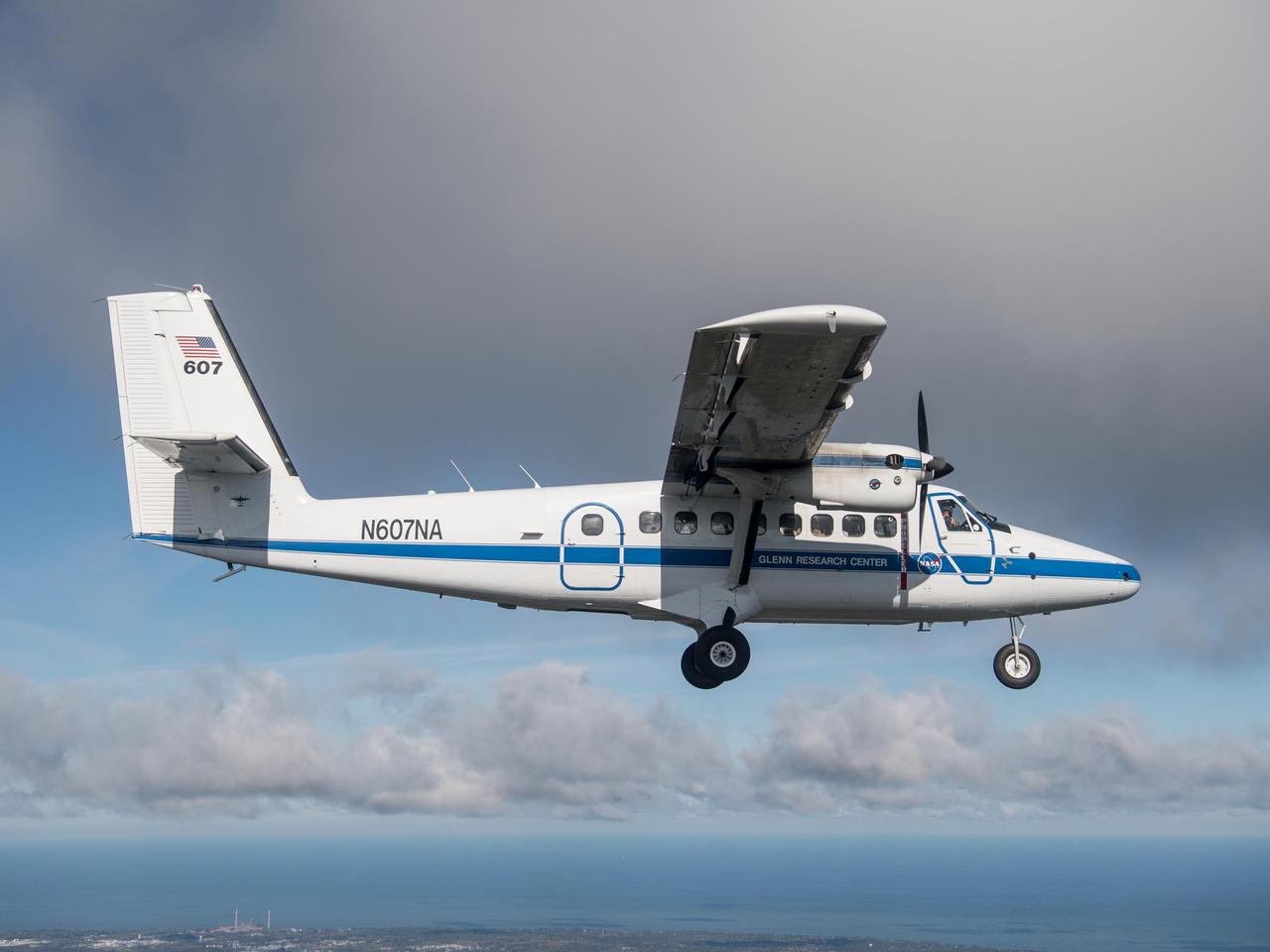
NASA Twin Otter aircraft in flight over northern Ohio. The aircraft has been utilized for numerous research projects conducted at NASA Glenn Research Center in Cleveland, Ohio.
NASA Twin Otter aircraft
Science Crew Operations and Utility Testbed  (SCOUT) Rover testing with Advanced Extravehicular Activity (EVA) Suit on Johnson Space Center (JSC) Fields near Avenue B. View of two technicians with the SCOUT Rover during testing.
JSC Features - SCOUT Rover testing with Advanced EVA Suit on JSC Fields
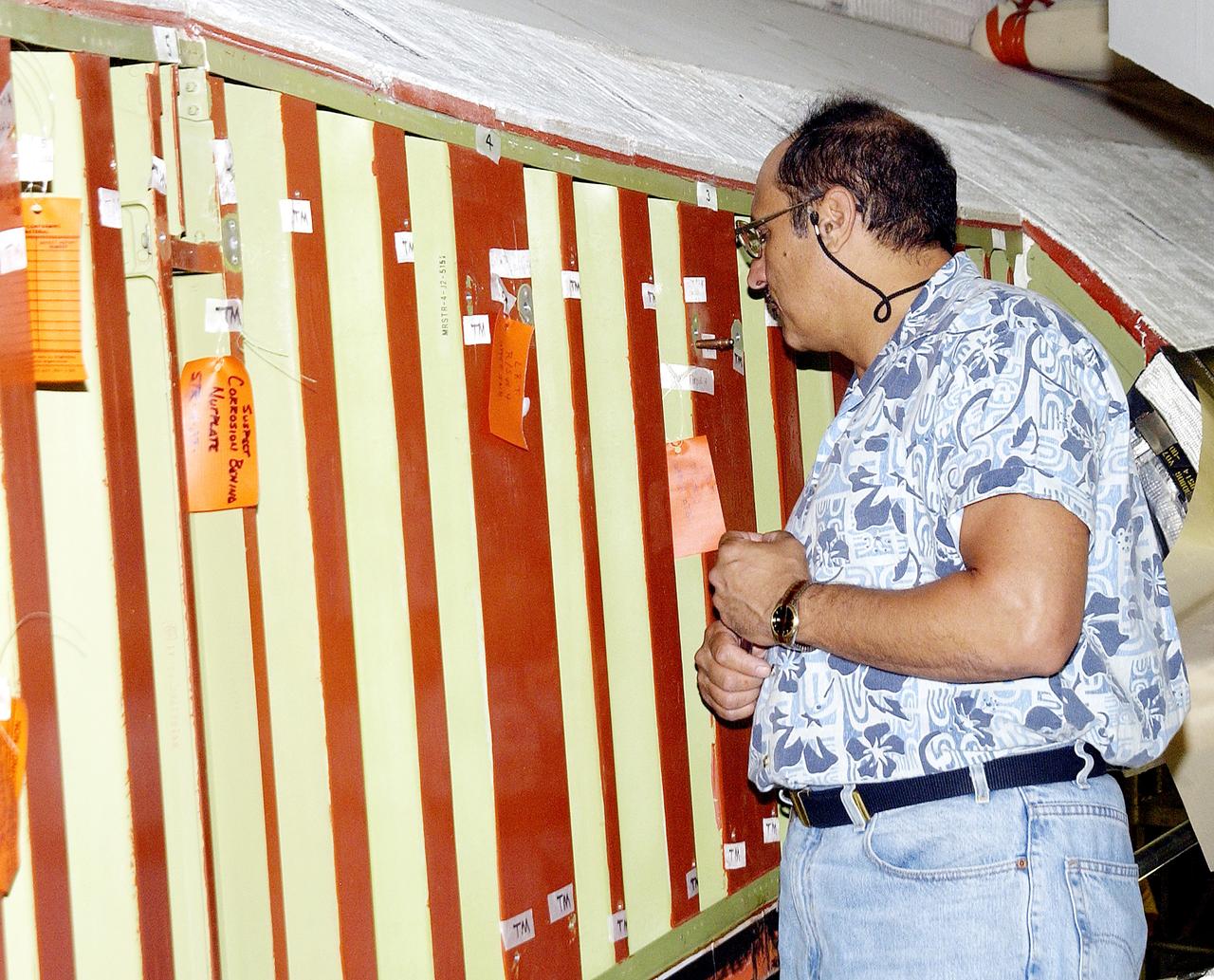
KENNEDY SPACE CENTER, FLA. - In the Orbiter Processing Facility (OPF), a United Space Alliance technician examines the attachment points for the spars on the exterior of a wing of Space Shuttle Atlantis. Reinforced Carbon Carbon (RCC) panels are mechanically attached to the wing with a series of floating joints - spars - to reduce loading on the panels caused by wing deflections. The aluminum and the metallic attachments are protected from exceeding temperature limits by internal insulation.  The next launch of Atlantis will be on mission STS-114, a utilization and logistics flight to the International Space Station.
KENNEDY SPACE CENTER, FLA. - In the Orbiter Processing Facility (OPF), a United Space Alliance technician examines the attachment points for the spars on the exterior of a wing of Space Shuttle Atlantis. Reinforced Carbon Carbon (RCC) panels are mechanically attached to the wing with a series of floating joints - spars - to reduce loading on the panels caused by wing deflections. The aluminum and the metallic attachments are protected from exceeding temperature limits by internal insulation. The next launch of Atlantis will be on mission STS-114, a utilization and logistics flight to the International Space Station.
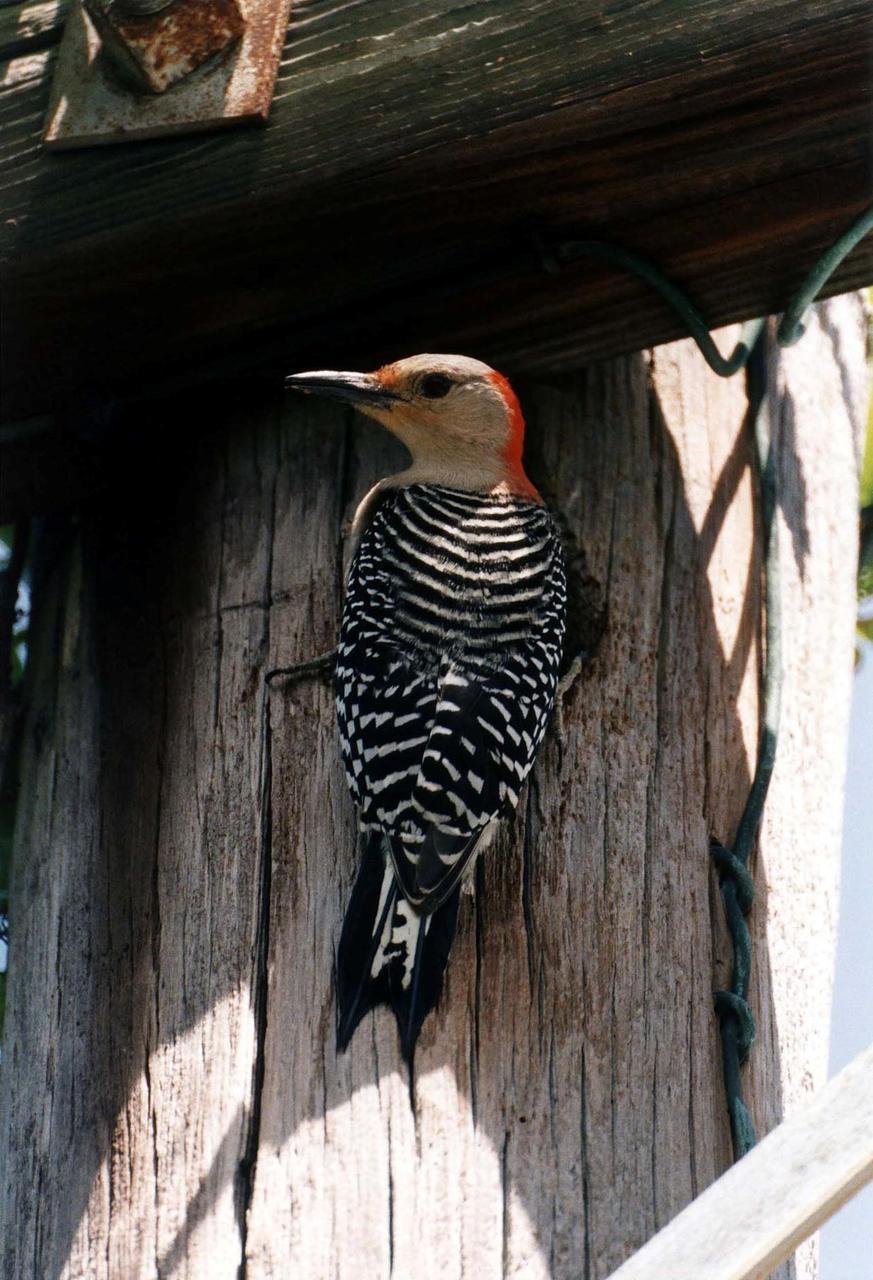
KENNEDY SPACE CENTER, FLA. - A female Red-bellied Woodpecker clings to a utility pole where it has made a home on Merritt Island Wildlife Refuge.  The most common type of woodpecker in the South, the "Zebraback" nests in the cavities of trees and consumes large quantities of wood-boring beetles, as well as other insect pests.  More than 280 species of birds make their homes on the 140,000-acre refuge, which lies within the boundaries of Kennedy Space Center.
KENNEDY SPACE CENTER, FLA. - A female Red-bellied Woodpecker clings to a utility pole where it has made a home on Merritt Island Wildlife Refuge. The most common type of woodpecker in the South, the "Zebraback" nests in the cavities of trees and consumes large quantities of wood-boring beetles, as well as other insect pests. More than 280 species of birds make their homes on the 140,000-acre refuge, which lies within the boundaries of Kennedy Space Center.
KENNEDY SPACE CENTER, FLA. - In the Orbiter Processing Facility (OPF), a United Space Alliance technician examines the attachment points for the spars on the exterior of a wing of Space Shuttle Atlantis. Reinforced Carbon Carbon (RCC) panels are mechanically attached to the wing with a series of floating joints - spars - to reduce loading on the panels caused by wing deflections. The aluminum and the metallic attachments are protected from exceeding temperature limits by internal insulation.  The next launch of Atlantis will be on mission STS-114, a utilization and logistics flight to the International Space Station.
KENNEDY SPACE CENTER, FLA. - In the Orbiter Processing Facility (OPF), a United Space Alliance technician examines the attachment points for the spars on the exterior of a wing of Space Shuttle Atlantis. Reinforced Carbon Carbon (RCC) panels are mechanically attached to the wing with a series of floating joints - spars - to reduce loading on the panels caused by wing deflections. The aluminum and the metallic attachments are protected from exceeding temperature limits by internal insulation. The next launch of Atlantis will be on mission STS-114, a utilization and logistics flight to the International Space Station.
KENNEDY SPACE CENTER, FLA. -In the Orbiter Processing Facility (OPF), a United Space Alliance technician examines the attachment points for the spars on the exterior of a wing of Space Shuttle Atlantis. Reinforced Carbon Carbon (RCC) panels are mechanically attached to the wing with a series of floating joints - spars - to reduce loading on the panels caused by wing deflections. The aluminum and the metallic attachments are protected from exceeding temperature limits by internal insulation.  The next launch of Atlantis will be on mission STS-114, a utilization and logistics flight to the International Space Station.
KENNEDY SPACE CENTER, FLA. -In the Orbiter Processing Facility (OPF), a United Space Alliance technician examines the attachment points for the spars on the exterior of a wing of Space Shuttle Atlantis. Reinforced Carbon Carbon (RCC) panels are mechanically attached to the wing with a series of floating joints - spars - to reduce loading on the panels caused by wing deflections. The aluminum and the metallic attachments are protected from exceeding temperature limits by internal insulation. The next launch of Atlantis will be on mission STS-114, a utilization and logistics flight to the International Space Station.
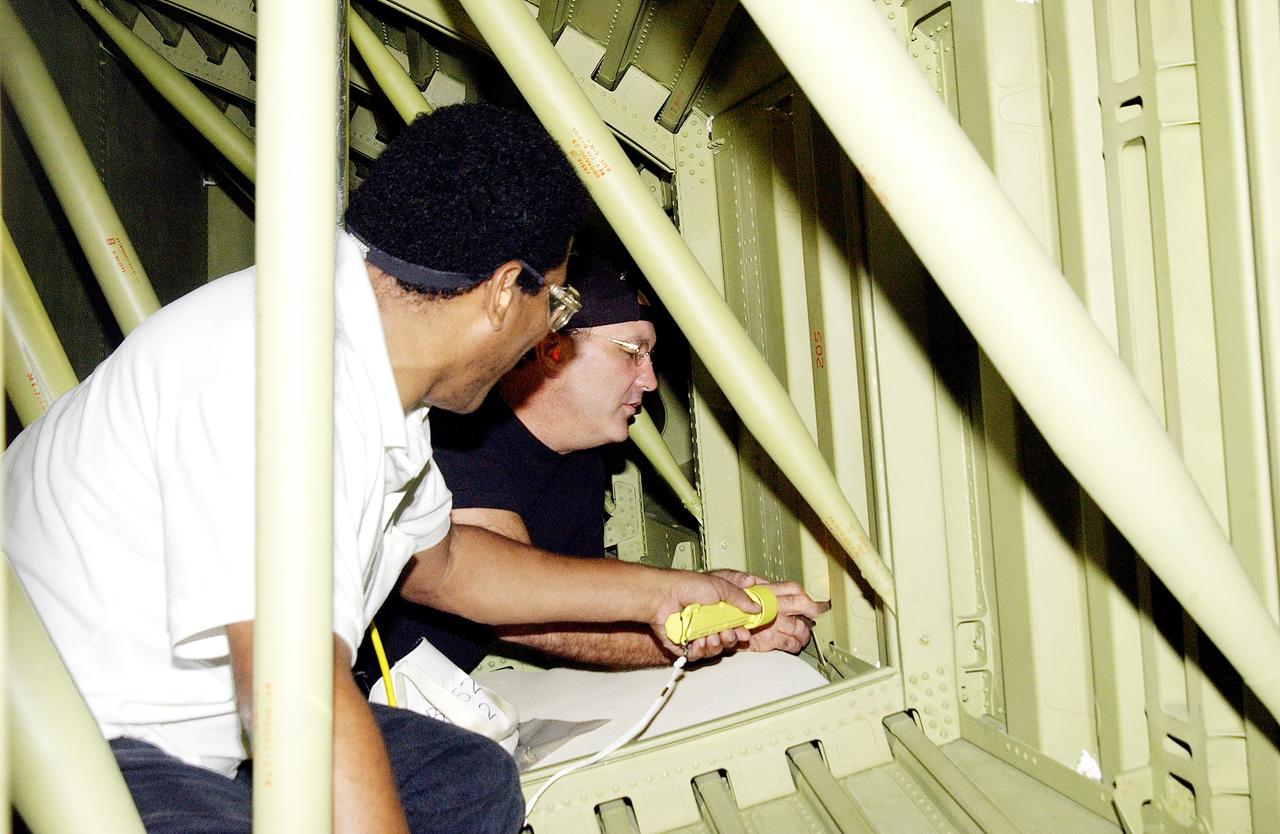
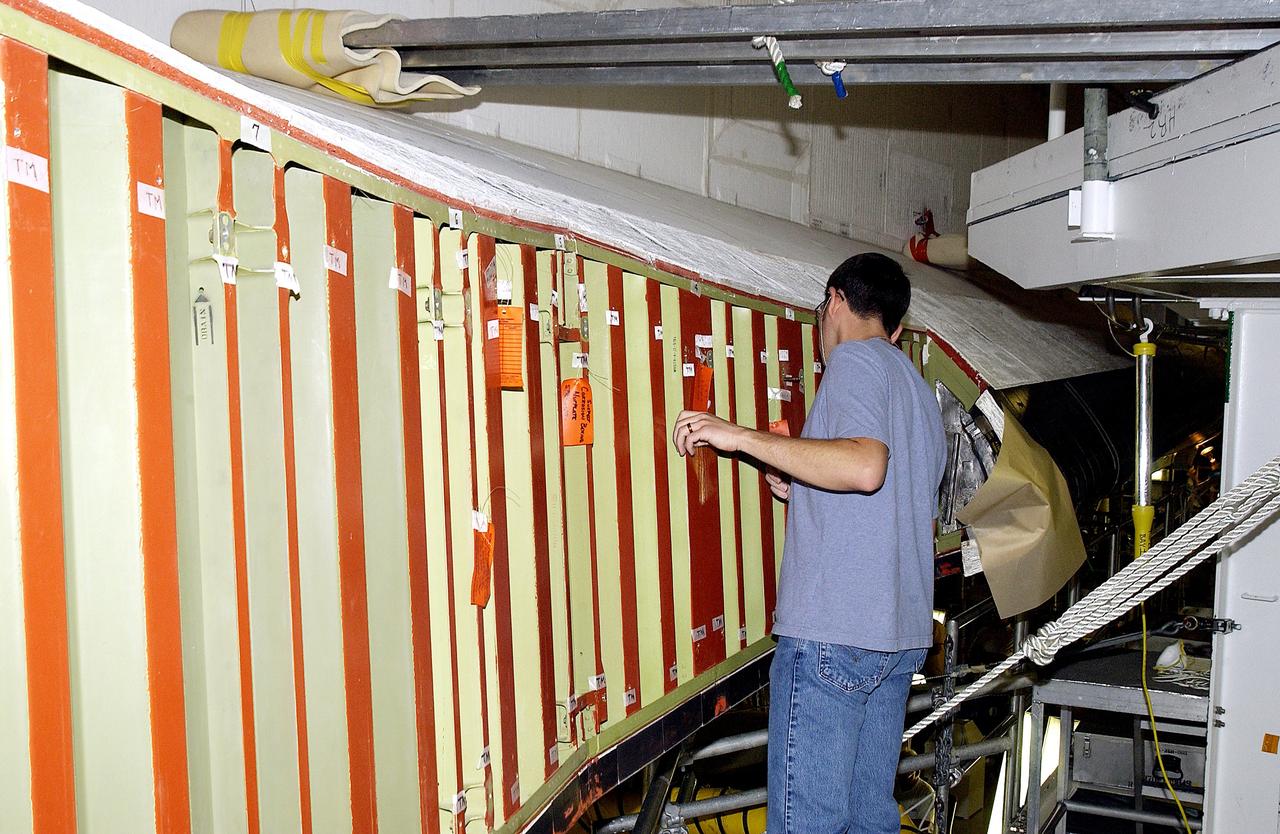
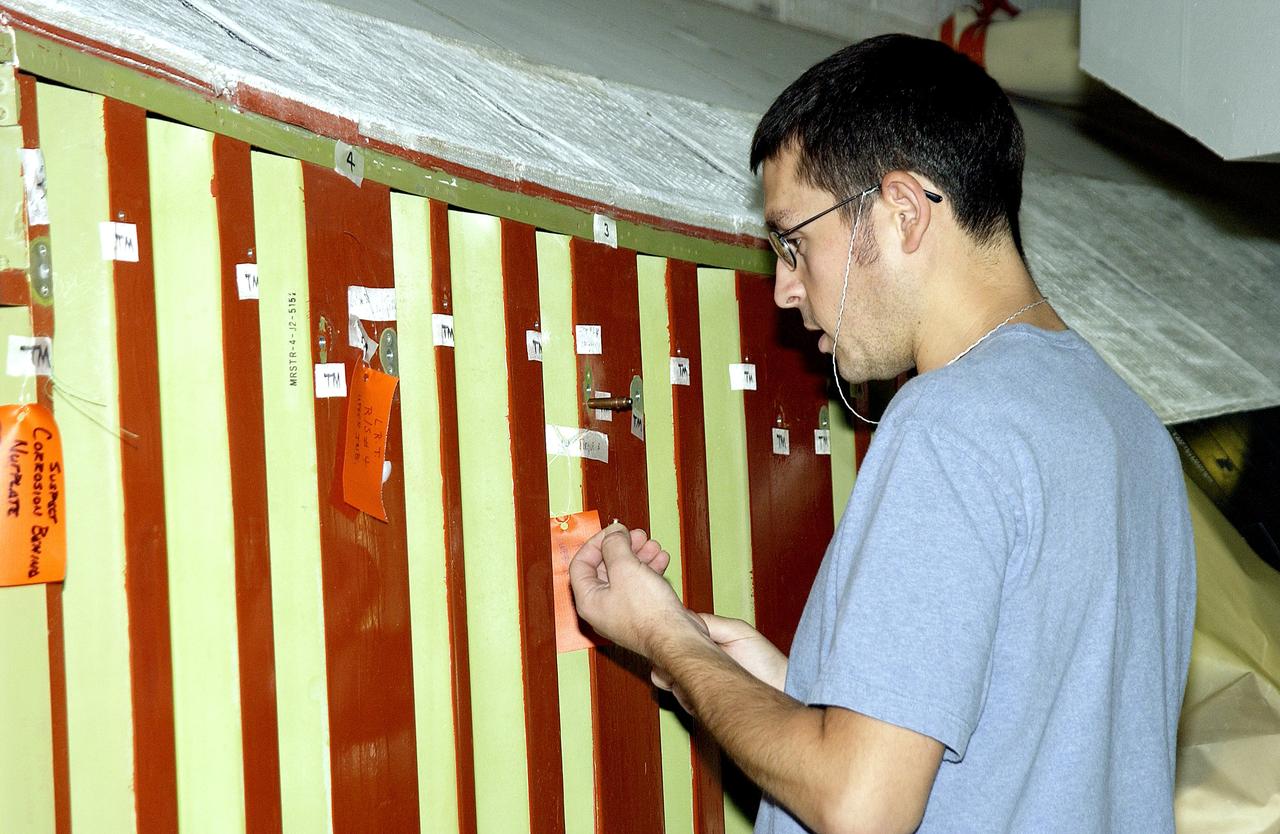
KENNEDY SPACE CENTER, FLA. - In the Orbiter Processing Facility (OPF), United Space Alliance technicians replace the attachment points for the spars on the interior of a wing of Space Shuttle Atlantis. Reinforced Carbon Carbon (RCC) panels are mechanically attached to the wing with a series of floating joints - spars - to reduce loading on the panels caused by wing deflections. The aluminum and the metallic attachments are protected from exceeding temperature limits by internal insulation.  The next launch of Atlantis will be on mission STS-114, a utilization and logistics flight to the International Space Station.
KENNEDY SPACE CENTER, FLA. - In the Orbiter Processing Facility (OPF), United Space Alliance technicians replace the attachment points for the spars on the interior of a wing of Space Shuttle Atlantis. Reinforced Carbon Carbon (RCC) panels are mechanically attached to the wing with a series of floating joints - spars - to reduce loading on the panels caused by wing deflections. The aluminum and the metallic attachments are protected from exceeding temperature limits by internal insulation. The next launch of Atlantis will be on mission STS-114, a utilization and logistics flight to the International Space Station.
The Saturn 1B first stage (S-IB) enters the NASA barge Point Barrow, in March 1968. The Marshall Space Flight Center (MSFC) utilized a number of water transportation craft to transport the Saturn stages to-and-from the manufacturing facilities and test sites, as well as delivery to the Kennedy Space Center for launch. Developed by the Marshall Space Flight Center and built by the Chrysler Corporation at Michoud Assembly Facility (MAF), the S-IB utilized the eight H-1 engines and each produced 200,000 pounds of thrust, a combined thrust of 1,600,000 pounds.
Saturn Apollo Program