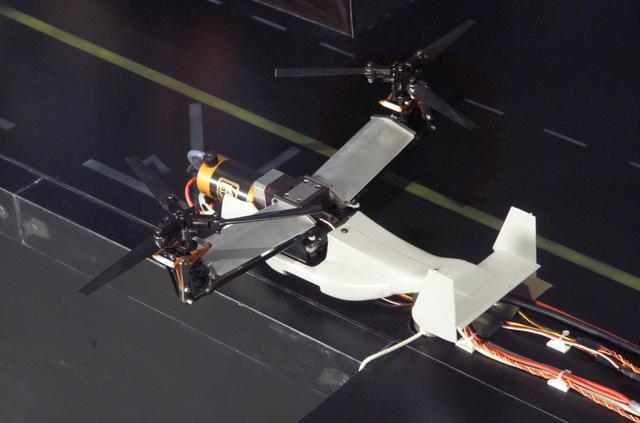
VSHAIP test in 7x10ft#1 W.T. (multiple model configruations) V-22 helicopter shipboard aerodynamic interaction program: Osprey V-22 blades
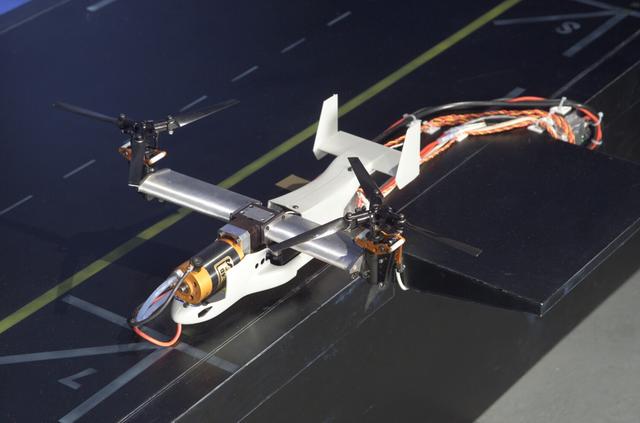
VSHAIP test in 7x10ft#1 W.T. (multiple model configruations) V-22 helicopter shipboard aerodynamic interaction program: Osprey with V-22 blades
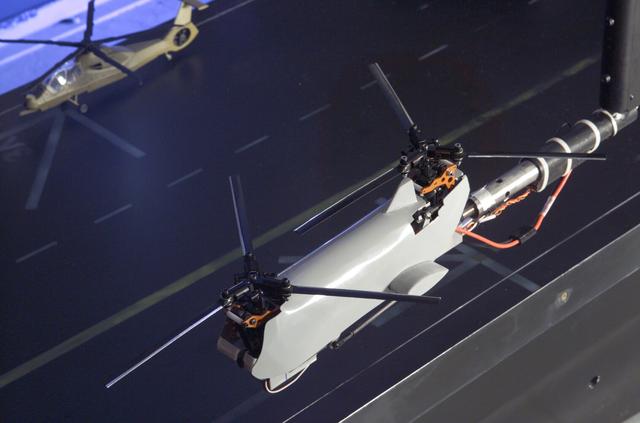
VSHAIP test in 7x10ft#1 W.T. (multiple model configruations) V-22 helicopter shipboard aerodynamic interaction program: SH-3G (V-22 blades)
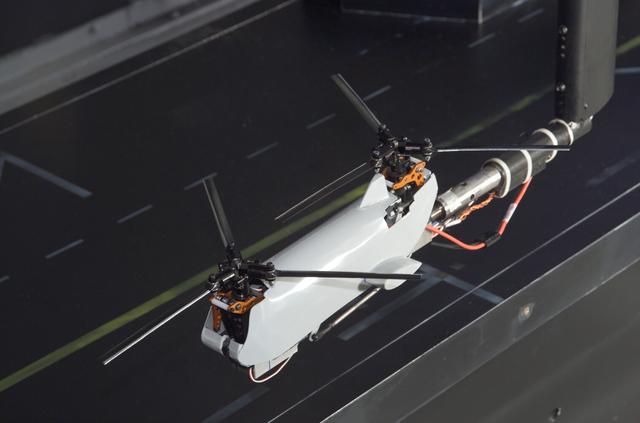
VSHAIP test in 7x10ft#1 W.T. (multiple model configruations) V-22 helicopter shipboard aerodynamic interaction program: SH-3G with V-22 Blades
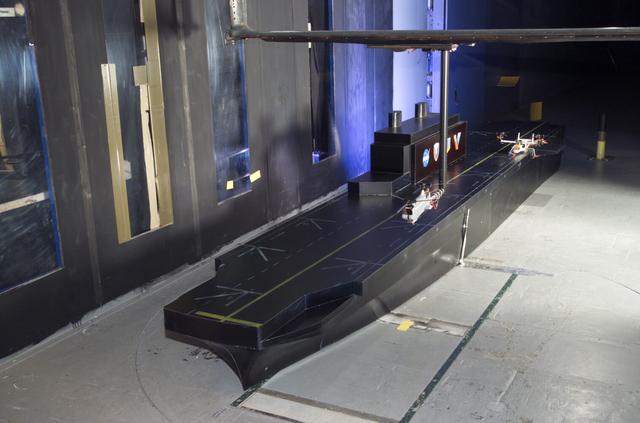
VSHAIP test in 7x10ft#1 W.T. (multiple model configruations) V-22 helicopter shipboard aerodynamic interaction program: SH-3G and Osprey models fix with V-22 Blades on deck of aircraft carrier
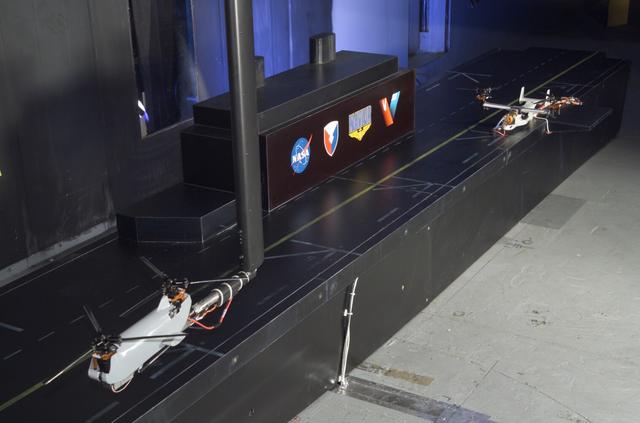
VSHAIP test in 7x10ft#1 W.T. (multiple model configruations) V-22 helicopter shipboard aerodynamic interaction program: SH-3G and Osprey models fix with V-22 Blades on deck of aircraft carrier
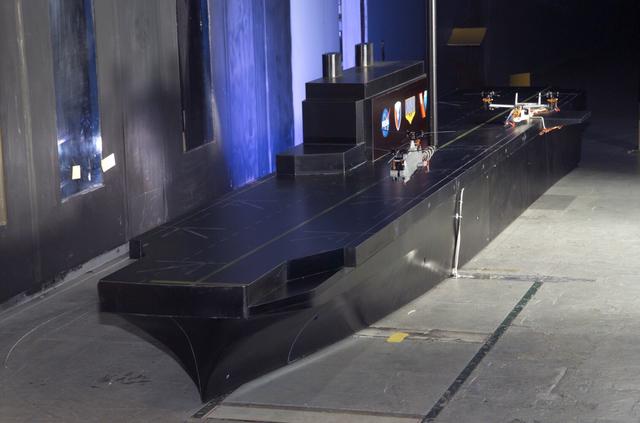
VSHAIP test in 7x10ft#1 W.T. (multiple model configruations) V-22 helicopter shipboard aerodynamic interaction program: SH-3G and Osprey models fix with V-22 Blades on deck of aircraft carrier
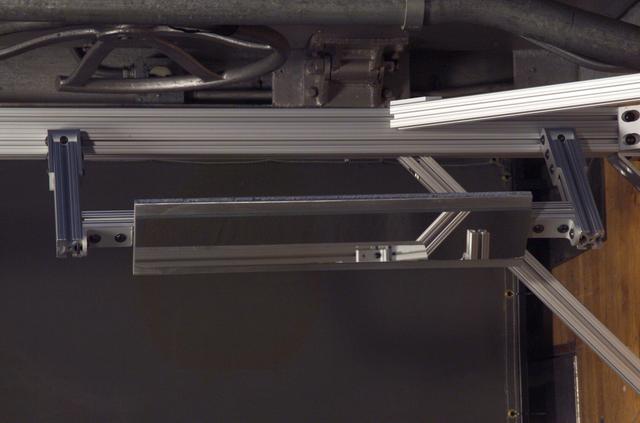
VSHAIP test in 7x10ft#1 W.T. (multiple model configruations) V-22 helicopter shipboard aerodynamic interaction program:
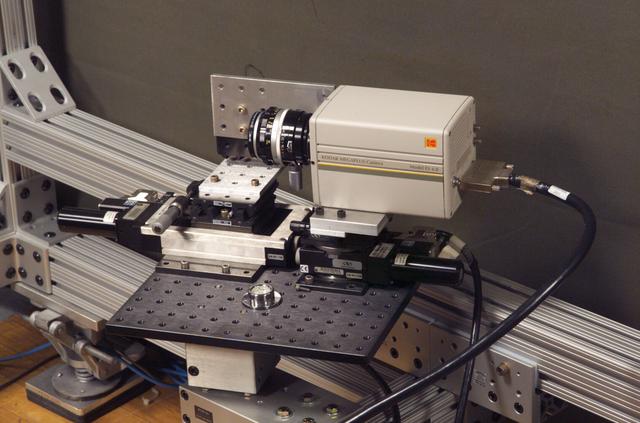
VSHAIP test in 7x10ft#1 W.T. (multiple model configruations) V-22 helicopter shipboard aerodynamic interaction program:
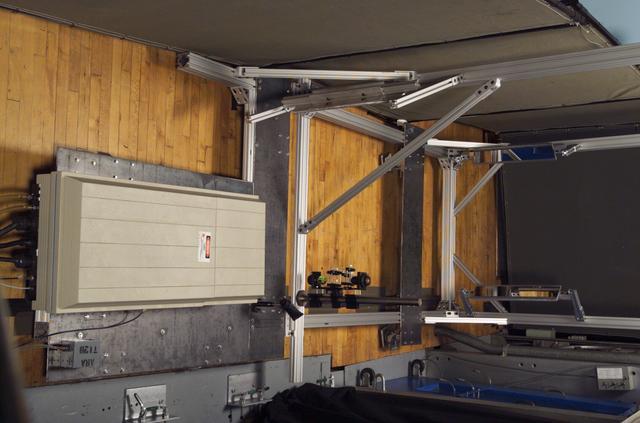
VSHAIP test in 7x10ft#1 W.T. (multiple model configruations) V-22 helicopter shipboard aerodynamic interaction program:
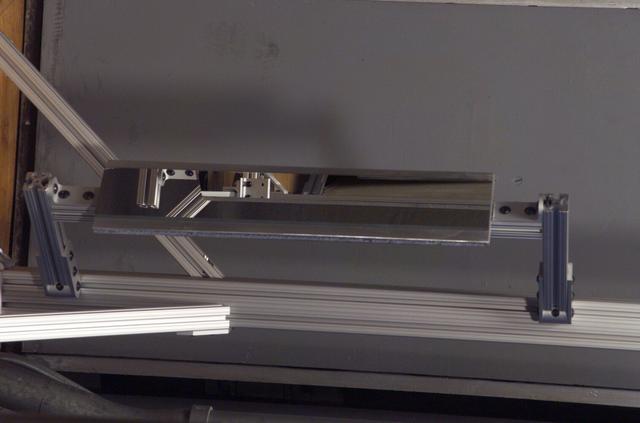
VSHAIP test in 7x10ft#1 W.T. (multiple model configruations) V-22 helicopter shipboard aerodynamic interaction program:
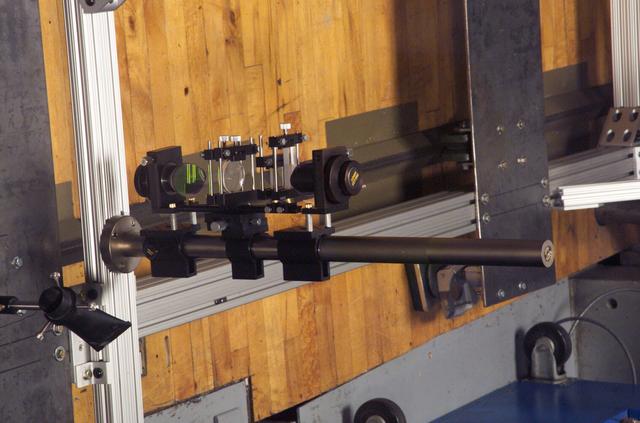
VSHAIP test in 7x10ft#1 W.T. (multiple model configruations) V-22 helicopter shipboard aerodynamic interaction program:
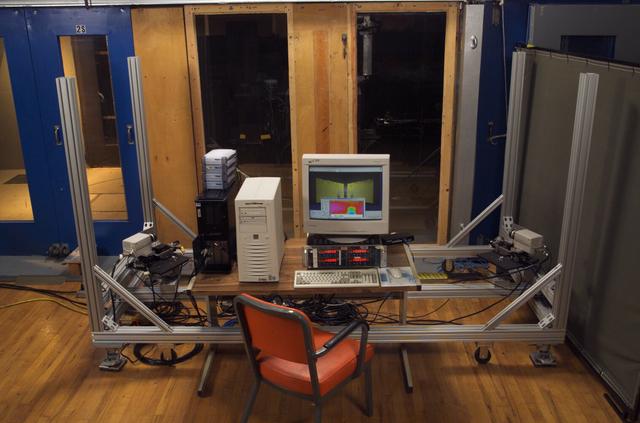
VSHAIP test in 7x10ft#1 W.T. (multiple model configruations) V-22 helicopter shipboard aerodynamic interaction program:
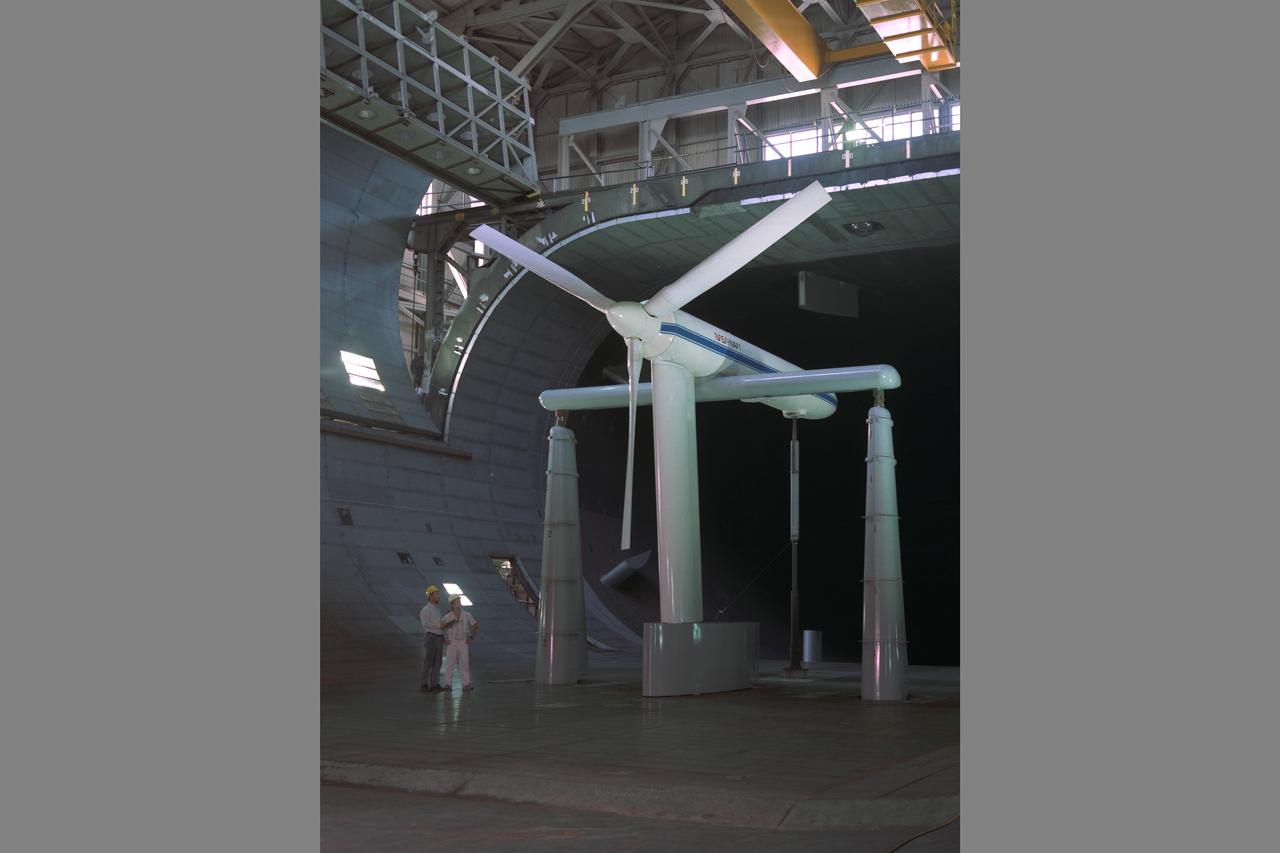
NASA/Navy V-22 Rotor testing in the NASA Ames 40x80ft. Subsonic Wind.Tunnel with Fort Felker and Engenio DeVargas.
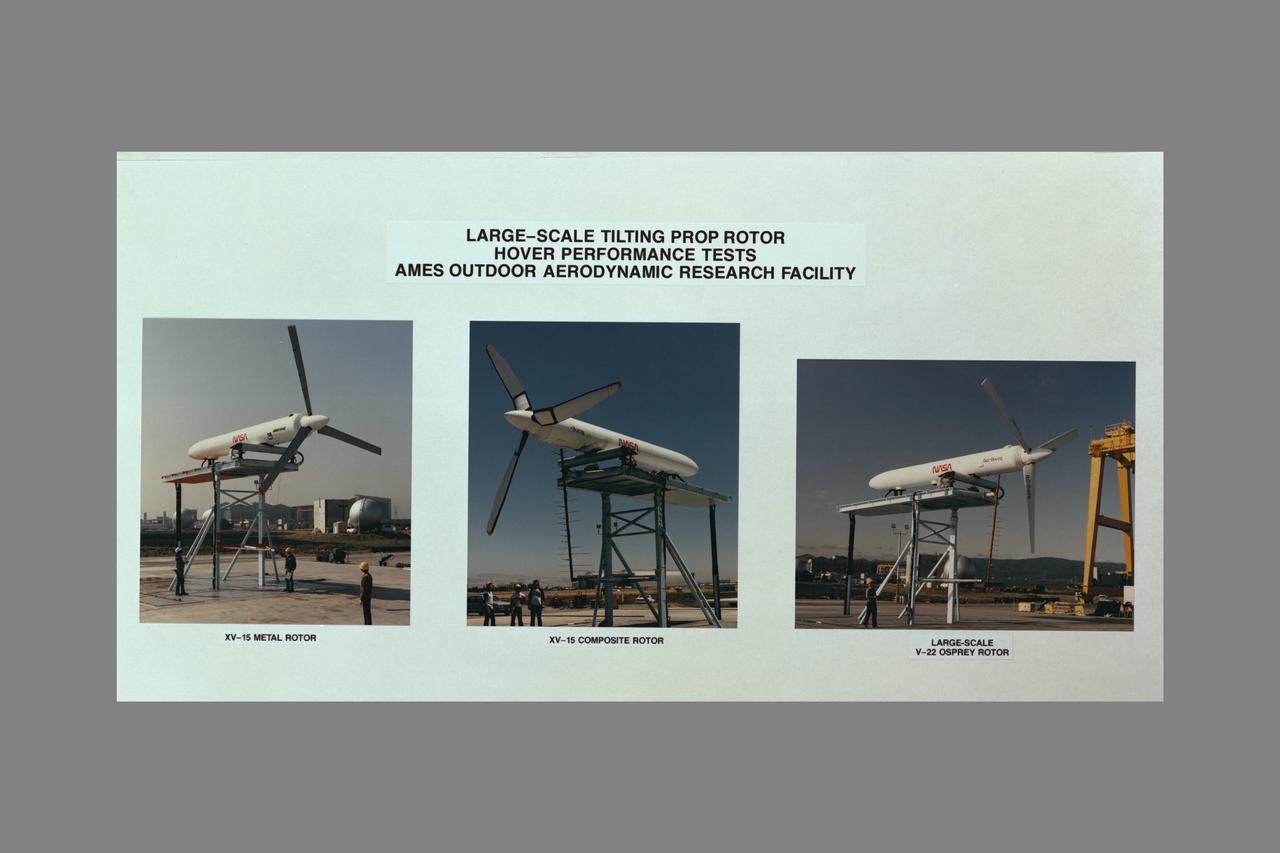
NASA Ames Graphics of LARGE-SCALE TILTING PROP ROTOR HOVER PERFORMANCE TESTS AMES OARF COMPOSITE. (ref: XV-15 Metal Rotor AC84-0176-13, XV-15 Composite Rotor from AC84-0498 series, V-22 Osprey AC84-0059-11 testing at OARF)
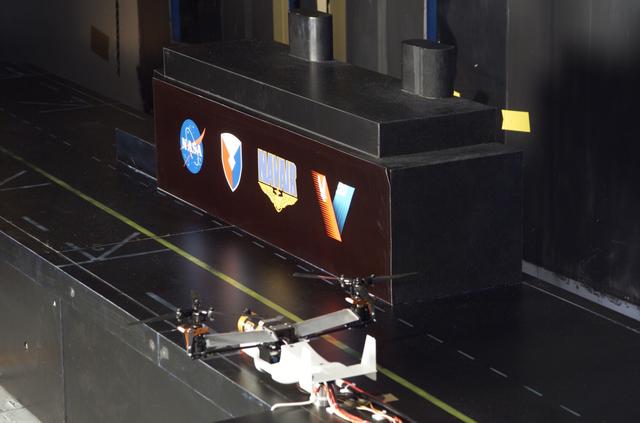
VSHAIP test in 7x10ft#1 W.T. (multiple model configruations) V-22 helicopter shipboard aerodynamic interaction program: rear view Osprey on deck

VSHAIP test in 7x10ft#1 W.T. (multiple model configruations) V-22 helicopter shipboard aerodynamic interaction program: with Kurt Long
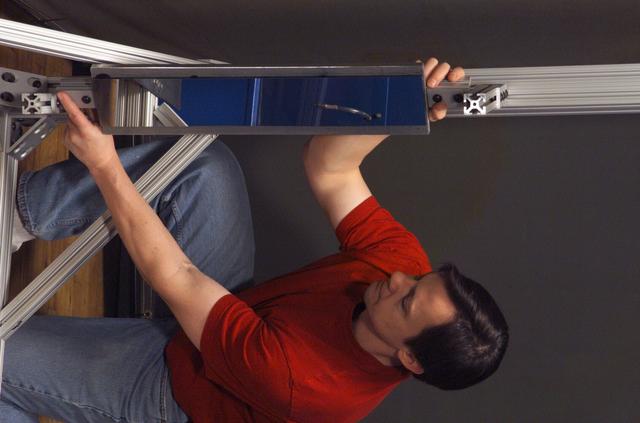
VSHAIP test in 7x10ft#1 W.T. (multiple model configruations) V-22 helicopter shipboard aerodynamic interaction program: with JT Heineck
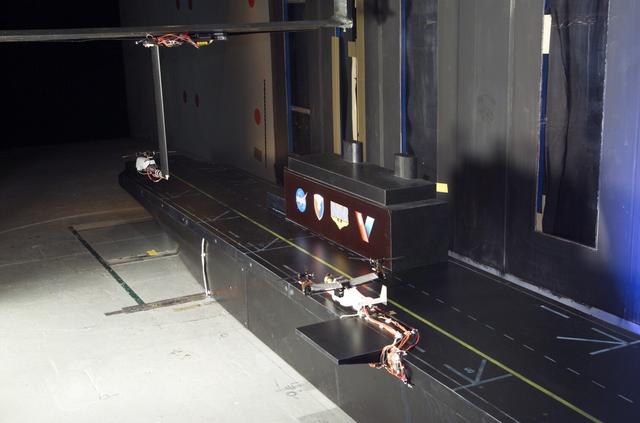
VSHAIP test in 7x10ft#1 W.T. (multiple model configruations) V-22 helicopter shipboard aerodynamic interaction program: rear view of model on deck
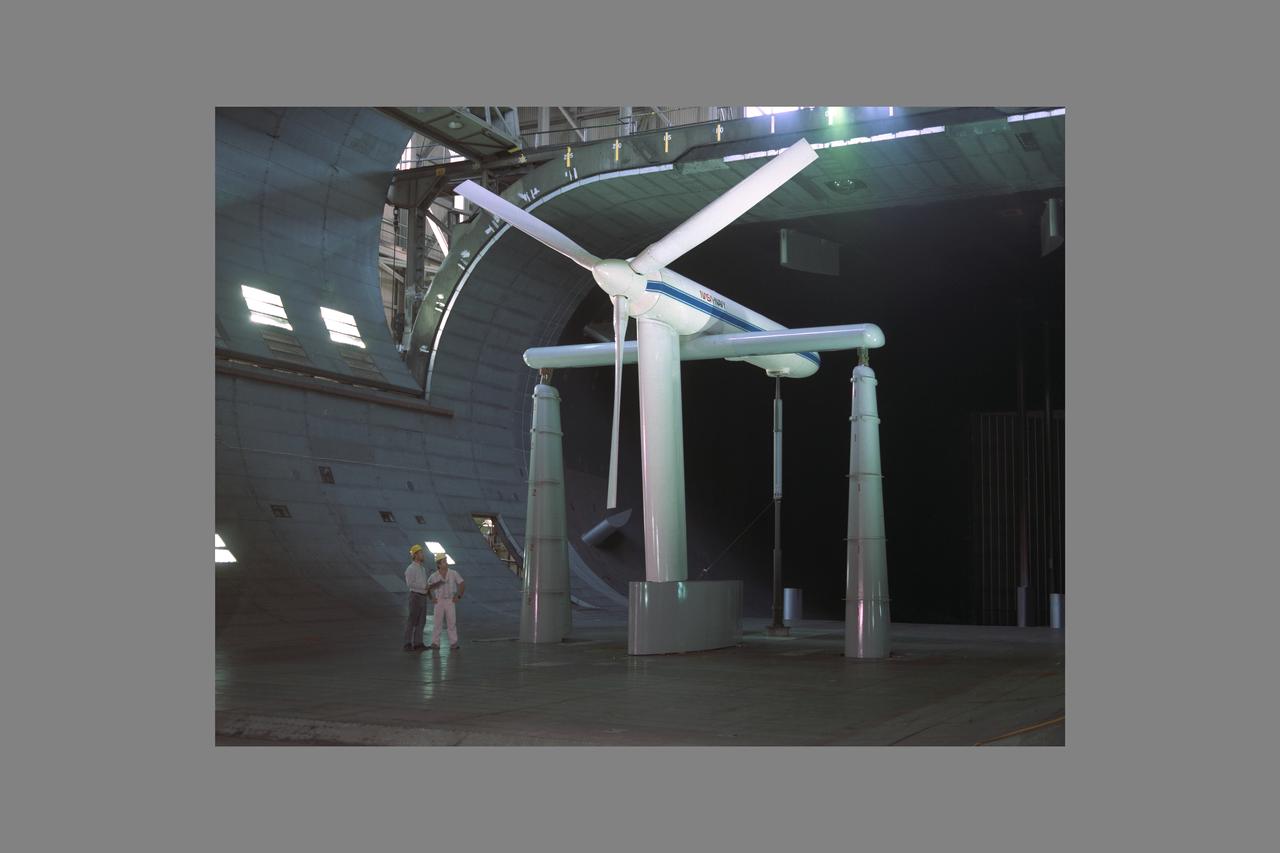
NASA/Navy V-22 Rotor testing in the NASA Ames 40x80ft. Subsonic Wind.Tunnel. Test-568 with Fort Felker and Engenio DeVargas.

VSHAIP test in 7x10ft#1 W.T. (multiple model configruations) V-22 helicopter shipboard aerodynamic interaction program: with Gloria Yamauchi
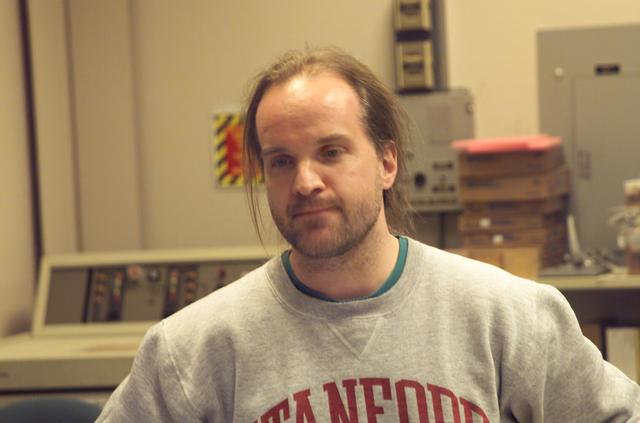
VSHAIP test in 7x10ft#1 W.T. (multiple model configruations) V-22 helicopter shipboard aerodynamic interaction program: with Kurt Long

VSHAIP test in 7x10ft#1 W.T. (multiple model configruations) V-22 helicopter shipboard aerodynamic interaction program: with Gloria Yamauchi
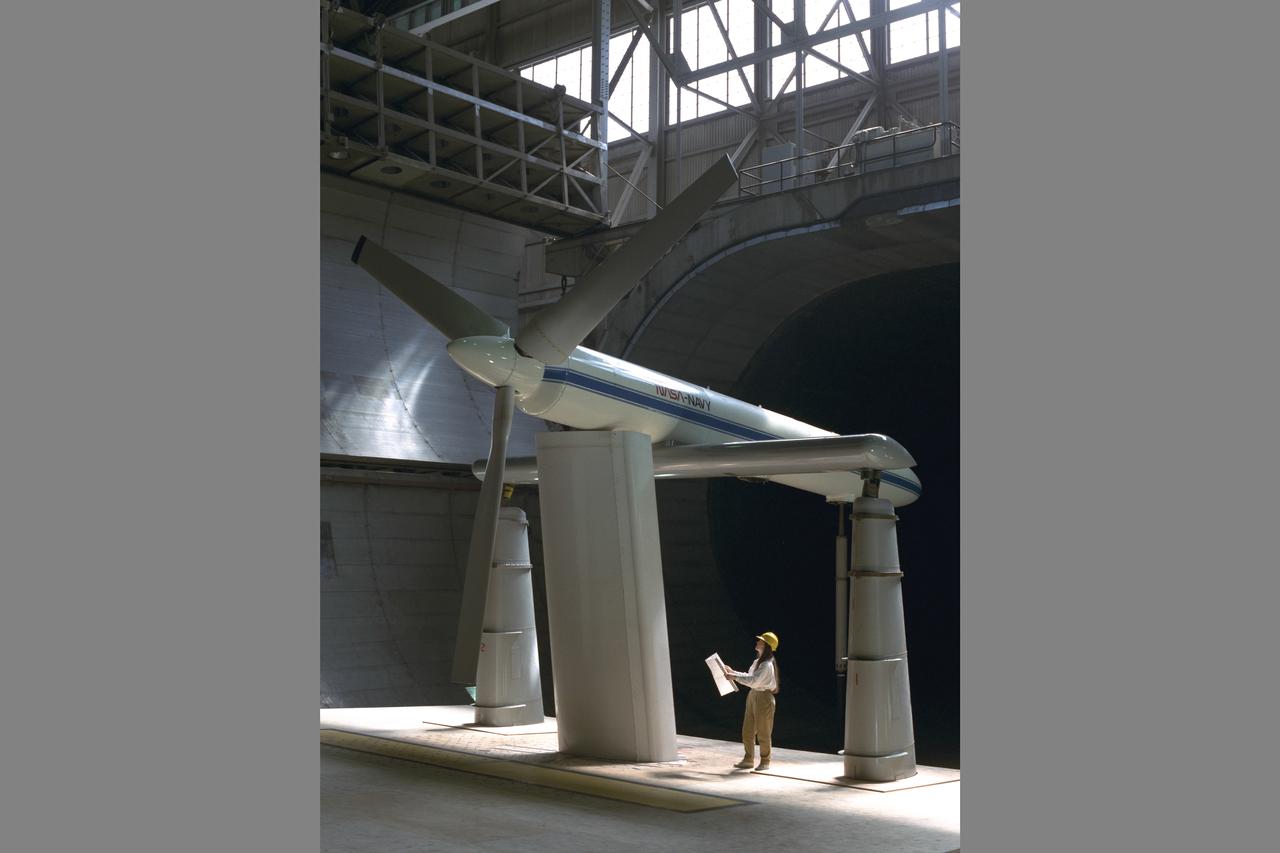
NASA/Navy V-22 Rotor testing in the NASA Ames 40x80ft. Subsonic Wind.Tunnel. Test-568 with Ruth Hefferman checking specifications.
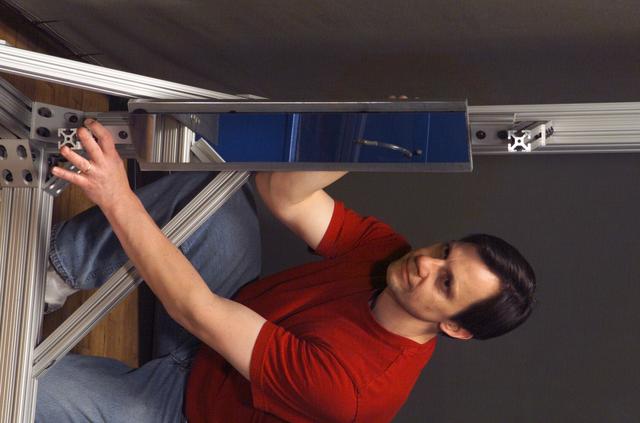
VSHAIP test in 7x10ft#1 W.T. (multiple model configruations) V-22 helicopter shipboard aerodynamic interaction program: with JT Heineck

VSHAIP test in 7x10ft#1 W.T. (multiple model configruations) V-22 helicopter shipboard aerodynamic interaction program: with Allen Wadcox
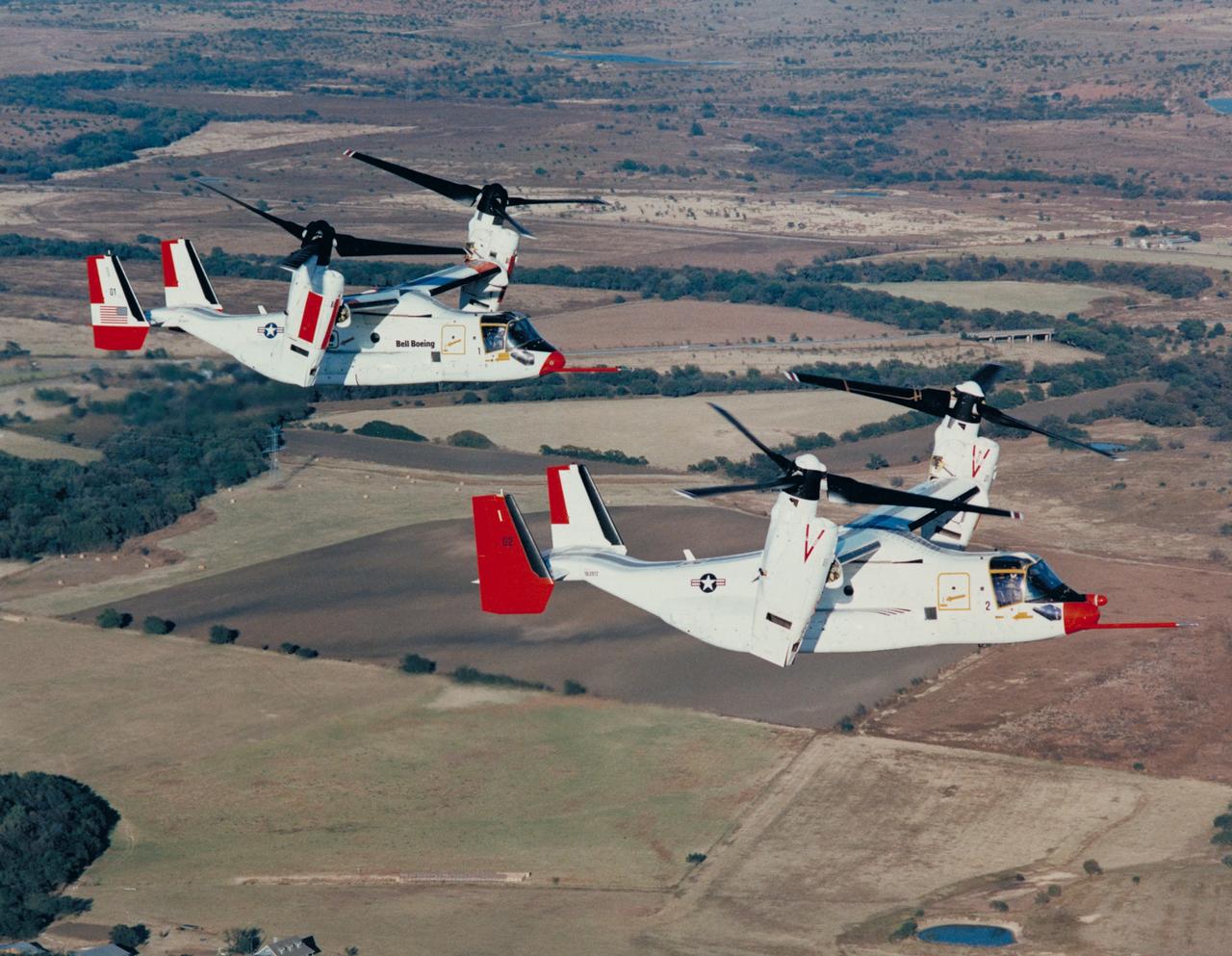
Bell Helicopter Bell-Boeing Tilt Rotor V-22 Ospreys in flight.
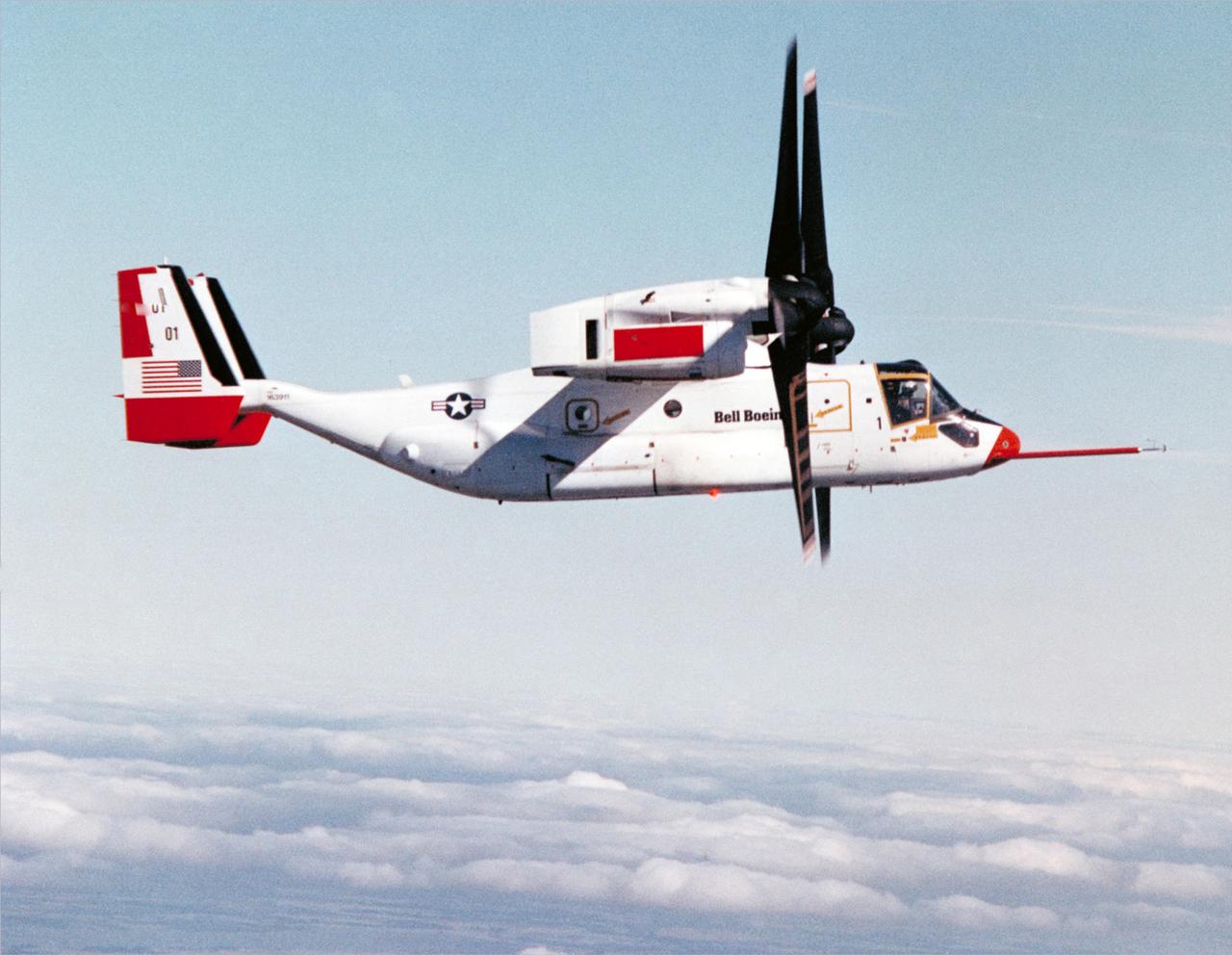
Bell Helicopter Bell-Boeing Tilt Rotor V-22 Osprey in flight.
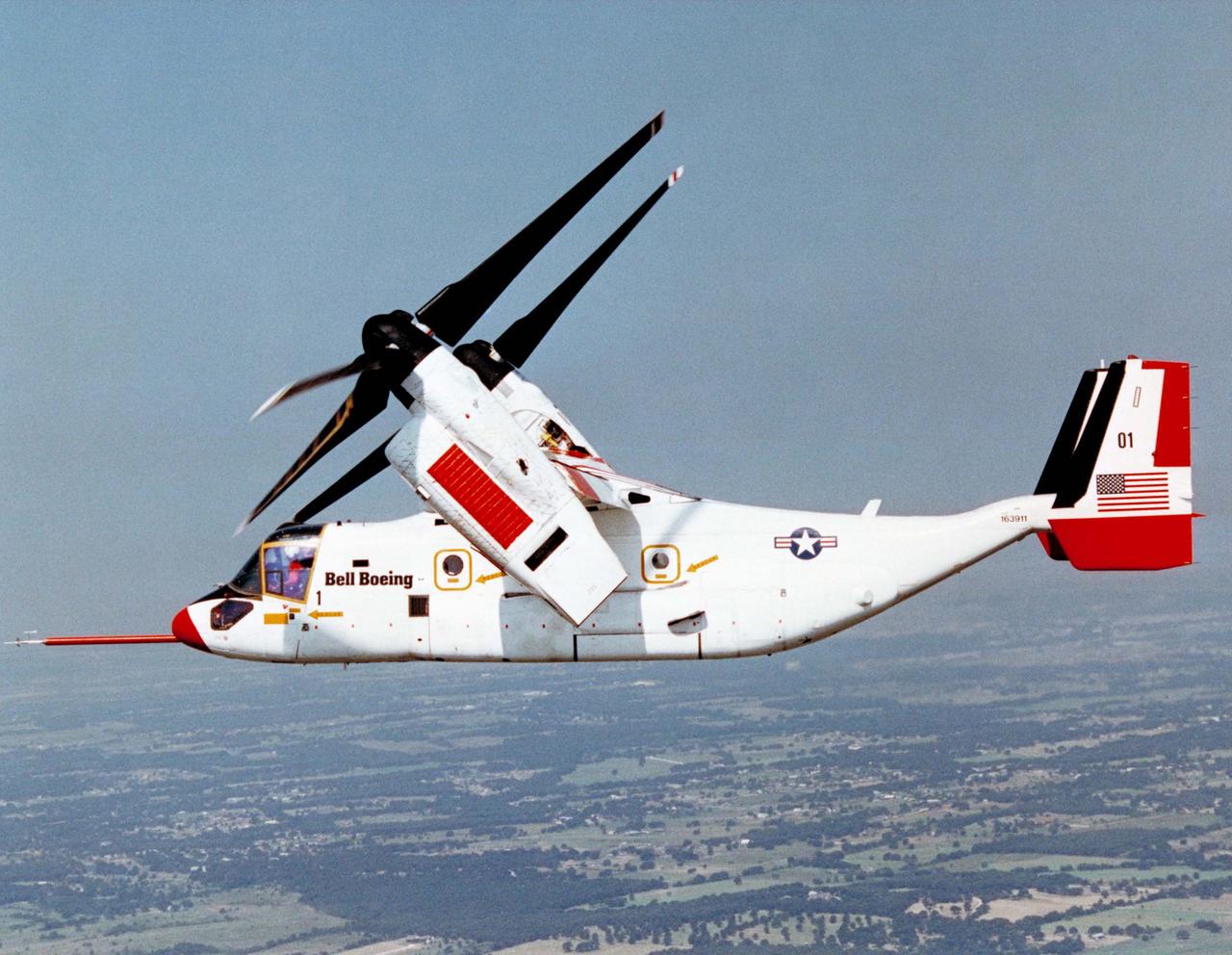
Bell-Boeing Tilt Rotor V-22 Osprey in flight.
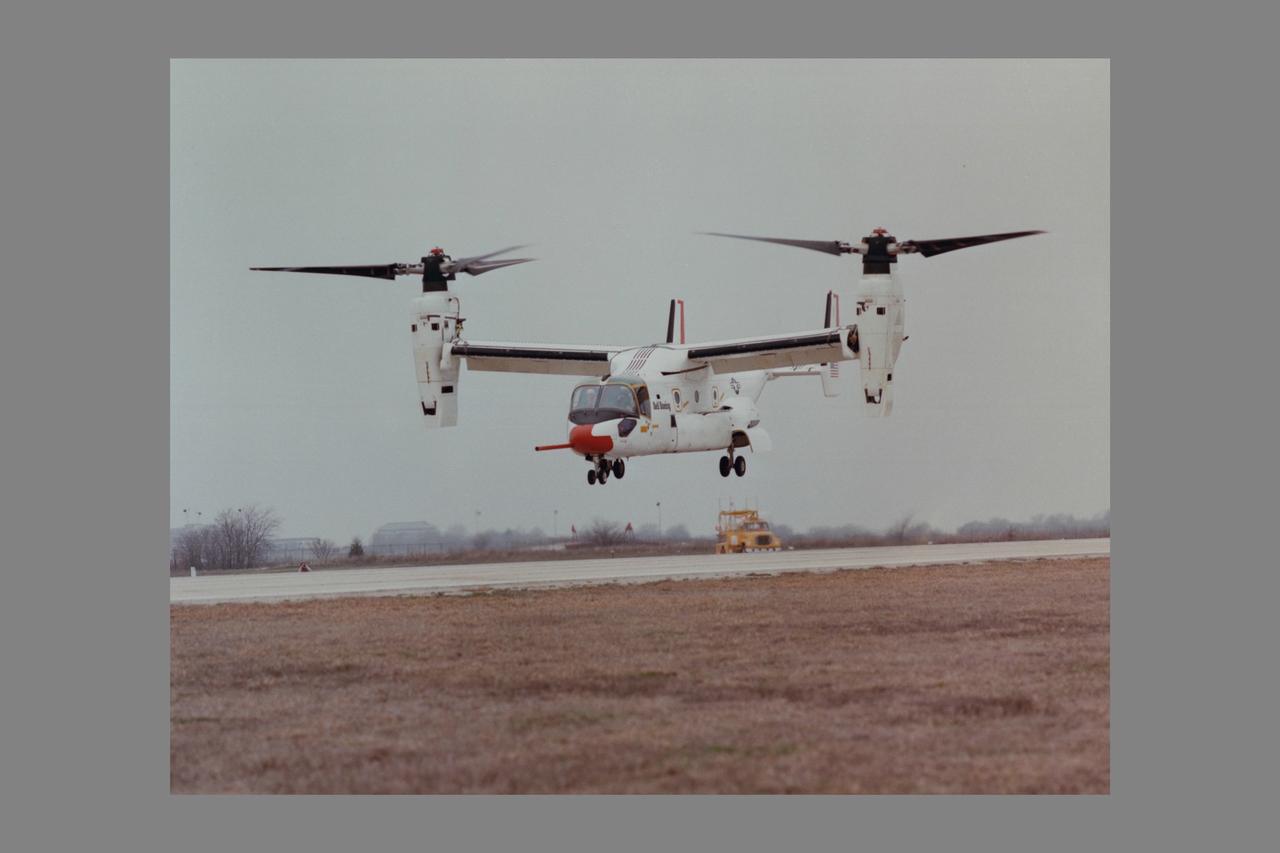
Bell Boeing (Military) Tilt Rotor V-22 Osprey hovering at Bell Boeing Helicopter, Arlington TX
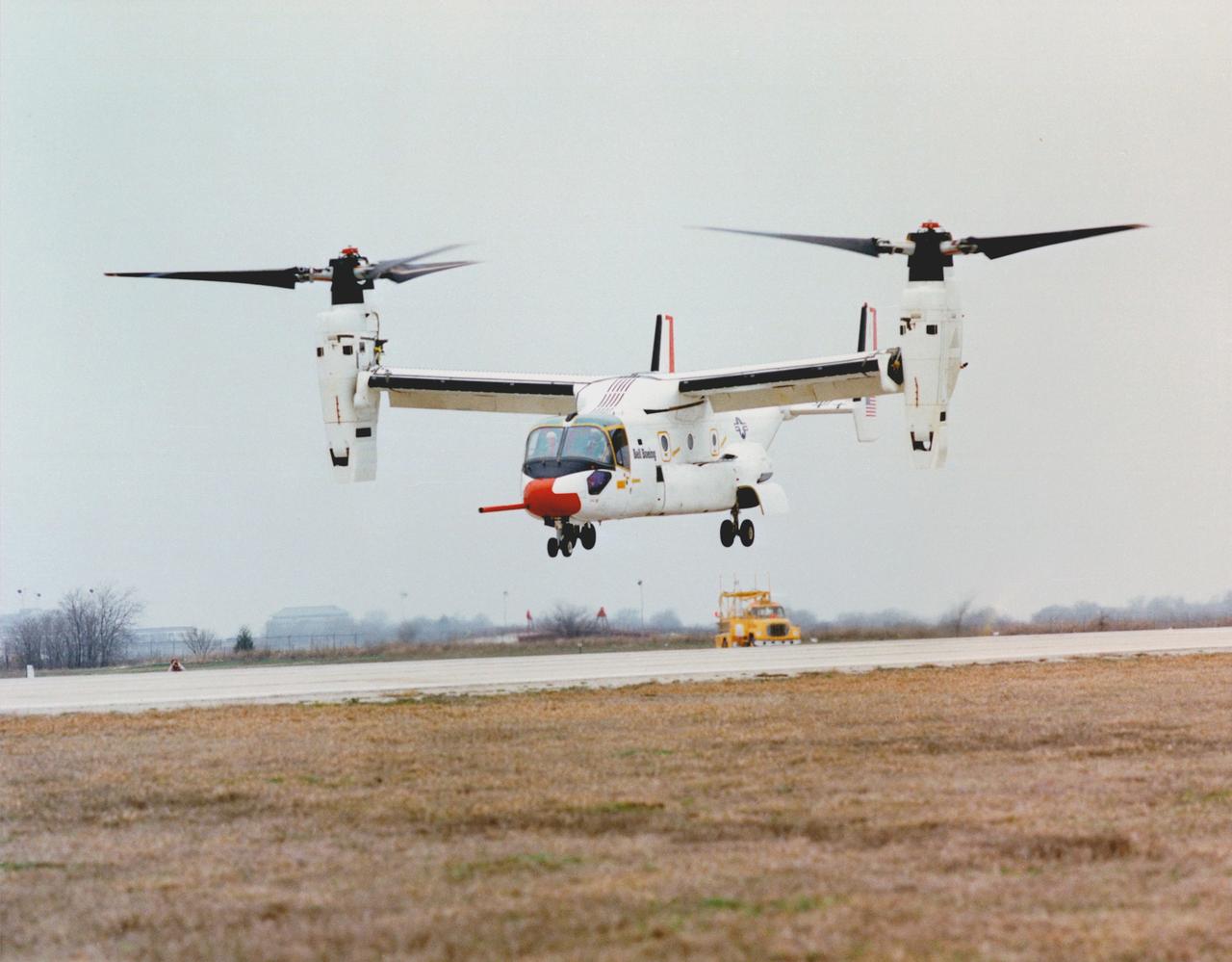
Bell Boeing (Military) Tilt Rotor V-22 Osprey hovering at Bell Boeing Helicopter, Arlington TX
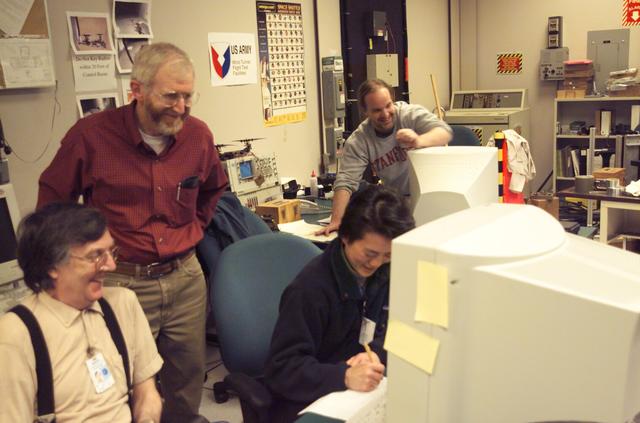
VSHAIP test in 7x10ft#1 W.T. (multiple model configruations) V-22 helicopter shipboard aerodynamic interaction program: L-R seated Allen Wadcox, (standind) Mark Betzina, seated in front of computer Gloria Yamauchi, in background Kurt Long.
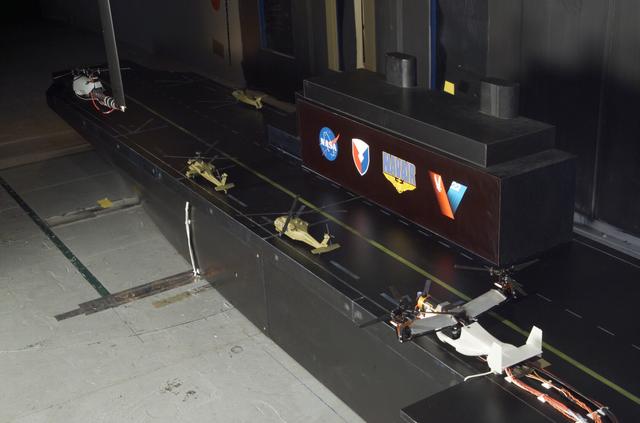
VSHAIP test in 7x10ft#1 W.T. (multiple model configruations) V-22 helicopter shipboard aerodynamic interaction program: SH-3, AH-1G (Cobra) UH-1H (Blackhawk) and Osprey V-22 on deck
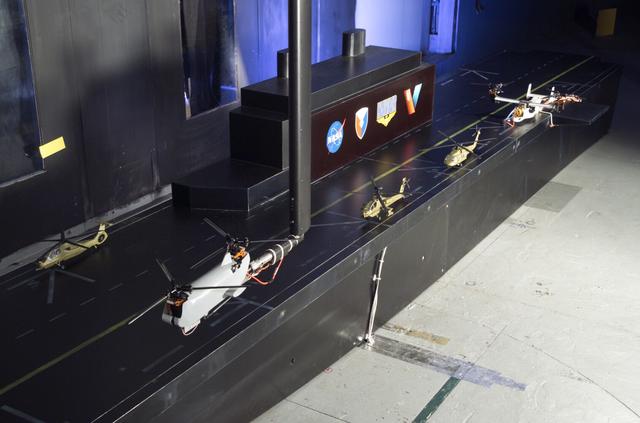
VSHAIP test in 7x10ft#1 W.T. (multiple model configruations) V-22 helicopter shipboard aerodynamic interaction program: SH-3, AH-1G (Cobra) UH-1H (Blackhawk) and Osprey V-22 on deck

V-22 RADOME
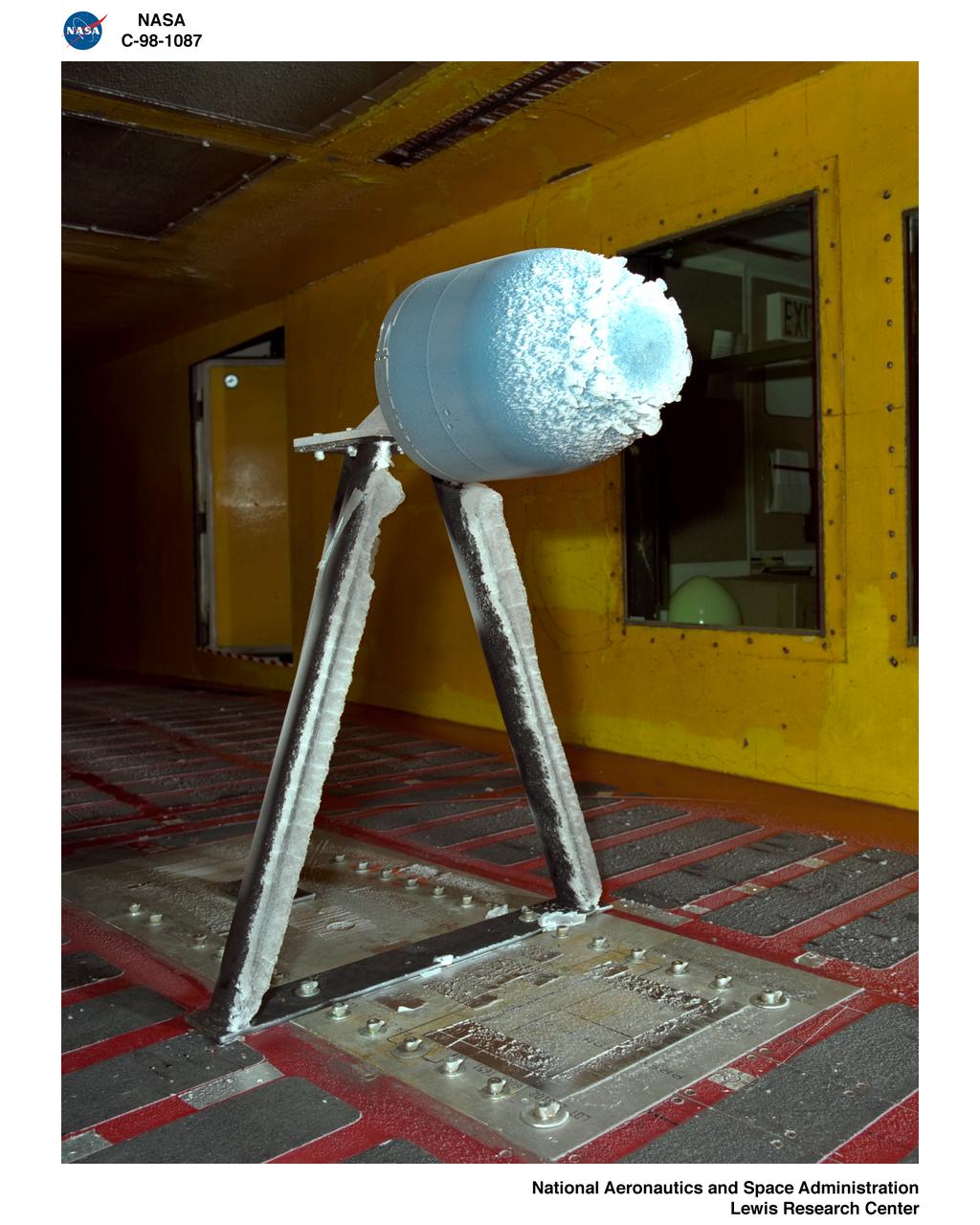
V-22 RADOME
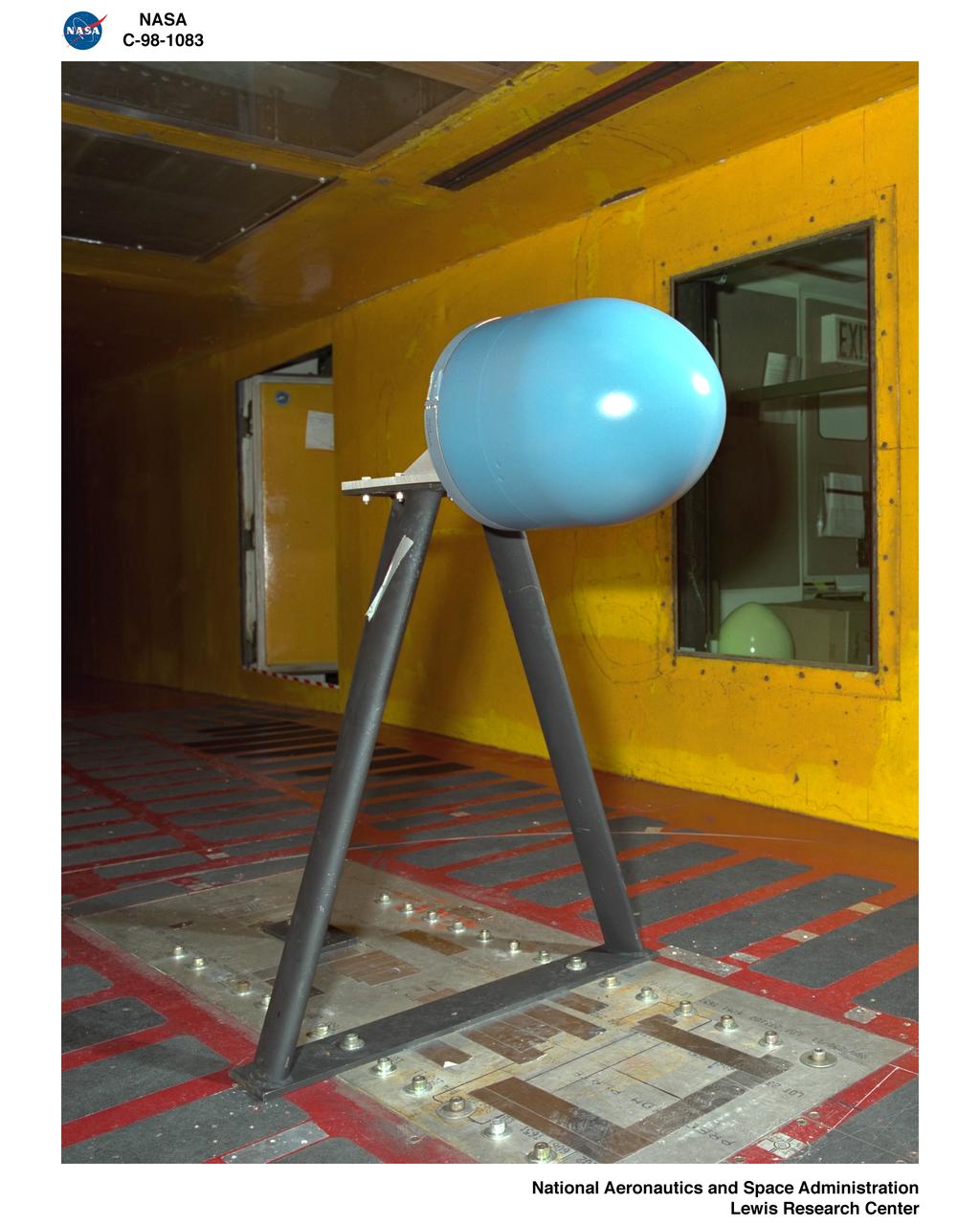
V-22 RADOME
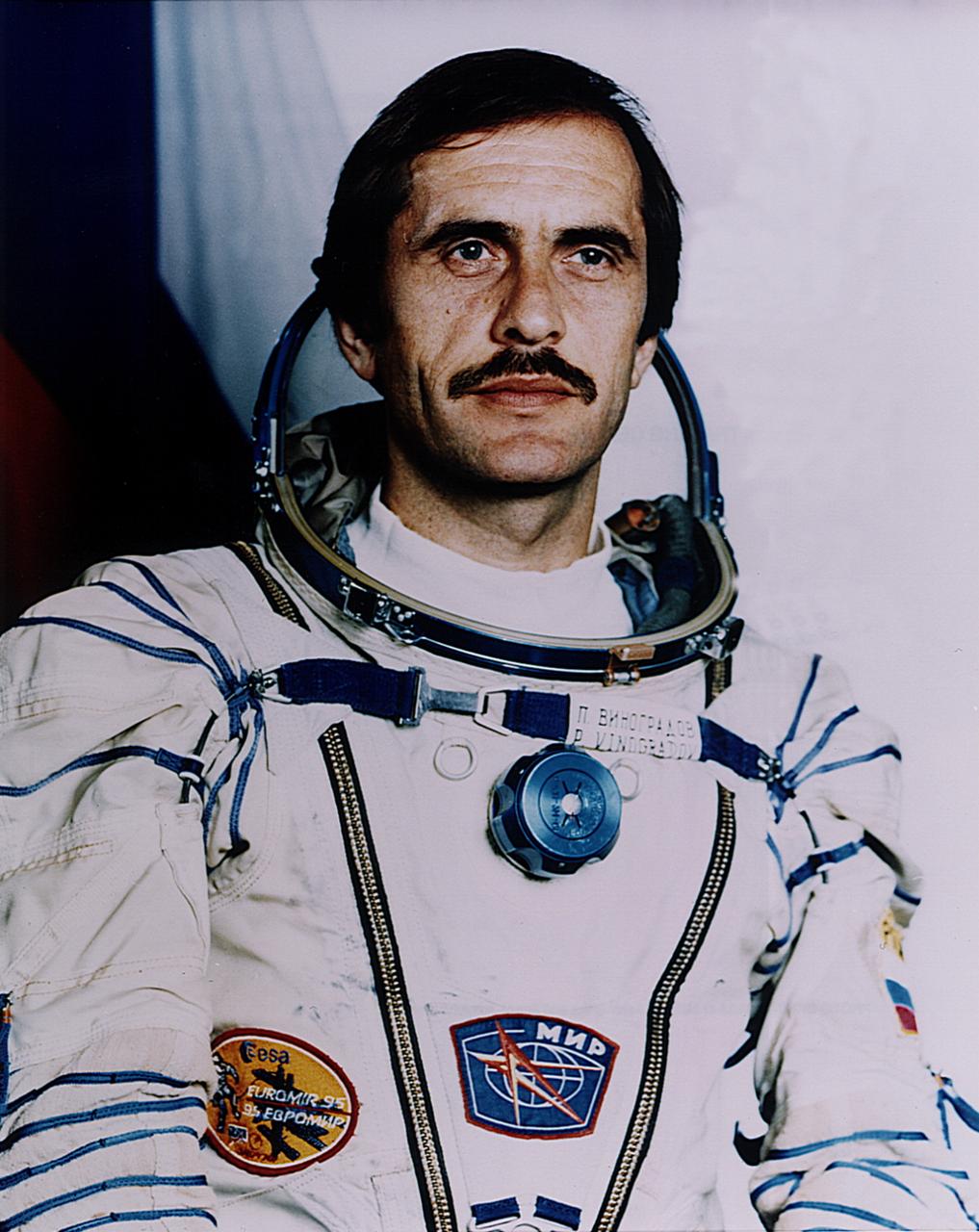
S95-21470 (December 1995) --- Cosmonaut Pavel V. Vinogradov, Mir 22 flight engineer
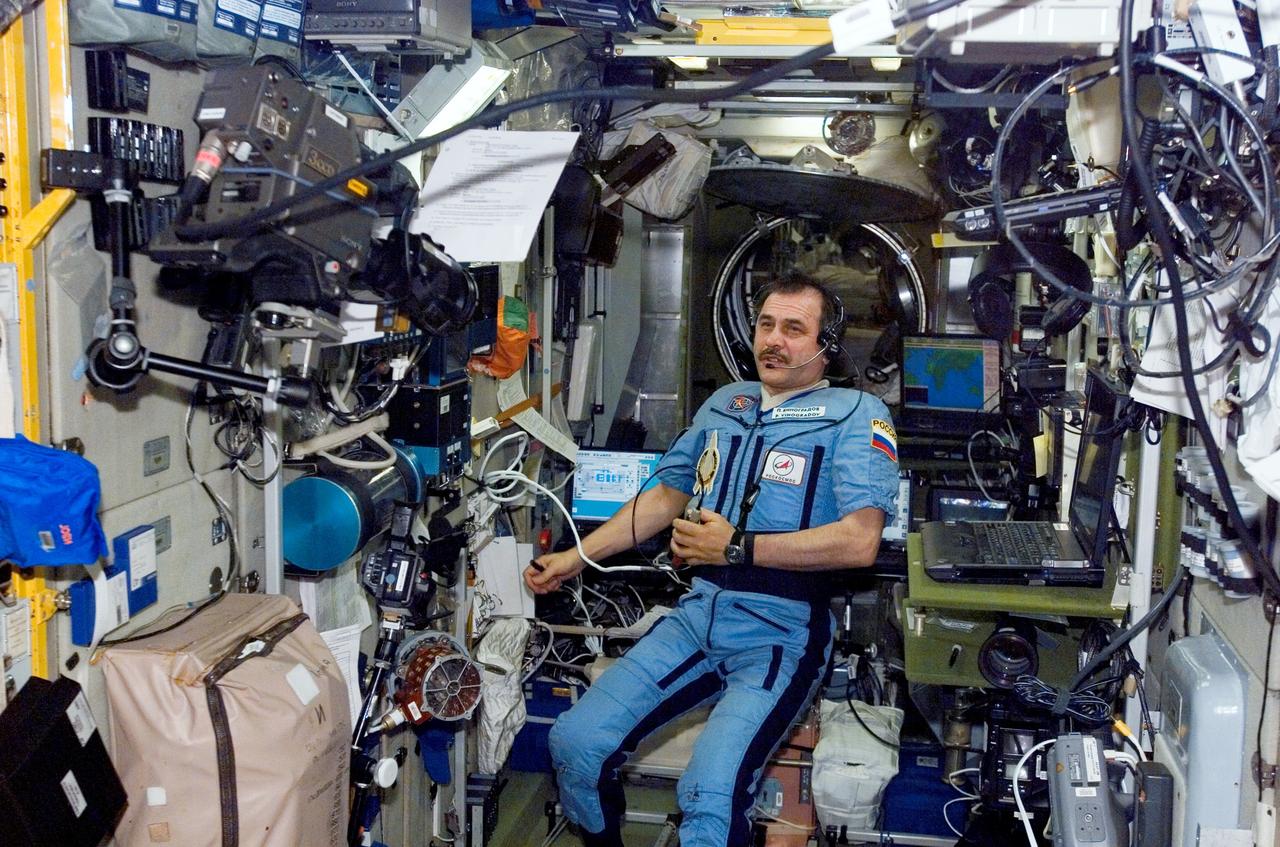
ISS013-E-40015 (22 June 2006) --- Cosmonaut Pavel V. Vinogradov, Expedition 13 commander representing Russia's Federal Space Agency, uses a communication system in the Zvezda Service Module of the International Space Station.
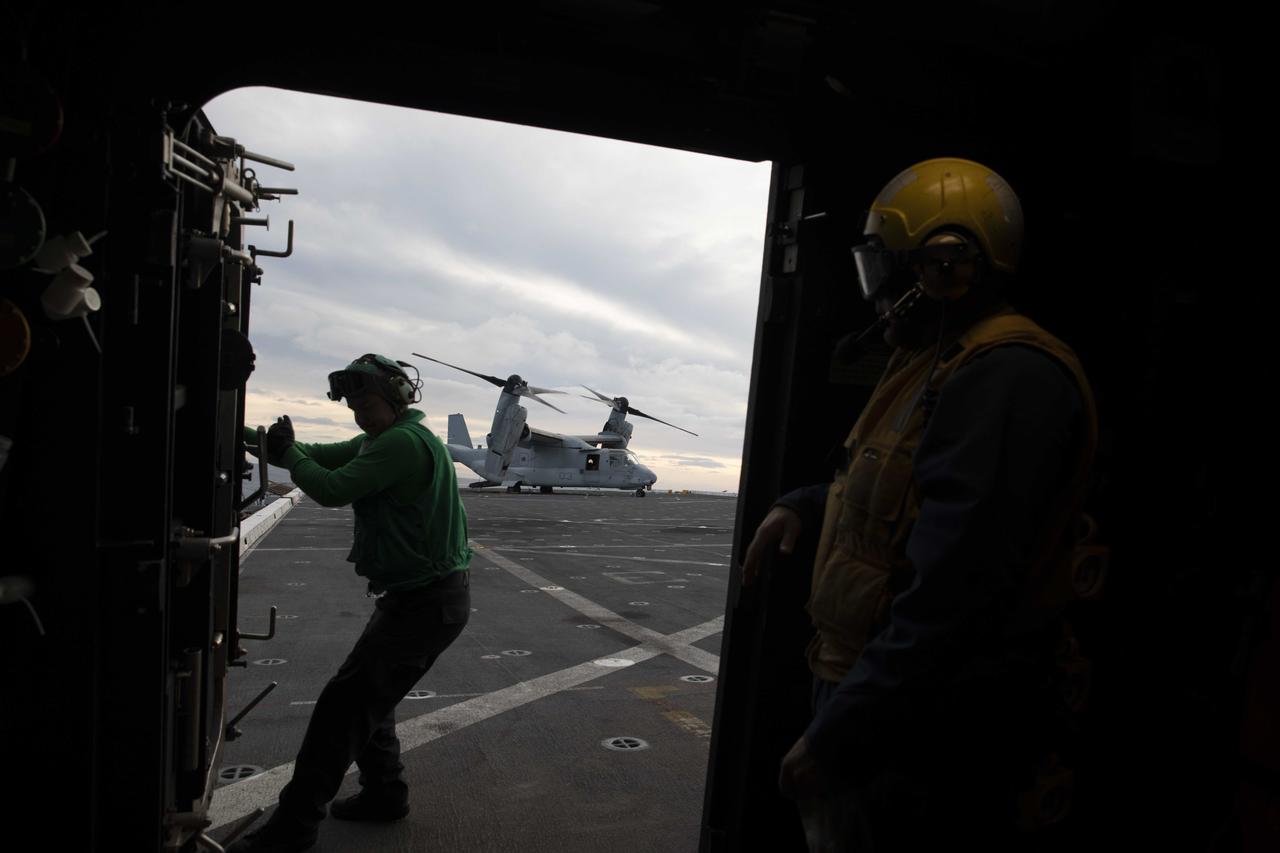
A member of the U.S. Navy helicopter team aboard USS Portland opens a door to the flight deck after a V-22 Osprey lands prior to NASA’s Orion splashdown for the Artemis I mission on Dec. 11, 2022.
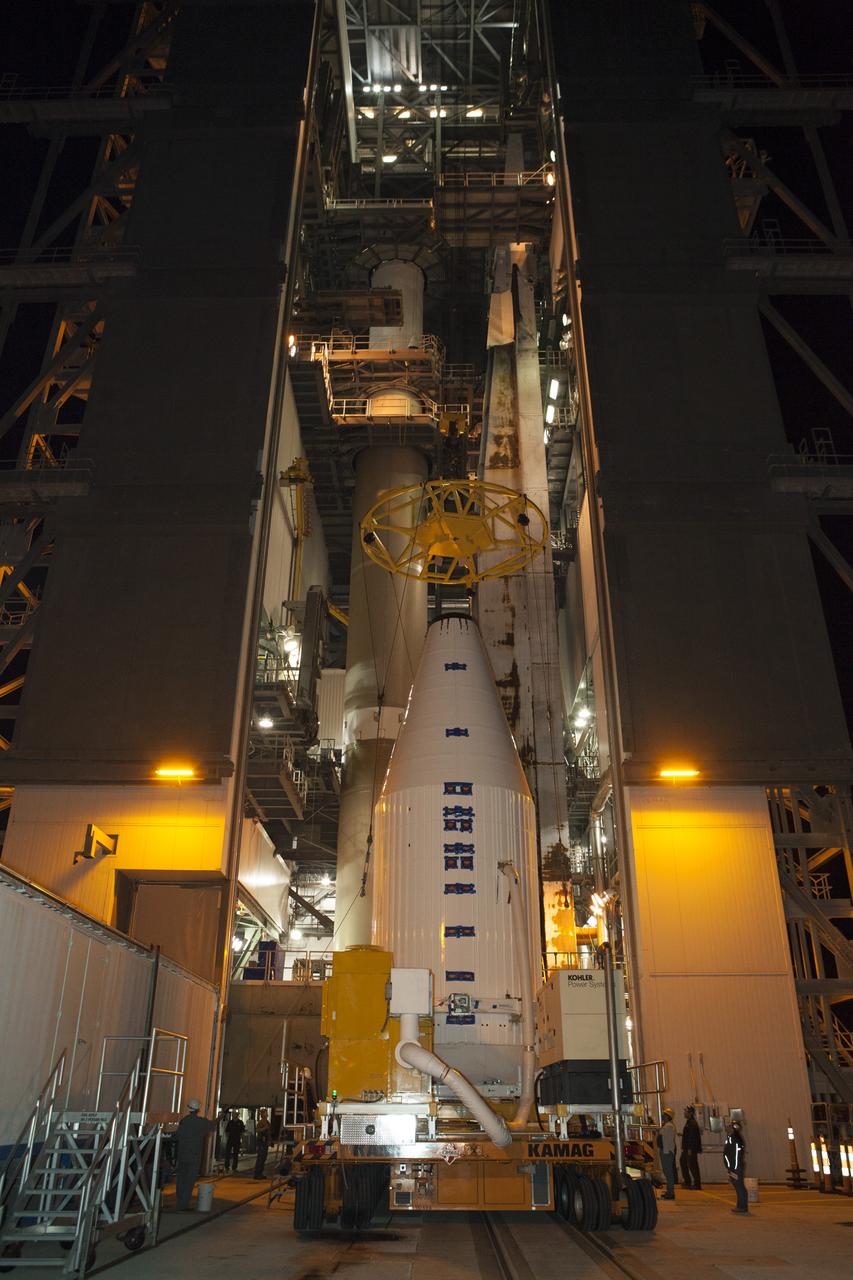
Encapsulated inside its payload fairing, the Cygnus spacecraft for the upcoming Orbital ATK Commercial Resupply Services-6 mission arrives at the Vertical Integration Facility at Launch Complex-41 at Cape Canaveral Air Force Station where it will be mounted atop a United Launch Alliance Atlas V rocket. The Cygnus is scheduled to lift off atop a United Launch Alliance Atlas V rocket on March 22 to deliver hardware and supplies to the International Space Station.
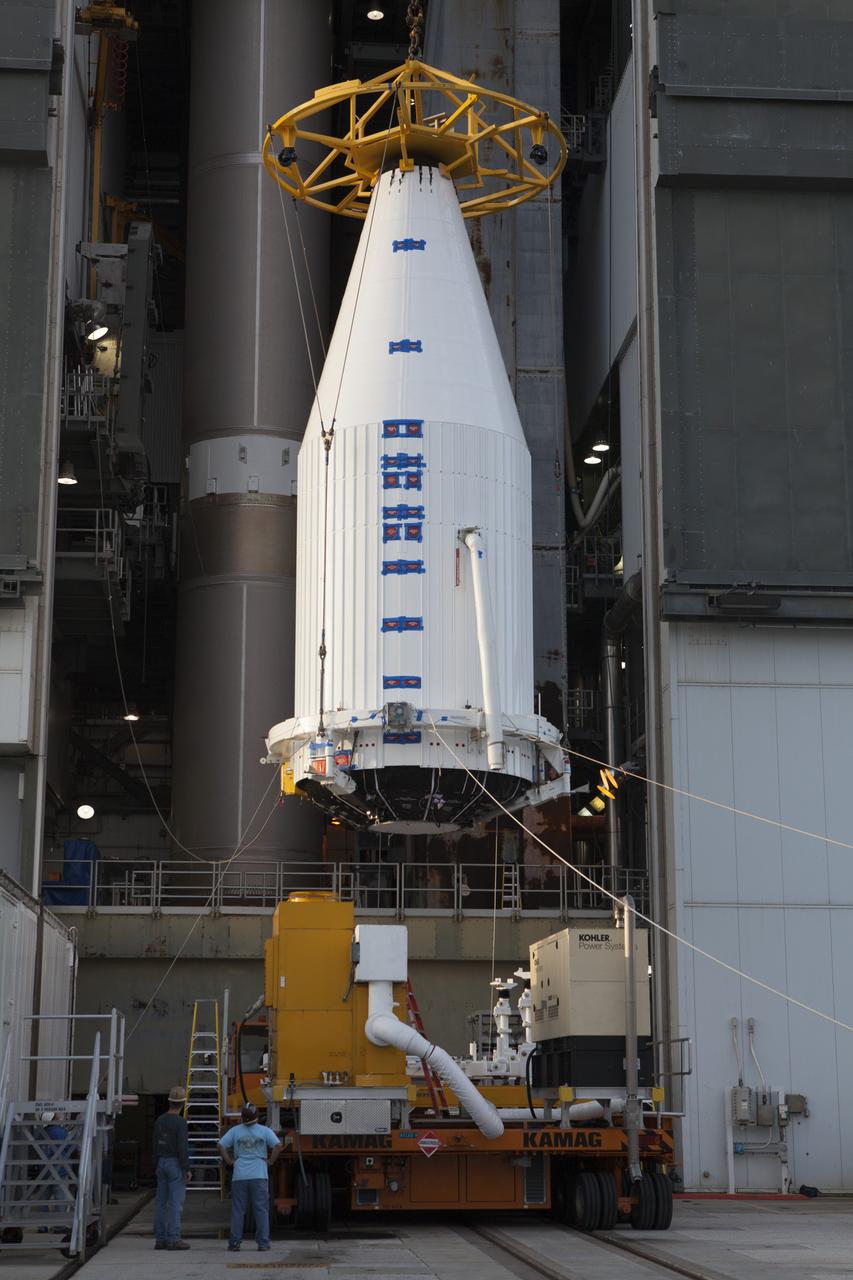
Encapsulated inside its payload fairing, the Cygnus spacecraft for the upcoming Orbital ATK Commercial Resupply Services-6 is lifted to be mated atop a United Launch Alliance Atlas V rocket in the Vertical Integration Facility at Launch Complex-41 at Cape Canaveral Air Force Station. The Cygnus is scheduled to lift off atop a United Launch Alliance Atlas V rocket on March 22 to deliver hardware and supplies to the International Space Station.
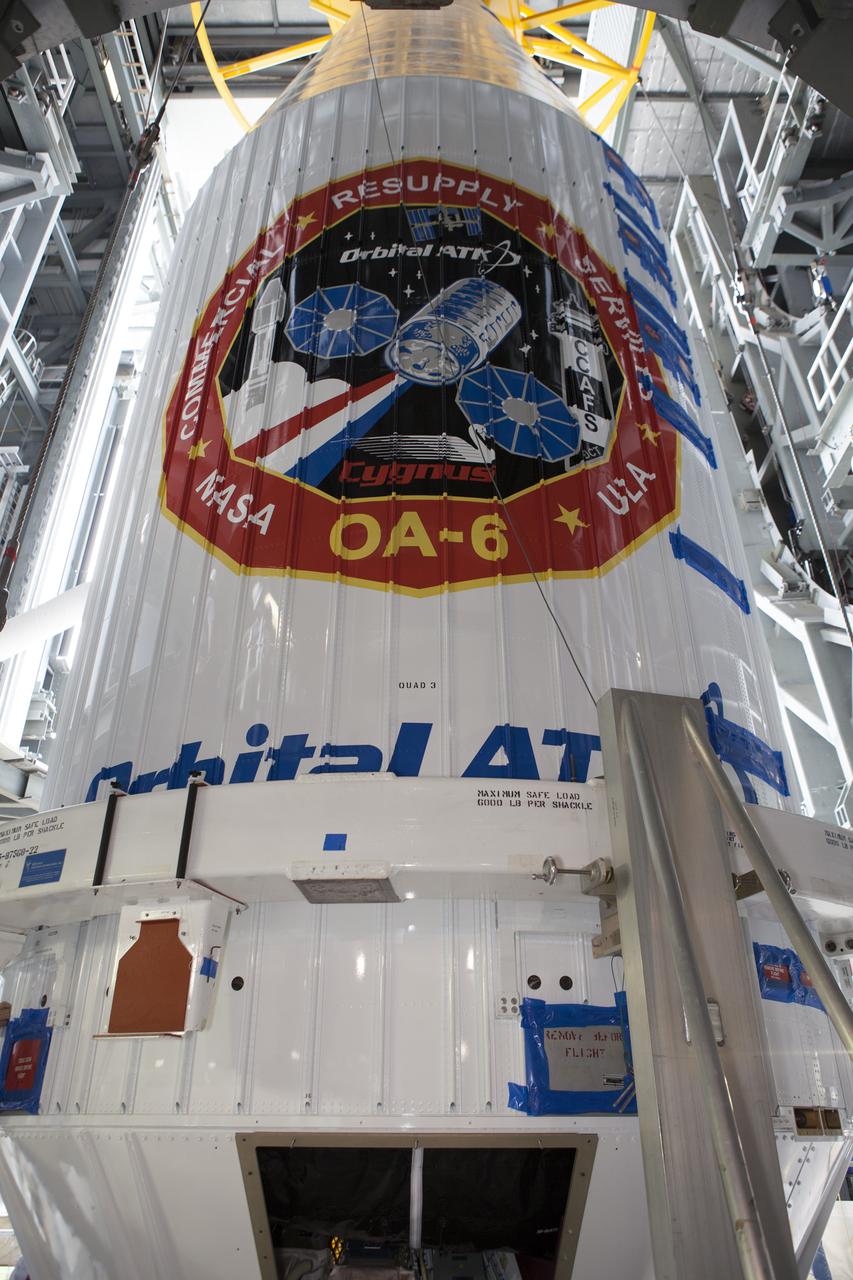
Encapsulated inside its payload fairing, the Cygnus spacecraft for the upcoming Orbital ATK Commercial Resupply Services-6 is mated atop a United Launch Alliance Atlas V rocket in the Vertical Integration Facility at Launch Complex-41 at Cape Canaveral Air Force Station. The Cygnus is scheduled to lift off atop a United Launch Alliance Atlas V rocket on March 22 to deliver hardware and supplies to the International Space Station.
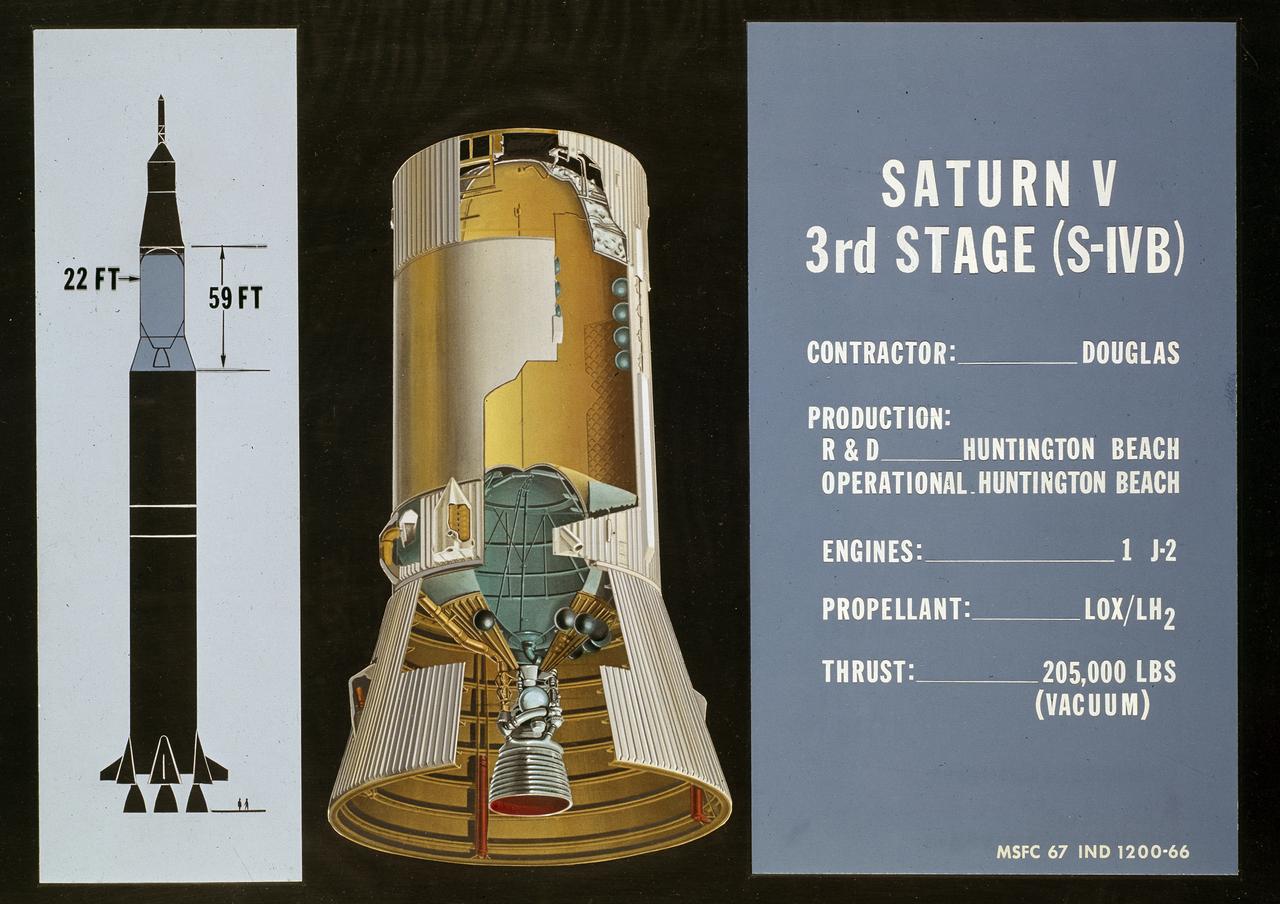
This cutaway drawing shows the S-IVB (third stage) of the Saturn V launch vehicle. As a part of the Marshall Space Flight Center’s (MSFC) “building block” approach to the Saturn development, the S-IVB stage was utilized in the Saturn IB launch vehicle as a second stage and, later, the Saturn V launch vehicle as a third stage. The 59 foot long and 22 feet diameter stage was powered by a single J-2 engine, initially capable of 200,000 pounds of thrust.
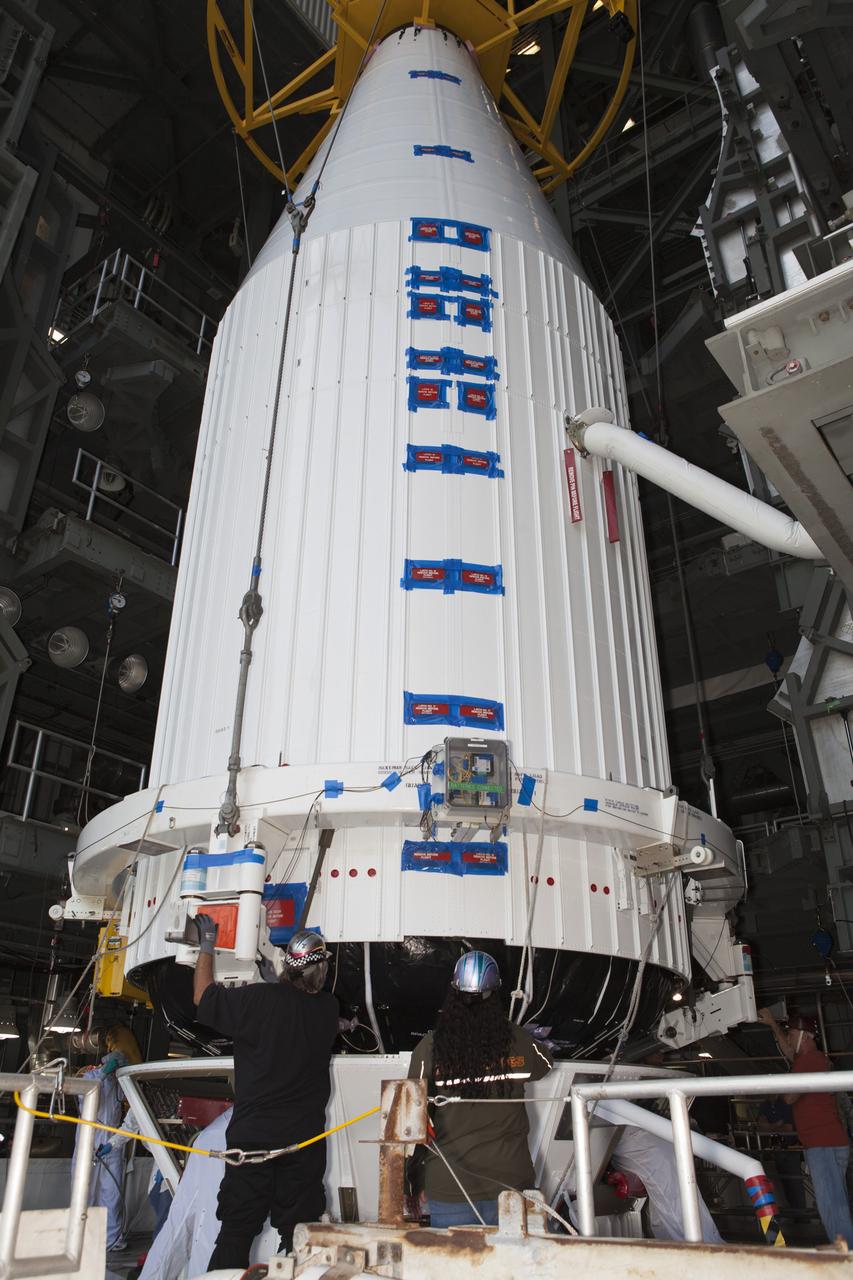
Encapsulated inside its payload fairing, the Cygnus spacecraft for the upcoming Orbital ATK Commercial Resupply Services-6 is positioned for mating atop a United Launch Alliance Atlas V rocket in the Vertical Integration Facility at Launch Complex-41 at Cape Canaveral Air Force Station. The Cygnus is scheduled to lift off atop a United Launch Alliance Atlas V rocket on March 22 to deliver hardware and supplies to the International Space Station.
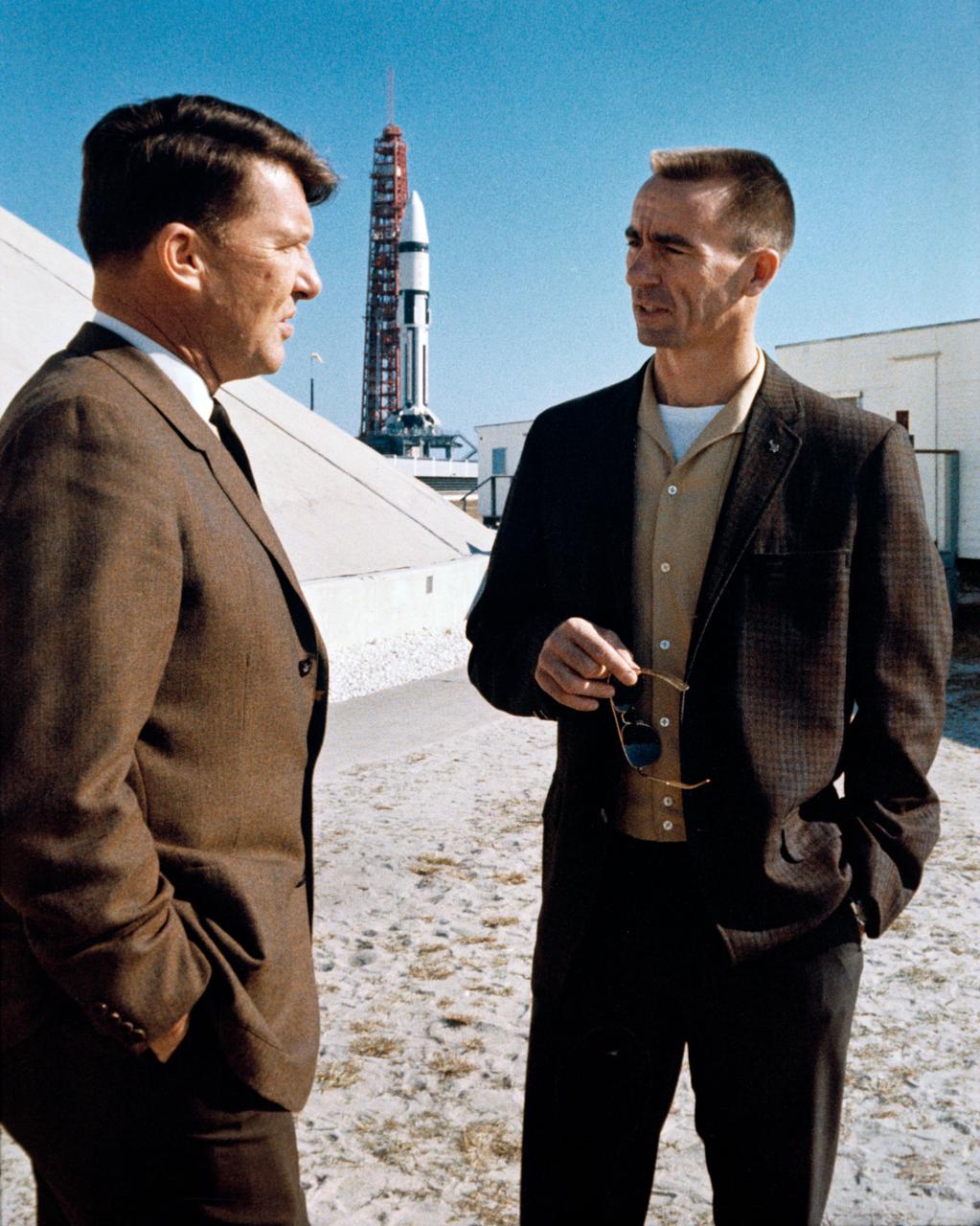
S68-18700 (22 Jan. 1968) --- Two prime crew members of the first manned Apollo space flight were present at Cape Kennedy for the launch of the Apollo V (LM-1/Saturn 204) unmanned space mission. On left is astronaut Walter M. Schirra Jr.; and on right is astronaut R. Walter Cunningham. In background is the Apollo V stack at Launch Complex 37 ready for launch.

Encapsulated inside its payload fairing, the Cygnus spacecraft for the upcoming Orbital ATK Commercial Resupply Services-6 is prepared for lifting to be mated atop a United Launch Alliance Atlas V rocket in the Vertical Integration Facility at Launch Complex-41 at Cape Canaveral Air Force Station. The Cygnus is scheduled to lift off atop a United Launch Alliance Atlas V rocket on March 22 to deliver hardware and supplies to the International Space Station.
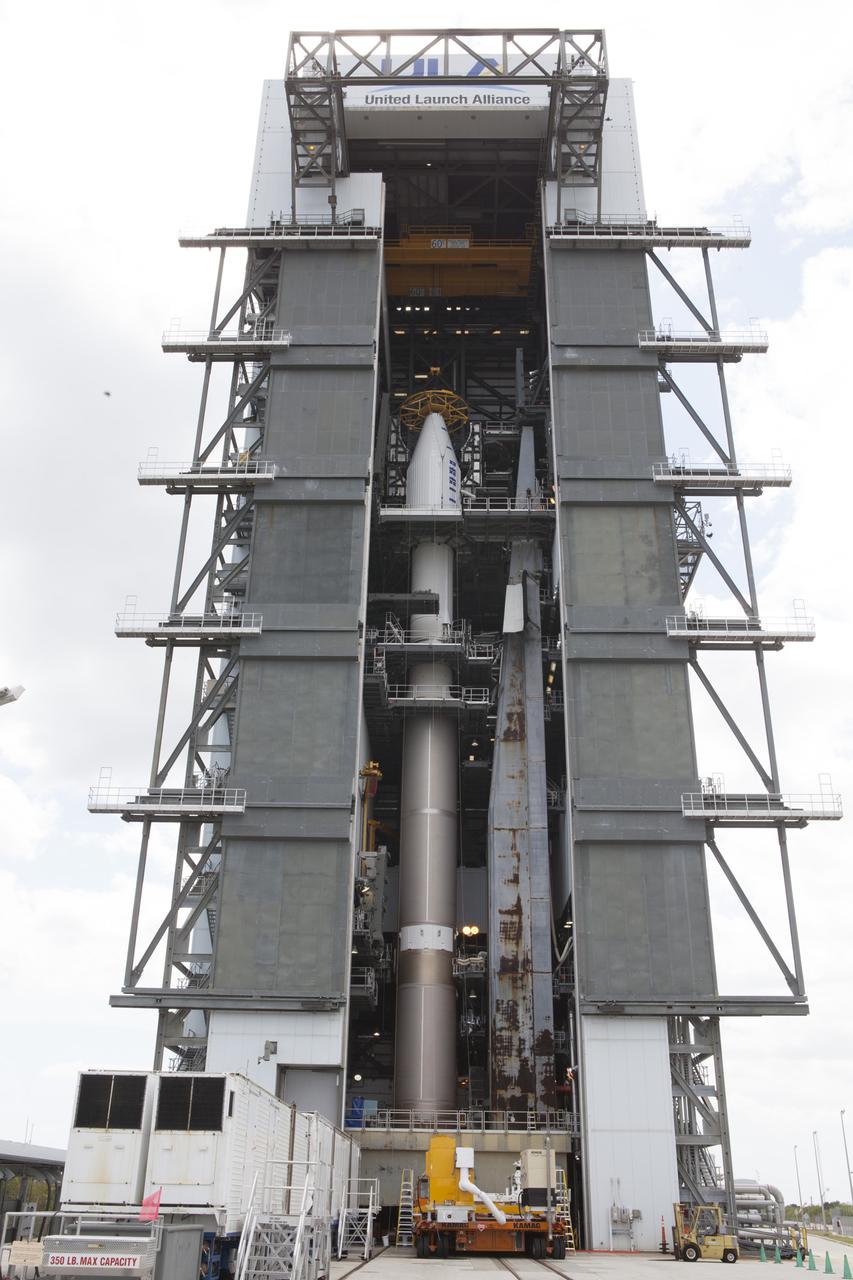
Encapsulated inside its payload fairing, the Cygnus spacecraft for the upcoming Orbital ATK Commercial Resupply Services-6 has been mated atop a United Launch Alliance Atlas V rocket in the Vertical Integration Facility at Launch Complex-41 at Cape Canaveral Air Force Station. The Cygnus is scheduled to lift off atop a United Launch Alliance Atlas V rocket on March 22 to deliver hardware and supplies to the International Space Station.
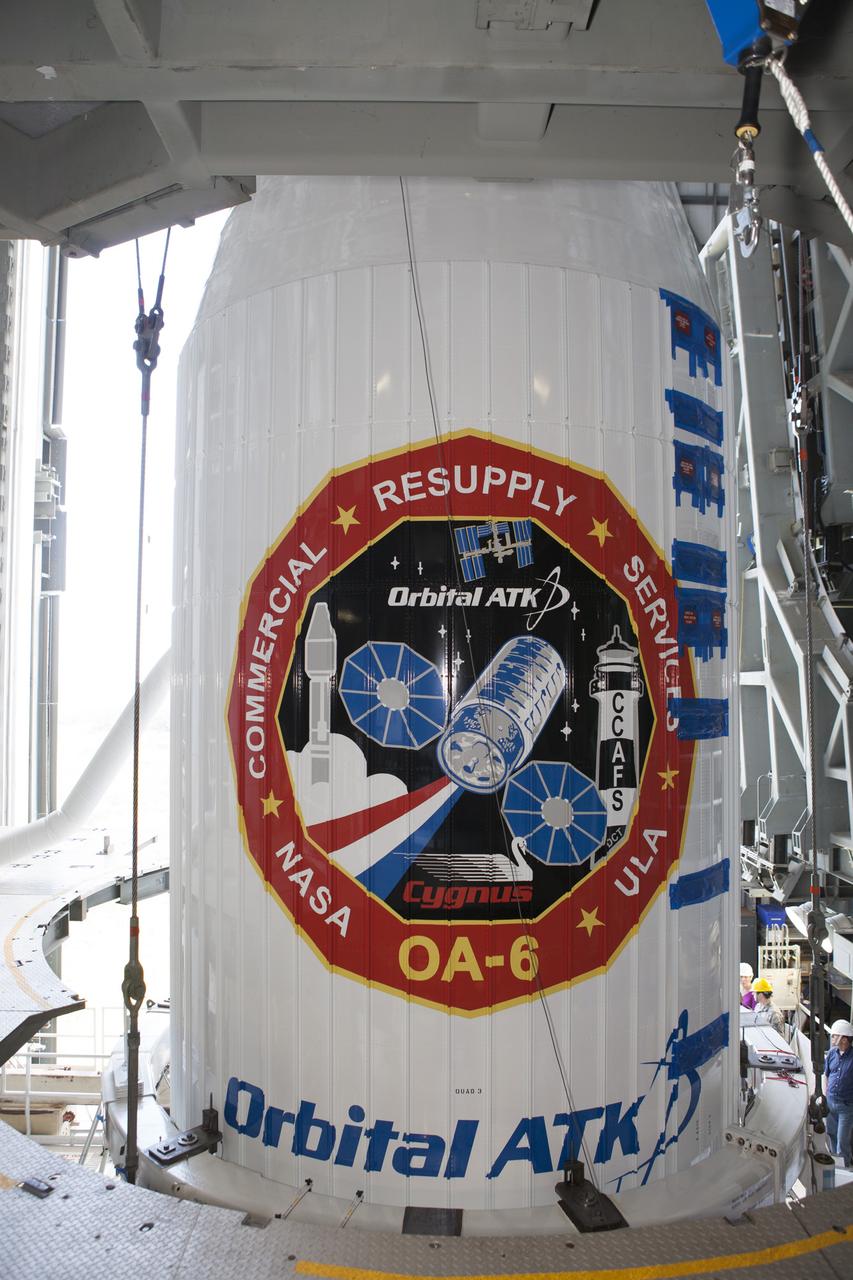
Encapsulated inside its payload fairing, the Cygnus spacecraft for the upcoming Orbital ATK Commercial Resupply Services-6 is mated atop a United Launch Alliance Atlas V rocket in the Vertical Integration Facility at Launch Complex-41 at Cape Canaveral Air Force Station. The Cygnus is scheduled to lift off atop a United Launch Alliance Atlas V rocket on March 22 to deliver hardware and supplies to the International Space Station.
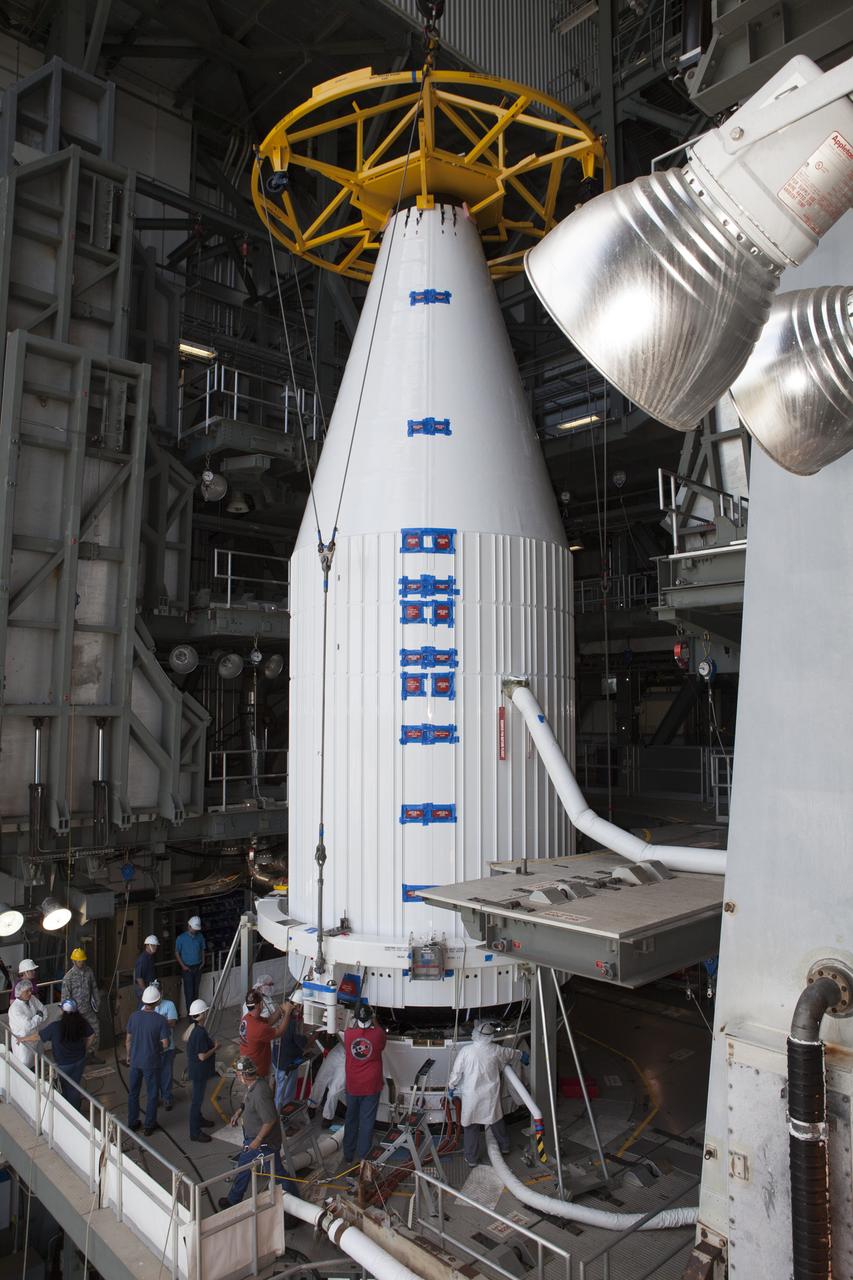
Encapsulated inside its payload fairing, the Cygnus spacecraft for the upcoming Orbital ATK Commercial Resupply Services-6 is mated atop a United Launch Alliance Atlas V rocket in the Vertical Integration Facility at Launch Complex-41 at Cape Canaveral Air Force Station. The Cygnus is scheduled to lift off atop a United Launch Alliance Atlas V rocket on March 22 to deliver hardware and supplies to the International Space Station.
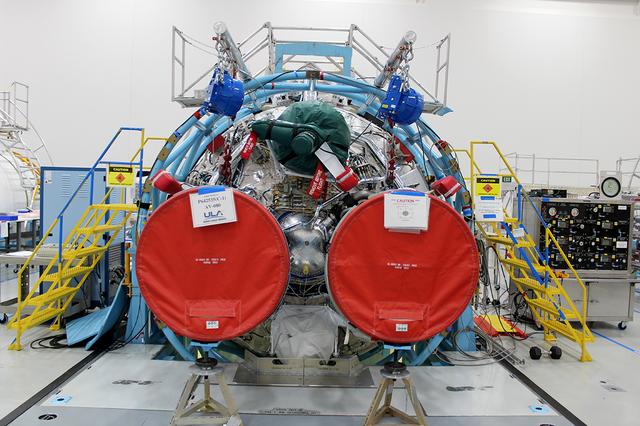
The United Launch Alliance (ULA) Orbital Flight Test dual engine Centaur stage of the Atlas V rocket is in the final stage of production and checkout on May 22, 2018, at ULA's factory in Decatur, Alabama. Boeing's CST-100 Starliner will launch on its first uncrewed flight test on the ULA Atlas V rocket. The Starliner is being developed and manufactured in partnership with NASA's Commercial Crew Program to return human spaceflight capabilities to the U.S.
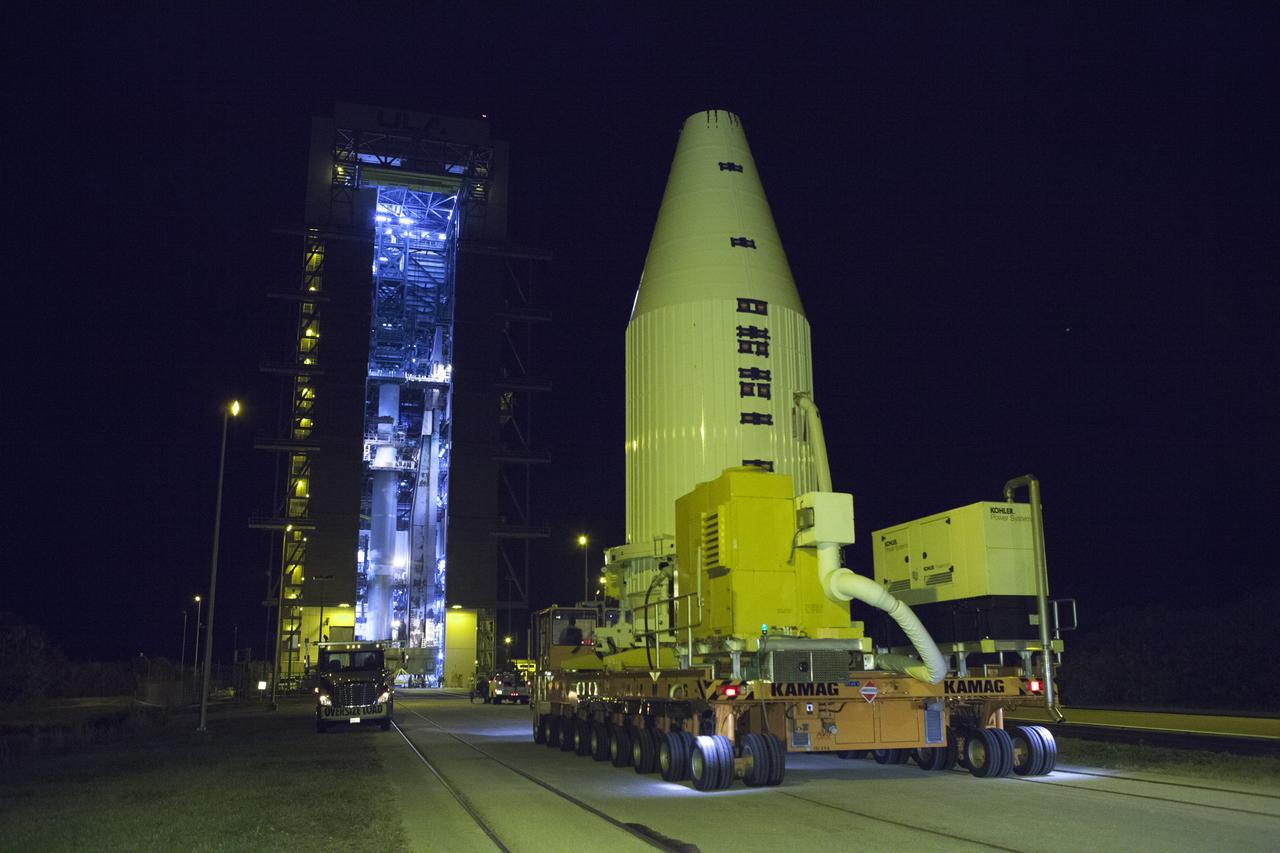
Encapsulated inside its payload fairing, the Cygnus spacecraft for the upcoming Orbital ATK Commercial Resupply Services-6 mission arrives at the Vertical Integration Facility at Launch Complex-41 at Cape Canaveral Air Force Station where it will be mounted atop a United Launch Alliance Atlas V rocket. The Cygnus is scheduled to lift off atop a United Launch Alliance Atlas V rocket on March 22 to deliver hardware and supplies to the International Space Station.
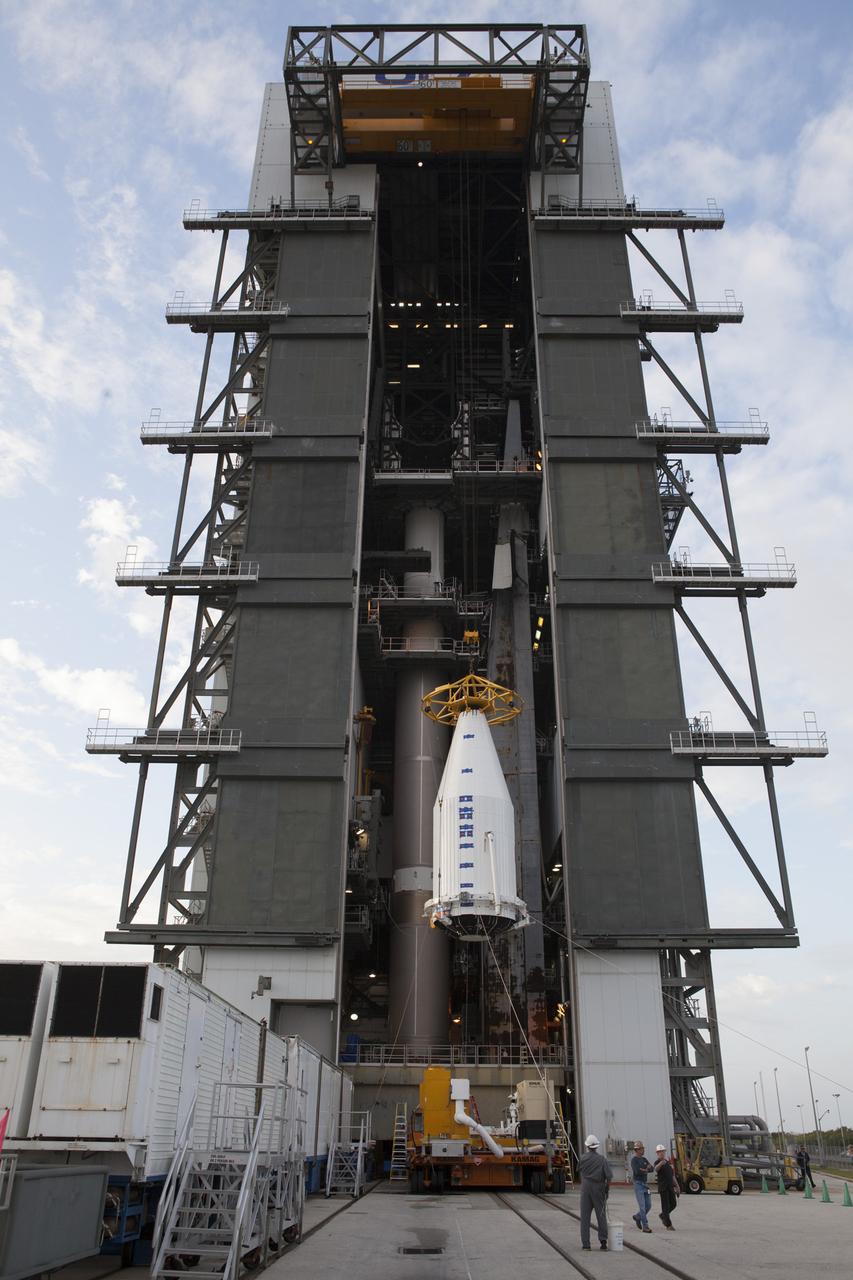
Encapsulated inside its payload fairing, the Cygnus spacecraft for the upcoming Orbital ATK Commercial Resupply Services-6 is lifted to be mated atop a United Launch Alliance Atlas V rocket in the Vertical Integration Facility at Launch Complex-41 at Cape Canaveral Air Force Station. The Cygnus is scheduled to lift off atop a United Launch Alliance Atlas V rocket on March 22 to deliver hardware and supplies to the International Space Station.

JSC2006-E-00223 (22 Dec. 2005) --- Cosmonaut Pavel V. Vinogradov, Expedition 13 commander representing the Russian Federal Space Agency, attired in a flight suit, pauses from a busy training schedule in Star City, Russia to pose for a portrait. Photo Credit: Gagarin Cosmonaut Training Center

ISS002-E-5705 (22 March 2001) --- Cosmonaut Yury V. Usachev of Rosaviakosmos drifts through the forward hatch of the Zvezda Service Module during early days of his tour of duty aboard the International Space Station (ISS). The image was recorded with a digital still camera.
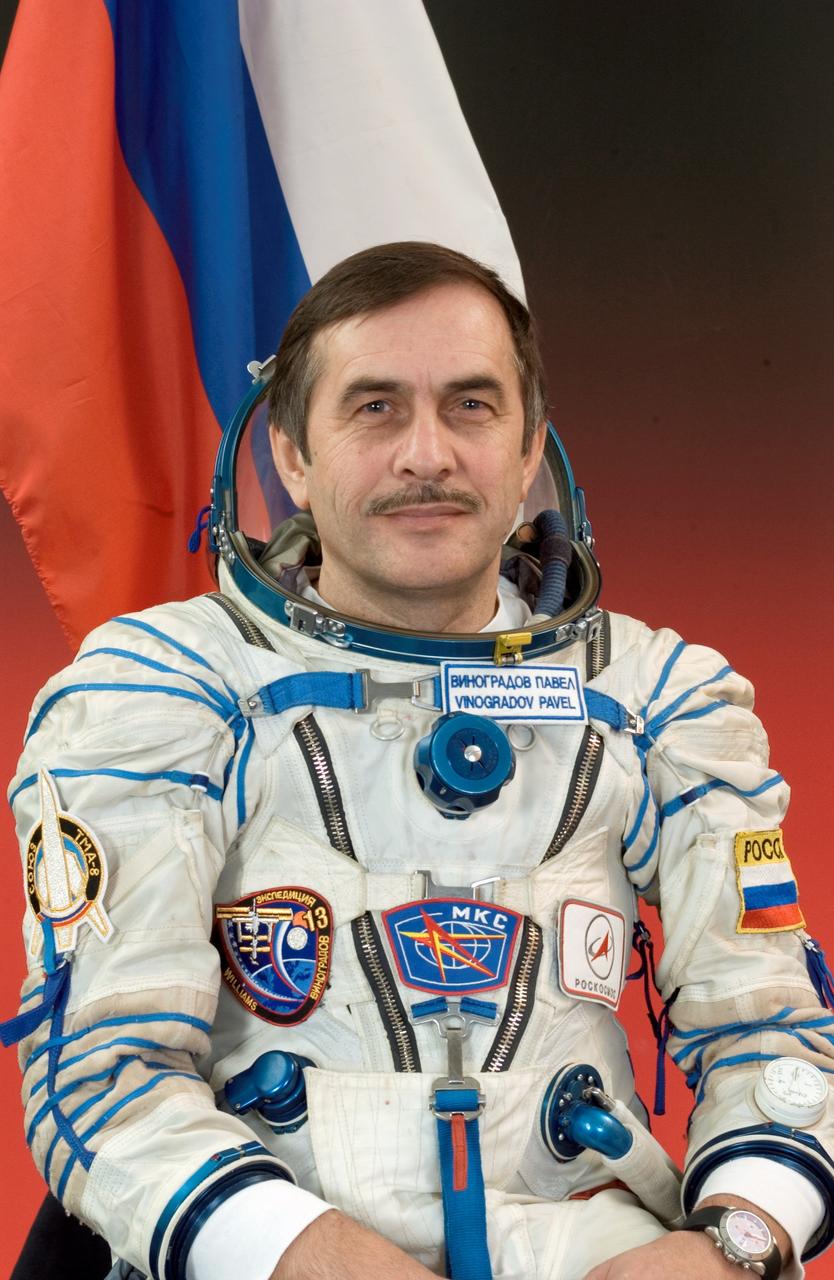
JSC2006-E-00225 (22 Dec. 2005) --- Cosmonaut Pavel V. Vinogradov, Expedition 13 commander representing the Russian Federal Space Agency, attired in a Russian Sokol launch and landing suit, pauses from a busy training schedule in Star City, Russia to pose for a portrait. Photo Credit: Gagarin Cosmonaut Training Center
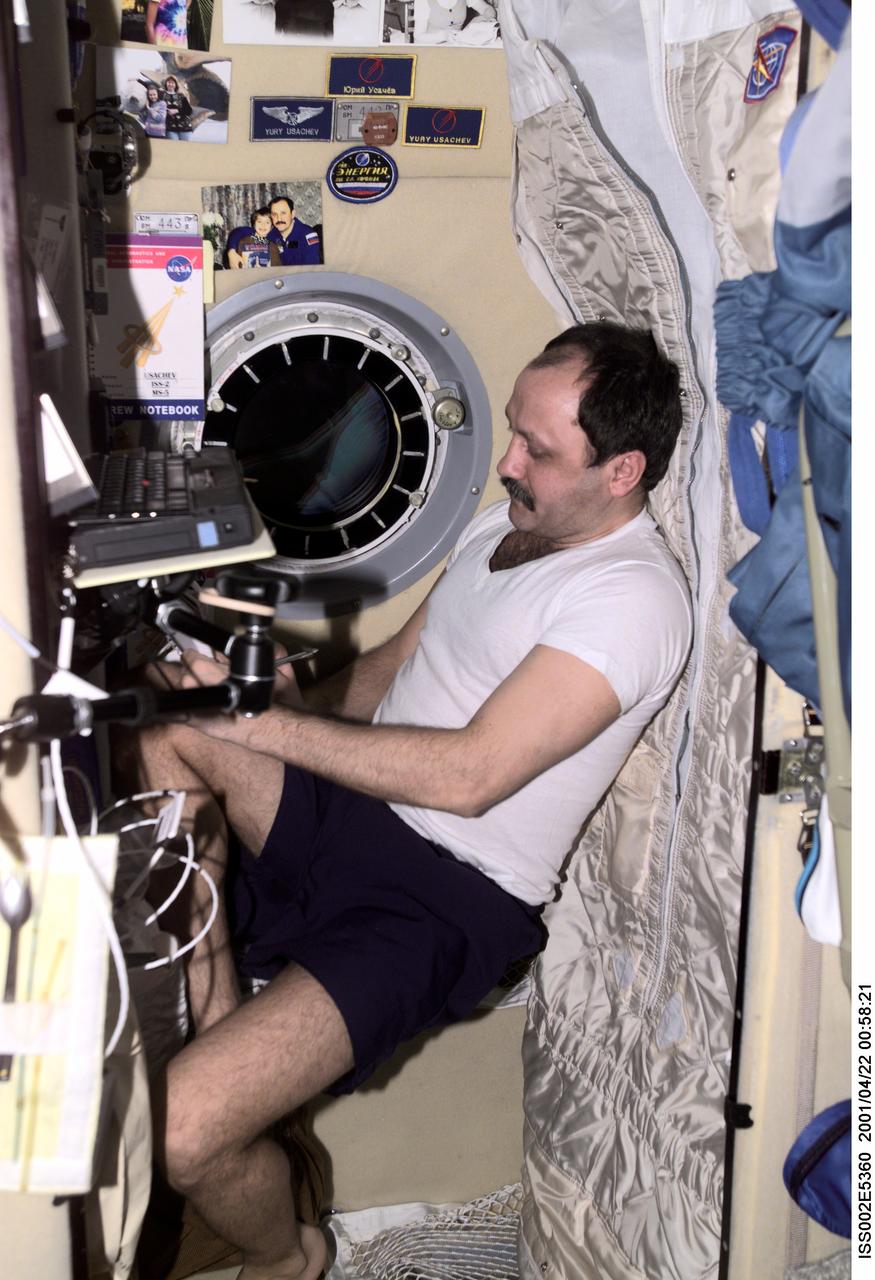
ISS002-E-5360 (22 April 2001) --- Cosmonaut Yury V. Usachev, Expedition Two mission commander, writes down some notes in his sleeping compartment in the Zvezda / Service Module of the International Space Station (ISS). This image was recorded with a digital still camera.
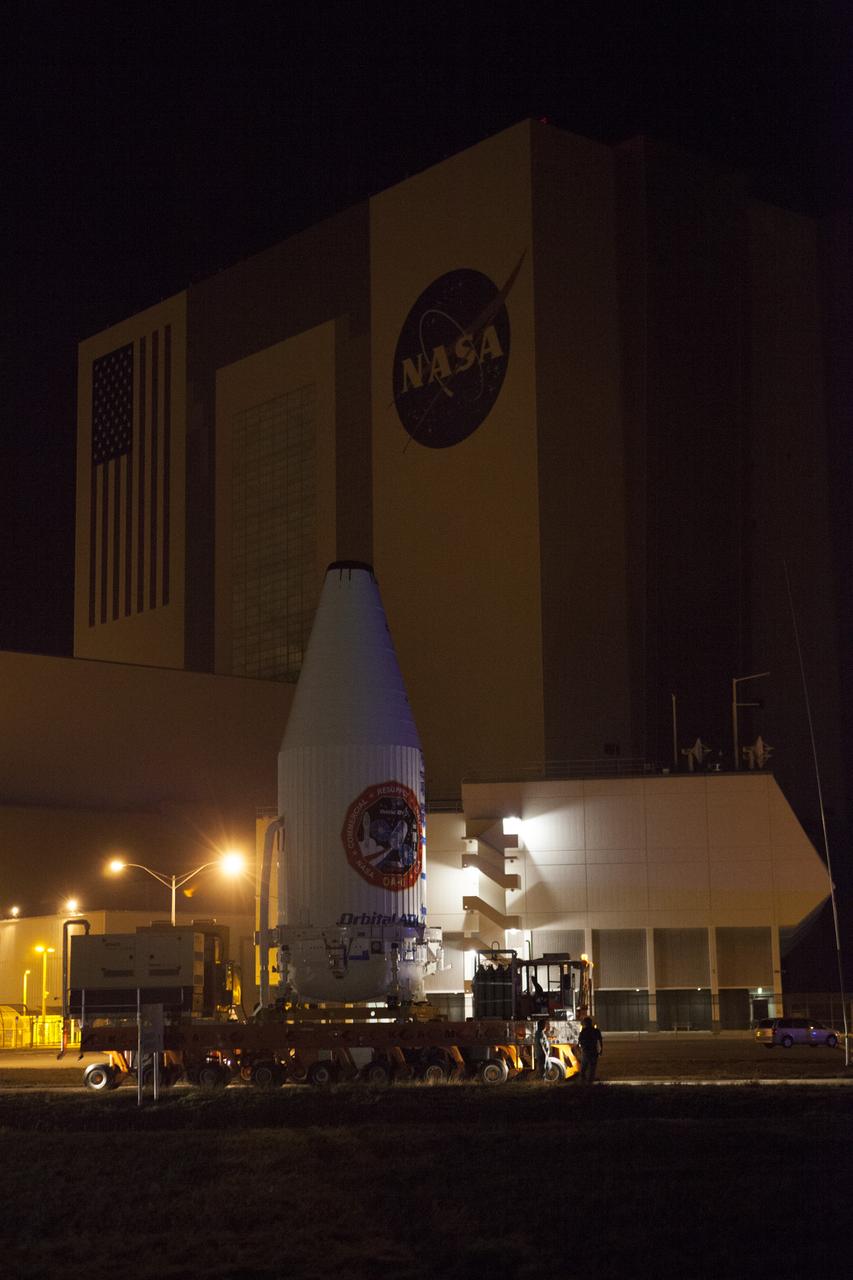
Encapsulated inside its payload fairing, the Cygnus spacecraft for the upcoming Orbital ATK Commercial Resupply Services-6 mission moves past the Vehicle Assembly Building at NASA's Kennedy Space Center in Florida. Mounted atop a KAMAG transporter, Cygnus is being moved to Space Launch Complex-41 at Cape Canaveral Air Force Station where it will be mounted atop a United Launch Alliance Atlas V rocket. The Cygnus is scheduled to lift off atop a United Launch Alliance Atlas V rocket on March 22 to deliver hardware and supplies to the International Space Station.
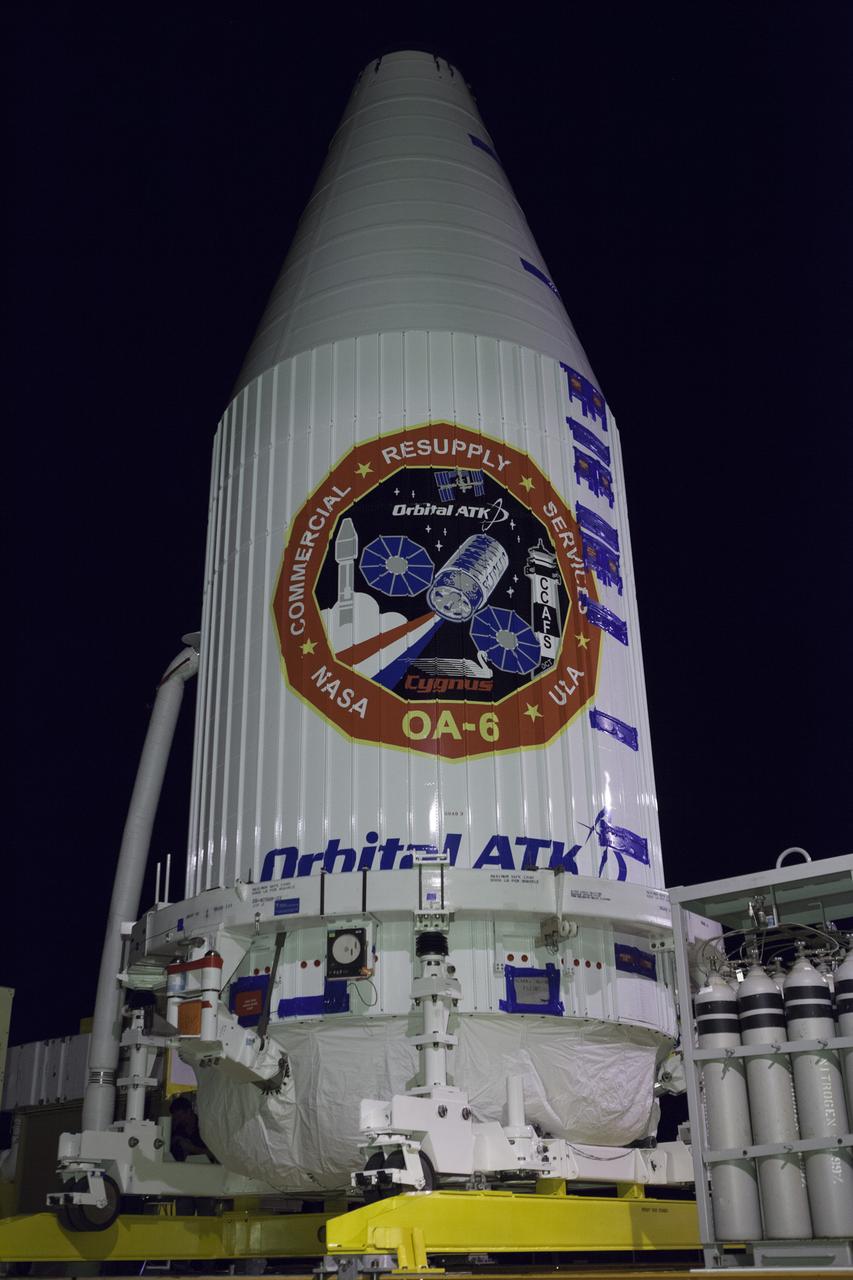
Encapsulated inside its payload fairing, the Cygnus spacecraft for the upcoming Orbital ATK Commercial Resupply Services-6 mission departs the Payload Hazardous Servicing Facility at NASA's Kennedy Space Center in Florida. Mounted atop a KAMAG transporter, Cygnus is being moved to Space Launch Complex-41 at Cape Canaveral Air Force Station where it will be mounted atop a United Launch Alliance Atlas V rocket. The Cygnus is scheduled to lift off atop a United Launch Alliance Atlas V rocket on March 22 to deliver hardware and supplies to the International Space Station.
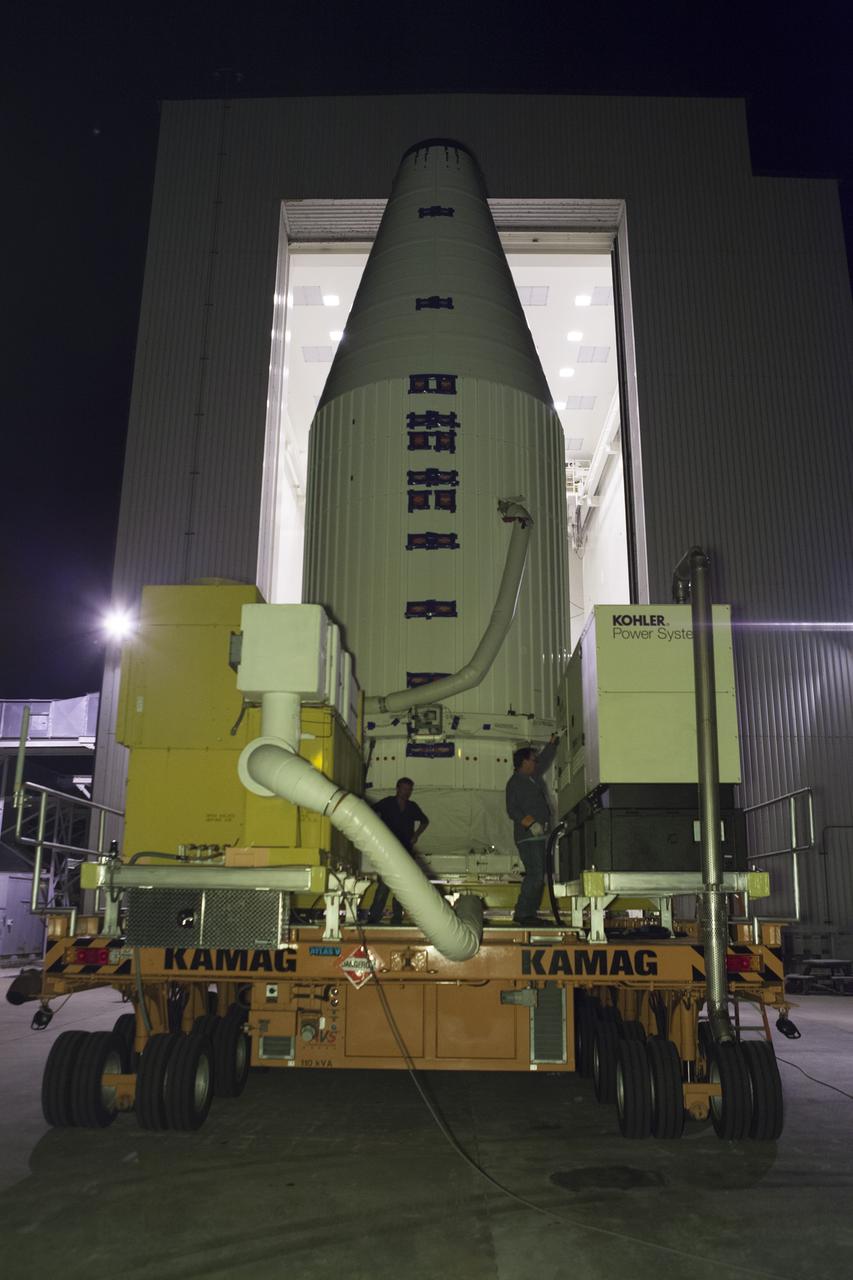
Encapsulated inside its payload fairing, the Cygnus spacecraft for the upcoming Orbital ATK Commercial Resupply Services-6 mission departs the Payload Hazardous Servicing Facility at NASA's Kennedy Space Center in Florida. Mounted atop a KAMAG transporter, Cygnus is being moved to Space Launch Complex-41 at Cape Canaveral Air Force Station where it will be mounted atop a United Launch Alliance Atlas V rocket. The Cygnus is scheduled to lift off atop a United Launch Alliance Atlas V rocket on March 22 to deliver hardware and supplies to the International Space Station.
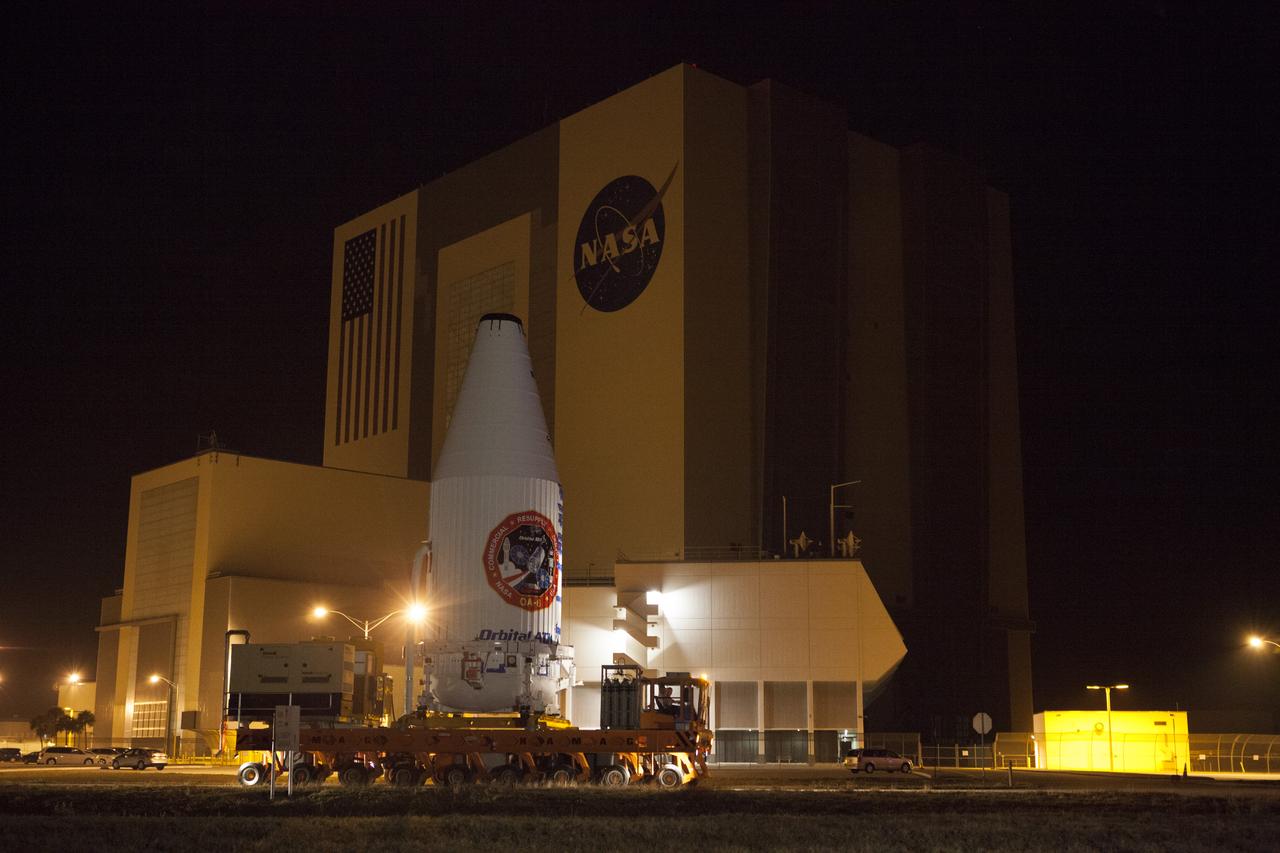
Encapsulated inside its payload fairing, the Cygnus spacecraft for the upcoming Orbital ATK Commercial Resupply Services-6 mission moves past the Vehicle Assembly Building at NASA's Kennedy Space Center in Florida. Mounted atop a KAMAG transporter, Cygnus is being moved to Space Launch Complex-41 at Cape Canaveral Air Force Station where it will be mounted atop a United Launch Alliance Atlas V rocket. The Cygnus is scheduled to lift off atop a United Launch Alliance Atlas V rocket on March 22 to deliver hardware and supplies to the International Space Station.
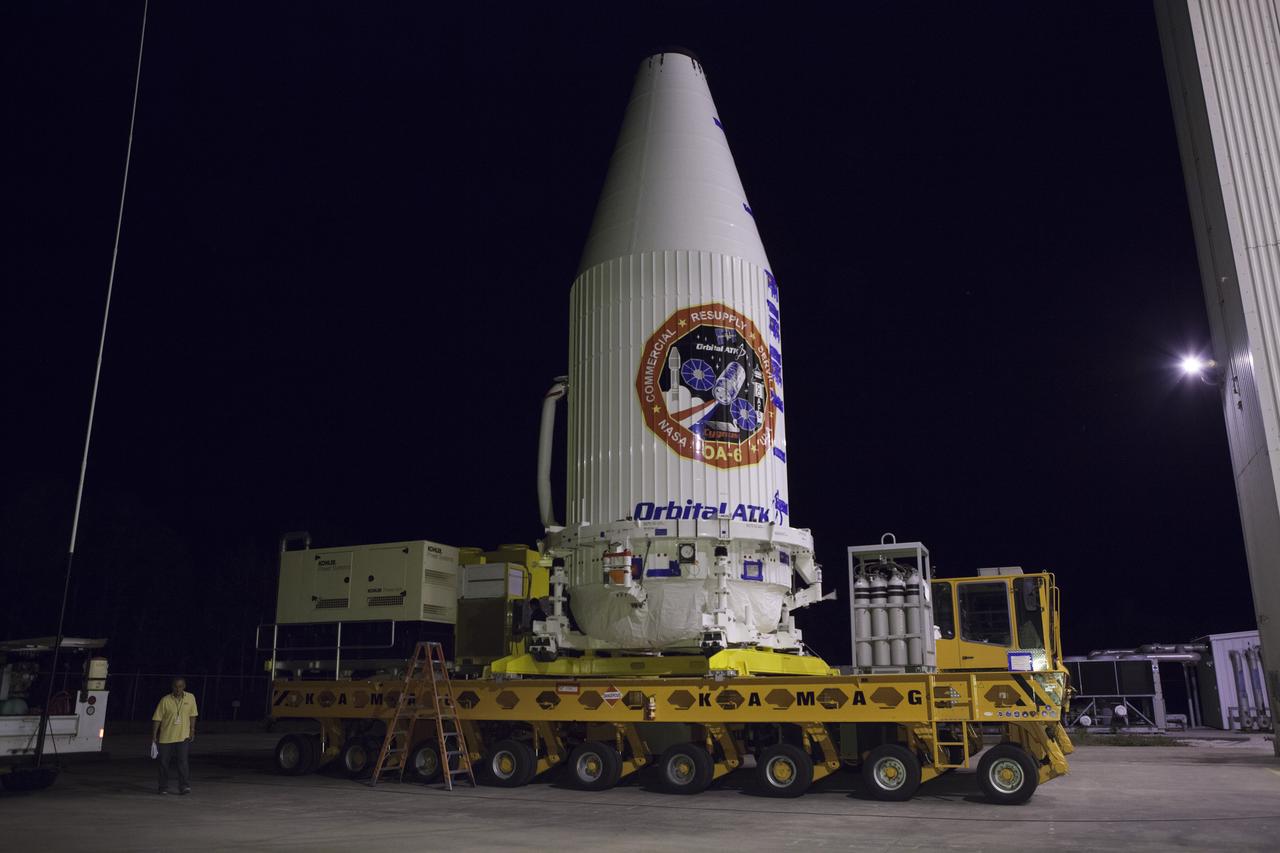
Encapsulated inside its payload fairing, the Cygnus spacecraft for the upcoming Orbital ATK Commercial Resupply Services-6 mission departs the Payload Hazardous Servicing Facility at NASA's Kennedy Space Center in Florida. Mounted atop a KAMAG transporter, Cygnus is being moved to Space Launch Complex-41 at Cape Canaveral Air Force Station where it will be mounted atop a United Launch Alliance Atlas V rocket. The Cygnus is scheduled to lift off atop a United Launch Alliance Atlas V rocket on March 22 to deliver hardware and supplies to the International Space Station.
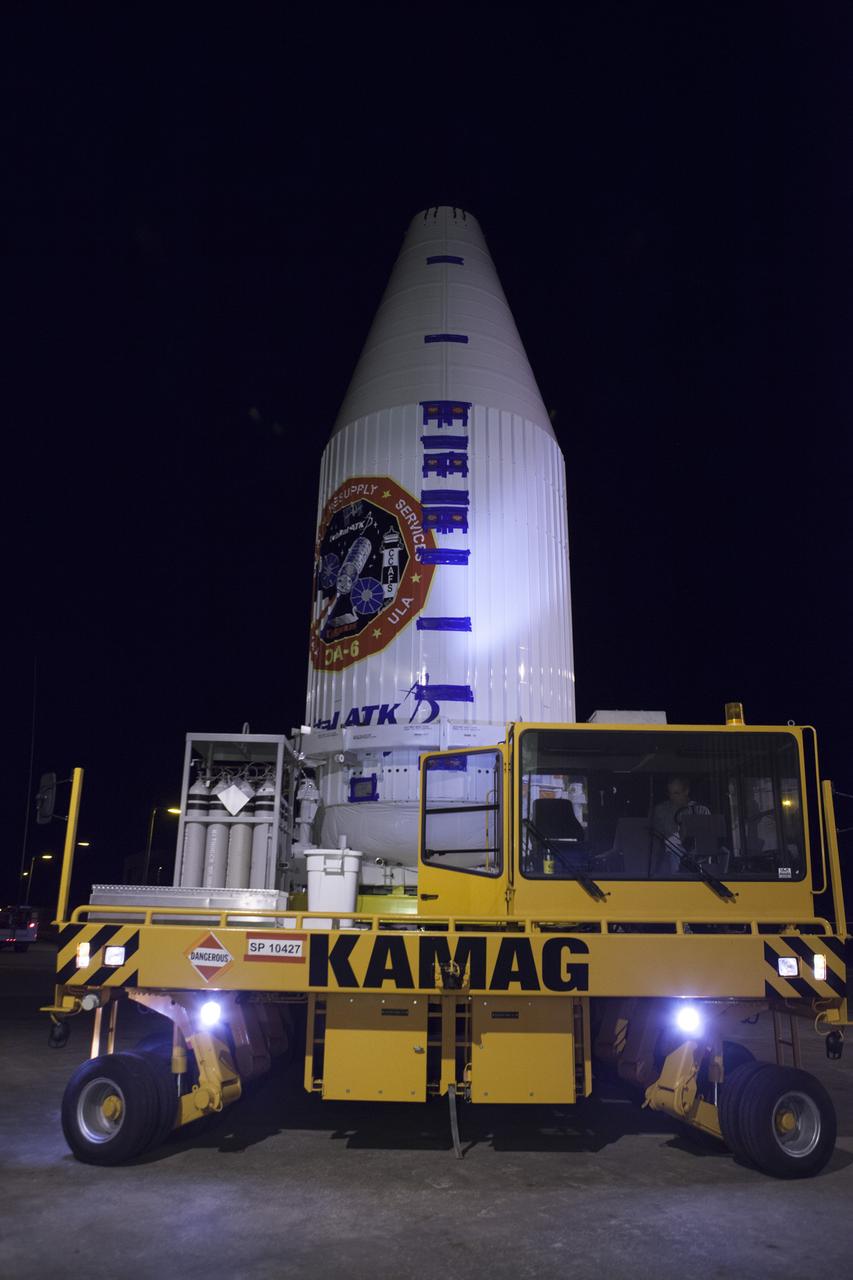
Encapsulated inside its payload fairing, the Cygnus spacecraft for the upcoming Orbital ATK Commercial Resupply Services-6 mission departs the Payload Hazardous Servicing Facility at NASA's Kennedy Space Center in Florida. Mounted atop a KAMAG transporter, Cygnus is being moved to Space Launch Complex-41 at Cape Canaveral Air Force Station where it will be mounted atop a United Launch Alliance Atlas V rocket. The Cygnus is scheduled to lift off atop a United Launch Alliance Atlas V rocket on March 22 to deliver hardware and supplies to the International Space Station.
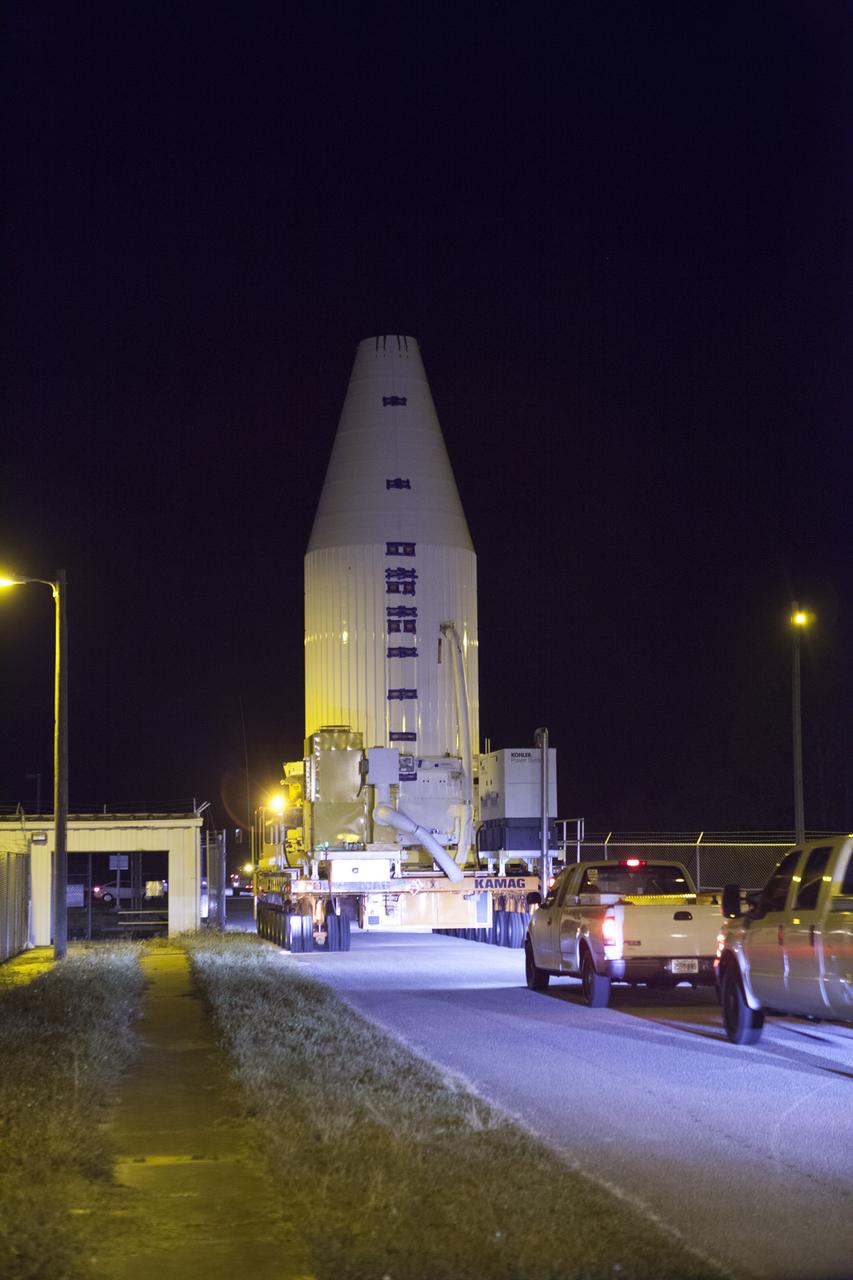
Encapsulated inside its payload fairing, the Cygnus spacecraft for the upcoming Orbital ATK Commercial Resupply Services-6 mission departs the Payload Hazardous Servicing Facility at NASA's Kennedy Space Center in Florida. Mounted atop a KAMAG transporter, Cygnus is being moved to Space Launch Complex-41 at Cape Canaveral Air Force Station where it will be mounted atop a United Launch Alliance Atlas V rocket. The Cygnus is scheduled to lift off atop a United Launch Alliance Atlas V rocket on March 22 to deliver hardware and supplies to the International Space Station.
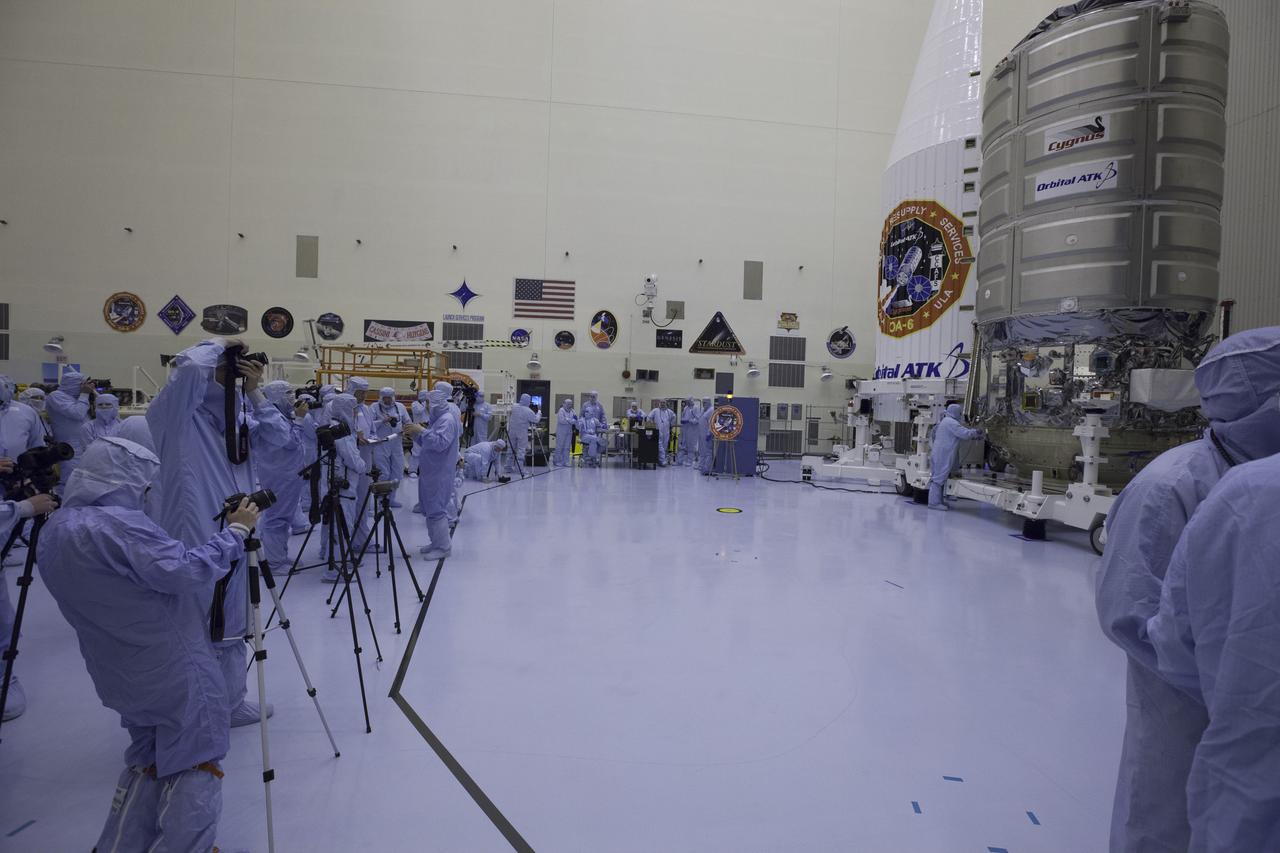
Inside the Payload Hazardous Servicing Facility at NASA's Kennedy Space Center in Florida, members of the news media get a close-up view of a Cygnus cargo vessel. The spacecraft is scheduled for the upcoming Orbital ATK Commercial Resupply Services-6 mission to deliver hardware and supplies to the International Space Station. Reporters, technicians and engineers are clad in "bunny suits." The cleanroom garments are worn to prevent contamination in the controlled environment. The Cygnus is scheduled to lift off atop a United Launch Alliance Atlas V rocket on March 22.
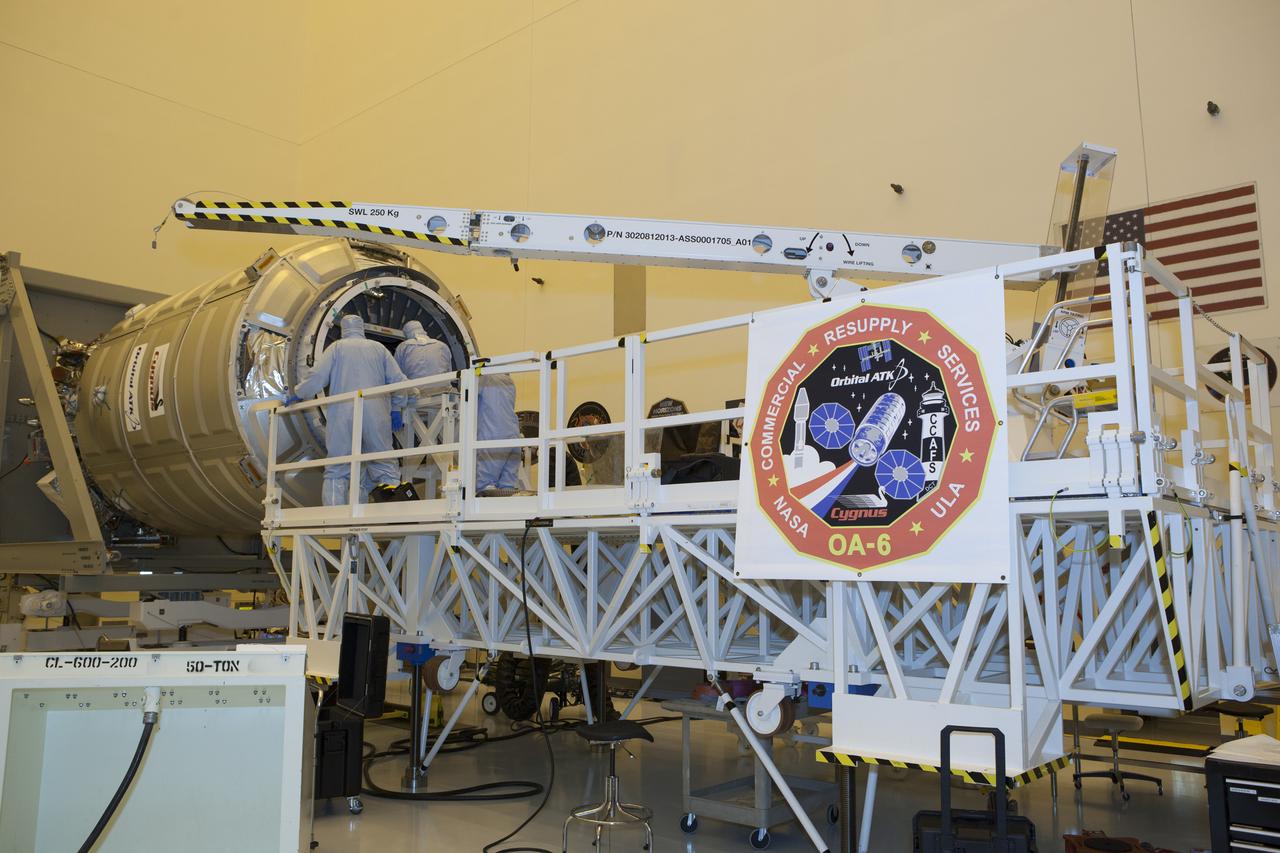
Inside the Payload Hazardous Servicing Facility at NASA's Kennedy Space Center in Florida, the hatch is closed for the upcoming flight of a Cygnus cargo vessel. The spacecraft is scheduled for the upcoming Orbital ATK Commercial Resupply Services-6 mission to deliver hardware and supplies to the International Space Station. The Cygnus is scheduled to lift off atop a United Launch Alliance Atlas V rocket on March 22.
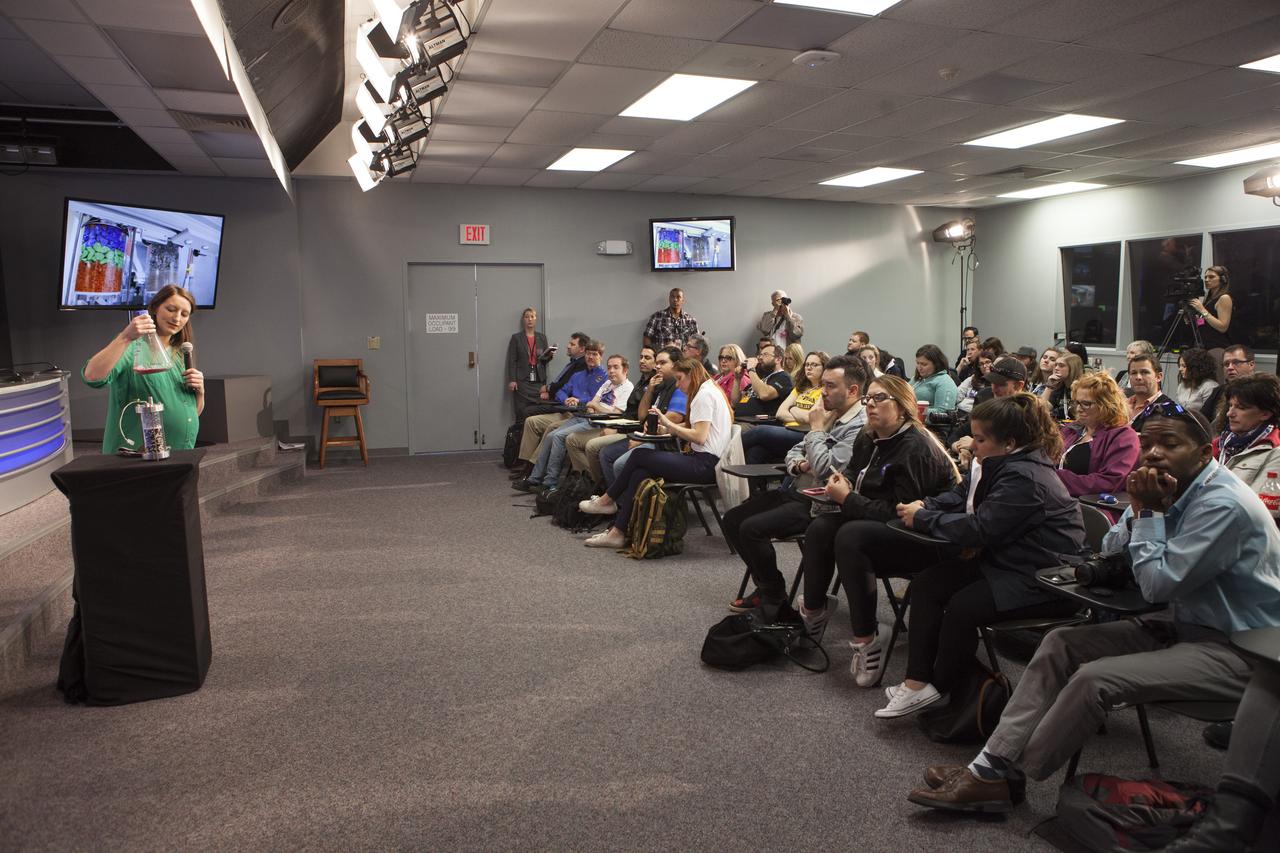
Dr. Kristen John, deputy project manager and co-investigator for the Strata-1 experiment at the Johnson Space Center in Houston , speaks to members of the media in the Kennedy Space Center’s Press Site auditorium. The briefing focused on science research and technology work planned for the International Space Station, or ISS, following the arrival of a Cygnus spacecraft. The Cygnus is scheduled to be launched March 22 atop a United Launch Alliance Atlas V rocket on the Orbital ATK CRS-6 commercial resupply services mission.
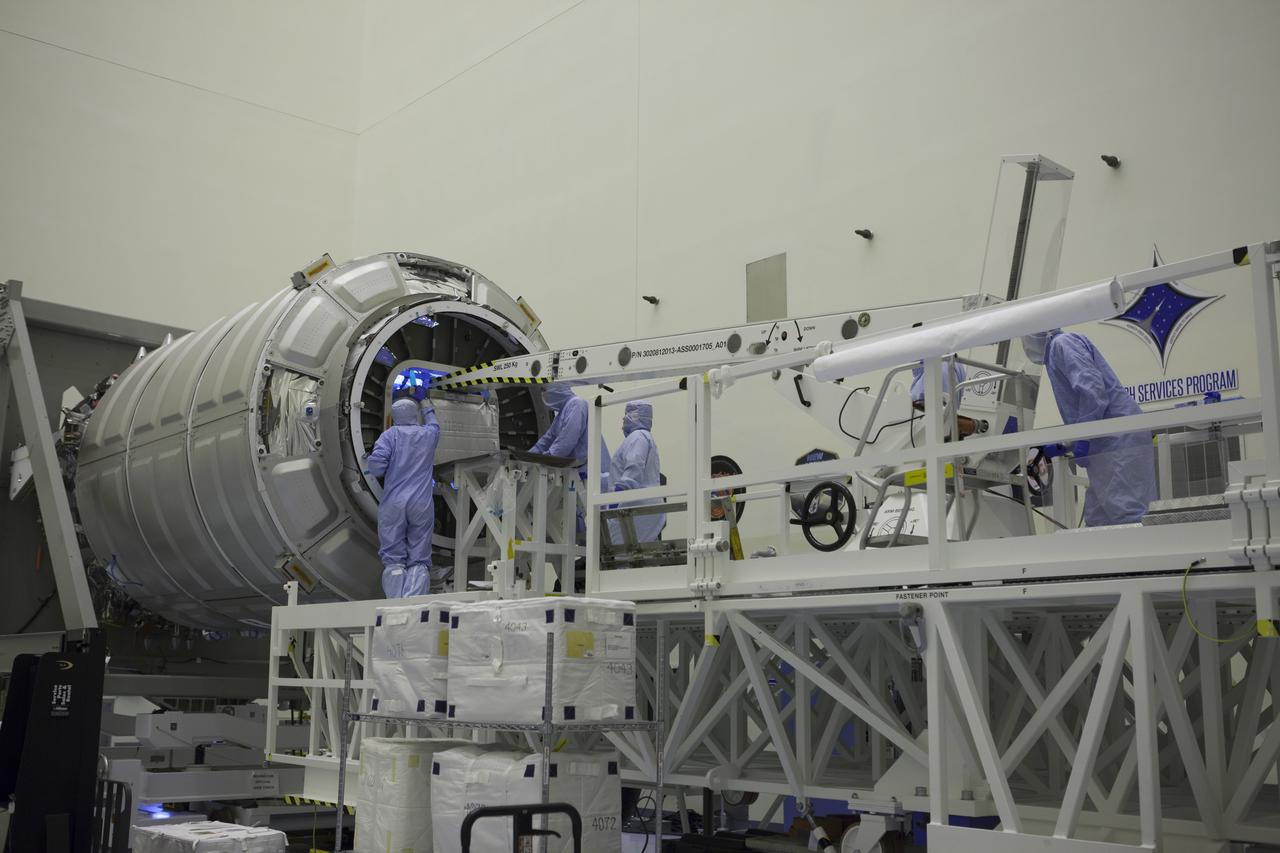
Technicians move cargo into the Orbital ATK CRS-6 pressurized cargo module during late stowage inside the Payload Hazardous Servicing Facility at NASA’s Kennedy Space Center in Florida. The spacecraft is scheduled for the upcoming Orbital ATK Commercial Resupply Services-6 mission to deliver hardware and supplies to the International Space Station. The Cygnus is scheduled to lift off atop a United Launch Alliance Atlas V rocket on March 22.
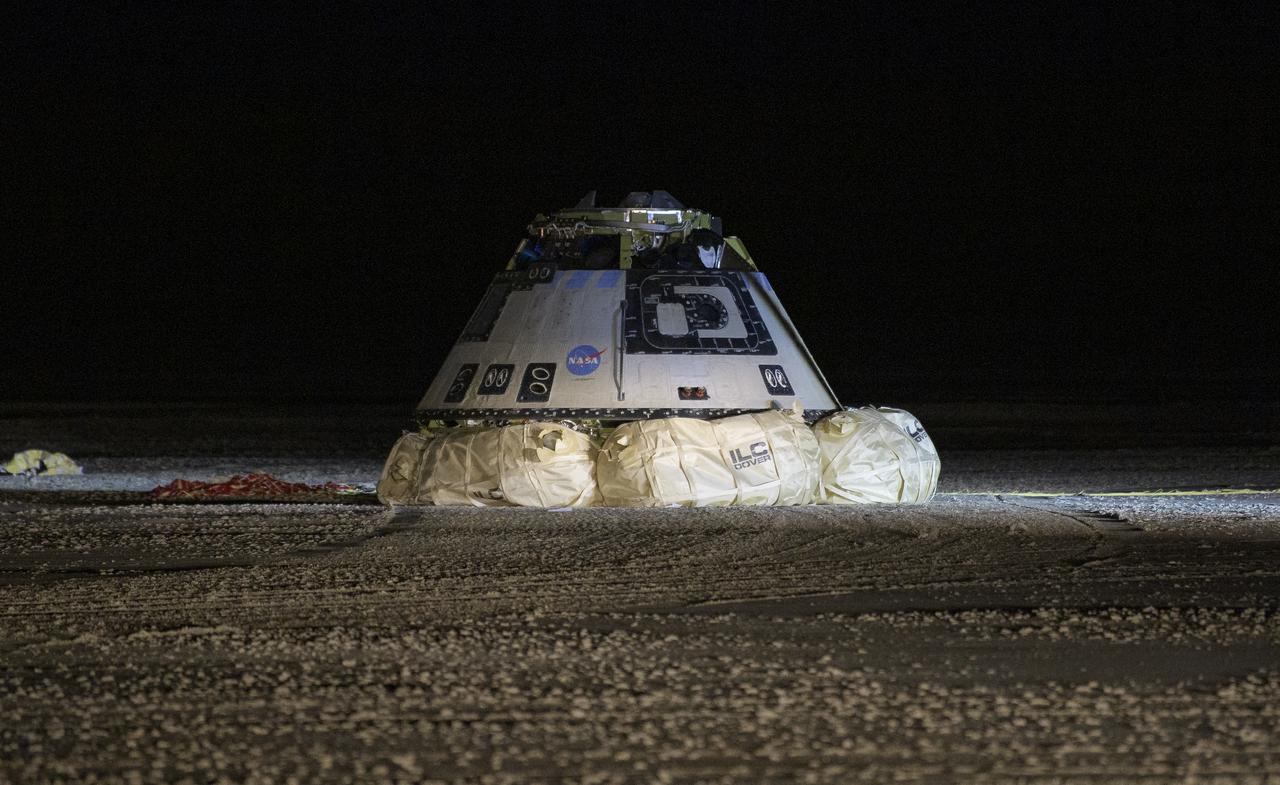
The Boeing CST-100 Starliner spacecraft is seen after it landed in White Sands, New Mexico, Sunday, Dec. 22, 2019. The landing completes an abbreviated Orbital Flight Test for the company that still meets several mission objectives for NASA’s Commercial Crew program. The Starliner spacecraft launched on a United Launch Alliance Atlas V rocket at 6:36 a.m. Friday, Dec. 20 from Space Launch Complex 41 at Cape Canaveral Air Force Station in Florida. Photo Credit: (NASA/Bill Ingalls)
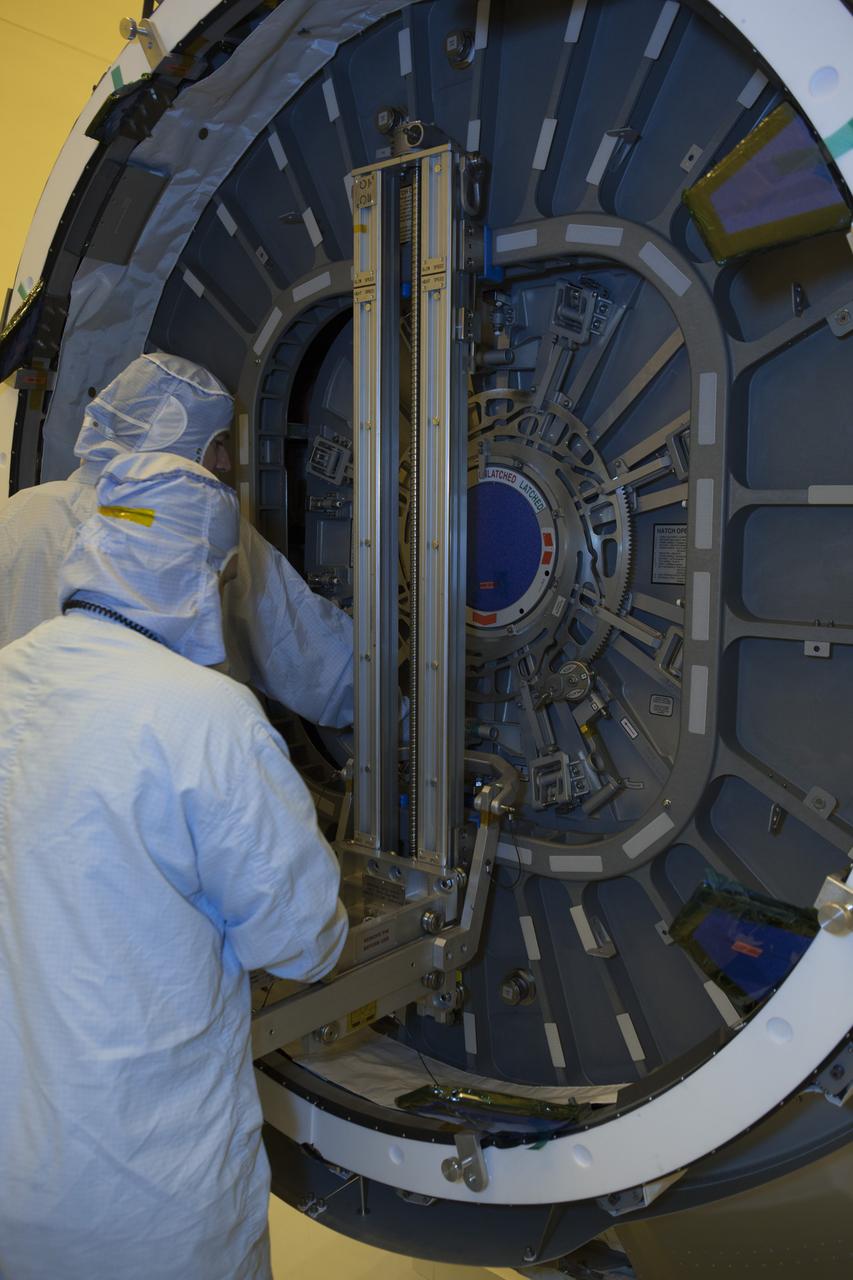
Inside the Payload Hazardous Servicing Facility at NASA's Kennedy Space Center in Florida, the hatch is closed for the upcoming flight of a Cygnus cargo vessel. The spacecraft is scheduled for the upcoming Orbital ATK Commercial Resupply Services-6 mission to deliver hardware and supplies to the International Space Station. The Cygnus is scheduled to lift off atop a United Launch Alliance Atlas V rocket on March 22.
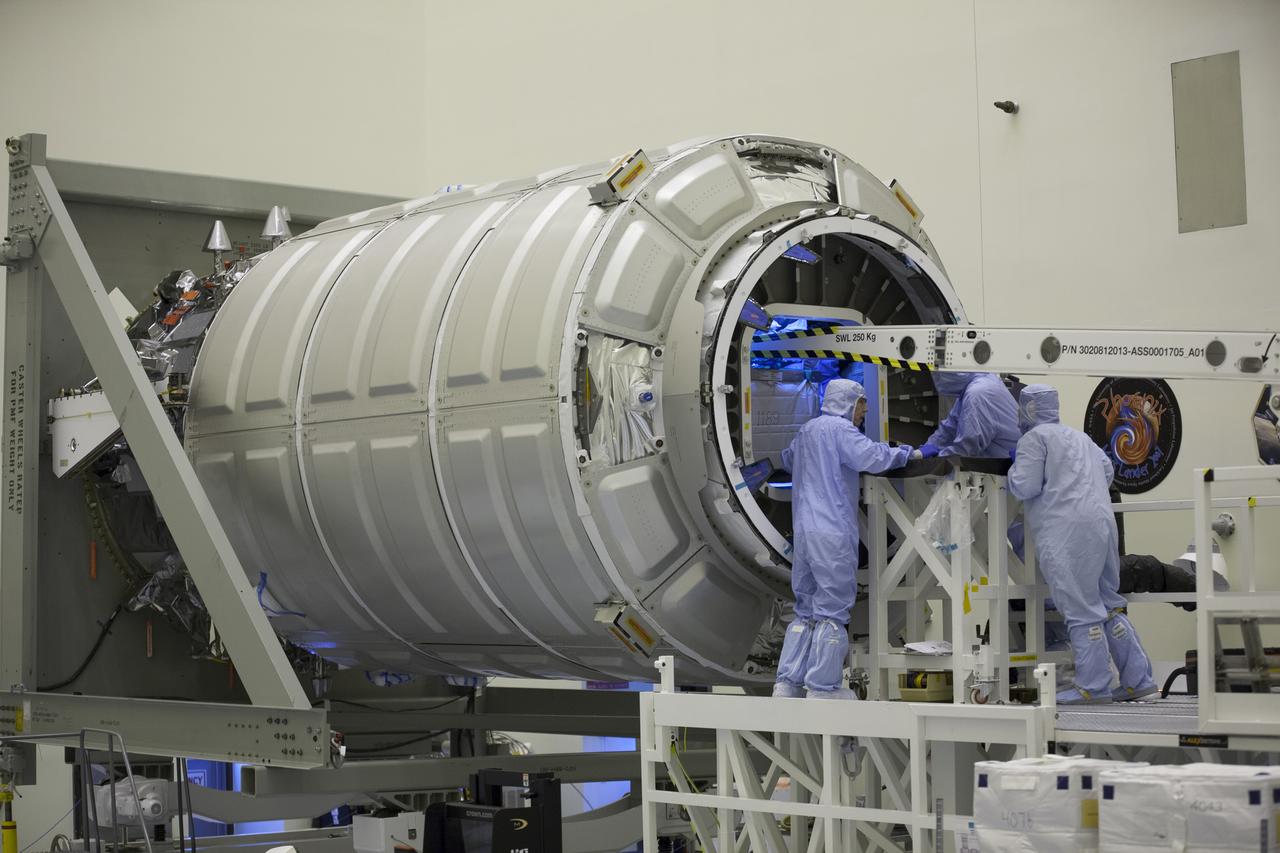
Technicians move cargo into the Orbital ATK CRS-6 pressurized cargo module during late stowage inside the Payload Hazardous Servicing Facility at NASA’s Kennedy Space Center in Florida. The spacecraft is scheduled for the upcoming Orbital ATK Commercial Resupply Services-6 mission to deliver hardware and supplies to the International Space Station. The Cygnus is scheduled to lift off atop a United Launch Alliance Atlas V rocket on March 22.
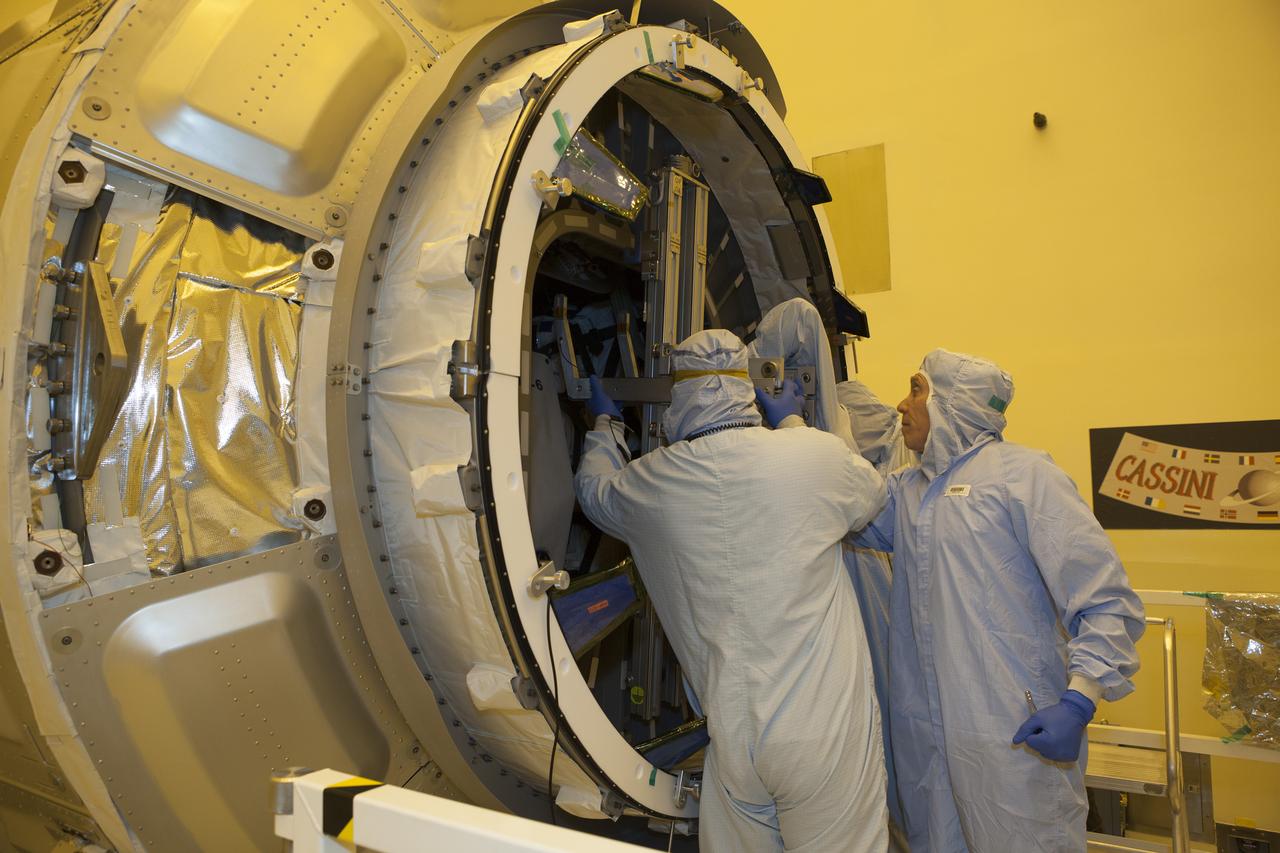
Inside the Payload Hazardous Servicing Facility at NASA's Kennedy Space Center in Florida, the hatch is closed for the upcoming flight of a Cygnus cargo vessel. The spacecraft is scheduled for the upcoming Orbital ATK Commercial Resupply Services-6 mission to deliver hardware and supplies to the International Space Station. The Cygnus is scheduled to lift off atop a United Launch Alliance Atlas V rocket on March 22.
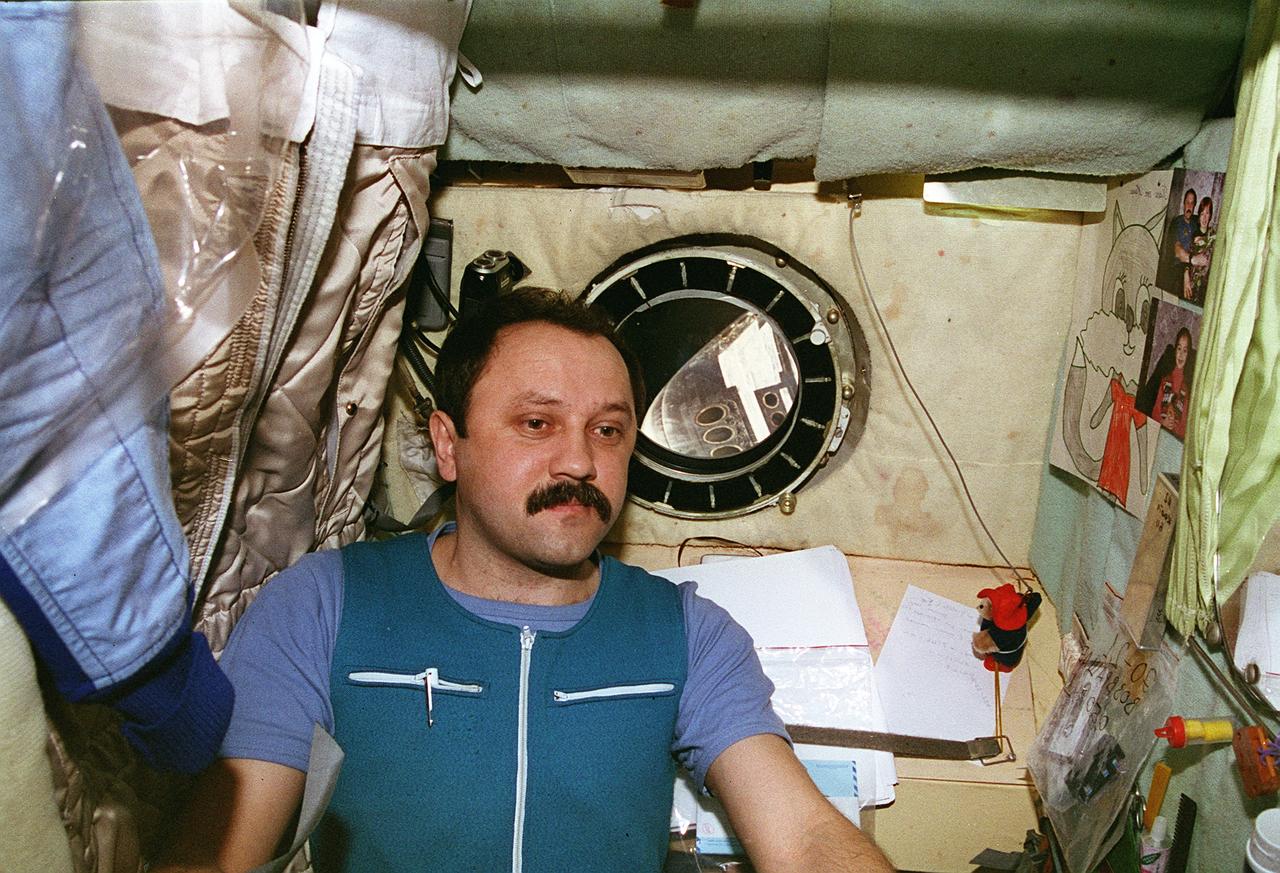
STS076-461-014 (22-31 March 1996) --- Cosmonaut Yury V. Usachev, Mir-21 flight engineer, reflects on his mission duties in his living quarters aboard Russia's Mir Space Station. His temporary out-the-window scenery is provided by the nose of the Space Shuttle Atlantis, which docked with Mir on March 23, 1996.
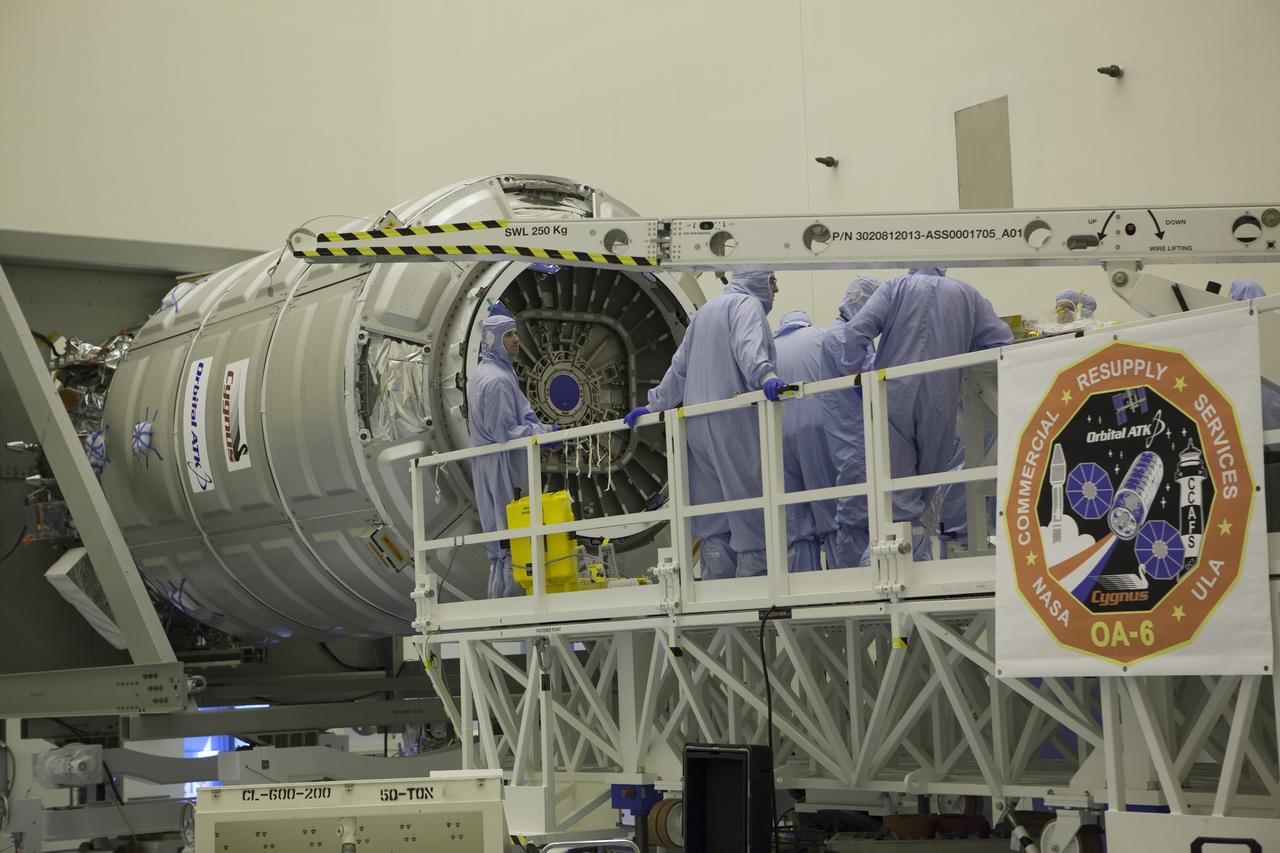
Inside the Payload Hazardous Servicing Facility at NASA's Kennedy Space Center in Florida, the hatch is closed for the upcoming flight of a Cygnus cargo vessel. The spacecraft is scheduled for the upcoming Orbital ATK Commercial Resupply Services-6 mission to deliver hardware and supplies to the International Space Station. The Cygnus is scheduled to lift off atop a United Launch Alliance Atlas V rocket on March 22.
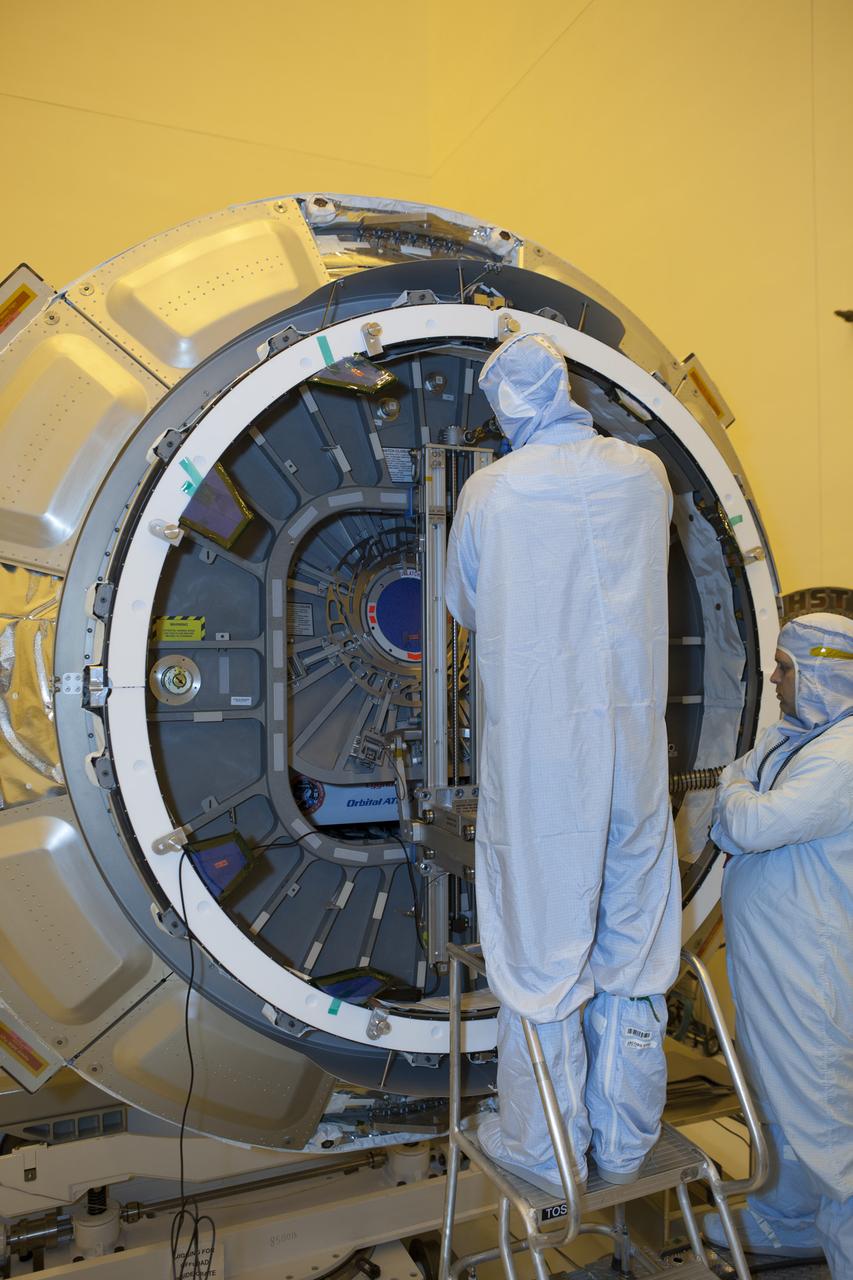
Inside the Payload Hazardous Servicing Facility at NASA's Kennedy Space Center in Florida, the hatch is closed for the upcoming flight of a Cygnus cargo vessel. The spacecraft is scheduled for the upcoming Orbital ATK Commercial Resupply Services-6 mission to deliver hardware and supplies to the International Space Station. The Cygnus is scheduled to lift off atop a United Launch Alliance Atlas V rocket on March 22.
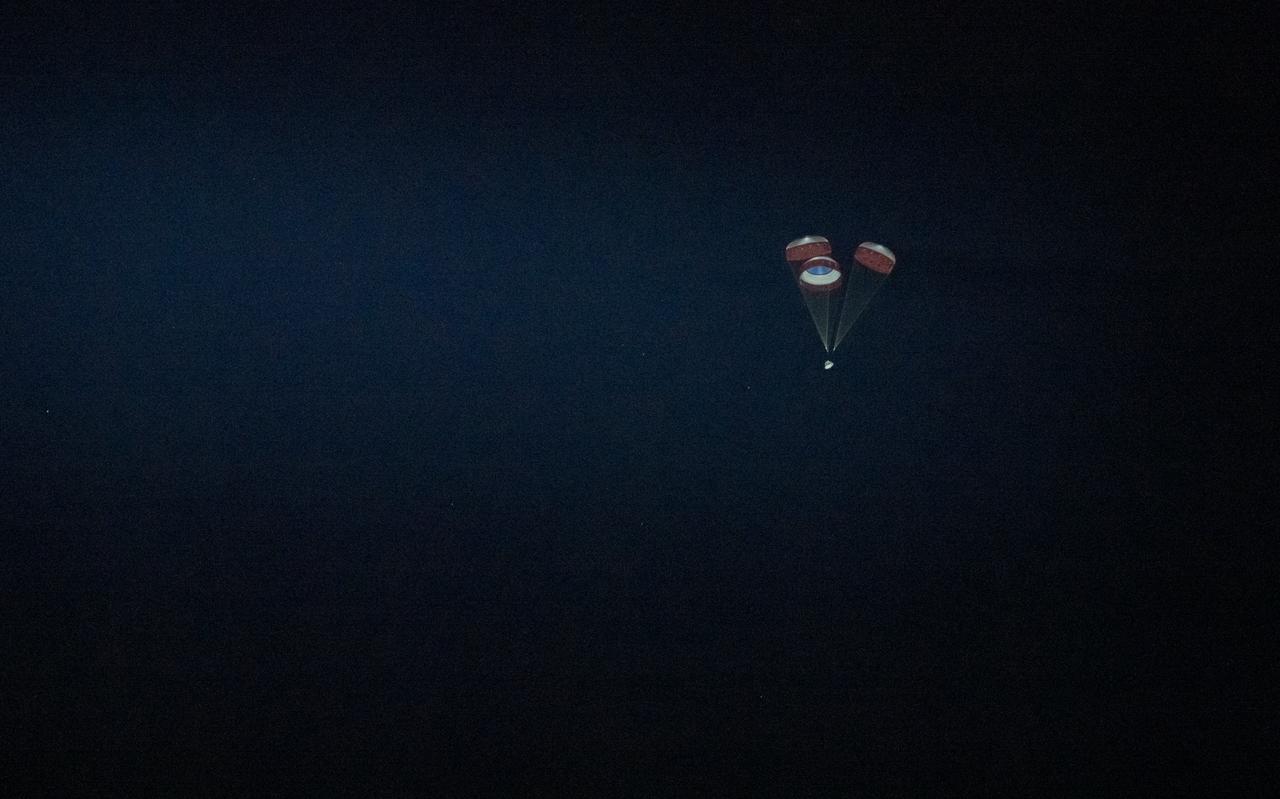
The Boeing CST-100 Starliner spacecraft lands in White Sands, New Mexico, Sunday, Dec. 22, 2019. The landing completes an abbreviated Orbital Flight Test for the company that still meets several mission objectives for NASA’s Commercial Crew program. The Starliner spacecraft launched on a United Launch Alliance Atlas V rocket at 6:36 a.m. Friday, Dec. 20 from Space Launch Complex 41 at Cape Canaveral Air Force Station in Florida. Photo Credit: (NASA/Aubrey Gemignani)
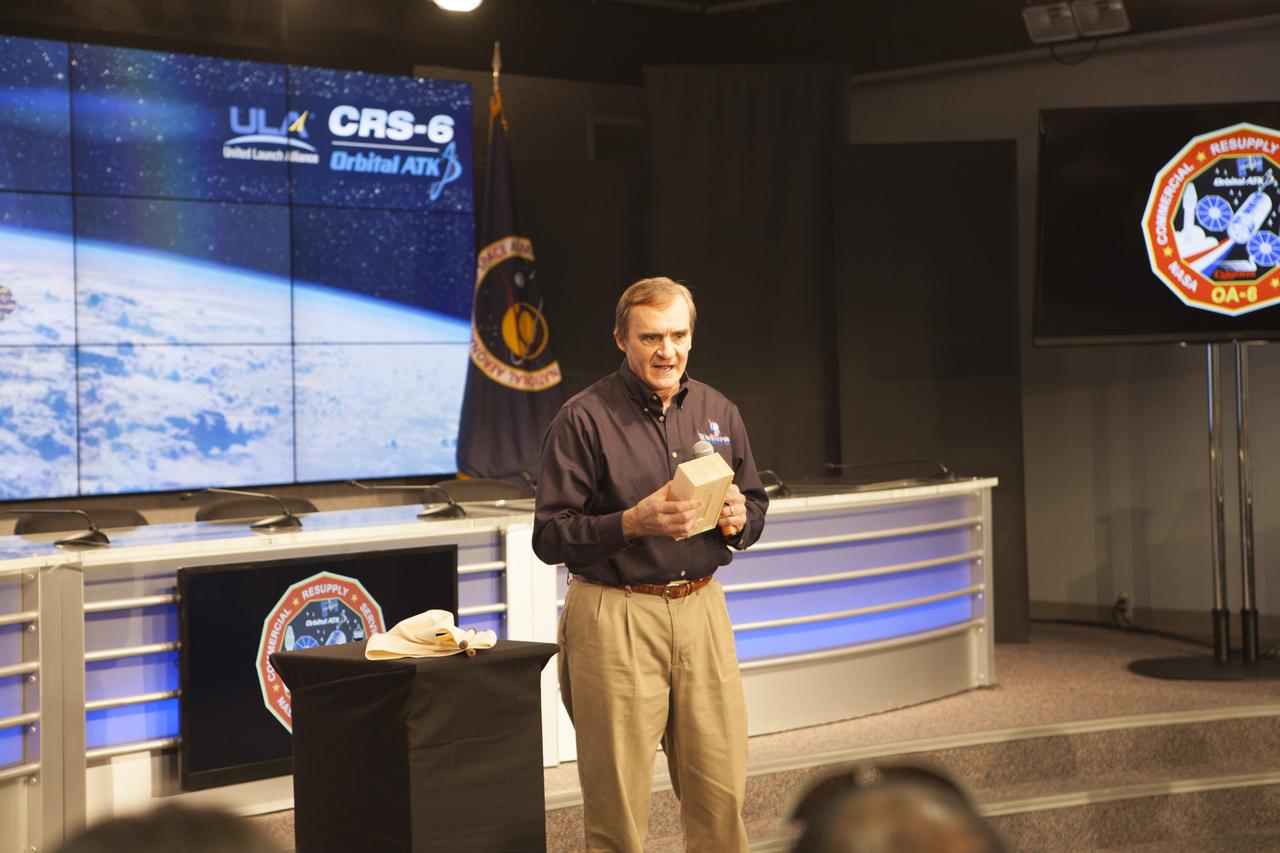
Gary Ruff, NASA project manager and co-investigator for the Spacecraft Fire Safety Demonstration Project, or Saffire, at the Glenn Research Center in Cleveland, speaks to members of the media in the Kennedy Space Center’s Press Site auditorium. The briefing focused on science research and technology work planned for the International Space Station, or ISS, following the arrival of a Cygnus spacecraft. The Cygnus is scheduled to be launched March 22 atop a United Launch Alliance Atlas V rocket on the Orbital ATK CRS-6 commercial resupply services mission.
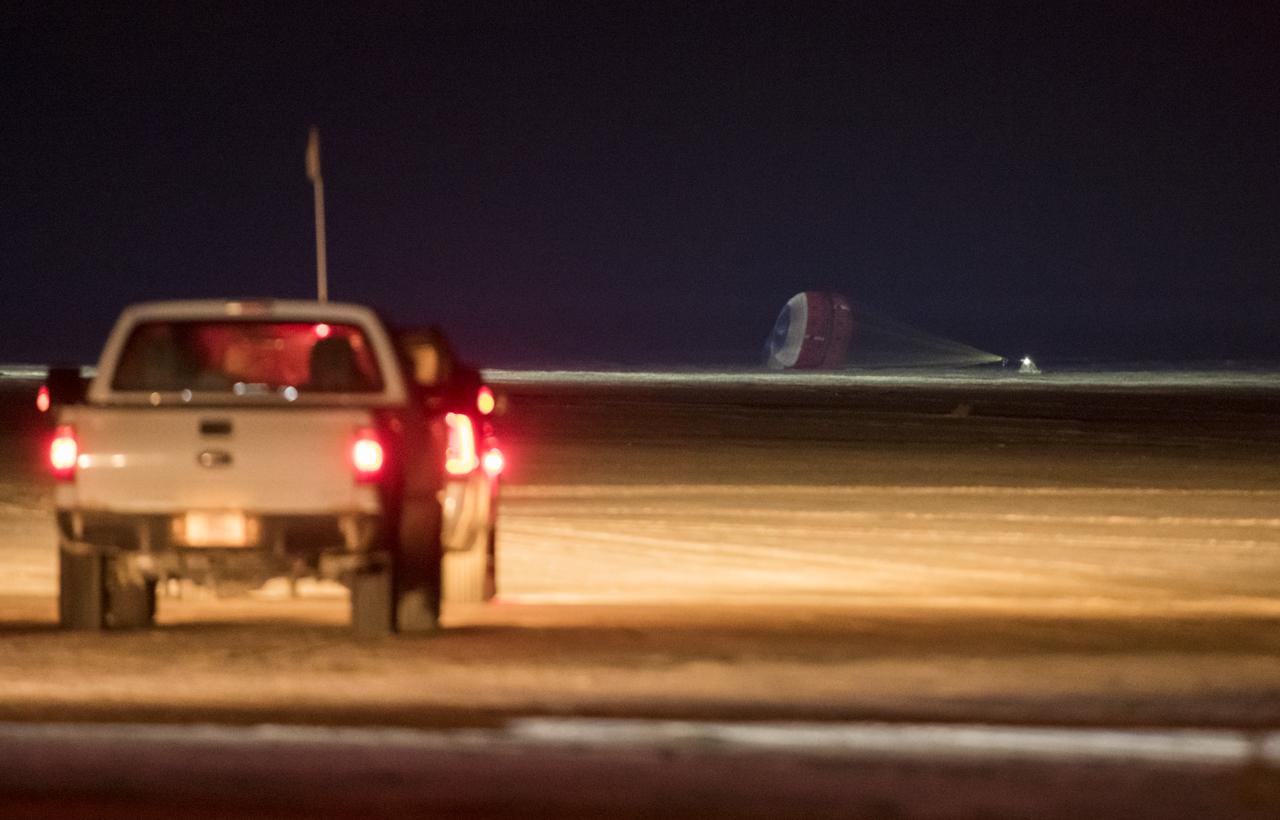
The Boeing CST-100 Starliner spacecraft lands in White Sands, New Mexico, Sunday, Dec. 22, 2019. The landing completes an abbreviated Orbital Flight Test for the company that still meets several mission objectives for NASA’s Commercial Crew program. The Starliner spacecraft launched on a United Launch Alliance Atlas V rocket at 6:36 a.m. Friday, Dec. 20 from Space Launch Complex 41 at Cape Canaveral Air Force Station in Florida. Photo Credit: (NASA/Aubrey Gemignani)
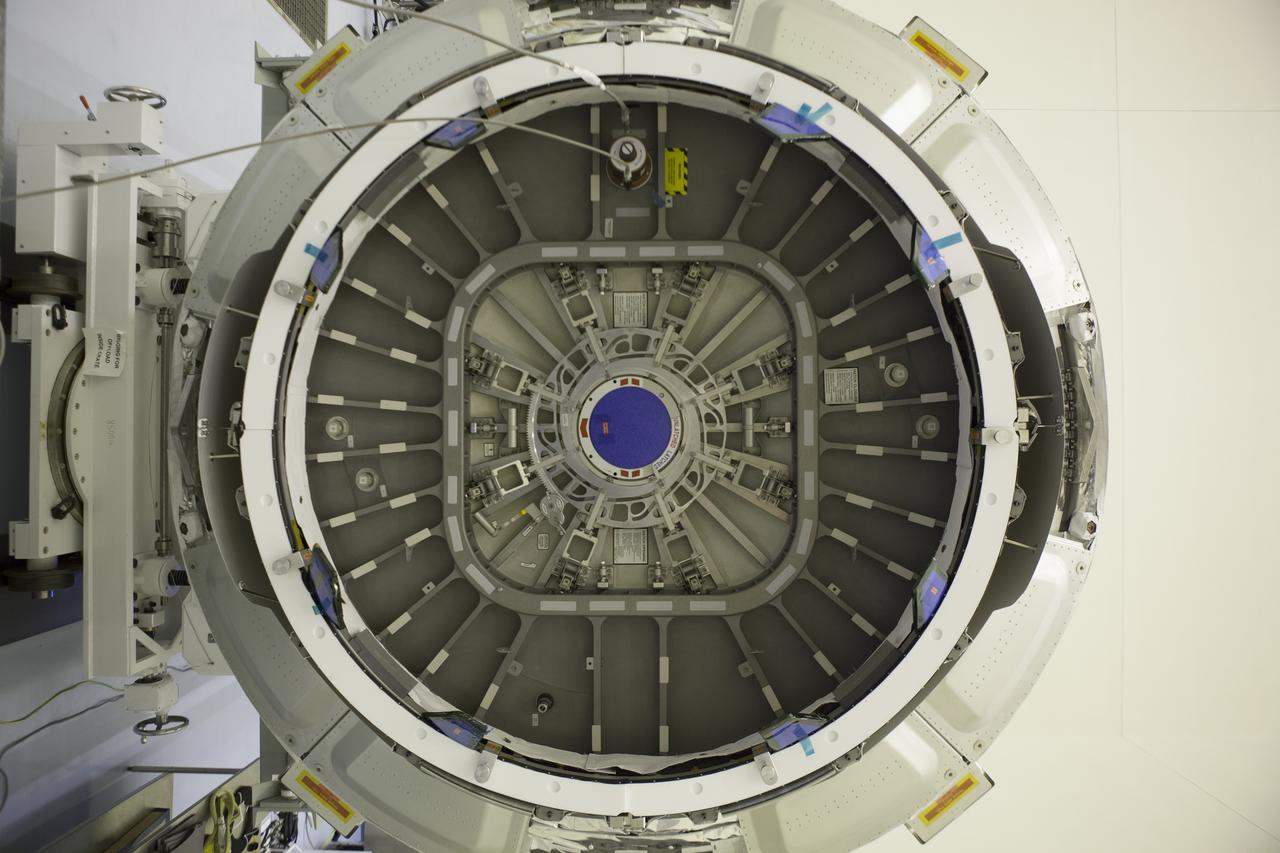
Inside the Payload Hazardous Servicing Facility at NASA's Kennedy Space Center in Florida, the hatch has been closed for the upcoming flight of a Cygnus cargo vessel. The spacecraft is scheduled for the upcoming Orbital ATK Commercial Resupply Services-6 mission to deliver hardware and supplies to the International Space Station. The Cygnus is scheduled to lift off atop a United Launch Alliance Atlas V rocket on March 22.
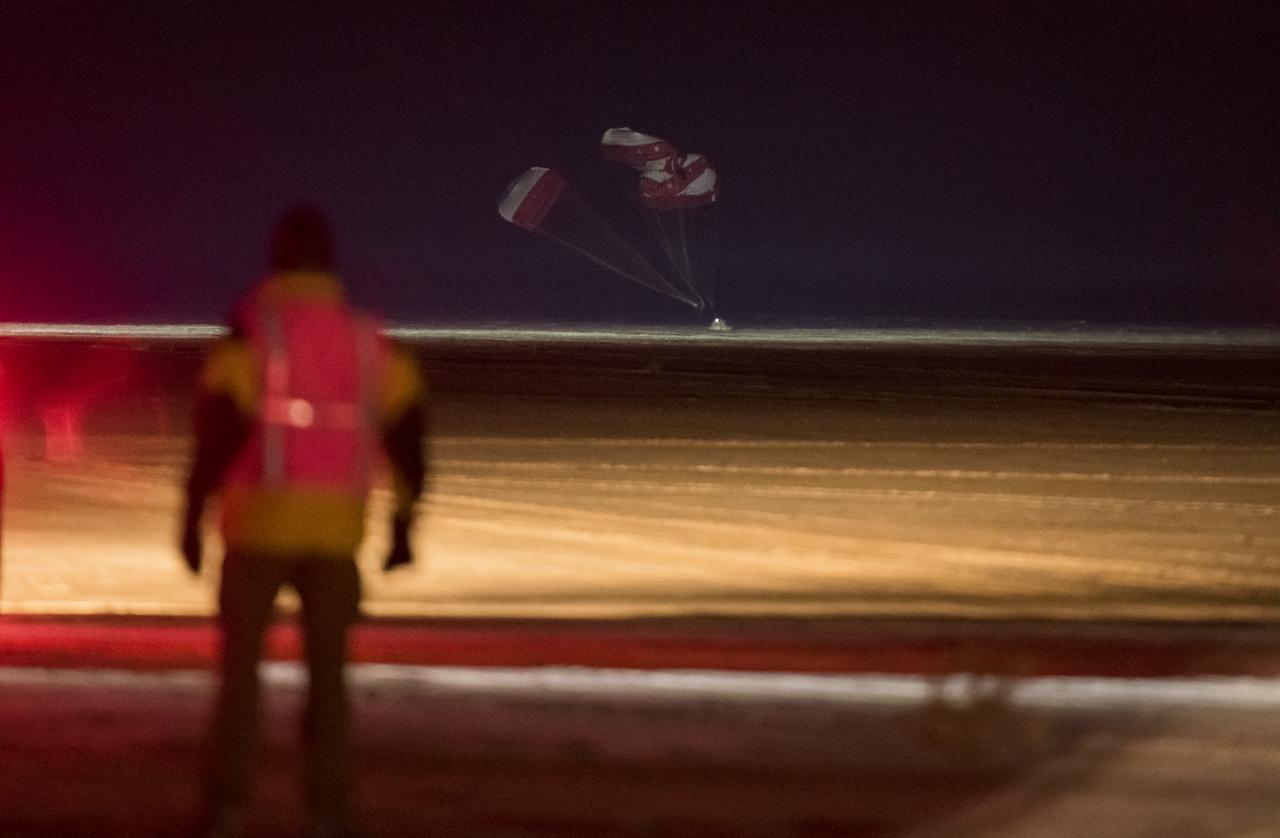
The Boeing CST-100 Starliner spacecraft lands in White Sands, New Mexico, Sunday, Dec. 22, 2019. The landing completes an abbreviated Orbital Flight Test for the company that still meets several mission objectives for NASA’s Commercial Crew program. The Starliner spacecraft launched on a United Launch Alliance Atlas V rocket at 6:36 a.m. Friday, Dec. 20 from Space Launch Complex 41 at Cape Canaveral Air Force Station in Florida. Photo Credit: (NASA/Aubrey Gemignani)
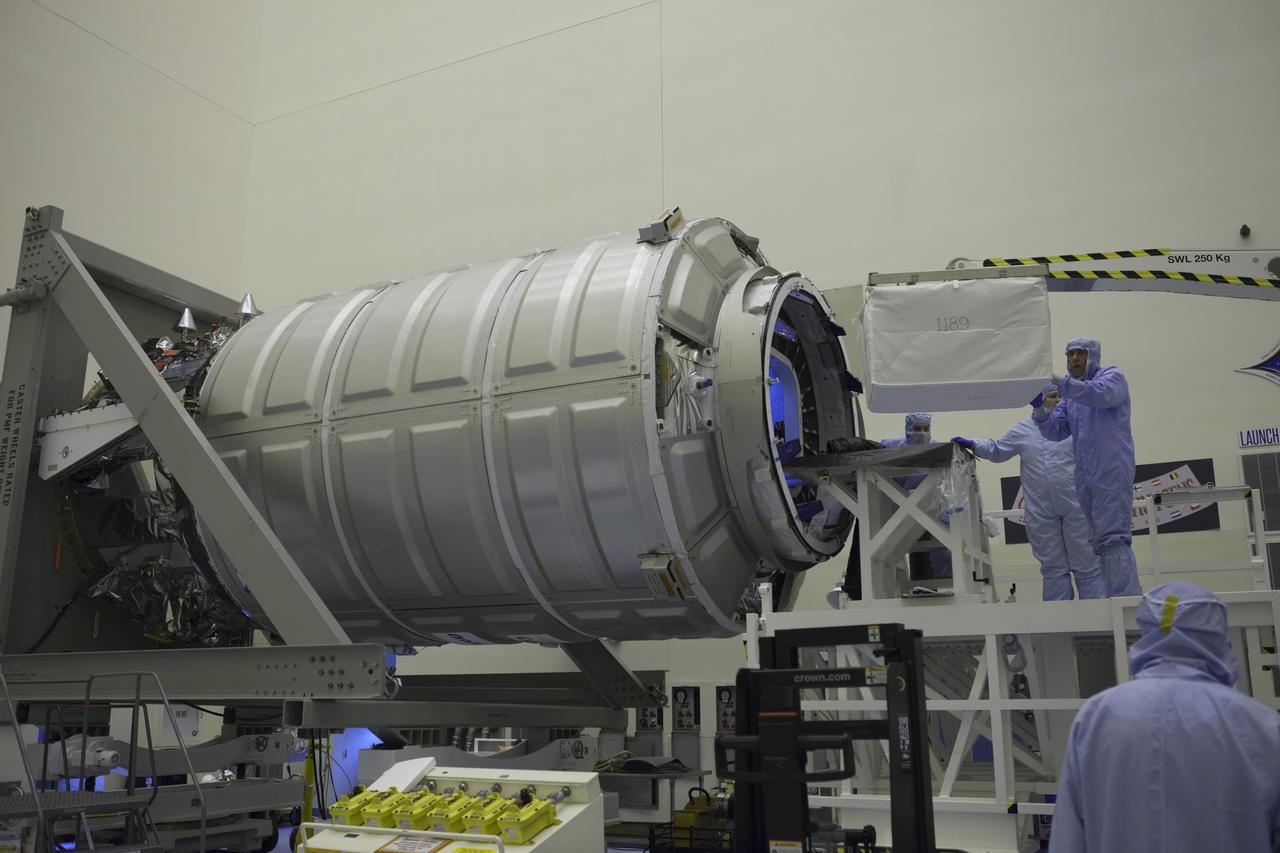
Technicians move cargo into the Orbital ATK CRS-6 pressurized cargo module during late stowage inside the Payload Hazardous Servicing Facility at NASA’s Kennedy Space Center in Florida. The spacecraft is scheduled for the upcoming Orbital ATK Commercial Resupply Services-6 mission to deliver hardware and supplies to the International Space Station. The Cygnus is scheduled to lift off atop a United Launch Alliance Atlas V rocket on March 22.
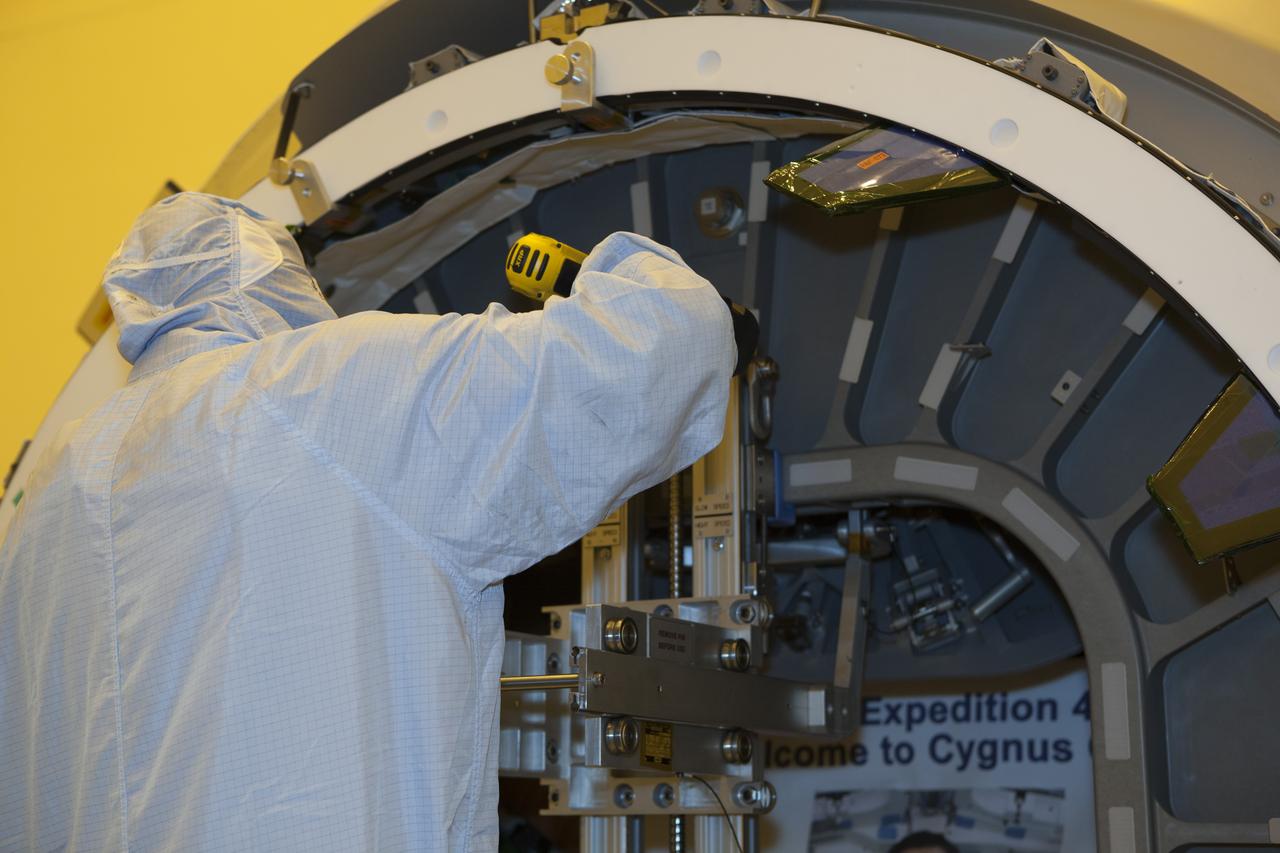
Inside the Payload Hazardous Servicing Facility at NASA's Kennedy Space Center in Florida, the hatch is closed for the upcoming flight of a Cygnus cargo vessel. The spacecraft is scheduled for the upcoming Orbital ATK Commercial Resupply Services-6 mission to deliver hardware and supplies to the International Space Station. The Cygnus is scheduled to lift off atop a United Launch Alliance Atlas V rocket on March 22.
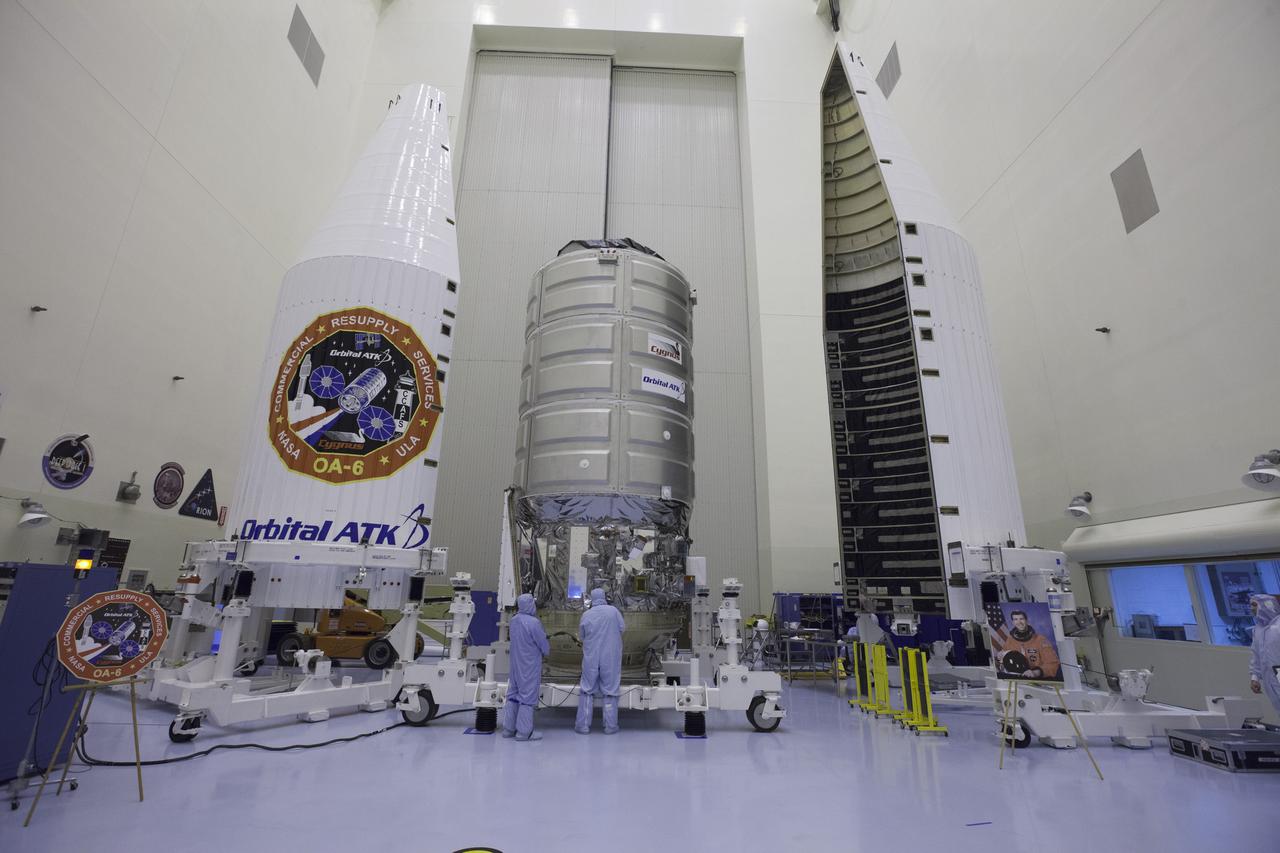
Inside the Payload Hazardous Servicing Facility at NASA's Kennedy Space Center in Florida, a Cygnus cargo spacecraft is being prepared for the upcoming Orbital ATK Commercial Resupply Services-6 mission to deliver hardware and supplies to the International Space Station. Technicians and engineers are clad in "bunny suits." The cleanroom garments are worn to prevent contamination in the controlled environment. The Cygnus is scheduled to lift off atop a United Launch Alliance Atlas V rocket on March 22.
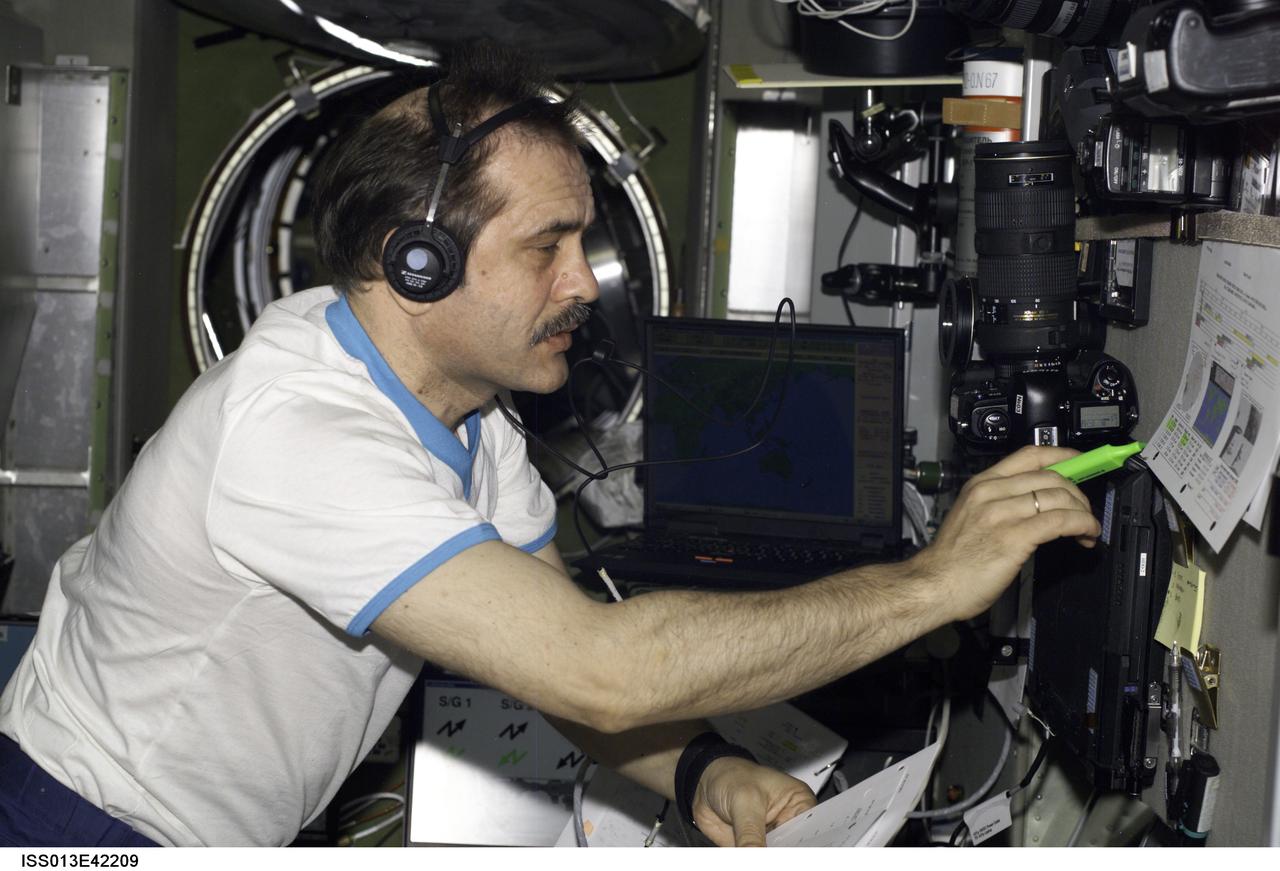
ISS013-E-42209 (26 June 2006) --- Cosmonaut Pavel V. Vinogradov, Expedition 13 commander representing Russia's Federal Space Agency, practices docking procedures with the TORU teleoperated control system in the Zvezda Service Module of the International Space Station in preparation for the docking of the Progress 22 spacecraft. Vinogradov, using the Simvol-TS screen and hand controllers, could manually dock the Progress to the station in the event of a failure of the Kurs automated docking system.
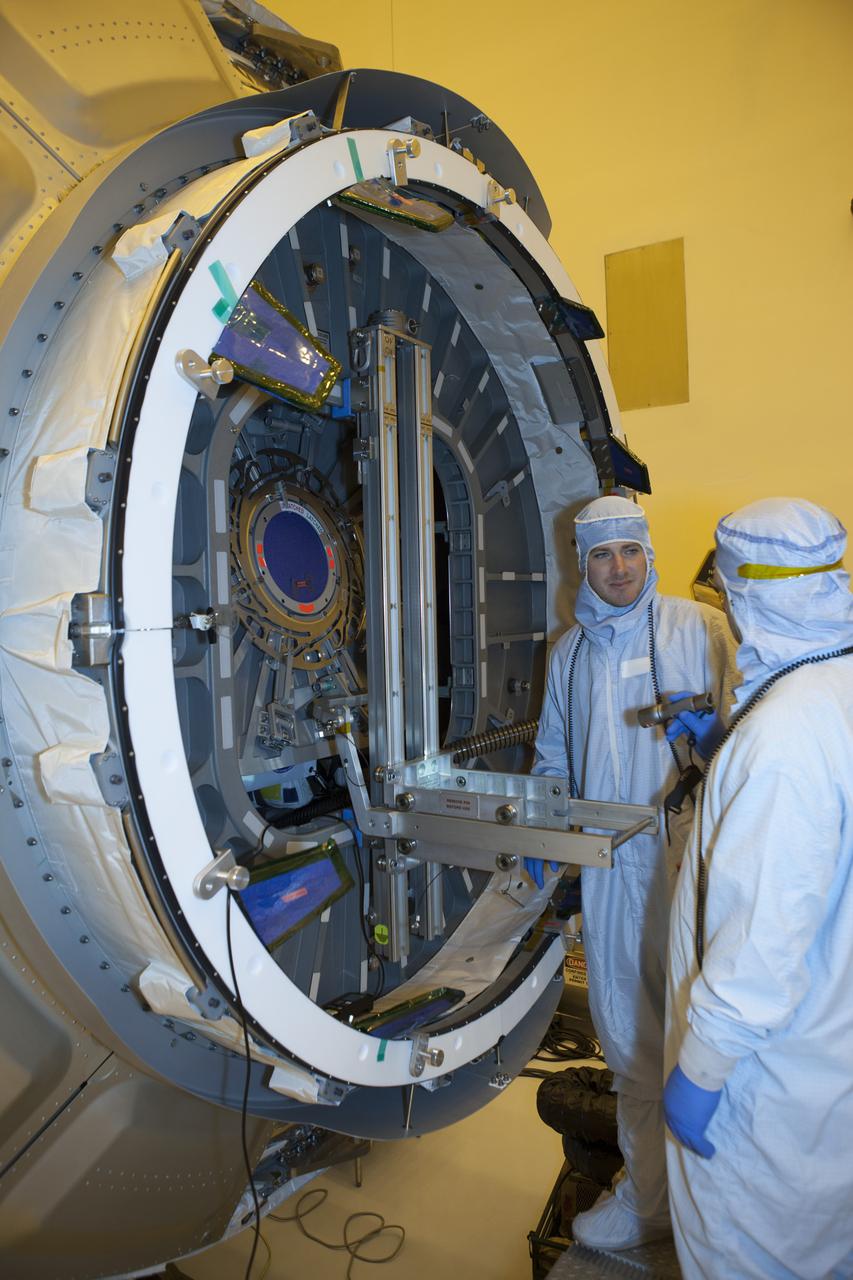
Inside the Payload Hazardous Servicing Facility at NASA's Kennedy Space Center in Florida, the hatch is closed for the upcoming flight of a Cygnus cargo vessel. The spacecraft is scheduled for the upcoming Orbital ATK Commercial Resupply Services-6 mission to deliver hardware and supplies to the International Space Station. The Cygnus is scheduled to lift off atop a United Launch Alliance Atlas V rocket on March 22.
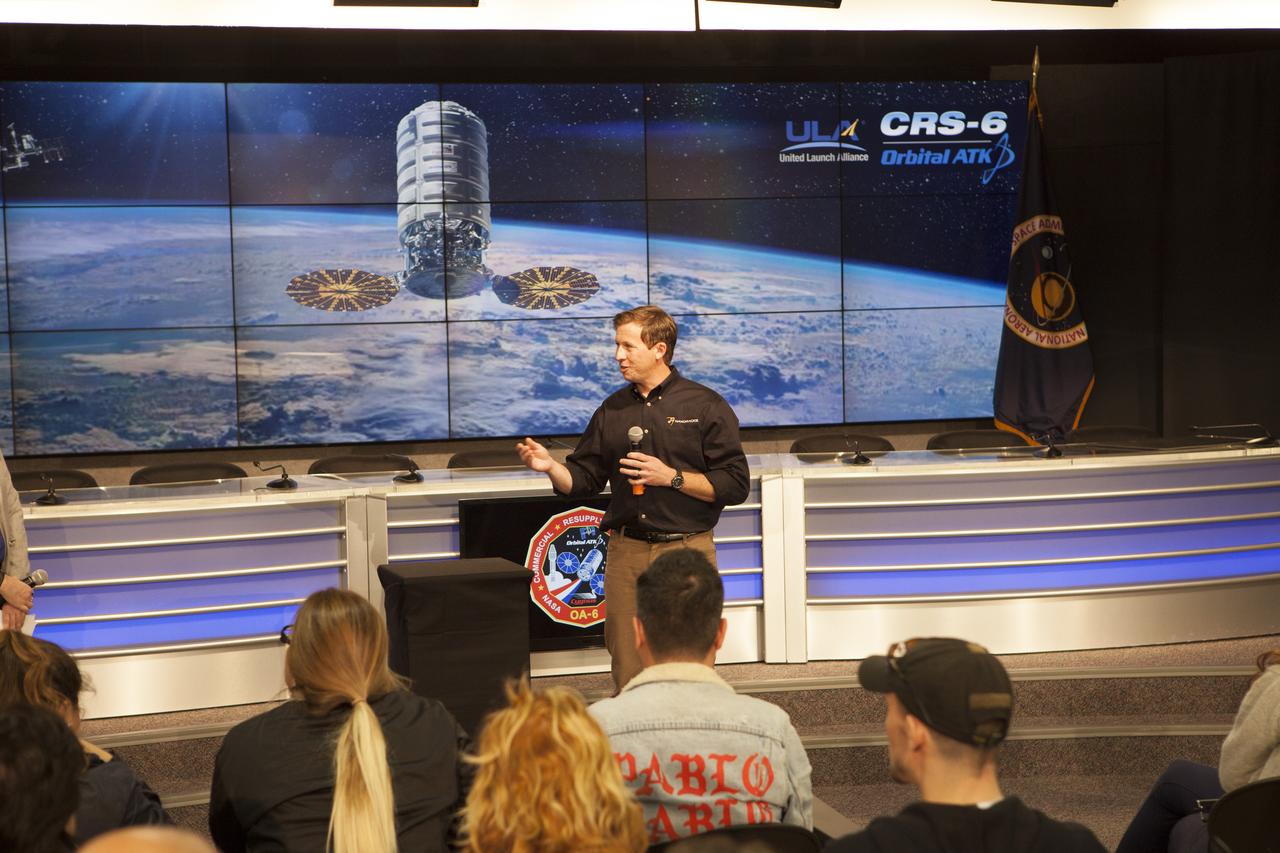
Michael Lewis, chief technology officer for NanoRacks, speaks to members of the media in the Kennedy Space Center’s Press Site auditorium. The briefing focused on science research and technology work planned for the International Space Station, or ISS, following the arrival of a Cygnus spacecraft. The Cygnus is scheduled to be launched March 22 atop a United Launch Alliance Atlas V rocket on the Orbital ATK CRS-6 commercial resupply services mission.
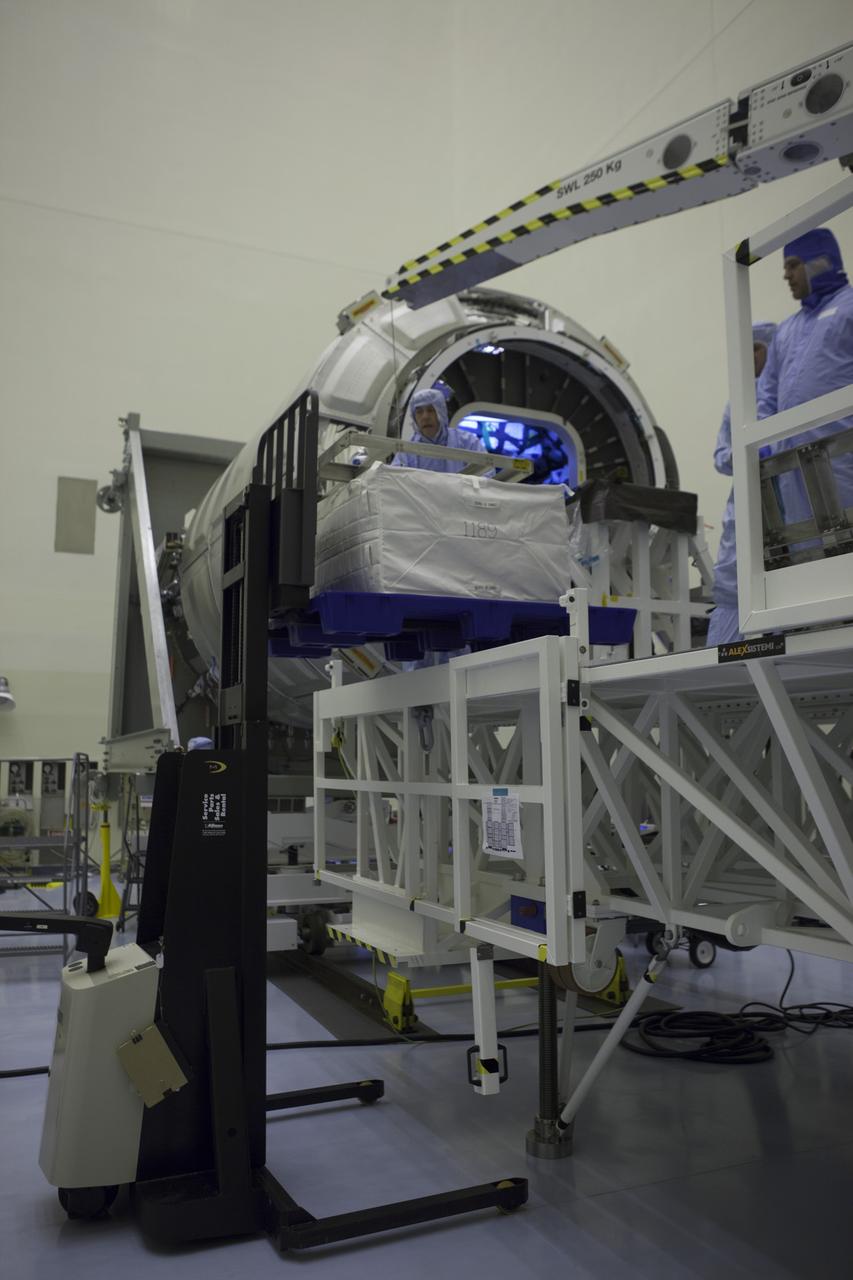
Technicians prepare to move a cargo package from a forklift into the Orbital ATK CRS-6 pressurized cargo module during late stowage inside the Payload Hazardous Servicing Facility at NASA’s Kennedy Space Center in Florida. The spacecraft is scheduled for the upcoming Orbital ATK Commercial Resupply Services-6 mission to deliver hardware and supplies to the International Space Station. The Cygnus is scheduled to lift off atop a United Launch Alliance Atlas V rocket on March 22.
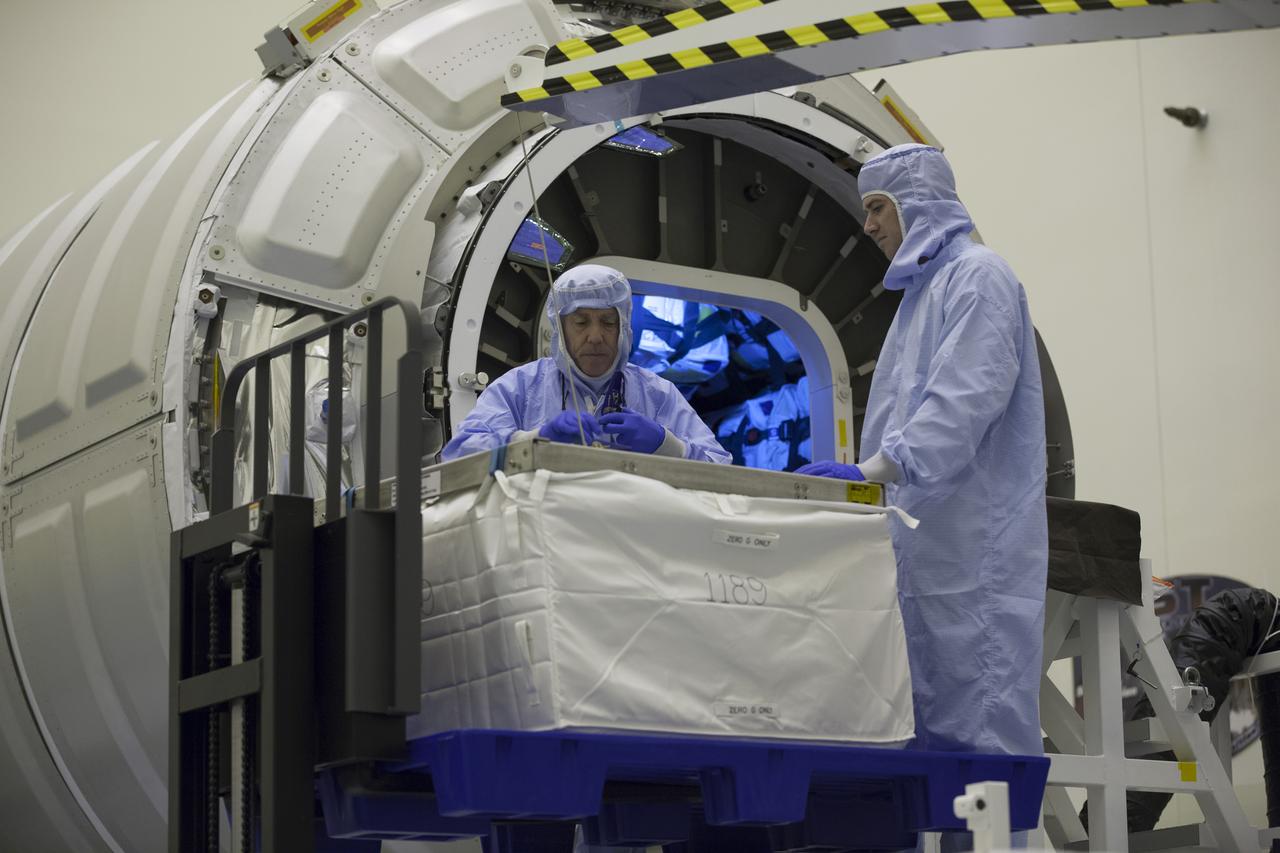
Technicians prepare to move cargo into the Orbital ATK CRS-6 pressurized cargo module during late stowage inside the Payload Hazardous Servicing Facility at NASA’s Kennedy Space Center in Florida. The spacecraft is scheduled for the upcoming Orbital ATK Commercial Resupply Services-6 mission to deliver hardware and supplies to the International Space Station. The Cygnus is scheduled to lift off atop a United Launch Alliance Atlas V rocket on March 22.
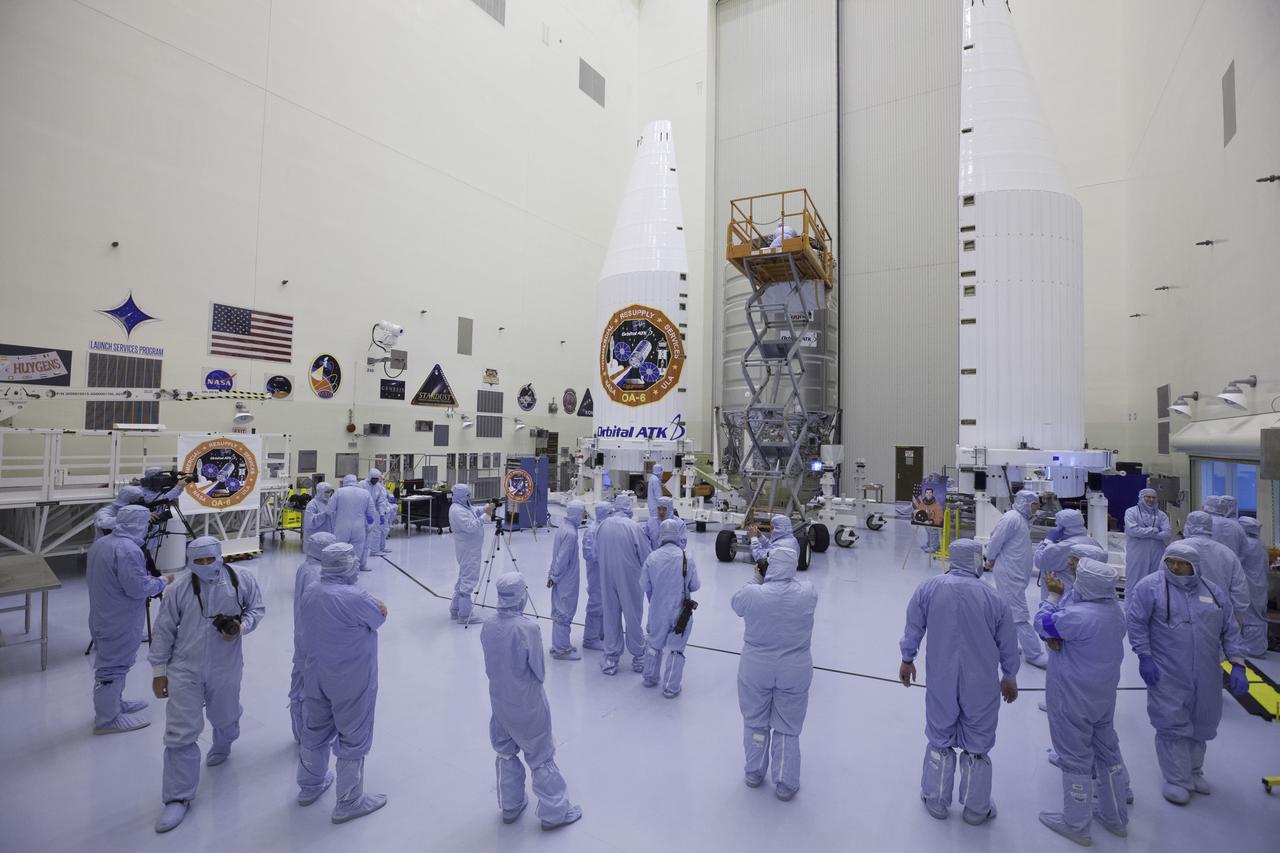
Inside the Payload Hazardous Servicing Facility at NASA's Kennedy Space Center in Florida, members of the news media get a close-up view of a Cygnus cargo vessel. The spacecraft is scheduled for the upcoming Orbital ATK Commercial Resupply Services-6 mission to deliver hardware and supplies to the International Space Station. Reporters, technicians and engineers are clad in "bunny suits." The cleanroom garments are worn to prevent contamination in the controlled environment. The Cygnus is scheduled to lift off atop a United Launch Alliance Atlas V rocket on March 22.
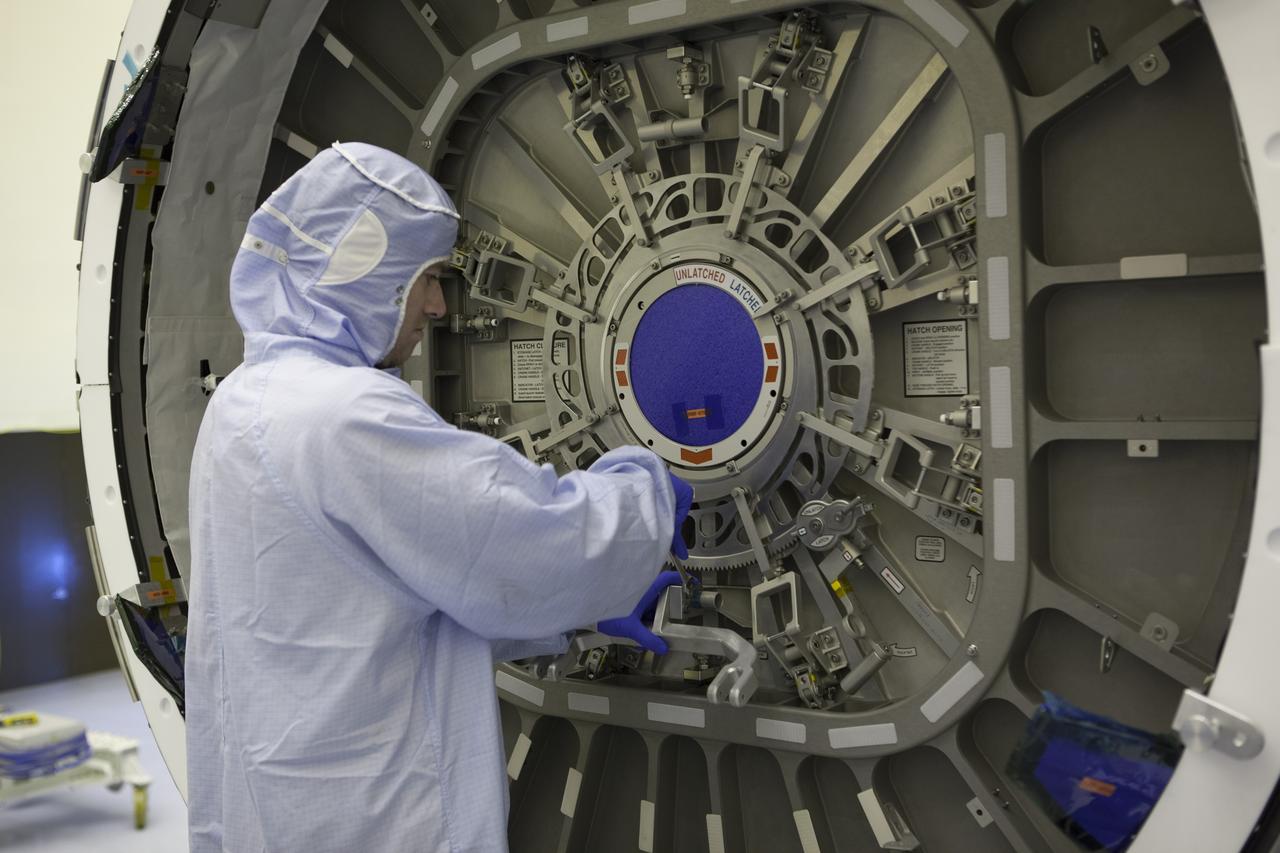
Inside the Payload Hazardous Servicing Facility at NASA's Kennedy Space Center in Florida, the hatch is closed for the upcoming flight of a Cygnus cargo vessel. The spacecraft is scheduled for the upcoming Orbital ATK Commercial Resupply Services-6 mission to deliver hardware and supplies to the International Space Station. The Cygnus is scheduled to lift off atop a United Launch Alliance Atlas V rocket on March 22.
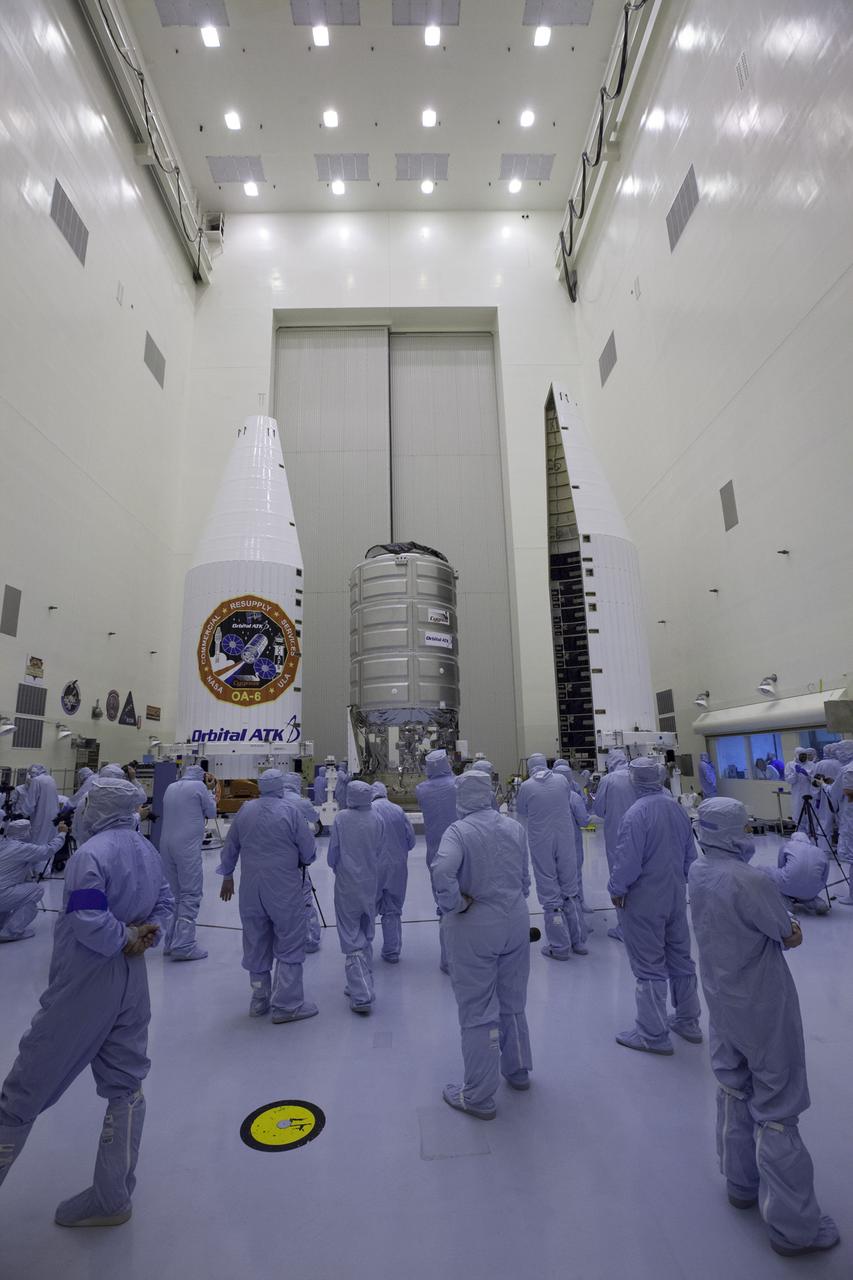
Inside the Payload Hazardous Servicing Facility at NASA's Kennedy Space Center in Florida, members of the news media get a close-up view of a Cygnus cargo vessel. The spacecraft is scheduled for the upcoming Orbital ATK Commercial Resupply Services-6 mission to deliver hardware and supplies to the International Space Station. Reporters, technicians and engineers are clad in "bunny suits." The cleanroom garments are worn to prevent contamination in the controlled environment. The Cygnus is scheduled to lift off atop a United Launch Alliance Atlas V rocket on March 22.
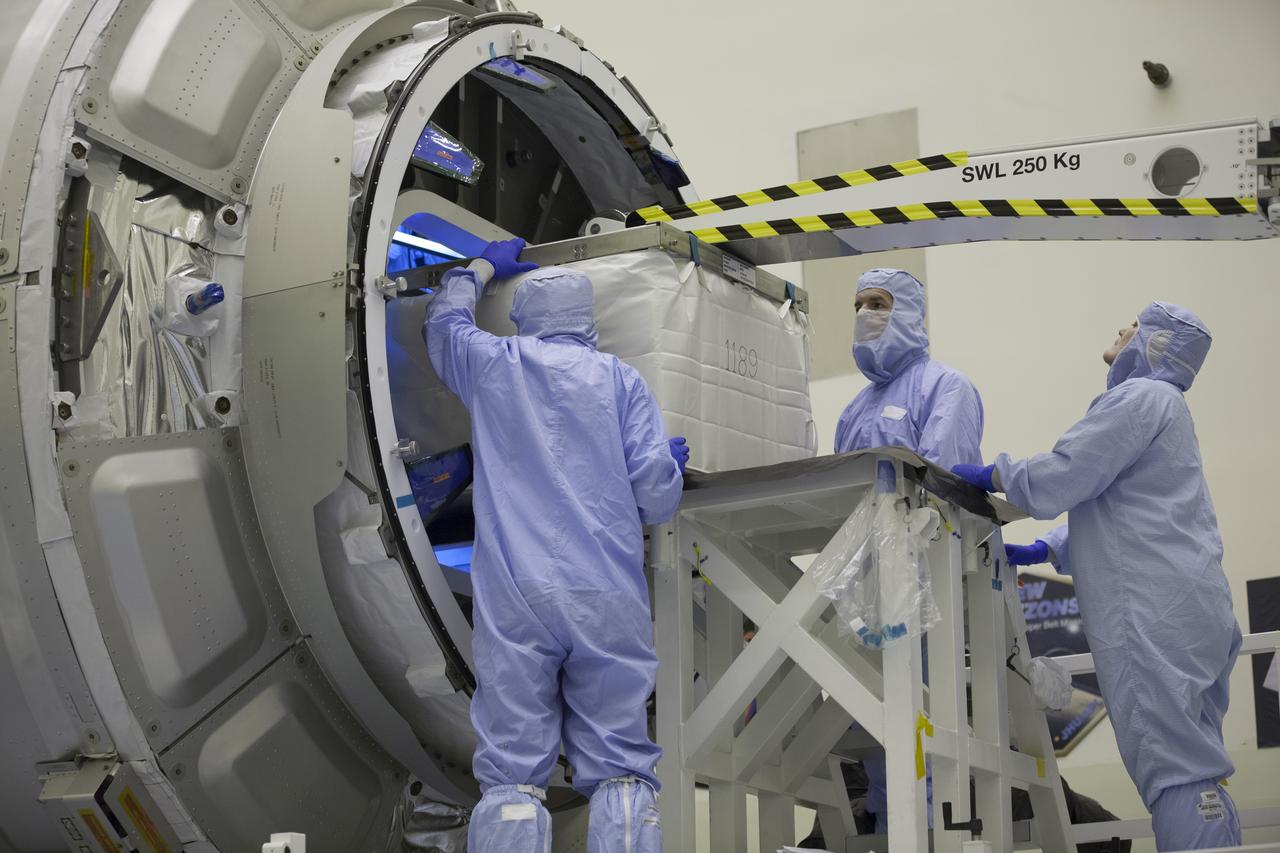
Technicians move cargo into the Orbital ATK CRS-6 pressurized cargo module during late stowage inside the Payload Hazardous Servicing Facility at NASA’s Kennedy Space Center in Florida. The spacecraft is scheduled for the upcoming Orbital ATK Commercial Resupply Services-6 mission to deliver hardware and supplies to the International Space Station. The Cygnus is scheduled to lift off atop a United Launch Alliance Atlas V rocket on March 22.
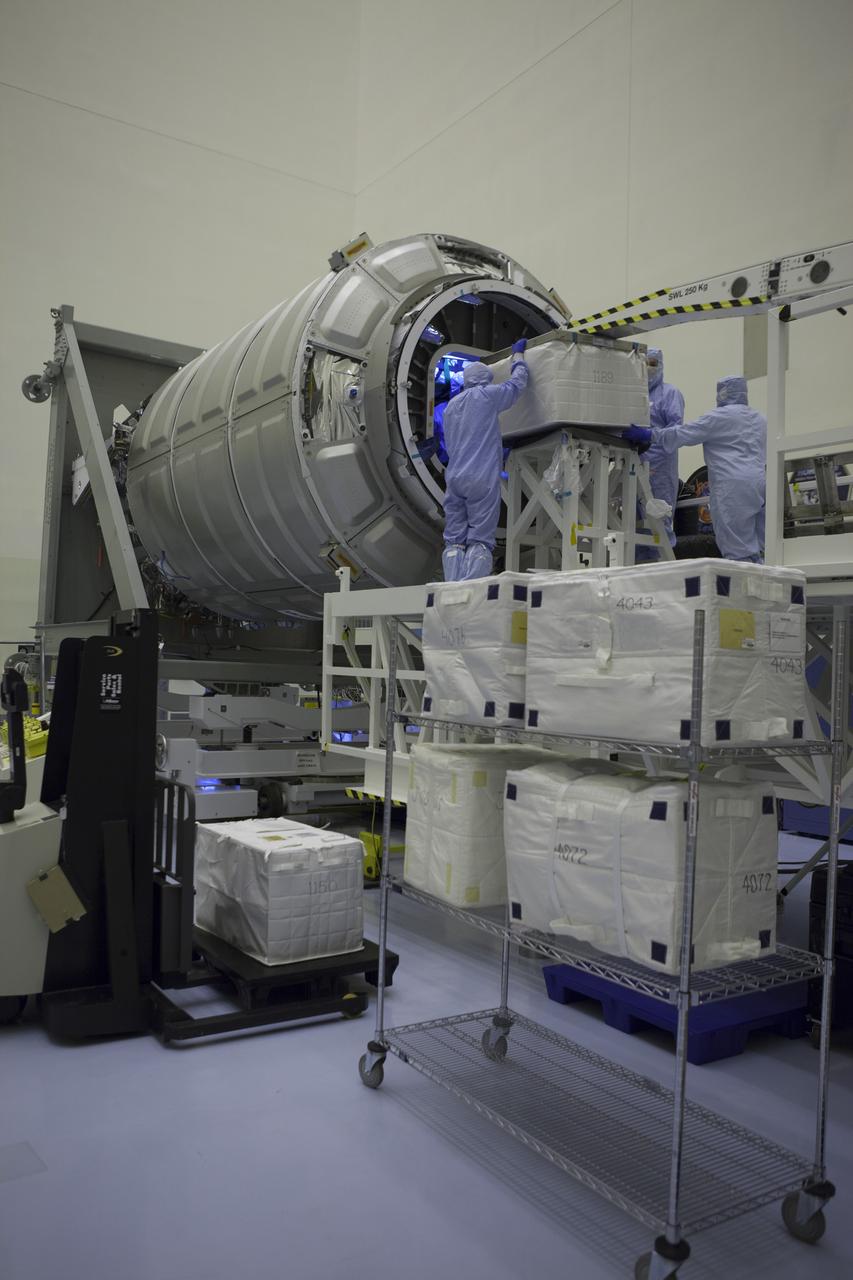
Technicians move cargo into the Orbital ATK CRS-6 pressurized cargo module during late stowage inside the Payload Hazardous Servicing Facility at NASA’s Kennedy Space Center in Florida. The spacecraft is scheduled for the upcoming Orbital ATK Commercial Resupply Services-6 mission to deliver hardware and supplies to the International Space Station. The Cygnus is scheduled to lift off atop a United Launch Alliance Atlas V rocket on March 22.
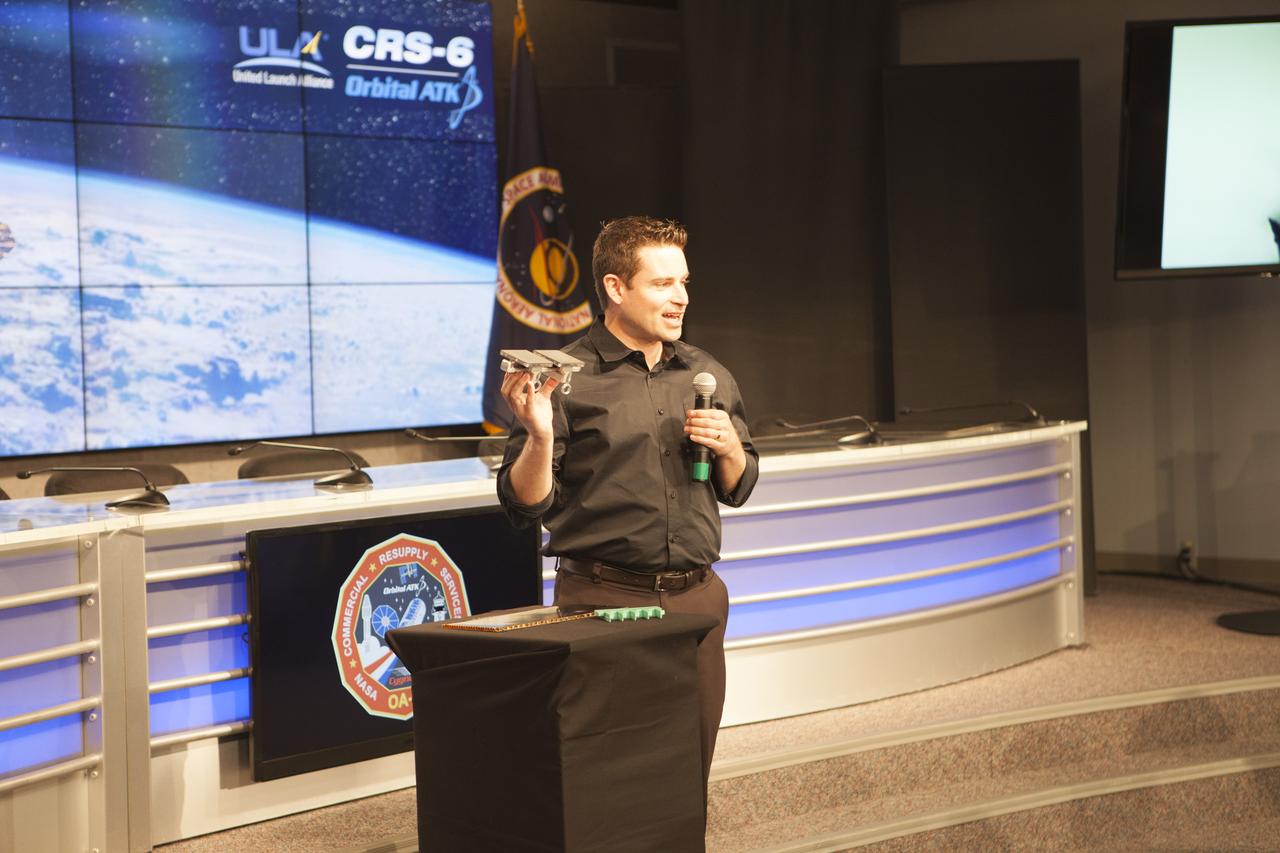
Dr. Aaron Parness, group leader at the Jet Propulsion Laboratory in Pasadena, California, who is working the Extreme Environment Robots Group on the Gecko Grippers experiment, speaks to members of the media in the Kennedy Space Center’s Press Site auditorium. The briefing focused on science research and technology work planned for the International Space Station, or ISS, following the arrival of a Cygnus spacecraft. The Cygnus is scheduled to be launched March 22 atop a United Launch Alliance Atlas V rocket on the Orbital ATK CRS-6 commercial resupply services mission.
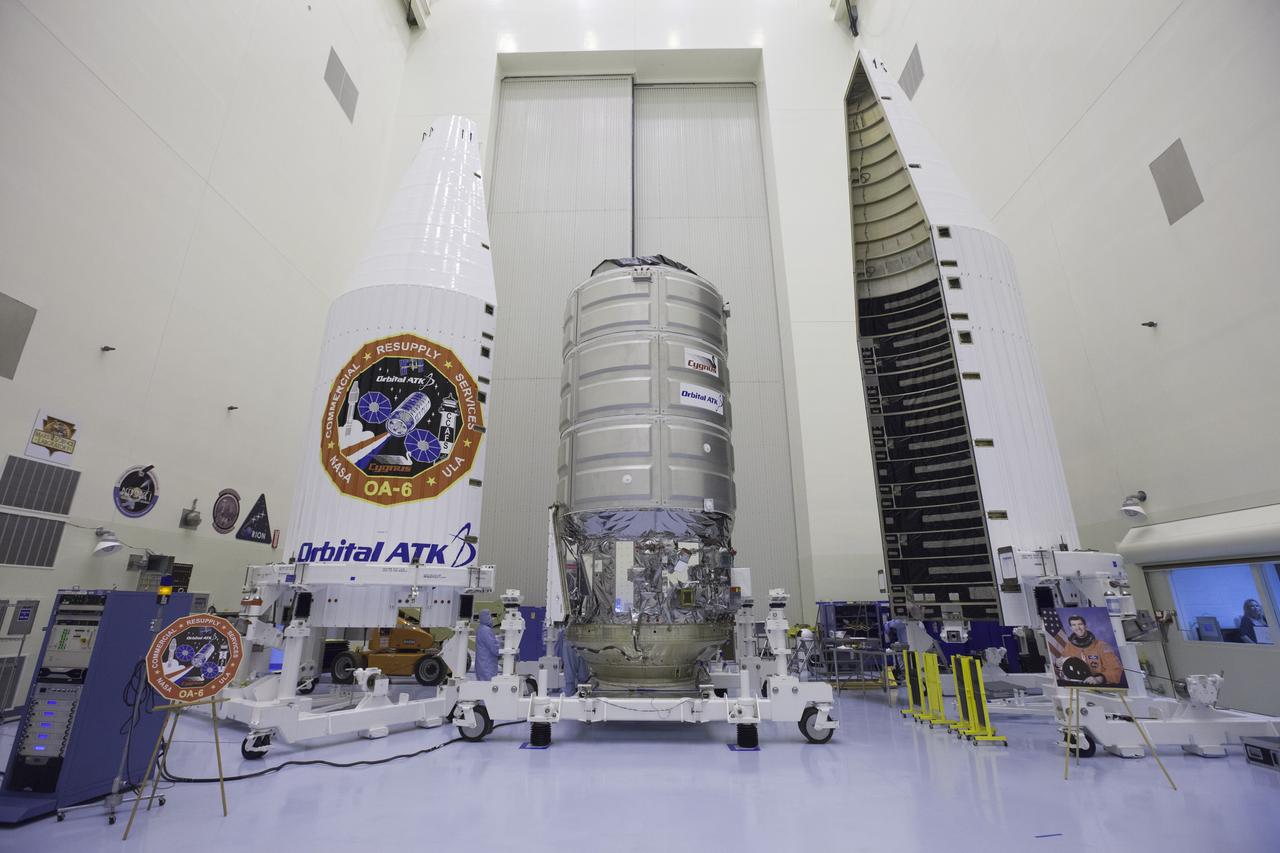
Inside the Payload Hazardous Servicing Facility at NASA's Kennedy Space Center in Florida, a Cygnus cargo spacecraft is being prepared for the upcoming Orbital ATK Commercial Resupply Services-6 mission to deliver hardware and supplies to the International Space Station. The Cygnus is scheduled to lift off atop a United Launch Alliance Atlas V rocket on March 22.
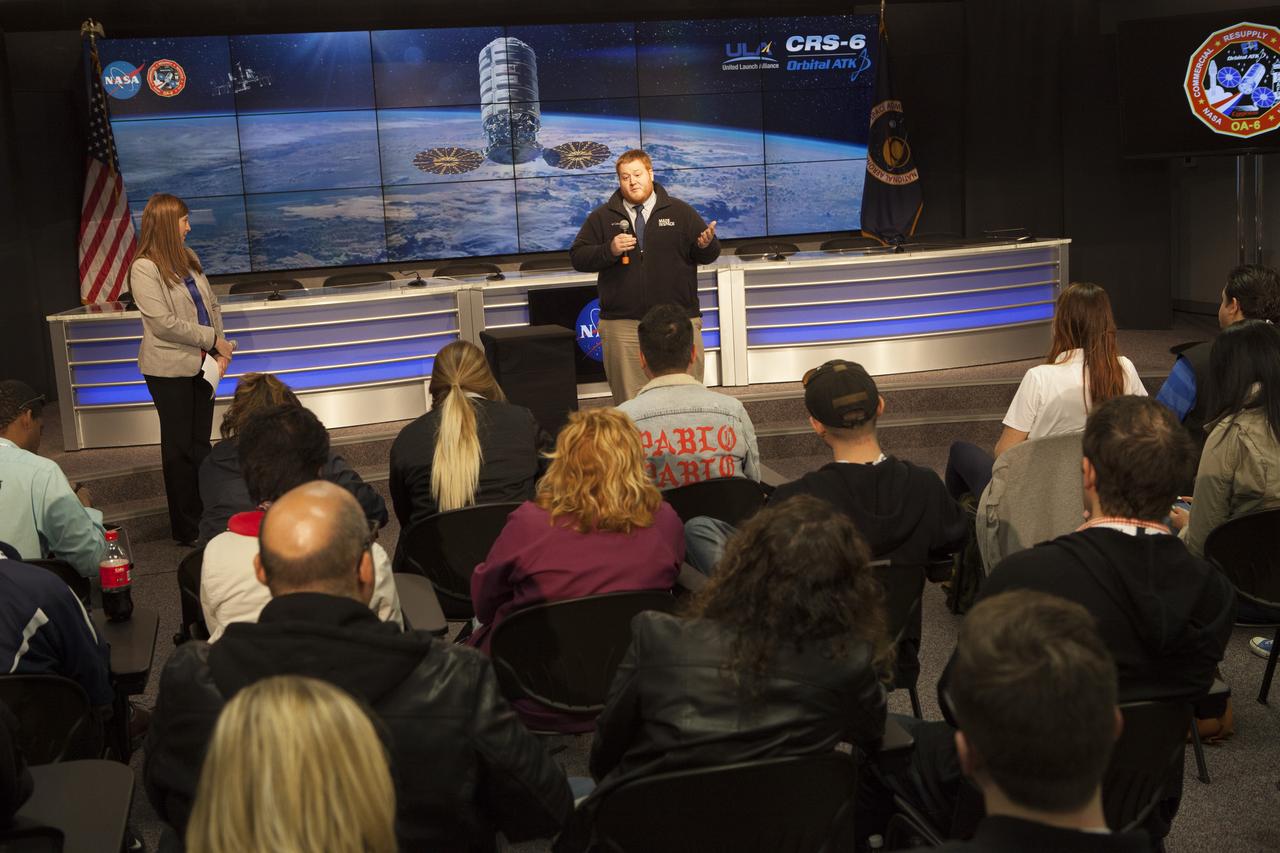
Michael Snyder, chief engineer for Made in Space, speaks to members of the media in the Kennedy Space Center’s Press Site auditorium. The briefing focused on science research and technology work planned for the International Space Station, or ISS, following the arrival of a Cygnus spacecraft. The Cygnus is scheduled to be launched March 22 atop a United Launch Alliance Atlas V rocket on the Orbital ATK CRS-6 commercial resupply services mission.
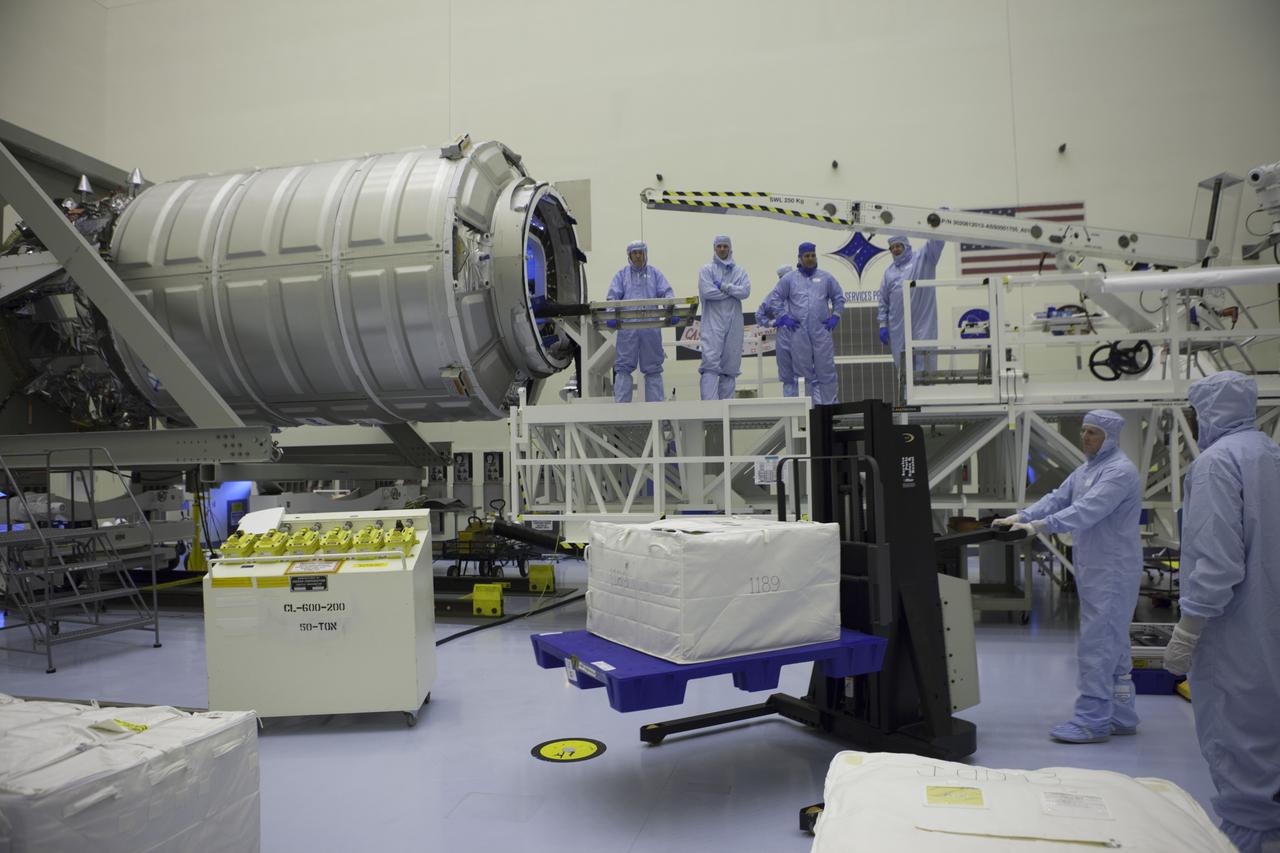
Technicians are positioned at the hatch of the Orbital ATK CRS-6 pressurized cargo module as a forklift moves a cargo package into position for installation into the spacecraft inside the Payload Hazardous Servicing Facility at NASA’s Kennedy Space Center in Florida. The spacecraft is scheduled for the upcoming Orbital ATK Commercial Resupply Services-6 mission to deliver hardware and supplies to the International Space Station. The Cygnus is scheduled to lift off atop a United Launch Alliance Atlas V rocket on March 22
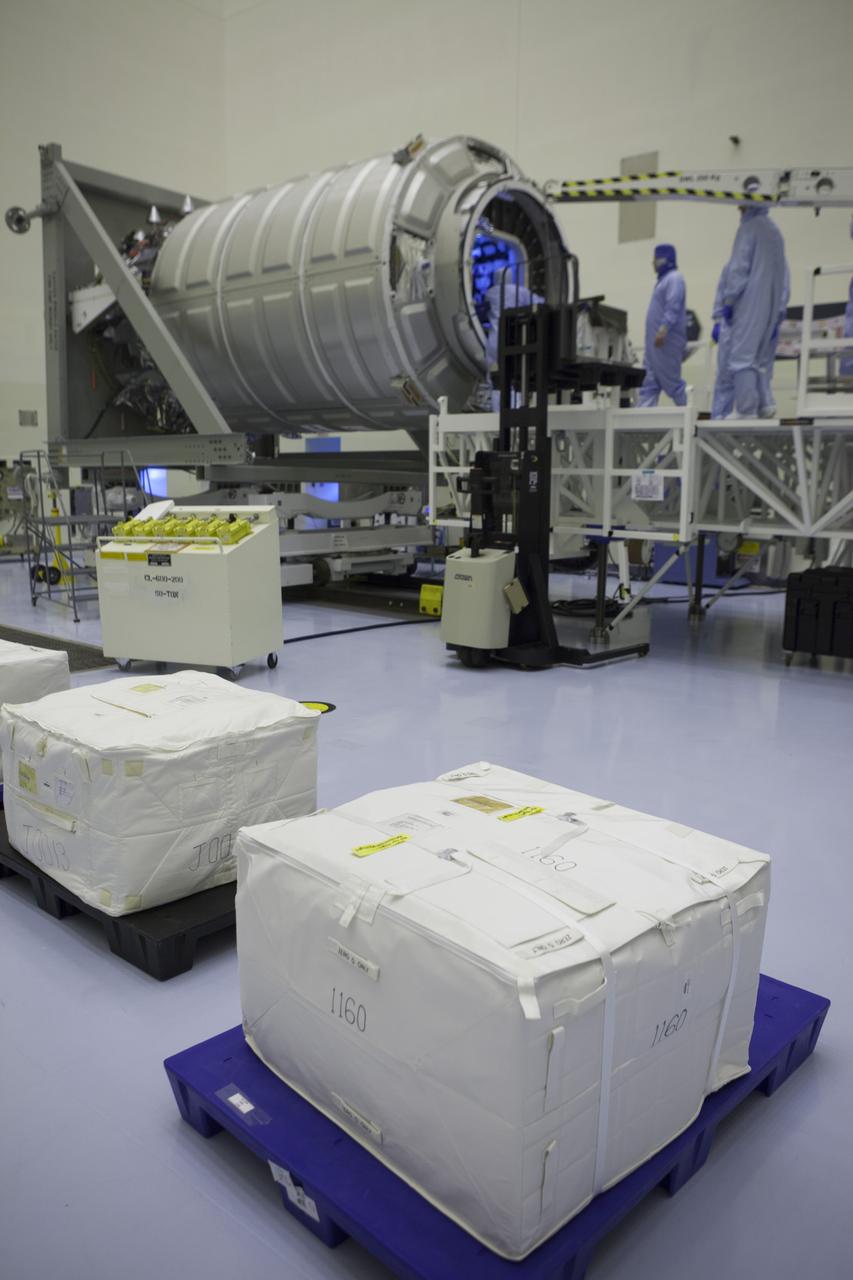
Carefully packaged cargo waits on pallets inside the Payload Hazardous Servicing Facility at NASA’s Kennedy Space Center in Florida. In the background, technicians prepare to begin loading the cargo into the Orbital ATK Cygnus pressurized module during late stowage operations. The spacecraft is scheduled for the upcoming Orbital ATK Commercial Resupply Services-6 mission to deliver hardware and supplies to the International Space Station. The Cygnus is scheduled to lift off atop a United Launch Alliance Atlas V rocket on March 22.
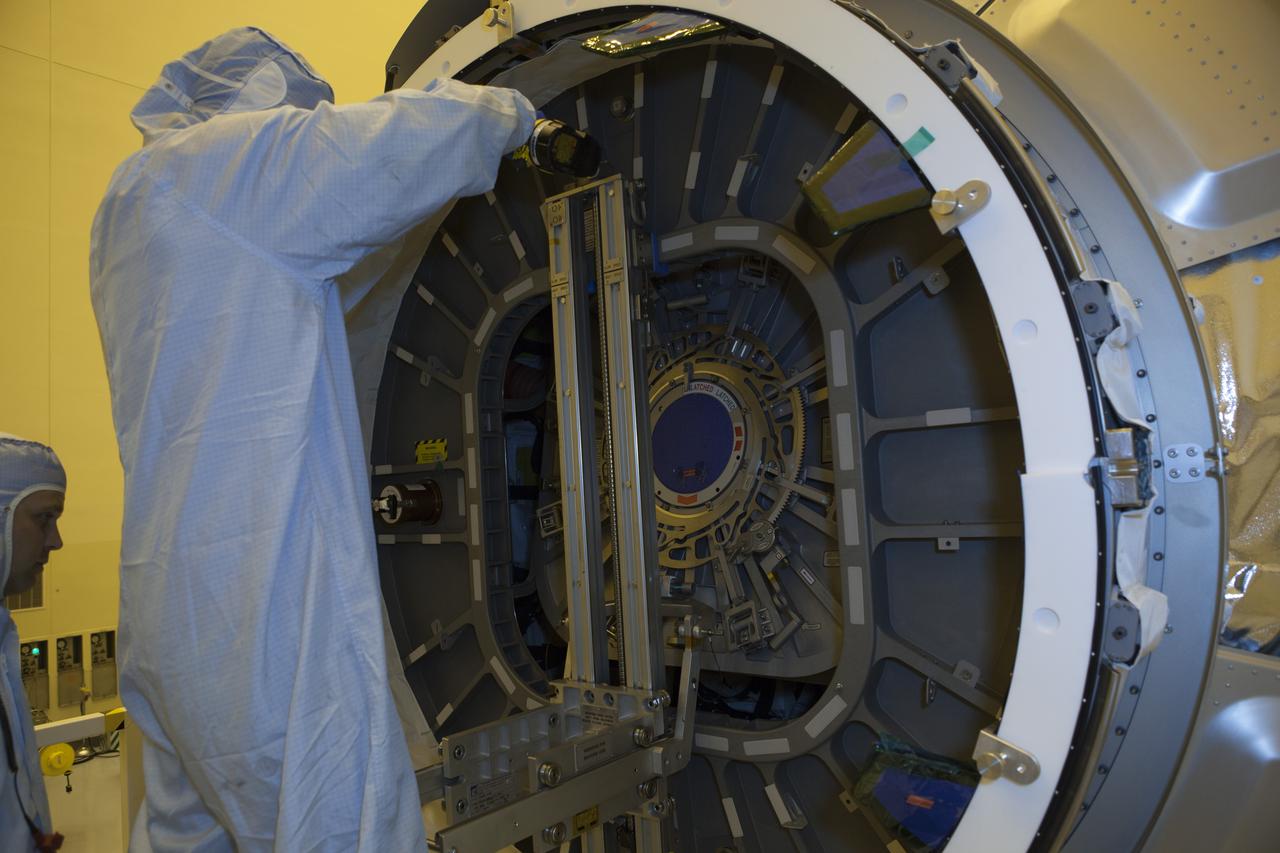
Inside the Payload Hazardous Servicing Facility at NASA's Kennedy Space Center in Florida, the hatch is closed for the upcoming flight of a Cygnus cargo vessel. The spacecraft is scheduled for the upcoming Orbital ATK Commercial Resupply Services-6 mission to deliver hardware and supplies to the International Space Station. The Cygnus is scheduled to lift off atop a United Launch Alliance Atlas V rocket on March 22.
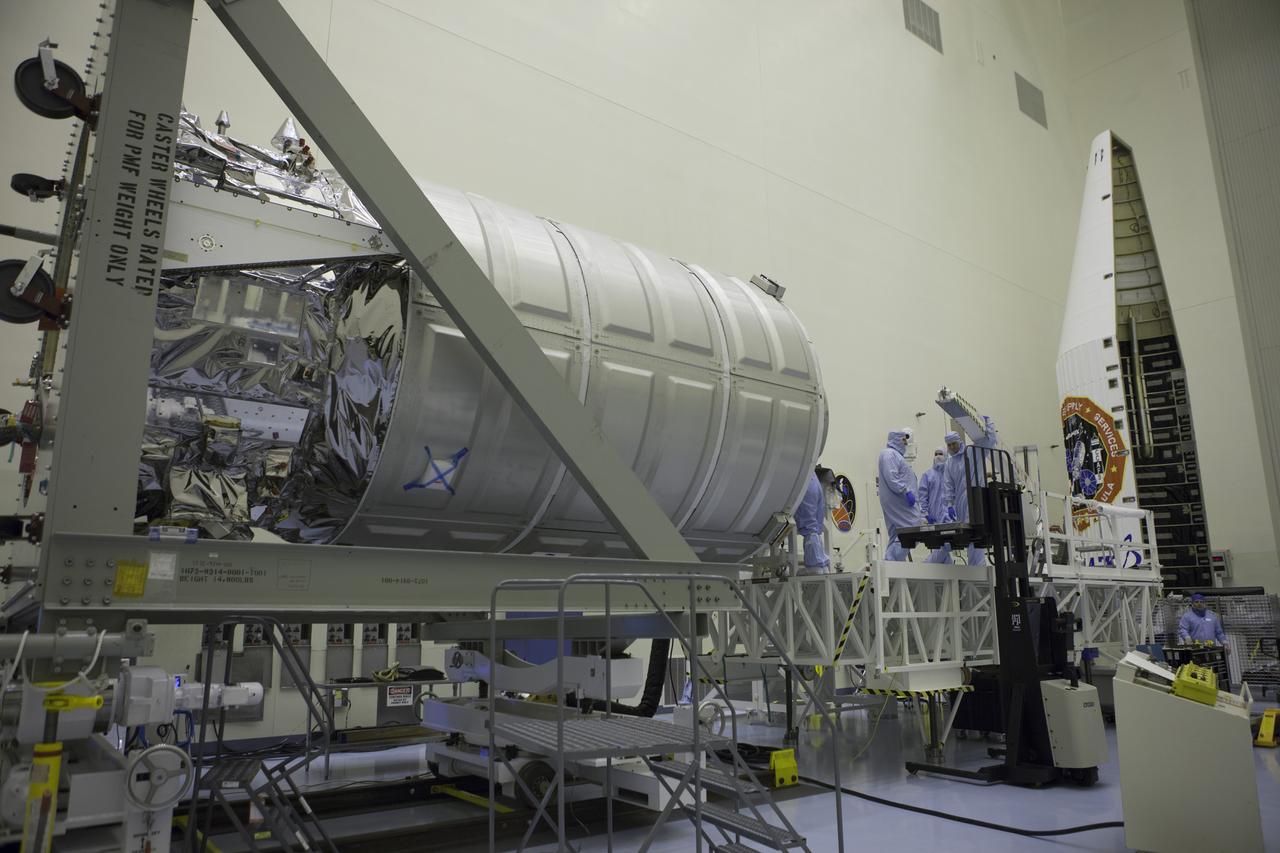
Technicians prepare load cargo into the Orbital ATK Cygnus pressurized module during late stowage operations inside the Payload Hazardous Servicing Facility at NASA's Kennedy Space Center in Florida. The spacecraft is scheduled for the upcoming Orbital ATK Commercial Resupply Services-6 mission to deliver hardware and supplies to the International Space Station. The Cygnus is scheduled to lift off atop a United Launch Alliance Atlas V rocket on March 22.