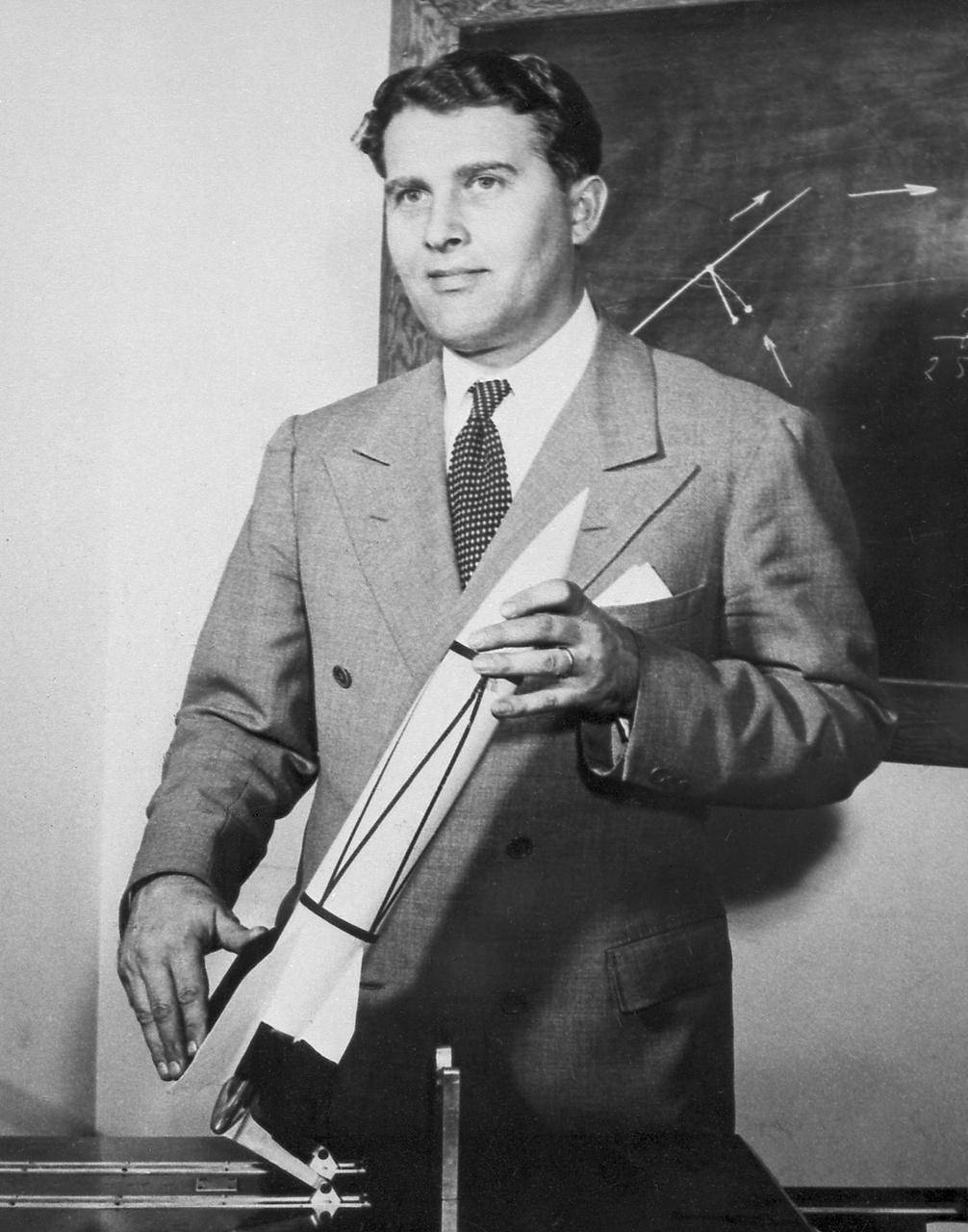
Dr. von Braun with a model of a V2 rocket.
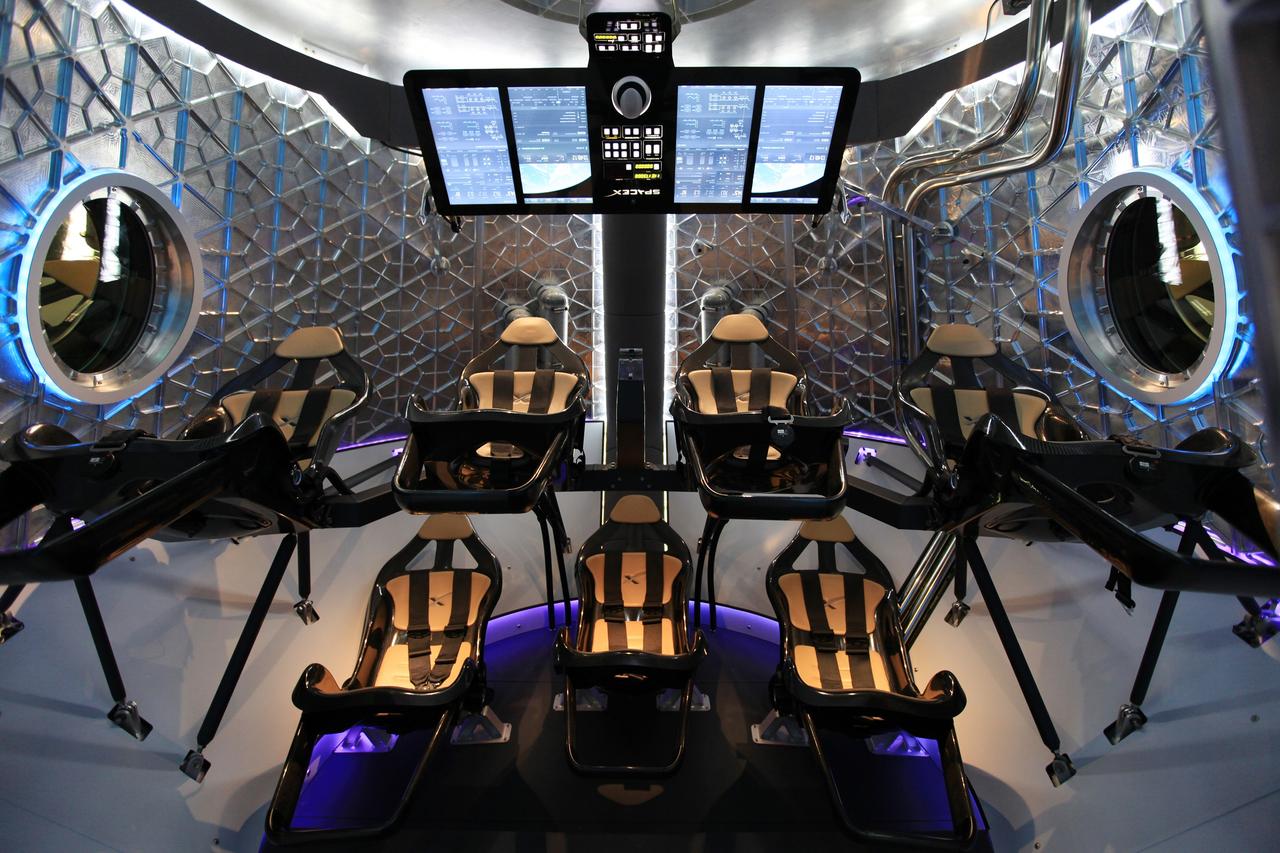
HAWTHORNE, Calif. - A look through the open hatch of the Dragon V2 reveals the layout and interior of the seven-crew capacity spacecraft. SpaceX unveiled the new spacecraft during a ceremony at its headquarters in Hawthorne, Calif. The Dragon V2 is designed to carry people into Earth's orbit and was developed in partnership with NASA's Commercial Crew Program under the Commercial Crew Integrated Capability agreement. SpaceX is one of NASA's commercial partners working to develop a new generation of U.S. spacecraft and rockets capable of transporting humans to and from Earth's orbit from American soil. Ultimately, NASA intends to use such commercial systems to fly U.S. astronauts to and from the International Space Station. Photo credit: NASA/Dimitri Gerondidakis
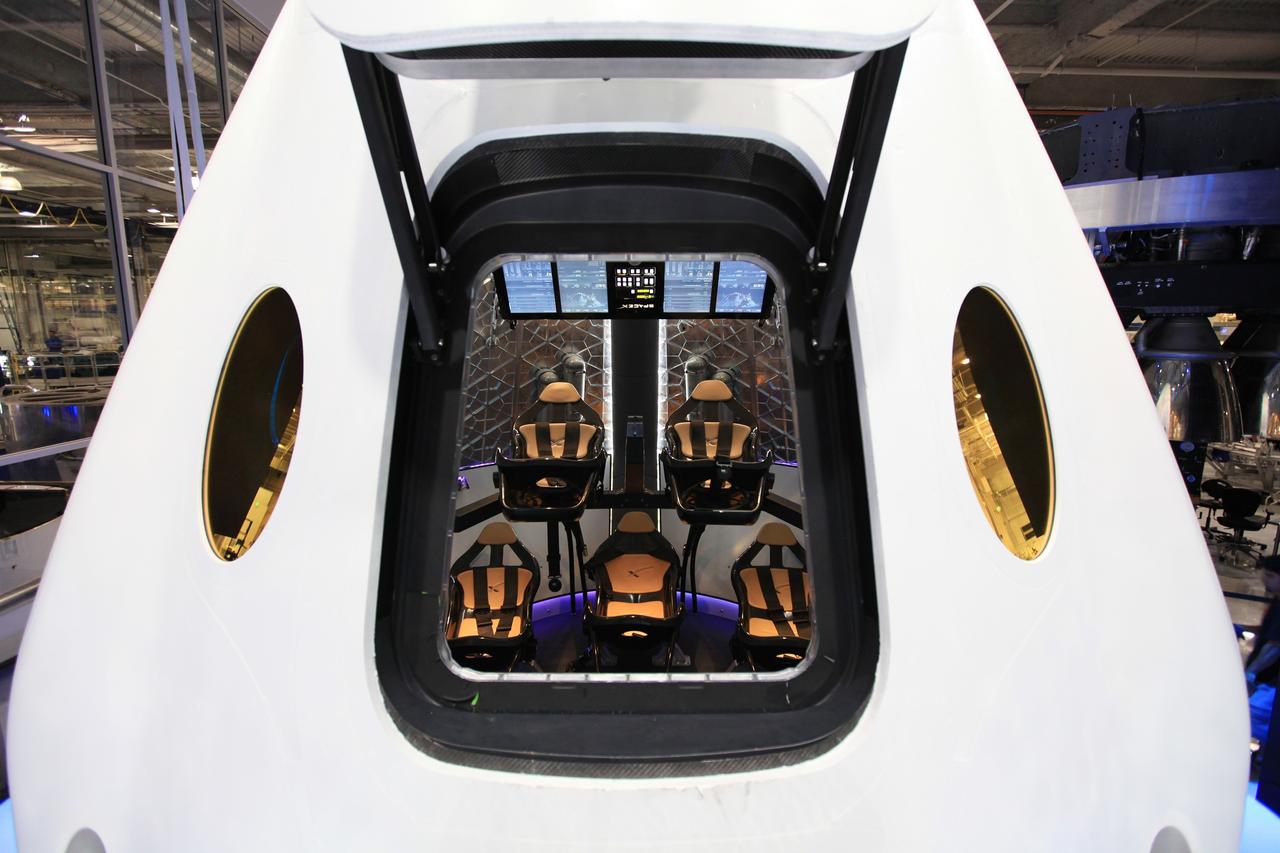
HAWTHORNE, Calif. - A look through the open hatch of the Dragon V2 reveals the layout and interior of the seven-crew capacity spacecraft. SpaceX unveiled the new spacecraft during a ceremony at its headquarters in Hawthorne, Calif. The Dragon V2 is designed to carry people into Earth's orbit and was developed in partnership with NASA's Commercial Crew Program under the Commercial Crew Integrated Capability agreement. SpaceX is one of NASA's commercial partners working to develop a new generation of U.S. spacecraft and rockets capable of transporting humans to and from Earth's orbit from American soil. Ultimately, NASA intends to use such commercial systems to fly U.S. astronauts to and from the International Space Station. Photo credit: NASA/Dimitri Gerondidakis
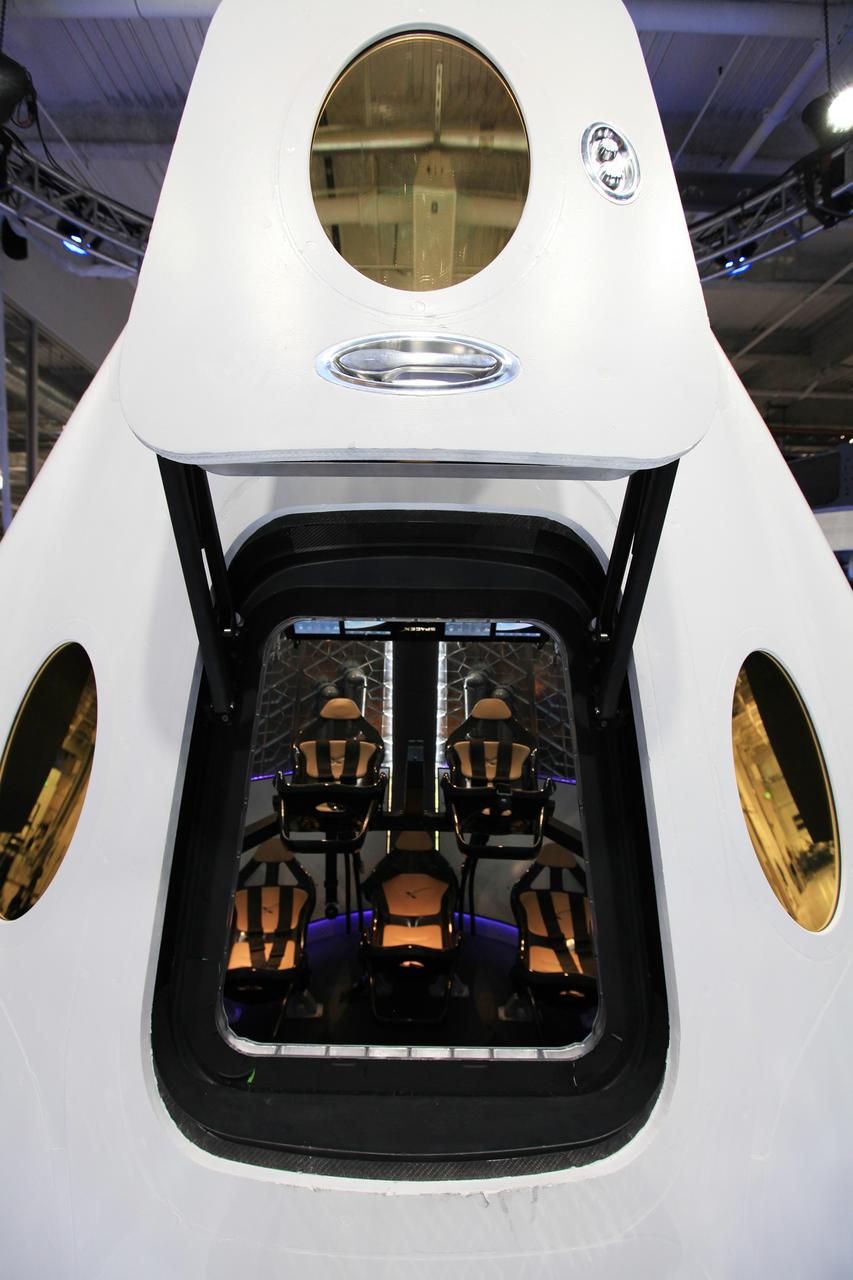
HAWTHORNE, Calif. - A look through the open hatch of the Dragon V2 reveals the layout and interior of the seven-crew capacity spacecraft. SpaceX unveiled the new spacecraft during a ceremony at its headquarters in Hawthorne, Calif. The Dragon V2 is designed to carry people into Earth's orbit and was developed in partnership with NASA's Commercial Crew Program under the Commercial Crew Integrated Capability agreement. SpaceX is one of NASA's commercial partners working to develop a new generation of U.S. spacecraft and rockets capable of transporting humans to and from Earth's orbit from American soil. Ultimately, NASA intends to use such commercial systems to fly U.S. astronauts to and from the International Space Station. Photo credit: NASA/Dimitri Gerondidakis
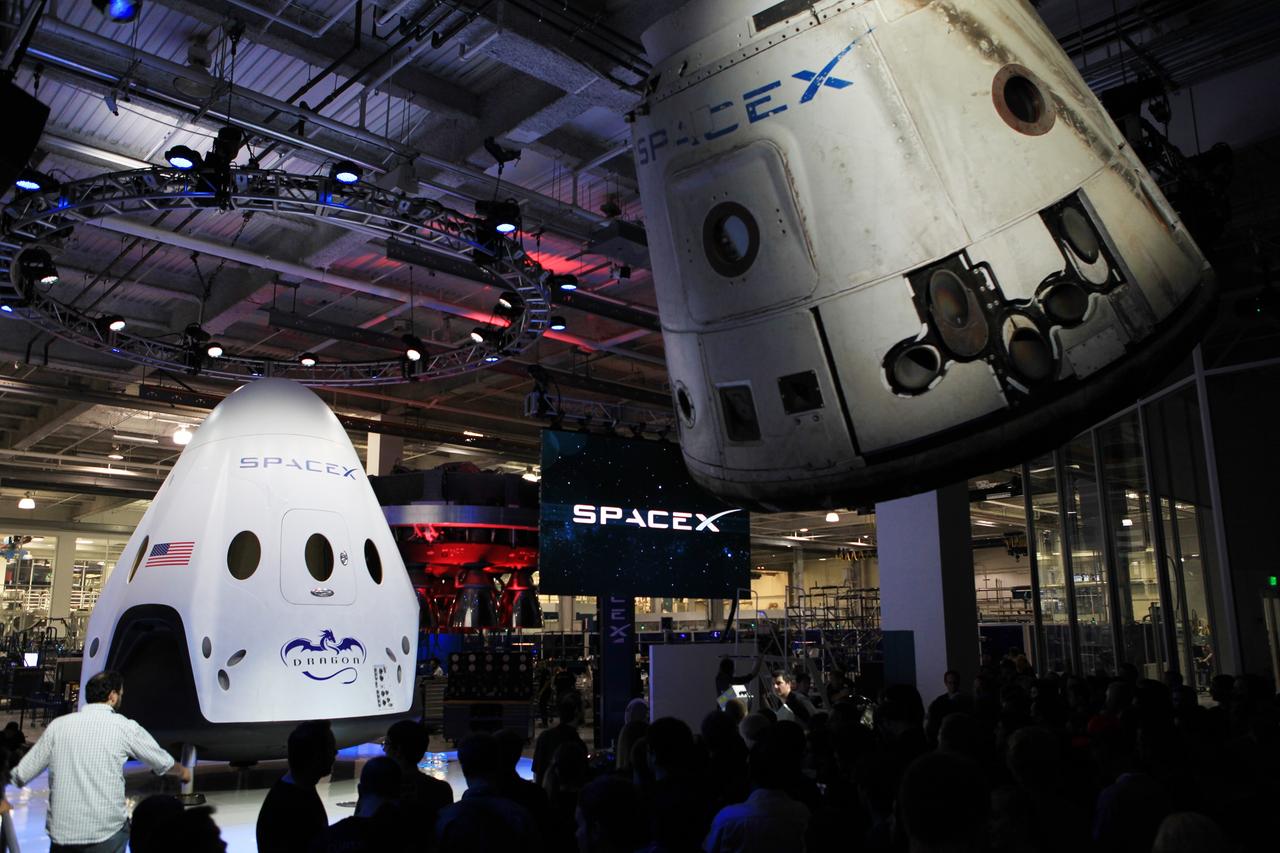
HAWTHORNE, Calif. - The Dragon V2 stands on a stage inside SpaceX headquarters in Hawthorne, Calif., near a suspended cargo-carrying Dragon spacecraft that flew a previous mission. The new spacecraft, the Dragon V2, is designed to carry people into Earth's orbit and was developed in partnership with NASA's Commercial Crew Program under the Commercial Crew Integrated Capability agreement. SpaceX is one of NASA's commercial partners working to develop a new generation of U.S. spacecraft and rockets capable of transporting humans to and from Earth's orbit from American soil. Ultimately, NASA intends to use such commercial systems to fly U.S. astronauts to and from the International Space Station. Photo credit: NASA/Dimitri Gerondidakis
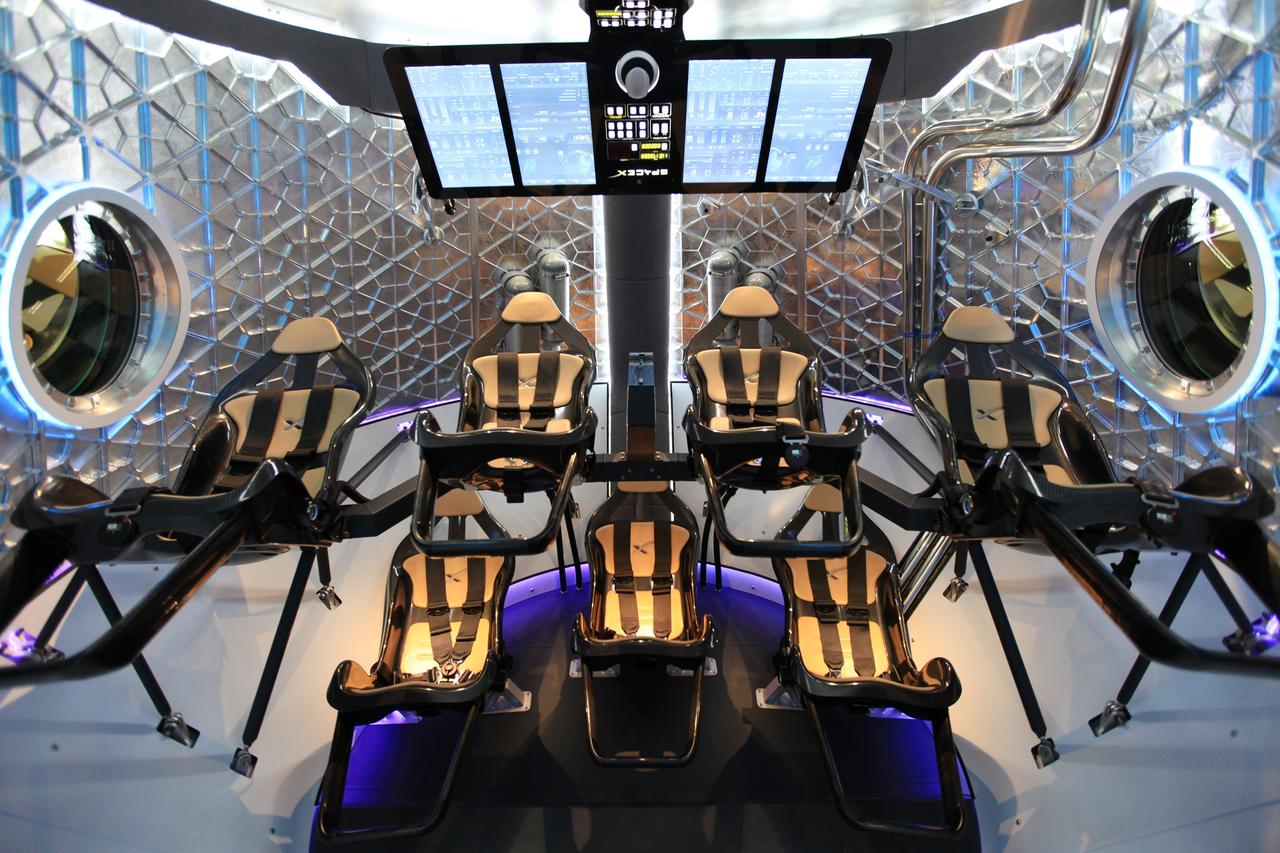
HAWTHORNE, Calif. - A look through the open hatch of the Dragon V2 reveals the layout and interior of the seven-crew capacity spacecraft. SpaceX unveiled the new spacecraft during a ceremony at its headquarters in Hawthorne, Calif. The Dragon V2 is designed to carry people into Earth's orbit and was developed in partnership with NASA's Commercial Crew Program under the Commercial Crew Integrated Capability agreement. SpaceX is one of NASA's commercial partners working to develop a new generation of U.S. spacecraft and rockets capable of transporting humans to and from Earth's orbit from American soil. Ultimately, NASA intends to use such commercial systems to fly U.S. astronauts to and from the International Space Station. Photo credit: NASA/Dimitri Gerondidakis
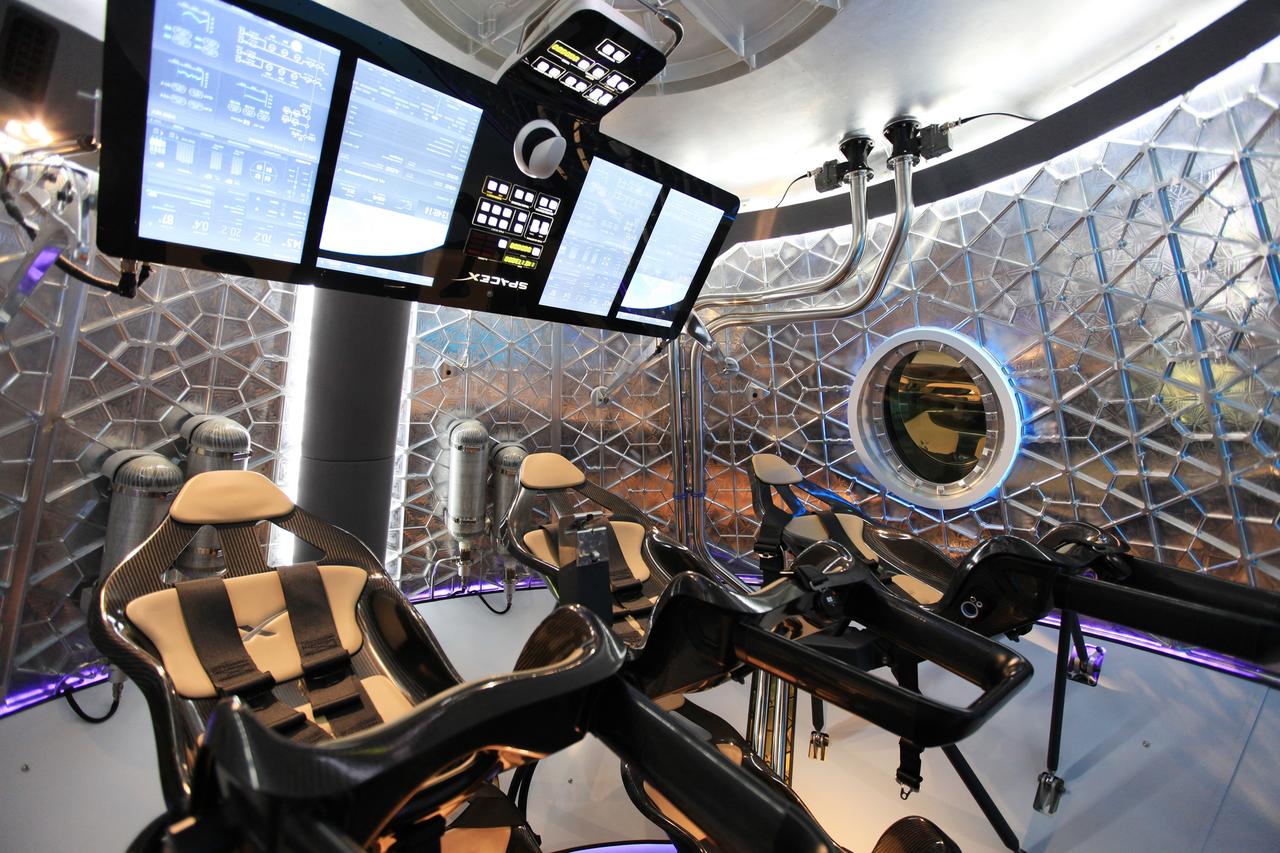
HAWTHORNE, Calif. - The Dragon V2 spacecraft's seating arrangement with the control panel swung up to allow crewmembers to get into their seats. Once the crew is in place, the control panel swings down and locks in launch position. SpaceX unveiled the new spacecraft during a ceremony at its headquarters in Hawthorne, Calif. The Dragon V2 is designed to carry people into Earth's orbit and was developed in partnership with NASA's Commercial Crew Program under the Commercial Crew Integrated Capability agreement. SpaceX is one of NASA's commercial partners working to develop a new generation of U.S. spacecraft and rockets capable of transporting humans to and from Earth's orbit from American soil. Ultimately, NASA intends to use such commercial systems to fly U.S. astronauts to and from the International Space Station. Photo credit: NASA/Dimitri Gerondidakis
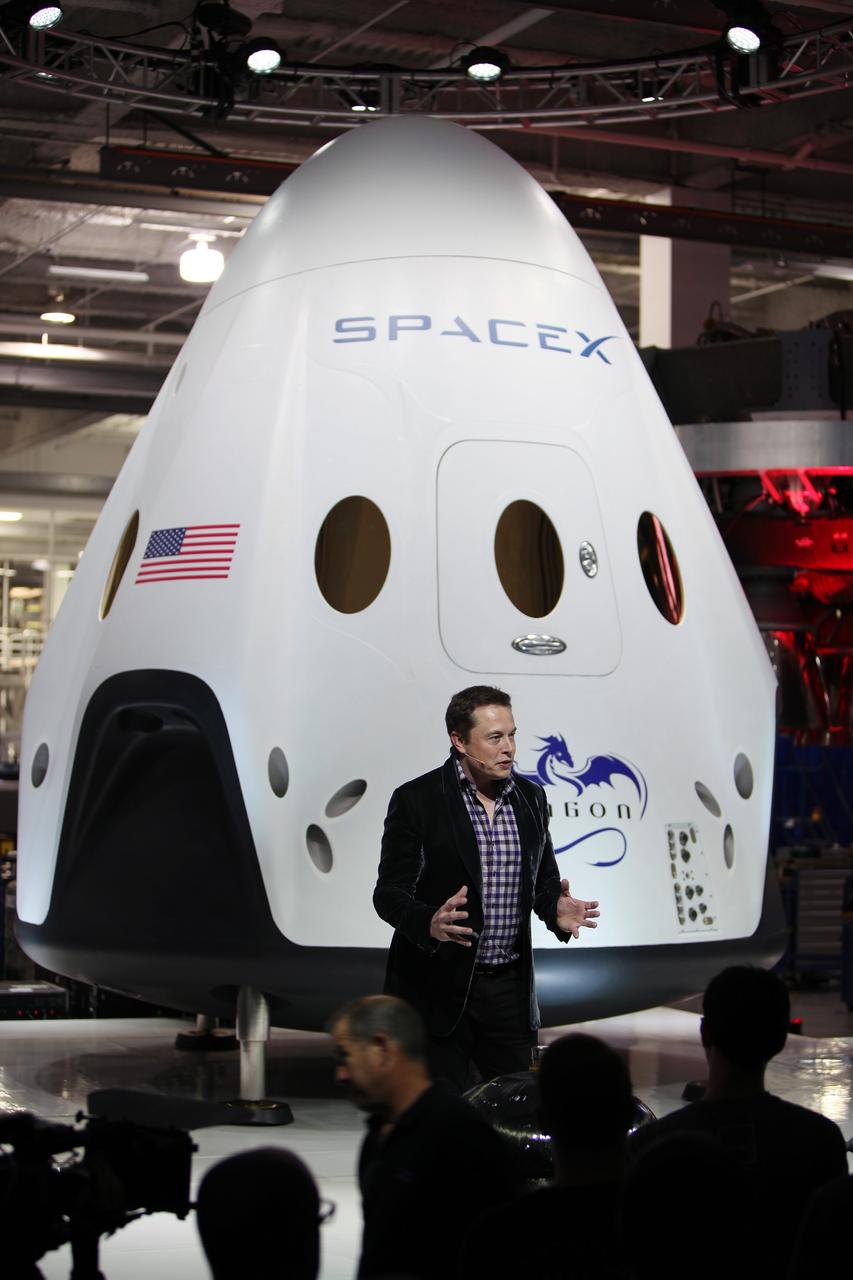
HAWTHORNE, Calif. - HAWTHORNE, Calif. - SpaceX CEO and founder Elon Musk unveils the Dragon V2 during a ceremony for the new spacecraft inside SpaceX headquarters in Hawthorne, Calif. The spacecraft is designed to carry people into Earth's orbit and was developed in partnership with NASA's Commercial Crew Program under the Commercial Crew Integrated Capability agreement. SpaceX is one of NASA's commercial partners working to develop a new generation of U.S. spacecraft and rockets capable of transporting humans to and from Earth's orbit from American soil. Ultimately, NASA intends to use such commercial systems to fly U.S. astronauts to and from the International Space Station. Photo credit: NASA/Dimitri Gerondidakis
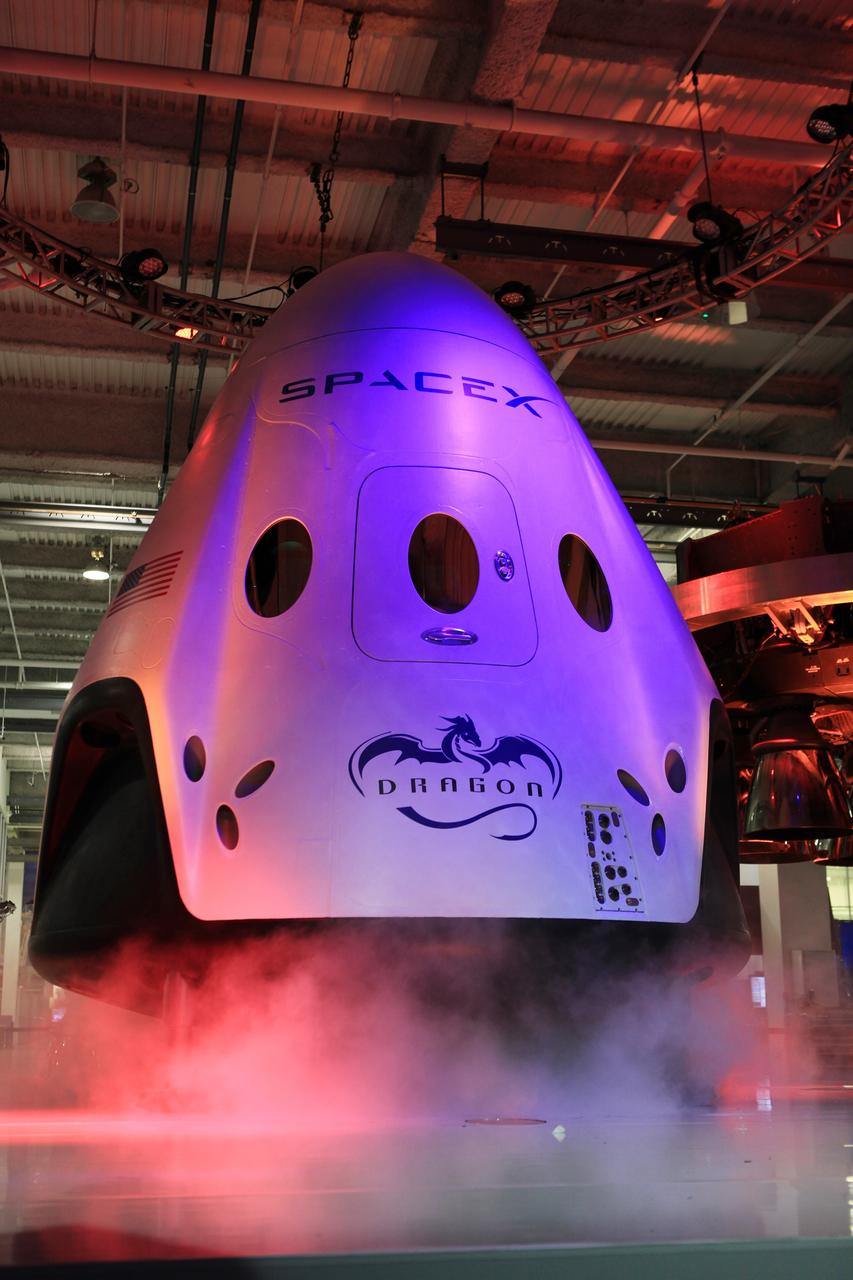
HAWTHORNE, Calif. - The Dragon V2 stands on a stage inside SpaceX headquarters in Hawthorne, Calif., during its unveiling. The spacecraft is designed to carry people into Earth's orbit and was developed in partnership with NASA's Commercial Crew Program under the Commercial Crew Integrated Capability agreement. SpaceX is one of NASA's commercial partners working to develop a new generation of U.S. spacecraft and rockets capable of transporting humans to and from Earth's orbit from American soil. Ultimately, NASA intends to use such commercial systems to fly U.S. astronauts to and from the International Space Station. Photo credit: NASA/Dimitri Gerondidakis
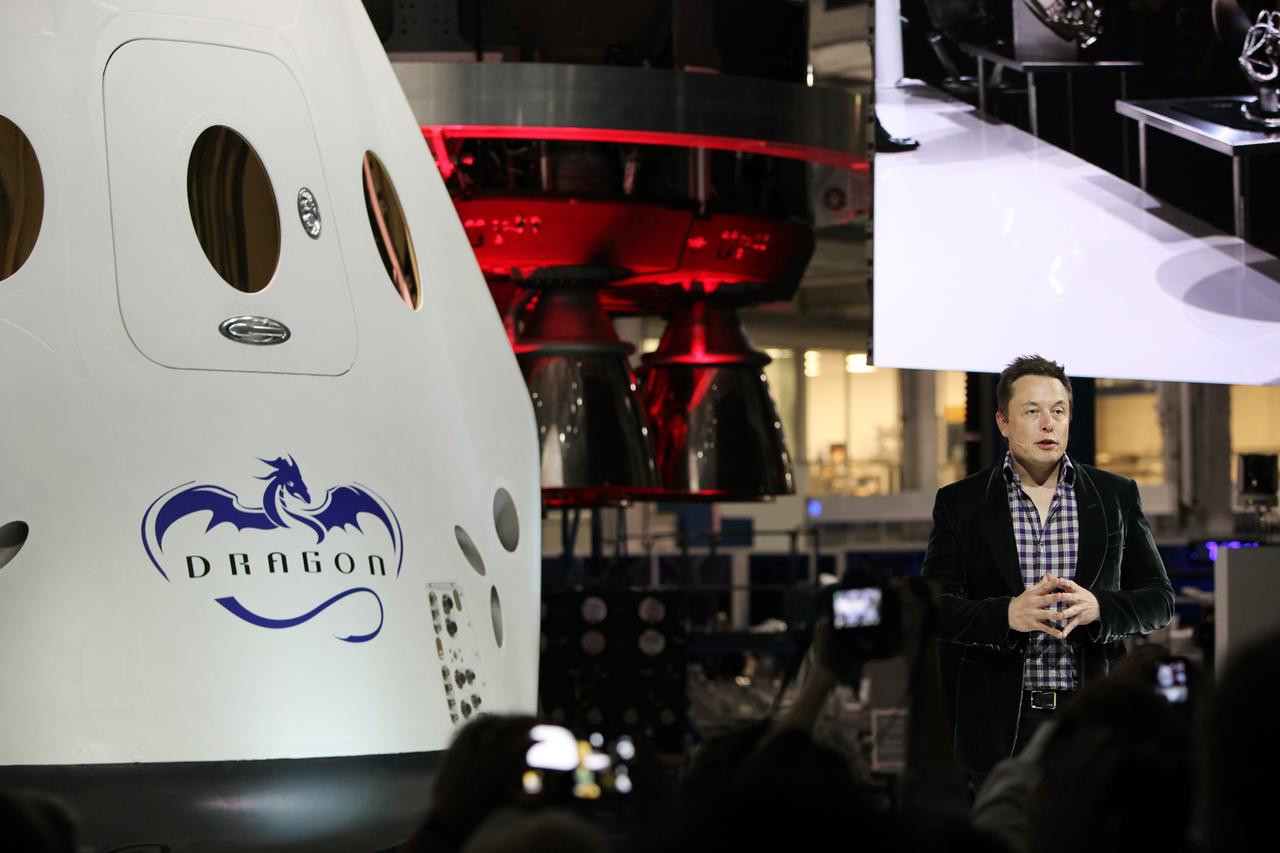
HAWTHORNE, Calif. - SpaceX CEO and founder Elon Musk discusses the Dragon V2 during an unveiling ceremony for the new spacecraft inside SpaceX headquarters in Hawthorne, Calif. The spacecraft is designed to carry people into Earth's orbit and was developed in partnership with NASA's Commercial Crew Program under the Commercial Crew Integrated Capability agreement. SpaceX is one of NASA's commercial partners working to develop a new generation of U.S. spacecraft and rockets capable of transporting humans to and from Earth's orbit from American soil. Ultimately, NASA intends to use such commercial systems to fly U.S. astronauts to and from the International Space Station. Photo credit: NASA/Dimitri Gerondidakis

HAWTHORNE, Calif. - The Dragon V2 stands on a stage inside SpaceX headquarters in Hawthorne, Calif., during its unveiling. The spacecraft is designed to carry people into Earth's orbit and was developed in partnership with NASA's Commercial Crew Program under the Commercial Crew Integrated Capability agreement. SpaceX is one of NASA's commercial partners working to develop a new generation of U.S. spacecraft and rockets capable of transporting humans to and from Earth's orbit from American soil. Ultimately, NASA intends to use such commercial systems to fly U.S. astronauts to and from the International Space Station. Photo credit: NASA/Dimitri Gerondidakis
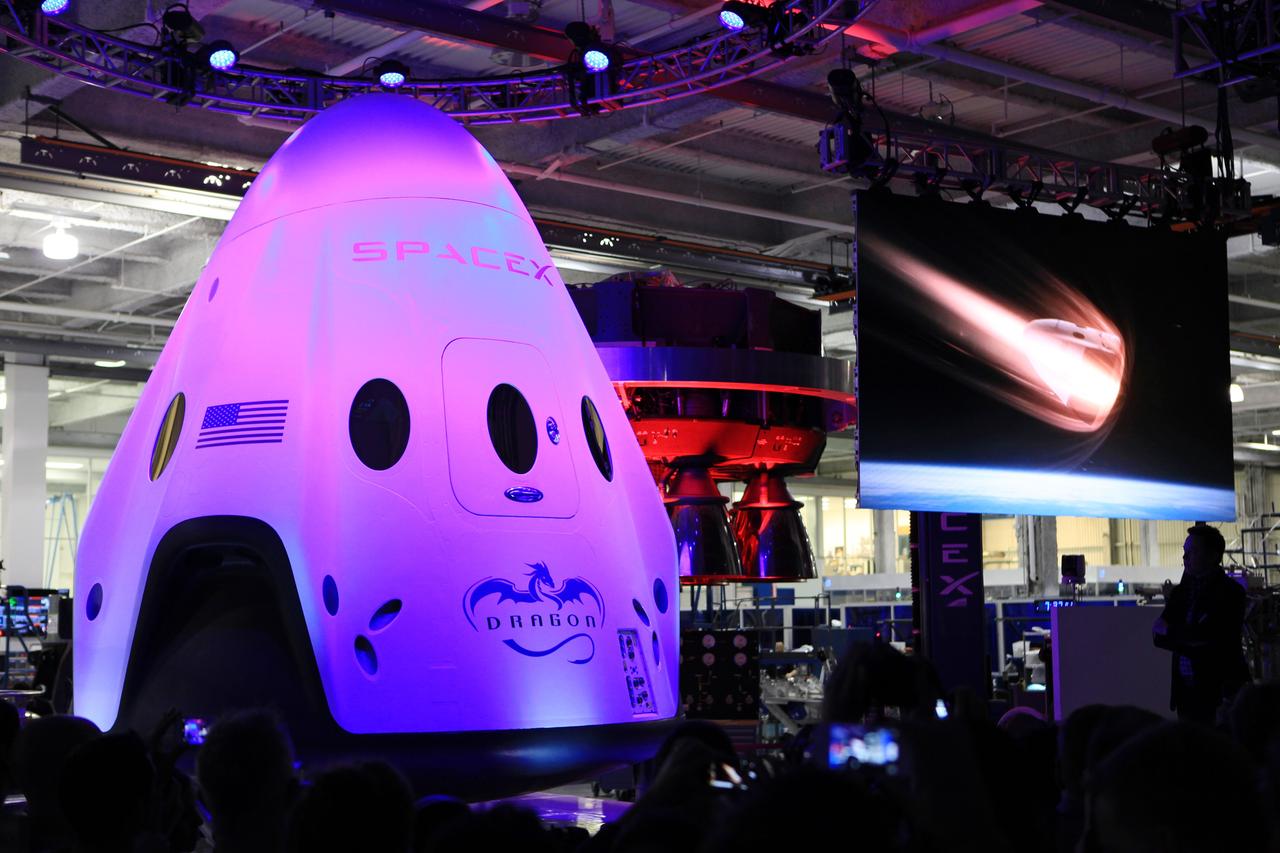
HAWTHORNE, Calif. - Animation showing the Dragon V2 spacecraft re-entering Earth's atmosphere plays beside the space during an unveiling ceremony inside SpaceX headquarters in Hawthorne, Calif. The spacecraft is designed to carry people into Earth's orbit and was developed in partnership with NASA's Commercial Crew Program under the Commercial Crew Integrated Capability agreement. SpaceX is one of NASA's commercial partners working to develop a new generation of U.S. spacecraft and rockets capable of transporting humans to and from Earth's orbit from American soil. Ultimately, NASA intends to use such commercial systems to fly U.S. astronauts to and from the International Space Station. Photo credit: NASA/Dimitri Gerondidakis
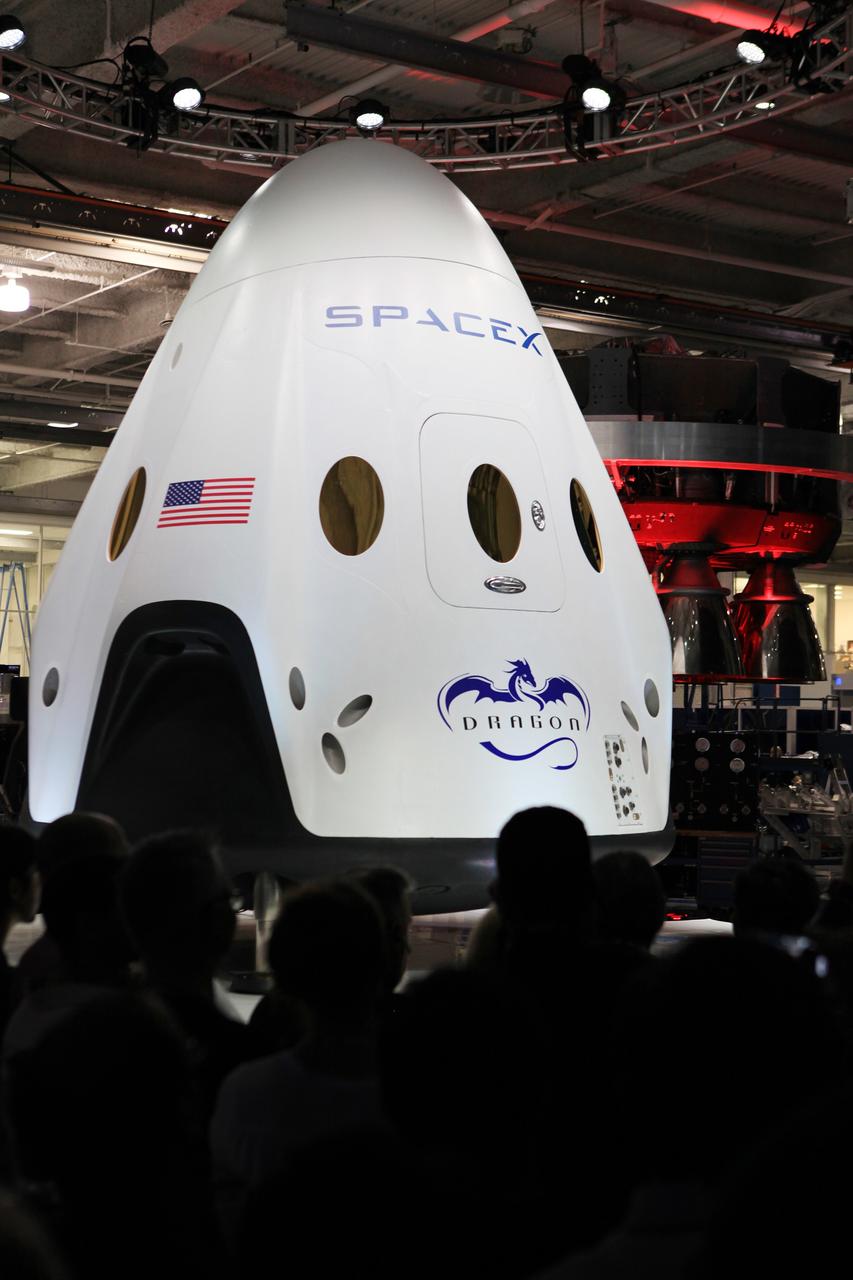
HAWTHORNE, Calif. - HAWTHORNE, Calif. - The Dragon V2 stands on a stage inside SpaceX headquarters in Hawthorne, Calif., during its unveiling ceremony. The spacecraft is designed to carry people into Earth's orbit and was developed in partnership with NASA's Commercial Crew Program under the Commercial Crew Integrated Capability agreement. SpaceX is one of NASA's commercial partners working to develop a new generation of U.S. spacecraft and rockets capable of transporting humans to and from Earth's orbit from American soil. Ultimately, NASA intends to use such commercial systems to fly U.S. astronauts to and from the International Space Station. Photo credit: NASA/Dimitri Gerondidakis

HAWTHORNE, Calif. - The Dragon V2 stands on a stage inside SpaceX headquarters in Hawthorne, Calif., prior to its unveiling. The spacecraft is designed to carry people into Earth's orbit and was developed in partnership with NASA's Commercial Crew Program under the Commercial Crew Integrated Capability agreement. SpaceX is one of NASA's commercial partners working to develop a new generation of U.S. spacecraft and rockets capable of transporting humans to and from Earth's orbit from American soil. Ultimately, NASA intends to use such commercial systems to fly U.S. astronauts to and from the International Space Station. Photo credit: NASA/Dimitri Gerondidakis
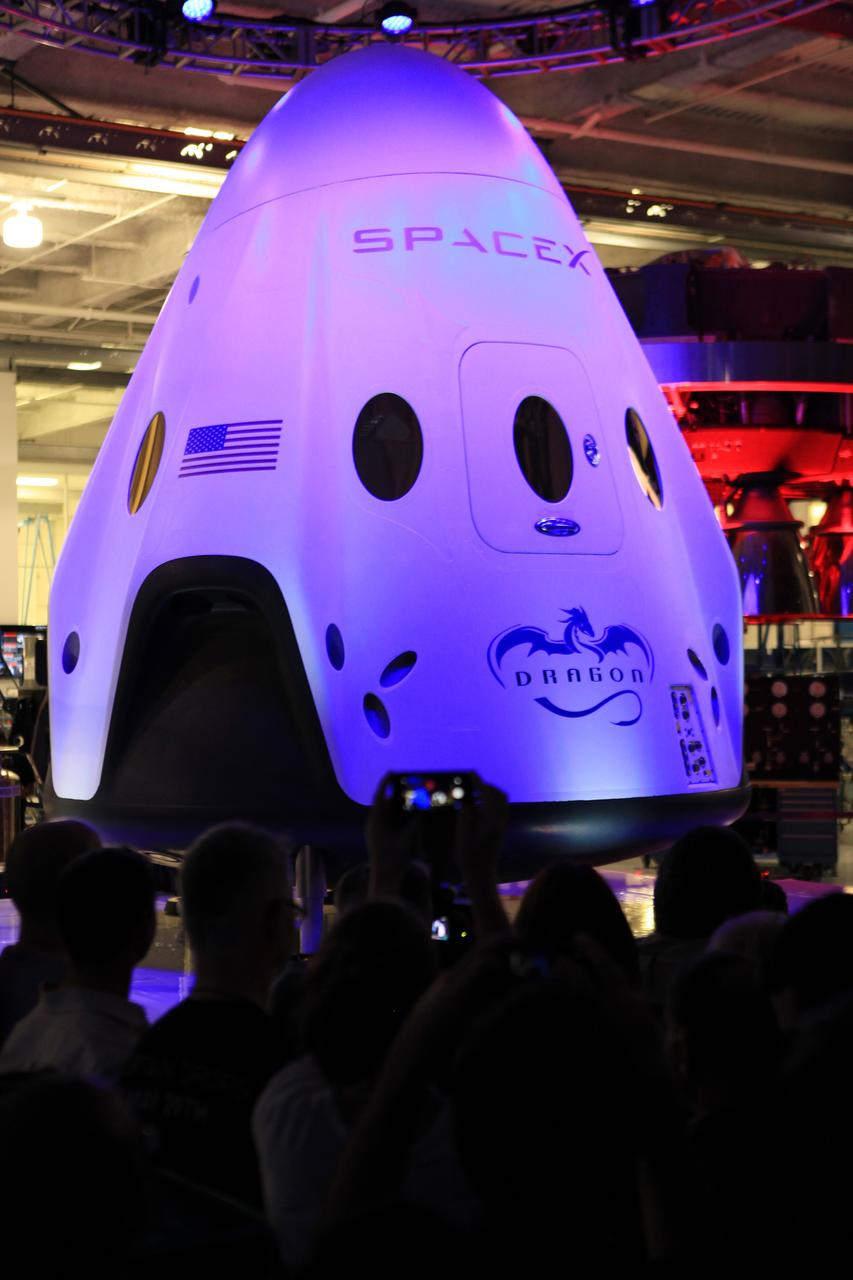
HAWTHORNE, Calif. - The Dragon V2 stands on a stage inside SpaceX headquarters in Hawthorne, Calif., during its unveiling ceremony. The spacecraft is designed to carry people into Earth's orbit and was developed in partnership with NASA's Commercial Crew Program under the Commercial Crew Integrated Capability agreement. SpaceX is one of NASA's commercial partners working to develop a new generation of U.S. spacecraft and rockets capable of transporting humans to and from Earth's orbit from American soil. Ultimately, NASA intends to use such commercial systems to fly U.S. astronauts to and from the International Space Station. Photo credit: NASA/Dimitri Gerondidakis
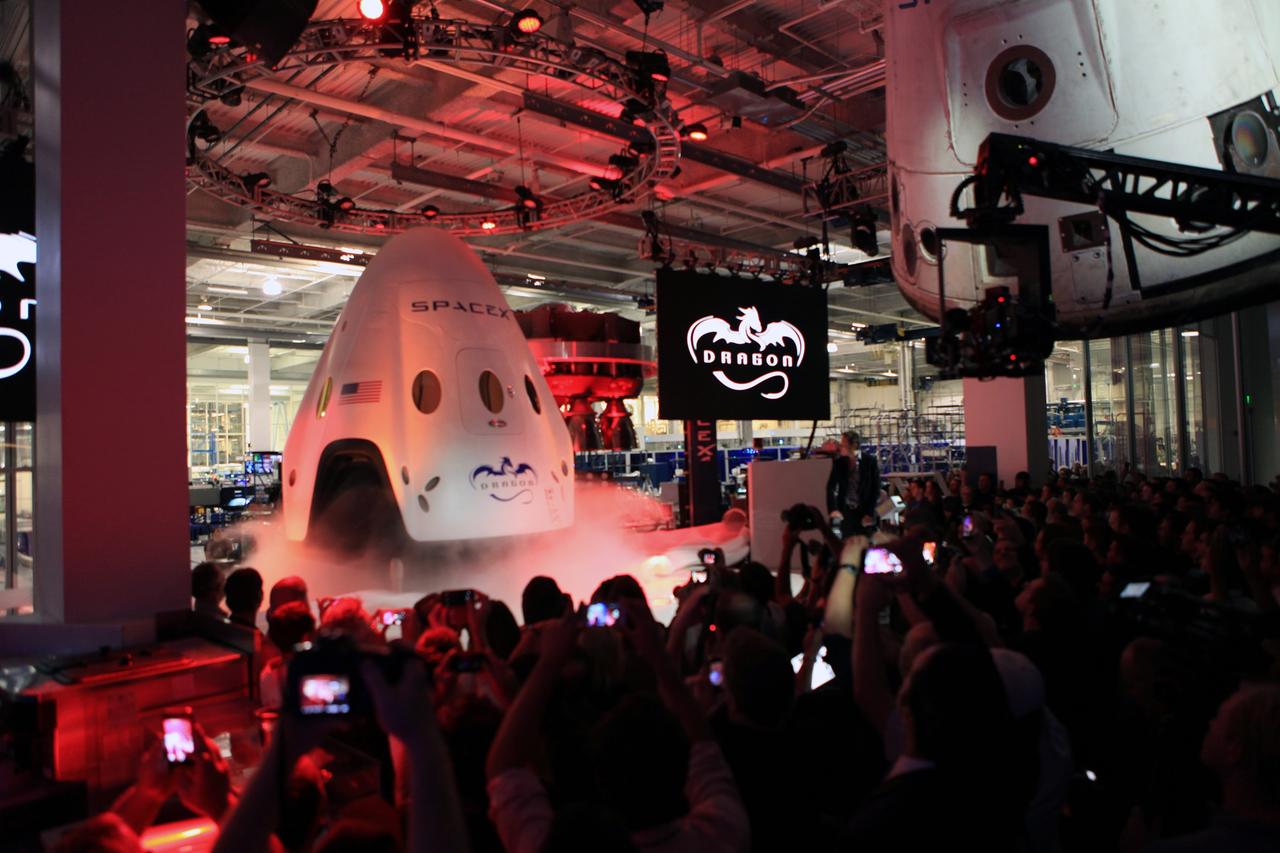
HAWTHORNE, Calif. - SpaceX CEO and founder Elon Musk unveils the Dragon V2 inside SpaceX headquarters in Hawthorne, Calif. The spacecraft is designed to carry people into Earth's orbit and was developed in partnership with NASA's Commercial Crew Program under the Commercial Crew Integrated Capability agreement. SpaceX is one of NASA's commercial partners working to develop a new generation of U.S. spacecraft and rockets capable of transporting humans to and from Earth's orbit from American soil. Ultimately, NASA intends to use such commercial systems to fly U.S. astronauts to and from the International Space Station. Photo credit: NASA/Dimitri Gerondidakis
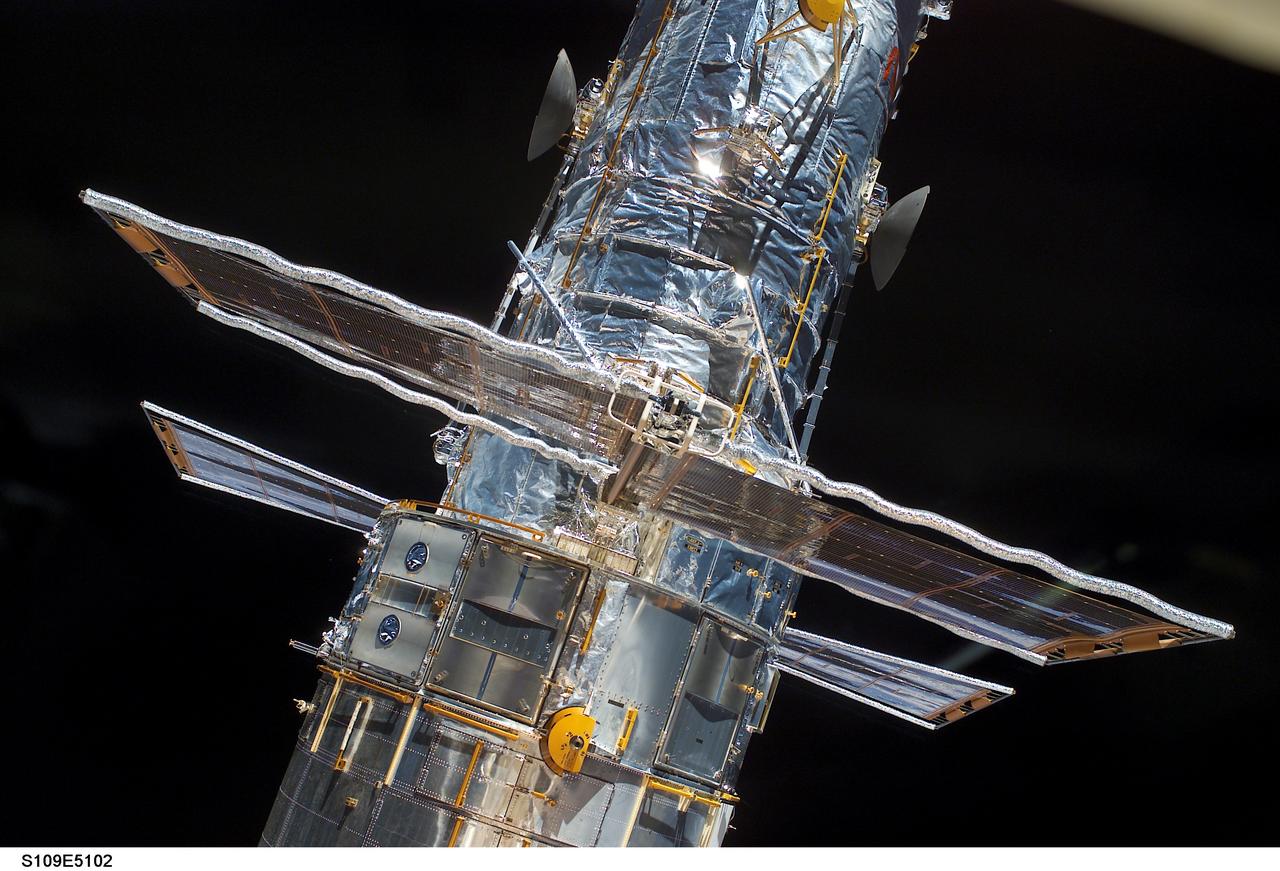
STS109-E-5102 (3 March 2002) --- The Hubble Space Telescope is seen in the cargo bay of the Space Shuttle Columbia. Each present set of solar array panels will be replaced during one of the space walks planned for the coming week. The crew aimed various cameras, including the digital still camera used for this frame, out the shuttle's aft flight deck windows to take a series of survey type photos, the first close-up images of the telescope since December of 1999.
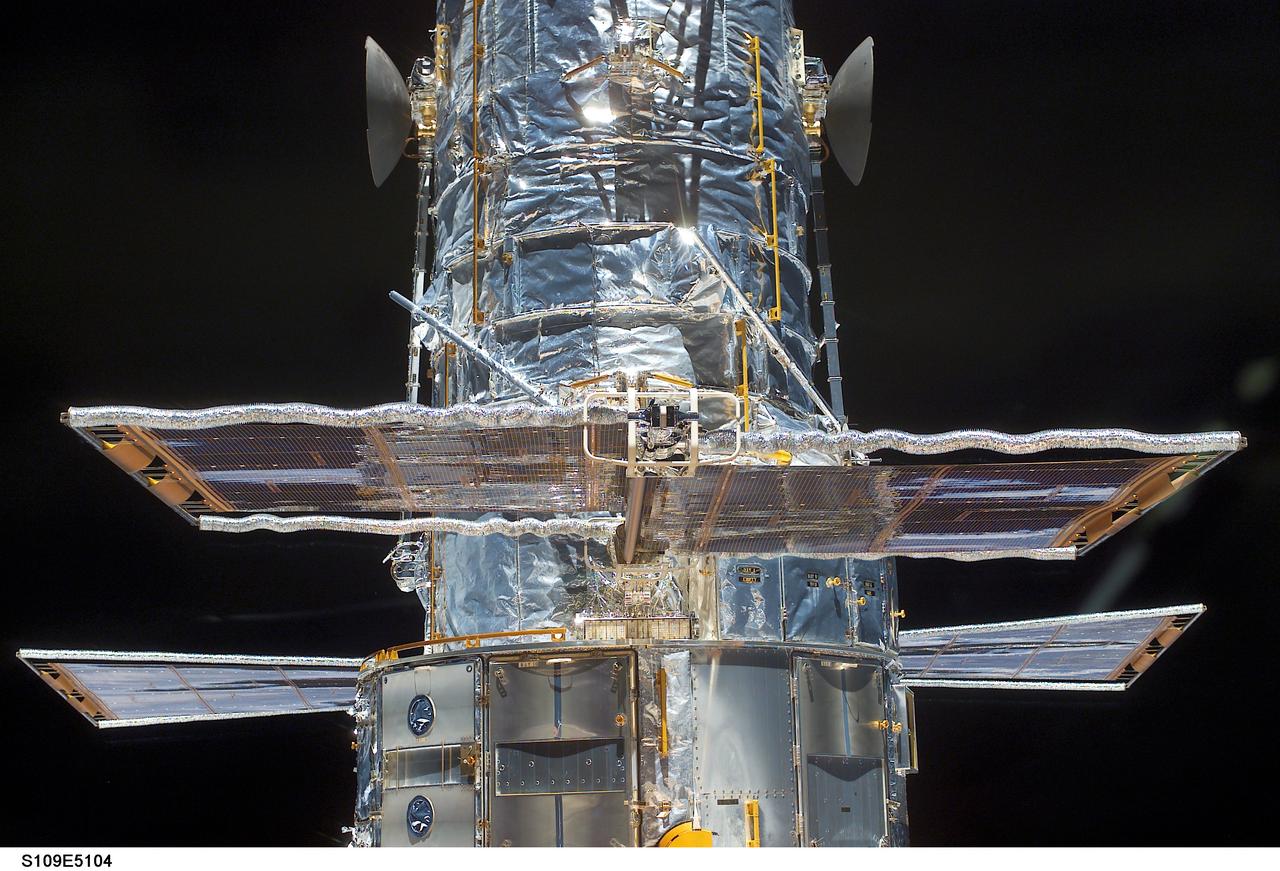
STS109-E-5104 (3 March 2002) --- The Hubble Space Telescope is seen in the cargo bay of the Space Shuttle Columbia. Each present set of solar array panels will be replaced during one of the space walks planned for the coming week. The crew aimed various cameras, including the digital still camera used for this frame, out the shuttle's aft flight deck windows to take a series of survey type photos, the first close-up images of the telescope since December of 1999.
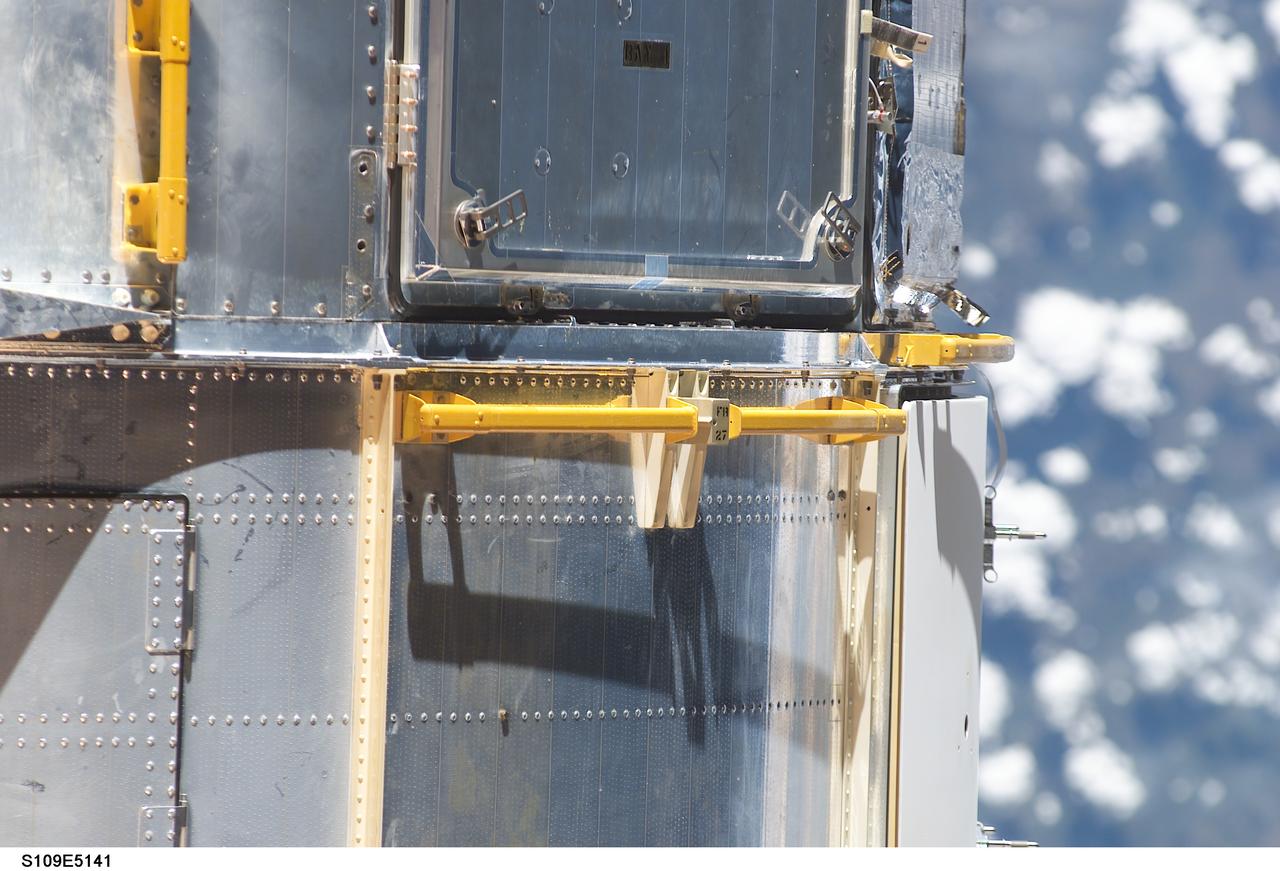
STS109-E-5141 (3 March 2002) --- Astronauts will find these handrails on the Hubble Space Telescope very helpful during a series of scheduled space walks throughout the coming week. STS-109 crew members used a digital still camera, as well as other cameras, to survey and document various areas on the giant telescope. This mission marks the fourth shuttle visit to the Hubble since its deployment in April of 1990.
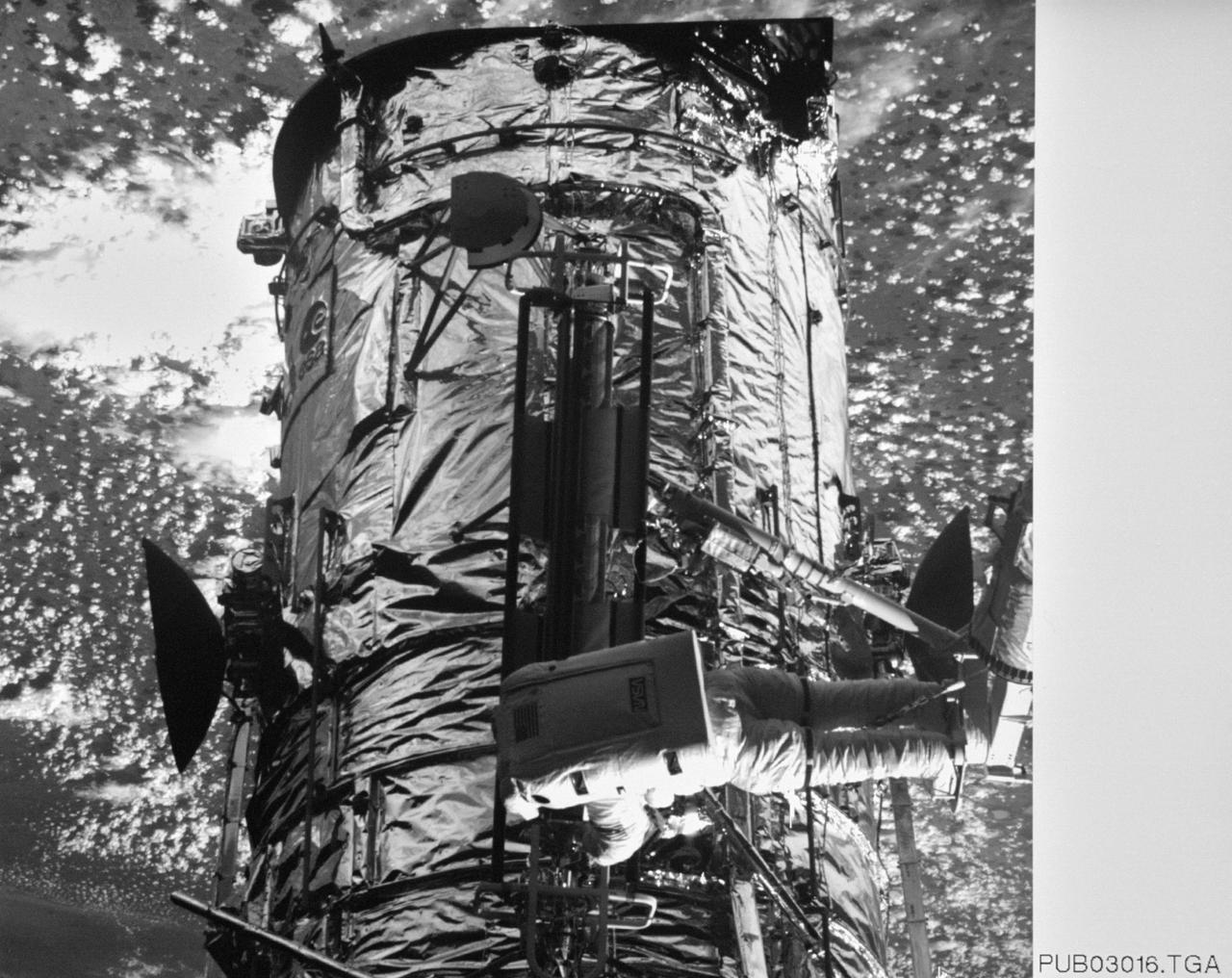
S61-E-011 (5 Dec 1993) --- This view of astronaut Kathryn C. Thornton working on the Hubble Space Telescope (HST) was photographed with an Electronic Still Camera (ESC), and down linked to ground controllers soon afterward. Thornton, anchored to the end of the Remote Manipulator System (RMS) arm, is installing the +V2 Solar Array Panel as a replacement for the original one removed earlier. Electronic still photography is a relatively new technology which provides the means for a handheld camera to electronically capture and digitize an image with resolution approaching film quality. The electronic still camera has flown as an experiment on several other shuttle missions.

S61-E-012 (5 Dec 1993) --- This view of astronauts Kathryn C. Thornton (top) and Thomas D. Akers working on the Hubble Space Telescope (HST) was photographed with an Electronic Still Camera (ESC), and down linked to ground controllers soon afterward. Thornton, anchored to the end of the Remote Manipulator System (RMS) arm, is teaming with Akers to install the +V2 Solar Array Panel as a replacement for the original one removed earlier. Akers uses tethers and a foot restraint to remain in position for the task. Electronic still photography is a relatively new technology which provides the means for a handheld camera to electronically capture and digitize an image with resolution approaching film quality. The electronic still camera has flown as an experiment on several other shuttle missions.

S61-E-014 (5 Dec 1993) --- This view of astronauts Kathryn C. Thornton (bottom) and Thomas D. Akers working on the Hubble Space Telescope (HST) was photographed with an Electronic Still Camera (ESC), and down linked to ground controllers soon afterward. Thornton, anchored to the end of the Remote Manipulator System (RMS) arm, is teaming with Akers to install the +V2 Solar Array Panel as a replacement for the original one removed earlier. Akers uses tethers and a foot restraint to remain in position for the task. Electronic still photography is a relatively new technology which provides the means for a handheld camera to electronically capture and digitize an image with resolution approaching film quality. The electronic still camera has flown as an experiment on several other shuttle missions.