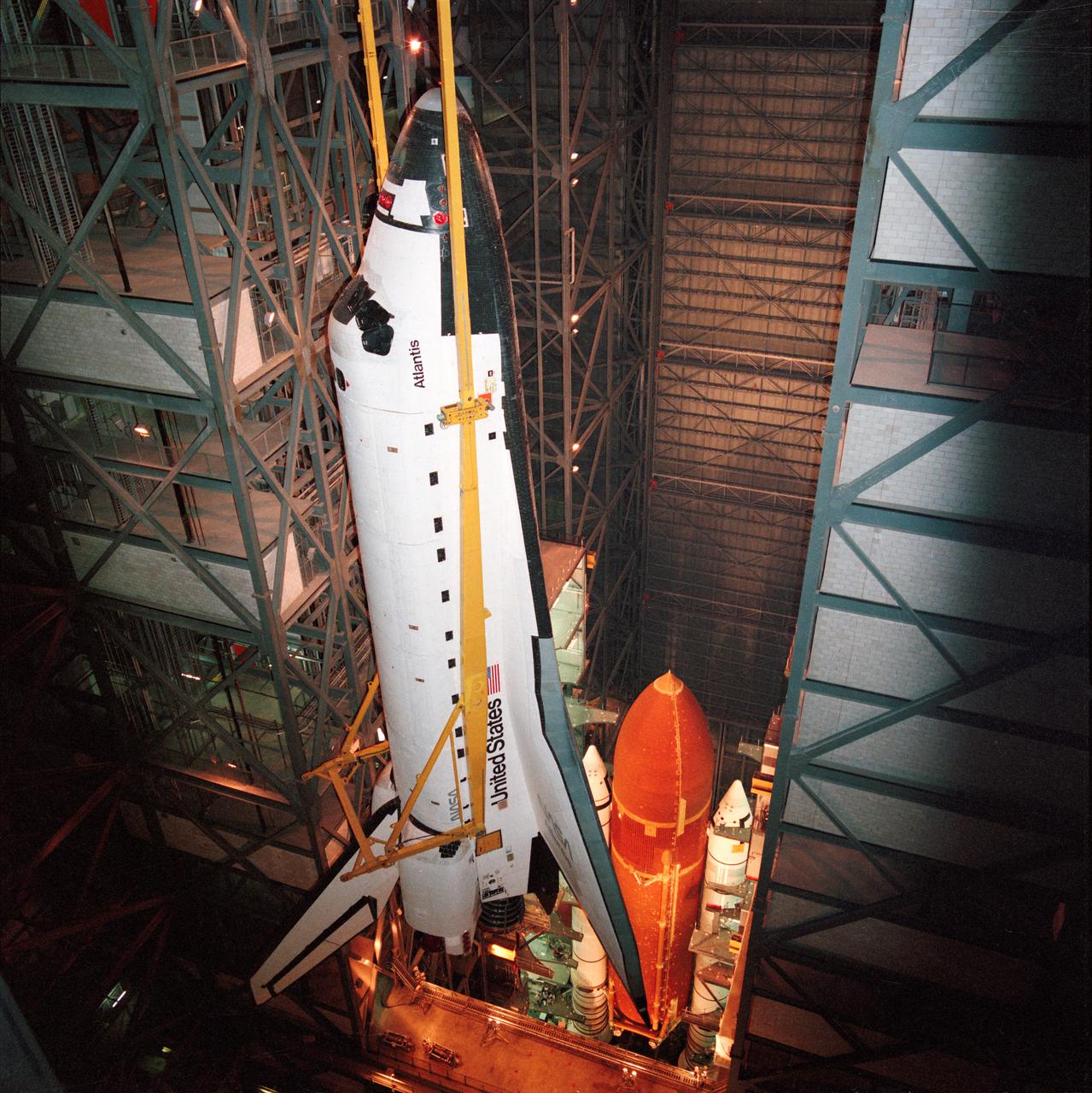
STS-27 Atlantis, Orbiter Vehicle (OV) 104, is suspended via overhead crane, attached at four points, in the Kennedy Space Center (KSC) Vehicle Assembly Building (VAB). Below OV-104 on the mobile launcher platform are the external tank (ET) and solid rocket boosters (SRBs). During ET/SRB mating operations, OV-104 will be mounted atop the ET.
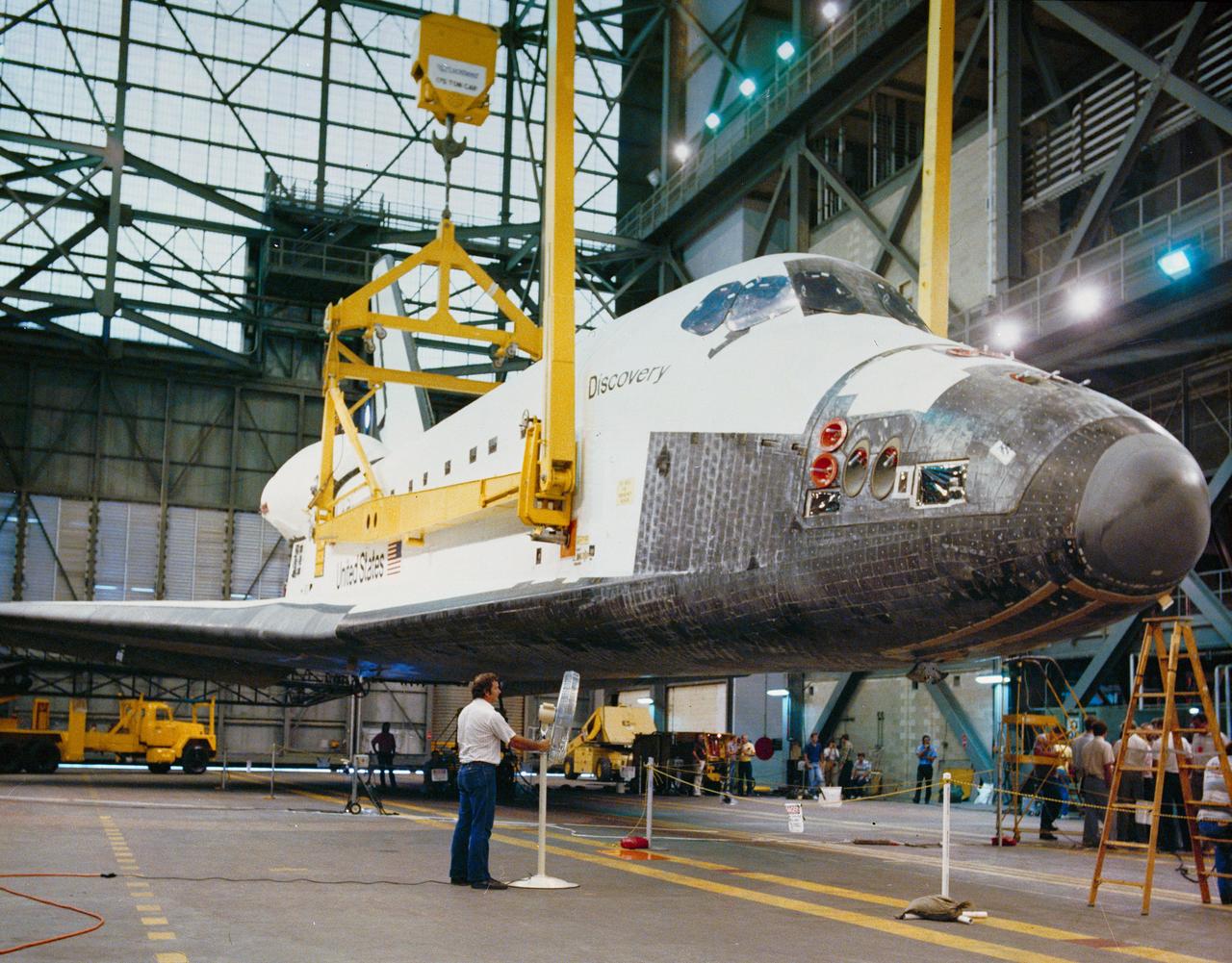
S88-41541 (7 July 1988) --- STS-26 Discovery, Orbiter Vehicle (OV) 103, is suspended by overhead crane and large frame attached to vehicle at four points. A ground-level view shows OV-103 during operations to accomplish its mating to two solid rocket boosters (SRBs) and an external fuel tank (ET) in the vehicle assembly building (VAB) at the Kennedy Space Center (KSC). From this step OV-103 will be lifted vertically and hoisted high inside the VAB for mating with the already connected ET and SRBs. In less than two weeks, the combined components will be rolled to Pad 39B atop a mobile launch platform.
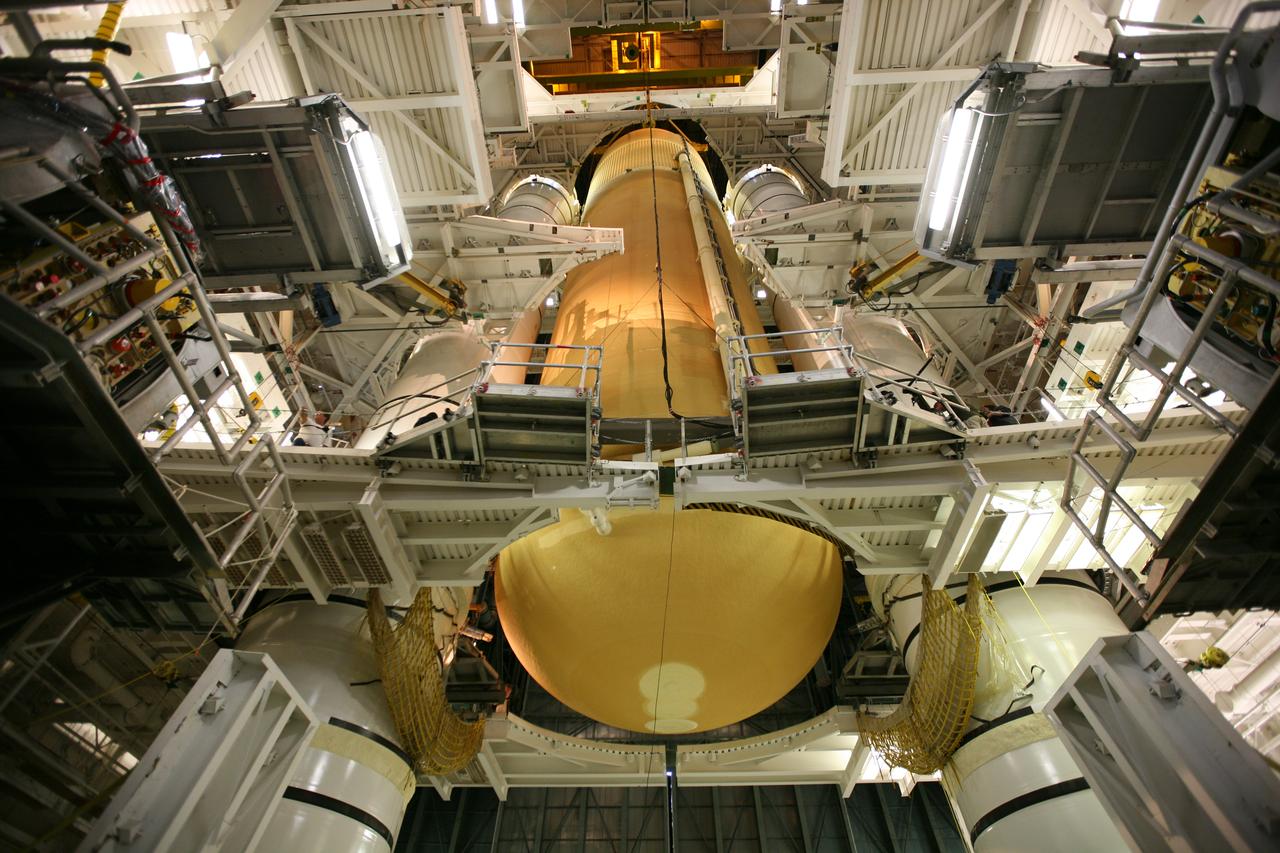
STS-131 ET LIFT & MATE TO SRB'S IN VAB
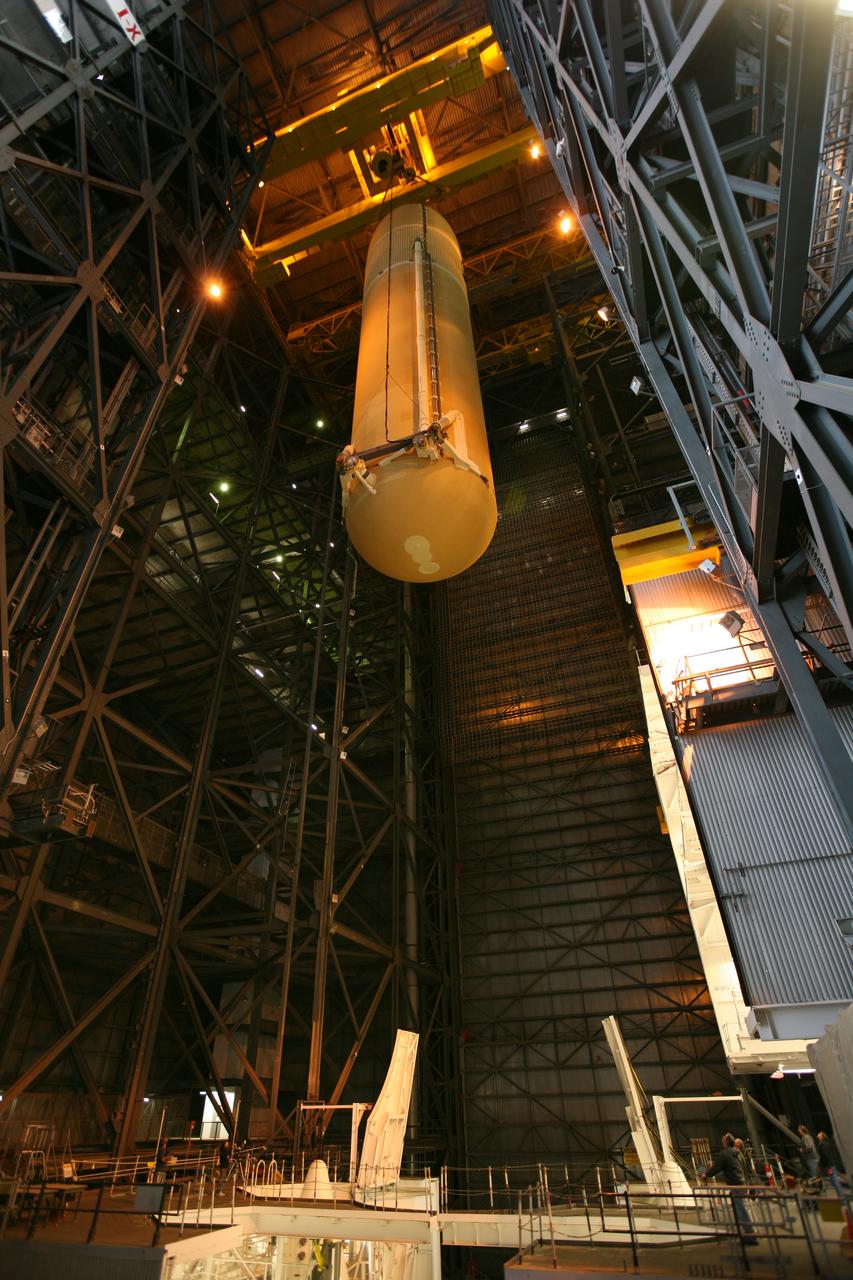
STS-131 ET LIFT & MATE TO SRB'S IN VAB
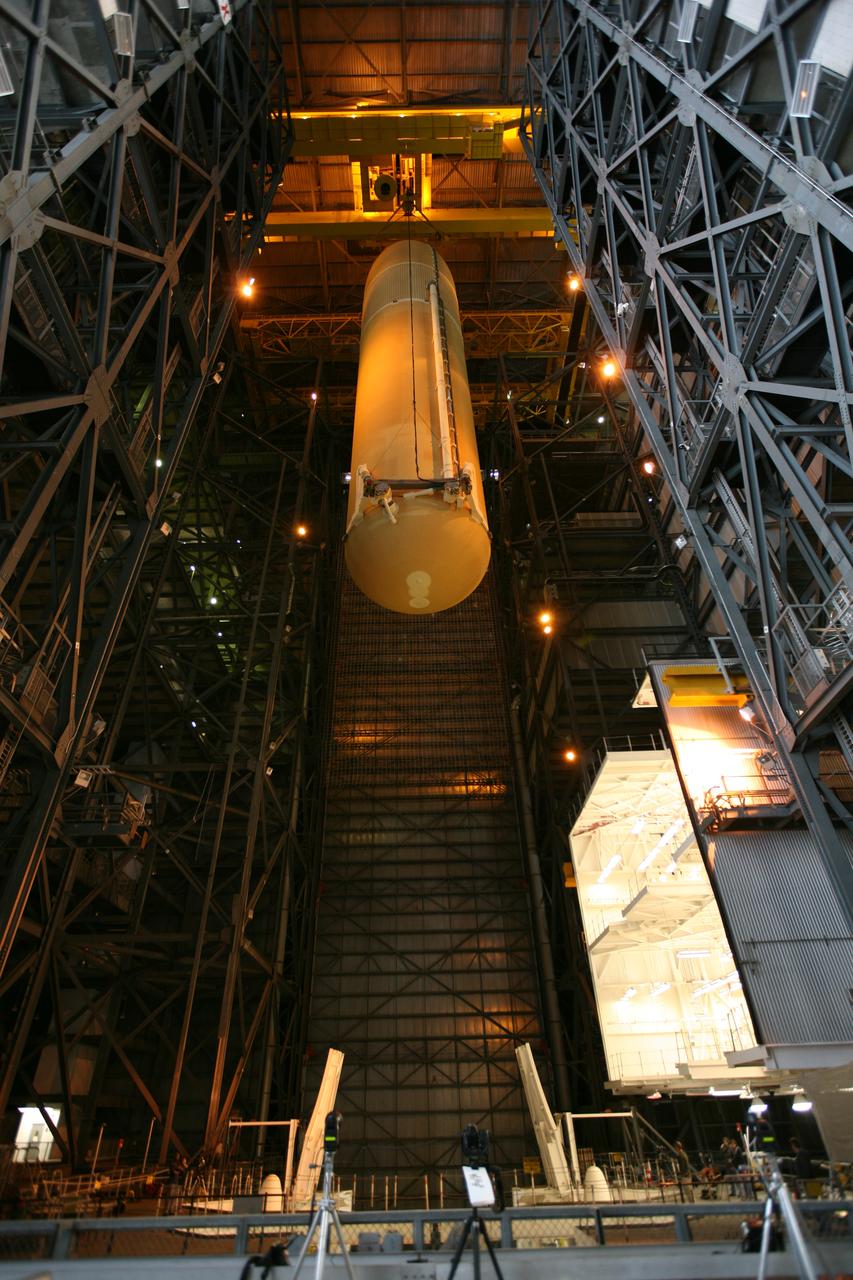
STS-131 ET LIFT & MATE TO SRB'S IN VAB
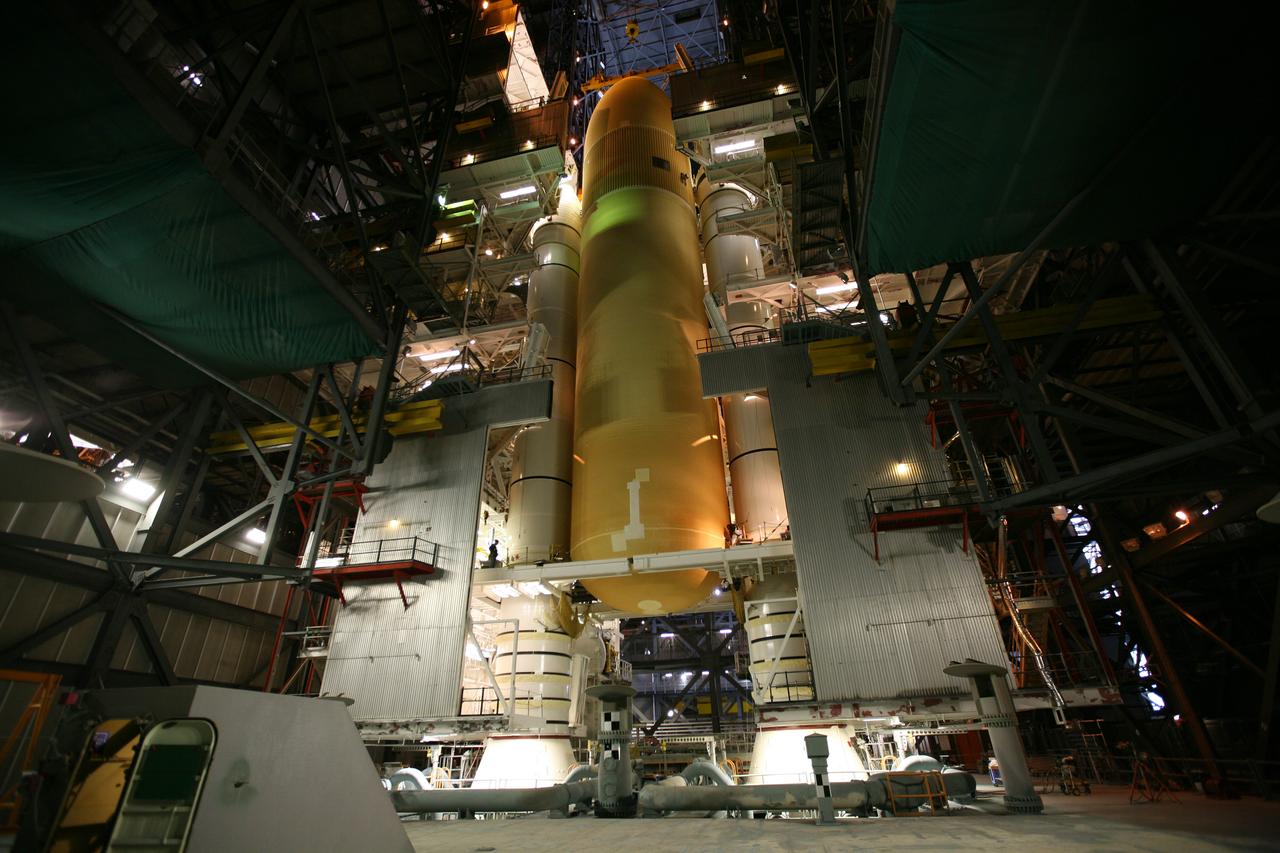
STS-131 ET LIFT & MATE TO SRB'S IN VAB
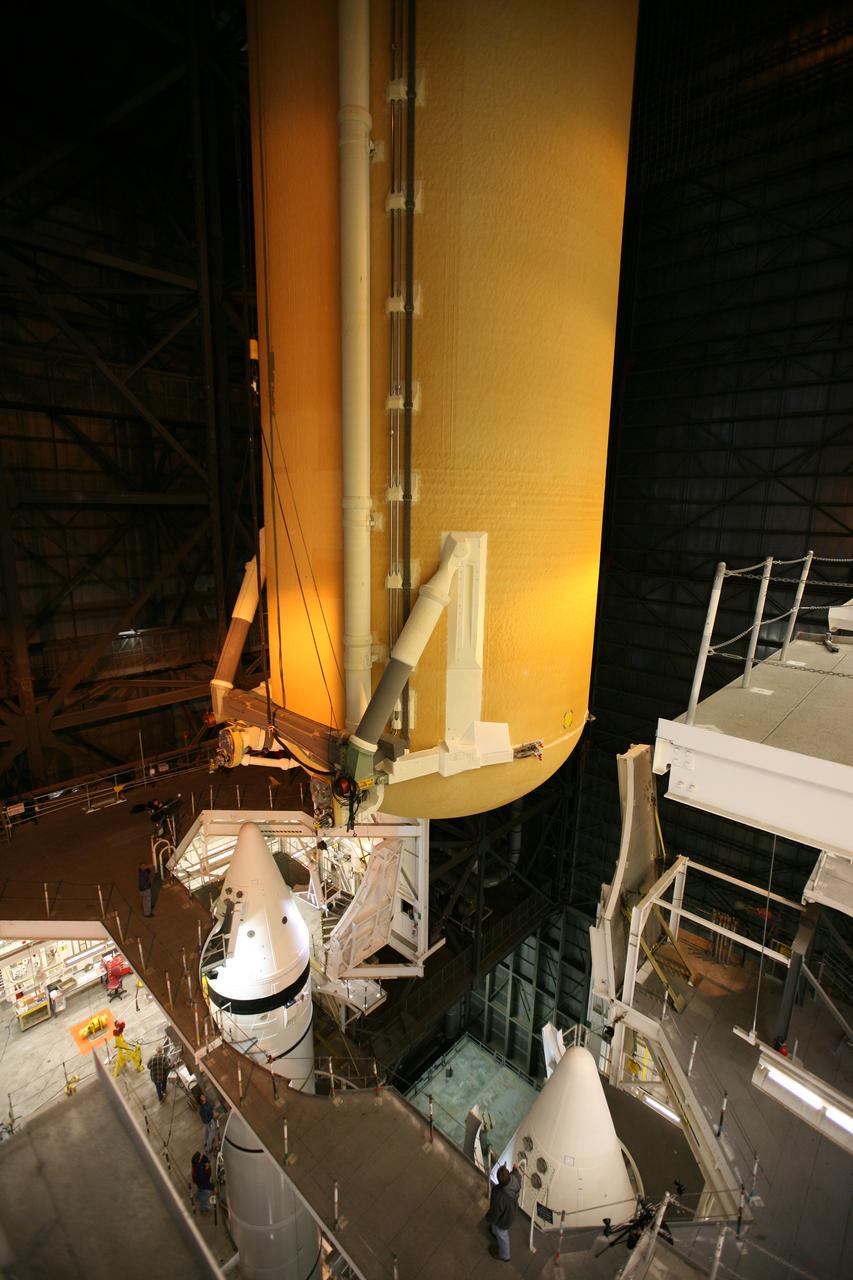
STS-131 ET LIFT & MATE TO SRB'S IN VAB
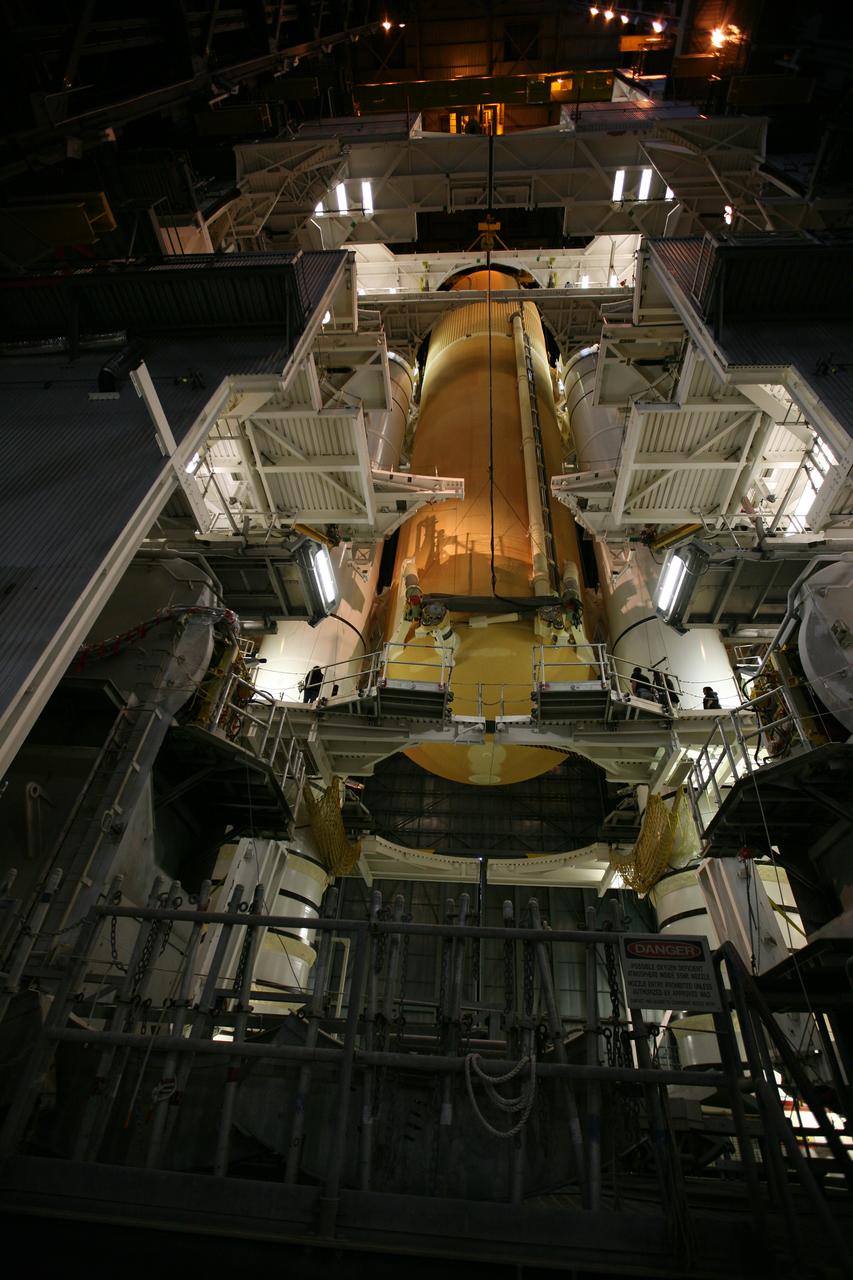
STS-131 ET LIFT & MATE TO SRB'S IN VAB
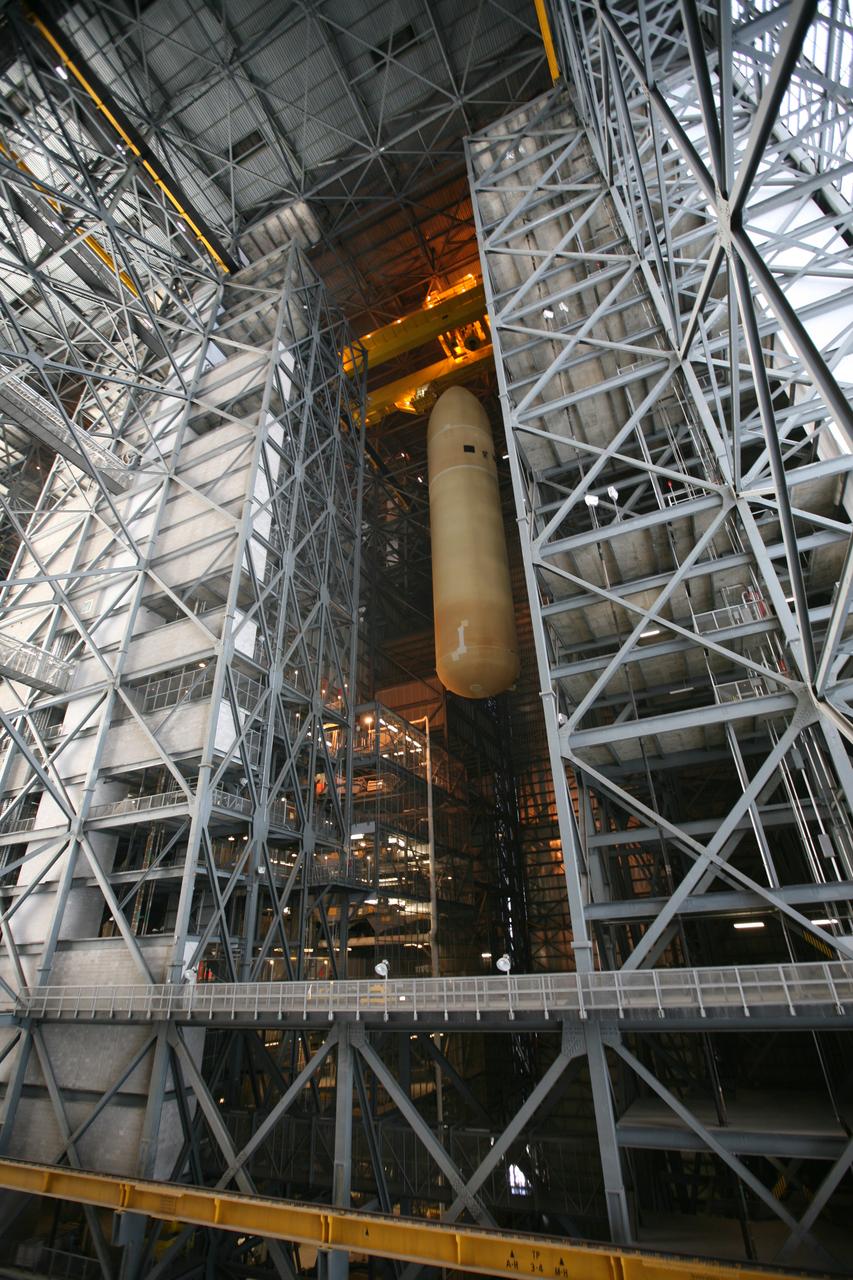
STS-131 ET LIFT & MATE TO SRB'S IN VAB
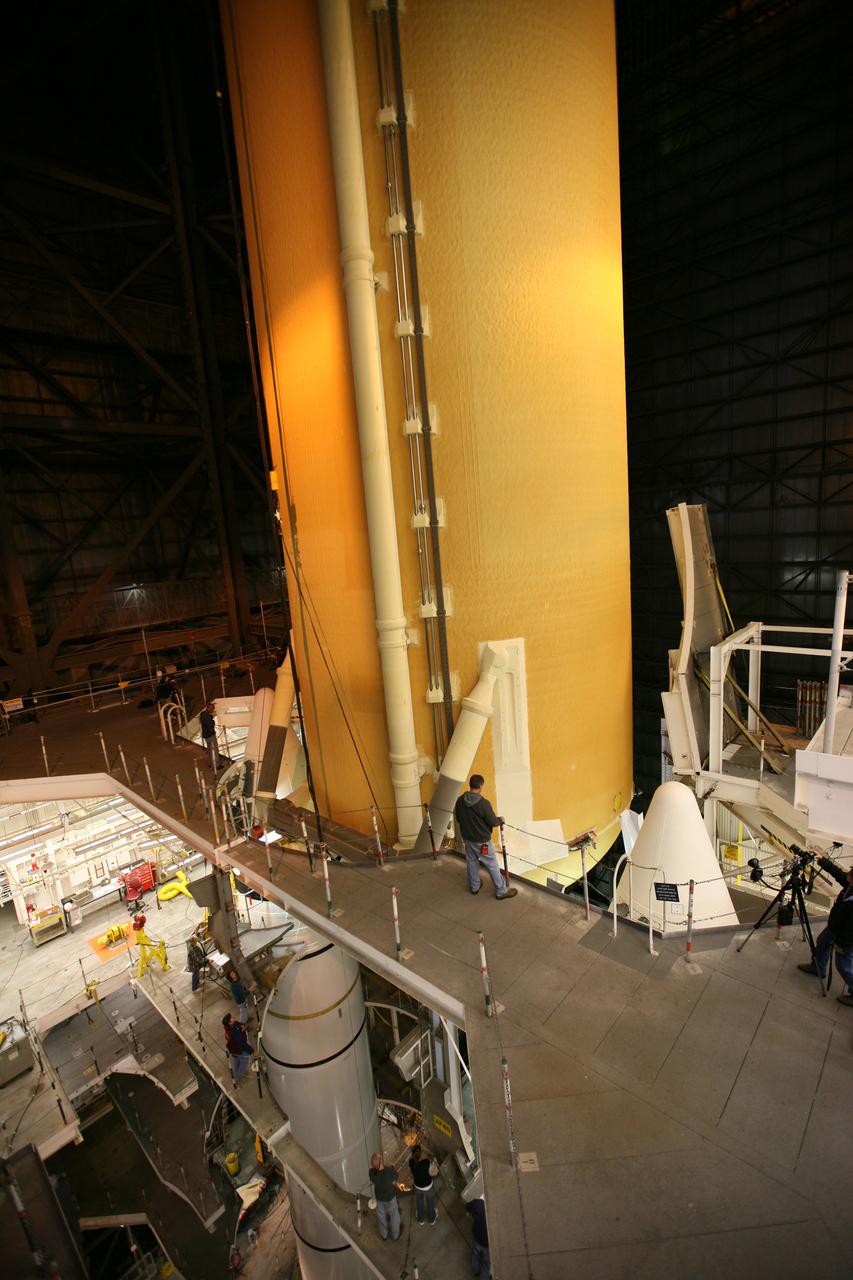
STS-131 ET LIFT & MATE TO SRB'S IN VAB

STS-131 ET LIFT & MATE TO SRB'S IN VAB
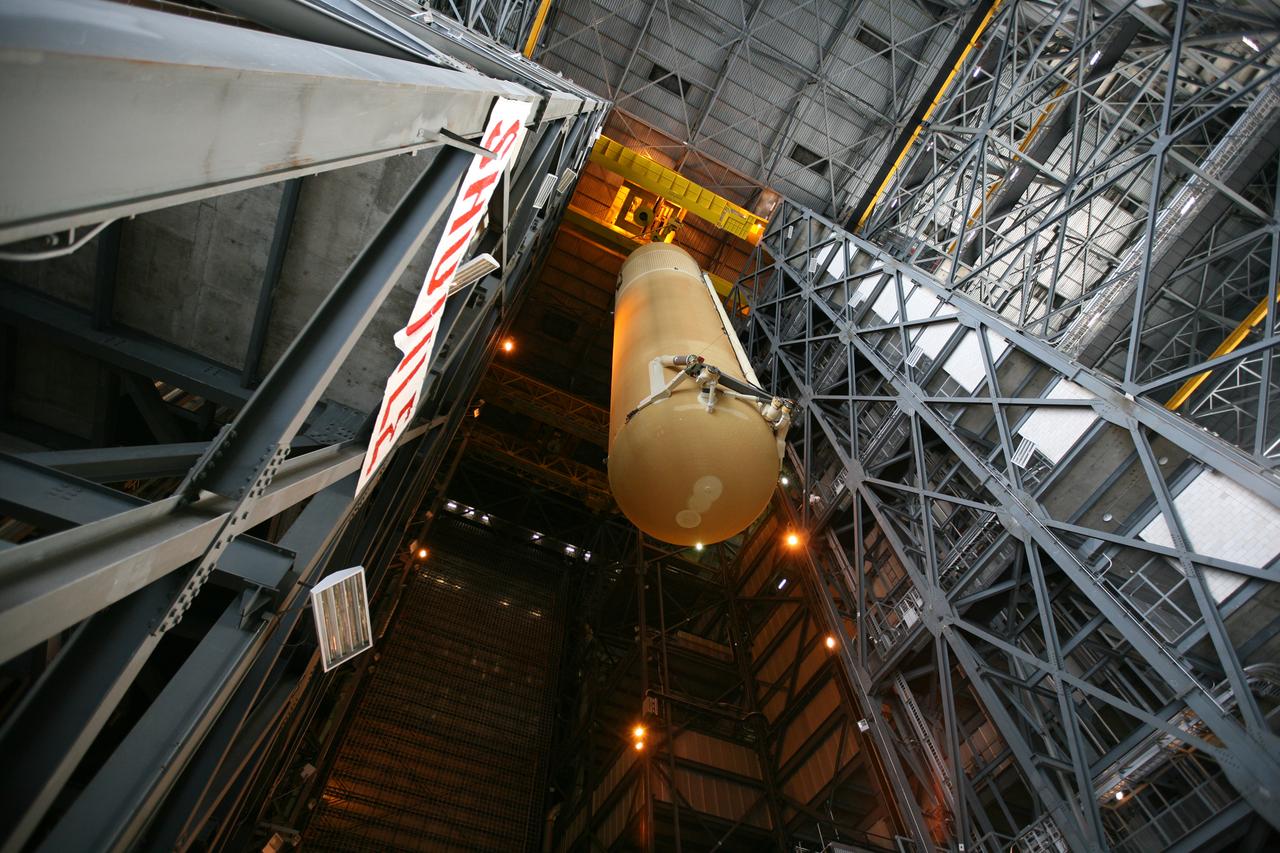
STS-131 ET LIFT & MATE TO SRB'S IN VAB
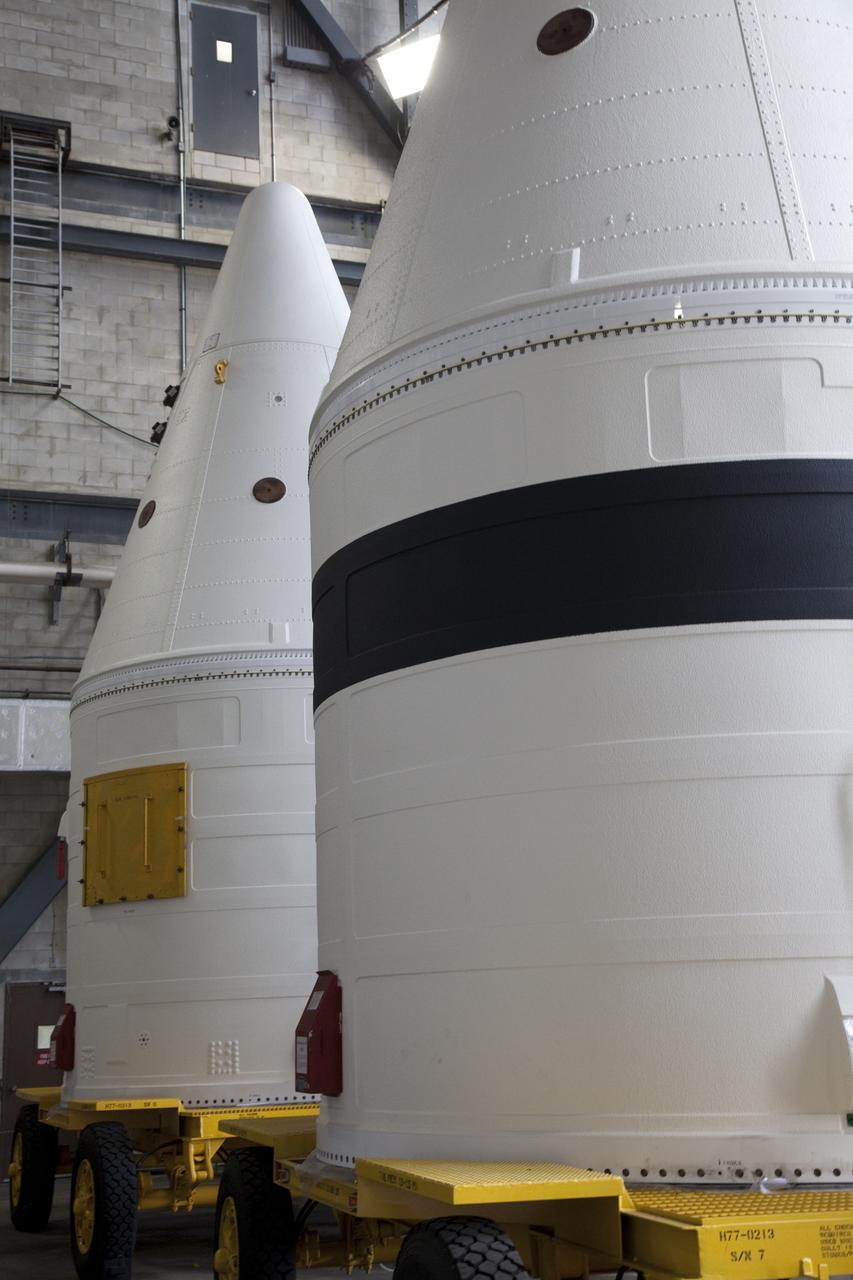
CAPE CANAVERAL, Fla. -- At NASA's Kennedy Space Center in Florida, the Space Shuttle Program's final solid rocket booster assembly is stationed in the transfer aisle of the Vehicle Assembly Building. The right and left forward assemblies, which were refurbished and processed at Kennedy, are comprised of three components -- nose cap, frustum and forward skirt. Inside the Vehicle Assembly Building, the boosters will be stacked and then joined to an external fuel tank and space shuttle Atlantis for the STS-135 mission to the International Space Station. STS-135 is targeted to launch June 28, and will be the last spaceflight for the Space Shuttle Program. Photo credit: NASA/Frank Michaux
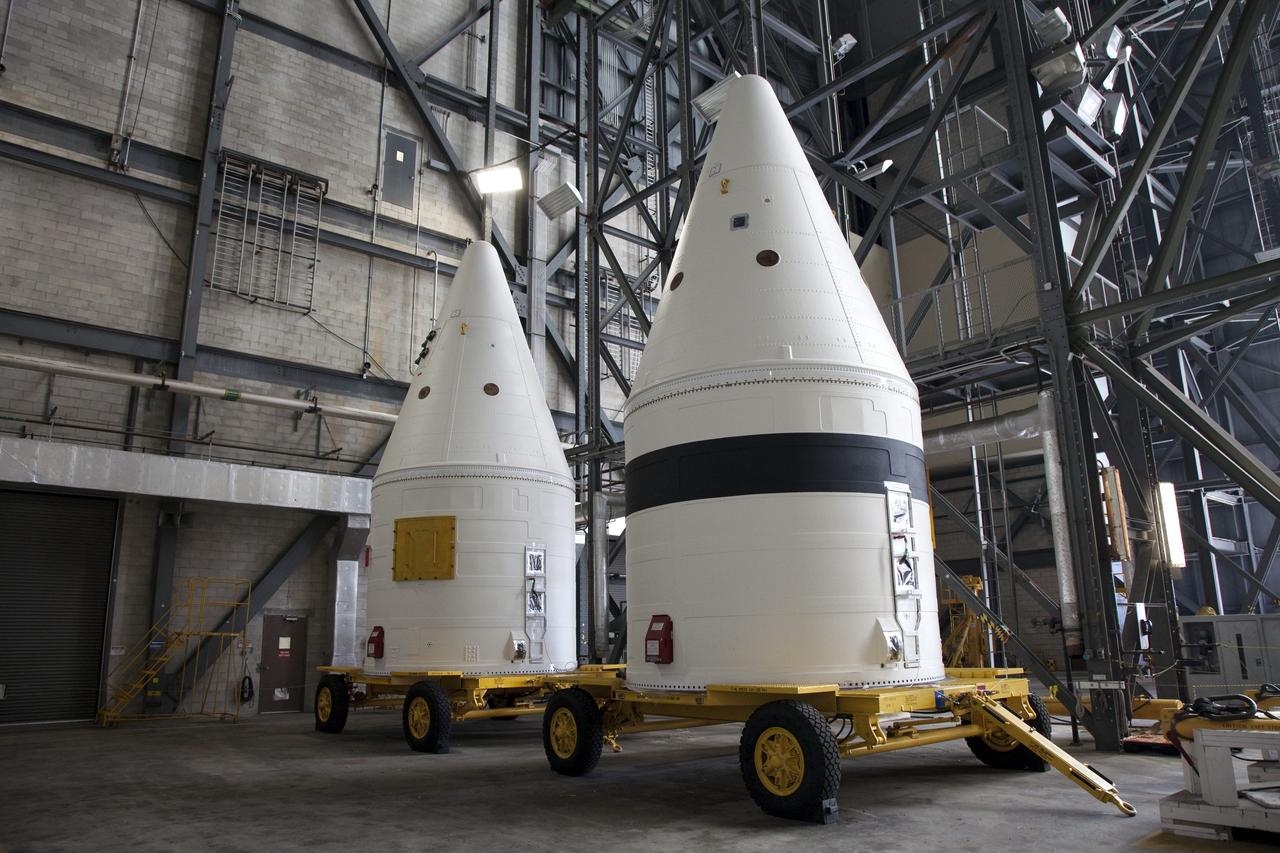
CAPE CANAVERAL, Fla. -- At NASA's Kennedy Space Center in Florida, the Space Shuttle Program's final solid rocket booster assembly is stationed in the transfer aisle of the Vehicle Assembly Building. The right and left forward assemblies, which were refurbished and processed at Kennedy, are comprised of three components -- nose cap, frustum and forward skirt. Inside the Vehicle Assembly Building, the boosters will be stacked and then joined to an external fuel tank and space shuttle Atlantis for the STS-135 mission to the International Space Station. STS-135 is targeted to launch June 28, and will be the last spaceflight for the Space Shuttle Program. Photo credit: NASA/Frank Michaux
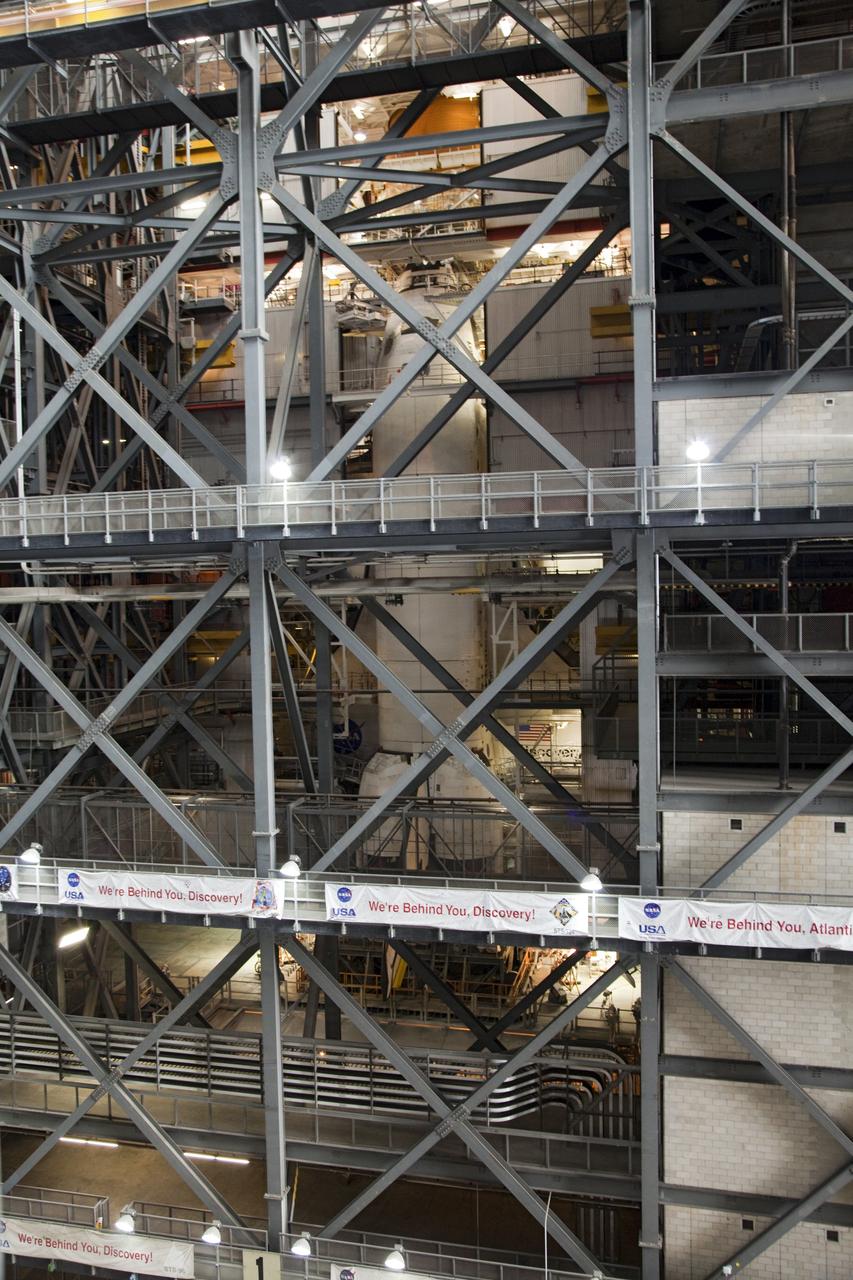
CAPE CANAVERAL, Fla. -- Repair work to space shuttle Discovery's external fuel tank continues in the Vehicle Assembly Building at NASA's Kennedy Space Center in Florida. Technicians are modifying 94 support beams, called stringers, on the tank's intertank region by fitting pieces of metal, called radius blocks, over the stringers' edges. After modifications to the stringers are complete, foam insulation will be re-applied to the tank. Discovery's next launch opportunity to the International Space Station on the STS-133 mission is targeted for Feb. 24. For more information on STS-133, visit www.nasa.gov/mission_pages/shuttle/shuttlemissions/sts133/. Photo credit: NASA/Frank Michaux
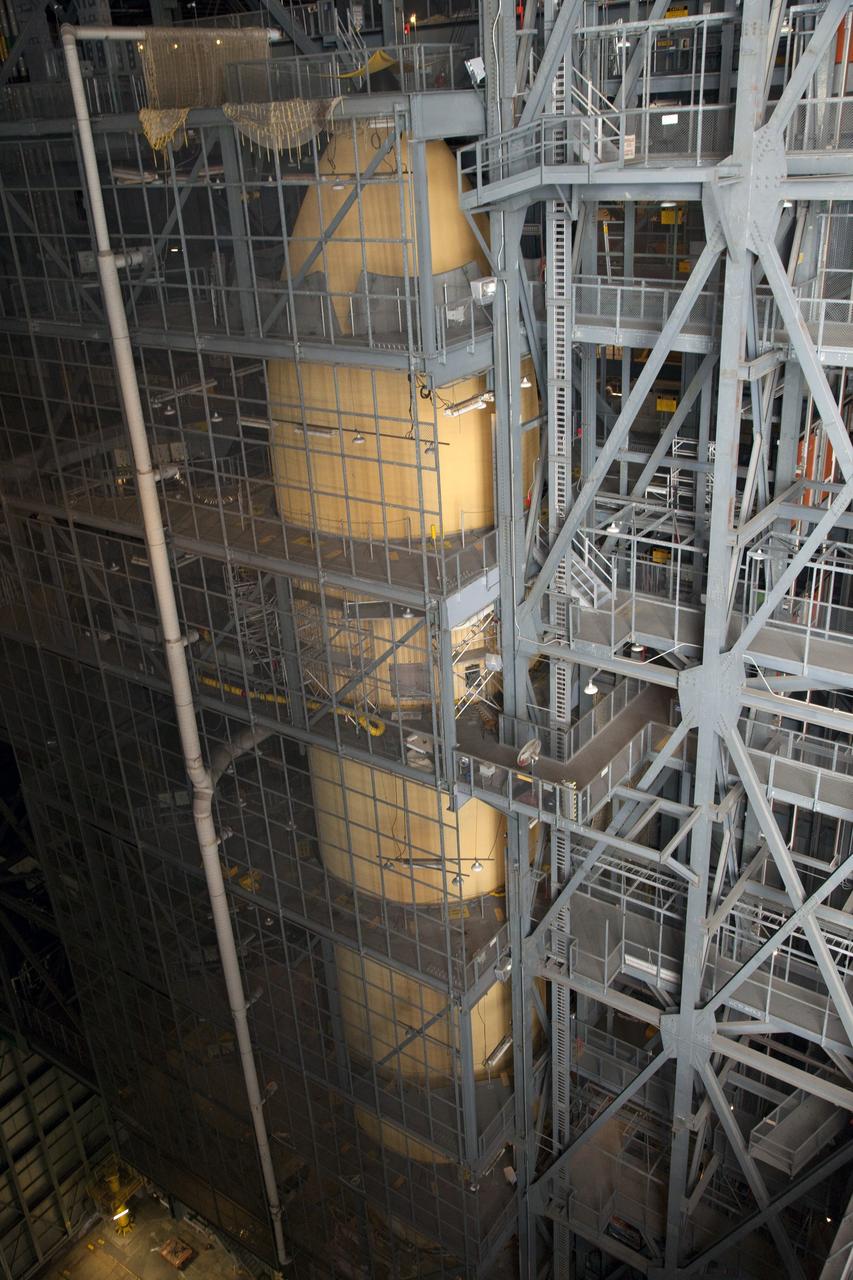
CAPE CANAVERAL, Fla. -- In the Vehicle Assembly Building at NASA's Kennedy Space Center in Florida, the external fuel tank, ET-122, for space shuttle Endeavour's final mission soon will be joined to twin solid rocket boosters on a mobile launcher platform. Endeavour will then be stacked with the tank and boosters for its upcoming STS-134 mission to the International Space Station. Endeavour and its crew will deliver the Express Logistics Carrier-3 and the Alpha Magnetic Spectrometer-2 (AMS) to the orbiting laboratory. Launch is targeted for April 19. For more information visit, http://www.nasa.gov/mission_pages/shuttle/shuttlemissions/sts134/index.html. Photo credit: NASA/Frank Michaux
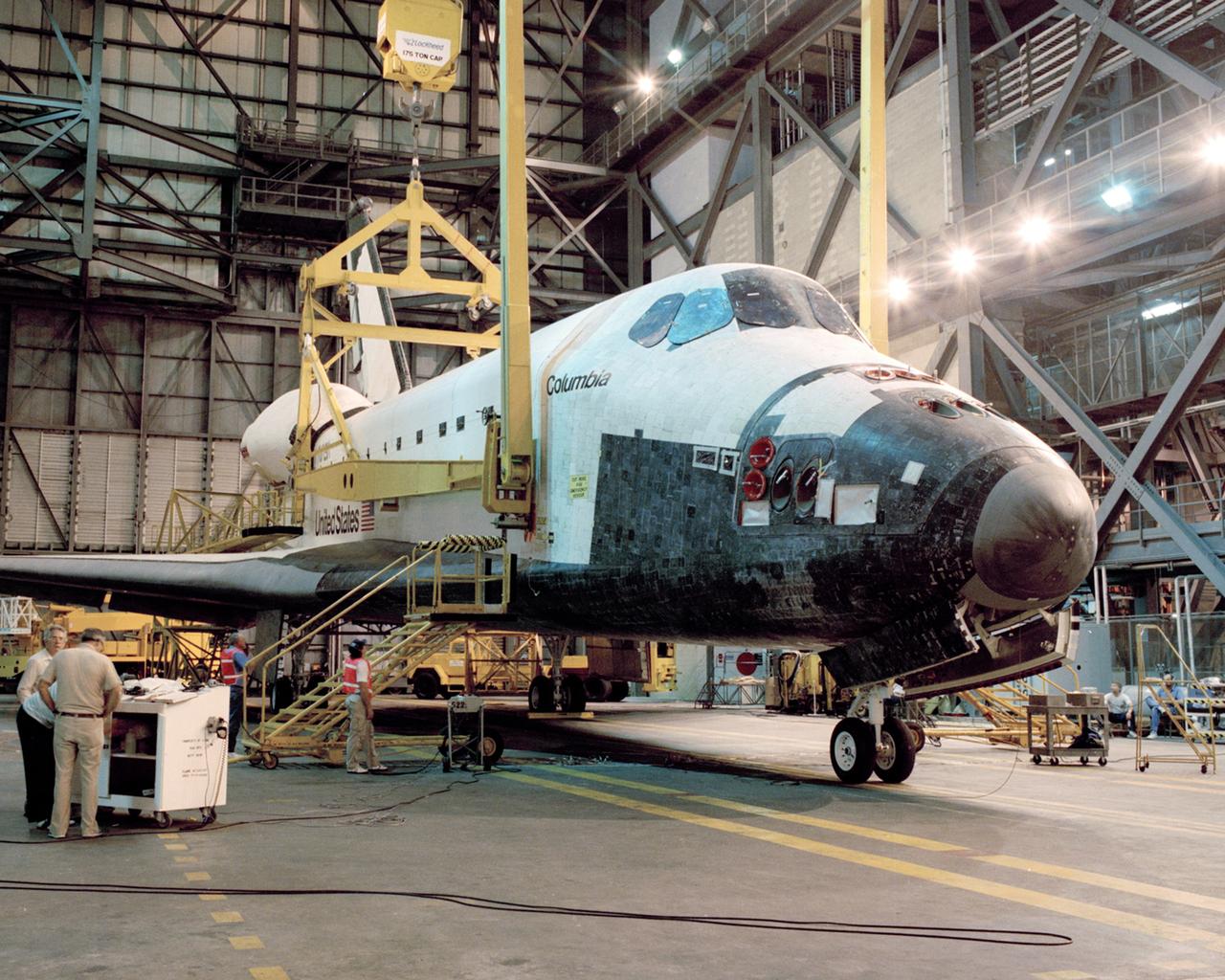
CAPE CANAVERAL, Fla. – Following the rollover from the OPF, the orbiter Columbia is prepared for mating with the ET/SRB stack in the VAB. Columbia is scheduled for launch in late July 1989. Photo credit: NASA
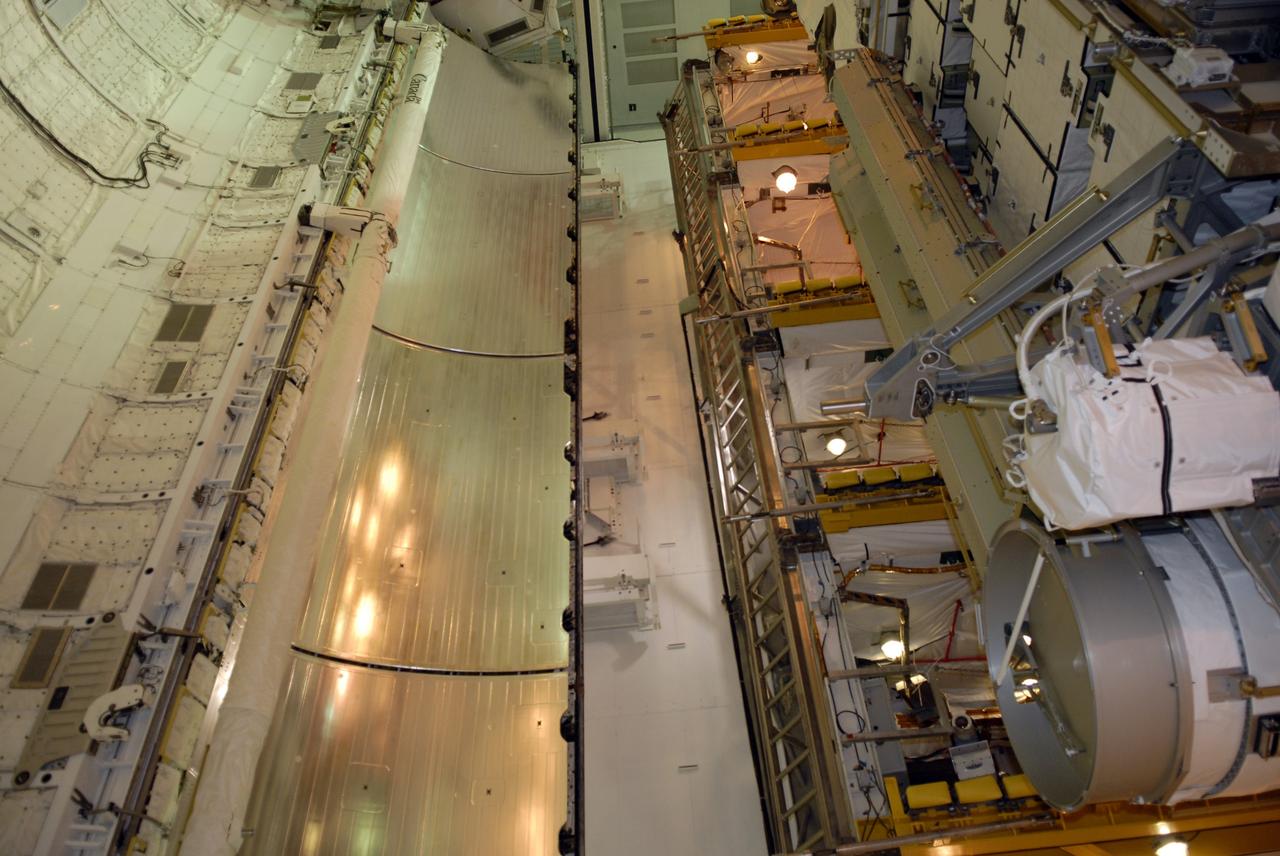
CAPE CANAVERAL, Fla. – In the Payload Changeout Room on Launch Pad 39A at NASA's Kennedy Space Center in Florida, the payload for the STS-119 mission is being transferred to space shuttle Discovery's cargo bay. The payload consists of the integrated truss structure S6 and solar arrays. During Discovery's 14-day mission, the shuttle's seven astronauts will install the S6 truss segment and solar arrays to the starboard side of the International Space Station, completing the station's truss, or backbone. Launch of Discovery on the STS-119 mission is targeted for Feb. 12. Photo credit: NASA/Kim Shiflett
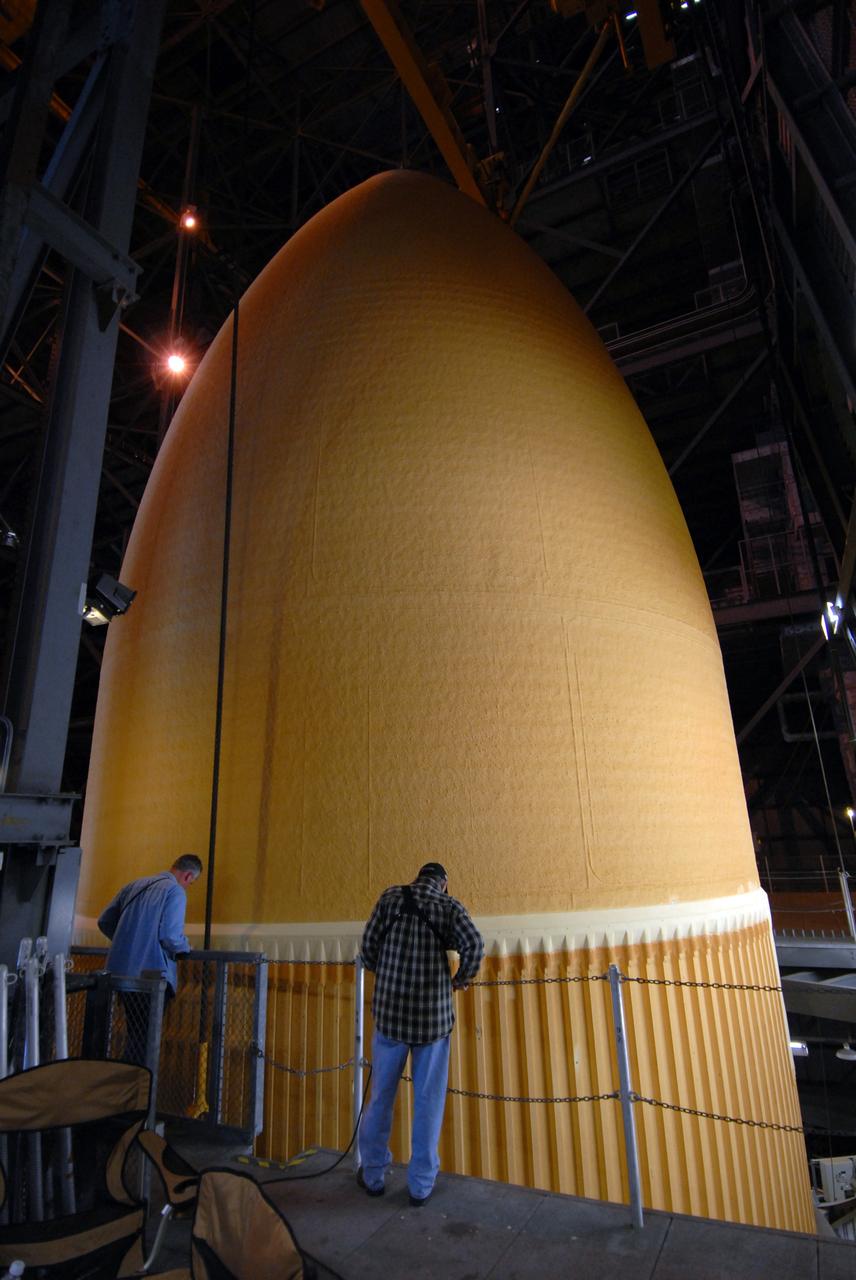
CAPE CANAVERAL, Fla. – In the Vehicle Assembly Building at NASA's Kennedy Space Center in Florida, the external fuel tank for space shuttle Atlantis' STS-125 mission is raised from the checkout cell in order to move it to high bay 3. There it will be lowered onto the mobile launcher platform and attached to the solid rocket boosters already installed. Atlantis' STS-125 mission is the fifth and final shuttle servicing mission to NASA’s Hubble Space Telescope. Launch is targeted for May 12. Photo credit: NASA/Jack Pfaller
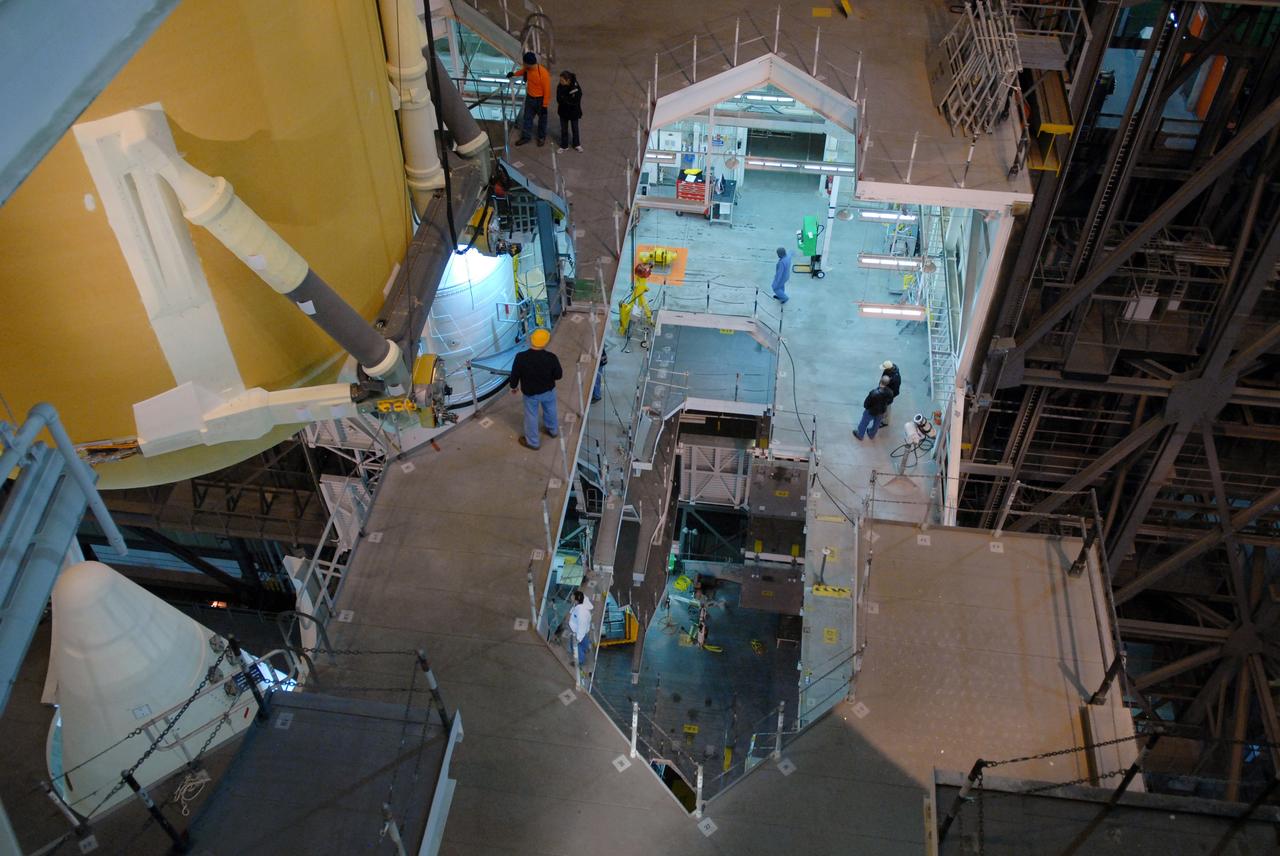
CAPE CANAVERAL, Fla. – In the Vehicle Assembly Building at NASA's Kennedy Space Center in Florida, the external fuel tank for space shuttle Atlantis' STS-125 mission is lowered into high bay 3. It will be installed on the mobile launcher platform and attached to the solid rocket boosters already there. Atlantis' STS-125 mission is the fifth and final shuttle servicing mission to NASA’s Hubble Space Telescope. Launch is targeted for May 12. Photo credit: NASA/Jack Pfaller
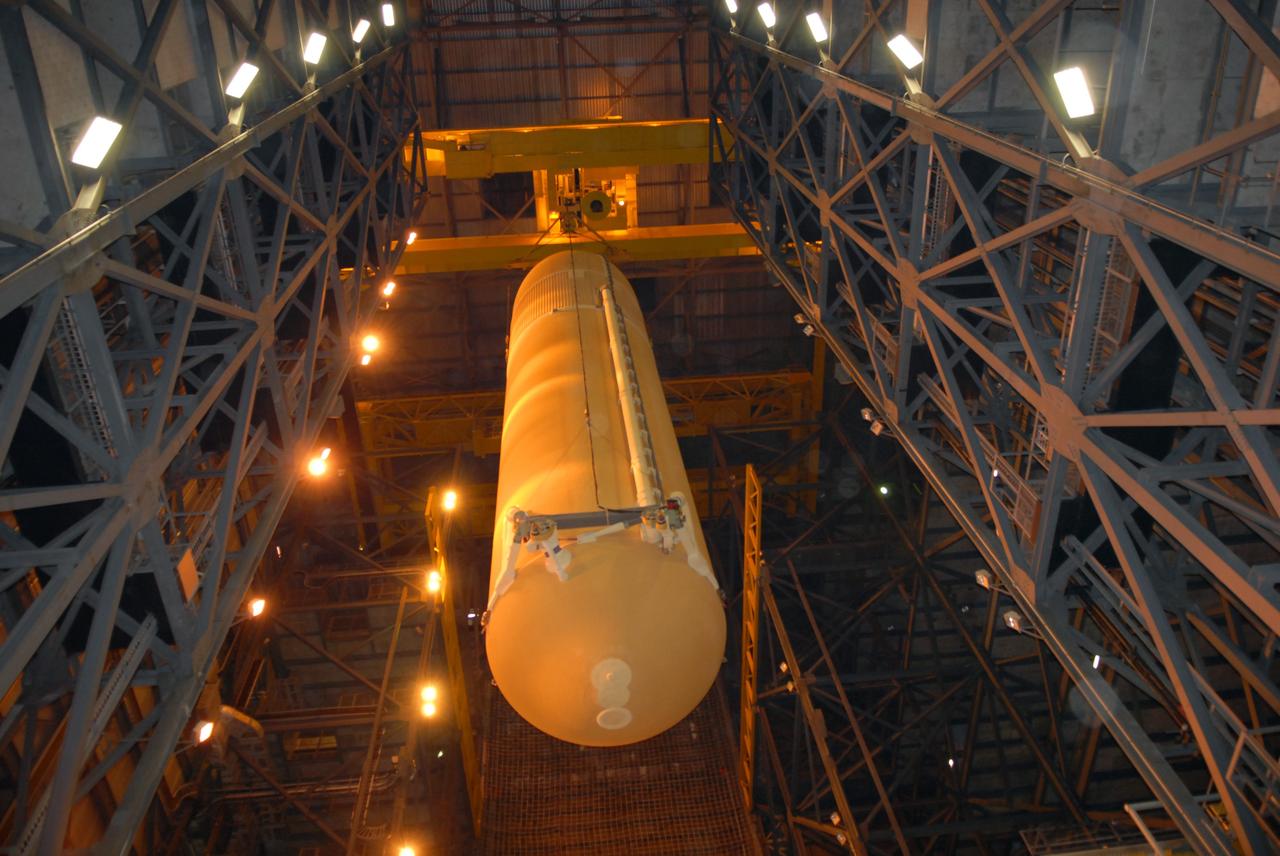
CAPE CANAVERAL, Fla. – In the Vehicle Assembly Building at NASA's Kennedy Space Center in Florida, the external fuel tank for space shuttle Atlantis' STS-125 mission is lowered into high bay 3. It will be installed on the mobile launcher platform and attached to the solid rocket boosters already there. Atlantis' STS-125 mission is the fifth and final shuttle servicing mission to NASA’s Hubble Space Telescope. Launch is targeted for May 12. Photo credit: NASA/Jack Pfaller
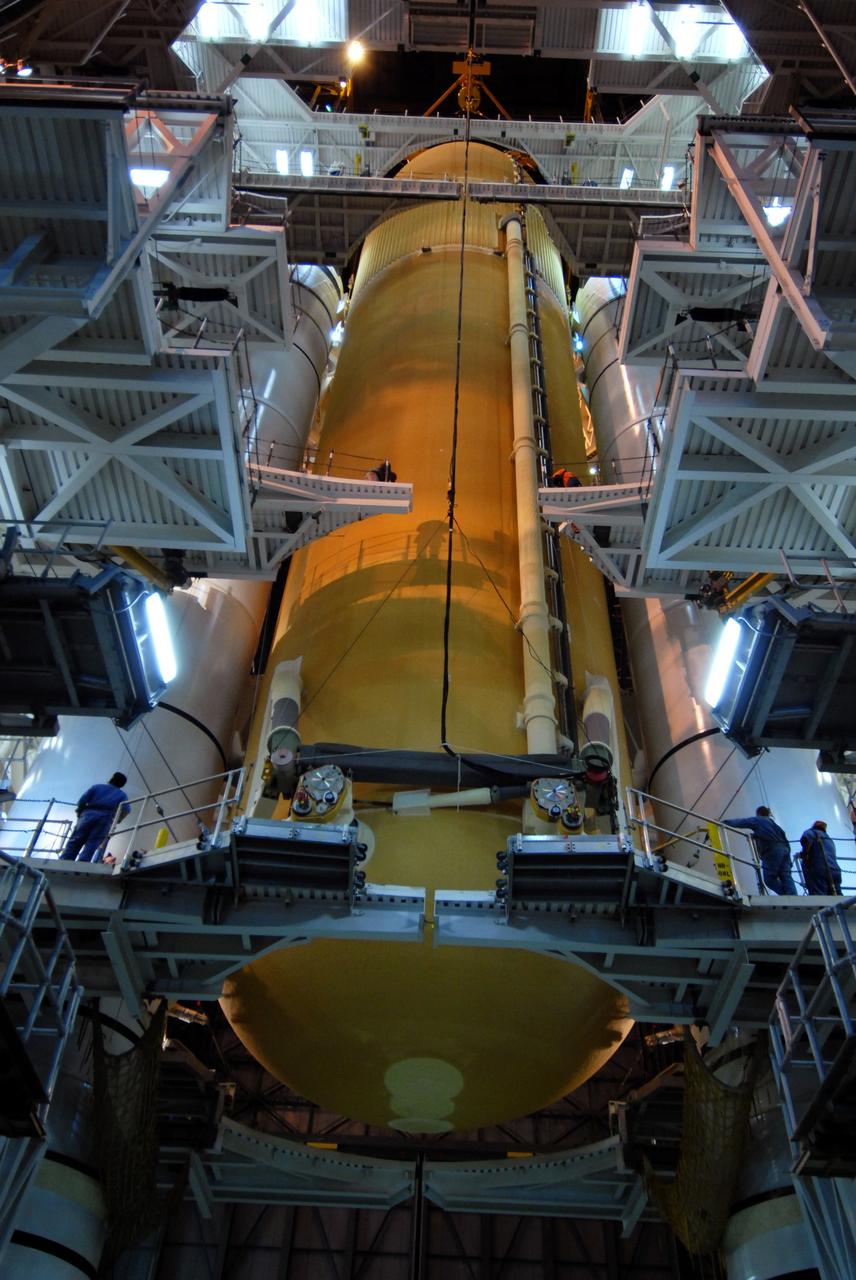
CAPE CANAVERAL, Fla. – In the Vehicle Assembly Building at NASA's Kennedy Space Center in Florida, the external fuel tank for space shuttle Atlantis' STS-125 mission is lowered between the solid rocket boosters installed on the mobile launcher platform in high bay 3. The tank and boosters will be attached for launch. Atlantis' STS-125 mission is the fifth and final shuttle servicing mission to NASA’s Hubble Space Telescope. Launch is targeted for May 12. Photo credit: NASA/Jack Pfaller
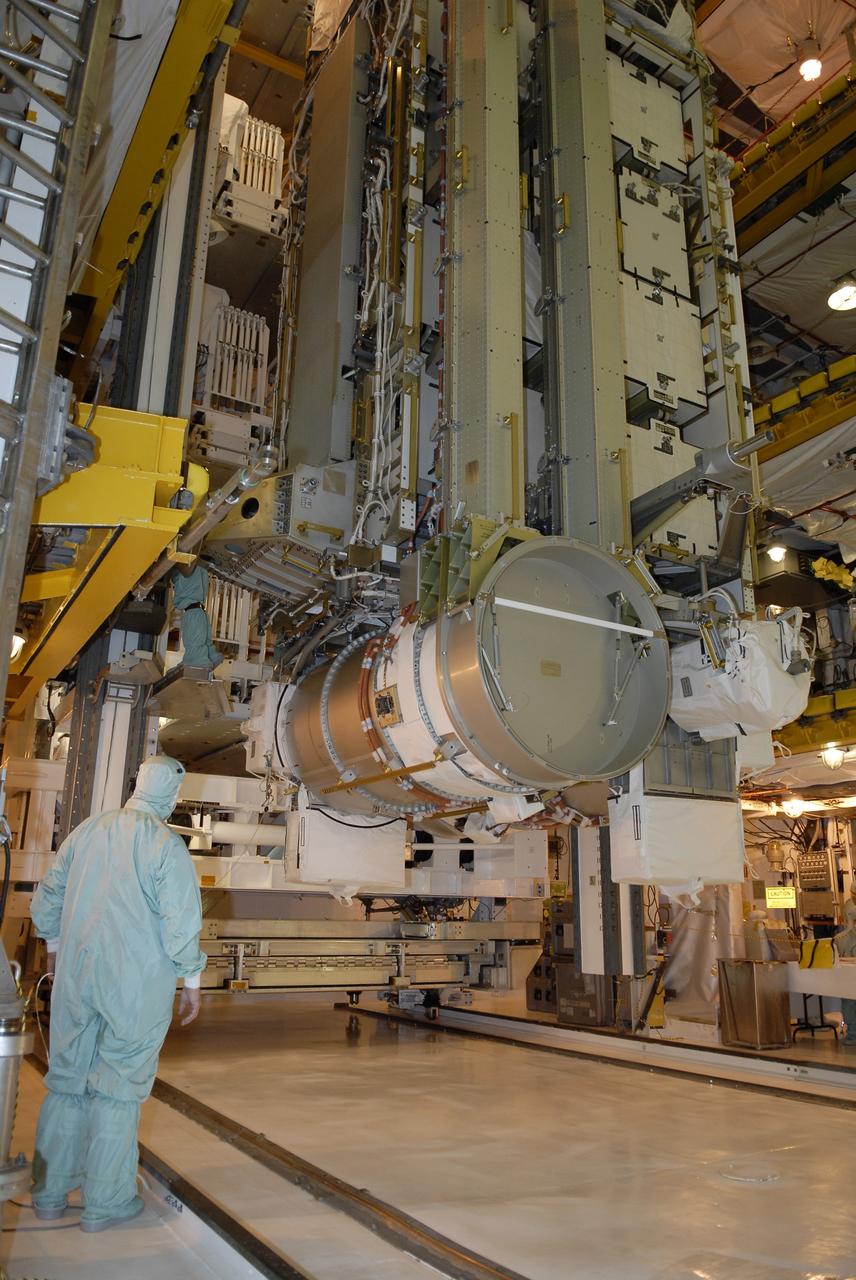
CAPE CANAVERAL, Fla. – In the Payload Changeout Room on Launch Pad 39A at NASA's Kennedy Space Center in Florida, the payload for the STS-119 mission is being transferred to space shuttle Discovery's cargo bay. The payload consists of the integrated truss structure S6 and solar arrays. During Discovery's 14-day mission, the shuttle's seven astronauts will install the S6 truss segment and solar arrays to the starboard side of the International Space Station, completing the station's truss, or backbone. Launch of Discovery on the STS-119 mission is targeted for Feb. 12. Photo credit: NASA/Kim Shiflett
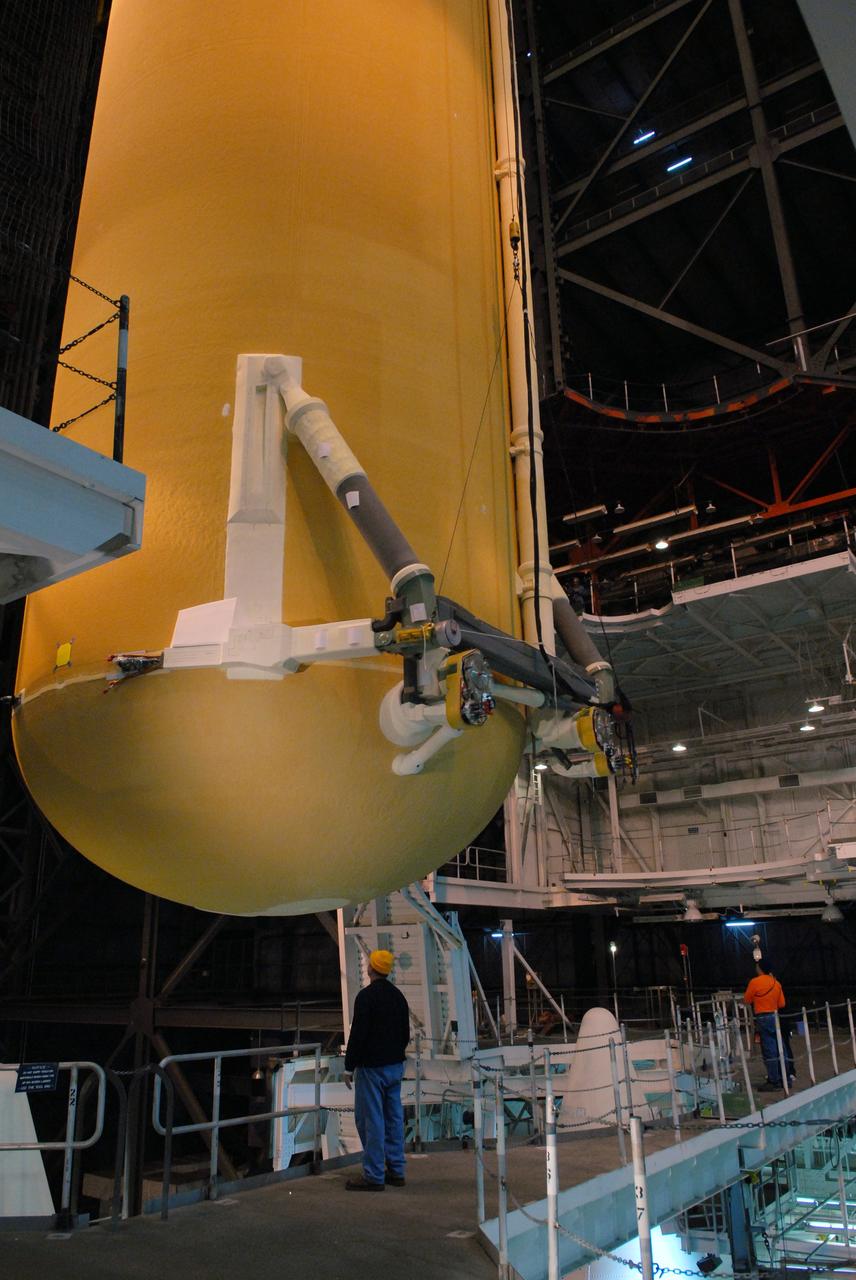
CAPE CANAVERAL, Fla. – In the Vehicle Assembly Building at NASA's Kennedy Space Center in Florida, the external fuel tank for space shuttle Atlantis' STS-125 mission is lowered into high bay 3. It will be installed on the mobile launcher platform and attached to the solid rocket boosters already there. Atlantis' STS-125 mission is the fifth and final shuttle servicing mission to NASA’s Hubble Space Telescope. Launch is targeted for May 12. Photo credit: NASA/Jack Pfaller
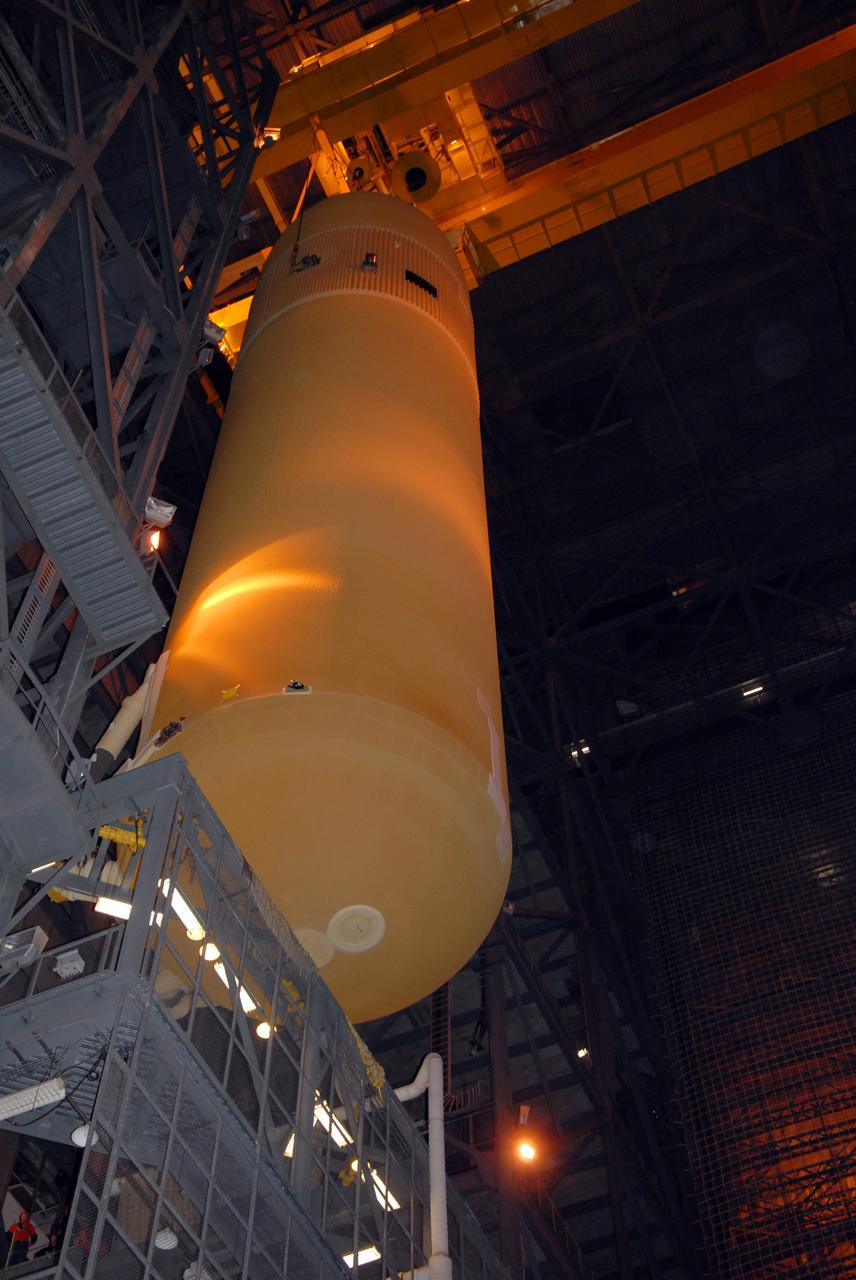
CAPE CANAVERAL, Fla. – In the Vehicle Assembly Building at NASA's Kennedy Space Center in Florida, the external fuel tank for space shuttle Atlantis' STS-125 mission is moved out of the checkout cell. The tank will be lowered into high bay 3 onto the mobile launcher platform and attached to the solid rocket boosters already installed. Atlantis' STS-125 mission is the fifth and final shuttle servicing mission to NASA’s Hubble Space Telescope. Launch is targeted for May 12. Photo credit: NASA/Jack Pfaller
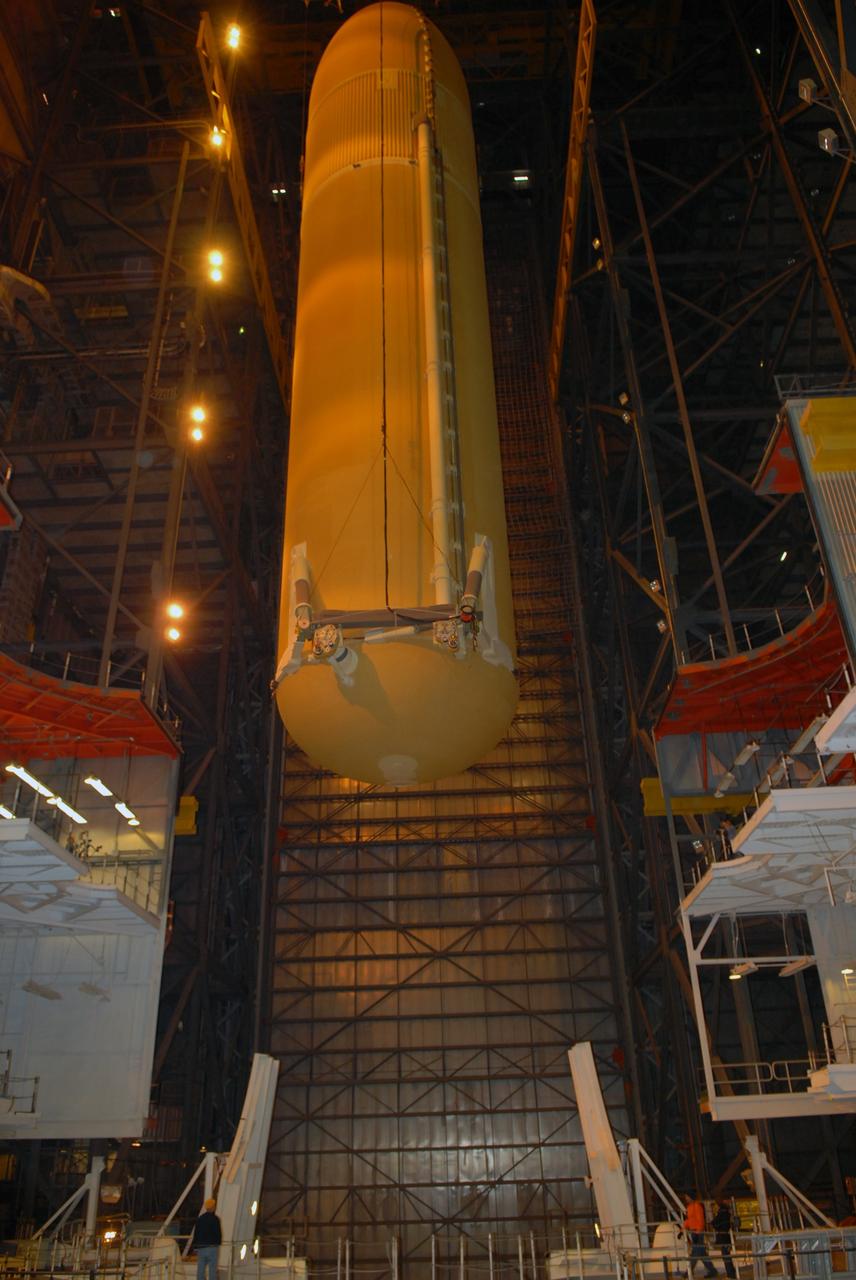
CAPE CANAVERAL, Fla. – In the Vehicle Assembly Building at NASA's Kennedy Space Center in Florida, the external fuel tank for space shuttle Atlantis' STS-125 mission is lowered into high bay 3. It will be installed on the mobile launcher platform and attached to the solid rocket boosters already there. Atlantis' STS-125 mission is the fifth and final shuttle servicing mission to NASA’s Hubble Space Telescope. Launch is targeted for May 12. Photo credit: NASA/Jack Pfaller
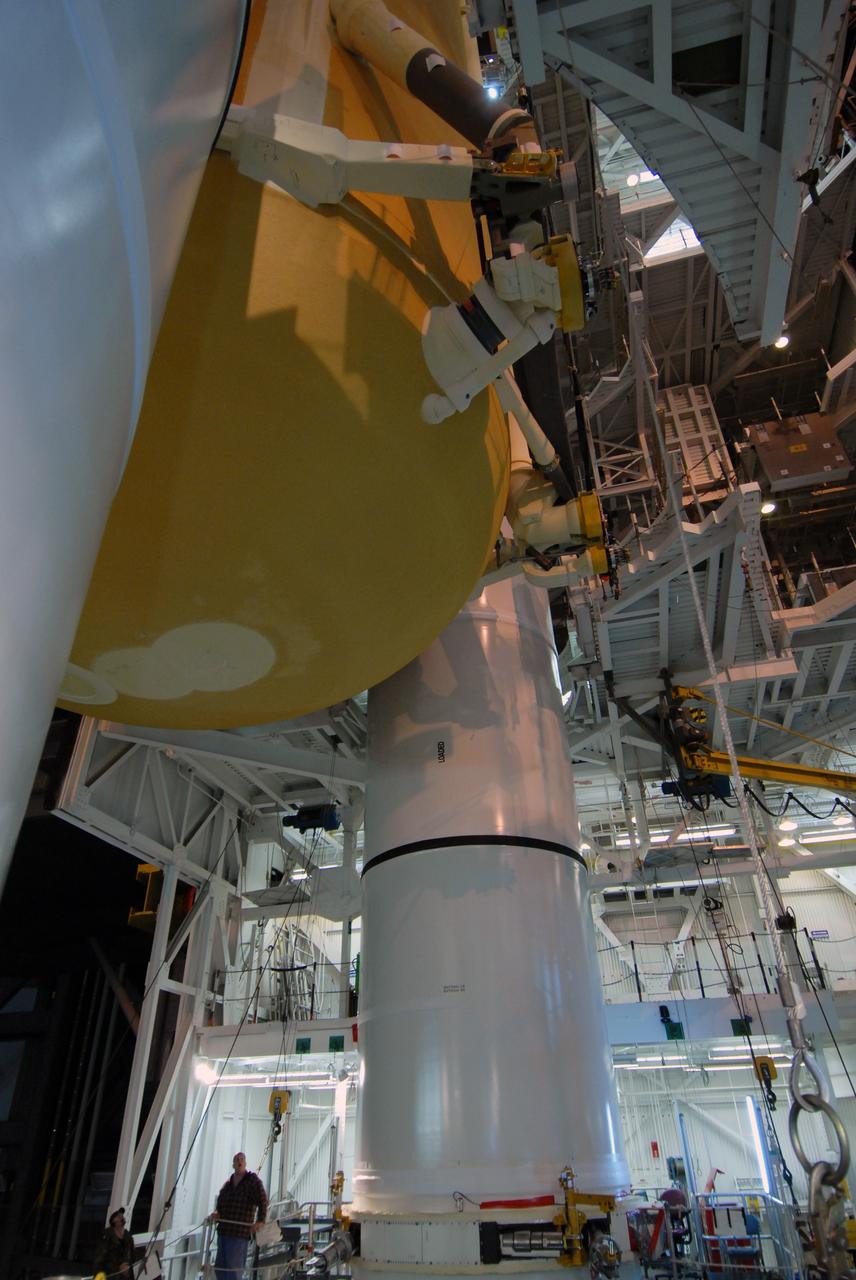
CAPE CANAVERAL, Fla. – In the Vehicle Assembly Building at NASA's Kennedy Space Center in Florida, the external fuel tank for space shuttle Atlantis' STS-125 mission is lowered between the solid rocket boosters installed on the mobile launcher platform in high bay 3. The tank and boosters will be attached for launch. Atlantis' STS-125 mission is the fifth and final shuttle servicing mission to NASA’s Hubble Space Telescope. Launch is targeted for May 12. Photo credit: NASA/Jack Pfaller

CAPE CANAVERAL, Fla. – In the Payload Changeout Room on Launch Pad 39A at NASA's Kennedy Space Center in Florida, the payload for the STS-119 mission is being transferred to space shuttle Discovery's cargo bay. The payload consists of the integrated truss structure S6 and solar arrays. During Discovery's 14-day mission, the shuttle's seven astronauts will install the S6 truss segment and solar arrays to the starboard side of the International Space Station, completing the station's truss, or backbone. Launch of Discovery on the STS-119 mission is targeted for Feb. 12. Photo credit: NASA/Kim Shiflett
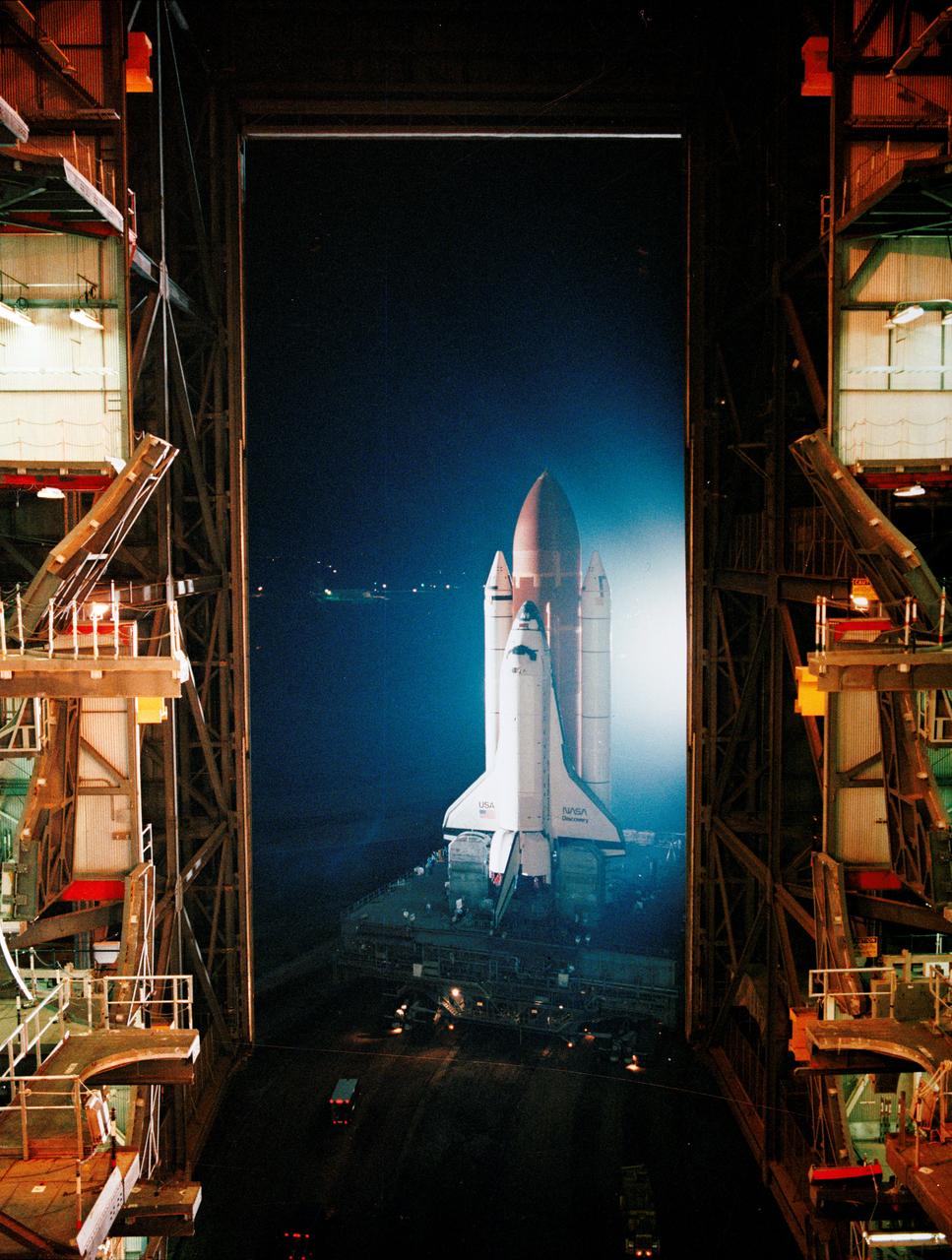
STS-26 Discovery, Orbiter Vehicle (OV) 103, mated with the external tank (ET) and solid rocket boosters (SRBs), is framed by Kennedy Space Center's (KSC's) vehicle assembly building (VAB) doorway as it rolled out. This high angle view shows OV-103 atop the mobile launch pad and crawler transporter as it begins its slow exit from VAB en route to launch complex (LC) pad 39B. The move began shortly after midnight on the nation's 212th birthday. Ceremonies marking the event were held later during daylight hours.
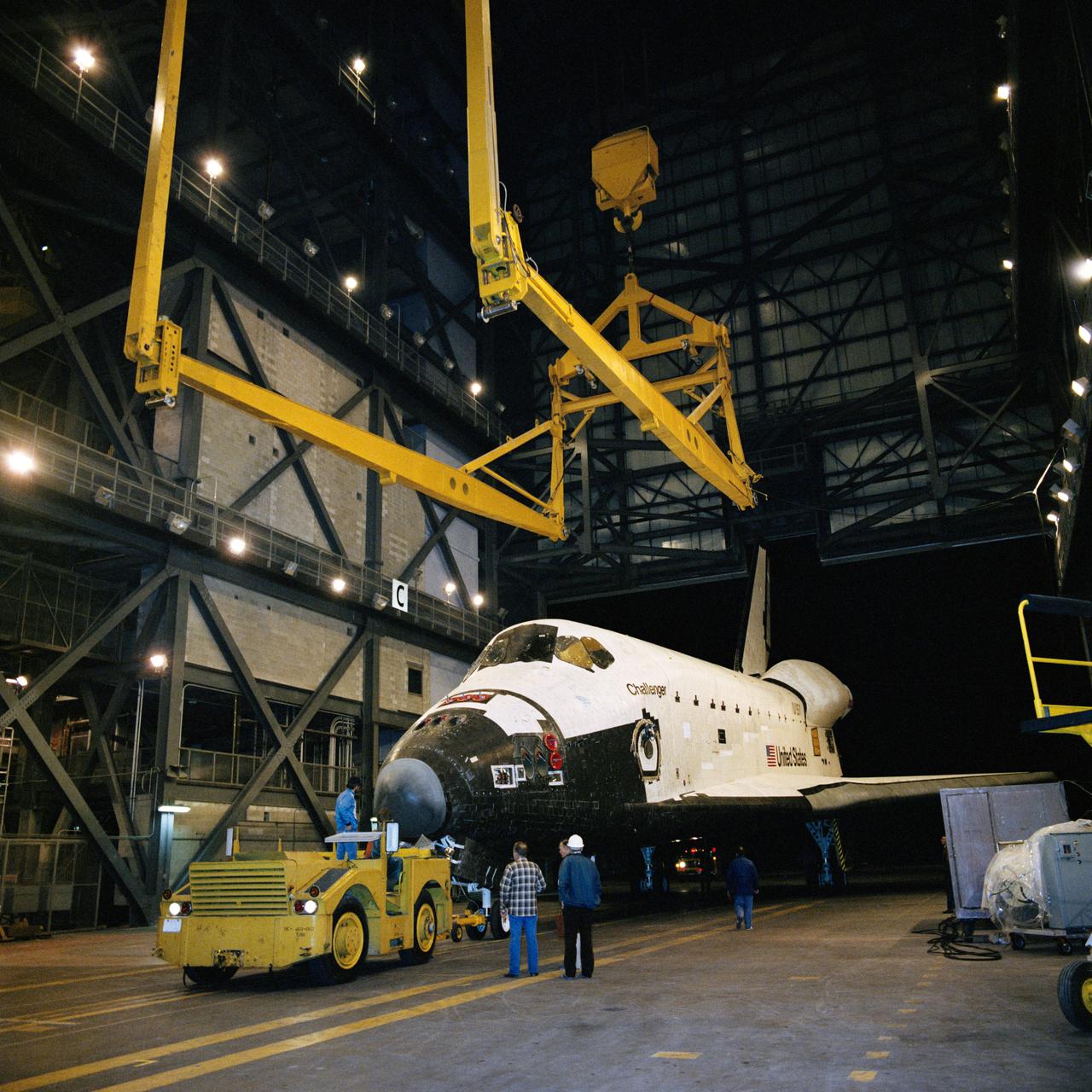
S84-25872 (6 Jan 1984) --- Progress continues at the Kennedy Space Center (KSC) as the Space Shuttle Challenger is moved into the Vehicle Assembly Building (VAB) for mating to its two Solid Rocket Boosters (SRB) and External Fuel Tank (ET). The flight of STS-41B will carry five astronaut crew members into space for the performance of a variety of duties. Launch is scheduled for February 3, 1984.
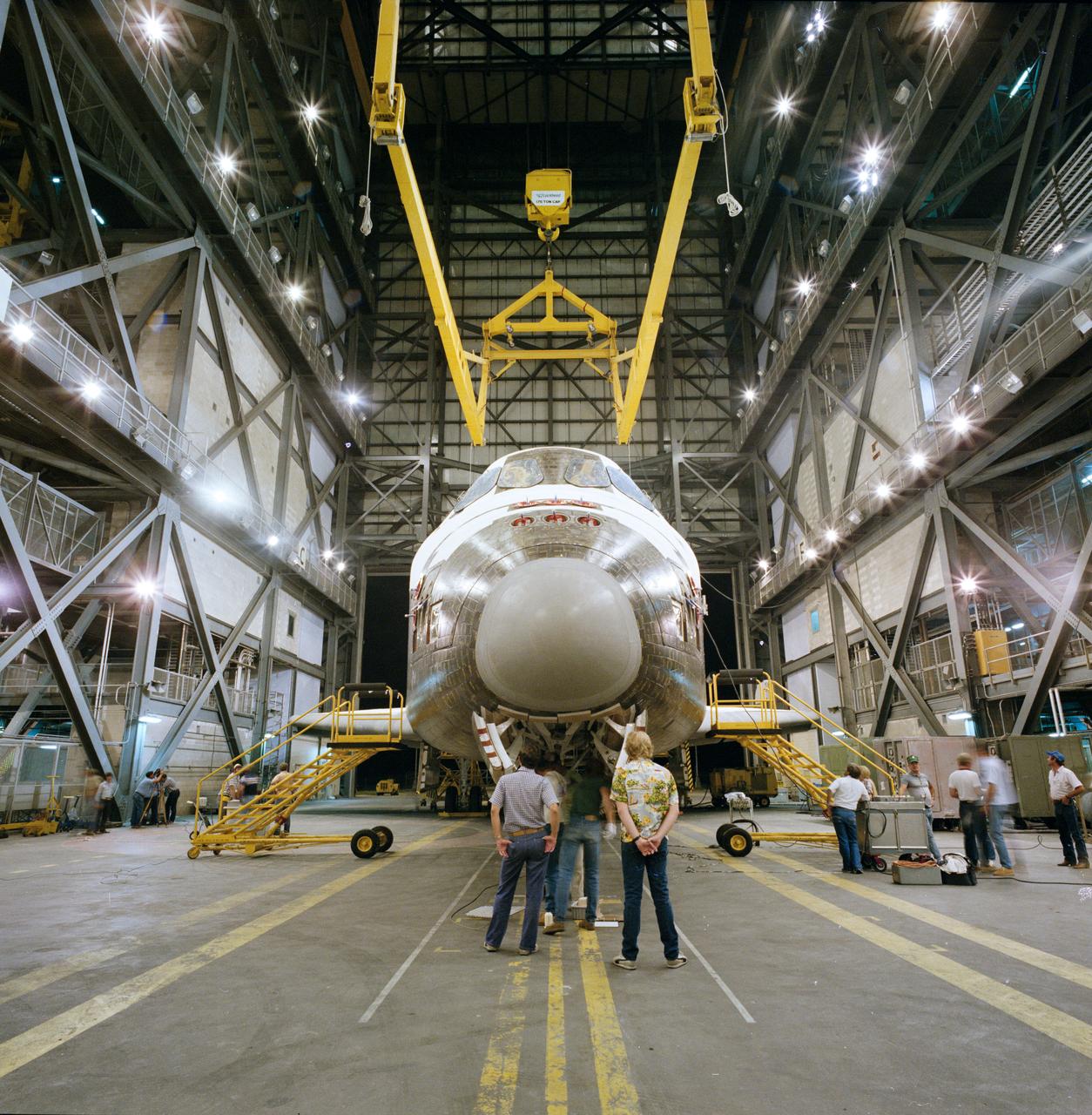
S84-35097 (May 1984) --- The Space Shuttle Orbiter 103 is about to be hoisted into a tail-toward-ground mode for mating to its two solid rocket boosters (SRB) and an external tank (ET) (awaiting the maneuver high out of frame) in the Kennedy Space Center's (KSC) huge vehicle assembly building (VAB). After its arrival here from the manufacturer in Palmdale, California, Discovery underwent extensive pre-launch preparations in the nearby processing facility (OPF).
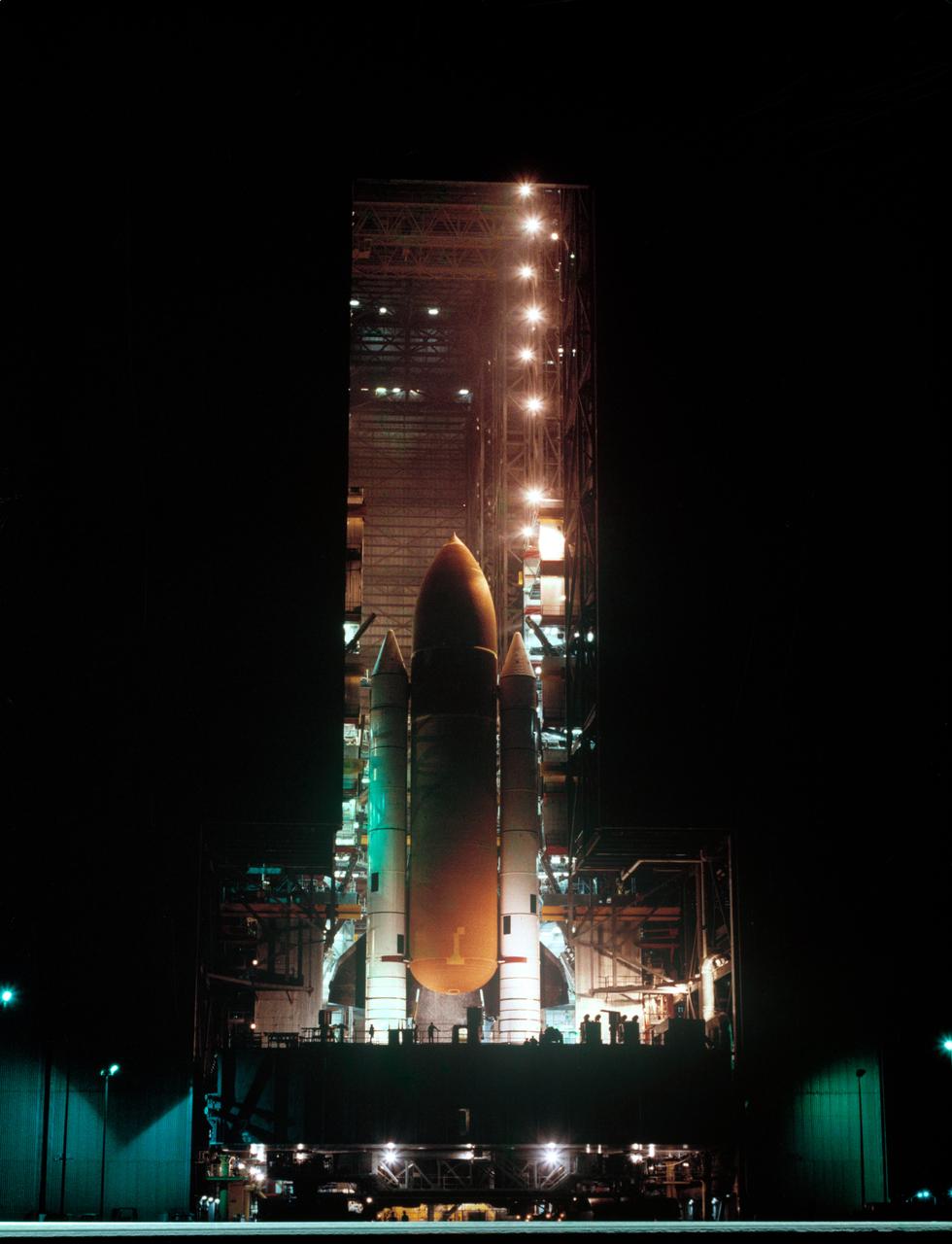
S83-39238 (1 Aug. 1983) --- The giant cluster of spaceflight hardware for NASA's eighth Space Transportation System (STS) mission begins its slow move to the launch pad at launch complex 39 at NASA's Kennedy Space Center (KSC). Following its mating to the two solid rocket boosters (SRB) and the external fuel tank (ET) in the huge vehicle assembly building (VAB), the space shuttle Challenger is slowly moved to the launch pad atop the mobile launch platform. Photo credit: NASA
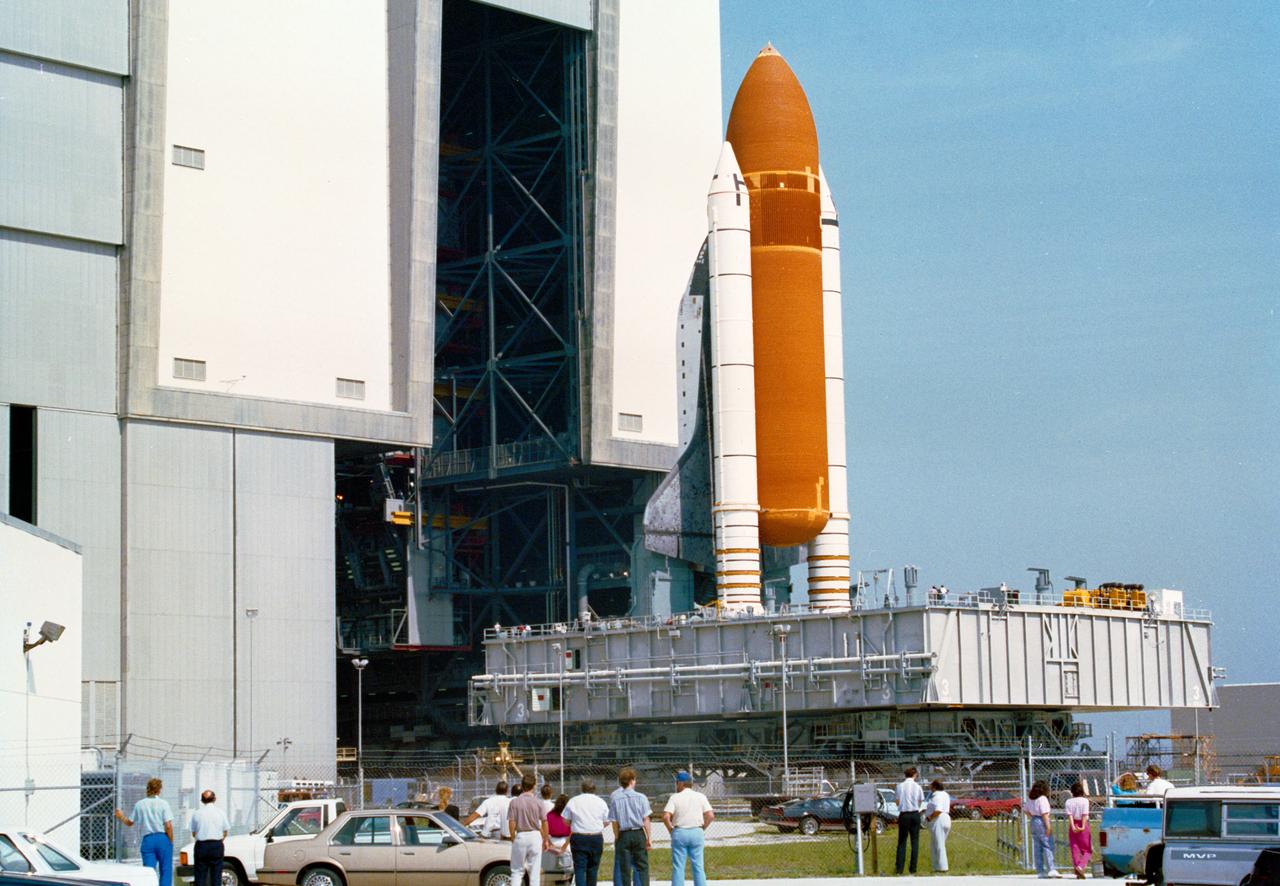
S90-42289 ( 3 July 1990) --- Kennedy Space Center (KSC) workers watch as Columbia, Orbiter Vehicle (OV) 102, along with its external tank (ET) and two solid rocket boosters (SRBs) atop the giant crawler transporter, rolls back to KSC's Vehicle Assembly Building (VAB). The rollback was caused by a hydrogen leak that stopped the STS-35 countdown during ET fueling, 05-29-90. Once in the VAB, OV-102 and its stack will be demated, and OV-102, with its Astronomy Laboratory 1 (ASTRO-1) payload aboard, will be moved to the Orbiter Processing Facility (OPF) to await return to KSC Launch Complex (LC) Pad 39A. View provided by KSC with alternate number KSC-90PC-901.
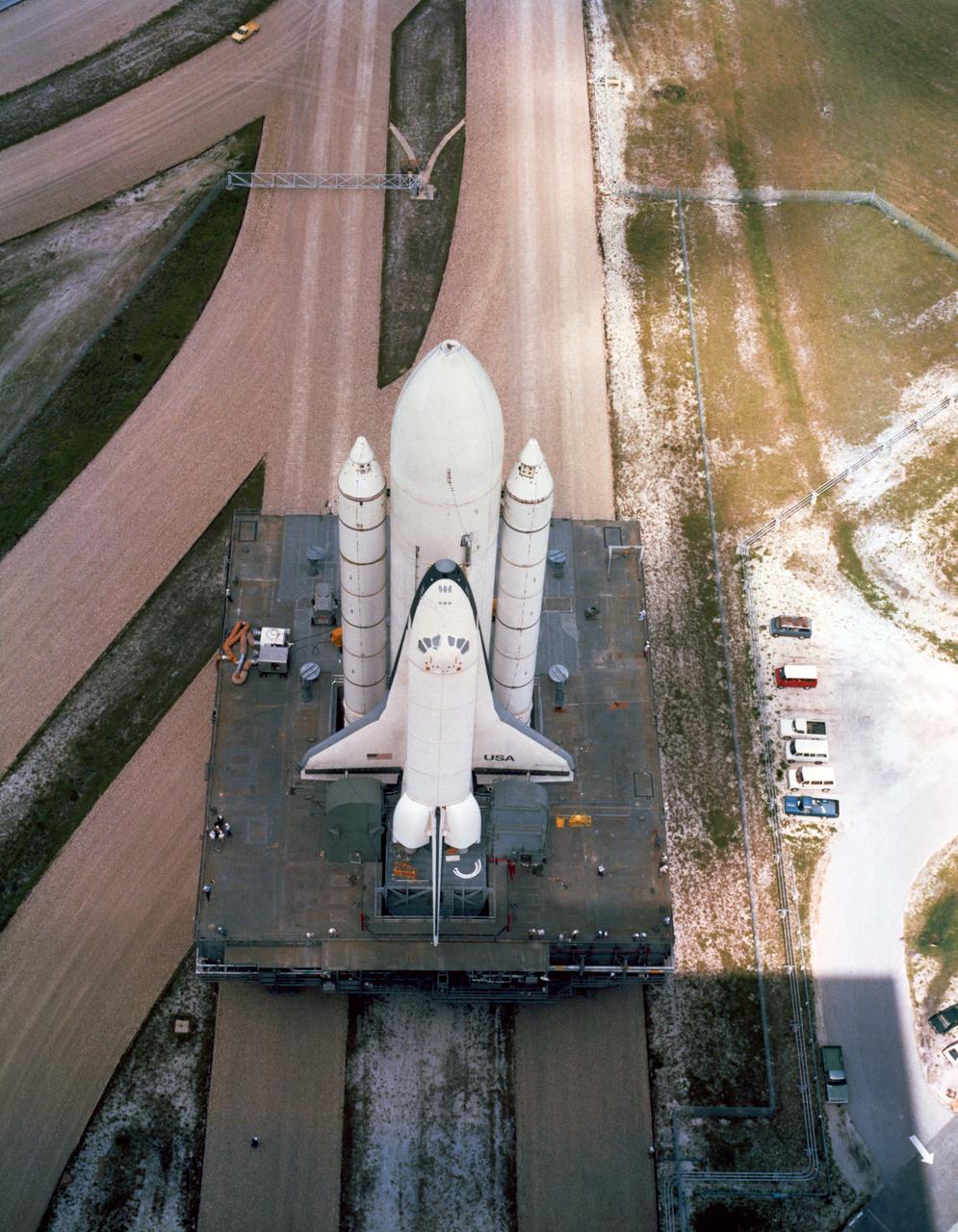
S79-35236 (23 July 1979) --- The space shuttle orbiter 101 Enterprise is seen in this high angle view as it is being moved from Pad A, Launch Complex 39 at the Kennedy Space Center (KSC) to the Vehicle Assembly Building (VAB). Though only 3.5 miles separate the launch pad and the VAB, the journey of the orbiter, its solid rocket boosters and external tank takes more than 11 hours. The move back to the VAB represents the end of several weeks of fit and function checks performed on the vehicle, prepatory to eventual launch readiness of the first actual flight vehicle in the orbiter flight test (OFT) series -- the Columbia. The SRB/ET/Enterprise cluster will soon be taken apart inside the VAB and the orbiter will be taxied back to the Palmdale, California manufacturing facility of Rockwell International. Photo credit: NASA
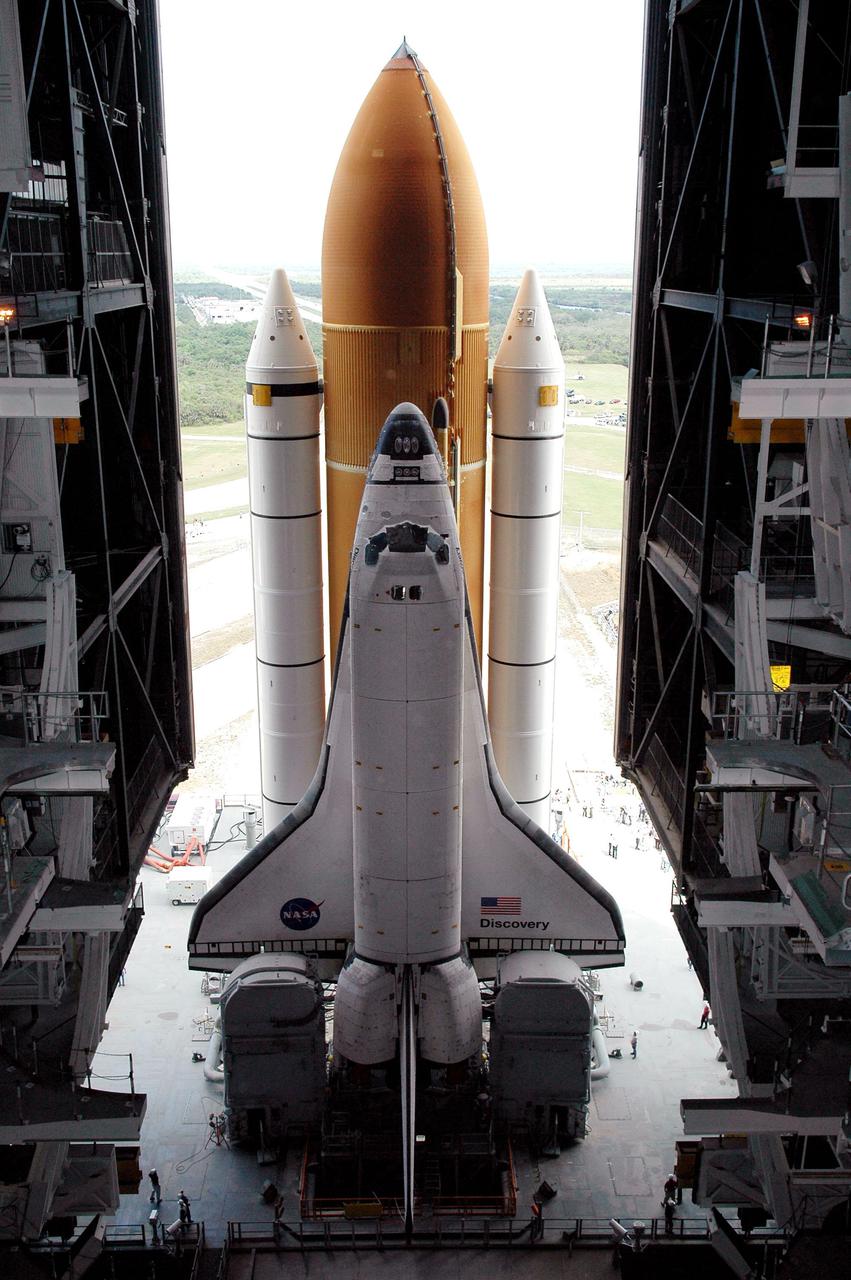
KENNEDY SPACE CENTER, FLA. - In the Vehicle Assembly Building (VAB) at NASA’s Kennedy Space Center, Space Shuttle Discovery passes through the open doors as it begins its long, slow journey to Launch Pad 39B. First motion was at 2:04 p.m. EDT. The Shuttle comprises the orbiter, External Tank (ET) and twin Solid Rocket Boosters (SRBs). The Space Shuttle rests on the Mobile Launcher Platform, which is moved by the Crawler-Transporter underneath. The Crawler is 20 feet high, 131 feet long and 114 feet wide. It moves on eight tracks, each containing 57 shoes, or cleats, weighing one ton each. Loaded with the Space Shuttle, the Crawler can move at a maximum speed of approximately 1 mile an hour. A leveling system in the Crawler keeps the Shuttle vertical while negotiating the 5 percent grade leading to the top of the launch pad. Launch of Discovery on its Return to Flight mission, STS-114, is targeted for May 15 with a launch window that extends to June 3. During its 12-day mission, Discovery’s seven-person crew will test new hardware and techniques to improve Shuttle safety, as well as deliver supplies to the International Space Station. Discovery was moved on March 29 from the Orbiter Processing Facility to the VAB and attached to its propulsion elements, a redesigned ET and twin SRBs.
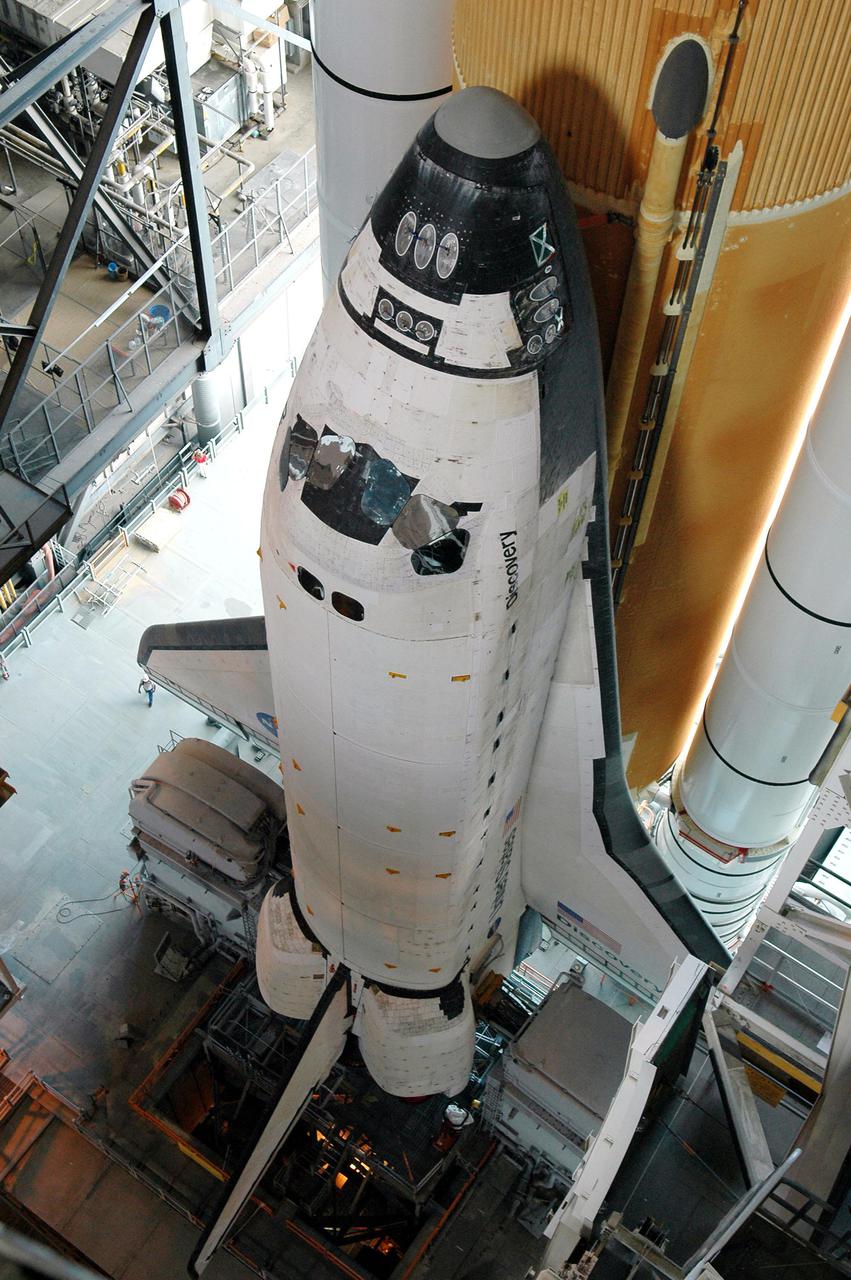
KENNEDY SPACE CENTER, FLA. - In the Vehicle Assembly Building (VAB) at NASA’s Kennedy Space Center, Space Shuttle Discovery is beginning its long, slow journey to Launch Pad 39B. First motion was at 2:04 p.m. EDT. The Shuttle comprises the orbiter, External Tank (ET) and twin Solid Rocket Boosters (SRBs). The Space Shuttle rests on the Mobile Launcher Platform, which is moved by the Crawler-Transporter underneath. The Crawler is 20 feet high, 131 feet long and 114 feet wide. It moves on eight tracks, each containing 57 shoes, or cleats, weighing one ton each. Loaded with the Space Shuttle, the Crawler can move at a maximum speed of approximately 1 mile an hour. A leveling system in the Crawler keeps the Shuttle vertical while negotiating the 5 percent grade leading to the top of the launch pad. Launch of Discovery on its Return to Flight mission, STS-114, is targeted for May 15 with a launch window that extends to June 3. During its 12-day mission, Discovery’s seven-person crew will test new hardware and techniques to improve Shuttle safety, as well as deliver supplies to the International Space Station. Discovery was moved on March 29 from the Orbiter Processing Facility to the VAB and attached to its propulsion elements, a redesigned ET and twin SRBs.
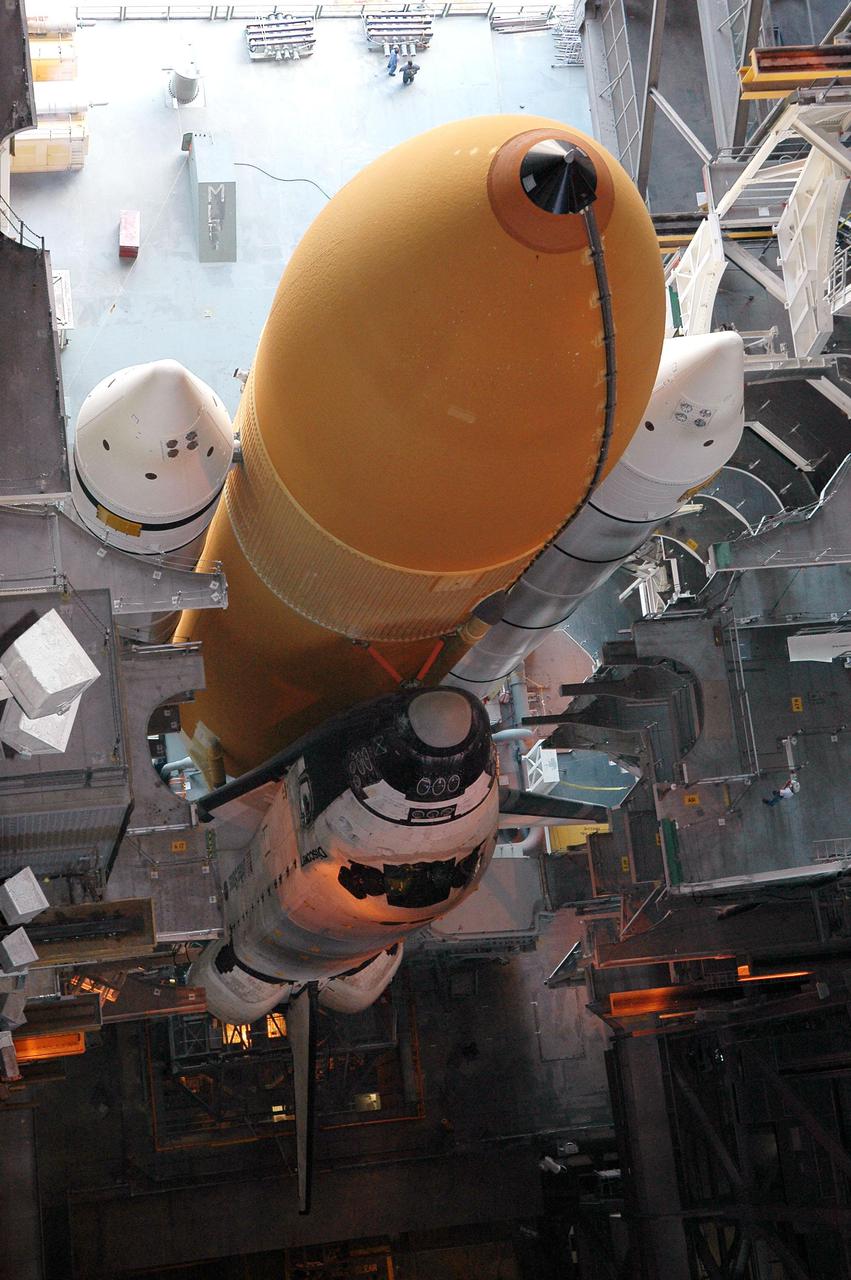
KENNEDY SPACE CENTER, FLA. - The open doors of the Vehicle Assembly Building (VAB) at NASA’s Kennedy Space Center cast light on Space Shuttle Discovery. The Shuttle, which comprises the orbiter, External Tank (ET) and twin Solid Rocket Boosters (SRBs), is beginning its long, slow journey to Launch Pad 39B. First motion was at 2:04 p.m. EDT. The Space Shuttle rests on the Mobile Launcher Platform, which is moved by the Crawler-Transporter underneath. The Crawler is 20 feet high, 131 feet long and 114 feet wide. It moves on eight tracks, each containing 57 shoes, or cleats, weighing one ton each. Loaded with the Space Shuttle, the Crawler can move at a maximum speed of approximately 1 mile an hour. A leveling system in the Crawler keeps the Shuttle vertical while negotiating the 5 percent grade leading to the top of the launch pad. Launch of Discovery on its Return to Flight mission, STS-114, is targeted for May 15 with a launch window that extends to June 3. During its 12-day mission, Discovery’s seven-person crew will test new hardware and techniques to improve Shuttle safety, as well as deliver supplies to the International Space Station. Discovery was moved on March 29 from the Orbiter Processing Facility to the VAB and attached to its propulsion elements, a redesigned ET and twin SRBs.
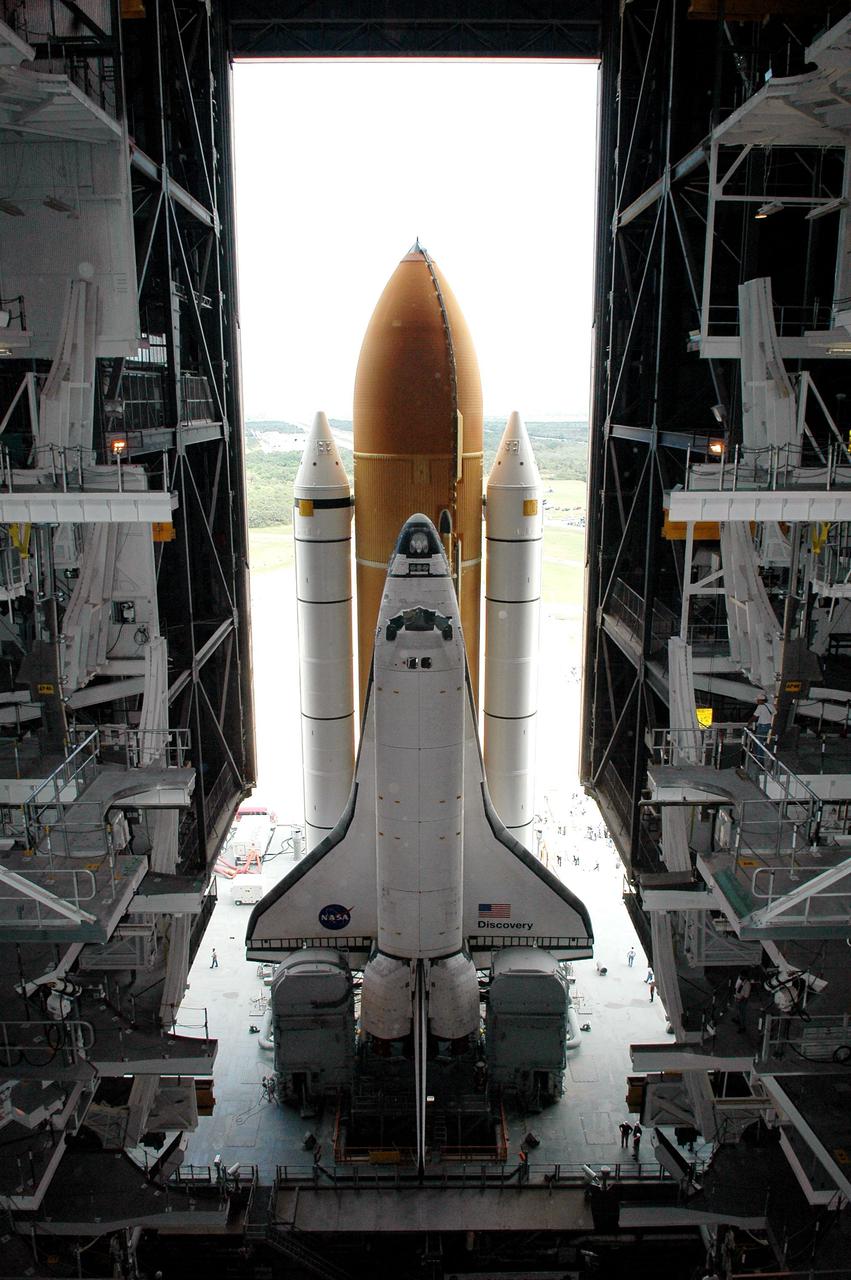
KENNEDY SPACE CENTER, FLA. - In the Vehicle Assembly Building (VAB) at NASA’s Kennedy Space Center, Space Shuttle Discovery is framed in the open doors as it begins its long, slow journey to Launch Pad 39B. First motion was at 2:04 p.m. EDT. The Shuttle comprises the orbiter, External Tank (ET) and twin Solid Rocket Boosters (SRBs). The Space Shuttle rests on the Mobile Launcher Platform, which is moved by the Crawler-Transporter underneath. The Crawler is 20 feet high, 131 feet long and 114 feet wide. It moves on eight tracks, each containing 57 shoes, or cleats, weighing one ton each. Loaded with the Space Shuttle, the Crawler can move at a maximum speed of approximately 1 mile an hour. A leveling system in the Crawler keeps the Shuttle vertical while negotiating the 5 percent grade leading to the top of the launch pad. Launch of Discovery on its Return to Flight mission, STS-114, is targeted for May 15 with a launch window that extends to June 3. During its 12-day mission, Discovery’s seven-person crew will test new hardware and techniques to improve Shuttle safety, as well as deliver supplies to the International Space Station. Discovery was moved on March 29 from the Orbiter Processing Facility to the VAB and attached to its propulsion elements, a redesigned ET and twin SRBs.
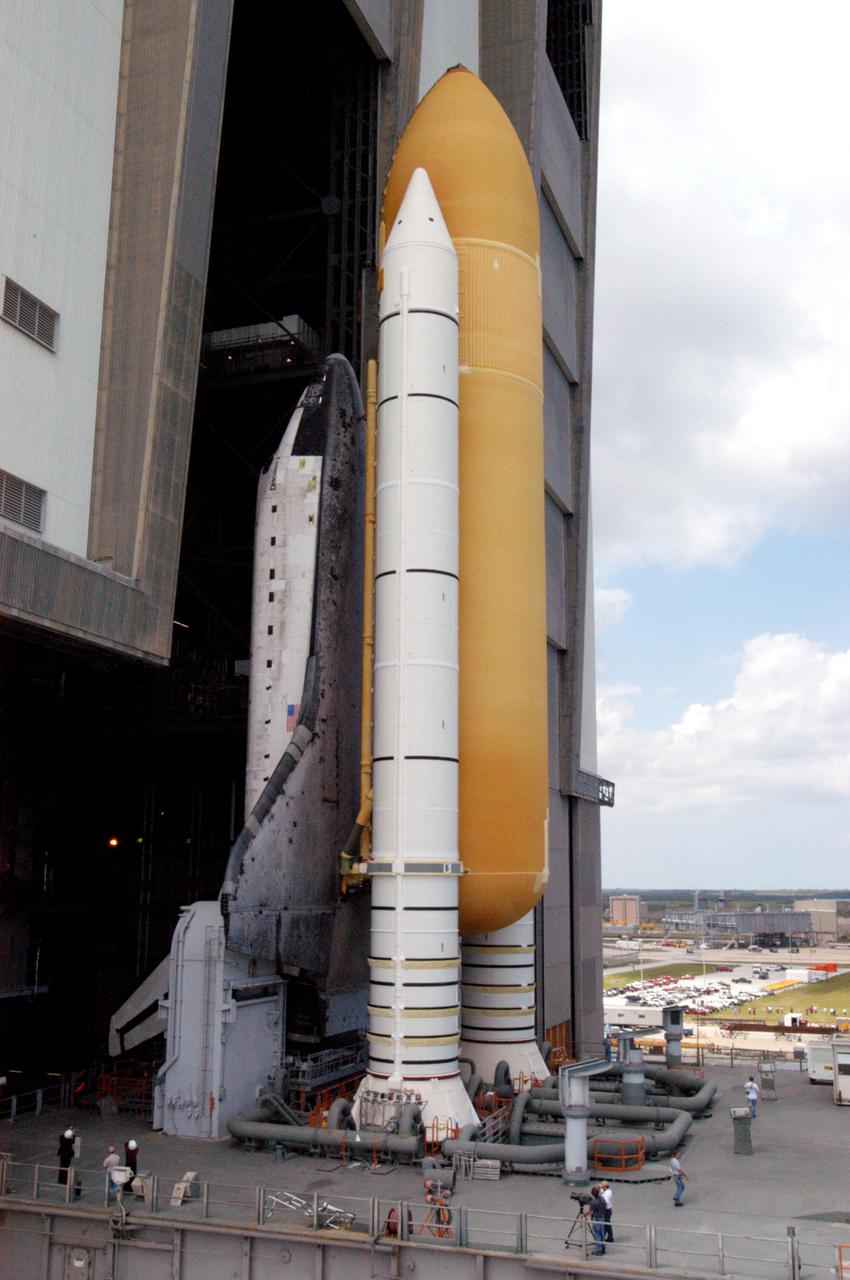
KENNEDY SPACE CENTER, FLA. - Space Shuttle Discovery, atop the Mobile Launcher Platform, slowly rolls out of the Vehicle Assembly Building (VAB) at NASA’s Kennedy Space Center. First motion was at 2:04 p.m. EDT. The Shuttle comprises the orbiter, External Tank (ET) and twin Solid Rocket Boosters (SRBs). The Mobile Launcher Platform moved by the Crawler-Transporter underneath. The Crawler is 20 feet high, 131 feet long and 114 feet wide. It moves on eight tracks, each containing 57 shoes, or cleats, weighing one ton each. Loaded with the Space Shuttle, the Crawler can move at a maximum speed of approximately 1 mile an hour. A leveling system in the Crawler keeps the Shuttle vertical while negotiating the 5 percent grade leading to the top of the launch pad. Launch of Discovery on its Return to Flight mission, STS-114, is targeted for May 15 with a launch window that extends to June 3. During its 12-day mission, Discovery’s seven-person crew will test new hardware and techniques to improve Shuttle safety, as well as deliver supplies to the International Space Station. Discovery was moved on March 29 from the Orbiter Processing Facility to the VAB and attached to its propulsion elements, a redesigned ET and twin SRBs.
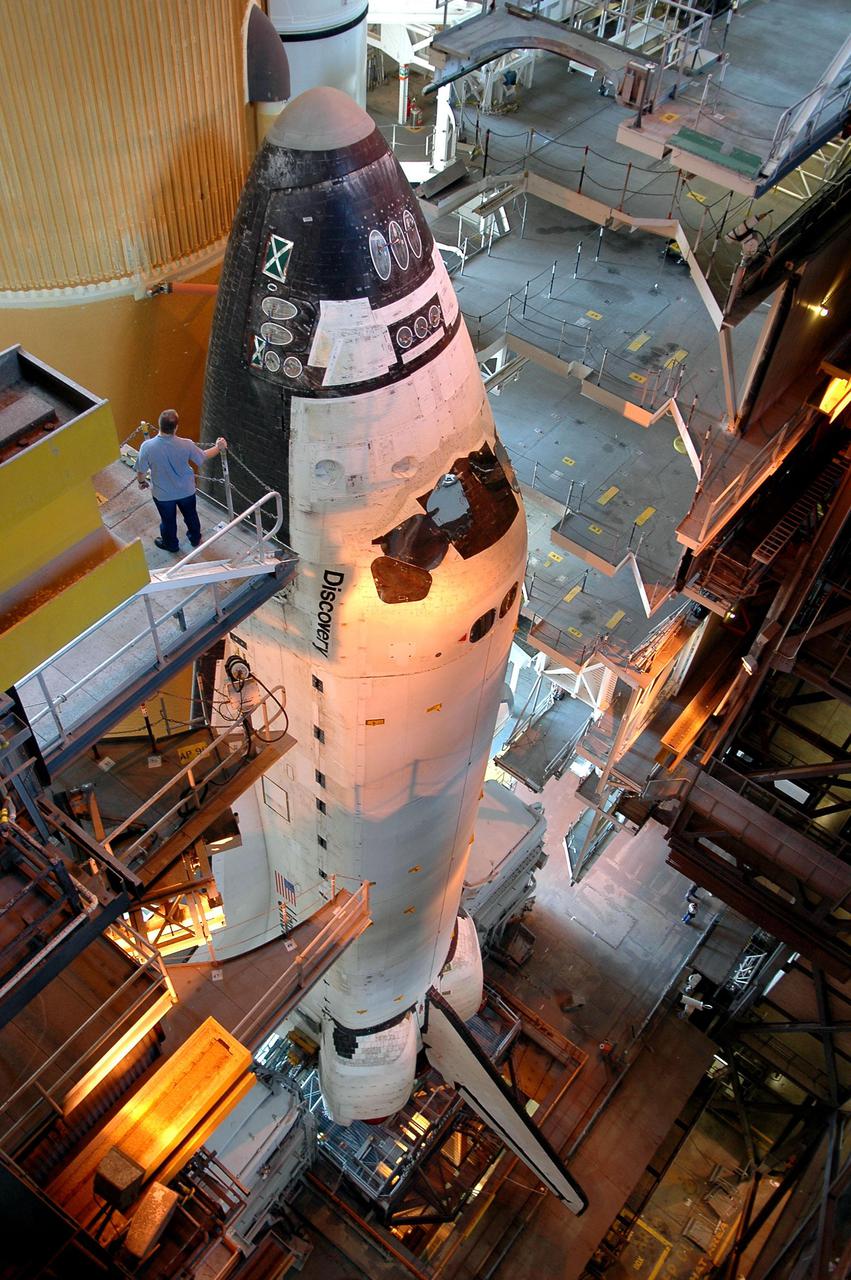
KENNEDY SPACE CENTER, FLA. - In the Vehicle Assembly Building (VAB) at NASA’s Kennedy Space Center, Space Shuttle Discovery begins its long, slow journey to Launch Pad 39B. First motion was at 2:04 p.m. EDT. The Shuttle comprises the orbiter, External Tank (ET) and twin Solid Rocket Boosters (SRBs). The Space Shuttle rests on the Mobile Launcher Platform, which is moved by the Crawler-Transporter underneath. The Crawler is 20 feet high, 131 feet long and 114 feet wide. It moves on eight tracks, each containing 57 shoes, or cleats, weighing one ton each. Loaded with the Space Shuttle, the Crawler can move at a maximum speed of approximately 1 mile an hour. A leveling system in the Crawler keeps the Shuttle vertical while negotiating the 5 percent grade leading to the top of the launch pad. Launch of Discovery on its Return to Flight mission, STS-114, is targeted for May 15 with a launch window that extends to June 3. During its 12-day mission, Discovery’s seven-person crew will test new hardware and techniques to improve Shuttle safety, as well as deliver supplies to the International Space Station. Discovery was moved on March 29 from the Orbiter Processing Facility to the VAB and attached to its propulsion elements, a redesigned ET and twin SRBs.
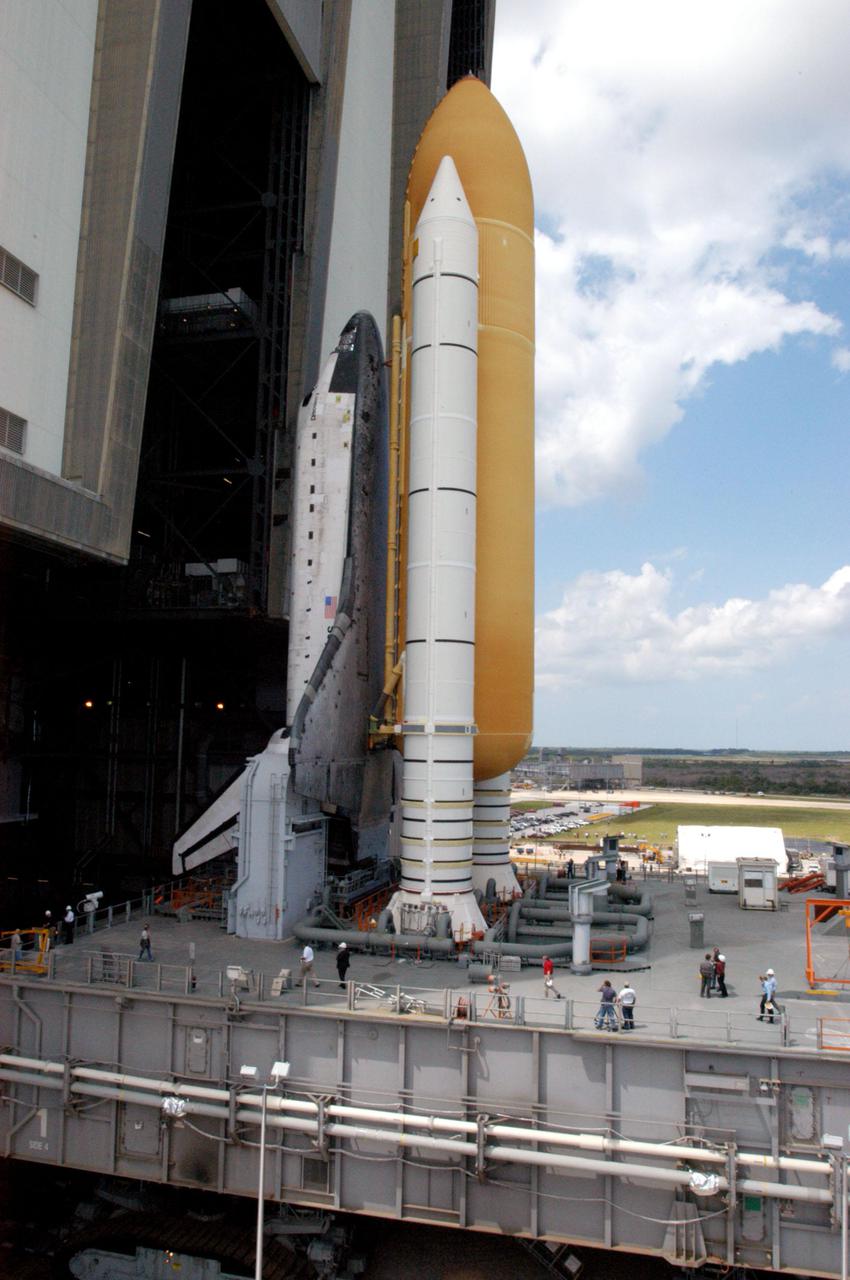
KENNEDY SPACE CENTER, FLA. - Space Shuttle Discovery, atop the Mobile Launcher Platform, slowly rolls out of the Vehicle Assembly Building (VAB) at NASA’s Kennedy Space Center. First motion was at 2:04 p.m. EDT. The Shuttle comprises the orbiter, External Tank (ET) and twin Solid Rocket Boosters (SRBs). The Mobile Launcher Platform moved by the Crawler-Transporter underneath. The Crawler is 20 feet high, 131 feet long and 114 feet wide. It moves on eight tracks, each containing 57 shoes, or cleats, weighing one ton each. Loaded with the Space Shuttle, the Crawler can move at a maximum speed of approximately 1 mile an hour. A leveling system in the Crawler keeps the Shuttle vertical while negotiating the 5 percent grade leading to the top of the launch pad. Launch of Discovery on its Return to Flight mission, STS-114, is targeted for May 15 with a launch window that extends to June 3. During its 12-day mission, Discovery’s seven-person crew will test new hardware and techniques to improve Shuttle safety, as well as deliver supplies to the International Space Station. Discovery was moved on March 29 from the Orbiter Processing Facility to the VAB and attached to its propulsion elements, a redesigned ET and twin SRBs.
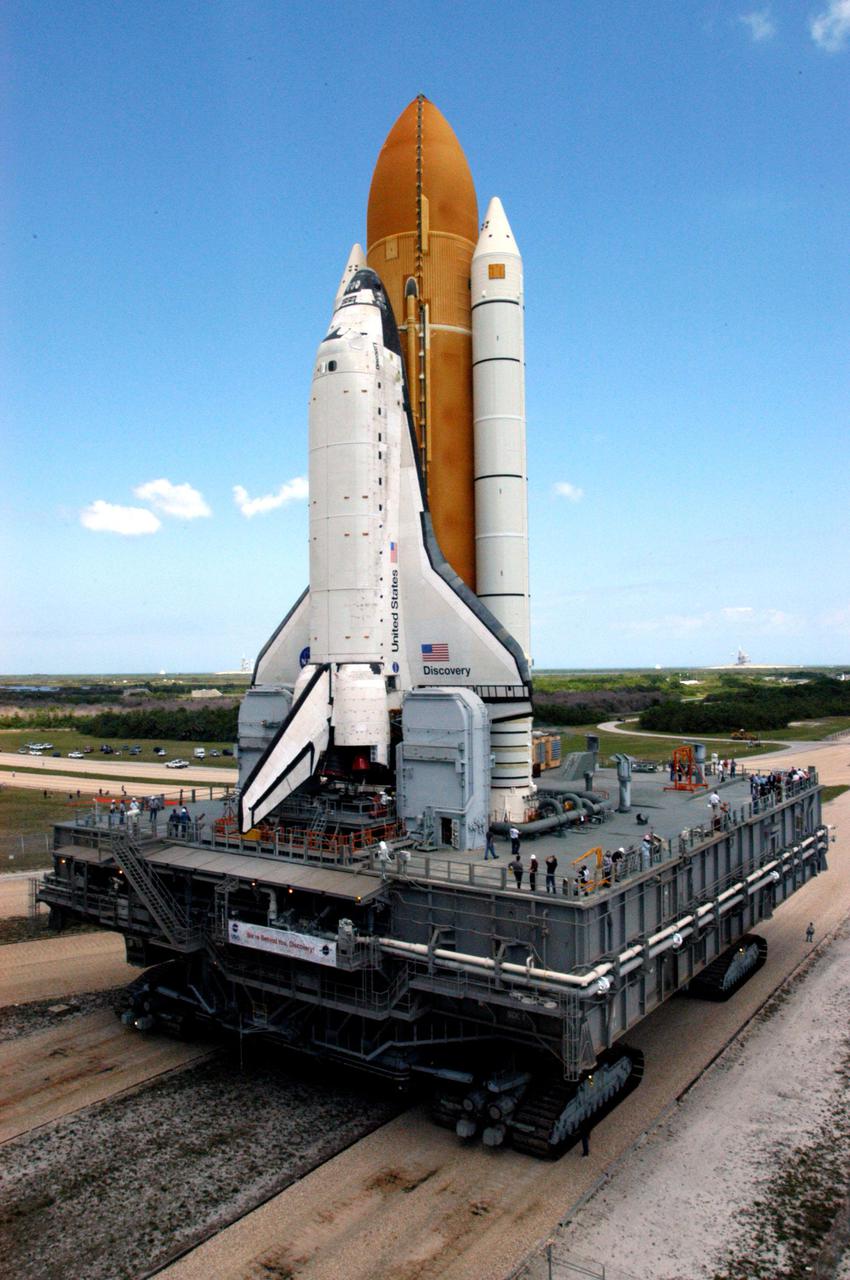
KENNEDY SPACE CENTER, FLA. - Under brilliant-blue Florida skies, Space Shuttle Discovery, atop the Mobile Launcher Platform, is on its way to Launch Pad 39B at NASA’s Kennedy Space Center. First motion out of the Vehicle Assembly Building (VAB) was at 2:04 p.m. EDT. The Shuttle comprises the orbiter, External Tank (ET) and twin Solid Rocket Boosters (SRBs). The Mobile Launcher Platform moved by the Crawler-Transporter underneath. The Crawler is 20 feet high, 131 feet long and 114 feet wide. It moves on eight tracks, each containing 57 shoes, or cleats, weighing one ton each. Loaded with the Space Shuttle, the Crawler can move at a maximum speed of approximately 1 mile an hour. A leveling system in the Crawler keeps the Shuttle vertical while negotiating the 5 percent grade leading to the top of the launch pad. Launch of Discovery on its Return to Flight mission, STS-114, is targeted for May 15 with a launch window that extends to June 3. During its 12-day mission, Discovery’s seven-person crew will test new hardware and techniques to improve Shuttle safety, as well as deliver supplies to the International Space Station. Discovery was moved on March 29 from the Orbiter Processing Facility to the VAB and attached to its propulsion elements, a redesigned ET and twin SRBs.
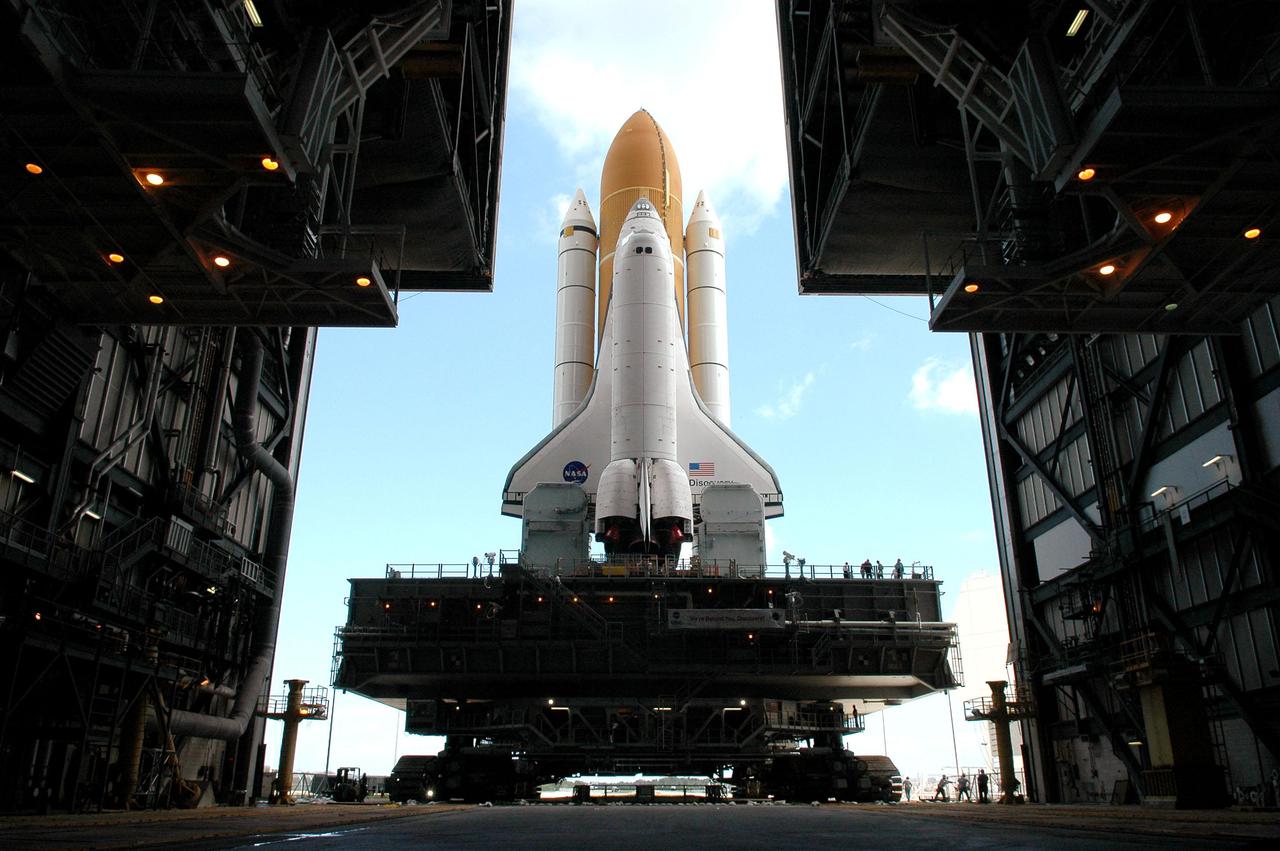
KENNEDY SPACE CENTER, FLA. - Framed in the open doors of the Vehicle Assembly Building (VAB) at NASA’s Kennedy Space Center, Space Shuttle Discovery meets the light of day as it begins its long, slow journey to Launch Pad 39B. First motion was at 2:04 p.m. EDT. The Shuttle comprises the orbiter, External Tank (ET) and twin Solid Rocket Boosters (SRBs). The Space Shuttle rests on the Mobile Launcher Platform, which is moved by the Crawler-Transporter underneath. The Crawler is 20 feet high, 131 feet long and 114 feet wide. It moves on eight tracks, each containing 57 shoes, or cleats, weighing one ton each. Loaded with the Space Shuttle, the Crawler can move at a maximum speed of approximately 1 mile an hour. A leveling system in the Crawler keeps the Shuttle vertical while negotiating the 5 percent grade leading to the top of the launch pad. Launch of Discovery on its Return to Flight mission, STS-114, is targeted for May 15 with a launch window that extends to June 3. During its 12-day mission, Discovery’s seven-person crew will test new hardware and techniques to improve Shuttle safety, as well as deliver supplies to the International Space Station. Discovery was moved on March 29 from the Orbiter Processing Facility to the VAB and attached to its propulsion elements, a redesigned ET and twin SRBs.
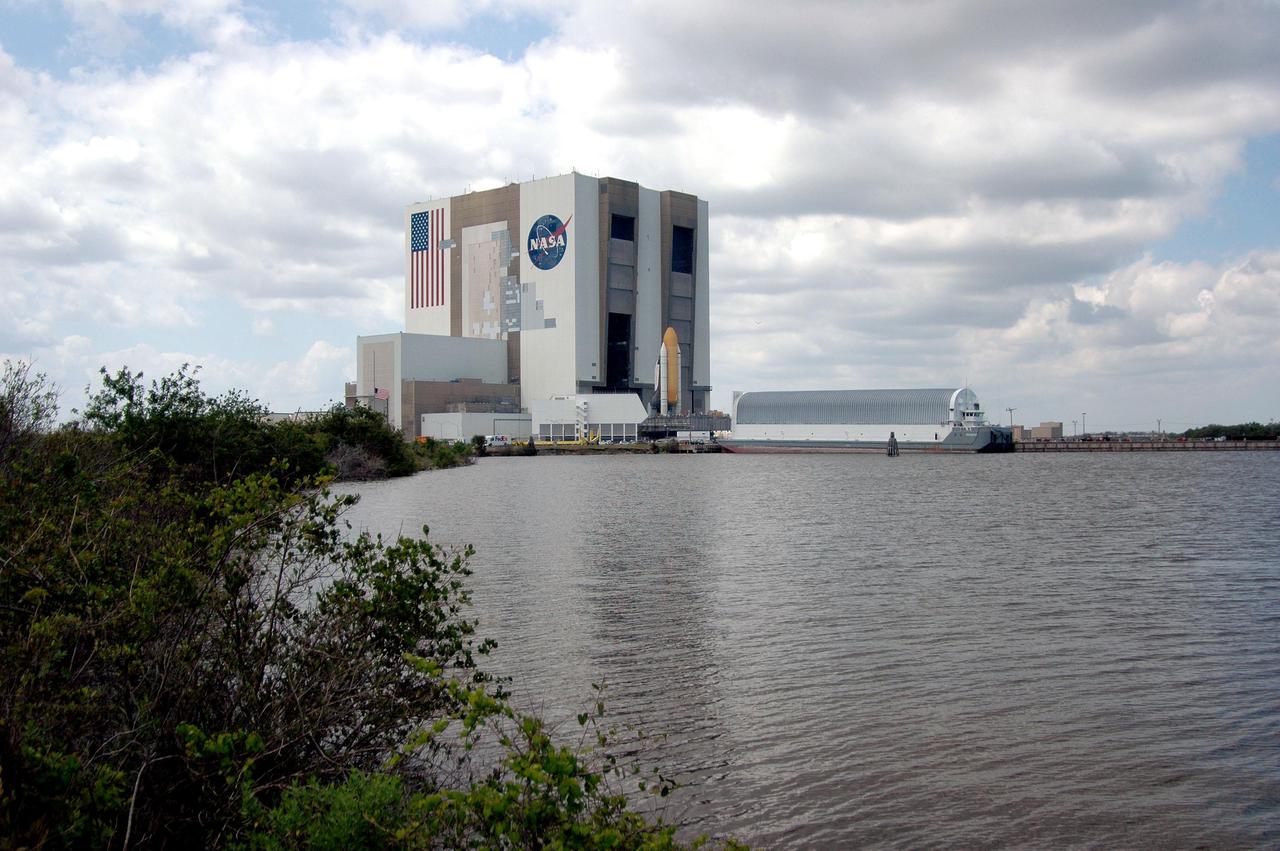
KENNEDY SPACE CENTER, FLA. - Across the Turn Basin at NASA’s Kennedy Space Center looms the Vehicle Assembly Building (VAB). In front of the massive doors is Space Shuttle Discovery, atop the Mobile Launcher Platform, wending its way slowly to Launch Pad 39B. First motion out of the VAB was at 2:04 p.m. EDT. The Mobile Launcher Platform is moved by the Crawler-Transporter underneath. The Crawler is 20 feet high, 131 feet long and 114 feet wide. It moves on eight tracks, each containing 57 shoes, or cleats, weighing one ton each. Loaded with the Space Shuttle, the Crawler can move at a maximum speed of approximately 1 mile an hour. A leveling system in the Crawler keeps the Shuttle vertical while negotiating the 5 percent grade leading to the top of the launch pad. Launch of Discovery on its Return to Flight mission, STS-114, is targeted for May 15 with a launch window that extends to June 3. During its 12-day mission, Discovery’s seven-person crew will test new hardware and techniques to improve Shuttle safety, as well as deliver supplies to the International Space Station. Discovery was moved on March 29 from the Orbiter Processing Facility to the VAB and attached to its propulsion elements, a redesigned ET and twin SRBs.
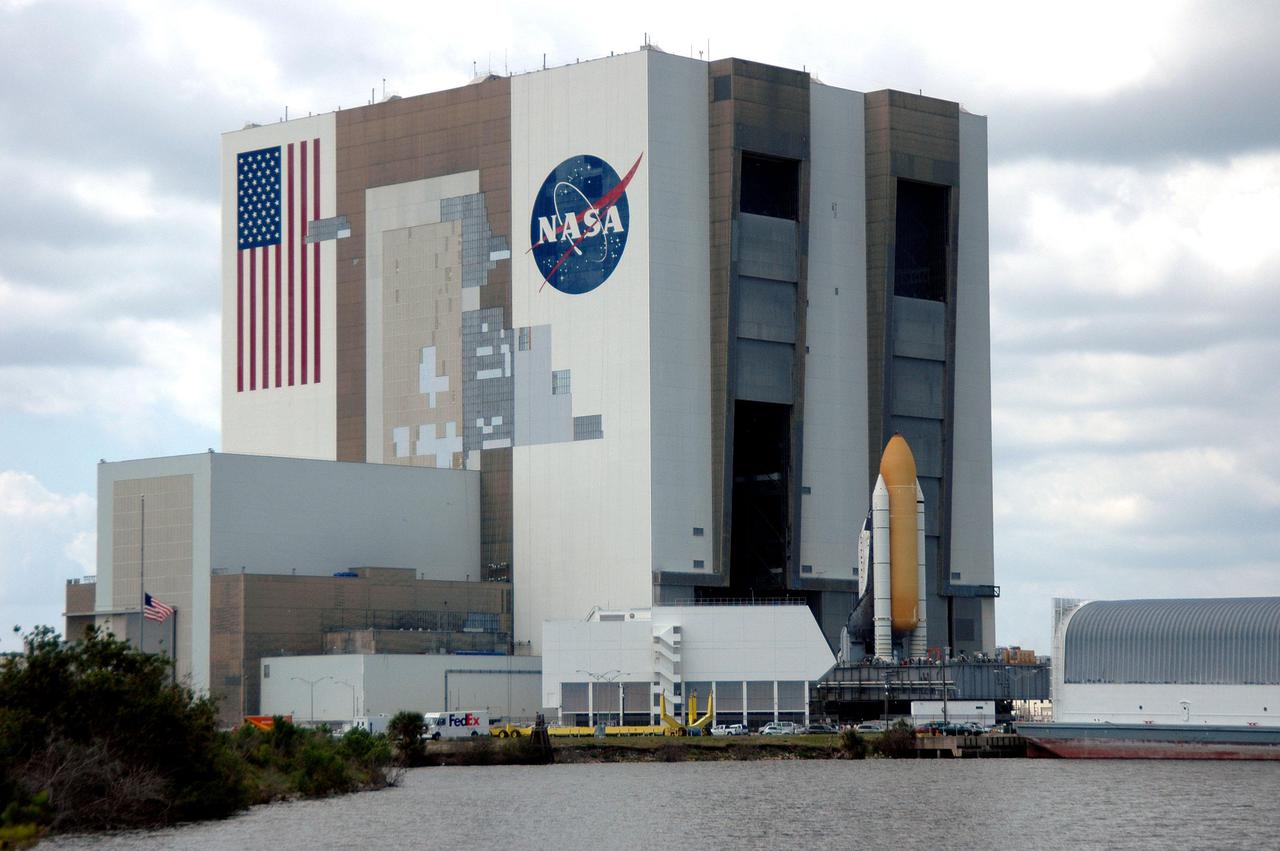
KENNEDY SPACE CENTER, FLA. - Space Shuttle Discovery, atop the Mobile Launcher Platform, has left the Vehicle Assembly Building (VAB) on its way to Launch Pad 39B. First motion out of the VAB was at 2:04 p.m. EDT. The Mobile Launcher Platform is moved by the Crawler-Transporter underneath. The Crawler is 20 feet high, 131 feet long and 114 feet wide. It moves on eight tracks, each containing 57 shoes, or cleats, weighing one ton each. Loaded with the Space Shuttle, the Crawler can move at a maximum speed of approximately 1 mile an hour. A leveling system in the Crawler keeps the Shuttle vertical while negotiating the 5 percent grade leading to the top of the launch pad. Launch of Discovery on its Return to Flight mission, STS-114, is targeted for May 15 with a launch window that extends to June 3. During its 12-day mission, Discovery’s seven-person crew will test new hardware and techniques to improve Shuttle safety, as well as deliver supplies to the International Space Station. Discovery was moved on March 29 from the Orbiter Processing Facility to the VAB and attached to its propulsion elements, a redesigned ET and twin SRBs.
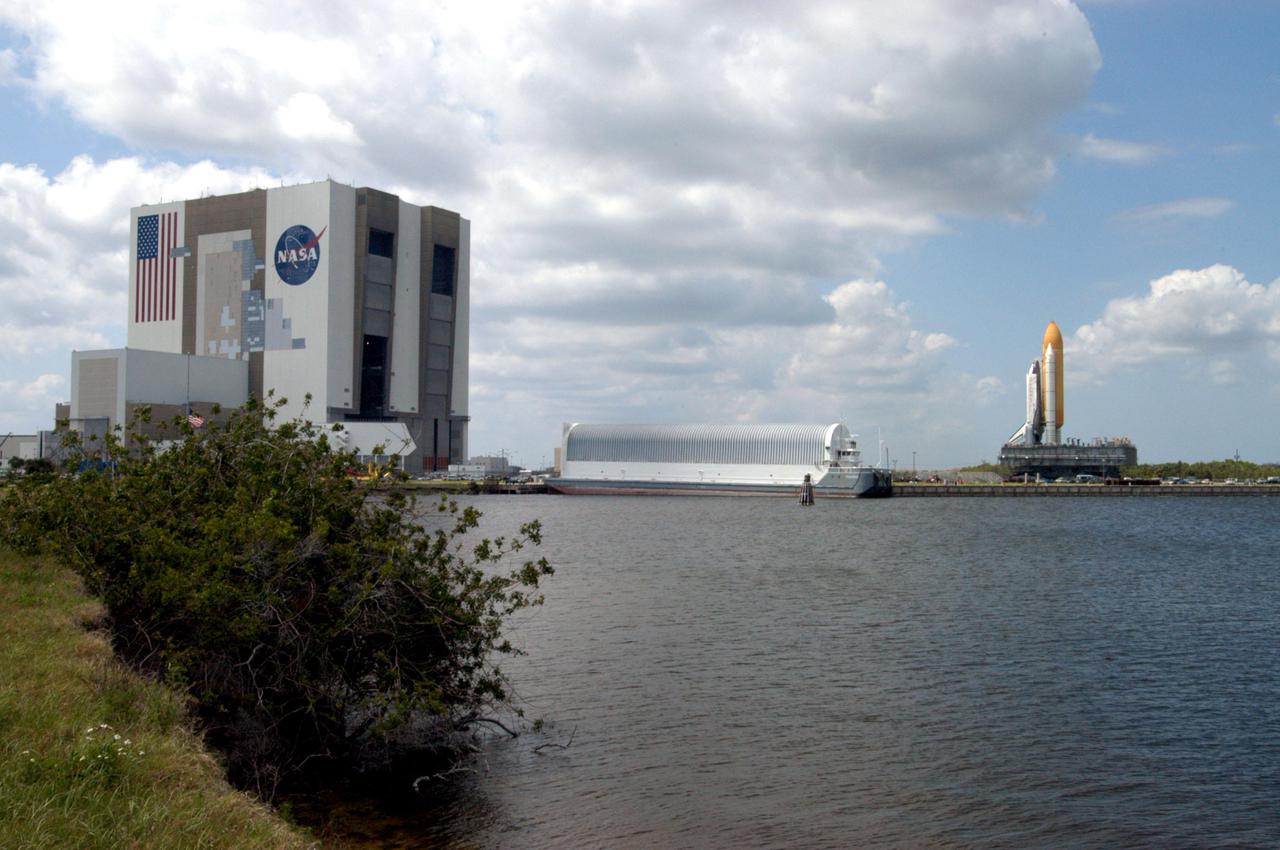
KENNEDY SPACE CENTER, FLA. - Across the Turn Basin is seen the Vehicle Assembly Building (VAB (at left), the Launch Control Center (middle), and Space Shuttle Discovery (at right). First motion of the Shuttle out of the VAB was at 2:04 p.m. EDT. Atop the Mobile Launcher Platform, the Shuttle is on its way to Launch Pad 39B, marking a major milestone in Return to Flight. The Mobile Launcher Platform is moved by the Crawler-Transporter underneath. The Crawler is 20 feet high, 131 feet long and 114 feet wide. It moves on eight tracks, each containing 57 shoes, or cleats, weighing one ton each. Loaded with the Space Shuttle, the Crawler can move at a maximum speed of approximately 1 mile an hour. A leveling system in the Crawler keeps the Shuttle vertical while negotiating the 5 percent grade leading to the top of the launch pad. Launch of Discovery on its Return to Flight mission, STS-114, is targeted for May 15 with a launch window that extends to June 3. During its 12-day mission, Discovery’s seven-person crew will test new hardware and techniques to improve Shuttle safety, as well as deliver supplies to the International Space Station. Discovery was moved on March 29 from the Orbiter Processing Facility to the VAB and attached to its propulsion elements, a redesigned ET and twin SRBs.
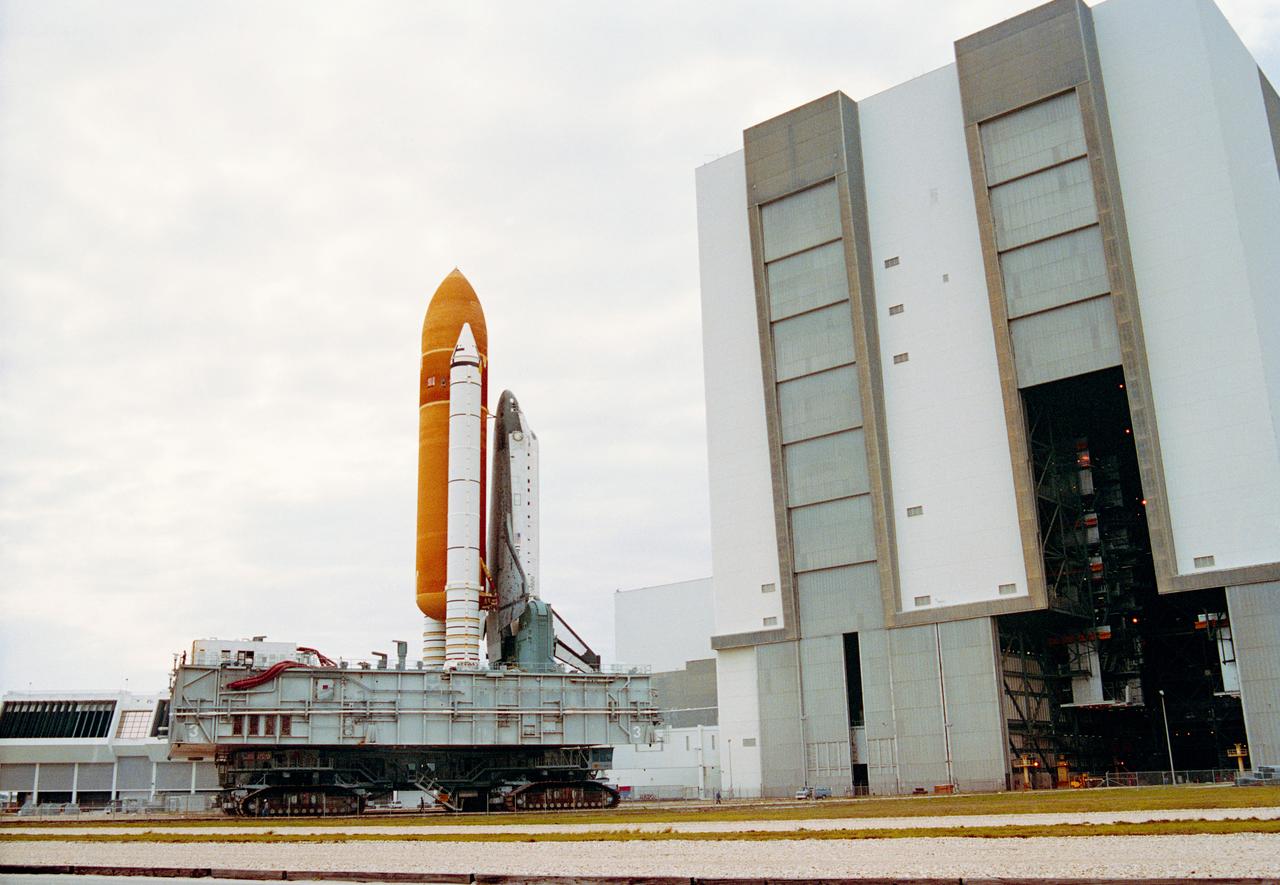
S93-29846 (2 Feb 1993) --- The orbiter Columbia is rolled out of the Vehicle Assembly Building (VAB). Having completed its assembly with the external tank and solid rocket boosters, the Space Shuttle will be rolled out to Launch Pad 39A, where it is targeted for liftoff on Space Shuttle Mission STS-55 in late February.
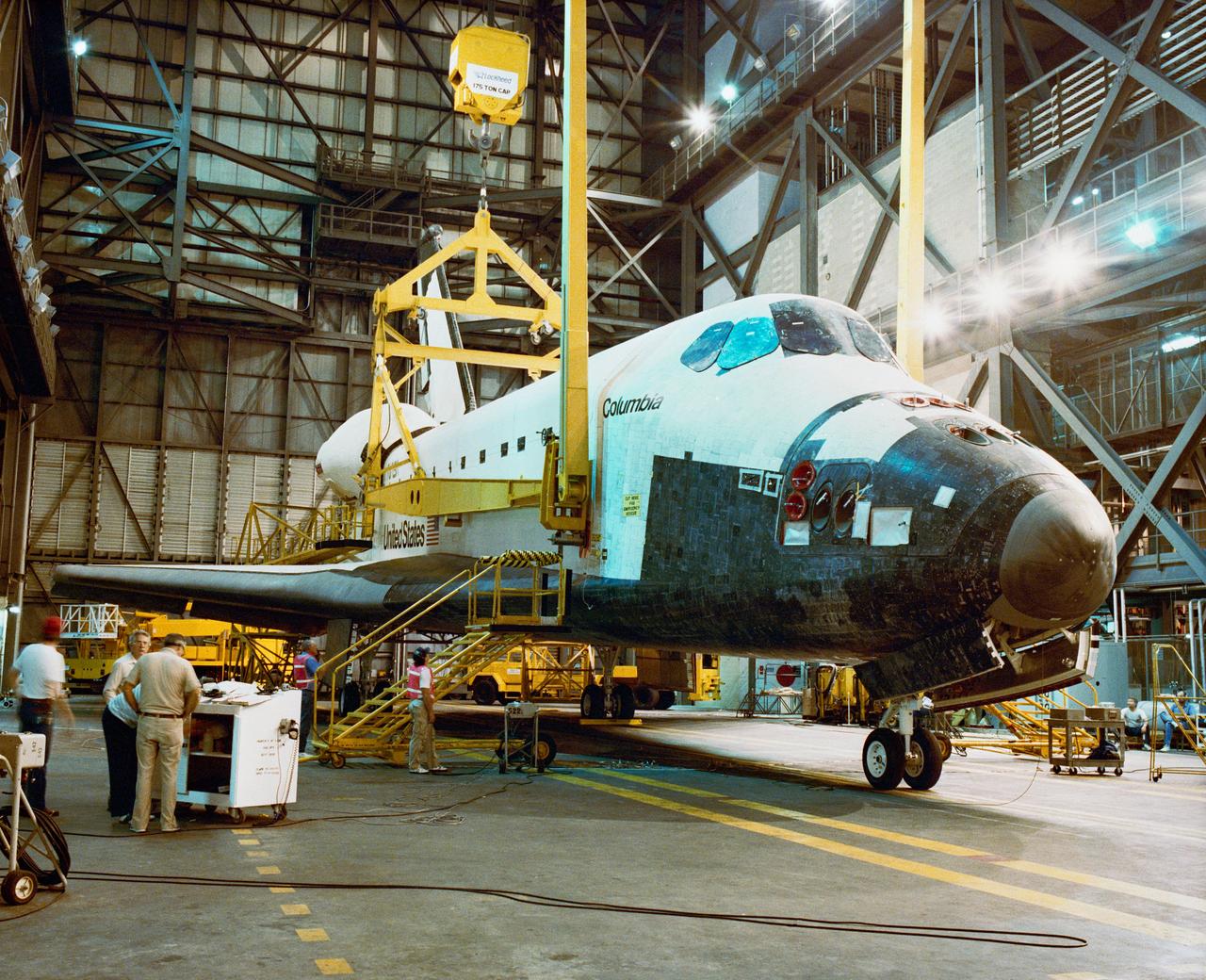
S89-39624 (3 July 1989) --- Following rollover from the Orbiter Processing Facility, the orbiter Columbia is prepared for mating with the ET/SRB stack in the Vehicle Assembly Building transfer aisle as work continues toward an early August launch of Space Shuttle Mission STS-28. STS-28 is a Department of Defense dedicated mission. Crew members for the mission are: Commander Brewster H. Shaw, Pilot Richard N. Richards, and Mission Specialists Mark N. Brown, James C. Adamson, and David C. Leestma.
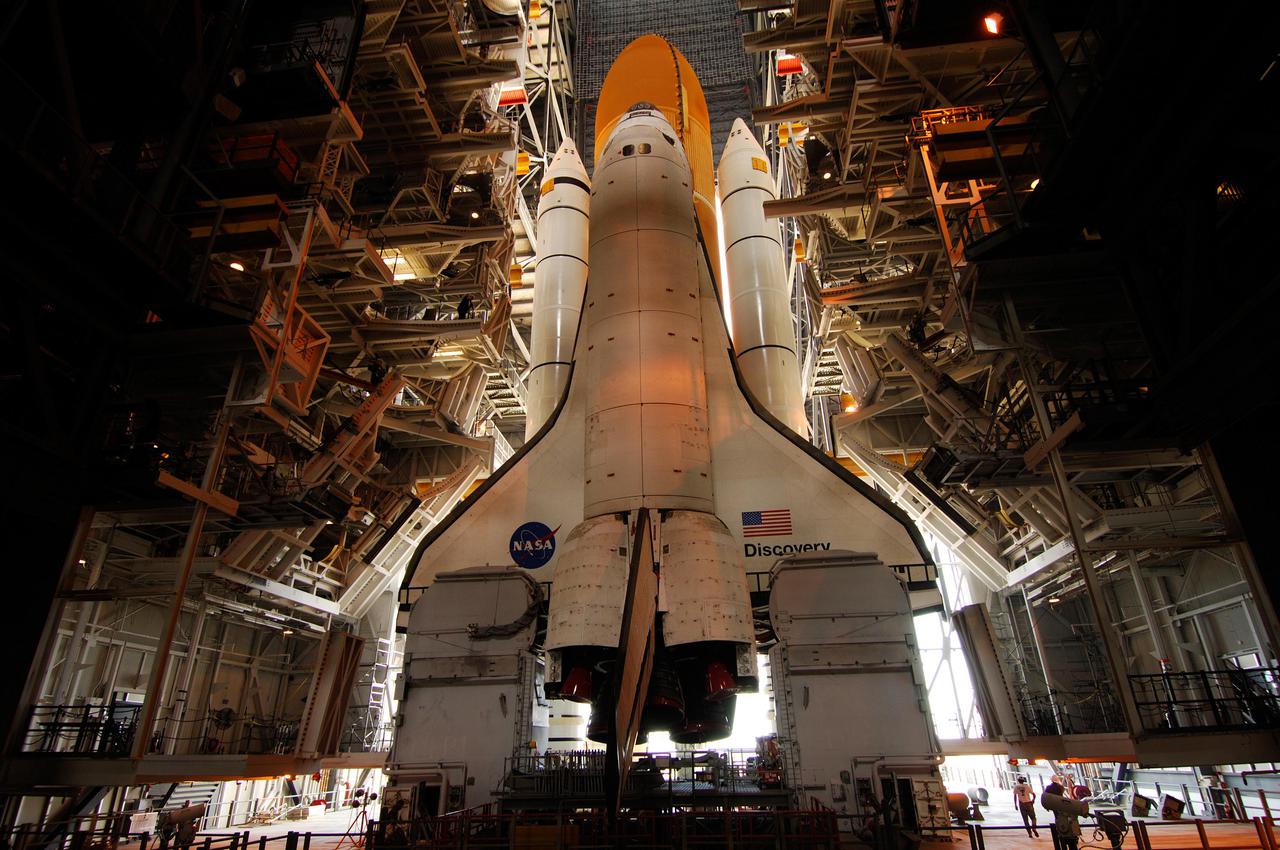
KENNEDY SPACE CENTER, FLA. - Daylight entering through the open doors of the Vehicle Assembly Building (VAB) illuminates the Space Shuttle Discovery in the high bay where it was mated to its External Tank (ET) and twin Solid Rocket Boosters (SRBs). First motion on its long, slow journey to Launch Pad 39B was at 2:04 p.m. EDT. The Space Shuttle rests on a Mobile Launcher Platform, which is moved by a Crawler-Transporter underneath. Loaded with the Space Shuttle, the Crawler can move at a maximum speed of approximately 1 mile an hour. Launch of Discovery on its Return to Flight mission, STS-114, is targeted for May 15 with a launch window that extends to June 3. During its 12-day mission, Discovery’s seven-member crew will test new hardware and techniques to improve Shuttle safety, as well as deliver supplies to the International Space Station. Photo courtesy of Scott Andrews.
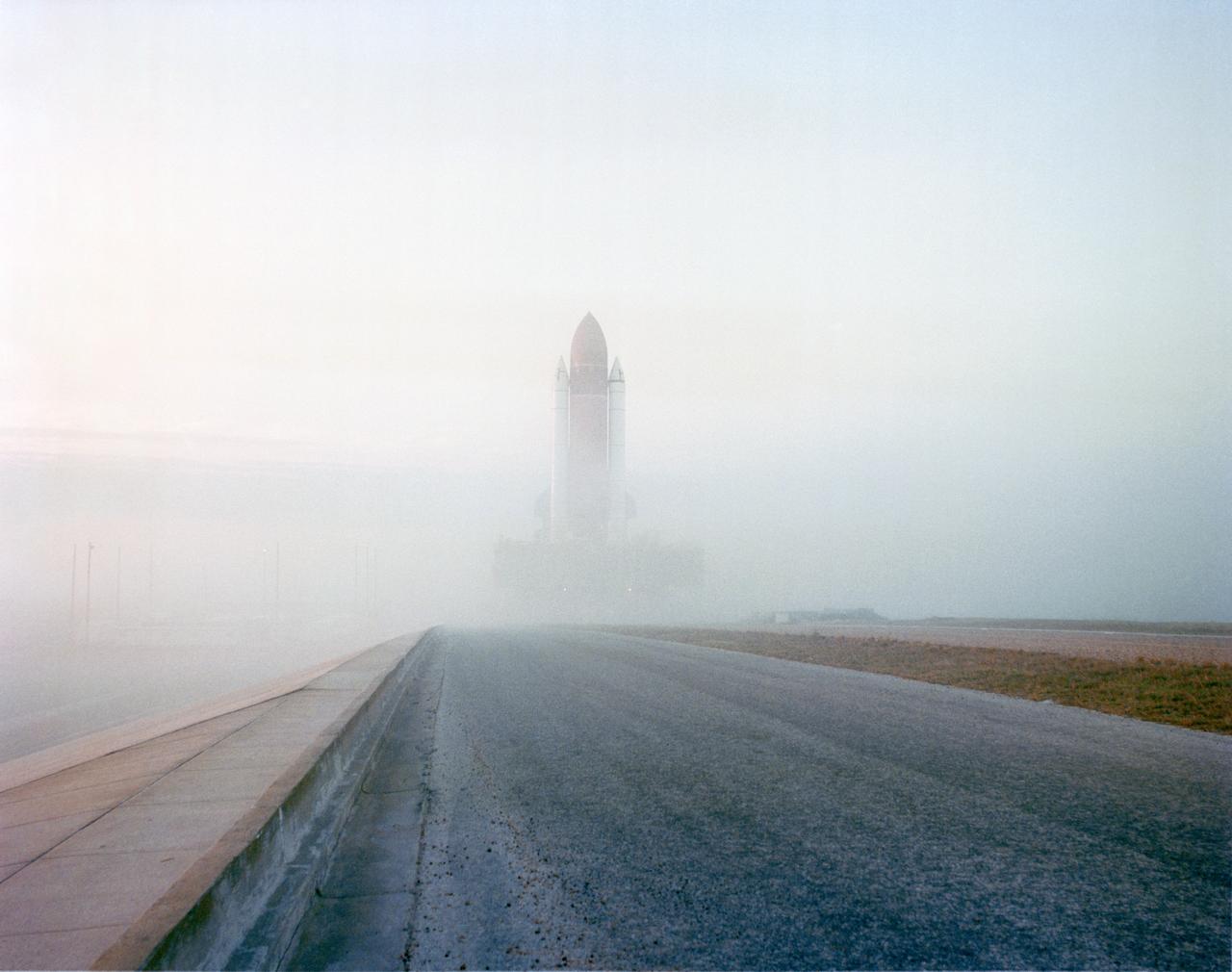
STS-32 Columbia, Orbiter Vehicle (OV) 102, rolls through the morning's foggy mist atop the mobile launcher platform and crawler transporter to Kennedy Space Center (KSC) Launch Complex (LC) Pad 39A. OV-102's wings appear on either side of the two solid rocket boosters (SRBs) and external tank (ET). Rollout from the Vehicle Assembly Building (VAB) began at 2:32 am Eastern Standard Time (EST), and OV-102 was on the pad pedestals about 8 hours later. This marks the first time a Space Shuttle has been at LC Pad 39A since 01-12-85 when OV-102 was launched on mission 61C. View provided by KSC with alternate number KSC-89PC-1259.
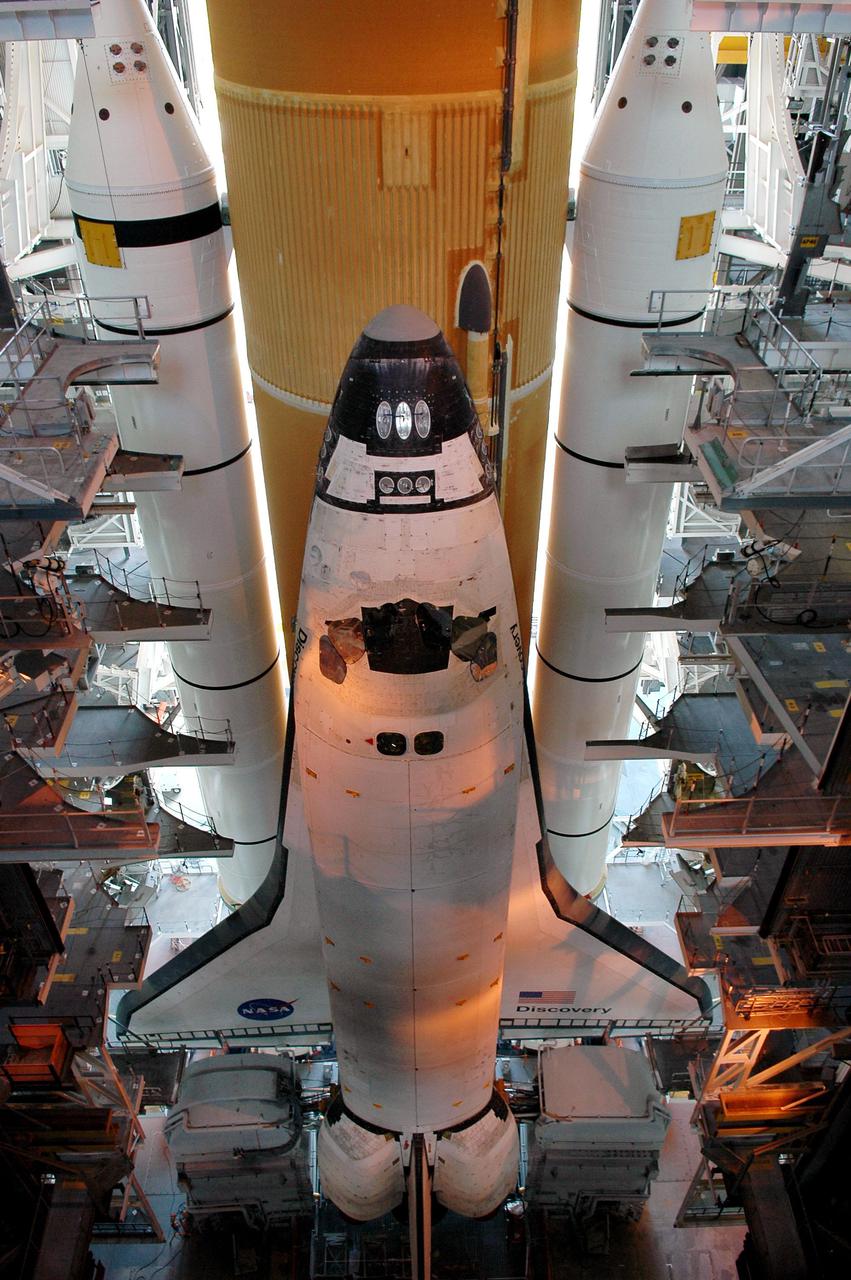
KENNEDY SPACE CENTER, FLA. - The open doors of the Vehicle Assembly Building (VAB) at NASA’s Kennedy Space Center shed a light border around the External Tank on Space Shuttle Discovery. The Shuttle, which comprises the orbiter, External Tank (ET) and twin Solid Rocket Boosters (SRBs), is beginning its long, slow journey to Launch Pad 39B. First motion was at 2:04 p.m. EDT. The Space Shuttle rests on the Mobile Launcher Platform, which is moved by the Crawler-Transporter underneath. The Crawler is 20 feet high, 131 feet long and 114 feet wide. It moves on eight tracks, each containing 57 shoes, or cleats, weighing one ton each. Loaded with the Space Shuttle, the Crawler can move at a maximum speed of approximately 1 mile an hour. A leveling system in the Crawler keeps the Shuttle vertical while negotiating the 5 percent grade leading to the top of the launch pad. Launch of Discovery on its Return to Flight mission, STS-114, is targeted for May 15 with a launch window that extends to June 3. During its 12-day mission, Discovery’s seven-person crew will test new hardware and techniques to improve Shuttle safety, as well as deliver supplies to the International Space Station. Discovery was moved on March 29 from the Orbiter Processing Facility to the VAB and attached to its propulsion elements, a redesigned ET and twin SRBs.
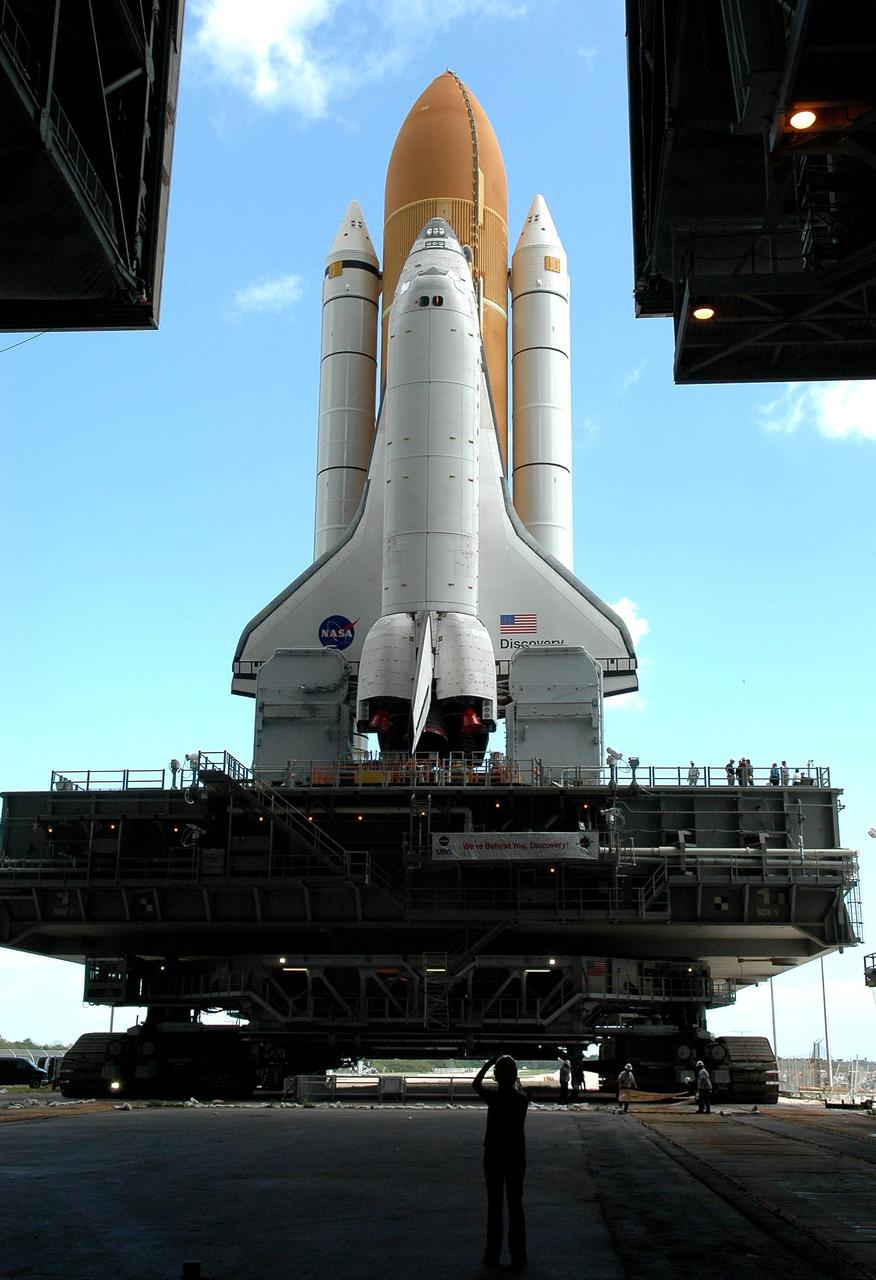
KENNEDY SPACE CENTER, FLA. - Framed in the open doors of the Vehicle Assembly Building (VAB) at NASA’s Kennedy Space Center, Space Shuttle Discovery is bathed in light as it begins its long, slow journey to Launch Pad 39B. The Space Shuttle rests on the Mobile Launcher Platform, which is moved by the Crawler-Transporter underneath. The Crawler is 20 feet high, 131 feet long and 114 feet wide. It moves on eight tracks, each containing 57 shoes, or cleats, weighing one ton each. Loaded with the Space Shuttle, the Crawler can move at a maximum speed of approximately 1 mile an hour. A leveling system in the Crawler keeps the Shuttle vertical while negotiating the 5 percent grade leading to the top of the launch pad. Launch of Discovery on its Return to Flight mission, STS-114, is targeted for May 15 with a launch window that extends to June 3. During its 12-day mission, Discovery’s seven-person crew will test new hardware and techniques to improve Shuttle safety, as well as deliver supplies to the International Space Station. Discovery was moved on March 29 from the Orbiter Processing Facility to the VAB and attached to its propulsion elements, a redesigned ET and twin SRBs.
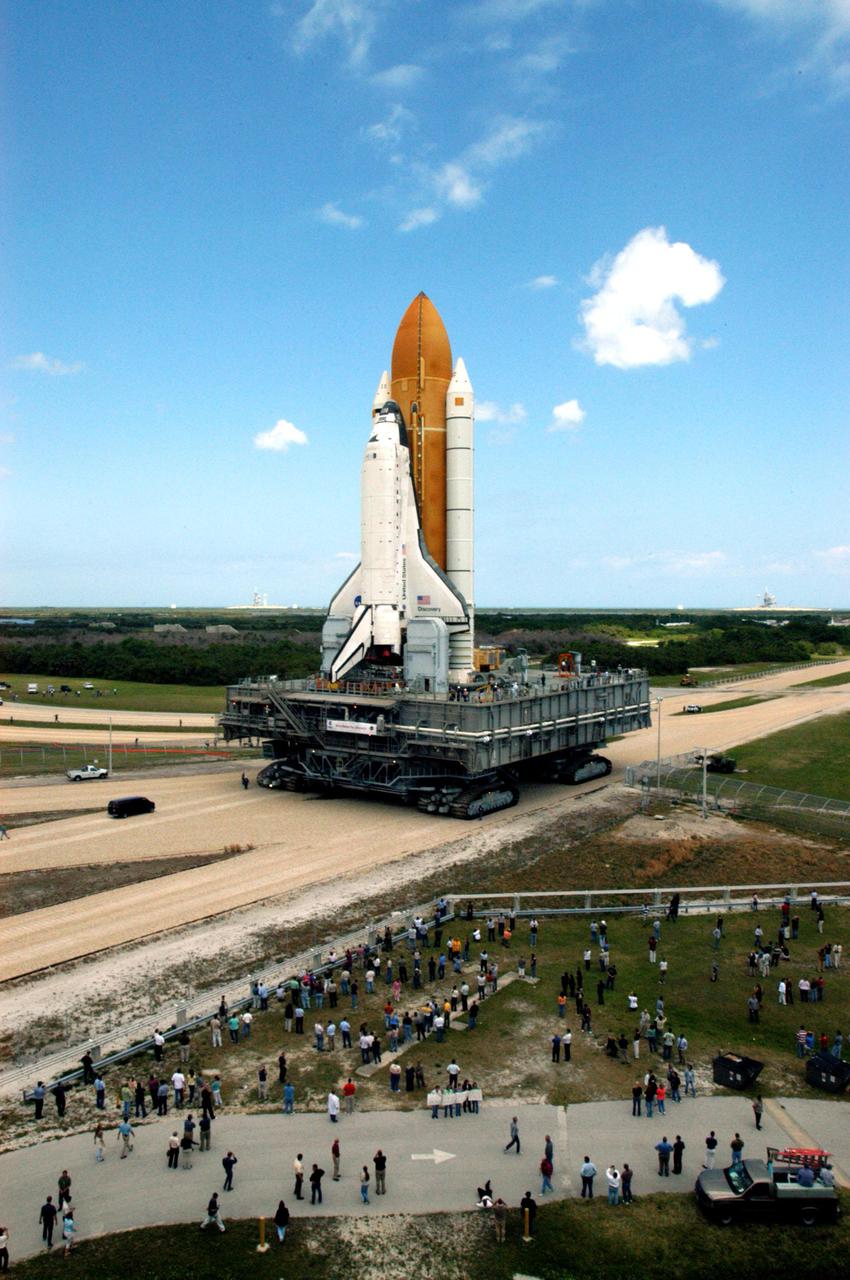
KENNEDY SPACE CENTER, FLA. - As Space Shuttle Discovery creeps along the crawlerway toward the horizon, and Launch Pad 39B at NASA’s Kennedy Space Center, media and workers in the foreground appear as ants. First motion of the Shuttle out of the Vehicle Assembly Building (VAB) was at 2:04 p.m. EDT. The Mobile Launcher Platform is moved by the Crawler-Transporter underneath. The Crawler is 20 feet high, 131 feet long and 114 feet wide. It moves on eight tracks, each containing 57 shoes, or cleats, weighing one ton each. Loaded with the Space Shuttle, the Crawler can move at a maximum speed of approximately 1 mile an hour. A leveling system in the Crawler keeps the Shuttle vertical while negotiating the 5 percent grade leading to the top of the launch pad. Launch of Discovery on its Return to Flight mission, STS-114, is targeted for May 15 with a launch window that extends to June 3. During its 12-day mission, Discovery’s seven-person crew will test new hardware and techniques to improve Shuttle safety, as well as deliver supplies to the International Space Station. Discovery was moved on March 29 from the Orbiter Processing Facility to the VAB and attached to its propulsion elements, a redesigned ET and twin SRBs.
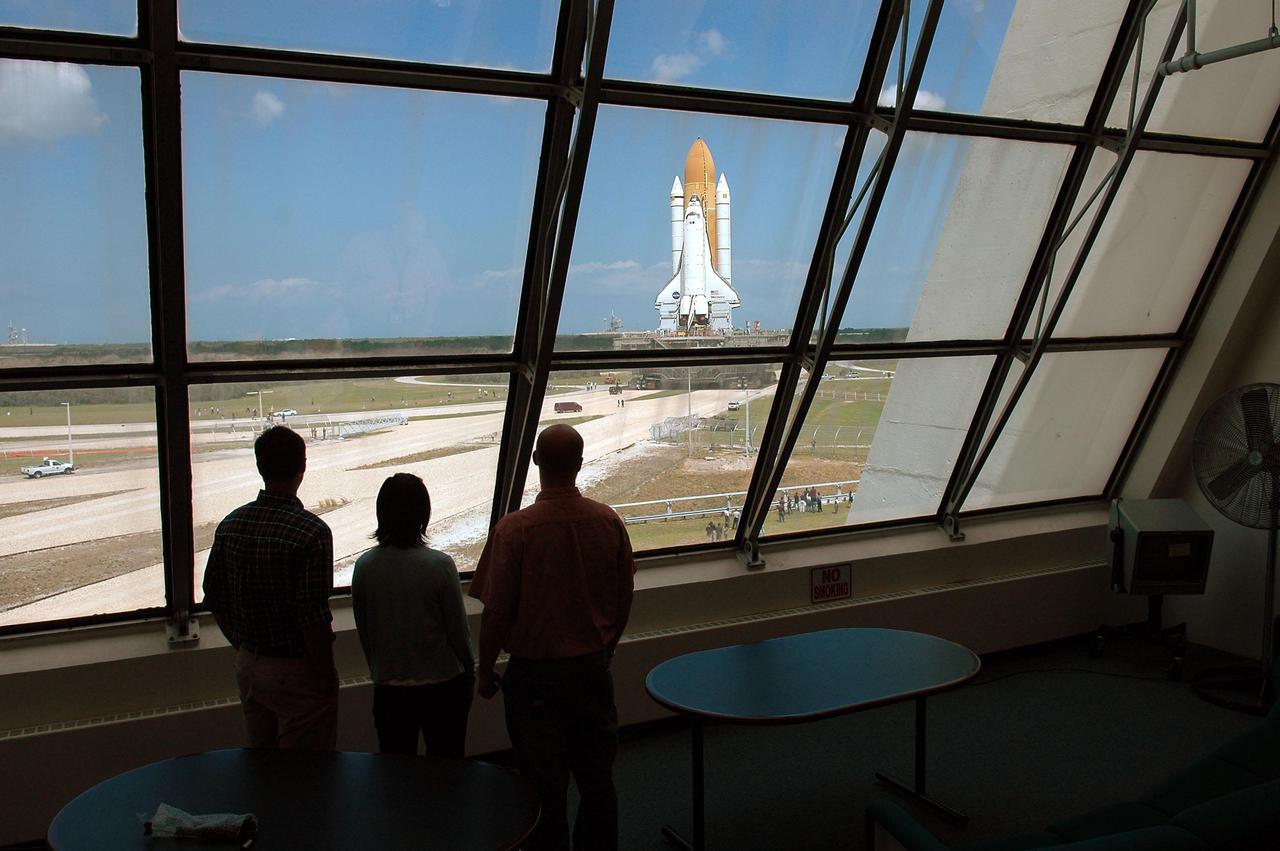
KENNEDY SPACE CENTER, FLA. - From inside the viewing room of the Launch Control Center, KSC employees watch Space Shuttle Discovery as it creeps along the crawlerway toward the horizon, and Launch Pad 39B at NASA’s Kennedy Space Center. First motion of the Shuttle out of the Vehicle Assembly Building (VAB) was at 2:04 p.m. EDT. The Mobile Launcher Platform is moved by the Crawler-Transporter underneath. The Crawler is 20 feet high, 131 feet long and 114 feet wide. It moves on eight tracks, each containing 57 shoes, or cleats, weighing one ton each. Loaded with the Space Shuttle, the Crawler can move at a maximum speed of approximately 1 mile an hour. A leveling system in the Crawler keeps the Shuttle vertical while negotiating the 5 percent grade leading to the top of the launch pad. Launch of Discovery on its Return to Flight mission, STS-114, is targeted for May 15 with a launch window that extends to June 3. During its 12-day mission, Discovery’s seven-person crew will test new hardware and techniques to improve Shuttle safety, as well as deliver supplies to the International Space Station. Discovery was moved on March 29 from the Orbiter Processing Facility to the VAB and attached to its propulsion elements, a redesigned ET and twin SRBs.
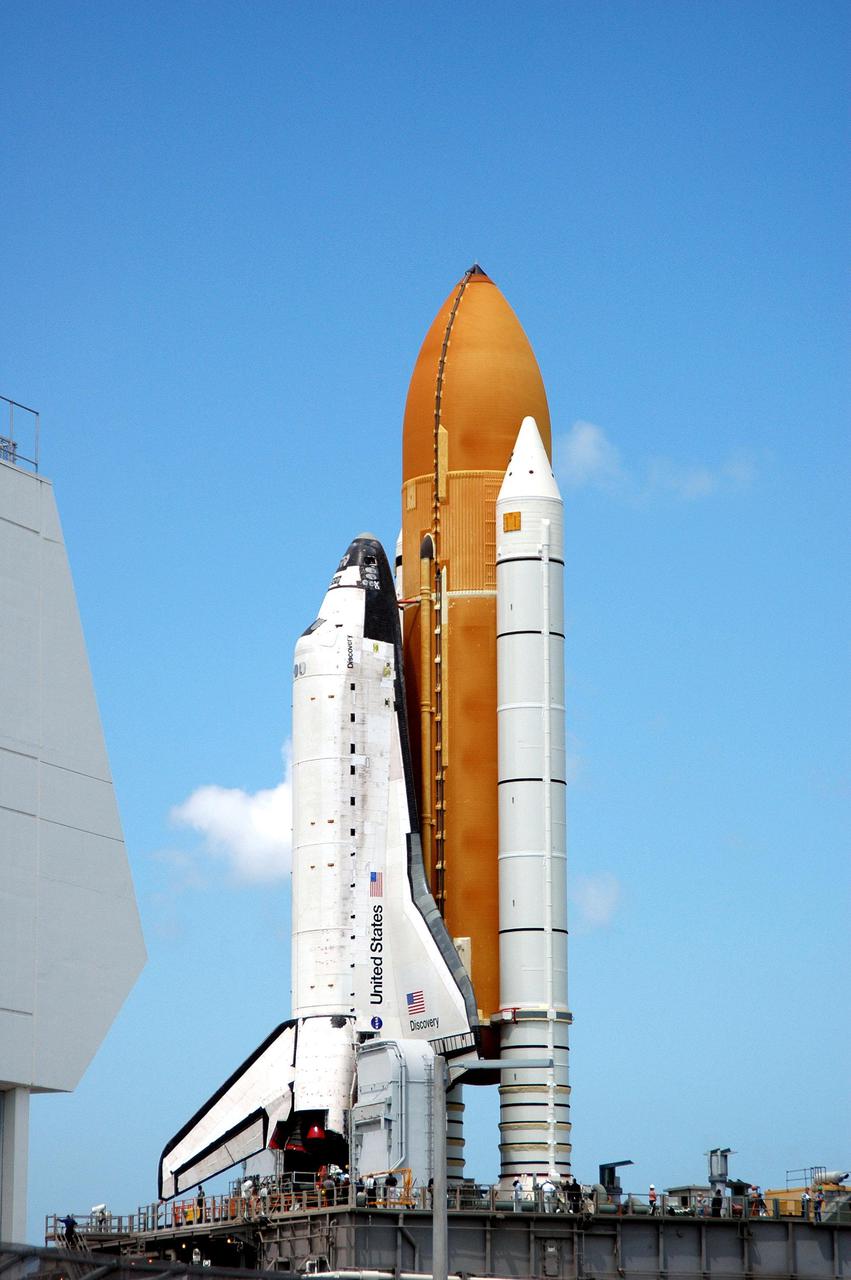
KENNEDY SPACE CENTER, FLA. - Under brilliant-blue Florida skies, Space Shuttle Discovery, atop the Mobile Launcher Platform, wends its way slowly to Launch Pad 39B at NASA’s Kennedy Space Center. First motion out of the Vehicle Assembly Building (VAB) was at 2:04 p.m. EDT. The Mobile Launcher Platform is moved by the Crawler-Transporter underneath. The Crawler is 20 feet high, 131 feet long and 114 feet wide. It moves on eight tracks, each containing 57 shoes, or cleats, weighing one ton each. Loaded with the Space Shuttle, the Crawler can move at a maximum speed of approximately 1 mile an hour. A leveling system in the Crawler keeps the Shuttle vertical while negotiating the 5 percent grade leading to the top of the launch pad. Launch of Discovery on its Return to Flight mission, STS-114, is targeted for May 15 with a launch window that extends to June 3. During its 12-day mission, Discovery’s seven-person crew will test new hardware and techniques to improve Shuttle safety, as well as deliver supplies to the International Space Station. Discovery was moved on March 29 from the Orbiter Processing Facility to the VAB and attached to its propulsion elements, a redesigned ET and twin SRBs.
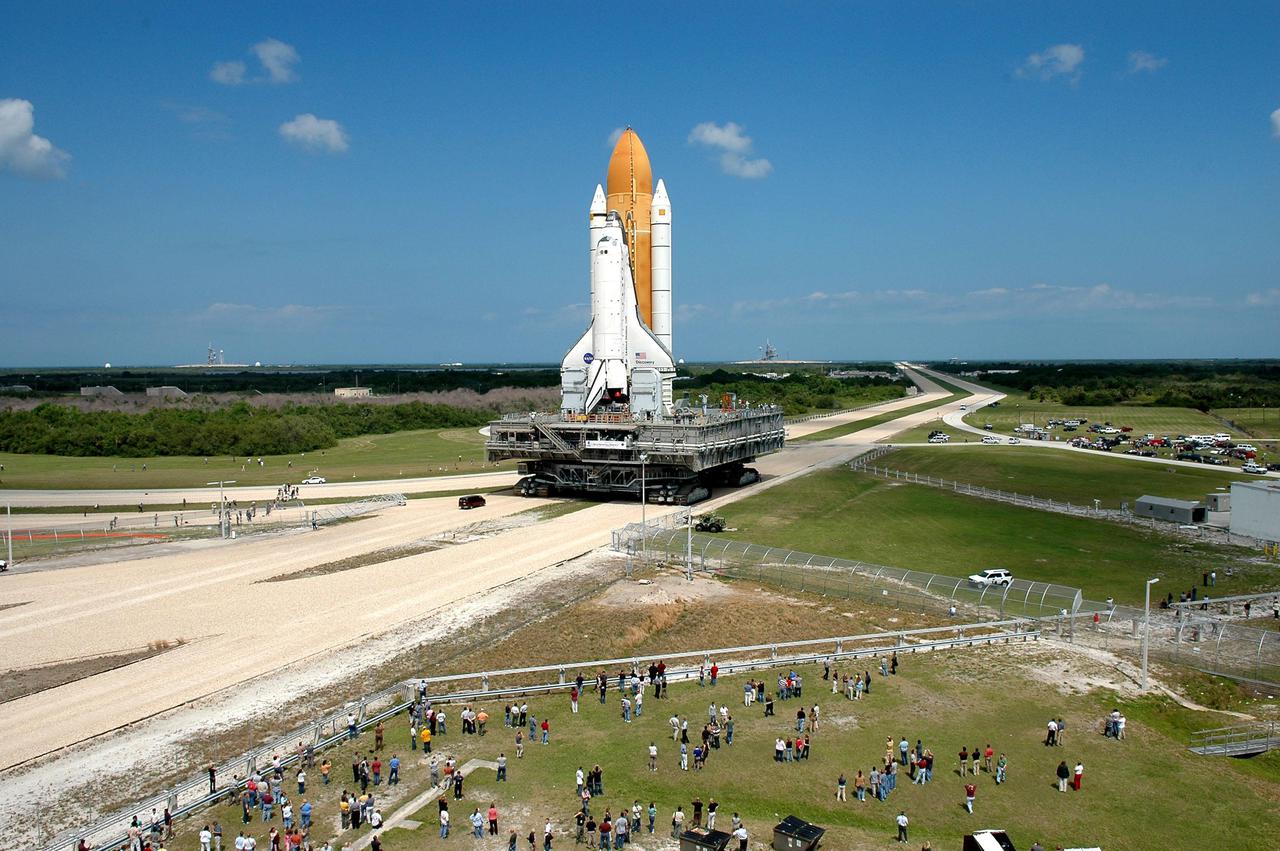
KENNEDY SPACE CENTER, FLA. - The broad, brilliant blue Florida sky silhouettes Space Shuttle Discovery as it creeps along the crawlerway toward the horizon, and Launch Pad 39B at NASA’s Kennedy Space Center. First motion of the Shuttle out of the Vehicle Assembly Building (VAB) was at 2:04 p.m. EDT. The Mobile Launcher Platform is moved by the Crawler-Transporter underneath. The Crawler is 20 feet high, 131 feet long and 114 feet wide. It moves on eight tracks, each containing 57 shoes, or cleats, weighing one ton each. Loaded with the Space Shuttle, the Crawler can move at a maximum speed of approximately 1 mile an hour. A leveling system in the Crawler keeps the Shuttle vertical while negotiating the 5 percent grade leading to the top of the launch pad. Launch of Discovery on its Return to Flight mission, STS-114, is targeted for May 15 with a launch window that extends to June 3. During its 12-day mission, Discovery’s seven-person crew will test new hardware and techniques to improve Shuttle safety, as well as deliver supplies to the International Space Station. Discovery was moved on March 29 from the Orbiter Processing Facility to the VAB and attached to its propulsion elements, a redesigned ET and twin SRBs.
KENNEDY SPACE CENTER, FLA. - A KSC employee stands at the Press Site watching Space Shuttle Discovery mark a major milestone for Return to Flight, rolling out to Launch Pad 39B. First motion out of the Vehicle Assembly Building was at 2:04 p.m. EDT. The Shuttle sits atop the Mobile Launcher Platform, which is moved by the Crawler-Transporter underneath. The Crawler is 20 feet high, 131 feet long and 114 feet wide. It moves on eight tracks, each containing 57 shoes, or cleats, weighing one ton each. Loaded with the Space Shuttle, the Crawler can move at a maximum speed of approximately 1 mile an hour. A leveling system in the Crawler keeps the Shuttle vertical while negotiating the 5 percent grade leading to the top of the launch pad. Launch of Discovery on its Return to Flight mission, STS-114, is targeted for May 15 with a launch window that extends to June 3. During its 12-day mission, Discovery’s seven-person crew will test new hardware and techniques to improve Shuttle safety, as well as deliver supplies to the International Space Station. Discovery was moved on March 29 from the Orbiter Processing Facility to the VAB and attached to its propulsion elements, a redesigned ET and twin SRBs.
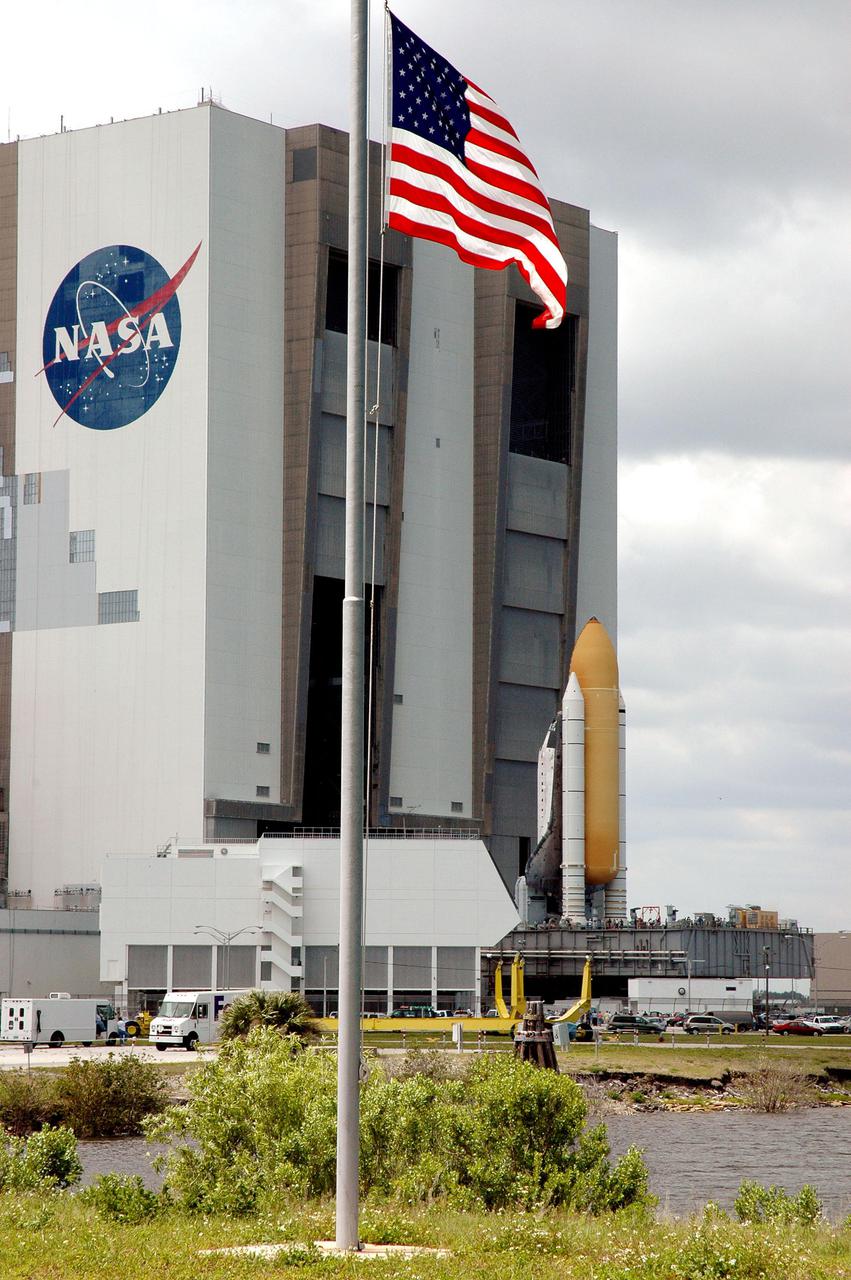
KENNEDY SPACE CENTER, FLA. - — Looking from the Press Site across the Turn Basin at NASA’s Kennedy Space Center, the American flag appears to salute Space Shuttle Discovery as she marks a major milestone for Return to Flight, rolling out to Launch Pad 39B. First motion out of the Vehicle Assembly Building, behind the flag, was at 2:04 p.m. EDT. The Shuttle sits atop the Mobile Launcher Platform, which is moved by the Crawler-Transporter underneath. The Crawler is 20 feet high, 131 feet long and 114 feet wide. It moves on eight tracks, each containing 57 shoes, or cleats, weighing one ton each. Loaded with the Space Shuttle, the Crawler can move at a maximum speed of approximately 1 mile an hour. A leveling system in the Crawler keeps the Shuttle vertical while negotiating the 5 percent grade leading to the top of the launch pad. Launch of Discovery on its Return to Flight mission, STS-114, is targeted for May 15 with a launch window that extends to June 3. During its 12-day mission, Discovery’s seven-person crew will test new hardware and techniques to improve Shuttle safety, as well as deliver supplies to the International Space Station. Discovery was moved on March 29 from the Orbiter Processing Facility to the VAB and attached to its propulsion elements, a redesigned ET and twin SRBs.
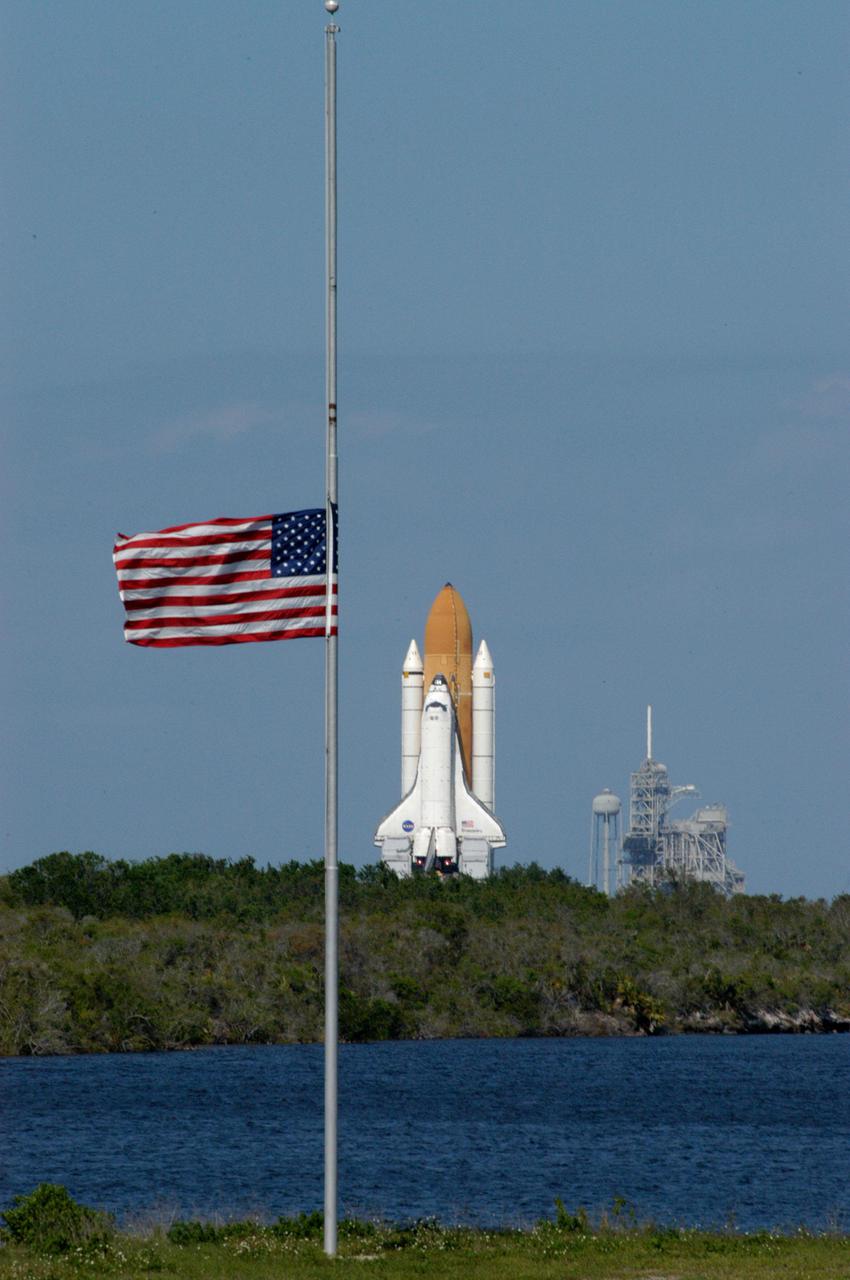
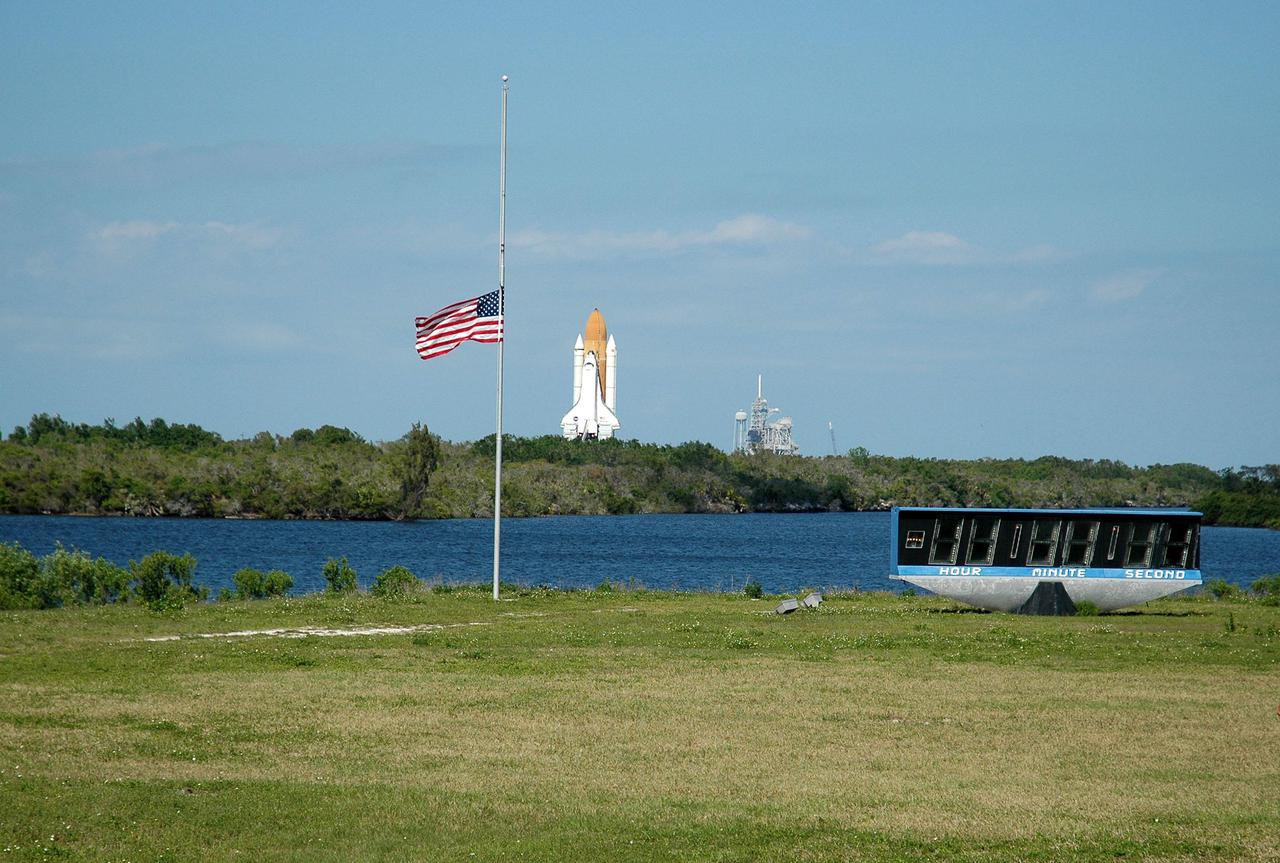
KENNEDY SPACE CENTER, FLA. - Looking from the Press Site across the Turn Basin at NASA’s Kennedy Space Center, the American flag is at half-mast in remembrance of Pope John Paul II. In the background is Space Shuttle Discovery in a more uplifting moment as she marks a major milestone for Return to Flight, rolling out to Launch Pad 39B. First motion out of the Vehicle Assembly Building was at 2:04 p.m. EDT. The Shuttle sits atop the Mobile Launcher Platform, which is moved by the Crawler-Transporter underneath. The Crawler is 20 feet high, 131 feet long and 114 feet wide. It moves on eight tracks, each containing 57 shoes, or cleats, weighing one ton each. Loaded with the Space Shuttle, the Crawler can move at a maximum speed of approximately 1 mile an hour. A leveling system in the Crawler keeps the Shuttle vertical while negotiating the 5 percent grade leading to the top of the launch pad. Launch of Discovery on its Return to Flight mission, STS-114, is targeted for May 15 with a launch window that extends to June 3. During its 12-day mission, Discovery’s seven-person crew will test new hardware and techniques to improve Shuttle safety, as well as deliver supplies to the International Space Station. Discovery was moved on March 29 from the Orbiter Processing Facility to the VAB and attached to its propulsion elements, a redesigned ET and twin SRBs.