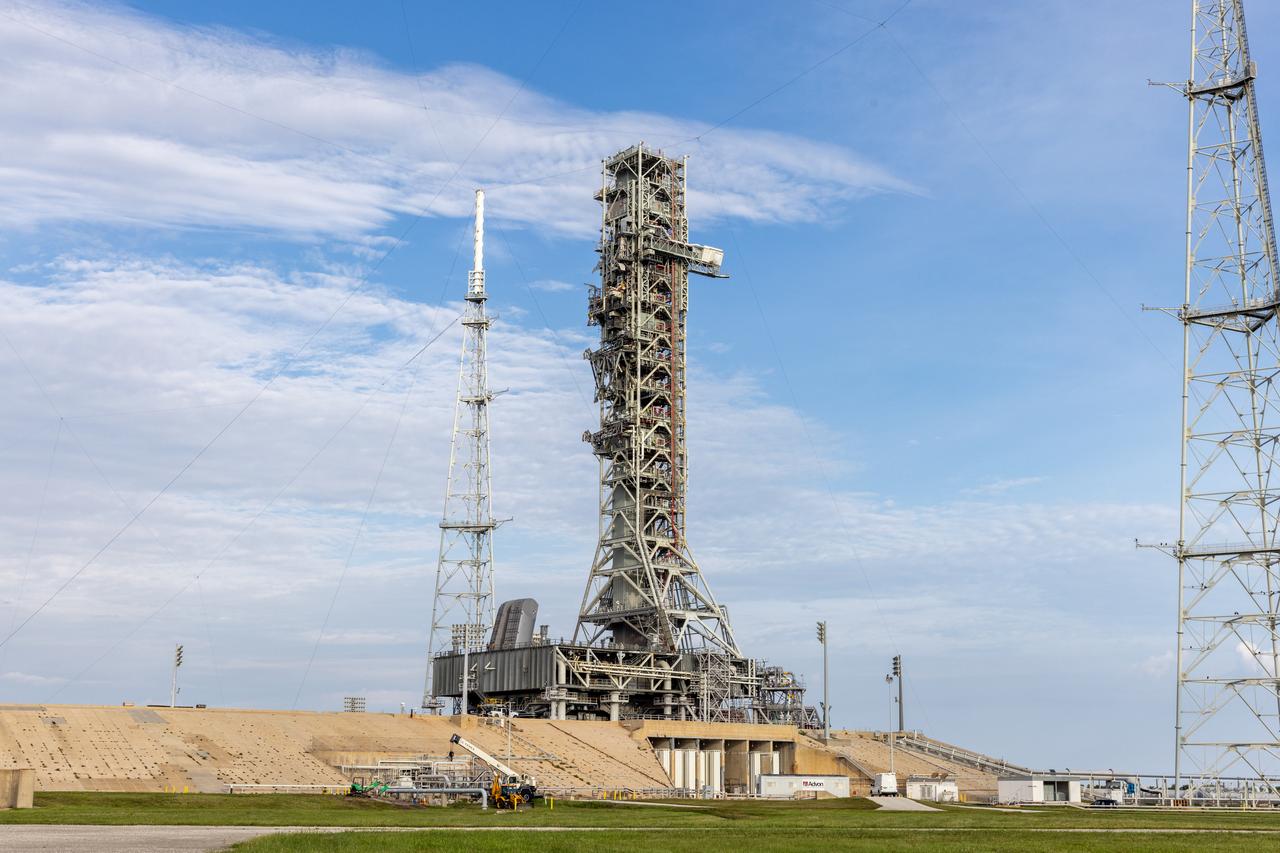
Teams with NASA’s Exploration Ground Systems Program at the agency’s Kennedy Space Center in Florida prepare to move mobile launcher 1 atop the agency’s crawler-transporter 2 from Launch Complex 39B to the Vehicle Assembly Building on Tuesday, Oct. 1, 2024. The crawler recently reached 2,500 miles traveling to the launch pad since its construction in 1965. The mobile launcher has been at the launch pad since August 2023 undergoing upgrades and tests in preparation for NASA’s Artemis II mission. The mobile launcher will be used to assemble, process, and launch NASA’s SLS (Space Launch Systems) and Orion spacecraft to the Moon and beyond.
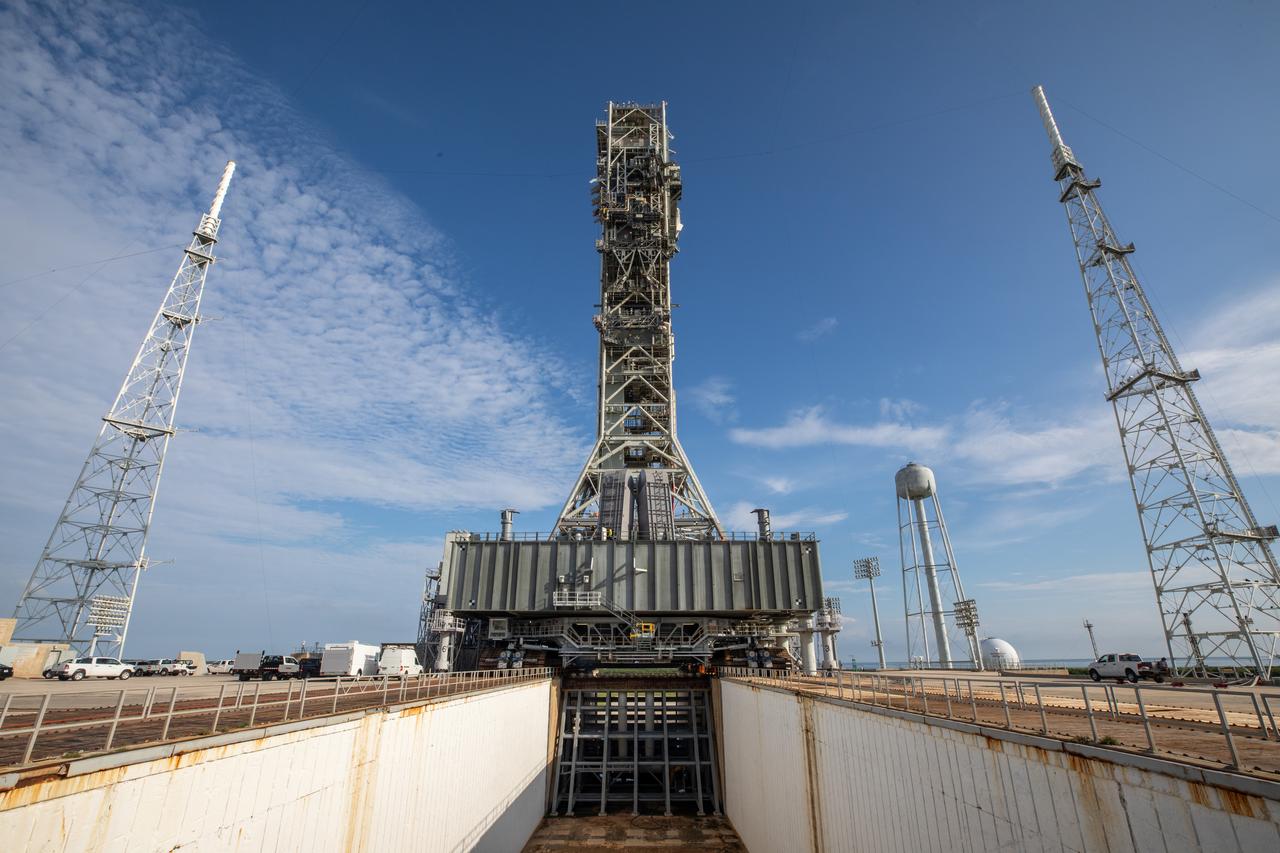
Teams with NASA’s Exploration Ground Systems Program at the agency’s Kennedy Space Center in Florida prepare to move mobile launcher 1 atop the agency’s crawler-transporter 2 from Launch Complex 39B to the Vehicle Assembly Building on Tuesday, Oct. 1, 2024. The crawler recently reached 2,500 miles traveling to the launch pad since its construction in 1965. The mobile launcher has been at the launch pad since August 2023 undergoing upgrades and tests in preparation for NASA’s Artemis II mission. The mobile launcher will be used to assemble, process, and launch NASA’s SLS (Space Launch System) and Orion spacecraft to the Moon and beyond.
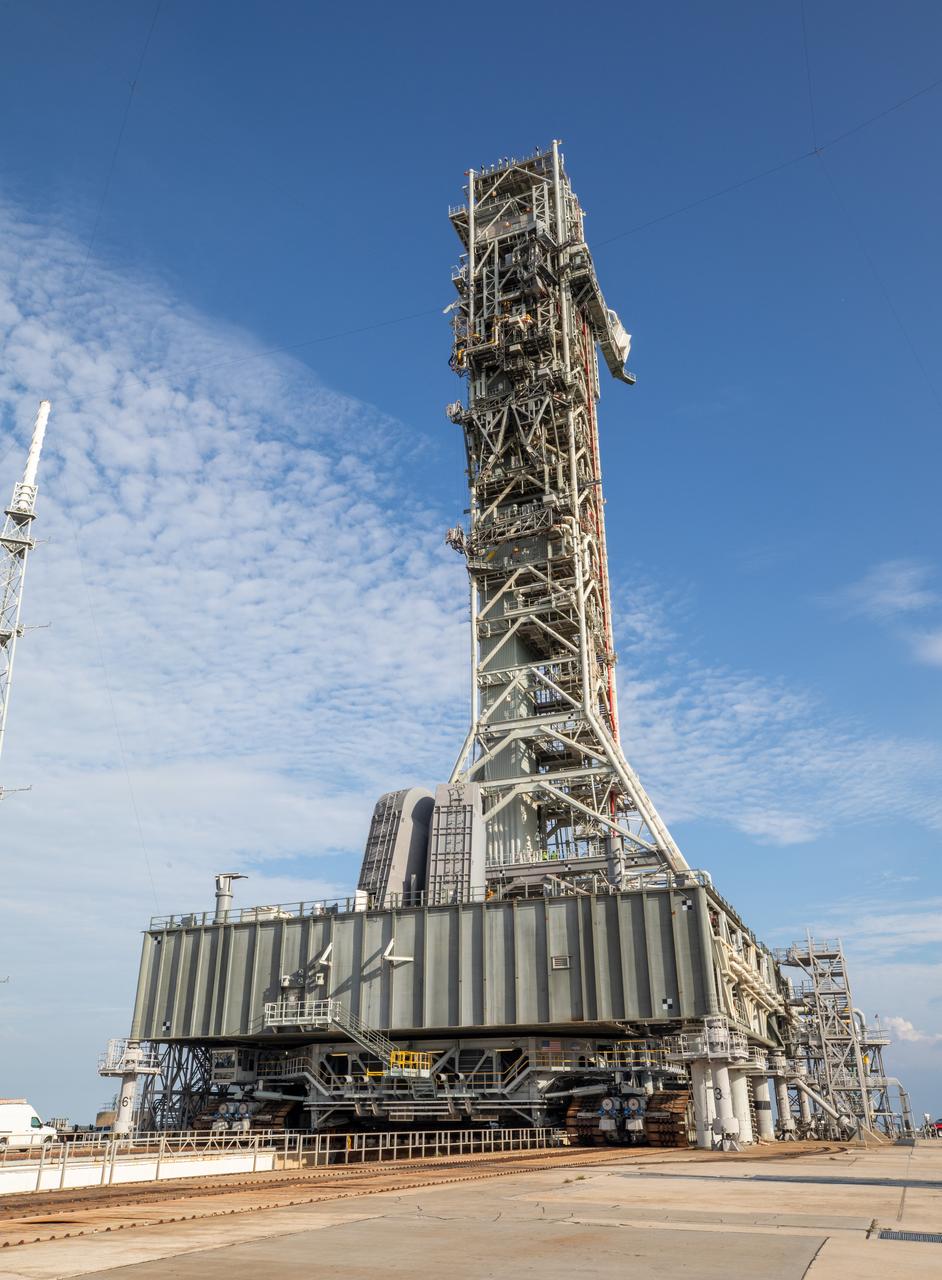
Teams with NASA’s Exploration Ground Systems Program at the agency’s Kennedy Space Center in Florida prepare to move mobile launcher 1 atop the agency’s crawler-transporter 2 from Launch Complex 39B to the Vehicle Assembly Building on Tuesday, Oct. 1, 2024. The crawler recently reached 2,500 miles traveling to the launch pad since its construction in 1965. The mobile launcher has been at the launch pad since August 2023 undergoing upgrades and tests in preparation for NASA’s Artemis II mission. The mobile launcher will be used to assemble, process, and launch NASA’s SLS (Space Launch System) and Orion spacecraft to the Moon and beyond.
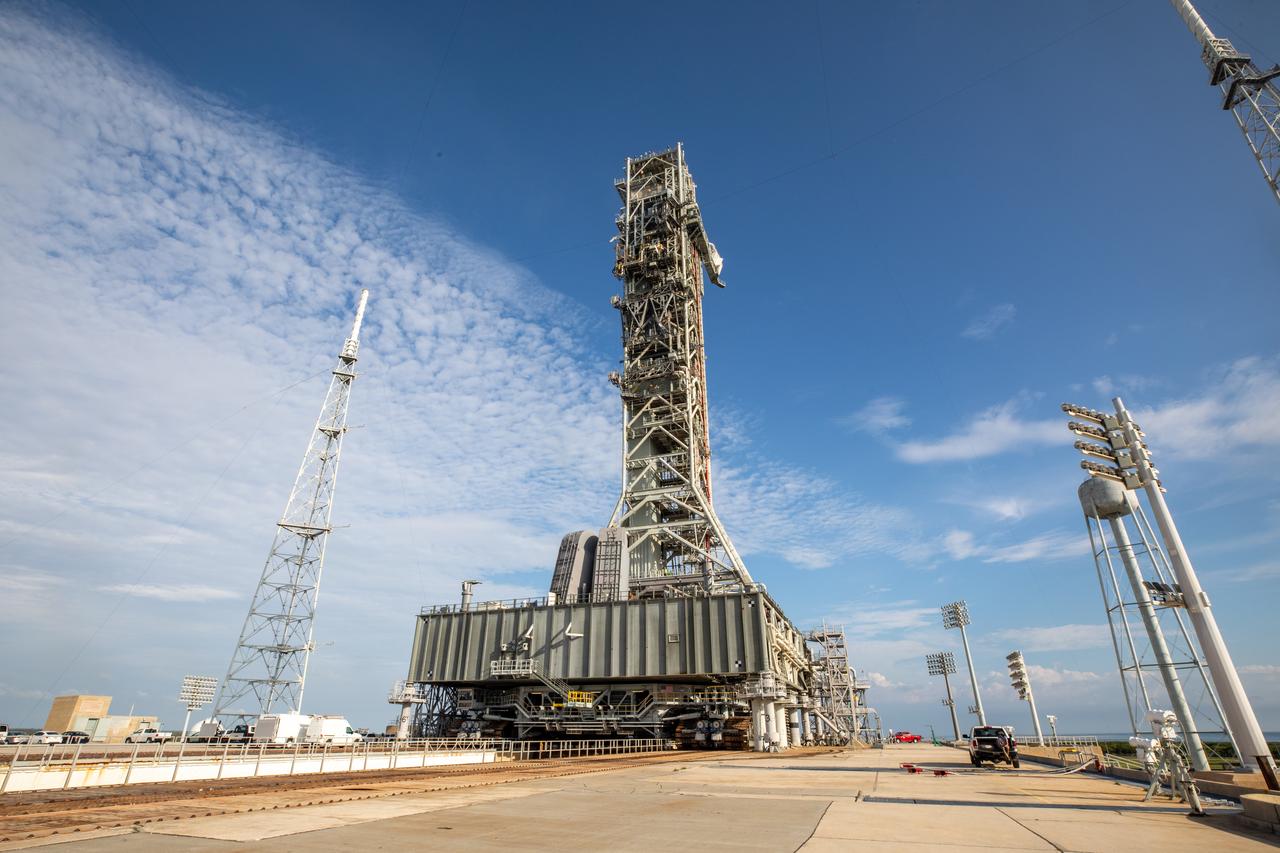
Teams with NASA’s Exploration Ground Systems Program at the agency’s Kennedy Space Center in Florida prepare to move mobile launcher 1 atop the agency’s crawler-transporter 2 from Launch Complex 39B to the Vehicle Assembly Building on Tuesday, Oct. 1, 2024. The crawler recently reached 2,500 miles traveling to the launch pad since its construction in 1965. The mobile launcher has been at the launch pad since August 2023 undergoing upgrades and tests in preparation for NASA’s Artemis II mission. The mobile launcher will be used to assemble, process, and launch NASA’s SLS (Space Launch System) and Orion spacecraft to the Moon and beyond.
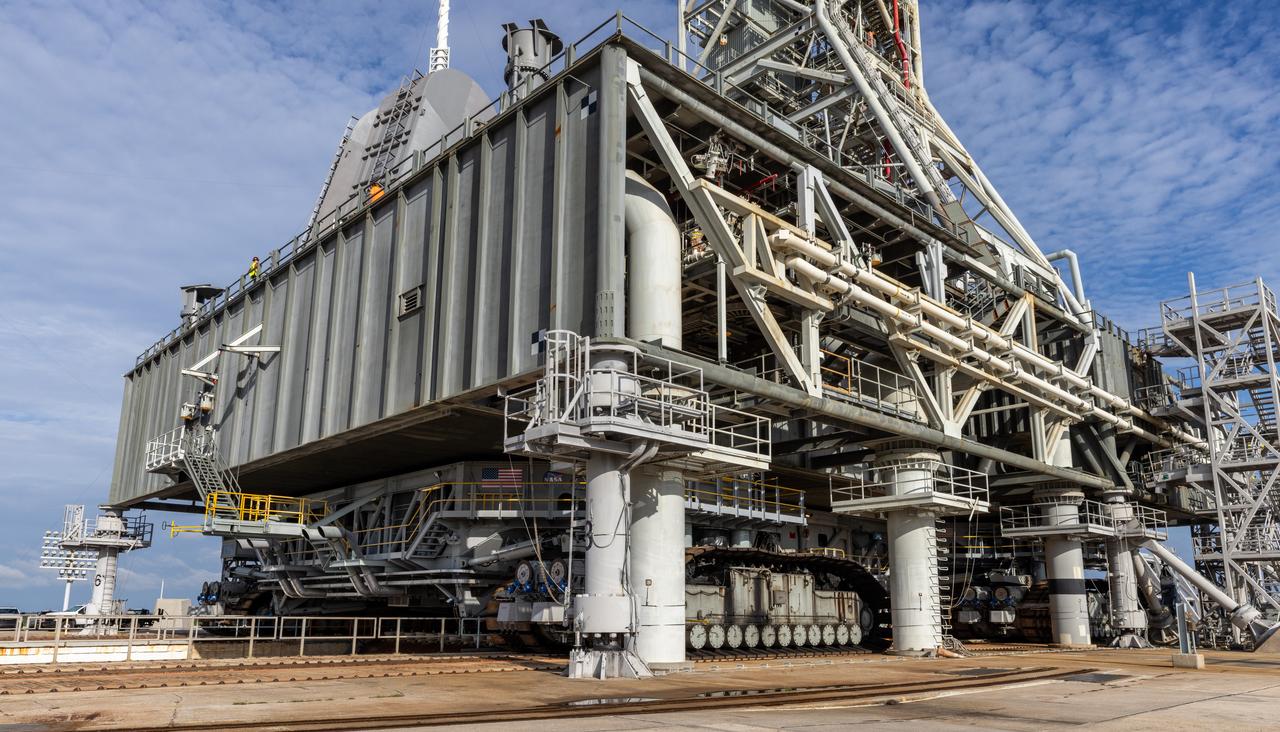
Teams with NASA’s Exploration Ground Systems Program at the agency’s Kennedy Space Center in Florida prepare to move mobile launcher 1 atop the agency’s crawler-transporter 2 from Launch Complex 39B to the Vehicle Assembly Building on Tuesday, Oct. 1, 2024. The crawler recently reached 2,500 miles traveling to the launch pad since its construction in 1965. The mobile launcher has been at the launch pad since August 2023 undergoing upgrades and tests in preparation for NASA’s Artemis II mission. The mobile launcher will be used to assemble, process, and launch NASA’s SLS (Space Launch System) and Orion spacecraft to the Moon and beyond.
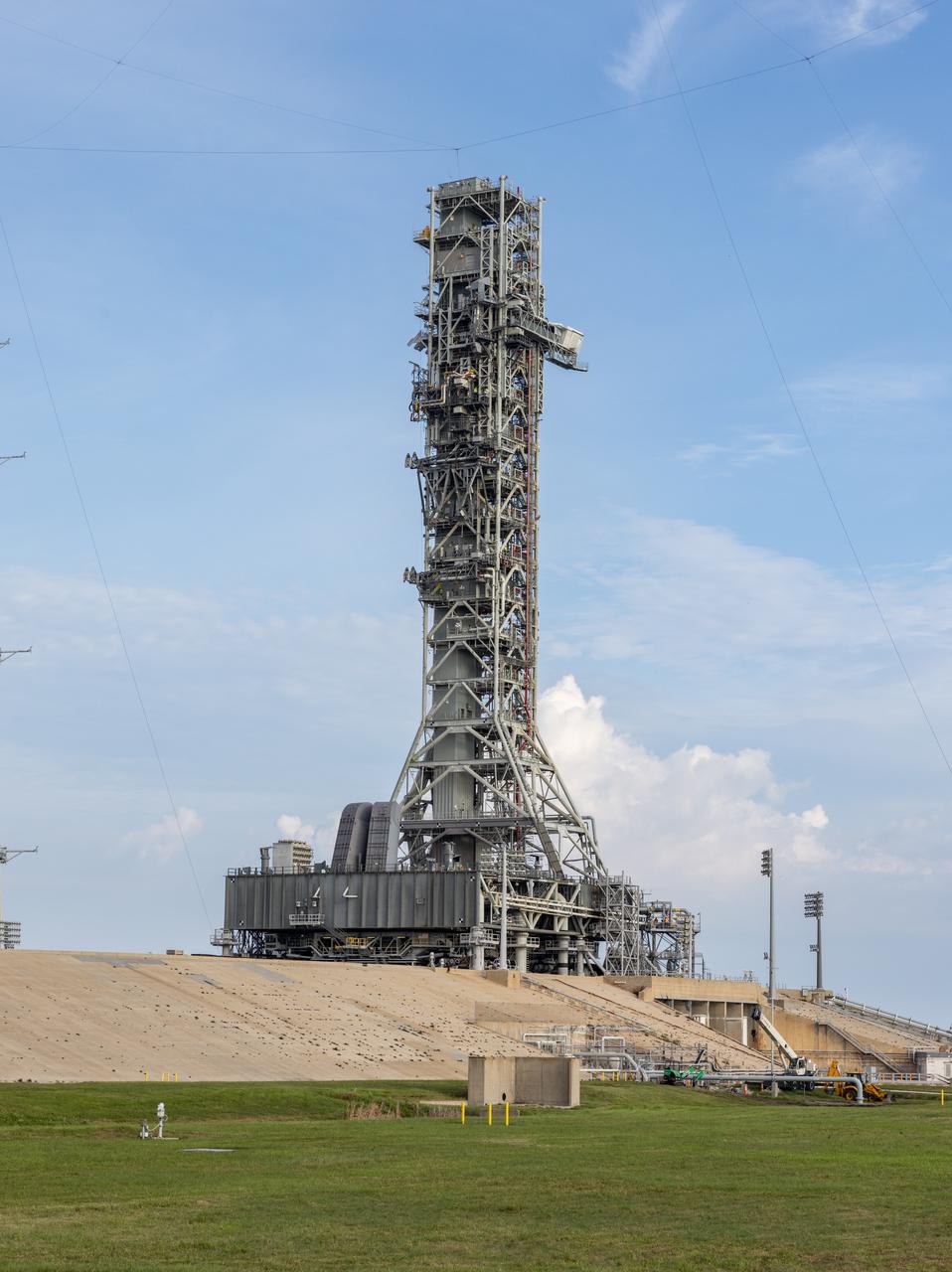
Teams with NASA’s Exploration Ground Systems Program at the agency’s Kennedy Space Center in Florida prepare to move mobile launcher 1 atop the agency’s crawler-transporter 2 from Launch Complex 39B to the Vehicle Assembly Building on Tuesday, Oct. 1, 2024. The crawler recently reached 2,500 miles traveling to the launch pad since its construction in 1965. The mobile launcher has been at the launch pad since August 2023 undergoing upgrades and tests in preparation for NASA’s Artemis II mission. The mobile launcher will be used to assemble, process, and launch NASA’s SLS (Space Launch System) and Orion spacecraft to the Moon and beyond.
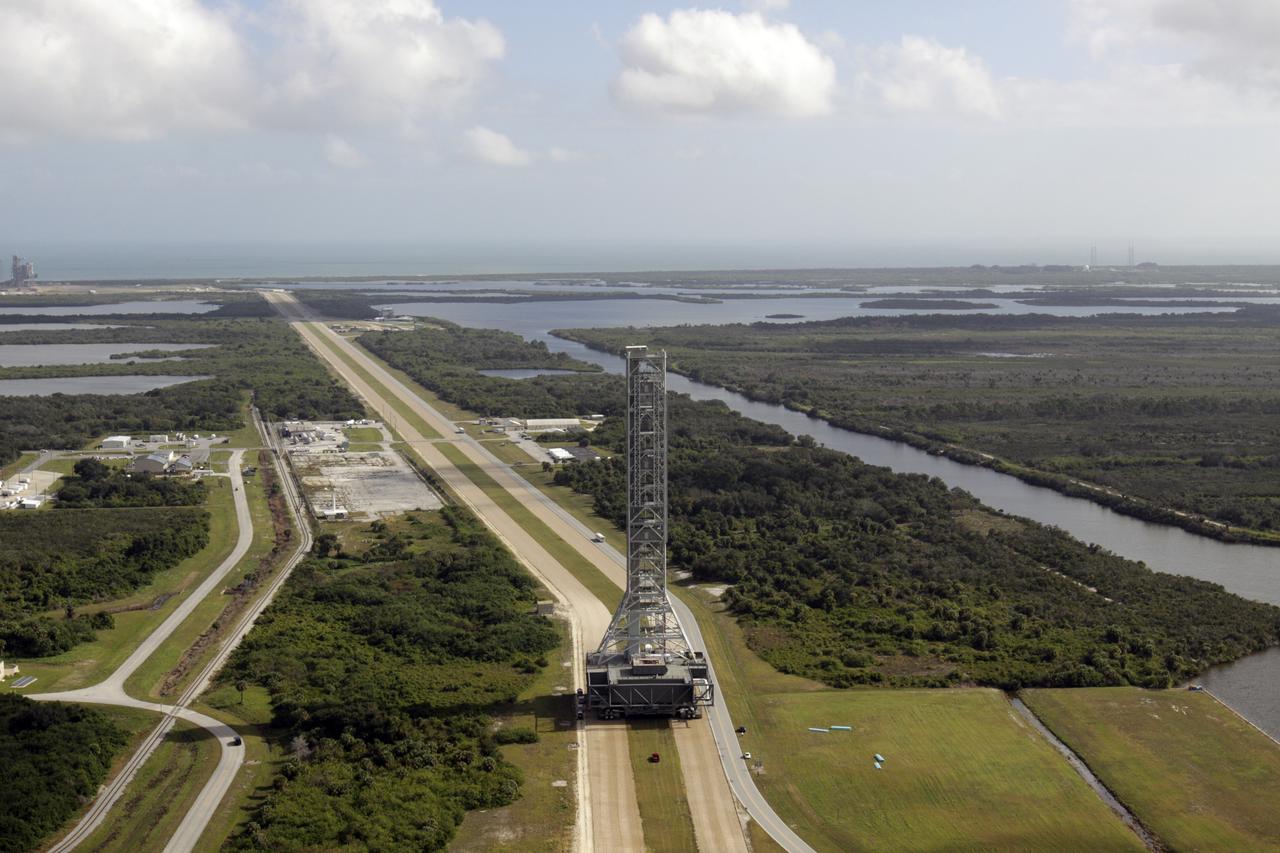
ML is rolled to Pad 39B, shot from VAB roof
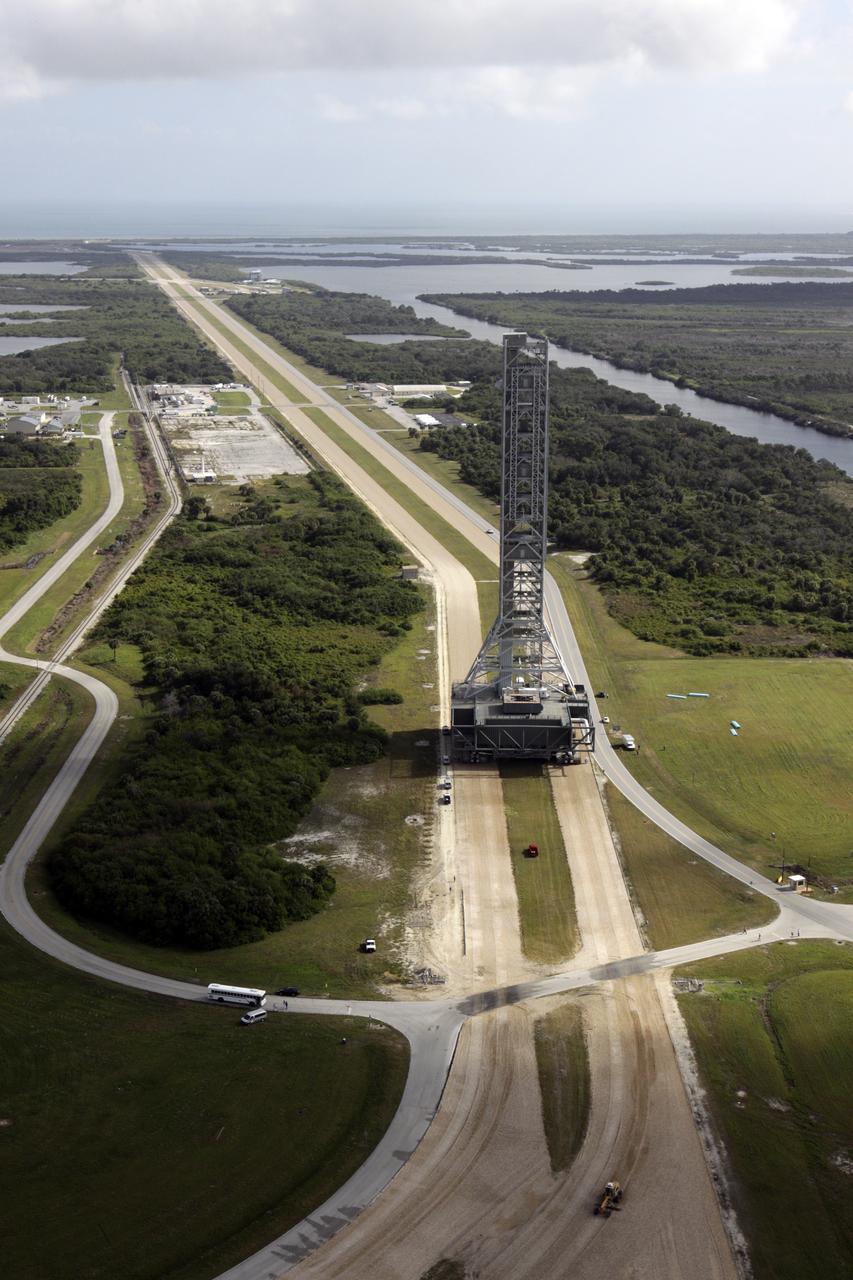
ML is rolled to Pad 39B, shot from VAB roof

ML is rolled to Pad 39B, shot from VAB roof
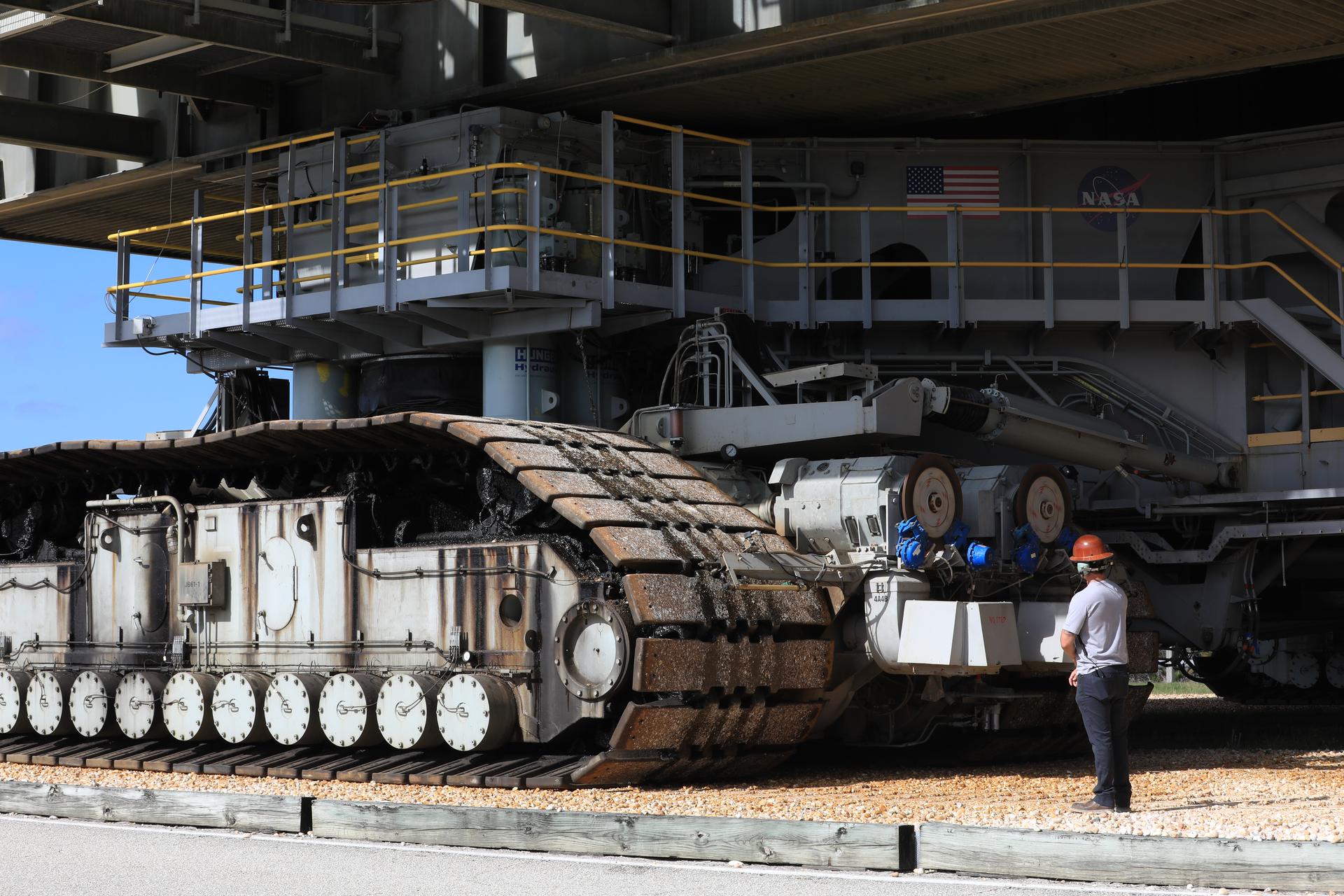
Technicians with NASA’s Exploration Gound Systems Program monitor crawler-transporter 2 as it transports the agency’s mobile launcher 1 slowly from Launch Complex 39B to the Vehicle Assembly Building at NASA’s Kennedy Space Center in Florida on Thursday, April 16, 2026, in preparation for Artemis III stacking operations. Teams will perform checkouts, inspections, and data analysis, and make repairs to the tower that saw damage during liftoff of the Artemis II test flight.
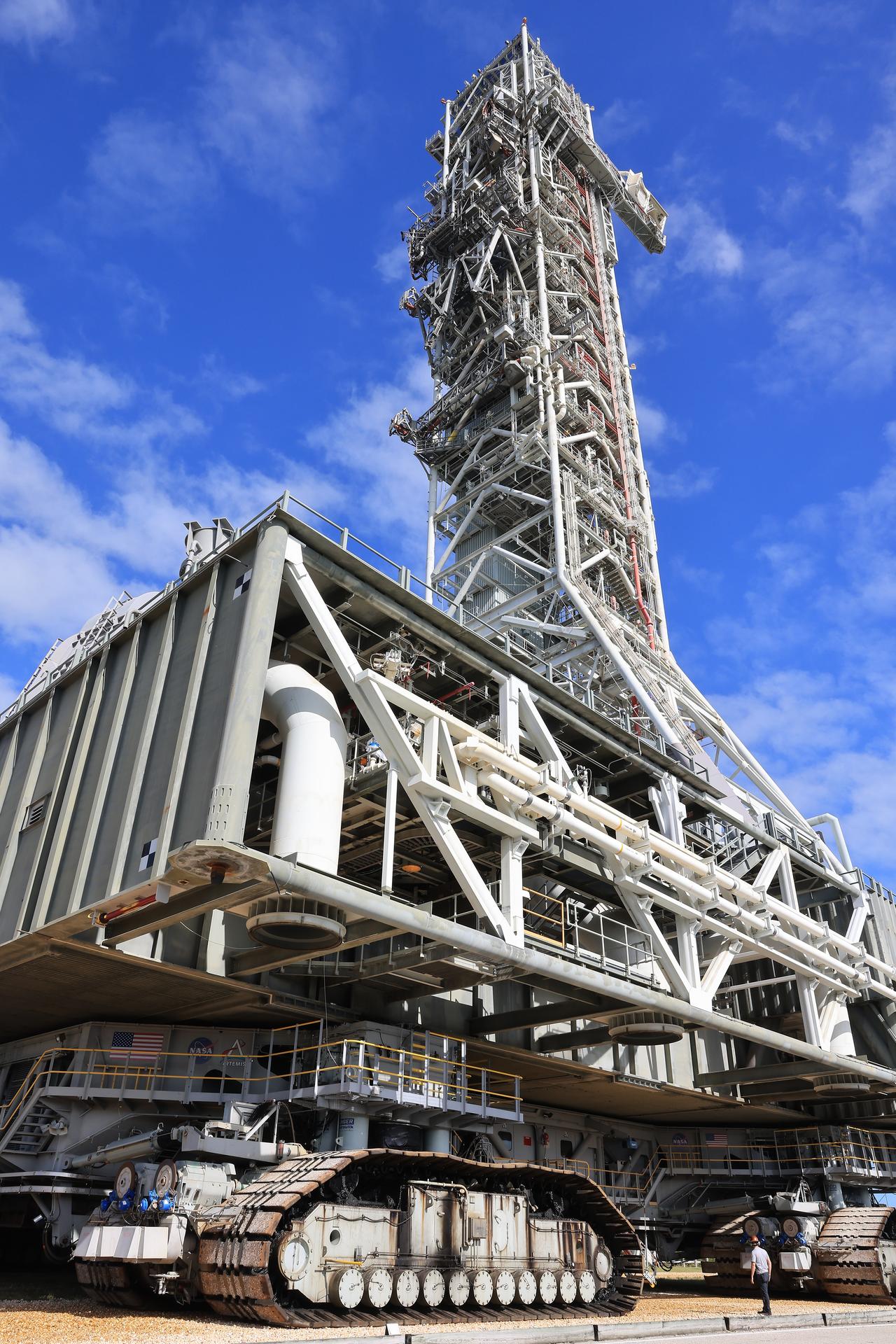
NASA’s mobile launcher 1 begins its approximately 4-mile trek from Launch Complex 39B to the Vehicle Assembly Building at the agency’s Kennedy Space Center in Florida on Thursday, April 16, 2026, in preparation for Artemis III stacking operations. Teams will perform checkouts, inspections, and data analysis, and make repairs to the tower that saw damage during liftoff of the Artemis II test flight.
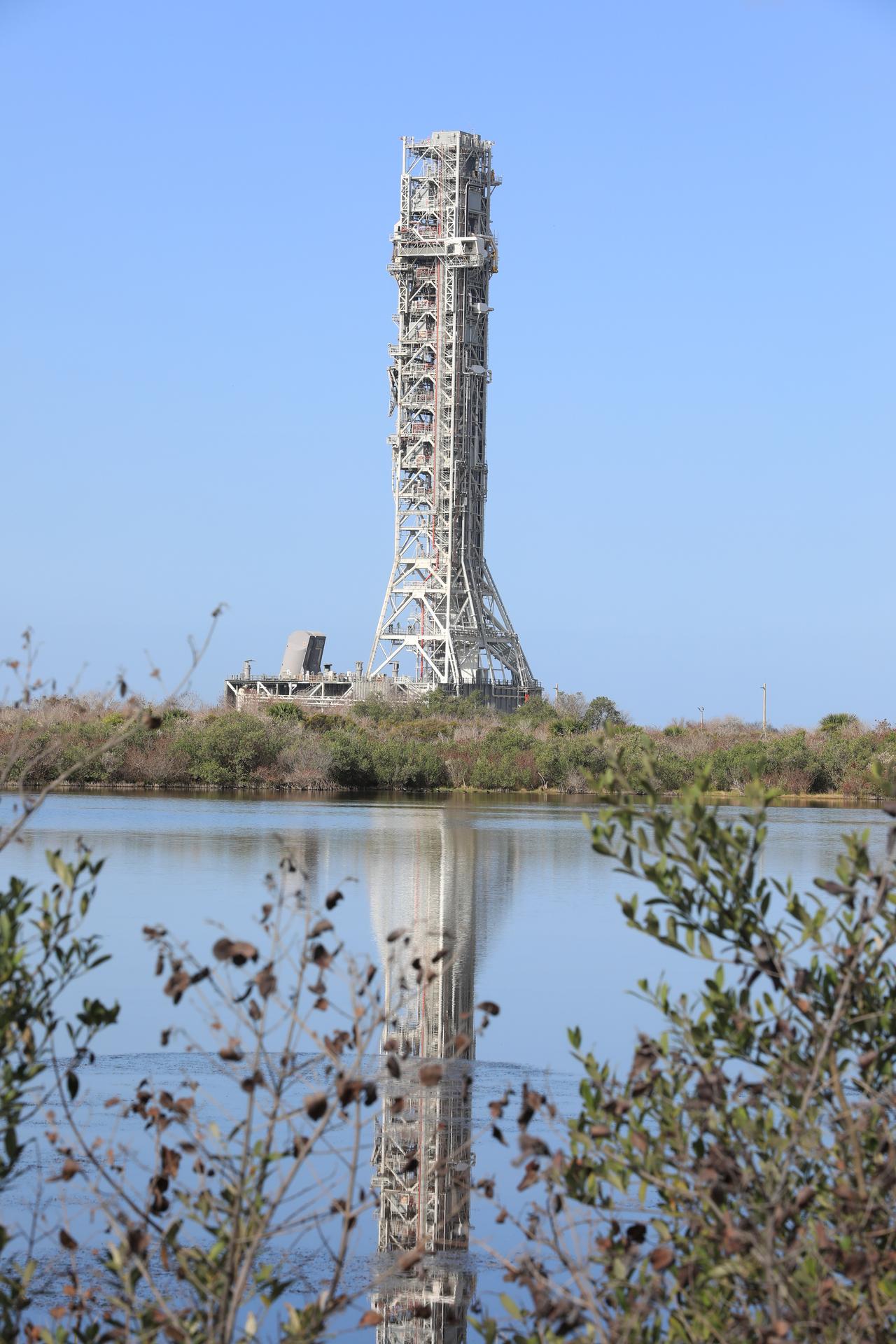
NASA’s mobile launcher 1 begins its approximately 4-mile trek from Launch Complex 39B to the Vehicle Assembly Building at the agency’s Kennedy Space Center in Florida on Thursday, April 16, 2026, in preparation for Artemis III stacking operations. Teams will perform checkouts, inspections, and data analysis, and make repairs to the tower that saw damage during liftoff of the Artemis II test flight.
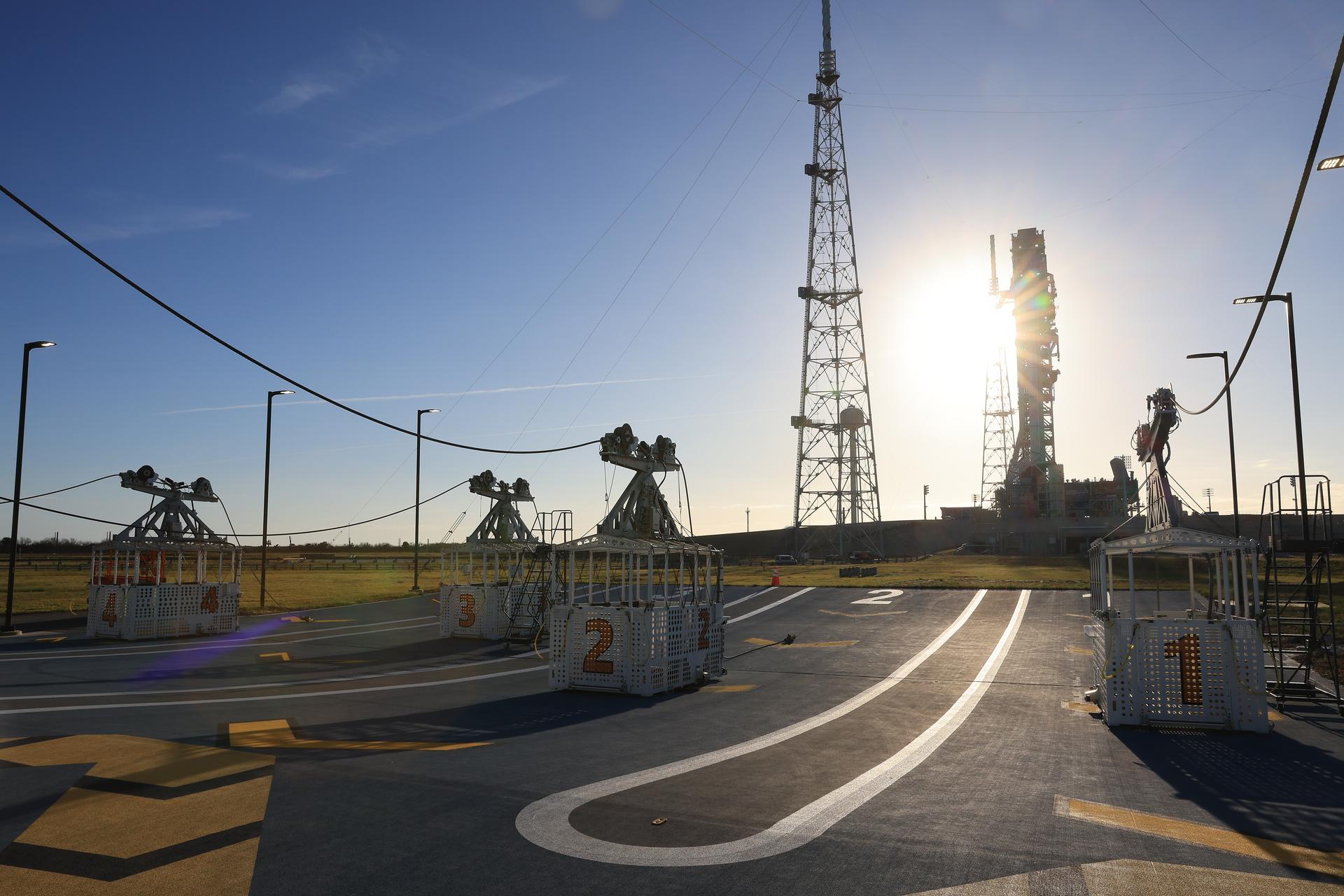
NASA’s mobile launcher 1 begins its approximately 4-mile trek from Launch Complex 39B to the Vehicle Assembly Building (VAB) at the agency’s Kennedy Space Center in Florida on Thursday, April 16, 2026, in preparation for Artemis III stacking operations. Nearby is the emergency egress system, an abort system for personnel to climb into four baskets at the top of the mobile launcher and rush to the base of the pad in the unlikely event of an emergency during launch. Once at the VAB, teams will perform checkouts, inspections, and data analysis, and make repairs to the tower that saw damage during liftoff of the Artemis II test flight.
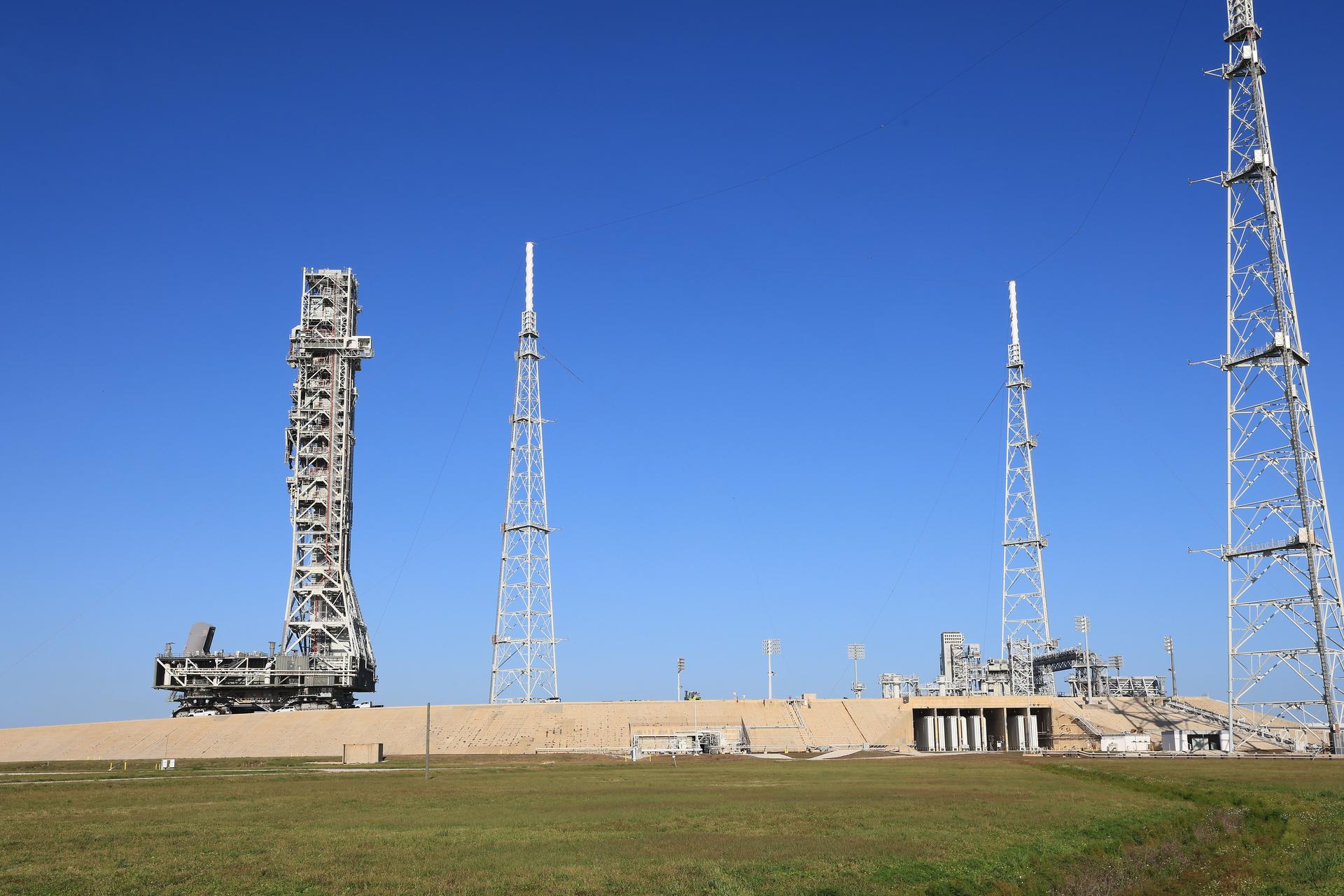
NASA’s mobile launcher 1 begins its approximately 4-mile trek from Launch Complex 39B to the Vehicle Assembly Building at the agency’s Kennedy Space Center in Florida on Thursday, April 16, 2026, in preparation for Artemis III stacking operations. Teams will perform checkouts, inspections, and data analysis, and make repairs to the tower that saw damage during liftoff of the Artemis II test flight.
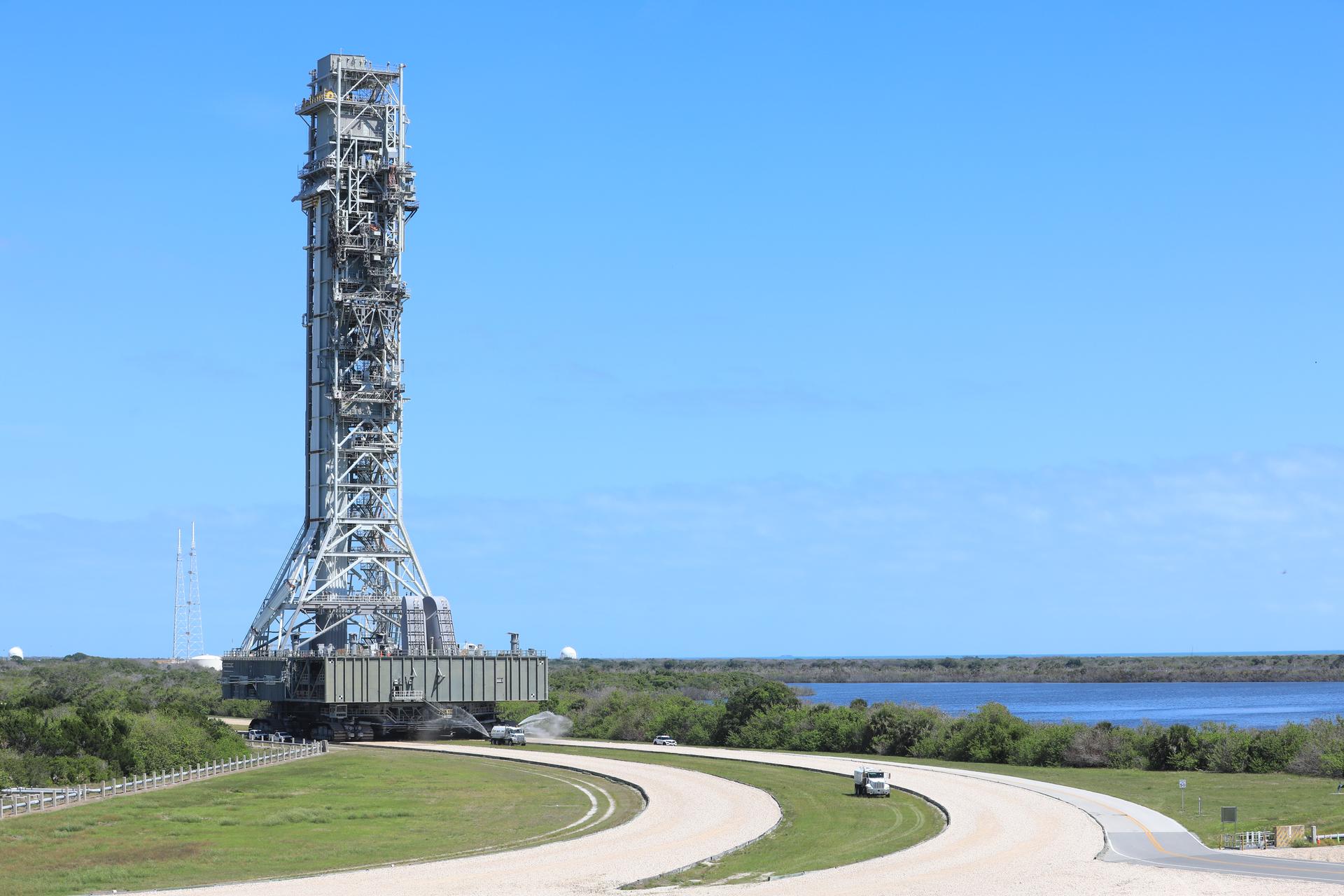
NASA’s mobile launcher 1 begins its approximately 4-mile trek from Launch Complex 39B to the Vehicle Assembly Building at the agency’s Kennedy Space Center in Florida on Thursday, April 16, 2026, in preparation for Artemis III stacking operations. Teams will perform checkouts, inspections, and data analysis, and make repairs to the tower that saw damage during liftoff of the Artemis II test flight.
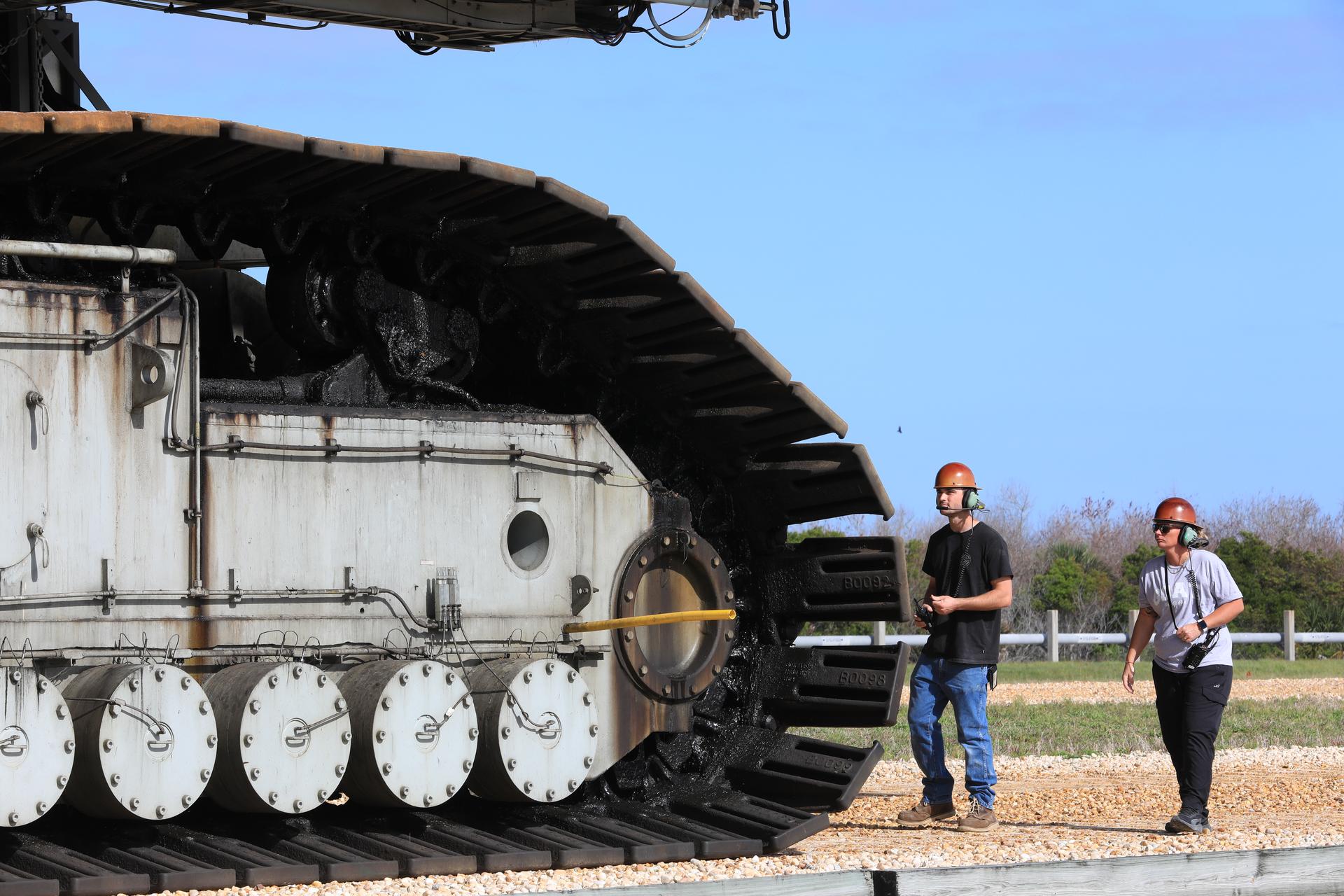
Technicians with NASA’s Exploration Gound Systems Program monitor crawler-transporter 2 as it transports the agency’s mobile launcher 1 slowly from Launch Complex 39B to the Vehicle Assembly Building at NASA’s Kennedy Space Center in Florida on Thursday, April 16, 2026, in preparation for Artemis III stacking operations. Teams will perform checkouts, inspections, and data analysis, and make repairs to the tower that saw damage during liftoff of the Artemis II test flight.
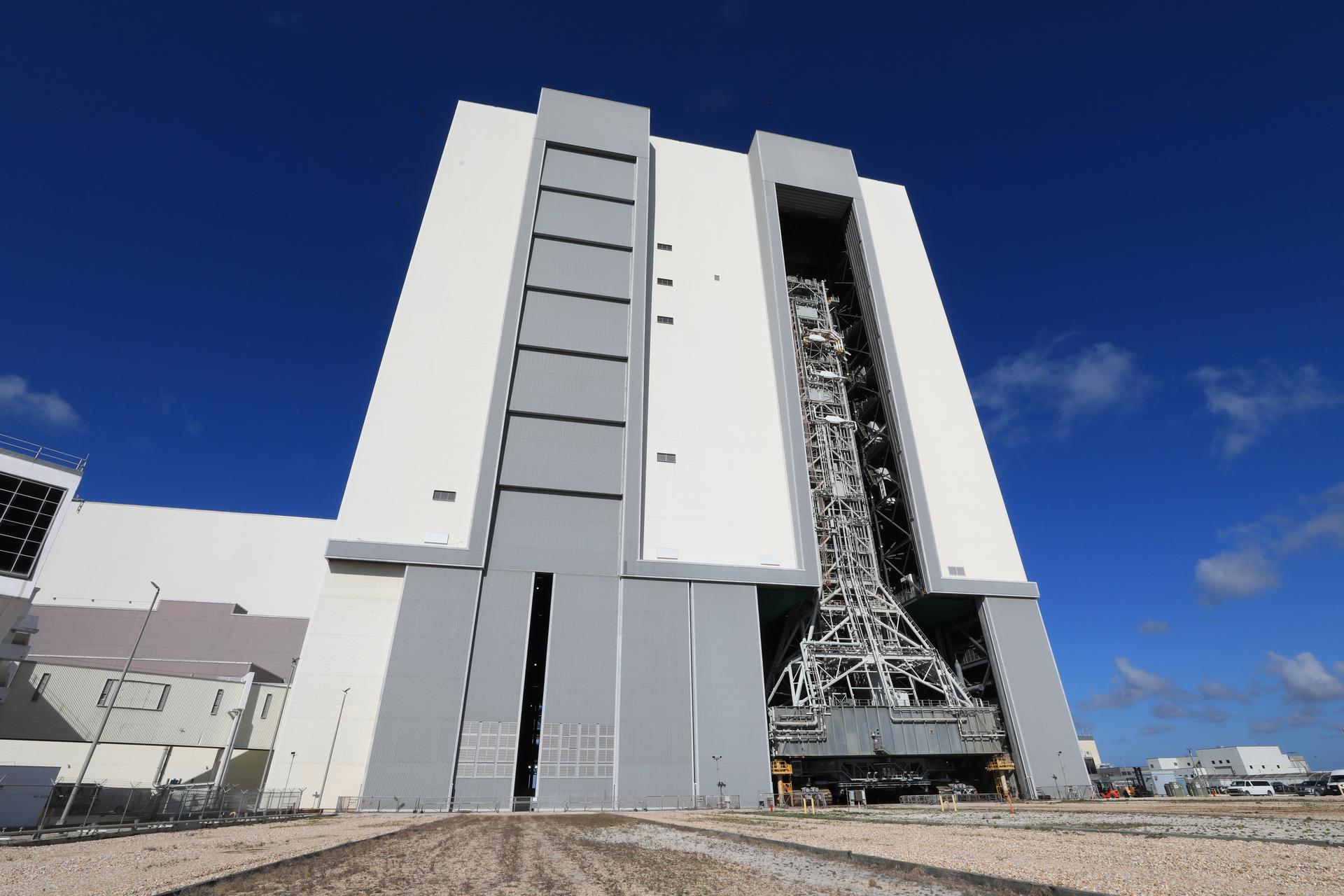
NASA’s mobile launcher enters the Vehicle Assembly Building following its approximately 4-mile trek from Launch Complex 39B at the agency’s Kennedy Space Center in Florida on Friday, April 17, 2026, in preparation for Artemis III stacking operations. Teams will perform checkouts, inspections, and data analysis, and make repairs to the tower that saw damage during launch of NASA’s Artemis II test flight on April 1, 2026.
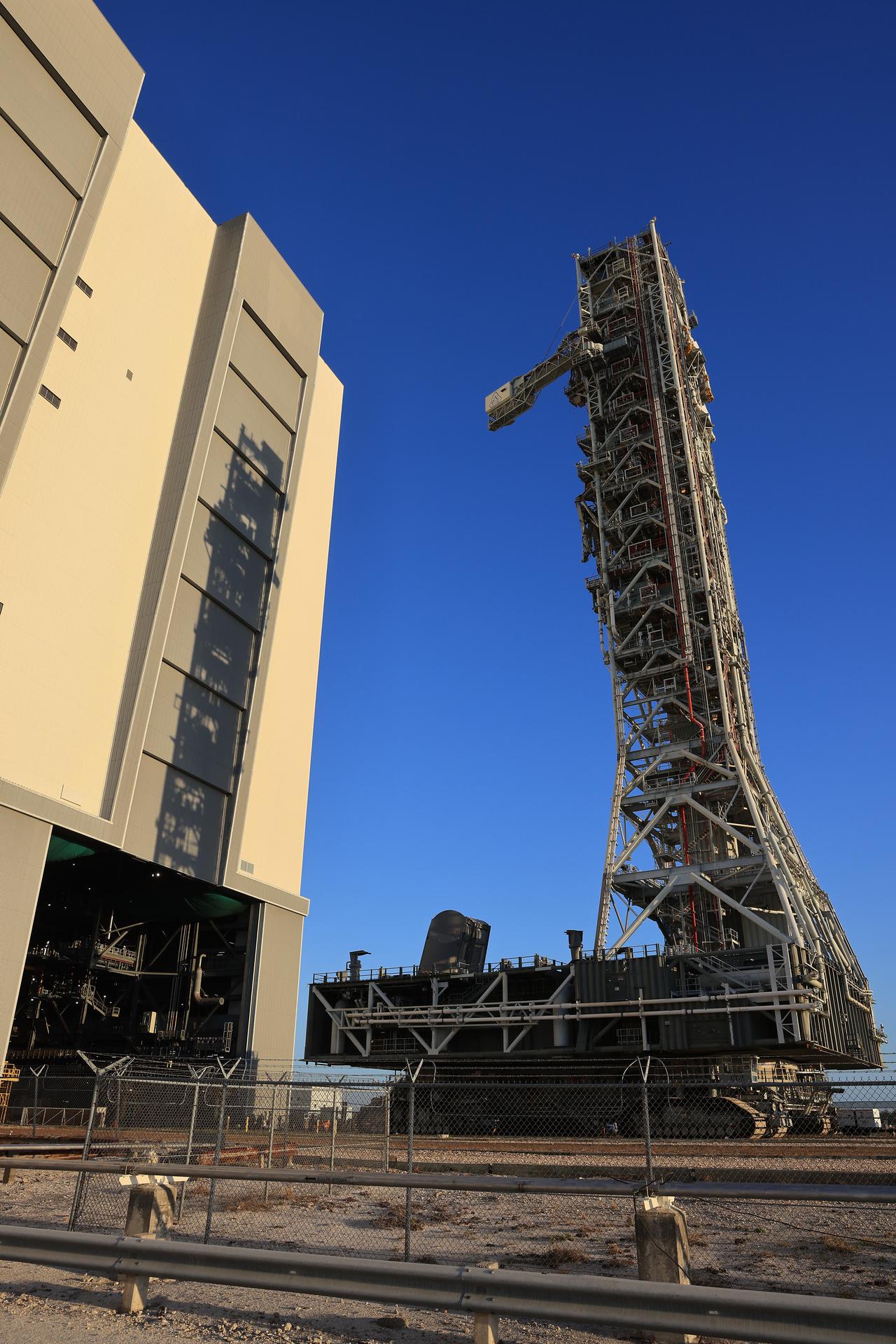
NASA’s mobile launcher approaches the Vehicle Assembly Building following its approximately 4-mile trek from Launch Complex 39B at the agency’s Kennedy Space Center in Florida on Friday, April 17, 2026, in preparation for Artemis III stacking operations. Teams will perform checkouts, inspections, and data analysis, and make repairs to the tower that saw damage during launch of NASA’s Artemis II test flight on April 1, 2026.
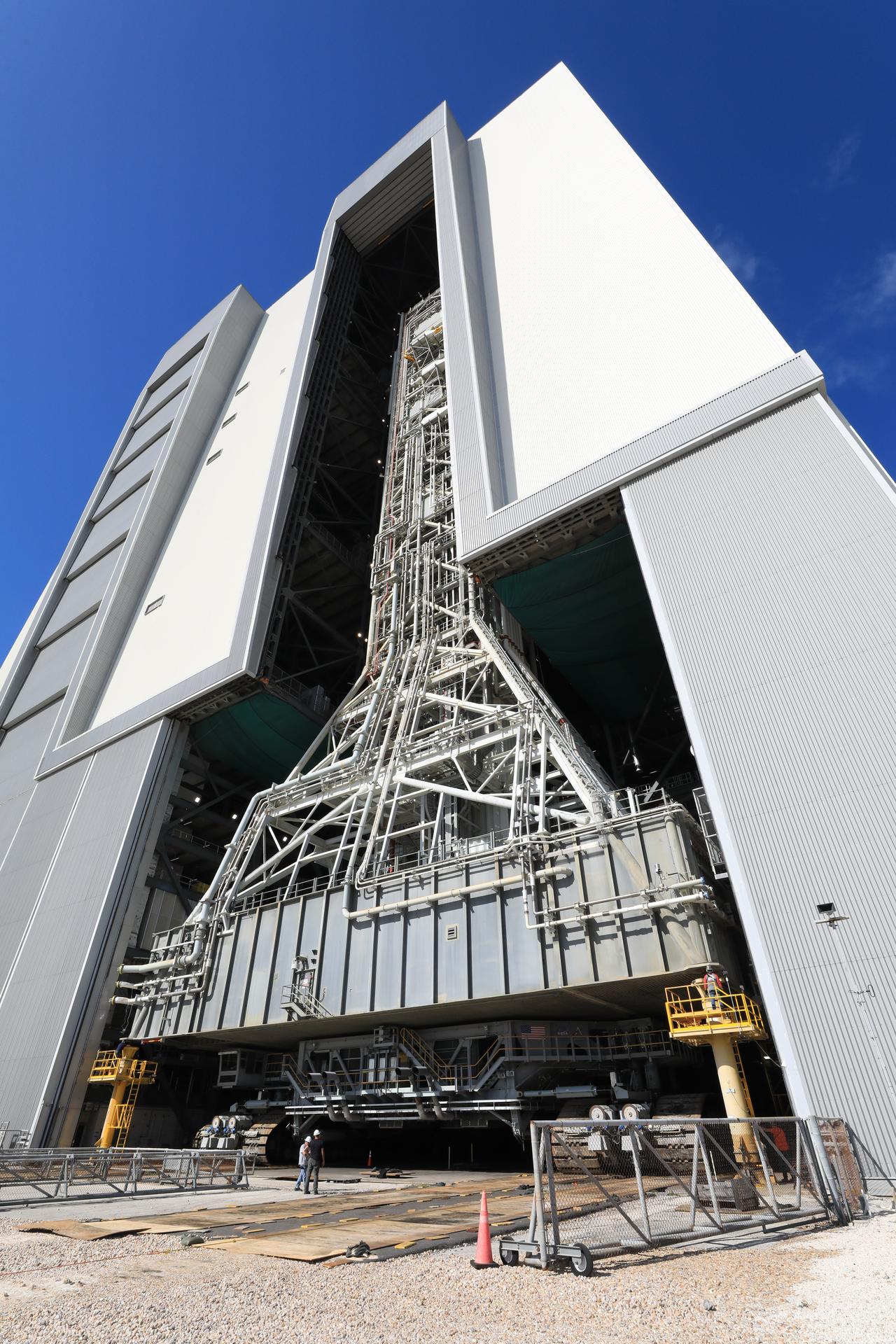
NASA’s mobile launcher enters the Vehicle Assembly Building following its approximately 4-mile trek from Launch Complex 39B at the agency’s Kennedy Space Center in Florida on Friday, April 17, 2026, in preparation for Artemis III stacking operations. Teams will perform checkouts, inspections, and data analysis, and make repairs to the tower that saw damage during launch of NASA’s Artemis II test flight on April 1, 2026.
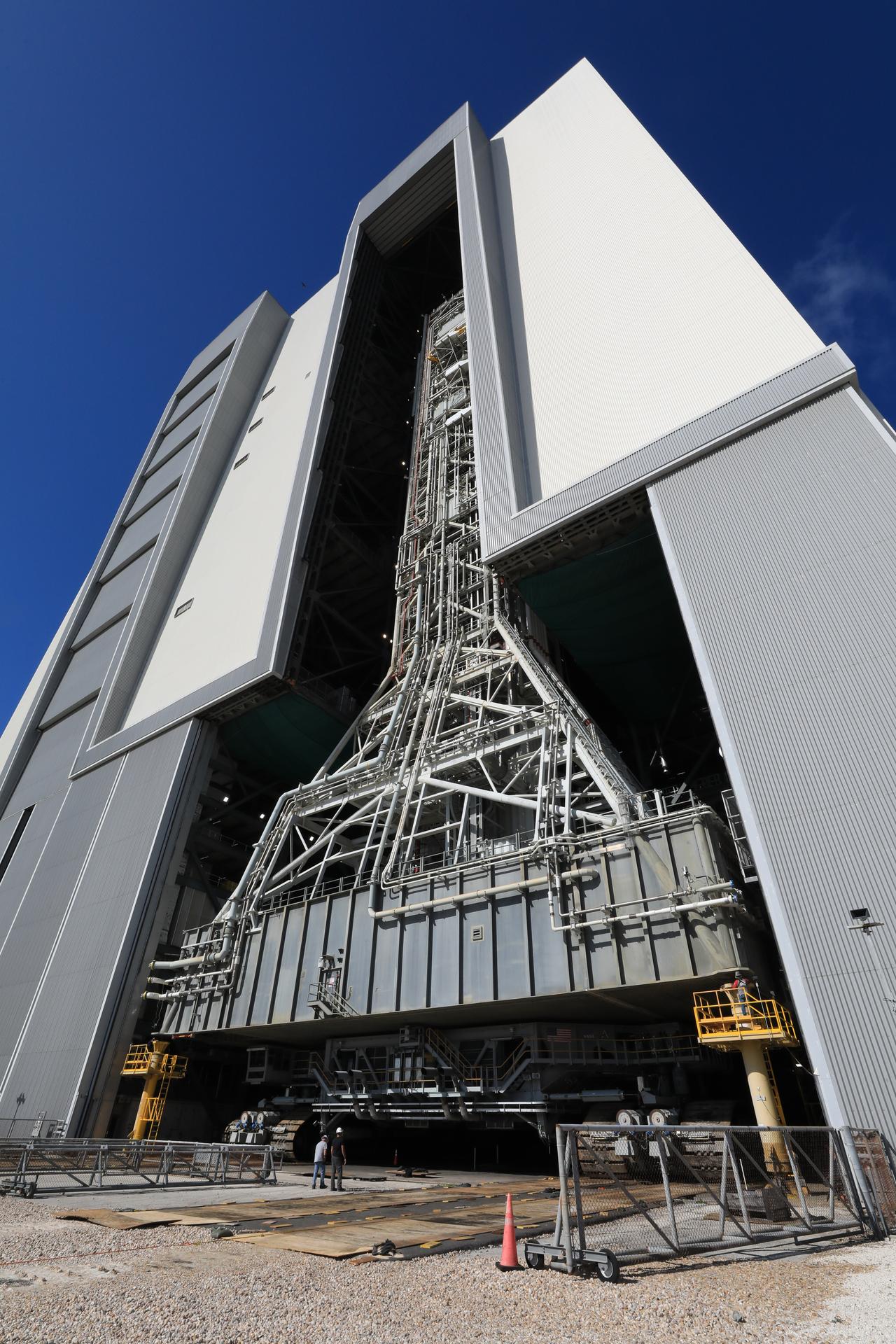
NASA’s mobile launcher enters the Vehicle Assembly Building following its approximately 4-mile trek from Launch Complex 39B at the agency’s Kennedy Space Center in Florida on Friday, April 17, 2026, in preparation for Artemis III stacking operations. Teams will perform checkouts, inspections, and data analysis, and make repairs to the tower that saw damage during launch of NASA’s Artemis II test flight on April 1, 2026.
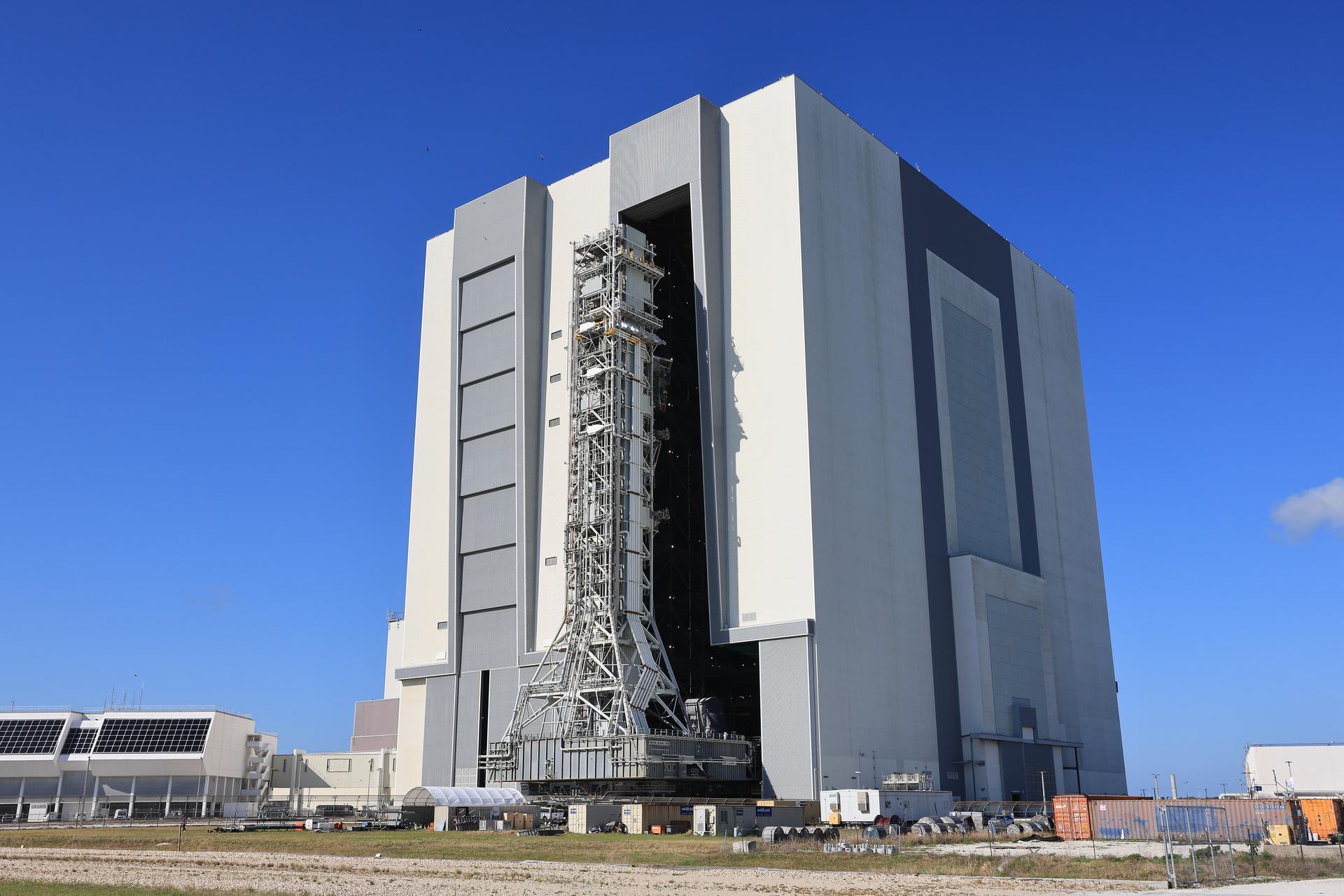
NASA’s mobile launcher approaches the Vehicle Assembly Building following its approximately 4-mile trek from Launch Complex 39B at the agency’s Kennedy Space Center in Florida on Friday, April 17, 2026, in preparation for Artemis III stacking operations. Teams will perform checkouts, inspections, and data analysis, and make repairs to the tower that saw damage during launch of NASA’s Artemis II test flight on April 1, 2026.
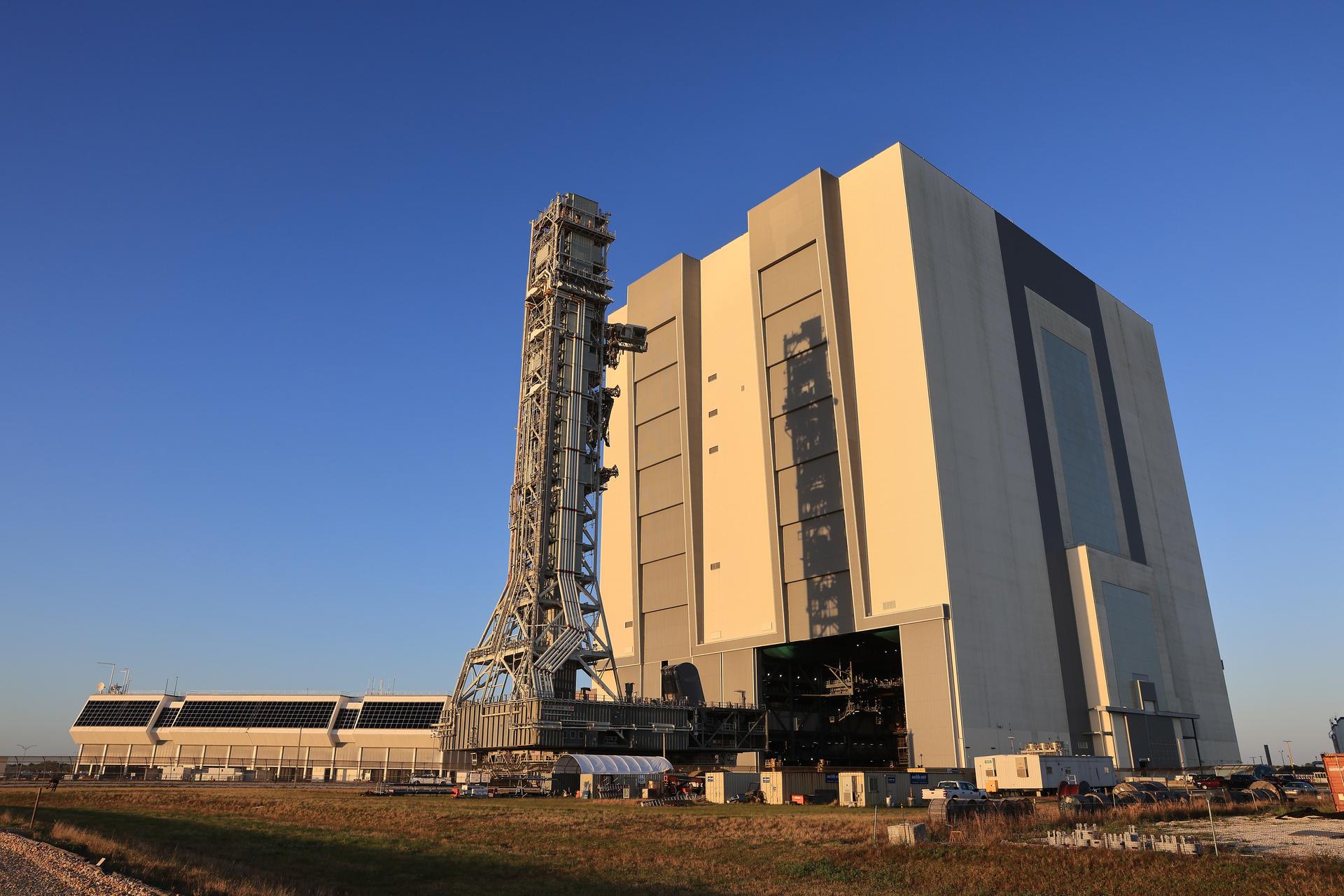
NASA’s mobile launcher approaches the Vehicle Assembly Building following its approximately 4-mile trek from Launch Complex 39B at the agency’s Kennedy Space Center in Florida on Friday, April 17, 2026, in preparation for Artemis III stacking operations. Teams will perform checkouts, inspections, and data analysis, and make repairs to the tower that saw damage during launch of NASA’s Artemis II test flight on April 1, 2026.
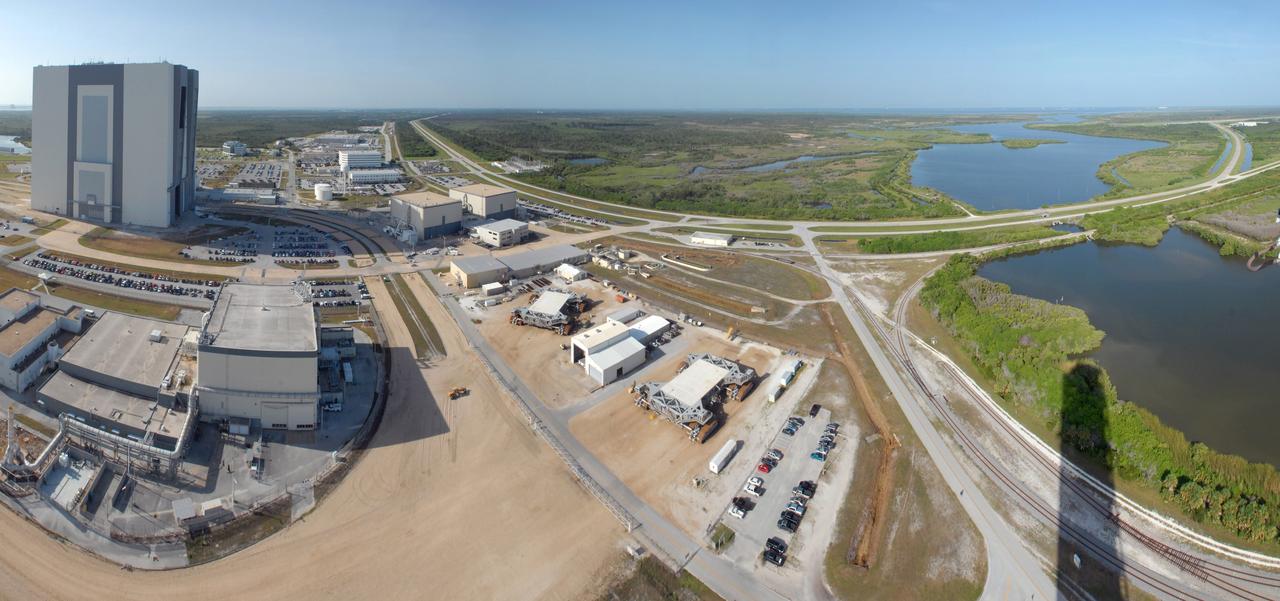
CAPE CANAVERAL, Fla. -- At NASA's Kennedy Space Center in Florida, the 525-foot-tall Vehicle Assembly Building, left, and crawler-transporters, center, are seen from the tower of NASA's new mobile launcher, or ML, support structure. For information on NASA's future plans, visit www.nasa.gov. Photo credit: NASA/Jim Grossmann
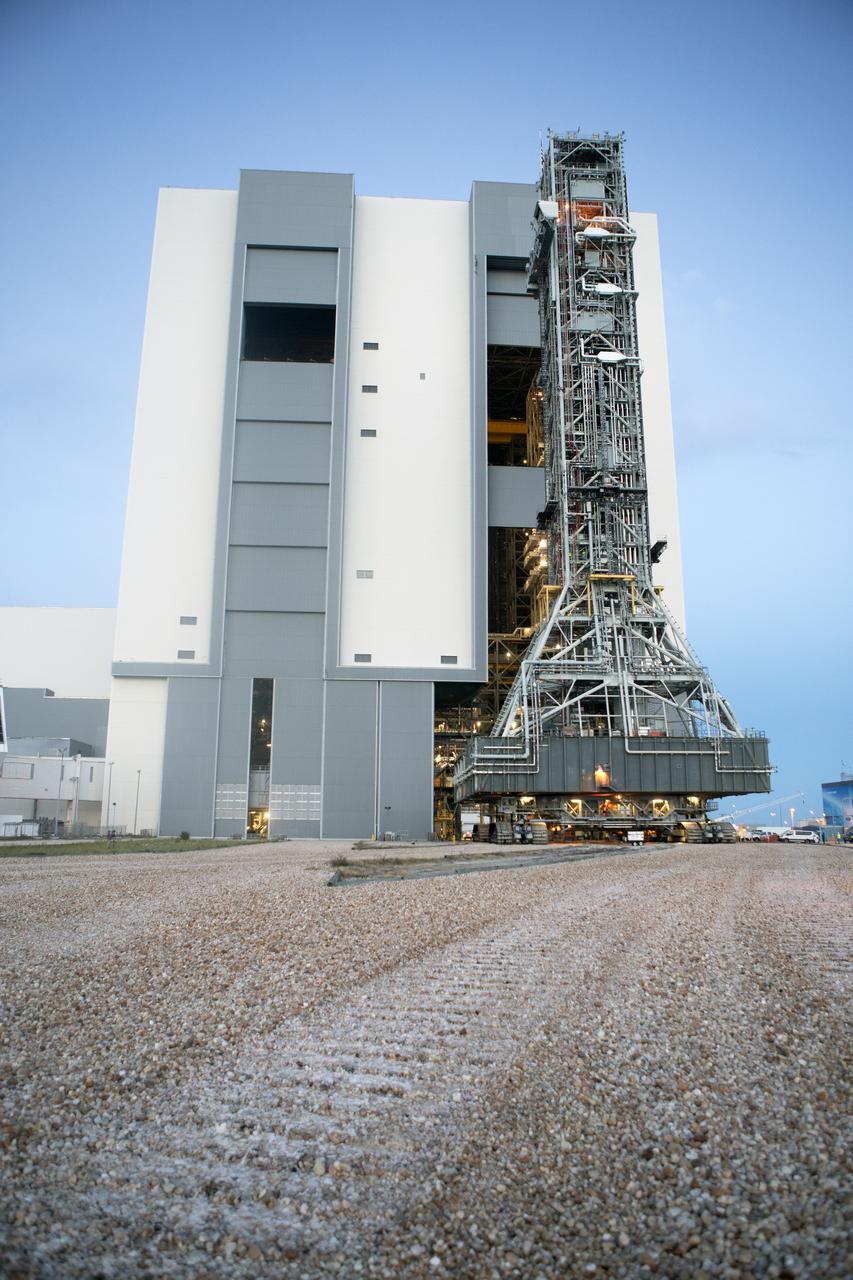
NASA's mobile launcher, atop crawler-transporter 2, is at the entrance to High Bay 3 at the Vehicle Assembly Building (VAB) on Sept. 8, 2018, at NASA's Kennedy Space Center in Florida. The mobile launcher departed Launch Pad 39B after several days of testing with the pad. This is the first time that the modified mobile launcher made the trip to the pad and the VAB. The mobile launcher will spend seven months in the VAB undergoing testing. The 380-foot-tall structure is equipped with the crew access arm and several umbilicals that will provide power, environmental control, pneumatics, communication and electrical connections to the agency's Space Launch System and Orion spacecraft. Exploration Ground Systems is preparing the ground systems necessary to launch SLS and Orion on Exploration Mission-1, missions to the Moon and on to Mars.
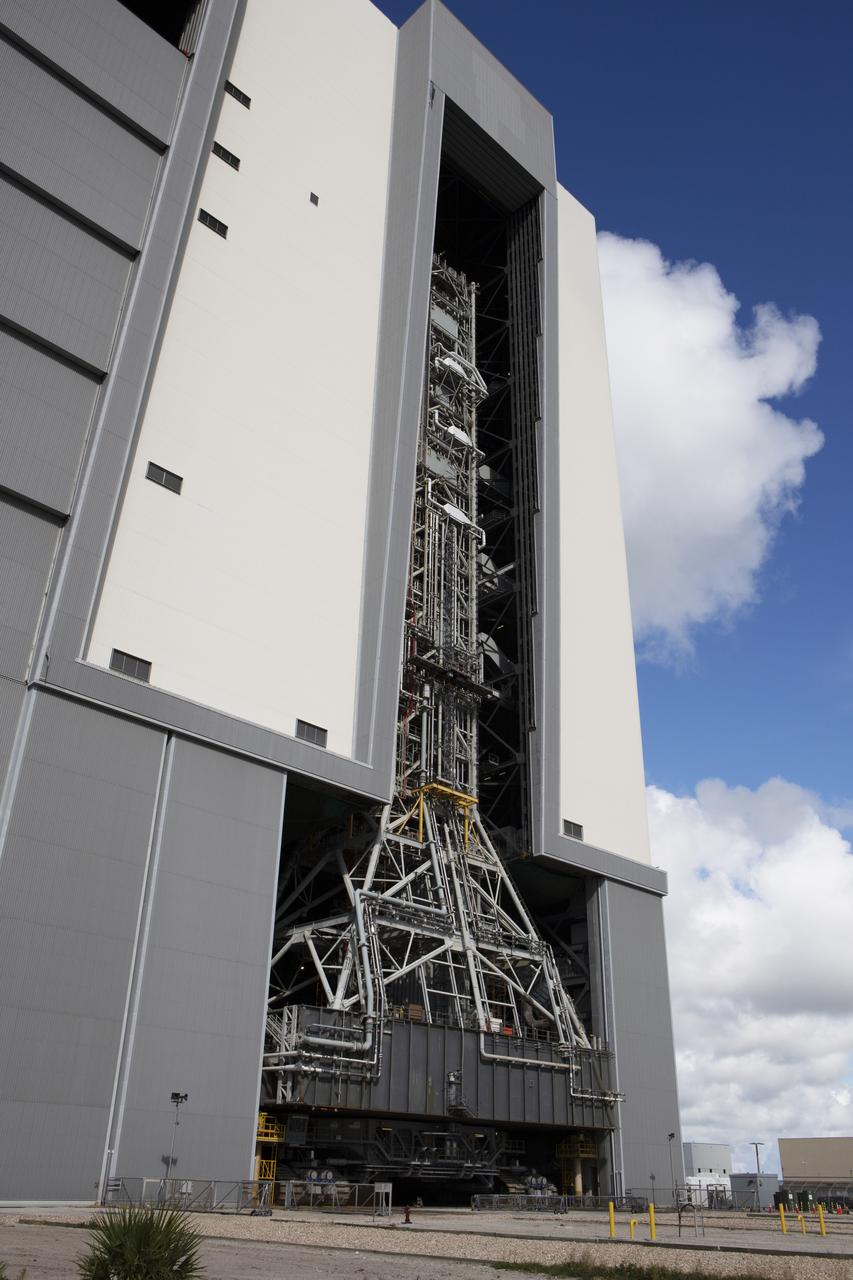
NASA's mobile launcher, atop crawler-transporter 2, moves slowly into High Bay 3 at the Vehicle Assembly Building (VAB) on Sept. 8, 2018, at NASA's Kennedy Space Center in Florida. The mobile launcher departed Launch Pad 39B after several days of testing with the pad. This is the first time that the modified mobile launcher made the trip to the pad and the VAB. The mobile launcher will spend seven months in the VAB undergoing testing. The 380-foot-tall structure is equipped with the crew access arm and several umbilicals that will provide power, environmental control, pneumatics, communication and electrical connections to the agency's Space Launch System and Orion spacecraft. Exploration Ground Systems is preparing the ground systems necessary to launch SLS and Orion on Exploration Mission-1, missions to the Moon and on to Mars.
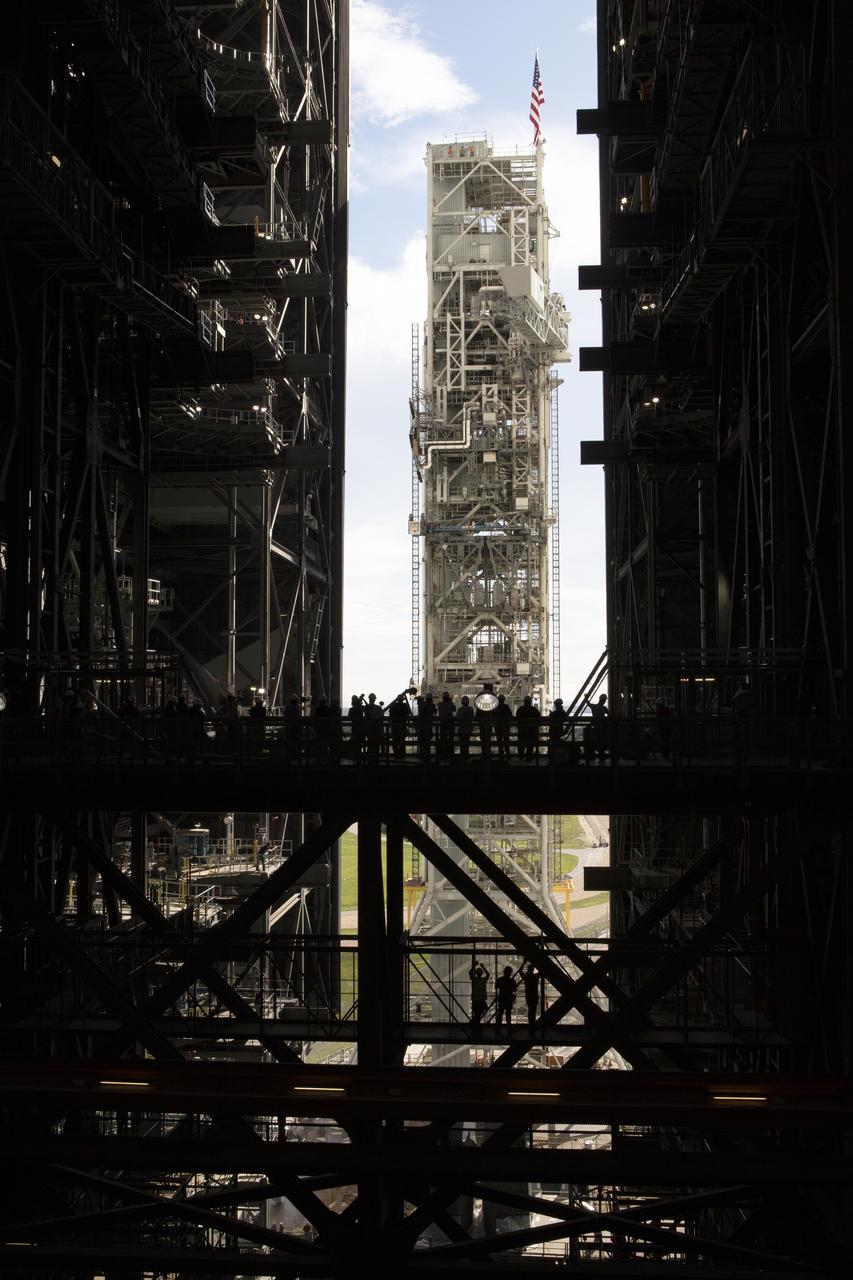
NASA's mobile launcher, atop crawler-transporter 2, moves slowly into High Bay 3 at the Vehicle Assembly Building (VAB) on Sept. 8, 2018, at NASA's Kennedy Space Center in Florida. The mobile launcher departed Launch Pad 39B after several days of testing with the pad. This is the first time that the modified mobile launcher made the trip to the pad and the VAB. The mobile launcher will spend seven months in the VAB undergoing testing. The 380-foot-tall structure is equipped with the crew access arm and several umbilicals that will provide power, environmental control, pneumatics, communication and electrical connections to the agency's Space Launch System and Orion spacecraft. Exploration Ground Systems is preparing the ground systems necessary to launch SLS and Orion on Exploration Mission-1, missions to the Moon and on to Mars.
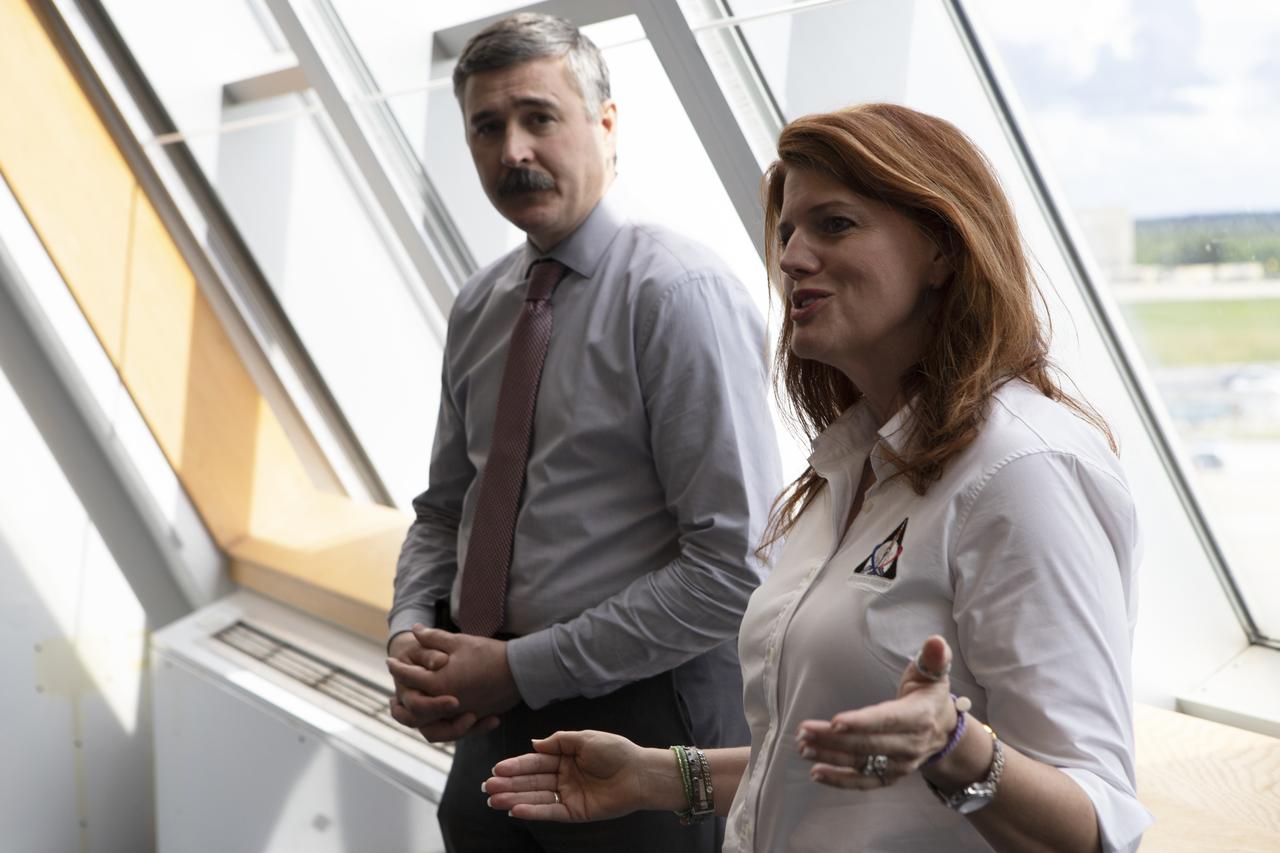
Charlie Blackwell-Thompson, Exploration Mission-1 launch director, and Michael Sarafin, EM-1 mission manager, talk to members of the media inside the Launch Control Center at NASA's Kennedy Space Center in Florida, on Sept. 8, 2018. Exploration Ground Systems is preparing the ground systems necessary to launch the agency's Space Launch System and Orion on EM-1, missions to the Moon and on to Mars.
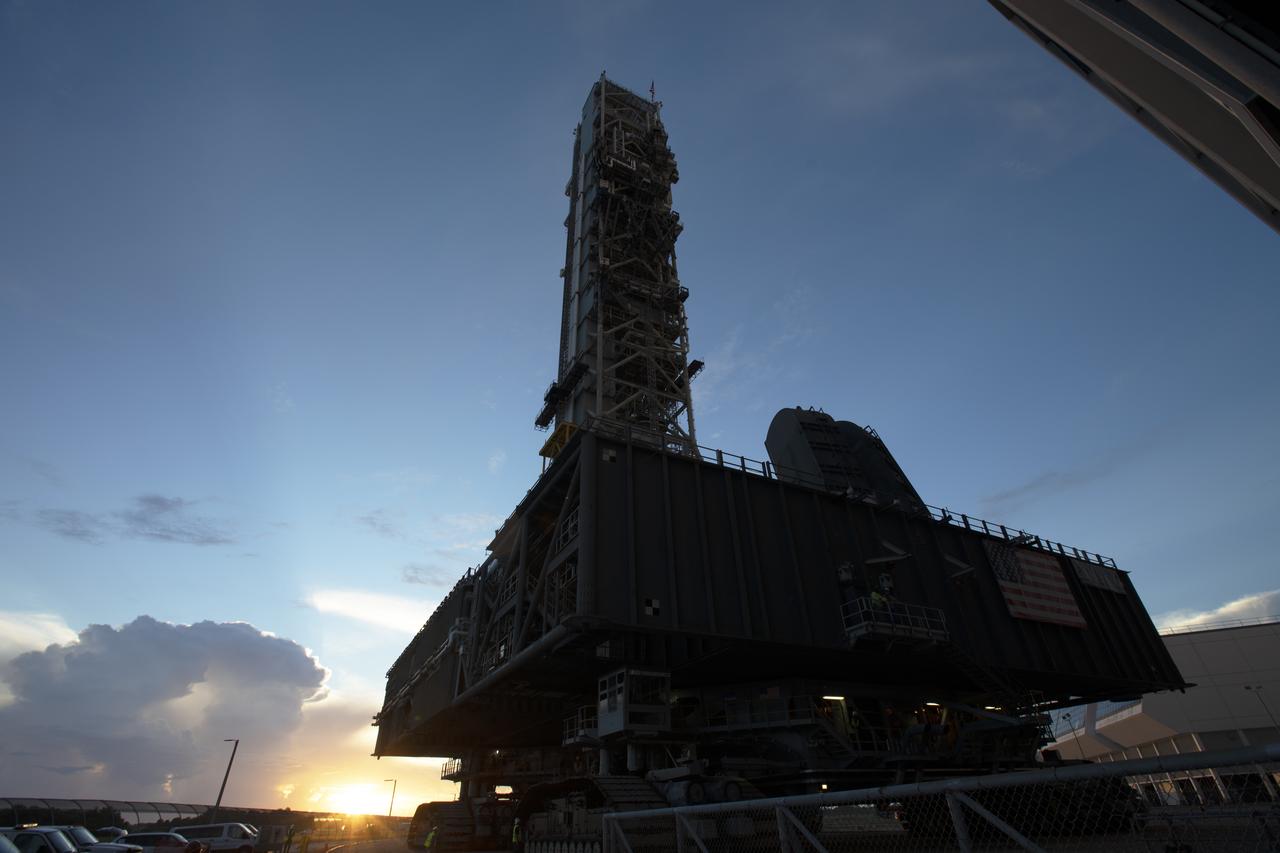
NASA's mobile launcher, atop crawler-transporter 2, is at the entrance to High Bay 3 at the Vehicle Assembly Building (VAB) at sunrise on Sept. 8, 2018, at NASA's Kennedy Space Center in Florida. The mobile launcher departed Launch Pad 39B after several days of testing with the pad. This is the first time that the modified mobile launcher made the trip to the pad and the VAB. The mobile launcher will spend seven months in the VAB undergoing testing. The 380-foot-tall structure is equipped with the crew access arm and several umbilicals that will provide power, environmental control, pneumatics, communication and electrical connections to the agency's Space Launch System and Orion spacecraft. Exploration Ground Systems is preparing the ground systems necessary to launch SLS and Orion on Exploration Mission-1, missions to the Moon and on to Mars.
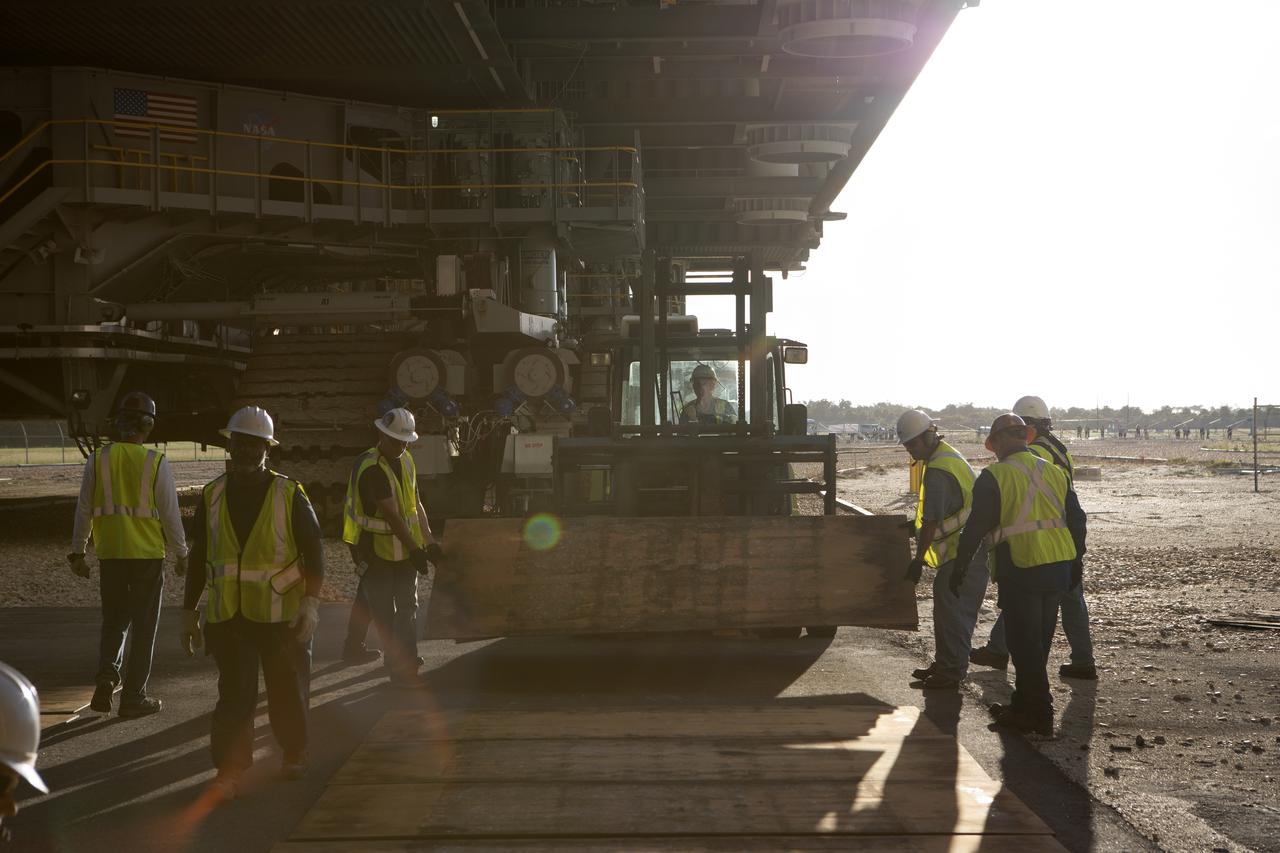
Technicians lay wooden planks down in the tracks to the entrance to High Bay 3 in the Vehicle Assembly Building (VAB), as mobile launcher, atop crawler-transporter 2, moves into the VAB on Sept. 8, 2018, at NASA's Kennedy Space Center in Florida. The mobile launcher departed Launch Pad 39B after several days of testing with the pad. This is the first time that the modified mobile launcher made the trip to the pad and the VAB. The mobile launcher will spend seven months in the VAB undergoing testing. The 380-foot-tall structure is equipped with the crew access arm and several umbilicals that will provide power, environmental control, pneumatics, communication and electrical connections to the agency's Space Launch System and Orion spacecraft. Exploration Ground Systems is preparing the ground systems necessary to launch SLS and Orion on Exploration Mission-1, missions to the Moon and on to Mars.
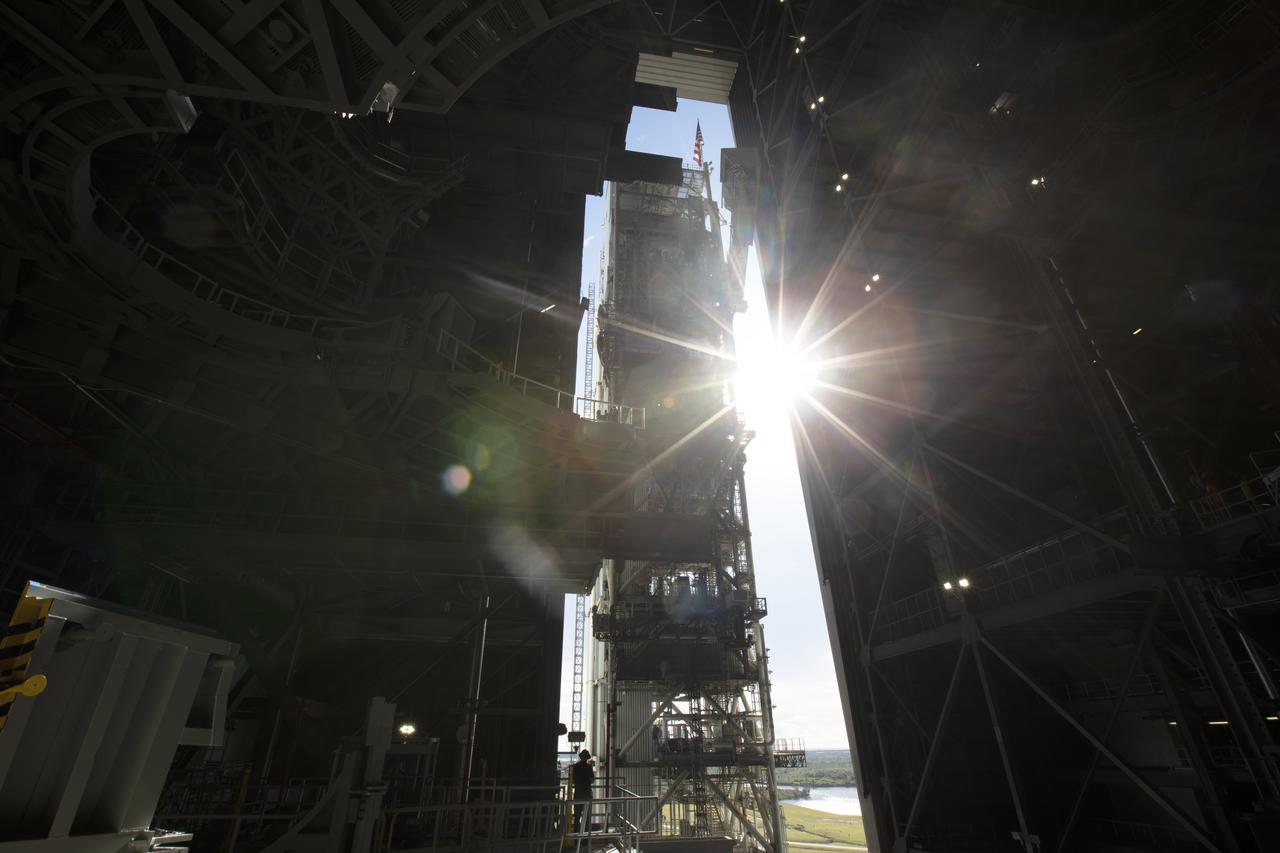
As a brilliant sun shines through, NASA's mobile launcher, atop crawler-transporter 2, begins the move into High Bay 3 at the Vehicle Assembly Building (VAB) on Sept. 8, 2018, at NASA's Kennedy Space Center in Florida. The mobile launcher departed Launch Pad 39B after several days of testing with the pad. This is the first time that the modified mobile launcher made the trip to the pad and the VAB. The mobile launcher will spend seven months in the VAB undergoing testing. The 380-foot-tall structure is equipped with the crew access arm and several umbilicals that will provide power, environmental control, pneumatics, communication and electrical connections to the agency's Space Launch System and Orion spacecraft. Exploration Ground Systems is preparing the ground systems necessary to launch SLS and Orion on Exploration Mission-1, missions to the Moon and on to Mars.
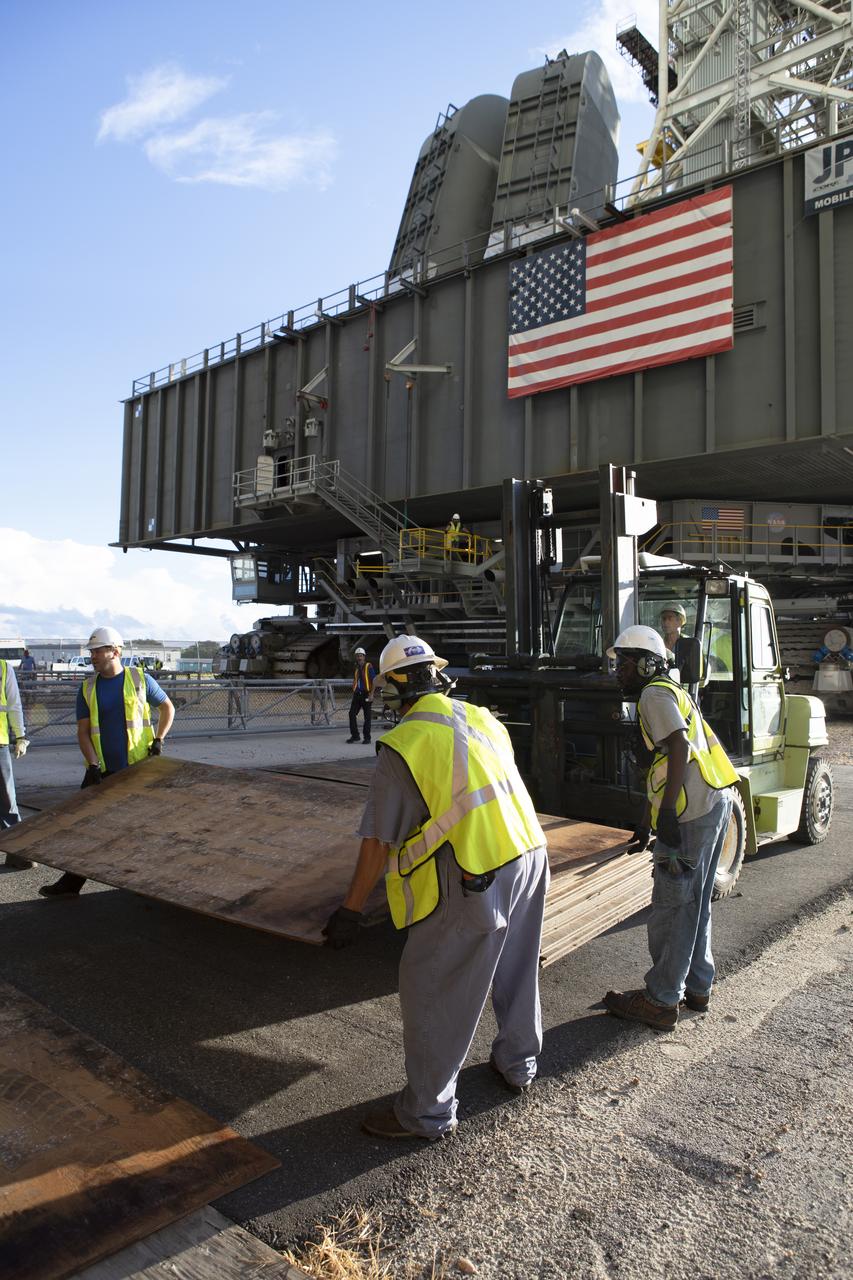
Preparations are underway to move NASA's mobile launcher, atop crawler-transporter 2, into High Bay 3 at the Vehicle Assembly Building (VAB) on Sept. 8, 2018, at NASA's Kennedy Space Center in Florida. The mobile launcher departed Launch Pad 39B after several days of testing with the pad. This is the first time that the modified mobile launcher made the trip to the pad and the VAB. The mobile launcher will spend seven months in the VAB undergoing testing. The 380-foot-tall structure is equipped with the crew access arm and several umbilicals that will provide power, environmental control, pneumatics, communication and electrical connections to the agency's Space Launch System and Orion spacecraft. Exploration Ground Systems is preparing the ground systems necessary to launch SLS and Orion on Exploration Mission-1, missions to the Moon and on to Mars.
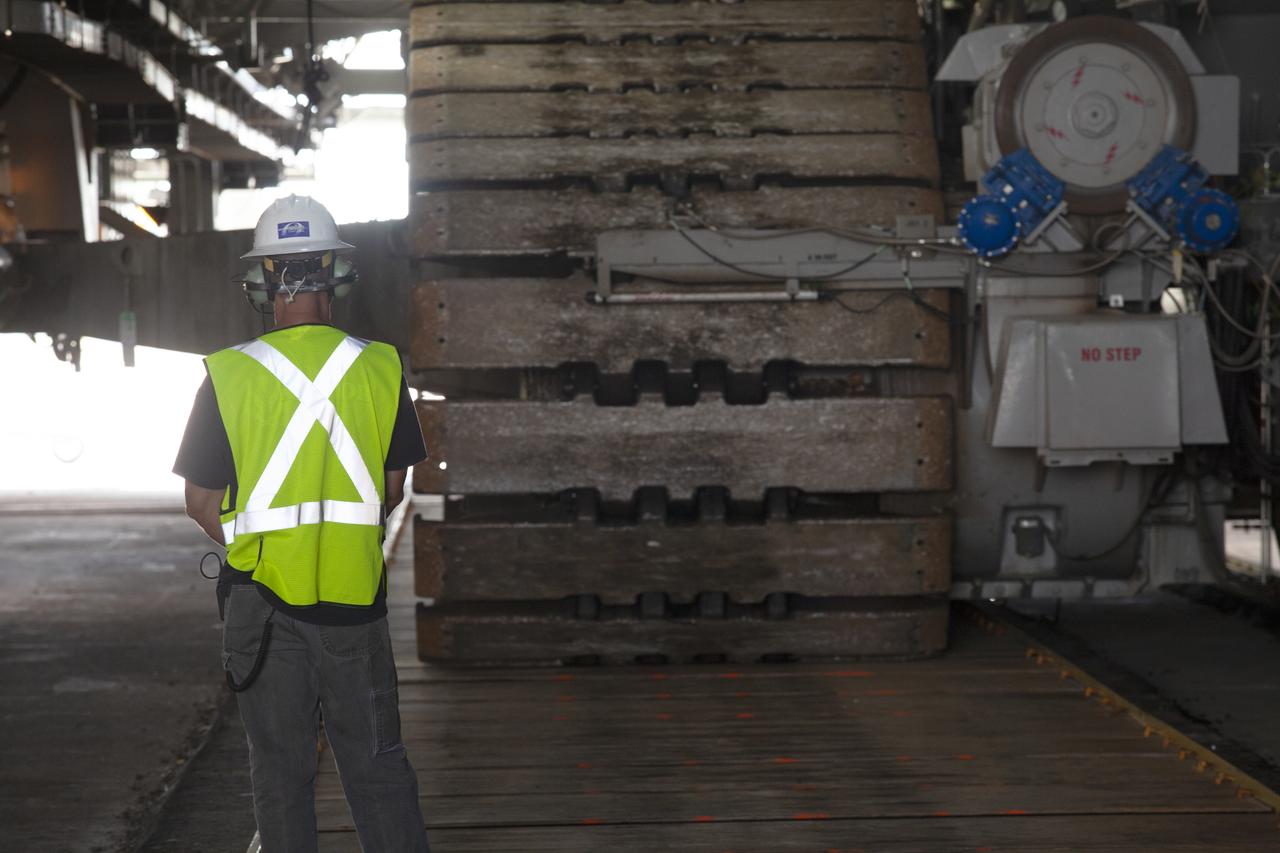
The giant cleats of crawler-transporter 2 are in view as a technician monitors the progress of the move of NASA's mobile launcher, atop the crawler, into High Bay 3 at the Vehicle Assembly Building (VAB) on Sept. 8, 2018, at NASA's Kennedy Space Center in Florida. The mobile launcher departed Launch Pad 39B after several days of testing with the pad. This is the first time that the modified mobile launcher made the trip to the pad and the VAB. The mobile launcher will spend seven months in the VAB undergoing testing. The 380-foot-tall structure is equipped with the crew access arm and several umbilicals that will provide power, environmental control, pneumatics, communication and electrical connections to the agency's Space Launch System and Orion spacecraft. Exploration Ground Systems is preparing the ground systems necessary to launch SLS and Orion on Exploration Mission-1, missions to the Moon and on to Mars.
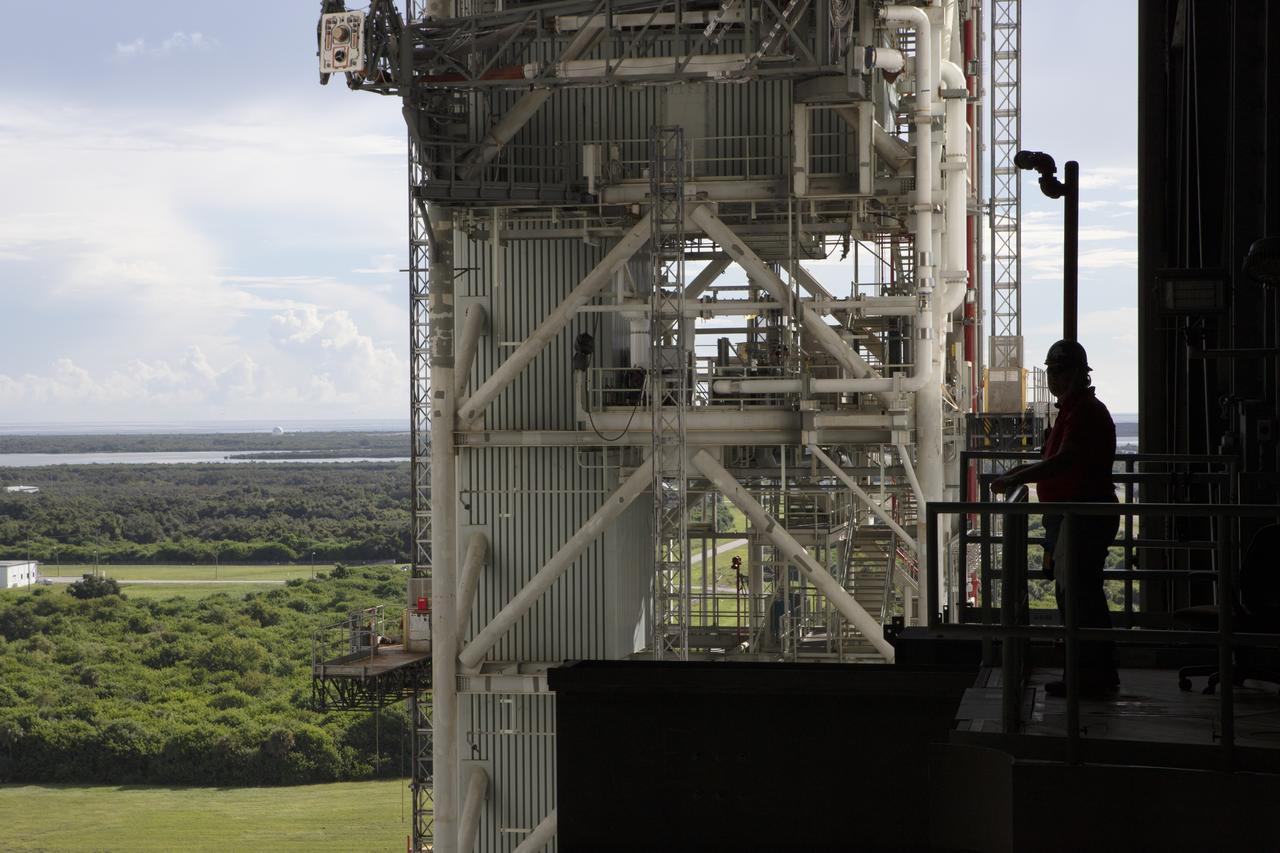
NASA's mobile launcher, atop crawler-transporter 2, moves slowly into High Bay 3 at the Vehicle Assembly Building (VAB) on Sept. 8, 2018, at NASA's Kennedy Space Center in Florida. The mobile launcher departed Launch Pad 39B after several days of testing with the pad. This is the first time that the modified mobile launcher made the trip to the pad and the VAB. The mobile launcher will spend seven months in the VAB undergoing testing. The 380-foot-tall structure is equipped with the crew access arm and several umbilicals that will provide power, environmental control, pneumatics, communication and electrical connections to the agency's Space Launch System and Orion spacecraft. Exploration Ground Systems is preparing the ground systems necessary to launch SLS and Orion on Exploration Mission-1, missions to the Moon and on to Mars.
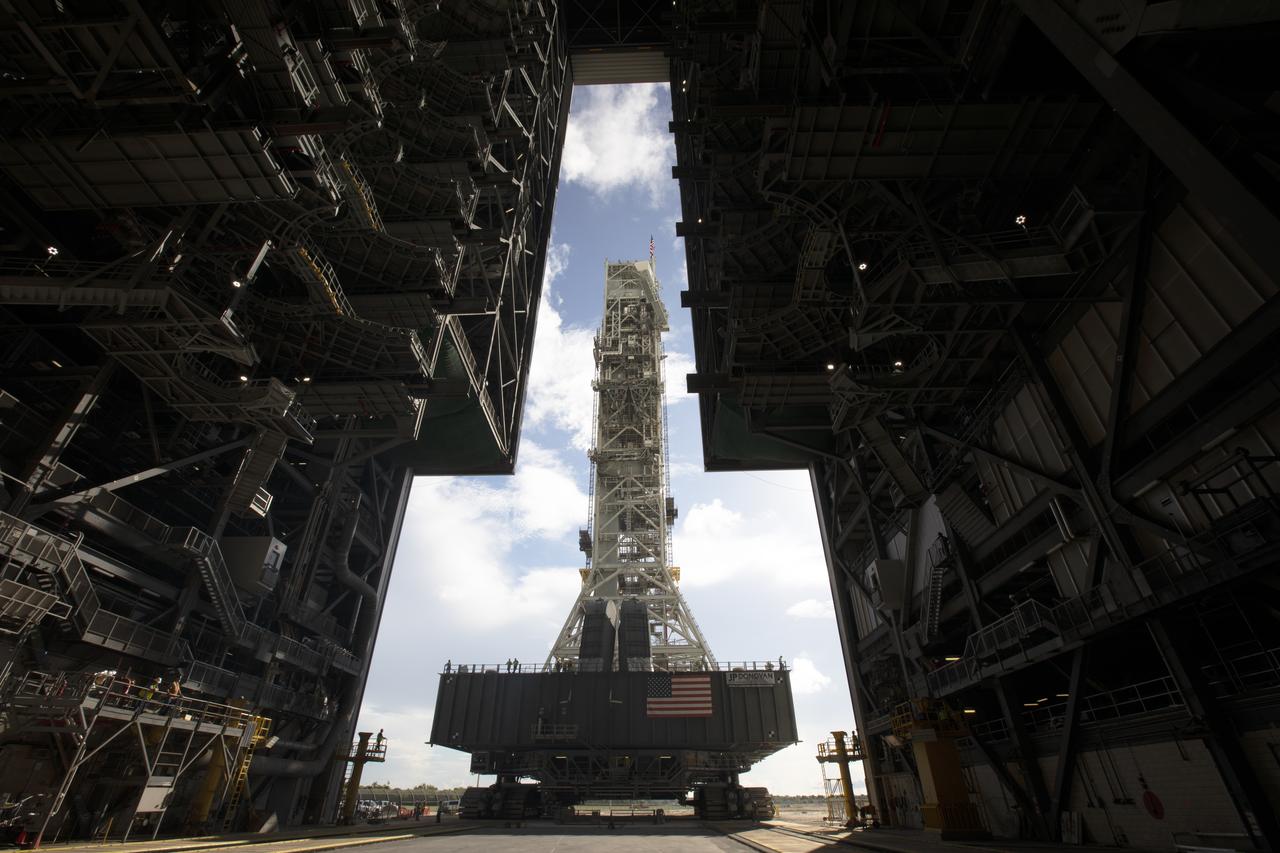
NASA's mobile launcher, atop crawler-transporter 2, begins the move into High Bay 3 at the Vehicle Assembly Building (VAB) on Sept. 8, 2018, at NASA's Kennedy Space Center in Florida. The mobile launcher departed Launch Pad 39B after several days of testing with the pad. This is the first time that the modified mobile launcher made the trip to the pad and the VAB. The mobile launcher will spend seven months in the VAB undergoing testing. The 380-foot-tall structure is equipped with the crew access arm and several umbilicals that will provide power, environmental control, pneumatics, communication and electrical connections to the agency's Space Launch System and Orion spacecraft. Exploration Ground Systems is preparing the ground systems necessary to launch SLS and Orion on Exploration Mission-1, missions to the Moon and on to Mars.
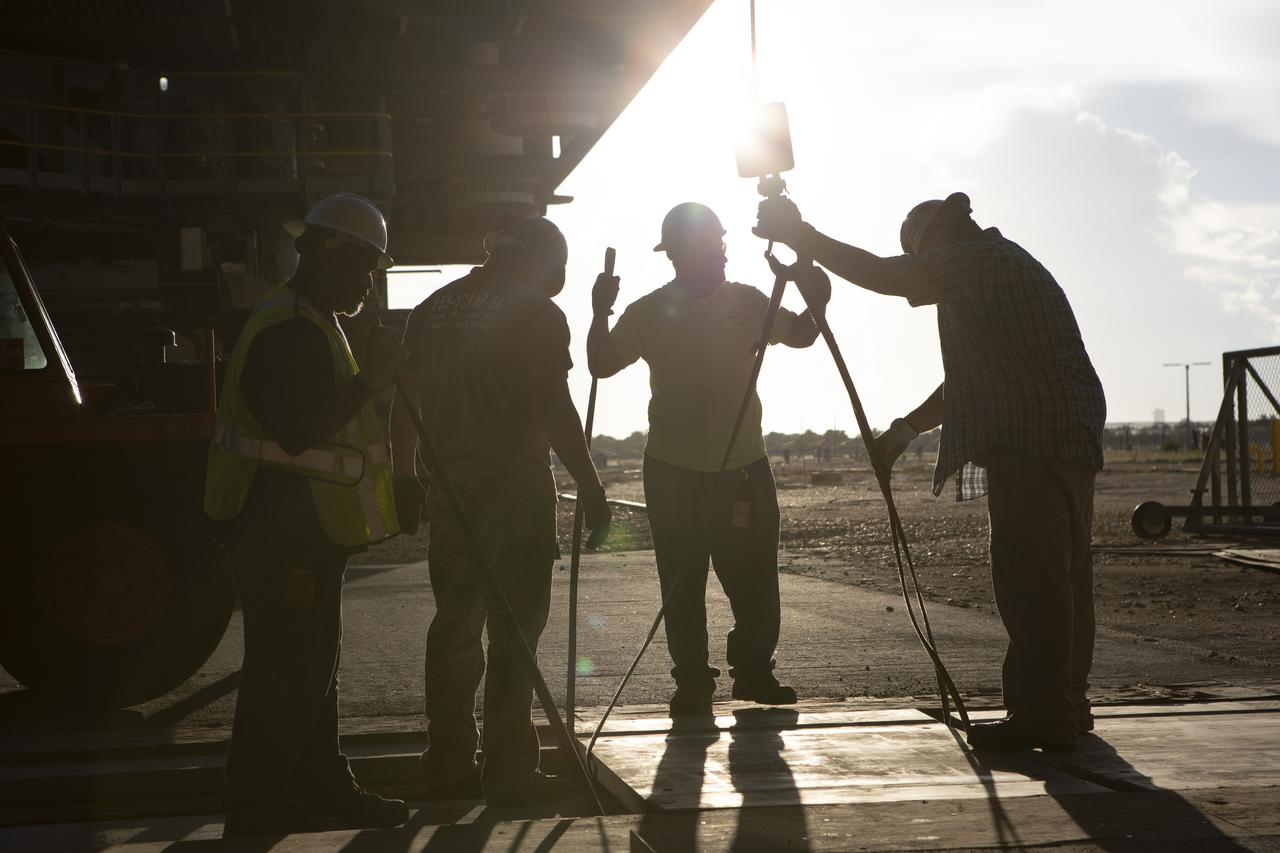
Technicians remove special planks covering tracks as NASA's mobile launcher, atop crawler-transporter 2, moves into High Bay 3 at the Vehicle Assembly Building (VAB) on Sept. 8, 2018, at NASA's Kennedy Space Center in Florida. The mobile launcher departed Launch Pad 39B after several days of testing with the pad. This is the first time that the modified mobile launcher made the trip to the pad and the VAB. The mobile launcher will spend seven months in the VAB undergoing testing. The 380-foot-tall structure is equipped with the crew access arm and several umbilicals that will provide power, environmental control, pneumatics, communication and electrical connections to the agency's Space Launch System and Orion spacecraft. Exploration Ground Systems is preparing the ground systems necessary to launch SLS and Orion on Exploration Mission-1, missions to the Moon and on to Mars.
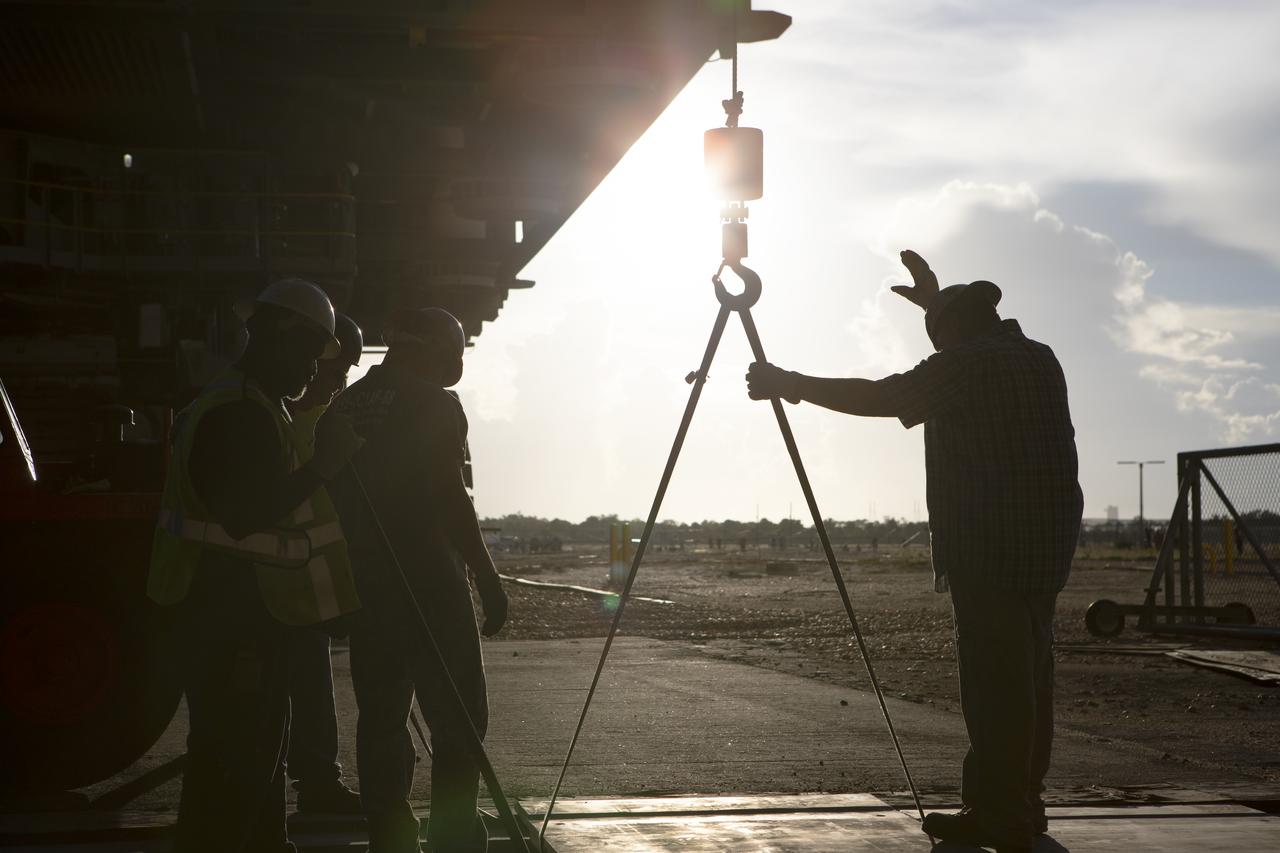
Technicians remove special planks covering tracks as NASA's mobile launcher, atop crawler-transporter 2, moves into High Bay 3 at the Vehicle Assembly Building (VAB) on Sept. 8, 2018, at NASA's Kennedy Space Center in Florida. The mobile launcher departed Launch Pad 39B after several days of testing with the pad. This is the first time that the modified mobile launcher made the trip to the pad and the VAB. The mobile launcher will spend seven months in the VAB undergoing testing. The 380-foot-tall structure is equipped with the crew access arm and several umbilicals that will provide power, environmental control, pneumatics, communication and electrical connections to the agency's Space Launch System and Orion spacecraft. Exploration Ground Systems is preparing the ground systems necessary to launch SLS and Orion on Exploration Mission-1, missions to the Moon and on to Mars.
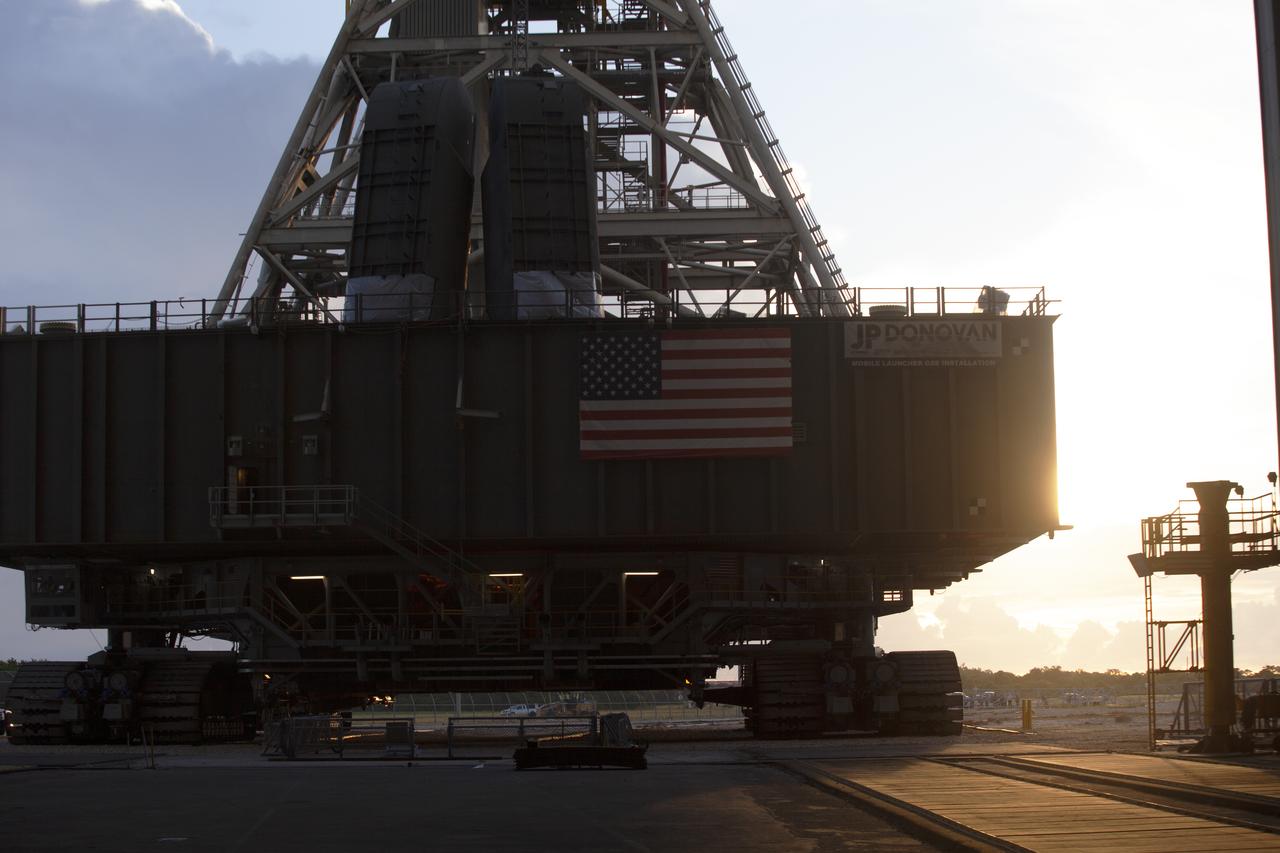
Preparations are underway to move NASA's mobile launcher, atop crawler-transporter 2, into High Bay 3 at the Vehicle Assembly Building (VAB) on Sept. 8, 2018, at NASA's Kennedy Space Center in Florida. The mobile launcher departed Launch Pad 39B after several days of testing with the pad. This is the first time that the modified mobile launcher made the trip to the pad and the VAB. The mobile launcher will spend seven months in the VAB undergoing testing. The 380-foot-tall structure is equipped with the crew access arm and several umbilicals that will provide power, environmental control, pneumatics, communication and electrical connections to the agency's Space Launch System and Orion spacecraft. Exploration Ground Systems is preparing the ground systems necessary to launch SLS and Orion on Exploration Mission-1, missions to the Moon and on to Mars.
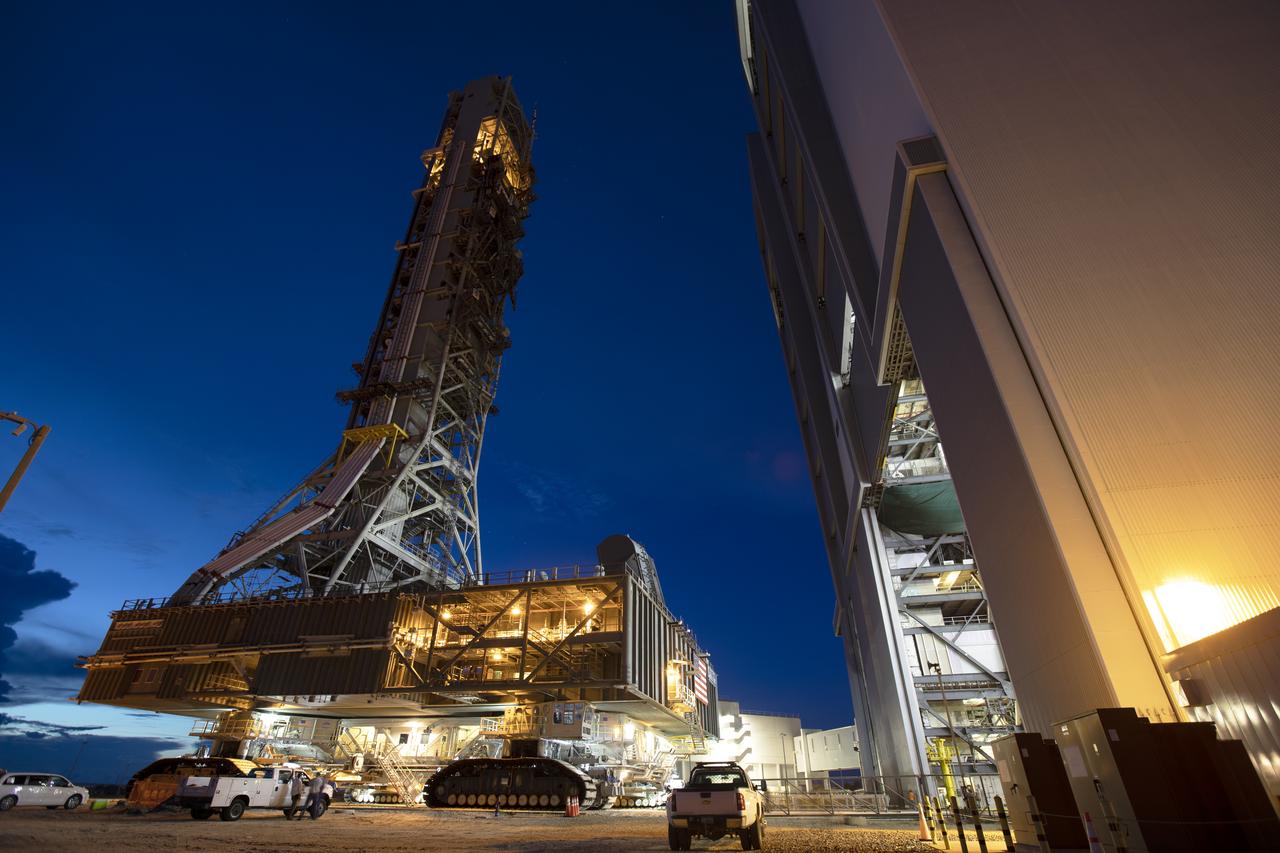
NASA's mobile launcher, atop crawler-transporter 2, is at the entrance to High Bay 3 at the Vehicle Assembly Building (VAB) just before sunrise on Sept. 8, 2018, at NASA's Kennedy Space Center in Florida. The mobile launcher departed Launch Pad 39B after several days of testing with the pad. This is the first time that the modified mobile launcher made the trip to the pad and the VAB. The mobile launcher will spend seven months in the VAB undergoing testing. The 380-foot-tall structure is equipped with the crew access arm and several umbilicals that will provide power, environmental control, pneumatics, communication and electrical connections to the agency's Space Launch System and Orion spacecraft. Exploration Ground Systems is preparing the ground systems necessary to launch SLS and Orion on Exploration Mission-1, missions to the Moon and on to Mars.
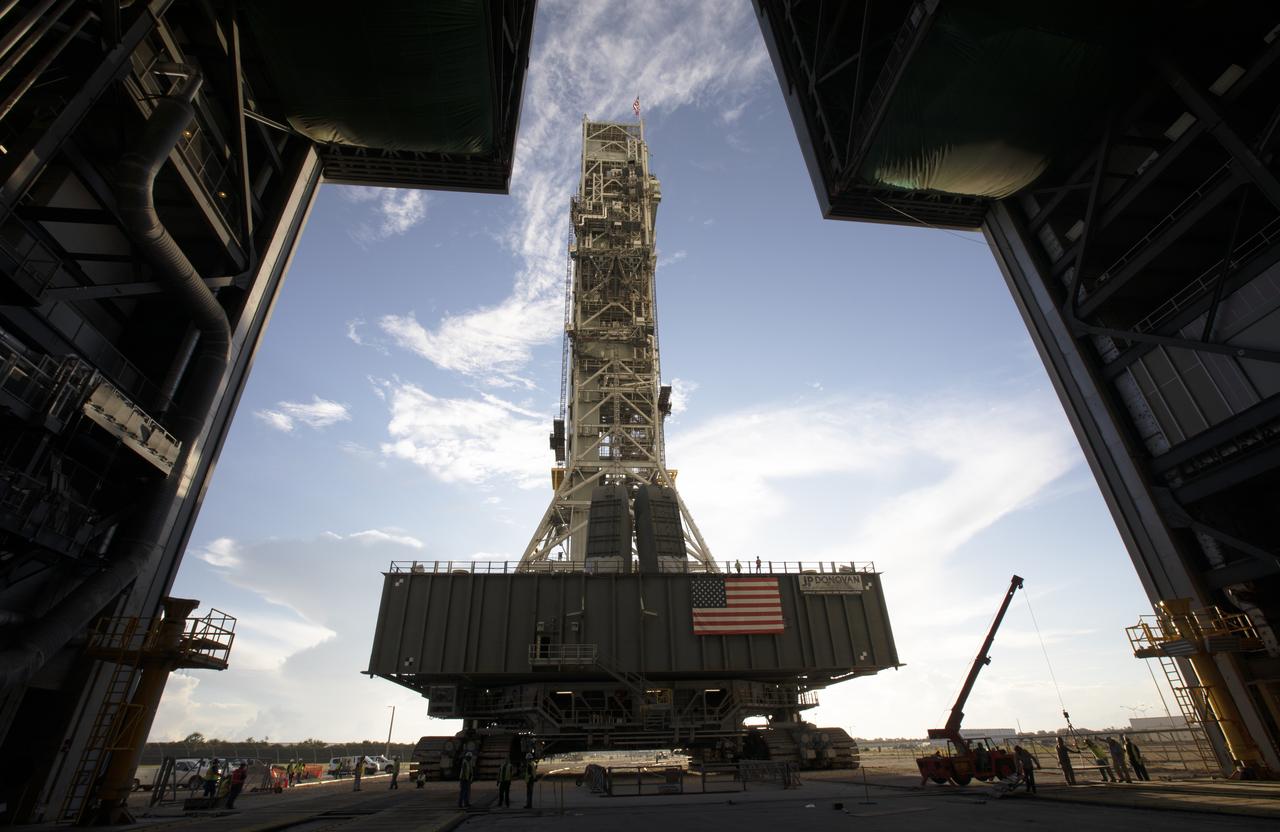
NASA's mobile launcher, atop crawler-transporter 2, is at the entrance to High Bay 3 at the Vehicle Assembly Building (VAB) on Sept. 8, 2018, at NASA's Kennedy Space Center in Florida. The mobile launcher departed Launch Pad 39B after several days of testing with the pad. This is the first time that the modified mobile launcher made the trip to the pad and the VAB. The mobile launcher will spend seven months in the VAB undergoing testing. The 380-foot-tall structure is equipped with the crew access arm and several umbilicals that will provide power, environmental control, pneumatics, communication and electrical connections to the agency's Space Launch System and Orion spacecraft. Exploration Ground Systems is preparing the ground systems necessary to launch SLS and Orion on Exploration Mission-1, missions to the Moon and on to Mars.
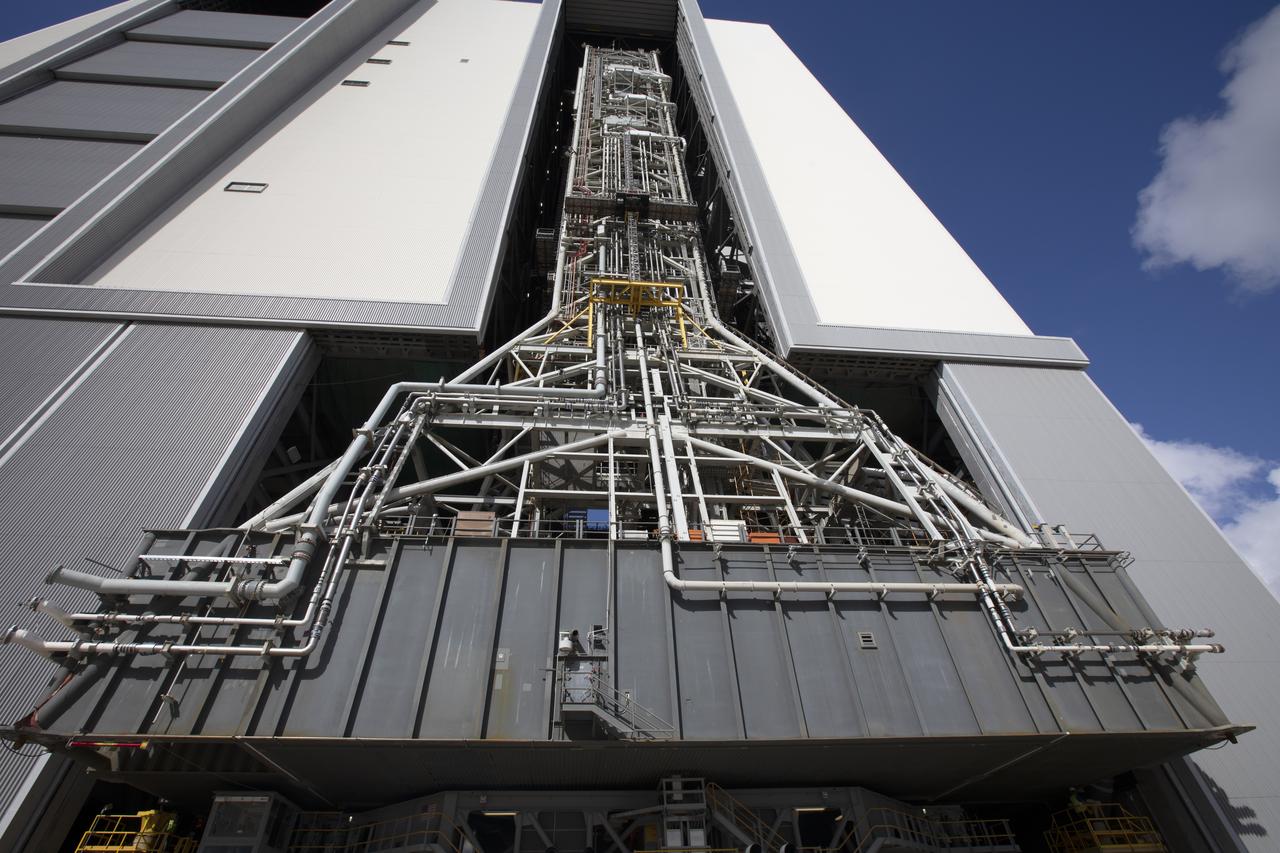
NASA's mobile launcher, atop crawler-transporter 2, moves into High Bay 3 at the Vehicle Assembly Building (VAB) on Sept. 8, 2018, at NASA's Kennedy Space Center in Florida. The mobile launcher departed Launch Pad 39B after several days of testing with the pad. This is the first time that the modified mobile launcher made the trip to the pad and the VAB. The mobile launcher will spend seven months in the VAB undergoing testing. The 380-foot-tall structure is equipped with the crew access arm and several umbilicals that will provide power, environmental control, pneumatics, communication and electrical connections to the agency's Space Launch System and Orion spacecraft. Exploration Ground Systems is preparing the ground systems necessary to launch SLS and Orion on Exploration Mission-1, missions to the Moon and on to Mars.
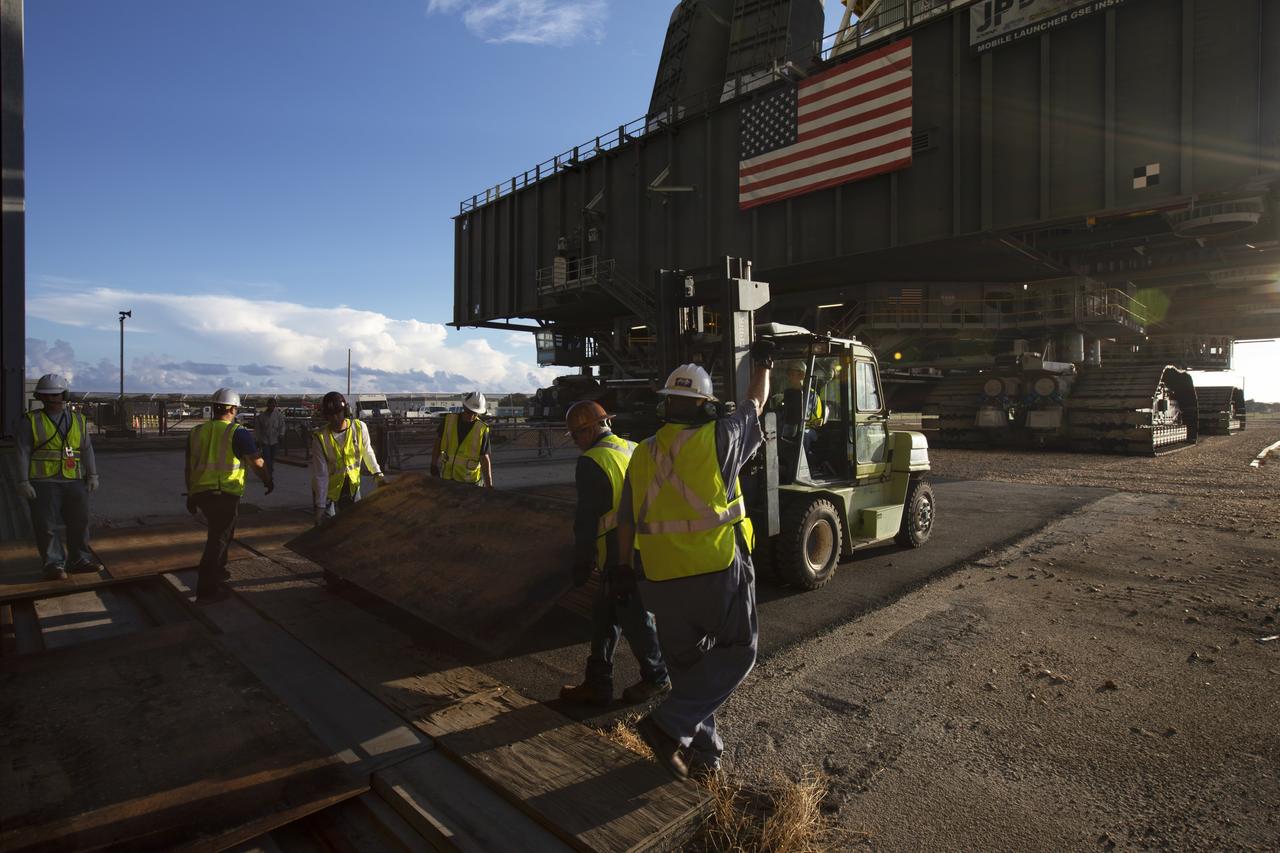
Preparations are underway to move NASA's mobile launcher, atop crawler-transporter 2, into High Bay 3 at the Vehicle Assembly Building (VAB) on Sept. 8, 2018, at NASA's Kennedy Space Center in Florida. The mobile launcher departed Launch Pad 39B after several days of testing with the pad. This is the first time that the modified mobile launcher made the trip to the pad and the VAB. The mobile launcher will spend seven months in the VAB undergoing testing. The 380-foot-tall structure is equipped with the crew access arm and several umbilicals that will provide power, environmental control, pneumatics, communication and electrical connections to the agency's Space Launch System and Orion spacecraft. Exploration Ground Systems is preparing the ground systems necessary to launch SLS and Orion on Exploration Mission-1, missions to the Moon and on to Mars.
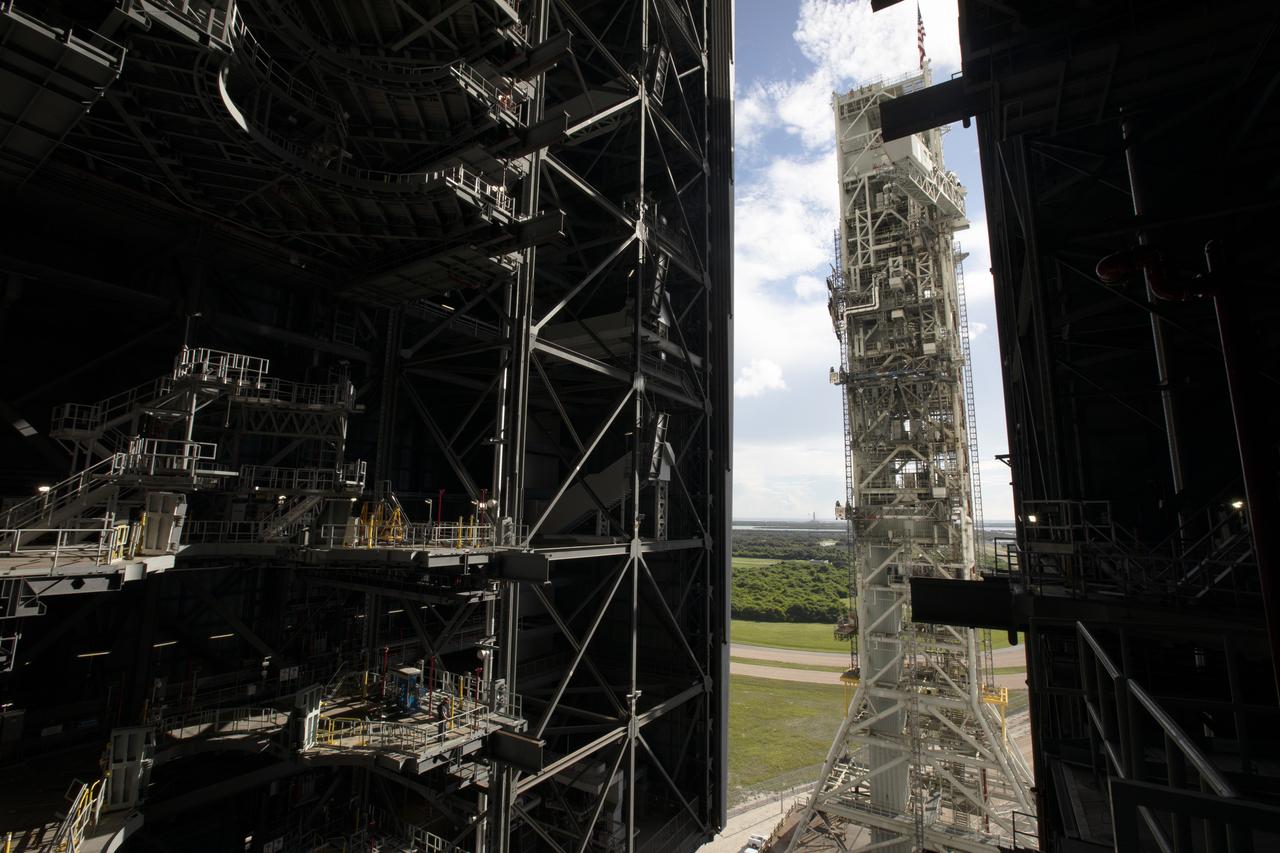
NASA's mobile launcher, atop crawler-transporter 2, begins the move into High Bay 3 at the Vehicle Assembly Building (VAB) on Sept. 8, 2018, at NASA's Kennedy Space Center in Florida. The mobile launcher departed Launch Pad 39B after several days of testing with the pad. This is the first time that the modified mobile launcher made the trip to the pad and the VAB. The mobile launcher will spend seven months in the VAB undergoing testing. The 380-foot-tall structure is equipped with the crew access arm and several umbilicals that will provide power, environmental control, pneumatics, communication and electrical connections to the agency's Space Launch System and Orion spacecraft. Exploration Ground Systems is preparing the ground systems necessary to launch SLS and Orion on Exploration Mission-1, missions to the Moon and on to Mars.
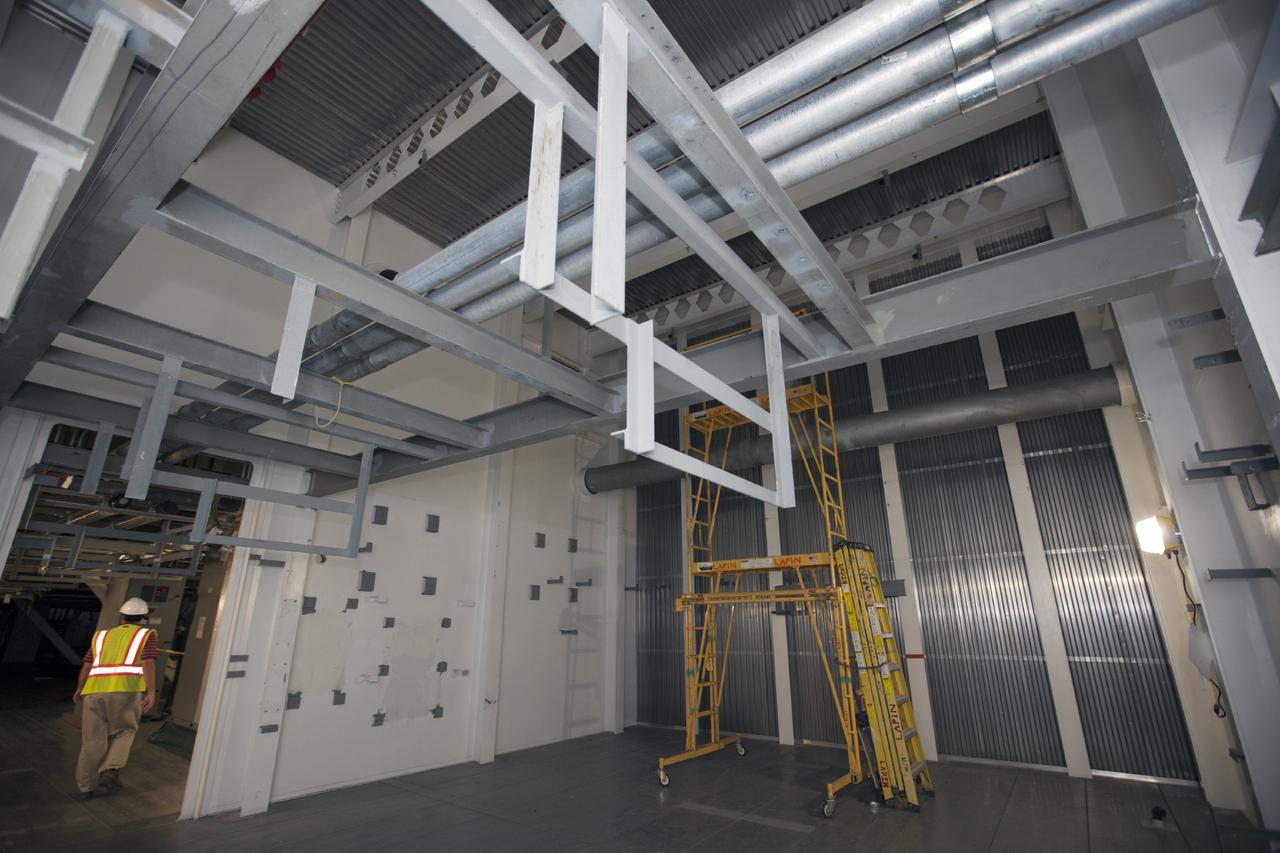
CAPE CANAVERAL, Fla. -- A worker inspects the interior of the mobile launcher, or ML, at the park site adjacent to the Vehicle Assembly Building, or VAB, at NASA's Kennedy Space Center in Florida. Preparations are underway for modifications to begin to the outside of the 355-foot-tall ML structure this fall. NASA’s Ground Systems Development and Operations Program, or GSDO, is preparing the ML to support NASA’s Space Launch System, the heavy-lift rocket that will launch astronauts into deep space on future exploration missions. For more information, visit http://www.nasa.gov/exploration/systems/ground/index.html. Photo credit: NASA/Kim Shiflett
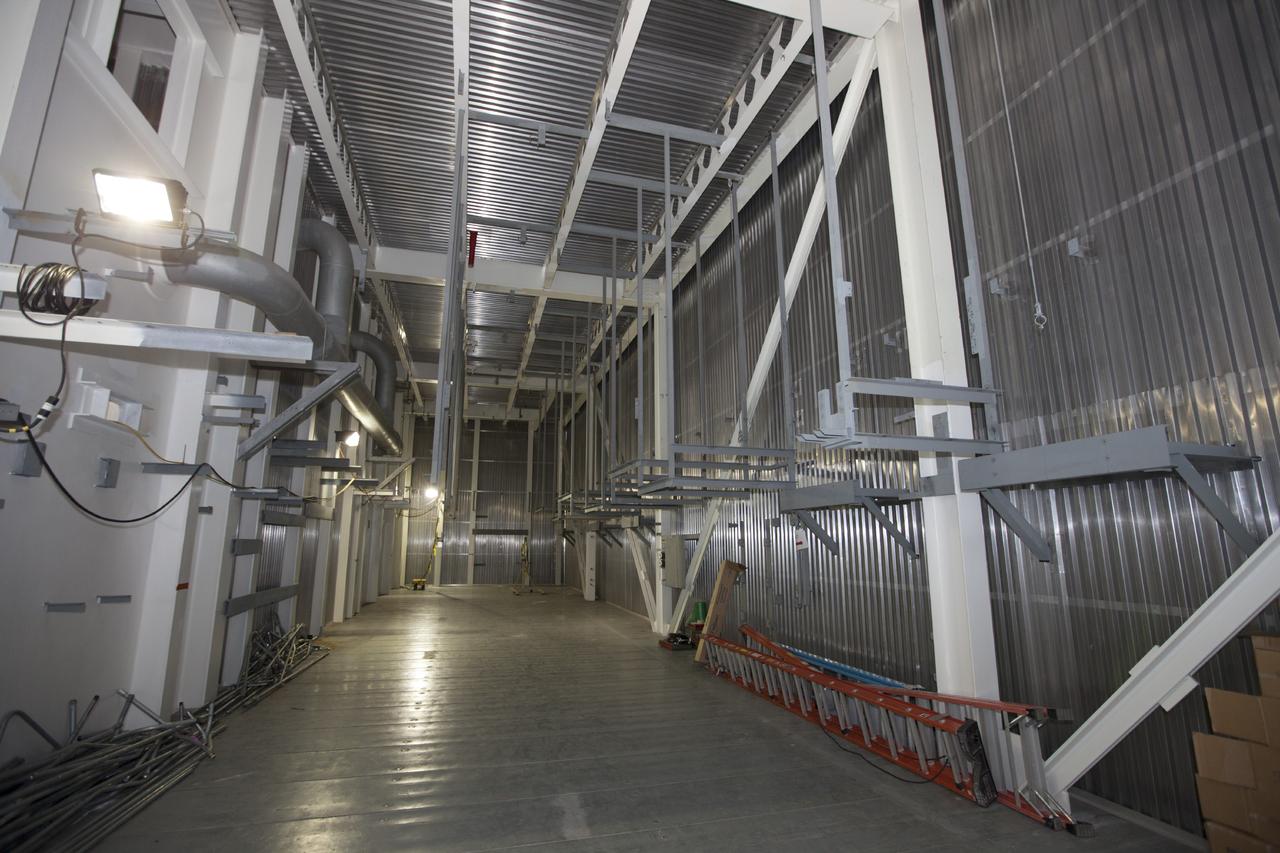
CAPE CANAVERAL, Fla. -- All is quiet and orderly inside the mobile launcher, or ML, at the park site adjacent to the Vehicle Assembly Building, or VAB, at NASA's Kennedy Space Center in Florida. Preparations are underway for modifications to begin to the outside of the 355-foot-tall ML structure this fall. NASA’s Ground Systems Development and Operations Program, or GSDO, is preparing the ML to support NASA’s Space Launch System, the heavy-lift rocket that will launch astronauts into deep space on future exploration missions. For more information, visit http://www.nasa.gov/exploration/systems/ground/index.html. Photo credit: NASA/Kim Shiflett
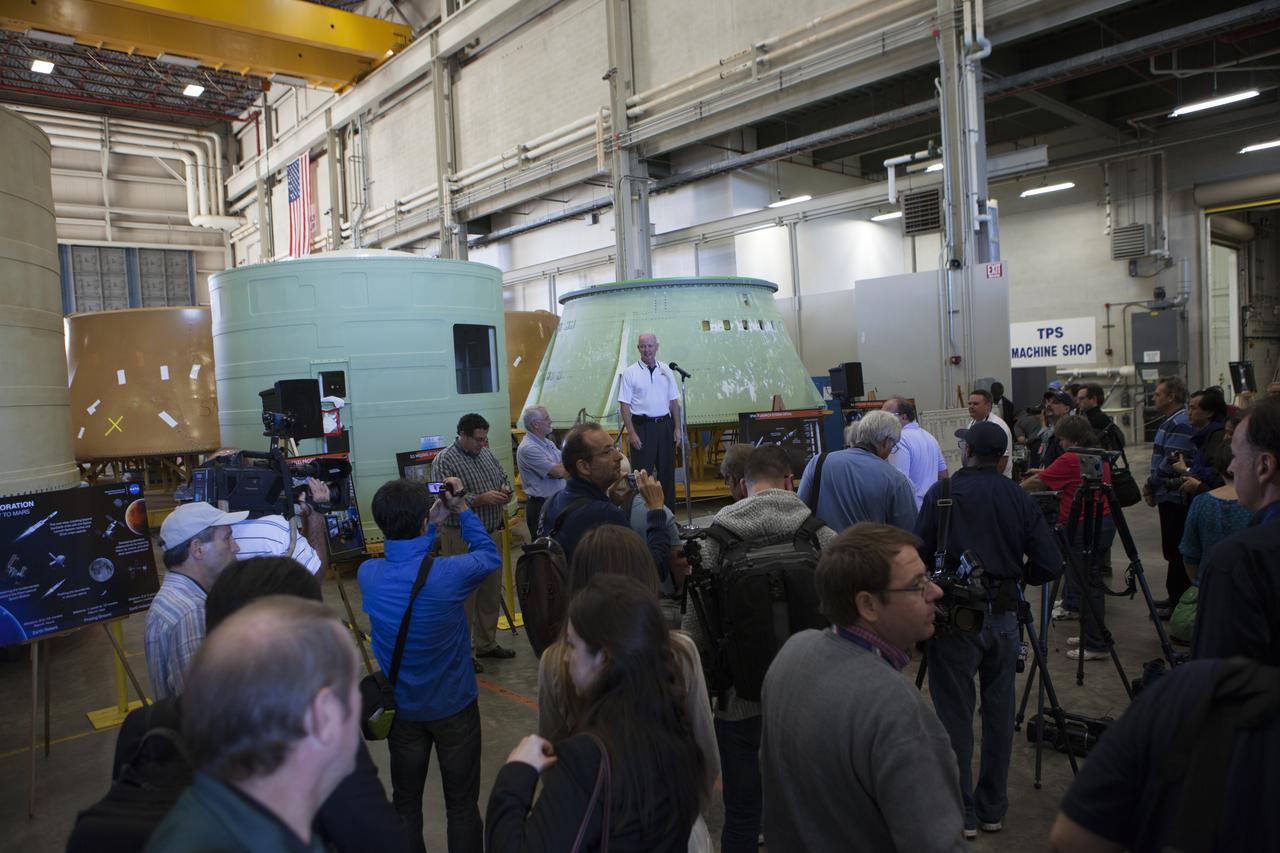
At NASA's Kennedy Space Center in Florida, members of the news media are briefed on the agency's Space Launch System SLS Program by former astronaut Brian Duffy who is now vice president and program manager of Exploration Systems at Alliant Techsystems Inc. ATK. The briefing took place in the spaceport's Booster Fabrication Facility BFF. During the Space Shuttle Program, the facility was used for processing forward segments and aft skirts for the solid rocket boosters. The BFF will serve a similar role for the SLS. Orion is the exploration spacecraft designed to carry astronauts to destinations not yet explored by humans, including an asteroid and Mars. It will have emergency abort capability, sustain the crew during space travel and provide safe re-entry from deep space return velocities. The first unpiloted flight test of Orion is scheduled to launch Dec. 4, 2014 atop a United Launch Alliance Delta IV Heavy rocket, and in 2018 on NASA’s Space Launch System rocket.
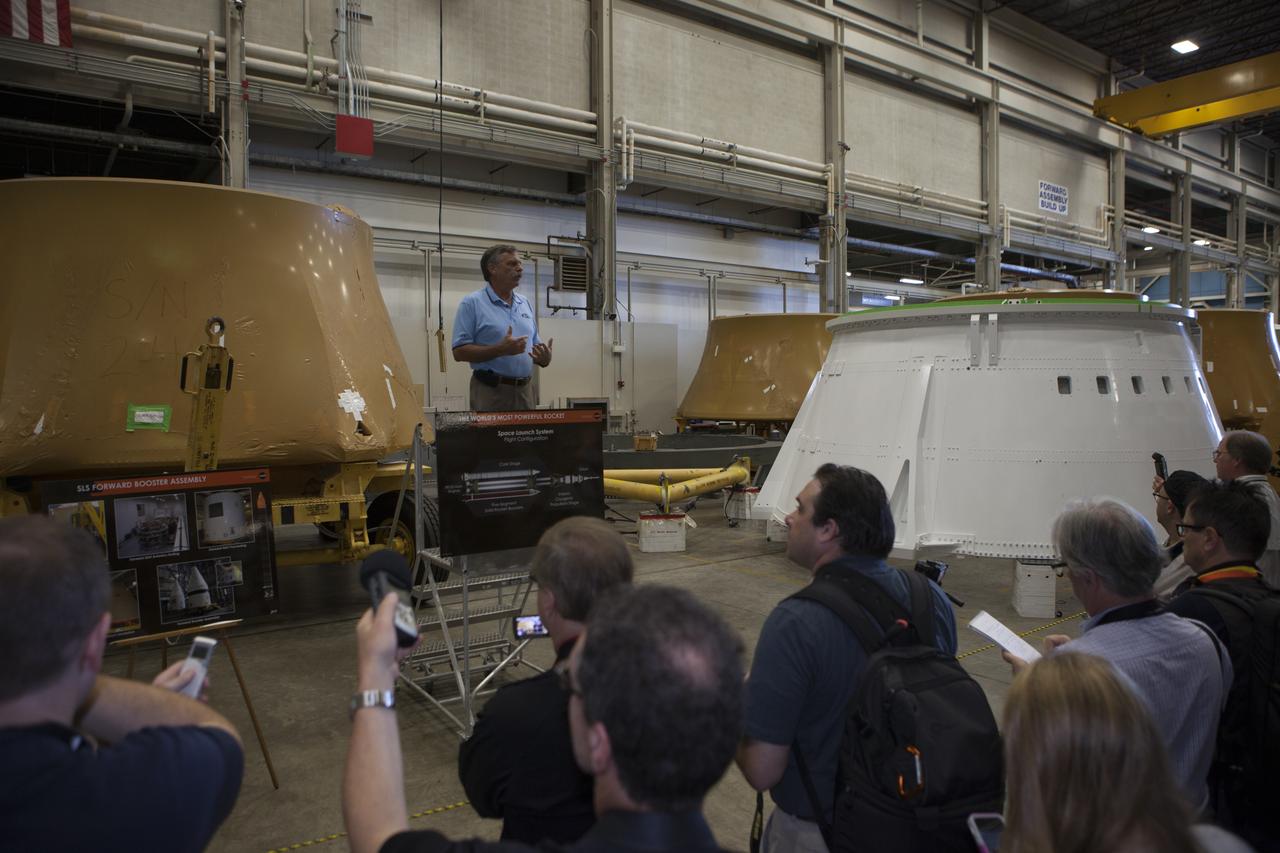
At NASA's Kennedy Space Center in Florida, members of the news media are briefed on the agency's Space Launch System SLS Program by Larry Clark, engineering manager for Alliant Techsystems Inc. ATK. The briefing took place in the spaceport's Booster Fabrication Facility BFF. During the Space Shuttle Program, the facility was used for processing forward segments and aft skirts for the solid rocket boosters. The BFF will serve a similar role for the SLS. Orion is the exploration spacecraft designed to carry astronauts to destinations not yet explored by humans, including an asteroid and Mars. It will have emergency abort capability, sustain the crew during space travel and provide safe re-entry from deep space return velocities. The first unpiloted flight test of Orion is scheduled to launch Dec. 4, 2014 atop a United Launch Alliance Delta IV Heavy rocket, and in 2018 on NASA’s Space Launch System rocket.
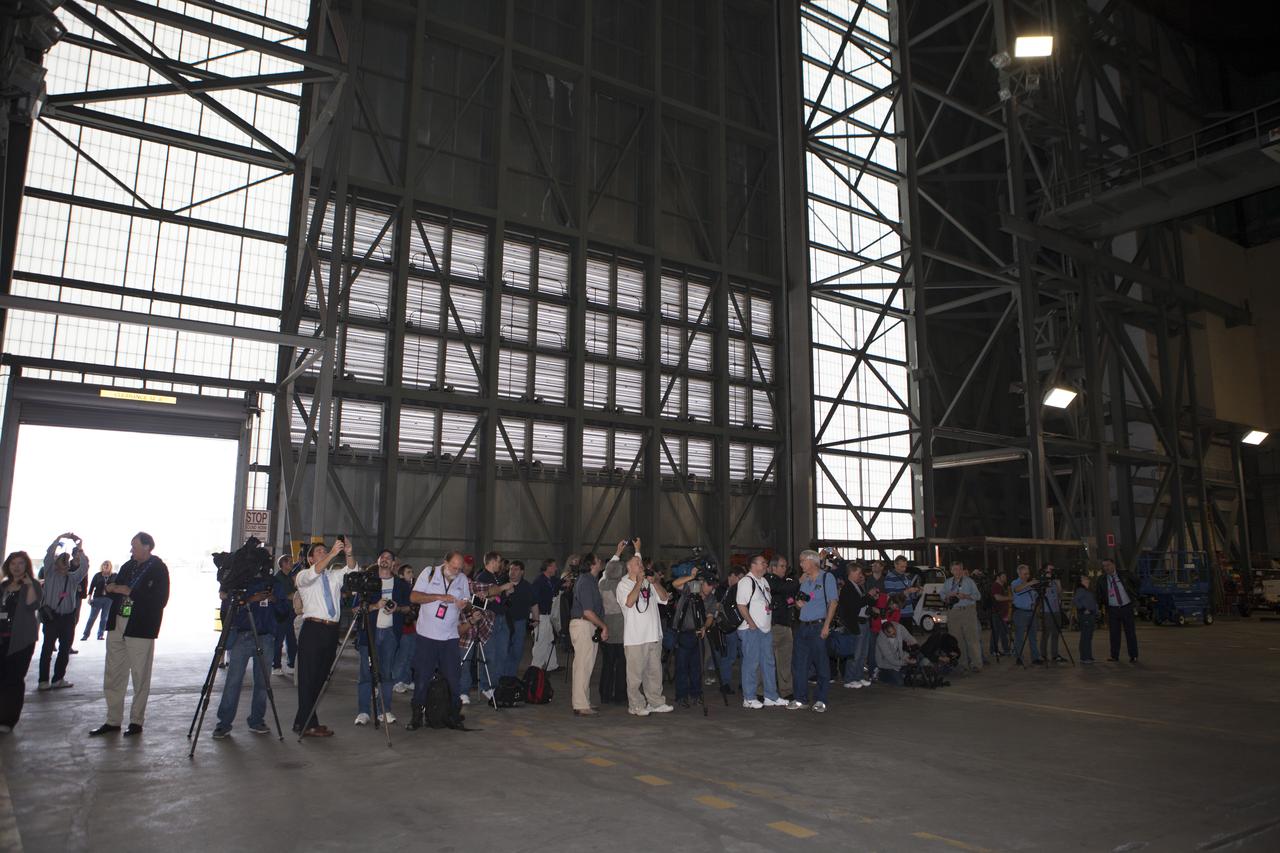
At NASA's Kennedy Space Center in Florida, members of the news media tour the spaceport's Vehicle Assembly Building VAB. Like the Apollo Saturn V and space shuttles of the past, the Space Launch System rocket will be stacked and checked out in the VAB prion to being rolled to the launch pad. Orion is the exploration spacecraft designed to carry astronauts to destinations not yet explored by humans, including an asteroid and Mars. It will have emergency abort capability, sustain the crew during space travel and provide safe re-entry from deep space return velocities. The first unpiloted flight test of Orion is scheduled to launch Dec. 4, 2014 atop a United Launch Alliance Delta IV Heavy rocket, and in 2018 on NASA’s Space Launch System rocket.
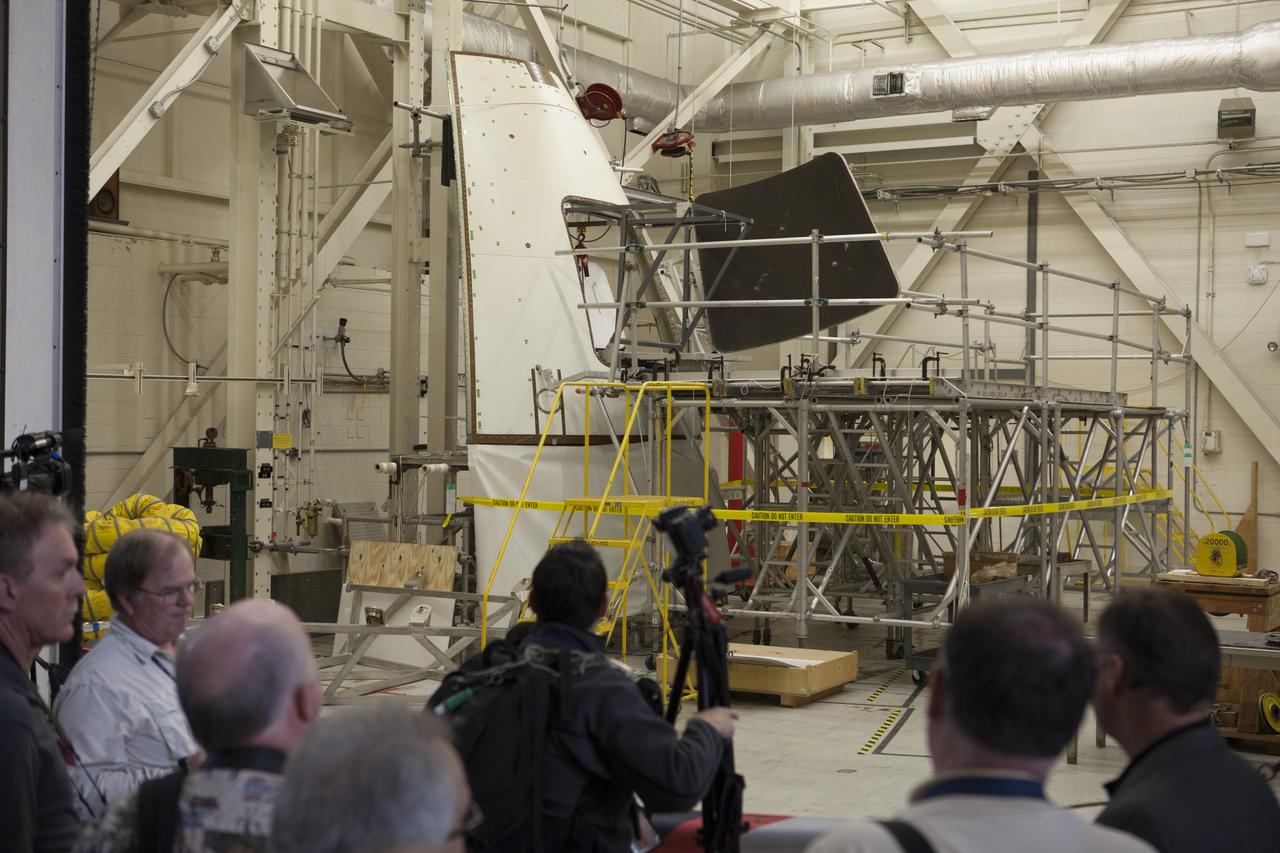
At NASA's Kennedy Space Center in Florida, members of the news media tour the spaceport's Vehicle Assembly Building. They were shown an ogive panel which, together with others, cover the Orion spacecraft during launch. Orion is the exploration spacecraft designed to carry astronauts to destinations not yet explored by humans, including an asteroid and Mars. It will have emergency abort capability, sustain the crew during space travel and provide safe re-entry from deep space return velocities. The first unpiloted flight test of Orion is scheduled to launch Dec. 4, 2014 atop a United Launch Alliance Delta IV Heavy rocket, and in 2018 on NASA’s Space Launch System rocket.
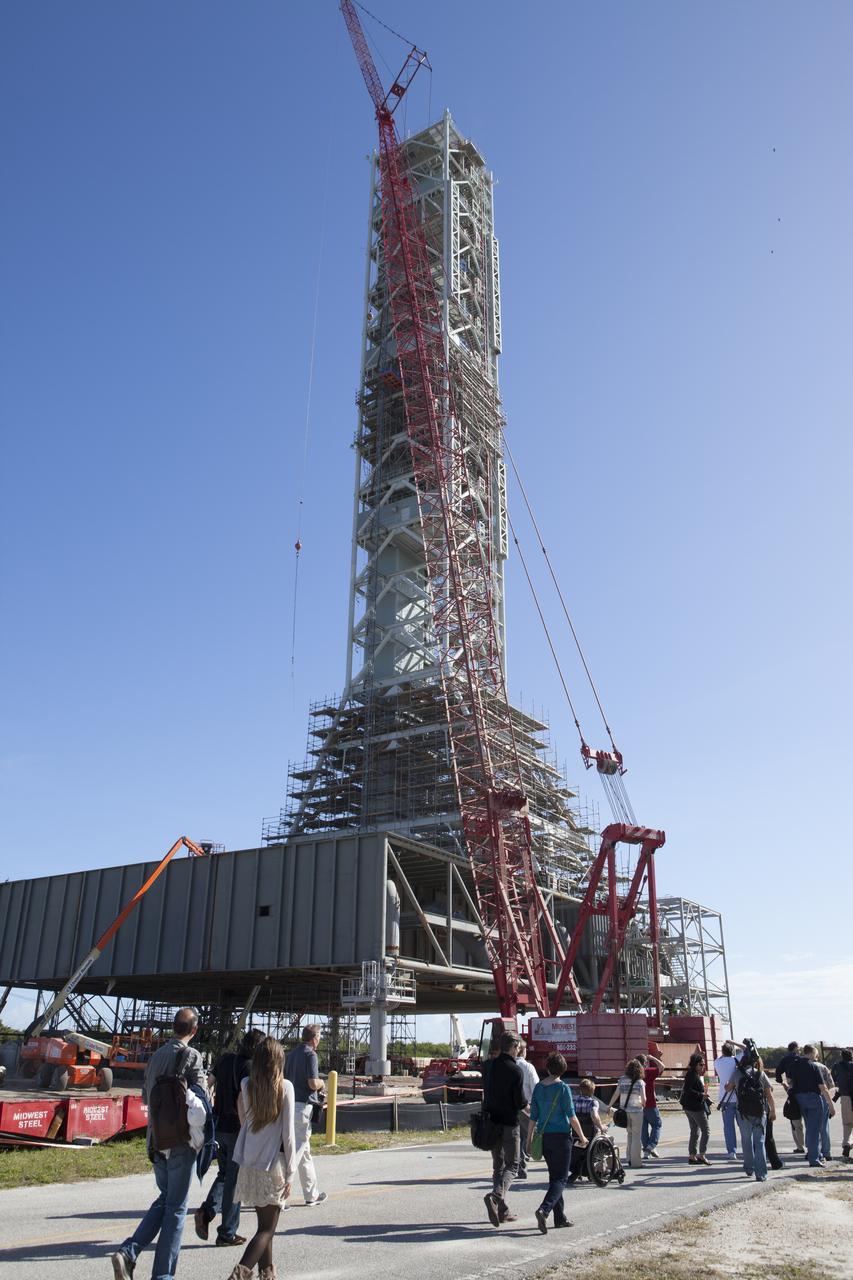
At NASA's Kennedy Space Center in Florida, members of the news media get an up-close look at the new mobile launcher. The Space Launch System rocket will be stacked on the launcher inside the Vehicle Assembly Building prior to rollout to Launch Pad 39B atop crawler-transporter 2. Orion is the exploration spacecraft designed to carry astronauts to destinations not yet explored by humans, including an asteroid and Mars. It will have emergency abort capability, sustain the crew during space travel and provide safe re-entry from deep space return velocities. The first unpiloted flight test of Orion is scheduled to launch Dec. 4, 2014 atop a United Launch Alliance Delta IV Heavy rocket, and in 2018 on NASA’s Space Launch System rocket.
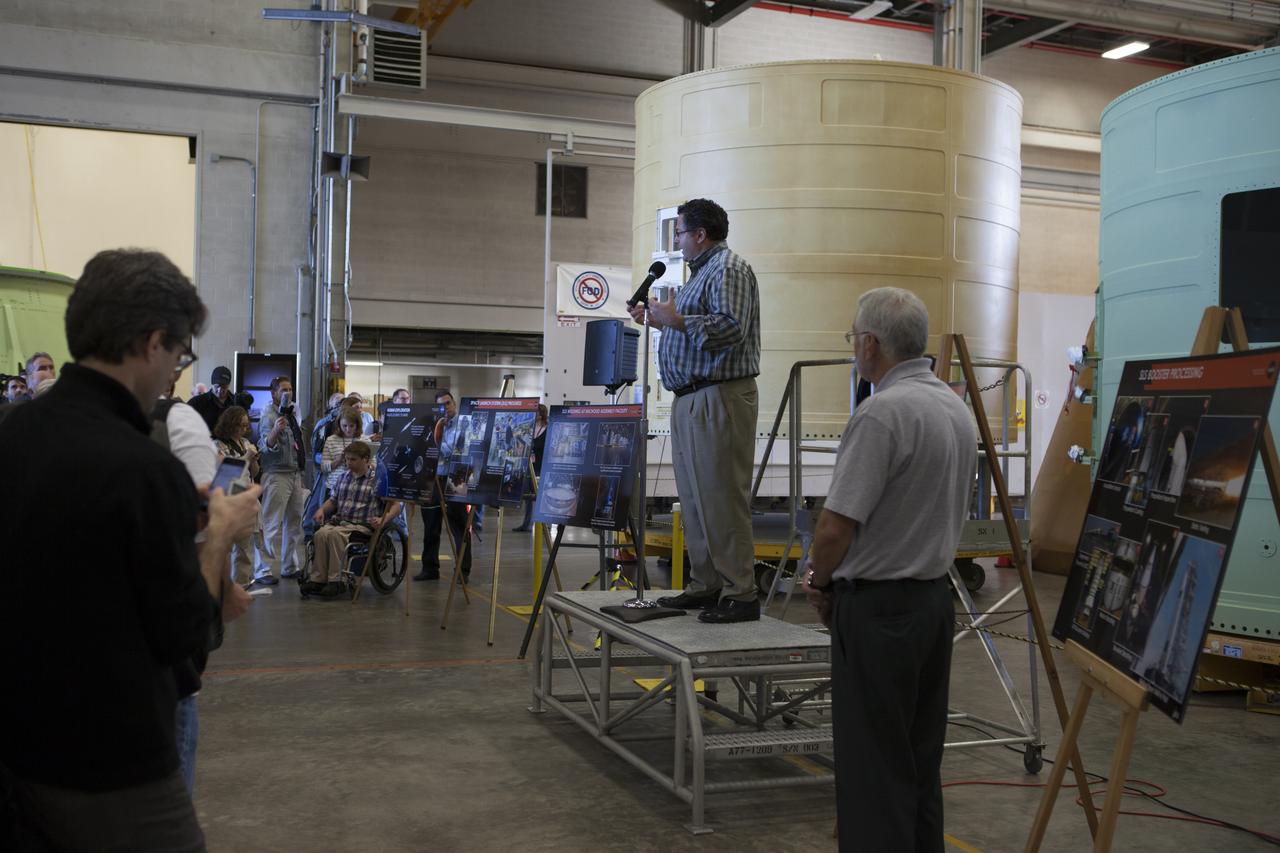
At NASA's Kennedy Space Center in Florida, members of the news media are briefed on the agency's Space Launch System SLS Program by Todd May, program manager for Space Launch Systems SLS at NASA's Marshall Space Flight Center in Huntsville, Alabama. The briefing took place in the spaceport's Booster Fabrication Facility BFF. During the Space Shuttle Program, the facility was used for processing forward segments and aft skirts for the solid rocket boosters. The BFF will serve a similar role for the SLS. Orion is the exploration spacecraft designed to carry astronauts to destinations not yet explored by humans, including an asteroid and Mars. It will have emergency abort capability, sustain the crew during space travel and provide safe re-entry from deep space return velocities. The first unpiloted flight test of Orion is scheduled to launch Dec. 4, 2014 atop a United Launch Alliance Delta IV Heavy rocket, and in 2018 on NASA’s Space Launch System rocket.
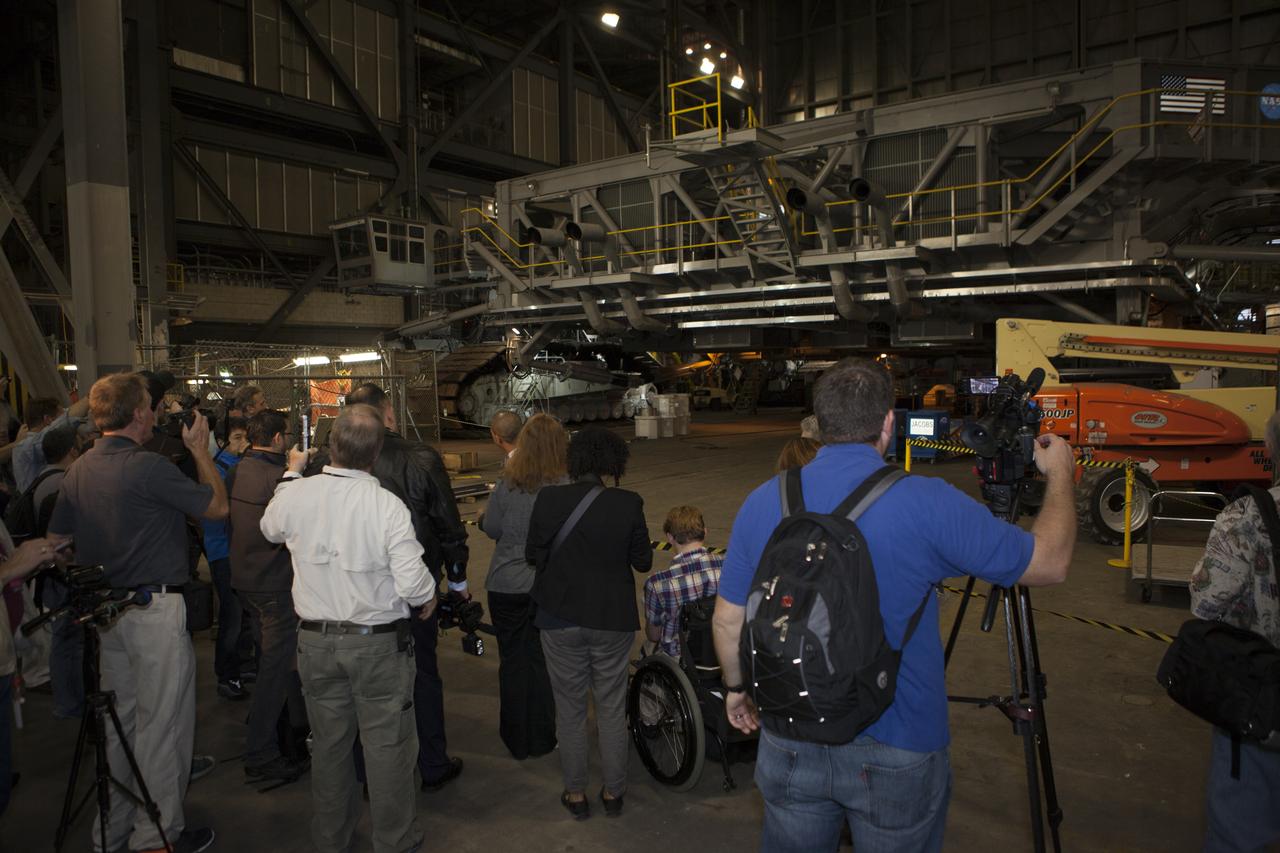
At NASA's Kennedy Space Center in Florida, members of the news media tour the spaceport's Vehicle Assembly Building. They were briefed on progress to upgrade and modify crawler-transporter CT 2 to support the Space Launch System. Orion is the exploration spacecraft designed to carry astronauts to destinations not yet explored by humans, including an asteroid and Mars. It will have emergency abort capability, sustain the crew during space travel and provide safe re-entry from deep space return velocities. The first unpiloted flight test of Orion is scheduled to launch Dec. 4, 2014 atop a United Launch Alliance Delta IV Heavy rocket, and in 2018 on NASA’s Space Launch System rocket.
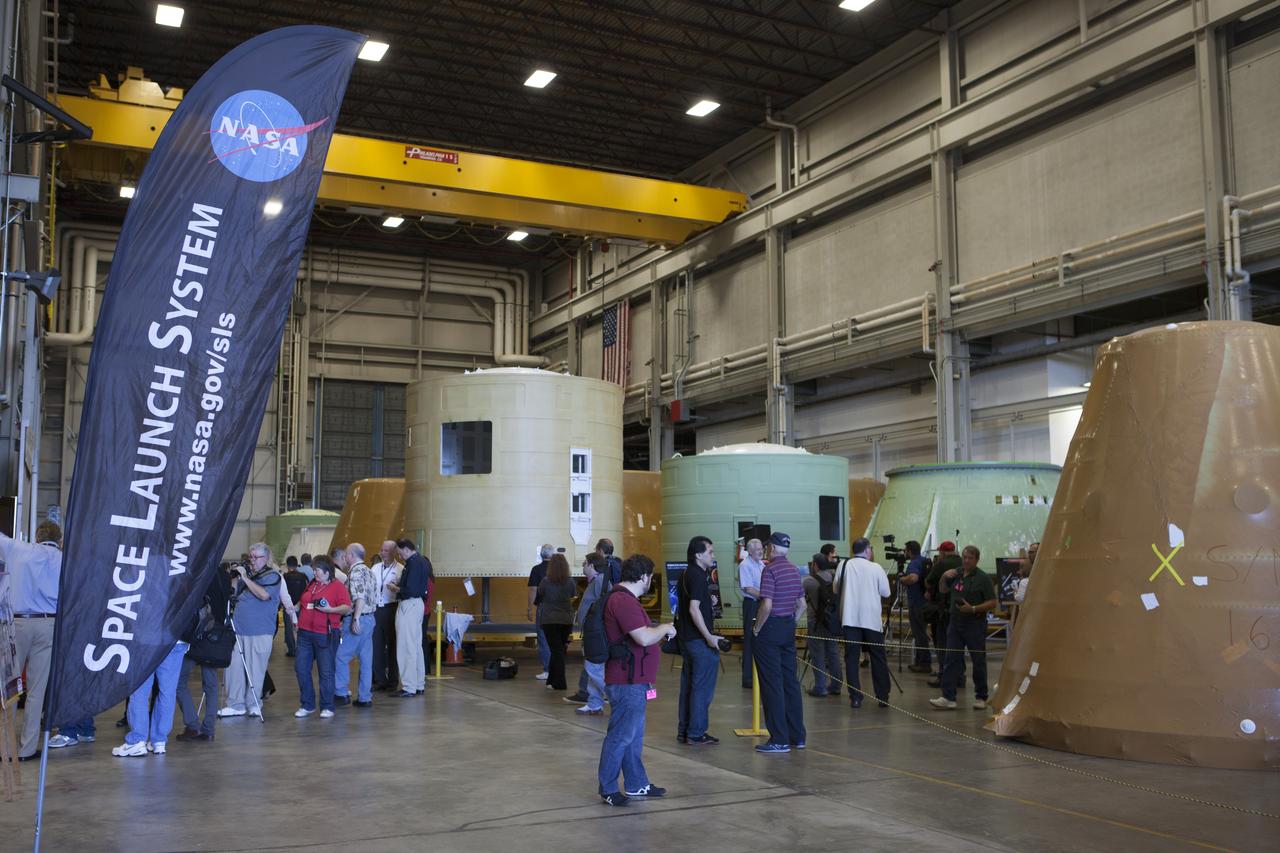
At NASA's Kennedy Space Center in Florida, members of the news media tour the spaceport's Booster Fabrication Facility BFF. During the Space Shuttle Program, the facility was used for processing forward segments and aft skirts for the solid rocket boosters. The BFF will serve a similar role for the SLS. Orion is the exploration spacecraft designed to carry astronauts to destinations not yet explored by humans, including an asteroid and Mars. It will have emergency abort capability, sustain the crew during space travel and provide safe re-entry from deep space return velocities. The first unpiloted flight test of Orion is scheduled to launch Dec. 4, 2014 atop a United Launch Alliance Delta IV Heavy rocket, and in 2018 on NASA’s Space Launch System rocket.
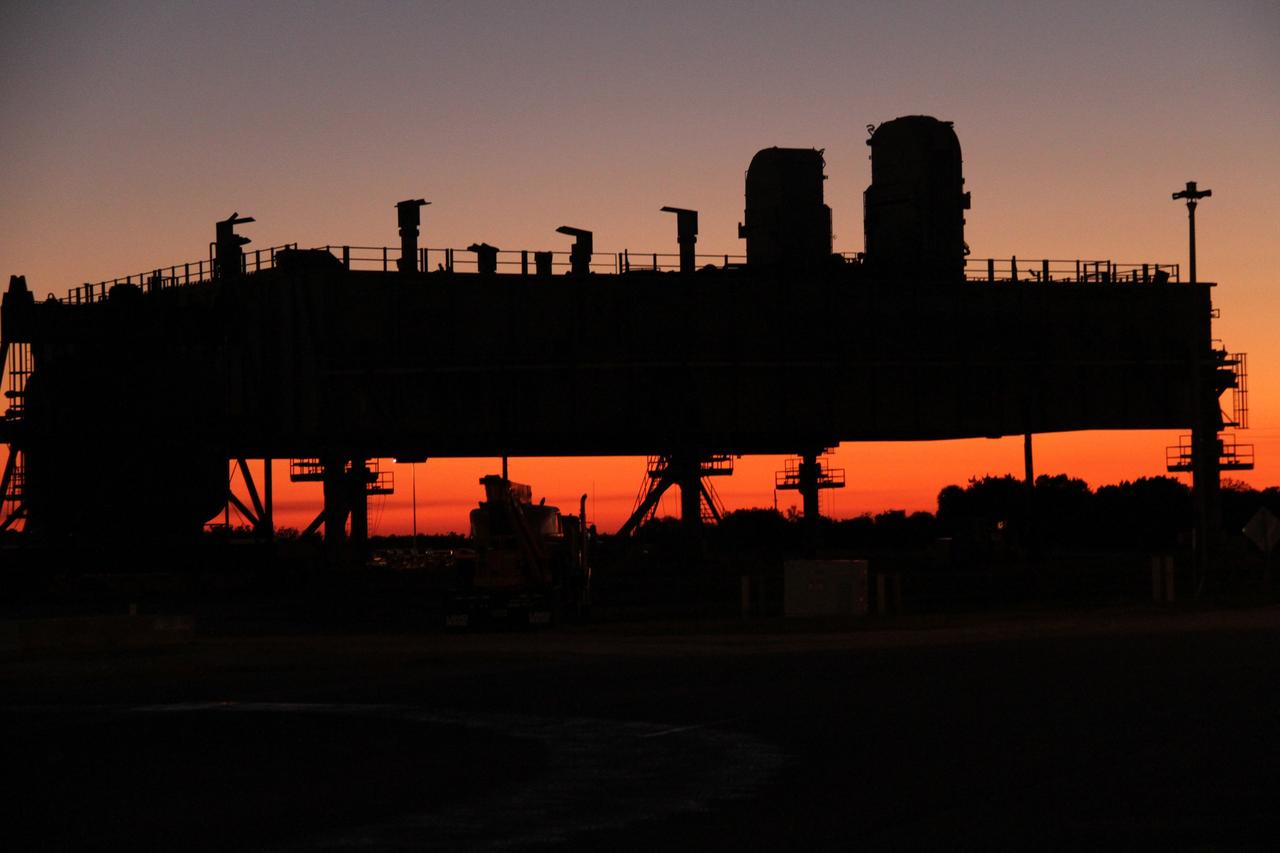
CAPE CANAVERAL, Fla. – A mobile launcher platform at the park site outside the Vehicle Assembly Building (VAB) at NASA's Kennedy Space Center in Florida awaits the arrival of the mobile launcher, or ML, as night falls. The ML is nearing the end of its 4.2-mile trek from Launch Pad 39B to the park site. Data on the ML collected from structural and functional engineering tests during its two-week stay on the pad will be used in the next phases of construction. The 355-foot-tall ML structure, which took about two years to construct, will be modified by NASA’s 21st Century Ground Systems Program to support NASA’s Space Launch System, the heavy-lift rocket that will launch astronauts into deep space on future exploration missions. For more information, visit http://www.nasa.gov/exploration/systems/sls. Photo credit: NASA/Cory Huston
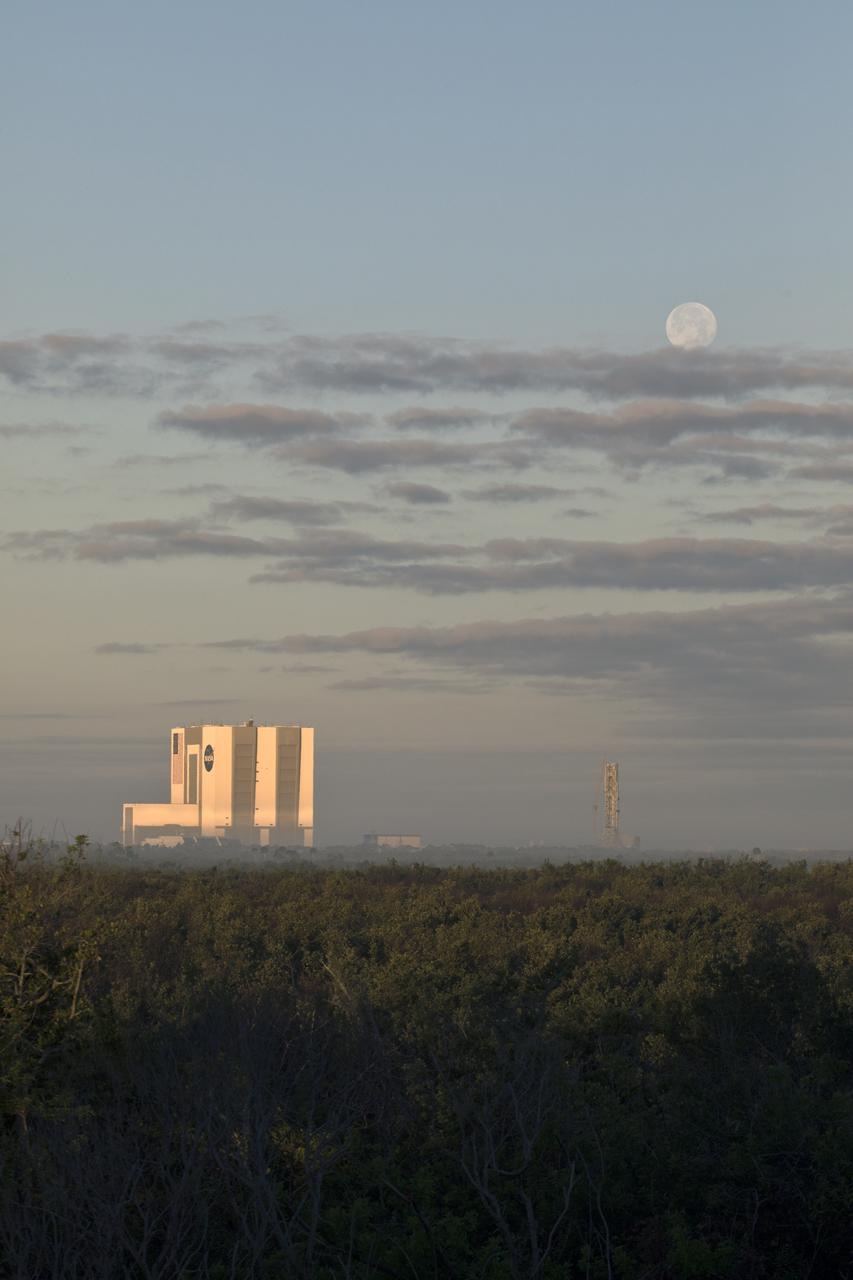
A full Moon sets behind the Vehicle Assembly Building and Mobile Launcher at NASA’s Kennedy Space Center in Florida. At the nation’s premier multi-user spaceport, NASA and its commercial and international partners are looking to return humans to the Moon and beyond utilizing a variety of rockets and capabilities.
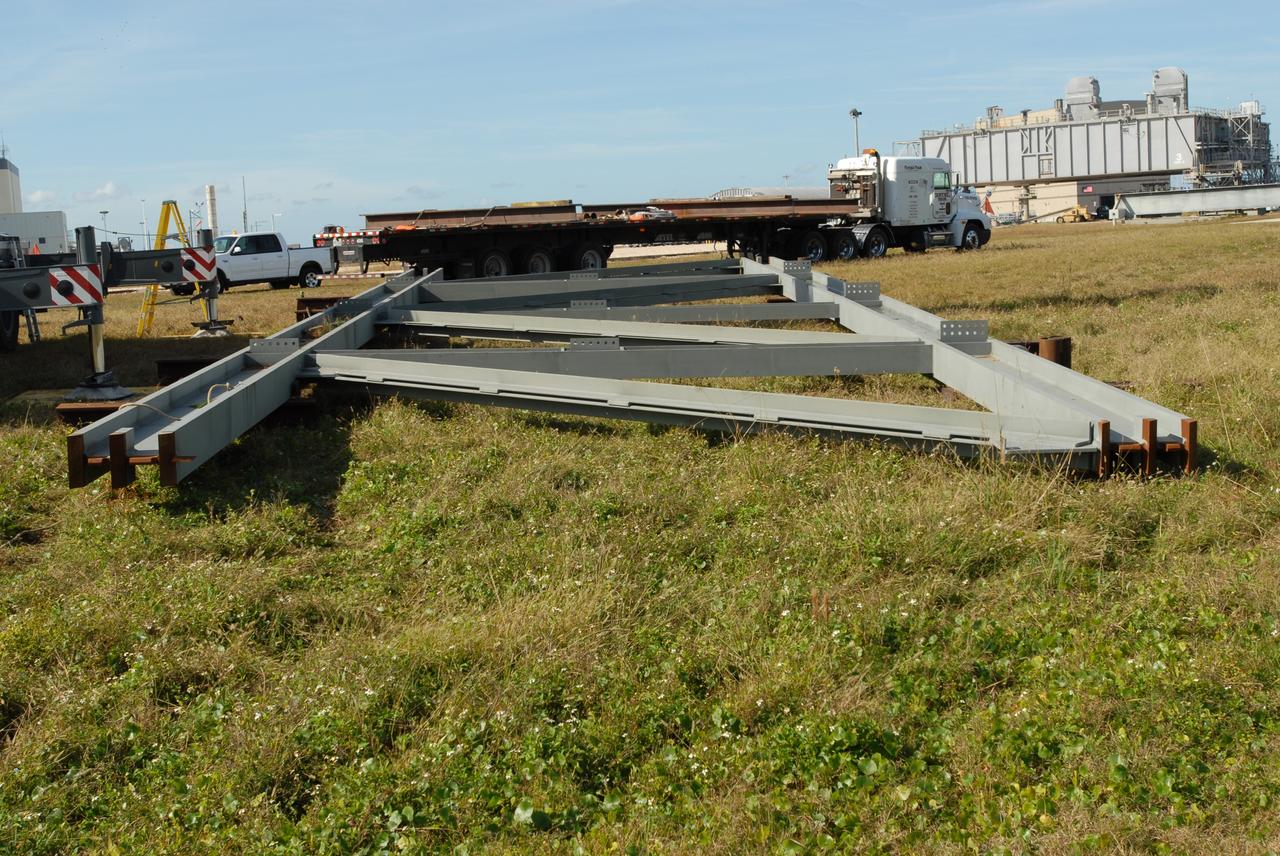
CAPE CANAVERAL, Fla. -- Near the Vehicle Assembly Building at NASA's Kennedy Space Center in Florida, one of the trusses, T4, for the new mobile launcher lies on the ground. The launcher will be built for the Constellation Program. The new mobile launcher will be the base for the Ares rockets to launch the Orion crew exploration vehicle and the cargo vehicle. The base is being made lighter than space shuttle mobile launcher platforms so the crawler-transporter can pick up the added load of the 345-foot tower and taller rocket. When the structural portion of the new mobile launcher is complete, umbilicals, access arms, communications equipment and command/control equipment will be installed. Photo credit: NASA/Jim Grossmann
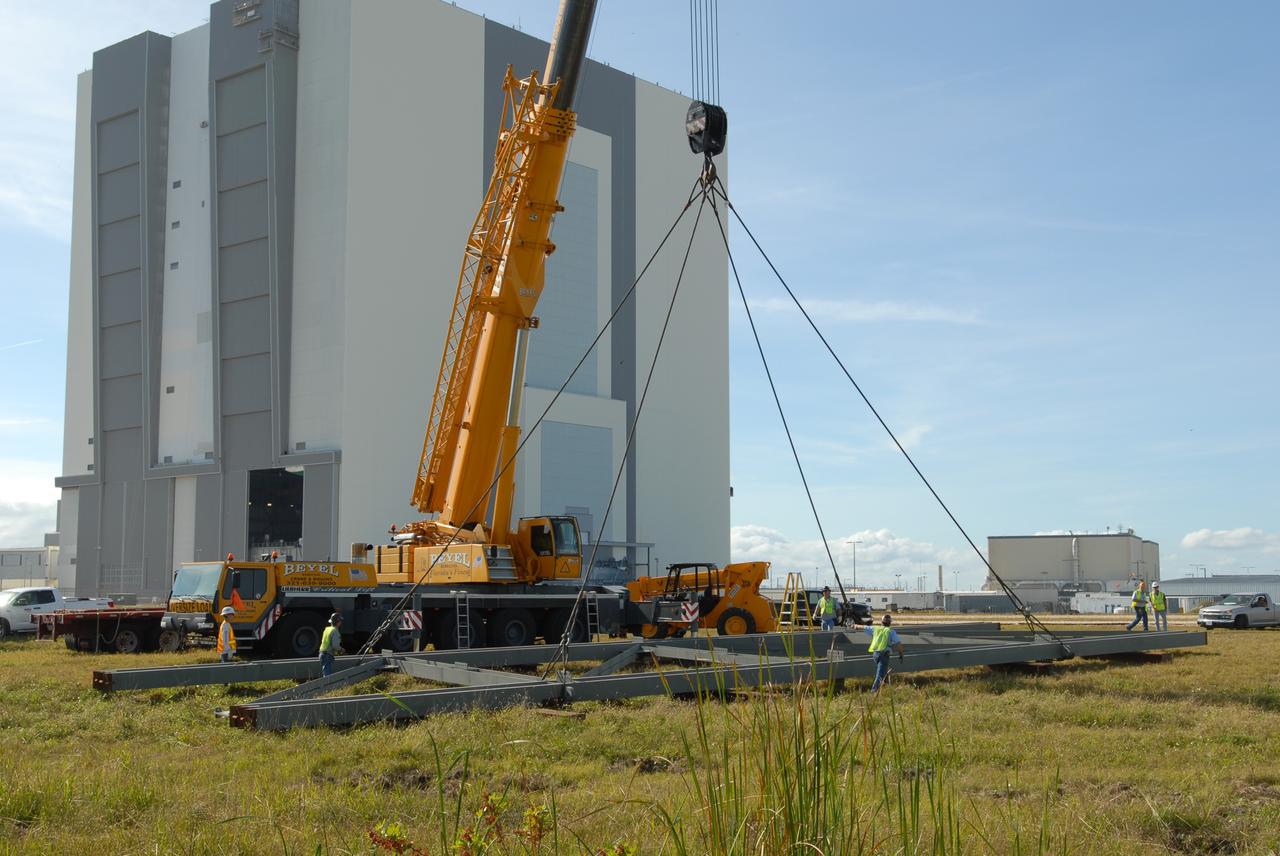
CAPE CANAVERAL, Fla. -- Near the Vehicle Assembly Building at NASA's Kennedy Space Center in Florida, a crane places on the ground one of the trusses, T4, to build the new mobile launcher for the Constellation Program. The new mobile launcher will be the base for the Ares rockets to launch the Orion crew exploration vehicle and the cargo vehicle. The base is being made lighter than space shuttle mobile launcher platforms so the crawler-transporter can pick up the added load of the 345-foot tower and taller rocket. When the structural portion of the new mobile launcher is complete, umbilicals, access arms, communications equipment and command/control equipment will be installed. Photo credit: NASA/Jim Grossmann
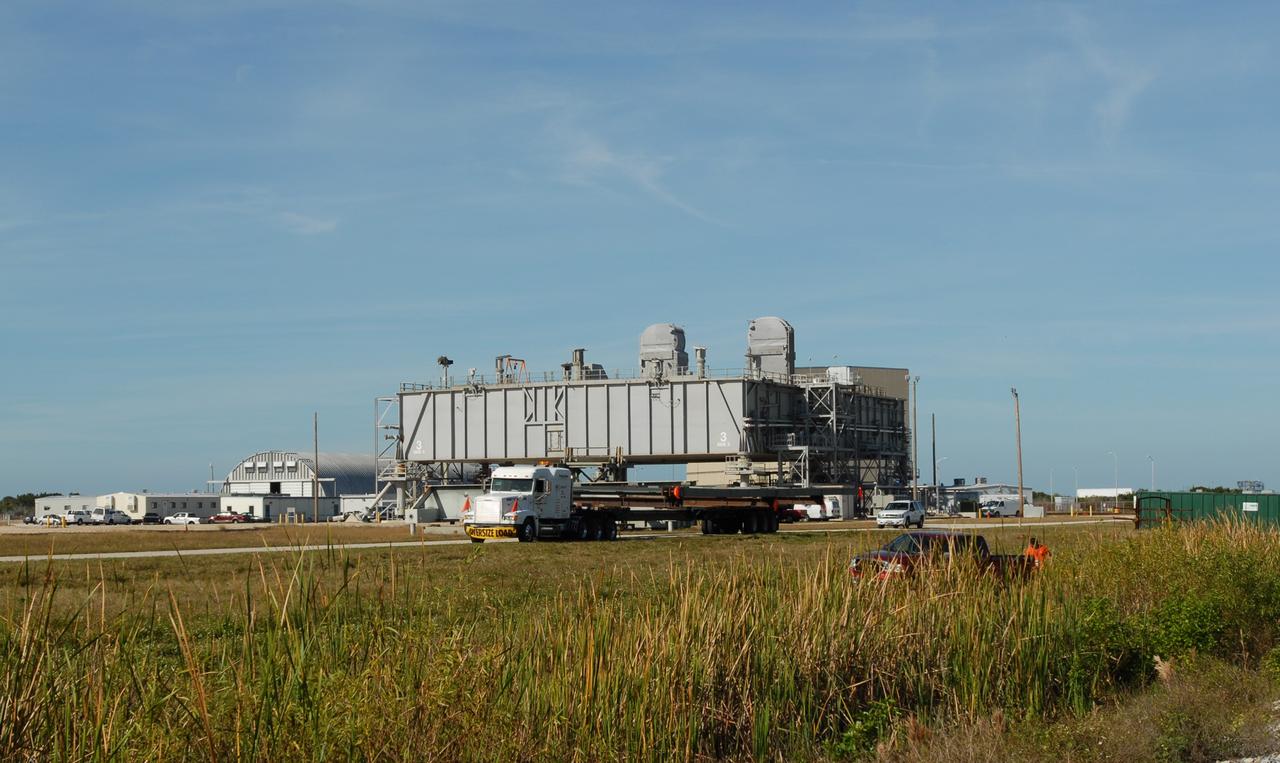
CAPE CANAVERAL, Fla. -- The Mobile Launcher truss, T4, arrives at NASA's Kennedy Space Center in Florida. It is being delivered for the new mobile launcher to be used in the Constellation Program. The new mobile launcher will be the base for the Ares rockets to launch the Orion crew exploration vehicle and the cargo vehicle. The base is being made lighter than space shuttle mobile launcher platforms so the crawler-transporter can pick up the added load of the 345-foot tower and taller rocket. When the structural portion of the new mobile launcher is complete, umbilicals, access arms, communications equipment and command/control equipment will be installed. Photo credit: NASA/Jim Grossmann
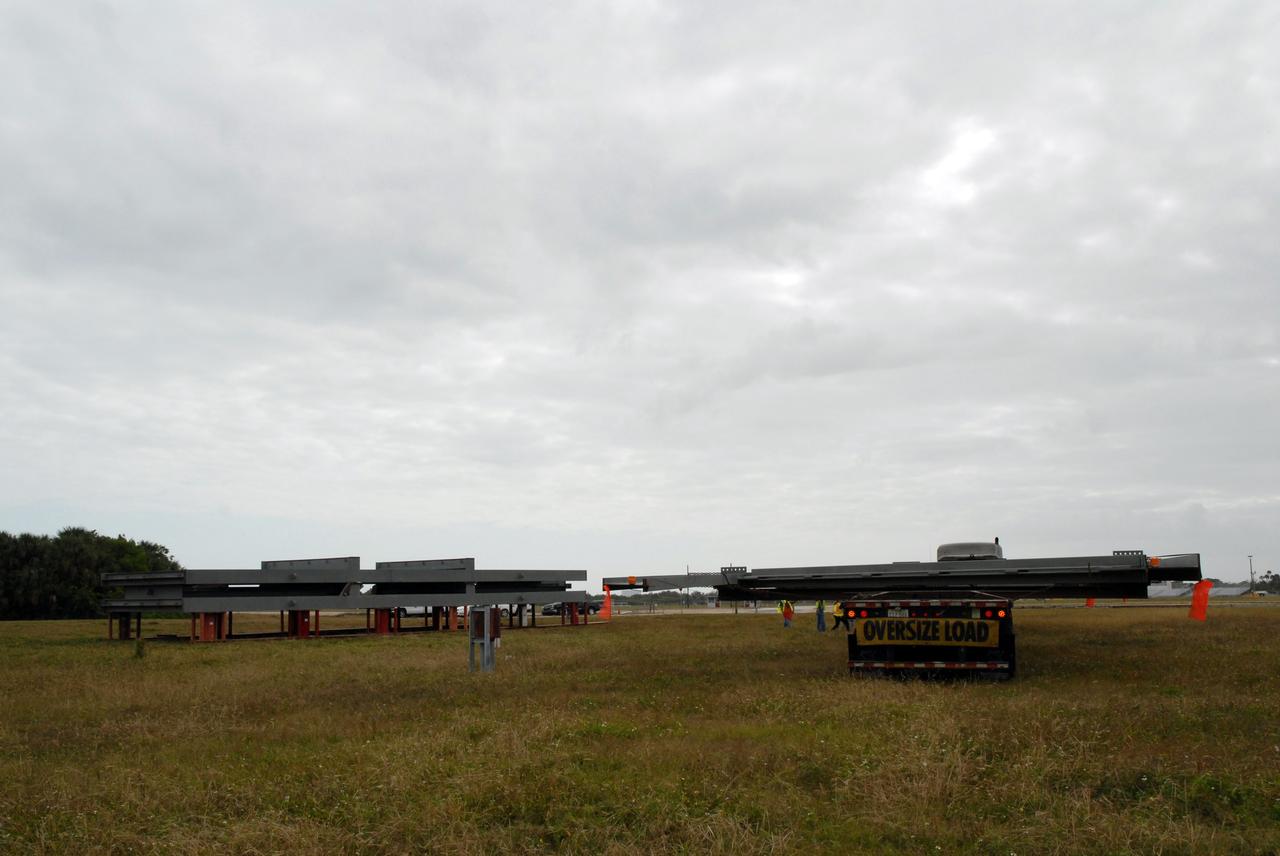
CAPE CANAVERAL, Fla. -- At NASA's Kennedy Space Center in Florida, the Mobile Launcher truss, T4, has been offloaded from its truck on grounds near the mobile launcher parking area. The new mobile launcher will be the base for the Ares rockets to launch the Orion crew exploration vehicle and the cargo vehicle. The base is being made lighter than space shuttle mobile launcher platforms so the crawler-transporter can pick up the added load of the 345-foot tower and taller rocket. When the structural portion of the new mobile launcher is complete, umbilicals, access arms, communications equipment and command/control equipment will be installed. Photo credit: NASA/Jack Pfaller
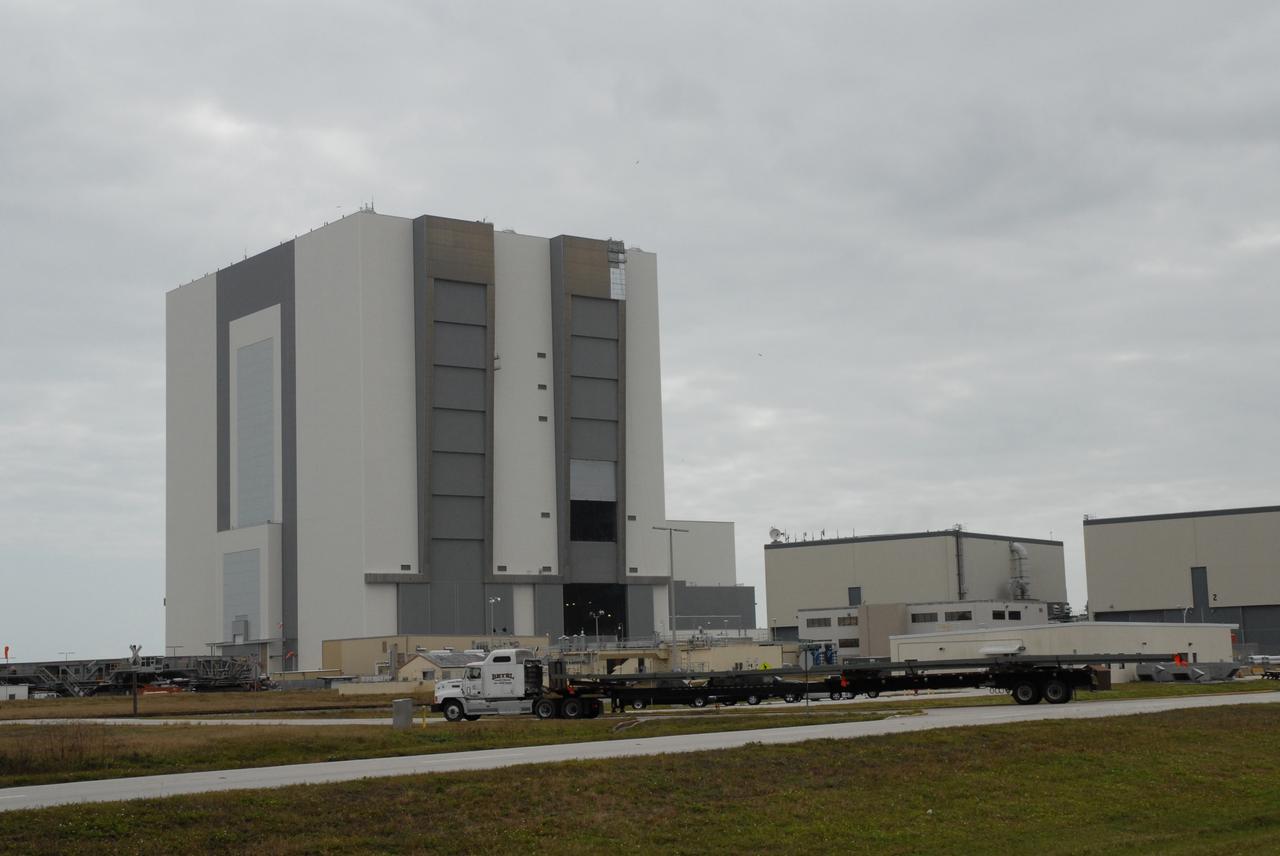
CAPE CANAVERAL, Fla. -- The mobile launcher truss, T4, arrives at NASA's Kennedy Space Center in Florida. It will be used to build the new mobile launcher for the Constellation Program. The new mobile launcher will be the base for the Ares rockets to launch the Orion crew exploration vehicle and the cargo vehicle. The base is being made lighter than space shuttle mobile launcher platforms so the crawler-transporter can pick up the added load of the 345-foot tower and taller rocket. When the structural portion of the new mobile launcher is complete, umbilicals, access arms, communications equipment and command/control equipment will be installed. Photo credit: NASA/Jack Pfaller
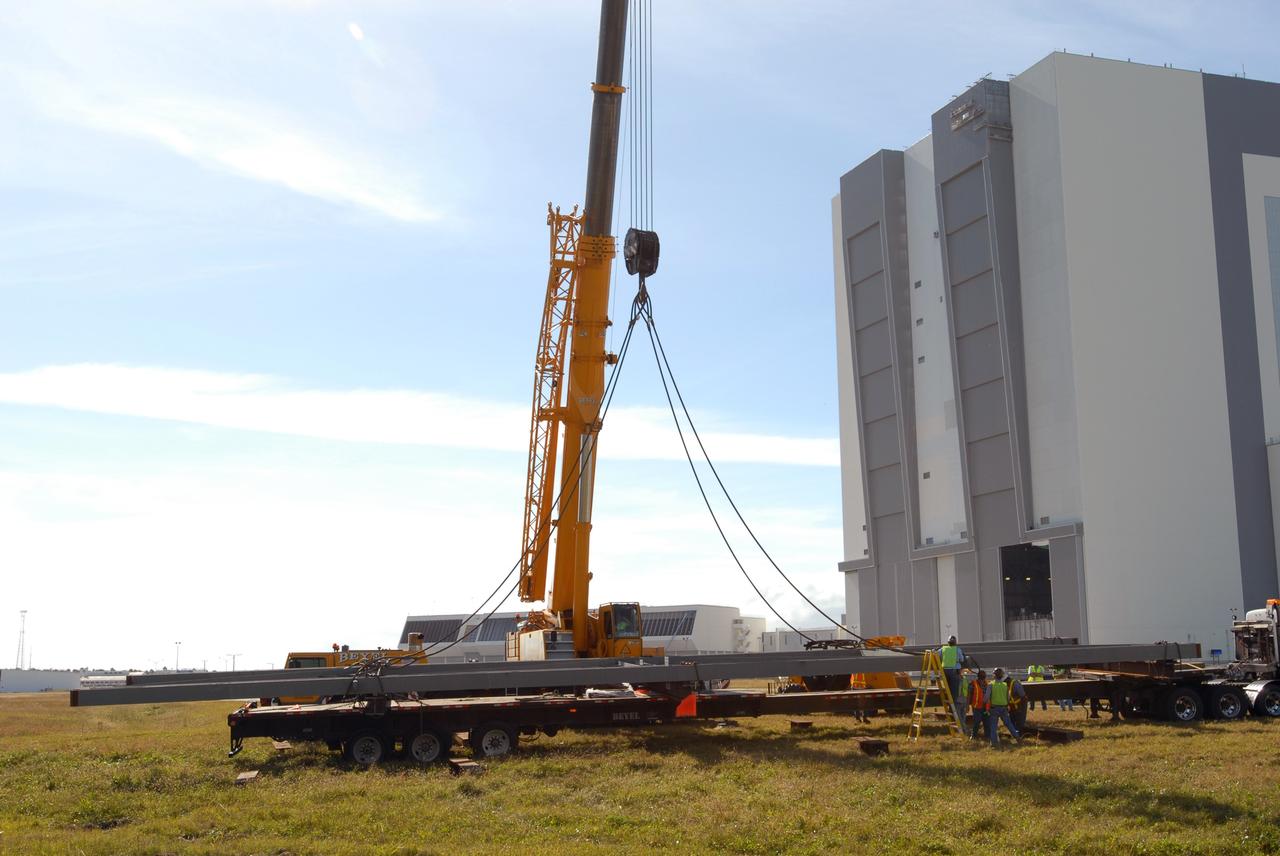
CAPE CANAVERAL, Fla. -- Near the Vehicle Assembly Building at NASA's Kennedy Space Center in Florida, a crane offloads from a transporter one of the trusses, T4, to build the new mobile launcher for the Constellation Program. The new mobile launcher will be the base for the Ares rockets to launch the Orion crew exploration vehicle and the cargo vehicle. The base is being made lighter than space shuttle mobile launcher platforms so the crawler-transporter can pick up the added load of the 345-foot tower and taller rocket. When the structural portion of the new mobile launcher is complete, umbilicals, access arms, communications equipment and command/control equipment will be installed. Photo credit: NASA/Jim Grossmann
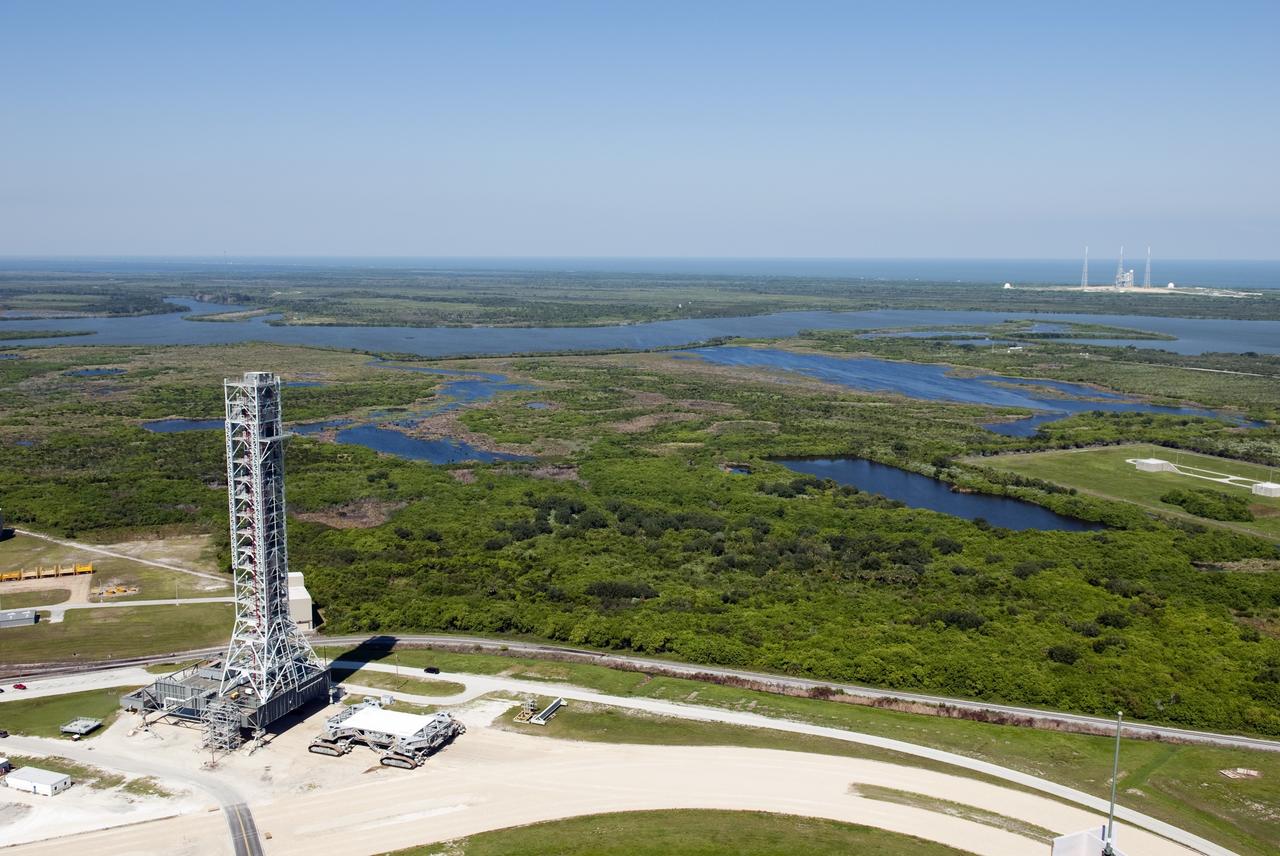
CAPE CANAVERAL, Fla. -- At NASA's Kennedy Space Center in Florida, this view of a crawler-transporter after moving NASA's new mobile launcher (ML) support structure from a construction site, north of the Vehicle Assembly Building (VAB), to the Mobile Launcher east park site is taken from the roof of the VAB. The base of the launcher is lighter than space shuttle mobile launcher platforms so the crawler-transporter can pick up the heavier load of the tower and a taller rocket. Once there, the ML can be outfitted with ground support equipment, such as umbilicals and access arms, for future rocket launches. It took about two years to construct the 355-foot-tall structure, which will support NASA's future human spaceflight program. Photo credit: NASA/Jim Grossmann
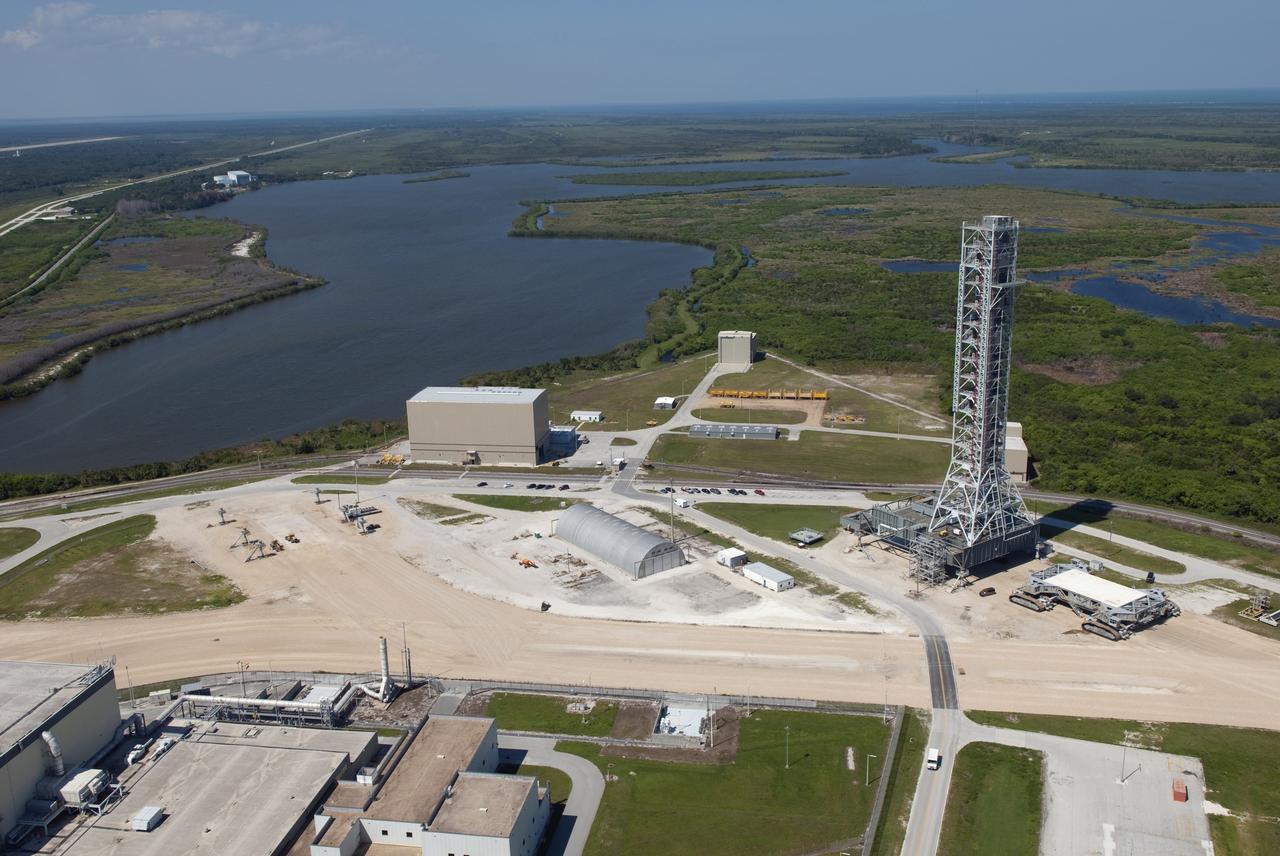
CAPE CANAVERAL, Fla. -- At NASA's Kennedy Space Center in Florida, this view of a crawler-transporter after moving NASA's new mobile launcher (ML) support structure from a construction site, north of the Vehicle Assembly Building (VAB), to the Mobile Launcher east park site is taken from the roof of the VAB. The base of the launcher is lighter than space shuttle mobile launcher platforms so the crawler-transporter can pick up the heavier load of the tower and a taller rocket. Once there, the ML can be outfitted with ground support equipment, such as umbilicals and access arms, for future rocket launches. It took about two years to construct the 355-foot-tall structure, which will support NASA's future human spaceflight program. Photo credit: NASA/Jim Grossmann
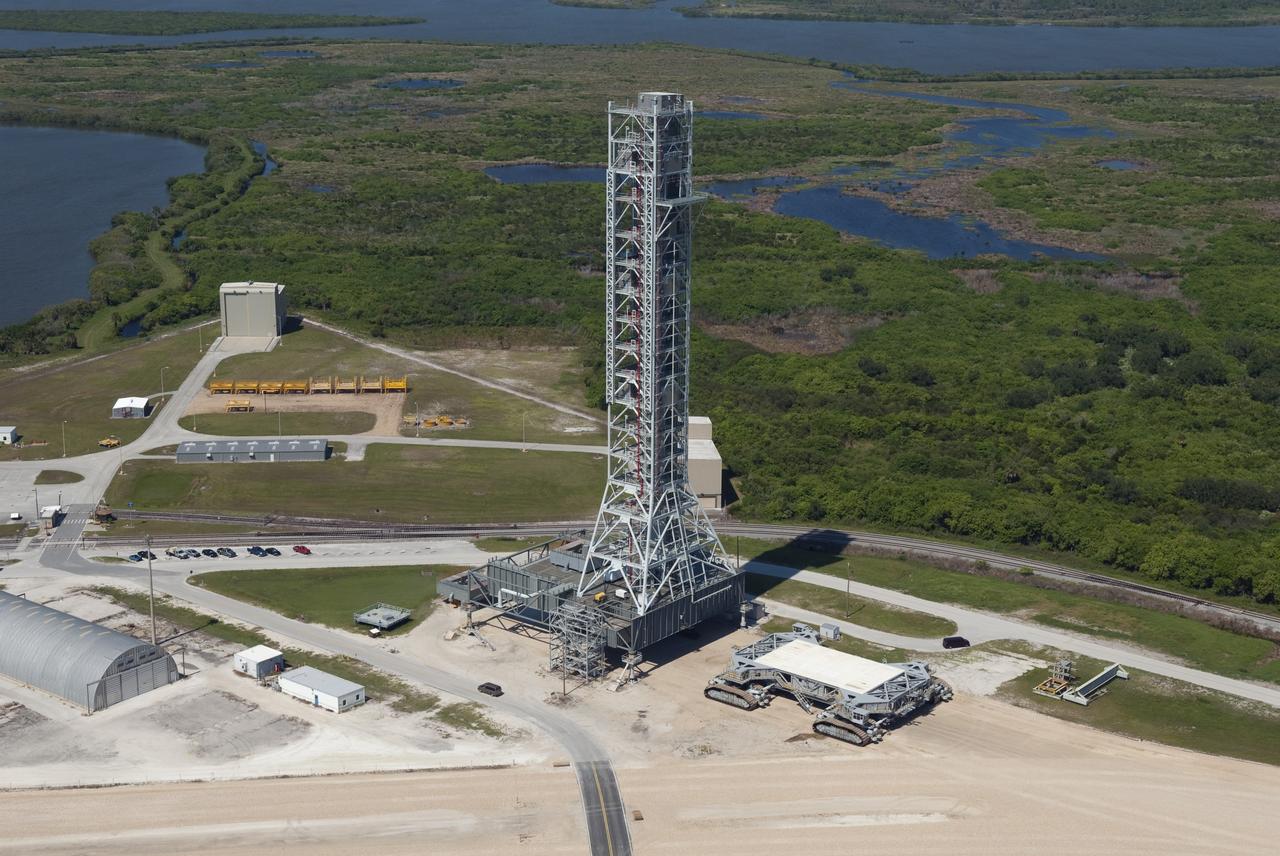
CAPE CANAVERAL, Fla. -- At NASA's Kennedy Space Center in Florida, this view of a crawler-transporter after moving NASA's new mobile launcher (ML) support structure from a construction site, north of the Vehicle Assembly Building (VAB), to the Mobile Launcher east park site is taken from the roof of the VAB. The base of the launcher is lighter than space shuttle mobile launcher platforms so the crawler-transporter can pick up the heavier load of the tower and a taller rocket. Once there, the ML can be outfitted with ground support equipment, such as umbilicals and access arms, for future rocket launches. It took about two years to construct the 355-foot-tall structure, which will support NASA's future human spaceflight program. Photo credit: NASA/Jim Grossmann
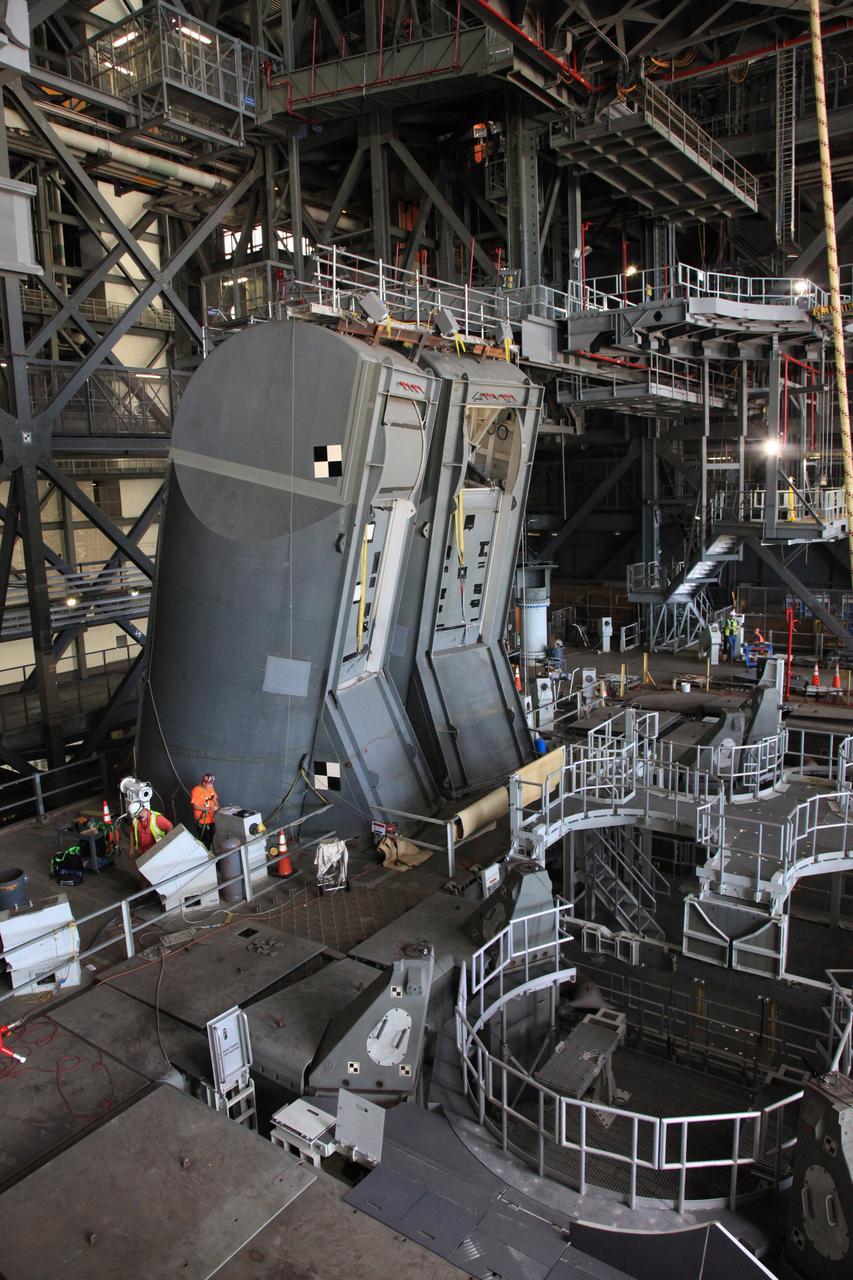
Preparations are underway to conduct a drop test of the Tail Service Mast Umbilicals (TSMU) for NASA’s Space Launch System (SLS) rocket on the mobile launcher in High Bay 3 of the Vehicle Assembly Building at NASA’s Kennedy Space Center in Florida on June 19, 2019. The 35-foot-tall TSMUs will connect to the SLS core stage aft section and provide liquid oxygen and liquid hydrogen fluid lines and electrical cable connections to the core stage engine section to support propellant handling during prelaunch operations. The drop test is being performed to ensure that the umbilicals will disconnect before launch of the SLS carrying Orion on its first uncrewed mission, Artemis 1, from Launch Complex 39B. Exploration Ground Systems and Engineering are completing the tests.
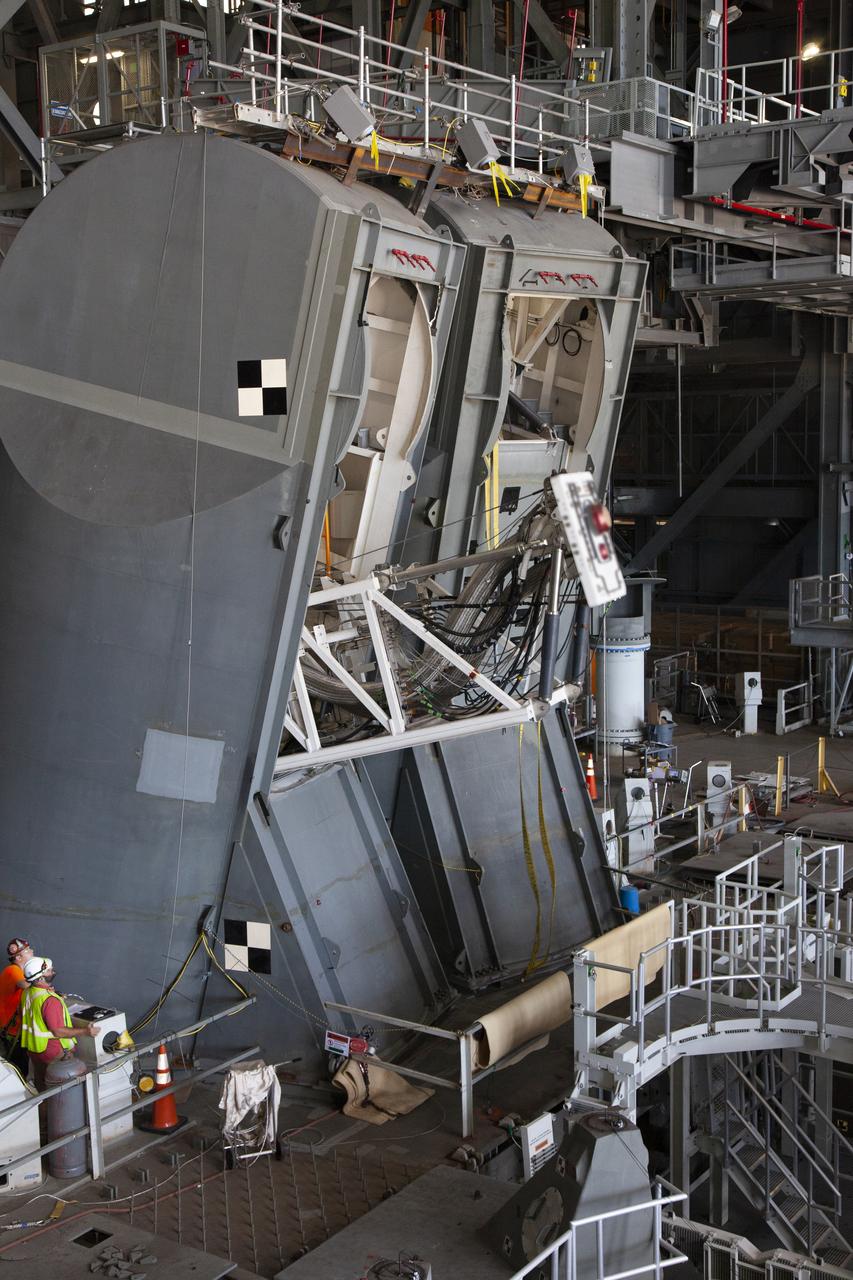
A drop test of the Tail Service Mast Umbilicals (TSMU) for NASA’s Space Launch System (SLS) rocket is underway on the mobile launcher in High Bay 3 of the Vehicle Assembly Building at NASA’s Kennedy Space Center in Florida on June 19, 2019. The 35-foot-tall TSMUs will connect to the SLS core stage aft section and provide liquid oxygen and liquid hydrogen fluid lines and electrical cable connections to the core stage engine section to support propellant handling during prelaunch operations. The drop test is being performed to ensure that the umbilicals will disconnect before launch of the SLS carrying Orion on its first uncrewed mission, Artemis 1, from Launch Complex 39B. Exploration Ground Systems and Engineering are completing the tests.
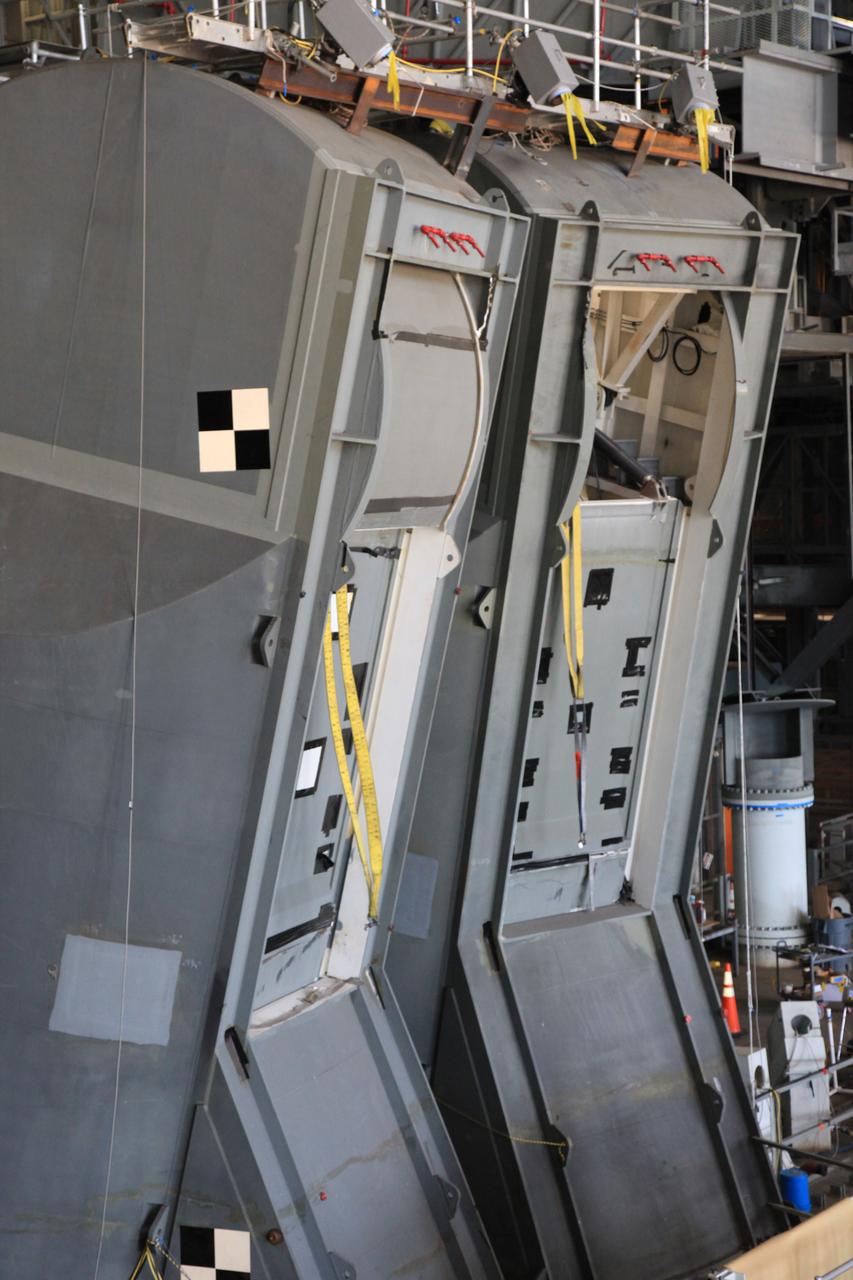
Preparations are underway to conduct a drop test of the Tail Service Mast Umbilicals (TSMU) for NASA’s Space Launch System (SLS) rocket on the mobile launcher in High Bay 3 of the Vehicle Assembly Building at NASA’s Kennedy Space Center in Florida on June 19, 2019. The 35-foot-tall TSMUs will connect to the SLS core stage aft section and provide liquid oxygen and liquid hydrogen fluid lines and electrical cable connections to the core stage engine section to support propellant handling during prelaunch operations. The drop test is being performed to ensure that the umbilicals will disconnect before launch of the SLS carrying Orion on its first uncrewed mission, Artemis 1, from Launch Complex 39B. Exploration Ground Systems and Engineering are completing the tests.
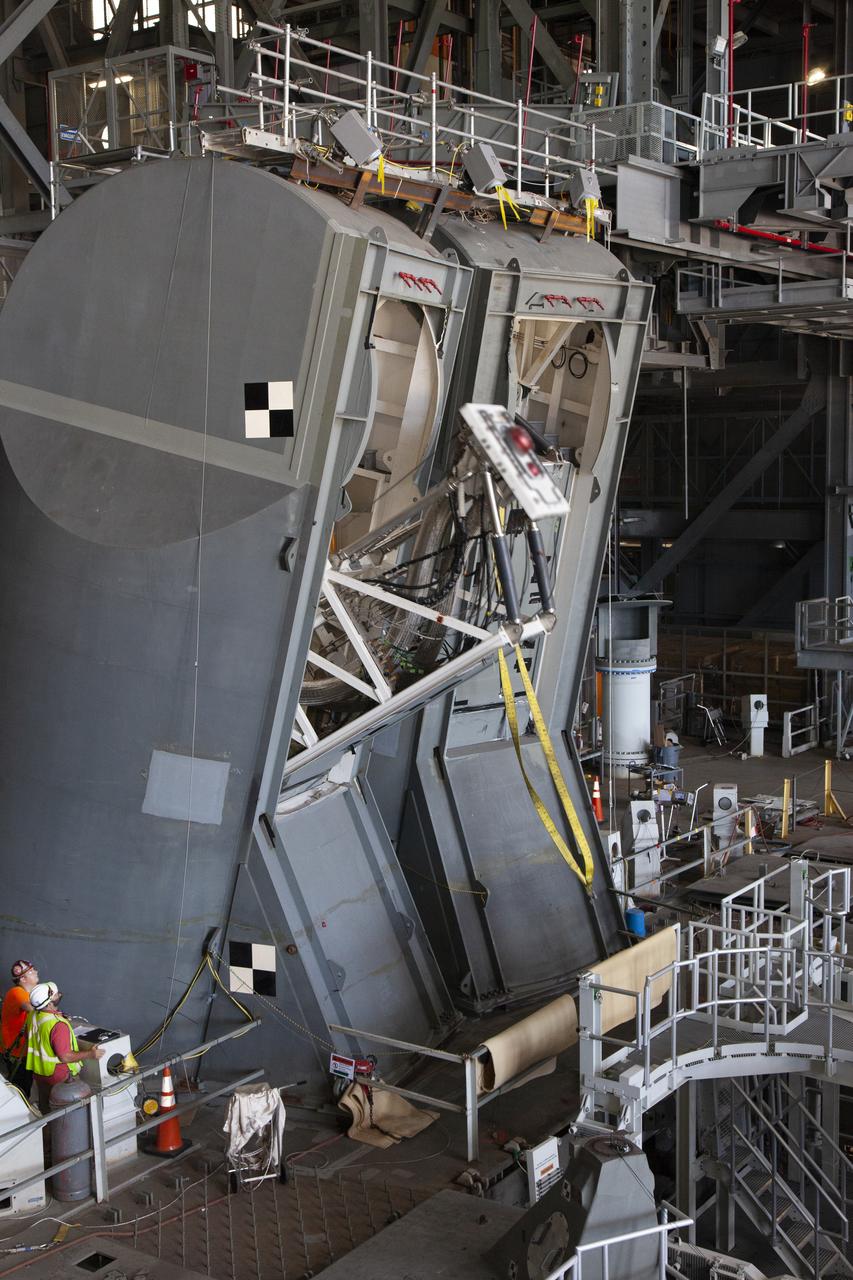
A drop test of the Tail Service Mast Umbilicals (TSMU) for NASA’s Space Launch System (SLS) rocket is underway on the mobile launcher in High Bay 3 of the Vehicle Assembly Building at NASA’s Kennedy Space Center in Florida on June 19, 2019. The 35-foot-tall TSMUs will connect to the SLS core stage aft section and provide liquid oxygen and liquid hydrogen fluid lines and electrical cable connections to the core stage engine section to support propellant handling during prelaunch operations. The drop test is being performed to ensure that the umbilicals will disconnect before launch of the SLS carrying Orion on its first uncrewed mission, Artemis 1, from Launch Complex 39B. Exploration Ground Systems and Engineering are completing the tests.
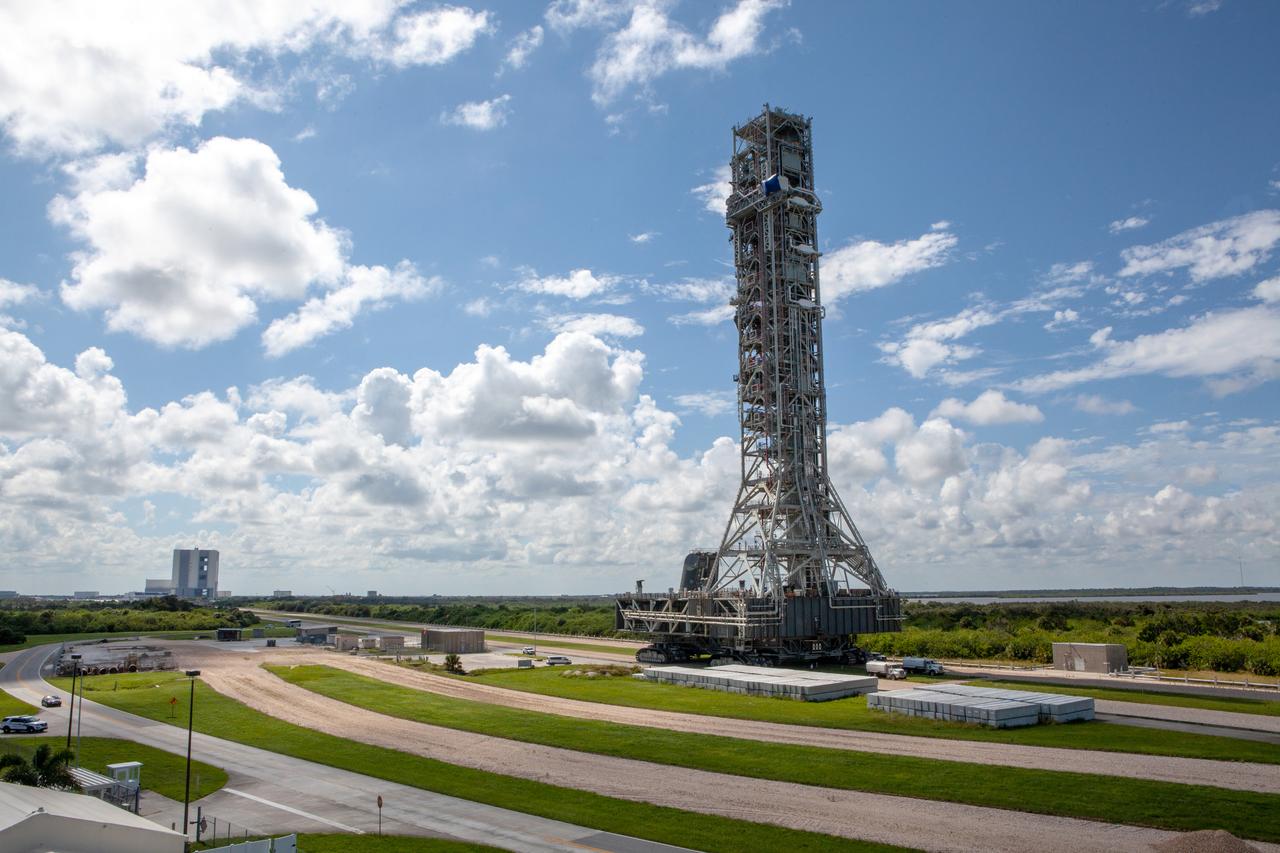
NASA’s mobile launcher (ML) atop crawler-transporter 2 moves along the crawlerway on Sept. 10, 2019, after spending a week and a half inside the Vehicle Assembly Building (VAB) at Kennedy Space Center in Florida due to the approach of Hurricane Dorian. The nearly 400-foot-tall structure was moved from Launch Pad 39B to the VAB for safekeeping on Aug. 30. The storm passed about 70 miles east of the spaceport during the overnight hours Tuesday, Sept. 3, and Wednesday, Sept. 4. NASA’s Exploration Ground Systems is moving the mobile launcher back to the launch pad, where teams will complete testing and checkout on the launcher in the coming weeks for the Artemis I mission.
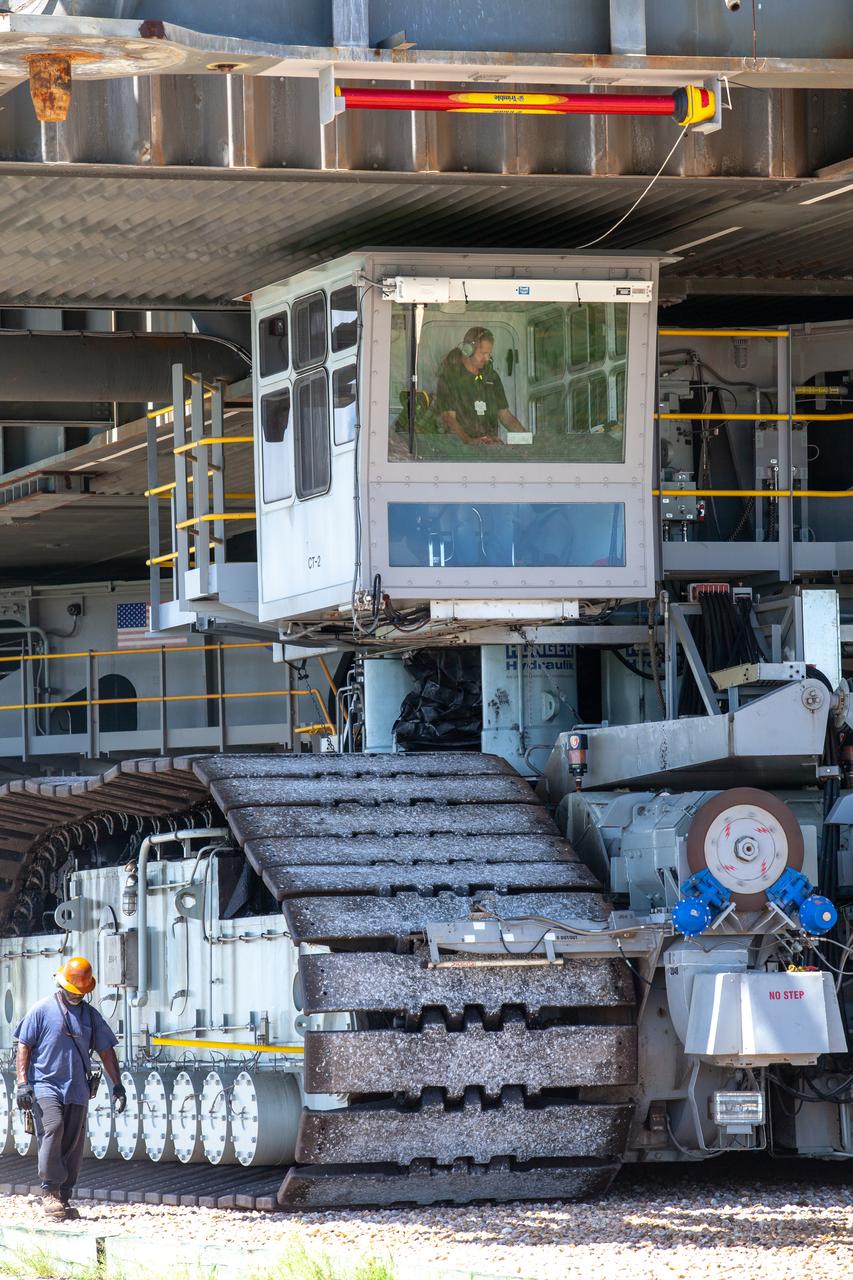
NASA’s mobile launcher (ML) atop crawler-transporter 2 moves along the crawlerway on Sept. 10, 2019, after spending a week and a half inside the Vehicle Assembly Building (VAB) at Kennedy Space Center in Florida due to the approach of Hurricane Dorian. The nearly 400-foot-tall structure was moved from Launch Pad 39B to the VAB for safekeeping on Aug. 30. The storm passed about 70 miles east of the spaceport during the overnight hours Tuesday, Sept. 3, and Wednesday, Sept. 4. NASA’s Exploration Ground Systems is moving the mobile launcher back to the launch pad, where teams will complete testing and checkout on the launcher in the coming weeks for the Artemis I mission.
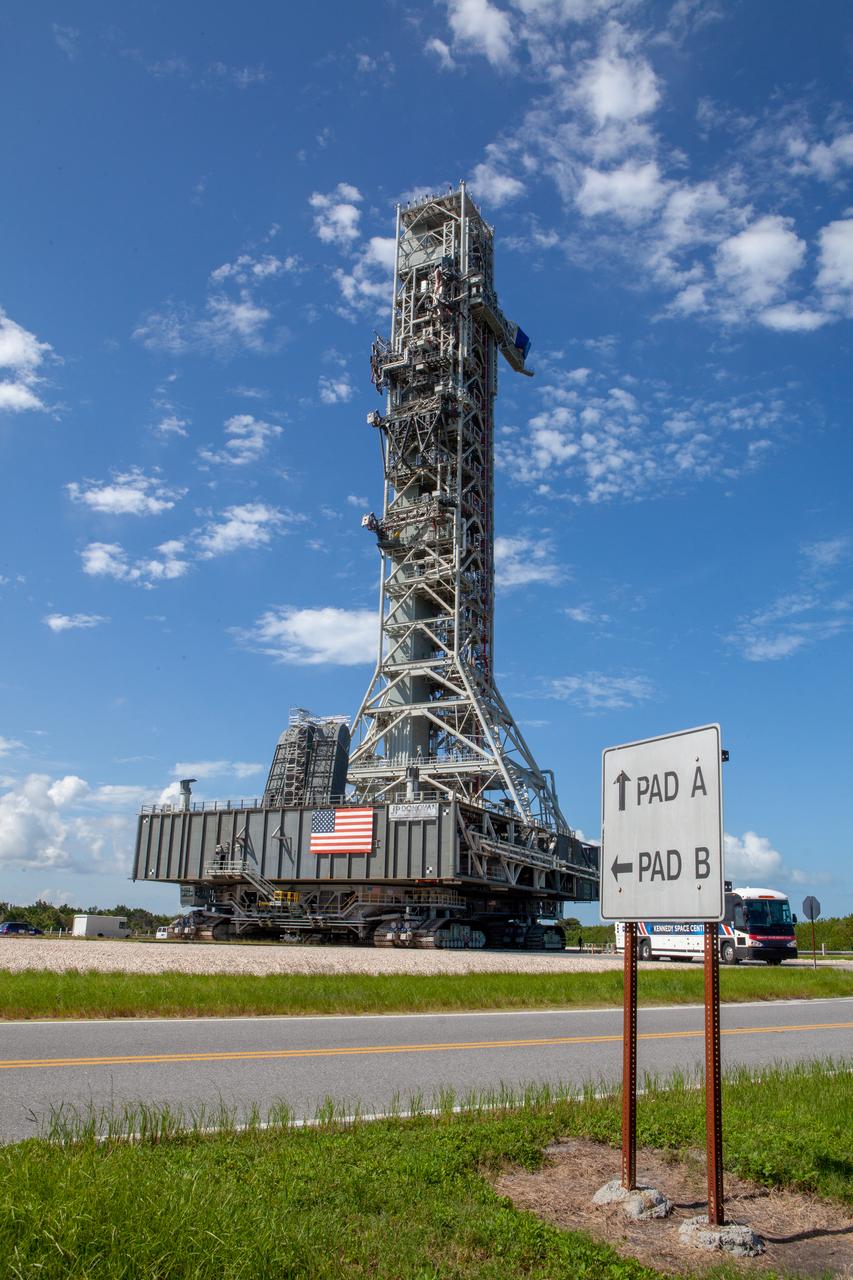
NASA’s mobile launcher (ML) atop crawler-transporter 2 moves along the crawlerway on Sept. 10, 2019, after spending a week and a half inside the Vehicle Assembly Building (VAB) at Kennedy Space Center in Florida due to the approach of Hurricane Dorian. The nearly 400-foot-tall structure was moved from Launch Pad 39B to the VAB for safekeeping on Aug. 30. The storm passed about 70 miles east of the spaceport during the overnight hours Tuesday, Sept. 3, and Wednesday, Sept. 4. NASA’s Exploration Ground Systems is moving the mobile launcher back to the launch pad, where teams will complete testing and checkout on the launcher in the coming weeks for the Artemis I mission.
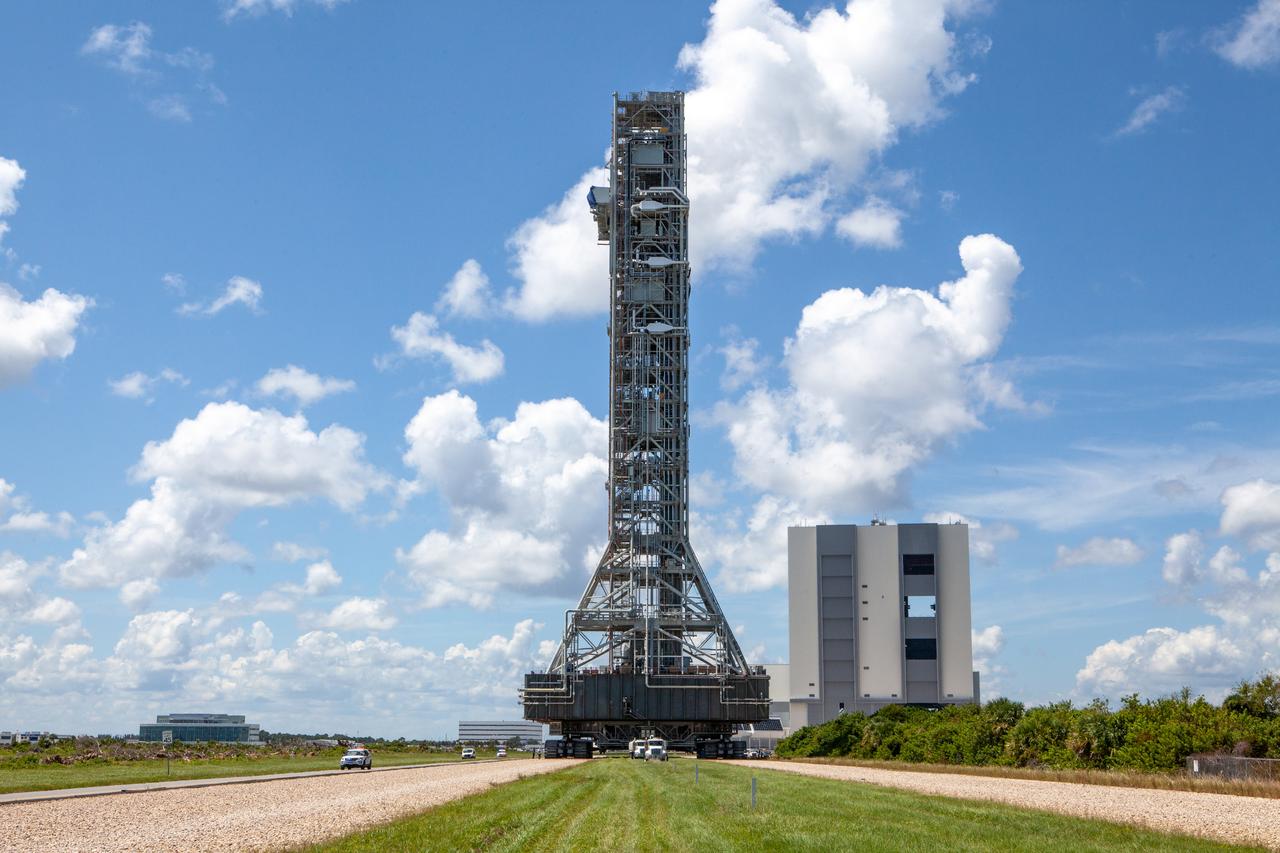
NASA’s mobile launcher (ML) atop crawler-transporter 2 moves along the crawlerway on Sept. 10, 2019, after spending a week and a half inside the Vehicle Assembly Building (VAB) at Kennedy Space Center in Florida due to the approach of Hurricane Dorian. The nearly 400-foot-tall structure was moved from Launch Pad 39B to the VAB for safekeeping on Aug. 30. The storm passed about 70 miles east of the spaceport during the overnight hours Tuesday, Sept. 3, and Wednesday, Sept. 4. NASA’s Exploration Ground Systems is moving the mobile launcher back to the launch pad, where teams will complete testing and checkout on the launcher in the coming weeks for the Artemis I mission.
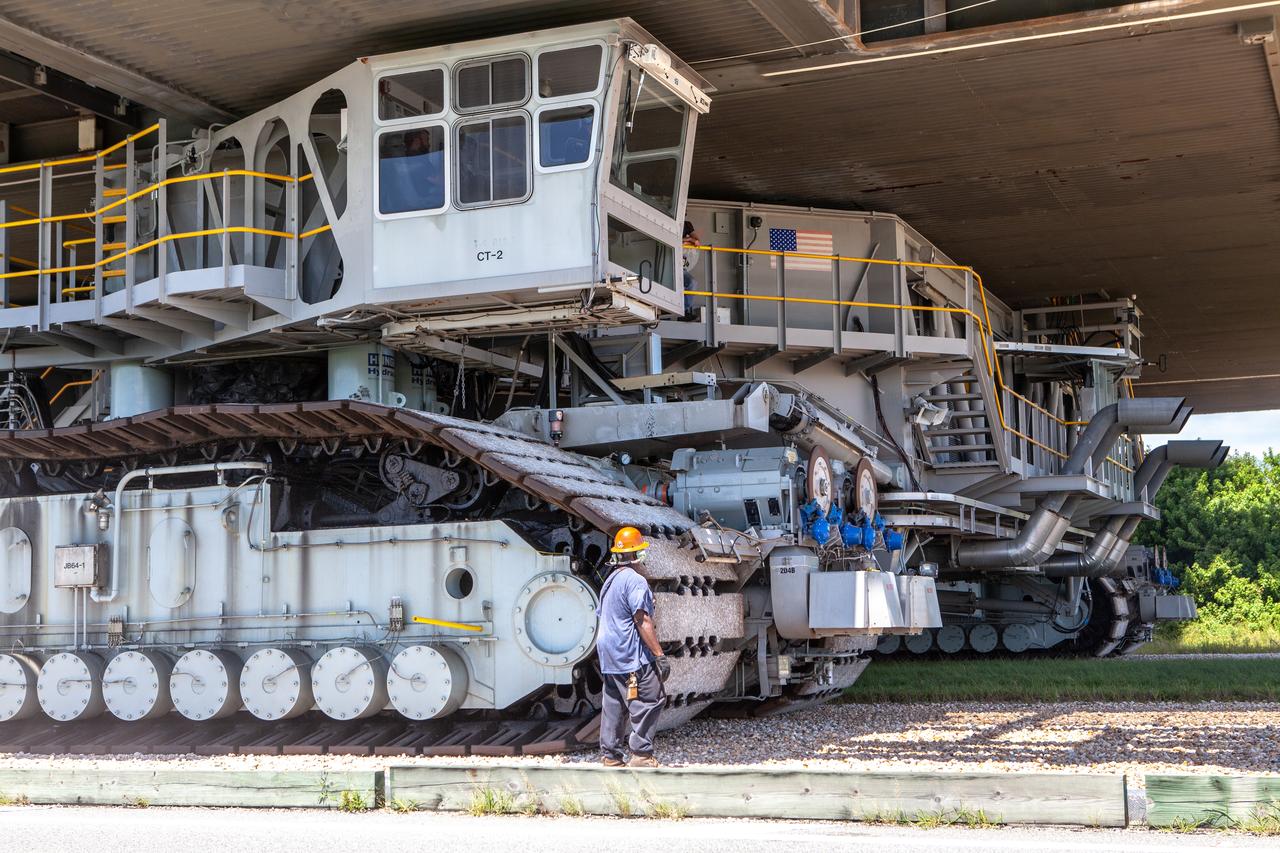
NASA’s mobile launcher (ML) atop crawler-transporter 2 moves along the crawlerway on Sept. 10, 2019, after spending a week and a half inside the Vehicle Assembly Building (VAB) at Kennedy Space Center in Florida due to the approach of Hurricane Dorian. The nearly 400-foot-tall structure was moved from Launch Pad 39B to the VAB for safekeeping on Aug. 30. The storm passed about 70 miles east of the spaceport during the overnight hours Tuesday, Sept. 3, and Wednesday, Sept. 4. NASA’s Exploration Ground Systems is moving the mobile launcher back to the launch pad, where teams will complete testing and checkout on the launcher in the coming weeks for the Artemis I mission.
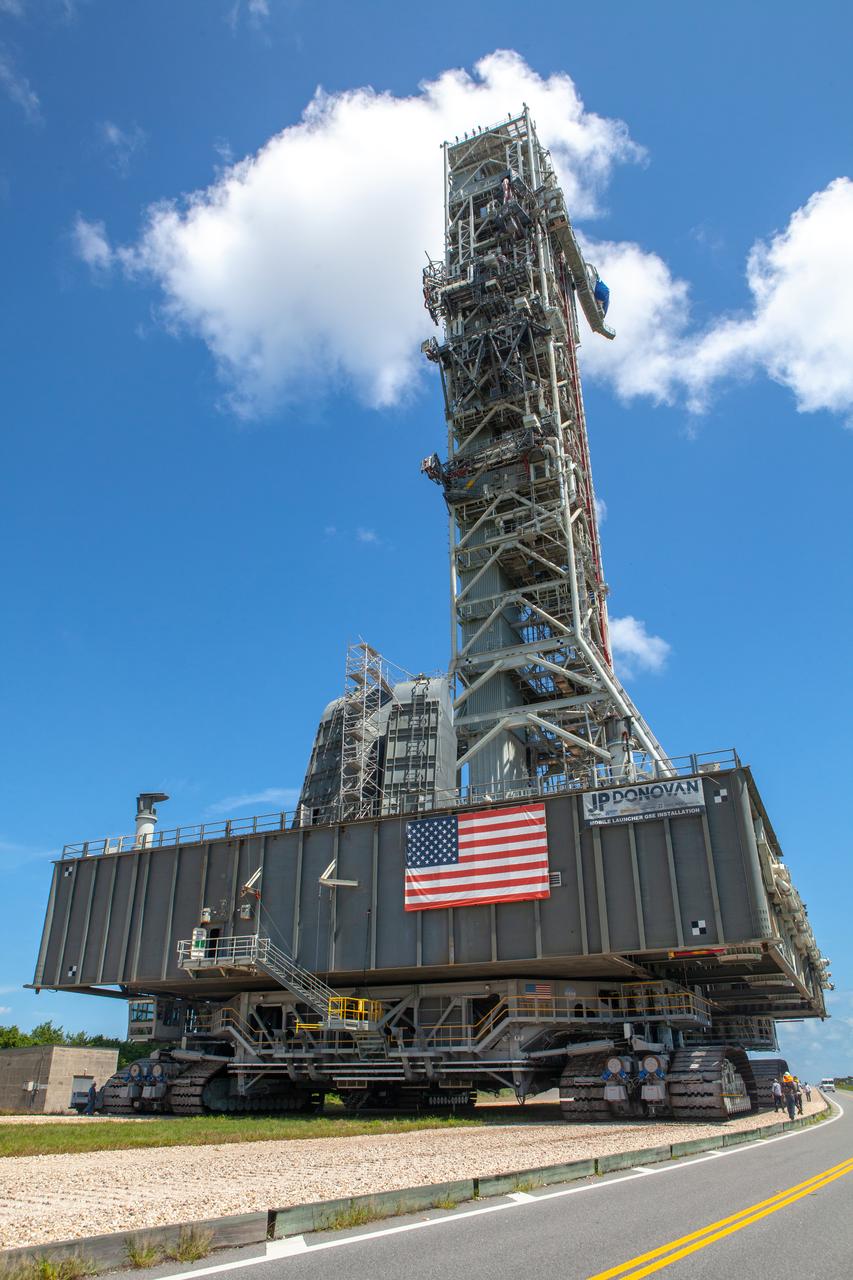
NASA’s mobile launcher (ML) atop crawler-transporter 2 moves along the crawlerway on Sept. 10, 2019, after spending a week and a half inside the Vehicle Assembly Building (VAB) at Kennedy Space Center in Florida due to the approach of Hurricane Dorian. The nearly 400-foot-tall structure was moved from Launch Pad 39B to the VAB for safekeeping on Aug. 30. The storm passed about 70 miles east of the spaceport during the overnight hours Tuesday, Sept. 3, and Wednesday, Sept. 4. NASA’s Exploration Ground Systems is moving the mobile launcher back to the launch pad, where teams will complete testing and checkout on the launcher in the coming weeks for the Artemis I mission.
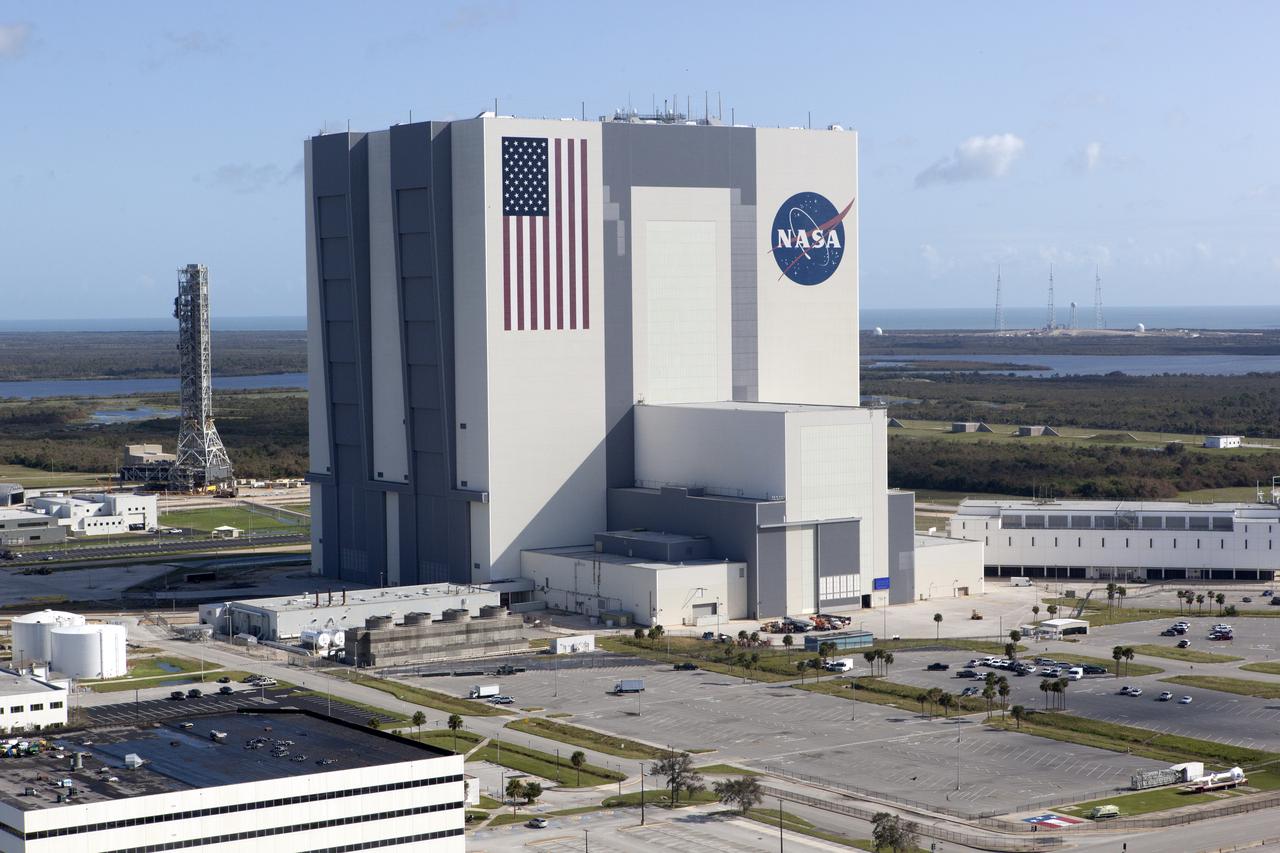
The Mobile Launcher (ML), Vehicle Assembly Building (VAB), Launch Control Center (LCC), and Launch Complex 39 surrounding areas are seen during an aerial survey of NASA's Kennedy Space Center in Florida on September 12, 2017. The survey was performed to identify structures and facilities that may have sustained damage from Hurricane Irma as the storm passed Kennedy on September 10, 2017. NASA closed the center ahead of the storm's onset and only a small team of specialists known as the Rideout Team was on the center as the storm approached and passed.
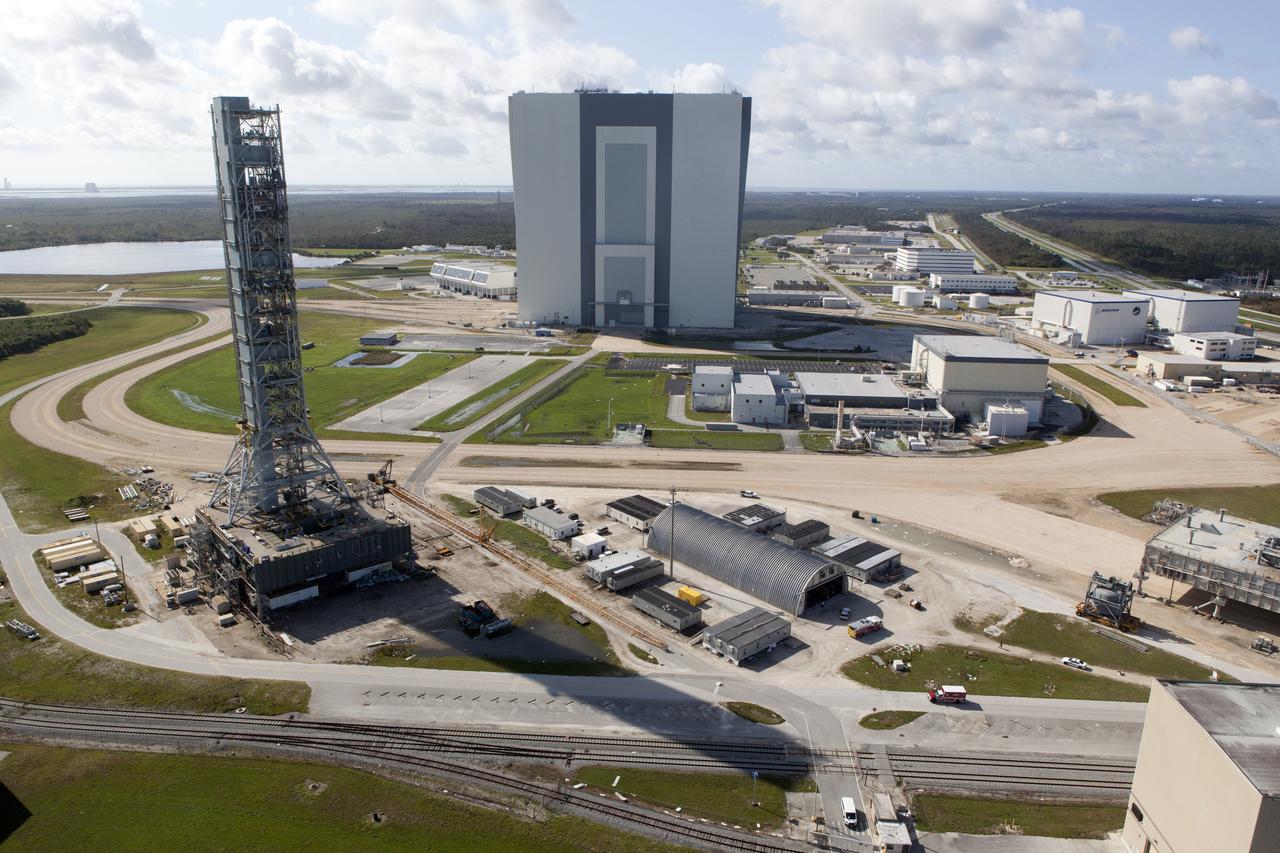
The Mobile Launcher (ML), Launch Control Center (LCC), Vehicle Assembly Building (VAB), and Launch Complex 39 surrounding areas are seen during an aerial survey of NASA's Kennedy Space Center in Florida on September 12, 2017. The survey was performed to identify structures and facilities that may have sustained damage from Hurricane Irma as the storm passed Kennedy on September 10, 2017. NASA closed the center ahead of the storm's onset and only a small team of specialists known as the Rideout Team was on the center as the storm approached and passed.
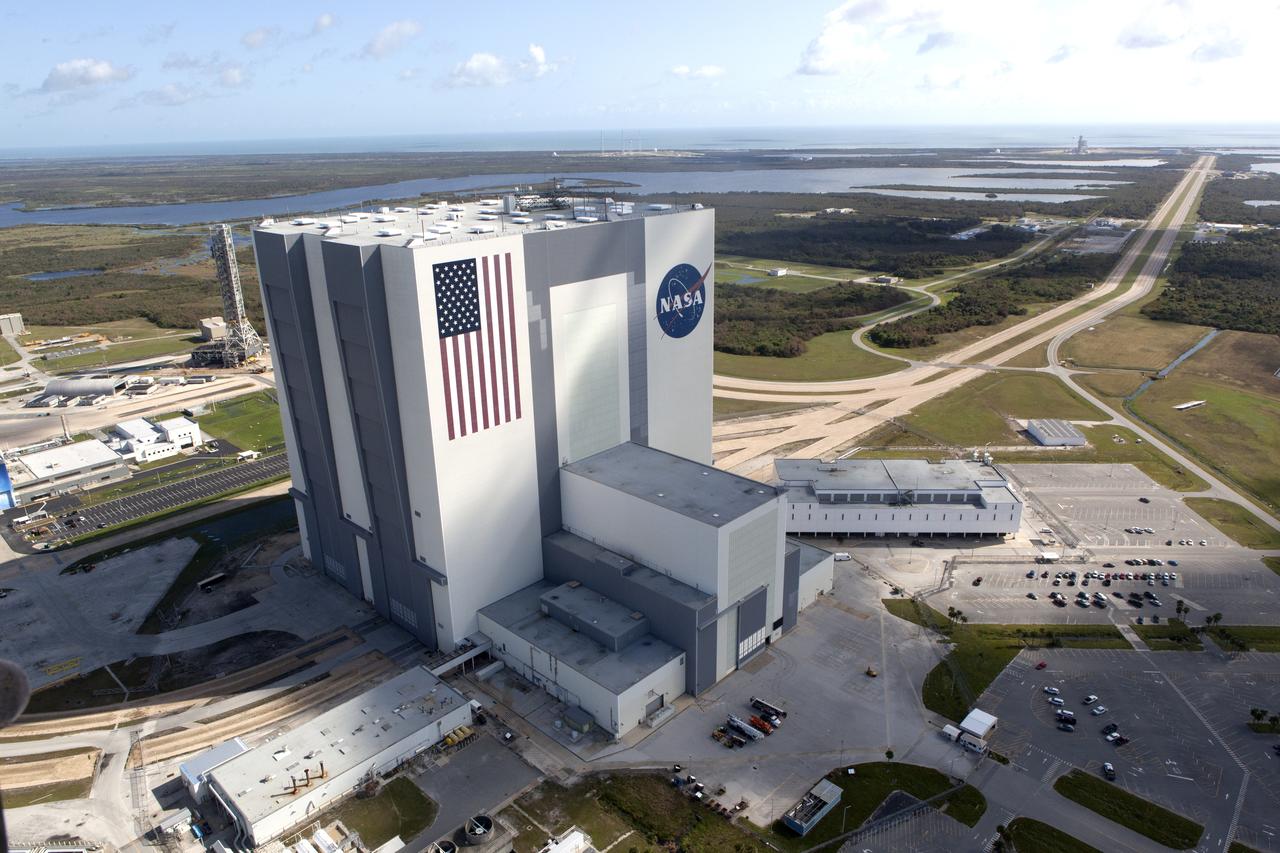
The Mobile Launcher (ML), Vehicle Assembly Building (VAB), Launch Control Center (LCC), and Launch Complex 39 surrounding areas are seen during an aerial survey of NASA's Kennedy Space Center in Florida on September 12, 2017. The survey was performed to identify structures and facilities that may have sustained damage from Hurricane Irma as the storm passed Kennedy on September 10, 2017. NASA closed the center ahead of the storm's onset and only a small team of specialists known as the Rideout Team was on the center as the storm approached and passed.
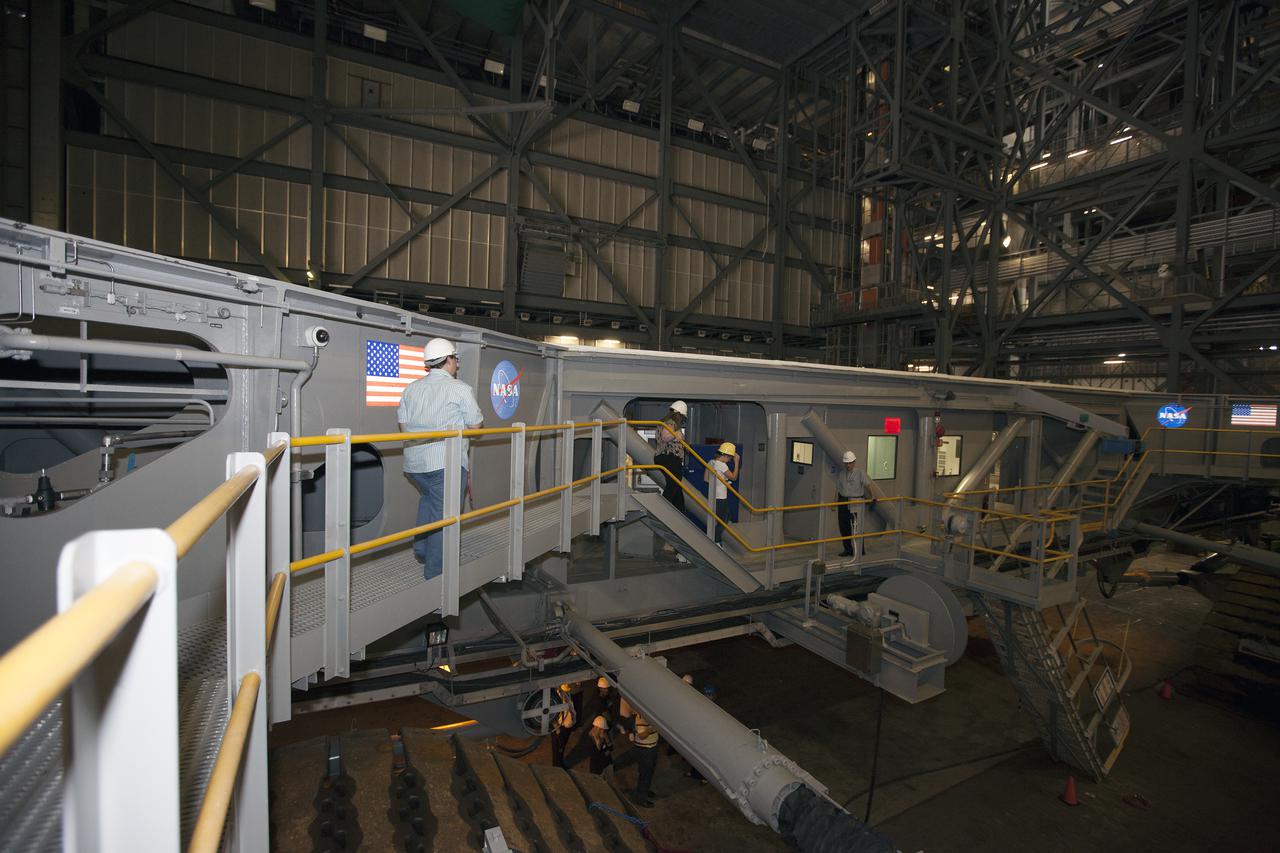
CAPE CANAVERAL, Fla. – A group of nine Florida Institute of Technology aspiring journalists walk on the outside of the mobile launcher inside the Vehicle Assembly Building, or VAB, at NASA's Kennedy Space Center in Florida on May 22. The group of students, in collaboration with Florida Today, is working on a multimedia project that examines health in zero gravity and how life in space can help people live better on Earth. These multimedia stories will be published for the print and online versions of Florida Today. During their visit, the students interviewed astronaut and Expedition 35 flight engineer Chris Cassidy during an International Space Station downlink in the Press Site auditorium. The journalists also met with Kennedy Director Bob Cabana who talked about NASA's goals for the future and his own experience in space, answering questions about health effects of spaceflight. The journalists also toured the Apollo Saturn V Center. Learn about the Florida Institute of Technology journalists' findings on their Facebook page at http:__www.facebook.com_FT3atFIT or Twitter at #SpaceHealth. Photo credit: Photo credit: NASA_Kim Shiflett
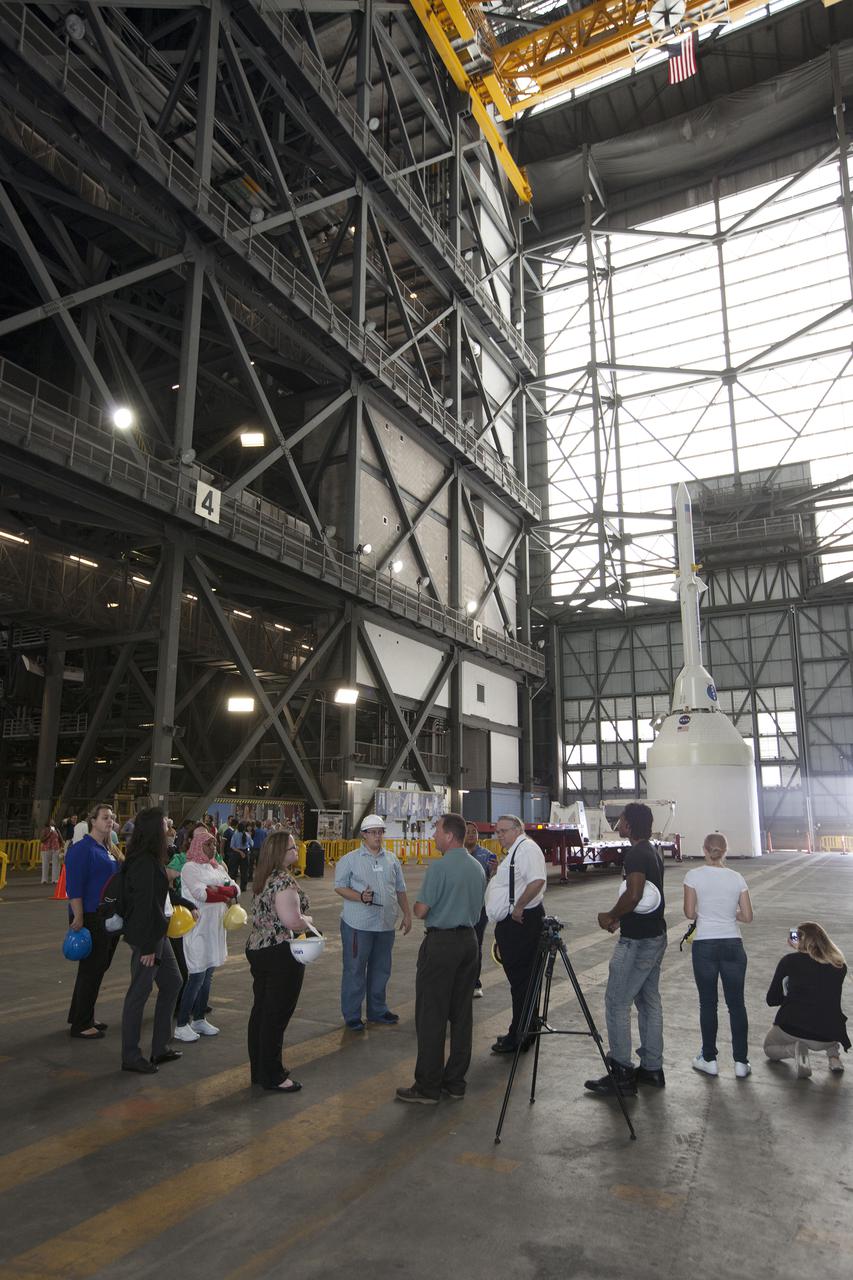
CAPE CANAVERAL, Fla. – A group of nine Florida Institute of Technology aspiring journalists congregate inside the Vehicle Assembly Building, or VAB, at NASA's Kennedy Space Center in Florida on May 22. The group of students, in collaboration with Florida Today, is working on a multimedia project that examines health in zero gravity and how life in space can help people live better on Earth. These multimedia stories will be published for the print and online versions of Florida Today. During their visit, the students interviewed astronaut and Expedition 35 flight engineer Chris Cassidy during an International Space Station downlink in the Press Site auditorium. The journalists also met with Kennedy Director Bob Cabana who talked about NASA's goals for the future and his own experience in space, answering questions about health effects of spaceflight. The journalists also toured the Apollo Saturn V Center. Learn about the Florida Institute of Technology journalists' findings on their Facebook page at http:__www.facebook.com_FT3atFIT or Twitter at #SpaceHealth. Photo credit: Photo credit: NASA_Kim Shiflett
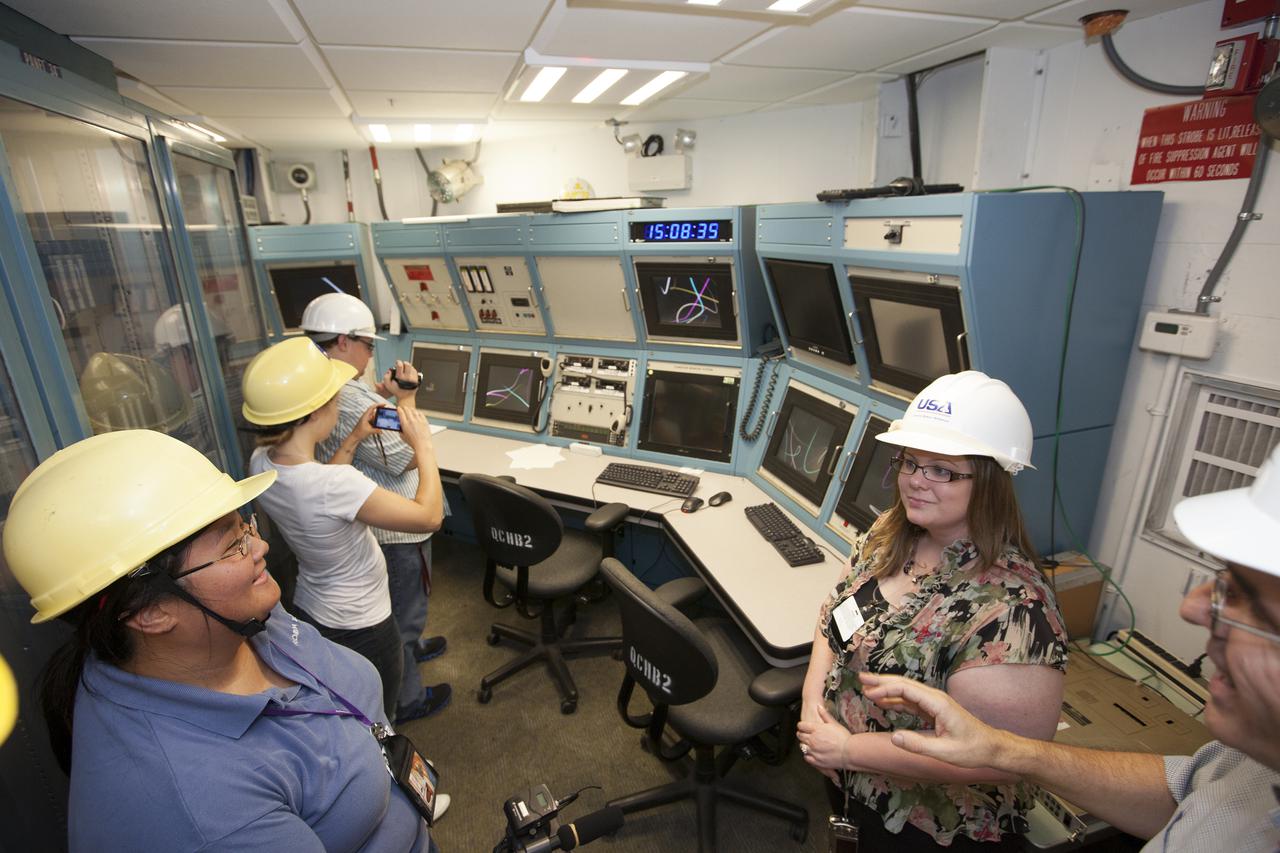
CAPE CANAVERAL, Fla. – A group of nine Florida Institute of Technology aspiring journalists observe the interior of the mobile launcher inside the Vehicle Assembly Building, or VAB, at NASA's Kennedy Space Center in Florida on May 22. The group of students, in collaboration with Florida Today, is working on a multimedia project that examines health in zero gravity and how life in space can help people live better on Earth. These multimedia stories will be published for the print and online versions of Florida Today. At left is Florida Today videographer Caroline Perez. During their visit, the students interviewed astronaut and Expedition 35 flight engineer Chris Cassidy during an International Space Station downlink in the Press Site auditorium. The journalists also met with Kennedy Director Bob Cabana who talked about NASA's goals for the future and his own experience in space, answering questions about health effects of spaceflight. The journalists also toured the Apollo Saturn V Center. Learn about the Florida Institute of Technology journalists' findings on their Facebook page at http:__www.facebook.com_FT3atFIT or Twitter at #SpaceHealth. Photo credit: Photo credit: NASA_Kim Shiflett
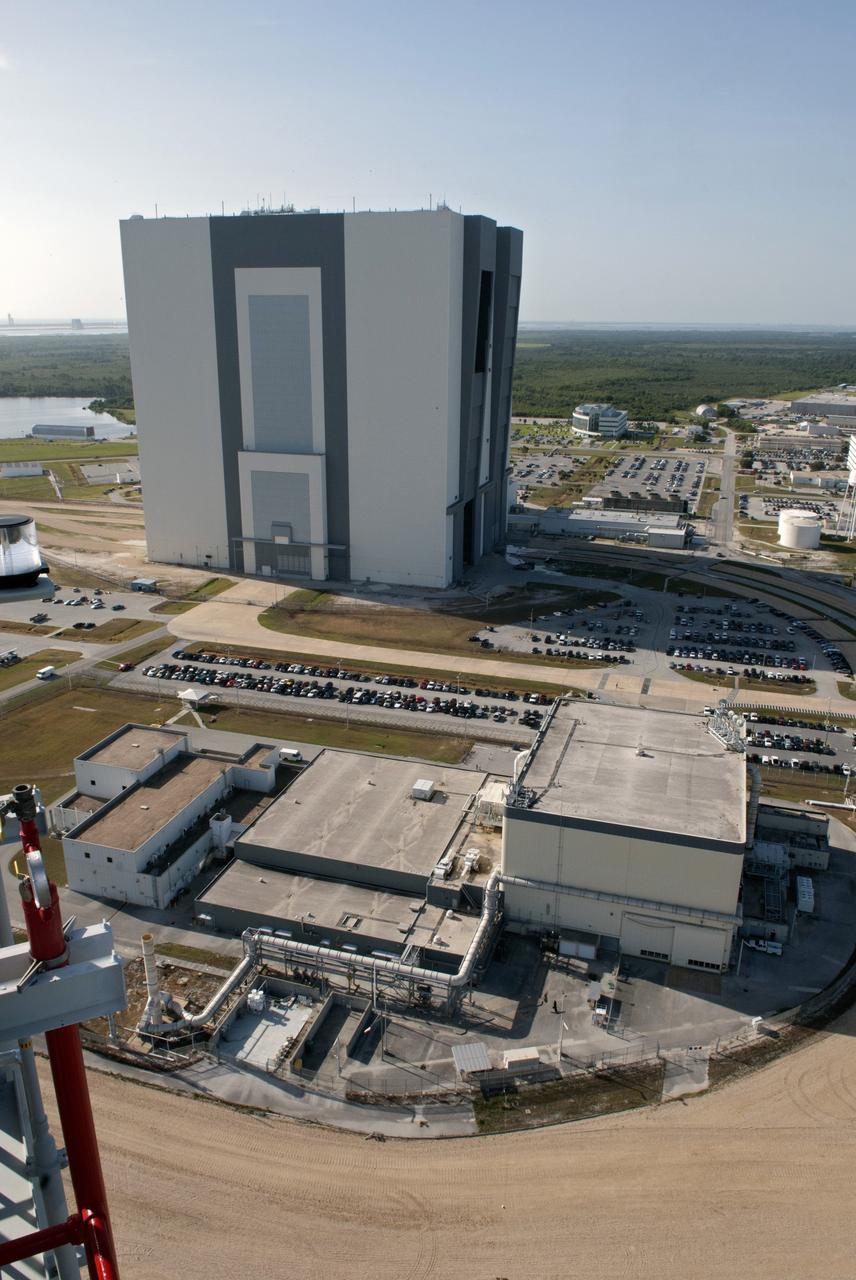
CAPE CANAVERAL, Fla. -- At NASA's Kennedy Space Center in Florida, the 525-foot-tall Vehicle Assembly Building, or VAB, is seen from the tower of NASA's new mobile launcher, or ML, support structure. It took about two years to construct the launcher in the Mobile Launcher Park site, north of the VAB. The 355-foot-tall structure will support NASA's future human spaceflight program. The base of the launcher is lighter than space shuttle mobile launcher platforms so the crawler-transporter can pick up the heavier load of the tower and a taller rocket. The next step will be to add ground support equipment, such as umbilicals and access arms, for future rocket launches. For information on NASA's future plans, visit www.nasa.gov. Photo credit: NASA/Jim Grossmann
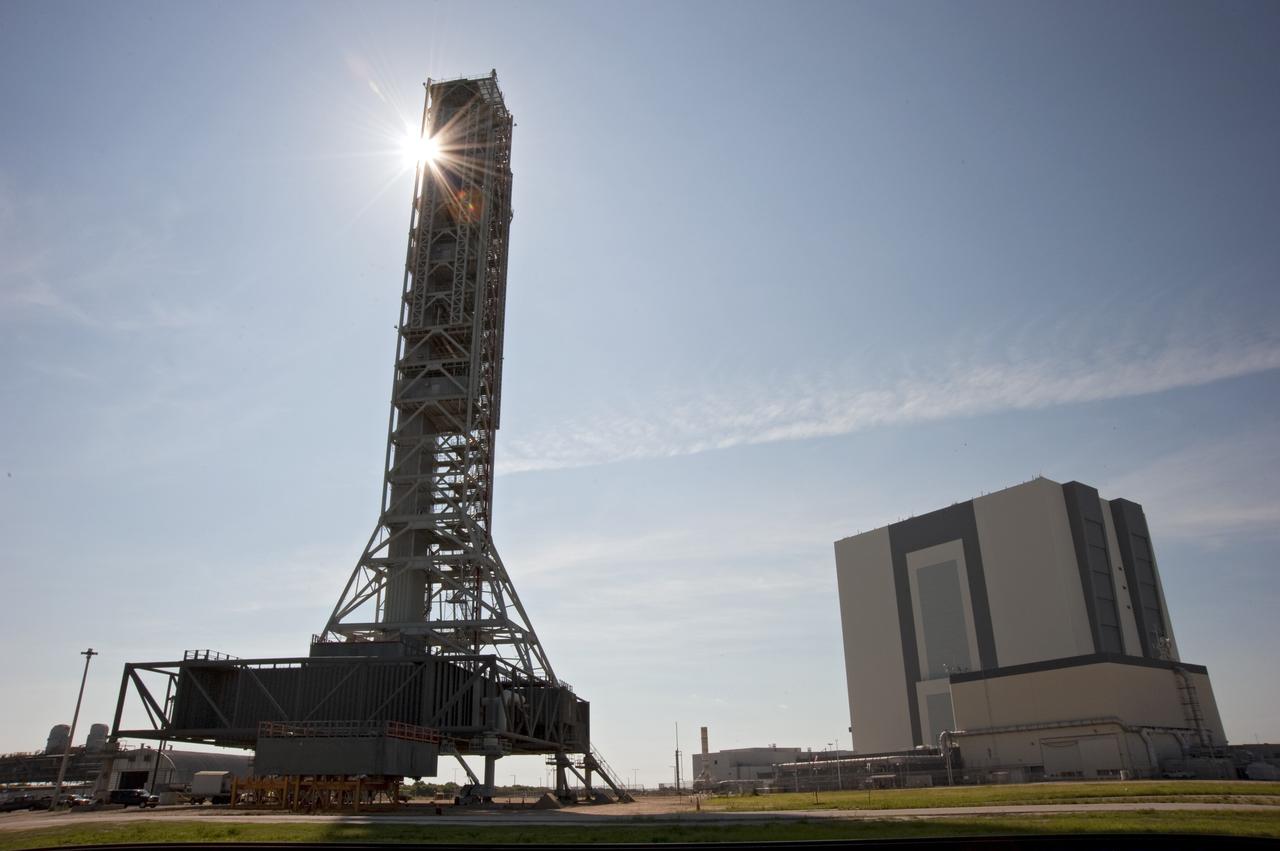
CAPE CANAVERAL, Fla. -- At NASA's Kennedy Space Center in Florida, NASA's new mobile launcher, or ML, support structure stands next to the 525-foot-tall Vehicle Assembly Building, or VAB. It took about two years to construct the launcher in the Mobile Launcher Park site, north of the VAB. The 355-foot-tall structure will support NASA's future human spaceflight program. The base of the launcher is lighter than space shuttle mobile launcher platforms so the crawler-transporter can pick up the heavier load of the tower and a taller rocket. The next step will be to add ground support equipment, such as umbilicals and access arms, for future rocket launches. For information on NASA's future plans, visit www.nasa.gov. Photo credit: NASA/Kim Shiflett
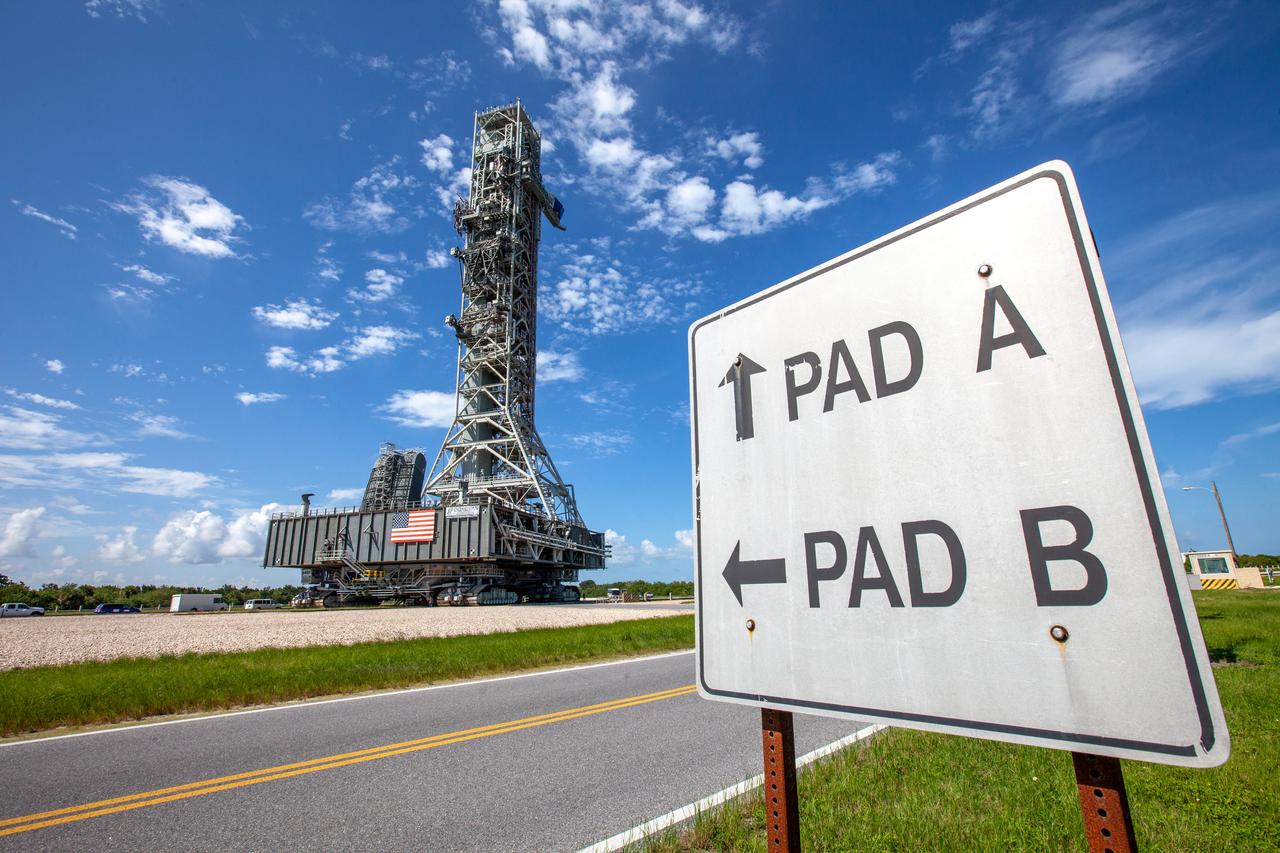
NASA’s mobile launcher (ML) atop crawler-transporter 2 moves along the crawlerway and nears the turn to Launch Pad 39B on Sept. 10, 2019, after spending a week and a half inside the Vehicle Assembly Building (VAB) at Kennedy Space Center in Florida due to the approach of Hurricane Dorian. The nearly 400-foot-tall structure was moved from Pad B to the VAB for safekeeping on Aug. 30. The storm passed about 70 miles east of the spaceport during the overnight hours Tuesday, Sept. 3, and Wednesday, Sept. 4. NASA’s Exploration Ground Systems is moving the mobile launcher back to the launch pad, where teams will complete testing and checkout on the launcher in the coming weeks for the Artemis I mission.
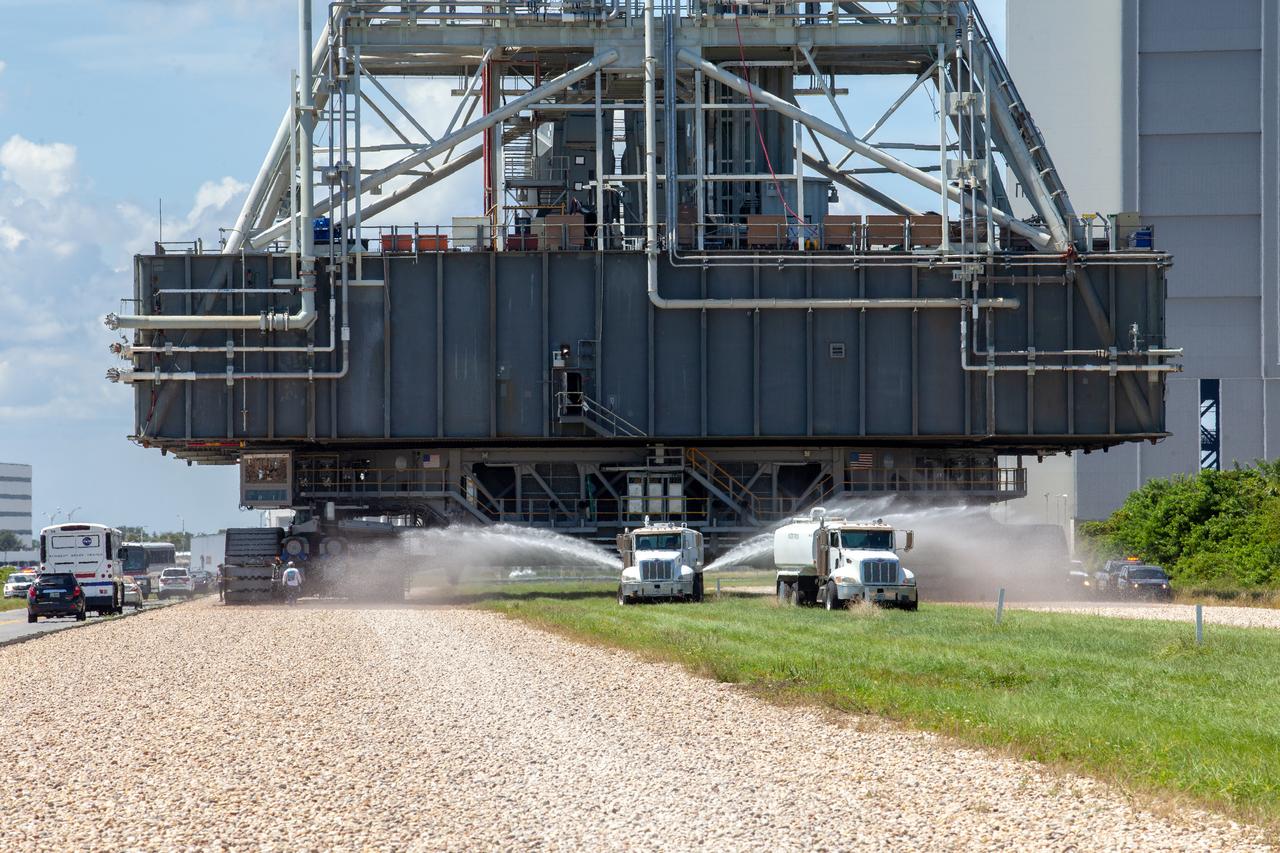
NASA’s mobile launcher (ML) atop crawler-transporter 2 moves along the crawlerway on Sept. 10, 2019, after spending a week and a half inside the Vehicle Assembly Building (VAB) at Kennedy Space Center in Florida due to the approach of Hurricane Dorian. Truck in front spray water to reduce dust and sand. The nearly 400-foot-tall structure was moved from Launch Pad 39B to the VAB for safekeeping on Aug. 30. The storm passed about 70 miles east of the spaceport during the overnight hours Tuesday, Sept. 3, and Wednesday, Sept. 4. NASA’s Exploration Ground Systems is moving the mobile launcher back to the launch pad, where teams will complete testing and checkout on the launcher in the coming weeks for the Artemis I mission.
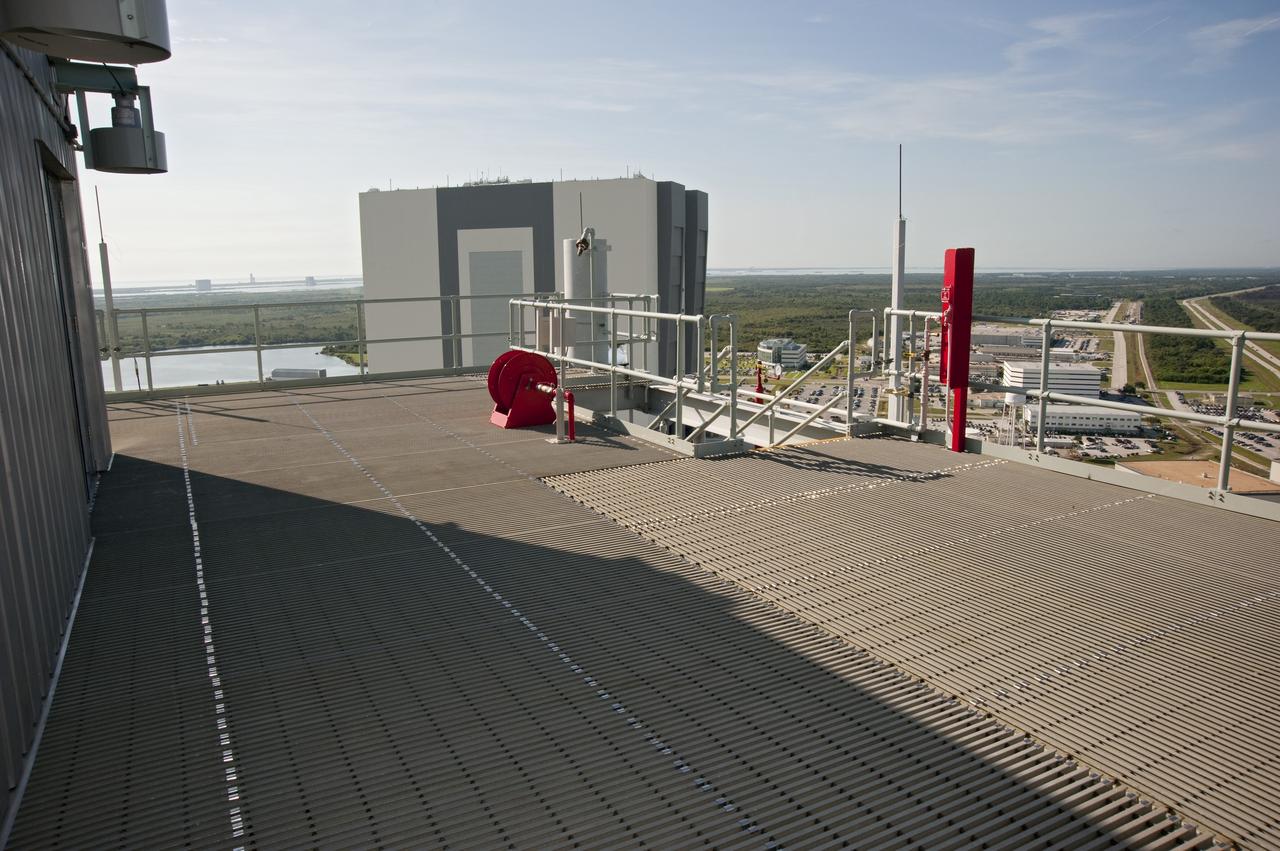
CAPE CANAVERAL, Fla. -- At NASA's Kennedy Space Center in Florida, the top of the 525-foot-tall Vehicle Assembly Building, or VAB, is seen from the tower of NASA's new mobile launcher, or ML, support structure. It took about two years to construct the launcher in the Mobile Launcher Park site, north of the VAB. The 355-foot-tall structure will support NASA's future human spaceflight program. The base of the launcher is lighter than space shuttle mobile launcher platforms so the crawler-transporter can pick up the heavier load of the tower and a taller rocket. The next step will be to add ground support equipment, such as umbilicals and access arms, for future rocket launches. For information on NASA's future plans, visit www.nasa.gov. Photo credit: NASA/Kim Shiflett
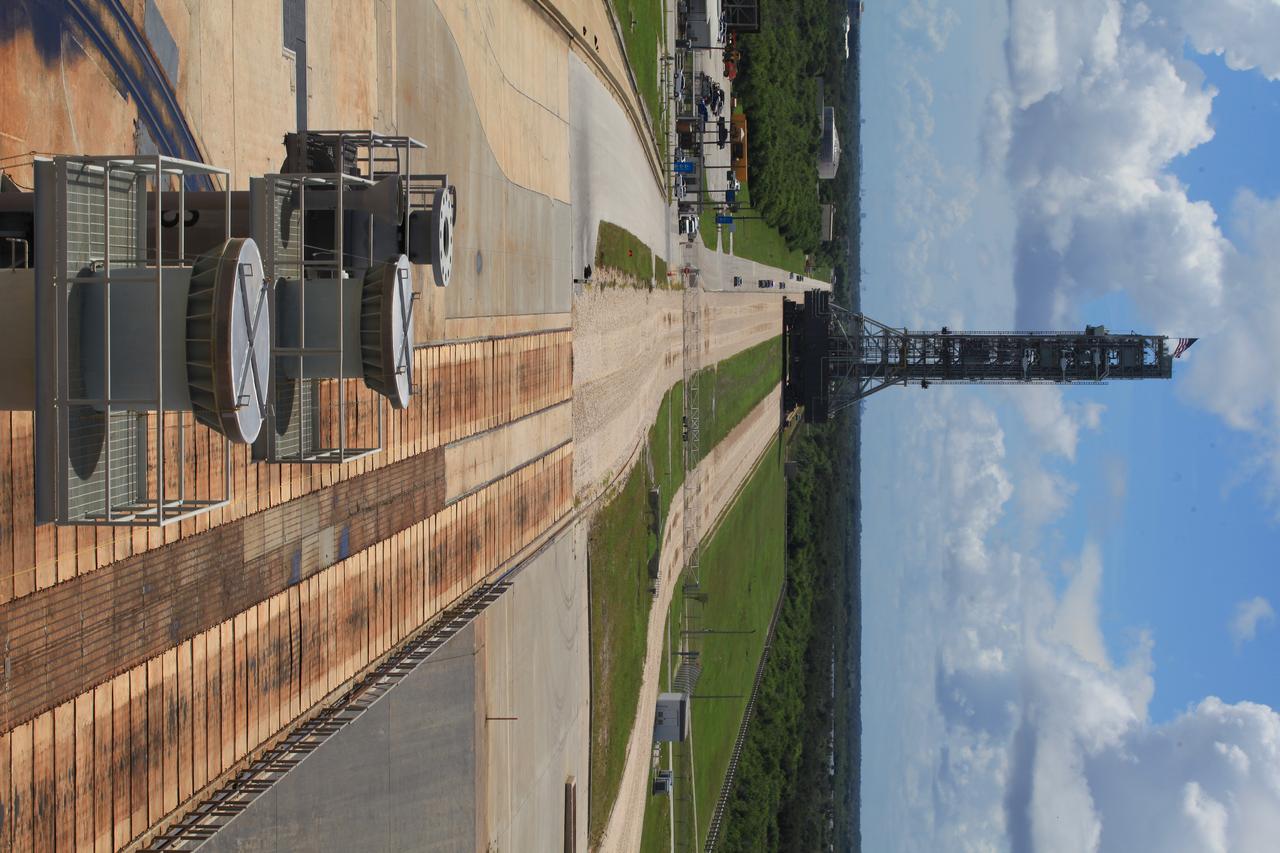
NASA's mobile launcher atop crawler-transporter 2 begins its trek off of Launch Pad 39B on Sept. 7, 2018, at NASA's Kennedy Space Center in Florida. After undergoing a fit check and several days of systems testing with the pad, the mobile launcher is on its way to the Vehicle Assembly Building. This is the first time that the modified mobile launcher made the trip to the pad. The 380-foot-tall mobile launcher is equipped with the crew access arm and several umbilicals that will provide power, environmental control. Pneumatics, communication and electrical connections to the agency's Space Launch System and Orion spacecraft. Exploration Ground Systems is preparing the ground systems necessary to launch SLS and Orion on Exploration Mission-1, missions to the Moon and on to Mars.
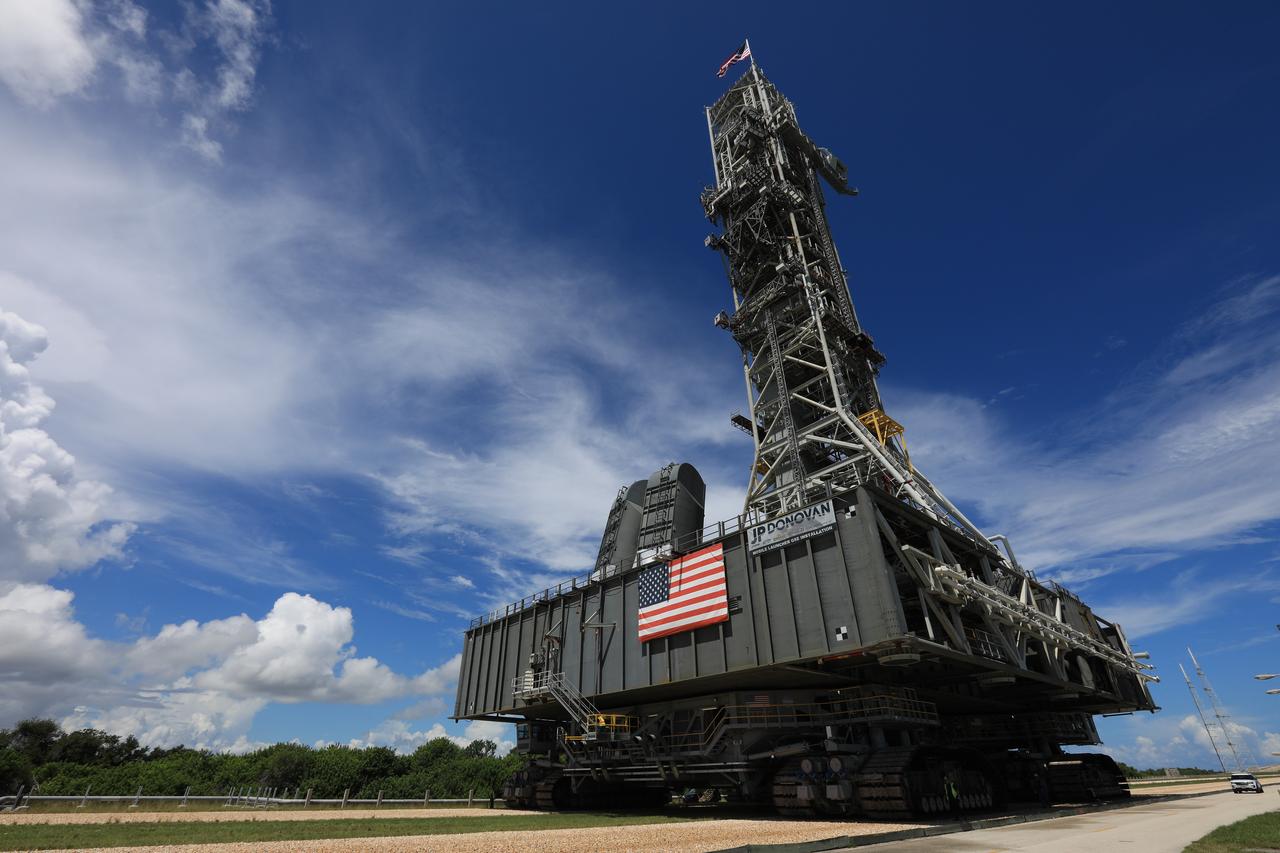
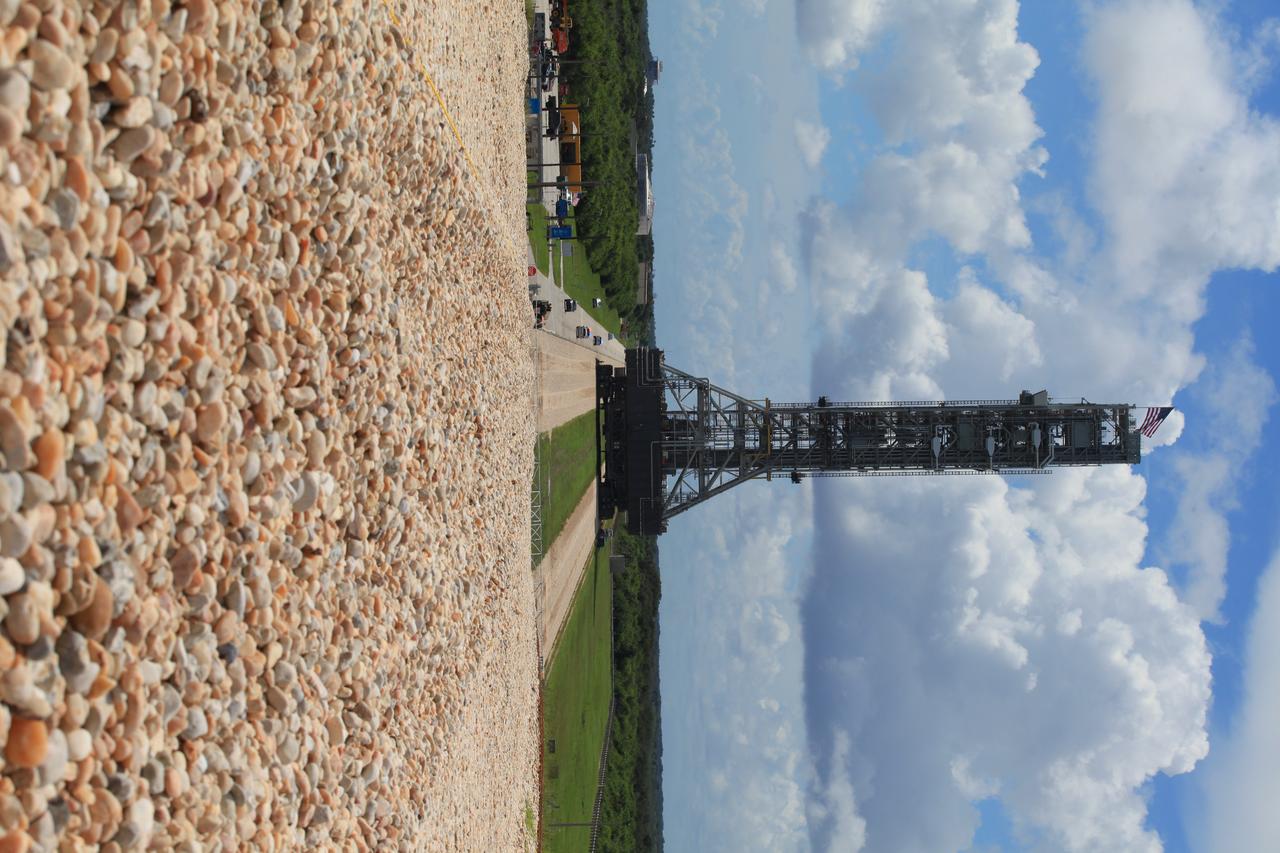
NASA's mobile launcher atop crawler-transporter 2 travels slowly along the crawlerway on Sept. 7, 2018, on its way to the Vehicle Assembly Building at NASA's Kennedy Space Center in Florida. The 380-foot-tall mobile launcher is equipped with the crew access arm and several umbilicals that will provide power, environmental control. Pneumatics, communication and electrical connections to the agency's Space Launch System and Orion spacecraft. Exploration Ground Systems is preparing the ground systems necessary to launch SLS and Orion on Exploration Mission-1, missions to the Moon and on to Mars.
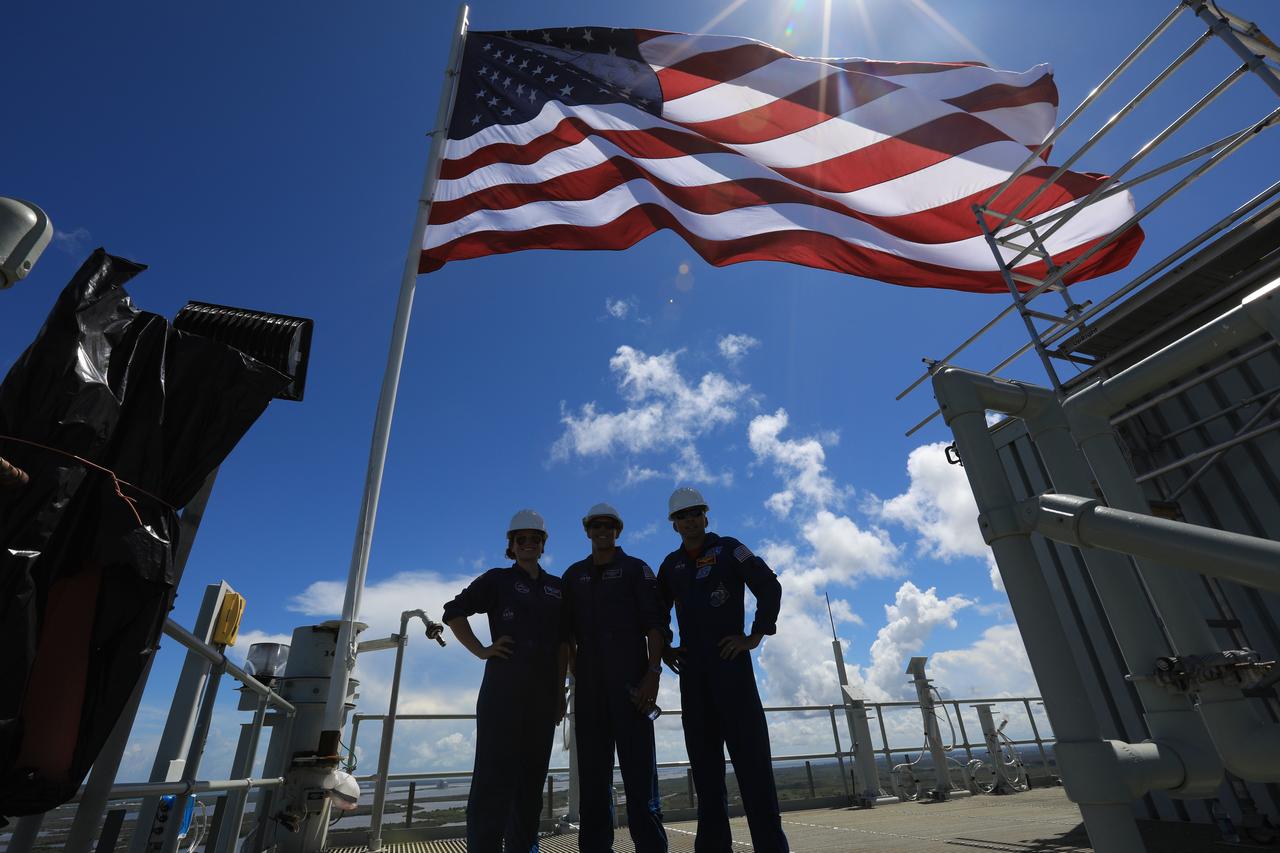
NASA's mobile launcher atop crawler-transporter 2 travels slowly along the crawlerway on Sept. 7, 2018, on its way to the Vehicle Assembly Building at NASA's Kennedy Space Center in Florida. During a portion of the trek, several NASA astronauts were aboard the mobile launcher for a bird’s eye view. The 380-foot-tall mobile launcher is equipped with the crew access arm and several umbilicals that will provide power, environmental control. Pneumatics, communication and electrical connections to the agency's Space Launch System and Orion spacecraft. Exploration Ground Systems is preparing the ground systems necessary to launch SLS and Orion on Exploration Mission-1, missions to the Moon and on to Mars.
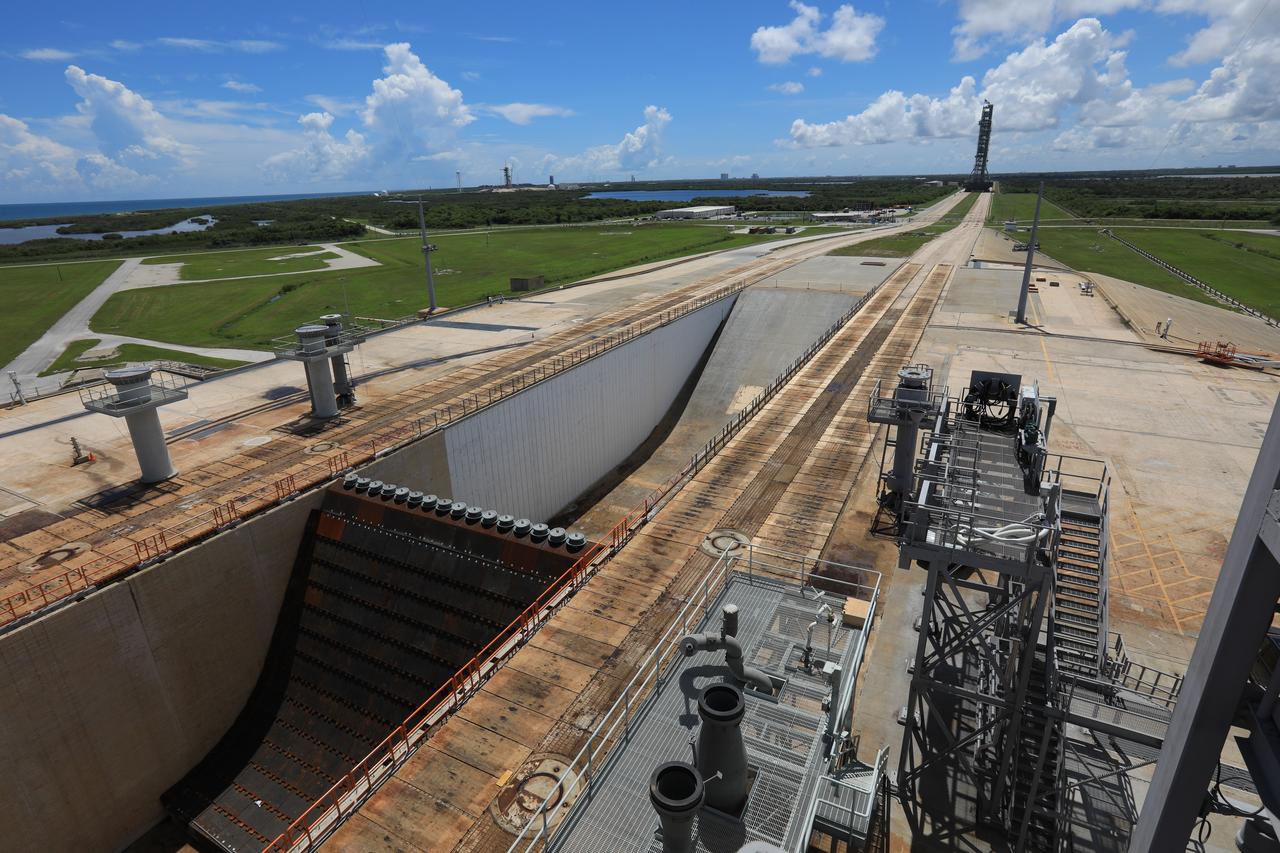
NASA's mobile launcher atop crawler-transporter 2 begins its trek off of Launch Pad 39B on Sept. 7, 2018, at NASA's Kennedy Space Center in Florida. After undergoing a fit check and several days of systems testing with the pad, the mobile launcher is on its way to the Vehicle Assembly Building. This is the first time that the modified mobile launcher made the trip to the pad. The 380-foot-tall mobile launcher is equipped with the crew access arm and several umbilicals that will provide power, environmental control. Pneumatics, communication and electrical connections to the agency's Space Launch System and Orion spacecraft. Exploration Ground Systems is preparing the ground systems necessary to launch SLS and Orion on Exploration Mission-1, missions to the Moon and on to Mars.
NASA's mobile launcher atop crawler-transporter 2 begins its trek off of Launch Pad 39B on Sept. 7, 2018, at NASA's Kennedy Space Center in Florida. After undergoing a fit check and several days of systems testing with the pad, the mobile launcher is on its way to the Vehicle Assembly Building. This is the first time that the modified mobile launcher made the trip to the pad. The 380-foot-tall mobile launcher is equipped with the crew access arm and several umbilicals that will provide power, environmental control. Pneumatics, communication and electrical connections to the agency's Space Launch System and Orion spacecraft. Exploration Ground Systems is preparing the ground systems necessary to launch SLS and Orion on Exploration Mission-1, missions to the Moon and on to Mars.
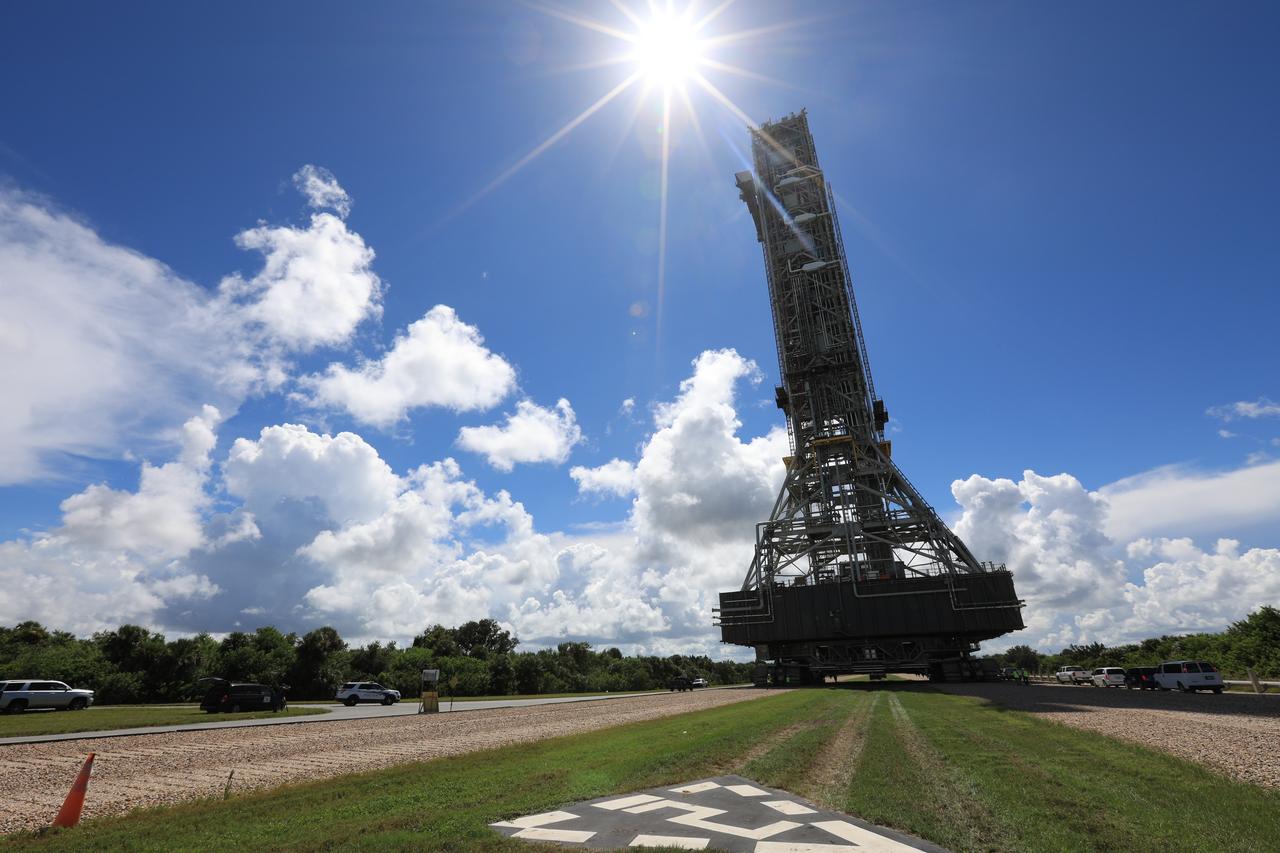
NASA's mobile launcher atop crawler-transporter 2 travels slowly along the crawlerway on Sept. 7, 2018, on its way to the Vehicle Assembly Building at NASA's Kennedy Space Center in Florida. The 380-foot-tall mobile launcher is equipped with the crew access arm and several umbilicals that will provide power, environmental control. Pneumatics, communication and electrical connections to the agency's Space Launch System and Orion spacecraft. Exploration Ground Systems is preparing the ground systems necessary to launch SLS and Orion on Exploration Mission-1, missions to the Moon and on to Mars.
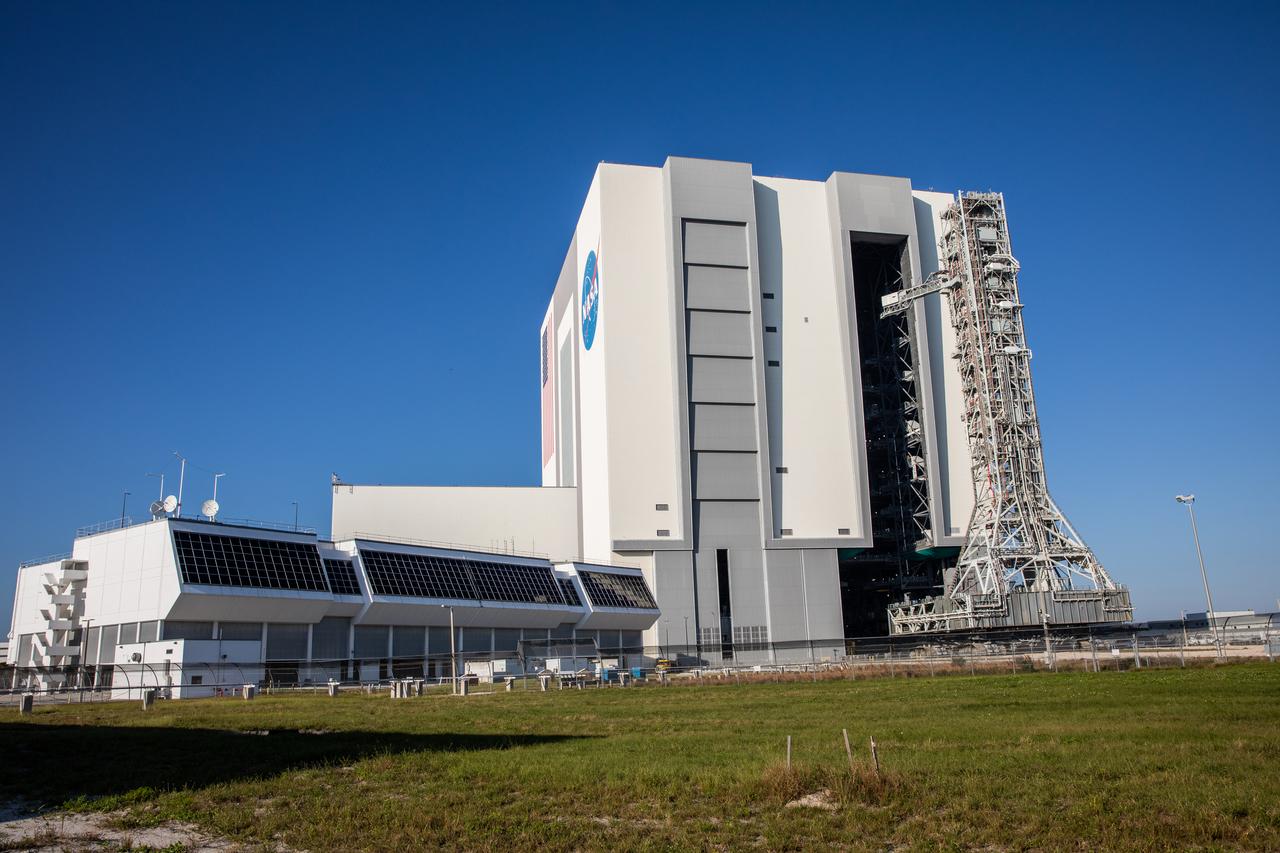
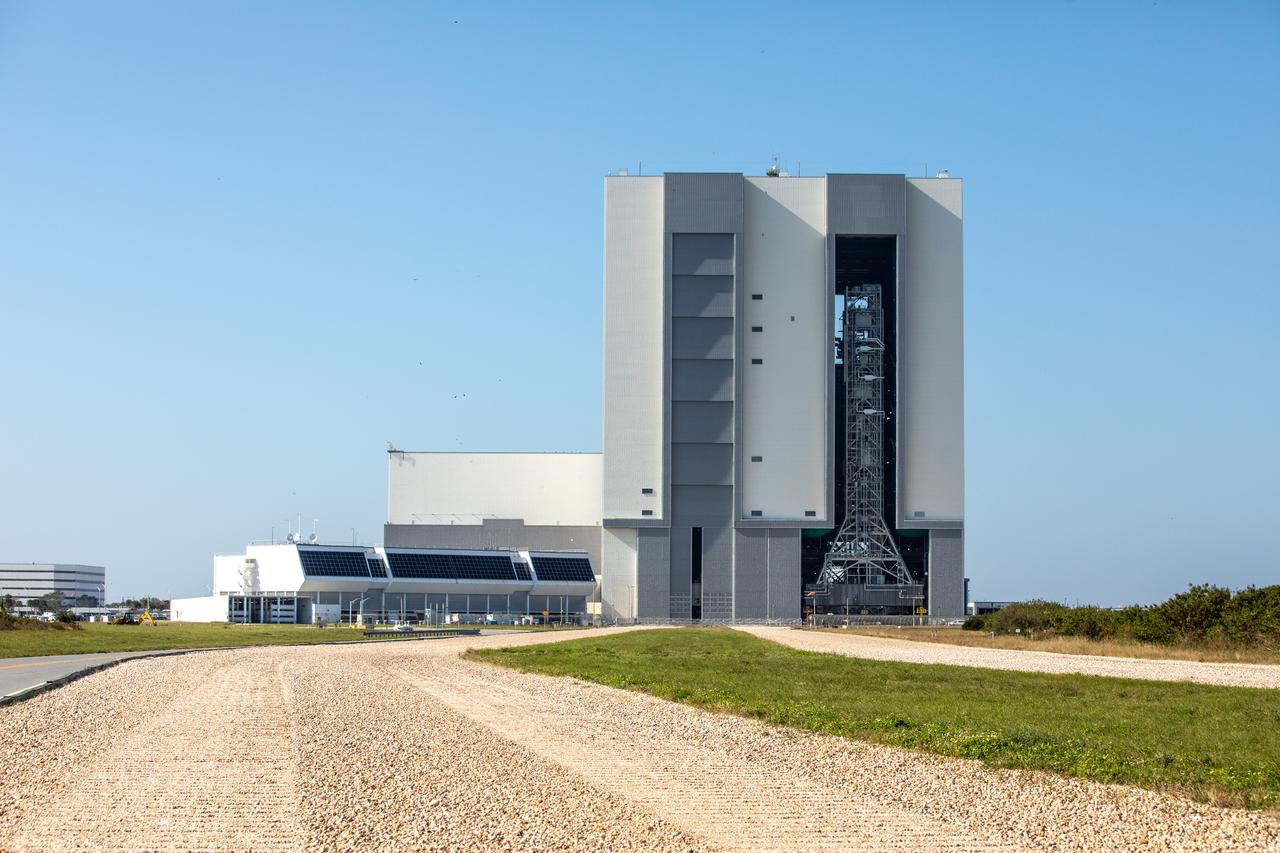
NASA’s mobile launcher, carried atop the crawler-transporter 2, arrives at the entrance to the Vehicle Assembly Building (VAB) at NASA’s Kennedy Space Center in Florida. The mobile launcher left launch pad 39B on Dec. 8, 2022, following the successful launch of the agency’s Space Launch System (SLS) rocket and Orion spacecraft on the Artemis I flight test on Nov. 16, 2022 and returned to the VAB on Dec. 9, 2022. The mobile launcher stay inside the VAB as teams get it ready for the Artemis II crewed mission. Following its stay in the VAB, it will go to the mobile launcher park site location at Kennedy where it will undergo emergency egress modifications and testing to support future Artemis missions.
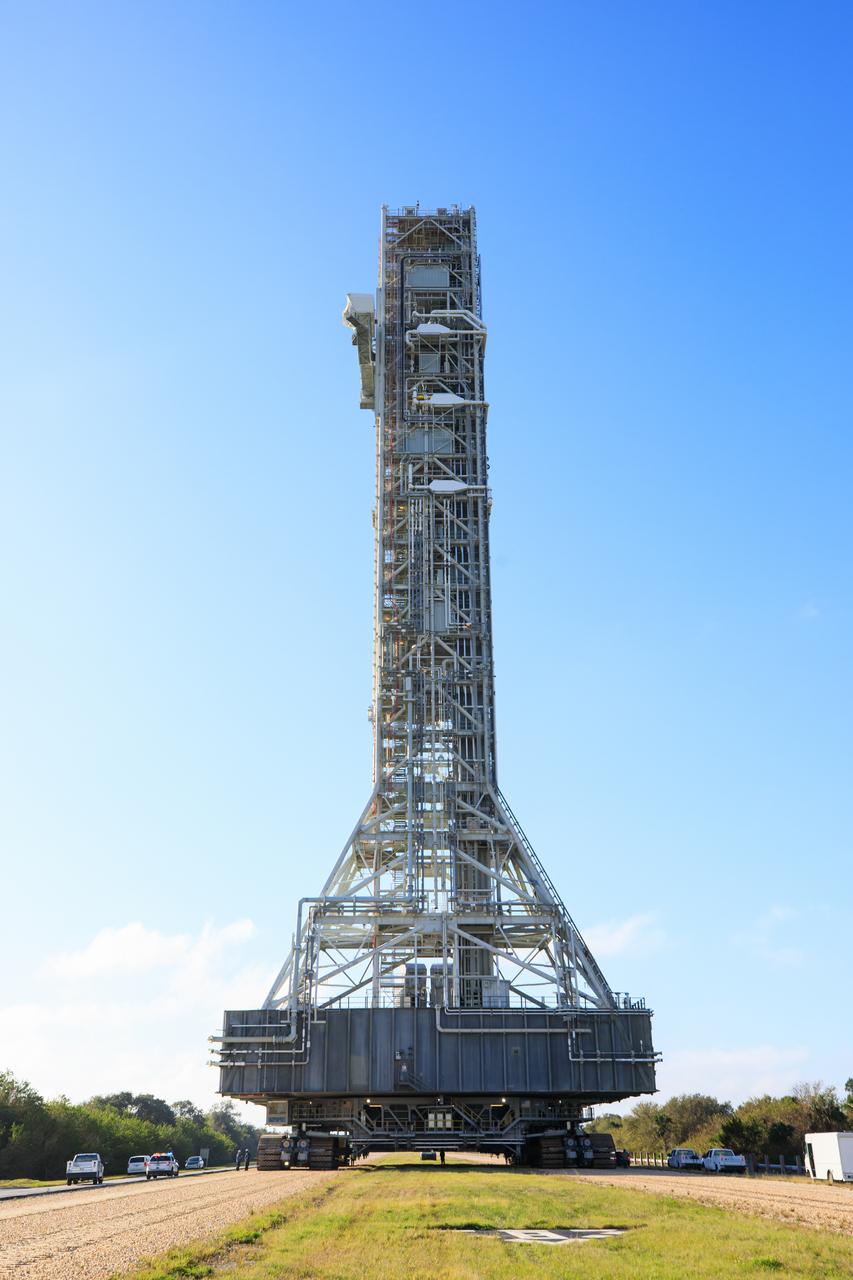
NASA’s mobile launcher, carried atop the crawler-transporter 2, left launch pad 39B at NASA’s Kennedy Space Center in Florida on Dec. 8, 2022, following the successful launch of the agency’s Space Launch System (SLS) rocket and Orion spacecraft on the Artemis I flight test on Nov. 16, 2022. The mobile launcher is scheduled to return to the Vehicle Assembly Building (VAB) on Dec. 9, 2022, and it will remain inside the VAB for several weeks as teams get it ready for the Artemis II crewed mission. Following its stay in the VAB, it will go to the mobile launcher park site location at Kennedy where it will undergo emergency egress modifications and testing to support future Artemis missions.
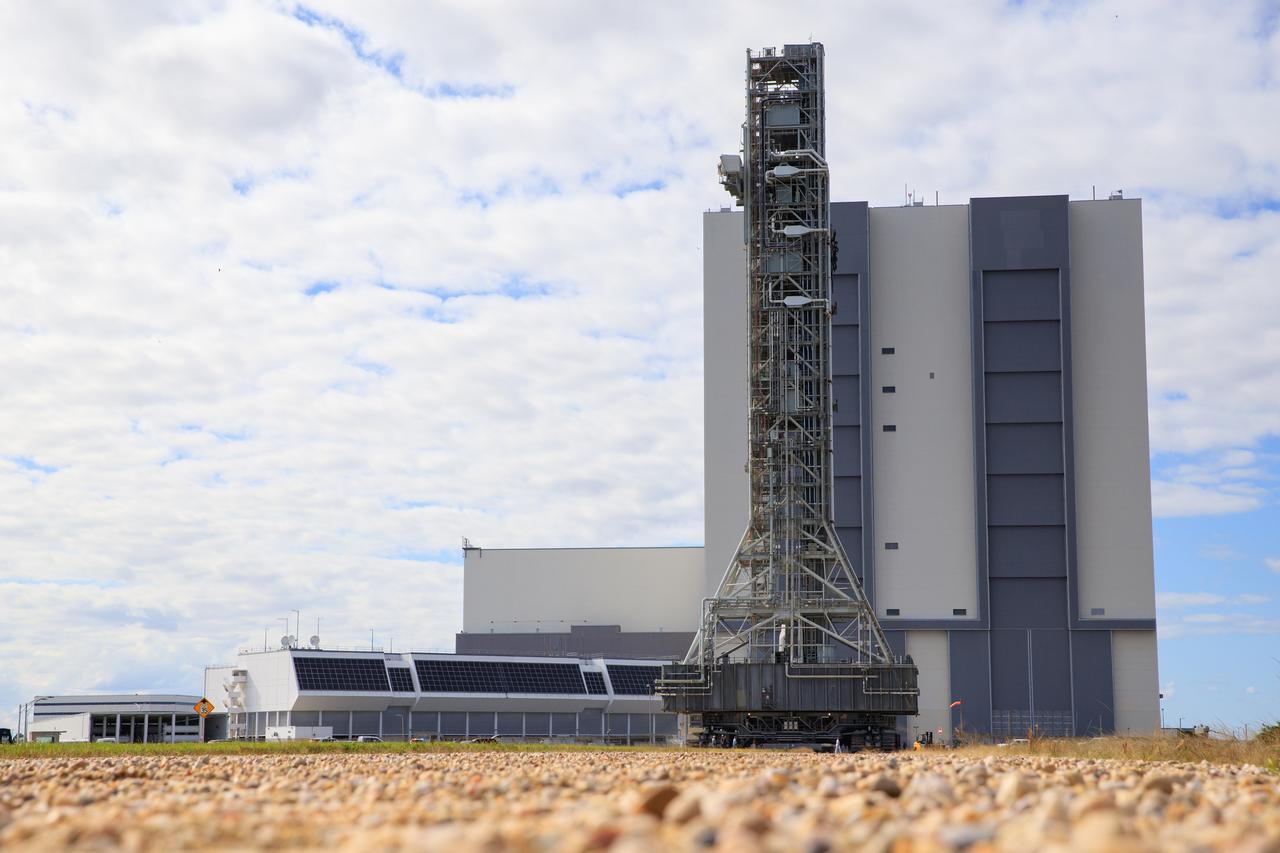
NASA’s mobile launcher, carried atop the crawler-transporter 2, left launch pad 39B at NASA’s Kennedy Space Center in Florida on Dec. 8, 2022, following the successful launch of the agency’s Space Launch System (SLS) rocket and Orion spacecraft on the Artemis I flight test on Nov. 16, 2022. The mobile launcher is scheduled to return to the Vehicle Assembly Building (VAB) on Dec. 9, 2022, and it will remain inside the VAB for several weeks as teams get it ready for the Artemis II crewed mission. Following its stay in the VAB, it will go to the mobile launcher park site location at Kennedy where it will undergo emergency egress modifications and testing to support future Artemis missions.
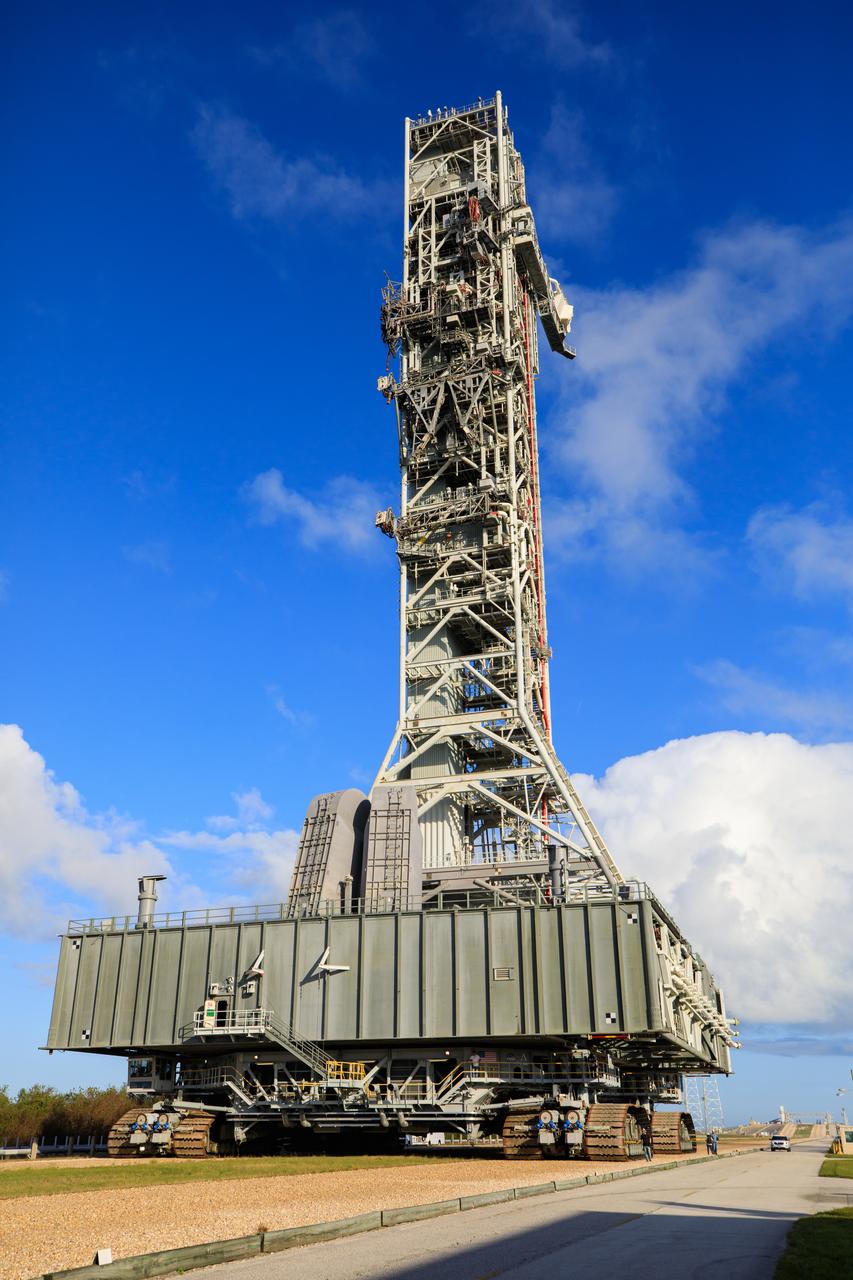
NASA’s mobile launcher, carried atop the crawler-transporter 2, moves inside the Vehicle Assembly Building (VAB) at NASA’s Kennedy Space Center in Florida on Dec. 9, 2022, following the successful launch of the agency’s Space Launch System (SLS) rocket and Orion spacecraft on the Artemis I flight test on Nov. 16, 2022. The mobile launcher will remain inside the VAB for several weeks as teams get it ready for the Artemis II crewed mission. Following its stay in the VAB, it will go to the mobile launcher park site location at Kennedy where it will undergo emergency egress modifications and testing to support future Artemis missions.
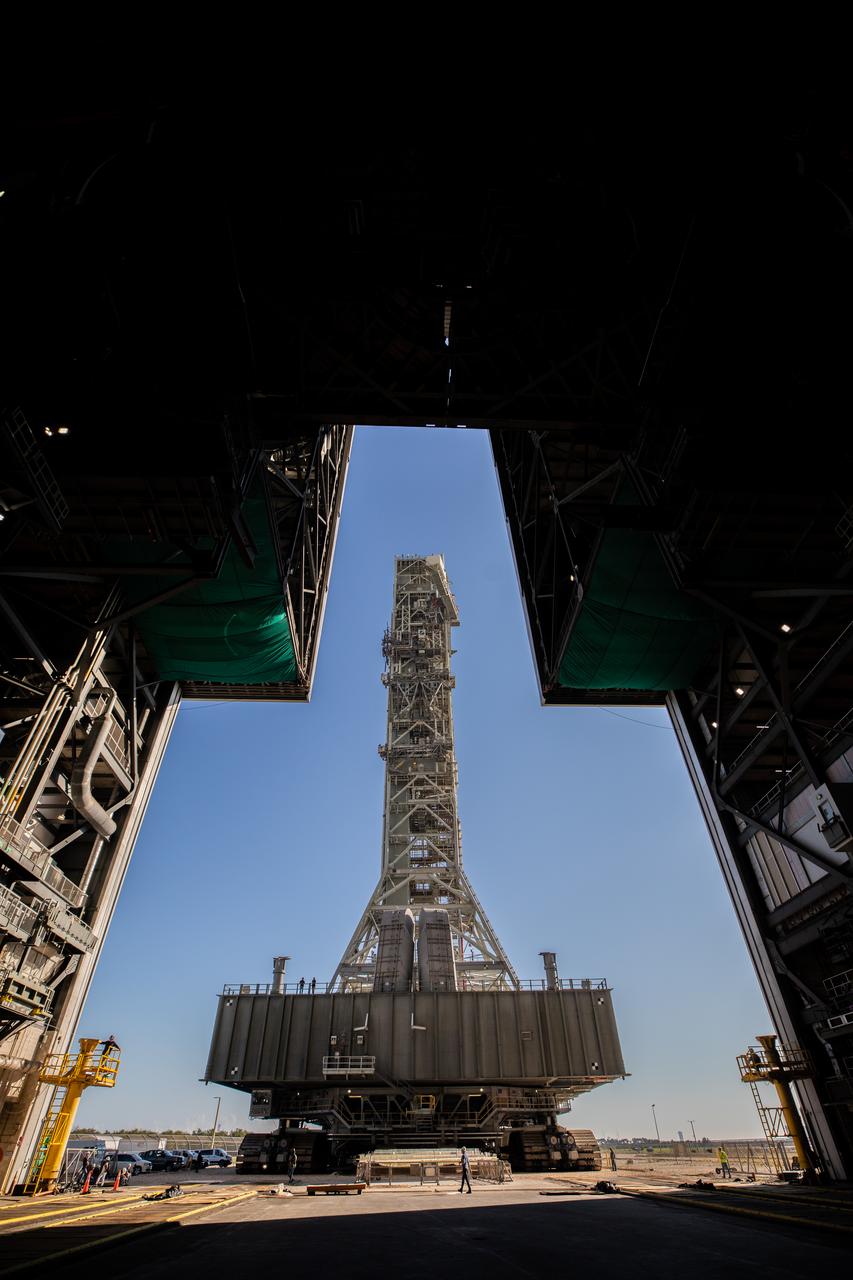
A view from inside the Vehicle Assembly Building (VAB) at NASA’s Kennedy Space Center in Florida on Dec. 9, 2022, as the mobile launcher, carried atop the crawler-transporter 2, arrives at the entrance to the transfer aisle, following the successful launch of the agency’s Space Launch System (SLS) rocket and Orion spacecraft on the Artemis I flight test on Nov. 16, 2022. The mobile launcher will stay inside the VAB and remain there for several weeks as teams get it ready for the Artemis II crewed mission. Following its stay in the VAB, it will go to the mobile launcher park site location at Kennedy where it will undergo emergency egress modifications and testing to support future Artemis missions.
NASA’s mobile launcher, carried atop the crawler-transporter 2, left launch pad 39B at NASA’s Kennedy Space Center in Florida on Dec. 8, 2022, following the successful launch of the agency’s Space Launch System (SLS) rocket and Orion spacecraft on the Artemis I flight test on Nov. 16, 2022. The mobile launcher is scheduled to return to the Vehicle Assembly Building (VAB) on Dec. 9, 2022, and it will remain inside the VAB for several weeks as teams get it ready for the Artemis II crewed mission. Following its stay in the VAB, it will go to the mobile launcher park site location at Kennedy where it will undergo emergency egress modifications and testing to support future Artemis missions.
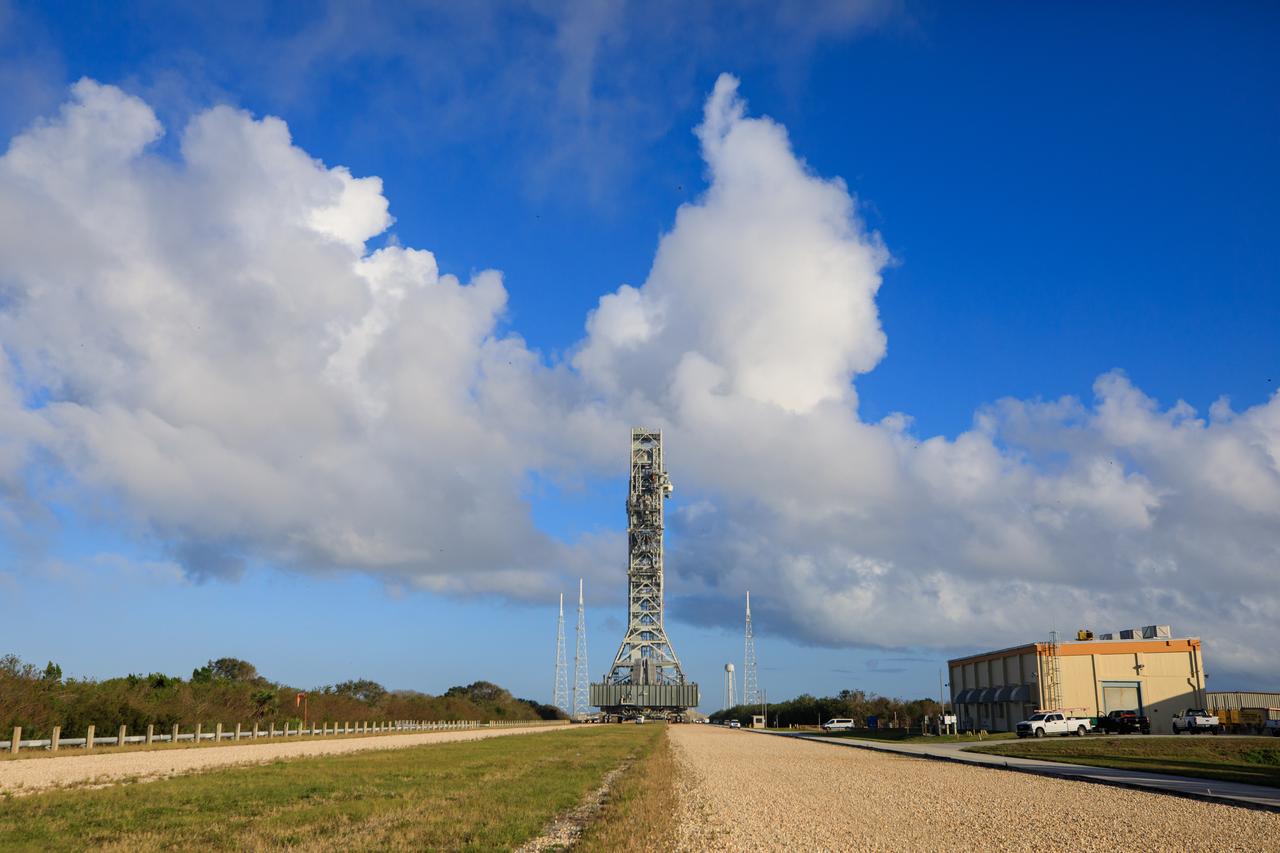
NASA’s mobile launcher, carried atop the crawler-transporter 2, left launch pad 39B at NASA’s Kennedy Space Center in Florida on Dec. 8, 2022, following the successful launch of the agency’s Space Launch System (SLS) rocket and Orion spacecraft on the Artemis I flight test on Nov. 16, 2022. The mobile launcher is scheduled to return to the Vehicle Assembly Building (VAB) on Dec. 9, 2022, and it will remain inside the VAB for several weeks as teams get it ready for the Artemis II crewed mission. Following its stay in the VAB, it will go to the mobile launcher park site location at Kennedy where it will undergo emergency egress modifications and testing to support future Artemis missions.
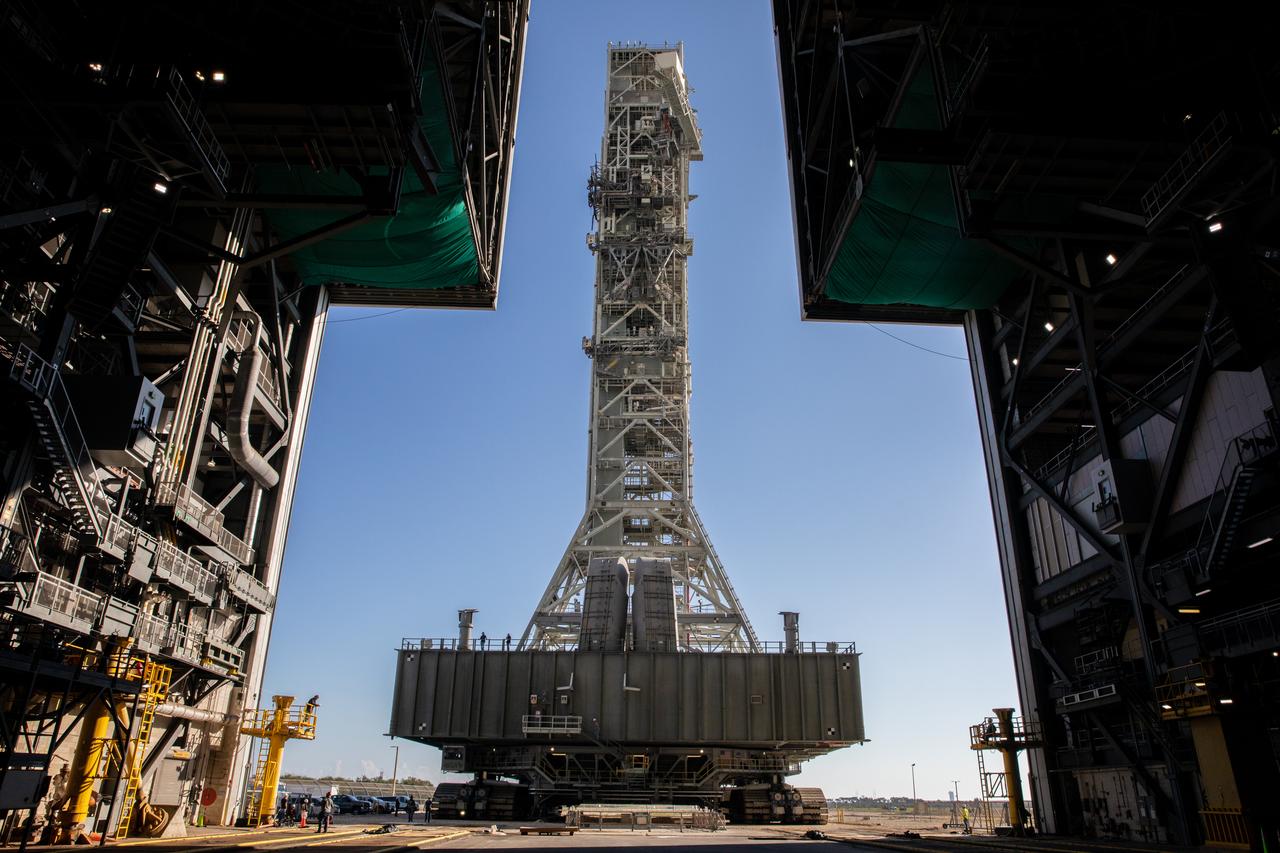
A view from inside the Vehicle Assembly Building (VAB) at NASA’s Kennedy Space Center in Florida on Dec. 9, 2022, as the mobile launcher, carried atop the crawler-transporter 2, arrives at the entrance to the transfer aisle, following the successful launch of the agency’s Space Launch System (SLS) rocket and Orion spacecraft on the Artemis I flight test on Nov. 16, 2022. The mobile launcher will stay inside the VAB and remain there for several weeks as teams get it ready for the Artemis II crewed mission. Following its stay in the VAB, it will go to the mobile launcher park site location at Kennedy where it will undergo emergency egress modifications and testing to support future Artemis missions.
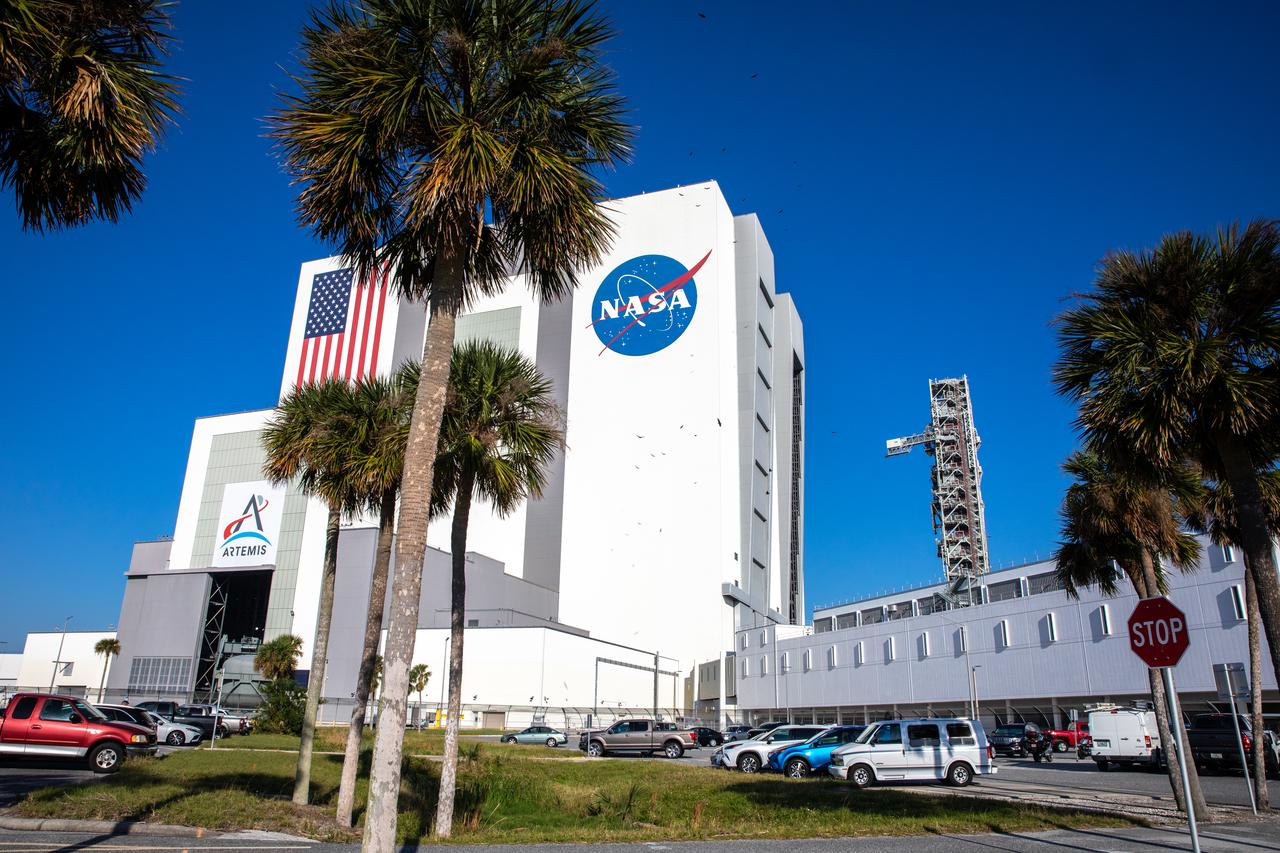
NASA’s mobile launcher, carried atop the crawler-transporter 2, arrives at the entrance to the Vehicle Assembly Building (VAB) at NASA’s Kennedy Space Center in Florida. The mobile launcher left launch pad 39B on Dec. 8, 2022, following the successful launch of the agency’s Space Launch System (SLS) rocket and Orion spacecraft on the Artemis I flight test on Nov. 16, 2022 and returned to the VAB on Dec. 9, 2022. The mobile launcher stay inside the VAB as teams get it ready for the Artemis II crewed mission. Following its stay in the VAB, it will go to the mobile launcher park site location at Kennedy where it will undergo emergency egress modifications and testing to support future Artemis missions.
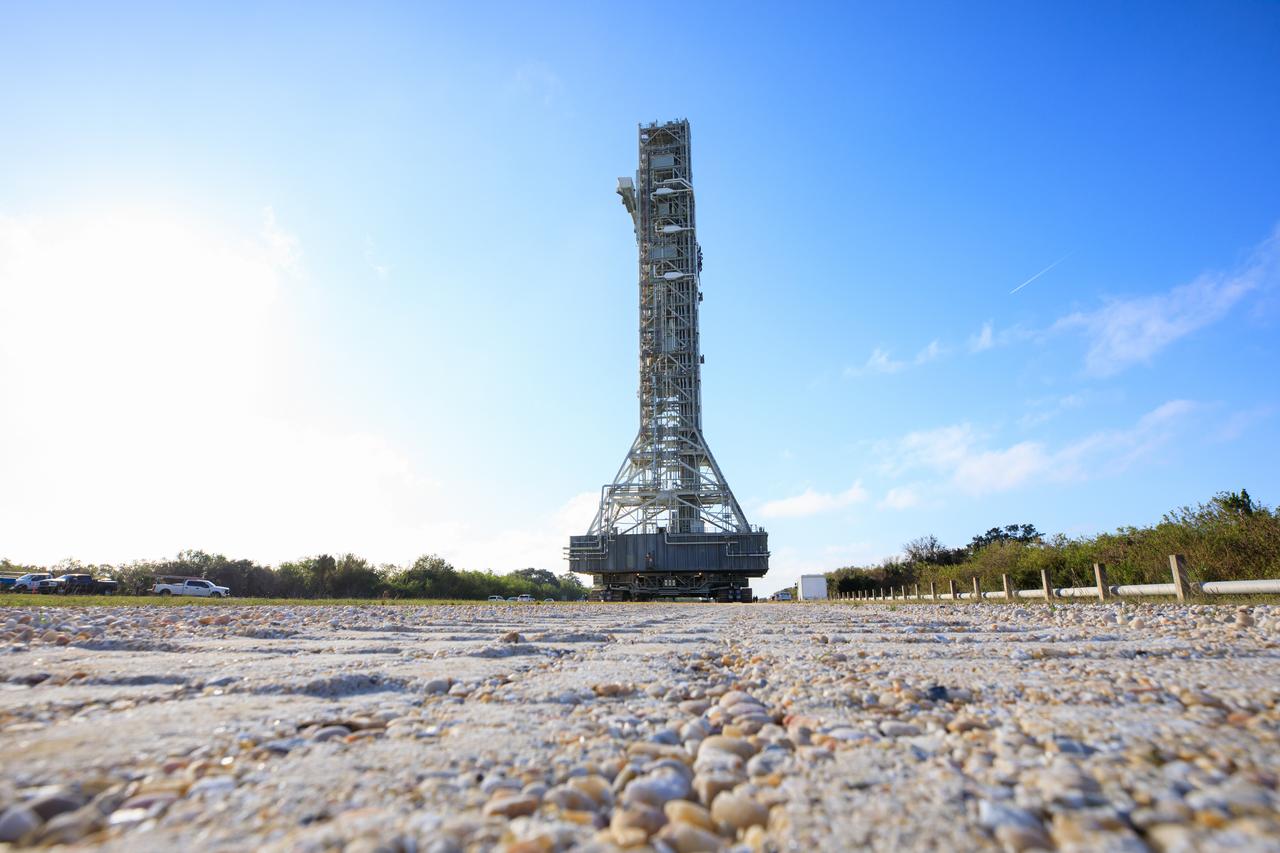
NASA’s mobile launcher, carried atop the crawler-transporter 2, left launch pad 39B at NASA’s Kennedy Space Center in Florida on Dec. 8, 2022, following the successful launch of the agency’s Space Launch System (SLS) rocket and Orion spacecraft on the Artemis I flight test on Nov. 16, 2022. The mobile launcher is scheduled to return to the Vehicle Assembly Building (VAB) on Dec. 9, 2022, and it will remain inside the VAB for several weeks as teams get it ready for the Artemis II crewed mission. Following its stay in the VAB, it will go to the mobile launcher park site location at Kennedy where it will undergo emergency egress modifications and testing to support future Artemis missions.