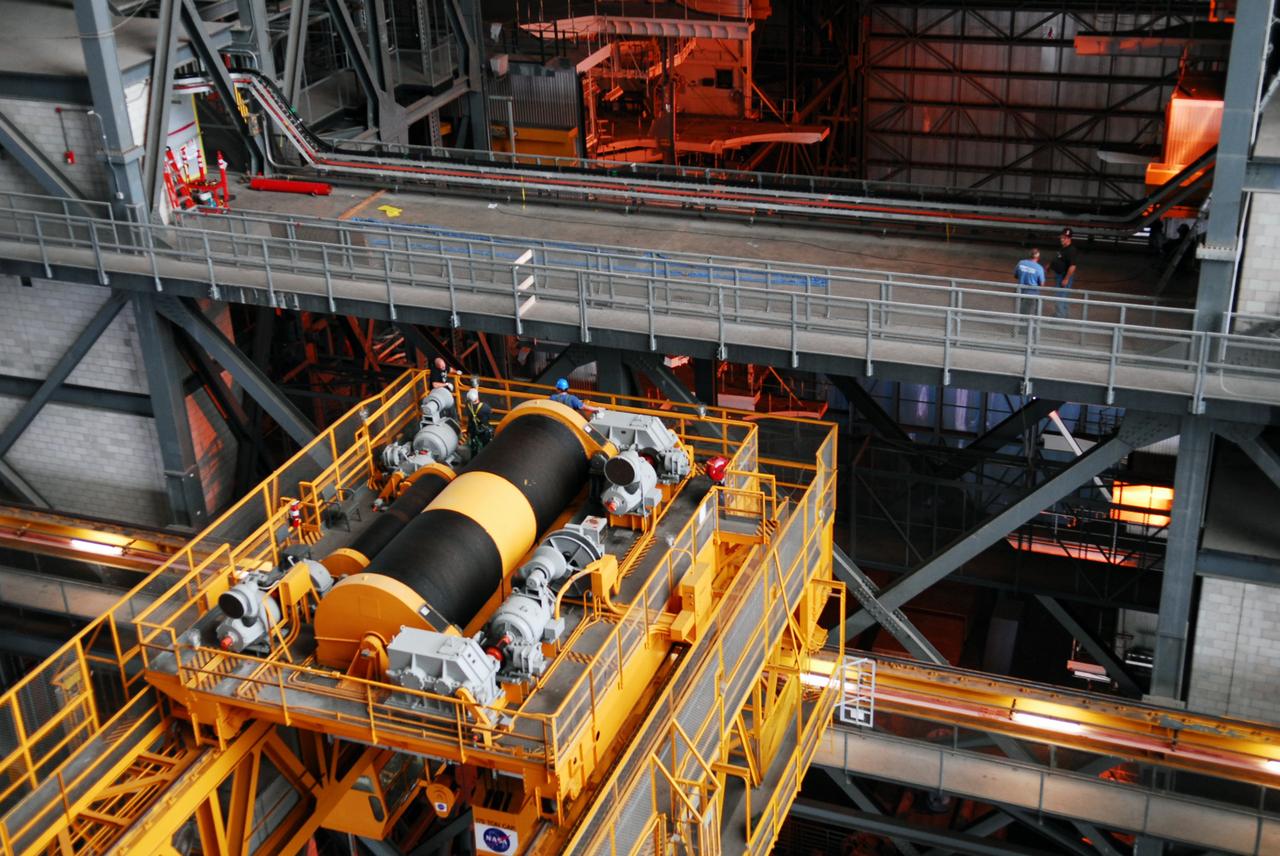
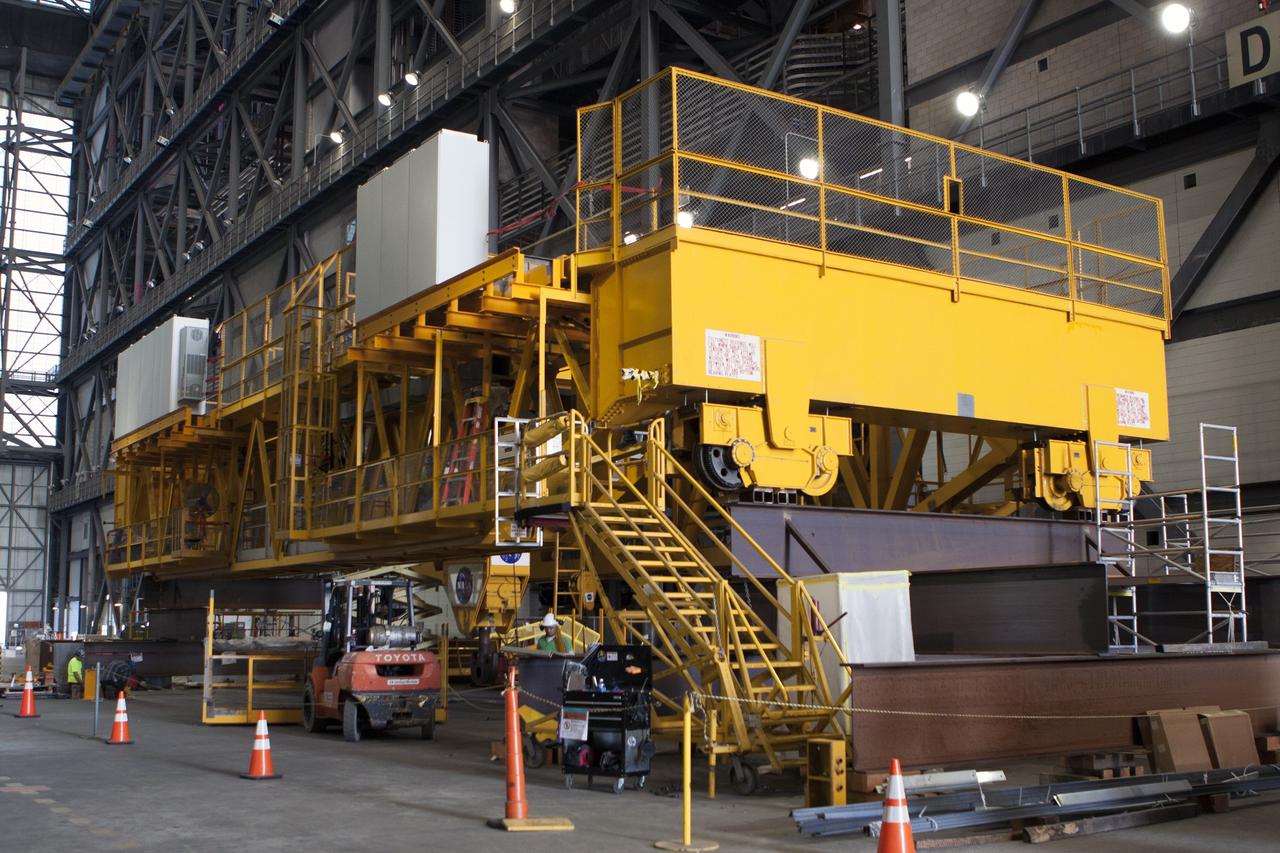
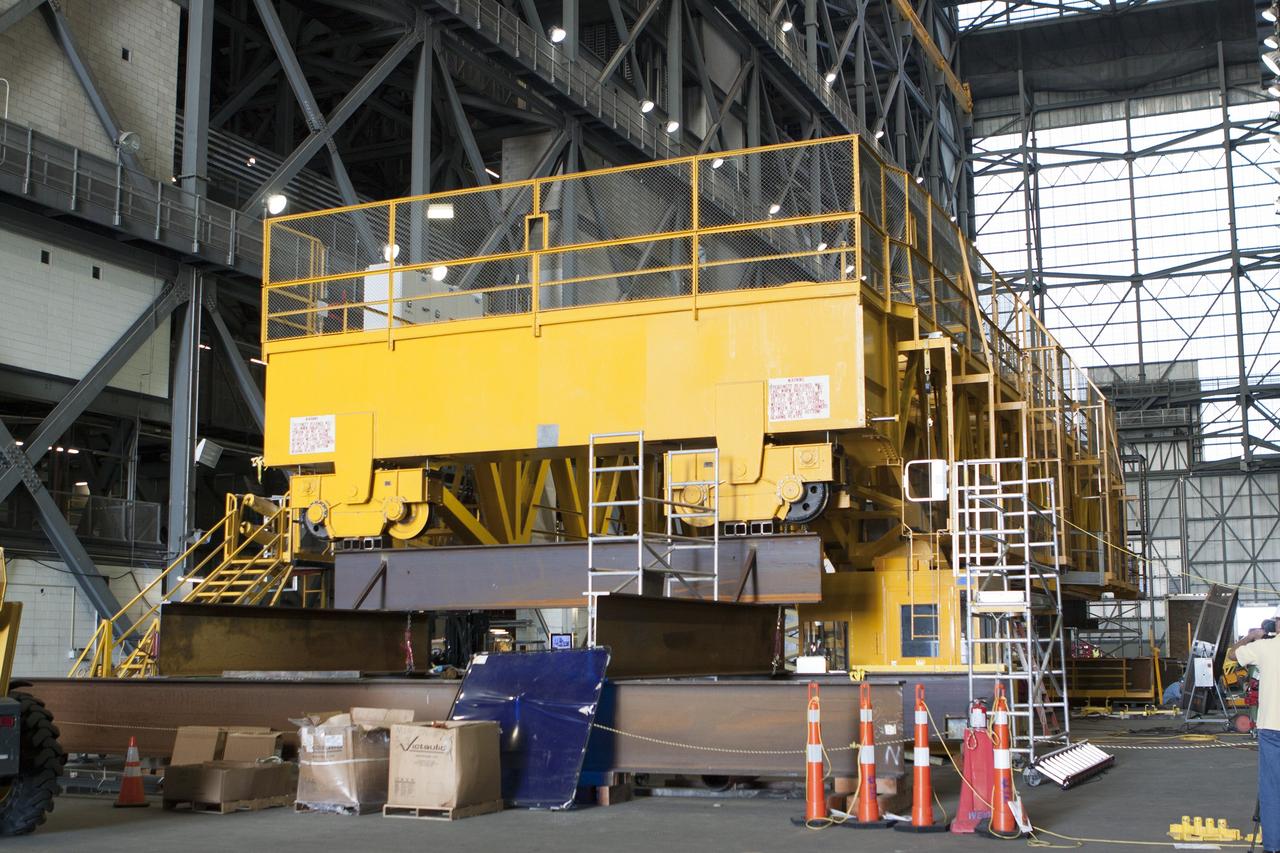
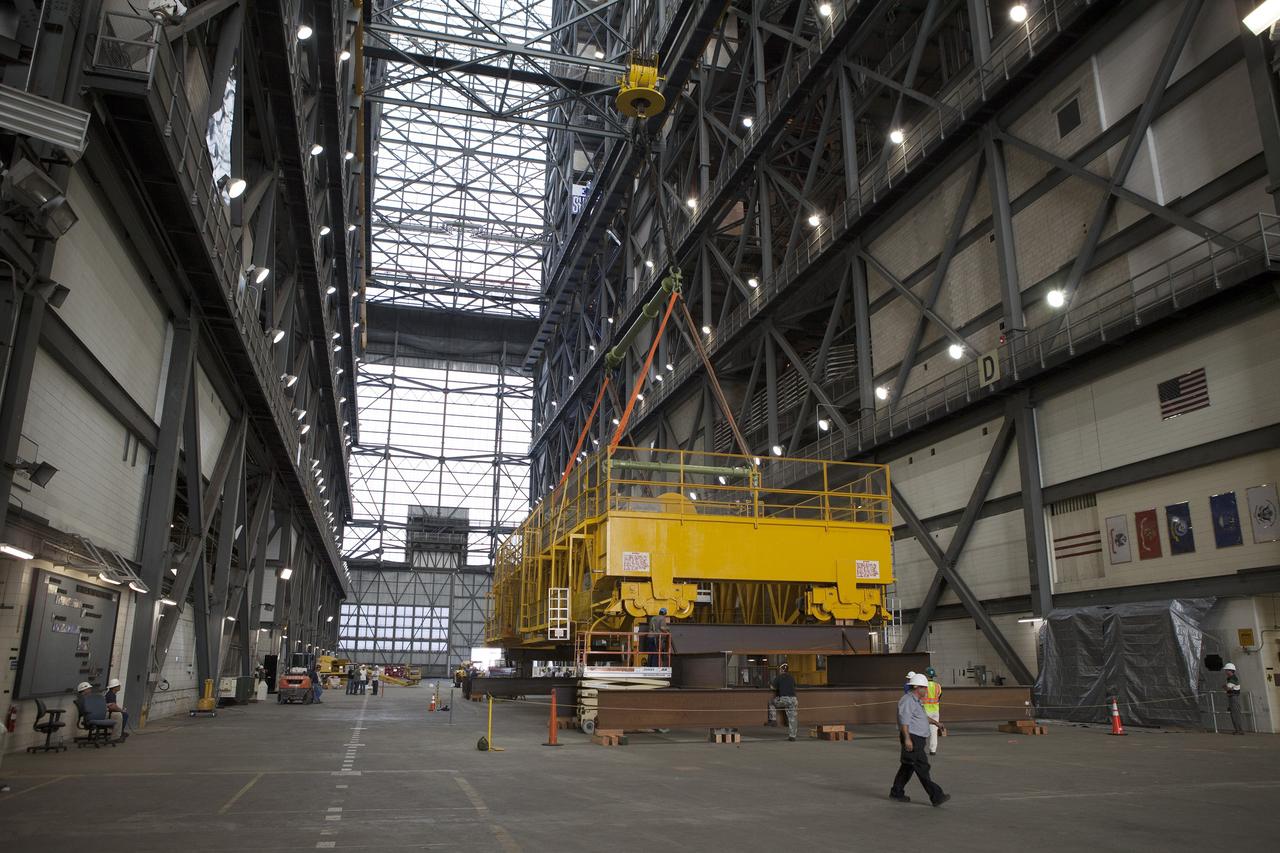
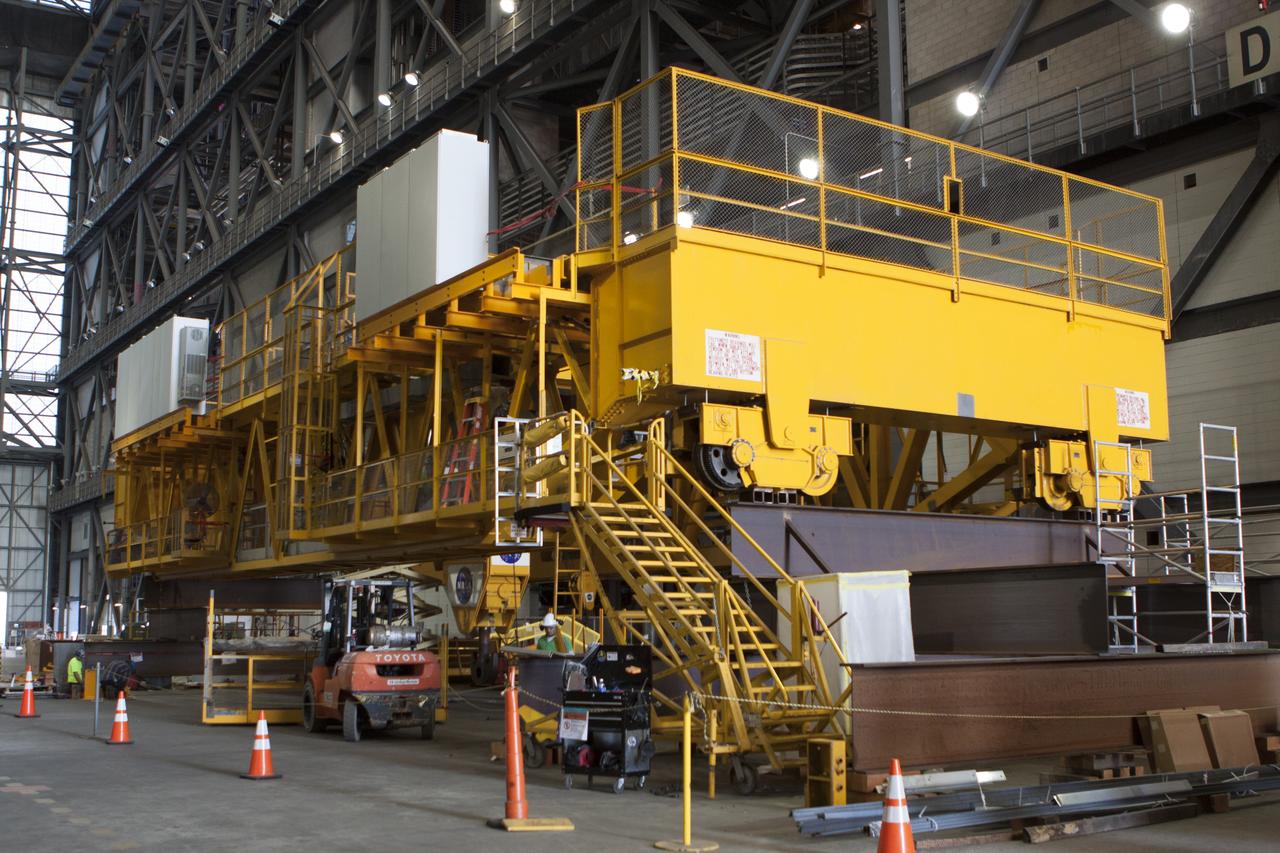
CAPE CANAVERAL, Fla. – Inside the Vehicle Assembly Building, or VAB, at NASA's Kennedy Space Center in Florida, the 175-ton crane is being lowered by crane onto steel stands on the transfer aisle floor. The crane was lowered from Level 16. In view at right is the cab that is used to control the crane. Upgrades to the crane's 45-year-old controls will be performed in order to improve reliability, precision and safety.     The Ground Systems Development and Operations Program is overseeing upgrades and modifications to the VAB. The crane will be upgraded so that it can support lifting needs for NASA and other exploration vehicles, including the agency's Space Launch System and Orion spacecraft. Photo credit: NASA/Daniel Casper
KSC-2014-4029
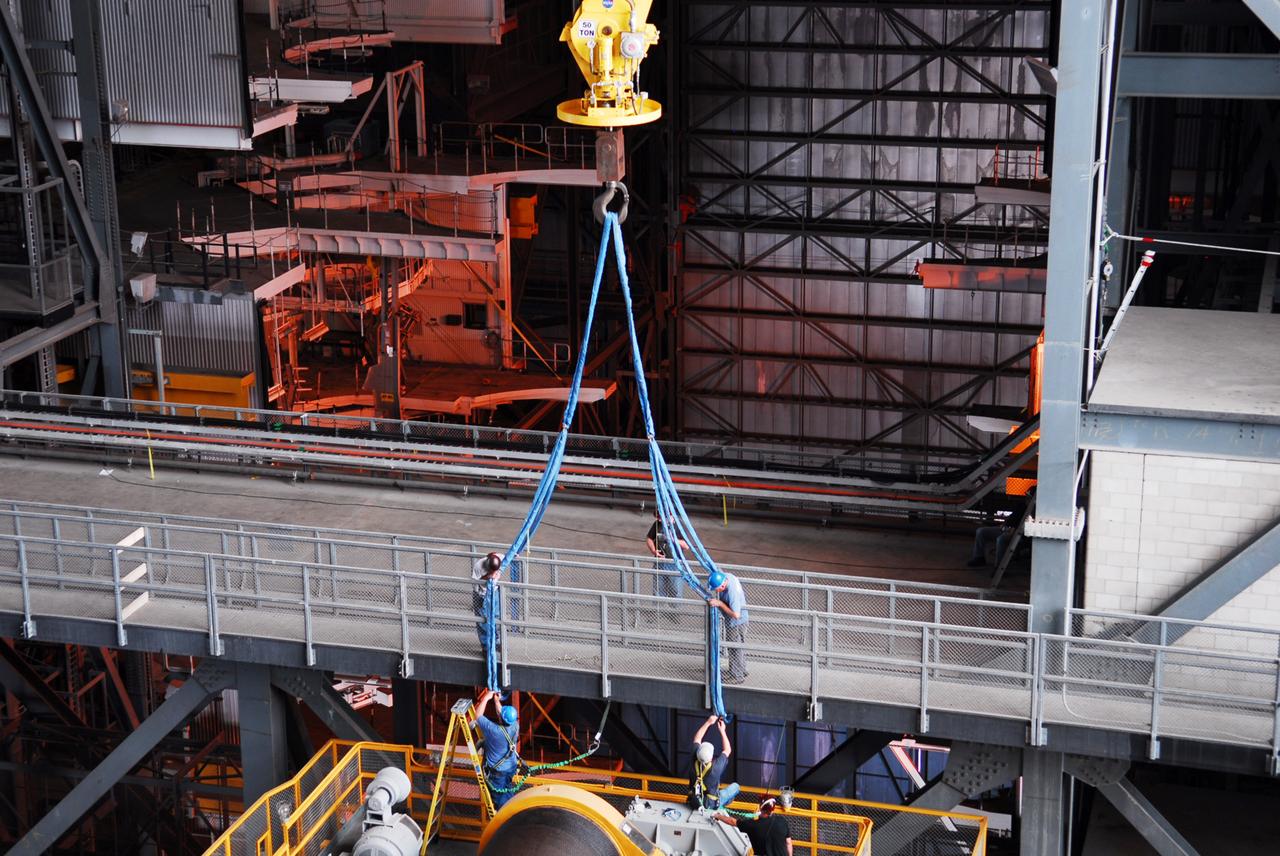
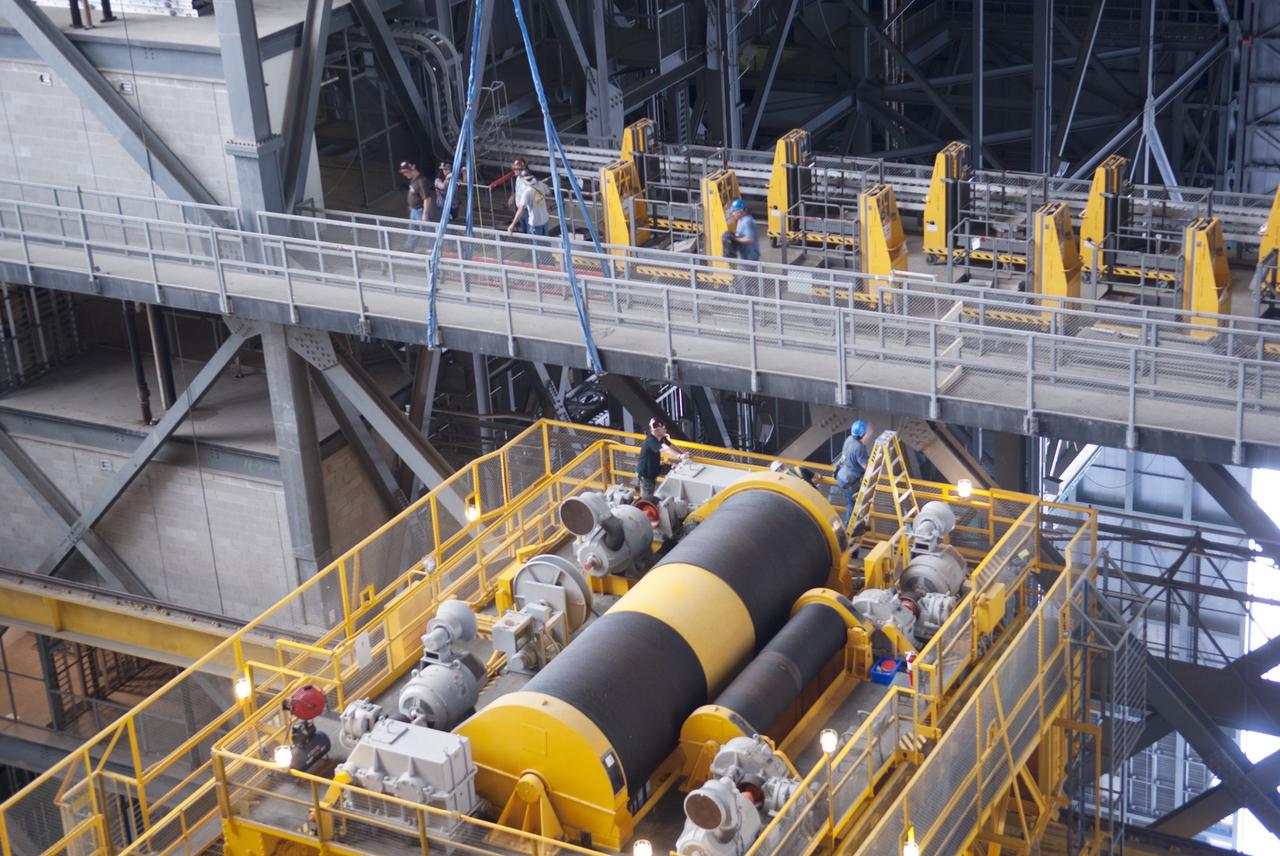
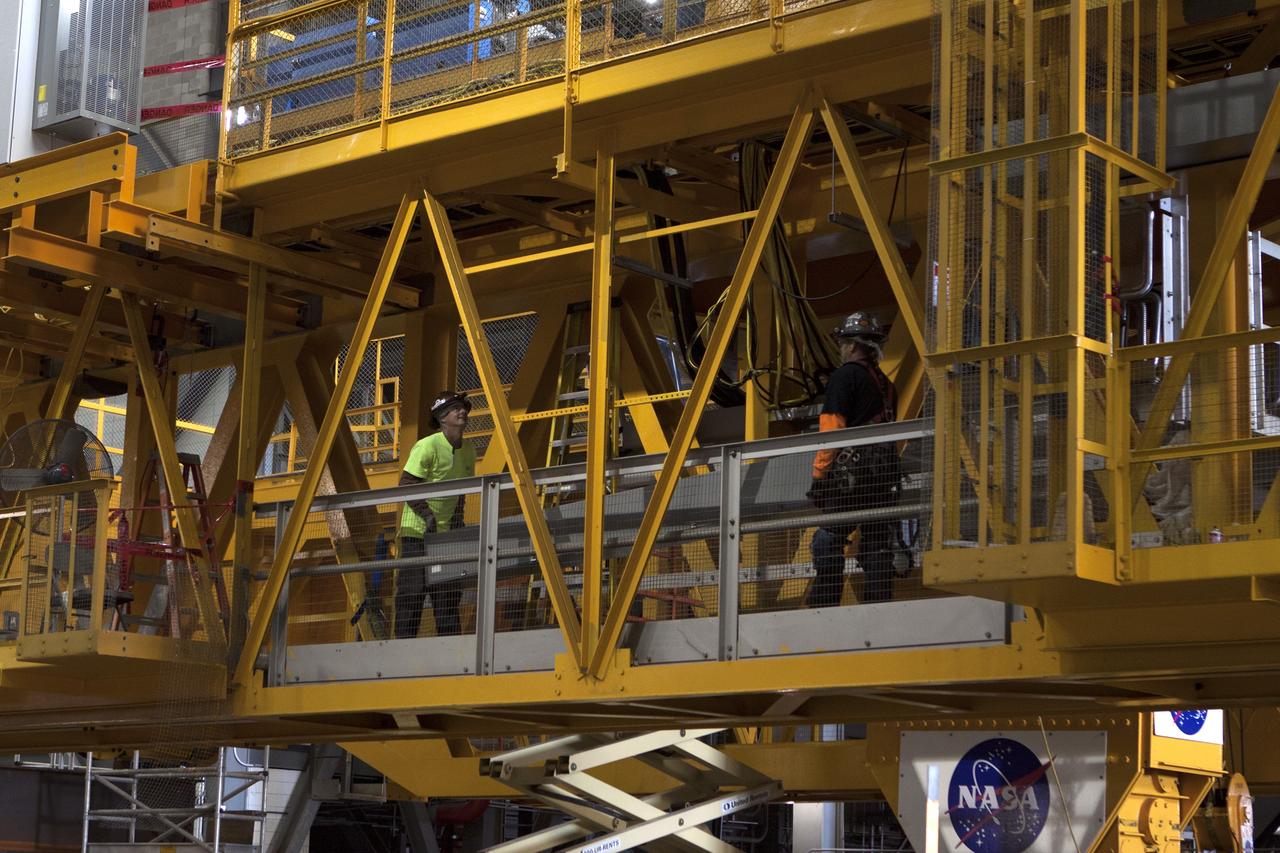
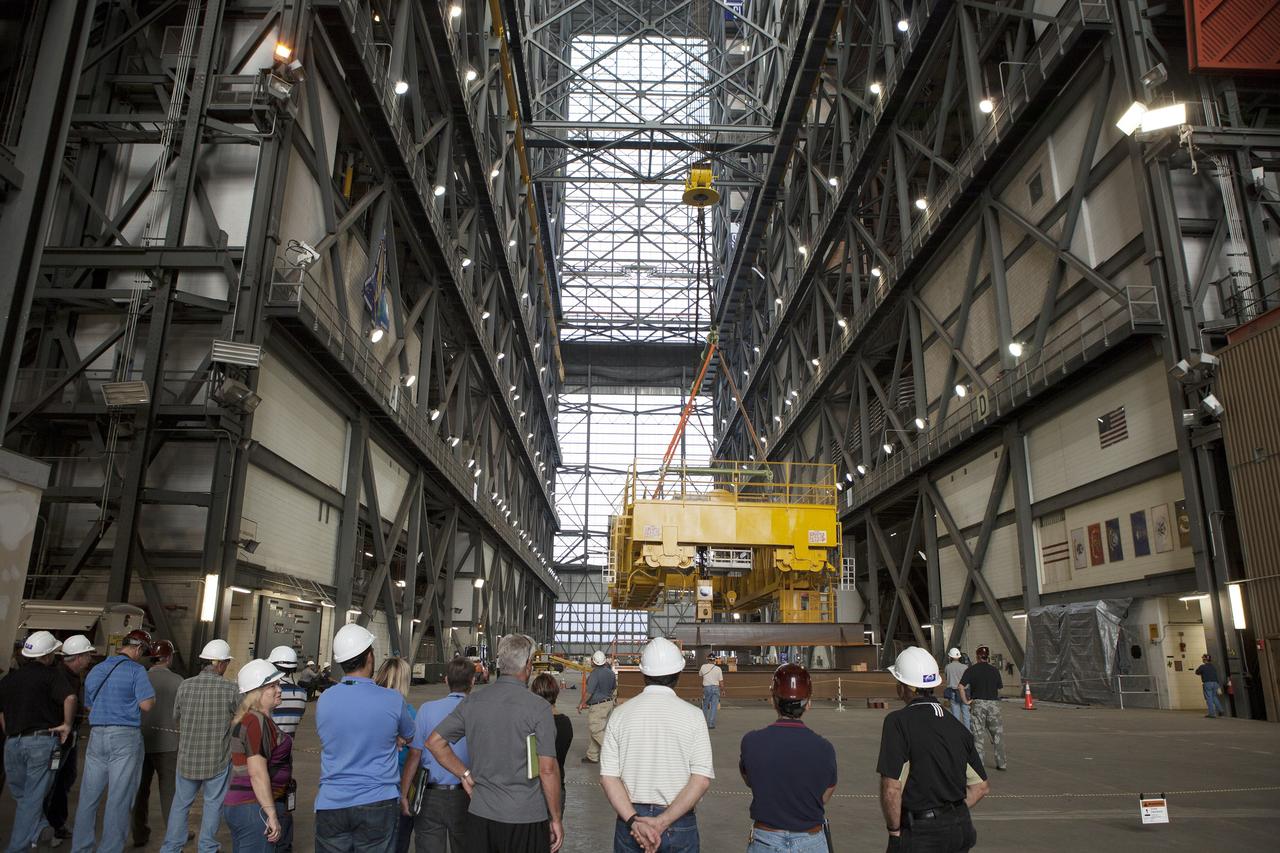
CAPE CANAVERAL, Fla. – Inside the Vehicle Assembly Building, or VAB, at NASA's Kennedy Space Center in Florida, NASA, contractor and construction workers watch as a crane lowers the 175-ton crane toward the floor of the transfer aisle. The crane was turned to make it easier to lower it from Level 16. Upgrades to the crane's 45-year-old controls will be performed in order to improve reliability, precision and safety.     The Ground Systems Development and Operations Program is overseeing upgrades and modifications to the VAB. The crane will be upgraded so that it can support lifting needs for NASA and other exploration vehicles, including the agency's Space Launch System and Orion spacecraft. Photo credit: NASA/Daniel Casper
KSC-2014-4028
CAPE CANAVERAL, Fla. – Inside the Vehicle Assembly Building, or VAB, at NASA's Kennedy Space Center in Florida, the 175-ton crane has been lowered by crane onto steel stands on the transfer aisle floor. The crane was lowered from Level 16. Upgrades to the crane's 45-year-old controls will be performed in order to improve reliability, precision and safety.     The Ground Systems Development and Operations Program is overseeing upgrades and modifications to the VAB. The crane will be upgraded so that it can support lifting needs for NASA and other exploration vehicles, including the agency's Space Launch System and Orion spacecraft. Photo credit: NASA/Daniel Casper
KSC-2014-4030
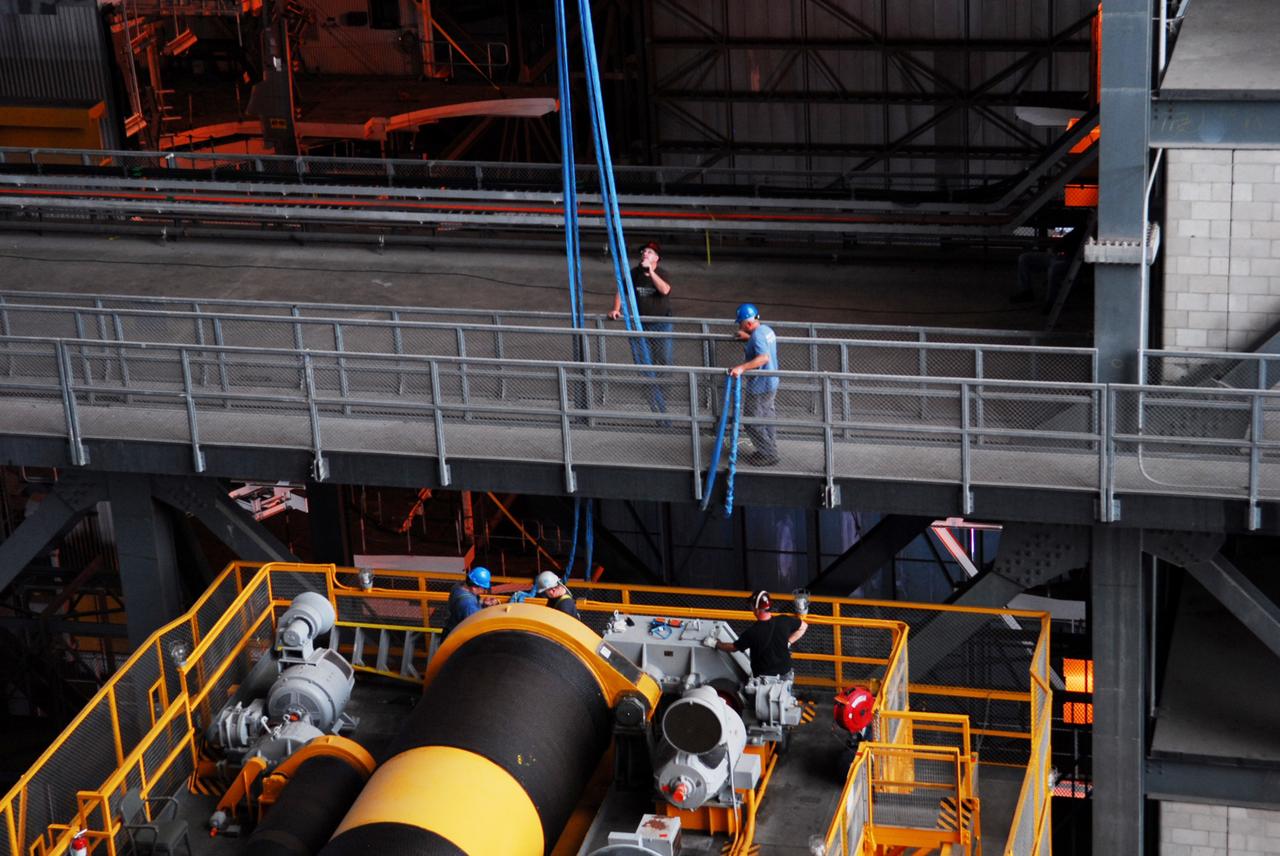
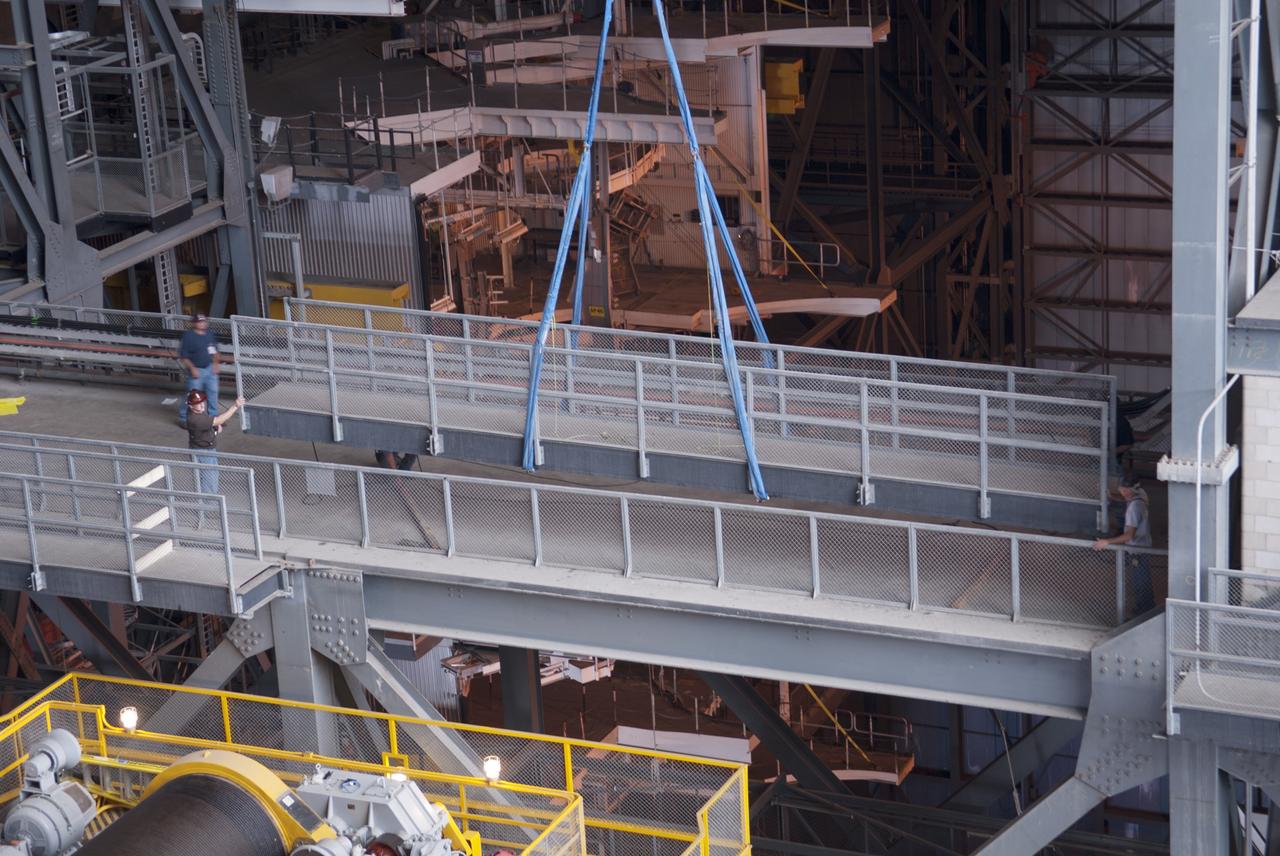
CAPE CANAVERAL, Fla. – Inside the Vehicle Assembly Building, or VAB, at NASA's Kennedy Space Center in Florida, construction workers watch as the 175-ton crane is lowered by crane from Level 16 down to the transfer aisle floor. Upgrades to the crane's 45-year-old controls will be performed in order to improve reliability, precision and safety.     The Ground Systems Development and Operations Program is overseeing upgrades and modifications to the VAB. The crane will be upgraded so that it can support lifting needs for NASA and other exploration vehicles, including the agency's Space Launch System and Orion spacecraft. Photo credit: NASA/Daniel Casper
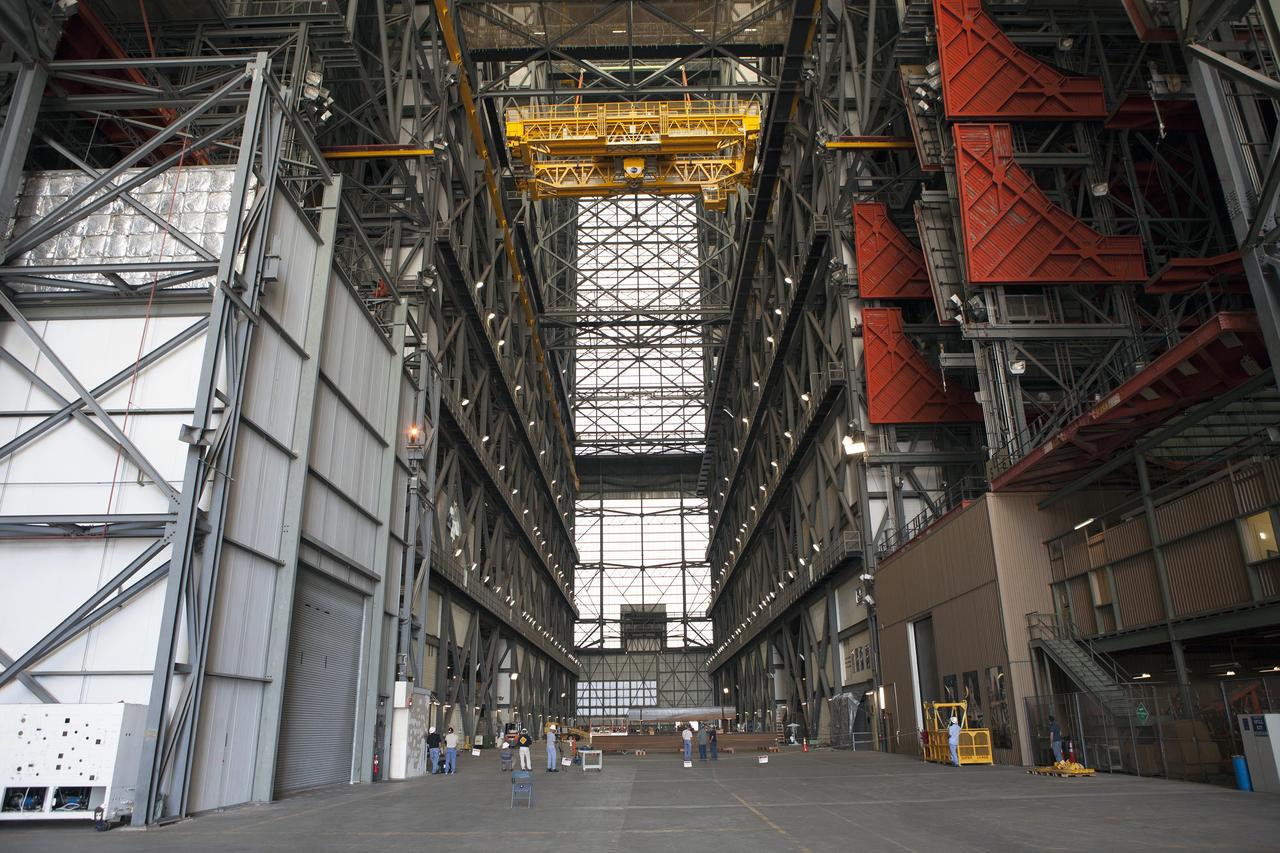
KSC-2014-4026
CAPE CANAVERAL, Fla. – Inside the Vehicle Assembly Building, or VAB, at NASA's Kennedy Space Center in Florida, the 175-ton crane has been turned as it is lowered by crane from Level 16 down to the transfer aisle floor. Upgrades to the crane's 45-year-old controls will be performed in order to improve reliability, precision and safety.     The Ground Systems Development and Operations Program is overseeing upgrades and modifications to the VAB. The crane will be upgraded so that it can support lifting needs for NASA and other exploration vehicles, including the agency's Space Launch System and Orion spacecraft. Photo credit: NASA/Daniel Casper
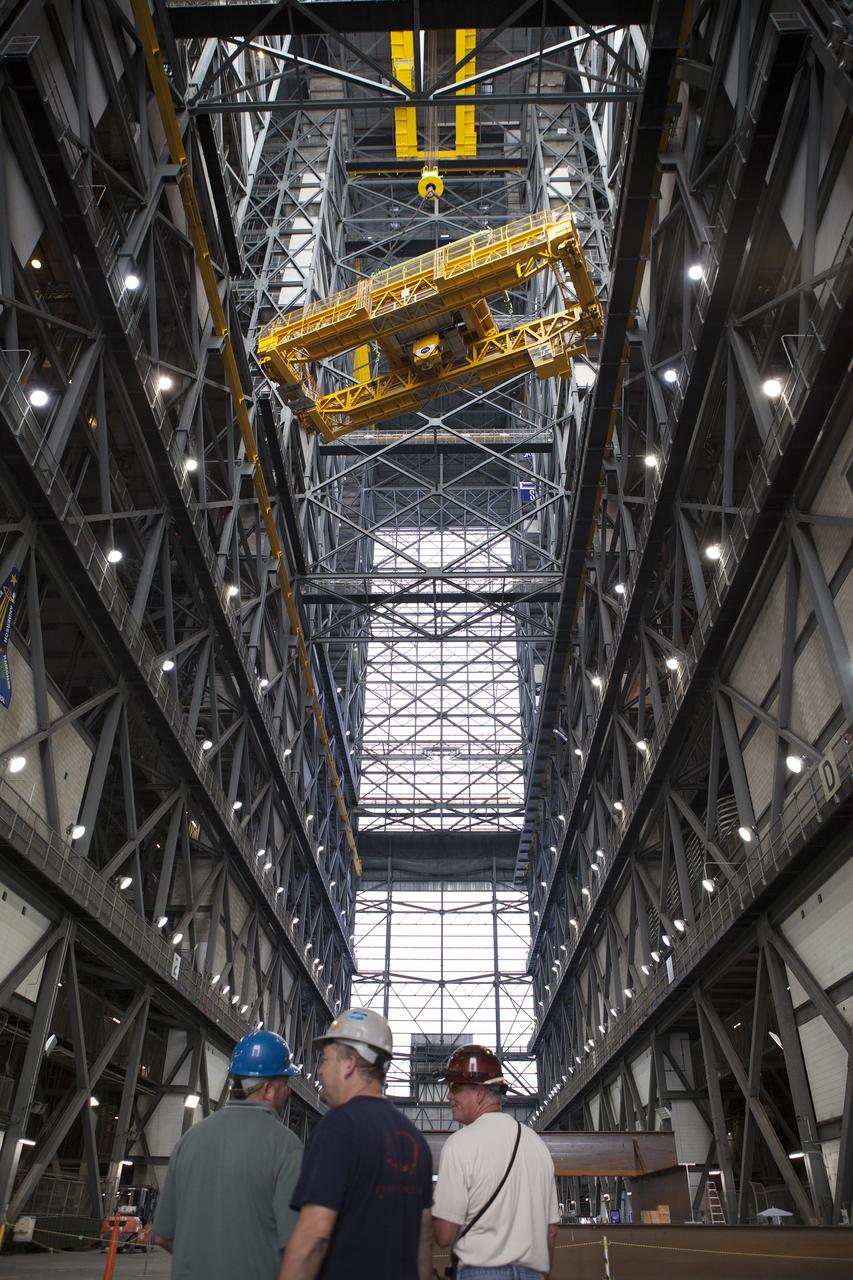
KSC-2014-4025
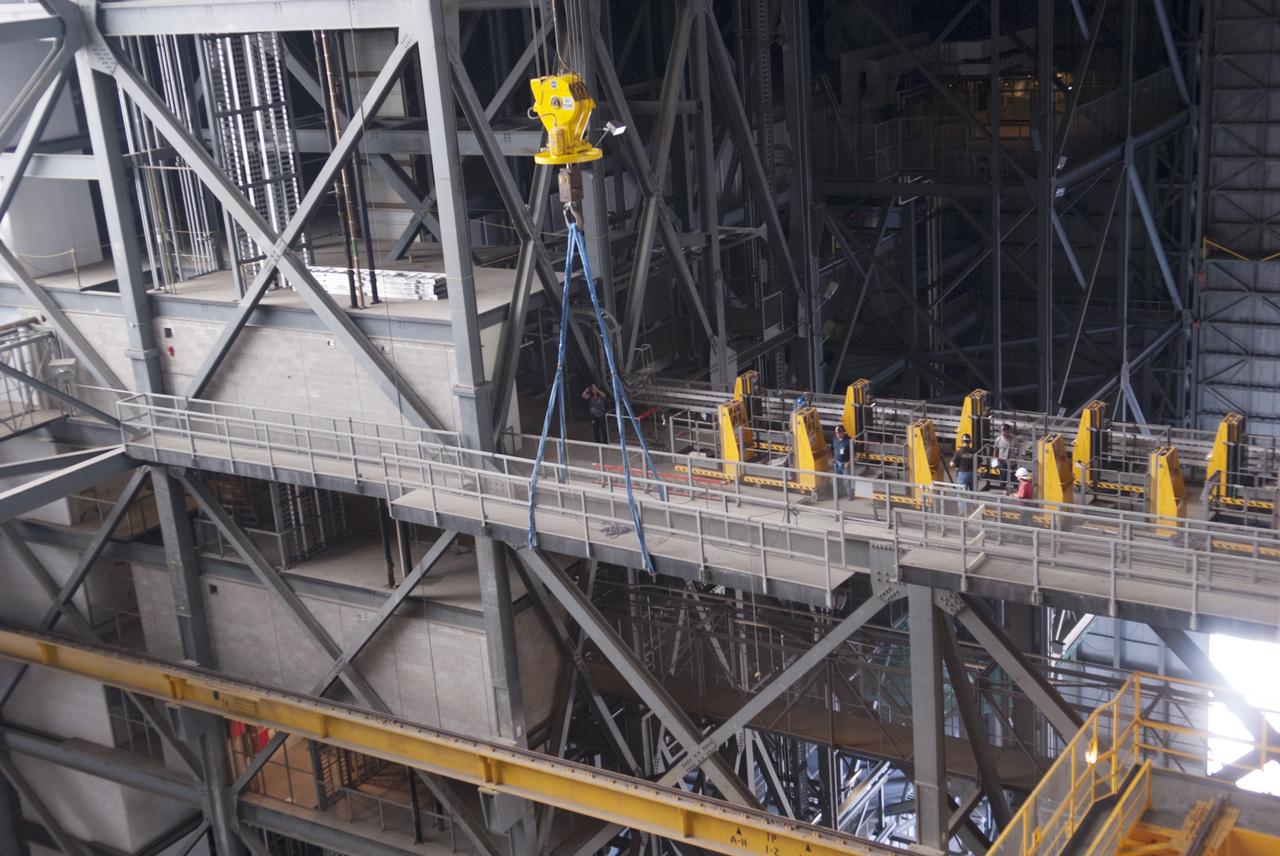
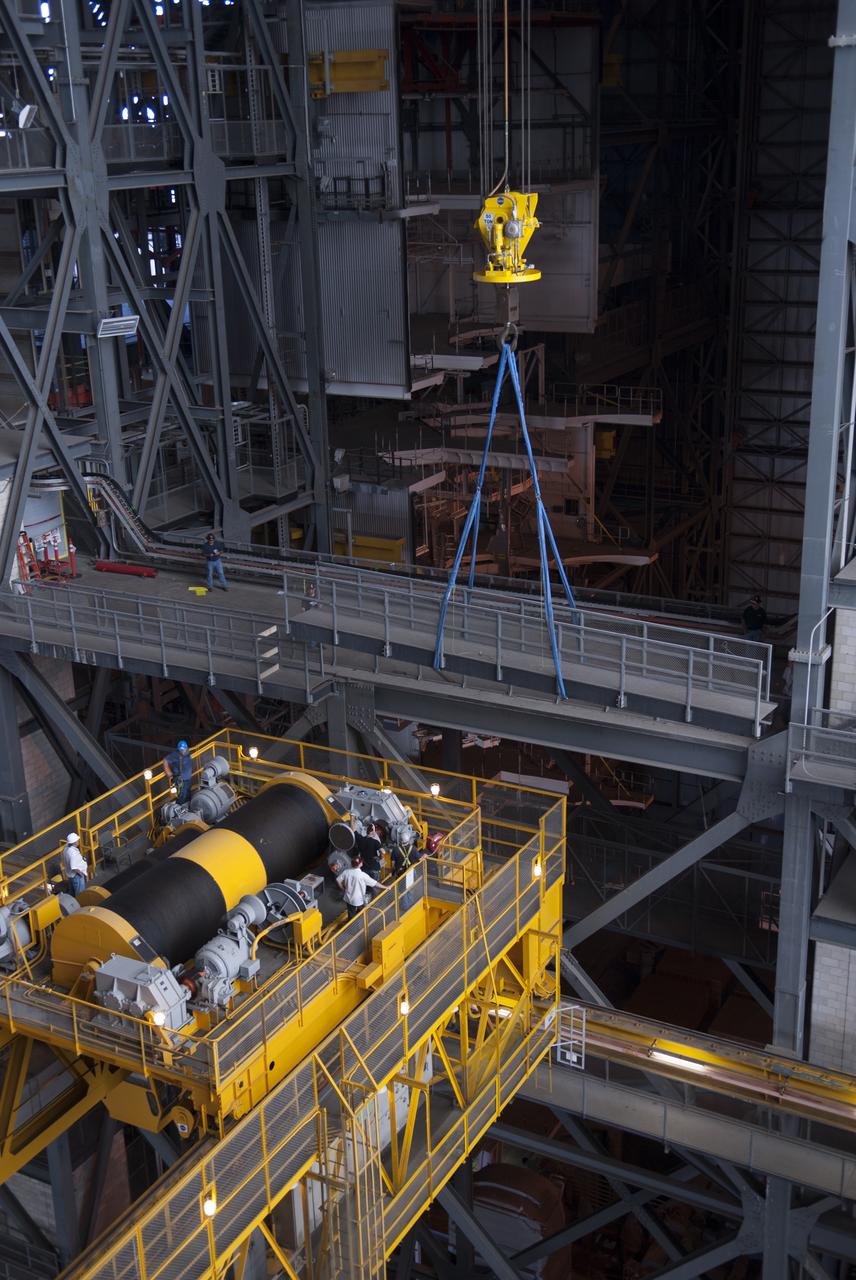
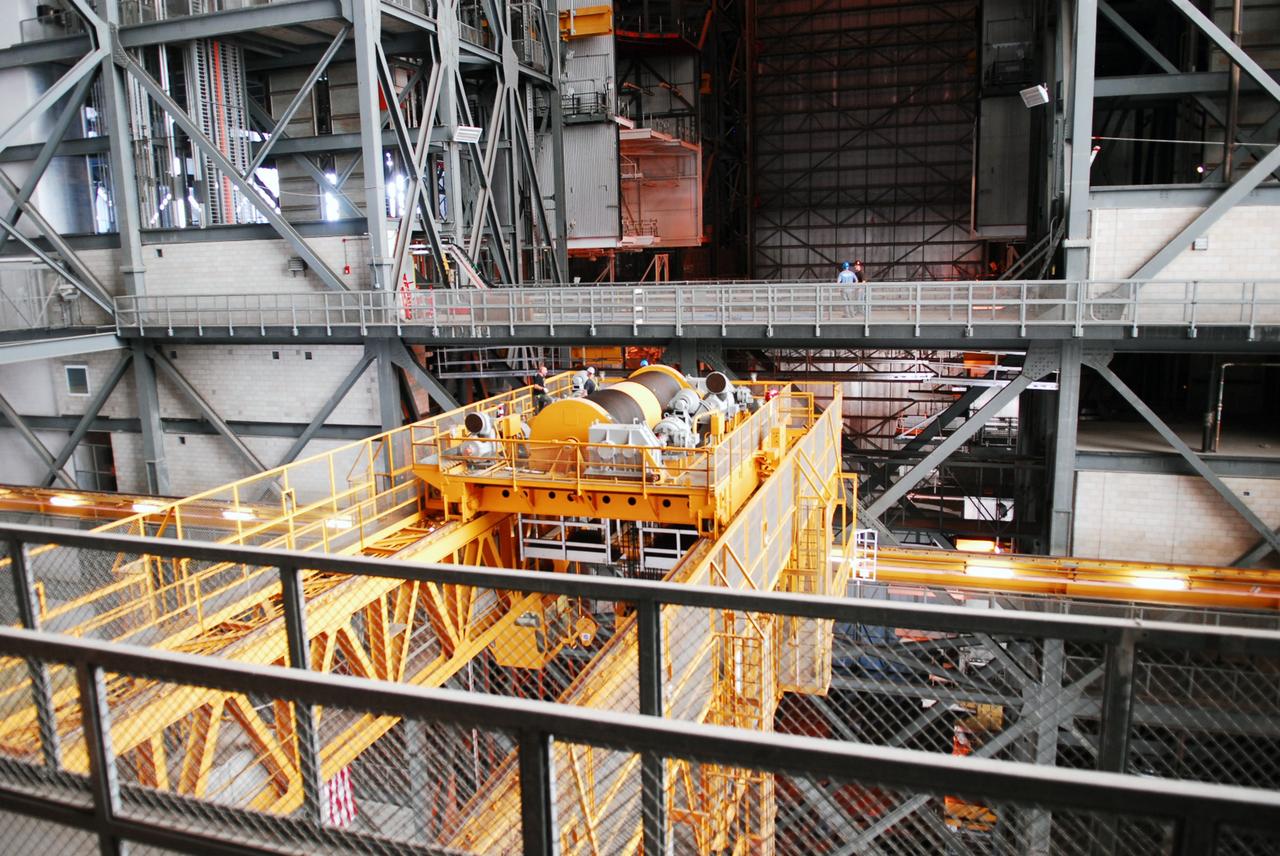
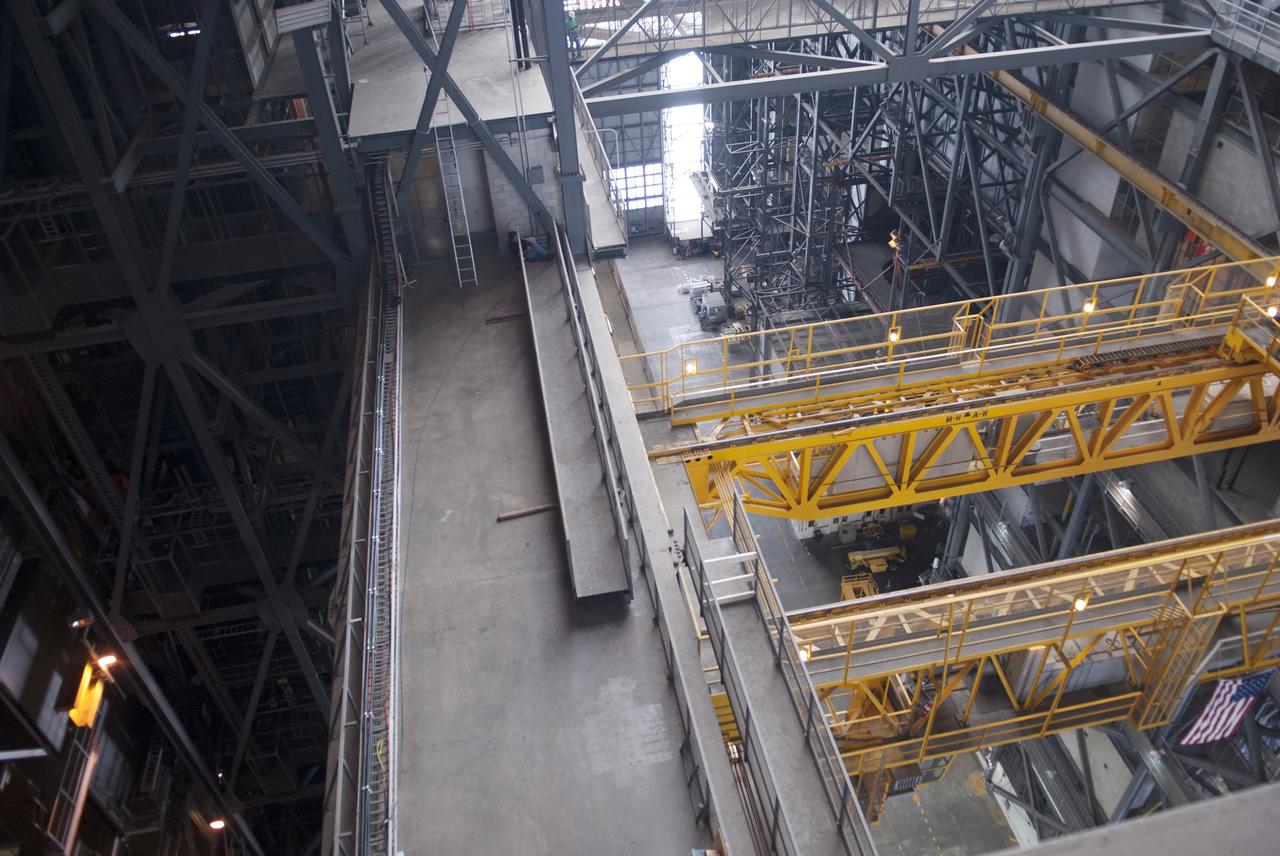
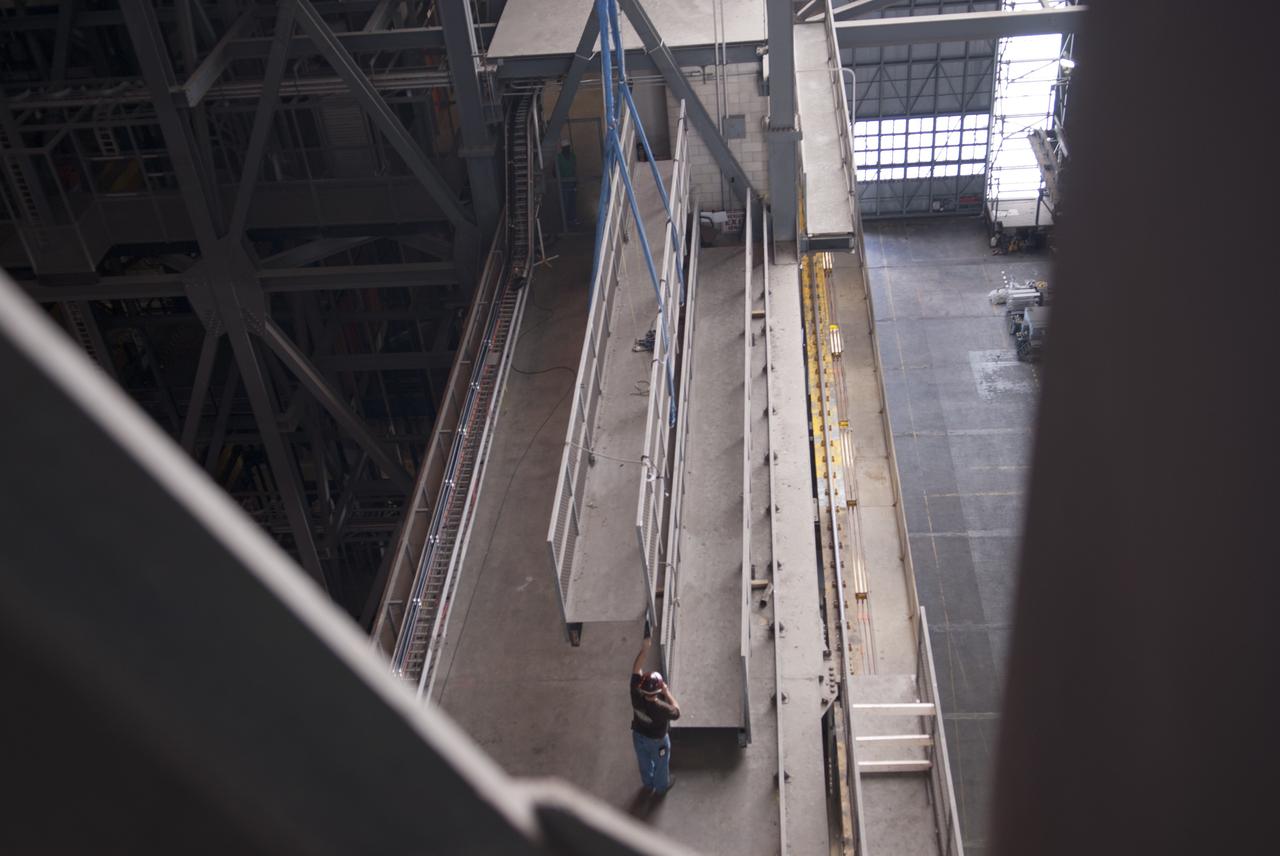
CAPE CANAVERAL, Fla. – Inside the Vehicle Assembly Building, or VAB, at NASA's Kennedy Space Center in Florida, a view from above shows a crane being used to lower the 175-ton crane. The crane is being lowered from Level 16 down to the transfer aisle floor to perform upgrades to its 45-year-old controls in order to improve reliability, precision and safety.     The Ground Systems Development and Operations Program is overseeing upgrades and modifications to the VAB. The crane will be upgraded so that it can support lifting needs for NASA and other exploration vehicles, including the agency's Space Launch System and Orion spacecraft. Photo credit: NASA/Daniel Casper
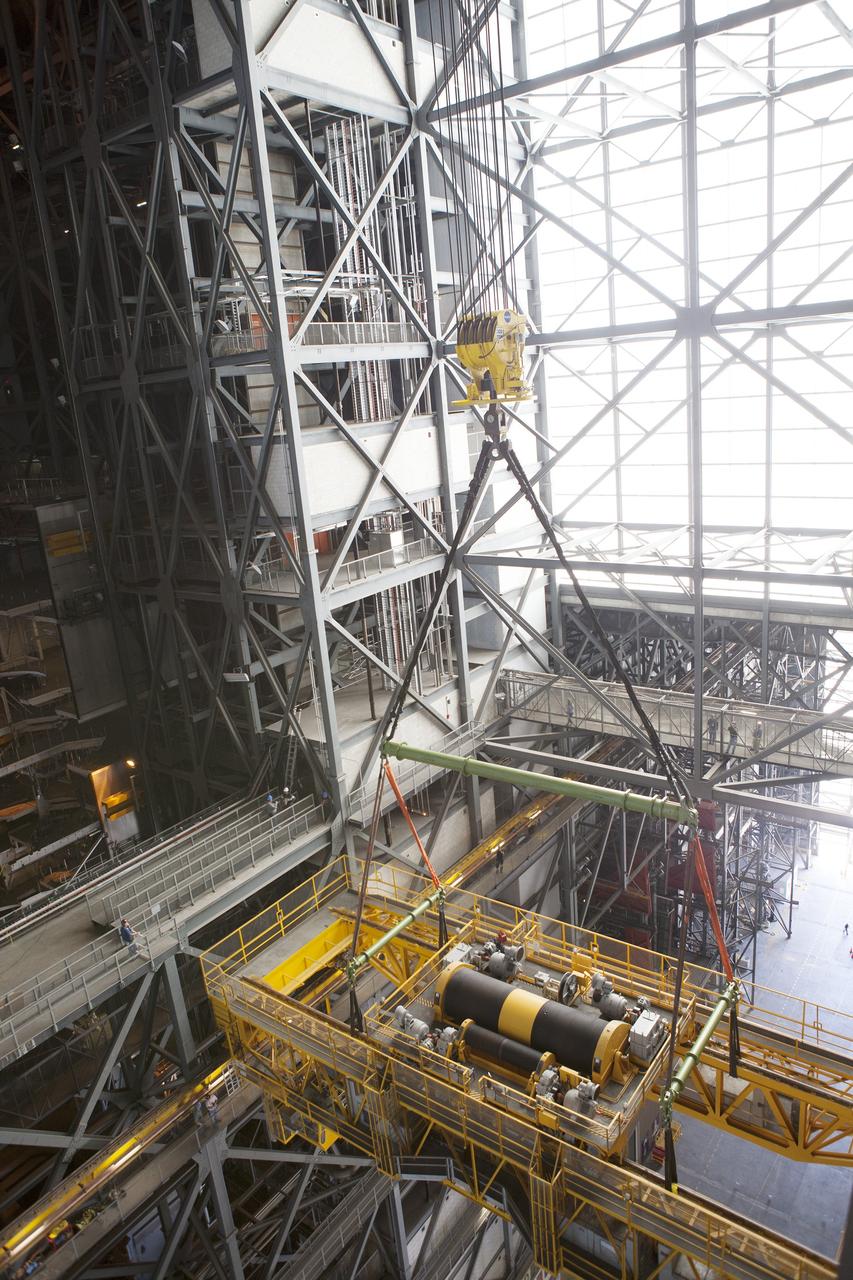
KSC-2014-4013
CAPE CANAVERAL, Fla. – Inside the Vehicle Assembly Building, or VAB, at NASA's Kennedy Space Center in Florida, the 175-ton crane is being turned as it is lowered by crane from Level 16 down to the transfer aisle floor. Upgrades to the crane's 45-year-old controls will be performed in order to improve reliability, precision and safety.     The Ground Systems Development and Operations Program is overseeing upgrades and modifications to the VAB. The crane will be upgraded so that it can support lifting needs for NASA and other exploration vehicles, including the agency's Space Launch System and Orion spacecraft. Photo credit: NASA/Daniel Casper
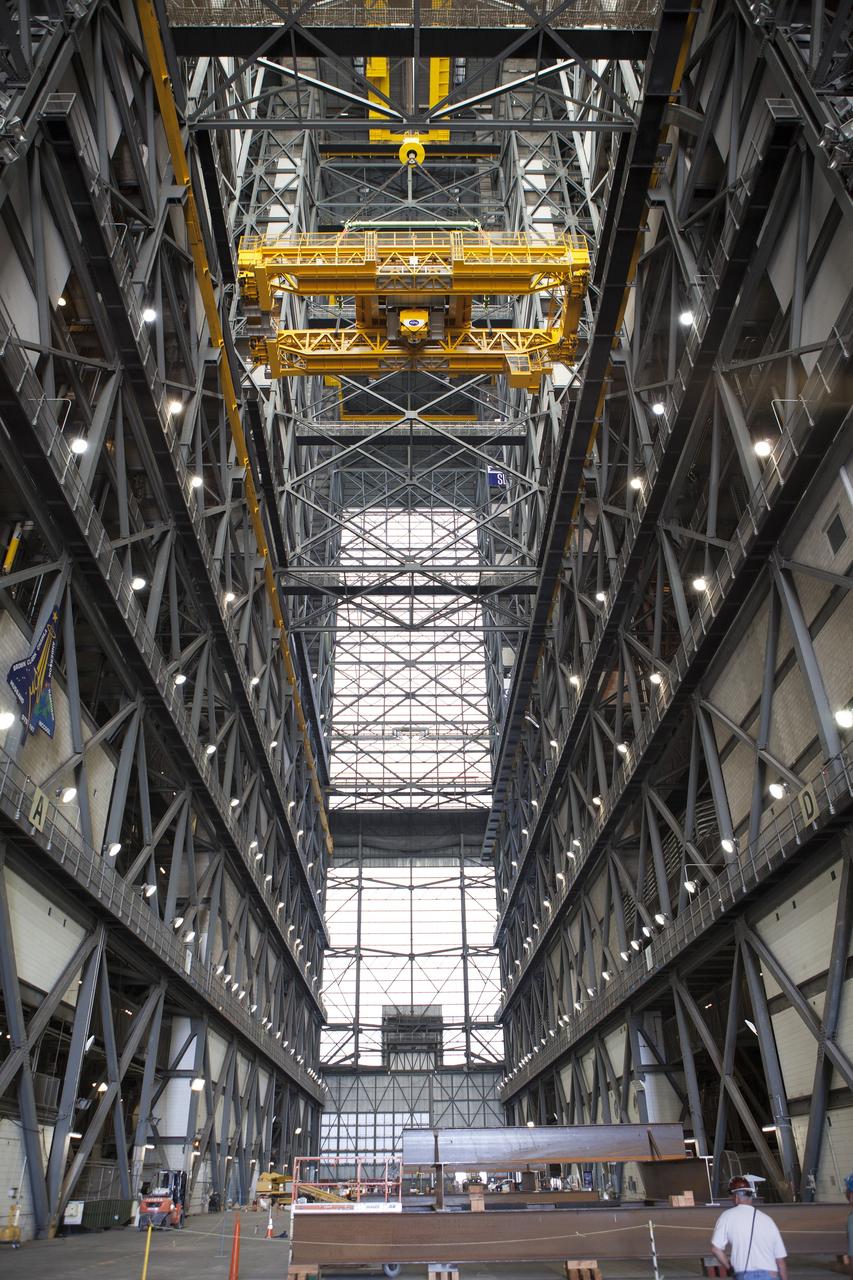
KSC-2014-4022
CAPE CANAVERAL, Fla. – Inside the Vehicle Assembly Building, or VAB, at NASA's Kennedy Space Center in Florida, a view from above shows a crane being used to lower the 175-ton crane. The crane is being lowered from Level 16 down to the transfer aisle floor to perform upgrades to its 45-year-old controls in order to improve reliability, precision and safety.    The Ground Systems Development and Operations Program is overseeing upgrades and modifications to the VAB. The crane will be upgraded so that it can support lifting needs for NASA and other exploration vehicles, including the agency's Space Launch System and Orion spacecraft. Photo credit: NASA/Daniel Casper
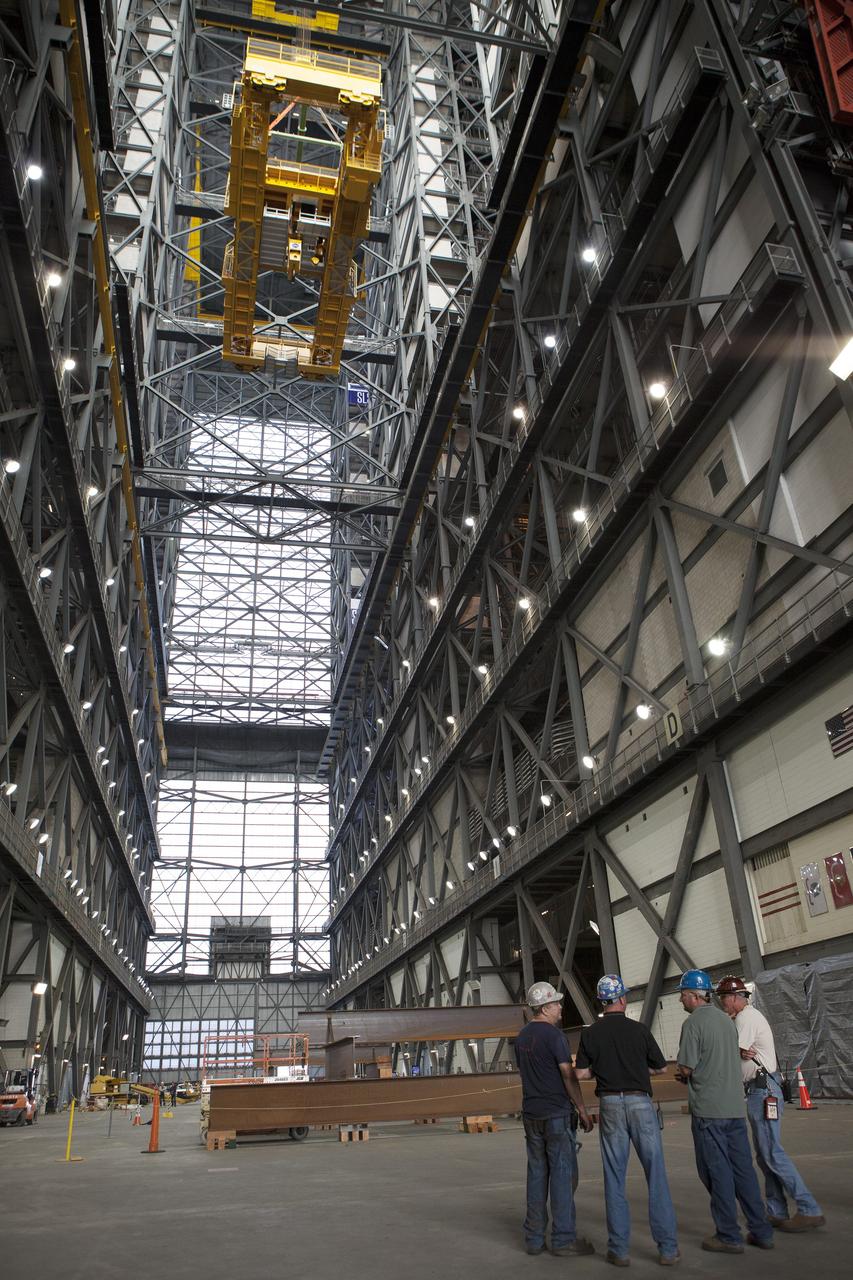
KSC-2014-4015
CAPE CANAVERAL, Fla. – Inside the Vehicle Assembly Building, or VAB, at NASA's Kennedy Space Center in Florida, the 175-ton crane is being turned as it is lowered by crane from Level 16 down to the transfer aisle floor. Upgrades to the crane's 45-year-old controls will be performed in order to improve reliability, precision and safety.     The Ground Systems Development and Operations Program is overseeing upgrades and modifications to the VAB. The crane will be upgraded so that it can support lifting needs for NASA and other exploration vehicles, including the agency's Space Launch System and Orion spacecraft. Photo credit: NASA/Daniel Casper
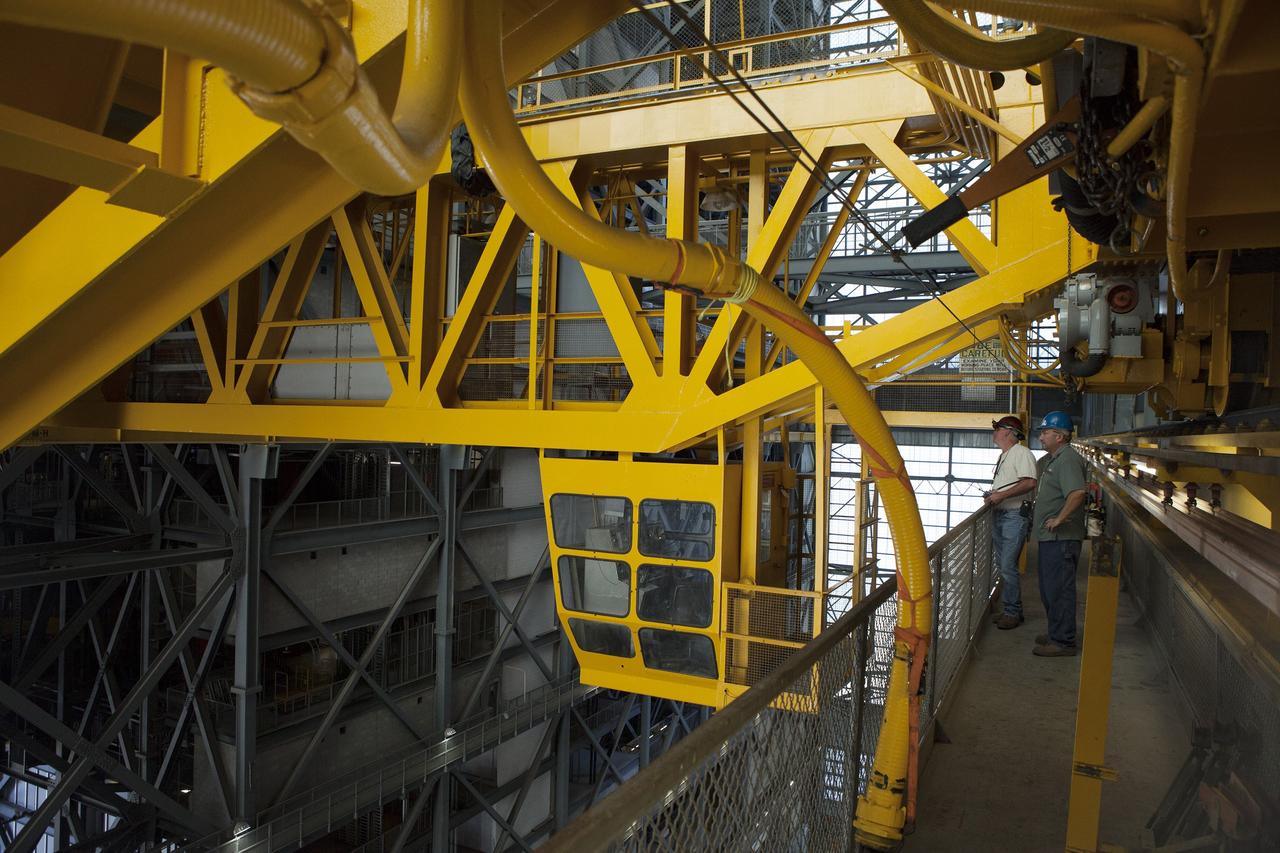
KSC-2014-4023
CAPE CANAVERAL, Fla. – Inside the Vehicle Assembly Building, or VAB, at NASA's Kennedy Space Center in Florida, a view from above shows a crane being used to lower the 175-ton crane. The crane is being lowered from Level 16 down to the transfer aisle floor to perform upgrades to its 45-year-old controls in order to improve reliability, precision and safety.     The Ground Systems Development and Operations Program is overseeing upgrades and modifications to the VAB. The crane will be upgraded so that it can support lifting needs for NASA and other exploration vehicles, including the agency's Space Launch System and Orion spacecraft. Photo credit: NASA/Daniel Casper
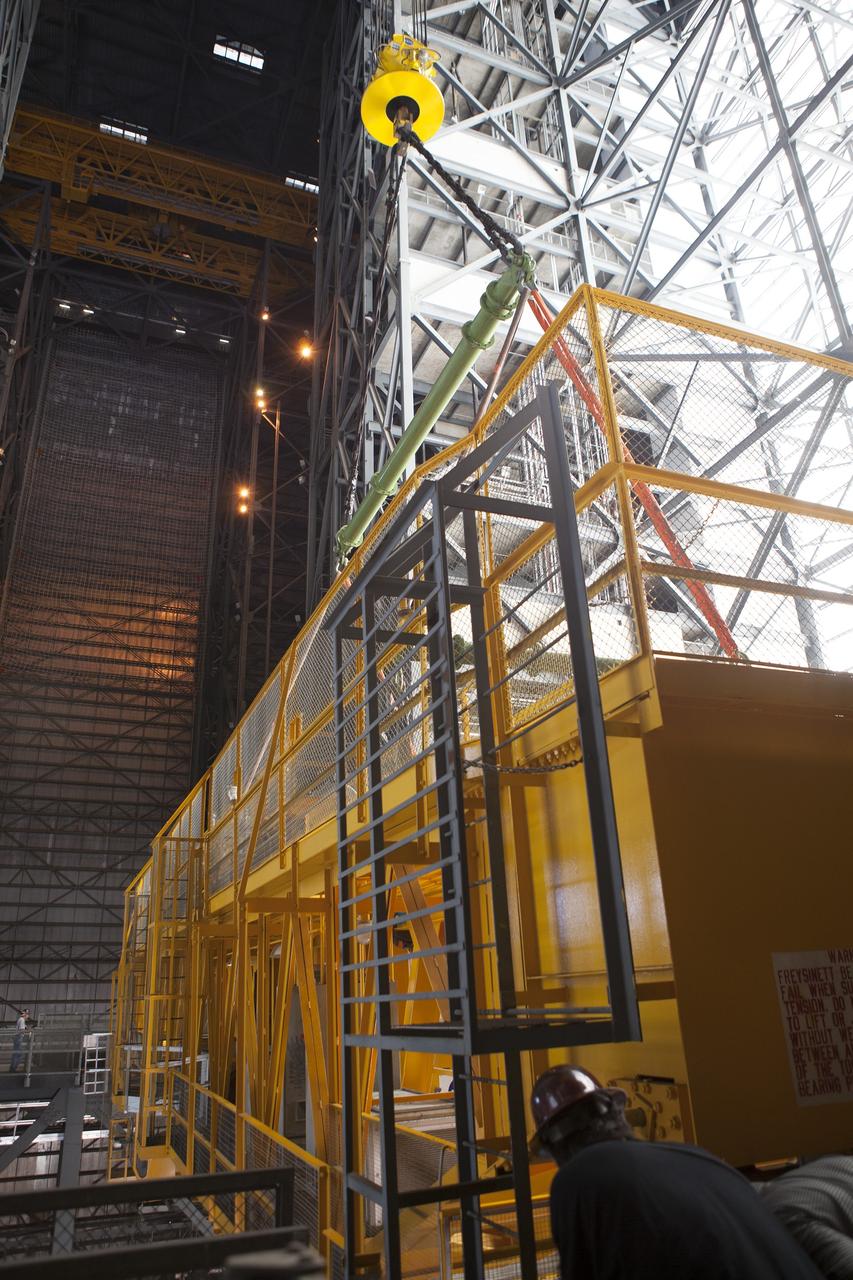
KSC-2014-4014
CAPE CANAVERAL, Fla. – Inside the Vehicle Assembly Building, or VAB, at NASA's Kennedy Space Center in Florida, preparations are underway to lower the 175-ton crane. In view is the cab that is used to control the crane. The crane is being lowered from Level 16 down to the floor of the transfer aisle to perform upgrades to its 45-year-old controls in order to improve reliability, precision and safety.    The Ground Systems Development and Operations Program is overseeing upgrades and modifications to the VAB. The crane will be upgraded so that it can support lifting needs for NASA and other exploration vehicles, including the agency's Space Launch System and Orion spacecraft. Photo credit: NASA/Daniel Casper
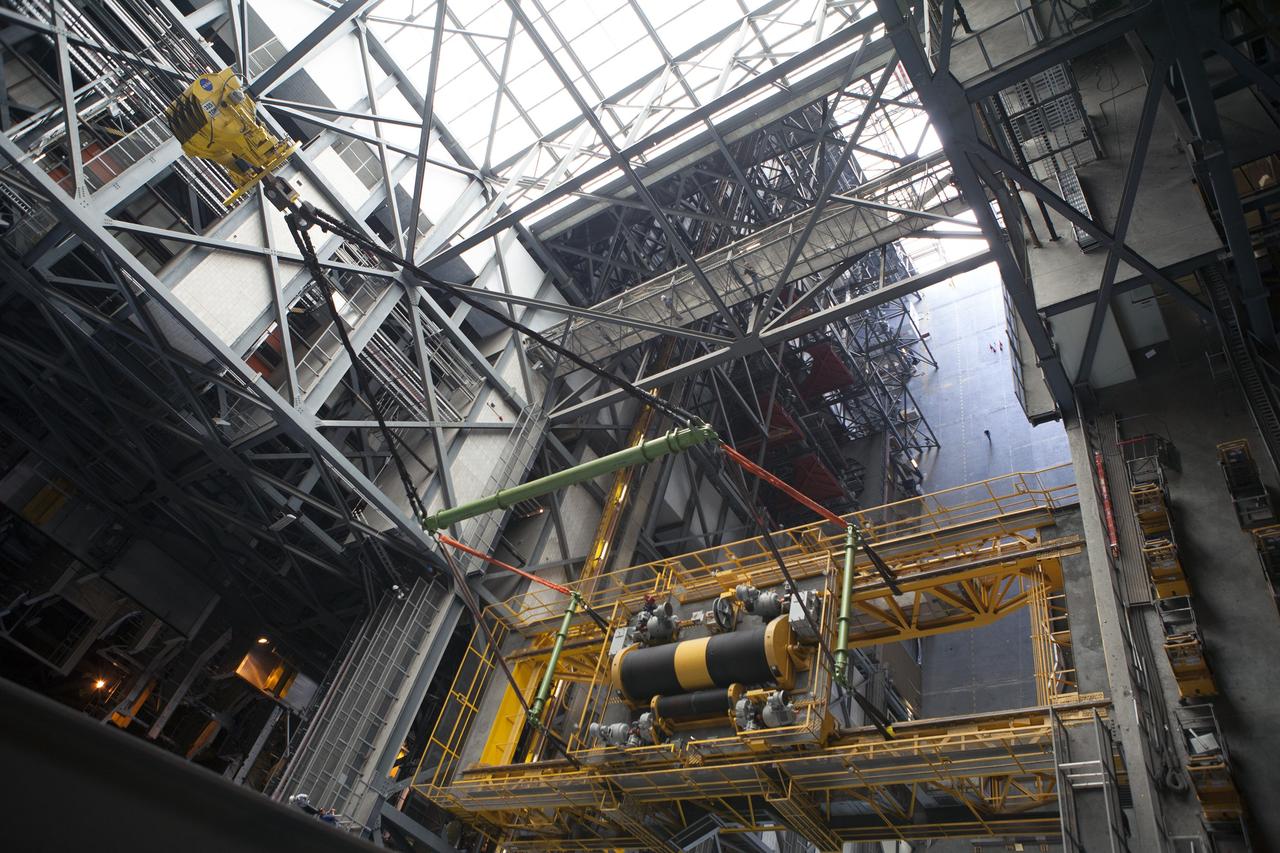
KSC-2014-4011
CAPE CANAVERAL, Fla. – Inside the Vehicle Assembly Building, or VAB, at NASA's Kennedy Space Center in Florida, the 175-ton crane has been turned as it is lowered by crane from Level 16 down to the transfer aisle floor. Upgrades to the crane's 45-year-old controls will be performed in order to improve reliability, precision and safety.     The Ground Systems Development and Operations Program is overseeing upgrades and modifications to the VAB. The crane will be upgraded so that it can support lifting needs for NASA and other exploration vehicles, including the agency's Space Launch System and Orion spacecraft. Photo credit: NASA/Daniel Casper
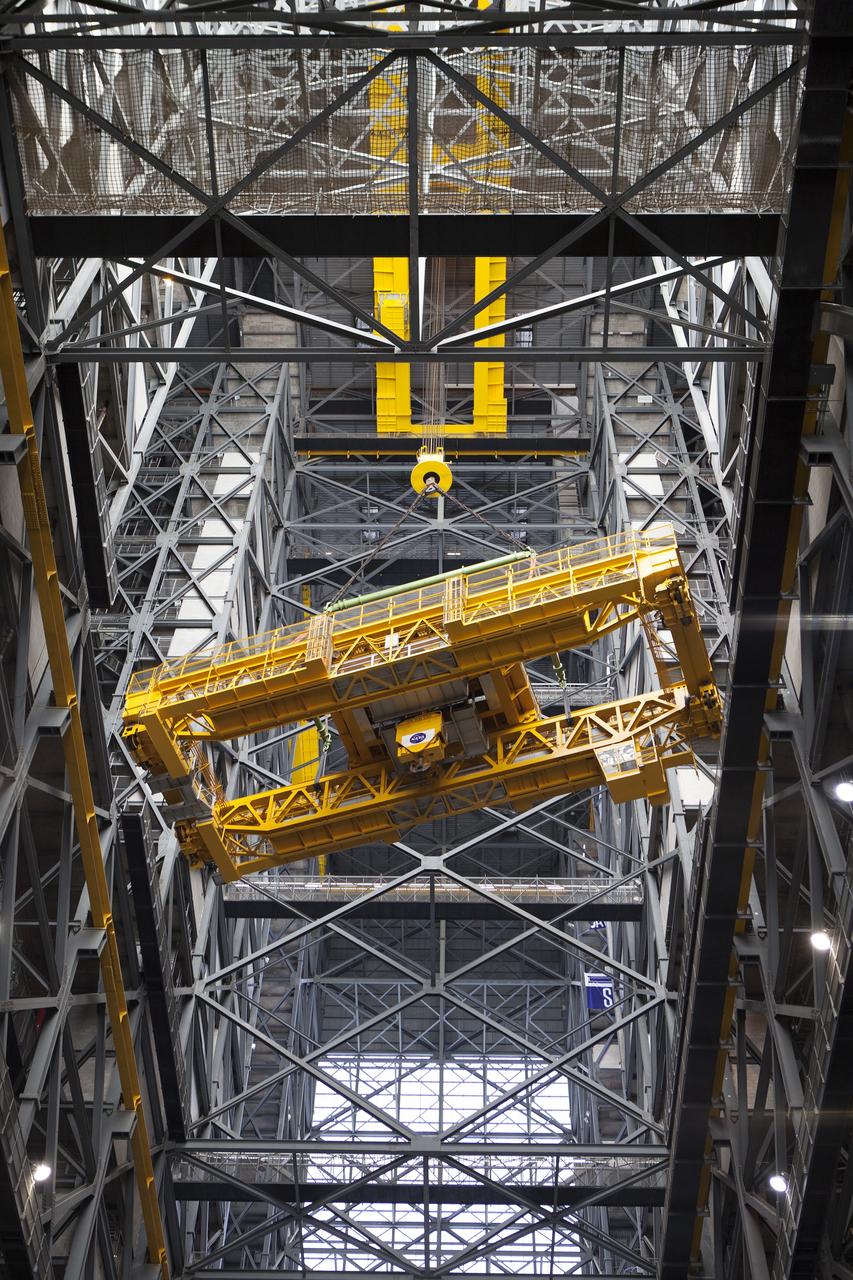
KSC-2014-4024
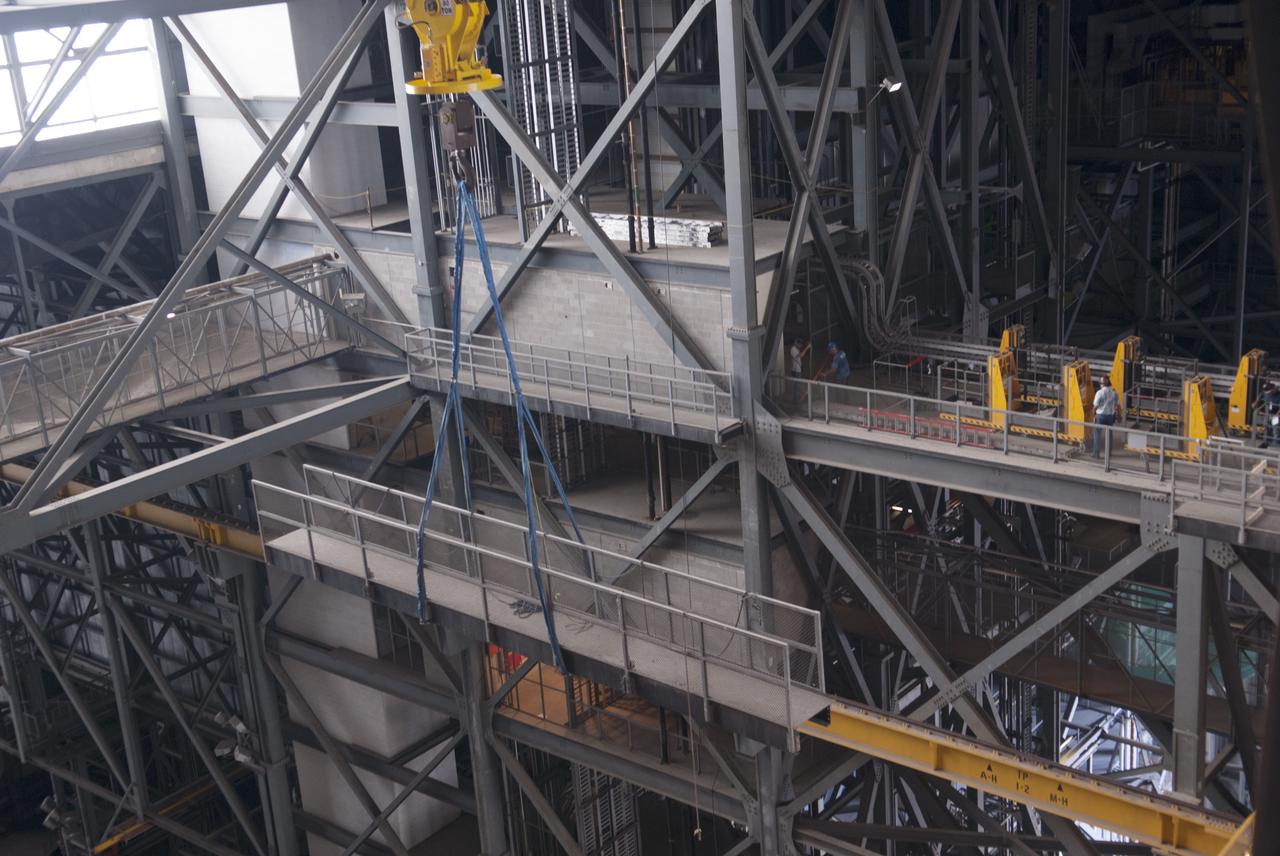
CAPE CANAVERAL, Fla. – Inside the Vehicle Assembly Building, or VAB, at NASA's Kennedy Space Center in Florida, a crane is being used to lower the 175-ton crane from Level 16 down to the transfer aisle floor. Upgrades to the crane's 45-year-old controls will be performed in order to improve reliability, precision and safety.     The Ground Systems Development and Operations Program is overseeing upgrades and modifications to the VAB. The crane will be upgraded so that it can support lifting needs for NASA and other exploration vehicles, including the agency's Space Launch System and Orion spacecraft. Photo credit: NASA/Daniel Casper
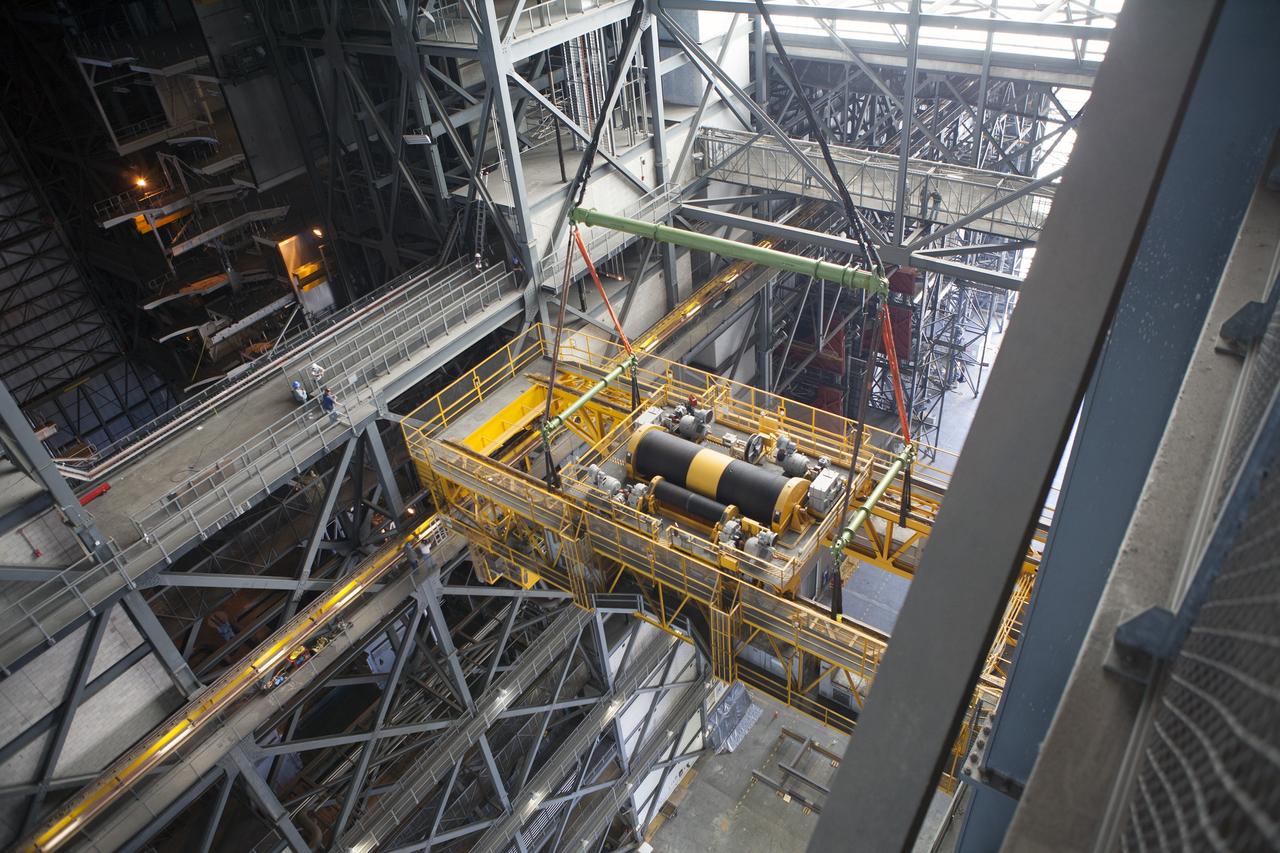
KSC-2014-4021
CAPE CANAVERAL, Fla. – Inside the Vehicle Assembly Building, or VAB, at NASA's Kennedy Space Center in Florida, a crane is being used to lower the 175-ton crane from Level 16 down to the transfer aisle floor. Upgrades to the crane's 45-year-old controls will be performed in order to improve reliability, precision and safety.     The Ground Systems Development and Operations Program is overseeing upgrades and modifications to the VAB. The crane will be upgraded so that it can support lifting needs for NASA and other exploration vehicles, including the agency's Space Launch System and Orion spacecraft. Photo credit: NASA/Daniel Casper
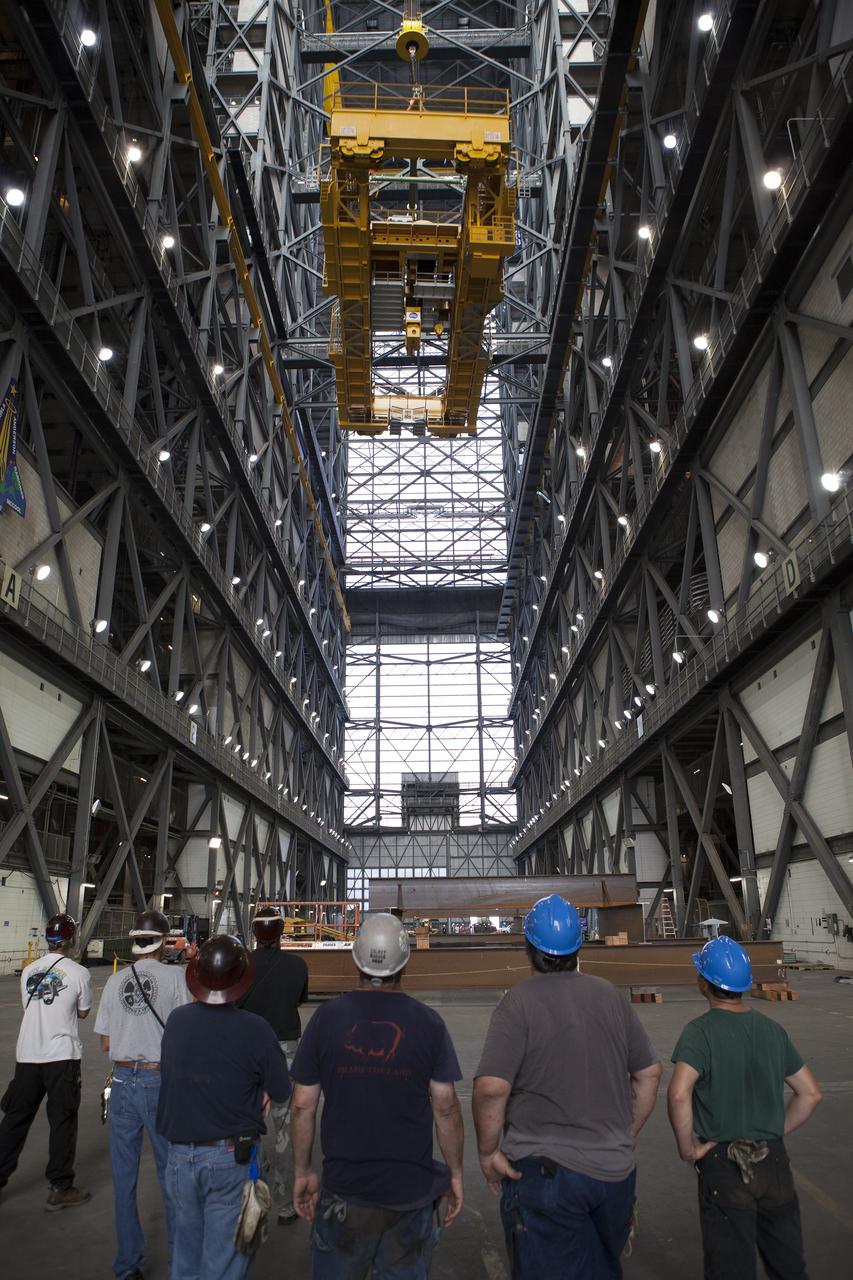
KSC-2014-4020
CAPE CANAVERAL, Fla. – Inside the Vehicle Assembly Building, or VAB, at NASA's Kennedy Space Center in Florida, the 175-ton crane is lowered closer to the transfer aisle floor. The crane was turned to make it easier to lower it from Level 16. Upgrades to the crane's 45-year-old controls will be performed in order to improve reliability, precision and safety.     The Ground Systems Development and Operations Program is overseeing upgrades and modifications to the VAB. The crane will be upgraded so that it can support lifting needs for NASA and other exploration vehicles, including the agency's Space Launch System and Orion spacecraft. Photo credit: NASA/Daniel Casper
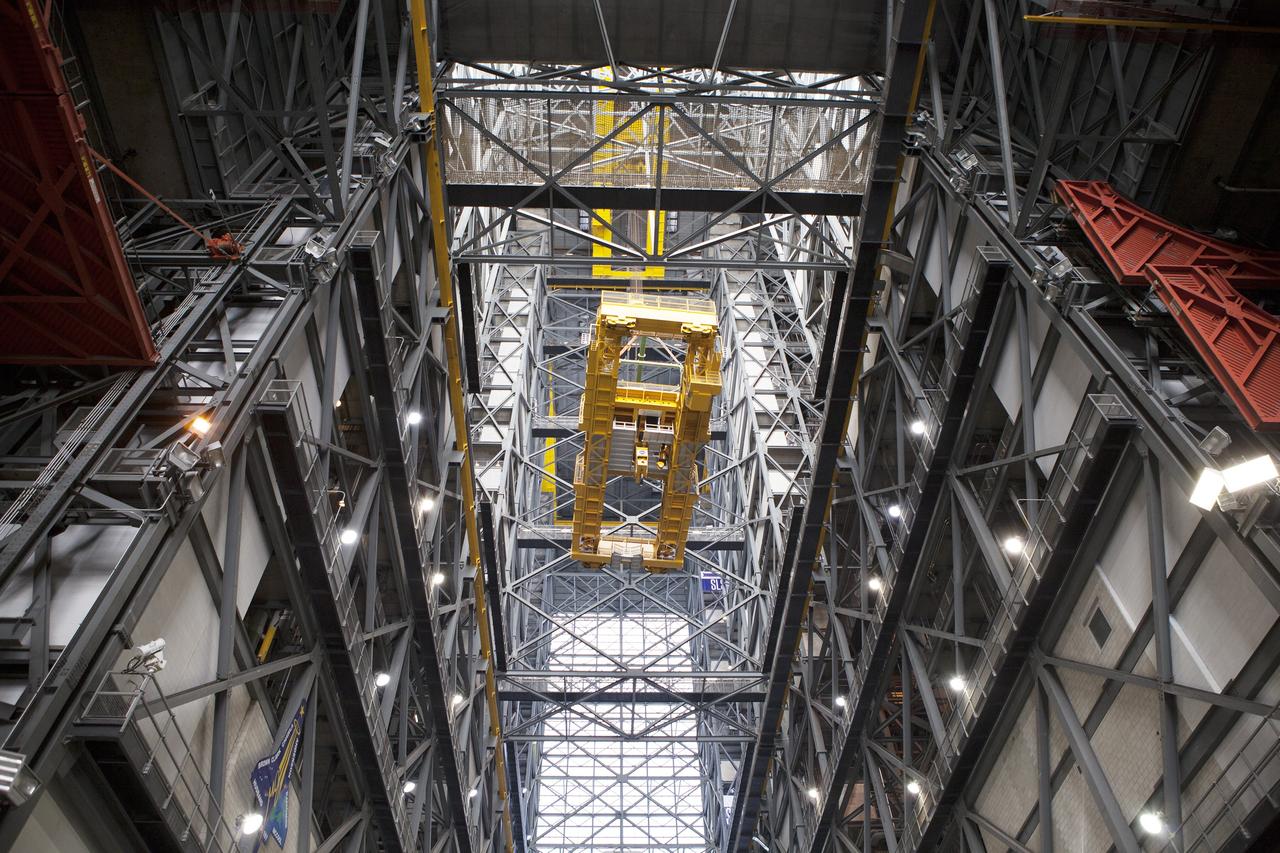
KSC-2014-4027
CAPE CANAVERAL, Fla. – Inside the Vehicle Assembly Building, or VAB, at NASA's Kennedy Space Center in Florida, a crane is being used to lower the 175-ton crane from Level 16 down to the transfer aisle floor. Upgrades to the crane's 45-year-old controls will be performed in order to improve reliability, precision and safety.      The Ground Systems Development and Operations Program is overseeing upgrades and modifications to the VAB. The crane will be upgraded so that it can support lifting needs for NASA and other exploration vehicles, including the agency's Space Launch System and Orion spacecraft. Photo credit: NASA/Daniel Casper
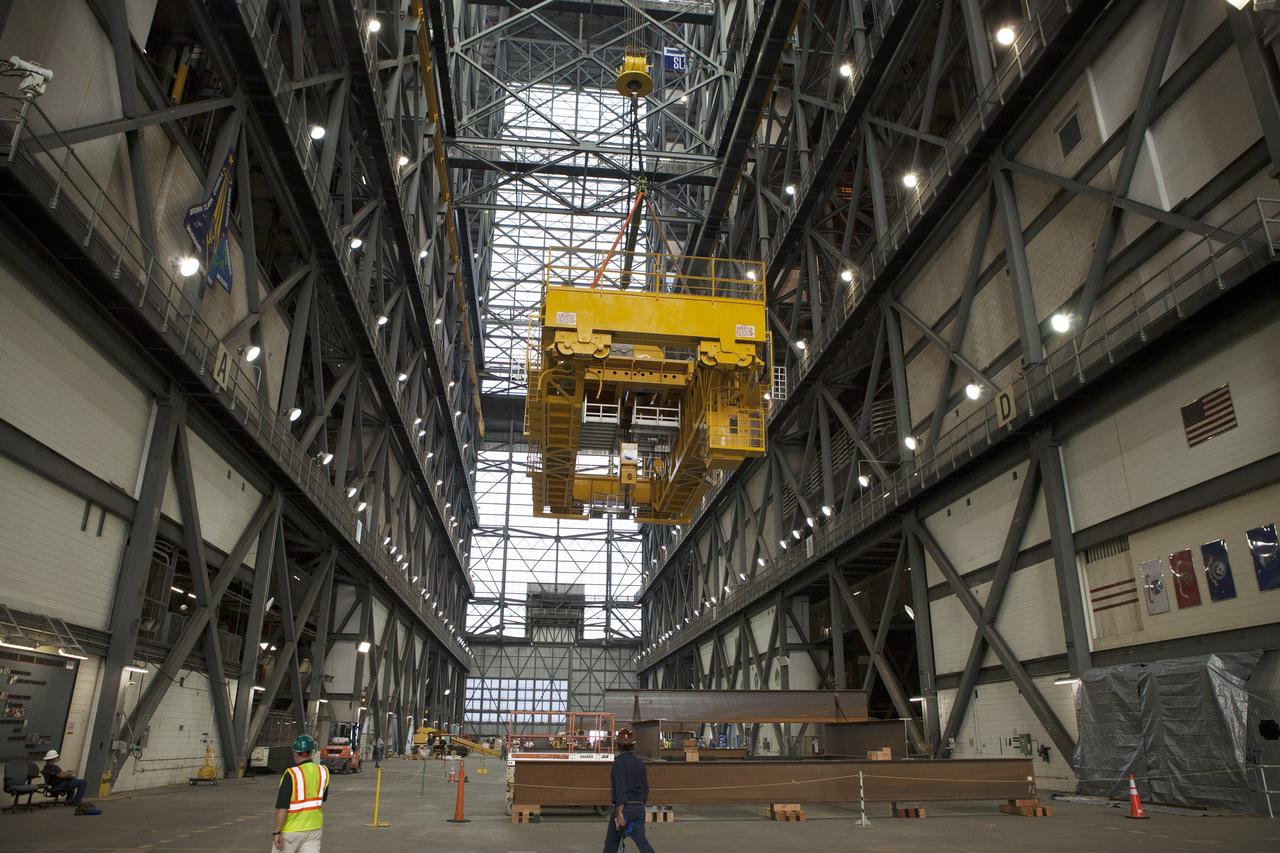
KSC-2014-4019
CAPE CANAVERAL, Fla. – Inside the Vehicle Assembly Building, or VAB, at NASA's Kennedy Space Center in Florida, preparations are underway to lower the 175-ton crane. The crane is being lowered from Level 16 down to the floor of the transfer aisle to perform upgrades to its 45-year-old controls in order to improve reliability, precision and safety.     The Ground Systems Development and Operations Program is overseeing upgrades and modifications to the VAB. The crane will be upgraded so that it can support lifting needs for NASA and other exploration vehicles, including the agency's Space Launch System and Orion spacecraft. Photo credit: NASA/Daniel Casper
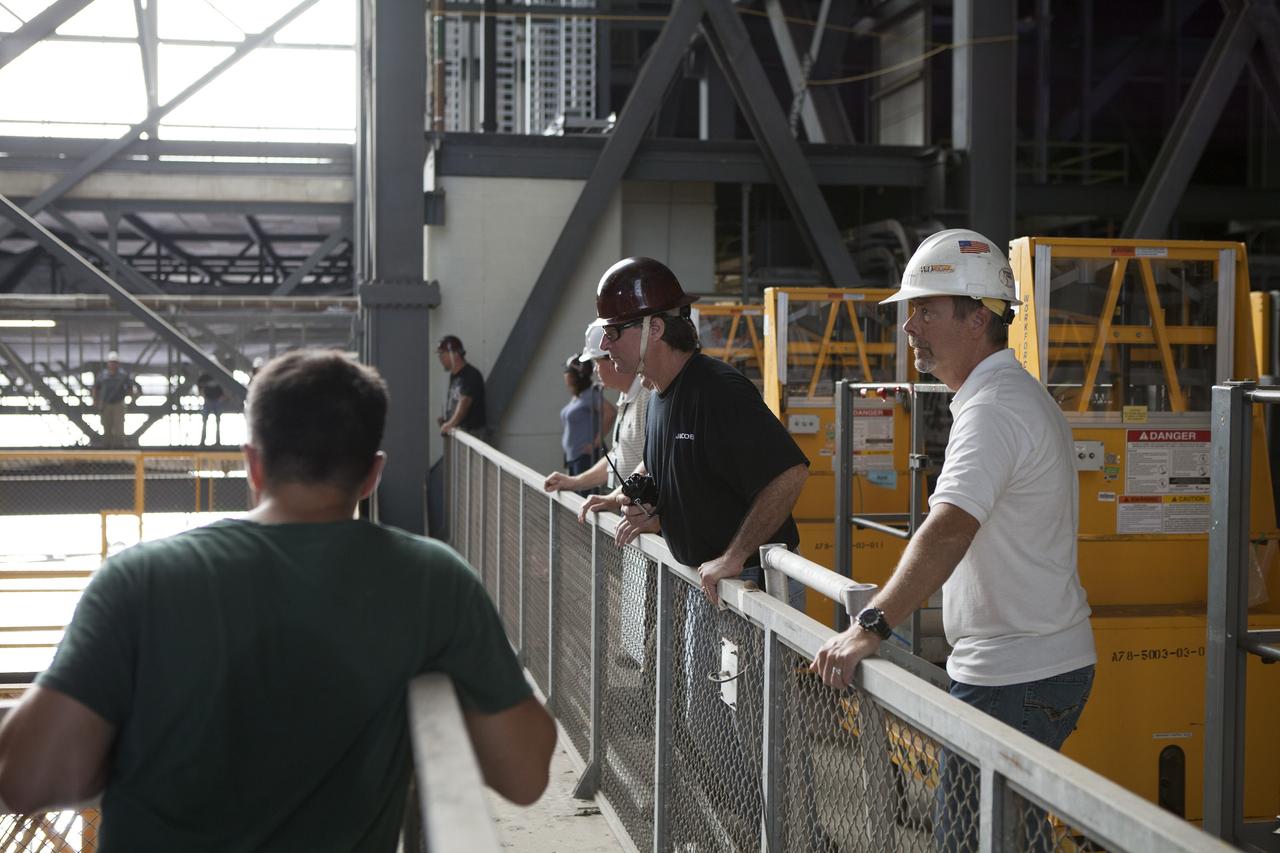
KSC-2014-4012
CAPE CANAVERAL, Fla. – Inside the Vehicle Assembly Building, or VAB, at NASA's Kennedy Space Center in Florida, preparations are underway to lower the 175-ton crane. The crane is being lowered from Level 16 down to the floor of the transfer aisle to perform upgrades to its 45-year-old controls in order to improve reliability, precision and safety.    The Ground Systems Development and Operations Program is overseeing upgrades and modifications to the VAB. The crane will be upgraded so that it can support lifting needs for NASA and other exploration vehicles, including the agency's Space Launch System and Orion spacecraft. Photo credit: NASA/Daniel Casper
KSC-2014-4010
CAPE CANAVERAL, Fla. – Inside the Vehicle Assembly Building, or VAB, at NASA's Kennedy Space Center in Florida, the 175-ton crane is being lowered from Level 16 down to the transfer aisle floor. Upgrades to the crane's 45-year-old controls will be performed in order to improve reliability, precision and safety.      The Ground Systems Development and Operations Program is overseeing upgrades and modifications to the VAB. The crane will be upgraded so that it can support lifting needs for NASA and other exploration vehicles, including the agency's Space Launch System and Orion spacecraft. Photo credit: NASA/Daniel Casper
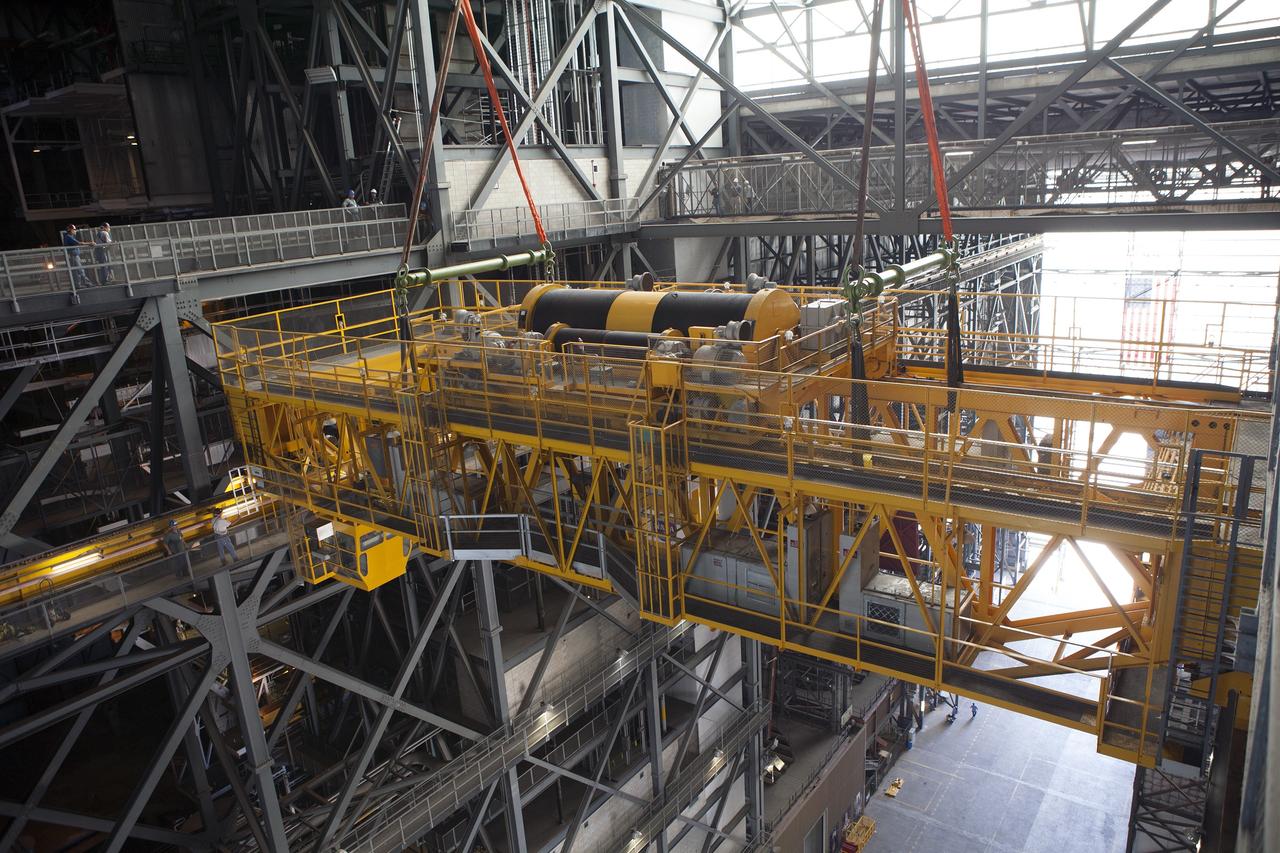
KSC-2014-4017
CAPE CANAVERAL, Fla. – Inside the Vehicle Assembly Building, or VAB, at NASA's Kennedy Space Center in Florida, NASA and contractor workers monitor the progress as the 175-ton crane is being lowered from Level 16 down to the transfer aisle floor. Upgrades to the crane's 45-year-old controls will be performed in order to improve reliability, precision and safety.      The Ground Systems Development and Operations Program is overseeing upgrades and modifications to the VAB. The crane will be upgraded so that it can support lifting needs for NASA and other exploration vehicles, including the agency's Space Launch System and Orion spacecraft. Photo credit: NASA/Daniel Casper
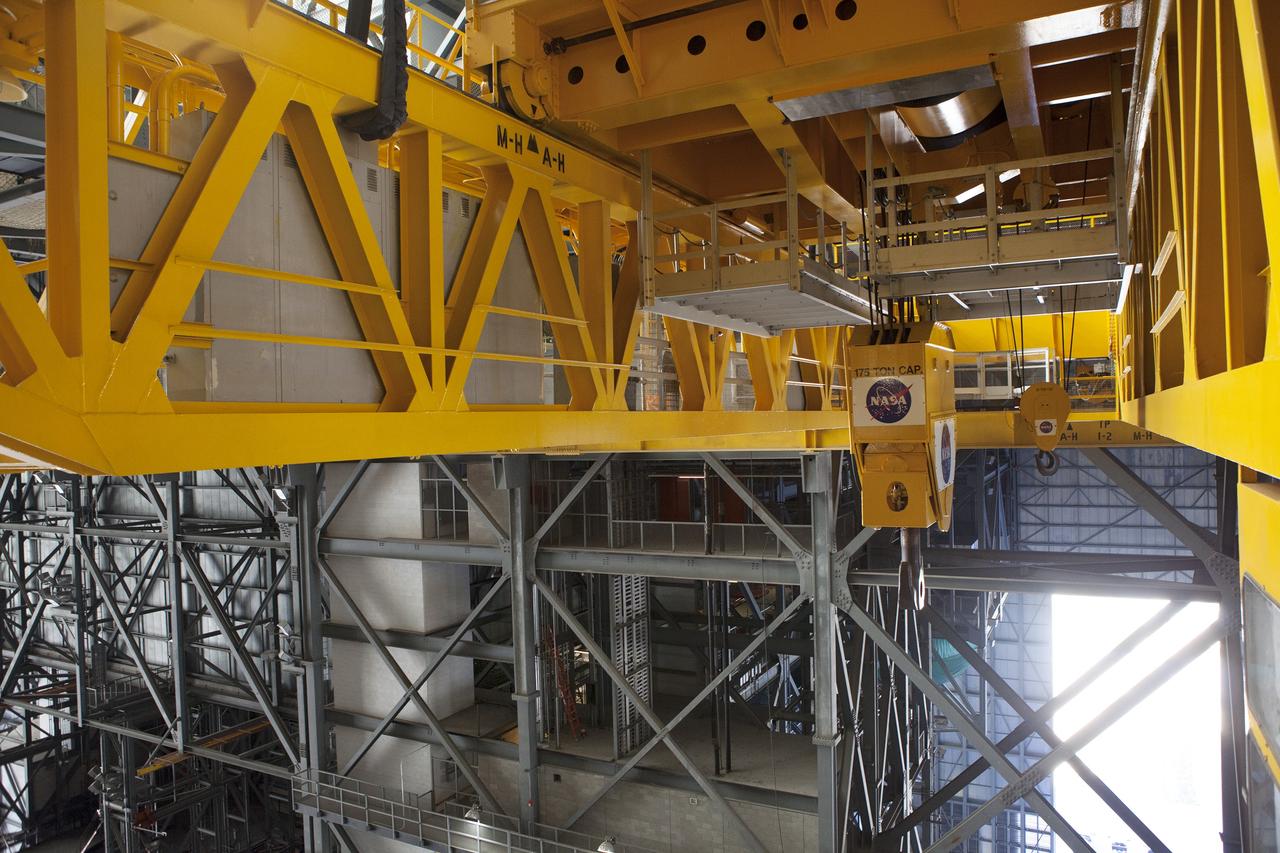
KSC-2014-4018
CAPE CANAVERAL, Fla. – Inside the Vehicle Assembly Building, or VAB, at NASA's Kennedy Space Center in Florida, the 175-ton crane is being lowered from Level 16 down to the transfer aisle floor. Upgrades to the crane's 45-year-old controls will be performed in order to improve reliability, precision and safety.     The Ground Systems Development and Operations Program is overseeing upgrades and modifications to the VAB. The crane will be upgraded so that it can support lifting needs for NASA and other exploration vehicles, including the agency's Space Launch System and Orion spacecraft. Photo credit: NASA/Daniel Casper
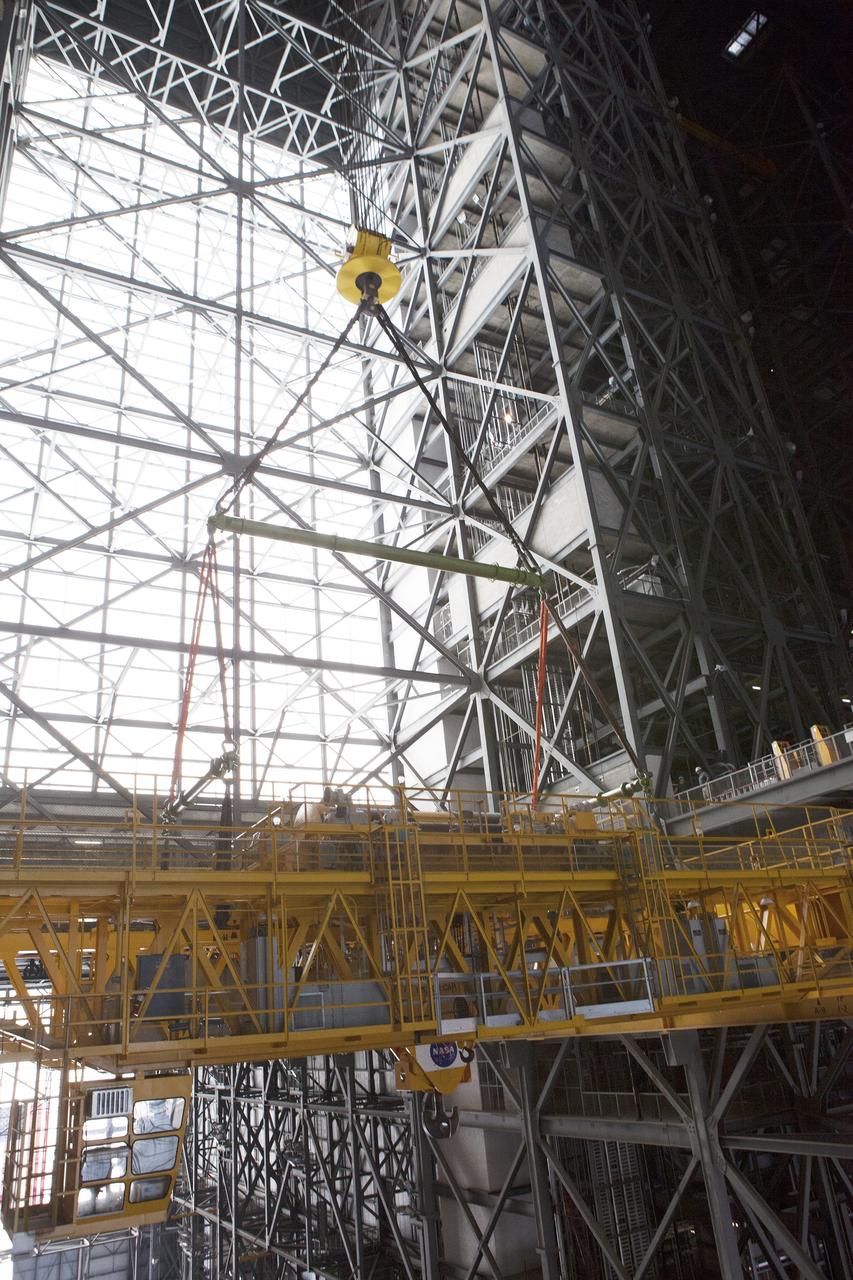
KSC-2014-4016
CAPE CANAVERAL, Fla. – Inside the Vehicle Assembly Building, or VAB, at NASA's Kennedy Space Center in Florida, a crane is used to lift up a portion of the catwalk on the east side of Level 16. The catwalk is being removed to allow room for the removal of the 175-ton crane that is situated above the transfer aisle. The crane will be lowered to the floor to perform upgrades to its 45-year-old controls in order to improve reliability, precision and safety.       The Ground Systems Development and Operations Program is overseeing upgrades and modifications to the VAB. The crane will be upgraded so that it can support lifting needs for NASA and other exploration vehicles, including the agency's Space Launch System and Orion spacecraft. Photo credit: NASA/Jim Grossmann
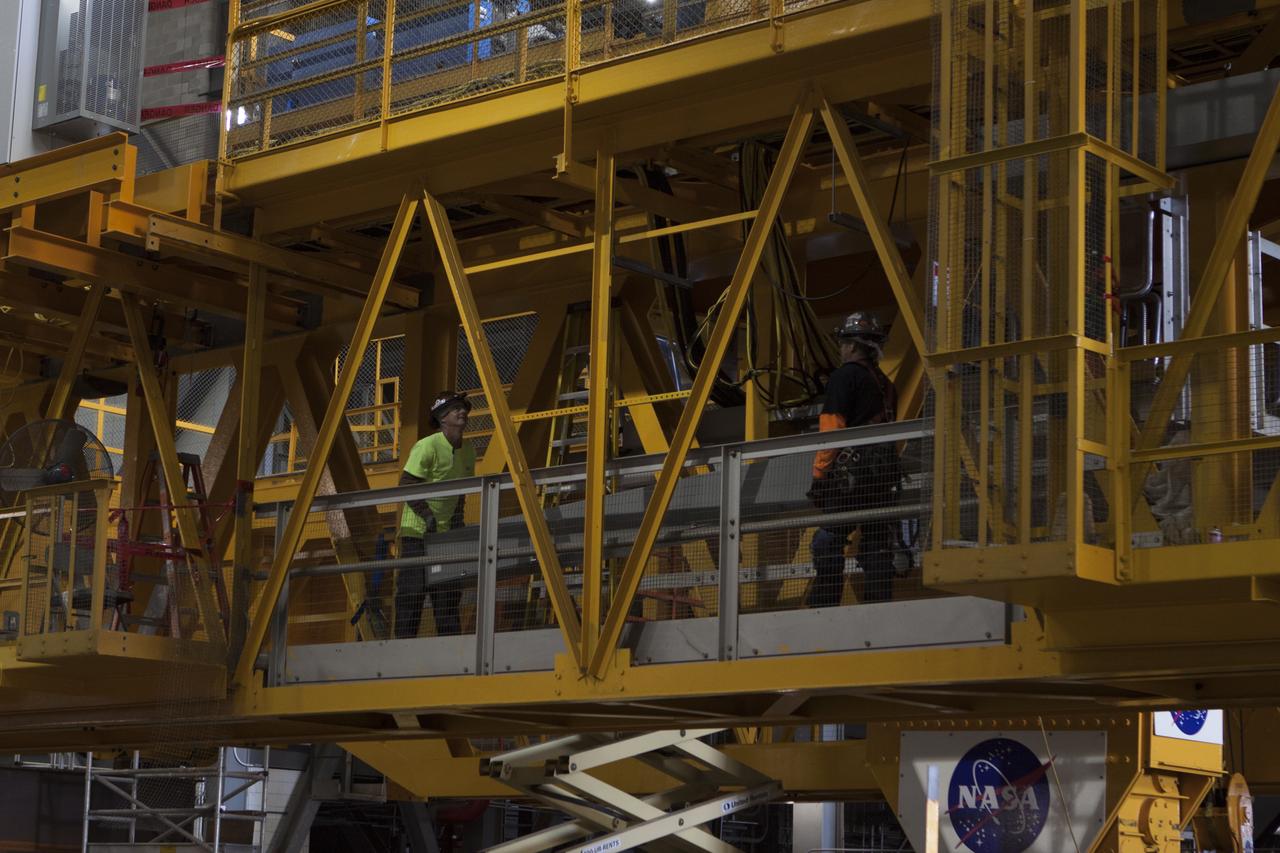
KSC-2014-3893
CAPE CANAVERAL, Fla. – Inside the Vehicle Assembly Building, or VAB, at NASA's Kennedy Space Center in Florida, a crane is used to remove a portion of the catwalk on the west side of Level 16. The catwalk is being removed to allow room for the removal of the 175-ton crane that is situated above the transfer aisle. The crane will be lowered to the floor to perform upgrades to its 45-year-old controls in order to improve reliability, precision and safety.      The Ground Systems Development and Operations Program is overseeing upgrades and modifications to the VAB. The crane will be upgraded so that it can support lifting needs for NASA and other exploration vehicles, including the agency's Space Launch System and Orion spacecraft. Photo credit: NASA/Jim Grossmann
KSC-2014-3897
CAPE CANAVERAL, Fla. – Inside the Vehicle Assembly Building, or VAB, at NASA's Kennedy Space Center in Florida, workers have secured a crane to a portion of the catwalk on the east side of Level 16. The catwalk will be removed to allow room for the removal of the 175-ton crane that is situated above the transfer aisle. The crane will be lowered to the floor to perform upgrades to its 45-year-old controls in order to improve reliability, precision and safety.       The Ground Systems Development and Operations Program is overseeing upgrades and modifications to the VAB. The crane will be upgraded so that it can support lifting needs for NASA and other exploration vehicles, including the agency's Space Launch System and Orion spacecraft. Photo credit: NASA/Jim Grossmann
KSC-2014-3892
CAPE CANAVERAL, Fla. – Inside the Vehicle Assembly Building, or VAB, at NASA's Kennedy Space Center in Florida, preparations are underway to remove a portion of the catwalk on the east side of Level 16 to allow room for the removal of the 175-ton crane that is situated above the transfer aisle. The crane will be lowered to the floor to perform upgrades to its 45-year-old controls in order to improve reliability, precision and safety.     The Ground Systems Development and Operations Program is overseeing upgrades and modifications to the VAB. The crane will be upgraded so that it can support lifting needs for NASA and other exploration vehicles, including the agency's Space Launch System and Orion spacecraft. Photo credit: NASA/Jim Grossmann
KSC-2014-3890
CAPE CANAVERAL, Fla. – Inside the Vehicle Assembly Building, or VAB, at NASA's Kennedy Space Center in Florida, preparations are underway to remove a portion of the catwalk on the west side of Level 16. The catwalk is being removed to allow room for the removal of the 175-ton crane that is situated above the transfer aisle. The crane will be lowered to the floor to perform upgrades to its 45-year-old controls in order to improve reliability, precision and safety.       The Ground Systems Development and Operations Program is overseeing upgrades and modifications to the VAB. The crane will be upgraded so that it can support lifting needs for NASA and other exploration vehicles, including the agency's Space Launch System and Orion spacecraft. Photo credit: NASA/Jim Grossmann
KSC-2014-3896
CAPE CANAVERAL, Fla. – Inside the Vehicle Assembly Building, or VAB, at NASA's Kennedy Space Center in Florida, preparations are underway to remove a portion of the catwalk on the east side of Level 16 to allow room for the removal of the 175-ton crane that is situated above the transfer aisle. The crane will be lowered to the floor to perform upgrades to its 45-year-old controls in order to improve reliability, precision and safety.    The Ground Systems Development and Operations Program is overseeing upgrades and modifications to the VAB. The crane will be upgraded so that it can support lifting needs for NASA and other exploration vehicles, including the agency's Space Launch System and Orion spacecraft. Photo credit: NASA/Jim Grossmann
KSC-2014-3889
CAPE CANAVERAL, Fla. – Inside the Vehicle Assembly Building, or VAB, at NASA's Kennedy Space Center in Florida, a portion of the catwalk on the east side of Level 16 has been removed to allow room for the removal of the 175-ton crane that is situated above the transfer aisle. The crane will be lowered to the floor to perform upgrades to its 45-year-old controls in order to improve reliability, precision and safety.        The Ground Systems Development and Operations Program is overseeing upgrades and modifications to the VAB. The crane will be upgraded so that it can support lifting needs for NASA and other exploration vehicles, including the agency's Space Launch System and Orion spacecraft. Photo credit: NASA/Jim Grossmann
KSC-2014-3895
CAPE CANAVERAL, Fla. – Inside the Vehicle Assembly Building, or VAB, at NASA's Kennedy Space Center in Florida, preparations are underway to remove a portion of the catwalk on the east side of Level 16 to allow room for the removal of the 175-ton crane that is situated above the transfer aisle. The crane will be lowered to the floor to perform upgrades to its 45-year-old controls in order to improve reliability, precision and safety.      The Ground Systems Development and Operations Program is overseeing upgrades and modifications to the VAB. The crane will be upgraded so that it can support lifting needs for NASA and other exploration vehicles, including the agency's Space Launch System and Orion spacecraft. Photo credit: NASA/Jim Grossmann
KSC-2014-3891
CAPE CANAVERAL, Fla. – Inside the Vehicle Assembly Building, or VAB, at NASA's Kennedy Space Center in Florida, workers monitor the progress as a crane lifts up a portion of the catwalk on the east side of Level 16. The catwalk is being removed to allow room for the removal of the 175-ton crane that is situated above the transfer aisle. The crane will be lowered to the floor to perform upgrades to its 45-year-old controls in order to improve reliability, precision and safety.       The Ground Systems Development and Operations Program is overseeing upgrades and modifications to the VAB. The crane will be upgraded so that it can support lifting needs for NASA and other exploration vehicles, including the agency's Space Launch System and Orion spacecraft. Photo credit: NASA/Jim Grossmann
KSC-2014-3894
CAPE CANAVERAL, Fla. – Inside the Vehicle Assembly Building, or VAB, at NASA's Kennedy Space Center in Florida, a portion of the catwalk on the west side of Level 16 has been removed by crane and is being moved over the east side for storage. The catwalk was removed to allow room for the removal of the 175-ton crane that is situated above the transfer aisle. The crane will be lowered to the floor to perform upgrades to its 45-year-old controls in order to improve reliability, precision and safety.     The Ground Systems Development and Operations Program is overseeing upgrades and modifications to the VAB. The crane will be upgraded so that it can support lifting needs for NASA and other exploration vehicles, including the agency's Space Launch System and Orion spacecraft. Photo credit: NASA/Jim Grossmann
KSC-2014-3898
CAPE CANAVERAL, Fla. – Inside the Vehicle Assembly Building, or VAB, at NASA's Kennedy Space Center in Florida, portions of the catwalks on the east and west sides of Level 16 have been removed by crane and are being placed on the east side for storage. The catwalks were removed to allow room for the removal of the 175-ton crane that is situated above the transfer aisle. The crane will be lowered to the floor to perform upgrades to its 45-year-old controls in order to improve reliability, precision and safety.      The Ground Systems Development and Operations Program is overseeing upgrades and modifications to the VAB. The crane will be upgraded so that it can support lifting needs for NASA and other exploration vehicles, including the agency's Space Launch System and Orion spacecraft. Photo credit: NASA/Jim Grossmann
KSC-2014-3900
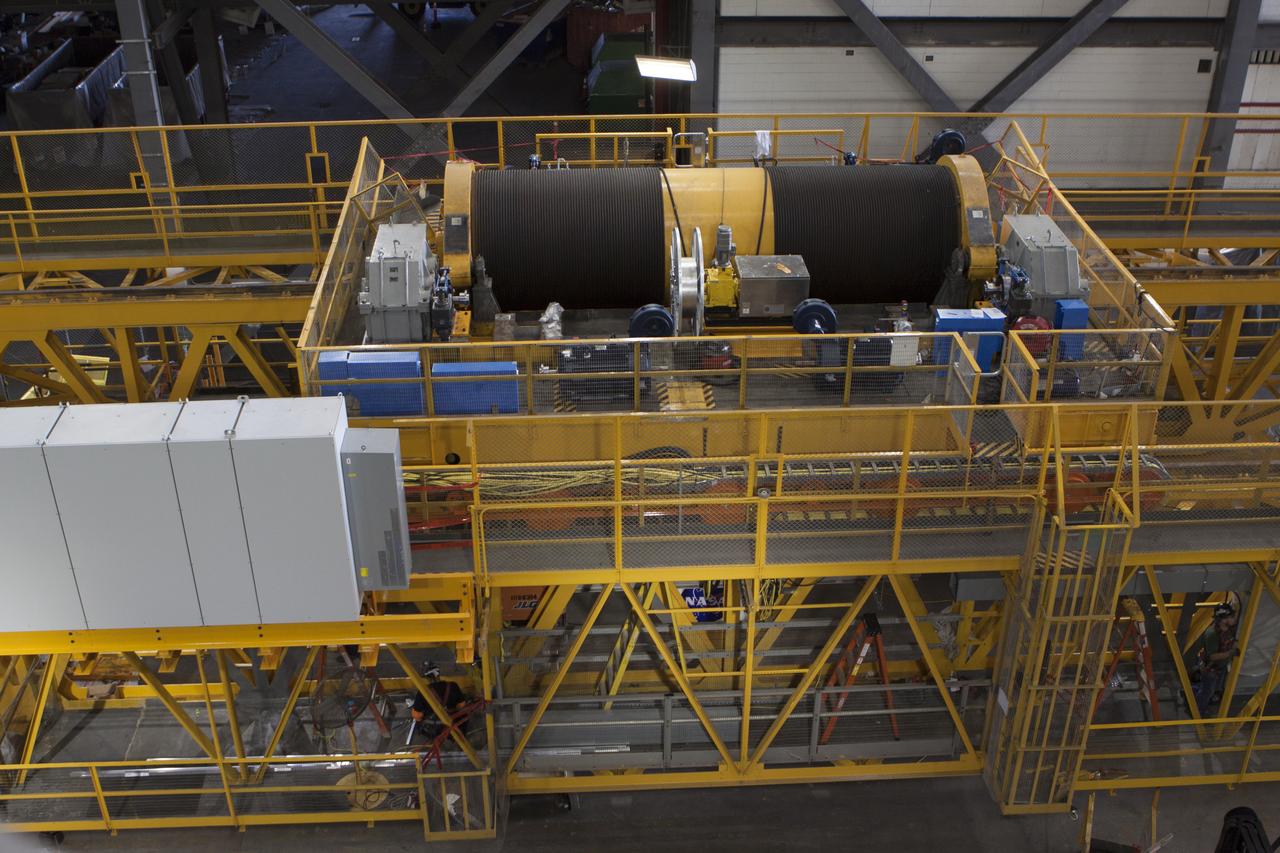
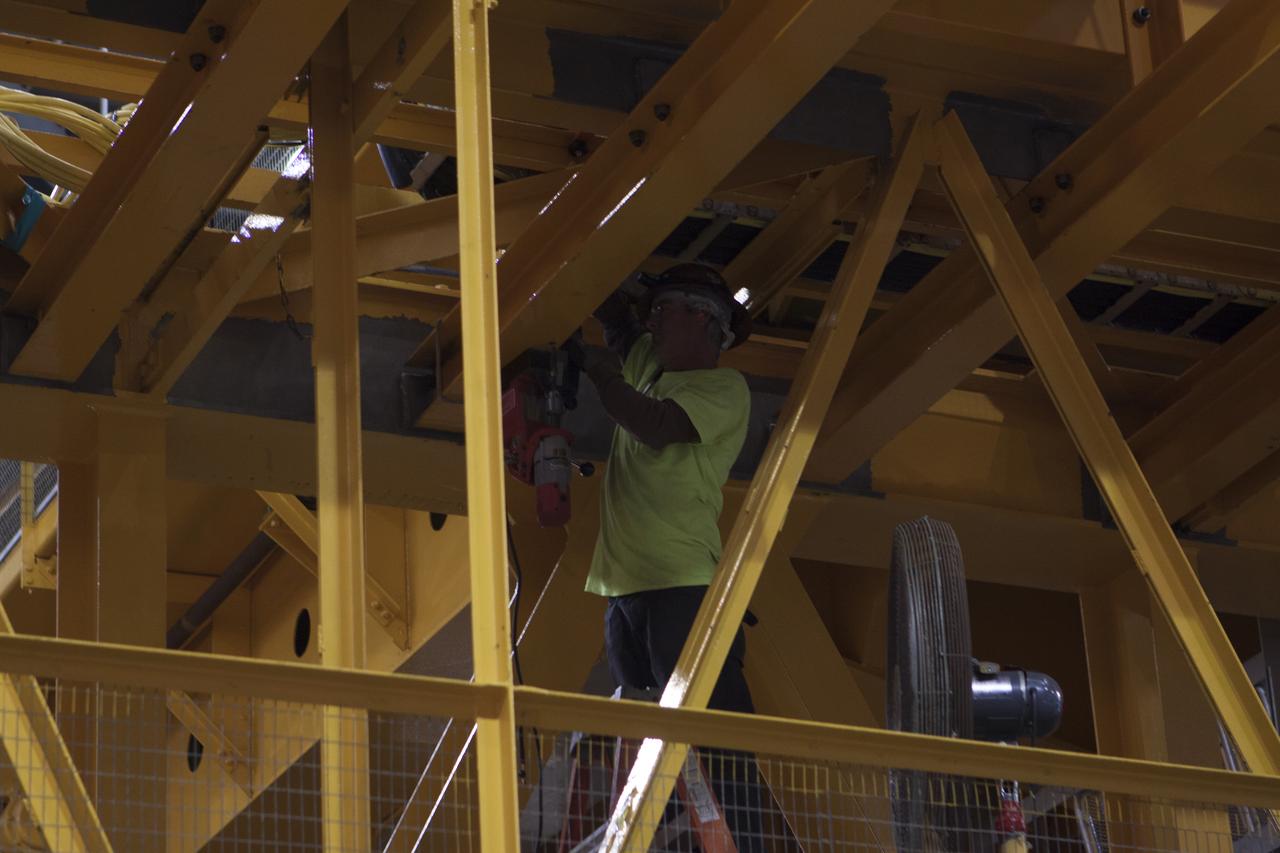
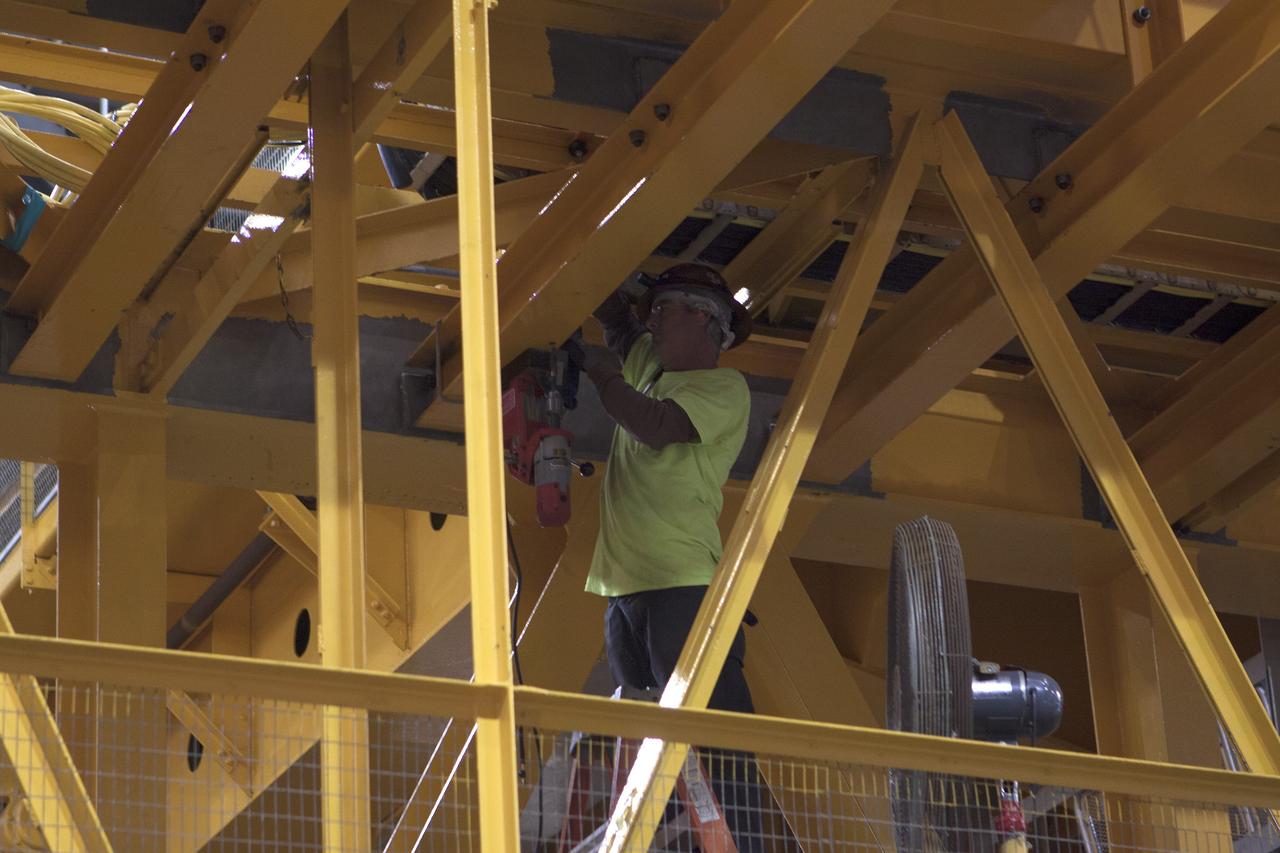
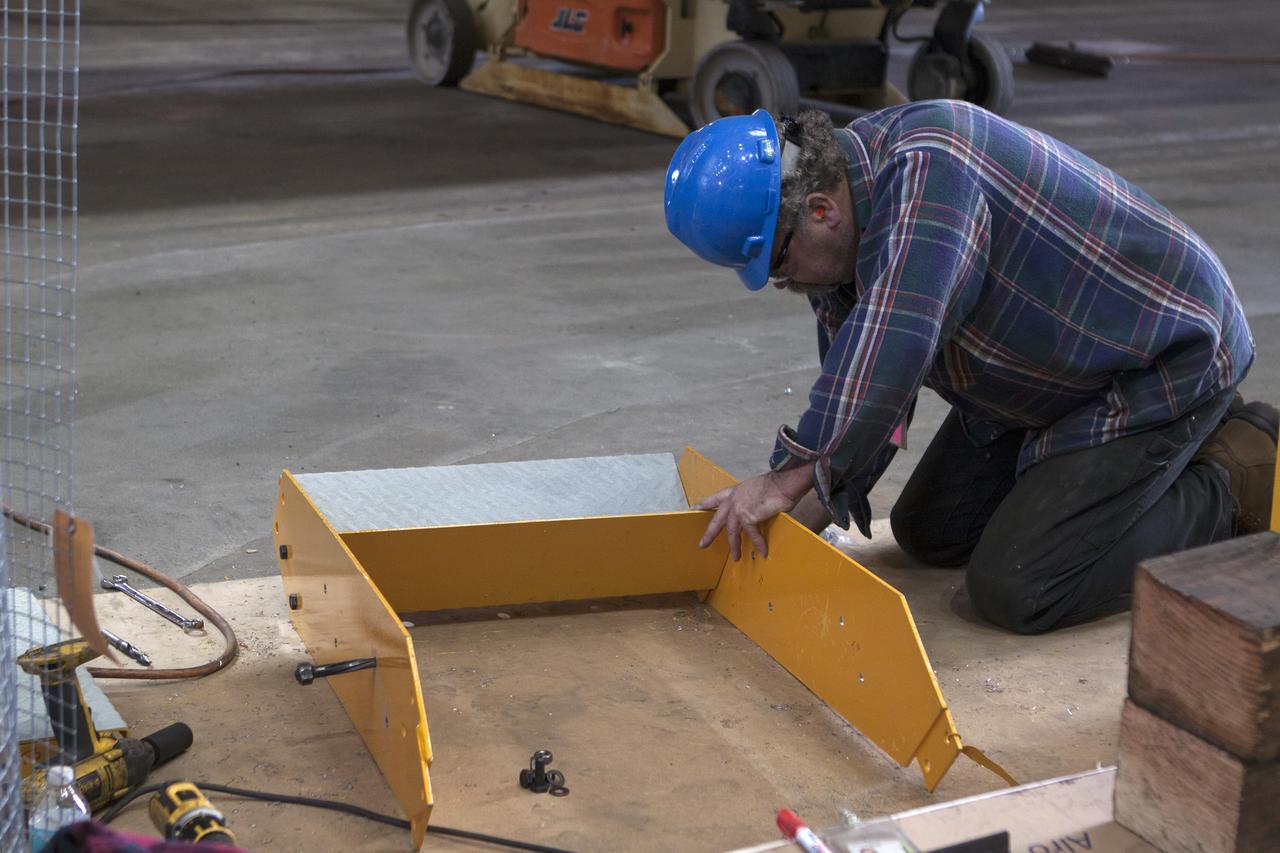
Inside the Vehicle Assembly Building at NASA's Kennedy Space Center in Florida, a construction worker continues with refurbishment and upgrades to the 175-ton crane on the ground floor of the transfer aisle. The crane's 45-year-old controls are being upgraded to improve reliability, precision and safety. The Ground Systems Development and Operations Program is overseeing upgrades and modifications to the crane so that it can support lifting needs for NASA and other exploration vehicles, including the agency's Space Launch System and Orion spacecraft.
VAB Crane Work Progress
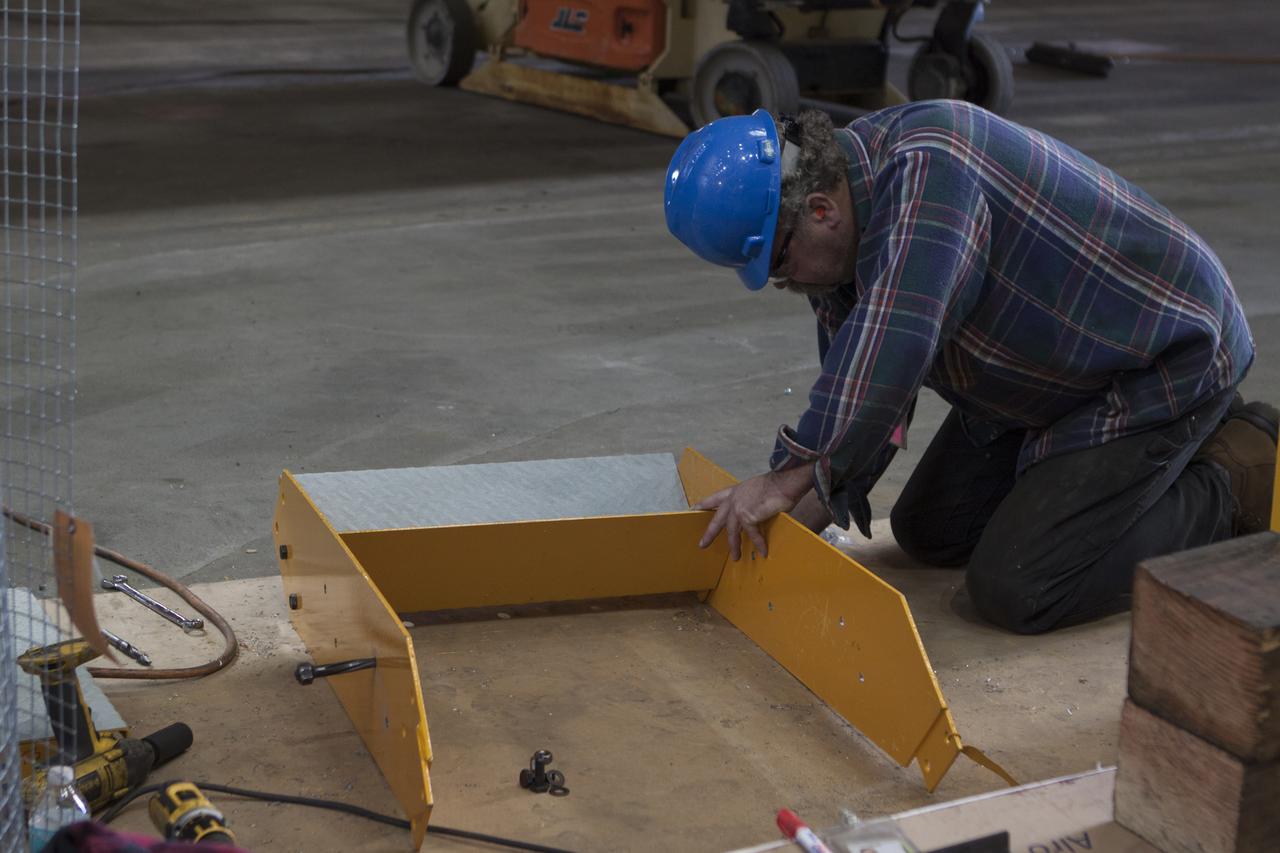
Inside the Vehicle Assembly Building at NASA's Kennedy Space Center in Florida, a construction worker continues with refurbishment and upgrades to parts of the 175-ton crane on the ground floor of the transfer aisle. The crane's 45-year-old controls are being upgraded to improve reliability, precision and safety. The Ground Systems Development and Operations Program is overseeing upgrades and modifications to the crane so that it can support lifting needs for NASA and other exploration vehicles, including the agency's Space Launch System and Orion spacecraft.
VAB Crane Work Progress
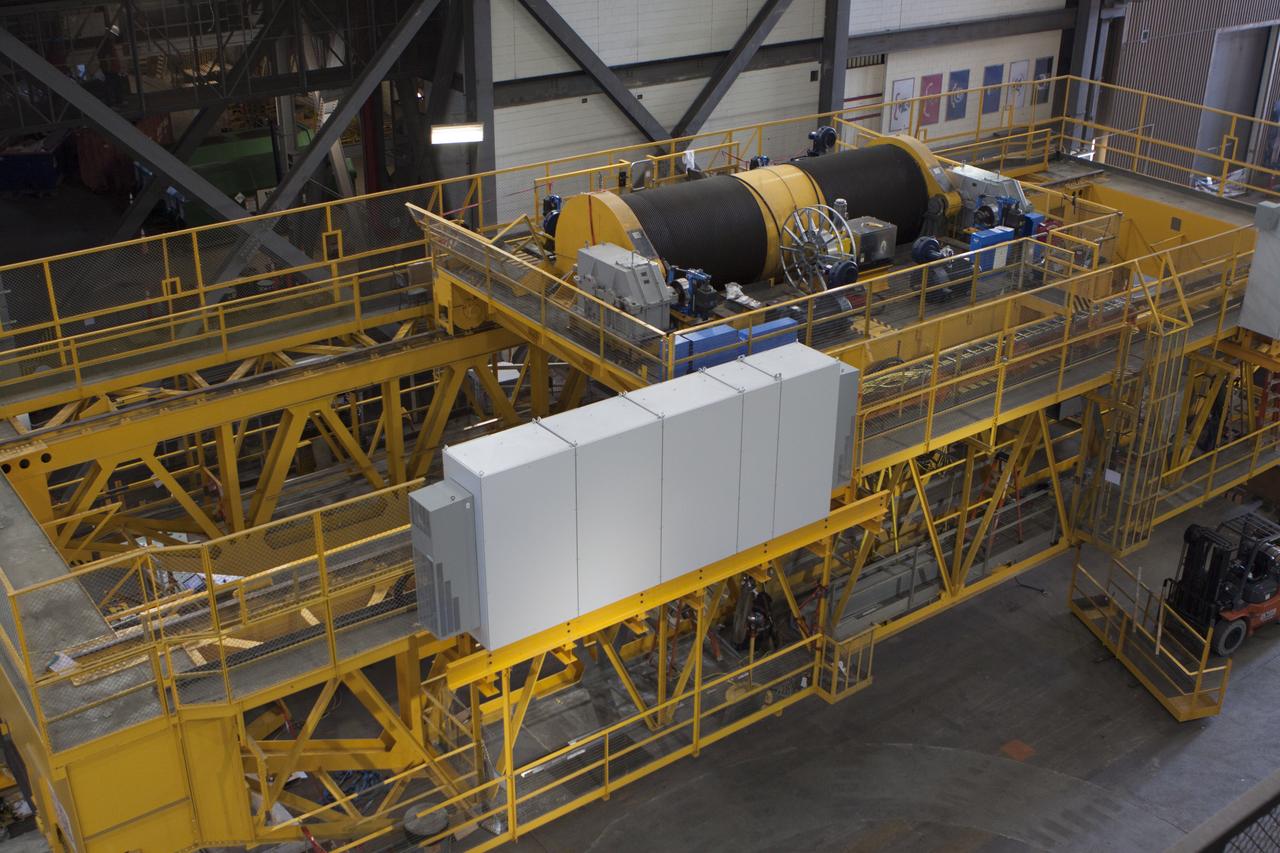
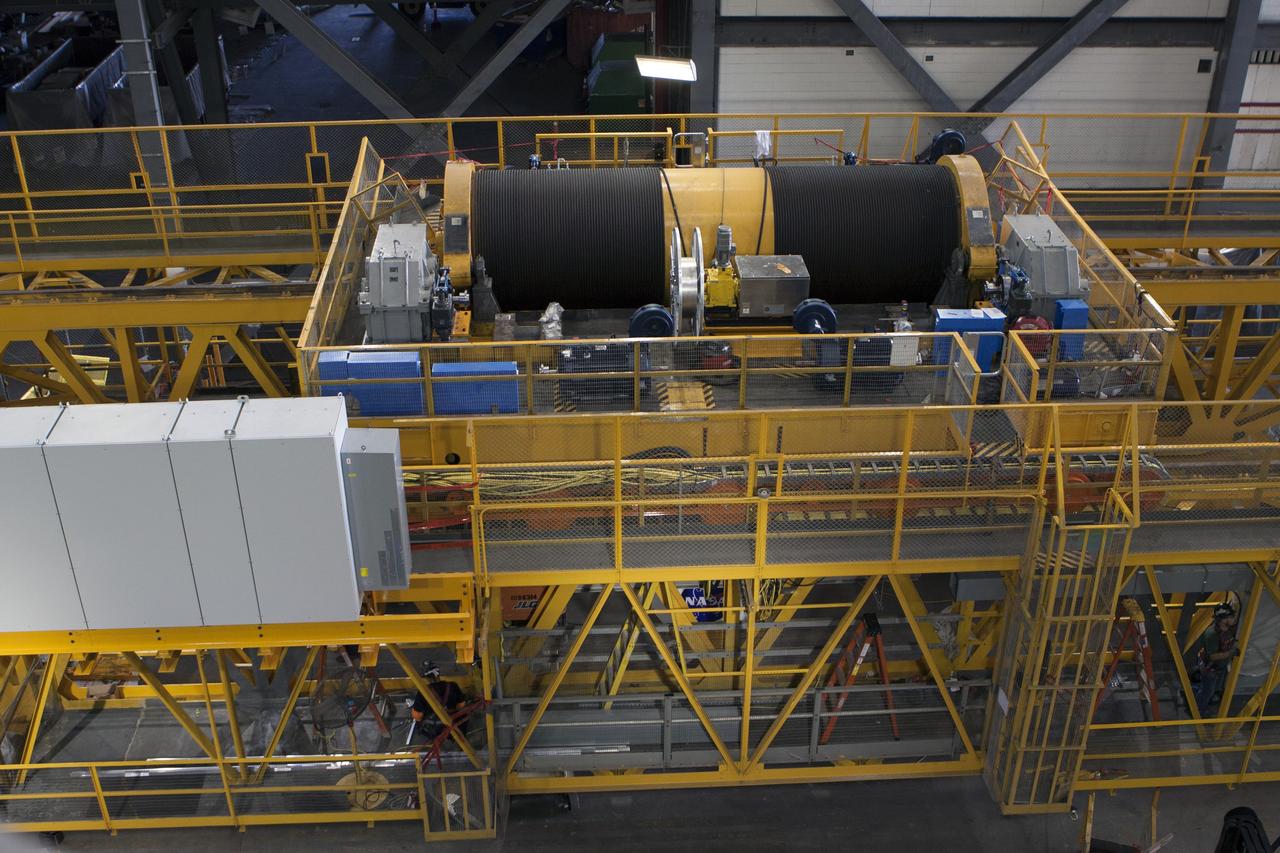
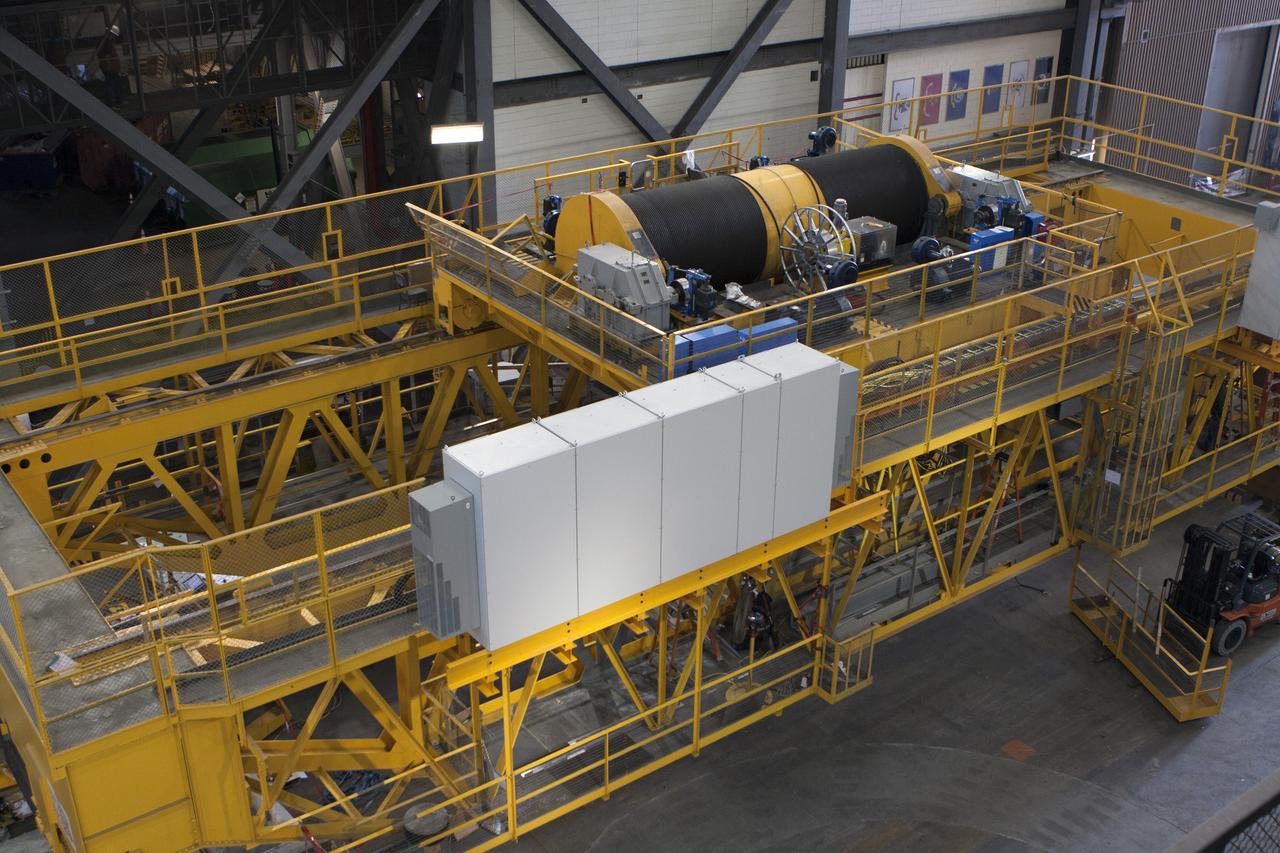
A view from above inside the Vehicle Assembly Building at NASA's Kennedy Space Center in Florida, shows the 175-ton crane on the ground floor of the transfer aisle. The crane's 45-year-old controls are being upgraded to improve reliability, precision and safety. The Ground Systems Development and Operations Program is overseeing upgrades and modifications to the crane so that it can support lifting needs for NASA and other exploration vehicles, including the agency's Space Launch System and Orion spacecraft.
VAB Crane Work Progress
A view from above inside the Vehicle Assembly Building at NASA's Kennedy Space Center in Florida, shows the 175-ton crane on the ground floor of the transfer aisle. The crane's 45-year-old controls are being upgraded to improve reliability, precision and safety. The Ground Systems Development and Operations Program is overseeing upgrades and modifications to the crane so that it can support lifting needs for NASA and other exploration vehicles, including the agency's Space Launch System and Orion spacecraft.
VAB Crane Work Progress
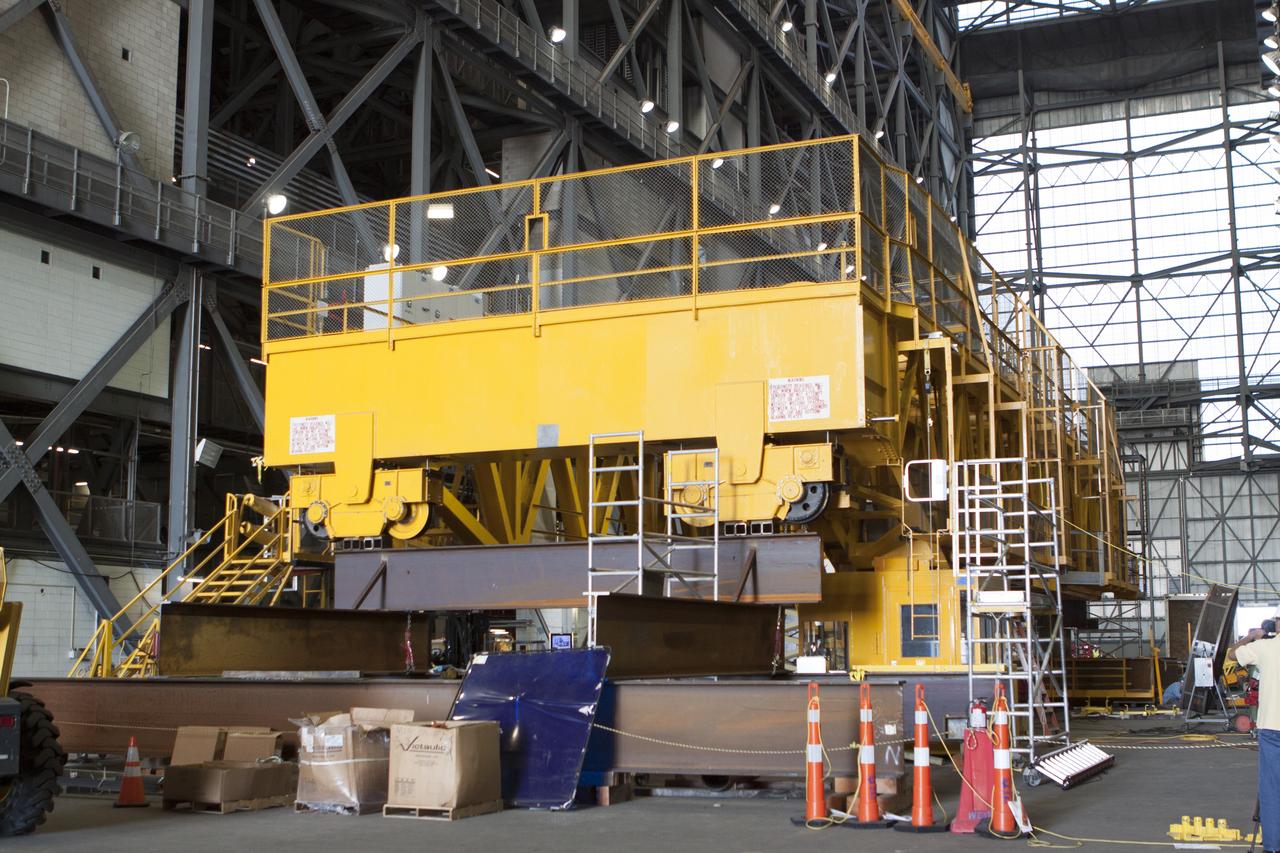
Upgrades and modifications continue on the 175-ton crane on the ground floor of the transfer aisle inside the Vehicle Assembly Building at NASA's Kennedy Space Center in Florida. The crane's 45-year-old controls are being upgraded to improve reliability, precision and safety. The Ground Systems Development and Operations Program is overseeing upgrades and modifications to the crane so that it can support lifting needs for NASA and other exploration vehicles, including the agency's Space Launch System and Orion spacecraft.
VAB Crane Work Progress
Inside the Vehicle Assembly Building at NASA's Kennedy Space Center in Florida, construction workers continue with refurbishment and upgrades to the 175-ton crane on the ground floor of the transfer aisle. The crane's 45-year-old controls are being upgraded to improve reliability, precision and safety. The Ground Systems Development and Operations Program is overseeing upgrades and modifications to the crane so that it can support lifting needs for NASA and other exploration vehicles, including the agency's Space Launch System and Orion spacecraft.
VAB Crane Work Progress
Inside the Vehicle Assembly Building at NASA's Kennedy Space Center in Florida, refurbishment and upgrades to the 175-ton crane are under way on the ground floor of the transfer aisle. The crane's 45-year-old controls are being upgraded to improve reliability, precision and safety. The Ground Systems Development and Operations Program is overseeing upgrades and modifications to the crane so that it can support lifting needs for NASA and other exploration vehicles, including the agency's Space Launch System and Orion spacecraft.
VAB Crane Work Progress
Sand Hill Cranes with VAB and LCC in Background
2010-2221
Sand Hill Cranes with VAB and LCC in Background
2010-2224
Sand Hill Cranes with VAB and LCC in Background
2010-2223
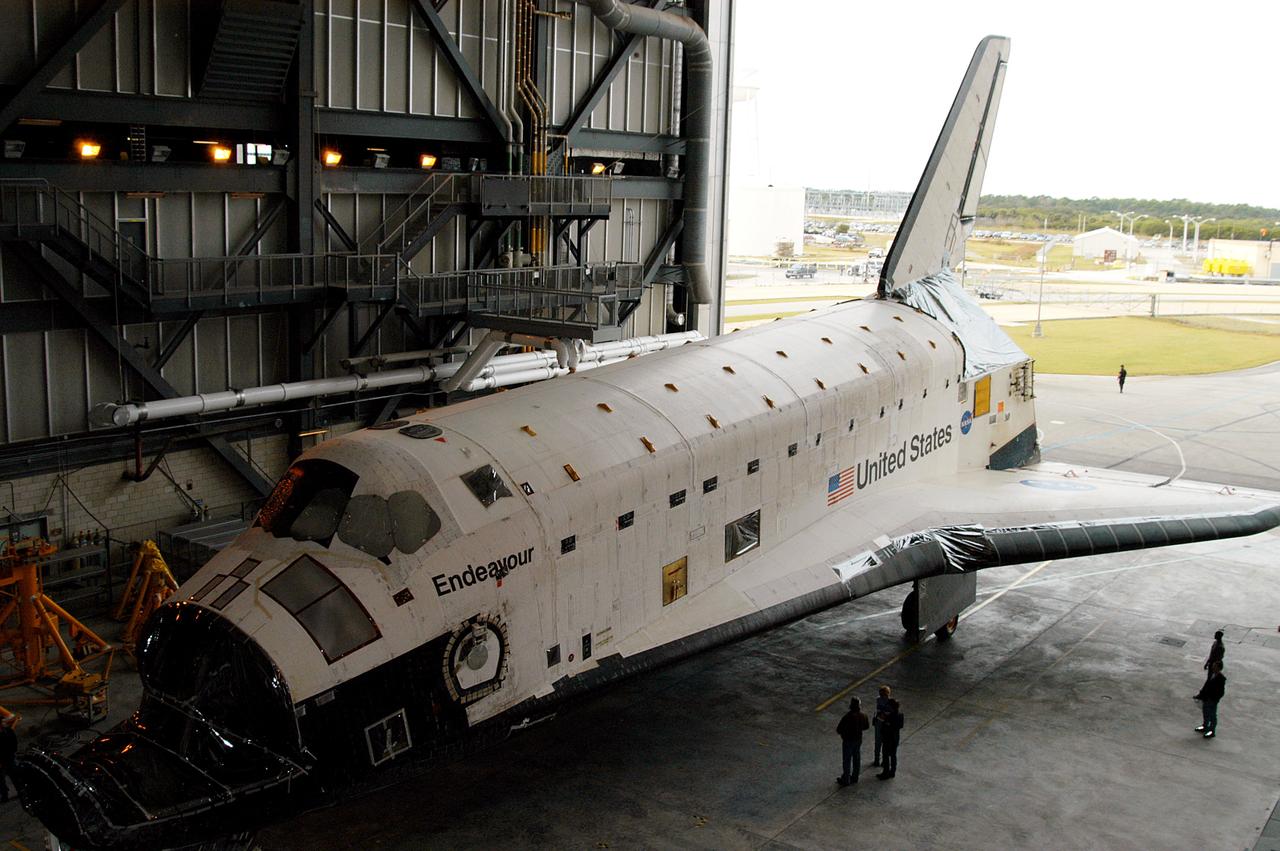
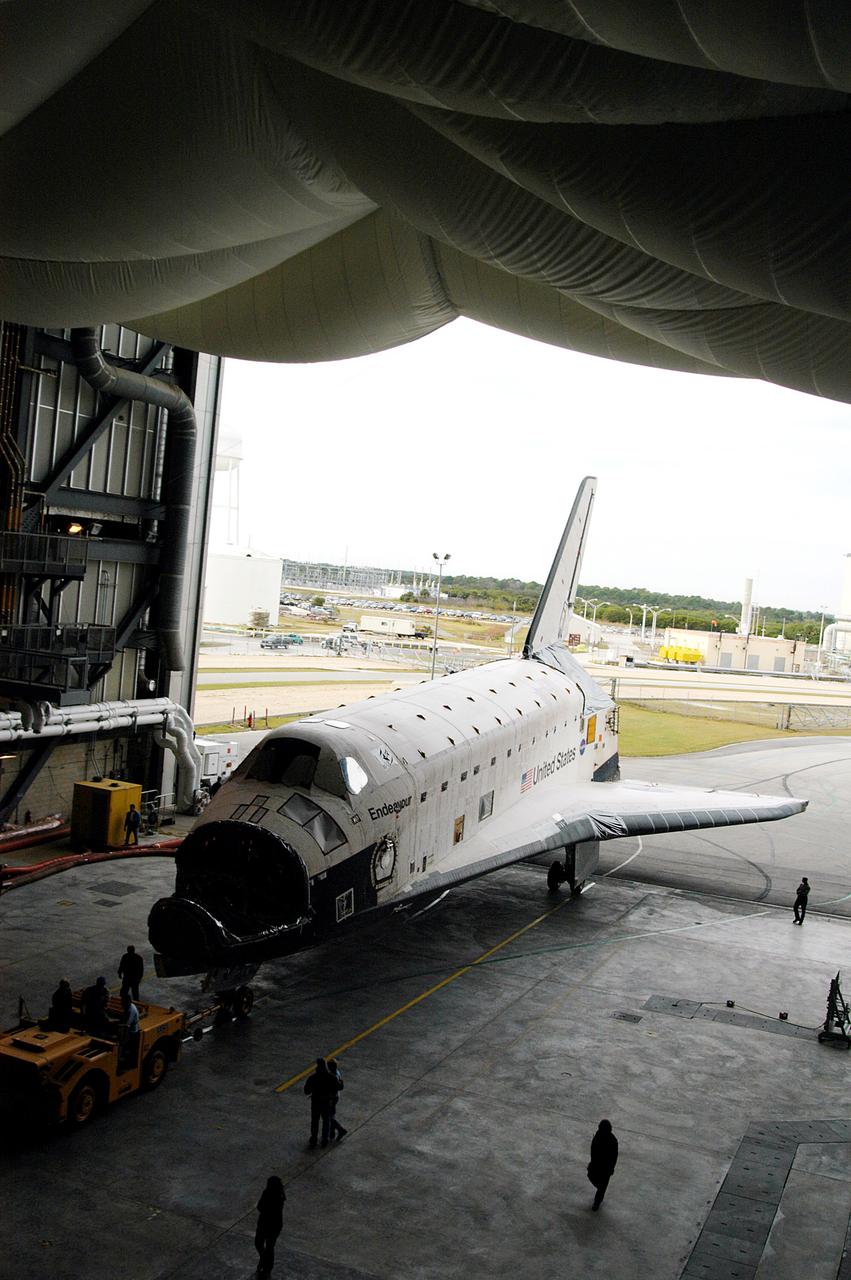
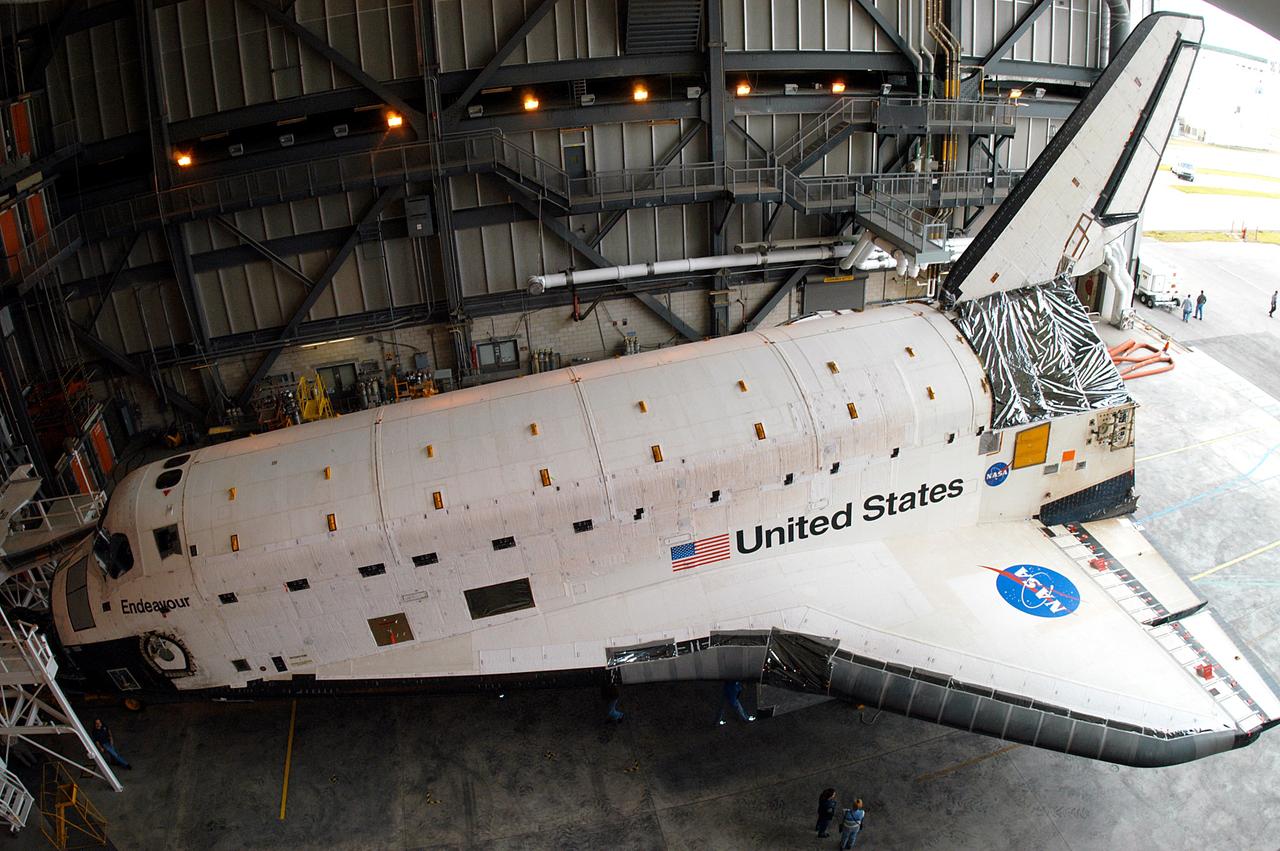
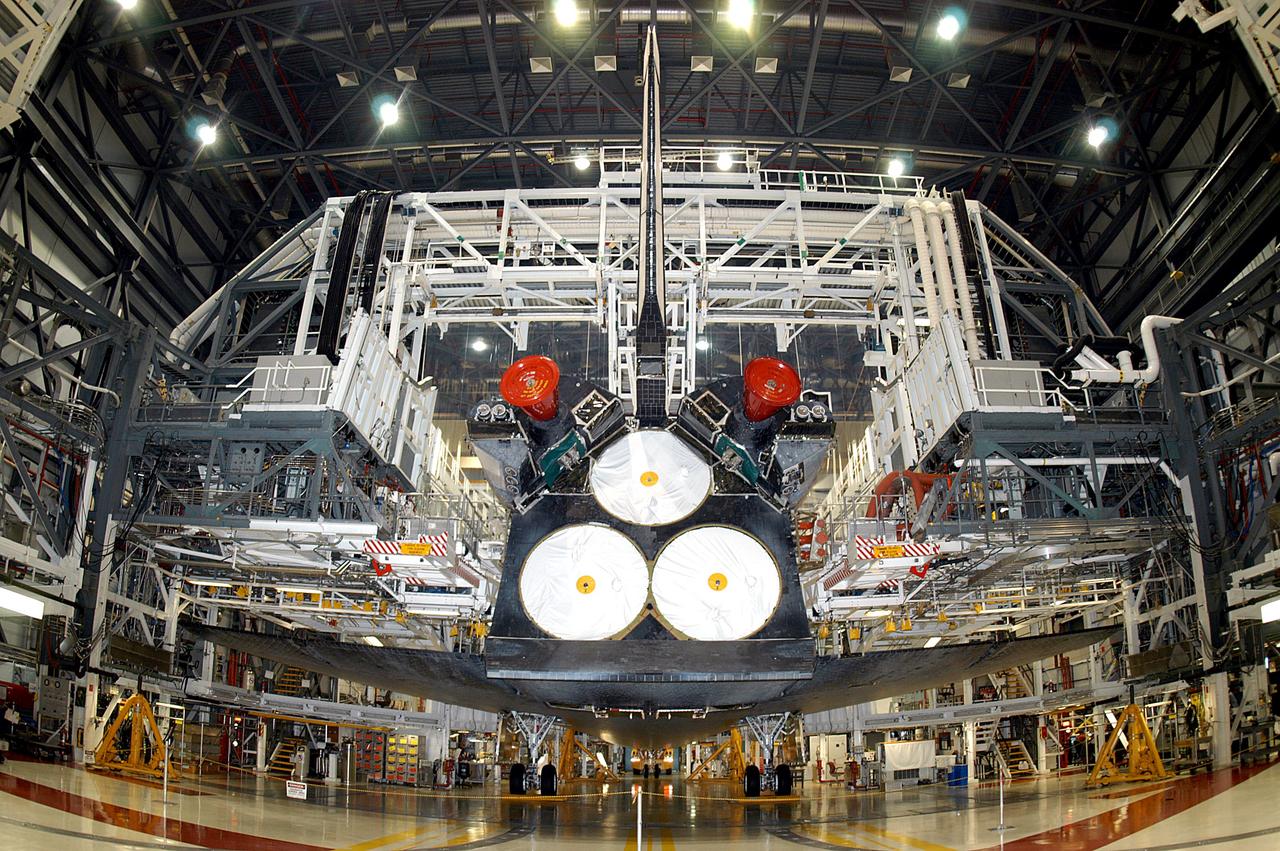
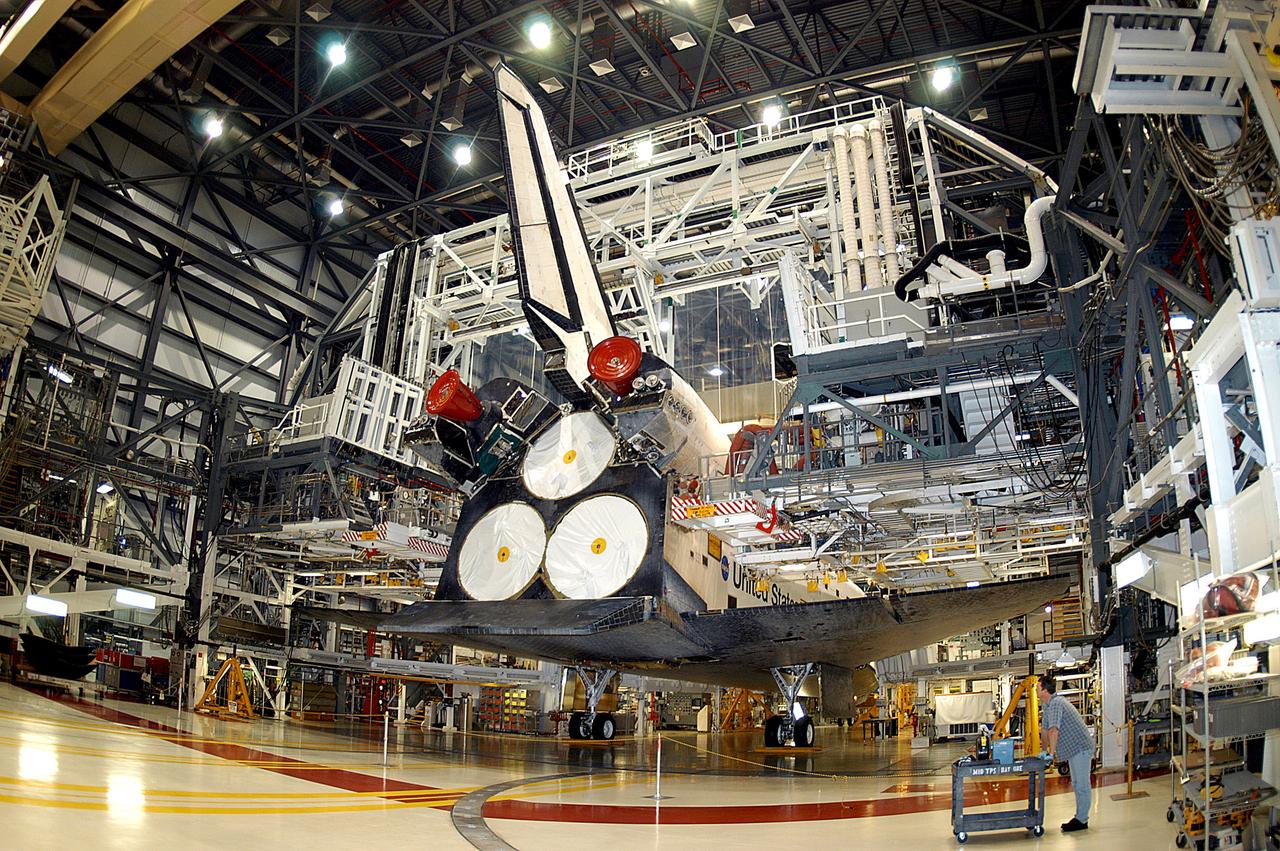
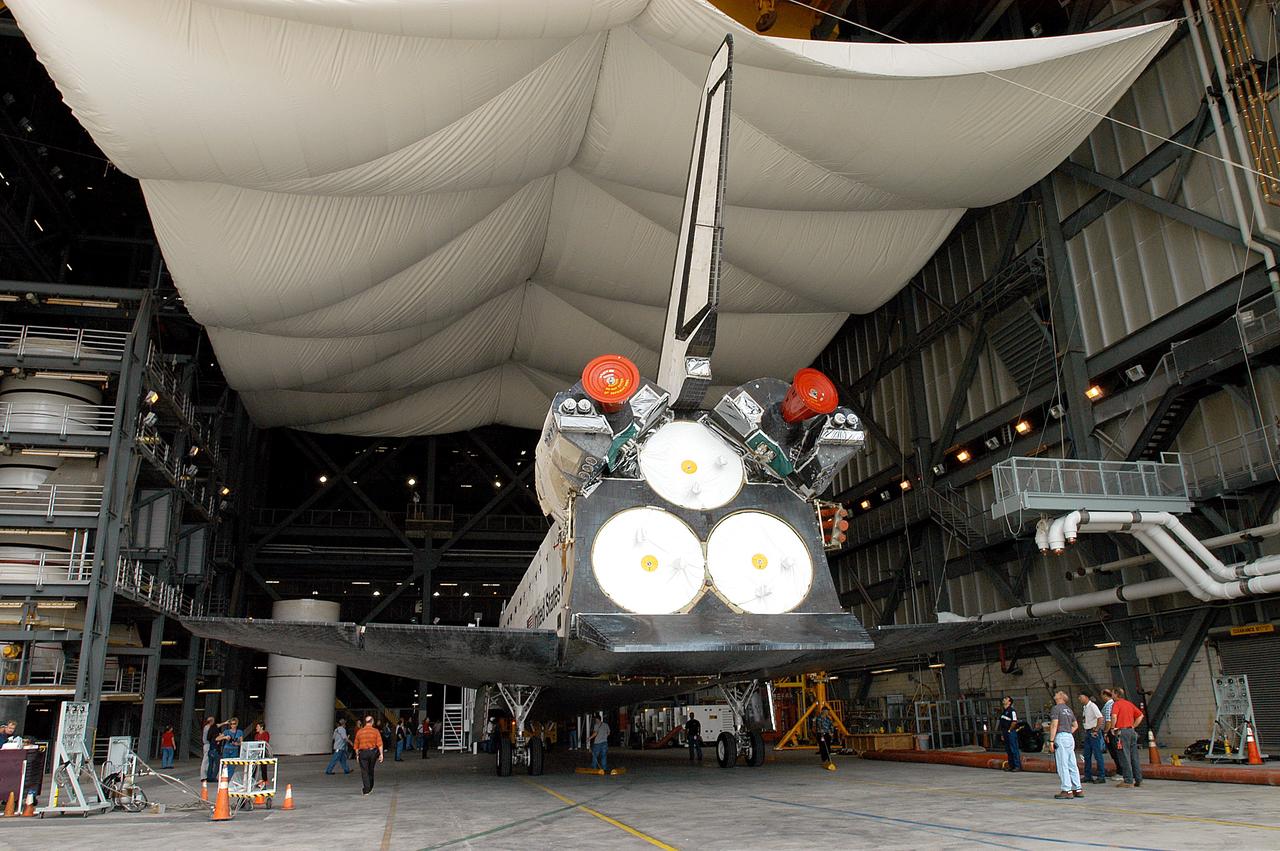
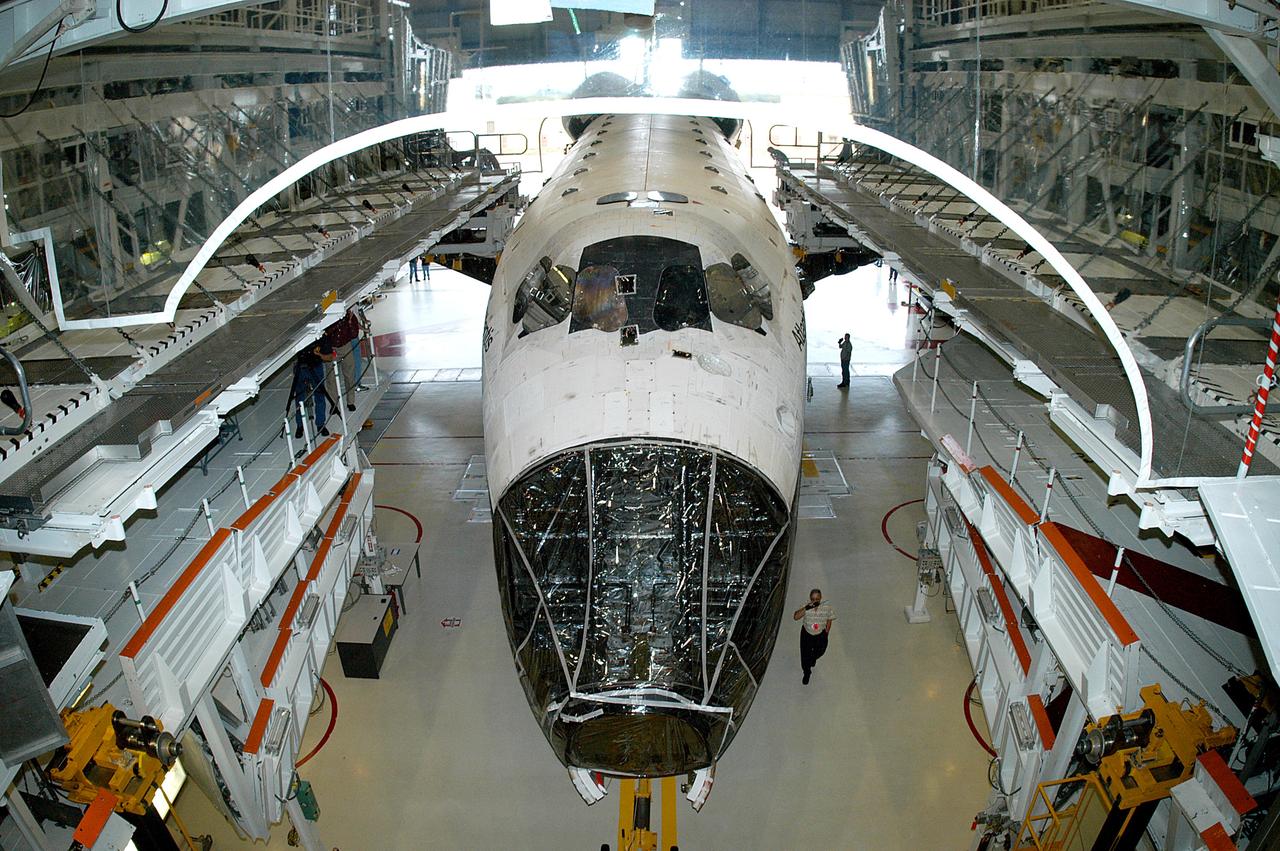
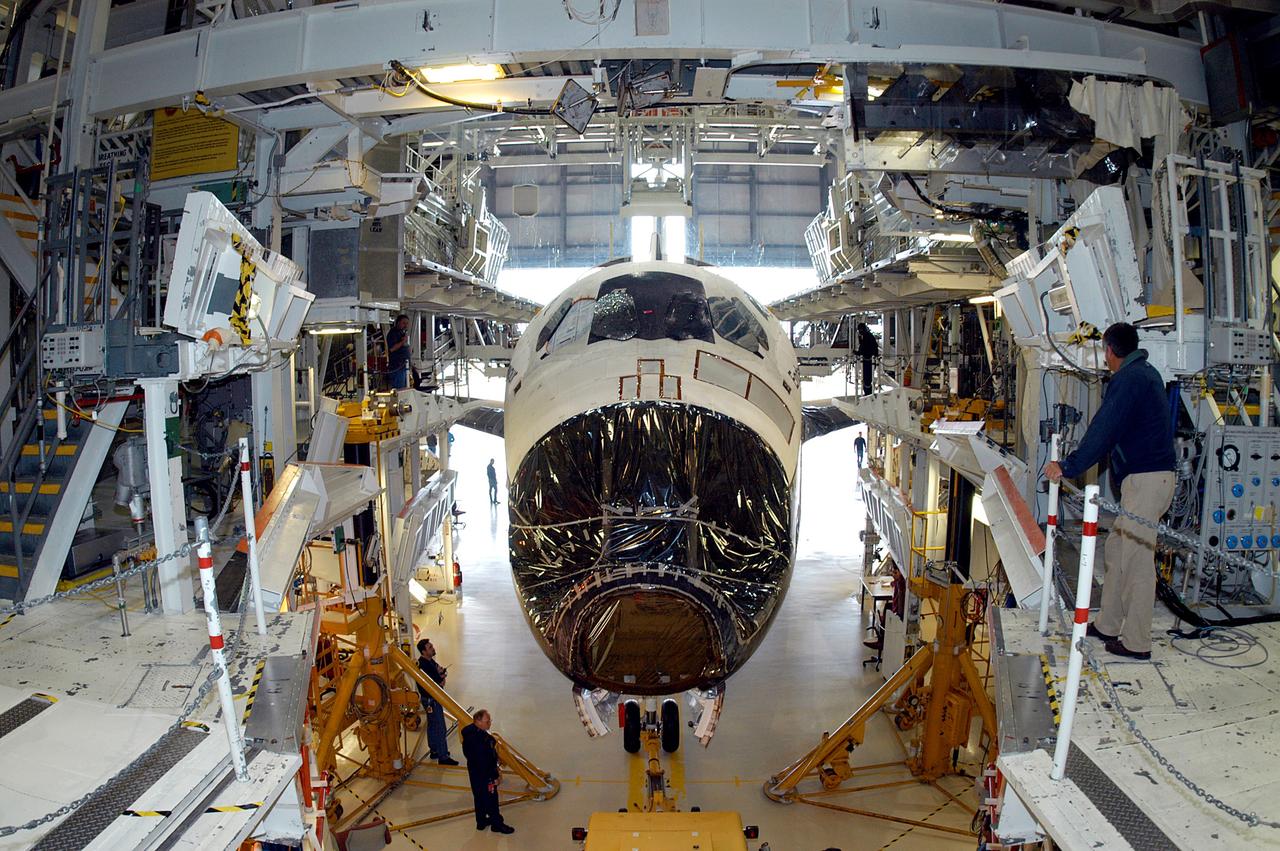
KENNEDY SPACE CENTER, FLA. -- Endeavour settles into  place inside the Vehicle Assembly Building (VAB) where it has been moved for temporary storage.  It left the Orbiter Processing Facility (OPF) to allow work to be performed in the OPF that can only be accomplished while the bay is empty. Work scheduled in the OPF includes annual validation of the bay’s cranes, work platforms, lifting mechanisms and jack stands. Endeavour will remain in the VAB for approximately 12 days, then return to the OPF.
KENNEDY SPACE CENTER, FLA. -- Endeavour settles into place inside the Vehicle Assembly Building (VAB) where it has been moved for temporary storage. It left the Orbiter Processing Facility (OPF) to allow work to be performed in the OPF that can only be accomplished while the bay is empty. Work scheduled in the OPF includes annual validation of the bay’s cranes, work platforms, lifting mechanisms and jack stands. Endeavour will remain in the VAB for approximately 12 days, then return to the OPF.
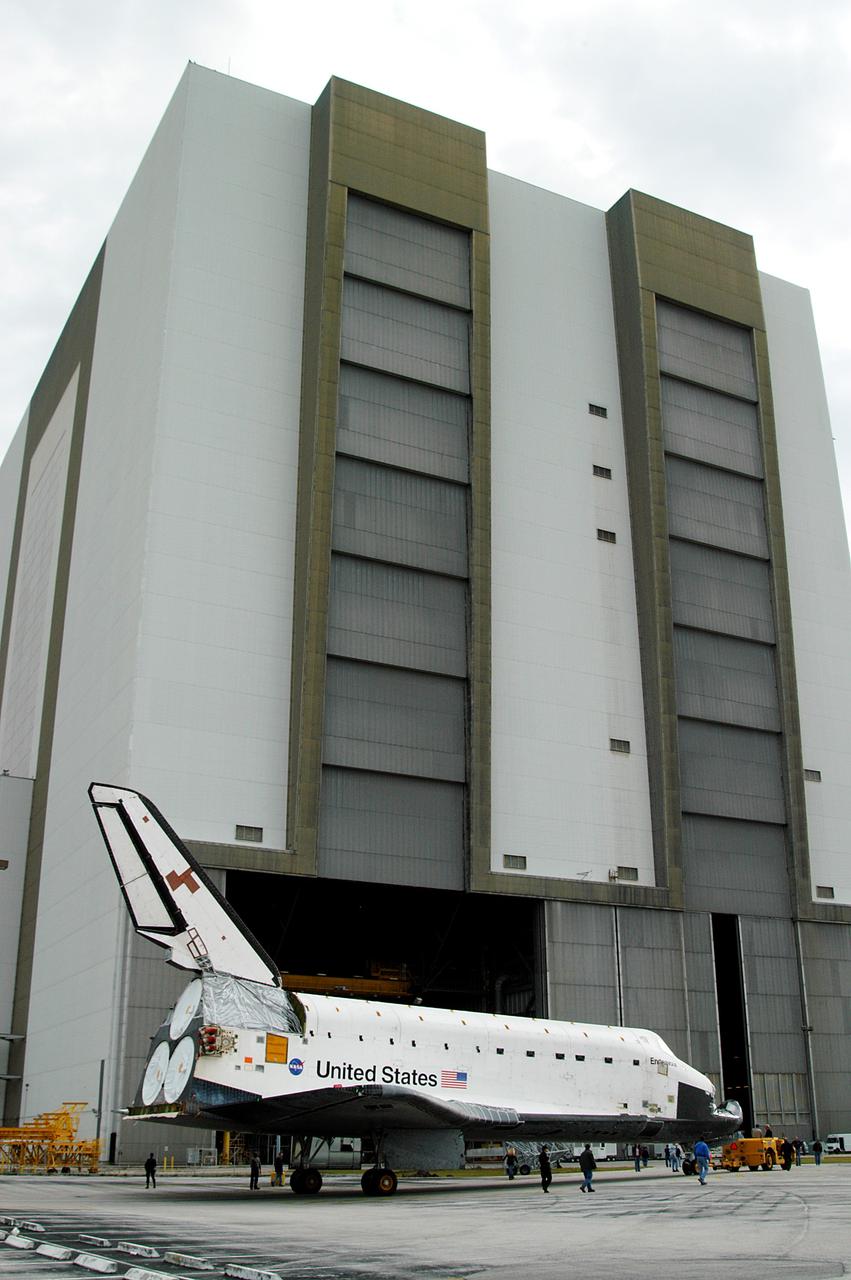
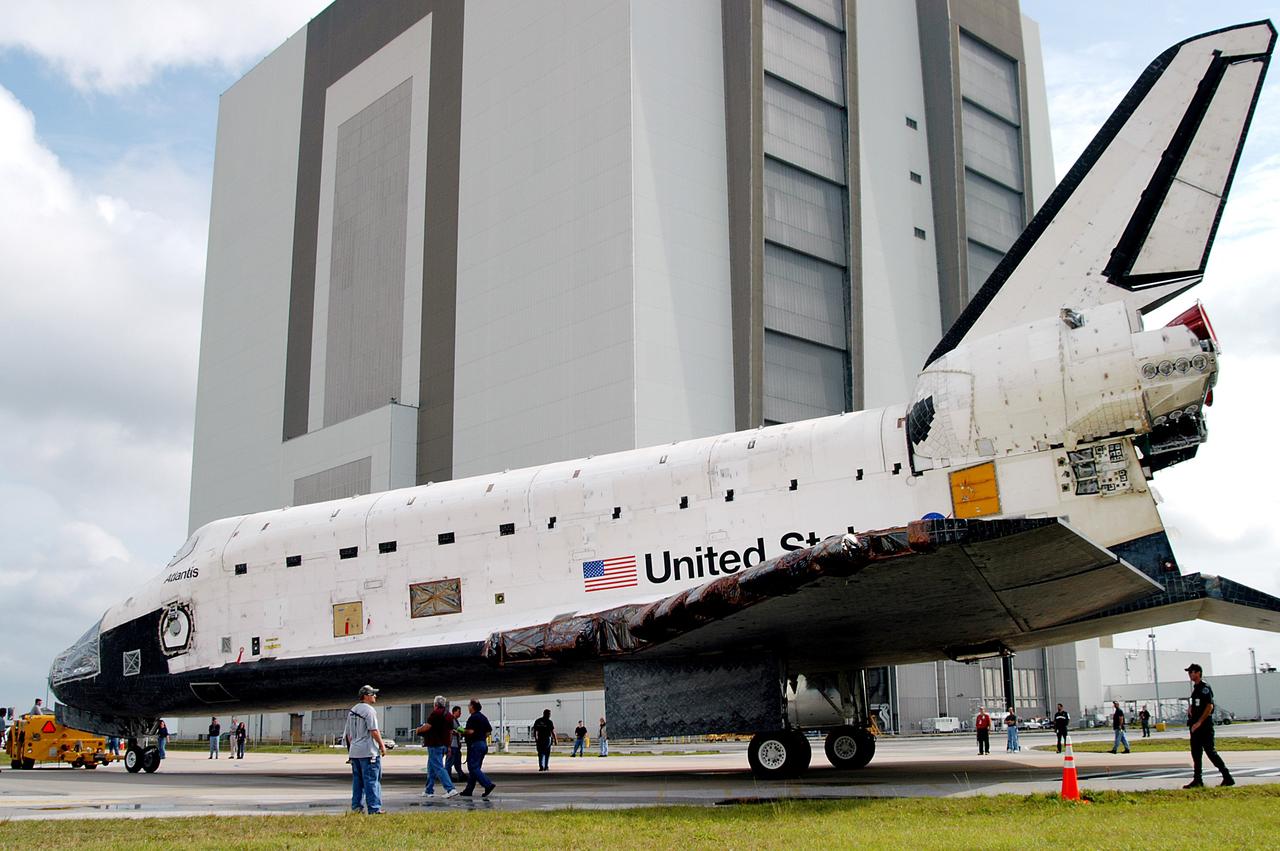
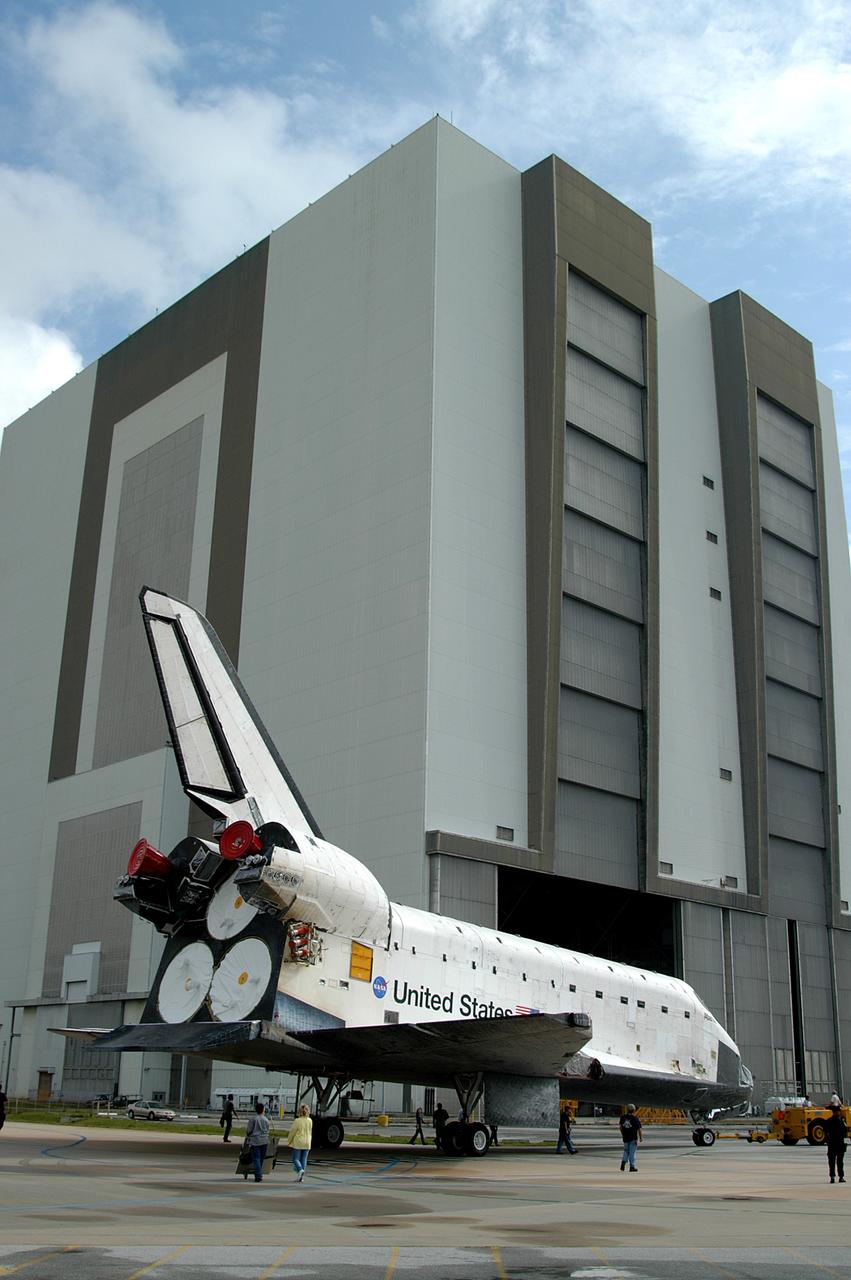
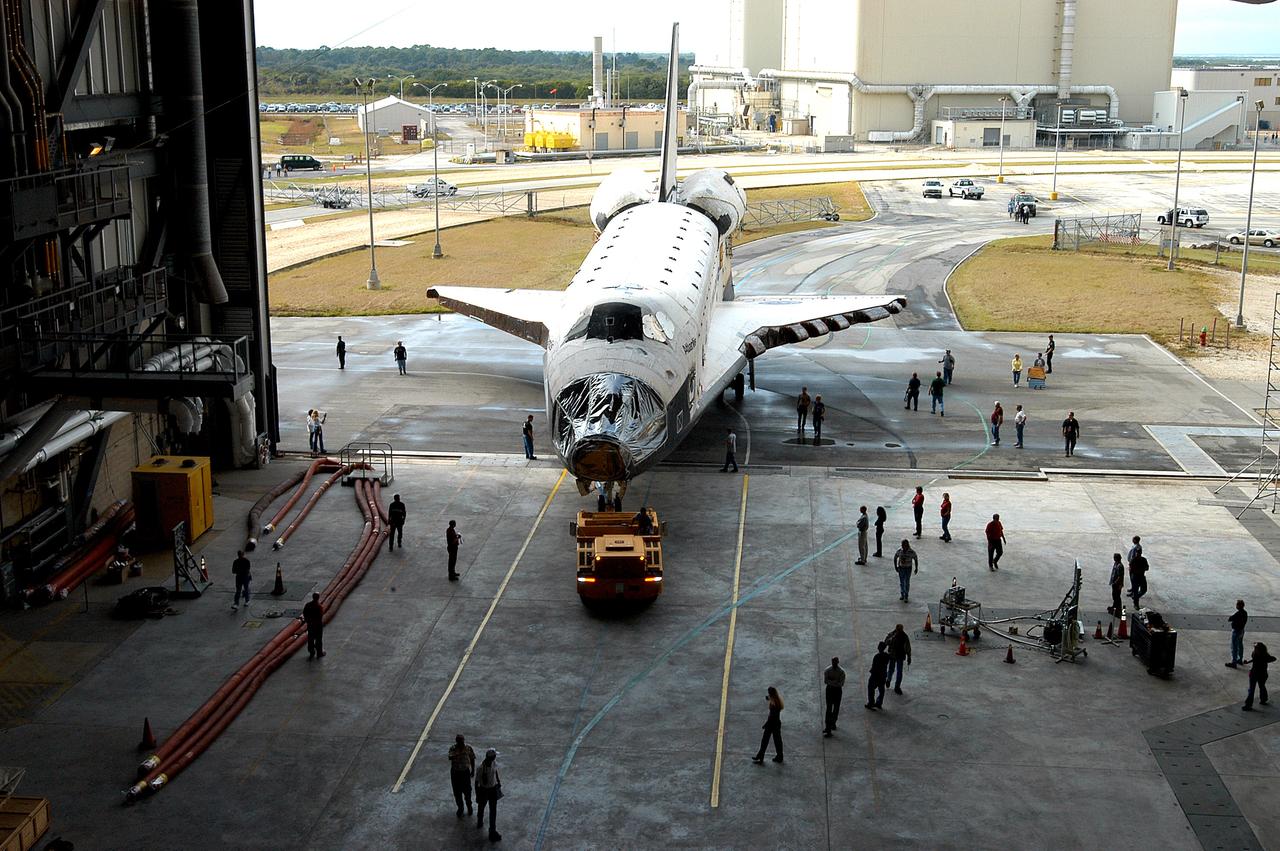
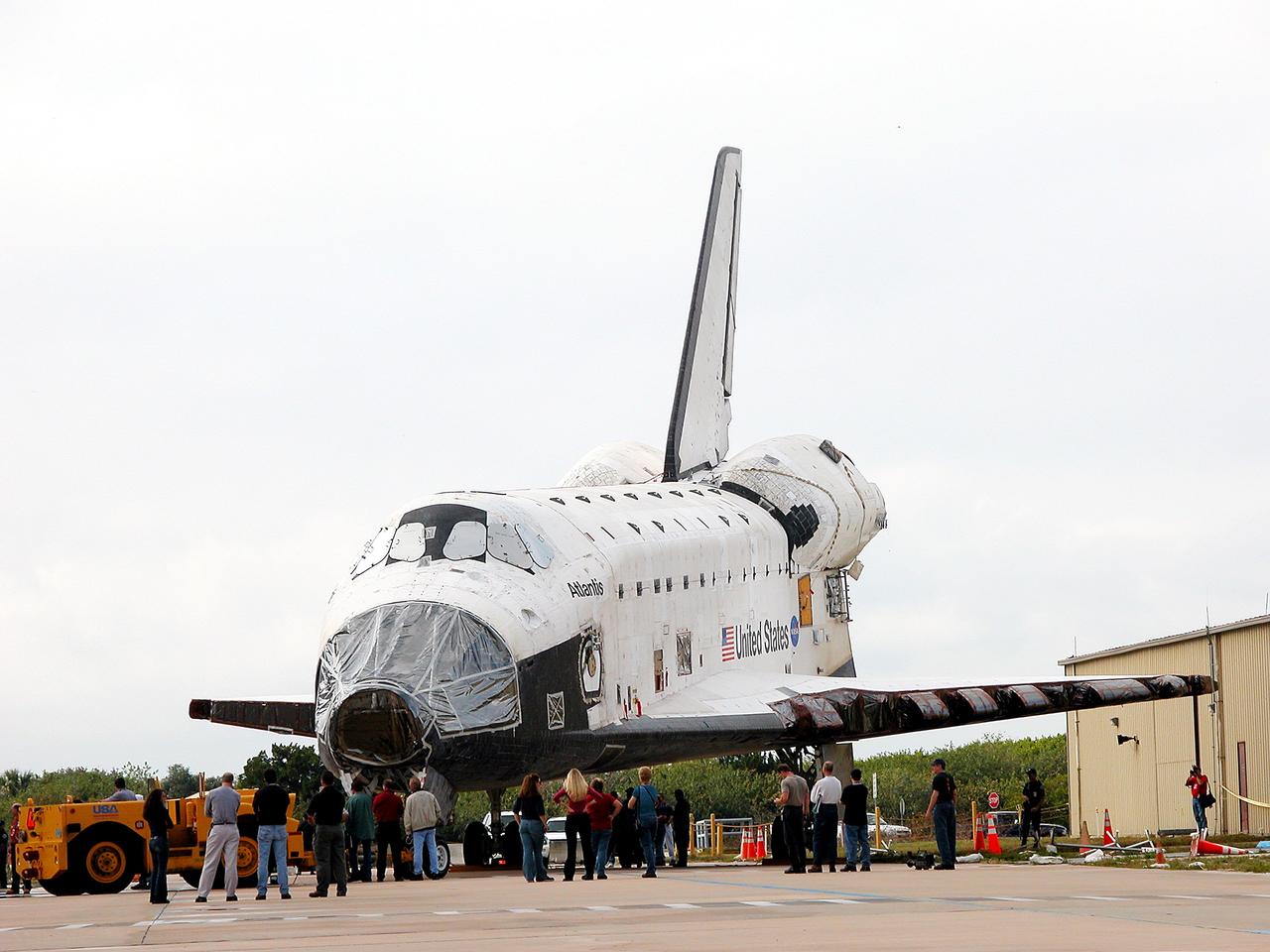
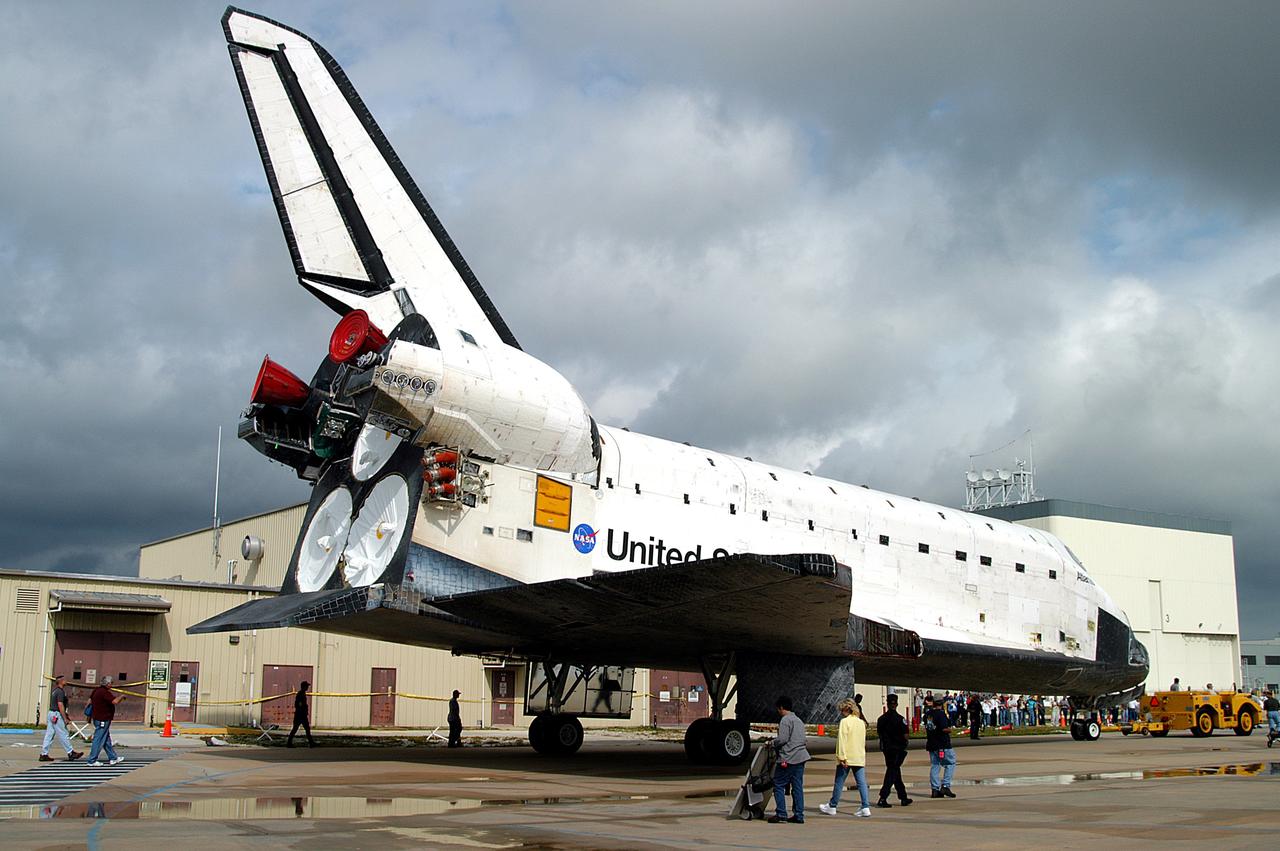
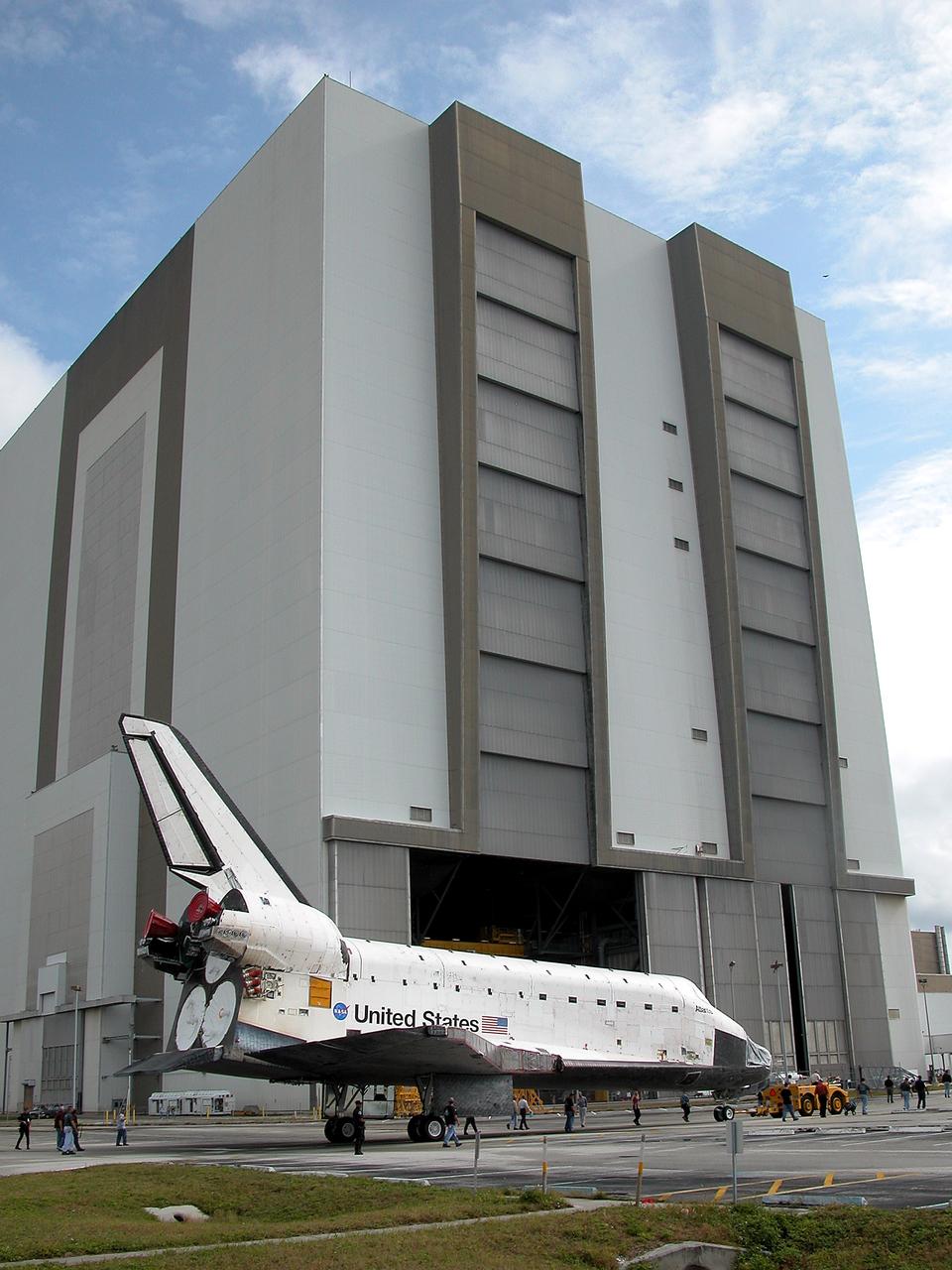
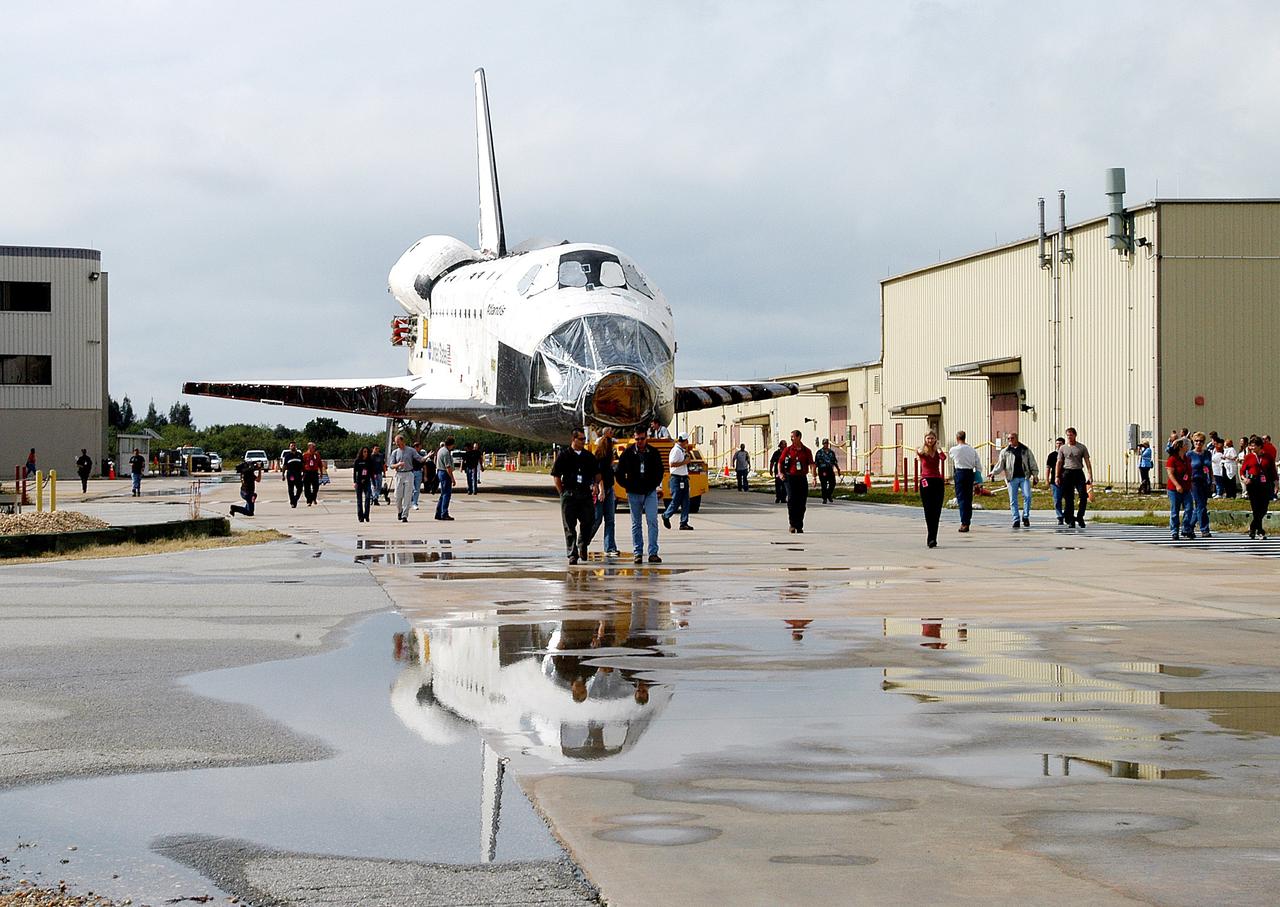
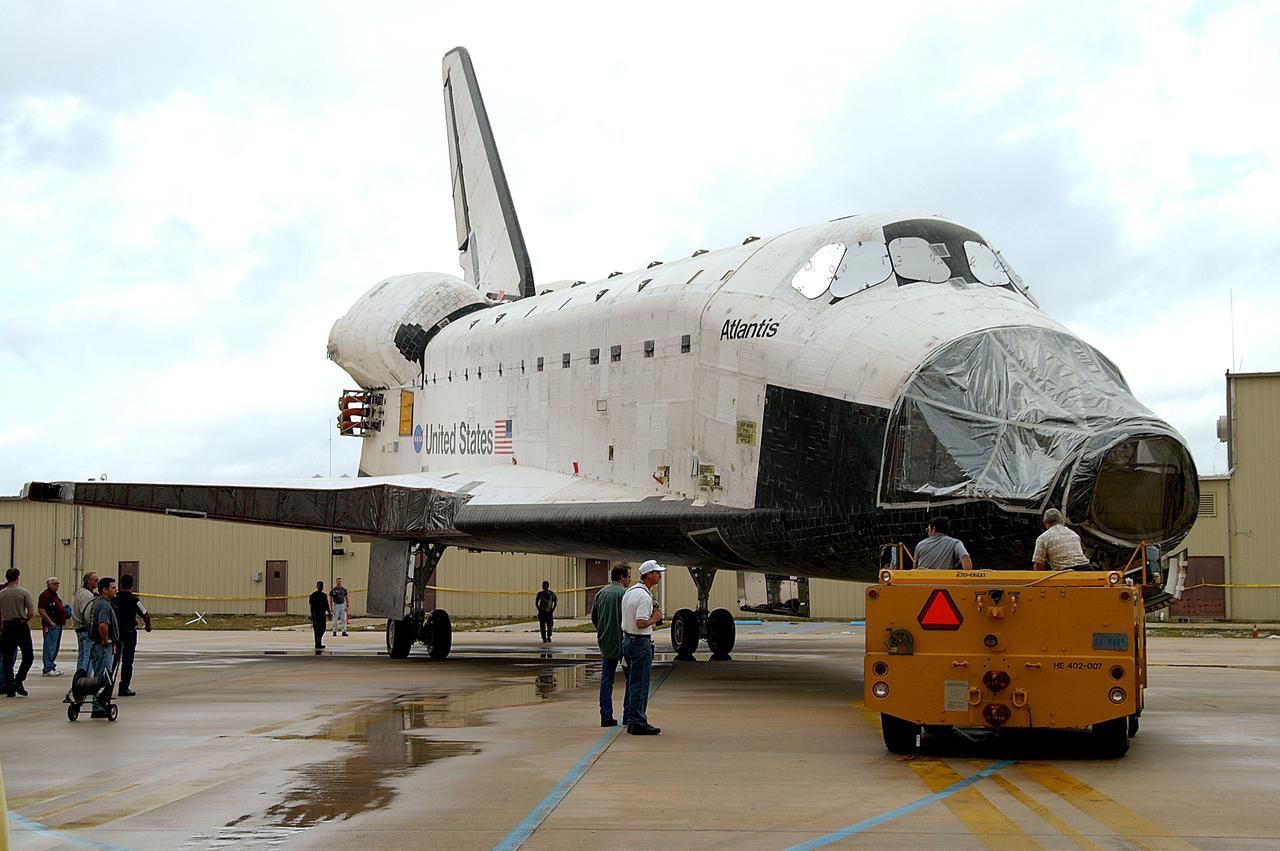
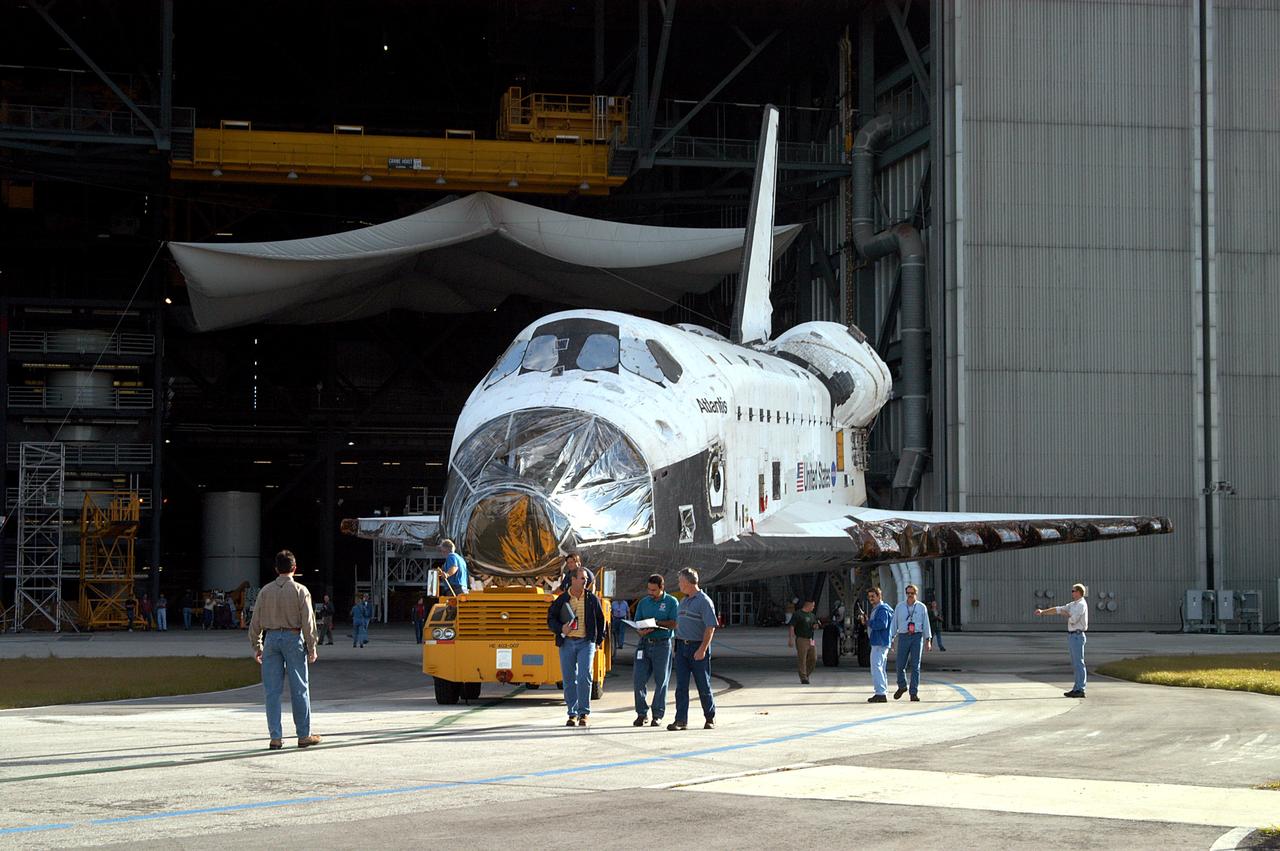
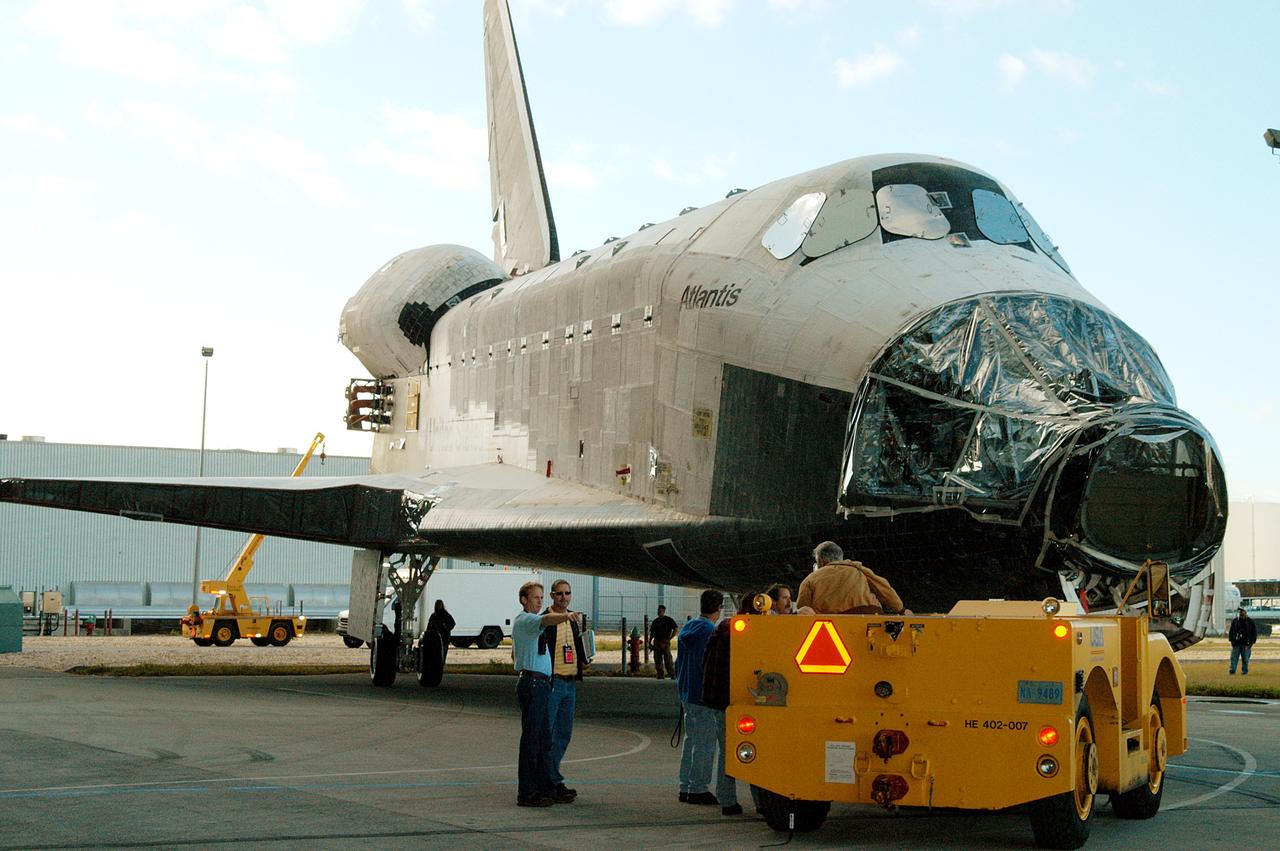
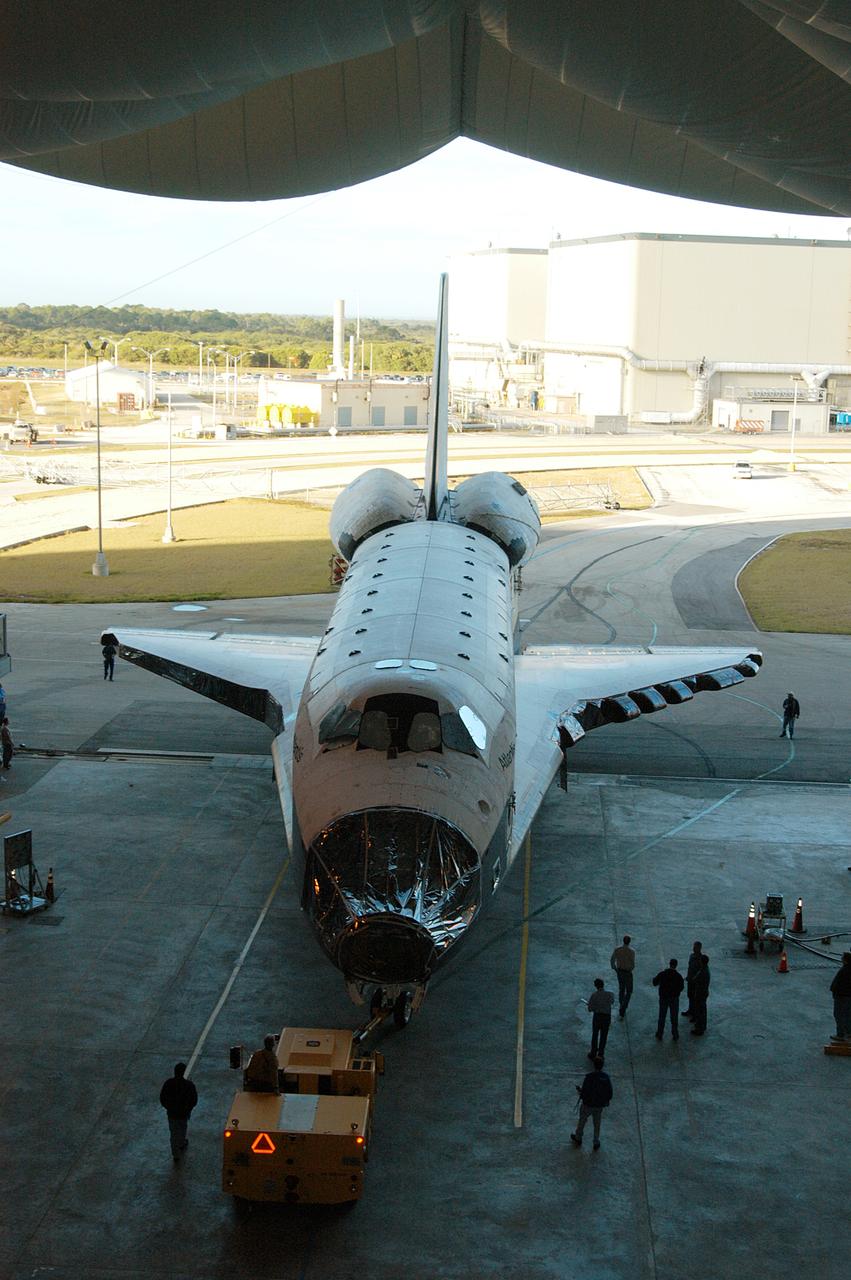
KENNEDY SPACE CENTER, FLA. - The Space Shuttle orbiter Atlantis approaches the Vehicle Assembly Building (VAB).  It is being towed from the Orbiter Processing Facility (OPF) to allow work to be performed in the bay that can only be accomplished while it is empty. Work scheduled in the processing facility includes annual validation of the bay's cranes, work platforms, lifting mechanisms, and jack stands. Atlantis will remain in the VAB for about 10 days, then return to the OPF as work resumes to prepare it for launch in September 2004 on the first return-to-flight mission, STS-114.
KENNEDY SPACE CENTER, FLA. - The Space Shuttle orbiter Atlantis approaches the Vehicle Assembly Building (VAB). It is being towed from the Orbiter Processing Facility (OPF) to allow work to be performed in the bay that can only be accomplished while it is empty. Work scheduled in the processing facility includes annual validation of the bay's cranes, work platforms, lifting mechanisms, and jack stands. Atlantis will remain in the VAB for about 10 days, then return to the OPF as work resumes to prepare it for launch in September 2004 on the first return-to-flight mission, STS-114.
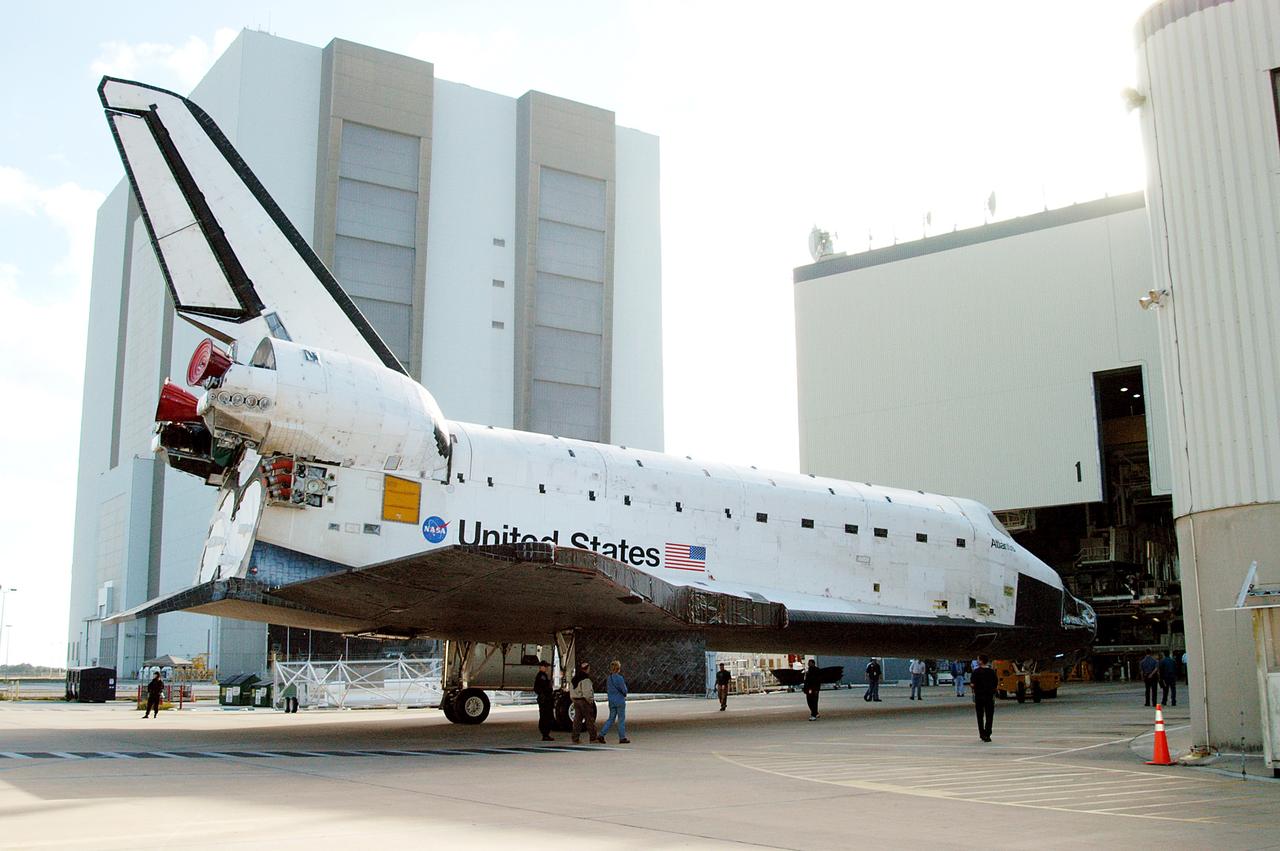
KENNEDY SPACE CENTER, FLA. - The Space Shuttle orbiter Atlantis nears the Vehicle Assembly Building (VAB).  It is being towed from the Orbiter Processing Facility (OPF) to allow work to be performed in the bay that can only be accomplished while it is empty. Work scheduled in the processing facility includes annual validation of the bay's cranes, work platforms, lifting mechanisms, and jack stands. Atlantis will remain in the VAB for about 10 days, then return to the OPF as work resumes to prepare it for launch in September 2004 on the first return-to-flight mission, STS-114.
KENNEDY SPACE CENTER, FLA. - The Space Shuttle orbiter Atlantis nears the Vehicle Assembly Building (VAB). It is being towed from the Orbiter Processing Facility (OPF) to allow work to be performed in the bay that can only be accomplished while it is empty. Work scheduled in the processing facility includes annual validation of the bay's cranes, work platforms, lifting mechanisms, and jack stands. Atlantis will remain in the VAB for about 10 days, then return to the OPF as work resumes to prepare it for launch in September 2004 on the first return-to-flight mission, STS-114.
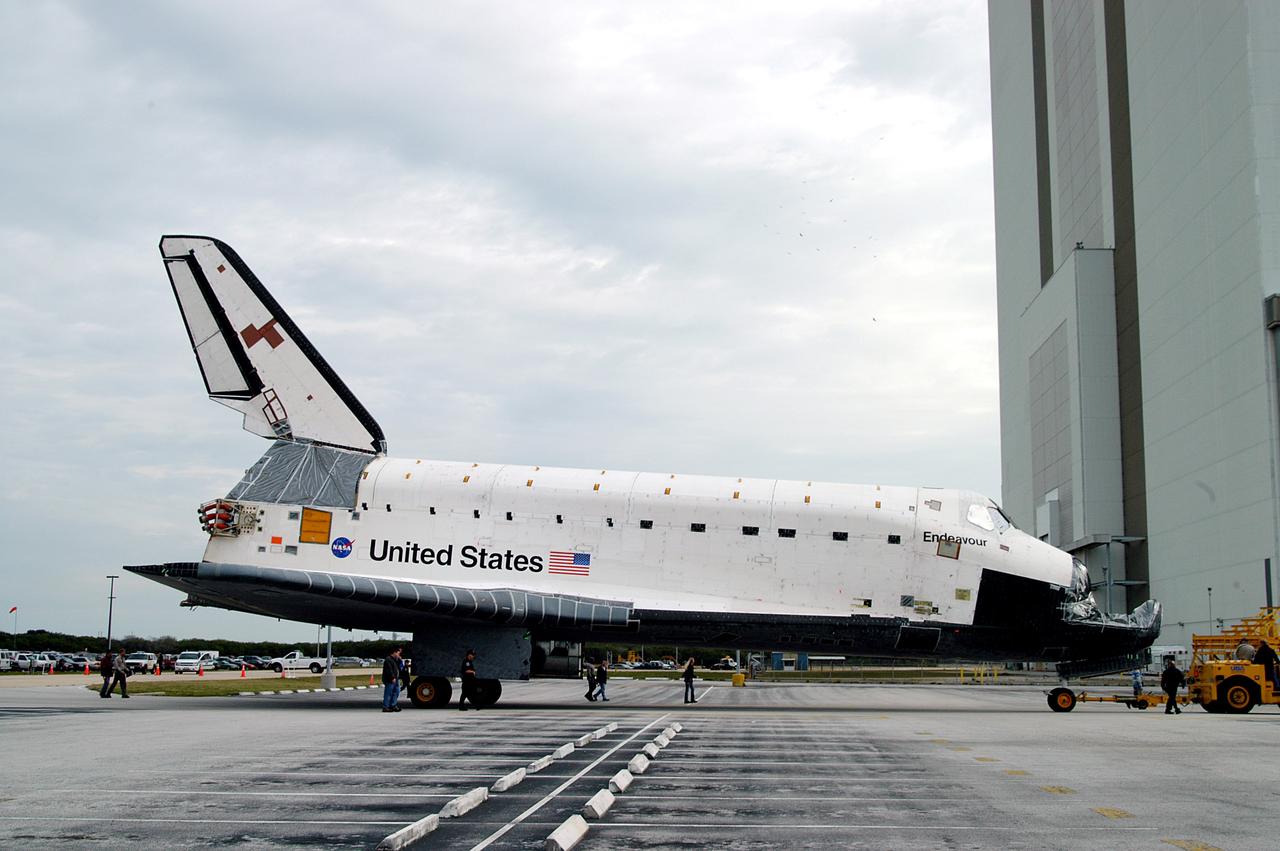
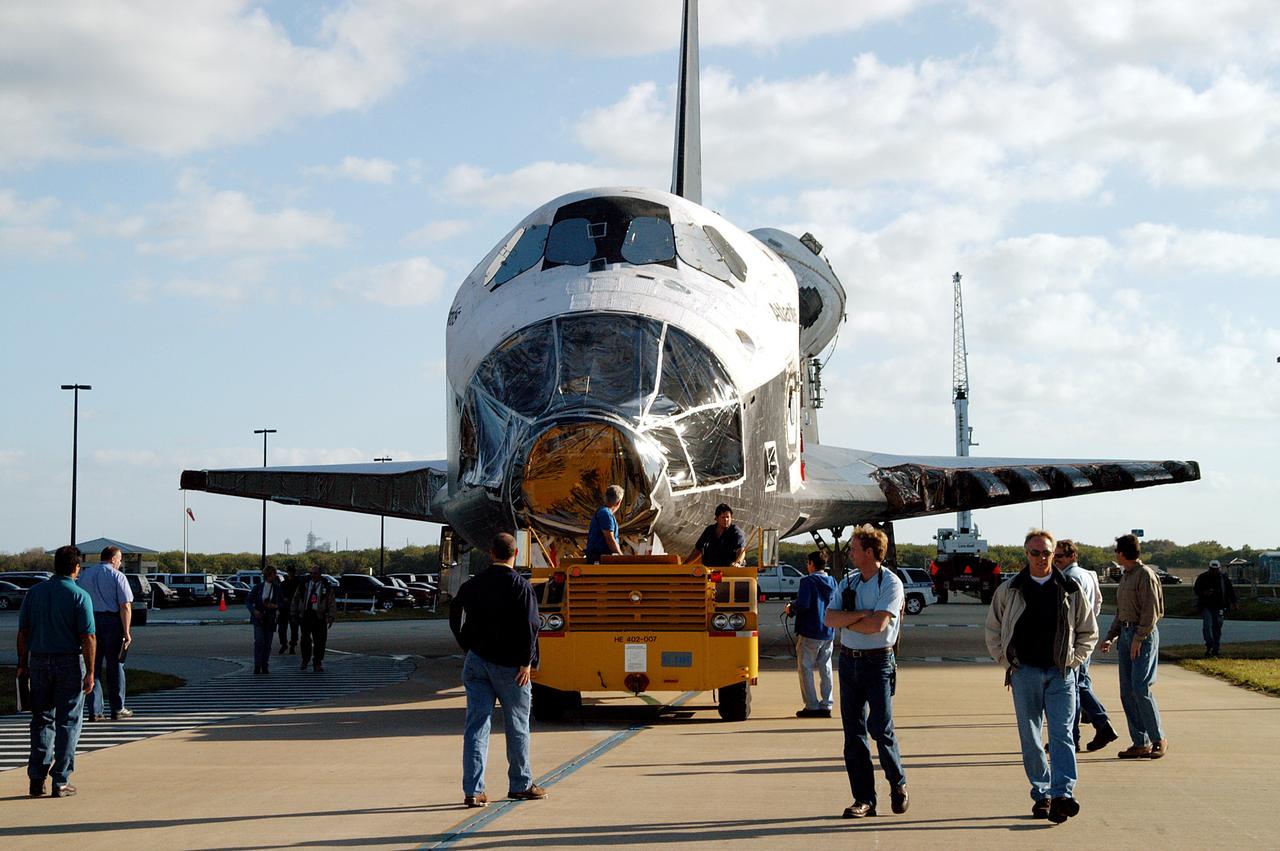
KENNEDY SPACE CENTER, FLA. -- Endeavour is towed in front of the Vehicle Assembly Building (VAB) where it is going for temporary storage.  The orbiter has been moved from the Orbiter Processing Facility (OPF) to allow work to be performed in the OPF that can only be accomplished while the bay is empty. Work scheduled in the OPF includes annual validation of the bay’s cranes, work platforms, lifting mechanisms and jack stands. Endeavour will remain in the VAB for approximately 12 days, then return to the OPF.
KENNEDY SPACE CENTER, FLA. -- Endeavour is towed in front of the Vehicle Assembly Building (VAB) where it is going for temporary storage. The orbiter has been moved from the Orbiter Processing Facility (OPF) to allow work to be performed in the OPF that can only be accomplished while the bay is empty. Work scheduled in the OPF includes annual validation of the bay’s cranes, work platforms, lifting mechanisms and jack stands. Endeavour will remain in the VAB for approximately 12 days, then return to the OPF.
KENNEDY SPACE CENTER, FLA. -- Endeavour rolls into the Vehicle Assembly Building (VAB) for temporary storage.  The orbiter has been moved from the Orbiter Processing Facility (OPF) to allow work to be performed in the OPF that can only be accomplished while the bay is empty. Work scheduled in the OPF includes annual validation of the bay’s cranes, work platforms, lifting mechanisms and jack stands. Endeavour will remain in the VAB for approximately 12 days, then return to the OPF.
KENNEDY SPACE CENTER, FLA. -- Endeavour rolls into the Vehicle Assembly Building (VAB) for temporary storage. The orbiter has been moved from the Orbiter Processing Facility (OPF) to allow work to be performed in the OPF that can only be accomplished while the bay is empty. Work scheduled in the OPF includes annual validation of the bay’s cranes, work platforms, lifting mechanisms and jack stands. Endeavour will remain in the VAB for approximately 12 days, then return to the OPF.
KENNEDY SPACE CENTER, FLA. - The Space Shuttle orbiter Atlantis is towed from the Orbiter Processing Facility (OPF) to the Vehicle Assembly Building (VAB). The move will allow work to be performed in the OPF that can only be accomplished while the bay is empty. Work scheduled in the processing facility includes annual validation of the bay's cranes, work platforms, lifting mechanisms, and jack stands. Atlantis will remain in the VAB for about 10 days, then return to the OPF as work resumes to prepare it for launch in September 2004 on the first return-to-flight mission, STS-114.
KENNEDY SPACE CENTER, FLA. -- Endeavour is towed in front of the Vehicle Assembly Building (VAB) where it is going for temporary storage.  The orbiter has been moved from the Orbiter Processing Facility (OPF) to allow work to be performed in the OPF that can only be accomplished while the bay is empty. Work scheduled in the OPF includes annual validation of the bay’s cranes, work platforms, lifting mechanisms and jack stands. Endeavour will remain in the VAB for approximately 12 days, then return to the OPF.
KENNEDY SPACE CENTER, FLA. -- Endeavour is towed in front of the Vehicle Assembly Building (VAB) where it is going for temporary storage. The orbiter has been moved from the Orbiter Processing Facility (OPF) to allow work to be performed in the OPF that can only be accomplished while the bay is empty. Work scheduled in the OPF includes annual validation of the bay’s cranes, work platforms, lifting mechanisms and jack stands. Endeavour will remain in the VAB for approximately 12 days, then return to the OPF.
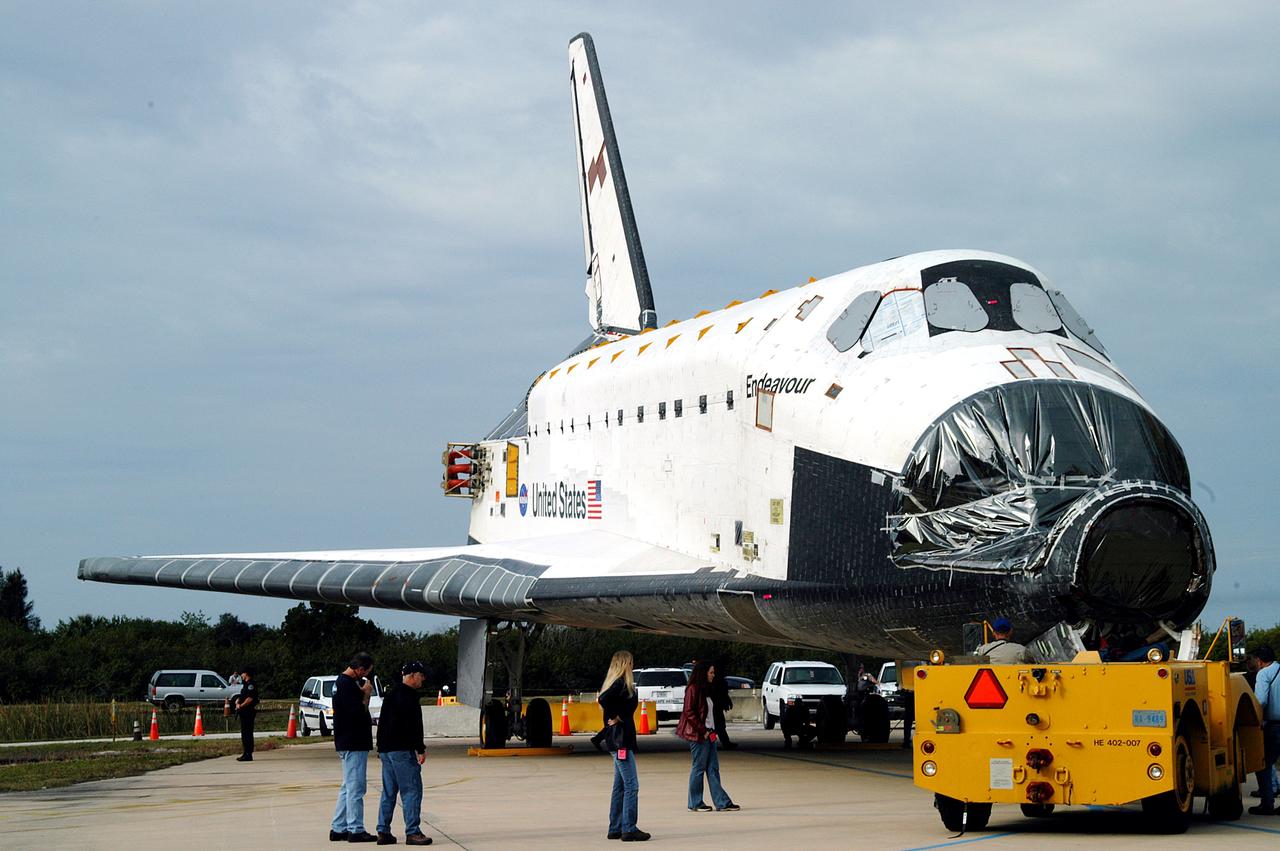
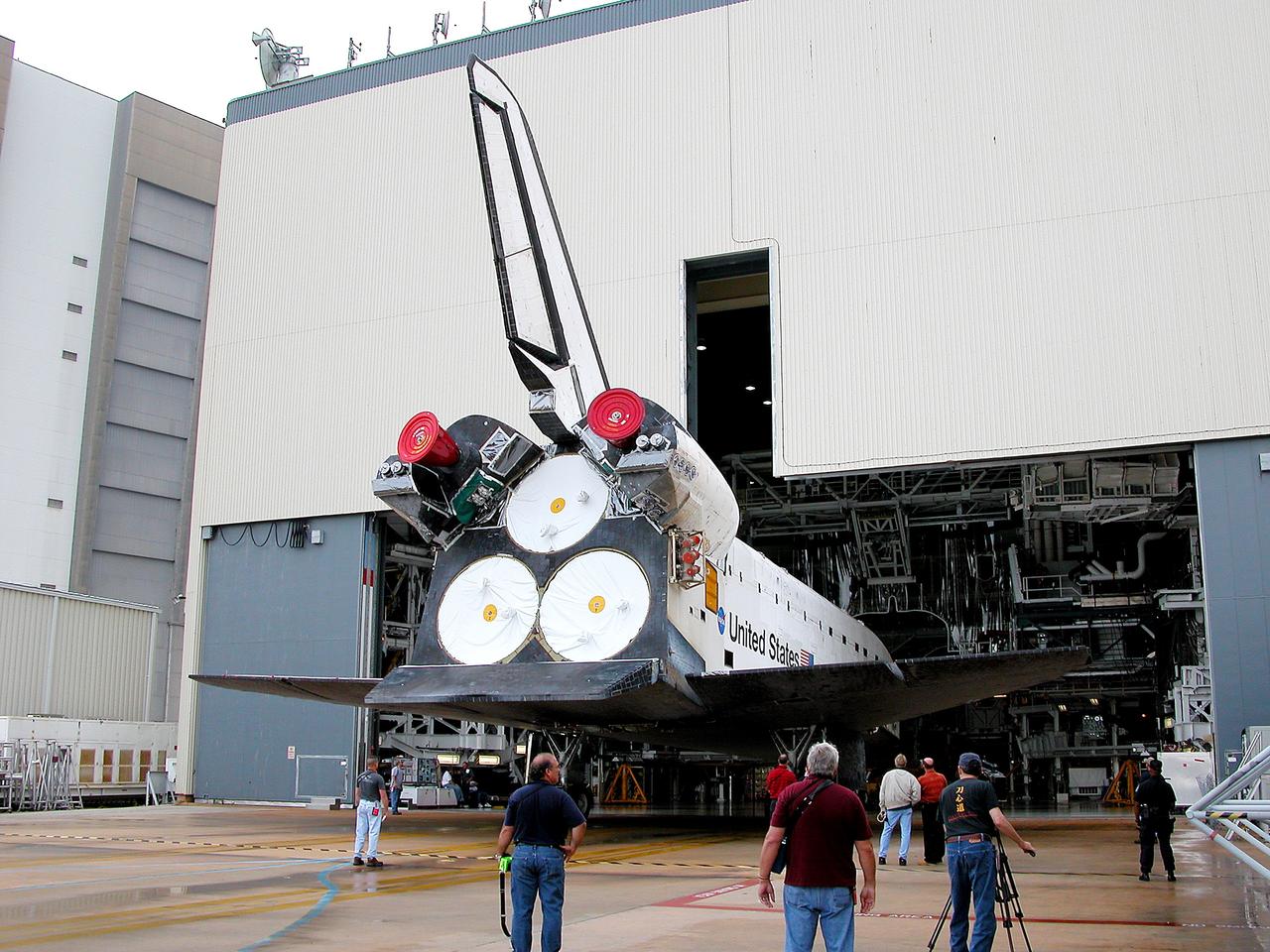
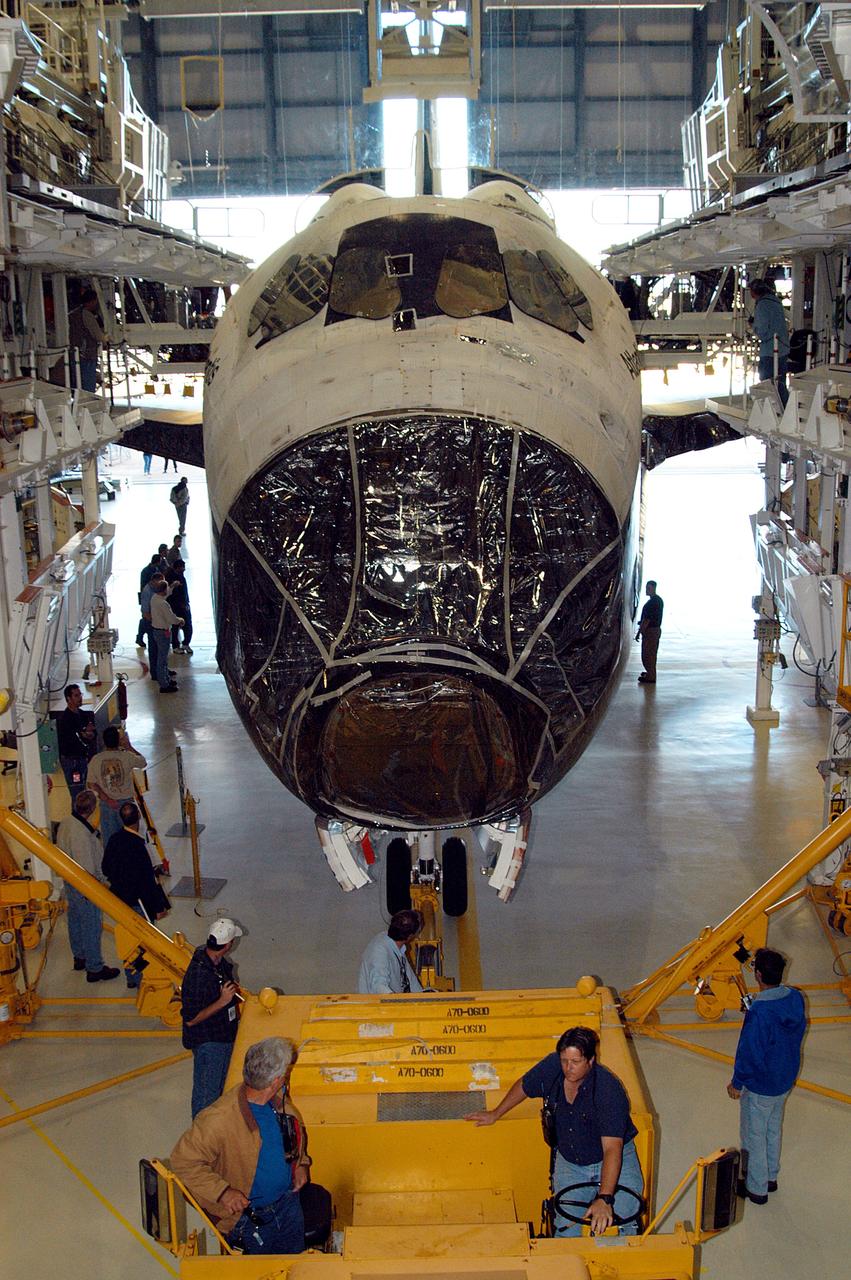
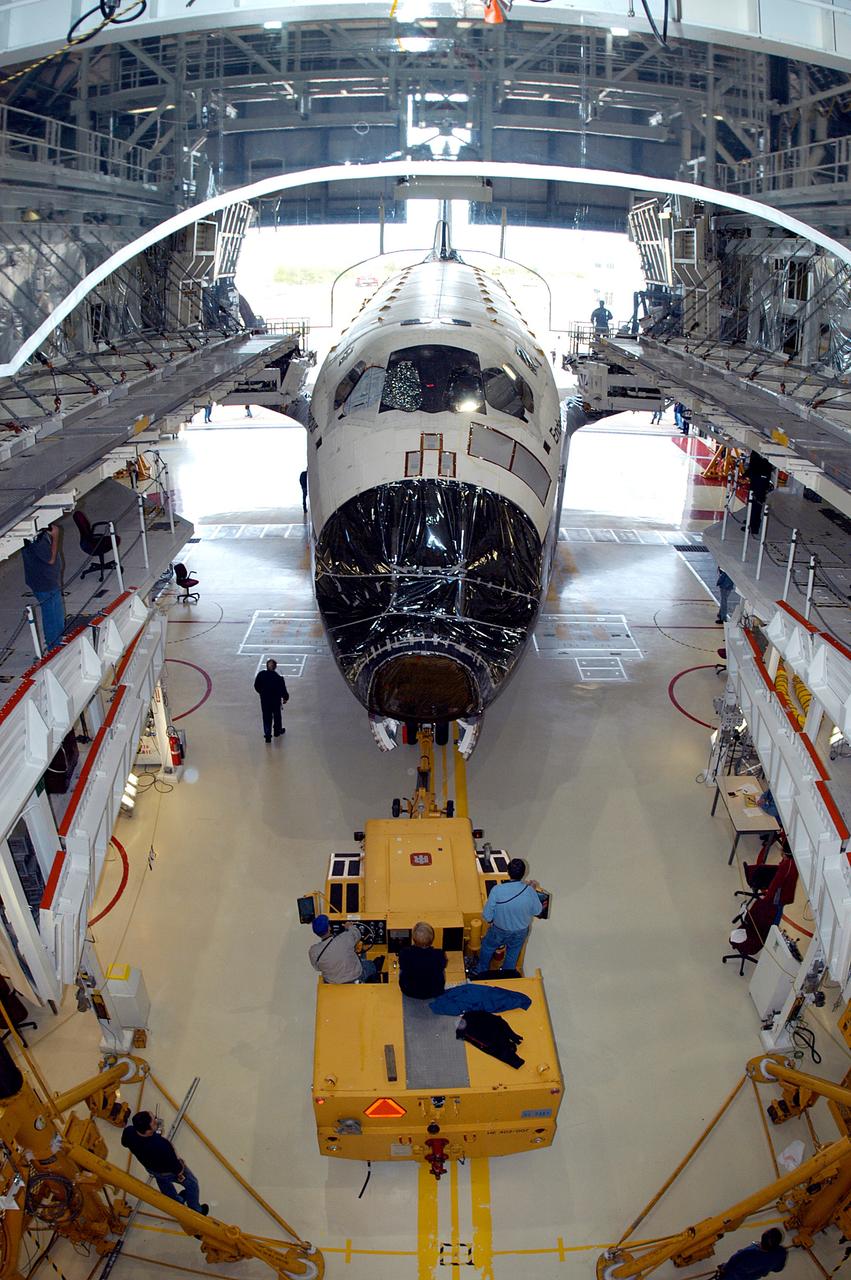
KENNEDY SPACE CENTER, FLA. -- After Endeavour’s rollout from inside the Orbiter Processing Facility, the transporter (foreground) prepares to tow it to the Vehicle Assembly Building for temporary transfer.  A protective cover surrounds the nose of Endeavour.  The move to the VAB allows work to be performed in the OPF that can only be accomplished while the bay is empty. Work scheduled in the OPF includes annual validation of the bay’s cranes, work platforms, lifting mechanisms and jack stands. Endeavour will remain in the VAB for approximately 12 days, then return to the OPF.
KENNEDY SPACE CENTER, FLA. -- After Endeavour’s rollout from inside the Orbiter Processing Facility, the transporter (foreground) prepares to tow it to the Vehicle Assembly Building for temporary transfer. A protective cover surrounds the nose of Endeavour. The move to the VAB allows work to be performed in the OPF that can only be accomplished while the bay is empty. Work scheduled in the OPF includes annual validation of the bay’s cranes, work platforms, lifting mechanisms and jack stands. Endeavour will remain in the VAB for approximately 12 days, then return to the OPF.
KENNEDY SPACE CENTER, FLA. -- Endeavour rolls into the Vehicle Assembly Building (VAB) for temporary storage.  The orbiter has been moved from the Orbiter Processing Facility (OPF) to allow work to be performed in the OPF that can only be accomplished while the bay is empty. Work scheduled in the OPF includes annual validation of the bay’s cranes, work platforms, lifting mechanisms and jack stands. Endeavour will remain in the VAB for approximately 12 days, then return to the OPF.
KENNEDY SPACE CENTER, FLA. -- Endeavour rolls into the Vehicle Assembly Building (VAB) for temporary storage. The orbiter has been moved from the Orbiter Processing Facility (OPF) to allow work to be performed in the OPF that can only be accomplished while the bay is empty. Work scheduled in the OPF includes annual validation of the bay’s cranes, work platforms, lifting mechanisms and jack stands. Endeavour will remain in the VAB for approximately 12 days, then return to the OPF.
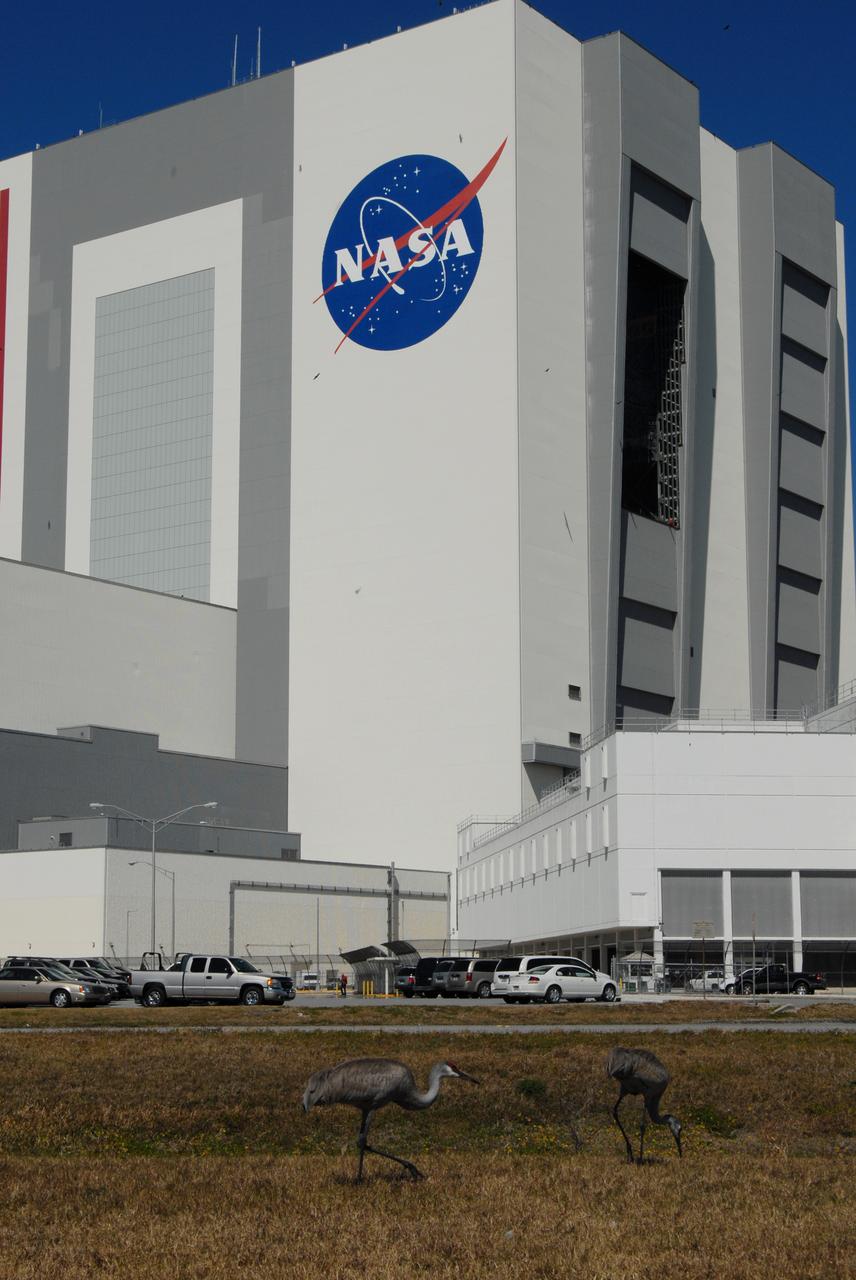
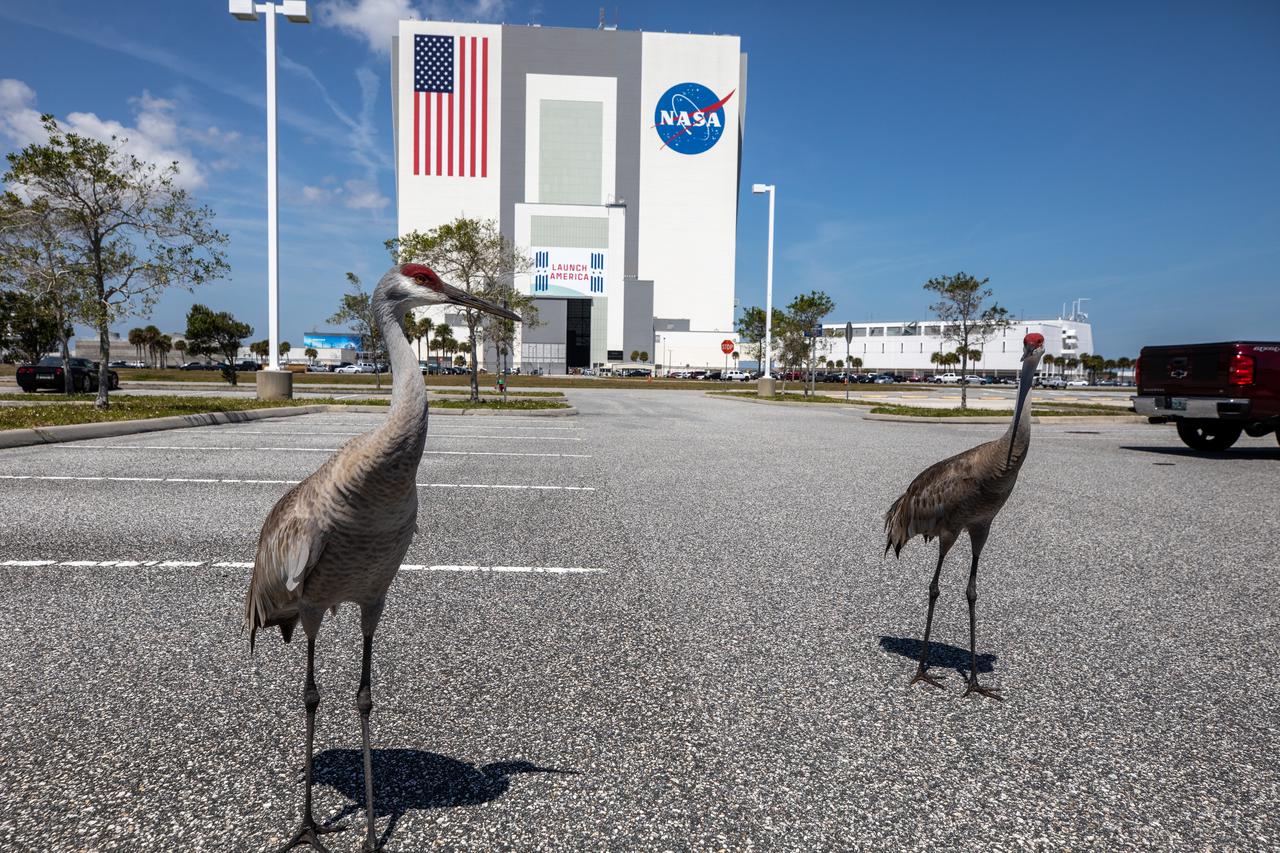
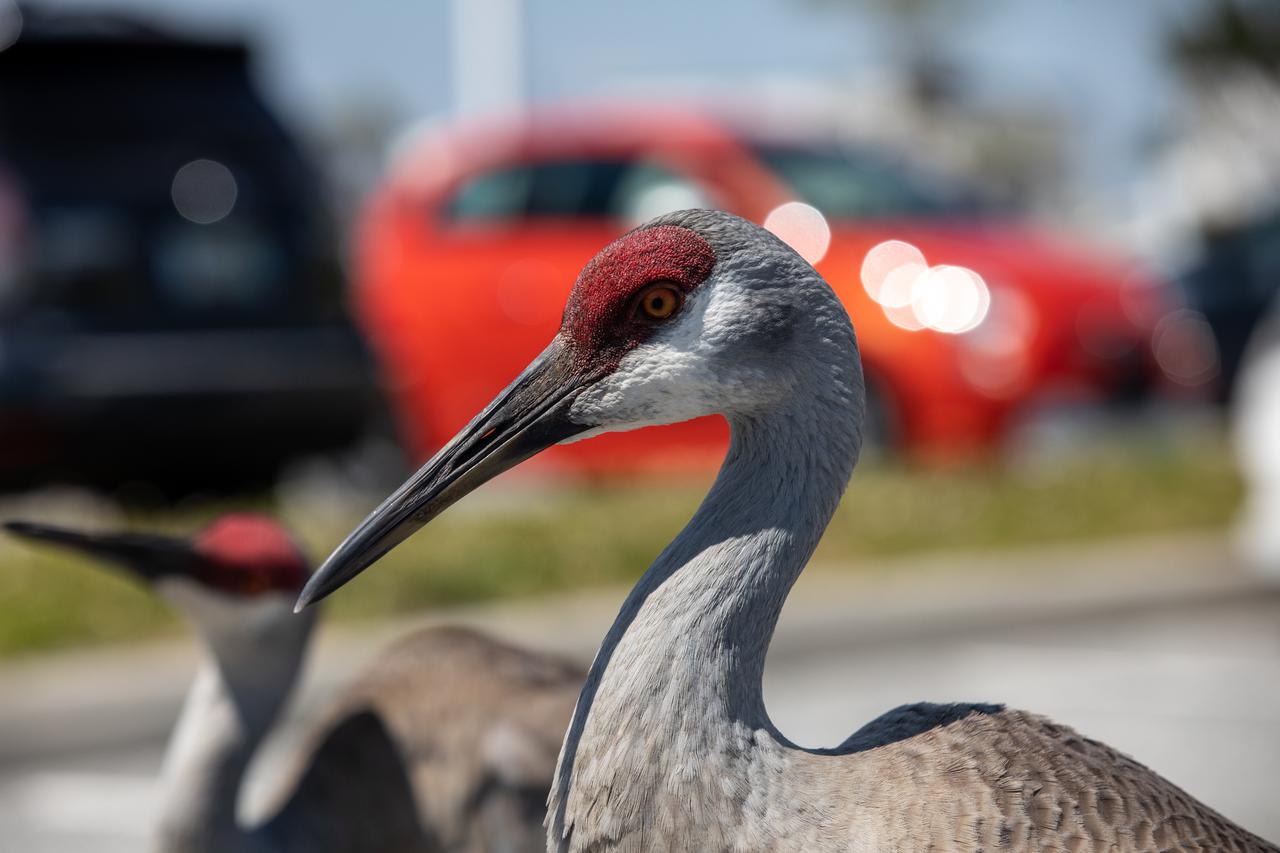
A pair of sandhill cranes explore a paved parking area near the Vehicle Assembly Building at NASA’s Kennedy Space Center in Florida on March 24, 2021. Kennedy shares space with the Merritt Island National Wildlife refuge, which is home to more than 1,000 species of plants, 117 species of fish, 68 amphibians and reptiles, 330 birds, and 31 different mammals. The refuge provides a favorable environment for the cranes as it contains shallow freshwater habitats for nesting, along with a variety of vegetation and prey to feed on.
Creative Photography - Sandhill Cranes
CAPE CANAVERAL, Fla. – A view from above inside the Vehicle Assembly Building at NASA's Kennedy Space Center in Florida, shows the 175-ton crane on the ground floor of the transfer aisle. The crane's 45-year-old controls are being upgraded to improve reliability, precision and safety. The Ground Systems Development and Operations Program is overseeing upgrades and modifications to the crane so that it can support lifting needs for NASA and other exploration vehicles, including the agency's Space Launch System and Orion spacecraft. Photo credit: NASA/Kim Shiflett
KSC-2014-4862
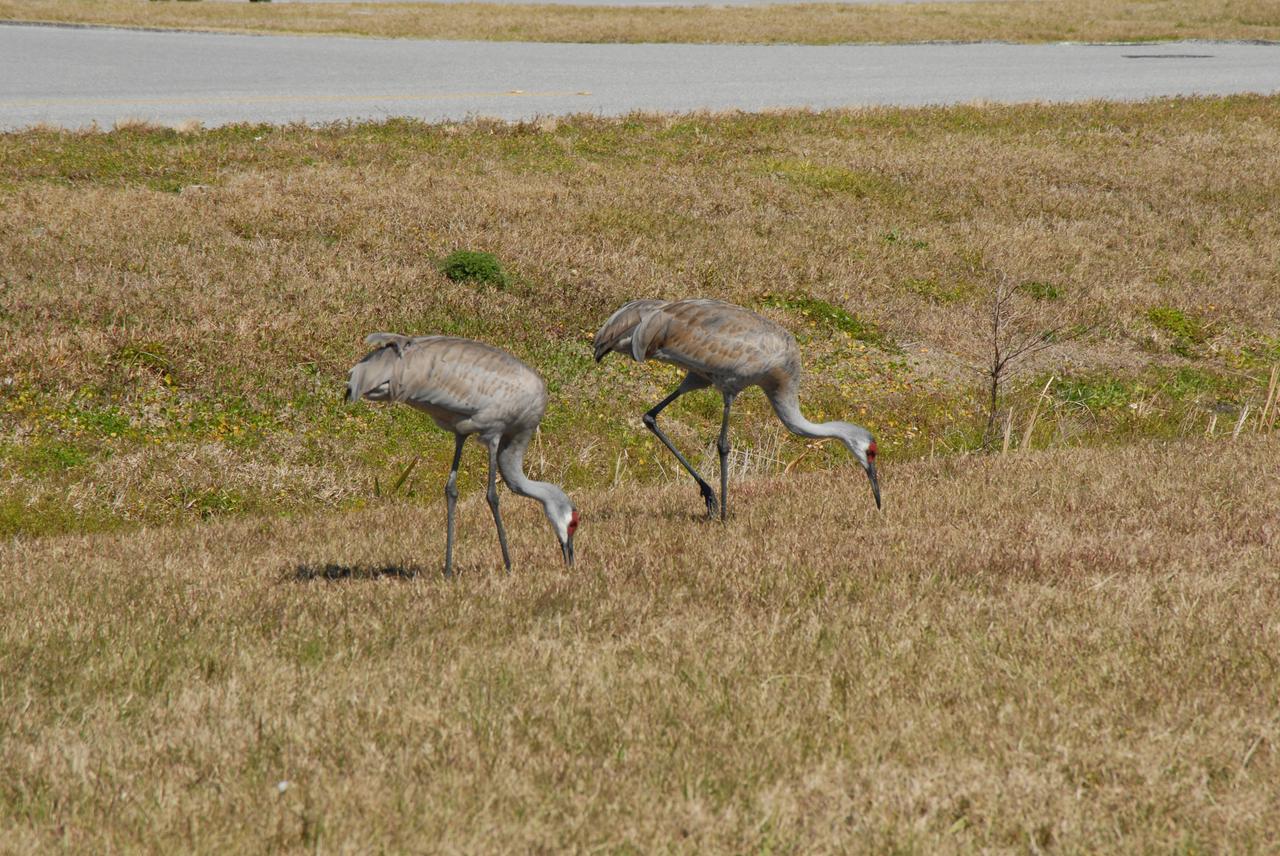
A pair of sandhill cranes explore a paved parking area at NASA’s Kennedy Space Center in Florida on March 24, 2021. Kennedy shares space with the Merritt Island National Wildlife refuge, which is home to more than 1,000 species of plants, 117 species of fish, 68 amphibians and reptiles, 330 birds, and 31 different mammals. The refuge provides a favorable environment for the cranes as it contains shallow freshwater habitats for nesting, along with a variety of vegetation and prey to feed on.
Creative Photography - Sandhill Cranes
CAPE CANAVERAL, Fla. – Inside the Vehicle Assembly Building at NASA's Kennedy Space Center in Florida, construction workers continue with refurbishment and upgrades to the 175-ton crane on the ground floor of the transfer aisle. The crane's 45-year-old controls are being upgraded to improve reliability, precision and safety. The Ground Systems Development and Operations Program is overseeing upgrades and modifications to the crane so that it can support lifting needs for NASA and other exploration vehicles, including the agency's Space Launch System and Orion spacecraft. Photo credit: NASA/Kim Shiflett
KSC-2014-4858
A sandhill crane explores a paved parking area near the Vehicle Assembly Building at NASA’s Kennedy Space Center in Florida on March 24, 2021. Kennedy shares space with the Merritt Island National Wildlife refuge, which is home to more than 1,000 species of plants, 117 species of fish, 68 amphibians and reptiles, 330 birds, and 31 different mammals. The refuge provides a favorable environment for sandhill cranes as it contains shallow freshwater habitats for nesting, along with a variety of vegetation and prey to feed on.
Creative Photography - Sandhill Cranes
CAPE CANAVERAL, Fla. – Inside the Vehicle Assembly Building at NASA's Kennedy Space Center in Florida, a construction worker continues with refurbishment and upgrades to parts of the 175-ton crane on the ground floor of the transfer aisle. The crane's 45-year-old controls are being upgraded to improve reliability, precision and safety. The Ground Systems Development and Operations Program is overseeing upgrades and modifications to the crane so that it can support lifting needs for NASA and other exploration vehicles, including the agency's Space Launch System and Orion spacecraft. Photo credit: NASA/Kim Shiflett
KSC-2014-4859
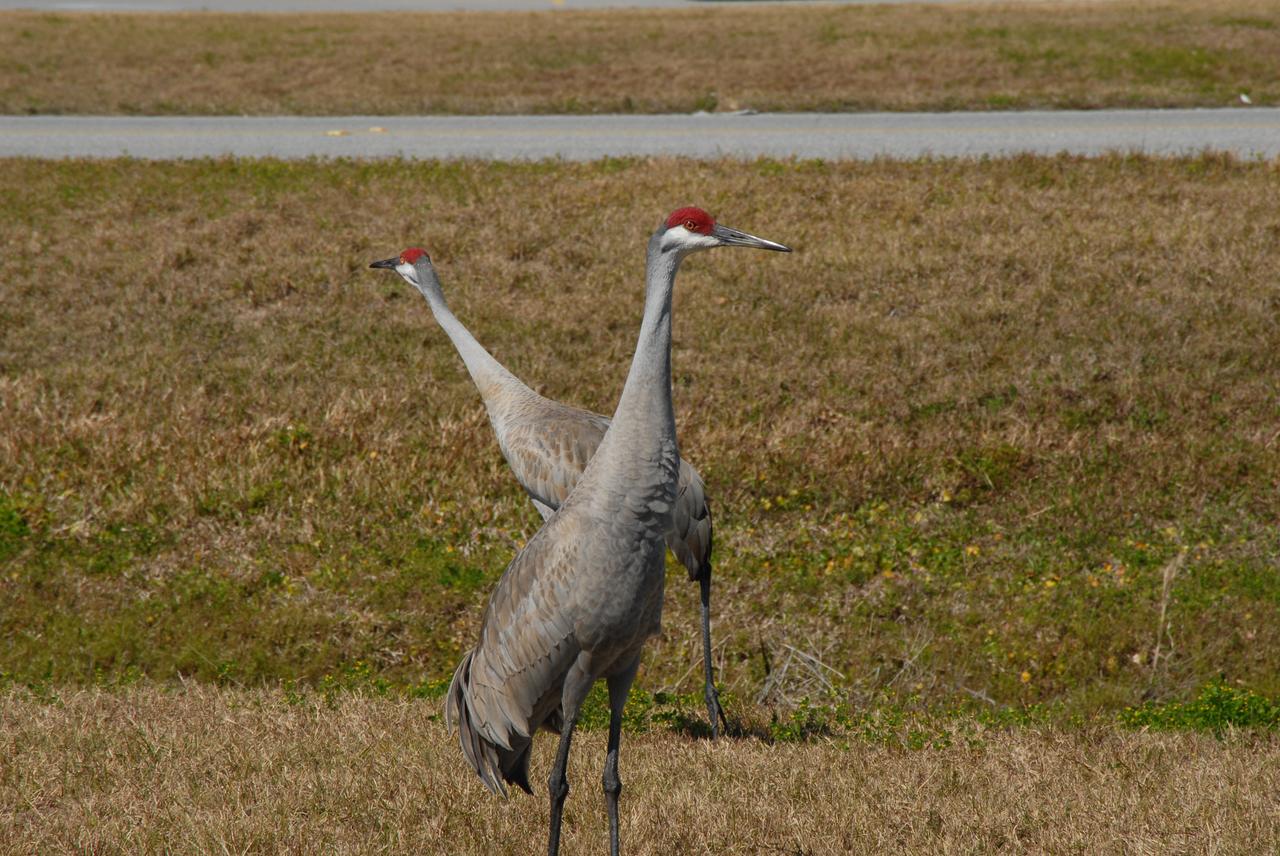
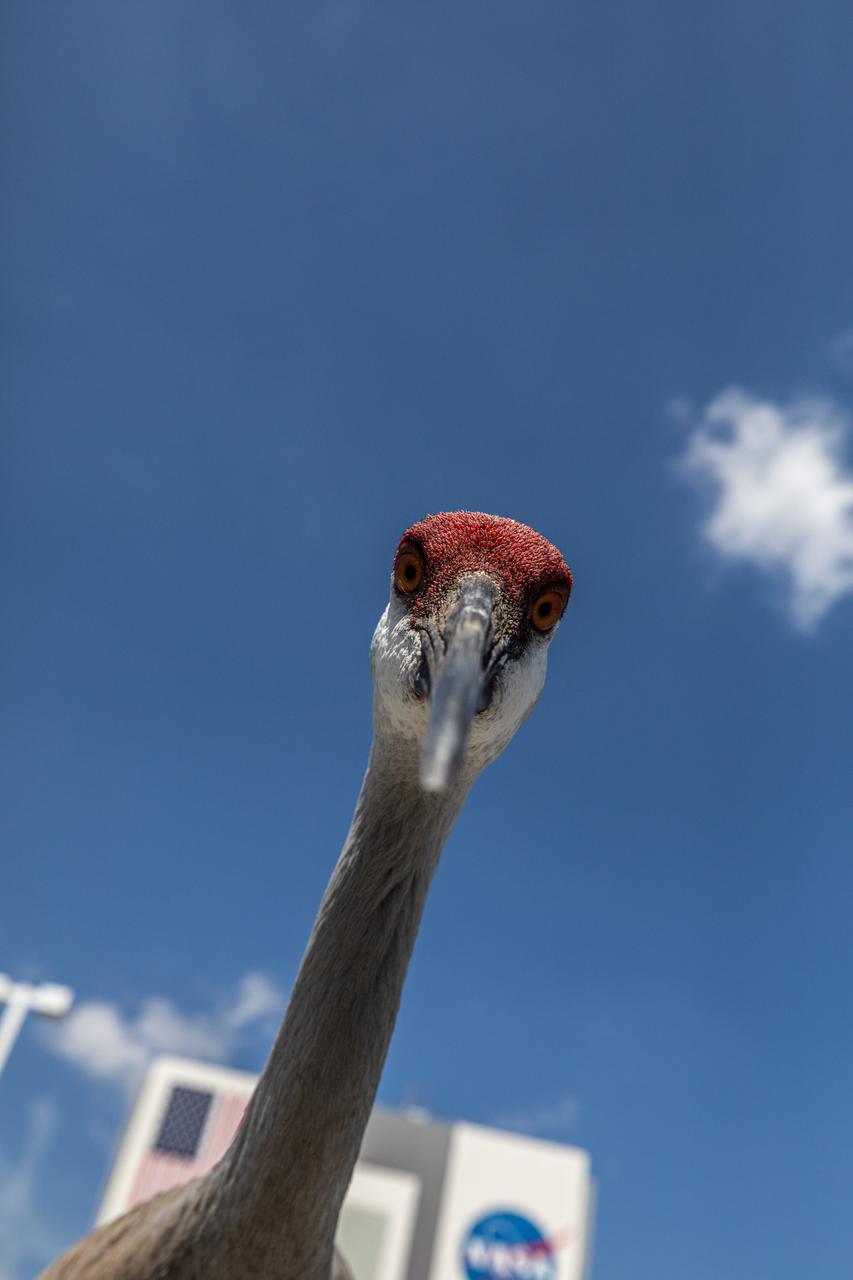
An inquisitive sandhill crane approaches the photographer near the Vehicle Assembly Building at NASA’s Kennedy Space Center in Florida on March 24, 2021. Kennedy shares space with the Merritt Island National Wildlife refuge, which is home to more than 1,000 species of plants, 117 species of fish, 68 amphibians and reptiles, 330 birds, and 31 different mammals. The refuge provides a favorable environment for sandhill cranes as it contains shallow freshwater habitats for nesting, along with a variety of vegetation and prey to feed on.
Creative Photography - Sandhill Cranes
CAPE CANAVERAL, Fla. – Inside the Vehicle Assembly Building at NASA's Kennedy Space Center in Florida, a construction worker continues with refurbishment and upgrades to the 175-ton crane on the ground floor of the transfer aisle. The crane's 45-year-old controls are being upgraded to improve reliability, precision and safety. The Ground Systems Development and Operations Program is overseeing upgrades and modifications to the crane so that it can support lifting needs for NASA and other exploration vehicles, including the agency's Space Launch System and Orion spacecraft. Photo credit: NASA/Kim Shiflett
KSC-2014-4860
CAPE CANAVERAL, Fla. – Upgrades and modifications continue on the 175-ton crane on the ground floor of the transfer aisle inside the Vehicle Assembly Building at NASA's Kennedy Space Center in Florida. The crane's 45-year-old controls are being upgraded to improve reliability, precision and safety. The Ground Systems Development and Operations Program is overseeing upgrades and modifications to the crane so that it can support lifting needs for NASA and other exploration vehicles, including the agency's Space Launch System and Orion spacecraft. Photo credit: NASA/Kim Shiflett
KSC-2014-4861
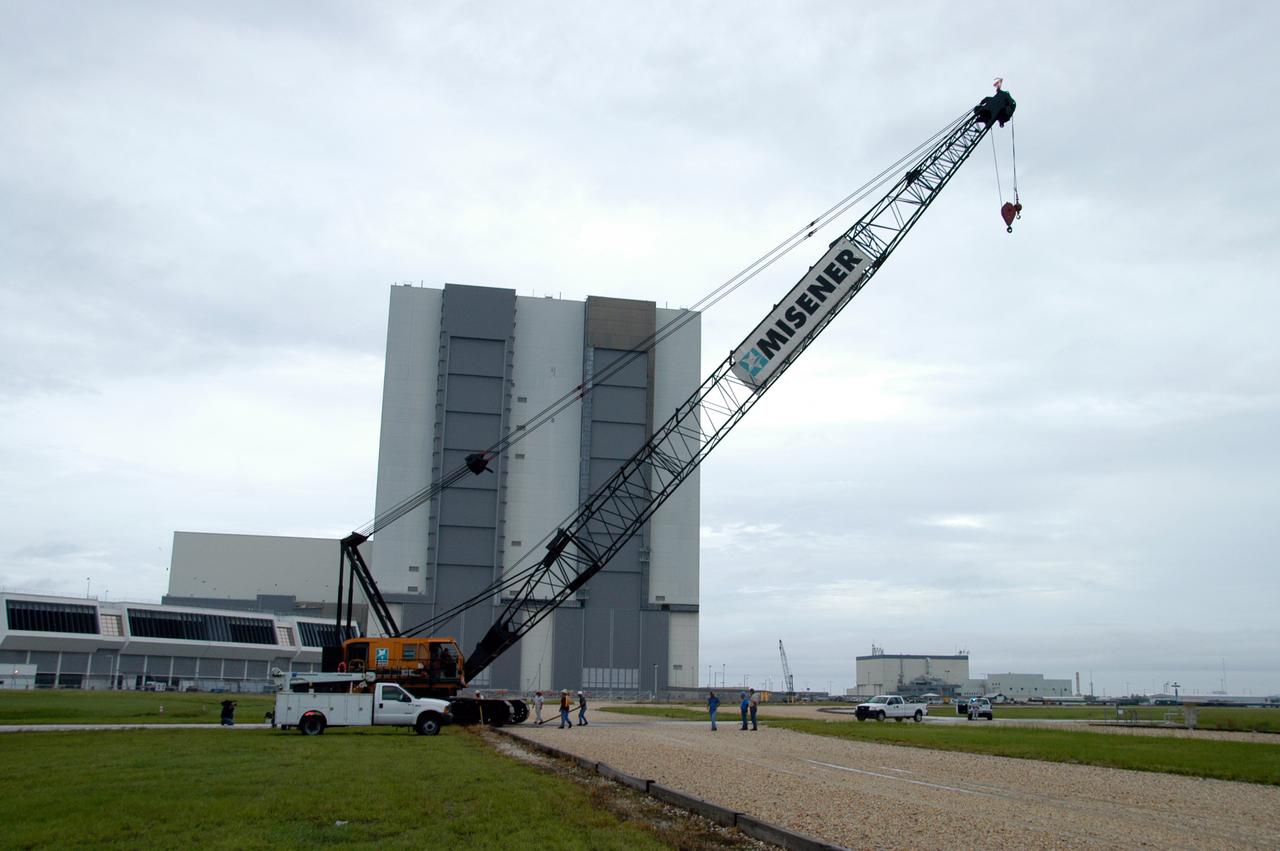
A large crawler crane moves past the Vehicle Assembly Building on its way to Launch Pad 39B. The crane with its 70-foot boom will be used to construct a new lightning protection system for the Constellation Program and Ares/Orion launches. Pad B will be the site of the first Ares vehicle launch, including Ares I-X which is scheduled for April 2009.
Large Crawler Crane for new lightning protection system
CAPE CANAVERAL, Fla. – Inside the Vehicle Assembly Building at NASA's Kennedy Space Center in Florida, refurbishment and upgrades to the 175-ton crane are under way on the ground floor of the transfer aisle. The crane's 45-year-old controls are being upgraded to improve reliability, precision and safety. The Ground Systems Development and Operations Program is overseeing upgrades and modifications to the crane so that it can support lifting needs for NASA and other exploration vehicles, including the agency's Space Launch System and Orion spacecraft. Photo credit: NASA/Kim Shiflett
KSC-2014-4857
CAPE CANAVERAL, Fla. – A view from above inside the Vehicle Assembly Building at NASA's Kennedy Space Center in Florida, shows the 175-ton crane on the ground floor of the transfer aisle. The crane's 45-year-old controls are being upgraded to improve reliability, precision and safety. The Ground Systems Development and Operations Program is overseeing upgrades and modifications to the crane so that it can support lifting needs for NASA and other exploration vehicles, including the agency's Space Launch System and Orion spacecraft. Photo credit: NASA/Kim Shiflett
KSC-2014-4863
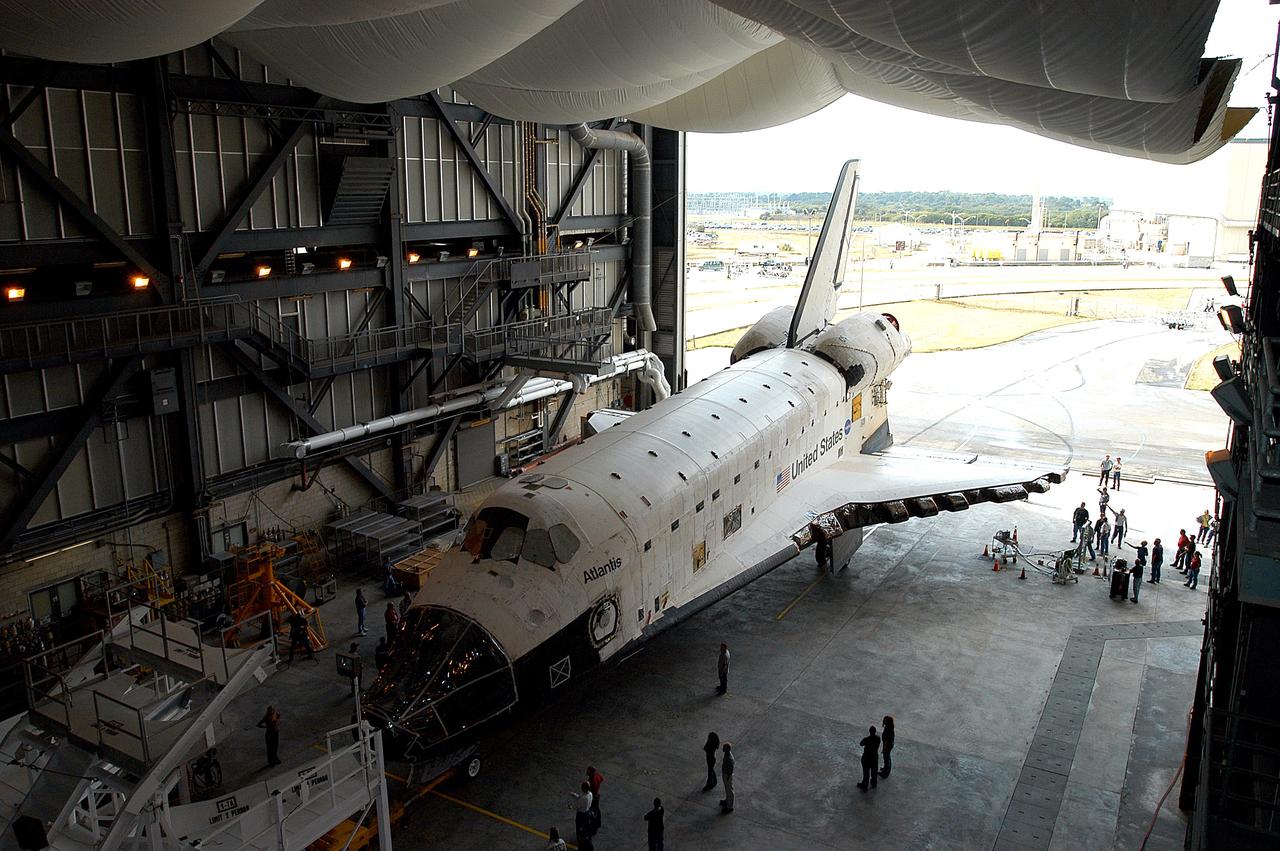
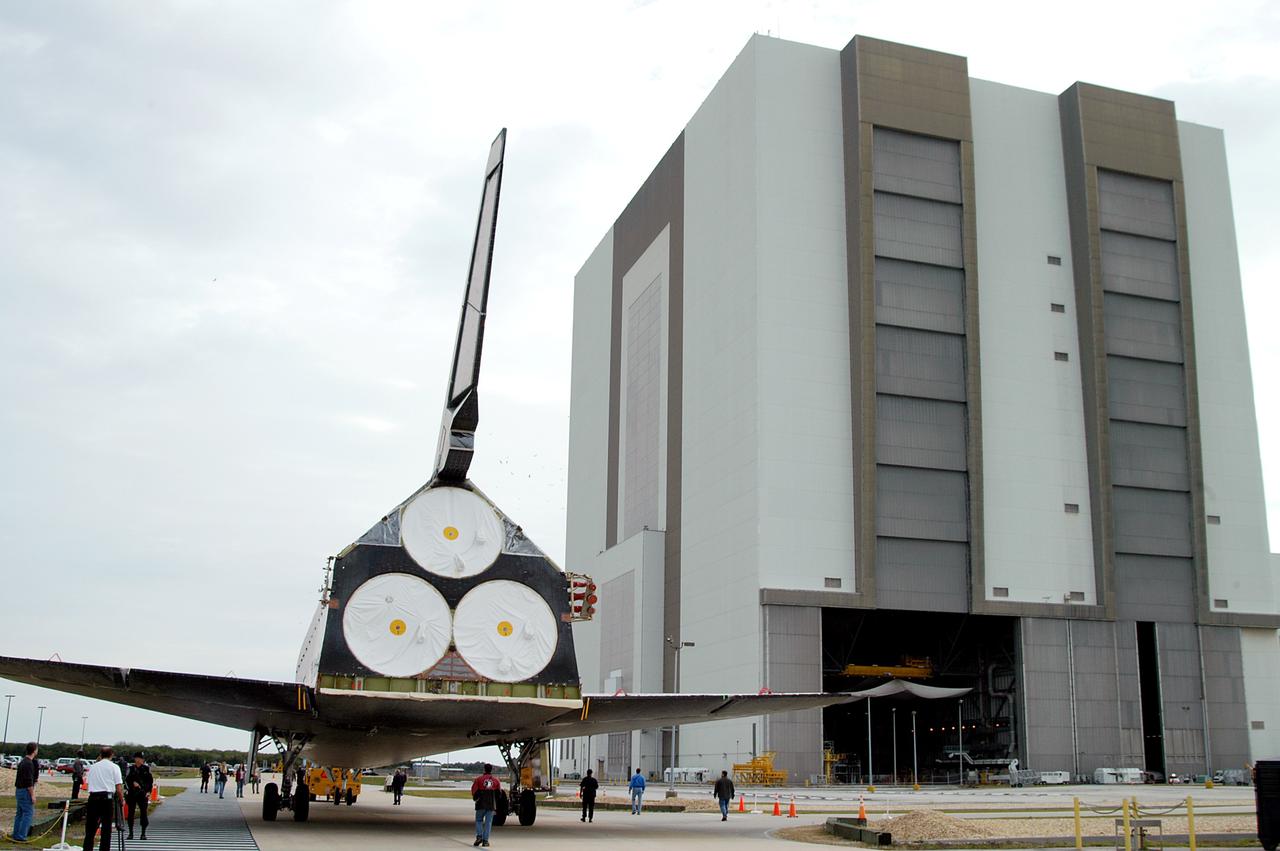
KENNEDY SPACE CENTER, FLA. - The Space Shuttle orbiter Atlantis approaches the Vehicle Assembly Building (VAB) high bay 4.  It is being towed from the Orbiter Processing Facility (OPF) to allow work to be performed in the bay that can only be accomplished while it is empty. Work scheduled in the processing facility includes annual validation of the bay's cranes, work platforms, lifting mechanisms, and jack stands. Atlantis will remain in the VAB for about 10 days, then return to the OPF as work resumes to prepare it for launch in September 2004 on the first return-to-flight mission, STS-114.
KENNEDY SPACE CENTER, FLA. - The Space Shuttle orbiter Atlantis approaches the Vehicle Assembly Building (VAB) high bay 4. It is being towed from the Orbiter Processing Facility (OPF) to allow work to be performed in the bay that can only be accomplished while it is empty. Work scheduled in the processing facility includes annual validation of the bay's cranes, work platforms, lifting mechanisms, and jack stands. Atlantis will remain in the VAB for about 10 days, then return to the OPF as work resumes to prepare it for launch in September 2004 on the first return-to-flight mission, STS-114.
KENNEDY SPACE CENTER, FLA. - The Space Shuttle orbiter Atlantis backs out of the Orbiter Processing Facility (OPF) for its move to the Vehicle Assembly Building (VAB). The move will allow work to be performed in the OPF that can only be accomplished while the bay is empty. Work scheduled in the processing facility includes annual validation of the bay's cranes, work platforms, lifting mechanisms, and jack stands. Atlantis will remain in the VAB for about 10 days, then return to the OPF as work resumes to prepare it for launch in September 2004 on the first return-to-flight mission, STS-114.
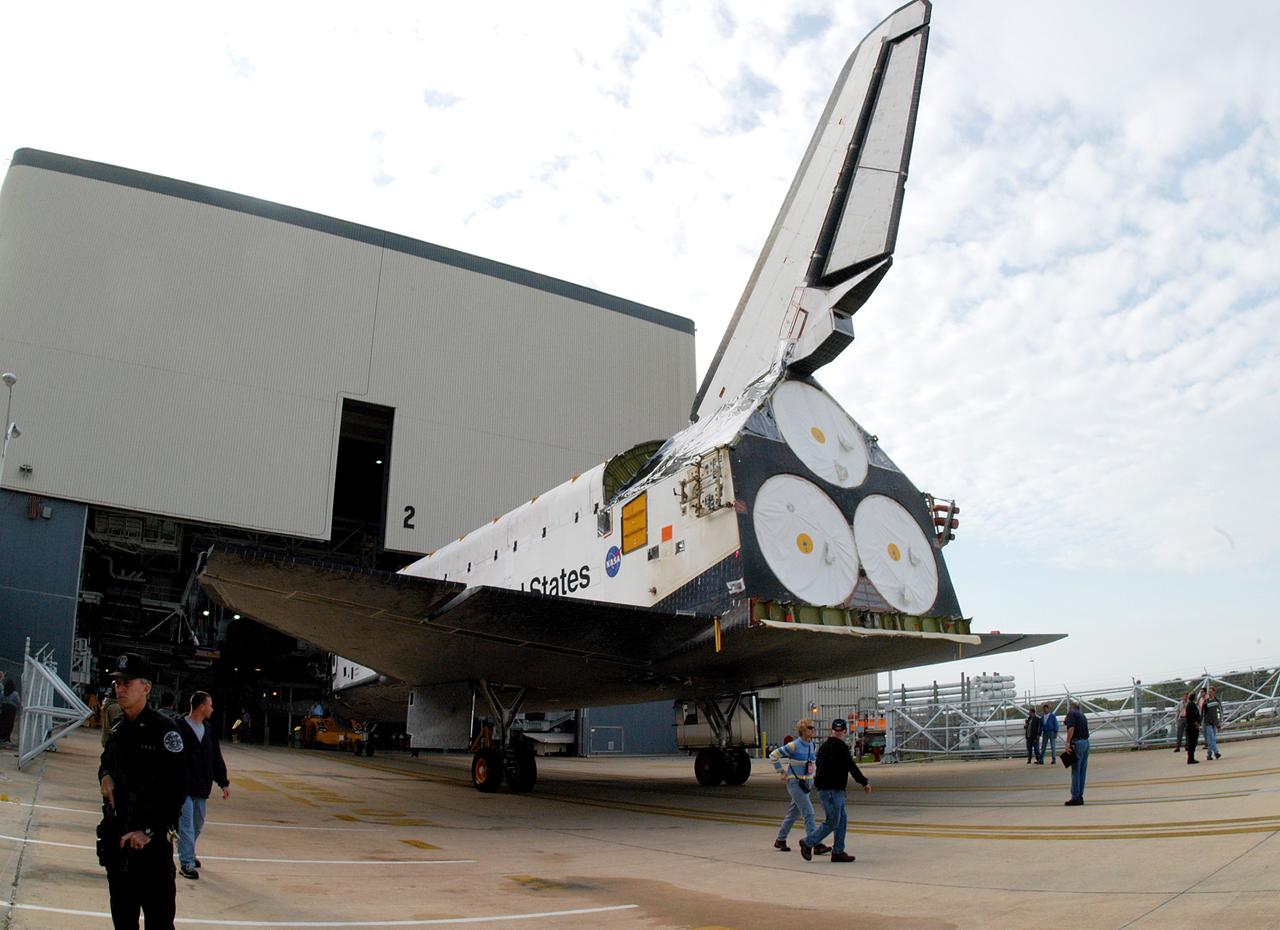
KENNEDY SPACE CENTER, FLA. - The Space Shuttle orbiter Atlantis approaches high bay 4 of the Vehicle Assembly Building (VAB).  It was towed from the Orbiter Processing Facility (OPF) to allow work to be performed in the bay that can only be accomplished while it is empty. Work scheduled in the processing facility includes annual validation of the bay's cranes, work platforms, lifting mechanisms, and jack stands. Atlantis will remain in the VAB for about 10 days, then return to the OPF as work resumes to prepare it for launch in September 2004 on the first return-to-flight mission, STS-114.
KENNEDY SPACE CENTER, FLA. - The Space Shuttle orbiter Atlantis approaches high bay 4 of the Vehicle Assembly Building (VAB). It was towed from the Orbiter Processing Facility (OPF) to allow work to be performed in the bay that can only be accomplished while it is empty. Work scheduled in the processing facility includes annual validation of the bay's cranes, work platforms, lifting mechanisms, and jack stands. Atlantis will remain in the VAB for about 10 days, then return to the OPF as work resumes to prepare it for launch in September 2004 on the first return-to-flight mission, STS-114.
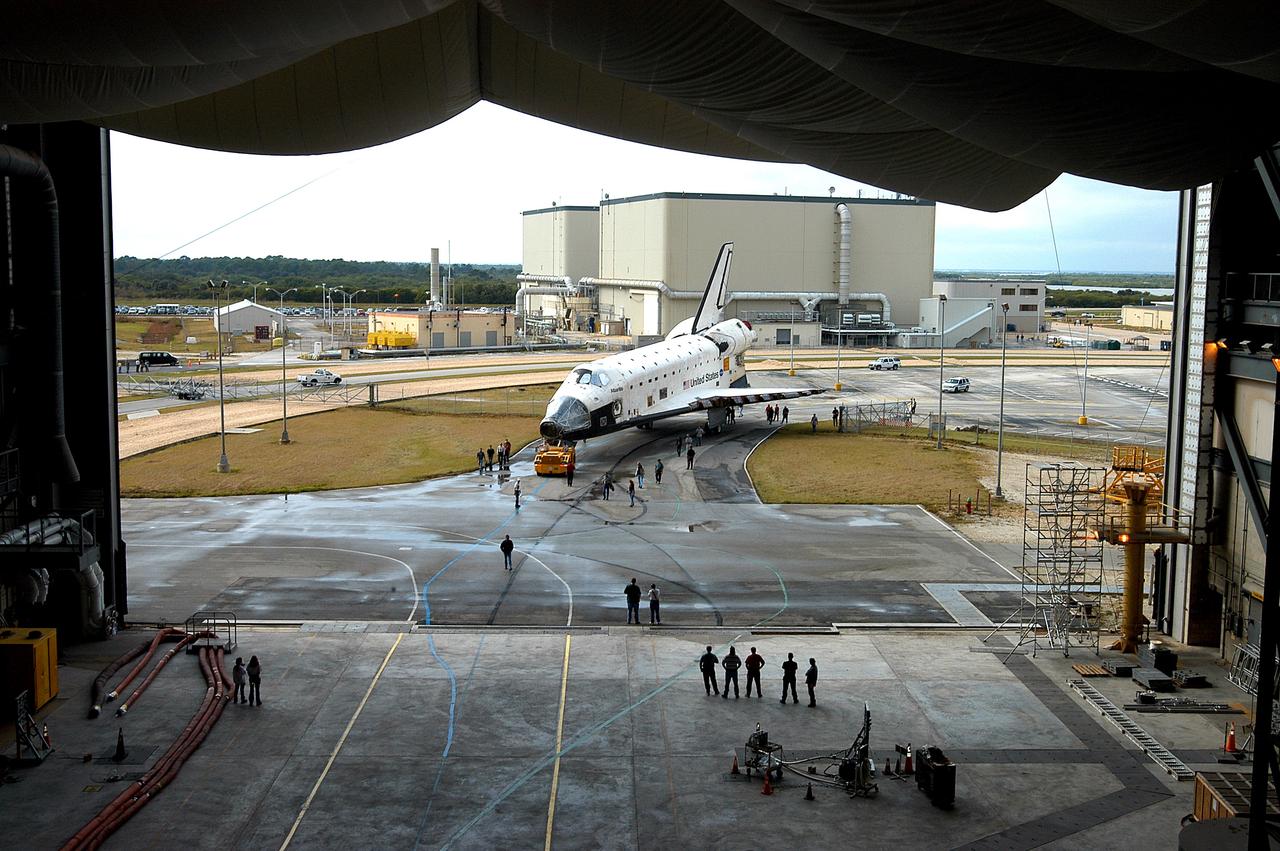
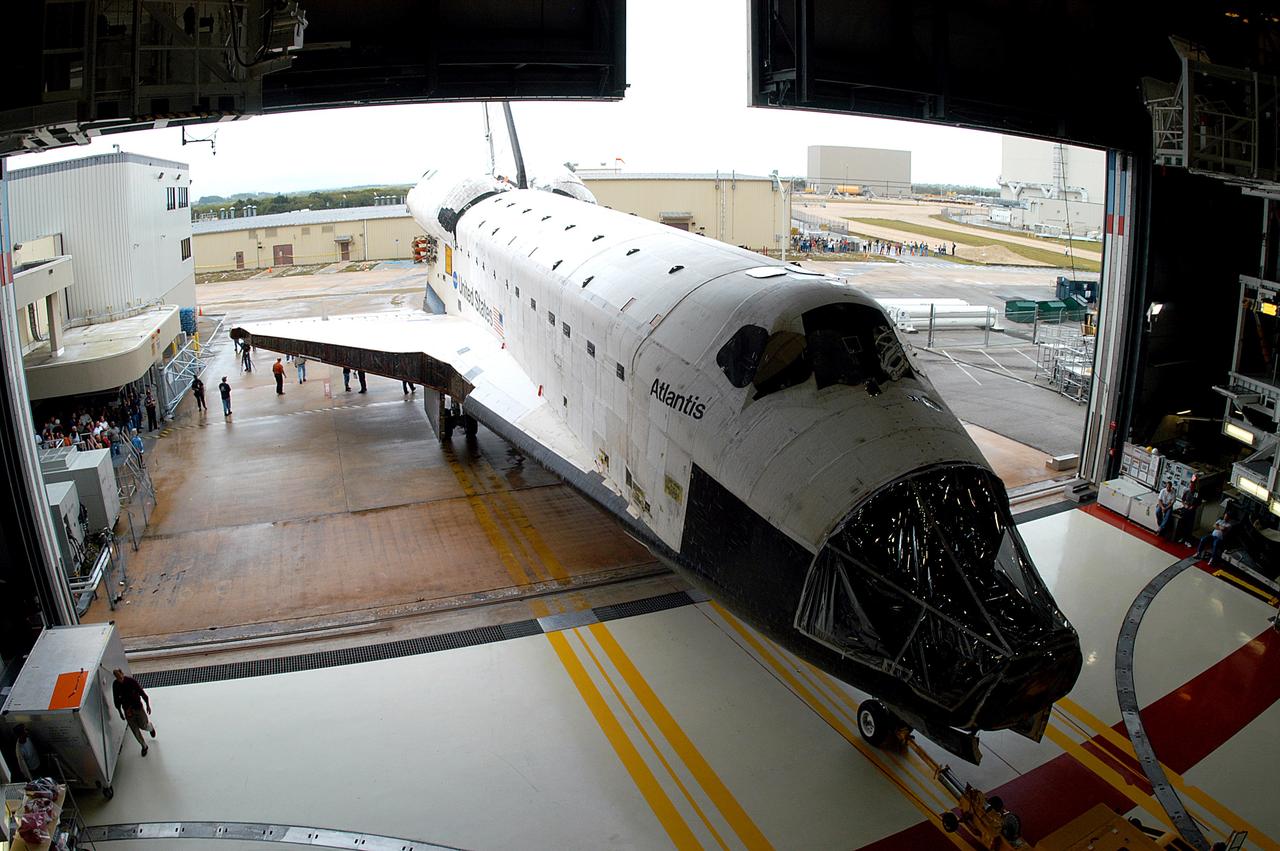
KENNEDY SPACE CENTER, FLA. - The Space Shuttle orbiter Atlantis is moved into high bay 4 of the Vehicle Assembly Building (VAB).  It was towed from the Orbiter Processing Facility (OPF) to allow work to be performed in the bay that can only be accomplished while it is empty. Work scheduled in the processing facility includes annual validation of the bay's cranes, work platforms, lifting mechanisms, and jack stands. Atlantis will remain in the VAB for about 10 days, then return to the OPF as work resumes to prepare it for launch in September 2004 on the first return-to-flight mission, STS-114.
KENNEDY SPACE CENTER, FLA. - The Space Shuttle orbiter Atlantis is moved into high bay 4 of the Vehicle Assembly Building (VAB). It was towed from the Orbiter Processing Facility (OPF) to allow work to be performed in the bay that can only be accomplished while it is empty. Work scheduled in the processing facility includes annual validation of the bay's cranes, work platforms, lifting mechanisms, and jack stands. Atlantis will remain in the VAB for about 10 days, then return to the OPF as work resumes to prepare it for launch in September 2004 on the first return-to-flight mission, STS-114.
KENNEDY SPACE CENTER, FLA. - Workers monitor the Space Shuttle orbiter Atlantis as it is towed from the Orbiter Processing Facility (OPF) to the Vehicle Assembly Building (VAB). The move will allow work to be performed in the OPF that can only be accomplished while the bay is empty. Work scheduled in the processing facility includes annual validation of the bay's cranes, work platforms, lifting mechanisms, and jack stands. Atlantis will remain in the VAB for about 10 days, then return to the OPF as work resumes to prepare it for launch in September 2004 on the first return-to-flight mission, STS-114.
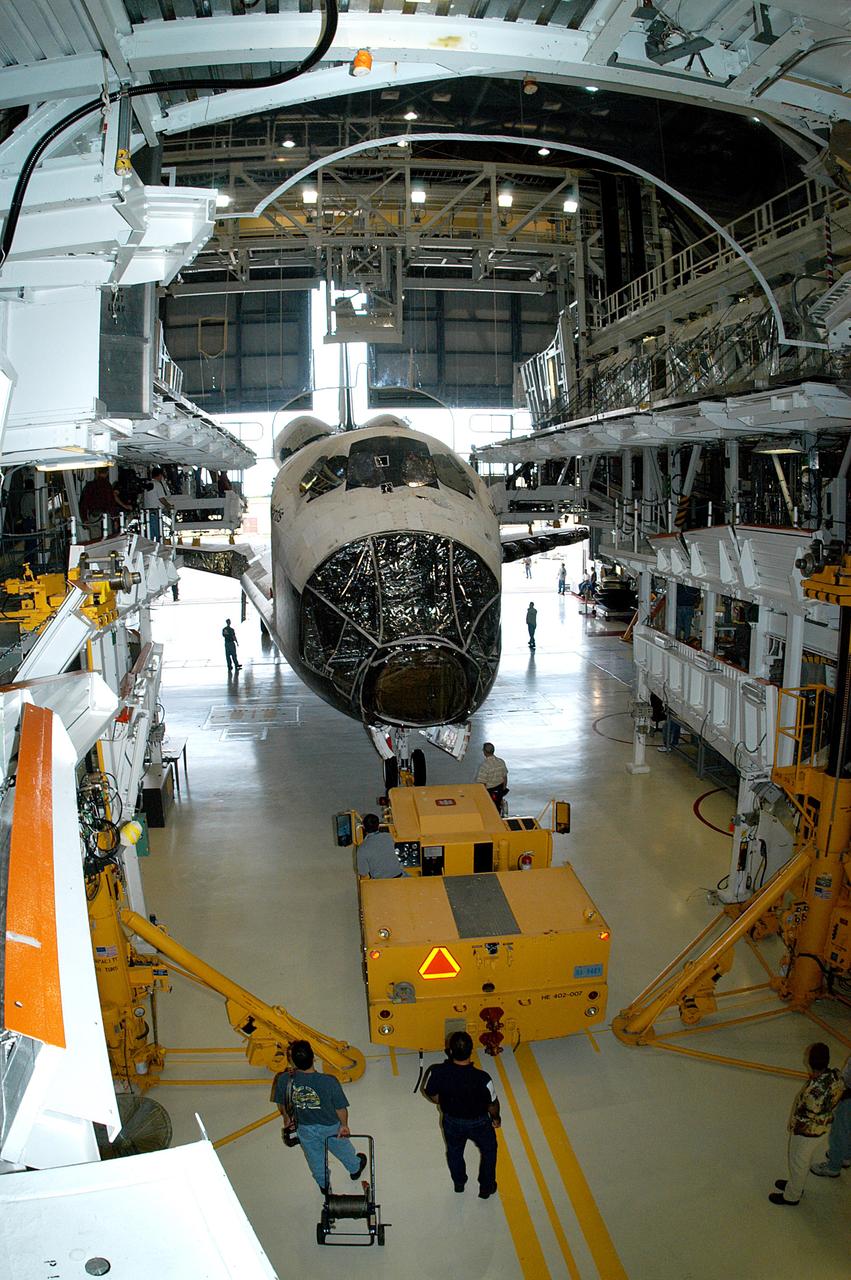
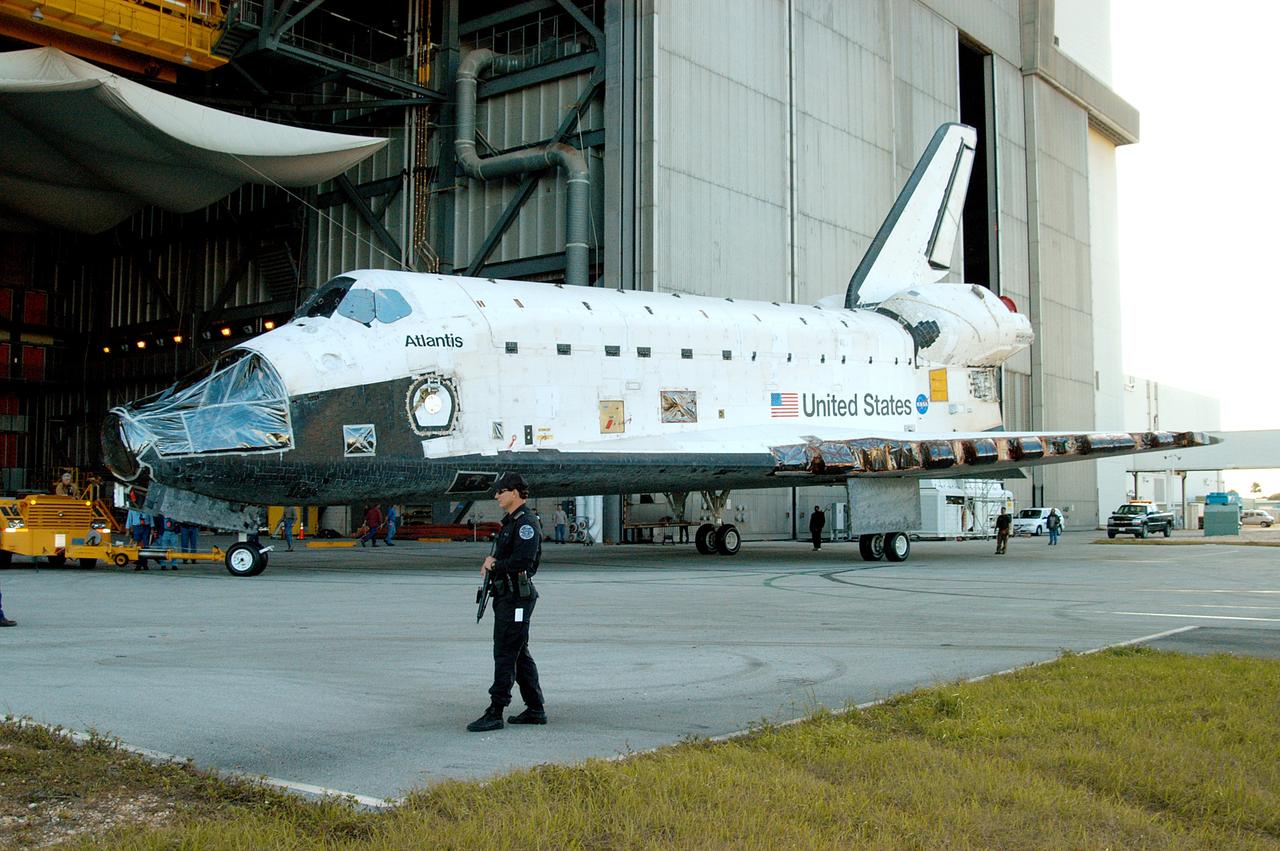
KENNEDY SPACE CENTER, FLA. - The Space Shuttle orbiter Atlantis is almost in position in high bay 4 of the Vehicle Assembly Building (VAB).  It was towed from the Orbiter Processing Facility (OPF) to allow work to be performed in the bay that can only be accomplished while it is empty. Work scheduled in the processing facility includes annual validation of the bay's cranes, work platforms, lifting mechanisms, and jack stands. Atlantis will remain in the VAB for about 10 days, then return to the OPF as work resumes to prepare it for launch in September 2004 on the first return-to-flight mission, STS-114.
KENNEDY SPACE CENTER, FLA. - The Space Shuttle orbiter Atlantis is almost in position in high bay 4 of the Vehicle Assembly Building (VAB). It was towed from the Orbiter Processing Facility (OPF) to allow work to be performed in the bay that can only be accomplished while it is empty. Work scheduled in the processing facility includes annual validation of the bay's cranes, work platforms, lifting mechanisms, and jack stands. Atlantis will remain in the VAB for about 10 days, then return to the OPF as work resumes to prepare it for launch in September 2004 on the first return-to-flight mission, STS-114.
KENNEDY SPACE CENTER, FLA. - The Space Shuttle orbiter Atlantis is moments away from a tow from the Orbiter Processing Facility (OPF) to the Vehicle Assembly Building (VAB). The move will allow work to be performed in the OPF that can only be accomplished while the bay is empty. Work scheduled in the processing facility includes annual validation of the bay's cranes, work platforms, lifting mechanisms, and jack stands. Atlantis will remain in the VAB for about 10 days, then return to the OPF as work resumes to prepare it for launch in September 2004 on the first return-to-flight mission, STS-114.
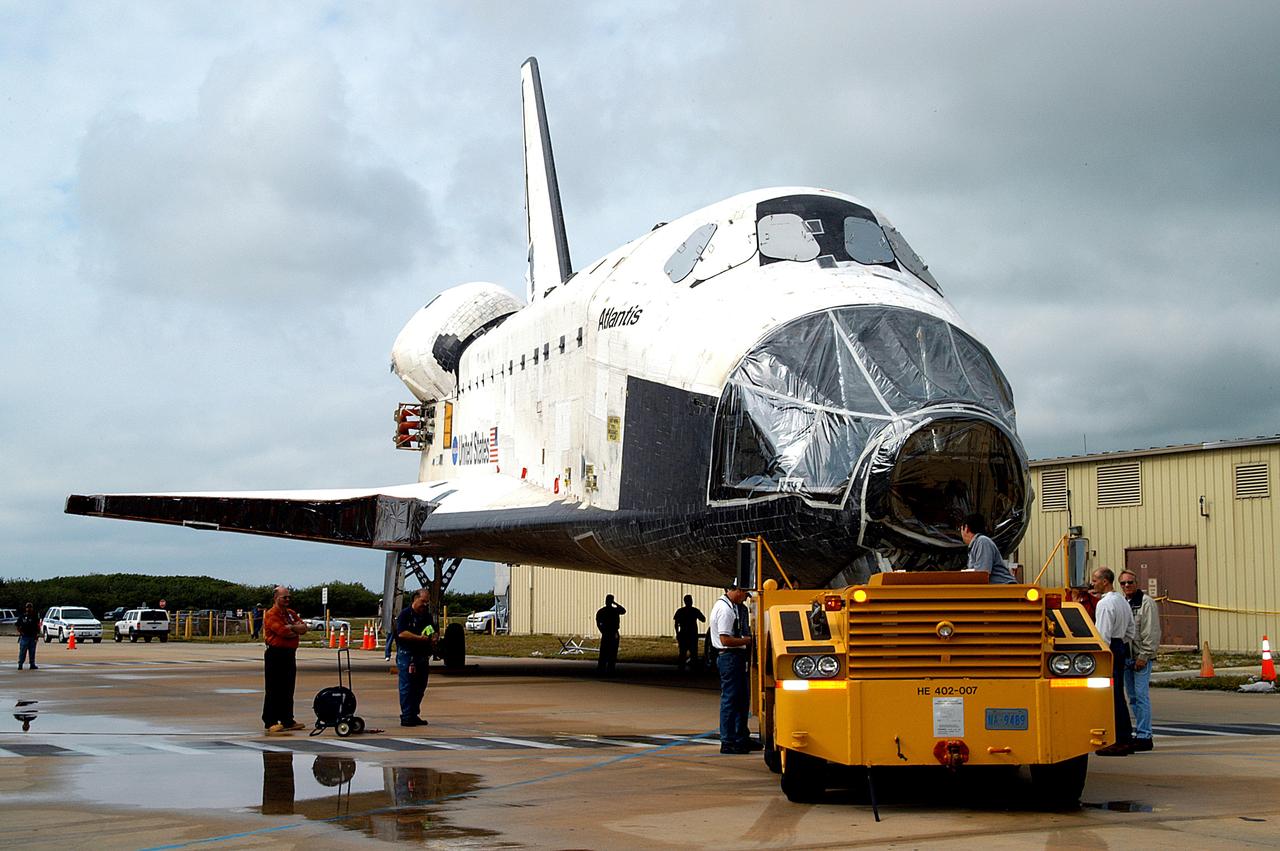
KENNEDY SPACE CENTER, FLA. - The Space Shuttle orbiter Atlantis is reflected in a rain puddle as it is towed from the Orbiter Processing Facility (OPF) to the Vehicle Assembly Building (VAB). The move will allow work to be performed in the OPF that can only be accomplished while the bay is empty. Work scheduled in the processing facility includes annual validation of the bay's cranes, work platforms, lifting mechanisms, and jack stands. Atlantis will remain in the VAB for about 10 days, then return to the OPF as work resumes to prepare it for launch in September 2004 on the first return-to-flight mission, STS-114.
KENNEDY SPACE CENTER, FLA. - The Space Shuttle orbiter Atlantis backs out of the Orbiter Processing Facility (OPF) for its move to the Vehicle Assembly Building (VAB). The move will allow work to be performed in the OPF that can only be accomplished while the bay is empty. Work scheduled in the processing facility includes annual validation of the bay's cranes, work platforms, lifting mechanisms, and jack stands. Atlantis will remain in the VAB for about 10 days, then return to the OPF as work resumes to prepare it for launch in September 2004 on the first return-to-flight mission, STS-114.
KENNEDY SPACE CENTER, FLA. - The Space Shuttle orbiter Atlantis awaits a tow from the Orbiter Processing Facility (OPF) to the Vehicle Assembly Building (VAB). The move will allow work to be performed in the OPF that can only be accomplished while the bay is empty. Work scheduled in the processing facility includes annual validation of the bay's cranes, work platforms, lifting mechanisms, and jack stands. Atlantis will remain in the VAB for about 10 days, then return to the OPF as work resumes to prepare it for launch in September 2004 on the first return-to-flight mission, STS-114.
KENNEDY SPACE CENTER, FLA. - Workers back the Space Shuttle orbiter Atlantis out of the Orbiter Processing Facility (OPF) for its move to the Vehicle Assembly Building (VAB). The move will allow work to be performed in the OPF that can only be accomplished while the bay is empty. Work scheduled in the processing facility includes annual validation of the bay's cranes, work platforms, lifting mechanisms, and jack stands. Atlantis will remain in the VAB for about 10 days, then return to the OPF as work resumes to prepare it for launch in September 2004 on the first return-to-flight mission, STS-114.
KENNEDY SPACE CENTER, FLA. - The Space Shuttle orbiter Atlantis moves into high bay 4 of the Vehicle Assembly Building (VAB).  It was towed from the Orbiter Processing Facility (OPF) to allow work to be performed in the bay that can only be accomplished while it is empty. Work scheduled in the processing facility includes annual validation of the bay's cranes, work platforms, lifting mechanisms, and jack stands. Atlantis will remain in the VAB for about 10 days, then return to the OPF as work resumes to prepare it for launch in September 2004 on the first return-to-flight mission, STS-114.
KENNEDY SPACE CENTER, FLA. - The Space Shuttle orbiter Atlantis moves into high bay 4 of the Vehicle Assembly Building (VAB). It was towed from the Orbiter Processing Facility (OPF) to allow work to be performed in the bay that can only be accomplished while it is empty. Work scheduled in the processing facility includes annual validation of the bay's cranes, work platforms, lifting mechanisms, and jack stands. Atlantis will remain in the VAB for about 10 days, then return to the OPF as work resumes to prepare it for launch in September 2004 on the first return-to-flight mission, STS-114.
KENNEDY SPACE CENTER, FLA. - The Space Shuttle orbiter Atlantis awaits transport from the Orbiter Processing Facility (OPF) to the Vehicle Assembly Building (VAB). The move will allow work to be performed in the OPF that can only be accomplished while the bay is empty. Work scheduled in the processing facility includes annual validation of the bay's cranes, work platforms, lifting mechanisms, and jack stands. Atlantis will remain in the VAB for about 10 days, then return to the OPF as work resumes to prepare it for launch in September 2004 on the first return-to-flight mission, STS-114.
KENNEDY SPACE CENTER, FLA. - The Space Shuttle orbiter Atlantis is turned into position outside the Orbiter Processing Facility (OPF) for its tow to the Vehicle Assembly Building (VAB). The move will allow work to be performed in the OPF that can only be accomplished while the bay is empty. Work scheduled in the processing facility includes annual validation of the bay's cranes, work platforms, lifting mechanisms, and jack stands. Atlantis will remain in the VAB for about 10 days, then return to the OPF as work resumes to prepare it for launch in September 2004 on the first return-to-flight mission, STS-114.
KENNEDY SPACE CENTER, FLA. - Workers prepare to tow the Space Shuttle orbiter Atlantis from the Orbiter Processing Facility (OPF) to the Vehicle Assembly Building (VAB). The move will allow work to be performed in the OPF that can only be accomplished while the bay is empty. Work scheduled in the processing facility includes annual validation of the bay's cranes, work platforms, lifting mechanisms, and jack stands. Atlantis will remain in the VAB for about 10 days, then return to the OPF as work resumes to prepare it for launch in September 2004 on the first return-to-flight mission, STS-114.
KENNEDY SPACE CENTER, FLA. - The Space Shuttle orbiter Atlantis arrives in high bay 4 of the Vehicle Assembly Building (VAB).  It was towed from the Orbiter Processing Facility (OPF) to allow work to be performed in the bay that can only be accomplished while it is empty. Work scheduled in the processing facility includes annual validation of the bay's cranes, work platforms, lifting mechanisms, and jack stands. Atlantis will remain in the VAB for about 10 days, then return to the OPF as work resumes to prepare it for launch in September 2004 on the first return-to-flight mission, STS-114.
KENNEDY SPACE CENTER, FLA. - The Space Shuttle orbiter Atlantis arrives in high bay 4 of the Vehicle Assembly Building (VAB). It was towed from the Orbiter Processing Facility (OPF) to allow work to be performed in the bay that can only be accomplished while it is empty. Work scheduled in the processing facility includes annual validation of the bay's cranes, work platforms, lifting mechanisms, and jack stands. Atlantis will remain in the VAB for about 10 days, then return to the OPF as work resumes to prepare it for launch in September 2004 on the first return-to-flight mission, STS-114.
KENNEDY SPACE CENTER, FLA. - Workers walk with Space Shuttle orbiter Atlantis from the Orbiter Processing Facility (OPF) to the Vehicle Assembly Building (VAB) high bay 4. The move will allow work to be performed in the OPF that can only be accomplished while the bay is empty. Work scheduled in the processing facility includes annual validation of the bay's cranes, work platforms, lifting mechanisms, and jack stands. Atlantis will remain in the VAB for about 10 days, then return to the OPF as work resumes to prepare it for launch in September 2004 on the first return-to-flight mission, STS-114.
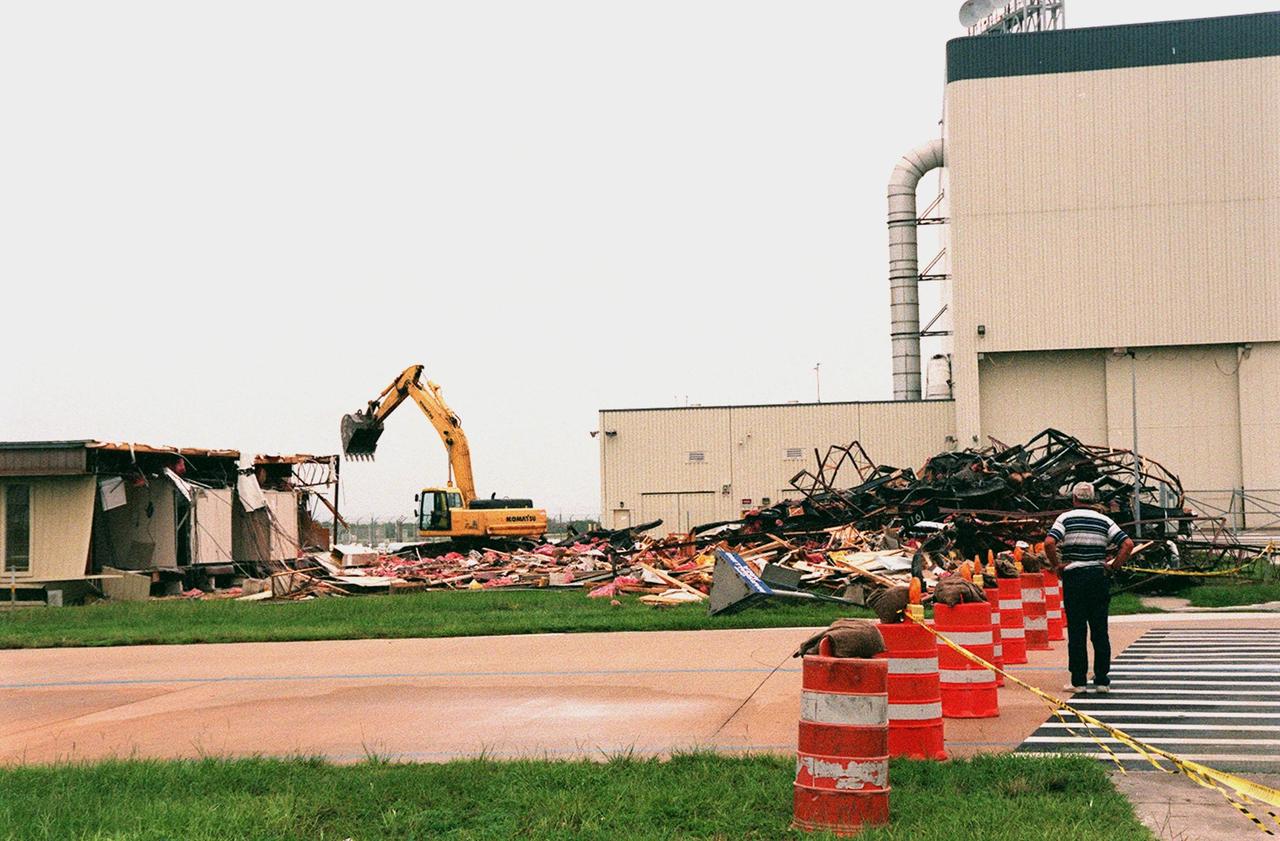
The walls of the Butler Building at Kennedy Space Center come tumbling down, with the help of the crane in the background. The building, which is near the Orbiter Processing Facility, is being demolished in order to extend the crawlerway leading to the high bay of the Vehicle Assembly Building (VAB), part of KSC's Safe Haven project. The goal of Safe Haven is to strengthen readiness for Florida's hurricane season by expanding the VAB's storage capacity. Construction includes outfitting the VAB with a third stacking area, in high bay 2, that will allow NASA to preassemble stacks and still have room in the VAB to pull a Shuttle back from the pad into the safety of the VAB if severe weather threatens. The VAB can withstand winds up to 125 mph
KSC-99pp1132
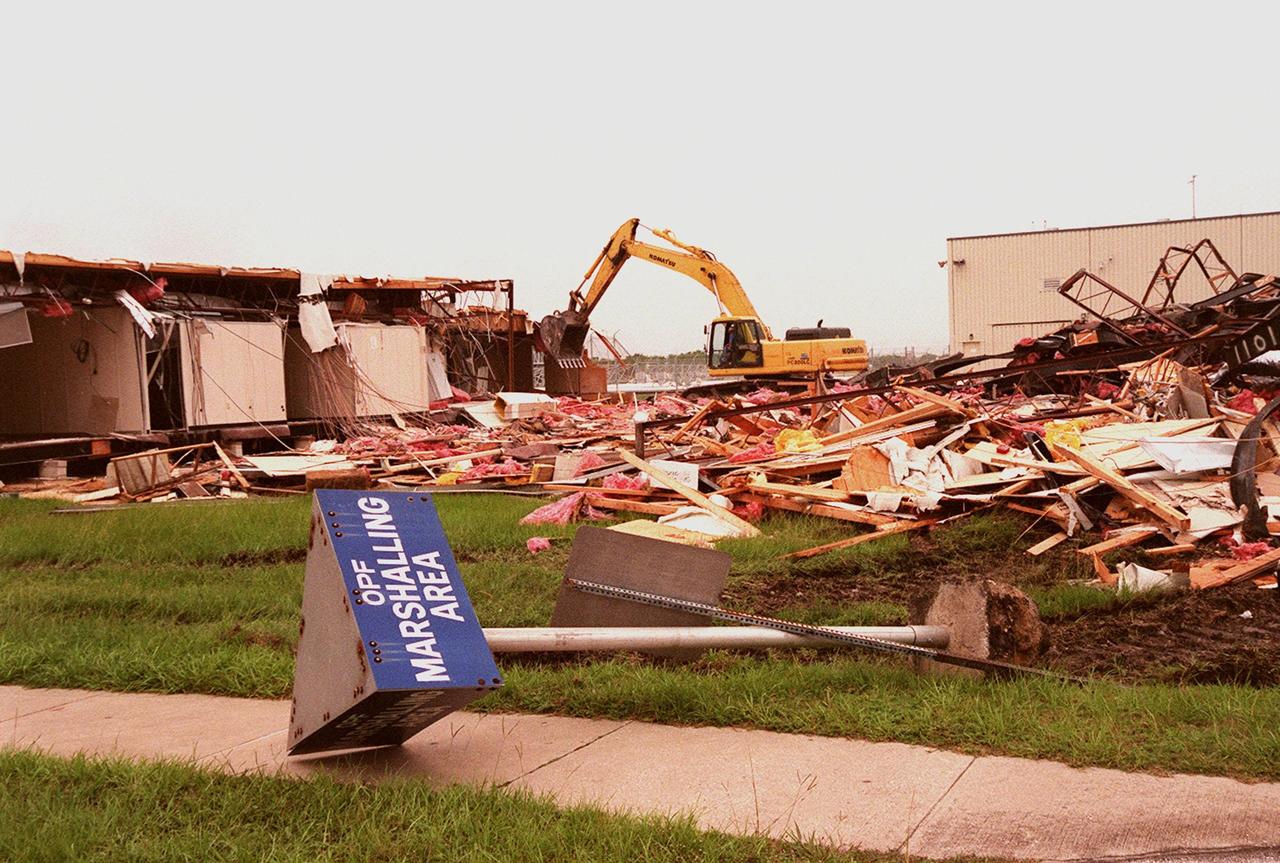
The Butler Building at Kennedy Space Center is nearly demolished, with the help of the crane in the background. The building, which is near the Orbiter Processing Facility (right), is being demolished in order to extend the crawlerway leading to the high bay of the Vehicle Assembly Building (VAB), part of KSC's Safe Haven project. The goal of Safe Haven is to strengthen readiness for Florida's hurricane season by expanding the VAB's storage capacity. Construction includes outfitting the VAB with a third stacking area, in high bay 2, that will allow NASA to preassemble stacks and still have room in the VAB to pull a Shuttle back from the pad into the safety of the VAB if severe weather threatens. The VAB can withstand winds up to 125 mph
KSC-99pp1133
KENNEDY SPACE CENTER, FLA. -- Endeavour backs out of the Orbiter Processing Facility for temporary transfer to the Vehicle Assembly Building. The move allows work to be performed in the OPF that can only be accomplished while the bay is empty. Work scheduled in the OPF includes annual validation of the bay’s cranes, work platforms, lifting mechanisms and jack stands. Endeavour will remain in the VAB for approximately 12 days, then return to the OPF.
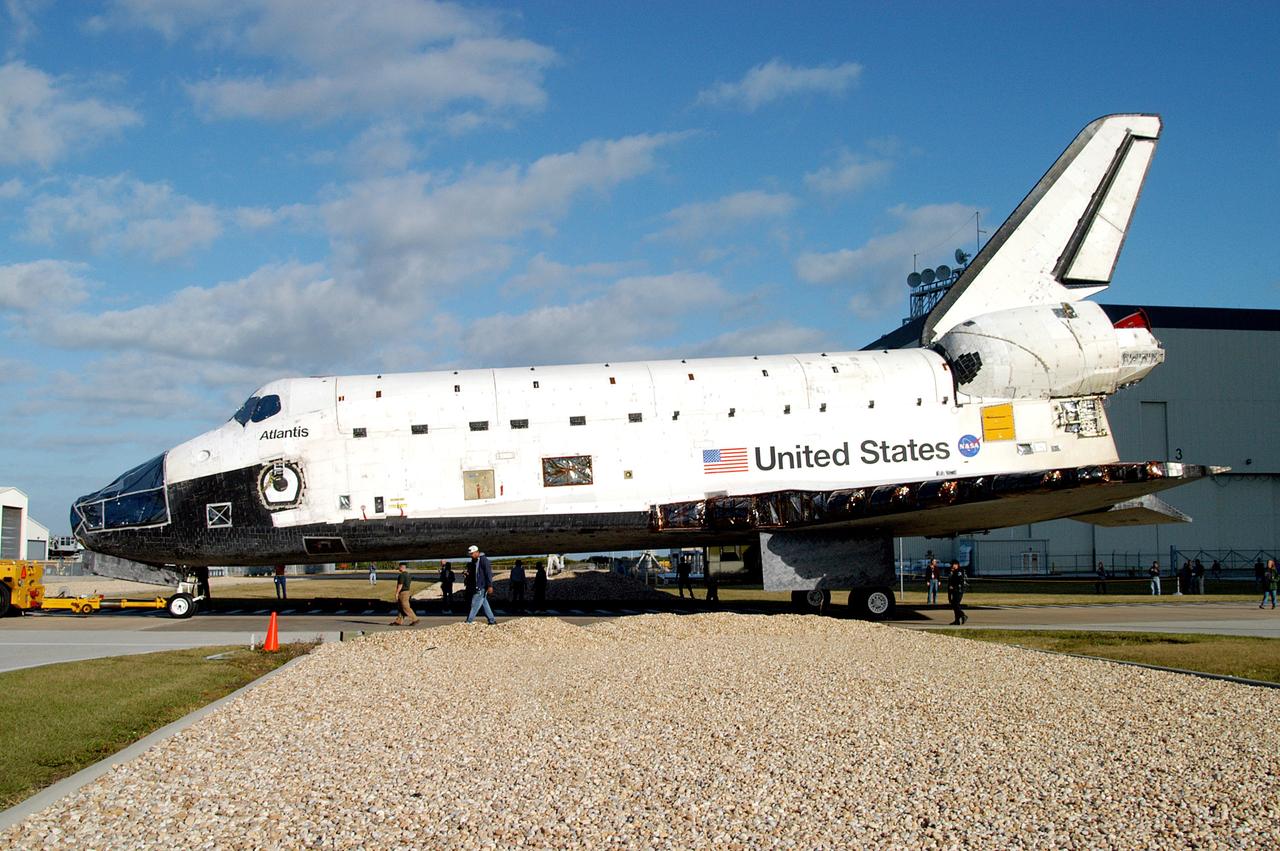
KENNEDY SPACE CENTER, FLA. -  The orbiter Atlantis rolls toward the Orbiter Processing Facility after spending 10 days in the Vehicle Assembly Building.  The hiatus in the VAB allowed work to be performed in the OPF that can only be accomplished while the bay is empty. Work included annual validation of the bay's cranes, work platforms, lifting mechanisms and jack stands.  Work resumes to prepare Atlantis for launch in September 2004 on the first return-to-flight mission, STS-114.
KENNEDY SPACE CENTER, FLA. - The orbiter Atlantis rolls toward the Orbiter Processing Facility after spending 10 days in the Vehicle Assembly Building. The hiatus in the VAB allowed work to be performed in the OPF that can only be accomplished while the bay is empty. Work included annual validation of the bay's cranes, work platforms, lifting mechanisms and jack stands. Work resumes to prepare Atlantis for launch in September 2004 on the first return-to-flight mission, STS-114.
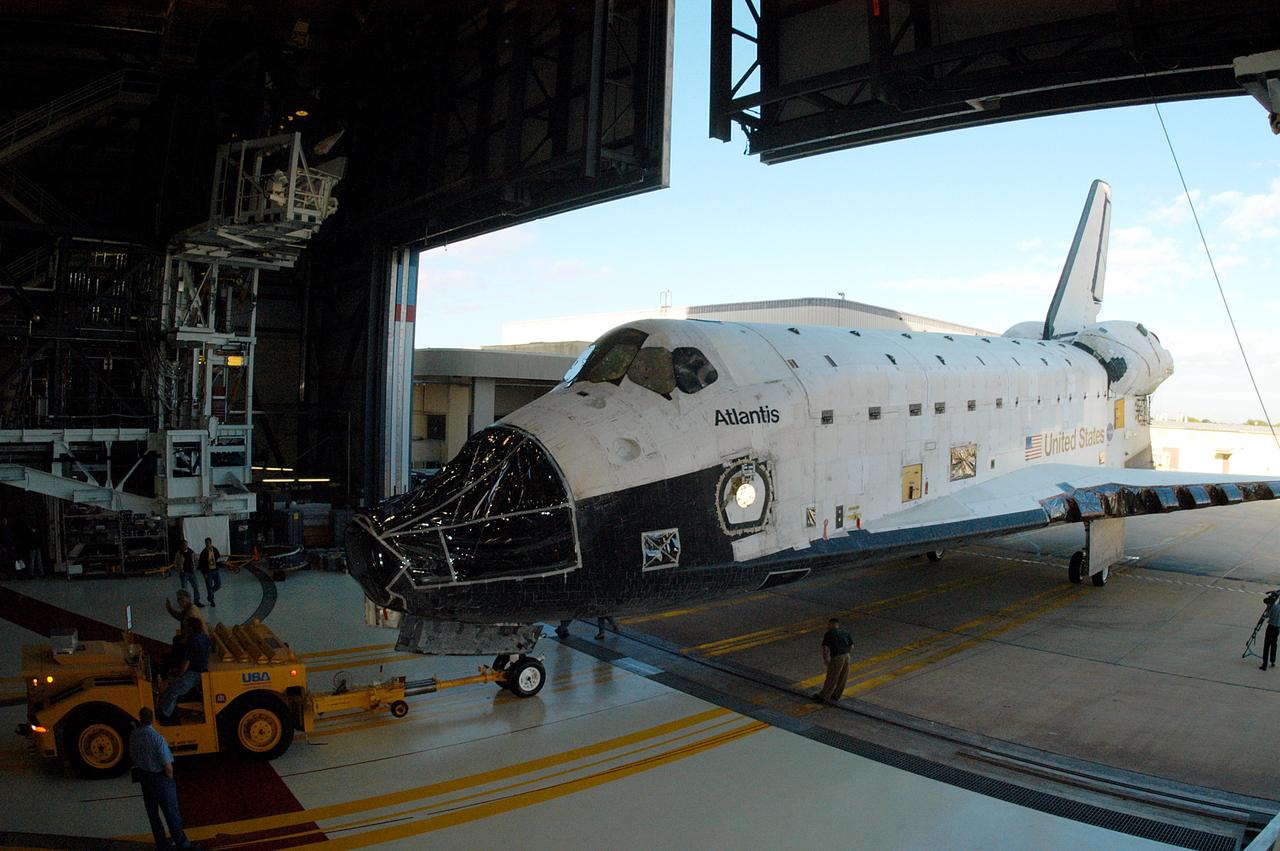
KENNEDY SPACE CENTER, FLA. -  The orbiter Atlantis rolls out of the Vehicle Assembly Building for transfer back to the Orbiter Processing Facility.  Atlantis spent 10 days in the VAB to allow work to be performed in the OPF that can only be accomplished while the bay is empty. Work included annual validation of the bay's cranes, work platforms, lifting mechanisms and jack stands.  Work resumes to prepare Atlantis for launch in September 2004 on the first return-to-flight mission, STS-114.
KENNEDY SPACE CENTER, FLA. - The orbiter Atlantis rolls out of the Vehicle Assembly Building for transfer back to the Orbiter Processing Facility. Atlantis spent 10 days in the VAB to allow work to be performed in the OPF that can only be accomplished while the bay is empty. Work included annual validation of the bay's cranes, work platforms, lifting mechanisms and jack stands. Work resumes to prepare Atlantis for launch in September 2004 on the first return-to-flight mission, STS-114.
KENNEDY SPACE CENTER, FLA. -  Workers accompany the orbiter Atlantis as it is towed back to the Orbiter Processing Facility after spending 10 days in the Vehicle Assembly Building.  The hiatus in the VAB allowed work to be performed in the OPF that can only be accomplished while the bay is empty. Work included annual validation of the bay's cranes, work platforms, lifting mechanisms and jack stands.  Work resumes to prepare Atlantis for launch in September 2004 on the first return-to-flight mission, STS-114.
KENNEDY SPACE CENTER, FLA. - Workers accompany the orbiter Atlantis as it is towed back to the Orbiter Processing Facility after spending 10 days in the Vehicle Assembly Building. The hiatus in the VAB allowed work to be performed in the OPF that can only be accomplished while the bay is empty. Work included annual validation of the bay's cranes, work platforms, lifting mechanisms and jack stands. Work resumes to prepare Atlantis for launch in September 2004 on the first return-to-flight mission, STS-114.
KENNEDY SPACE CENTER, FLA. -  The orbiter Atlantis is towed back to the Orbiter Processing Facility after spending 10 days in the Vehicle Assembly Building.  The hiatus in the VAB allowed work to be performed in the OPF that can only be accomplished while the bay is empty. Work included annual validation of the bay's cranes, work platforms, lifting mechanisms and jack stands.  Work resumes to prepare Atlantis for launch in September 2004 on the first return-to-flight mission, STS-114.
KENNEDY SPACE CENTER, FLA. - The orbiter Atlantis is towed back to the Orbiter Processing Facility after spending 10 days in the Vehicle Assembly Building. The hiatus in the VAB allowed work to be performed in the OPF that can only be accomplished while the bay is empty. Work included annual validation of the bay's cranes, work platforms, lifting mechanisms and jack stands. Work resumes to prepare Atlantis for launch in September 2004 on the first return-to-flight mission, STS-114.
KENNEDY SPACE CENTER, FLA. -- The orbiter Atlantis  is backed away from the Vehicle Assembly Building for transfer back to the Orbiter Processing Facility.  Atlantis spent 10 days in the VAB to allow work to be performed in the OPF that can only be accomplished while the bay is empty. Work included annual validation of the bay's cranes, work platforms, lifting mechanisms and jack stands.  Work resumes to prepare Atlantis for launch in September 2004 on the first return-to-flight mission, STS-114.
KENNEDY SPACE CENTER, FLA. -- The orbiter Atlantis is backed away from the Vehicle Assembly Building for transfer back to the Orbiter Processing Facility. Atlantis spent 10 days in the VAB to allow work to be performed in the OPF that can only be accomplished while the bay is empty. Work included annual validation of the bay's cranes, work platforms, lifting mechanisms and jack stands. Work resumes to prepare Atlantis for launch in September 2004 on the first return-to-flight mission, STS-114.
KENNEDY SPACE CENTER, FLA. -- Endeavour begins rolling out of the Orbiter Processing Facility for temporary transfer to the Vehicle Assembly Building. The move allows work to be performed in the OPF that can only be accomplished while the bay is empty. Work scheduled in the OPF includes annual validation of the bay’s cranes, work platforms, lifting mechanisms and jack stands. Endeavour will remain in the VAB for approximately 12 days, then return to the OPF.
KENNEDY SPACE CENTER, FLA. -- Endeavour is ready to be rolled out of the Orbiter Processing Facility for temporary transfer to the Vehicle Assembly Building. The move allows work to be performed in the OPF that can only be accomplished while the bay is empty. Work scheduled in the OPF includes annual validation of the bay’s cranes, work platforms, lifting mechanisms and jack stands. Endeavour will remain in the VAB for approximately 12 days, then return to the OPF.
KENNEDY SPACE CENTER, FLA. -- Endeavour is towed toward the Vehicle Assembly Building for temporary storage.  The orbiter has been moved from the Orbiter Processing Facility (OPF) to allow work to be performed in the OPF that can only be accomplished while the bay is empty. Work scheduled in the OPF includes annual validation of the bay’s cranes, work platforms, lifting mechanisms and jack stands. Endeavour will remain in the VAB for approximately 12 days, then return to the OPF.
KENNEDY SPACE CENTER, FLA. -- Endeavour is towed toward the Vehicle Assembly Building for temporary storage. The orbiter has been moved from the Orbiter Processing Facility (OPF) to allow work to be performed in the OPF that can only be accomplished while the bay is empty. Work scheduled in the OPF includes annual validation of the bay’s cranes, work platforms, lifting mechanisms and jack stands. Endeavour will remain in the VAB for approximately 12 days, then return to the OPF.
KENNEDY SPACE CENTER, FLA. -  The orbiter Atlantis is backed out of the Vehicle Assembly Building for transfer back to the Orbiter Processing Facility.  Atlantis spent 10 days in the VAB to allow work to be performed in the OPF that can only be accomplished while the bay is empty. Work included annual validation of the bay's cranes, work platforms, lifting mechanisms and jack stands.  Work resumes to prepare Atlantis for launch in September 2004 on the first return-to-flight mission, STS-114.
KENNEDY SPACE CENTER, FLA. - The orbiter Atlantis is backed out of the Vehicle Assembly Building for transfer back to the Orbiter Processing Facility. Atlantis spent 10 days in the VAB to allow work to be performed in the OPF that can only be accomplished while the bay is empty. Work included annual validation of the bay's cranes, work platforms, lifting mechanisms and jack stands. Work resumes to prepare Atlantis for launch in September 2004 on the first return-to-flight mission, STS-114.
KENNEDY SPACE CENTER, FLA. -  The orbiter Atlantis rolls into the Orbiter Processing Facility after spending 10 days in the Vehicle Assembly Building.  The hiatus in the VAB allowed work to be performed in the OPF that can only be accomplished while the bay is empty. Work included annual validation of the bay's cranes, work platforms, lifting mechanisms and jack stands.  Work resumes to prepare Atlantis for launch in September 2004 on the first return-to-flight mission, STS-114.
KENNEDY SPACE CENTER, FLA. - The orbiter Atlantis rolls into the Orbiter Processing Facility after spending 10 days in the Vehicle Assembly Building. The hiatus in the VAB allowed work to be performed in the OPF that can only be accomplished while the bay is empty. Work included annual validation of the bay's cranes, work platforms, lifting mechanisms and jack stands. Work resumes to prepare Atlantis for launch in September 2004 on the first return-to-flight mission, STS-114.
KENNEDY SPACE CENTER, FLA. -  The orbiter Atlantis is back inside the Orbiter Processing Facility after spending 10 days in the Vehicle Assembly Building.  The hiatus in the VAB allowed work to be performed in the OPF that can only be accomplished while the bay is empty. Work included annual validation of the bay's cranes, work platforms, lifting mechanisms and jack stands.  Work resumes to prepare Atlantis for launch in September 2004 on the first return-to-flight mission, STS-114.
KENNEDY SPACE CENTER, FLA. - The orbiter Atlantis is back inside the Orbiter Processing Facility after spending 10 days in the Vehicle Assembly Building. The hiatus in the VAB allowed work to be performed in the OPF that can only be accomplished while the bay is empty. Work included annual validation of the bay's cranes, work platforms, lifting mechanisms and jack stands. Work resumes to prepare Atlantis for launch in September 2004 on the first return-to-flight mission, STS-114.
KENNEDY SPACE CENTER, FLA. -- The orbiter Atlantis is backed out of the Vehicle Assembly Building for transfer back to the Orbiter Processing Facility.  Atlantis spent 10 days in the VAB to allow work to be performed in the OPF that can only be accomplished while the bay is empty. Work included annual validation of the bay's cranes, work platforms, lifting mechanisms and jack stands.  Work resumes to prepare Atlantis for launch in September 2004 on the first return-to-flight mission, STS-114.
KENNEDY SPACE CENTER, FLA. -- The orbiter Atlantis is backed out of the Vehicle Assembly Building for transfer back to the Orbiter Processing Facility. Atlantis spent 10 days in the VAB to allow work to be performed in the OPF that can only be accomplished while the bay is empty. Work included annual validation of the bay's cranes, work platforms, lifting mechanisms and jack stands. Work resumes to prepare Atlantis for launch in September 2004 on the first return-to-flight mission, STS-114.
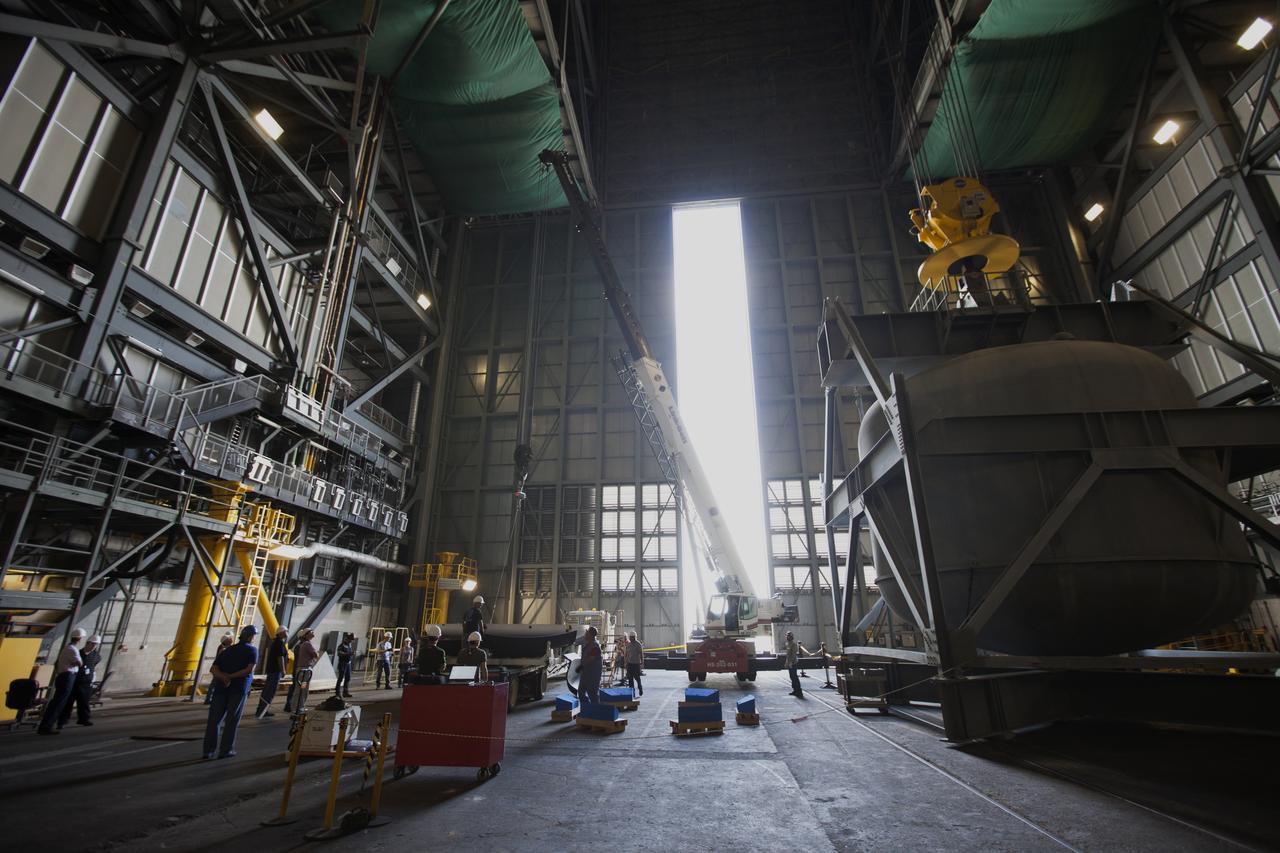
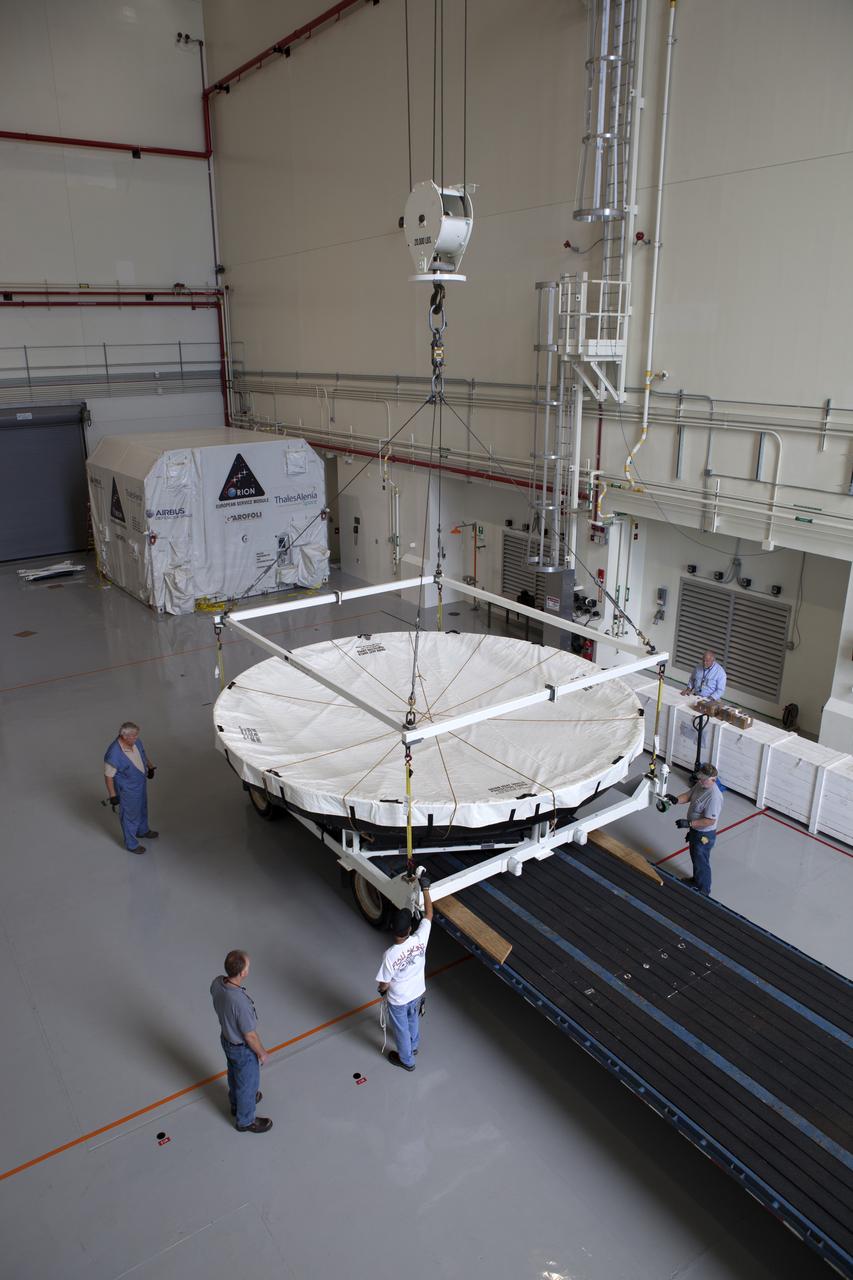
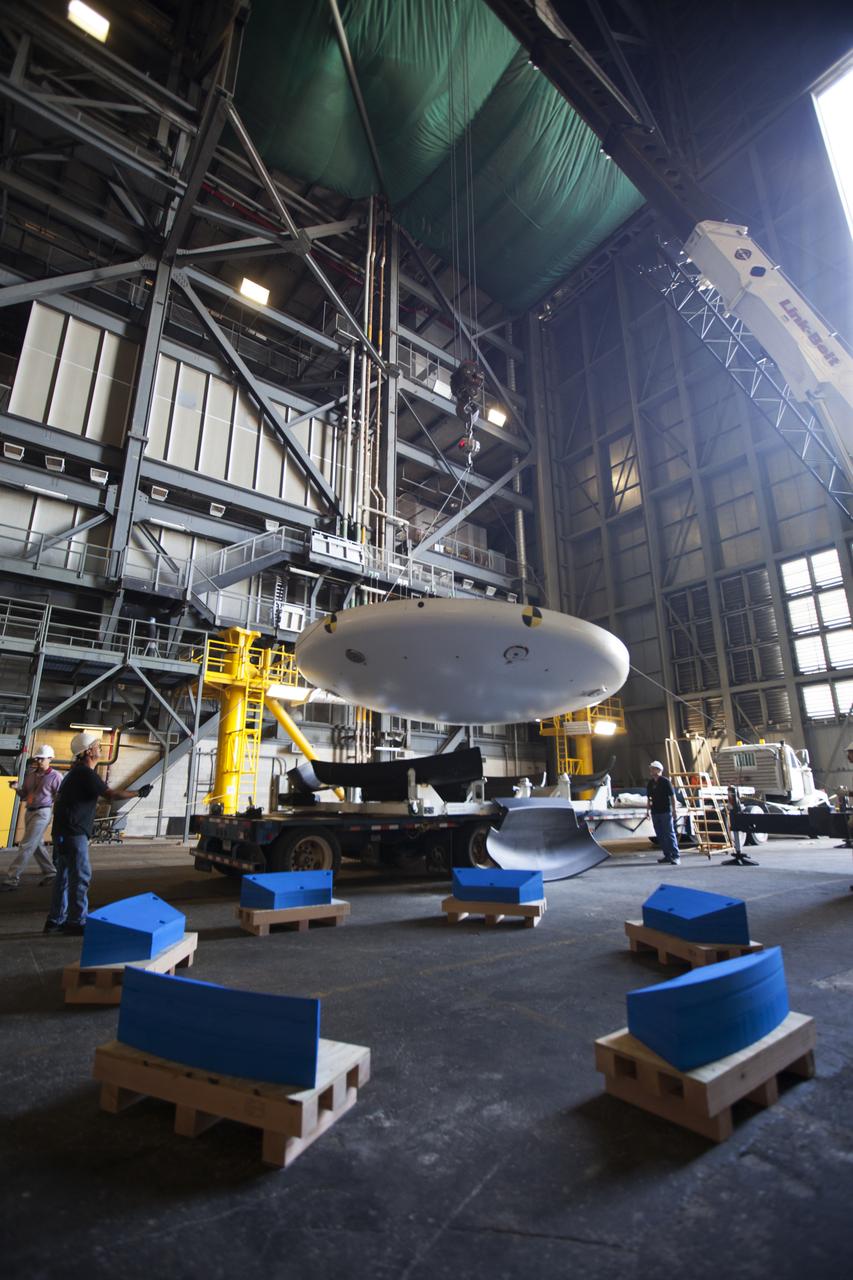
Inside High Bay 2 in the Vehicle Assembly Building (VAB) at NASA's Kennedy Space Center in Florida, a worker monitors the progress as a crane lowers the Orion heat shield from Exploration Flight Test-1 onto foam blocks. The heat shield is being transferred from the Orion Program to the Ground Systems Development and Operations Program, Landing and Recovery Operations. In the VAB, the heat shield will be integrated with the Orion ground test article and used for future underway recovery testing.
Orion EFT-1 Heat Shield Offload from Truck onto Foam Pads (Dunna
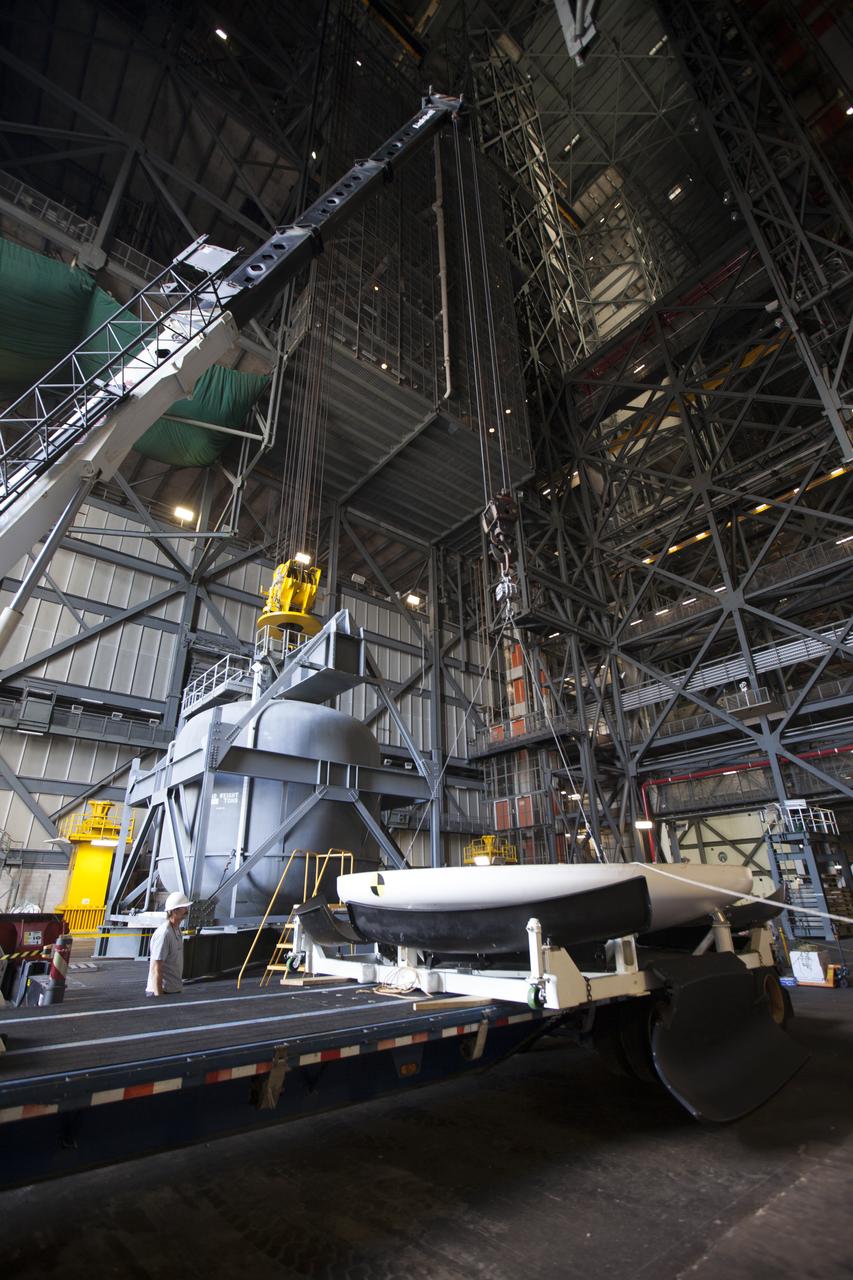
Inside High Bay 2 in the Vehicle Assembly Building (VAB) at NASA's Kennedy Space Center in Florida, a crane is attached to the Orion heat shield from Exploration Flight Test-1 for unloading off its transporter. The heat shield is being transferred from the Orion Program to the Ground Systems Development and Operations Program, Landing and Recovery Operations. In the VAB, the heat shield will be integrated with the Orion ground test article and used for future underway recovery testing.
Orion EFT-1 Heat Shield Offload from Truck onto Foam Pads (Dunna
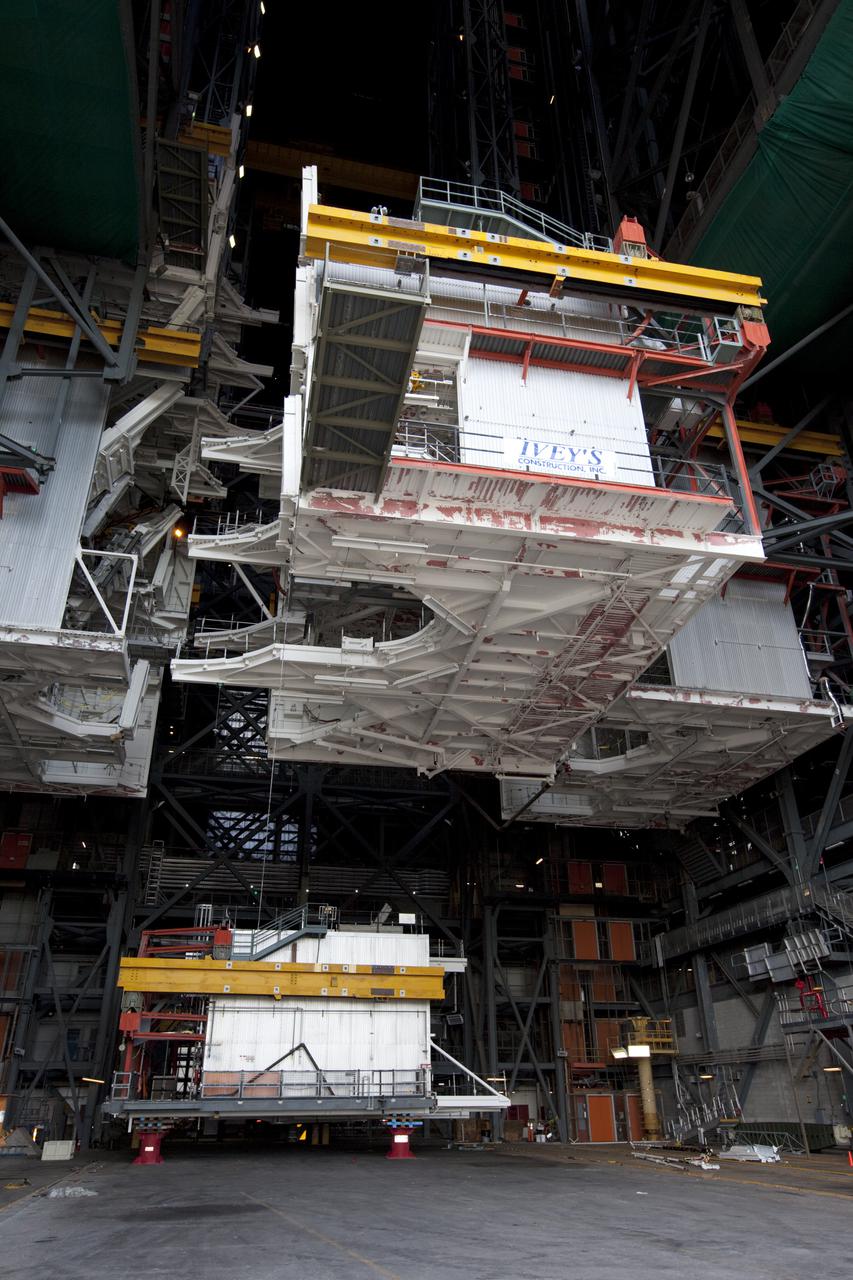
CAPE CANAVERAL, Fla. – At NASA’s Kennedy Space Center in Florida, a crane lowers a space shuttle-era work platform from high bay 3 inside the Vehicle Assembly Building, or VAB. The platform has been moved to the VAB north parking area for temporary storage. The work is part of a center-wide refurbishment initiative under the Ground Systems Development and Operations, or GSDO, Program. High bay 3 is being refurbished to accommodate NASA’s Space Launch System and a variety of other spacecraft. Photo credit: NASA_Kim Shiflett
KSC-2012-5677
Inside the Launch Abort System Facility at NASA's Kennedy Space Center in Florida, a crane lowers the Orion heat shield from Exploration Flight Test-1 onto a transporter for its move to the Vehicle Assembly Building (VAB). The heat shield is being transferred from the Orion Program to the Ground Systems Development and Operations Program, Landing and Recovery Operations. In the VAB, the heat shield will be integrated with the Orion ground test article and used for future underway recovery testing.
Orion EFT-1 Heat Shield Move from LASF to VAB Highbay 2
Inside High Bay 2 in the Vehicle Assembly Building (VAB) at NASA's Kennedy Space Center in Florida, a crane is attached to the Orion heat shield from Exploration Flight Test-1 for unloading off its transporter. The heat shield is being transferred from the Orion Program to the Ground Systems Development and Operations Program, Landing and Recovery Operations. In the VAB, the heat shield will be integrated with the Orion ground test article and used for future underway recovery testing.
Orion EFT-1 Heat Shield Offload from Truck onto Foam Pads (Dunna