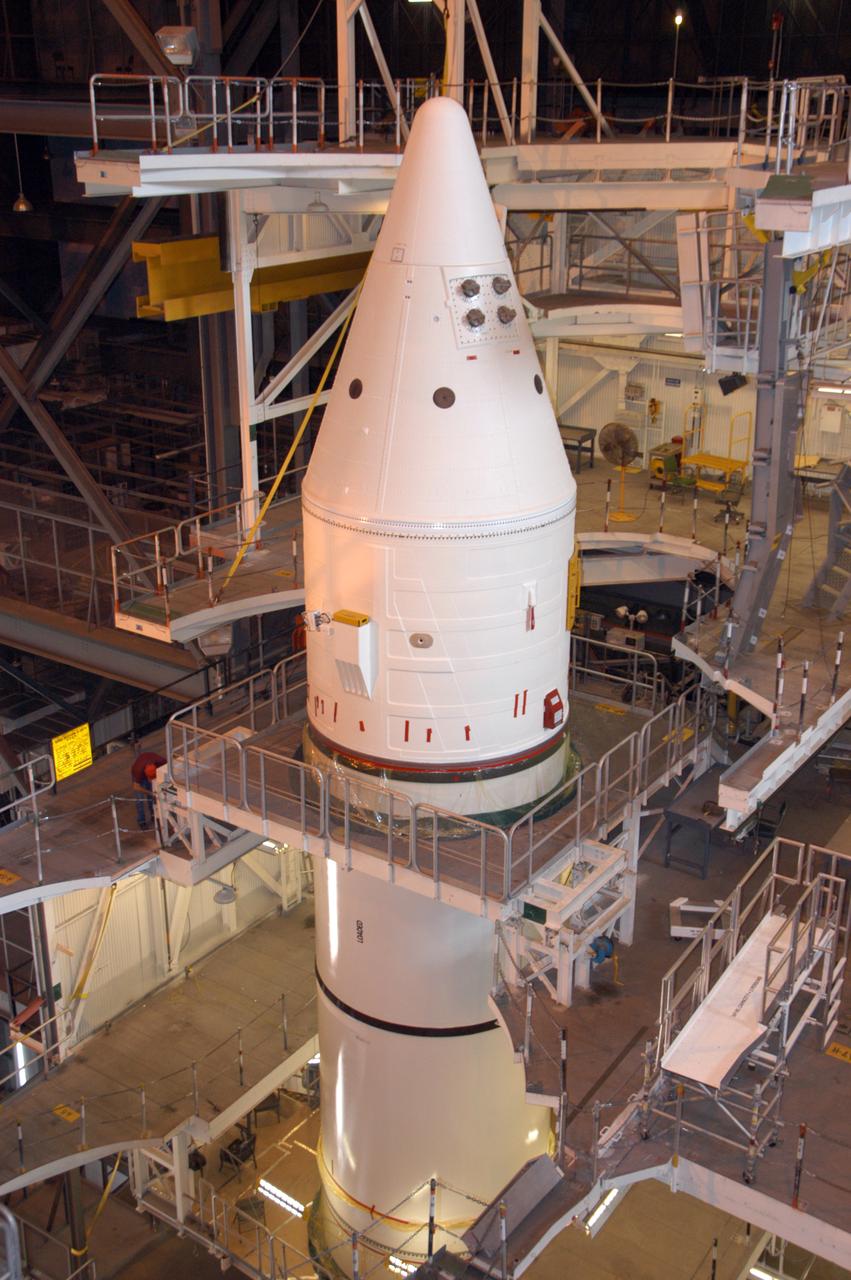
Workers continue stacking the solid rocket boosters in highbay 1 inside Kennedy Space Center's Vehicle Assembly Building. The solid rocket boosters are being prepared for NASA's next Space Shuttle launch, mission STS-117. The mission is scheduled to launch aboard Atlantis no earlier than March 16, 2007.
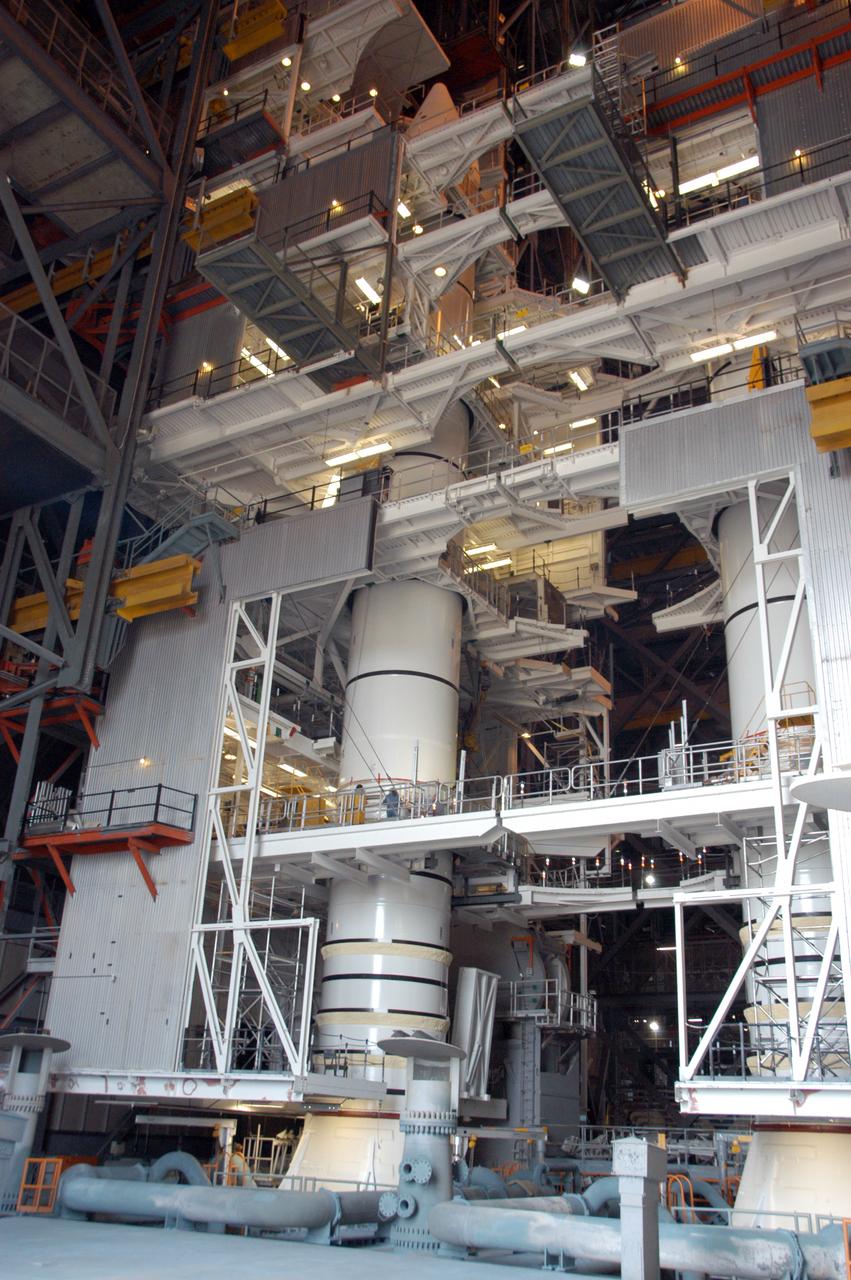
Workers continue stacking the twin solid rocket boosters in highbay 1 inside Kennedy Space Center's Vehicle Assembly Building. The solid rocket boosters are being prepared for NASA's next Space Shuttle launch, mission STS-117. The mission is scheduled to launch aboard Atlantis no earlier than March 16, 2007.
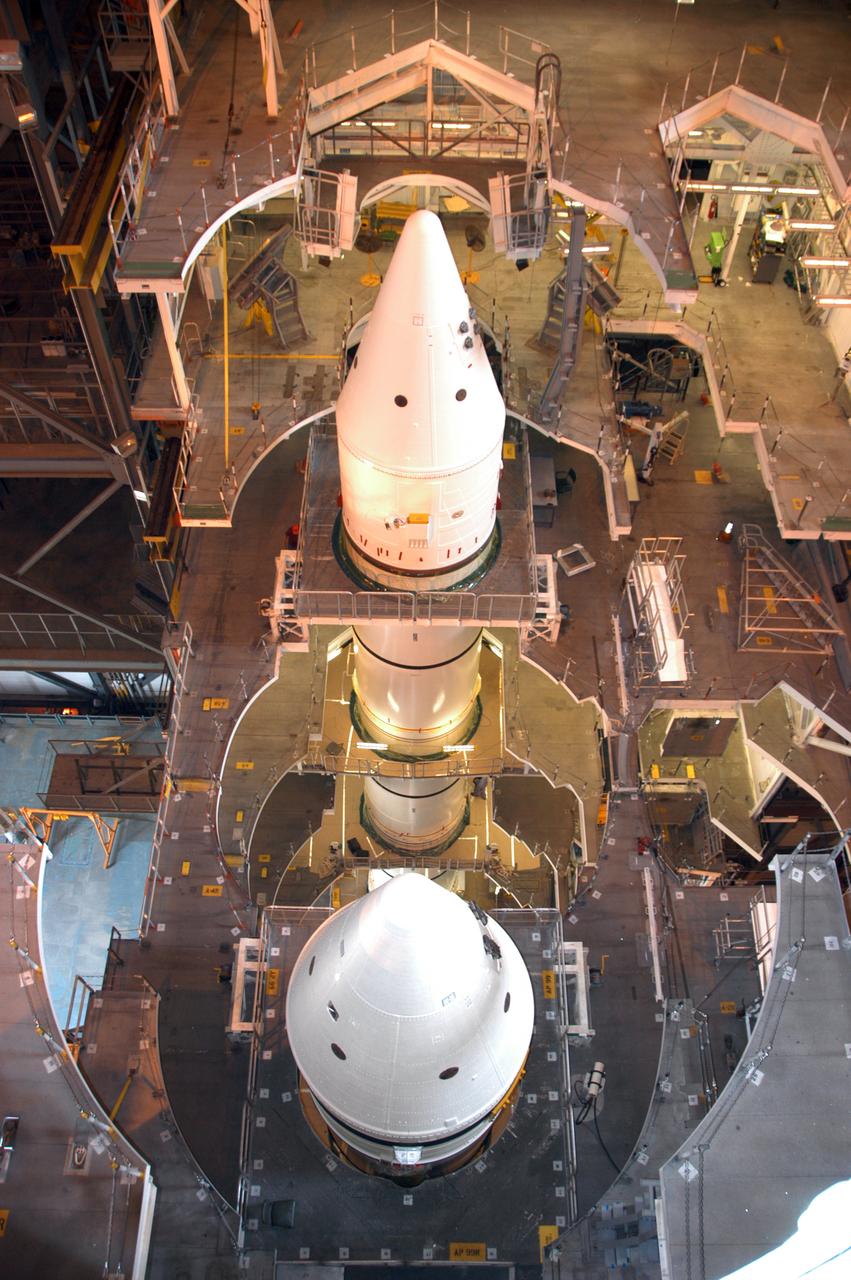
Lighting inside Kennedy Space Center's Vehicle Assembly Building seems to bathe the highbay 1 area in a golden hue as workers continue stacking the twin solid rocket boosters. The solid rocket boosters are being prepared for NASA's next Space Shuttle launch, mission STS-117. The mission is scheduled to launch aboard Atlantis no earlier than March 16, 2007.
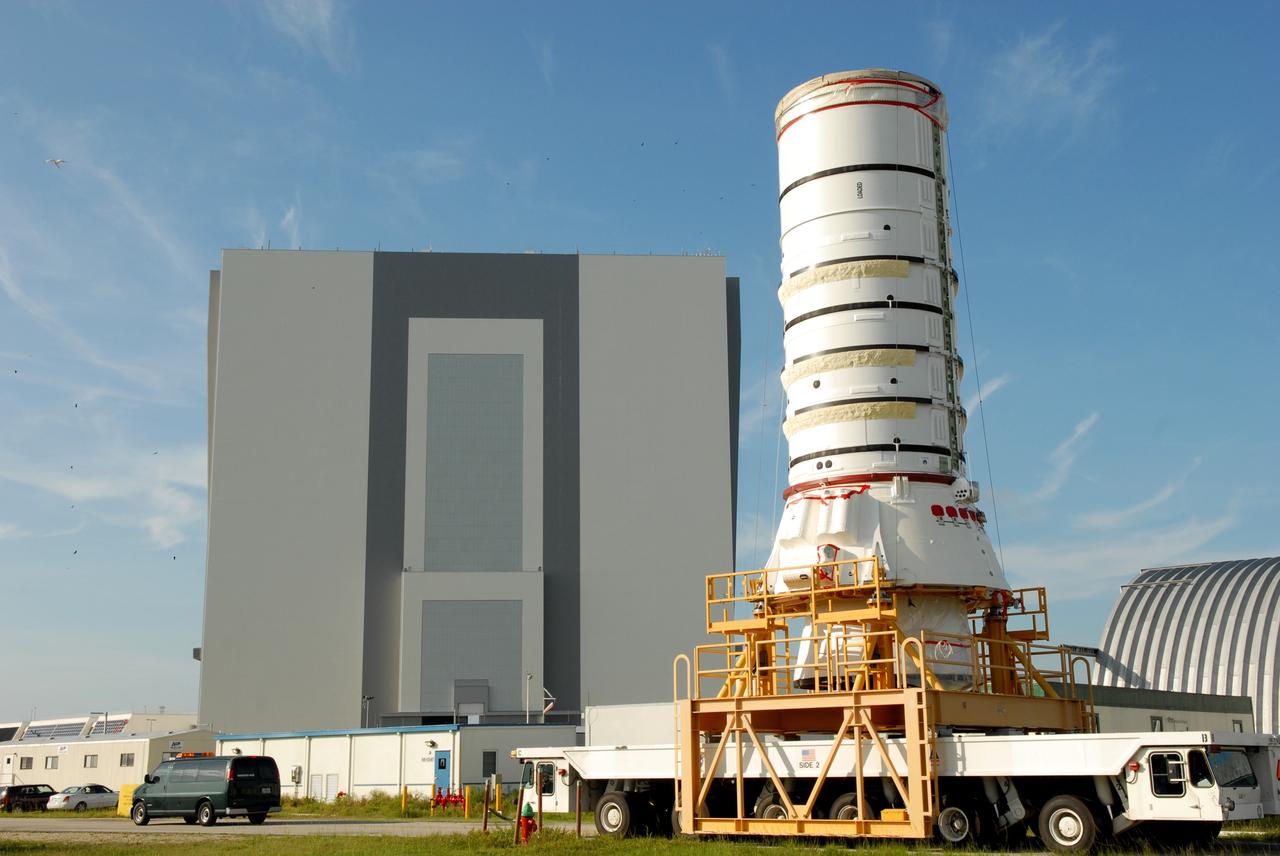
CAPE CANAVERAL, Fla. – The Ares I-X aft assembly nears the Vehicle Assembly Building at NASA's Kennedy Space Center in Florida. It is being moved to the VAB for stacking to complete the Ares I-X test vehicle. The aft assembly will be the first segment to be stacked on the mobile launch platform in the VAB. Part of the Constellation Program, the Ares I-X is the test vehicle for the Ares I, which is the essential core of a space transportation system that eventually will carry crewed missions back to the moon, on to Mars and out into the solar system. The Ares I-X flight test is targeted no earlier than Aug. 30 from Launch Pad 39B. Photo credit: NASA/Jim Grossmann
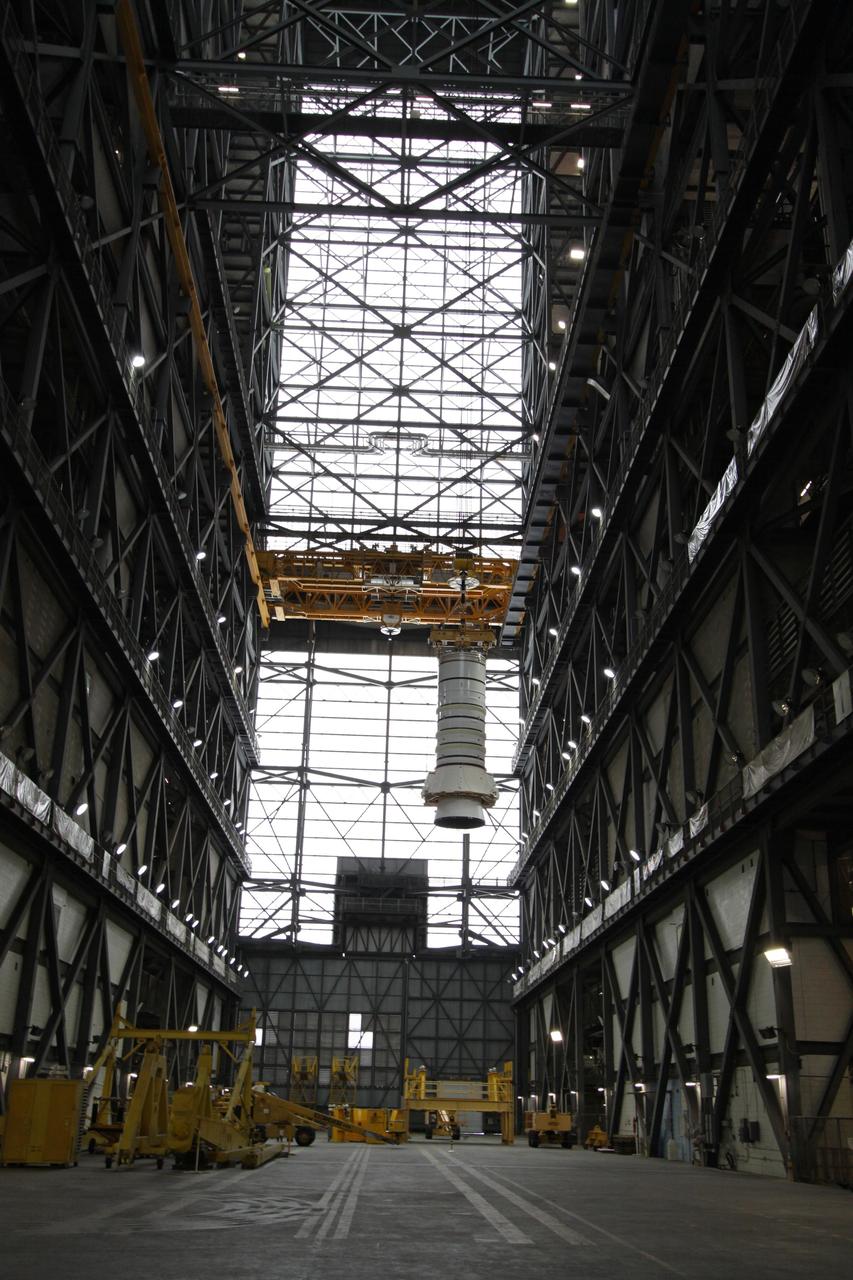
CAPE CANAVERAL, Fla. – In the Vehicle Assembly Building at NASA's Kennedy Space Center in Florida, the Ares I-X aft booster segment with the aft skirt is lifted across the VAB transfer aisle. The stack will be hoisted into the upper regions of the VAB and lowered onto the mobile launch platform in High Bay 3. This is the start of the buildup of the Ares I-X launch vehicle for the flight test targeted for no earlier than Aug. 30. Part of the Constellation Program, the Ares I-X is the test vehicle for the Ares I, which is the essential core of a space transportation system that eventually will carry crewed missions back to the moon, on to Mars and out into the solar system. Photo credit: NASA/Jack Pfaller
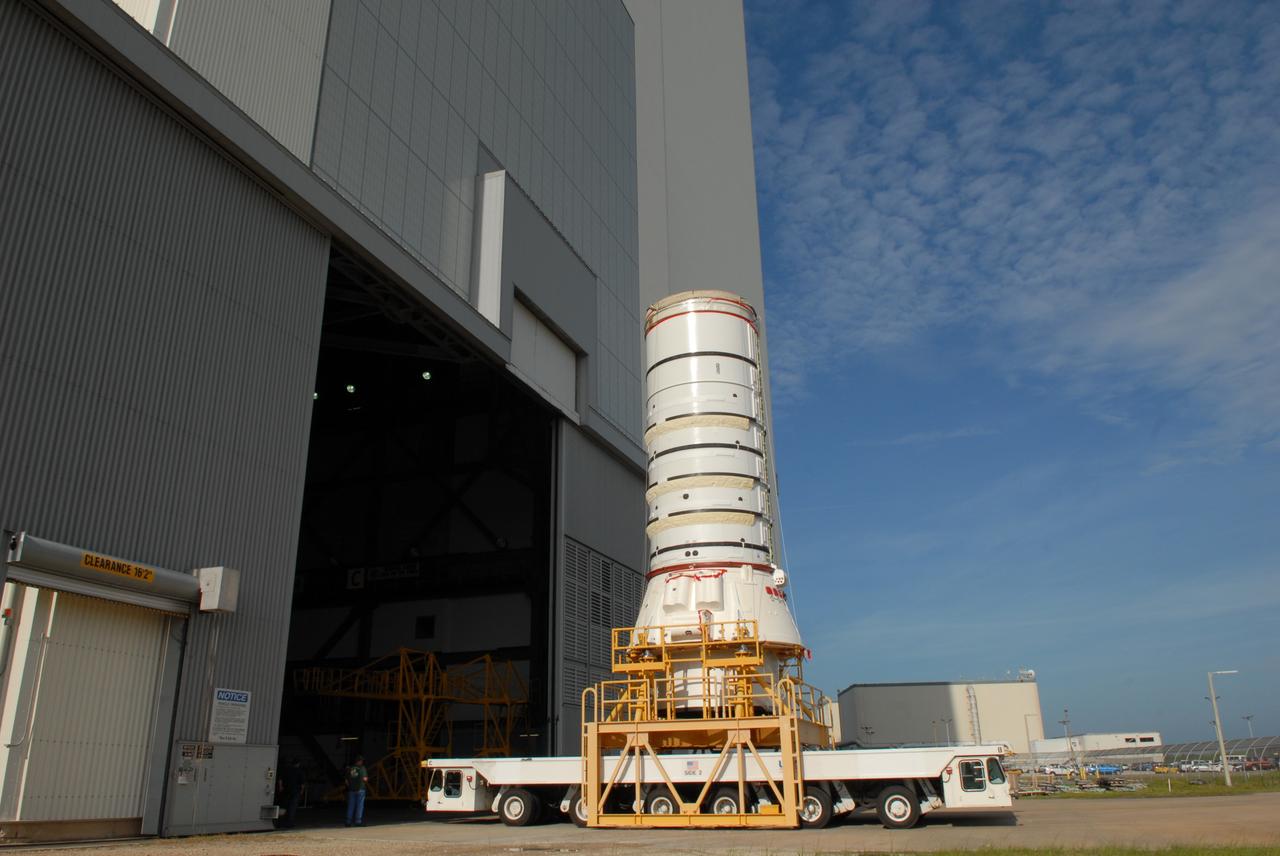
CAPE CANAVERAL, Fla. – The Ares I-X aft assembly moves toward the door of the Vehicle Assembly Building at NASA's Kennedy Space Center in Florida. Inside, it will be stacked with other segments to complete the Ares I-X test vehicle. The aft assembly will be the first segment to be stacked on the mobile launch platform in the VAB. Part of the Constellation Program, the Ares I-X is the test vehicle for the Ares I, which is the essential core of a space transportation system that eventually will carry crewed missions back to the moon, on to Mars and out into the solar system. The Ares I-X flight test is targeted no earlier than Aug. 30 from Launch Pad 39B. Photo credit: NASA/Jim Grossmann
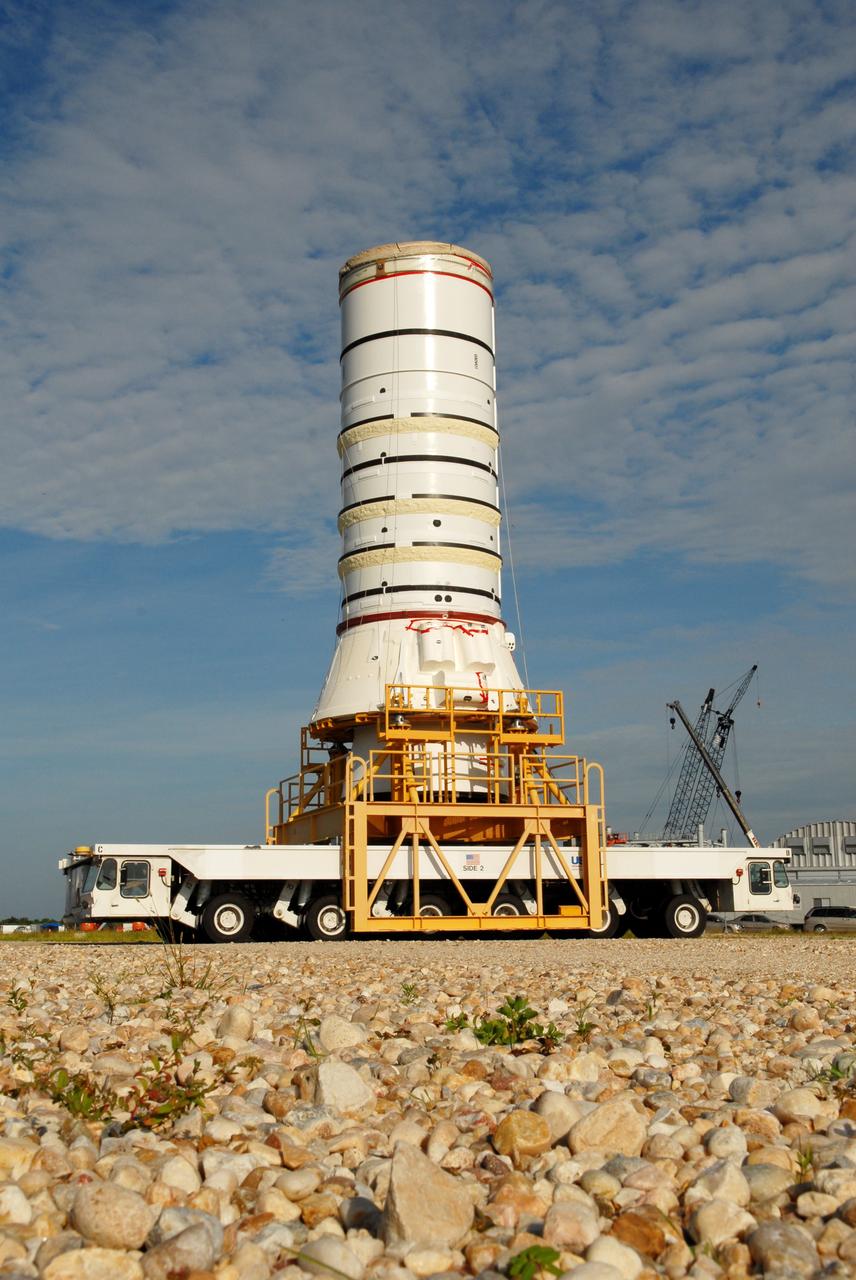
CAPE CANAVERAL, Fla. – The Ares I-X aft assembly is being moved to the Vehicle Assembly Building at NASA's Kennedy Space Center in Florida. There it will be stacked with other segments to complete the Ares I-X test vehicle. The aft assembly will be the first segment to be stacked on the mobile launch platform in the VAB. Part of the Constellation Program, the Ares I-X is the test vehicle for the Ares I, which is the essential core of a space transportation system that eventually will carry crewed missions back to the moon, on to Mars and out into the solar system. The Ares I-X flight test is targeted no earlier than Aug. 30 from Launch Pad 39B. Photo credit: NASA/Jim Grossmann
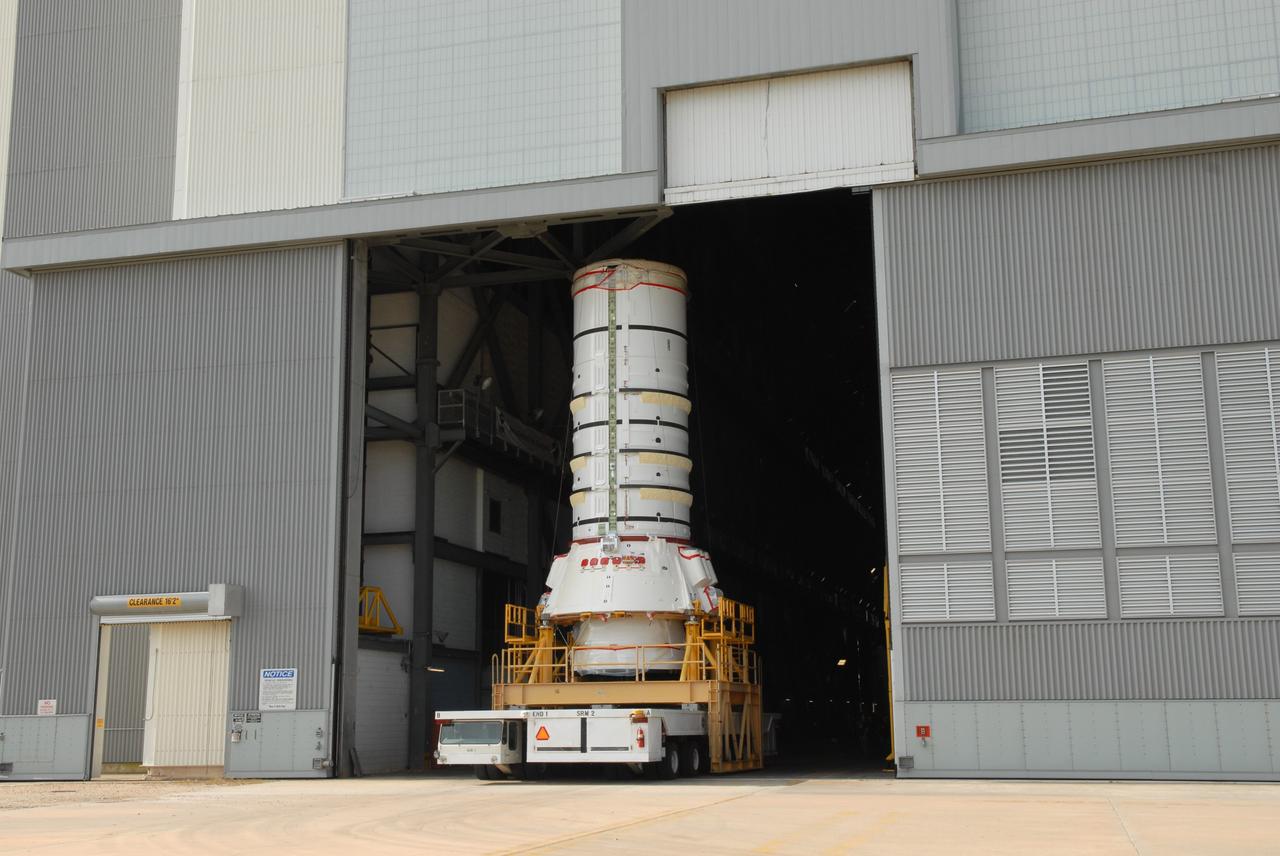
CAPE CANAVERAL, Fla. – The Ares I-X aft assembly moves inside the Vehicle Assembly Building at NASA's Kennedy Space Center in Florida. It will be stacked with other segments to complete the Ares I-X test vehicle.The aft assembly will be the first segment to be stacked on the mobile launch platform in the VAB. Part of the Constellation Program, the Ares I-X is the test vehicle for the Ares I, which is the essential core of a space transportation system that eventually will carry crewed missions back to the moon, on to Mars and out into the solar system. The Ares I-X flight test is targeted no earlier than Aug. 30 from Launch Pad 39B. Photo credit: NASA/Jim Grossmann
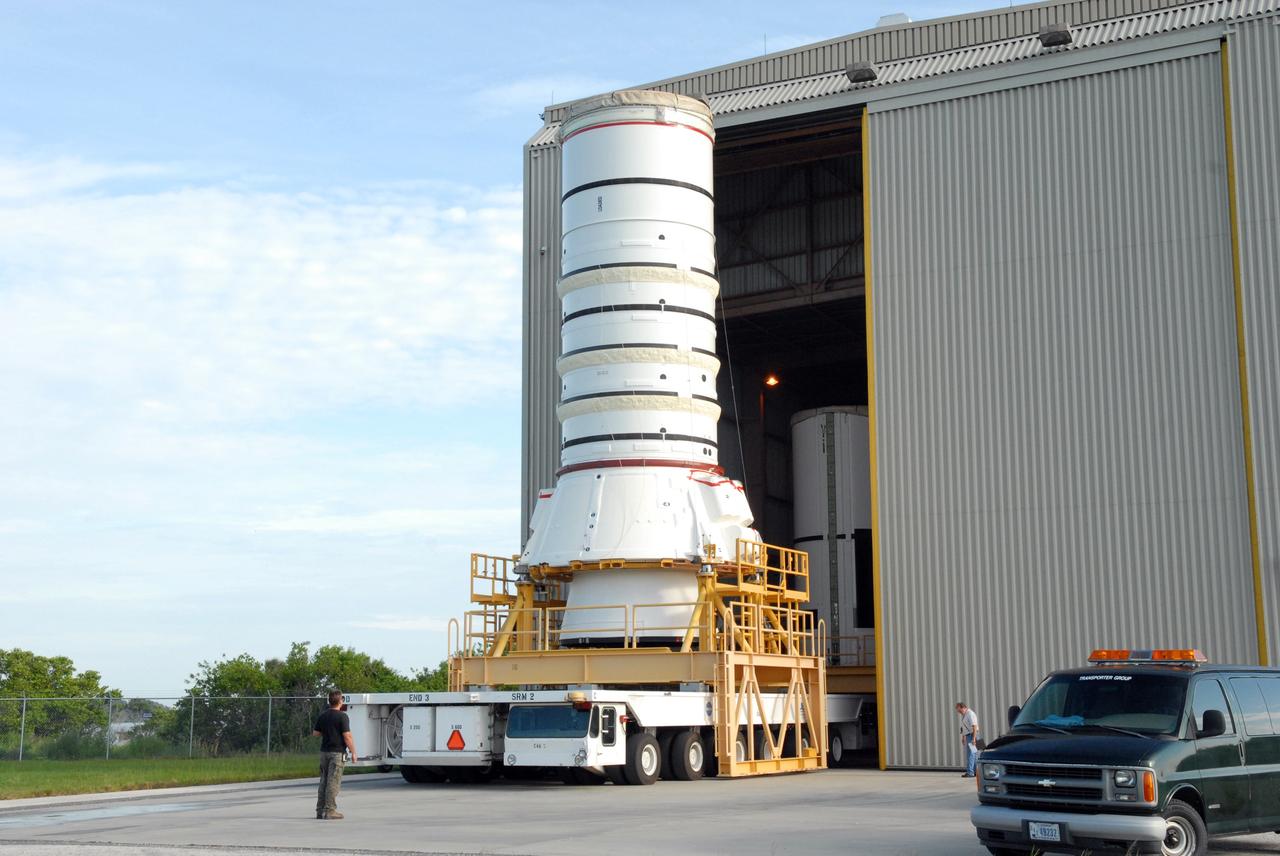
CAPE CANAVERAL, Fla. – The Ares I-X aft assembly is moved out of the Rotation, Processing and Surge Facility at NASA's Kennedy Space Center in Florida. It is going to the Vehicle Assembly Building for stacking to complete the Ares I-X test vehicle. The aft assembly will be the first segment to be stacked on the mobile launch platform in the VAB. Part of the Constellation Program, the Ares I-X is the test vehicle for the Ares I, which is the essential core of a space transportation system that eventually will carry crewed missions back to the moon, on to Mars and out into the solar system. The Ares I-X flight test is targeted no earlier than Aug. 30 from Launch Pad 39B. Photo credit: NASA/Jim Grossmann
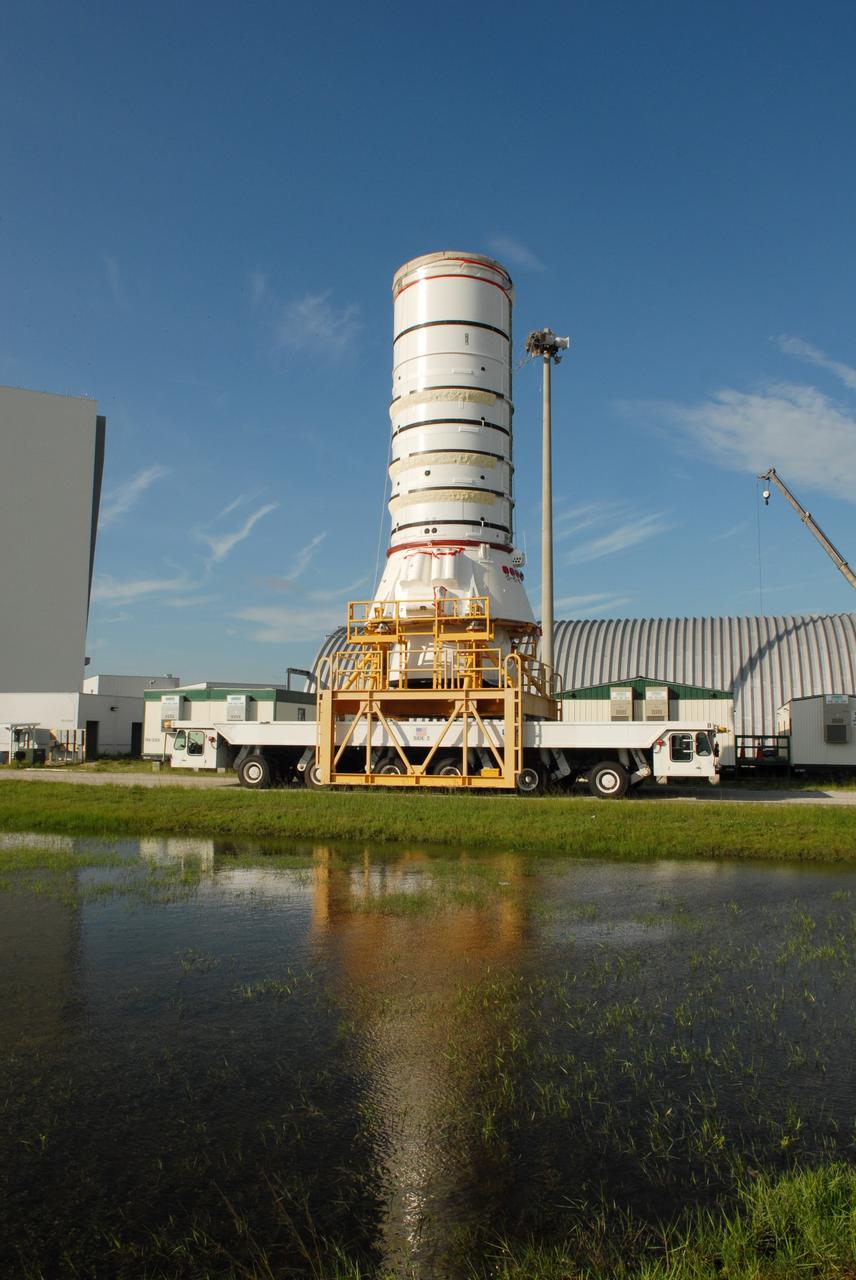
CAPE CANAVERAL, Fla. – The Ares I-X aft assembly moves away from the Rotation, Processing and Surge Facility at NASA's Kennedy Space Center in Florida. It is going to the Vehicle Assembly Building for stacking to complete the Ares I-X test vehicle. The aft assembly will be the first segment to be stacked on the mobile launch platform in the VAB. Part of the Constellation Program, the Ares I-X is the test vehicle for the Ares I, which is the essential core of a space transportation system that eventually will carry crewed missions back to the moon, on to Mars and out into the solar system. The Ares I-X flight test is targeted no earlier than Aug. 30 from Launch Pad 39B. Photo credit: NASA/Jim Grossmann
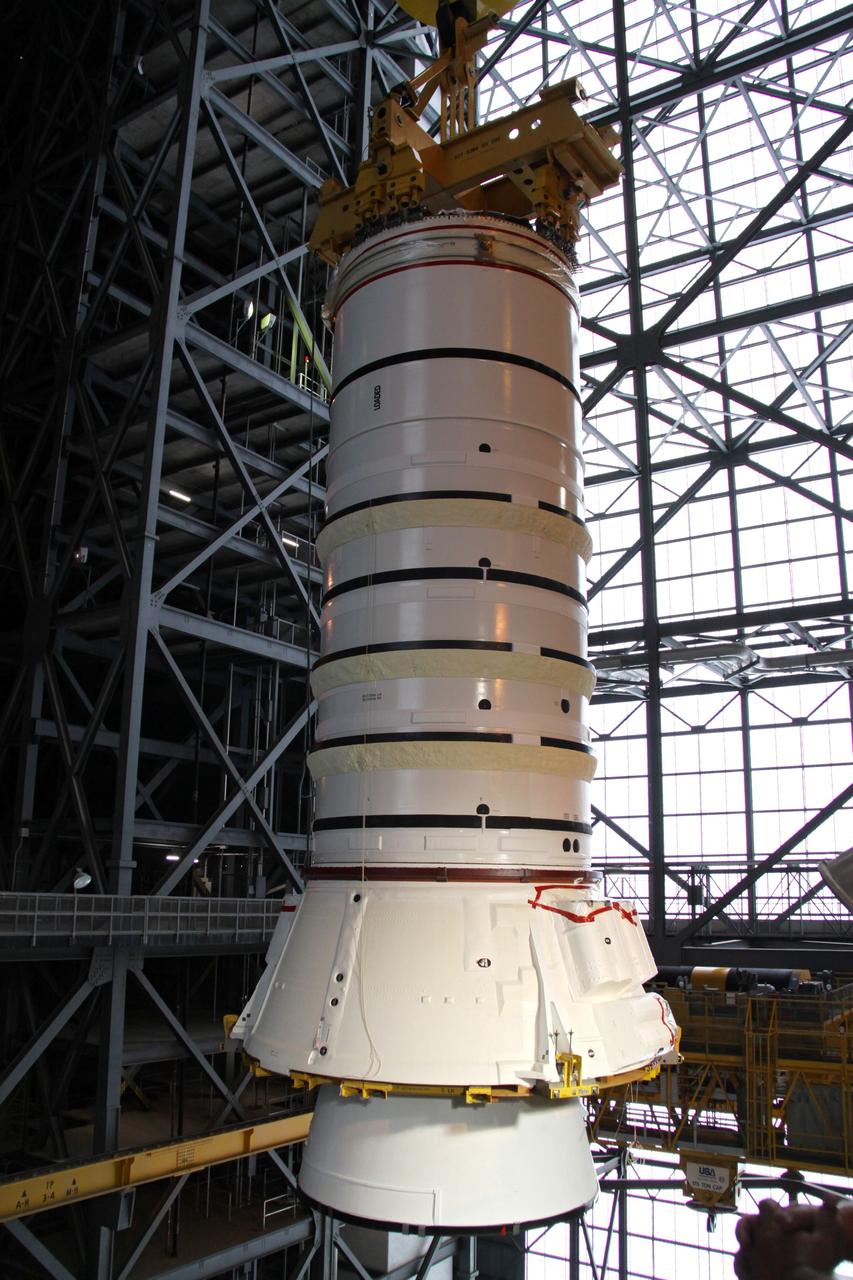
CAPE CANAVERAL, Fla. – In the Vehicle Assembly Building at NASA's Kennedy Space Center in Florida, the Ares I-X aft booster segment with the aft skirt is lifted into the upper regions of the VAB. The stack will be lowered onto the mobile launch platform in High Bay 3. This is the start of the buildup of the Ares I-X launch vehicle for the flight test targeted for no earlier than Aug. 30. Part of the Constellation Program, the Ares I-X is the test vehicle for the Ares I, which is the essential core of a space transportation system that eventually will carry crewed missions back to the moon, on to Mars and out into the solar system. Photo credit: NASA/Jack Pfaller
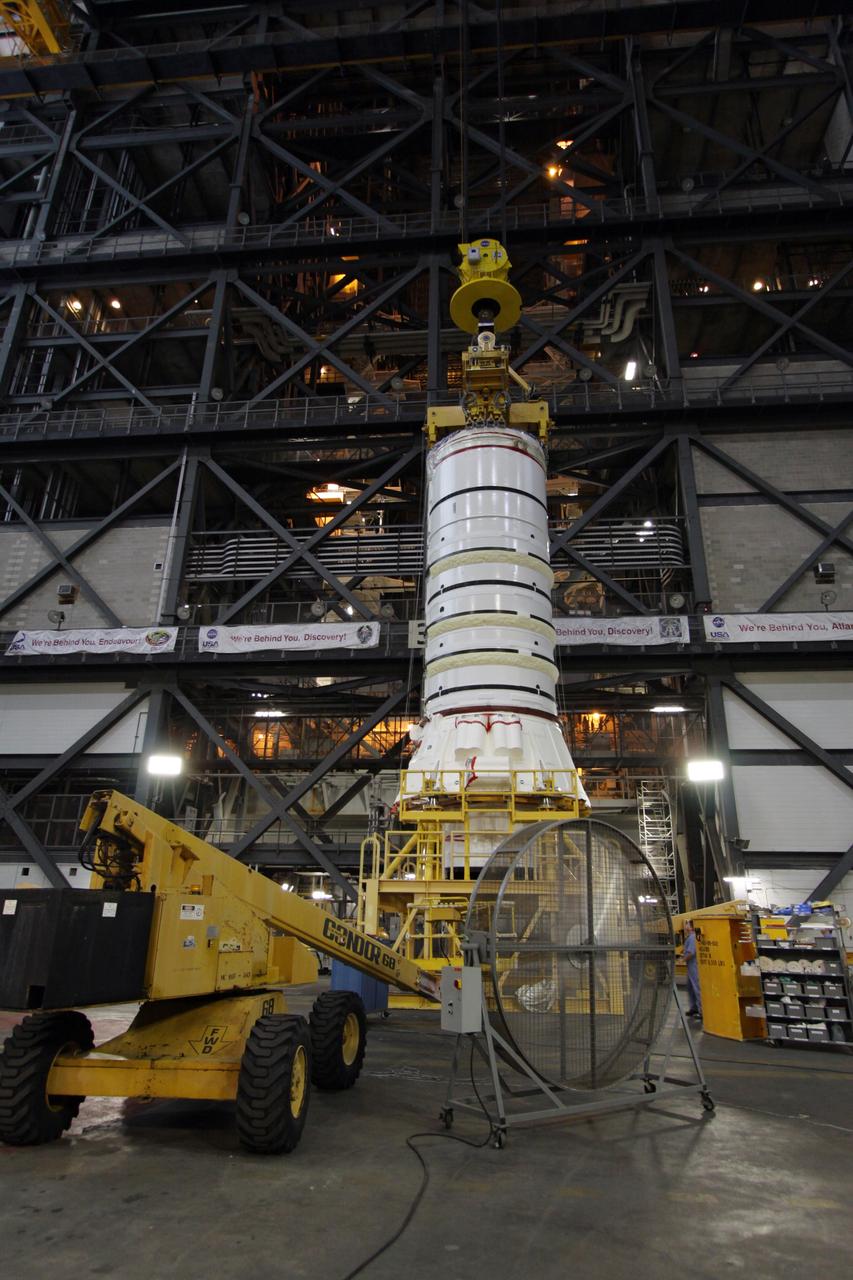
CAPE CANAVERAL, Fla. – In the Vehicle Assembly Building at NASA's Kennedy Space Center in Florida, the Ares I-X aft booster segment with the aft skirt is lifted from its stand. The stack will be hoisted into the upper regions of the VAB and lowered onto the mobile launch platform in High Bay 3. This is the start of the buildup of the Ares I-X launch vehicle for the flight test targeted for no earlier than Aug. 30. Part of the Constellation Program, the Ares I-X is the test vehicle for the Ares I, which is the essential core of a space transportation system that eventually will carry crewed missions back to the moon, on to Mars and out into the solar system. Photo credit: NASA/Jack Pfaller
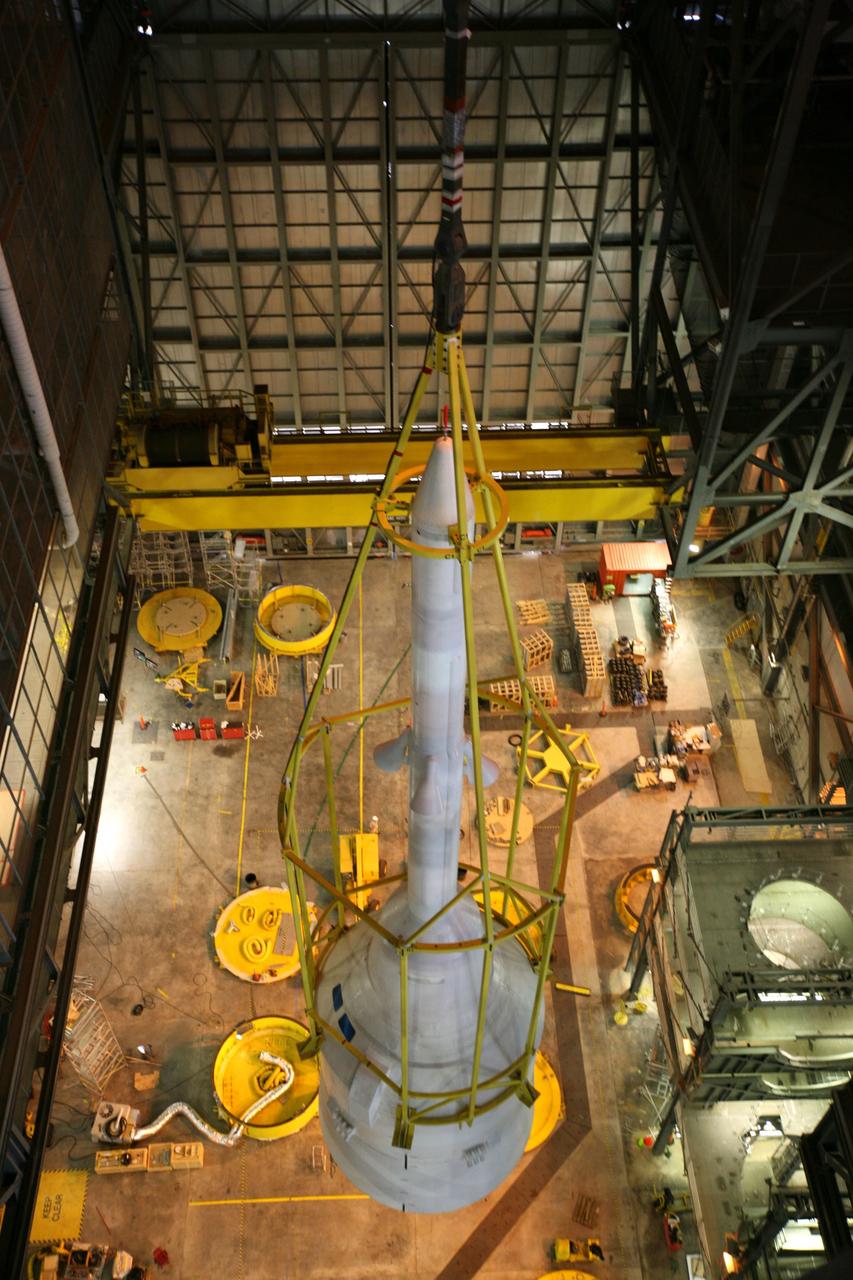
CAPE CANAVERAL, Fla. – In the Vehicle Assembly Building's High Bay 4, assembly of the Ares I-X rocket nears completion. The yellow framework, nicknamed the "birdcage," lifts Super Stack 5. The stack will be positioned on top of the segments already in place on the mobile launcher platform in High Bay 3, completing assembly of the 327-foot-tall rocket. Five super stacks make up the rocket's upper stage that is integrated with the four-segment solid rocket booster first stage. Ares I-X is the test vehicle for the Ares I, which is part of the Constellation Program to return men to the moon and beyond. The Ares I-X flight test is targeted for Oct. 31, pending formal NASA Headquarters approval. Photo credit: NASA/Dimitri Gerondidakis
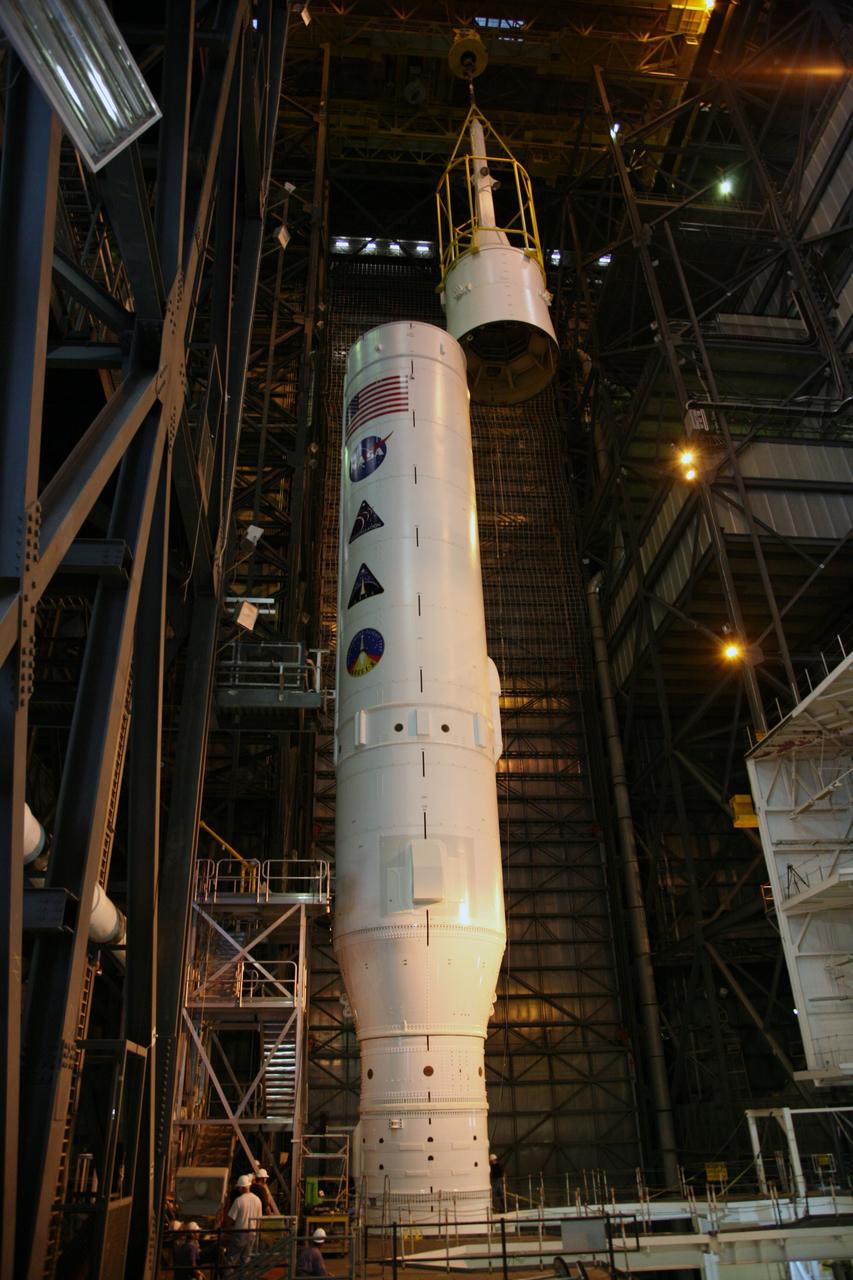
CAPE CANAVERAL, Fla. – In the Vehicle Assembly Building's High Bay 3, the yellow framework, nicknamed the "birdcage," lifts Super Stack 5 to the top of the Ares I-X segments already in place on the mobile launcher platform. Once in position, assembly of the Ares I-X rocket will be complete. The 327-foot-tall rocket is one of the largest processed in the bay, rivaling the height of the Apollo Program's 364-foot-tall Saturn V. Five super stacks make up the rocket's upper stage that is integrated with the four-segment solid rocket booster first stage. Ares I-X is the test vehicle for the Ares I, which is part of the Constellation Program to return men to the moon and beyond. The Ares I-X flight test is targeted for Oct. 31, pending formal NASA Headquarters approval. Photo credit: NASA/Dimitri Gerondidakis
CAPE CANAVERAL, Fla. – In the Vehicle Assembly Building's High Bay 4, assembly of the Ares I-X rocket nears completion. The yellow framework, nicknamed the "birdcage," lifts Super Stack 5. The stack will be positioned on top of the segments already in place on the mobile launcher platform in High Bay 3, completing assembly of the 327-foot-tall rocket. Five super stacks make up the rocket's upper stage that is integrated with the four-segment solid rocket booster first stage. Ares I-X is the test vehicle for the Ares I, which is part of the Constellation Program to return men to the moon and beyond. The Ares I-X flight test is targeted for Oct. 31, pending formal NASA Headquarters approval. Photo credit: NASA/Dimitri Gerondidakis
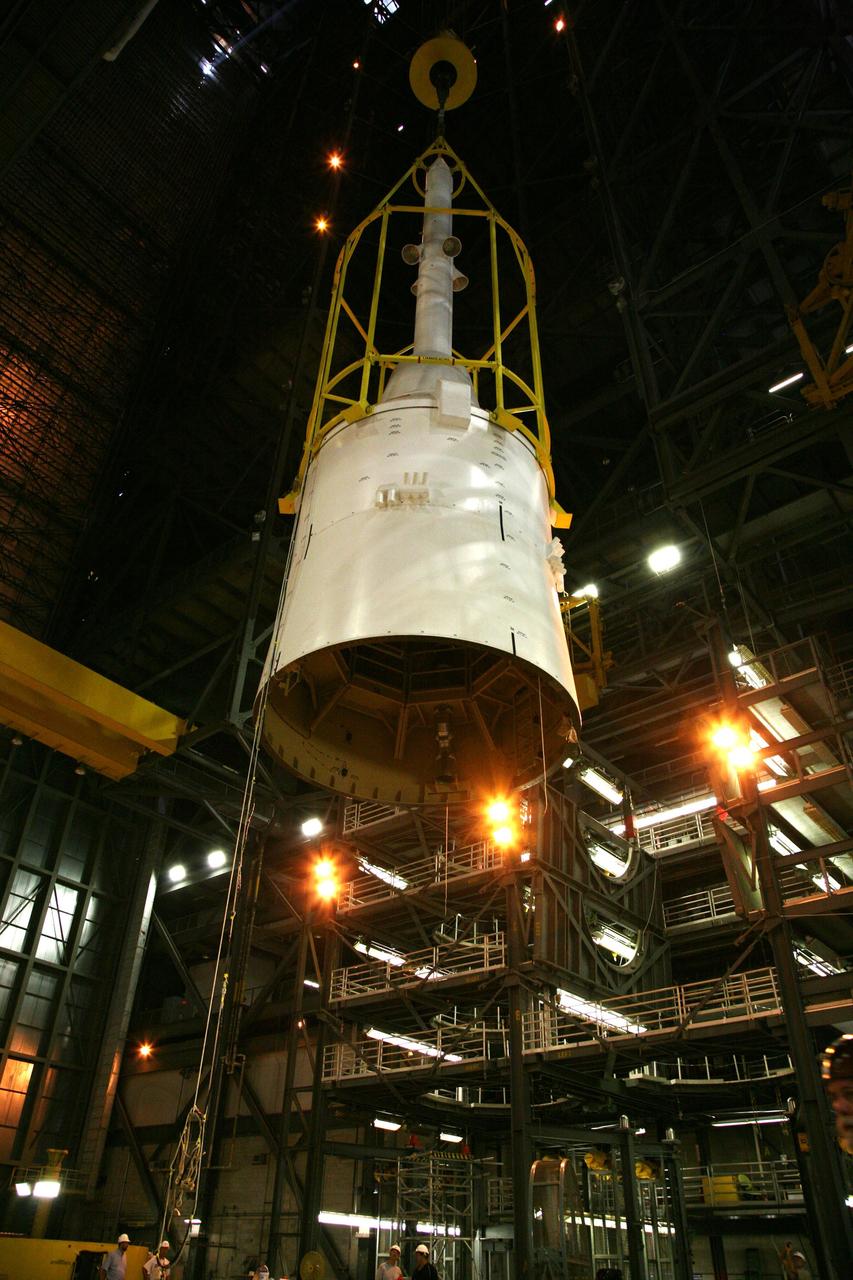
CAPE CANAVERAL, Fla. – In the Vehicle Assembly Building's High Bay 4, assembly of the Ares I-X rocket nears completion. The yellow framework, nicknamed the "birdcage," lifts Super Stack 5 toward an opening at the 16th floor crossover into the transfer aisle. The stack will be positioned on top of the segments already in place on the mobile launcher platform in High Bay 3, completing assembly of the 327-foot-tall rocket. Five super stacks make up the rocket's upper stage that is integrated with the four-segment solid rocket booster first stage. Ares I-X is the test vehicle for the Ares I, which is part of the Constellation Program to return men to the moon and beyond. The Ares I-X flight test is targeted for Oct. 31, pending formal NASA Headquarters approval. Photo credit: NASA/Dimitri Gerondidakis
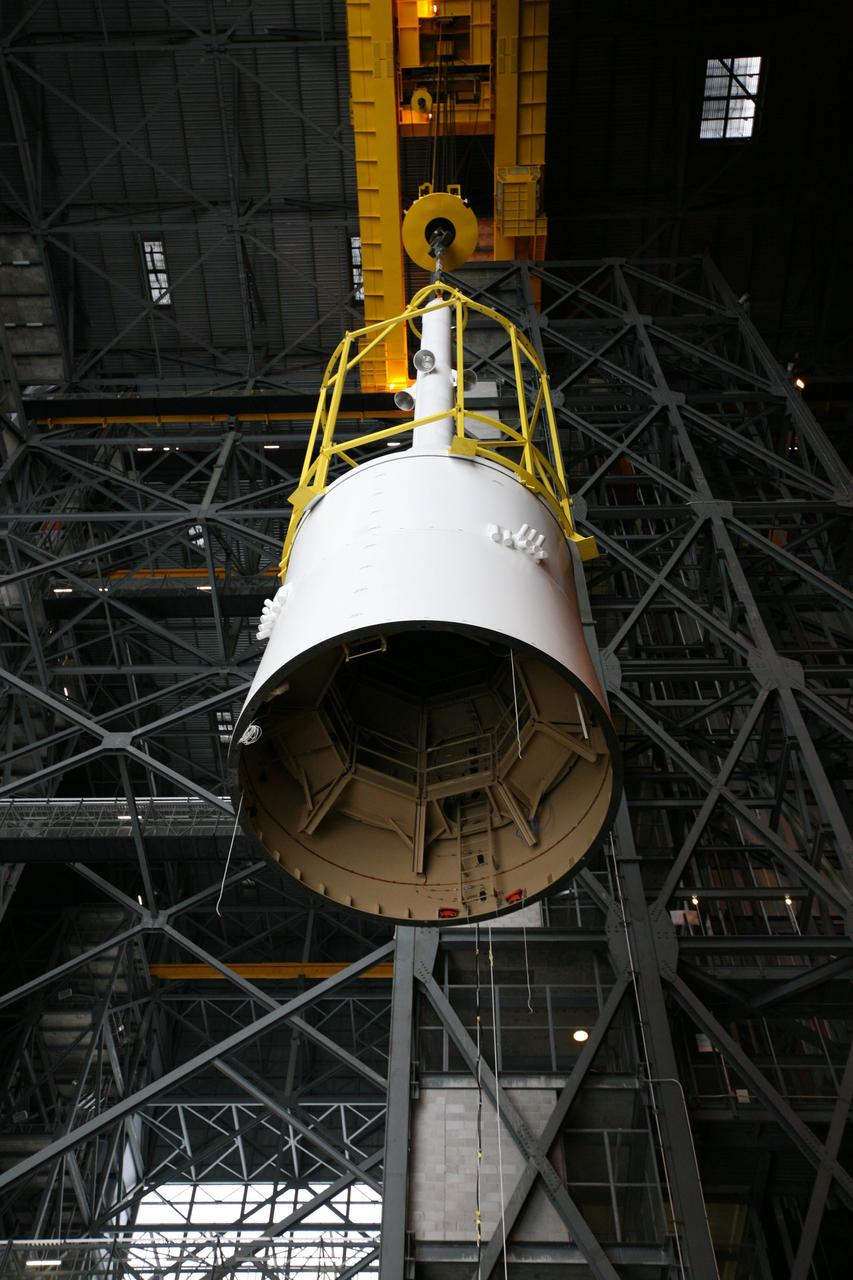
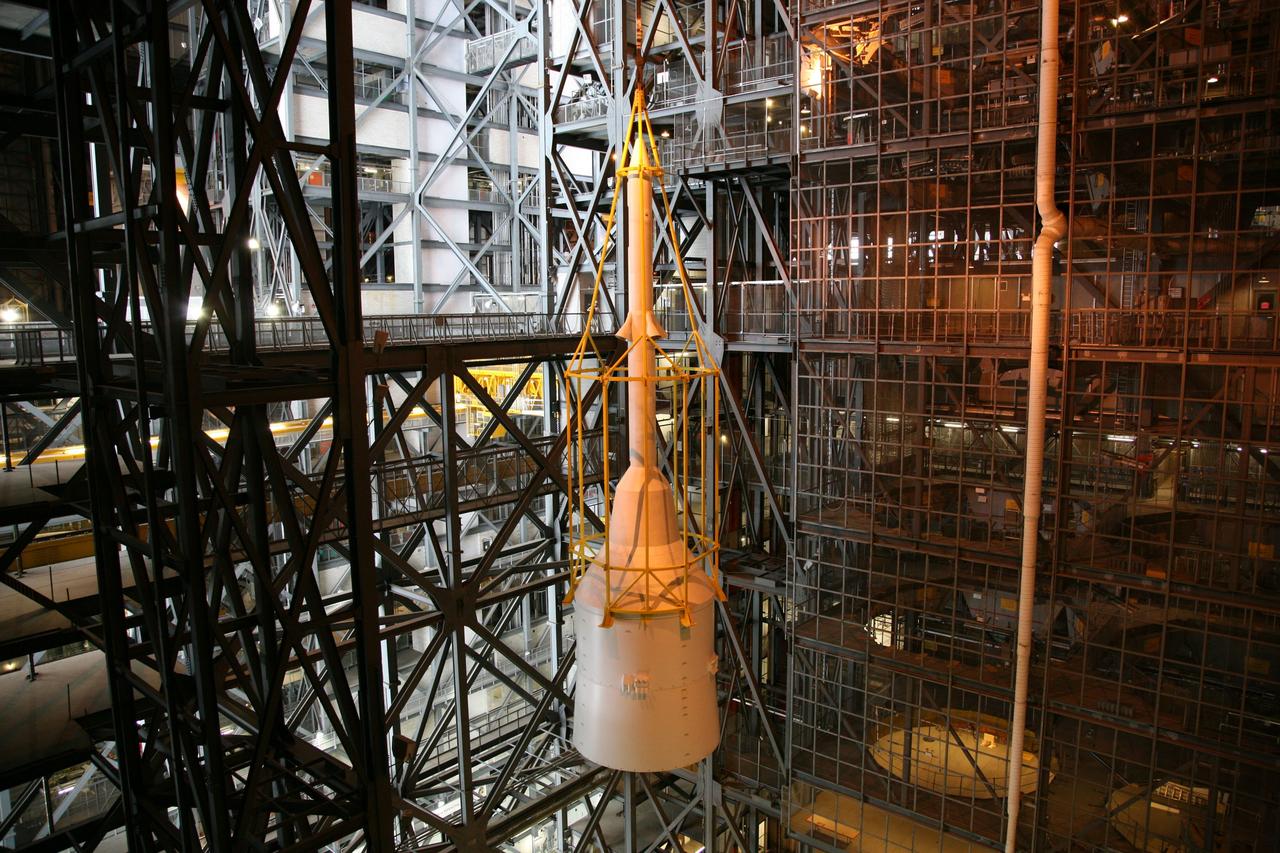
CAPE CANAVERAL, Fla. – In the Vehicle Assembly Building's transfer aisle, assembly of the Ares I-X rocket nears completion. The yellow framework, nicknamed the "birdcage," moves Super Stack 5 from High Bay 4 over the transfer aisle. The stack will be positioned on top of the segments already in place on the mobile launcher platform in High Bay 3, completing assembly of the 327-foot-tall rocket. Five super stacks make up the rocket's upper stage that is integrated with the four-segment solid rocket booster first stage. Ares I-X is the test vehicle for the Ares I, which is part of the Constellation Program to return men to the moon and beyond. The Ares I-X flight test is targeted for Oct. 31, pending formal NASA Headquarters approval. Photo credit: NASA/Dimitri Gerondidakis
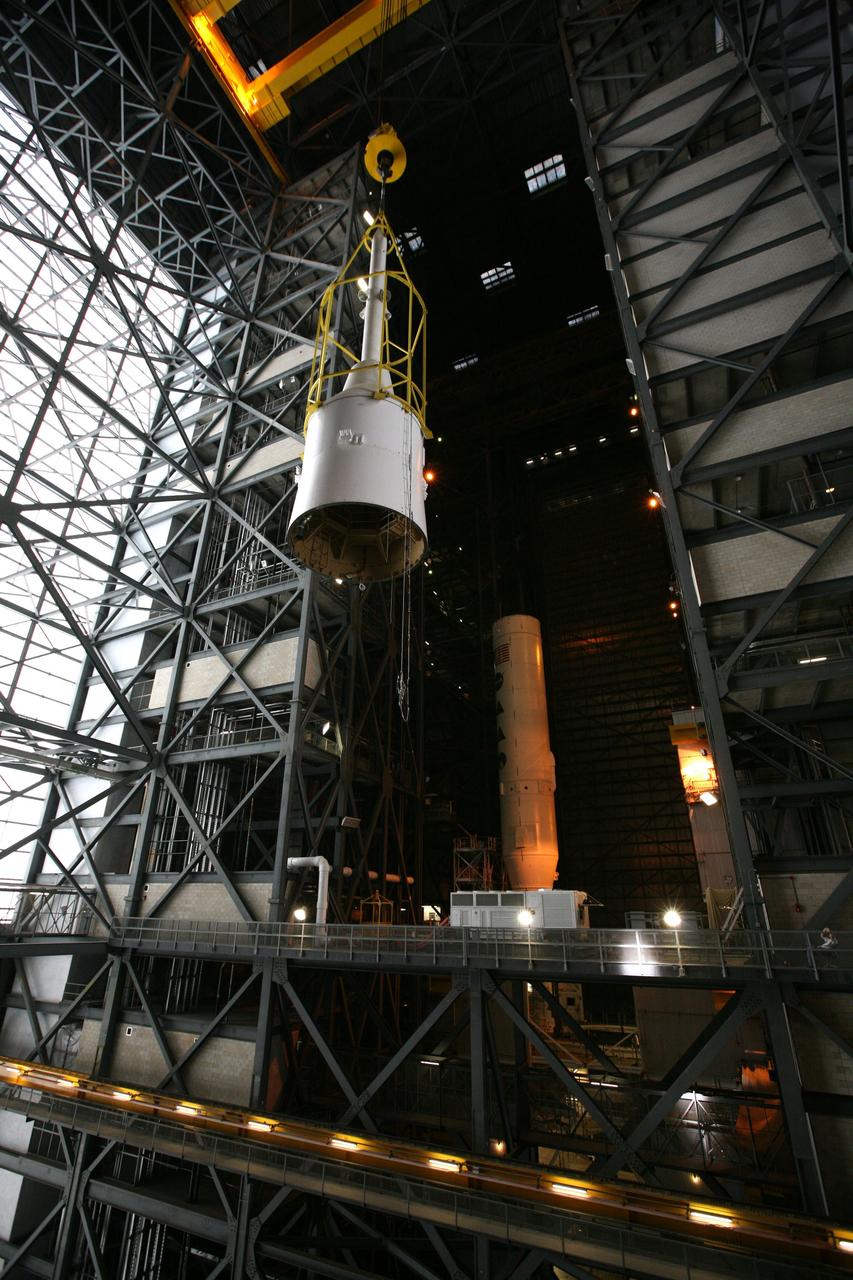
CAPE CANAVERAL, Fla. – In the Vehicle Assembly Building's transfer aisle, assembly of the Ares I-X rocket nears completion. The yellow framework, nicknamed the "birdcage," moves Super Stack 5 from High Bay 4 over the transfer aisle toward an opening at the 16th floor crossover in High Bay 3. The stack will be positioned on top of the segments already in place on the mobile launcher platform in High Bay 3, in the background, completing assembly of the 327-foot-tall rocket. Five super stacks make up the rocket's upper stage that is integrated with the four-segment solid rocket booster first stage. Ares I-X is the test vehicle for the Ares I, which is part of the Constellation Program to return men to the moon and beyond. The Ares I-X flight test is targeted for Oct. 31, pending formal NASA Headquarters approval. Photo credit: NASA/Dimitri Gerondidakis
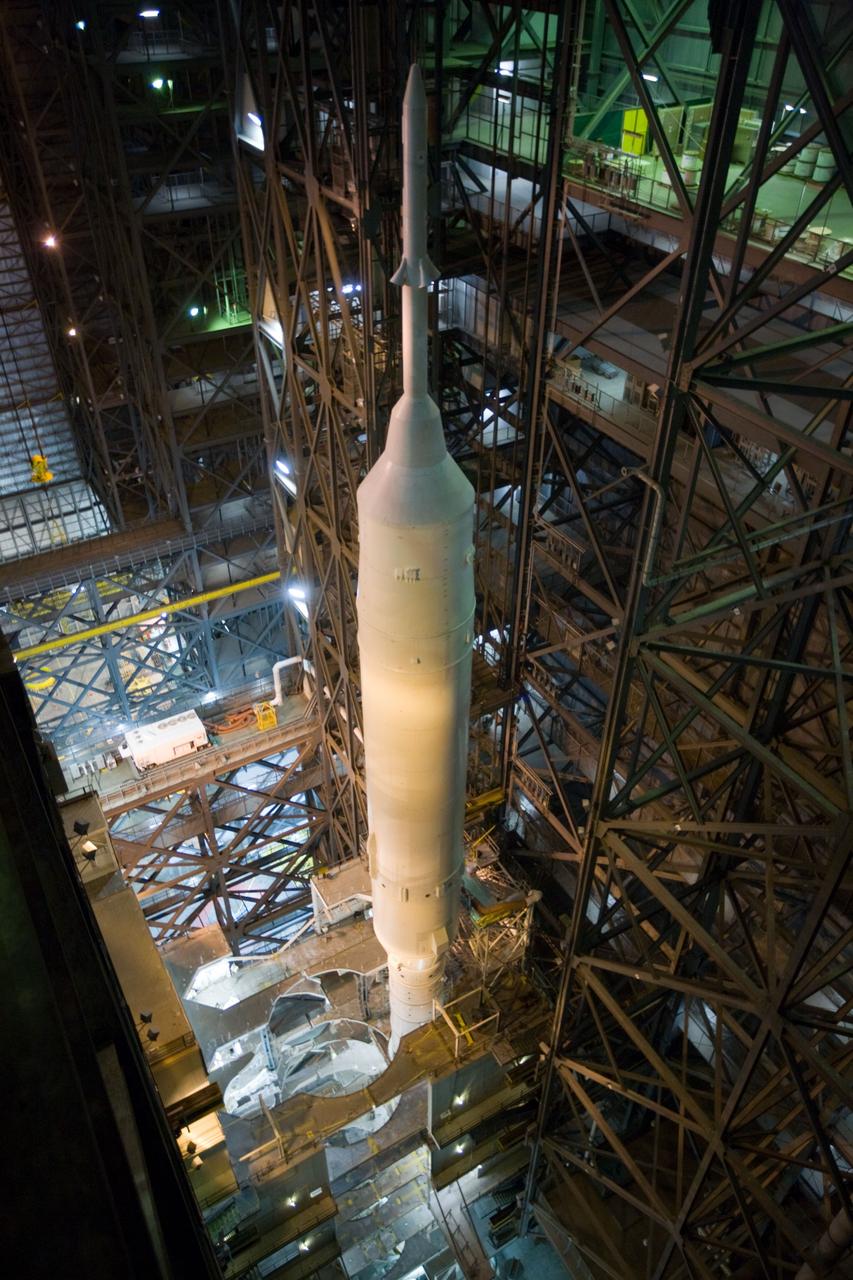
CAPE CANAVERAL, Fla. – In the Vehicle Assembly Building's High Bay 3, Super Stack 5 is secured to the Ares I-X segments already in place on the mobile launcher platform. Assembly of the Ares I-X rocket is complete. The 327-foot-tall rocket is one of the largest processed in the bay, rivaling the height of the Apollo Program's 364-foot-tall Saturn V. Five super stacks make up the rocket's upper stage that is integrated with the four-segment solid rocket booster first stage. Ares I-X is the test vehicle for the Ares I, which is part of the Constellation Program to return men to the moon and beyond. The Ares I-X flight test is targeted for Oct. 31, pending formal NASA Headquarters approval. Photo credit: NASA/Dimitri Gerondidakis
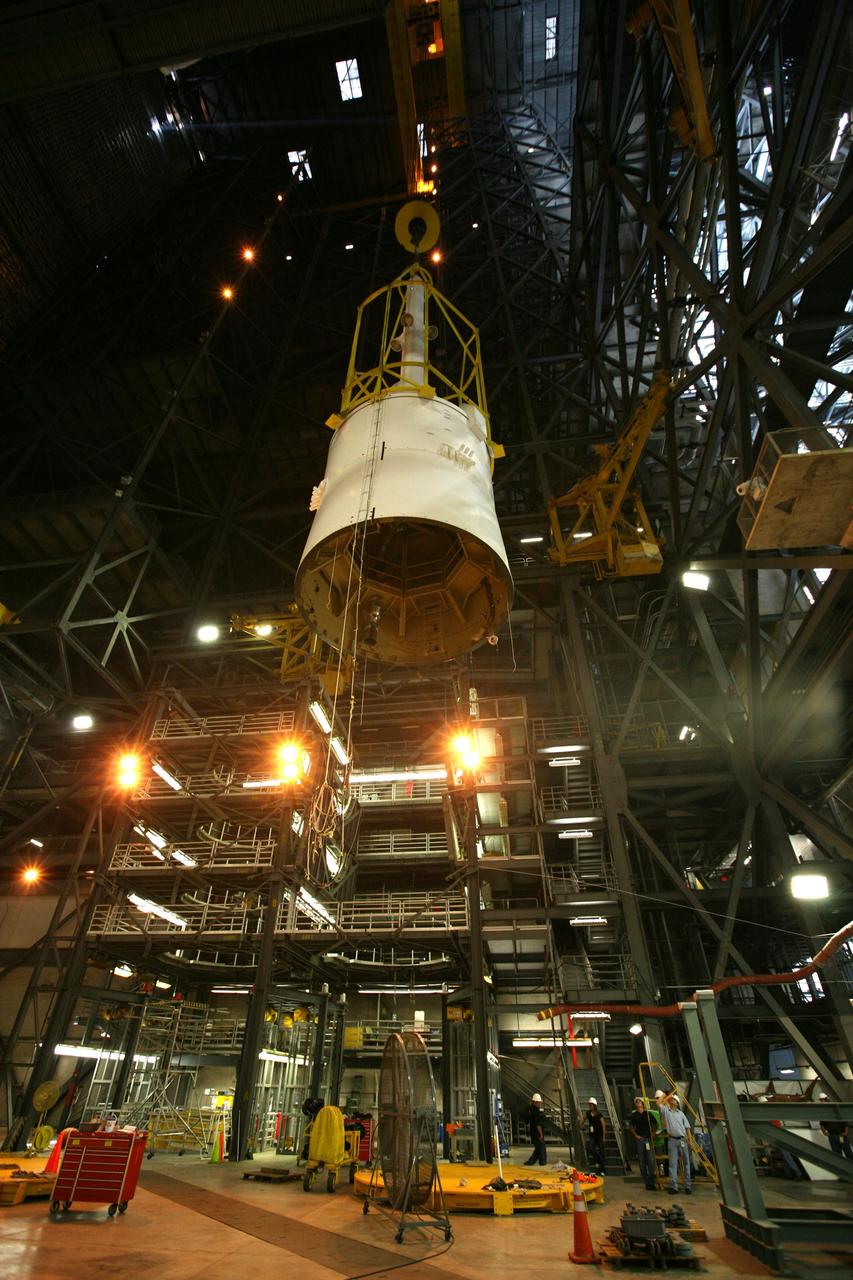
CAPE CANAVERAL, Fla. – In the Vehicle Assembly Building's High Bay 4, assembly of the Ares I-X rocket nears completion. The yellow framework, nicknamed the "birdcage," lifts Super Stack 5. The stack will be positioned on top of the segments already in place on the mobile launcher platform in High Bay 3, completing assembly of the 327-foot-tall rocket. Five super stacks make up the rocket's upper stage that is integrated with the four-segment solid rocket booster first stage. Ares I-X is the test vehicle for the Ares I, which is part of the Constellation Program to return men to the moon and beyond. The Ares I-X flight test is targeted for Oct. 31, pending formal NASA Headquarters approval. Photo credit: NASA/Dimitri Gerondidakis
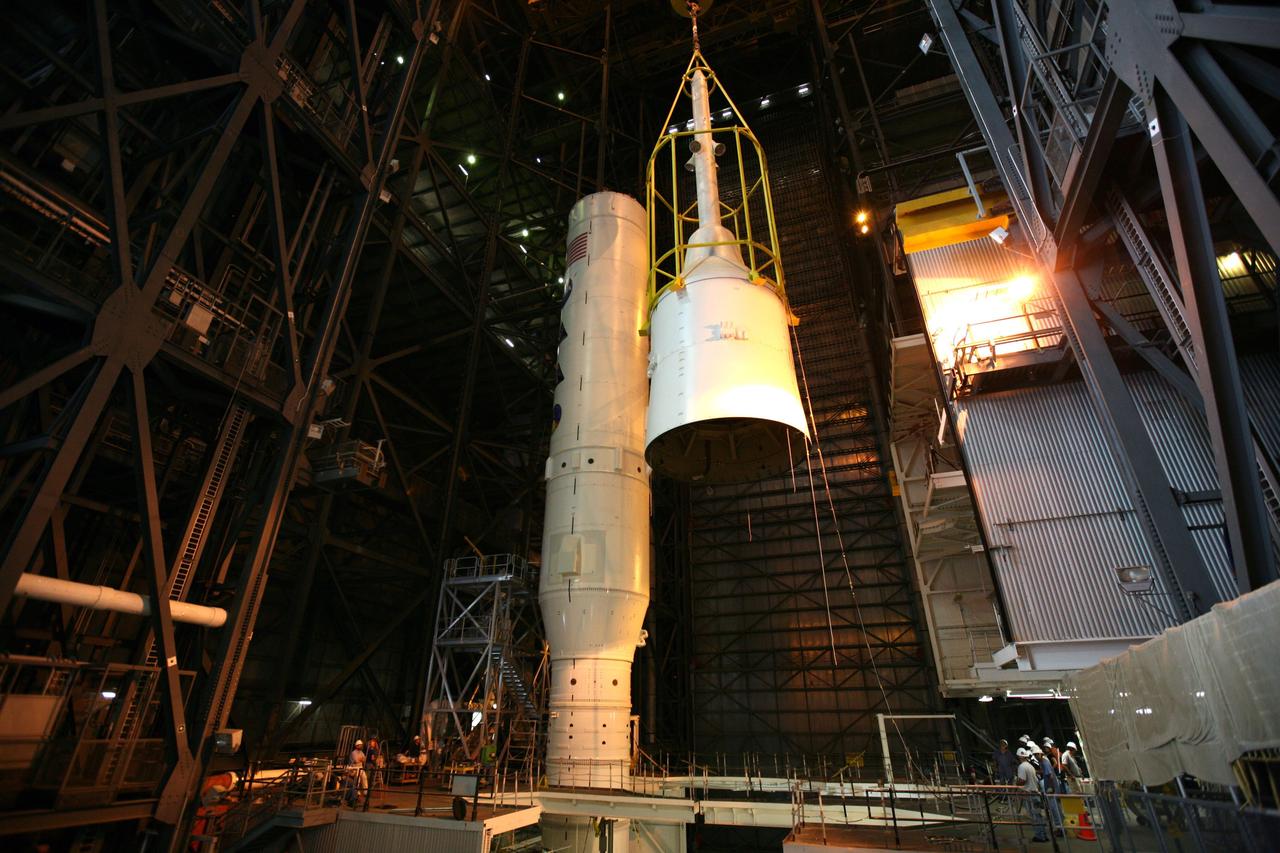
CAPE CANAVERAL, Fla. – In the Vehicle Assembly Building's High Bay 3, assembly of the Ares I-X rocket nears completion. The yellow framework, nicknamed the "birdcage," lifts Super Stack 5 to the top of the segments already in place on the mobile launcher platform. Once in place, assembly of the rocket will be complete. The 327-foot-tall rocket is one of the largest processed in the bay, rivaling the height of the Apollo Program's 364-foot-tall Saturn V. Five super stacks make up the rocket's upper stage that is integrated with the four-segment solid rocket booster first stage. Ares I-X is the test vehicle for the Ares I, which is part of the Constellation Program to return men to the moon and beyond. The Ares I-X flight test is targeted for Oct. 31, pending formal NASA Headquarters approval. Photo credit: NASA/Dimitri Gerondidakis
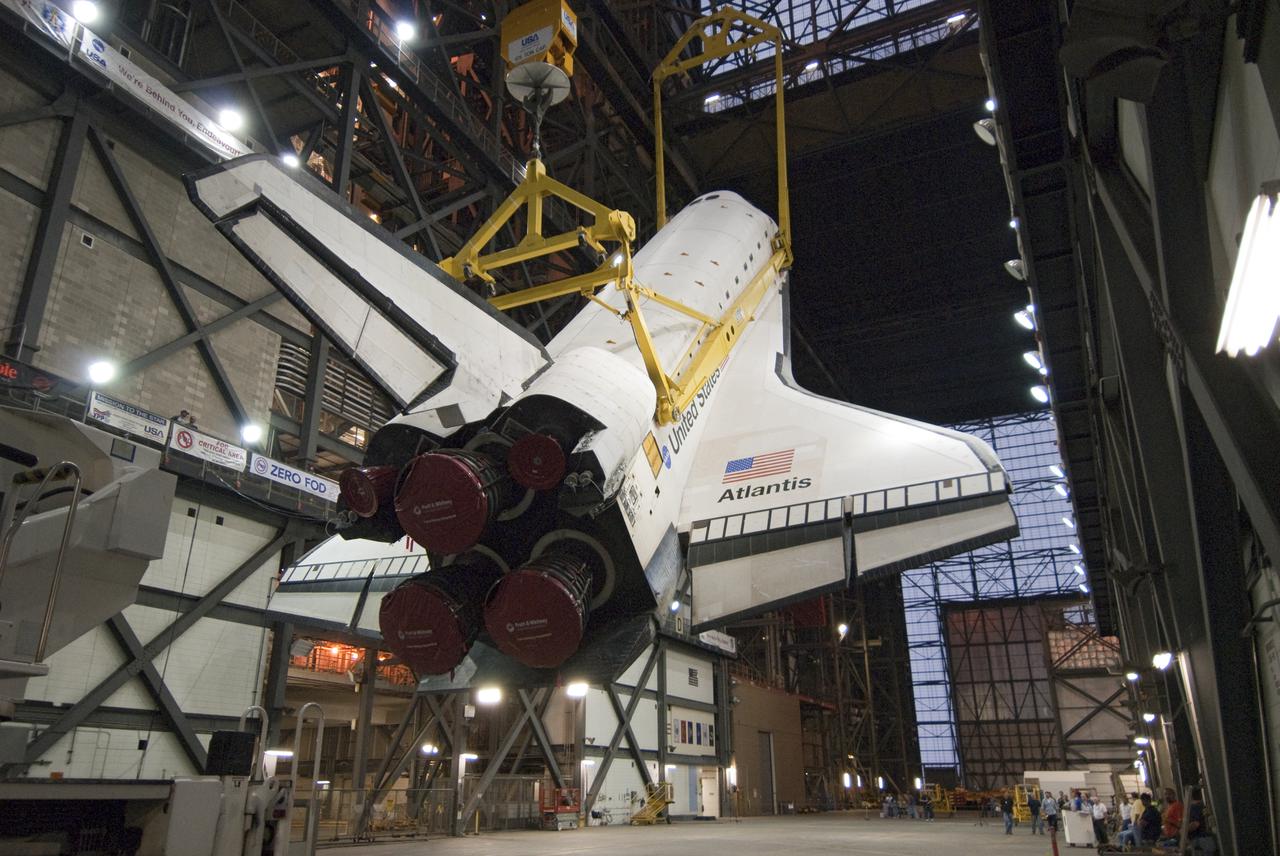
CAPE CANAVERAL, Fla. – In the Vehicle Assembly Building at NASA's Kennedy Space Center in Florida, space shuttle Atlantis appears to take flight from the transfer aisle during its move into High Bay-1. In the bay, Atlantis will be attached to its external fuel tank and solid rocket boosters in preparation for the upcoming STS-132 mission. The six-member STS-132 crew will deliver an Integrated Cargo Carrier, or ICC, and the Russian-built Mini-Research Module-1, or MRM-1, to the International Space Station. The ICC is an unpressurized flat bed pallet and keel yoke assembly used to support the transfer of exterior cargo from the shuttle to the space station. The MRM-1, known as Rassvet, is the second in a series of new pressurized components for Russia and will be permanently attached to the Earth-facing port of the Zarya control module. Rassvet, which translates to 'dawn,' will be used for cargo storage and will provide an additional docking port to the station. STS-132 is the 34th mission to the station and the 132nd shuttle mission overall. Launch is targeted for May 14. For information on the STS-132 mission, visit http:__www.nasa.gov_mission_pages_shuttle_shuttlemissions_sts132_index.html. Photo credit: NASA_Cory Huston
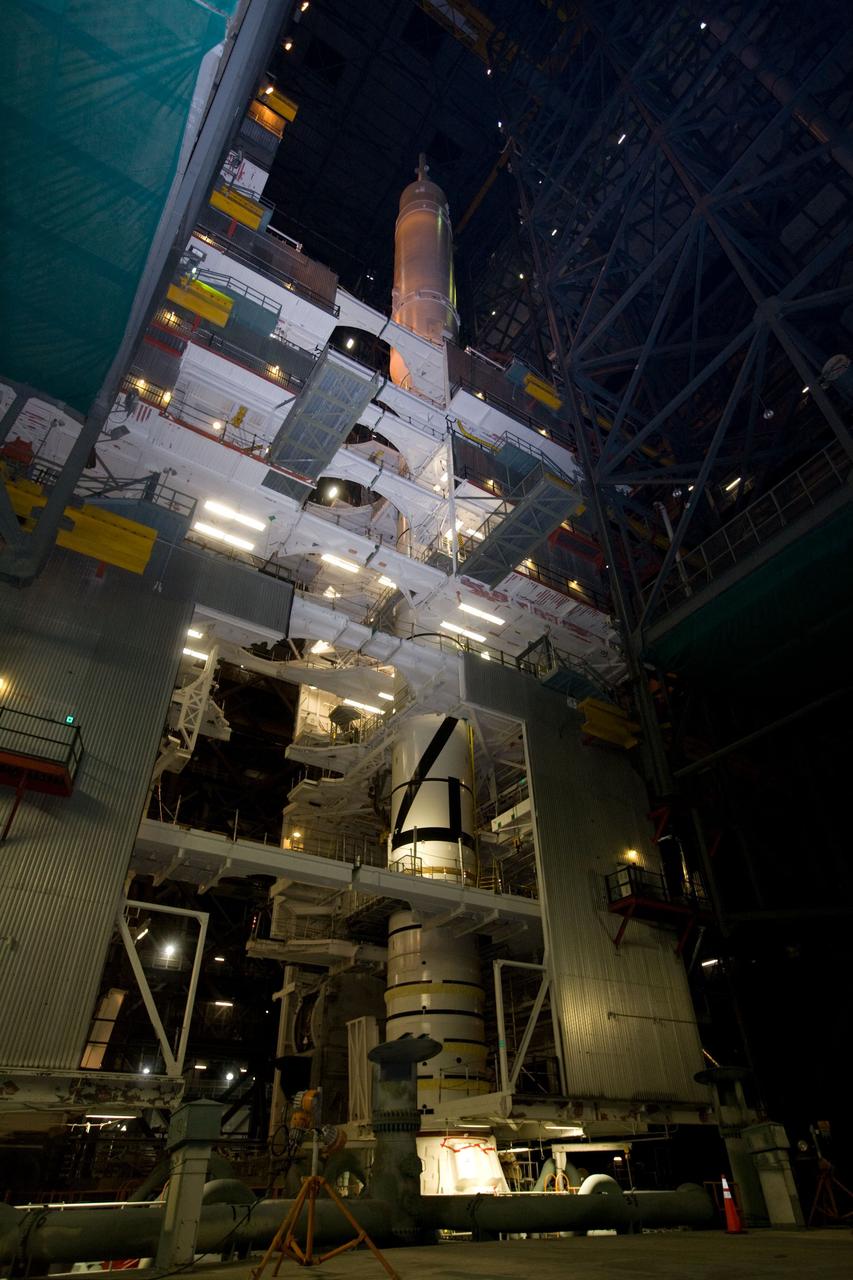
CAPE CANAVERAL, Fla. – In the Vehicle Assembly Building's High Bay 3, Super Stack 5 is secured to the Ares I-X segments already in place on the mobile launcher platform. Assembly of the Ares I-X rocket is complete. The 327-foot-tall rocket is one of the largest processed in the bay, rivaling the height of the Apollo Program's 364-foot-tall Saturn V. Five super stacks make up the rocket's upper stage that is integrated with the four-segment solid rocket booster first stage. Ares I-X is the test vehicle for the Ares I, which is part of the Constellation Program to return men to the moon and beyond. The Ares I-X flight test is targeted for Oct. 31, pending formal NASA Headquarters approval. Photo credit: NASA/Dimitri Gerondidakis
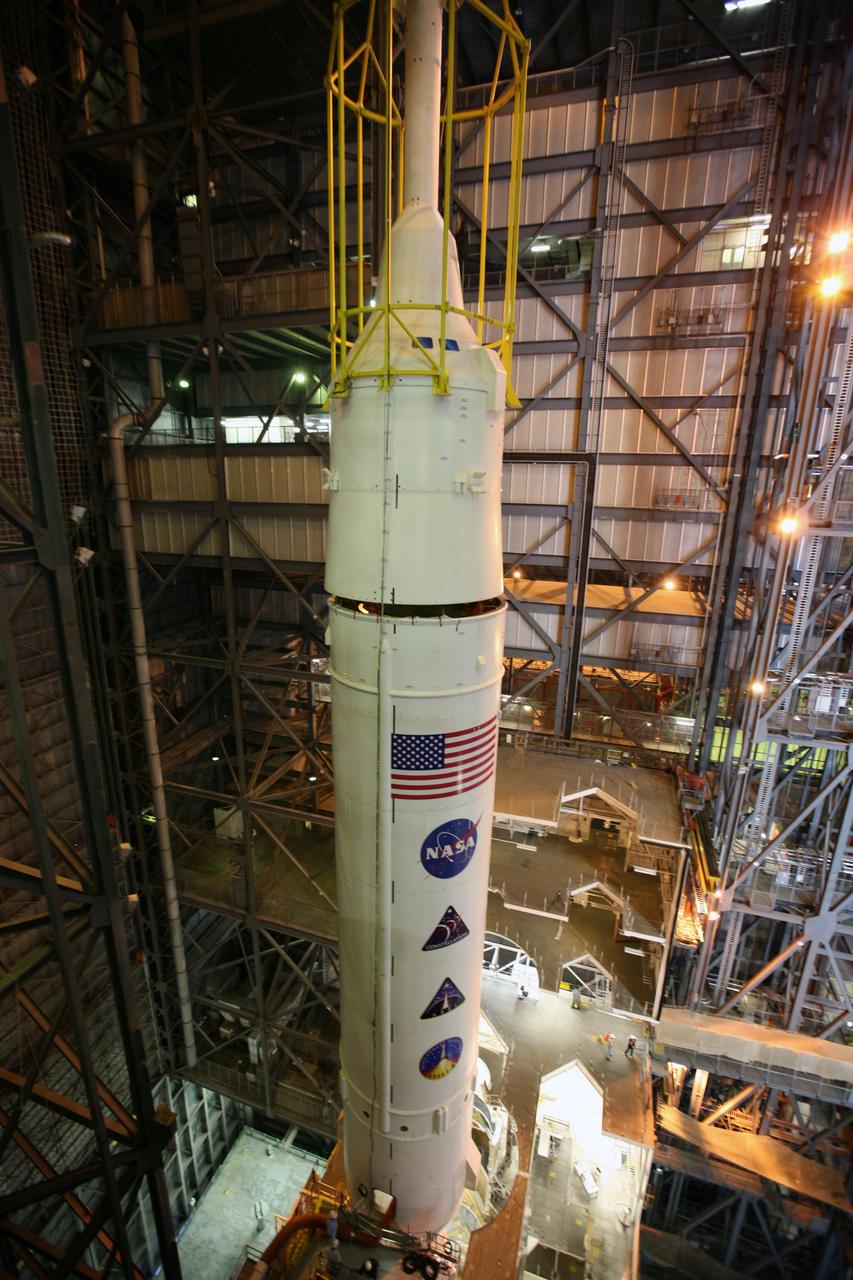
CAPE CANAVERAL, Fla. – In the Vehicle Assembly Building's High Bay 3, the yellow framework, nicknamed the "birdcage," lowers Super Stack 5 onto Super Stack 4. Once in position, assembly of the Ares I-X rocket will be complete. The 327-foot-tall rocket is one of the largest processed in the bay, rivaling the height of the Apollo Program's 364-foot-tall Saturn V. Five super stacks make up the rocket's upper stage that is integrated with the four-segment solid rocket booster first stage. Ares I-X is the test vehicle for the Ares I, which is part of the Constellation Program to return men to the moon and beyond. The Ares I-X flight test is targeted for Oct. 31, pending formal NASA Headquarters approval. Photo credit: NASA/Dimitri Gerondidakis
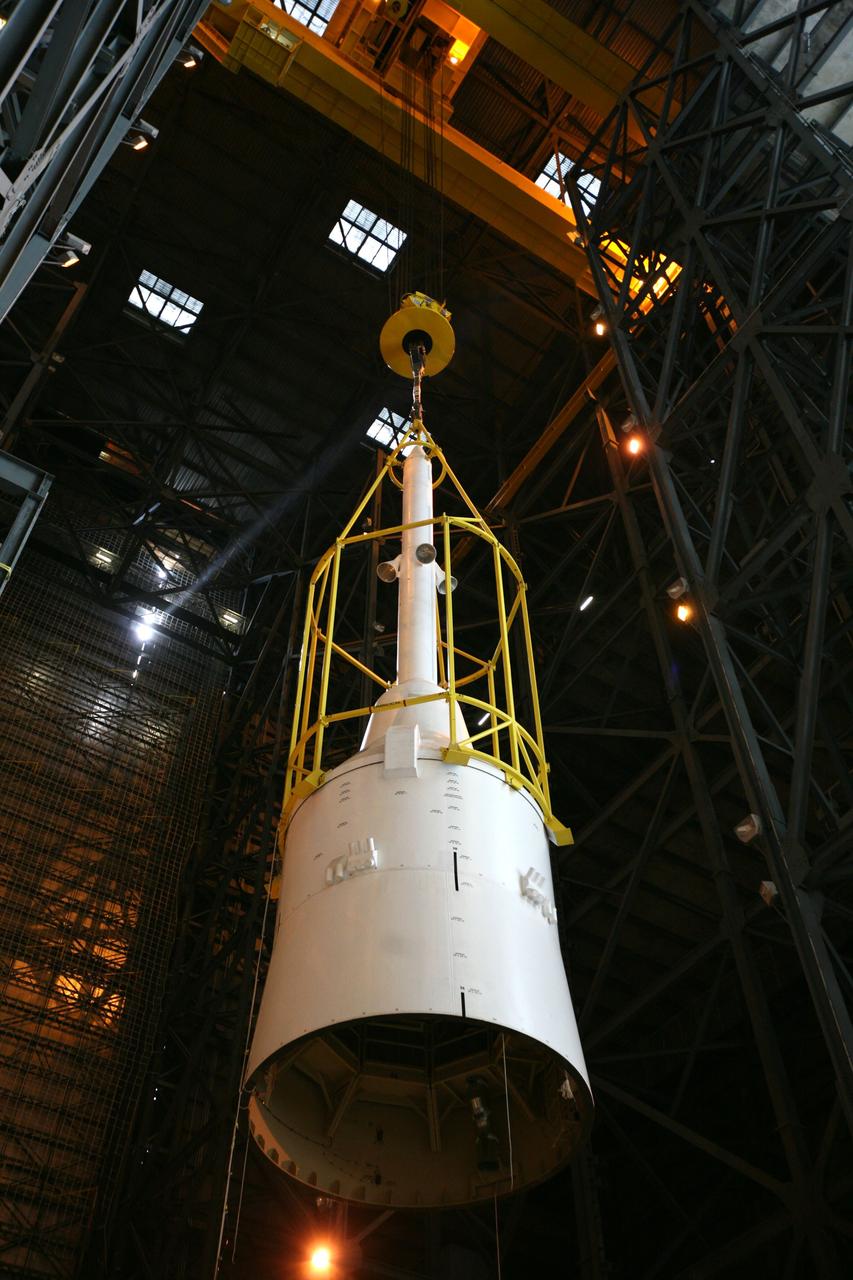
CAPE CANAVERAL, Fla. – In the Vehicle Assembly Building's High Bay 4, assembly of the Ares I-X rocket nears completion. The yellow framework, nicknamed the "birdcage," lifts Super Stack 5 toward an opening at the 16th floor crossover into the transfer aisle. The stack will be positioned on top of the segments already in place on the mobile launcher platform in High Bay 3, completing assembly of the 327-foot-tall rocket. Five super stacks make up the rocket's upper stage that is integrated with the four-segment solid rocket booster first stage. Ares I-X is the test vehicle for the Ares I, which is part of the Constellation Program to return men to the moon and beyond. The Ares I-X flight test is targeted for Oct. 31, pending formal NASA Headquarters approval. Photo credit: NASA/Dimitri Gerondidakis
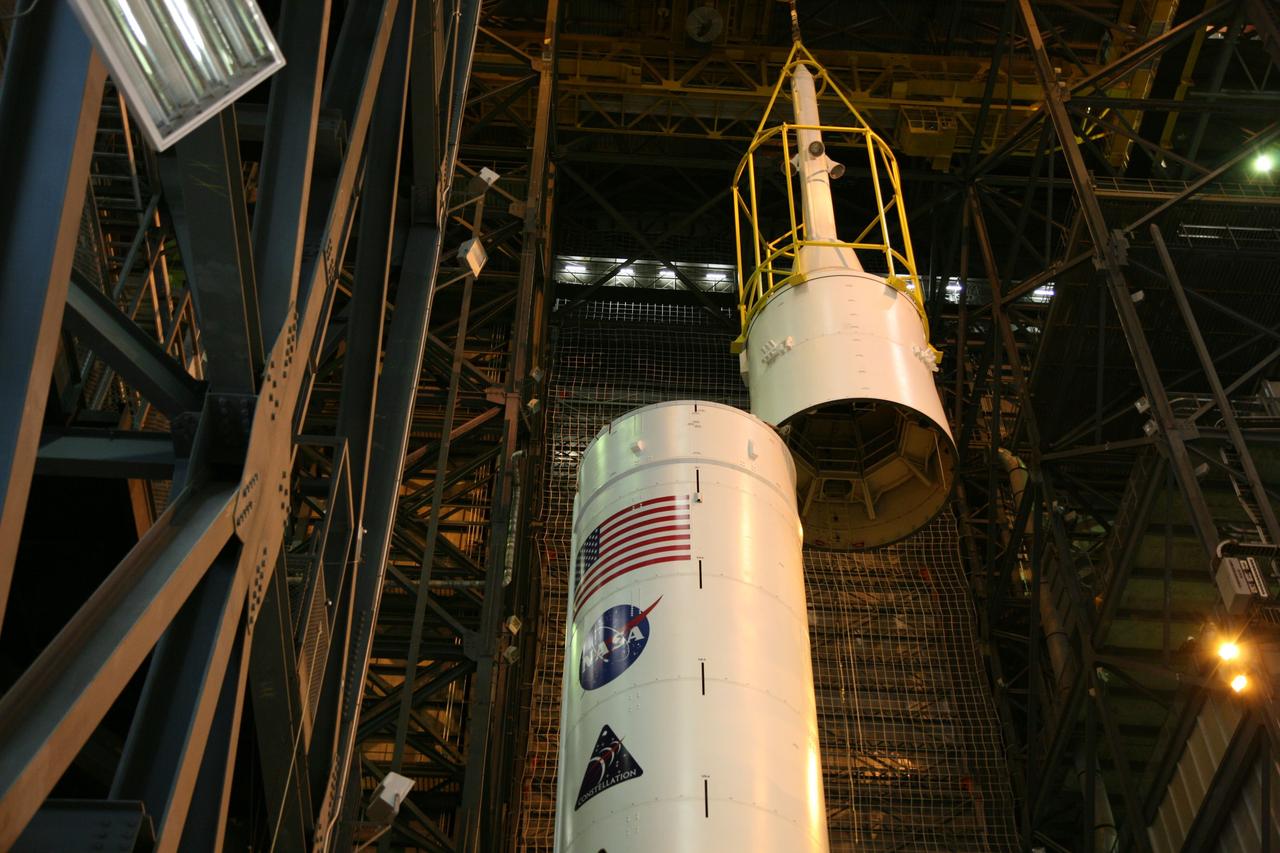
CAPE CANAVERAL, Fla. – In the Vehicle Assembly Building's High Bay 3, the yellow framework, nicknamed the "birdcage," lifts Super Stack 5 atop Super Stack 4. Once in position, assembly of the Ares I-X rocket will be complete. The 327-foot-tall rocket is one of the largest processed in the bay, rivaling the height of the Apollo Program's 364-foot-tall Saturn V. Five super stacks make up the rocket's upper stage that is integrated with the four-segment solid rocket booster first stage. Ares I-X is the test vehicle for the Ares I, which is part of the Constellation Program to return men to the moon and beyond. The Ares I-X flight test is targeted for Oct. 31, pending formal NASA Headquarters approval. Photo credit: NASA/Dimitri Gerondidakis
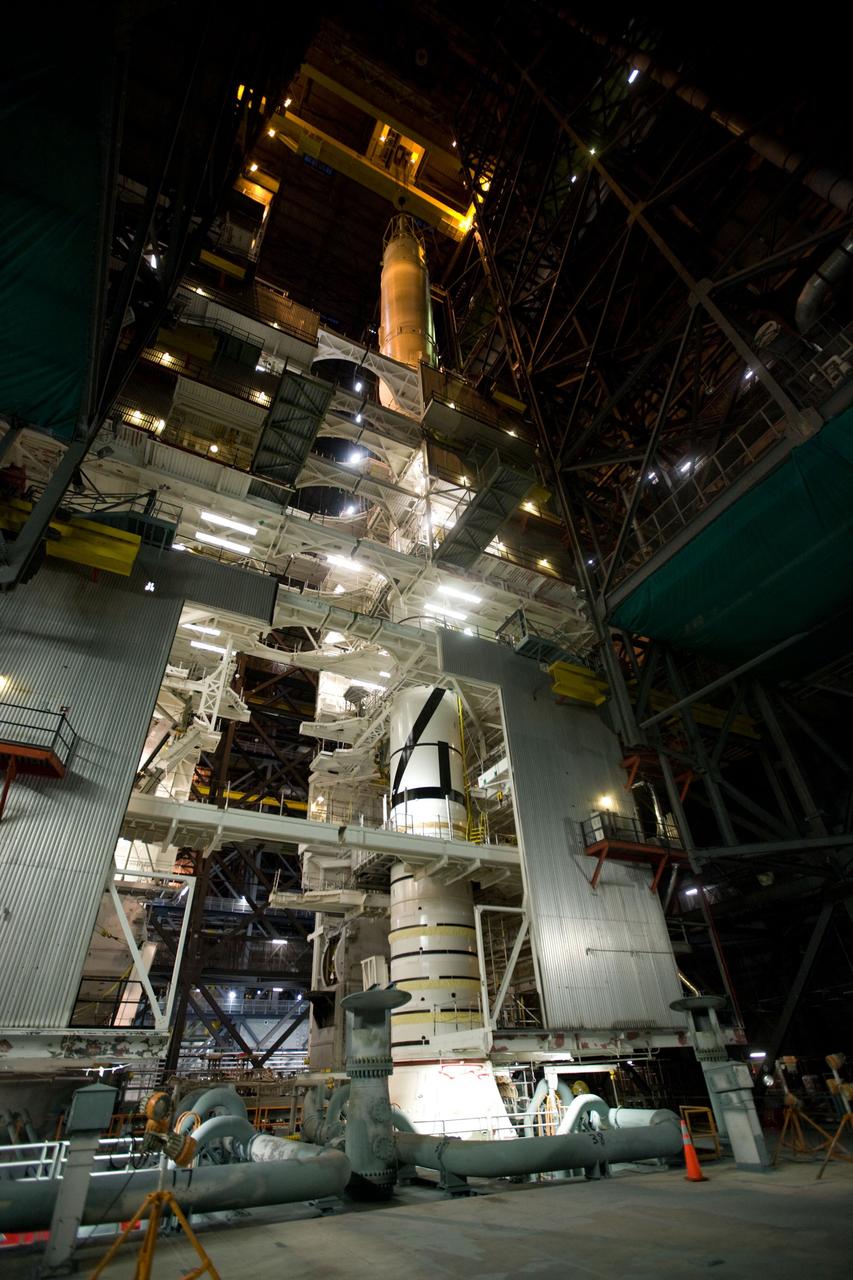
CAPE CANAVERAL, Fla. – In the Vehicle Assembly Building's High Bay 3, assembly of the Ares I-X rocket nears completion. The yellow framework, nicknamed the "birdcage," lowers Super Stack 5 onto the Ares I-X segments already in place on the mobile launcher platform. Once in position, assembly of the Ares I-X rocket will be complete. The 327-foot-tall rocket is one of the largest processed in the bay, rivaling the height of the Apollo Program's 364-foot-tall Saturn V. Five super stacks make up the rocket's upper stage that is integrated with the four-segment solid rocket booster first stage. Ares I-X is the test vehicle for the Ares I, which is part of the Constellation Program to return men to the moon and beyond. The Ares I-X flight test is targeted for Oct. 31, pending formal NASA Headquarters approval. Photo credit: NASA/Dimitri Gerondidakis
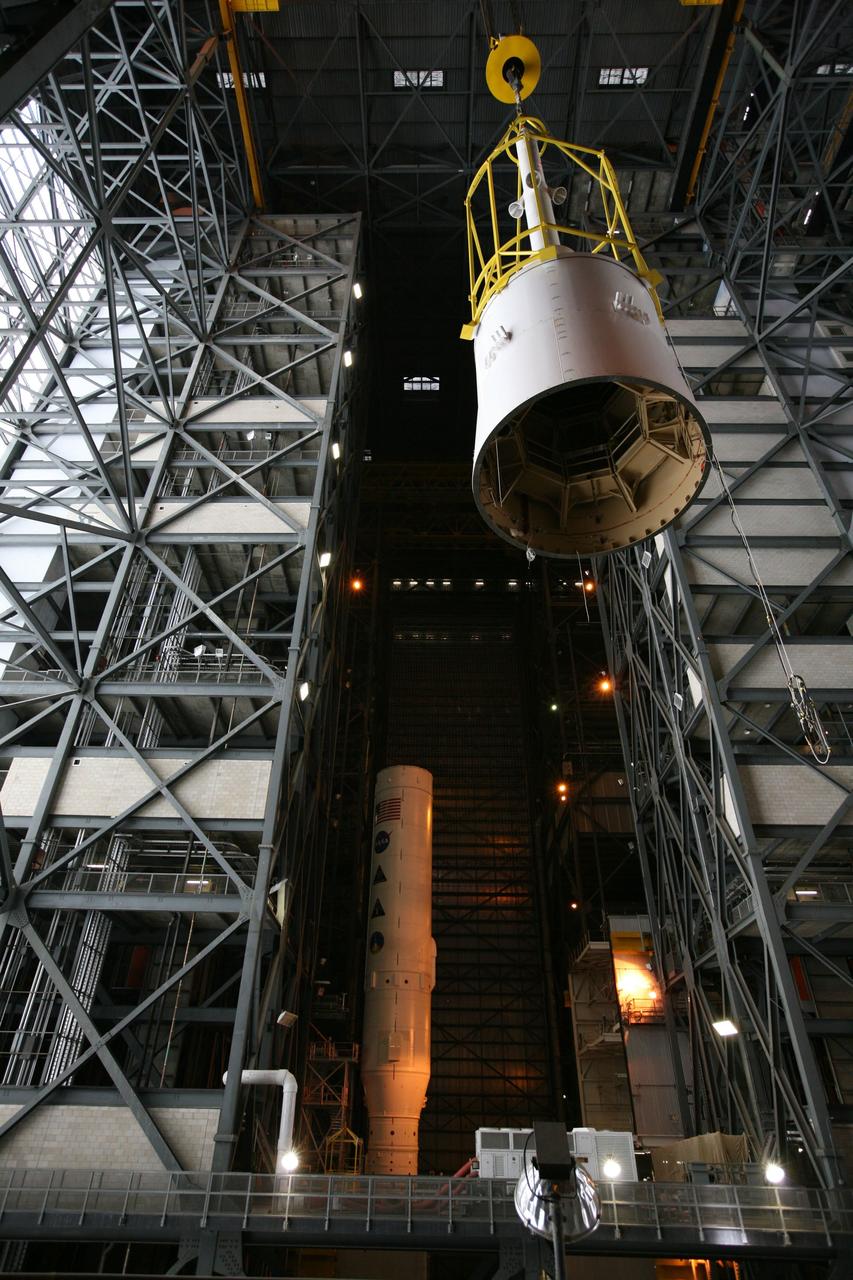
CAPE CANAVERAL, Fla. – In the Vehicle Assembly Building's transfer aisle, assembly of the Ares I-X rocket nears completion. The yellow framework, nicknamed the "birdcage," moves Super Stack 5 from High Bay 4 over the transfer aisle toward an opening at the 16th floor crossover in High Bay 3. The stack will be positioned on top of the segments already in place on the mobile launcher platform in High Bay 3, in the background, completing assembly of the 327-foot-tall rocket. Five super stacks make up the rocket's upper stage that is integrated with the four-segment solid rocket booster first stage. Ares I-X is the test vehicle for the Ares I, which is part of the Constellation Program to return men to the moon and beyond. The Ares I-X flight test is targeted for Oct. 31, pending formal NASA Headquarters approval. Photo credit: NASA/Dimitri Gerondidakis
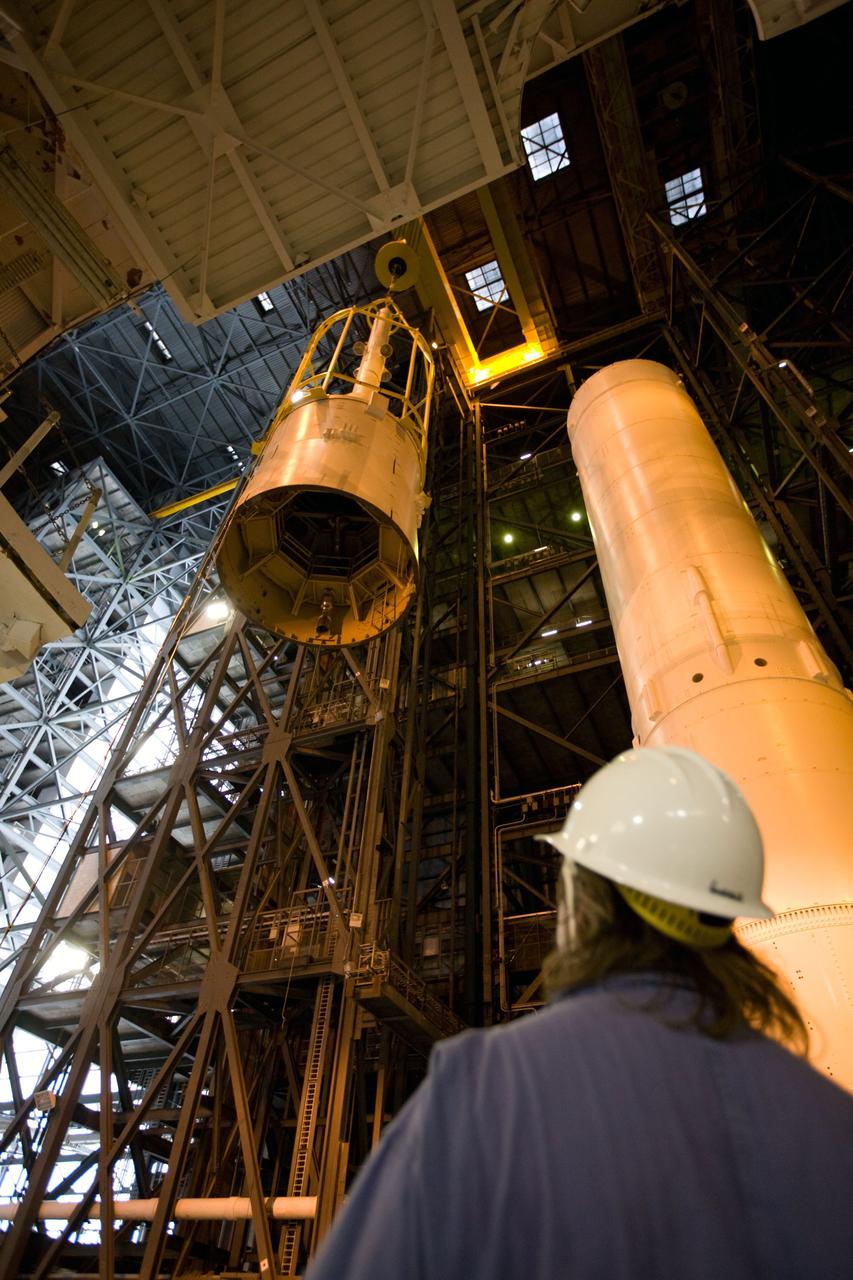
CAPE CANAVERAL, Fla. – In the Vehicle Assembly Building's High Bay 3, a technician monitors the lift of Super Stack 5 by the yellow framework, nicknamed the "birdcage," to the top of the Ares I-X segments already in place on the mobile launcher platform. Once in position, assembly of the Ares I-X rocket will be complete. The 327-foot-tall rocket is one of the largest processed in the bay, rivaling the height of the Apollo Program's 364-foot-tall Saturn V. Five super stacks make up the rocket's upper stage that is integrated with the four-segment solid rocket booster first stage. Ares I-X is the test vehicle for the Ares I, which is part of the Constellation Program to return men to the moon and beyond. The Ares I-X flight test is targeted for Oct. 31, pending formal NASA Headquarters approval. Photo credit: NASA/Dimitri Gerondidakis
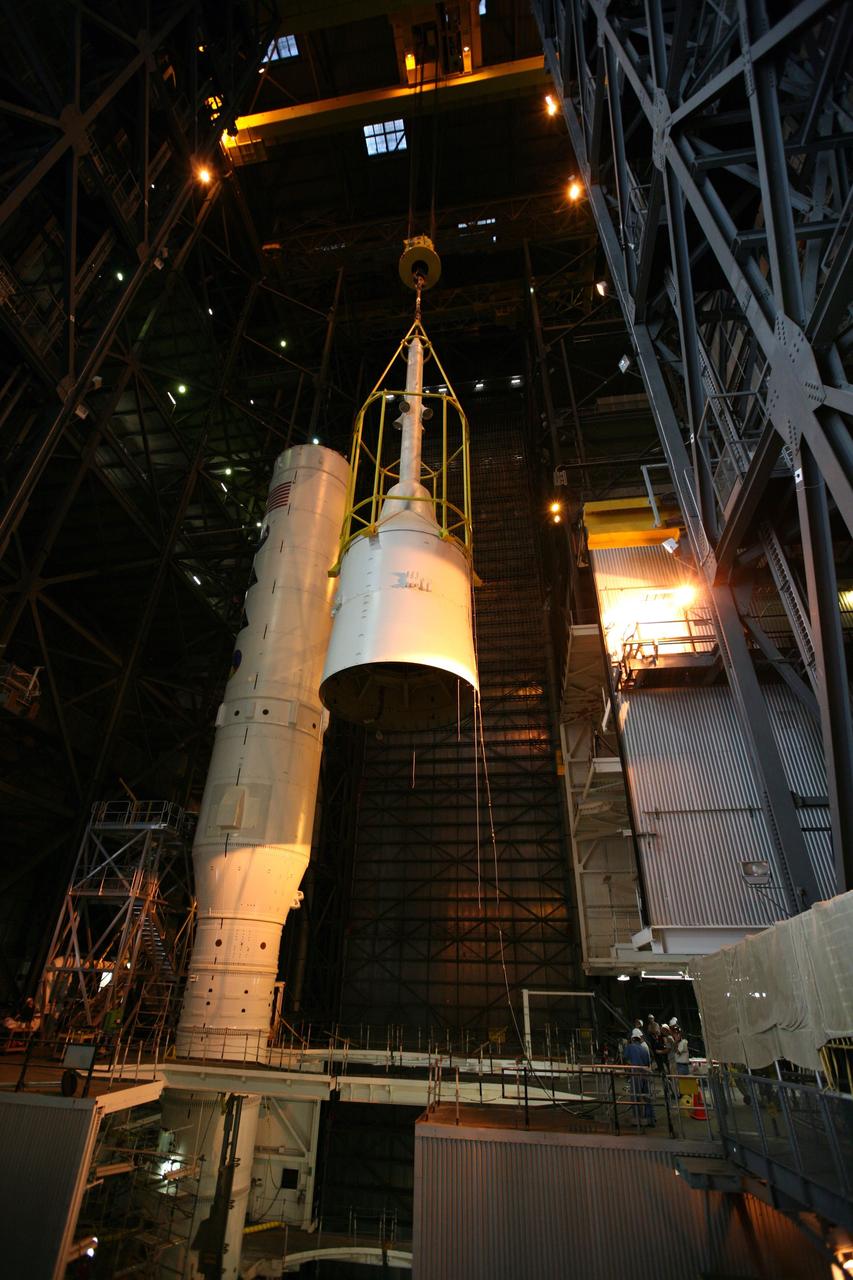
CAPE CANAVERAL, Fla. – In the Vehicle Assembly Building's High Bay 3, assembly of the Ares I-X rocket nears completion. The yellow framework, nicknamed the "birdcage," lifts Super Stack 5 to the top of the segments already in place on the mobile launcher platform. Once in position, assembly of the rocket will be complete. The 327-foot-tall rocket is one of the largest processed in the bay, rivaling the height of the Apollo Program's 364-foot-tall Saturn V. Five super stacks make up the rocket's upper stage that is integrated with the four-segment solid rocket booster first stage. Ares I-X is the test vehicle for the Ares I, which is part of the Constellation Program to return men to the moon and beyond. The Ares I-X flight test is targeted for Oct. 31, pending formal NASA Headquarters approval. Photo credit: NASA/Dimitri Gerondidakis
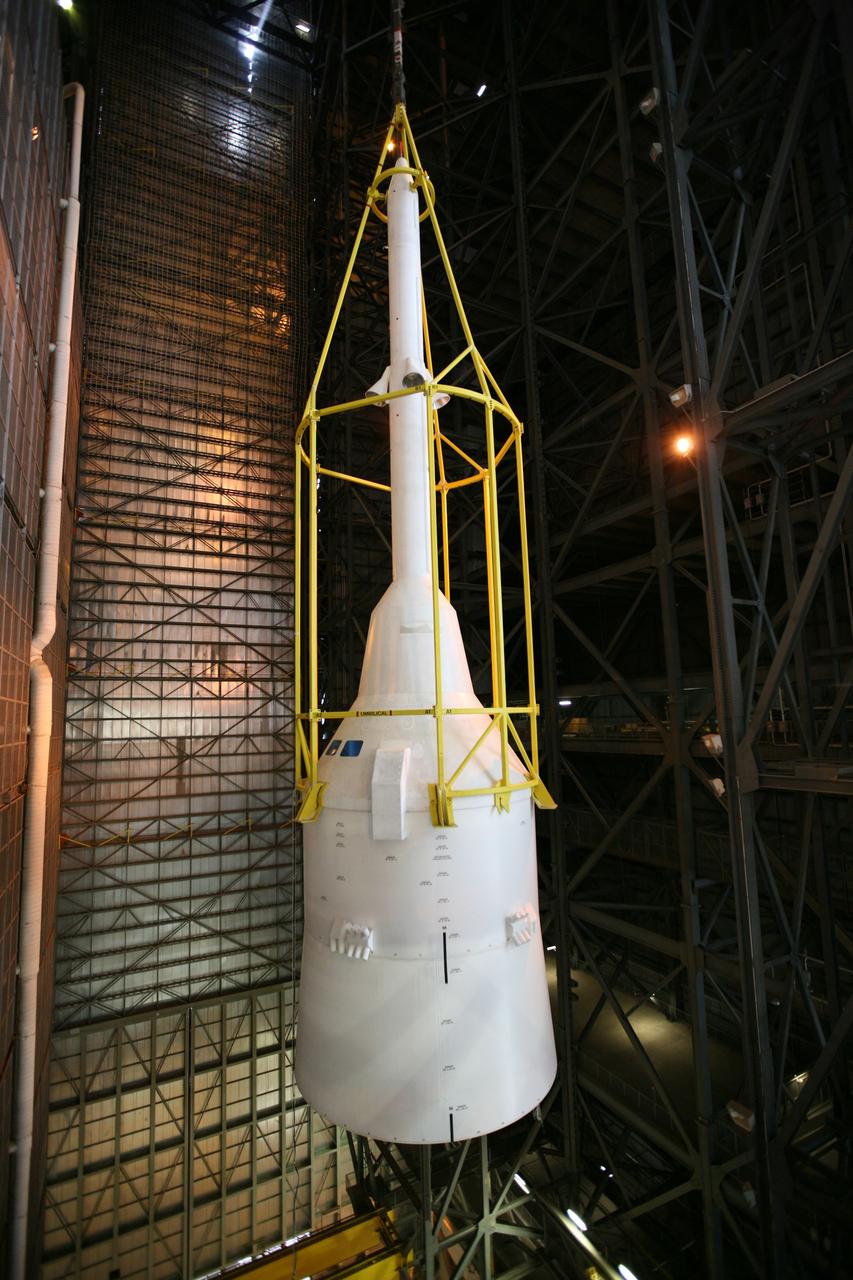
CAPE CANAVERAL, Fla. – In the Vehicle Assembly Building's High Bay 4, assembly of the Ares I-X rocket nears completion. The yellow framework, nicknamed the "birdcage," lifts Super Stack 5 toward an opening at the 16th floor crossover into the transfer aisle. The stack will be positioned on top of the segments already in place on the mobile launcher platform in High Bay 3, completing assembly of the 327-foot-tall rocket. Five super stacks make up the rocket's upper stage that is integrated with the four-segment solid rocket booster first stage. Ares I-X is the test vehicle for the Ares I, which is part of the Constellation Program to return men to the moon and beyond. The Ares I-X flight test is targeted for Oct. 31, pending formal NASA Headquarters approval. Photo credit: NASA/Dimitri Gerondidakis
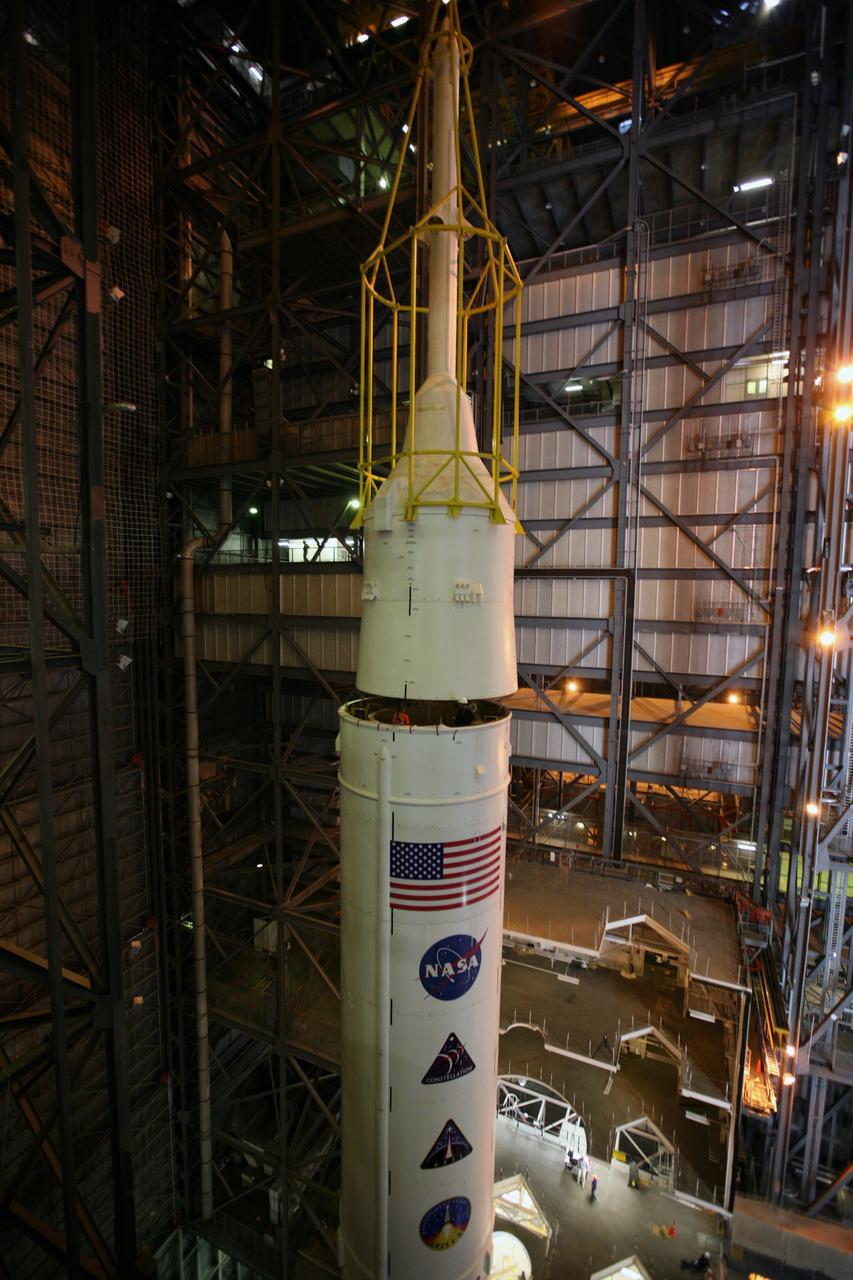
CAPE CANAVERAL, Fla. – In the Vehicle Assembly Building's High Bay 3, the yellow framework, nicknamed the "birdcage," lifts Super Stack 5 atop Super Stack 4. Once in position, assembly of the Ares I-X rocket will be complete. The 327-foot-tall rocket is one of the largest processed in the bay, rivaling the height of the Apollo Program's 364-foot-tall Saturn V. Five super stacks make up the rocket's upper stage that is integrated with the four-segment solid rocket booster first stage. Ares I-X is the test vehicle for the Ares I, which is part of the Constellation Program to return men to the moon and beyond. The Ares I-X flight test is targeted for Oct. 31, pending formal NASA Headquarters approval. Photo credit: NASA/Dimitri Gerondidakis
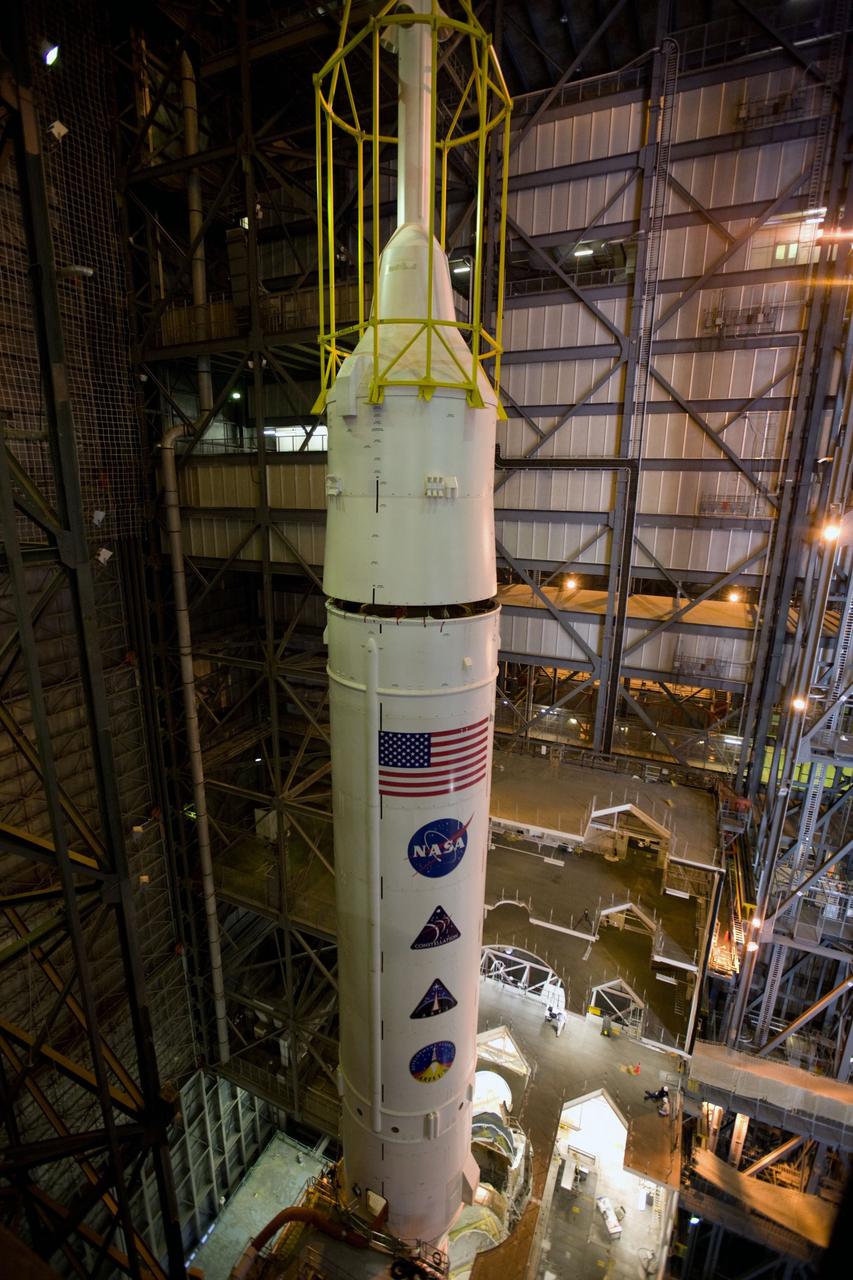
CAPE CANAVERAL, Fla. – In the Vehicle Assembly Building's High Bay 3, the yellow framework, nicknamed the "birdcage," lowers Super Stack 5 onto Super Stack 4. Once in position, assembly of the Ares I-X rocket will be complete. The 327-foot-tall rocket is one of the largest processed in the bay, rivaling the height of the Apollo Program's 364-foot-tall Saturn V. Five super stacks make up the rocket's upper stage that is integrated with the four-segment solid rocket booster first stage. Ares I-X is the test vehicle for the Ares I, which is part of the Constellation Program to return men to the moon and beyond. The Ares I-X flight test is targeted for Oct. 31, pending formal NASA Headquarters approval. Photo credit: NASA/Dimitri Gerondidakis
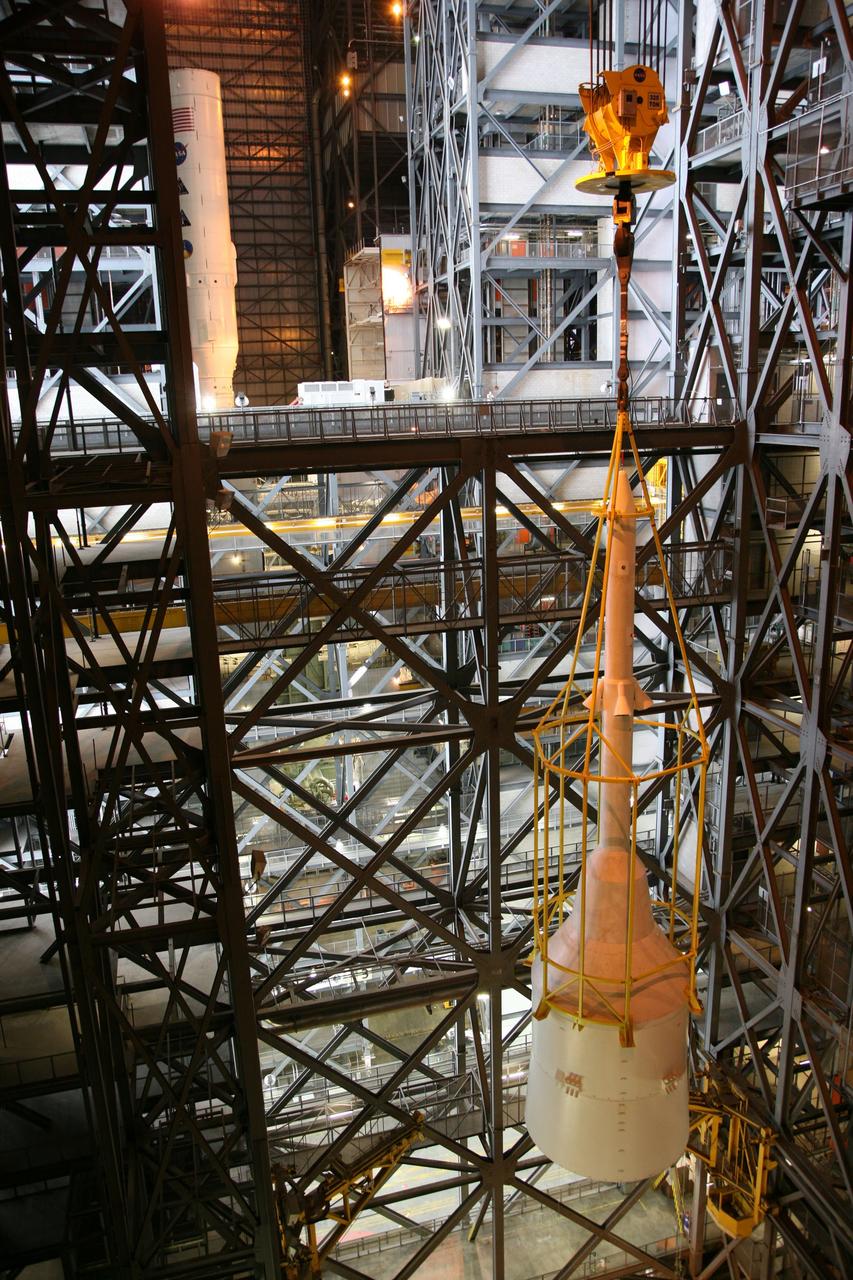
CAPE CANAVERAL, Fla. – In the Vehicle Assembly Building's High Bay 4, assembly of the Ares I-X rocket nears completion. The yellow framework, nicknamed the "birdcage," lifts Super Stack 5 toward an opening at the 16th floor crossover into the transfer aisle. The stack will be positioned on top of the segments already in place on the mobile launcher platform in High Bay 3, completing assembly of the 327-foot-tall rocket. Five super stacks make up the rocket's upper stage that is integrated with the four-segment solid rocket booster first stage. Ares I-X is the test vehicle for the Ares I, which is part of the Constellation Program to return men to the moon and beyond. The Ares I-X flight test is targeted for Oct. 31, pending formal NASA Headquarters approval. Photo credit: NASA/Dimitri Gerondidakis
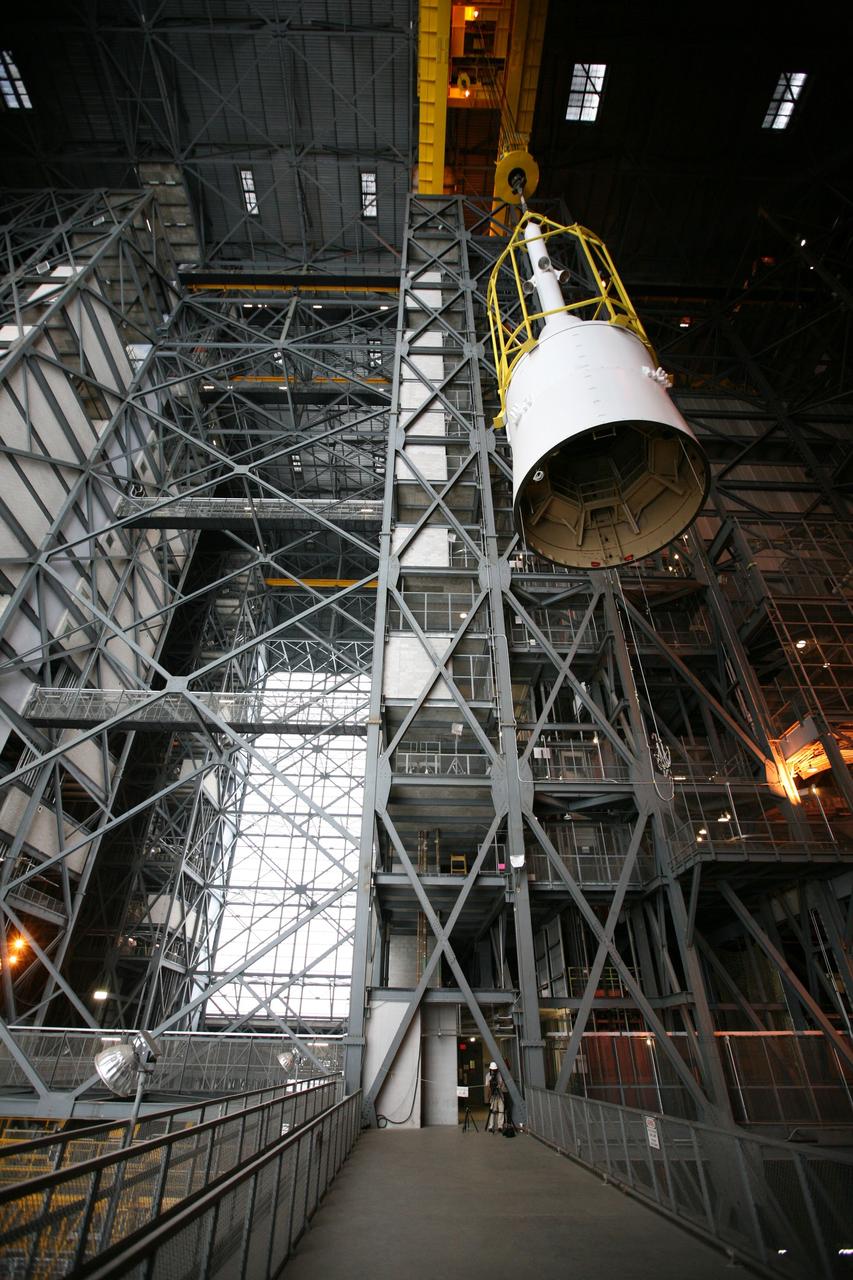
CAPE CANAVERAL, Fla. – In the Vehicle Assembly Building's High Bay 4, assembly of the Ares I-X rocket nears completion. The yellow framework, nicknamed the "birdcage," lifts Super Stack 5 through an opening at the 16th floor crossover into the transfer aisle. The stack will be positioned on top of the segments already in place on the mobile launcher platform in High Bay 3, completing assembly of the 327-foot-tall rocket. Five super stacks make up the rocket's upper stage that is integrated with the four-segment solid rocket booster first stage. Ares I-X is the test vehicle for the Ares I, which is part of the Constellation Program to return men to the moon and beyond. The Ares I-X flight test is targeted for Oct. 31, pending formal NASA Headquarters approval. Photo credit: NASA/Dimitri Gerondidakis
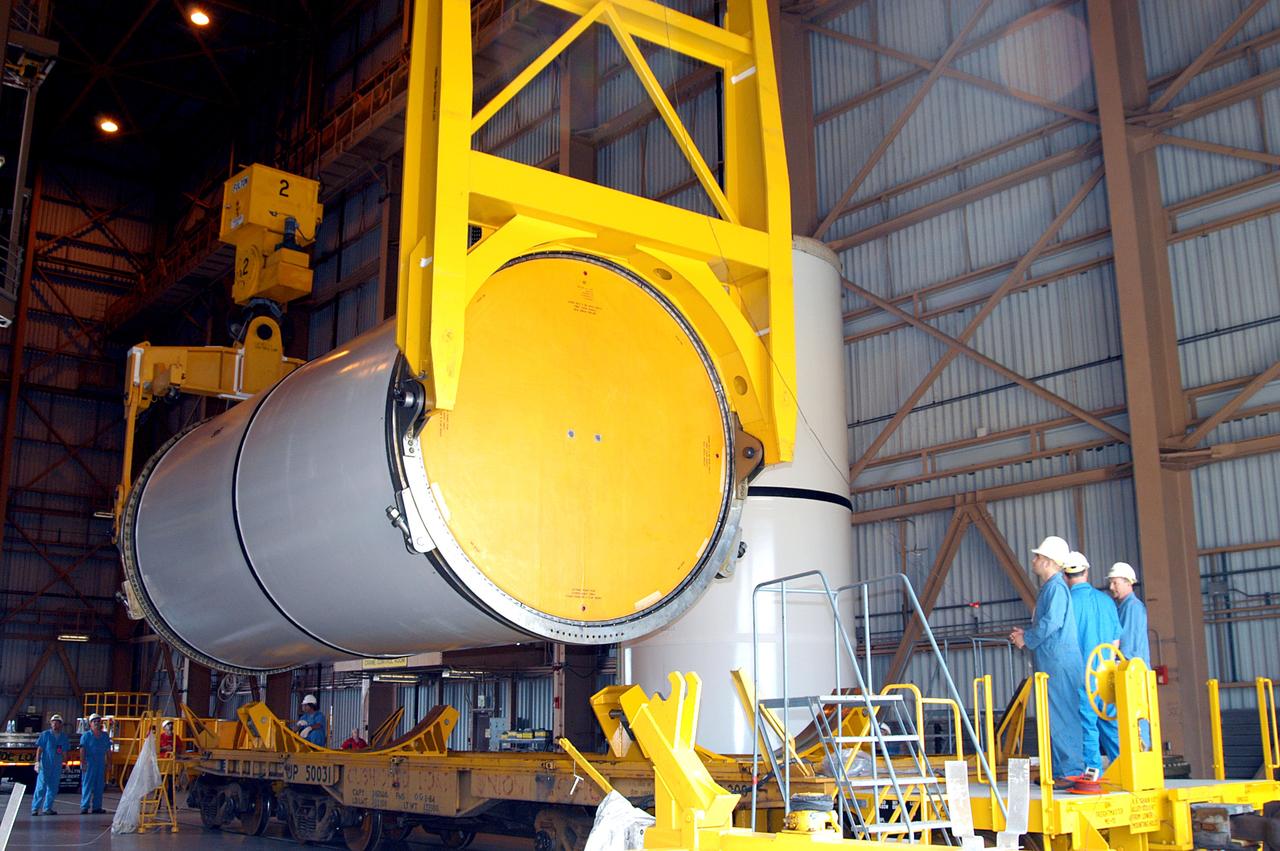
KENNEDY SPACE CENTER, FLA. - In the Rotation Processing and Surge Facility, an SRB solid segment is lowered onto a rail car for shipment to Utah where it will be tested. The segment was part of the STS-114 stack. It is the first time actual flight segments that had been stacked for flight in the VAB are being returned to Utah for testing. It will undergo firing, which will enable inspectors to check the viability of the solid and verify the life expectancy for stacked segments.
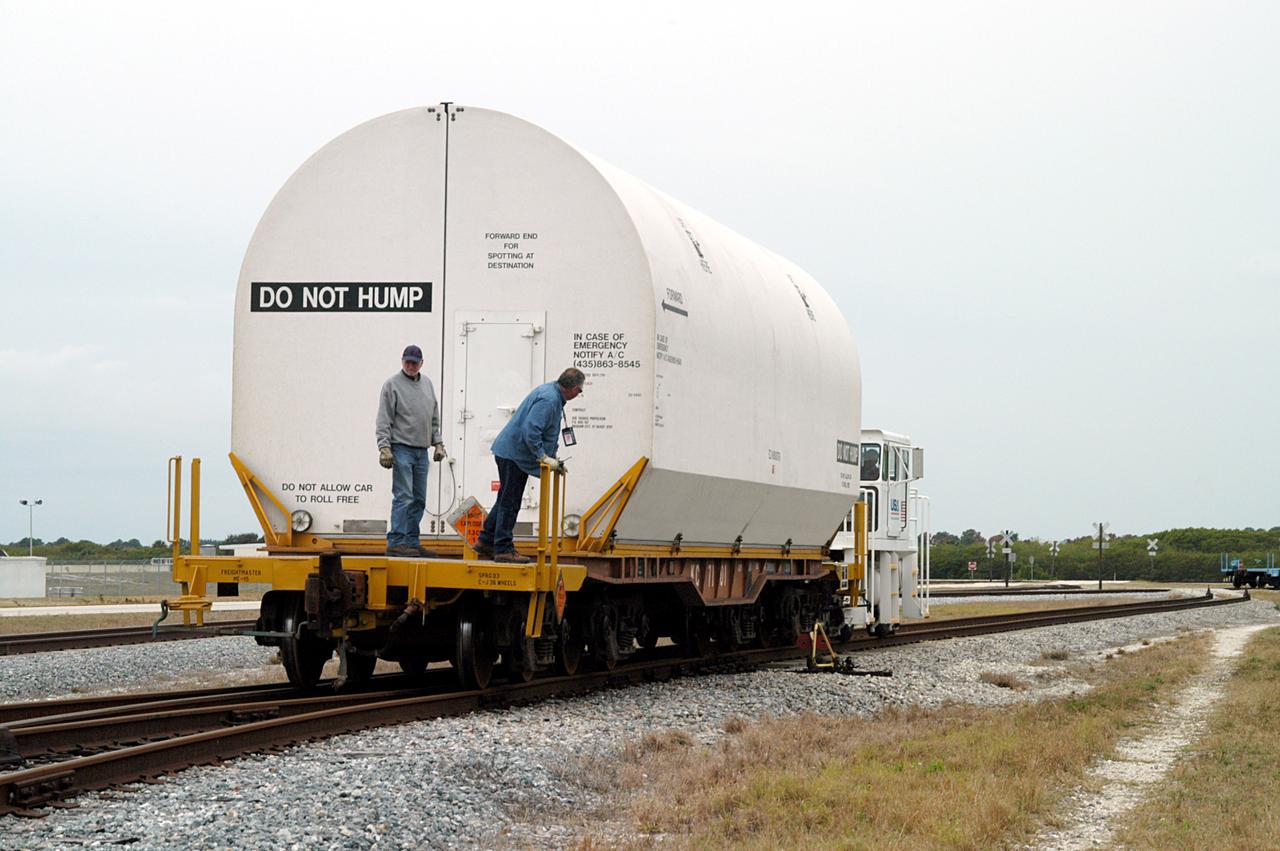
KENNEDY SPACE CENTER, FLA. - Workers ride the rails along with a container enclosing a segment of a solid rocket booster being moved to the main track. Several segments are being returned to Utah for testing. The segments were part of the STS-114 stack. It is the first time actual flight segments that had been stacked for flight in the VAB are being returned for testing. They will undergo firing, which will enable inspectors to check the viability of the solid and verify the life expectancy for stacked segments.
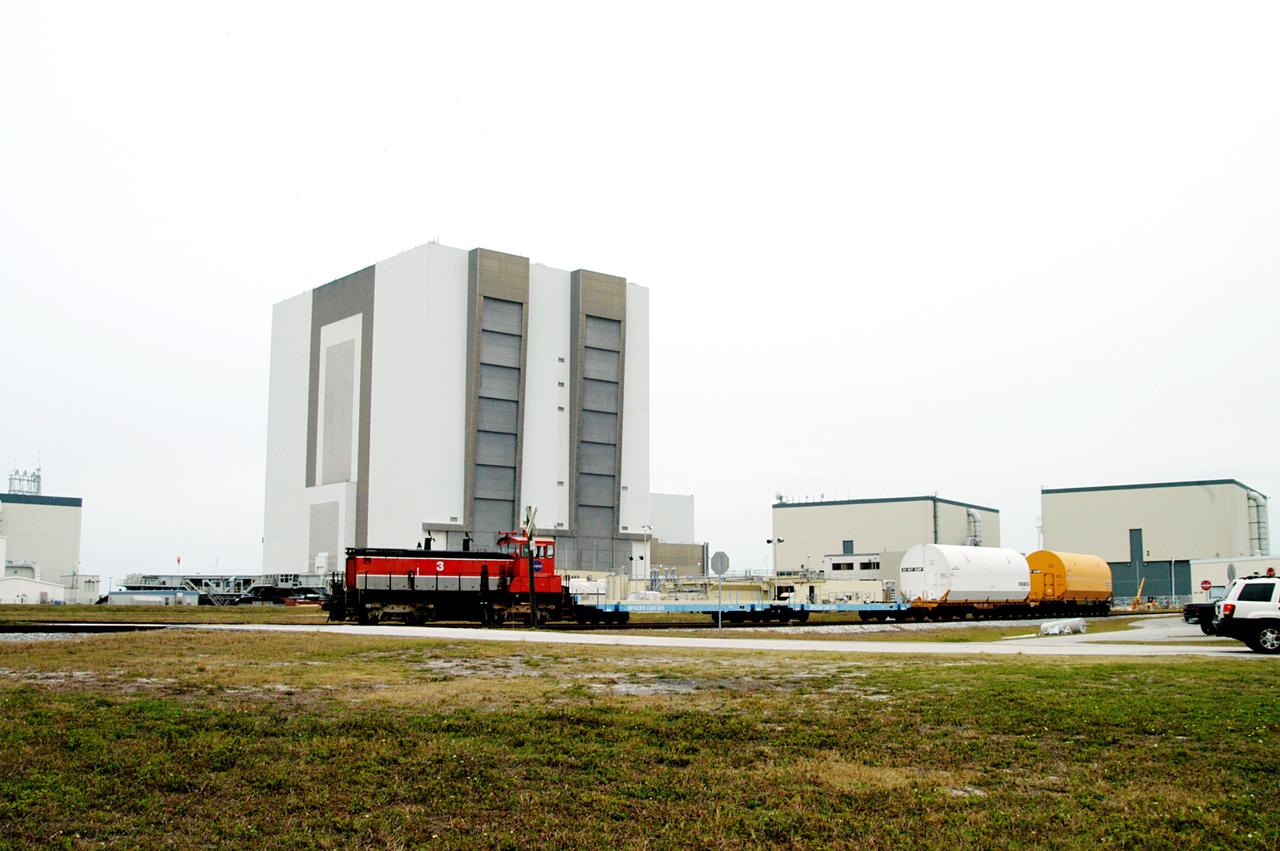
KENNEDY SPACE CENTER, FLA. - Moving past the 525-foot-high Vehicle Assembly Building, the red NASA engine pulls several containers enclosing segments of a solid rocket booster being returned to Utah for testing. The segments were part of the STS-114 stack. It is the first time actual flight segments that had been stacked for flight in the VAB are being returned for testing. They will undergo firing, which will enable inspectors to check the viability of the solid and verify the life expectancy for stacked segments.
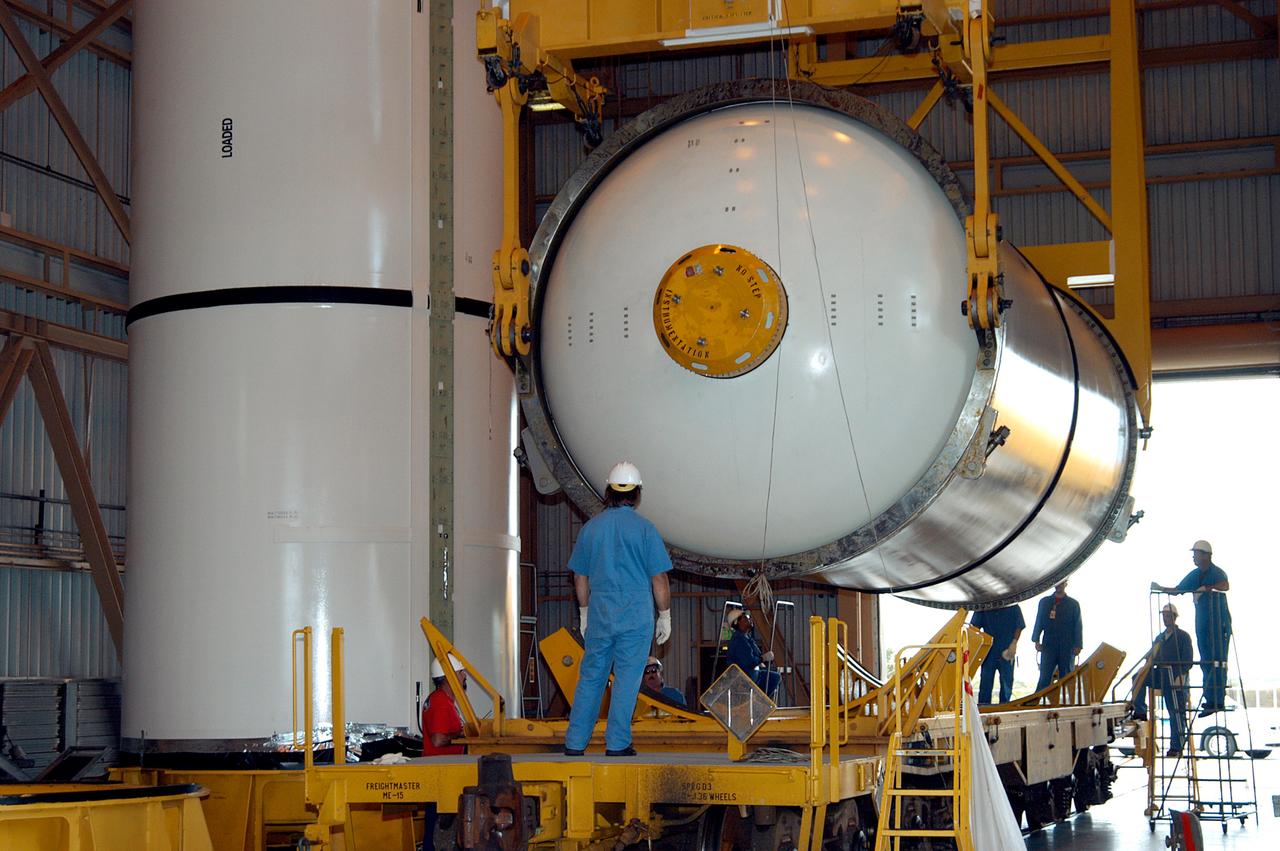
KENNEDY SPACE CENTER, FLA. - In the Rotation Processing and Surge Facility, an SRB solid segment is lowered onto a rail car for shipment to Utah where it will be tested. The segment was part of the STS-114 stack. It is the first time actual flight segments that had been stacked for flight in the VAB are being returned to Utah for testing. It will undergo firing, which will enable inspectors to check the viability of the solid and verify the life expectancy for stacked segments.
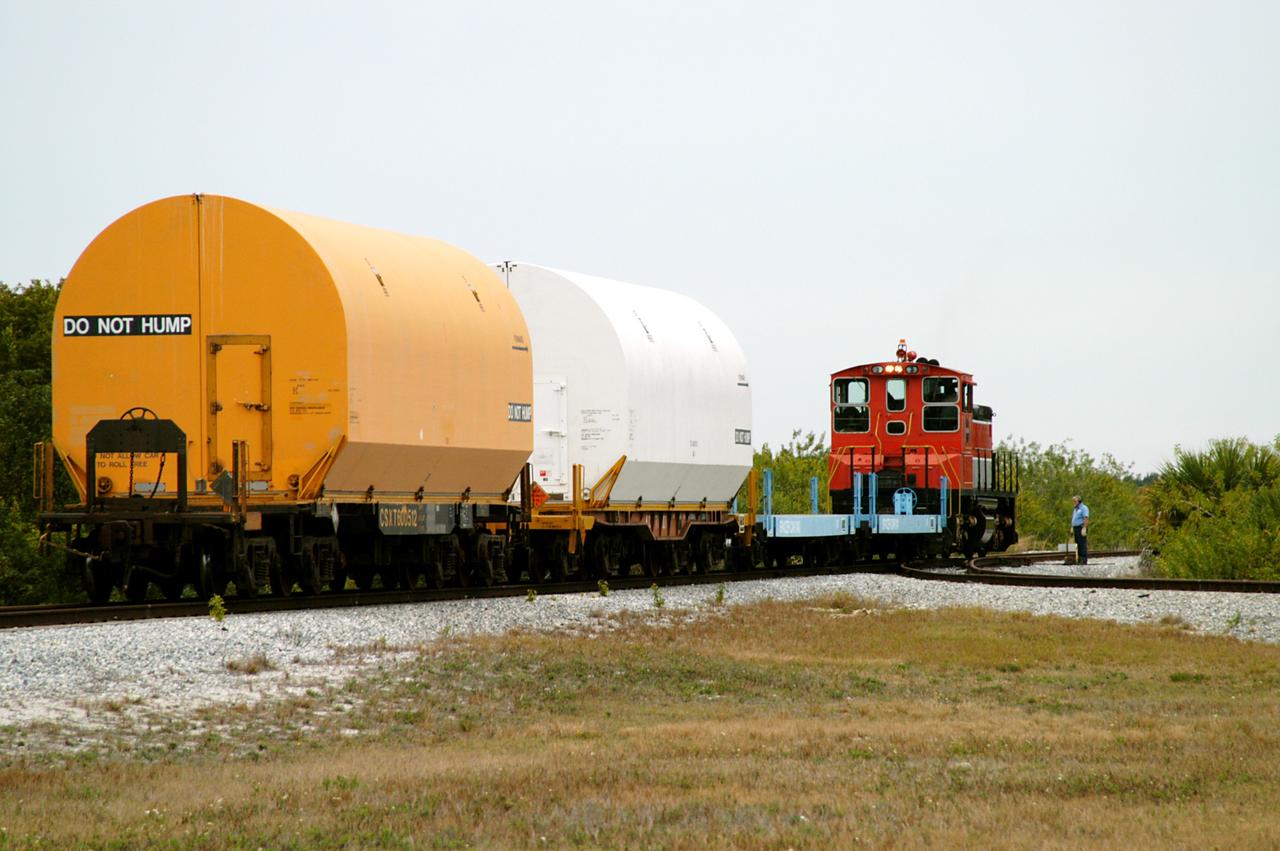
KENNEDY SPACE CENTER, FLA. - The red NASA engine hauls its cargo toward Titusville, Fla. The containers enclose segments of a solid rocket booster being returned to Utah for testing. The segments were part of the STS-114 stack. It is the first time actual flight segments that had been stacked for flight in the VAB are being returned for testing. They will undergo firing, which will enable inspectors to check the viability of the solid and verify the life expectancy for stacked segments.
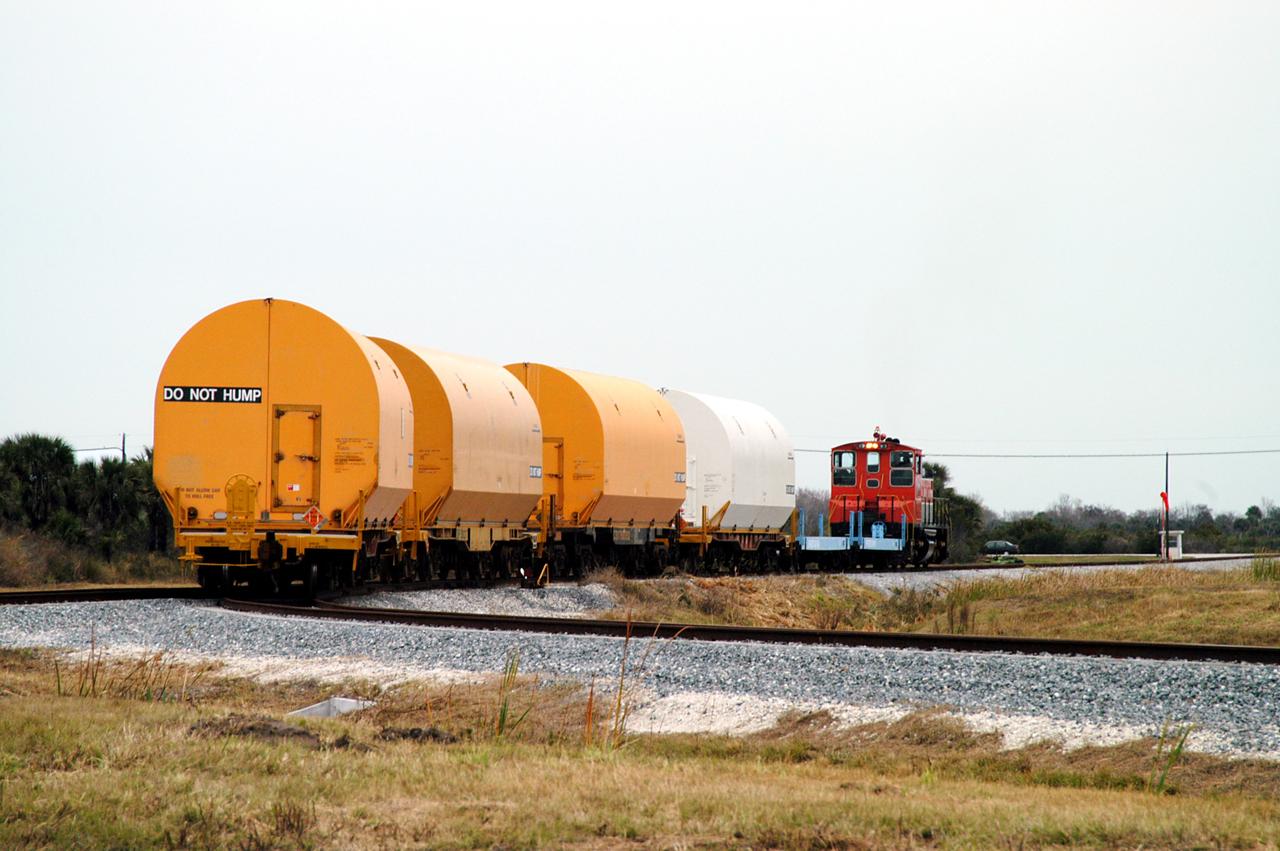
KENNEDY SPACE CENTER, FLA. - The red NASA engine hauls its cargo toward Titusville, Fla. The containers enclose segments of a solid rocket booster being returned to Utah for testing. The segments were part of the STS-114 stack. It is the first time actual flight segments that had been stacked for flight in the VAB are being returned for testing. They will undergo firing, which will enable inspectors to check the viability of the solid and verify the life expectancy for stacked segments.
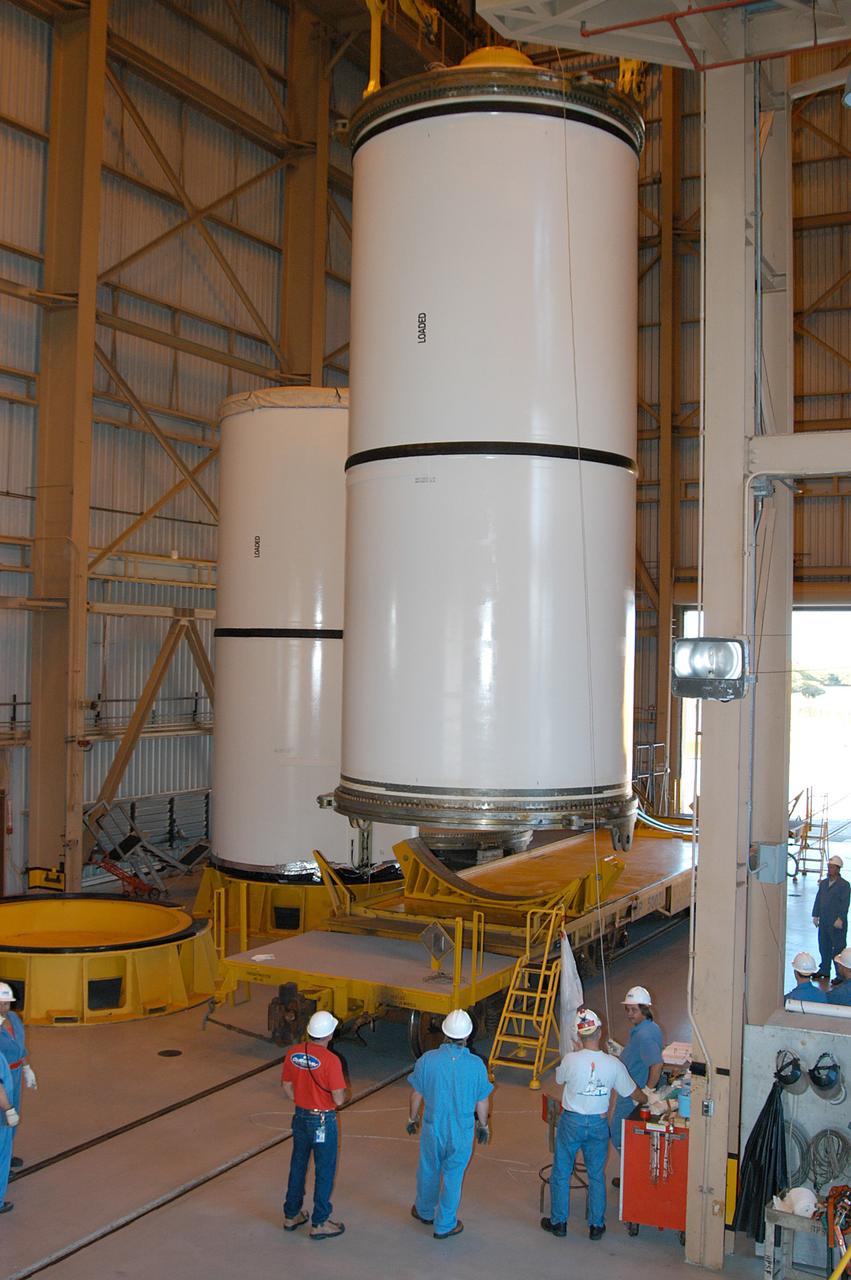
KENNEDY SPACE CENTER, FLA. - In the Rotation Processing and Surge Facility, an SRB solid segment is being moved to a rail car for shipment to Utah for testing. The segment was part of the STS-114 stack. It is the first time actual flight segments that had been stacked for flight in the VAB are being returned to Utah for testing. It will undergo firing, which will enable inspectors to check the viability of the solid and verify the life expectancy for stacked segments.
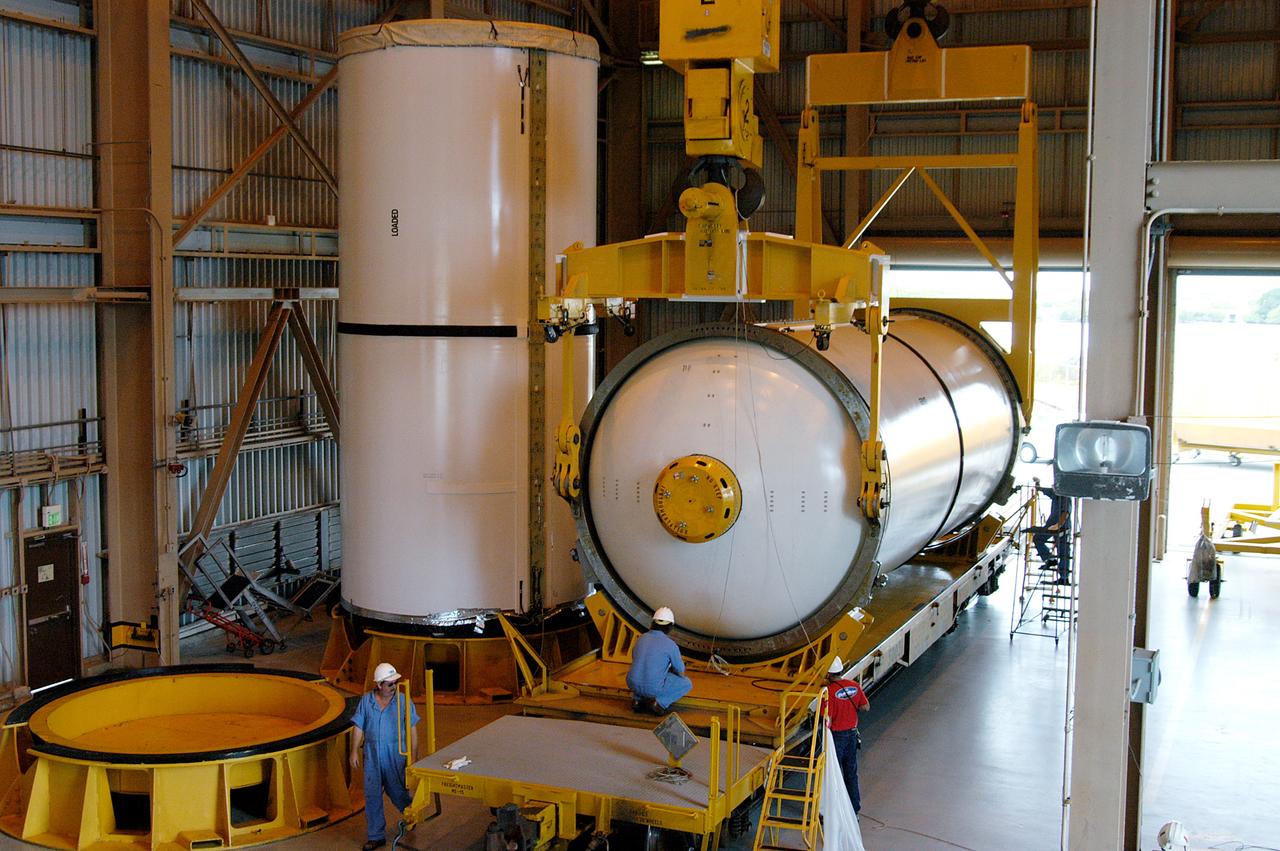
KENNEDY SPACE CENTER, FLA. - In the Rotation Processing and Surge Facility, an SRB solid segment is lowered onto a rail car for shipment to Utah where it will be tested. The segment was part of the STS-114 stack. It is the first time actual flight segments that had been stacked for flight in the VAB are being returned to Utah for testing. It will undergo firing, which will enable inspectors to check the viability of the solid and verify the life expectancy for stacked segments.
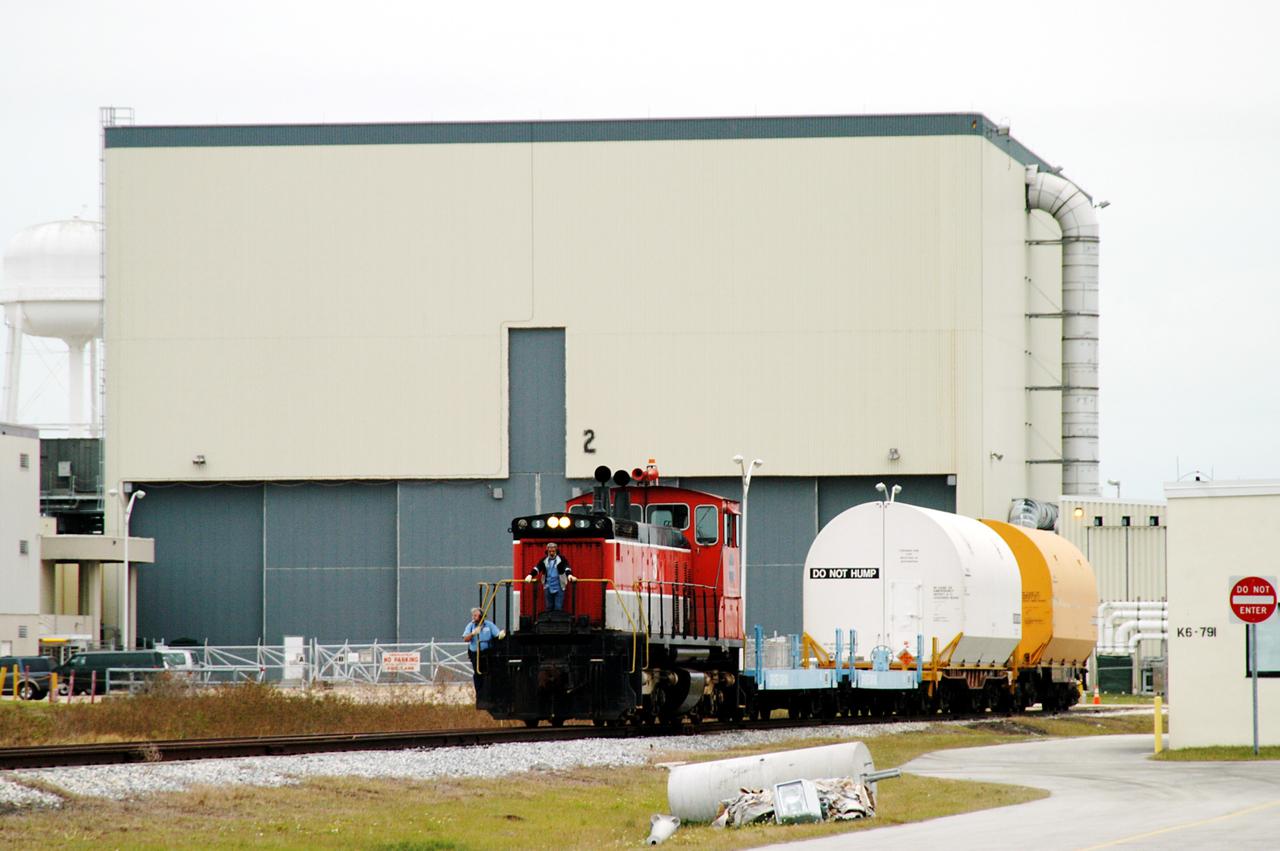
KENNEDY SPACE CENTER, FLA. - The red NASA engine backs up with its cargo of containers in order to change tracks. The containers enclose segments of a solid rocket booster being returned to Utah for testing. The segments were part of the STS-114 stack. It is the first time actual flight segments that had been stacked for flight in the VAB are being returned for testing. They will undergo firing, which will enable inspectors to check the viability of the solid and verify the life expectancy for stacked segments.
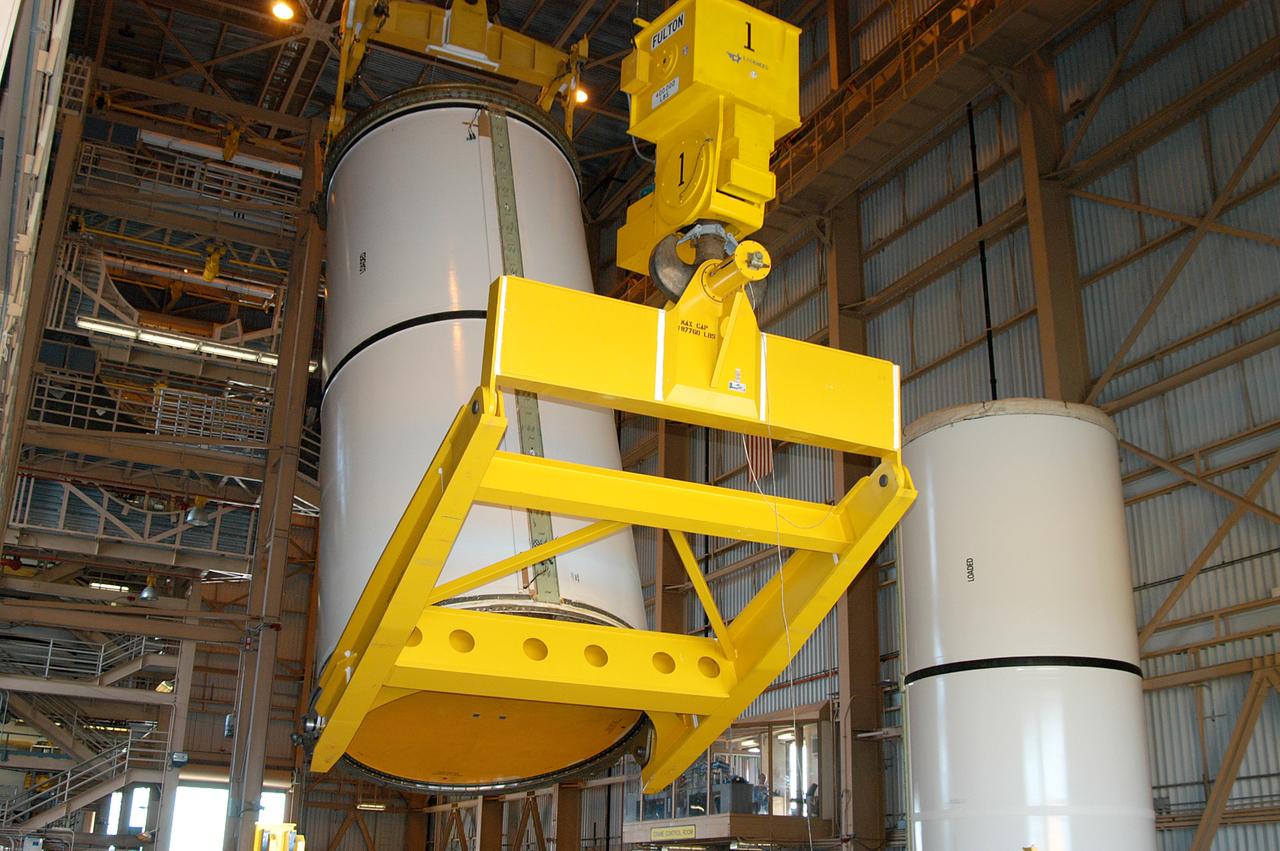
KENNEDY SPACE CENTER, FLA. - In the Rotation Processing and Surge Facility, an SRB solid segment is being lifted and moved to a rail car for shipment to Utah for testing. The segment was part of the STS-114 stack. It is the first time actual flight segments that had been stacked for flight in the VAB are being returned to Utah for testing. It will undergo firing, which will enable inspectors to check the viability of the solid and verify the life expectancy for stacked segments.
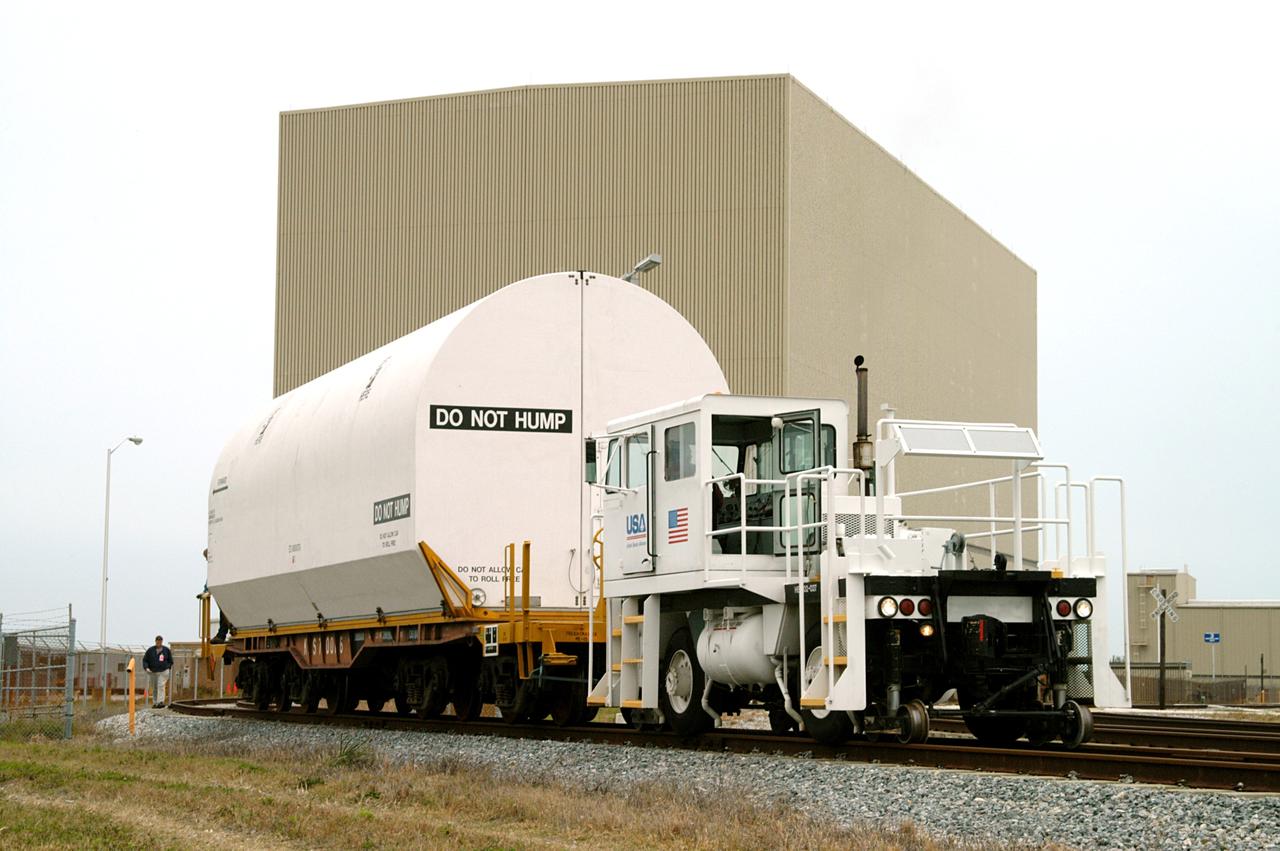
KENNEDY SPACE CENTER, FLA. - An engine pulls the container enclosing a segment of a solid rocket booster from the Rotation Processing and Surge Facility. The container will join others on the main track for a trip to Utah where the segments will undergo firing. The segments were part of the STS-114 stack. It is the first time actual flight segments that had been stacked for flight in the VAB are being returned for testing. They will undergo firing, which will enable inspectors to check the viability of the solid and verify the life expectancy for stacked segments.
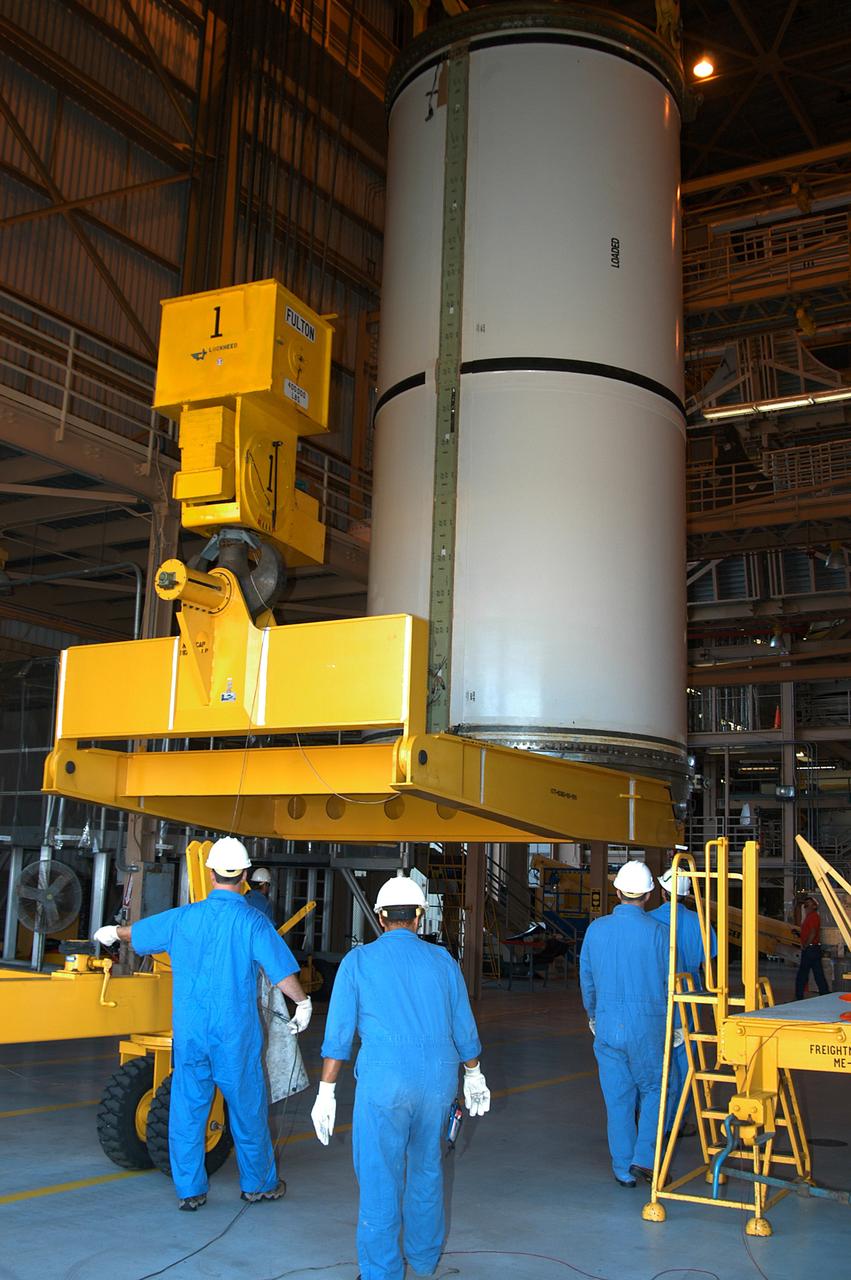
KENNEDY SPACE CENTER, FLA. - In the Rotation Processing and Surge Facility, an SRB solid segment is being lifted and moved to a rail car for shipment to Utah for testing. The segment was part of the STS-114 stack. It is the first time actual flight segments that had been stacked for flight in the VAB are being returned to Utah for testing. It will undergo firing, which will enable inspectors to check the viability of the solid and verify the life expectancy for stacked segments.
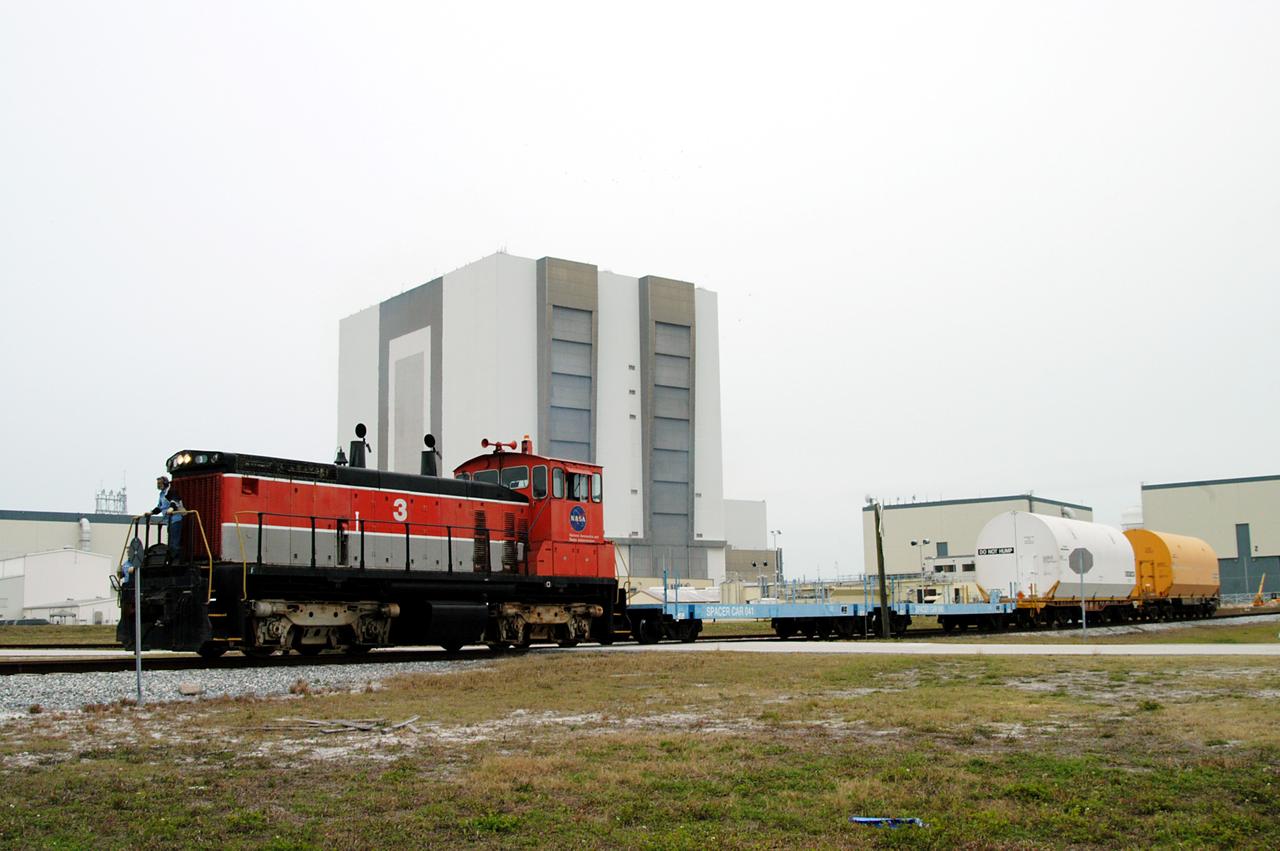
KENNEDY SPACE CENTER, FLA. - The red NASA engine moves forward past the Vehicle Assembly Building with its cargo of containers enclosing segments of a solid rocket booster being returned to Utah for testing. The segments were part of the STS-114 stack. It is the first time actual flight segments that had been stacked for flight in the VAB are being returned for testing. They will undergo firing, which will enable inspectors to check the viability of the solid and verify the life expectancy for stacked segments.
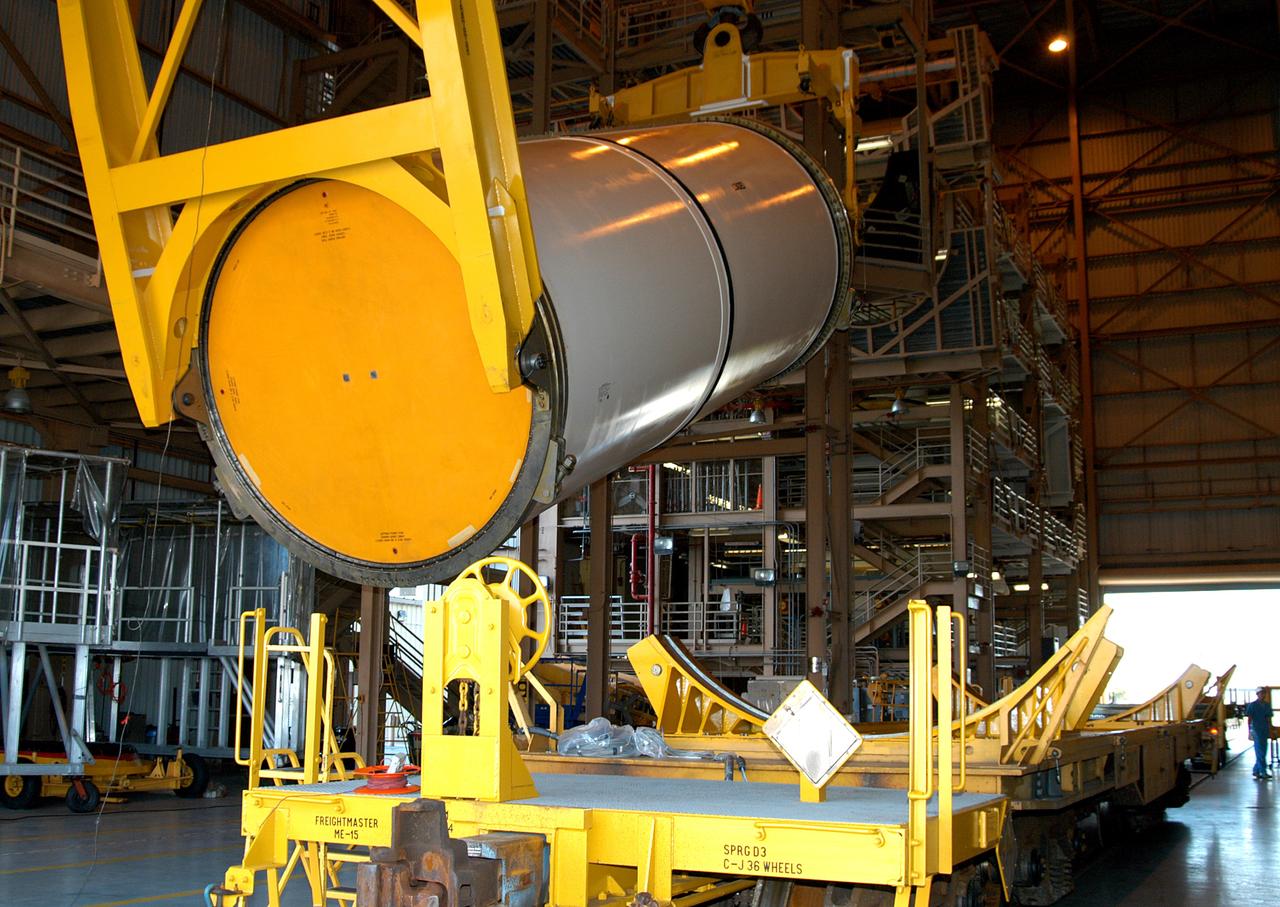
KENNEDY SPACE CENTER, FLA. - In the Rotation Processing and Surge Facility, an SRB solid segment is being rotated to horizontal for placement on a rail car. The segment is being shipped to Utah for testing. The segment was part of the STS-114 stack. It is the first time actual flight segments that had been stacked for flight in the VAB are being returned to Utah for testing. It will undergo firing, which will enable inspectors to check the viability of the solid and verify the life expectancy for stacked segments.
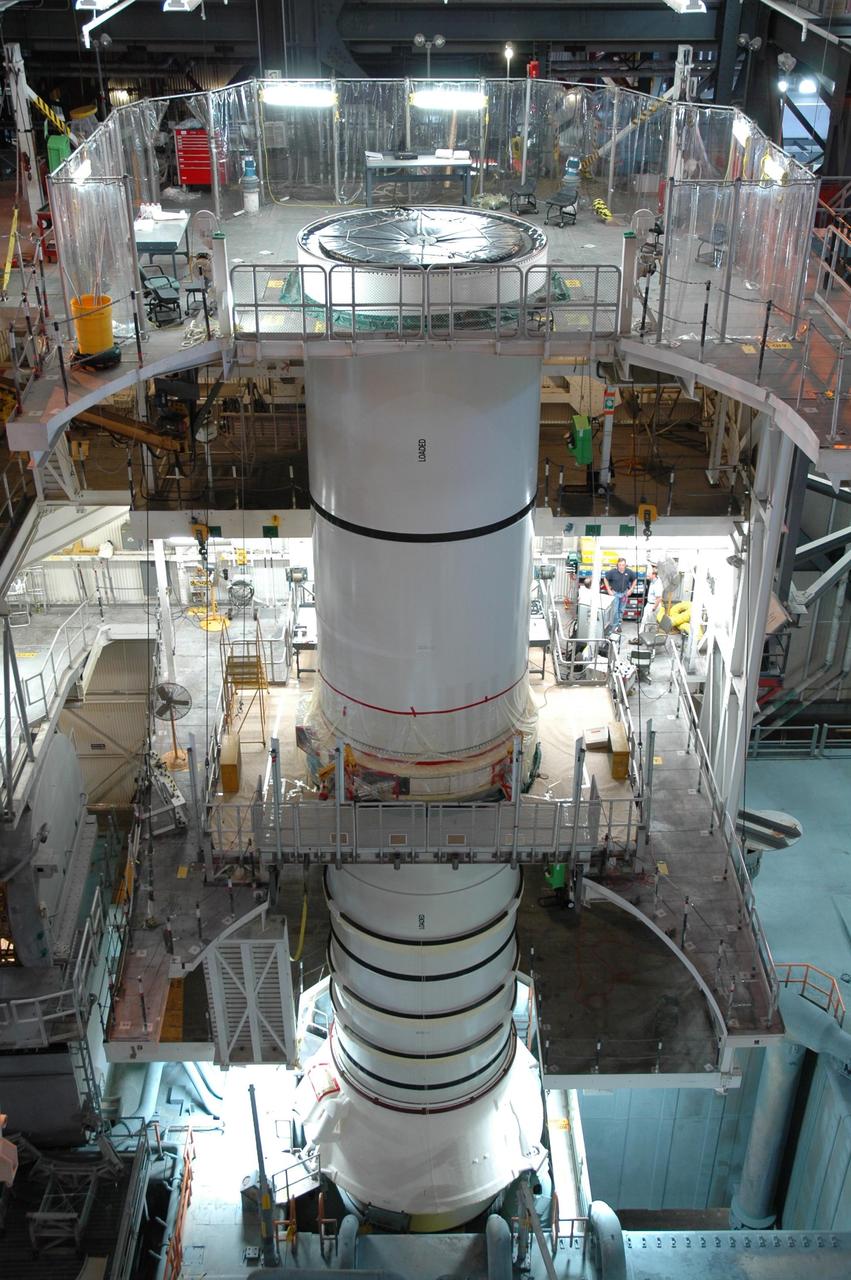
KENNEDY SPACE CENTER, FLA. -- In the Vehicle Assembly Building, the STS-120 solid rocket booster left aft booster and left aft center segments are being stacked on the mobile launcher platform. STS-120 will be the 23rd flight to the International Space Station. Space Shuttle Discovery will carry the U.S. Node 2. Launch is targeted for Oct. 20. NASA/Jim Grossmann
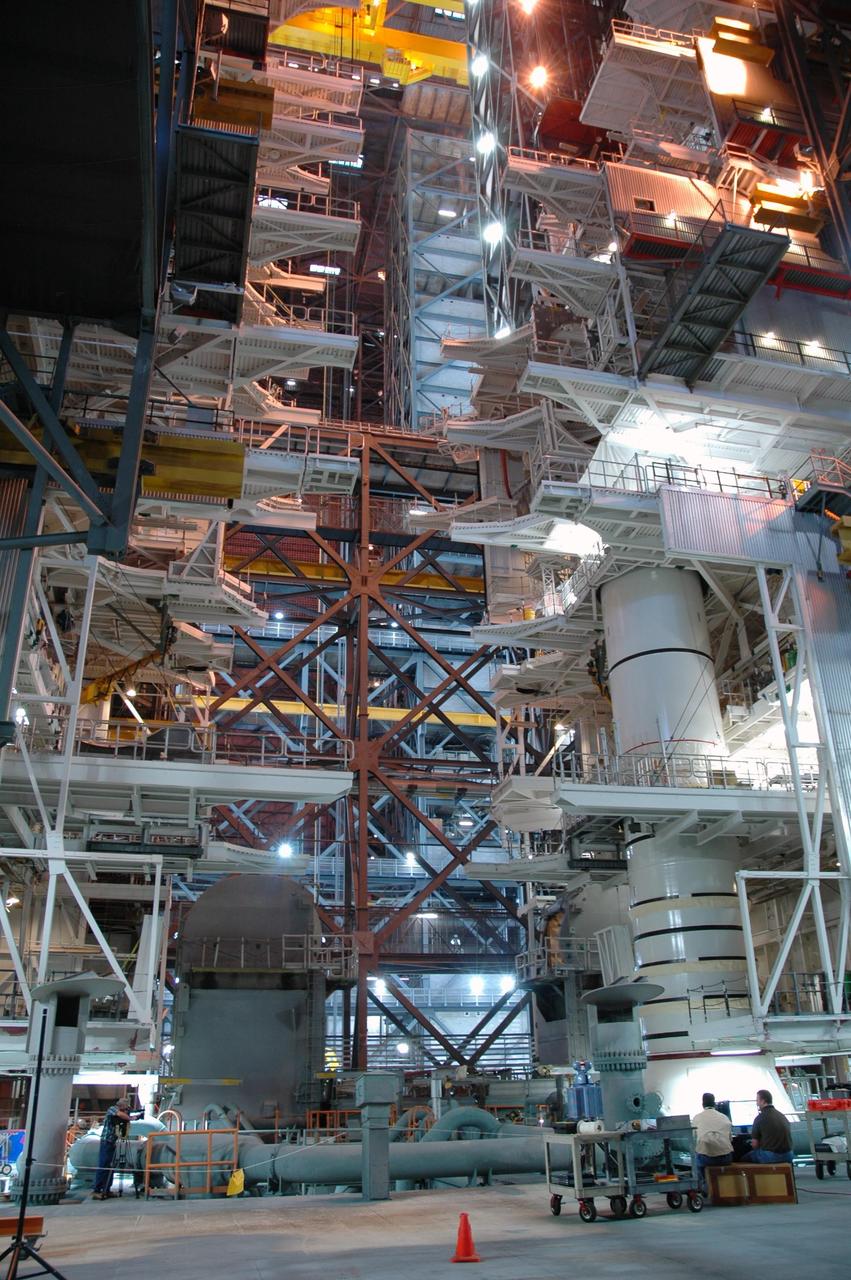
KENNEDY SPACE CENTER, FLA. -- In the Vehicle Assembly Building, the STS-120 solid rocket booster left aft booster and left aft center segments are being stacked on the mobile launcher platform. STS-120 will be the 23rd flight to the International Space Station. Space Shuttle Discovery will carry the U.S. Node 2. Launch is targeted for Oct. 20. NASA/Jim Grossmann
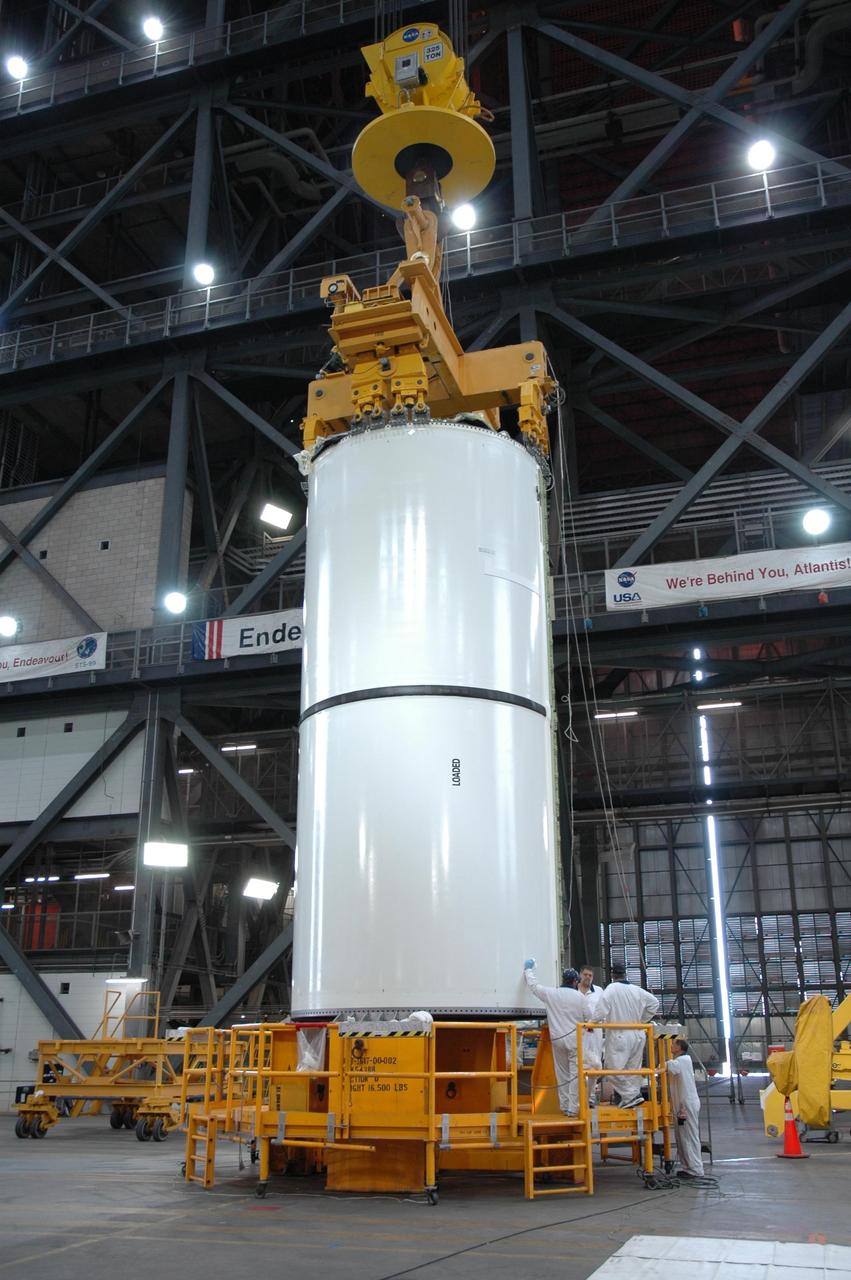
KENNEDY SPACE CENTER, FLA. -- Another STS-120 solid rocket booster segment waits to be stacked in the Vehicle Assembly Building on the mobile launcher platform. STS-120 will be the 23rd flight to the International Space Station. Space Shuttle Discovery will carry the U.S. Node 2. Launch is targeted for Oct. 20. NASA/Jim Grossmann
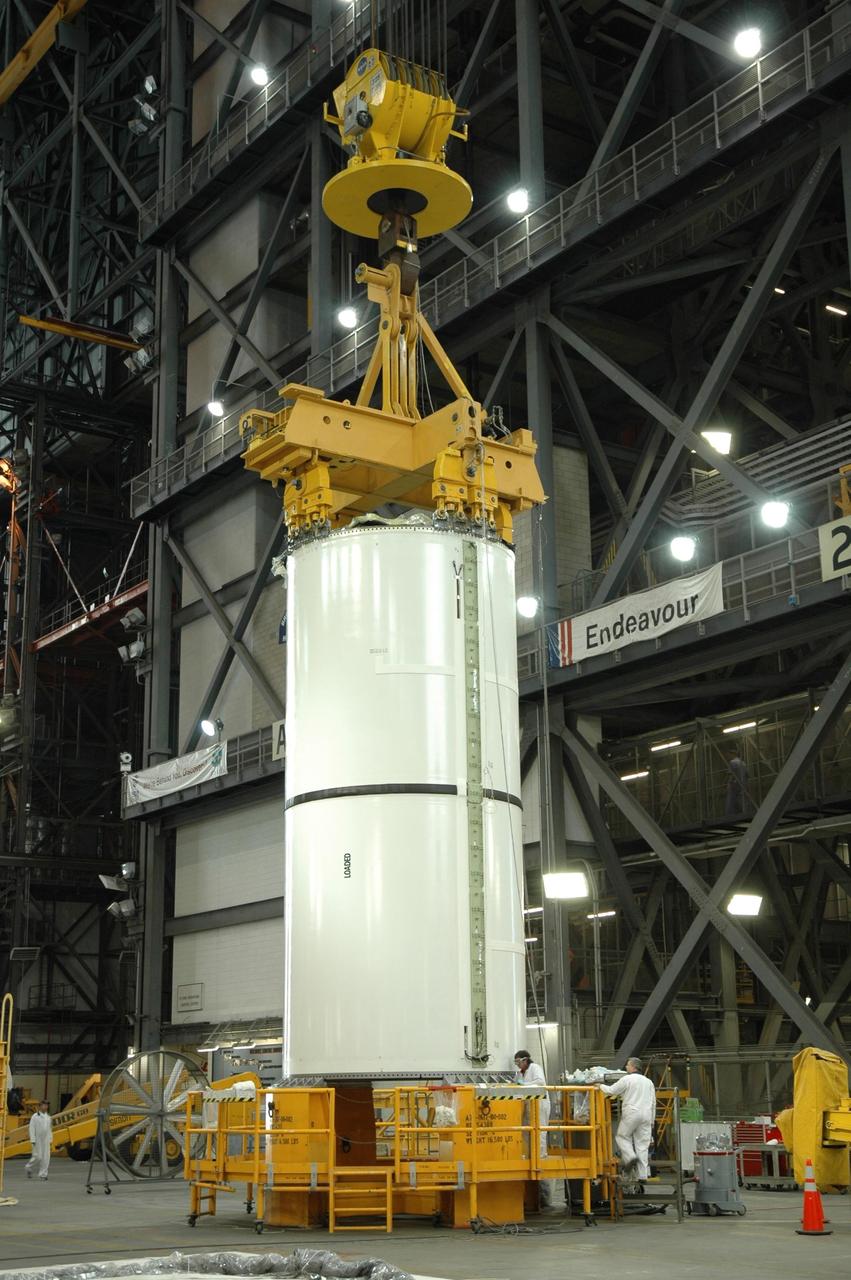
KENNEDY SPACE CENTER, FLA. -- The STS-120 solid rocket booster segments wait to be stacked in the Vehicle Assembly Building on the mobile launcher platform. STS-120 will be the 23rd flight to the International Space Station. Space Shuttle Discovery will carry the U.S. Node 2. Launch is targeted for Oct. 20. NASA/Jim Grossmann
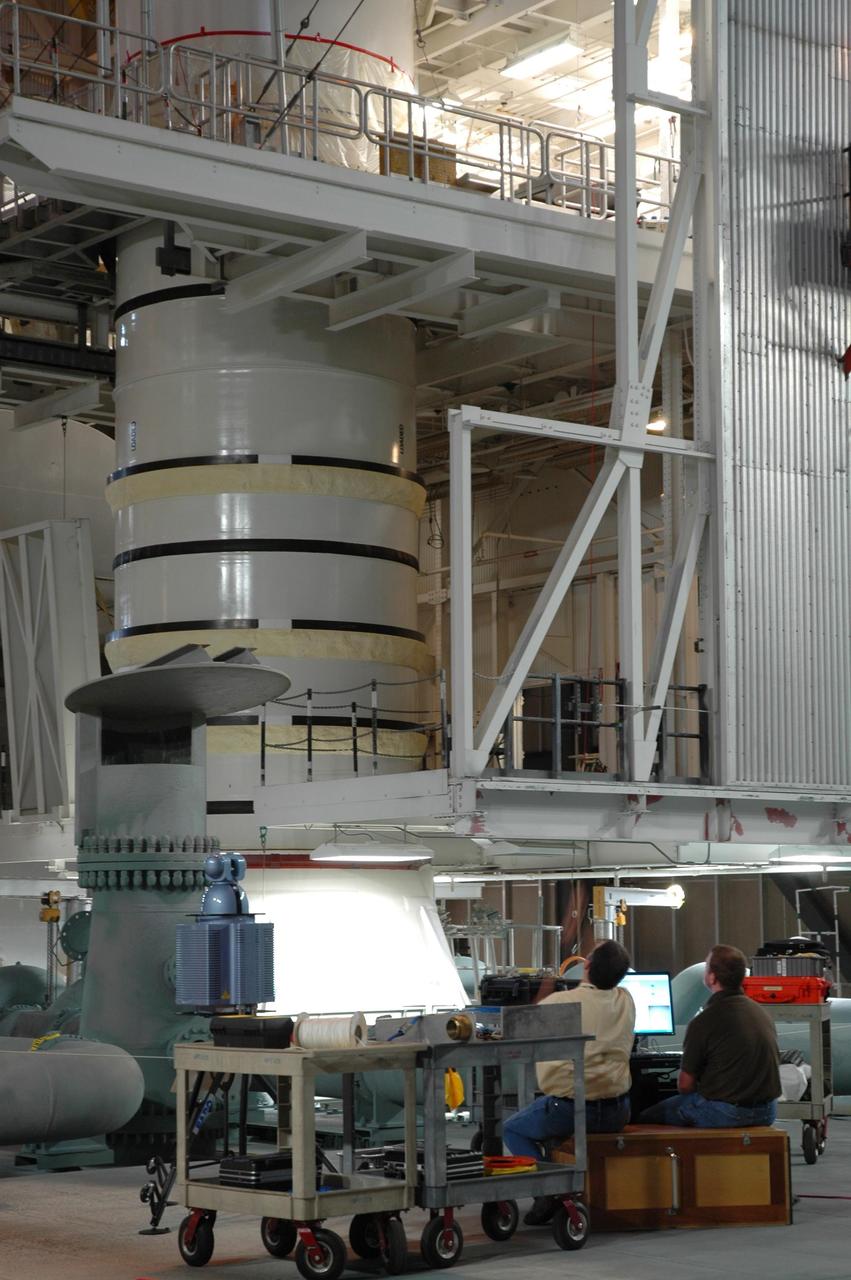
KENNEDY SPACE CENTER, FLA. -- In the Vehicle Assembly Building, the STS-120 solid rocket booster left aft booster and left aft center segments are being stacked on the mobile launcher platform. STS-120 will be the 23rd flight to the International Space Station. Space Shuttle Discovery will carry the U.S. Node 2. Launch is targeted for Oct. 20. NASA/Jim Grossmann
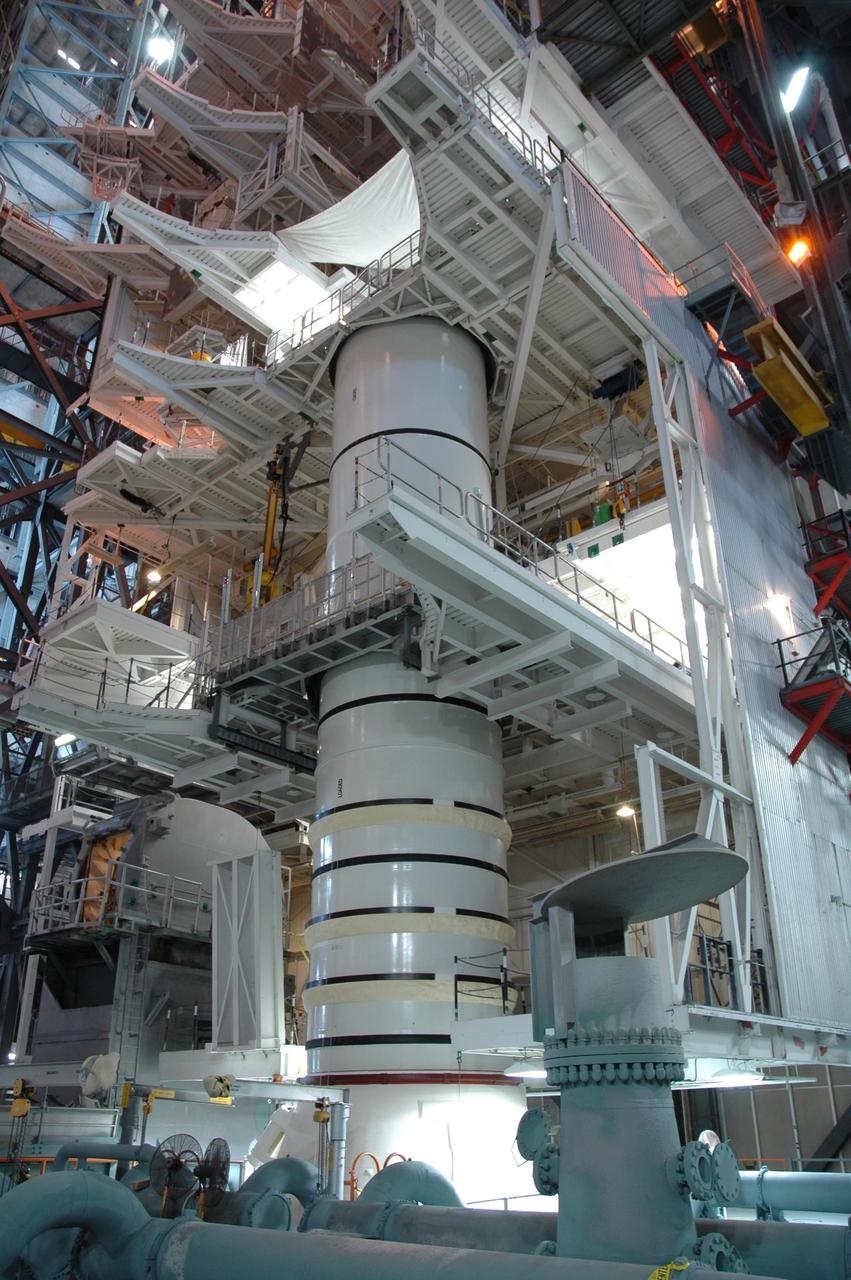
KENNEDY SPACE CENTER, FLA. -- In the Vehicle Assembly Building, the STS-120 solid rocket booster left aft booster and left aft center segments are being stacked on the mobile launcher platform. STS-120 will be the 23rd flight to the International Space Station. Space Shuttle Discovery will carry the U.S. Node 2. Launch is targeted for Oct. 20. NASA/Jim Grossmann
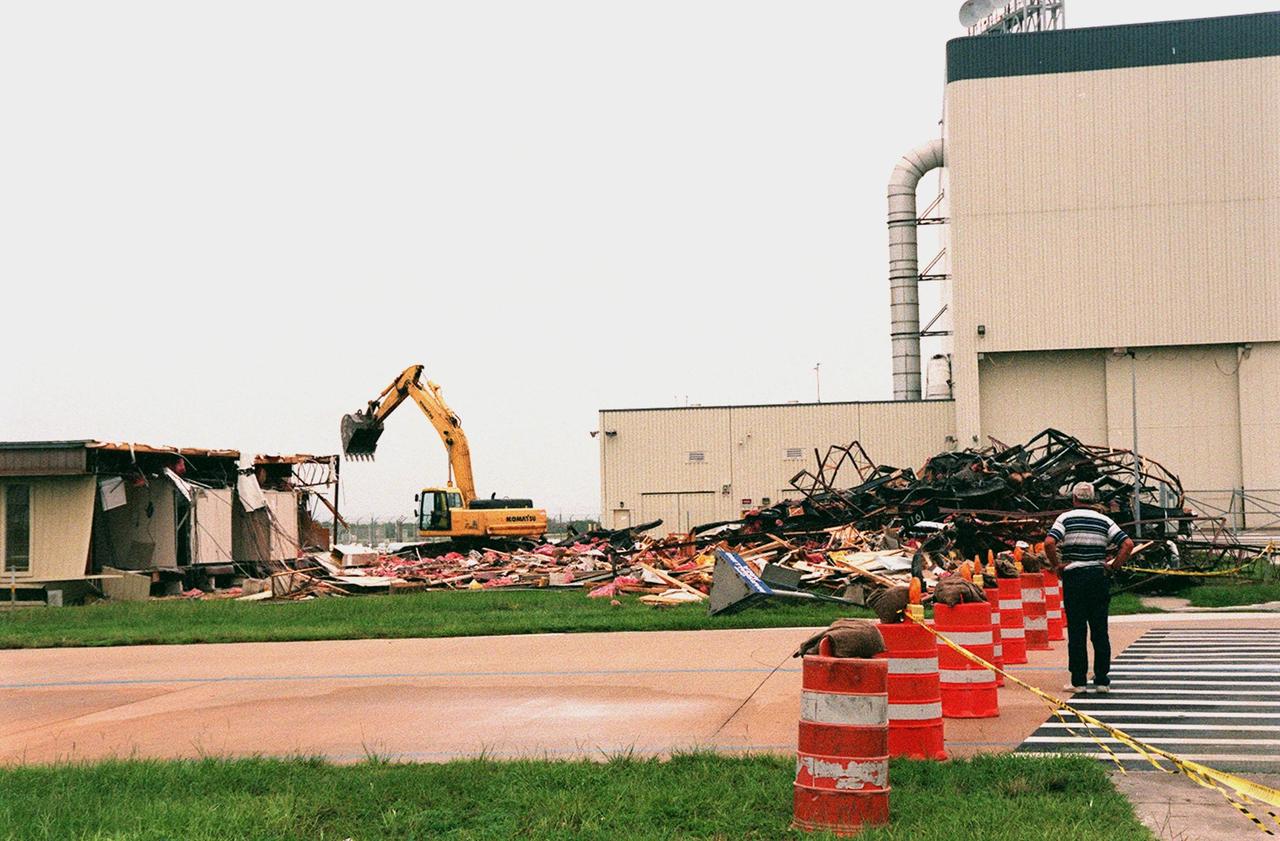
The Butler Building at Kennedy Space Center is nearly demolished, with the help of the crane in the background. The building, which is near the Orbiter Processing Facility (right), is being demolished in order to extend the crawlerway leading to the high bay of the Vehicle Assembly Building (VAB), part of KSC's Safe Haven project. The goal of Safe Haven is to strengthen readiness for Florida's hurricane season by expanding the VAB's storage capacity. Construction includes outfitting the VAB with a third stacking area, in high bay 2, that will allow NASA to preassemble stacks and still have room in the VAB to pull a Shuttle back from the pad into the safety of the VAB if severe weather threatens. The VAB can withstand winds up to 125 mph
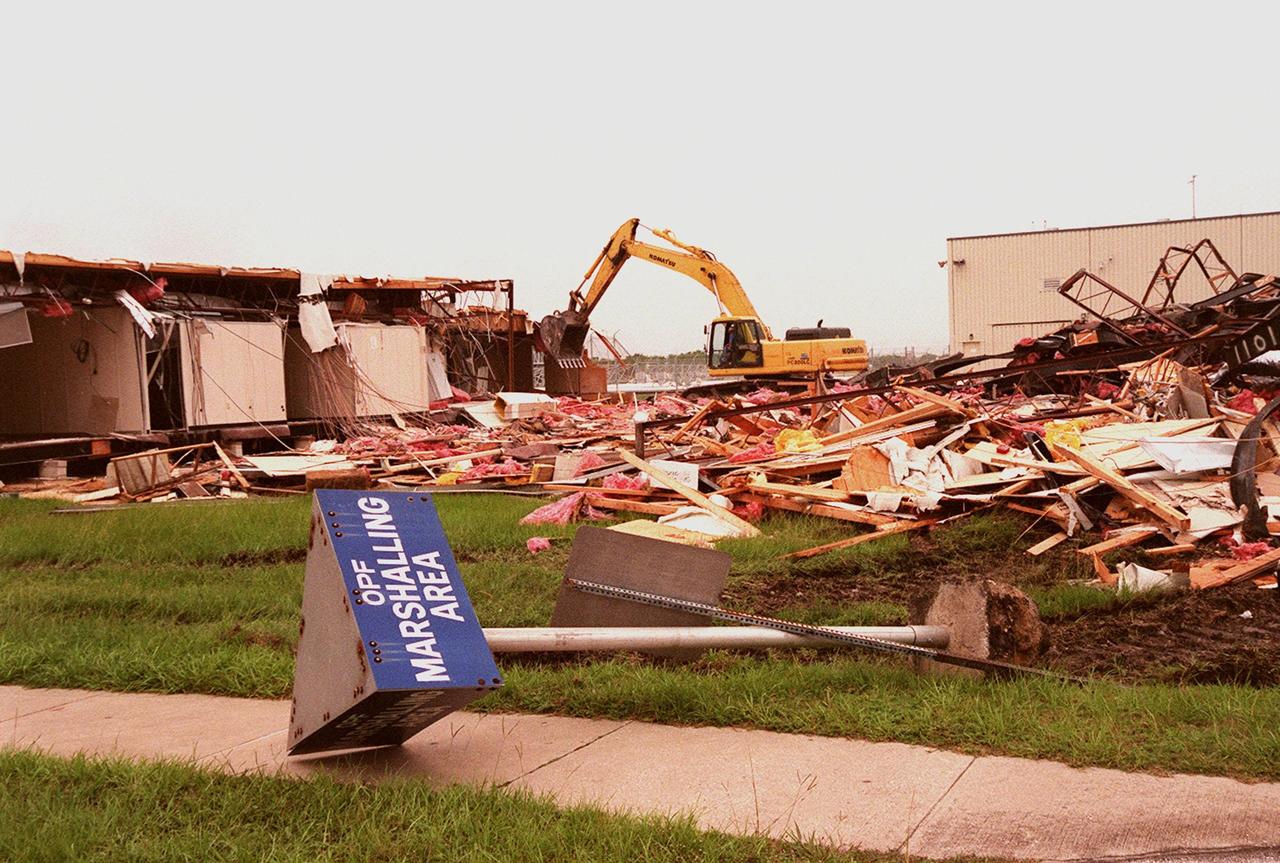
The walls of the Butler Building at Kennedy Space Center come tumbling down, with the help of the crane in the background. The building, which is near the Orbiter Processing Facility, is being demolished in order to extend the crawlerway leading to the high bay of the Vehicle Assembly Building (VAB), part of KSC's Safe Haven project. The goal of Safe Haven is to strengthen readiness for Florida's hurricane season by expanding the VAB's storage capacity. Construction includes outfitting the VAB with a third stacking area, in high bay 2, that will allow NASA to preassemble stacks and still have room in the VAB to pull a Shuttle back from the pad into the safety of the VAB if severe weather threatens. The VAB can withstand winds up to 125 mph
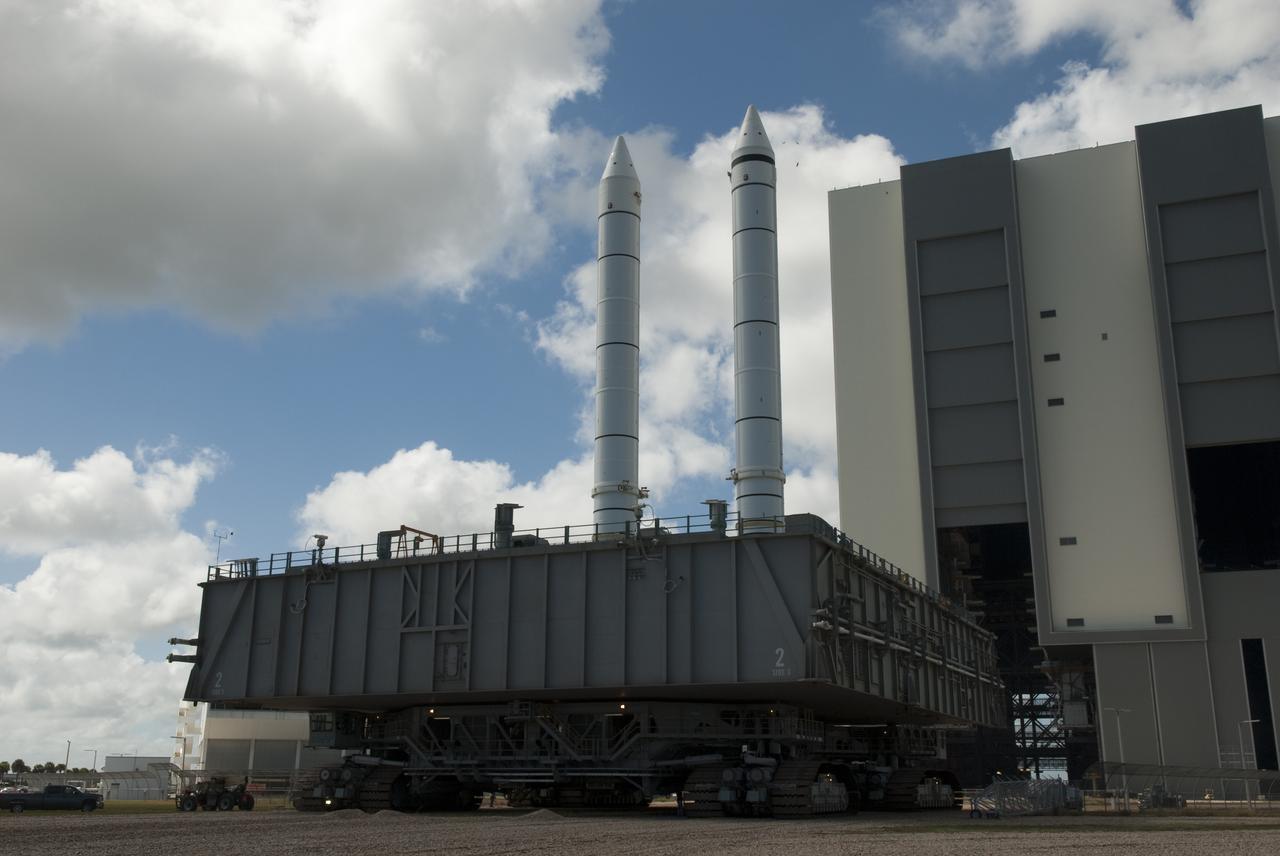
STS-134 MLP2 SRB STACK MOVE FROM HB1 TO HB3 IN VAB
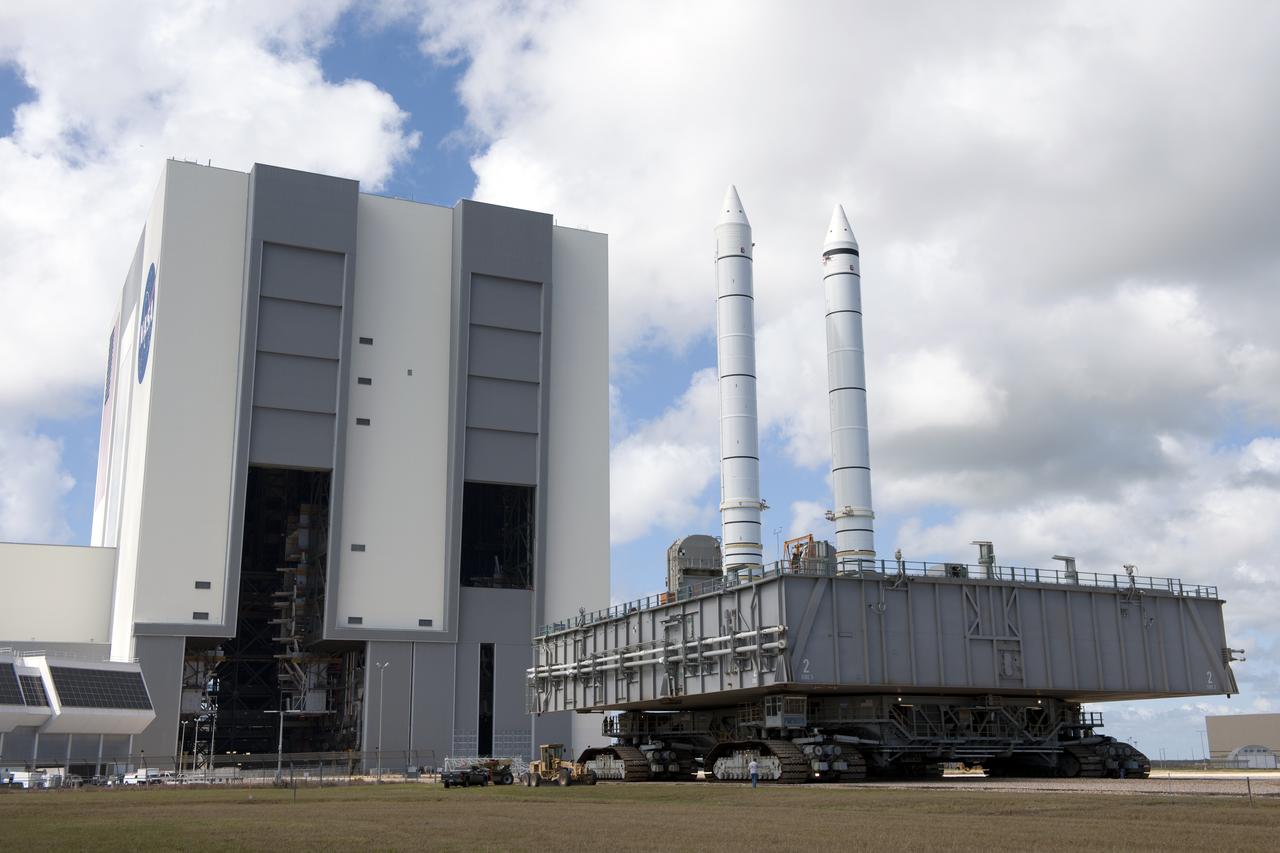
STS-134 MLP2 SRB STACK MOVE FROM HB1 TO HB3 IN VAB
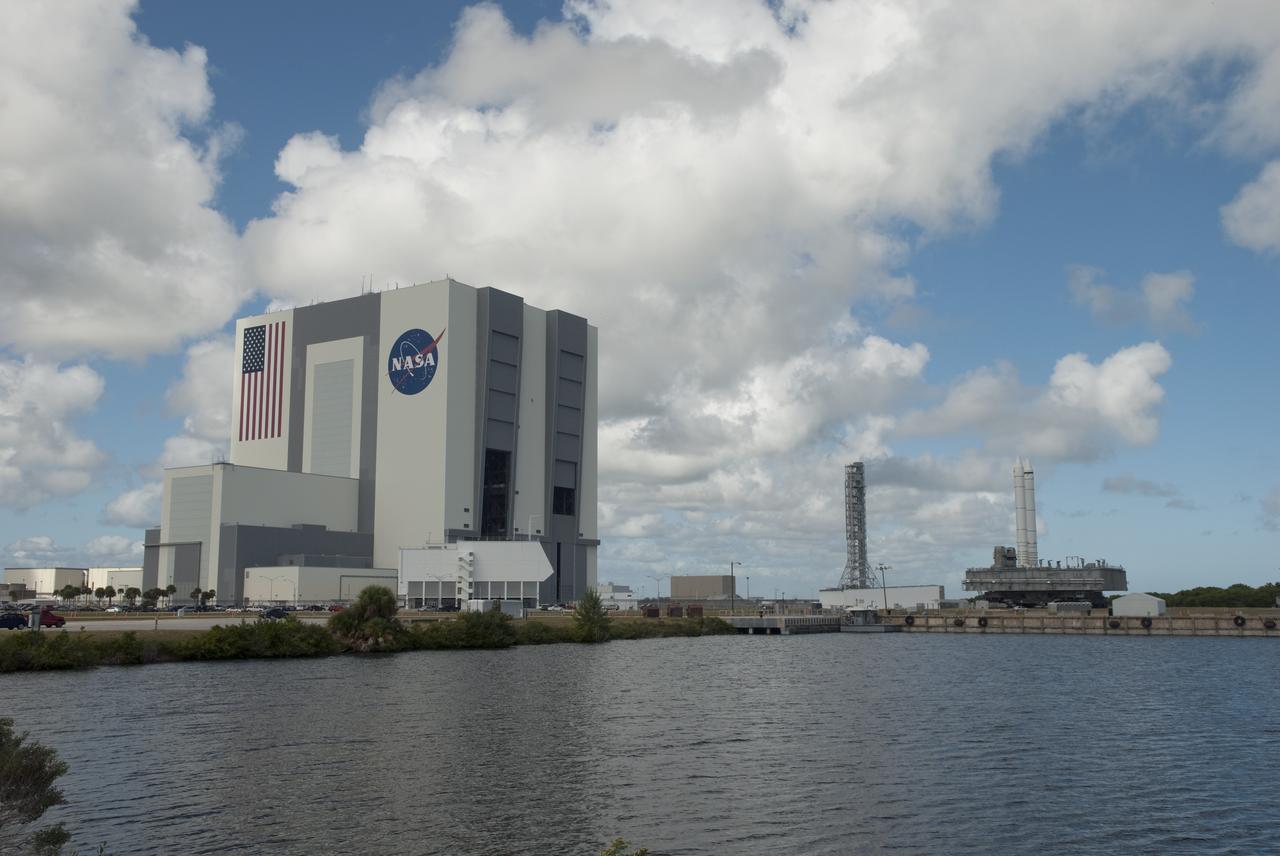
STS-134 MLP2 SRB STACK MOVE FROM HB1 TO HB3 IN VAB
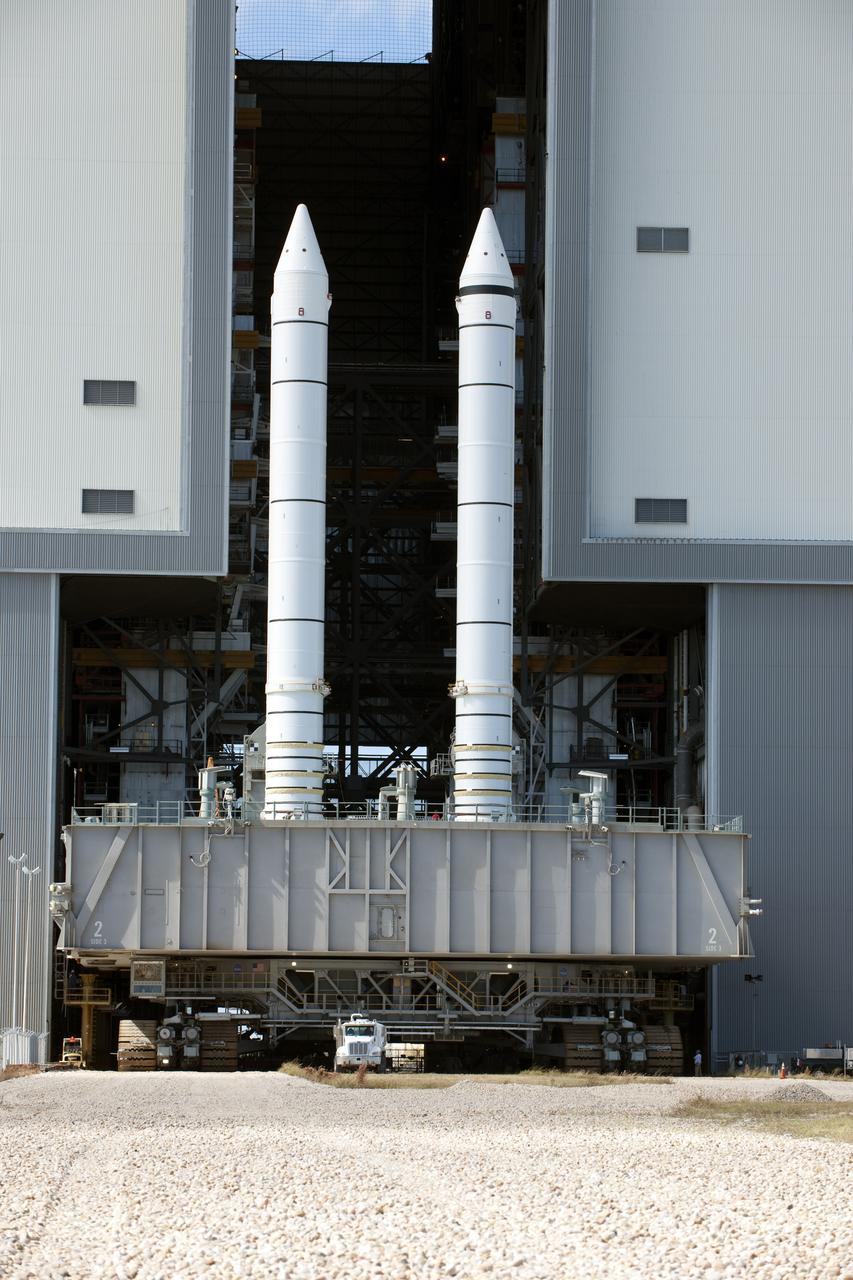
STS-134 MLP2 SRB STACK MOVE FROM HB1 TO HB3 IN VAB
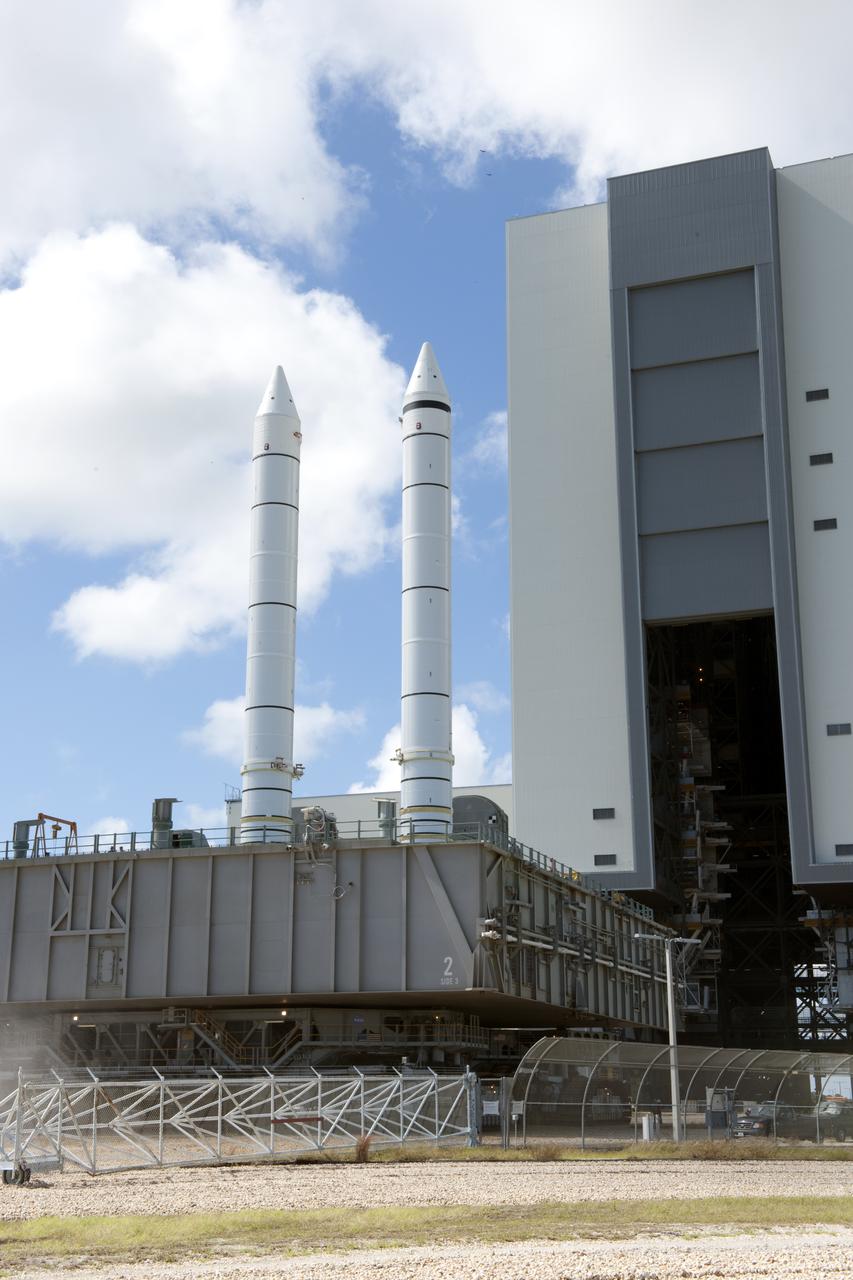
STS-134 MLP2 SRB STACK MOVE FROM HB1 TO HB3 IN VAB
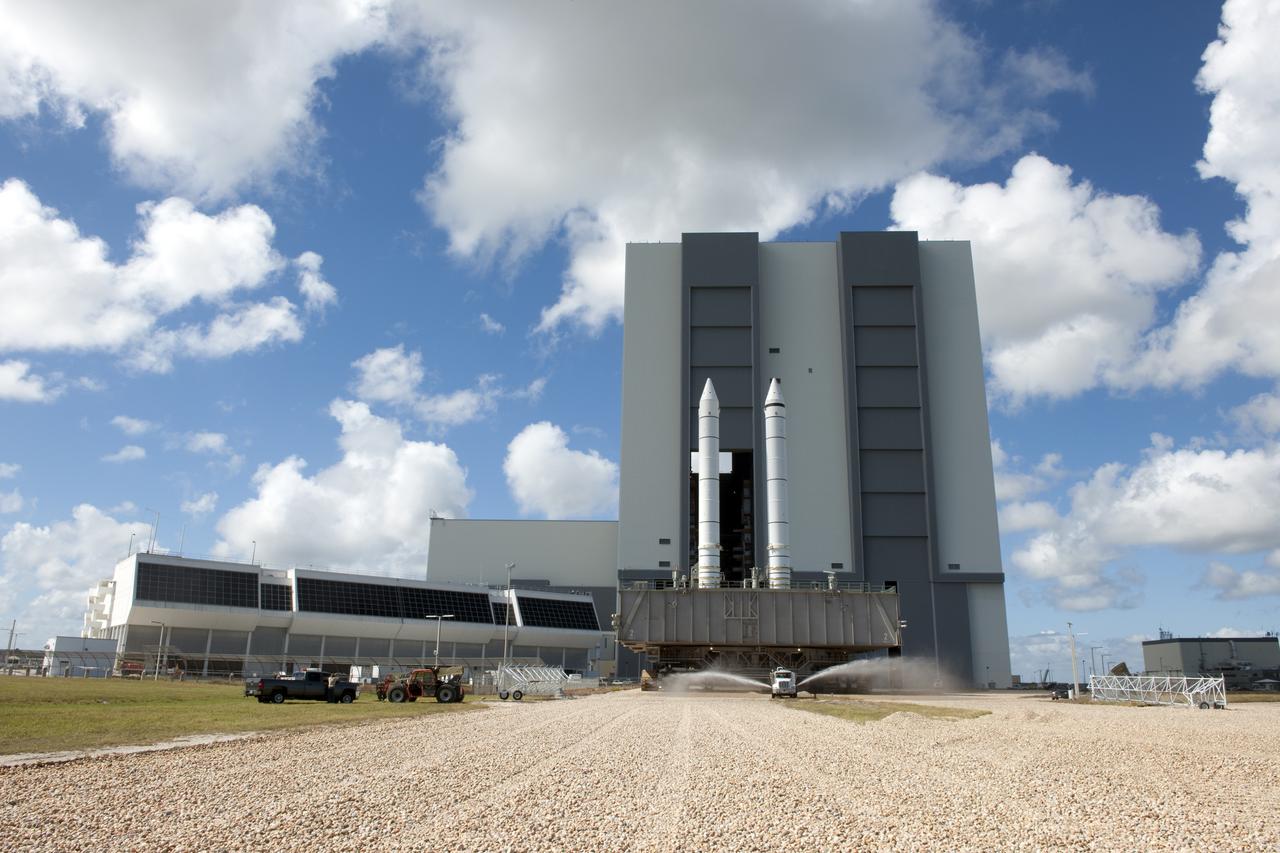
STS-134 MLP2 SRB STACK MOVE FROM HB1 TO HB3 IN VAB
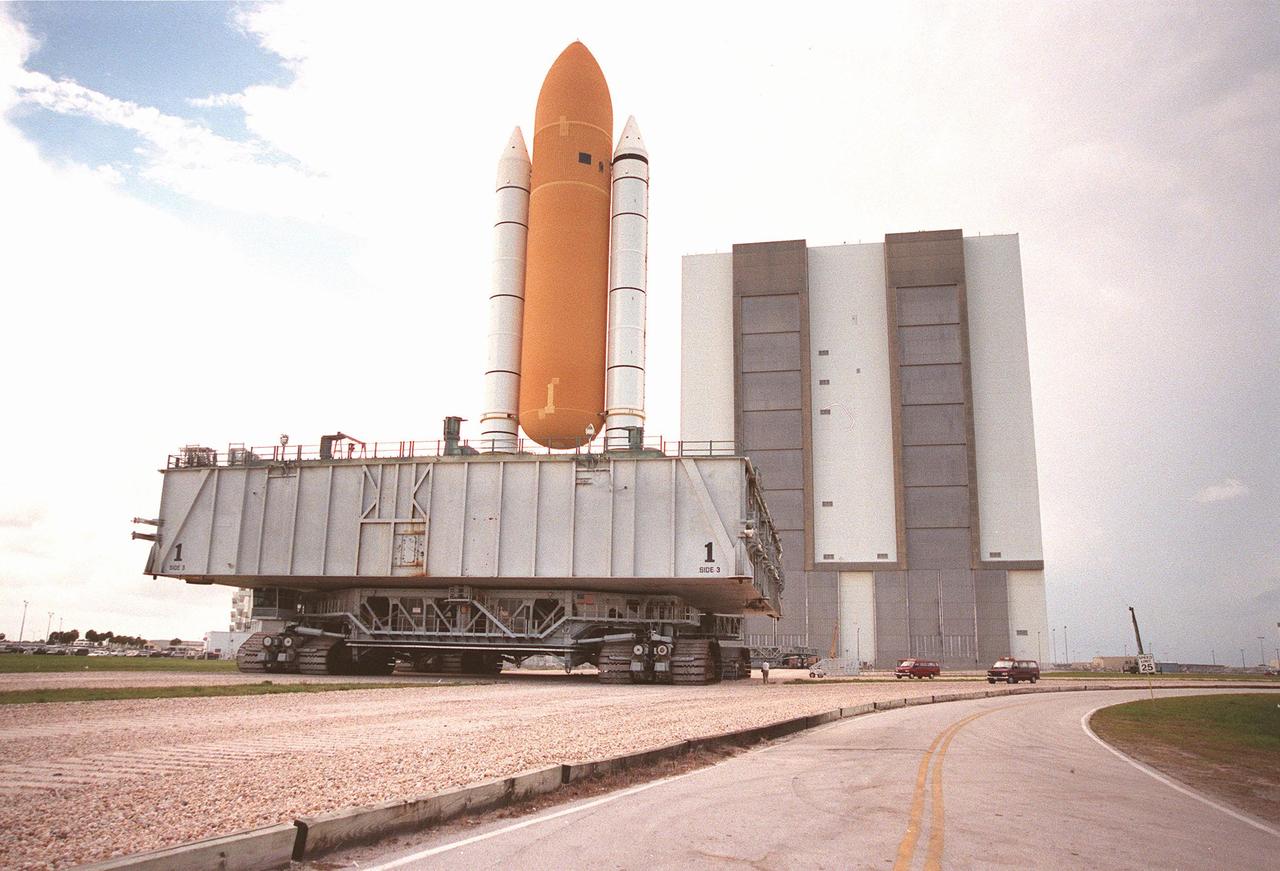
KENNEDY SPACE CENTER, FLA. -- The STS-93 stack of solid rocket boosters and external tank moves toward the Vehicle Assembly Building (VAB) after lightning shield wires were strung from the roof of the VAB for protection. The stack is temporarily being stored outside the VAB while repair work is being done inside on the hail-damaged external tank of Space Shuttle Discovery. Discovery was rolled back from Pad 39B to the VAB for repairs because access to all of the damaged areas was not possible at the pad. The STS-93 stack is expected to be moved back into the VAB after Discovery returns to the pad. The scheduled date for launch of mission STS-96 is no earlier than May 27. STS-93 is targeted for launch on July 22, carrying the Chandra X-ray Observatory
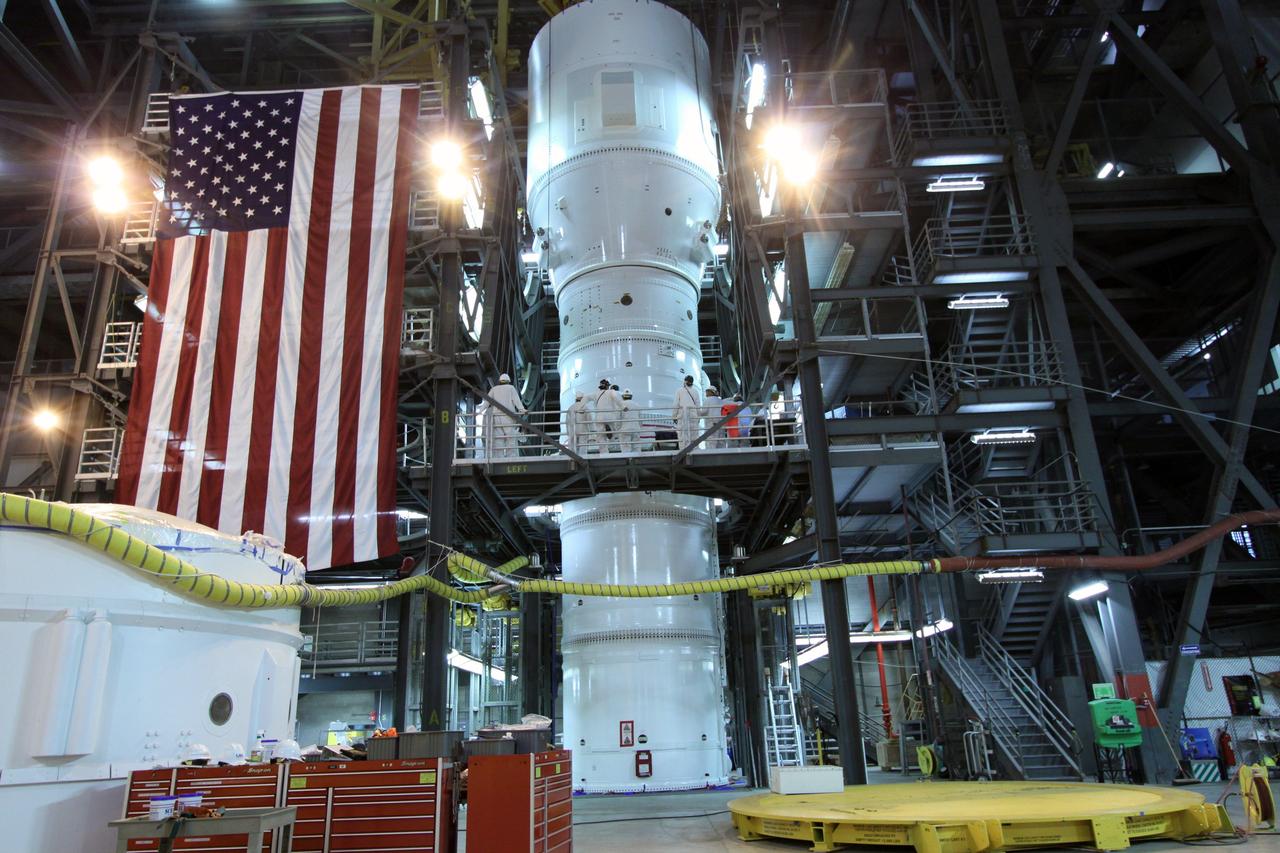
CAPE CANAVERAL, Fla. – In the Vehicle Assembly Building at NASA's Kennedy Space Center in Florida, segments of the Ares I-X first stage are mated to the fifth simulator segment, completing Super Stack 1. The super stack comprises the forward skirt, forward skirt extension, interstages 1 and 2 and the fifth segment simulator. Ares I-X is the test vehicle for the Ares I, which is part of the Constellation Program to return men to the moon and beyond. The Ares I-X flight test is targeted no earlier than Aug. 30 from Launch Pad 39B. Photo credit: NASA/Jack Pfaller
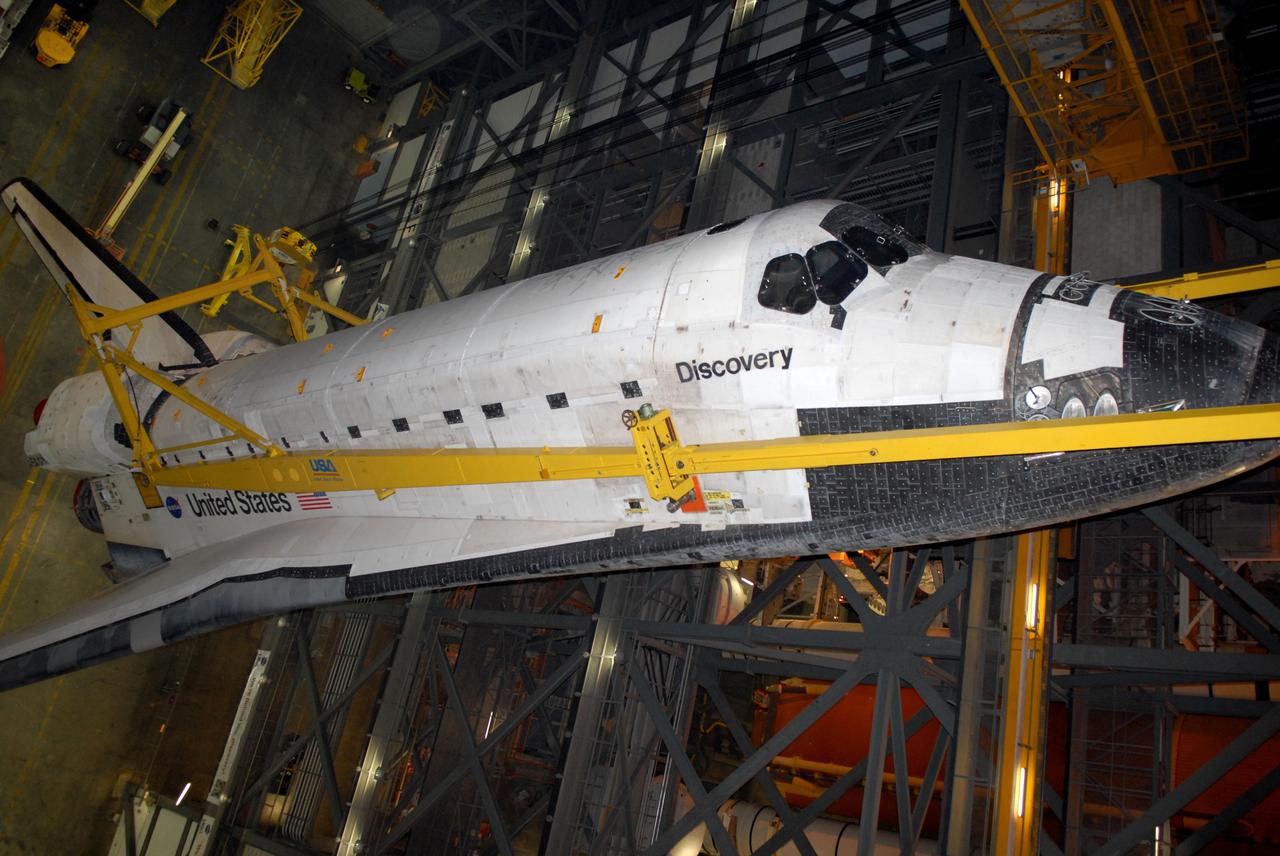
CAPE CANAVERAL, Fla. -- In the Vehicle Assembly Building at NASA's Kennedy Space Center in Florida, space shuttle Discovery is lifted into the upper levels for transfer to high bay 3. The shuttle will then be lowered onto the mobile launcher platform for mating with its external fuel tank and solid rocket boosters. After additional preparations are made, the shuttle will be rolled out to Launch Pad 39A for a targeted launch on Feb. 12. Discovery will carry the final starboard truss (S6) in the assembly of the International Space Station. Photo credit: NASA/Jack Pfaller
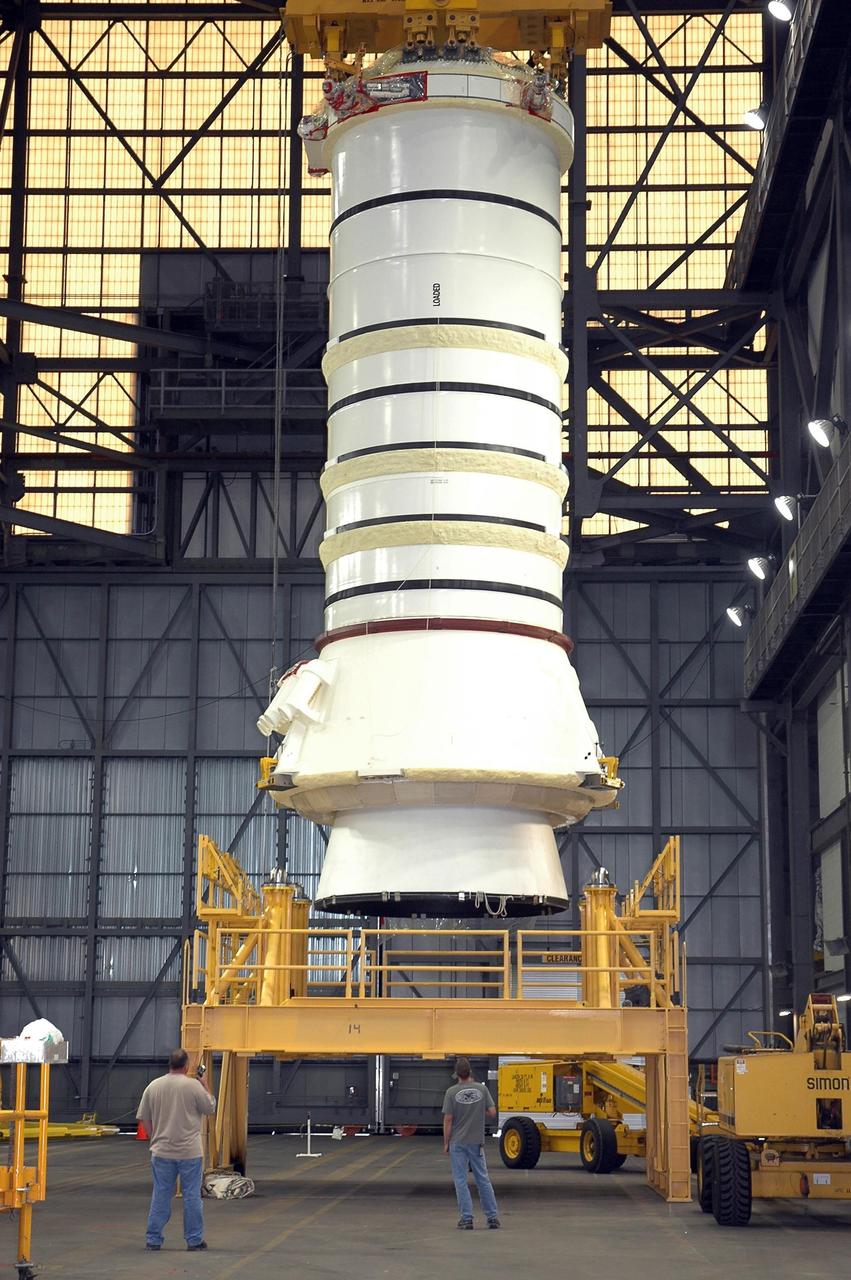
KENNEDY SPACE CENTER, FLA. - In the Vehicle Assembly Building at NASA's Kennedy Space Center, a crane lifts a solid rocket booster segment off its transporter. The segment is being lifted up into high bay 3 and will be placed on mobile launcher platform No. 2 for use on mission STS-115. The mission will deliver a truss and other key components to the International Space Station. Launch is currently scheduled for late August. Photo credit: NASA/Charisse Nahser
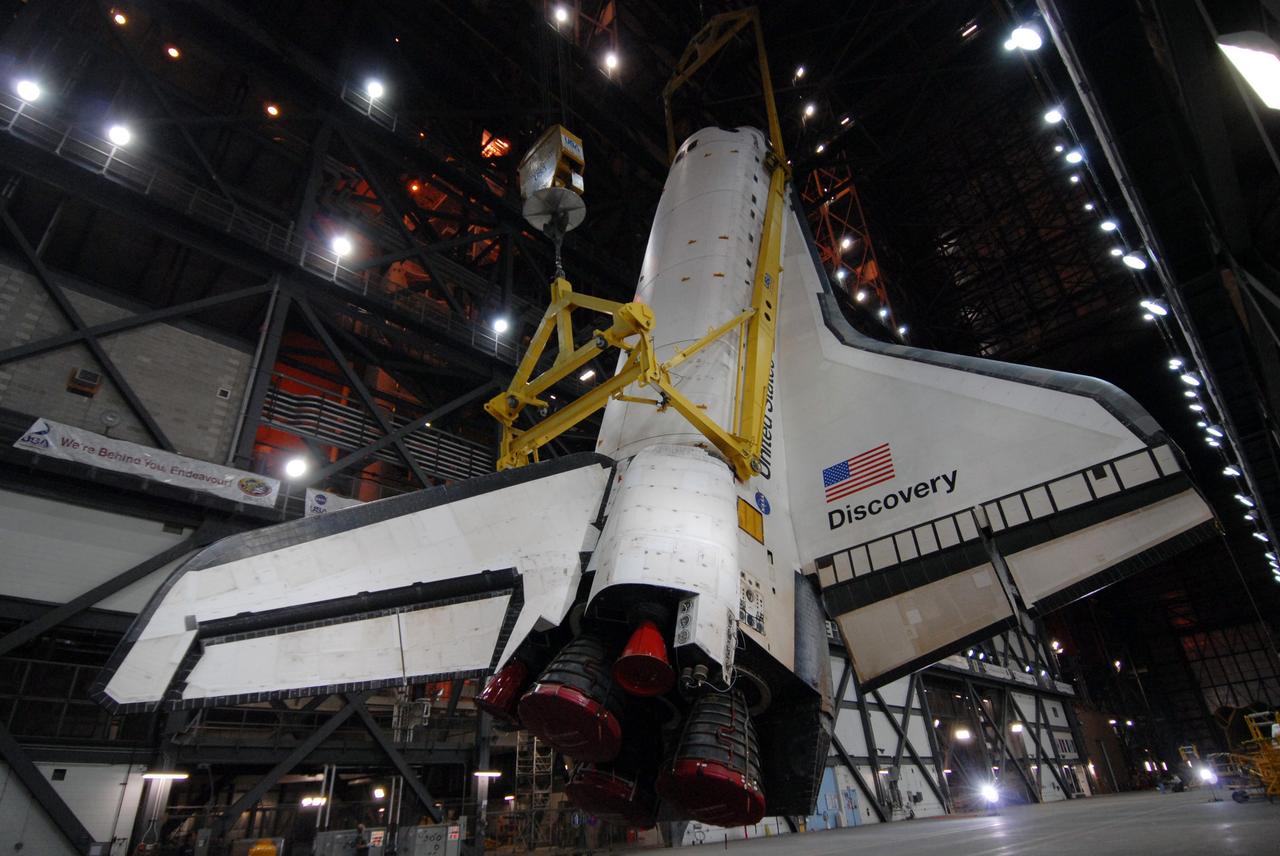
CAPE CANAVERAL, Fla. -- In the Vehicle Assembly Building at NASA's Kennedy Space Center in Florida, space shuttle Discovery is raised to a vertical position above the transfer aisle. The shuttle will be lifted into high bay 3 where it will be mated with its external fuel tank and solid rocket boosters on the mobile launcher platform. After additional preparations are made, the shuttle will be rolled out to Launch Pad 39A for a targeted launch on Feb. 12. Discovery will carry the final starboard truss (S6) in the assembly of the International Space Station. Photo credit: NASA/Jack Pfaller
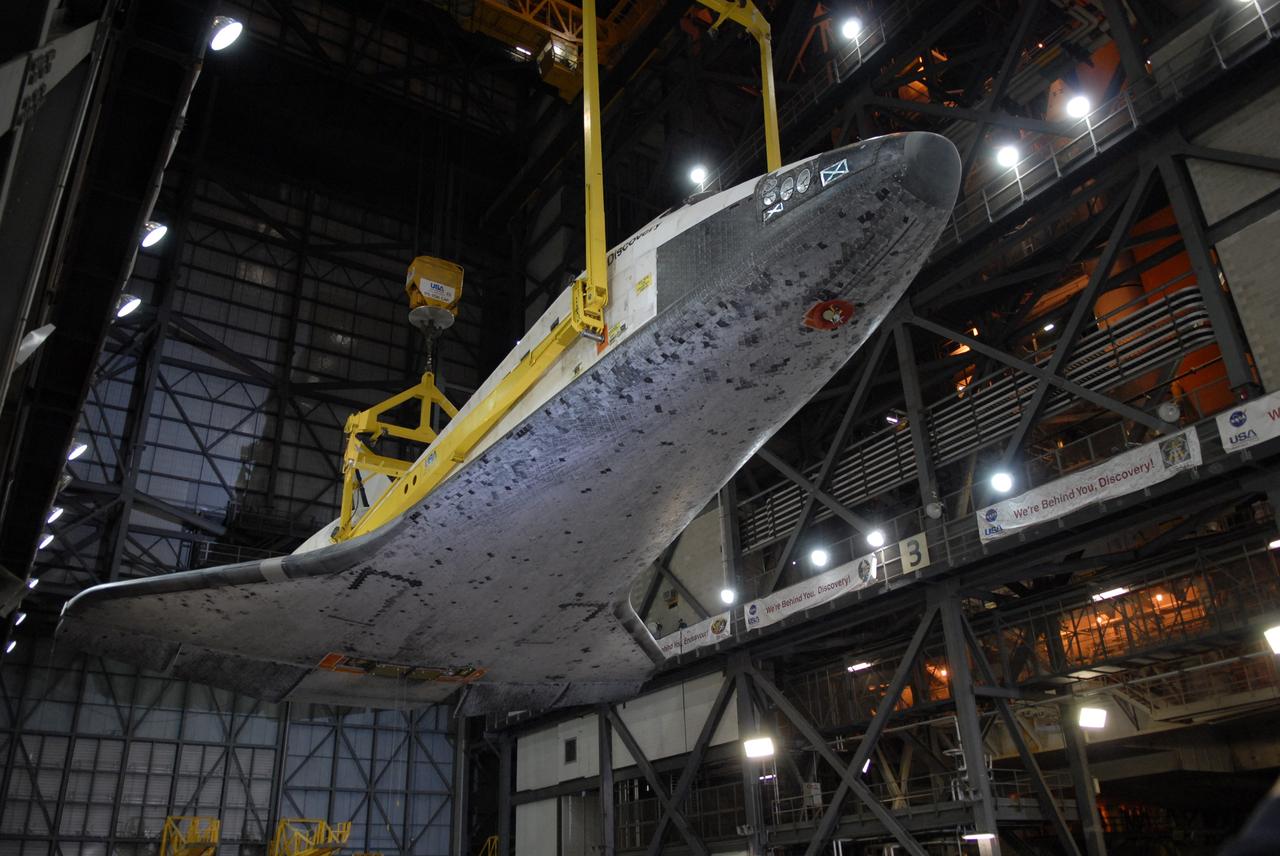
CAPE CANAVERAL, Fla. -- In the Vehicle Assembly Building at NASA's Kennedy Space Center in Florida, space shuttle Discovery is lifted above the transfer aisle. The shuttle will be raised to a vertical position and lifted into high bay 3 where it will be mated with its external fuel tank and solid rocket boosters on the mobile launcher platform. After additional preparations are made, the shuttle will be rolled out to Launch Pad 39A for a targeted launch on Feb. 12. Discovery will carry the final starboard truss (S6) in the assembly of the International Space Station. Photo credit: NASA/Jack Pfaller
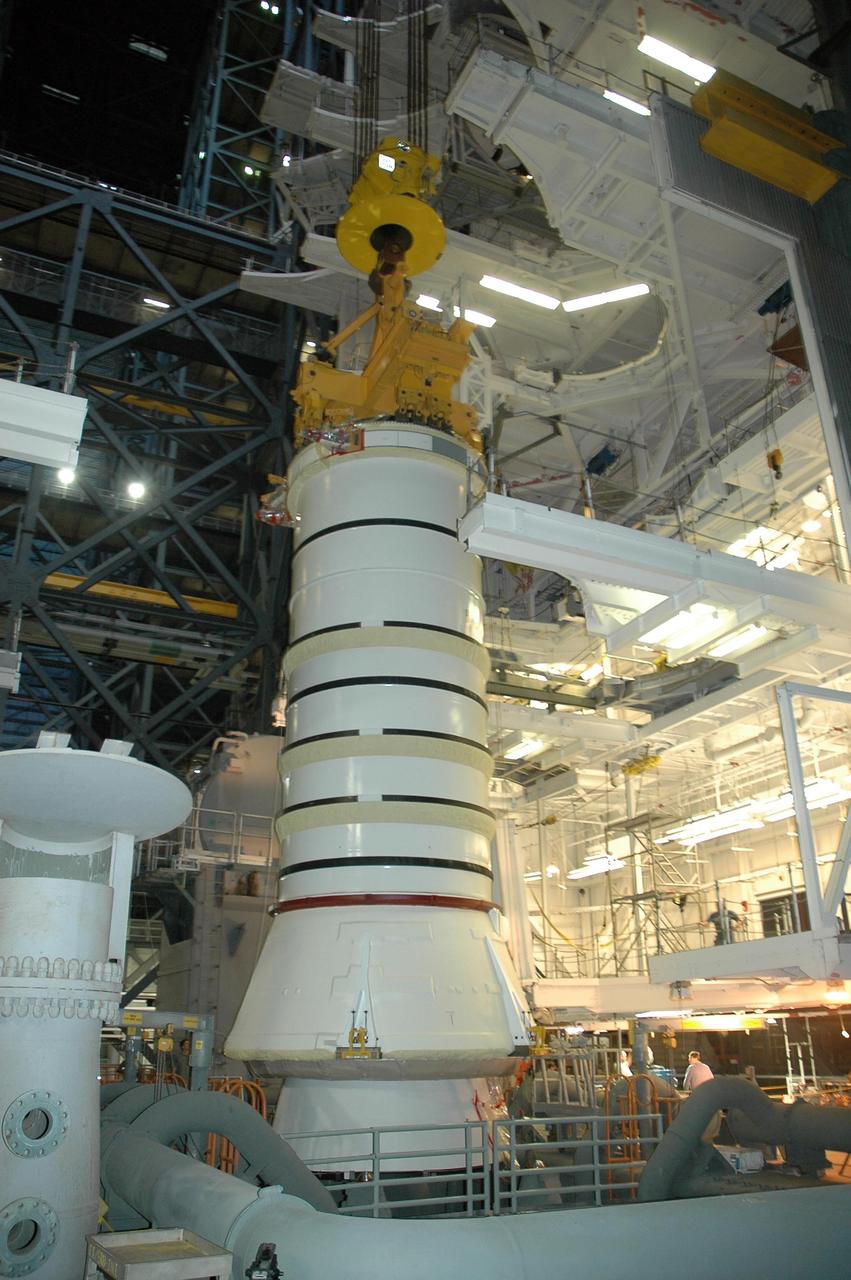
KENNEDY SPACE CENTER, FLA. - In high bay 3 of the Vehicle Assembly Building at NASA's Kennedy Space Center, a solid rocket booster segment is placed on mobile launcher platform No. 2 for use on mission STS-115. The mission will deliver a truss and other key components to the International Space Station. Launch is currently scheduled for late August. Photo credit: NASA/Charisse Nahser
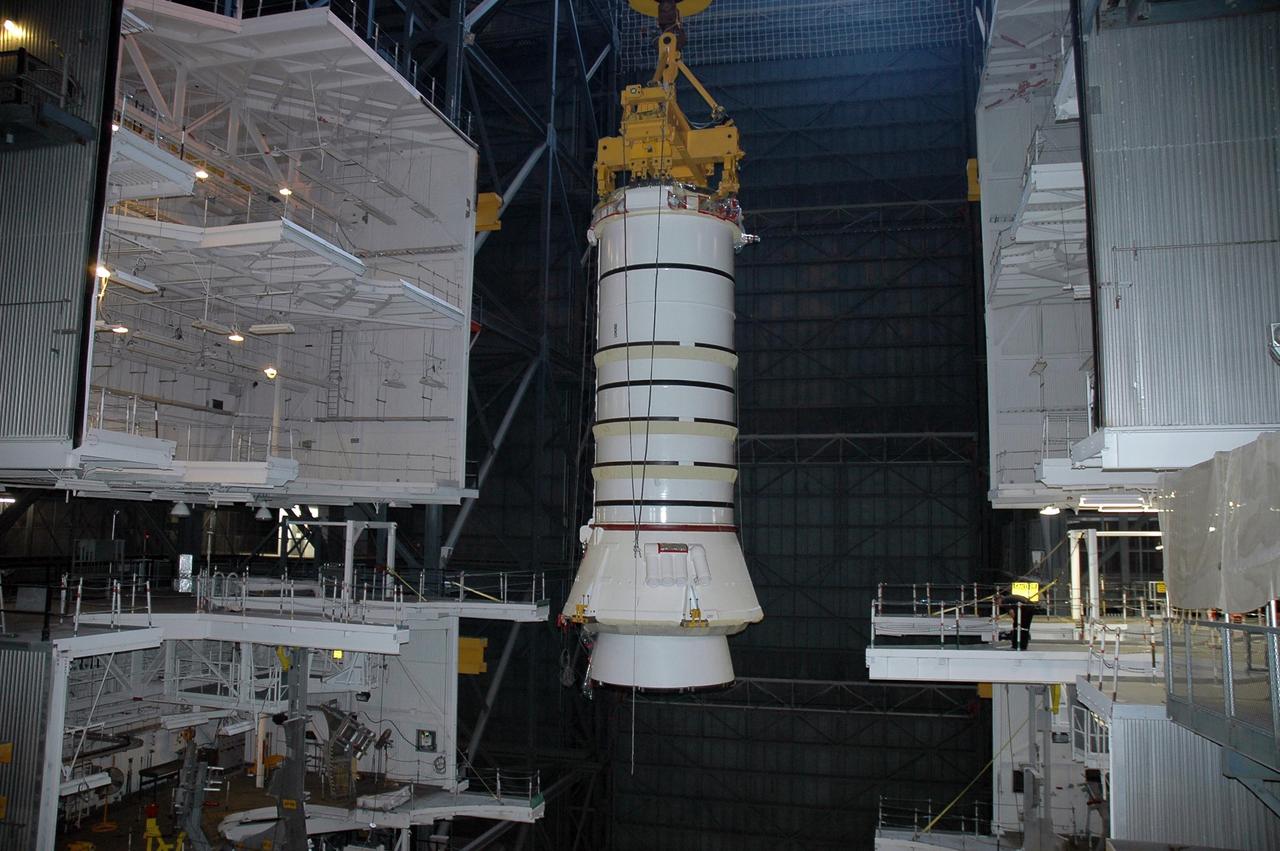
KENNEDY SPACE CENTER, FLA. - In the Vehicle Assembly Building at NASA's Kennedy Space Center, a crane lifts a solid rocket booster segment toward high bay 3 where it will be placed on mobile launcher platform No. 2 for use on mission STS-115. The mission will deliver a truss and other key components to the International Space Station. Launch is currently scheduled for late August. Photo credit: NASA/Charisse Nahser
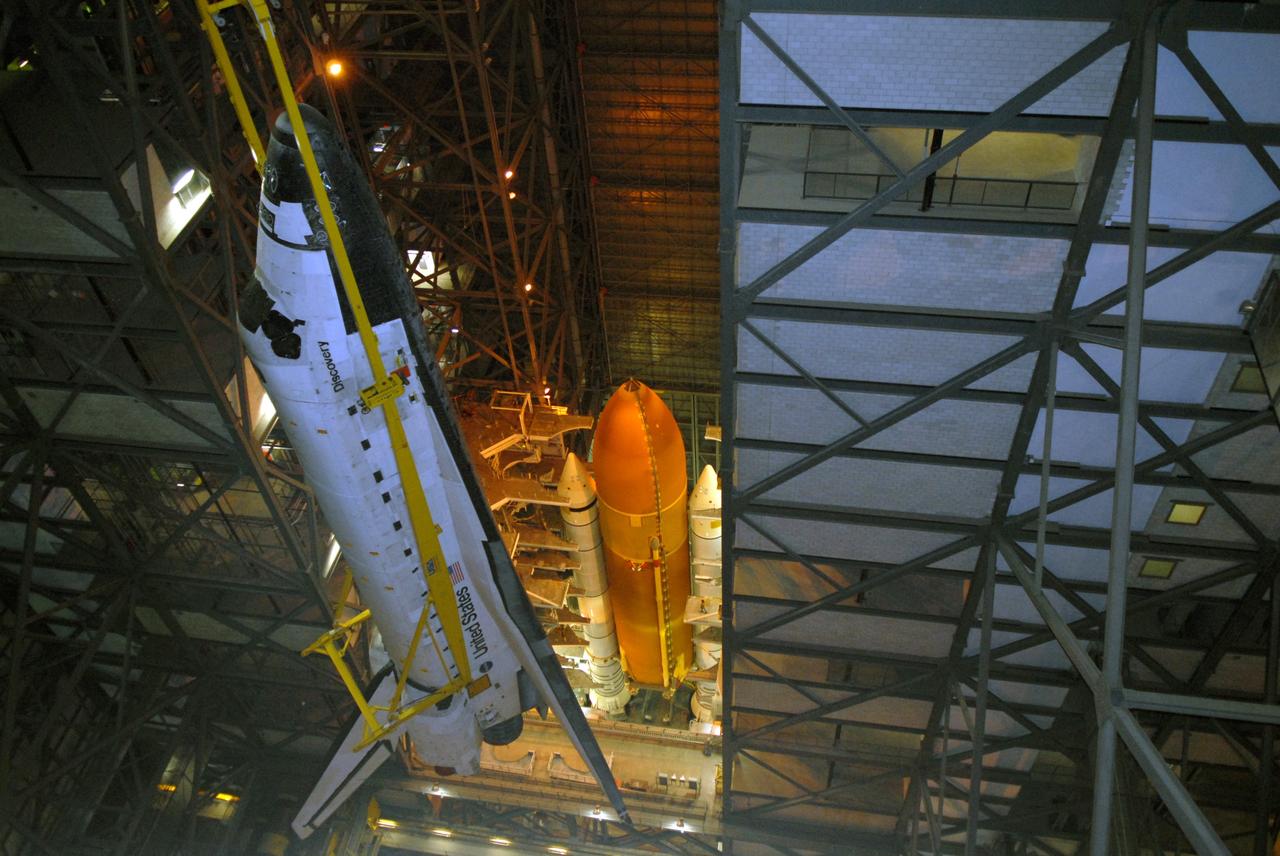
CAPE CANAVERAL, Fla. -- In the upper levels of the Vehicle Assembly Building at NASA's Kennedy Space Center in Florida, space shuttle Discovery is moved toward high bay 3 where the external fuel tank and solid rocket boosters are already stacked on the mobile launcher platform. Discovery will be lowered onto the platform and mated with the stack. After additional preparations are made, the shuttle will be rolled out to Launch Pad 39A for a targeted launch on Feb. 12. Discovery will carry the final starboard truss (S6) in the assembly of the International Space Station. Photo credit: NASA/Jack Pfaller
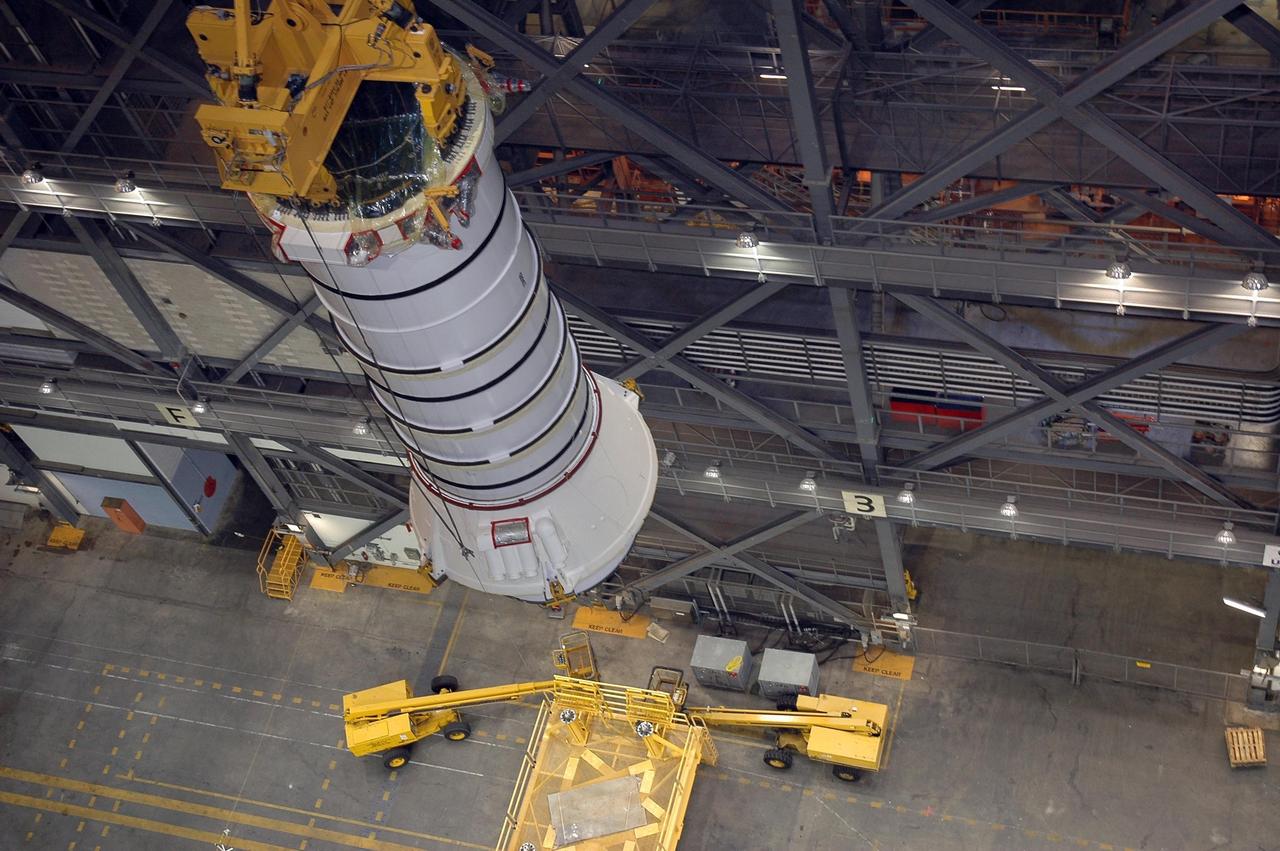
KENNEDY SPACE CENTER, FLA. - In the Vehicle Assembly Building at NASA's Kennedy Space Center, a solid rocket booster segment is lifted off its transporter below. The segment is being lifted up into high bay 3 and will be placed on mobile launcher platform No. 2 for use on mission STS-115. The mission will deliver a truss and other key components to the International Space Station. Launch is currently scheduled for late August. Photo credit: NASA/Charisse Nahser
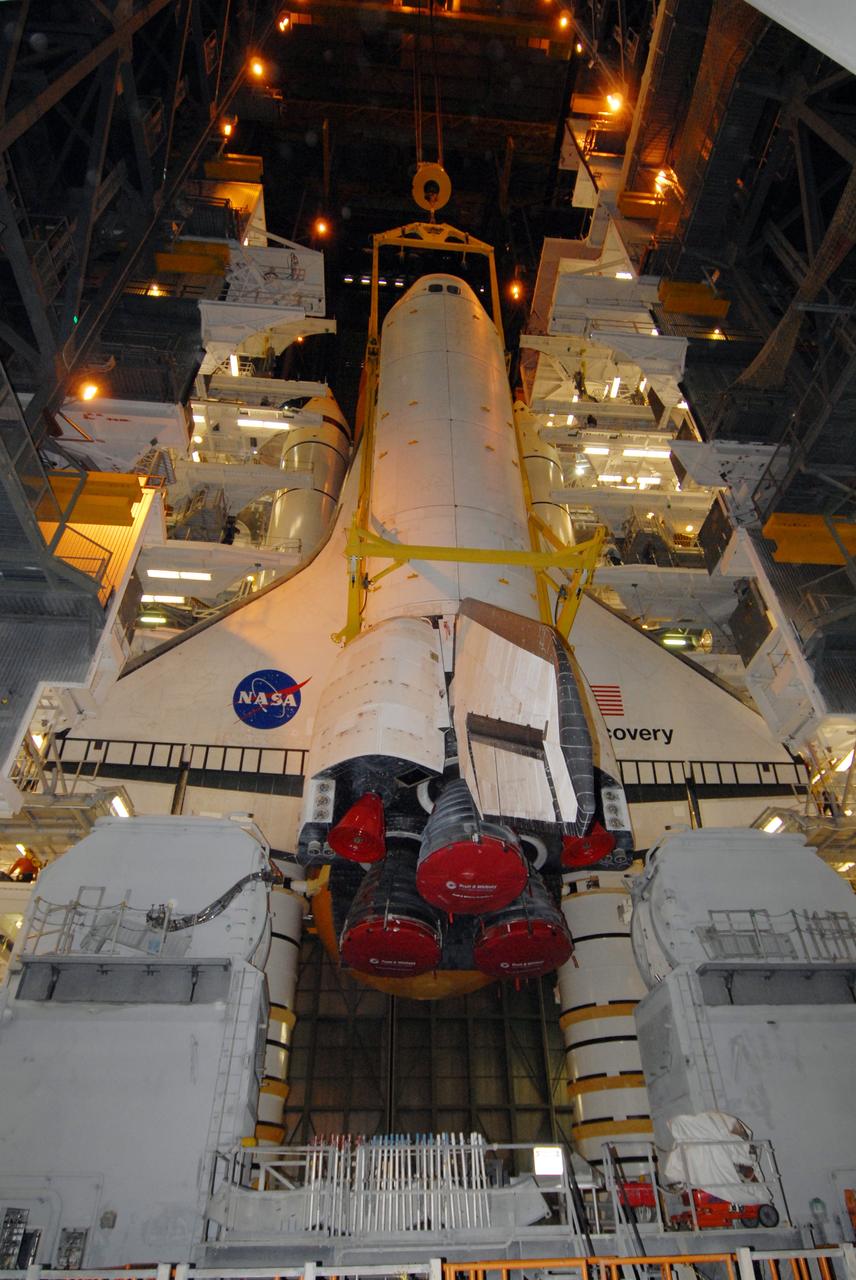
CAPE CANAVERAL, Fla. -- In the Vehicle Assembly Building at NASA's Kennedy Space Center in Florida, space shuttle Discovery is lowered alongside the external fuel tank and solid rocket boosters already stacked on the mobile launcher platform. Discovery will be mated with the stack. After additional preparations are made, the shuttle will be rolled out to Launch Pad 39A for a targeted launch on Feb. 12. Discovery will carry the final starboard truss (S6) in the assembly of the International Space Station. Photo credit: NASA/Jack Pfaller
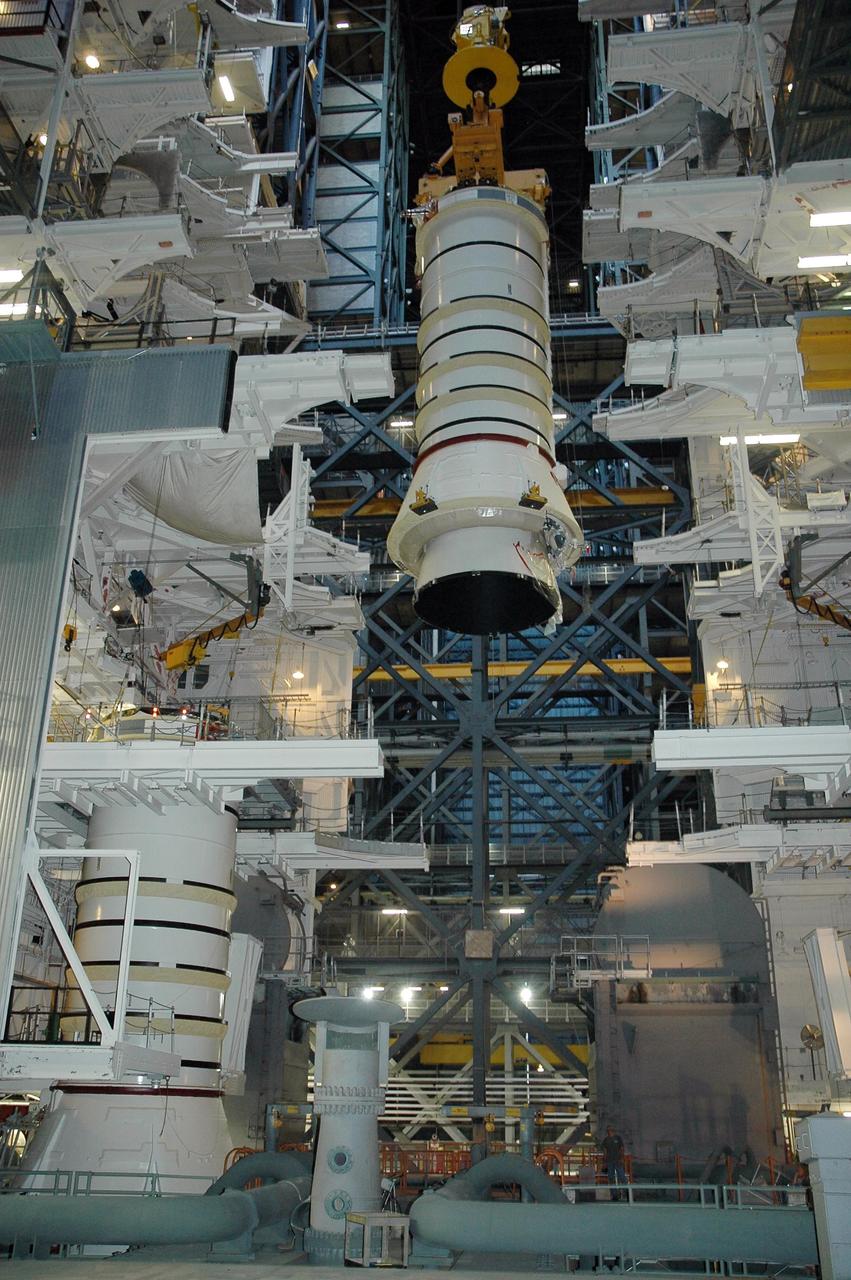
KENNEDY SPACE CENTER, FLA. - In high bay 3 of the Vehicle Assembly Building at NASA's Kennedy Space Center, a solid rocket booster segment is lowered toward mobile launcher platform No. 2 for use on mission STS-115. The mission will deliver a truss and other key components to the International Space Station. Launch is currently scheduled for late August. Photo credit: NASA/Charisse Nahser
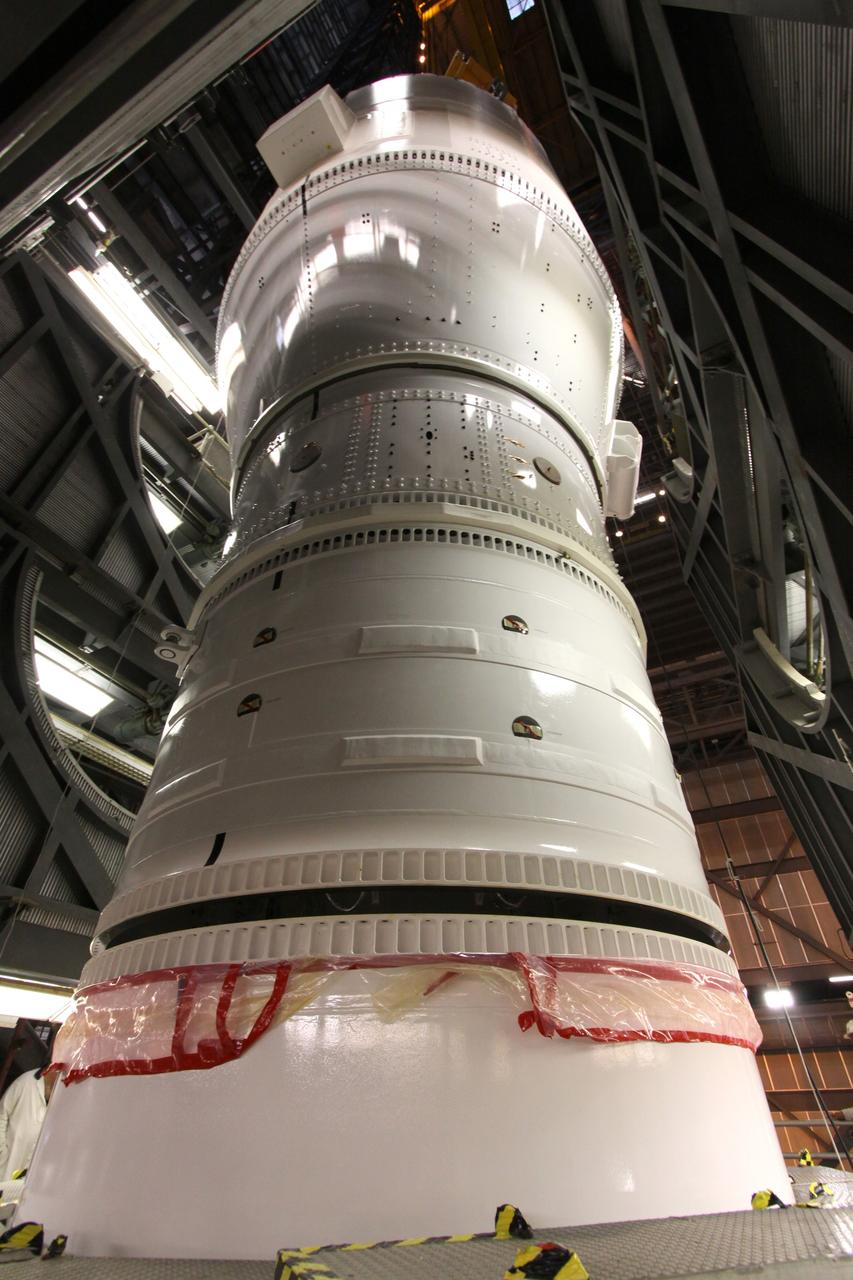
CAPE CANAVERAL, Fla. – In the Vehicle Assembly Building at NASA's Kennedy Space Center in Florida, segments of the Ares I-X first stage are lowered onto the fifth simulator segment for mating, to complete Super Stack 1. The super stack comprises the forward skirt, forward skirt extension, interstages 1 and 2 and the fifth segment simulator. Ares I-X is the test vehicle for the Ares I, which is part of the Constellation Program to return men to the moon and beyond. The Ares I-X flight test is targeted no earlier than Aug. 30 from Launch Pad 39B. Photo credit: NASA/Jack Pfaller
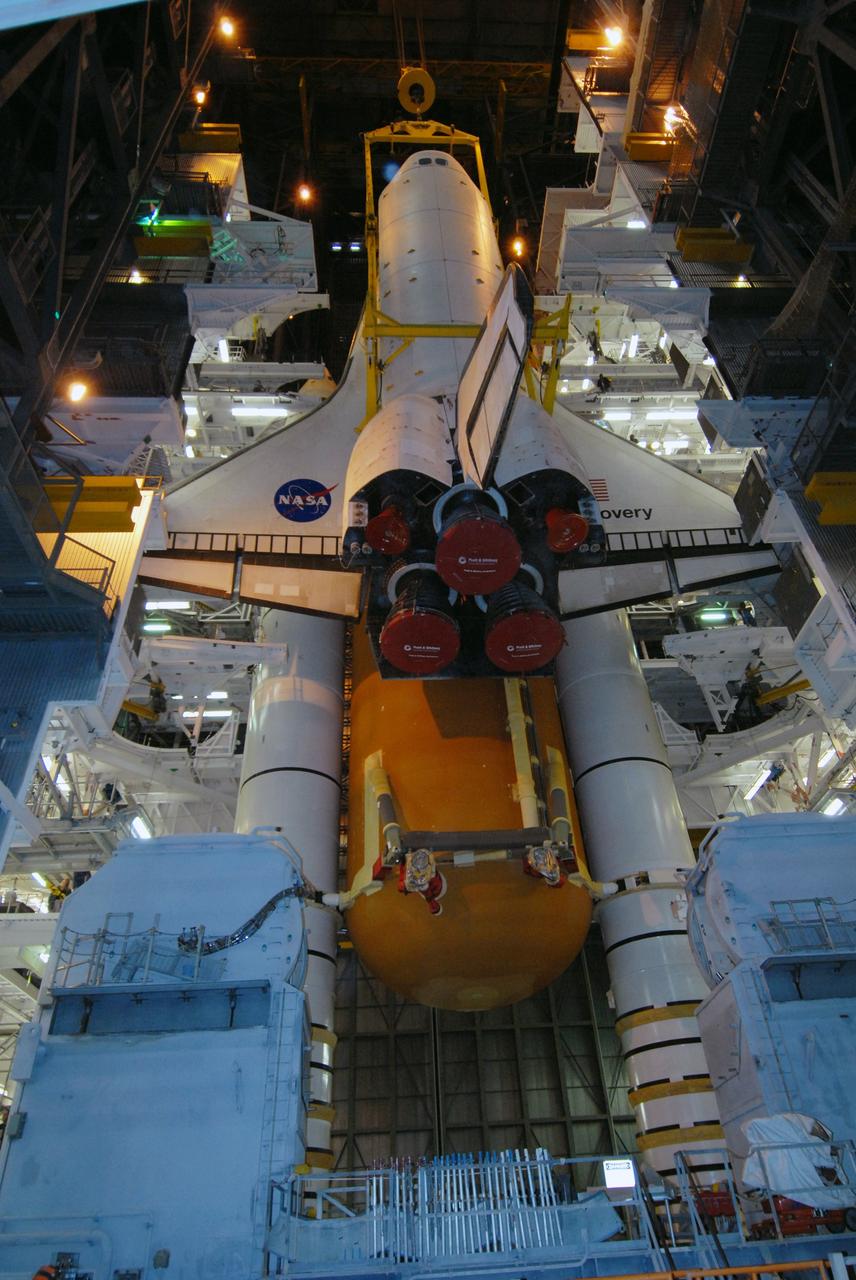
CAPE CANAVERAL, Fla. -- In the Vehicle Assembly Building at NASA's Kennedy Space Center in Florida, space shuttle Discovery is lowered into high bay 3 alongside the external fuel tank and solid rocket boosters are already stacked on the mobile launcher platform. Discovery will be mated with the stack. After additional preparations are made, the shuttle will be rolled out to Launch Pad 39A for a targeted launch on Feb. 12. Discovery will carry the final starboard truss (S6) in the assembly of the International Space Station. Photo credit: NASA/Jack Pfaller
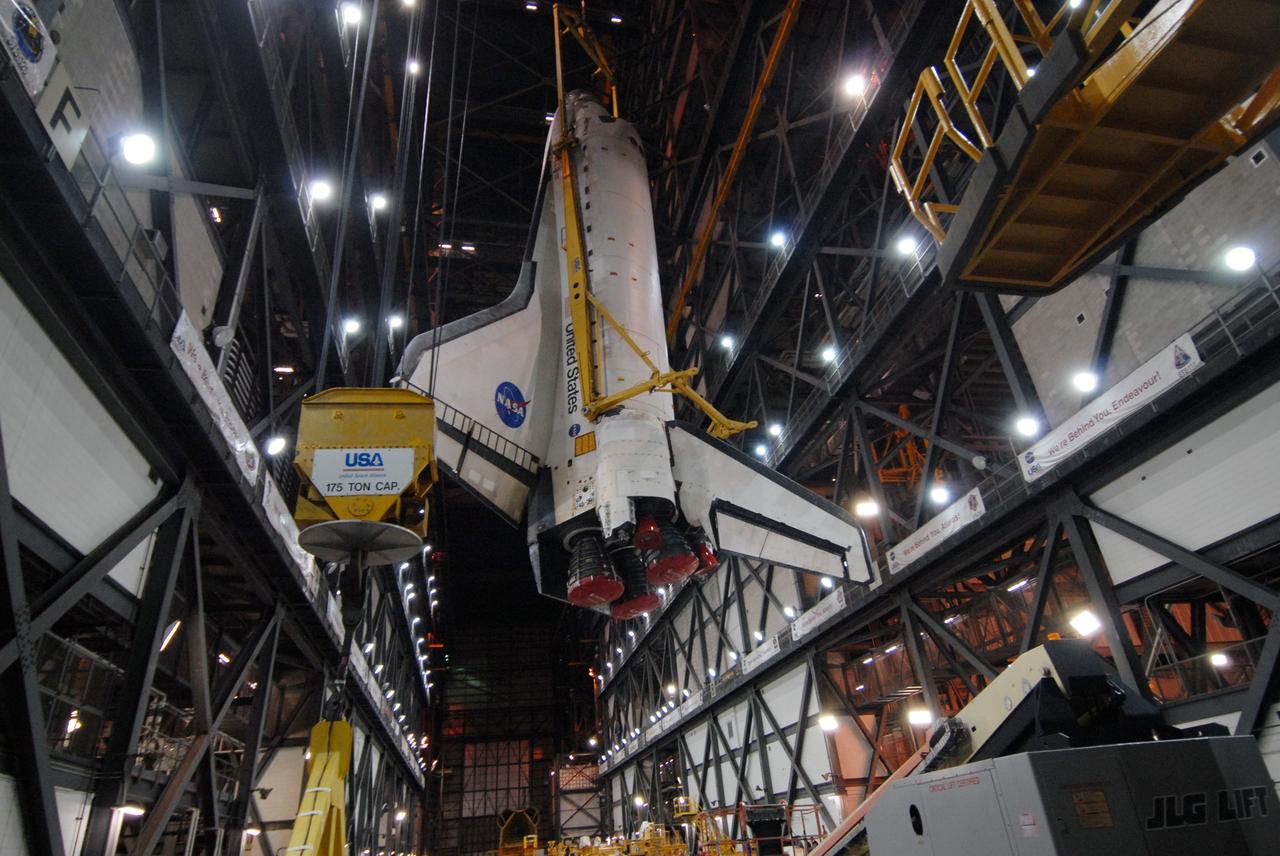
CAPE CANAVERAL, Fla. -- In the Vehicle Assembly Building at NASA's Kennedy Space Center in Florida, space shuttle Discovery is lifted into the upper levels for transfer to high bay 3. The shuttle will then be lowered onto the mobile launcher platform for mating with its external fuel tank and solid rocket boosters. After additional preparations are made, the shuttle will be rolled out to Launch Pad 39A for a targeted launch on Feb. 12. Discovery will carry the final starboard truss (S6) in the assembly of the International Space Station. Photo credit: NASA/Jack Pfaller
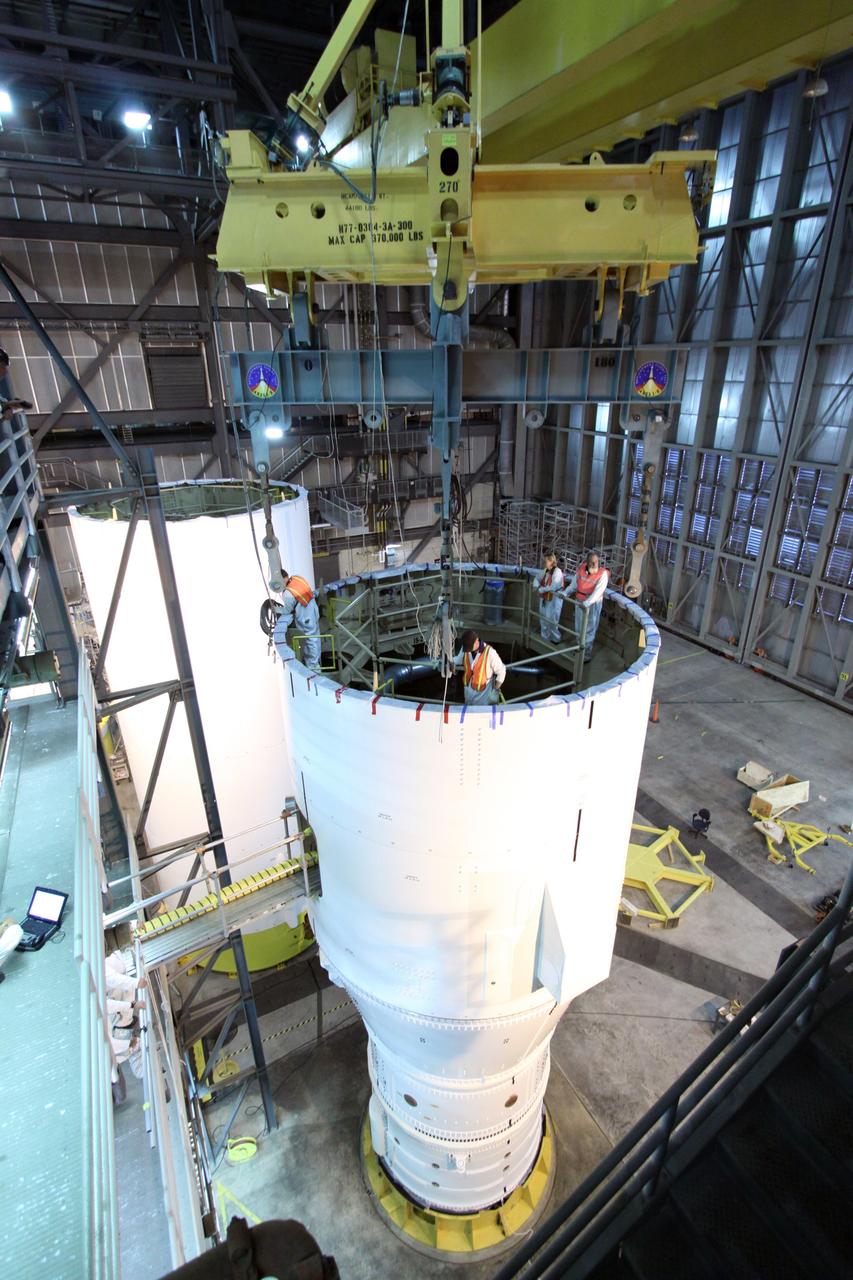
CAPE CANAVERAL, Fla. – In the Vehicle Assembly Building at NASA's Kennedy Space Center in Florida, the segments of the Ares I-X first stage are fitted with a crane to lift it to the fifth segment simulator for mating, completing Super Stack 1. The super stack comprises the forward skirt, forward skirt extension, interstages 1 and 2 and the fifth segment simulator. Ares I-X is the test vehicle for the Ares I, which is part of the Constellation Program to return men to the moon and beyond. The Ares I-X flight test is targeted no earlier than Aug. 30 from Launch Pad 39B. Photo credit: NASA/Jack Pfaller
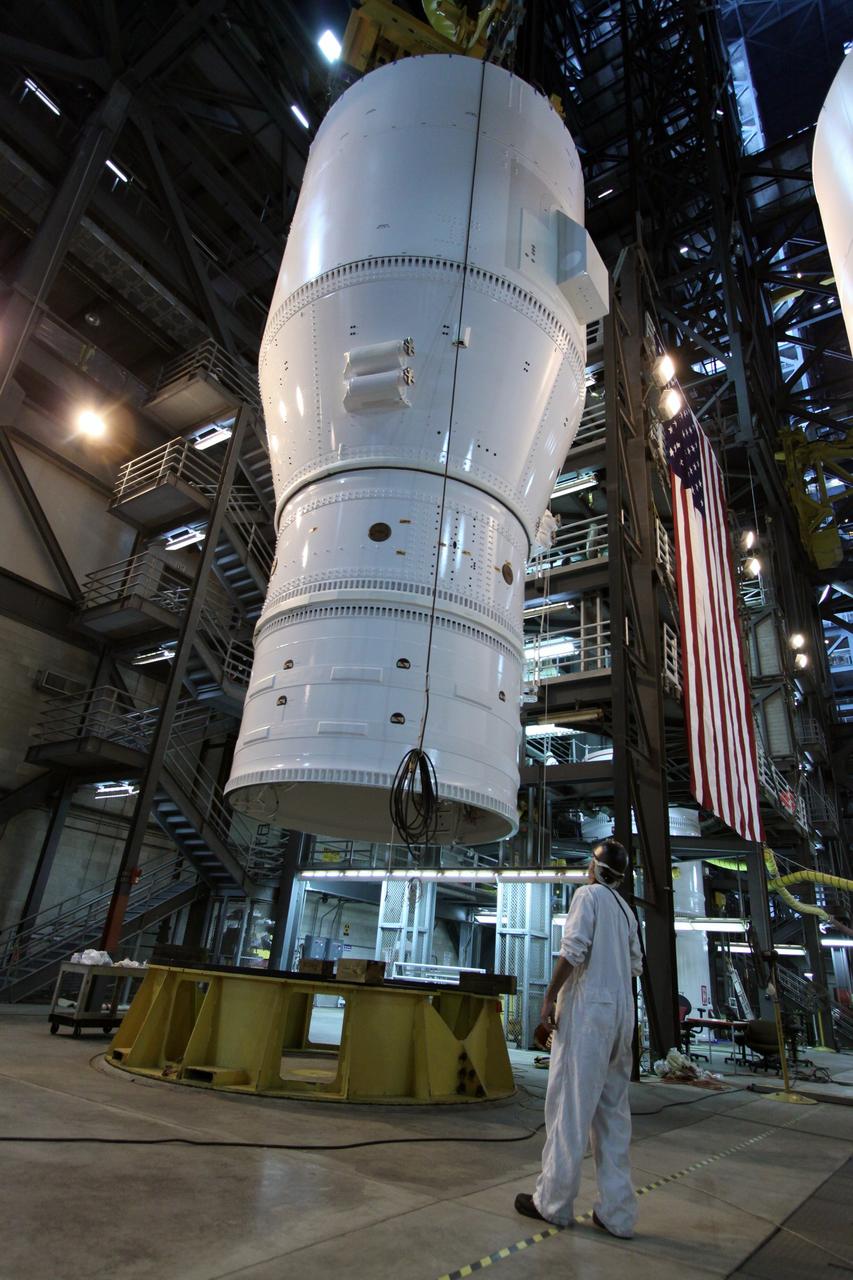
CAPE CANAVERAL, Fla. – In the Vehicle Assembly Building at NASA's Kennedy Space Center in Florida, segments of the Ares I-X first stage are lifted from the stand. The segments are being moved for stacking and mating to the fifth segment simulator, completing Super Stack 1. The super stack comprises the forward skirt, forward skirt extension, interstages 1 and 2 and the fifth segment simulator. Ares I-X is the test vehicle for the Ares I, which is part of the Constellation Program to return men to the moon and beyond. The Ares I-X flight test is targeted no earlier than Aug. 30 from Launch Pad 39B. Photo credit: NASA/Jack Pfaller
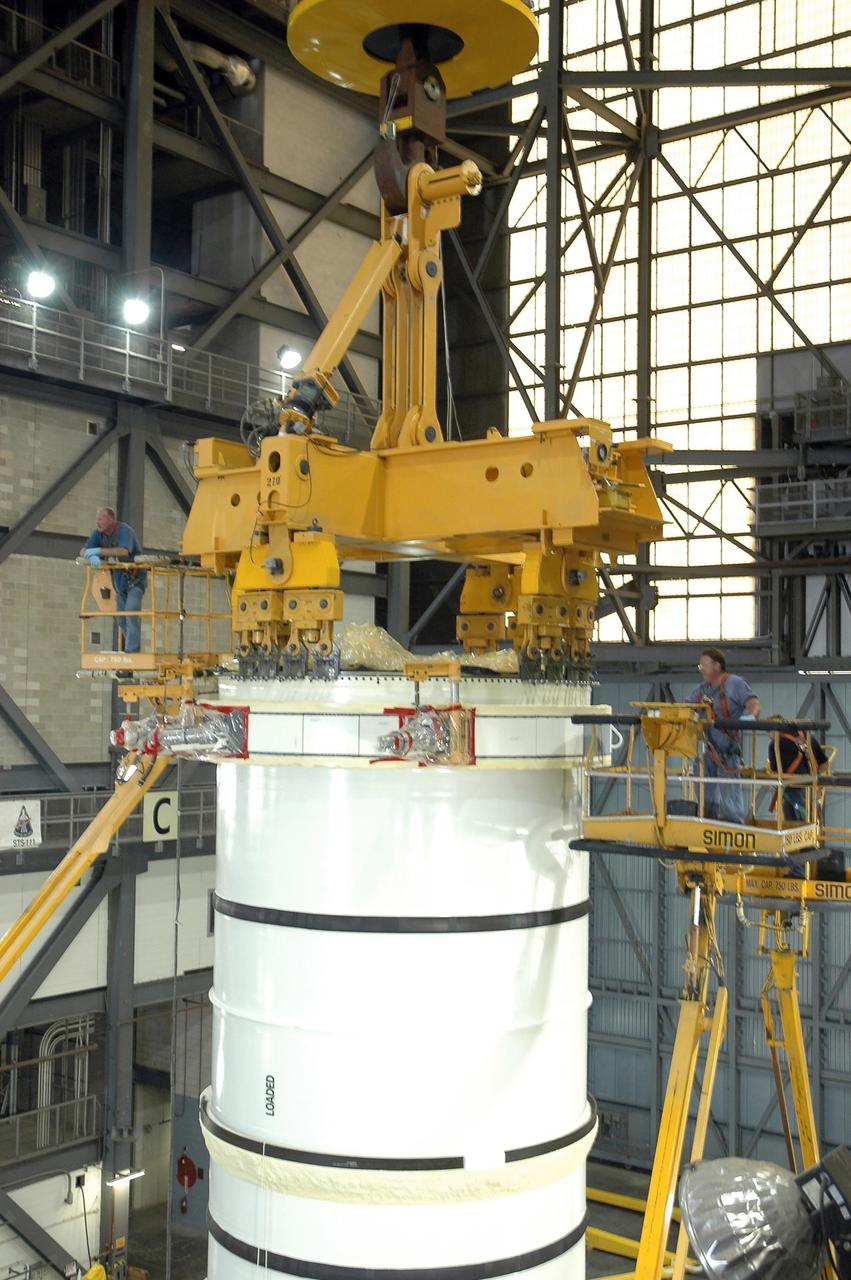
KENNEDY SPACE CENTER, FLA. - In the Vehicle Assembly Building at NASA's Kennedy Space Center, a crane is attached to a solid rocket booster segment sitting on a transporter. The segment will be lifted up into high bay 3 and placed on mobile launcher platform No. 2 for use on mission STS-115. The mission will deliver a truss and other key components to the International Space Station. Launch is currently scheduled for late August. Photo credit: NASA/Charisse Nahser
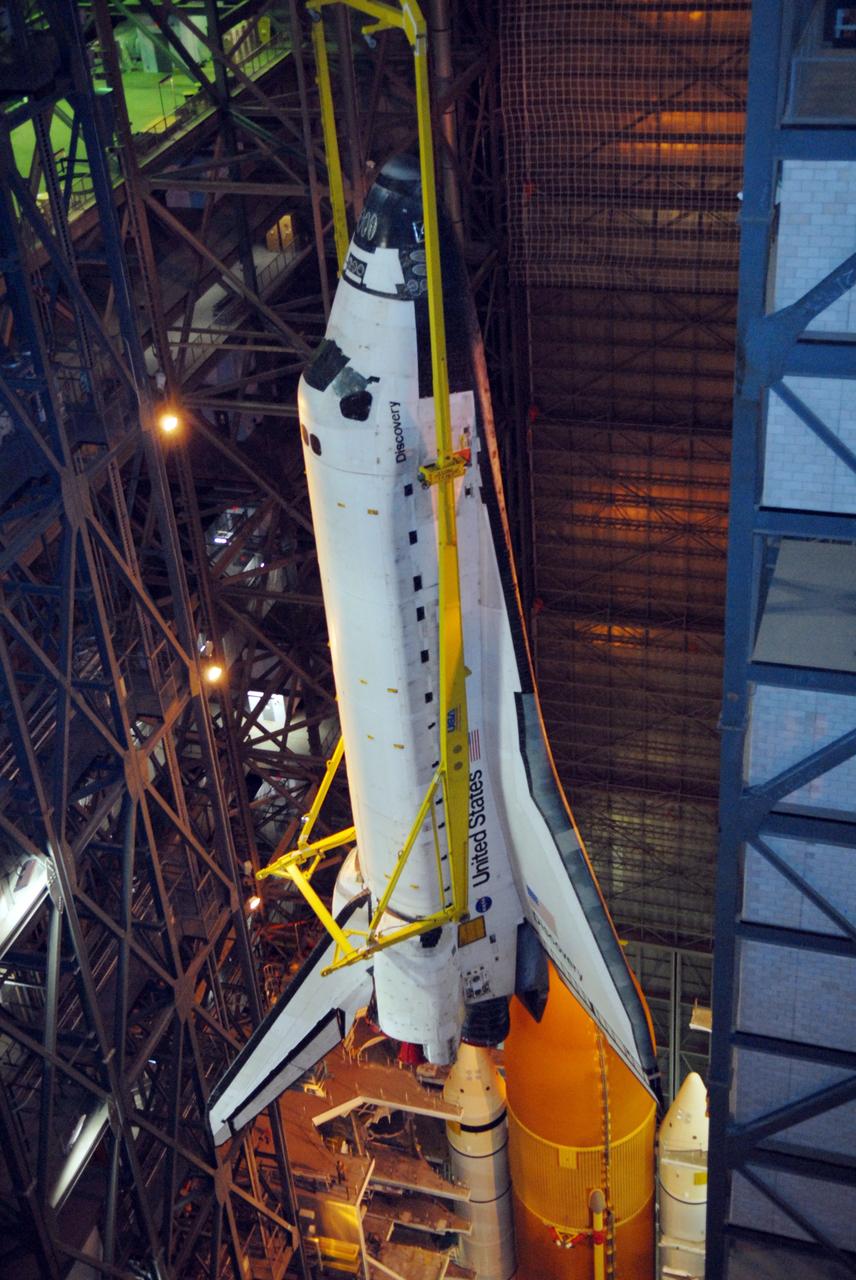
CAPE CANAVERAL, Fla. -- From the upper levels of the Vehicle Assembly Building at NASA's Kennedy Space Center in Florida, space shuttle Discovery is lowered into high bay 3 where the external fuel tank and solid rocket boosters are already stacked on the mobile launcher platform. Discovery will be mated with the stack. After additional preparations are made, the shuttle will be rolled out to Launch Pad 39A for a targeted launch on Feb. 12. Discovery will carry the final starboard truss (S6) in the assembly of the International Space Station. Photo credit: NASA/Jack Pfaller
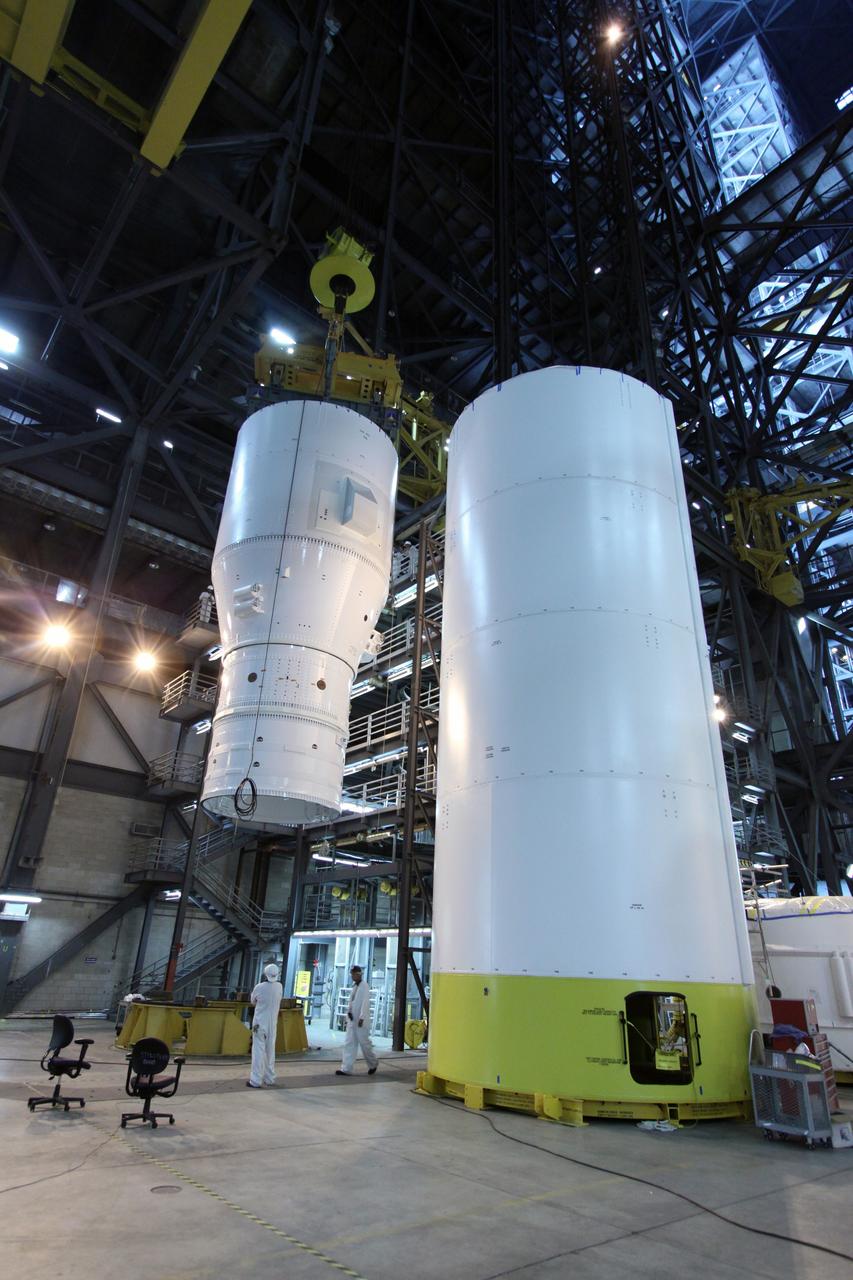
CAPE CANAVERAL, Fla. – In the Vehicle Assembly Building at NASA's Kennedy Space Center in Florida, segments of the Ares I-X first stage are moved across the bay. They will be stacked and mated to the fifth segment simulator, completing Super Stack 1. The super stack comprises the forward skirt, forward skirt extension, interstages 1 and 2 and the fifth segment simulator. Ares I-X is the test vehicle for the Ares I, which is part of the Constellation Program to return men to the moon and beyond. The Ares I-X flight test is targeted no earlier than Aug. 30 from Launch Pad 39B. Photo credit: NASA/Jack Pfaller
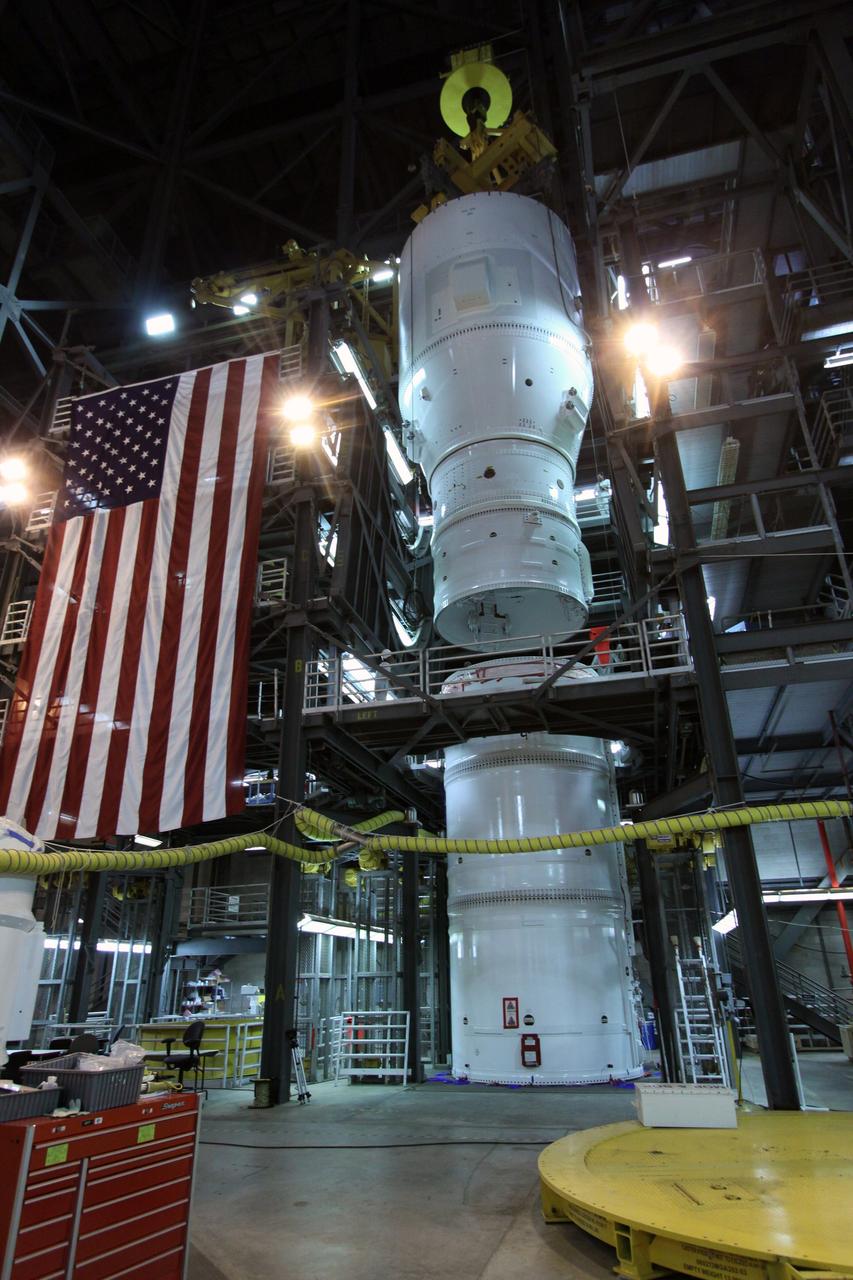
CAPE CANAVERAL, Fla. – In the Vehicle Assembly Building at NASA's Kennedy Space Center in Florida, segments of the Ares I-X first stage are lowered toward the fifth simulator segment for mating, to complete Super Stack 1. The super stack comprises the forward skirt, forward skirt extension, interstages 1 and 2 and the fifth segment simulator. Ares I-X is the test vehicle for the Ares I, which is part of the Constellation Program to return men to the moon and beyond. The Ares I-X flight test is targeted no earlier than Aug. 30 from Launch Pad 39B. Photo credit: NASA/Jack Pfaller
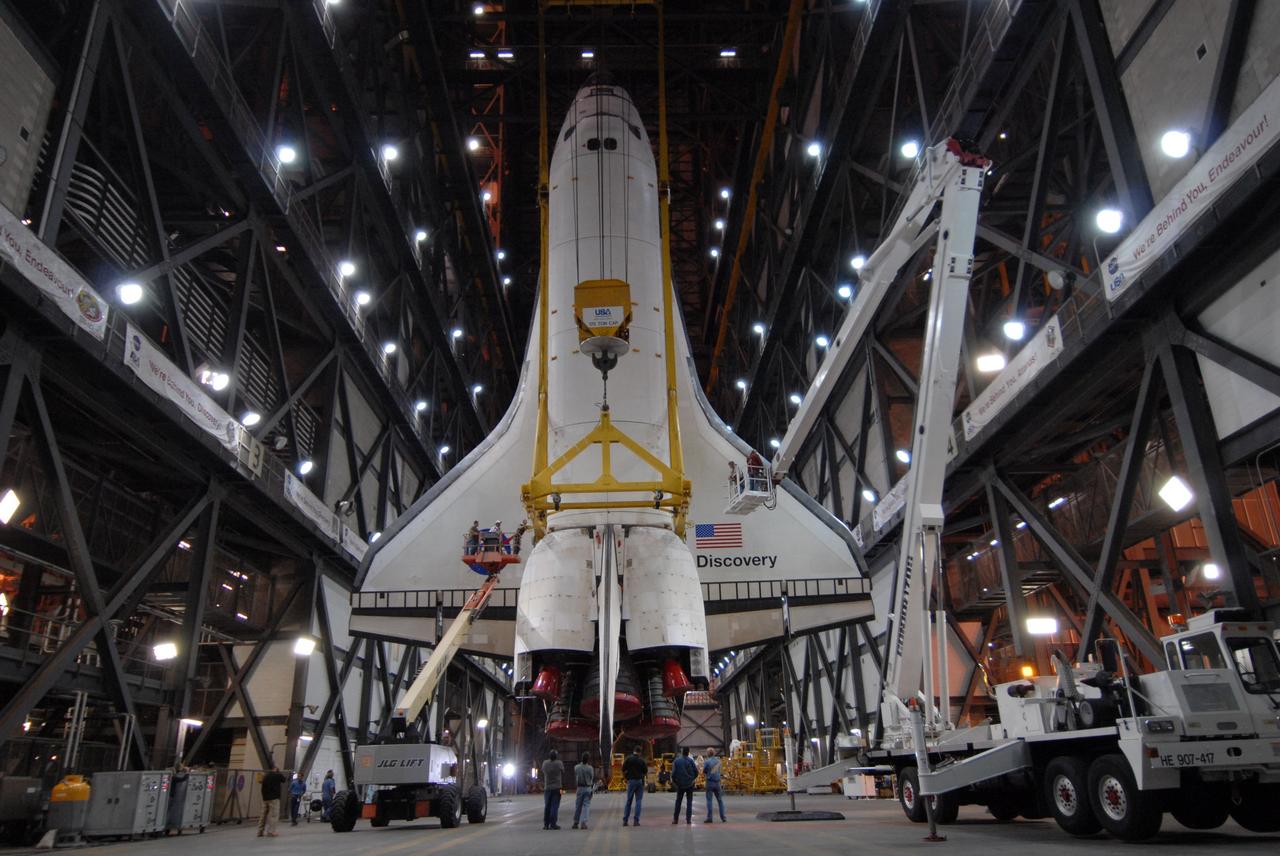
CAPE CANAVERAL, Fla. -- In the Vehicle Assembly Building at NASA's Kennedy Space Center in Florida, space shuttle Discovery is suspended vertically above the transfer aisle. The shuttle will be lifted into high bay 3 where it will be mated with its external fuel tank and solid rocket boosters on the mobile launcher platform. After additional preparations are made, the shuttle will be rolled out to Launch Pad 39A for a targeted launch on Feb. 12. Discovery will carry the final starboard truss (S6) in the assembly of the International Space Station. Photo credit: NASA/Jack Pfaller
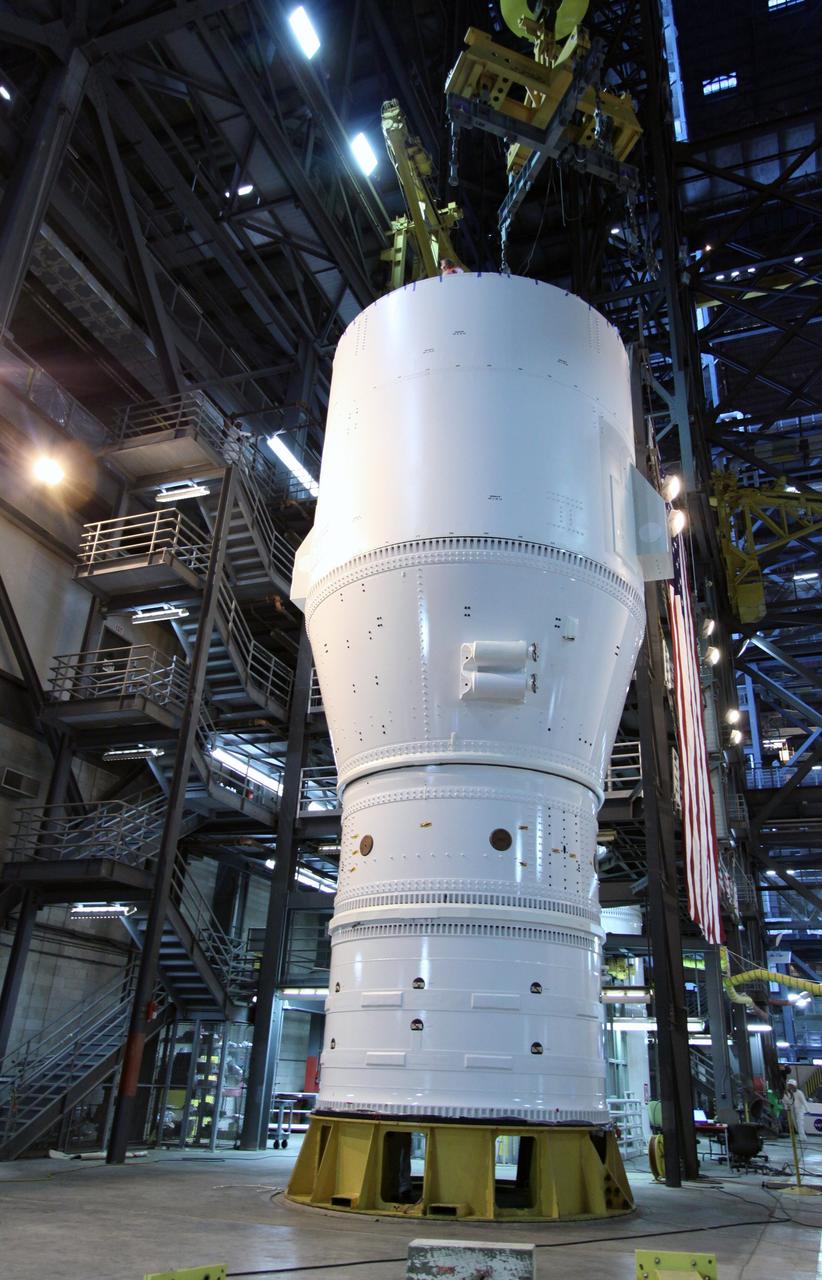
CAPE CANAVERAL, Fla. – In the Vehicle Assembly Building at NASA's Kennedy Space Center in Florida, segments of the Ares I-X first stage are fitted with a crane to lift it to the fifth segment simulator for mating, completing Super Stack 1. The super stack comprises the forward skirt, forward skirt extension, interstages 1 and 2 and the fifth segment simulator. Ares I-X is the test vehicle for the Ares I, which is part of the Constellation Program to return men to the moon and beyond. The Ares I-X flight test is targeted no earlier than Aug. 30 from Launch Pad 39B. Photo credit: NASA/Jack Pfaller
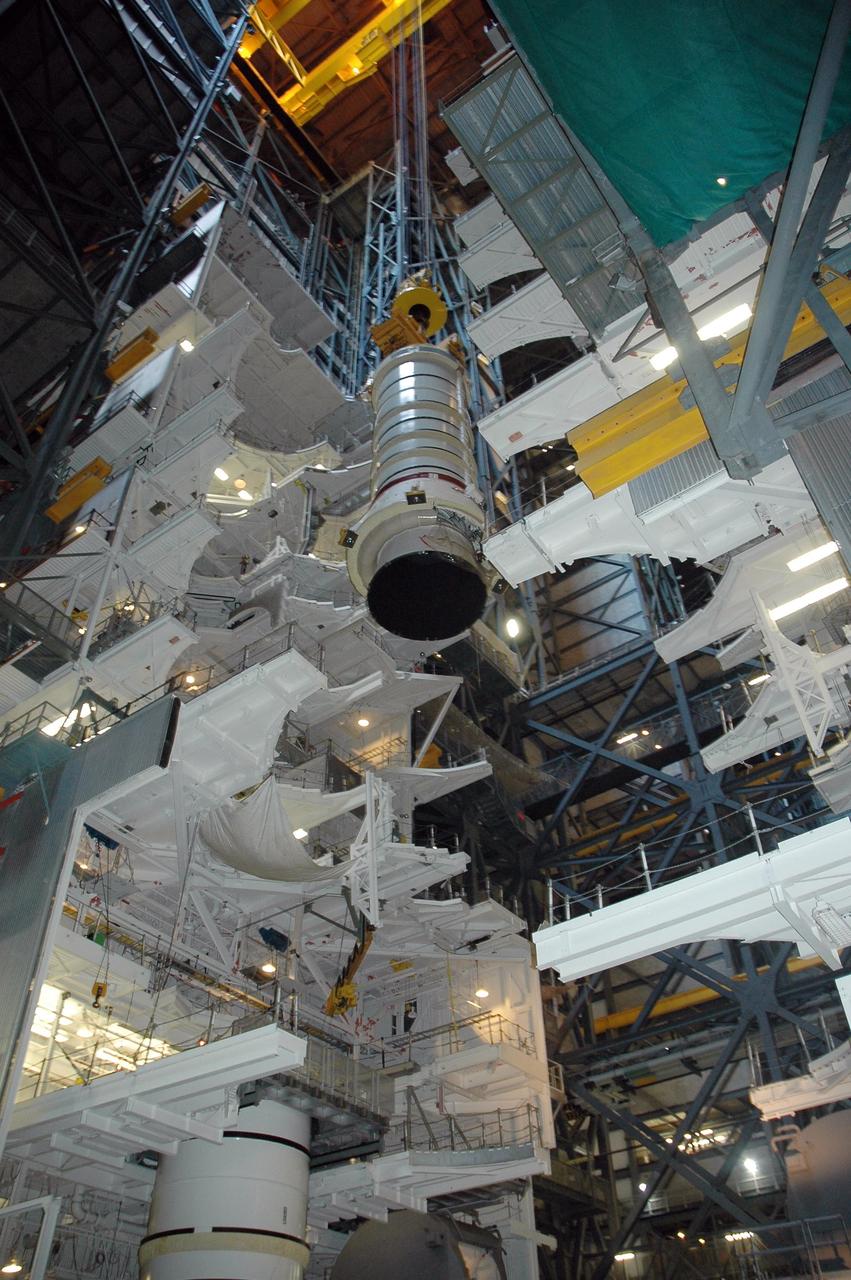
KENNEDY SPACE CENTER, FLA. - In the Vehicle Assembly Building at NASA's Kennedy Space Center, a solid rocket booster segment is lowered into high bay 3 where it will be placed on mobile launcher platform No. 2 for use on mission STS-115. The mission will deliver a truss and other key components to the International Space Station. Launch is currently scheduled for late August. Photo credit: NASA/Charisse Nahser
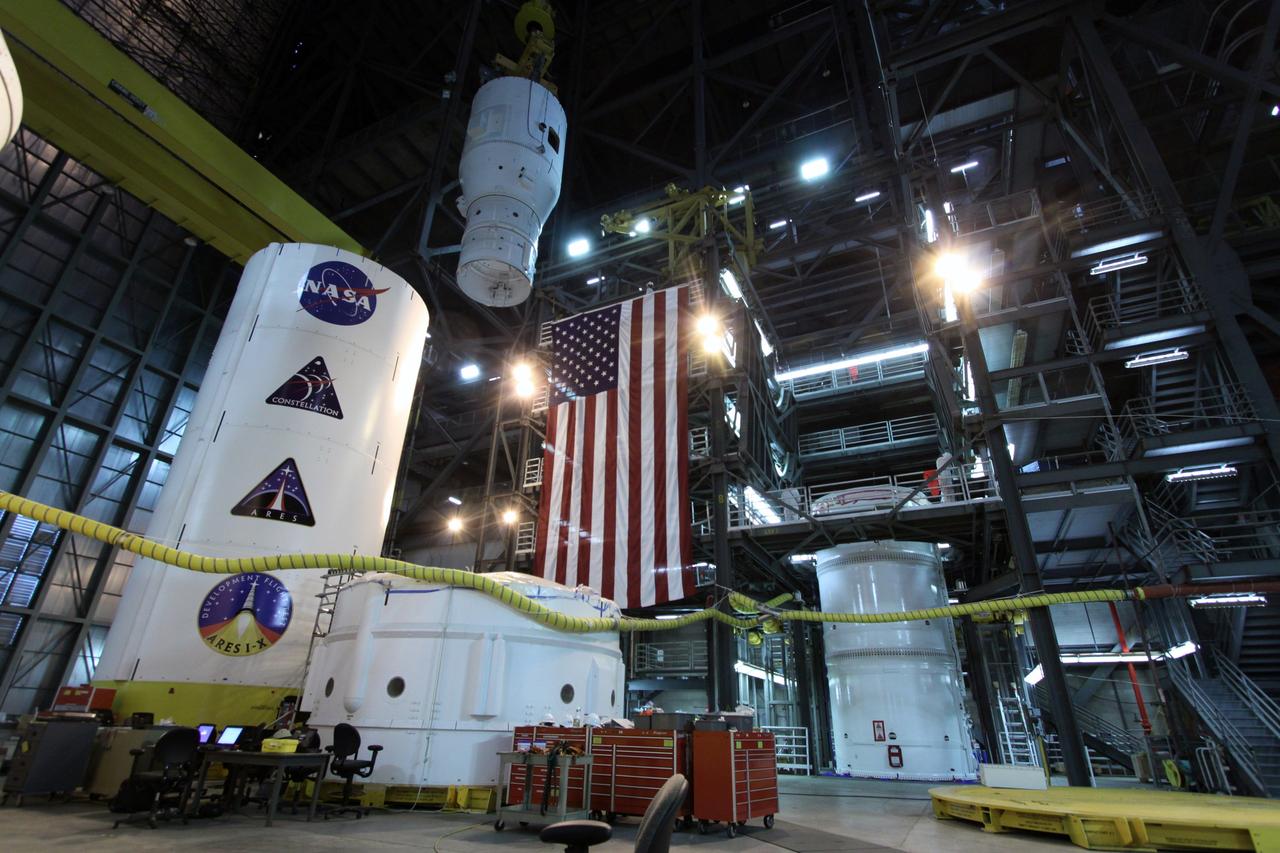
CAPE CANAVERAL, Fla. – In the Vehicle Assembly Building at NASA's Kennedy Space Center in Florida, segments of the Ares I-X first stage move past other stacks toward the fifth simulator segment stack at right. The two stacks will be mated, completing Super Stack 1. The super stack comprises the forward skirt, forward skirt extension, interstages 1 and 2 and the fifth segment simulator. Ares I-X is the test vehicle for the Ares I, which is part of the Constellation Program to return men to the moon and beyond. The Ares I-X flight test is targeted no earlier than Aug. 30 from Launch Pad 39B. Photo credit: NASA/Jack Pfaller
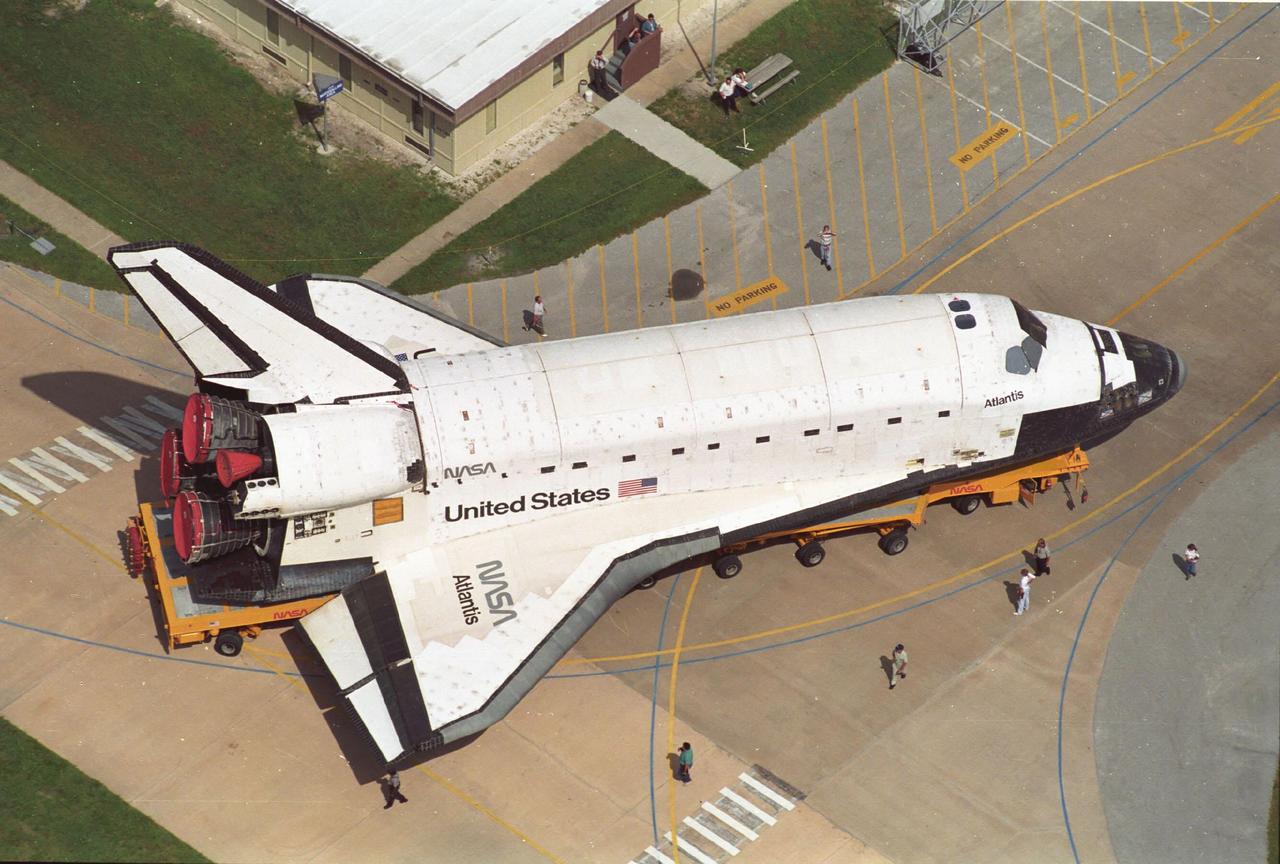
KENNEDY SPACE CENTER, FLA. -- Atlantis rolls to the VAB for stacking before rollout to Pad 39A in preparation for STS-79.
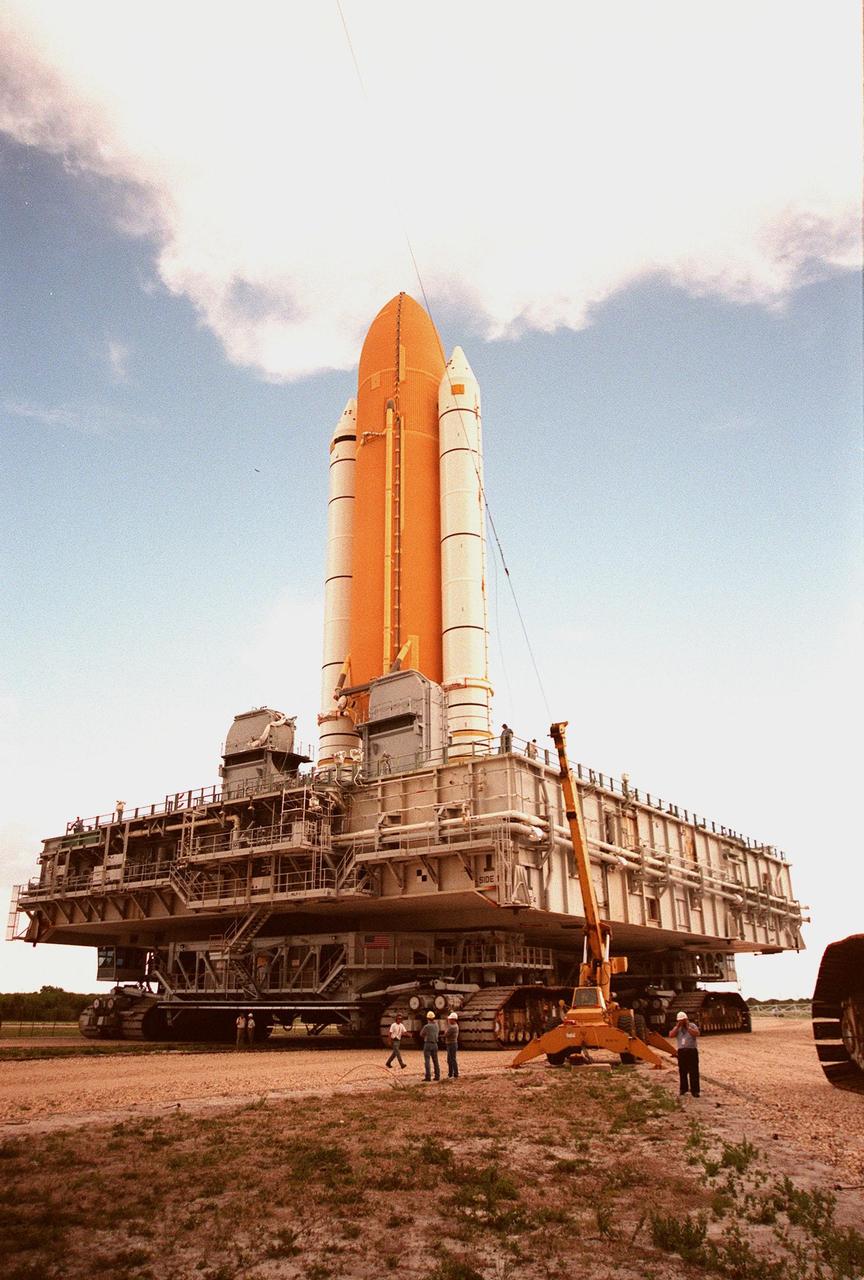
KENNEDY SPACE CENTER, FLA. -- As the STS-93 stack of solid rocket boosters and external tank moves toward the Vehicle Assembly Building (VAB), it passes underneath one of the lightning shield wires strung from the roof of the VAB for protection. The stack is temporarily being stored outside while repair work is being done inside on the hail-damaged external tank of Space Shuttle Discovery. Discovery was rolled back from Pad 39B to the VAB for repairs because access to all of the damaged areas was not possible at the pad. The STS-93 stack is expected to be moved back into the VAB after Discovery returns to the pad. The scheduled date for launch of mission STS-96 is no earlier than May 27. STS-93 is targeted for launch on July 22, carrying the Chandra X-ray Observatory
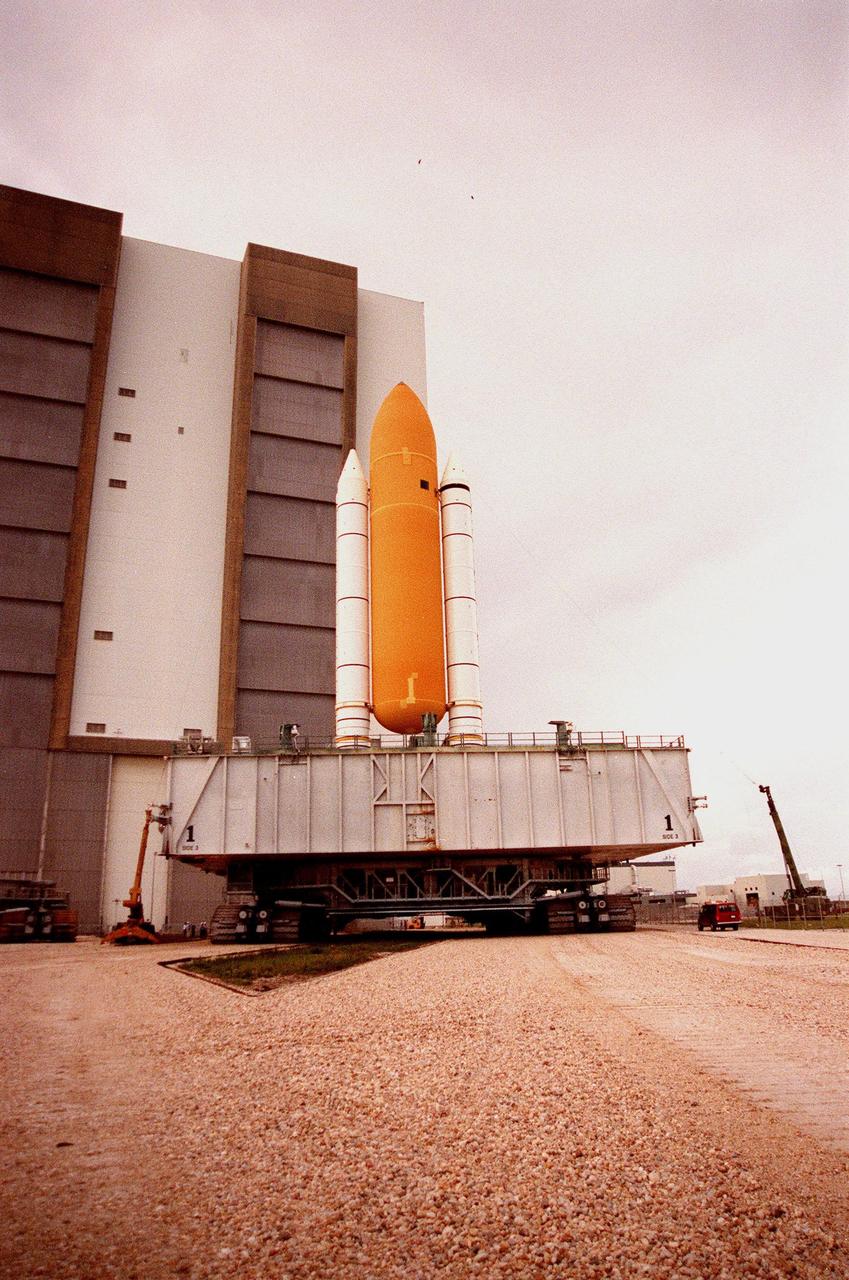
KENNEDY SPACE CENTER, FLA. -- The STS-93 stack of solid rocket boosters and external tank nears the Vehicle Assembly Building (VAB) where it will sit underneath the lightning shield wires strung from the roof of the VAB for protection. The stack is temporarily being stored outside while repair work is being done inside on the hail-damaged external tank of Space Shuttle Discovery. Discovery was rolled back from Pad 39B to the VAB for repairs because access to all of the damaged areas was not possible at the pad. The STS-93 stack is expected to be moved back into the VAB after Discovery returns to the pad. The scheduled date for launch of mission STS-96 is no earlier than May 27. STS-93 is targeted for launch on July 22, carrying the Chandra X-ray Observatory
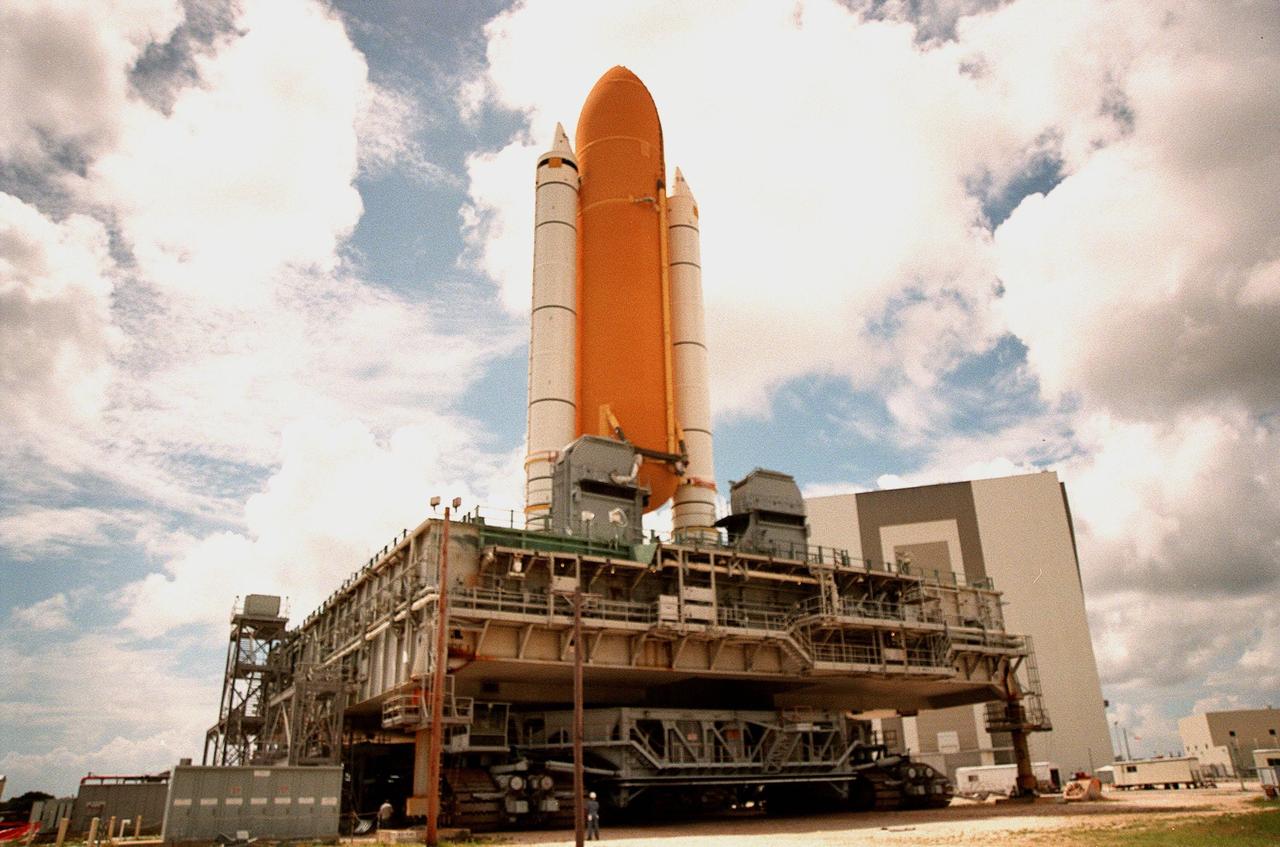
KENNEDY SPACE CENTER, FLA. -- The STS-93 stack of solid rocket boosters and external tank sits at the Mobile Launcher Platform park site waiting for lightning shield wires to be installed on the Vehicle Assembly Building (VAB) in the background. The stack is being temporarily stored outside the VAB while Space Shuttle Discovery undergoes repair to hail damage in High Bay 1. Discovery was rolled back from Pad 39B to the VAB for repairs because access to all of the damaged areas was not possible at the pad. The STS-93 stack will be moved under the wires at the VAB for protection until Discovery returns to the pad, later this week. The scheduled date for launch of mission STS-96 is no earlier than May 27. STS-93 is targeted for launch on July 22, carrying the Chandra X-ray Observatory
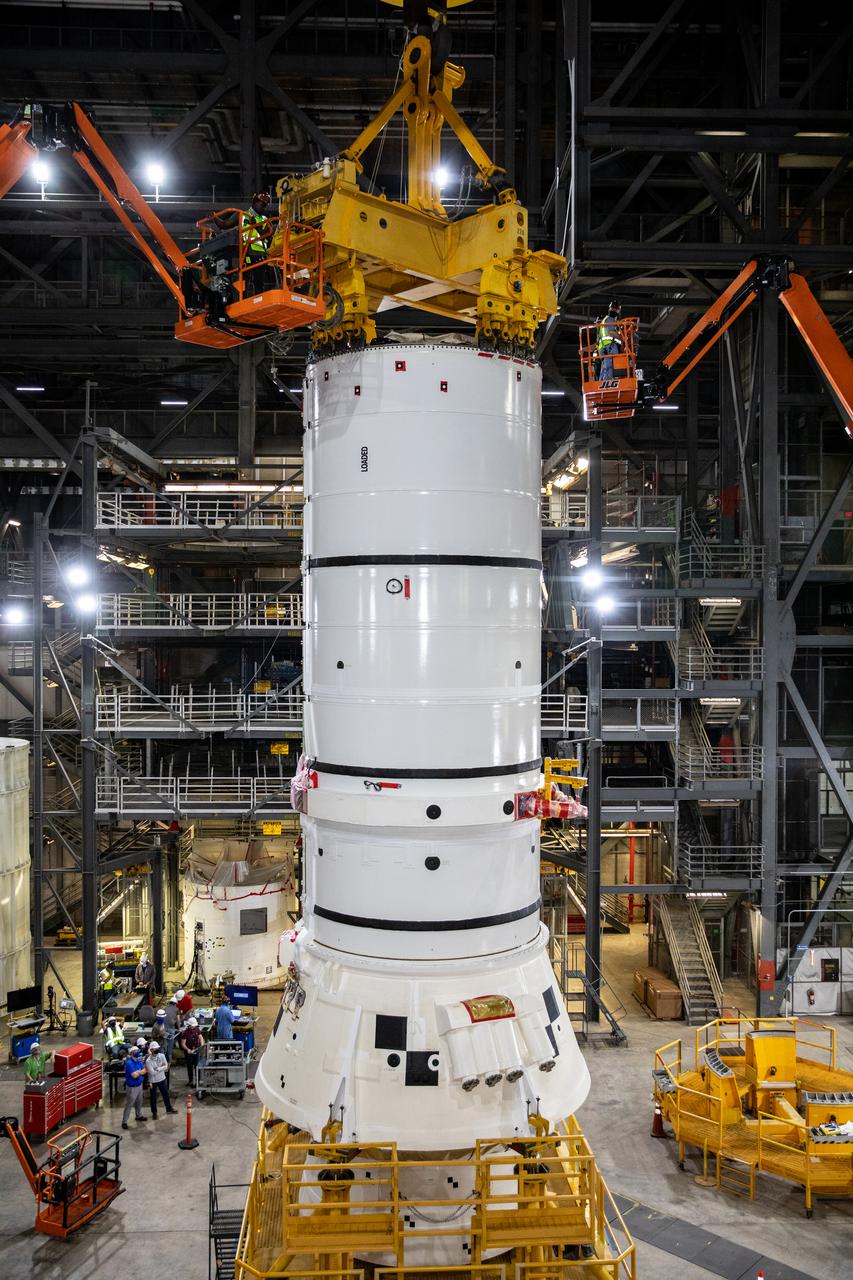
In High Bay 4 of the Vehicle Assembly Building (VAB) at NASA’s Kennedy Space Center in Florida, one of the Artemis I aft booster segments for the Space Launch System is being prepared for its lift up and lowering onto the mobile launcher in High Bay 3 for stacking operations on Nov. 20, 2020. Workers with Exploration Ground Systems and contractor Jacobs teams will stack the twin five-segment boosters on the mobile launcher in High Bay 3 over a number of weeks. When the core stage arrives, it will join the boosters on the mobile launcher, followed by the interim cryogenic propulsion stage and Orion spacecraft. Manufactured by Northrop Grumman in Utah, the twin boosters provide more than 75 percent of the total SLS thrust at launch. The SLS is managed by Marshall Space Flight Center in Huntsville, Alabama. Under the Artemis program, NASA will land the first woman and the next man on the Moon by 2024. The first in a series of increasingly complex missions, Artemis I will test the Orion spacecraft and SLS as an integrated system ahead of crewed flights to the Moon.
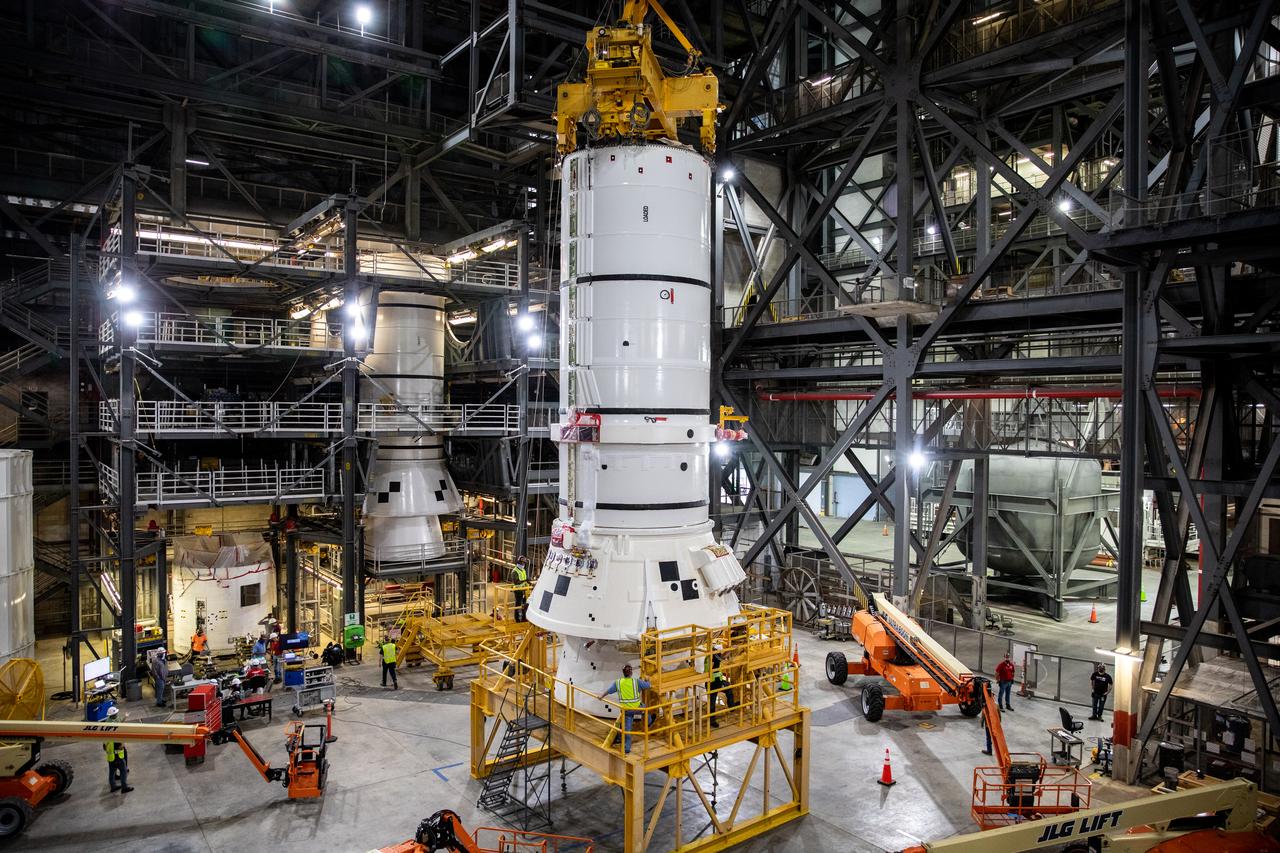
In High Bay 4 of the Vehicle Assembly Building (VAB) at NASA’s Kennedy Space Center in Florida, one of the Artemis I aft booster segments for the Space Launch System is being prepared for stacking operations on Nov. 20, 2020. Workers with Exploration Ground Systems and contractor Jacobs teams will stack the twin five-segment boosters on the mobile launcher in High Bay 3 over a number of weeks. When the core stage arrives, it will join the boosters on the mobile launcher, followed by the interim cryogenic propulsion stage and Orion spacecraft. Manufactured by Northrop Grumman in Utah, the twin boosters provide more than 75 percent of the total SLS thrust at launch. The SLS is managed by Marshall Space Flight Center in Huntsville, Alabama. Under the Artemis program, NASA will land the first woman and the next man on the Moon by 2024. The first in a series of increasingly complex missions, Artemis I will test the Orion spacecraft and SLS as an integrated system ahead of crewed flights to the Moon.
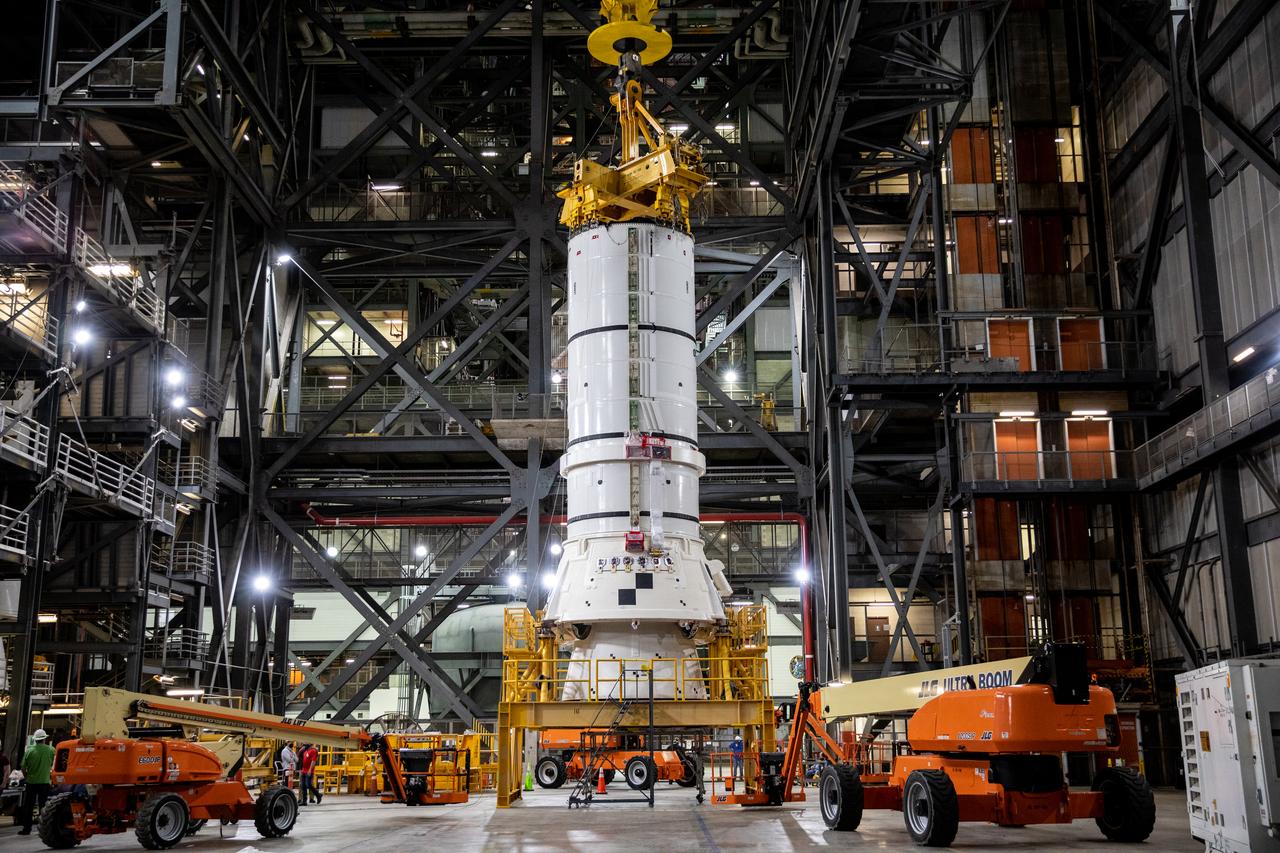
In High Bay 4 of the Vehicle Assembly Building (VAB) at NASA’s Kennedy Space Center in Florida, one of the Artemis I aft booster segments for the Space Launch System is being prepared for stacking operations on Nov. 20, 2020. Workers with Exploration Ground Systems and contractor Jacobs teams will stack the twin five-segment boosters on the mobile launcher in High Bay 3 over a number of weeks. When the core stage arrives, it will join the boosters on the mobile launcher, followed by the interim cryogenic propulsion stage and Orion spacecraft. Manufactured by Northrop Grumman in Utah, the twin boosters provide more than 75 percent of the total SLS thrust at launch. The SLS is managed by Marshall Space Flight Center in Huntsville, Alabama. Under the Artemis program, NASA will land the first woman and the next man on the Moon by 2024. The first in a series of increasingly complex missions, Artemis I will test the Orion spacecraft and SLS as an integrated system ahead of crewed flights to the Moon.
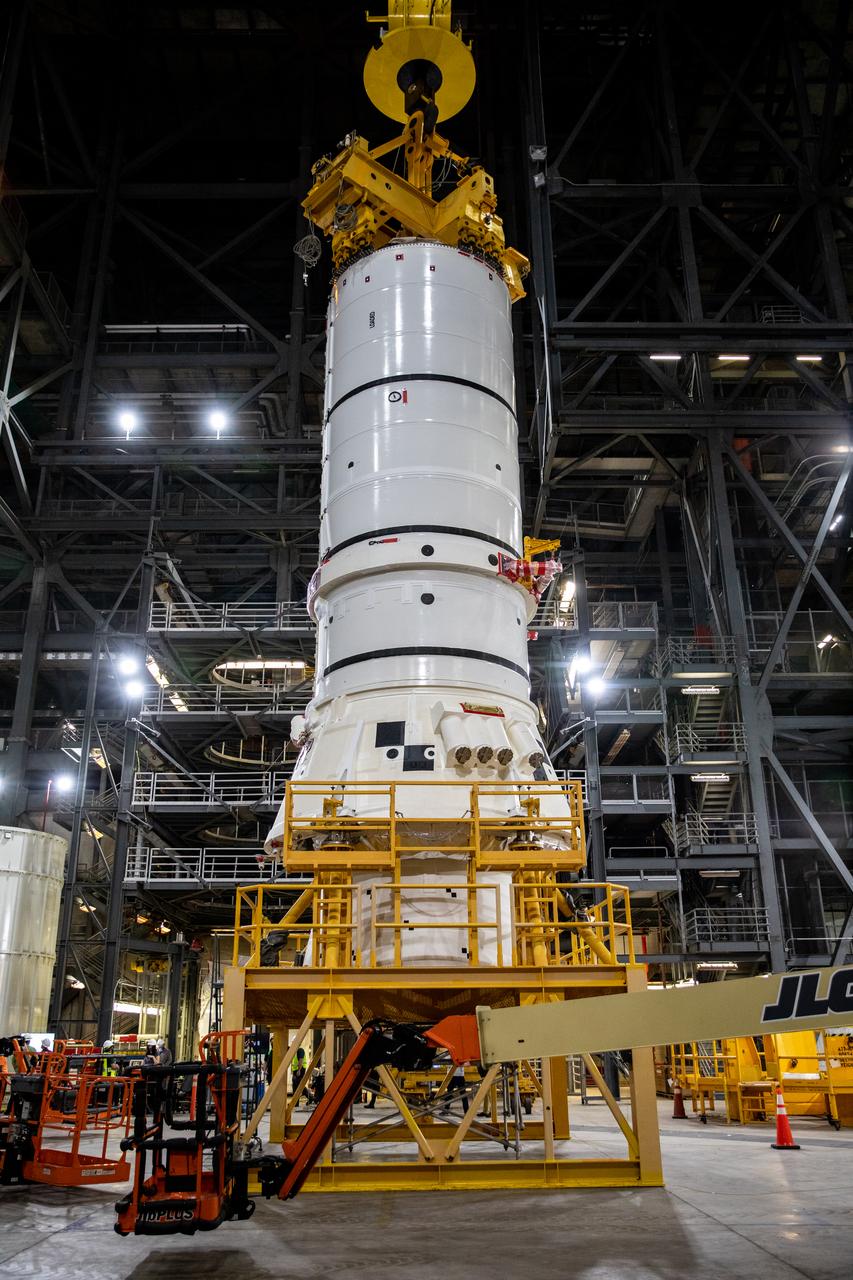
In High Bay 4 of the Vehicle Assembly Building (VAB) at NASA’s Kennedy Space Center in Florida, one of the Artemis I aft booster segments for the Space Launch System is being prepared for stacking operations on Nov. 20, 2020. Workers with Exploration Ground Systems and contractor Jacobs teams will stack the twin five-segment boosters on the mobile launcher in High Bay 3 over a number of weeks. When the core stage arrives, it will join the boosters on the mobile launcher, followed by the interim cryogenic propulsion stage and Orion spacecraft. Manufactured by Northrop Grumman in Utah, the twin boosters provide more than 75 percent of the total SLS thrust at launch. The SLS is managed by Marshall Space Flight Center in Huntsville, Alabama. Under the Artemis program, NASA will land the first woman and the next man on the Moon by 2024. The first in a series of increasingly complex missions, Artemis I will test the Orion spacecraft and SLS as an integrated system ahead of crewed flights to the Moon.
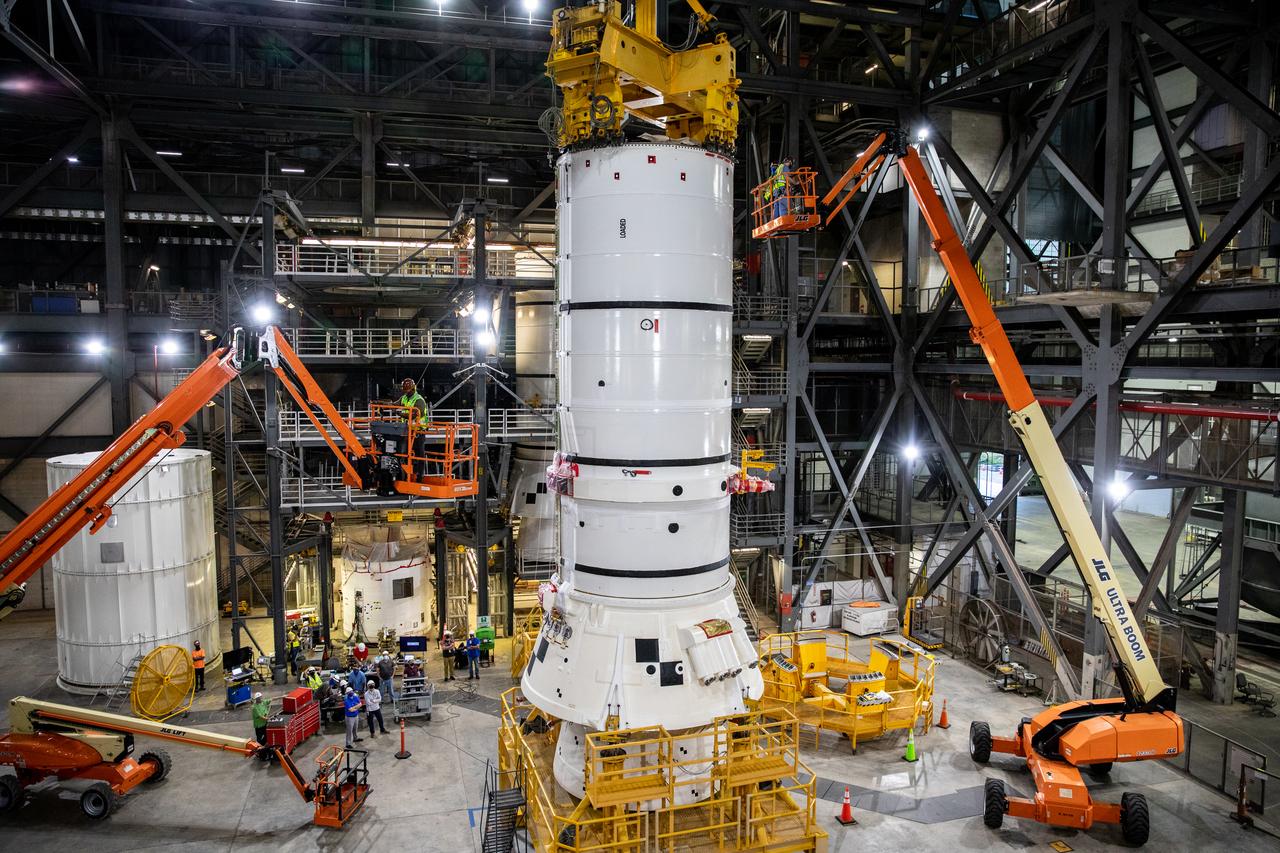
In High Bay 4 of the Vehicle Assembly Building (VAB) at NASA’s Kennedy Space Center in Florida, one of the Artemis I aft booster segments for the Space Launch System is being prepared for its lift up and lowering onto the mobile launcher in High Bay 3 for stacking operations on Nov. 20, 2020. Workers with Exploration Ground Systems and contractor Jacobs teams will stack the twin five-segment boosters on the mobile launcher in High Bay 3 over a number of weeks. When the core stage arrives, it will join the boosters on the mobile launcher, followed by the interim cryogenic propulsion stage and Orion spacecraft. Manufactured by Northrop Grumman in Utah, the twin boosters provide more than 75 percent of the total SLS thrust at launch. The SLS is managed by Marshall Space Flight Center in Huntsville, Alabama. Under the Artemis program, NASA will land the first woman and the next man on the Moon by 2024. The first in a series of increasingly complex missions, Artemis I will test the Orion spacecraft and SLS as an integrated system ahead of crewed flights to the Moon.
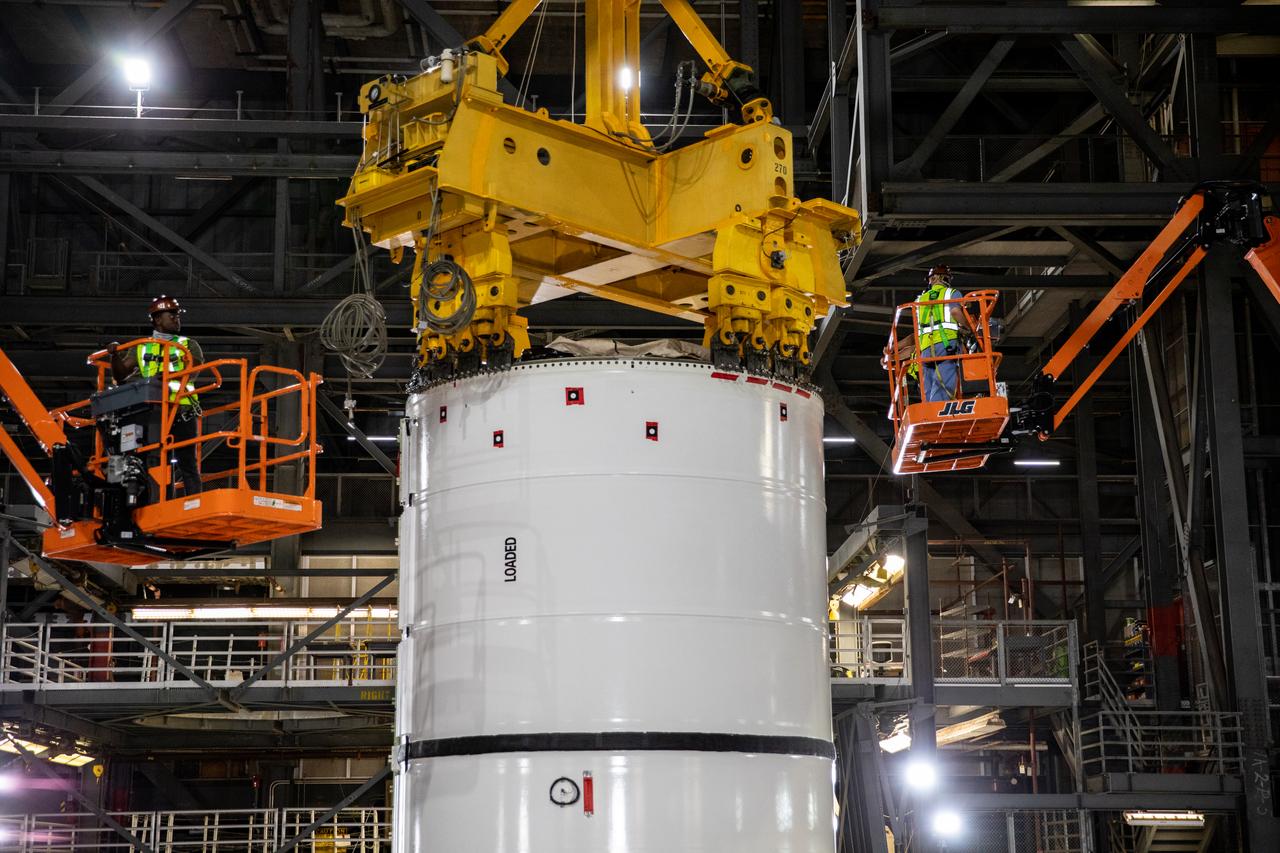
In High Bay 4 of the Vehicle Assembly Building (VAB) at NASA’s Kennedy Space Center in Florida, one of the Artemis I aft booster segments for the Space Launch System is being prepared for its lift up and lowering onto the mobile launcher in High Bay 3 for stacking operations on Nov. 20, 2020. Workers with Exploration Ground Systems and contractor Jacobs teams will stack the twin five-segment boosters on the mobile launcher in High Bay 3 over a number of weeks. When the core stage arrives, it will join the boosters on the mobile launcher, followed by the interim cryogenic propulsion stage and Orion spacecraft. Manufactured by Northrop Grumman in Utah, the twin boosters provide more than 75 percent of the total SLS thrust at launch. The SLS is managed by Marshall Space Flight Center in Huntsville, Alabama. Under the Artemis program, NASA will land the first woman and the next man on the Moon by 2024. The first in a series of increasingly complex missions, Artemis I will test the Orion spacecraft and SLS as an integrated system ahead of crewed flights to the Moon.

KENNEDY SPACE CENTER, FLA. -- On a portion of the once-buried crawlerway that was recently restored, a crawler-transporter with mobile launcher platform on top turns toward the Vehicle Assembly Building (VAB) high bay 2. The road was restored as part of KSC’s Safe Haven project. High bay 2 provides a third stacking area. The primary goal of the Safe Haven construction project was to strengthen readiness for hurricane season by expanding the VAB’s storage capacity. The new area, in high bay 2, will allow NASA to preassemble stacks and still have room in the VAB to pull a Shuttle back from the pad if severe weather threatens. Potential rollouts of the Space Shuttle to the launch pad from high bay 2 will involve making a turn around the north side of the VAB in contrast to the straight rollouts from high bays 1 and 3, on the east side of the VAB facing the launch pads
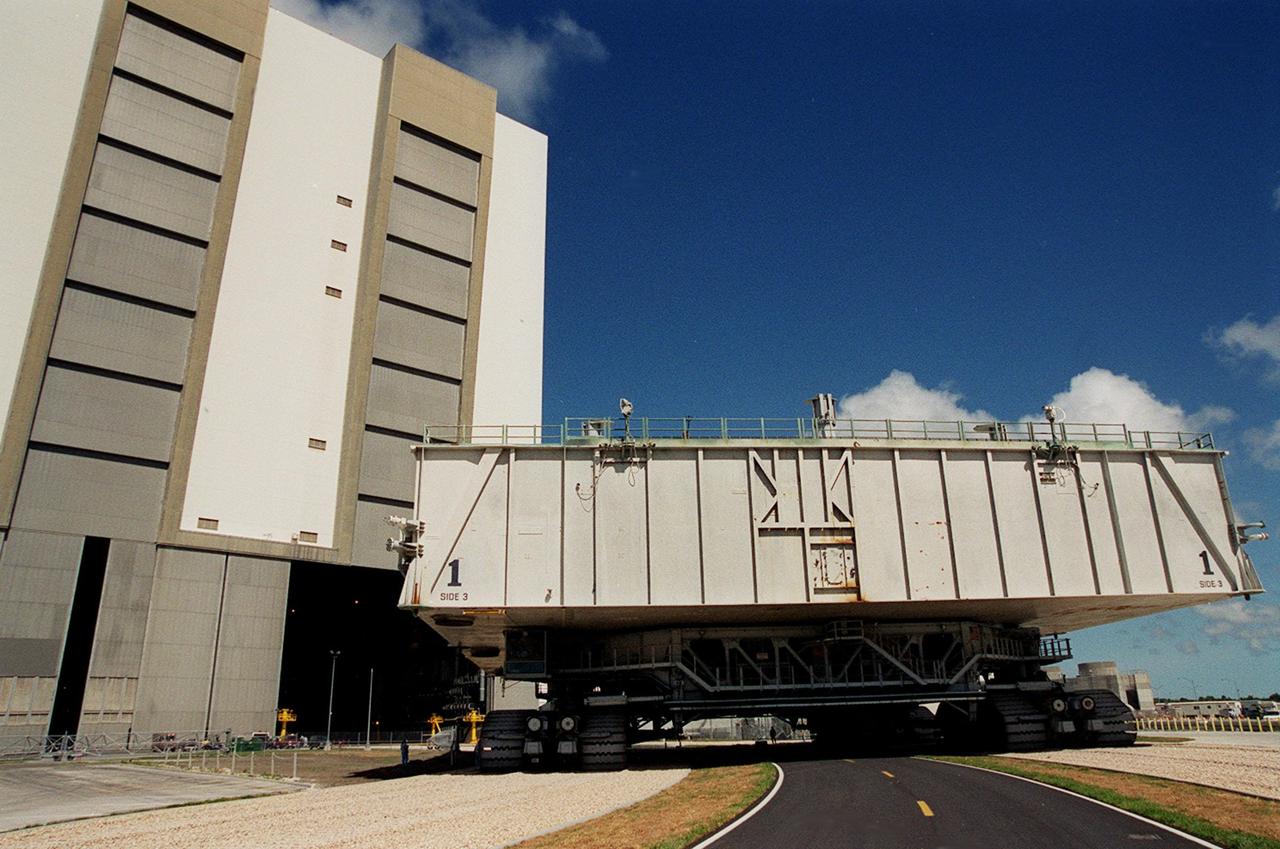
KENNEDY SPACE CENTER, FLA. -- On a portion of the once-buried crawlerway that was recently restored, a crawler-transporter with mobile launcher platform on top turns toward the Vehicle Assembly Building (VAB) high bay 2. The road was restored as part of KSC’s Safe Haven project. High bay 2 provides a third stacking area. The primary goal of the Safe Haven construction project was to strengthen readiness for hurricane season by expanding the VAB’s storage capacity. The new area, in high bay 2, will allow NASA to preassemble stacks and still have room in the VAB to pull a Shuttle back from the pad if severe weather threatens. Potential rollouts of the Space Shuttle to the launch pad from high bay 2 will involve making a turn around the north side of the VAB in contrast to the straight rollouts from high bays 1 and 3, on the east side of the VAB facing the launch pads