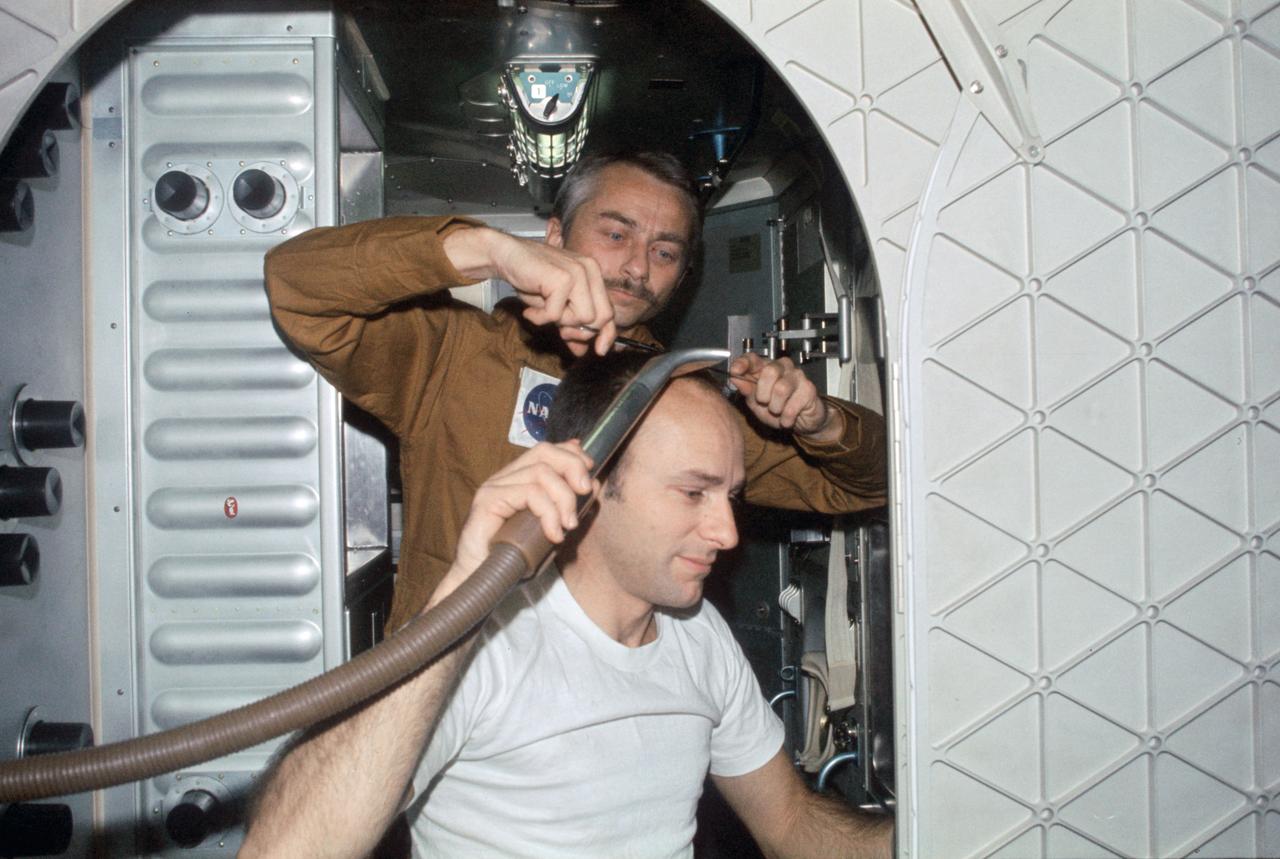
SL3-108-1292 (19 Aug. 1973) --- Scientist-astronaut Owen K. Garriott, Skylab 3 science pilot, trims the hair of astronaut Alan L. Bean, commander, in this onboard photograph from the Skylab Orbital Workshop (OWS) in Earth orbit. Astronaut Jack R. Lousma, pilot, took this picture with a 35mm Nikon camera. Bean holds a vacuum hose to gather in loose hair. The crew of the second manned Skylab flight went on to successfully complete 59 days aboard the Skylab space station cluster in Earth orbit. Photo credit: NASA
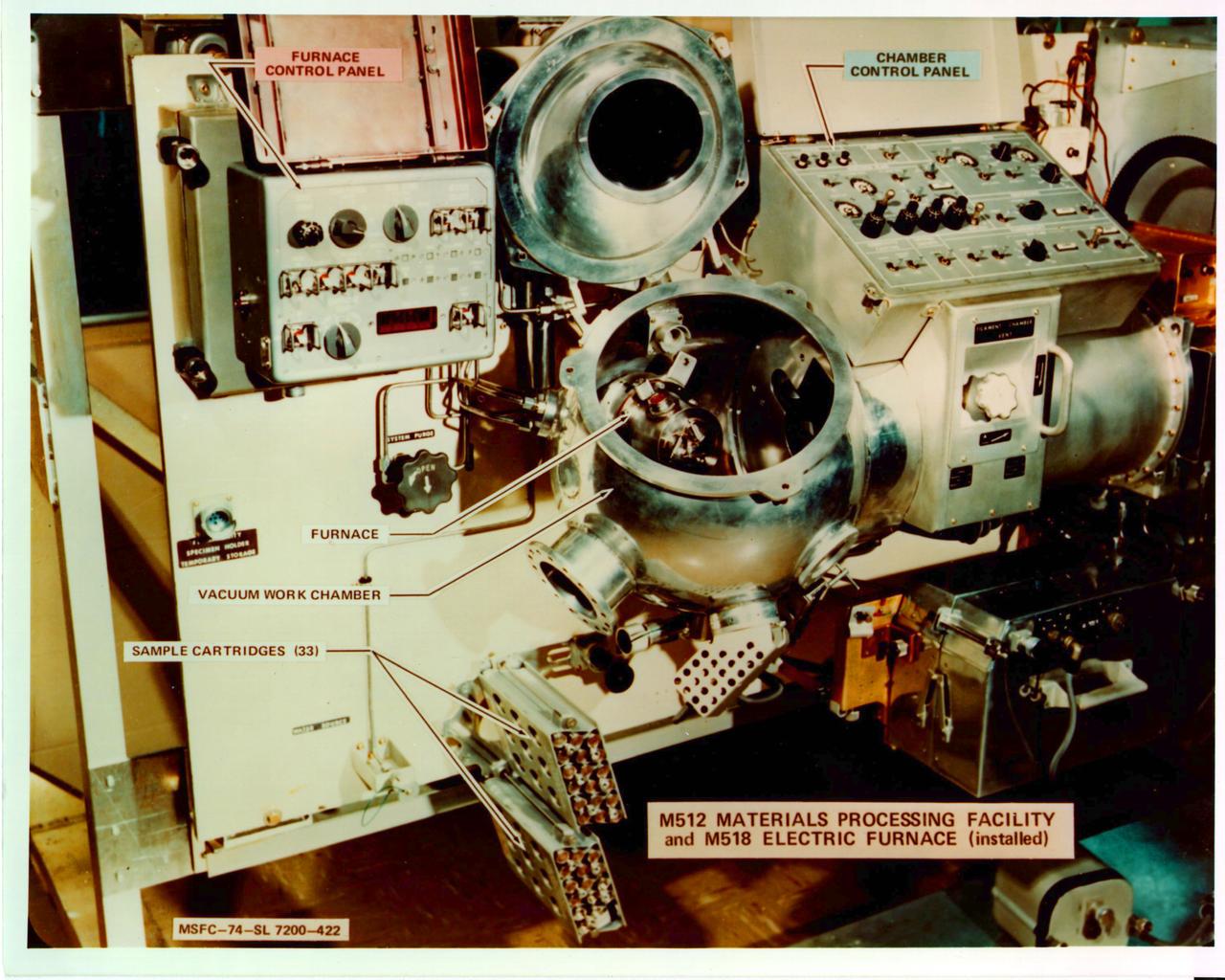
The M512 Materials Processing Facility (MPF) with the M518 Multipurpose Electric Facility (MEF) tested and demonstrated a facility approach for materials process experimentation in space. It also provided a basic apparatus and a common interface for a group of metallic and nonmetallic materials experiments. The MPF consisted of a vacuum work chamber and associated mechanical and electrical controls. The M518 Multipurpose Electric Furnace (MEF) was an electric furnace system in which solidification, crystal growth, and other experiments involving phase changes were performed.
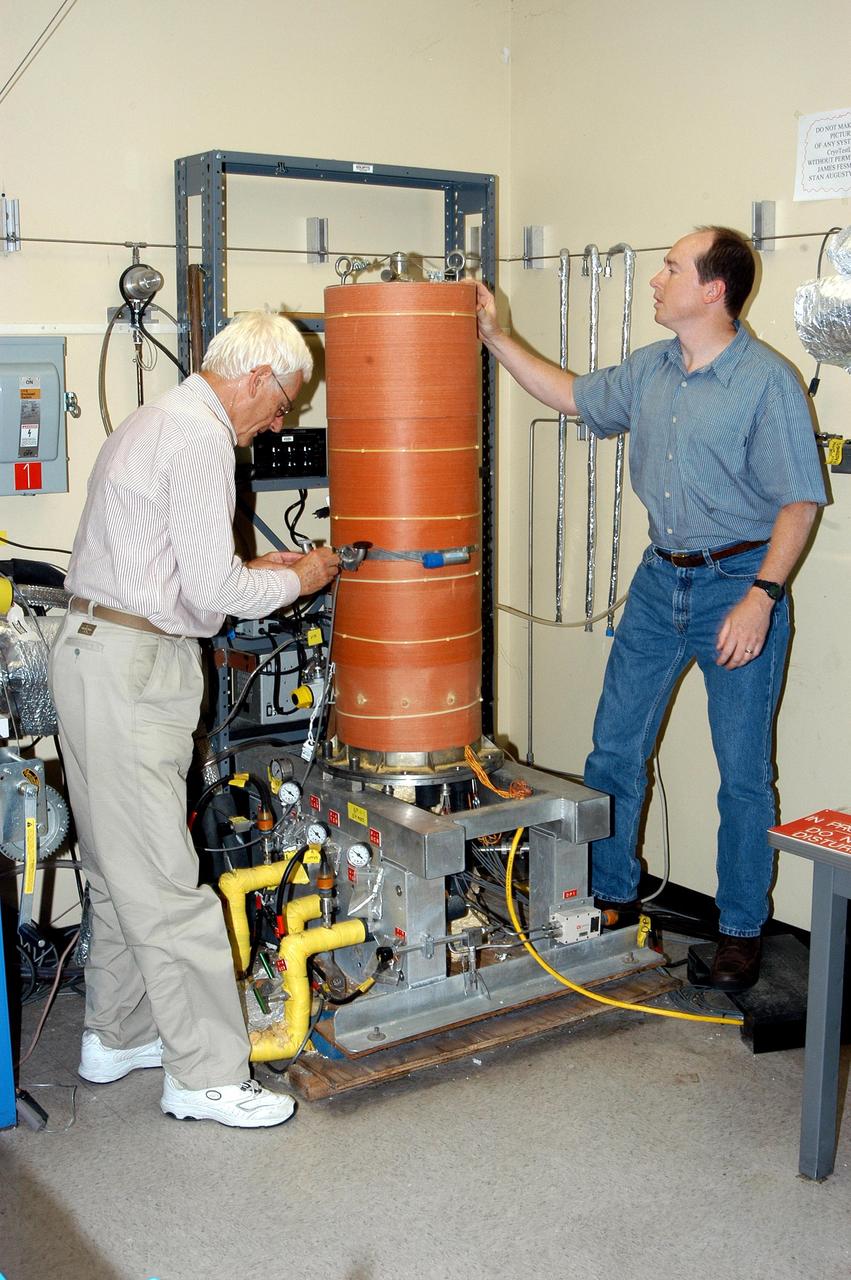
KENNEDY SPACE CENTER, FLA. - James E. Fesmire (right), NASA lead engineer for the KSC Cryogenics Testbed, works on Cryostat-1, the Methods of Testing Thermal Insulation and Association Test Apparatus, which he developed. At left is co-inventor Dr. Stan Augustynowicz, chief scientist with Sierra Lobo Inc. in Milan, Ohio. Cryostat-1 provides absolute thermal performance values of cryogenic insulation systems under real-world conditions. Cryogenic liquid is supplied to a test chamber and two guard chambers, and temperatures are sensed within the vacuum chamber to test aerogels, foams or other materials. The Cryostat-1 machine can detect the absolute heat leakage rates through materials under the full range of vacuum conditions. Fesmire recently acquired three patents for testing thermal insulation materials for cryogenic systems. The research team of the Cryogenics Testbed offers testing and support for a number of programs and initiatives for NASA and commercial customers.
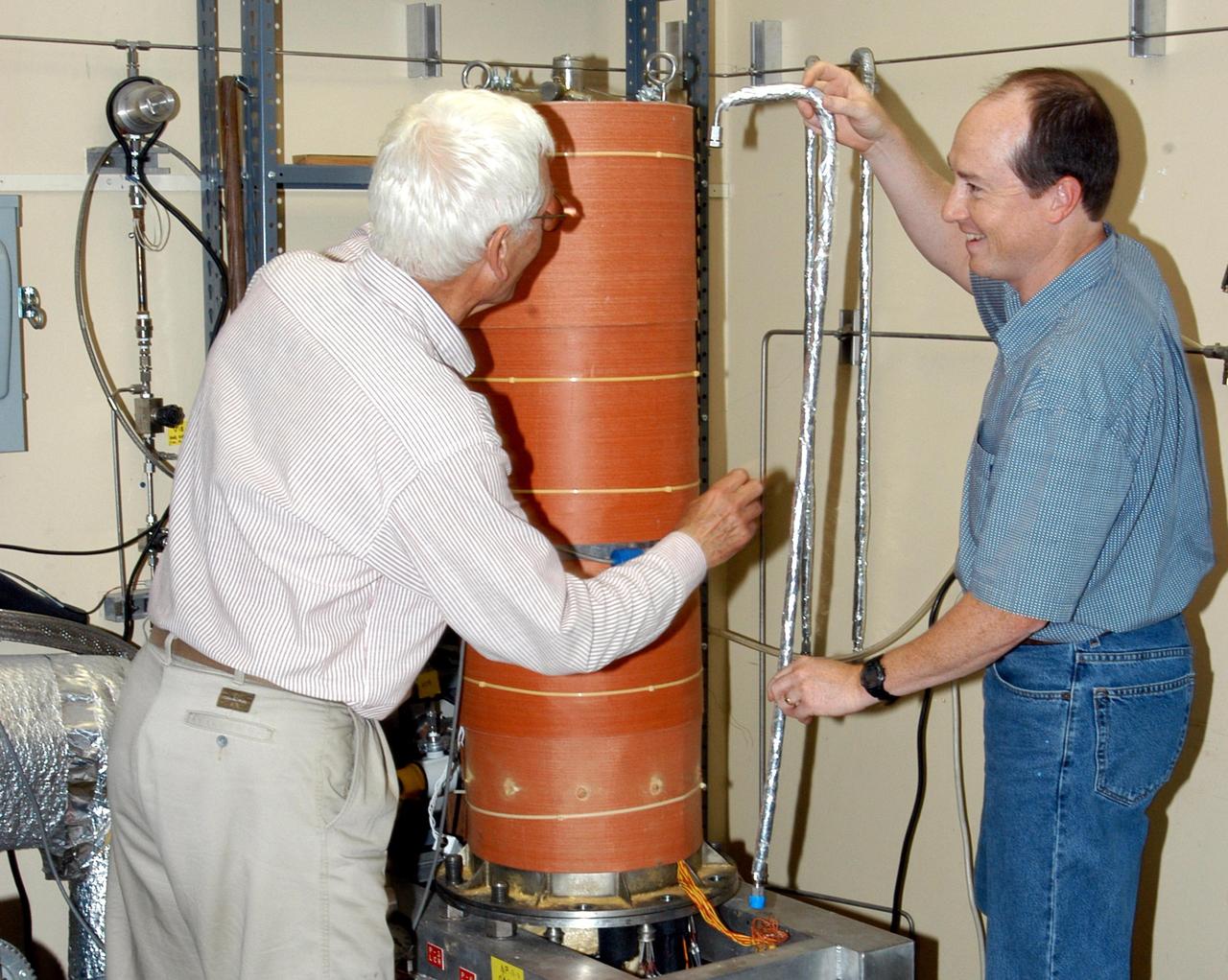
KENNEDY SPACE CENTER, FLA. - James E. Fesmire (right), NASA lead engineer for the KSC Cryogenics Testbed, works on Cryostat-1, the Methods of Testing Thermal Insulation and Association Test Apparatus, which he developed. At left is co-inventor Dr. Stan Augustynowicz, chief scientist with Sierra Lobo Inc. in Milan, Ohio. Cryostat-1 provides absolute thermal performance values of cryogenic insulation systems under real-world conditions. Cryogenic liquid is supplied to a test chamber and two guard chambers, and temperatures are sensed within the vacuum chamber to test aerogels, foams or other materials. The Cryostat-1 machine can detect the absolute heat leakage rates through materials under the full range of vacuum conditions. Fesmire recently acquired three patents for testing thermal insulation materials for cryogenic systems. The research team of the Cryogenics Testbed offers testing and support for a number of programs and initiatives for NASA and commercial customers.
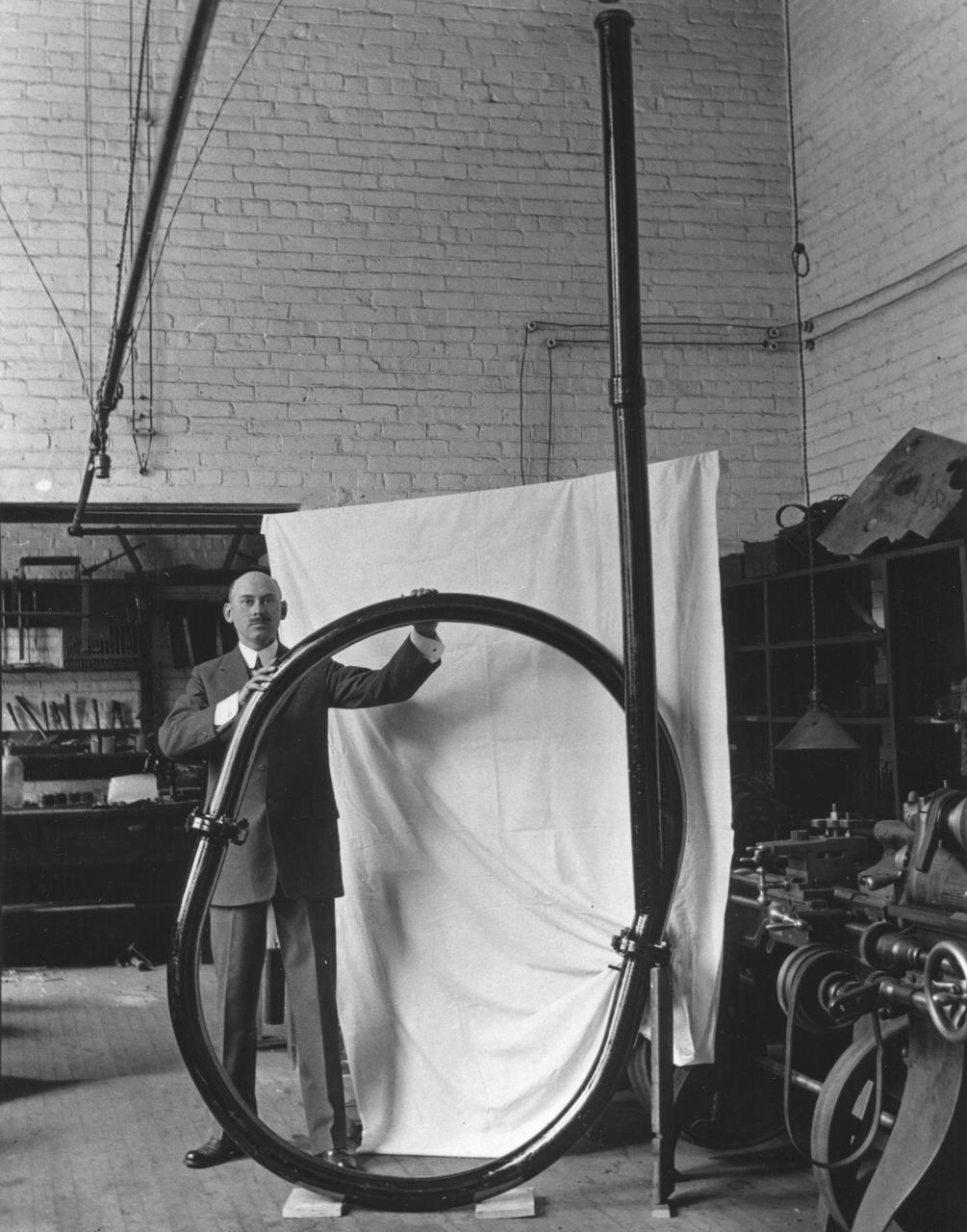
Robert H. Goddard with vacuum tube apparatus he built in 1916 to research rocket efficiency. Dr. Robert Hutchings Goddard is commonly referred to as the father of American rocketry. The same year he built the apparatus, Goddard wrote a study requesting funding from the Smithsonian Institution so that he could continue his rocket research, which he had begun in 1907 while still a student at Worcester Polytechnic Institute. A brilliant physicist, with a unique genius for invention, Goddard may not have succeeded had it not been for the Smithsonian Institution and later the Daniel Guggenheim Foundation and his employer the Worcester Polytechnic Institute of Clark University. The former gave him research monies while the Institute provided leaves of absence so that he could continue his life's work. He was the first scientist who not only realized the potential of missiles and space flight, but also contributed directly to making them a reality. <b><a href="http://www.nasa.gov/centers/goddard/home/index.html" rel="nofollow">NASA Goddard Space Flight Center</a></b> enables NASA’s mission through four scientific endeavors: Earth Science, Heliophysics, Solar System Exploration, and Astrophysics. Goddard plays a leading role in NASA’s accomplishments by contributing compelling scientific knowledge to advance the Agency’s mission. <b>Follow us on <a href="http://twitter.com/NASA_GoddardPix" rel="nofollow">Twitter</a></b> <b>Join us on <a href="http://www.facebook.com/pages/Greenbelt-MD/NASA-Goddard/395013845897?ref=tsd" rel="nofollow">Facebook</a></b>
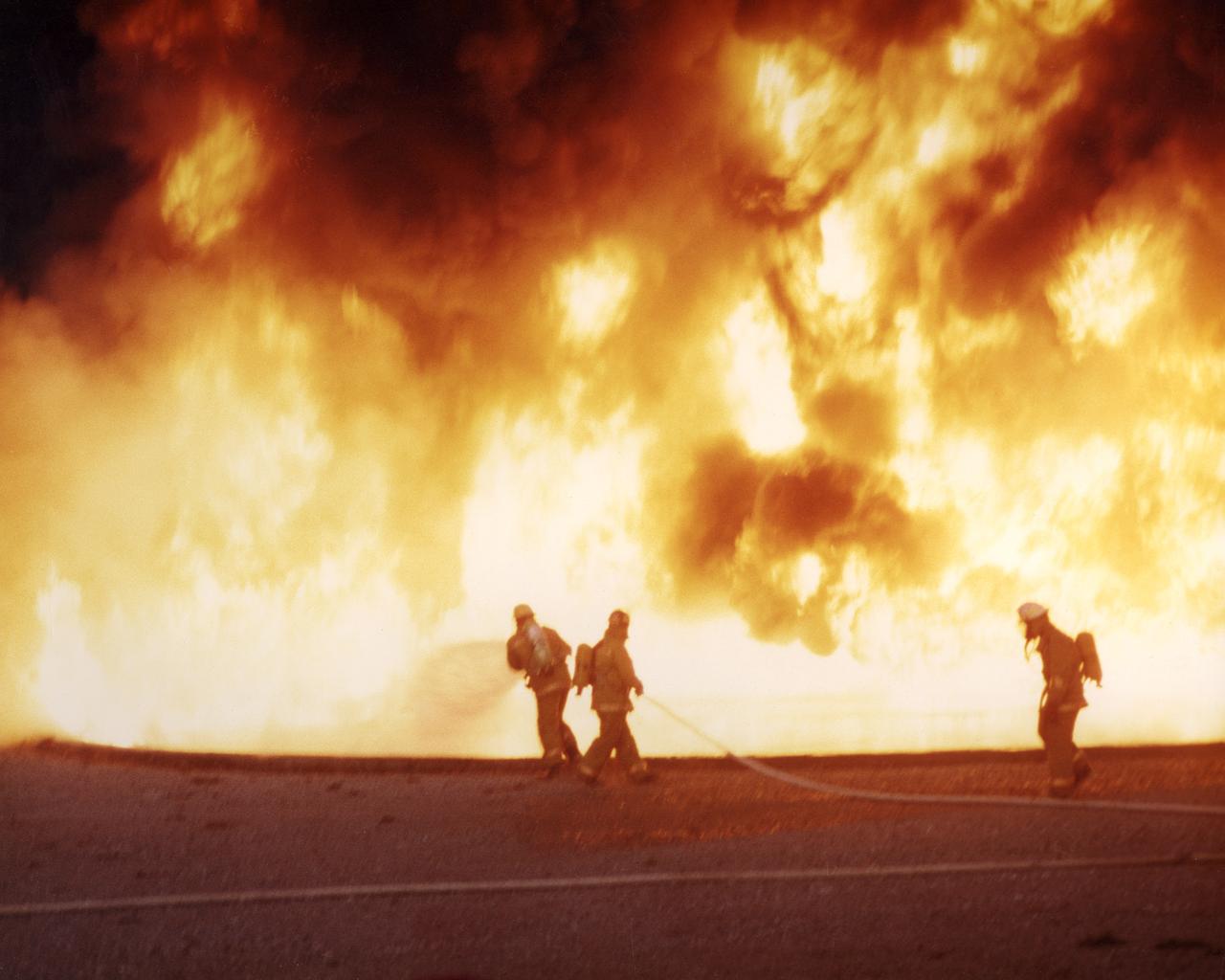
Firefighters are like astronauts. They both face dangerous, even hostile environments such as a building full of fire and the vacuum of space. They are both get breathing air from tanks on their backs. Early in the 1970's, NASA began working to improve firefighter breathing systems, which had hardly changed since the 1940s. NASA's Johnson Space Center conducted a 4-year program that applied technology from the portable life support systems used by Apollo astronauts on the moon. The new breathing system is made up of an air bottle, a frame and harness, a face mask, and a warning device. The new system weighs less than 20 pounds, one-third less than the old gear. The new air bottle provides 30 minutes of breathing air, as much as the old system. Like a good hiker's backpack, the new system puts the weight on the firefighter's hips rather than the shoulders. The face mask provides better visibility and the warning device lets the firefighter know when air in the bottle is low. Though they have made many design modifications and refinements, manufacturers of breathing apparatus still incorporate the original NASA technology.