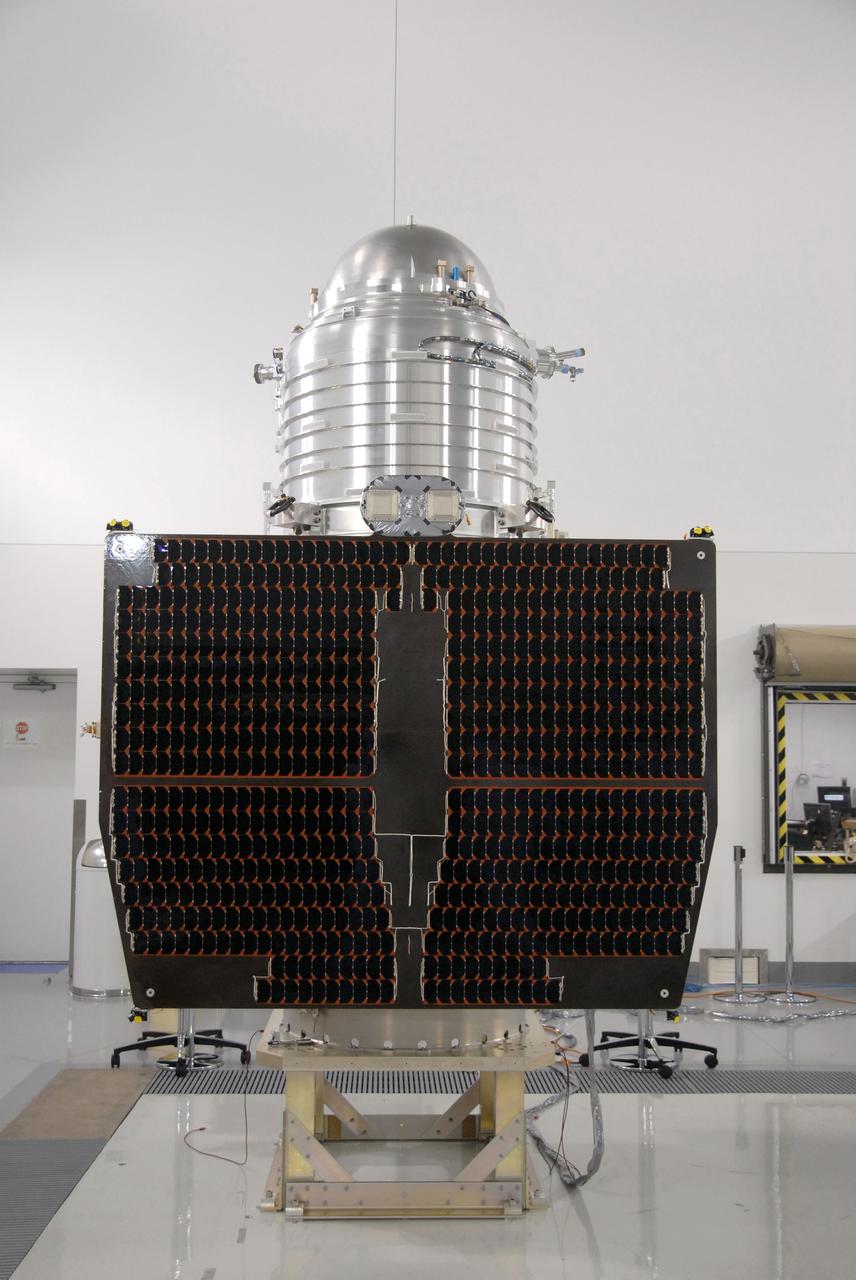
VANDENBERG AIR FORCE BASE, Calif. -- At the Astrotech processing facility on Vandenberg Air Force Base in California, NASA's Wide-field Infrared Survey Explorer, or WISE, is prepared for its move from the test stand for mating to its Payload Attach Fitting. The satellite will survey the entire sky at infrared wavelengths, creating a cosmic clearinghouse of hundreds of millions of objects which will be catalogued and provide a vast storehouse of knowledge about the solar system, the Milky Way, and the universe. Launch is scheduled for Dec. 7. Photo credit: NASA/Doug Kolkow
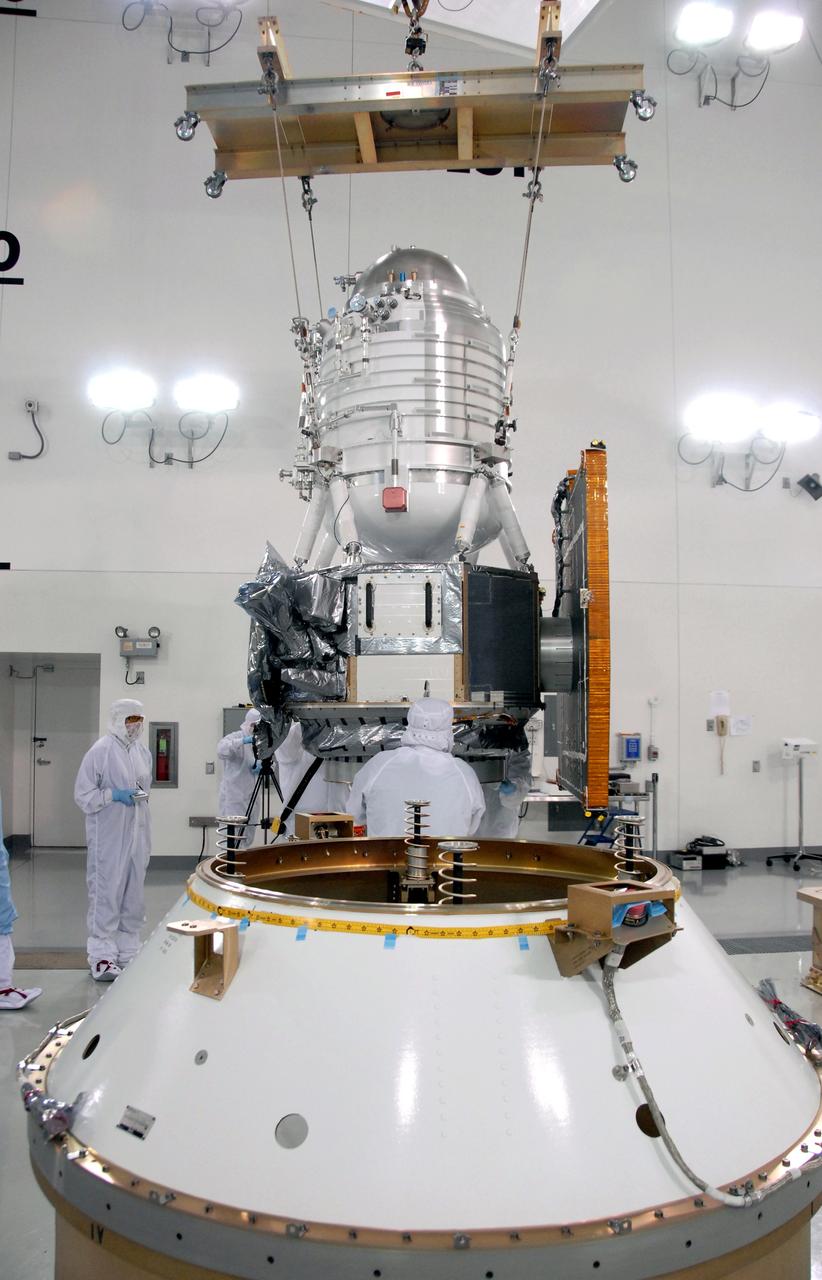
VANDENBERG AIR FORCE BASE, Calif. -- At the Astrotech processing facility on Vandenberg Air Force Base in California, workers guide NASA's Wide-field Infrared Survey Explorer, or WISE, being lifted by crane from its test stand for mating to its Payload Attach Fitting in the foreground. The satellite will survey the entire sky at infrared wavelengths, creating a cosmic clearinghouse of hundreds of millions of objects which will be catalogued and provide a vast storehouse of knowledge about the solar system, the Milky Way, and the universe. Launch is scheduled for Dec. 7. Photo credit: NASA/Doug Kolkow

KENNEDY SPACE CENTER, FLA. -- Technicians prepare to move NASA's CloudSat spacecraft for mating to a Delta payload attach fitting in a clean room at Vandenberg Air Force Base, Calif. CALIPSO stands for Cloud-Aerosol Lidar and Infrared Pathfinder Satellite Observation. CALIPSO and CloudSat are highly complementary satellites and will be launched together. They will provide never-before-seen 3-D perspectives of how clouds and aerosols form, evolve, and affect weather and climate. CALIPSO and CloudSat will fly in formation with three other satellites in the A-train constellation to enhance understanding of our climate system. Launch of CALIPSO_CloudSat aboard a Boeing Delta II rocket is scheduled for 3:01 a.m. PDT Sept. 29.
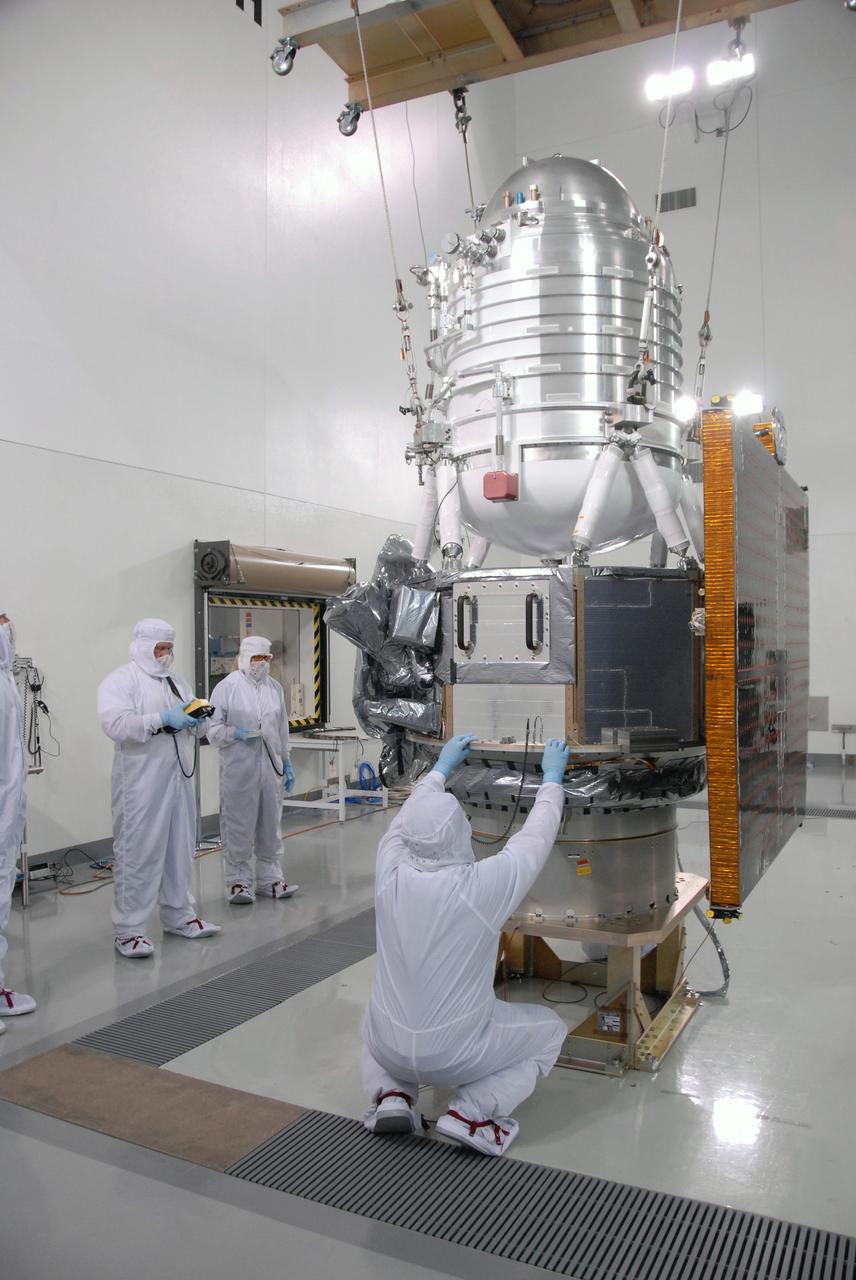
VANDENBERG AIR FORCE BASE, Calif. -- At the Astrotech processing facility on Vandenberg Air Force Base in California, workers inspect NASA's Wide-field Infrared Survey Explorer, or WISE, for its readiness to be lifted by crane from its test stand for mating to its Payload Attach Fitting. The satellite will survey the entire sky at infrared wavelengths, creating a cosmic clearinghouse of hundreds of millions of objects which will be catalogued and provide a vast storehouse of knowledge about the solar system, the Milky Way, and the universe. Launch is scheduled for Dec. 7. Photo credit: NASA/Doug Kolkow

VANDENBERG AIR FORCE BASE, Calif. -- At the Astrotech processing facility on Vandenberg Air Force Base in California, NASA's Wide-field Infrared Survey Explorer, or WISE, is prepared for its move from the test stand for mating to its Payload Attach Fitting. The satellite will survey the entire sky at infrared wavelengths, creating a cosmic clearinghouse of hundreds of millions of objects which will be catalogued and provide a vast storehouse of knowledge about the solar system, the Milky Way, and the universe. Launch is scheduled for Dec. 7. Photo credit: NASA/Doug Kolkow
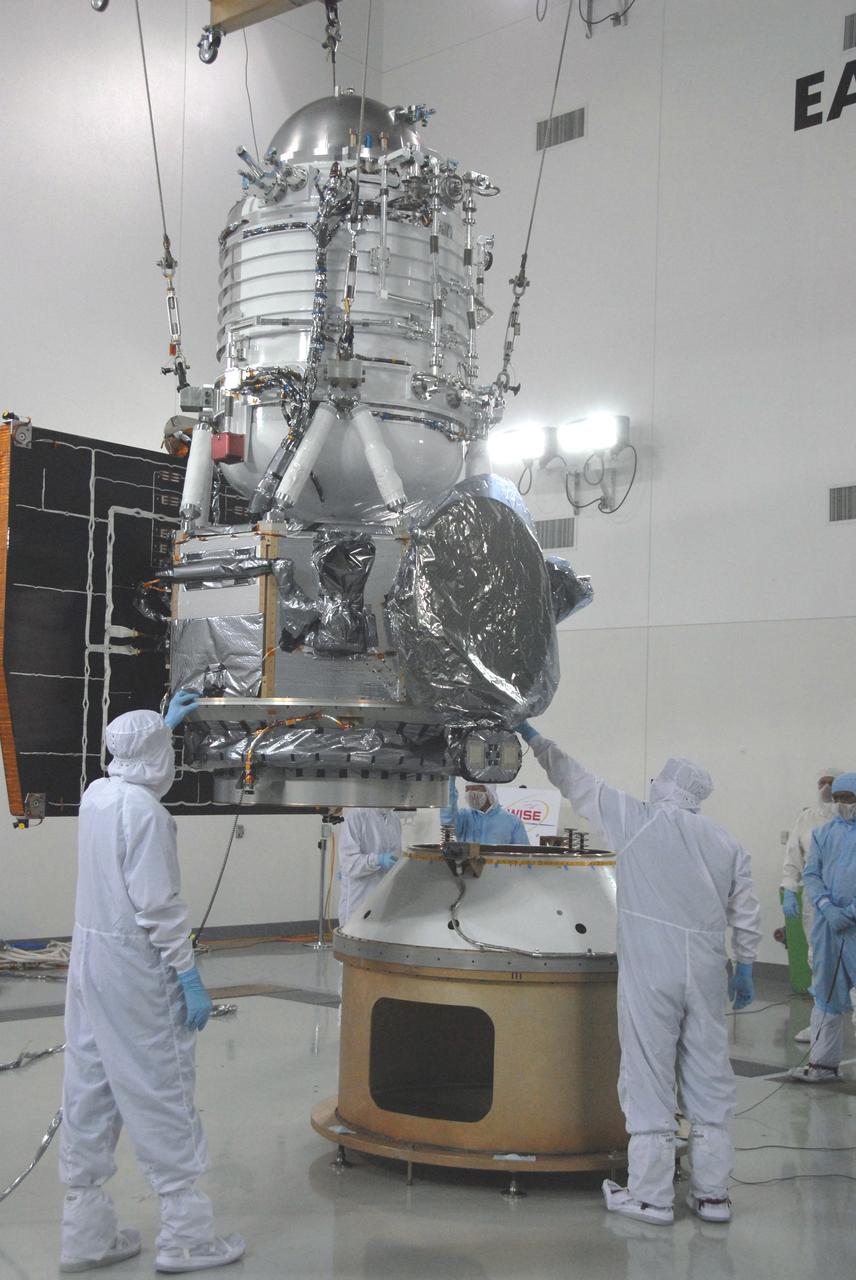
VANDENBERG AIR FORCE BASE, Calif. -- At the Astrotech processing facility on Vandenberg Air Force Base in California, workers guide NASA's Wide-field Infrared Survey Explorer, or WISE, as it is lowered by crane toward its Payload Attach Fitting for mating. The satellite will survey the entire sky at infrared wavelengths, creating a cosmic clearinghouse of hundreds of millions of objects which will be catalogued and provide a vast storehouse of knowledge about the solar system, the Milky Way, and the universe. Launch is scheduled for Dec. 7. Photo credit: NASA/Doug Kolkow
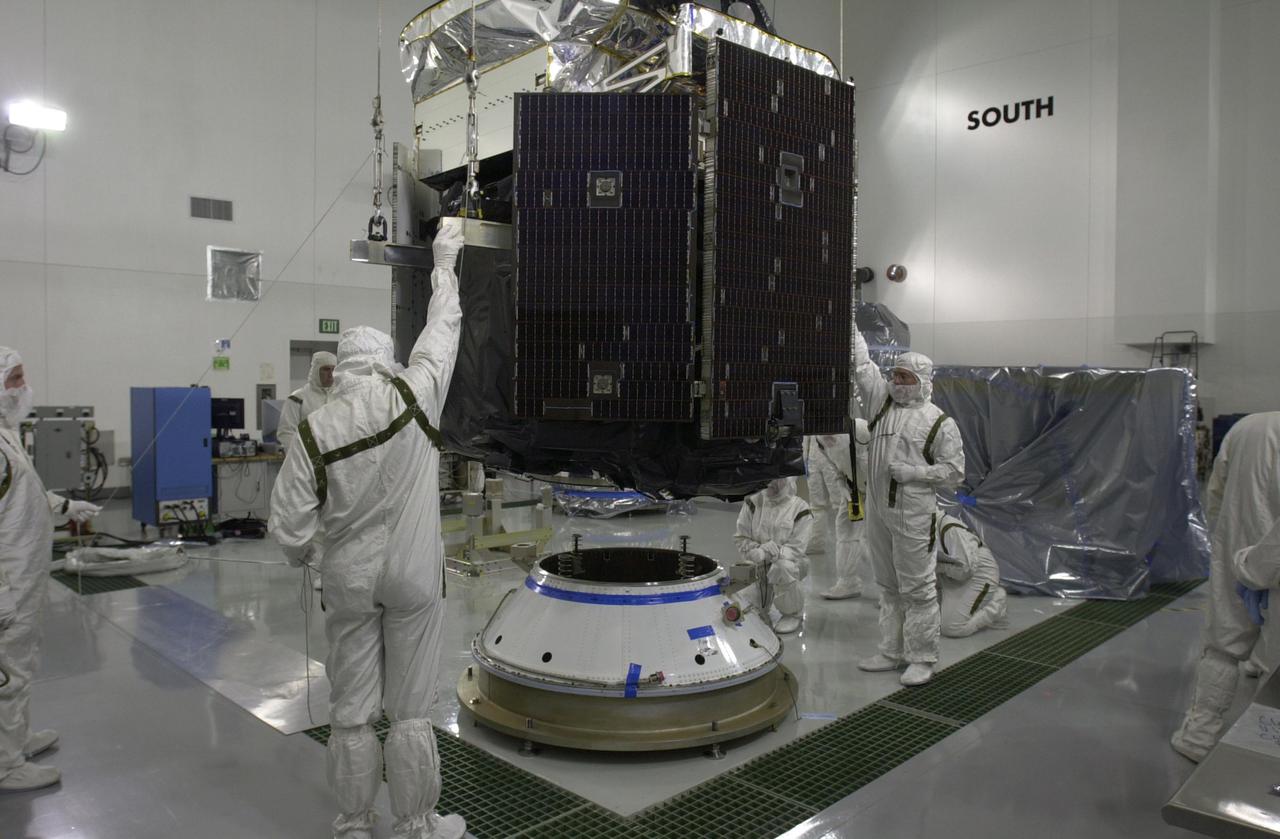
KENNEDY SPACE CENTER, FLA. -- Technicians position NASA's CloudSat spacecraft onto a Delta payload attach fitting in a clean room at Vandenberg Air Force Base, Calif. CALIPSO stands for Cloud-Aerosol Lidar and Infrared Pathfinder Satellite Observation. CALIPSO and CloudSat are highly complementary satellites and will be launched together. They will provide never-before-seen 3-D perspectives of how clouds and aerosols form, evolve, and affect weather and climate. CALIPSO and CloudSat will fly in formation with three other satellites in the A-train constellation to enhance understanding of our climate system. Launch of CALIPSO_CloudSat aboard a Boeing Delta II rocket is scheduled for 3:01 a.m. PDT Sept. 29.
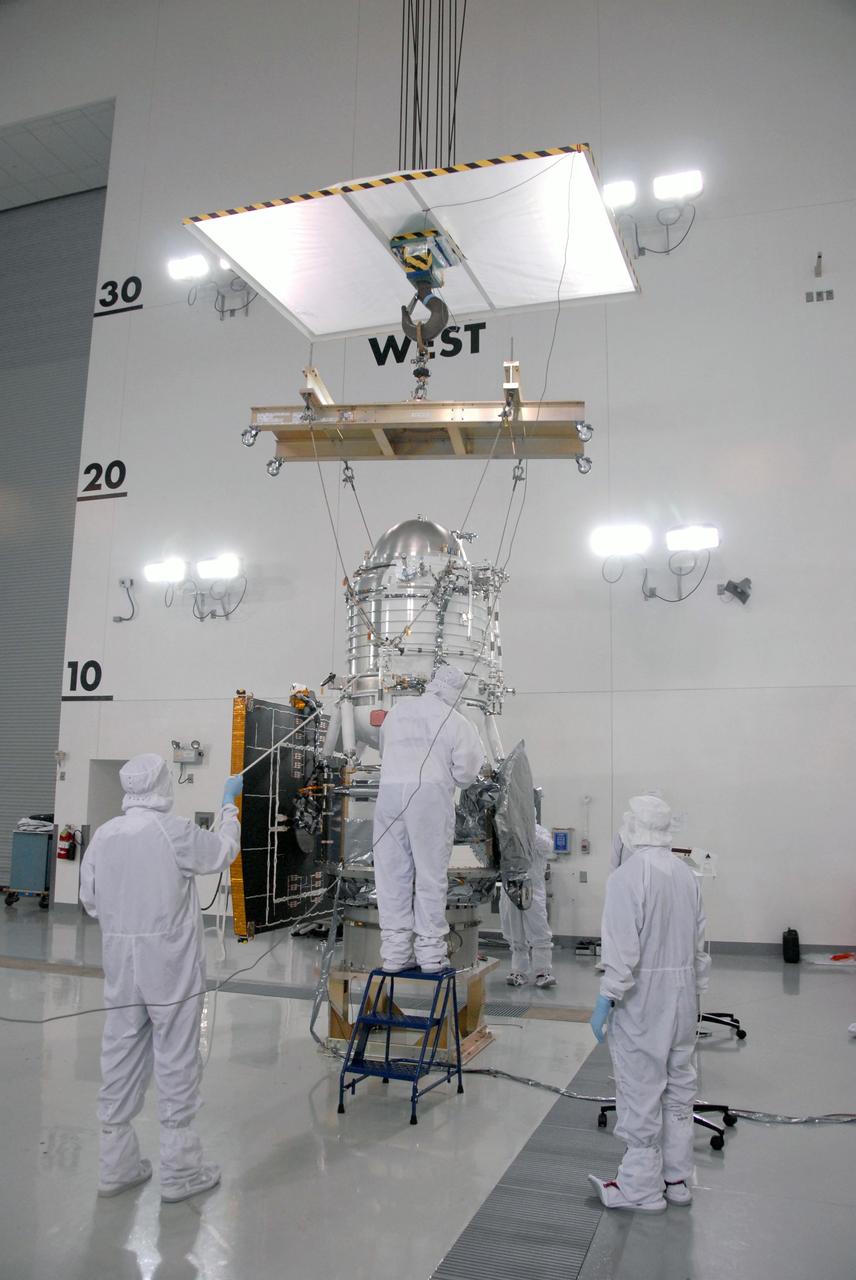
VANDENBERG AIR FORCE BASE, Calif. -- At the Astrotech processing facility on Vandenberg Air Force Base in California, workers prepare to lift NASA's Wide-field Infrared Survey Explorer, or WISE, for its move from the test stand for mating to its Payload Attach Fitting. The satellite will survey the entire sky at infrared wavelengths, creating a cosmic clearinghouse of hundreds of millions of objects which will be catalogued and provide a vast storehouse of knowledge about the solar system, the Milky Way, and the universe. Launch is scheduled for Dec. 7. Photo credit: NASA/Doug Kolkow
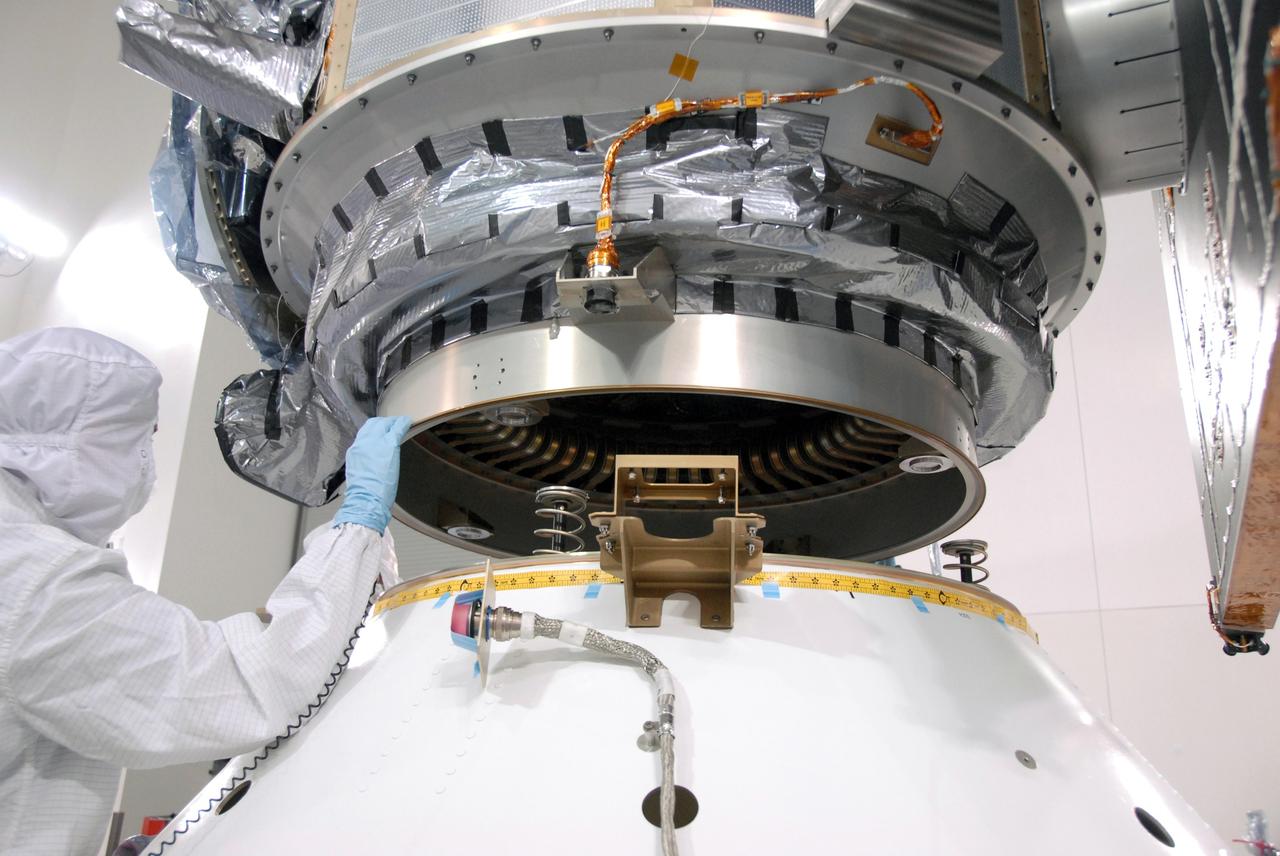
VANDENBERG AIR FORCE BASE, Calif. -- At the Astrotech processing facility on Vandenberg Air Force Base in California, workers guide NASA's Wide-field Infrared Survey Explorer, or WISE, into position for mating with its Payload Attach Fitting. The satellite will survey the entire sky at infrared wavelengths, creating a cosmic clearinghouse of hundreds of millions of objects which will be catalogued and provide a vast storehouse of knowledge about the solar system, the Milky Way, and the universe. Launch is scheduled for Dec. 7. Photo credit: NASA/Doug Kolkow
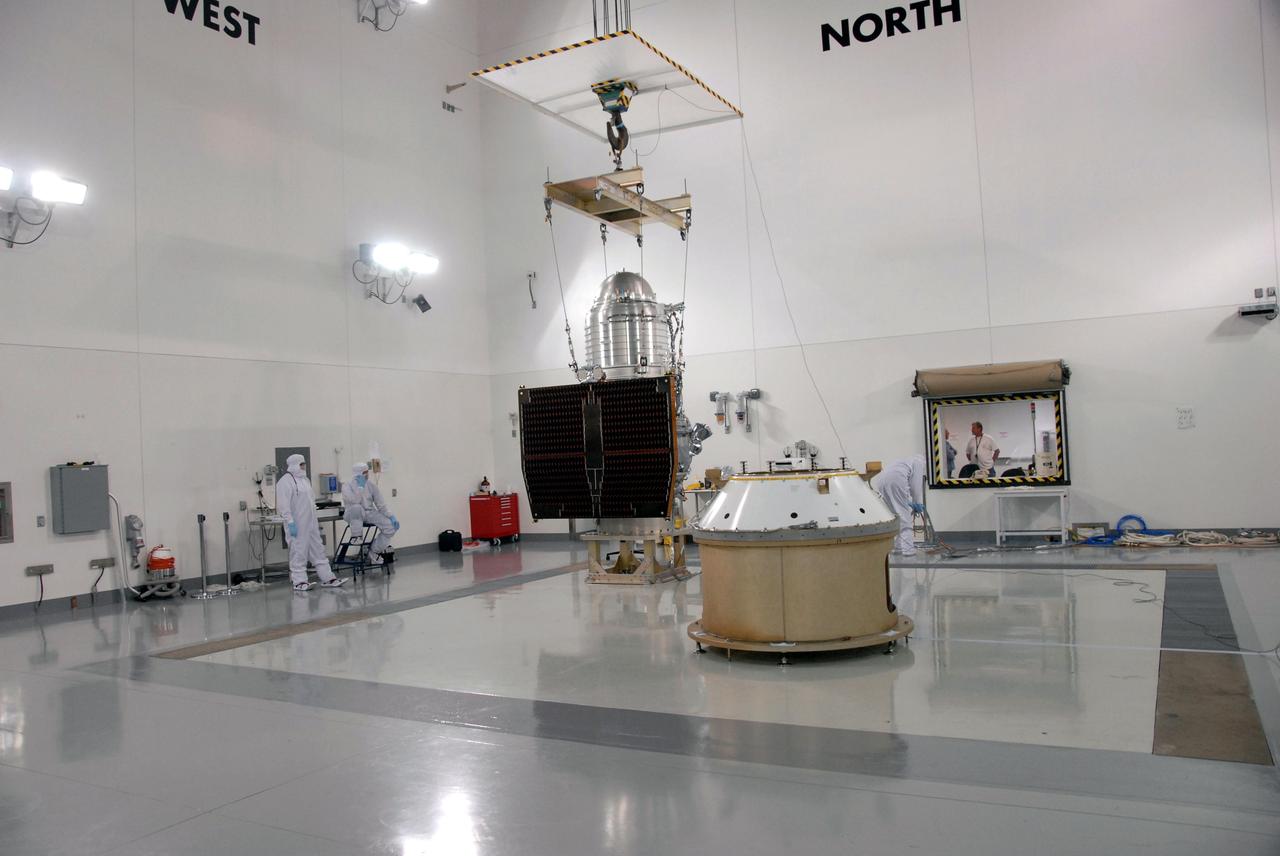
VANDENBERG AIR FORCE BASE, Calif. -- At the Astrotech processing facility on Vandenberg Air Force Base in California, NASA's Wide-field Infrared Survey Explorer, or WISE, is prepared to be lifted by crane from its test stand for mating to its Payload Attach Fitting, at right. The satellite will survey the entire sky at infrared wavelengths, creating a cosmic clearinghouse of hundreds of millions of objects which will be catalogued and provide a vast storehouse of knowledge about the solar system, the Milky Way, and the universe. Launch is scheduled for Dec. 7. Photo credit: NASA/Doug Kolkow
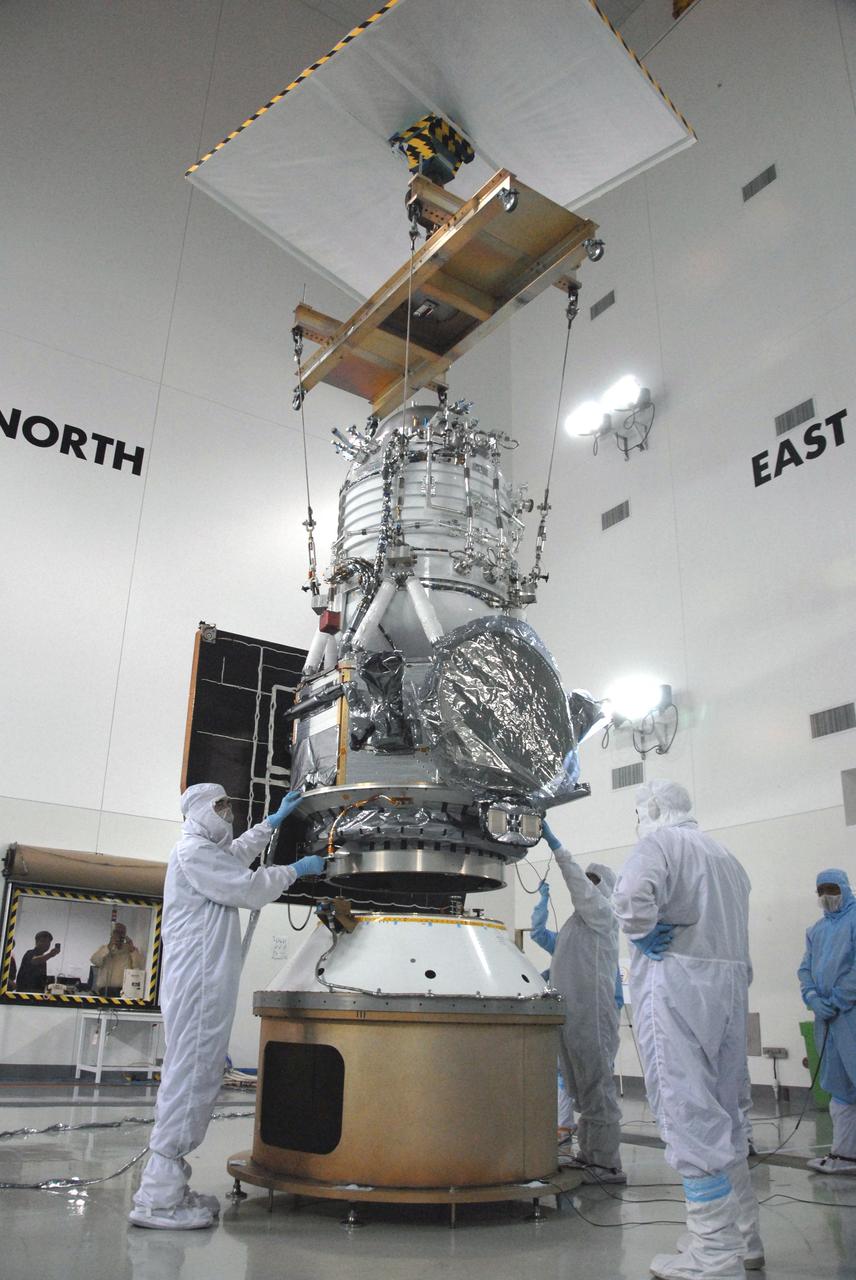
VANDENBERG AIR FORCE BASE, Calif. -- At the Astrotech processing facility on Vandenberg Air Force Base in California, workers guide NASA's Wide-field Infrared Survey Explorer, or WISE, as it is lowered by crane onto its Payload Attach Fitting for mating. The satellite will survey the entire sky at infrared wavelengths, creating a cosmic clearinghouse of hundreds of millions of objects which will be catalogued and provide a vast storehouse of knowledge about the solar system, the Milky Way, and the universe. Launch is scheduled for Dec. 7. Photo credit: NASA/Doug Kolkow
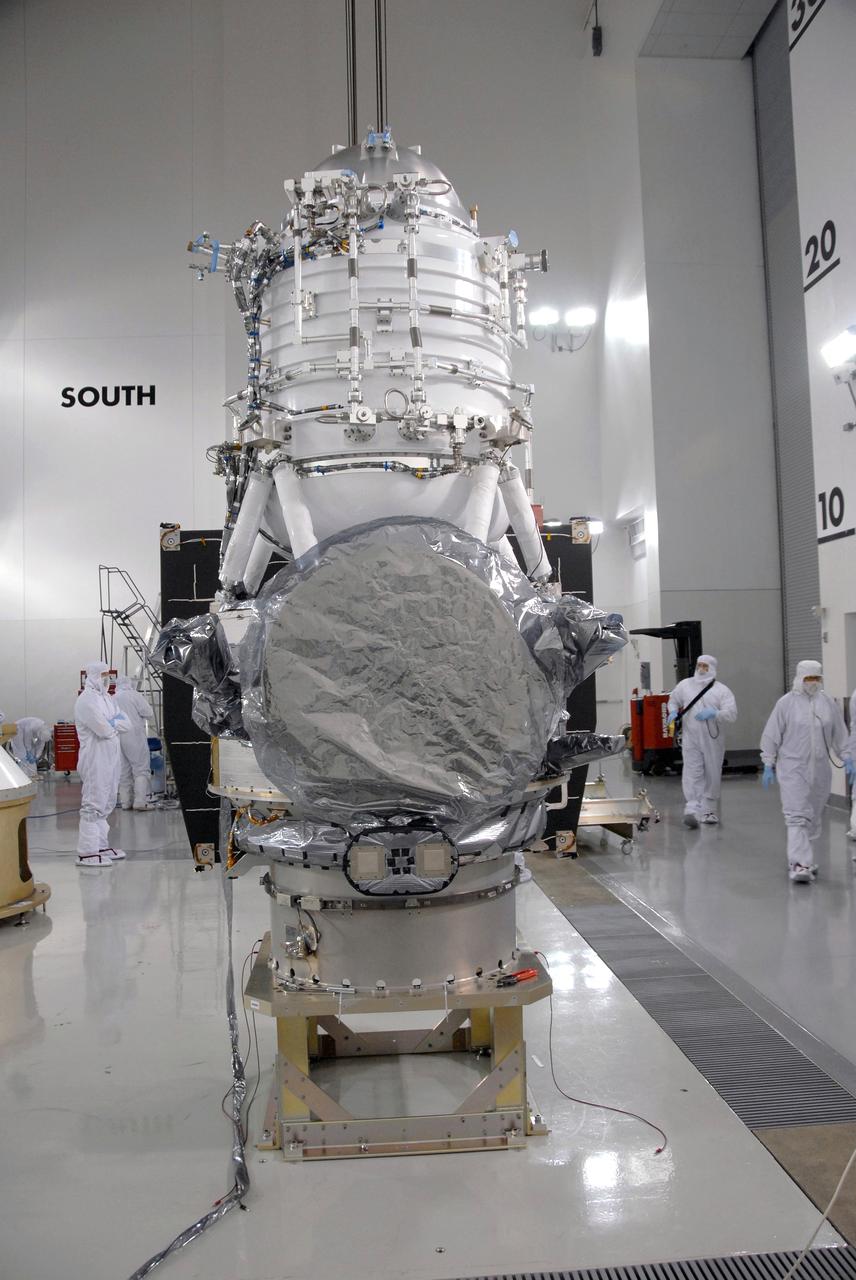
VANDENBERG AIR FORCE BASE, Calif. -- At the Astrotech processing facility on Vandenberg Air Force Base in California, workers prepare NASA's Wide-field Infrared Survey Explorer, or WISE, for its move from the test stand for mating to the Payload Attach Fitting. The satellite will survey the entire sky at infrared wavelengths, creating a cosmic clearinghouse of hundreds of millions of objects which will be catalogued and provide a vast storehouse of knowledge about the solar system, the Milky Way, and the universe. Launch is scheduled for Dec. 7. Photo credit: NASA/Doug Kolkow
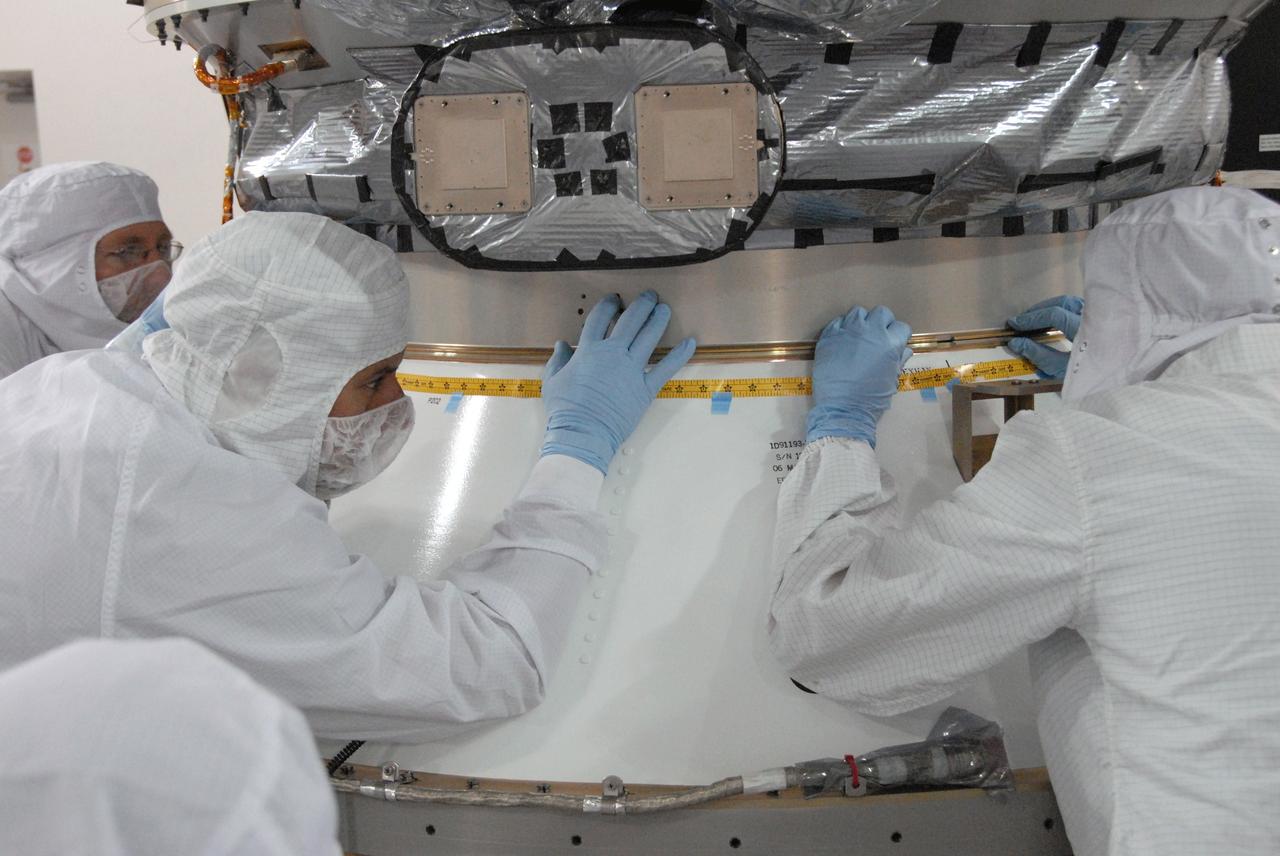
VANDENBERG AIR FORCE BASE, Calif. -- At the Astrotech processing facility on Vandenberg Air Force Base in California, workers mate NASA's Wide-field Infrared Survey Explorer, or WISE, to its Payload Attach Fitting. The satellite will survey the entire sky at infrared wavelengths, creating a cosmic clearinghouse of hundreds of millions of objects which will be catalogued and provide a vast storehouse of knowledge about the solar system, the Milky Way, and the universe. Launch is scheduled for Dec. 7. Photo credit: NASA/Doug Kolkow
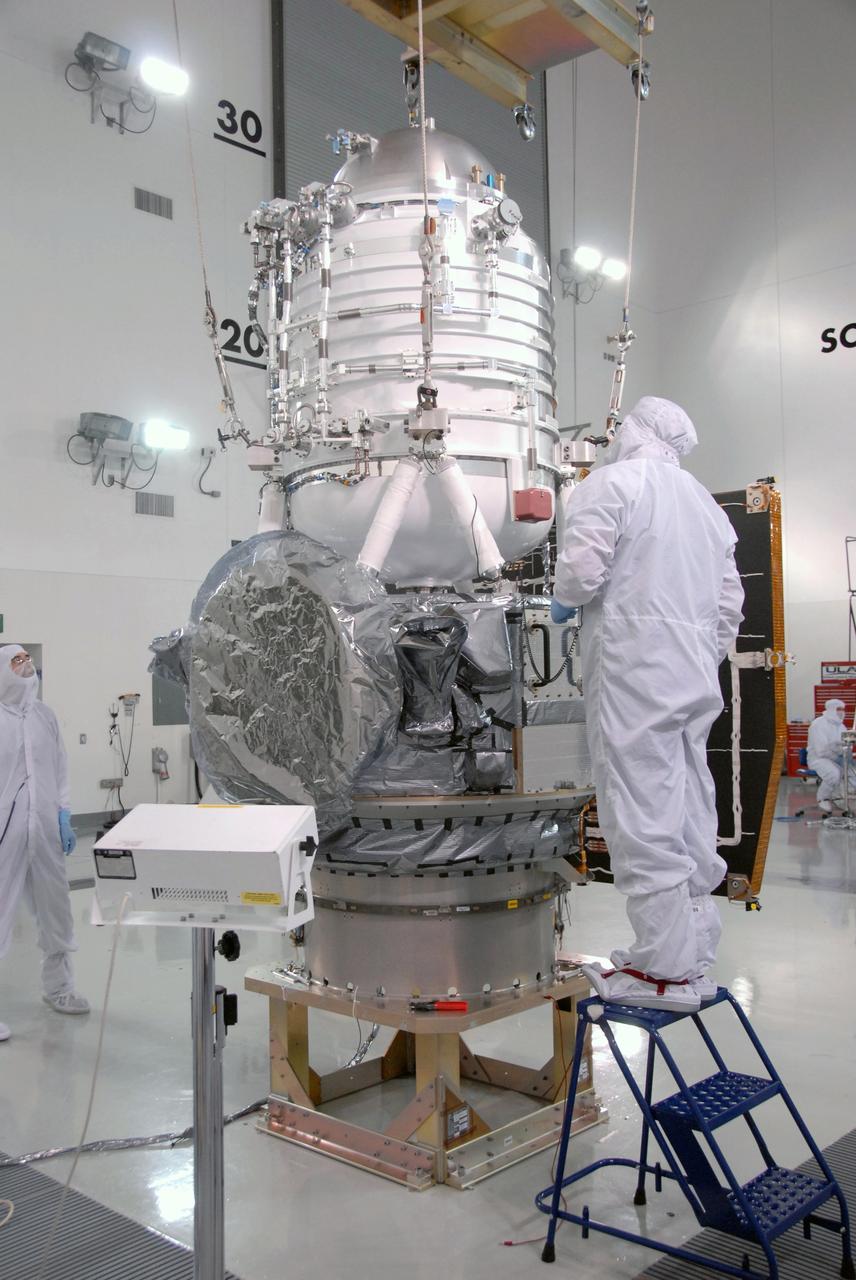
VANDENBERG AIR FORCE BASE, Calif. -- At the Astrotech processing facility on Vandenberg Air Force Base in California, workers prepare to lift NASA's Wide-field Infrared Survey Explorer, or WISE, for its move from the test stand for mating to the Payload Attach Fitting. The satellite will survey the entire sky at infrared wavelengths, creating a cosmic clearinghouse of hundreds of millions of objects which will be catalogued and provide a vast storehouse of knowledge about the solar system, the Milky Way, and the universe. Launch is scheduled for Dec. 7. Photo credit: NASA/Doug Kolkow
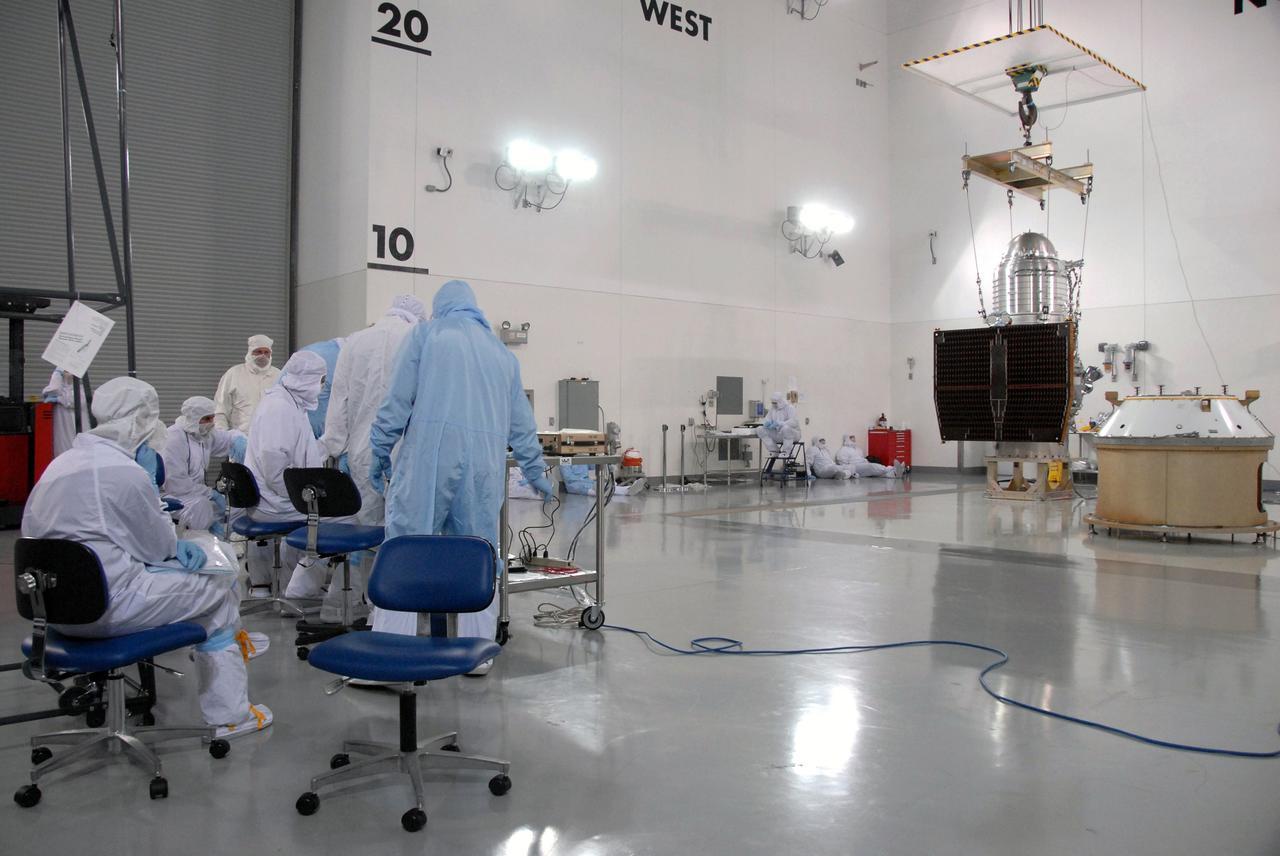
VANDENBERG AIR FORCE BASE, Calif. -- At the Astrotech processing facility on Vandenberg Air Force Base in California, workers prepare to lift NASA's Wide-field Infrared Survey Explorer, or WISE, by crane from its test stand for mating to its Payload Attach Fitting, at right. The satellite will survey the entire sky at infrared wavelengths, creating a cosmic clearinghouse of hundreds of millions of objects which will be catalogued and provide a vast storehouse of knowledge about the solar system, the Milky Way, and the universe. Launch is scheduled for Dec. 7. Photo credit: NASA/Doug Kolkow
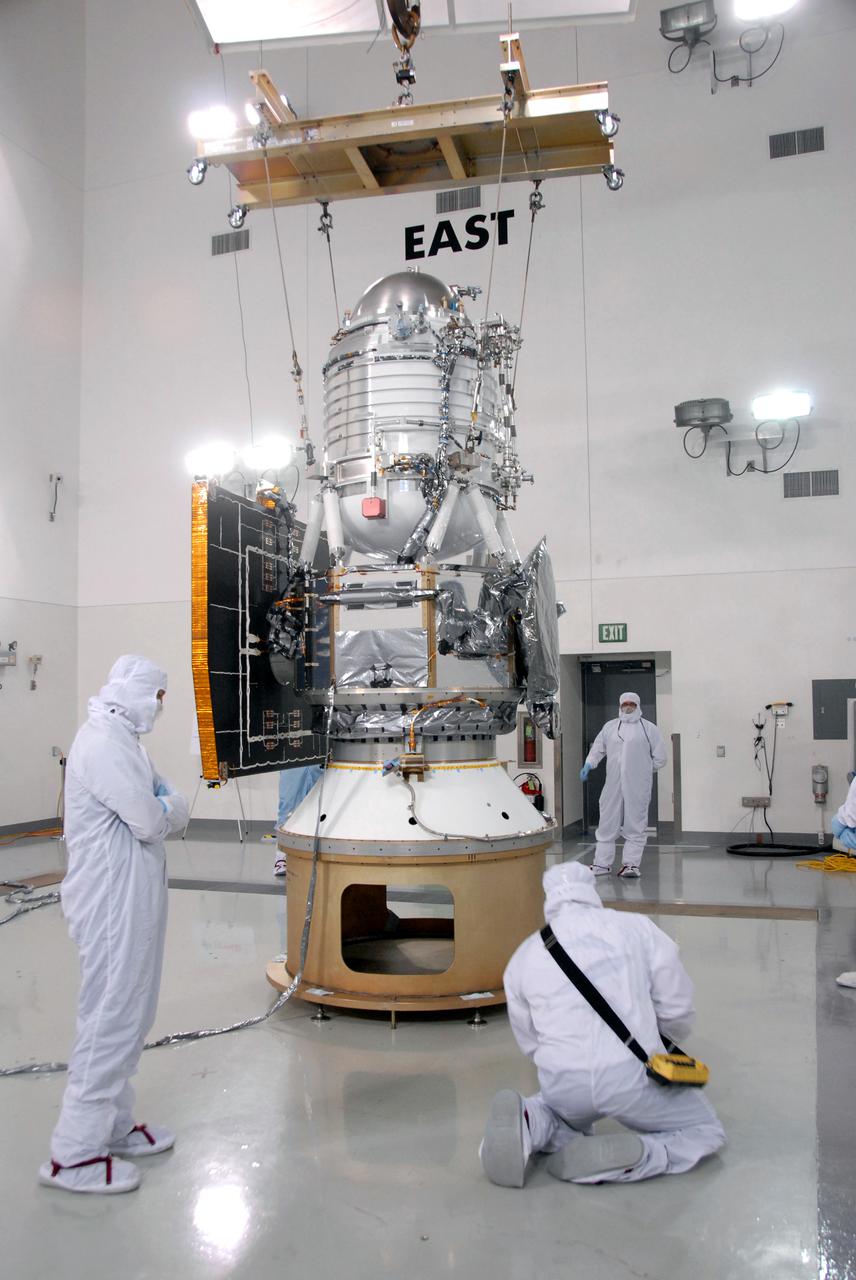
VANDENBERG AIR FORCE BASE, Calif. -- At the Astrotech processing facility on Vandenberg Air Force Base in California, NASA's Wide-field Infrared Survey Explorer, or WISE, is mated to its Payload Attach Fitting. The satellite will survey the entire sky at infrared wavelengths, creating a cosmic clearinghouse of hundreds of millions of objects which will be catalogued and provide a vast storehouse of knowledge about the solar system, the Milky Way, and the universe. Launch is scheduled for Dec. 7. Photo credit: NASA_Doug Kolkow
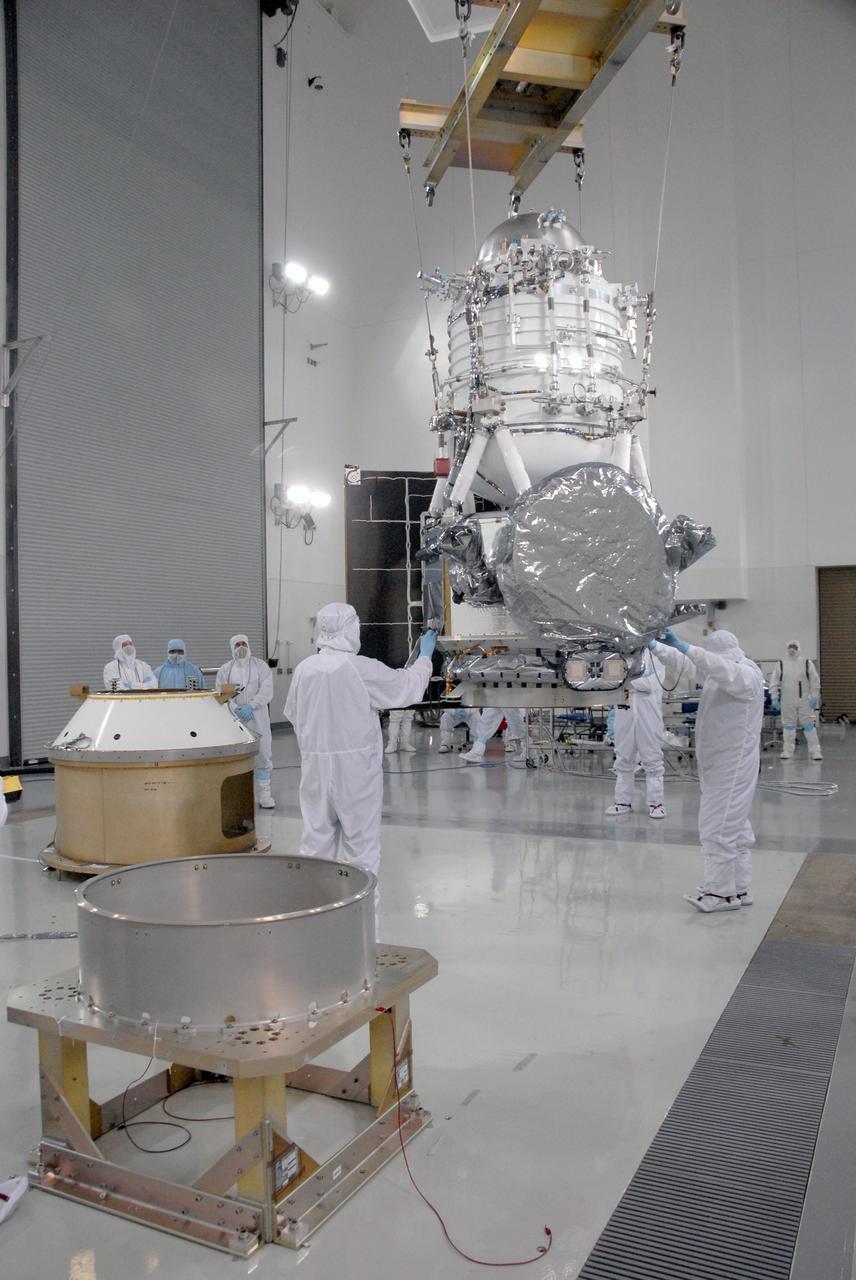
VANDENBERG AIR FORCE BASE, Calif. -- At the Astrotech processing facility on Vandenberg Air Force Base in California, workers guide NASA's Wide-field Infrared Survey Explorer, or WISE, being lifted by crane from its test stand for mating to its Payload Attach Fitting, in the background at left. The satellite will survey the entire sky at infrared wavelengths, creating a cosmic clearinghouse of hundreds of millions of objects which will be catalogued and provide a vast storehouse of knowledge about the solar system, the Milky Way, and the universe. Launch is scheduled for Dec. 7. Photo credit: NASA/Doug Kolkow
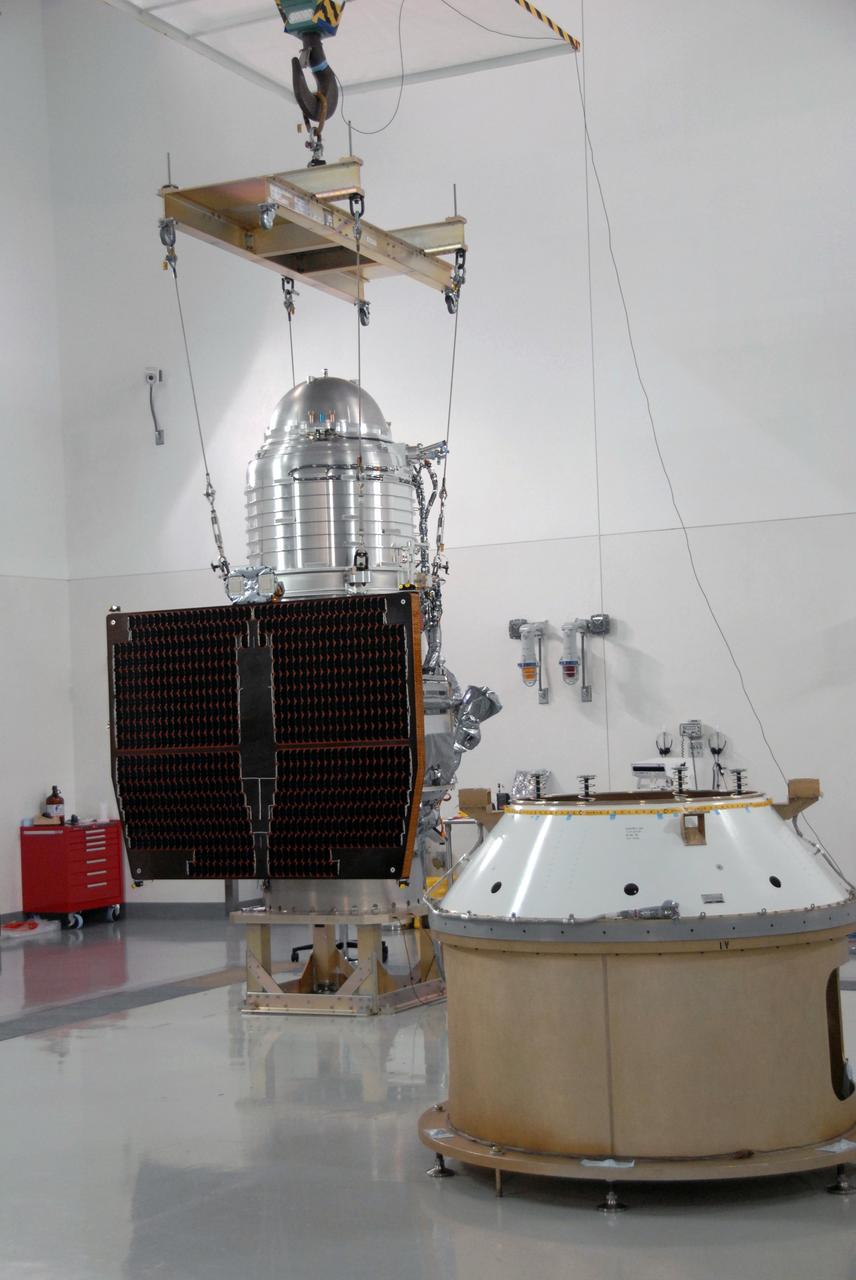
VANDENBERG AIR FORCE BASE, Calif. -- At the Astrotech processing facility on Vandenberg Air Force Base in California, NASA's Wide-field Infrared Survey Explorer, or WISE, is prepared to be lifted by crane from its test stand for mating to its Payload Attach Fitting, at right. The satellite will survey the entire sky at infrared wavelengths, creating a cosmic clearinghouse of hundreds of millions of objects which will be catalogued and provide a vast storehouse of knowledge about the solar system, the Milky Way, and the universe. Launch is scheduled for Dec. 7. Photo credit: NASA/Doug Kolkow
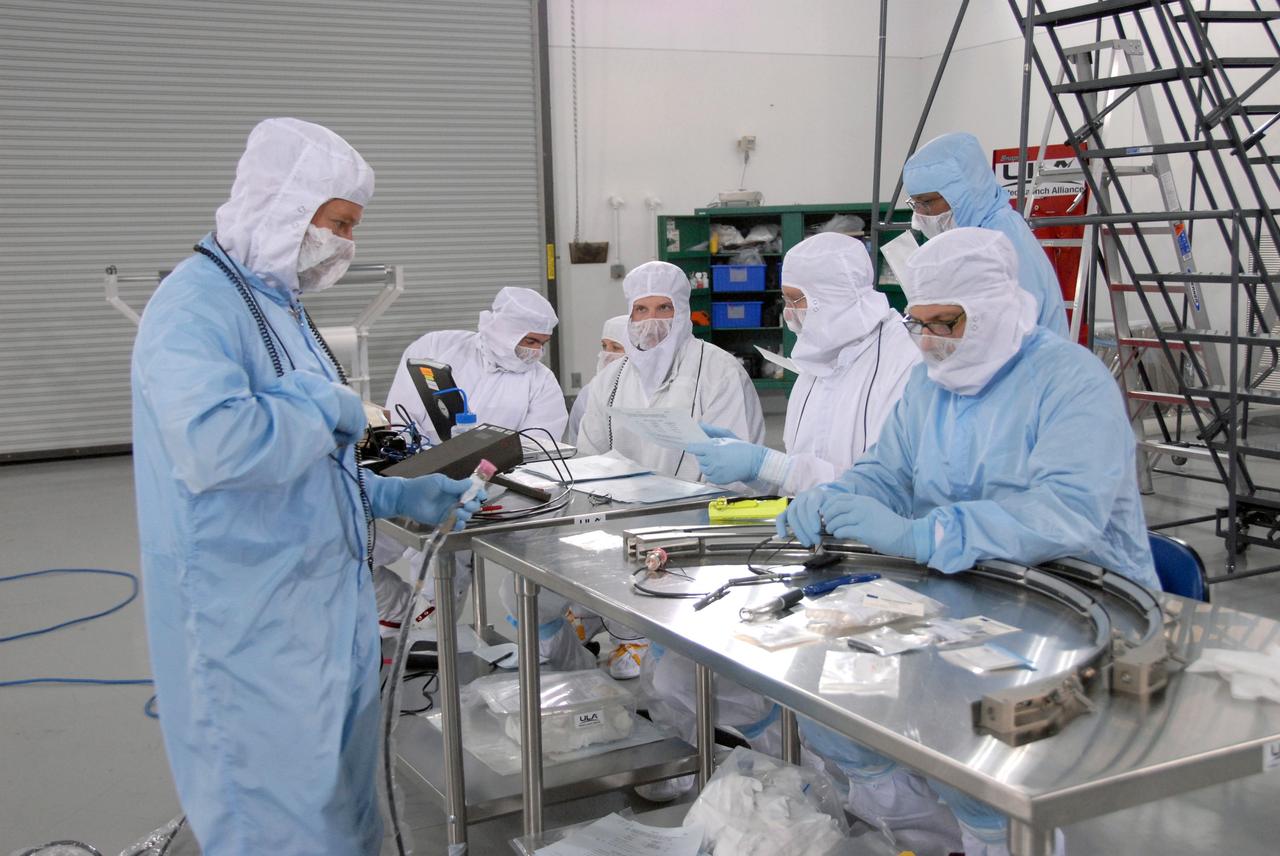
VANDENBERG AIR FORCE BASE, Calif. -- At the Astrotech processing facility on Vandenberg Air Force Base in California, workers prepare a payload adapter ring for NASA's Wide-field Infrared Survey Explorer, or WISE, in preparation for mating to its Payload Attach Fitting. The satellite will survey the entire sky at infrared wavelengths, creating a cosmic clearinghouse of hundreds of millions of objects which will be catalogued and provide a vast storehouse of knowledge about the solar system, the Milky Way, and the universe. Launch is scheduled for Dec. 7. Photo credit: NASA/Doug Kolkow
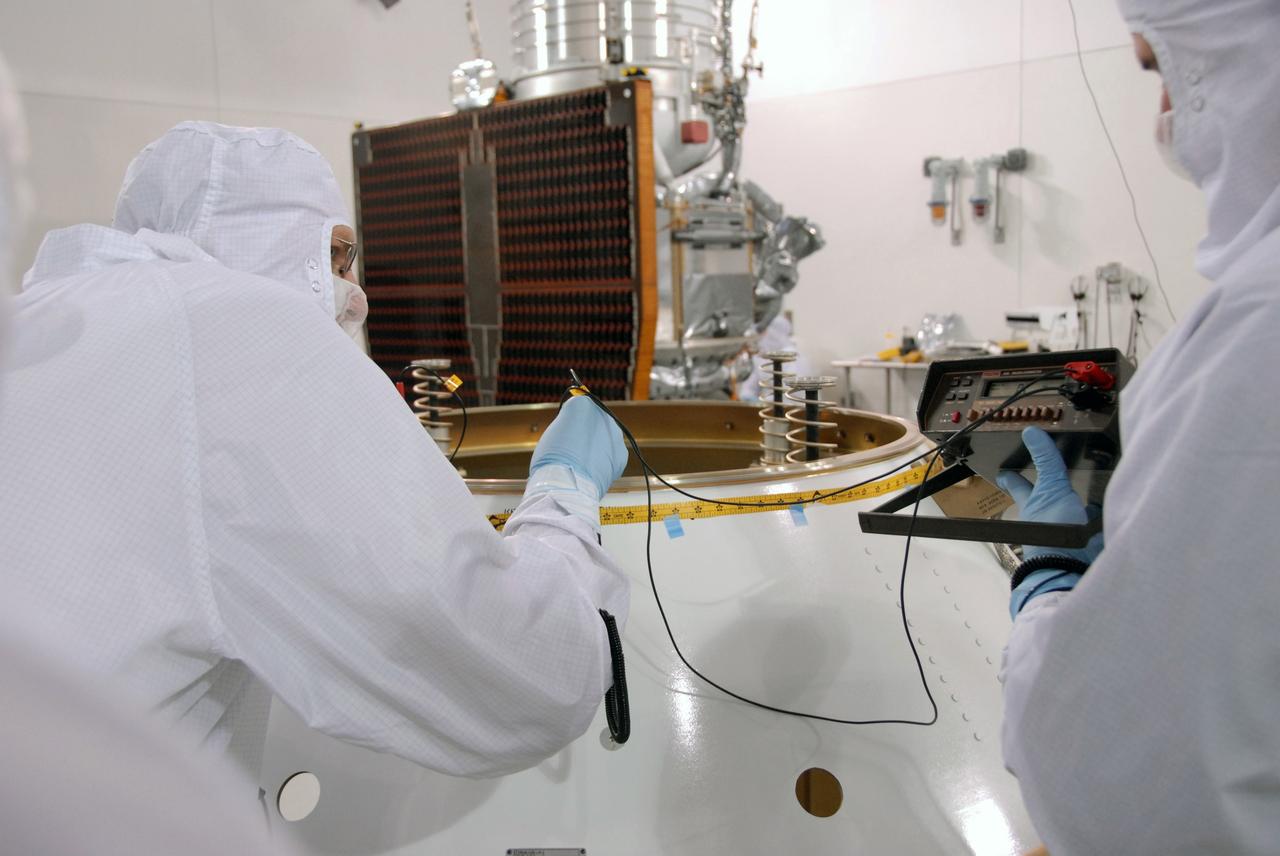
VANDENBERG AIR FORCE BASE, Calif. -- At the Astrotech processing facility on Vandenberg Air Force Base in California, workers evaluate the readiness of the Payload Attach Fitting for mating to NASA's Wide-field Infrared Survey Explorer, or WISE. The satellite will survey the entire sky at infrared wavelengths, creating a cosmic clearinghouse of hundreds of millions of objects which will be catalogued and provide a vast storehouse of knowledge about the solar system, the Milky Way, and the universe. Launch is scheduled for Dec. 7. Photo credit: NASA/Doug Kolkow
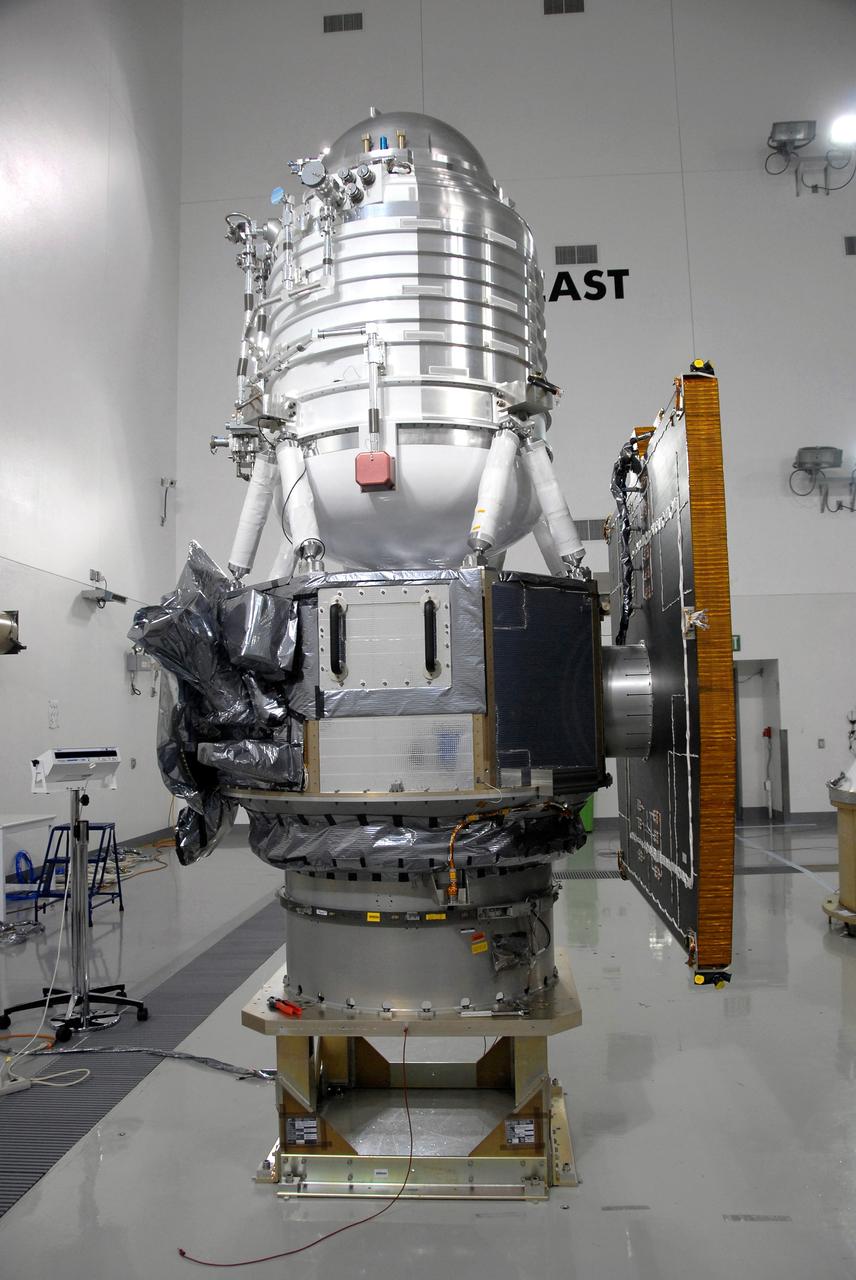
VANDENBERG AIR FORCE BASE, Calif. -- At the Astrotech processing facility on Vandenberg Air Force Base in California, NASA's Wide-field Infrared Survey Explorer, or WISE, is prepared for its move from the test stand for mating to the Payload Attach Fitting. The satellite will survey the entire sky at infrared wavelengths, creating a cosmic clearinghouse of hundreds of millions of objects which will be catalogued and provide a vast storehouse of knowledge about the solar system, the Milky Way, and the universe. Launch is scheduled for Dec. 7. Photo credit: NASA/Doug Kolkow
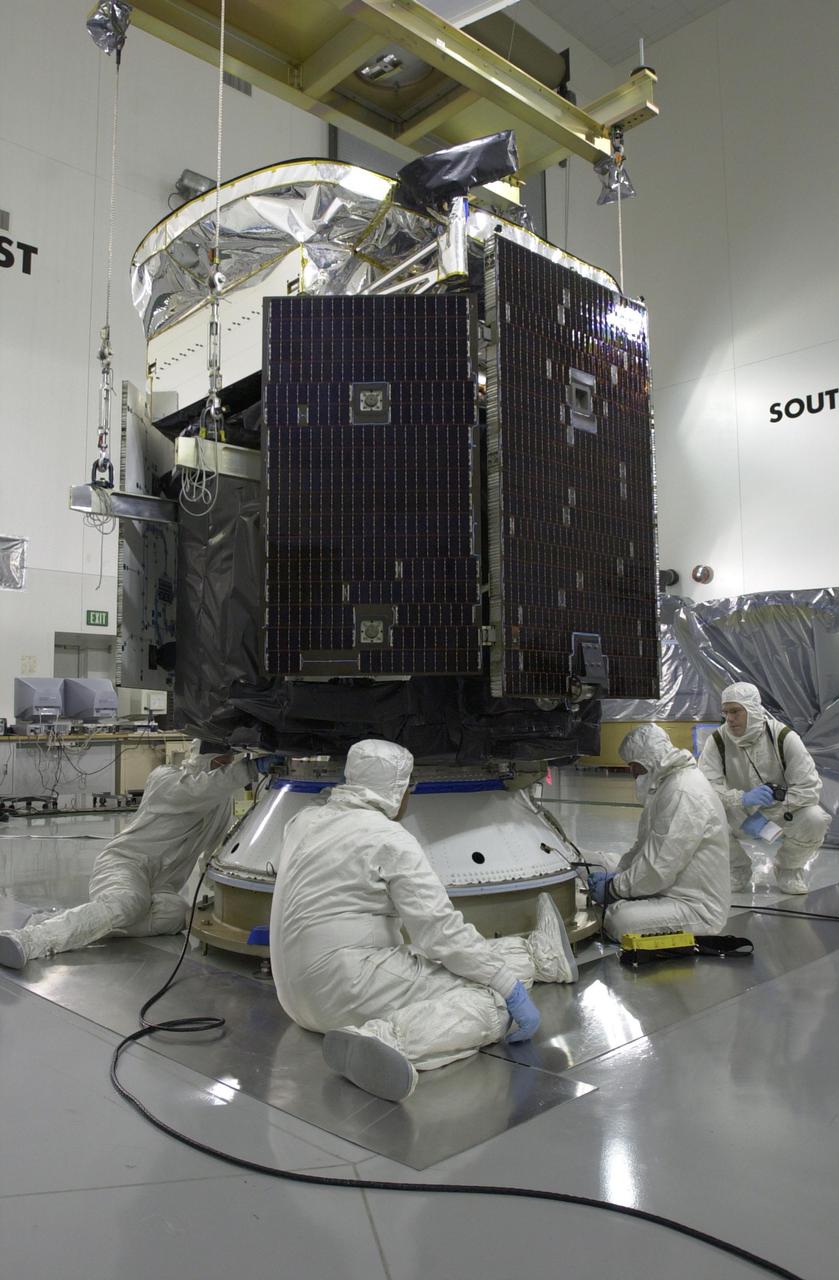
KENNEDY SPACE CENTER, FLA. -- Technicians secure NASA's CloudSat spacecraft to a Delta payload attach fitting in a clean room at Vandenberg Air Force Base, Calif. CALIPSO stands for Cloud-Aerosol Lidar and Infrared Pathfinder Satellite Observation. CALIPSO and CloudSat are highly complementary satellites and will be launched together. They will provide never-before-seen 3-D perspectives of how clouds and aerosols form, evolve, and affect weather and climate. CALIPSO and CloudSat will fly in formation with three other satellites in the A-train constellation to enhance understanding of our climate system. Launch of CALIPSO_CloudSat aboard a Boeing Delta II rocket is scheduled for 3:01 a.m. PDT Sept. 29.