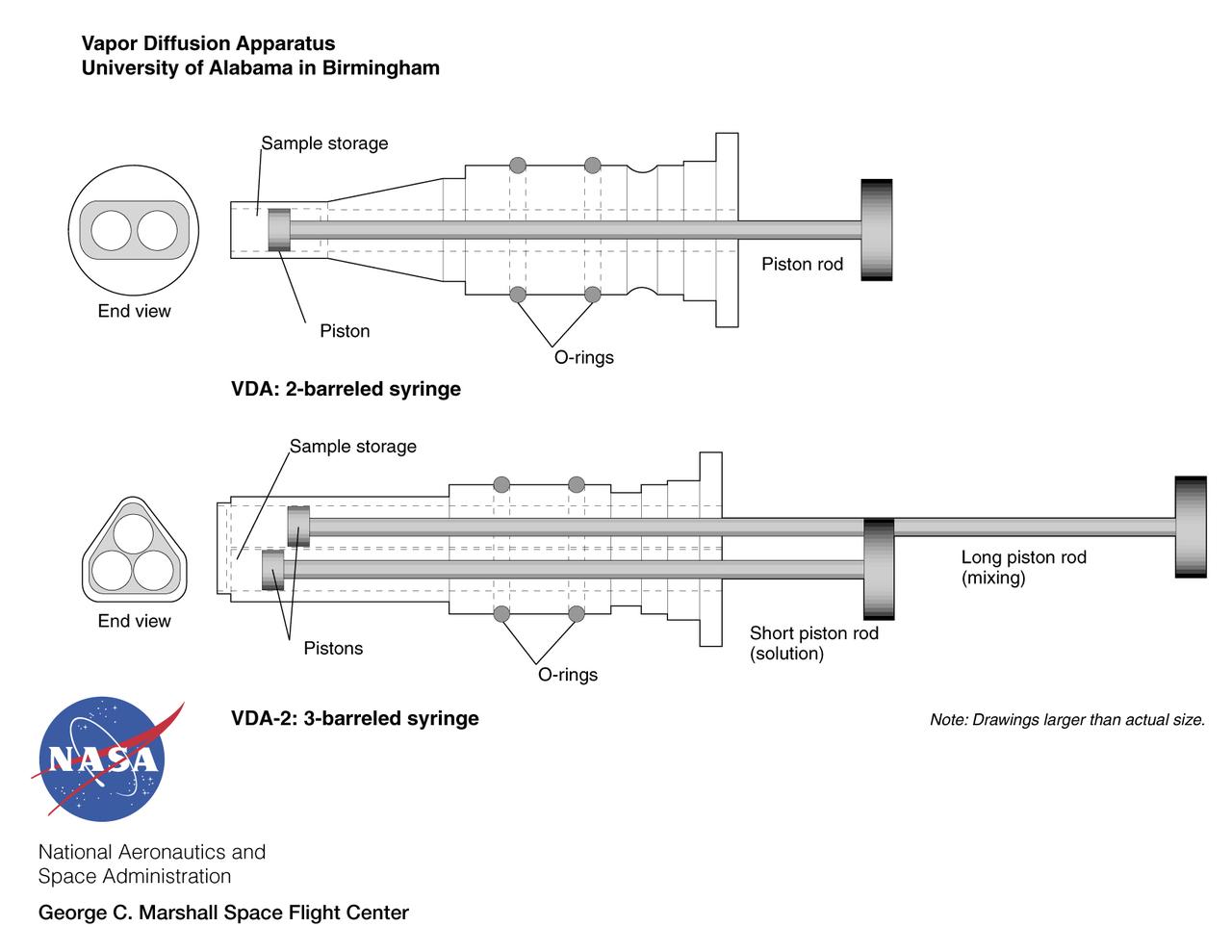
Vapor Diffusion Apparatus (VDA and VDA-2) was developed by the University of Alabama in Birmingham for NASA's Marshall Space Flight Center. In the original VDA, a protein solution and a precipitant are extruded by two plungers onto the tip of a small syringe and allowed to evaporate, raising the concentration and prompting protein molecules to crystallize. In the VDA-2 version, a third plunger was added to mix the two solutions before returning the mix to the syringe tip. The principal investigator is Dr. Larry Delucas of the University of Alabama in Birmingham
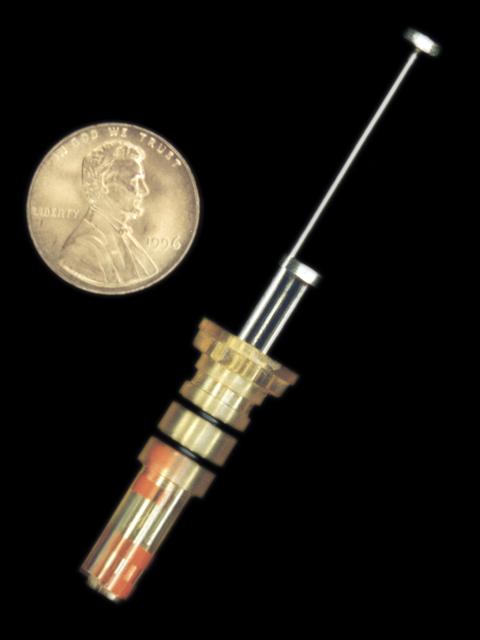
Vapor Diffusion Apparatus (VDA-2) was developed by the University of Alabama in Birmingham for NASA's Marshall Space Flight Center. In the original VDA, a protein solution and a precipitant are extruded by two plungers onto the tip of a small syringe and allowed to evaporate, raising the concentration and prompting protein molecules to crystallize. In the VDA-2 version, a third plunger was added to mix the two solutions before returning the mix to the syringe tip. The principal investigator is Dr. Larry Delucas of the University of Alabama in Birmingham.
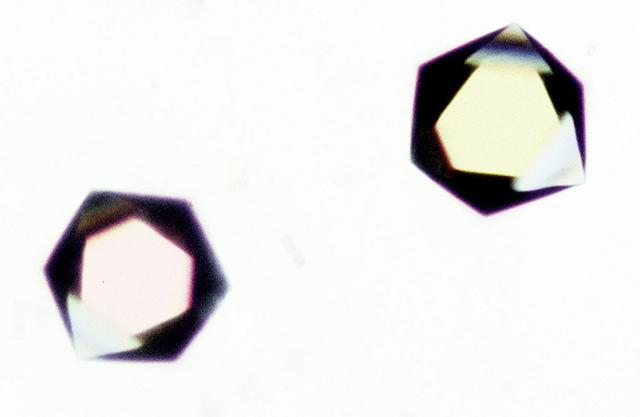
Crystals of Proteinase K complex grown in the VDA-2 (Vapor Diffusion Apparatus) hardware aboard MSL-1. Principal Investigator: Larry DeLucas
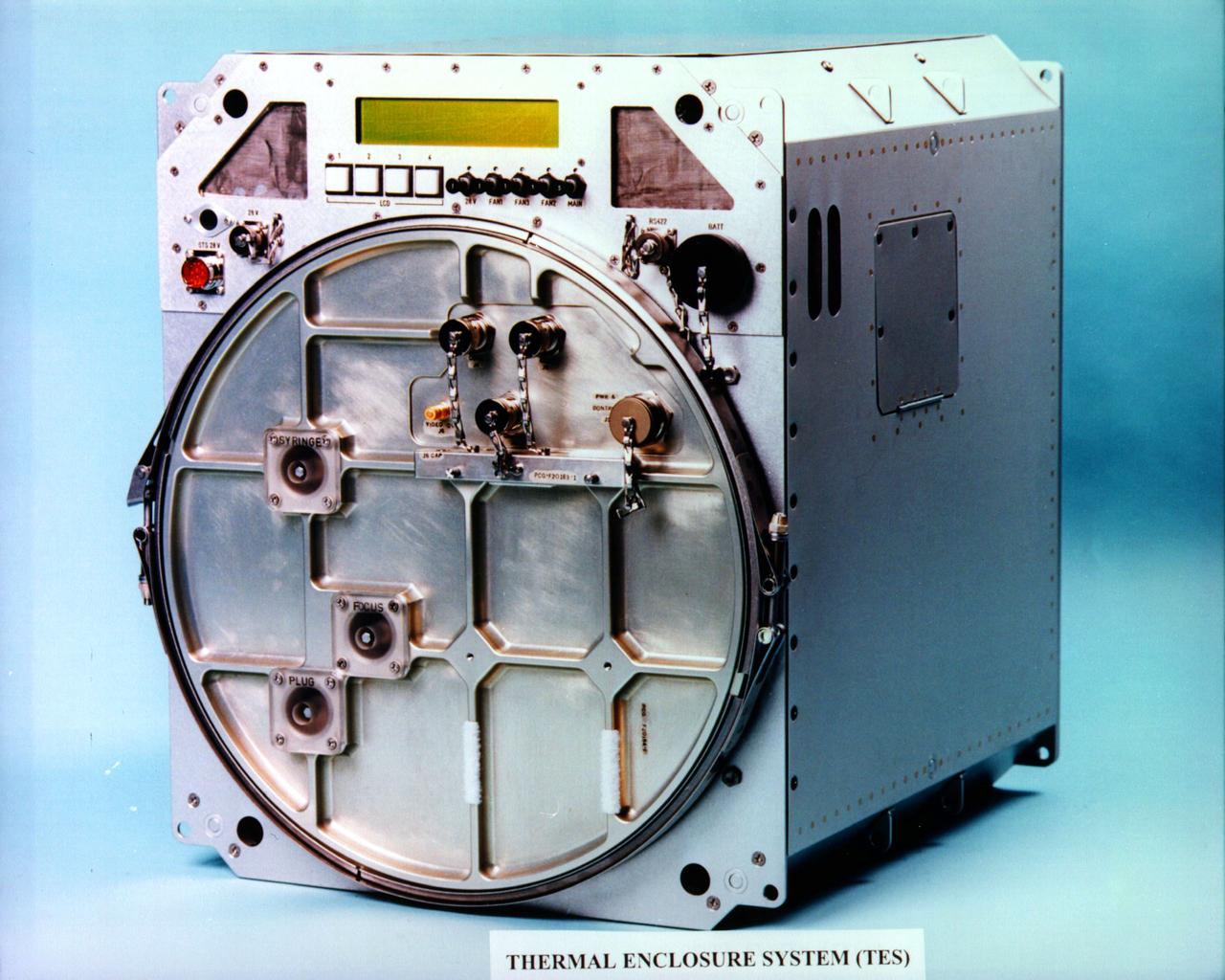
The Thermal Enclosure System (TES) provides thermal control for protein crystal growth experiments. The TES, housed in two middeck lockers on board the Space Shuttle, contains four Vapor Diffusion Apparatus (VDA) trays. Each can act as either a refrigerator or an incubator and its temperature can be controlled to within one-tenth degree C. The first flight of the TES was during USMP-2 (STS-62).
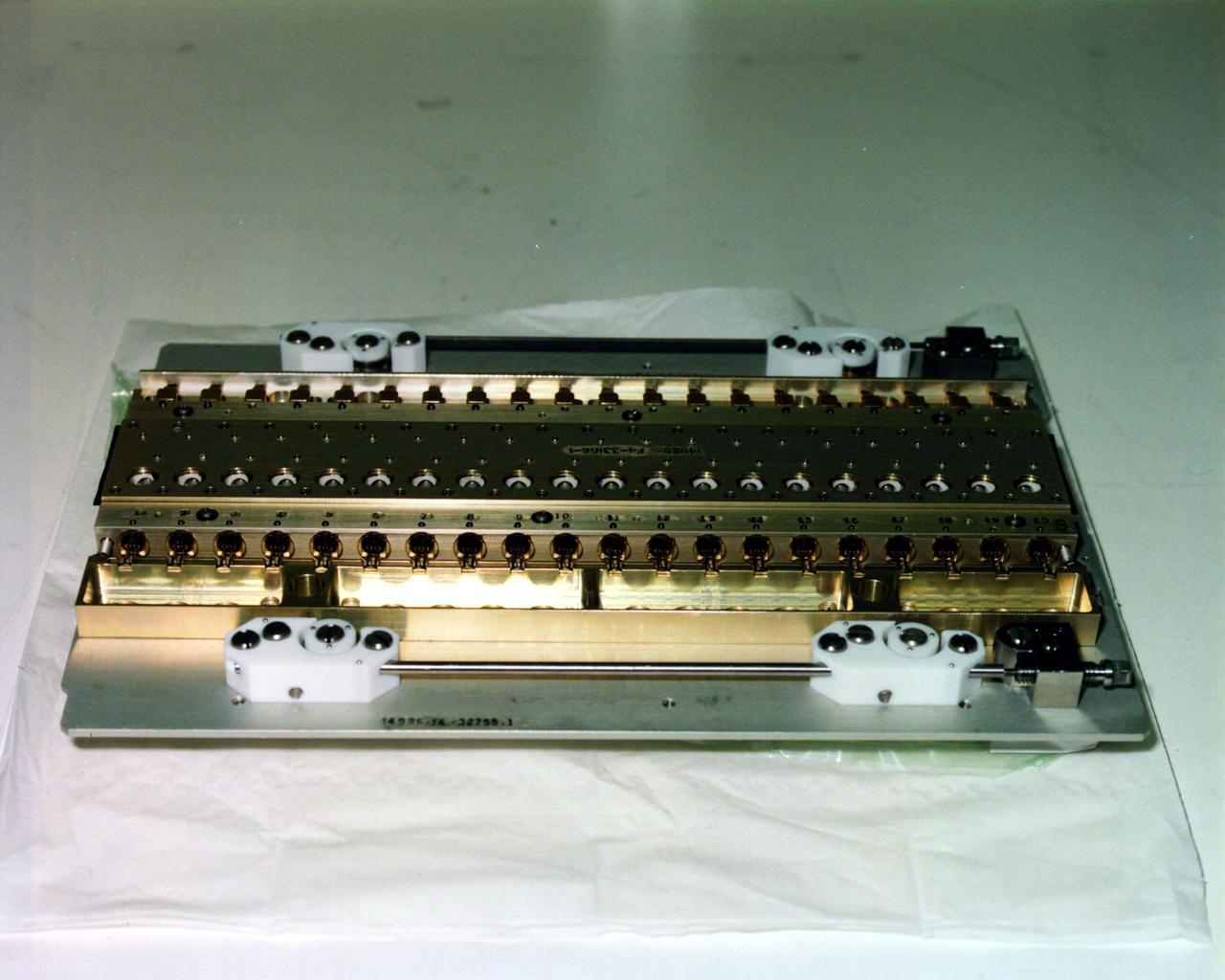
These Vapor Diffusion Apparatus (VDA) trays were first flown in the Thermal Enclosure System (TES) during the USMP-2 (STS-62) mission. Each tray can hold 20 protein crystal growth chambers. Each chamber contains a double-barrel syringe; one barrel holds protein crystal solution and the other holds precipitant agent solution. During the microgravity mission, a torque device is used to simultaneously retract the plugs in all 20 syringes. The two solutions in each chamber are then mixed. After mixing, droplets of the combined solutions are moved onto the syringe tips so vapor diffusion can begin. During the length of the mission, protein crystals are grown in the droplets. Shortly before the Shuttle's return to Earth, the experiment is deactivated by retracting the droplets containing protein crystals, back into the syringes.