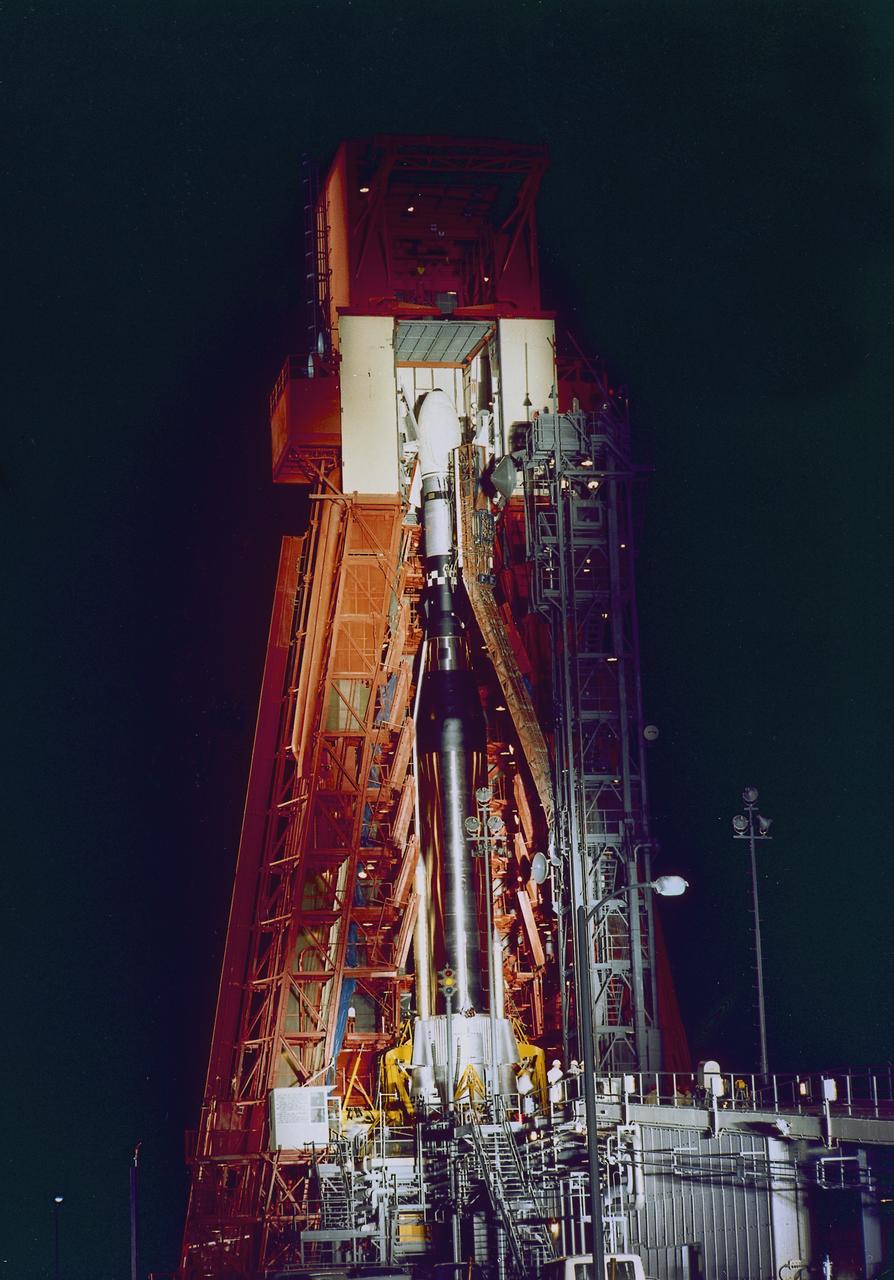
The Atlas/Agena launch vehicle carrying The Mariner-V spacecraft on launch pad on June 14, 1967. The Marina V mission was to explore the planet Venus.
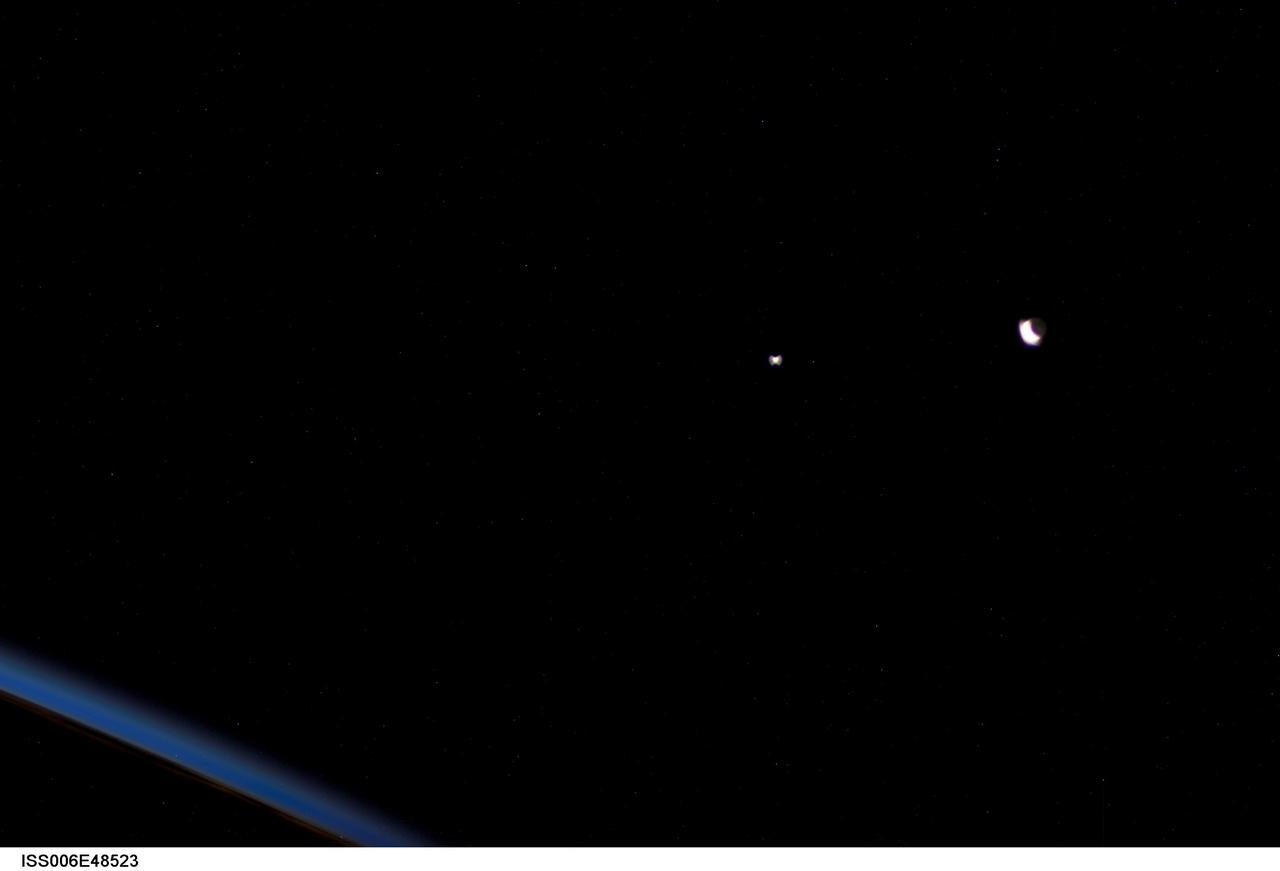
ISS006-E-48523 (28 April 2003) --- A crescent moon (right) and the planet Venus were photographed by an Expedition six crewmember onboard the International Space Station (ISS). As a result of overexposure, the dark part of the moon’s terrain is visible, which is faintly lit by Earthshine (sunlight reflected from our planet onto the moon). Earth’s horizon is visible in the lower left portion of this image.
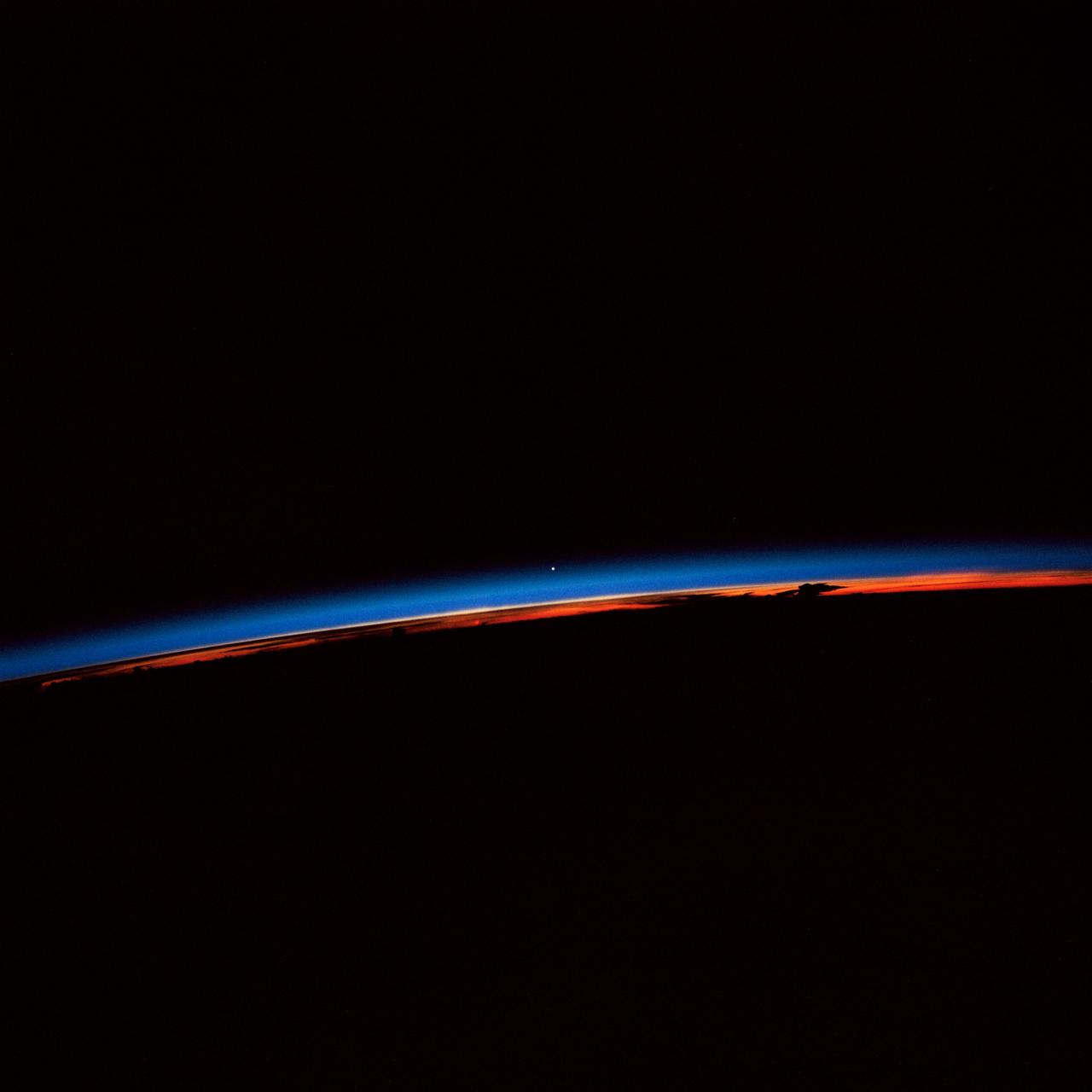
STS-30 Earth observation captured by crewmembers onboard Atlantis, Orbiter Vehicle (OV) 104, shows the sunset over the Earth as well as the planet Venus near the center of the frame. Jutting clouds are seen on the horizon, just beneath the blue strip of airglow.
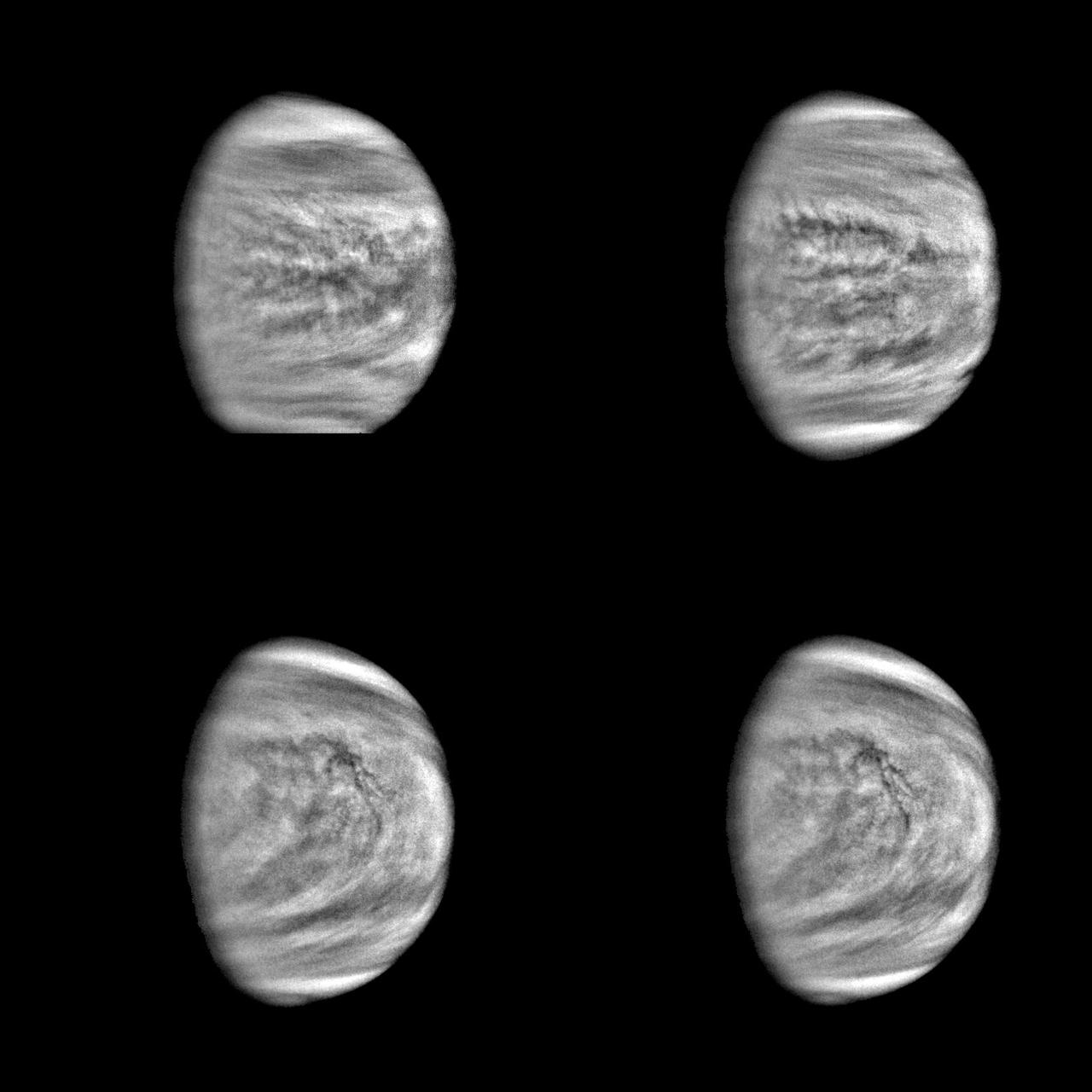
These are enhanced versions of four views of the planet Venus taken by NASA's Galileo Solid State Imaging System at distances ranging from 1.4 to 2 million miles as the spacecraft receded from Venus. http://photojournal.jpl.nasa.gov/catalog/PIA00110
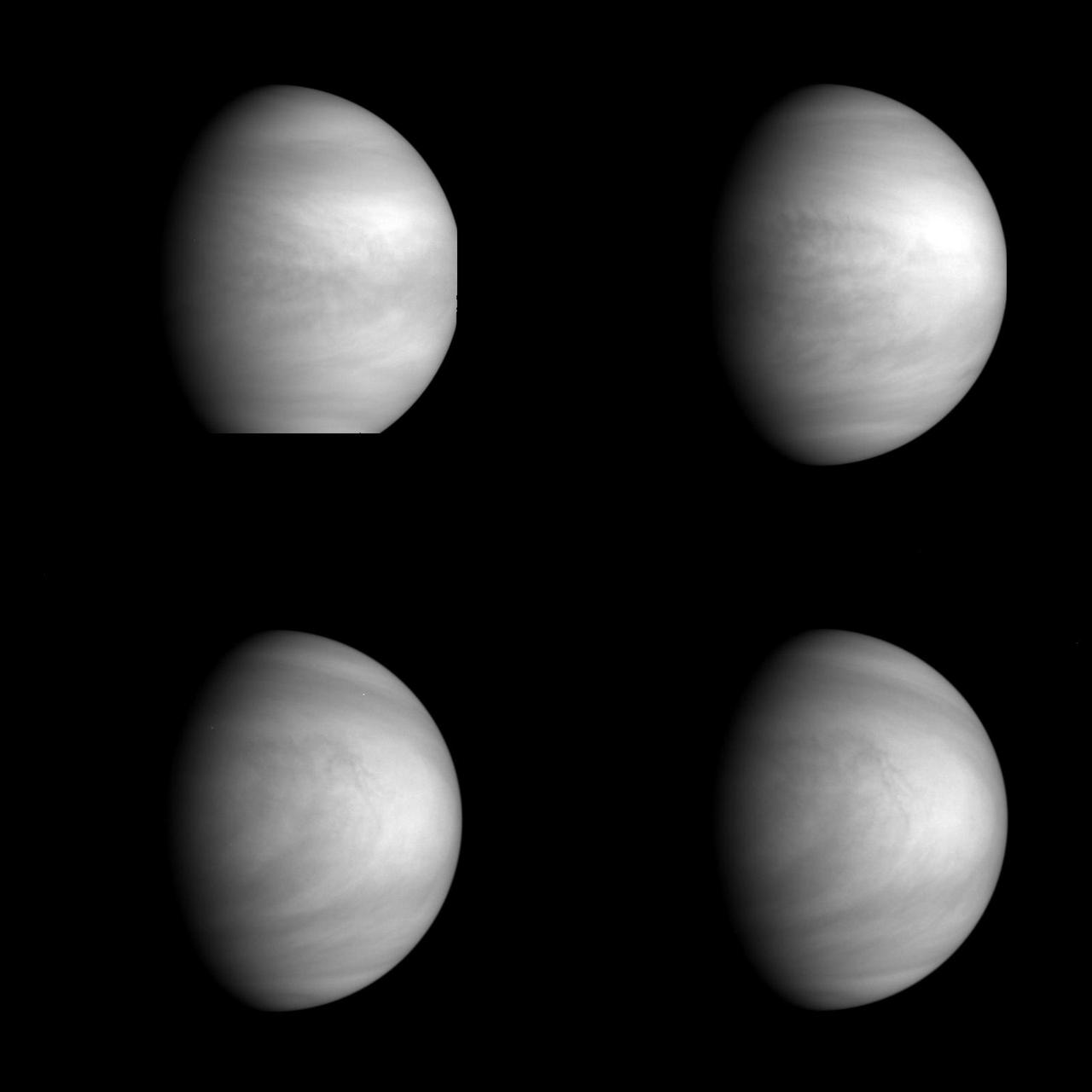
This series of pictures shows four views of the planet Venus obtained by NASA Galileo Solid State Imaging System at ranges of 1.4 to 2 million miles as the spacecraft receded from Venus. http://photojournal.jpl.nasa.gov/catalog/PIA00223

Dawn on Saturn is greeted across the vastness of interplanetary space by the morning star, Venus, in this image from NASA Cassini spacecraft. Venus appears just off the edge of the planet directly above the white streak of Saturn G ring.

Venus Cloud Tops Viewed by Hubble. This is a NASA Hubble Space Telescope ultraviolet-light image of the planet Venus, taken on January 24 1995, when Venus was at a distance of 70.6 million miles 113.6 million kilometers from Earth.

This diagram shows the approximate distances of the terrestrial planets from the Sun; they include Mercury, Venus, Earth, and Mars.
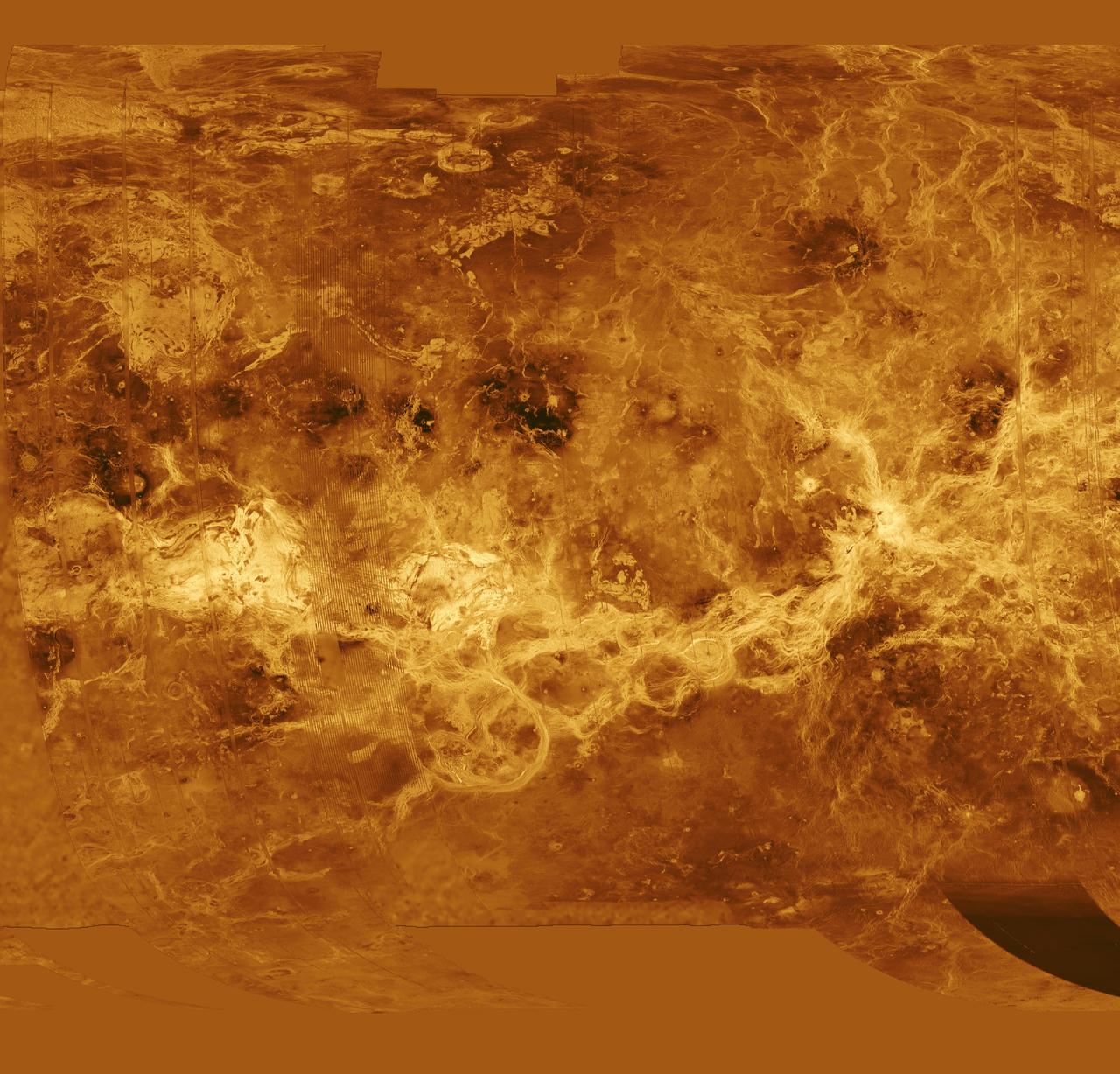
The eastern half of the planet is displayed in this simple cylindrical map of the surface of Venus obtained by NASA Magellan spacecraft. http://photojournal.jpl.nasa.gov/catalog/PIA00256
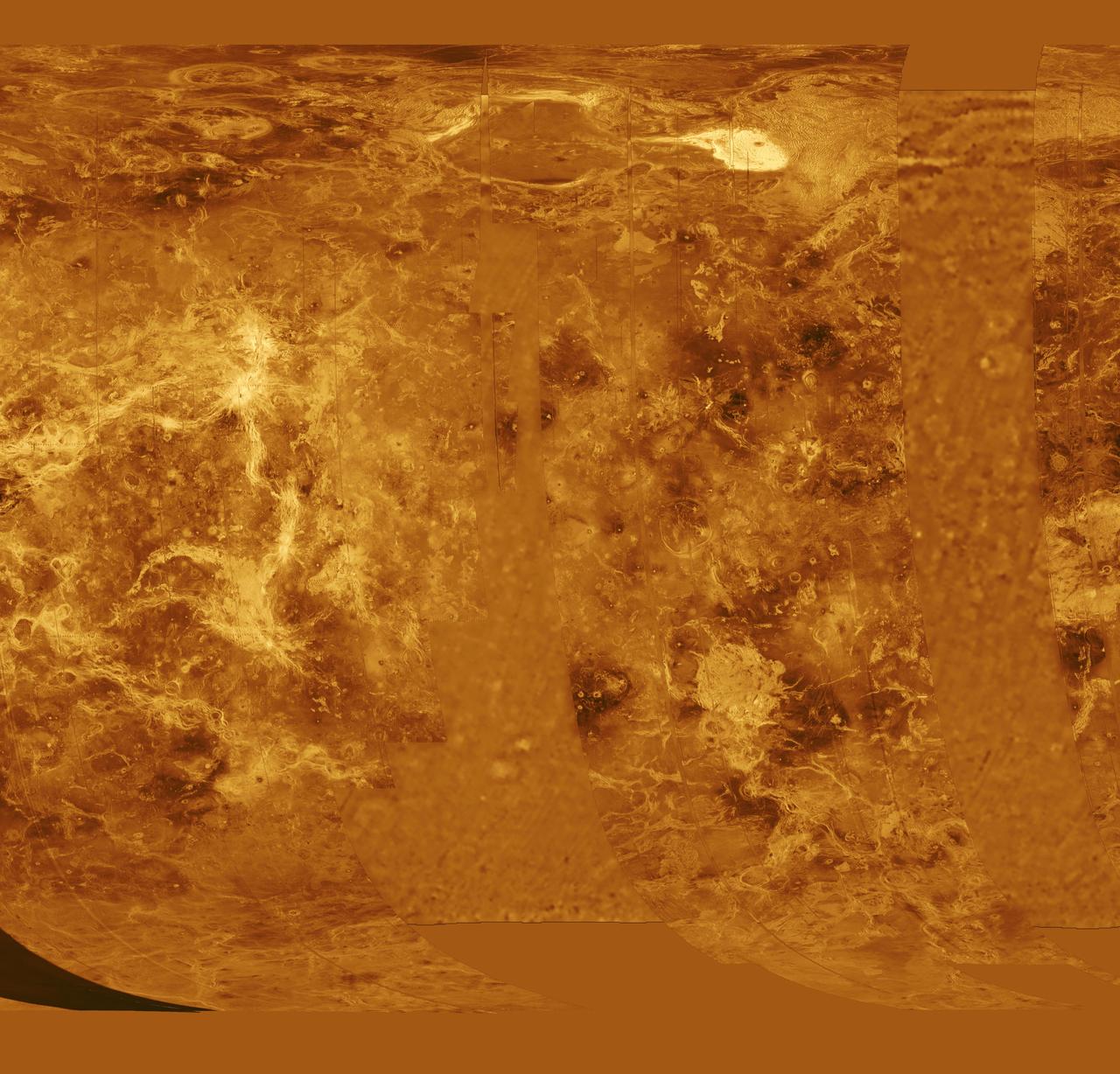
The western half of the planet is displayed in this simple cylindrical map of the surface of Venus obtained by NASA Magellan spacecraft. http://photojournal.jpl.nasa.gov/catalog/PIA00255

This artist concept shows a Super Venus planet on the left, and a Super Earth on the right. Researchers use a concept known as the habitable zone to distinguish between these two types of planets, which exist beyond our solar system.

Phil Neudeck- Can Take the Heat When it comes to the heat of extreme environments like Venus, electronics can get fried within a few minutes of arrival. But NASA Researcher Phil Neudeck and his team have developed extremely durable silicon carbide semiconductor integrated circuits to survive those harsh conditions. After successfully testing the electronics in our high-pressure, high-temperature extreme environments chamber, there is now a path forward for Venus landers to survive and operate scientific experiments on the planet’s surface for longer durations.
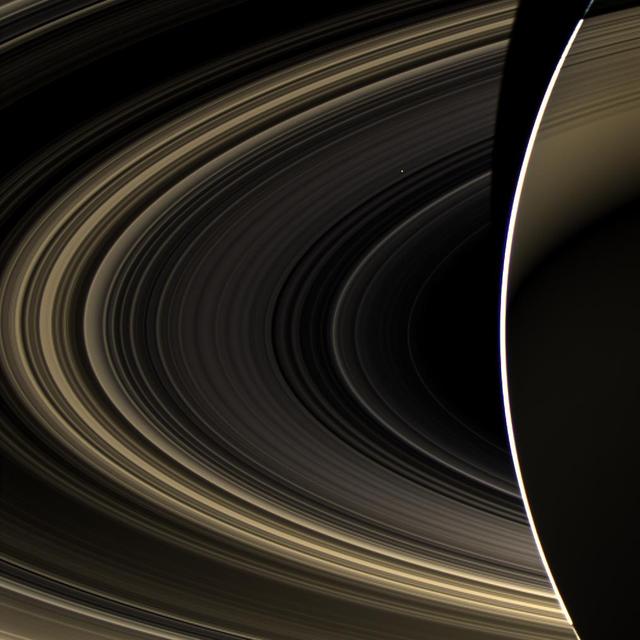
Peering over the shoulder of giant Saturn, through its rings, and across interplanetary space, NASA Cassini spacecraft spies the bright, cloudy terrestrial planet, Venus.

This chart compares the first Earth-size planets found around a sun-like star to planets in our own solar system, Earth and Venus. NASA Kepler mission discovered the newfound planets, called Kepler-20e and Kepler-20f.

As it sped away from Venus, NASA's Mariner 10 spacecraft captured this seemingly peaceful view of a planet the size of Earth, wrapped in a dense, global cloud layer. But, contrary to its serene appearance, the clouded globe of Venus is a world of intense heat, crushing atmospheric pressure and clouds of corrosive acid. This newly processed image revisits the original data with modern image processing software. A contrast-enhanced version of this view, also provided here, makes features in the planet's thick cloud cover visible in greater detail. The clouds seen here are located about 40 miles (60 kilometers) above the planet's surface, at altitudes where Earth-like atmospheric pressures and temperatures exist. They are comprised of sulfuric acid particles, as opposed to water droplets or ice crystals, as on Earth. These cloud particles are mostly white in appearance; however, patches of red-tinted clouds also can be seen. This is due to the presence of a mysterious material that absorbs light at blue and ultraviolet wavelengths. Many chemicals have been suggested for this mystery component, from sulfur compounds to even biological materials, but a consensus has yet to be reached among researchers. The clouds of Venus whip around the planet at nearly over 200 miles per hour (100 meters per second), circling the globe in about four and a half days. That these hurricane-force winds cover nearly the entire planet is another unexplained mystery, especially given that the solid planet itself rotates at a very slow 4 mph (less than 2 meters per second) — much slower than Earth's rotation rate of about 1,000 mph (450 meters per second). The winds and clouds also blow to the west, not to the east as on the Earth. This is because the planet itself rotates to the west, backward compared to Earth and most of the other planets. As the clouds travel westward, they also typically progress toward the poles; this can be seen in the Mariner 10 view as a curved spiral pattern at mid latitudes. Near the equator, instead of long streaks, areas of more clumpy, discrete clouds can be seen, indicating enhanced upwelling and cloud formation in the equatorial region, spurred on by the enhanced power of sunlight there. This view is a false color composite created by combining images taken using orange and ultraviolet spectral filters on the spacecraft's imaging camera. These were used for the red and blue channels of the color image, respectively, with the green channel synthesized by combining the other two images. Flying past Venus en route to the first-ever flyby of Mercury, Mariner 10 became the first spacecraft to use a gravity assist to change its flight path in order to reach another planet. The images used to create this view were acquired by Mariner 10 on Feb. 7 and 8, 1974, a couple of days after the spacecraft's closest approach to Venus on Feb. 5. Despite their many differences, comparisons between Earth and Venus are valuable for helping to understand their distinct climate histories. Nearly 50 years after this view was obtained, many fundamental questions about Venus remain unanswered. Did Venus have oceans long ago? How has its atmosphere evolved over time, and when did its runaway greenhouse effect begin? How does Venus lose its heat? How volcanically and tectonically active has Venus been over the last billion years? This image was processed from archived Mariner 10 data by JPL engineer Kevin M. Gill. The Mariner 10 mission was managed by NASA's Jet Propulsion Laboratory. https://photojournal.jpl.nasa.gov/catalog/PIA23791

This picture of Venus was taken by the NASA Galileo spacecraft Solid State Imaging System on February 14, 1990, at a range of almost 1.7 million miles from the planet. http://photojournal.jpl.nasa.gov/catalog/PIA00072
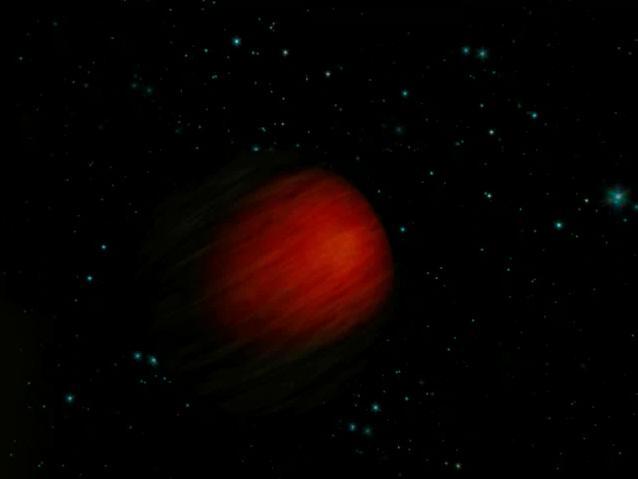
This artist concept illustrates the hottest planet yet observed in the universe. The scorching ball of gas, a hot Jupiter called HD 149026b, is about 3 times hotter than the rocky surface of Venus, the hottest planet in our solar system.
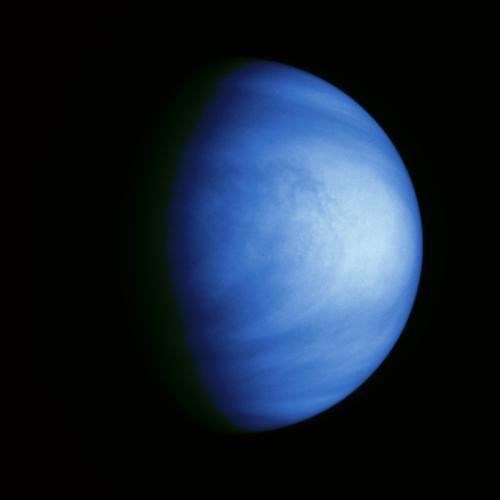
This colorized picture of Venus was taken Feb. 14, 1990, from a distance of almost 1.7 million miles, about 6 days after NASA's Galileo made it closest approach to the planet. http://photojournal.jpl.nasa.gov/catalog/PIA00111
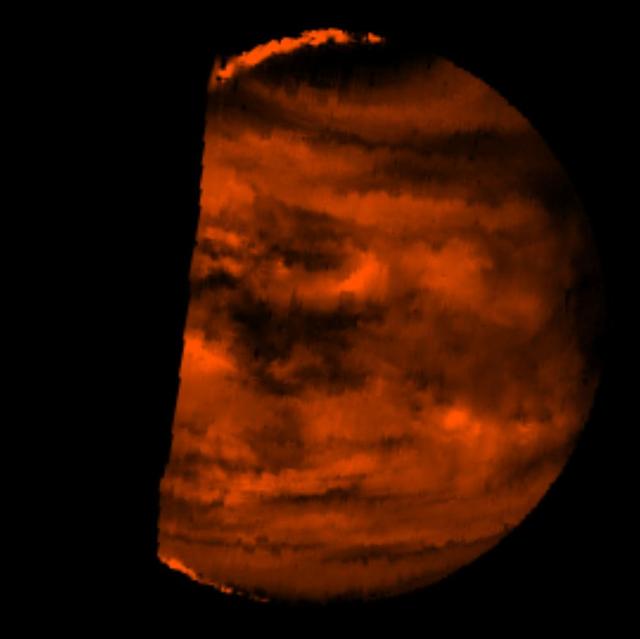
This false-color image is a near-infrared map of lower-level clouds on the night side of Venus, obtained by NASA Galileo spacecraft as it approached the planet night side on Feb. 10, 1990. http://photojournal.jpl.nasa.gov/catalog/PIA00124
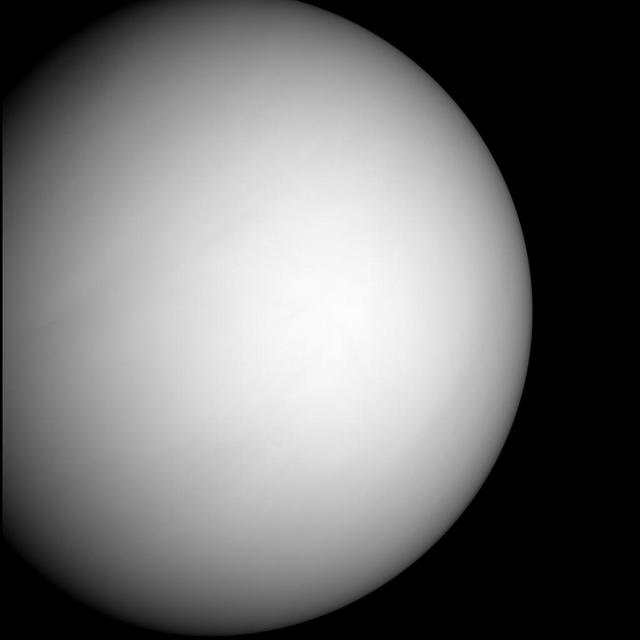
NASA MESSENGER spacecraft snapped a series of images as it approached Venus on June 5. The planet is enshrouded by a global layer of clouds that obscures its surface to the MESSENGER Dual Imaging System MDIS cameras.
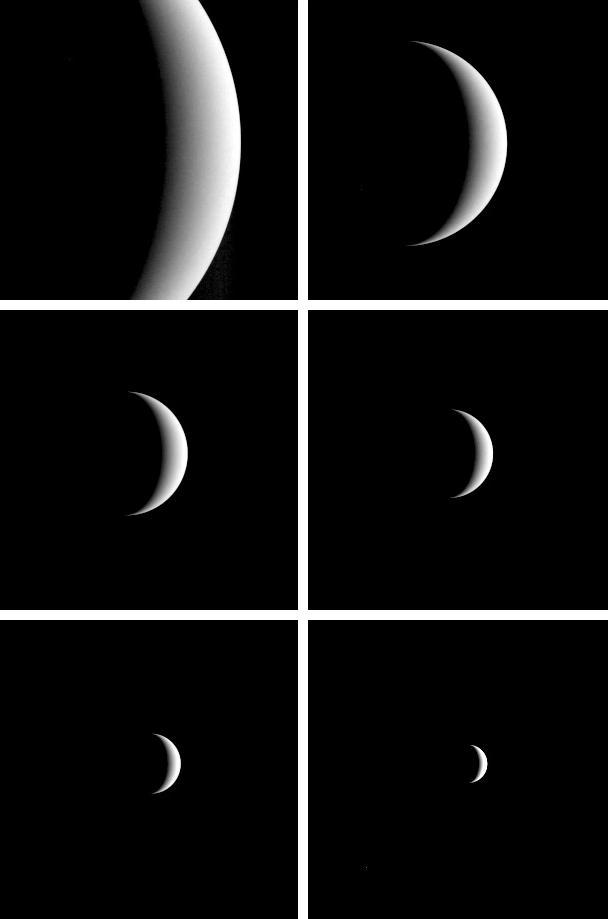
After acquiring hundreds of high-resolution images during close approach to Venus, NASA MESSENGER turned its wide-angle camera back to the planet and acquired a departure sequence.
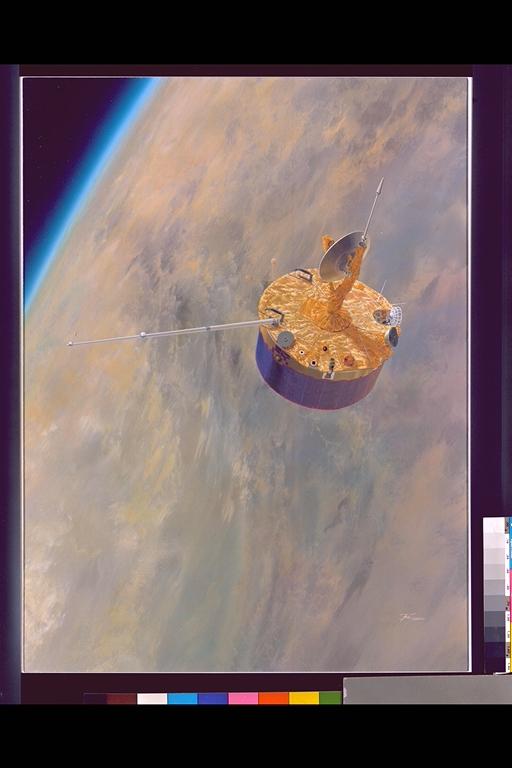
Artist: Paul Hudson Pioneer Venus Orbiter expected to orbit the planet from 1978 to 1992 when the spacecraft will enter and be destroyed in Venus' upper atmosphere
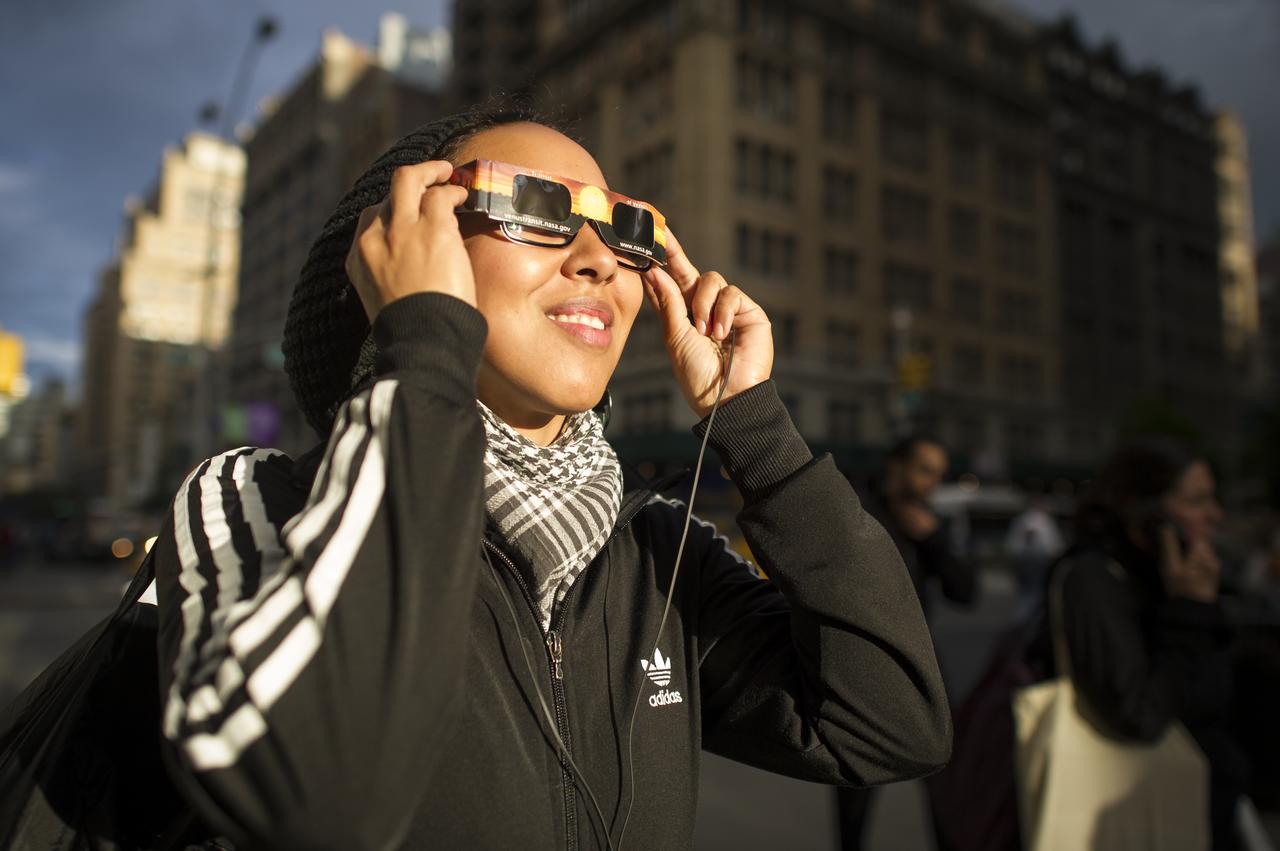
It appeared that New Yorkers were not going to be able to see the transit of the planet Venus across the Sun, but just before the transit was over the sun broke through the clouds and Yvette Lee Kang was able to catch a glimpse of the transit on Tuesday, June 5, 2012 in New York. A transit of Venus occurs when the planet passes directly between the sun and earth. This alignment is rare, coming in pairs that are eight years apart but separated by over a century. The next Venus transit will be in December 2117. Photo Credit: (NASA/Bill Ingalls)
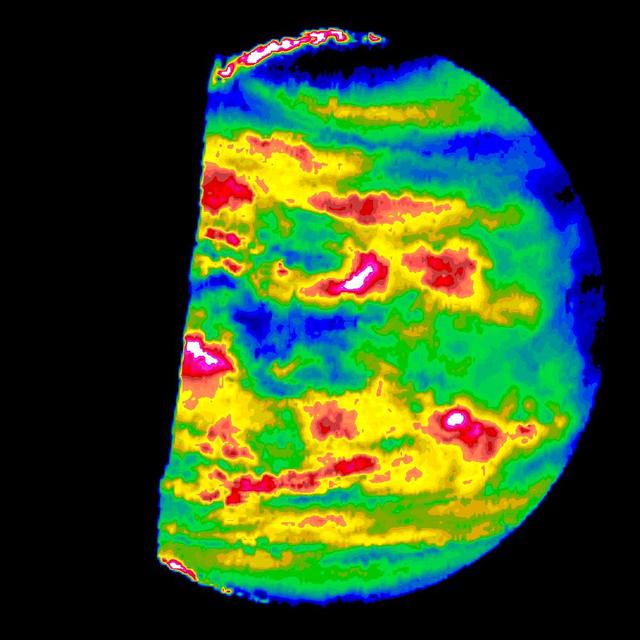
This image is a false color version of a near infrared map of lower level clouds on the night side of Venus, obtained by the Near Infrared Mapping Spectrometer aboard NASA's Galileo spacecraft as it approached the planet Feb. 10, 1990. http://photojournal.jpl.nasa.gov/catalog/PIA00112
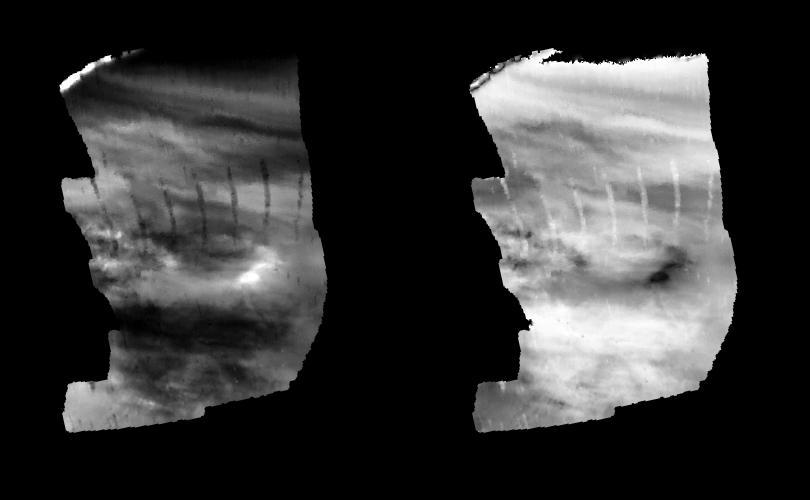
These images are two versions of a near-infrared map of lower-level clouds on the night side of Venus, obtained by the Near Infrared Mapping Spectrometer aboard NASA Galileo spacecraft as it approached the planet February 10, 1990. http://photojournal.jpl.nasa.gov/catalog/PIA00222
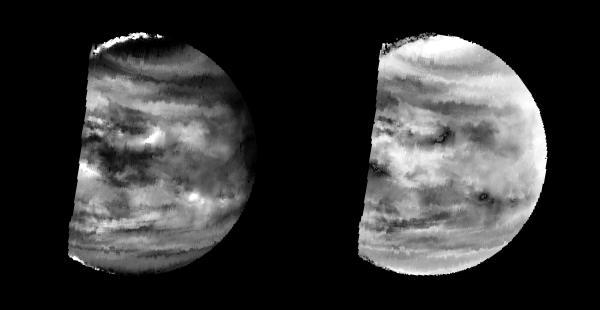
These images are two versions of a near-infrared map of lower-level clouds on the night side of Venus, obtained by the Near Infrared Mapping Spectrometer aboard NASA Galileo spacecraft as it approached the planet February 10, 1990. http://photojournal.jpl.nasa.gov/catalog/PIA00221
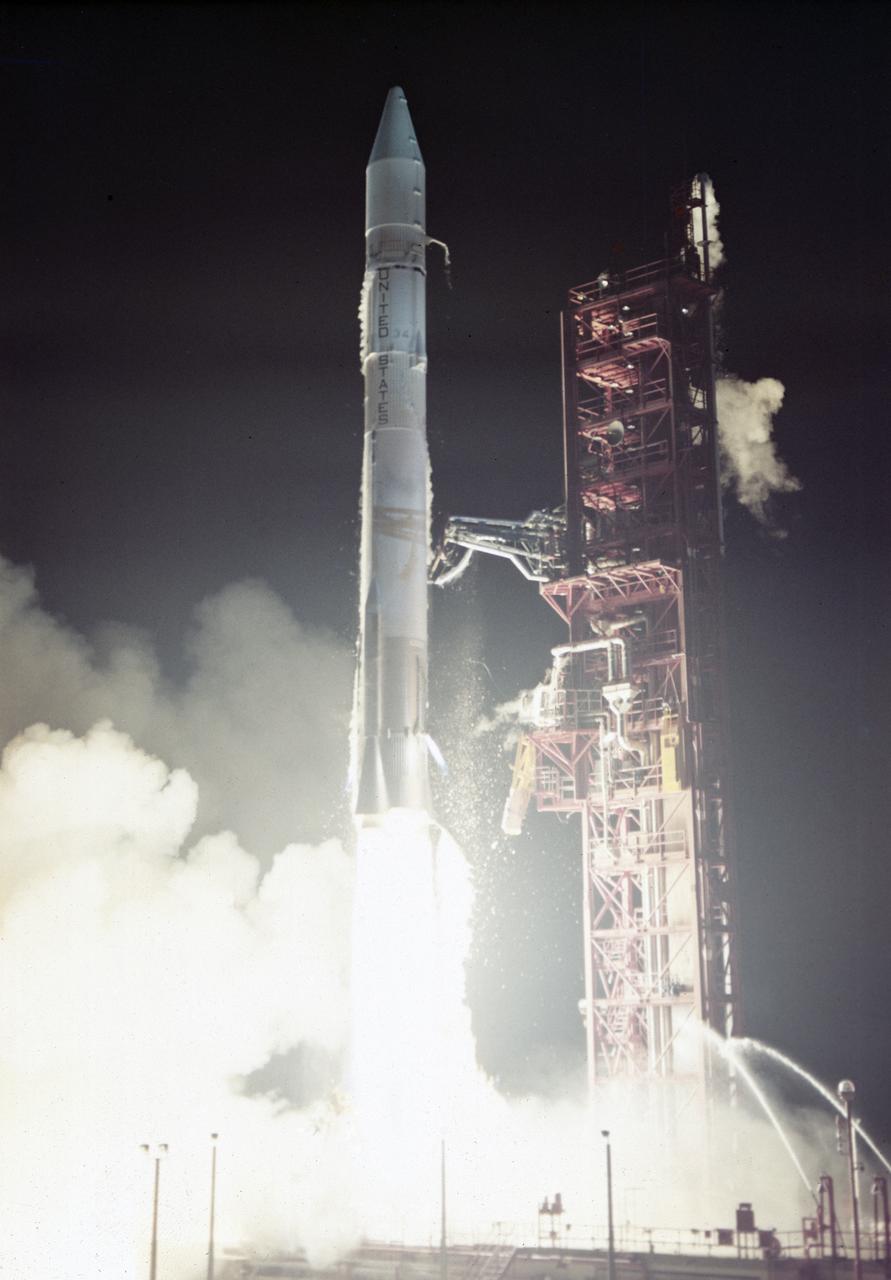
The launch of the Atlas-Centaur carrying the Mariner X spacecraft on November 3, 1973. This mission was for the exploration of the planets Venus and Mercury.
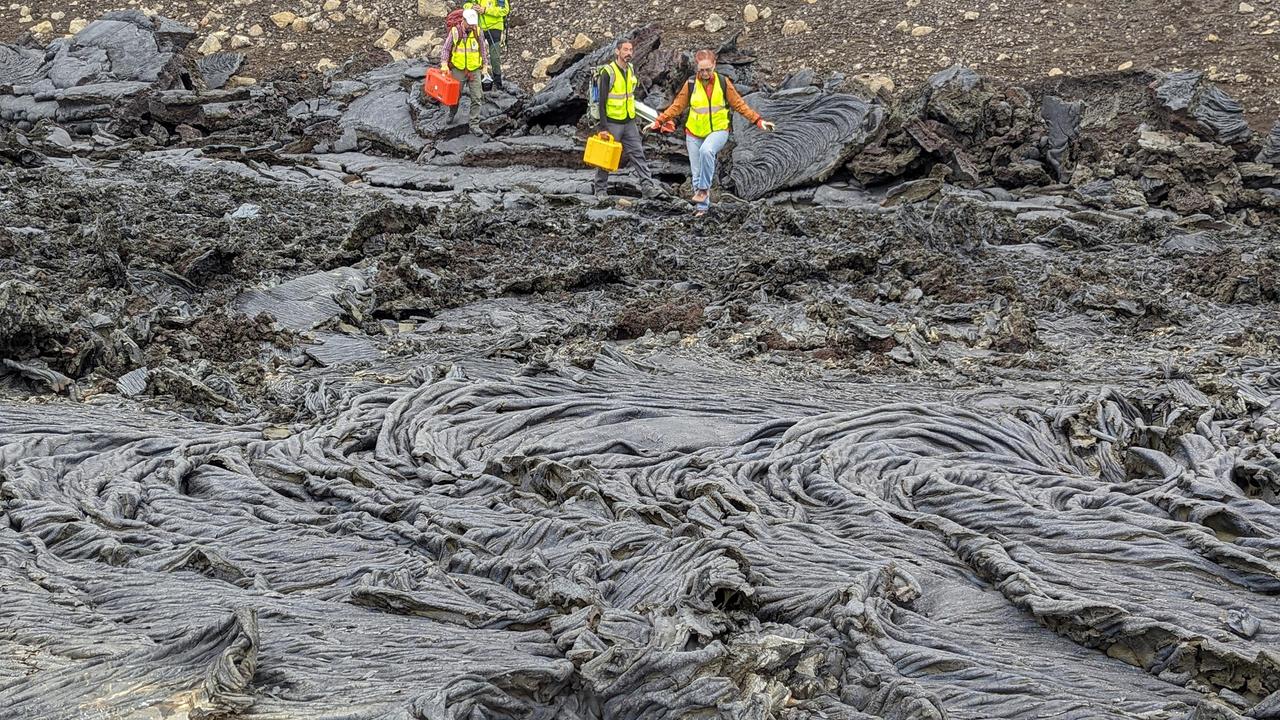
To lay the groundwork for NASA's VERITAS mission (Venus Emissivity, Radio science, InSAR, Topography, And Spectroscopy), members of the mission's international science team traveled in August 2023 to Iceland, using the island as a stand-in, or analog, for Venus. Using several techniques, the team studied a variety of rocky terrain, including this lava field featuring new rock from a recent flow, to better understand what the VERITAS mission will "see" when it studies Venus' surface. The VERITAS orbiter will peer through the planet's thick atmosphere with a suite of powerful science instruments to create global maps of the planet's surface – including topography, radar images, rock type, and gravity measurements – as well as detect surface changes. VERITAS is designed to understand what processes are currently active, search for evidence of past and current interior water, and understand the geologic evolution of the planet, illuminating how rocky planets throughout the galaxy evolve. https://photojournal.jpl.nasa.gov/catalog/PIA25838
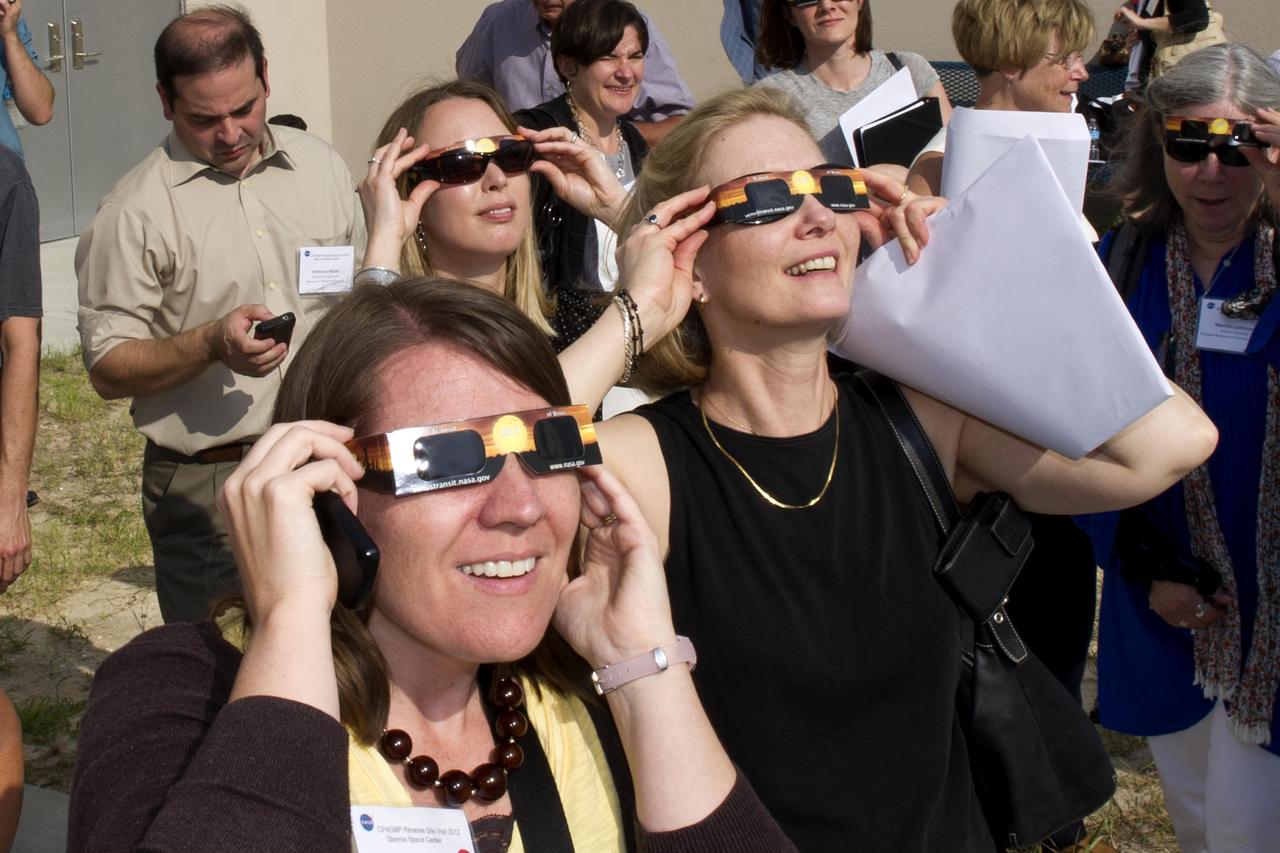
Guests at the INFINITY at NASA Stennis Space Center visitor center use special solar sunglasses to catch a lifetime view of the Venus transit June 5, 2012. The rare celestial event in which the planet Venus traverses the face of the sun will not be visible from Earth again until 2117.
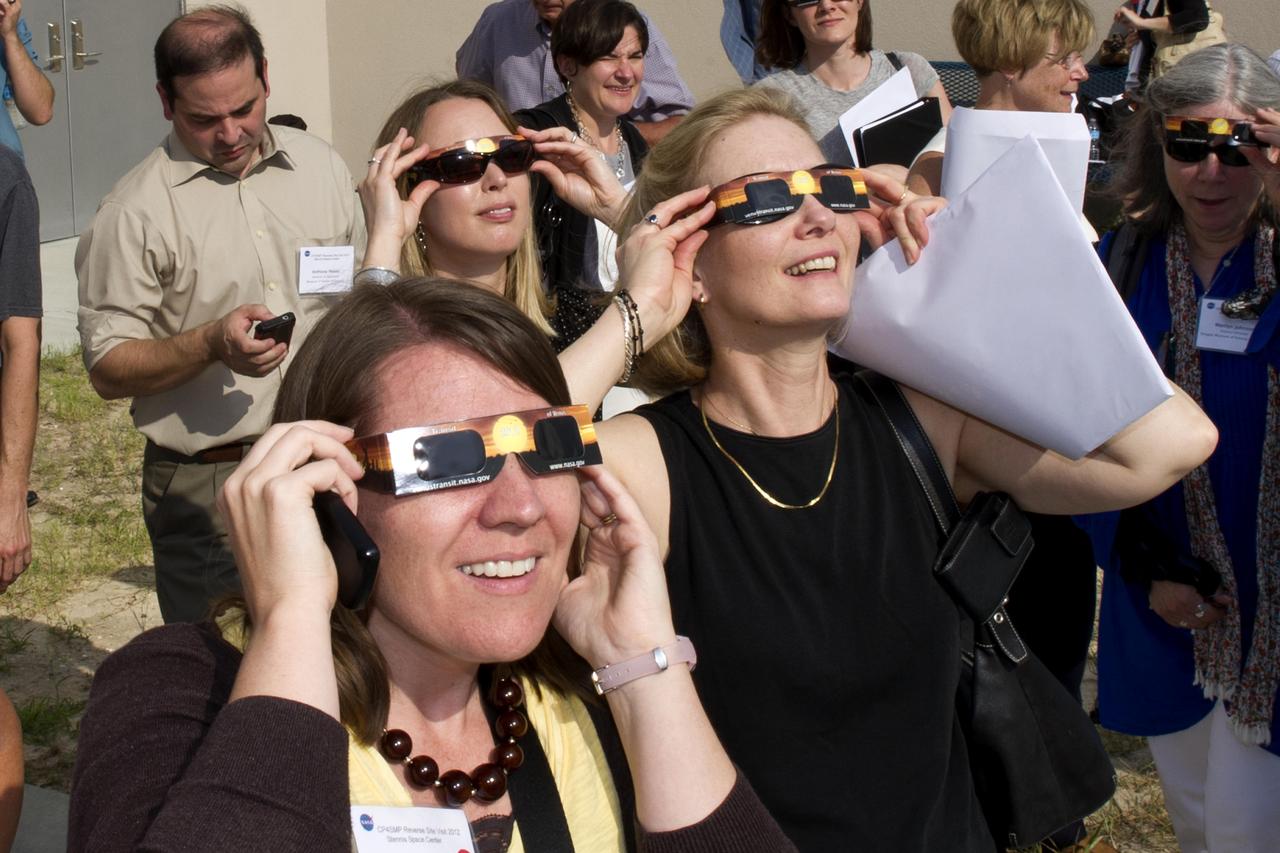
Guests at the INFINITY at NASA Stennis Space Center visitor center use special solar sunglasses to catch a lifetime view of the Venus transit June 5, 2012. The rare celestial event in which the planet Venus traverses the face of the sun will not be visible from Earth again until 2117.
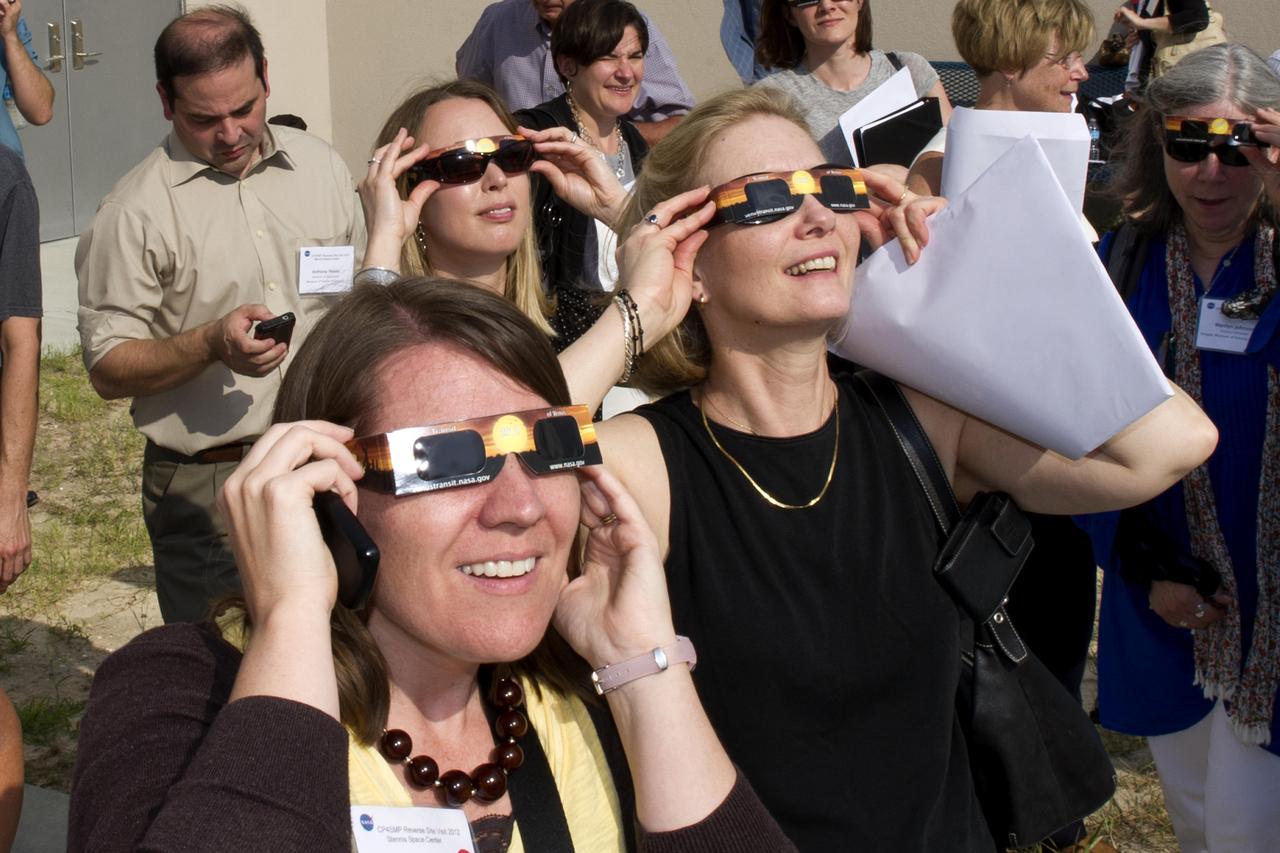
Guests at the INFINITY at NASA Stennis Space Center visitor center use special solar sunglasses to catch a lifetime view of the Venus transit June 5, 2012. The rare celestial event in which the planet Venus traverses the face of the sun will not be visible from Earth again until 2117.
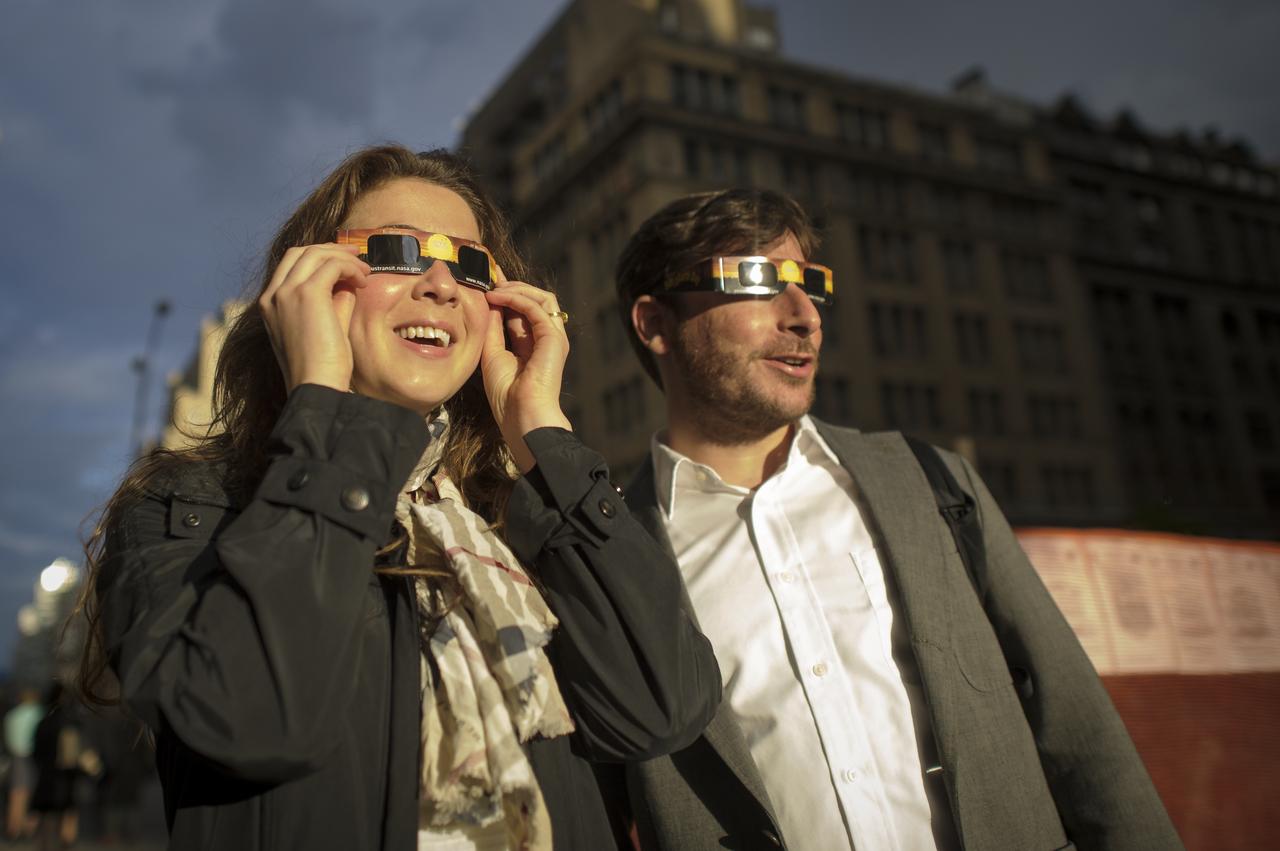
It appeared that New Yorkers were not going to be able to see the transit of the planet Venus across the Sun, but just before the transit was over the sun broke through the clouds and Liz Heller and Andriel Mesznik were able to catch a glimpse of the transit on Tuesday, June 5, 2012 in New York. A transit of Venus occurs when the planet passes directly between the sun and earth. This alignment is rare, coming in pairs that are eight years apart but separated by over a century. The next Venus transit will be in December 2117. Photo Credit: (NASA/Bill Ingalls)

This is the first image of Earth ever taken from another planet that actually shows our home as a planetary disk. Because Earth and the Moon are closer to the Sun than Mars, they exhibit phases, just as the Moon, Venus, & Mercury do when viewed from Earth
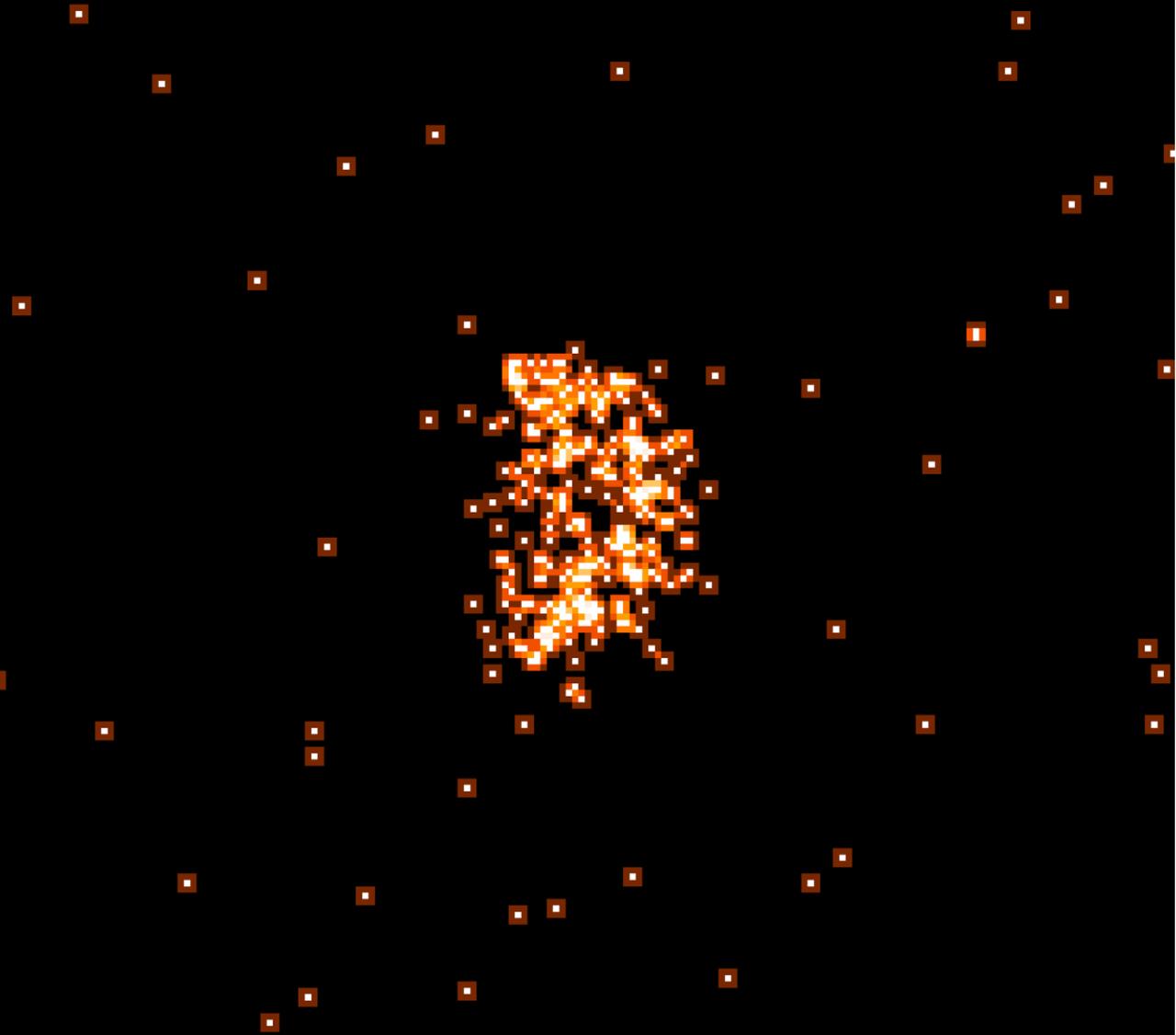
This Chandra image, the first x-ray image ever made of Venus, shows a half crescent due to the relative orientation of the Sun, Earth, and Venus. The x-rays are produced by fluorescent radiation from oxygen and other atoms in the atmosphere between 120 and 140 kilometers above the surface of the planet. In contrast, the optical light from Venus is caused by the reflection from clouds 50 to 70 kilometers above the surface.

Range : 1.4 to 2 million miles This series of pictures shows four views of the planet Venus obtained by Galileo's Solid State Imaging System.The pictures in the top row were taken about 4 & 5 days after closest approach; those in the bottom row were taken about 6 days out, 2 hours apart. In these violet-light images, north is at the top and the evening terminator to the left. The cloud features high in the planet's atmosphere rotate from right to left, from the limb through the noon meridian toward the terminator, travelling all the way around the planet once every four days. The motion can be seen by comoparing the last two pictures, taken two hours apart. The other views show entirely different faces of Venus. These photos are part of the 'Venus global circulation' sequence planned by the imaging team.
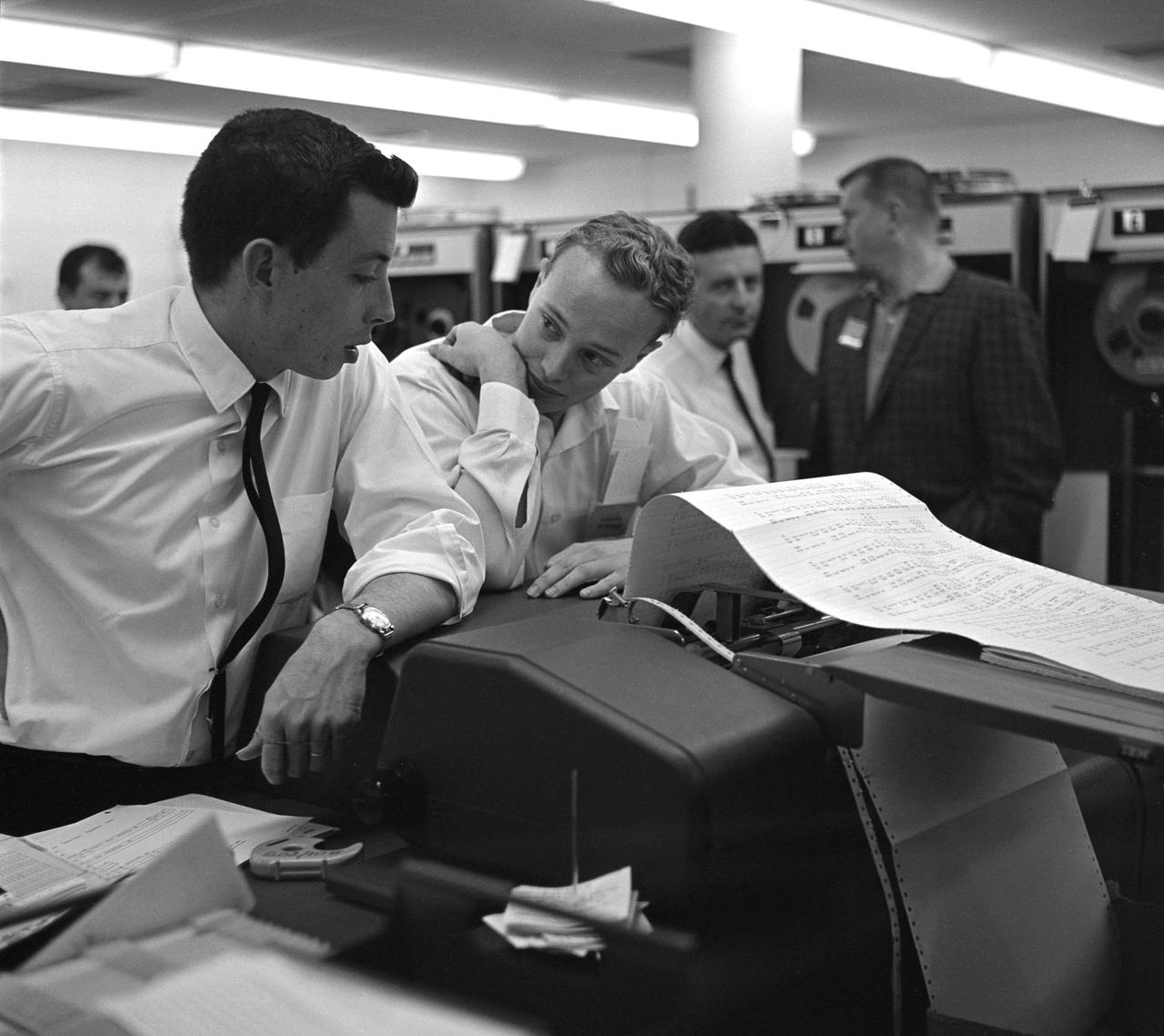
This archival image was released as part of a gallery comparing JPL's past and present, commemorating the 80th anniversary of NASA's Jet Propulsion Laboratory on Oct. 31, 2016. This image shows engineers at NASA's Jet Propulsion Laboratory looking at data related to the Venus flyby of Mariner 2 on Dec. 14, 1962. This was the first successful flyby of another planet. http://photojournal.jpl.nasa.gov/catalog/PIA21117
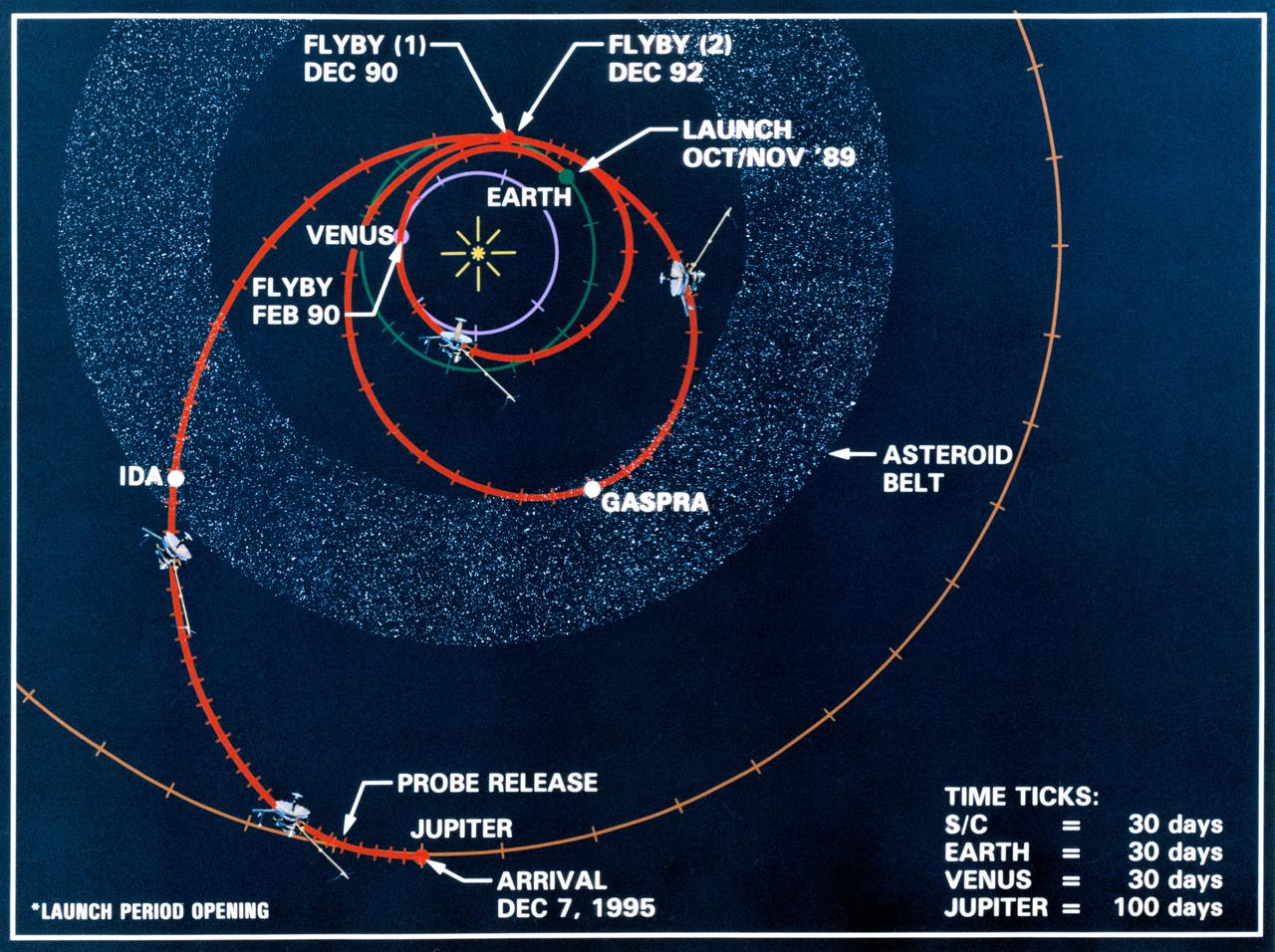
Line drawing charts the Galileo spacecraft's launch from low Earth orbit and its three planetary and two asteroid encounters in the course of its gravity-assisted flight to Jupiter. These encounters include Venus (February 1990), two Earth passes (December 1990 and December 1992), and the asteroids Gaspra and Ida in the asteroid belt. Galileo will release a probe and will arrive at Jupiter, 12-07-95.
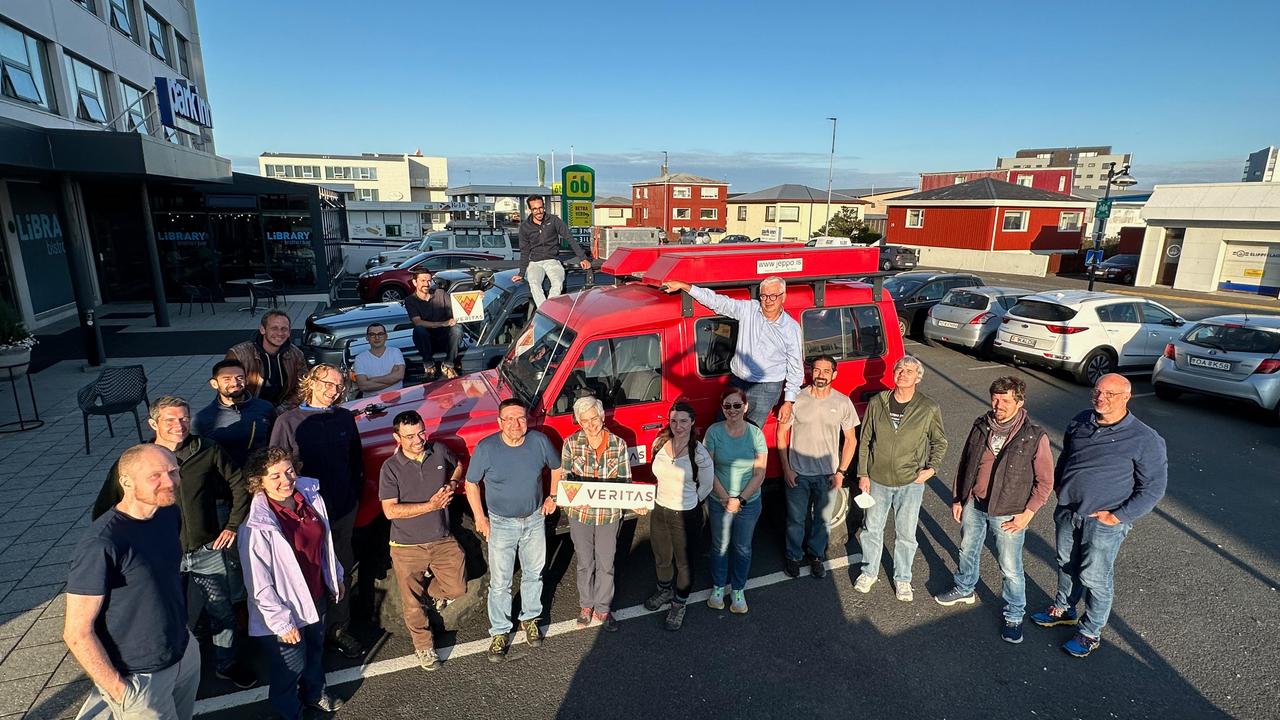
Members of the VERITAS science team pause for a photograph on July 31, 2023, after arriving in Iceland to begin a two-week campaign to study the volcanic island's geology to help the team prepare for NASA's VERITAS (short for Venus Emissivity, Radio science, InSAR, Topography, And Spectroscopy) mission to Venus. From July 30 to Aug. 14, 2023, the international science team, including local participation from the University of Iceland, worked to lay the groundwork for the science that will ultimately be done from Venus orbit. At center, holding the VERITAS mission identifier is the mission's principal investigator and the science team lead, Sue Smrekar, of NASA's Jet Propulsion Laboratory in Southern California. Flanking her are science team members from multiple U.S., Italian, and German institutions, including members of the German Aerospace Center (DLR) Flugzeug Synthetic Aperture Radar (F-SAR) airplane team. The DLR F-SAR team was tasked with collecting synthetic-aperture radar data of the regions studied by the field team. A key objective of the campaign is to refine change detection algorithms that will be used to look for global surface change (such as volcanic activity) between NASA's Magellan radar mission from the 1990s and VERITAS, as well as between VERITAS and the ESA (European Space Agency) EnVision mission to Venus, both of which are targeting the early 2030s for launch. NASA's VERITAS is an orbiter designed to peer through Venus' thick atmosphere with a suite of powerful instruments to create global maps of the planet's surface, including topography, radar images, rock type, and gravity, as well as detect surface changes. VERITAS is designed to understand what processes are currently active, search for evidence of past and current interior water, and understand the geologic evolution of the planet, illuminating how rocky planets throughout the galaxy evolve. VERITAS and NASA's Deep Atmosphere Venus Investigation of Noble gases, Chemistry, and Imaging (DAVINCI) mission were selected in 2021 under NASA's Discovery Program as the agency's next missions to Venus. The Discovery Program is managed by the Planetary Missions Program Office at NASA's Marshall Space Flight Center in Huntsville, Alabama, for the Planetary Science Division of NASA's Science Mission Directorate in Washington. https://photojournal.jpl.nasa.gov/catalog/PIA25835

Two images of the night sky were combined to show Earth and Venus as seen by the Mast Camera aboard NASA's Curiosity Mars rover on June 5, 2020, the 2,784th Martian day, or sol, of the mission. Both planets appear as mere pinpoints of light owing to a combination of distance and dust in the air; they would normally look like bright stars. A feature called Tower Butte is just visible at the bottom of the image, part of the clay-bearing region that Curiosity has been exploring since early 2019. https://photojournal.jpl.nasa.gov/catalog/PIA23899
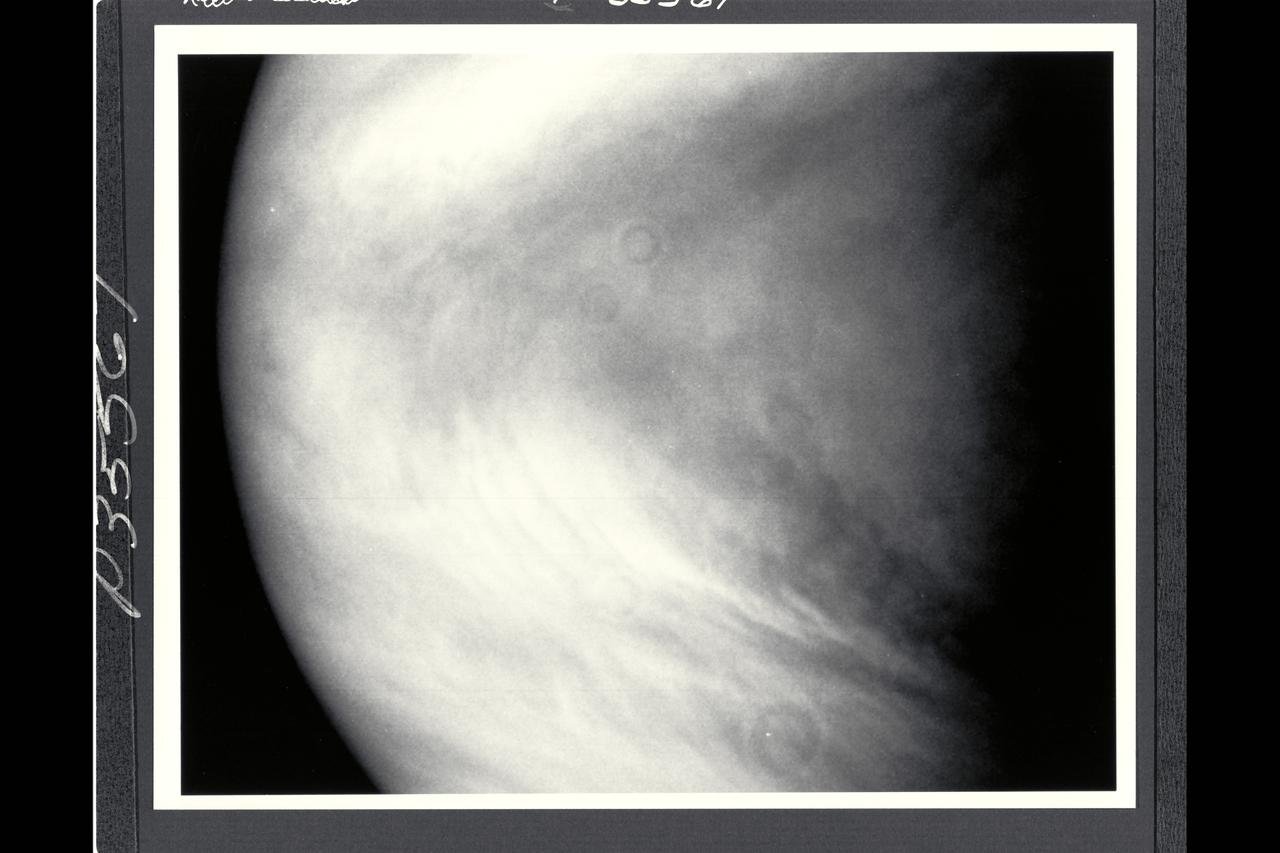
Range : 1 million miles (1.63 million km) This image of the planet Venus was taken by NASA's Galileo spacecraft shortly befor 10pm PST when the space craft was directly above Venus' equator. This is the 66th of more than 80 Venus images Galileo was programmed to take and record during its Venus flyby. In the picture, cloud features as small as 25 miles (40 km) can be seen. Patches of waves and convective clouds are superimpposed on the swirl of the planet's broad weather patterns, marked by the dark chevron at the center. North is at the top. The several ring-shaped shadows are blemishes, not planetary features. The spacecraft imaging system has a 1500-mm, f/8.5 reflecting telescope; the exposure time was 1/40 second. The image was taken through the violet filter (0.41 micron.). It was produced by the imaging system in digital form, as a set of numbers representing the brightness perceived in each of the 640,000 picture elements defined on the solid-state plate, called a charged-coupled-device or CCD, on which the image was focused.

This global view of Venus, centered at 270 degrees east longitude, is a compilation of data from several sources. Magellan synthetic aperature radar mosaics from the first cycle of Magellan mapping are mapped onto a computer-simulated globe to create the image. Data gaps are filled with Pioneer-Venus orbiter data, or a constant mid-range value. Simulated color is used to enhance small-scale structure. The simulated hues are based on color images recorded by the Soviet Venera 13 and 14 spacecraft. The image was produced at the Jet Propulsion Laboratory (JPL) Multimission Image Processing Laboratory and is a single frame from a video released at the JPL news conference, 10-29-91. View provided by JPL with alternate number P-39225 MGN81.
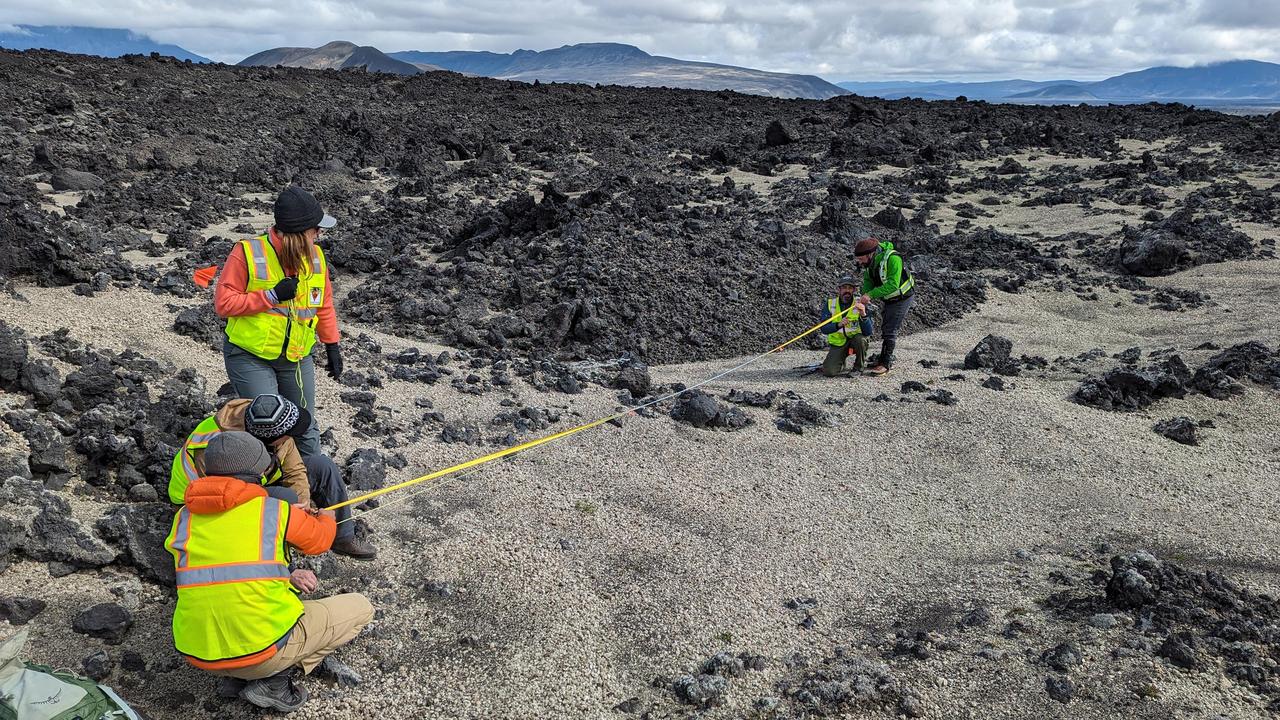
During their August 2023 Iceland field campaign, international science team members of NASA's VERITAS (Venus Emissivity, Radio science, InSAR, Topography, And Spectroscopy) mission prepare for lidar (Light Detection and Ranging) imaging of rocks at a study area. Lidar measurements of rocky terrain can provide information about the material, such as surface roughness. While the science team led by NASA's Jet Propulsion Laboratory gathered lidar data on the ground, their partners from the German Aerospace Center (Deutsches Zentrum für Luft- und Raumfahrt, or DLR) carried out overflights to gather radar observations of the same study areas. By doing this, the team was able to ground-truth the radar data that will be used to help inform the science that VERITAS will do at Venus. VERITAS will peer through the planet's thick atmosphere with a suite of powerful science instruments to create global maps of Venus' surface – including topography, radar images, rock type, and gravity measurements – as well as detect surface changes. VERITAS is designed to understand what processes are currently active, search for evidence of past and current interior water, and understand the geologic evolution of the planet, illuminating how rocky planets throughout the galaxy evolve. https://photojournal.jpl.nasa.gov/catalog/PIA25839

ISS023-E-047288 (16 May 2010) --- The planet Venus, the moon and a small portion of the aft section of space shuttle Atlantis is featured in this image photographed by an Expedition 23 crew member shortly after Atlantis docked with the International Space Station.

This chart shows, on the top row, artist concepts of the seven planets of TRAPPIST-1 with their orbital periods, distances from their star, radii and masses as compared to those of Earth. On the bottom row, the same numbers are displayed for the bodies of our inner solar system: Mercury, Venus, Earth and Mars. The TRAPPIST-1 planets orbit their star extremely closely, with periods ranging from 1.5 to only about 20 days. This is much shorter than the period of Mercury, which orbits our sun in about 88 days. The artist concepts show what the TRAPPIST-1 planetary system may look like, based on available data about their diameters, masses and distances from the host star. The system has been revealed through observations from NASA's Spitzer Space Telescope and the ground-based TRAPPIST (TRAnsiting Planets and PlanetesImals Small Telescope) telescope, as well as other ground-based observatories. The system was named for the TRAPPIST telescope. The seven planets of TRAPPIST-1 are all Earth-sized and terrestrial, according to research published in 2017 in the journal Nature. TRAPPIST-1 is an ultra-cool dwarf star in the constellation Aquarius, and its planets orbit very close to it. http://photojournal.jpl.nasa.gov/catalog/PIA21425
KENNEDY SPACE CENTER, FLA. - MESSENGER, a NASA Discovery mission. The MESSENGER (MErcury Surface, Space ENvironment, GEochemistry, and Ranging) mission is a scientific investigation of the planet Mercury. MESSENGER will be launched in the summer of 2004 and will enter Mercury orbit in March of 2011, after one Earth flyby, two flybys of Venus, and three of Mercury along the way. The flyby and orbital phases of the mission will provide global mapping and detailed characterization of the planet's surface, interior, atmosphere and magnetosphere.
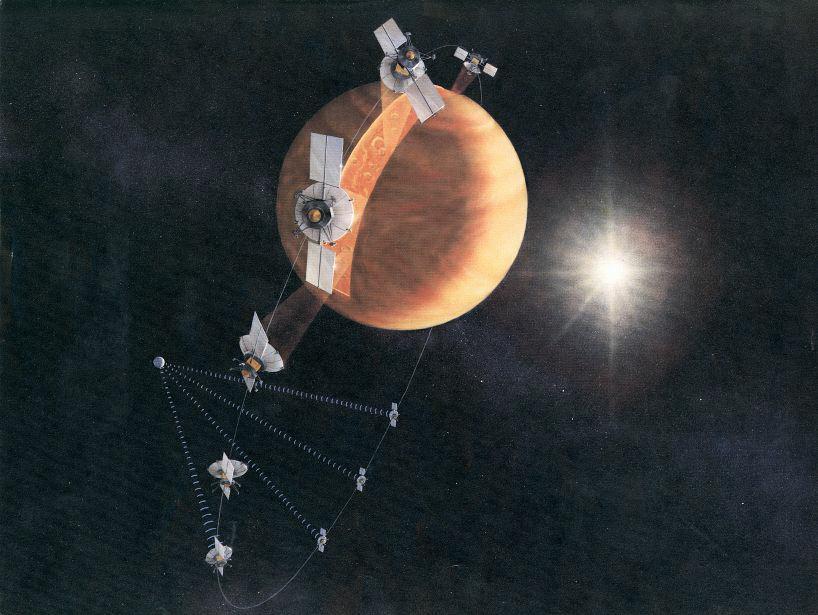
An artist's concept of the Magellan spacecraft making a radar map of Venus. Magellan mapped 98 percent of Venus' surface at a resolution of 100 to 150 meters (about the length of a football or soccer field), using synthetic aperture radar, a technique that simulates the use of a much larger radar antenna. It found that 85 percent of the surface is covered with volcanic flows and showed evidence of tectonic movement, turbulent surface winds, lava channels and pancake-shaped domes. Magellan also produced high-resolution gravity data for 95 percent of the planet and tested a new maneuvering technique called aerobraking, using atmospheric drag to adjust its orbit. The spacecraft was commanded to plunge into Venus' atmosphere in 1994 as part of a final experiment to gather atmospheric data. http://photojournal.jpl.nasa.gov/catalog/PIA18175

Range : 1.7 million miles This colorized picture of Venus was taken about 6 days after Galileo's closest approach to the planet. It has been colorized to a bluish hue to emphasize subtle contrasts in the cloud markings and to indicate that it was taken through a violet filter. Features in the sulfuric acid clouds near the top of the planet's atmosphere are most prominent in violet and ultraviolet light. This image shows the east-to-west-trending cloud banding and the brighter polar hoods familiar from past studies of Venus. The features are embedded in winds that flow from east to west at about 230 mph. The smallest features visible are about 45 miles across. An intriguing filamentary dark pattern is seen immediately left of the bright region at the subsolar point (equatorial 'noon'). North is at the top and the evening terminator is to the left.
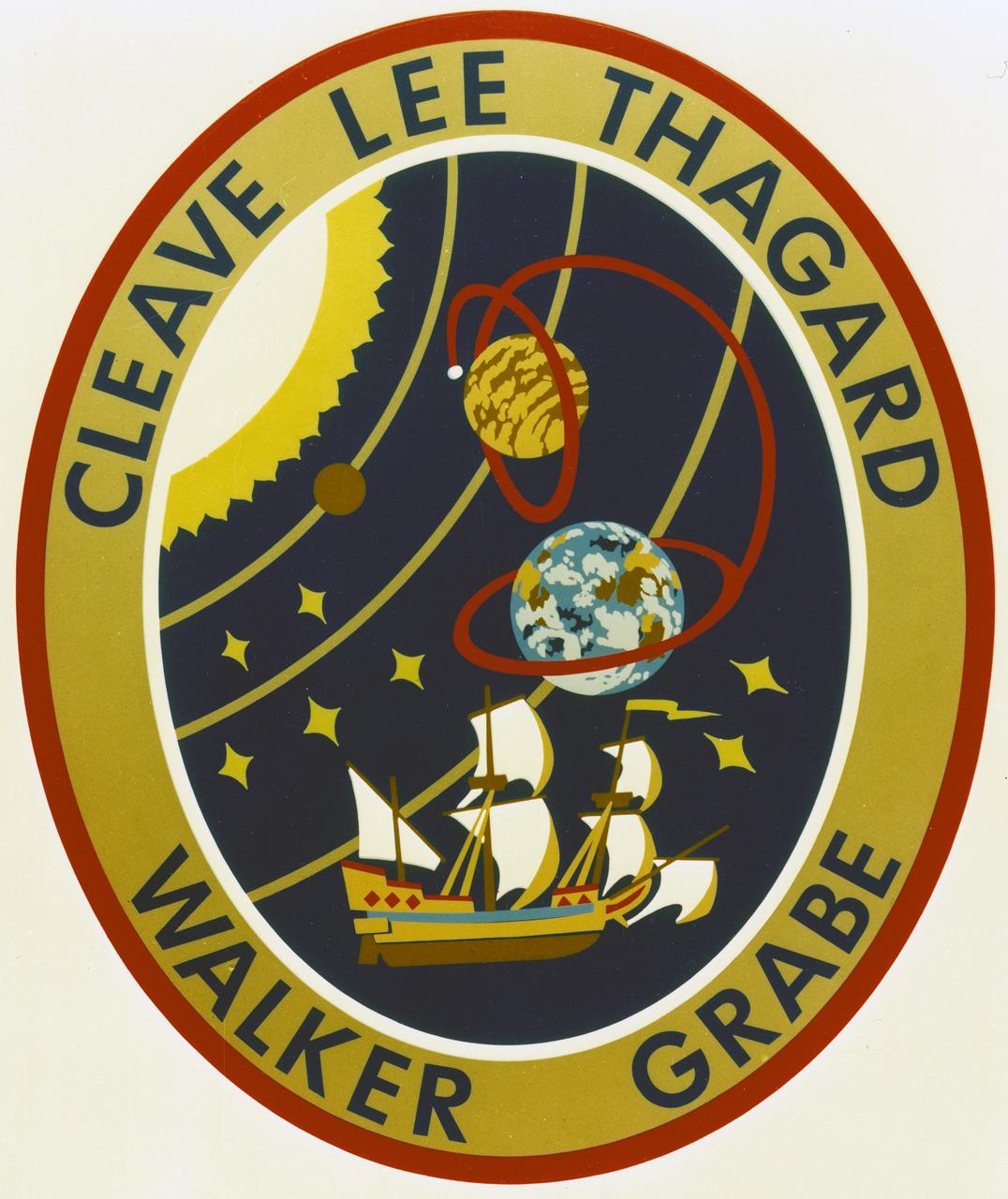
The STS-30 patch depicts the joining of NASA's manned and unmanned space programs. The sun and inner planets of our solar system are shown with the curve connecting Earth and Venus symbolizing the shuttle orbit, the spacecraft trajectory toward Venus, and its subsequent orbit around our sister planet. A Spanish caravel similar to the ship on the official Magellan program logo commemorates the 16th century explorer's journey and his legacy of adventure and discovery. Seven stars on the patch honor the crew of Challenger. The five-star cluster in the shape of the constellation Cassiopeia represent the five STS-30 crewmembers - Astronauts David Walker, Ronald Grabe, Norman Thagard, Mary Cleave and Mark Lee - who collectively designed the patch.
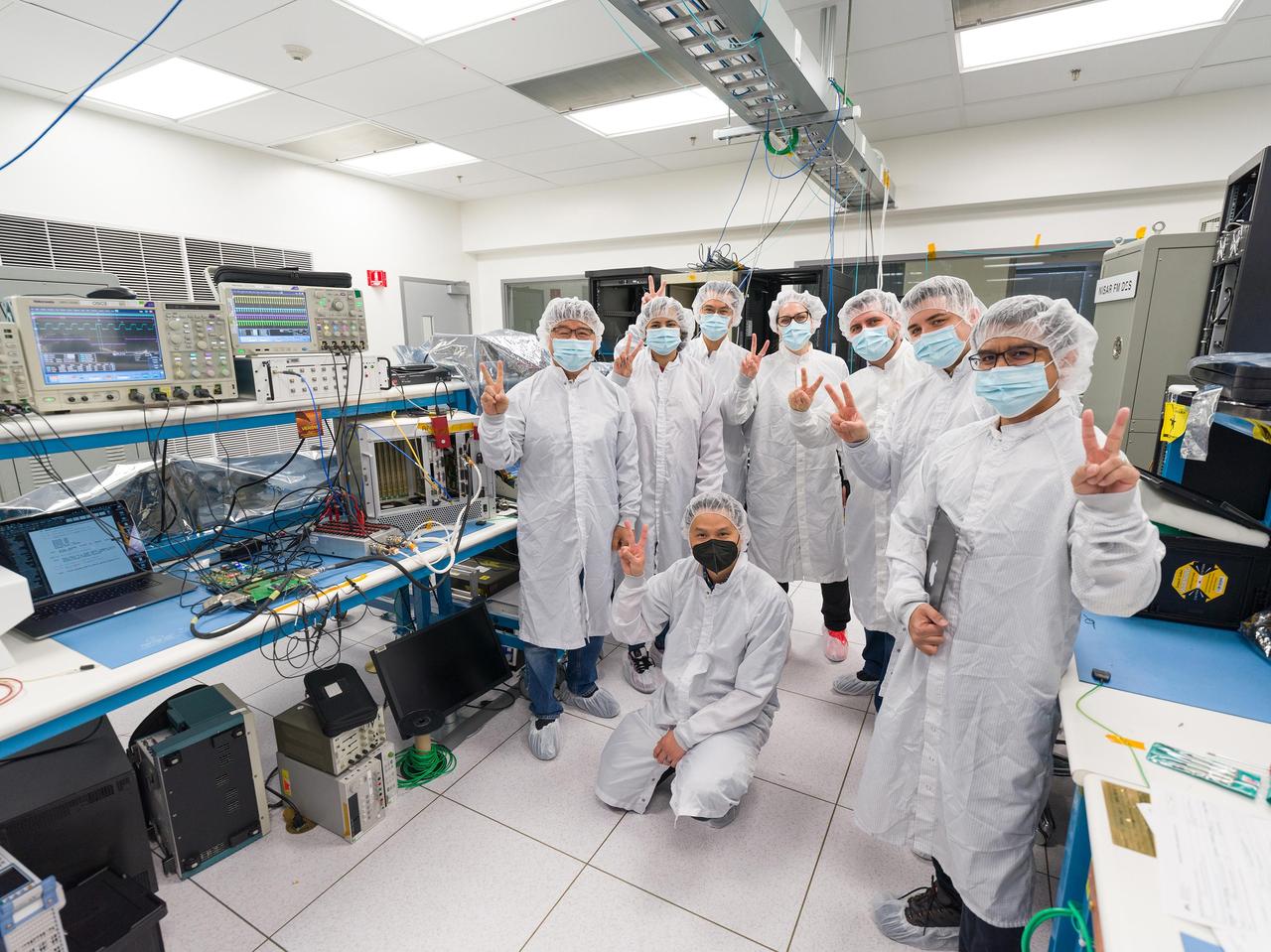
Seen here are members of the international team that participated in recent tests on prototype hardware for the Venus Interferometric Synthetic Aperture Radar (VISAR) at NASA's Jet Propulsion Laboratory in Southern California. VISAR is being developed at JPL for NASA's Venus Emissivity Radio Science, InSAR, Topography & Spectroscopy (VERITAS) mission that will launch within a decade to explore Earth's twin. In March 2023, the hardware underwent early interface tests in a JPL clean room, representing the first in a series to be run by JPL and Thales Alenia Space Italy (TASI), an international partner of the VERITAS mission that is contributing hardware to the instrument. Dressed in gowns to minimize the risk of contamination with sensitive electronics, the JPL VISAR digital team and TASI engineers pose for a photograph next to the laboratory benches where the tests took place. Figure A shows the same personnel without gowns for a team photo. From left to right: Marvin Cruz (JPL), Chester Lim (JPL), Tim Noh (JPL), Hana Haideri (JPL), Luca Di Marco Napini (TASI), Ernie Chuang (JPL), Dragana Perkovic-Martin (JPL), and Gabriel Mihu (TASI). JPL's Michael Burke, Anusha Yarlagadda, Duane Clark, and TASI's Antonio Delfino also participated in the tests but are not pictured. When VERITAS arrives in orbit, it will use VISAR to create detailed 3D global maps of Venus. The spacecraft will also carry a near-infrared spectrometer to figure out what the surface is made of. Together, the instruments will offer clues about the planet's past and present geologic processes, help reveal how the paths of Venus and Earth diverged, and how Venus lost its potential as a habitable world. VERITAS is managed by JPL. VERITAS and NASA's Deep Atmosphere Venus Investigation of Noble gases, Chemistry, and Imaging (DAVINCI) mission were selected in 2021 under NASA's Discovery Program as the agency's next missions to Venus. The Discovery Program is managed by the Planetary Missions Program Office at NASA's Marshall Space Flight Center in Huntsville, Alabama, for the Planetary Science Division of NASA's Science Mission Directorate in Washington. https://photojournal.jpl.nasa.gov/catalog/PIA25833
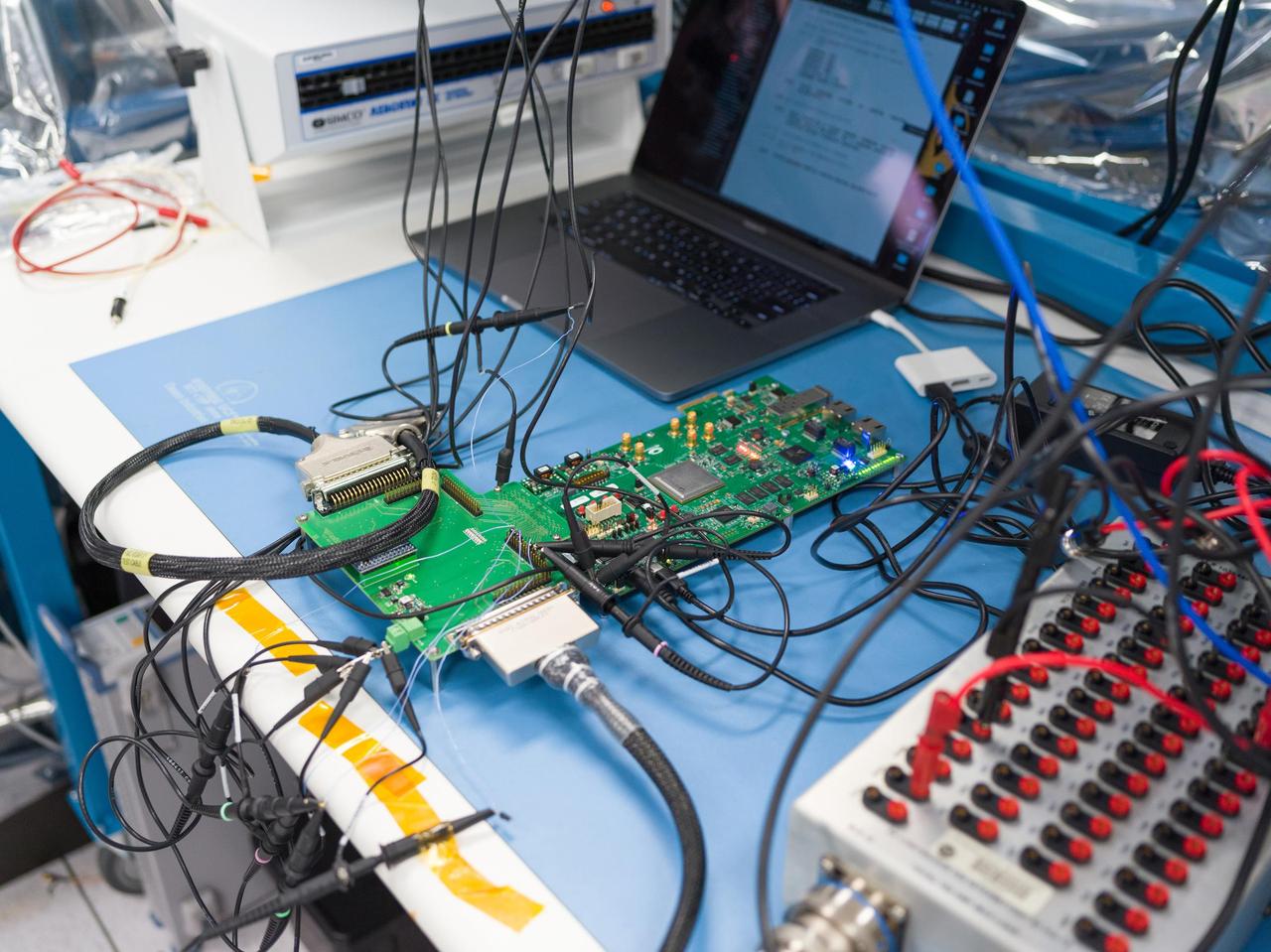
Seen here in March 2023, prototype hardware for the Venus Interferometric Synthetic Aperture Radar (VISAR) underwent interface testing at NASA's Jet Propulsion Laboratory in Southern California. VISAR is being developed at JPL for NASA's Venus Emissivity Radio Science, InSAR, Topography & Spectroscopy (VERITAS) mission that will launch within a decade to explore Earth's twin. These early interface tests are the first in a series to be run by JPL and Thales Alenia Space Italy (TASI), an international partner of the VERITAS mission that is contributing hardware to the instrument. Figure A shows TASI engineers Luca Di Marco Napini and Gabriel Mihu working in a JPL cleanroom on the VISAR prototype hardware. When VERITAS arrives in orbit, it will use VISAR to create detailed 3D global maps of Venus. The spacecraft will also carry a near-infrared spectrometer to figure out what the surface is made of. Together, the instruments will offer clues about the planet's past and present geologic processes, help reveal how the paths of Venus and Earth diverged, and how Venus lost its potential as a habitable world. VERITAS is managed by JPL. VERITAS and NASA's Deep Atmosphere Venus Investigation of Noble gases, Chemistry, and Imaging (DAVINCI) mission were selected in 2021 under NASA's Discovery Program as the agency's next missions to Venus. The Discovery Program is managed by the Planetary Missions Program Office at NASA's Marshall Space Flight Center in Huntsville, Alabama, for the Planetary Science Division of NASA's Science Mission Directorate in Washington. https://photojournal.jpl.nasa.gov/catalog/PIA25832
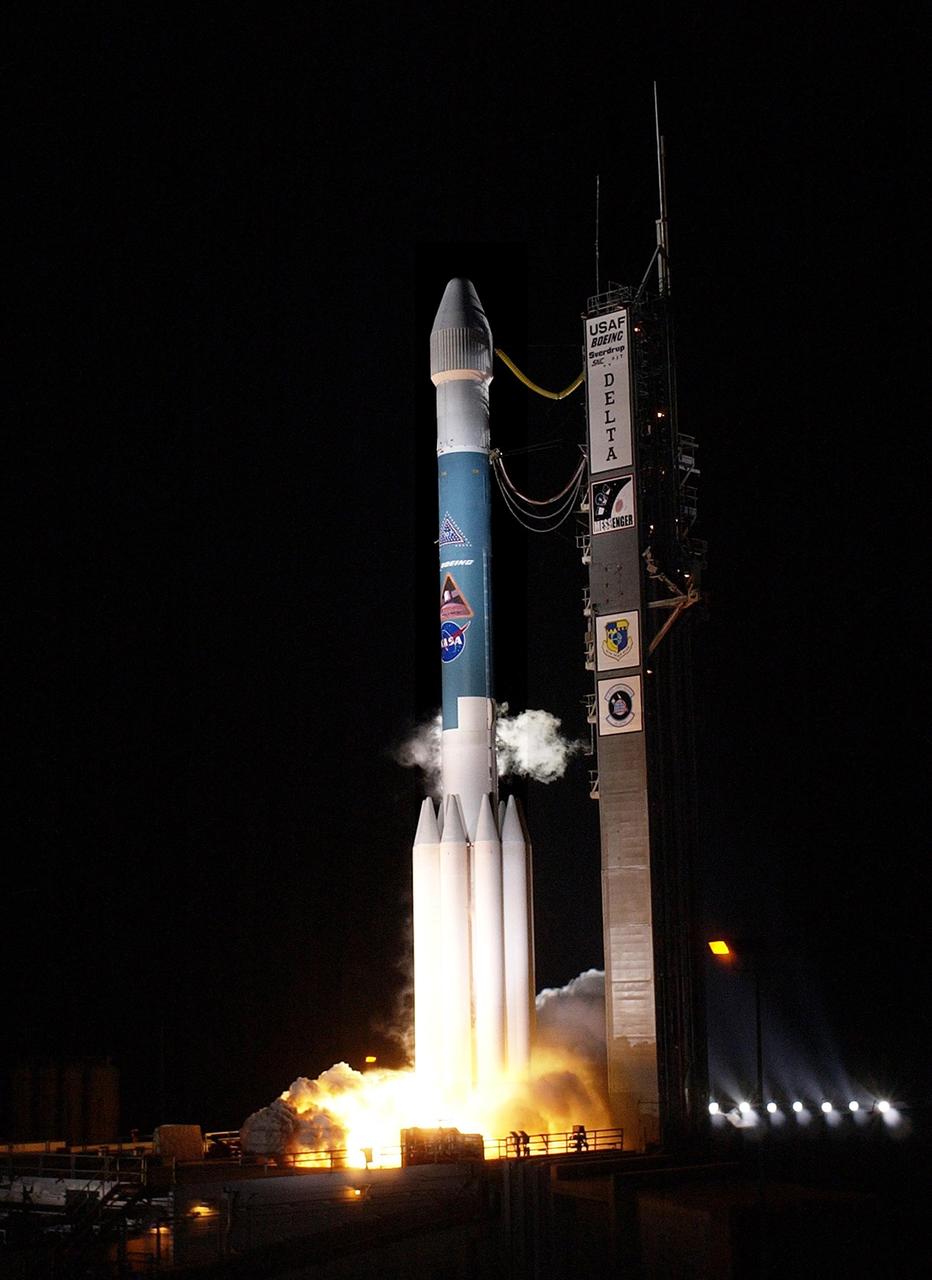
KENNEDY SPACE CENTER, FLA. - The MESSENGER spacecraft atop a Boeing Delta II rocket lifts off on time at 2:15:56 a.m. EDT, from Launch Pad 17-B, Cape Canaveral Air Force Station. MESSENGER (Mercury Surface, Space Environment, Geochemistry and Ranging) is on a seven-year, 4.9-billion-mile journey to the planet Mercury. The spacecraft will fly by Earth, Venus and Mercury several times, as well as circling the sun 15 times, to burn off energy before making its final approach to the inner planet on March 18, 2011. MESSENGER was built for NASA by the Johns Hopkins University Applied Physics Laboratory in Laurel, Md.
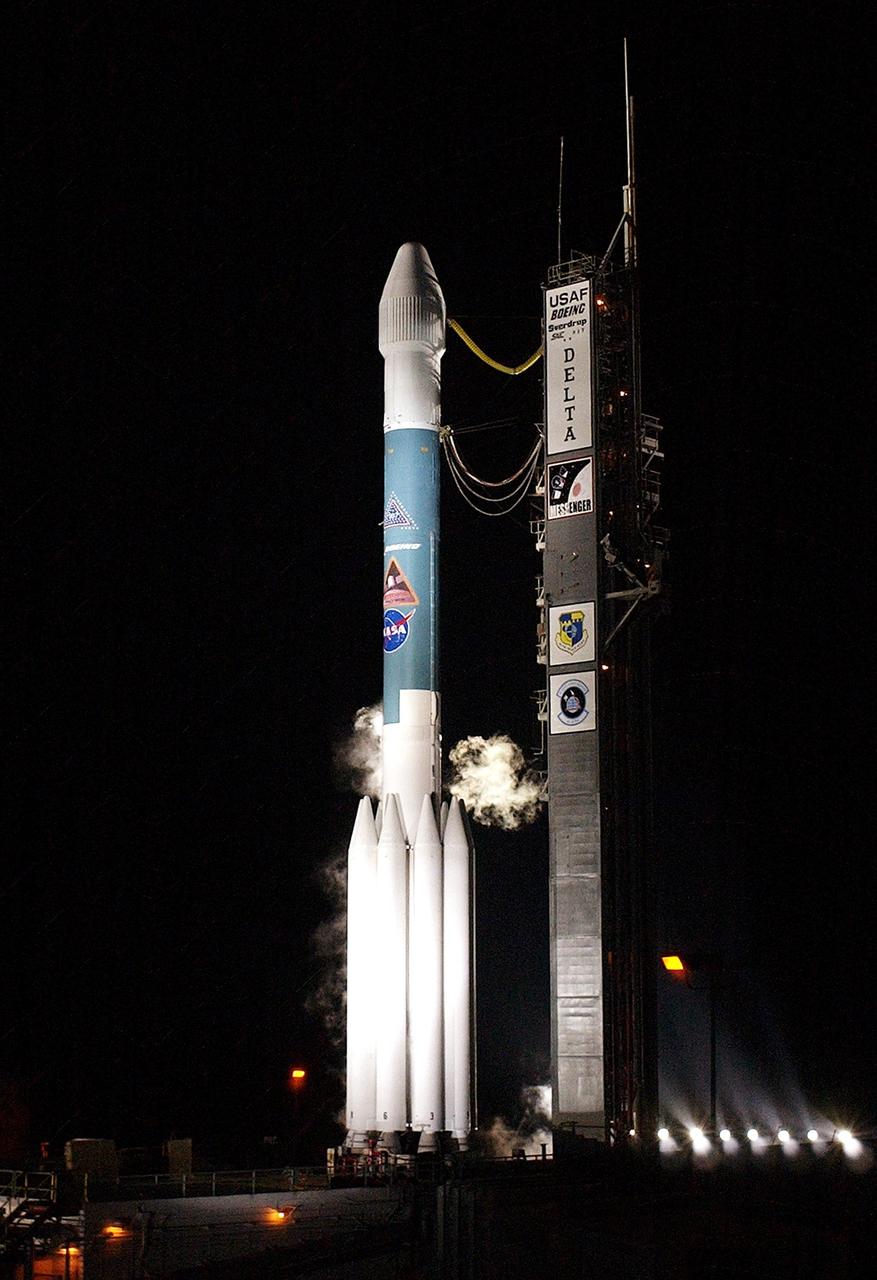
KENNEDY SPACE CENTER, FLA. - Against the clear, black sky, spotlights flood the MESSENGER spacecraft aboard a Boeing Delta II rocket as it sits ready for liftoff, scheduled for 2:15:56 a.m. EDT, from Launch Pad 17-B, Cape Canaveral Air Force Station. MESSENGER (Mercury Surface, Space Environment, Geochemistry and Ranging) is on a seven-year journey to the planet Mercury. The spacecraft will fly by Earth, Venus and Mercury several times to burn off energy before making its final approach to the inner planet on March 18, 2011. MESSENGER was built for NASA by the Johns Hopkins University Applied Physics Laboratory in Laurel, Md.

KENNEDY SPACE CENTER, FLA. - The tip of the Boeing Delta II rocket with its MESSENGER spacecraft on top breaks through the billows of smoke below as it lifts off on time at 2:15:56 a.m. EDT from Launch Pad 17-B, Cape Canaveral Air Force Station. MESSENGER (Mercury Surface, Space Environment, Geochemistry and Ranging) is on a seven-year journey to the planet Mercury. The spacecraft will fly by Earth, Venus and Mercury several times to burn off energy before making its final approach to the inner planet on March 18, 2011. MESSENGER was built for NASA by the Johns Hopkins University Applied Physics Laboratory in Laurel, Md.
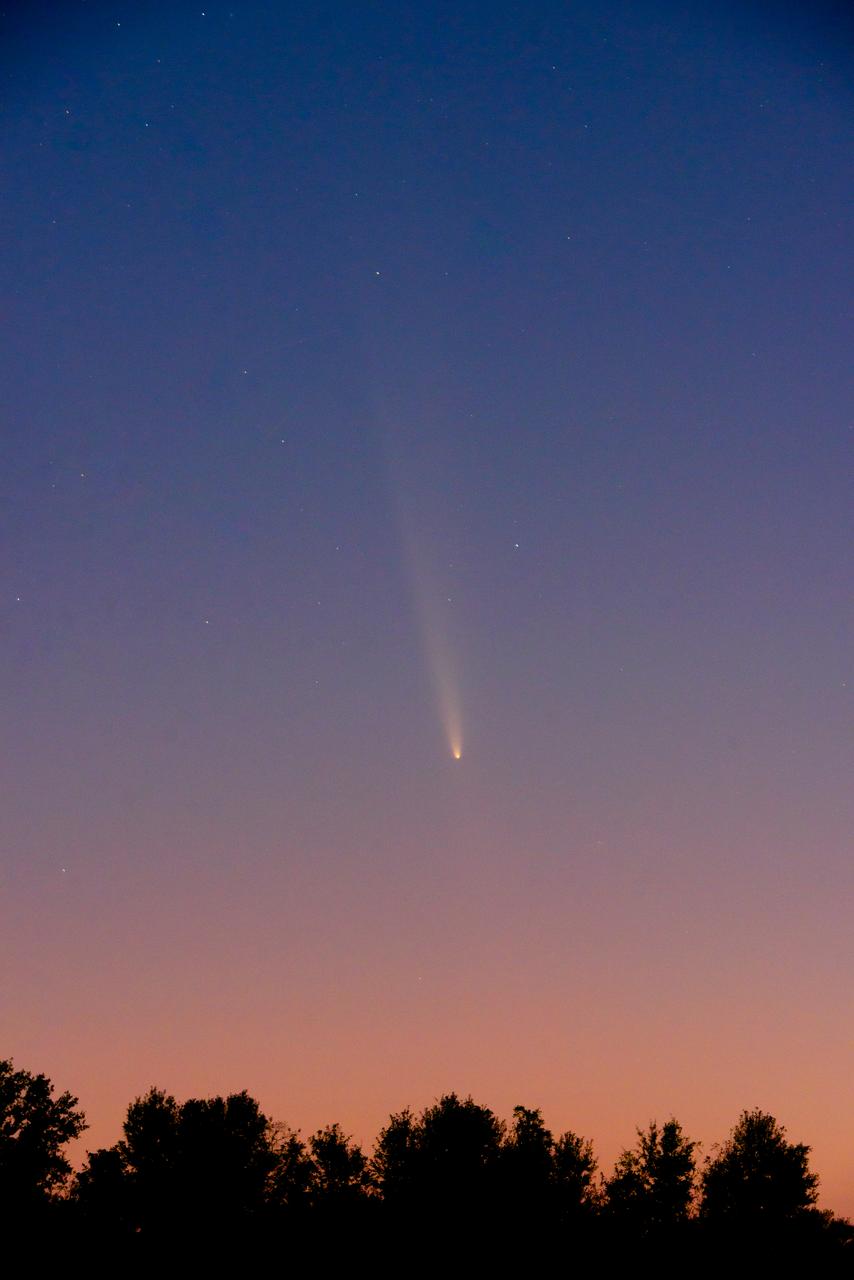
The Oort Cloud comet, called C/2023 A3 Tsuchinshan-ATLAS, passes over Southeast Louisiana near New Orleans, home of NASA’s Michoud Assembly Facility, Sunday, Oct. 13, 2024. The comet is making its first appearance in documented human history; it was last seen in the night sky 80,000 years ago. The Tsuchinshan-ATLAS comet made its first close pass by Earth in mid-October and will remain visible to viewers in the Northern Hemisphere just between the star Arcturus and planet Venus through early November.
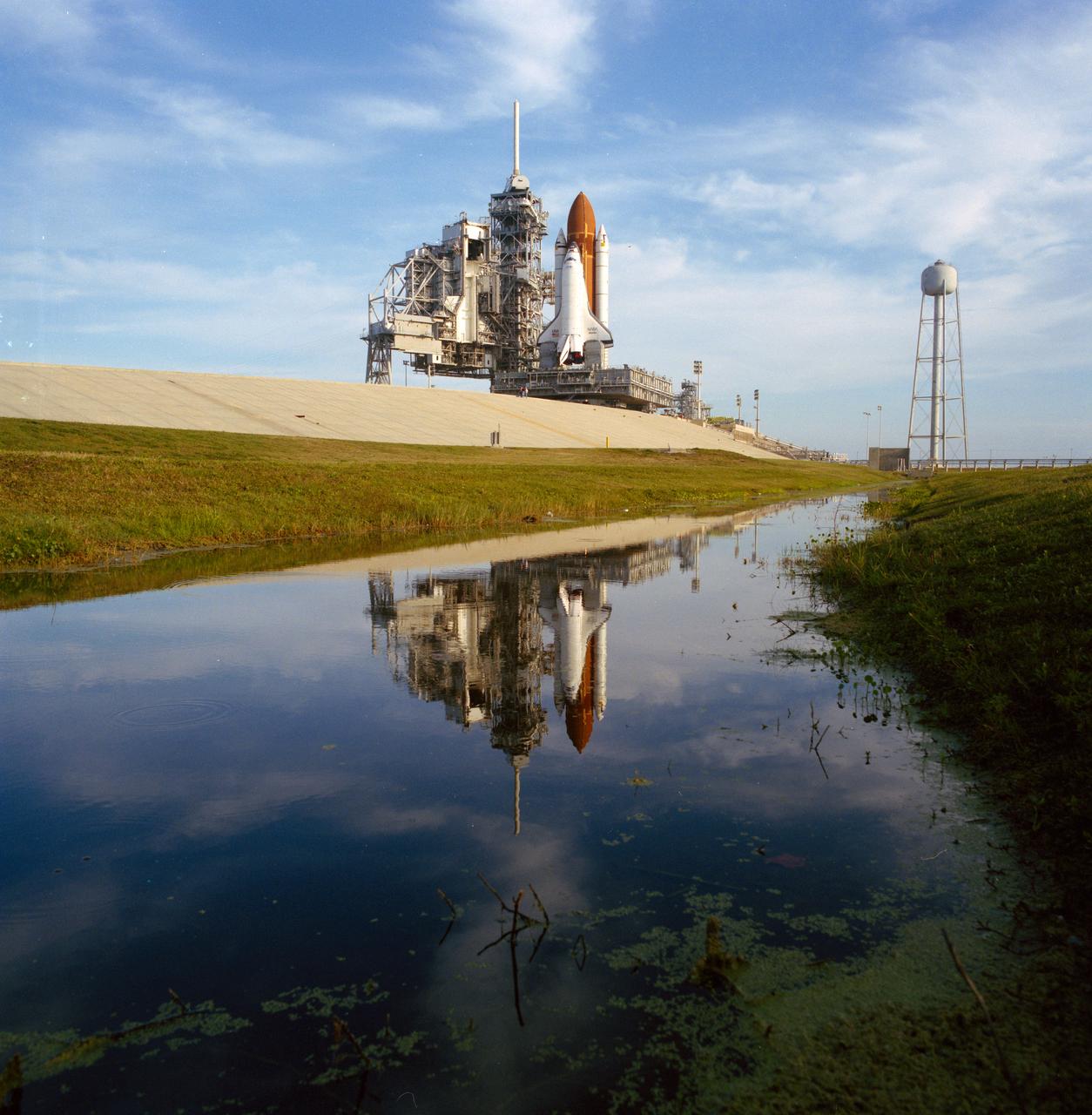
S89-30719 (22 March 1989) --- Space shuttle Atlantis is seen soon in duplicate, thanks to reflection in nearby water, after arriving at Pad 39-B. The spacecraft left the vehicle assembly building (VAB) at 12:01A.M. and arrived to this point at 7 A.M. Atlantis is scheduled for NASA STS-30 mission on which the Magellan will be deployed to orbit planet Venus and map its topographic features. Launch is scheduled for April 28.
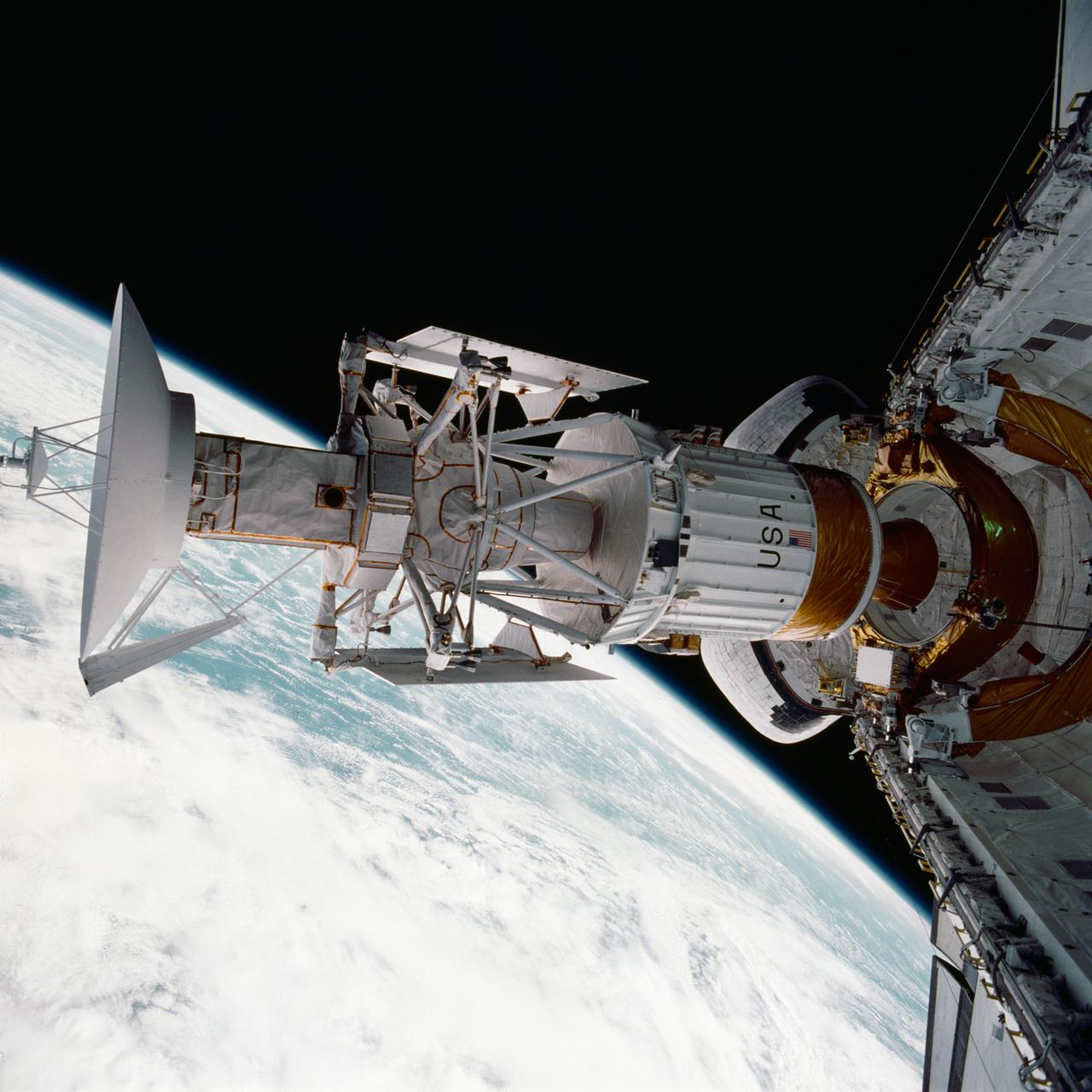
STS030-72-047 (4 May 1989) --- In the early evening hours of Atlantis?s first day in space for the four-day STS-30 mission, the Magellan spacecraft is released into space to begin its long journey to the planet Venus for an extensive radar mapping mission. The scene was photographed through Atlantis?s aft flight deck windows with a handheld 70mm camera.
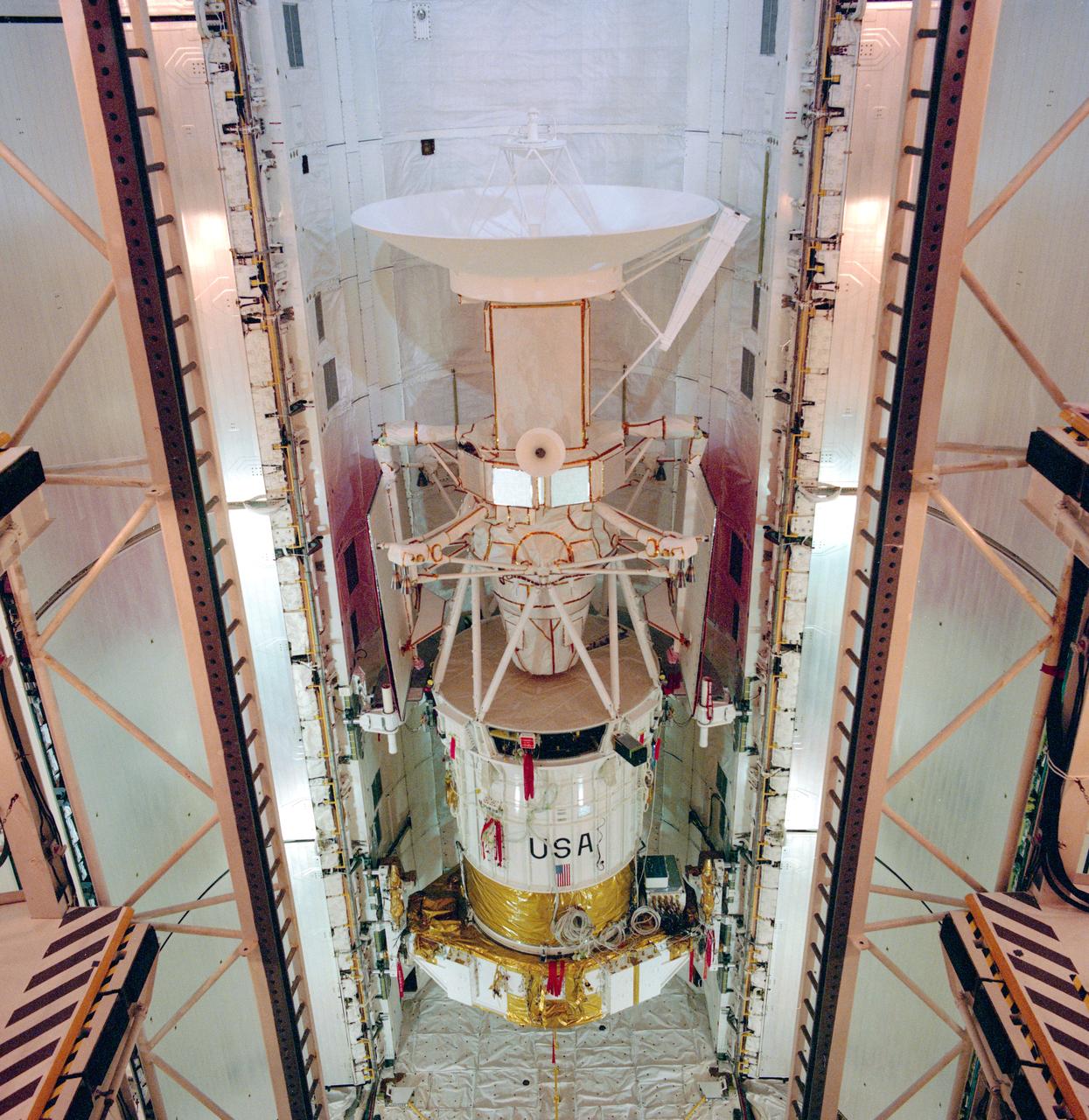
S89-30720 (29 March 1989) --- The spacecraft Magellan is in the payload bay of the orbiter Atlantis at launch pad 39-B. Magellan is scheduled to be released from Atlantis April 28, 1989, on NASA's STS-30 mission. Its mission will be the first U.S. planetary probe in over 10 years and it is the first deployed by the shuttle. The mission calls for the spacecraft to make the approximately 15-month journey to the planet Venus and perform radar mapping operations, transmitting the information back to NASA's Jet Propulsion Laboratory (JPL) in California.
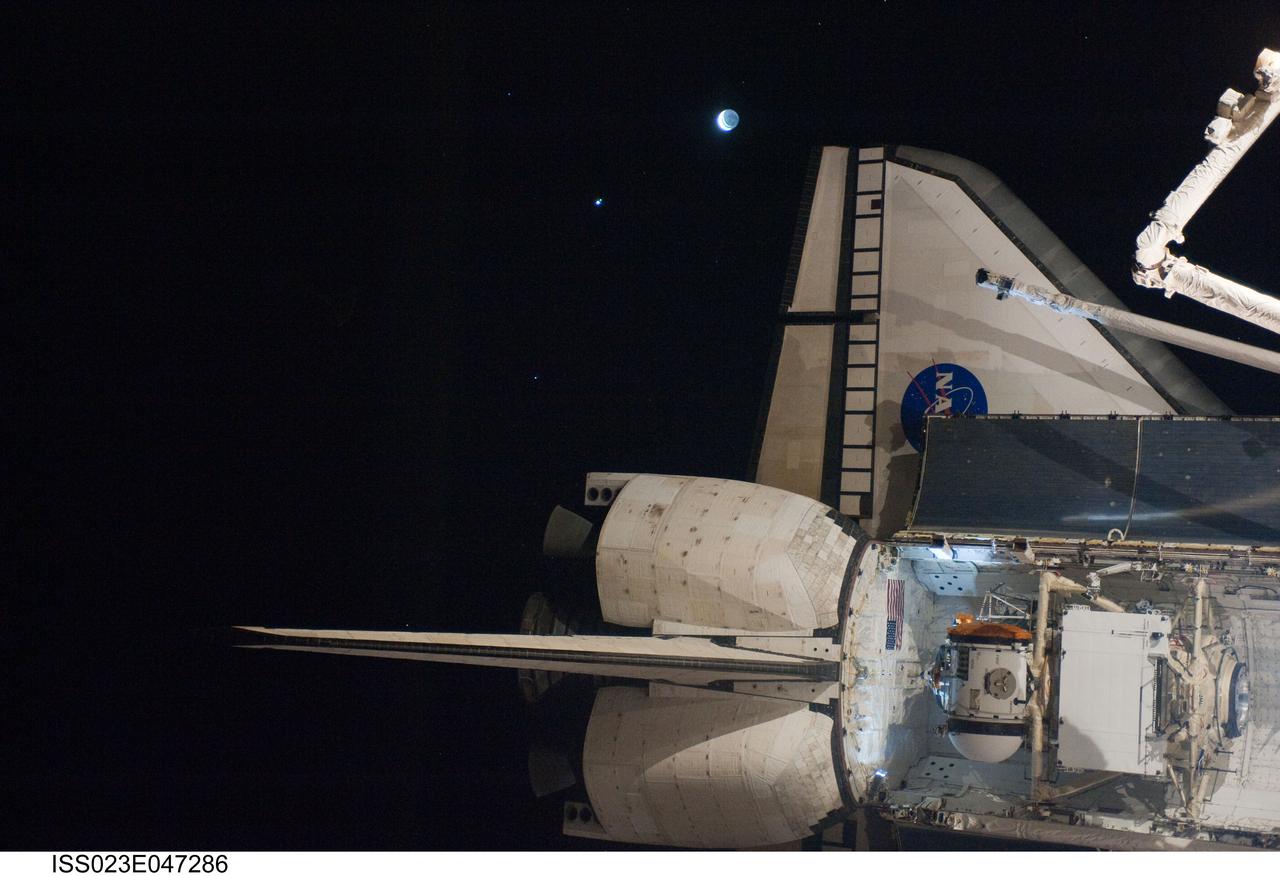
ISS023-E-047286 (16 May 2010) --- The aft section of space shuttle Atlantis is featured in this image photographed by an Expedition 23 crew member shortly after Atlantis docked with the International Space Station. The Russian-built Mini-Research Module 1 (MRM-1), named Rassvet, is visible in the cargo bay. The planet Venus and the moon are visible at top center.
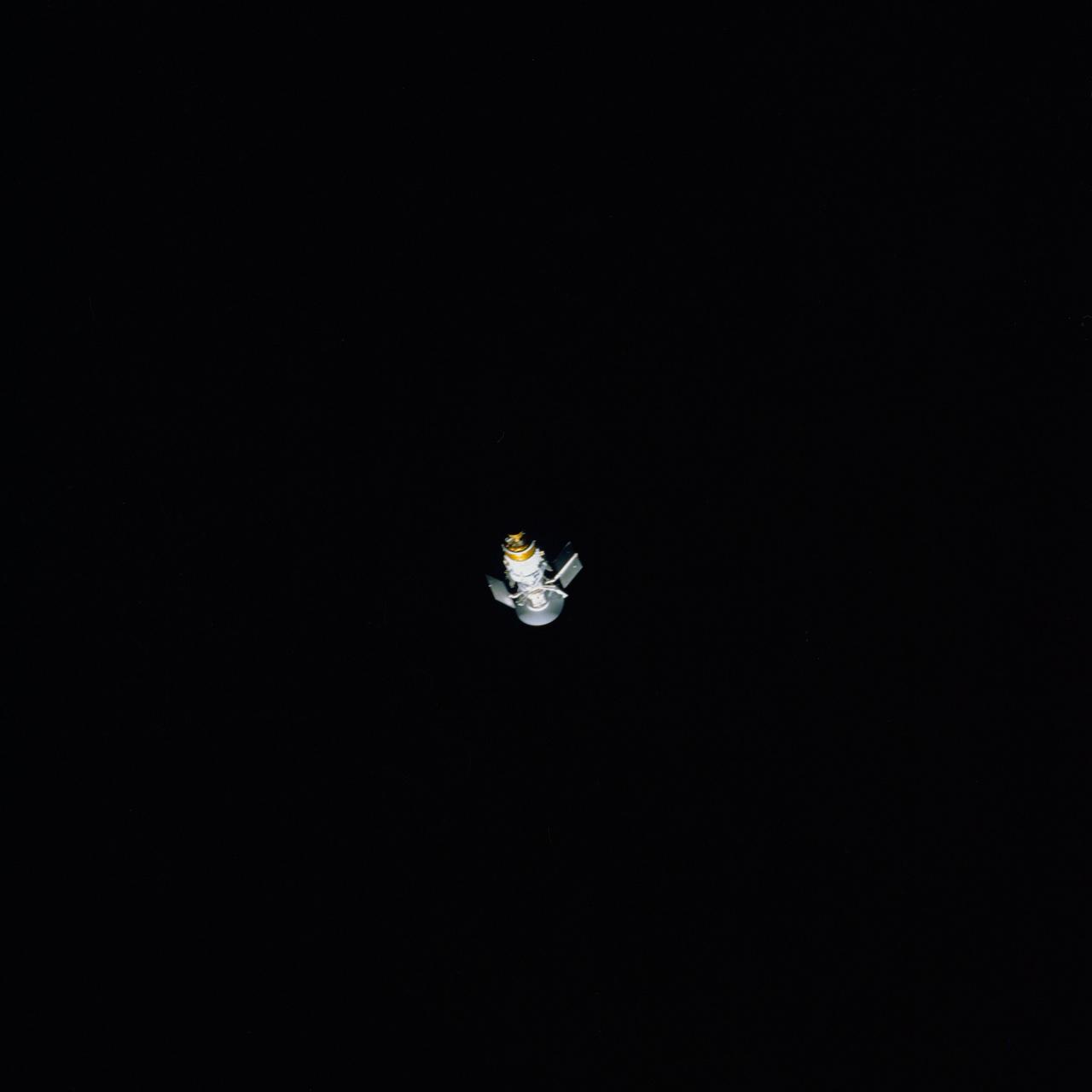
STS030-71-063 (4 May 1989) --- This scene is one of two released by NASA showing the process of solar array panel deployment on the Magellan spacecraft. Panels are not fully extended in this frame. The spacecraft had earlier been released by the STS-30 crewmembers to begin its long journey to the planet Venus for an extensive radar mapping mission. The frame was photographed through Atlantis? aft flight deck windows with a handheld 70mm camera. The complementary photograph is STS030-71-070.
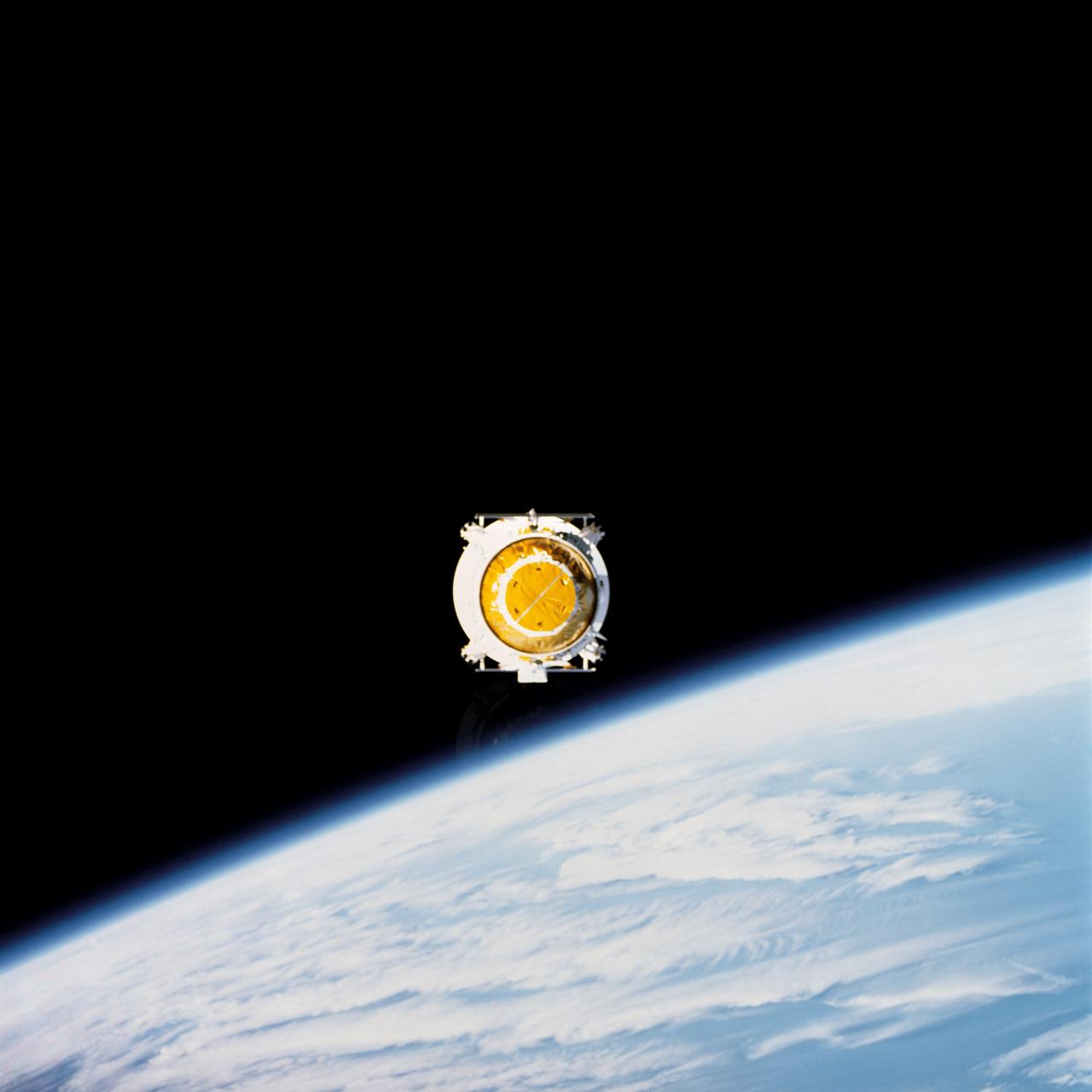
STS030-71-053 (4 May 1989) --- In the early evening hours of Space Shuttle Atlantis’ first day in space for the four-day STS-30 mission, the Magellan spacecraft is released into space to begin its long journey to the planet Venus for an extensive radar mapping mission. The scene was photographed through Atlantis’ aft flight deck windows with a handheld 70mm camera.
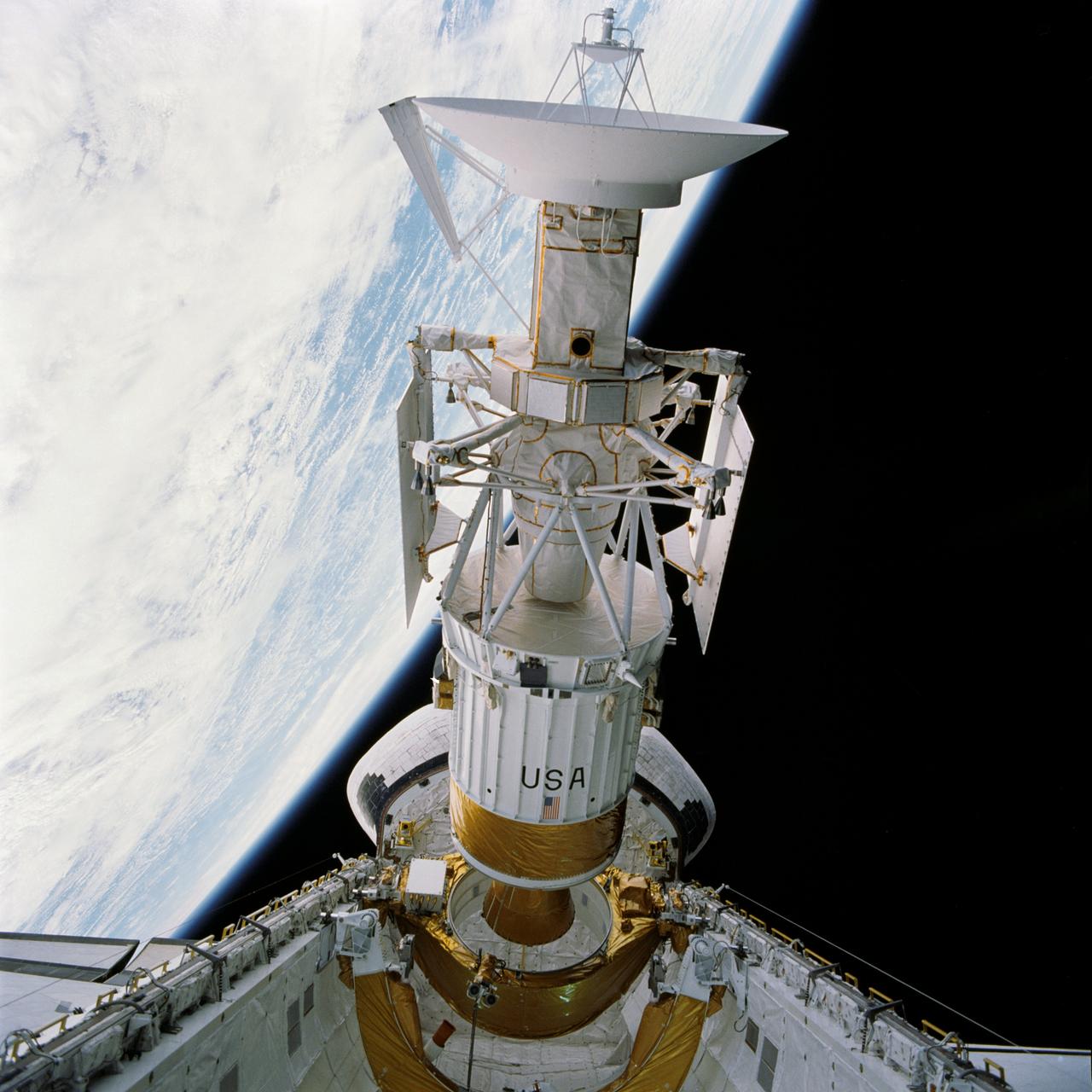
STS030-72-046 (4 May 1989) --- In the early evening hours of the Space Shuttle Atlantis' first day in space for the four-day STS-30 mission, the Magellan spacecraft is released into space to begin its long journey to the planet Venus for an extensive radar mapping mission. The scene was photographed through Atlantis' aft flight deck windows with a handheld 70mm camera.
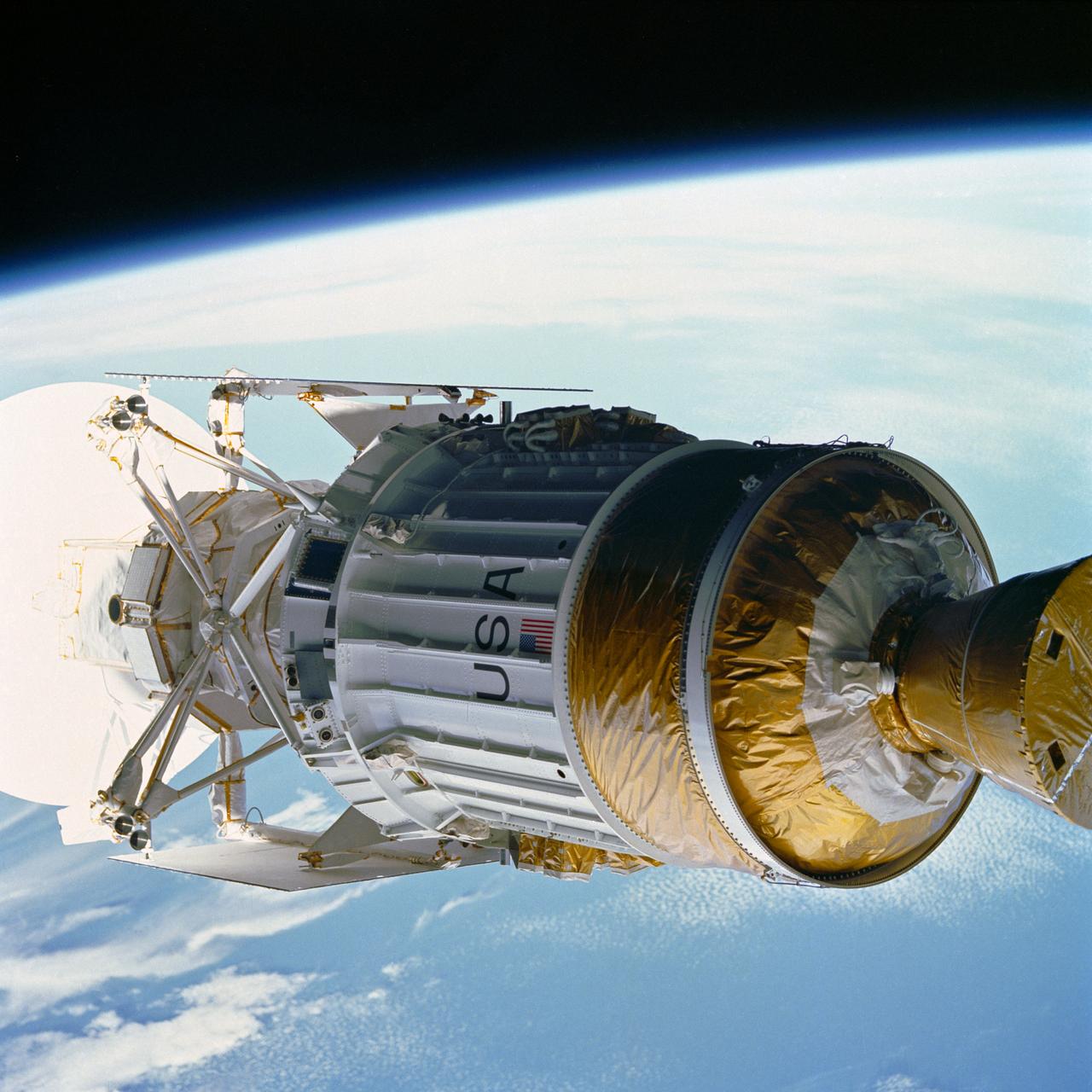
STS030-71-052 (4 May 1989) --- In the early evening hours of the Space Shuttle Atlantis' first day in space for the four-day mission, the Magellan spacecraft begins its long journey to the planet Venus for an extensive radar mapping mission. The scene was photographed through Atlantis' aft flight deck windows with a handheld 70mm camera.
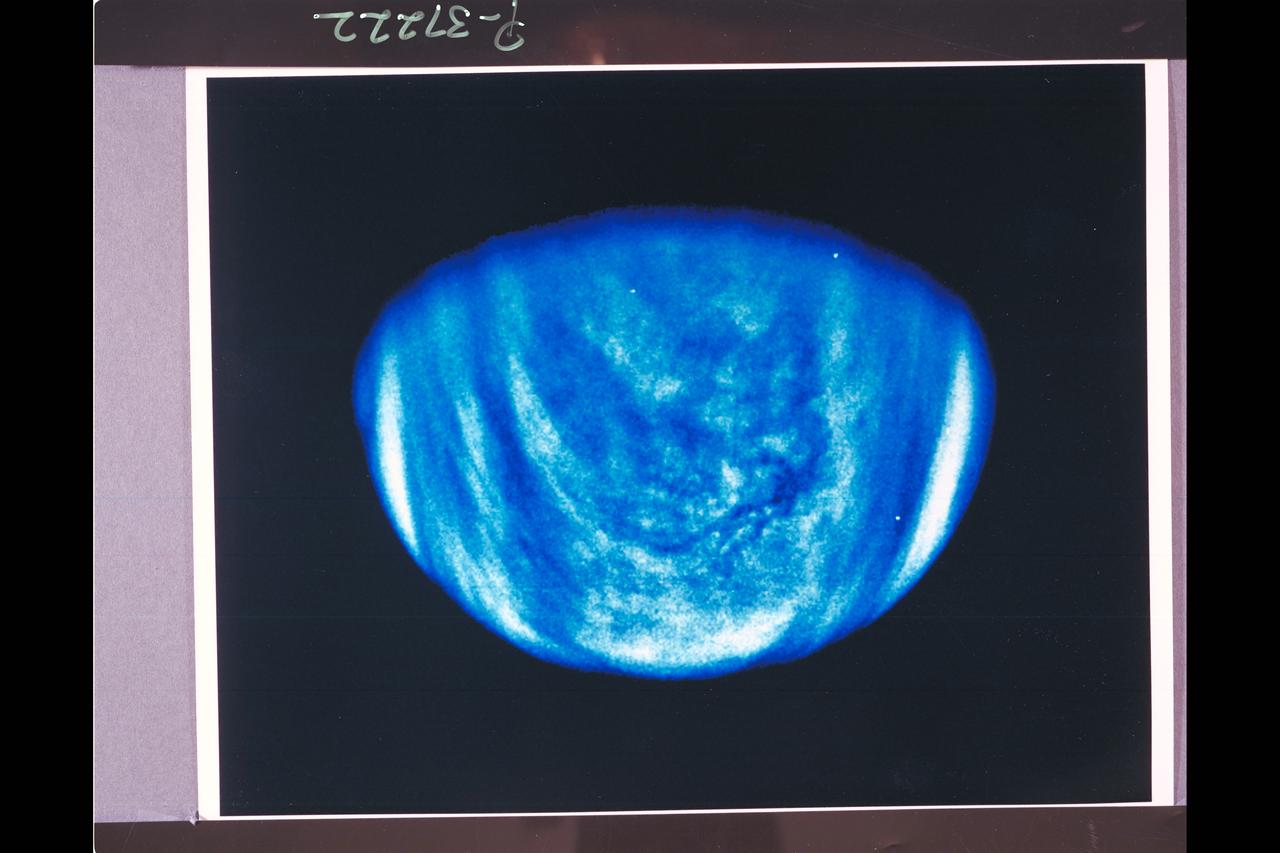
Range : 1.7 million miles This photo of Venus was taken by the Galileo spacecraft's Solid State Imaging System. A high-pass spatial filter has been applied in order to emphasize the smaller-scale cloud features, and the rendition has been colorized to a bluish hue in order to emphasize the subtle contrasts in the cloud markings and to indicate how it was taken through a violet filter. The sulfuric acid clouds indicate considerable convective activity, in the equatorial regions of the planet to the left and downwind of the subsolar point (afternoon on Venus), They are analogous to 'fair weather clouds' on Earth. The filamentary dark features visible in the colorized image are here revealed to be composed of several dark nodules, like strings on a bead, each about 60 miles across.
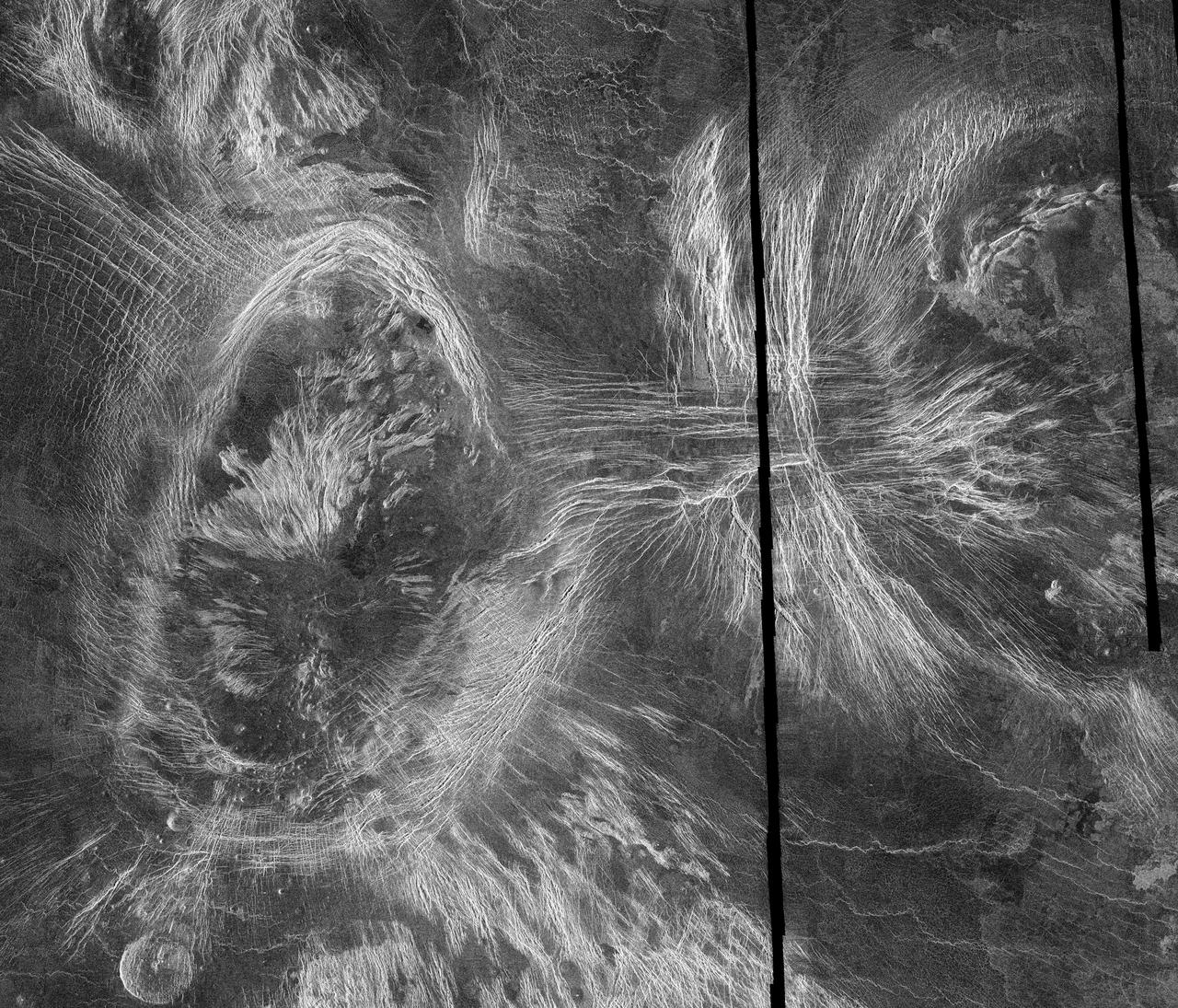
This mosaic of Magellan data in the Fortuna region of Venus, centered at 49 degrees north latitude, 2 degrees longitude, shows two coronae. Coronae are large circular or oval structures first identified in Soviet radar images of Venus. The structure on the left, Bahet Corona, is about 230 kilometers (138 miles) long and 150 kilometers (90 miles) across. A portion of Onatah Corona, over 350 kilometers (210 miles) in diameter, can be seen on the right of the mosaic. Both features are surrounded by a ring of ridges and troughs, which in places cut more radially-oriented fractures. The centers of the features also contain radial fractures as well as volcanic domes and flows. Coronae are thought to form due to the upwelling of hot material from deep in the interior of Venus. The two coronae may have formed at the same time over a single upwelling, or may indicate movement of the upwelling or the upper layers of the planet to the west over time. A 'pancake' dome, similar to low-relief domes see in the southern hemisphere, is located just to the southwest of Bahet. Resolution of the Magellan data is about 120 meters (400 feet). http://photojournal.jpl.nasa.gov/catalog/PIA00461
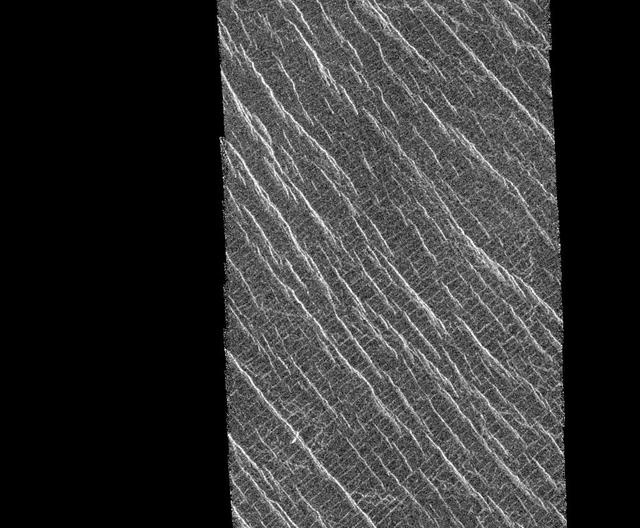
This mosaic shows an area of the Lakshmi region that is located 30 degrees north latitude and 333.3 degrees east longitude. (Longitude on Venus is measured from 0 degrees to 360 degrees east). The area shown measures about 37 kilometers (23 miles) wide and 80 kilometers (50 miles) long. Based on data from the Pioneer Venus Orbiter and the ground-based Arecibo Radar Observatory, it is known that this region is located on the low rise that separates Sedna Planitia and Guinevere Planitia, just to the west of Eistla Regio. Two sets of parallel lineations are seen intersecting almost at right angles. The fainter lineations are spaced at regular intervals of about one kilometer (0.6 mile) and extend beyond the boundary of the image. The width of the faint lineations is at the limit of resolution of the best Magellan images. The brighter, more dominant lineations are less regular and, in places, appear to begin and end where they intersect the fainter lineations. It is not clear whether the two sets of lineations are faults or fractures, but in other Magellan images, these bright lineations are associated with pit craters and volcanic features. This type of terrain has not been seen on Venus nor on other planets. North is at the top of the image. http://photojournal.jpl.nasa.gov/catalog/PIA00085
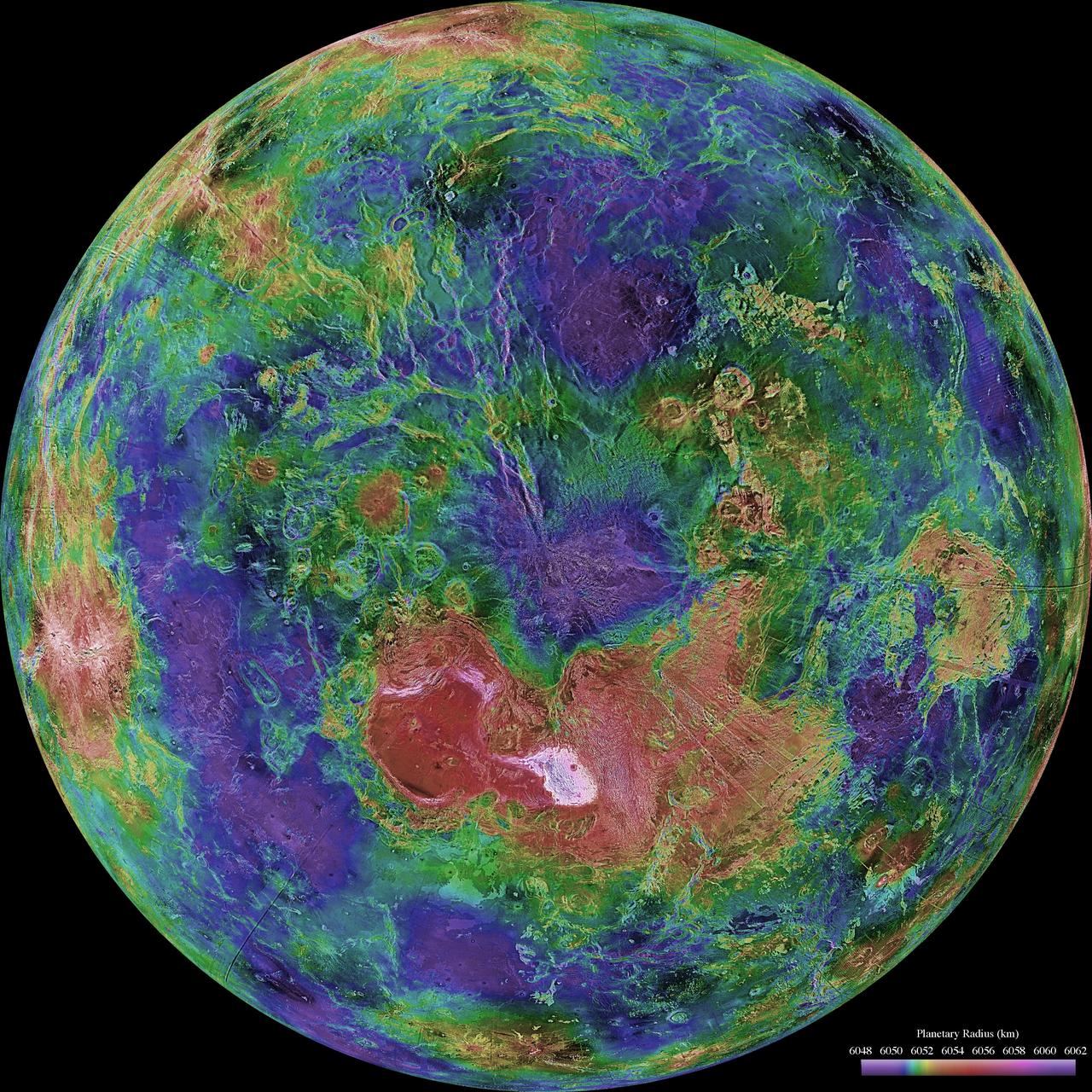
The hemispheric view of Venus, as revealed by more than a decade of radar investigations culminating in the 1990-1994 Magellan mission, is centered on the North Pole. The Magellan spacecraft imaged more than 98% of Venus at a resolution of about 100 meters; the effective resolution of this image is about 3 km. A mosaic of the Magellan images (most with illumination from the west) forms the image base. Gaps in the Magellan coverage were filled with images from the Earth-based Arecibo radar in a region centered roughly on 0 degree latitude and longitude, and with a neutral tone elsewhere (primarily near the south pole). The composite image was processed to improve contrast and to emphasize small features, and was color-coded to represent elevation. Gaps in the elevation data from the Magellan radar altimeter were filled with altimetry from the Venera spacecraft and the U.S. Pioneer Venus missions. An orthographic projection was used, simulating a distant view of one hemisphere of the planet. The Magellan mission was managed for NASA by Jet Propulsion Laboratory (JPL), Pasadena, CA. Data processed by JPL, the Massachusetts Institute of Technology, Cambridge, MA, and the U.S. Geological Survey, Flagstaff, AZ. http://photojournal.jpl.nasa.gov/catalog/PIA00007
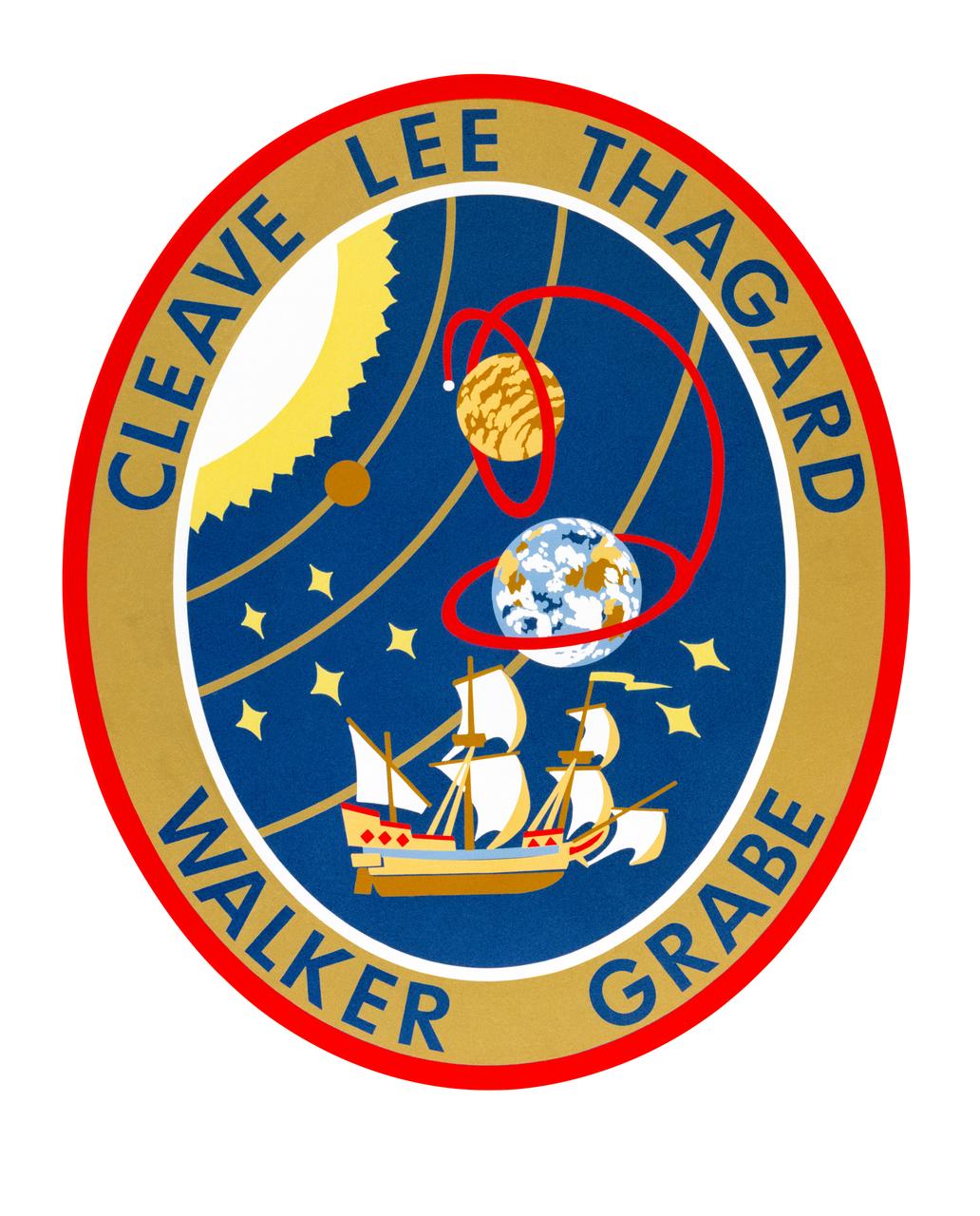
S89-20025 (3 March 1989) --- The STS-30 patch depicts the joining of NASA's manned and unmanned space programs. The sun and inner planets of our solar system are shown with the curve connecting Earth and Venus symbolizing the shuttle orbit, the spacecraft trajectory toward Venus and its subsequent orbit around our sister planet. A Spanish caravel similar to the ship on the official Magellan program logo commemorates the 16th century explorer's journey and his legacy of adventure and discovery. Seven stars on the patch honor the crew of Challenger. The five-star cluster in the shape of the constellation Cassiopeia represent the five STS-30 crew members--astronauts David M. Walker, Ronald J. Grabe, Norman E. Thagard, Mary L. Cleave and Mark C. Lee-who collectively designed the patch. The NASA insignia design for space shuttle flights is reserved for use by the astronauts and for other official use as the NASA Administrator may authorize. Public availability has been approved only in the forms of illustrations by the various news media. When and if there is any change in this policy, which is not anticipated, the change will be publicly announced. Photo credit: NASA
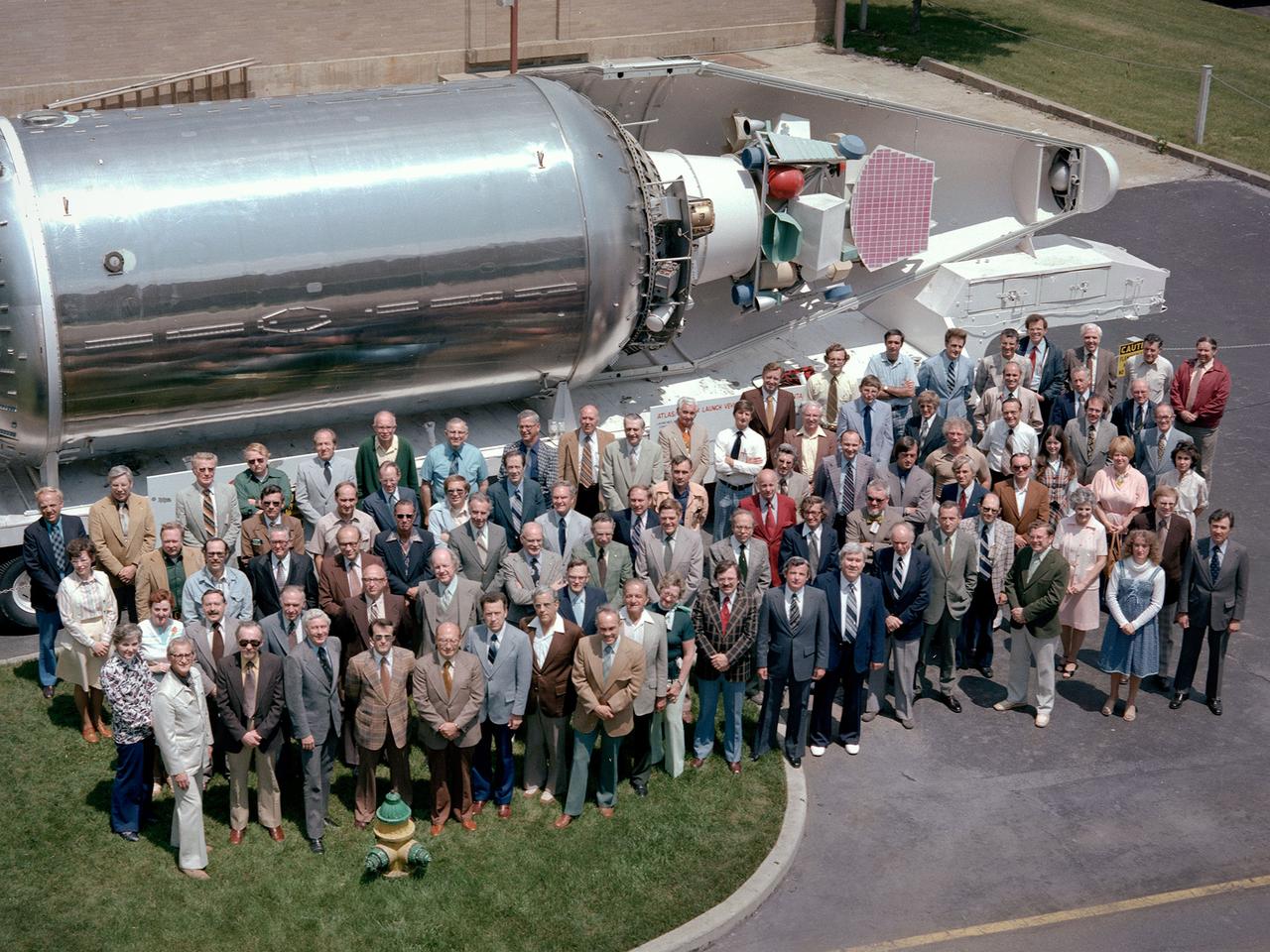
The National Aeronautics and Space Administration (NASA) Lewis Research Center’s Launch Vehicle Directorate in front of a full-scale model of the Centaur second-stage rocket. The photograph was taken to mark Centaur’s fiftieth launch. NASA Lewis managed the Centaur Program since 1962. At that time, the only prior launch attempt ended in failure. Lewis improved the spacecraft and tested it extensively throughout the early 1960s. In May 1966 an Atlas-Centaur sent the Surveyor spacecraft to the moon. It was the first successful soft landing on another planet. The Launch Vehicles Division was formed in 1969 to handle the increasing number of Centaur launches. The Lewis team became experts at integrating the payload with the Centaur and calculating proper trajectories for the missions. Centaur’s first 50 missions included Orbiting Astronomical Observatories, the Mariner 6 and 7 flybys of Mars, Mariner 9 which was the first spacecraft to orbit around another planet, the Pioneer 10 and 11 missions to the outer solar system, the Mariner 10 flyby of Venus and Mercury, the Viking 1 and 2 Mars landers, Voyagers 1 and 2 missions to Jupiter, Saturn, Uranus, and Neptune, and the Pioneer 12 and 13 flights to Venus.
KENNEDY SPACE CENTER, FLA. - After rollback of the mobile service tower, the Boeing Delta II rocket with the Mercury Surface, Space Environment, Geochemistry and Ranging (MESSENGER) spacecraft aboard is ready for launch on a seven-year journey to the planet Mercury. This is the second launch attempt in two days after the first attempt Aug. 2 was postponed due to lightning potential from residual clouds that were associated with Tropical Storm Alex. The launch of MESSENGER is rescheduled for this date at 2:15:56 a.m. EDT at the opening of a 12-second launch window. MESSENGER will fly by Earth, Venus and Mercury several times to burn off energy before making its final approach to the inner planet on March 18, 2011. MESSENGER was built for NASA by the Johns Hopkins University Applied Physics Laboratory in Laurel, Md.
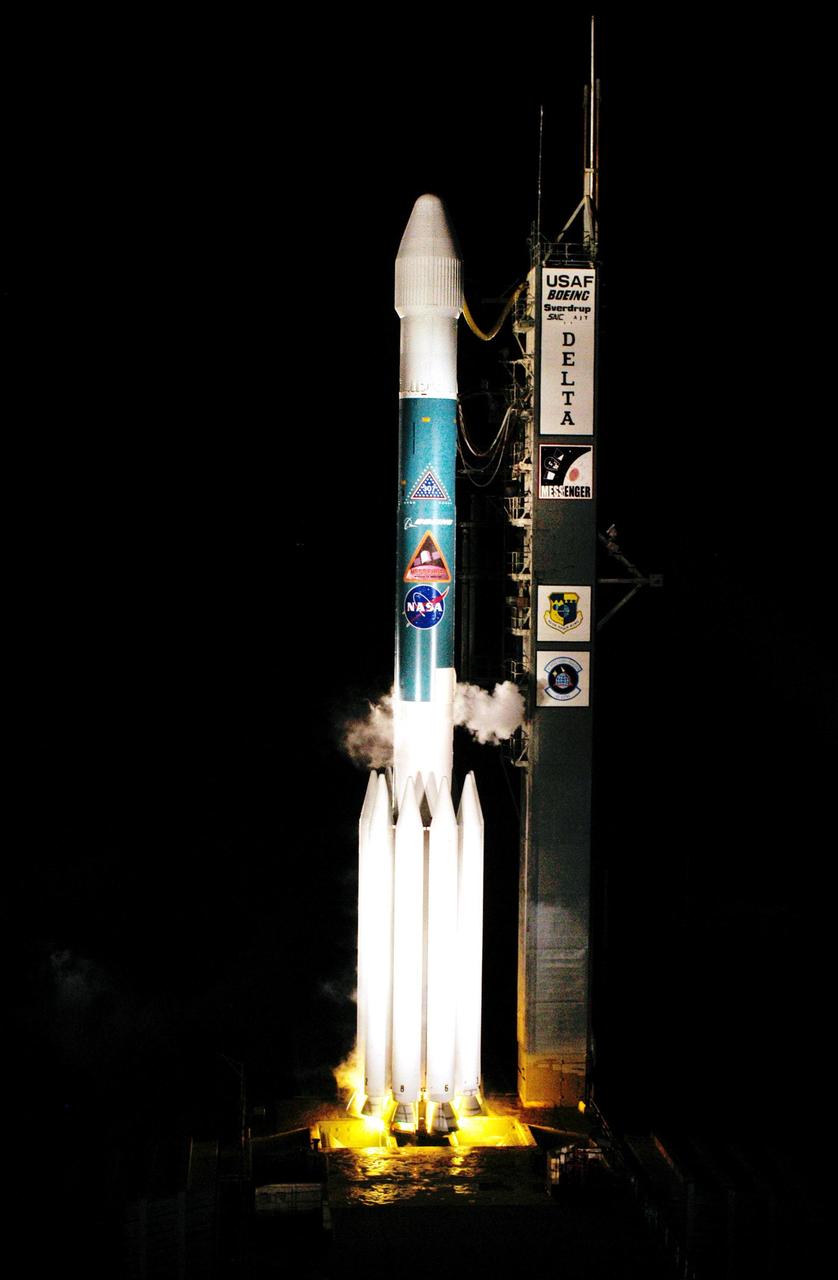
KENNEDY SPACE CENTER, FLA. - A glow appears beneath the Boeing Delta II rocket as it begins liftoff with its payload, the MESSENGER spacecraft, on top. Liftoff occurred on time at 2:15:56 a.m. EDT from Launch Pad 17-B, Cape Canaveral Air Force Station. MESSENGER (Mercury Surface, Space Environment, Geochemistry and Ranging) is on a seven-year, 4.9-billion-mile journey to the planet Mercury. The spacecraft will fly by Earth, Venus and Mercury several times, as well as circling the sun 15 times, to burn off energy before making its final approach to the inner planet on March 18, 2011. MESSENGER was built for NASA by the Johns Hopkins University Applied Physics Laboratory in Laurel, Md.
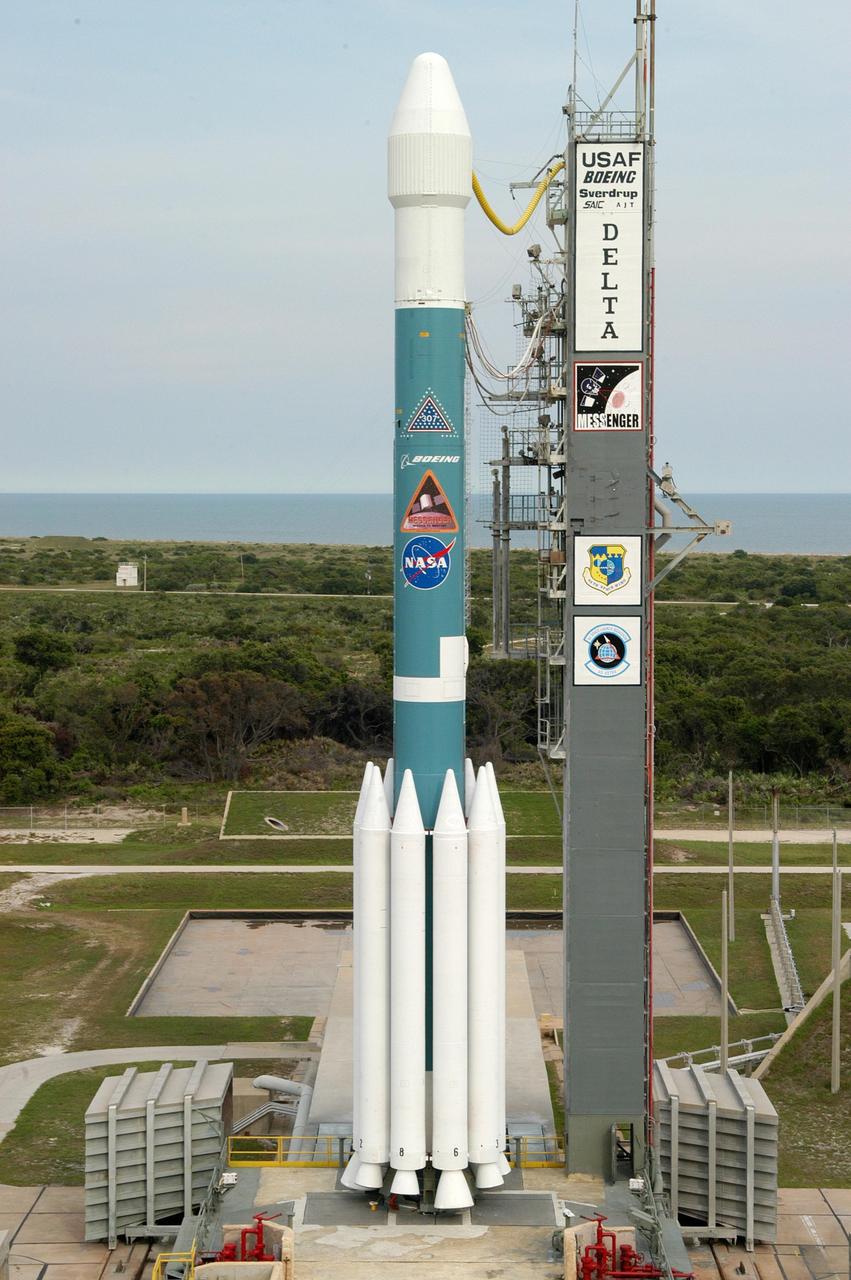
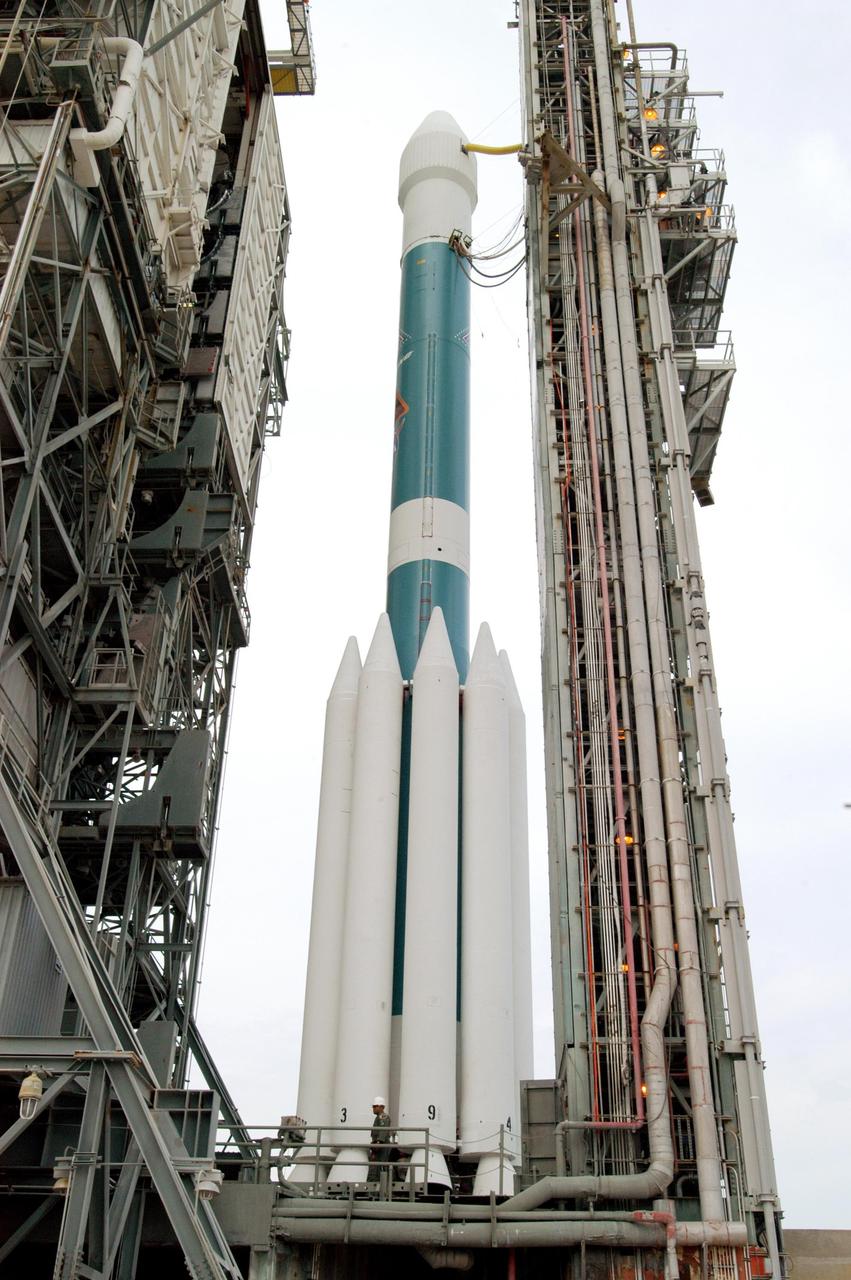
KENNEDY SPACE CENTER, FLA. - The Boeing Delta II rocket with the Mercury Surface, Space Environment, Geochemistry and Ranging (MESSENGER) spacecraft aboard is ready for launch on a seven-year journey to the planet Mercury. This is the second launch attempt in two days after the first attempt Aug. 2 was postponed due to lightning potential from residual clouds that were associated with Tropical Storm Alex. The launch of MESSENGER is rescheduled for this date at 2:15:56 a.m. EDT at the opening of a 12-second launch window. MESSENGER will fly by Earth, Venus and Mercury several times to burn off energy before making its final approach to the inner planet on March 18, 2011. MESSENGER was built for NASA by the Johns Hopkins University Applied Physics Laboratory in Laurel, Md.

KENNEDY SPACE CENTER, FLA. - The Boeing Delta II rocket with the Mercury Surface, Space Environment, Geochemistry and Ranging (MESSENGER) spacecraft aboard is ready for launch on a seven-year journey to the planet Mercury. This is the second launch attempt in two days after the first attempt Aug. 2 was postponed due to lightning potential from residual clouds that were associated with Tropical Storm Alex. The launch of MESSENGER is rescheduled for this date at 2:15:56 a.m. EDT at the opening of a 12-second launch window. MESSENGER will fly by Earth, Venus and Mercury several times to burn off energy before making its final approach to the inner planet on March 18, 2011. MESSENGER was built for NASA by the Johns Hopkins University Applied Physics Laboratory in Laurel, Md.
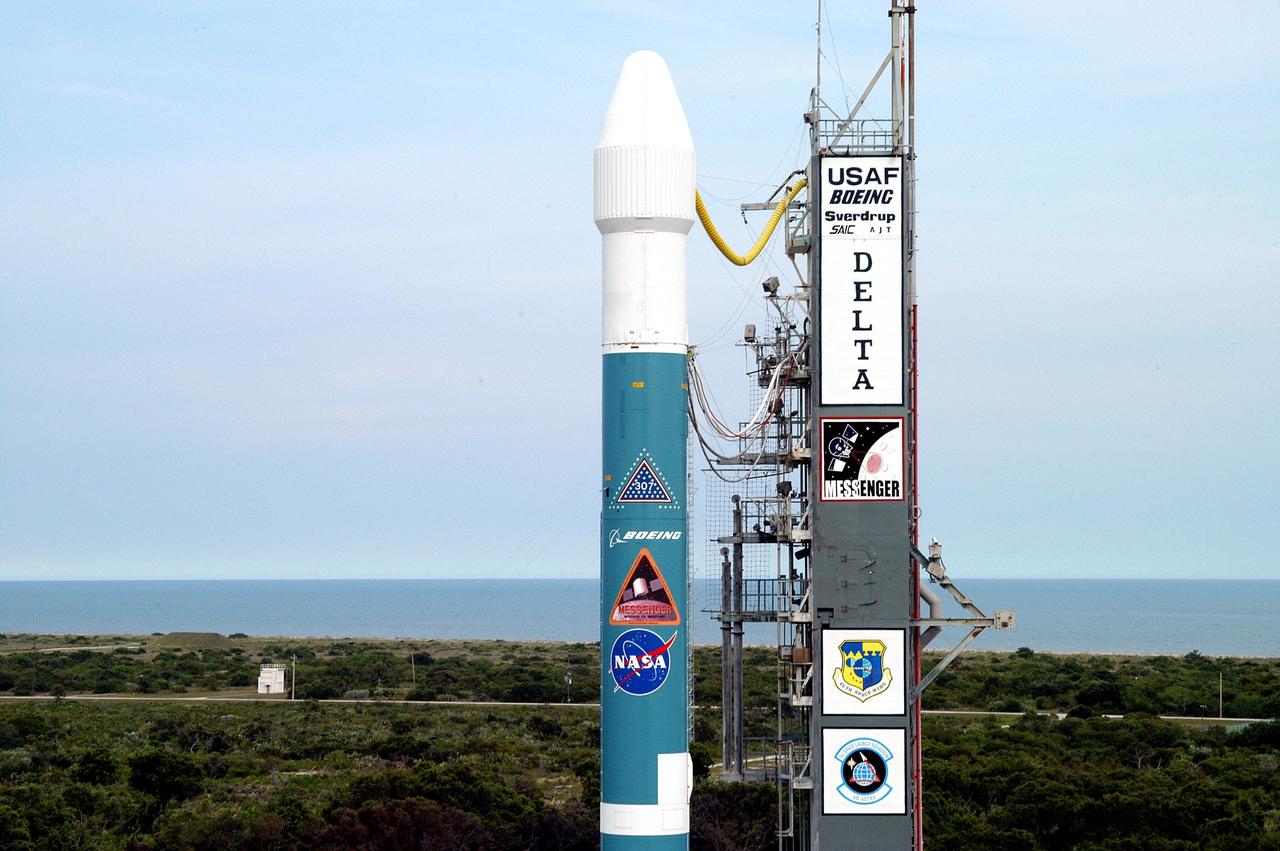
KENNEDY SPACE CENTER, FLA. - Framed by a blue hazy sky and bluer Atlantic Ocean, the Boeing Delta II rocket with the Mercury Surface, Space Environment, Geochemistry and Ranging (MESSENGER) spacecraft aboard is ready for launch on a seven-year journey to the planet Mercury. This is the second launch attempt in two days after the first attempt Aug. 2 was postponed due to lightning potential from residual clouds that were associated with Tropical Storm Alex. The launch of MESSENGER is rescheduled for this date at 2:15:56 a.m. EDT at the opening of a 12-second launch window. MESSENGER will fly by Earth, Venus and Mercury several times to burn off energy before making its final approach to the inner planet on March 18, 2011. MESSENGER was built for NASA by the Johns Hopkins University Applied Physics Laboratory in Laurel, Md.
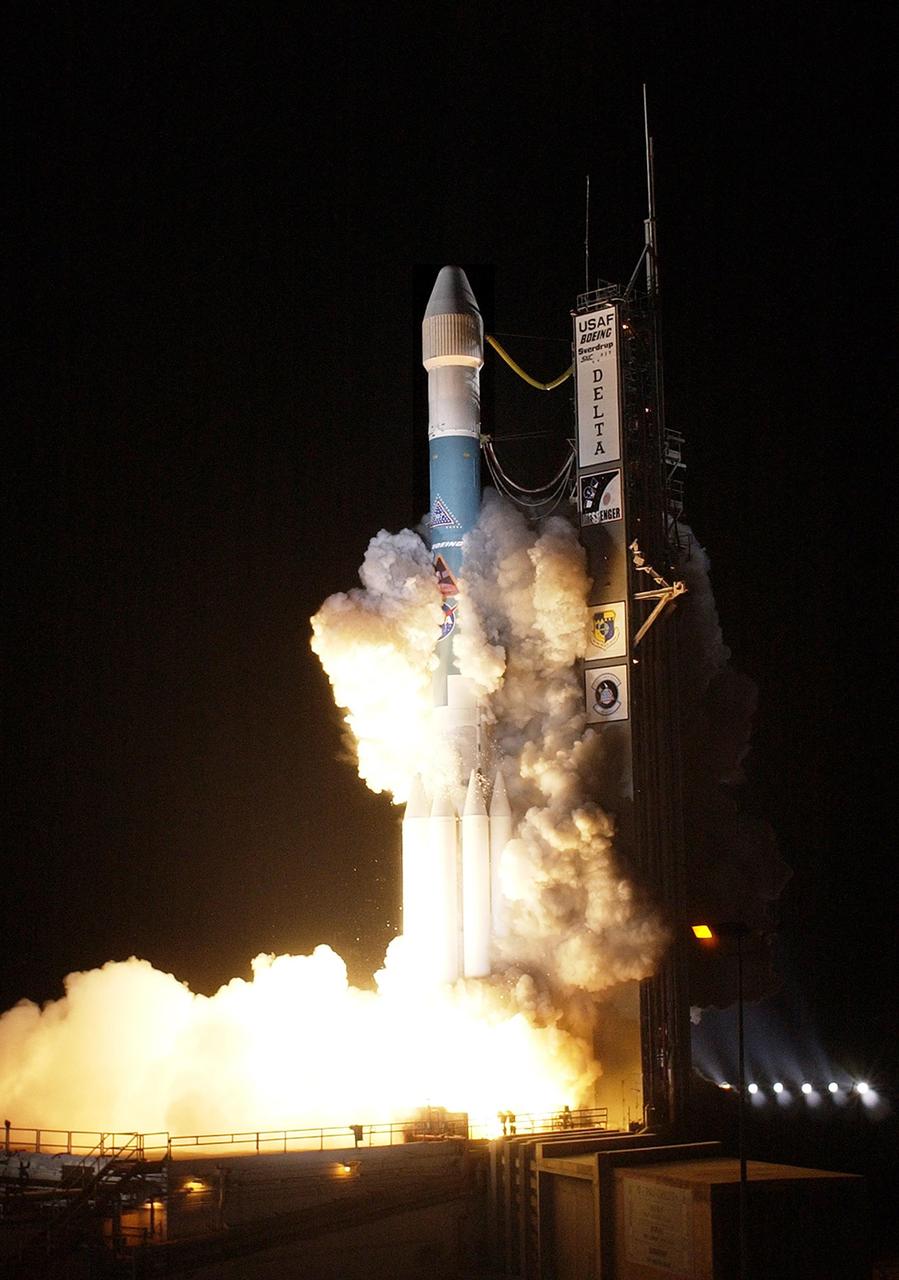
KENNEDY SPACE CENTER, FLA. - The top of the Boeing Delta II rocket with its MESSENGER spacecraft on top breaks through the billows of smoke below as it lifts off on time at 2:15:56 a.m. EDT from Launch Pad 17-B, Cape Canaveral Air Force Station. MESSENGER (Mercury Surface, Space Environment, Geochemistry and Ranging) is on a seven-year, 4.9-billion-mile journey to the planet Mercury. The spacecraft will fly by Earth, Venus and Mercury several times, as well as circling the sun 15 times, to burn off energy before making its final approach to the inner planet on March 18, 2011. MESSENGER was built for NASA by the Johns Hopkins University Applied Physics Laboratory in Laurel, Md.
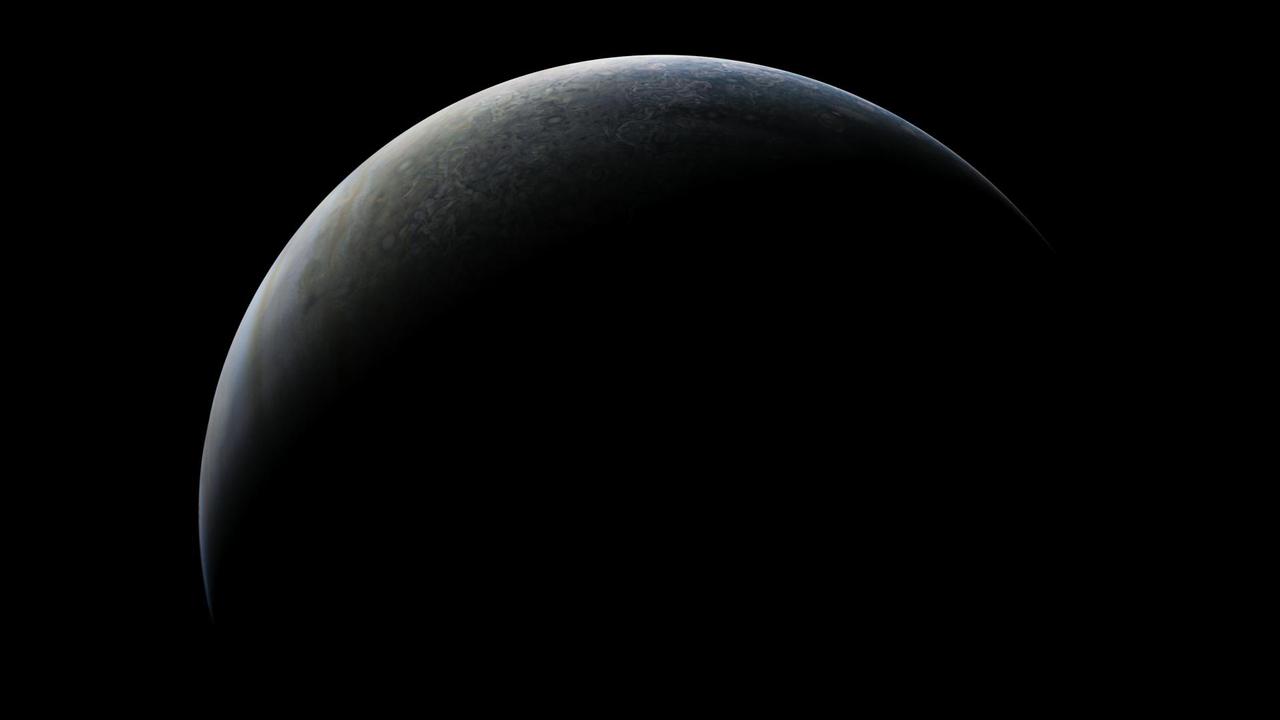
If you could ride along with NASA's Juno spacecraft as it approaches Jupiter during one of its regular close passes by the giant planet, you would be treated to a striking vista similar to this one. Unlike the Moon or Venus, this view of Jupiter in a crescent phase is impossible to see from Earth, even using a telescope. Since Jupiter's orbit is outside Earth's, an observer on Earth can only see the side of Jupiter that is illuminated by the Sun, so the planet always appears full. Citizen scientist Kevin M. Gill created this mosaic using raw data from the JunoCam instrument. It comprises seven images taken during Juno's 39th close pass by Jupiter on Jan. 12, 2022. https://photojournal.jpl.nasa.gov/catalog/PIA25013
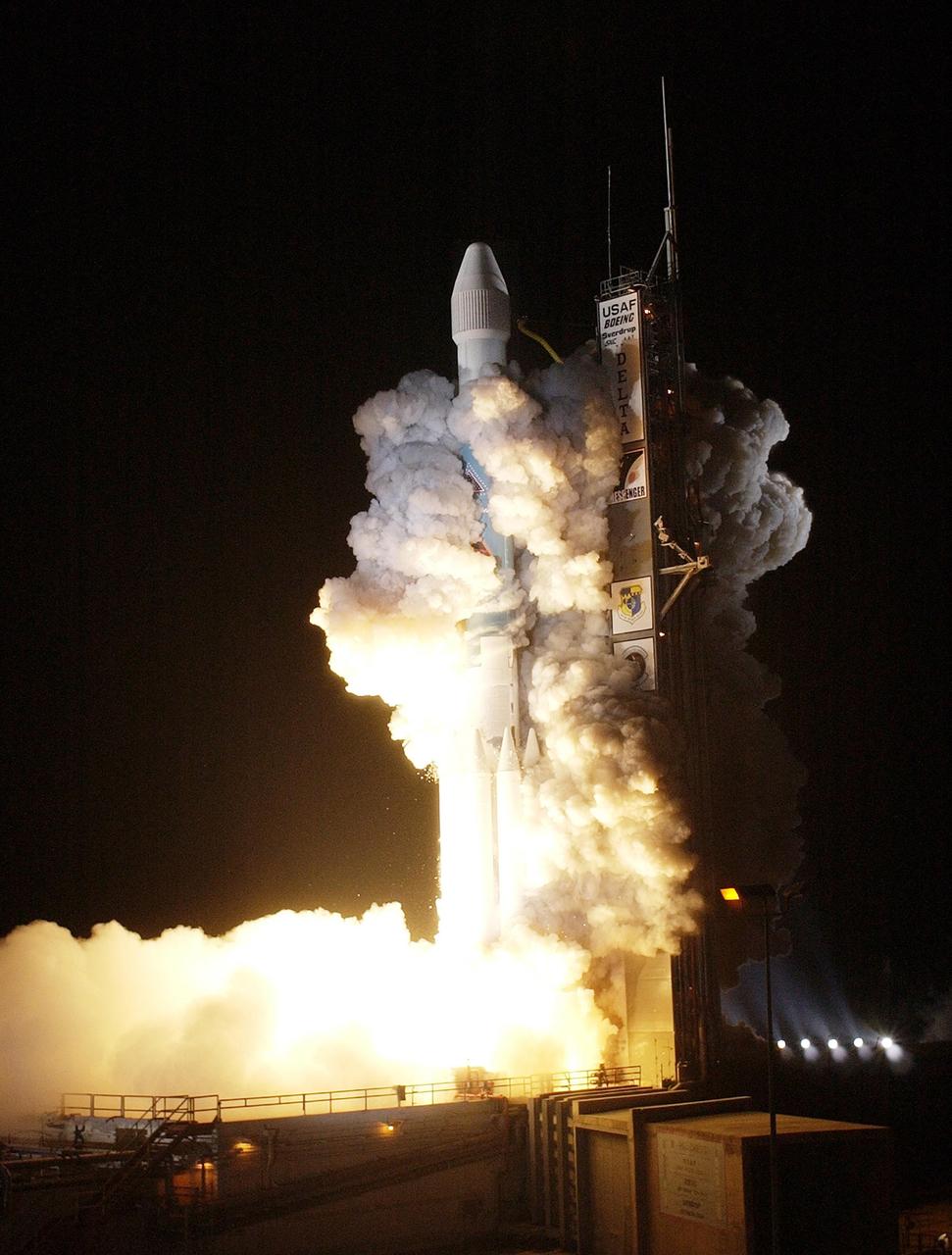
KENNEDY SPACE CENTER, FLA. - Wrapped in clouds of smoke, the Boeing Delta II rocket with its MESSENGER spacecraft on top climbs free as it lifts off on time at 2:15:56 a.m. EDT from Launch Pad 17-B, Cape Canaveral Air Force Station. MESSENGER (Mercury Surface, Space Environment, Geochemistry and Ranging) is on a seven-year, 4.9-billion-mile journey to the planet Mercury. The spacecraft will fly by Earth, Venus and Mercury several times, as well as circling the sun 15 times, to burn off energy before making its final approach to the inner planet on March 18, 2011. MESSENGER was built for NASA by the Johns Hopkins University Applied Physics Laboratory in Laurel, Md.
KENNEDY SPACE CENTER, FLA. - On Launch Pad 17-B, Cape Canaveral Air Force Station, the mobile service tower begins rolling back from the Boeing Delta II rocket with the Mercury Surface, Space Environment, Geochemistry and Ranging (MESSENGER) spacecraft aboard. This is the second launch attempt in two days after the first attempt Aug. 2 was postponed due to lightning potential from residual clouds that were associated with Tropical Storm Alex. The launch of MESSENGER on a seven-year journey to the planet Mercury is rescheduled for this date at 2:15:56 a.m. EDT at the opening of a 12-second launch window. MESSENGER will fly by Earth, Venus and Mercury several times to burn off energy before making its final approach to the inner planet on March 18, 2011. MESSENGER was built for NASA by the Johns Hopkins University Applied Physics Laboratory in Laurel, Md.
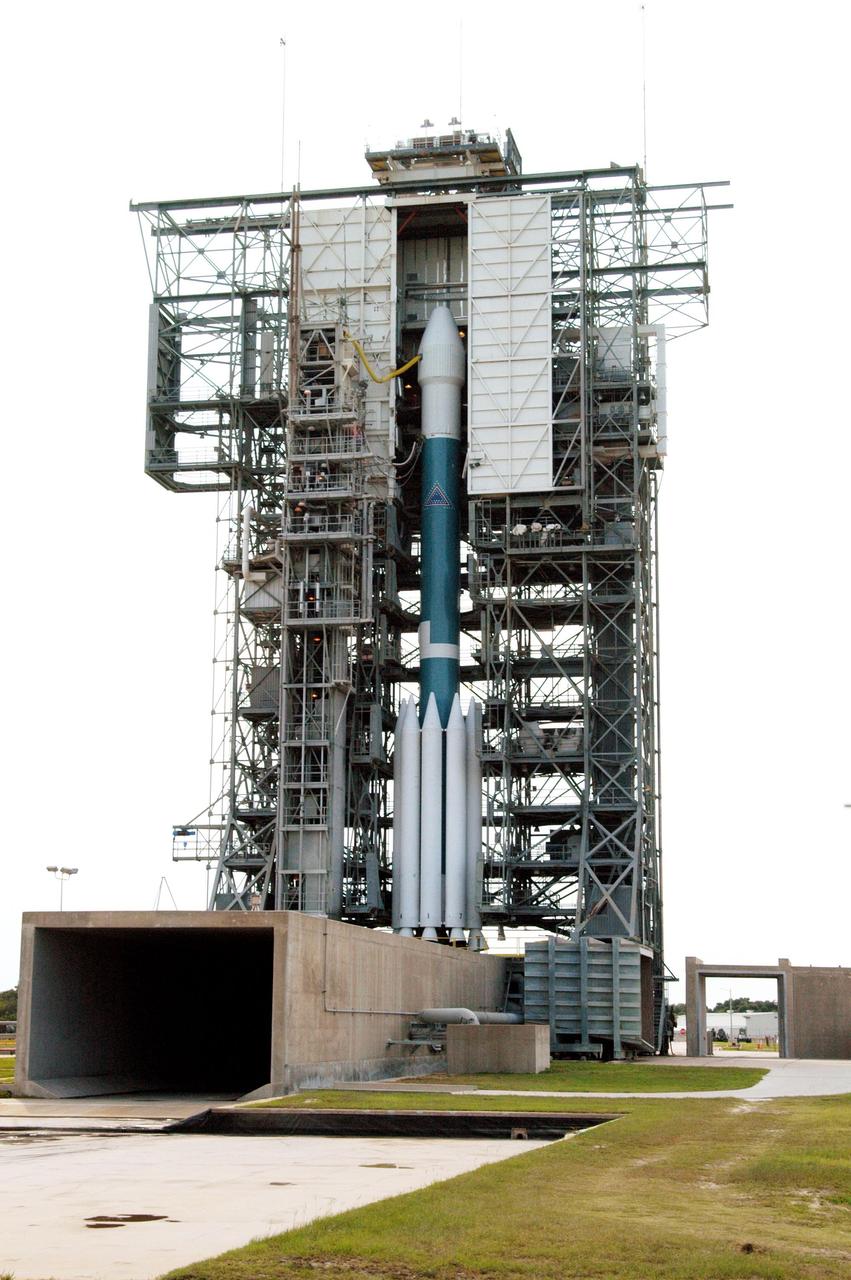
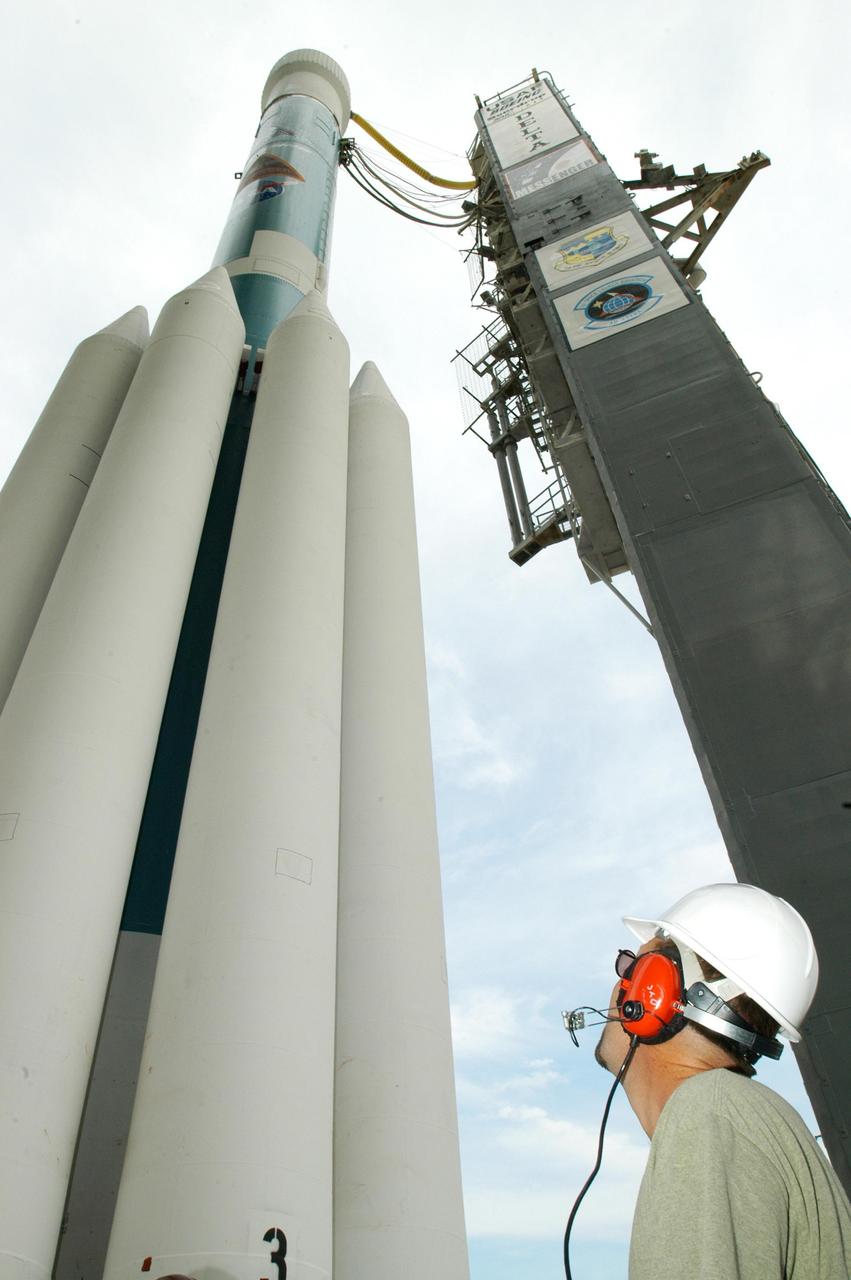
KENNEDY SPACE CENTER, FLA. - On Launch Pad 17-B, Cape Canaveral Air Force Station, the Boeing Delta II rocket with the Mercury Surface, Space Environment, Geochemistry and Ranging (MESSENGER) spacecraft aboard waits for rollback of the mobile service tower and a second launch attempt in two days. The first attempt Aug. 2 was postponed due to lightning potential from residual clouds that were associated with Tropical Storm Alex. The launch of MESSENGER on a seven-year journey to the planet Mercury is rescheduled for this date at 2:15:56 a.m. EDT at the opening of a 12-second launch window. MESSENGER will fly by Earth, Venus and Mercury several times to burn off energy before making its final approach to the inner planet on March 18, 2011. MESSENGER was built for NASA by the Johns Hopkins University Applied Physics Laboratory in Laurel, Md.

This color image of the sun, Earth and Venus was taken by the Voyager 1 spacecraft Feb. 14, 1990, when it was approximately 32 degrees above the plane of the ecliptic and at a slant-range distance of approximately 4 billion miles. It is the first -- and may be the only -- time that we will ever see our solar system from such a vantage point. The image is a portion of a wide-angle image containing the sun and the region of space where the Earth and Venus were at the time with two narrow-angle pictures centered on each planet. The wide-angle was taken with the camera's darkest filter (a methane absorption band), and the shortest possible exposure (5 thousandths of a second) to avoid saturating the camera's vidicon tube with scattered sunlight. The sun is not large in the sky as seen from Voyager's perspective at the edge of the solar system but is still eight million times brighter than the brightest star in Earth's sky, Sirius. The image of the sun you see is far larger than the actual dimension of the solar disk. The result of the brightness is a bright burned out image with multiple reflections from the optics in the camera. The "rays" around the sun are a diffraction pattern of the calibration lamp which is mounted in front of the wide angle lens. The two narrow-angle frames containing the images of the Earth and Venus have been digitally mosaiced into the wide-angle image at the appropriate scale. These images were taken through three color filters and recombined to produce a color image. The violet, green and blue filters were used; exposure times were, for the Earth image, 0.72, 0.48 and 0.72 seconds, and for the Venus frame, 0.36, 0.24 and 0.36, respectively. Although the planetary pictures were taken with the narrow-angle camera (1500 mm focal length) and were not pointed directly at the sun, they show the effects of the glare from the nearby sun, in the form of long linear streaks resulting from the scattering of sunlight off parts of the camera and its sun shade. From Voyager's great distance both Earth and Venus are mere points of light, less than the size of a picture element even in the narrow-angle camera. Earth was a crescent only 0.12 pixel in size. Coincidentally, Earth lies right in the center of one of the scattered light rays resulting from taking the image so close to the sun. Detailed analysis also suggests that Voyager detected the moon as well, but it is too faint to be seen without special processing. Venus was only 0.11 pixel in diameter. The faint colored structure in both planetary frames results from sunlight scattered in the optics. http://photojournal.jpl.nasa.gov/catalog/PIA00450
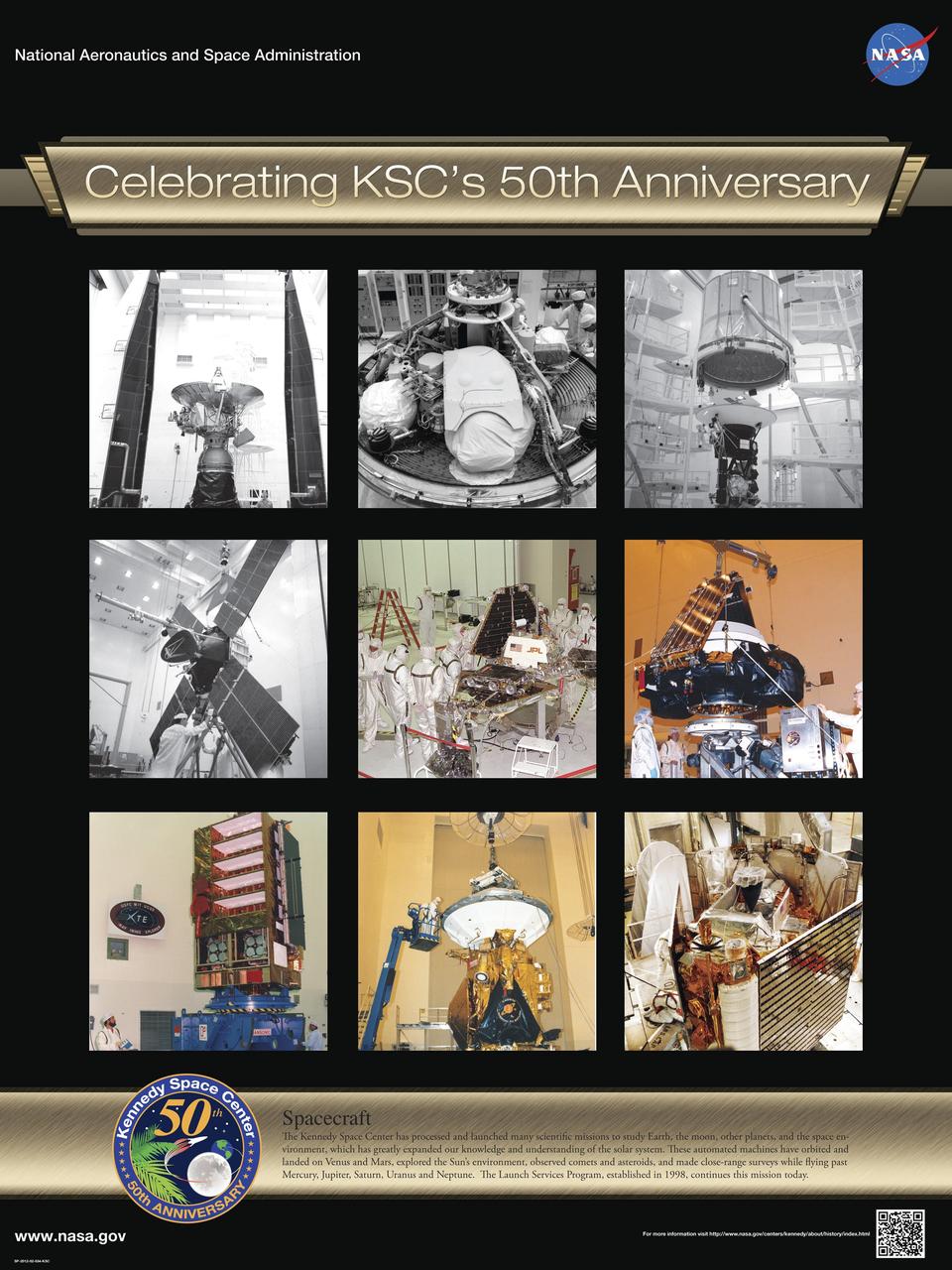
Spacecraft: The Kennedy Space Center has processed and launched many scientific missions to study Earth, the moon, other planets, and the space environment, which has greatly expanded our knowledge and understanding of the solar system. These automated machines have orbited and landed on Venus and Mars, explored the Sun’s environment, observed comets and asteroids, and made close-range surveys while flying past Mercury, Jupiter, Saturn, Uranus and Neptune. The Launch Services Program, established in 1998, continues this mission today. Poster designed by Kennedy Space Center Graphics Department/Greg Lee. Credit: NASA
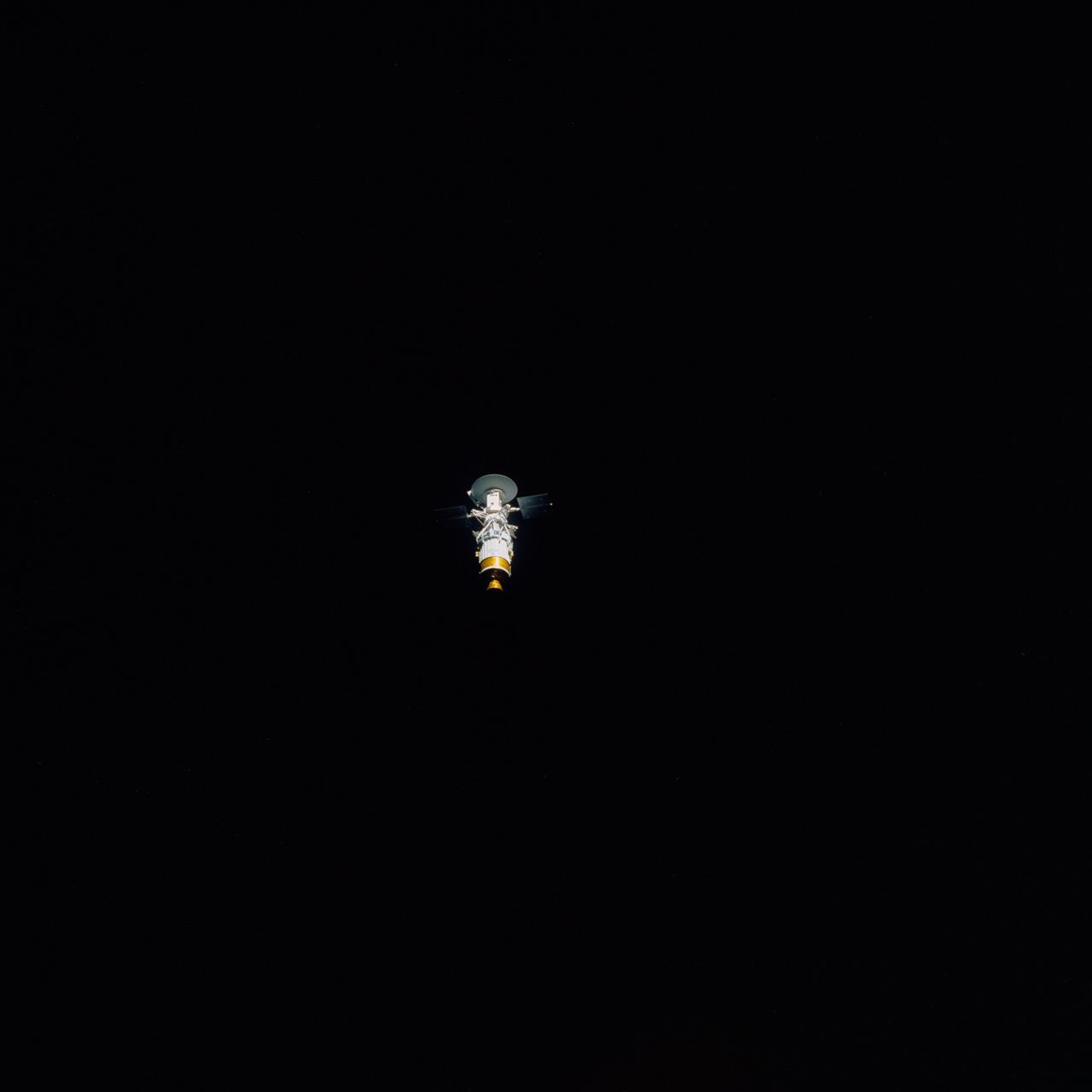
STS030-71-070 (4 May 1989) --- This scene is one of two released by NASA showing the process of solar array panel deployment on the Magellan spacecraft. Though partially blended into the backdrop of the blackness of space, it appears the two panels are fully extended in this frame. The spacecraft had earlier been released by the STS-30 crewmembers to begin its long journey to the planet Venus for an extensive radar mapping mission. The frame was photographed through Atlantis' aft flight deck windows with a handheld 70mm camera. The complementary photograph is STS030-71-063.
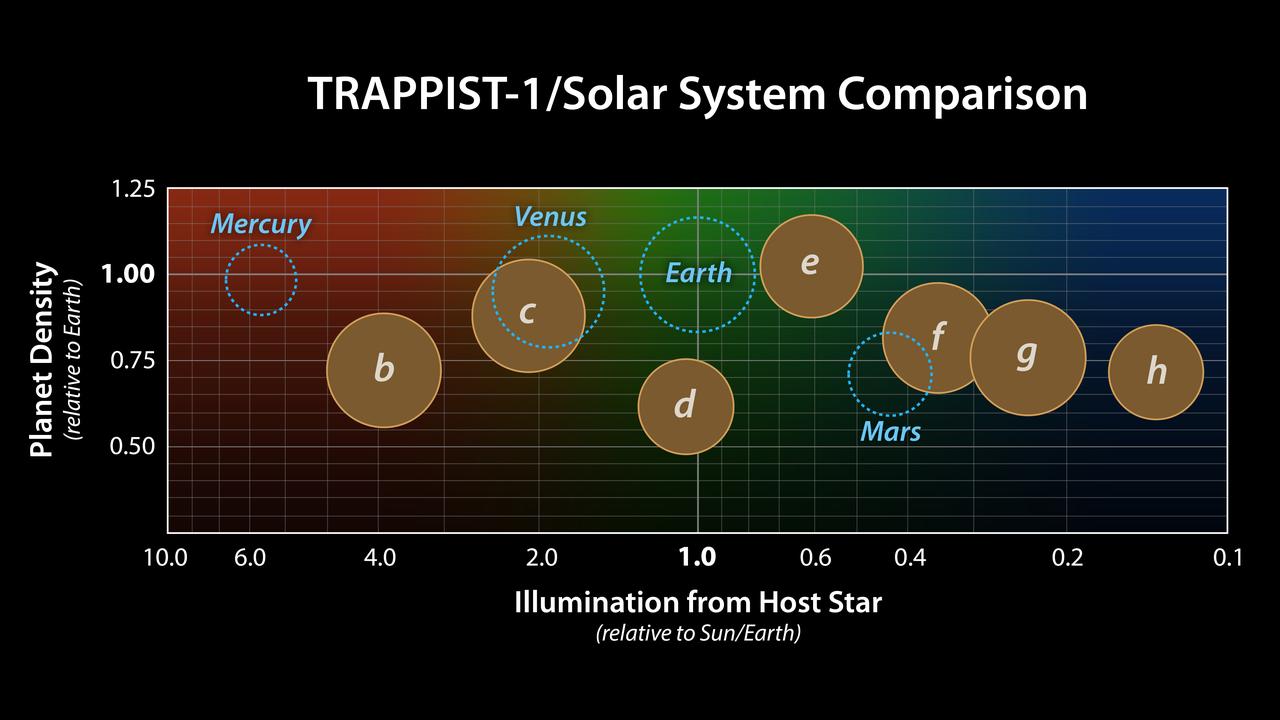
This graph presents known properties of the seven TRAPPIST-1 exoplanets (labeled b through h), showing how they stack up to the inner rocky worlds in our own solar system. The horizontal axis shows the level of illumination that each planet receives from its host star. TRAPPIST-1 is a mere 9 percent the mass of our Sun, and its temperature is much cooler. But because the TRAPPIST-1 planets orbit so closely to their star, they receive comparable levels of light and heat to Earth and its neighboring planets. The vertical axis shows the densities of the planets. Density, calculated based on a planet's mass and volume, is the first important step in understanding a planet's composition. The plot shows that the TRAPPIST-1 planet densities range from being similar to Earth and Venus at the upper end, down to values comparable to Mars at the lower end. The relative sizes of the planets are indicated by the circles. The masses and densities of the TRAPPIST-1 planets were determined by careful measurements of slight variations in the timings of their orbits using extensive observations made by NASA's Spitzer and Kepler space telescopes, in combination with data from Hubble and a number of ground-based telescopes. These measurements are the most precise to date for any system of exoplanets. By comparing these measurements with theoretical models of how planets form and evolve, researchers have determined that they are all rocky in overall composition. Estimates suggest the lower-density planets could have large quantities of water -- as much as 5 percent by mass for TRAPPIST-1d. Earth, in comparison, has only about 0.02 percent of its mass in the form of water. https://photojournal.jpl.nasa.gov/catalog/PIA22095

This illustration shows three possible interiors of the seven rocky exoplanets in the TRAPPIST-1 system, based on precision measurements of the planet densities. Overall the TRAPPIST-1 worlds have remarkably similar densities, which suggests they may share the same ratio of common planet-forming elements. The planet densities are slightly lower than those of Earth or Venus, which could mean they contain fractionally less iron (a highly dense material) or more low-density materials, such as water or oxygen. In the first model (left), the interior of the planet is composed of rock mixed with iron bound to oxygen. There is no solid iron core, which is the case with Earth and the other rocky planets in our own solar system. The second model shows an overall composition similar to Earth's, in which the densest materials have settled to the center of the planet, forming an iron-rich core proportionally smaller than Earth's core. A variation is shown in the third panel, where a larger, denser core could be balanced by an extensive low-density ocean on the planet's surface. However, this scenario can be applied only to the outer four planets in the TRAPPIST-1 system. On the inner three planets, any oceans would vaporize due to the higher temperatures near their star, and a different composition model is required. Since all seven planets have remarkably similar densities, it is more likely that all the planets share a similar bulk composition, making this fourth scenario unlikely but not impossible. The high-precision mass and diameter measurements of the exoplanets in the TRAPPIST-1 system have allowed astronomers to calculate the overall densities of these worlds with an unprecedented degree of accuracy in exoplanet research. Density measurements are a critical first step in determining the composition and structure of exoplanets, but they must be interpreted through the lens of scientific models of planetary structure. https://photojournal.jpl.nasa.gov/catalog/PIA24372
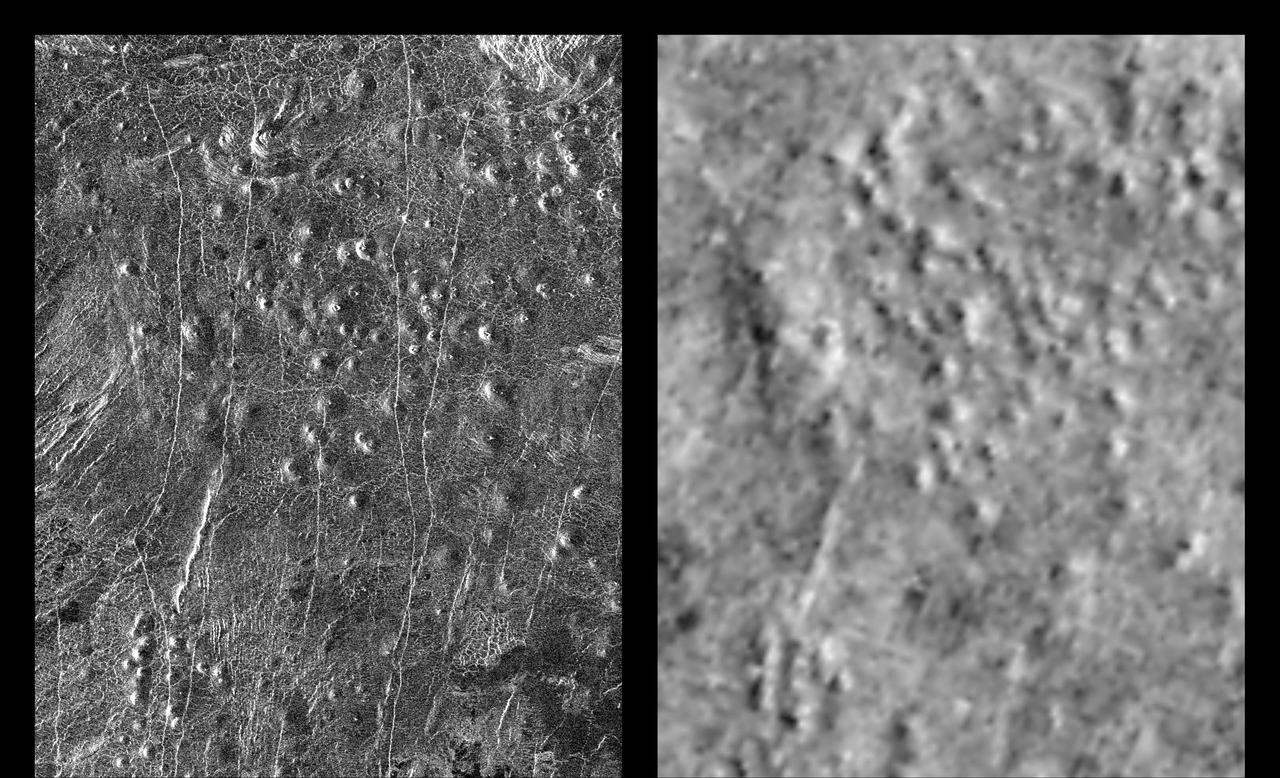
These radar images show an identical area on Venus (centered at 110 degrees longitude and 64 degrees north latitude) as imaged by the U.S. NASA Magellan spacecraft in 1991 (left) and the U.S.S.R. Venera 15/16 spacecraft in the early 1980's (right). Illumination is from the left (or west) in the Magellan image (left) and from the right (or east) in the Venera image (right). Differences in apparent shading in the images are due to differences in the two radar imaging systems. Prior to Magellan, the Venera 15/16 data was the best available for scientists studying Venus. Much greater detail is visible in the Magellan image owing to the greater resolution of the Magellan radar system. In the area seen here, approximately 200 small volcanoes, ranging in diameter from 2 to 12 kilometers (1.2 to 7.4 miles) can be identified. These volcanoes were first identified as small hills in Venera 15/16 images and were predicted to be shield-type volcanoes constructed mainly from eruptions of fluid lava flows similar to those that produce the Hawaiian Islands and sea floor volcanoes - a prediction that was confirmed by Magellan. These small shield-type volcanoes are the most abundant geologic feature on the surface of Venus, believed to number in the hundreds of thousands, perhaps millions, and are important evidence in understanding the geologic evolution of the planet. The only other planet in our Solar System with this large number of volcanoes is Earth. Clearly visible in the Magellan image are details of volcano morphology, such as variation in slope, the occurrence and size range of summit craters, and geologic age relationships between adjacent volcanoes, as well as additional volcanoes that were not identifiable in the Venera image. http://photojournal.jpl.nasa.gov/catalog/PIA00465
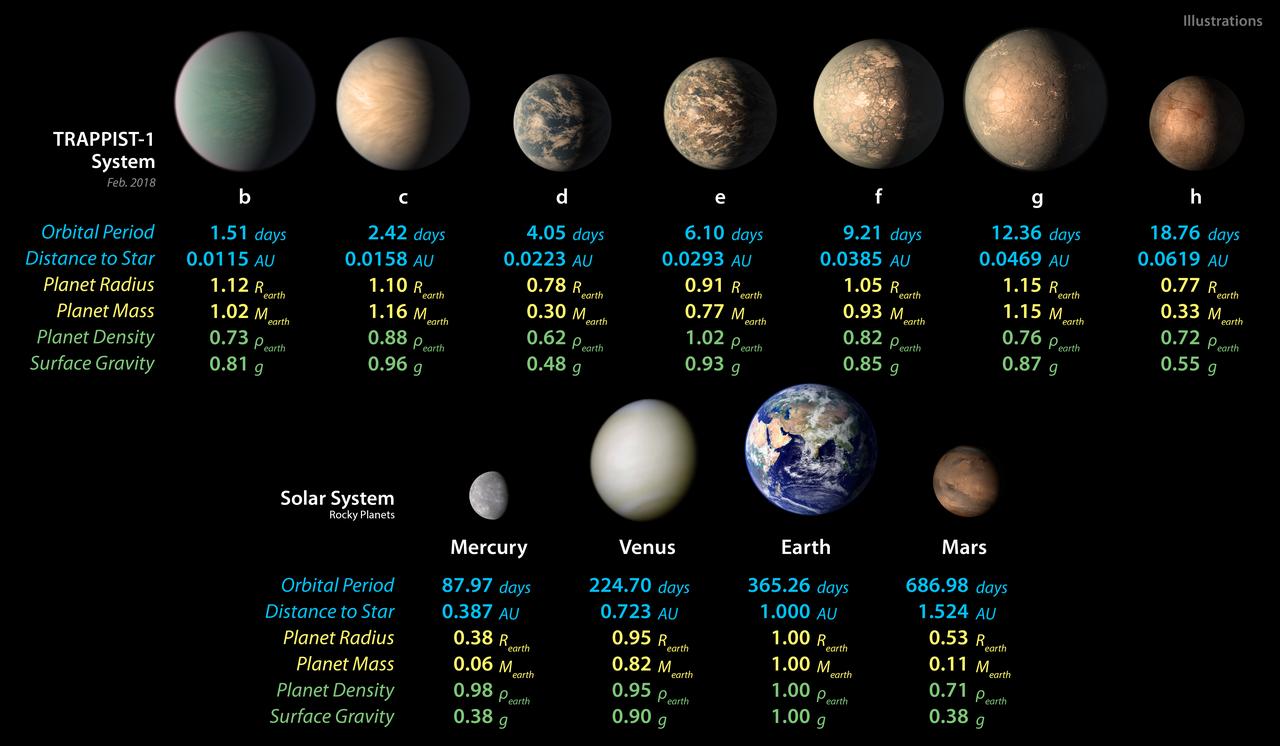
This chart shows, on the top row, artist concepts of the seven planets of TRAPPIST-1 with their orbital periods, distances from their star, radii, masses, densities and surface gravity as compared to those of Earth. These numbers are current as of February 2018. On the bottom row, the same numbers are displayed for the bodies of our inner solar system: Mercury, Venus, Earth and Mars. The TRAPPIST-1 planets orbit their star extremely closely, with periods ranging from 1.5 to only about 20 days. This is much shorter than the period of Mercury, which orbits our sun in about 88 days. The masses and densities of the TRAPPIST-1 planets were determined by careful measurements of slight variations in the timings of their orbits using extensive observations made by NASA's Spitzer and Kepler space telescopes, in combination with data from Hubble and a number of ground-based telescopes. These measurements are the most precise to date for any system of exoplanets. In this illustration, the relative sizes of the planets are all shown to scale. https://photojournal.jpl.nasa.gov/catalog/PIA22094
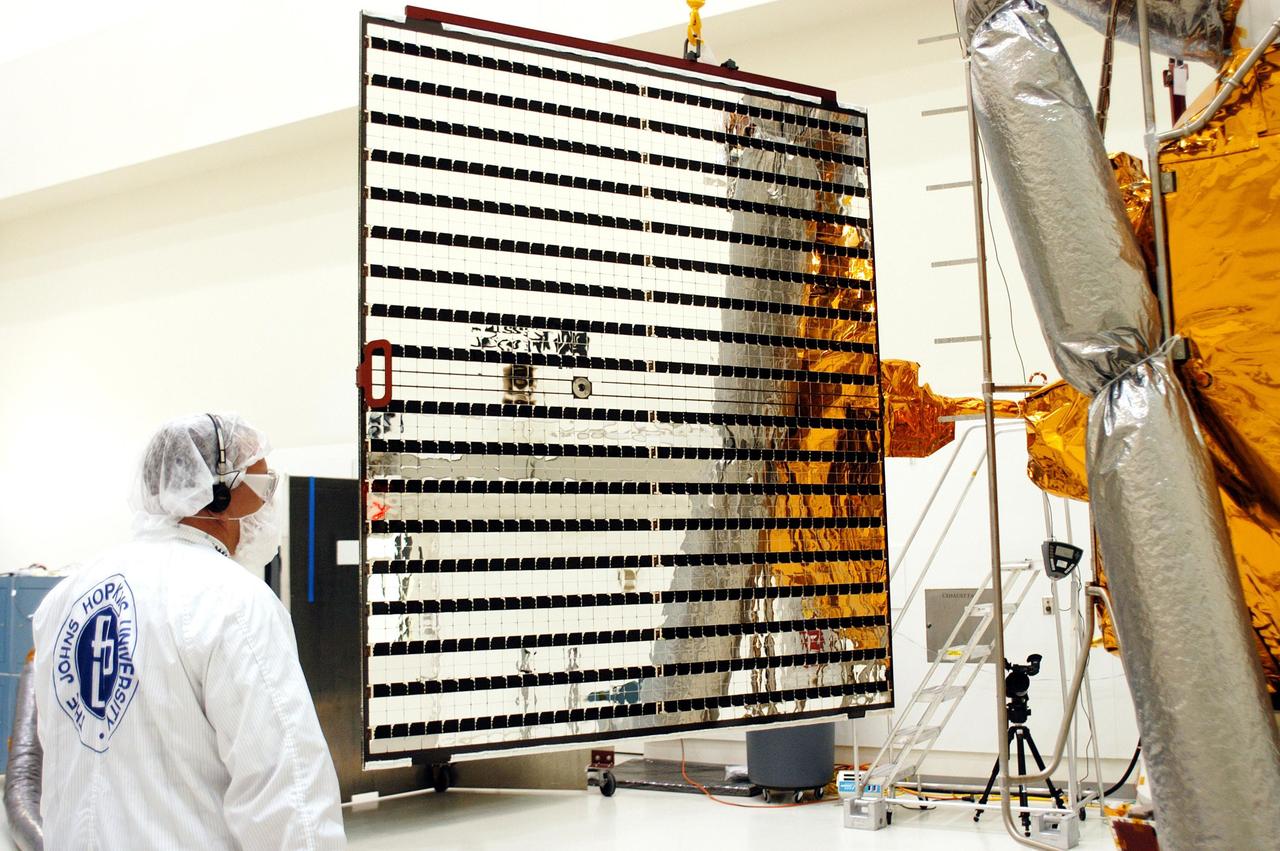
KENNEDY SPACE CENTER, FLA. - At Astrotech in Titusville, Fla., a technician with The Johns Hopkins University Applied Physics Laboratory (APL) watches as one of the solar array panels on the MESSENGER spacecraft is deployed. The two panels will provide MESSENGER’s power on its journey to Mercury. MESSENGER is scheduled to launch Aug. 2 aboard a Boeing Delta II rocket from Pad 17-B, Cape Canaveral Air Force Station, Fla. It will return to Earth for a gravity boost in July 2005, then fly past Venus twice, in October 2006 and June 2007. The spacecraft uses the tug of Venus’ gravity to resize and rotate its trajectory closer to Mercury’s orbit. Three Mercury flybys, each followed about two months later by a course-correction maneuver, put MESSENGER in position to enter Mercury orbit in March 2011. During the flybys, MESSENGER will map nearly the entire planet in color, image most of the areas unseen by Mariner 10, and measure the composition of the surface, atmosphere and magnetosphere. It will be the first new data from Mercury in more than 30 years - and invaluable for planning MESSENGER’s year-long orbital mission. MESSENGER was built for NASA by APL in Laurel, Md.
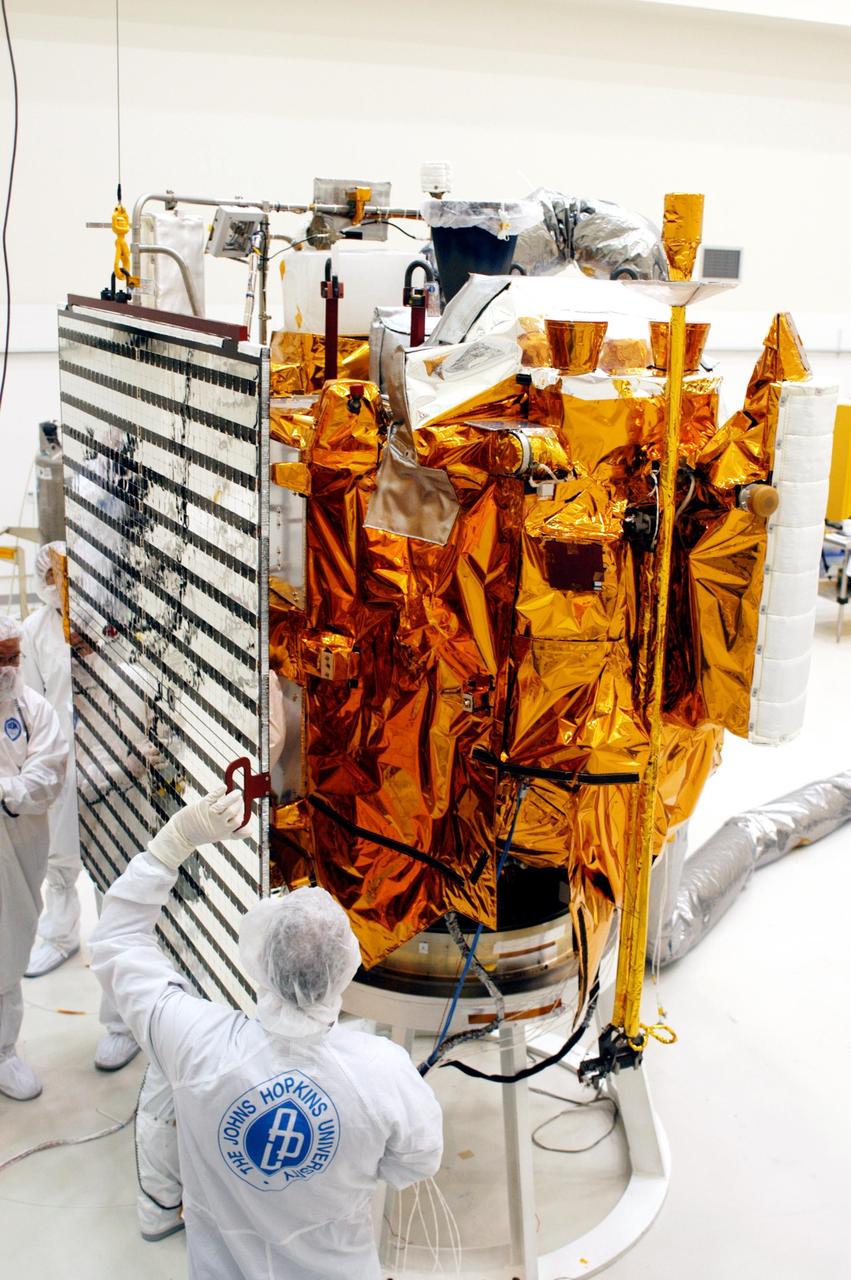
KENNEDY SPACE CENTER, FLA. - Technicians at Astrotech in Titusville, Fla., maneuver a solar panel into place for installation on NASA’s MESSENGER spacecraft. It is one of two large solar panels, supplemented with a nickel-hydrogen battery, that will provide MESSENGER’s power. MESSENGER is scheduled to launch Aug. 2 aboard a Boeing Delta II rocket from Pad 17-B, Cape Canaveral Air Force Station, Fla. It will return to Earth for a gravity boost in July 2005, then fly past Venus twice, in October 2006 and June 2007. The spacecraft uses the tug of Venus’ gravity to resize and rotate its trajectory closer to Mercury’s orbit. Three Mercury flybys, each followed about two months later by a course-correction maneuver, put MESSENGER in position to enter Mercury orbit in March 2011. During the flybys, MESSENGER will map nearly the entire planet in color, image most of the areas unseen by Mariner 10, and measure the composition of the surface, atmosphere and magnetosphere. It will be the first new data from Mercury in more than 30 years - and invaluable for planning MESSENGER’s year-long orbital mission. MESSENGER was built for NASA by the Johns Hopkins University Applied Physics Laboratory in Laurel, Md.

KENNEDY SPACE CENTER, FLA. - Technicians at Astrotech in Titusville, Fla., attach a bar to a solar panel in order to lift it and move it to NASA’s MESSENGER spacecraft for installation. The two large solar panels, supplemented with a nickel-hydrogen battery, will provide MESSENGER’s power. MESSENGER is scheduled to launch Aug. 2 aboard a Boeing Delta II rocket from Pad 17-B, Cape Canaveral Air Force Station, Fla. It will return to Earth for a gravity boost in July 2005, then fly past Venus twice, in October 2006 and June 2007. The spacecraft uses the tug of Venus’ gravity to resize and rotate its trajectory closer to Mercury’s orbit. Three Mercury flybys, each followed about two months later by a course-correction maneuver, put MESSENGER in position to enter Mercury orbit in March 2011. During the flybys, MESSENGER will map nearly the entire planet in color, image most of the areas unseen by Mariner 10, and measure the composition of the surface, atmosphere and magnetosphere. It will be the first new data from Mercury in more than 30 years - and invaluable for planning MESSENGER’s year-long orbital mission. MESSENGER was built for NASA by the Johns Hopkins University Applied Physics Laboratory in Laurel, Md.
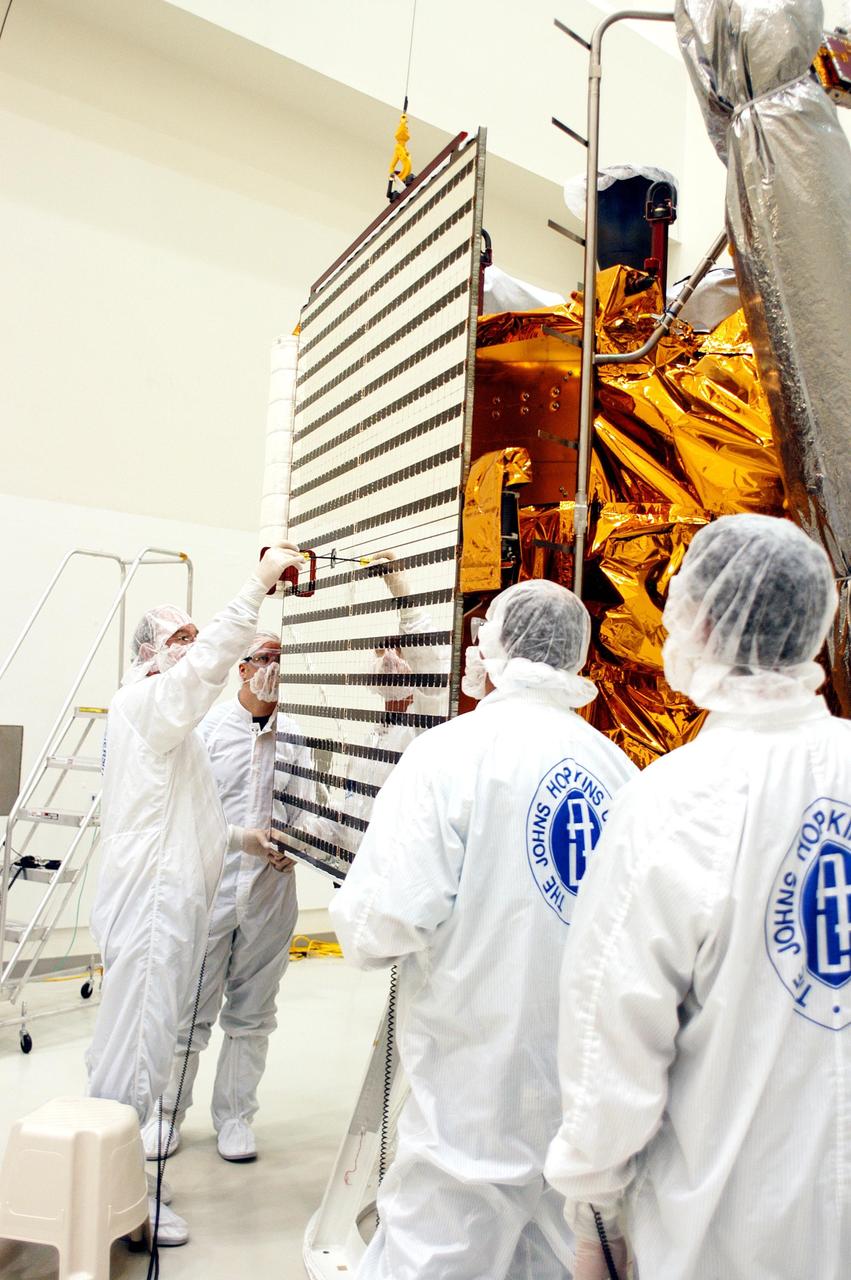
KENNEDY SPACE CENTER, FLA. - At Astrotech in Titusville, Fla., technicians with The Johns Hopkins University Applied Physics Laboratory (APL) prepare one of two solar array panels on the MESSENGER spacecraft for deployment. The panels will provide MESSENGER’s power on its journey to Mercury. MESSENGER is scheduled to launch Aug. 2 aboard a Boeing Delta II rocket from Pad 17-B, Cape Canaveral Air Force Station, Fla. It will return to Earth for a gravity boost in July 2005, then fly past Venus twice, in October 2006 and June 2007. The spacecraft uses the tug of Venus’ gravity to resize and rotate its trajectory closer to Mercury’s orbit. Three Mercury flybys, each followed about two months later by a course-correction maneuver, put MESSENGER in position to enter Mercury orbit in March 2011. During the flybys, MESSENGER will map nearly the entire planet in color, image most of the areas unseen by Mariner 10, and measure the composition of the surface, atmosphere and magnetosphere. It will be the first new data from Mercury in more than 30 years - and invaluable for planning MESSENGER’s year-long orbital mission. MESSENGER was built for NASA by APL in Laurel, Md.
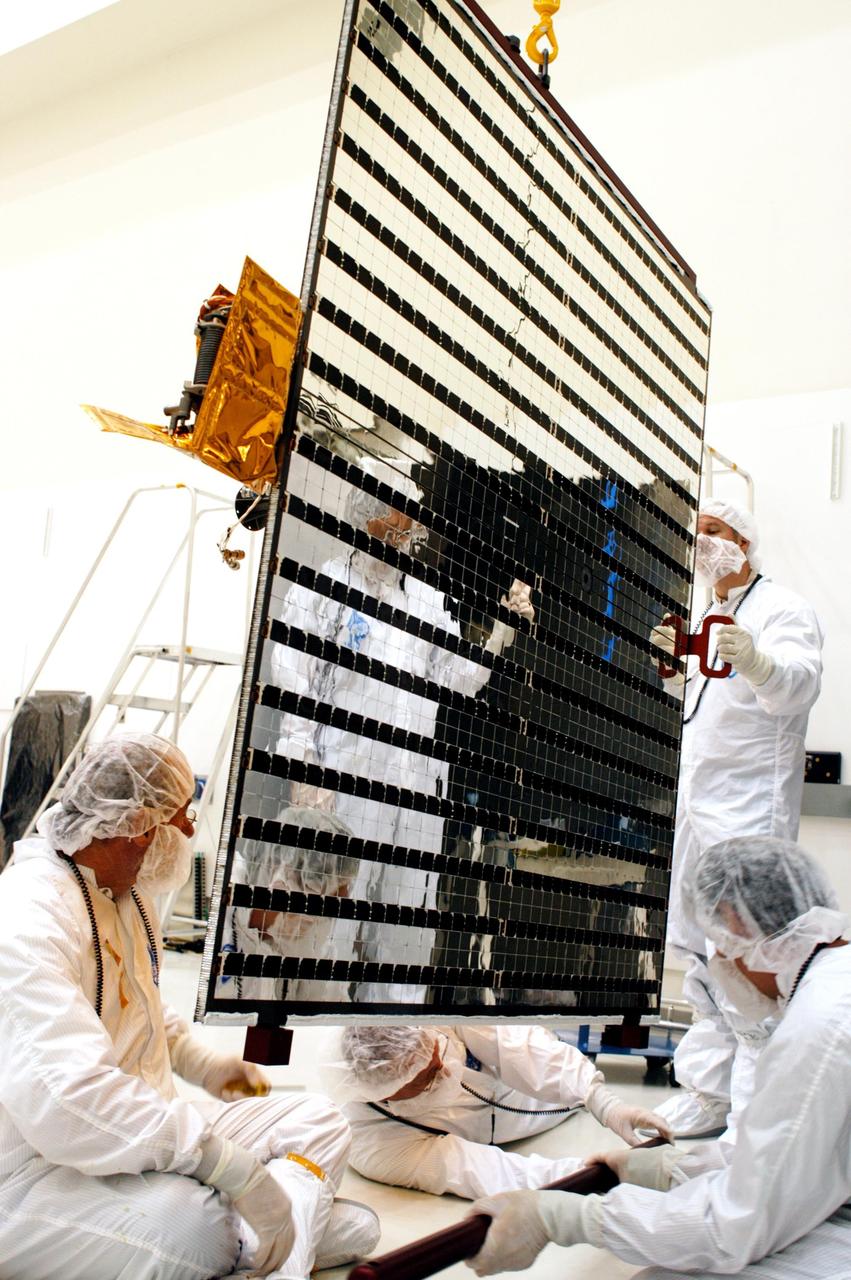
KENNEDY SPACE CENTER, FLA. - Technicians at Astrotech in Titusville, Fla., adjust a solar panel suspended from above for installation on NASA’s MESSENGER spacecraft. It is one of two large solar panels, supplemented with a nickel-hydrogen battery, that will provide MESSENGER’s power. MESSENGER is scheduled to launch Aug. 2 aboard a Boeing Delta II rocket from Pad 17-B, Cape Canaveral Air Force Station, Fla. It will return to Earth for a gravity boost in July 2005, then fly past Venus twice, in October 2006 and June 2007. The spacecraft uses the tug of Venus’ gravity to resize and rotate its trajectory closer to Mercury’s orbit. Three Mercury flybys, each followed about two months later by a course-correction maneuver, put MESSENGER in position to enter Mercury orbit in March 2011. During the flybys, MESSENGER will map nearly the entire planet in color, image most of the areas unseen by Mariner 10, and measure the composition of the surface, atmosphere and magnetosphere. It will be the first new data from Mercury in more than 30 years - and invaluable for planning MESSENGER’s year-long orbital mission. MESSENGER was built for NASA by the Johns Hopkins University Applied Physics Laboratory in Laurel, Md.

KENNEDY SPACE CENTER, FLA. - At Astrotech in Titusville, Fla., technicians secure guide wires on the second solar panel to be installed on NASA’s MESSENGER spacecraft. The two large solar panels, supplemented with a nickel-hydrogen battery, will provide MESSENGER’s power. MESSENGER is scheduled to launch Aug. 2 aboard a Boeing Delta II rocket from Pad 17-B, Cape Canaveral Air Force Station, Fla. It will return to Earth for a gravity boost in July 2005, then fly past Venus twice, in October 2006 and June 2007. The spacecraft uses the tug of Venus’ gravity to resize and rotate its trajectory closer to Mercury’s orbit. Three Mercury flybys, each followed about two months later by a course-correction maneuver, put MESSENGER in position to enter Mercury orbit in March 2011. During the flybys, MESSENGER will map nearly the entire planet in color, image most of the areas unseen by Mariner 10, and measure the composition of the surface, atmosphere and magnetosphere. It will be the first new data from Mercury in more than 30 years - and invaluable for planning MESSENGER’s year-long orbital mission. MESSENGER was built for NASA by the Johns Hopkins University Applied Physics Laboratory in Laurel, Md.
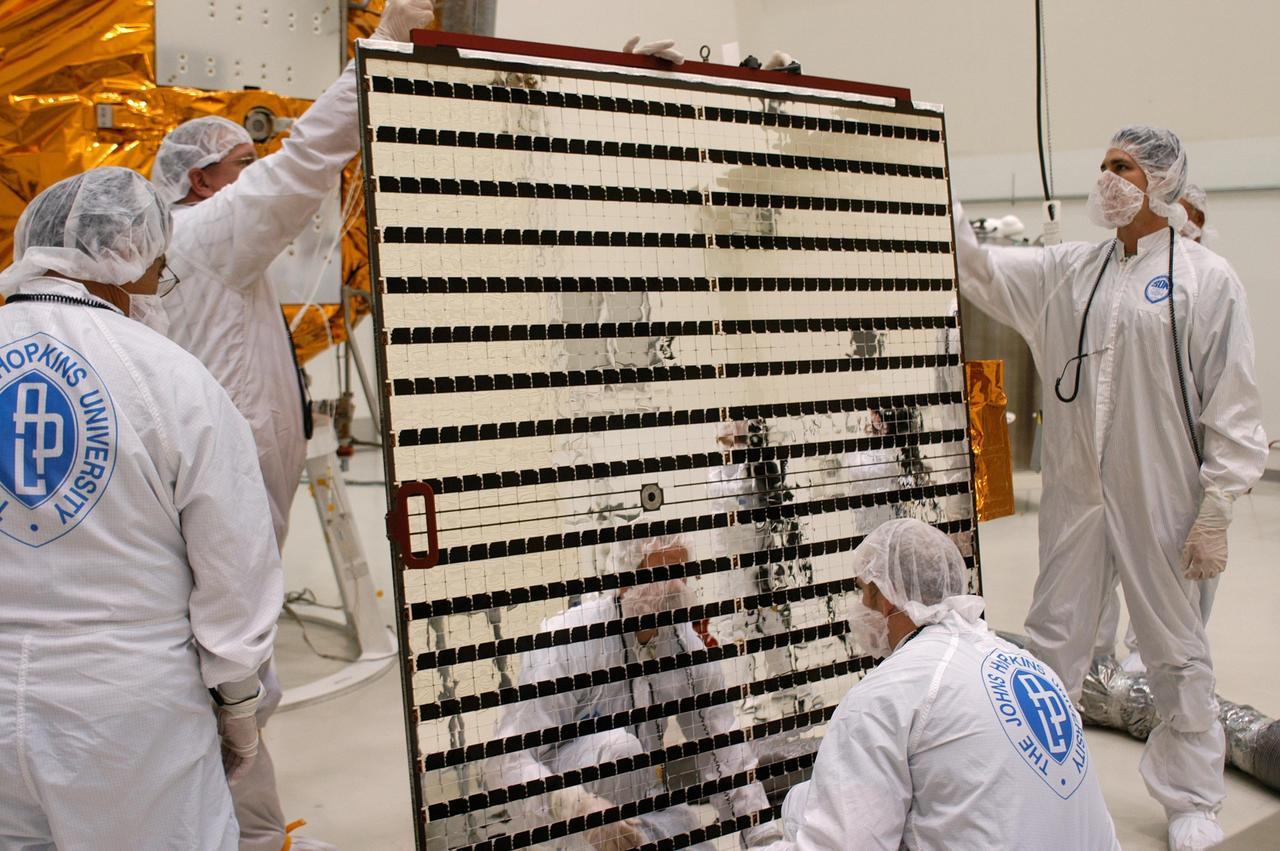
KENNEDY SPACE CENTER, FLA. - At Astrotech in Titusville, Fla., technicians check the second solar panel that will be installed on NASA’s MESSENGER spacecraft. The two large solar panels, supplemented with a nickel-hydrogen battery, will provide MESSENGER’s power. MESSENGER is scheduled to launch Aug. 2 aboard a Boeing Delta II rocket from Pad 17-B, Cape Canaveral Air Force Station, Fla. It will return to Earth for a gravity boost in July 2005, then fly past Venus twice, in October 2006 and June 2007. The spacecraft uses the tug of Venus’ gravity to resize and rotate its trajectory closer to Mercury’s orbit. Three Mercury flybys, each followed about two months later by a course-correction maneuver, put MESSENGER in position to enter Mercury orbit in March 2011. During the flybys, MESSENGER will map nearly the entire planet in color, image most of the areas unseen by Mariner 10, and measure the composition of the surface, atmosphere and magnetosphere. It will be the first new data from Mercury in more than 30 years - and invaluable for planning MESSENGER’s year-long orbital mission. MESSENGER was built for NASA by the Johns Hopkins University Applied Physics Laboratory in Laurel, Md.
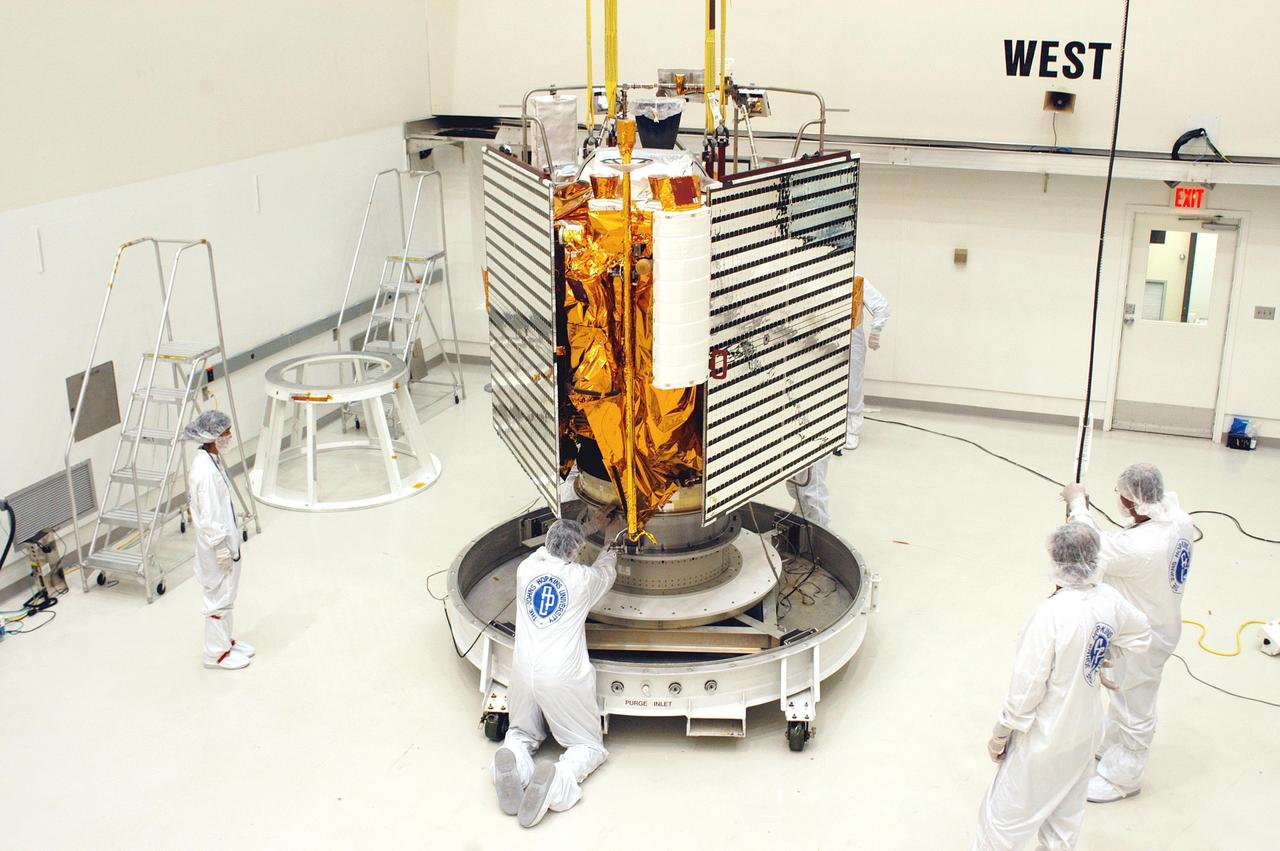
KENNEDY SPACE CENTER, FLA. - At Astrotech in Titusville, Fla., technicians with The Johns Hopkins University Applied Physics Laboratory (APL) prepare the MESSESNGER spacecraft for a move to a hazardous processing facility in preparation for loading the spacecraft’s complement of hypergolic propellants. MESSENGER is scheduled to launch Aug. 2 aboard a Boeing Delta II rocket from Pad 17-B, Cape Canaveral Air Force Station, Fla., on a journey to Mercury. It will return to Earth for a gravity boost in July 2005, then fly past Venus twice, in October 2006 and June 2007. The spacecraft uses the tug of Venus’ gravity to resize and rotate its trajectory closer to Mercury’s orbit. Three Mercury flybys, each followed about two months later by a course-correction maneuver, put MESSENGER in position to enter Mercury orbit in March 2011. During the flybys, MESSENGER will map nearly the entire planet in color, image most of the areas unseen by Mariner 10, and measure the composition of the surface, atmosphere and magnetosphere. It will be the first new data from Mercury in more than 30 years - and invaluable for planning MESSENGER’s year-long orbital mission. MESSENGER was built for NASA by APL in Laurel, Md.
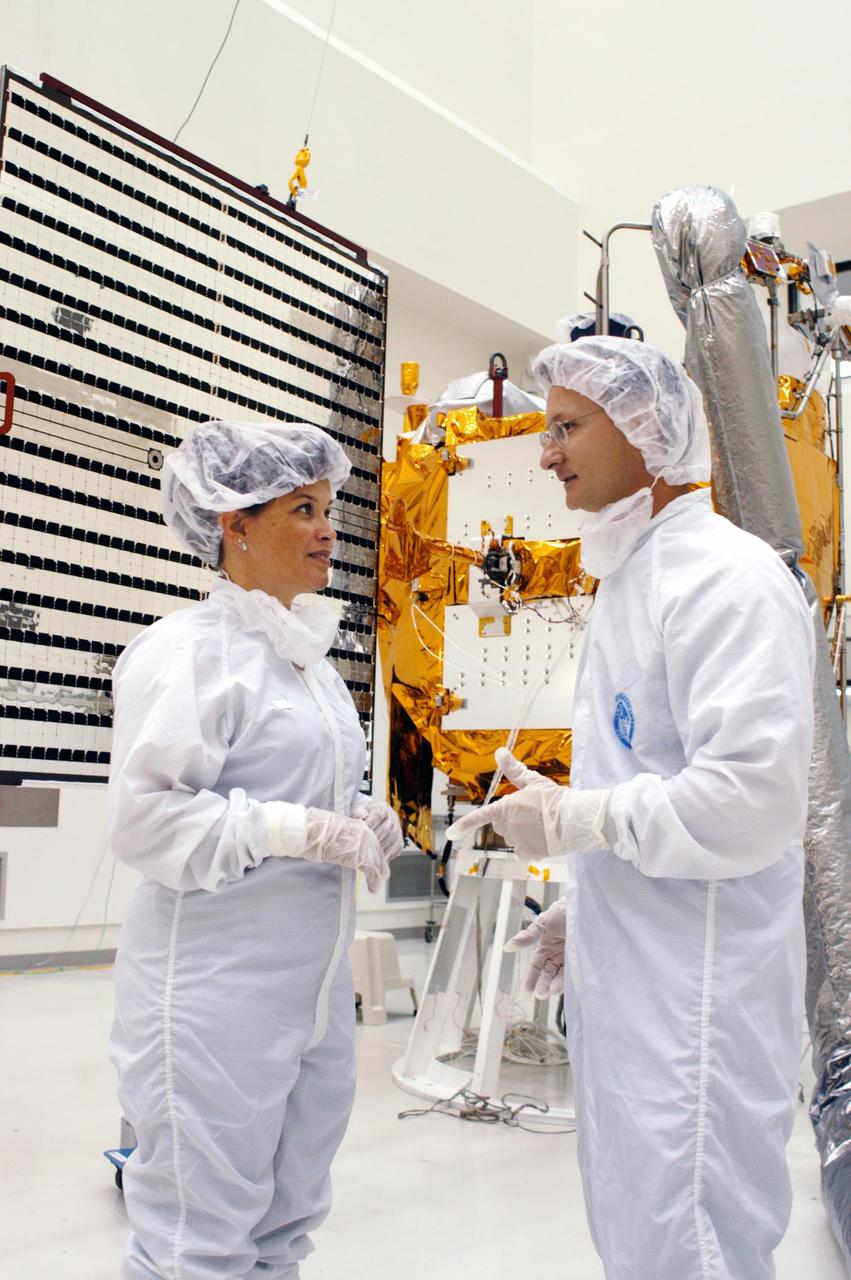
KENNEDY SPACE CENTER, FLA. - At Astrotech in Titusville, Fla., NASA Mission Integration Manager Cheryle Mako and NASA Launch Site Integration Manager John Hueckel talk before the deployment of the solar array panels on the MESSENGER spacecraft behind them. The solar arrays will provide MESSENGER’s power on its journey to Mercury. MESSENGER is scheduled to launch Aug. 2 aboard a Boeing Delta II rocket from Pad 17-B, Cape Canaveral Air Force Station, Fla. It will return to Earth for a gravity boost in July 2005, then fly past Venus twice, in October 2006 and June 2007. The spacecraft uses the tug of Venus’ gravity to resize and rotate its trajectory closer to Mercury’s orbit. Three Mercury flybys, each followed about two months later by a course-correction maneuver, put MESSENGER in position to enter Mercury orbit in March 2011. During the flybys, MESSENGER will map nearly the entire planet in color, image most of the areas unseen by Mariner 10, and measure the composition of the surface, atmosphere and magnetosphere. It will be the first new data from Mercury in more than 30 years - and invaluable for planning MESSENGER’s year-long orbital mission. MESSENGER was built for NASA by the Johns Hopkins University Applied Physics Laboratory in Laurel, Md.
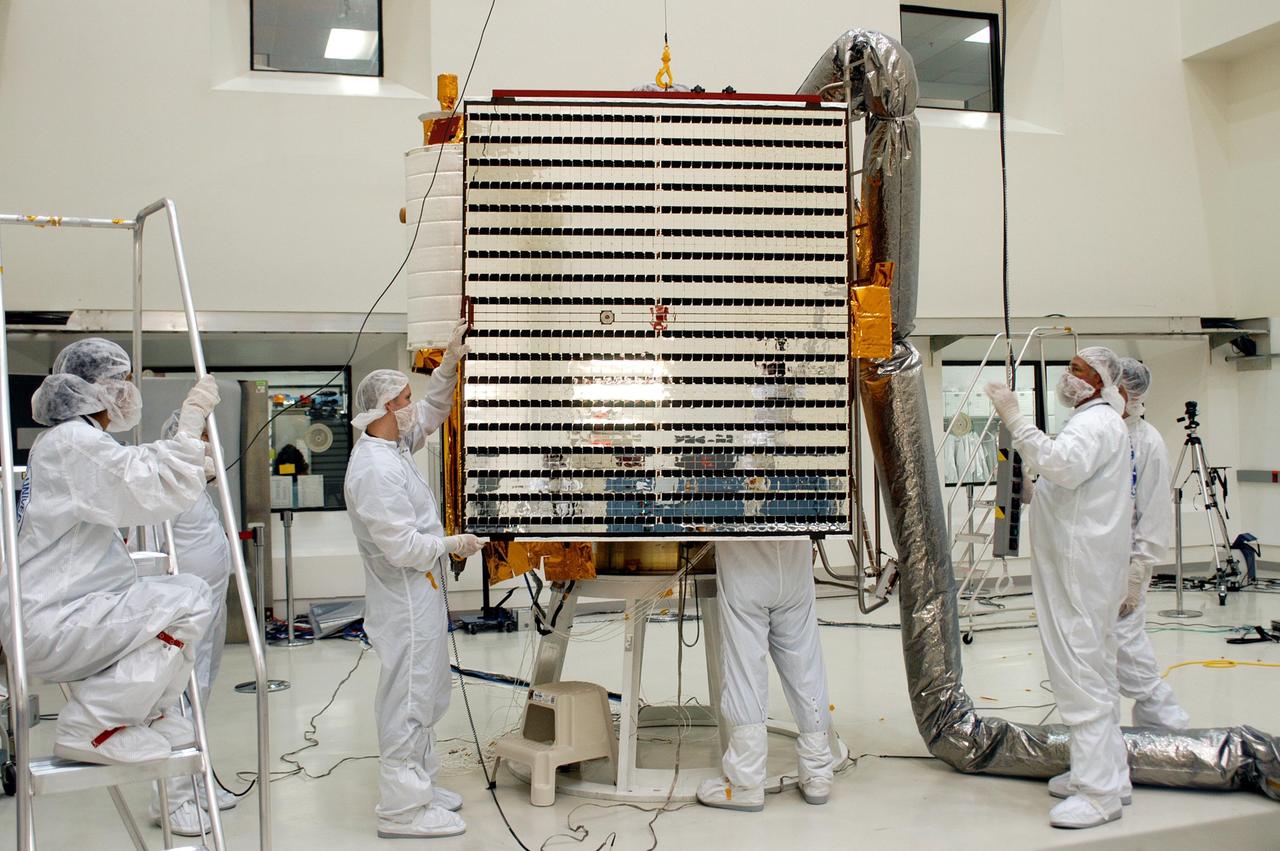
KENNEDY SPACE CENTER, FLA. - Technicians at Astrotech in Titusville, Fla., hold steady the second solar panel being installed on NASA’s MESSENGER spacecraft. At left is the first panel already installed. The two large solar panels, supplemented with a nickel-hydrogen battery, will provide MESSENGER’s power. MESSENGER is scheduled to launch Aug. 2 aboard a Boeing Delta II rocket from Pad 17-B, Cape Canaveral Air Force Station, Fla. It will return to Earth for a gravity boost in July 2005, then fly past Venus twice, in October 2006 and June 2007. The spacecraft uses the tug of Venus’ gravity to resize and rotate its trajectory closer to Mercury’s orbit. Three Mercury flybys, each followed about two months later by a course-correction maneuver, put MESSENGER in position to enter Mercury orbit in March 2011. During the flybys, MESSENGER will map nearly the entire planet in color, image most of the areas unseen by Mariner 10, and measure the composition of the surface, atmosphere and magnetosphere. It will be the first new data from Mercury in more than 30 years - and invaluable for planning MESSENGER’s year-long orbital mission. MESSENGER was built for NASA by the Johns Hopkins University Applied Physics Laboratory in Laurel, Md.
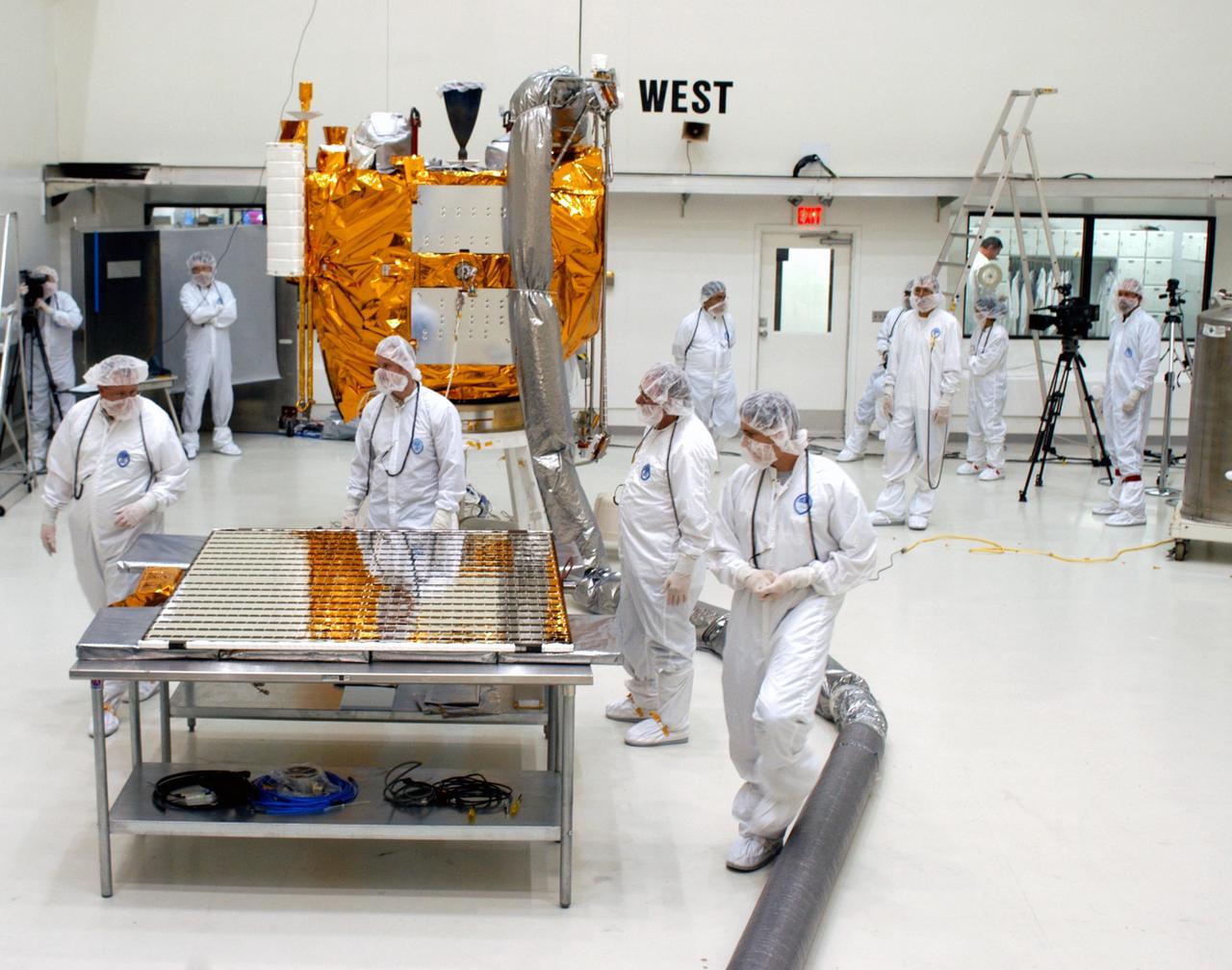
KENNEDY SPACE CENTER, FLA. - Technicians at Astrotech in Titusville, Fla., look over a solar panel ready to be installed on NASA’s MESSENGER spacecraft. It is one of two large solar panels, supplemented with a nickel-hydrogen battery, that will provide MESSENGER’s power. MESSENGER is scheduled to launch Aug. 2 aboard a Boeing Delta II rocket from Pad 17-B, Cape Canaveral Air Force Station, Fla. It will return to Earth for a gravity boost in July 2005, then fly past Venus twice, in October 2006 and June 2007. The spacecraft uses the tug of Venus’ gravity to resize and rotate its trajectory closer to Mercury’s orbit. Three Mercury flybys, each followed about two months later by a course-correction maneuver, put MESSENGER in position to enter Mercury orbit in March 2011. During the flybys, MESSENGER will map nearly the entire planet in color, image most of the areas unseen by Mariner 10, and measure the composition of the surface, atmosphere and magnetosphere. It will be the first new data from Mercury in more than 30 years - and invaluable for planning MESSENGER’s year-long orbital mission. MESSENGER was built for NASA by the Johns Hopkins University Applied Physics Laboratory in Laurel, Md.
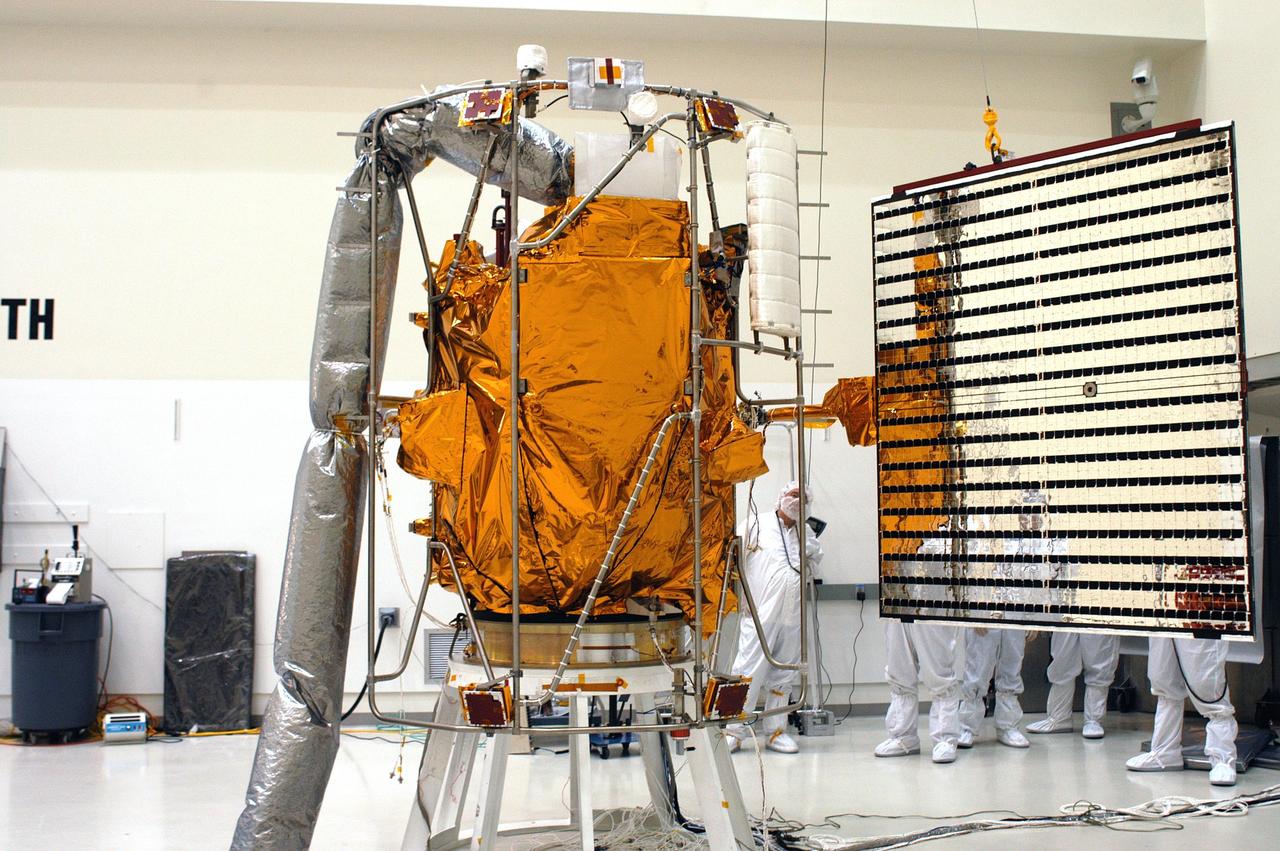
KENNEDY SPACE CENTER, FLA. - Technicians at Astrotech in Titusville, Fla., help guide a solar panel toward NASA’s MESSENGER spacecraft for installation. It is one of two large solar panels, supplemented with a nickel-hydrogen battery, that will provide MESSENGER’s power. MESSENGER is scheduled to launch Aug. 2 aboard a Boeing Delta II rocket from Pad 17-B, Cape Canaveral Air Force Station, Fla. It will return to Earth for a gravity boost in July 2005, then fly past Venus twice, in October 2006 and June 2007. The spacecraft uses the tug of Venus’ gravity to resize and rotate its trajectory closer to Mercury’s orbit. Three Mercury flybys, each followed about two months later by a course-correction maneuver, put MESSENGER in position to enter Mercury orbit in March 2011. During the flybys, MESSENGER will map nearly the entire planet in color, image most of the areas unseen by Mariner 10, and measure the composition of the surface, atmosphere and magnetosphere. It will be the first new data from Mercury in more than 30 years - and invaluable for planning MESSENGER’s year-long orbital mission. MESSENGER was built for NASA by the Johns Hopkins University Applied Physics Laboratory in Laurel, Md.

KENNEDY SPACE CENTER, FLA. - - After the deployment test of two solar panels at Astrotech in Titusville, Fla., technicians with The Johns Hopkins University Applied Physics Laboratory (APL) prepare the MESSESNGER spacecraft for a move to a hazardous processing facility in preparation for loading the spacecraft’s complement of hypergolic propellants. The solar arrays will provide MESSENGER’s power on its journey to Mercury. MESSENGER is scheduled to launch Aug. 2 aboard a Boeing Delta II rocket from Pad 17-B, Cape Canaveral Air Force Station, Fla. It will return to Earth for a gravity boost in July 2005, then fly past Venus twice, in October 2006 and June 2007. The spacecraft uses the tug of Venus’ gravity to resize and rotate its trajectory closer to Mercury’s orbit. Three Mercury flybys, each followed about two months later by a course-correction maneuver, put MESSENGER in position to enter Mercury orbit in March 2011. During the flybys, MESSENGER will map nearly the entire planet in color, image most of the areas unseen by Mariner 10, and measure the composition of the surface, atmosphere and magnetosphere. It will be the first new data from Mercury in more than 30 years - and invaluable for planning MESSENGER’s year-long orbital mission. MESSENGER was built for NASA by APL in Laurel, Md.
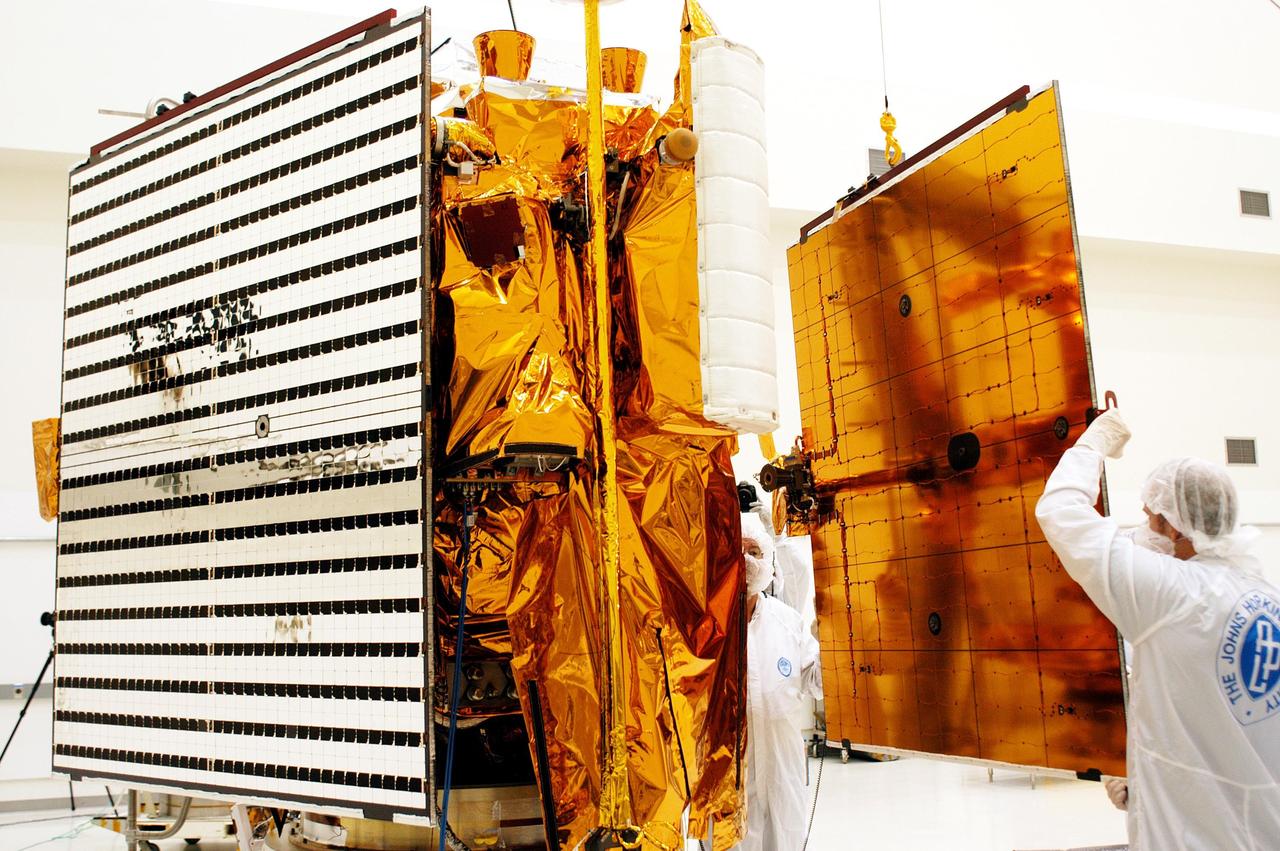
KENNEDY SPACE CENTER, FLA. - At right, technicians at Astrotech in Titusville, Fla., guide into place the second solar panel to be installed on NASA’s MESSENGER spacecraft. At left is the first panel already installed. The two large solar panels, supplemented with a nickel-hydrogen battery, will provide MESSENGER’s power. MESSENGER is scheduled to launch Aug. 2 aboard a Boeing Delta II rocket from Pad 17-B, Cape Canaveral Air Force Station, Fla. It will return to Earth for a gravity boost in July 2005, then fly past Venus twice, in October 2006 and June 2007. The spacecraft uses the tug of Venus’ gravity to resize and rotate its trajectory closer to Mercury’s orbit. Three Mercury flybys, each followed about two months later by a course-correction maneuver, put MESSENGER in position to enter Mercury orbit in March 2011. During the flybys, MESSENGER will map nearly the entire planet in color, image most of the areas unseen by Mariner 10, and measure the composition of the surface, atmosphere and magnetosphere. It will be the first new data from Mercury in more than 30 years - and invaluable for planning MESSENGER’s year-long orbital mission. MESSENGER was built for NASA by the Johns Hopkins University Applied Physics Laboratory in Laurel, Md.
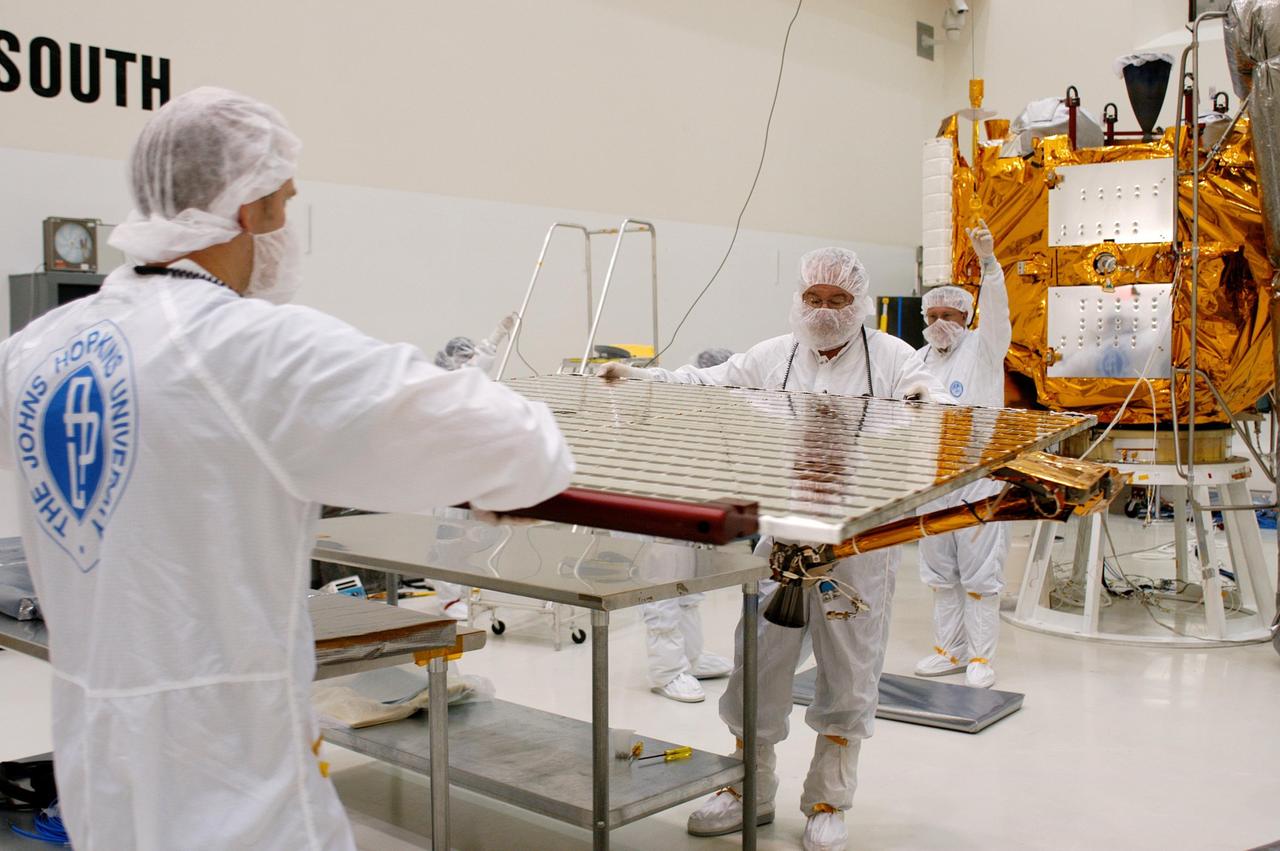
KENNEDY SPACE CENTER, FLA. - At Astrotech in Titusville, Fla., technicians maneuver a second solar panel to a vertical position to move it toward NASA’s MESSENGER spacecraft for installation. The two large solar panels, supplemented with a nickel-hydrogen battery, will provide MESSENGER’s power. MESSENGER is scheduled to launch Aug. 2 aboard a Boeing Delta II rocket from Pad 17-B, Cape Canaveral Air Force Station, Fla. It will return to Earth for a gravity boost in July 2005, then fly past Venus twice, in October 2006 and June 2007. The spacecraft uses the tug of Venus’ gravity to resize and rotate its trajectory closer to Mercury’s orbit. Three Mercury flybys, each followed about two months later by a course-correction maneuver, put MESSENGER in position to enter Mercury orbit in March 2011. During the flybys, MESSENGER will map nearly the entire planet in color, image most of the areas unseen by Mariner 10, and measure the composition of the surface, atmosphere and magnetosphere. It will be the first new data from Mercury in more than 30 years - and invaluable for planning MESSENGER’s year-long orbital mission. MESSENGER was built for NASA by the Johns Hopkins University Applied Physics Laboratory in Laurel, Md.