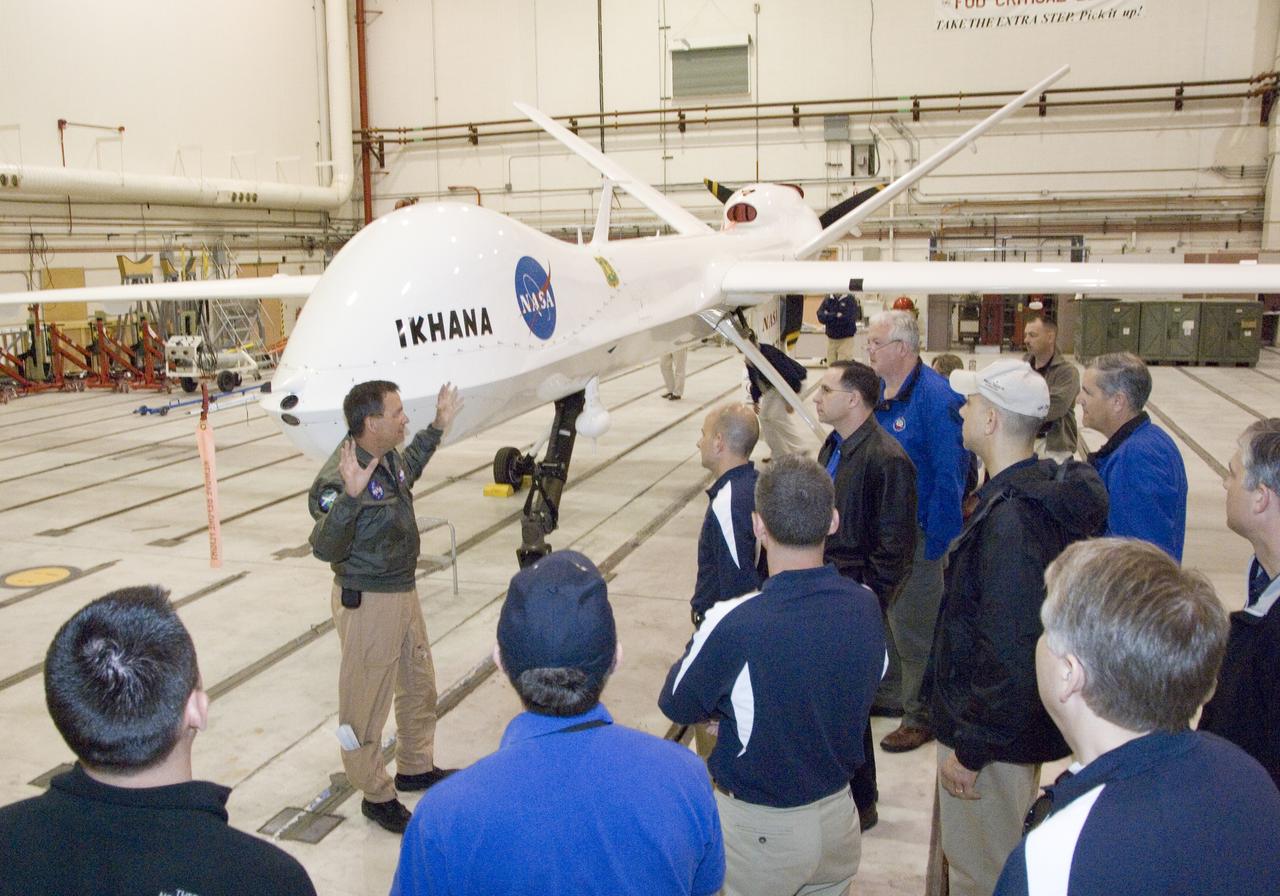
Industrial College of the Armed Forces students on a VIP tour receive a briefing on the Ikhana unmanned air vehicle from NASA Dryden pilot Mark Pestana.
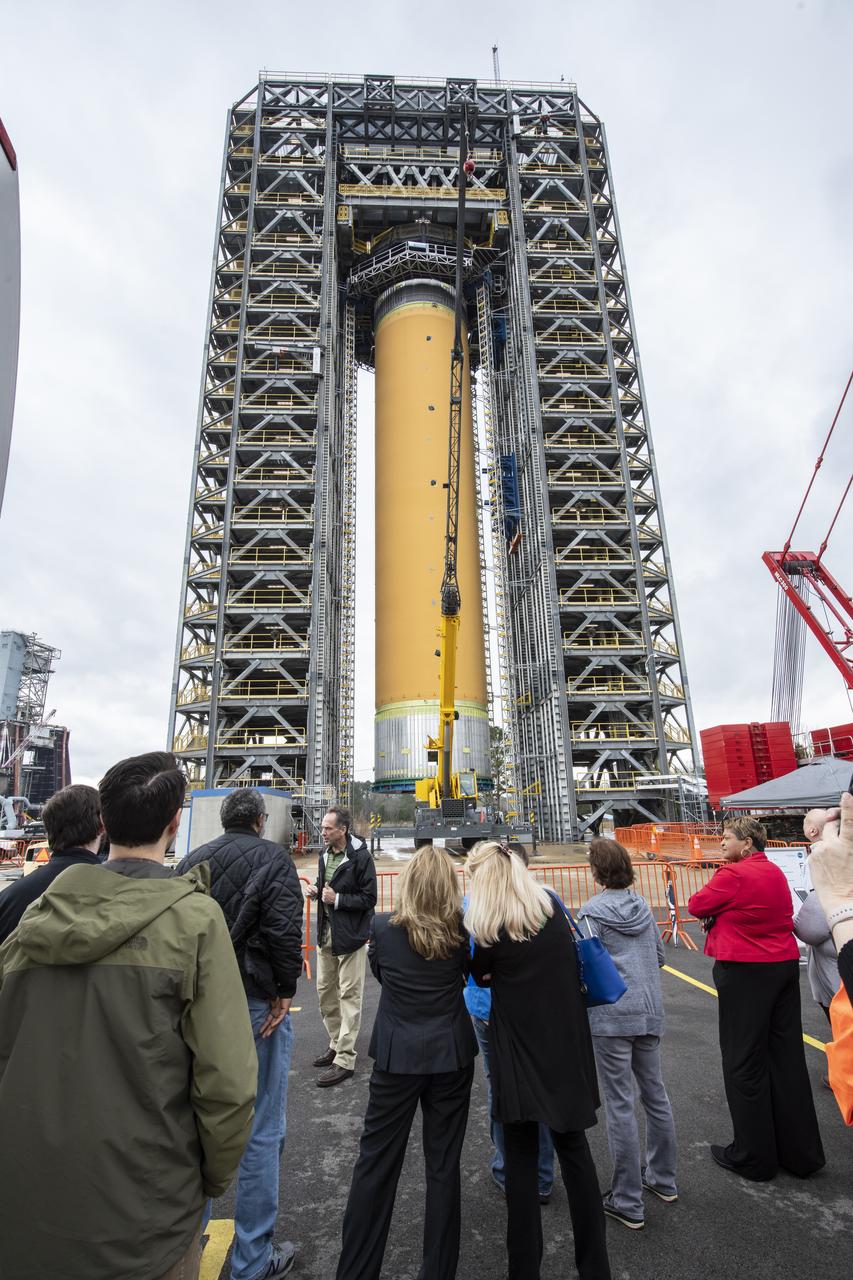
More than 700 NASA Marshall Space Flight Center team members, Boeing employees, Team Redstone participants and local officials filled 17 buses Feb. 6 to view the liquid hydrogen tank structural test article installed in Test Stand 4693 at Marshall. The 149-foot liquid hydrogen tank structural test article is the largest piece of structural test hardware for the core stage of NASA’s Space Launch System (SLS). At 221 feet tall, Test Stand 4693 is the largest test stand at Marshall -- as well as one of the newest. During testing, dozens of hydraulic cylinders in the test stand will push and pull on the tank to simulate the stresses and loads it will endure during liftoff and flight for lunar missions.
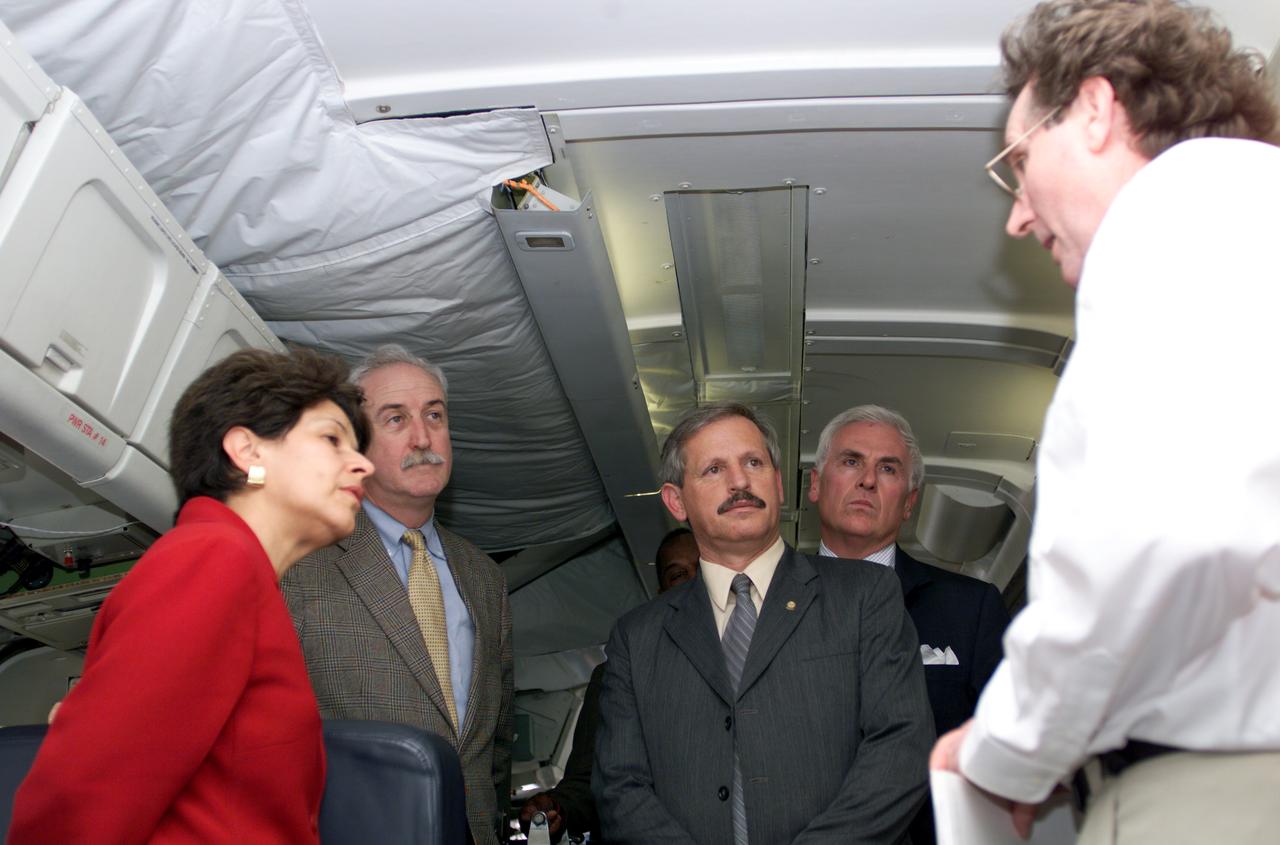
VIP tour of NASA DFRC's DC-8 airborne laboratory during the AirSAR 2004 Mesoamerica campaign given by Craig Dobson, NASA Program Manager for AirSAR, L-R: Dr. Sonia Marta Mora, President of the Costa Rican National Rector’s Council; NASA Administrator Sean O'Keefe; Fernando Gutierrez, Costa Rican Minister of Science and Technology(MICIT); Mr. John Danilovich, US Ambassador to Costa Rica; and Dobson. AirSAR 2004 Mesoamerica is a three-week expedition by an international team of scientists that will use an all-weather imaging tool, called the Airborne Synthetic Aperture Radar (AirSAR), in a mission ranging from the tropical rain forests of Central America to frigid Antarctica.
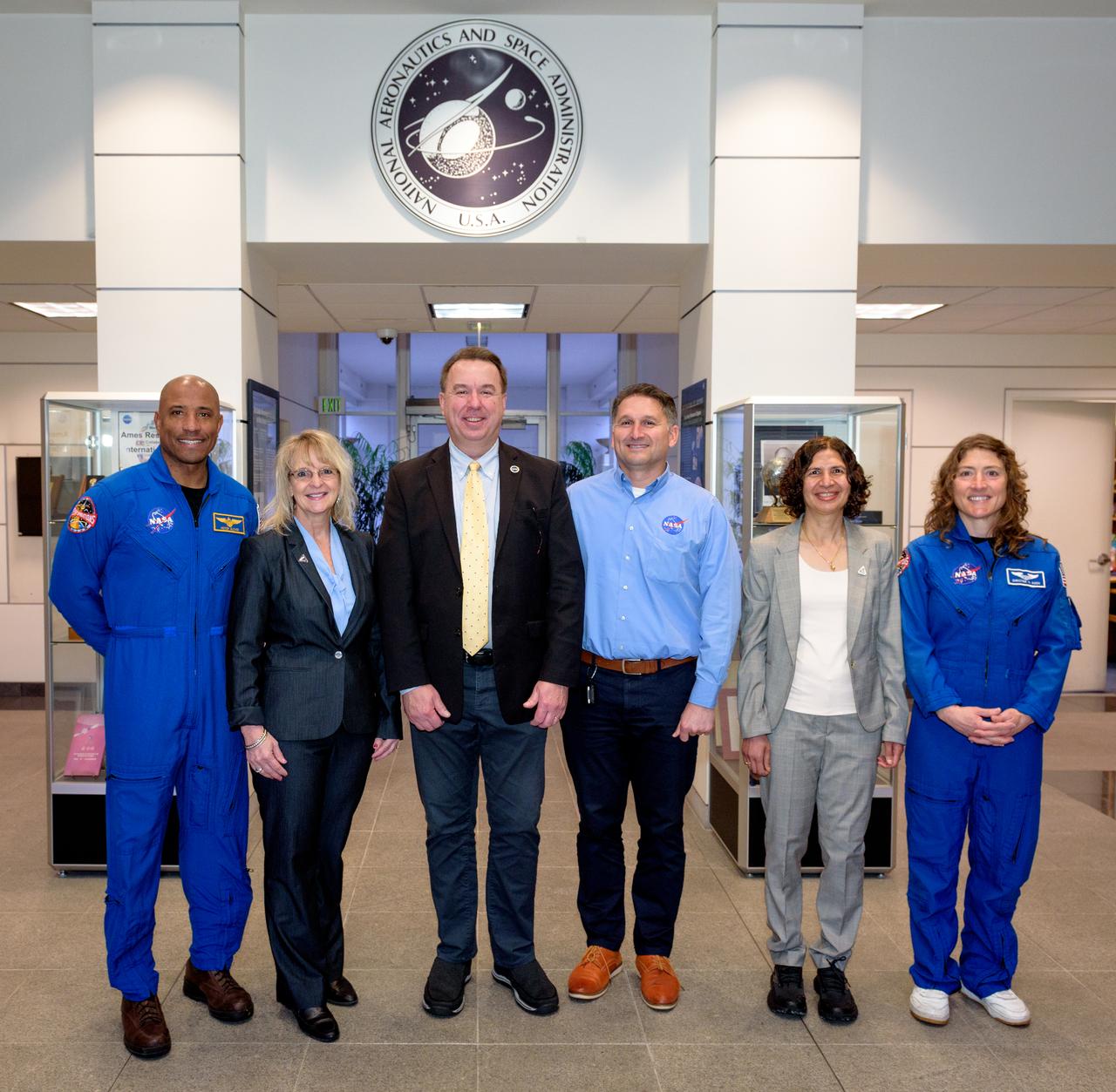
NASA astronaut Victor J. Glover, left, Orion Deputy Program Manager Debbie Korth, Deputy Center Director David Korsmeyer, Luis Saucedo, Parul Agrawal, and NASA astronaut Christina Koch, left, in the lobby of N200.
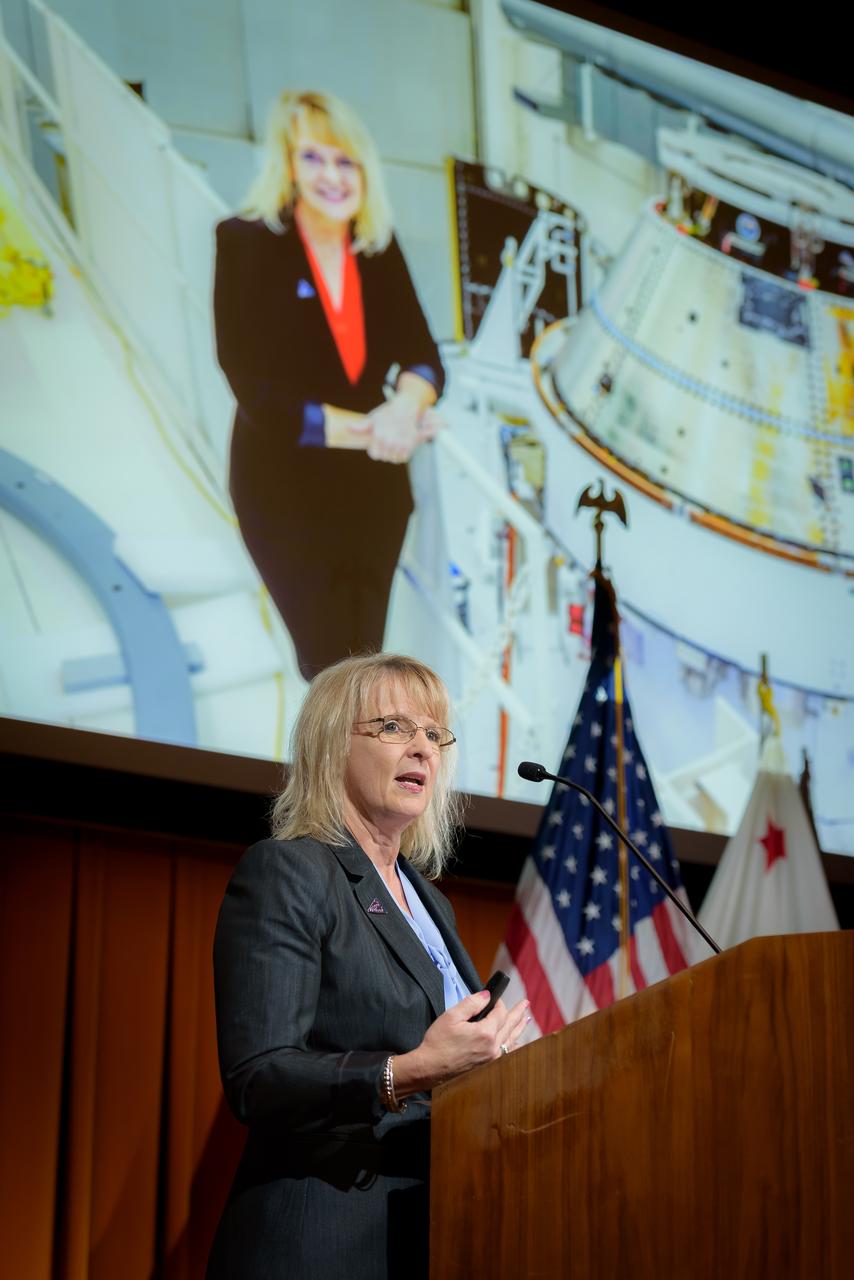
Orion Deputy Program Manager Debbie Korth welcomes Ames employees to the Orion Circle of Excellence Award Ceremony in the Syvertson Auditorium, N201.
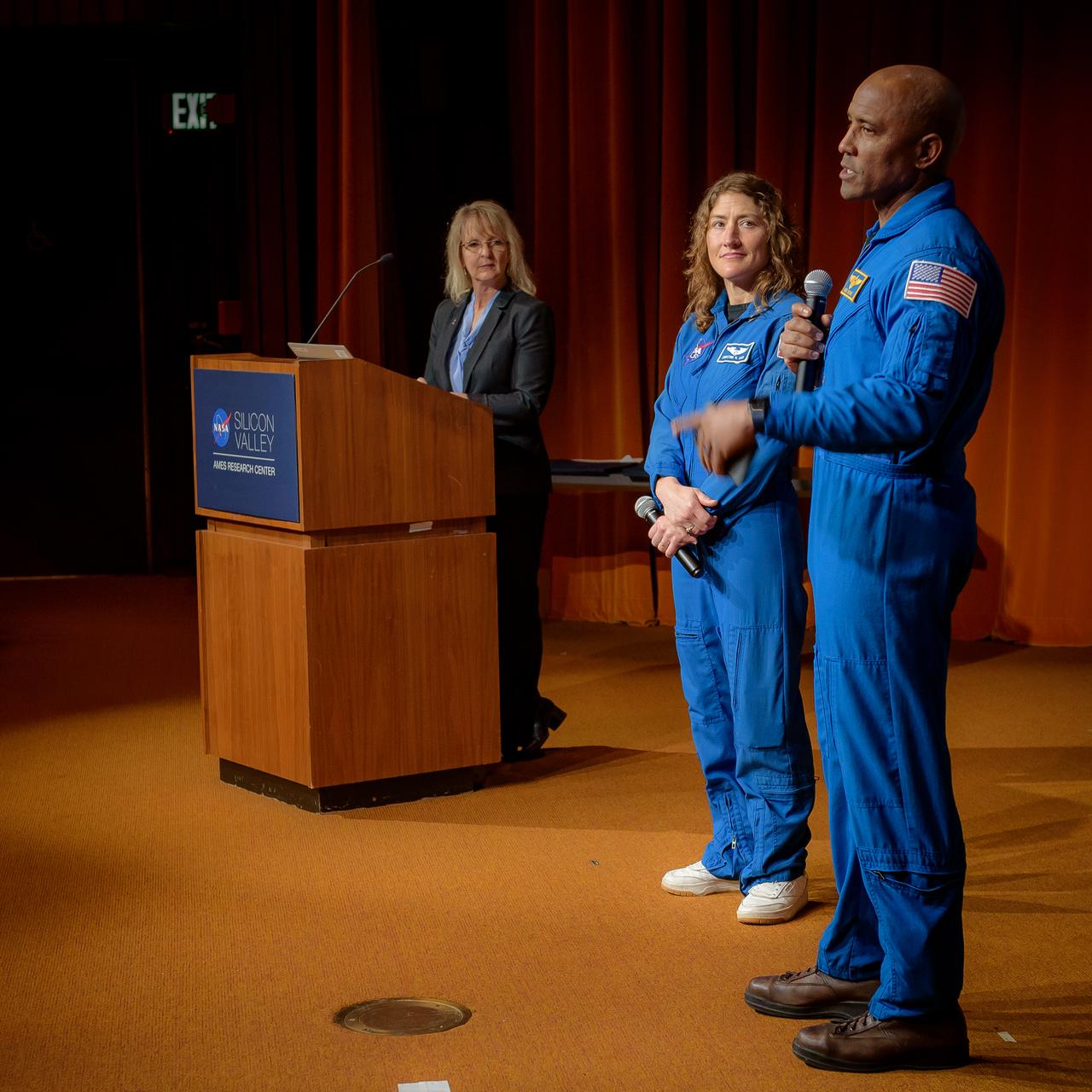
Orion Deputy Program Manager Debbie Korth, at the podium, leads a question-and-answer session with NASA astronauts Christina Koch and Victor J. Glover, right, with Ames employees following the Orion Circle of Excellence Award Ceremony in the Syvertson Auditorium, N201.
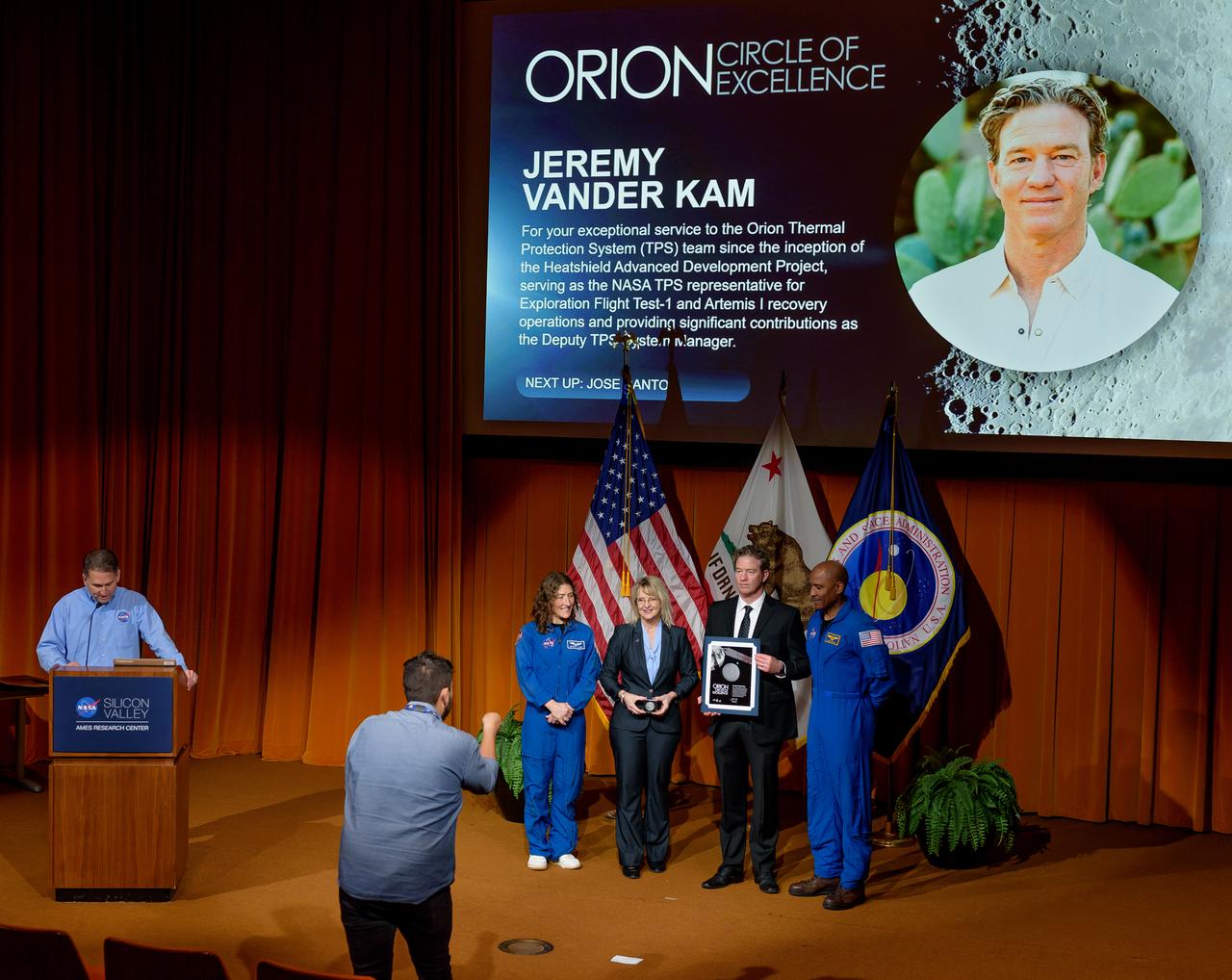
NASA Ames staff photographer Brandon Torres Navarette, front, photographs Orion Circle of Excellence Award being presented to Jeremy Vander Kam (ACD25-0023-001), center, by Orion Deputy Program Manager Debbie Korth, left, NASA astronauts Victor J. Glover, right, and Christina Koch, left. Luis Saucedo is the master of the ceremonies at the podium on the far left, in the Syvertson Auditorium, N201.
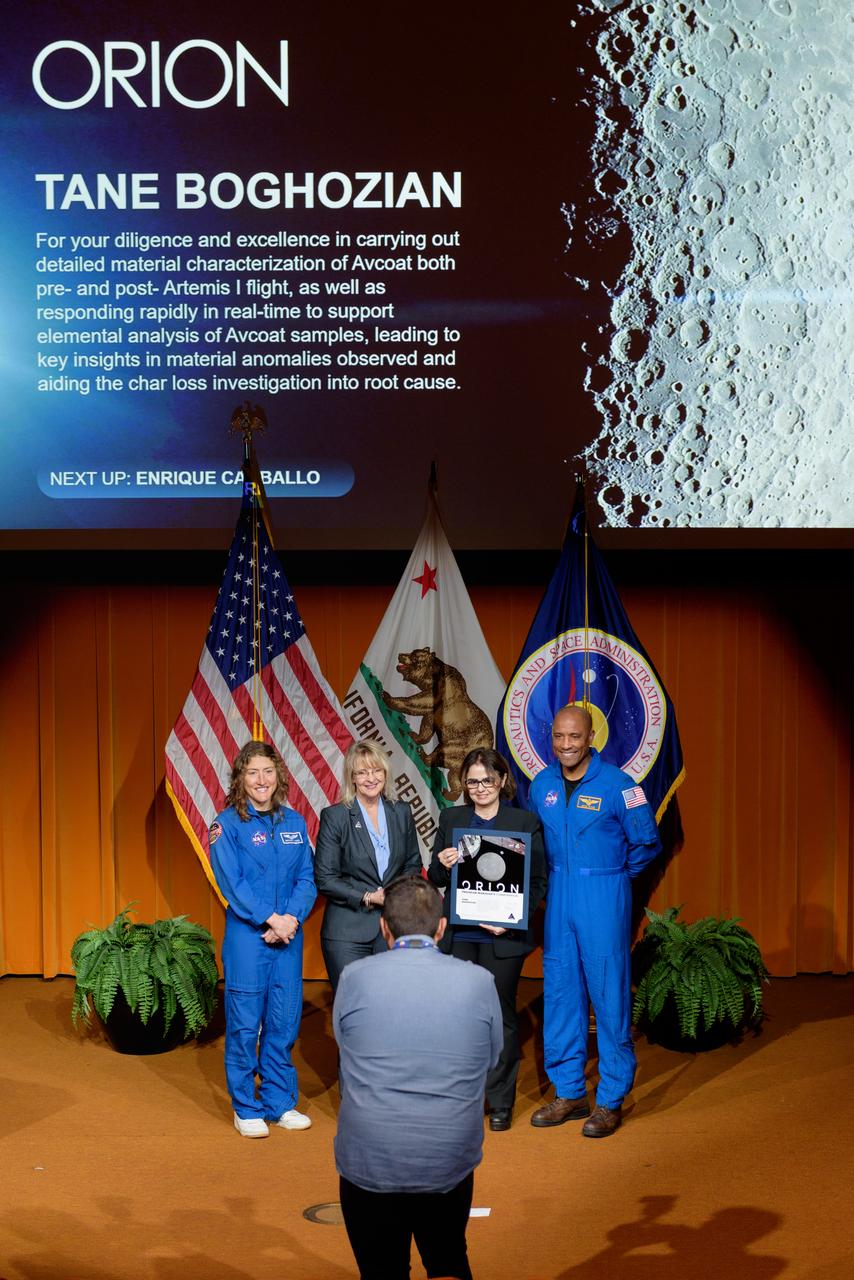
NASA Ames staff photographer Brandon Torres Navarette, front, photographs Orion program manager’s commendation award presented to Tane Boghozian (ACD25-0023-005), center, by Orion Deputy Program Manager Debbie Korth, left, NASA astronauts Victor J. Glover, right, and Christina Koch, left, in the Syvertson Auditorium, N201.
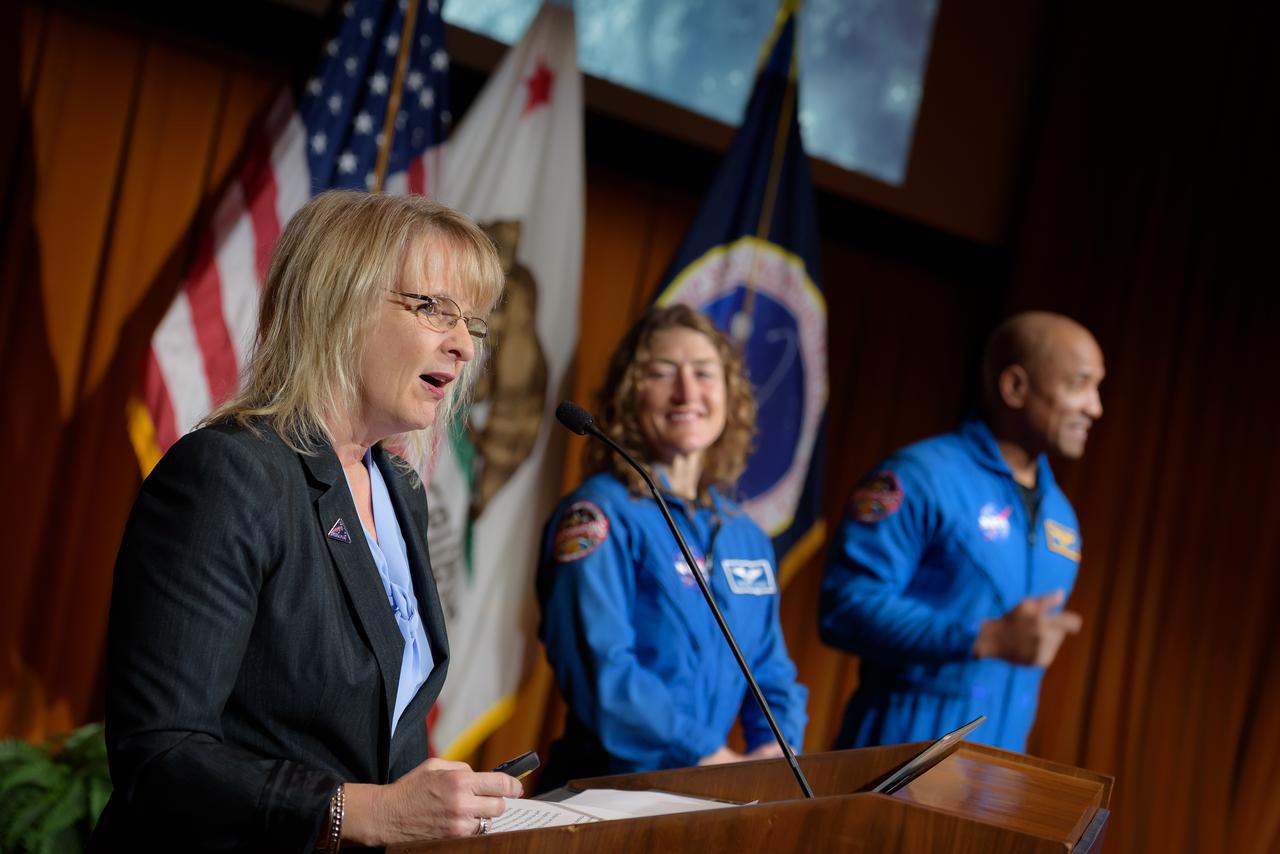
Orion Deputy Program Manager Debbie Korth, at the podium, leads a question-and-answer session with NASA astronauts Christina Koch and Victor J. Glover, right, with Ames employees following the Orion Circle of Excellence Award Ceremony in the Syvertson Auditorium, N201.
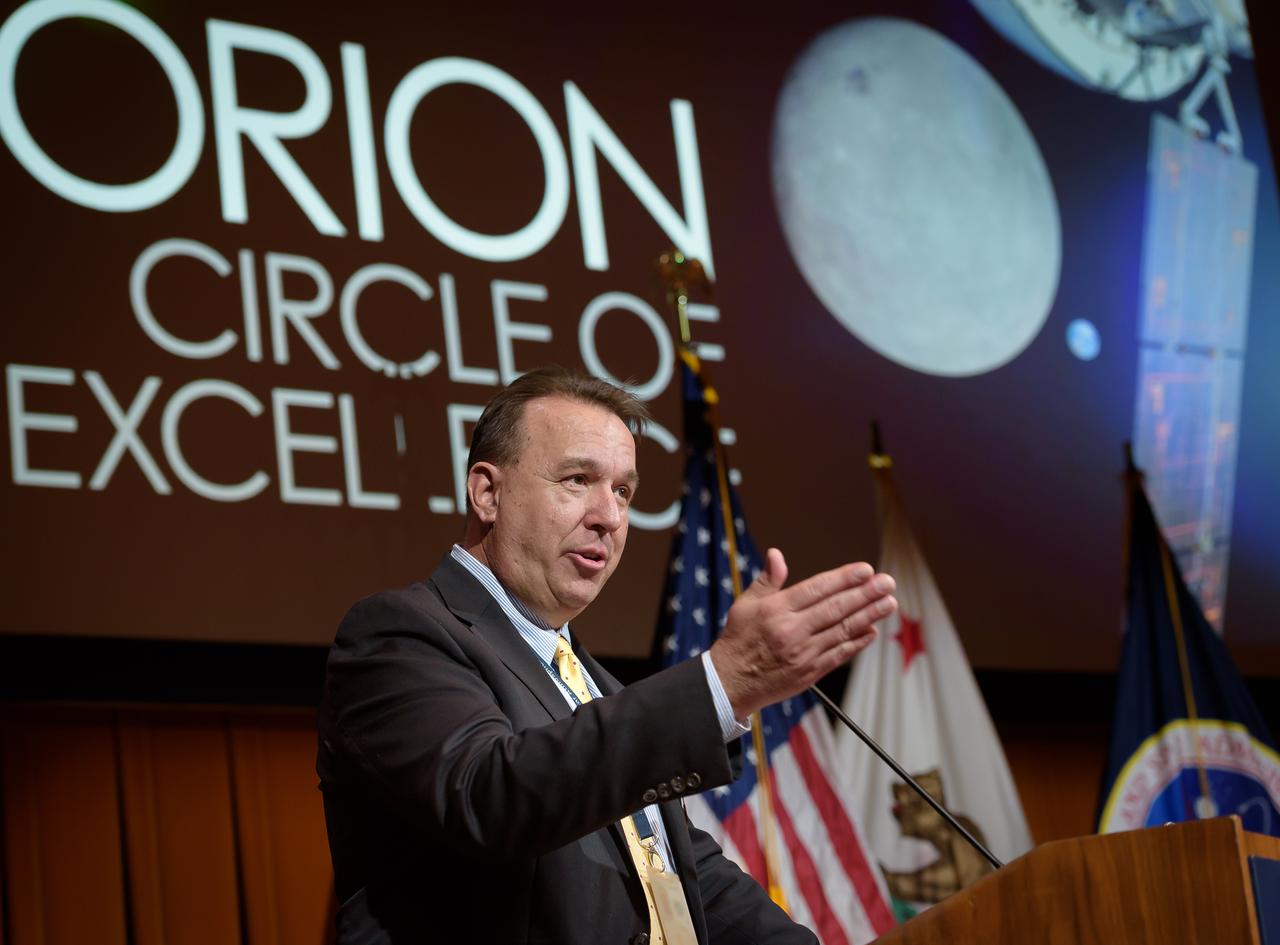
David Korsmeyer welcomes Ames employees to the Orion Circle of Excellence Award Ceremony in the Syvertson Auditorium, N201.
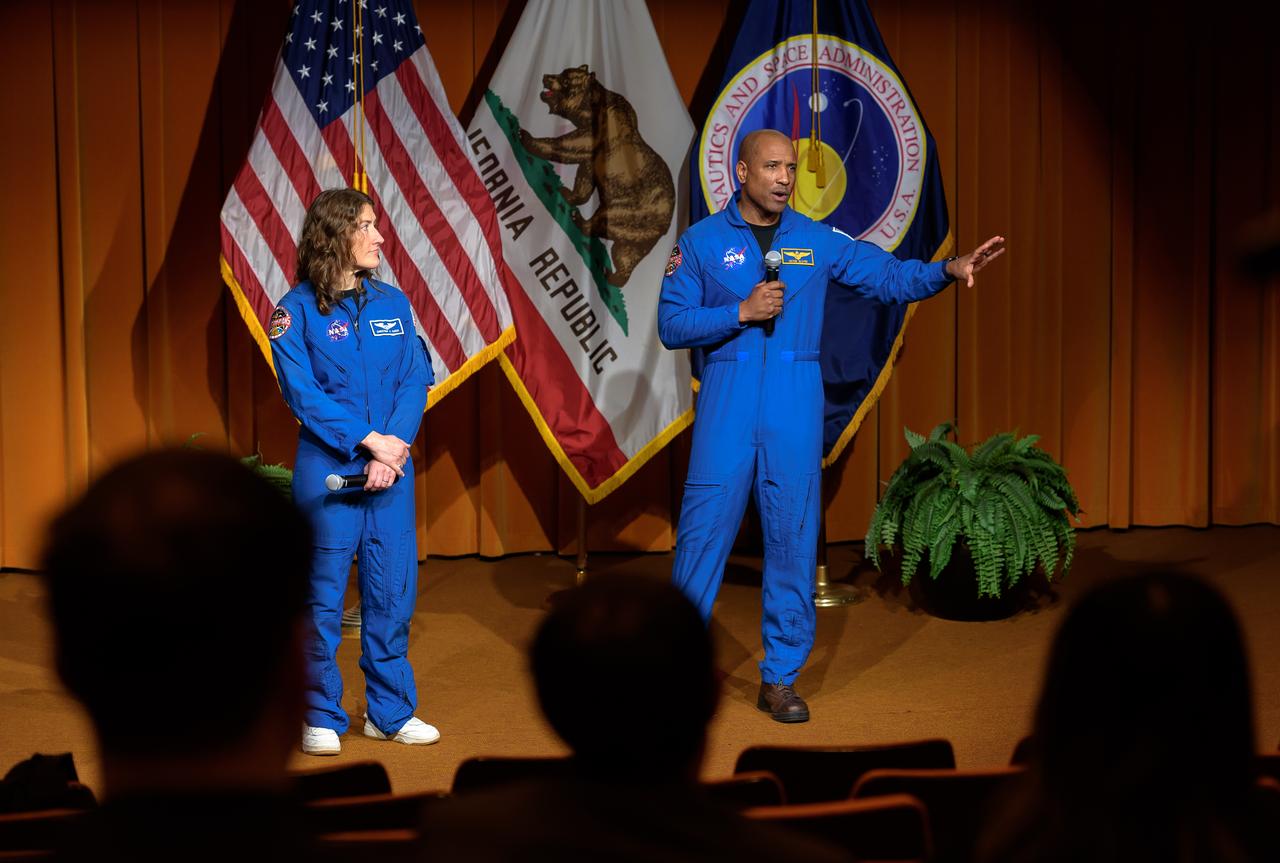
NASA astronauts Christina Koch, left, and Victor J. Glover answer questions from Ames employees following the Orion Circle of Excellence Award Ceremony in the Syvertson Auditorium, N201.
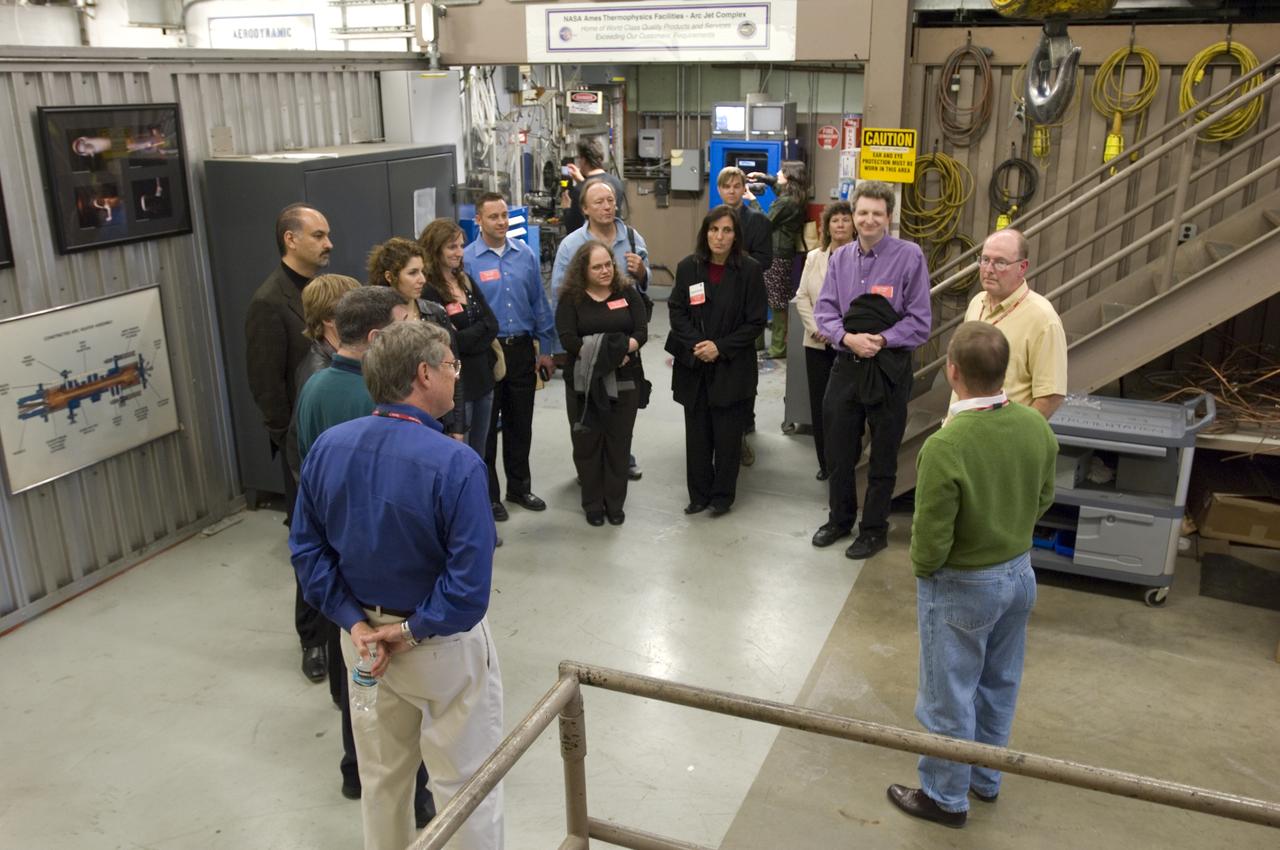
Yuri's Night at Ames a celebration of the first human in space, The world's first female space tourist Anoushen Ansari and her husband joint the VIP briefing and tour of Ames Research Center prior to the event.
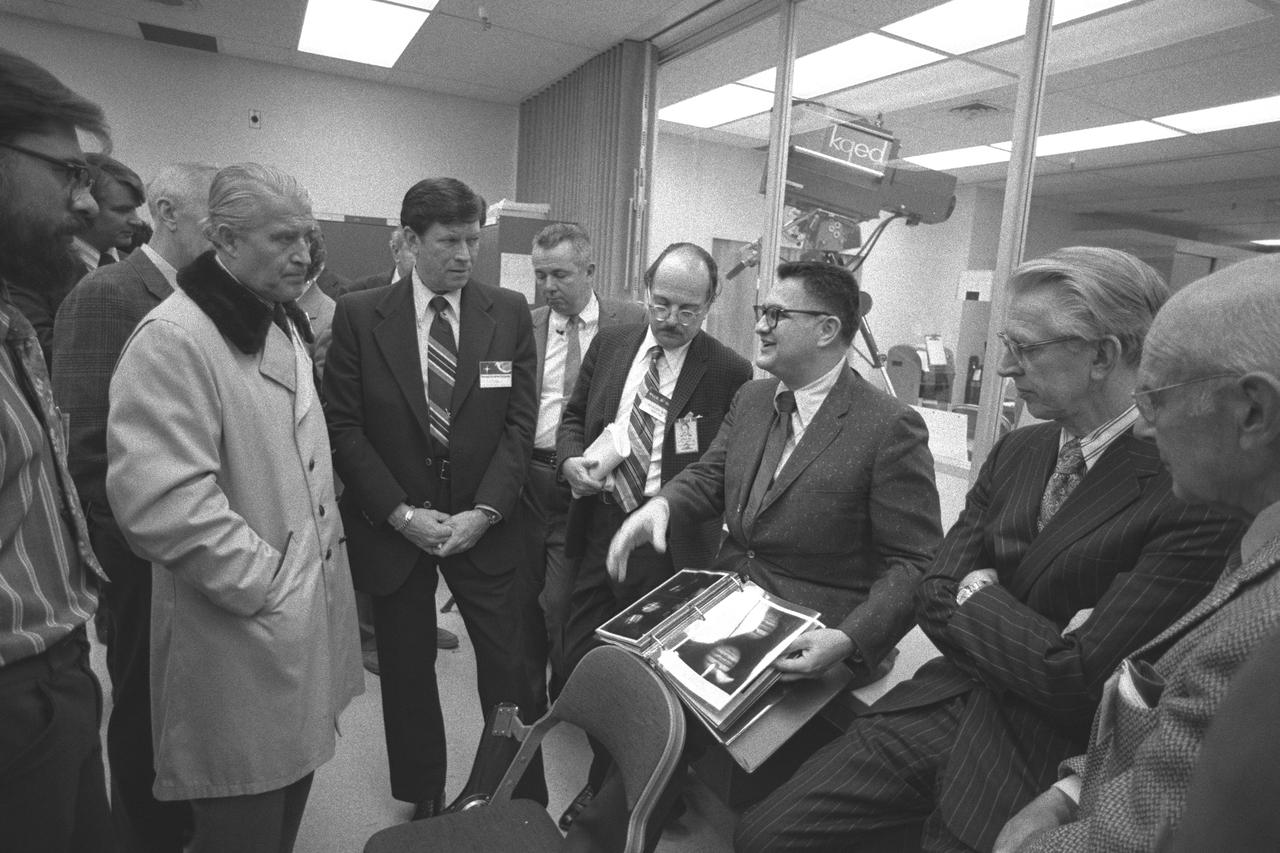
Pioneer 10 Mission to Jupiter; Press conference and tour of Mission Control for VIP visitors with Dr. Werner Von Braun on left (in trench coat) Dr Richard Fimmel, Ames, center (with album) and Dr Fletcher, NASA Administrator to his right.
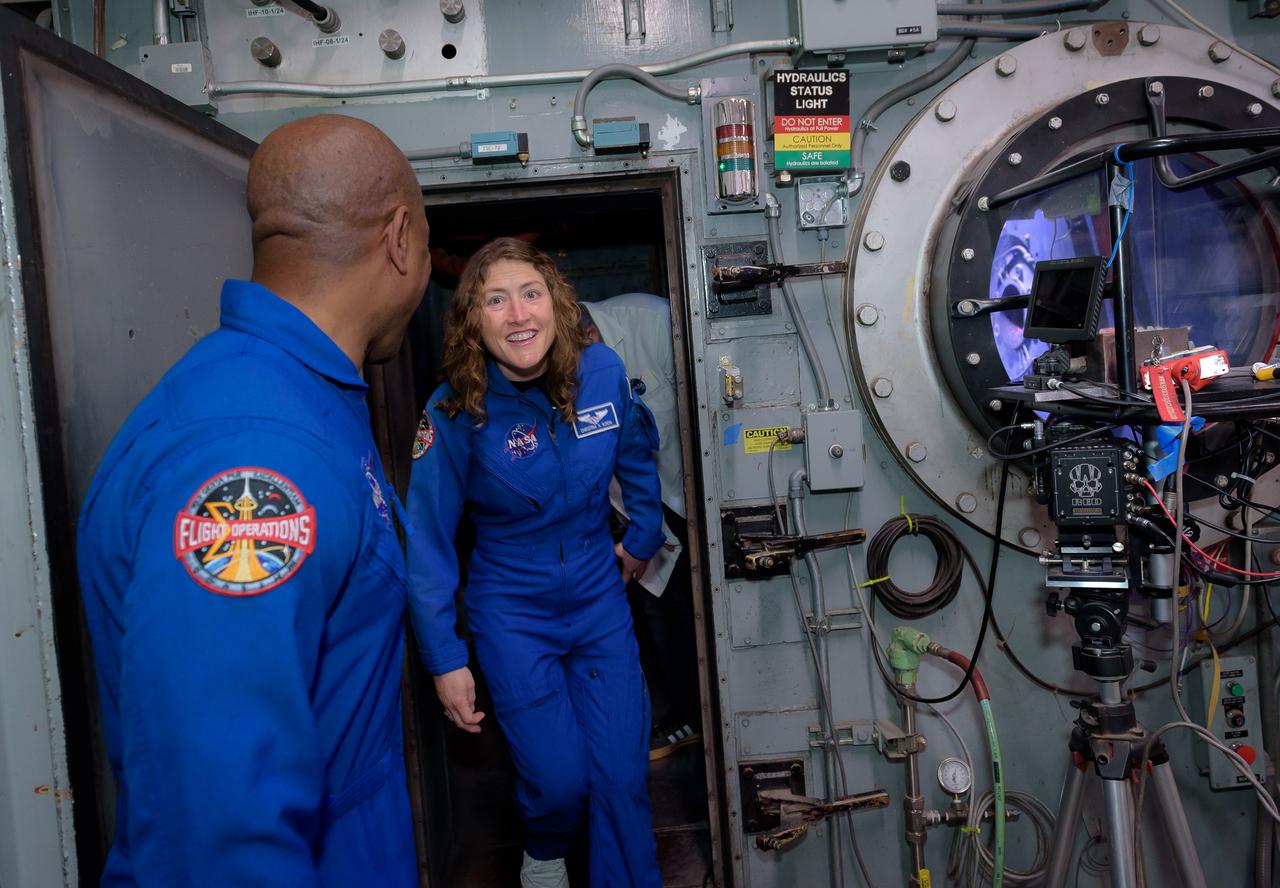
NASA astronaut Christina Koch exits the vacuum test chamber for the Interaction Heating Facility (IHF) of the Ames Arc Jet Complex, N238, following Victor J. Glover, left. During a test, a TPS test sample is suspended in the hypersonic flow produced by IHF’s arc heater. The shock heating produced by the interaction between the hypersonic flow and the stationary test sample simulates the heating and other forces the spacecraft will encounter during atmospheric hypersonic entry.
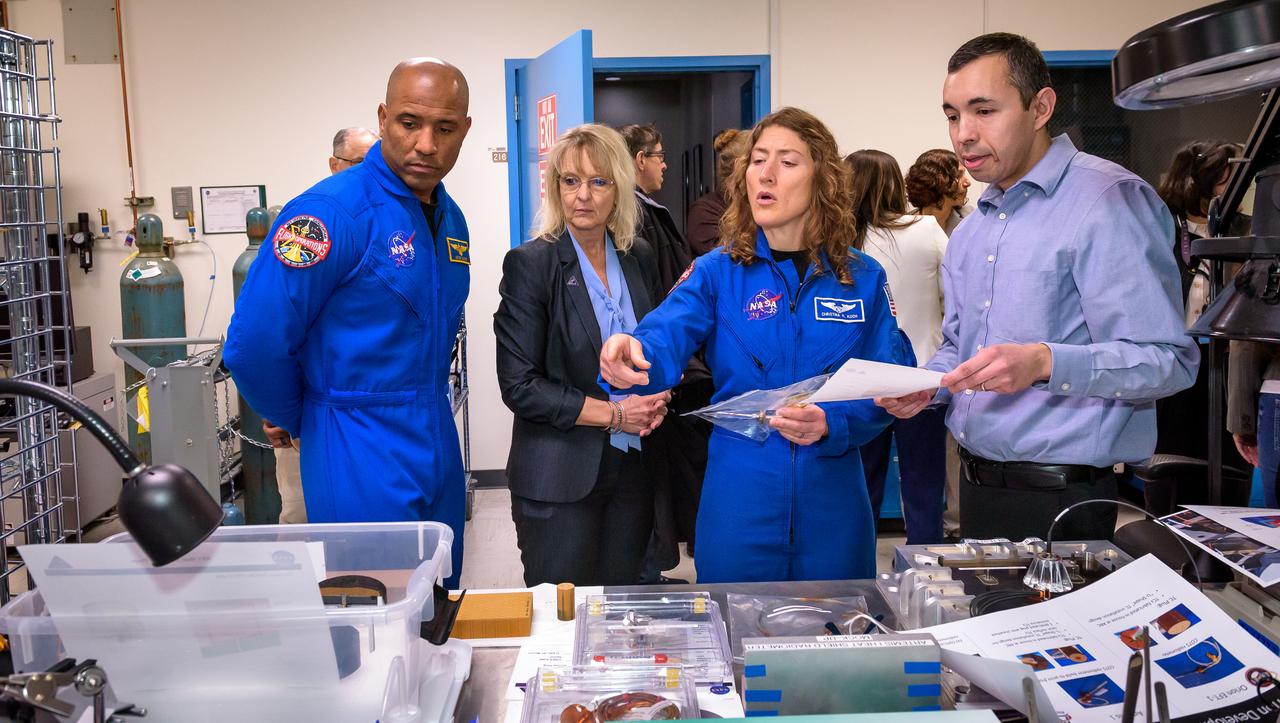
Jose A. B. Santos, right, discusses thermal protection materials with NASA astronaut Victor J. Glover, Orion Deputy Program Manager Debbie Korth, and NASA astronaut Christina Koch in STAR Labs in N242.
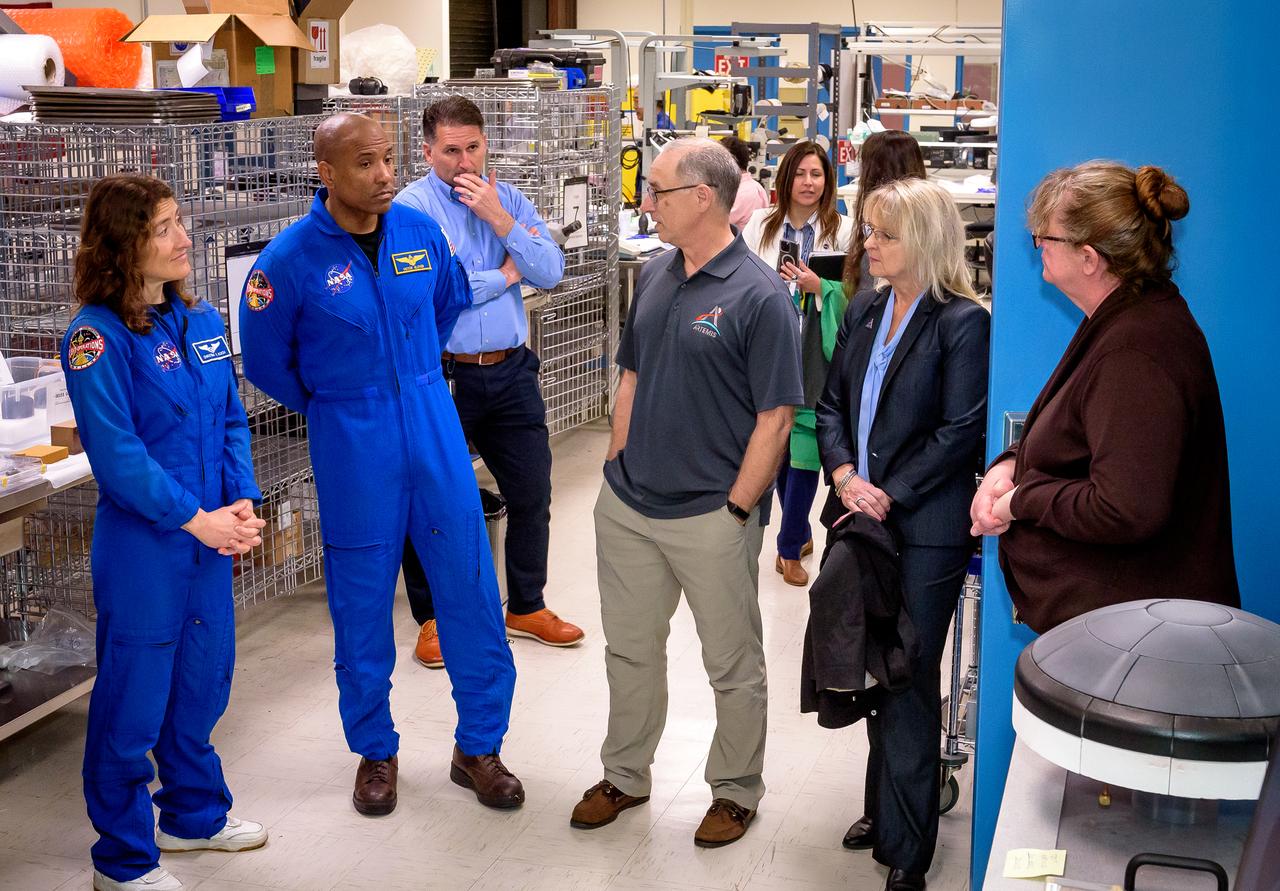
NASA astronauts Christina Koch, left, Victor J. Glover, Matt Switzer, Orion Deputy Program Manager Debbie Korth, and Margaret Stackpoole.
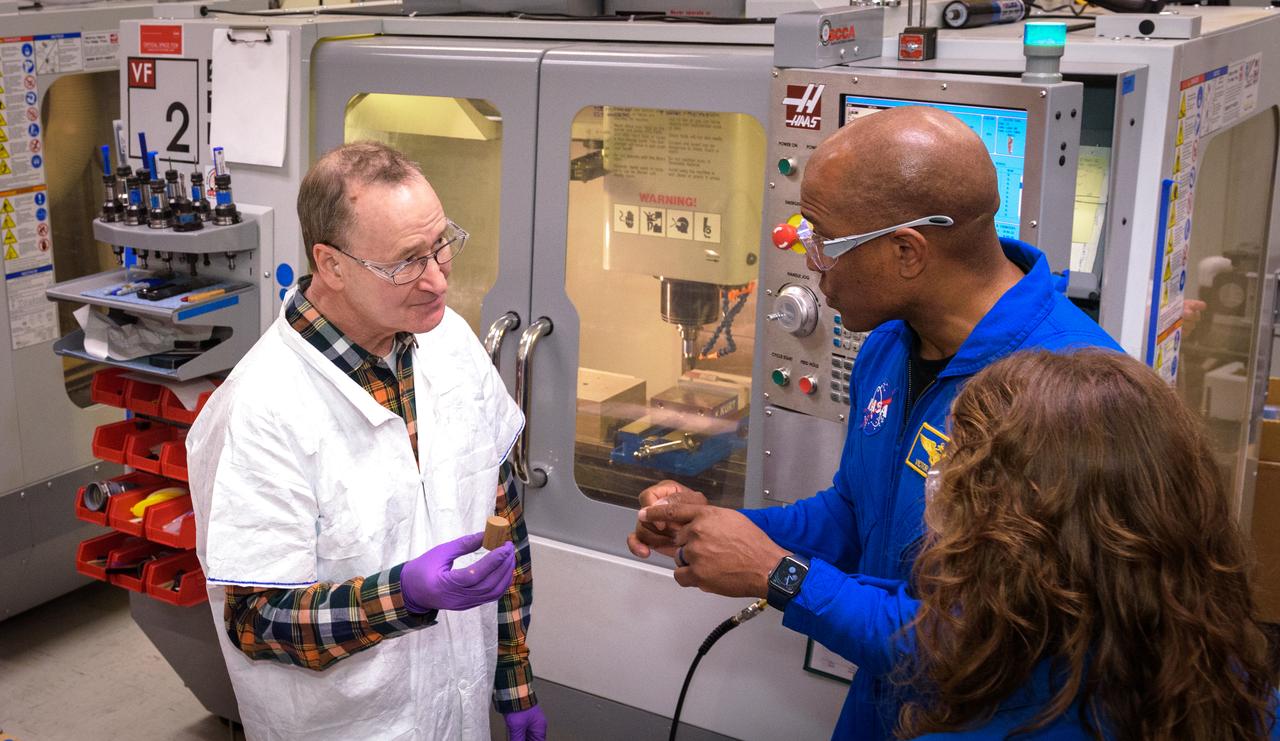
Don Ebaugh, left, shows NASA astronaut Victor J. Glover a thermal couple plug, which measures the temperature inside a heat shield, in STAR Labs, N238.
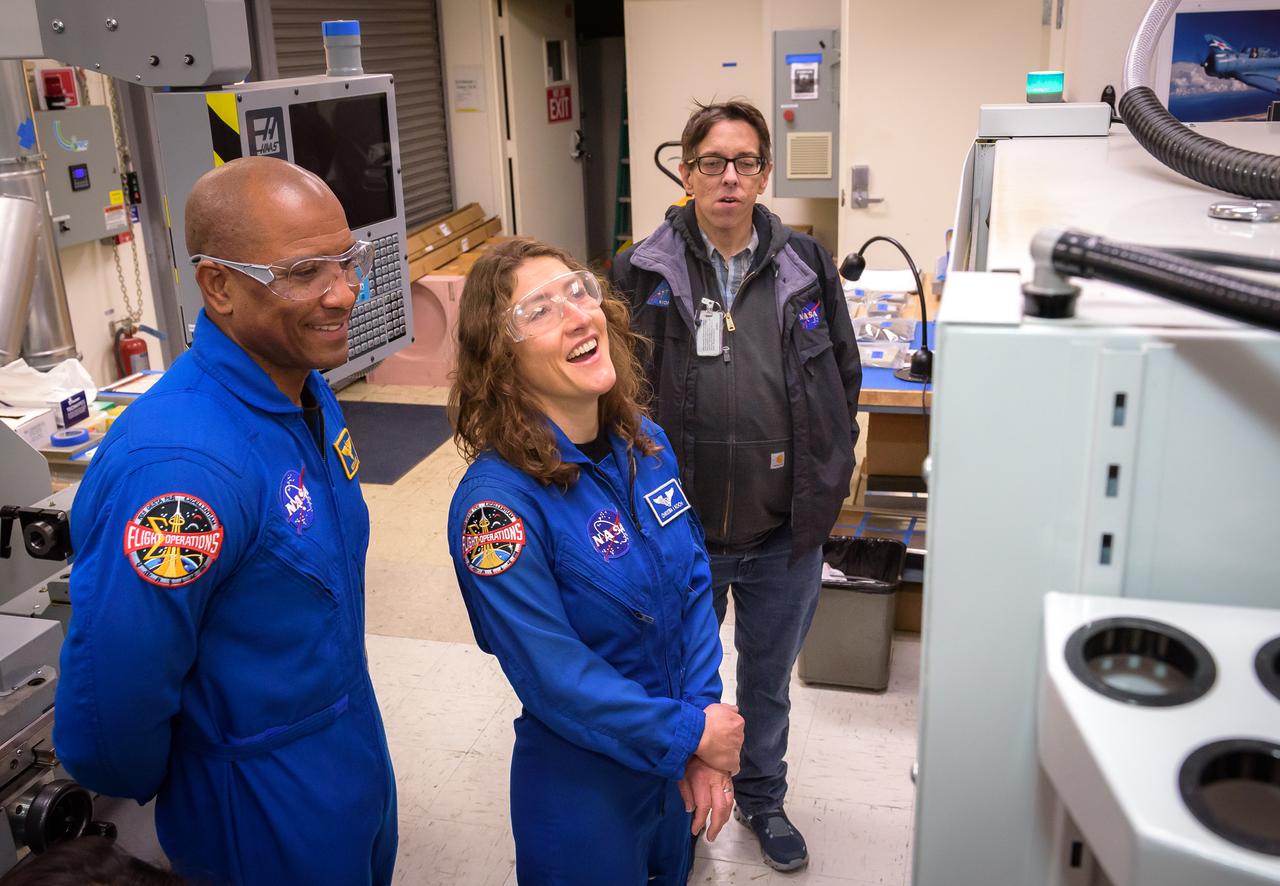
NASA astronauts Victor J. Glover, left, and Christina Koch, with Joe Mach as they tour STAR Labs, N238
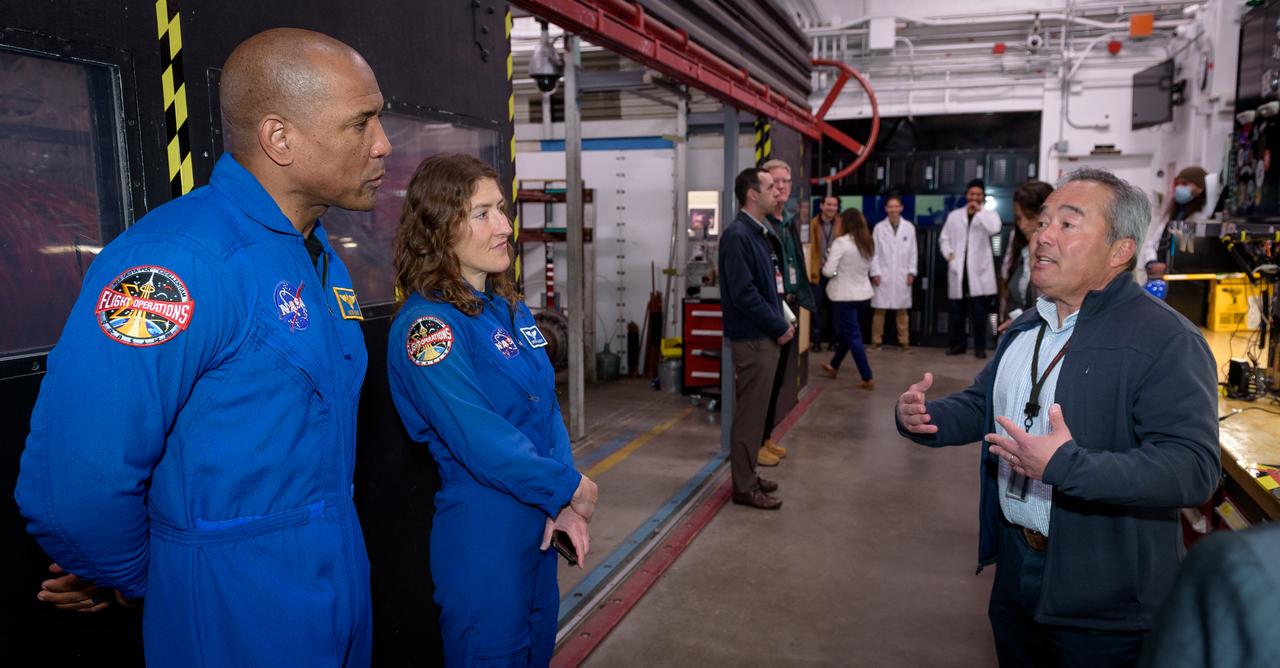
Thermophysics Facilities Branch Chief George Raiche, right, leads NASA astronauts Victor J. Glover, left, and Christina Koch through the Arc Jet Complex in N238.
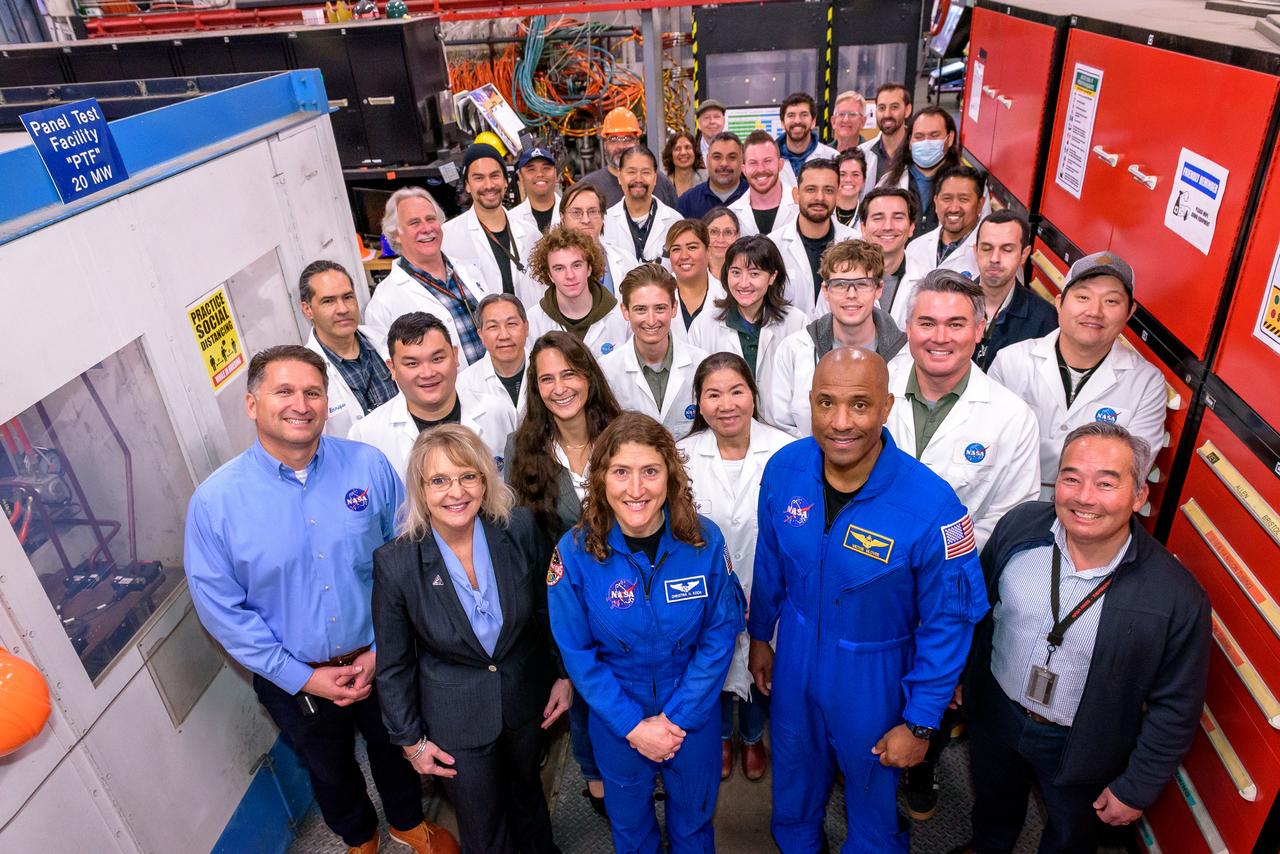
Group photo of the Orion astronauts with the staff of the Ames Arc Jet Complex in N238. Front row: Luis Saucedo, left, Debbie Korth, Christina Koch, Victor J. Glover, and George Raiche, right.
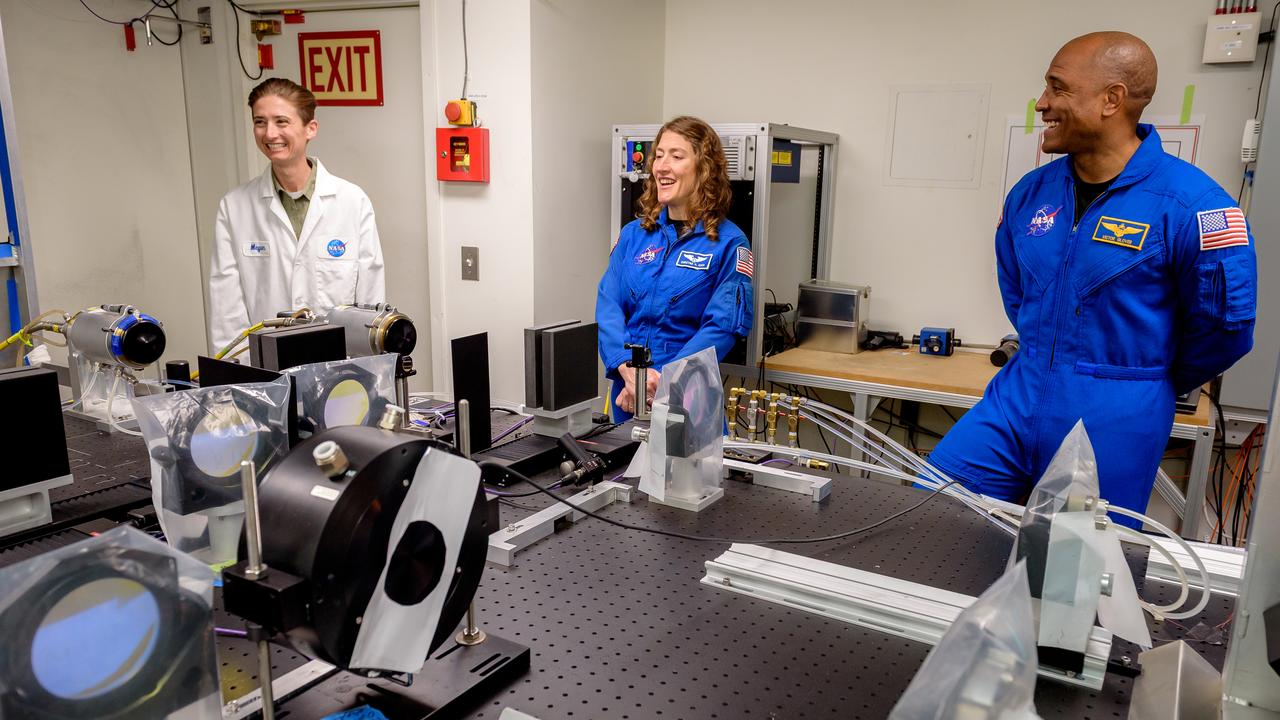
Megan MacDonald, left, leads NASA astronauts Christina Koch and Victor J. Glover, right, on a tour of the Laser Enhanced Arc Jet Facility (LEAF) laboratory, in N238. The LEAF laser augments the hypersonic shock heating experienced by a test sample during an arc jet test and provides improved test simulation quality by supplying an intense source of optical heating while the arc jet flow provides shock-driven convective heating.
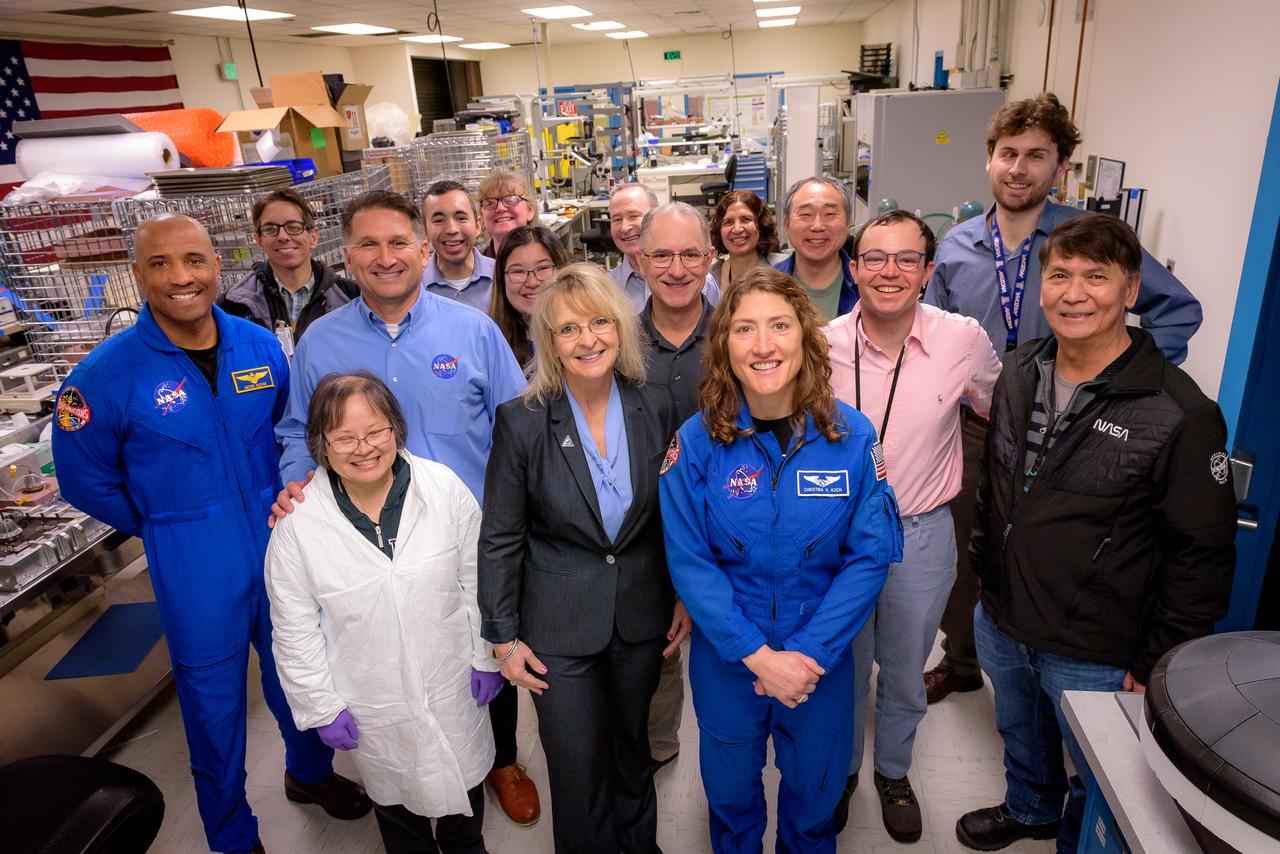
Group photo in STAR Labs in N242 with NASA astronauts Christina Koch and Victor J. Glover.
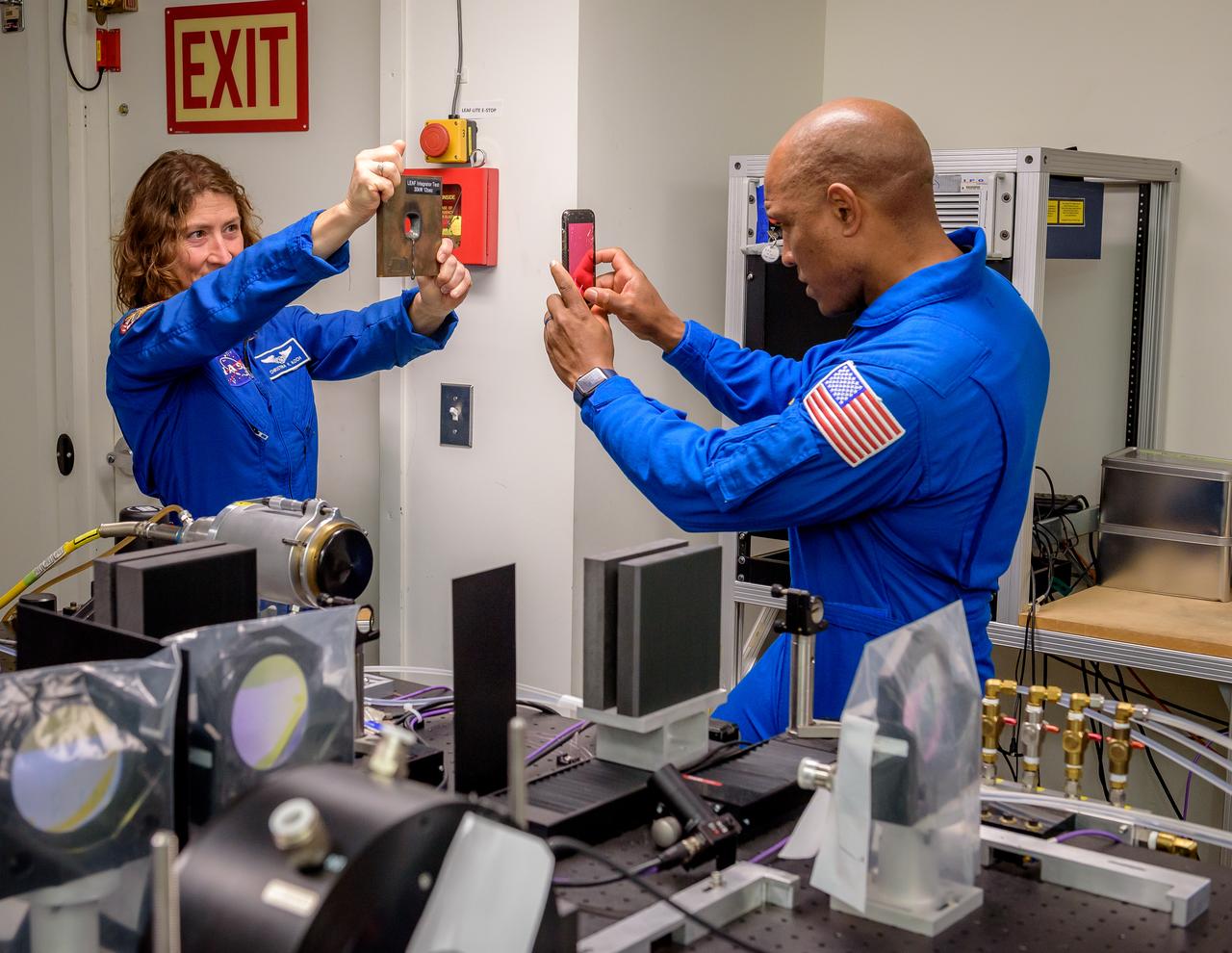
NASA Astronaut Christina Koch, left, holds a test sample for Victor J. Glover to photograph. The sample is a half-inch steel plate with a hole that was drilled by a 12-second burst from a 30kW laser in the Laser Enhanced Arc Jet Facility (LEAF) laboratory, N238.
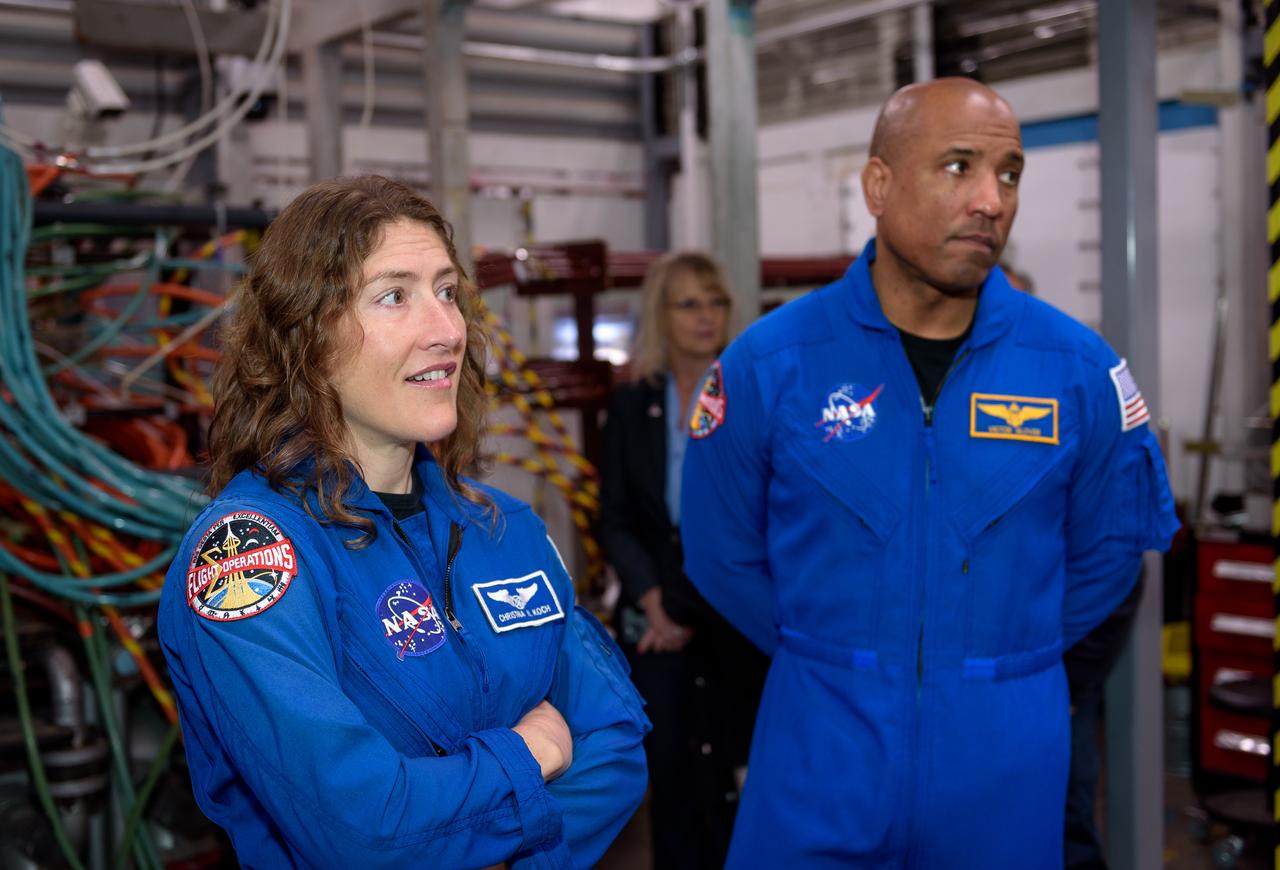
NASA astronauts Victor J. Glover and Christina Koch tour the Ames Arc Jet Complex, N238.
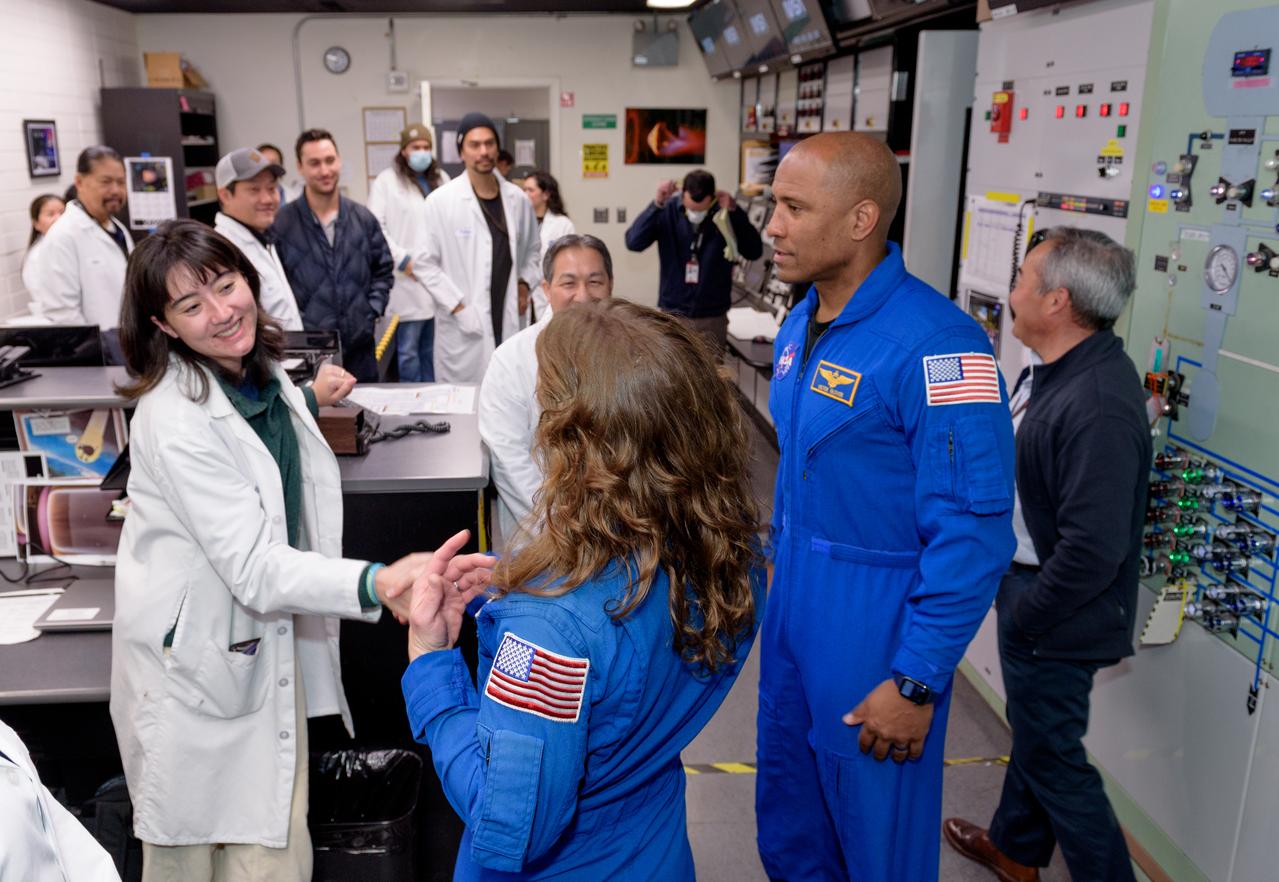
Amelia Kinsella, left, meets NASA astronauts Christina Koch and Victor J. Glover in the Ames Arc Jet control room for the Interaction Heating Facility (IHF), N238, where operators run the Arc Jet and review test data in real time.

NASA astronauts Christina Koch and Victor J. Glover examine a sample of AVCOAT Thermal Protection System (TPS) that protects the Orion spacecraft as it enters Earth’s atmosphere.
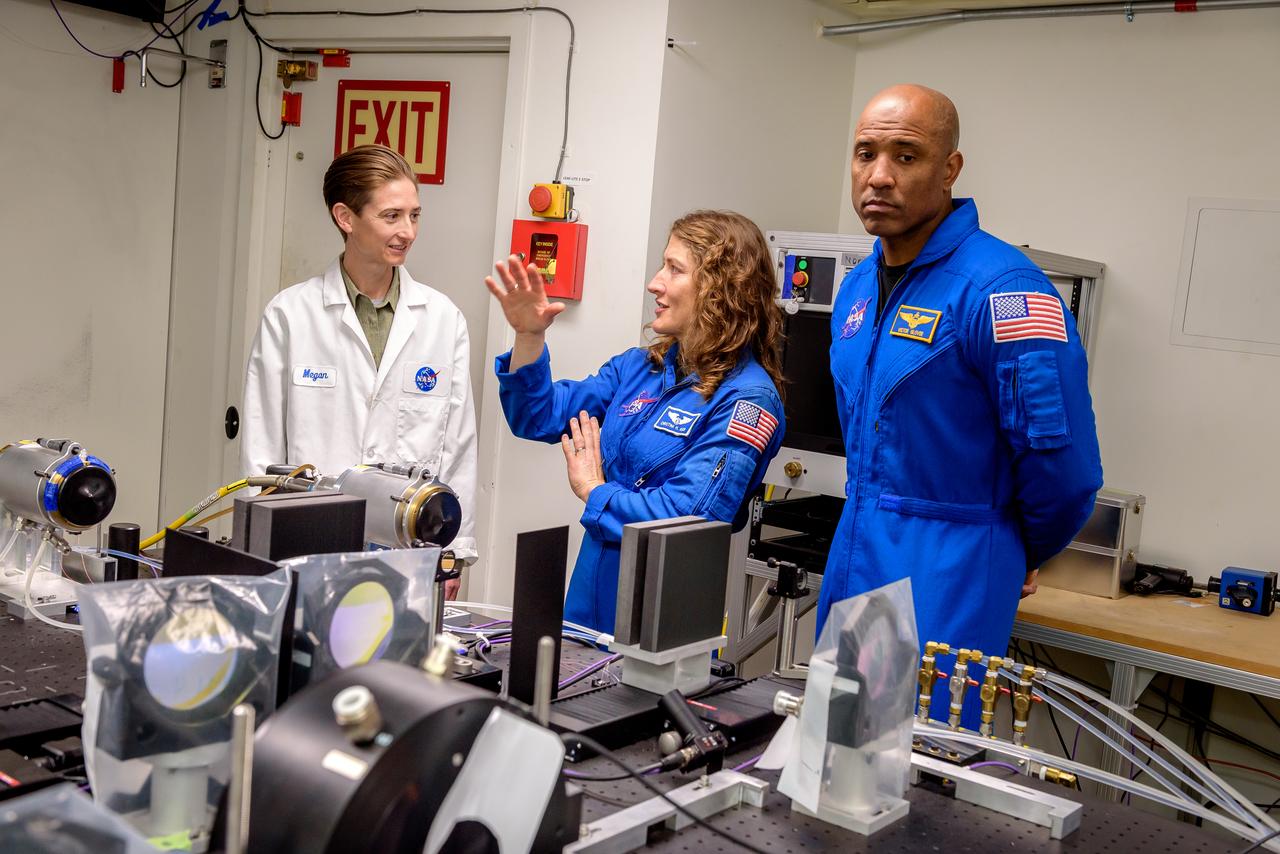
Megan MacDonald, left, leads NASA astronauts Christina Koch and Victor J. Glover, right, on a tour of the Laser Enhanced Arc Jet Facility (LEAF) laboratory, in N238. The LEAF laser augments the hypersonic shock heating experienced by a test sample during an arc jet test and provides improved test simulation quality by supplying an intense source of optical heating while the arc jet flow provides shock-driven convective heating.
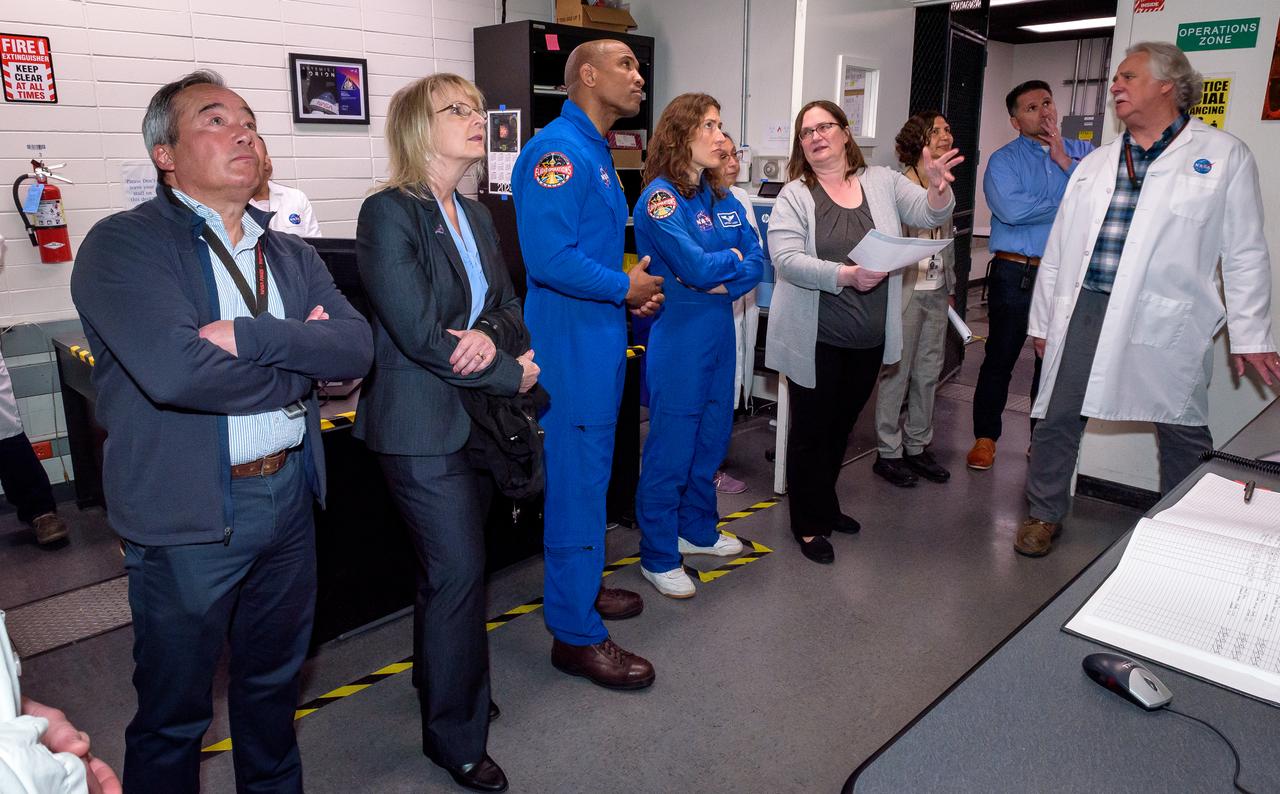
Thermophysics Facilities Branch Chief George Raiche, left, Orion Deputy Program Manager Debbie Korth, NASA astronauts Victor J. Glover, Christina Koch, Kristina A. Skokova, Parul Agrawal, Luis Saucedo, and Scott Eddlemon watch a video presentation in the Ames Arc Jet control room for the Interaction Heating Facility (IHF), N238.
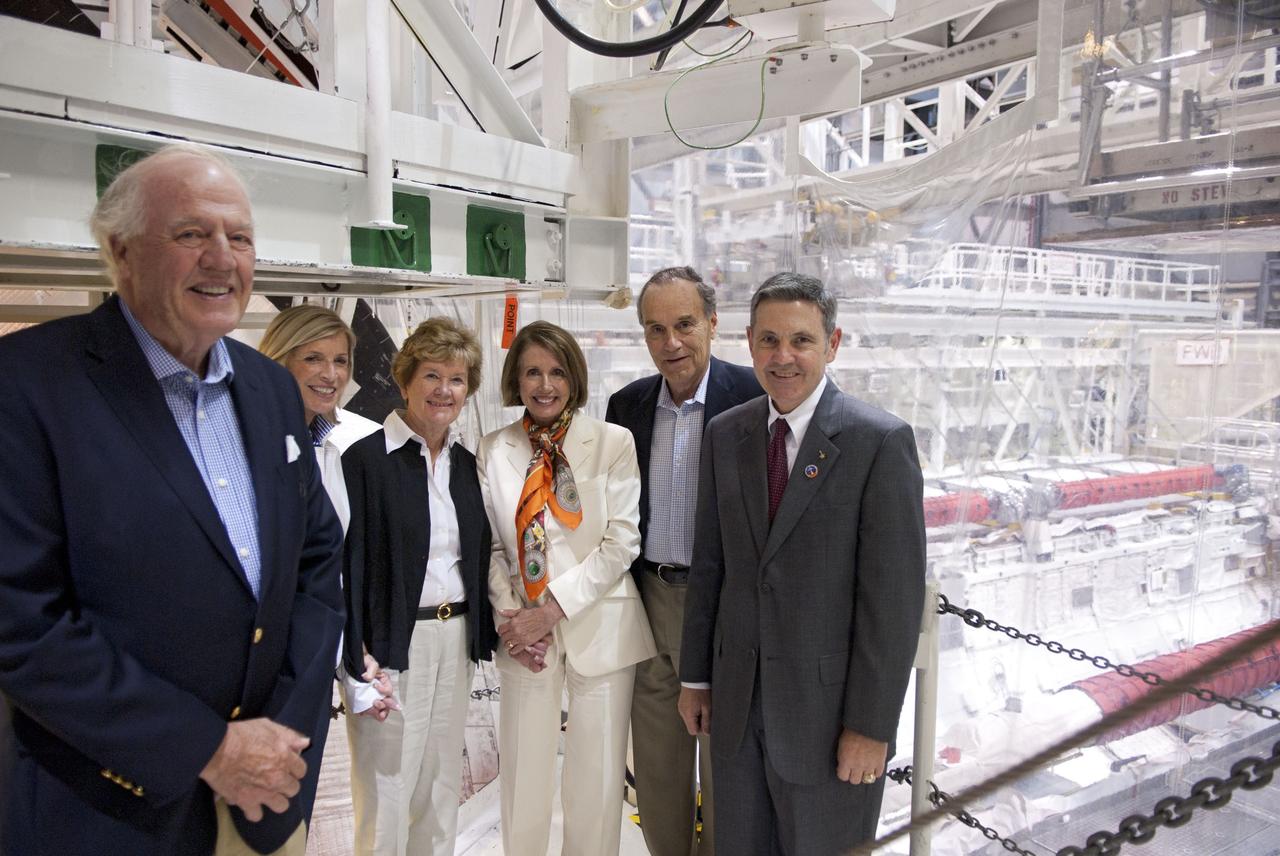
CAPE CANAVERAL, Fla. -- CAPE CANAVERAL, Fla. -- House Of Representatives Democratic Leader Nancy Pelosi, from California's 8th District, fourth from left, and other VIPs pose for a photo with NASA Kennedy Space Center Director Robert Cabana. They are at Florida's space center to witness space shuttle Discovery make history as it lifts off on its final scheduled mission from Launch Pad 39A. While at the center, they attended a presentation in the Operations Support Building II and toured Orbiter Processing Facilities 1 and 2 where shuttles Atlantis and Endeavour are being prepared for their final missions respectively. Discovery and its six-member STS-133 crew will deliver the Permanent Multipurpose Module, packed with supplies and critical spare parts, as well as Robonaut 2, the dexterous humanoid astronaut helper, to the International Space Station. Discovery will make its 39th mission and is scheduled to be retired following STS-133. This will be the 133rd Space Shuttle Program mission and the 35th shuttle voyage to the space station. For more information on the STS-133 mission, visit www.nasa.gov/mission_pages/shuttle/shuttlemissions/sts133/. Photo credit: NASA/Jim Grossmann
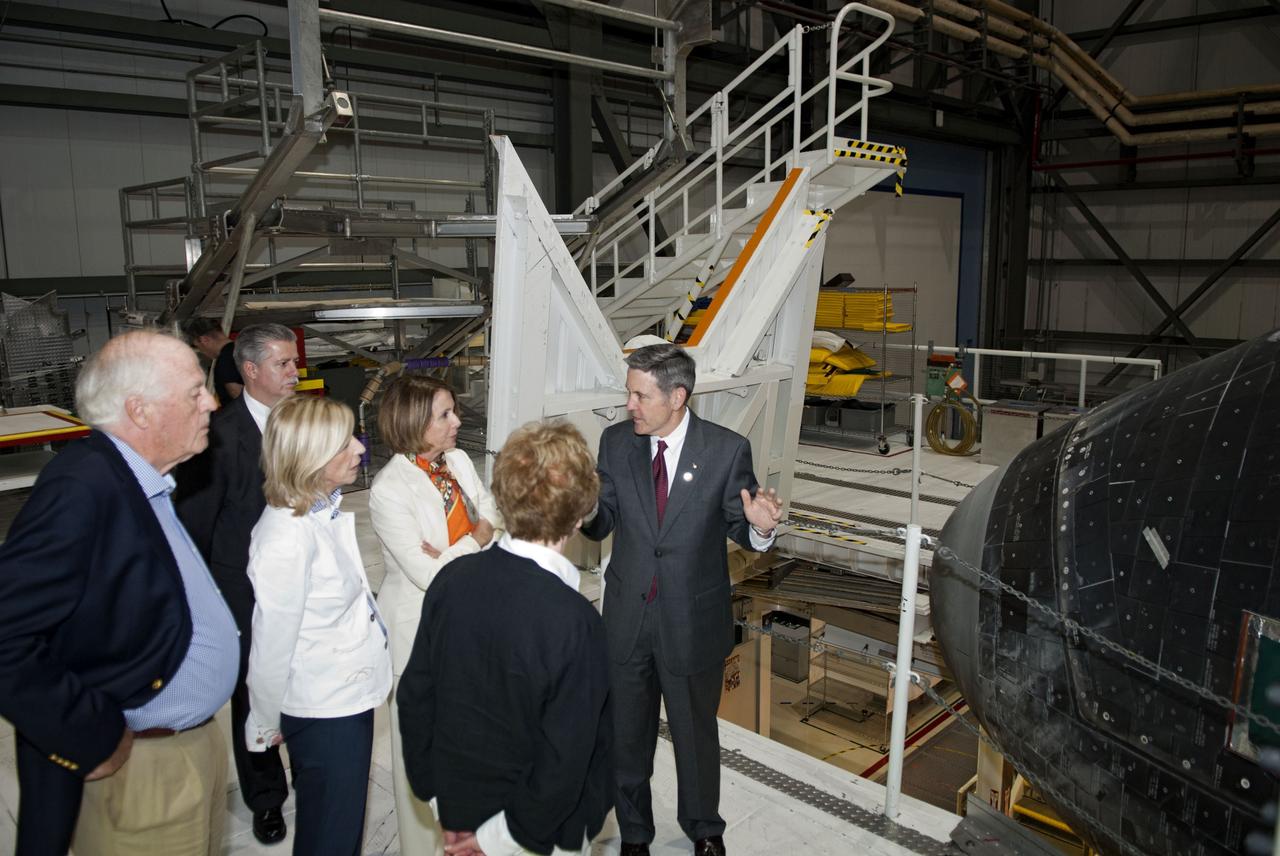
CAPE CANAVERAL, Fla. -- CAPE CANAVERAL, Fla. -- NASA Kennedy Space Center Director Robert Cabana, right, explains the operations taking place at Florida's space center to House Of Representatives Democratic Leader Nancy Pelosi, from California's 8th District, fourth from left, and other VIPs. They are at Florida's space center to witness space shuttle Discovery make history as it lifts off on its final scheduled mission from Launch Pad 39A. While at the center, they attended a presentation in the Operations Support Building II and toured Orbiter Processing Facilities 1 and 2 where shuttles Atlantis and Endeavour are being prepared for their final missions respectively. Discovery and its six-member STS-133 crew will deliver the Permanent Multipurpose Module, packed with supplies and critical spare parts, as well as Robonaut 2, the dexterous humanoid astronaut helper, to the International Space Station. Discovery will make its 39th mission and is scheduled to be retired following STS-133. This will be the 133rd Space Shuttle Program mission and the 35th shuttle voyage to the space station. For more information on the STS-133 mission, visit www.nasa.gov/mission_pages/shuttle/shuttlemissions/sts133/. Photo credit: NASA/Jim Grossmann
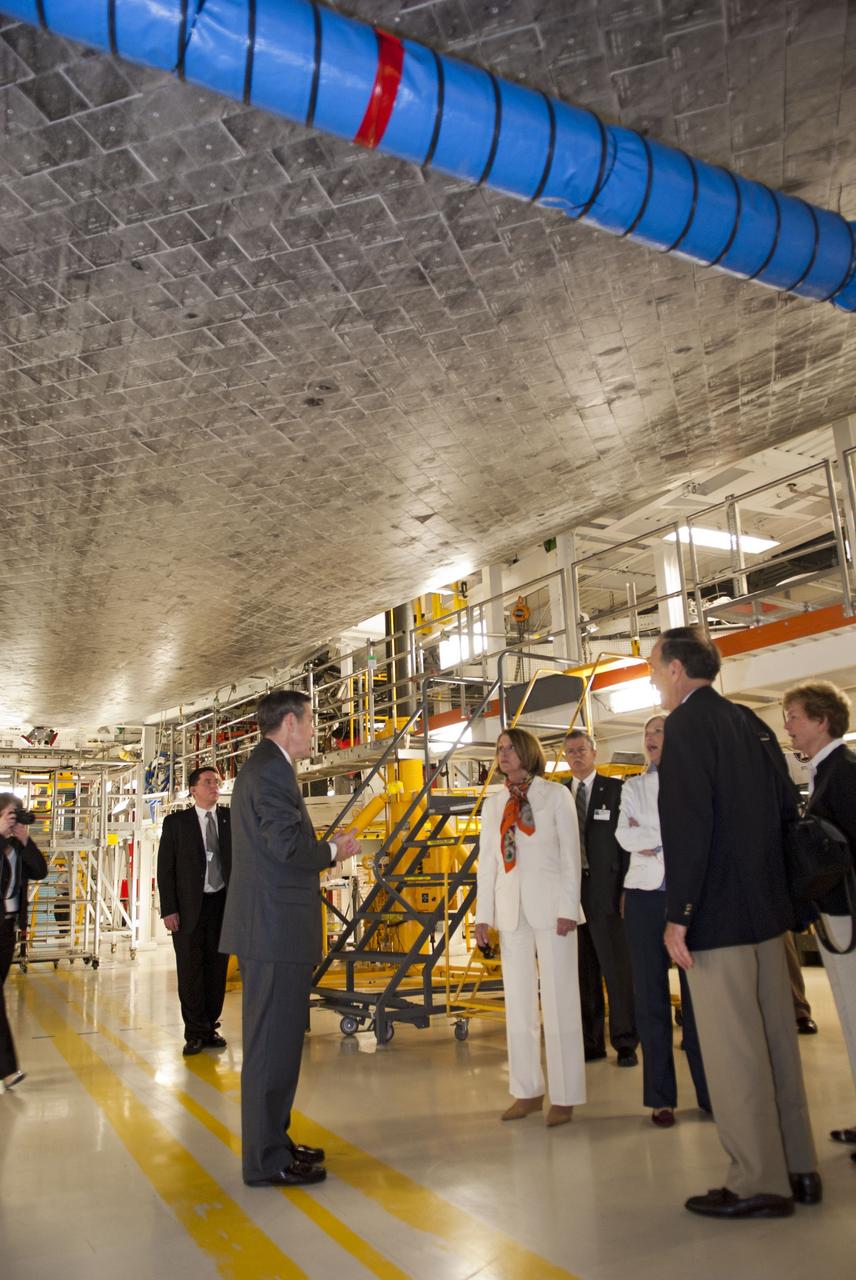
CAPE CANAVERAL, Fla. -- House Of Representatives Democratic Leader Nancy Pelosi, from California's 8th District, and other VIPs are at NASA's Kennedy Space Center in Florida to witness space shuttle Discovery make history as it lifts off on its final scheduled mission from Launch Pad 39A. While at the space center, they attended a presentation in the Operations Support Building II and toured Orbiter Processing Facilities 1 and 2 where shuttles Atlantis and Endeavour are being prepared for their final missions respectively. Discovery and its six-member STS-133 crew will deliver the Permanent Multipurpose Module, packed with supplies and critical spare parts, as well as Robonaut 2, the dexterous humanoid astronaut helper, to the International Space Station. Discovery will make its 39th mission and is scheduled to be retired following STS-133. This will be the 133rd Space Shuttle Program mission and the 35th shuttle voyage to the space station. For more information on the STS-133 mission, visit www.nasa.gov/mission_pages/shuttle/shuttlemissions/sts133/. Photo credit: NASA/Jim Grossmann
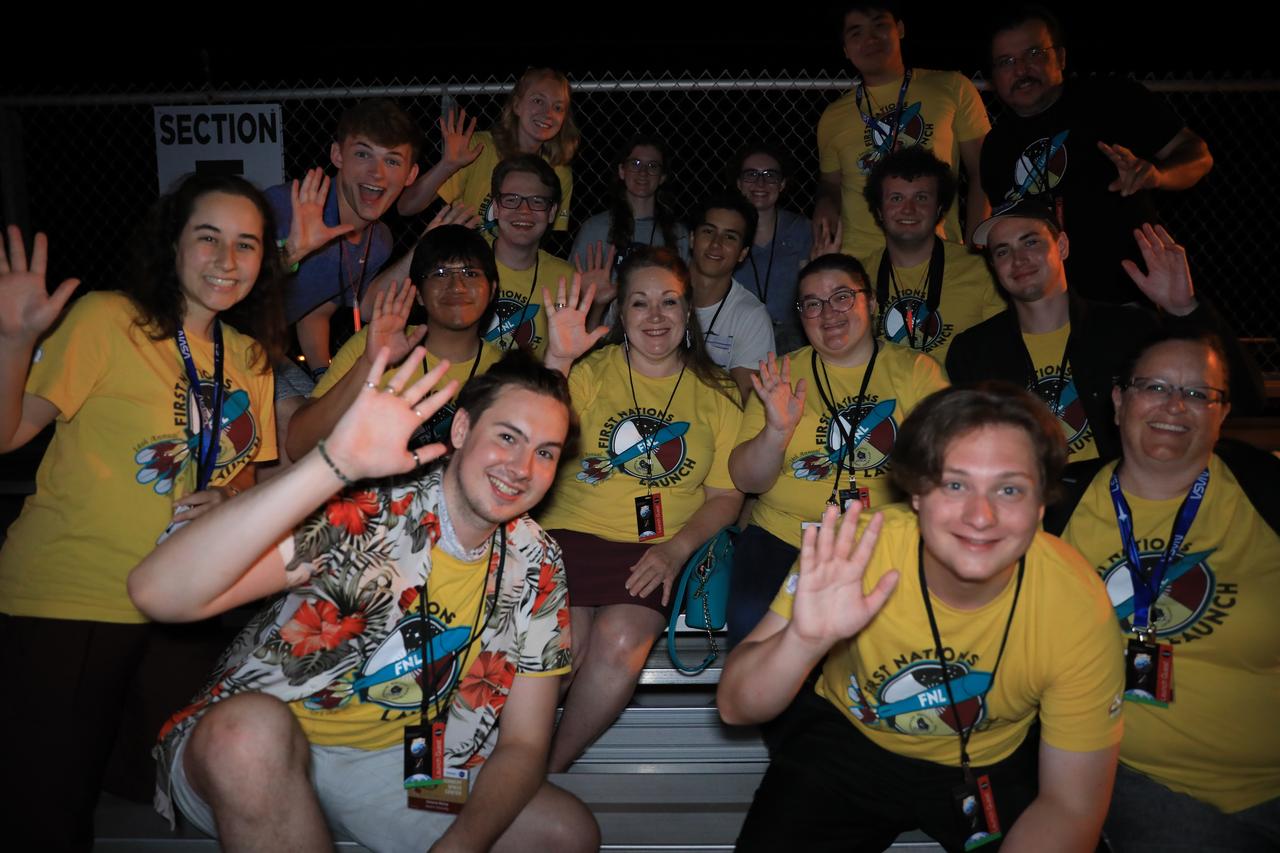
Participants from the 14th First Nations Launch High-Power Rocket Competition watch NASA’s SpaceX Crew-7 launch from the Banana Creek viewing site at the agency’s Kennedy Space Center in Florida on Saturday, Aug. 26, 2023. A SpaceX Falcon 9 rocket carrying NASA astronaut Jasmin Moghbeli, ESA (European Space Agency) astronaut Andreas Mogensen, JAXA (Japan Aerospace Exploration Agency) astronaut Satoshi Furukawa, and Roscosmos cosmonaut Konstantin Borisov launched to the International Space Station at 3:27 a.m. EDT from Kennedy’s Launch Complex 39A. Students and advisors from University of Washington, University of Colorado-Boulder, and an international team from Queens University – this year’s First Nations Launch grand prize teams – traveled to Kennedy for a VIP tour, culminating in viewing the Crew-7 launch. Another highlight included a guided tour of historic Hangar AE, led by James Wood (Osage Nation and Loyal Shawnee), chief engineer of NASA’s Launch Services Program, technical advisor for the Crew-7 launch, and First Nations mentor and judge. One of NASA’s Artemis Student Challenges, the First Nations Launch competition comprises students from tribal colleges and universities, Native American-Serving Nontribal Institutions, and collegiate chapters of the American Indian Science and Engineering Society who design, build, and launch a high-powered rocket from a launch site in Kansasville, Wisconsin. The competition is facilitated by NASA’s Wisconsin Space Grant Consortium and managed by the agency’s Office of STEM Engagement at Kennedy.
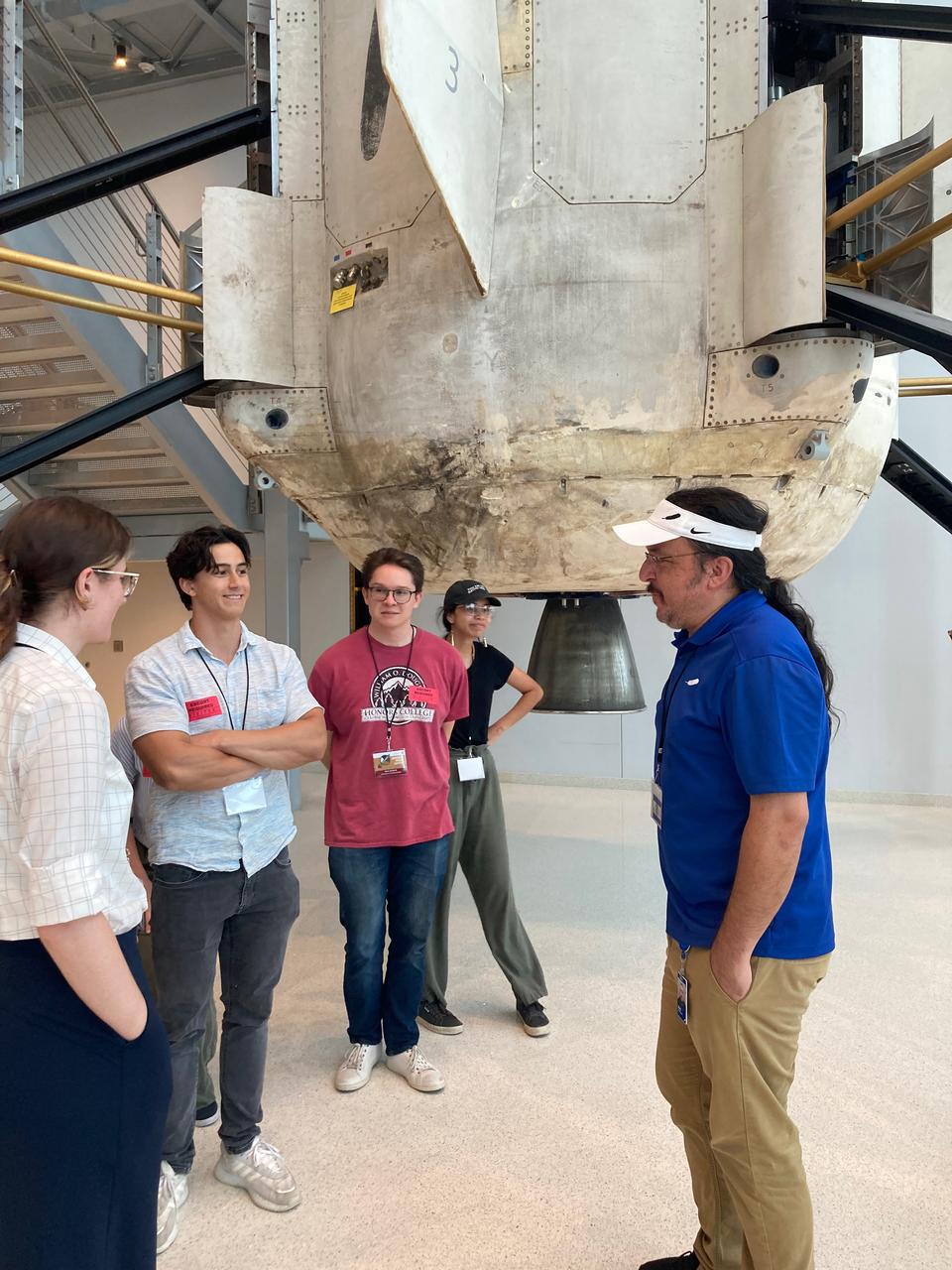
Participants from the 14th First Nations Launch High-Power Rocket Competition watch NASA’s SpaceX Crew-7 launch from the Banana Creek viewing site at the agency’s Kennedy Space Center in Florida on Saturday, Aug. 26, 2023. A SpaceX Falcon 9 rocket carrying NASA astronaut Jasmin Moghbeli, ESA (European Space Agency) astronaut Andreas Mogensen, JAXA (Japan Aerospace Exploration Agency) astronaut Satoshi Furukawa, and Roscosmos cosmonaut Konstantin Borisov launched to the International Space Station at 3:27 a.m. EDT from Kennedy’s Launch Complex 39A. Students and advisors from University of Washington, University of Colorado-Boulder, and an international team from Queens University – this year’s First Nations Launch grand prize teams – traveled to Kennedy for a VIP tour, culminating in viewing the Crew-7 launch. Another highlight included a guided tour of historic Hangar AE, led by James Wood (Osage Nation and Loyal Shawnee), chief engineer of NASA’s Launch Services Program, technical advisor for the Crew-7 launch, and First Nations mentor and judge. One of NASA’s Artemis Student Challenges, the First Nations Launch competition comprises students from tribal colleges and universities, Native American-Serving Nontribal Institutions, and collegiate chapters of the American Indian Science and Engineering Society who design, build, and launch a high-powered rocket from a launch site in Kansasville, Wisconsin. The competition is facilitated by NASA’s Wisconsin Space Grant Consortium and managed by the agency’s Office of STEM Engagement at Kennedy.
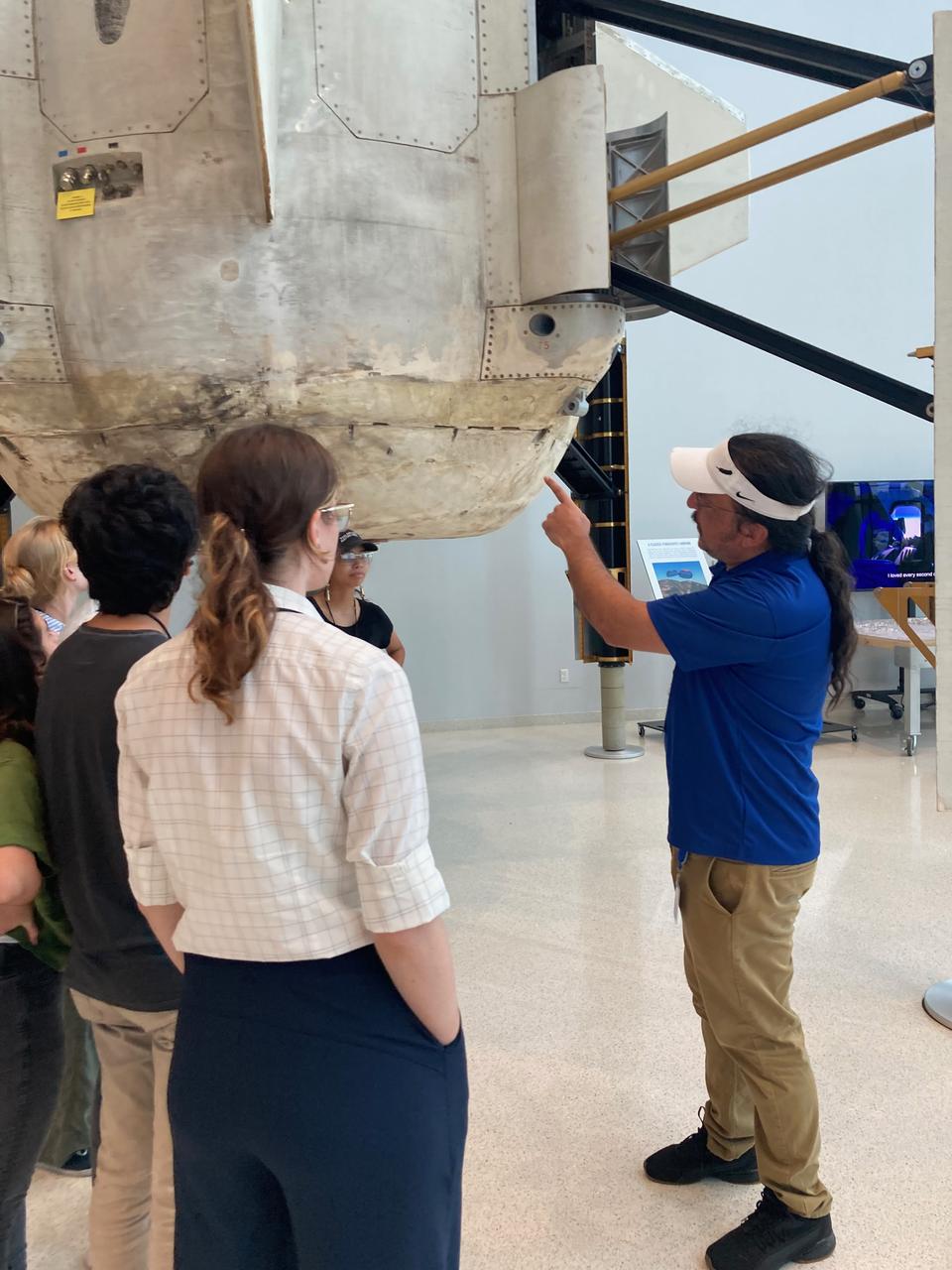
Participants from the 14th First Nations Launch High-Power Rocket Competition watch NASA’s SpaceX Crew-7 launch from the Banana Creek viewing site at the agency’s Kennedy Space Center in Florida on Saturday, Aug. 26, 2023. A SpaceX Falcon 9 rocket carrying NASA astronaut Jasmin Moghbeli, ESA (European Space Agency) astronaut Andreas Mogensen, JAXA (Japan Aerospace Exploration Agency) astronaut Satoshi Furukawa, and Roscosmos cosmonaut Konstantin Borisov launched to the International Space Station at 3:27 a.m. EDT from Kennedy’s Launch Complex 39A. Students and advisors from University of Washington, University of Colorado-Boulder, and an international team from Queens University – this year’s First Nations Launch grand prize teams – traveled to Kennedy for a VIP tour, culminating in viewing the Crew-7 launch. Another highlight included a guided tour of historic Hangar AE, led by James Wood (Osage Nation and Loyal Shawnee), chief engineer of NASA’s Launch Services Program, technical advisor for the Crew-7 launch, and First Nations mentor and judge. One of NASA’s Artemis Student Challenges, the First Nations Launch competition comprises students from tribal colleges and universities, Native American-Serving Nontribal Institutions, and collegiate chapters of the American Indian Science and Engineering Society who design, build, and launch a high-powered rocket from a launch site in Kansasville, Wisconsin. The competition is facilitated by NASA’s Wisconsin Space Grant Consortium and managed by the agency’s Office of STEM Engagement at Kennedy.
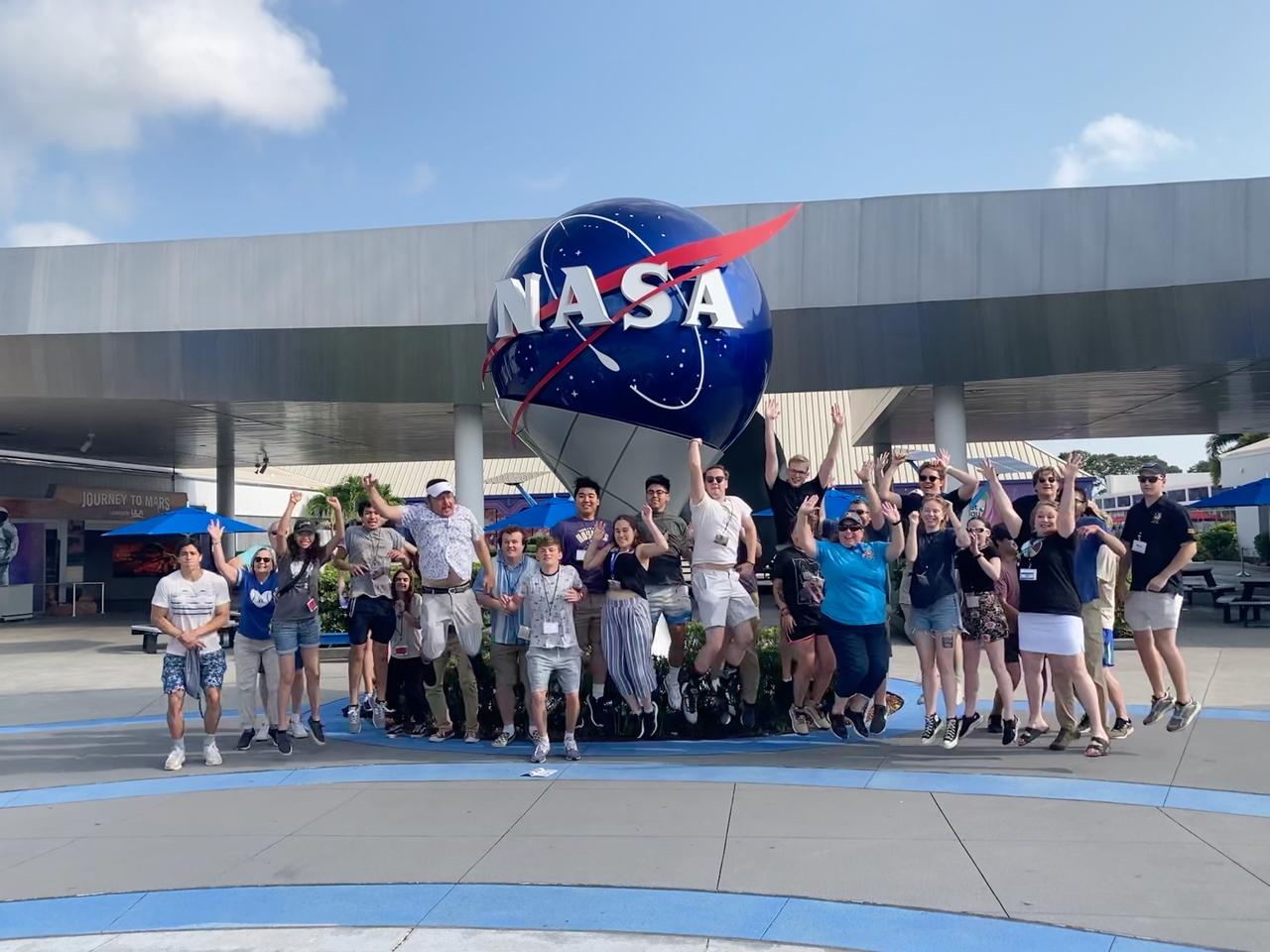
Participants from the 14th First Nations Launch High-Power Rocket Competition watch NASA’s SpaceX Crew-7 launch from the Banana Creek viewing site at the agency’s Kennedy Space Center in Florida on Saturday, Aug. 26, 2023. A SpaceX Falcon 9 rocket carrying NASA astronaut Jasmin Moghbeli, ESA (European Space Agency) astronaut Andreas Mogensen, JAXA (Japan Aerospace Exploration Agency) astronaut Satoshi Furukawa, and Roscosmos cosmonaut Konstantin Borisov launched to the International Space Station at 3:27 a.m. EDT from Kennedy’s Launch Complex 39A. Students and advisors from University of Washington, University of Colorado-Boulder, and an international team from Queens University – this year’s First Nations Launch grand prize teams – traveled to Kennedy for a VIP tour, culminating in viewing the Crew-7 launch. Another highlight included a guided tour of historic Hangar AE, led by James Wood (Osage Nation and Loyal Shawnee), chief engineer of NASA’s Launch Services Program, technical advisor for the Crew-7 launch, and First Nations mentor and judge. One of NASA’s Artemis Student Challenges, the First Nations Launch competition comprises students from tribal colleges and universities, Native American-Serving Nontribal Institutions, and collegiate chapters of the American Indian Science and Engineering Society who design, build, and launch a high-powered rocket from a launch site in Kansasville, Wisconsin. The competition is facilitated by NASA’s Wisconsin Space Grant Consortium and managed by the agency’s Office of STEM Engagement at Kennedy.
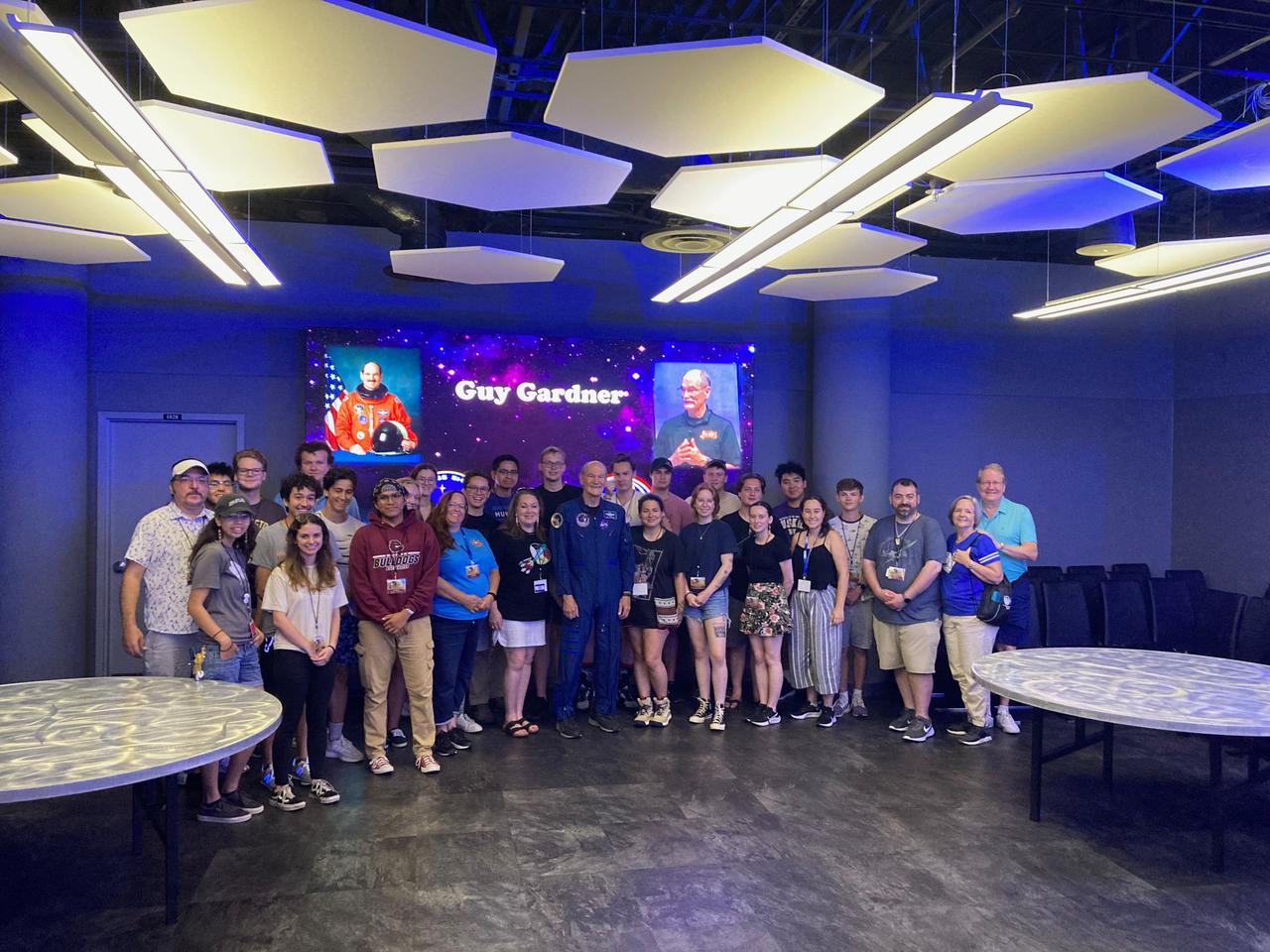
Participants from the 14th First Nations Launch High-Power Rocket Competition watch NASA’s SpaceX Crew-7 launch from the Banana Creek viewing site at the agency’s Kennedy Space Center in Florida on Saturday, Aug. 26, 2023. A SpaceX Falcon 9 rocket carrying NASA astronaut Jasmin Moghbeli, ESA (European Space Agency) astronaut Andreas Mogensen, JAXA (Japan Aerospace Exploration Agency) astronaut Satoshi Furukawa, and Roscosmos cosmonaut Konstantin Borisov launched to the International Space Station at 3:27 a.m. EDT from Kennedy’s Launch Complex 39A. Students and advisors from University of Washington, University of Colorado-Boulder, and an international team from Queens University – this year’s First Nations Launch grand prize teams – traveled to Kennedy for a VIP tour, culminating in viewing the Crew-7 launch. Another highlight included a guided tour of historic Hangar AE, led by James Wood (Osage Nation and Loyal Shawnee), chief engineer of NASA’s Launch Services Program, technical advisor for the Crew-7 launch, and First Nations mentor and judge. One of NASA’s Artemis Student Challenges, the First Nations Launch competition comprises students from tribal colleges and universities, Native American-Serving Nontribal Institutions, and collegiate chapters of the American Indian Science and Engineering Society who design, build, and launch a high-powered rocket from a launch site in Kansasville, Wisconsin. The competition is facilitated by NASA’s Wisconsin Space Grant Consortium and managed by the agency’s Office of STEM Engagement at Kennedy.
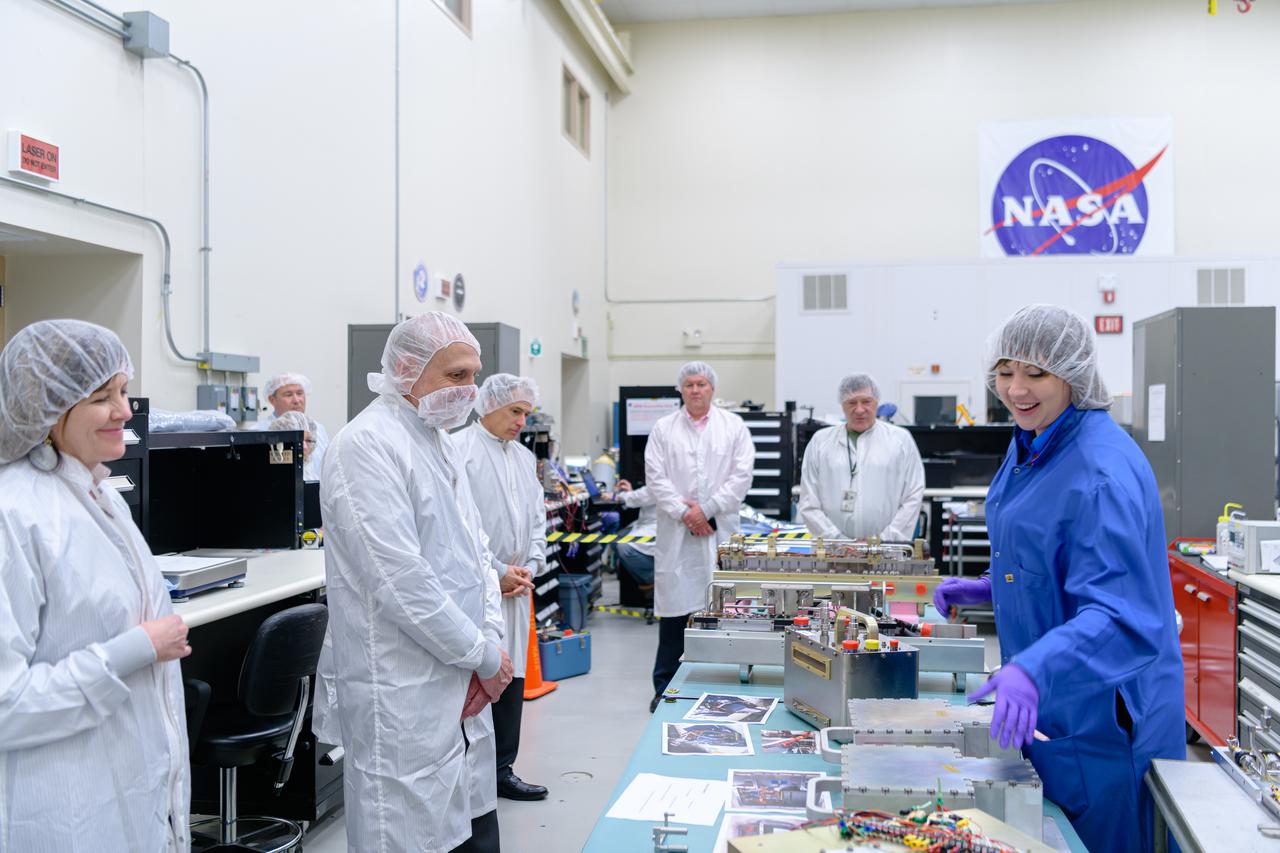
Visit to GRC Lewis Field by the Associate Administrator and Deputy Associate Administrator