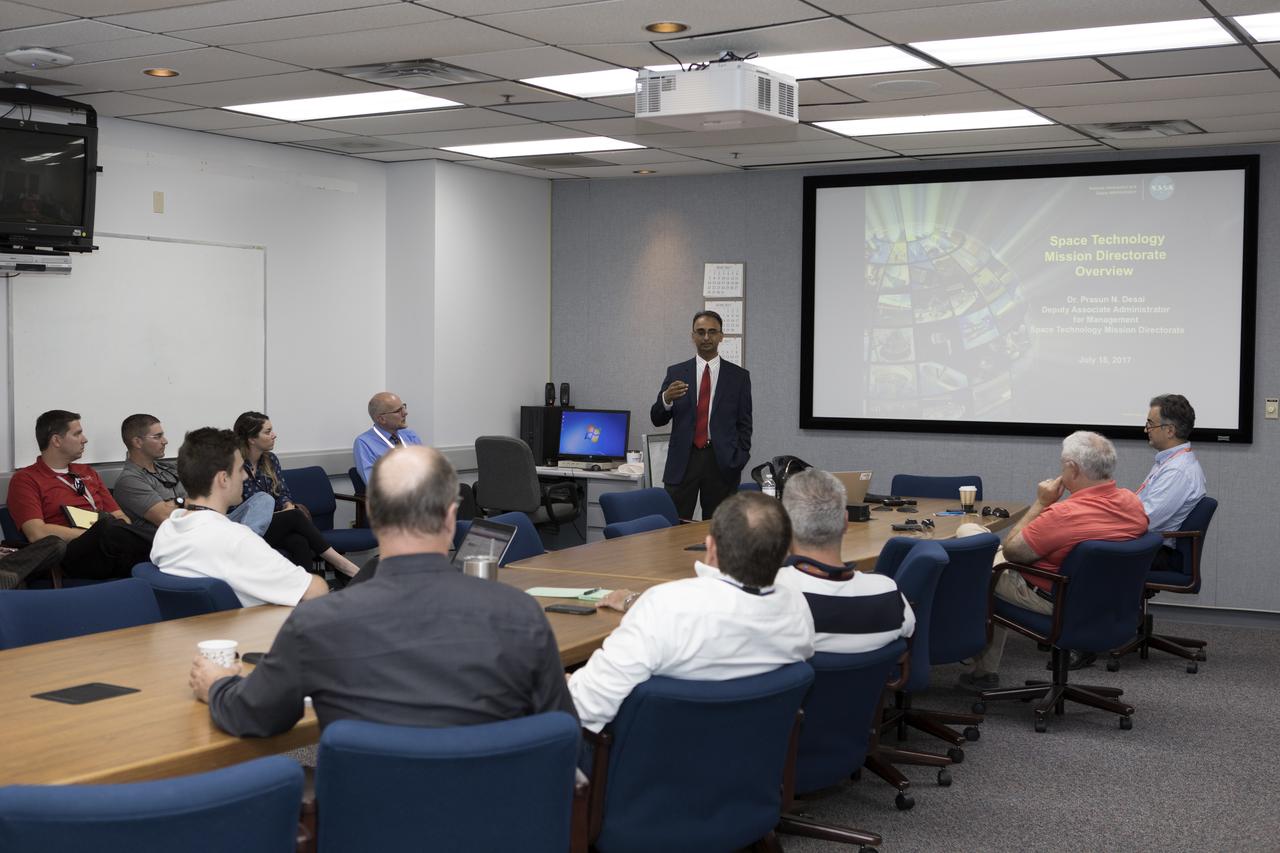
Prasun Desai, deputy associate administrator for Management in NASA's Space Technology Mission Directorate, speaks to Exploration Research and Technology managers in the Space Station Processing Facility at the Kennedy Space Center in Florida.
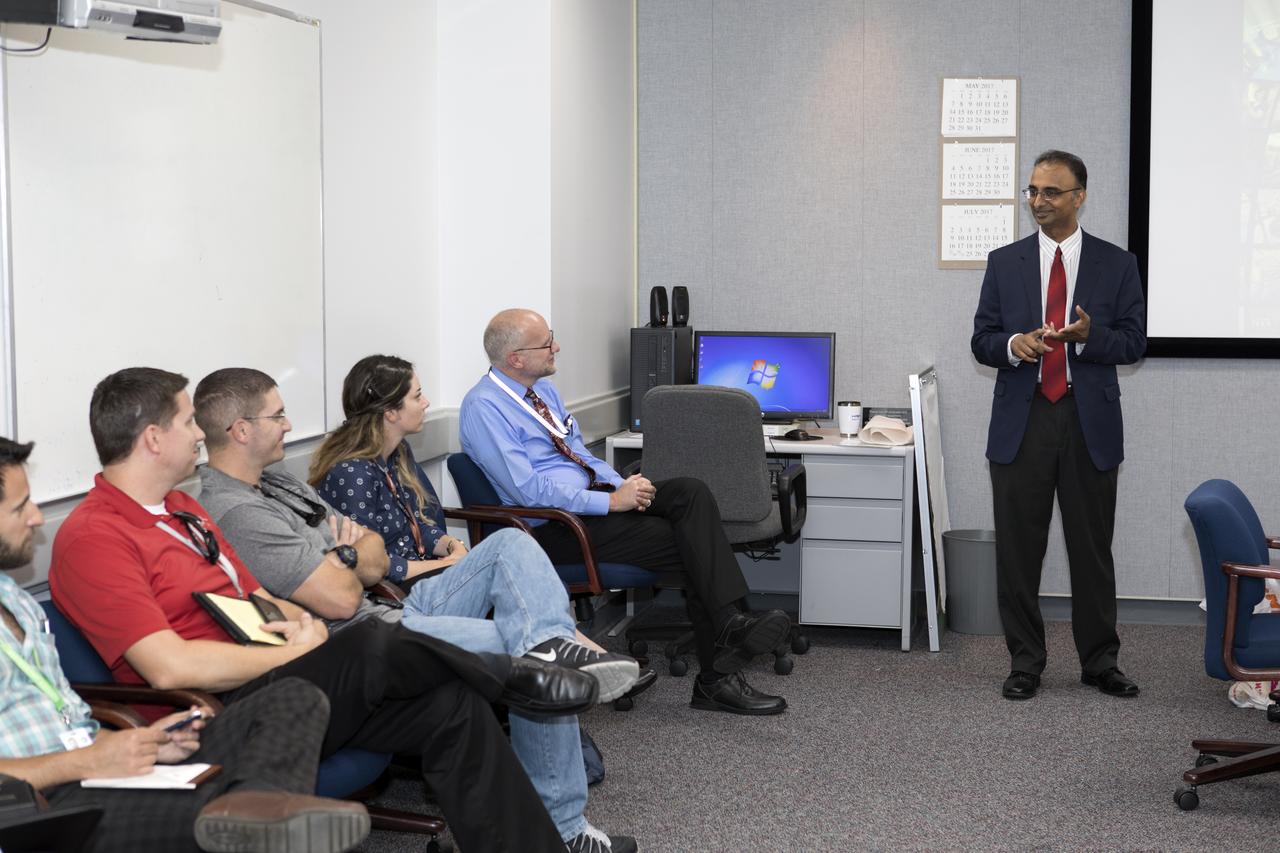
Prasun Desai, deputy associate administrator for Management in NASA's Space Technology Mission Directorate, speaks to Exploration Research and Technology managers in the Space Station Processing Facility at the Kennedy Space Center in Florida.
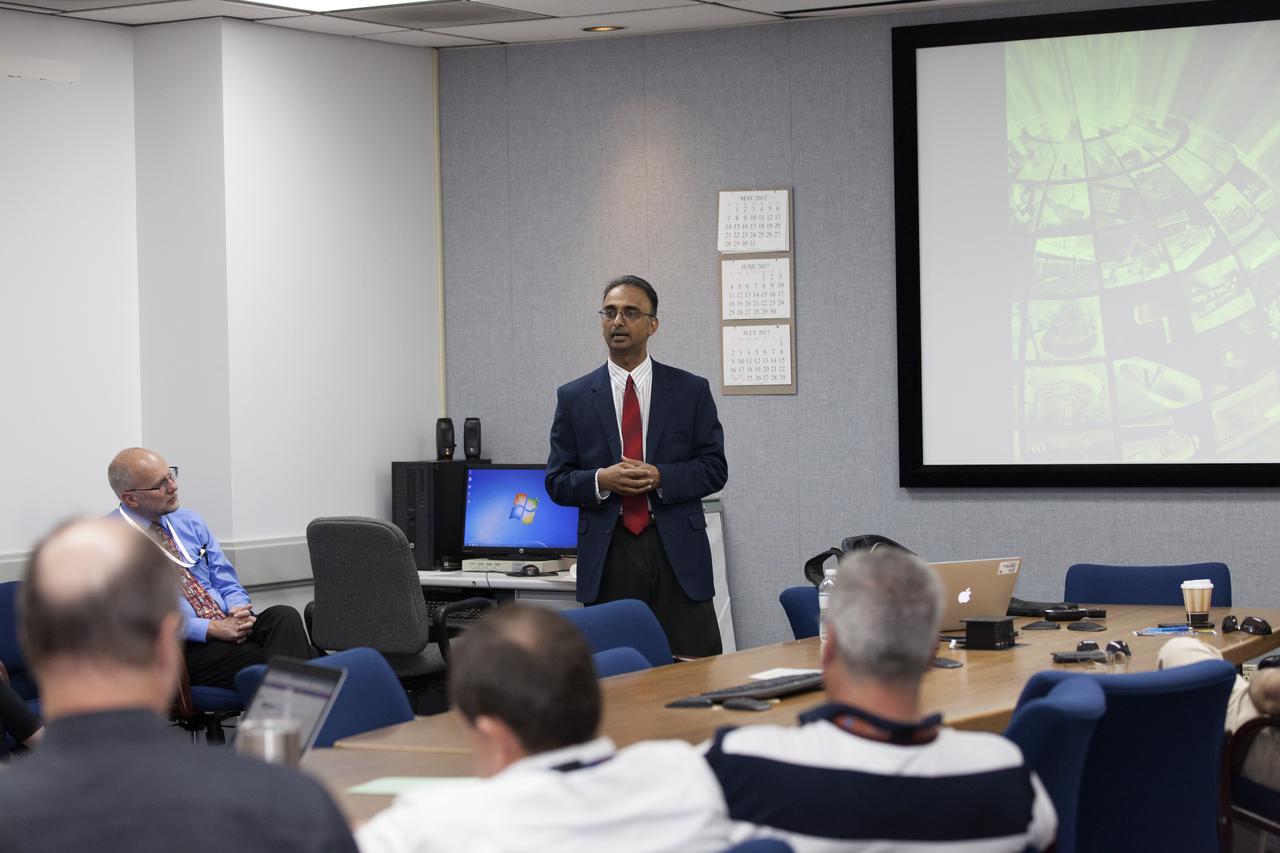
Prasun Desai, deputy associate administrator for Management in NASA's Space Technology Mission Directorate, speaks to Exploration Research and Technology managers in the Space Station Processing Facility at the Kennedy Space Center in Florida.
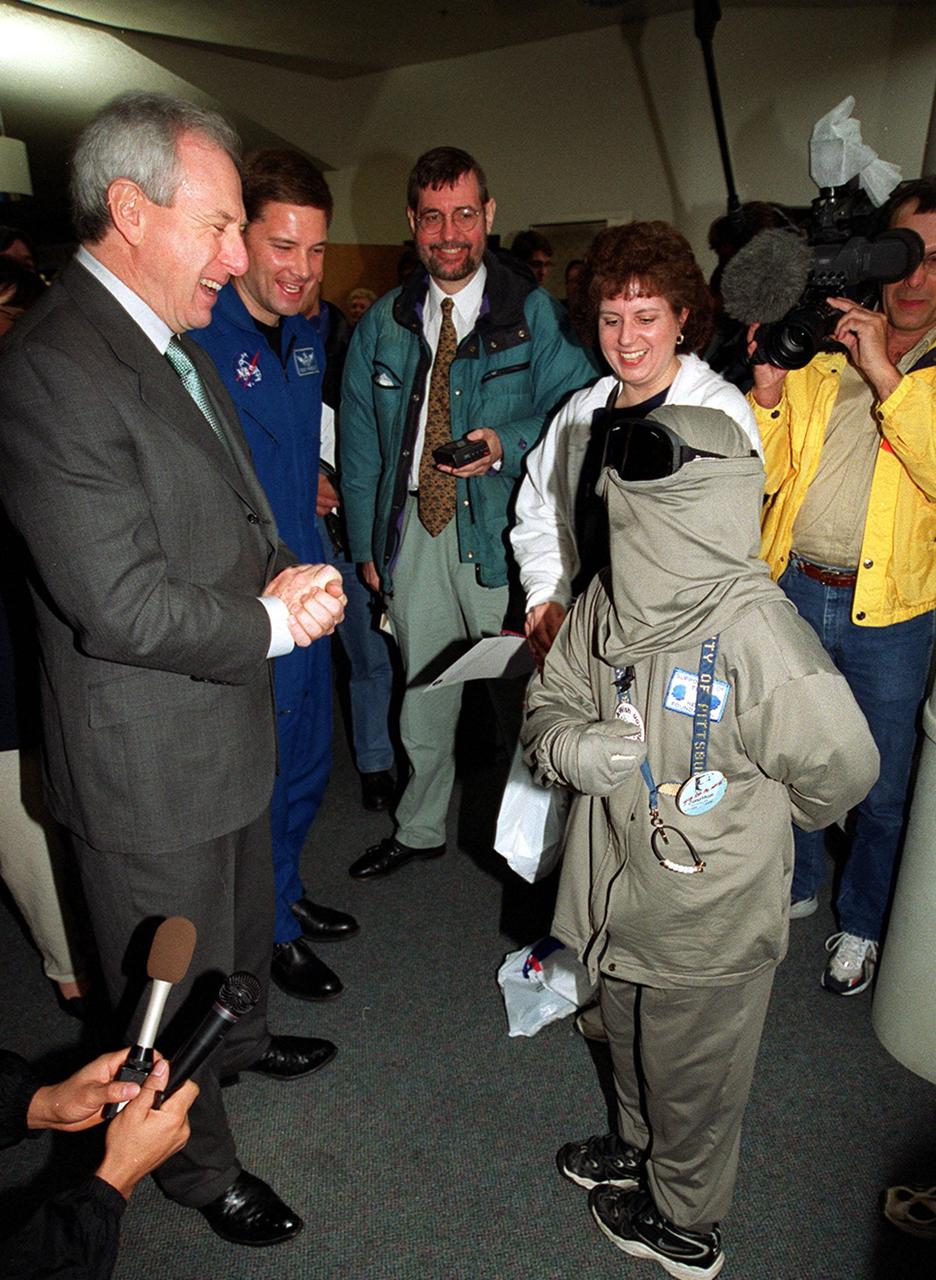
NASA Administrator Dan Goldin (left) shares a laugh with VIP 10-year-old Jonathan Pierce (right), who is garbed in a protective cooling suit designed by NASA. Behind Goldin is astronaut Doug Wheelock; behind Jonathan is his mother, Penny. Jonathan suffers from erythropoietic protoporphyria, a rare condition that makes his body unable to withstand ultraviolet rays. The suit allows him to be outside during the day, which would otherwise be impossible. Jonathan's trip was funded by the Make-A-Wish Foundation and included a visit to Disney World. He and his family were among a dozen VIPs at KSC to view the launch of STS-99
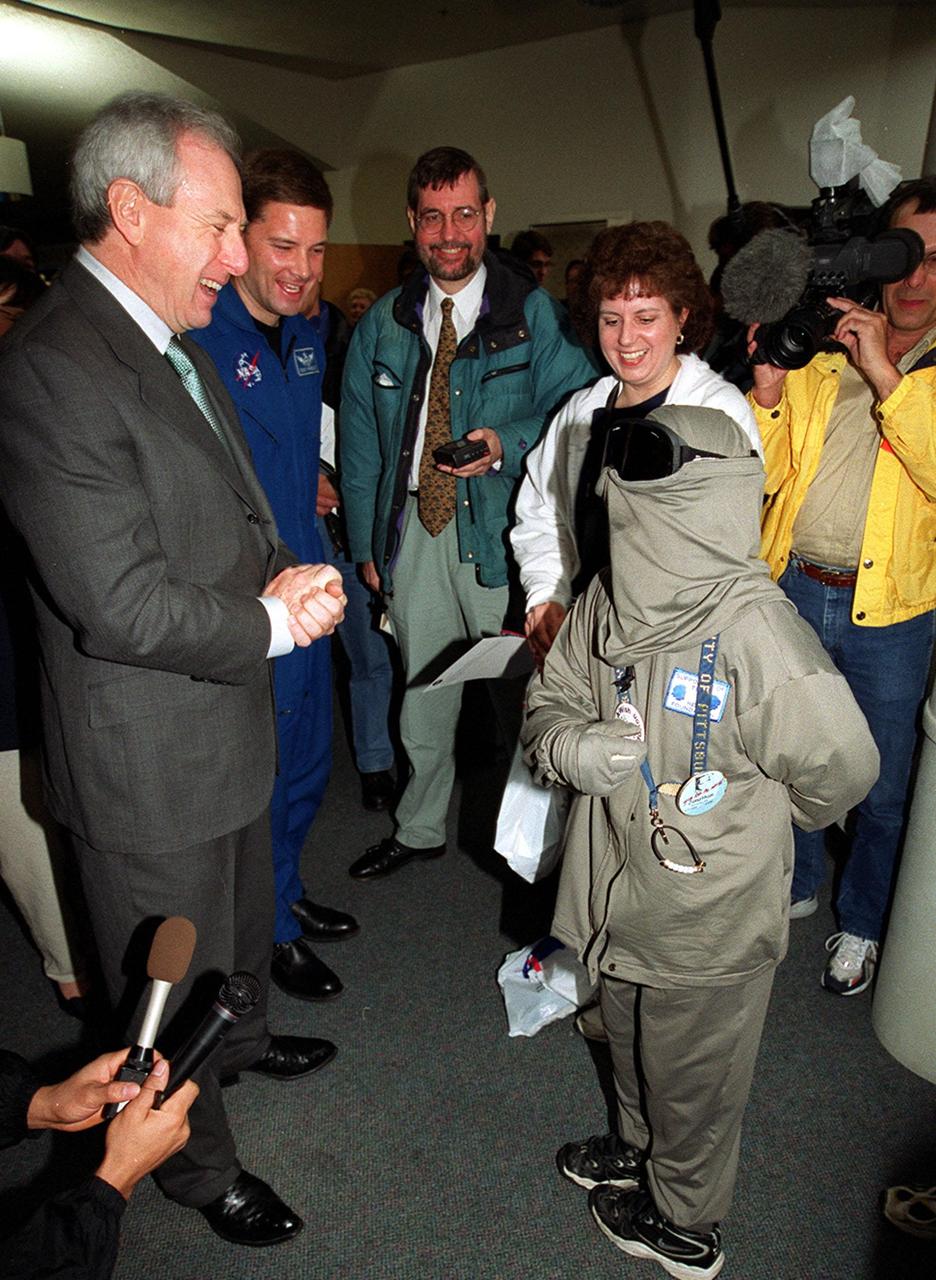
NASA Administrator Dan Goldin (left) shares a laugh with VIP 10-year-old Jonathan Pierce (right), who is garbed in a protective cooling suit designed by NASA. Behind Goldin is astronaut Doug Wheelock; behind Jonathan is his mother, Penny. Jonathan suffers from erythropoietic protoporphyria, a rare condition that makes his body unable to withstand ultraviolet rays. The suit allows him to be outside during the day, which would otherwise be impossible. Jonathan's trip was funded by the Make-A-Wish Foundation and included a visit to Disney World. He and his family were among a dozen VIPs at KSC to view the launch of STS-99
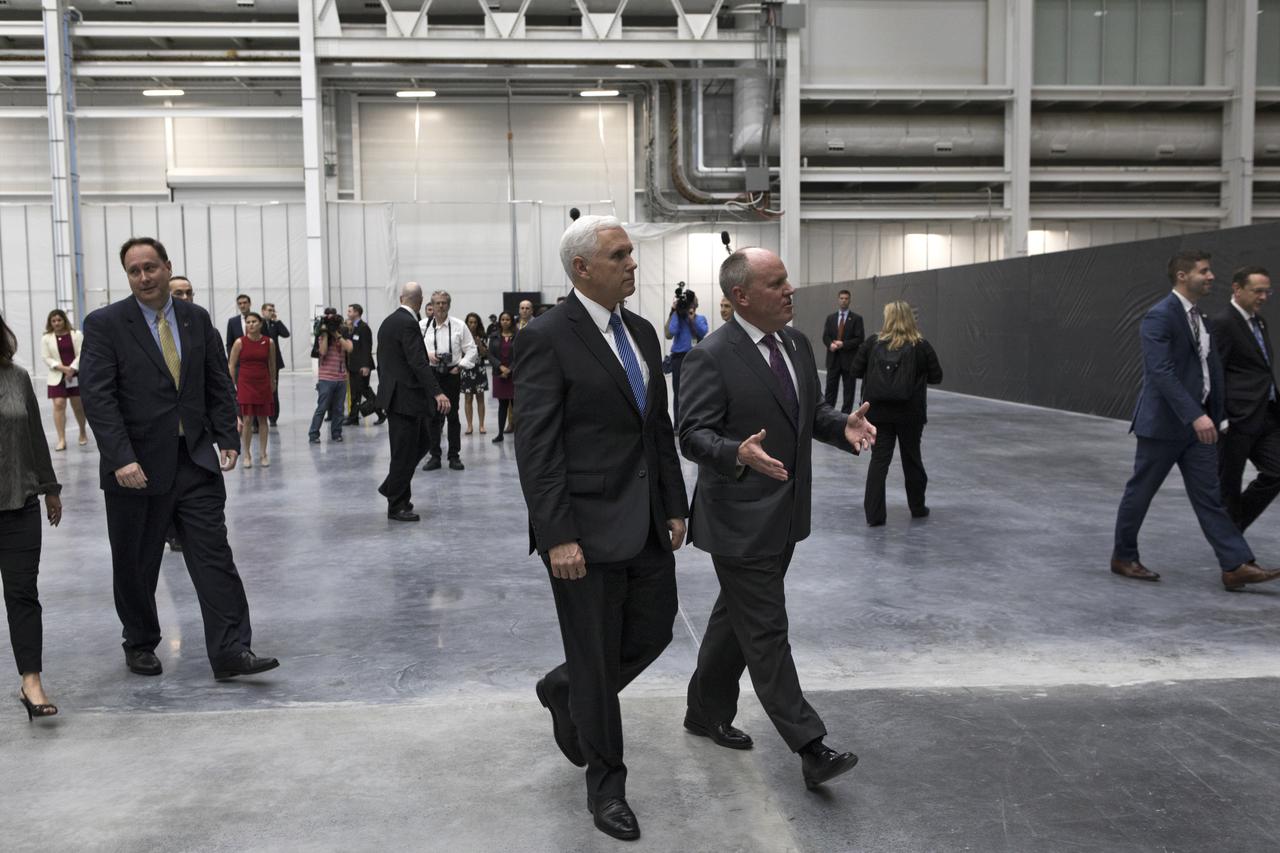
Vice President Mike Pence, at left, tours the Blue Origin Manufacturing Facility near NASA's Kennedy Space Center in Florida, Feb. 20, 2018, with the company's CEO Robert Smith. Vice President Pence viewed the flown New Shepard Booster and Crew Capsule. The booster was the first launch vehicle with a successful vertical takeoff and vertical landing to demonstrate reusability. During his visit, Pence will chair a meeting of the National Space Council on Feb. 21, 2018 in the high bay of NASA Kennedy Space Center's Space Station Processing Facility. The council's role is to advise the president regarding national space policy and strategy, and review the nation's long-range goals for space activities.
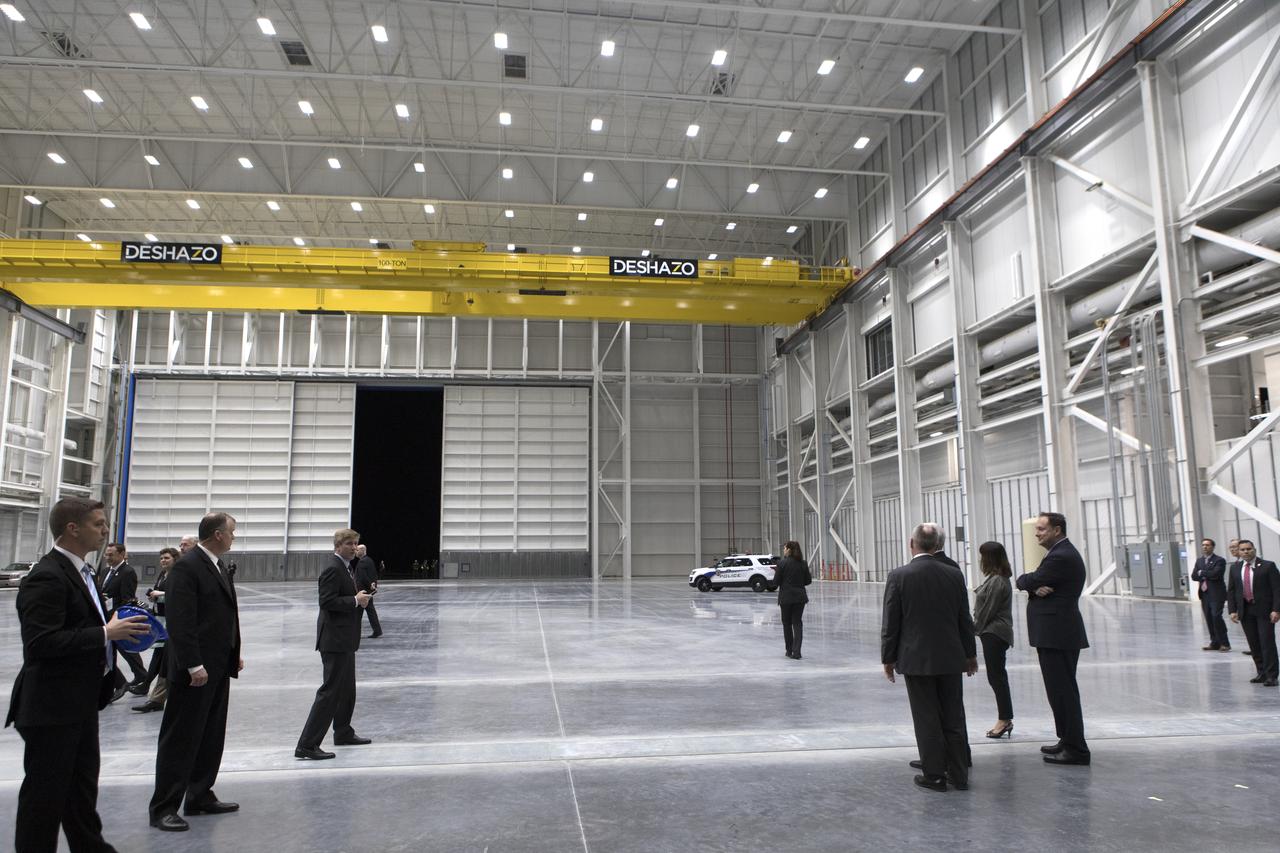
Vice President Mike Pence, hidden at right, tours the Blue Origin Manufacturing Facility near NASA's Kennedy Space Center in Florida, on Feb. 20, 2018. At far right is the vice president's wife, Karen Pence. Behind her at right are Blue Origin CEO Robert Smith, and acting NASA Administrator Robert Lightfoot. Vice President Pence viewed the flown New Shepard Booster and Crew Capsule. The booster was the first launch vehicle with a successful vertical takeoff and vertical landing to demonstrate reusability. During his visit, Pence will chair a meeting of the National Space Council on Feb. 21, 2018 in the high bay of NASA Kennedy Space Center's Space Station Processing Facility. The council's role is to advise the president regarding national space policy and strategy, and review the nation's long-range goals for space activities.
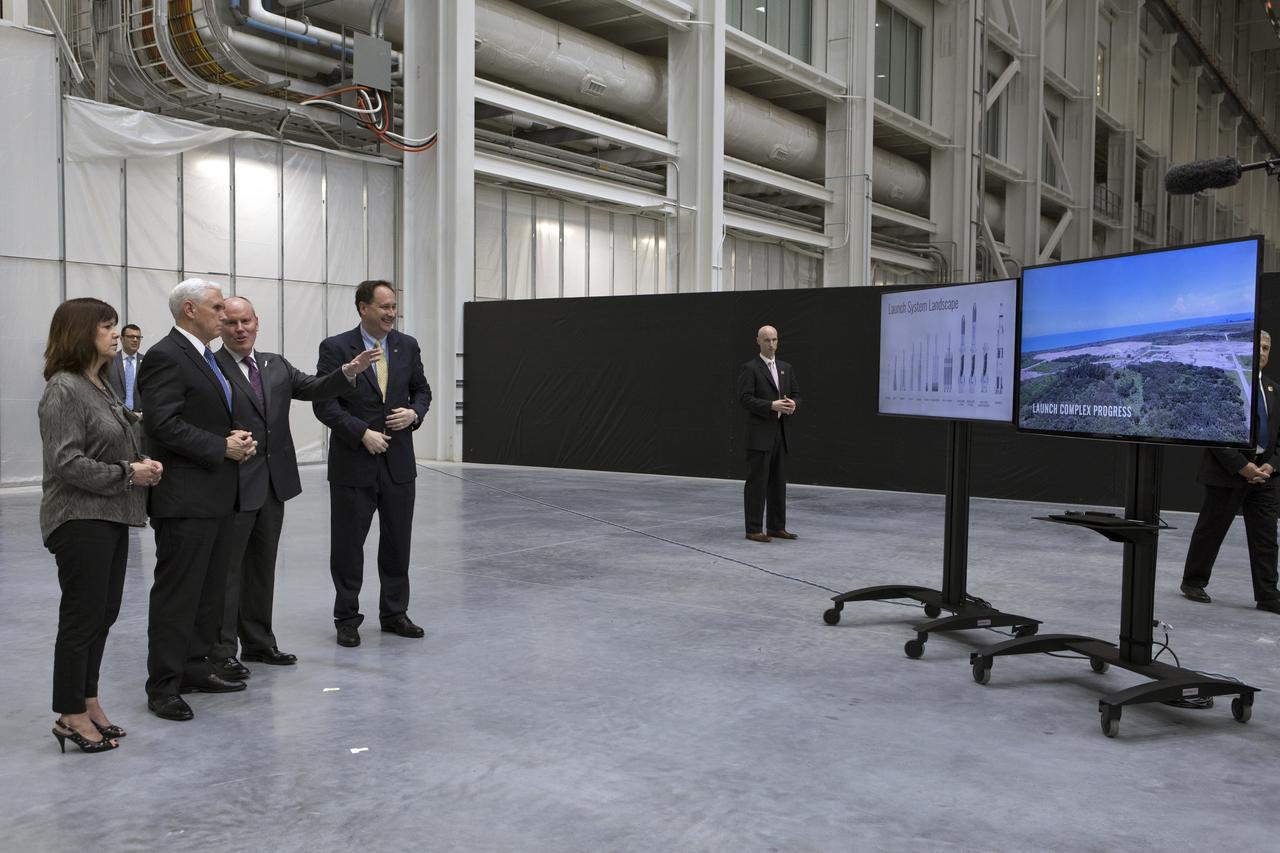
Vice President Mike Pence, second from left, tours the Blue Origin Manufacturing Facility near NASA's Kennedy Space Center in Florida, on Feb. 20, 2018. At left is the vice president's wife, Karen Pence. To his right are Blue Origin CEO Robert Smith, and acting NASA Administrator Robert Lightfoot. Vice President Pence viewed the flown New Shepard Booster and Crew Capsule. The booster was the first launch vehicle with a successful vertical takeoff and vertical landing to demonstrate reusability. During his visit, Pence will chair a meeting of the National Space Council on Feb. 21, 2018 in the high bay of NASA Kennedy Space Center's Space Station Processing Facility. The council's role is to advise the president regarding national space policy and strategy, and review the nation's long-range goals for space activities.
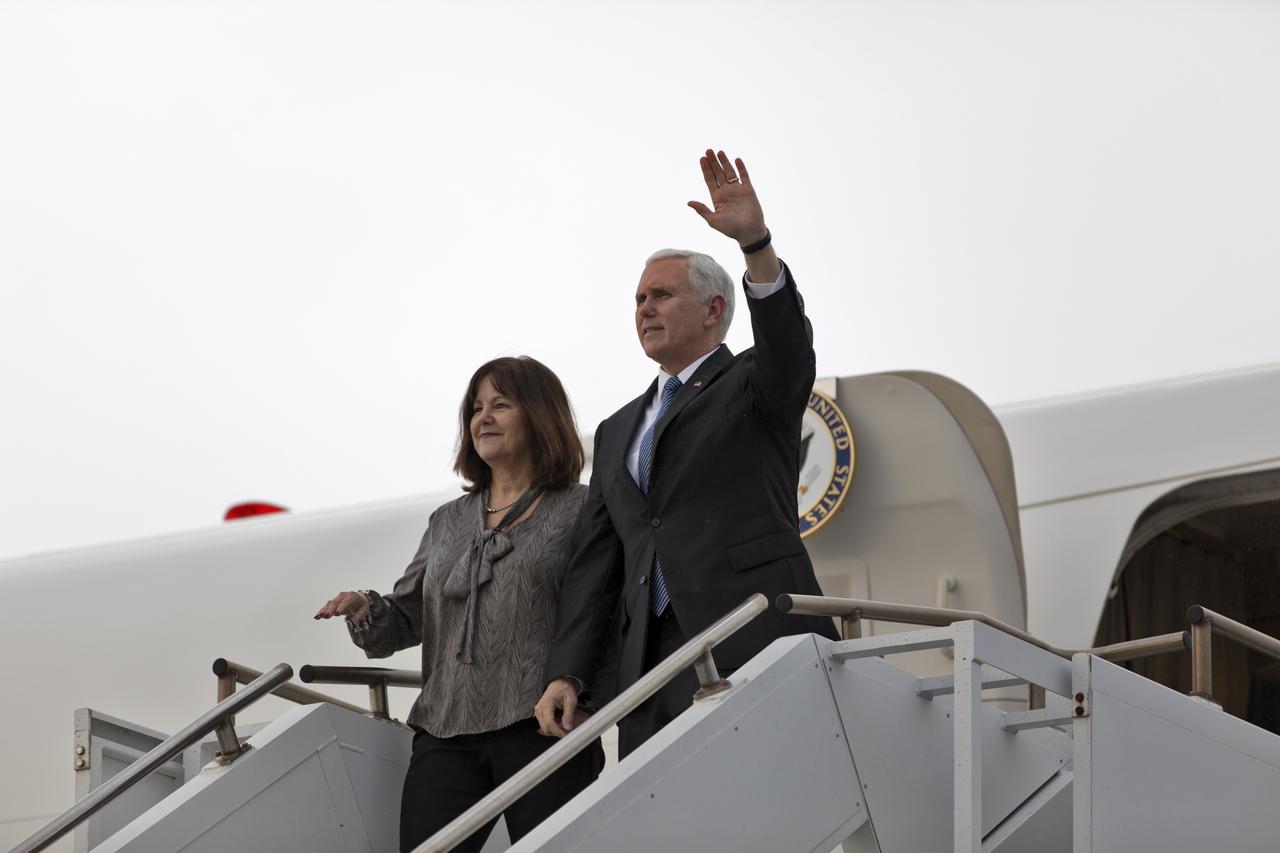
Vice President Mike Pence and his wife, Karen, step off Air Force Two on the Shuttle Landing Facility at NASA's Kennedy Space Center in Florida, on Feb. 20, 2018. During his visit, Pence will chair a meeting of the National Space Council in the high bay of the center's Space Station Processing Facility. The council's role is to advise the president regarding national space policy and strategy, and review the nation's long-range goals for space activities.
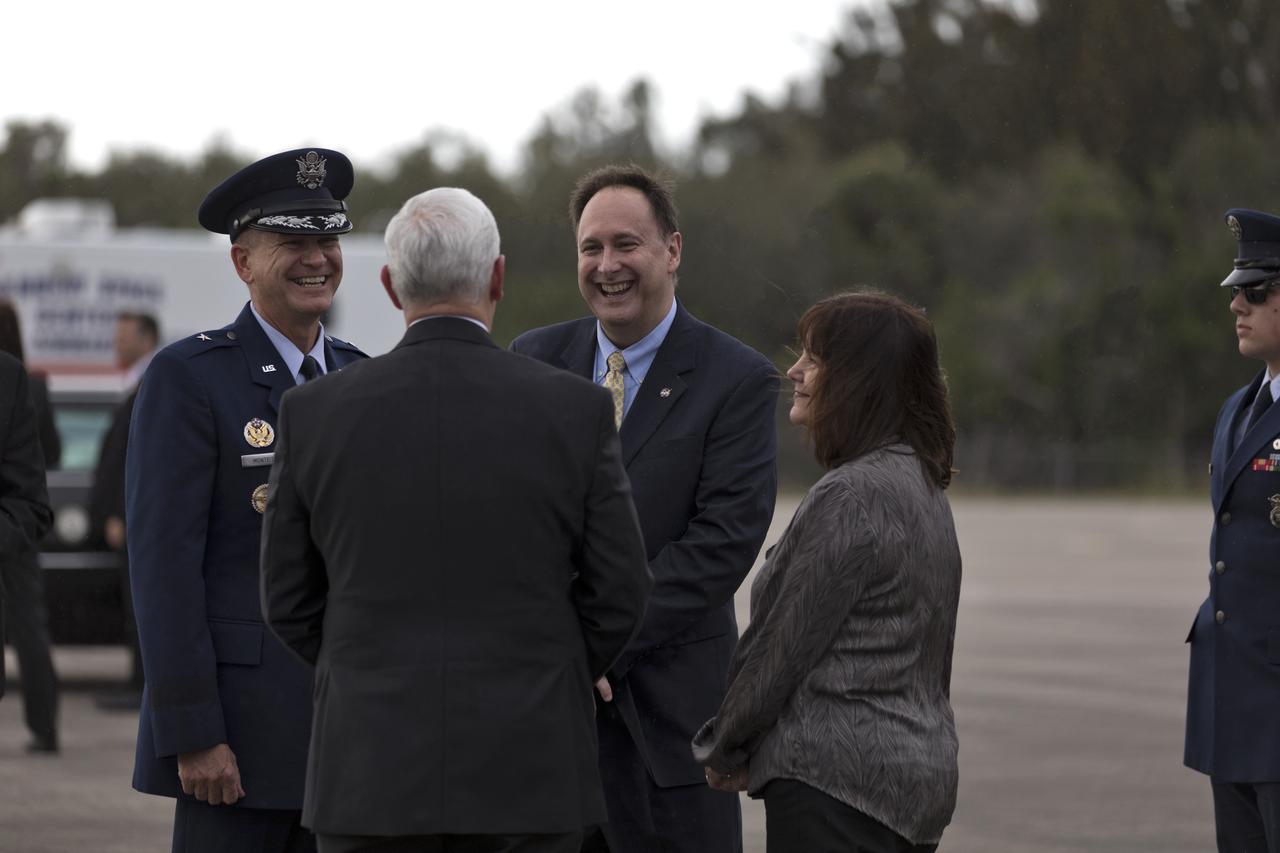
Acting NASA Administrator Robert Lightfoot, center, greets Vice President Mike Pence and his wife, Karen, at the Shuttle Landing Facility at the agency's Kennedy Space Center in Florida, on Feb. 20, 2018. During his visit, Pence will chair a meeting of the National Space Council in the high bay of the center's Space Station Processing Facility. The council's role is to advise the president regarding national space policy and strategy, and review the nation's long-range goals for space activities.
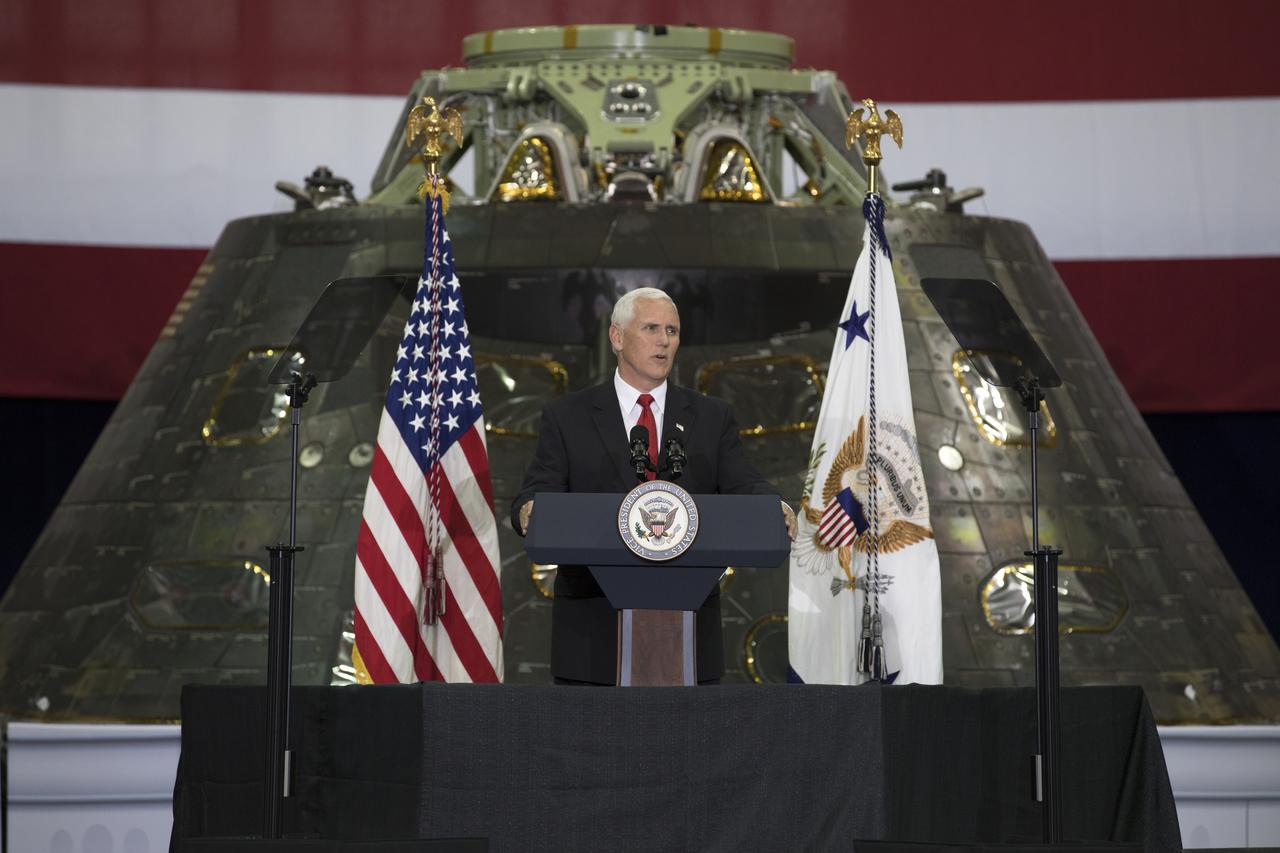
Vice President Mike Pence speaks before an audience of NASA leaders, U.S. and Florida government officials, and employees inside the Vehicle Assembly Building at NASA's Kennedy Space Center in Florida. Pence thanked employees for advancing American leadership in space. Behind the podium is the Orion spacecraft flown on Exploration Flight test-1 in 2014. During his visit to Kennedy, the Vice President also toured several facilities highlighting the public-private partnerships, as both NASA and commercial companies prepare to launch American astronauts from the multi-user spaceport.
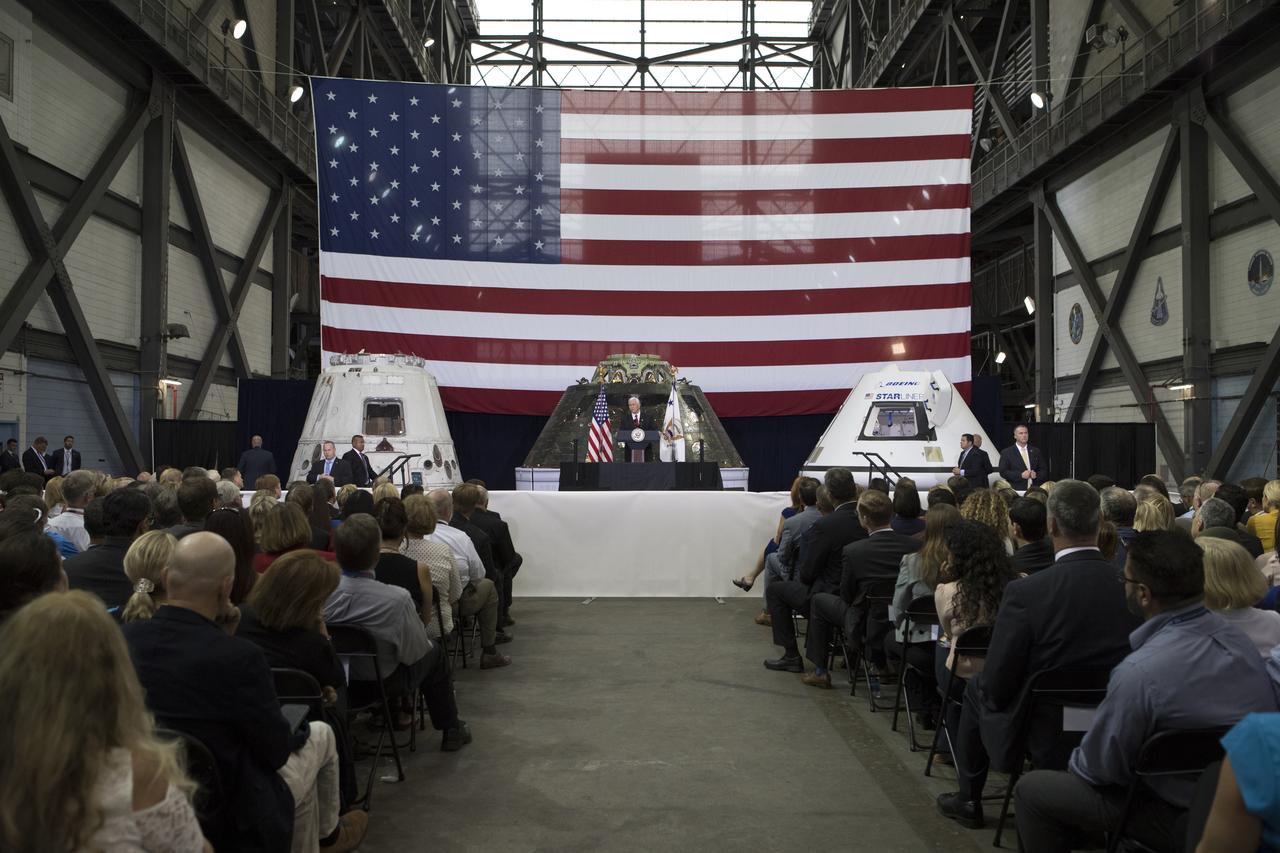
Vice President Mike Pence speaks before an audience of NASA leaders, U.S. and Florida government officials, and employees inside the Vehicle Assembly Building at NASA's Kennedy Space Center in Florida. Pence thanked employees for advancing American leadership in space. Behind the podium are, from the left, a flown SpaceX Dragon capsule, the Orion spacecraft flown on Exploration Flight test-1 in 2014, and a mockup of Boeing's CST-100 Starliner. During his visit to Kennedy, the Vice President also toured several facilities highlighting the public-private partnerships, as both NASA and commercial companies prepare to launch American astronauts from the multi-user spaceport.
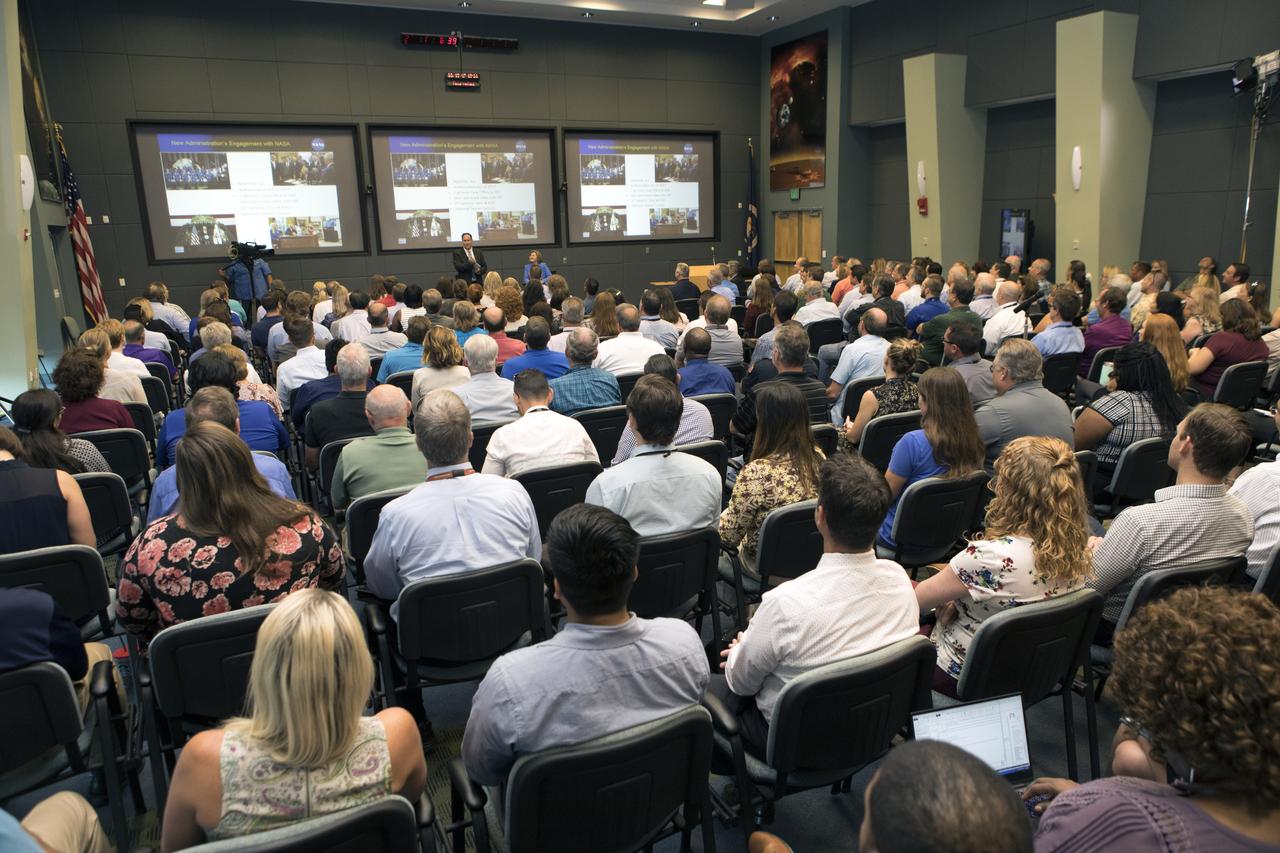
At NASA's Kennedy Space Center in Florida, agency Acting Administrator Robert Lightfoot and Deputy Associate Administrator Lesa Roe speak to employees during a town hall meeting in the conference room of Operations Support Building II. During the gathering, they updated progress on NASA programs.
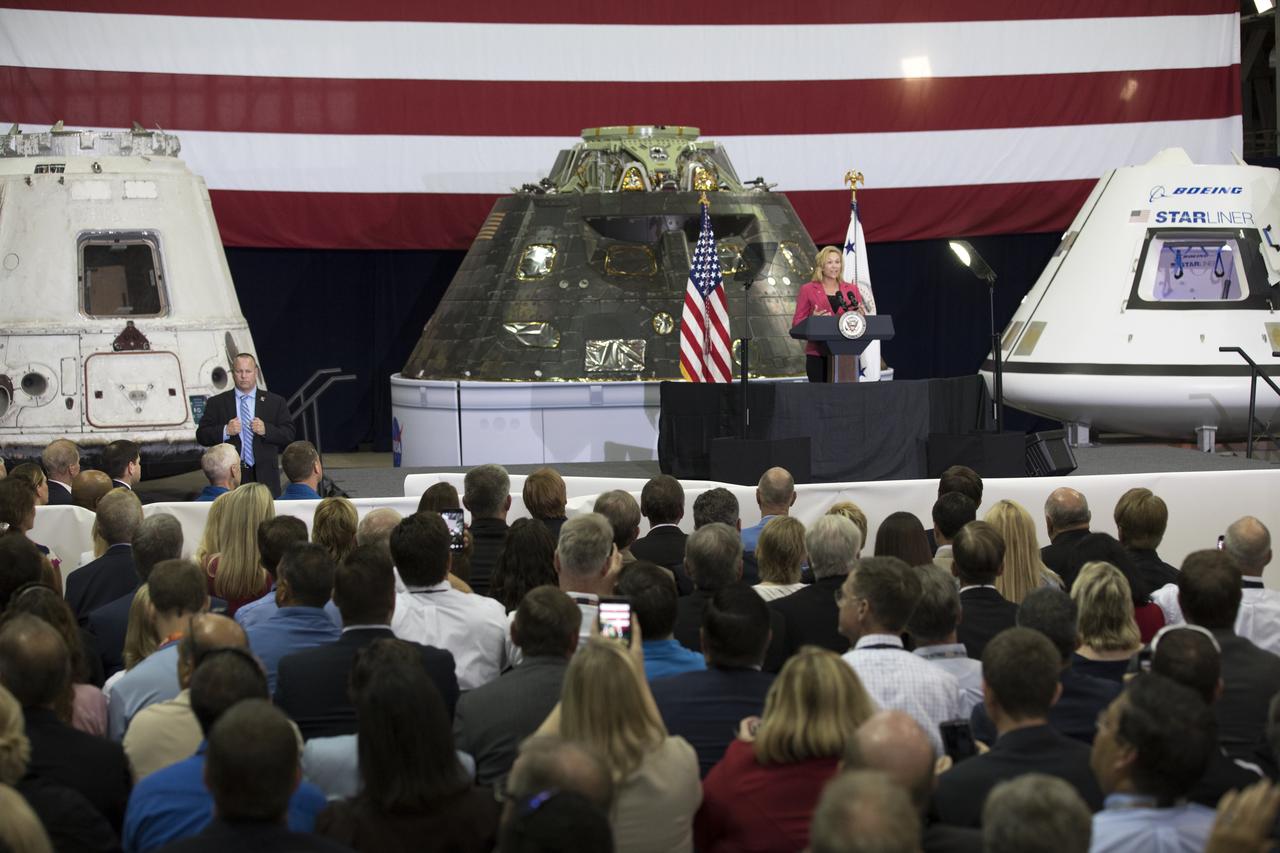
NASA Kennedy Space Center Deputy Director Janet Petro addresses agency leaders, U.S. and Florida government officials and employees inside the Vehicle Assembly Building during a visit by Vice President Mike Pence. Pence thanked employees for advancing American leadership in space. Behind the podium are, from the left, a flown SpaceX Dragon capsule, the Orion spacecraft flown on Exploration Flight test-1 in 2014, and a mockup of Boeing's CST-100 Starliner. During his visit to Kennedy, the Vice President also toured several facilities highlighting the public-private partnerships, as both NASA and commercial companies prepare to launch American astronauts from the multi-user spaceport.
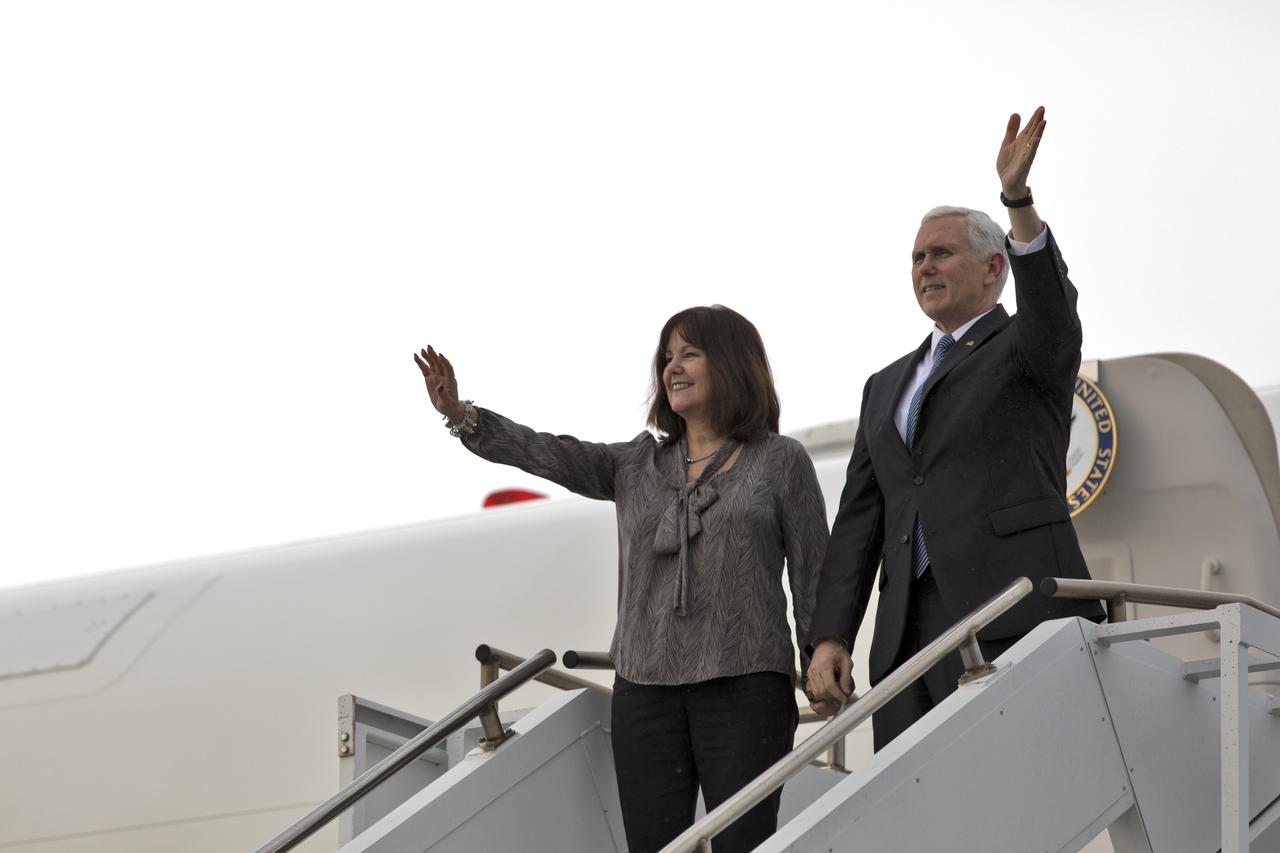
Vice President Mike Pence and his wife, Karen, step off Air Force Two on the Shuttle Landing Facility at NASA's Kennedy Space Center in Florida, on Feb. 20, 2018. During his visit, Pence will chair a meeting of the National Space Council in the high bay of the center's Space Station Processing Facility. The council's role is to advise the president regarding national space policy and strategy, and review the nation's long-range goals for space activities.
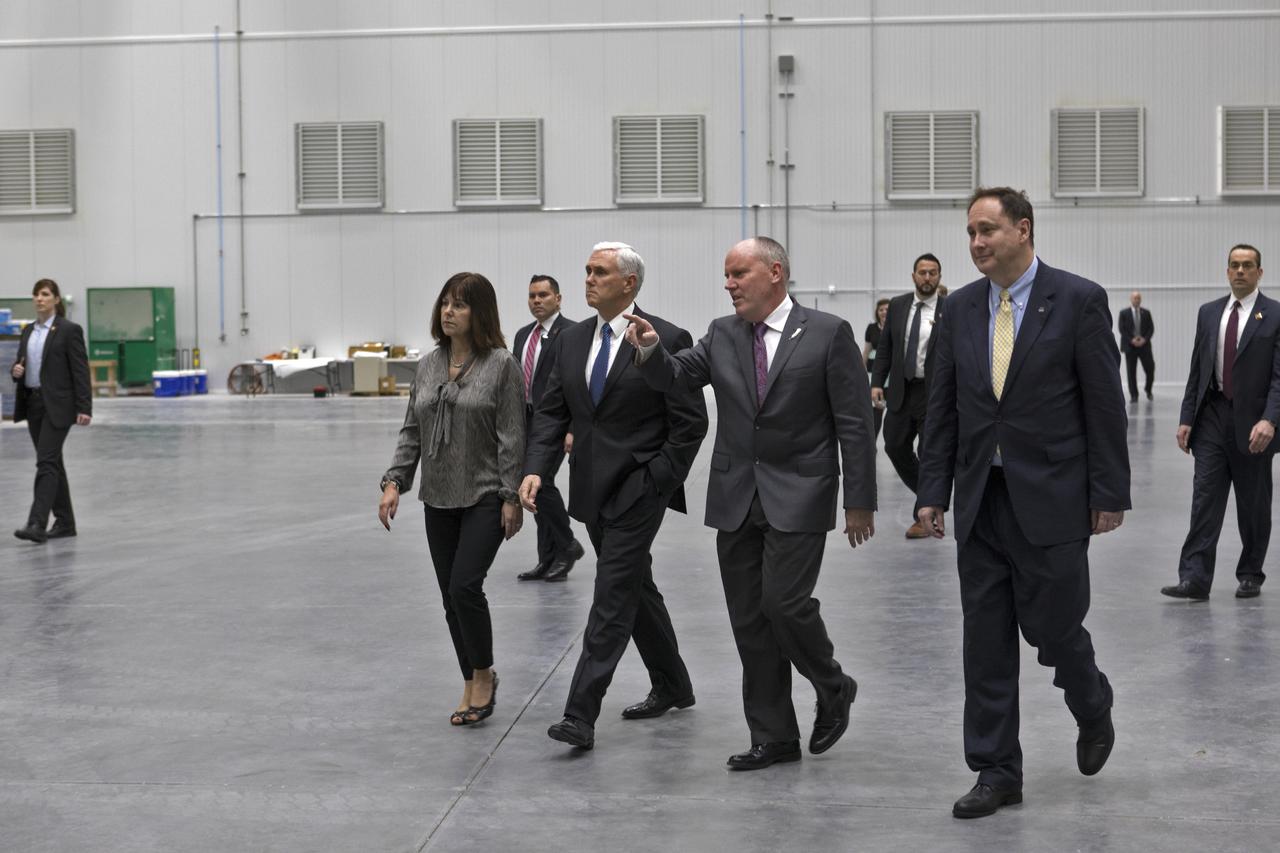
Vice President Mike Pence, second from left, tours the Blue Origin Manufacturing Facility near NASA's Kennedy Space Center in Florida, on Feb. 20, 2018. At left is the vice president's wife, Karen Pence. To his right are Blue Origin CEO Robert Smith, and acting NASA Administrator Robert Lightfoot. Vice President Pence viewed the flown New Shepard Booster and Crew Capsule. The booster was the first launch vehicle with a successful vertical takeoff and vertical landing to demonstrate reusability. During his visit, Pence will chair a meeting of the National Space Council on Feb. 21, 2018 in the high bay of NASA Kennedy Space Center's Space Station Processing Facility. The council's role is to advise the president regarding national space policy and strategy, and review the nation's long-range goals for space activities.
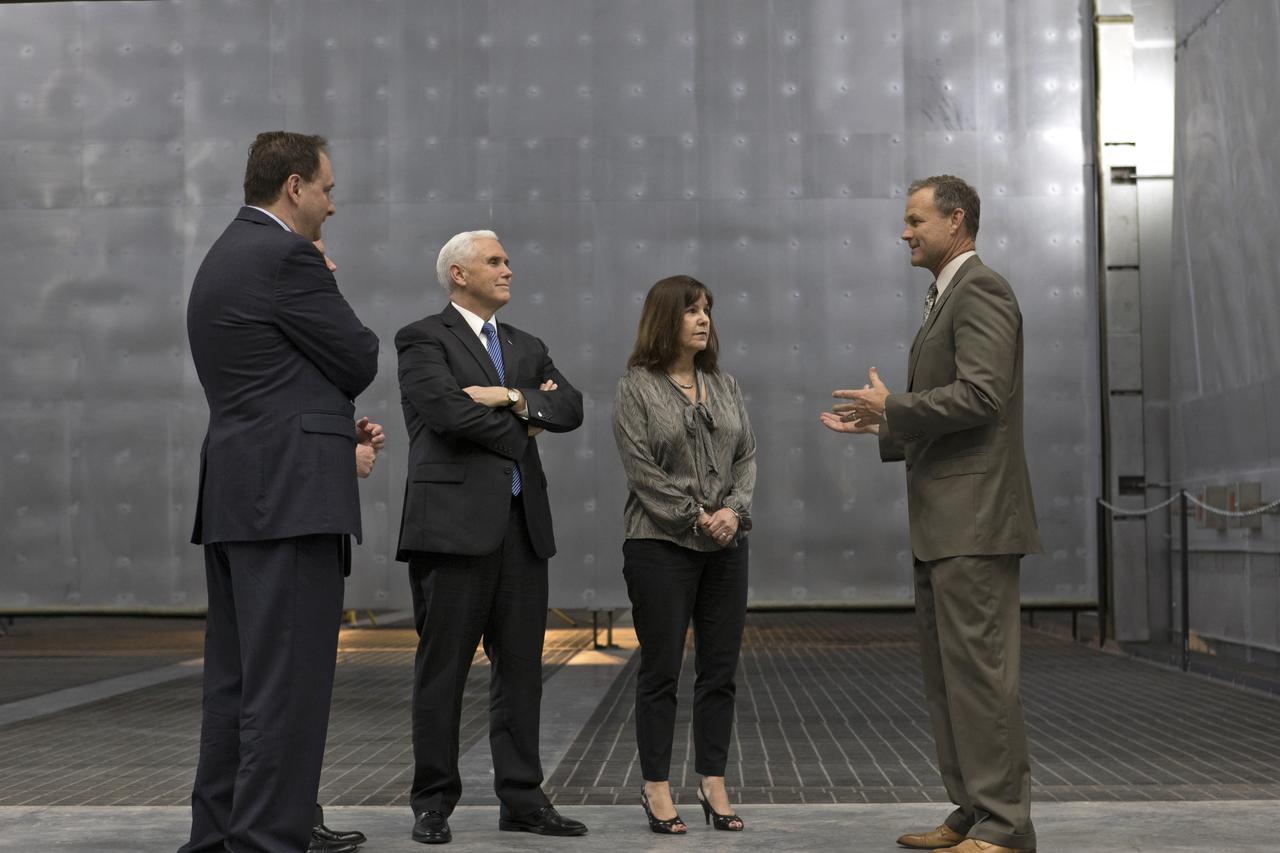
Vice President Mike Pence, second from left, tours the Blue Origin Manufacturing Facility near NASA's Kennedy Space Center in Florida, on Feb. 20, 2018. To his left is acting NASA Administrator Robert Lightfoot. At right is the vice president's wife, Karen Pence. At far right is Scott Henderson, Blue Origin director of Test and Flight Operations. Vice President Pence viewed the flown New Shepard Booster and Crew Capsule. The booster was the first launch vehicle with a successful vertical takeoff and vertical landing to demonstrate reusability. During his visit, Pence will chair a meeting of the National Space Council on Feb. 21, 2018 in the high bay of NASA Kennedy Space Center's Space Station Processing Facility. The council's role is to advise the president regarding national space policy and strategy, and review the nation's long-range goals for space activities.
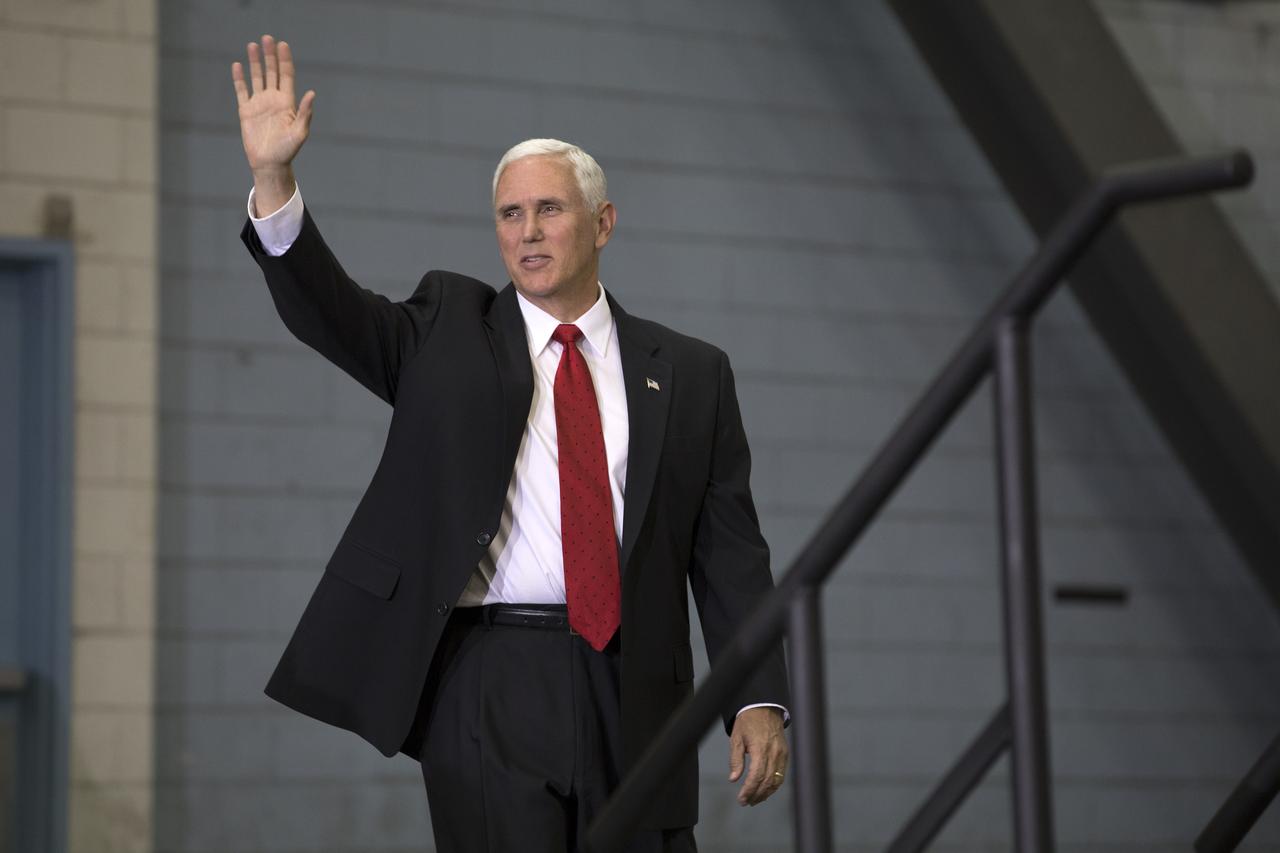
Vice President Mike Pence arrives at the Vehicle Assembly Building at NASA's Kennedy Space Center in Florida. During his visit, Pence spoke inside the iconic building, where he thanked employees for advancing American leadership in space. The Vice President also toured several facilities highlighting the public-private partnerships at Kennedy, as both NASA and commercial companies prepare to launch American astronauts from the multi-user spaceport.
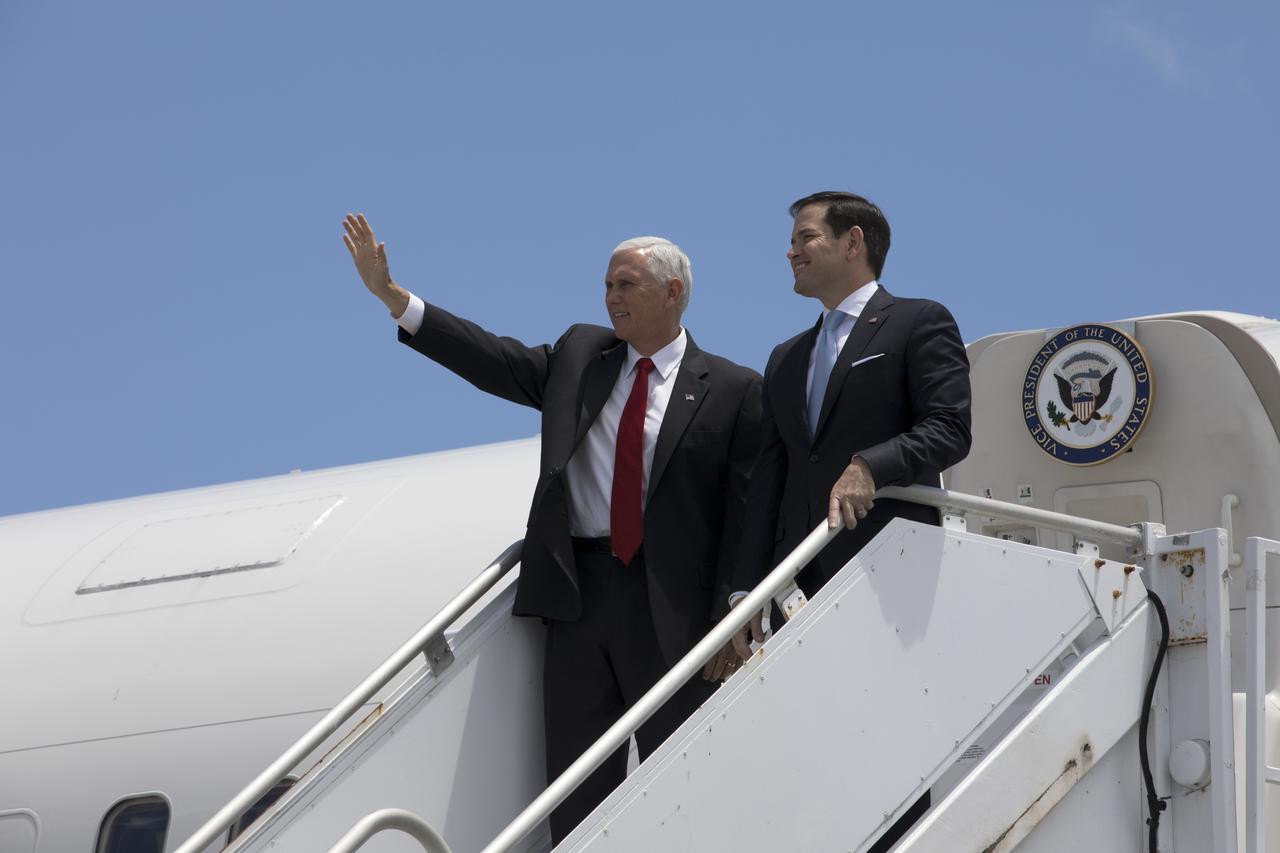
Vice President Mike Pence, left, waves as he and Sen. Marco Rubio of Florida arrive aboard Air Force Two at the Shuttle Landing Facility at NASA's Kennedy Space Center in Florida. During his visit to Kennedy, the Vice President spoke inside the iconic Vehicle Assembly Building, where he thanked employees for advancing American leadership in space.
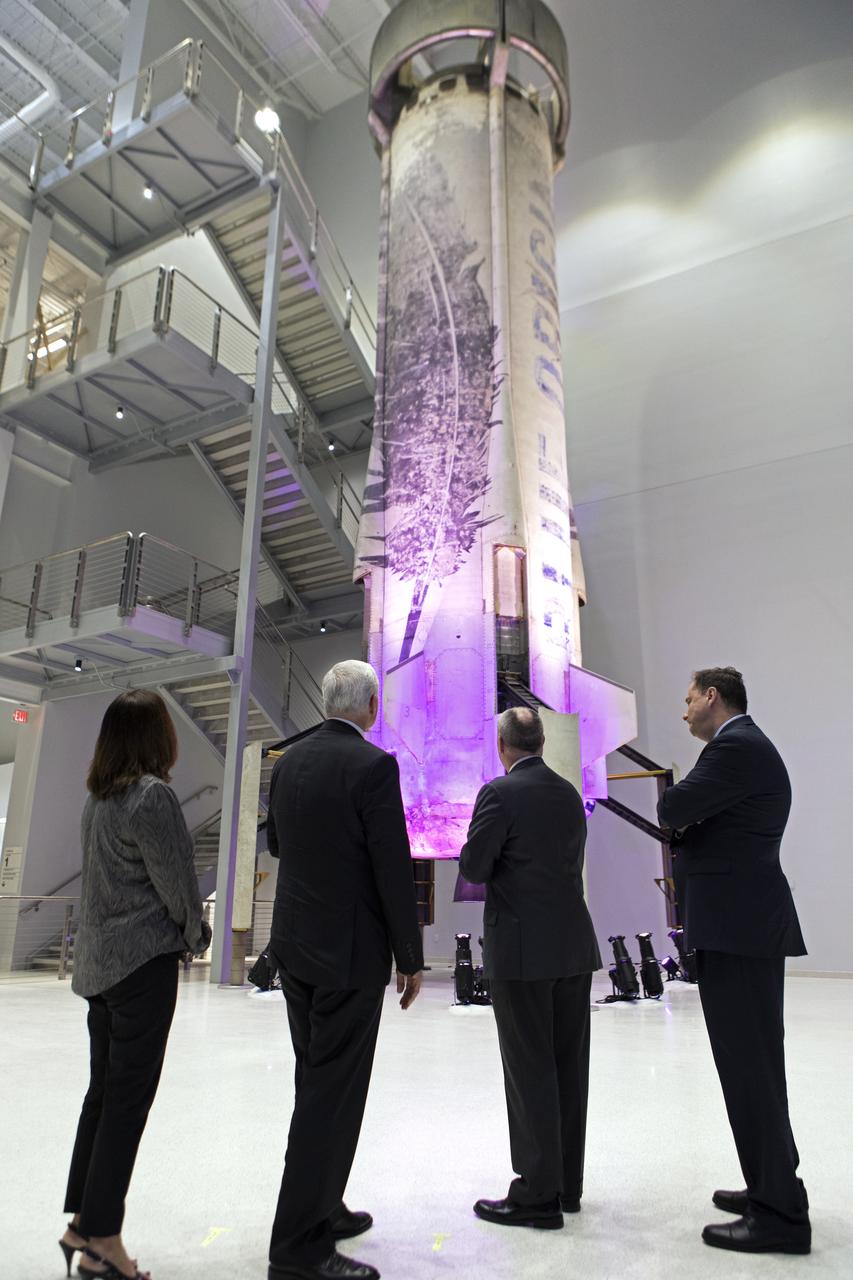
Vice President Mike Pence, second from left, tours the Blue Origin Manufacturing Facility near NASA's Kennedy Space Center in Florida, on Feb. 20, 2018. At left is the vice president's wife, Karen Pence. To his right are Blue Origin CEO Robert Smith, and acting NASA Administrator Robert Lightfoot. Vice President Pence viewed the flown New Shepard Booster and Crew Capsule. The booster was the first launch vehicle with a successful vertical takeoff and vertical landing to demonstrate reusability. During his visit, Pence will chair a meeting of the National Space Council on Feb. 21, 2018 in the high bay of NASA Kennedy Space Center's Space Station Processing Facility. The council's role is to advise the president regarding national space policy and strategy, and review the nation's long-range goals for space activities.

Vice President Mike Pence, second from left, tours the Blue Origin Manufacturing Facility near NASA's Kennedy Space Center in Florida, on Feb. 20, 2018. To his left is his wife, Karen Pence. To his right are Blue Origin CEO Robert Smith, and acting NASA Administrator Robert Lightfoot. Vice President Pence viewed the flown New Shepard Booster and Crew Capsule. The booster was the first launch vehicle with a successful vertical takeoff and vertical landing to demonstrate reusability. During his visit, Pence will chair a meeting of the National Space Council on Feb. 21, 2018 in the high bay of NASA Kennedy Space Center's Space Station Processing Facility. The council's role is to advise the president regarding national space policy and strategy, and review the nation's long-range goals for space activities.
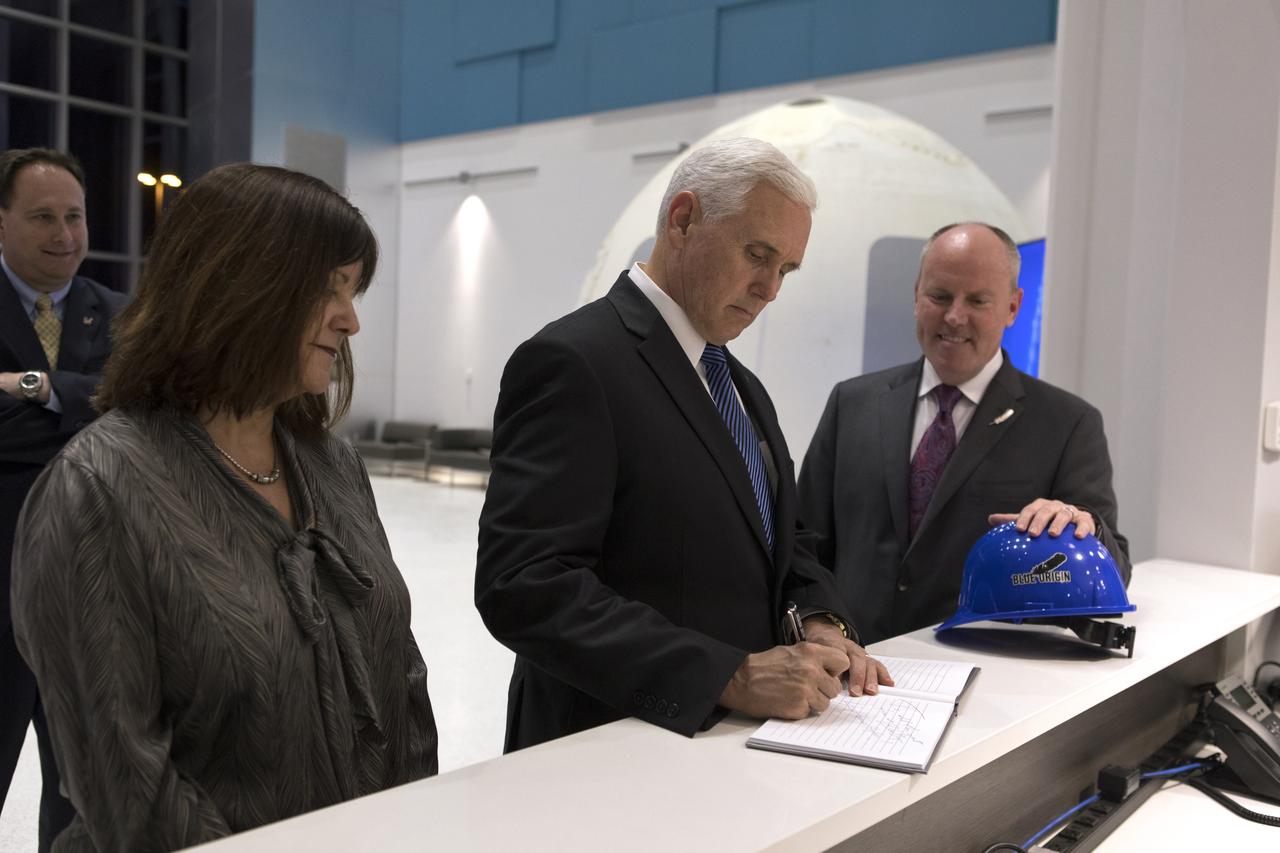
Vice President Mike Pence, center, signs a guest book during his tour of the Blue Origin Manufacturing Facility near NASA's Kennedy Space Center in Florida, on Feb. 20, 2018. At left is the vice president's wife, Karen Pence. To his right is Blue Origin CEO Robert Smith. Behind them is acting NASA Administrator Robert Lightfoot. Vice President Pence viewed the flown New Shepard Booster and Crew Capsule. The booster was the first launch vehicle with a successful vertical takeoff and vertical landing to demonstrate reusability. During his visit, Pence will chair a meeting of the National Space Council on Feb. 21, 2018 in the high bay of NASA Kennedy Space Center's Space Station Processing Facility. The council's role is to advise the president regarding national space policy and strategy, and review the nation's long-range goals for space activities.
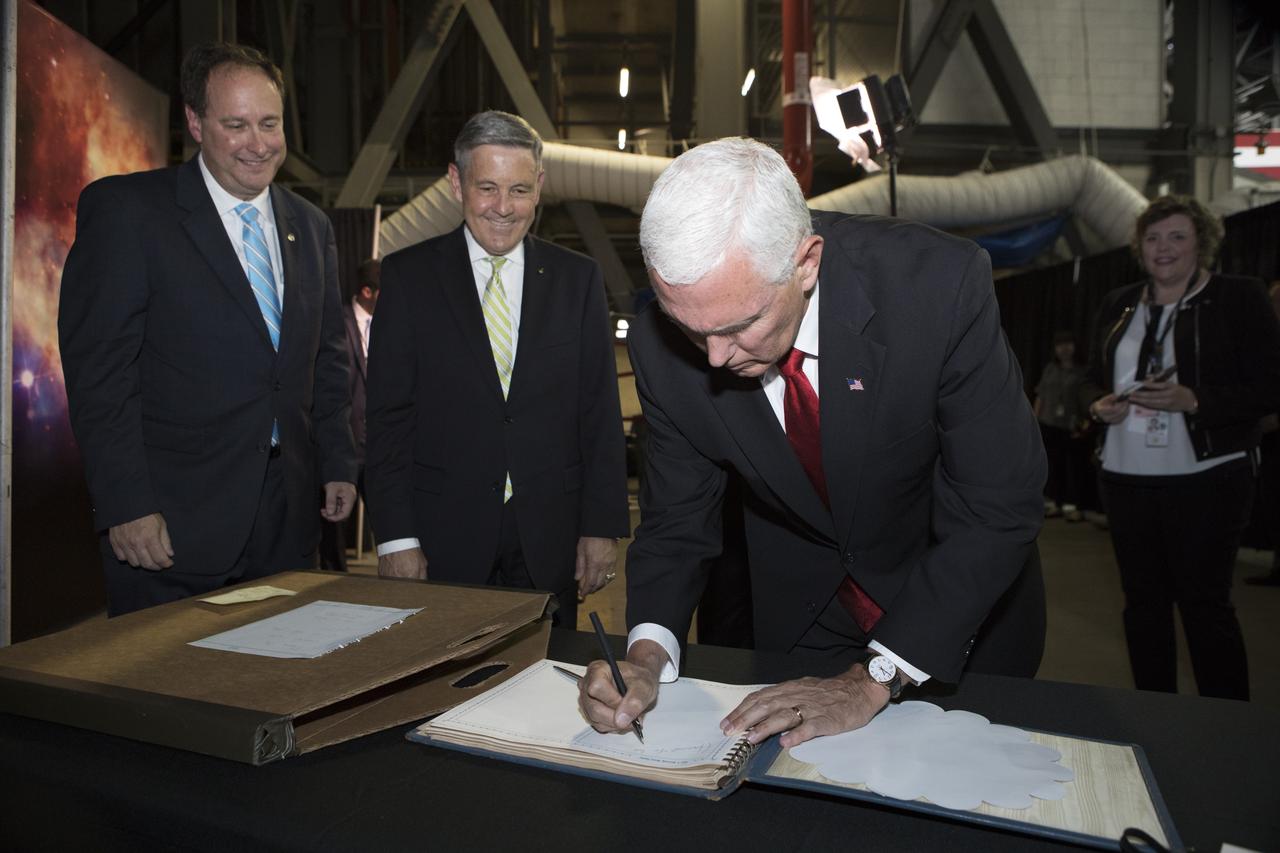
During his visit of NASA's Kennedy Space Center in Florida, Vice President Mike Pence signs a Kennedy Space Center guest book as the agency's Acting Administrator Robert Lightfoot, left, and Center Director Bob Cabana look on. During his visit to Kennedy, the Vice President spoke inside the iconic Vehicle Assembly Building, where he thanked employees for advancing American leadership in space.
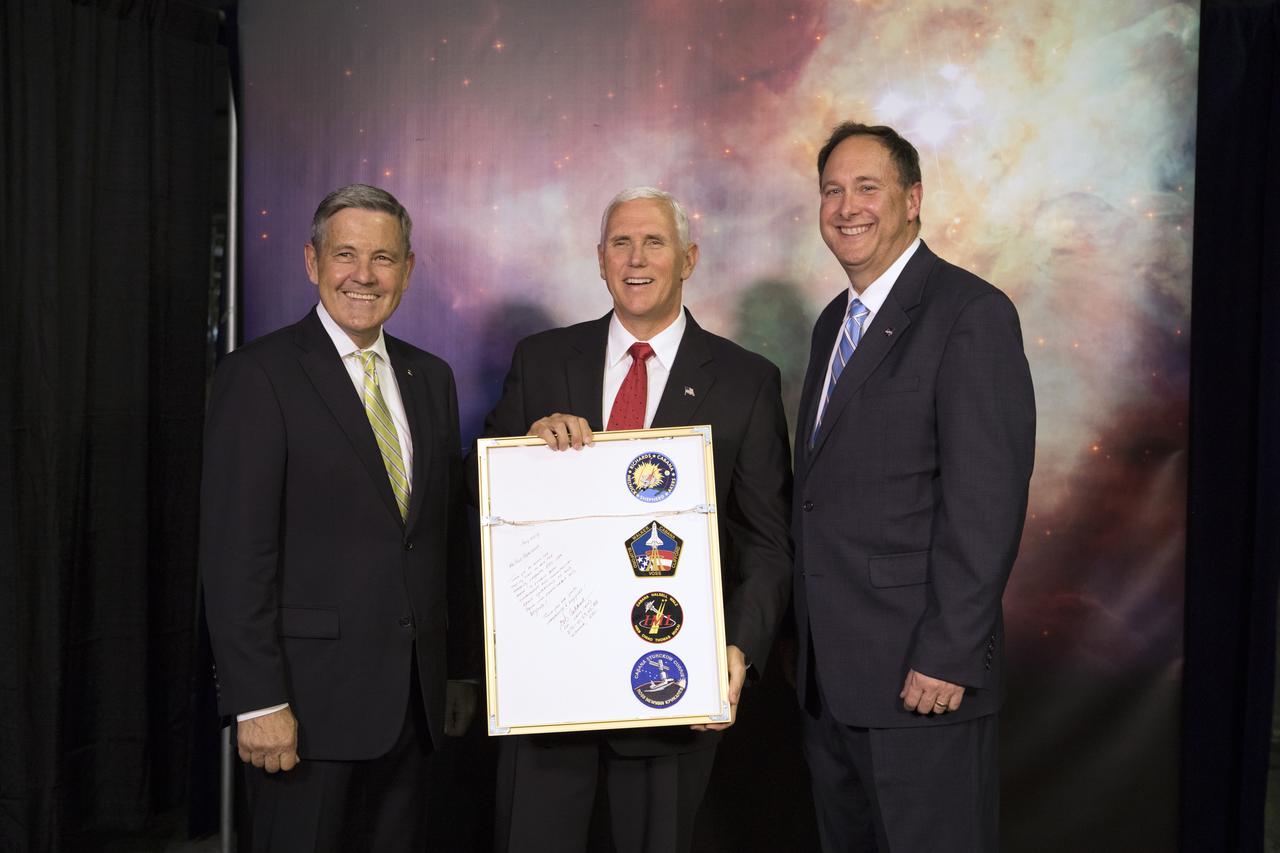
Kennedy Space Center Bob Cabana, left, and NASA's Acting Administrator Robert Lightfoot, right present Vice President Mike Pence with a framed plaque. On the back of the plaque are patches from each of Cabana's four space shuttle mission, STS-88, STS-53, STS-65, STS-41, and an inscription thanking the Vice President for his support of NASA. During his visit to Kennedy, the Vice President spoke inside the iconic Vehicle Assembly Building, where he thanked employees for advancing American leadership in space.
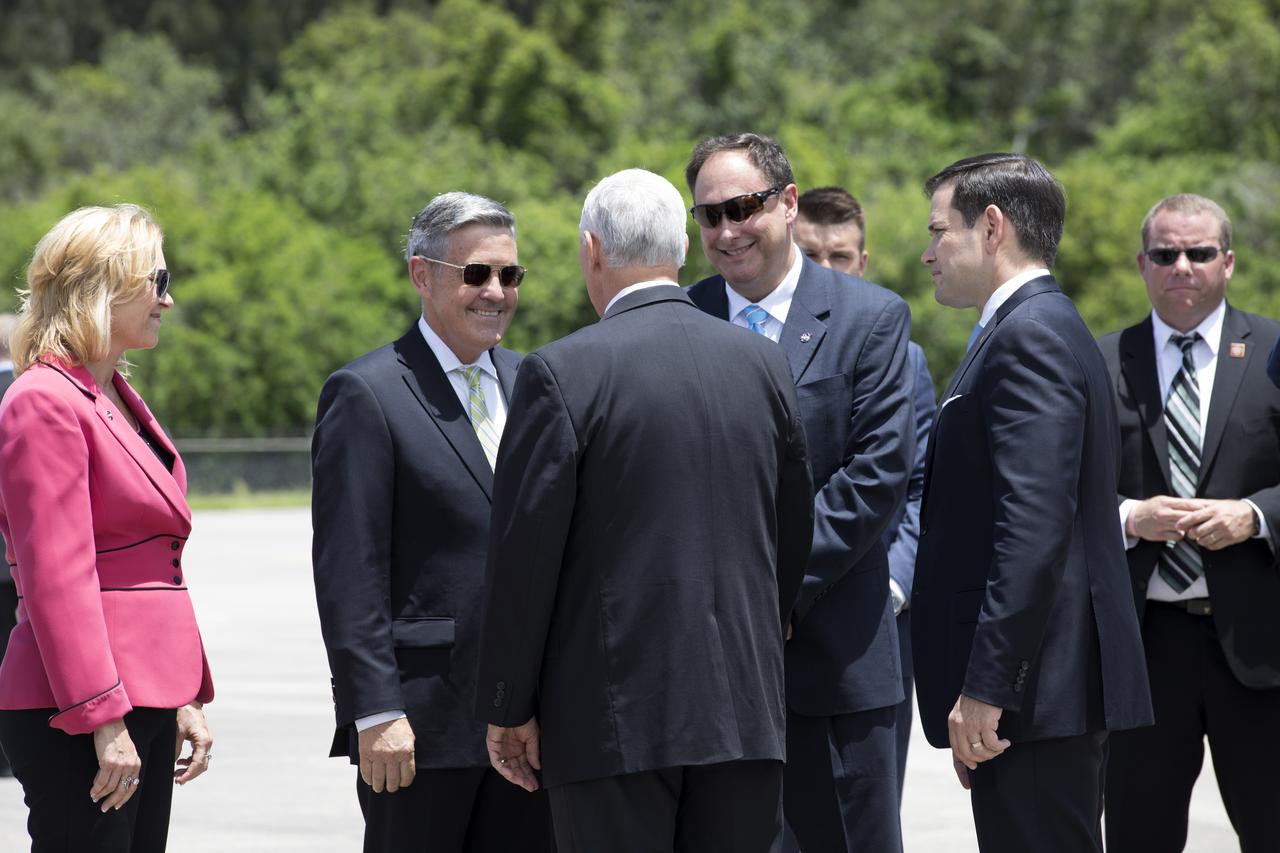
Vice President Mike Pence, back to the camera, is greeted by NASA officials at the Shuttle Landing Facility at NASA's Kennedy Space Center in Florida. From the left are, Deputy Center Director Janet Petro, Center Director Bob Cabana and Acting Administrator Robert Lightfoot. To the right of Lightfoot is Sen. Marco Rubio of Florida. During his visit to Kennedy, the Vice President spoke inside the iconic Vehicle Assembly Building, where he thanked employees for advancing American leadership in space.
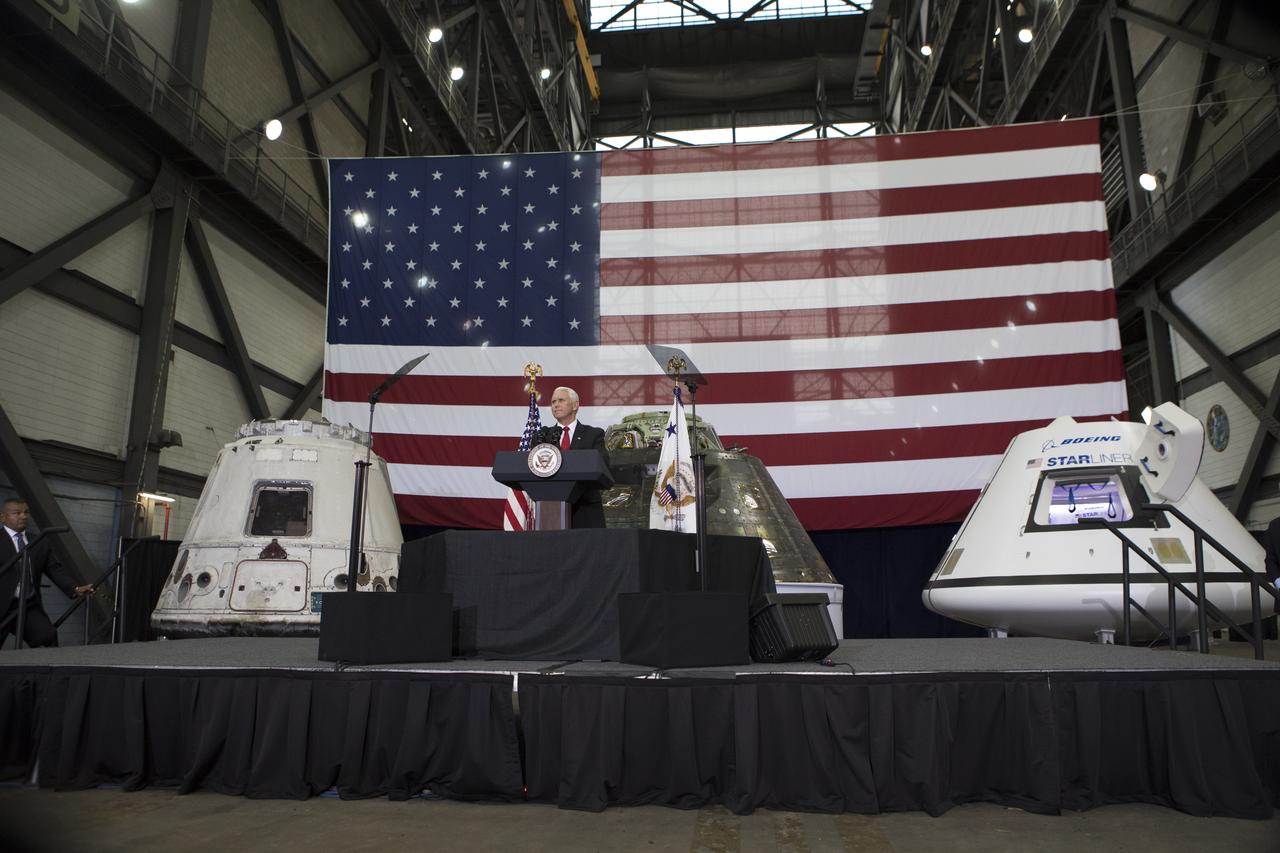
Vice President Mike Pence speaks before an audience of NASA leaders, U.S. and Florida government officials, and employees inside the Vehicle Assembly Building at NASA's Kennedy Space Center in Florida. Pence thanked employees for advancing American leadership in space. Behind the podium are, from the left, a flown SpaceX Dragon capsule, the Orion spacecraft flown on Exploration Flight test-1 in 2014, and a mockup of Boeing's CST-100 Starliner. During his visit to Kennedy, the Vice President also toured several facilities highlighting the public-private partnerships, as both NASA and commercial companies prepare to launch American astronauts from the multi-user spaceport.
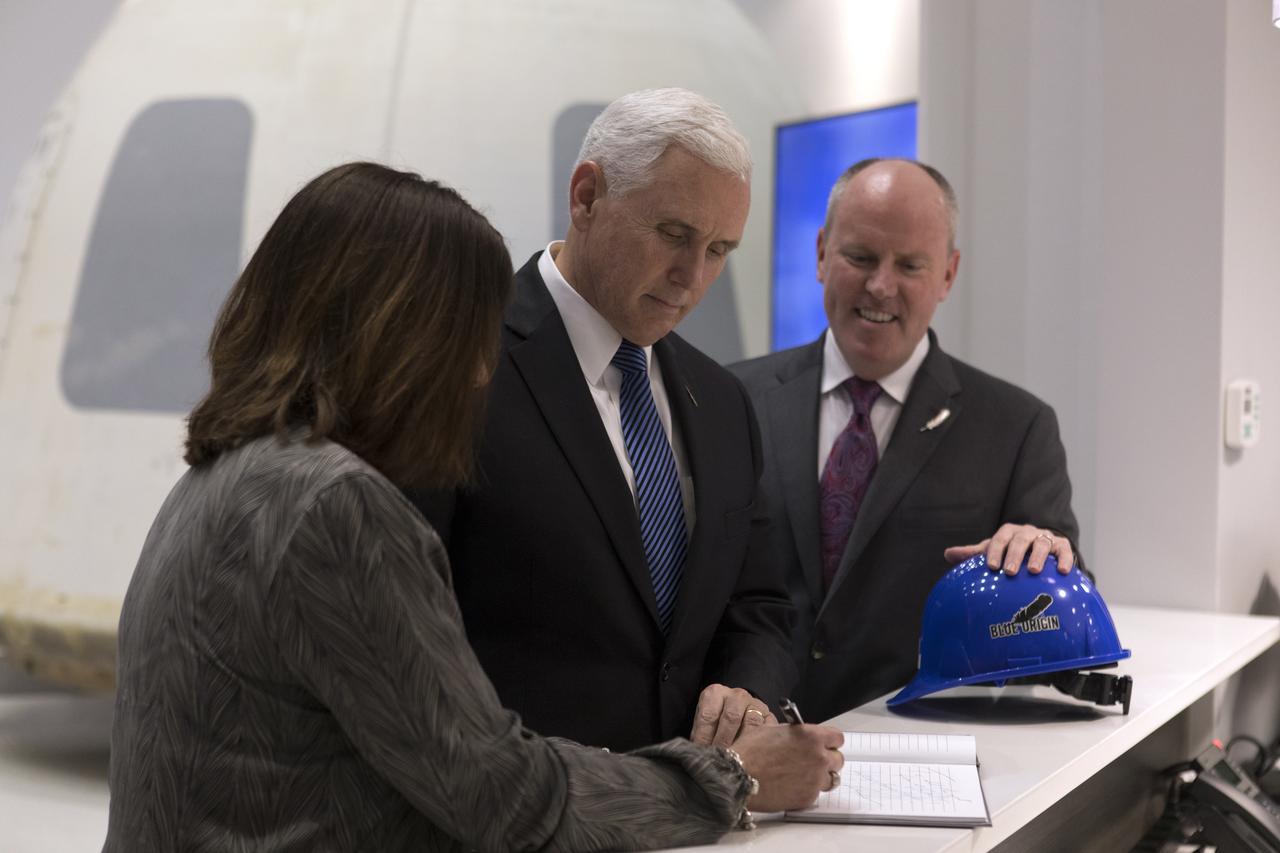
Vice President Mike Pence, center, and his wife, Karen Pence, sign a guest book during a tour of the Blue Origin Manufacturing Facility near NASA's Kennedy Space Center in Florida, on Feb. 20, 2018. At right is Blue Origin CEO Robert Smith. Vice President Pence viewed the flown New Shepard Booster and Crew Capsule. The booster was the first launch vehicle with a successful vertical takeoff and vertical landing to demonstrate reusability. During his visit, Pence will chair a meeting of the National Space Council on Feb. 21, 2018 in the high bay of NASA Kennedy Space Center's Space Station Processing Facility. The council's role is to advise the president regarding national space policy and strategy, and review the nation's long-range goals for space activities.
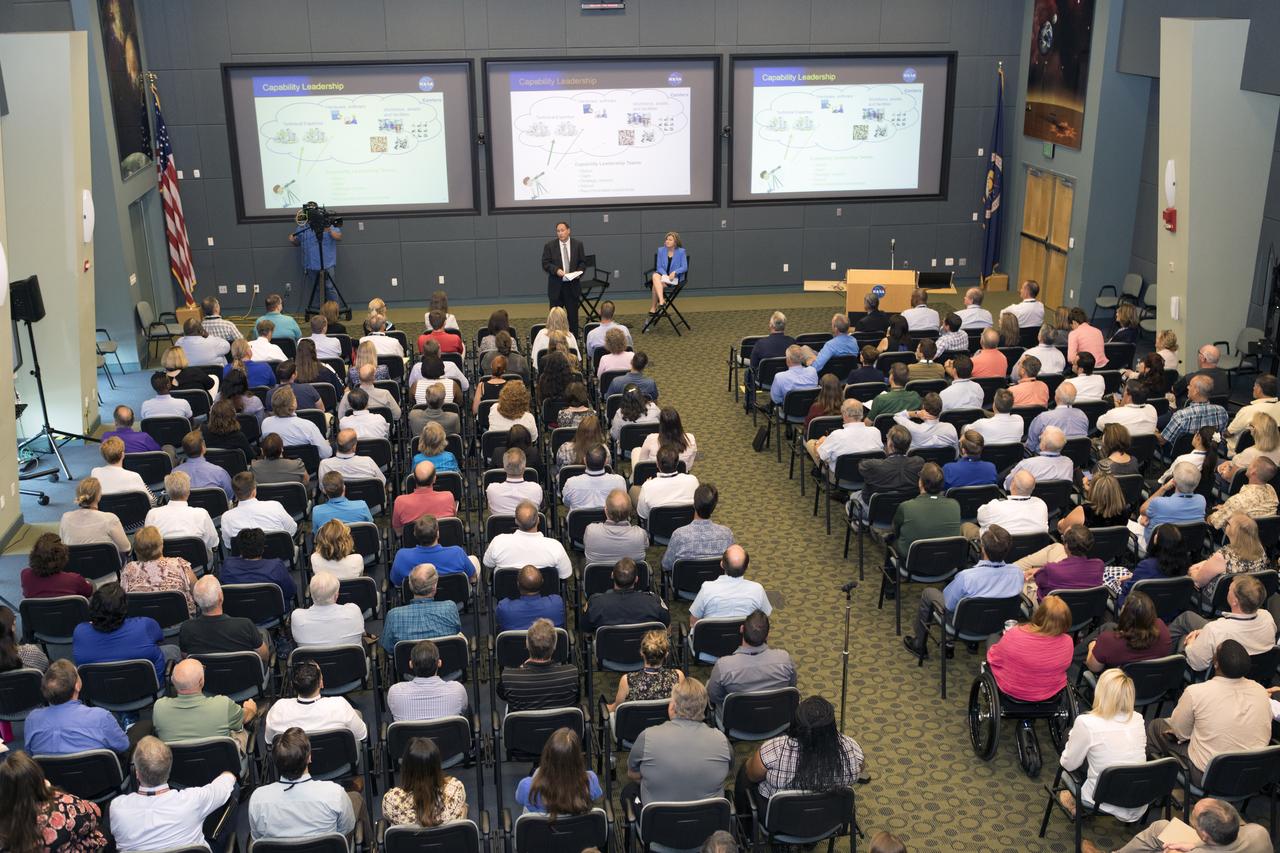
At NASA's Kennedy Space Center in Florida, agency Acting Administrator Robert Lightfoot and Deputy Associate Administrator Lesa Roe speak to employees during a town hall meeting in the conference room of Operations Support Building II. During the gathering, they updated progress on NASA programs.

Vice President Mike Pence, second from right; NASA Acting Administrator Robert Lightfoot, left; Deputy Director, Kennedy Space Center, Janet Petro, second from left; NASA astronaut Reid Wiseman, center; and Director, Kennedy Space Center, Robert Cabana, right, look at the Orion capsule that will fly on the first integrated flight with the Space Launch System rocket in 2019, during a tour of the Kennedy Space Center's Operations and Checkout Building.
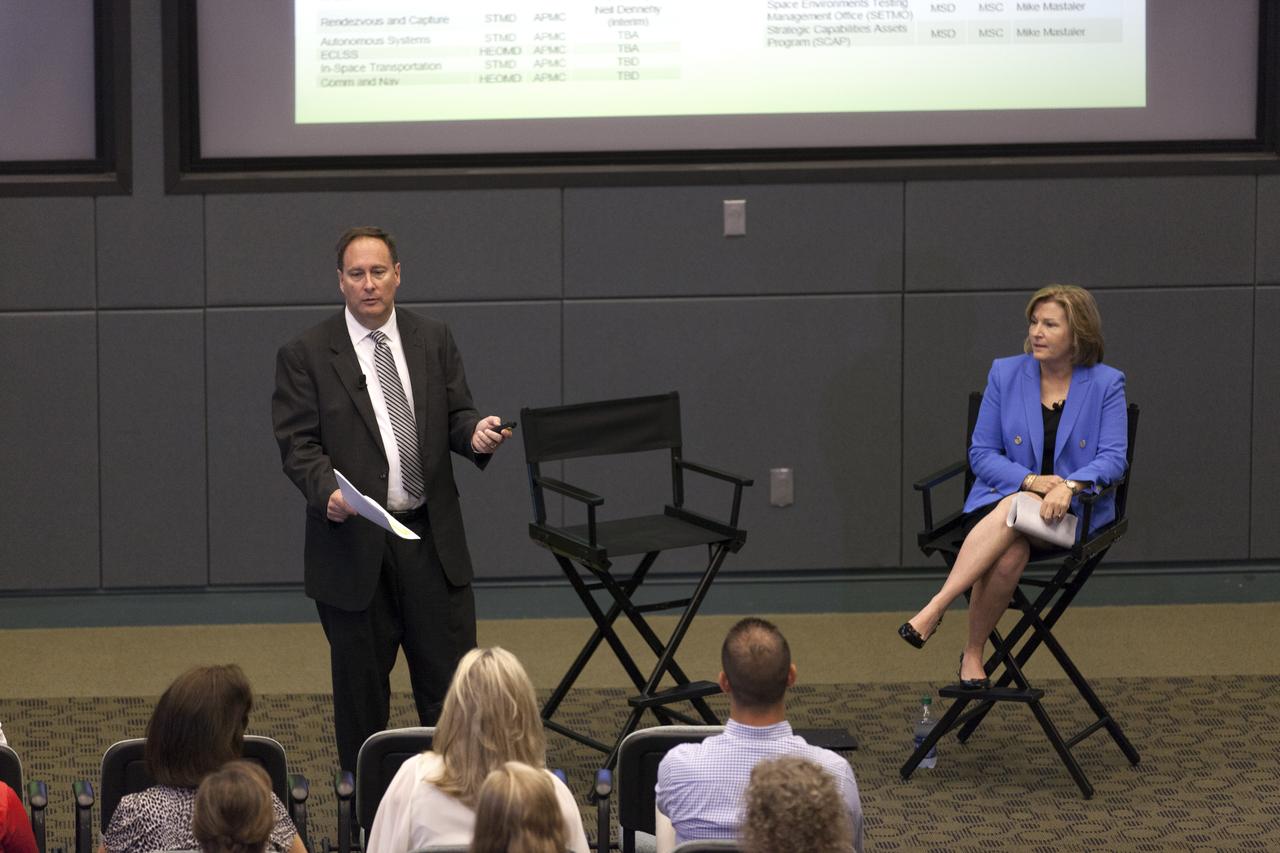
At NASA's Kennedy Space Center in Florida, agency Acting Administrator Robert Lightfoot speaks to employees during a town hall meeting in the conference room of Operations Support Building II. To the right is Deputy Associate Administrator Lesa Roe. During the gathering, they updated progress on NASA programs.
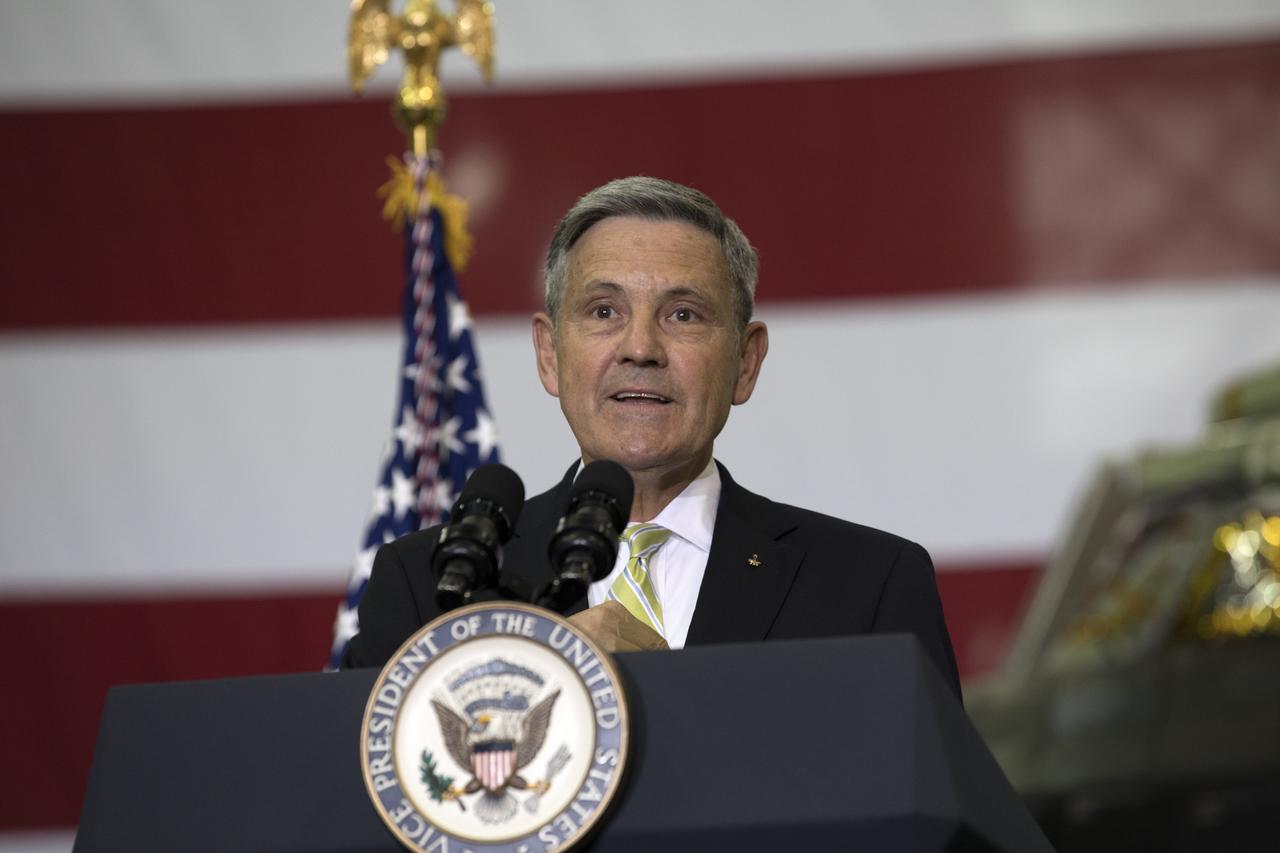
NASA Kennedy Space Center Director Robert Cabana addresses agency leaders, U.S. and Florida government officials, and employees inside the Vehicle Assembly Building during a visit by Vice President Mike Pence. Pence thanked employees for advancing American leadership in space. During his visit to Kennedy, the Vice President also toured several facilities highlighting the public-private partnerships, as both NASA and commercial companies prepare to launch American astronauts from the multi-user spaceport.
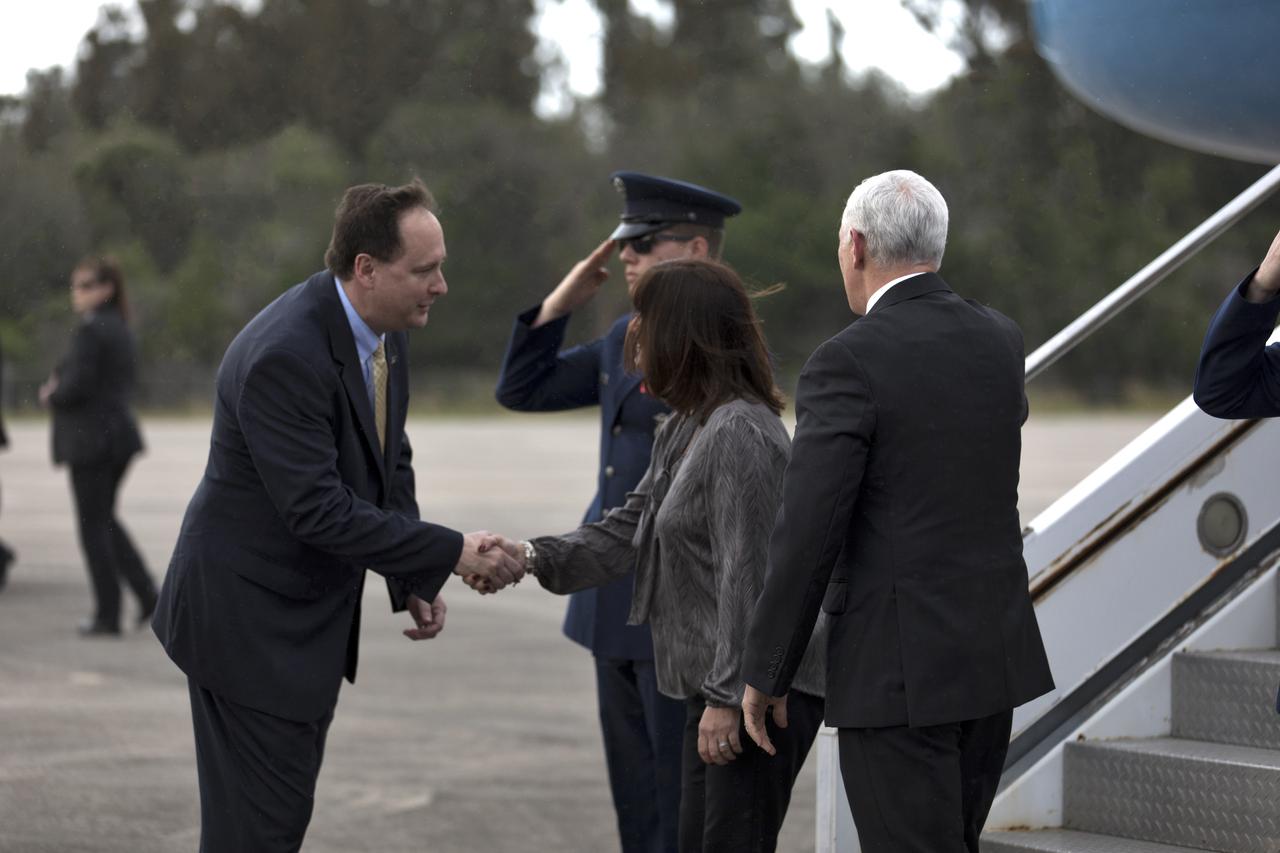
Acting NASA Administrator Robert Lightfoot, left, greets Vice President Mike Pence and his wife, Karen, after their arrival aboard Air Force Two at the Shuttle Landing Facility at NASA's Kennedy Space Center in Florida, on Feb. 20, 2018. During his visit, Pence will chair a meeting of the National Space Council in the high bay of the center's Space Station Processing Facility. The council's role is to advise the president regarding national space policy and strategy, and review the nation's long-range goals for space activities.
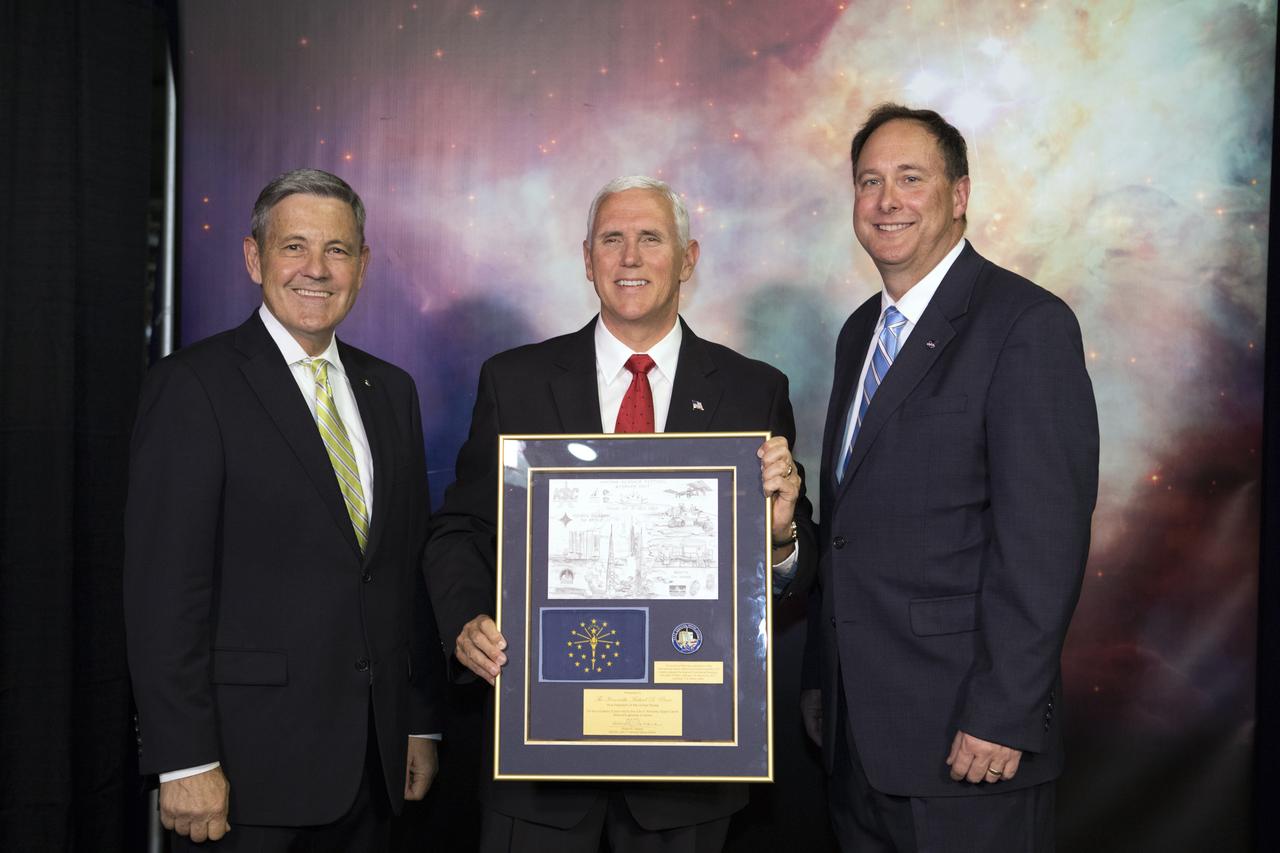
Kennedy Space Center Bob Cabana, left, and NASA's Acting Administrator Robert Lightfoot, right present Vice President Mike Pence with a framed plaque. At the top is an illustration featuring NASA's efforts to explore Mars. Also included is the flag of the Vice President's home state of Indiana that was flown on the SpaceX Commercial Resupply Services-10 flight in February and March this year. During his visit to Kennedy, the Vice President spoke inside the iconic Vehicle Assembly Building, where he thanked employees for advancing American leadership in space.
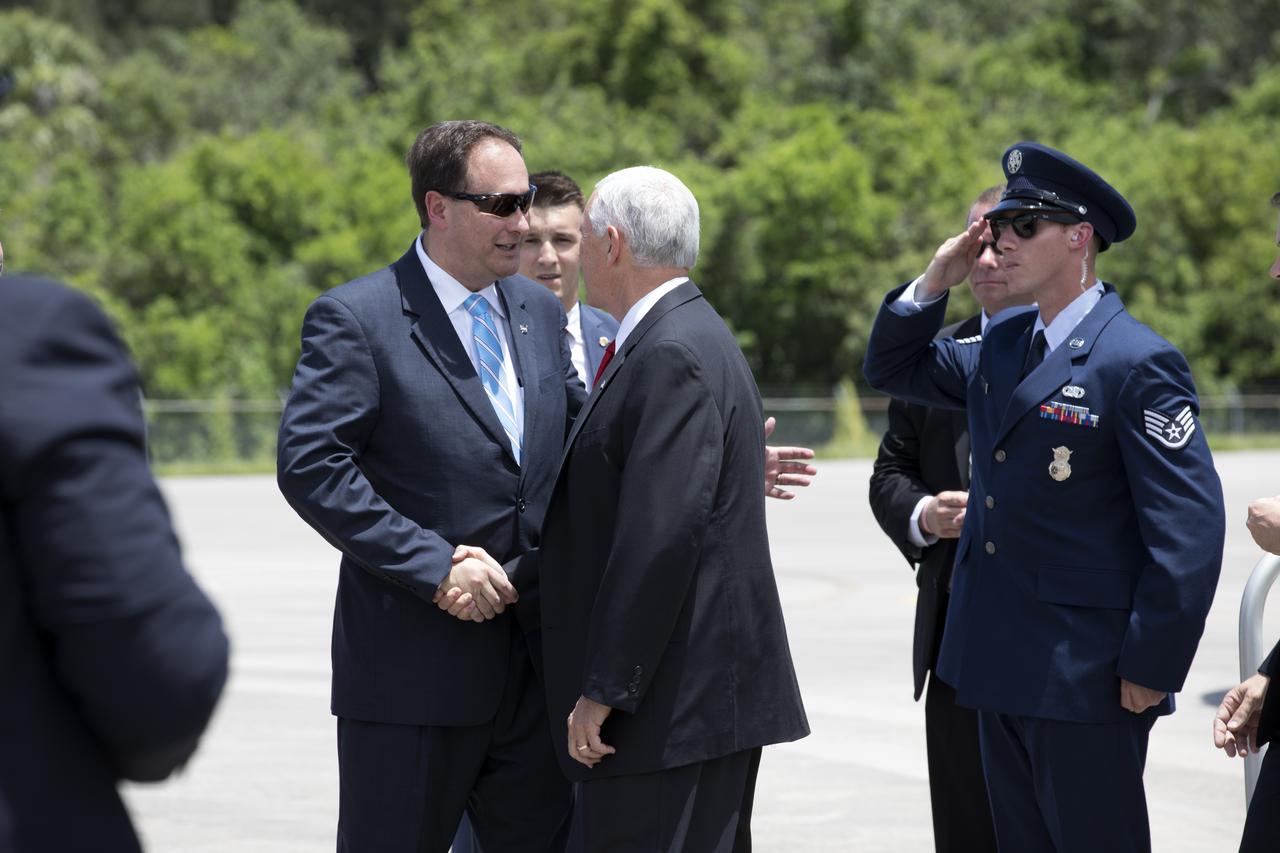
NASA's Acting Administrator Robert Lightfoot, left, greets Vide President Mike Pence at the Shuttle Landing Facility at the agency's Kennedy Space Center in Florida. During his visit to Kennedy, the Vice President spoke inside the iconic Vehicle Assembly Building, where he thanked employees for advancing American leadership in space.
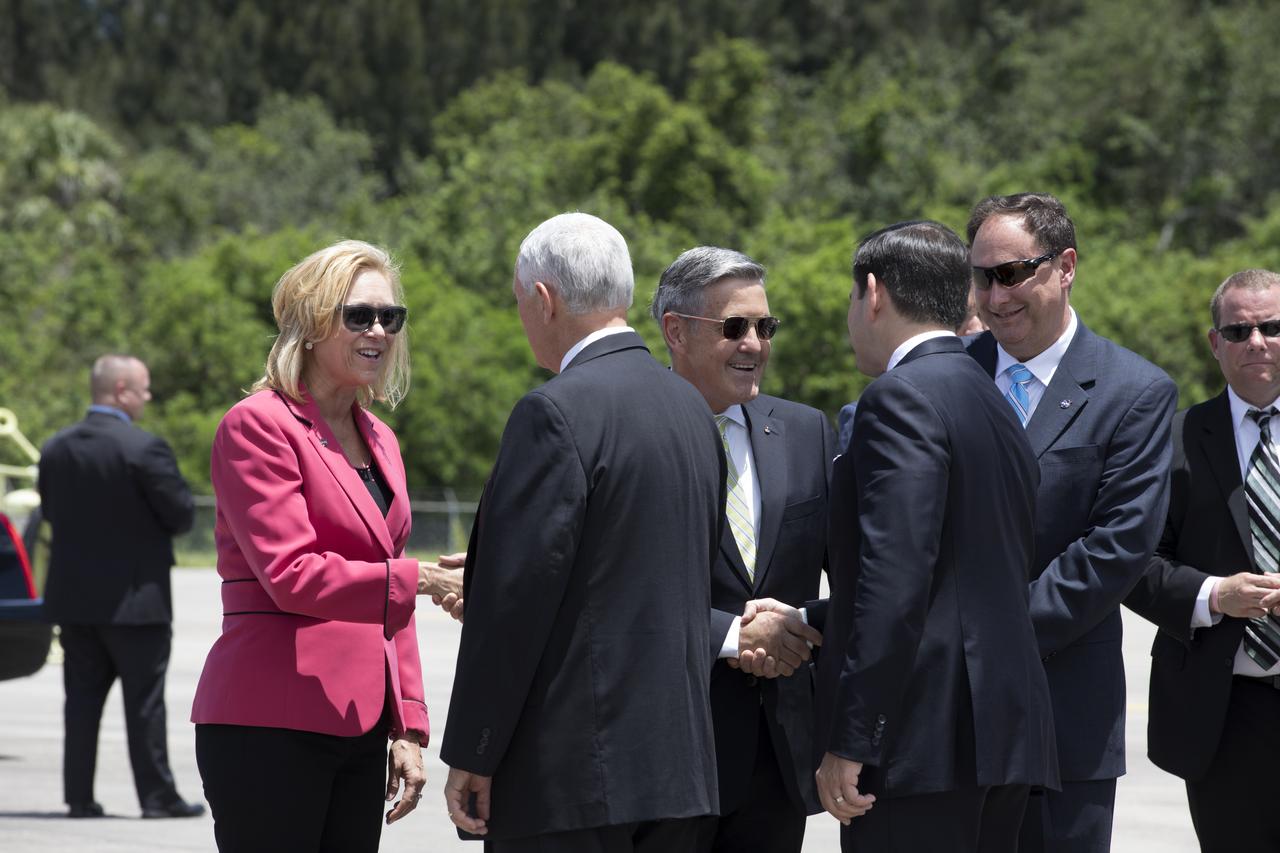
Upon his arrival at NASA's Kennedy Space Center in Florida, Vice President Mike Pence, back to the camera, is greeted by Deputy Center Director Janet Petro. Behind the Vice President, Sen. Marco Rubio of Florida, shakes hands with Center Director Bob Cabana. To the right of Cabana is Acting NASA Administrator Robert Lightfoot. During his visit to Kennedy, the Vice President spoke inside the iconic Vehicle Assembly Building, where he thanked employees for advancing American leadership in space.
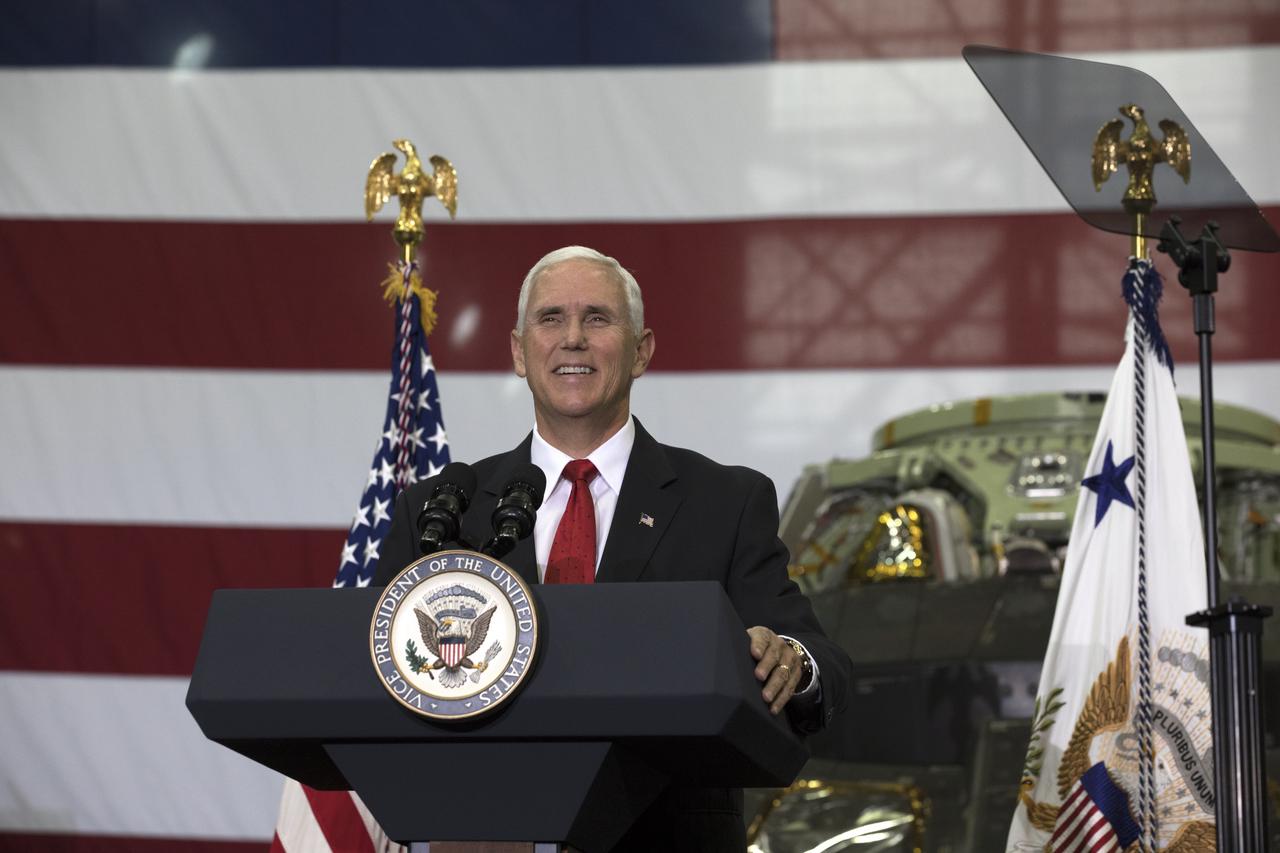
Vice President Mike Pence speaks before an audience of NASA leaders, U.S. and Florida government officials, and employees inside the Vehicle Assembly Building at NASA's Kennedy Space Center in Florida. Pence thanked employees for advancing American leadership in space. During his visit to Kennedy, the Vice President also toured several facilities highlighting the public-private partnerships, as both NASA and commercial companies prepare to launch American astronauts from the multi-user spaceport.
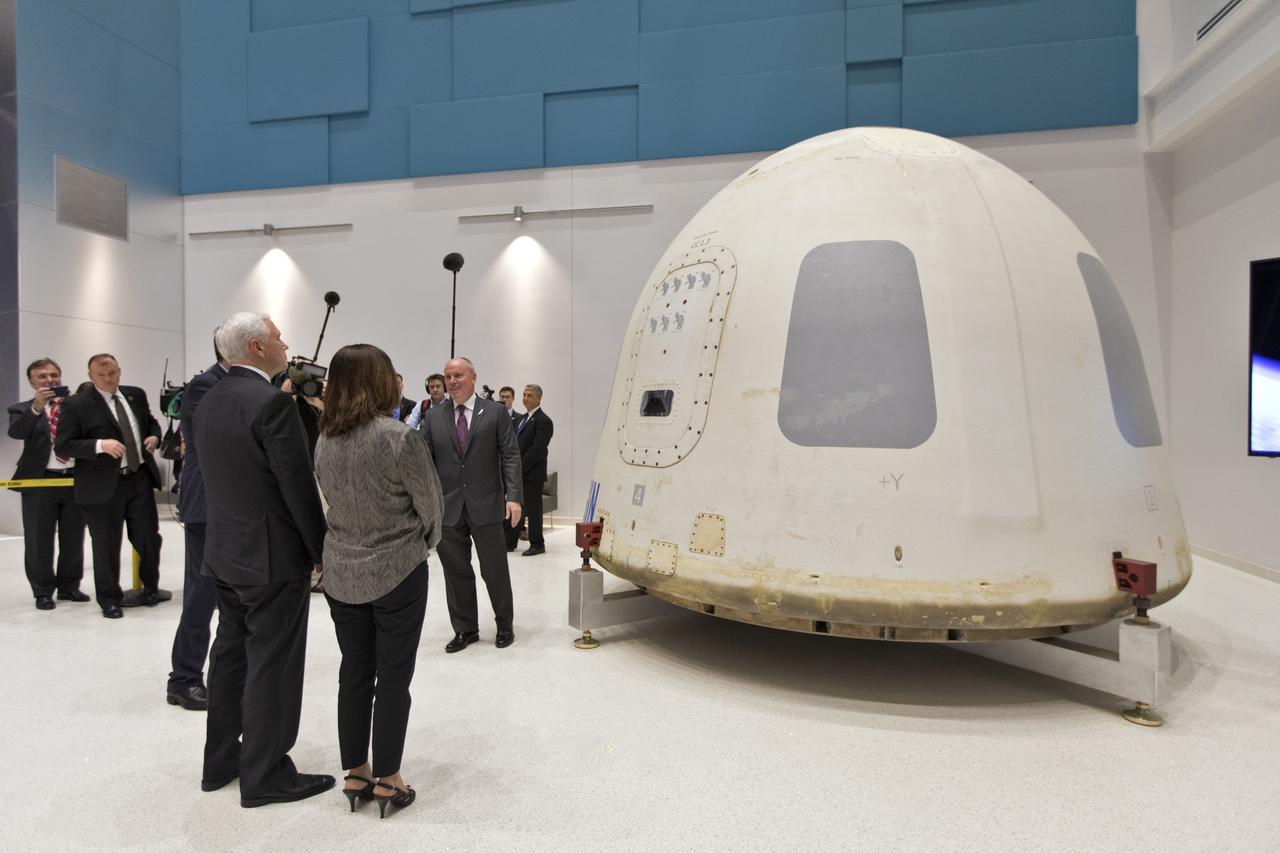
Vice President Mike Pence, second from right, and his wife, Karen Pence, tour the Blue Origin Manufacturing Facility near NASA's Kennedy Space Center in Florida, on Feb. 20, 2018. Vice President Pence viewed the flown New Shepard Booster and Crew Capsule. The Crew Capsule, in view, flew seven times, including a pad abort test and an escape test at maximum dynamic pressure. During his visit, Pence will chair a meeting of the National Space Council on Feb. 21, 2018 in the high bay of NASA Kennedy Space Center's Space Station Processing Facility. The council's role is to advise the president regarding national space policy and strategy, and review the nation's long-range goals for space activities.
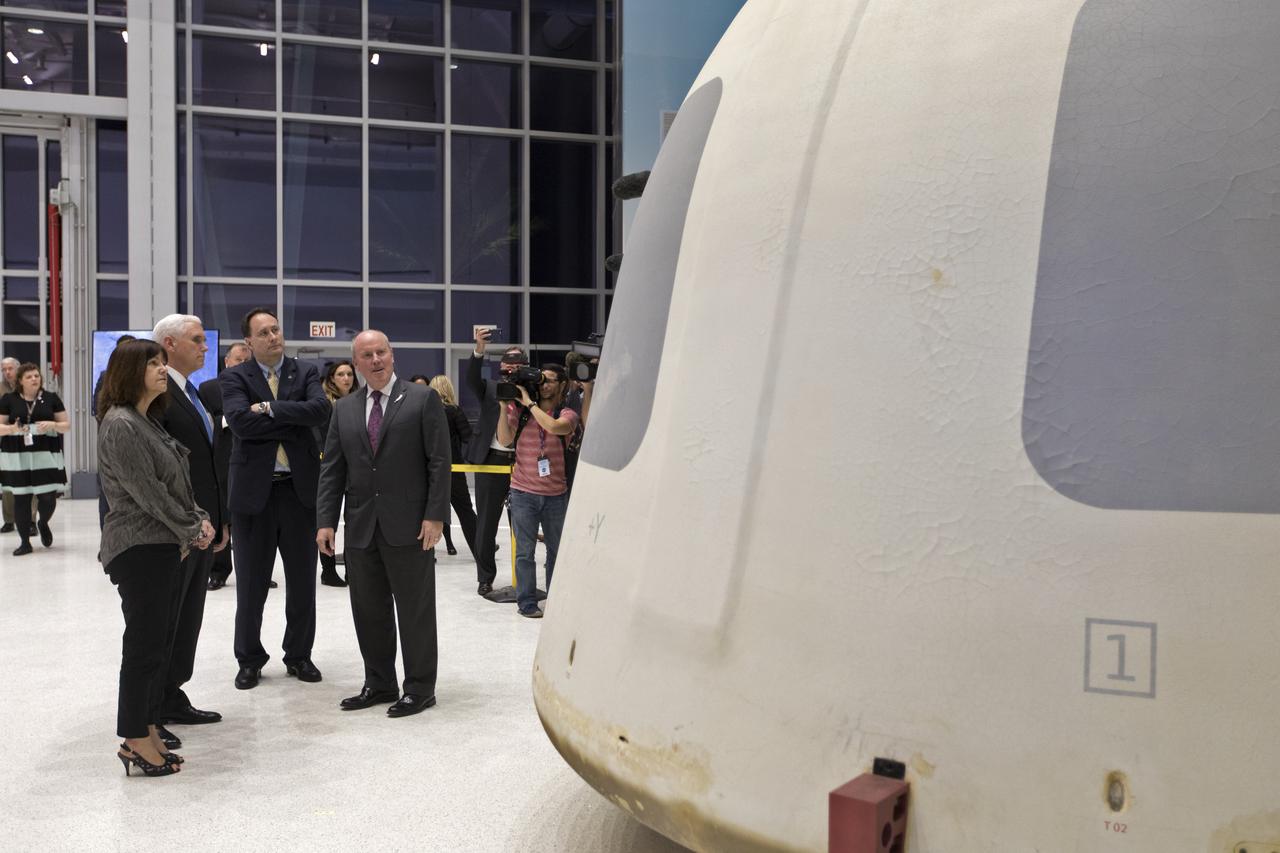
Vice President Mike Pence, second from left, tours the Blue Origin Manufacturing Facility near NASA's Kennedy Space Center in Florida, on Feb. 20, 2018. At far left is the vice president's wife, Karen Pence. To the right of Vice President Pence are acting NASA Administrator Robert Lightfoot and Blue Origin CEO Robert Smith. Pence viewed the flown New Shepard Booster and Crew Capsule. The Crew Capsule, in view, flew seven times, including a pad abort test and an escape test at maximum dynamic pressure. During his visit, Pence will chair a meeting of the National Space Council on Feb. 21, 2018 in the high bay of NASA Kennedy Space Center's Space Station Processing Facility. The council's role is to advise the president regarding national space policy and strategy, and review the nation's long-range goals for space activities.
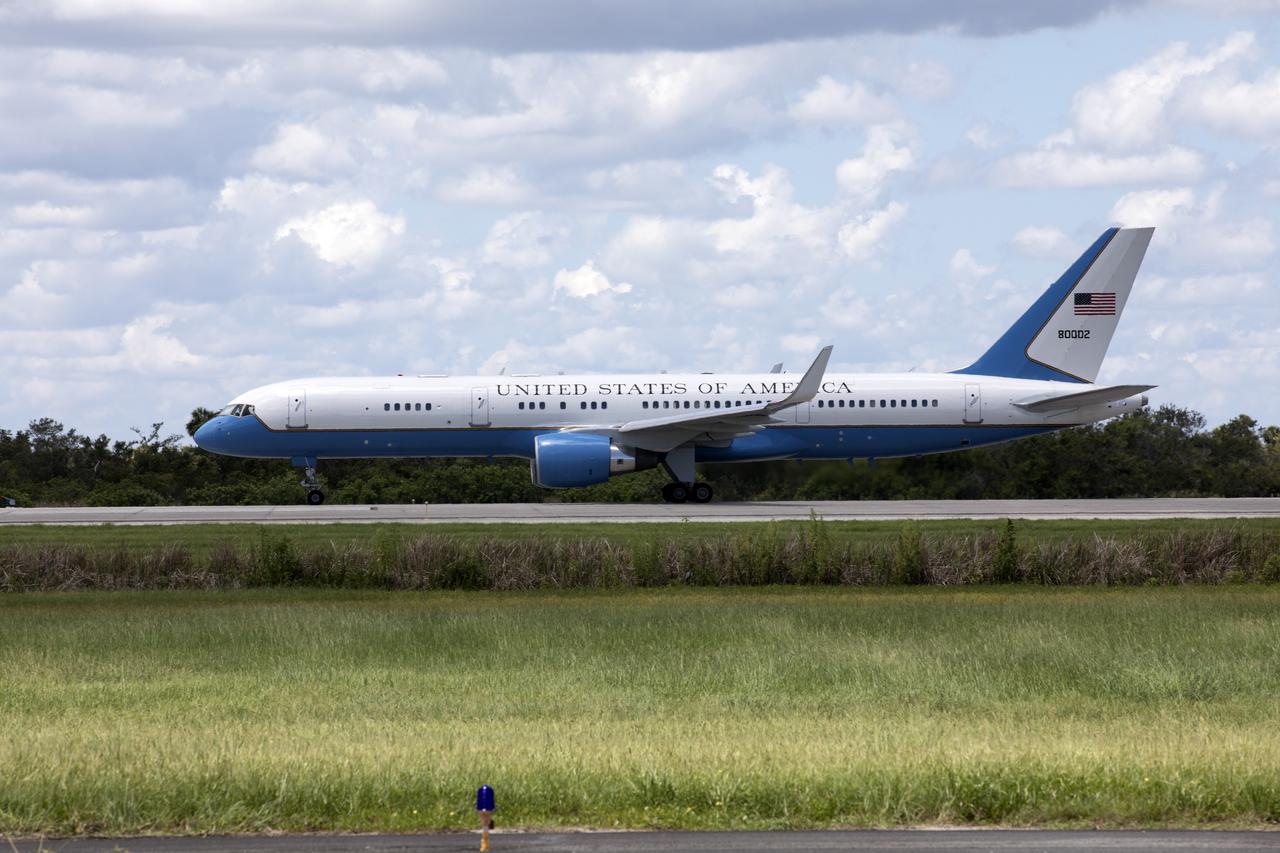
Air Force Two, carrying Vice President Mike Pence, taxis on the Shuttle Landing Facility at NASA's Kennedy Space Center in Florida. During his visit to Kennedy, the Vice President spoke inside the iconic Vehicle Assembly Building, where he thanked employees for advancing American leadership in space.
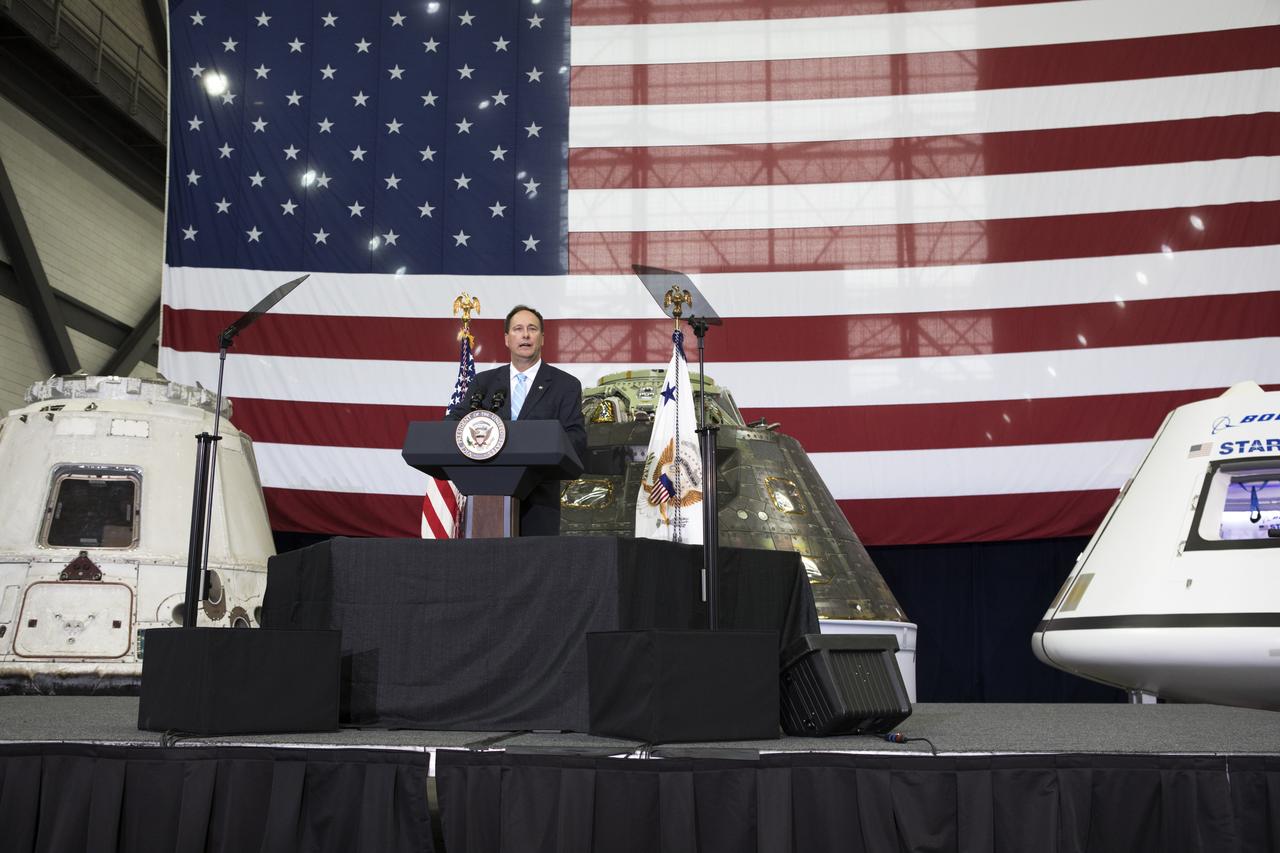
Acting NASA Administrator Robert Lightfoot addresses agency leaders, U.S. and Florida government officials, and employees inside the Vehicle Assembly Building at NASA's Kennedy Space Center in Florida during a visit by Vice President Mike Pence. Pence thanked employees for advancing American leadership in space. Behind the podium are, from the left, a flown SpaceX Dragon capsule, the Orion spacecraft flown on Exploration Flight test-1 in 2014, and a mockup of Boeing's CST-100 Starliner. During his visit to Kennedy, the Vice President also toured several facilities highlighting the public-private partnerships, as both NASA and commercial companies prepare to launch American astronauts from the multi-user spaceport.
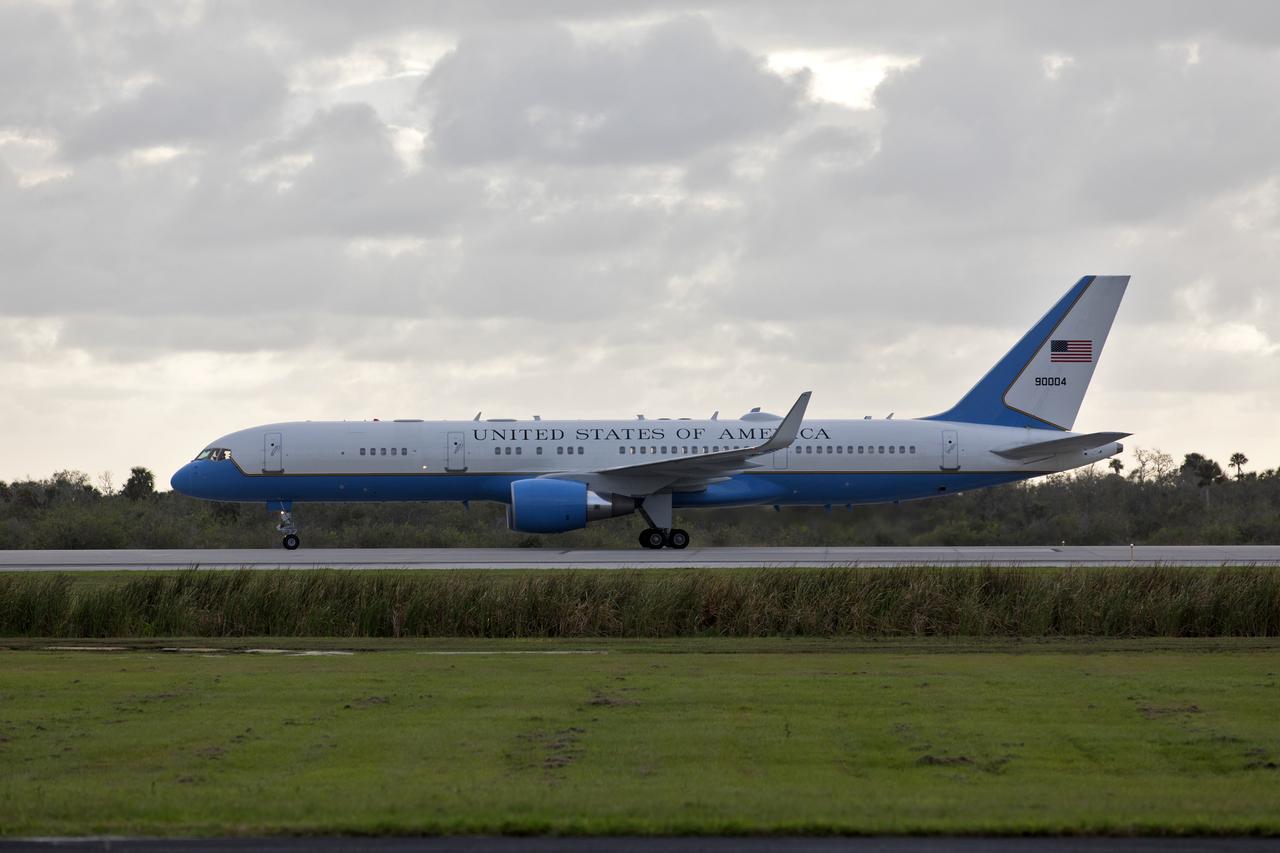
Air Force Two, carrying Vice President Mike Pence, taxis on the Shuttle Landing Facility at NASA's Kennedy Space Center in Florida, on Feb. 20, 2018. During his visit, Pence will chair a meeting of the National Space Council in the high bay of the center's Space Station Processing Facility. The council's role is to advise the president regarding national space policy and strategy, and review the nation's long-range goals for space activities.
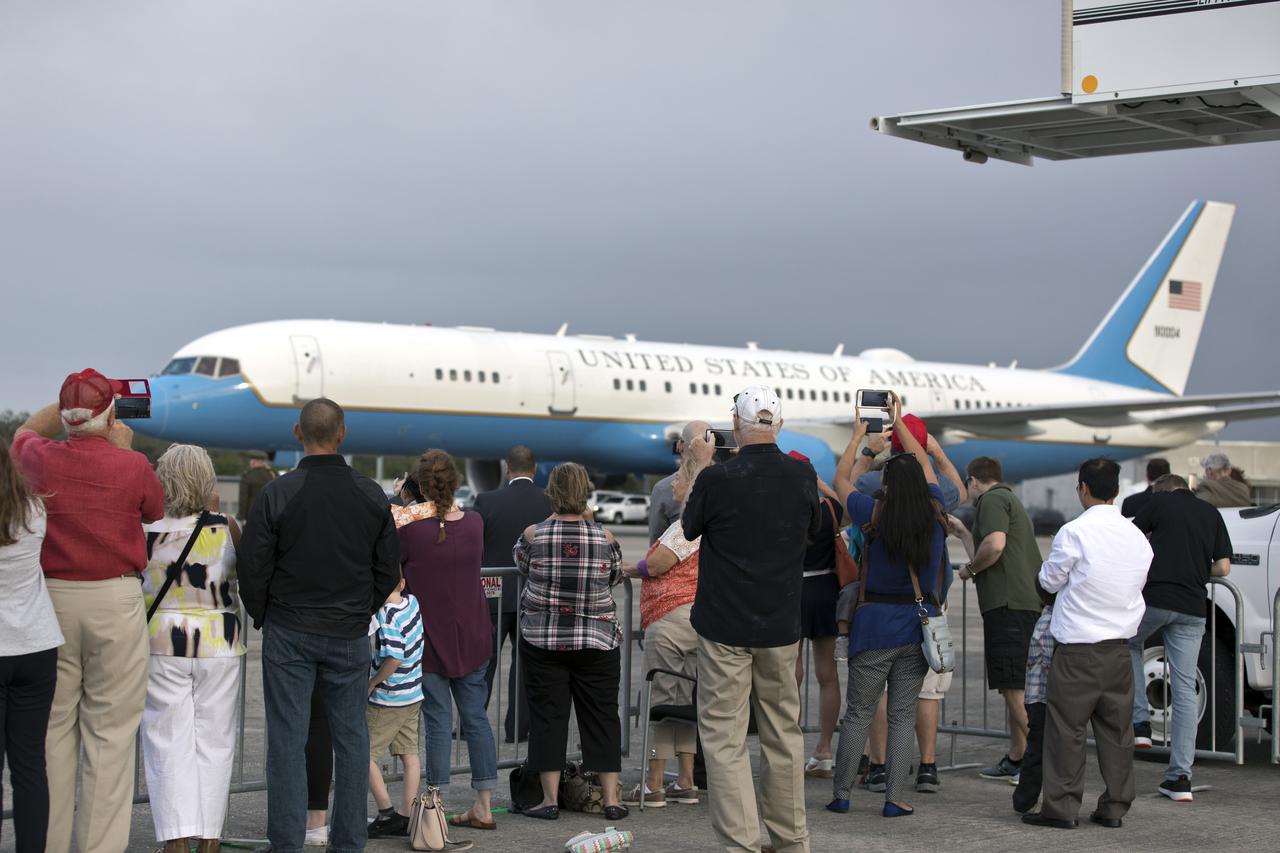
Spectators watch as Air Force Two, carrying Vice President Mike Pence, taxis on the Shuttle Landing Facility at NASA's Kennedy Space Center in Florida, on Feb. 20, 2018. During his visit, Pence will chair a meeting of the National Space Council in the high bay of the center's Space Station Processing Facility. The council's role is to advise the president regarding national space policy and strategy, and review the nation's long-range goals for space activities.
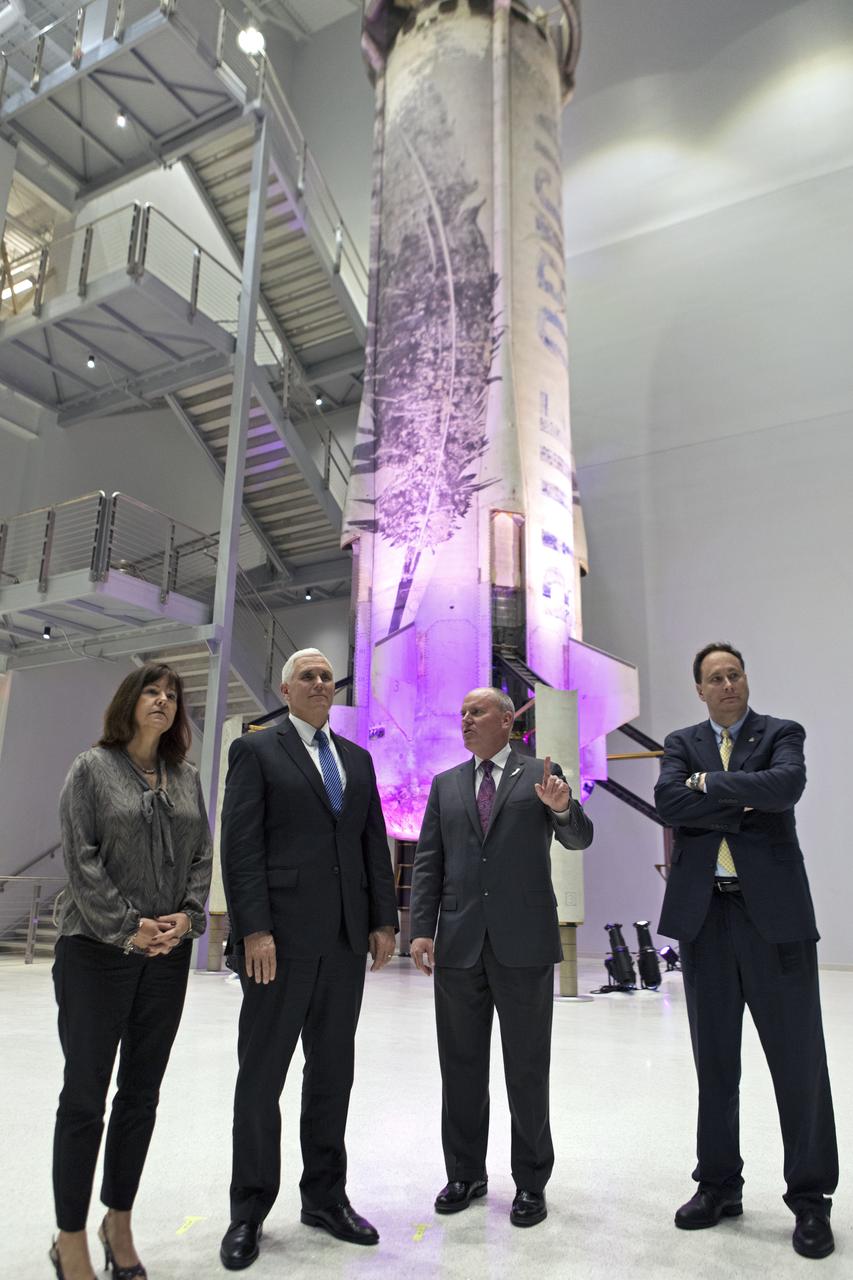
Vice President Mike Pence, second from left, tours the Blue Origin Manufacturing Facility near NASA's Kennedy Space Center in Florida, on Feb. 20, 2018. From left, are Karen Pence, Blue Origin CEO Robert Smith, and acting NASA Administrator Robert Lightfoot. Vice President Pence viewed the flown New Shepard Booster and Crew Capsule. The booster was the first launch vehicle with a successful vertical takeoff and vertical landing to demonstrate reusability. During his visit, Pence will chair a meeting of the National Space Council on Feb. 21, 2018 in the high bay of NASA Kennedy Space Center's Space Station Processing Facility. The council's role is to advise the president regarding national space policy and strategy, and review the nation's long-range goals for space activities.
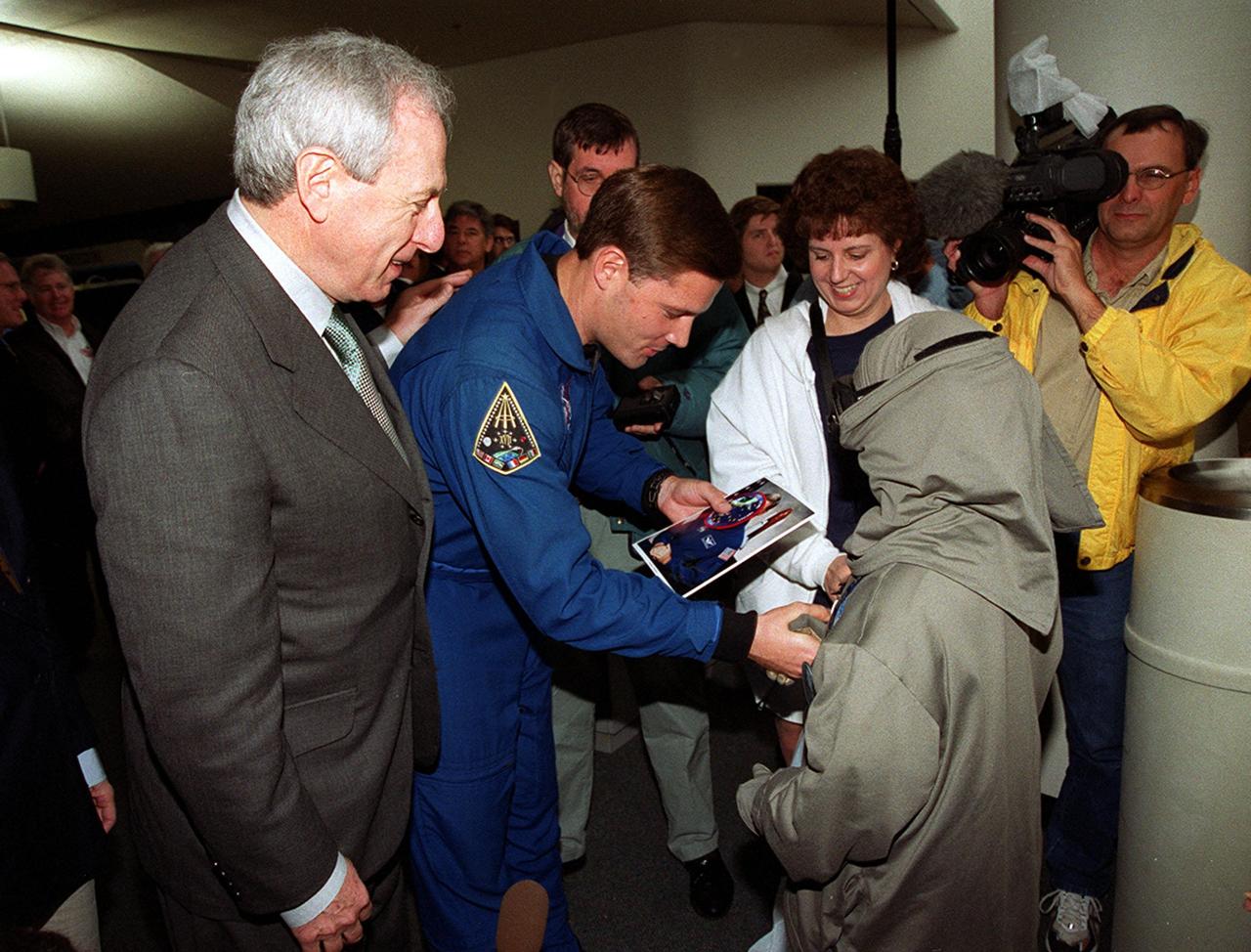
NASA Administrator Dan Goldin (left) watches as 10-year-old Jonathan Pierce (right), who is garbed in a protective cooling suit designed by NASA, shakes hands with astronaut Dog Wheelock. Behind Jonathan is his mother, Penny. Jonathan suffers from erythropoietic protoporphyria, a rare condition that makes his body unable to withstand ultraviolet rays. The suit allows him to be outside during the day, which would otherwise be impossible. Jonathan's trip was funded by the Make-A-Wish Foundation and included a visit to Disney World. He and his family were among a dozen VIPs at KSC to view the launch of STS-99
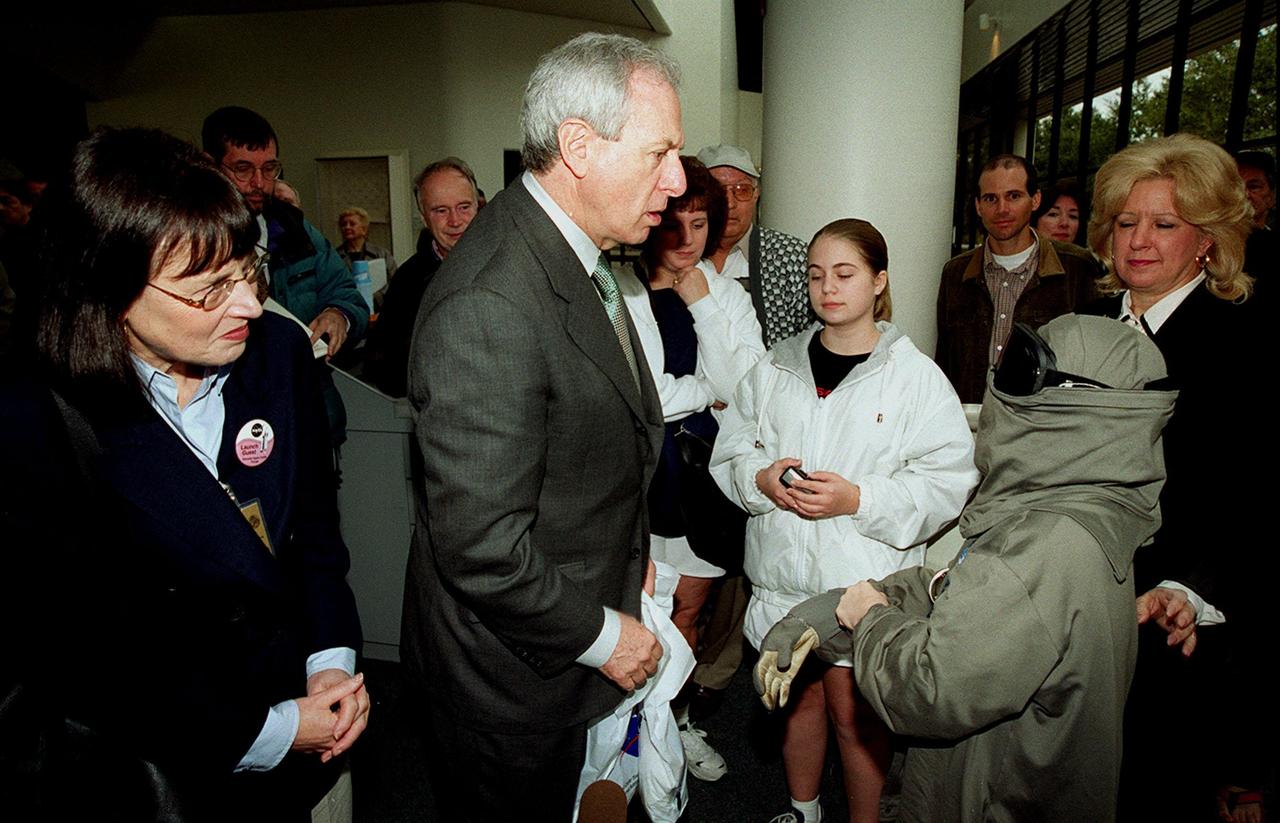
NASA Administrator Dan Goldin (center) greets 10-year-old Jonathan Pierce (right), who is garbed in a protective cooling suit designed by NASA. In the background, between them, are Jonathan's mother, Penny; his grandfather, John Janocka; and his sister, Jaimie.. At left is Mrs. Goldin. Jonathan suffers from erythropoietic protoporphyria, a rare condition that makes his body unable to withstand ultraviolet rays. The suit allows him to be outside during the day, which would otherwise be impossible. Jonathan's trip was funded by the Make-A-Wish Foundation and included a visit to Disney World. He and his family were among a dozen VIPs at KSC to view the launch of STS-99
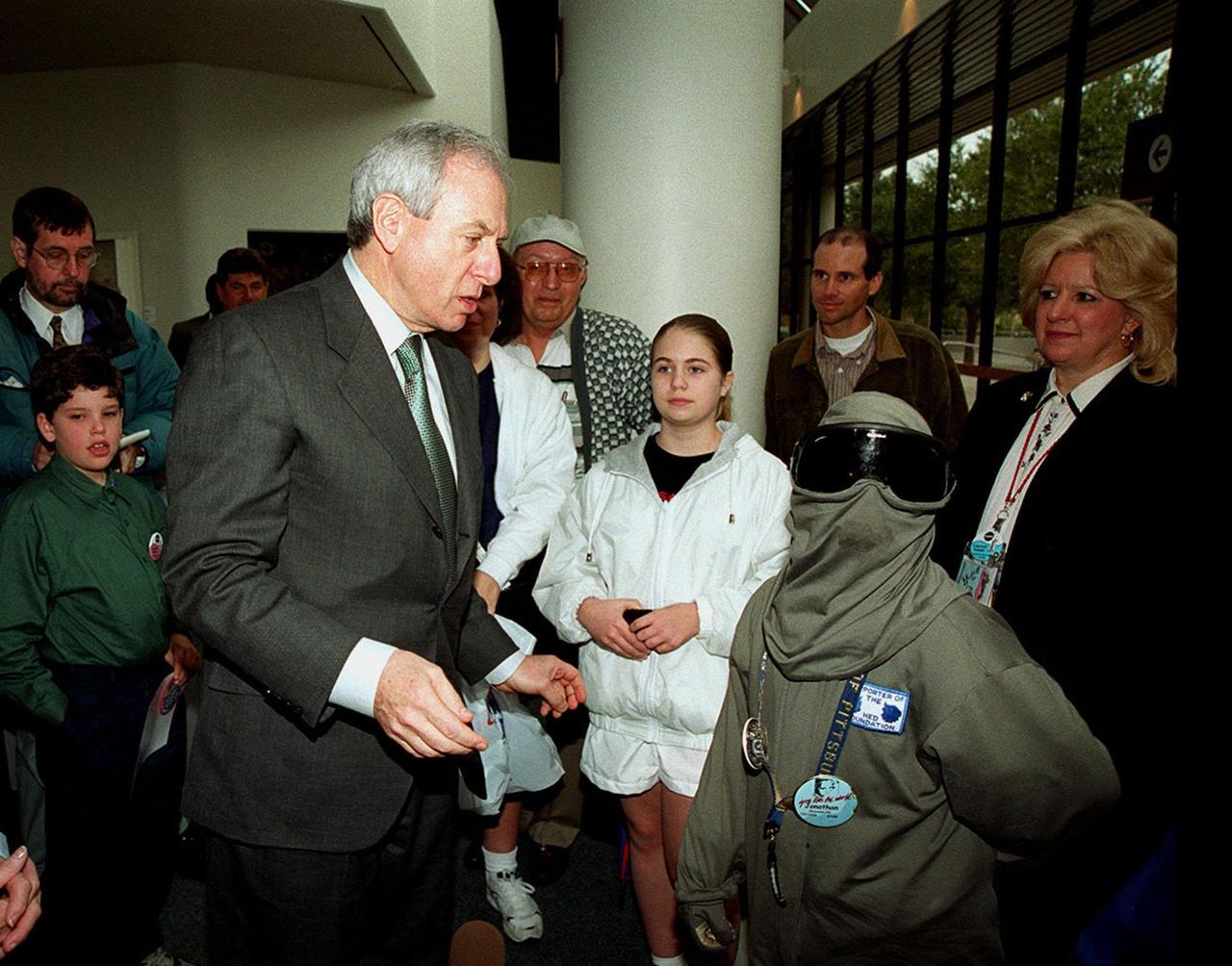
NASA Administrator Dan Goldin (center) talks to 10-year-old Jonathan Pierce (right), who is garbed in a protective cooling suit designed by NASA. In the background, between them, are Jonathan's mother, Penny; his grandfather, John Janocka; and his sister, Jaimie. At left is Mrs. Goldin. Jonathan suffers from erythropoietic protoporphyria, a rare condition that makes his body unable to withstand ultraviolet rays. The suit allows him to be outside during the day, which would otherwise be impossible. Jonathan's trip was funded by the Make-A-Wish Foundation and included a visit to Disney World. He and his family were among a dozen VIPs at KSC to view the launch of STS-99
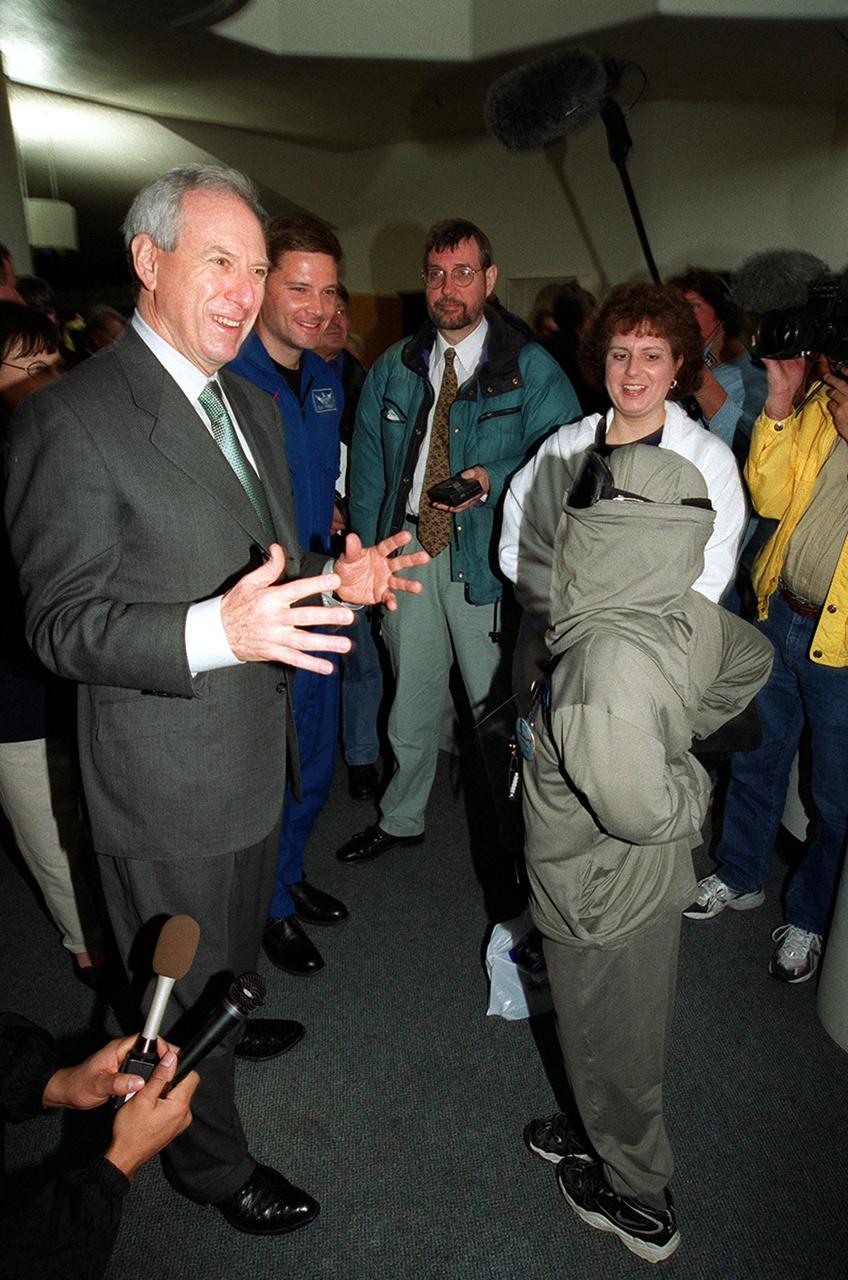
NASA Administrator Dan Goldin (left) shares a light moment during his meeting with 10-year-old Jonathan Pierce (right), who is garbed in a protective cooling suit designed by NASA. Behind Goldin is astronaut Doug Wheelock; behind Jonathan is his mother, Penny. Jonathan suffers from erythropoietic protoporphyria, a rare condition that makes his body unable to withstand ultraviolet rays. The suit allows him to be outside during the day, which would otherwise be impossible. Jonathan's trip was funded by the Make-A-Wish Foundation and included a visit to Disney World. He and his family were among a dozen VIPs at KSC to view the launch of STS-99
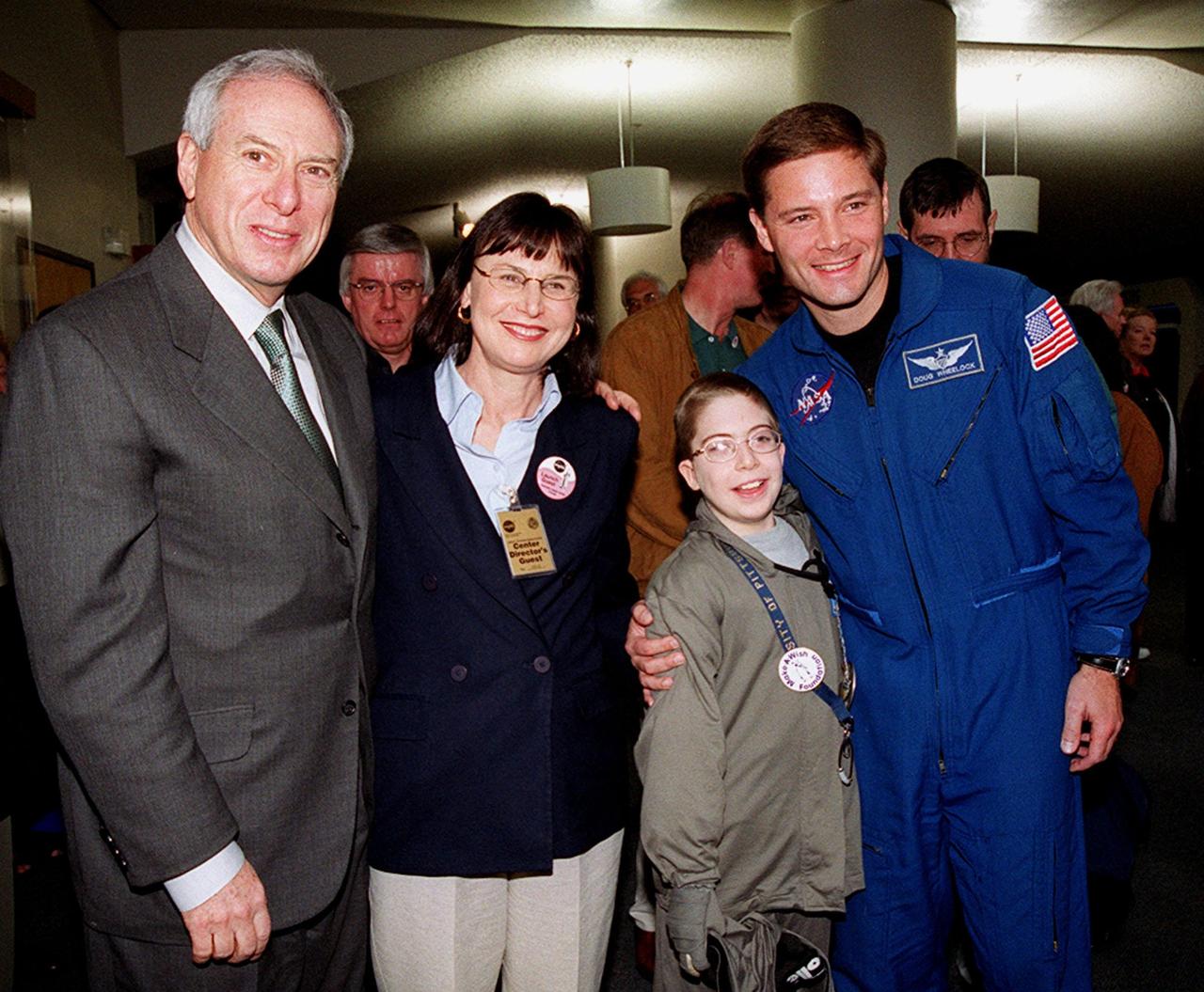
Ten-year-old Jonathan Pierce (second from right), who is garbed in a protective cooling suit, without the helmet, which was designed by NASA, poses with (left to right) NASA Administrator Dan Goldin, Mrs. Goldin, and astronaut Doug Wheelock. Jonathan suffers from erythropoietic protoporphyria, a rare condition that makes his body unable to withstand ultraviolet rays. The suit allows him to be outside during the day, which would otherwise be impossible. Jonathan's trip was funded by the Make-A-Wish Foundation and included a visit to Disney World. He and his family were among a dozen VIPs at KSC to view the launch of STS-99
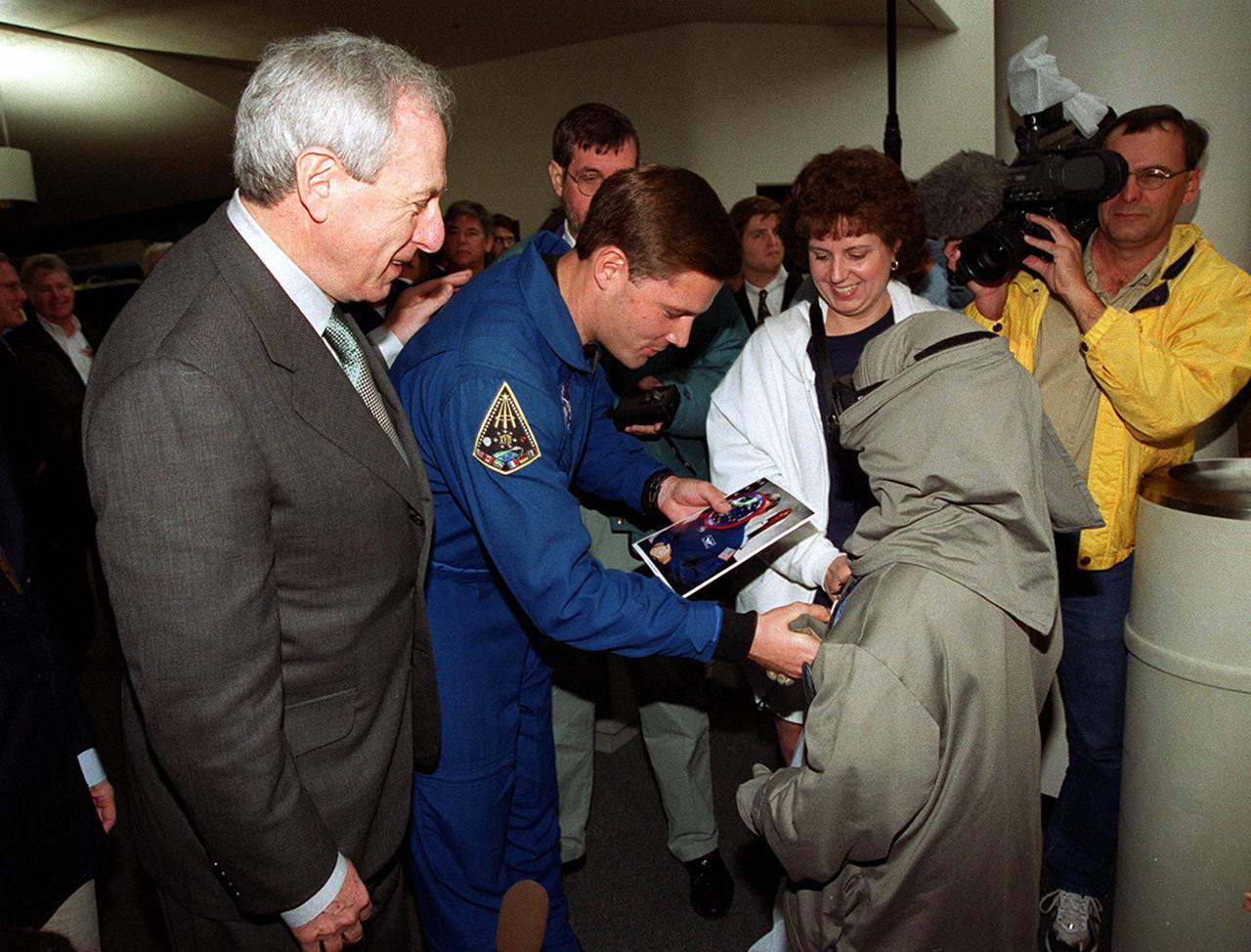
NASA Administrator Dan Goldin (left) watches as 10-year-old Jonathan Pierce (right), who is garbed in a protective cooling suit designed by NASA, shakes hands with astronaut Dog Wheelock. Behind Jonathan is his mother, Penny. Jonathan suffers from erythropoietic protoporphyria, a rare condition that makes his body unable to withstand ultraviolet rays. The suit allows him to be outside during the day, which would otherwise be impossible. Jonathan's trip was funded by the Make-A-Wish Foundation and included a visit to Disney World. He and his family were among a dozen VIPs at KSC to view the launch of STS-99
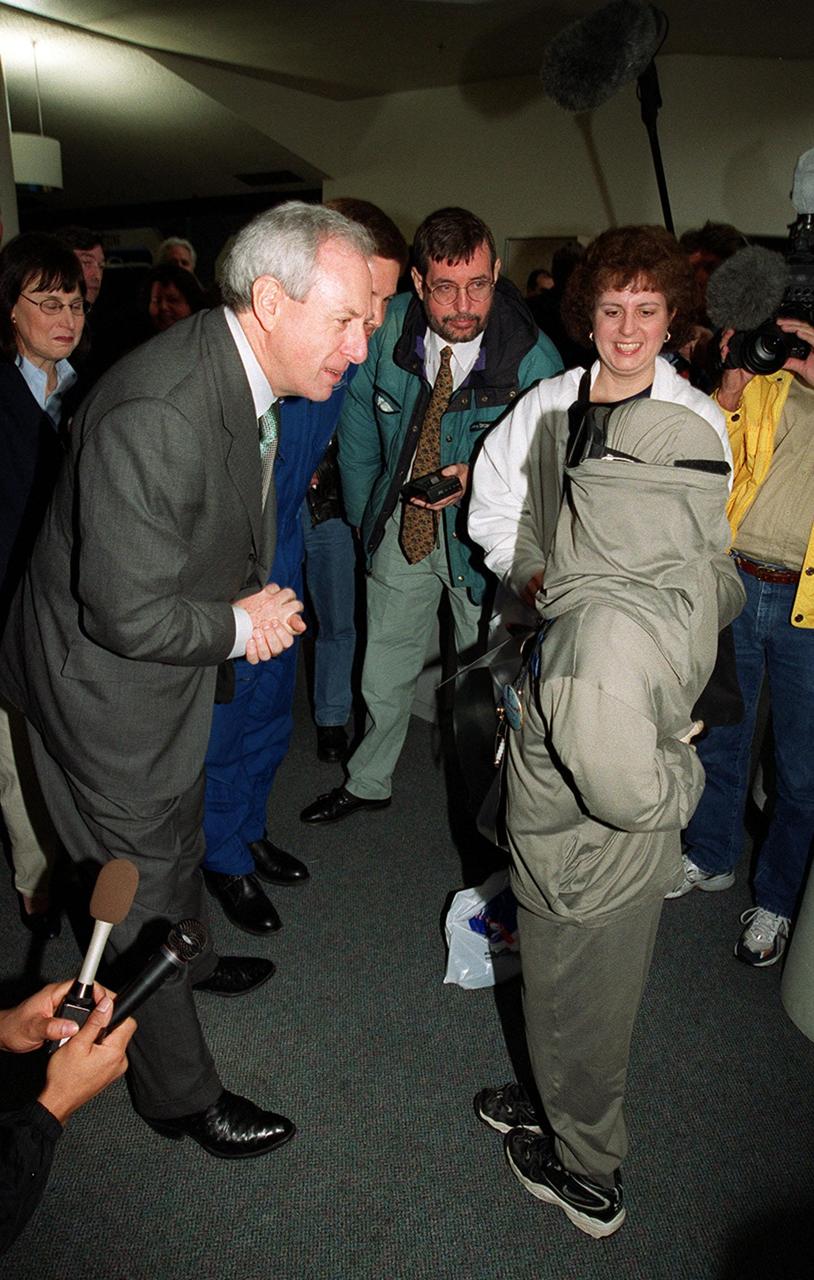
NASA Administrator Dan Goldin (left) listens intently to 10-year-old Jonathan Pierce (right), who is garbed in a protective cooling suit designed by NASA. Behind Goldin is astronaut Doug Wheelock; behind Jonathan is his mother, Penny. Jonathan suffers from erythropoietic protoporphyria, a rare condition that makes his body unable to withstand ultraviolet rays. The suit allows him to be outside during the day, which would otherwise be impossible. Jonathan's trip was funded by the Make-A-Wish Foundation and included a visit to Disney World. He and his family were among a dozen VIPs at KSC to view the launch of STS-99
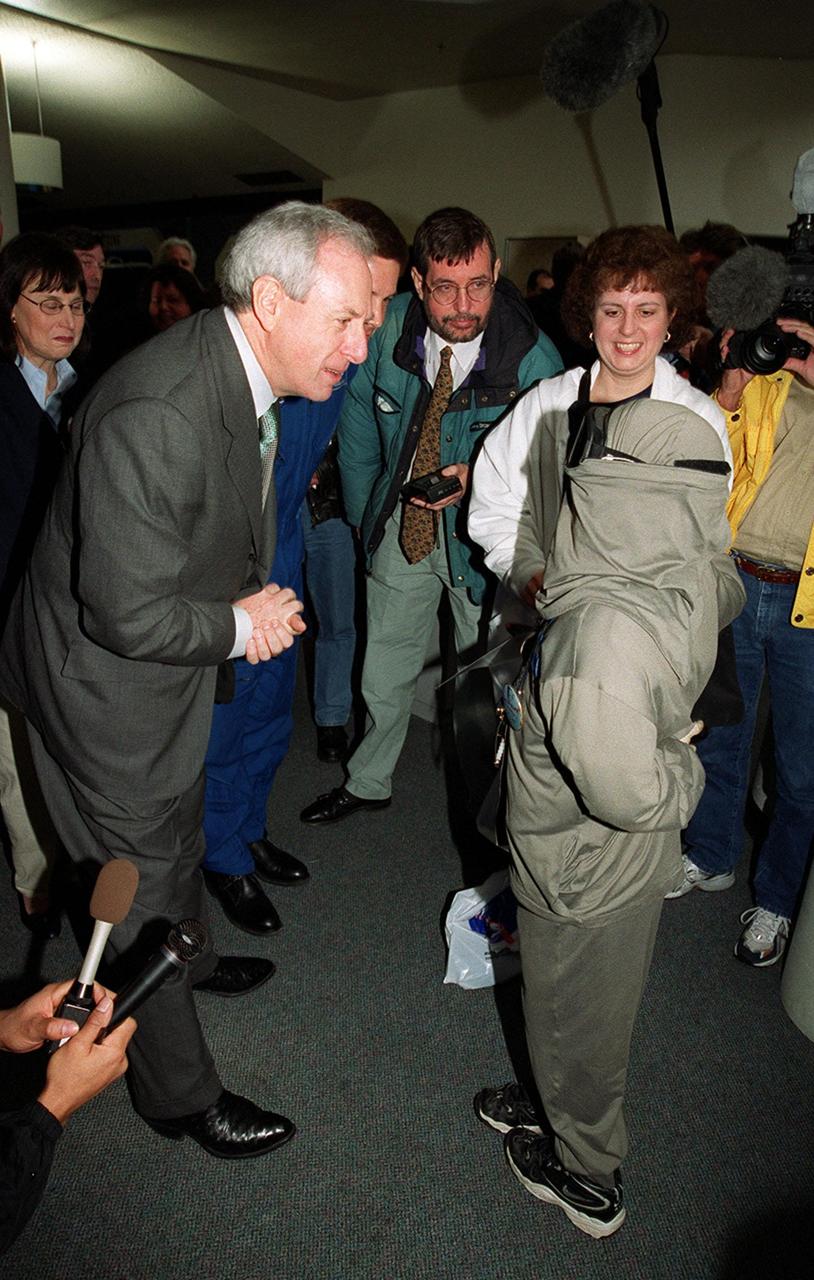
NASA Administrator Dan Goldin (left) listens intently to 10-year-old Jonathan Pierce (right), who is garbed in a protective cooling suit designed by NASA. Behind Goldin is astronaut Doug Wheelock; behind Jonathan is his mother, Penny. Jonathan suffers from erythropoietic protoporphyria, a rare condition that makes his body unable to withstand ultraviolet rays. The suit allows him to be outside during the day, which would otherwise be impossible. Jonathan's trip was funded by the Make-A-Wish Foundation and included a visit to Disney World. He and his family were among a dozen VIPs at KSC to view the launch of STS-99
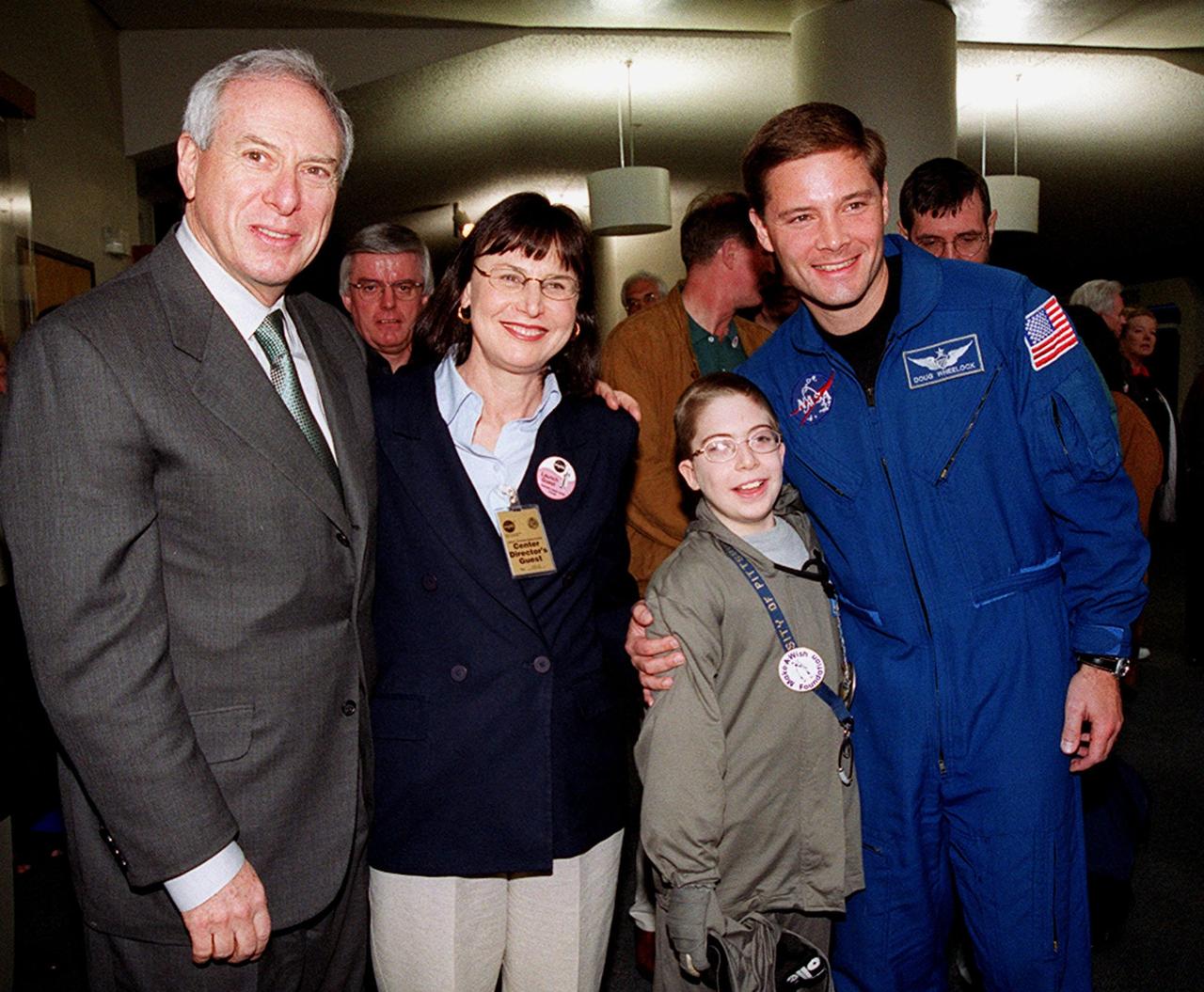
Ten-year-old Jonathan Pierce (second from right), who is garbed in a protective cooling suit, without the helmet, which was designed by NASA, poses with (left to right) NASA Administrator Dan Goldin, Mrs. Goldin, and astronaut Doug Wheelock. Jonathan suffers from erythropoietic protoporphyria, a rare condition that makes his body unable to withstand ultraviolet rays. The suit allows him to be outside during the day, which would otherwise be impossible. Jonathan's trip was funded by the Make-A-Wish Foundation and included a visit to Disney World. He and his family were among a dozen VIPs at KSC to view the launch of STS-99
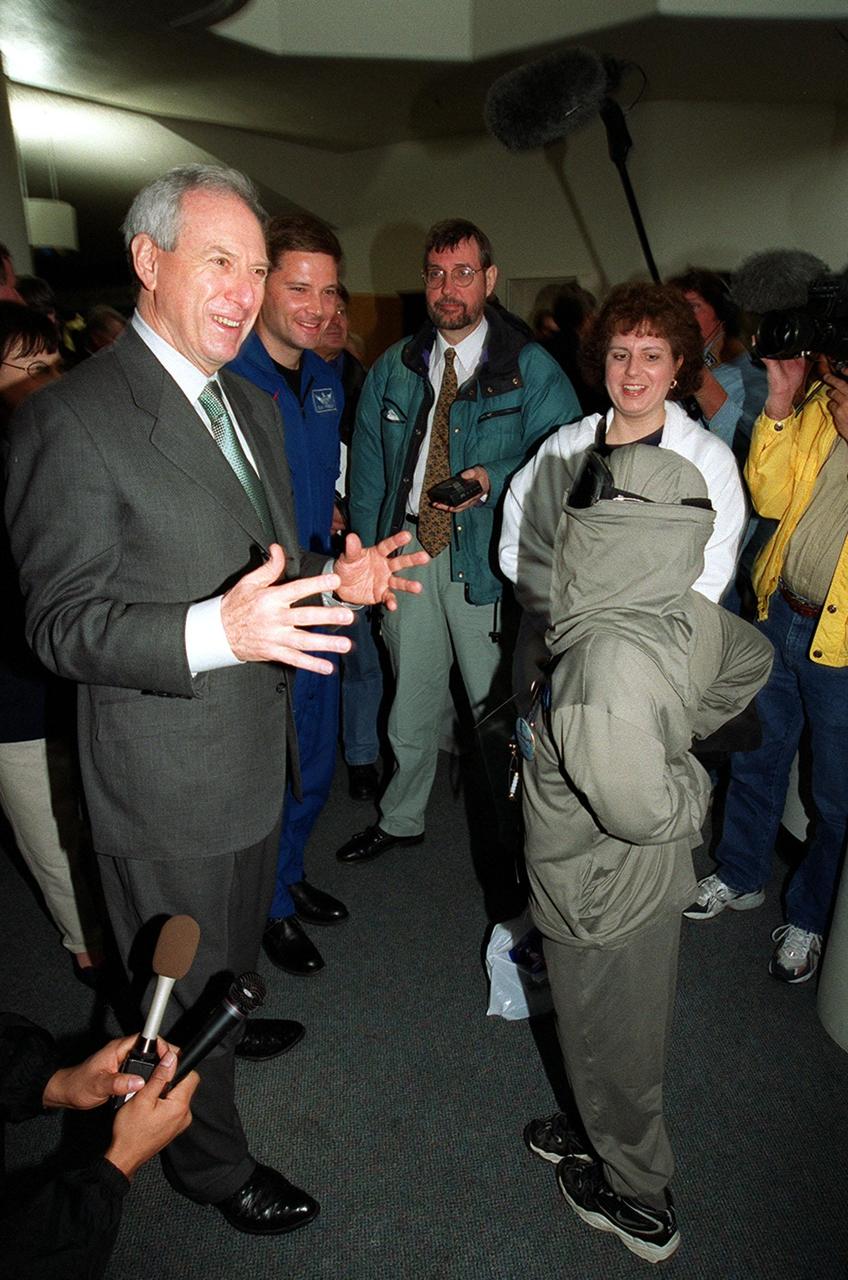
NASA Administrator Dan Goldin (left) shares a light moment during his meeting with 10-year-old Jonathan Pierce (right), who is garbed in a protective cooling suit designed by NASA. Behind Goldin is astronaut Doug Wheelock; behind Jonathan is his mother, Penny. Jonathan suffers from erythropoietic protoporphyria, a rare condition that makes his body unable to withstand ultraviolet rays. The suit allows him to be outside during the day, which would otherwise be impossible. Jonathan's trip was funded by the Make-A-Wish Foundation and included a visit to Disney World. He and his family were among a dozen VIPs at KSC to view the launch of STS-99
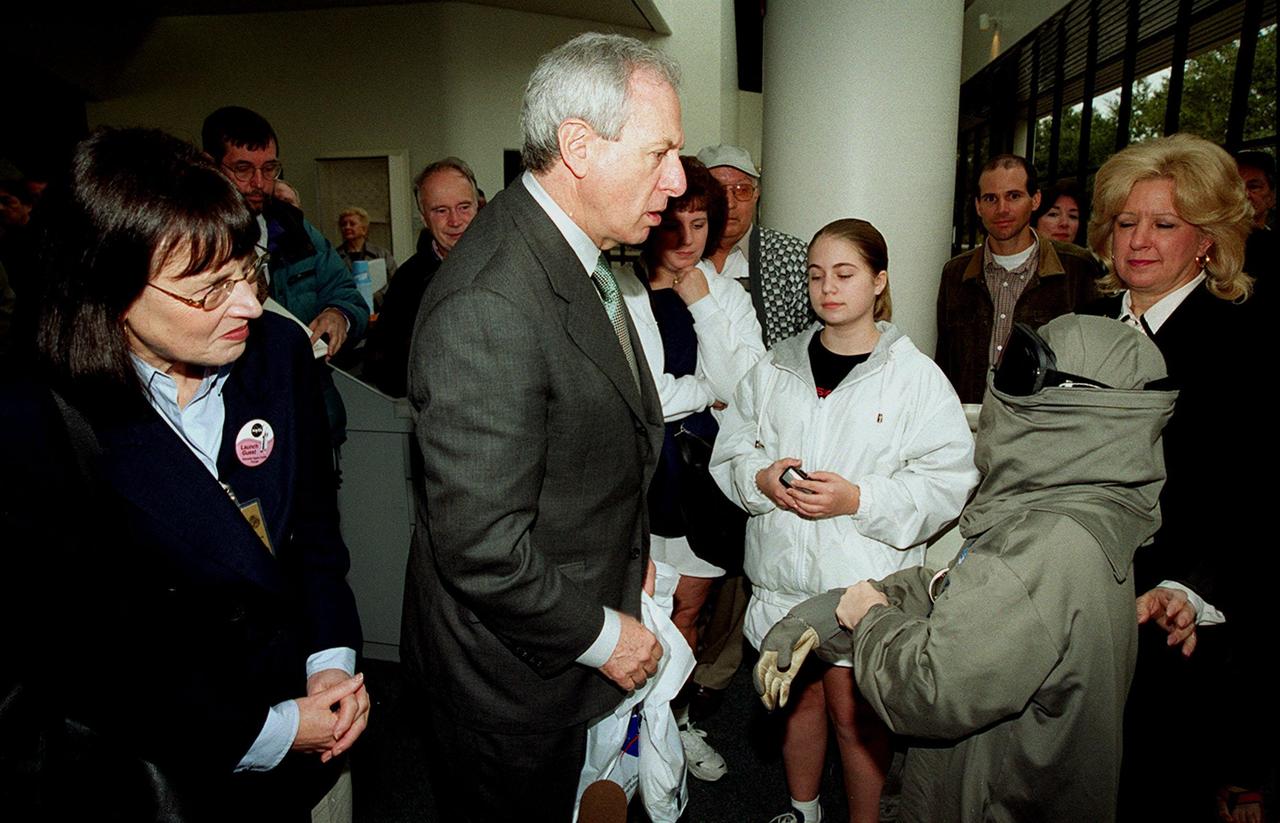
NASA Administrator Dan Goldin (center) greets 10-year-old Jonathan Pierce (right), who is garbed in a protective cooling suit designed by NASA. In the background, between them, are Jonathan's mother, Penny; his grandfather, John Janocka; and his sister, Jaimie.. At left is Mrs. Goldin. Jonathan suffers from erythropoietic protoporphyria, a rare condition that makes his body unable to withstand ultraviolet rays. The suit allows him to be outside during the day, which would otherwise be impossible. Jonathan's trip was funded by the Make-A-Wish Foundation and included a visit to Disney World. He and his family were among a dozen VIPs at KSC to view the launch of STS-99
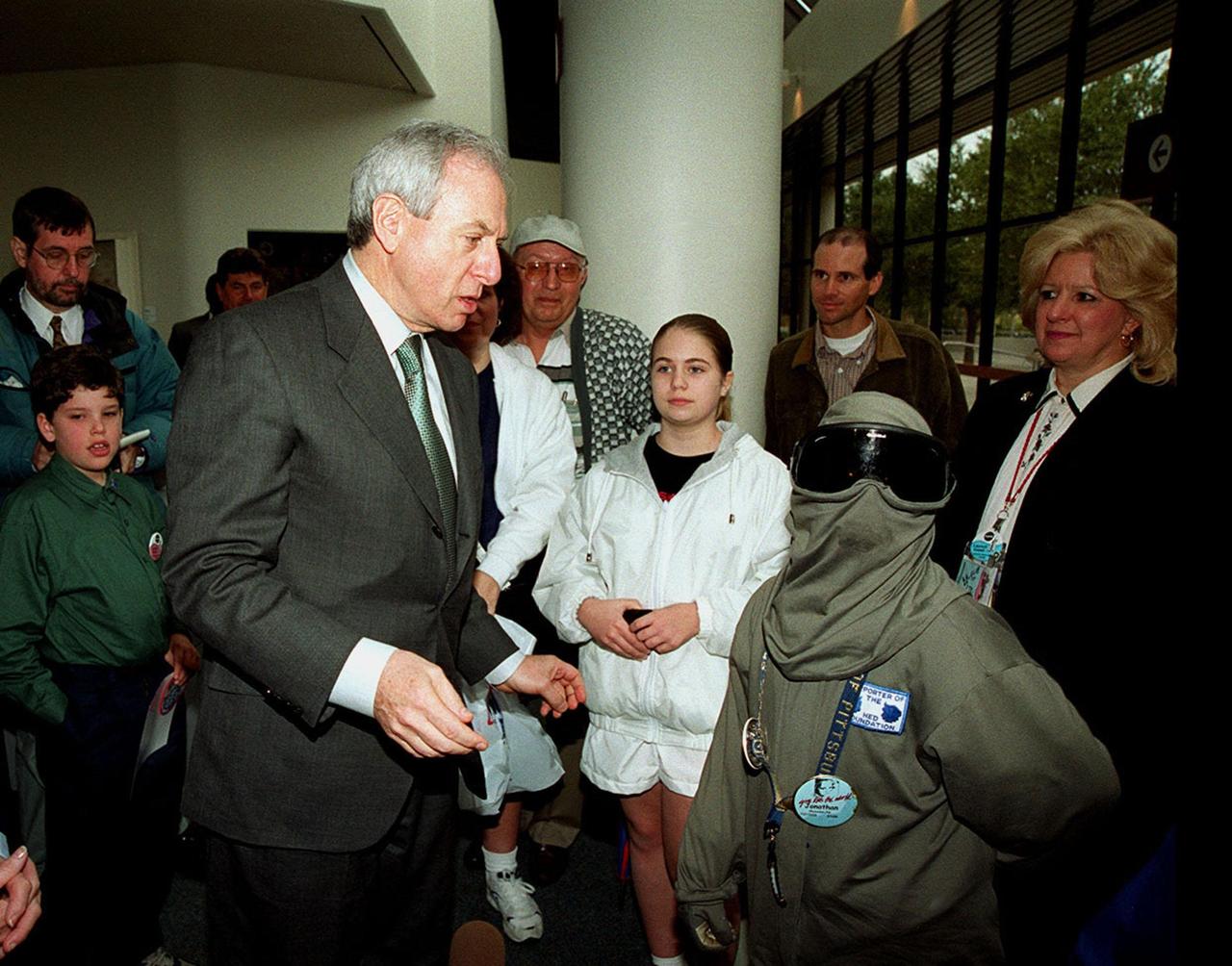
NASA Administrator Dan Goldin (center) talks to 10-year-old Jonathan Pierce (right), who is garbed in a protective cooling suit designed by NASA. In the background, between them, are Jonathan's mother, Penny; his grandfather, John Janocka; and his sister, Jaimie. At left is Mrs. Goldin. Jonathan suffers from erythropoietic protoporphyria, a rare condition that makes his body unable to withstand ultraviolet rays. The suit allows him to be outside during the day, which would otherwise be impossible. Jonathan's trip was funded by the Make-A-Wish Foundation and included a visit to Disney World. He and his family were among a dozen VIPs at KSC to view the launch of STS-99
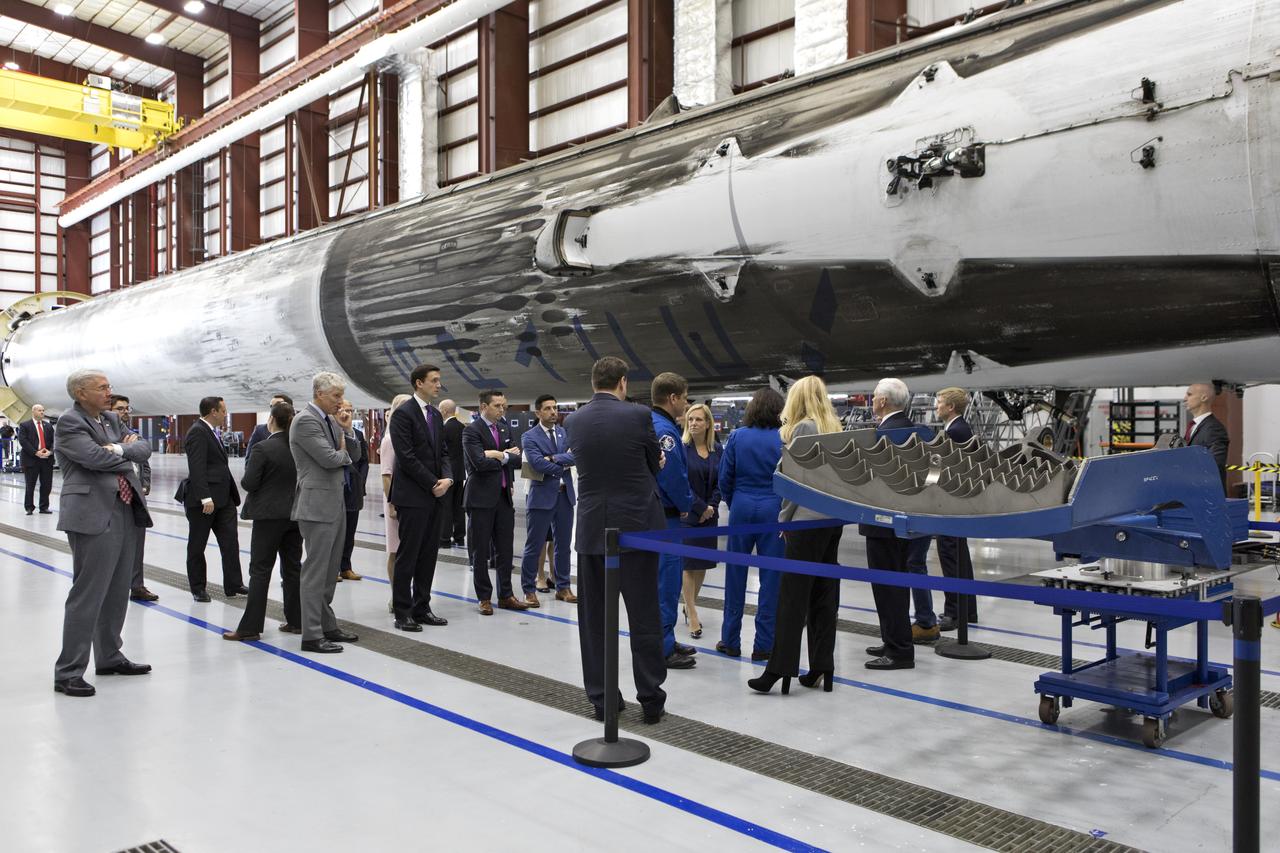
Vice President Mike Pence tours the SpaceX hangar at Launch Complex 39A, at NASA's Kennedy Space Center in Florida, on Feb. 21, 2018. The group is getting a close-up look at a previously flown Falcon 9 rocket. During his visit, Pence chaired a meeting of the National Space Council in the high bay of the center's Space Station Processing Facility. The council's role is to advise the president regarding national space policy and strategy, and review the nation's long-range goals for space activities.
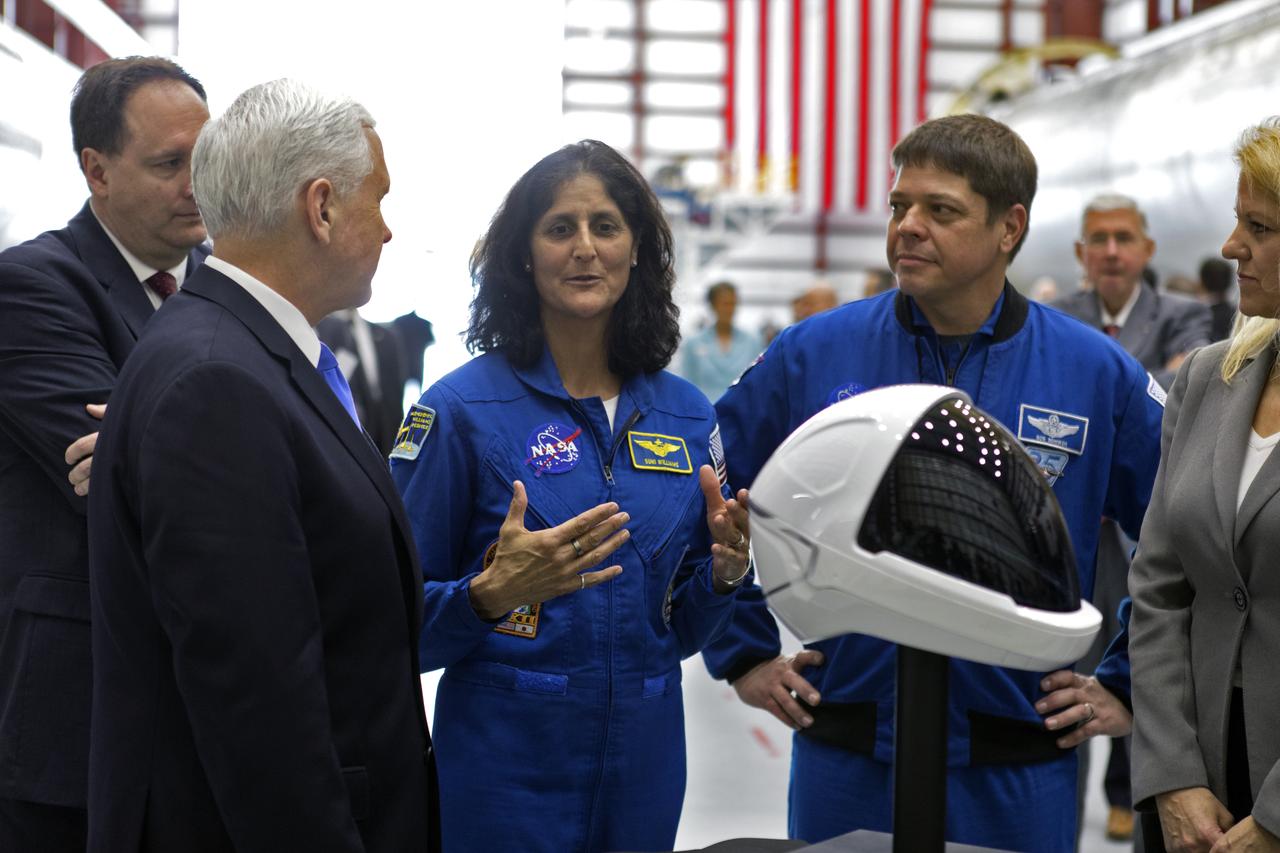
Vice President Mike Pence, left foreground, tours the SpaceX hangar at Launch Complex 39A, at NASA's Kennedy Space Center in Florida, on Feb. 21, 2018. NASA astronauts Suni Williams and Bob Behnken describe the type of pressure suit helmet to be worn as crews travel to the International Space Station aboard the company's Crew Dragon spacecraft. Behind Pence is Acting NASA Administrator Robert Lightfoot. To the far right is SpaceX President and COO Gwynne Shotwell. During his visit, Pence chaired a meeting of the National Space Council in the high bay of the center's Space Station Processing Facility. The council's role is to advise the president regarding national space policy and strategy, and review the nation's long-range goals for space activities.
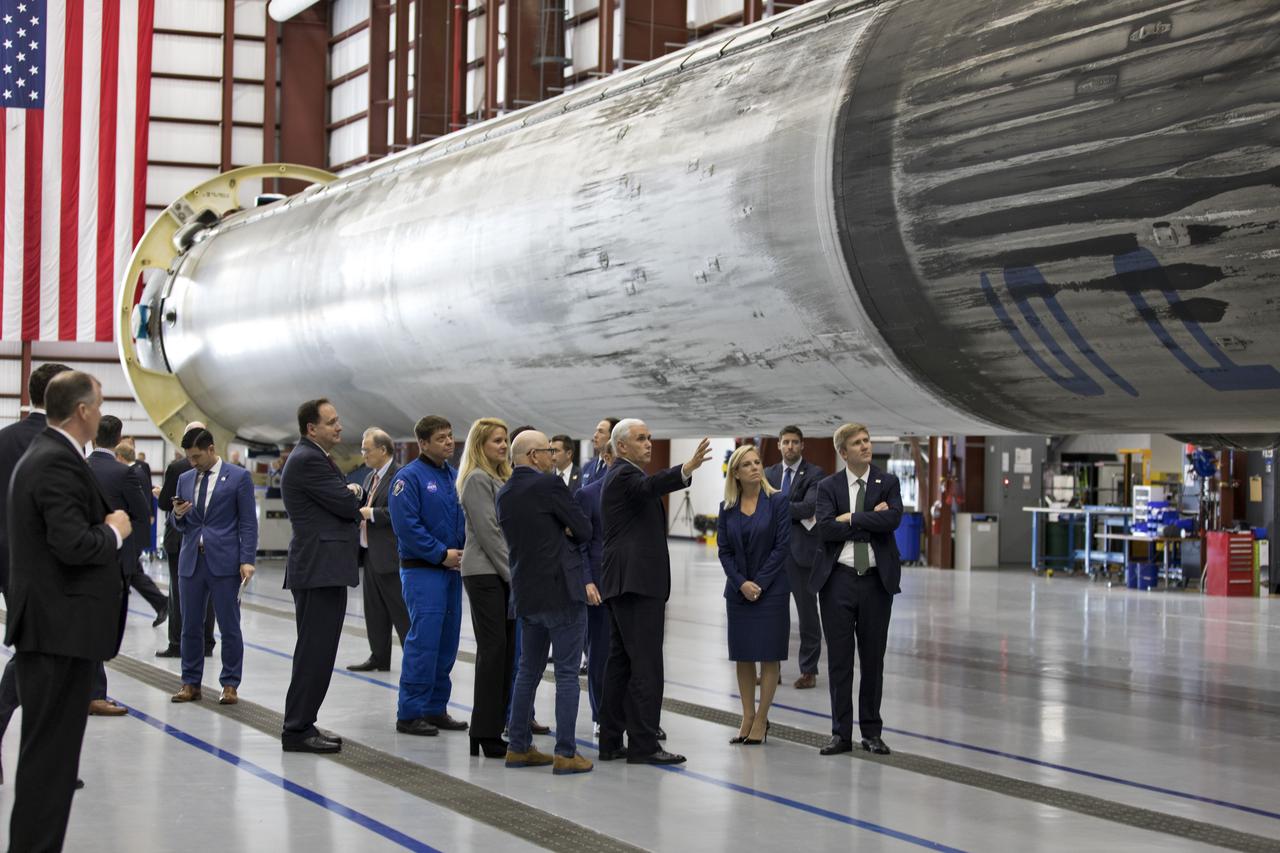
Vice President Mike Pence, pointing, tours the SpaceX hangar at Launch Complex 39A, at NASA's Kennedy Space Center in Florida, on Feb. 21, 2018. The group is getting a close-up look at a previously flown Falcon 9 rocket. During his visit, Pence chaired a meeting of the National Space Council in the high bay of the center's Space Station Processing Facility. The council's role is to advise the president regarding national space policy and strategy, and review the nation's long-range goals for space activities.
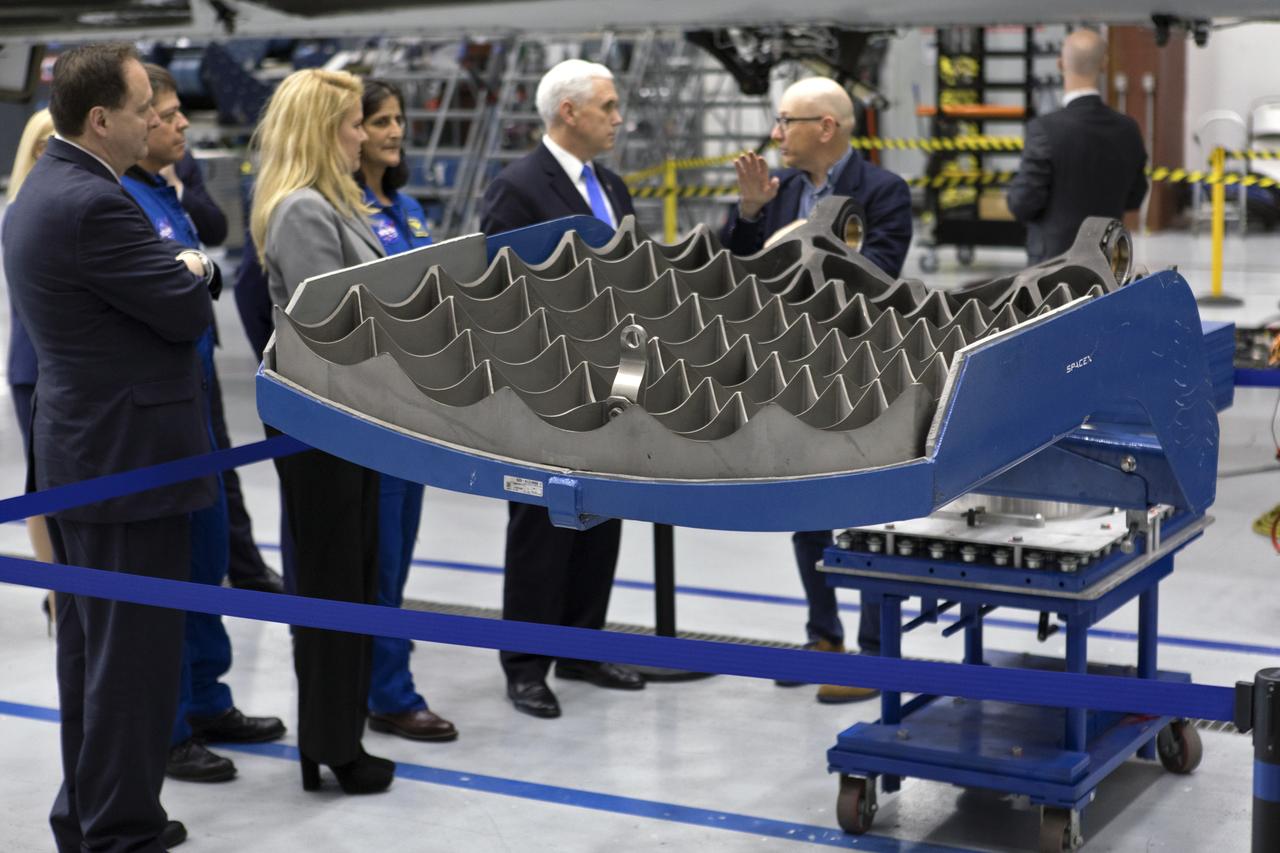
Vice President Mike Pence tours the SpaceX hangar at Launch Complex 39A, at NASA's Kennedy Space Center in Florida, on Feb. 21, 2018. SpaceX Director of Launch Pads John Muratore, far right, describes hardware to, from the left Acting NASA Administrator Robert Lightfoot, SpaceX President and COO Gwynne Shotwell, NASA astronaut Suni Williams and Pence. During his visit, Pence chaired a meeting of the National Space Council in the high bay of the center's Space Station Processing Facility. The council's role is to advise the president regarding national space policy and strategy, and review the nation's long-range goals for space activities.
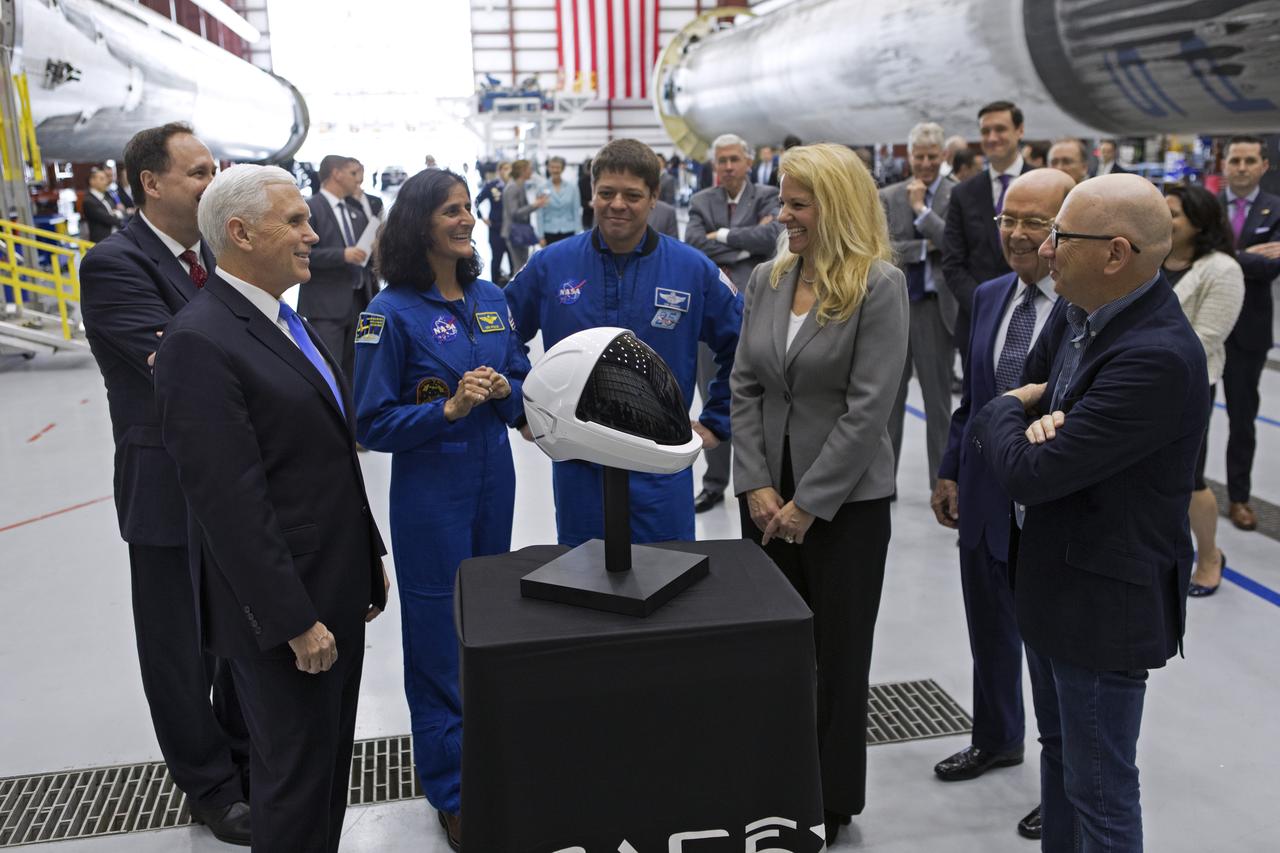
Vice President Mike Pence, left, tours the SpaceX hangar at Launch Complex 39A, at NASA's Kennedy Space Center in Florida, on Feb. 21, 2018. SpaceX officials, along with NASA astronauts Suni Williams and Bob Behnken, examine the type of pressure suit helmet to be worn as crews travel to the International Space Station aboard the company's Crew Dragon spacecraft. During his visit, Pence chaired a meeting of the National Space Council in the high bay of the center's Space Station Processing Facility. The council's role is to advise the president regarding national space policy and strategy, and review the nation's long-range goals for space activities.
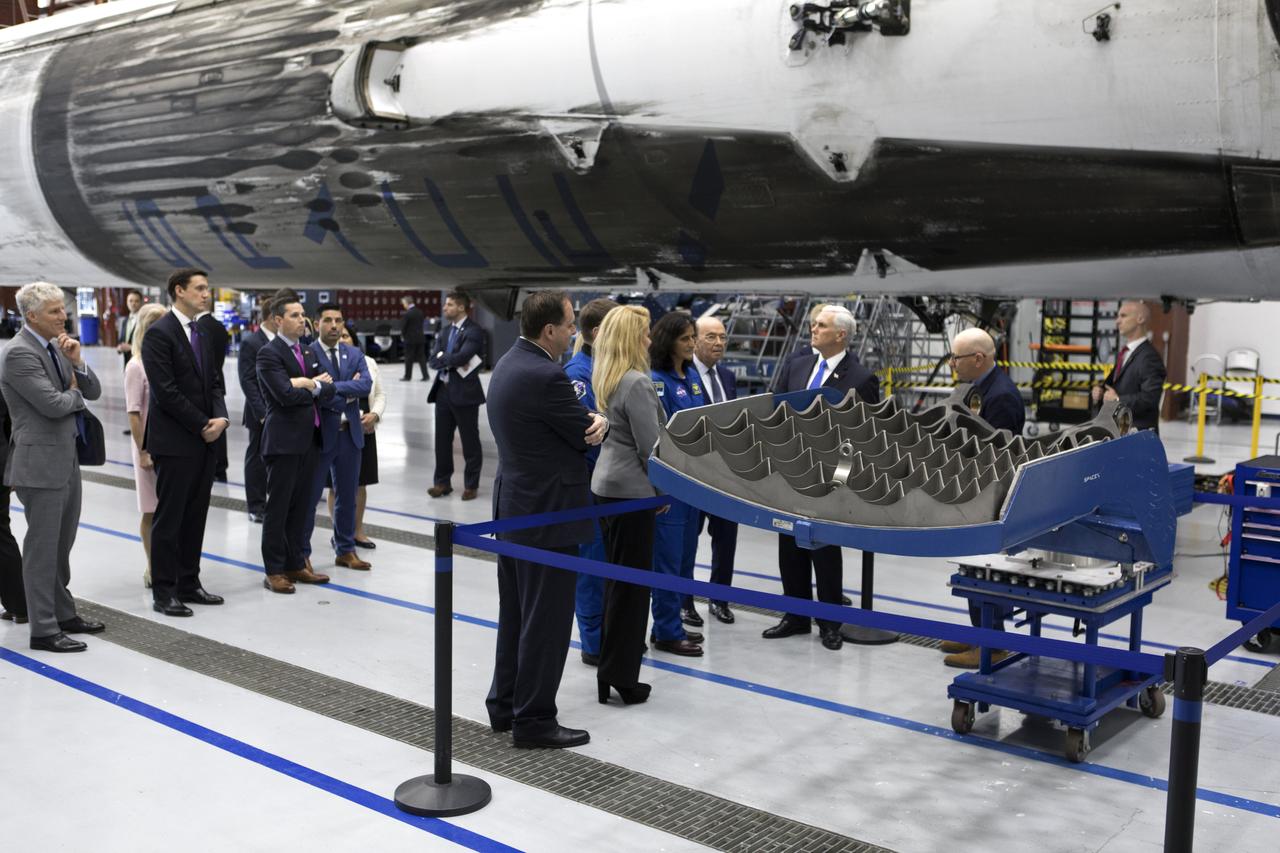
Vice President Mike Pence tours the SpaceX hangar at Launch Complex 39A, at NASA's Kennedy Space Center in Florida, on Feb. 21, 2018. SpaceX Director of launch Pads John Muratore, far right, describes hardware to, from the left Acting NASA Administrator Robert Lightfoot, SpaceX President and COO Gwynne Shotwell, NASA astronaut Suni Williams and Pence. During his visit, Pence chaired a meeting of the National Space Council in the high bay of the center's Space Station Processing Facility. The council's role is to advise the president regarding national space policy and strategy, and review the nation's long-range goals for space activities.
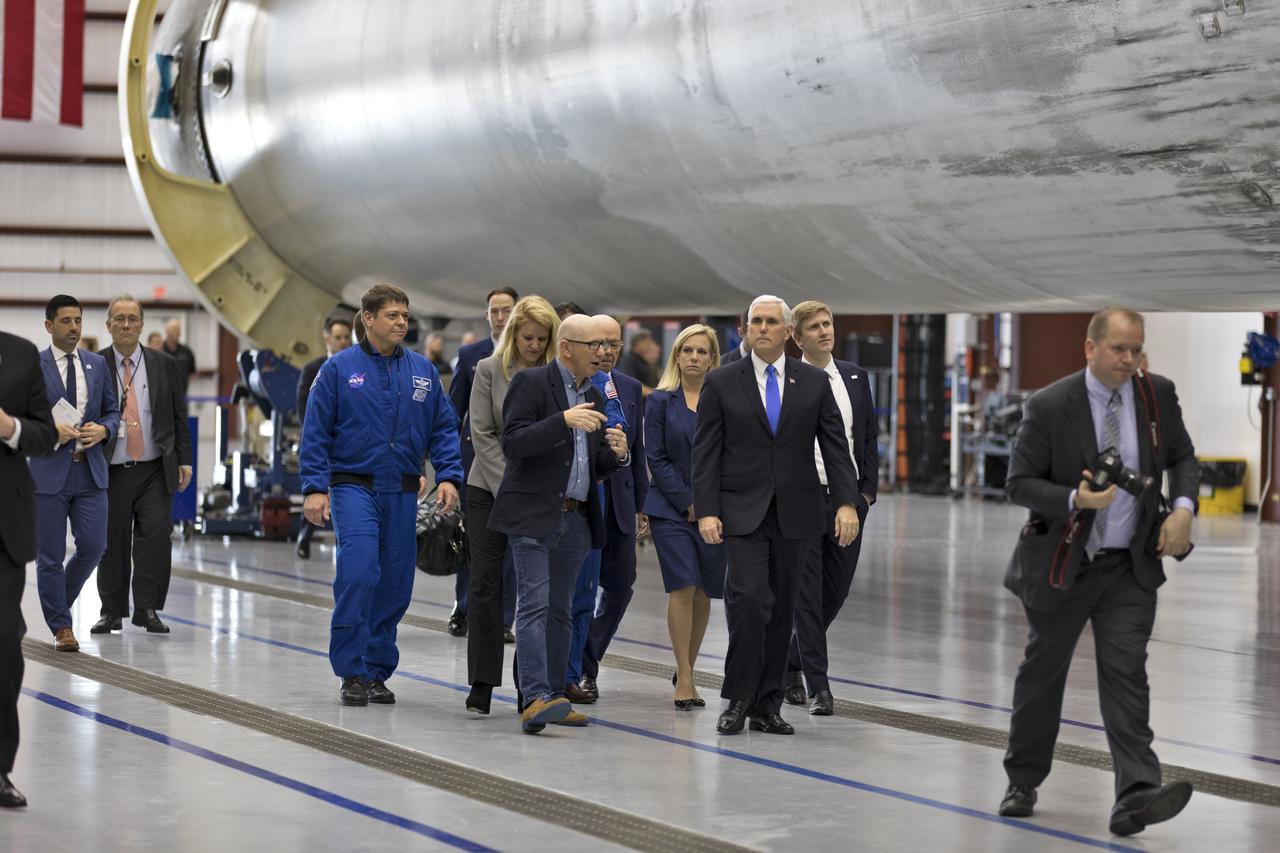
Vice President Mike Pence tours the SpaceX hangar at Launch Complex 39A, at NASA's Kennedy Space Center in Florida, on Feb. 21, 2018. The group is getting a close-up look at a previously flown Falcon 9 rocket. During his visit, Pence chaired a meeting of the National Space Council in the high bay of the center's Space Station Processing Facility. The council's role is to advise the president regarding national space policy and strategy, and review the nation's long-range goals for space activities.
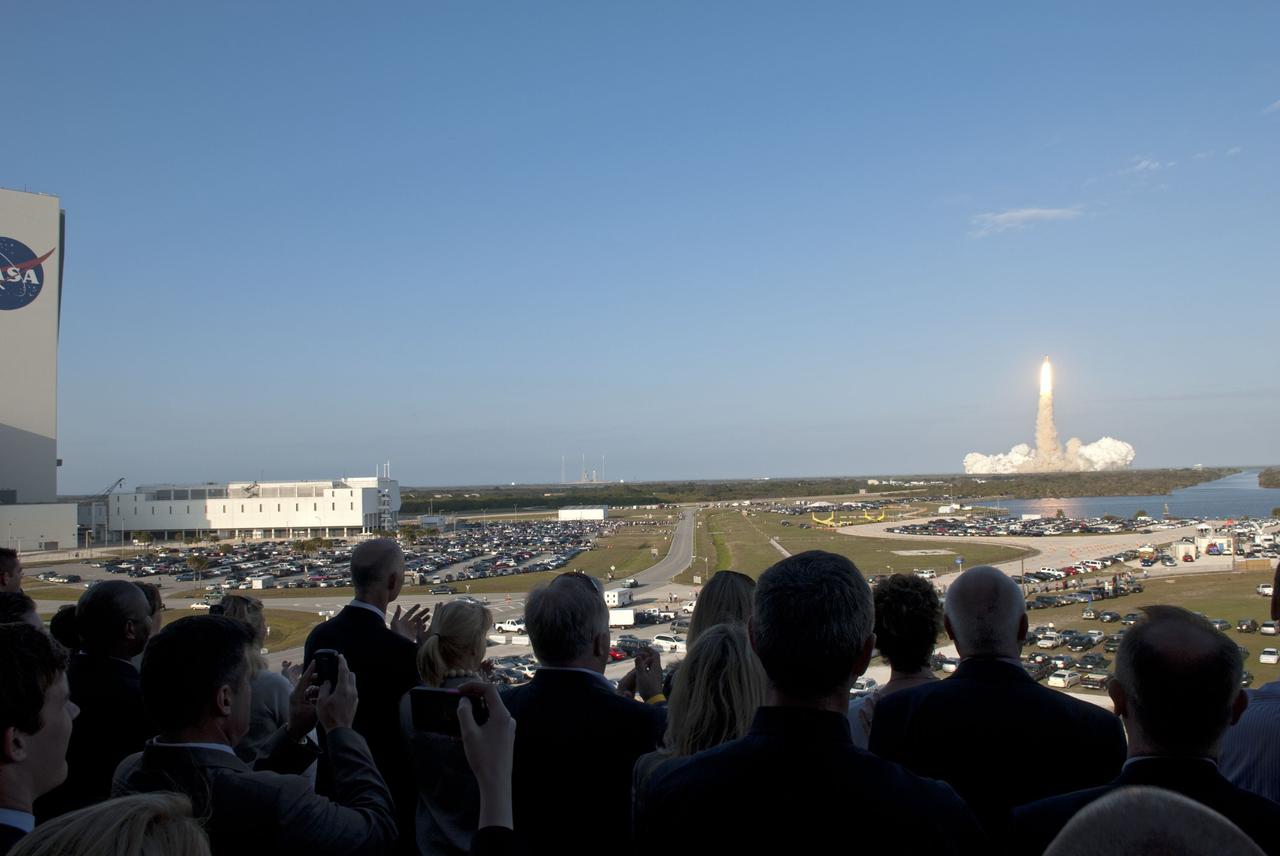
CAPE CANAVERAL, Fla. -- From the terrace of the VIP viewing area at the Operations Support Building II at NASA's Kennedy Space Center in Florida, space shuttle Discovery is seen lifting off from Launch Pad 39A on its final mission to the International Space Station. Discovery lifted off at 4:53 p.m. EST on Feb. 24. The six-member STS-133 crew will deliver the Permanent Multipurpose Module, supplies and critical spare parts, as well as Robonaut 2, the dexterous humanoid astronaut helper, to the station. This is the 133rd Space Shuttle Program mission and the 35th shuttle voyage to the space station. For more information on the STS-133 mission, visit www.nasa.gov/mission_pages/shuttle/shuttlemissions/sts133/. Photo credit: NASA/Jim Grossmann

CAPE CANAVERAL, Fla. -- From the terrace of the VIP viewing area at the Operations Support Building II at NASA's Kennedy Space Center in Florida, space shuttle Discovery is seen lifting off from Launch Pad 39A on its final mission to the International Space Station. Discovery lifted off at 4:53 p.m. EST on Feb. 24. The six-member STS-133 crew will deliver the Permanent Multipurpose Module, supplies and critical spare parts, as well as Robonaut 2, the dexterous humanoid astronaut helper, to the station. This is the 133rd Space Shuttle Program mission and the 35th shuttle voyage to the space station. For more information on the STS-133 mission, visit www.nasa.gov/mission_pages/shuttle/shuttlemissions/sts133/. Photo credit: NASA/Jim Grossmann
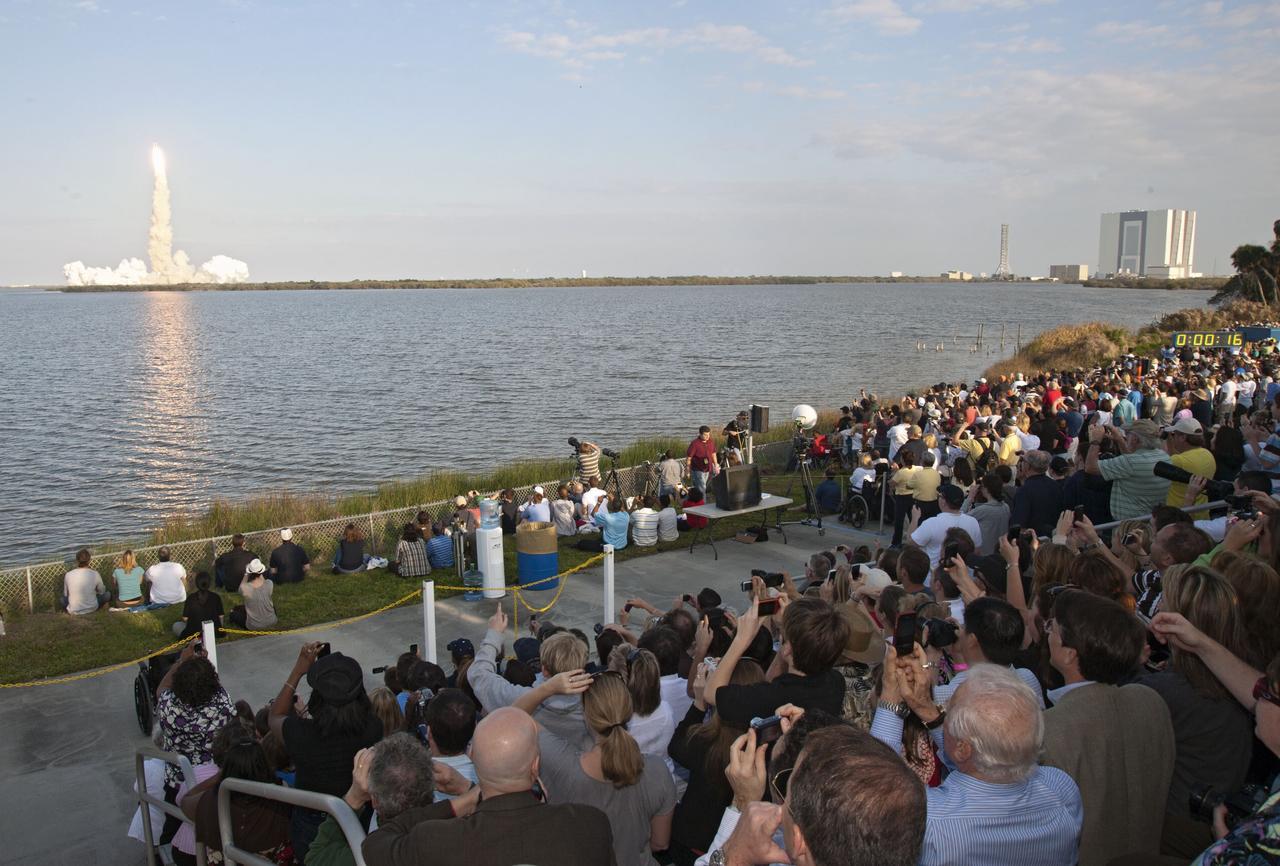
CAPE CANAVERAL, Fla. -- From the Banana River Creek VIP viewing area at NASA's Kennedy Space Center in Florida, spectators watch space shuttle Discovery's lift off from Launch Pad 39A on its final mission to the International Space Station. Discovery lifted off at 4:53 p.m. EST on Feb. 24. The six-member STS-133 crew will deliver the Permanent Multipurpose Module, supplies and critical spare parts, as well as Robonaut 2, the dexterous humanoid astronaut helper, to the station. This is the 133rd Space Shuttle Program mission and the 35th shuttle voyage to the space station. For more information on the STS-133 mission, visit www.nasa.gov/mission_pages/shuttle/shuttlemissions/sts133/. Photo credit: NASA/Ben Cooper

KENNEDY SPACE CENTER, FLA. -- In the Firing Room, Launch Control Center, after a successful launch of STS-97, VIPs gather to congratulate the launch team. In the center of the photo is Florida Governor Jeb Bush. On his left is KSC Director of External Relations and Business Development JoAnn H. Morgan; on Bush’s right is Joseph Rothenberg, associate administrator, Office of Space Flight; on the far right is Bill Readdy, manager at Johnson Space Center. Liftoff of Endeavour occurred at 10:06:01 p.m. EST. Endeavour and its five-member crew will deliver U.S. solar arrays to the International Space Station and be the first Shuttle crew to visit the Station’s first resident crew. The 11-day mission includes three spacewalks. This marks the 101st mission in Space Shuttle history and the 25th night launch. Endeavour is expected to land at KSC Dec. 11 at 6:19 p.m. EST

CAPE CANAVERAL, Fla. -- From the Banana River Creek VIP viewing area at NASA's Kennedy Space Center in Florida, spectators watch space shuttle Discovery's lift off from Launch Pad 39A on its final mission to the International Space Station. Discovery lifted off at 4:53 p.m. EST on Feb. 24. The six-member STS-133 crew will deliver the Permanent Multipurpose Module, supplies and critical spare parts, as well as Robonaut 2, the dexterous humanoid astronaut helper, to the station. This is the 133rd Space Shuttle Program mission and the 35th shuttle voyage to the space station. For more information on the STS-133 mission, visit www.nasa.gov/mission_pages/shuttle/shuttlemissions/sts133/. Photo credit: NASA/Ben Cooper
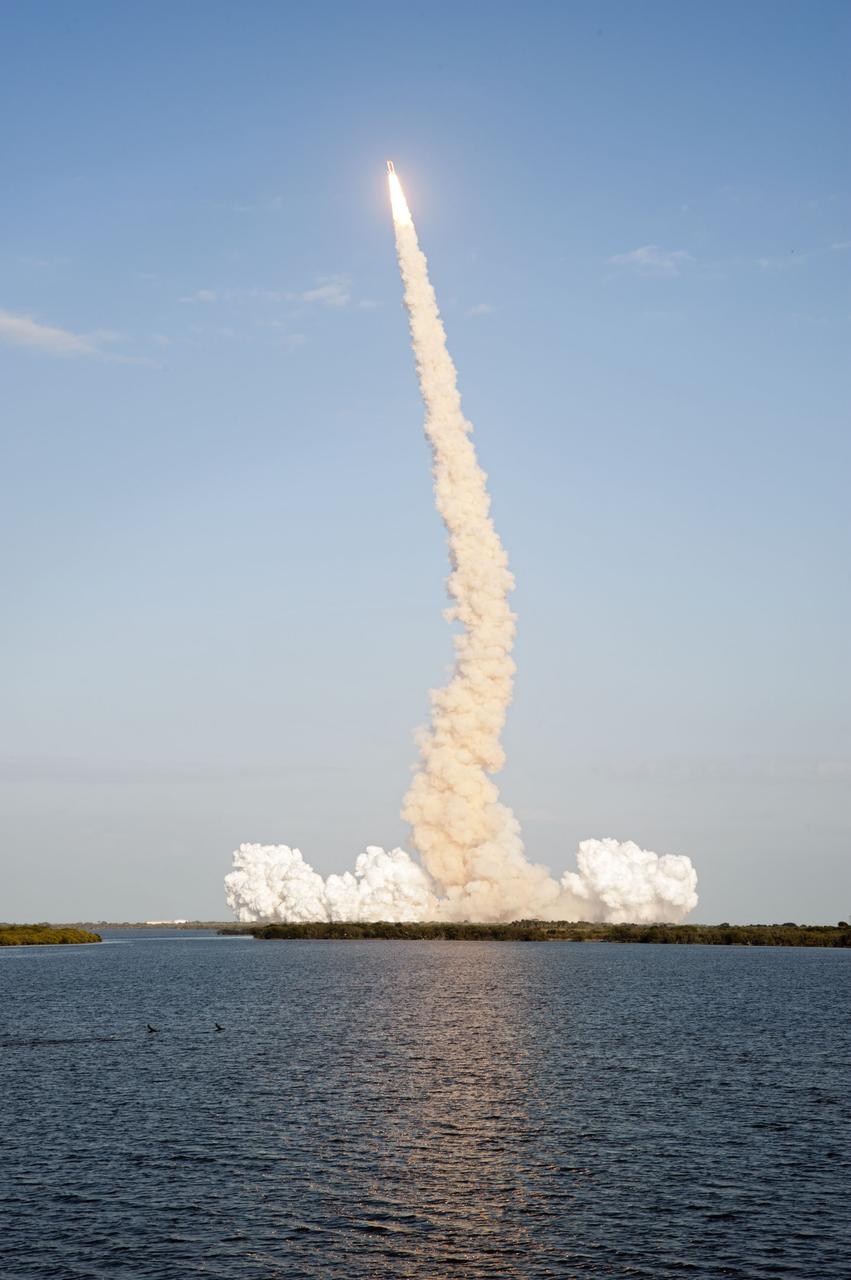
CAPE CANAVERAL, Fla. -- From the Banana River Creek VIP viewing area at NASA's Kennedy Space Center in Florida, space shuttle Discovery is imaged lifting off from Launch Pad 39A on its final mission to the International Space Station. Discovery lifted off at 4:53 p.m. EST on Feb. 24. The six-member STS-133 crew will deliver the Permanent Multipurpose Module, supplies and critical spare parts, as well as Robonaut 2, the dexterous humanoid astronaut helper, to the station. This is the 133rd Space Shuttle Program mission and the 35th shuttle voyage to the space station. For more information on the STS-133 mission, visit www.nasa.gov/mission_pages/shuttle/shuttlemissions/sts133/. Photo credit: NASA/Ben Cooper
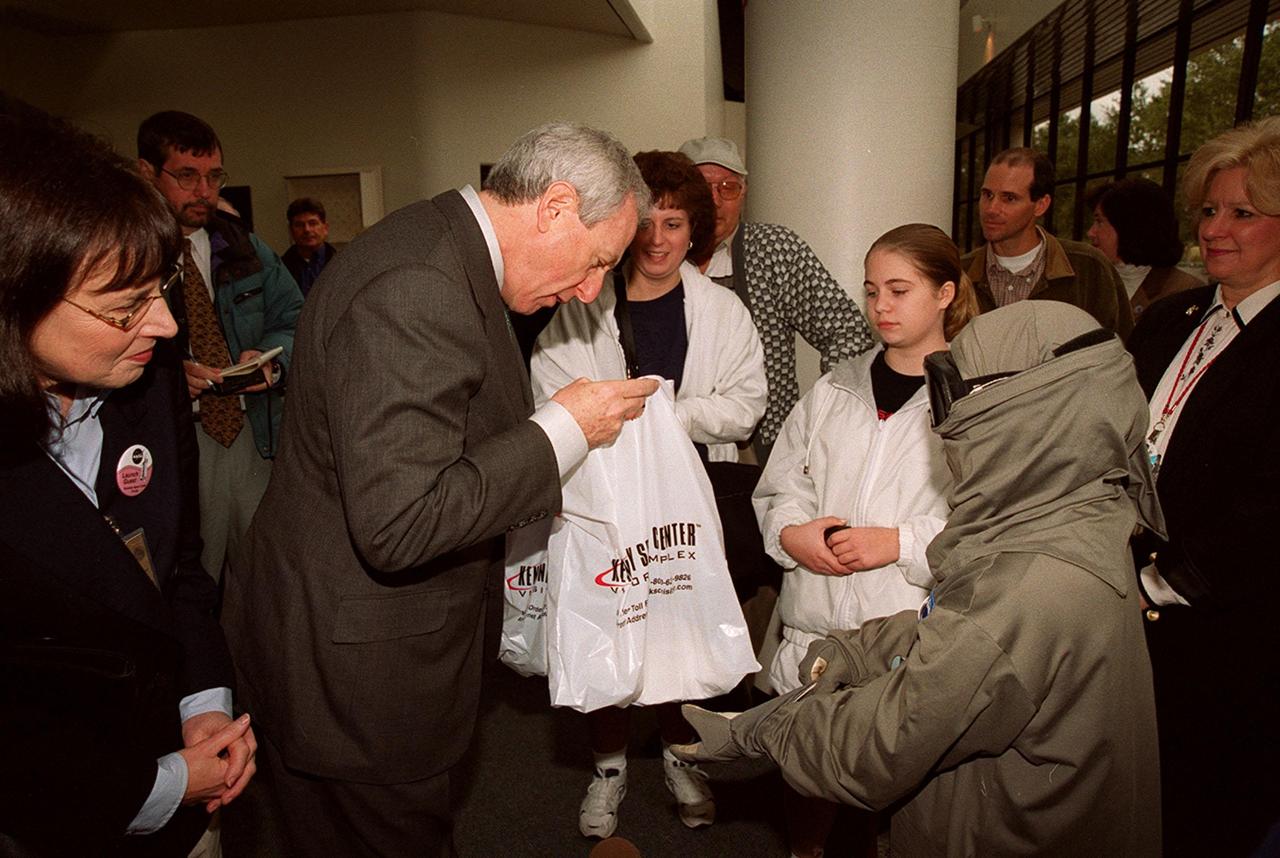
NASA Administrator Dan Goldin (center) presents a bag of special gifts to 10-year-old Jonathan Pierce (right), who is garbed in a protective cooling suit designed by NASA. In the background, between them, are Jonathan's mother, Penny; his grandfather, John Janocka; and his sister, Jaimie.. At left is Mrs. Goldin. Jonathan suffers from erythropoietic protoporphyria, a rare condition that makes his body unable to withstand ultraviolet rays. The suit allows him to be outside during the day, which would otherwise be impossible. Jonathan's trip was funded by the Make-A-Wish Foundation and included a visit to Disney World. He and his family were among a dozen VIPs at KSC to view the launch of STS-99
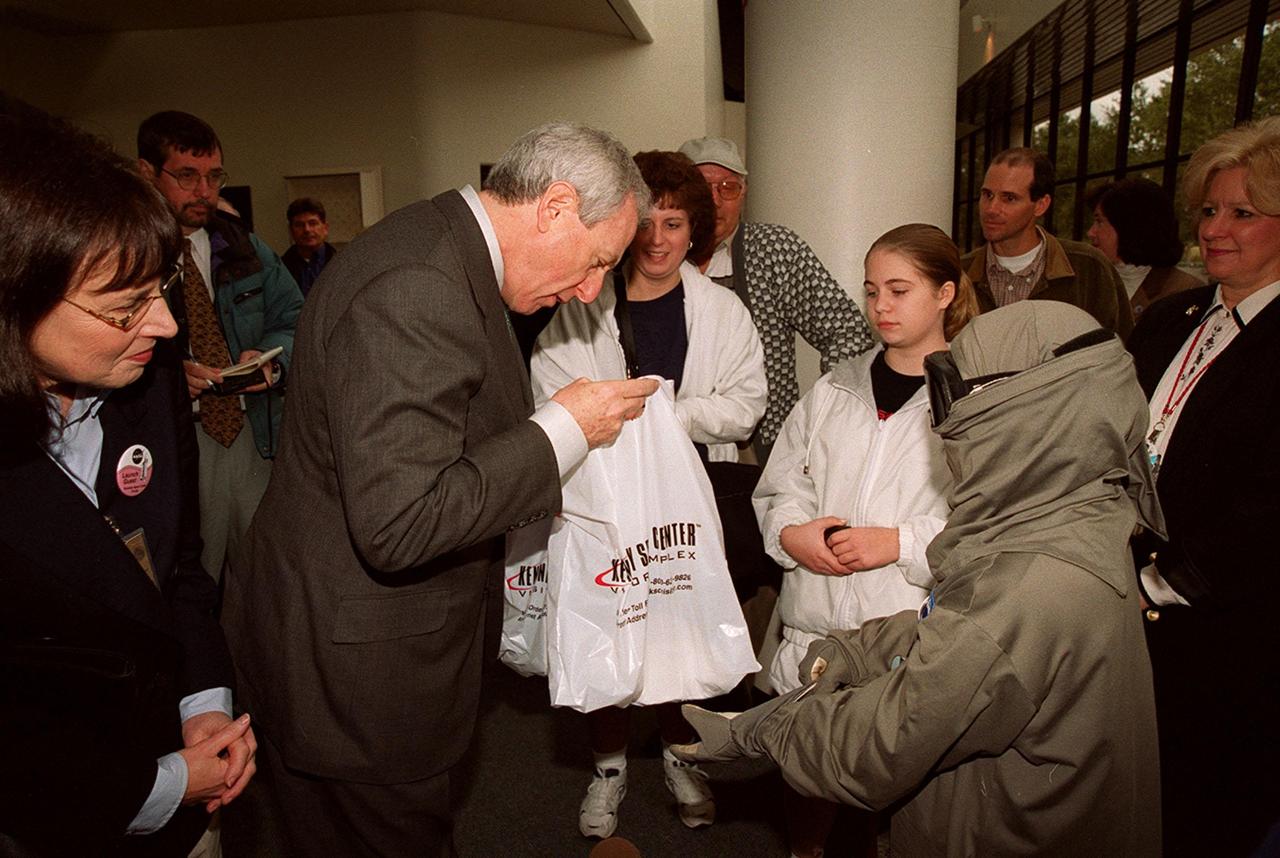
NASA Administrator Dan Goldin (center) presents a bag of special gifts to 10-year-old Jonathan Pierce (right), who is garbed in a protective cooling suit designed by NASA. In the background, between them, are Jonathan's mother, Penny; his grandfather, John Janocka; and his sister, Jaimie.. At left is Mrs. Goldin. Jonathan suffers from erythropoietic protoporphyria, a rare condition that makes his body unable to withstand ultraviolet rays. The suit allows him to be outside during the day, which would otherwise be impossible. Jonathan's trip was funded by the Make-A-Wish Foundation and included a visit to Disney World. He and his family were among a dozen VIPs at KSC to view the launch of STS-99

CAPE CANAVERAL, Fla. -- From the Banana River Creek VIP viewing area at NASA's Kennedy Space Center in Florida, space shuttle Discovery is seenlifting off from Launch Pad 39A on its final mission to the International Space Station. Discovery lifted off at 4:53 p.m. EST on Feb. 24. The six-member STS-133 crew will deliver the Permanent Multipurpose Module, supplies and critical spare parts, as well as Robonaut 2, the dexterous humanoid astronaut helper, to the station. This is the 133rd Space Shuttle Program mission and the 35th shuttle voyage to the space station. For more information on the STS-133 mission, visit www.nasa.gov/mission_pages/shuttle/shuttlemissions/sts133/. Photo credit: NASA/Ben Cooper
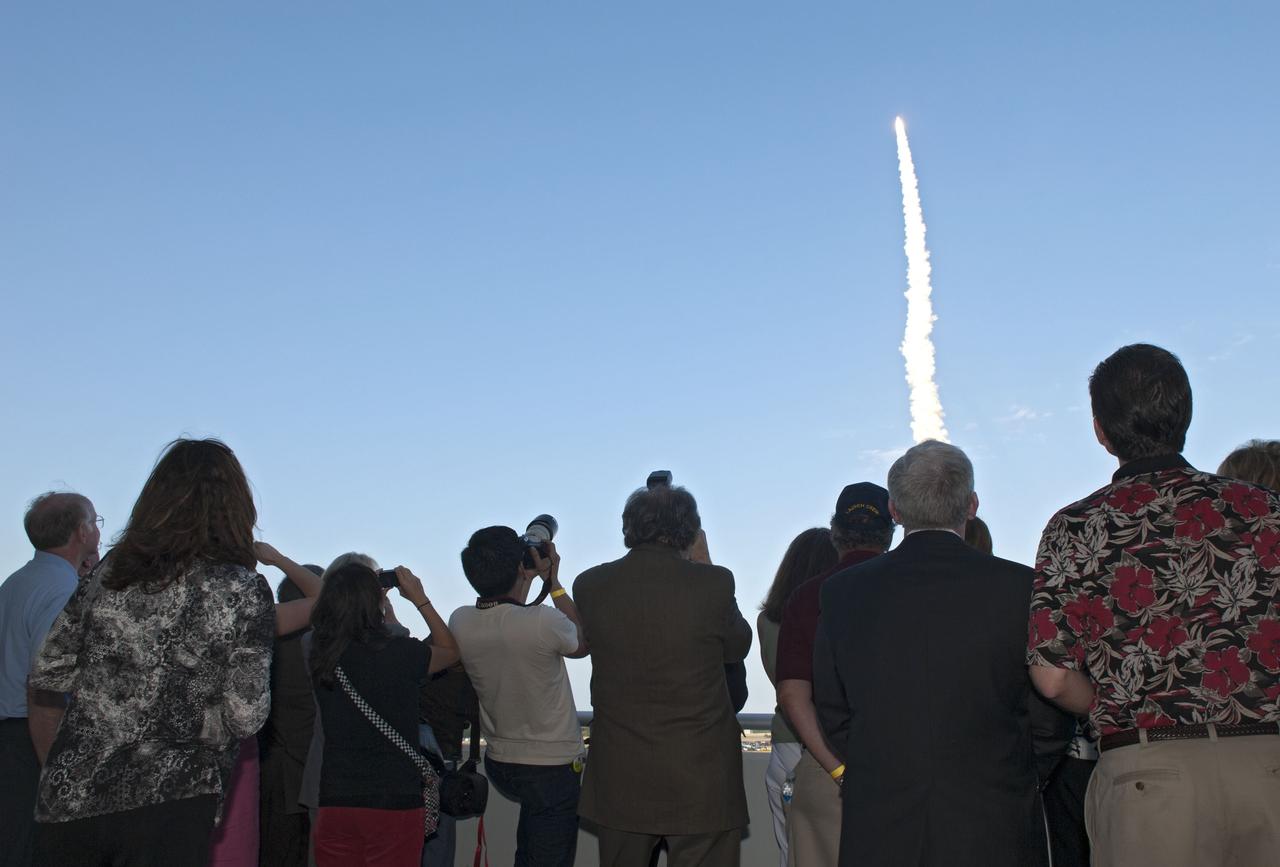
CAPE CANAVERAL, Fla. -- From the terrace of the VIP viewing area at the Operations Support Building II at NASA's Kennedy Space Center in Florida, space shuttle Discovery is seen lifting off from Launch Pad 39A on its final mission to the International Space Station. Discovery lifted off at 4:53 p.m. EST on Feb. 24. The six-member STS-133 crew will deliver the Permanent Multipurpose Module, supplies and critical spare parts, as well as Robonaut 2, the dexterous humanoid astronaut helper, to the station. This is the 133rd Space Shuttle Program mission and the 35th shuttle voyage to the space station. For more information on the STS-133 mission, visit www.nasa.gov/mission_pages/shuttle/shuttlemissions/sts133/. Photo credit: NASA/Jim Grossmann
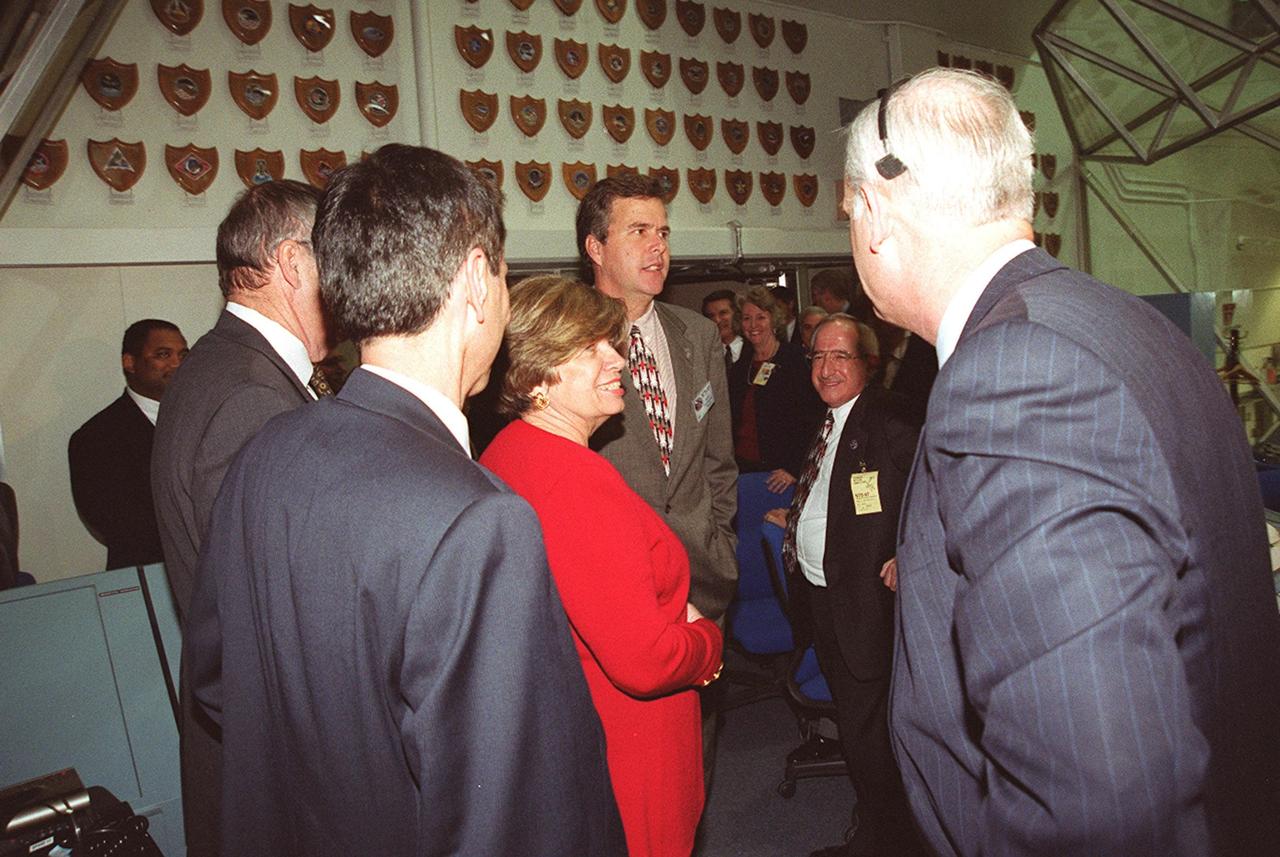
KENNEDY SPACE CENTER, FLA. -- In the Firing Room, Launch Control Center, after a successful launch of STS-97, VIPs gather to congratulate the launch team. In the center of the photo is Florida Governor Jeb Bush. On his left is KSC Director of External Relations and Business Development JoAnn H. Morgan; on Bush’s right is Joseph Rothenberg, associate administrator, Office of Space Flight; on the far right is Bill Readdy, manager at Johnson Space Center. Liftoff of Endeavour occurred at 10:06:01 p.m. EST. Endeavour and its five-member crew will deliver U.S. solar arrays to the International Space Station and be the first Shuttle crew to visit the Station’s first resident crew. The 11-day mission includes three spacewalks. This marks the 101st mission in Space Shuttle history and the 25th night launch. Endeavour is expected to land at KSC Dec. 11 at 6:19 p.m. EST
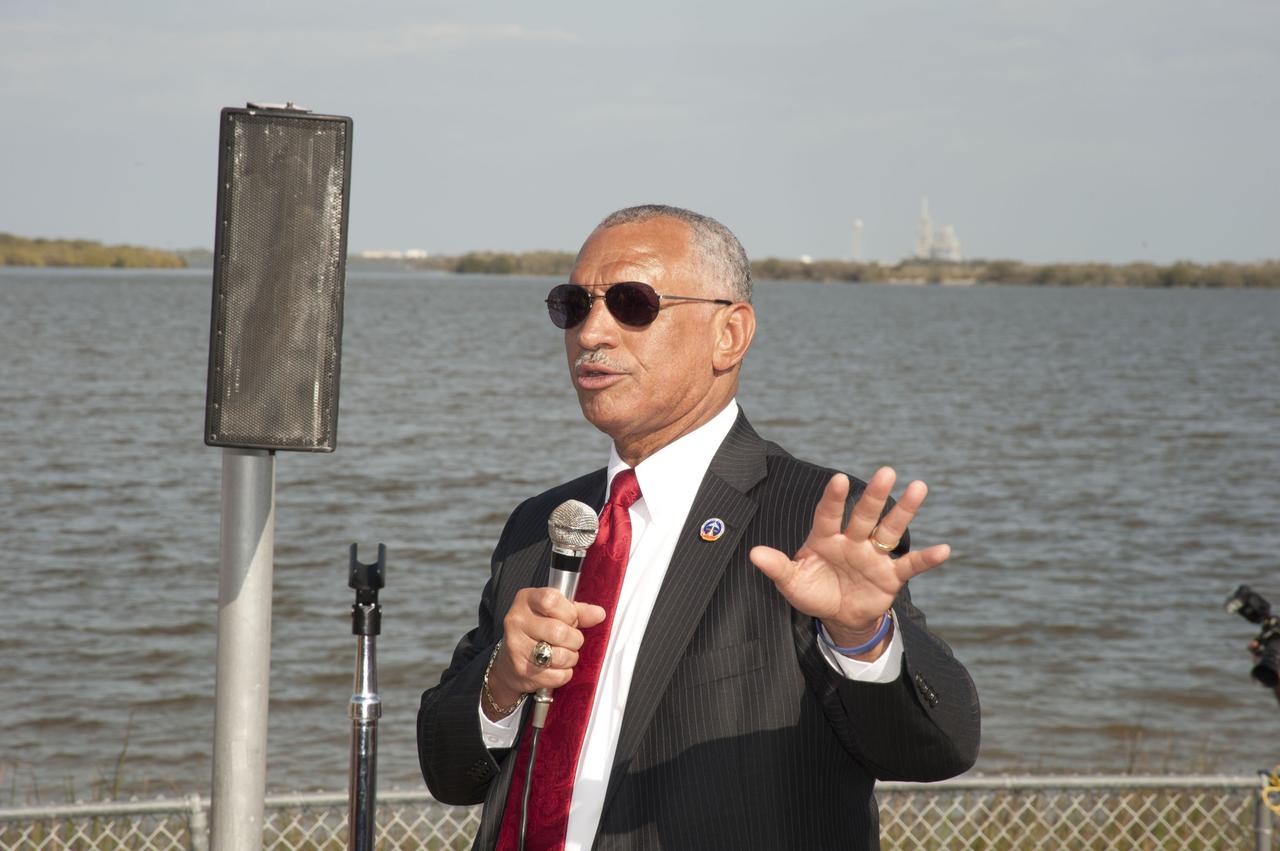
CAPE CANAVERAL, Fla. -- At the Banana River Creek VIP viewing area at NASA's Kennedy Space Center in Florida, NASA Administrator Charlie Bolden, addresses the spectators attending space shuttle Discovery's lift off from Launch Pad 39A on its final mission to the International Space Station. Discovery lifted off at 4:53 p.m. EST on Feb. 24. The six-member STS-133 crew will deliver the Permanent Multipurpose Module, supplies and critical spare parts, as well as Robonaut 2, the dexterous humanoid astronaut helper, to the station. This is the 133rd Space Shuttle Program mission and the 35th shuttle voyage to the space station. For more information on the STS-133 mission, visit www.nasa.gov/mission_pages/shuttle/shuttlemissions/sts133/. Photo credit: NASA/Ben Cooper
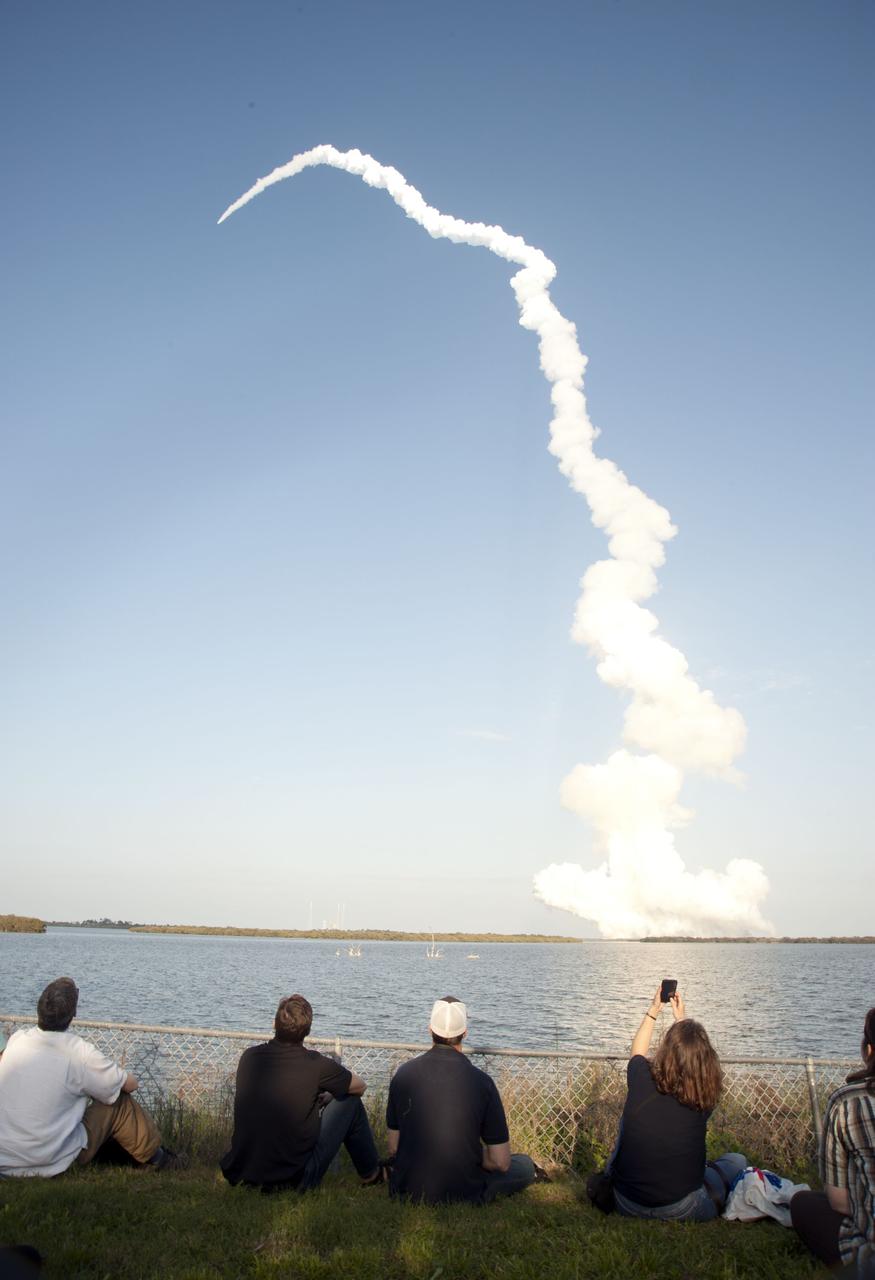
CAPE CANAVERAL, Fla. -- From the Banana River Creek VIP viewing area at NASA's Kennedy Space Center in Florida, spectators watch space shuttle Discovery's lift off from Launch Pad 39A on its final mission to the International Space Station. Discovery lifted off at 4:53 p.m. EST on Feb. 24. The six-member STS-133 crew will deliver the Permanent Multipurpose Module, supplies and critical spare parts, as well as Robonaut 2, the dexterous humanoid astronaut helper, to the station. This is the 133rd Space Shuttle Program mission and the 35th shuttle voyage to the space station. For more information on the STS-133 mission, visit www.nasa.gov/mission_pages/shuttle/shuttlemissions/sts133/. Photo credit: NASA/Ben Cooper

CAPE CANAVERAL, Fla. -- From the Banana River Creek VIP viewing area at NASA's Kennedy Space Center in Florida, spectators follow space shuttle Discovery's lift off from Launch Pad 39A on its final mission to the International Space Station. Discovery lifted off at 4:53 p.m. EST on Feb. 24. The six-member STS-133 crew will deliver the Permanent Multipurpose Module, supplies and critical spare parts, as well as Robonaut 2, the dexterous humanoid astronaut helper, to the station. This is the 133rd Space Shuttle Program mission and the 35th shuttle voyage to the space station. For more information on the STS-133 mission, visit www.nasa.gov/mission_pages/shuttle/shuttlemissions/sts133/. Photo credit: NASA/Ben Cooper
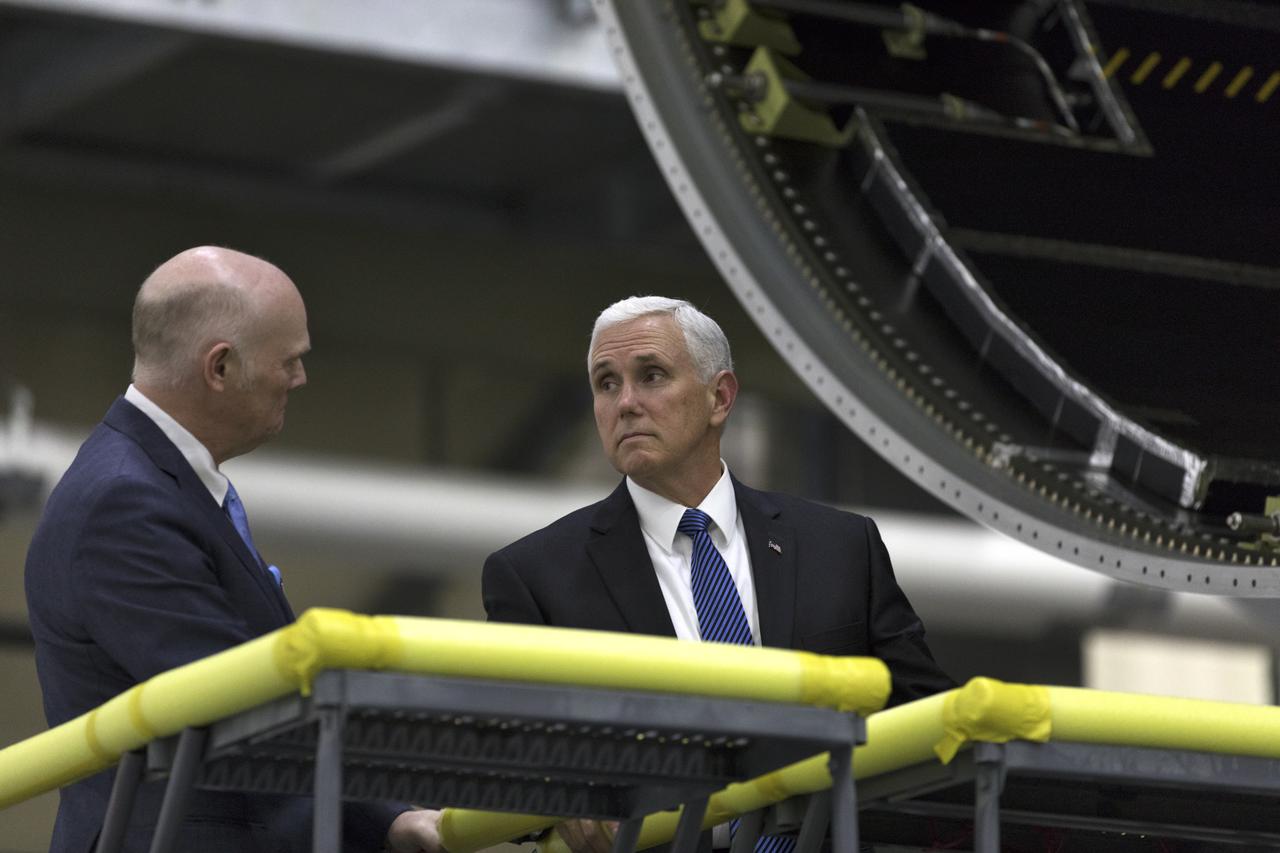
United Launch Alliance (ULA) president and CEO Tory Bruno, left, leads a tour for Vice President Mike Pence on Feb. 20, 2018. They are in the ULA Horizontal Integration Facility (HIF), at Cape Canaveral Air Force Station in Florida. The HIF is where the Delta IV Heavy boosters are being processed for NASA’s upcoming Parker Solar Probe mission. During his visit, Pence will chair a meeting of the National Space Council on Feb. 21, 2018 in the high bay of NASA Kennedy Space Center’s Space Station Processing Facility. The council's role is to advise the president regarding national space policy and strategy, and review the nation's long-range goals for space activities.
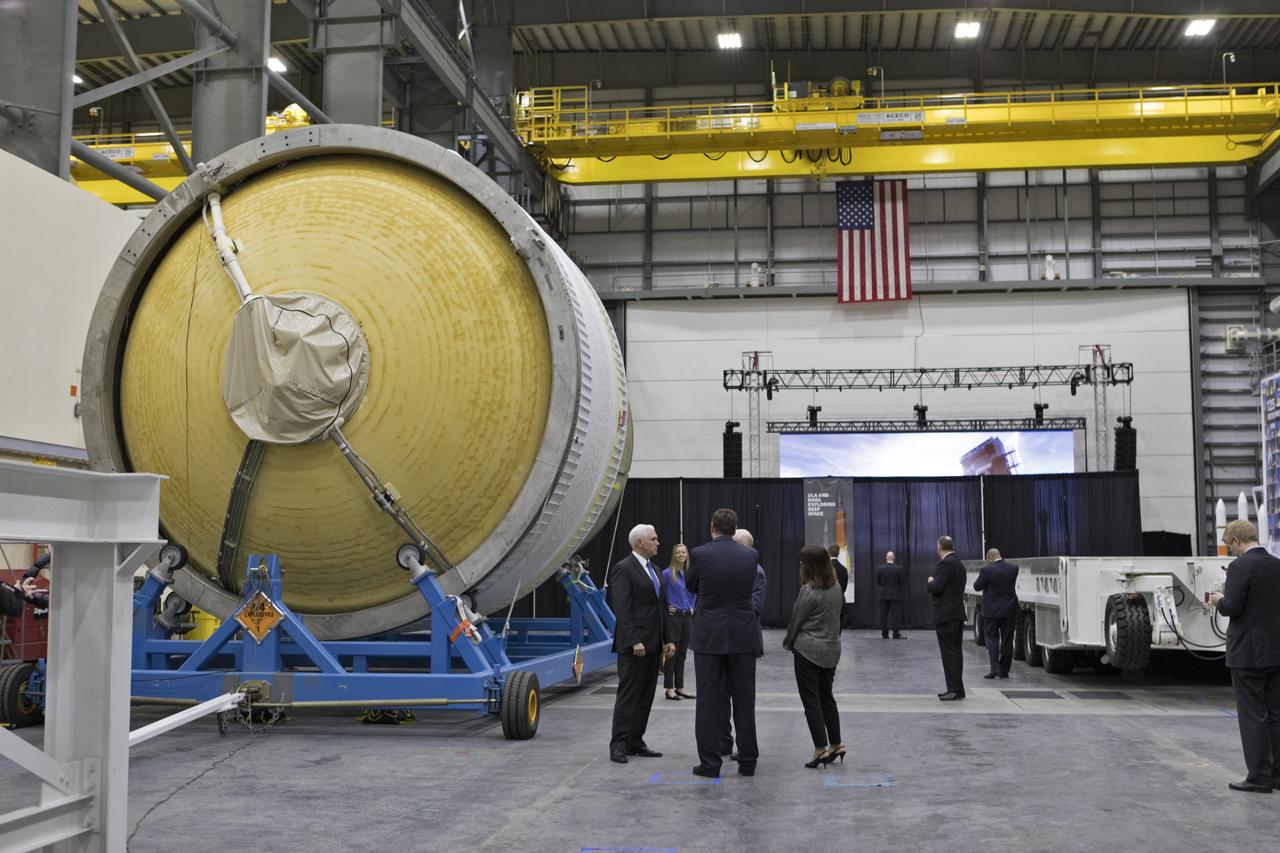
United Launch Alliance (ULA) president and CEO Tory Bruno leads a tour for Vice President Mike Pence, his wife, Karen Pence, and NASA Acting Administrator Robert Lightfoot on Feb. 20, 2018. They are in the ULA Horizontal Integration Facility (HIF), at Cape Canaveral Air Force Station in Florida. The HIF is where the Delta IV Heavy boosters are being processed for NASA’s upcoming Parker Solar Probe mission. During his visit, Pence will chair a meeting of the National Space Council on Feb. 21, 2018 in the high bay of NASA Kennedy Space Center’s Space Station Processing Facility. The council's role is to advise the president regarding national space policy and strategy, and review the nation's long-range goals for space activities.
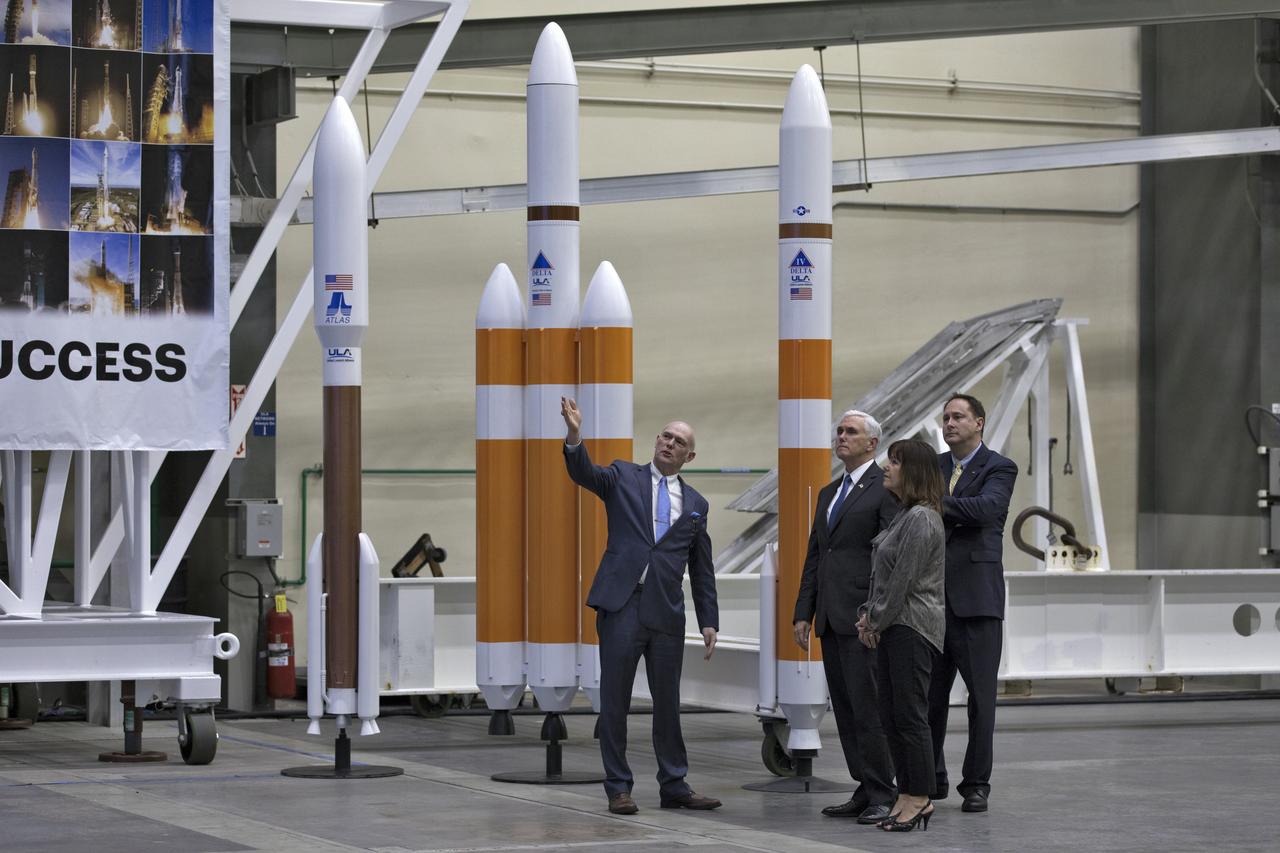
From the left, United Launch Alliance (ULA) president and CEO Tory Bruno leads a tour for Vice President Mike Pence, his wife, Karen Pence, and NASA Acting Administrator Robert Lightfoot on Feb. 20, 2018. They are in the ULA Horizontal Integration Facility (HIF), at Cape Canaveral Air Force Station in Florida. The HIF is where the Delta IV Heavy boosters are being processed for NASA’s upcoming Parker Solar Probe mission. During his visit, Pence will chair a meeting of the National Space Council on Feb. 21, 2018 in the high bay of NASA Kennedy Space Center’s Space Station Processing Facility. The council's role is to advise the president regarding national space policy and strategy, and review the nation's long-range goals for space activities.
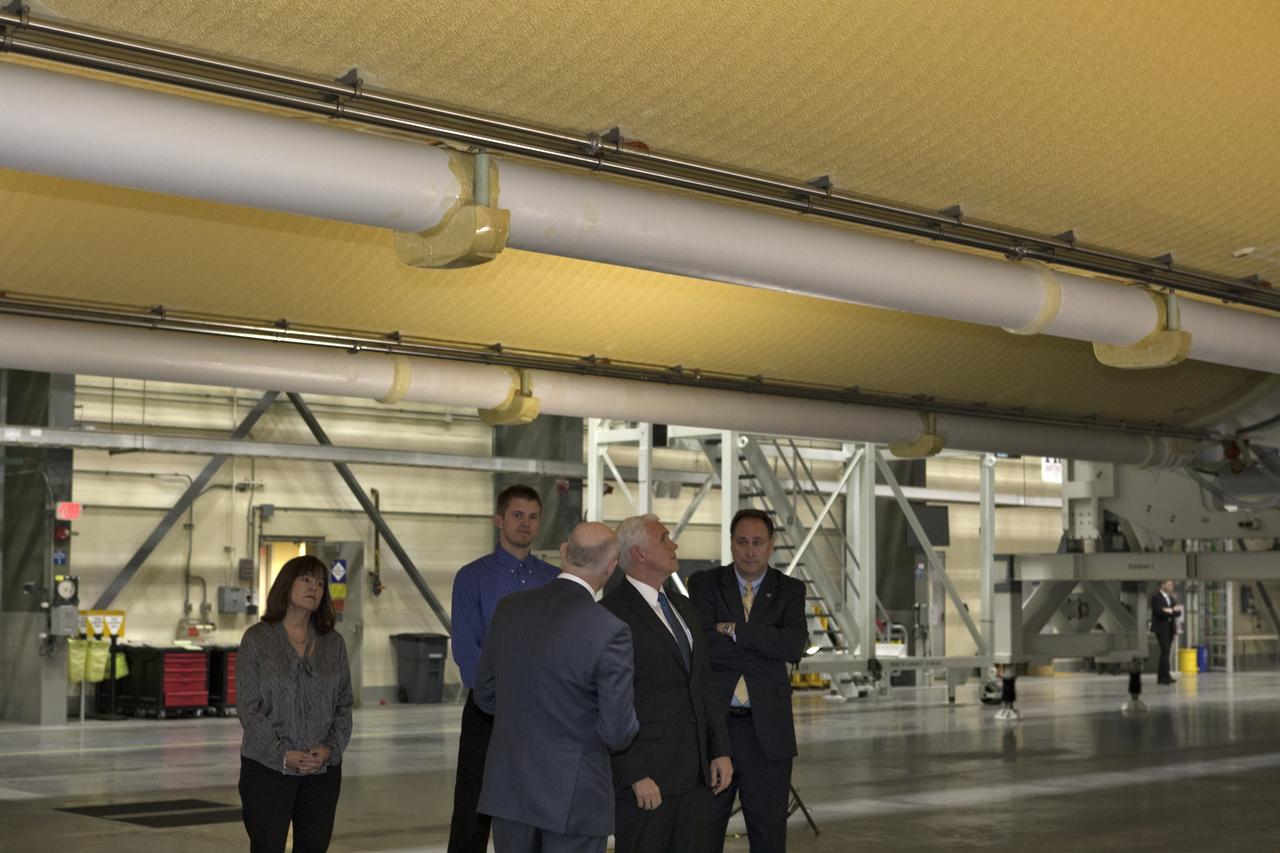
United Launch Alliance (ULA) president and CEO Tory Bruno leads a tour for Vice President Mike Pence, his wife, Karen Pence, and NASA Acting Administrator Robert Lightfoot on Feb. 20, 2018. They are in the ULA Horizontal Integration Facility (HIF), at Cape Canaveral Air Force Station in Florida. The HIF is where the Delta IV Heavy boosters are being processed for NASA’s upcoming Parker Solar Probe mission. During his visit, Pence will chair a meeting of the National Space Council on Feb. 21, 2018 in the high bay of NASA Kennedy Space Center’s Space Station Processing Facility. The council's role is to advise the president regarding national space policy and strategy, and review the nation's long-range goals for space activities.
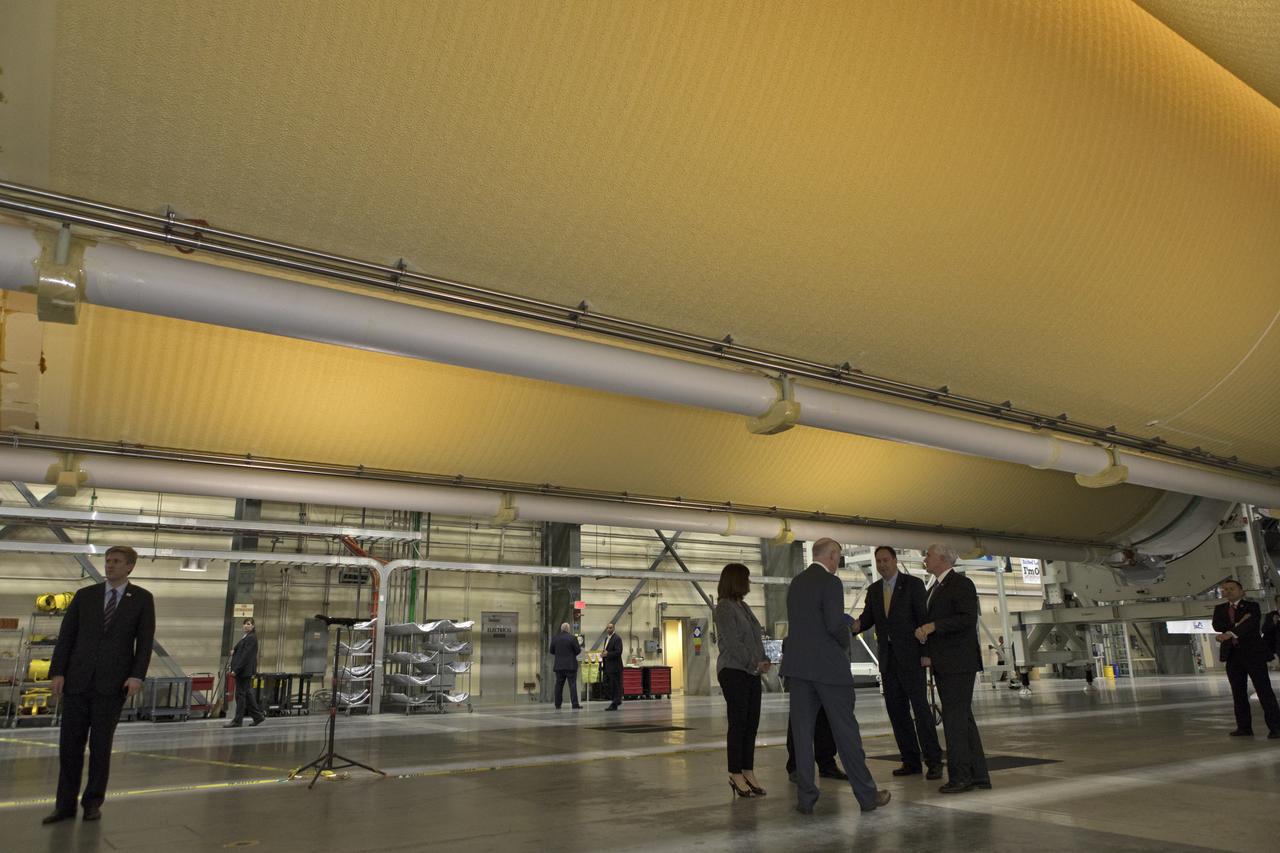
United Launch Alliance (ULA) president and CEO Tory Bruno leads a tour for Vice President Mike Pence, his wife, Karen Pence, and NASA Acting Administrator Robert Lightfoot on Feb. 20, 2018. They are in the ULA Horizontal Integration Facility (HIF), at Cape Canaveral Air Force Station in Florida. The HIF is where the Delta IV Heavy boosters are being processed for NASA’s upcoming Parker Solar Probe mission. During his visit, Pence will chair a meeting of the National Space Council on Feb. 21, 2018 in the high bay of NASA Kennedy Space Center’s Space Station Processing Facility. The council's role is to advise the president regarding national space policy and strategy, and review the nation's long-range goals for space activities.
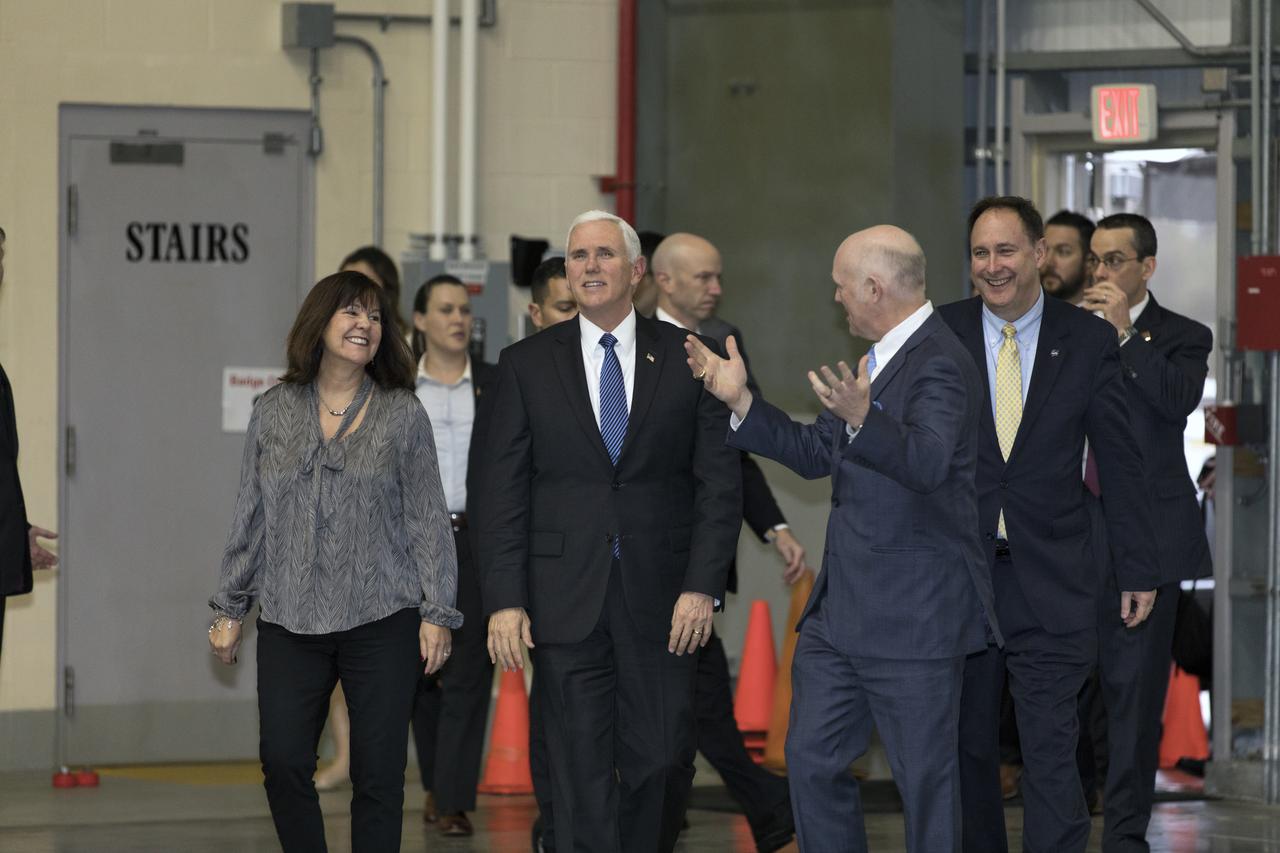
United Launch Alliance (ULA) president and CEO Tory Bruno leads a tour for Vice President Mike Pence, his wife, Karen Pence, and NASA Acting Administrator Robert Lightfoot on Feb. 20, 2018. They are in the ULA Horizontal Integration Facility (HIF), at Cape Canaveral Air Force Station in Florida. The HIF is where the Delta IV Heavy boosters are being processed for NASA’s upcoming Parker Solar Probe mission. During his visit, Pence will chair a meeting of the National Space Council on Feb. 21, 2018 in the high bay of NASA Kennedy Space Center’s Space Station Processing Facility. The council's role is to advise the president regarding national space policy and strategy, and review the nation's long-range goals for space activities.
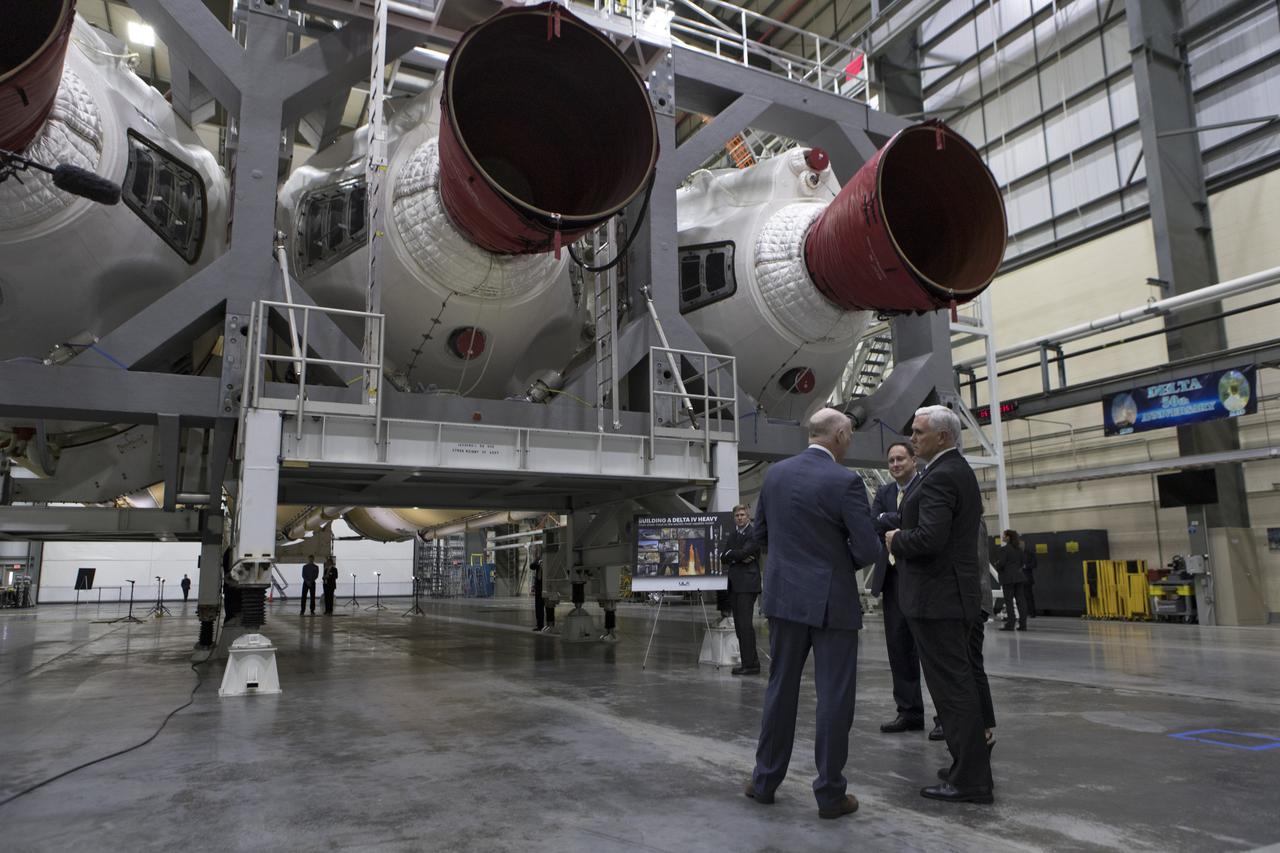
United Launch Alliance (ULA) president and CEO Tory Bruno, left leads a tour for Vice President Mike Pence on Feb. 20, 2018. Behind them is Acting NASA Administrator Robert Lightfoot. They are in the ULA Horizontal Integration Facility (HIF), at Cape Canaveral Air Force Station in Florida. The HIF is where the Delta IV Heavy boosters are being processed for NASA’s upcoming Parker Solar Probe mission. During his visit, Pence will chair a meeting of the National Space Council on Feb. 21, 2018 in the high bay of NASA Kennedy Space Center’s Space Station Processing Facility. The council's role is to advise the president regarding national space policy and strategy, and review the nation's long-range goals for space activities.
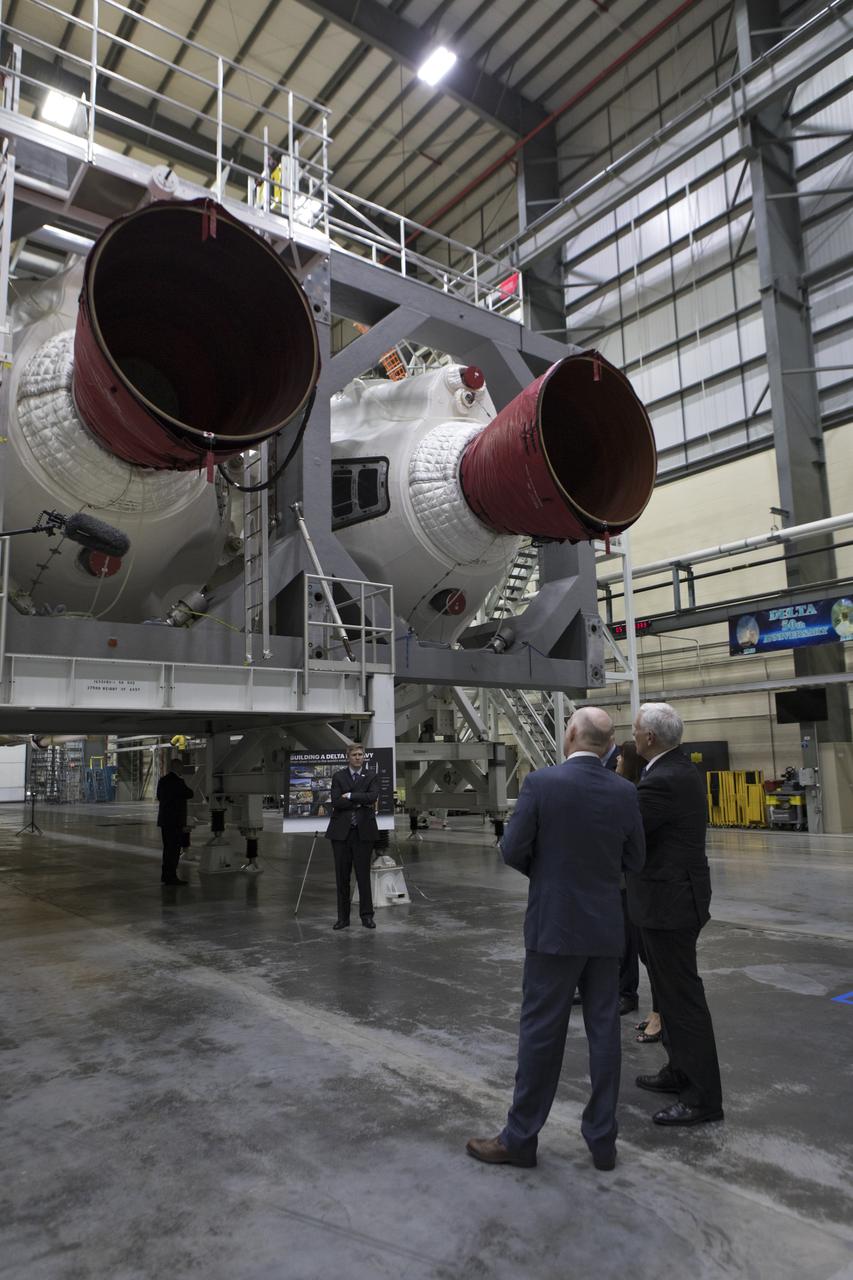
United Launch Alliance (ULA) president and CEO Tory Bruno, left, leads a tour in the ULA Horizontal Integration Facility (HIF), at Cape Canaveral Air Force Station in Florida for Vice President Mike Pence on Feb. 20, 2018. The HIF is where the Delta IV Heavy boosters are being processed for NASA’s upcoming Parker Solar Probe mission. During his visit, Pence will chair a meeting of the National Space Council on Feb. 21, 2018 in the high bay of NASA Kennedy Space Center’s Space Station Processing Facility. The council's role is to advise the president regarding national space policy and strategy, and review the nation's long-range goals for space activities.
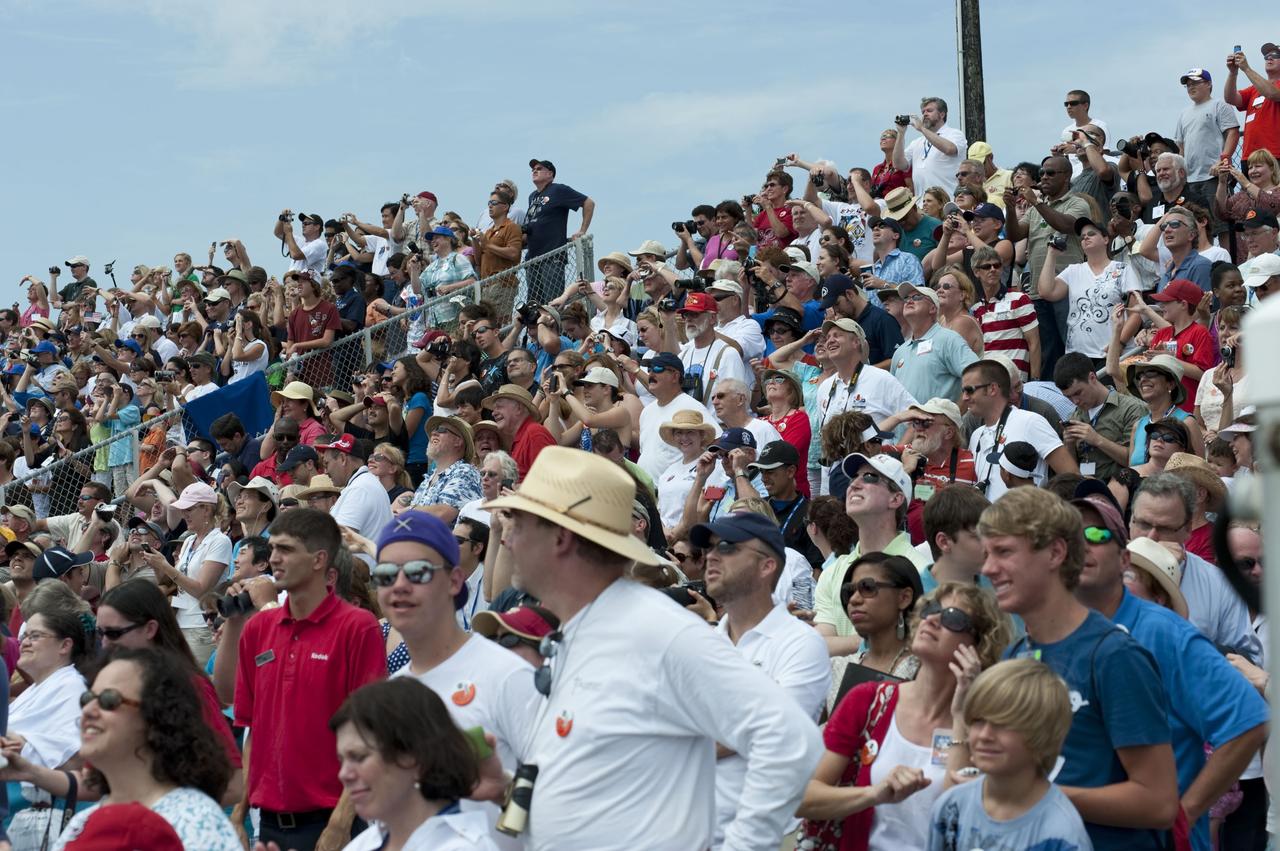
CAPE CANAVERAL, Fla. -- At the Banana River Creek VIP viewing area at NASA's Kennedy Space Center in Florida, spectators smile with delight as they watch space shuttle Atlantis soar into space on its STS-135 mission to the International Space Station. Atlantis with its crew of four; Commander Chris Ferguson, Pilot Doug Hurley, Mission Specialists Sandy Magnus and Rex Walheim, lifted off at 11:29 a.m. EDT on July 8, 2011 to deliver the Raffaello multi-purpose logistics module packed with supplies and spare parts for the International Space Station. Atlantis also will fly the Robotic Refueling Mission experiment that will investigate the potential for robotically refueling existing satellites in orbit. In addition, Atlantis will return with a failed ammonia pump module to help NASA better understand the failure mechanism and improve pump designs for future systems. STS-135 is the 33rd flight of Atlantis, the 37th shuttle mission to the space station, and the 135th and final mission of NASA's Space Shuttle Program. For more information, visit www.nasa.gov/mission_pages/shuttle/shuttlemissions/sts135/index.html. Photo credit: NASA/Chad Baumer

CAPE CANAVERAL, Fla. -- At the Banana River Creek VIP viewing area at NASA's Kennedy Space Center in Florida, Marshall Space Flight Center Director Robert Lightfoot speaks to media and spectators before the launch of space shuttle Atlantis on its STS-135 mission to the International Space Station. Also seen here are Stennis Space Center Director Patrick Scheuermann (left) and Johnson Space Center Director Mike Coats. Atlantis with its crew of four; Commander Chris Ferguson, Pilot Doug Hurley, Mission Specialists Sandy Magnus and Rex Walheim, lifted off at 11:29 a.m. EDT on July 8, 2011 to deliver the Raffaello multi-purpose logistics module packed with supplies and spare parts for the International Space Station. Atlantis also will fly the Robotic Refueling Mission experiment that will investigate the potential for robotically refueling existing satellites in orbit. In addition, Atlantis will return with a failed ammonia pump module to help NASA better understand the failure mechanism and improve pump designs for future systems. STS-135 is the 33rd flight of Atlantis, the 37th shuttle mission to the space station, and the 135th and final mission of NASA's Space Shuttle Program. For more information, visit www.nasa.gov/mission_pages/shuttle/shuttlemissions/sts135/index.html. Photo credit: NASA/Chad Baumer
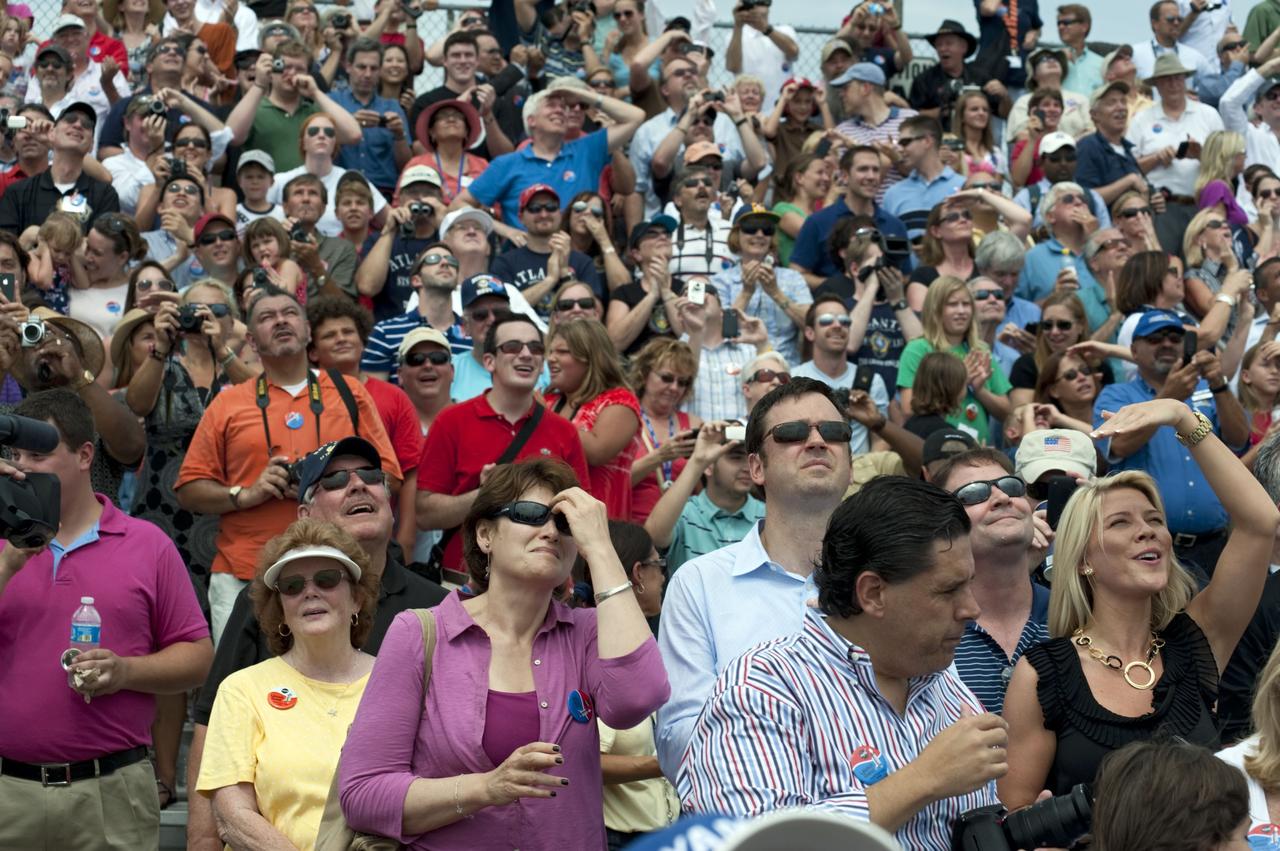
CAPE CANAVERAL, Fla. -- At the Banana River Creek VIP viewing area at NASA's Kennedy Space Center in Florida, spectators follow space shuttle Atlantis as it soars into space on its STS-135 mission to the International Space Station. Atlantis with its crew of four; Commander Chris Ferguson, Pilot Doug Hurley, Mission Specialists Sandy Magnus and Rex Walheim, lifted off at 11:29 a.m. EDT on July 8, 2011 to deliver the Raffaello multi-purpose logistics module packed with supplies and spare parts for the International Space Station. Atlantis also will fly the Robotic Refueling Mission experiment that will investigate the potential for robotically refueling existing satellites in orbit. In addition, Atlantis will return with a failed ammonia pump module to help NASA better understand the failure mechanism and improve pump designs for future systems. STS-135 is the 33rd flight of Atlantis, the 37th shuttle mission to the space station, and the 135th and final mission of NASA's Space Shuttle Program. For more information, visit www.nasa.gov/mission_pages/shuttle/shuttlemissions/sts135/index.html. Photo credit: NASA/Chad Baumer
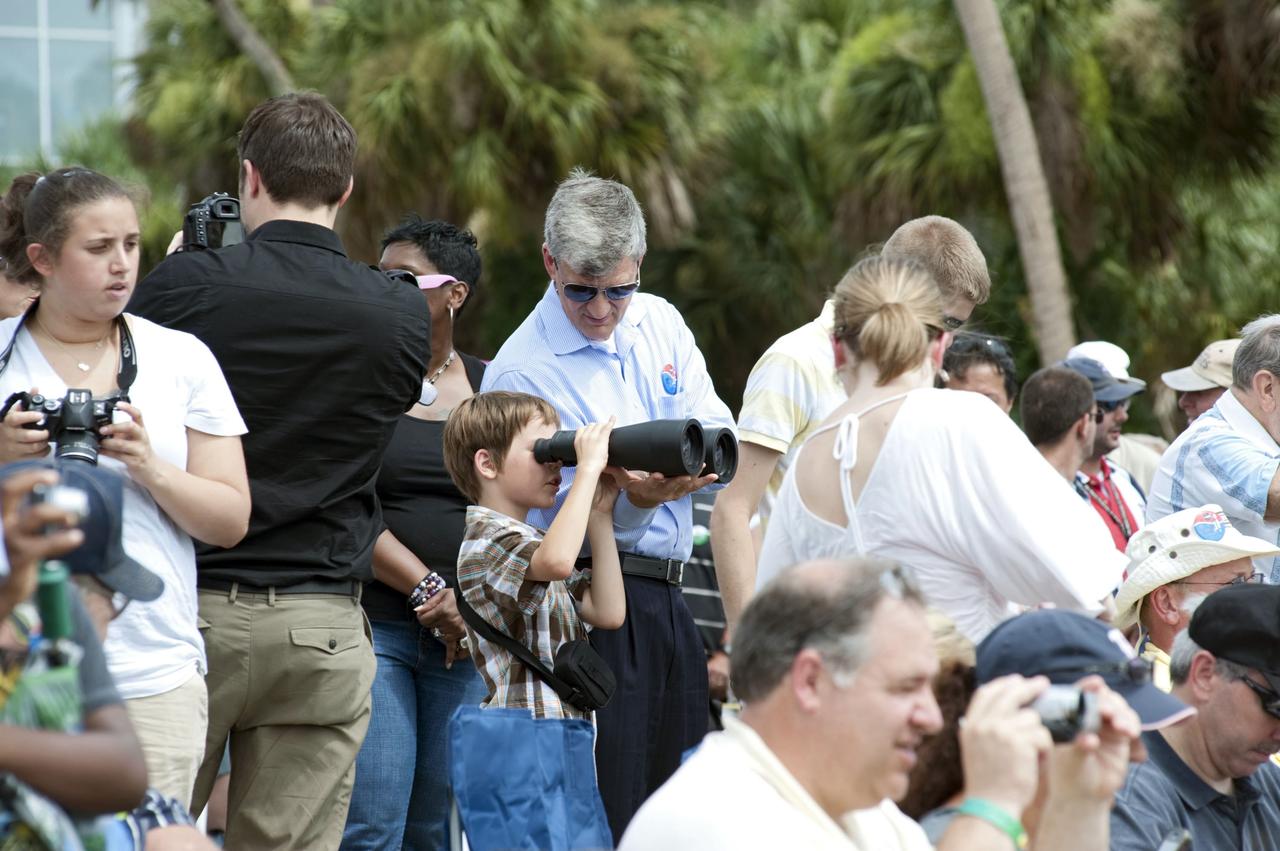
CAPE CANAVERAL, Fla. -- At the Banana River Creek VIP viewing area at NASA's Kennedy Space Center in Florida, spectators relax before the launch of space shuttle Atlantis' STS-135 mission to the International Space Station. Atlantis with its crew of four; Commander Chris Ferguson, Pilot Doug Hurley, Mission Specialists Sandy Magnus and Rex Walheim, lifted off at 11:29 a.m. EDT on July 8, 2011 to deliver the Raffaello multi-purpose logistics module packed with supplies and spare parts for the International Space Station. Atlantis also will fly the Robotic Refueling Mission experiment that will investigate the potential for robotically refueling existing satellites in orbit. In addition, Atlantis will return with a failed ammonia pump module to help NASA better understand the failure mechanism and improve pump designs for future systems. STS-135 is the 33rd flight of Atlantis, the 37th shuttle mission to the space station, and the 135th and final mission of NASA's Space Shuttle Program. For more information, visit www.nasa.gov/mission_pages/shuttle/shuttlemissions/sts135/index.html. Photo credit: NASA/Chad Baumer
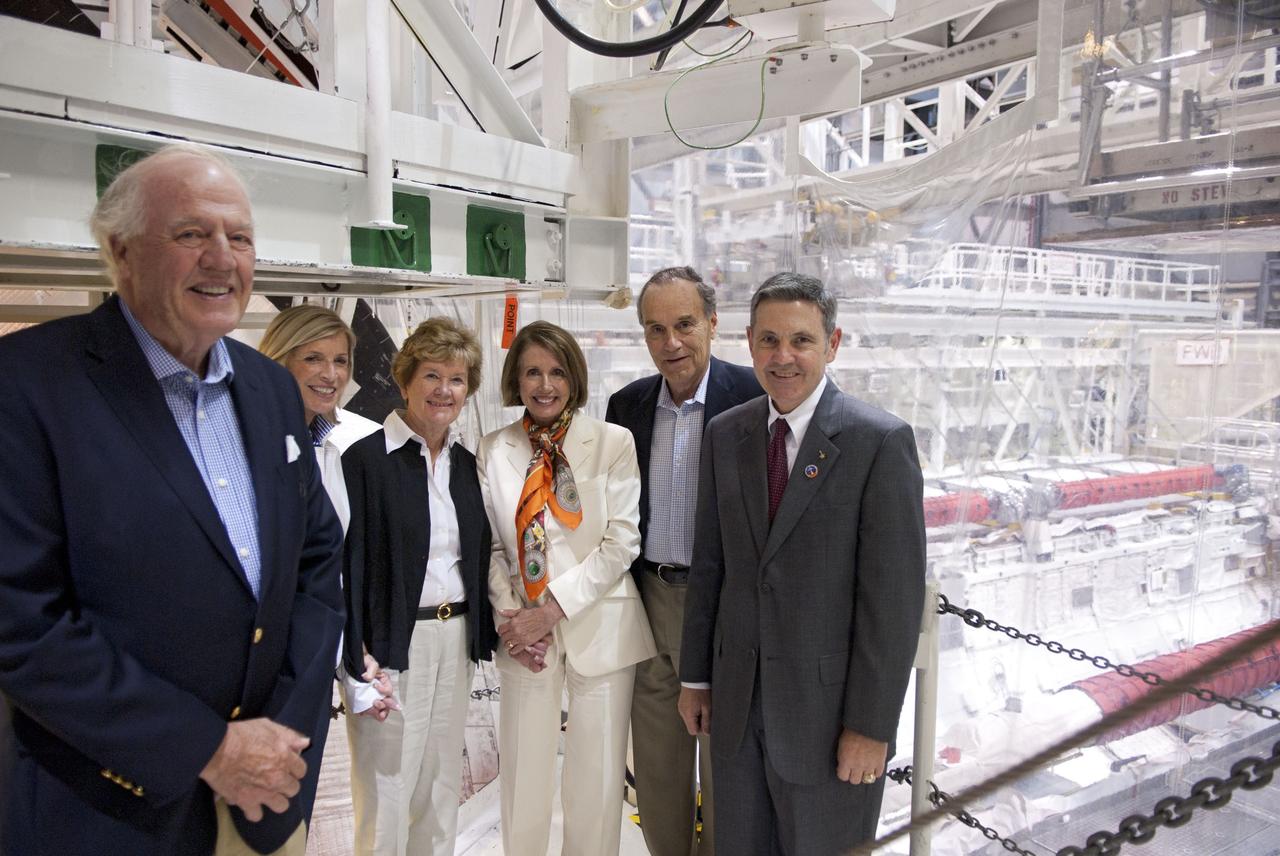
CAPE CANAVERAL, Fla. -- CAPE CANAVERAL, Fla. -- House Of Representatives Democratic Leader Nancy Pelosi, from California's 8th District, fourth from left, and other VIPs pose for a photo with NASA Kennedy Space Center Director Robert Cabana. They are at Florida's space center to witness space shuttle Discovery make history as it lifts off on its final scheduled mission from Launch Pad 39A. While at the center, they attended a presentation in the Operations Support Building II and toured Orbiter Processing Facilities 1 and 2 where shuttles Atlantis and Endeavour are being prepared for their final missions respectively. Discovery and its six-member STS-133 crew will deliver the Permanent Multipurpose Module, packed with supplies and critical spare parts, as well as Robonaut 2, the dexterous humanoid astronaut helper, to the International Space Station. Discovery will make its 39th mission and is scheduled to be retired following STS-133. This will be the 133rd Space Shuttle Program mission and the 35th shuttle voyage to the space station. For more information on the STS-133 mission, visit www.nasa.gov/mission_pages/shuttle/shuttlemissions/sts133/. Photo credit: NASA/Jim Grossmann
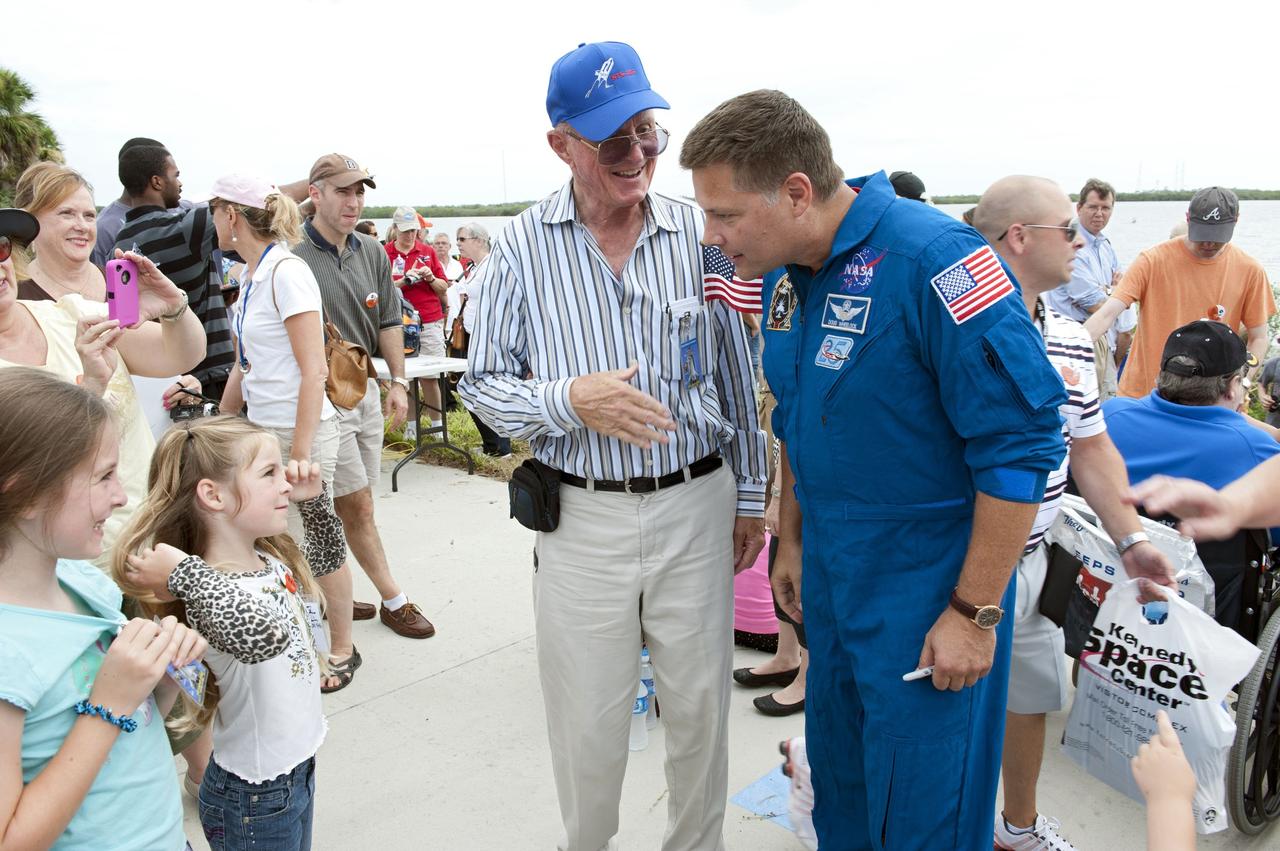
CAPE CANAVERAL, Fla. -- At the Banana River Creek VIP viewing area at NASA's Kennedy Space Center in Florida, NASA astronaut Doug Wheelock speaks with a spectator before the upcoming launch of space shuttle Atlantis' STS-135 mission to the International Space Station. Atlantis with its crew of four; Commander Chris Ferguson, Pilot Doug Hurley, Mission Specialists Sandy Magnus and Rex Walheim, lifted off at 11:29 a.m. EDT on July 8, 2011 to deliver the Raffaello multi-purpose logistics module packed with supplies and spare parts for the International Space Station. Atlantis also will fly the Robotic Refueling Mission experiment that will investigate the potential for robotically refueling existing satellites in orbit. In addition, Atlantis will return with a failed ammonia pump module to help NASA better understand the failure mechanism and improve pump designs for future systems. STS-135 is the 33rd flight of Atlantis, the 37th shuttle mission to the space station, and the 135th and final mission of NASA's Space Shuttle Program. For more information, visit www.nasa.gov/mission_pages/shuttle/shuttlemissions/sts135/index.html. Photo credit: NASA/Chad Baumer
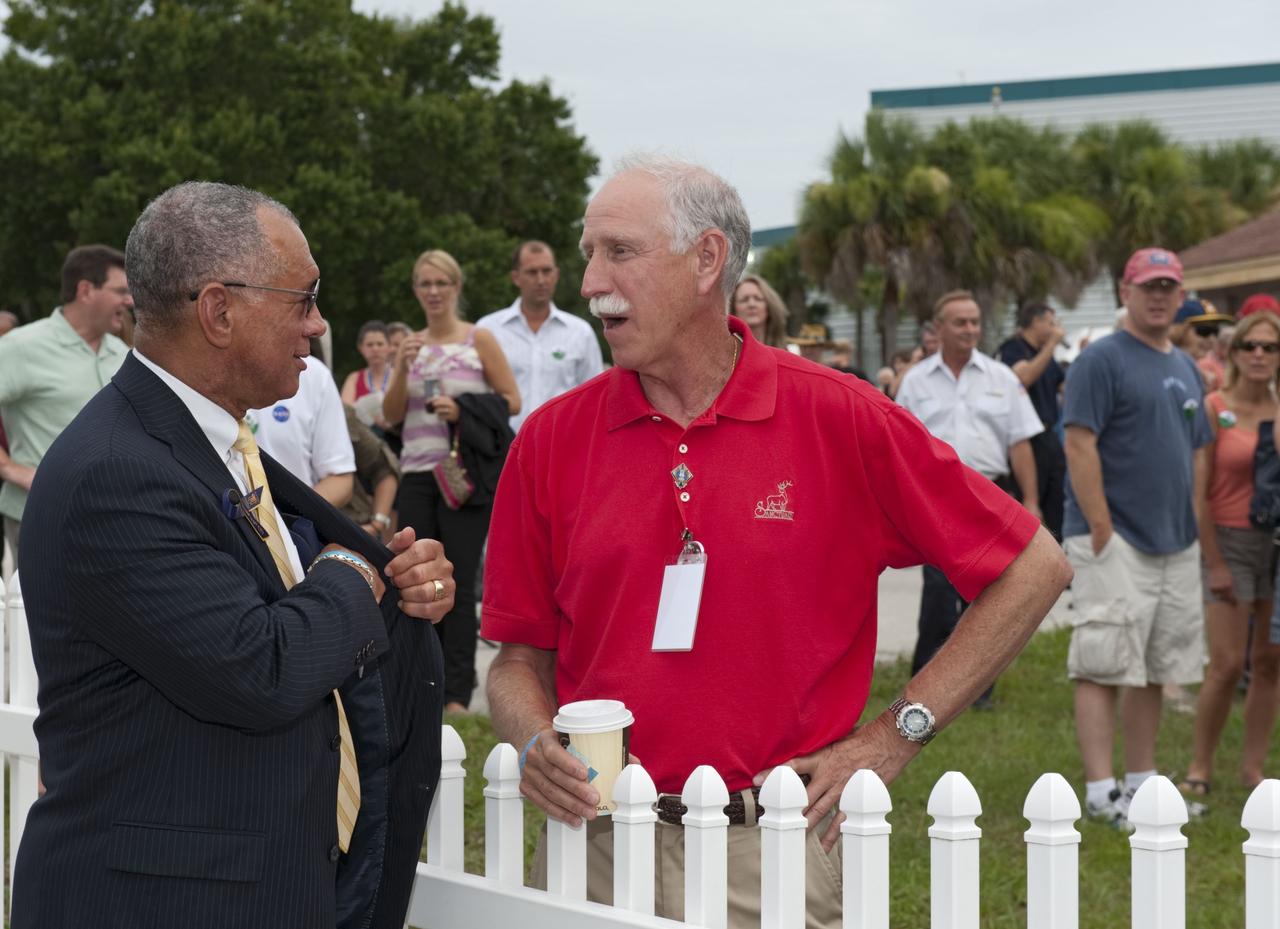
CAPE CANAVERAL, Fla. -- At the Banana River Creek VIP viewing area at NASA's Kennedy Space Center in Florida, NASA Administrator Charles Bolden speaks with former NASA astronaut Richard "Dick" Covey before the upcoming launch of space shuttle Atlantis on its STS-135 mission to the International Space Station. Atlantis with its crew of four; Commander Chris Ferguson, Pilot Doug Hurley, Mission Specialists Sandy Magnus and Rex Walheim, lifted off at 11:29 a.m. EDT on July 8, 2011 to deliver the Raffaello multi-purpose logistics module packed with supplies and spare parts for the International Space Station. Atlantis also will fly the Robotic Refueling Mission experiment that will investigate the potential for robotically refueling existing satellites in orbit. In addition, Atlantis will return with a failed ammonia pump module to help NASA better understand the failure mechanism and improve pump designs for future systems. STS-135 is the 33rd flight of Atlantis, the 37th shuttle mission to the space station, and the 135th and final mission of NASA's Space Shuttle Program. For more information, visit www.nasa.gov/mission_pages/shuttle/shuttlemissions/sts135/index.html. Photo credit: NASA/Chad Baumer

CAPE CANAVERAL, Fla. -- At the Banana River Creek VIP viewing area at NASA's Kennedy Space Center in Florida, Kennedy Center Director Bob Cabana speaks to media and spectators before the launch of space shuttle Atlantis on its STS-135 mission to the International Space Station. Seen also are Stennis Space Center Director Patrick Scheuermann (left), Marshall Space Flight Center Director Robert Lightfoot and Johnson Space Center Director Mike Coats. Atlantis with its crew of four; Commander Chris Ferguson, Pilot Doug Hurley, Mission Specialists Sandy Magnus and Rex Walheim, lifted off at 11:29 a.m. EDT on July 8, 2011 to deliver the Raffaello multi-purpose logistics module packed with supplies and spare parts for the International Space Station. Atlantis also will fly the Robotic Refueling Mission experiment that will investigate the potential for robotically refueling existing satellites in orbit. In addition, Atlantis will return with a failed ammonia pump module to help NASA better understand the failure mechanism and improve pump designs for future systems. STS-135 is the 33rd flight of Atlantis, the 37th shuttle mission to the space station, and the 135th and final mission of NASA's Space Shuttle Program. For more information, visit www.nasa.gov/mission_pages/shuttle/shuttlemissions/sts135/index.html. Photo credit: NASA/Chad Baumer
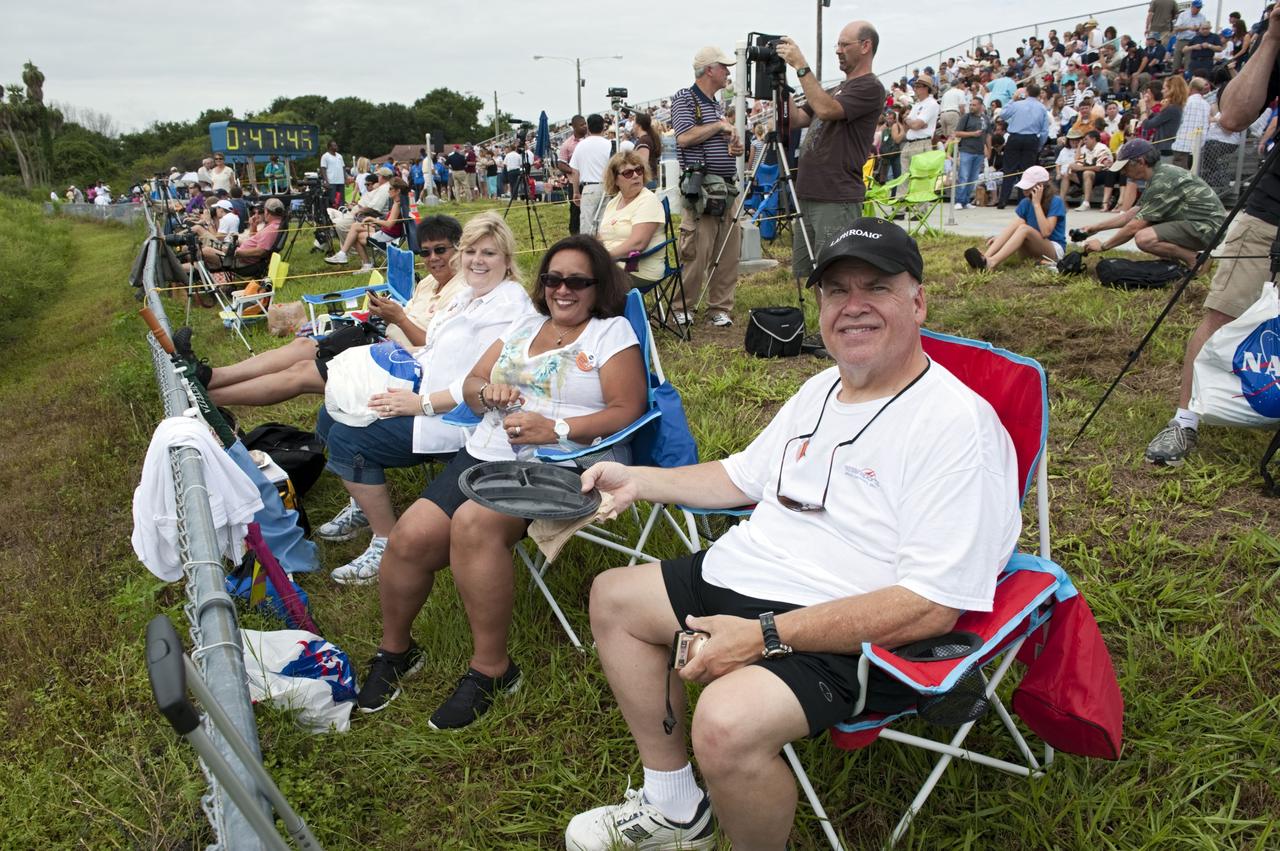
CAPE CANAVERAL, Fla. -- At the Banana River Creek VIP viewing area at NASA's Kennedy Space Center in Florida, spectators relax before the upcoming launch of space shuttle Atlantis on its STS-135 mission to the International Space Station. Atlantis with its crew of four; Commander Chris Ferguson, Pilot Doug Hurley, Mission Specialists Sandy Magnus and Rex Walheim, lifted off at 11:29 a.m. EDT on July 8, 2011 to deliver the Raffaello multi-purpose logistics module packed with supplies and spare parts for the International Space Station. Atlantis also will fly the Robotic Refueling Mission experiment that will investigate the potential for robotically refueling existing satellites in orbit. In addition, Atlantis will return with a failed ammonia pump module to help NASA better understand the failure mechanism and improve pump designs for future systems. STS-135 is the 33rd flight of Atlantis, the 37th shuttle mission to the space station, and the 135th and final mission of NASA's Space Shuttle Program. For more information, visit www.nasa.gov/mission_pages/shuttle/shuttlemissions/sts135/index.html. Photo credit: NASA/Chad Baumer

CAPE CANAVERAL, Fla. -- At the Banana River Creek VIP viewing area at NASA's Kennedy Space Center in Florida, spectators watch the countdown clock as liftoff of space shuttle Atlantis' STS-135 mission to the International Space Station ticks down to the last few seconds. Atlantis with its crew of four; Commander Chris Ferguson, Pilot Doug Hurley, Mission Specialists Sandy Magnus and Rex Walheim, lifted off at 11:29 a.m. EDT on July 8, 2011 to deliver the Raffaello multi-purpose logistics module packed with supplies and spare parts for the International Space Station. Atlantis also will fly the Robotic Refueling Mission experiment that will investigate the potential for robotically refueling existing satellites in orbit. In addition, Atlantis will return with a failed ammonia pump module to help NASA better understand the failure mechanism and improve pump designs for future systems. STS-135 is the 33rd flight of Atlantis, the 37th shuttle mission to the space station, and the 135th and final mission of NASA's Space Shuttle Program. For more information, visit www.nasa.gov/mission_pages/shuttle/shuttlemissions/sts135/index.html. Photo credit: NASA/Chad Baumer
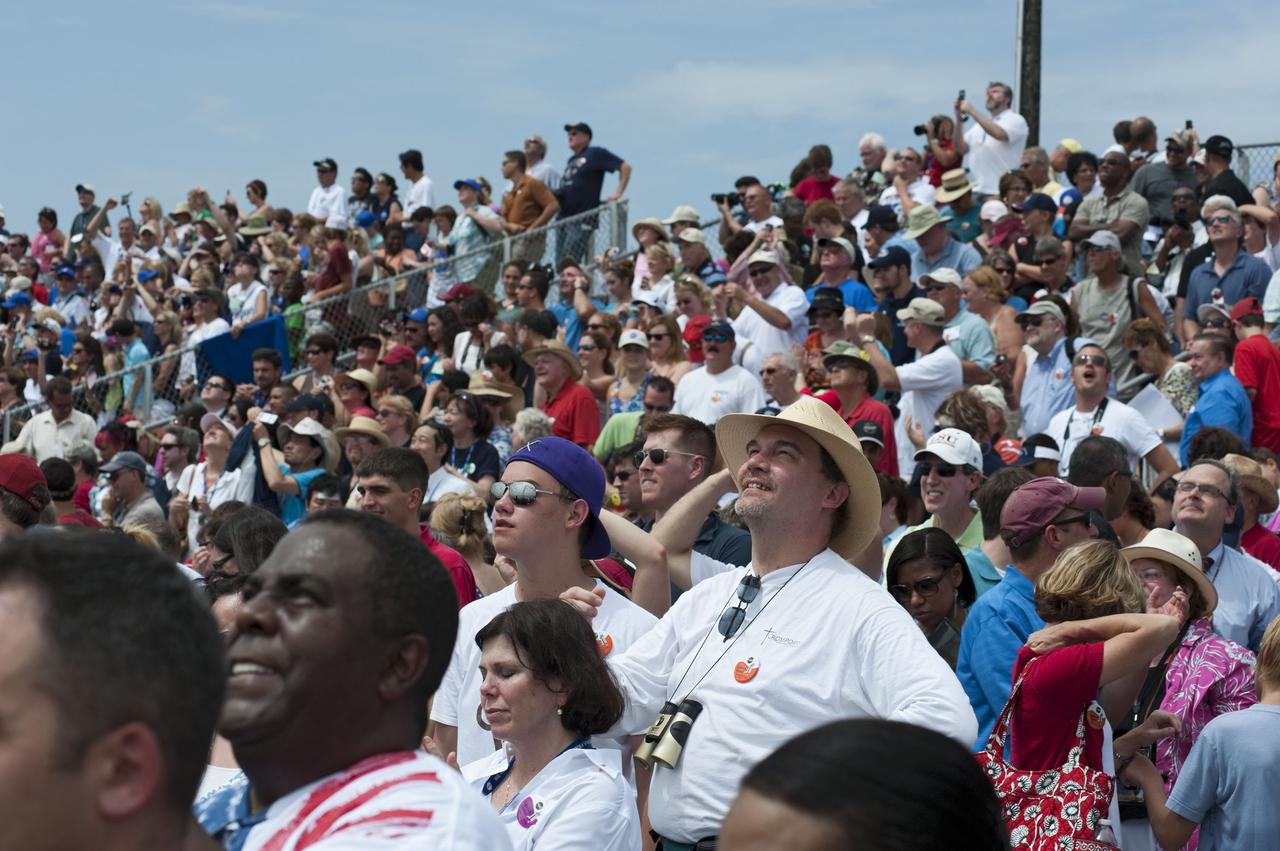
CAPE CANAVERAL, Fla. -- At the Banana River Creek VIP viewing area at NASA's Kennedy Space Center in Florida, spectators smile with delight as they watch space shuttle Atlantis soar into space on its STS-135 mission to the International Space Station. Atlantis with its crew of four; Commander Chris Ferguson, Pilot Doug Hurley, Mission Specialists Sandy Magnus and Rex Walheim, lifted off at 11:29 a.m. EDT on July 8, 2011 to deliver the Raffaello multi-purpose logistics module packed with supplies and spare parts for the International Space Station. Atlantis also will fly the Robotic Refueling Mission experiment that will investigate the potential for robotically refueling existing satellites in orbit. In addition, Atlantis will return with a failed ammonia pump module to help NASA better understand the failure mechanism and improve pump designs for future systems. STS-135 is the 33rd flight of Atlantis, the 37th shuttle mission to the space station, and the 135th and final mission of NASA's Space Shuttle Program. For more information, visit www.nasa.gov/mission_pages/shuttle/shuttlemissions/sts135/index.html. Photo credit: NASA/Chad Baumer
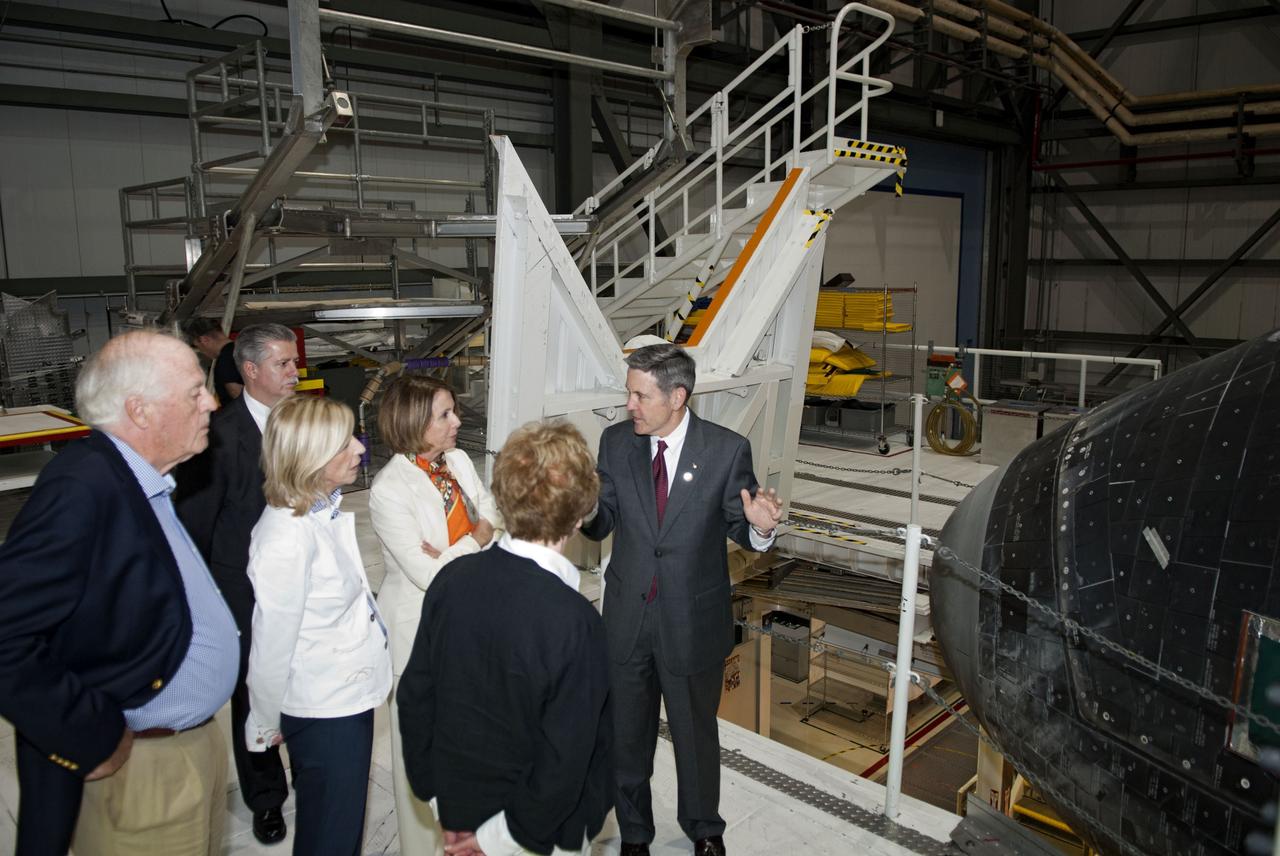
CAPE CANAVERAL, Fla. -- CAPE CANAVERAL, Fla. -- NASA Kennedy Space Center Director Robert Cabana, right, explains the operations taking place at Florida's space center to House Of Representatives Democratic Leader Nancy Pelosi, from California's 8th District, fourth from left, and other VIPs. They are at Florida's space center to witness space shuttle Discovery make history as it lifts off on its final scheduled mission from Launch Pad 39A. While at the center, they attended a presentation in the Operations Support Building II and toured Orbiter Processing Facilities 1 and 2 where shuttles Atlantis and Endeavour are being prepared for their final missions respectively. Discovery and its six-member STS-133 crew will deliver the Permanent Multipurpose Module, packed with supplies and critical spare parts, as well as Robonaut 2, the dexterous humanoid astronaut helper, to the International Space Station. Discovery will make its 39th mission and is scheduled to be retired following STS-133. This will be the 133rd Space Shuttle Program mission and the 35th shuttle voyage to the space station. For more information on the STS-133 mission, visit www.nasa.gov/mission_pages/shuttle/shuttlemissions/sts133/. Photo credit: NASA/Jim Grossmann
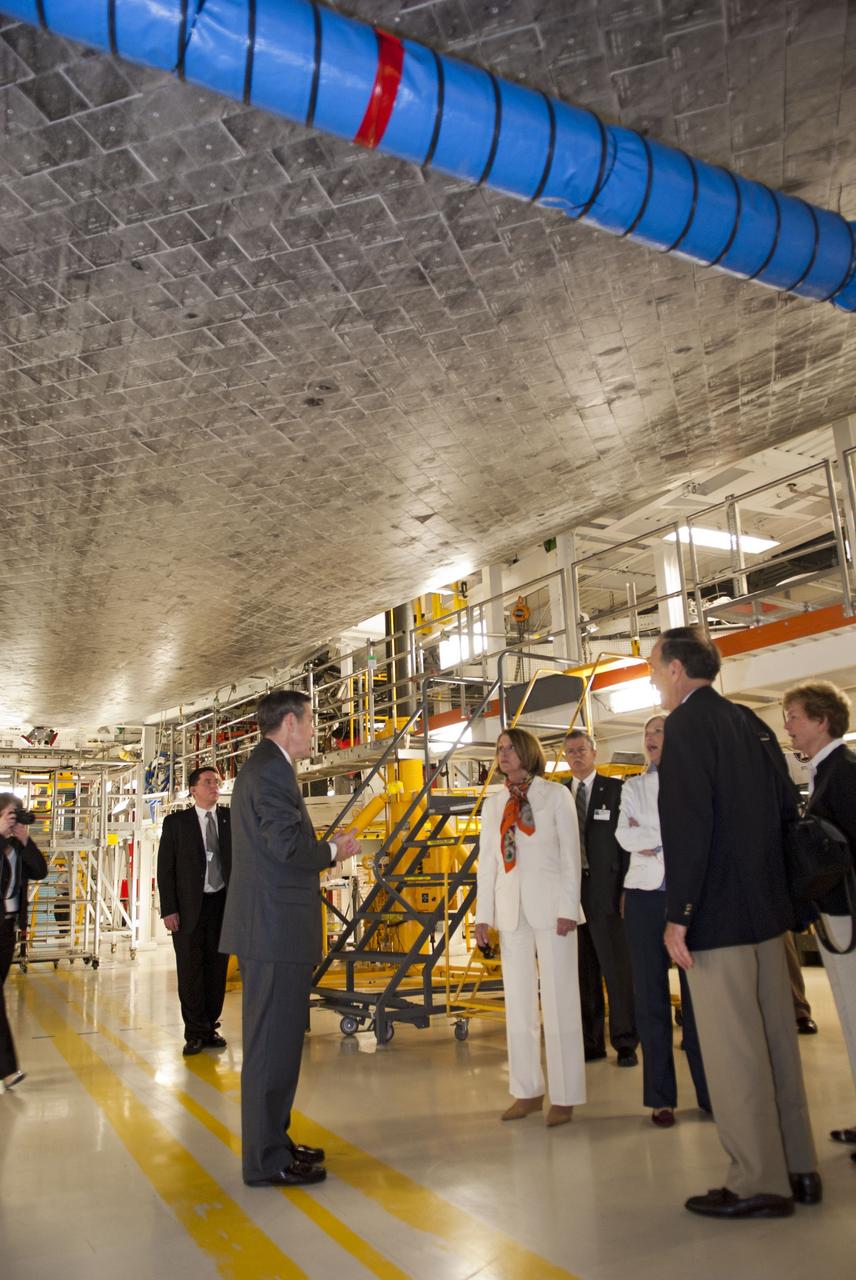
CAPE CANAVERAL, Fla. -- House Of Representatives Democratic Leader Nancy Pelosi, from California's 8th District, and other VIPs are at NASA's Kennedy Space Center in Florida to witness space shuttle Discovery make history as it lifts off on its final scheduled mission from Launch Pad 39A. While at the space center, they attended a presentation in the Operations Support Building II and toured Orbiter Processing Facilities 1 and 2 where shuttles Atlantis and Endeavour are being prepared for their final missions respectively. Discovery and its six-member STS-133 crew will deliver the Permanent Multipurpose Module, packed with supplies and critical spare parts, as well as Robonaut 2, the dexterous humanoid astronaut helper, to the International Space Station. Discovery will make its 39th mission and is scheduled to be retired following STS-133. This will be the 133rd Space Shuttle Program mission and the 35th shuttle voyage to the space station. For more information on the STS-133 mission, visit www.nasa.gov/mission_pages/shuttle/shuttlemissions/sts133/. Photo credit: NASA/Jim Grossmann
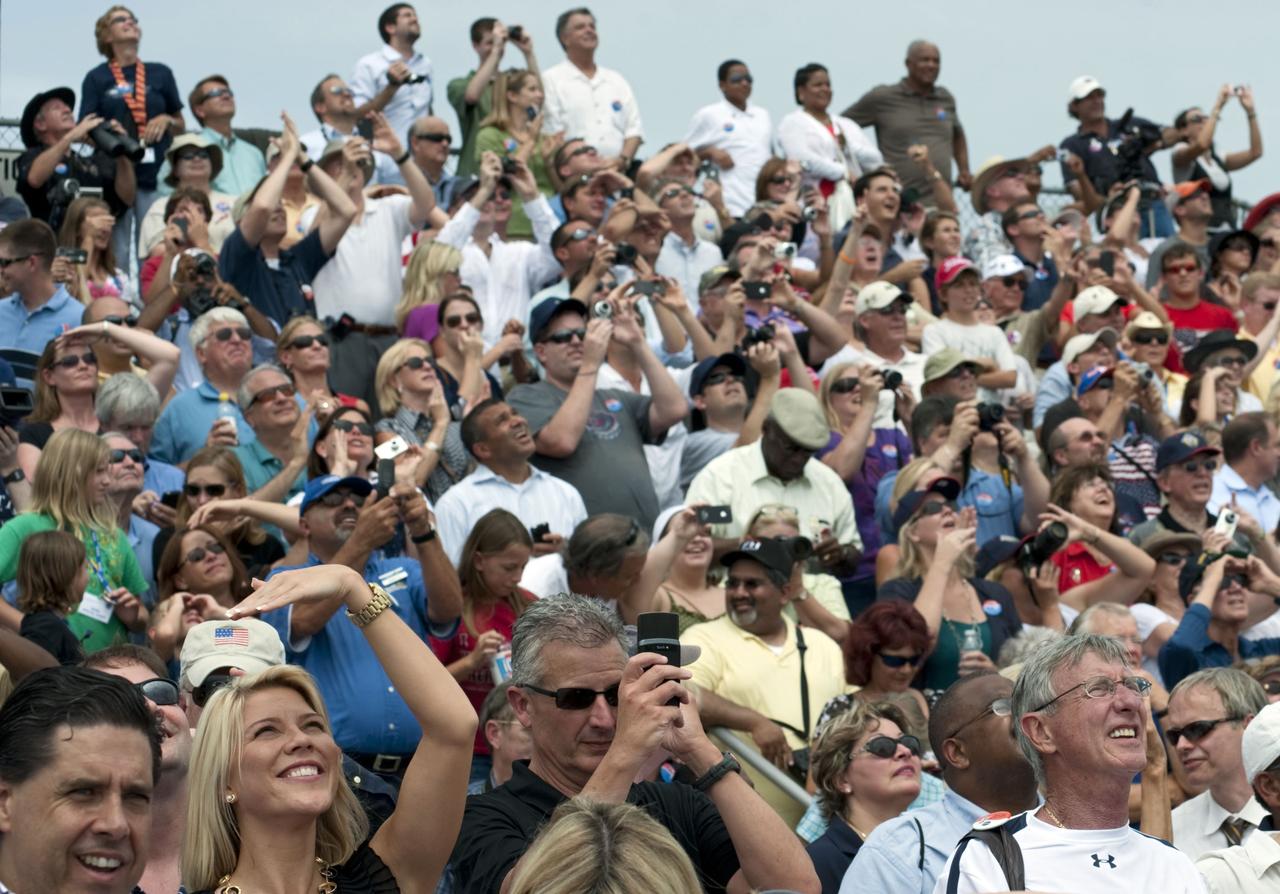
CAPE CANAVERAL, Fla. -- At the Banana River Creek VIP viewing area at NASA's Kennedy Space Center in Florida, spectators smile with delight as they watch space shuttle Atlantis soar into space on its STS-135 mission to the International Space Station. Atlantis with its crew of four; Commander Chris Ferguson, Pilot Doug Hurley, Mission Specialists Sandy Magnus and Rex Walheim, lifted off at 11:29 a.m. EDT on July 8, 2011 to deliver the Raffaello multi-purpose logistics module packed with supplies and spare parts for the International Space Station. Atlantis also will fly the Robotic Refueling Mission experiment that will investigate the potential for robotically refueling existing satellites in orbit. In addition, Atlantis will return with a failed ammonia pump module to help NASA better understand the failure mechanism and improve pump designs for future systems. STS-135 is the 33rd flight of Atlantis, the 37th shuttle mission to the space station, and the 135th and final mission of NASA's Space Shuttle Program. For more information, visit www.nasa.gov/mission_pages/shuttle/shuttlemissions/sts135/index.html. Photo credit: NASA/Chad Baumer
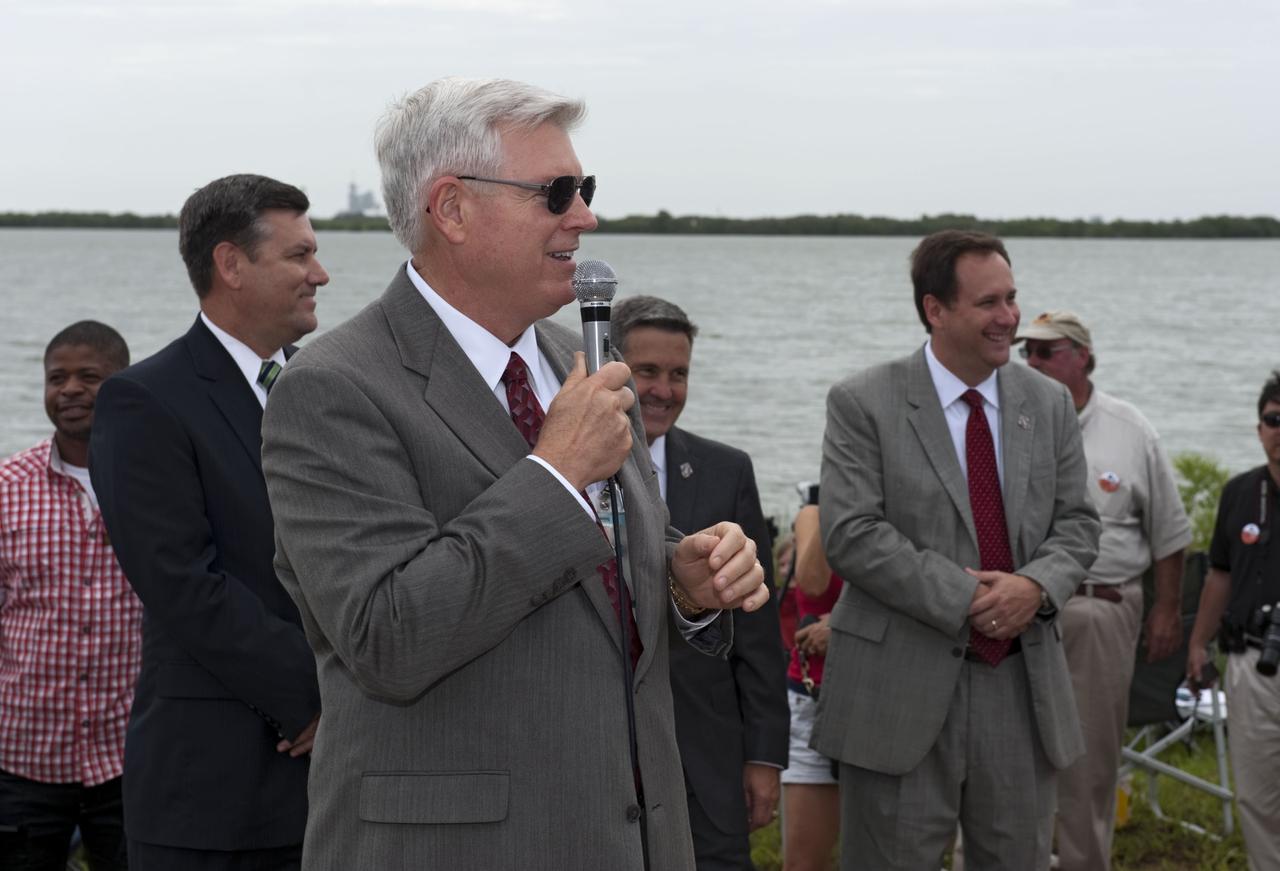
CAPE CANAVERAL, Fla. -- At the Banana River Creek VIP viewing area at NASA's Kennedy Space Center in Florida, Johnson Space Center Director Mike Coats speaks to media and spectators before the launch of space shuttle Atlantis on its STS-135 mission to the International Space Station. Seen also Stennis Space Center Director Patrick Scheuermann (left), Kennedy Center Director Bob Cabana and Marshall Space Flight Center Director Robert Lightfoot. Atlantis with its crew of four; Commander Chris Ferguson, Pilot Doug Hurley, Mission Specialists Sandy Magnus and Rex Walheim, lifted off at 11:29 a.m. EDT on July 8, 2011 to deliver the Raffaello multi-purpose logistics module packed with supplies and spare parts for the International Space Station. Atlantis also will fly the Robotic Refueling Mission experiment that will investigate the potential for robotically refueling existing satellites in orbit. In addition, Atlantis will return with a failed ammonia pump module to help NASA better understand the failure mechanism and improve pump designs for future systems. STS-135 is the 33rd flight of Atlantis, the 37th shuttle mission to the space station, and the 135th and final mission of NASA's Space Shuttle Program. For more information, visit www.nasa.gov/mission_pages/shuttle/shuttlemissions/sts135/index.html. Photo credit: NASA/Chad Baumer
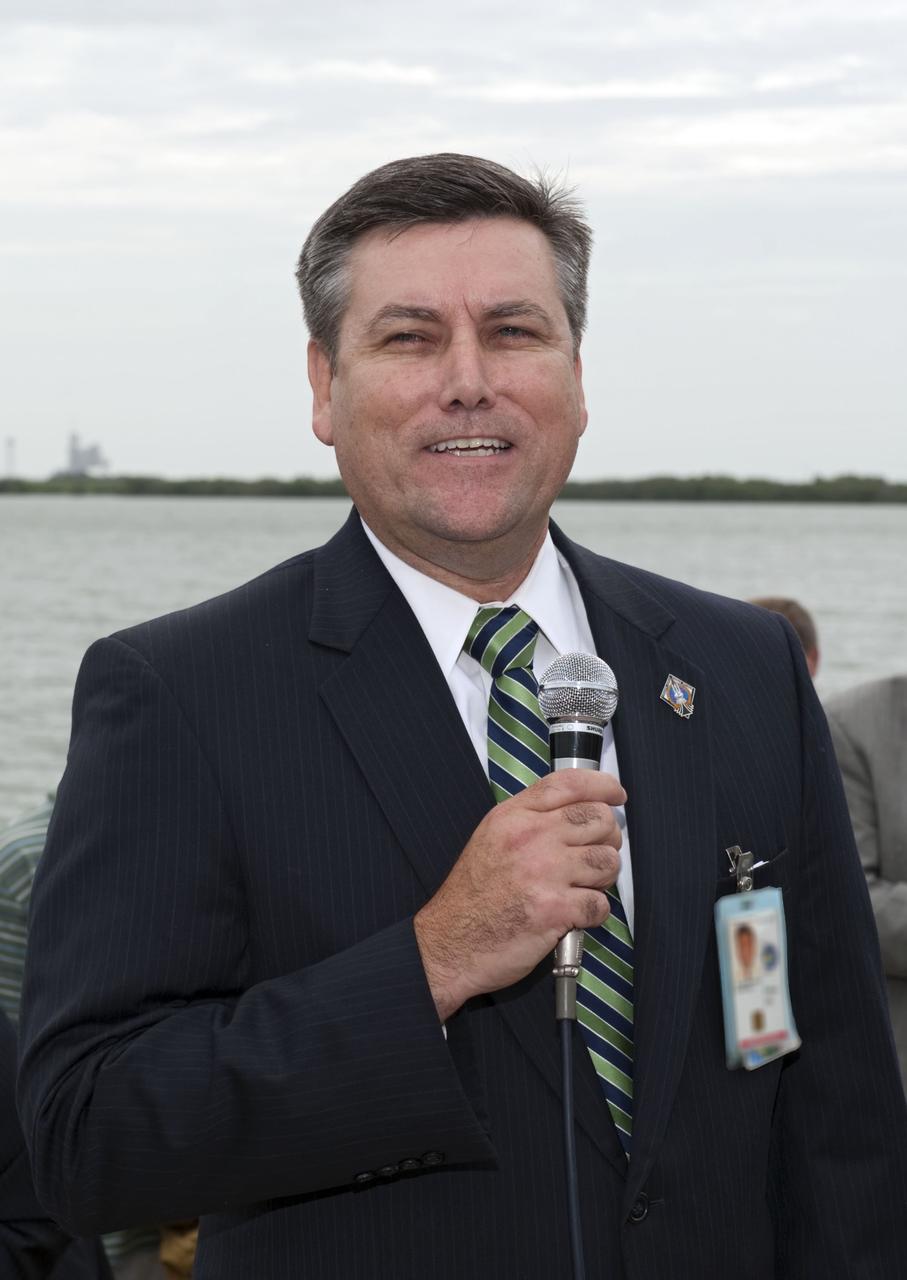
CAPE CANAVERAL, Fla. -- At the Banana River Creek VIP viewing area at NASA's Kennedy Space Center in Florida, Stennis Space Center Director Patrick Scheuermann speaks to media and spectators before the launch of space shuttle Atlantis on its STS-135 mission to the International Space Station. Atlantis with its crew of four; Commander Chris Ferguson, Pilot Doug Hurley, Mission Specialists Sandy Magnus and Rex Walheim, lifted off at 11:29 a.m. EDT on July 8, 2011 to deliver the Raffaello multi-purpose logistics module packed with supplies and spare parts for the International Space Station. Atlantis also will fly the Robotic Refueling Mission experiment that will investigate the potential for robotically refueling existing satellites in orbit. In addition, Atlantis will return with a failed ammonia pump module to help NASA better understand the failure mechanism and improve pump designs for future systems. STS-135 is the 33rd flight of Atlantis, the 37th shuttle mission to the space station, and the 135th and final mission of NASA's Space Shuttle Program. For more information, visit www.nasa.gov/mission_pages/shuttle/shuttlemissions/sts135/index.html. Photo credit: NASA/Chad Baumer