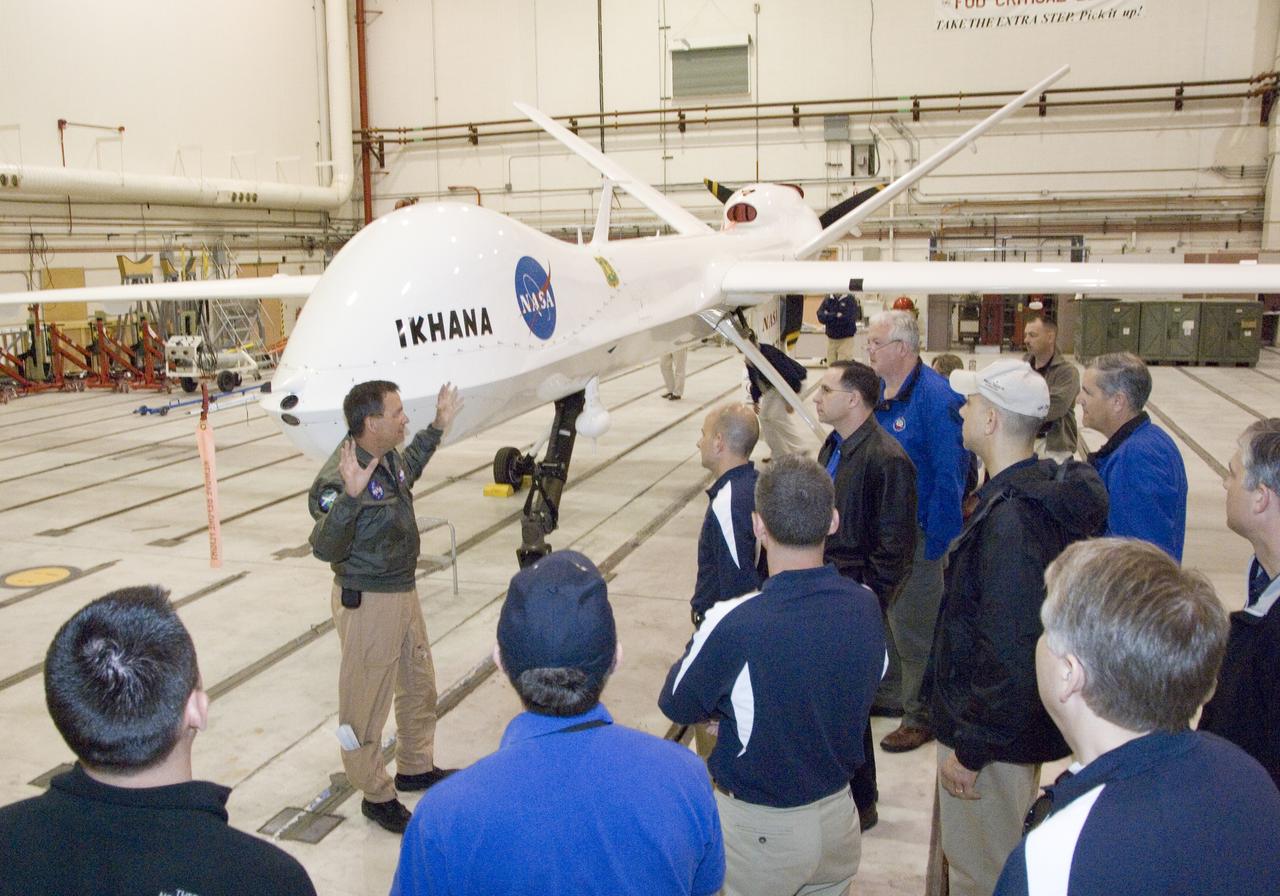
Industrial College of the Armed Forces students on a VIP tour receive a briefing on the Ikhana unmanned air vehicle from NASA Dryden pilot Mark Pestana.
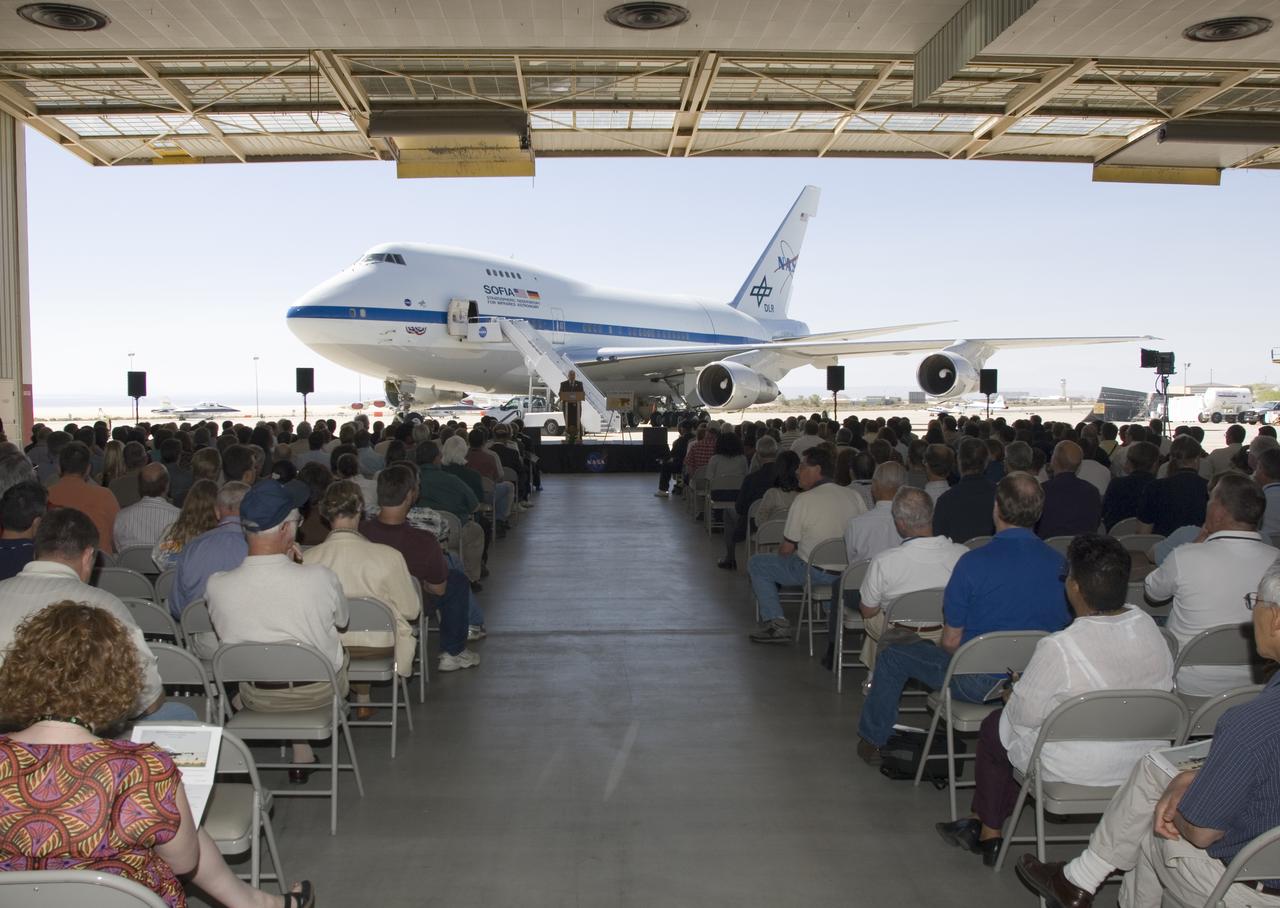
More than 250 VIPs, news media and guests joined NASA, DLR, USRA and other SOFIA staff for the debut of the airborne observatory at NASA DFRC on June 27, 2007.
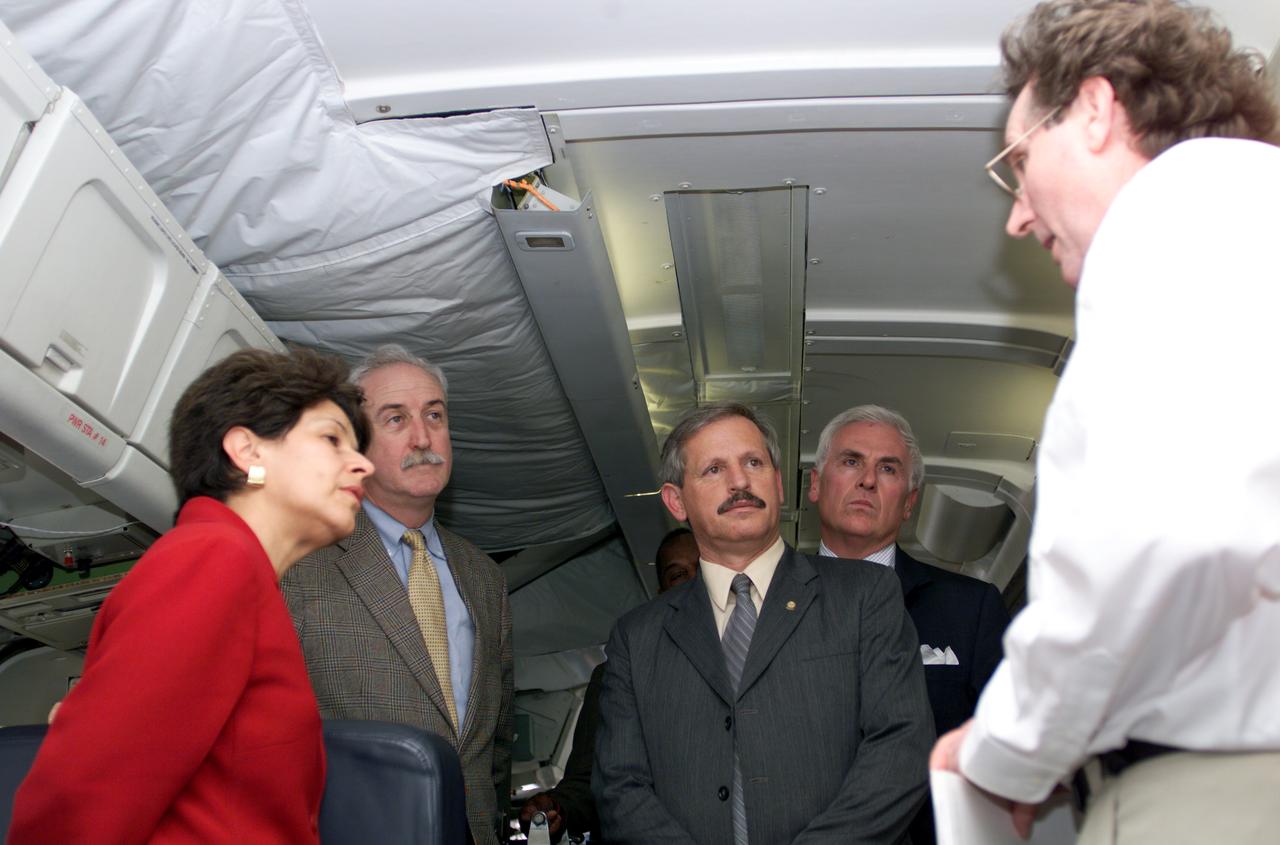
VIP tour of NASA DFRC's DC-8 airborne laboratory during the AirSAR 2004 Mesoamerica campaign given by Craig Dobson, NASA Program Manager for AirSAR, L-R: Dr. Sonia Marta Mora, President of the Costa Rican National Rector’s Council; NASA Administrator Sean O'Keefe; Fernando Gutierrez, Costa Rican Minister of Science and Technology(MICIT); Mr. John Danilovich, US Ambassador to Costa Rica; and Dobson. AirSAR 2004 Mesoamerica is a three-week expedition by an international team of scientists that will use an all-weather imaging tool, called the Airborne Synthetic Aperture Radar (AirSAR), in a mission ranging from the tropical rain forests of Central America to frigid Antarctica.
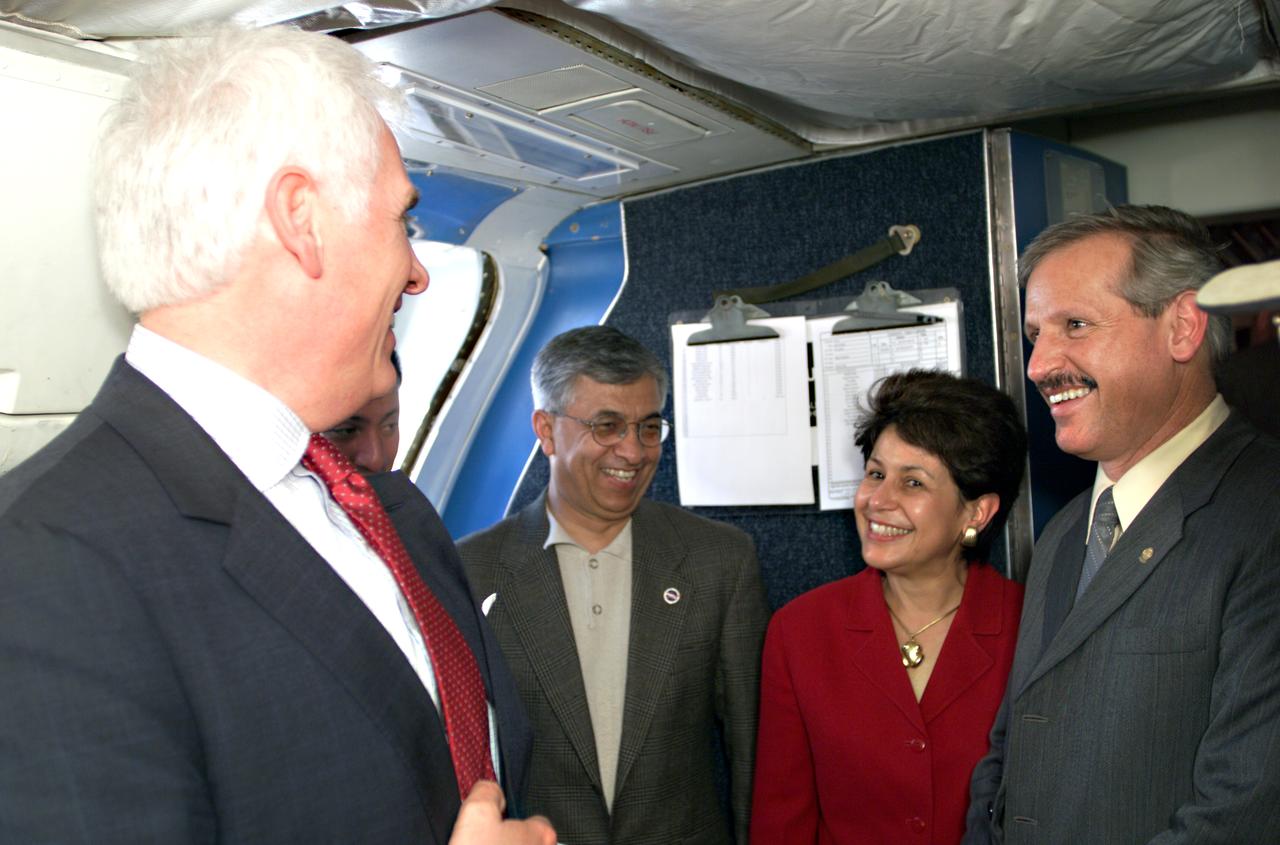
VIP’s onboard NASA's DC-8 aircraft during the AirSAR 2004 Mesoamerica campaign, L-R: Mr. John Danilovich, US Ambassador to Costa Rica; Dr. Gahssem Asrar, NASA Associate Administrator for Earth Science Enterprises; Dr. Sonia Marta Mora, President of the Costa Rican National Rector’s Council; and Fernando Gutierrez, Costa Rican Minister of Science and Technology(MICIT). AirSAR 2004 Mesoamerica is a three-week expedition by an international team of scientists that will use an all-weather imaging tool, called the Airborne Synthetic Aperture Radar (AirSAR), in a mission ranging from the tropical rain forests of Central America to frigid Antarctica.
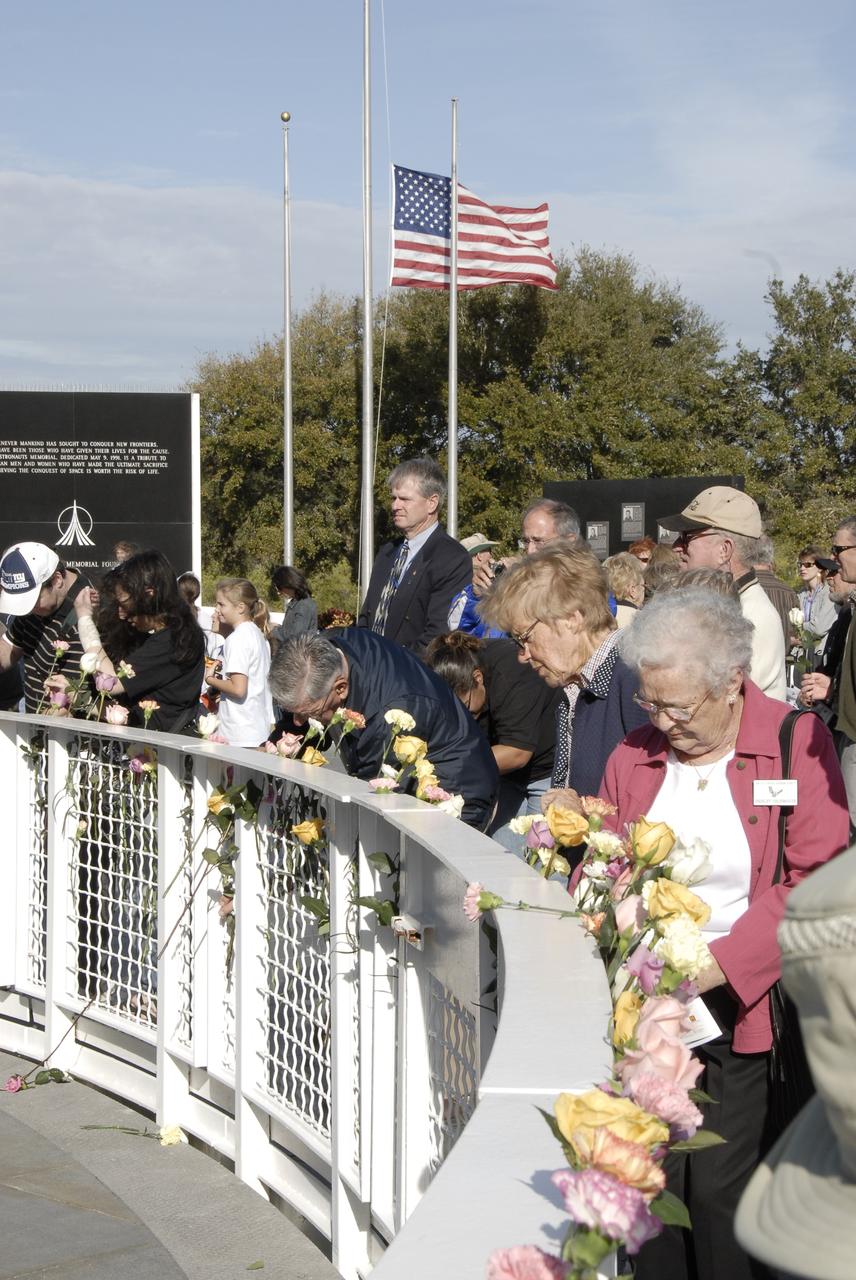
CAPE CANAVERAL, Fla. – At the Kennedy Space Center Visitor Complex, guests pay tribute to the crews of Apollo 1 and space shuttles Challenger and Columbia, as well as other NASA colleagues who lost their lives while furthering the cause of exploration and discovery, during NASA's Day of Remembrance observance Jan. 29. The public was invited to a wreath-laying at the Space Mirror Memorial at the visitor complex. Center Director and former astronaut Bob Cabana took part in the ceremony. Photo credit: NASA/Kim Shiflett
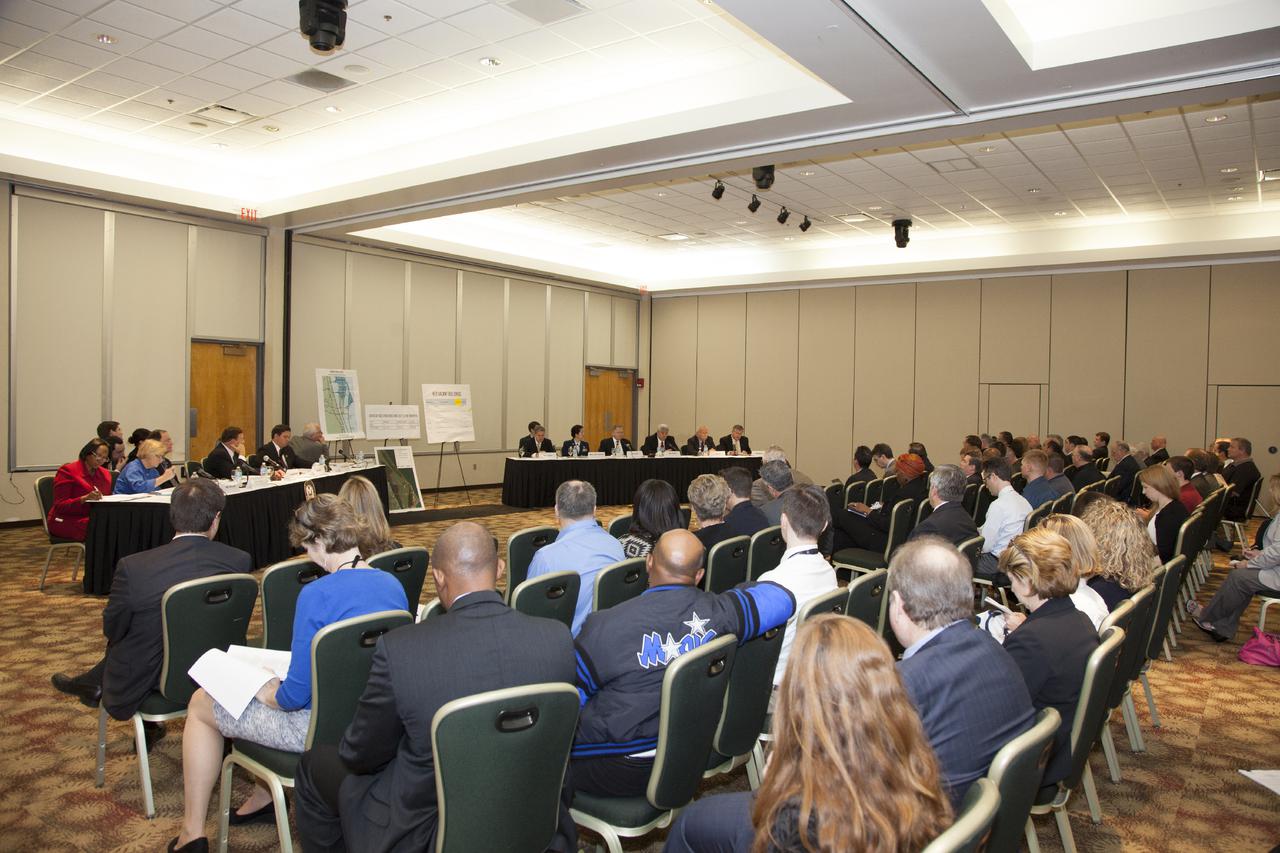
CAPE CANAVERAL, Fla. – At the Kurt H. Debus Conference Facility at the Kennedy Space Center Visitor Complex, guests listen to a hearing of the U.S. House of Representatives' Subcommittee on Government Operations. The Congressional hearing took place to review plans for putting vacant buildings and excess property at the Kennedy Space Center to their best and most productive use. Photo credit: NASA_Daniel Casper
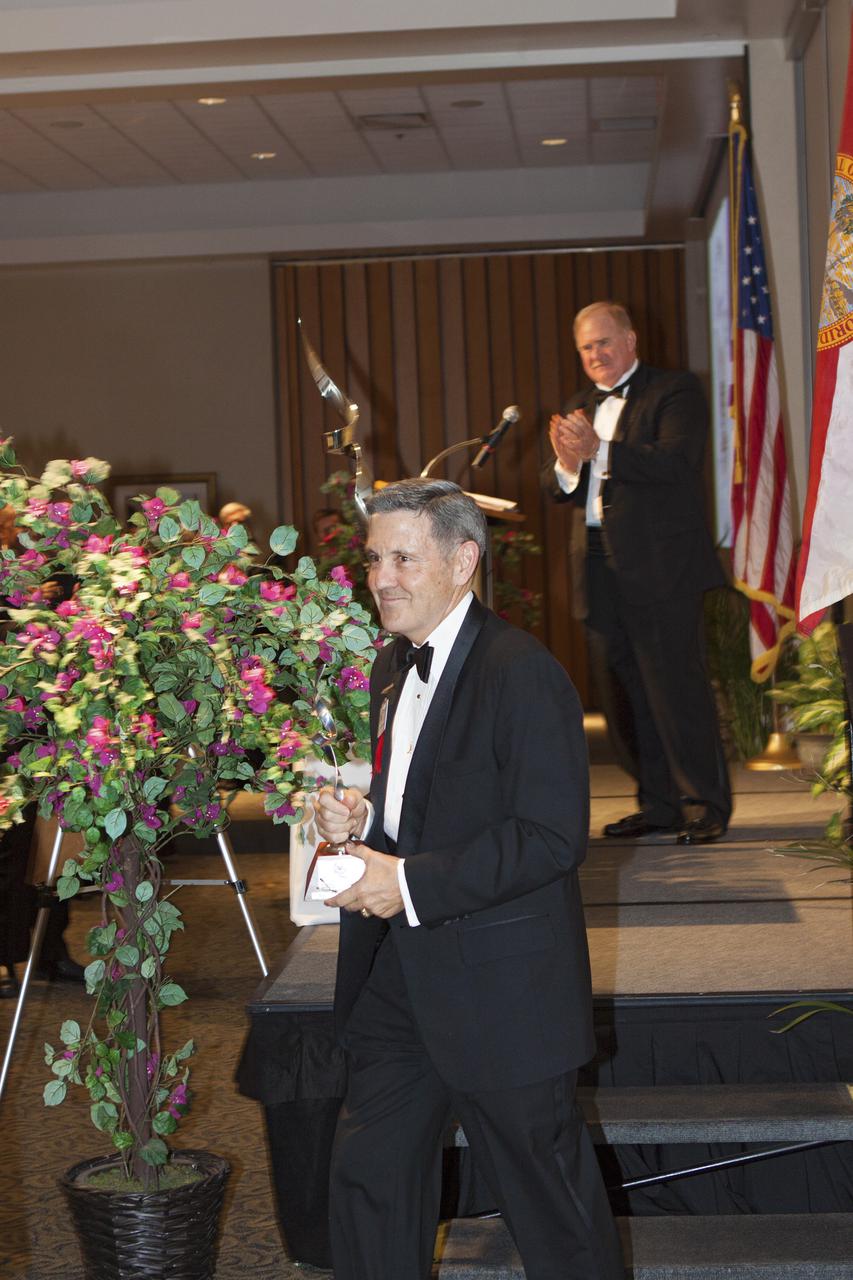
CAPE CANAVERAL, Fla. – At NASA’s Kennedy Space Center Visitor Complex in Florida, National Space Club Florida Committee Chairman Jim McCarthy, at the podium, has just presented the prestigious Dr. Kurt H. Debus Award to Kennedy's director, Bob Cabana. A former U.S. Marine Corps aviator and NASA astronaut, Cabana was honored at the gala Debus Award Dinner. Named for the spaceport’s first director, the Debus Award was created to recognize significant achievements and contributions made in Florida to American aerospace efforts. The Debus Award was created by the space club's Florida committee to recognize significant achievements and contributions made in Florida to American aerospace efforts. Photo credit: NASA_Jim Grossmann
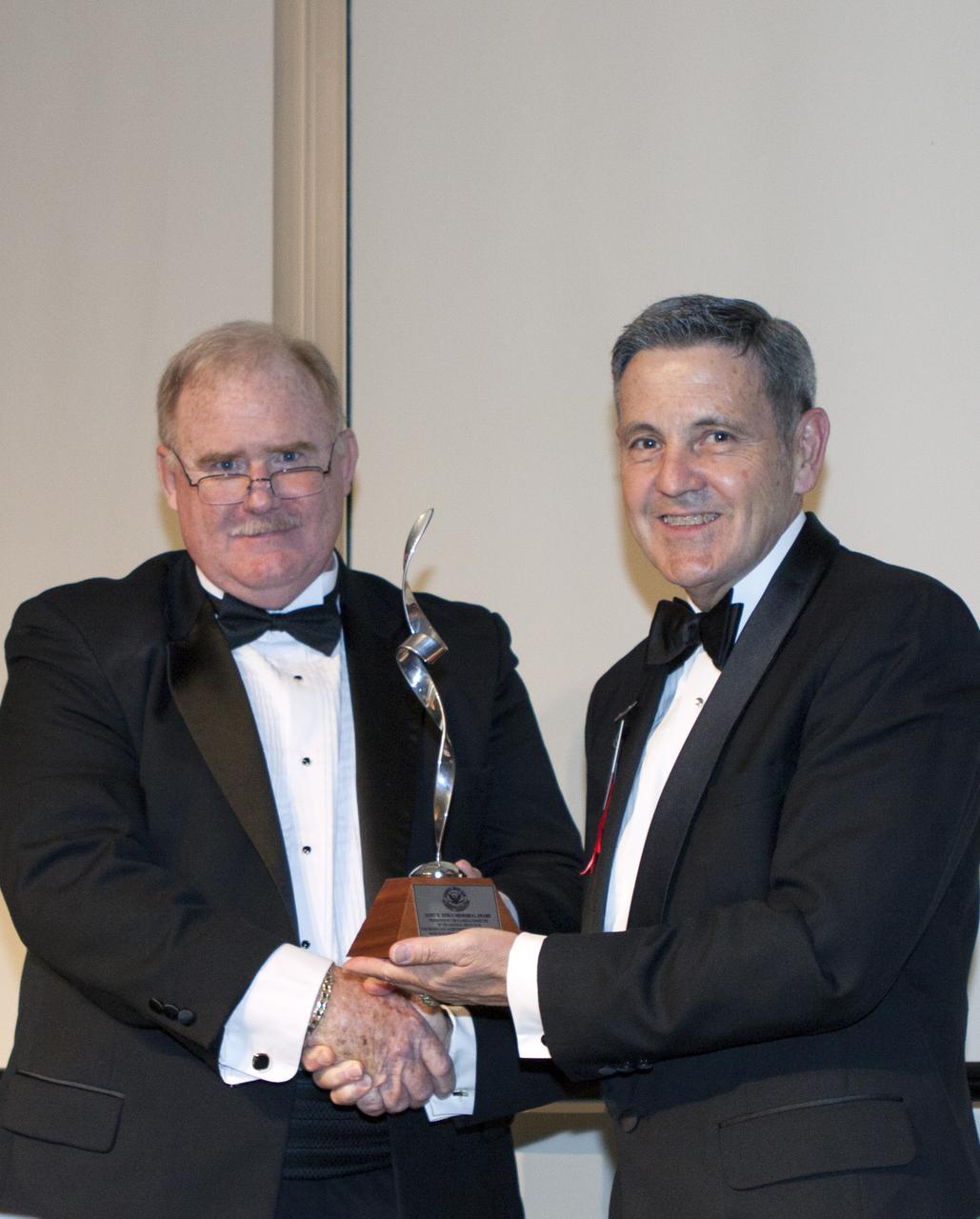
CAPE CANAVERAL, Fla. – At NASA’s Kennedy Space Center Visitor Complex in Florida, National Space Club Florida Committee Chairman Jim McCarthy, left, presents the Dr. Kurt H. Debus Award to Kennedy's director, Bob Cabana. A former U.S. Marine Corps aviator and NASA astronaut, Cabana was honored at the gala Debus Award Dinner. Named for the spaceport’s first director, the Debus Award was created to recognize significant achievements and contributions made in Florida to American aerospace efforts. The Debus Award was created by the space club's Florida committee to recognize significant achievements and contributions made in Florida to American aerospace efforts. Photo credit: NASA_Jim Grossmann
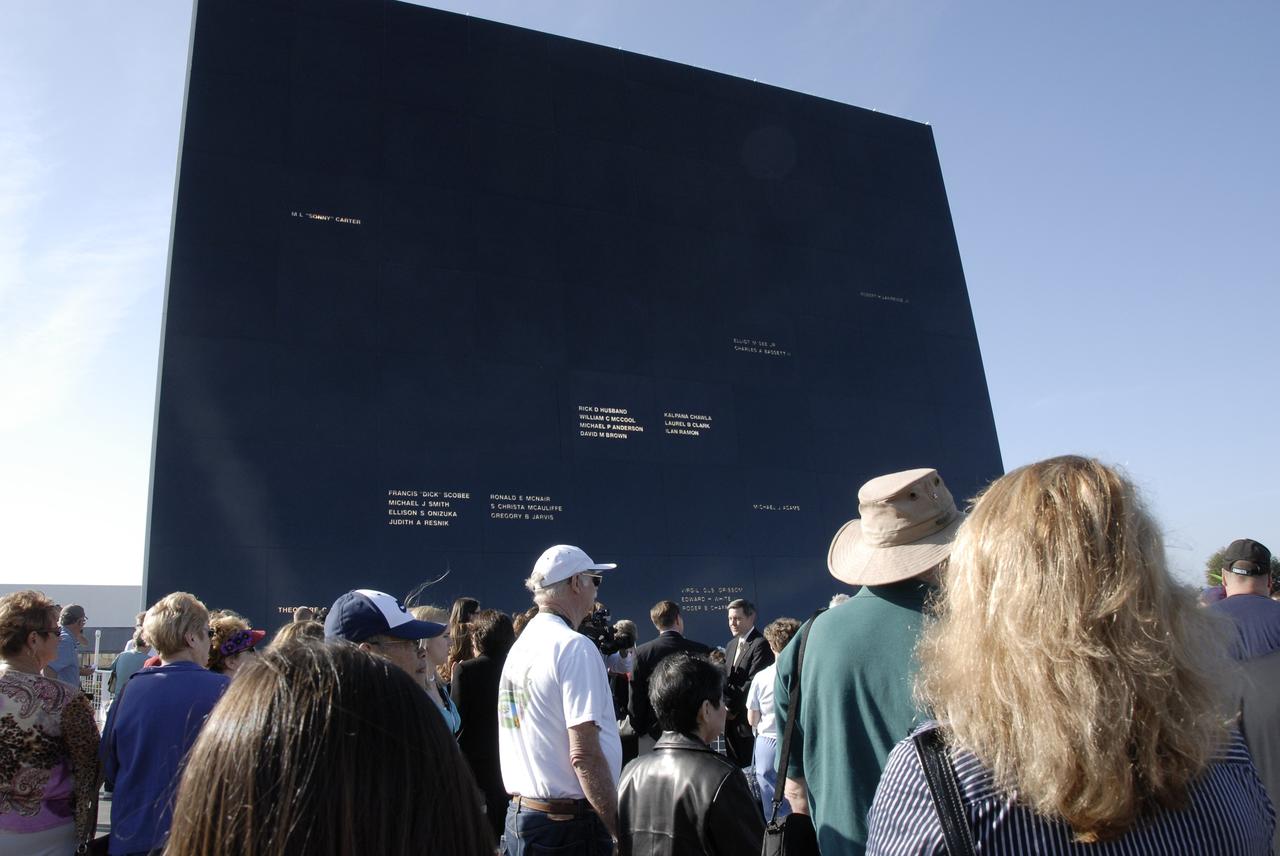
CAPE CANAVERAL, Fla. – At the Kennedy Space Center Visitor Complex, Center Director Bob Cabana takes part in a ceremony paying tribute to the crews of Apollo 1 and space shuttles Challenger and Columbia, as well as other NASA colleagues, during NASA's Day of Remembrance observance Jan. 29. The public was invited to the wreath-laying ceremony in front of the Space Mirror Memorial, on which are engraved the names of NASA's heroes who lost their lives while furthering the cause of exploration and discovery. Photo credit: NASA/Kim Shiflett
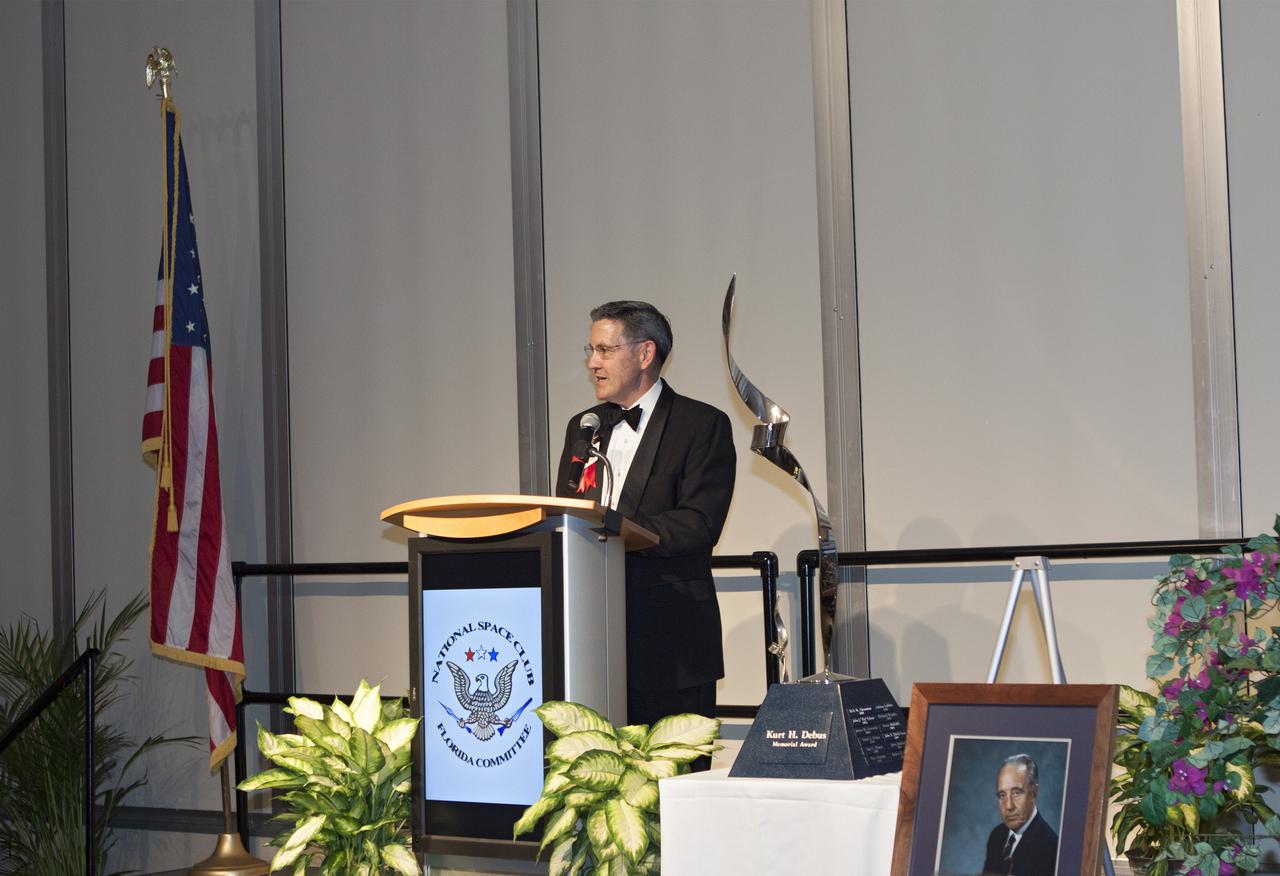
CAPE CANAVERAL, Fla. – At NASA’s Kennedy Space Center Visitor Complex in Florida, center director Bob Cabana speaks after being presented the prestigious Dr. Kurt H. Debus Award. A former U.S. Marine Corps aviator and NASA astronaut, Cabana was honored at the gala Debus Award Dinner. Named for the spaceport’s first director, the Debus Award was created to recognize significant achievements and contributions made in Florida to American aerospace efforts. The Debus Award was created by the space club's Florida committee to recognize significant achievements and contributions made in Florida to American aerospace efforts. Photo credit: NASA_Jim Grossmann
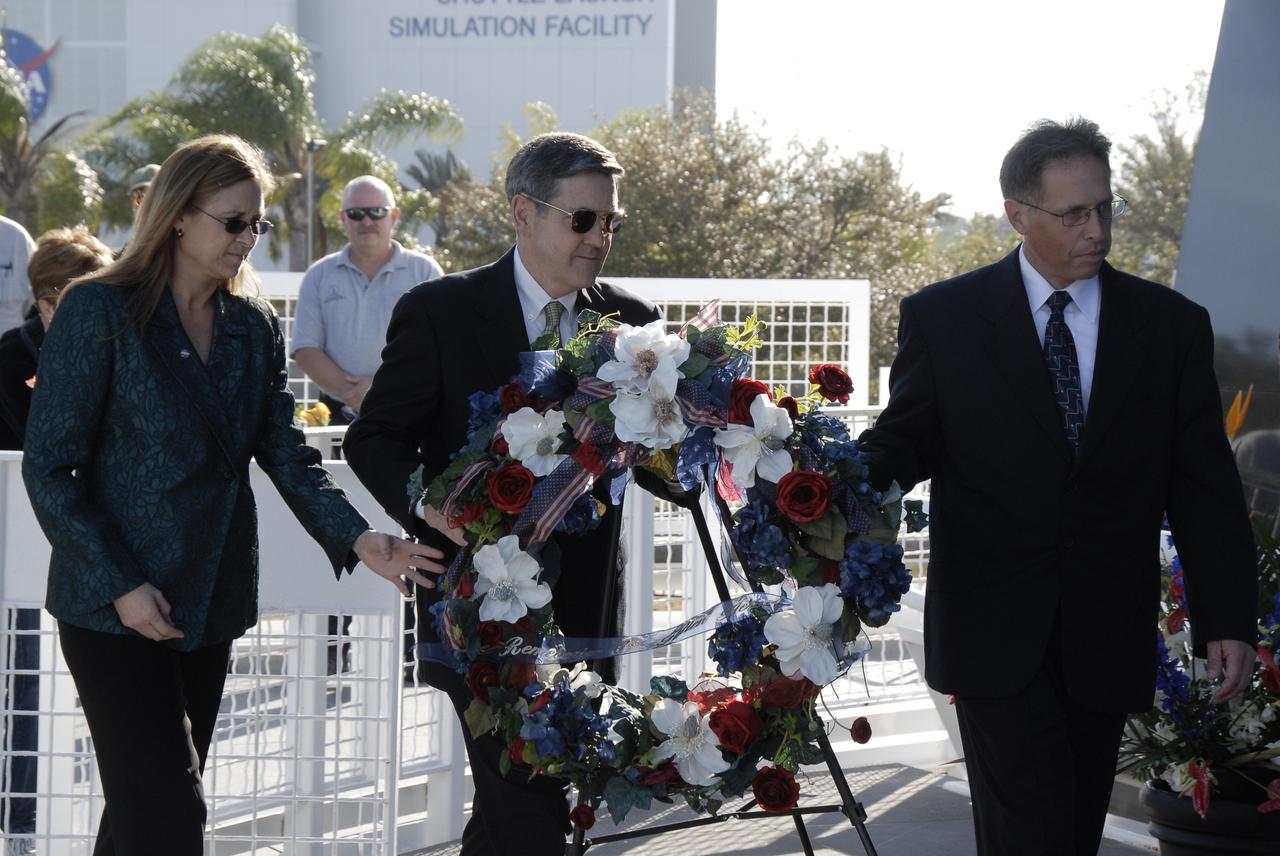
CAPE CANAVERAL, Fla. – At the Kennedy Space Center Visitor Complex, Center Director Bob Cabana (center) takes part in a wreath-laying ceremony paying tribute to the crews of Apollo 1 and space shuttles Challenger and Columbia, as well as other NASA colleagues who lost their lives while furthering the cause of exploration and discovery, during NASA's Day of Remembrance observance. At left is Janet Petro, deputy director of Kennedy; at right is United Space Alliance Vice President of Launch and Recovery Systems and Florida Site Executive Mark Nappi. The public was invited to the wreath-laying ceremony in front of the Space Mirror Memorial. Photo credit: NASA/Kim Shiflett

CAPE CANAVERAL, Fla. – At the Kurt H. Debus Conference Facility at the Kennedy Space Center Visitor Complex, Rep. John Mica, R-Fla., standing, speaks to witnesses during a hearing of the U.S. House of Representatives' Subcommittee on Government Operations. From the left are Rep. Candace Miller, R-Mich., Rep. Bill Posey, R-Fla., Mica, the counsel for Rep. Mica, Rep. Ron Desantis, R-Fla., and Rep. Kerry Bentivollo, R-Mich. The Congressional hearing took place to review plans for putting vacant buildings and excess property at the Kennedy Space Center to their best and most productive use. Photo credit: NASA_Daniel Casper

CAPE CANAVERAL, Fla. – At NASA’s Kennedy Space Center Visitor Complex in Florida, center director Bob Cabana speaks after being presented the prestigious Dr. Kurt H. Debus Award. A former U.S. Marine Corps aviator and NASA astronaut, Cabana was honored at the gala Debus Award Dinner. Named for the spaceport’s first director, the Debus Award was created to recognize significant achievements and contributions made in Florida to American aerospace efforts. The Debus Award was created by the space club's Florida committee to recognize significant achievements and contributions made in Florida to American aerospace efforts. Photo credit: NASA_Jim Grossmann

CAPE CANAVERAL, Fla. – At the Kurt H. Debus Conference Facility at the Kennedy Space Center Visitor Complex, witnesses are sworn in prior to a hearing of the U.S. House of Representatives'. From the left are Bob Cabana, director of the Kennedy Space Center, Brig. Gen. Nina Armagno, commander of the 45th Space Wing and director of the Eastern Range at Patrick Air Force Base, John Smith, regional commissioner of the U.S. General Services Administration, Jim Kuzma, chief operating officer of Space Florida, Charles Lee of the Audubon Society, and John Walsh, chief executive officer of the Canaveral Port Authority. The Congressional hearing took place to review plans for putting vacant buildings and excess property at the Kennedy Space Center to their best and most productive use. Photo credit: NASA_Daniel Casper
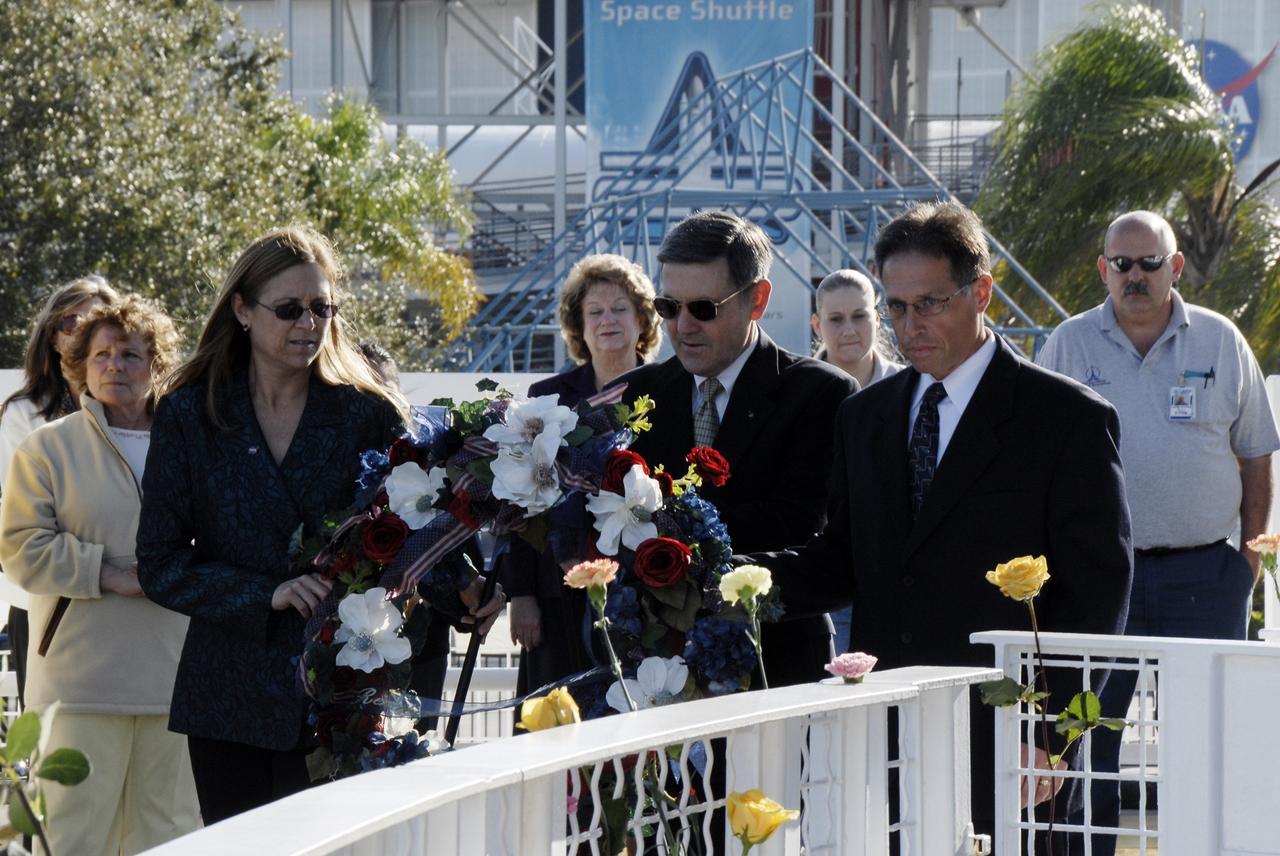
CAPE CANAVERAL, Fla. – At the Kennedy Space Center Visitor Complex, Center Director Bob Cabana (center) and Deputy Director Janet Petro take part in a wreath-laying ceremony paying tribute to the crews of Apollo 1 and space shuttles Challenger and Columbia, as well as other NASA colleagues who lost their lives while furthering the cause of exploration and discovery, during NASA's Day of Remembrance observance. At right is United Space Alliance Vice President of Launch and Recovery Systems and Florida Site Executive Mark Nappi. The public was invited to the wreath-laying ceremony in front of the Space Mirror Memorial. Photo credit: NASA/Kim Shiflett
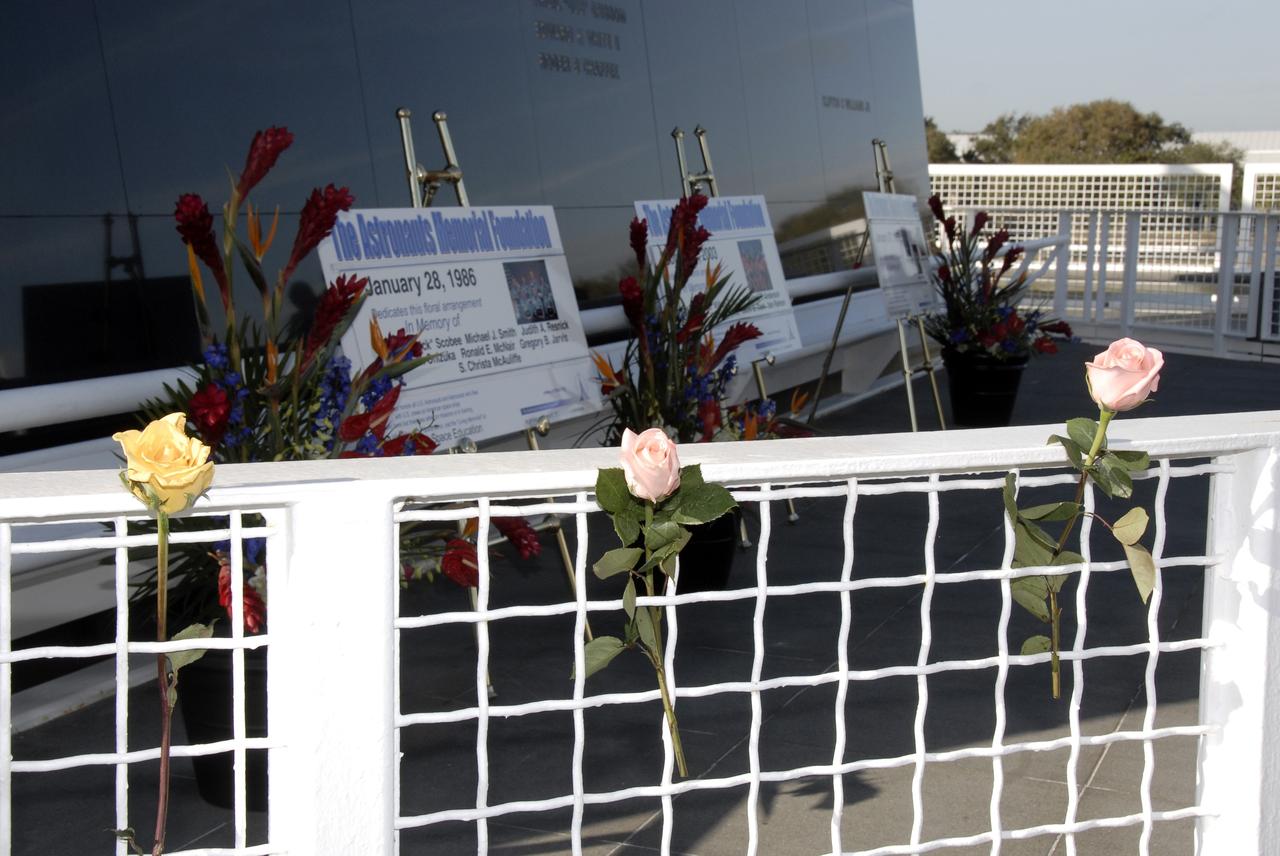
CAPE CANAVERAL, Fla. – In front of the Space Mirror Memorial at the Kennedy Space Center Visitor Complex, floral arrangements and exhibits pay tribute to the crews of Apollo 1 and space shuttles Challenger and Columbia, as well as other NASA colleagues, who lost their lives while furthering the cause of exploration and discovery. Center Director Bob Cabana presided over the wreath-laying ceremony, which was open to the public. Photo credit: NASA/Kim Shiflett
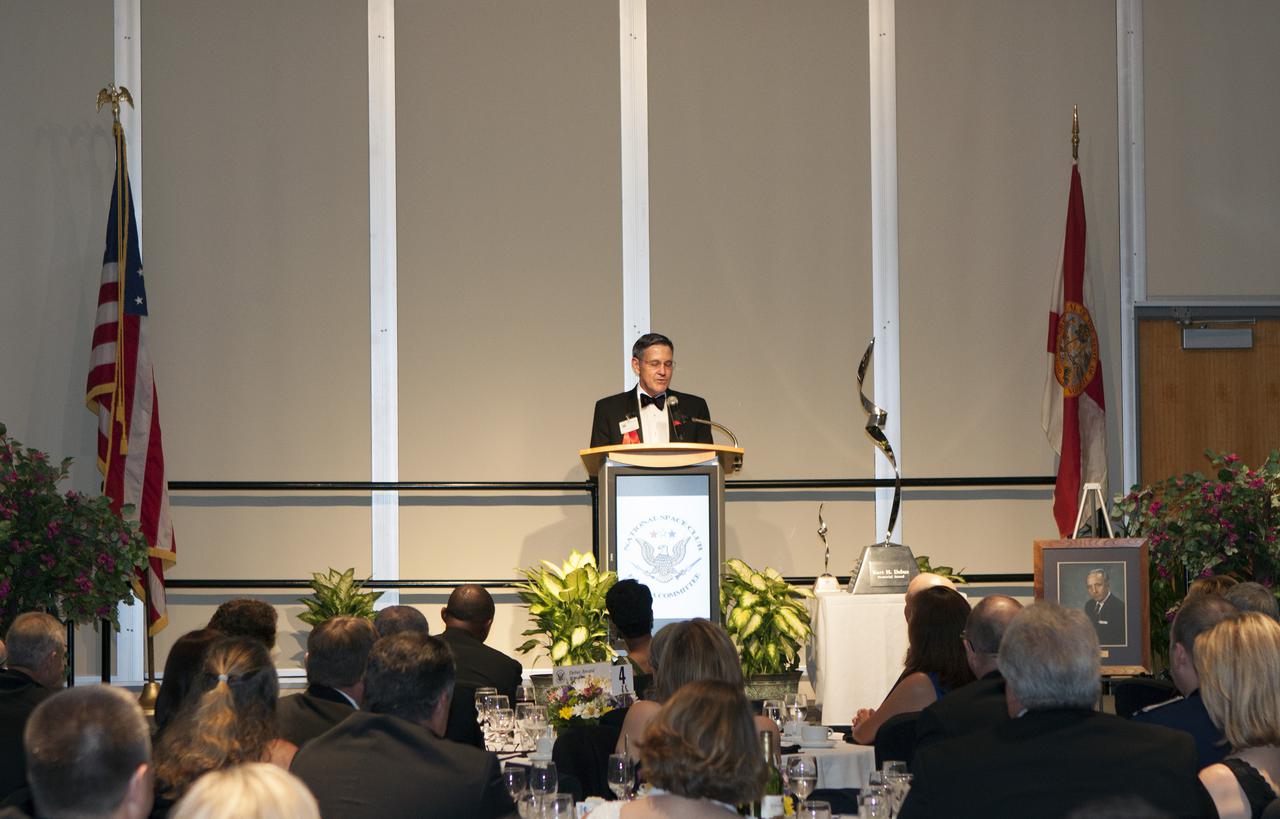
CAPE CANAVERAL, Fla. – At NASA’s Kennedy Space Center Visitor Complex in Florida, center director Bob Cabana speaks after being presented the prestigious Dr. Kurt H. Debus Award. A former U.S. Marine Corps aviator and NASA astronaut, Cabana was honored at the gala Debus Award Dinner. Named for the spaceport’s first director, the Debus Award was created to recognize significant achievements and contributions made in Florida to American aerospace efforts. The Debus Award was created by the space club's Florida committee to recognize significant achievements and contributions made in Florida to American aerospace efforts. Photo credit: NASA_Jim Grossmann
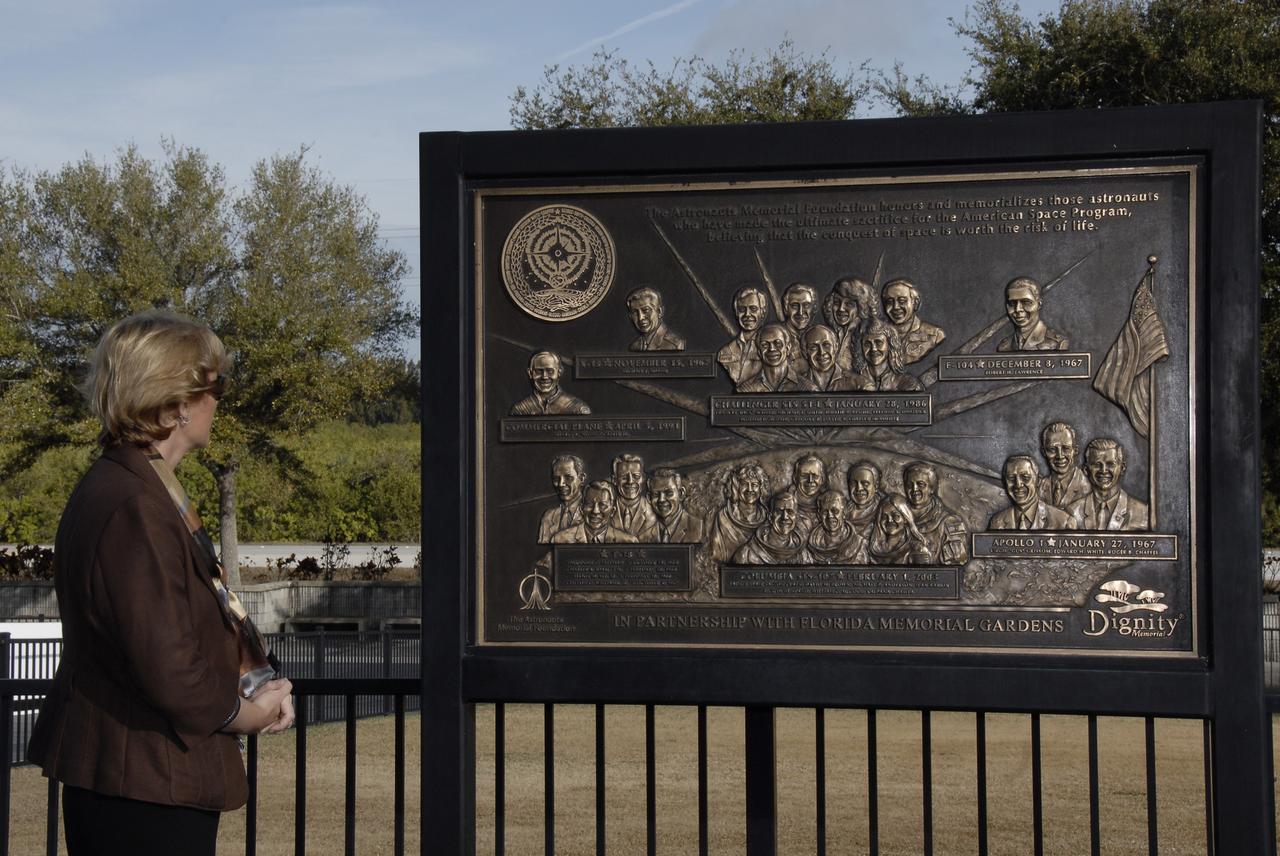
CAPE CANAVERAL, Fla. – Near the Space Mirror Memorial at NASA's Kennedy Space Center Visitor Complex, a large plaque commemorates the crews of Apollo 1 and space shuttles Challenger and Columbia who lost their lives while furthering the cause of exploration and discovery. At left is Tara Gillam, manager of the Office of Diversity and Equal Opportunity at Kennedy. Jan. 29 is NASA's Day of Remembrance observance and included a wreath-laying ceremony in front of the Space Mirror Memorial. Photo credit: NASA/Kim Shiflett
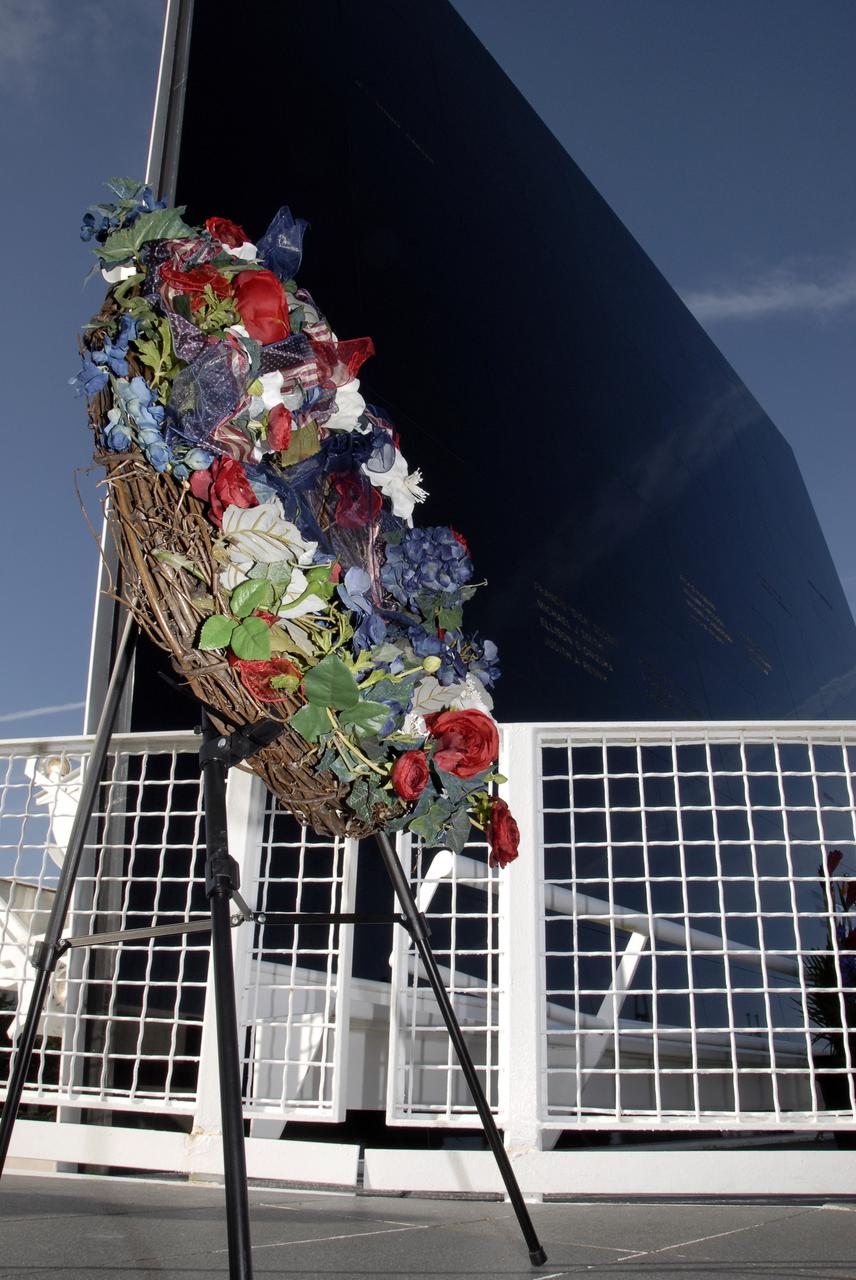
CAPE CANAVERAL, Fla. – Near the Space Mirror Memorial at the Kennedy Space Center Visitor Complex, a floral wreath has been placed during NASA's Day of Remembrance observance paying tribute to the crews of Apollo 1 and space shuttles Challenger and Columbia, as well as other NASA colleagues who lost their lives while furthering the cause of exploration and discovery. Center Director Bob Cabana presided over the ceremony, which was open to the public. Photo credit: NASA/Kim Shiflett

CAPE CANAVERAL, Fla. – At the Kurt H. Debus Conference Facility at the Kennedy Space Center Visitor Complex, witnesses listen during a hearing of the U.S. House of Representatives' Subcommittee on Government Operations. From the left are Bob Cabana, director of the Kennedy Space Center, Brig. Gen. Nina Armagno, commander of the 45th Space Wing and director of the Eastern Range at Patrick Air Force Base, John Smith, regional commissioner of the U.S. General Services Administration, Jim Kuzma, chief operating officer of Space Florida, Charles Lee of the Audubon Society, and John Walsh, chief executive officer of the Canaveral Port Authority. The Congressional hearing took place to review plans for putting vacant buildings and excess property at the Kennedy Space Center to their best and most productive use. Photo credit: NASA_Daniel Casper
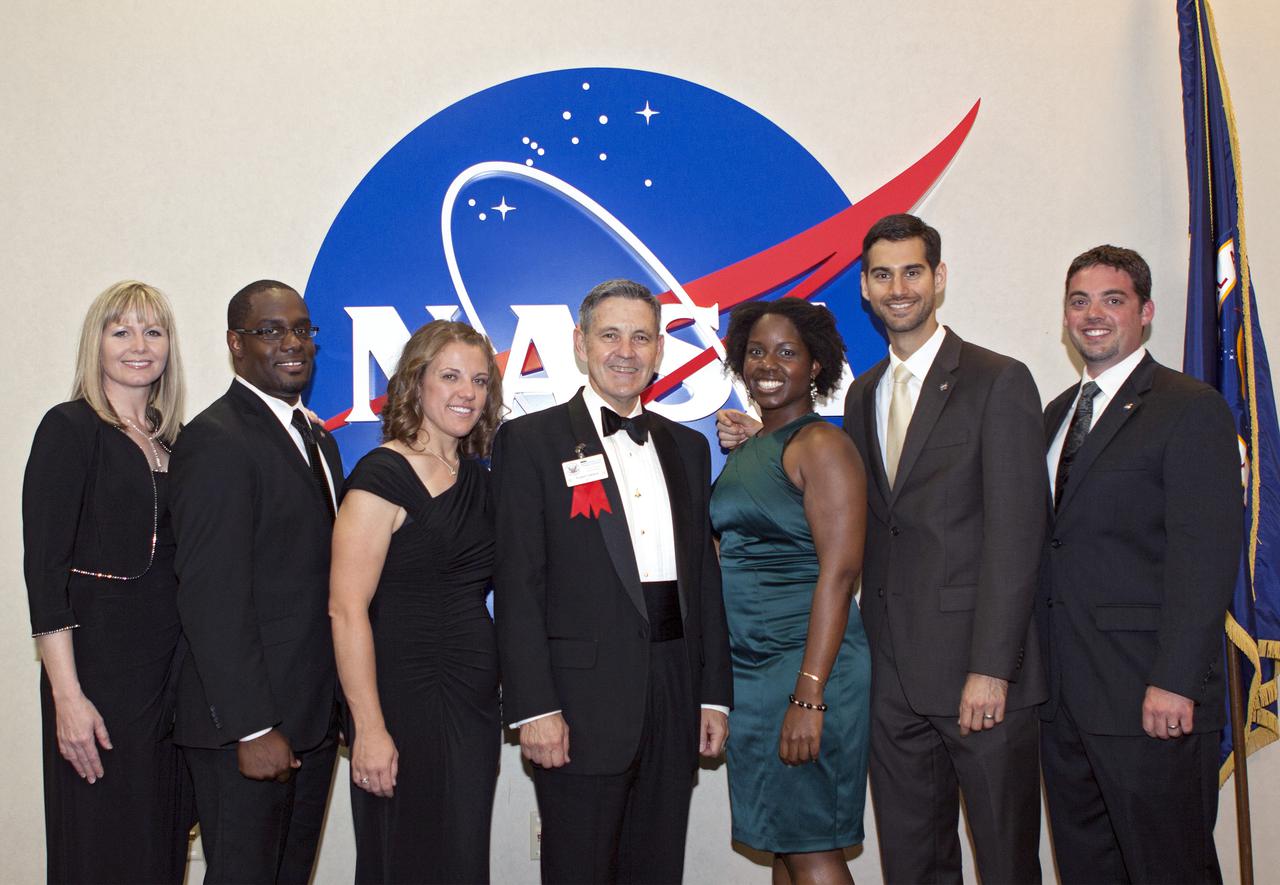
CAPE CANAVERAL, Fla. – At NASA’s Kennedy Space Center Visitor Complex in Florida, center director Bob Cabana poses with current and former interns. From the left are Joy Burkey, Robert Hubbard, Carla Koch, Cabana, LaKeesha Flowers, Michael Miller and Michael Masters. A former U.S. Marine Corps aviator and NASA astronaut, Cabana was honored at the gala Debus Award Dinner. Named for the spaceport’s first director, the Debus Award was created to recognize significant achievements and contributions made in Florida to American aerospace efforts. The Debus Award was created by the space club's Florida committee to recognize significant achievements and contributions made in Florida to American aerospace efforts. Photo credit: NASA_Jim Grossmann

CAPE CANAVERAL, Fla. – At the Kurt H. Debus Conference Facility at the Kennedy Space Center Visitor Complex, Rep. John Mica, R-Fla., center, speaks to witnesses during a hearing of the U.S. House of Representatives' Subcommittee on Government Operations. From the left are Rep. Candace Miller, R-Mich., Rep. Bill Posey, R-Fla., Mica, the counsel for Rep. Mica, Rep. Ron Desantis, R-Fla., and Rep. Kerry Bentivollo, R-Mich. The Congressional hearing took place to review plans for putting vacant buildings and excess property at the Kennedy Space Center to their best and most productive use. Photo credit: NASA_Daniel Casper
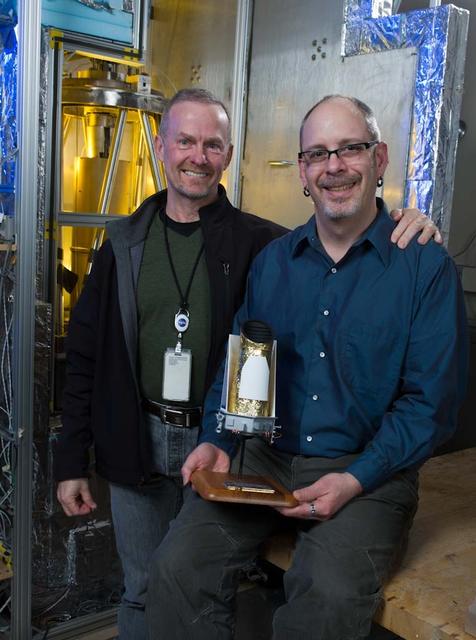
Kepler Program VIP's on left Roger Hunter and on right Jon Jenkins in the Kepler Laboratory at the NASA Ames Research Center, Moffett Field, CA (for aviation week).
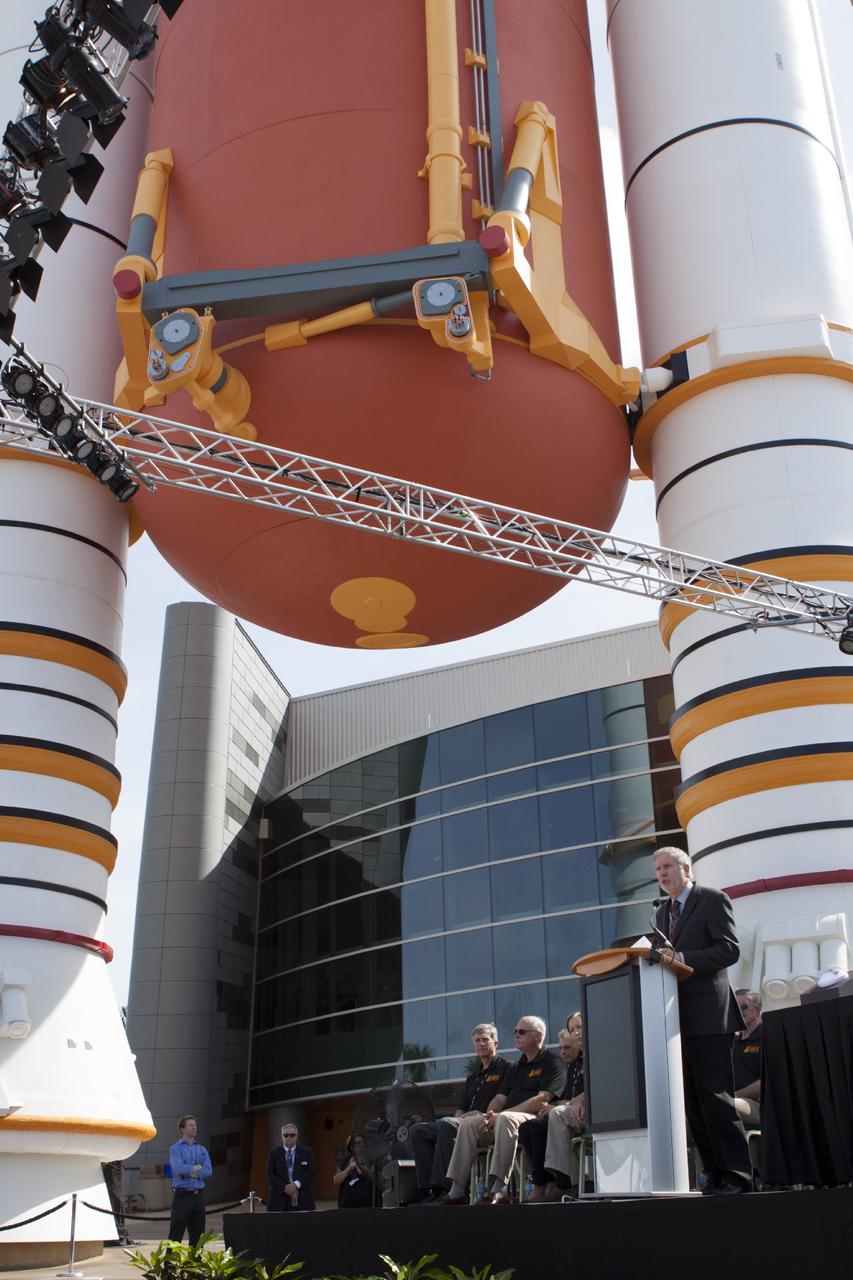
CAPE CANAVERAL, Fla. -- At the Kennedy Space Center Visitor Complex in Florida, Bill Moore, Delaware North Parks and Resorts chief operating officer speaks to guests at the opening of the new "Space Shuttle Atlantis" facility. The ceremony took place under a full-scale set of space shuttle twin solid rocket boosters and external fuel tank at the entrance to the 90,000-square-foot facility. Visitors will be able to walk beneath the 184-foot-tall boosters and tank as they enter the facility. The new $100 million facility includes interactive exhibits that tell the story of the 30-year Space Shuttle Program and highlight the future of space exploration. The "Space Shuttle Atlantis" exhibit formally opened to the public on June 29, 2013.Photo credit: NASA/Jim Grossmann
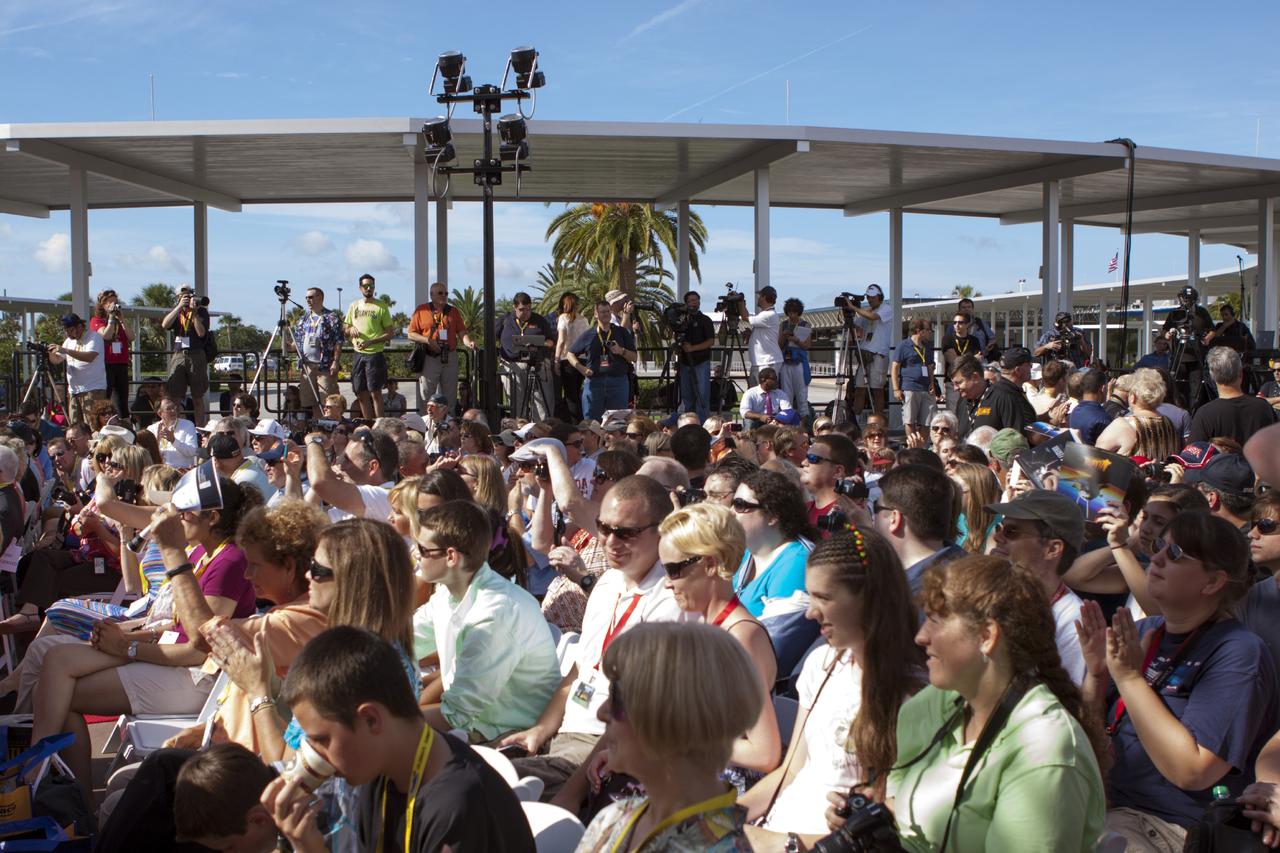
CAPE CANAVERAL, Fla. -- At the Kennedy Space Center Visitor Complex in Florida, guests listen to presentations during opening ceremonies for the new 90,000-square-foot "Space Shuttle Atlantis" facility. The new $100 million facility includes interactive exhibits that tell the story of the 30-year Space Shuttle Program and highlight the future of space exploration. The "Space Shuttle Atlantis" exhibit formally opened to the public on June 29, 2013.Photo credit: NASA/Jim Grossmann
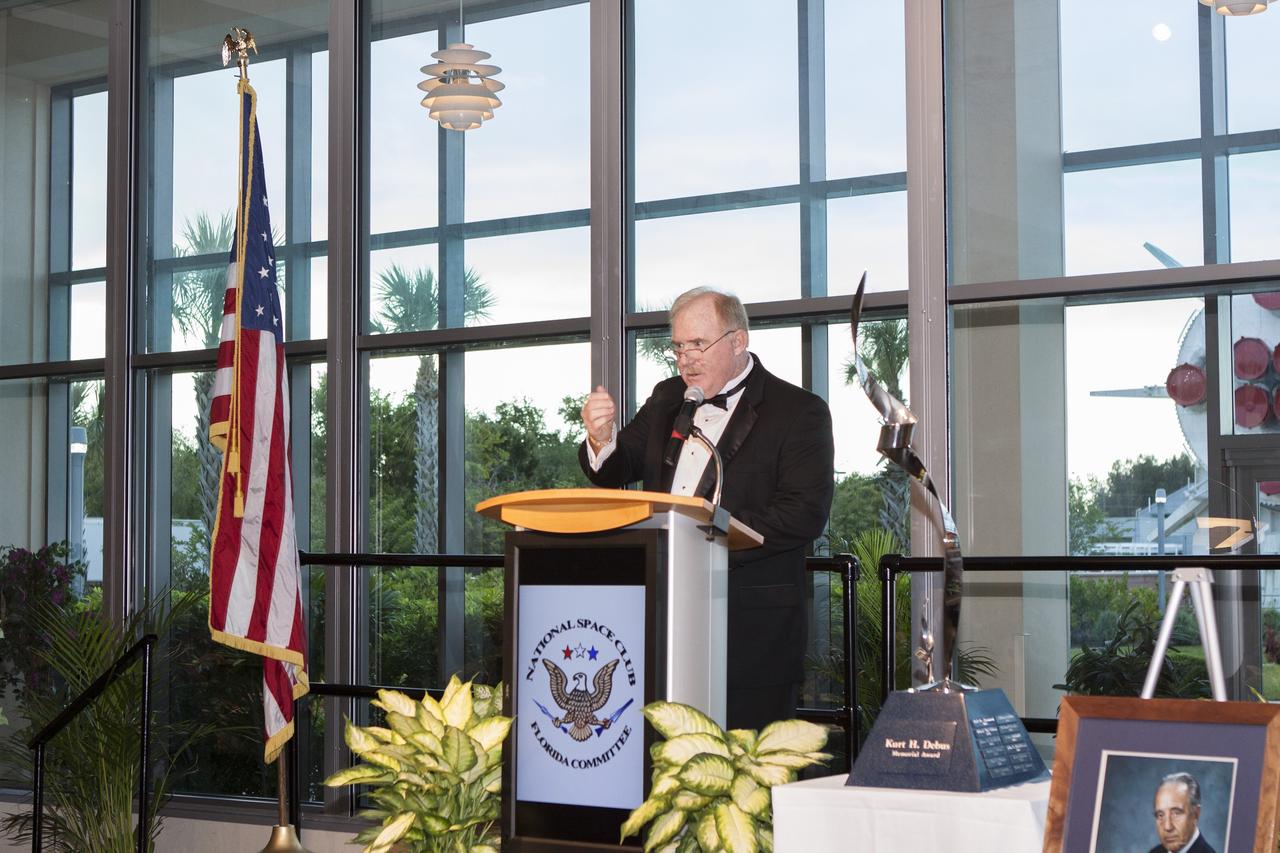
CAPE CANAVERAL, Fla. – At NASA’s Kennedy Space Center Visitor Complex in Florida, National Space Club Florida Committee Chairman Jim McCarthy speaks at the annual the Dr. Kurt H. Debus Award gala in which the prestigious honor was presented to Kennedy's director, Bob Cabana. A former U.S. Marine Corps aviator and NASA astronaut, Cabana was honored at the gala Debus Award Dinner. Named for the spaceport’s first director, the Debus Award was created to recognize significant achievements and contributions made in Florida to American aerospace efforts. The Debus Award was created by the space club's Florida committee to recognize significant achievements and contributions made in Florida to American aerospace efforts. Photo credit: NASA/Jim Grossmann
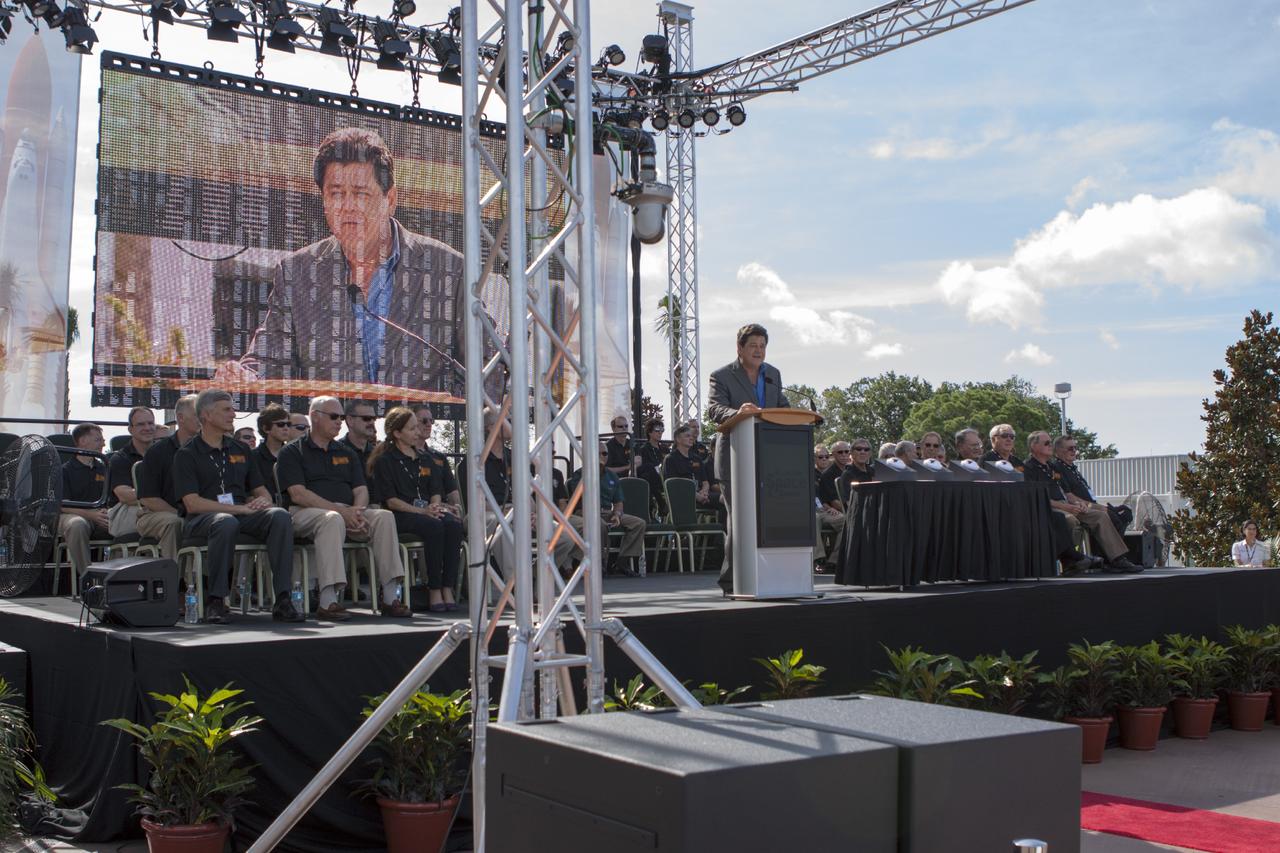
CAPE CANAVERAL, Fla. -- At the Kennedy Space Center Visitor Complex in Florida, CNN correspondent John Zarrella speaks to guests at the opening of the new "Space Shuttle Atlantis" facility. Zarrella served as master of ceremonies for the event. The new $100 million facility includes interactive exhibits that tell the story of the 30-year Space Shuttle Program and highlight the future of space exploration. The "Space Shuttle Atlantis" exhibit formally opened to the public on June 29, 2013.Photo credit: NASA/Jim Grossmann

CAPE CANAVERAL, Fla. -- During opening ceremonies for the new 90,000-square-foot "Space Shuttle Atlantis" facility at the Kennedy Space Center Visitor Complex in Florida, Expedition 36 flight engineers Karen Nyberg, left, and Chris Cassidy speak to guests via television from the International Space Station. The new $100 million facility includes interactive exhibits that tell the story of the 30-year Space Shuttle Program and highlight the future of space exploration. The "Space Shuttle Atlantis" exhibit formally opened to the public on June 29, 2013.Photo credit: NASA/Jim Grossmann
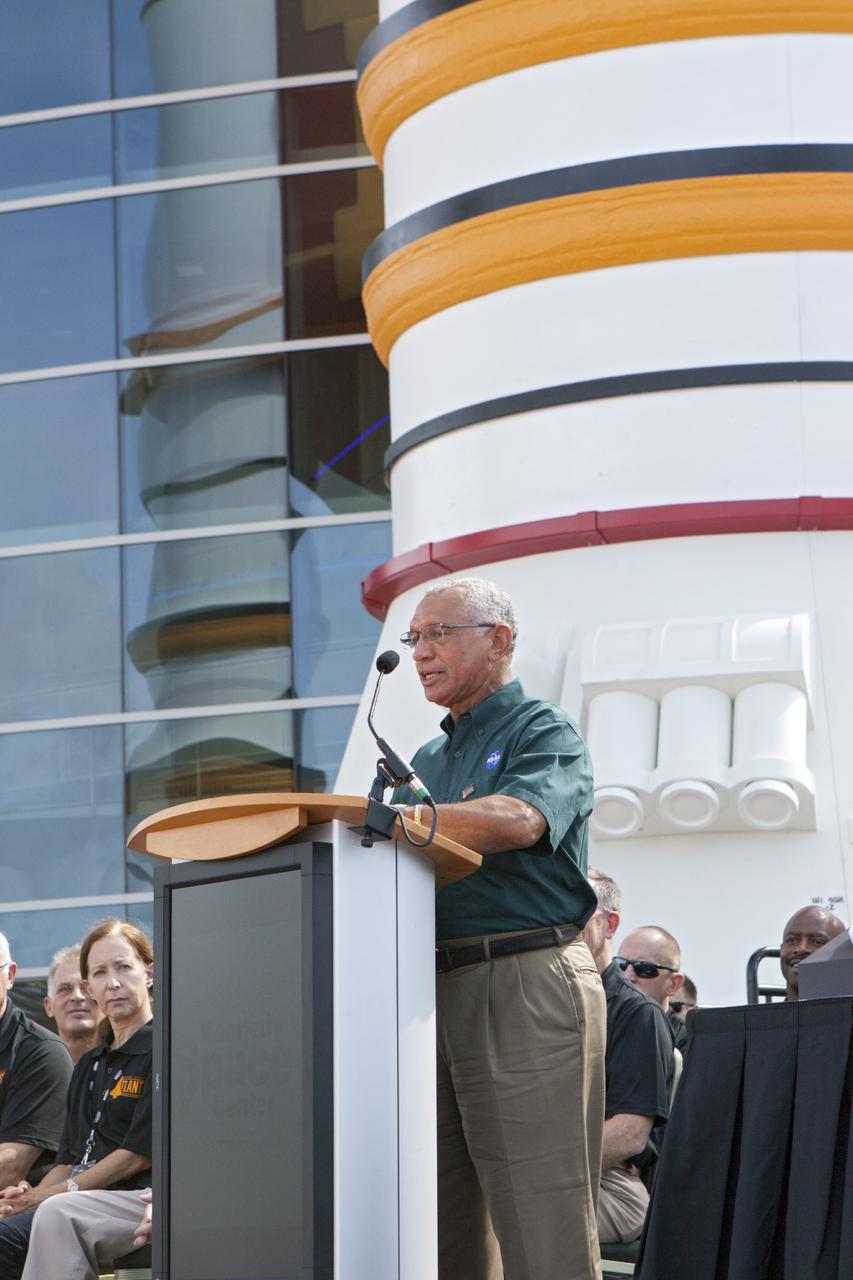
CAPE CANAVERAL, Fla. -- During opening ceremonies for the new 90,000-square-foot "Space Shuttle Atlantis" facility at the Kennedy Space Center Visitor Complex in Florida, NASA Administrator Charlie Bolden speaks to guests gathered for the ceremony. The new $100 million facility includes interactive exhibits that tell the story of the 30-year Space Shuttle Program and highlight the future of space exploration. The "Space Shuttle Atlantis" exhibit formally opened to the public on June 29, 2013.Photo credit: NASA/Jim Grossmann
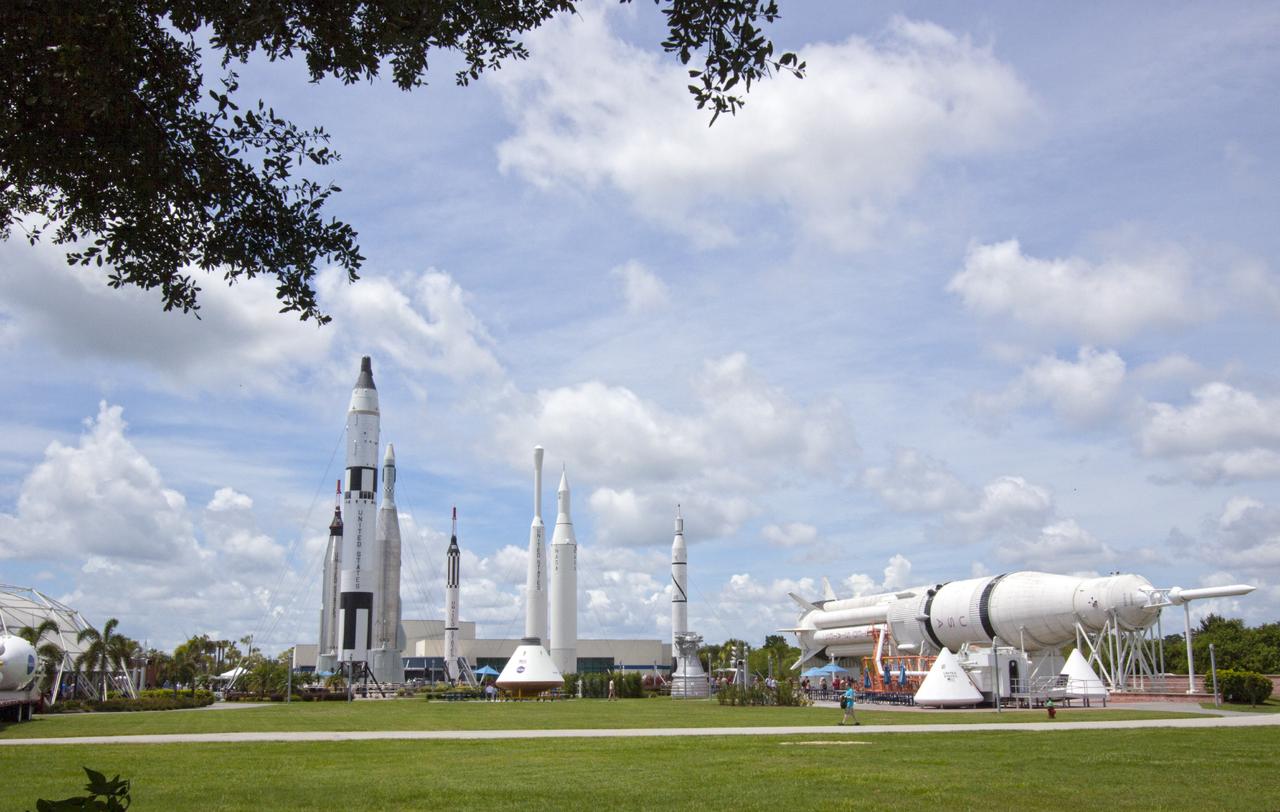
CAPE CANAVERAL, Fla. -- At the Kennedy Space Center Visitor Complex in Florida, the "rocket garden" includes many of the historic launch vehicles of the United States' efforts to explore space. The new $100 million facility includes interactive exhibits that tell the story of the 30-year Space Shuttle Program and highlight the future of space exploration. The "Space Shuttle Atlantis" exhibit formally opened to the public on June 29, 2013.Photo credit: NASA/Jim Grossmann
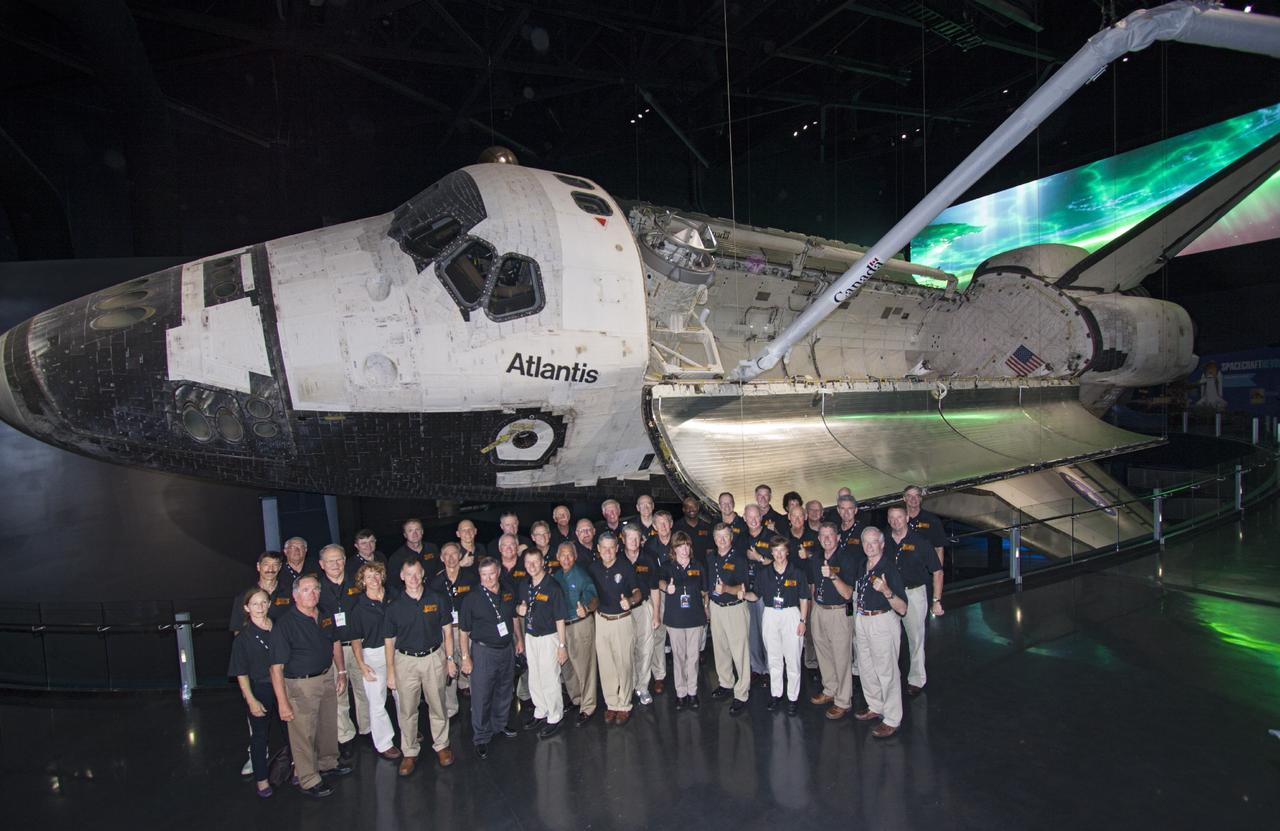
CAPE CANAVERAL, Fla. -- Inside the new "Space Shuttle Atlantis" facility at the Kennedy Space Center Visitor Complex in Florida, 40 astronauts posed with the spacecraft on display with payload bay doors open and remote manipulator system robot arm extended. The new $100 million facility includes interactive exhibits that tell the story of the 30-year Space Shuttle Program and highlight the future of space exploration. The "Space Shuttle Atlantis" exhibit formally opened to the public on June 29, 2013.Photo credit: NASA/Jim Grossmann

CAPE CANAVERAL, Fla. -- At the Kennedy Space Center Visitor Complex in Florida, CNN correspondent John Zarrella counted down for the ceremonial opening of the new "Space Shuttle Atlantis" facility. Smoke bellows near a full-scale set of space shuttle twin solid rocket boosters and external fuel tank at the entrance to the exhibit building. Guests may walk beneath the 184-foot-tall boosters and tank as they enter the facility. The new $100 million facility includes interactive exhibits that tell the story of the 30-year Space Shuttle Program and highlight the future of space exploration. The "Space Shuttle Atlantis" exhibit formally opened to the public on June 29, 2013.Photo credit: NASA/Jim Grossmann
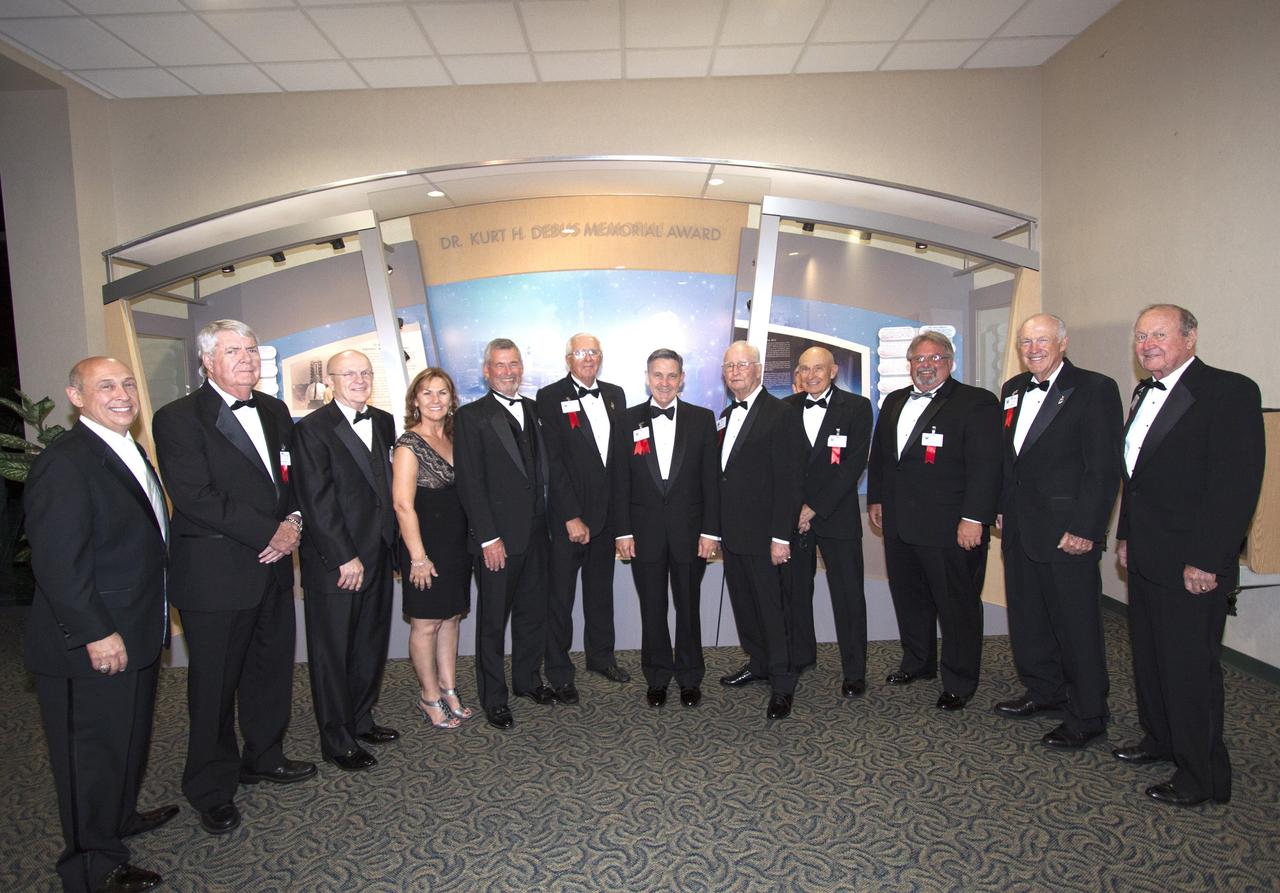
CAPE CANAVERAL, Fla. – At NASA’s Kennedy Space Center Visitor Complex in Florida, previous winners of the National Space Club Florid Committee's Dr. Kurt H. Debus Award pose with this year's honoree, center director Bob Cabana. From the left, are: Rick Abramson, Dick Beagley, Dick Lyon, Patty Stratton, Lyle Holloway, Lee Solid, Cabana, Dr. Maxwell King, Bob Sieck, Jerry Jamison, Roy Tharpe and Ernie Briel. A former U.S. Marine Corps aviator and NASA astronaut, Cabana was honored at the gala Debus Award Dinner. Named for the spaceport’s first director, the Debus Award was created to recognize significant achievements and contributions made in Florida to American aerospace efforts. The Debus Award was created by the space club's Florida committee to recognize significant achievements and contributions made in Florida to American aerospace efforts. Photo credit: NASA/Jim Grossmann
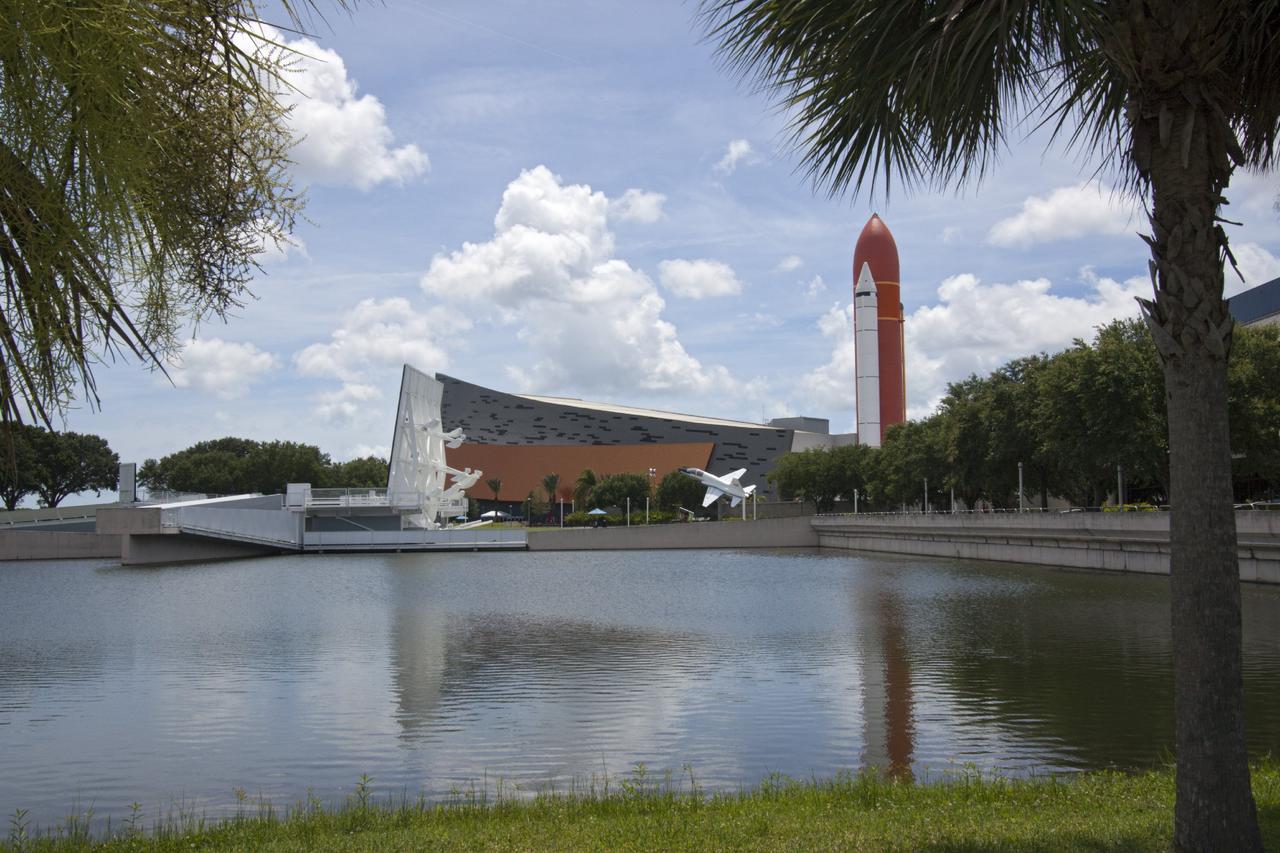
CAPE CANAVERAL, Fla. -- At the Kennedy Space Center Visitor Complex in Florida, the 90,000-square-foot "Space Shuttle Atlantis" facility has formally opened. On the right of the building, a full-scale set of space shuttle twin solid rocket boosters and external fuel tank can be seen. Standing at the entrance to the exhibit building, guests may walk beneath the 184-foot-tall boosters and tank as they enter the facility. The facility features interactive exhibits that tell the story of the 30-year Space Shuttle Program and highlights the future of space exploration. The new $100 million facility includes interactive exhibits that tell the story of the 30-year Space Shuttle Program and highlight the future of space exploration. The "Space Shuttle Atlantis" exhibit formally opened to the public on June 29, 2013.Photo credit: NASA/Jim Grossmann
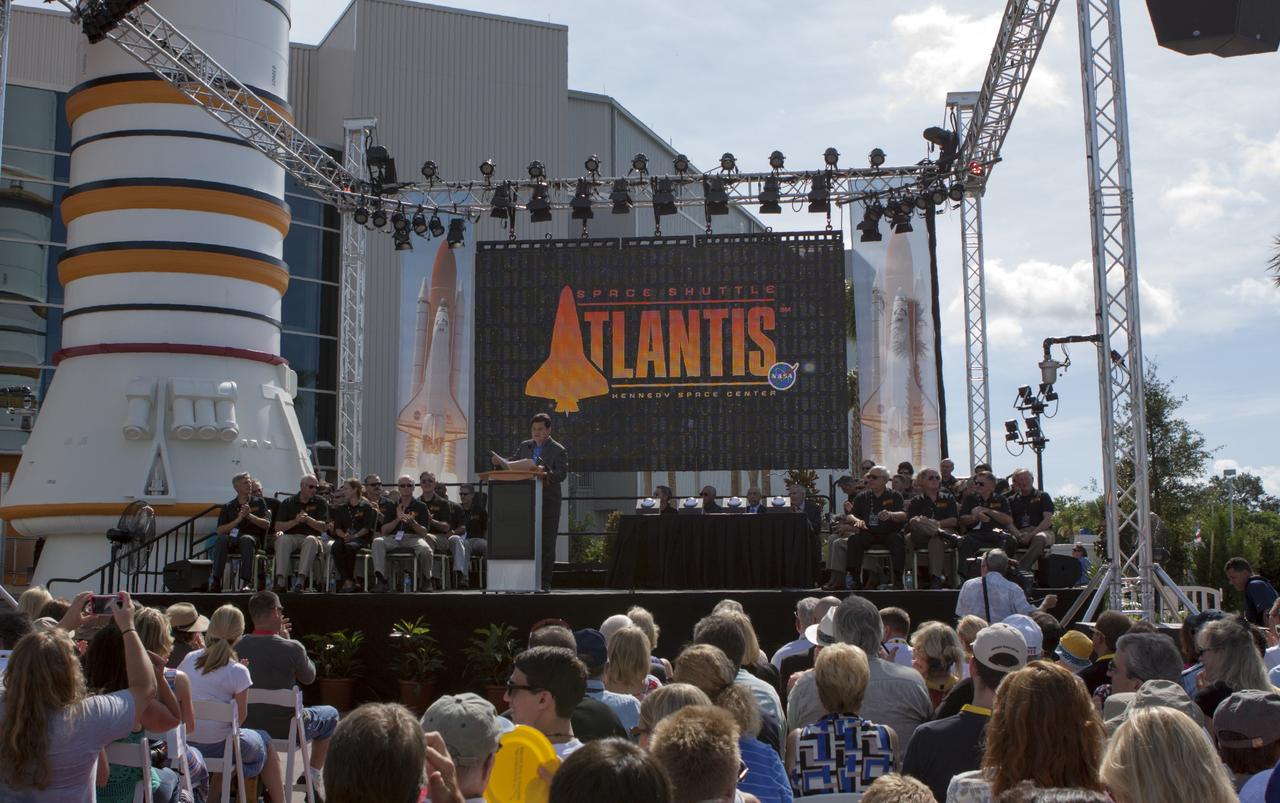
CAPE CANAVERAL, Fla. -- At the Kennedy Space Center Visitor Complex in Florida, CNN correspondent John Zarrella speaks to guests at the opening of the new "Space Shuttle Atlantis" facility. Zarrella served as master of ceremonies for the event. The new $100 million facility includes interactive exhibits that tell the story of the 30-year Space Shuttle Program and highlight the future of space exploration. The "Space Shuttle Atlantis" exhibit formally opened to the public on June 29, 2013.Photo credit: NASA/Jim Grossmann
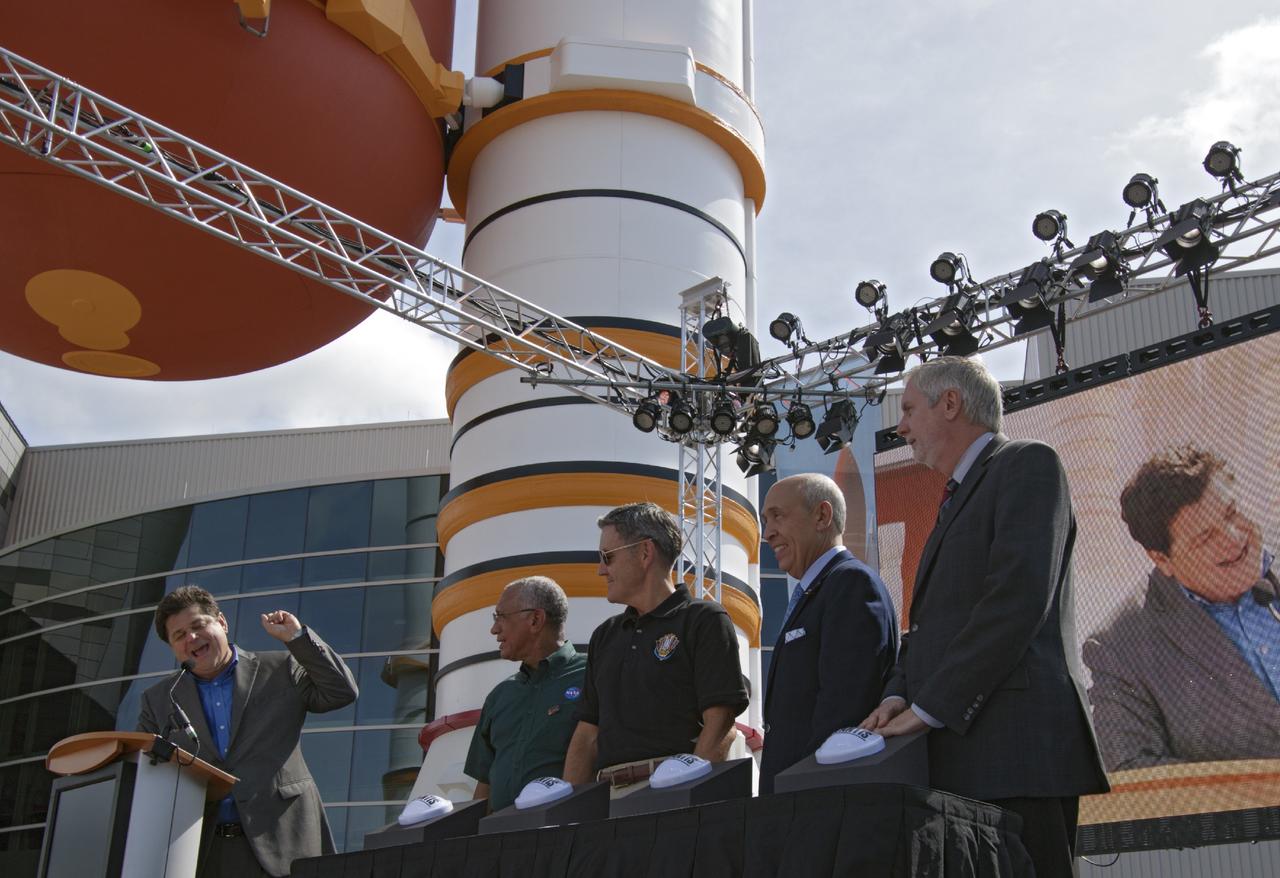
CAPE CANAVERAL, Fla. -- At the Kennedy Space Center Visitor Complex in Florida, CNN correspondent John Zarrella counts down for the ceremonial opening of the new "Space Shuttle Atlantis" facility. Ready to press buttons to mark the opening the new exhibit, from the left, are Charlie Bolden, NASA administrator, Bob Cabana, Kennedy director, Rick Abramson, Delaware North Parks and Resorts president, and Bill Moore, Delaware North Parks and Resorts chief operating officer. The new $100 million facility includes interactive exhibits that tell the story of the 30-year Space Shuttle Program and highlight the future of space exploration. The "Space Shuttle Atlantis" exhibit formally opened to the public on June 29, 2013.Photo credit: NASA/Jim Grossmann
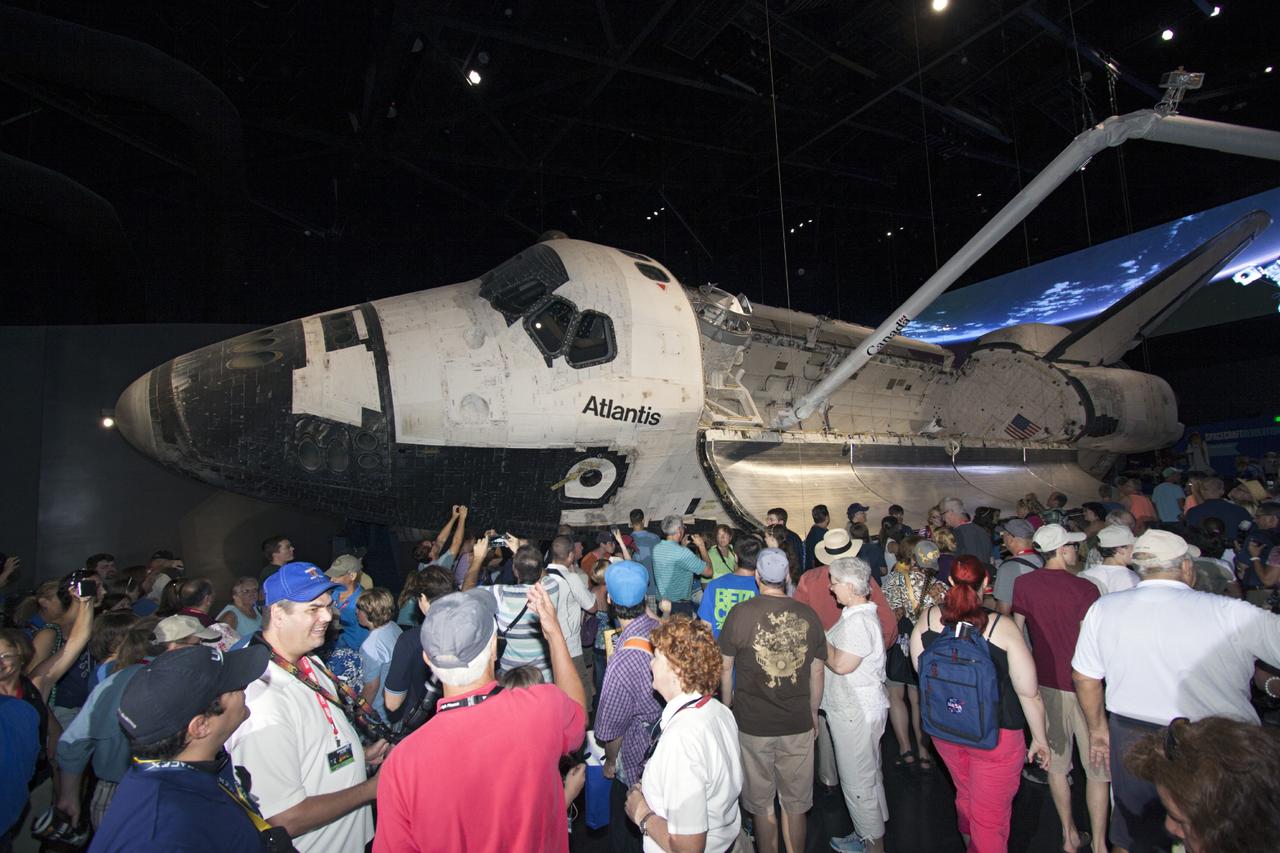
CAPE CANAVERAL, Fla. -- Inside the new "Space Shuttle Atlantis" facility at the Kennedy Space Center Visitor Complex in Florida, guests gather around the spacecraft on display with payload bay doors open and remote manipulator system robot arm extended. The new $100 million facility includes interactive exhibits that tell the story of the 30-year Space Shuttle Program and highlight the future of space exploration. The "Space Shuttle Atlantis" exhibit formally opened to the public on June 29, 2013.Photo credit: NASA/Jim Grossmann
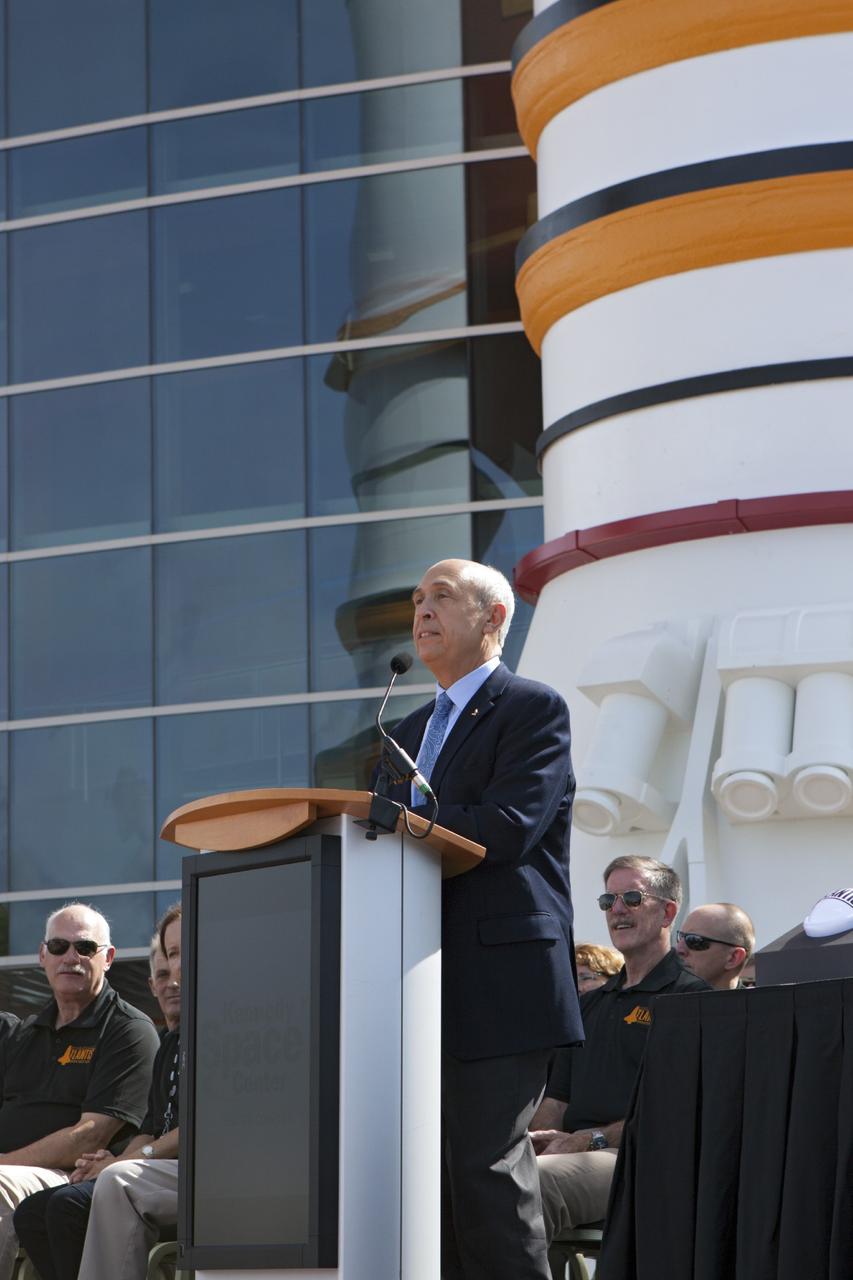
CAPE CANAVERAL, Fla. -- At the Kennedy Space Center Visitor Complex in Florida, Rick Abramson, Delaware North Parks and Resorts president, speaks to guests during the opening of the 90,000-square-foot "Space Shuttle Atlantis" facility. The new $100 million facility includes interactive exhibits that tell the story of the 30-year Space Shuttle Program and highlight the future of space exploration. The "Space Shuttle Atlantis" exhibit formally opened to the public on June 29, 2013.Photo credit: NASA/Jim Grossmann
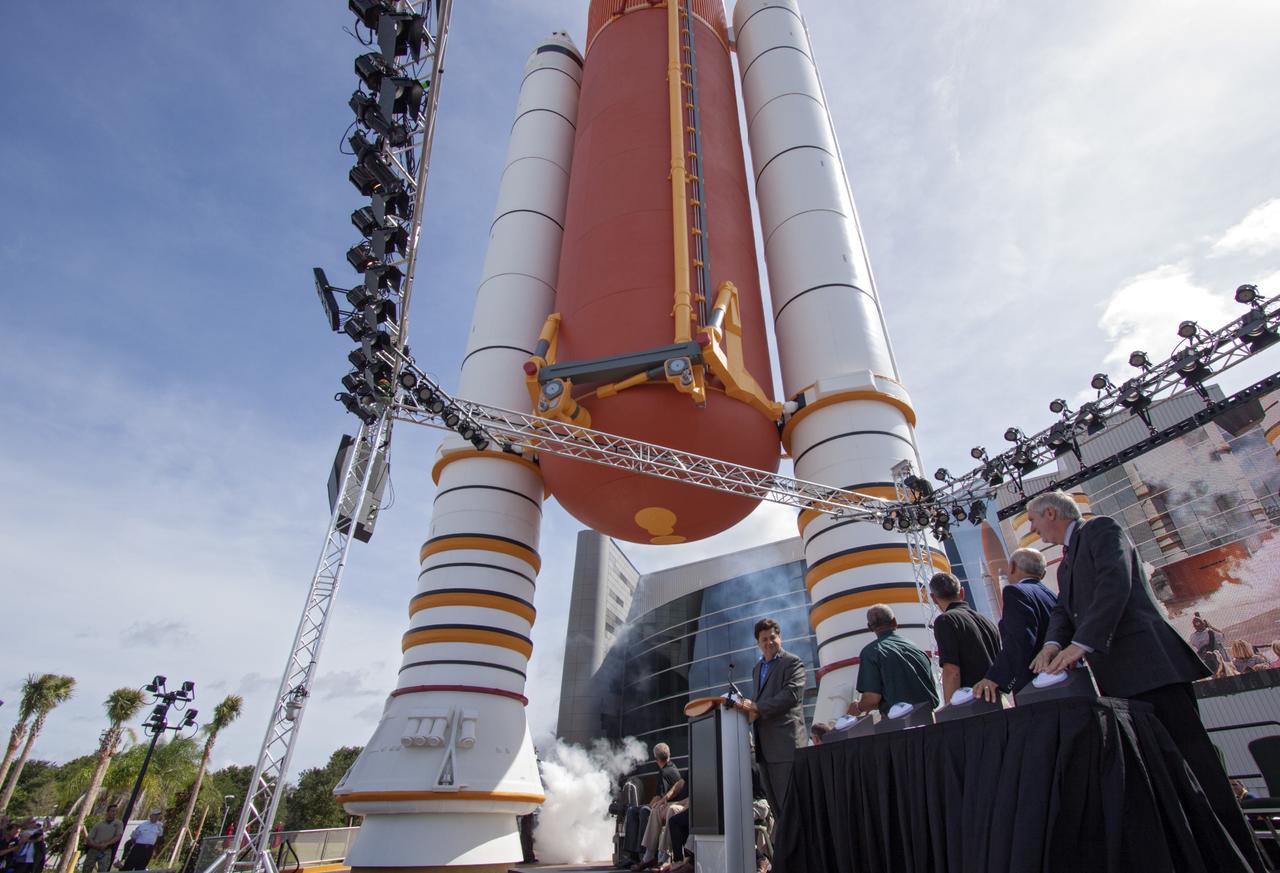
CAPE CANAVERAL, Fla. -- At the Kennedy Space Center Visitor Complex in Florida, CNN correspondent John Zarrella counted down for the ceremonial opening of the new "Space Shuttle Atlantis" facility. Smoke bellows near a full-scale set of space shuttle twin solid rocket boosters and external fuel tank at the entrance to the exhibit building. Looking on after pressing buttons to mark the opening the new exhibit, are, from the left, Charlie Bolden, NASA administrator, Bob Cabana, Kennedy director, Rick Abramson, Delaware North Parks and Resorts president, and Bill Moore, Delaware North Parks and Resorts chief operating officer. The new $100 million facility includes interactive exhibits that tell the story of the 30-year Space Shuttle Program and highlight the future of space exploration. The "Space Shuttle Atlantis" exhibit formally opened to the public on June 29, 2013.Photo credit: NASA/Jim Grossmann
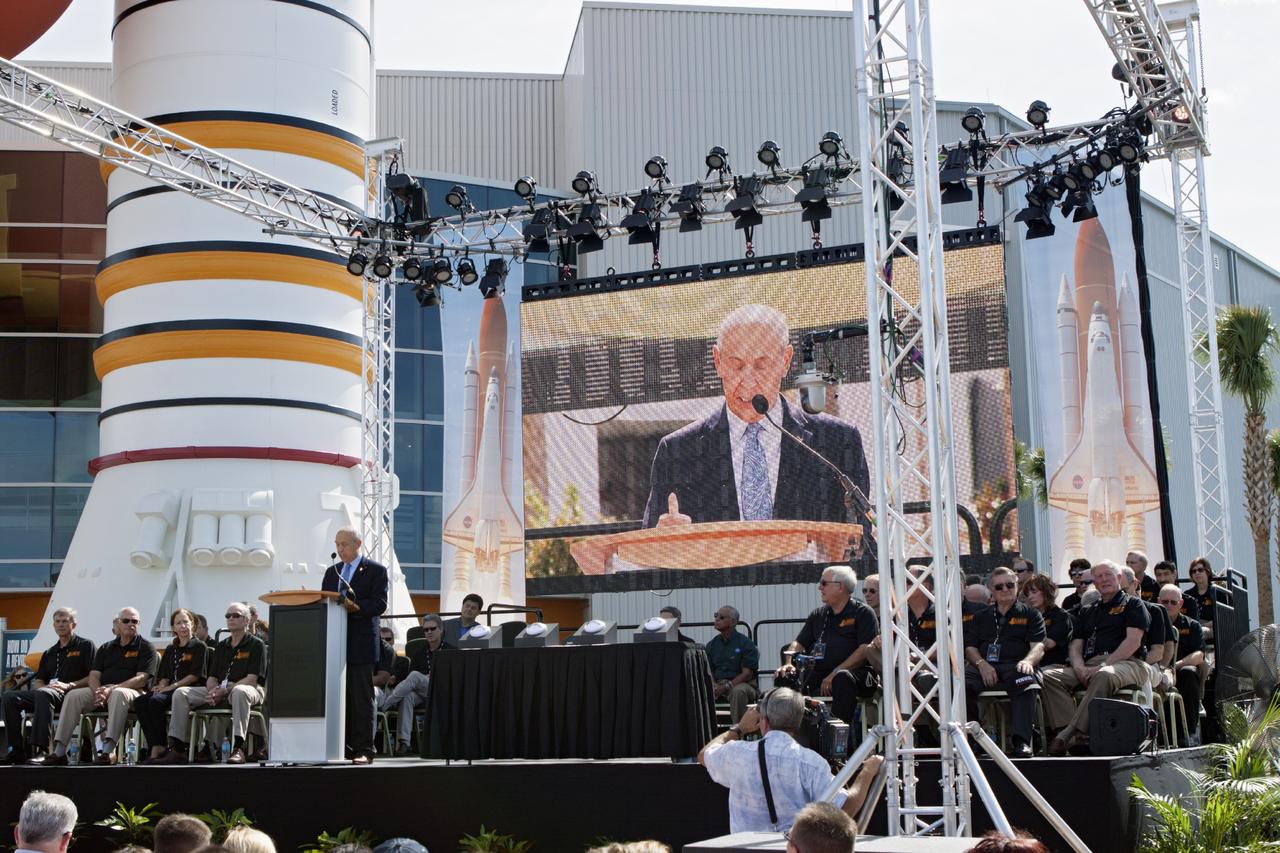
CAPE CANAVERAL, Fla. -- At the Kennedy Space Center Visitor Complex in Florida, Rick Abramson, Delaware North Parks and Resorts president, speaks to guests during the opening of the 90,000-square-foot "Space Shuttle Atlantis" facility. The new $100 million facility includes interactive exhibits that tell the story of the 30-year Space Shuttle Program and highlight the future of space exploration. The "Space Shuttle Atlantis" exhibit formally opened to the public on June 29, 2013.Photo credit: NASA/Jim Grossmann
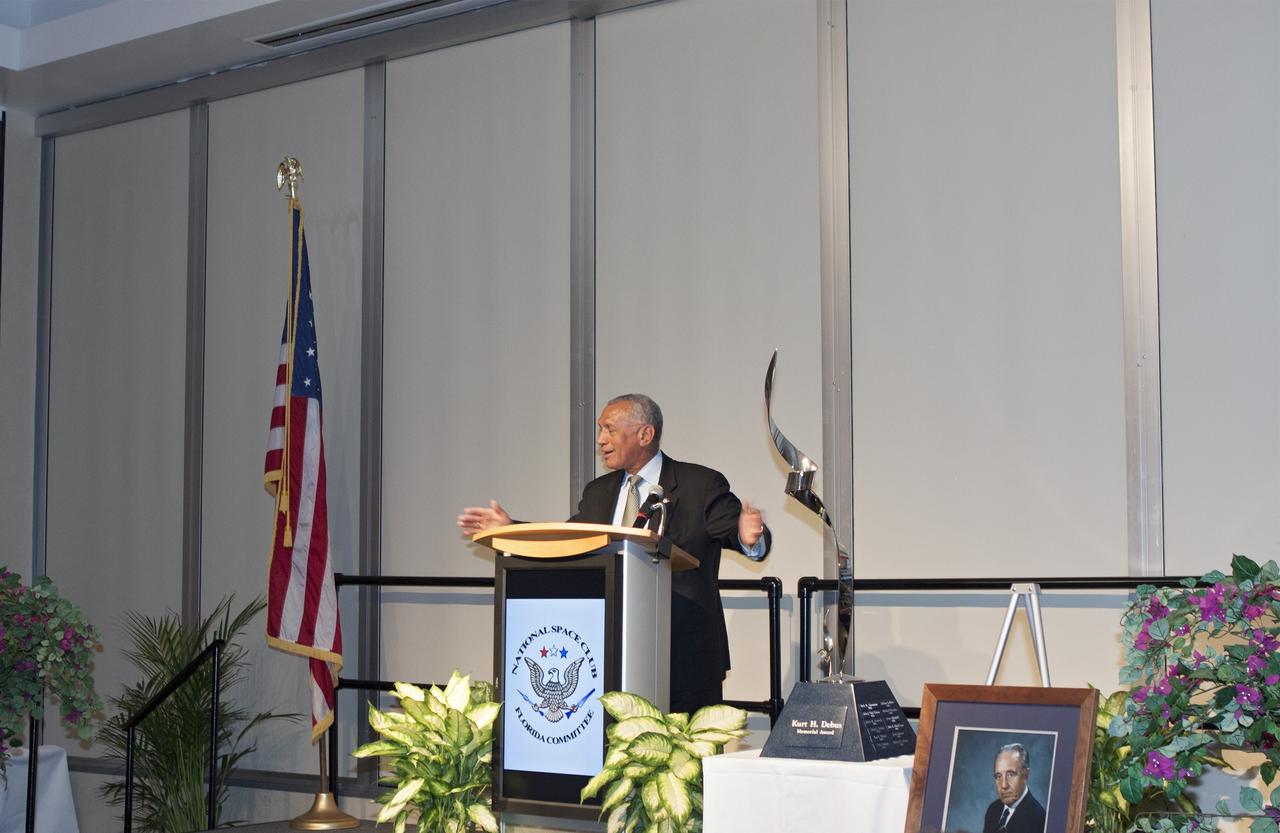
CAPE CANAVERAL, Fla. – At NASA’s Kennedy Space Center Visitor Complex in Florida, NASA Administrator Charles Bolden speaks at the annual the Dr. Kurt H. Debus Award gala in which the prestigious honor was presented to Kennedy's director, Bob Cabana. A former U.S. Marine Corps aviator and NASA astronaut, Cabana was honored at the gala Debus Award Dinner. Named for the spaceport’s first director, the Debus Award was created to recognize significant achievements and contributions made in Florida to American aerospace efforts. The Debus Award was created by the space club's Florida committee to recognize significant achievements and contributions made in Florida to American aerospace efforts. Photo credit: NASA/Jim Grossmann
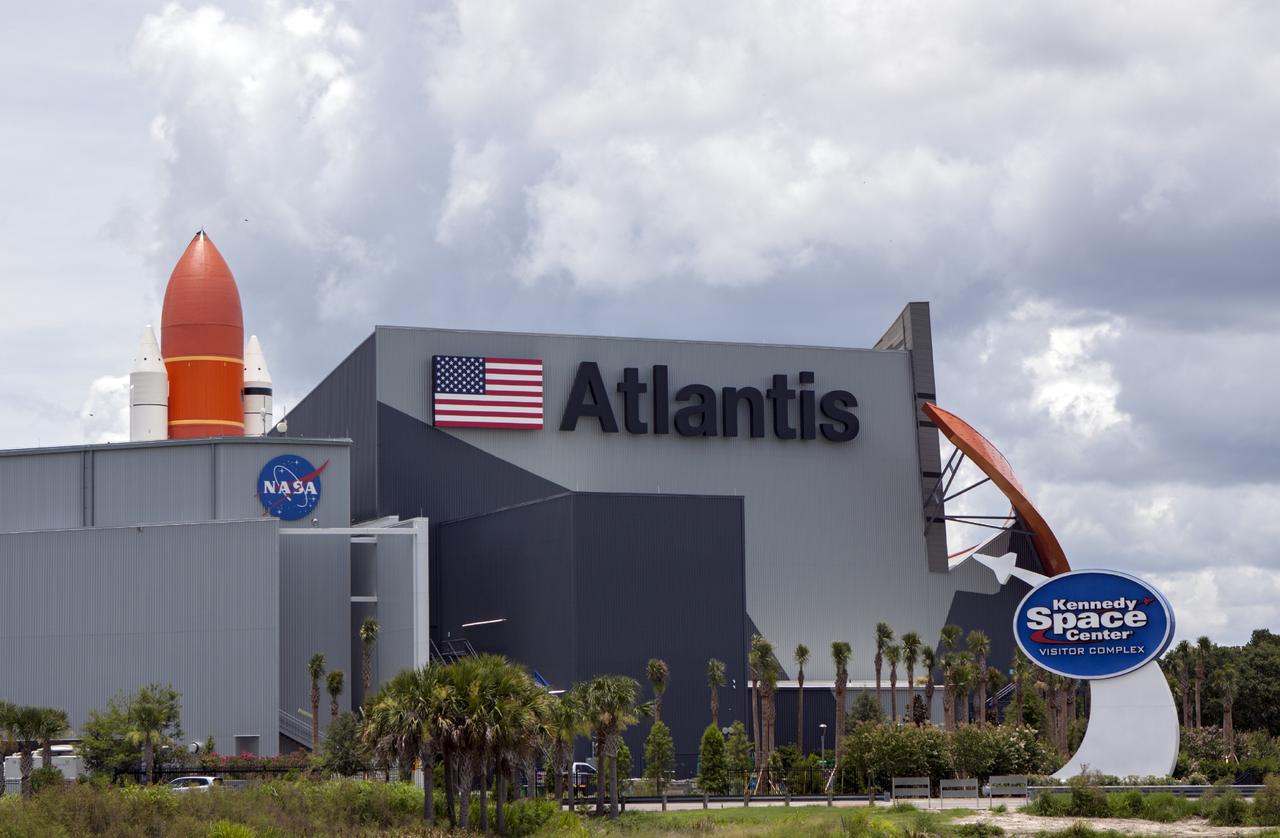
CAPE CANAVERAL, Fla. -- At the Kennedy Space Center Visitor Complex in Florida, the 90,000-square-foot "Space Shuttle Atlantis" facility has formally opened. On the opposite side of the building, a full-scale set of space shuttle twin solid rocket boosters and external fuel tank can be seen. Standing at the entrance to the exhibit building, guests may walk beneath the 184-foot-tall boosters and tank as they enter the facility. The facility features interactive exhibits that tell the story of the 30-year Space Shuttle Program and highlights the future of space exploration. The new $100 million facility includes interactive exhibits that tell the story of the 30-year Space Shuttle Program and highlight the future of space exploration. The "Space Shuttle Atlantis" exhibit formally opened to the public on June 29, 2013.Photo credit: NASA/Jim Grossmann
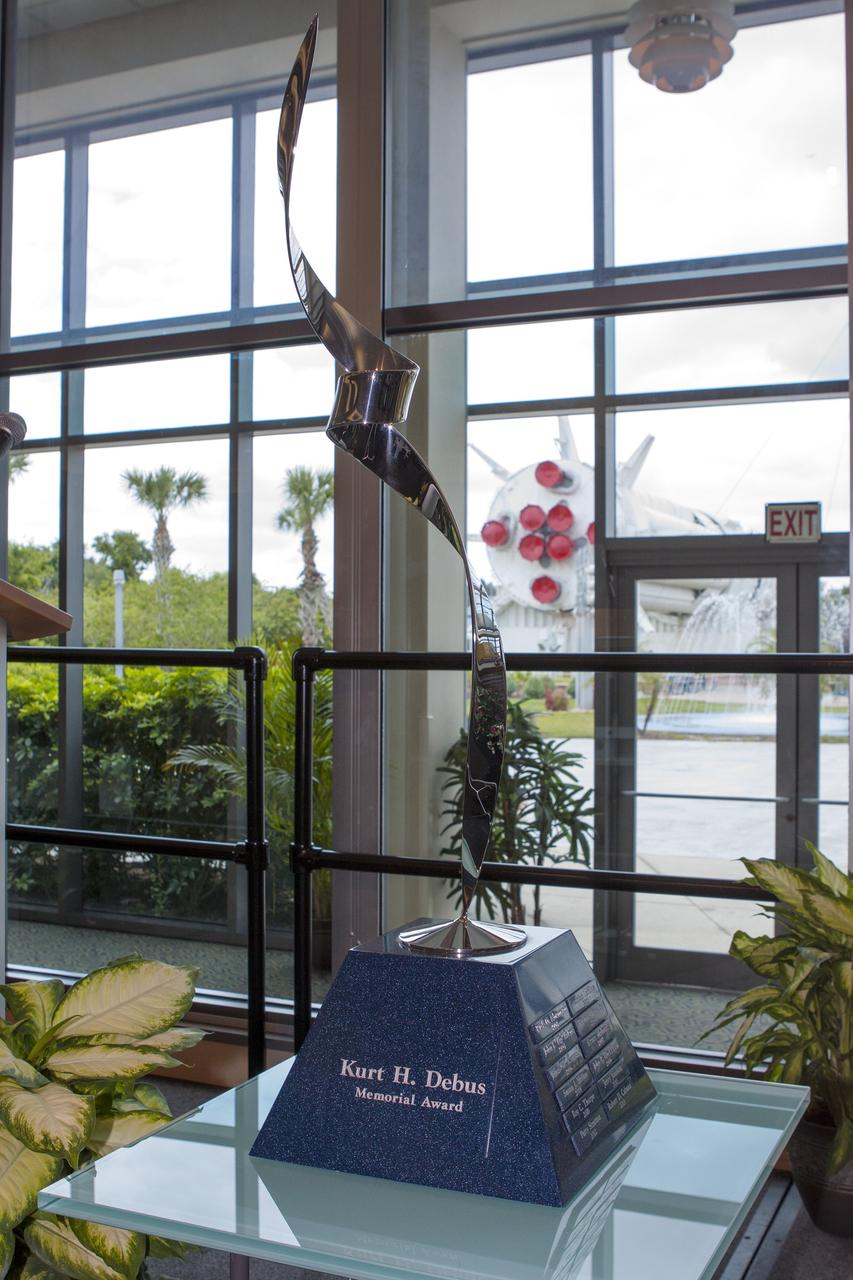
CAPE CANAVERAL, Fla. – At NASA’s Kennedy Space Center Visitor Complex in Florida, the Dr. Kurt H. Debus Award for 2013 was presented to director Bob Cabana by the National Space Club Florida Committee. A former U.S. Marine Corps aviator and NASA astronaut, Cabana was honored at the gala Debus Award Dinner. Named for the spaceport’s first director, the Debus Award was created to recognize significant achievements and contributions made in Florida to American aerospace efforts. The Debus Award was created by the space club's Florida committee to recognize significant achievements and contributions made in Florida to American aerospace efforts. Photo credit: NASA/Jim Grossmann

CAPE CANAVERAL, Fla. – At NASA’s Kennedy Space Center Visitor Complex in Florida, the center's associate director, Kelvin Manning, served as emcee for the Dr. Kurt H. Debus Award gala in which the prestigious honor was presented to Kennedy's director, Bob Cabana. A former U.S. Marine Corps aviator and NASA astronaut, Cabana was honored at the gala Debus Award Dinner. Named for the spaceport’s first director, the Debus Award was created to recognize significant achievements and contributions made in Florida to American aerospace efforts. The Debus Award was created by the space club's Florida committee to recognize significant achievements and contributions made in Florida to American aerospace efforts. Photo credit: NASA/Jim Grossmann
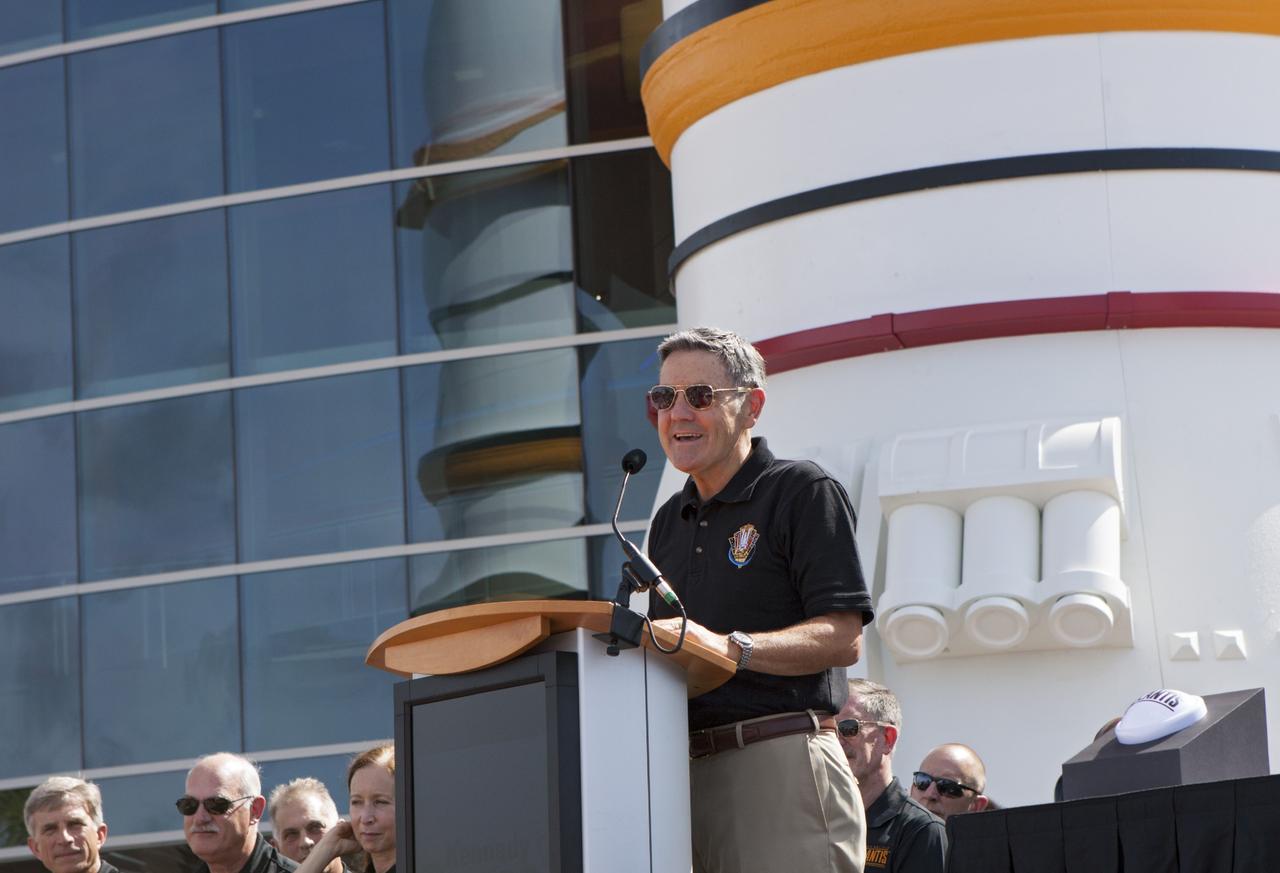
CAPE CANAVERAL, Fla. -- At the Kennedy Space Center Visitor Complex in Florida, CNN correspondent John Zarrella speaks to guests at the opening of the new "Space Shuttle Atlantis" facility. Zarrella served as master of ceremonies for the event. The new $100 million facility includes interactive exhibits that tell the story of the 30-year Space Shuttle Program and highlight the future of space exploration. The "Space Shuttle Atlantis" exhibit formally opened to the public on June 29, 2013.Photo credit: NASA/Jim Grossmann
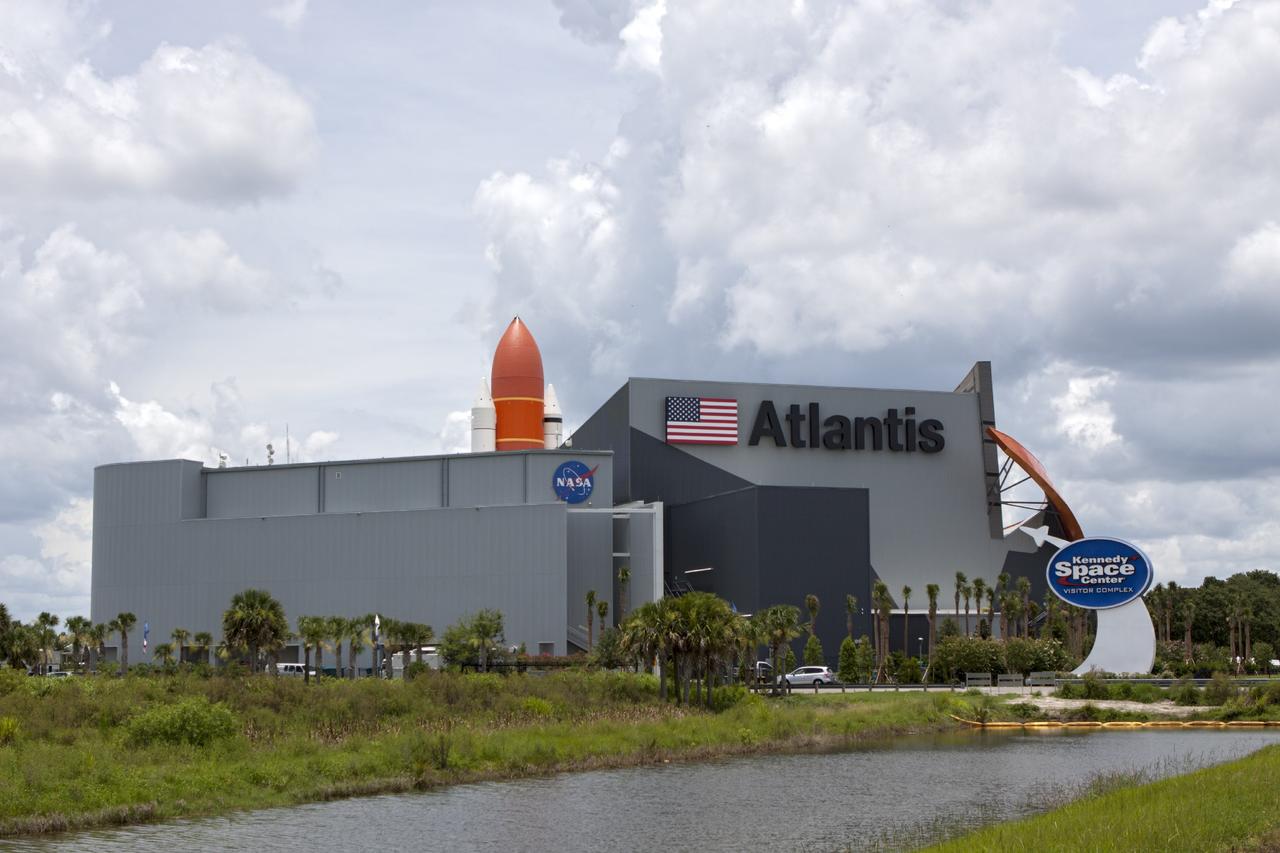
CAPE CANAVERAL, Fla. -- At the Kennedy Space Center Visitor Complex in Florida, the 90,000-square-foot "Space Shuttle Atlantis" facility has formally opened. On the opposite side of the building, a full-scale set of space shuttle twin solid rocket boosters and external fuel tank can be seen. Standing at the entrance to the exhibit building, guests may walk beneath the 184-foot-tall boosters and tank as they enter the facility. The facility features interactive exhibits that tell the story of the 30-year Space Shuttle Program and highlights the future of space exploration. The new $100 million facility includes interactive exhibits that tell the story of the 30-year Space Shuttle Program and highlight the future of space exploration. The "Space Shuttle Atlantis" exhibit formally opened to the public on June 29, 2013.Photo credit: NASA/Jim Grossmann
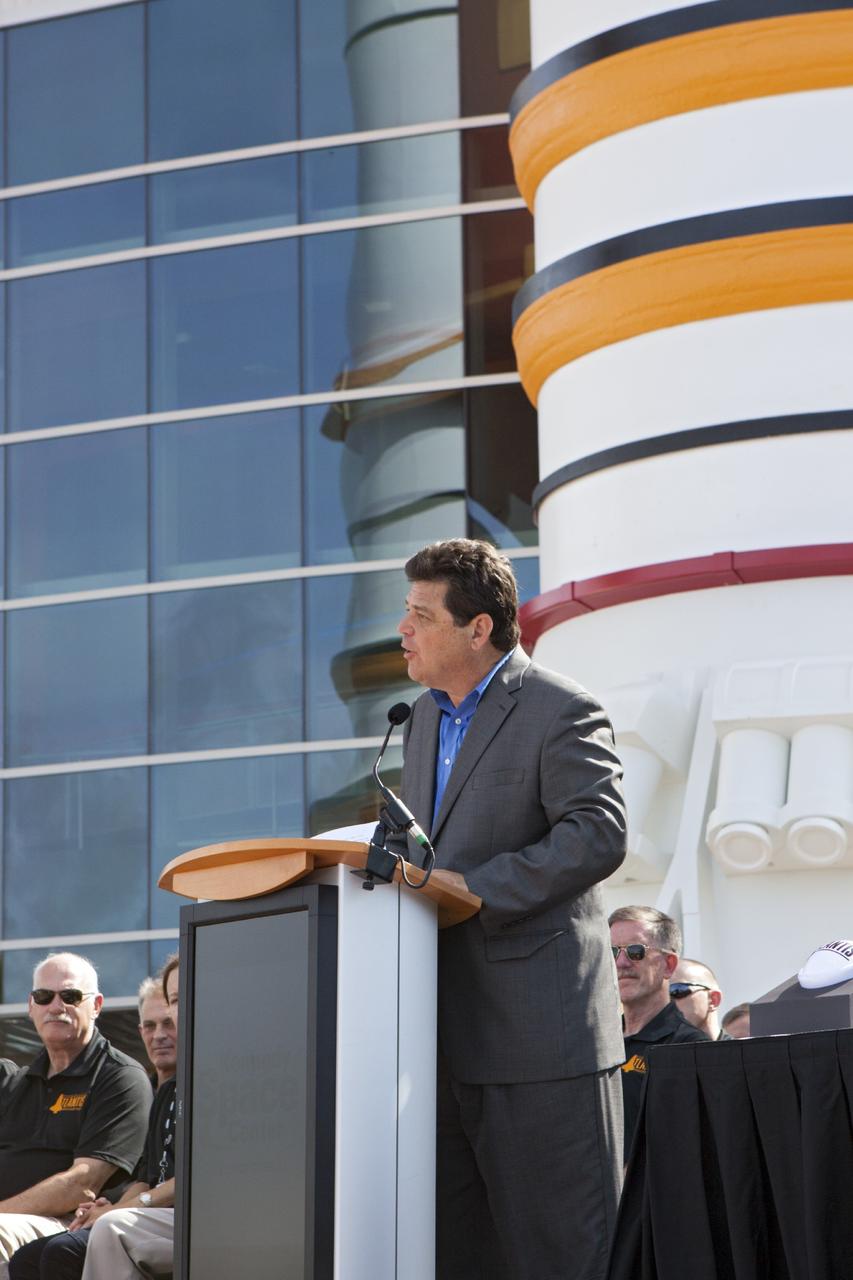
CAPE CANAVERAL, Fla. -- During opening ceremonies for the new 90,000-square-foot "Space Shuttle Atlantis" facility at the Kennedy Space Center Visitor Complex in Florida, center director Bob Cabana speaks to guests gathered for the ceremony. The new $100 million facility includes interactive exhibits that tell the story of the 30-year Space Shuttle Program and highlight the future of space exploration. The "Space Shuttle Atlantis" exhibit formally opened to the public on June 29, 2013.Photo credit: NASA/Jim Grossmann
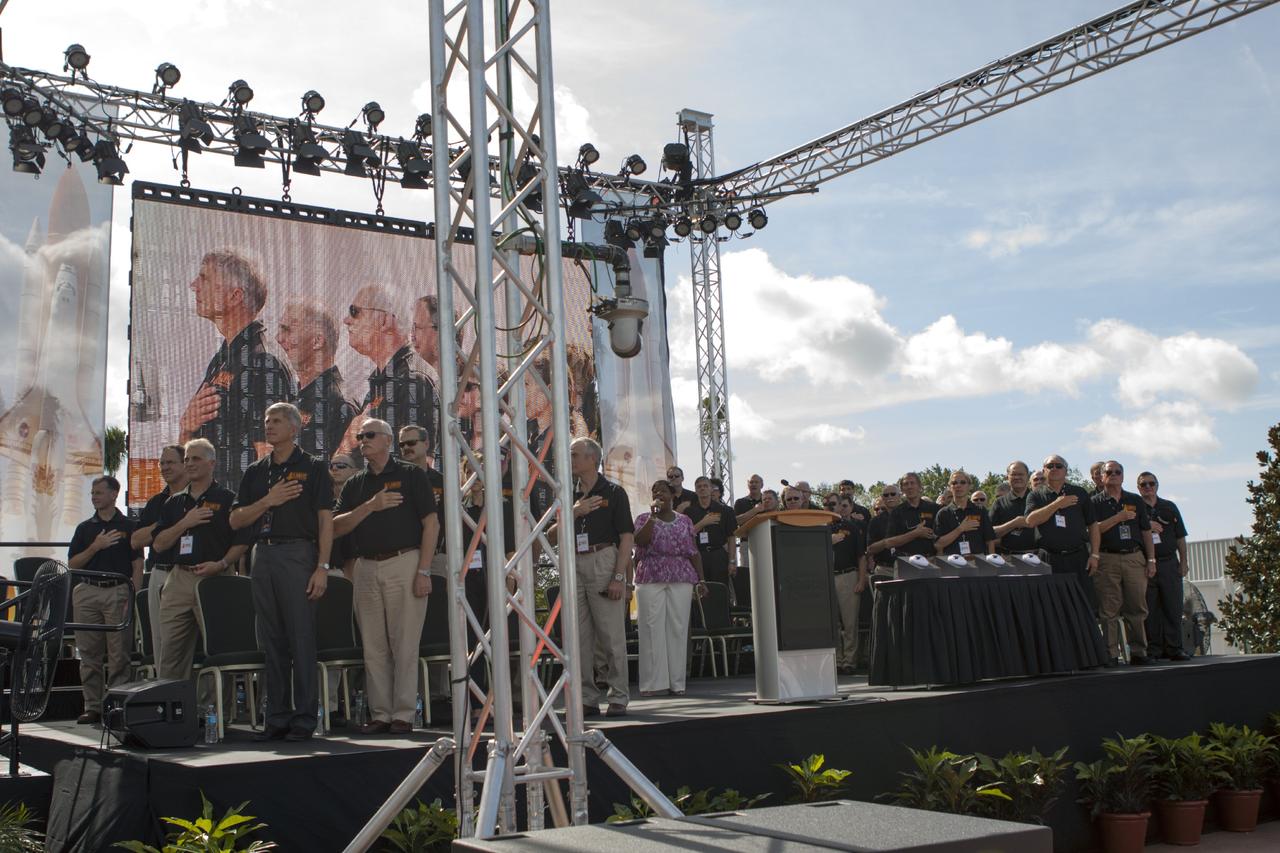
CAPE CANAVERAL, Fla. -- At the Kennedy Space Center Visitor Complex in Florida, more than 40 space shuttle astronauts listen to the singing of the national anthem during opening ceremonies for the new 90,000-square-foot "Space Shuttle Atlantis" facility. The new $100 million facility includes interactive exhibits that tell the story of the 30-year Space Shuttle Program and highlight the future of space exploration. The "Space Shuttle Atlantis" exhibit formally opened to the public on June 29, 2013.Photo credit: NASA/Jim Grossmann

CAPE CANAVERAL, Fla. – At NASA’s Kennedy Space Center Visitor Complex in Florida, Russell Romanella, director of NASA's Safety and Mission Assurance Directorate at the spaceport, speaks at the annual the Dr. Kurt H. Debus Award gala in which the prestigious honor was presented to Kennedy's director, Bob Cabana. A former U.S. Marine Corps aviator and NASA astronaut, Cabana was honored at the gala Debus Award Dinner. Named for the spaceport’s first director, the Debus Award was created to recognize significant achievements and contributions made in Florida to American aerospace efforts. The Debus Award was created by the space club's Florida committee to recognize significant achievements and contributions made in Florida to American aerospace efforts. Photo credit: NASA/Jim Grossmann
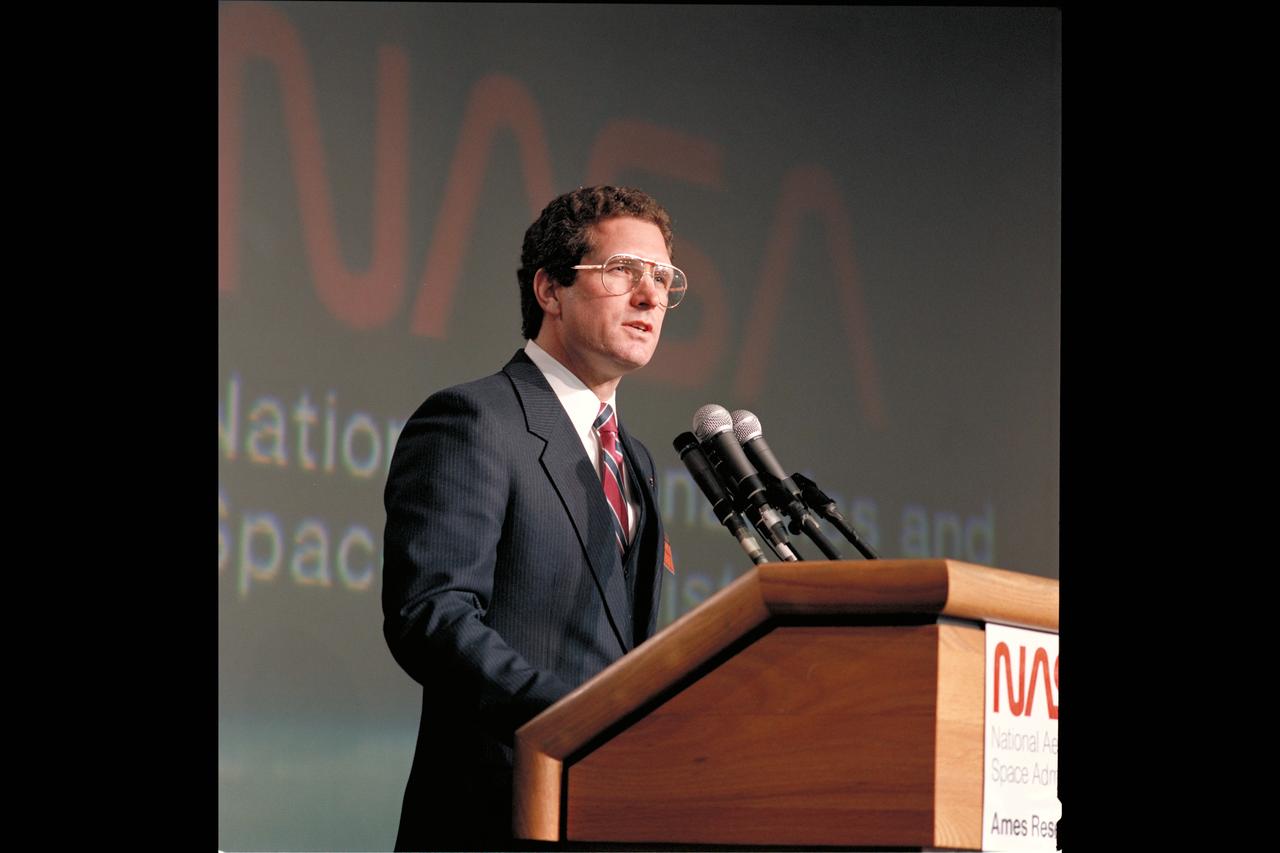
NASA AMES Photographers N-258 NAS DEDICATION CEREMONY. VIP speakers Ames Director Ballhaus, Assoc. Admin. OAST Raymond Colladay, NASA Director Dr. James Fletcher
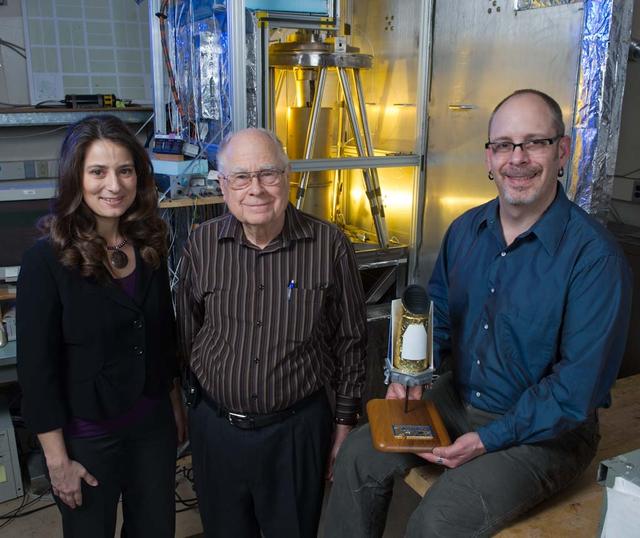
Kepler Program VIP's from left Natalie Batalha, Bill Borucki and Jon Jenkins in the Kepler Laboratory at the NASA Ames Research Center, Moffett Field, CA (for aviation week).
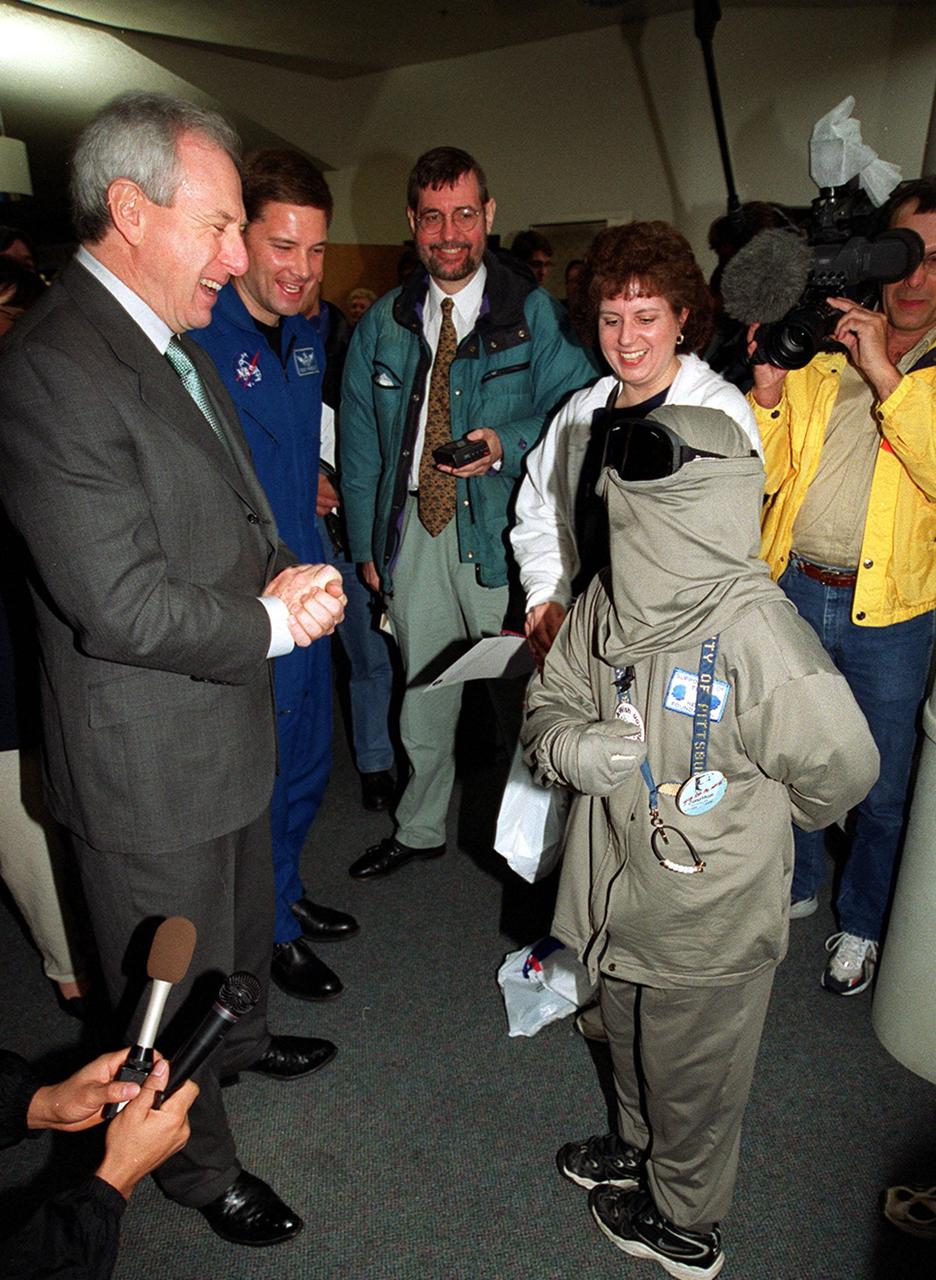
NASA Administrator Dan Goldin (left) shares a laugh with VIP 10-year-old Jonathan Pierce (right), who is garbed in a protective cooling suit designed by NASA. Behind Goldin is astronaut Doug Wheelock; behind Jonathan is his mother, Penny. Jonathan suffers from erythropoietic protoporphyria, a rare condition that makes his body unable to withstand ultraviolet rays. The suit allows him to be outside during the day, which would otherwise be impossible. Jonathan's trip was funded by the Make-A-Wish Foundation and included a visit to Disney World. He and his family were among a dozen VIPs at KSC to view the launch of STS-99
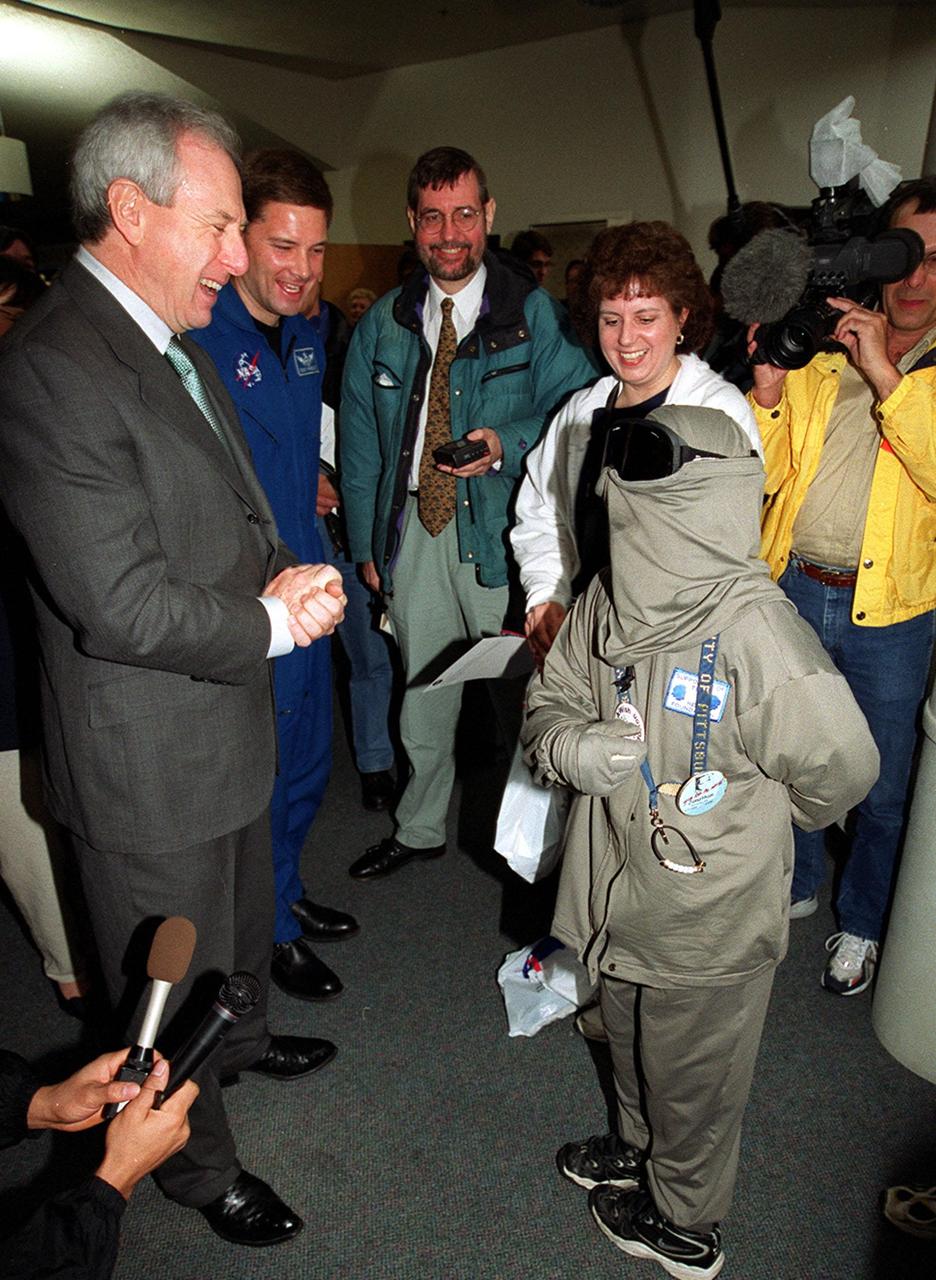
NASA Administrator Dan Goldin (left) shares a laugh with VIP 10-year-old Jonathan Pierce (right), who is garbed in a protective cooling suit designed by NASA. Behind Goldin is astronaut Doug Wheelock; behind Jonathan is his mother, Penny. Jonathan suffers from erythropoietic protoporphyria, a rare condition that makes his body unable to withstand ultraviolet rays. The suit allows him to be outside during the day, which would otherwise be impossible. Jonathan's trip was funded by the Make-A-Wish Foundation and included a visit to Disney World. He and his family were among a dozen VIPs at KSC to view the launch of STS-99
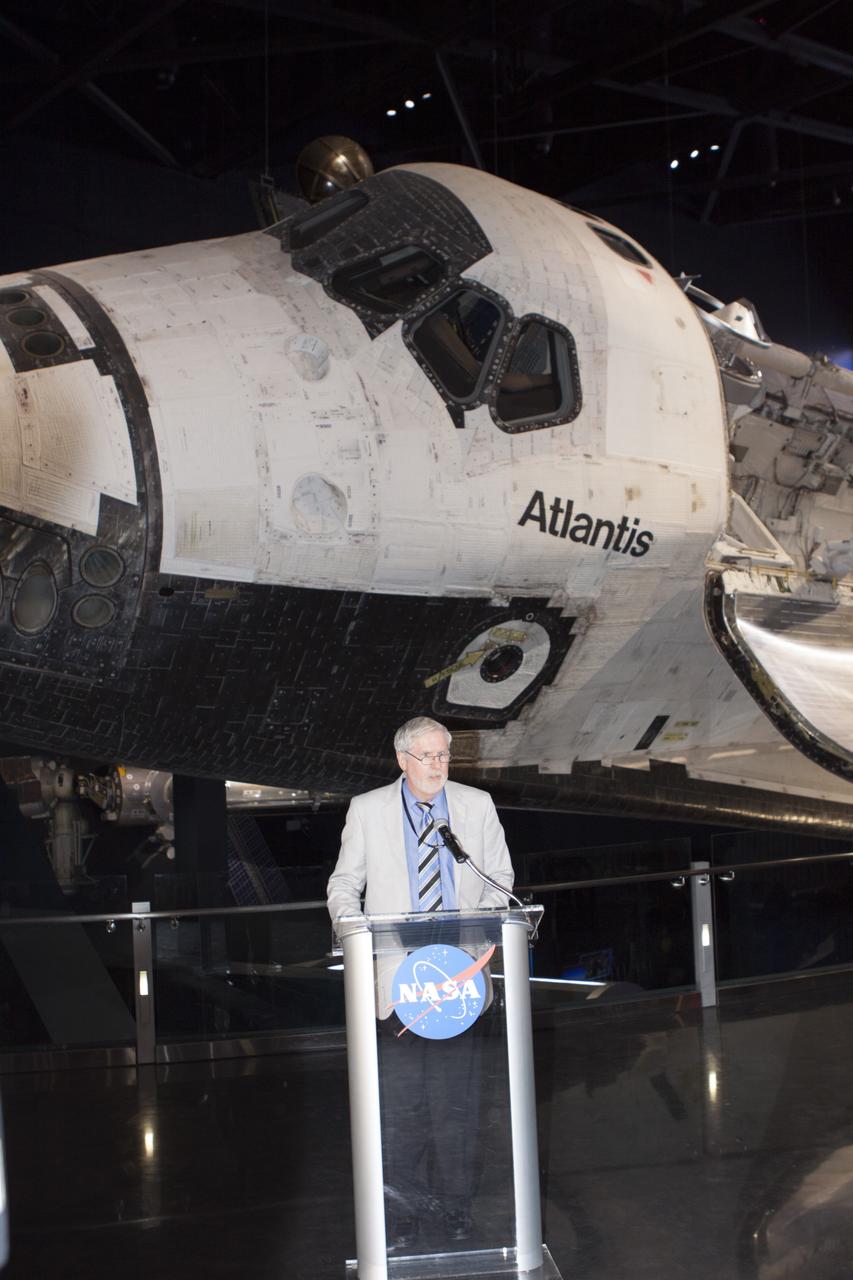
CAPE CANAVERAL, Fla. -- At the Kennedy Space Center Visitor Complex in Florida, Bill Moore, Delaware North Parks and Resorts chief operating officer speaks to news media representatives during the opening of the 90,000-square-foot "Space Shuttle Atlantis" facility. The new $100 million facility includes interactive exhibits that tell the story of the 30-year Space Shuttle Program and highlight the future of space exploration. The "Space Shuttle Atlantis" exhibit formally opened to the public on June 29, 2013.Photo credit: NASA/Jim Grossmann
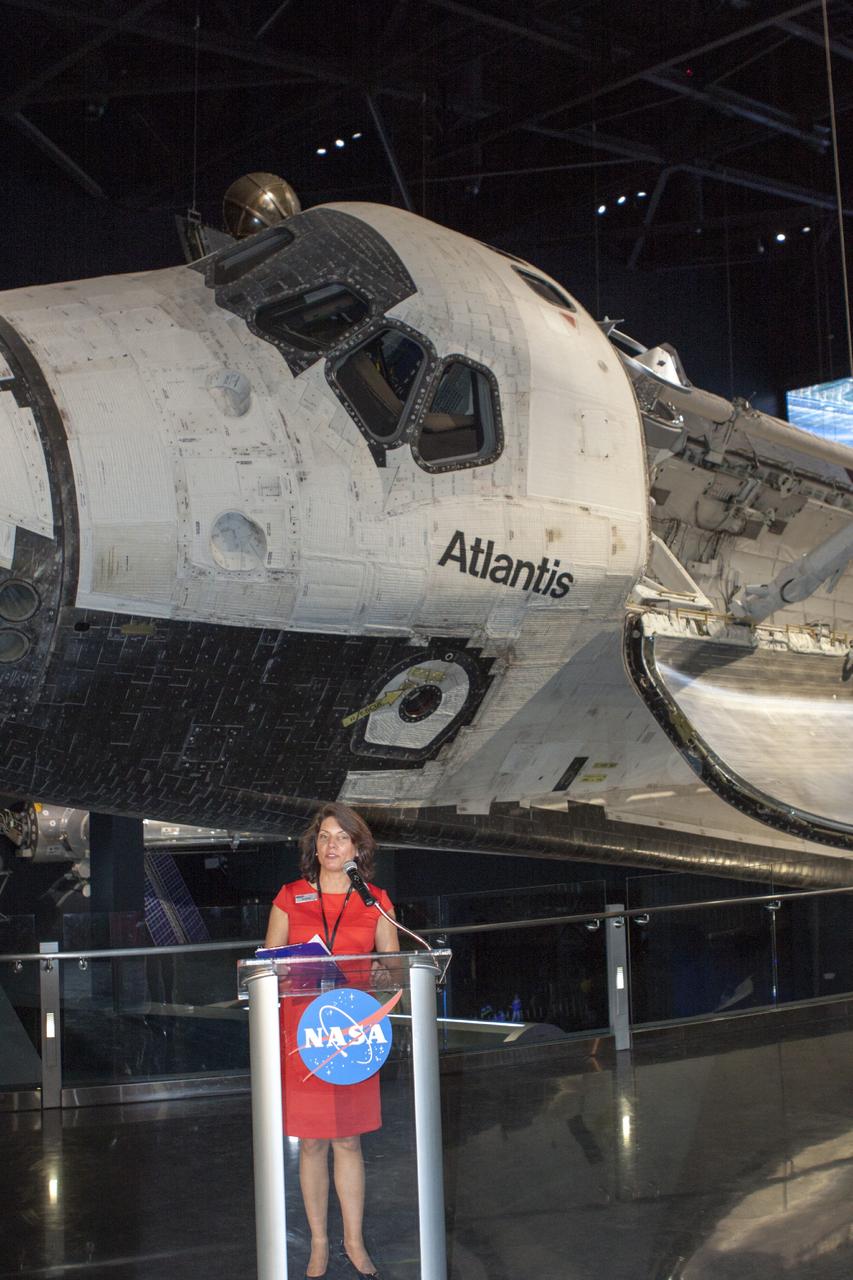
CAPE CANAVERAL, Fla. -- At the Kennedy Space Center Visitor Complex in Florida, Andrea Farmer, Delaware North Parks and Resorts manager of Public Relations speaks to news media representatives during the opening of the 90,000-square-foot "Space Shuttle Atlantis" facility. The new $100 million facility includes interactive exhibits that tell the story of the 30-year Space Shuttle Program and highlight the future of space exploration. The "Space Shuttle Atlantis" exhibit formally opened to the public on June 29, 2013.Photo credit: NASA/Jim Grossmann
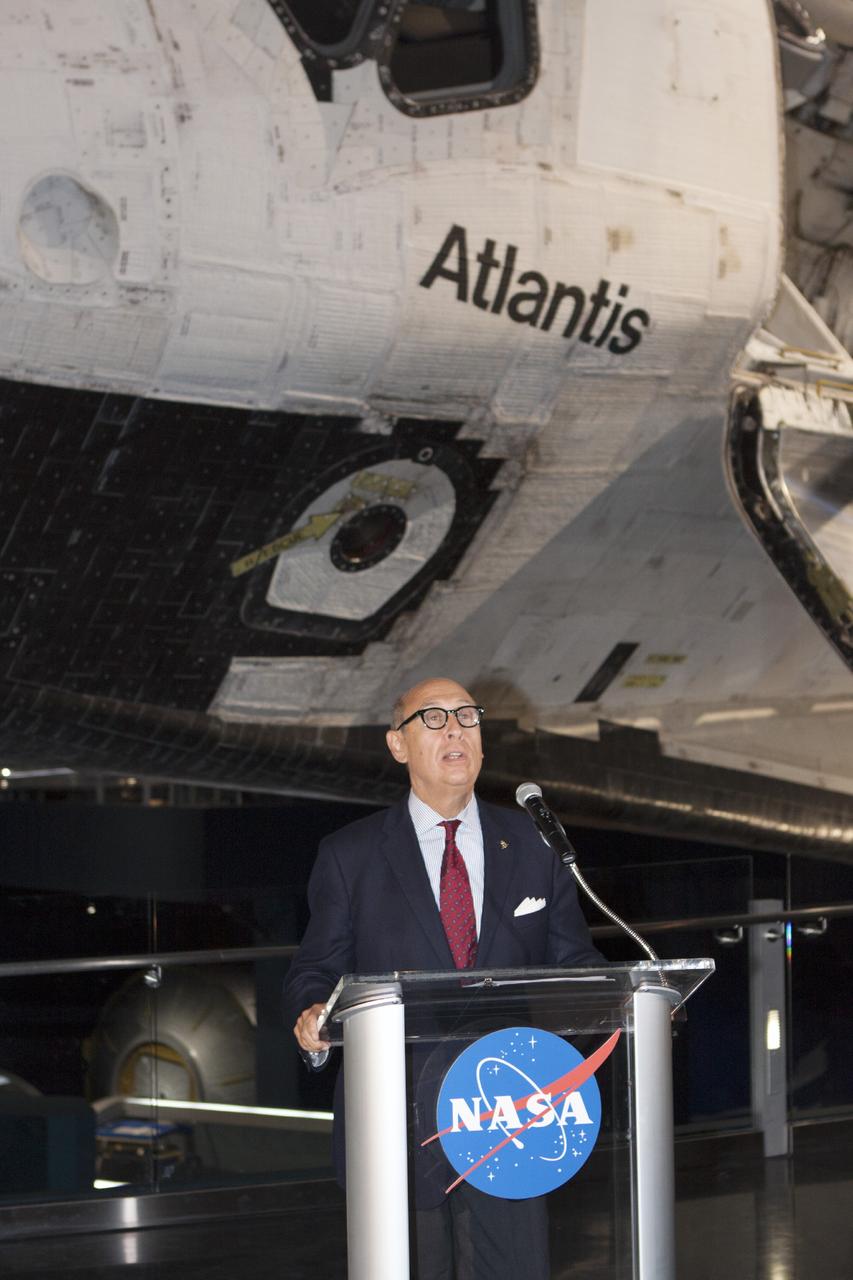
CAPE CANAVERAL, Fla. -- At the Kennedy Space Center Visitor Complex in Florida, Rick Abramson, Delaware North Parks and Resorts president speaks to news media representatives during the opening of the 90,000-square-foot "Space Shuttle Atlantis" facility. The new $100 million facility includes interactive exhibits that tell the story of the 30-year Space Shuttle Program and highlight the future of space exploration. The "Space Shuttle Atlantis" exhibit formally opened to the public on June 29, 2013.Photo credit: NASA/Jim Grossmann
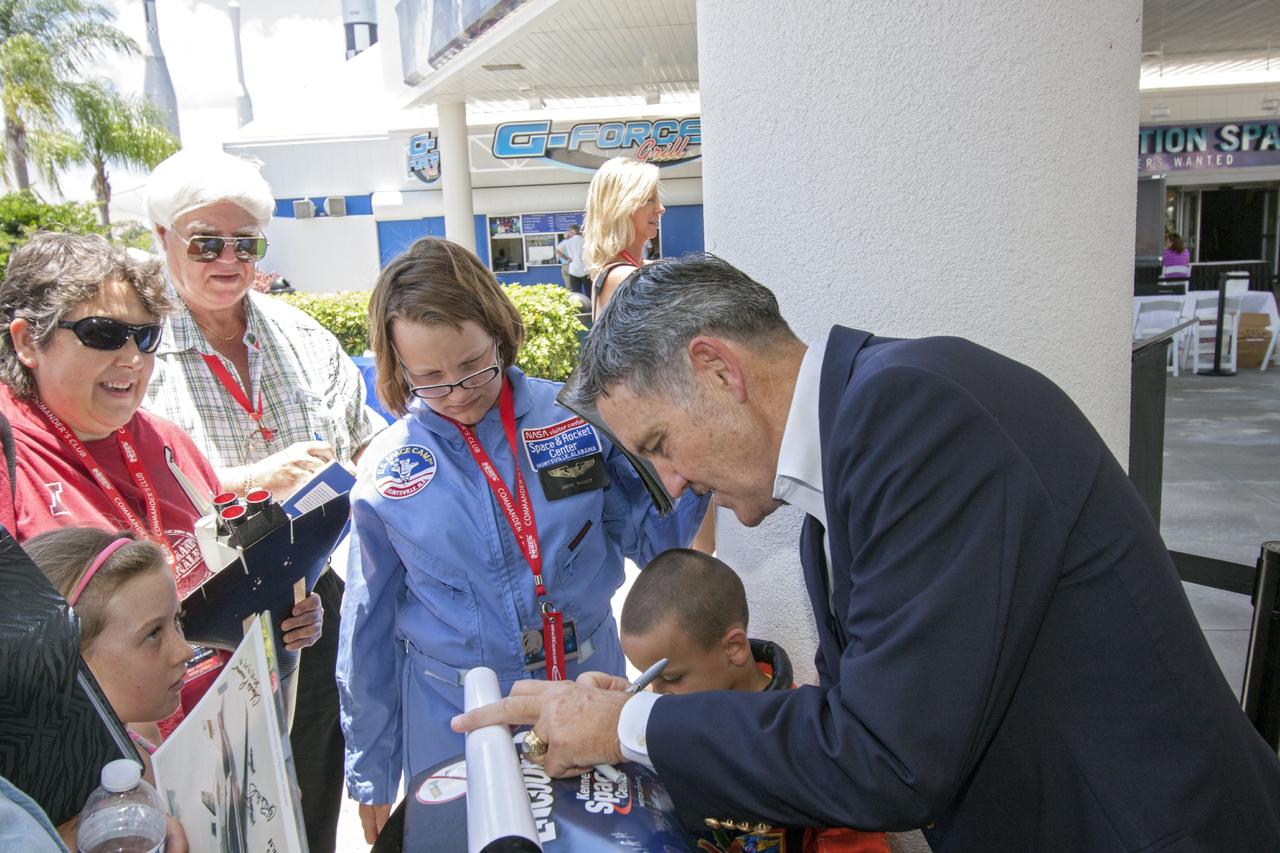
CAPE CANAVERAL, Fla. -- At the Kennedy Space Center Visitor Complex in Florida, center director Bob Cabana signs autographs for guests prior to the opening of the 90,000-square-foot "Space Shuttle Atlantis" facility. The new $100 million facility includes interactive exhibits that tell the story of the 30-year Space Shuttle Program and highlight the future of space exploration. The "Space Shuttle Atlantis" exhibit formally opened to the public on June 29, 2013.Photo credit: NASA/Jim Grossmann
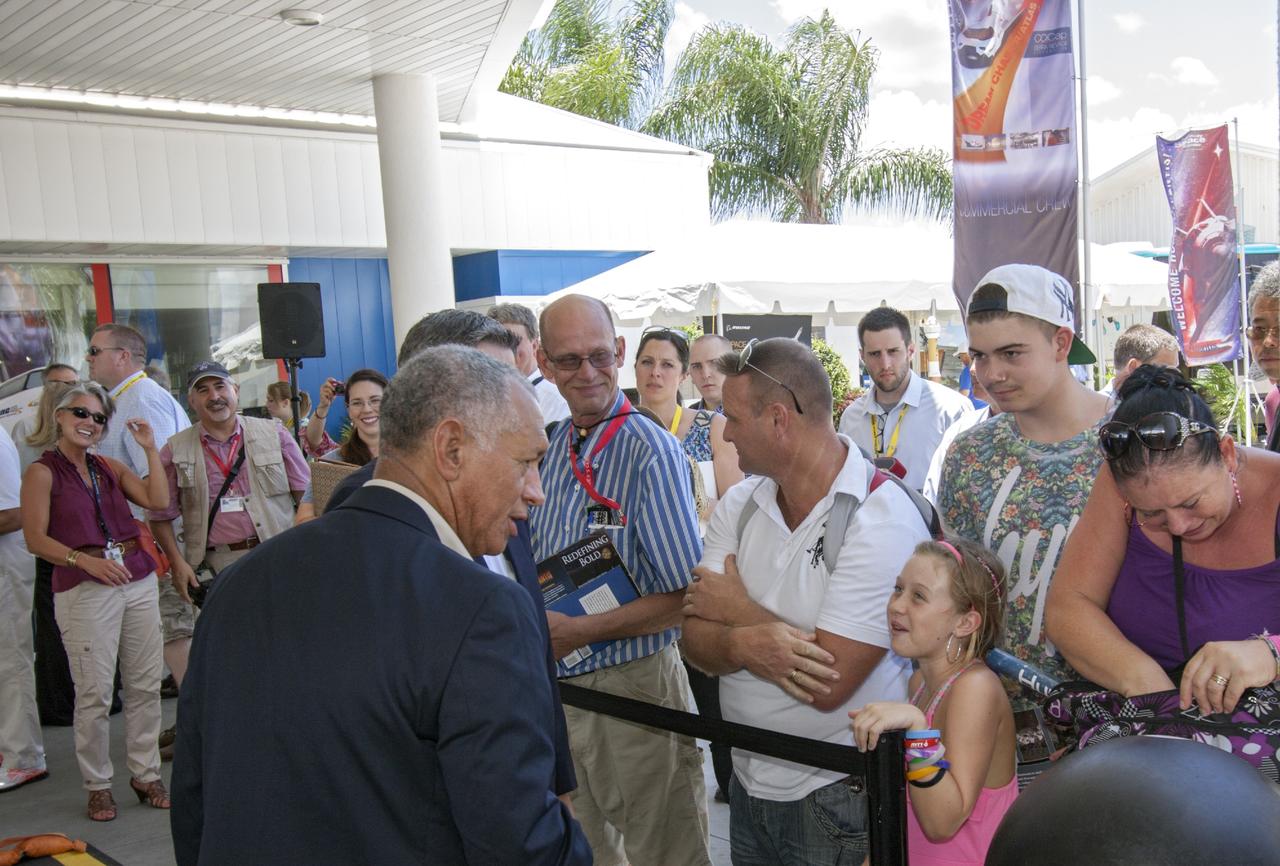
CAPE CANAVERAL, Fla. -- At the Kennedy Space Center Visitor Complex in Florida, Charlie Bolden, NASA administrator talks to guests prior to the opening of the 90,000-square-foot "Space Shuttle Atlantis" facility. The new $100 million facility includes interactive exhibits that tell the story of the 30-year Space Shuttle Program and highlight the future of space exploration. The "Space Shuttle Atlantis" exhibit formally opened to the public on June 29, 2013.Photo credit: NASA/Jim Grossmann
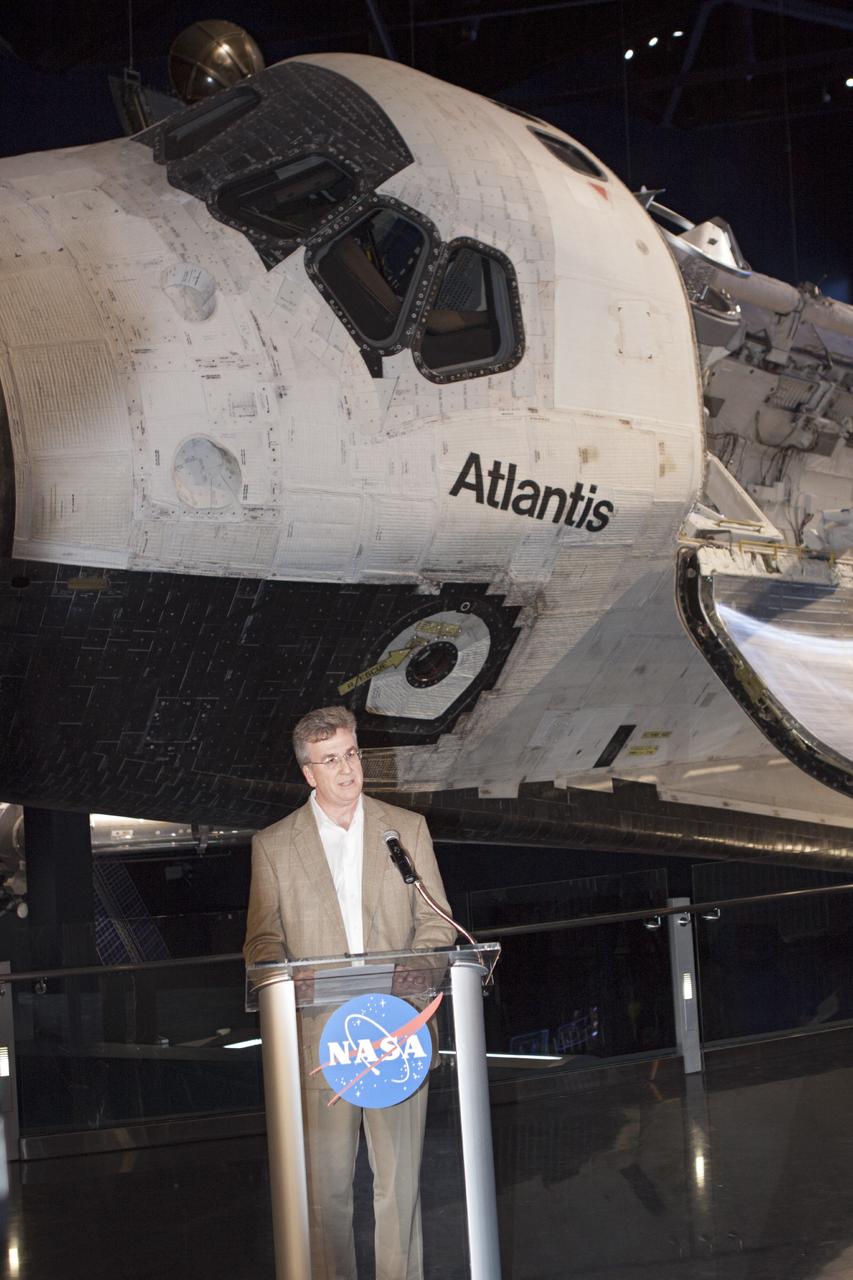
CAPE CANAVERAL, Fla. -- At the Kennedy Space Center Visitor Complex in Florida, Mike Konzen of PGAV Destinations speaks to news media representatives during the opening of the 90,000-square-foot "Space Shuttle Atlantis" facility. PGAV was responsible for the "Space Shuttle Atlantis" facility design and architecture. The new $100 million facility includes interactive exhibits that tell the story of the 30-year Space Shuttle Program and highlight the future of space exploration. The "Space Shuttle Atlantis" exhibit formally opened to the public on June 29, 2013.Photo credit: NASA/Jim Grossmann
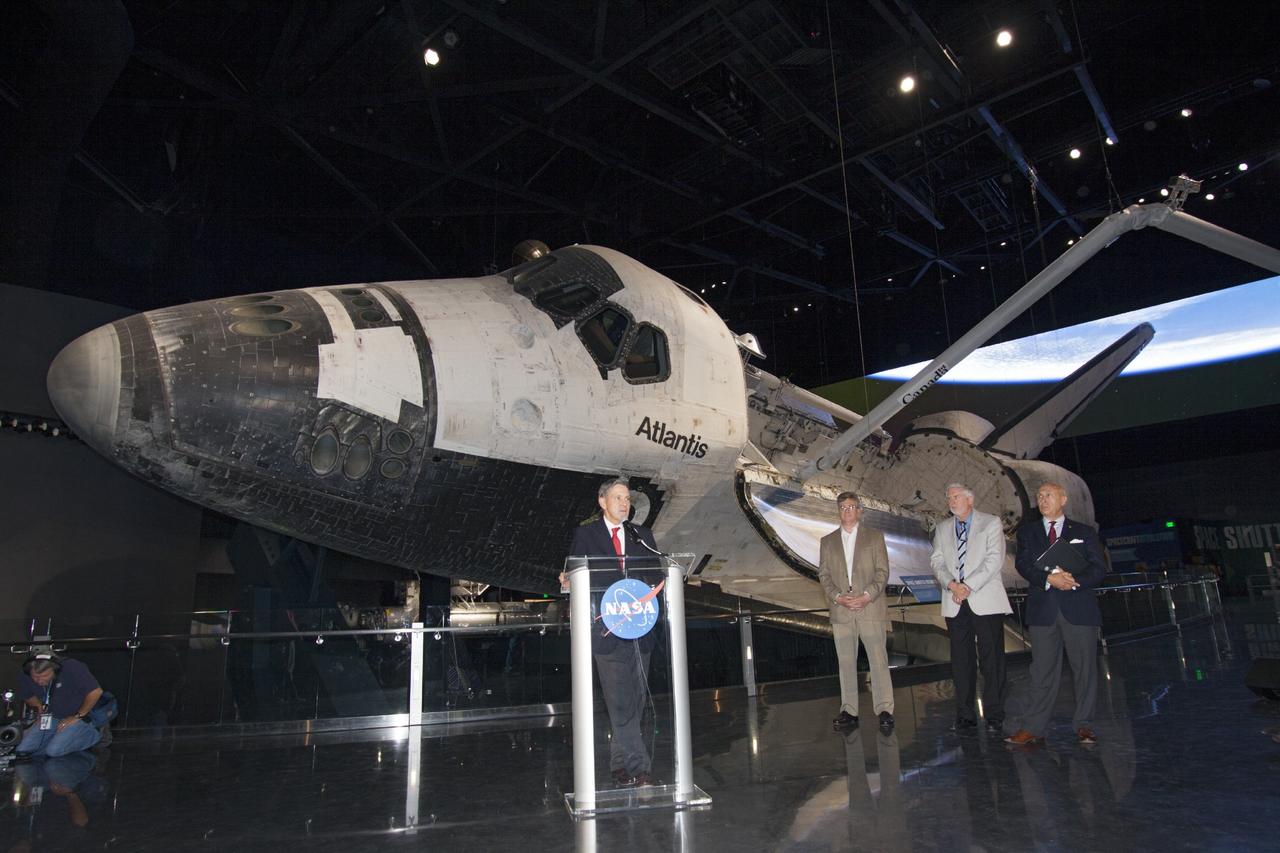
CAPE CANAVERAL, Fla. -- At the Kennedy Space Center Visitor Complex in Florida, center director Bob Cabana speaks to news media representatives during the opening of the 90,000-square-foot "Space Shuttle Atlantis" facility. Also participating in the news briefing are, from the left, Mike Konzen of PGAV Destinations, Bill Moore, Delaware North Parks and Resorts chief operating officer, and Rick Abramson, Delaware North president. The new $100 million facility includes interactive exhibits that tell the story of the 30-year Space Shuttle Program and highlight the future of space exploration. The "Space Shuttle Atlantis" exhibit formally opened to the public on June 29, 2013.Photo credit: NASA/Jim Grossmann
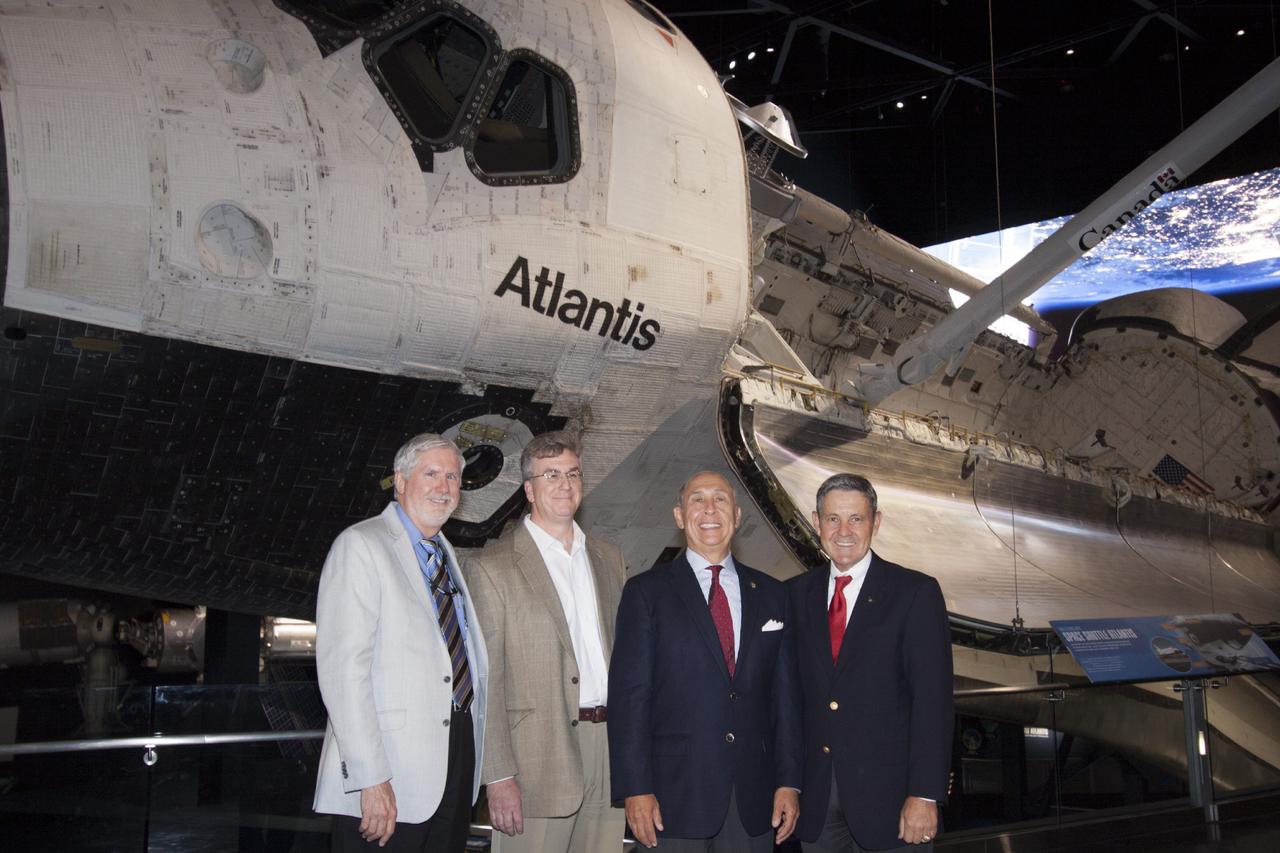
CAPE CANAVERAL, Fla. -- At the Kennedy Space Center Visitor Complex in Florida, from the left, Delaware North Parks and Resorts Chief Operating Officer Bill Moore, Mike Konzen of PGAV Destinations, Rick Abramson, Delaware North president and Kennedy director Bob Cabana participated in a news briefing prior to the opening of the 90,000-square-foot "Space Shuttle Atlantis" facility. The new $100 million facility includes interactive exhibits that tell the story of the 30-year Space Shuttle Program and highlight the future of space exploration. The "Space Shuttle Atlantis" exhibit formally opened to the public on June 29, 2013.Photo credit: NASA/Jim Grossmann
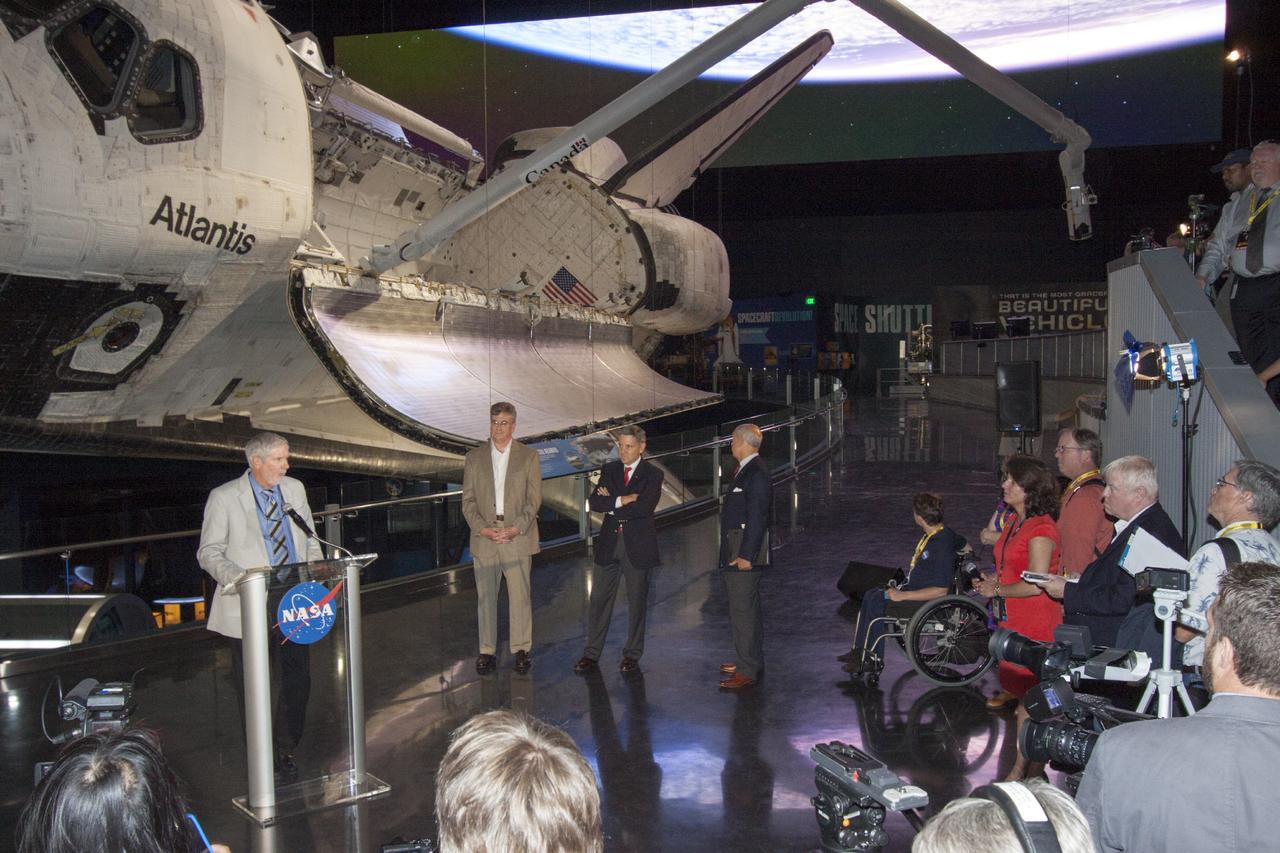
CAPE CANAVERAL, Fla. -- At the Kennedy Space Center Visitor Complex in Florida, Bill Moore, Delaware North Parks and Resorts chief operating officer speaks to news media representatives during the opening of the 90,000-square-foot "Space Shuttle Atlantis" facility. The new $100 million facility includes interactive exhibits that tell the story of the 30-year Space Shuttle Program and highlight the future of space exploration. The "Space Shuttle Atlantis" exhibit formally opened to the public on June 29, 2013.Photo credit: NASA/Jim Grossmann
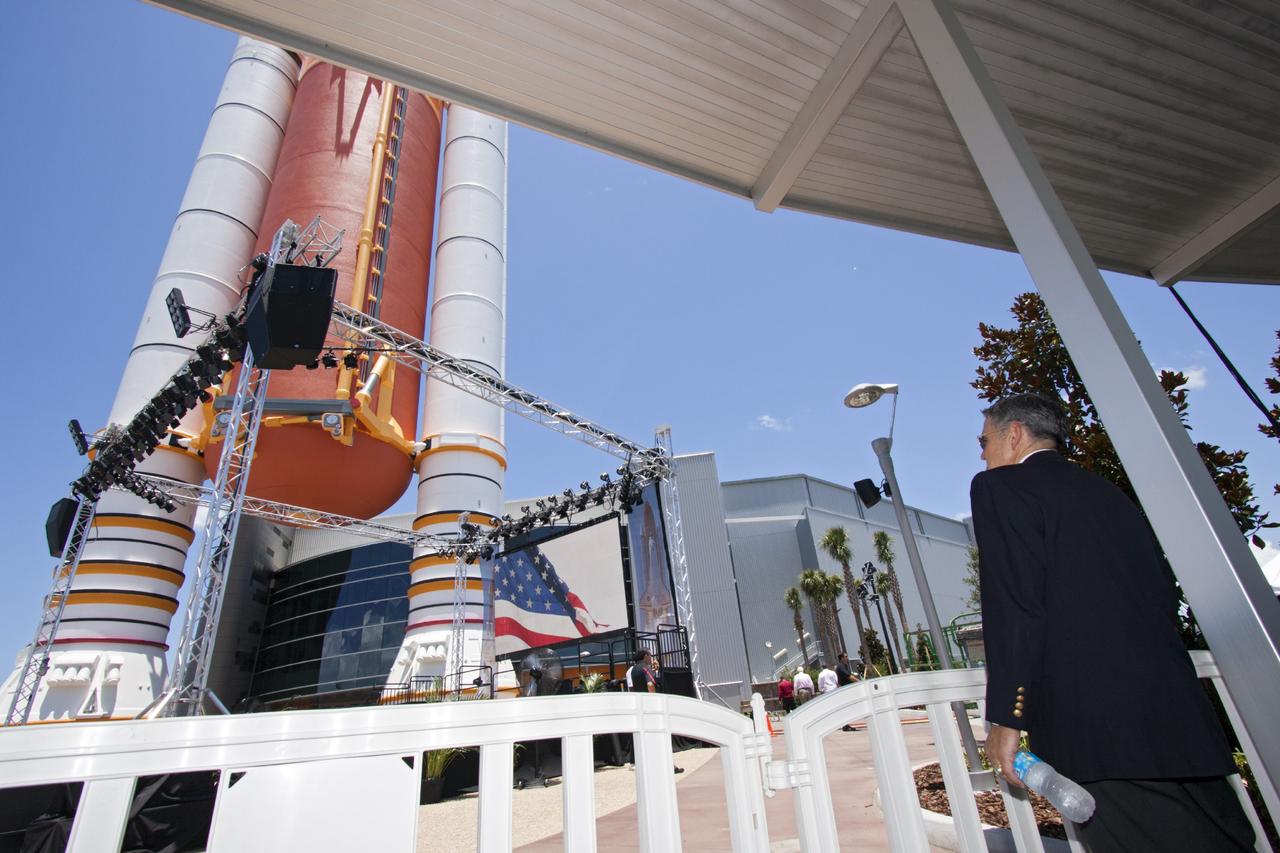
CAPE CANAVERAL, Fla. -- At the Kennedy Space Center Visitor Complex in Florida, center director Bob Cabana checks out the full-scale set of space shuttle twin solid rocket boosters and external fuel tank at the entrance to the 90,000-square-foot "Space Shuttle Atlantis" facility. Guests will be able to walk beneath the 184-foot-tall boosters and tank as they enter the facility. The new $100 million facility includes interactive exhibits that tell the story of the 30-year Space Shuttle Program and highlight the future of space exploration. The "Space Shuttle Atlantis" exhibit formally opened to the public on June 29, 2013.Photo credit: NASA/Jim Grossmann
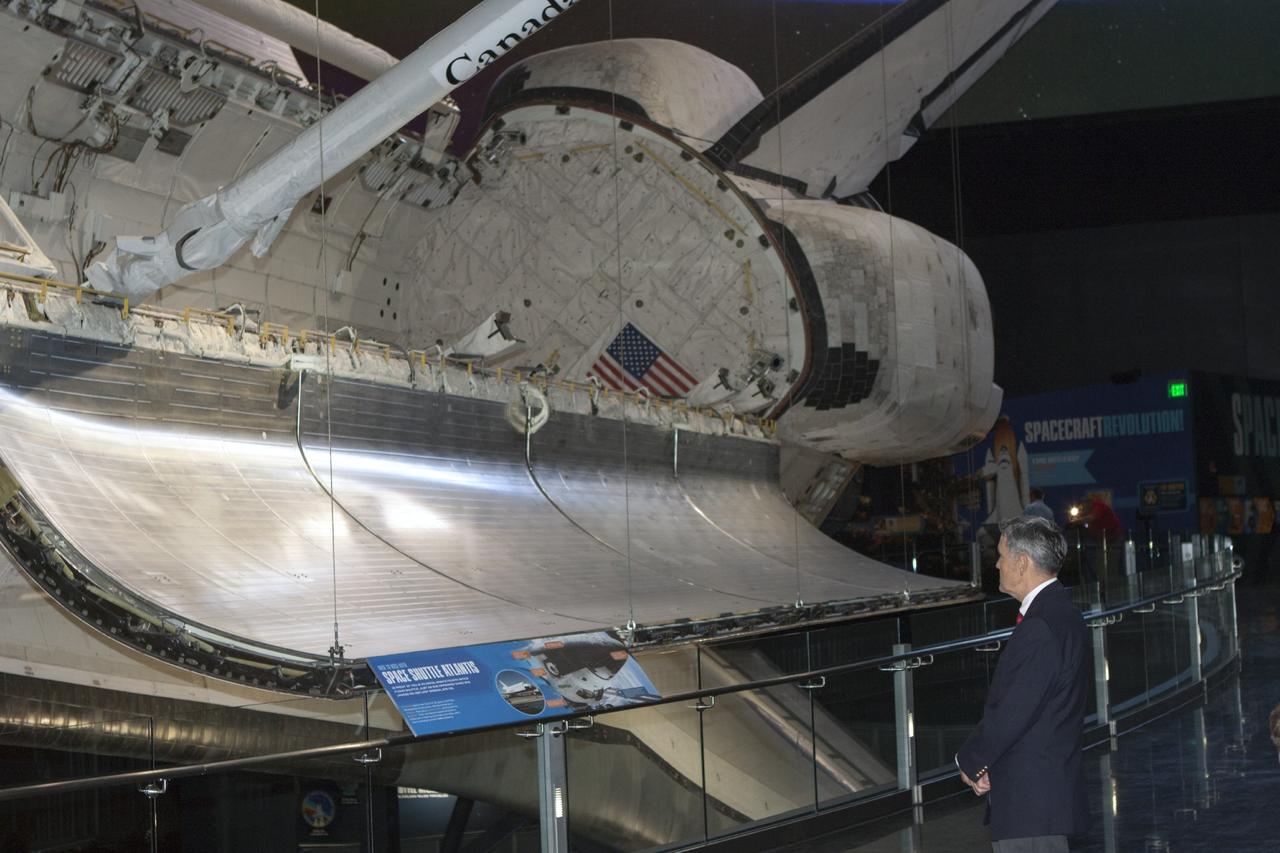
CAPE CANAVERAL, Fla. -- At the Kennedy Space Center Visitor Complex in Florida, center director Bob Cabana checks out the space shuttle Atlantis on display with other exhibits inside the new 90,000-square-foot facility. The new $100 million facility includes interactive exhibits that tell the story of the 30-year Space Shuttle Program and highlight the future of space exploration. The "Space Shuttle Atlantis" exhibit formally opened to the public on June 29, 2013.Photo credit: NASA/Jim Grossmann
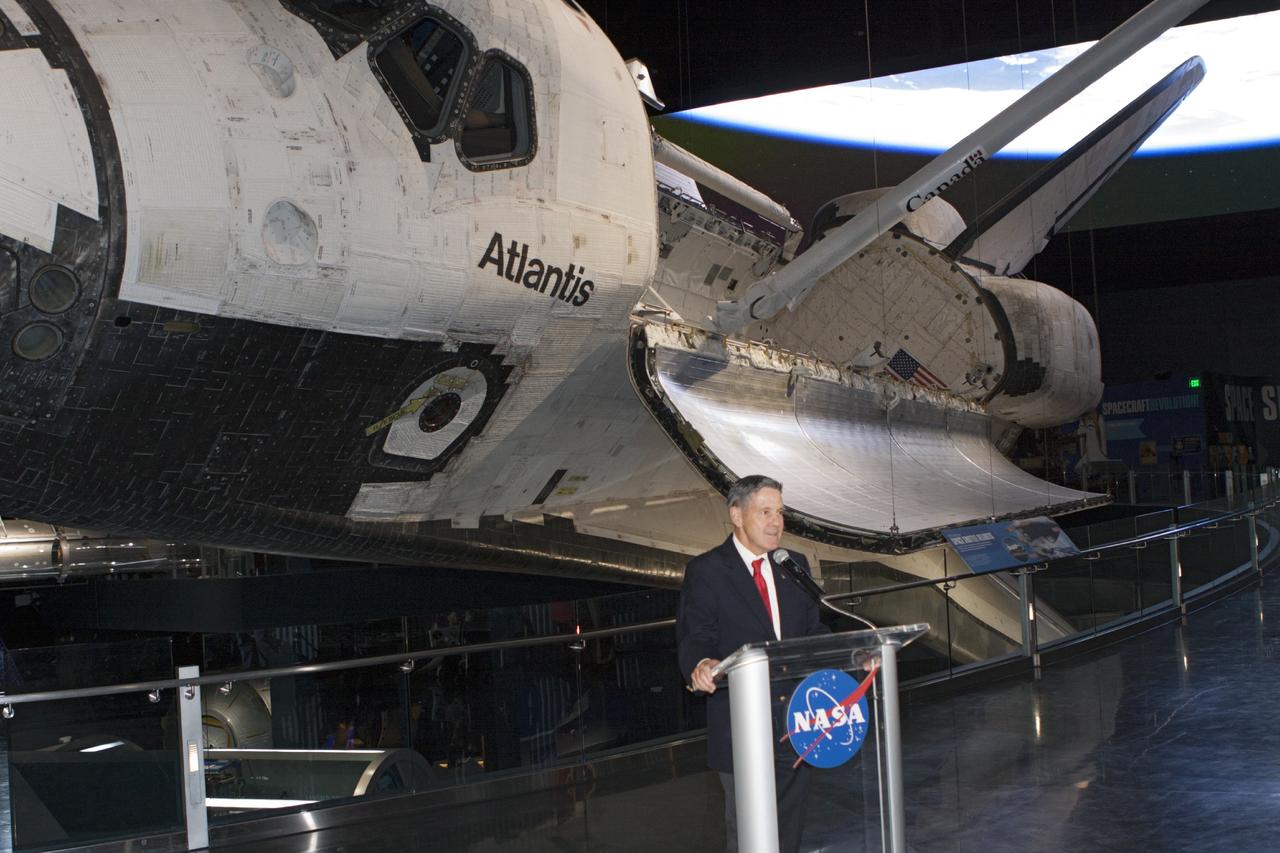
CAPE CANAVERAL, Fla. -- At the Kennedy Space Center Visitor Complex in Florida, center director Bob Cabana speaks to news media representatives during the opening of the 90,000-square-foot "Space Shuttle Atlantis" facility. The new $100 million facility includes interactive exhibits that tell the story of the 30-year Space Shuttle Program and highlight the future of space exploration. The "Space Shuttle Atlantis" exhibit formally opened to the public on June 29, 2013.Photo credit: NASA/Jim Grossmann

Erik Lindbergh, grandson of famed aviator Charles Lindbergh, yanks the bunting to reveal the Clipper Lindbergh name on NASA's SOFIA Boeing 747SP on June 27, 2007. More than 250 VIPs, news media and guests joined NASA, DLR, USRA and other SOFIA staff for the debut of the airborne observatory at NASA Dryden.
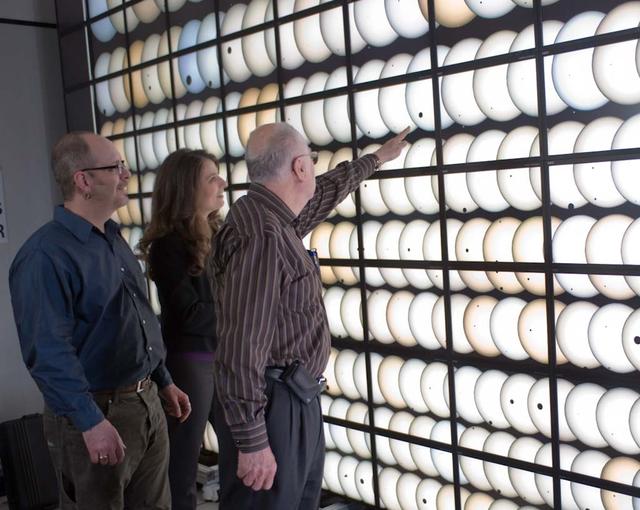
Kepler Program VIP's from left Jon Jenkins, Natalie Batalha, and Bill Borucki pointing at the NASA Ames Hyperwall in the NAS (NASA Advanced Supercomputing) facility filled with exo-planets discovered during Kepler Mission. Moffett Field, CA (for aviation week)

Kepler Program VIP's from left Natalie Batalha, Bill Borucki and Jon Jenkins in front of a NASA Ames Hyperwall display of newly discovered planet K-22B art at the NAS (NASA Advanced Supercomputing) Facility, Moffett Field, CA (for aviation week)
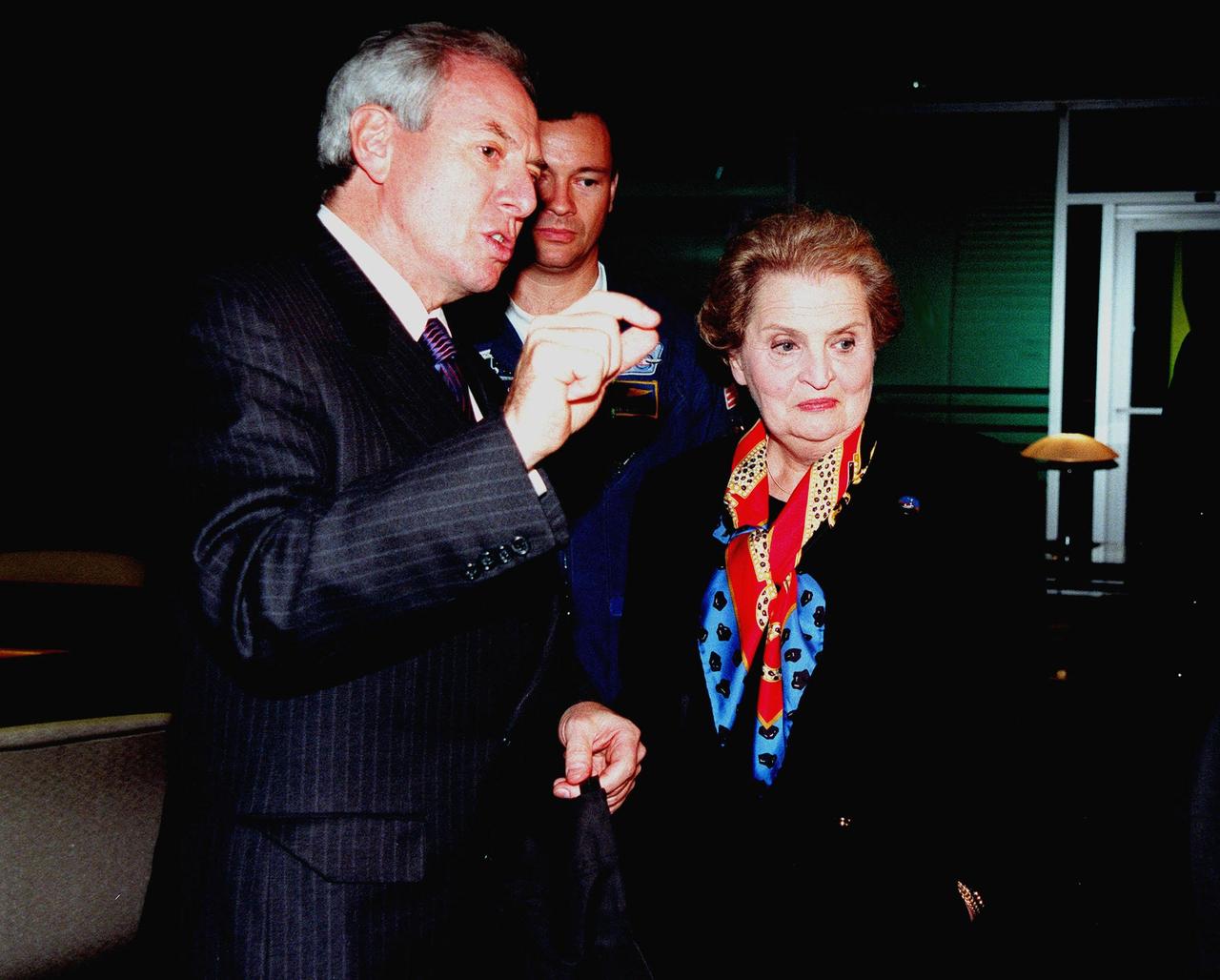
KENNEDY SPACE CENTER, FLA. -- U.S. Secretary of State Madeleine Albright talks with NASA Administrator Daniel Goldin (at left) in the VIP lounge at the Apollo/Saturn V Center while awaiting launch of Mission STS-88, the first U.S. launch for the International Space Station. Astronaut Michael Lopez-Alegria is looking on in background
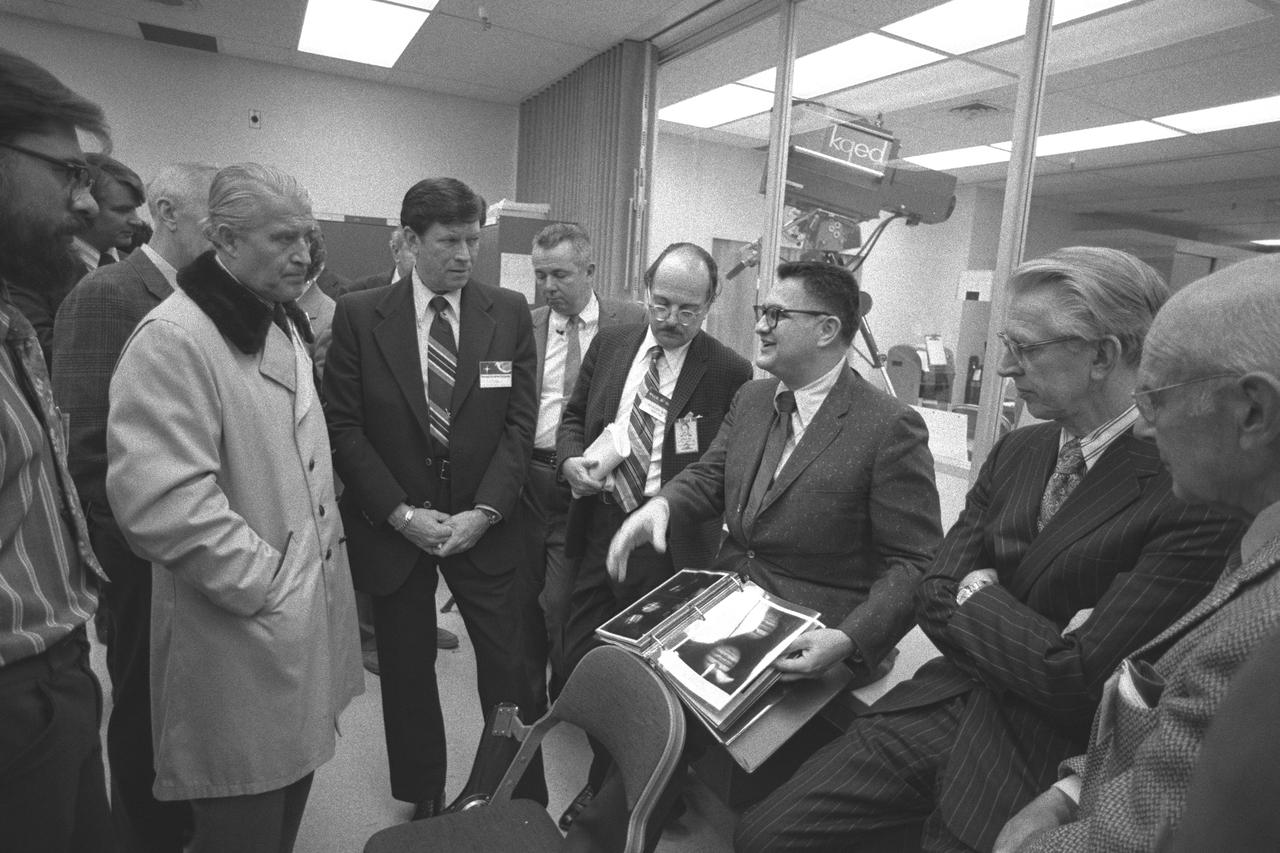
Pioneer 10 Mission to Jupiter; Press conference and tour of Mission Control for VIP visitors with Dr. Werner Von Braun on left (in trench coat) Dr Richard Fimmel, Ames, center (with album) and Dr Fletcher, NASA Administrator to his right.
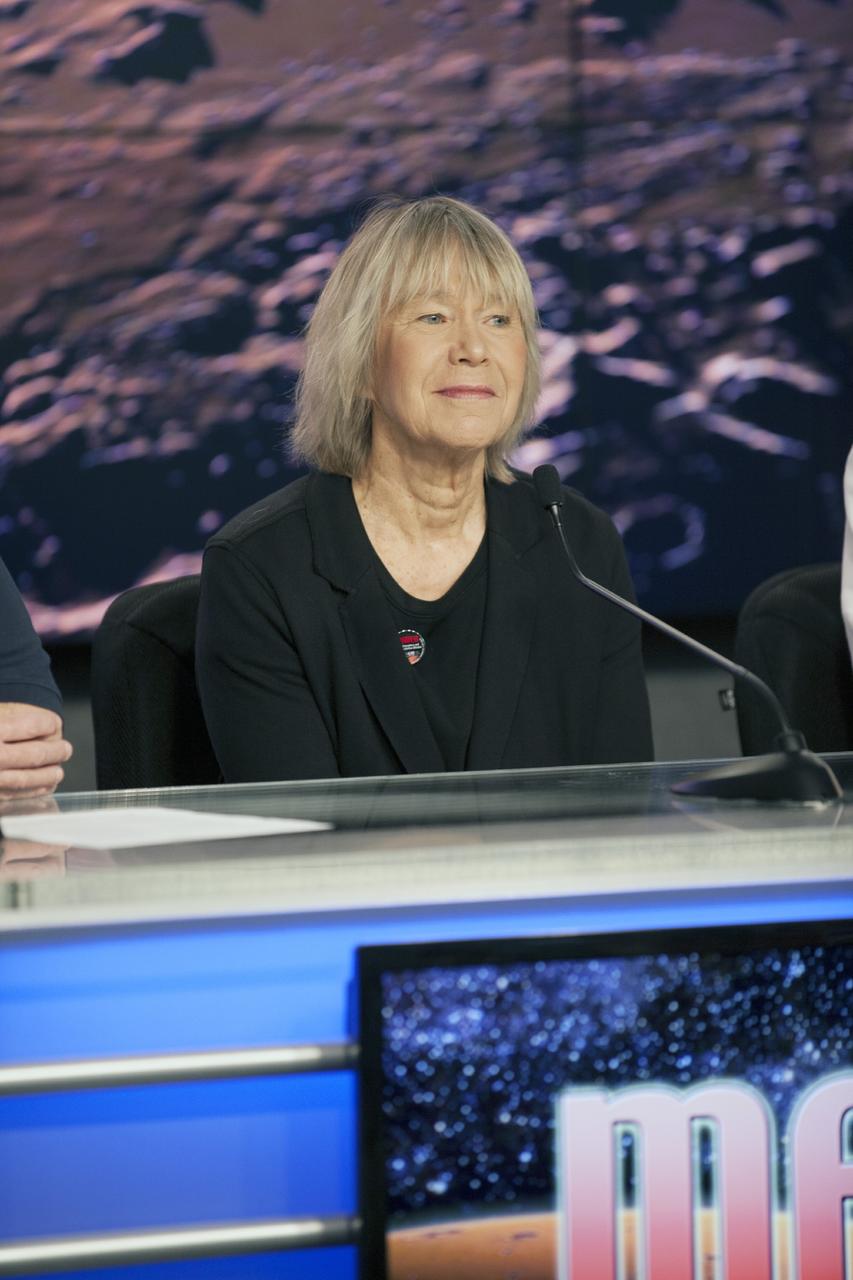
CAPE CANAVERAL, Fla. – During a news conference at NASA's Kennedy Space Center in Florida, NASA officials and university investigators outlined science plans for the Mars Atmosphere and Volatile EvolutioN, or MAVEN, mission. Briefing participants included Janet Luhmann, MAVEN deputy principal investigator from the University of California at Berkeley. MAVEN is being prepared for its scheduled launch on Nov 18, 2013 from Cape Canaveral Air Force Station, Fla. atop a United Launch Alliance Atlas V rocket. Positioned in an orbit above the Red Planet, MAVEN will study the upper atmosphere of Mars in unprecedented detail. For information on the MAVEN mission, visit: http://www.nasa.gov/mission_pages/maven/main/index.html. Photo credit: NASA/Kim Shiflett
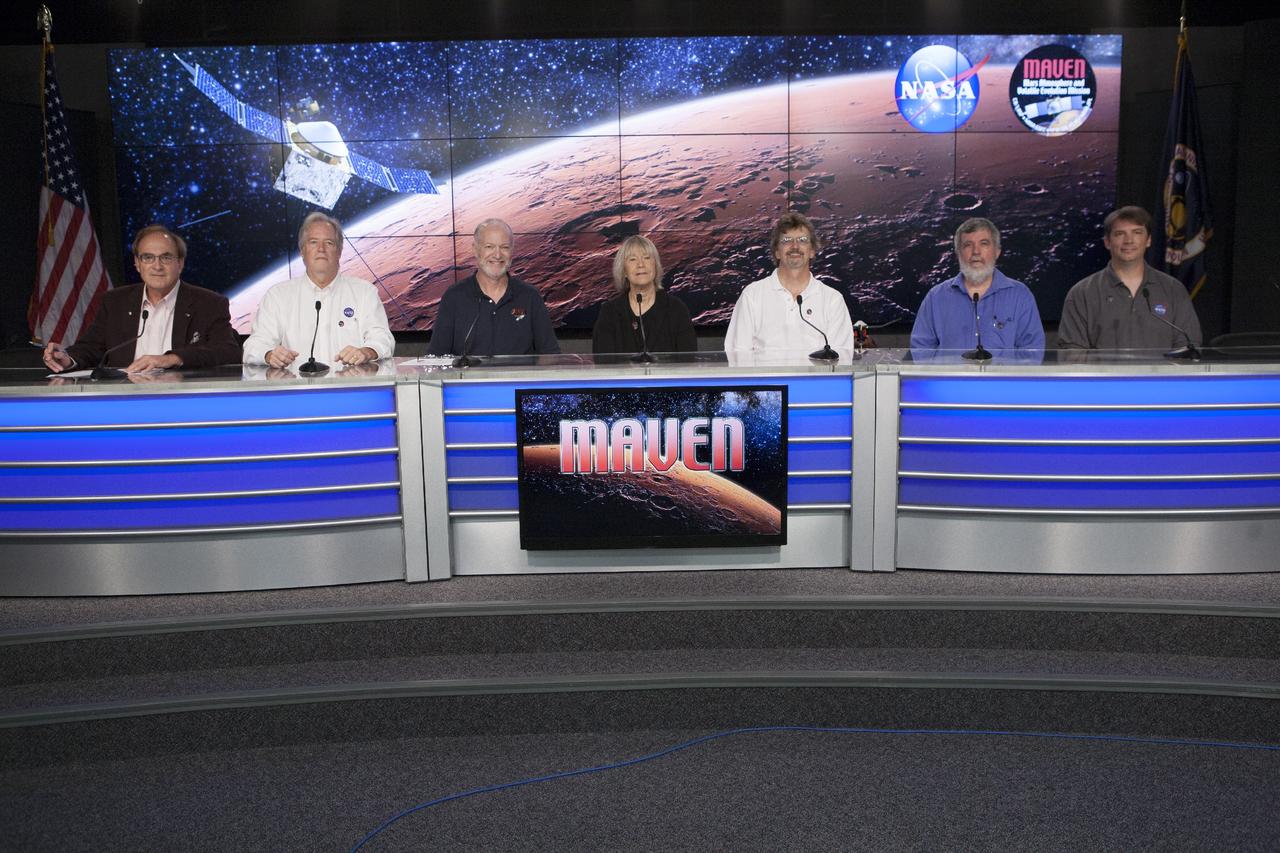
CAPE CANAVERAL, Fla. – During a news conference at NASA's Kennedy Space Center in Florida, NASA officials and university investigators outlined science plans for the Mars Atmosphere and Volatile EvolutioN, or MAVEN, mission. Participating in the briefing, from the left, are George Diller of NASA Public Affairs, Michael Meyer, lead Mars Scientist at NASA Headquarters, Bruce Jakosky, MAVEN principal investigator from the Laboratory for Atmospheric and Space Physics at the University of Colorado at Boulder, Janet Luhmann, MAVEN deputy principal investigator from the University of California at Berkeley, Nick Schneider, MAVEN Imaging Ultraviolet Spectrograph, or IUVS, instrument lead at the University of Colorado, Paul Mahaffy, MAVEN Neutral Gas and Ion Mass Spectrometer, or NGIMS, instrument lead at NASA's Goddard Space Flight Center in Greenbelt, Md., and David Mitchell, MAVEN Solar Wind Electron Analyzer, or SWEA, instrument lead at the University of California. MAVEN is being prepared for its scheduled launch on Nov 18, 2013 from Cape Canaveral Air Force Station, Fla. atop a United Launch Alliance Atlas V rocket. Positioned in an orbit above the Red Planet, MAVEN will study the upper atmosphere of Mars in unprecedented detail. For information on the MAVEN mission, visit: http://www.nasa.gov/mission_pages/maven/main/index.html. Photo credit: NASA/Kim Shiflett
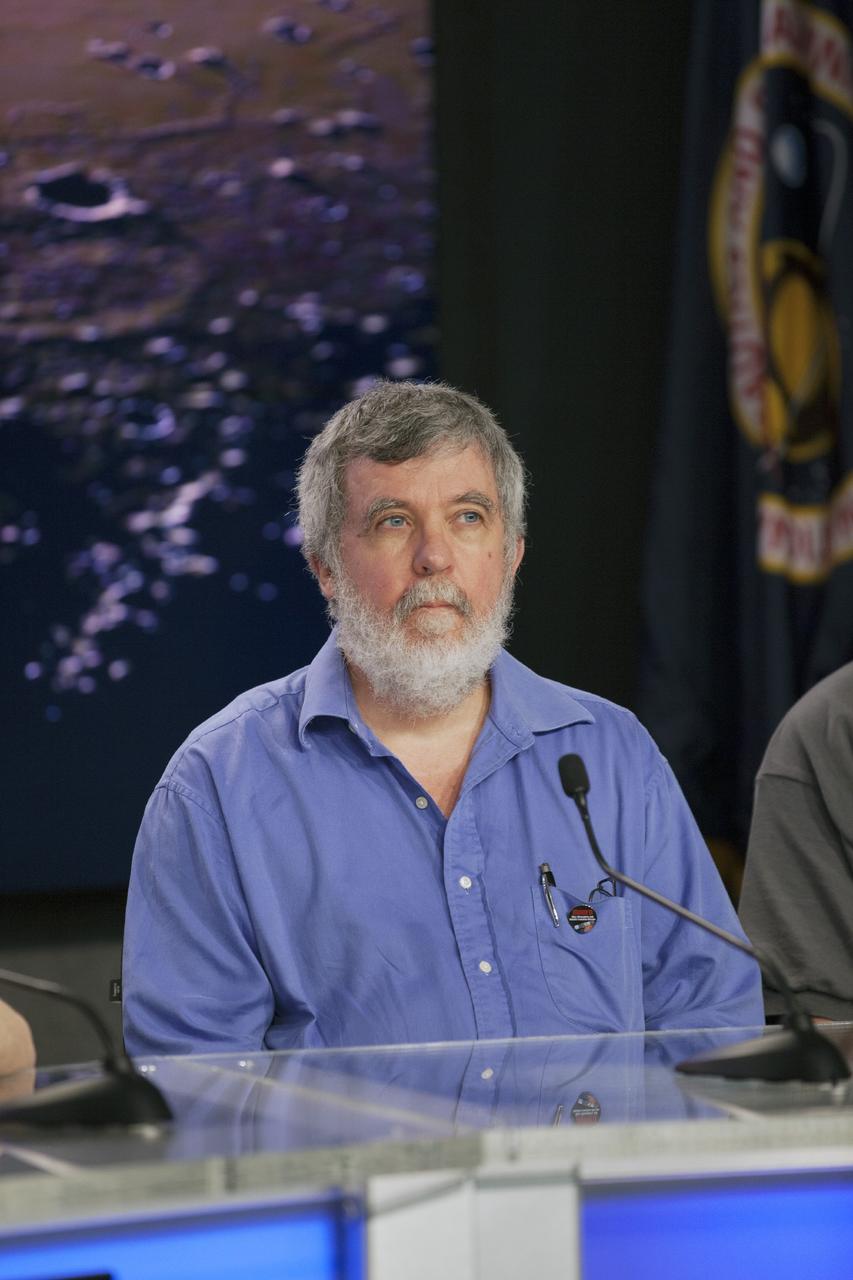
CAPE CANAVERAL, Fla. – During a news conference at NASA's Kennedy Space Center in Florida, NASA officials and university investigators outlined science plans for the Mars Atmosphere and Volatile EvolutioN, or MAVEN, mission. Briefing participants included Paul Mahaffy, MAVEN Neutral Gas and Ion Mass Spectrometer, or NGIMS, instrument lead at NASA's Goddard Space Flight Center in Greenbelt, Md. MAVEN is being prepared for its scheduled launch on Nov 18, 2013 from Cape Canaveral Air Force Station, Fla. atop a United Launch Alliance Atlas V rocket. Positioned in an orbit above the Red Planet, MAVEN will study the upper atmosphere of Mars in unprecedented detail. For information on the MAVEN mission, visit: http://www.nasa.gov/mission_pages/maven/main/index.html. Photo credit: NASA/Kim Shiflett
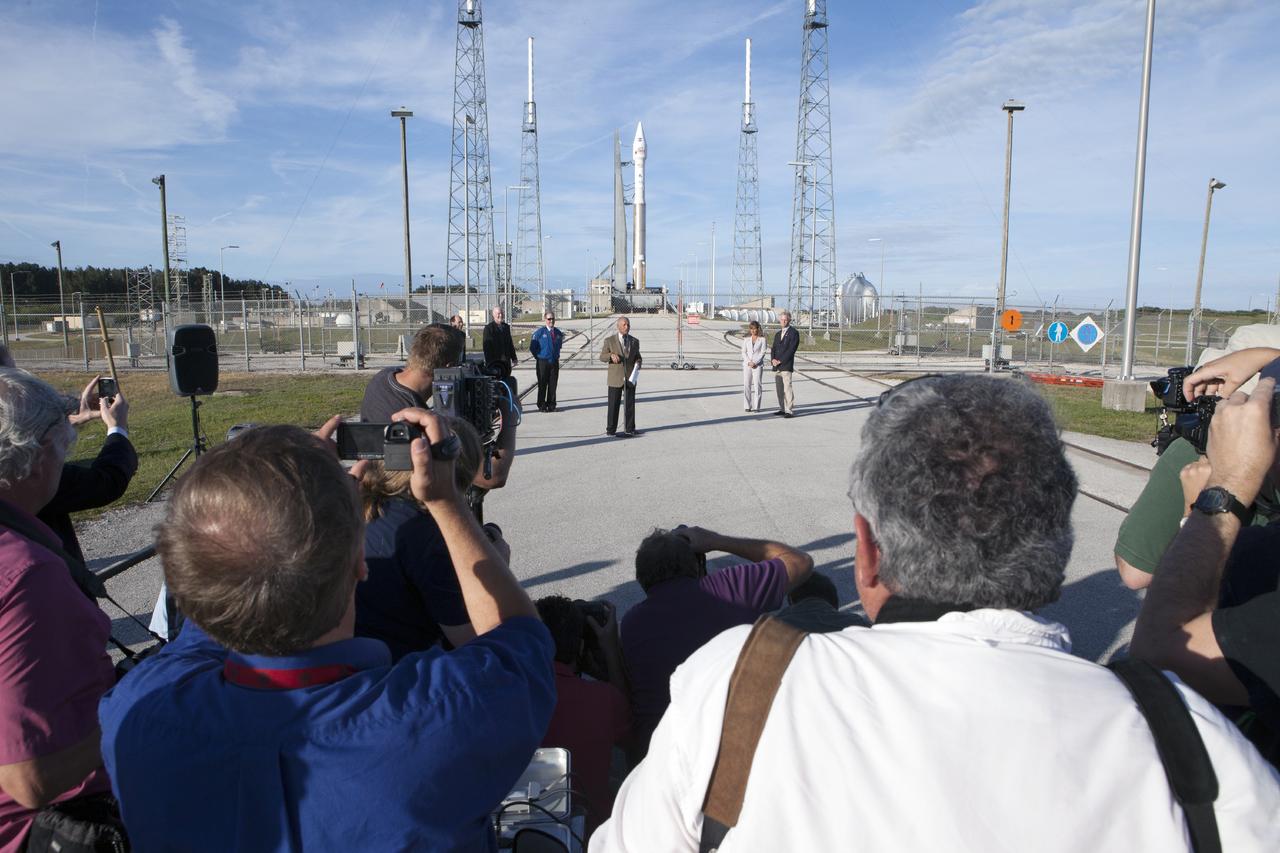
CAPE CANAVERAL, Fla. – At Cape Canaveral Air Force Station's Space Launch Compex-41, NASA Administrator Charles Bolden, at the microphone, along with other agency and contractor officials spoke to members of the news media about preparations for the Mars Atmosphere and Volatile EvolutioN, or MAVEN, mission. MAVEN is being prepared for its scheduled launch on Nov. 18, 2013 from Cape Canaveral Air Force Station, Fla. atop a United Launch Alliance Atlas V rocket. Positioned in an orbit above the Red Planet, MAVEN will study the upper atmosphere of Mars in unprecedented detail. For more information, visit: http://www.nasa.gov/mission_pages/maven/main/index.html Photo credit: NASA/Kim Shiflett
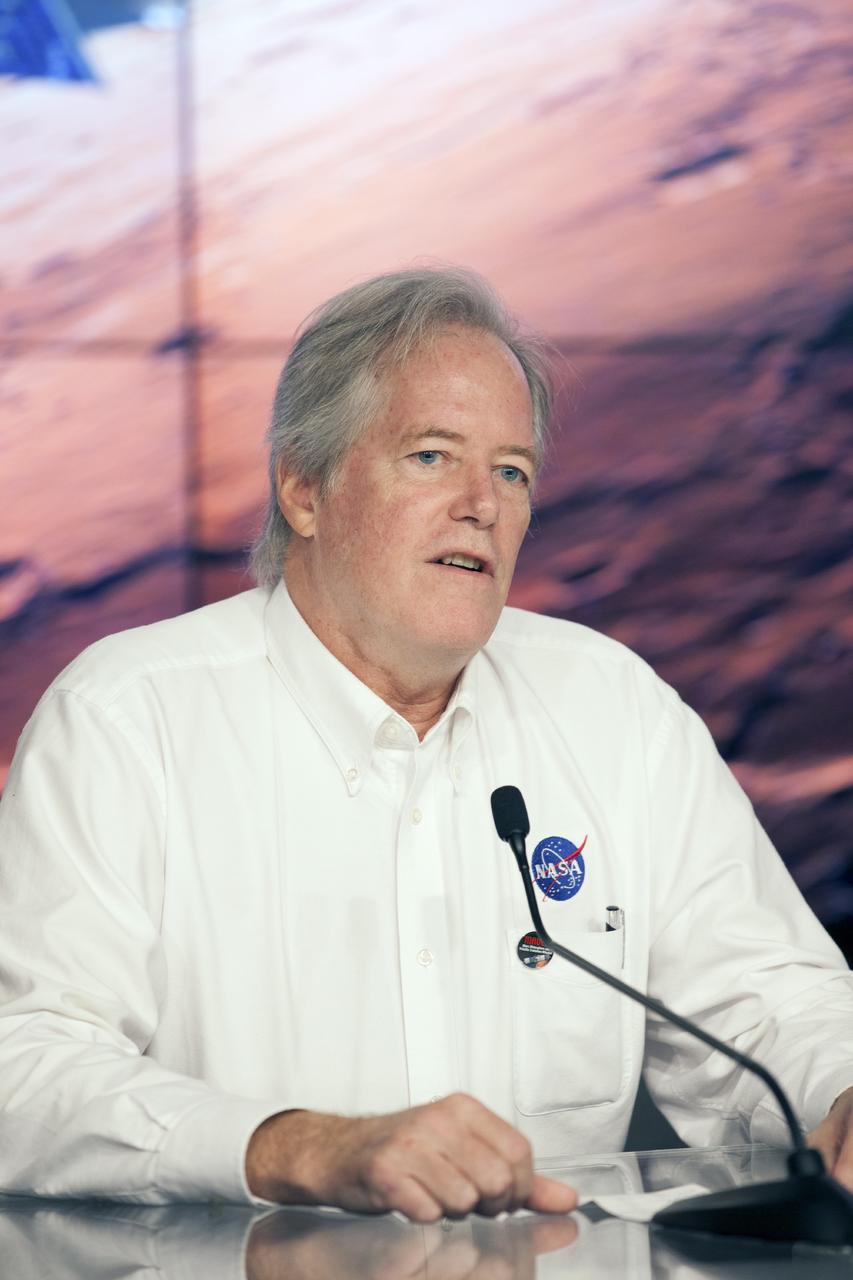
CAPE CANAVERAL, Fla. – During a news conference at NASA's Kennedy Space Center in Florida, NASA officials and university investigators outlined science plans for the Mars Atmosphere and Volatile EvolutioN, or MAVEN, mission. Briefing participants included Michael Meyer, lead Mars Scientist at NASA Headquarters. MAVEN is being prepared for its scheduled launch on Nov 18, 2013 from Cape Canaveral Air Force Station, Fla. atop a United Launch Alliance Atlas V rocket. Positioned in an orbit above the Red Planet, MAVEN will study the upper atmosphere of Mars in unprecedented detail. For information on the MAVEN mission, visit: http://www.nasa.gov/mission_pages/maven/main/index.html. Photo credit: NASA/Kim Shiflett
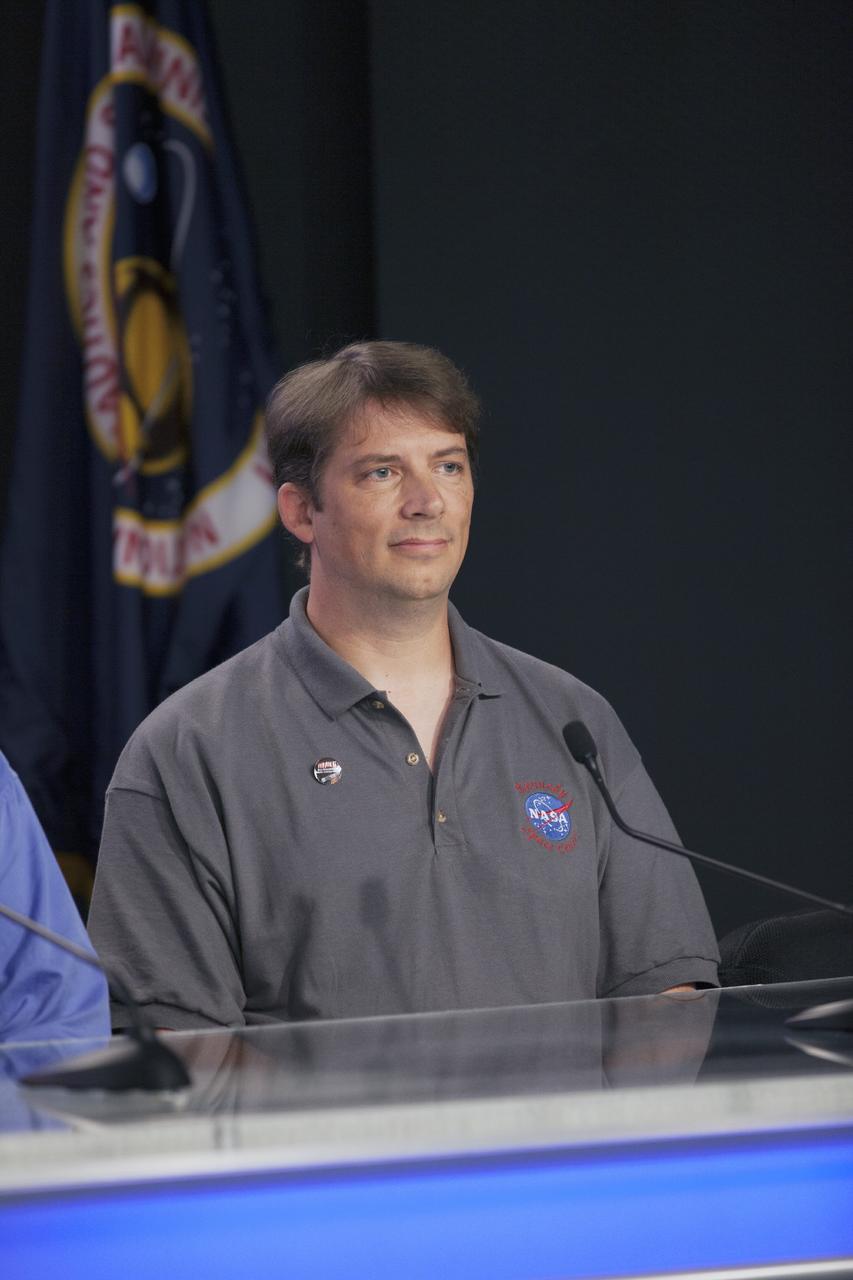
CAPE CANAVERAL, Fla. – During a news conference at NASA's Kennedy Space Center in Florida, NASA officials and university investigators outlined science plans for the Mars Atmosphere and Volatile EvolutioN, or MAVEN, mission. Briefing participants included David Mitchell, MAVEN Solar Wind Electron Analyzer, or SWEA, instrument lead at the University of California at Berkeley. MAVEN is being prepared for its scheduled launch on Nov 18, 2013 from Cape Canaveral Air Force Station, Fla. atop a United Launch Alliance Atlas V rocket. Positioned in an orbit above the Red Planet, MAVEN will study the upper atmosphere of Mars in unprecedented detail. For information on the MAVEN mission, visit: http://www.nasa.gov/mission_pages/maven/main/index.html. Photo credit: NASA/Kim Shiflett
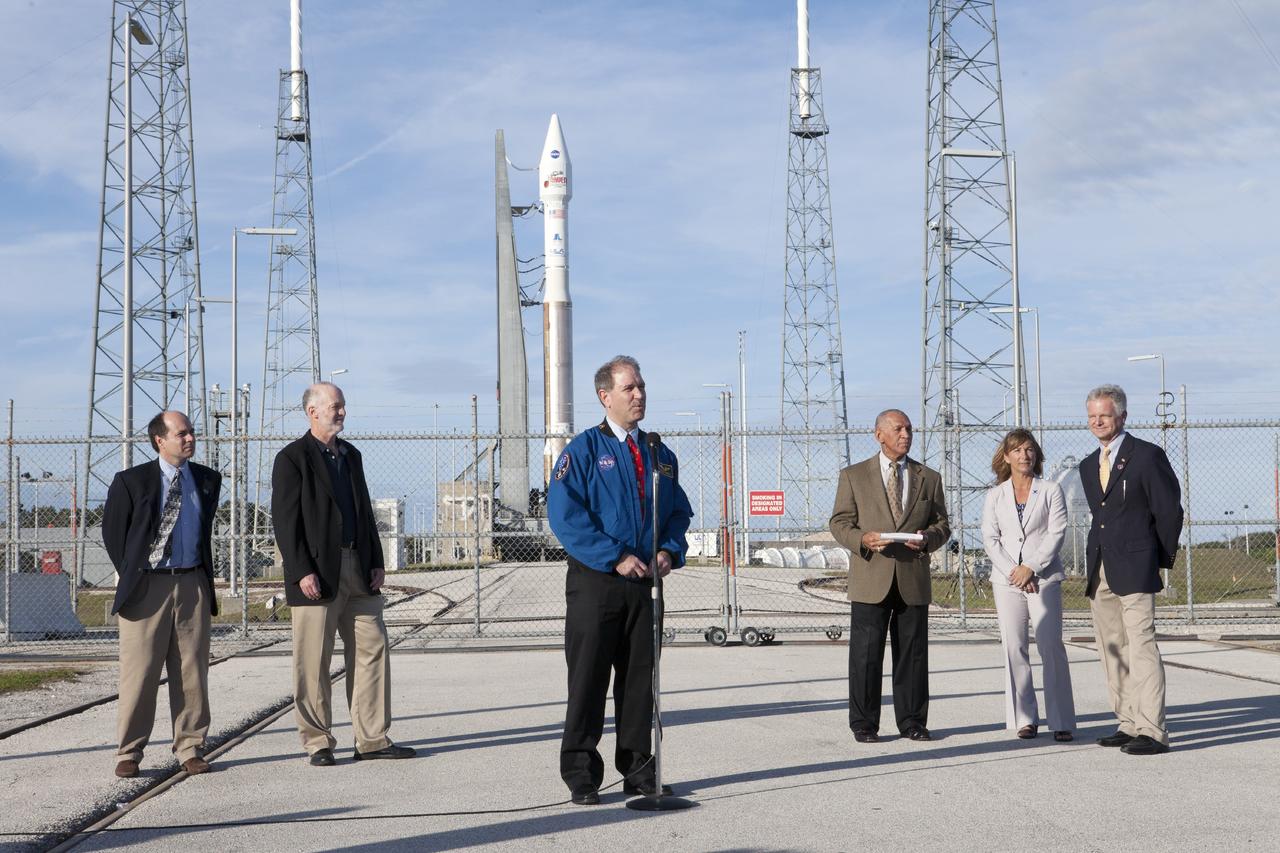
CAPE CANAVERAL, Fla. – At Cape Canaveral Air Force Station's Space Launch Compex-41, John Grunsfeld, NASA associate administrator for the Science Mission Directorate along with other agency and contractor officials spoke to members of the news media about preparations for the Mars Atmosphere and Volatile EvolutioN, or MAVEN, mission. Standing behind him are, from the left, David Mitchell, NASA's MAVEN project manager at the Goddard Space Flight Center, Greenbelt, Md., Bruce Jakosky, MAVEN principal investigator from the Laboratory for Atmospheric and Space Physics at the University of Colorado at Boulder, NASA Administrator Charles Bolden, Amanda Mitskevich, NASA Launch Services Program manager, and Jim Sponnick, vice president of Atlas and Delta Programs for United Launch Alliance. MAVEN is being prepared for its scheduled launch on Nov. 18, 2013 from Cape Canaveral Air Force Station, Fla. atop a United Launch Alliance Atlas V rocket. Positioned in an orbit above the Red Planet, MAVEN will study the upper atmosphere of Mars in unprecedented detail. For more information, visit: http://www.nasa.gov/mission_pages/maven/main/index.html Photo credit: NASA/Kim Shiflett
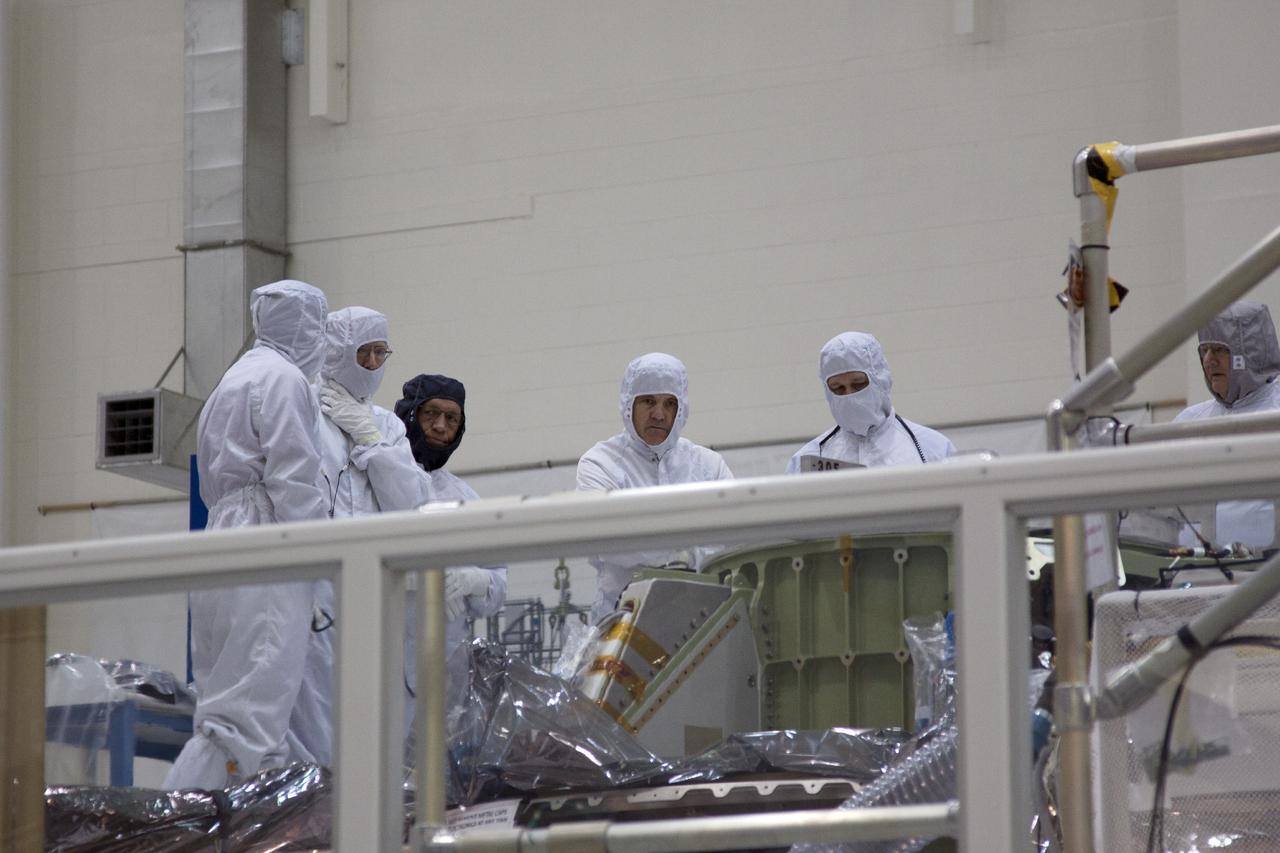
CAPE CANAVERAL, Fla. – Inside the Operations and Checkout Building high bay at NASA’s Kennedy Space Center in Florida, agency Administrator Charles Bolden, third from the left, and center Director Bob Cabana, fourth from the left, inspect the Orion spacecraft crew module for its first unpiloted launch, Exploration Test Flight 1. Orion is the exploration spacecraft designed to carry crews to space beyond low Earth orbit. It will provide emergency abort capability, sustain the crew during the space travel and provide safe re-entry from deep space return velocities. Orion’s first unpiloted test launch is scheduled for liftoff during 2014 atop a Delta IV rocket. A second unpiloted flight test is scheduled for 2017 on NASA’s Space Launch System rocket. For more information, visit http://www.nasa.gov/orion Photo credit: NASA/Jim Grossman
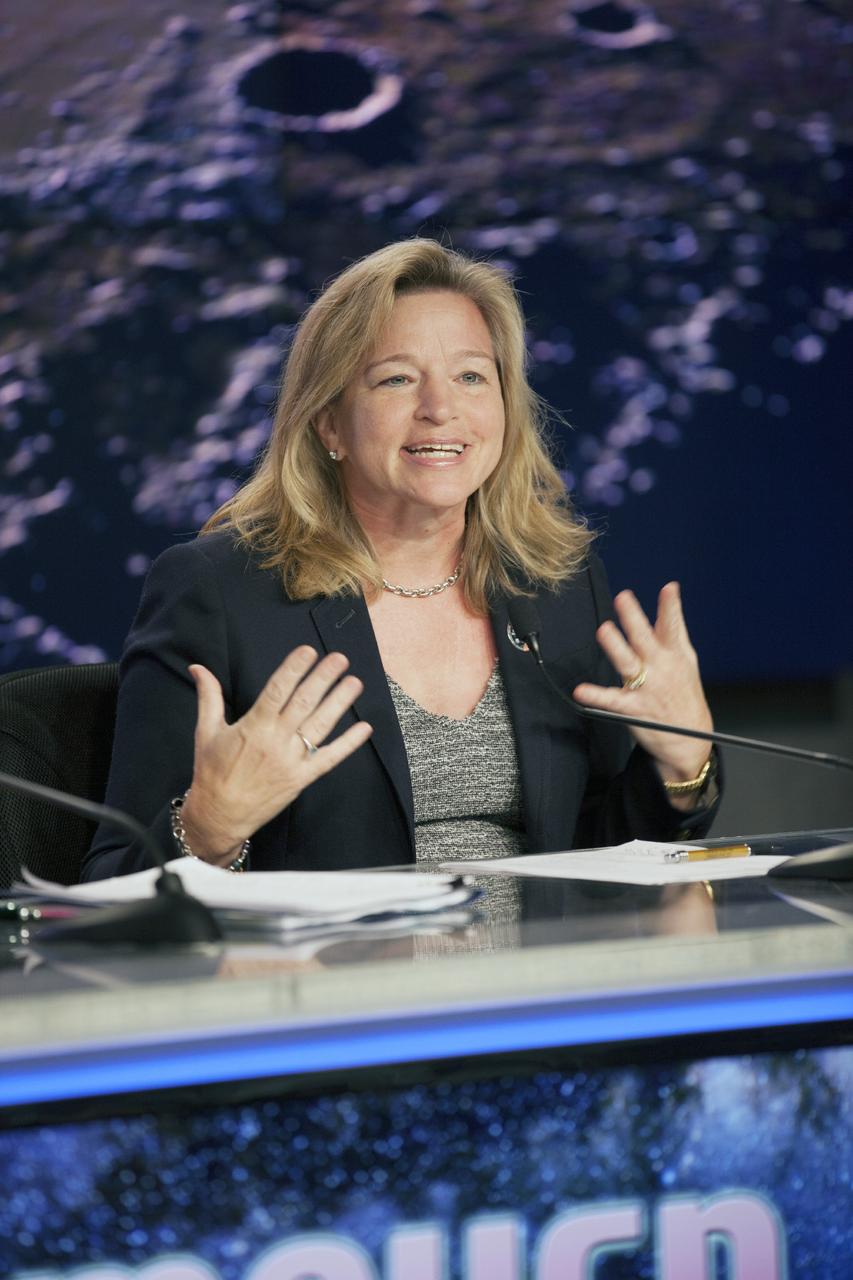
CAPE CANAVERAL, Fla. – During a news conference at NASA's Kennedy Space Center in Florida, officials outlined the agency’s plans for future human spaceflight, including an expedition to Mars. Participating in the briefing was Ellen Stofan, NASA chief scientist. The briefing took place the day prior to launch of the Mars Atmosphere and Volatile EvolutioN, or MAVEN, mission. MAVEN is being prepared for its scheduled launch on Nov 18, 2013 from Cape Canaveral Air Force Station, Fla. atop a United Launch Alliance Atlas V rocket. Positioned in an orbit above the Red Planet, MAVEN will study the upper atmosphere of Mars in unprecedented detail. For information on the MAVEN mission, visit: http://www.nasa.gov/mission_pages/maven/main/index.html. For more on NASA Human Spaceflight, visit: http://www.spaceflight.nasa.gov/home/index.html. For information on the international Space Station, visit: http://www.nasa.gov/mission_pages/station/main/index.html Photo credit: NASA/Kim Shiflett
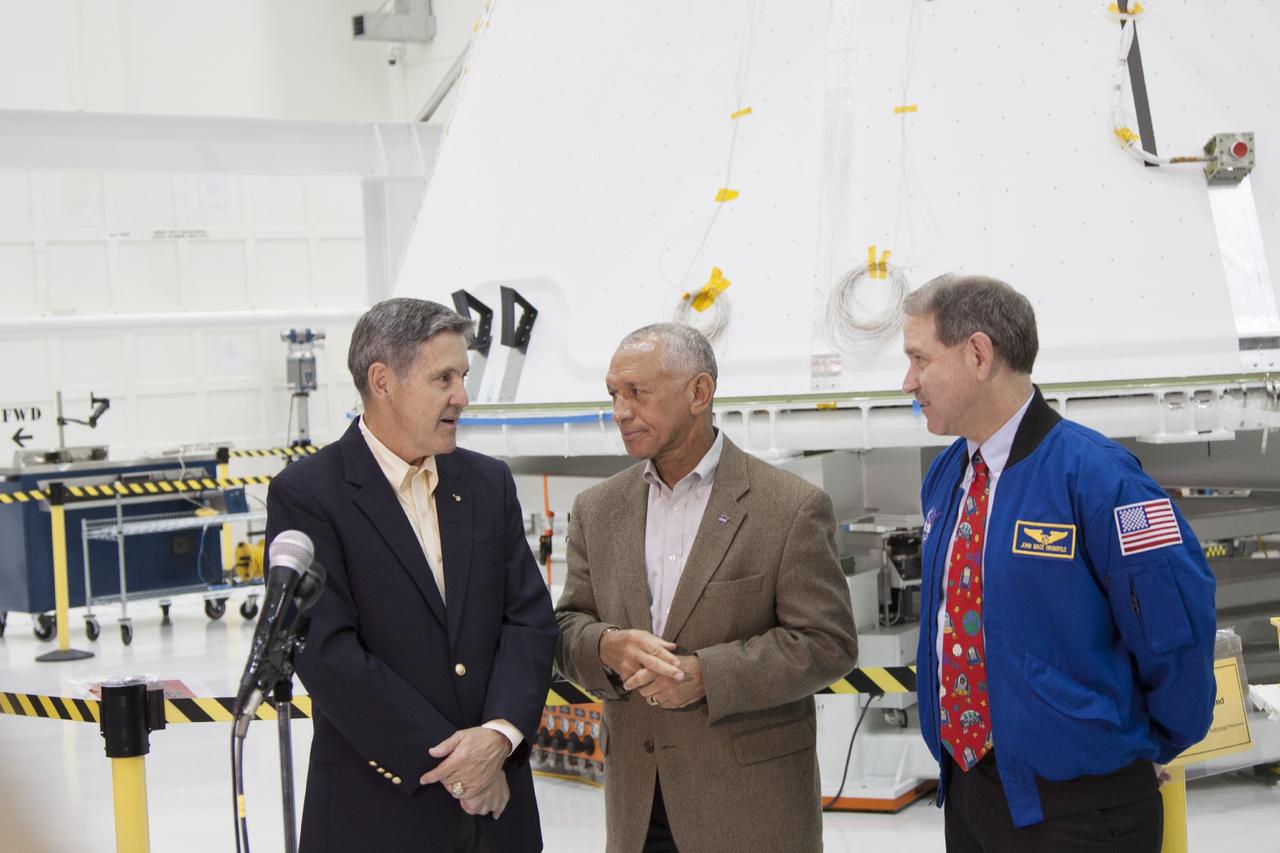
CAPE CANAVERAL, Fla. – Inside the Operations and Checkout Building high bay at NASA’s Kennedy Space Center in Florida, center Director Bob Cabana, left, and agency Administrator Charles Bolden, center, discuss preparations of the Orion spacecraft with John Grunsfeld, NASA associate administrator for the Science Mission Directorate. Orion is the exploration spacecraft designed to carry crews to space beyond low Earth orbit. It will provide emergency abort capability, sustain the crew during the space travel and provide safe re-entry from deep space return velocities. Orion’s first unpiloted test launch is scheduled for liftoff during 2014 atop a Delta IV rocket. A second unpiloted flight test is scheduled for 2017 on NASA’s Space Launch System rocket. For more information, visit http://www.nasa.gov/orion Photo credit: NASA/Jim Grossman
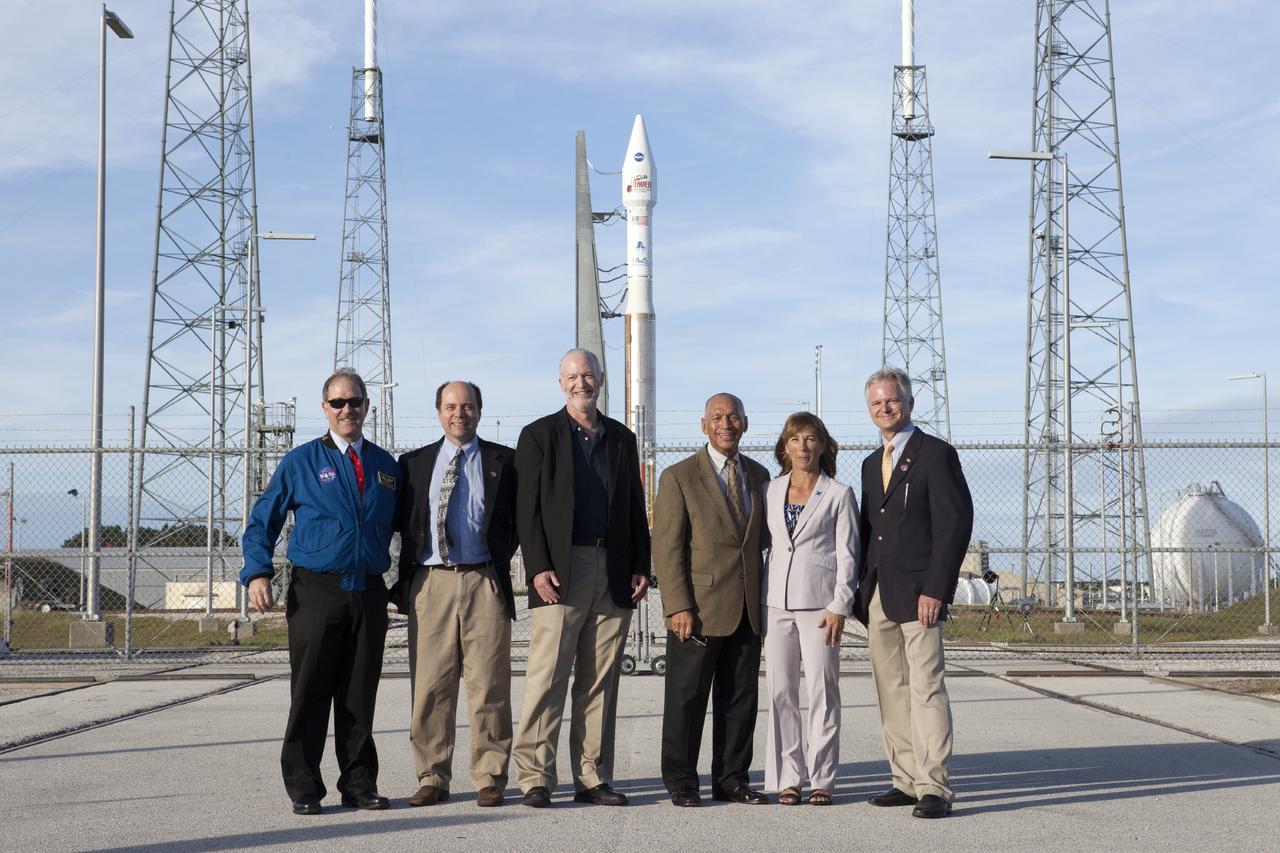
CAPE CANAVERAL, Fla. – At Cape Canaveral Air Force Station's Space Launch Compex-41, an Atlas V rocket is poised to launch the Mars Atmosphere and Volatile EvolutioN, or MAVEN, spacecraft on a 10-month trip to the Red Planet. Agency and contractor officials spoke to members of the news media about preparations. They are, from the left, John Grunsfeld, NASA associate administrator for the Science Mission Directorate, David Mitchell, NASA's MAVEN project manager at the Goddard Space Flight Center, Greenbelt, Md., Bruce Jakosky, MAVEN principal investigator from the Laboratory for Atmospheric and Space Physics at the University of Colorado at Boulder, NASA Administrator Charles Bolden, Amanda Mitskevich, NASA Launch Services Program manager, and Jim Sponnick, vice president of Atlas and Delta Programs for United Launch Alliance. MAVEN is being prepared for its scheduled launch on Nov. 18, 2013 from Cape Canaveral Air Force Station, Fla. atop a United Launch Alliance Atlas V rocket. Positioned in an orbit above the Red Planet, MAVEN will study the upper atmosphere of Mars in unprecedented detail. For more information, visit: http://www.nasa.gov/mission_pages/maven/main/index.html Photo credit: NASA/Kim Shiflett
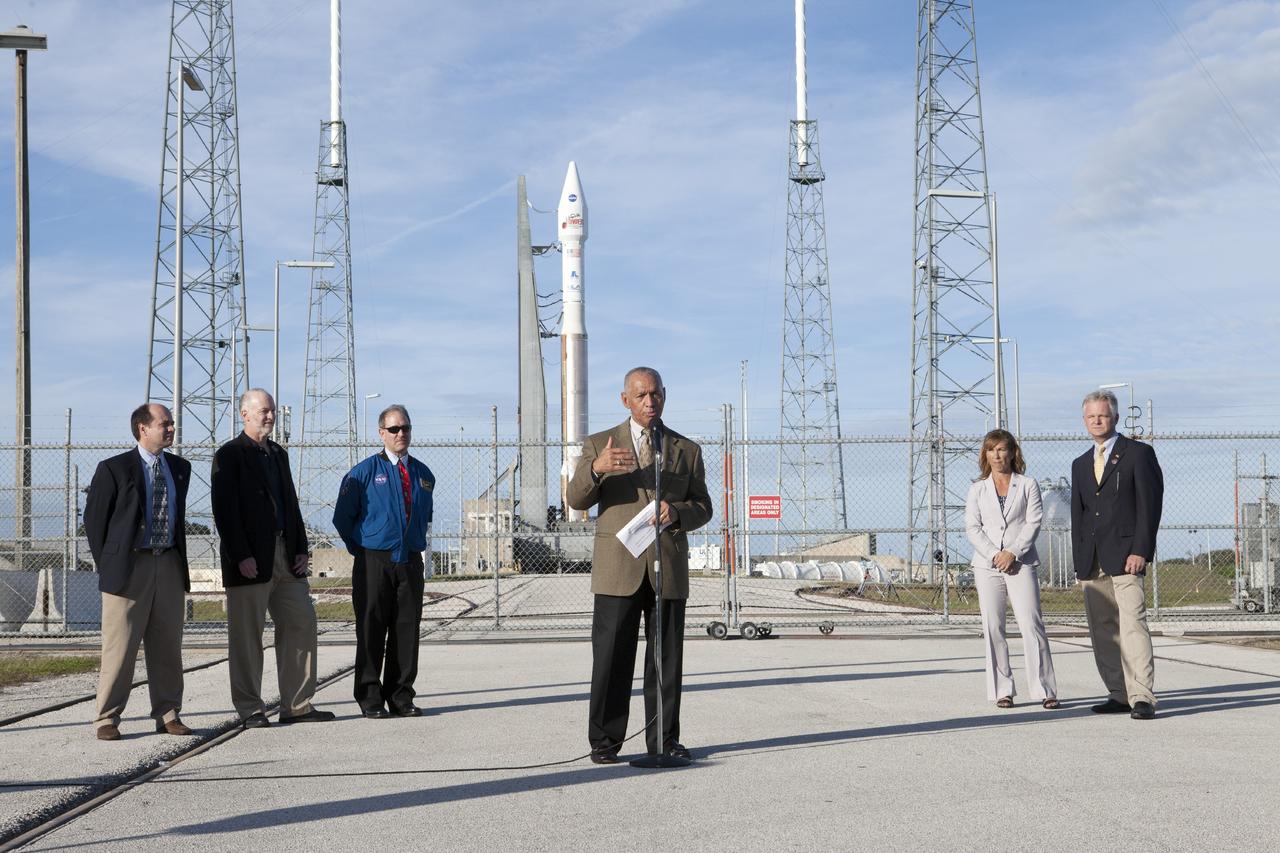
CAPE CANAVERAL, Fla. – At Cape Canaveral Air Force Station's Space Launch Compex-41, NASA Administrator Charles Bolden, along with other agency and contractor officials spoke to members of the news media about preparations for the Mars Atmosphere and Volatile EvolutioN, or MAVEN, mission. Standing behind him are, from the left, David Mitchell, NASA's MAVEN project manager at the Goddard Space Flight Center, Greenbelt, Md., Bruce Jakosky, MAVEN principal investigator from the Laboratory for Atmospheric and Space Physics at the University of Colorado at Boulder, John Grunsfeld, NASA associate administrator for the Science Mission Directorate, Amanda Mitskevich, NASA Launch Services Program manager, and Jim Sponnick, vice president of Atlas and Delta Programs for United Launch Alliance. MAVEN is being prepared for its scheduled launch on Nov. 18, 2013 from Cape Canaveral Air Force Station, Fla. atop a United Launch Alliance Atlas V rocket. Positioned in an orbit above the Red Planet, MAVEN will study the upper atmosphere of Mars in unprecedented detail. For more information, visit: http://www.nasa.gov/mission_pages/maven/main/index.html Photo credit: NASA/Kim Shiflett
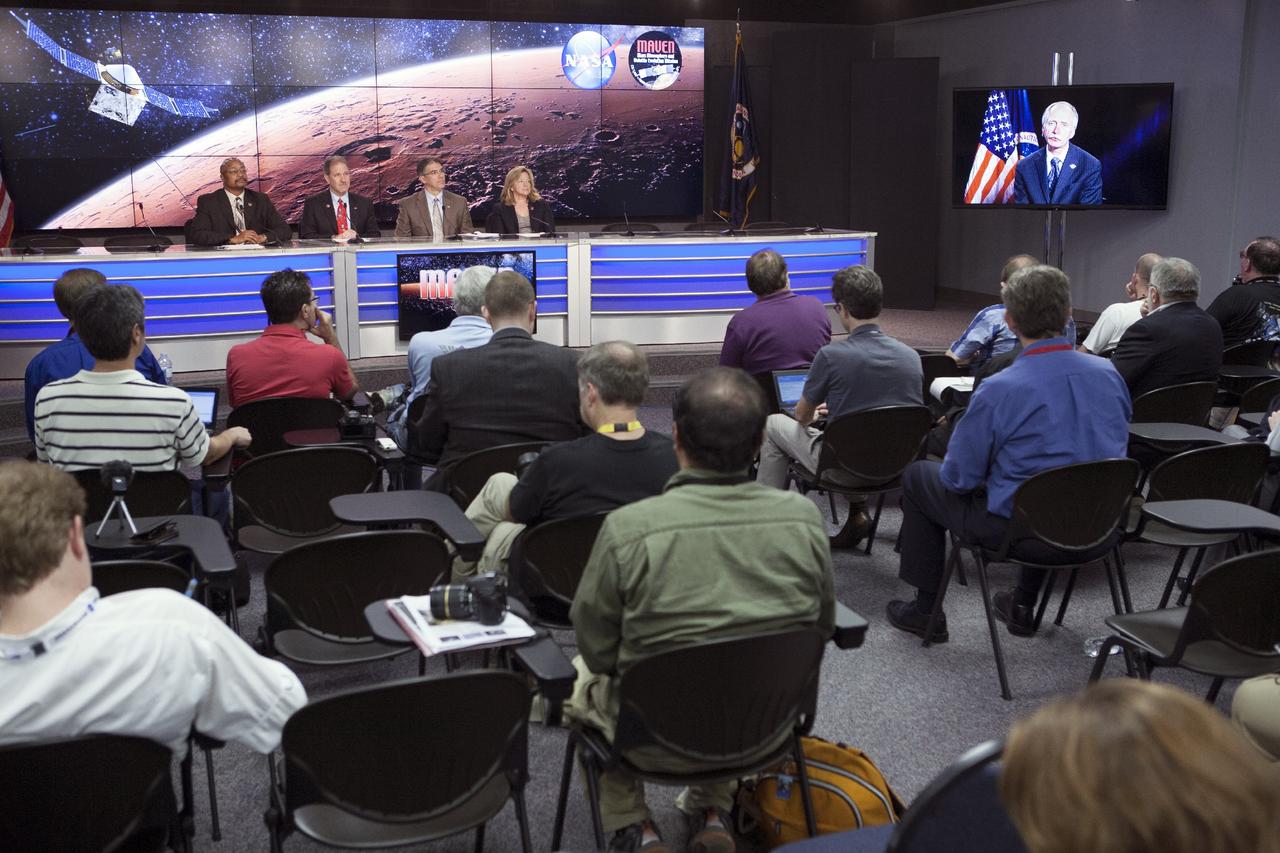
CAPE CANAVERAL, Fla. – During a news conference at NASA's Kennedy Space Center in Florida, officials outlined the agency’s plans for future human spaceflight, including an expedition to Mars. Participating in the briefing, from the left are, Dwayne Brown, NASA Public Affairs, John Grunsfeld, NASA associate administrator for the Science Mission Directorate, Michael Gazarik, associate administrator for the Space Technology Mission Directorate and Ellen Stofan, NASA chief scientist. William Gerstenmaier, associate administrator for Human Exploration and Operations participated via television from NASA Headquarters. The briefing took place the day prior to launch of the Mars Atmosphere and Volatile EvolutioN, or MAVEN, mission. MAVEN is being prepared for its scheduled launch on Nov 18, 2013 from Cape Canaveral Air Force Station, Fla. atop a United Launch Alliance Atlas V rocket. Positioned in an orbit above the Red Planet, MAVEN will study the upper atmosphere of Mars in unprecedented detail. For information on the MAVEN mission, visit: http://www.nasa.gov/mission_pages/maven/main/index.html. For more on NASA Human Spaceflight, visit: http://www.spaceflight.nasa.gov/home/index.html. For information on the international Space Station, visit: http://www.nasa.gov/mission_pages/station/main/index.html Photo credit: NASA/Kim Shiflett
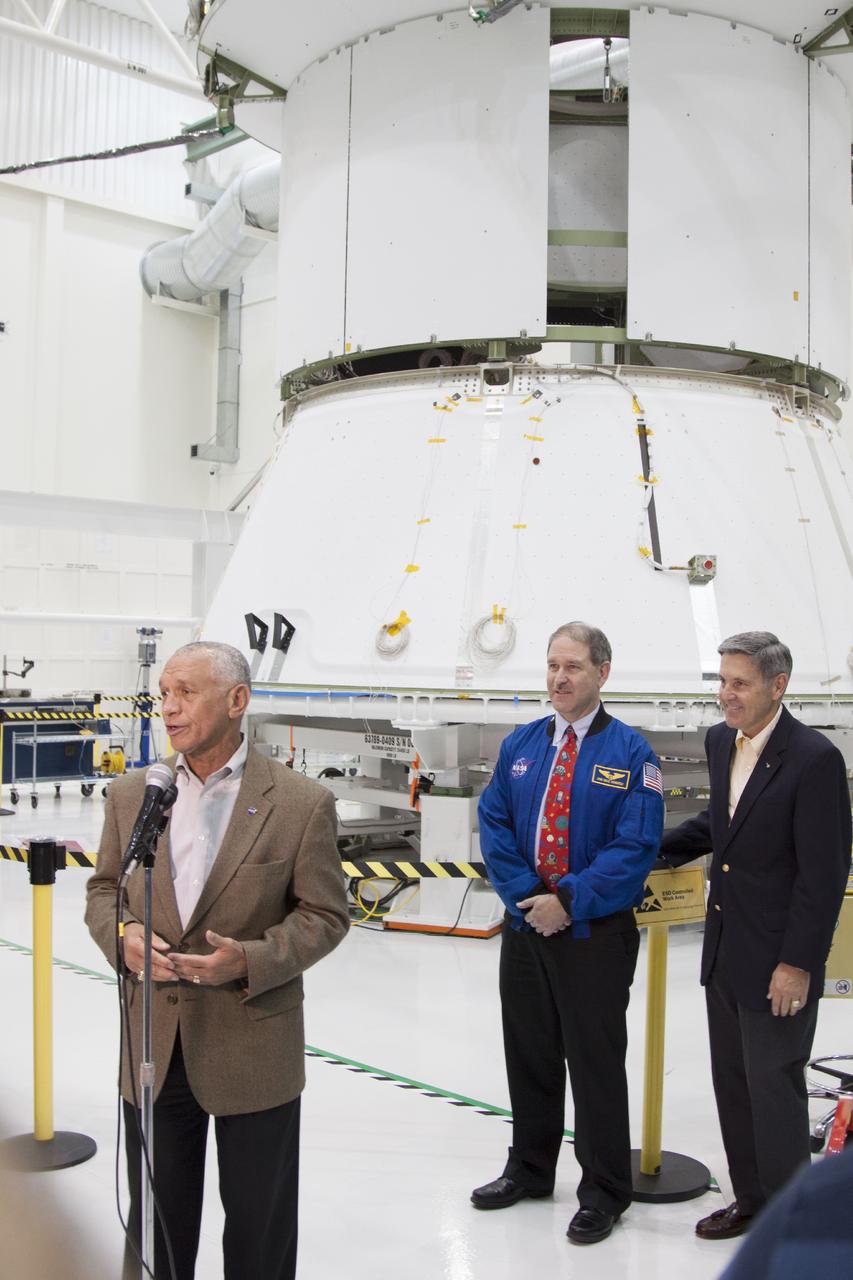
CAPE CANAVERAL, Fla. – Inside the Operations and Checkout Building high bay at NASA’s Kennedy Space Center in Florida, agency Administrator Charles Bolden speaks to members of the news media about ongoing preparations of the Orion spacecraft for its first unpiloted launch, Exploration Test Flight 1. Standing behind Bolden are John Grunsfeld, NASA associate administrator for the Science Mission Directorate, left and center Director Bob Cabana. Orion is the exploration spacecraft designed to carry crews to space beyond low Earth orbit. It will provide emergency abort capability, sustain the crew during the space travel and provide safe re-entry from deep space return velocities. Orion’s first unpiloted test launch is scheduled for liftoff during 2014 atop a Delta IV rocket. A second unpiloted flight test is scheduled for 2017 on NASA’s Space Launch System rocket. For more information, visit http://www.nasa.gov/orion Photo credit: NASA/Jim Grossman
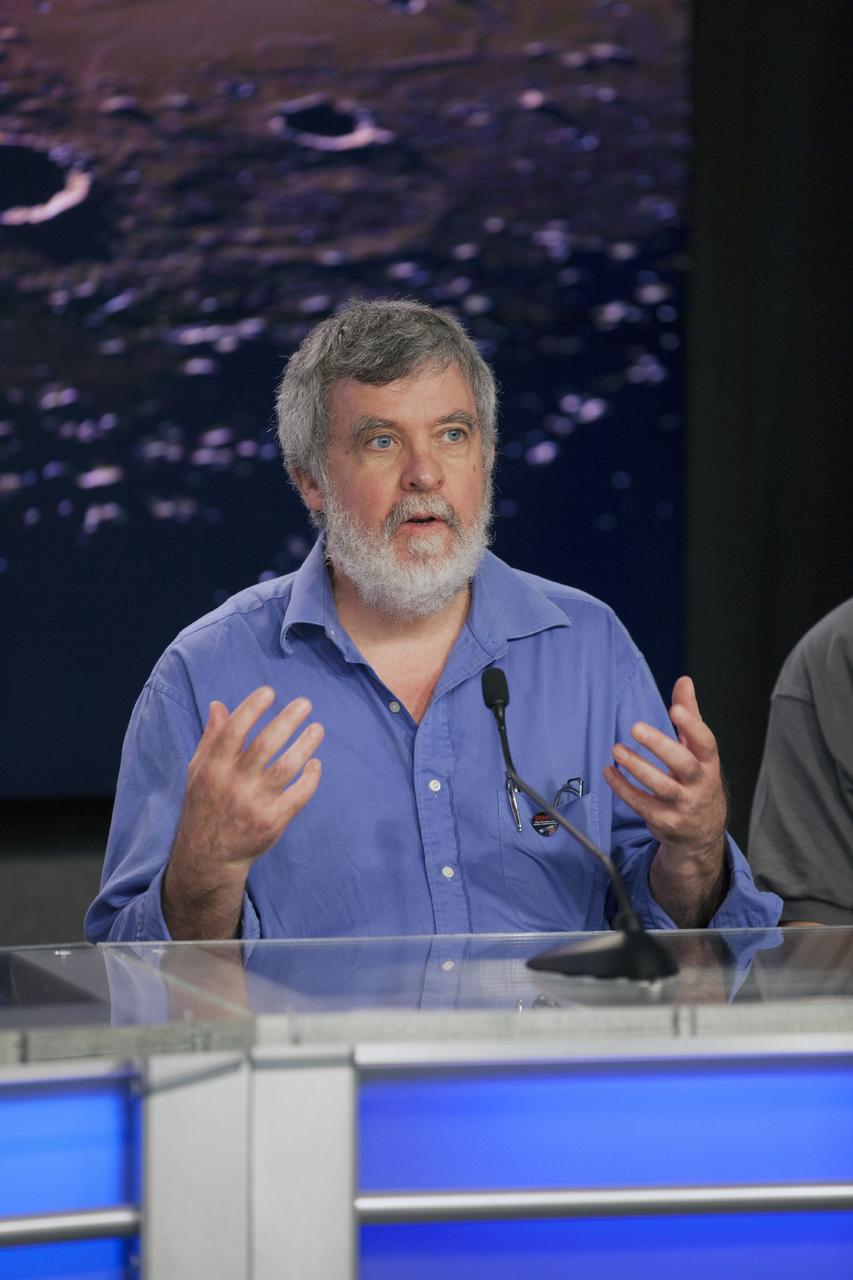
CAPE CANAVERAL, Fla. – During a news conference at NASA's Kennedy Space Center in Florida, NASA officials and university investigators outlined science plans for the Mars Atmosphere and Volatile EvolutioN, or MAVEN, mission. Briefing participants included David Mitchell, MAVEN Solar Wind Electron Analyzer, or SWEA, instrument lead at the University of California at Berkeley. MAVEN is being prepared for its scheduled launch on Nov 18, 2013 from Cape Canaveral Air Force Station, Fla. atop a United Launch Alliance Atlas V rocket. Positioned in an orbit above the Red Planet, MAVEN will study the upper atmosphere of Mars in unprecedented detail. For information on the MAVEN mission, visit: http://www.nasa.gov/mission_pages/maven/main/index.html. Photo credit: NASA/Kim Shiflett
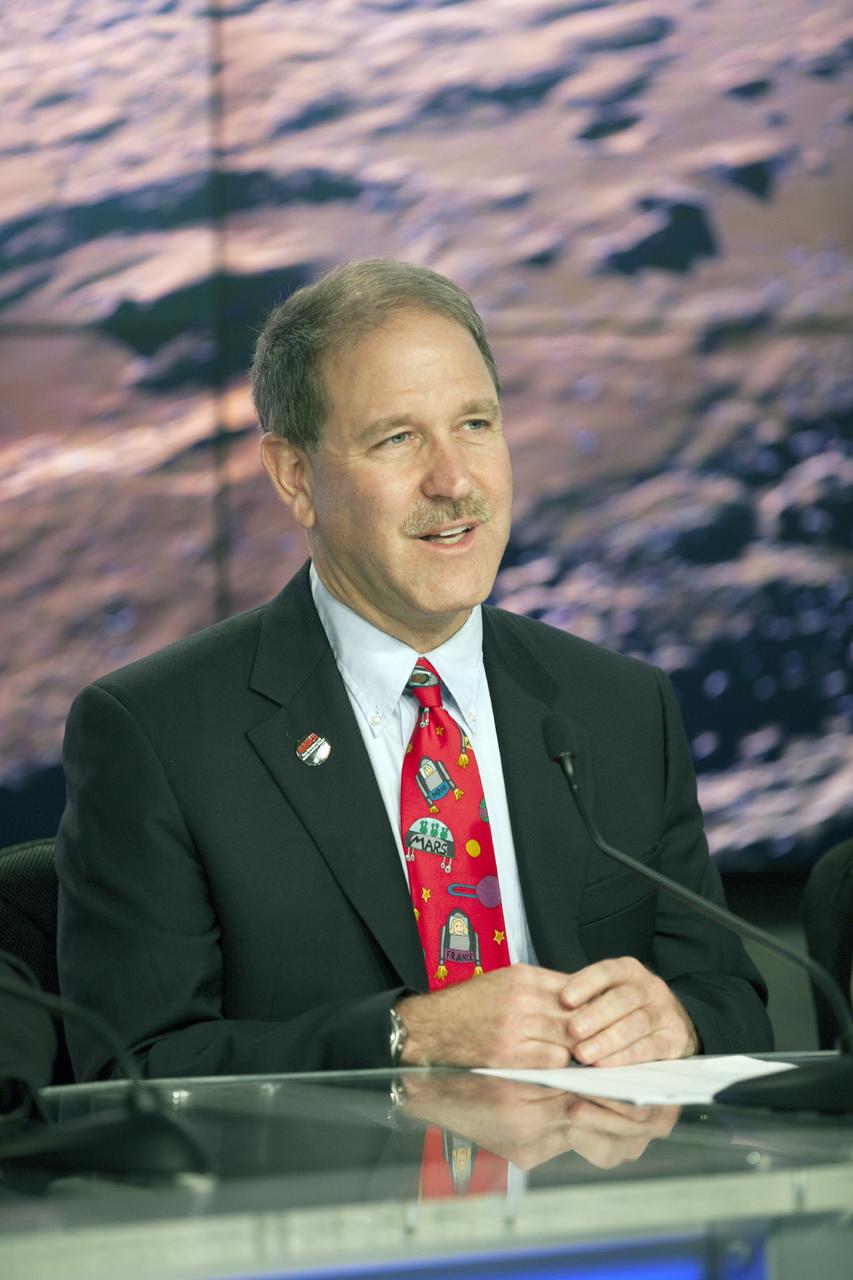
CAPE CANAVERAL, Fla. – During a news conference at NASA's Kennedy Space Center in Florida, officials outlined the agency’s plans for future human spaceflight, including and expedition to Mars. Participating in the briefing was John Grunsfeld, NASA associate administrator for the Science Mission Directorate. The briefing took place the day prior to launch of the Mars Atmosphere and Volatile EvolutioN, or MAVEN, mission. MAVEN is being prepared for its scheduled launch on Nov 18, 2013 from Cape Canaveral Air Force Station, Fla. atop a United Launch Alliance Atlas V rocket. Positioned in an orbit above the Red Planet, MAVEN will study the upper atmosphere of Mars in unprecedented detail. For information on the MAVEN mission, visit: http://www.nasa.gov/mission_pages/maven/main/index.html. For more on NASA Human Spaceflight, visit: http://www.spaceflight.nasa.gov/home/index.html. For information on the international Space Station, visit: http://www.nasa.gov/mission_pages/station/main/index.html Photo credit: NASA/Kim Shiflett
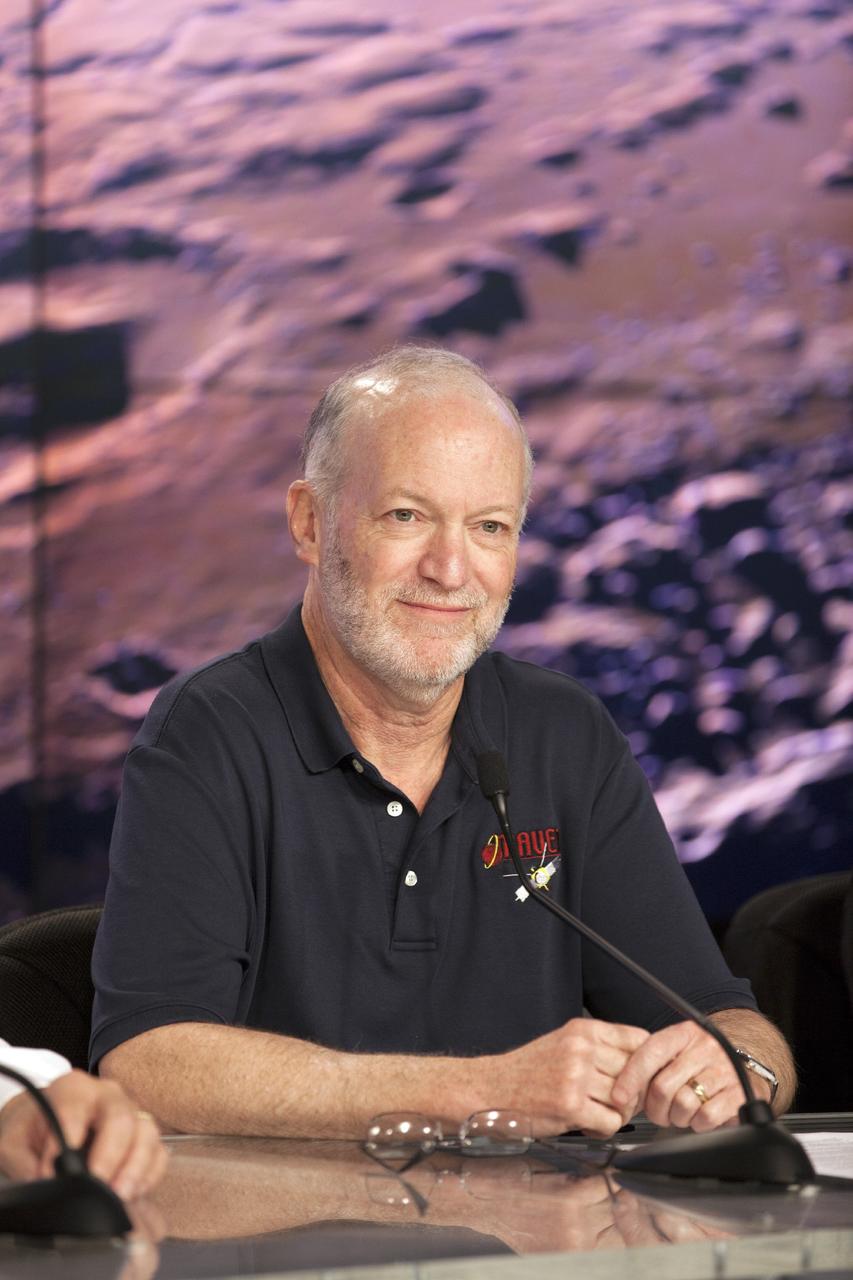
CAPE CANAVERAL, Fla. – During a news conference at NASA's Kennedy Space Center in Florida, NASA officials and university investigators outlined science plans for the Mars Atmosphere and Volatile EvolutioN, or MAVEN, mission. Briefing participants included Bruce Jakosky, MAVEN principal investigator from the Laboratory for Atmospheric and Space Physics at the University of Colorado at Boulder. MAVEN is being prepared for its scheduled launch on Nov 18, 2013 from Cape Canaveral Air Force Station, Fla. atop a United Launch Alliance Atlas V rocket. Positioned in an orbit above the Red Planet, MAVEN will study the upper atmosphere of Mars in unprecedented detail. For information on the MAVEN mission, visit: http://www.nasa.gov/mission_pages/maven/main/index.html. Photo credit: NASA/Kim Shiflett
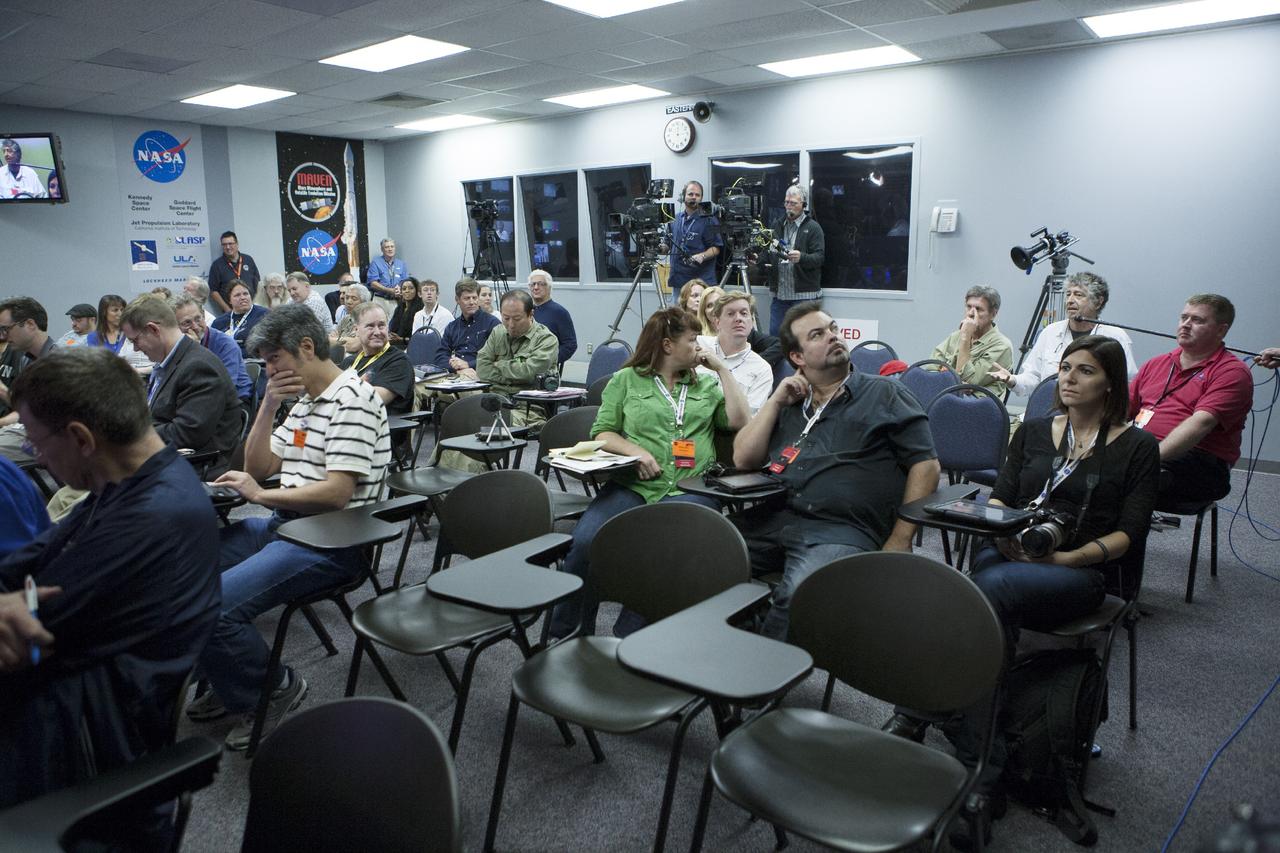
CAPE CANAVERAL, Fla. – Members of the news media ask questions during a news conference at NASA's Kennedy Space Center in Florida. Officials outlined the agency’s plans for future human spaceflight, including an expedition to Mars. The briefing took place the day prior to launch of the Mars Atmosphere and Volatile EvolutioN, or MAVEN, mission. MAVEN is being prepared for its scheduled launch on Nov 18, 2013 from Cape Canaveral Air Force Station, Fla. atop a United Launch Alliance Atlas V rocket. Positioned in an orbit above the Red Planet, MAVEN will study the upper atmosphere of Mars in unprecedented detail. For information on the MAVEN mission, visit: http://www.nasa.gov/mission_pages/maven/main/index.html. For more on NASA Human Spaceflight, visit: http://www.spaceflight.nasa.gov/home/index.html. For information on the international Space Station, visit: http://www.nasa.gov/mission_pages/station/main/index.html Photo credit: NASA/Kim Shiflett

CAPE CANAVERAL, Fla. – Inside the Operations and Checkout Building high bay at NASA’s Kennedy Space Center in Florida, center Director Bob Cabana, left, and agency Administrator Charles Bolden, center, are briefed on preparations of the Orion spacecraft crew module by Mark Geyer, NASA Orion Program manager. Orion is the exploration spacecraft designed to carry crews to space beyond low Earth orbit. It will provide emergency abort capability, sustain the crew during the space travel and provide safe re-entry from deep space return velocities. Orion’s first unpiloted test launch is scheduled for liftoff during 2014 atop a Delta IV rocket. A second unpiloted flight test is scheduled for 2017 on NASA’s Space Launch System rocket. For more information, visit http://www.nasa.gov/orion Photo credit: NASA/Jim Grossman
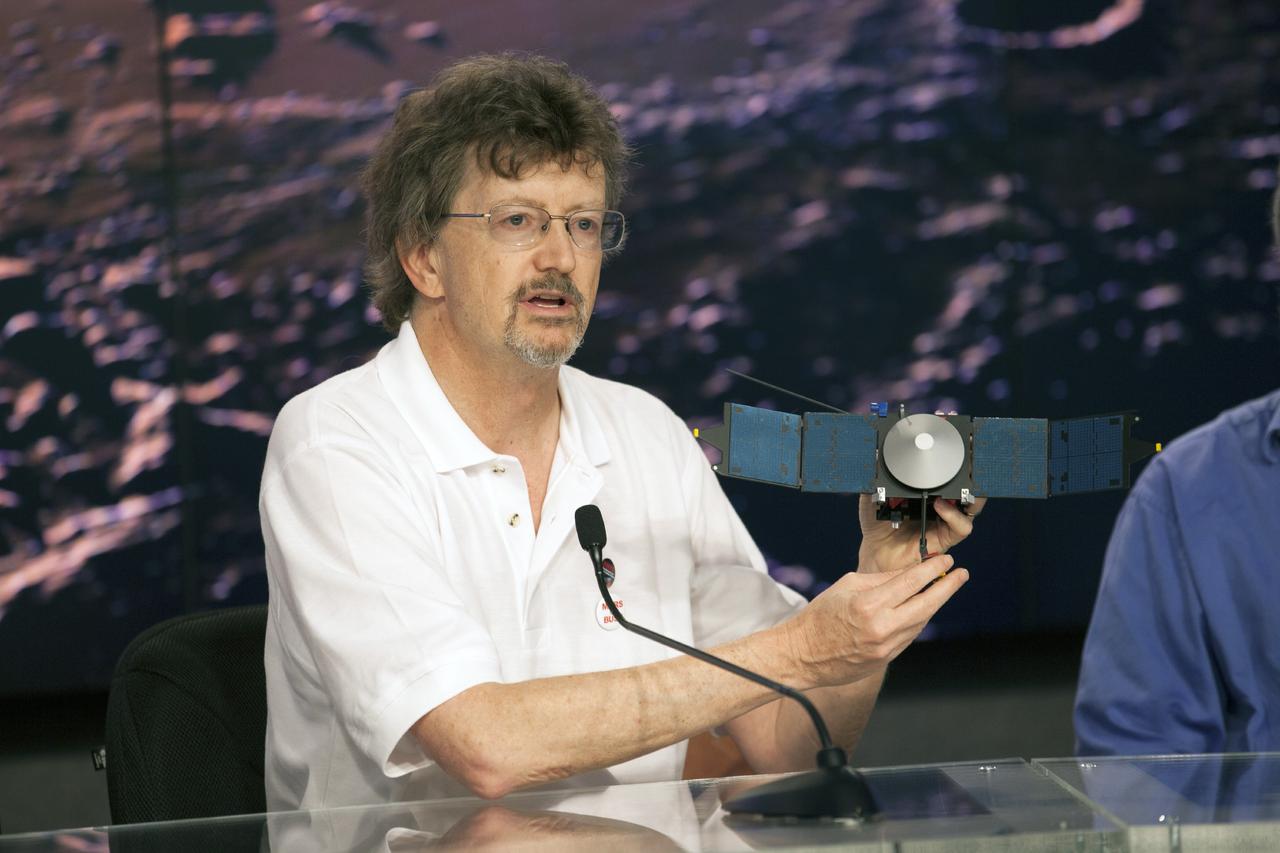
CAPE CANAVERAL, Fla. – During a news conference at NASA's Kennedy Space Center in Florida, NASA officials and university investigators outlined science plans for the Mars Atmosphere and Volatile EvolutioN, or MAVEN, mission. Briefing participants included Nick Schneider, holding a model of the MAVEN spacecraft. He is the Imaging Ultraviolet Spectrograph, or IUVS, instrument lead at the Laboratory for Atmospheric and Space Physics at the University of Colorado at Boulder. MAVEN is being prepared for its scheduled launch on Nov 18, 2013 from Cape Canaveral Air Force Station, Fla. atop a United Launch Alliance Atlas V rocket. Positioned in an orbit above the Red Planet, MAVEN will study the upper atmosphere of Mars in unprecedented detail. For information on the MAVEN mission, visit: http://www.nasa.gov/mission_pages/maven/main/index.html. Photo credit: NASA/Kim Shiflett
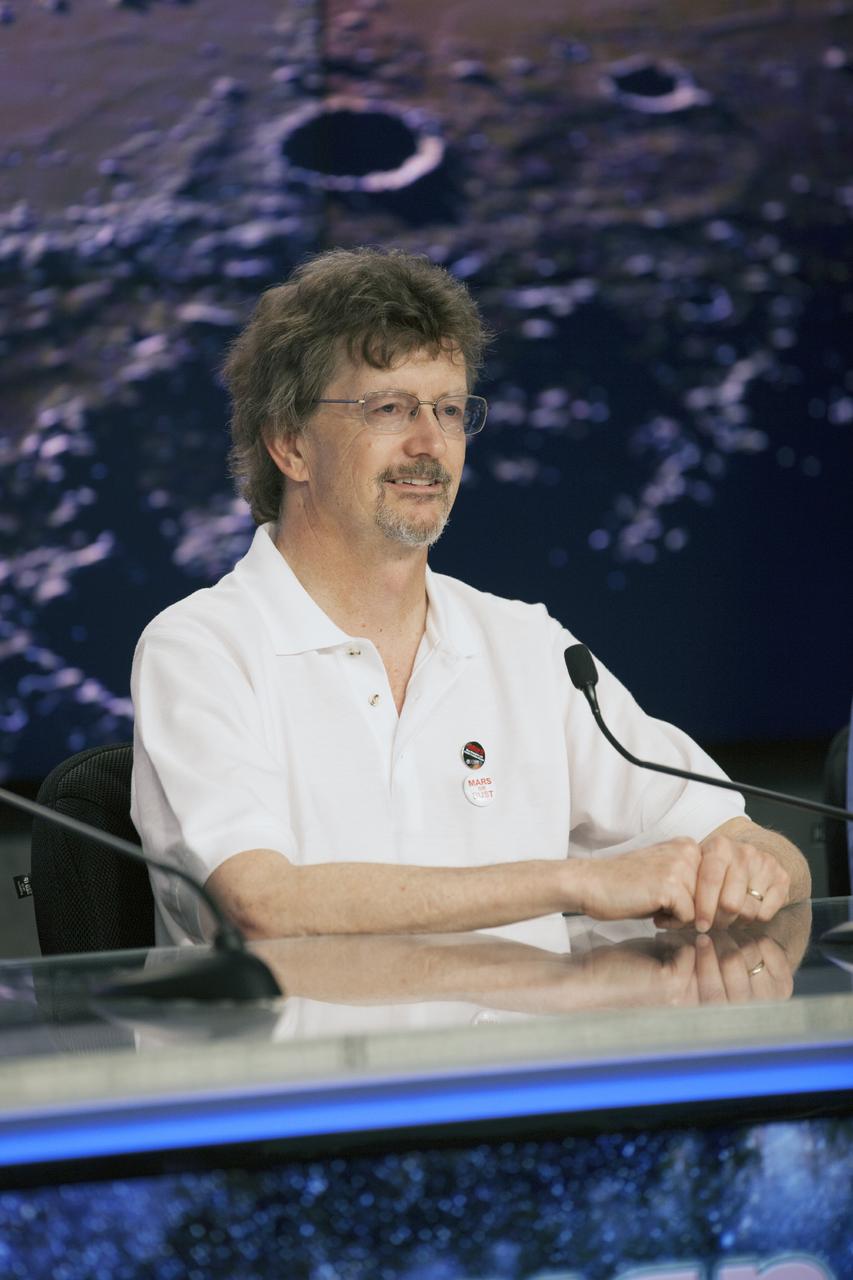
CAPE CANAVERAL, Fla. – During a news conference at NASA's Kennedy Space Center in Florida, NASA officials and university investigators outlined science plans for the Mars Atmosphere and Volatile EvolutioN, or MAVEN, mission. Briefing participants included Nick Schneider, MAVEN Imaging Ultraviolet Spectrograph, or IUVS, instrument lead at the Laboratory for Atmospheric and Space Physics at the University of Colorado at Boulder. MAVEN is being prepared for its scheduled launch on Nov 18, 2013 from Cape Canaveral Air Force Station, Fla. atop a United Launch Alliance Atlas V rocket. Positioned in an orbit above the Red Planet, MAVEN will study the upper atmosphere of Mars in unprecedented detail. For information on the MAVEN mission, visit: http://www.nasa.gov/mission_pages/maven/main/index.html. Photo credit: NASA/Kim Shiflett
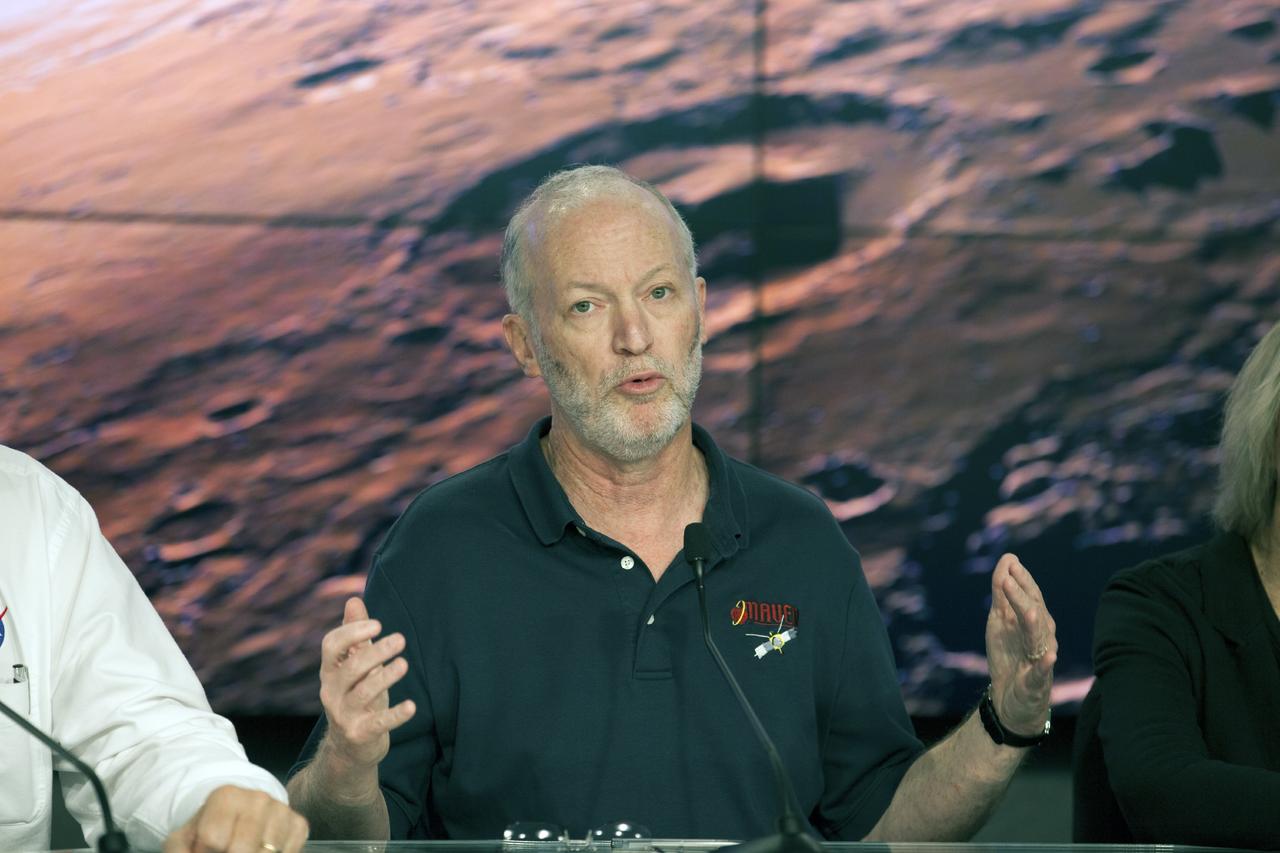
CAPE CANAVERAL, Fla. – During a news conference at NASA's Kennedy Space Center in Florida, NASA officials and university investigators outlined science plans for the Mars Atmosphere and Volatile EvolutioN, or MAVEN, mission. Briefing participants included Bruce Jakosky, MAVEN principal investigator from the Laboratory for Atmospheric and Space Physics at the University of Colorado at Boulder. MAVEN is being prepared for its scheduled launch on Nov 18, 2013 from Cape Canaveral Air Force Station, Fla. atop a United Launch Alliance Atlas V rocket. Positioned in an orbit above the Red Planet, MAVEN will study the upper atmosphere of Mars in unprecedented detail. For information on the MAVEN mission, visit: http://www.nasa.gov/mission_pages/maven/main/index.html. Photo credit: NASA/Kim Shiflett
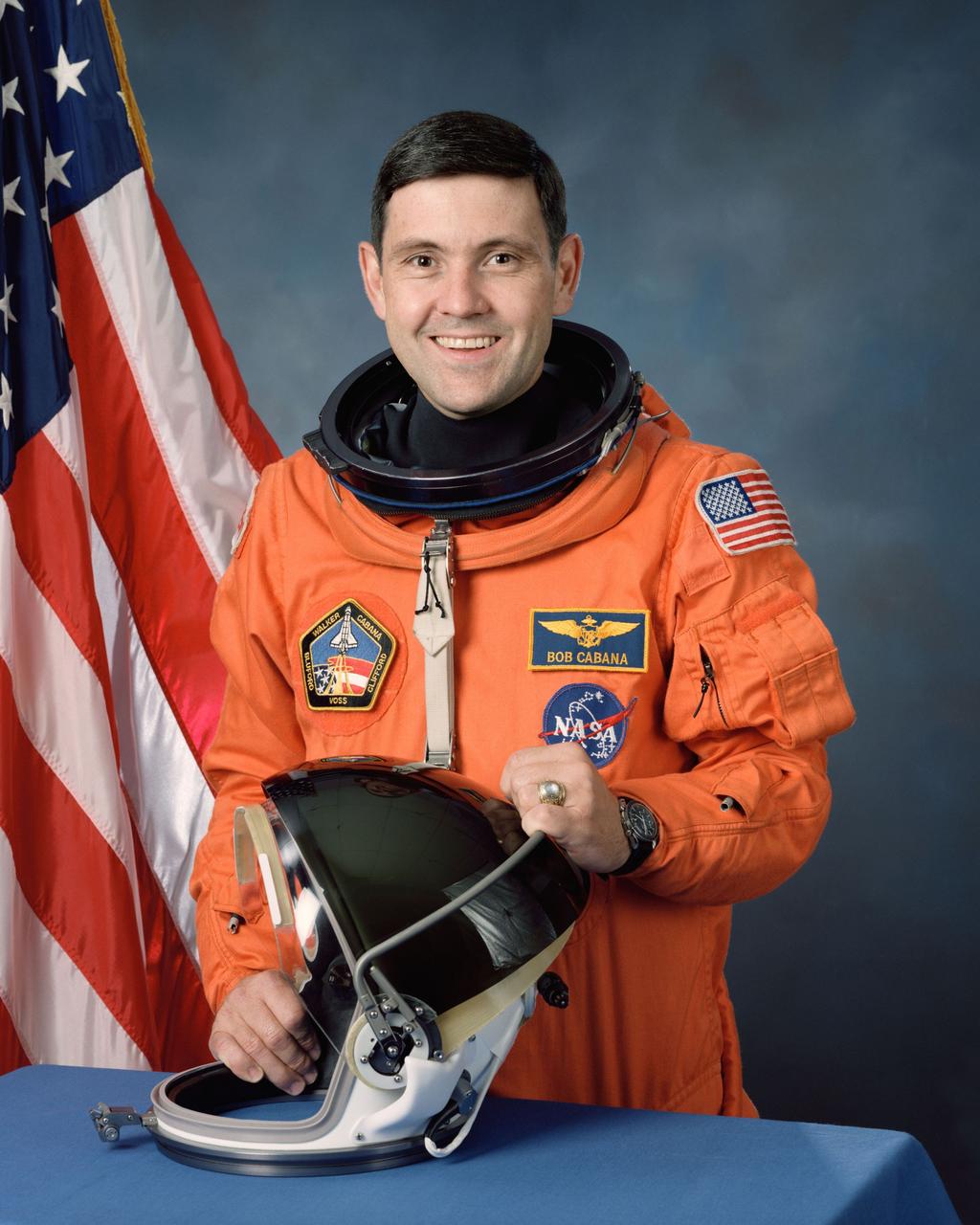
CAPE CANAVERAL, Fla. - Astronaut Robert Cabana, STS-88 mission commander. For more information, visit http://www.nasa.gov. Photo credit: NASA
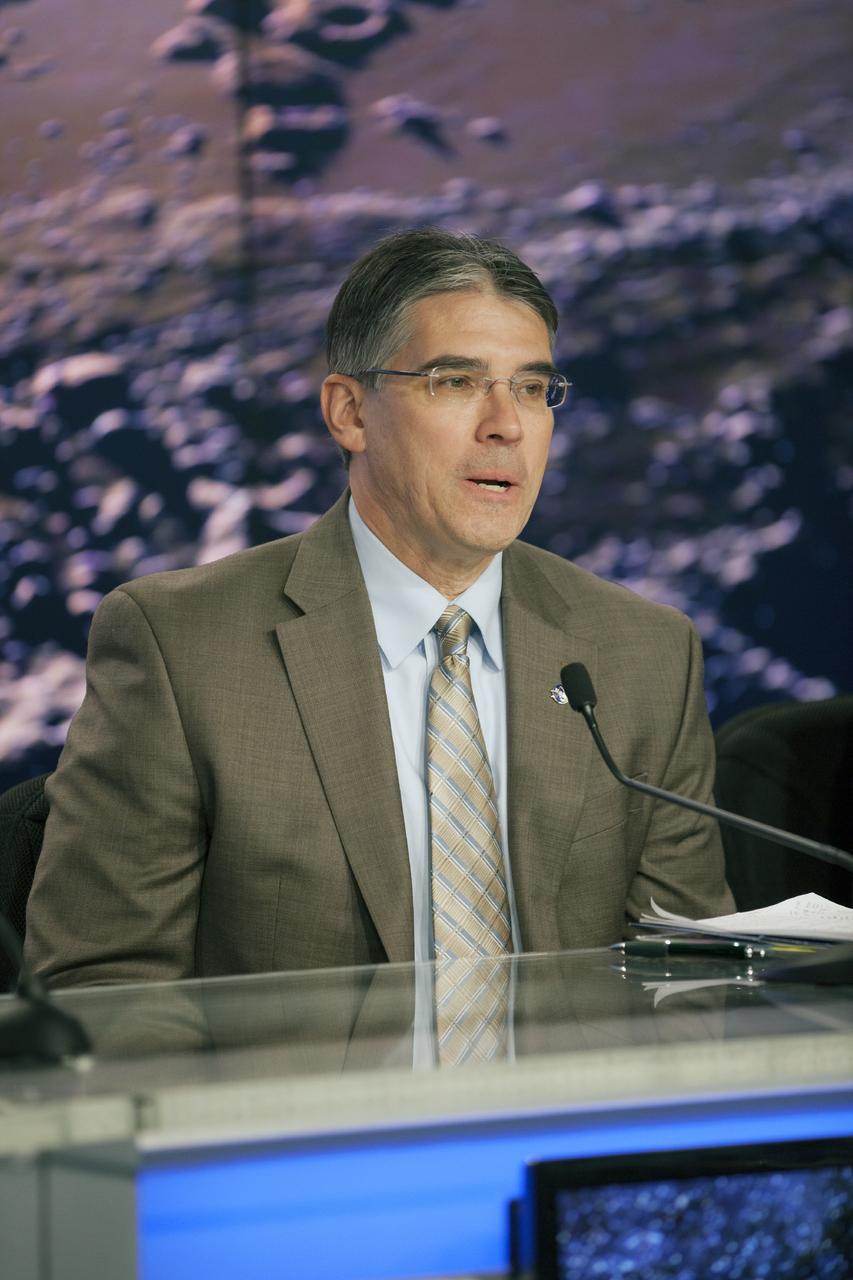
CAPE CANAVERAL, Fla. – During a news conference at NASA's Kennedy Space Center in Florida, officials outlined the agency’s plans for future human spaceflight, including an expedition to Mars. Participating in the briefing was Michael Gazarik, associate administrator for the Space Technology Mission Directorate. The briefing took place the day prior to launch of the Mars Atmosphere and Volatile EvolutioN, or MAVEN, mission. MAVEN is being prepared for its scheduled launch on Nov 18, 2013 from Cape Canaveral Air Force Station, Fla. atop a United Launch Alliance Atlas V rocket. Positioned in an orbit above the Red Planet, MAVEN will study the upper atmosphere of Mars in unprecedented detail. For information on the MAVEN mission, visit: http://www.nasa.gov/mission_pages/maven/main/index.html. For more on NASA Human Spaceflight, visit: http://www.spaceflight.nasa.gov/home/index.html. For information on the international Space Station, visit: http://www.nasa.gov/mission_pages/station/main/index.html Photo credit: NASA/Kim Shiflett
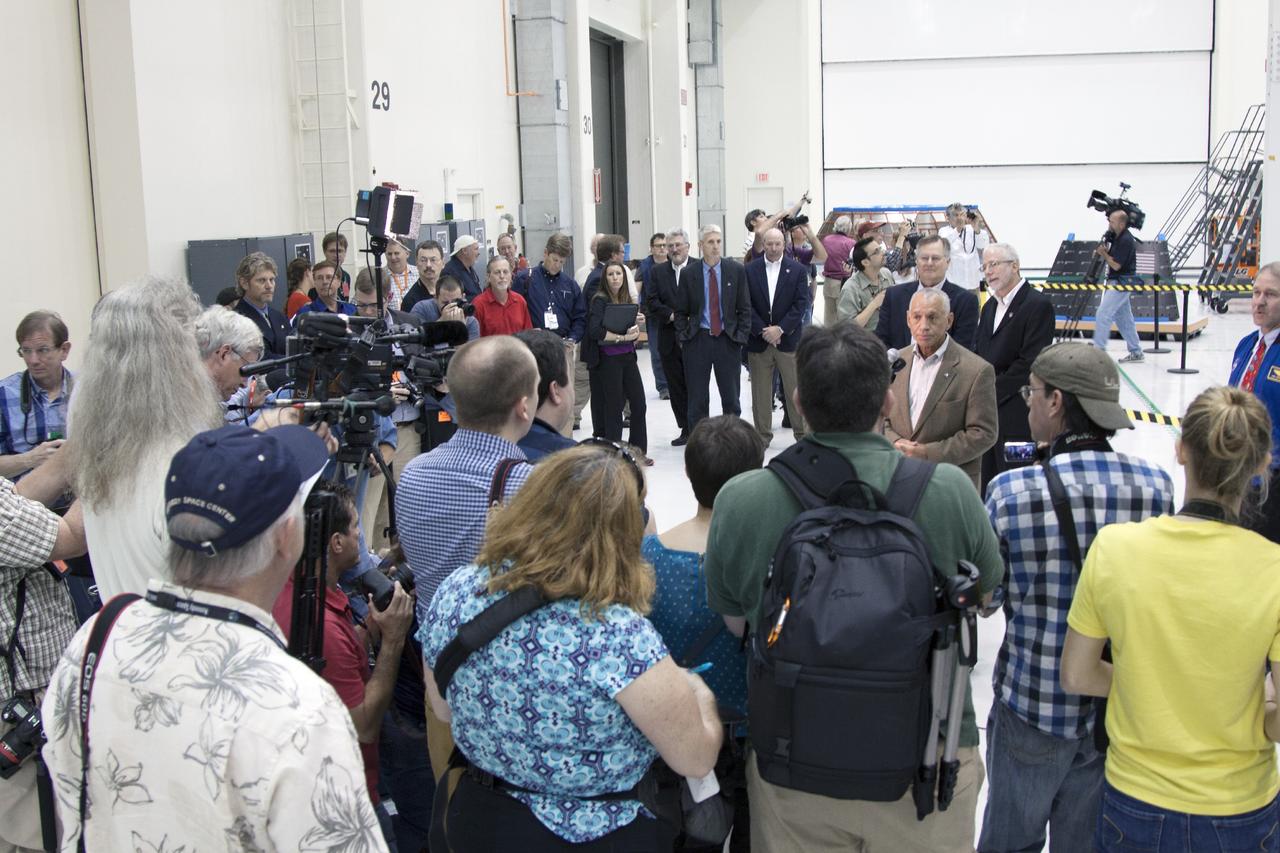
CAPE CANAVERAL, Fla. – Inside the Operations and Checkout Building high bay at NASA’s Kennedy Space Center in Florida, agency Administrator Charles Bolden answers questions from members of the news media about ongoing preparations of the Orion spacecraft for its first unpiloted launch, Exploration Test Flight 1. Orion is the exploration spacecraft designed to carry crews to space beyond low Earth orbit. It will provide emergency abort capability, sustain the crew during the space travel and provide safe re-entry from deep space return velocities. Orion’s first unpiloted test launch is scheduled for liftoff during 2014 atop a Delta IV rocket. A second unpiloted flight test is scheduled for 2017 on NASA’s Space Launch System rocket. For more information, visit http://www.nasa.gov/orion Photo credit: NASA/Jim Grossman
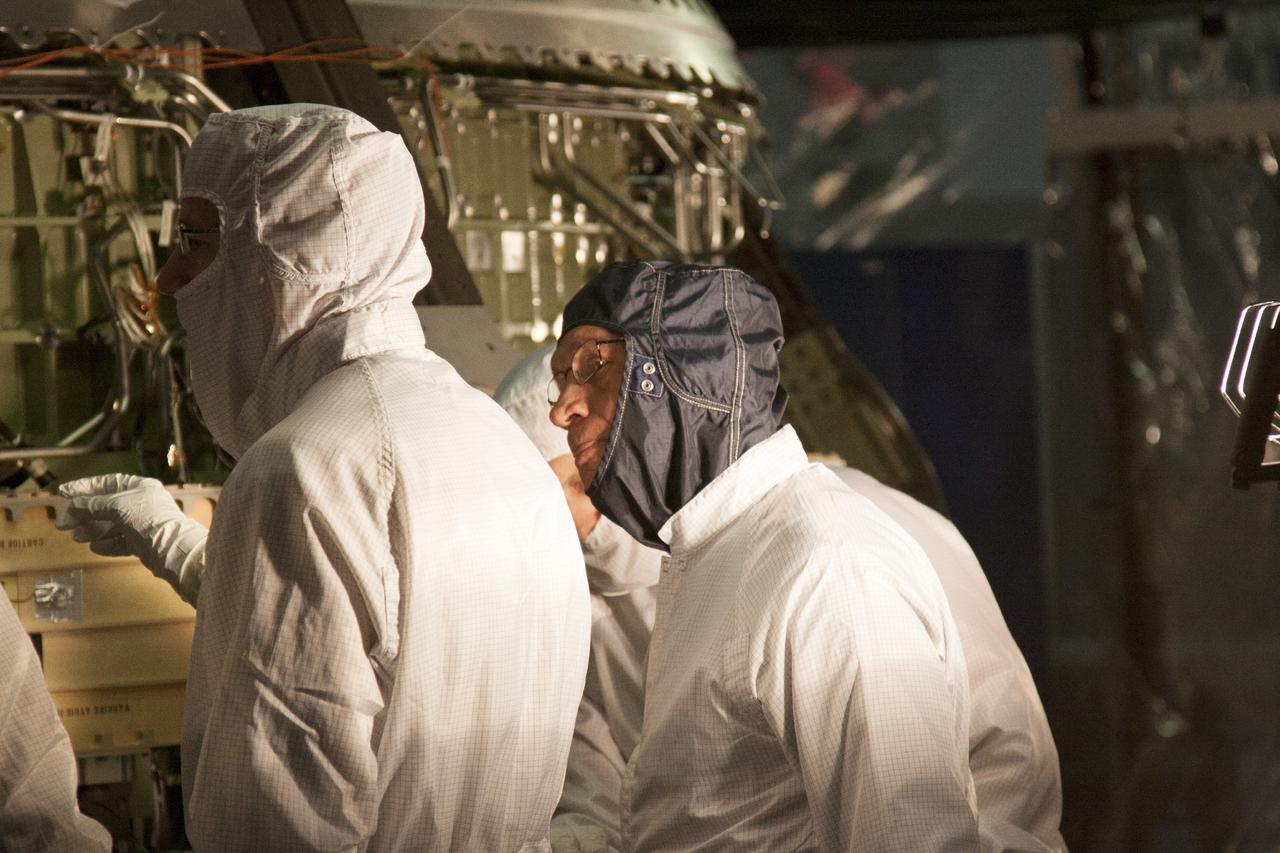
CAPE CANAVERAL, Fla. – Inside the Operations and Checkout Building high bay at NASA’s Kennedy Space Center in Florida, agency Administrator Charles Bolden, center, is updated on activities to prepare the Orion spacecraft crew module for its first unpiloted launch, Exploration Test Flight 1. He is wearing a protective garment to ensure contaminants are not introduced into the cleanroom environment. Orion is the exploration spacecraft designed to carry crews to space beyond low Earth orbit. It will provide emergency abort capability, sustain the crew during the space travel and provide safe re-entry from deep space return velocities. Orion’s first unpiloted test launch is scheduled for liftoff during 2014 atop a Delta IV rocket. A second unpiloted flight test is scheduled for 2017 on NASA’s Space Launch System rocket. For more information, visit http://www.nasa.gov/orion Photo credit: NASA/Jim Grossman

Expedition 10 Commander and NASA Science Officer Leroy Chiao, sixth from left, Flight Engineer and Soyuz Commander Salizhan Sharipov and Russian Space Forces cosmonaut Yuri Shargin, fifth from left, join VIP’s for the crew departure breakfast prior to their departure from Star City, Russia for Baikonur, Kazakhstan, Monday, Oct. 4, 2004. The Expedition 10 crew will launch on the Soyuz TMA-5 spacecraft October 14, 2004 to the International Space Station. Photo Credit (NASA/Bill Ingalls)

Expedition 10 Commander and NASA Science Officer Leroy Chiao, left, and Flight Engineer and Soyuz Commander Salizhan Sharipov invite VIP’s in for the crew departure breakfast prior to their departure from Star City, Russia for Baikonur, Kazakhstan, Monday, Oct. 4, 2004. The Expedition 10 crew will launch on the Soyuz TMA-5 spacecraft October 14, 2004 to the International Space Station. Photo Credit (NASA/Bill Ingalls)

Apollo 7 Commander Walter M. "Wally" Schirra and his wife, Josephine, were among the many special NASA STS-83 launch guests who witnessed the liftoff of the Space Shuttle Columbia April 4 at the Banana Creek VIP Viewing Site at KSC. Columbia took off from Launch Pad 39A at 2:20:32 p.m. EST to begin the 16-day Microgravity Science Laboratory-1 (MSL-1) mission
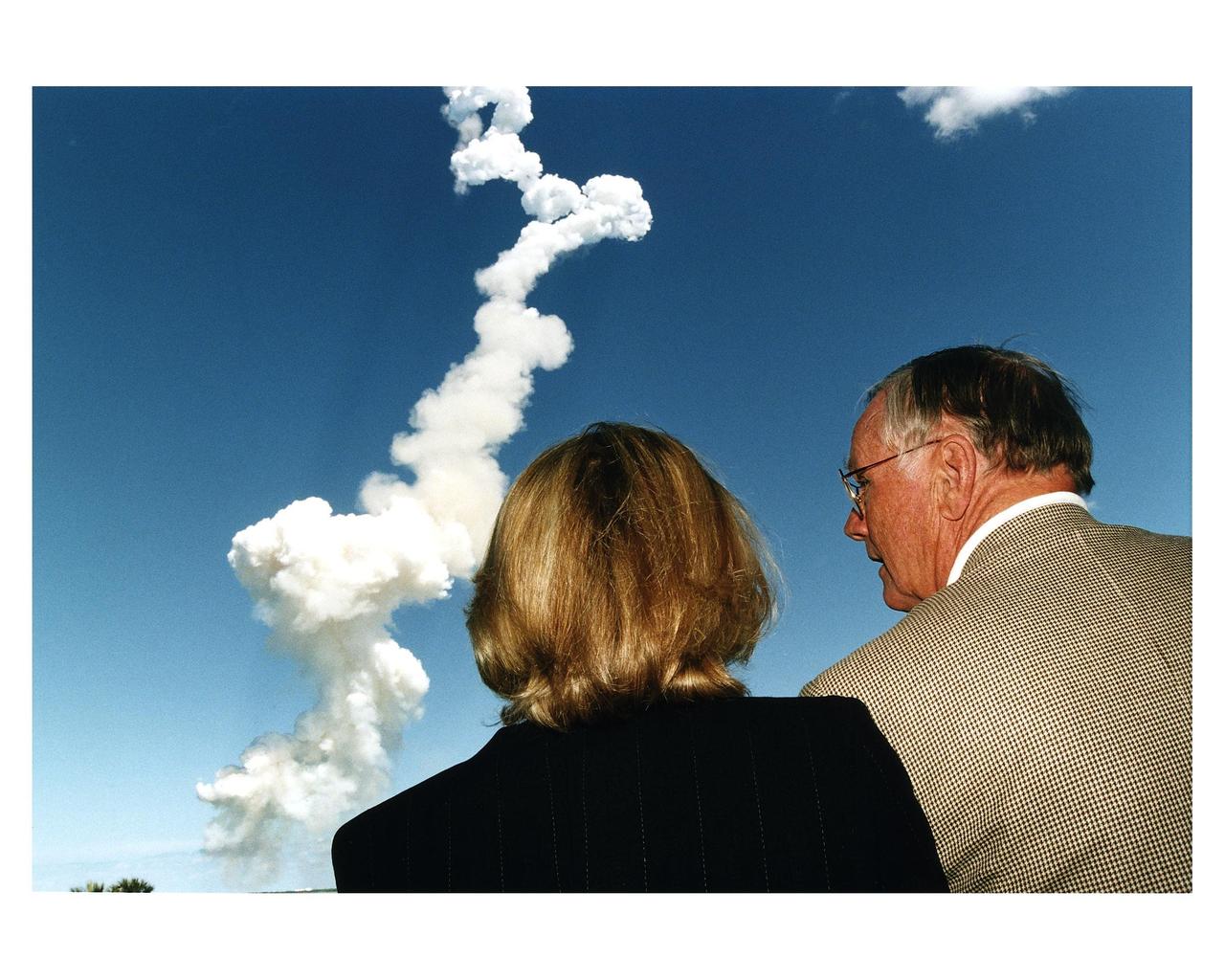
Apollo l1 Commander Neil A. Armstrong and his wife, Carol, were among the many special NASA STS-83 launch guests who witnessed the liftoff of the Space Shuttle Columbia April 4 at the Banana Creek VIP Viewing Site at KSC. Columbia took off from Launch Pad 39A at 2:20:32 p.m. EST to begin the 16-day Microgravity Science Laboratory-1 (MSL-1) mission