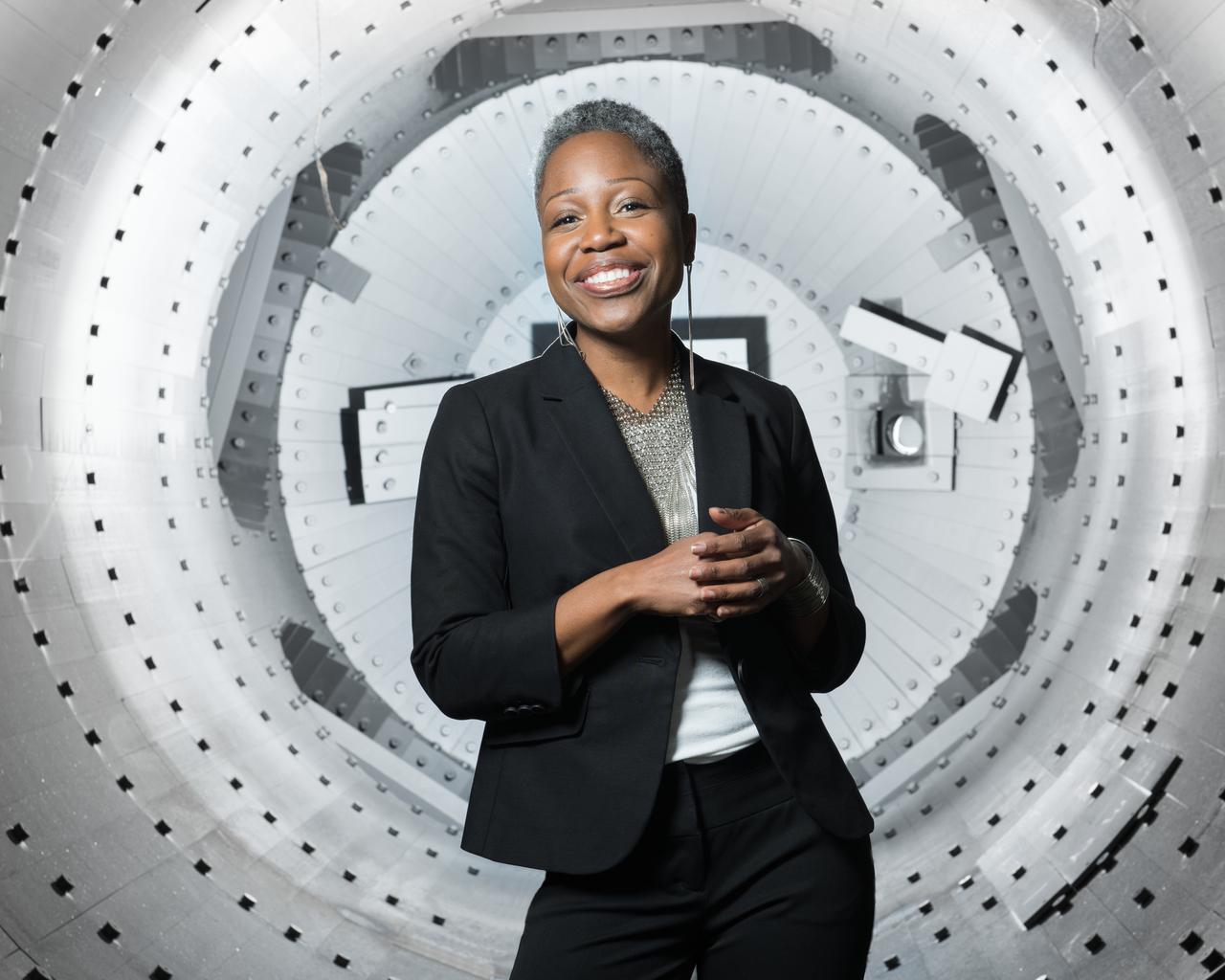
“I am a Black woman in STEM. And when I was growing up, I cannot say that I saw a lot of faces that looked like mine in STEM careers. I had some limited exposure to some notables, like Dr. Mae Jemison. But the names were few and far between of the great scientists or engineers that were Black — let alone Black females. So for me, if anybody sees my picture and says ‘yes, I see someone who looks like me working in STEM’ — that right there is very fulfilling. Just to be seen and to be visible makes a difference. "I also must provide words of encouragement because being in STEM can be difficult as is, let alone having to face the challenges of being a female in a male-dominated field. Or even being a double minority in the workplace. "It’s a matter of being really self-assured that you can do it, despite the fact that you’re going to have failures, that you’re going to have setbacks, and that you’re going have people who may not believe in you, for whatever reason. You have to be self-assured that this is what you want to do and that it can be done. This 4’11” Black woman achieved this, not knowing that STEM was going to be my path or that I was going to end up at NASA — I did it, and I believe that you can do it too — but you have to believe it for yourself.” — Mary Lobo, Director of Office of Technology Incubation and Innovation, Glenn Research Center The Facility Manager for the Space Simulation Facilities at Glenn Research Center, poses inside Vacuum Facility 16 (VF-16) for an Environmental Portrait. The lighting used in this portrait depicts the chamber as having an almost white interior when the chamber is actually almost black in color.
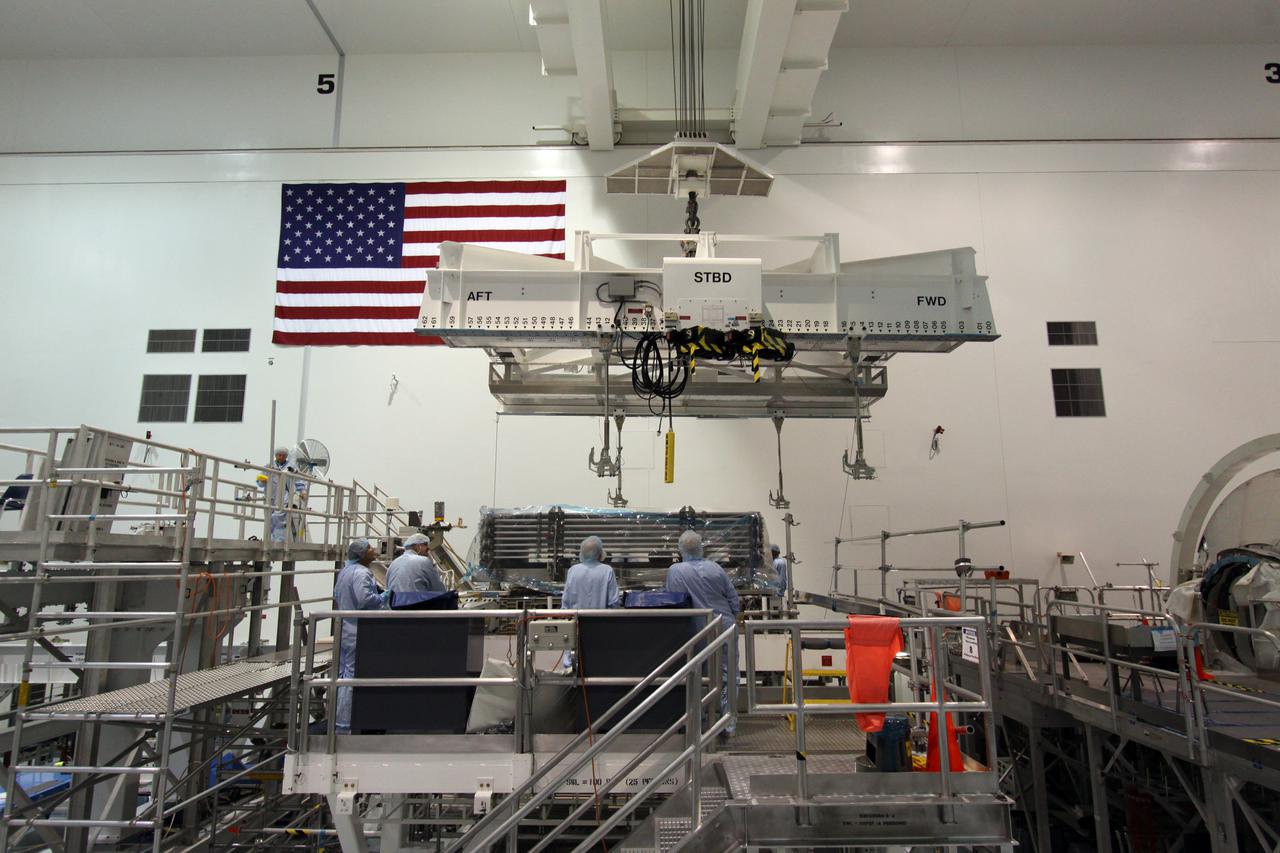
CAPE CANAVERAL, Fla. -- In the Space Station Processing Facility at NASA's Kennedy Space Center in Florida, technicians hoist the Express Logistics Carrier-4, or ELC-4, for the deck-to-keel mate. The deck is about 14 by 16 feet and spans the width of a space shuttle’s payload bay. It is capable of providing astronauts aboard the International Space Station with a platform and infrastructure to deploy experiments in the vacuum of space without requiring a separate dedicated Earth-orbiting satellite. Space shuttle Discovery and its STS-133 crew will deliver the carrier along with critical spare parts to the station later this year. Photo credit: NASA_Jack Pfaller
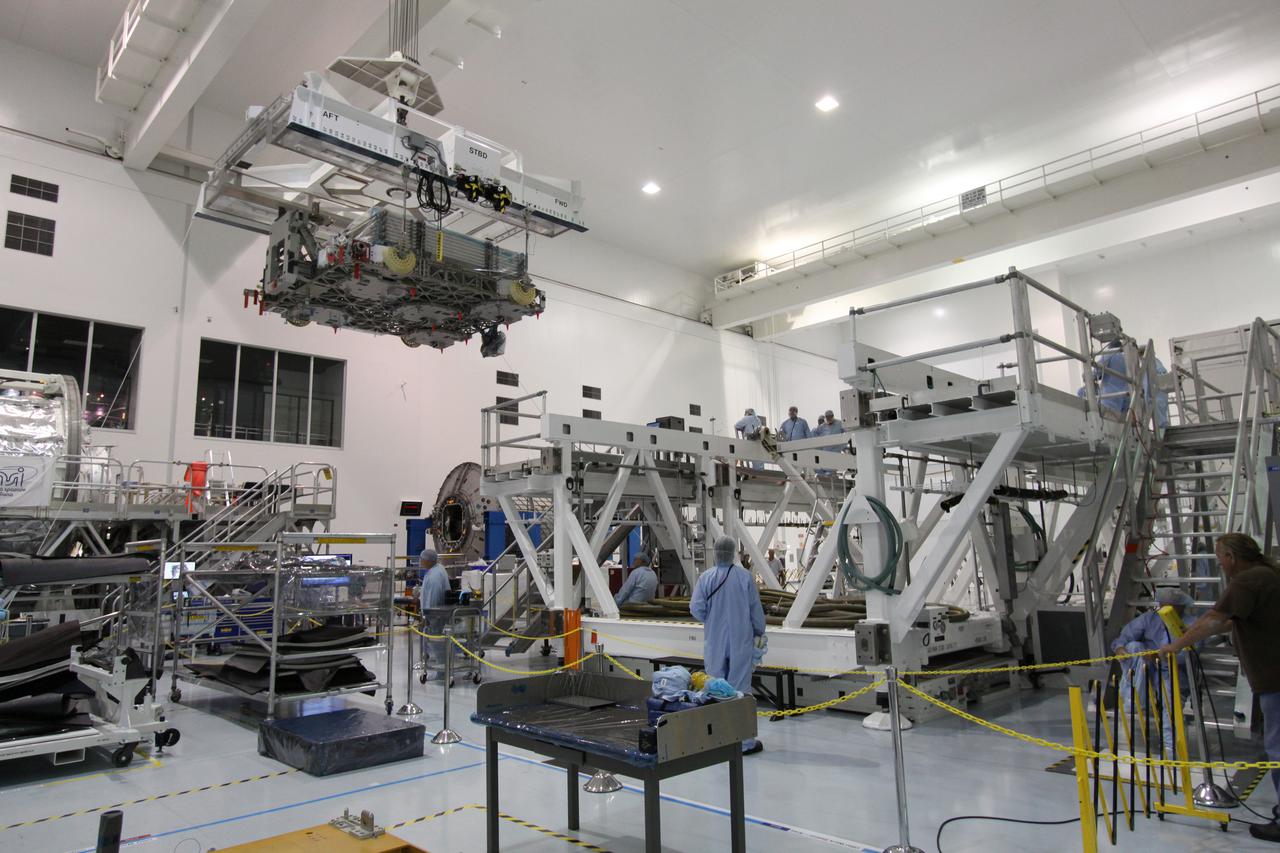
CAPE CANAVERAL, Fla. -- In the Space Station Processing Facility at NASA's Kennedy Space Center in Florida, technicians perform the Express Logistics Carrier-4, or ELC-4, deck-to-keel mate. The deck is about 14 by 16 feet and spans the width of a space shuttle’s payload bay. It is capable of providing astronauts aboard the International Space Station with a platform and infrastructure to deploy experiments in the vacuum of space without requiring a separate dedicated Earth-orbiting satellite. Space shuttle Discovery and its STS-133 crew will deliver the carrier along with critical spare parts to the station later this year. Photo credit: NASA_Jack Pfaller
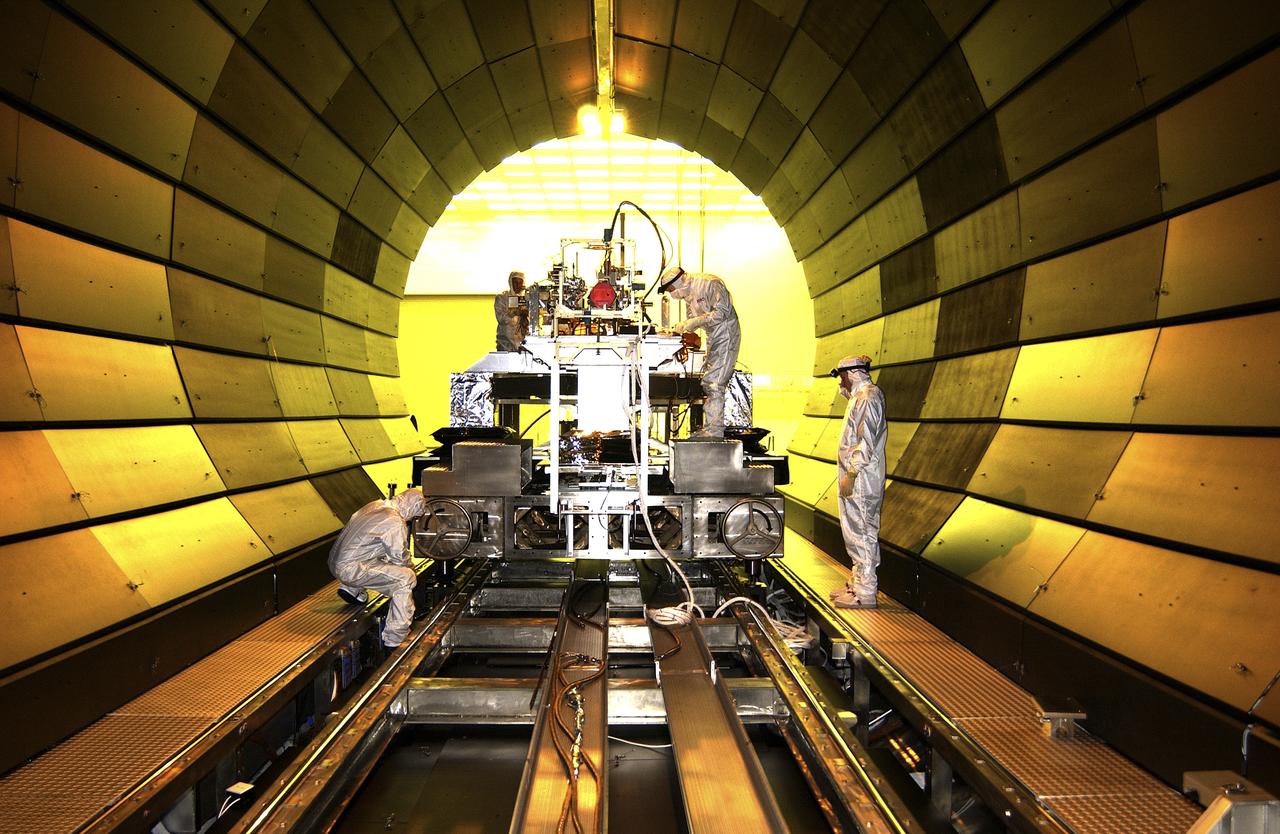
This photograph depicts the Solar X-Ray Imager (SXI) being installed in the X-Ray Calibration Facility (XRCF) vacuum chamber for testing at the Marshall Space Flight Center (MSFC). The XRCF vacuum chamber simulates a space environment with low temperature and pressure. The x-ray images from SXI on the Geostationary Operational Environmental Satellite-12 (GOES-12) will be used by the National Oceanic and Atmospheric Administration (NOAA) and U.S. Air Force to forecast the intensity and speed of solar disturbances that could destroy satellite electronics or disrupt long-distance radio communications. The SXI will observe solar flares, coronal mass ejections, coronal holes, and active regions in the x-ray region of the electromagnetic spectrum. These features are the dominant sources of disturbances in space weather. The imager instrument consists of a telescope assembly with a 6.3-inch (16-centimeter) diameter grazing incidence mirror and a detector system. The imager was developed, tested, and calibrated by MSFC, in conjunction with the NASA Goddard Space Flight Center and U.S. Air Force.
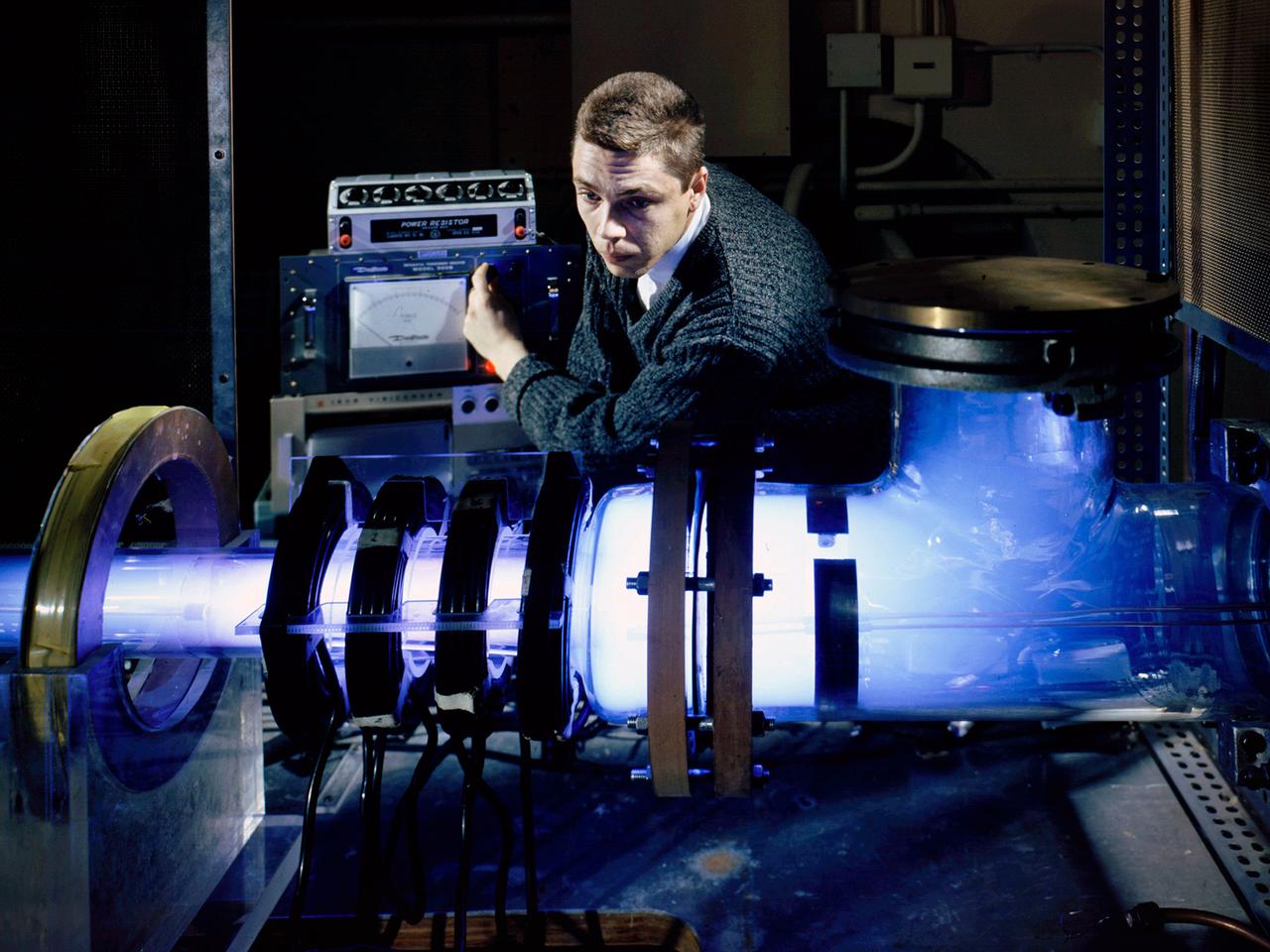
Raymond Palmer, of the Electromagnetic Propulsion Division’s Plasma Flow Section, adjusts the traveling magnetic wave plasma engine being operated in the Electric Power Conversion at the National Aeronautics and Space Administration (NASA) Lewis Research Center. During the 1960s Lewis researchers were exploring several different methods of creating electric propulsion systems, including the traveling magnetic wave plasma engine. The device operated similarly to alternating-current motors, except that a gas, not a solid, was used to conduct the electricity. A magnetic wave induced a current as it passed through the plasma. The current and magnetic field pushed the plasma in one direction. Palmer and colleague Robert Jones explored a variety of engine configurations in the Electric Propulsion Research Building. The engine is seen here mounted externally on the facility’s 5-foot diameter and 16-foot long vacuum tank. The four magnetic coils are seen on the left end of the engine. The researchers conducted two-minute test runs with varying configurations and used of both argon and xenon as the propellant. The Electric Propulsion Research Building was built in 1942 as the Engine Propeller Research Building, often called the Prop House. It contained four test cells to study large reciprocating engines with their propellers. After World War II, the facility was modified to study turbojet engines. By the 1960s, the facility was modified again for electric propulsion research and given its current name.
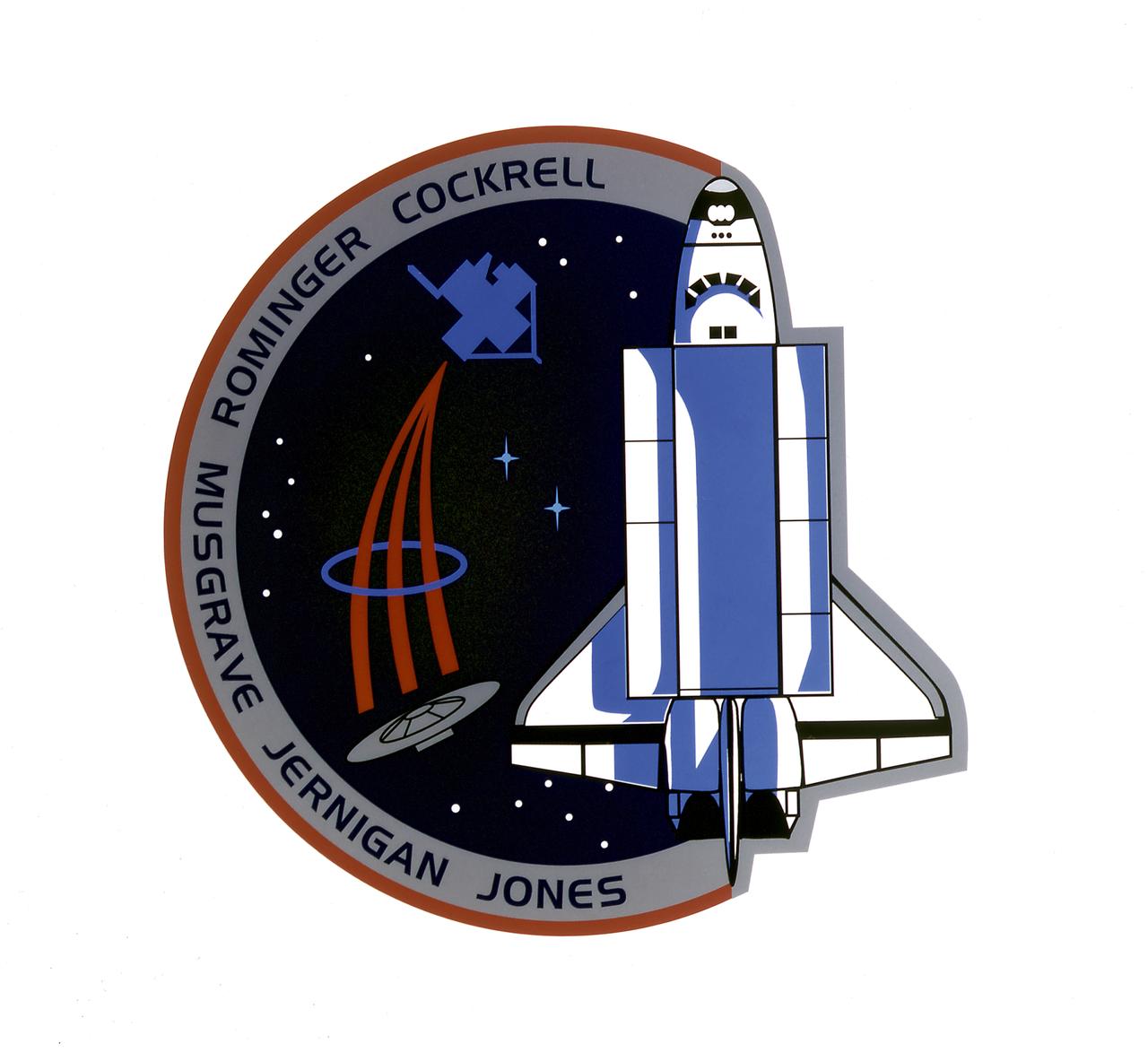
This mission patch for mission STS-80 depicts the Space Shuttle Columbia and the two research satellites its crew deployed into the blue field of space. The uppermost satellite is the Orbiting Retrievable Far and Extreme Ultraviolet Spectrograph-Shuttle Pallet Satellite (ORFEUS-SPAS), a telescope aimed at unraveling the life cycles of stars and understanding the gases that drift between them. The lower satellite is the Wake Shield Facility (WSF), flying for the third time. It will use the vacuum of space to create advanced semiconductors for the nation's electronics industry. ORFEUS and WSF are joined by the symbol of the Astronaut Corps, representing the human contribution to scientific progress in space. The two bright blue stars represent the mission's Extravehicular Activities (EVA), final rehearsals for techniques and tools to be used in assembly of the International Space Station (ISS). Surrounding Columbia is a constellation of 16 stars, one for each day of the mission, representing the stellar talents of the ground and flight teams that share the goal of expanding knowledge through a permanent human presence in space.
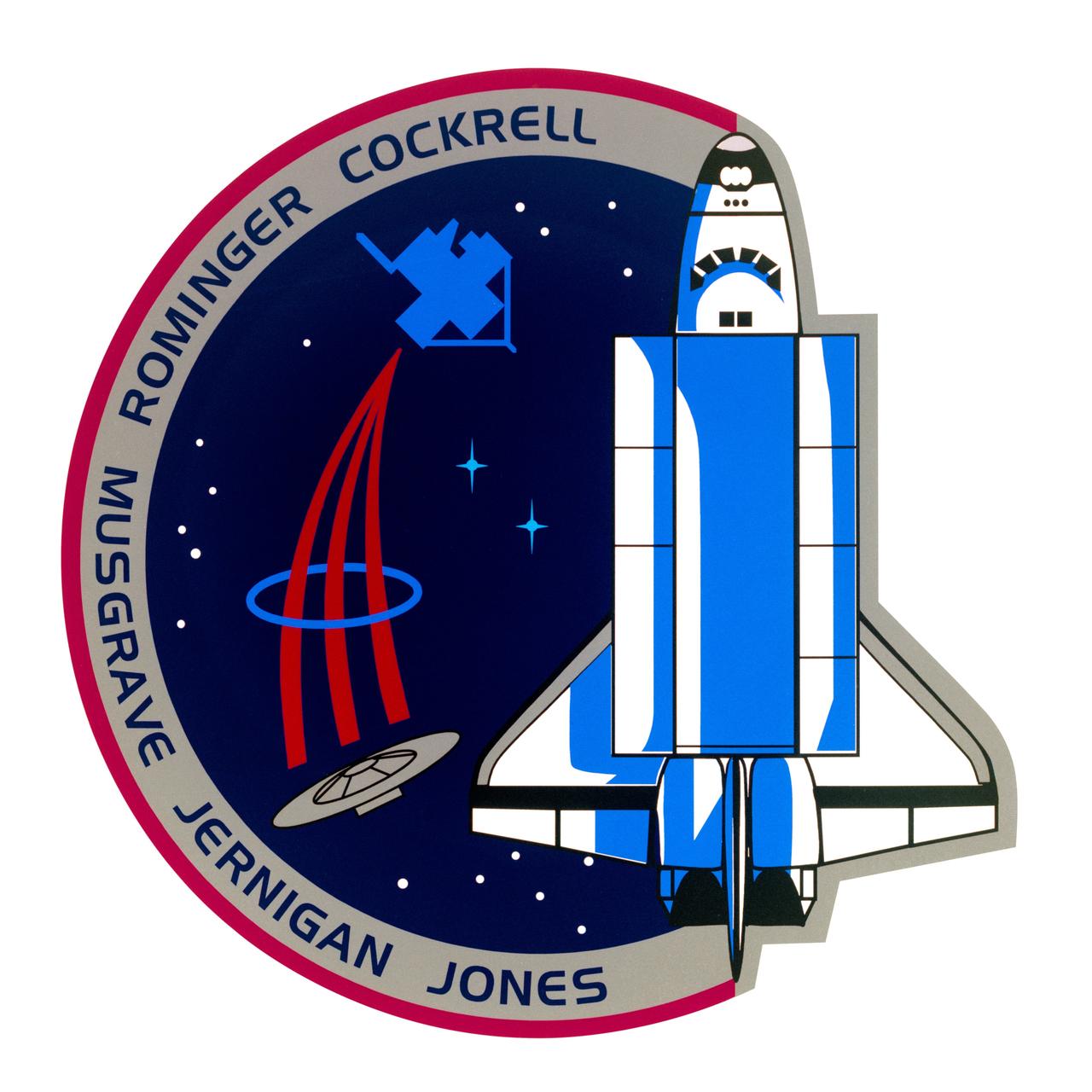
STS080-S-001 (August 1996) --- This STS-80 mission patch depicts the space shuttle Columbia and the two research satellites its crew will deploy into the blue field of space. The uppermost satellite is the Orbiting Retrievable Far and Extreme Ultraviolet Spectrograph-Shuttle Pallet Satellite (ORFEUS-SPAS), a telescope aimed at unraveling the life cycles of stars and understanding the gases that drift between them. The lower satellite is the Wake Shield Facility (WSF), flying for the third time. It will use the vacuum of space to create advanced semiconductors for the nation’s electronics industry. ORFEUS and WSF are joined by the symbol of the Astronaut Corps, representing the human contribution to scientific progress in space. The two bright blue stars represent the mission’s extravehicular activities (EVA), final rehearsals for techniques and tools to be used in assembly of the International Space Station (ISS). Surrounding Columbia is a constellation of 16 stars, one for each day of the mission, representing the stellar talents of the ground and flight teams that share the goal of expanding knowledge through a permanent human presence in space. The NASA insignia design for space shuttle flights is reserved for use by the astronauts and for other official use as the NASA Administrator may authorize. Public availability has been approved only in the forms of illustrations by the various news media. When and if there is any change in this policy, which is not anticipated, the change will be publicly announced. Photo credit: NASA