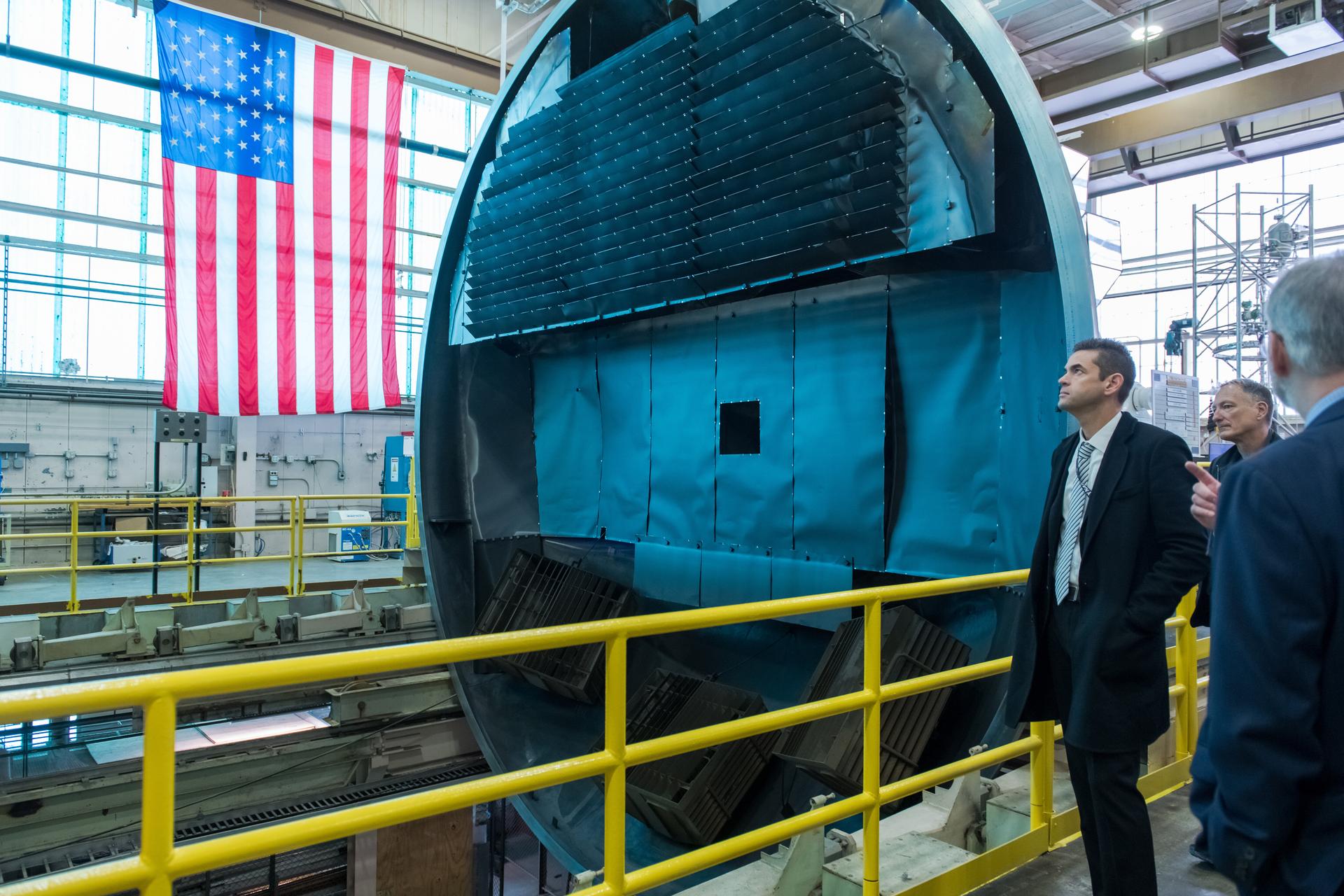
NASA Administrator Jared Isaacman looks inside Vacuum Facility-6 in the Electric Propulsion and Power Laboratory during a visit to NASA's Glenn Research Center in Cleveland on Jan. 27, 2026.
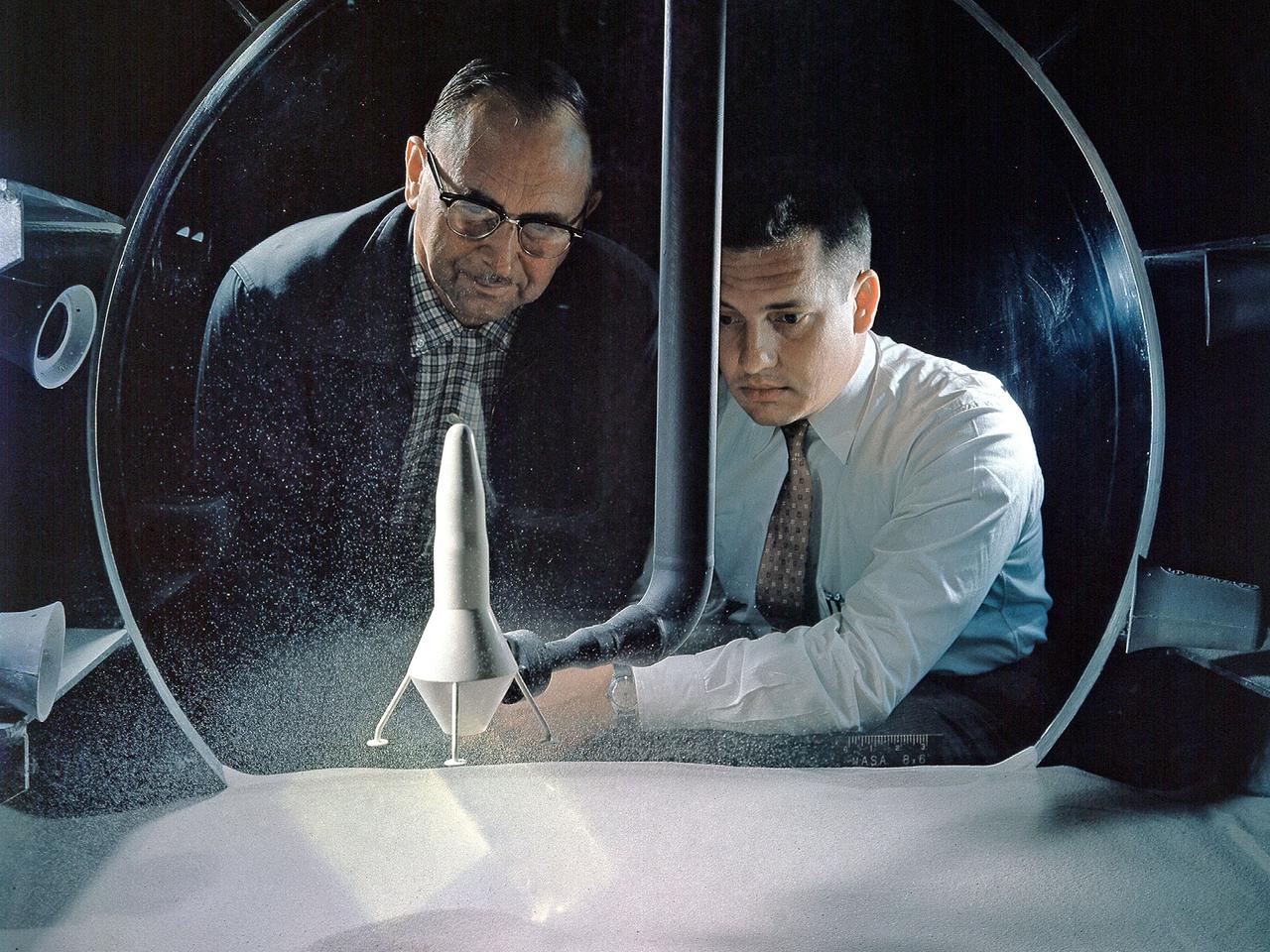
NASA Researchers view a demonstration of the moon dust simulator in the 8- by 6-Foot Supersonic Wind Tunnel facility at the National Aeronautics and Space Administration (NASA) Lewis Research Center. The researchers were studying the effect of the lunar lander’s retrorockets on the loose dust on the lunar surface. There was some concern that the retrorockets would kick up so much dust that the crew would lose the ability to see. They also did not know how the dust’s behavior would be affected by the space atmosphere. This small vacuum tank was built for very preliminary investigations into this matter. The pipe entering the top of the tank supplied the airflow to the lander model, which was affixed to the pipe. The researchers altered the vacuum levels and speed of the airflow.
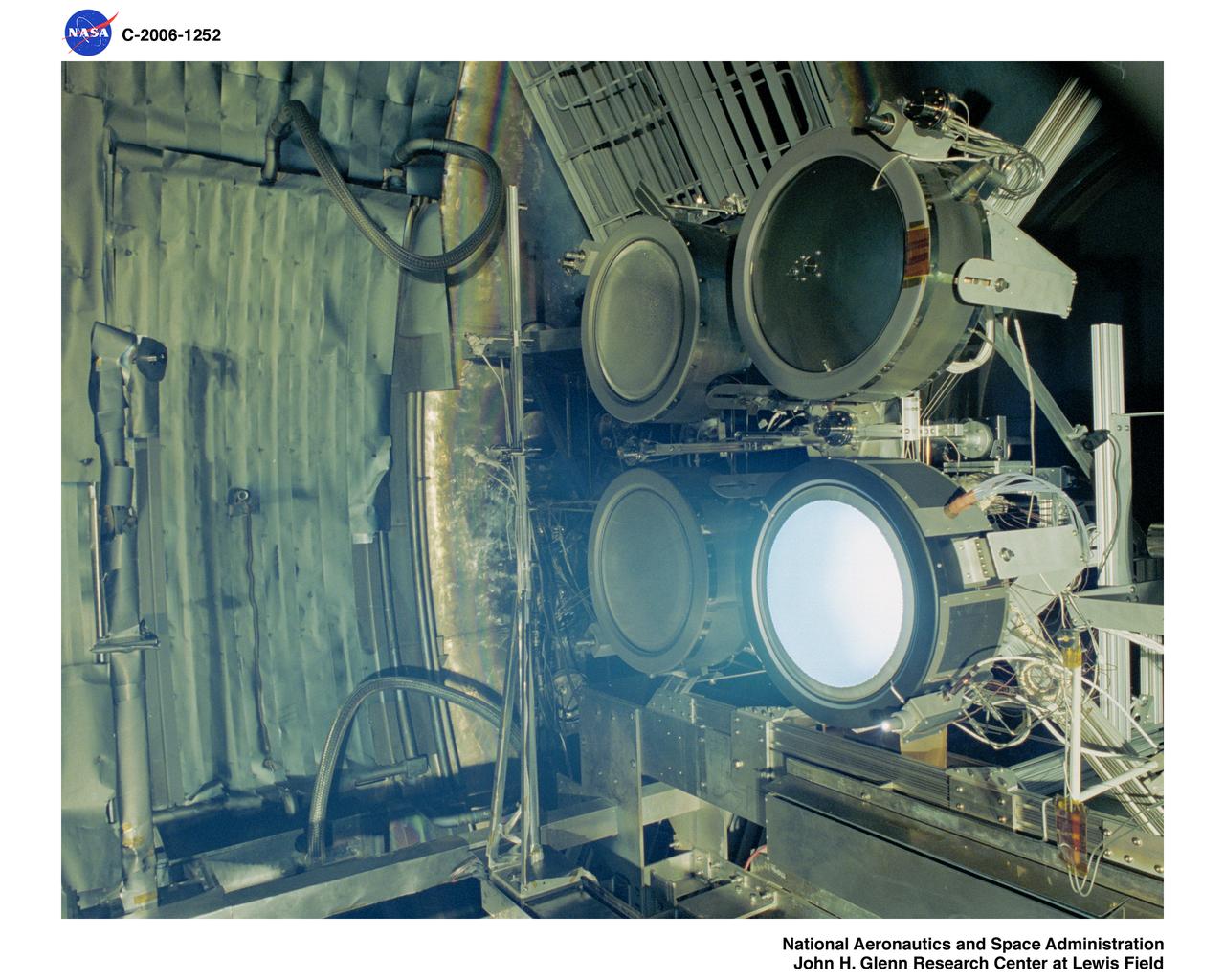
Performance Acceptance Test of a prototype-model NEXT (NASA Evolutionary Xenon Thruster) ion engine that was delivered to NASA Glenn Research Center by Aerojet. The test dates were May 10 - May 17, 2006. The test was conducted in the Vacuum Facility 6 test facility located in the Electric Power Laboratory. The test successfully demonstrated the PM manufacturing process carried out by Aerojet under the guidance of NASA Glenn Research Center and PM1 acceptable functionality
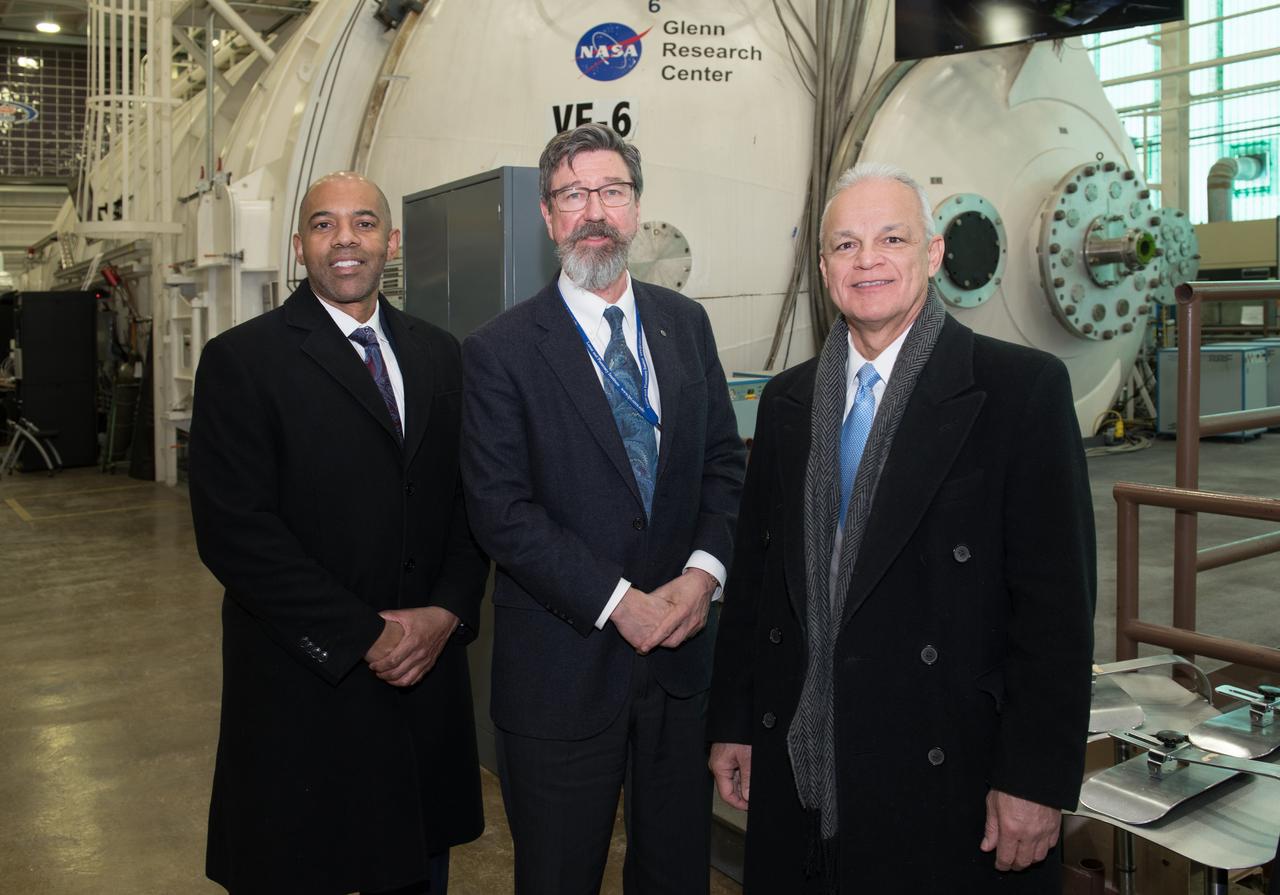
Office of the Chief Technologist, OCT Innovation Workshop, and Facility Tours
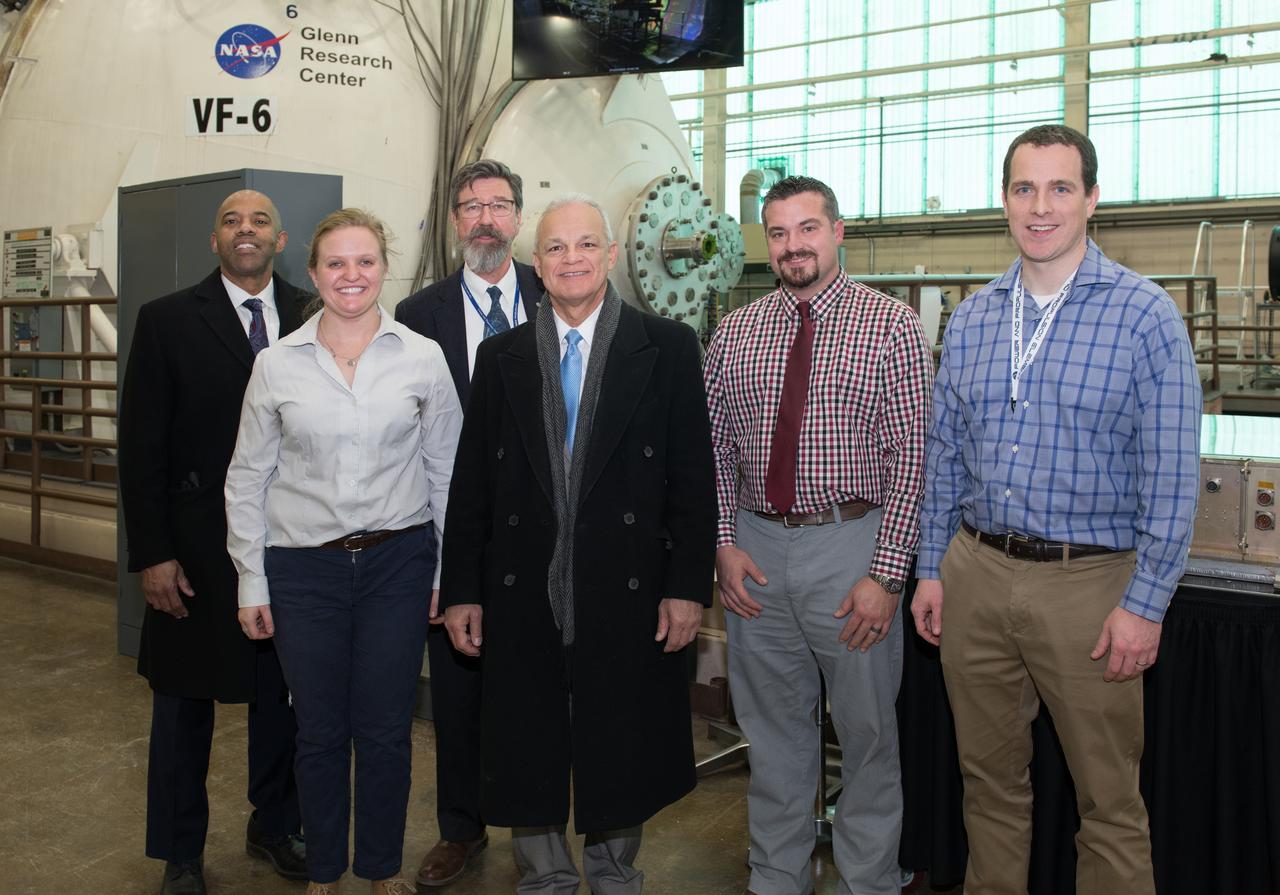
Office of the Chief Technologist, OCT Innovation Workshop, and Facility Tours
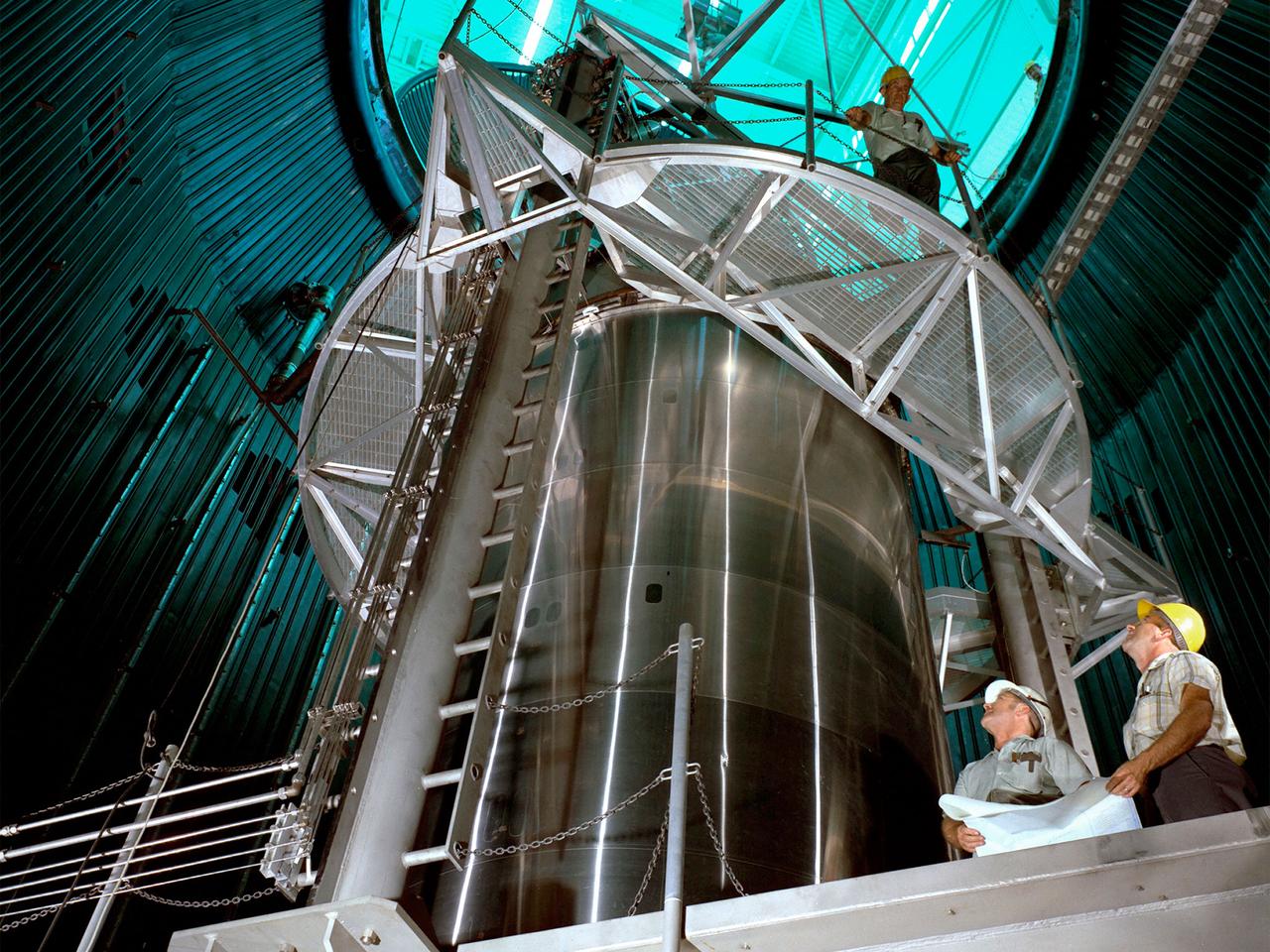
A Centaur second-stage rocket in the Space Propulsion Research Facility, better known as B‒2, operating at NASA’s Plum Brook Station in Sandusky, Ohio. Centaur was designed to be used with an Atlas booster to send the Surveyor spacecraft to the moon in the mid-1960s. After those missions, the rocket was modified to launch a series of astronomical observation satellites into orbit and send space probes to other planets. Researchers conducted a series of systems tests at the Plum Brook test stands to improve the Centaur fuel pumping system. Follow up full-scale tests in the B-2 facility led to the eventual removal of the boost pumps from the design. This reduced the system’s complexity and significantly reduced the cost of a Centaur rocket. The Centaur tests were the first use of the new B-2 facility. B‒2 was the world's only high altitude test facility capable of full-scale rocket engine and launch vehicle system level tests. It was created to test rocket propulsion systems with up to 100,000 pounds of thrust in a simulated space environment. The facility has the unique ability to maintain a vacuum at the rocket’s nozzle while the engine is firing. The rocket fires into a 120-foot deep spray chamber which cools the exhaust before it is ejected outside the facility. B‒2 simulated space using giant diffusion pumps to reduce chamber pressure 10-6 torr, nitrogen-filled cold walls create cryogenic temperatures, and quartz lamps replicate the radiation of the sun.