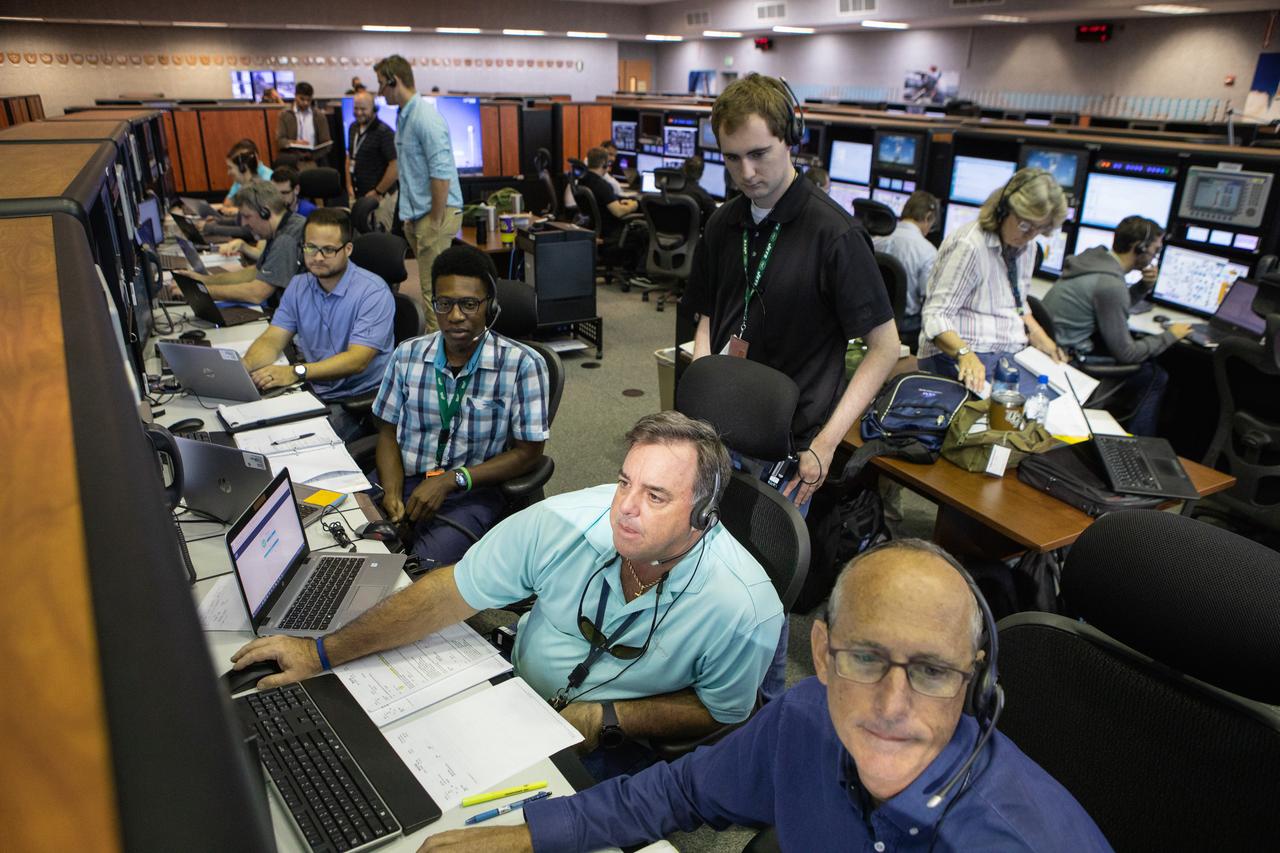
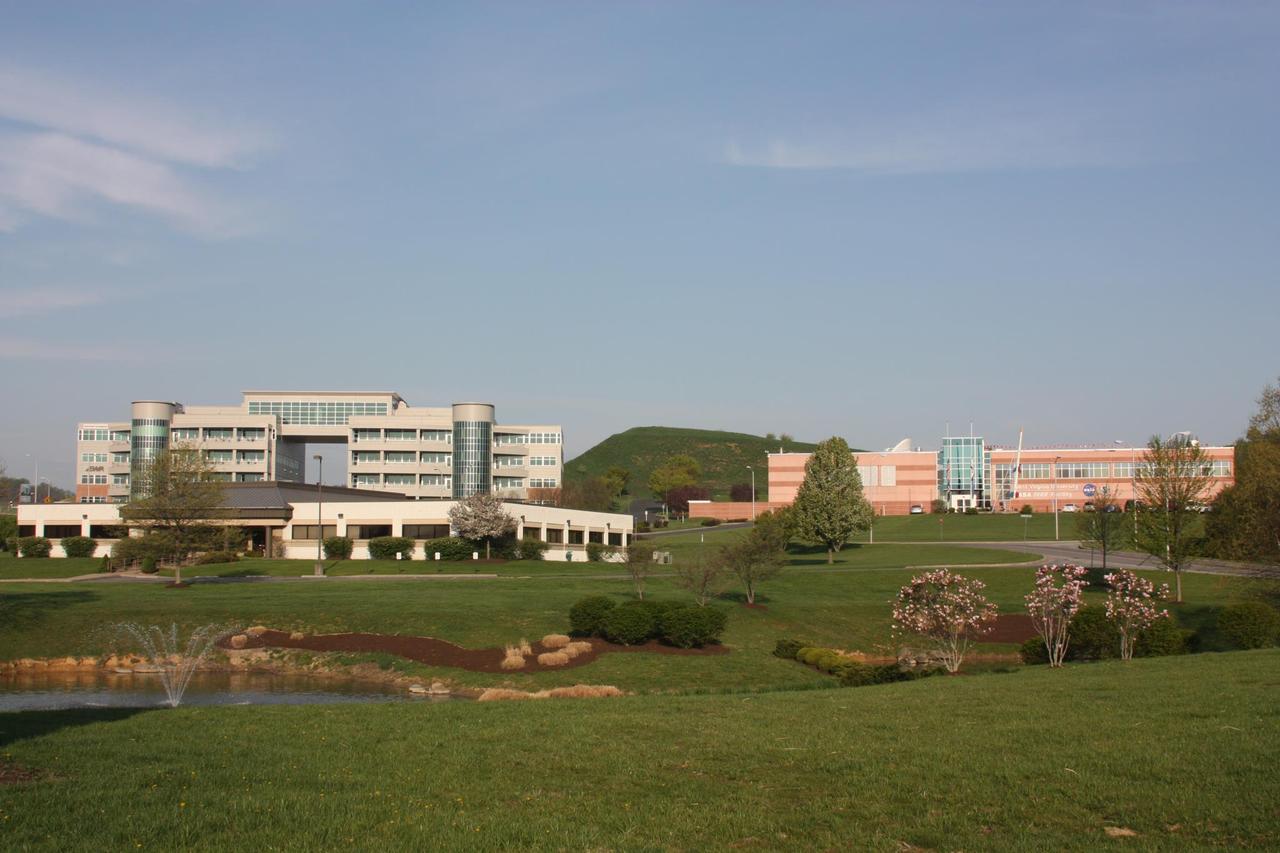
NASA's Katherine Johnson Independent Verification and Validation Facility in Fairmont, West Virginia.  Credit: NASA
NASA Renames Facility in Honor of ‘Hidden Figure’ Katherine Johnson
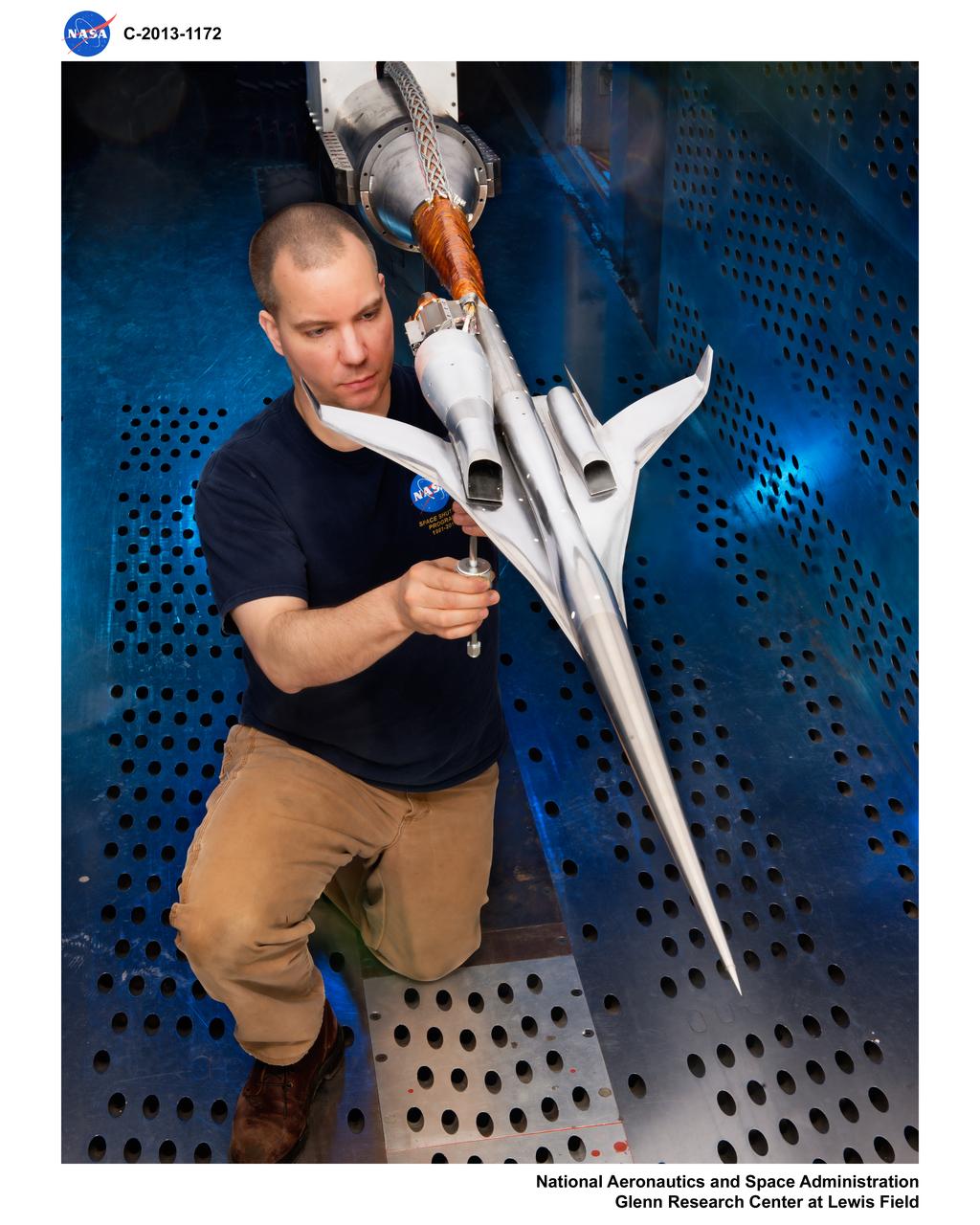
Boeing Quiet Experimental Validation Concept, QEVC, performance model
Boeing Quiet Experimental Validation Concept, QEVC, performance
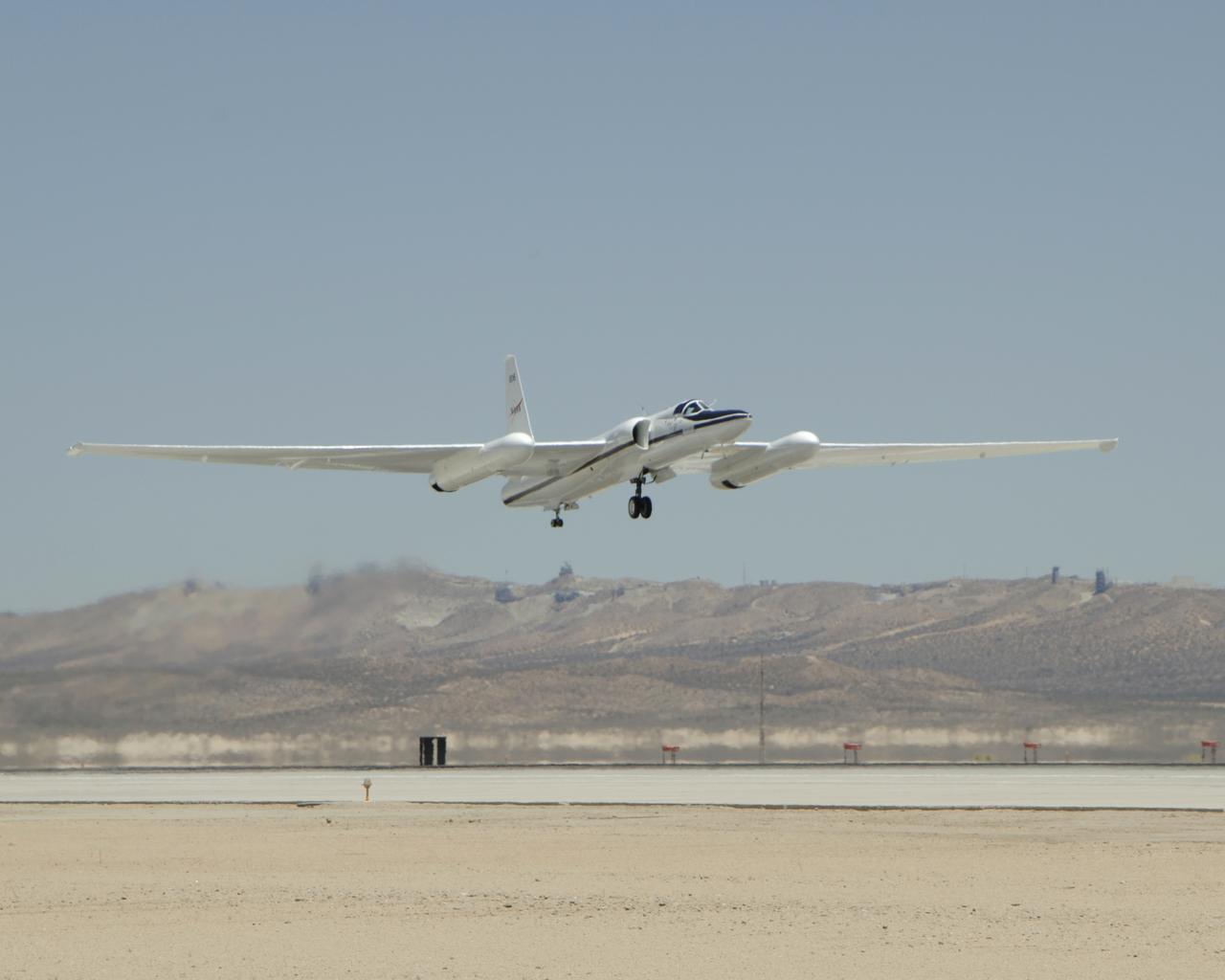
NASA'S ER-2 #806 lifts off from Edwards Air Force Base on a CALIPS/CloudSat validation instrument checkout flight.
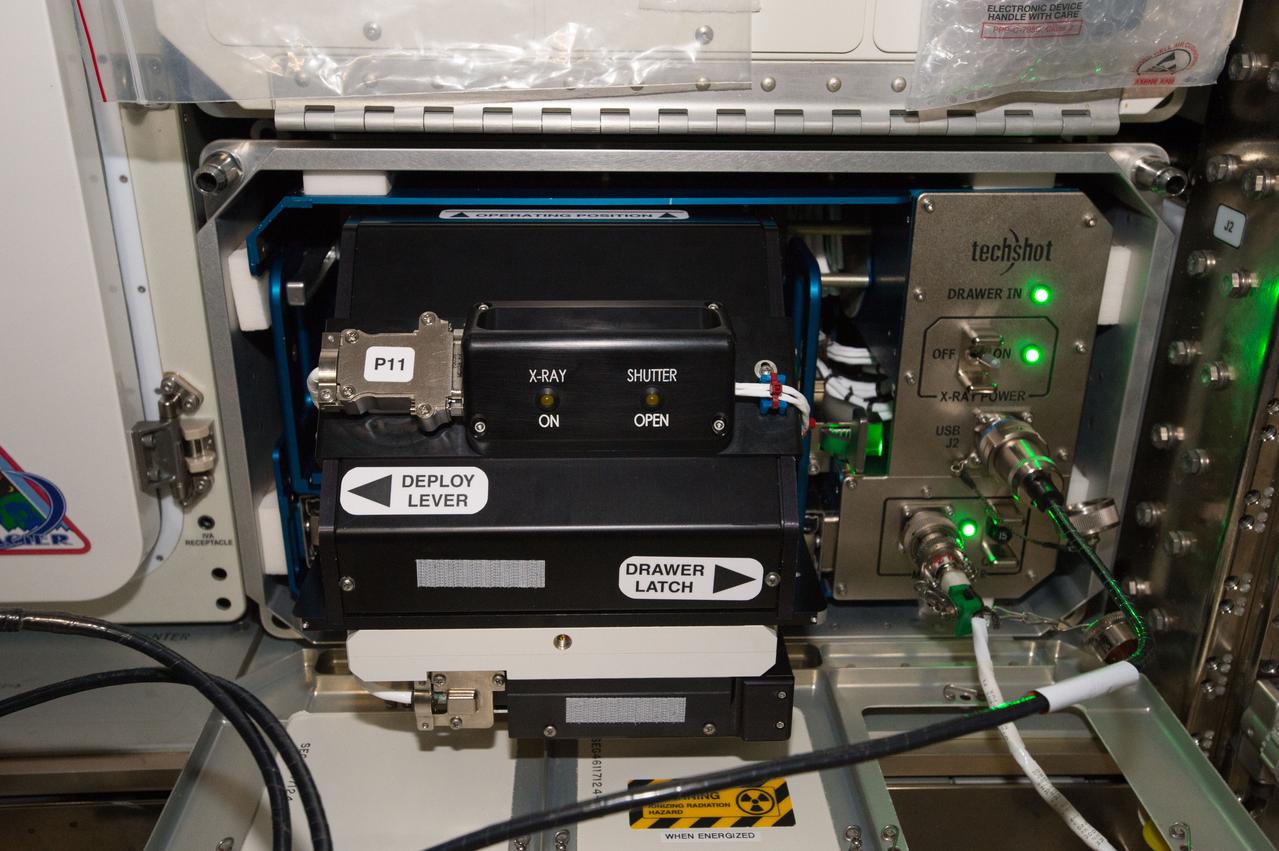
iss043e286992 (6/6/2015) --- Photographic documentation of the Bone Densitometer Validation experiment in support of Rodent Research 2 (RR2) experiment. Bone Densitometer Hardware Validation (Bone Densitometer Validation) tests an X-ray device the size of a kitchen microwave oven, which measures bone density, muscle and fat in mice living on the International Space Station.
Bone Densitometer Validation experiment
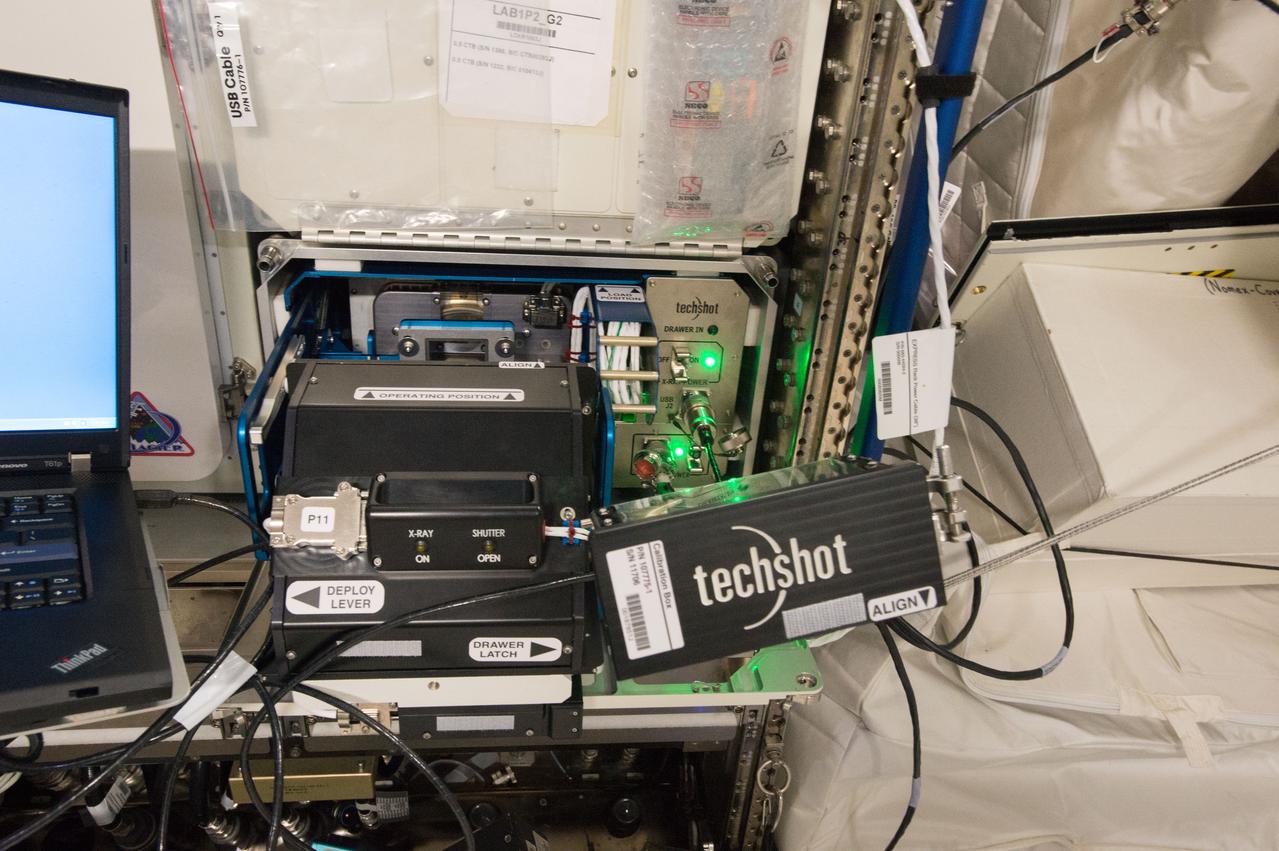
iss043e286986 (6/6/2015) --- Photographic documentation of the Bone Densitometer Validation experiment in support of Rodent Research 2 (RR2) experiment. Bone Densitometer Hardware Validation (Bone Densitometer Validation) tests an X-ray device the size of a kitchen microwave oven, which measures bone density, muscle and fat in mice living on the International Space Station.
Bone Densitometer Validation experiment
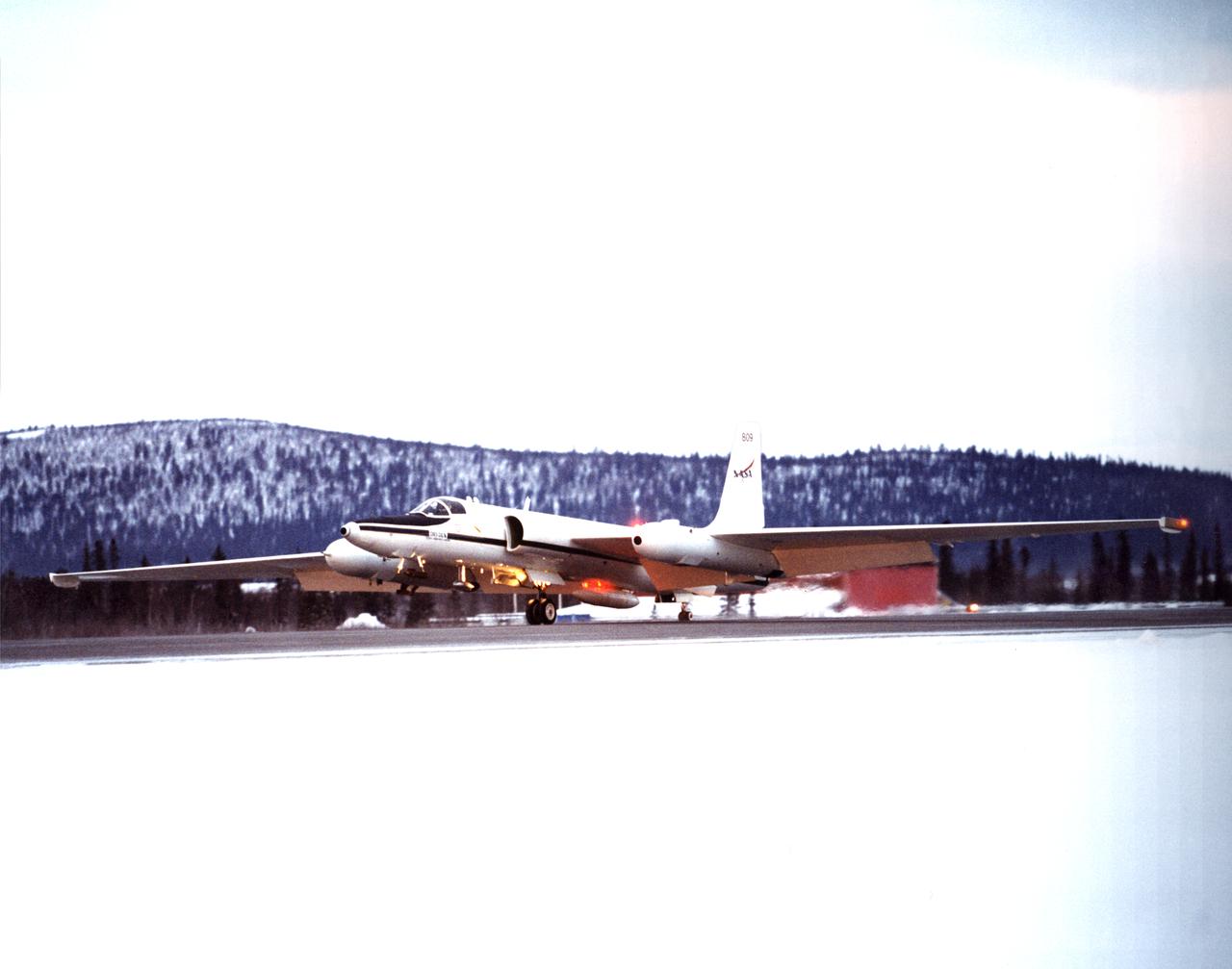
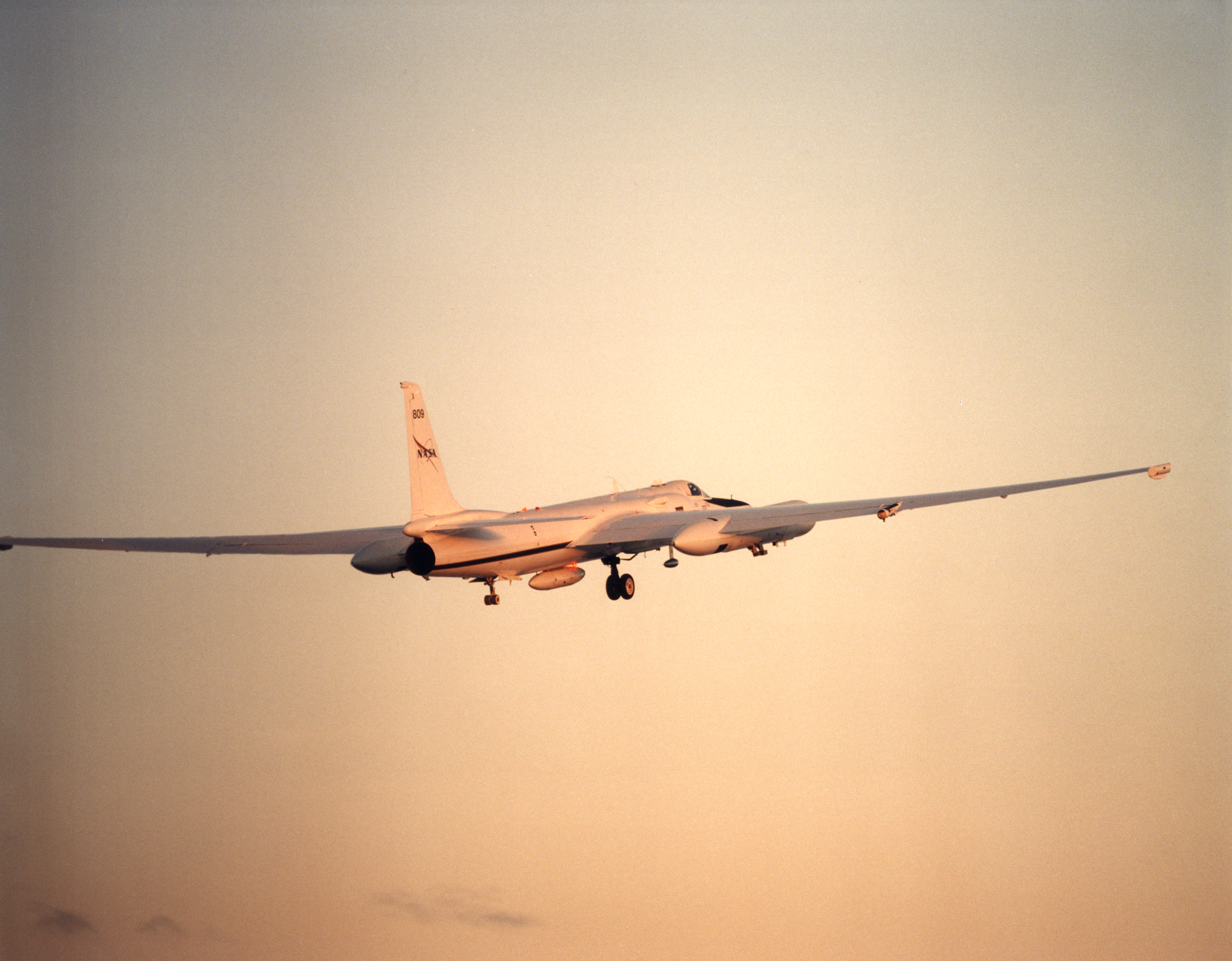
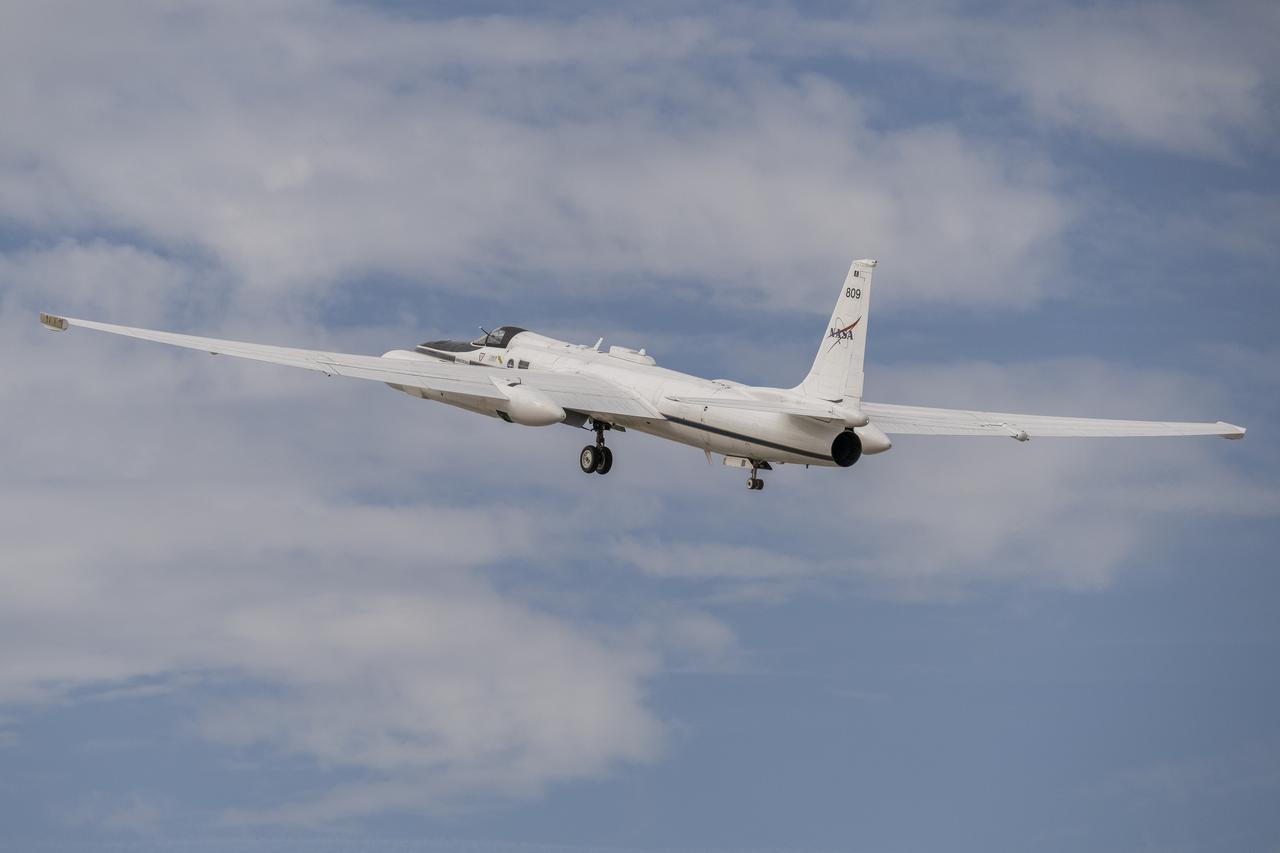
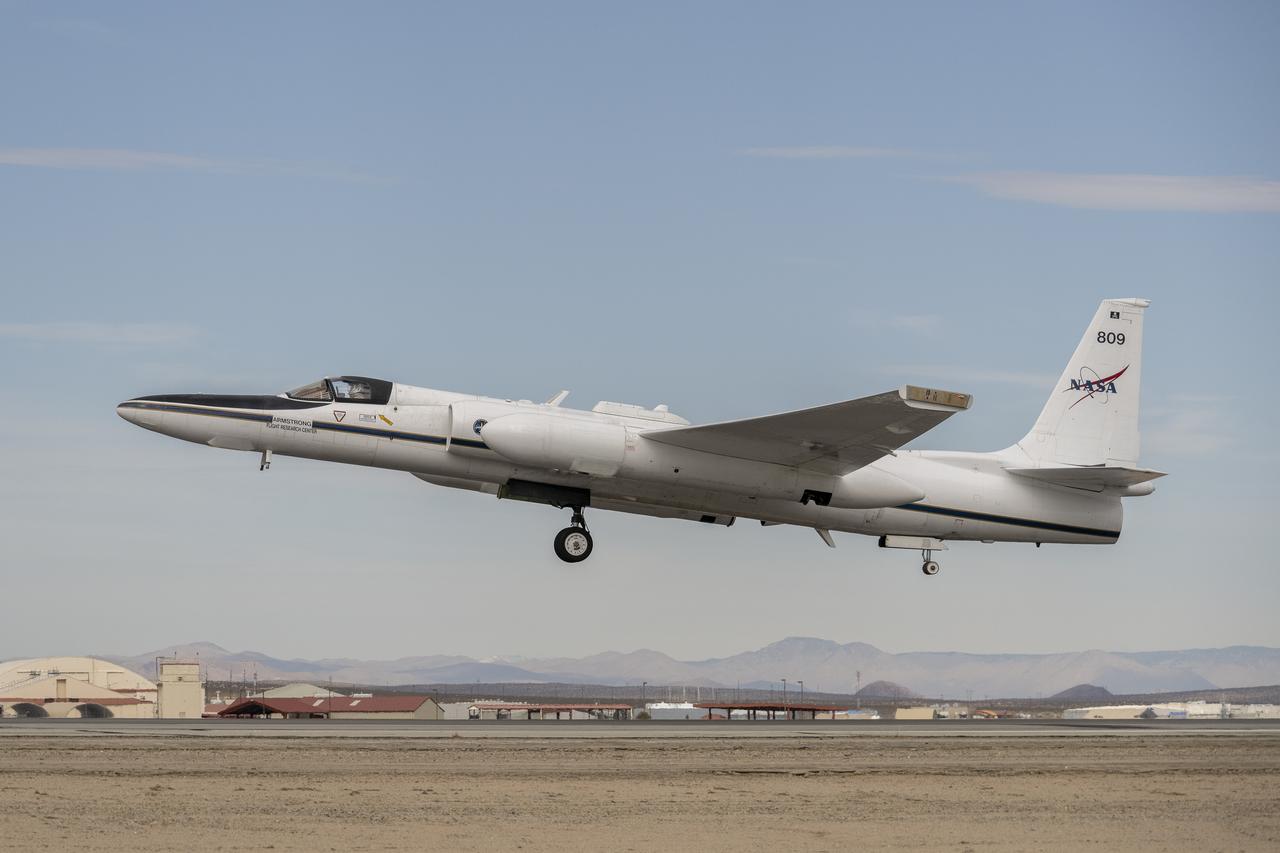
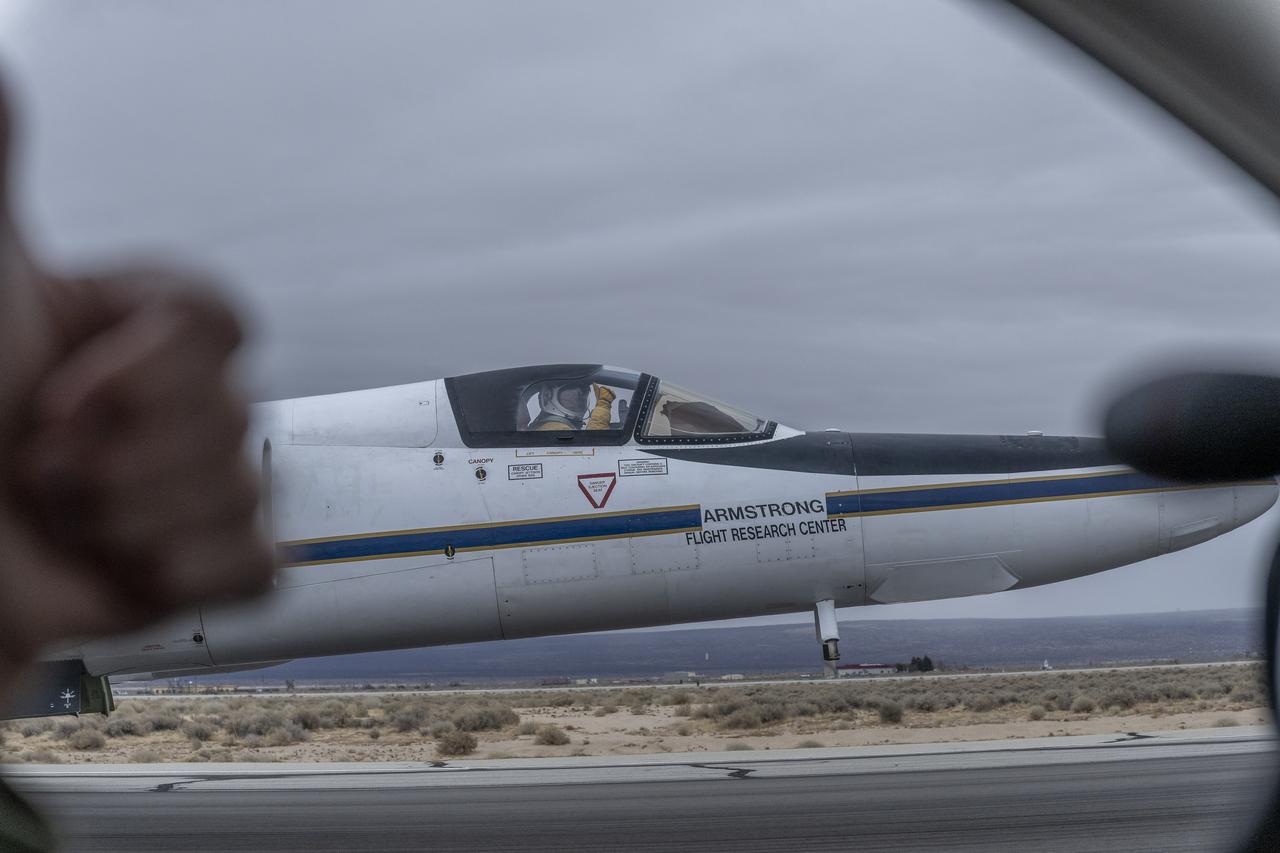
ER-2s bearing tail numbers 806 and 809 are used as airborne science platforms by NASA's Dryden Flight Research Center. The aircraft are platforms for a variety of high-altitude science missions flown over various parts of the world. They are also used for earth science and atmospheric sensor research and development, satellite calibration and data validation. The ER-2s are capable of carrying a maximum payload of 2,600 pounds of experiments in a nose bay, the main equipment bay behind the cockpit, two wing-mounted superpods and small underbody and trailing edges. Most ER-2 missions last about six hours with ranges of about 2,200 nautical miles. The aircraft typically fly at altitudes above 65,000 feet. On November 19, 1998, an ER-2 set a world record for medium weight aircraft reaching an altitude of 68,700 feet. The aircraft is 63 feet long, with a wingspan of 104 feet. The top of the vertical tail is 16 feet above ground when the aircraft is on the bicycle-type landing gear. Cruising speeds are 410 knots, or 467 miles per hour, at altitude. A single General Electric F-118 turbofan engine rated at 17,000 pounds thrust powers the ER-2.
ER-2 #809 landing in Kiruna, Sweden after second flight of the SAGE III Ozone Loss and Validation Experiment (SOLVE)
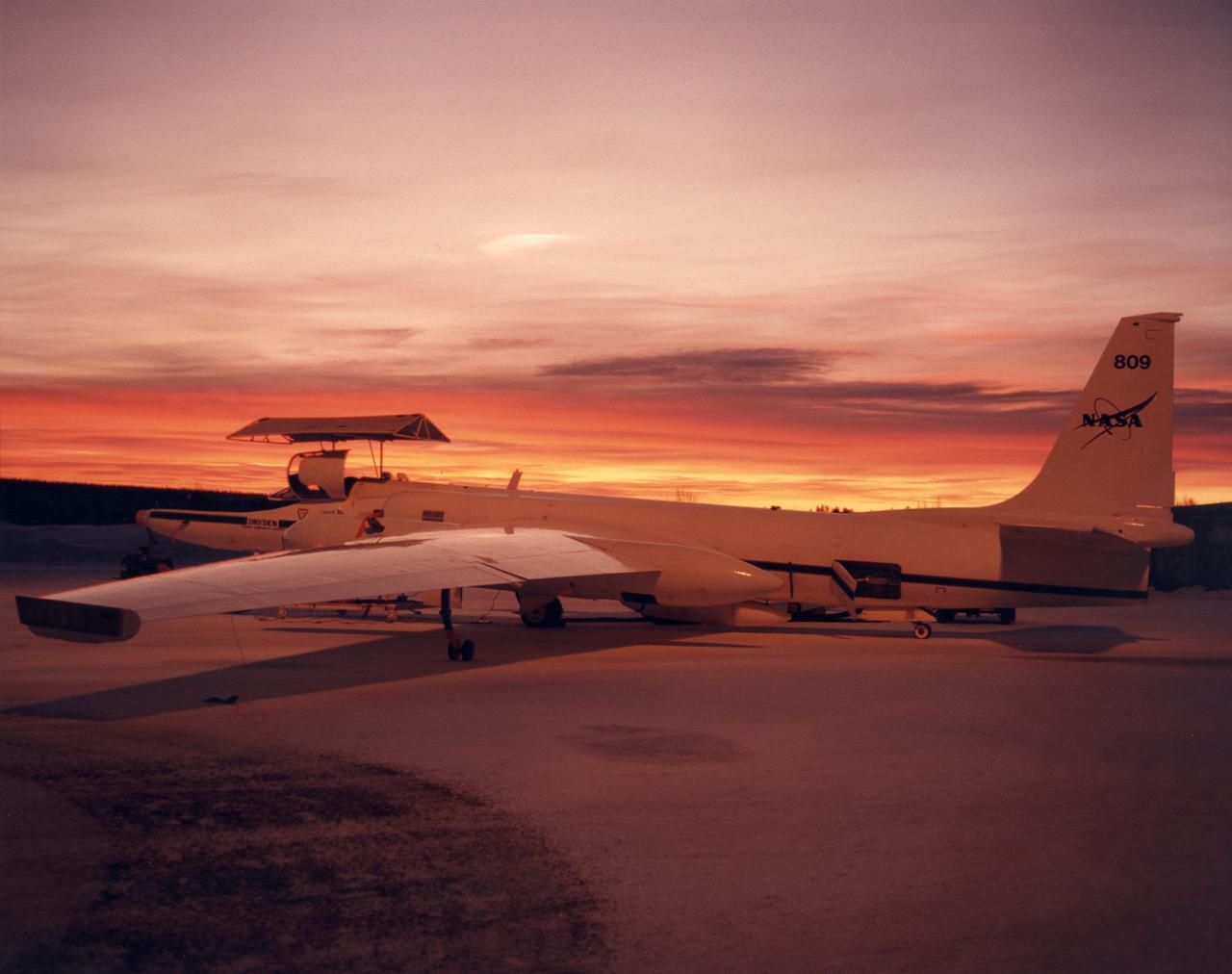
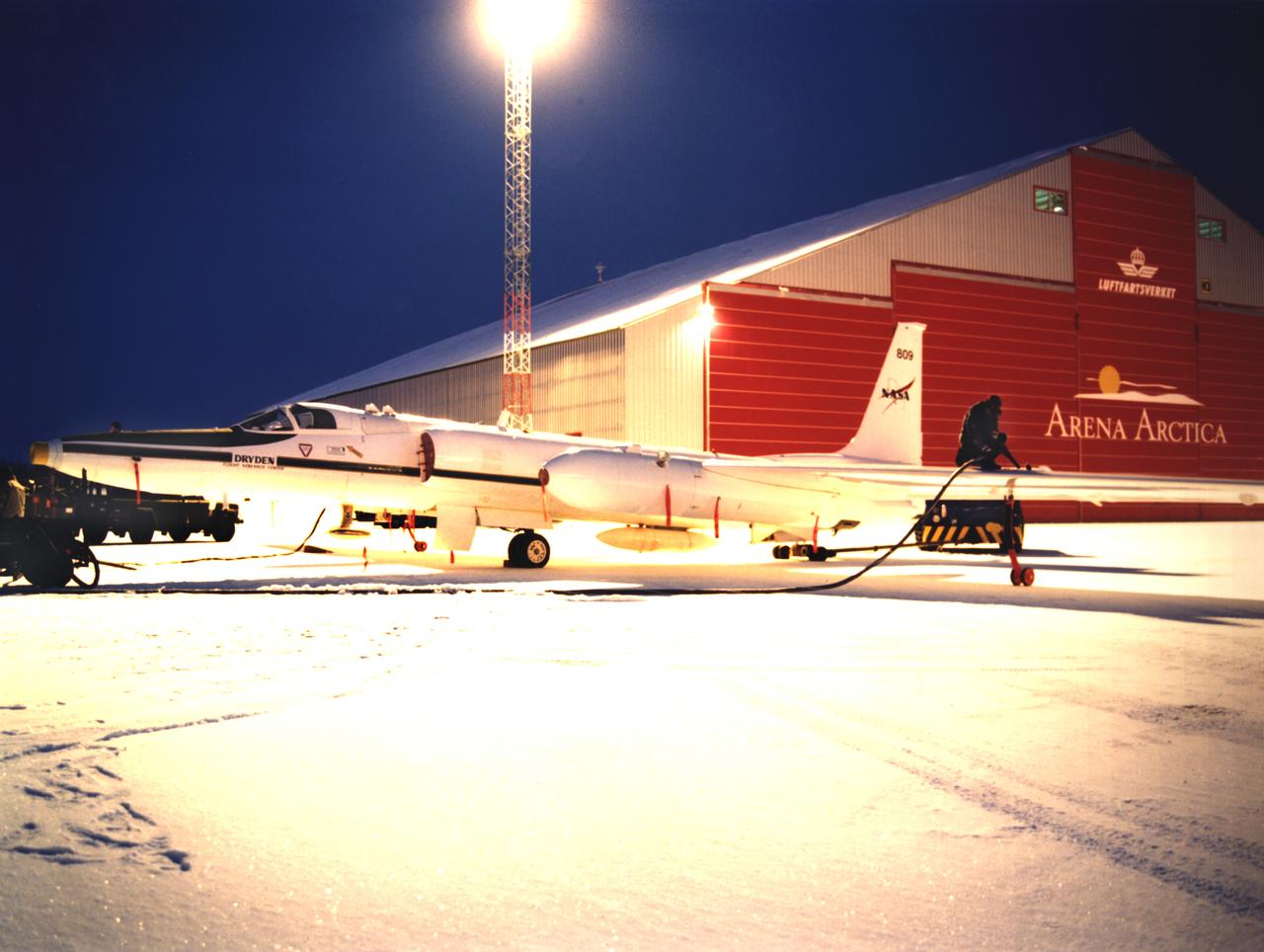
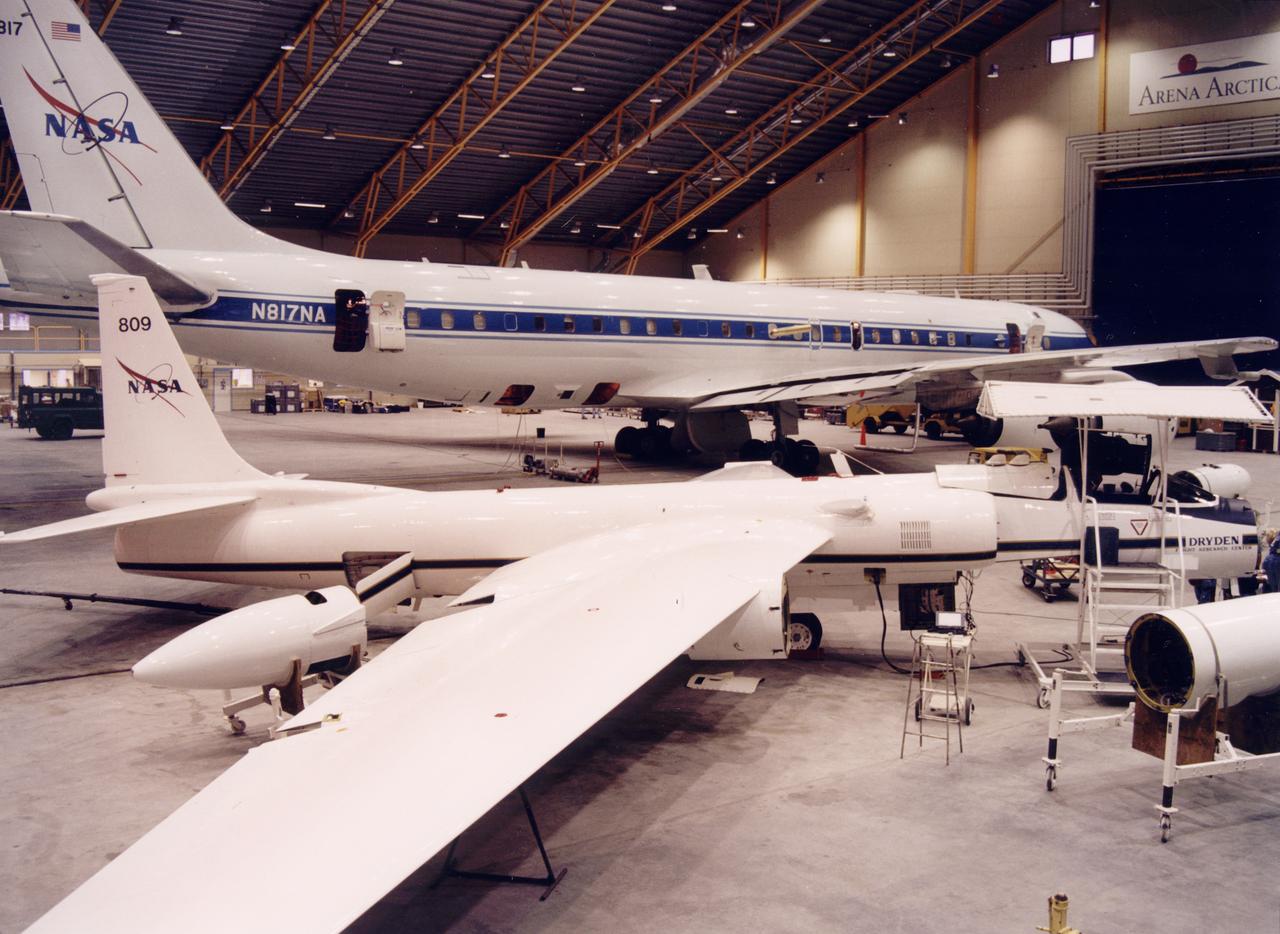
ER-2 #809 awaiting pilot entry for the third flight of the SAGE III Ozone Loss and Validation Experiment (SOLVE). The ER-2, a civilian variant of Lockheed's U-2, and another NASA flying laboratory, Dryden's DC-8, were based north of the Arctic Circle in Kiruna, Sweden during the winter of 2000 to study ozone depletion as part of SOLVE.  A large hangar built especially for research, "Arena Arctica" housed the instrumented aircraft and the scientists. Scientists have observed unusually low levels of ozone over the Arctic during recent winters, raising concerns that ozone depletion there could become more widespread as in the Antarctic ozone hole. The NASA-sponsored international mission took place between November 1999 and March 2000 and was divided into three phases. The DC-8 was involved in all three phases returning to Dryden between each phase. The ER-2 flew sample collection flights between January and March, remaining in Sweden from Jan. 9 through March 16.  "The collaborative campaign will provide an immense new body of information about the Arctic stratosphere," said program scientist Dr. Michael Kurylo, NASA Headquarters. "Our understanding of the Earth's ozone will be greatly enhanced by this research."
ER-2 #809 awaits pilot entry for the third flight of the SAGE III Ozone Loss and Validation Experiment (SOLVE)
ER-2s bearing tail numbers 806 and 809 are used as airborne science platforms by NASA's Dryden Flight Research Center. The aircraft are platforms for a variety of high-altitude science missions flown over various parts of the world. They are also used for earth science and atmospheric sensor research and development, satellite calibration and data validation. The ER-2s are capable of carrying a maximum payload of 2,600 pounds of experiments in a nose bay, the main equipment bay behind the cockpit, two wing-mounted superpods and small underbody and trailing edges. Most ER-2 missions last about six hours with ranges of about 2,200 nautical miles. The aircraft typically fly at altitudes above 65,000 feet. On November 19, 1998, an ER-2 set a world record for medium weight aircraft reaching an altitude of 68,700 feet. The aircraft is 63 feet long, with a wingspan of 104 feet. The top of the vertical tail is 16 feet above ground when the aircraft is on the bicycle-type landing gear. Cruising speeds are 410 knots, or 467 miles per hour, at altitude. A single General Electric F-118 turbofan engine rated at 17,000 pounds thrust powers the ER-2.
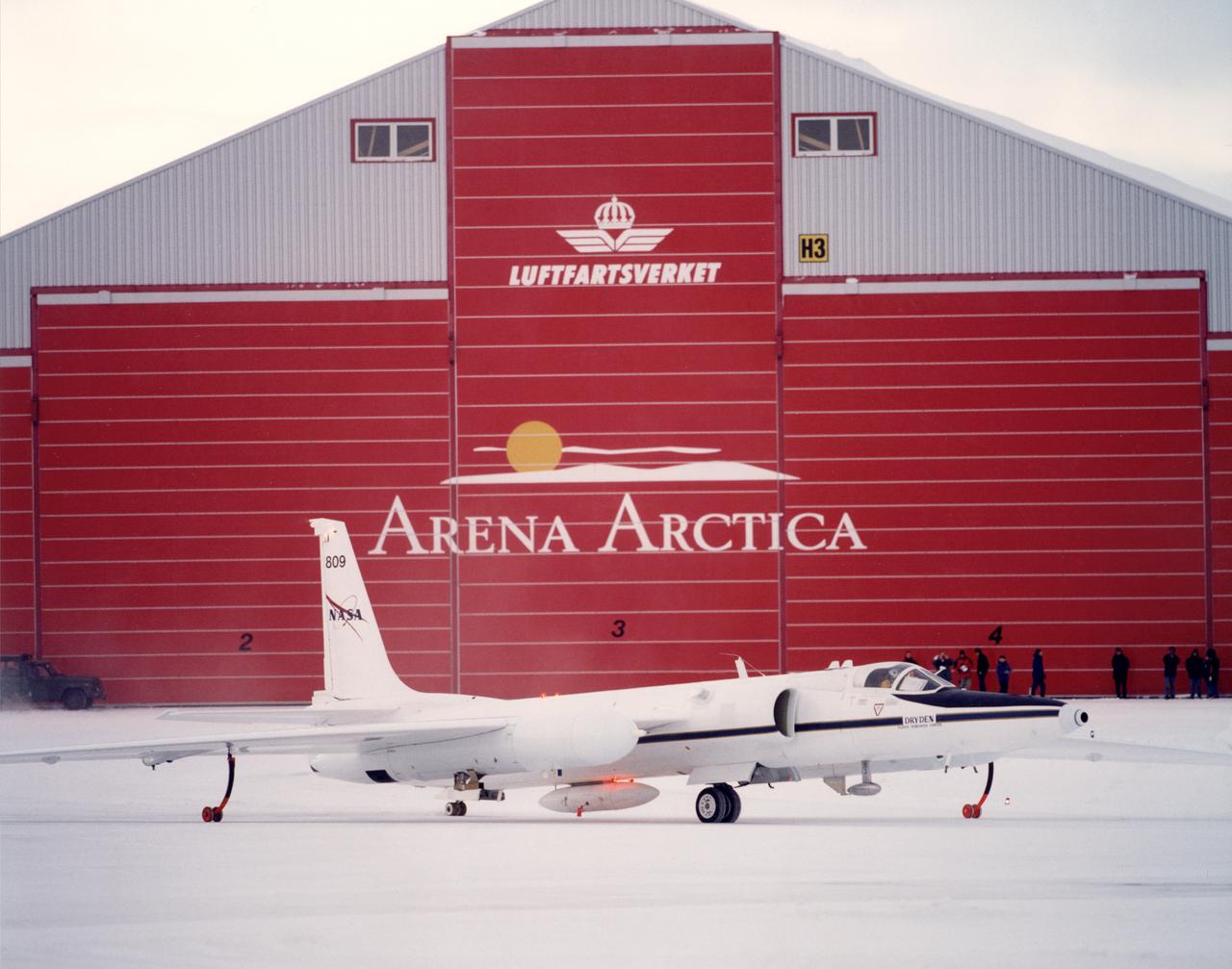
ER-2 #809 outside Arena Arctica hangar in Kiruna, Sweden prior to the SAGE III Ozone Loss and Validation Experiment (SOLVE)
ER-2s bearing tail numbers 806 and 809 are used as airborne science platforms by NASA's Dryden Flight Research Center. The aircraft are platforms for a variety of high-altitude science missions flown over various parts of the world. They are also used for earth science and atmospheric sensor research and development, satellite calibration and data validation. The ER-2s are capable of carrying a maximum payload of 2,600 pounds of experiments in a nose bay, the main equipment bay behind the cockpit, two wing-mounted superpods and small underbody and trailing edges. Most ER-2 missions last about six hours with ranges of about 2,200 nautical miles. The aircraft typically fly at altitudes above 65,000 feet. On November 19, 1998, an ER-2 set a world record for medium weight aircraft reaching an altitude of 68,700 feet. The aircraft is 63 feet long, with a wingspan of 104 feet. The top of the vertical tail is 16 feet above ground when the aircraft is on the bicycle-type landing gear. Cruising speeds are 410 knots, or 467 miles per hour, at altitude. A single General Electric F-118 turbofan engine rated at 17,000 pounds thrust powers the ER-2.
ER-2 #809 in Kiruna, Sweden for the SAGE III Ozone Loss and Validation Experiment (SOLVE) with pilot Dee Porter entry for first flight
ER-2s bearing tail numbers 806 and 809 are used as airborne science platforms by NASA's Dryden Flight Research Center. The aircraft are platforms for a variety of high-altitude science missions flown over various parts of the world. They are also used for earth science and atmospheric sensor research and development, satellite calibration and data validation. The ER-2s are capable of carrying a maximum payload of 2,600 pounds of experiments in a nose bay, the main equipment bay behind the cockpit, two wing-mounted superpods and small underbody and trailing edges. Most ER-2 missions last about six hours with ranges of about 2,200 nautical miles. The aircraft typically fly at altitudes above 65,000 feet. On November 19, 1998, an ER-2 set a world record for medium weight aircraft reaching an altitude of 68,700 feet. The aircraft is 63 feet long, with a wingspan of 104 feet. The top of the vertical tail is 16 feet above ground when the aircraft is on the bicycle-type landing gear. Cruising speeds are 410 knots, or 467 miles per hour, at altitude. A single General Electric F-118 turbofan engine rated at 17,000 pounds thrust powers the ER-2.
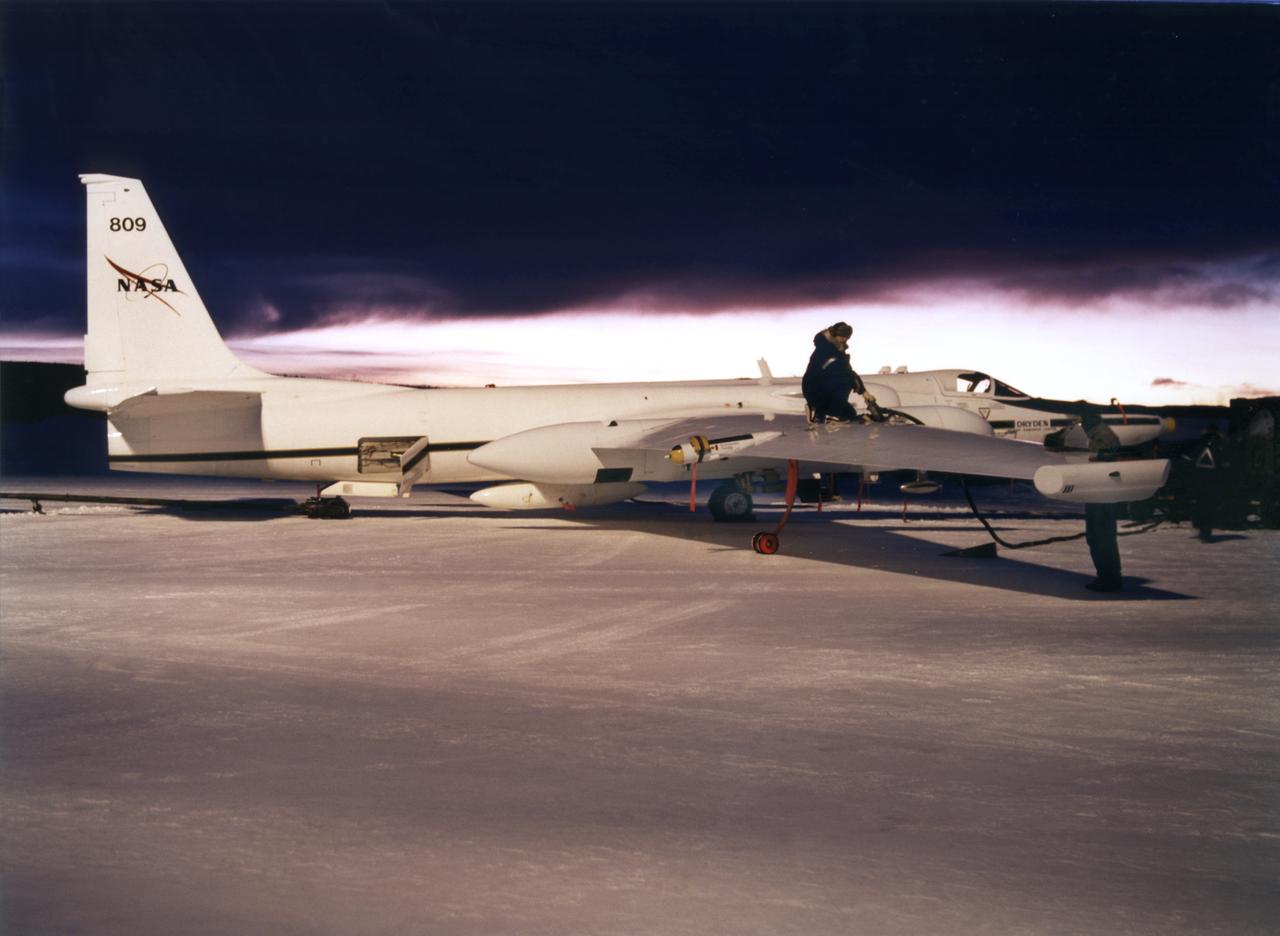
ER-2 #809 during fueling for first flight in Kiruna, Sweden prior to the SAGE III Ozone Loss and Validation Experiment (SOLVE)
ER-2s bearing tail numbers 806 and 809 are used as airborne science platforms by NASA's Dryden Flight Research Center. The aircraft are platforms for a variety of high-altitude science missions flown over various parts of the world. They are also used for earth science and atmospheric sensor research and development, satellite calibration and data validation. The ER-2s are capable of carrying a maximum payload of 2,600 pounds of experiments in a nose bay, the main equipment bay behind the cockpit, two wing-mounted superpods and small underbody and trailing edges. Most ER-2 missions last about six hours with ranges of about 2,200 nautical miles. The aircraft typically fly at altitudes above 65,000 feet. On November 19, 1998, an ER-2 set a world record for medium weight aircraft reaching an altitude of 68,700 feet. The aircraft is 63 feet long, with a wingspan of 104 feet. The top of the vertical tail is 16 feet above ground when the aircraft is on the bicycle-type landing gear. Cruising speeds are 410 knots, or 467 miles per hour, at altitude. A single General Electric F-118 turbofan engine rated at 17,000 pounds thrust powers the ER-2.
ER-2 #809 receives preflight fueling outside Arena Arctica hangar in Kiruna, Sweden prior to the SAGE III Ozone Loss and Validation Experiment (SOLVE)
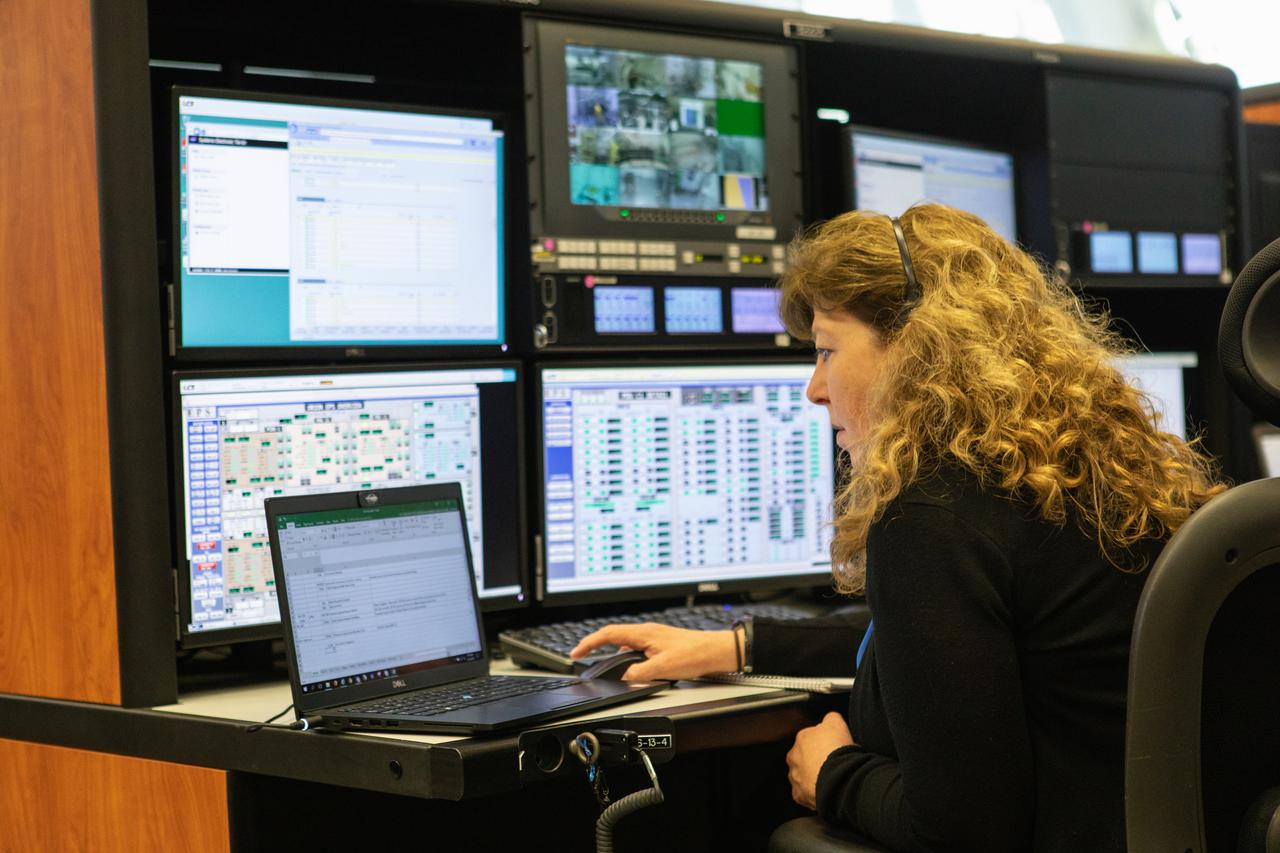
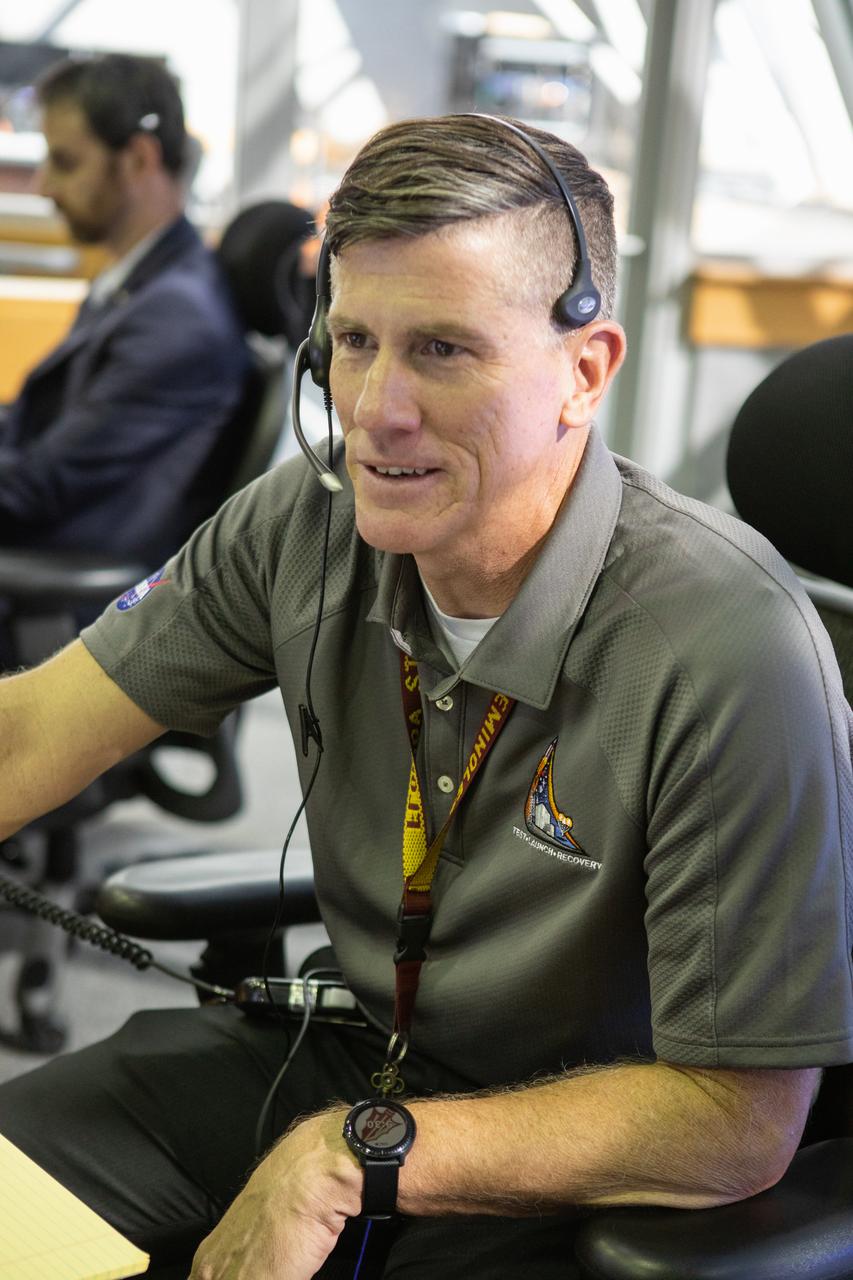
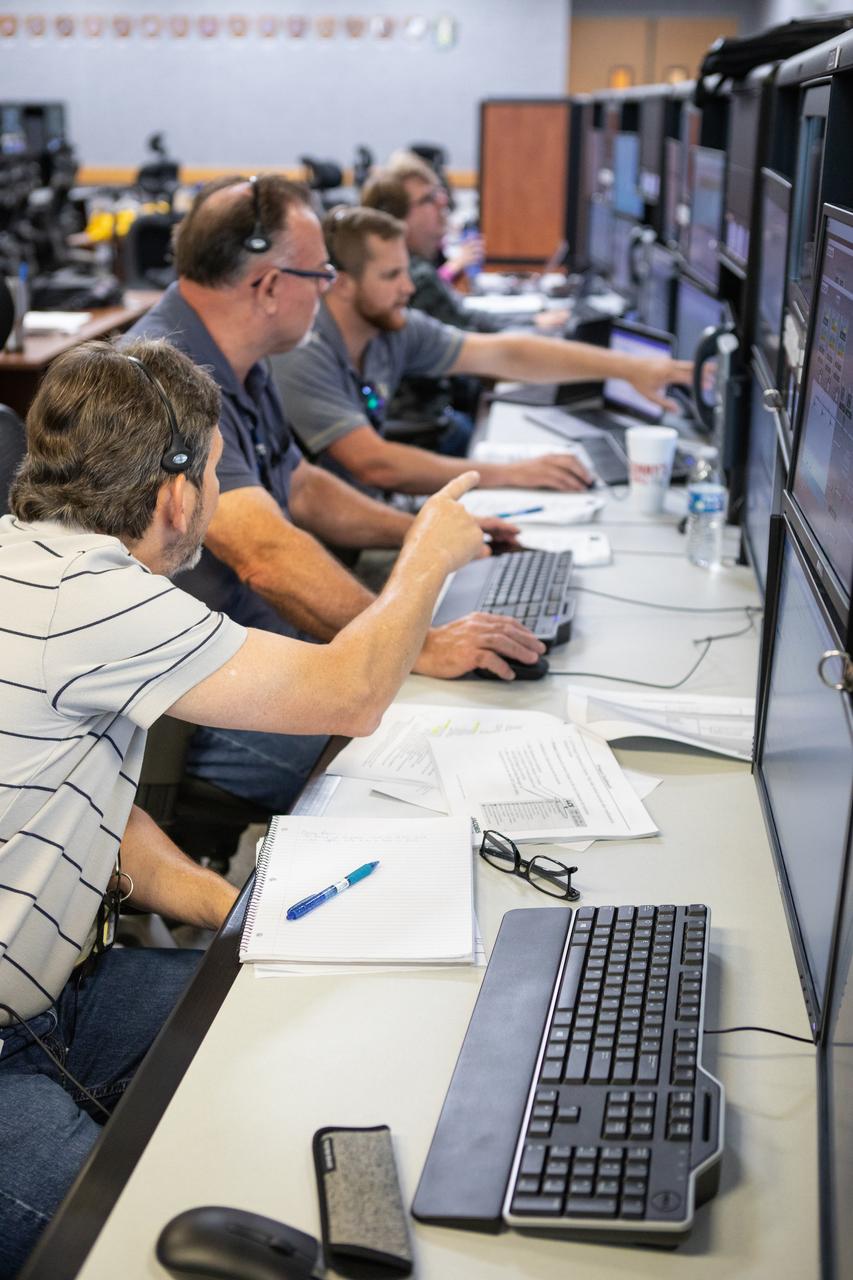
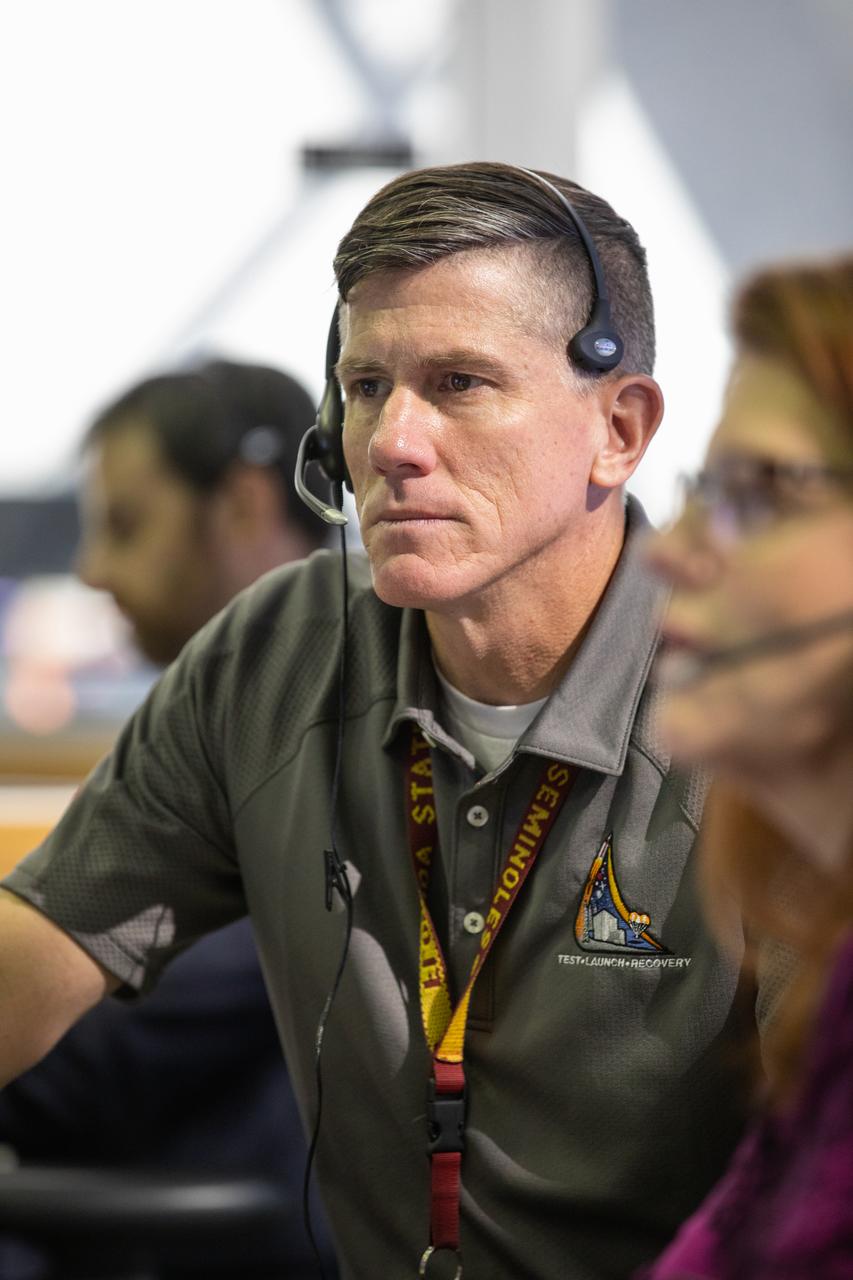
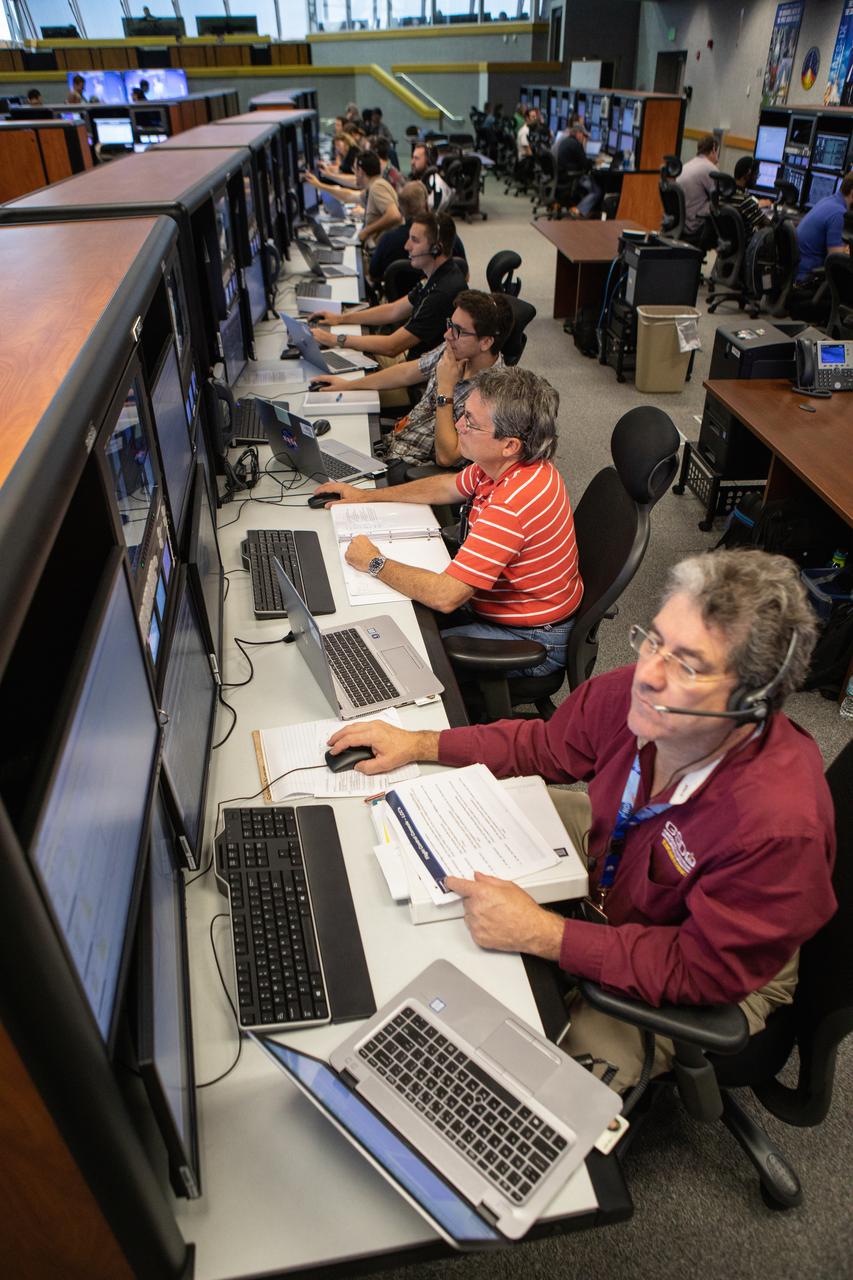
Carla Rekucki, lead NASA test director in NASA’s Exploration Ground Systems (EGS), center, and other launch team members participate in validation testing inside Firing Room 1 in the Launch Control Center at NASA’s Kennedy Space Center in Florida on July 11, 2019.  The team includes personnel with NASA’s Exploration Ground Systems (EGS) and Jacobs Test and Operations Contract (TOSC). The simulation was designed to validate the firing room consoles and communications systems, as well as the new Spaceport Command and Control System (SCCS), which will operate, monitor and coordinate ground equipment in preparation for Artemis 1, the uncrewed first flight of the Space Launch System rocket and Orion spacecraft.
Artemis Launch Team Validation Simulation in Firing Room 1
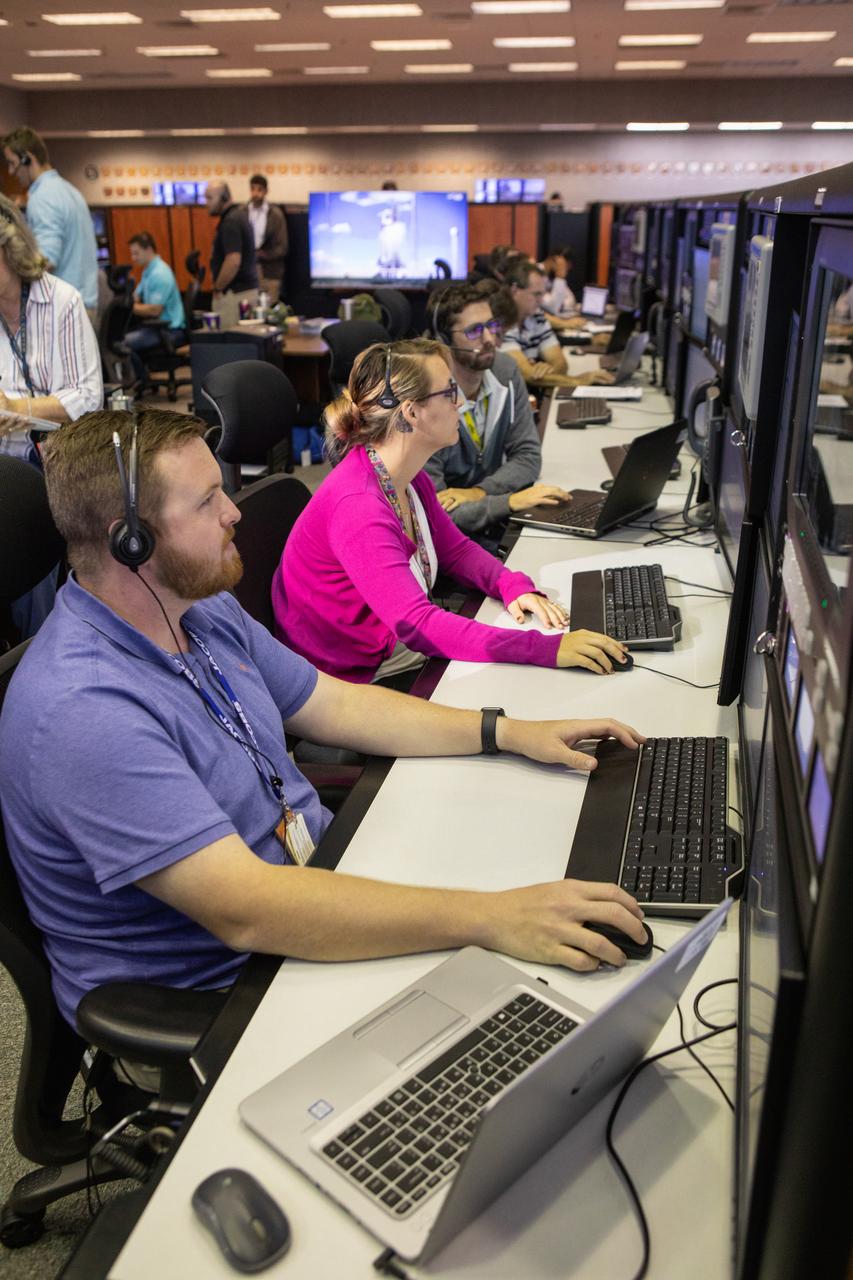
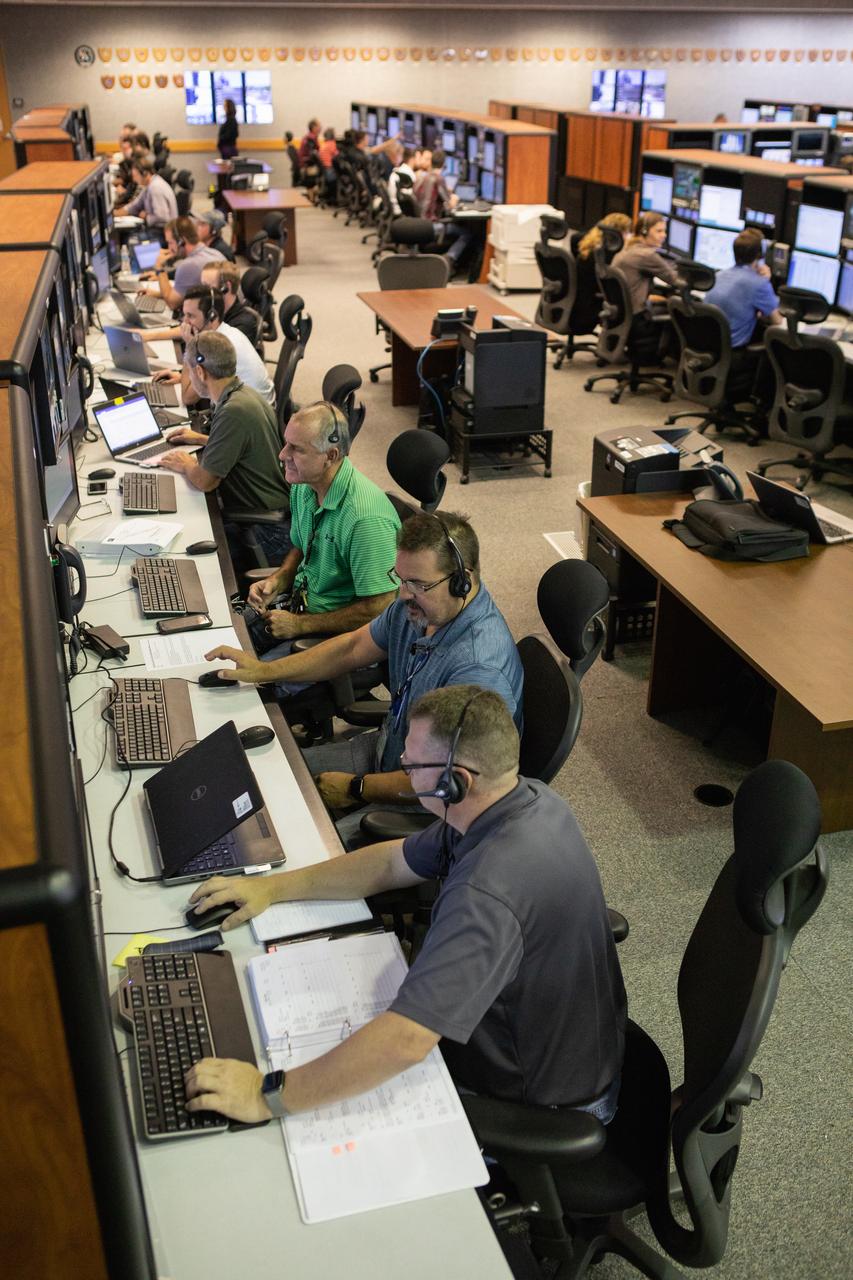
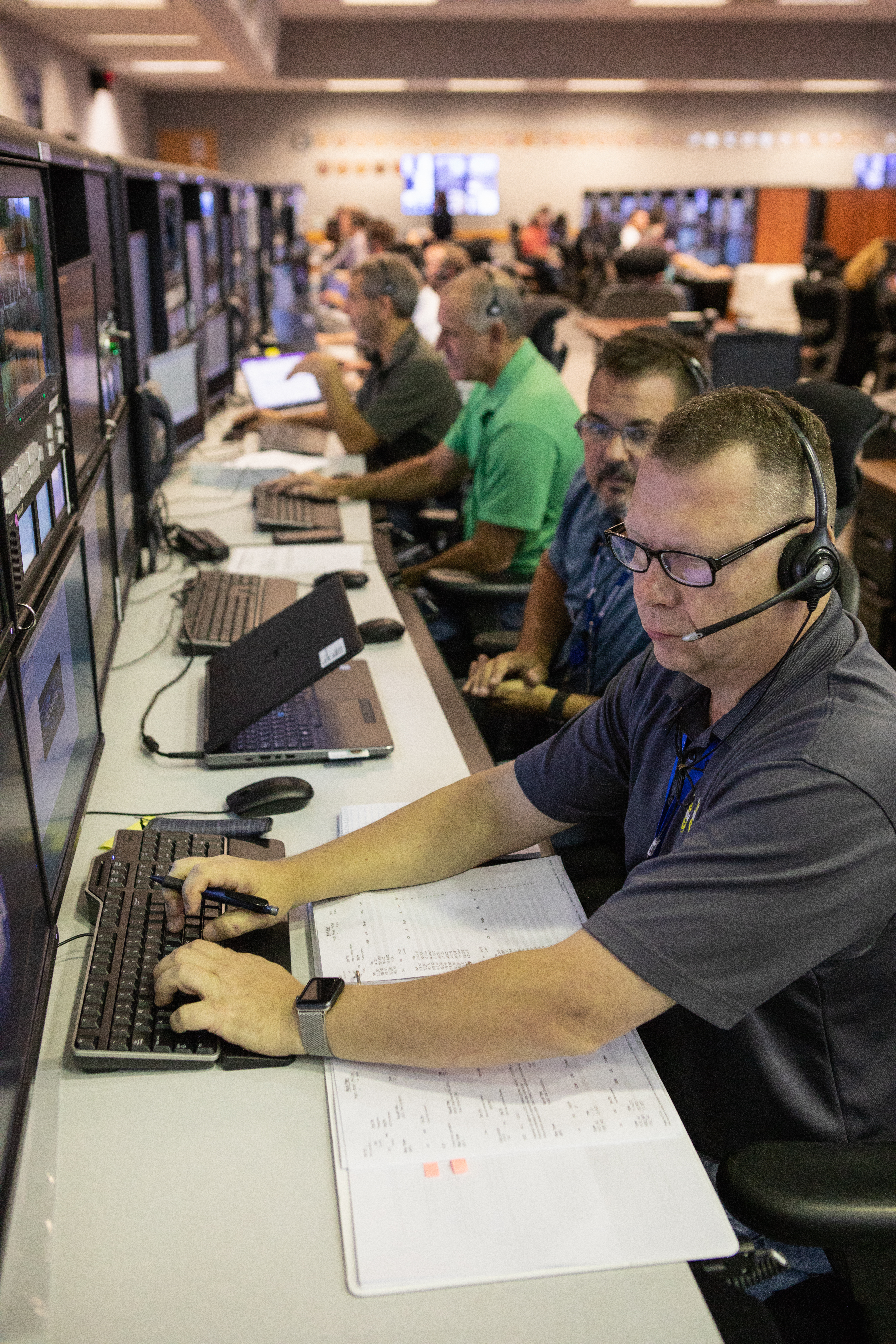
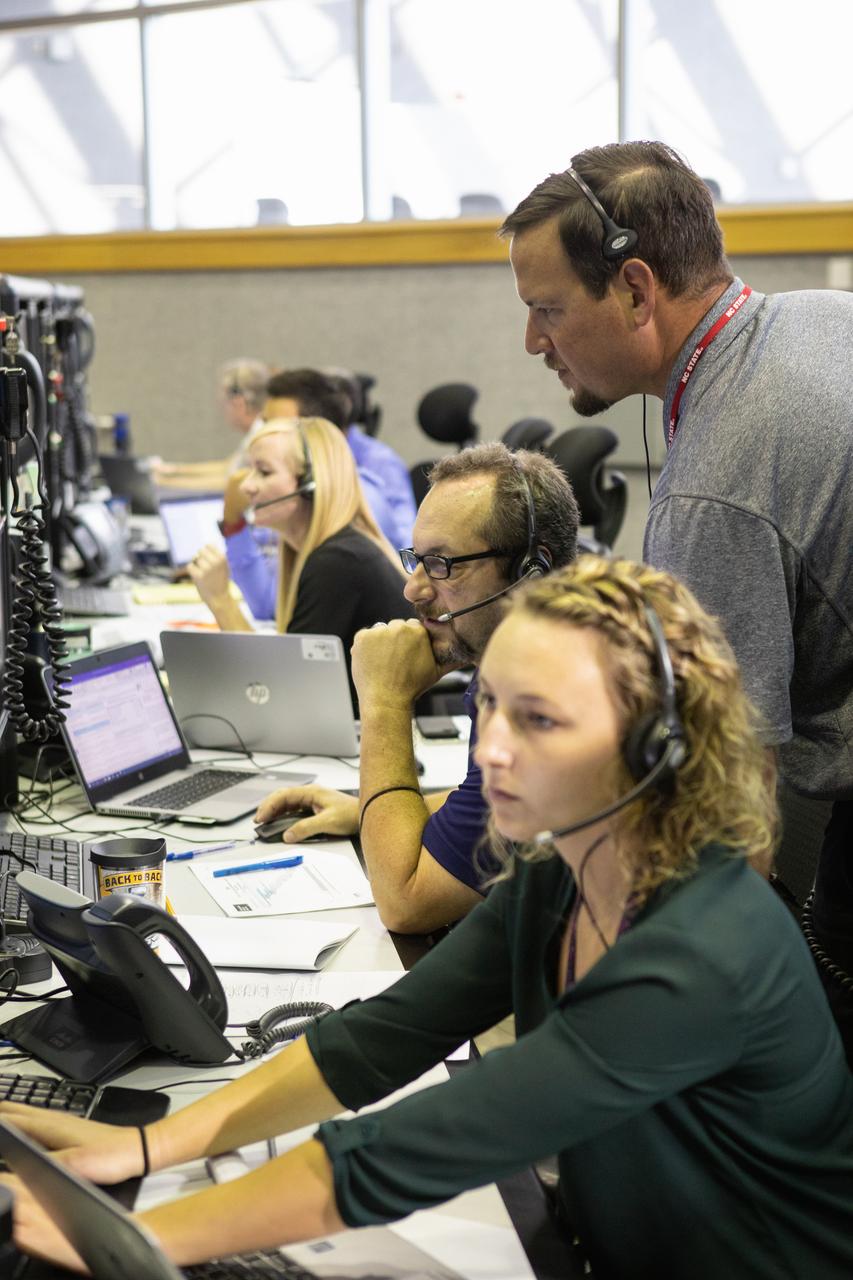
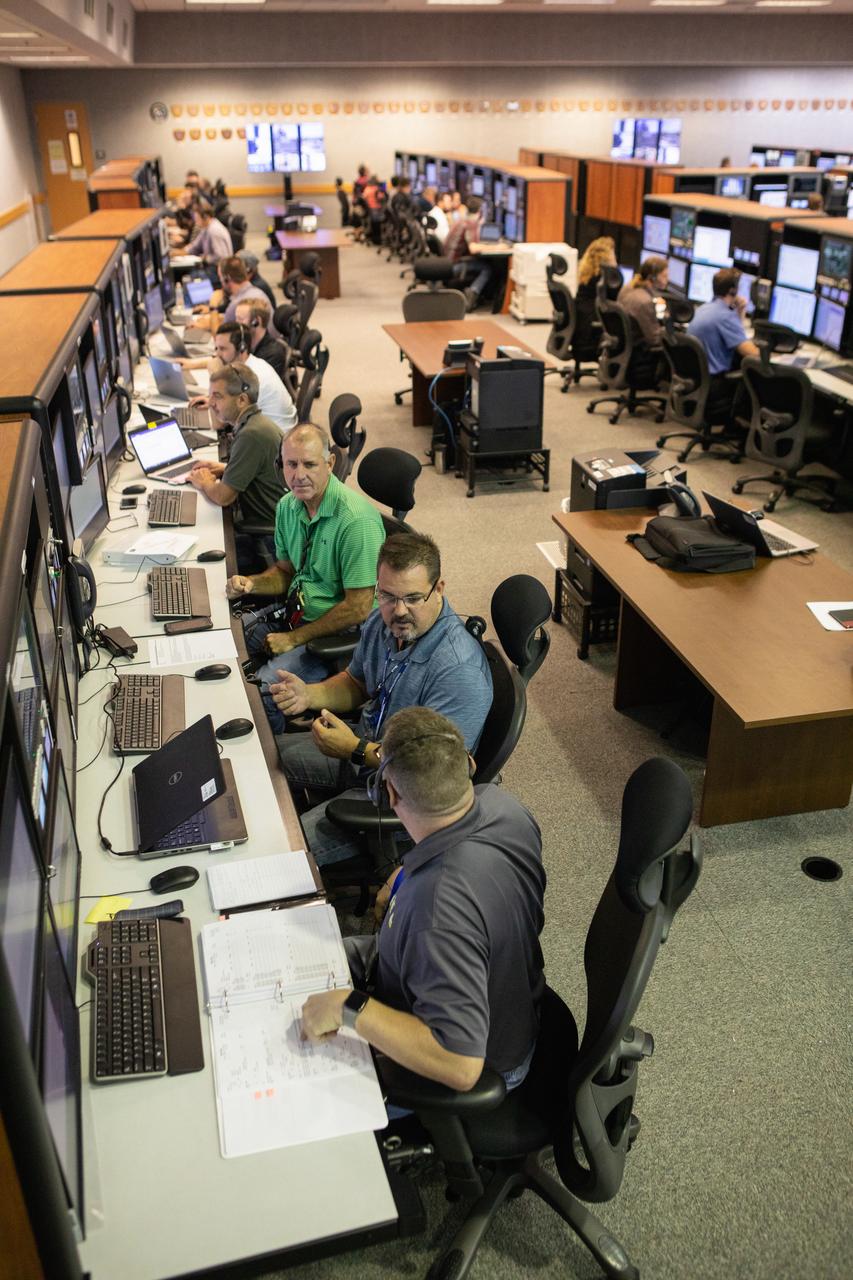
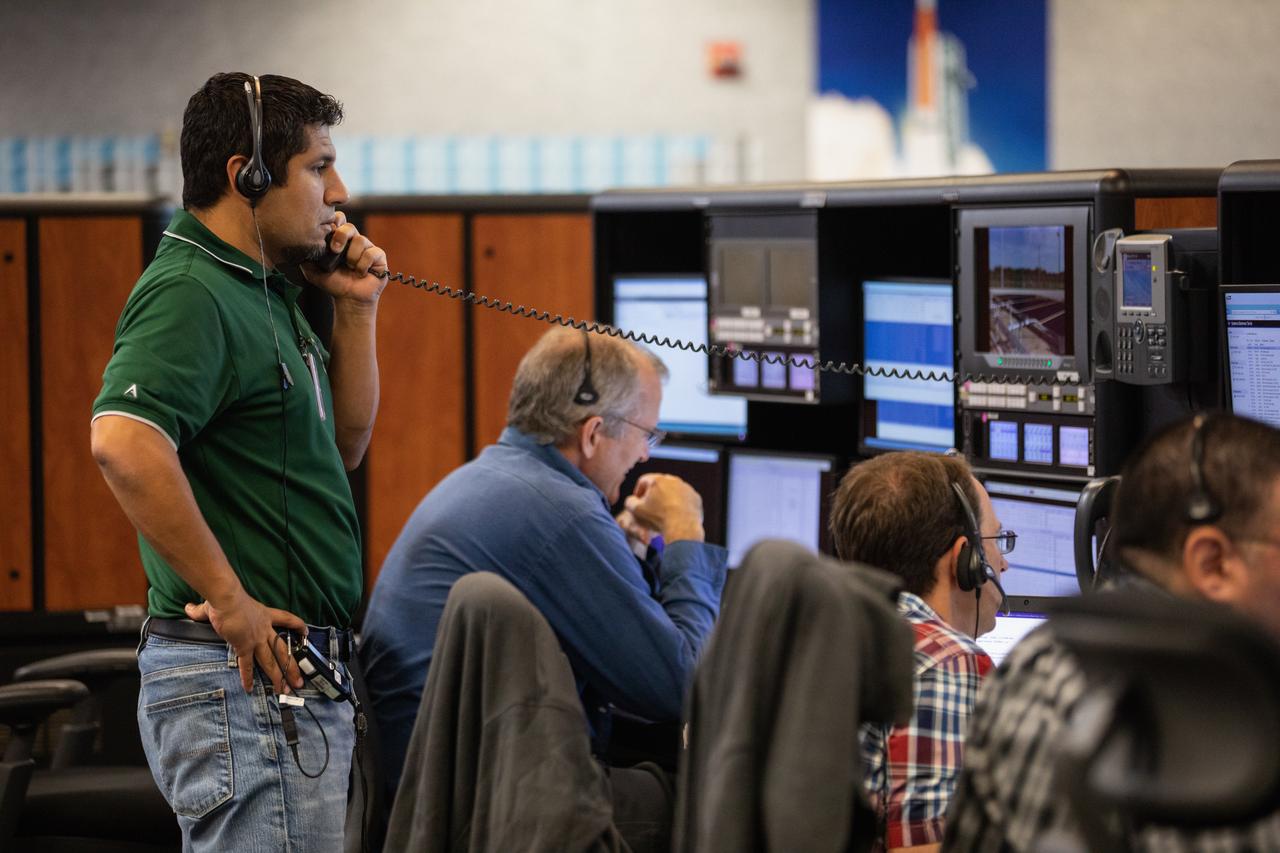
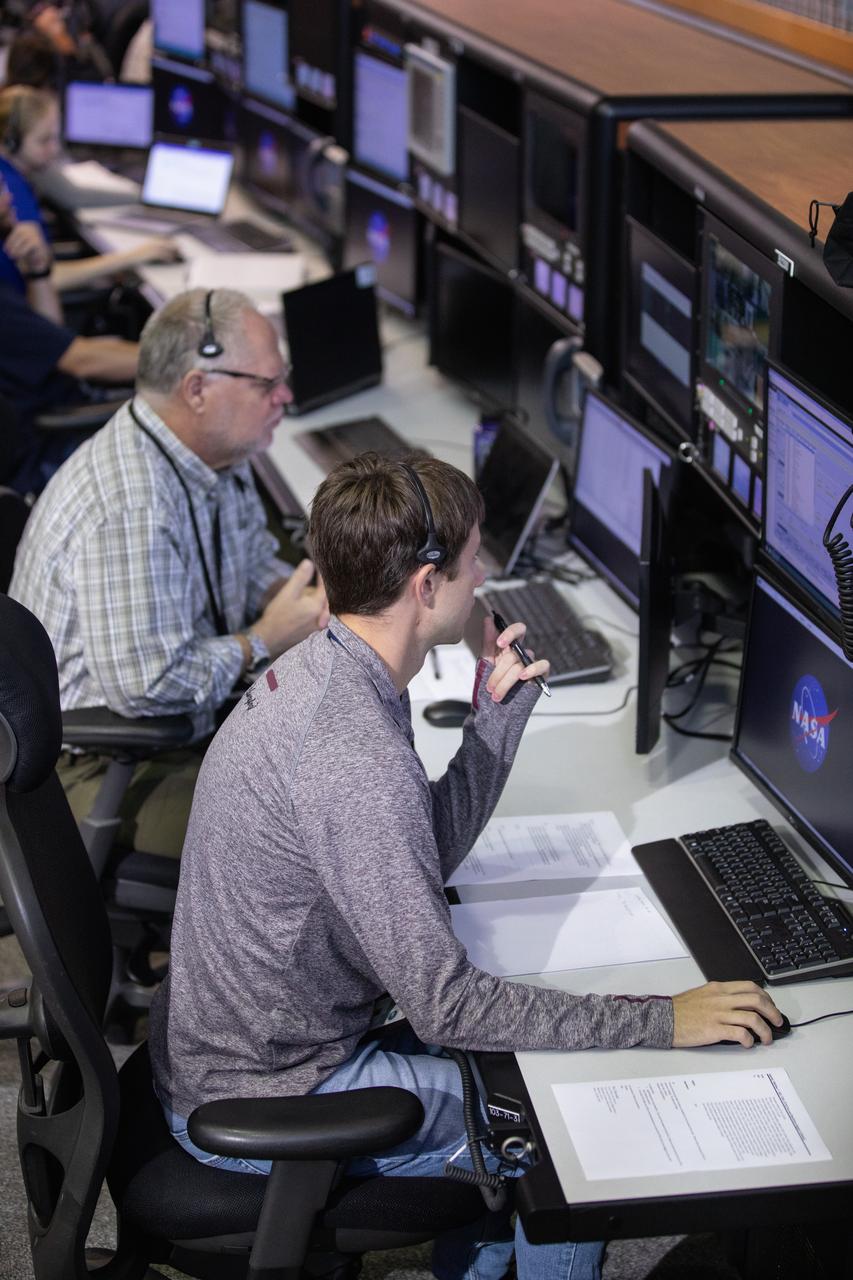
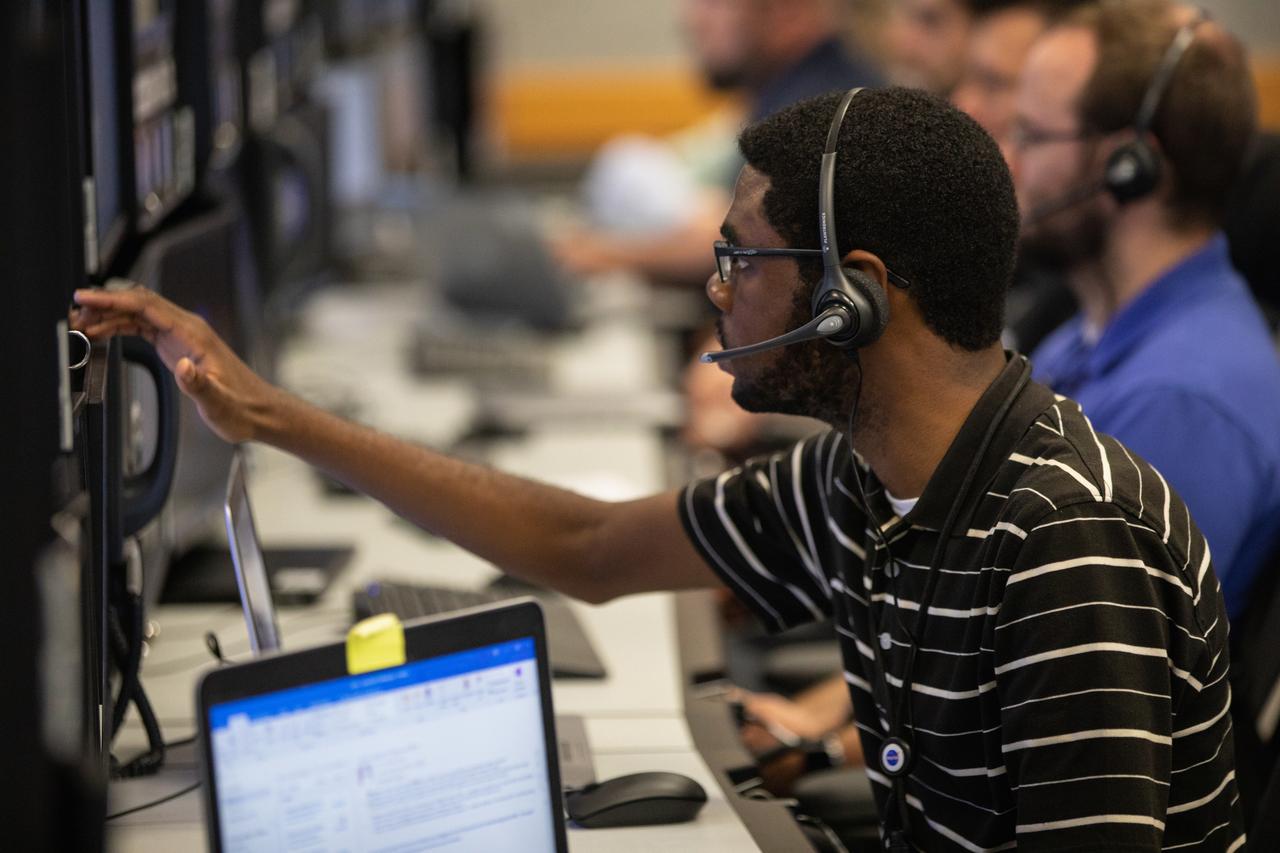
Members of the Artemis 1 launch team, including personnel with NASA’s Exploration Ground Systems (EGS) and Jacobs Test and Operations Contract (TOSC), participate in validation testing inside Firing Room 1 in the Launch Control Center at NASA’s Kennedy Space Center in Florida on July 11, 2019. The team includes personnel with NASA’s Exploration Ground Systems (EGS) and Jacobs Test and Operations Contract (TOSC). The simulation was designed to validate the firing room consoles and communications systems, as well as the new Spaceport Command and Control System (SCCS), which will operate, monitor and coordinate ground equipment in preparation for Artemis 1, the uncrewed first flight of the Space Launch System rocket and Orion spacecraft.
Artemis Launch Team Validation Simulation in Firing Room 1
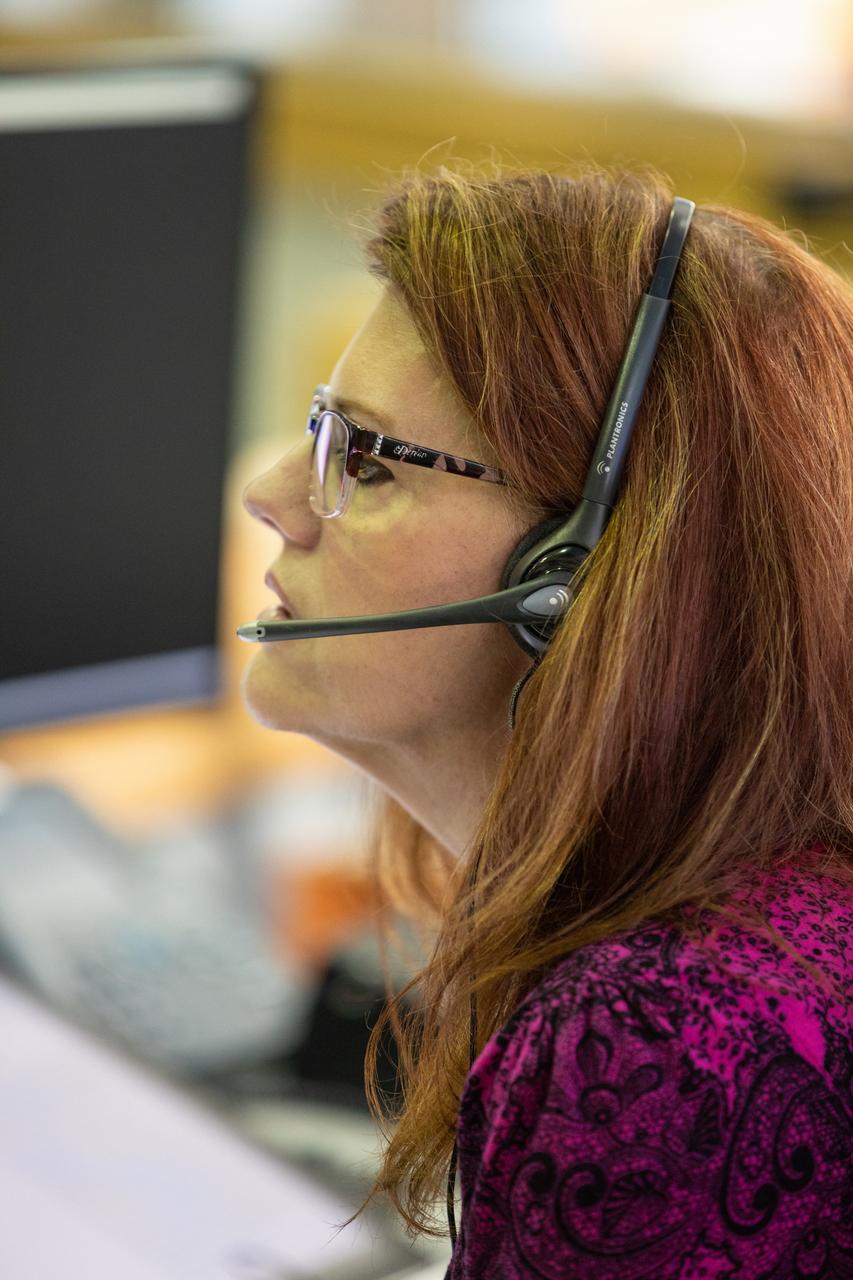
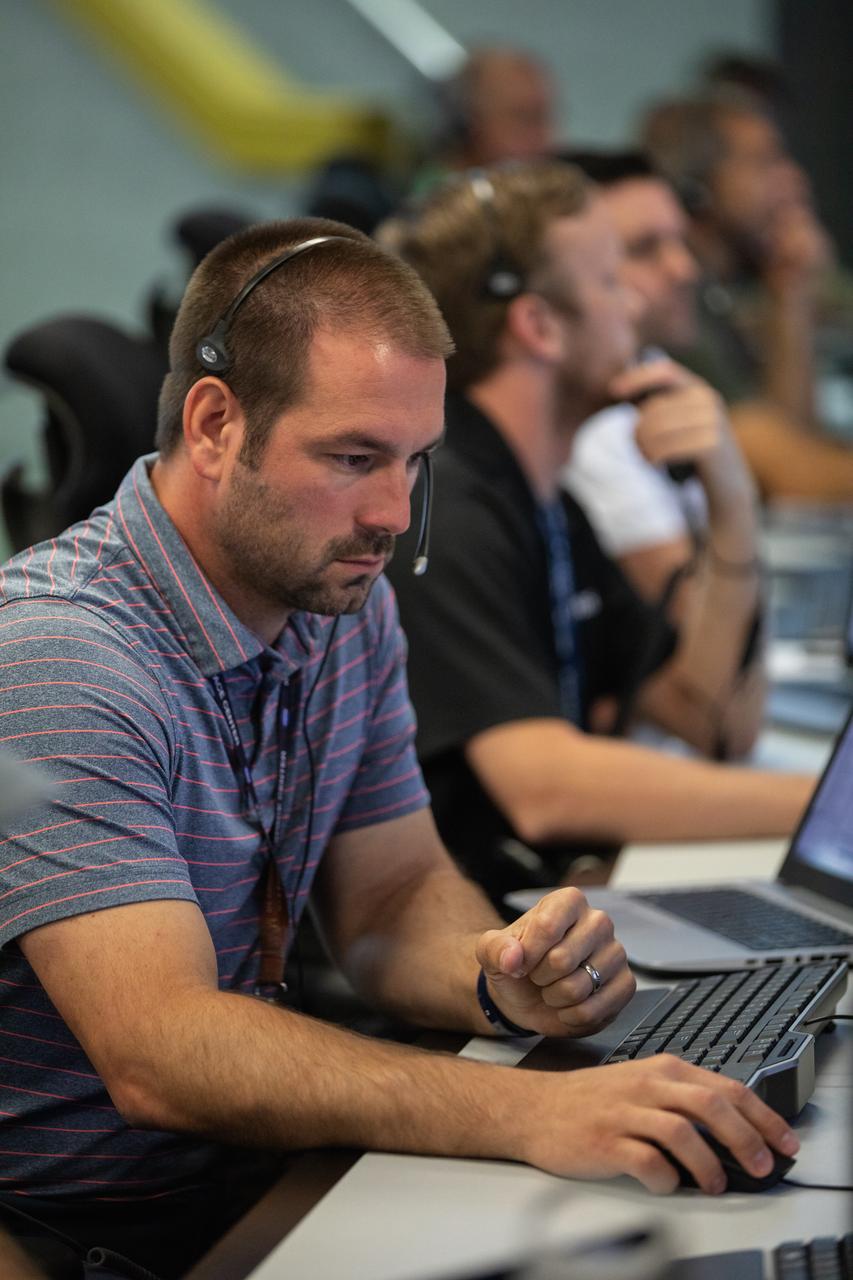
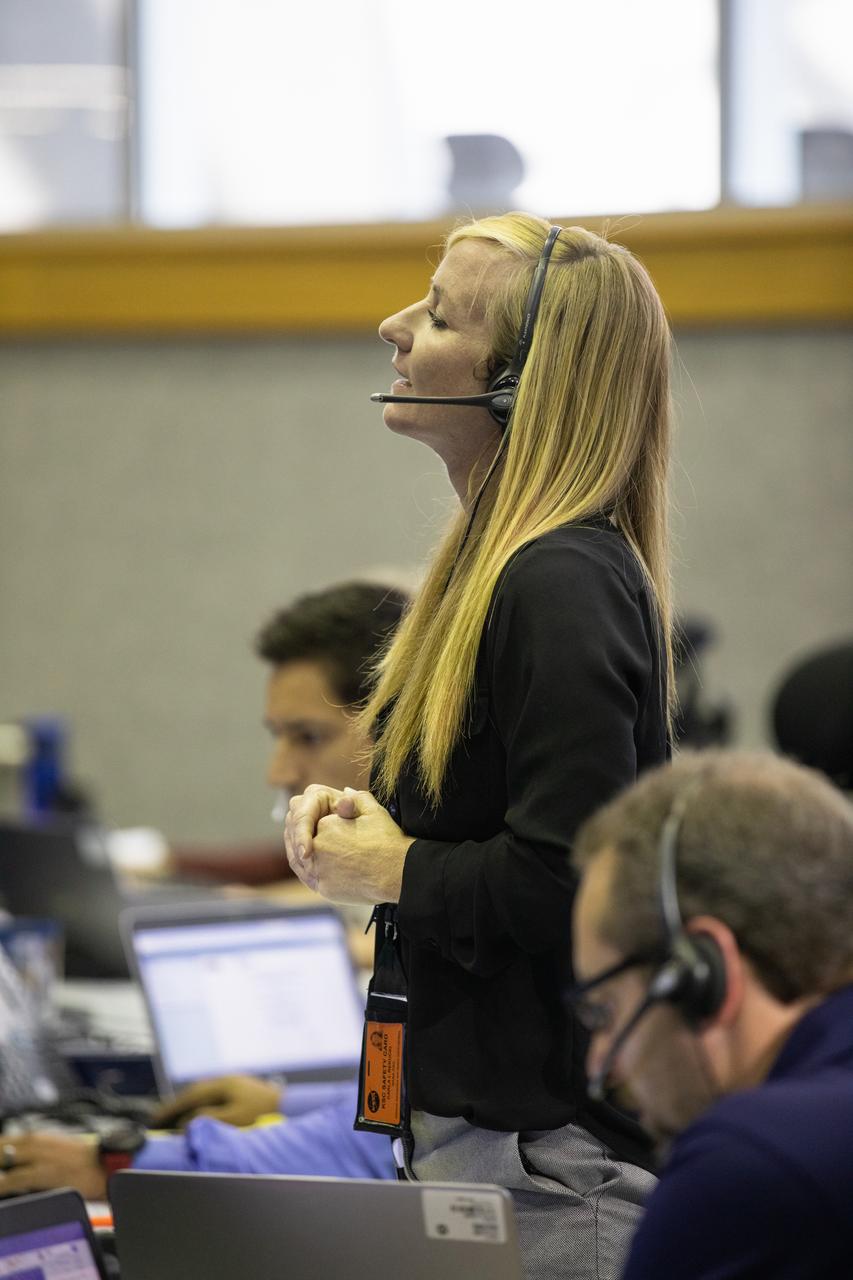
A member of the Artemis 1 launch team participates in validation testing inside Firing Room 1 in the Launch Control Center at NASA’s Kennedy Space Center in Florida on July 11, 2019.  The team includes personnel with NASA’s Exploration Ground Systems (EGS) and Jacobs Test and Operations Contract (TOSC). The simulation was designed to validate the firing room consoles and communications systems, as well as the new Spaceport Command and Control System (SCCS), which will operate, monitor and coordinate ground equipment in preparation for Artemis 1, the uncrewed first flight of the Space Launch System rocket and Orion spacecraft.
Artemis Launch Team Validation Simulation in Firing Room 1
Members of the Artemis 1 launch team, including personnel with NASA’s Exploration Ground Systems (EGS) and Jacobs Test and Operations Contract (TOSC), participate in validation testing inside Firing Room 1 in the Launch Control Center at NASA’s Kennedy Space Center in Florida on July 11, 2019. The team includes personnel with NASA’s Exploration Ground Systems (EGS) and Jacobs Test and Operations Contract (TOSC). The simulation was designed to validate the new Spaceport Command and Control System (SCCS) which will operate, monitor and coordinate ground equipment in preparation for Artemis 1, the uncrewed first flight of the Space Launch System rocket and Orion spacecraft.
Artemis Launch Team Validation Simulation in Firing Room 1
A member of the Artemis 1 launch team participates in validation testing inside Firing Room 1 in the Launch Control Center at NASA’s Kennedy Space Center in Florida on July 11, 2019.  The team includes personnel with NASA’s Exploration Ground Systems (EGS) and Jacobs Test and Operations Contract (TOSC). The simulation was designed to validate the firing room consoles and communications systems, as well as the new Spaceport Command and Control System (SCCS), which will operate, monitor and coordinate ground equipment in preparation for Artemis 1, the uncrewed first flight of the Space Launch System rocket and Orion spacecraft.
Artemis Launch Team Validation Simulation in Firing Room 1
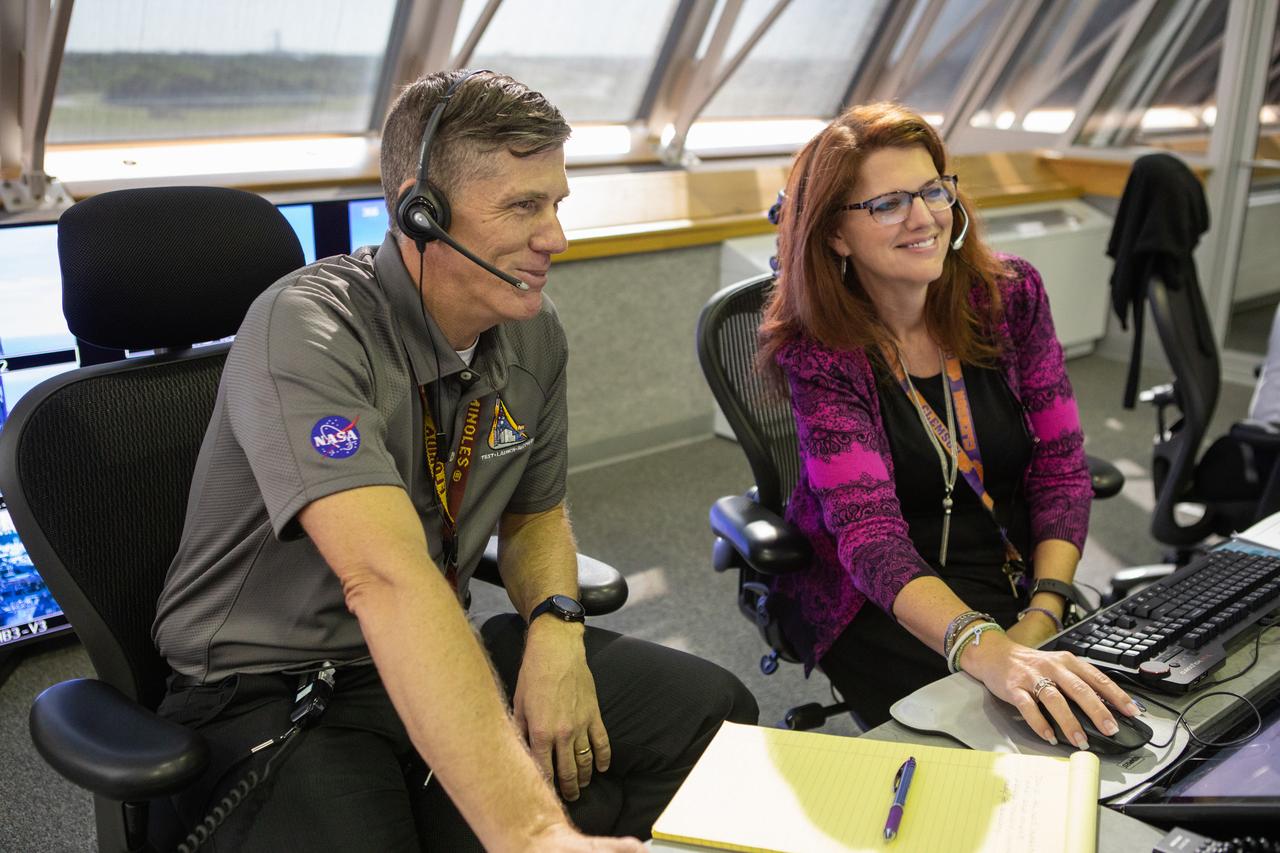
From left, Jeremy Graeber, chief NASA test director, and Charlie Blackwell-Thompson, Artemis 1 launch director, participate in validation testing inside Firing Room 1 in the Launch Control Center at NASA’s Kennedy Space Center in Florida on July 11, 2019.  The launch team includes personnel with NASA’s Exploration Ground Systems (EGS) and Jacobs Test and Operations Contract (TOSC). The simulation was designed to validate the firing room consoles and communications systems, as well as the new Spaceport Command and Control System (SCCS), which will operate, monitor and coordinate ground equipment in preparation for Artemis 1, the uncrewed first flight of the Space Launch System rocket and Orion spacecraft.
Artemis Launch Team Validation Simulation in Firing Room 1
Jeremy Graeber, chief NASA test director, participates in validation testing inside Firing Room 1 in the Launch Control Center at NASA’s Kennedy Space Center in Florida on July 11, 2019.  The Artemis 1 launch team includes personnel with NASA’s Exploration Ground Systems (EGS) and Jacobs Test and Operations Contract (TOSC). The simulation was designed to validate the firing room consoles and communications systems, as well as the new Spaceport Command and Control System (SCCS), which will operate, monitor and coordinate ground equipment in preparation for Artemis 1, the uncrewed first flight of the Space Launch System rocket and Orion spacecraft.
Artemis Launch Team Validation Simulation in Firing Room 1
Members of the Artemis 1 launch team, including personnel with NASA’s Exploration Ground Systems (EGS) and Jacobs Test and Operations Contract (TOSC), participate in validation testing inside Firing Room 1 in the Launch Control Center at NASA’s Kennedy Space Center in Florida on July 11, 2019. The simulation was designed to validate the firing room consoles and communications systems, as well as the new Spaceport Command and Control System (SCCS), which will operate, monitor and coordinate ground equipment in preparation for Artemis 1, the uncrewed first flight of the Space Launch System rocket and Orion spacecraft.
Artemis Launch Team Validation Simulation in Firing Room 1
A member of the Artemis 1 launch team participates in validation testing inside Firing Room 1 in the Launch Control Center at NASA’s Kennedy Space Center in Florida on July 11, 2019.  The launch team includes personnel with NASA’s Exploration Ground Systems (EGS) and Jacobs Test and Operations Contract (TOSC). The simulation was designed to validate the firing room consoles and communications systems, as well as the new Spaceport Command and Control System (SCCS), which will operate, monitor and coordinate ground equipment in preparation for Artemis 1, the uncrewed first flight of the Space Launch System rocket and Orion spacecraft.
Artemis Launch Team Validation Simulation in Firing Room 1
Members of the Artemis 1 launch team, including personnel with NASA’s Exploration Ground Systems (EGS) and Jacobs Test and Operations Contract (TOSC), participate in validation testing inside Firing Room 1 in the Launch Control Center at NASA’s Kennedy Space Center in Florida on July 11, 2019. The simulation was designed to validate the firing room consoles and communications systems, as well as the new Spaceport Command and Control System (SCCS), which will operate, monitor and coordinate ground equipment in preparation for Artemis 1, the uncrewed first flight of the Space Launch System rocket and Orion spacecraft.
Artemis Launch Team Validation Simulation in Firing Room 1
Members of the Artemis 1 launch team, including personnel with NASA’s Exploration Ground Systems (EGS) and Jacobs Test and Operations Contract (TOSC), participate in validation testing inside Firing Room 1 in the Launch Control Center at NASA’s Kennedy Space Center in Florida on July 11, 2019. The team includes personnel with NASA’s Exploration Ground Systems (EGS) and Jacobs Test and Operations Contract (TOSC). The simulation was designed to validate the firing room consoles and communications systems, as well as the new Spaceport Command and Control System (SCCS), which will operate, monitor and coordinate ground equipment in preparation for Artemis 1, the uncrewed first flight of the Space Launch System rocket and Orion spacecraft.
Artemis Launch Team Validation Simulation in Firing Room 1
Members of the Artemis 1 launch team, including personnel with NASA’s Exploration Ground Systems (EGS) and Jacobs Test and Operations Contract (TOSC), participate in validation testing inside Firing Room 1 in the Launch Control Center at NASA’s Kennedy Space Center in Florida on July 11, 2019. The simulation was designed to validate the firing room consoles and communications systems, as well as the new Spaceport Command and Control System (SCCS), which will operate, monitor and coordinate ground equipment in preparation for Artemis 1, the uncrewed first flight of the Space Launch System rocket and Orion spacecraft.
Artemis Launch Team Validation Simulation in Firing Room 1
Members of the Artemis 1 launch team, including personnel with NASA’s Exploration Ground Systems (EGS) and Jacobs Test and Operations Contract (TOSC), participate in validation testing inside Firing Room 1 in the Launch Control Center at NASA’s Kennedy Space Center in Florida on July 11, 2019. The team includes personnel with NASA’s Exploration Ground Systems (EGS) and Jacobs Test and Operations Contract (TOSC). The simulation was designed to validate the firing room consoles and communications systems, as well as the new Spaceport Command and Control System (SCCS), which will operate, monitor and coordinate ground equipment in preparation for Artemis 1, the uncrewed first flight of the Space Launch System rocket and Orion spacecraft.
Artemis Launch Team Validation Simulation in Firing Room 1
Members of the Artemis 1 launch team, including personnel with NASA’s Exploration Ground Systems (EGS) and Jacobs Test and Operations Contract (TOSC), participate in validation testing inside Firing Room 1 in the Launch Control Center at NASA’s Kennedy Space Center in Florida on July 11, 2019. The simulation was designed to validate the firing room consoles and communications systems, as well as the new Spaceport Command and Control System (SCCS), which will operate, monitor and coordinate ground equipment in preparation for Artemis 1, the uncrewed first flight of the Space Launch System rocket and Orion spacecraft.
Artemis Launch Team Validation Simulation in Firing Room 1
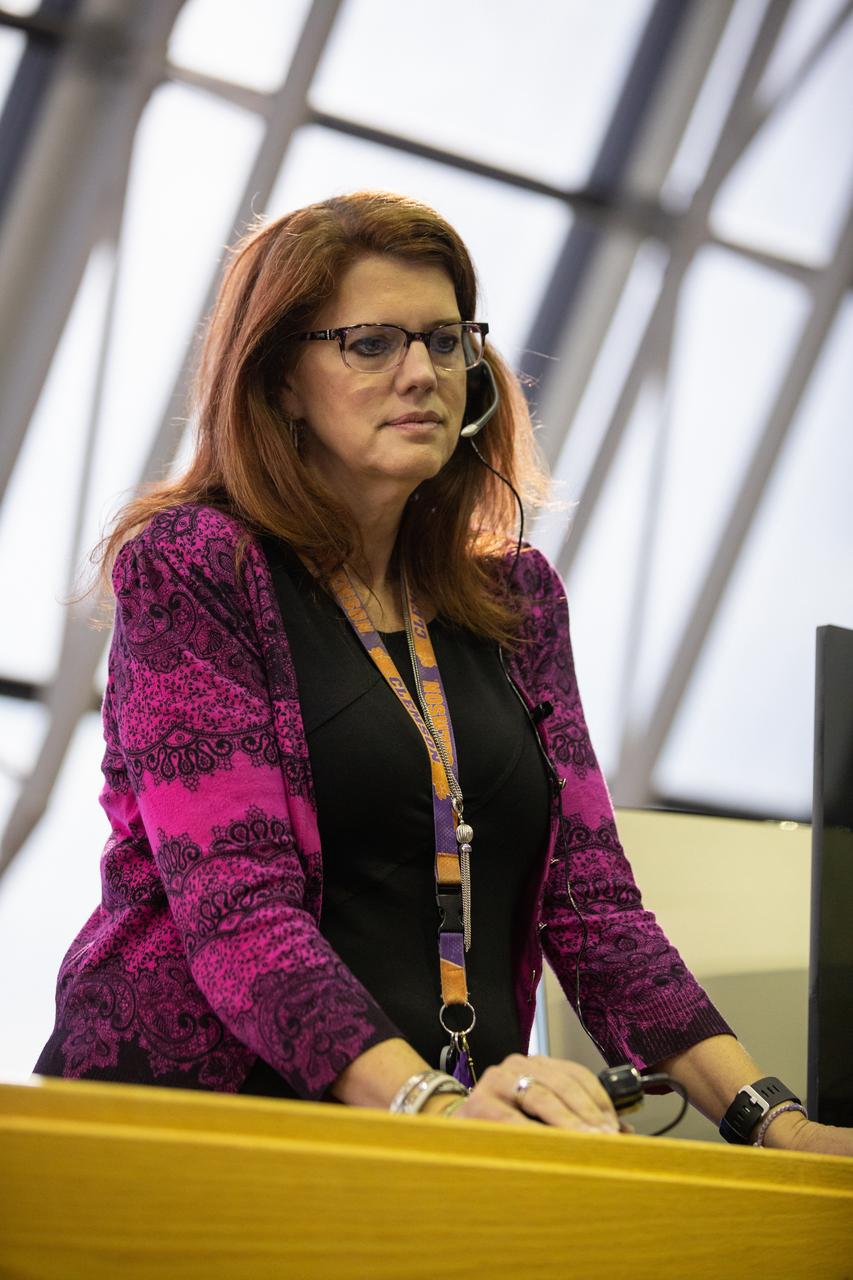
Artemis 1 Launch Director Charlie Blackwell-Thompson leads the launch team, including personnel with NASA’s Exploration Ground Systems (EGS) and Jacobs Test and Operations Contract (TOSC), through validation testing inside Firing Room 1 in the Launch Control Center at NASA’s Kennedy Space Center in Florida on July 11, 2019.  The simulation was designed to validate the firing room consoles and communications systems, as well as the new Spaceport Command and Control System (SCCS), which will operate, monitor and coordinate ground equipment in preparation for Artemis 1, the uncrewed first flight of the Space Launch System rocket and Orion spacecraft.
Artemis Launch Team Validation Simulation in Firing Room 1
Members of the Artemis 1 launch team, including personnel with NASA’s Exploration Ground Systems (EGS) and Jacobs Test and Operations Contract (TOSC), participate in validation testing inside Firing Room 1 in the Launch Control Center at NASA’s Kennedy Space Center in Florida on July 11, 2019.  The simulation was designed to validate the firing room consoles and communications systems, as well as the new Spaceport Command and Control System (SCCS), which will operate, monitor and coordinate ground equipment in preparation for Artemis 1, the uncrewed first flight of the Space Launch System rocket and Orion spacecraft.
Artemis Launch Team Validation Simulation in Firing Room 1
Jeremy Graeber, chief NASA test director, participates in validation testing inside Firing Room 1 in the Launch Control Center at NASA’s Kennedy Space Center in Florida on July 11, 2019.  The Artemis 1 launch team includes personnel with NASA’s Exploration Ground Systems (EGS) and Jacobs Test and Operations Contract (TOSC). The simulation was designed to validate the firing room consoles and communications systems, as well as the new Spaceport Command and Control System (SCCS), which will operate, monitor and coordinate ground equipment in preparation for Artemis 1, the uncrewed first flight of the Space Launch System rocket and Orion spacecraft.
Artemis Launch Team Validation Simulation in Firing Room 1
Members of the Artemis 1 launch team, including personnel with NASA’s Exploration Ground Systems (EGS) and Jacobs Test and Operations Contract (TOSC), in validation testing inside Firing Room 1 in the Launch Control Center at NASA’s Kennedy Space Center in Florida on July 11, 2019. The simulation was designed to validate the firing room consoles and communications systems, as well as the new Spaceport Command and Control System (SCCS), which will operate, monitor and coordinate ground equipment in preparation for Artemis 1, the uncrewed first flight of the Space Launch System rocket and Orion spacecraft.
Artemis Launch Team Validation Simulation in Firing Room 1
Artemis 1 Launch Director Charlie Blackwell-Thompson leads the launch team through validation testing inside Firing Room 1 in the Launch Control Center at NASA’s Kennedy Space Center in Florida on July 11, 2019.  The team includes personnel with NASA’s Exploration Ground Systems (EGS) and Jacobs Test and Operations Contract (TOSC). The simulation was designed to validate the firing room consoles and communications systems, as well as the new Spaceport Command and Control System (SCCS), which will operate, monitor and coordinate ground equipment in preparation for Artemis 1, the uncrewed first flight of the Space Launch System rocket and Orion spacecraft.
Artemis Launch Team Validation Simulation in Firing Room 1
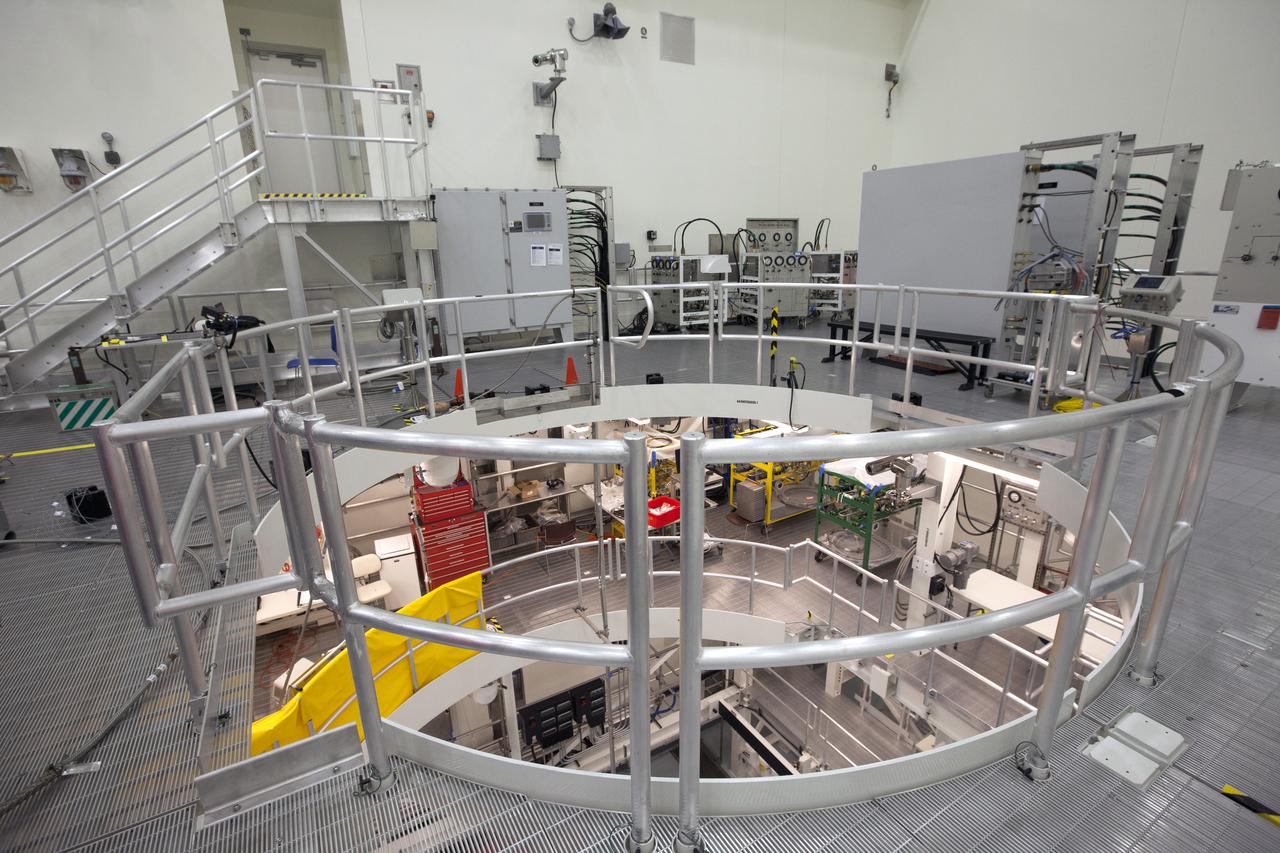
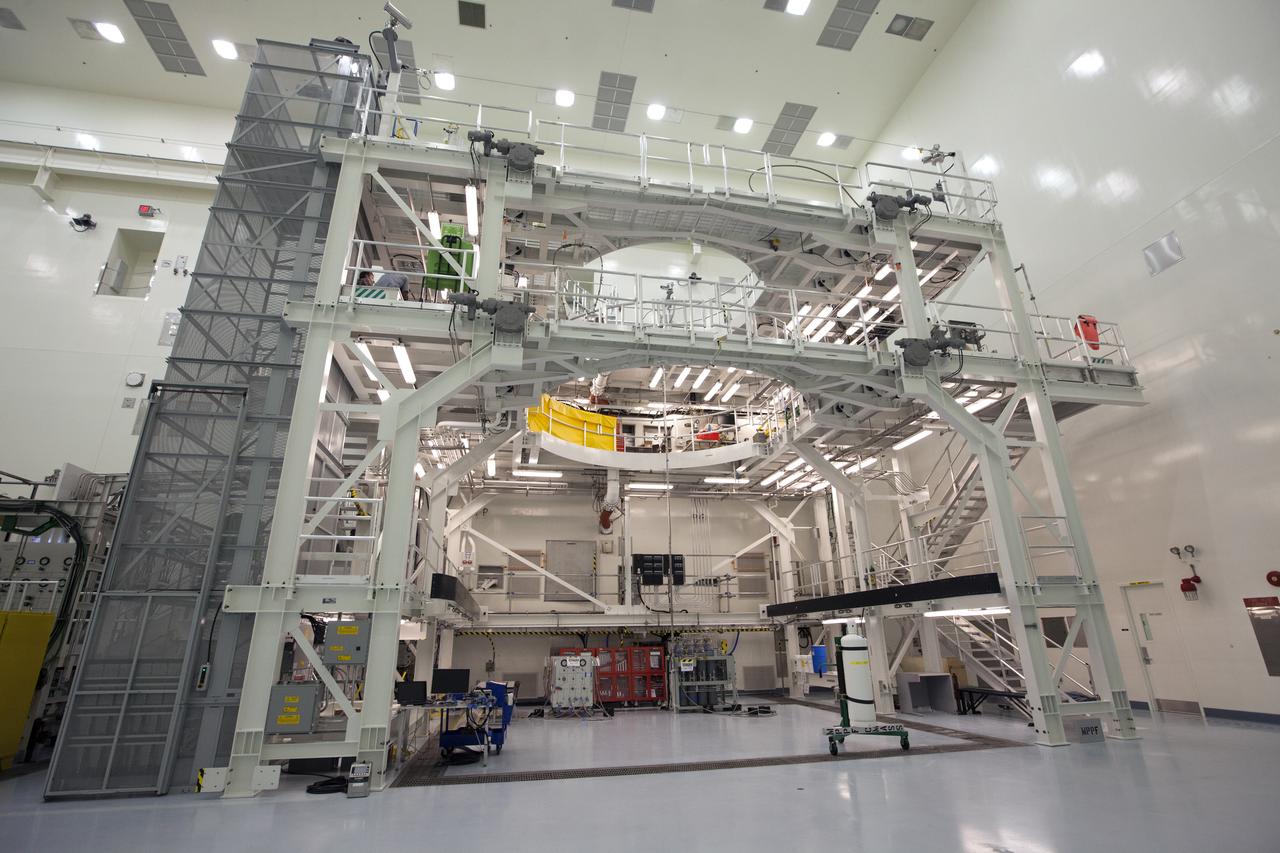
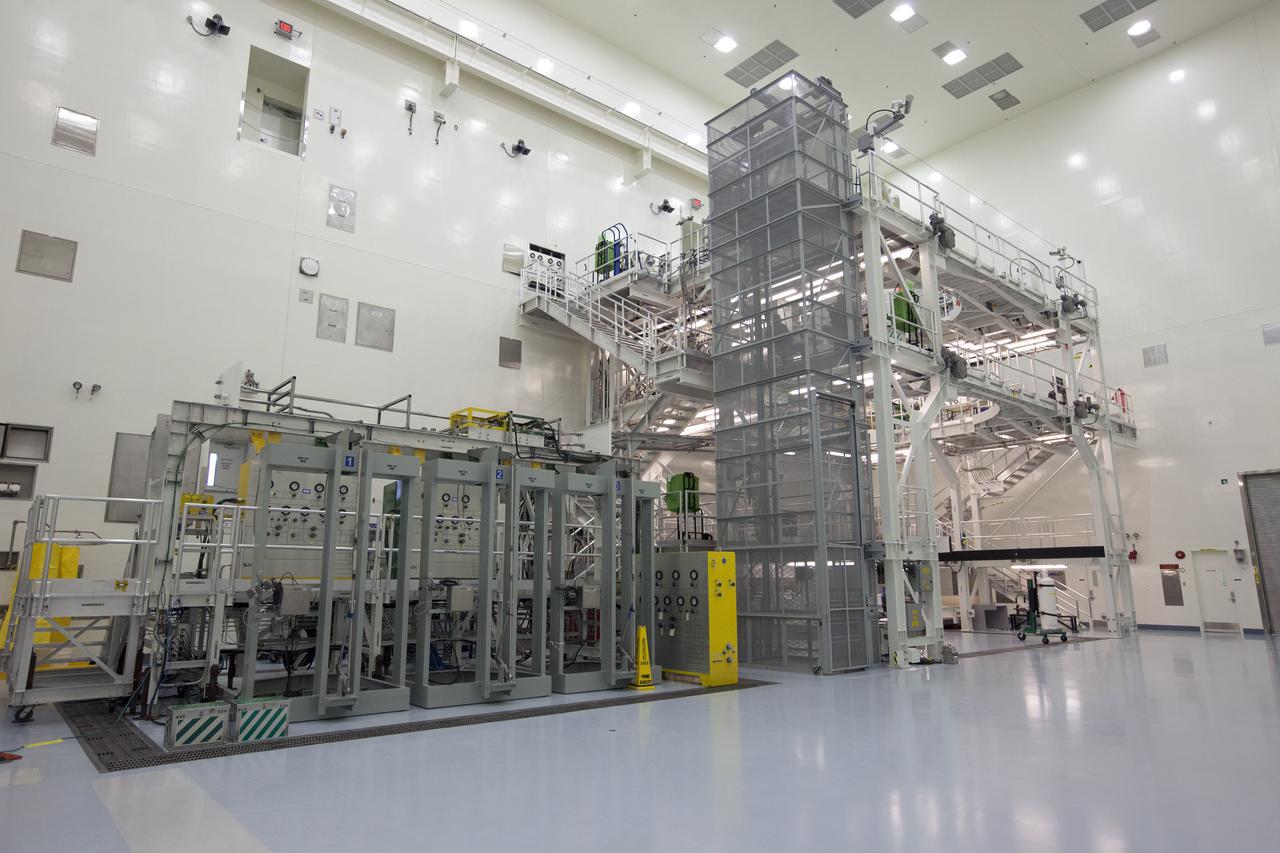
Engineers and technicians completed verification and validation testing of several pneumatic systems inside and outside the Multi-Payload Processing Facility (MPPF) at NASA's Kennedy Space Center in Florida. In view is the service platform for Orion spacecraft processing. The MPPF will be used for offline processing and fueling of the Orion spacecraft and service module stack before launch. Orion also will be de-serviced in the MPPF after a mission. The Ground Systems Development and Operations Program (GSDO) is overseeing upgrades to the facility. The Engineering Directorate led the recent pneumatic tests.
Successful MPPF Pneumatics Verification and Validation Testing
Engineers and technicians completed verification and validation testing of several pneumatic systems inside and outside the Multi-Payload Processing Facility (MPPF) at NASA's Kennedy Space Center in Florida. In view is the top level of the service platform for Orion spacecraft processing. The MPPF will be used for offline processing and fueling of the Orion spacecraft and service module stack before launch. Orion also will be de-serviced in the MPPF after a mission. The Ground Systems Development and Operations Program (GSDO) is overseeing upgrades to the facility. The Engineering Directorate led the recent pneumatic tests.
Successful MPPF Pneumatics Verification and Validation Testing
NASA engineer Larry Hudson and Ikhana ground crew member James Smith work on a ground validation test with new fiber optic sensors that led to validation flights on the Ikhana aircraft. NASA Dryden Flight Research Center is evaluating an advanced fiber optic-based sensing technology installed on the wings of NASA's Ikhana aircraft. The fiber optic system measures and displays the shape of the aircraft's wings in flight. There are other potential safety applications for the technology, such as vehicle structural health monitoring. If an aircraft structure can be monitored with sensors and a computer can manipulate flight control surfaces to compensate for stresses on the wings, structural control can be established to prevent situations that might otherwise result in a loss of control.
ED08-0016-20
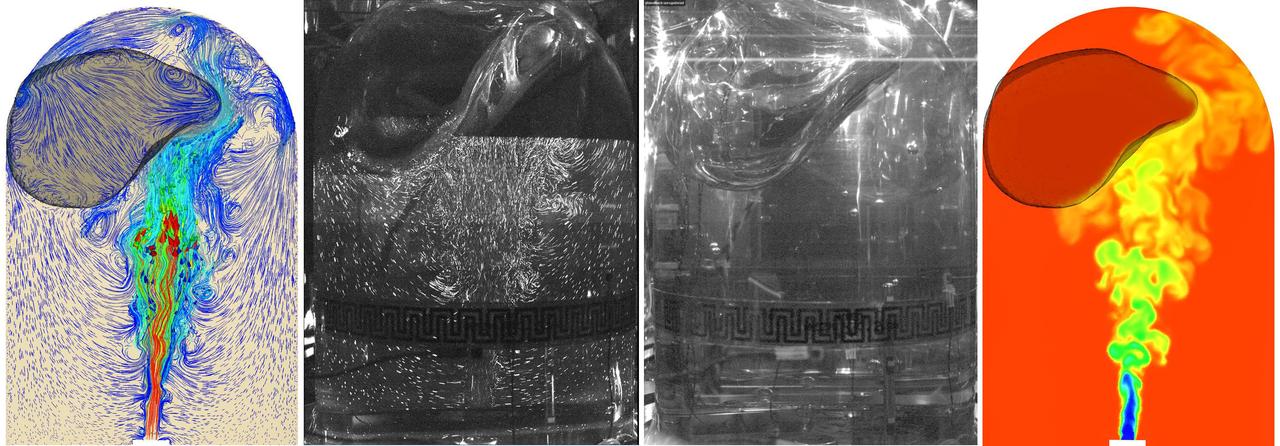
jsc2025e067419 (8/5/2025) --- Validation of model predictions of fluid flow in a spherical tank in microgravity for the ZBOT-1 experiment. On the left, a model of the position of unfilled space and deformation and flow of the liquid structures (colored image) and an image of the actual flow. On the right, a captured image of deformation of the unfilled space and a colored model of temperature contours during mixing. Credit: Case Western Reserve University
ZBOT-1 CFD Model Predictions
Engineers and technicians completed verification and validation testing of several pneumatic systems inside and outside the Multi-Payload Processing Facility (MPPF) at NASA's Kennedy Space Center in Florida. In view is the service platform for Orion spacecraft processing. To the left are several pneumatic panels. The MPPF will be used for offline processing and fueling of the Orion spacecraft and service module stack before launch. Orion also will be de-serviced in the MPPF after a mission. The Ground Systems Development and Operations Program (GSDO) is overseeing upgrades to the facility. The Engineering Directorate led the recent pneumatic tests.
Successful MPPF Pneumatics Verification and Validation Testing
NASA ER-2 # 809 and its DC-8 shown in Arena Arctica before the SAGE III Ozone Loss and Validation Experiment (SOLVE). The two airborne science platforms were based north of the Arctic Circle in Kiruna, Sweden, during the winter of 2000 to study ozone depletion as part of SOLVE. A large hangar built especially for research, "Arena Arctica" housed the instrumented aircraft and the scientists. Scientists have observed unusually low levels of ozone over the Arctic during recent winters, raising concerns that ozone depletion there could become more widespread as in the Antarctic ozone hole. The NASA-sponsored international mission took place between November 1999 and March 2000 and was divided into three phases. The DC-8 was involved in all three phases returning to Dryden between each phase. The ER-2 flew sample collection flights between January and March, remaining in Sweden from Jan. 9 through March 16. "The collaborative campaign will provide an immense new body of information about the Arctic stratosphere," said program scientist Dr. Michael Kurylo, NASA Headquarters. "Our understanding of the Earth's ozone will be greatly enhanced by this research."
ER-2 #809 and DC-8 in Arena Arctica hangar in Kiruna, Sweden prior to the SAGE III Ozone Loss and Validation Experiment (SOLVE)
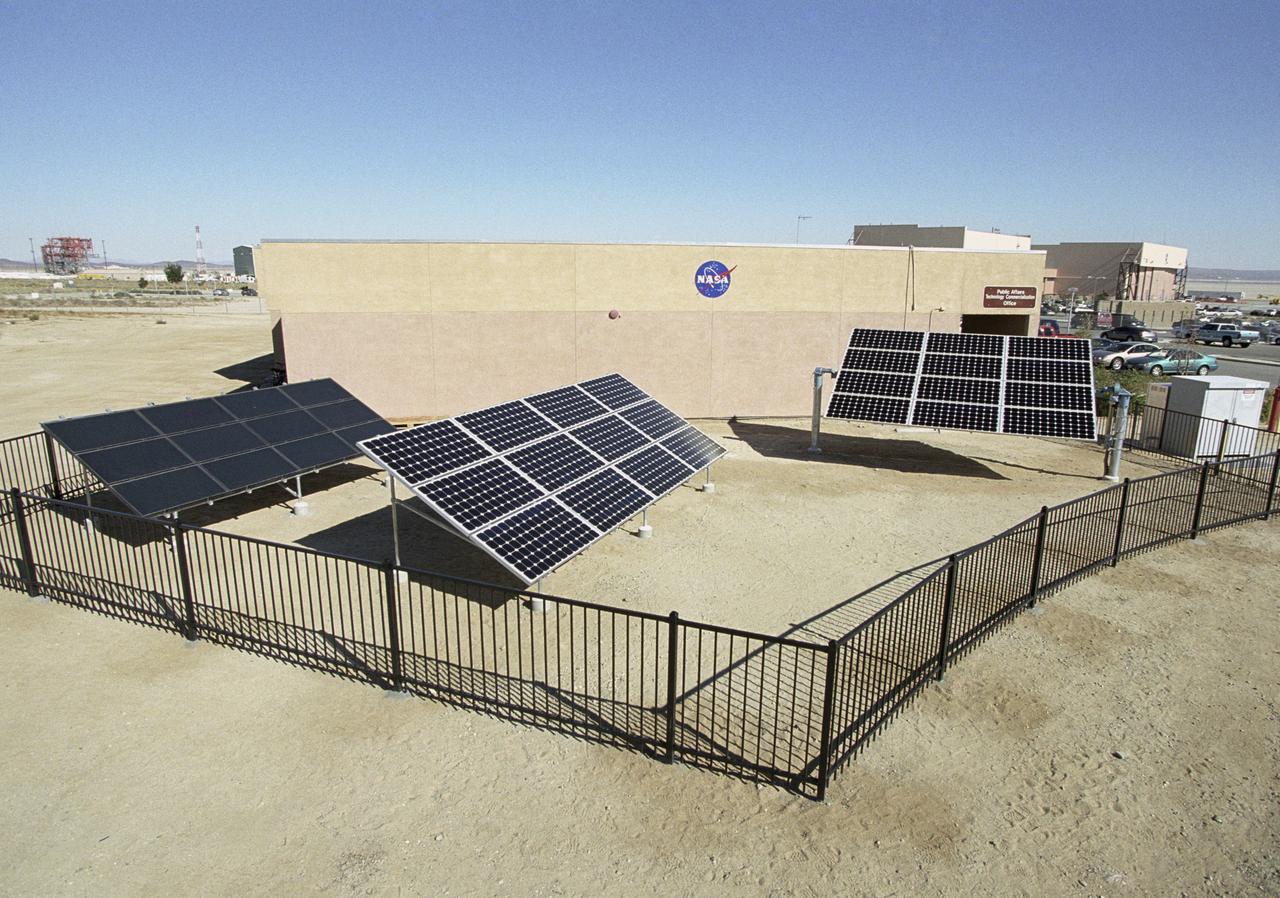
The 5 KW, state-of-the-art solar demonstration site at NASA Dryden is validating earthly use of solar cells developed for NASA's Helios solar-electric aircraft.
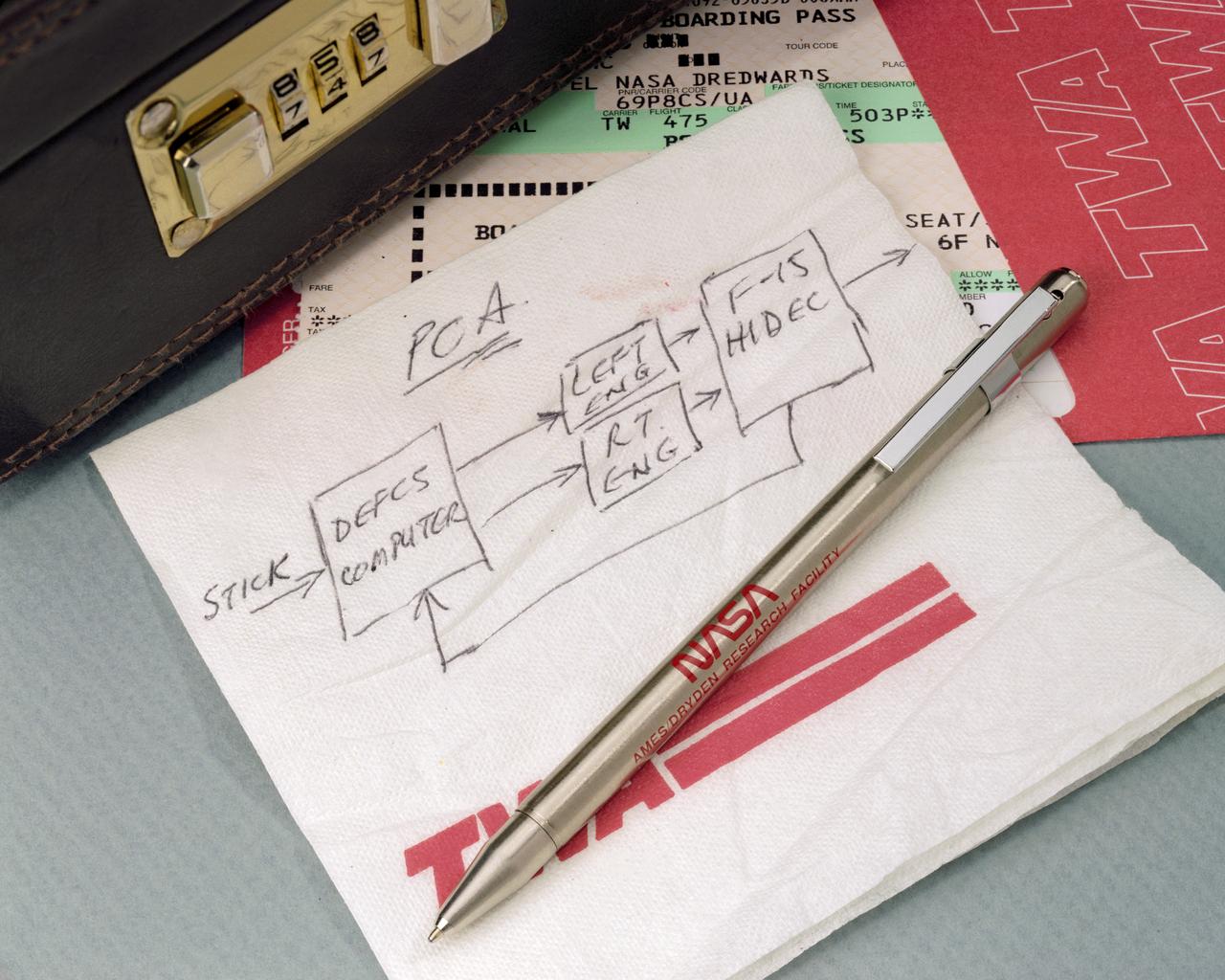
A simple sketch on a TWA napkin by NASA Dryden engineer Frank W. "Bill" Burcham led to development and validation of the Propulsion-Controlled Aircraft concept.
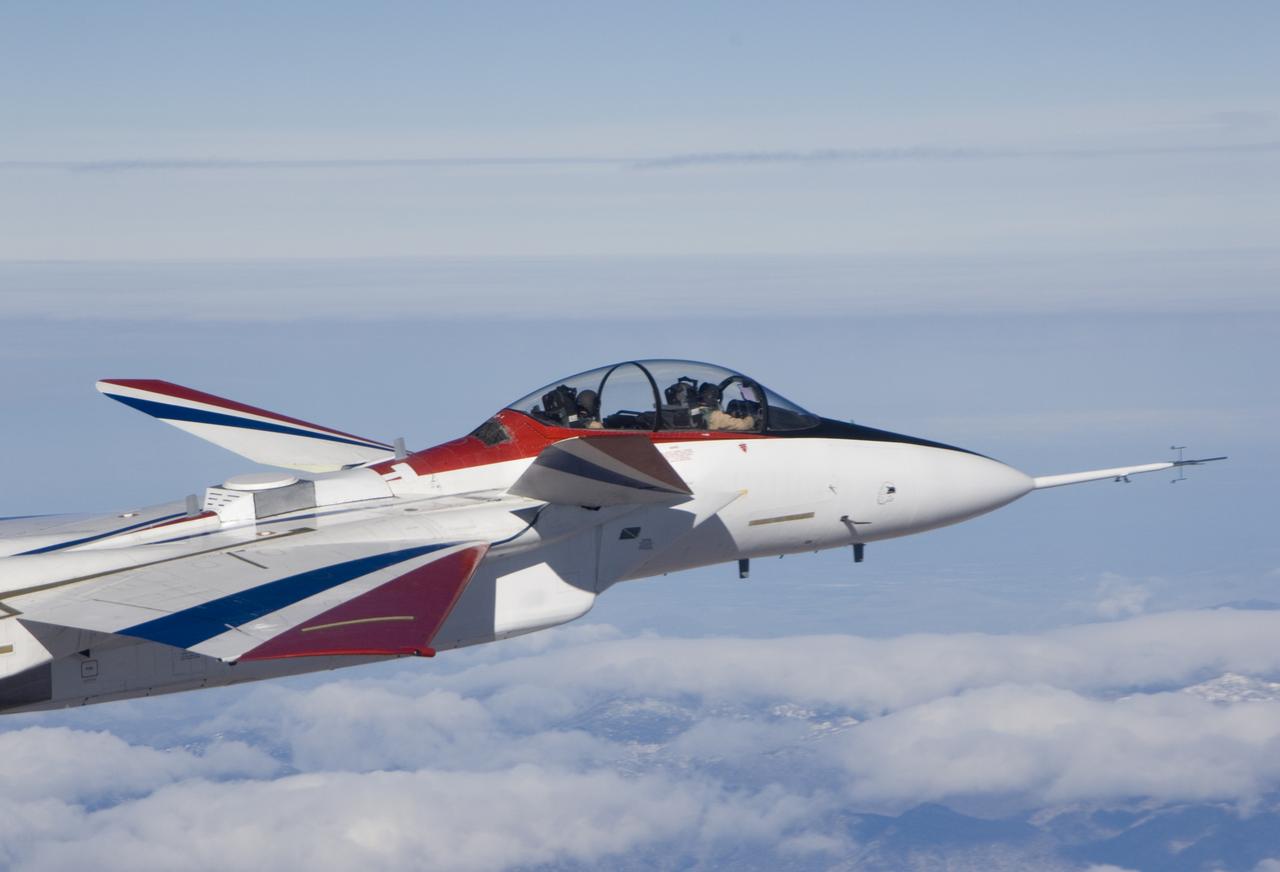
Range safety and phased-array range user system antennas validated in the ECANS project can be seen just behind the cockpit on NASA's NF-15B research aircraft.
This artist concept depicts Kepler-186f, the first validated Earth-size planet to orbit a distant star in the habitable zone, a range of distance from a star where liquid water might pool on the planet surface.
Kepler-186f, the First Earth-size Planet in the Habitable Zone Artist Concept
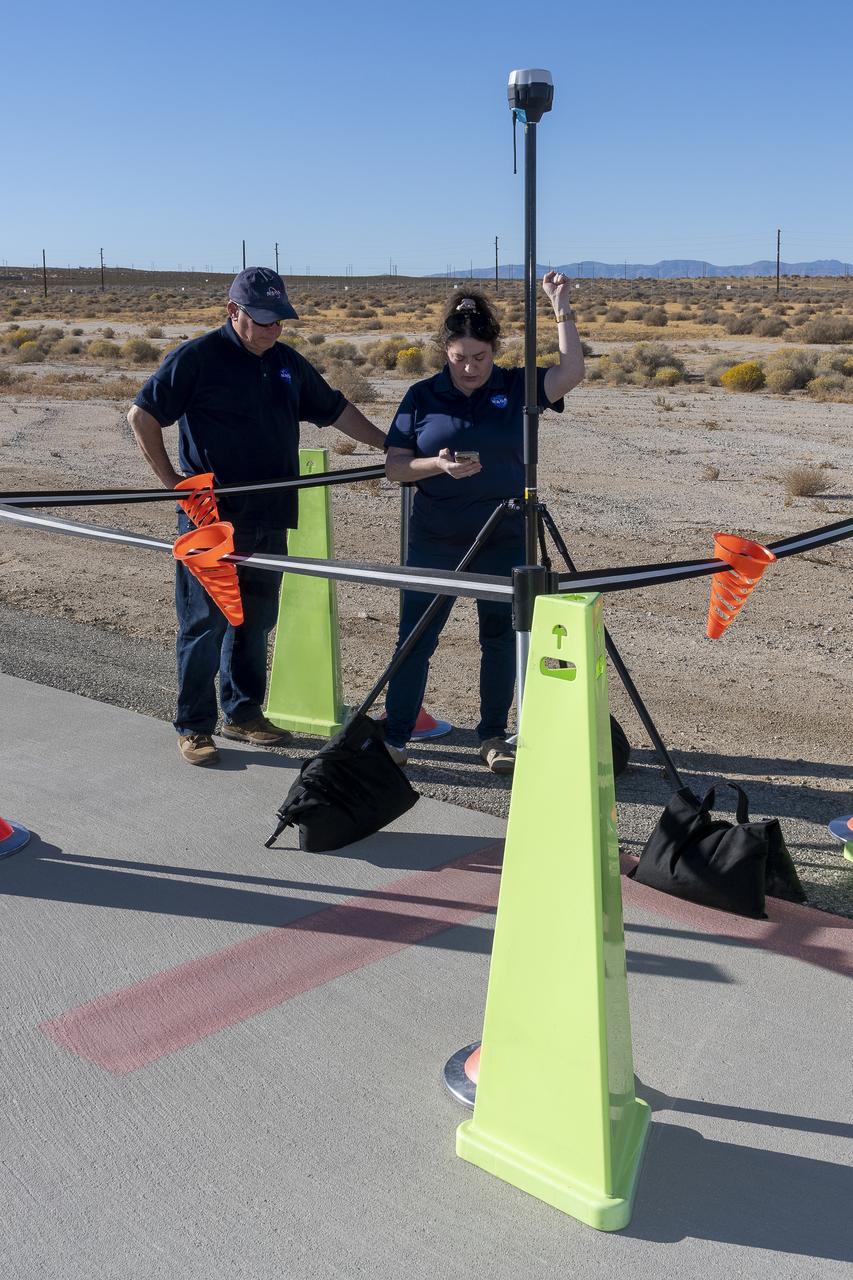
NASA Pathways intern Saré Culbertson, right, works with NASA operations engineer Jack Hayes at NASA’s Armstrong Flight Research Center in Edwards, California, on Nov. 7, 2024. They are verifying GPS and global navigation satellite system coordinates using Emlid Reach RS2+ receiver equipment, which supports surveying, mapping, and navigation in preparation for future air taxi test flight research.
NASA Pathways Intern Helps Validate GPS Coordinates
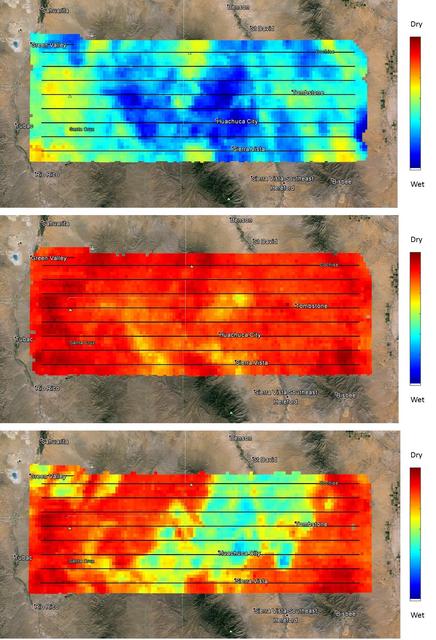
NASA's SMAP (Soil Moisture Active Passive) satellite observatory conducted a field experiment as part of its soil moisture data product validation program in southern Arizona on Aug. 2-18, 2015. The images here represent the distribution of soil moisture over the SMAPVEX15 (SMAP Validation Experiment 2015) experiment domain, as measured by the Passive Active L-band System (PALS) developed by NASA's Jet Propulsion Laboratory, Pasadena, California, which was installed onboard a DC-3 aircraft operated by Airborne Imaging, Inc. Blue and green colors denote wet conditions and dry conditions are marked by red and orange. The black lines show the nominal flight path of PALS.  The measurements show that on the first day, the domain surface was wet overall, but had mostly dried down by the second measurement day. On the third day, there was a mix of soil wetness. The heterogeneous soil moisture distribution over the domain is typical for the area during the North American Monsoon season and provides excellent conditions for SMAP soil moisture product validation and algorithm enhancement.  The images are based on brightness temperature measured by the PALS instrument gridded on a grid with 0.6-mile (1-kilometer) pixel size. They do not yet compensate for surface characteristics, such as vegetation and topography. That work is currently in progress.  http://photojournal.jpl.nasa.gov/catalog/PIA19879
NASA SMAPVEX 15 Field Campaign Measures Soil Moisture Over Arizona
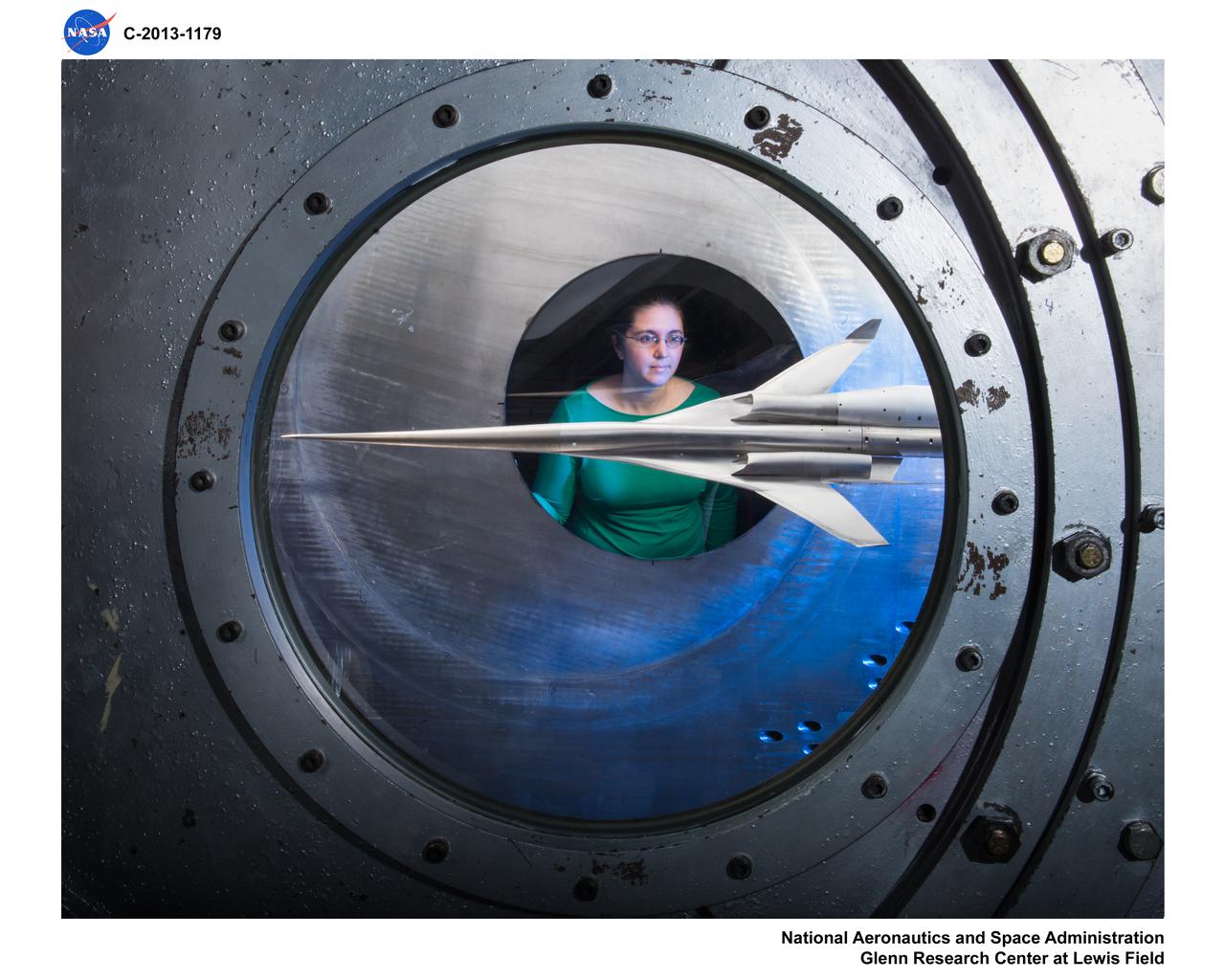
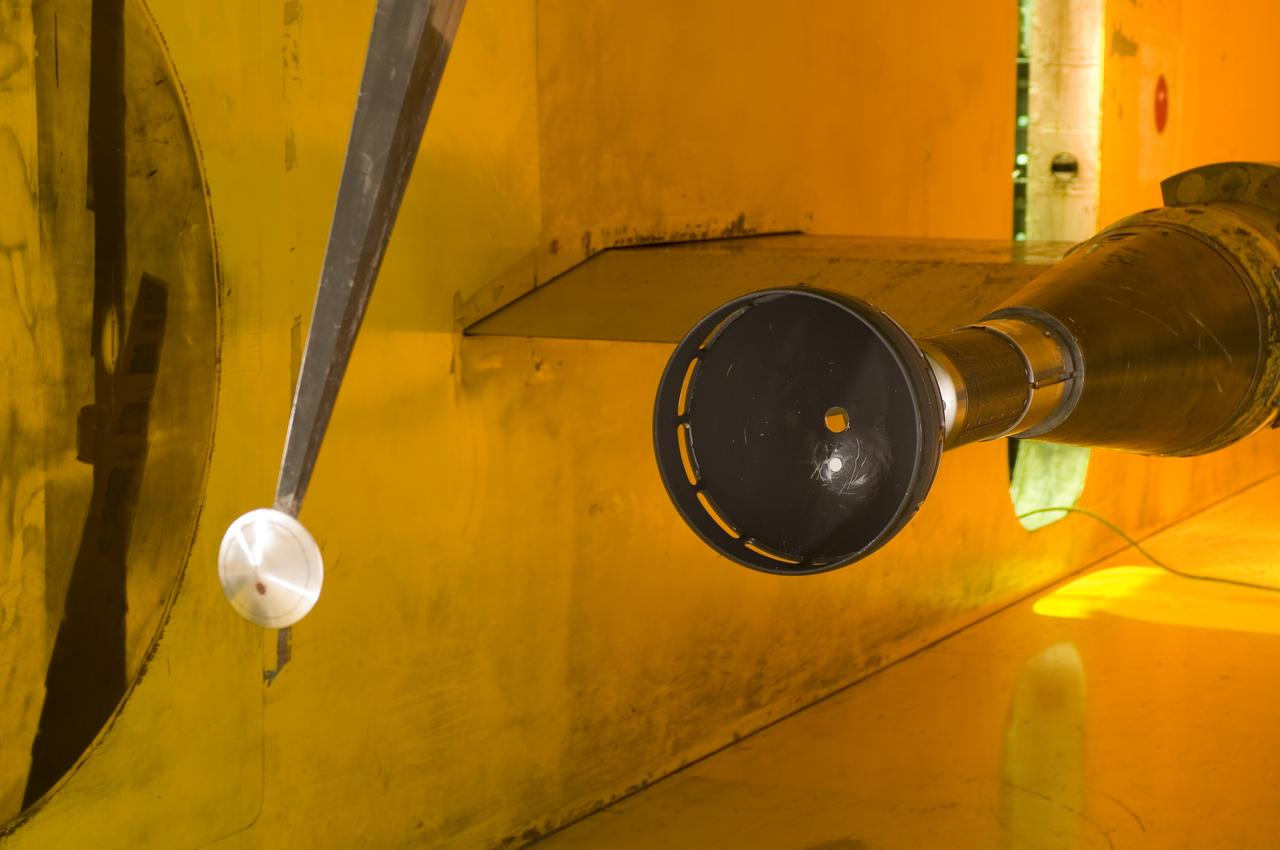
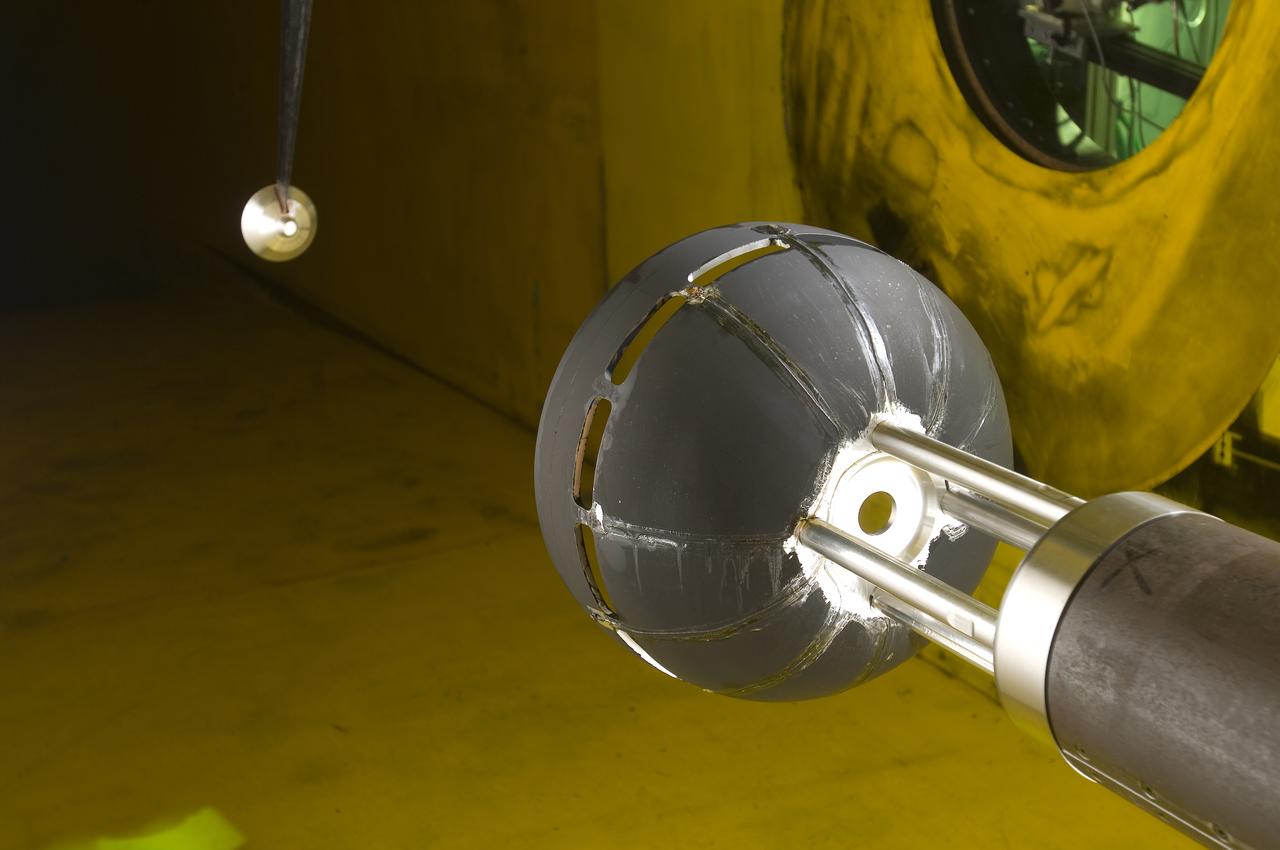
Boeing Quiet Experimental Validation Concept, QEVC, performance model
GRC-2013-C-01179
Boeing Quiet Experimental Validation Concept, QEVC, N+2 test, in the 8x6 foot Supersonic Wind Tunnel, SWT
GRC-2013-C-01579
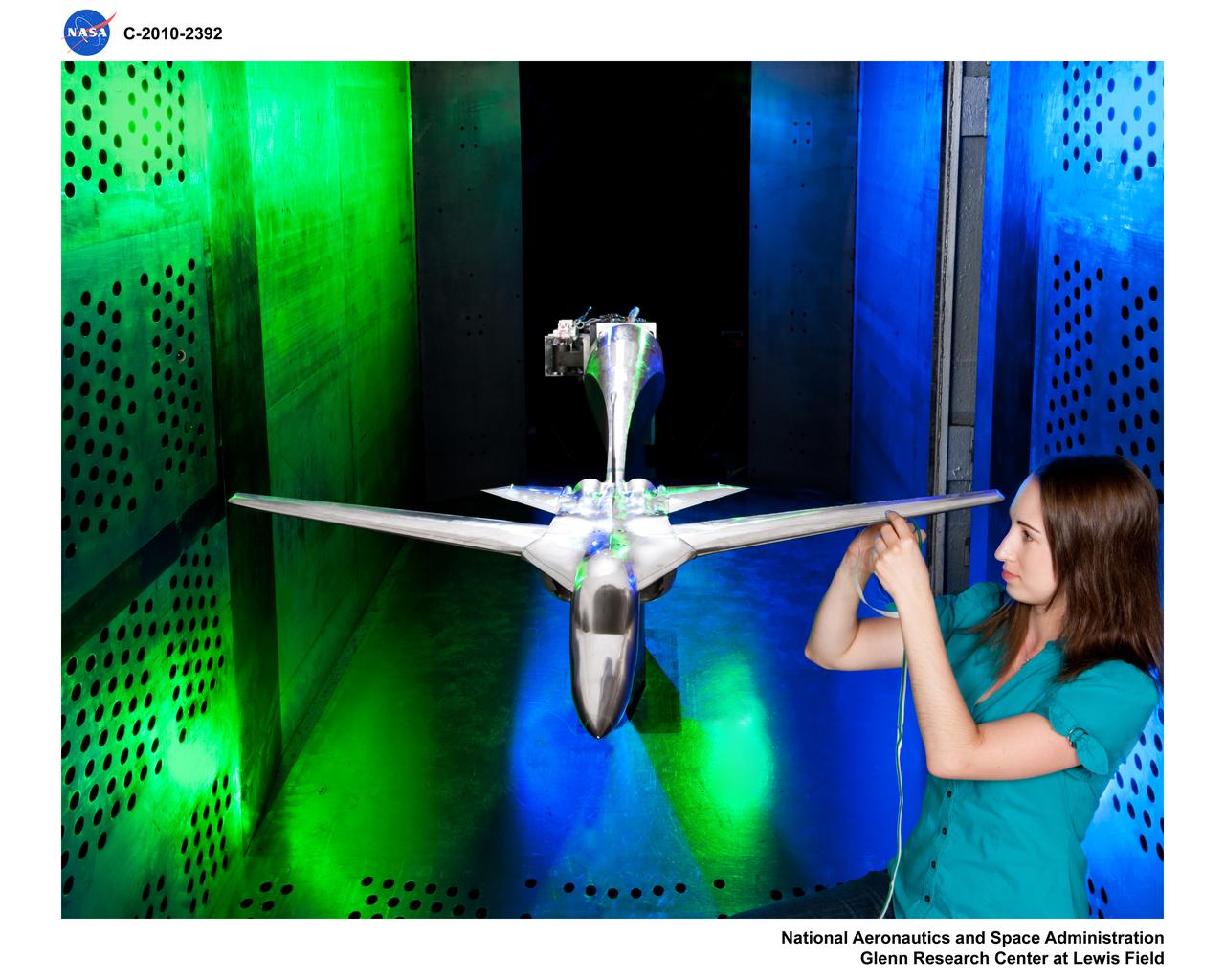
Facility Aerodynamic Validation and Operational Research (FAVOR) aircraft model hardware in 8x6 Supersonic Wind Tunnel (SWT)
GRC-2010-C-02392
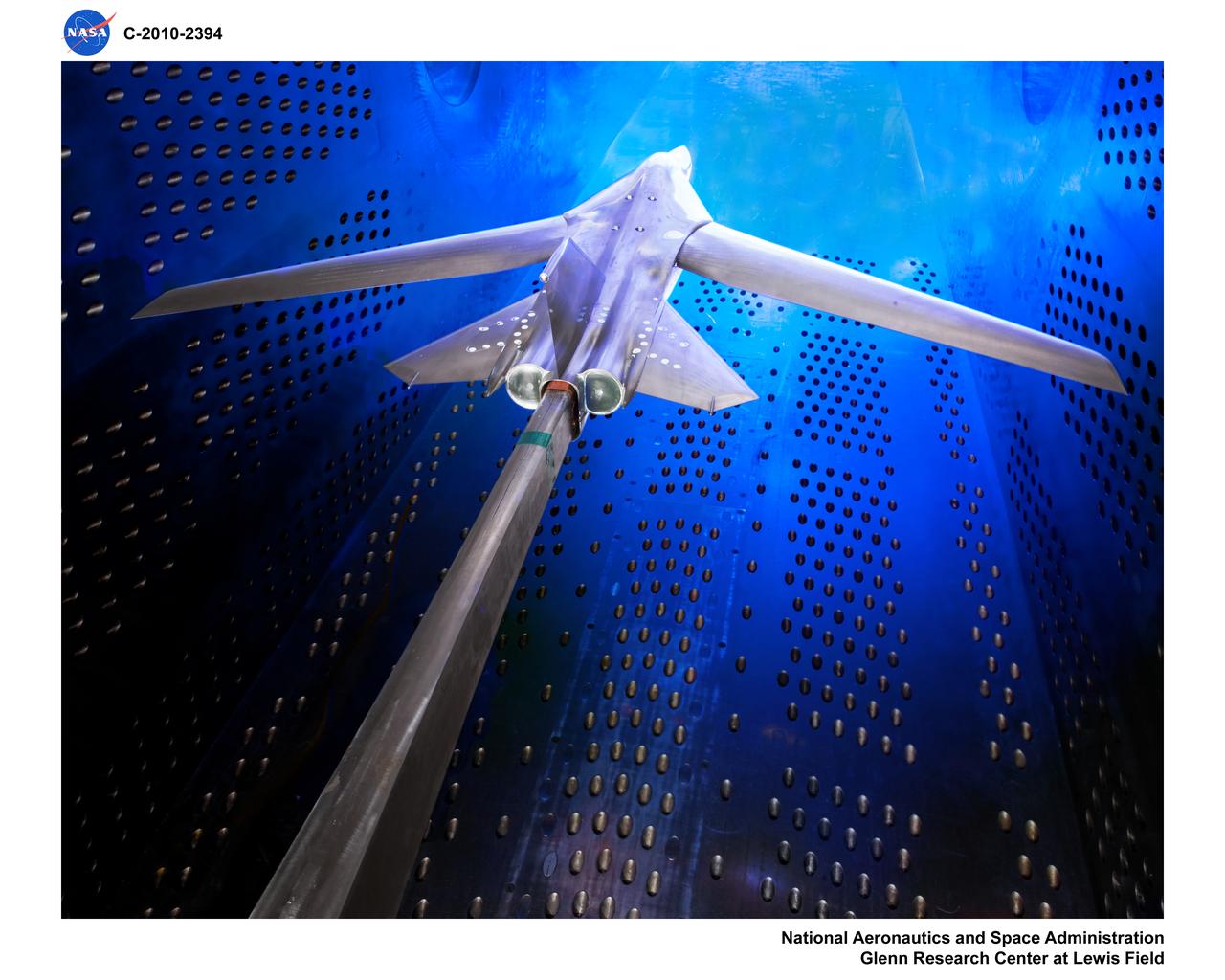
Facility Aerodynamic Validation and Operational Research (FAVOR) aircraft model hardware in 8x6 Supersonic Wind Tunnel (SWT)
GRC-2010-C-02394
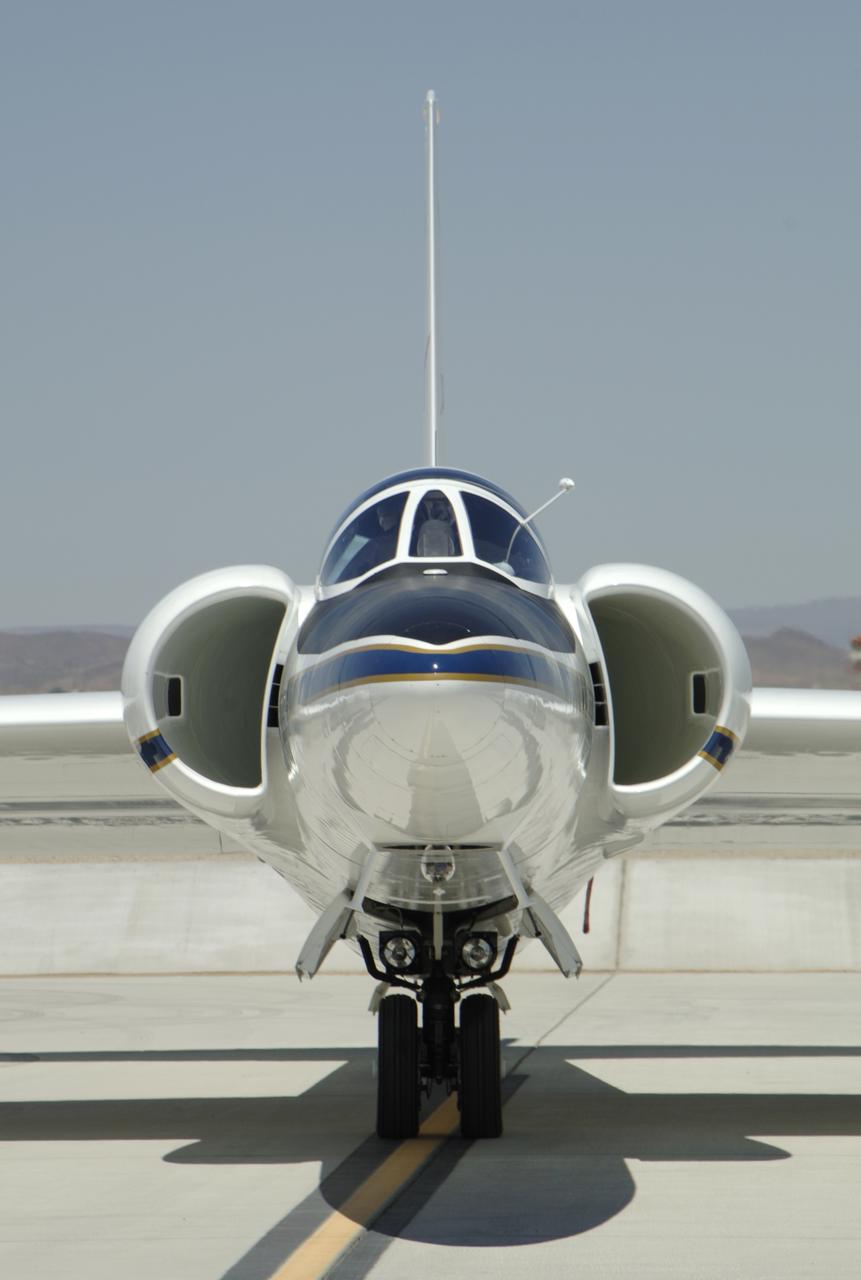
The large air intakes for its powerful engine are obvious as NASA's high-flying ER-2 #806 Earth resources aircraft taxies out for another science mission.
MSL III  (Mars Science Laboratory) Test in UPWT 9x7ft with tunnel Test-97-159 These tests were for parachute entry deployment CFD validation.
ARC-2007-ACD07-0062-007
NASA Dryden aerospace engineer Michael Allen hand-launches a model motorized sailplane during a study validating the use of heat thermals to extend flight time.
EC05-0198-11
MSL III  (Mars Science Laboratory) Test in UPWT 9x7ft with tunnel Test-97-159 These tests were for parachute entry deployment CFD validation.
ARC-2007-ACD07-0062-005
jsc2024e024307 (April 3, 2024) -- Gateway electric field validation tests for the Gateway communication and tracking system antennas. Photo Credit: NASA/Robert Markowitz
Earth to Gateway: Electric Field Tests Enhance Lunar Communication
jsc2024e024308 (April 3, 2024) -- Gateway electric field validation tests for the Gateway communication and tracking system antennas. Photo Credit: NASA/Robert Markowitz
Earth to Gateway: Electric Field Tests Enhance Lunar Communication
MSL III  (Mars Science Laboratory) Test in UPWT 9x7ft with tunnel Test-97-159 These tests were for parachute entry deployment CFD validation.
ARC-2007-ACD07-0062-002
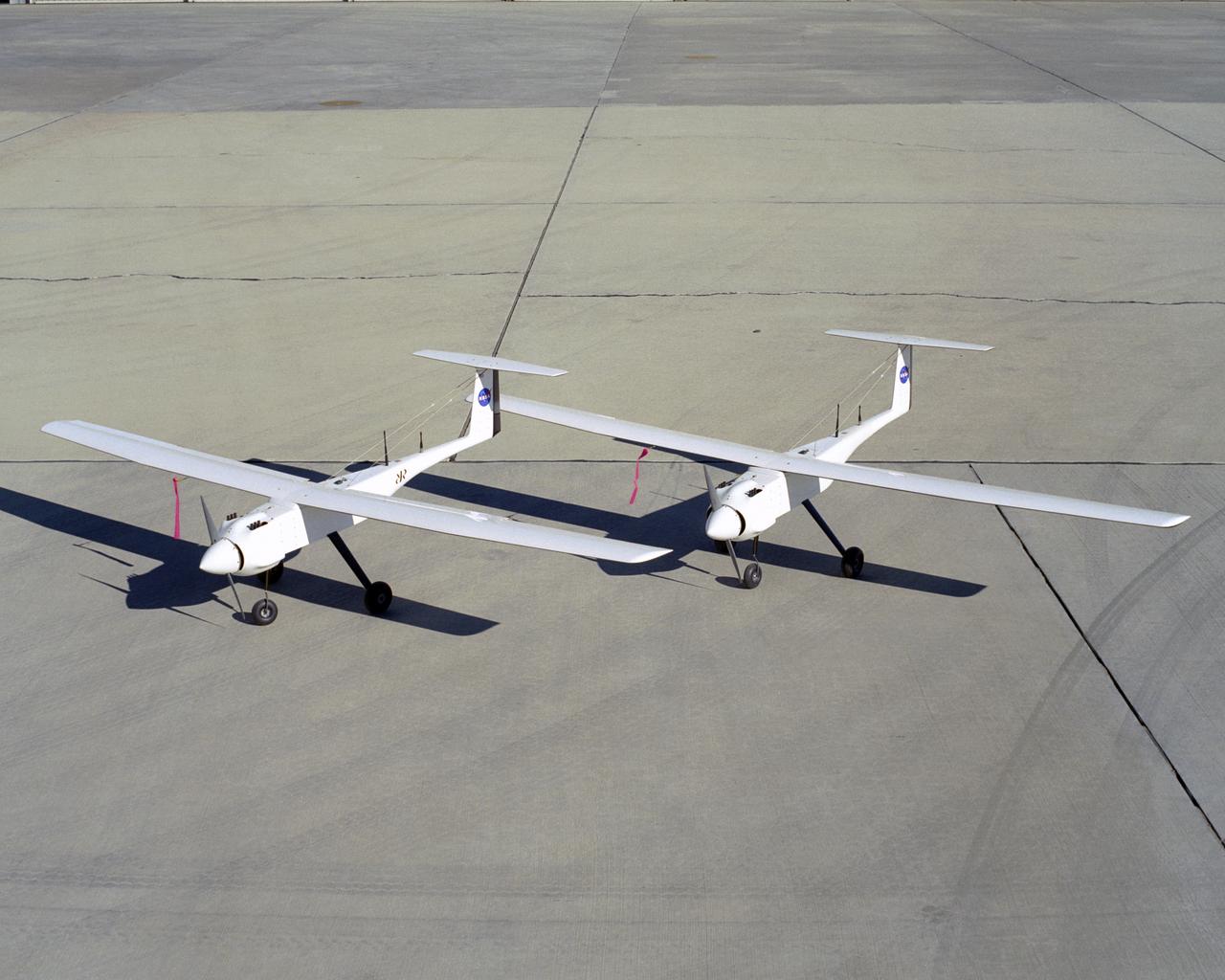
Two identical RnR Products APV-3 aircraft validated cooperative flight control software in the Networked UAV Teaming Experiment at NASA Dryden in early 2005.
EC04-0347-06
A team of experts wrap up science flights on the ER-2 aircraft at Armstrong Flight Research Center in Edwards, California after the GSFC Lidar Observation and Validation Experiment (GLOVE) in February 2025. Pilot Tim Williams ascends the ER-2 on the runway for one of the final science flights validating satellite-borne data. As a collaboration between engineers, scientists, and aircraft professionals, GLOVE aims to improve satellite data products for Earth Science applications.
Pilot takes flight in the ER-2 for airborne science mission, GLOVE
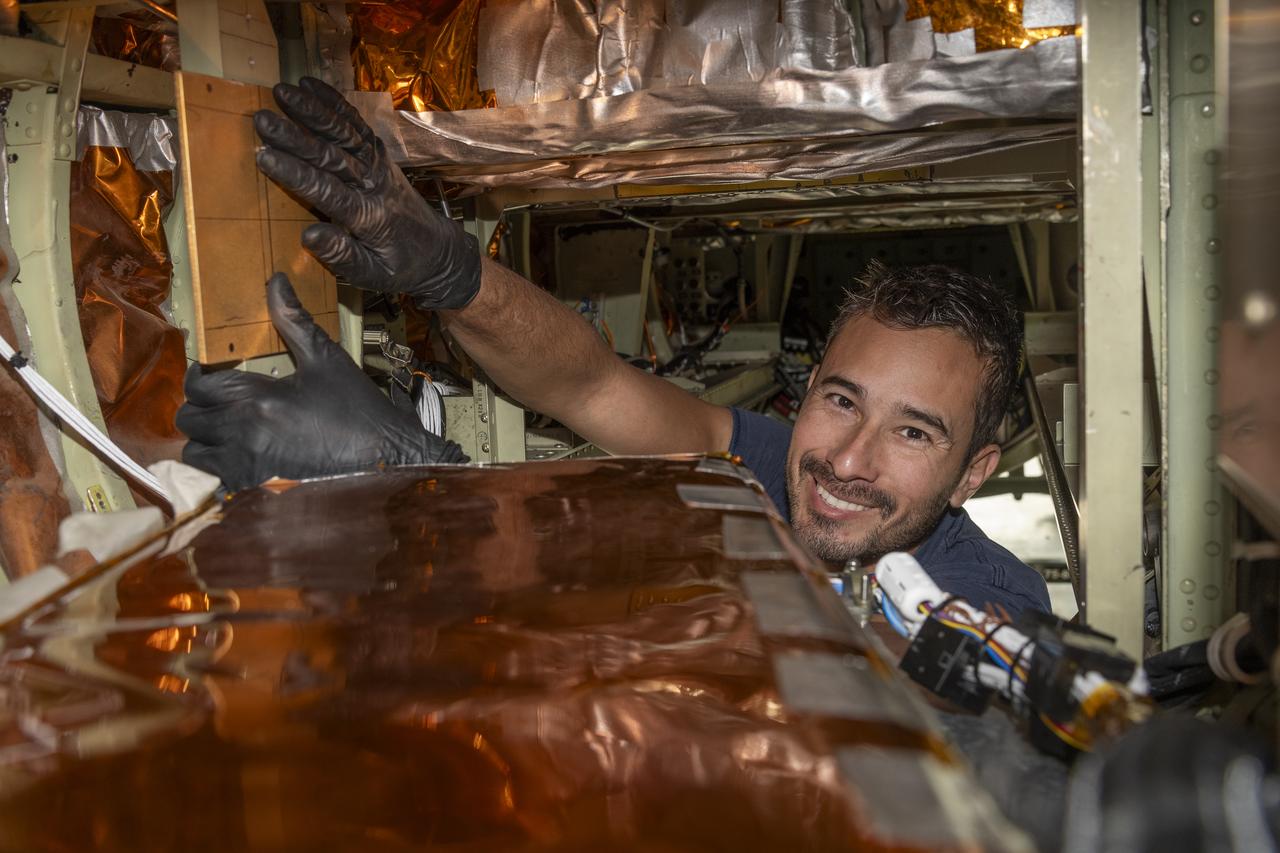
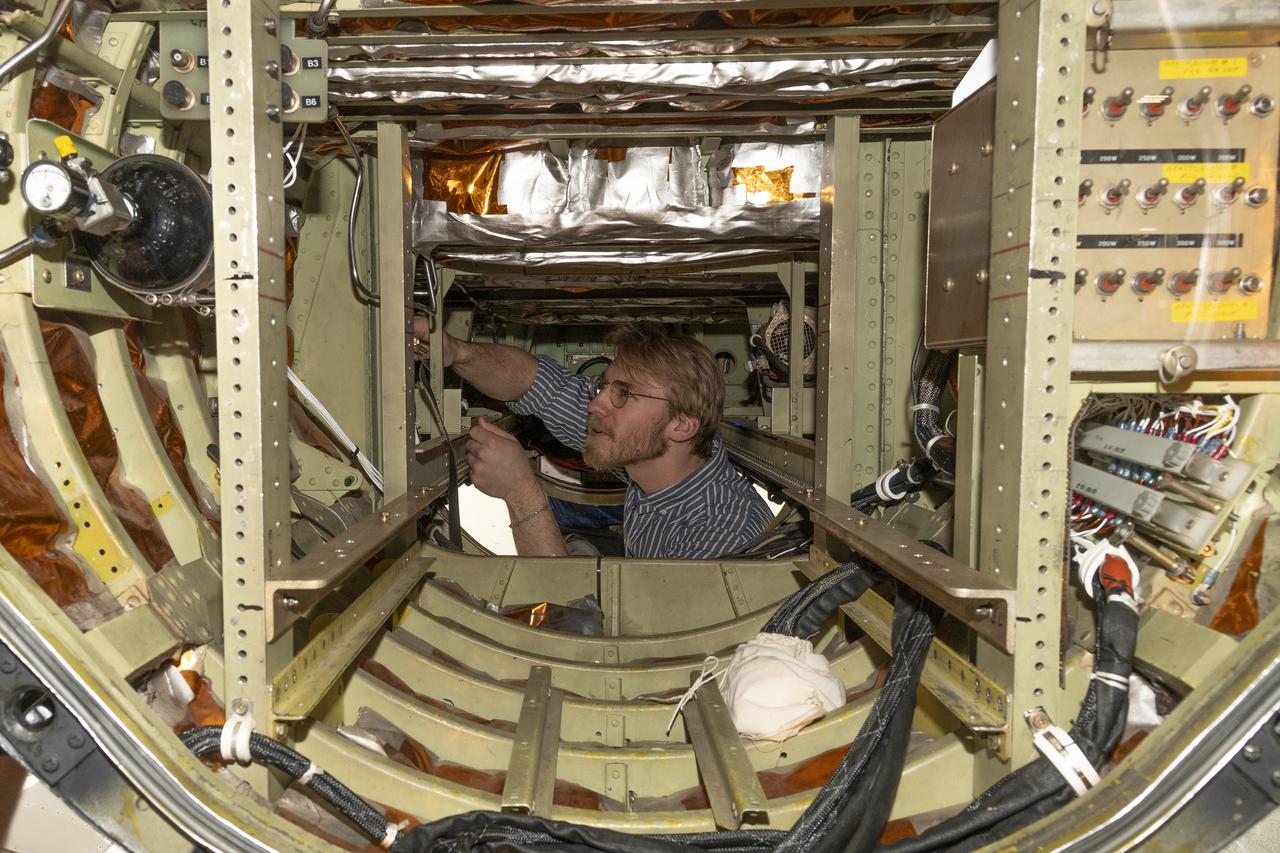
A team of experts prepares the ER-2 aircraft at Armstrong Flight Research Center in Edwards, California for the GSFC Lidar Observation and Validation Experiment (GLOVE) in February 2025. Aircraft mechanic Darick Alvarez-Alonzo installs a satellite-simulating instrument which will fly at high altitudes on the ER-2 to validate satellite-borne data. As a collaboration between engineers, scientists, and aircraft professionals, GLOVE aims to improve satellite data products for Earth Science applications.
Engineers prepare the ER-2 for airborne science mission, GLOVE
A team of experts wrap up science flights on the ER-2 aircraft at Armstrong Flight Research Center in Edwards, California after the GSFC Lidar Observation and Validation Experiment (GLOVE) in February 2025. Pilot Tim Williams ascends the ER-2 to higher skies for one of the final science flights validating satellite-borne data. As a collaboration between engineers, scientists, and aircraft professionals, GLOVE aims to improve satellite data products for Earth Science applications.
Pilot takes flight in the ER-2 for airborne science mission, GLOVE
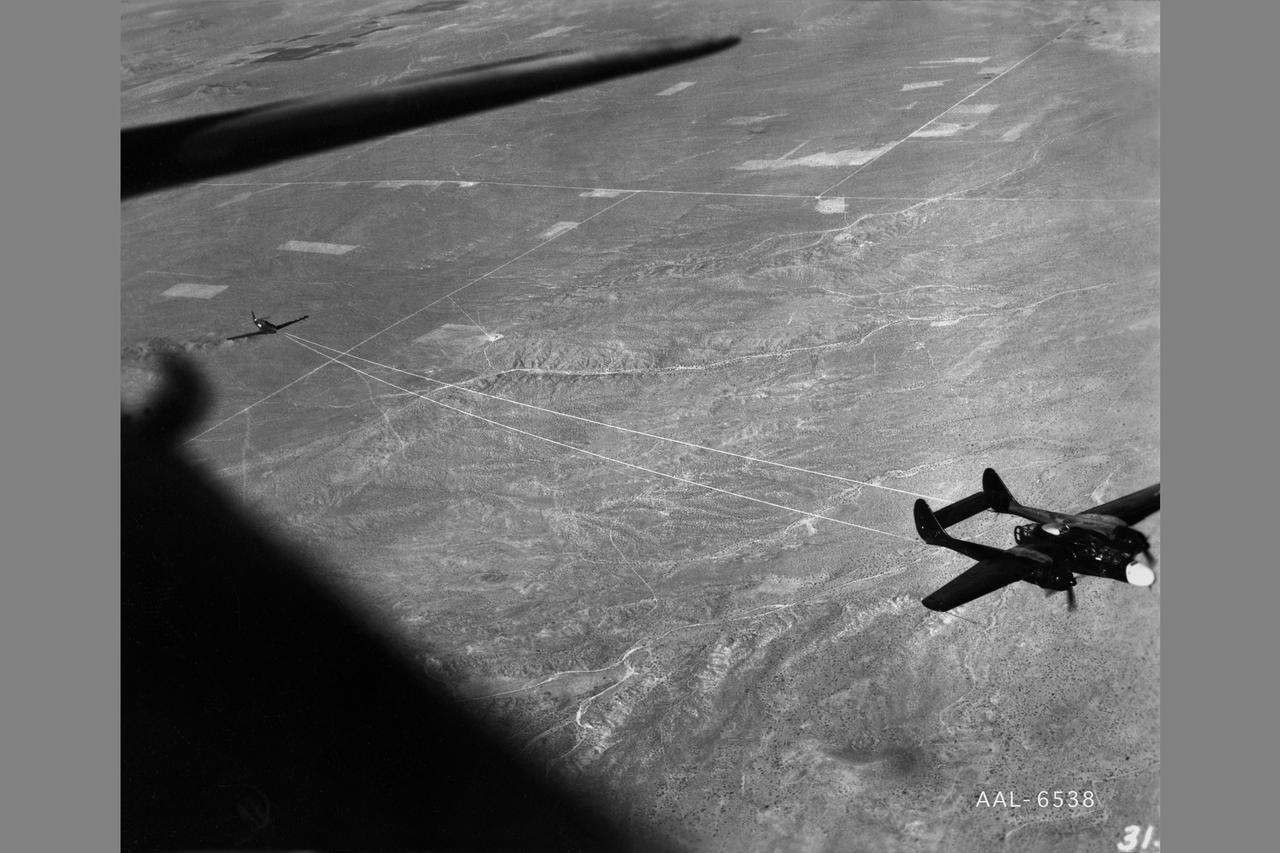
NACA photographer Northrop P-61A Black Widow towing P-51B to release altitude of 28,000 ft over Muroc Dry Lake, California for in flight validating of wind tunnel measurements of drag. After the pilot released the tow cable, drag measurementrs were obtained at various airspeeds in a 20-minute unpowered flight.  Note:  Used in publication in Flight Research at Ames;  57 Years of Development and Validation of Aeronautical Technology  NASA SP-1998-3300  Fig. 17
ARC-1944-A-6538
A team of experts prepares the ER-2 aircraft at Armstrong Flight Research Center in Edwards, California for the GSFC Lidar Observation and Validation Experiment (GLOVE) in February 2025. Researcher Jackson Begolka from the University of Iowa examines the instrument connectors in the ER-2 onboard the ER-2, which flies at high altitudes to validate satellite-borne data. As a collaboration between engineers, scientists, and aircraft professionals, GLOVE aims to improve satellite data products for Earth Science applications.
Engineers prepare the ER-2 for airborne science mission, GLOVE
A team of experts wrap up science flights on the ER-2 aircraft at Armstrong Flight Research Center in Edwards, California after the GSFC Lidar Observation and Validation Experiment (GLOVE) in February 2025. Pilot Kirt Stallings ascends the ER-2 on the runway for one of the final science flights validating satellite-borne data. As a collaboration between engineers, scientists, and aircraft professionals, GLOVE aims to improve satellite data products for Earth Science applications.
Pilot takes flight in the ER-2 for airborne science mission, GLOVE
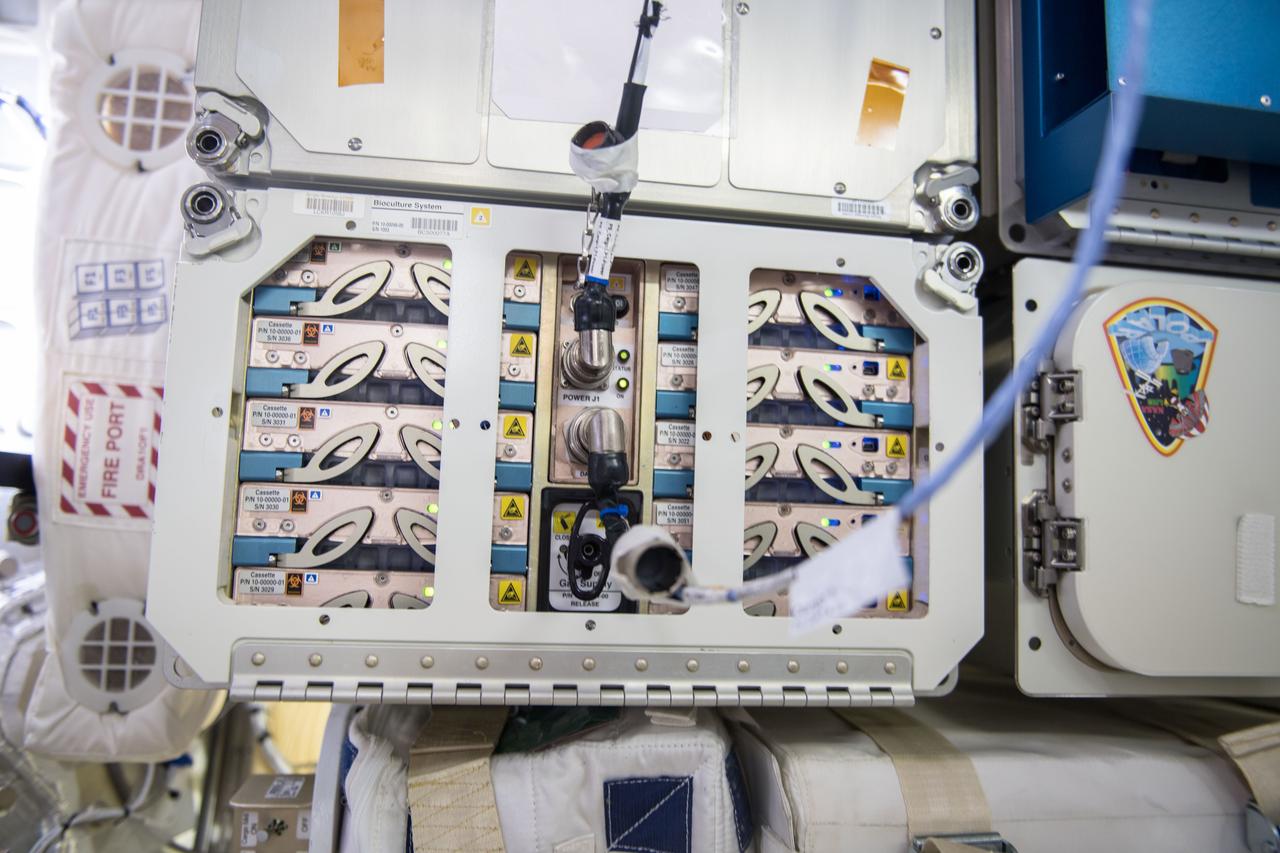
iss054e020928 (1/12/2018) --- Photo documentation of the Bioculture System Facility installed in the SpaceX Dragon Commercial Resupply Services-13 (CRS-13) spacecraft for return to Earth. The Bioculture System Hardware Validation (Cell Science-Validation) tests the performance and life-support capability of a new cell culture hardware system for use aboard the International Space Station (ISS).
Bioculture System installed in Dragon CRS-13 Spacecraft
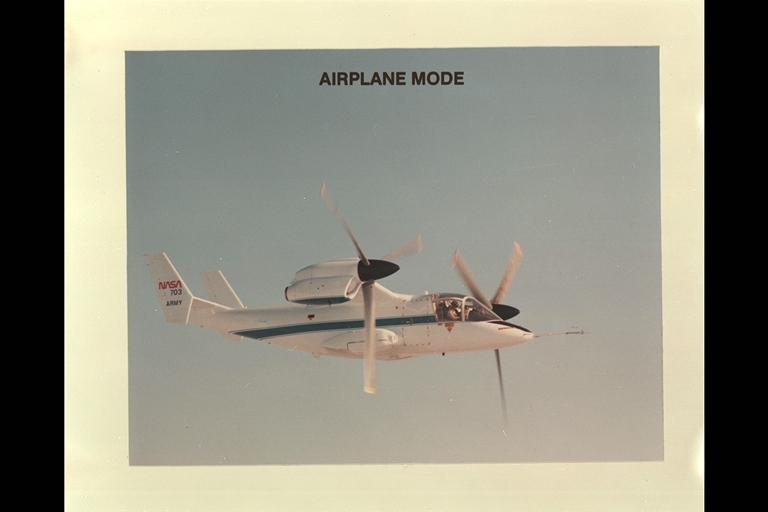
XV-15 Tilt Rotor (NASA-703) in flight at Ames Research Center Note:  Used in publication in Flight Research at Ames;  57 Years of Development and Validation of Aeronautical Technology NASA SP-1998-3300 fig 122
ARC-1985-AC85-0186-2
Body Mounted on RF-61-C Airplane in flight  Note: publiched in NASA SP Flight research at Ames; 57 Years of Development & Validation of Aeronautical Technology ' Transonic Model Testing' - fig. 12
ARC-1949-A-14294
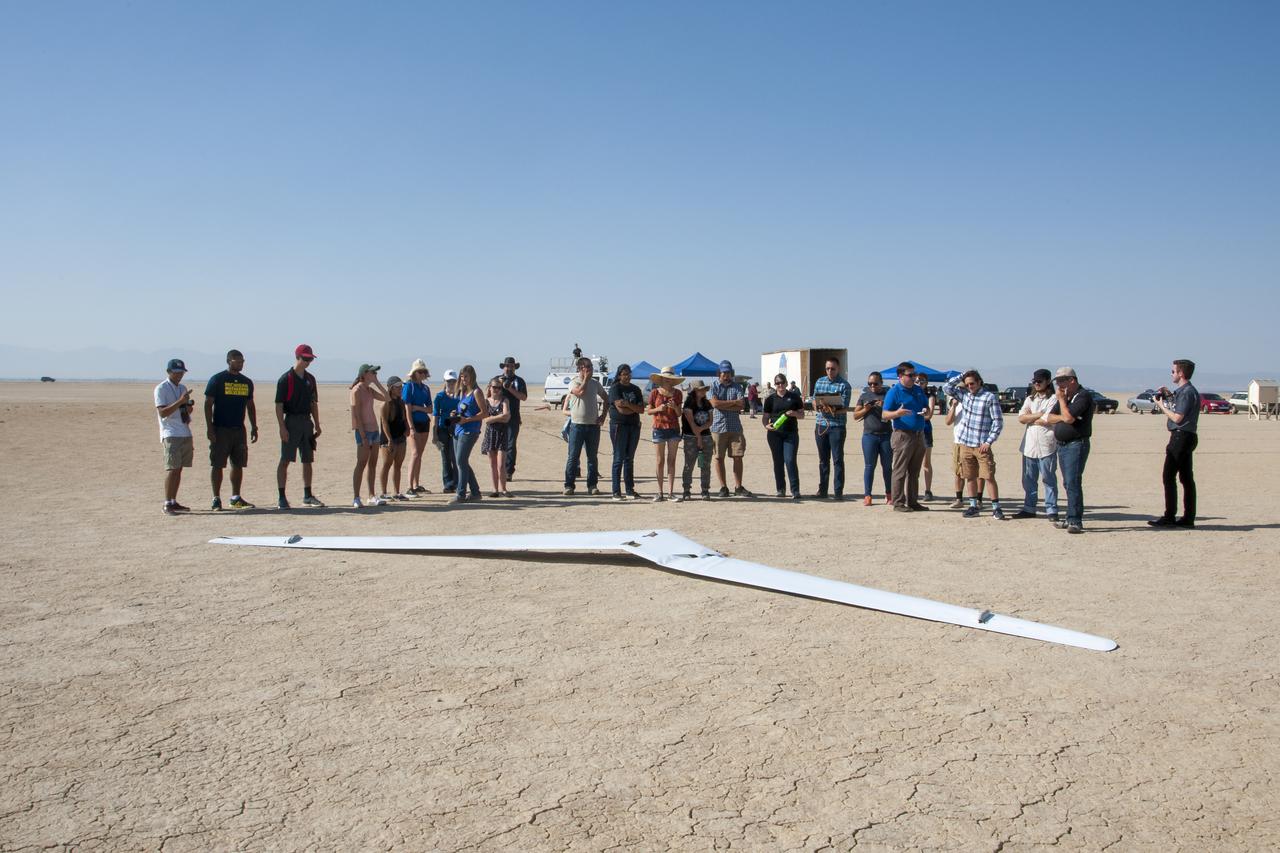
Student interns and NASA personnel cluster in front of PRANDTL-D No. 3 following a crash on Rosamond Dry Lake. The radio-controlled glider was built to validate a new spanload.
PRANDTL-D No 3 Crash Aftermath
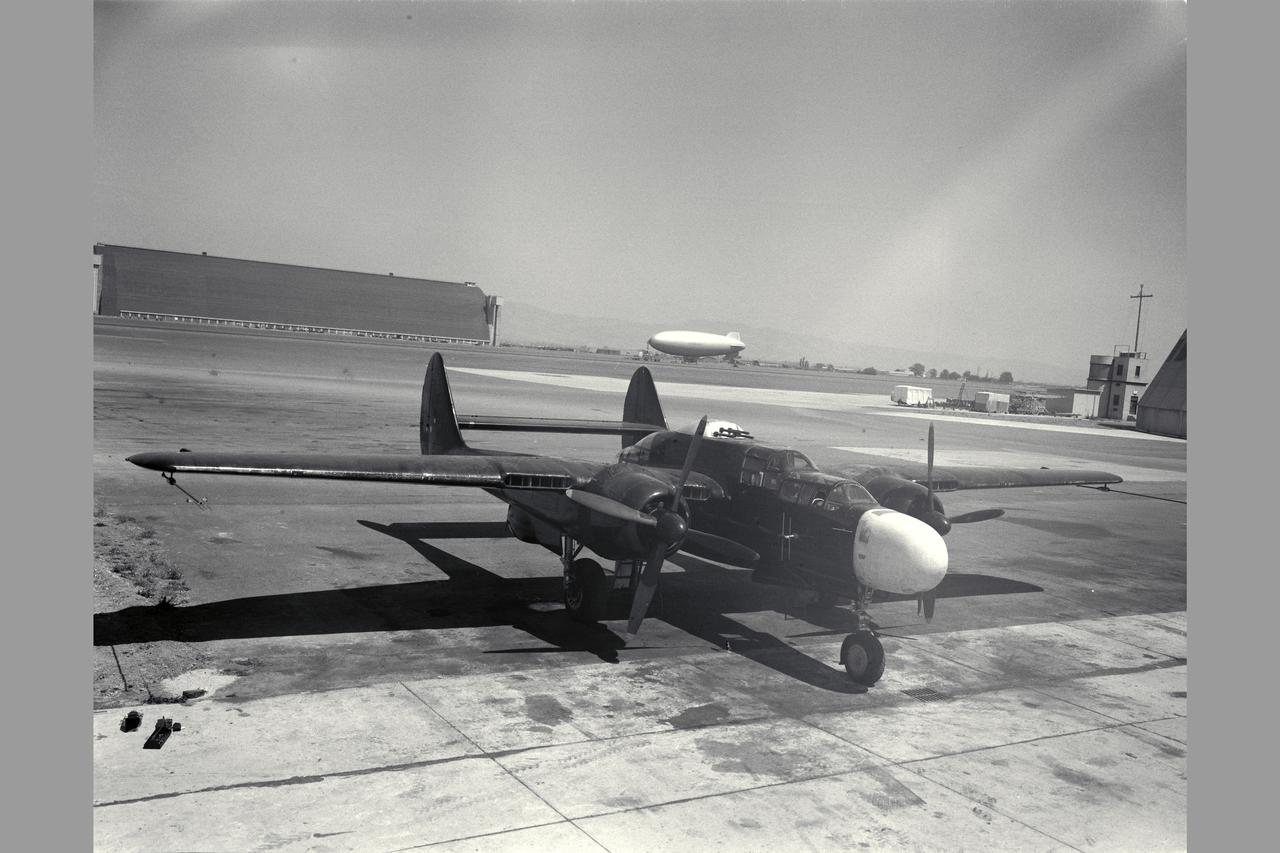
Northrop P-61A-5 Black Widow (AAF42-5572)  Note:  Used in publication in Flight Research at Ames;  57 Years of Development and Validation of Aeronautical Technology NASA SP-1998-3300  fig 44
ARC-1969-A-6270
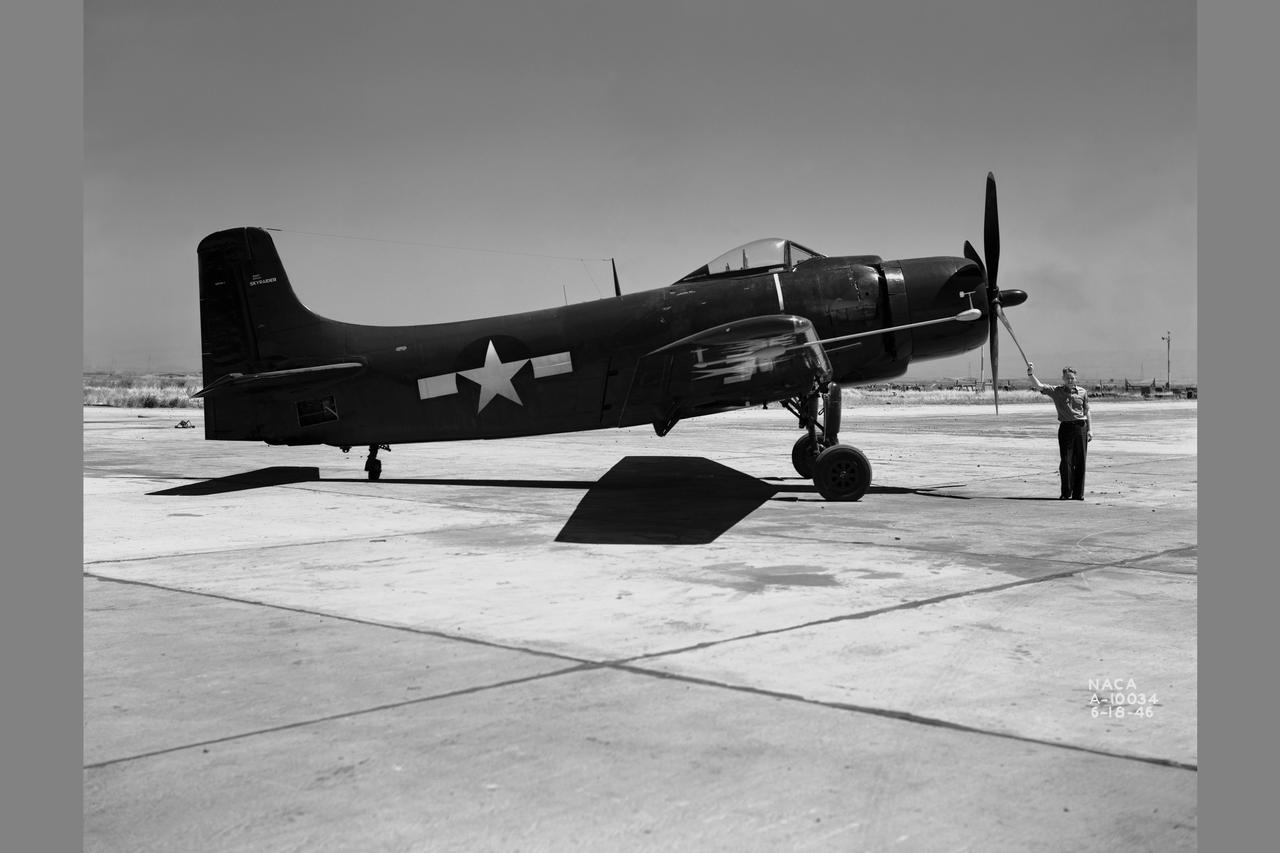
Douglas XBT2D-1 (Bu. No. 09086) Skyraider prototype  Note:  Used in publication Flight Research at Ames;  57 Years of Development and Validation of Aeronautical Technology NASA SP-1998-3300 fig 55
ARC-1946-A-10034
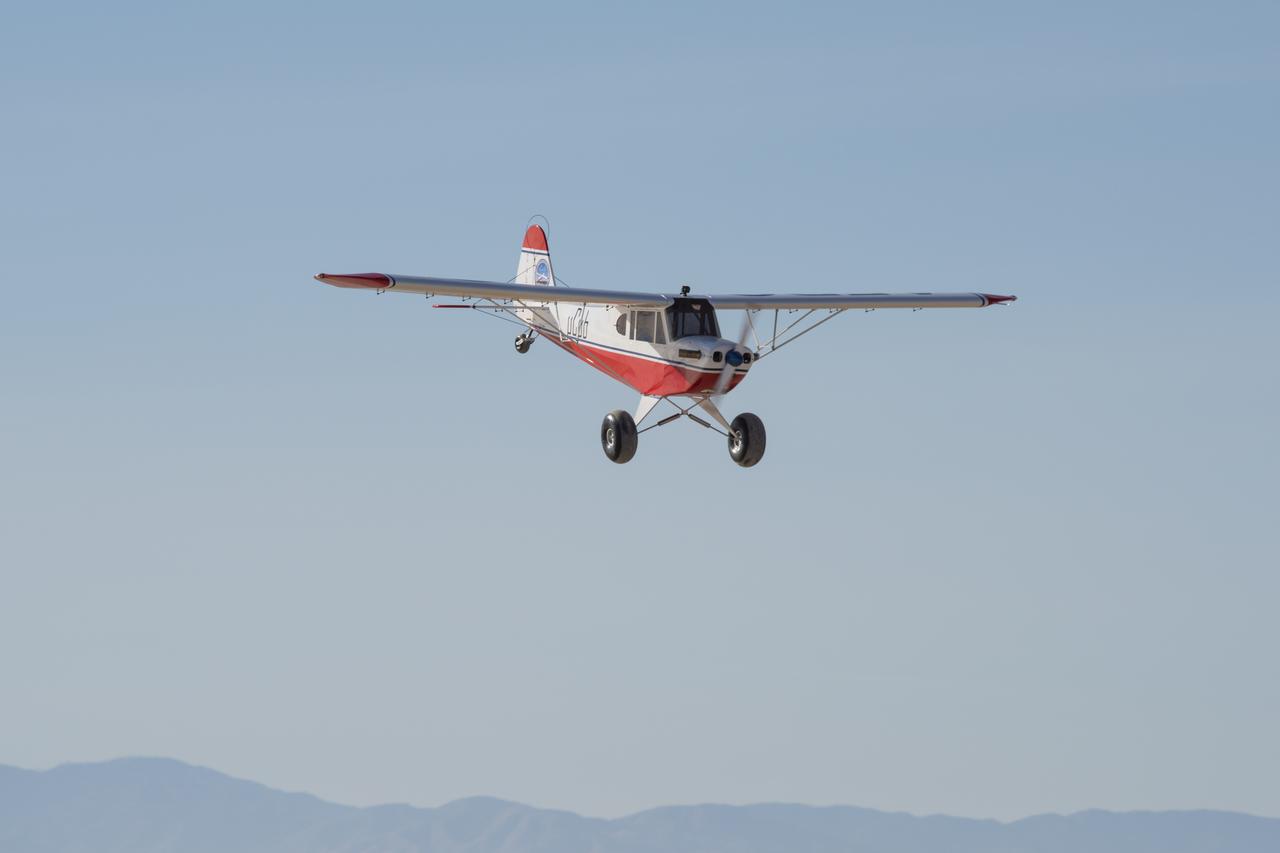
The MicroCub, a modified a Bill Hempel 60-percent-scale super cub, approaches for a landing at NASA's Armstrong Flight Research Center. This was the first flight of the MicroCub in which the crew validated the airworthiness of the aircraft.
MicroCub In Flight
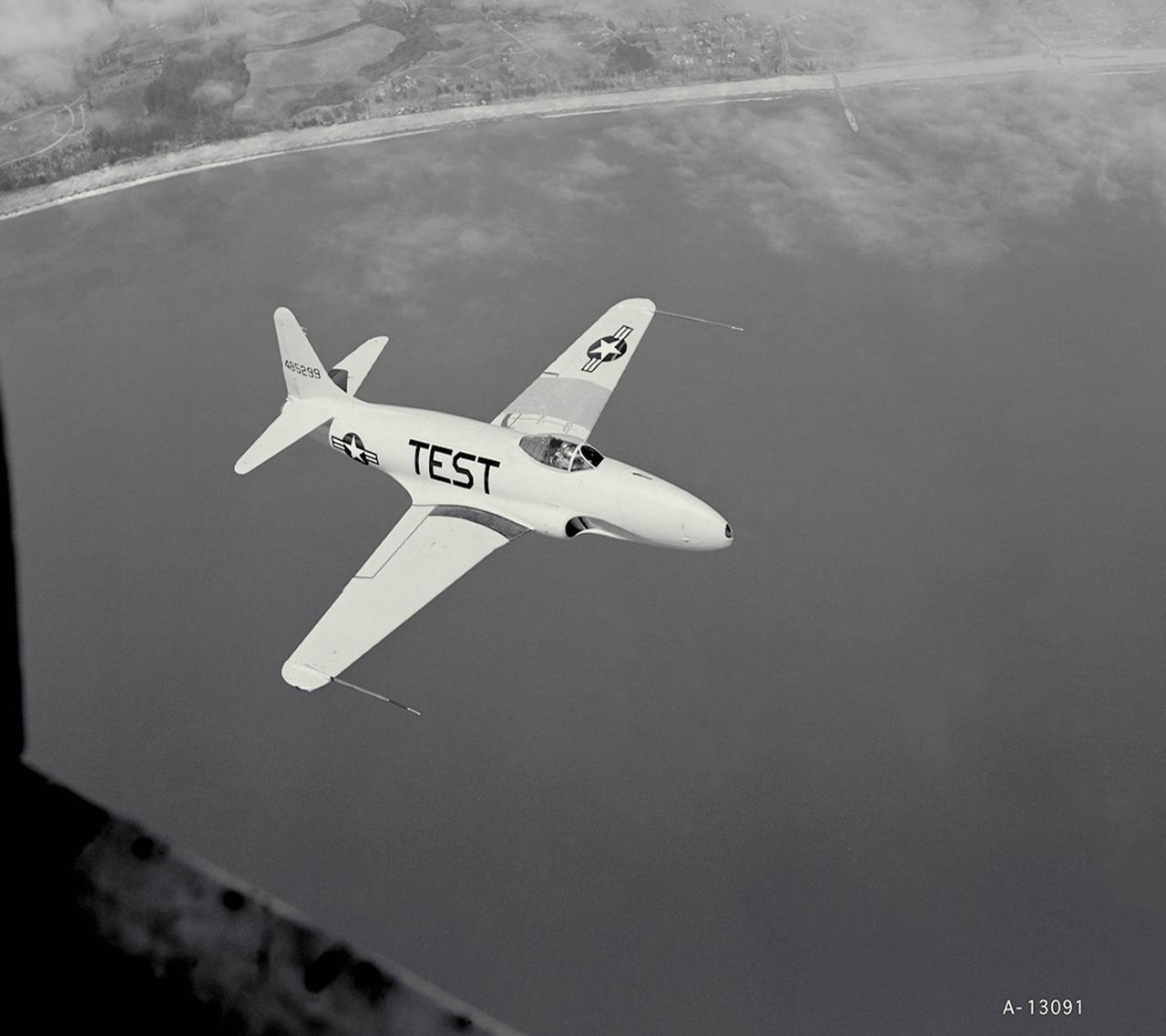
Investigation of Flying Qualities on the Lockheed P-80A airplane plan view  Note:  Used in publication in Flight Research at Ames;  57 Years of Development and Validation of Aeronautical Technology
ARC-1948-A-13091
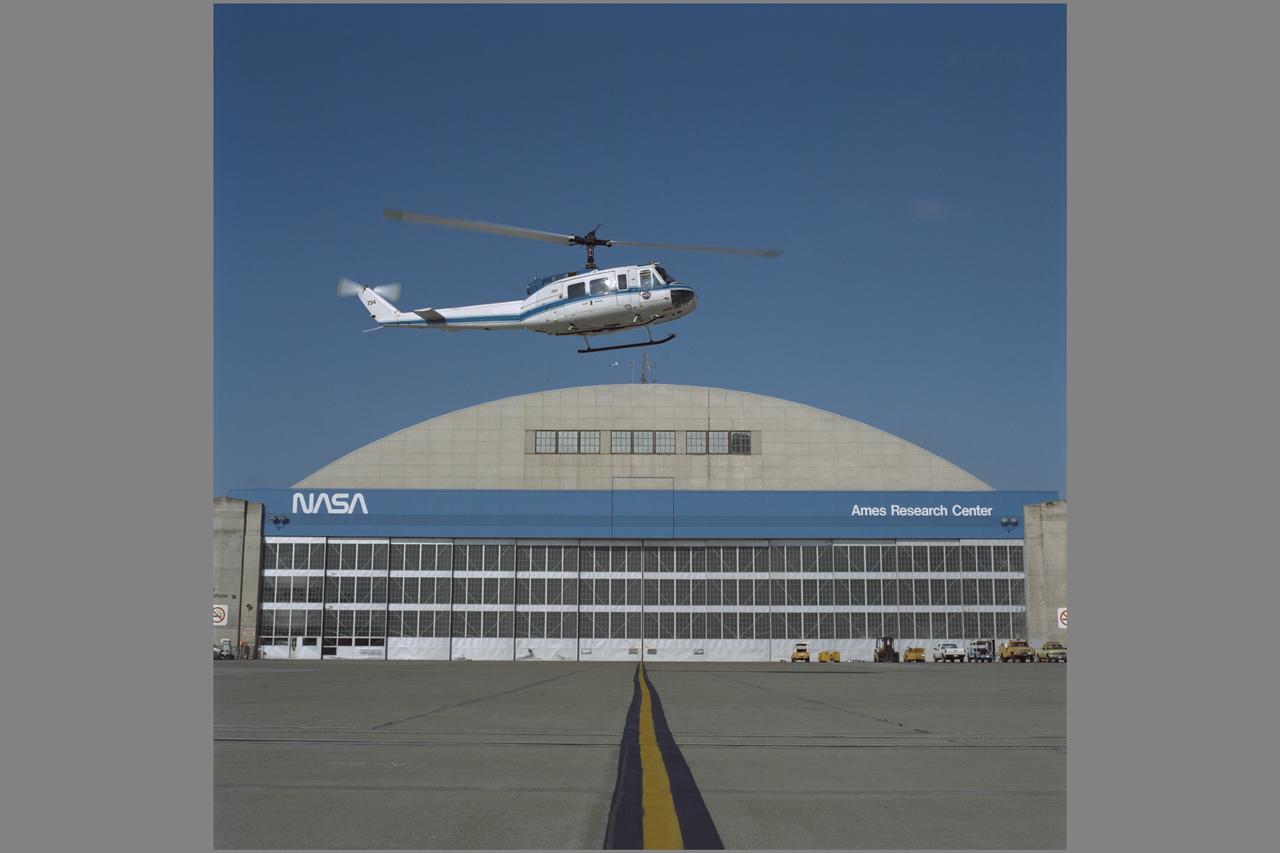
UH-IH (USA 64-13628 NASA 734) IN FLIGHT.  Rotorcraft Research.  NASA SP Flight Research at Ames: 57 Years of Development and Validation of Aeronautical Technology
ARC-1969-AC93-0401-2
An ER-2 based at NASA's Armstrong Flight Research Center in California flew a mission over the state's wildfires Aug. 9 to validate instruments and to collect information to help U.S. Forest Service officials plan for recovery.
NASA Armstrong Pilots Assist in Wildfire Efforts
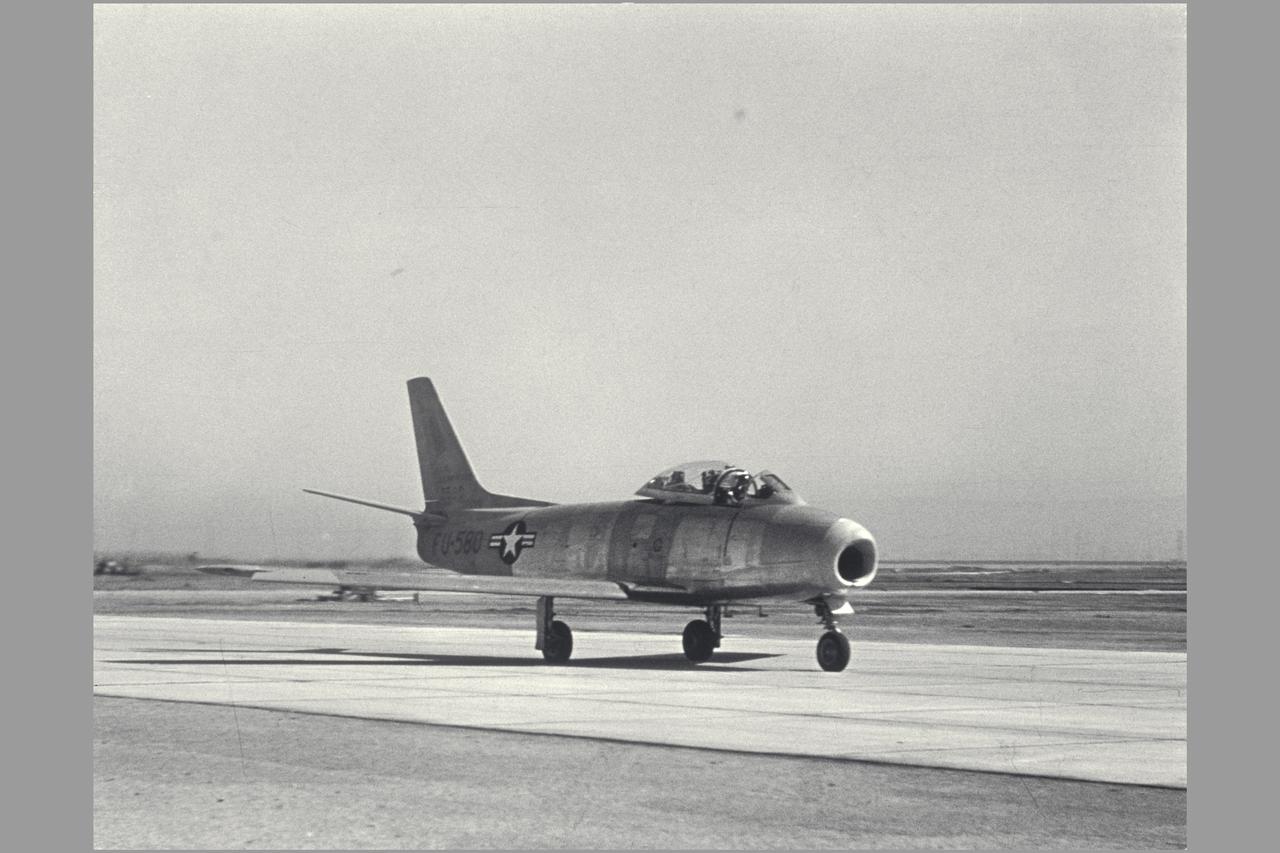
F-86E (AF 50-580).  Gunsight Tracking and Guidance and Control Displays.   Note:  Used in publication in Flight Research at Ames;  57 Years of Development and Validation of Aeronautical Technology NASA SP-1998-3300 fig 78
ARC-1969-A-18295
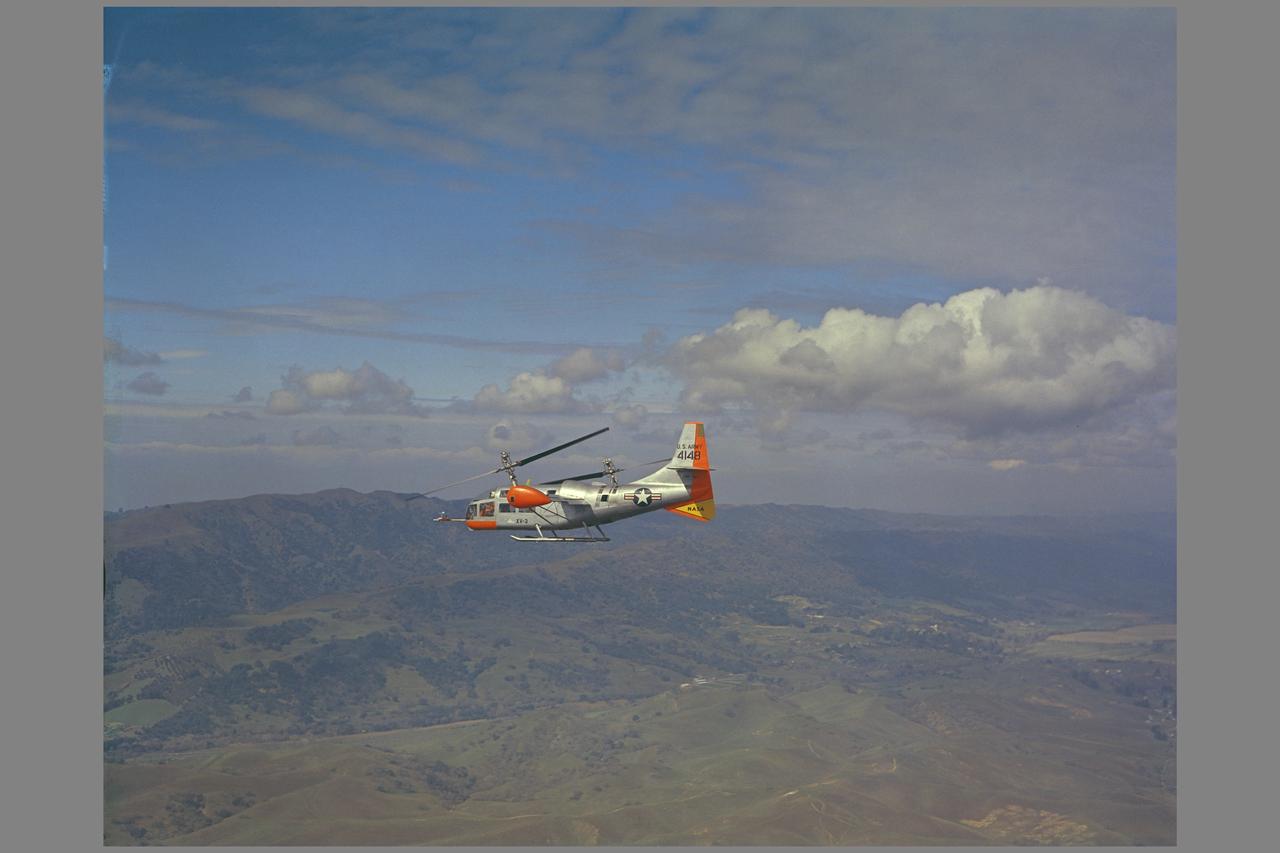
BELL XV-3 (AF54-148) Convertiplane (experimental tilt rotor) IN FLIGHT Note:  Used in publication in Flight Research at Ames;  57 Years of Development and Validation of Aeronautical Technology NASA SP-1998-3300 fig. 121
ARC-1960-AC-26438
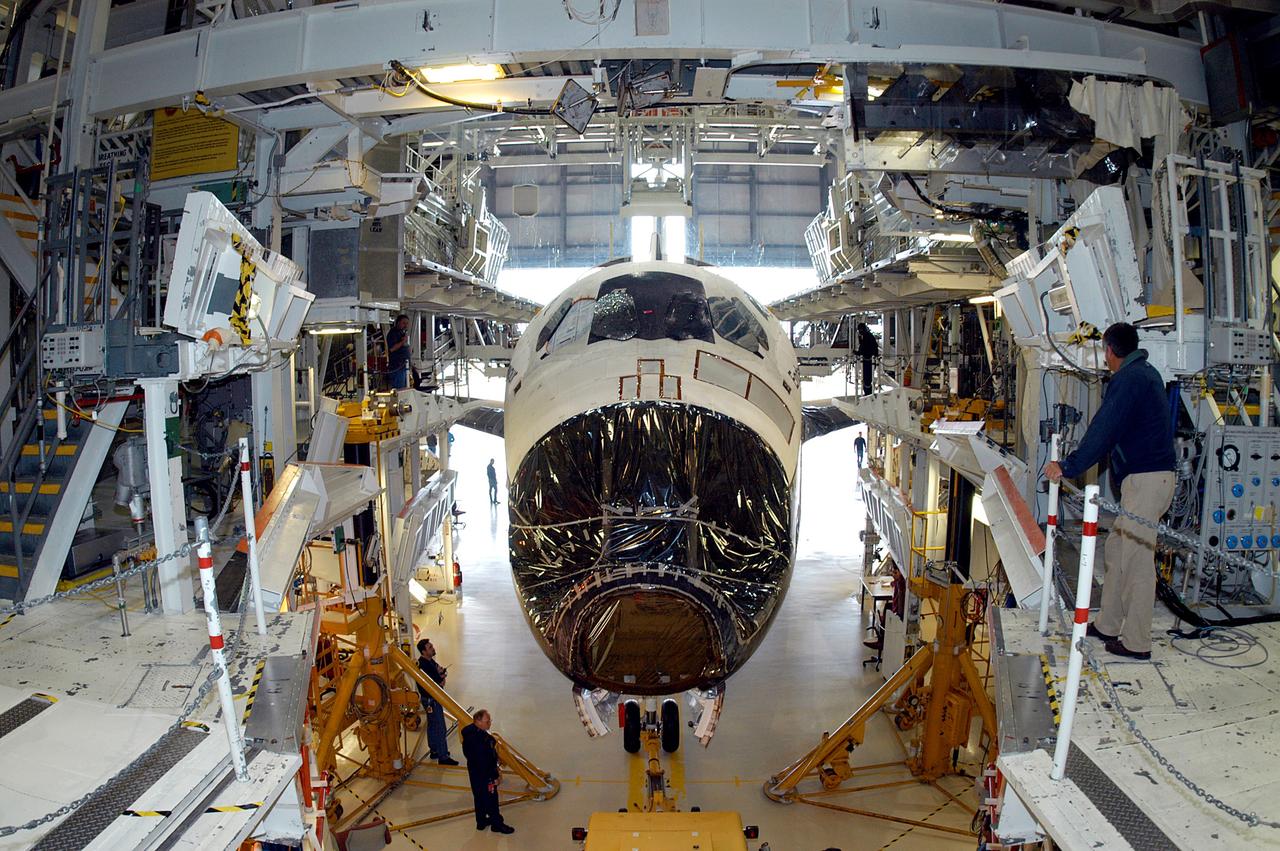
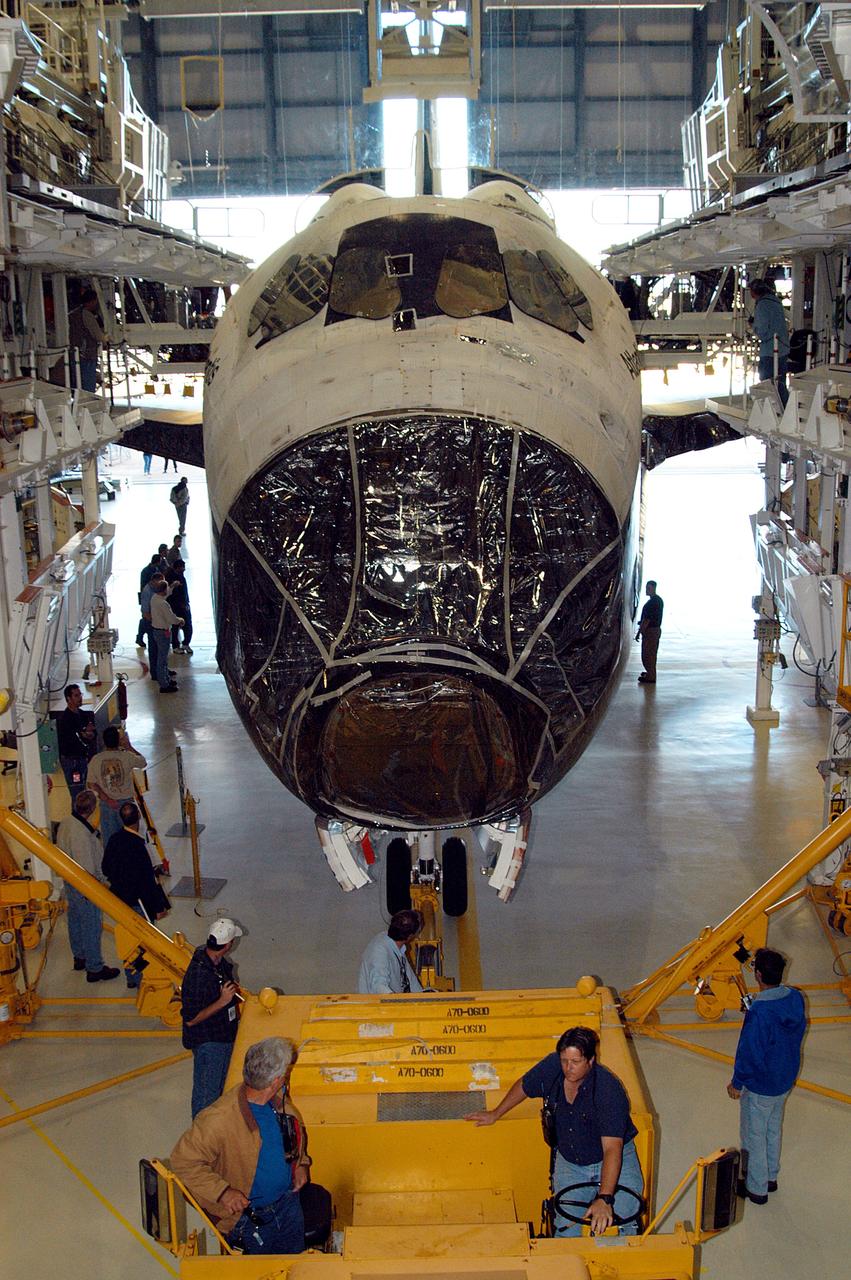
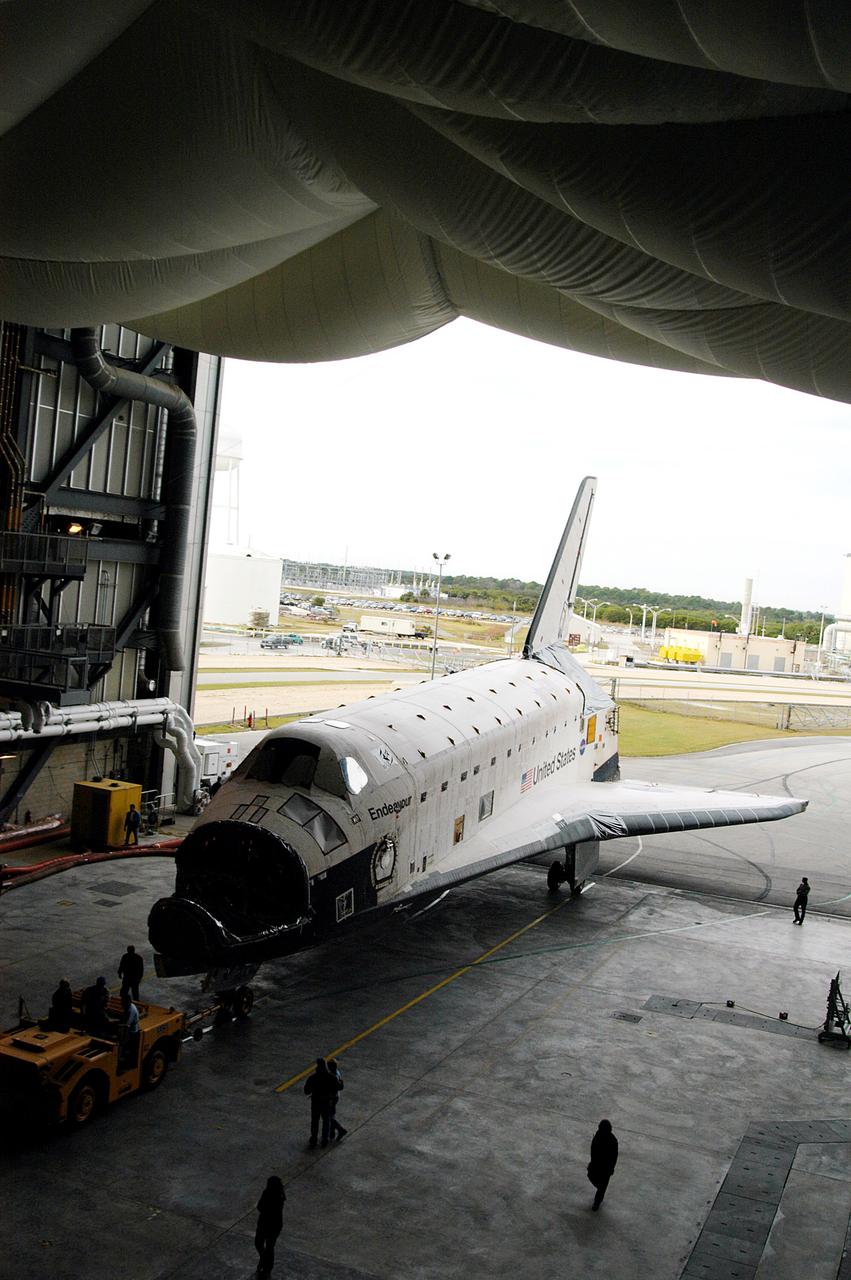
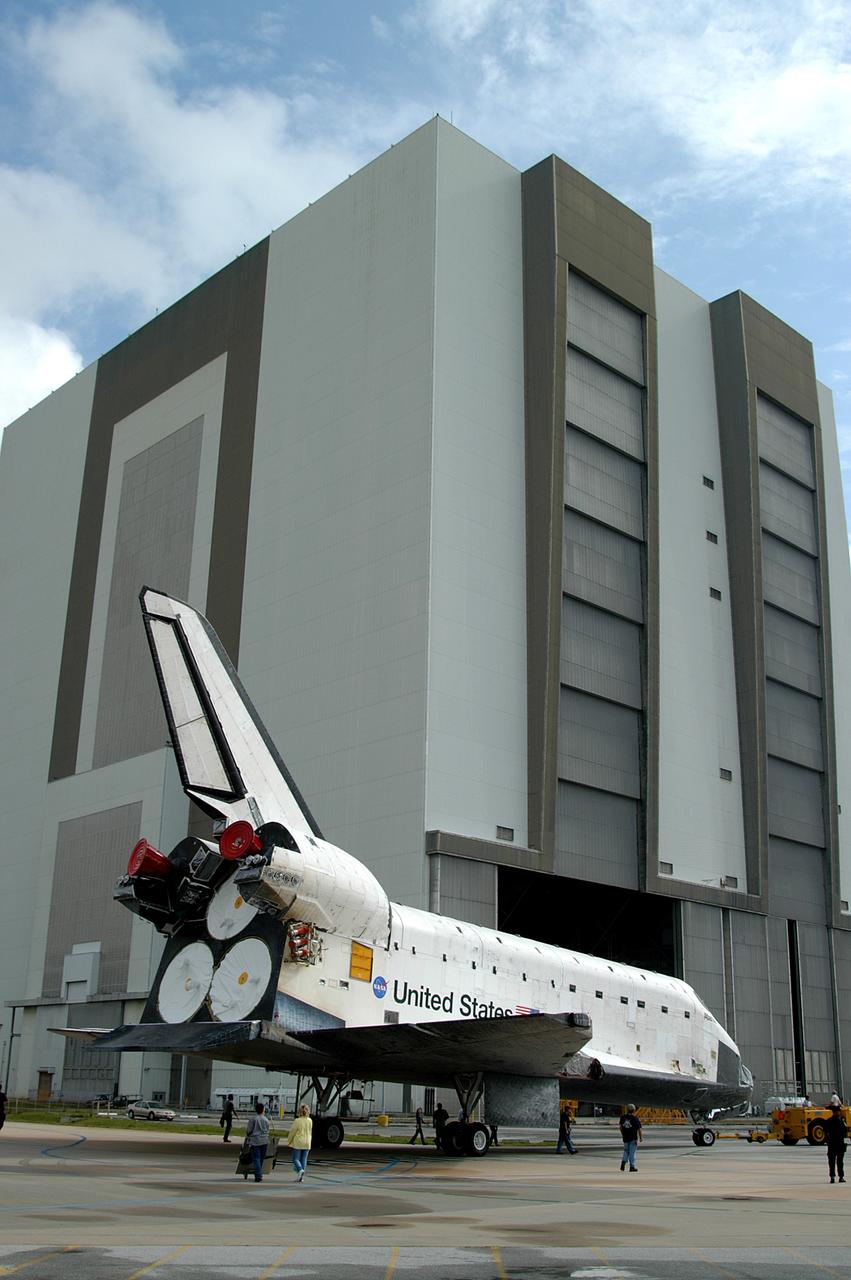
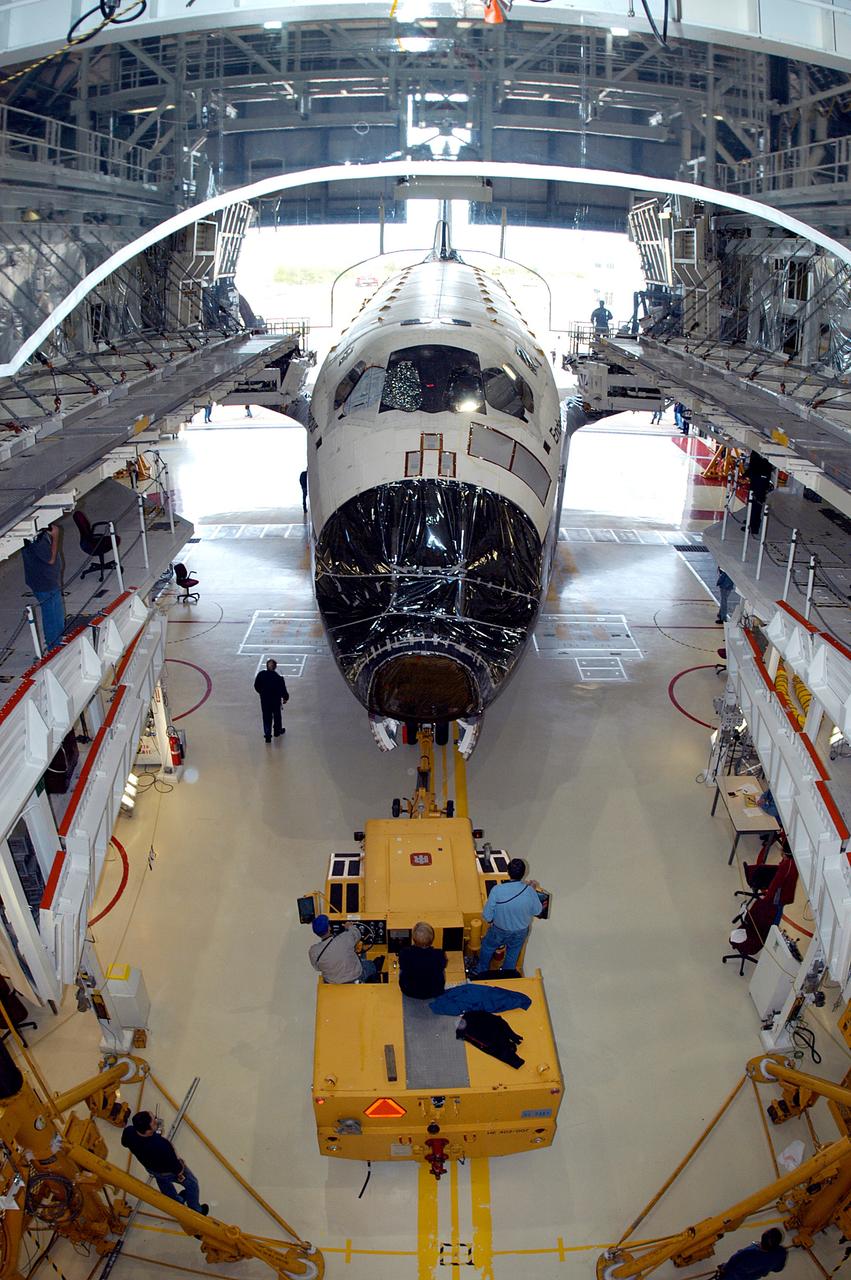
KENNEDY SPACE CENTER, FLA. -- Endeavour backs out of the Orbiter Processing Facility for temporary transfer to the Vehicle Assembly Building. The move allows work to be performed in the OPF that can only be accomplished while the bay is empty. Work scheduled in the OPF includes annual validation of the bay’s cranes, work platforms, lifting mechanisms and jack stands. Endeavour will remain in the VAB for approximately 12 days, then return to the OPF.
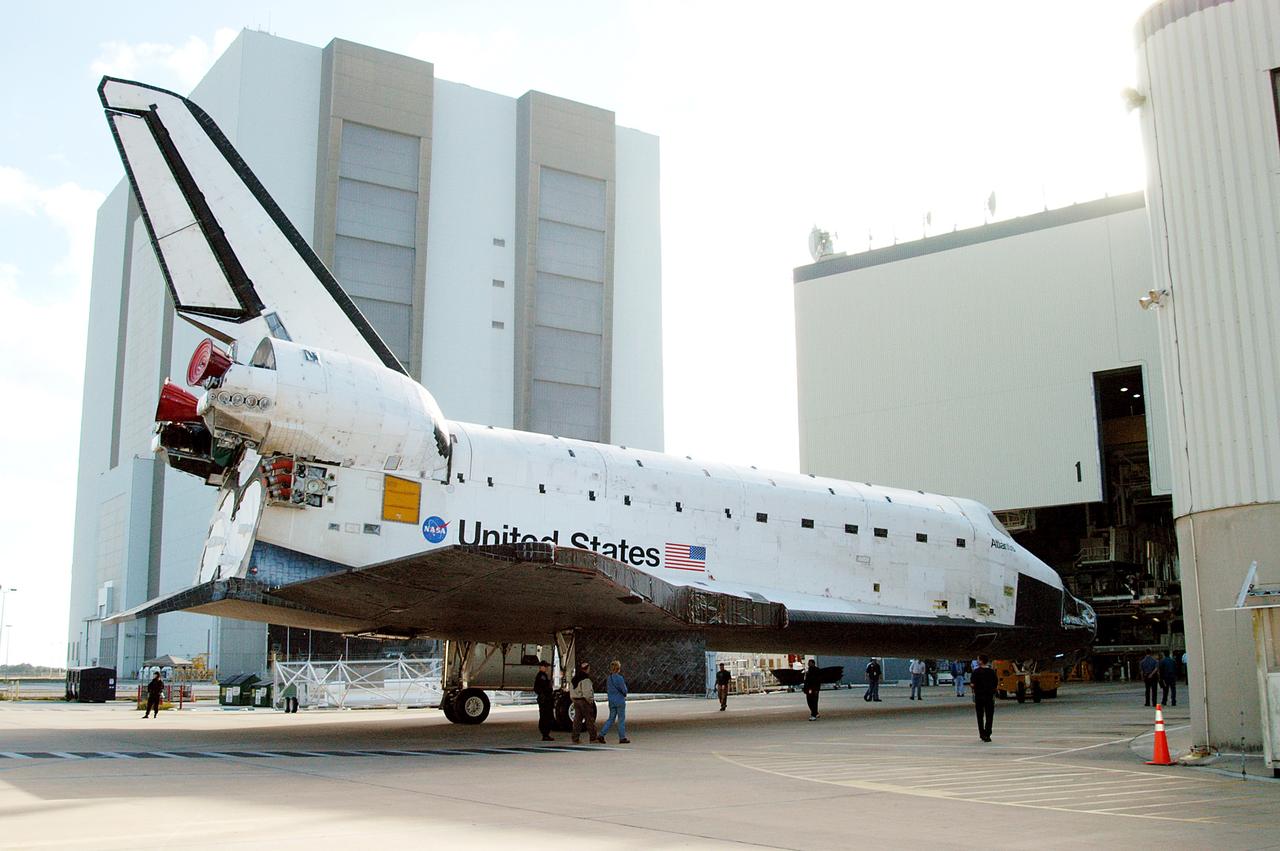
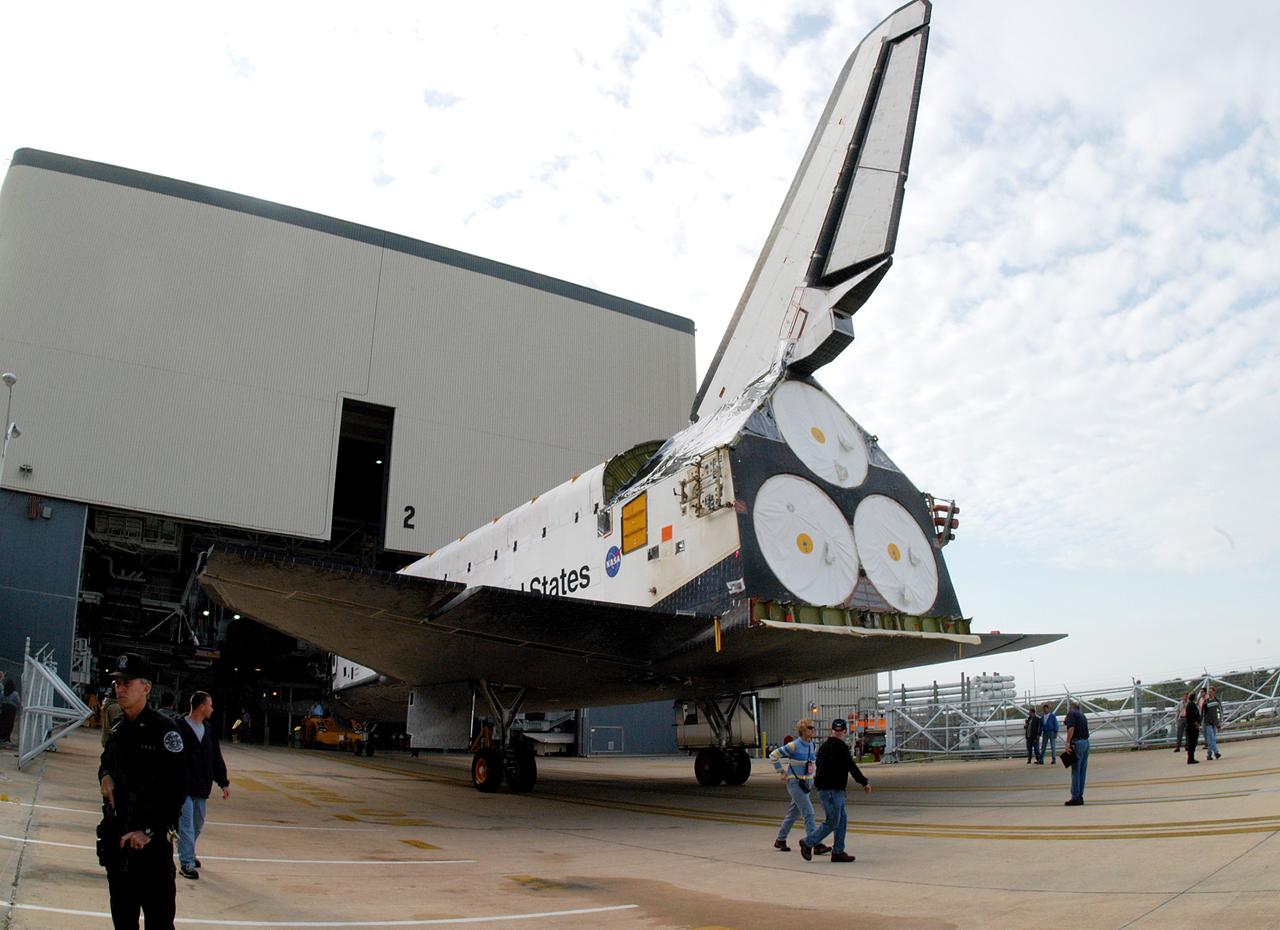
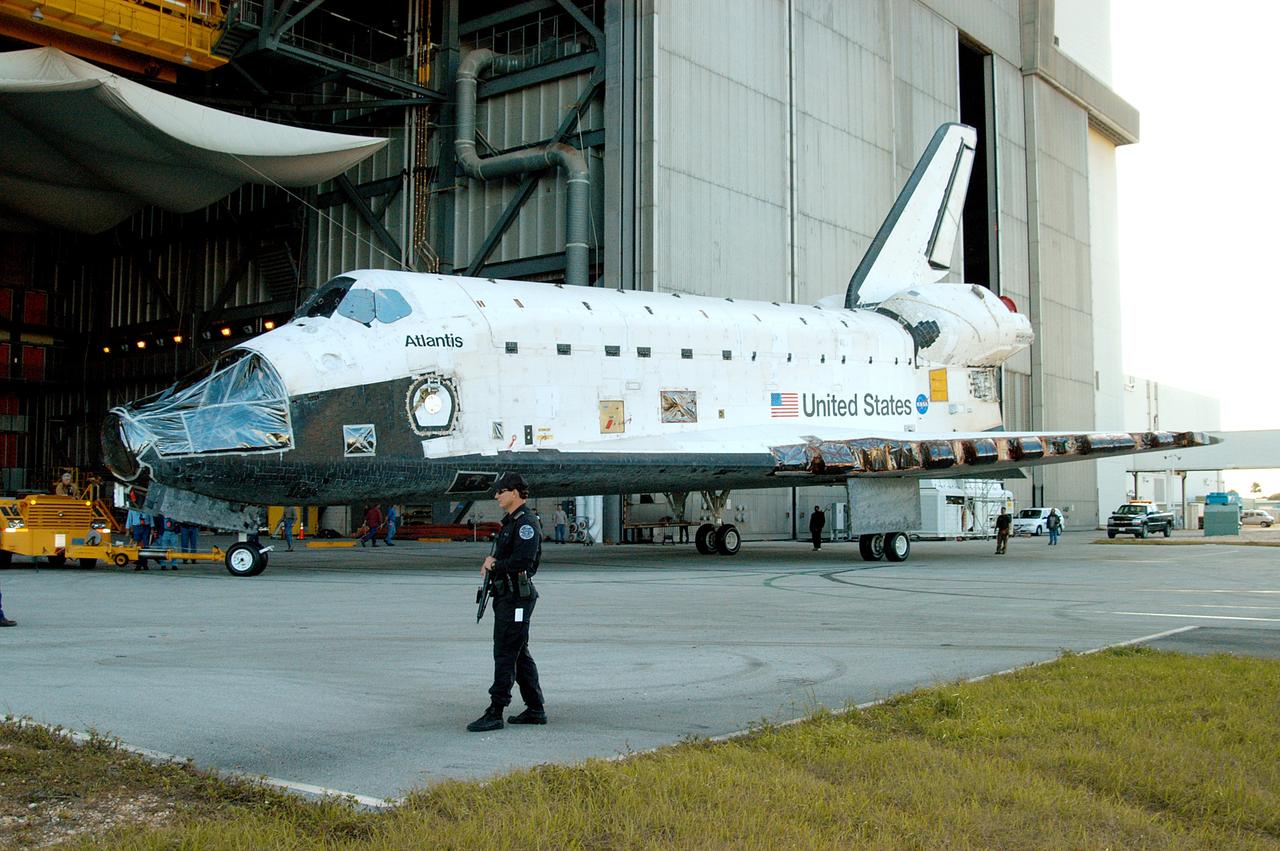
KENNEDY SPACE CENTER, FLA. -  The orbiter Atlantis rolls toward the Orbiter Processing Facility after spending 10 days in the Vehicle Assembly Building.  The hiatus in the VAB allowed work to be performed in the OPF that can only be accomplished while the bay is empty. Work included annual validation of the bay's cranes, work platforms, lifting mechanisms and jack stands.  Work resumes to prepare Atlantis for launch in September 2004 on the first return-to-flight mission, STS-114.
KENNEDY SPACE CENTER, FLA. - The orbiter Atlantis rolls toward the Orbiter Processing Facility after spending 10 days in the Vehicle Assembly Building. The hiatus in the VAB allowed work to be performed in the OPF that can only be accomplished while the bay is empty. Work included annual validation of the bay's cranes, work platforms, lifting mechanisms and jack stands. Work resumes to prepare Atlantis for launch in September 2004 on the first return-to-flight mission, STS-114.
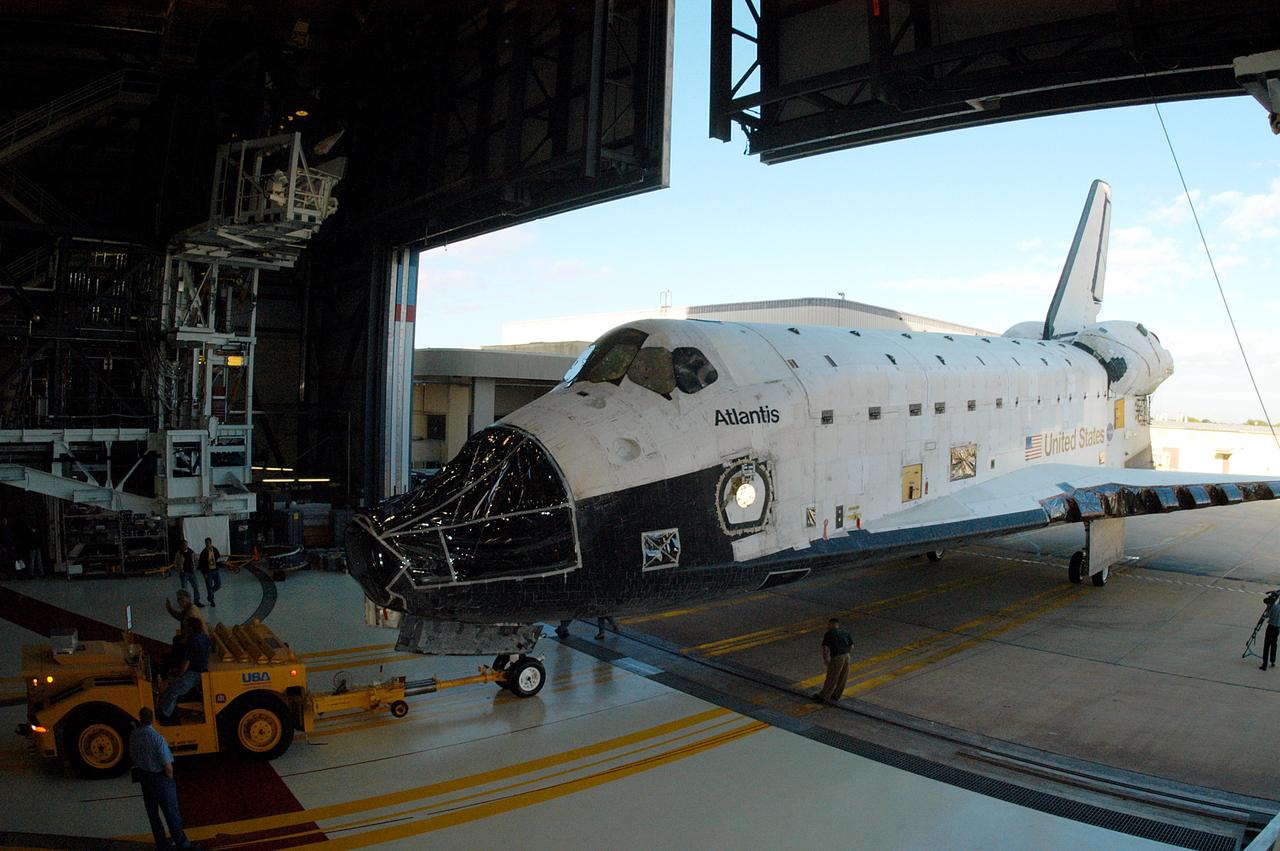
KENNEDY SPACE CENTER, FLA. -  The orbiter Atlantis rolls out of the Vehicle Assembly Building for transfer back to the Orbiter Processing Facility.  Atlantis spent 10 days in the VAB to allow work to be performed in the OPF that can only be accomplished while the bay is empty. Work included annual validation of the bay's cranes, work platforms, lifting mechanisms and jack stands.  Work resumes to prepare Atlantis for launch in September 2004 on the first return-to-flight mission, STS-114.
KENNEDY SPACE CENTER, FLA. - The orbiter Atlantis rolls out of the Vehicle Assembly Building for transfer back to the Orbiter Processing Facility. Atlantis spent 10 days in the VAB to allow work to be performed in the OPF that can only be accomplished while the bay is empty. Work included annual validation of the bay's cranes, work platforms, lifting mechanisms and jack stands. Work resumes to prepare Atlantis for launch in September 2004 on the first return-to-flight mission, STS-114.
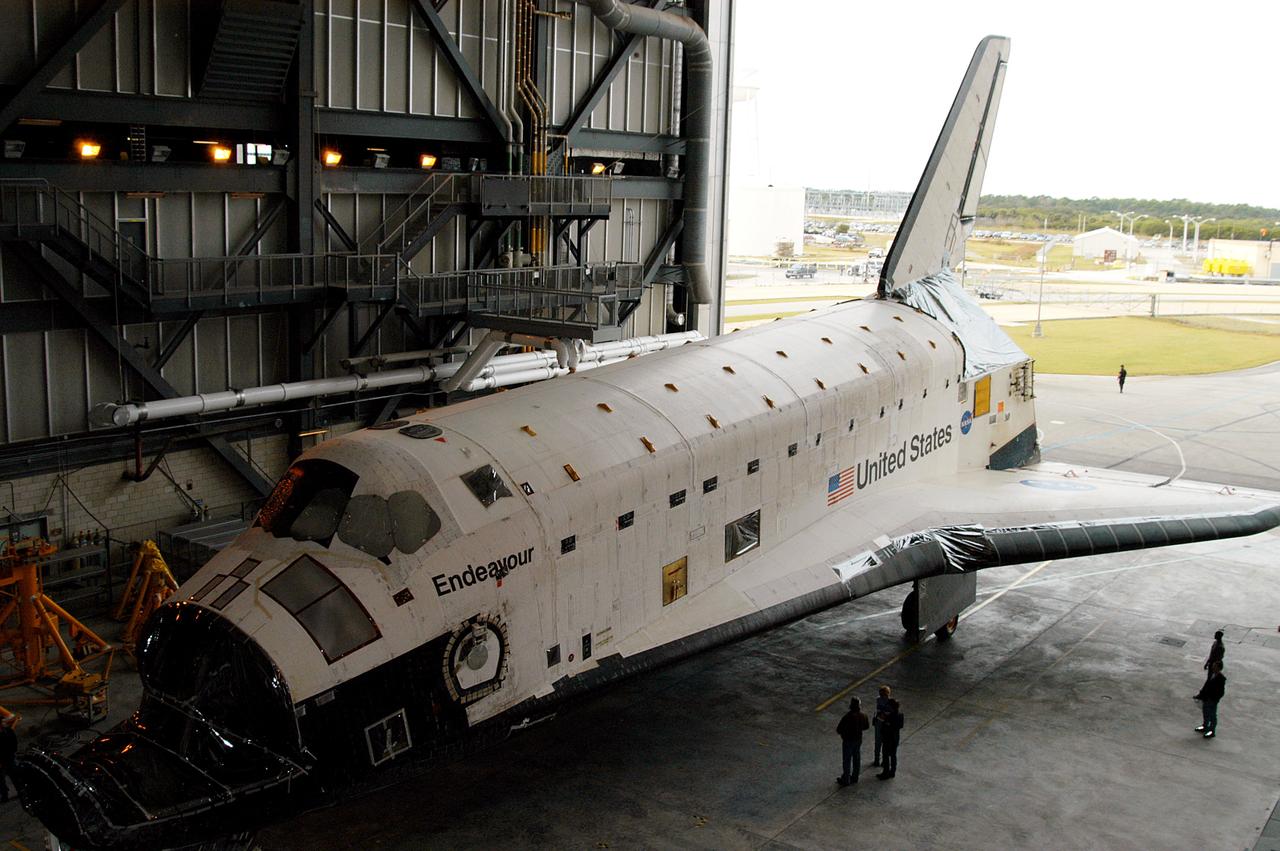
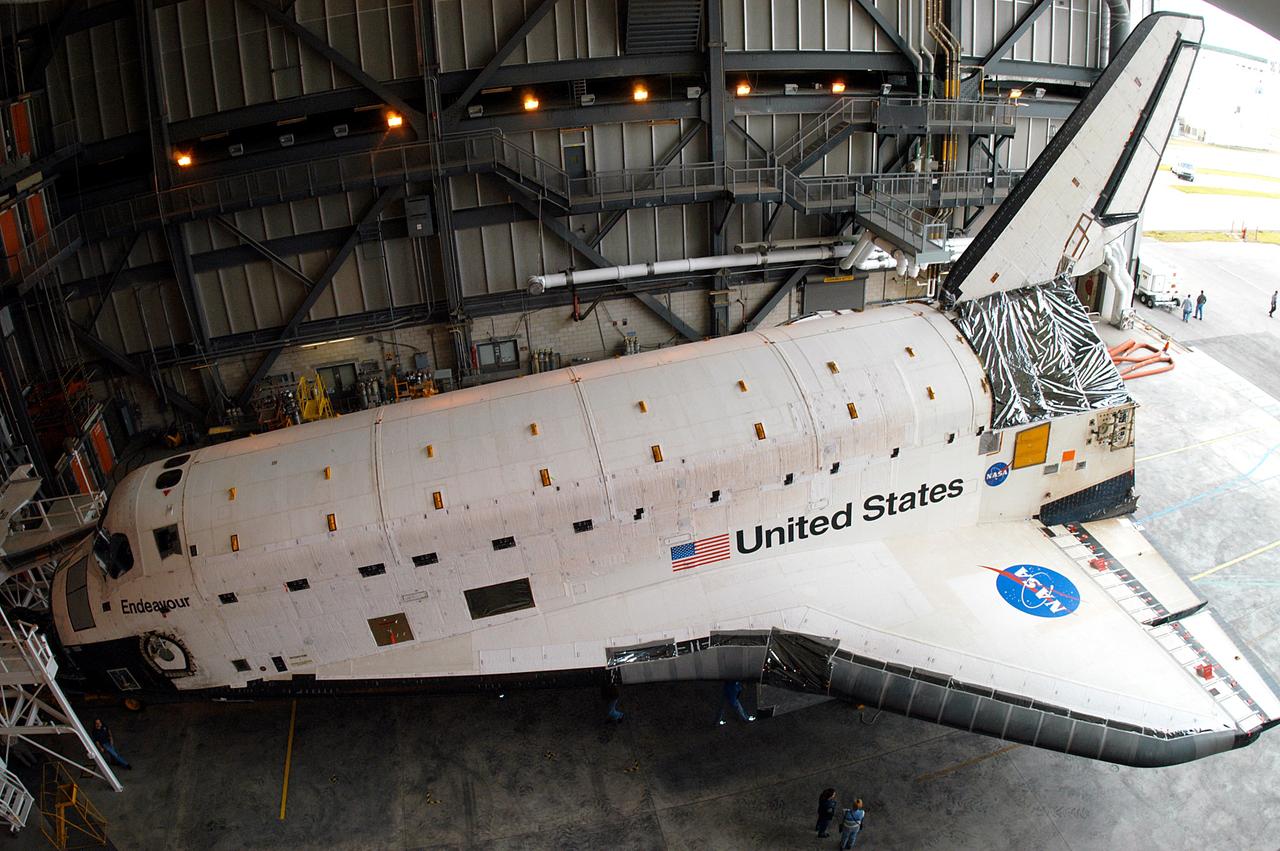
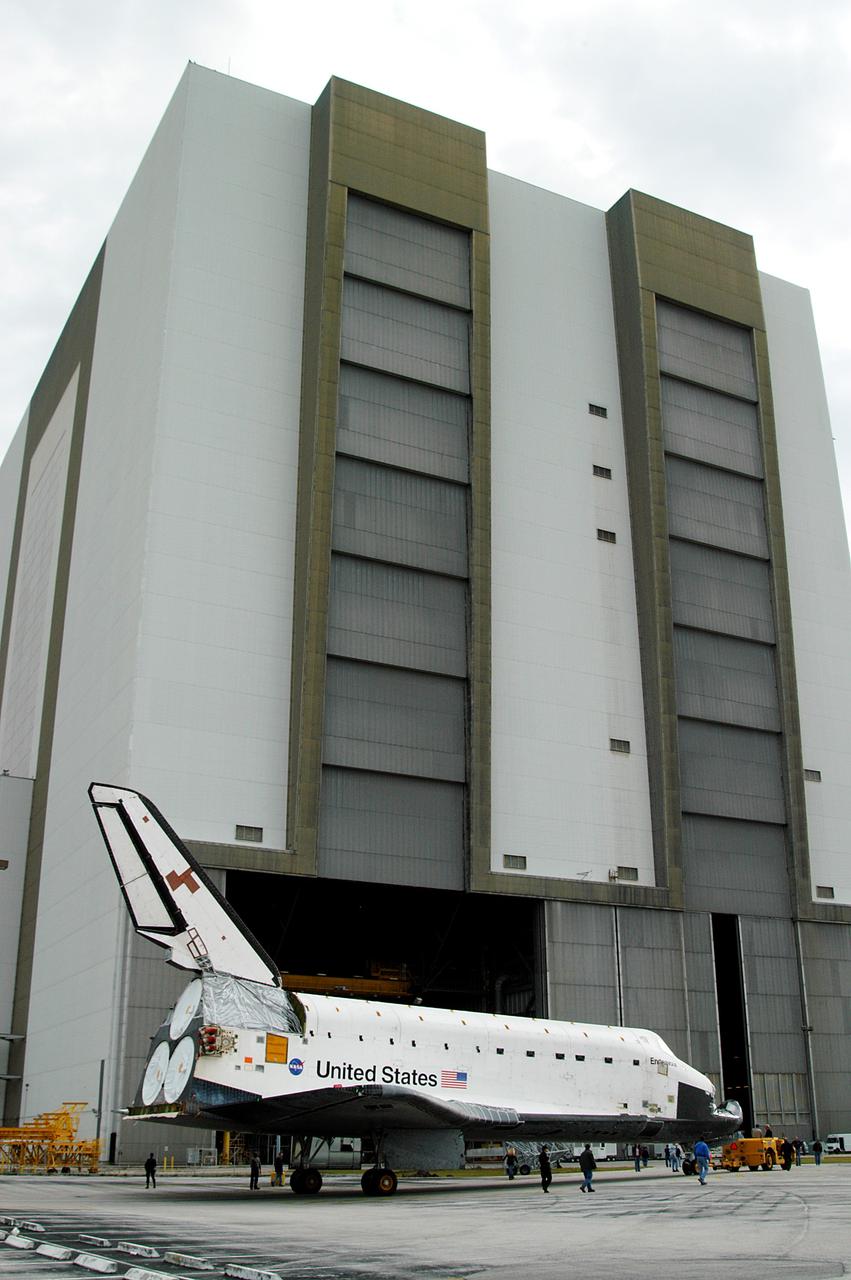
KENNEDY SPACE CENTER, FLA. -- Endeavour settles into  place inside the Vehicle Assembly Building (VAB) where it has been moved for temporary storage.  It left the Orbiter Processing Facility (OPF) to allow work to be performed in the OPF that can only be accomplished while the bay is empty. Work scheduled in the OPF includes annual validation of the bay’s cranes, work platforms, lifting mechanisms and jack stands. Endeavour will remain in the VAB for approximately 12 days, then return to the OPF.
KENNEDY SPACE CENTER, FLA. -- Endeavour settles into place inside the Vehicle Assembly Building (VAB) where it has been moved for temporary storage. It left the Orbiter Processing Facility (OPF) to allow work to be performed in the OPF that can only be accomplished while the bay is empty. Work scheduled in the OPF includes annual validation of the bay’s cranes, work platforms, lifting mechanisms and jack stands. Endeavour will remain in the VAB for approximately 12 days, then return to the OPF.
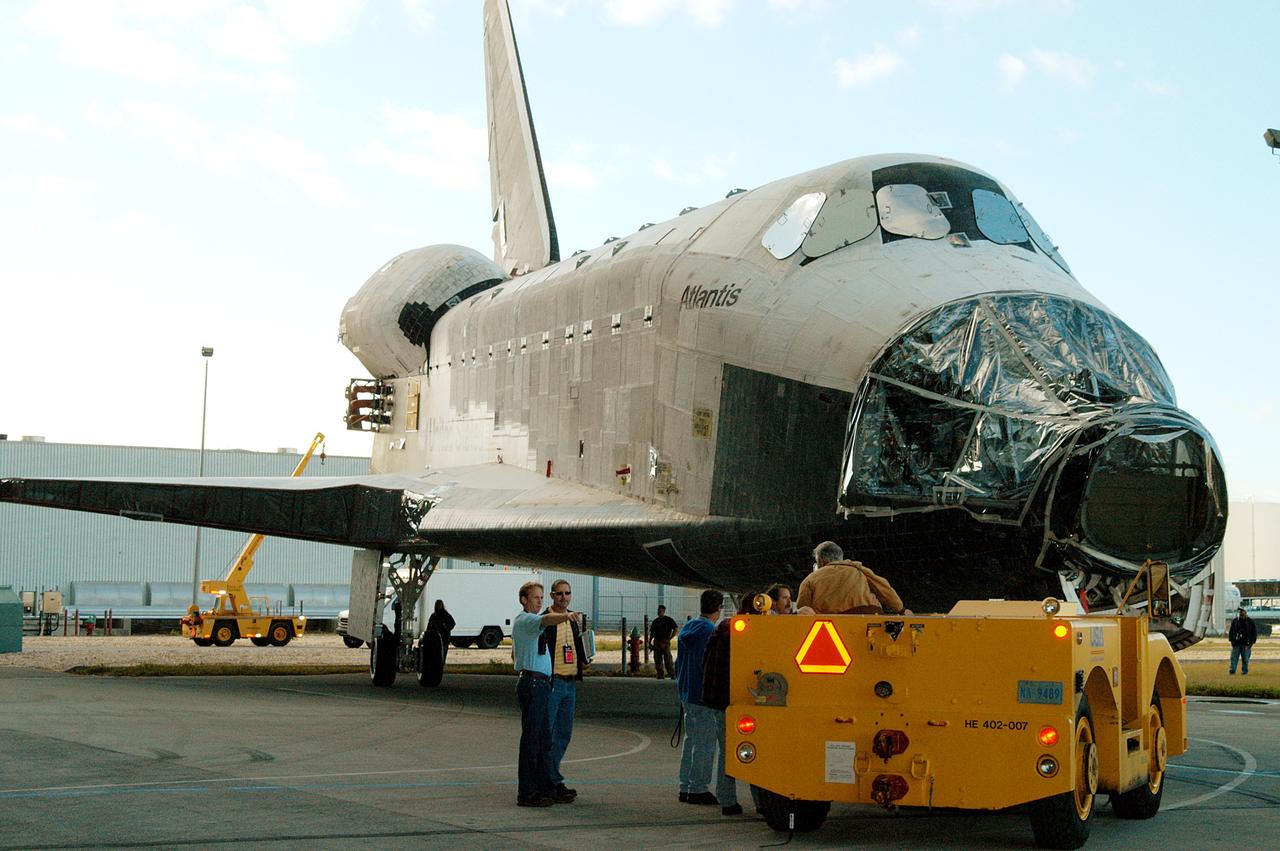
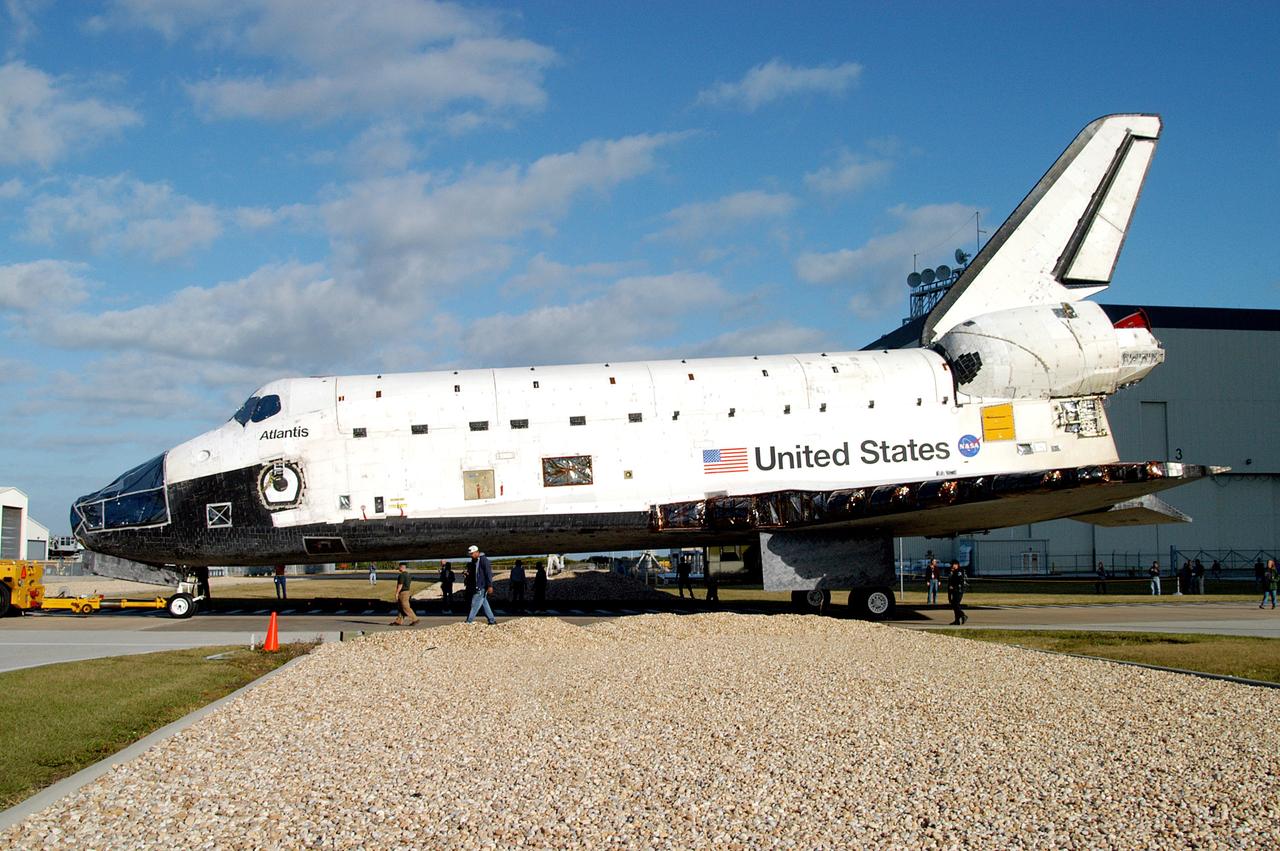
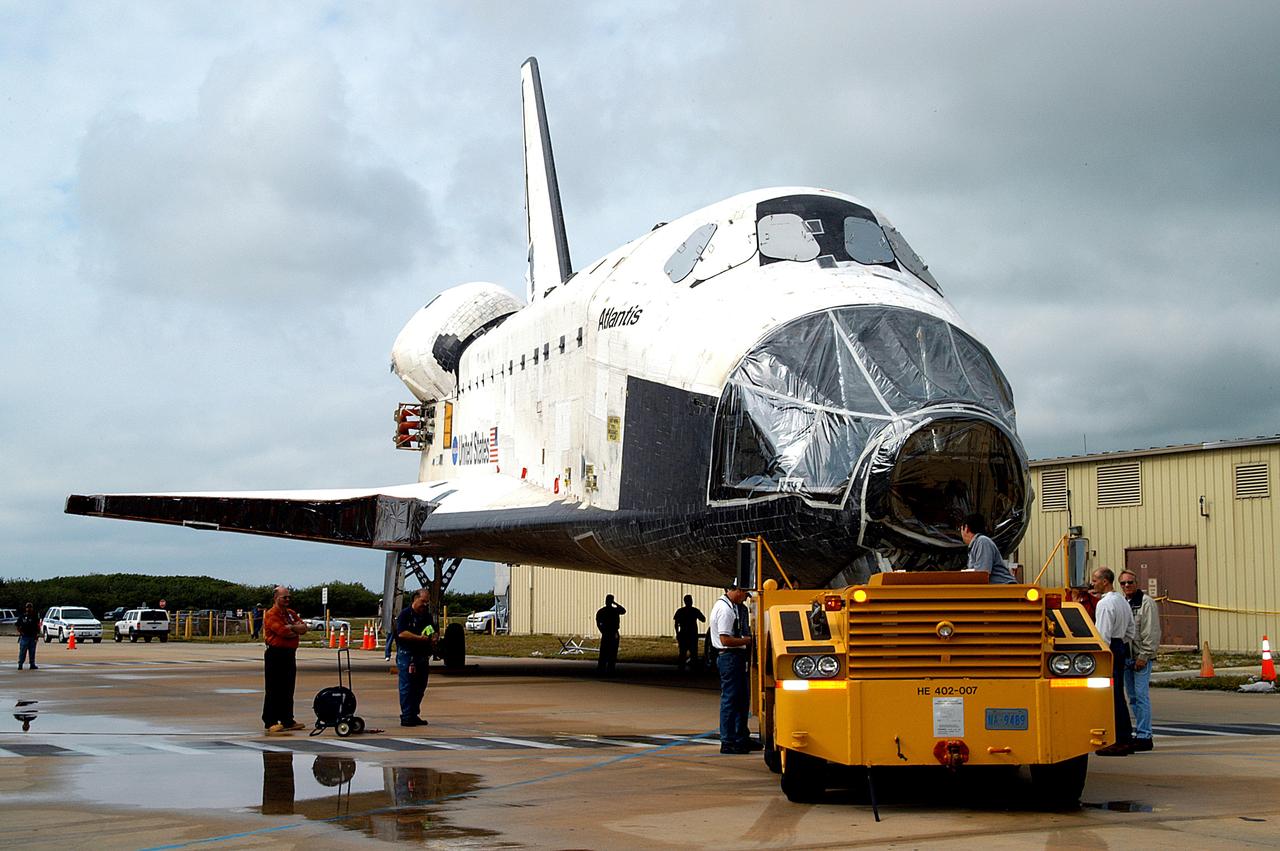
KENNEDY SPACE CENTER, FLA. -  Workers accompany the orbiter Atlantis as it is towed back to the Orbiter Processing Facility after spending 10 days in the Vehicle Assembly Building.  The hiatus in the VAB allowed work to be performed in the OPF that can only be accomplished while the bay is empty. Work included annual validation of the bay's cranes, work platforms, lifting mechanisms and jack stands.  Work resumes to prepare Atlantis for launch in September 2004 on the first return-to-flight mission, STS-114.
KENNEDY SPACE CENTER, FLA. - Workers accompany the orbiter Atlantis as it is towed back to the Orbiter Processing Facility after spending 10 days in the Vehicle Assembly Building. The hiatus in the VAB allowed work to be performed in the OPF that can only be accomplished while the bay is empty. Work included annual validation of the bay's cranes, work platforms, lifting mechanisms and jack stands. Work resumes to prepare Atlantis for launch in September 2004 on the first return-to-flight mission, STS-114.
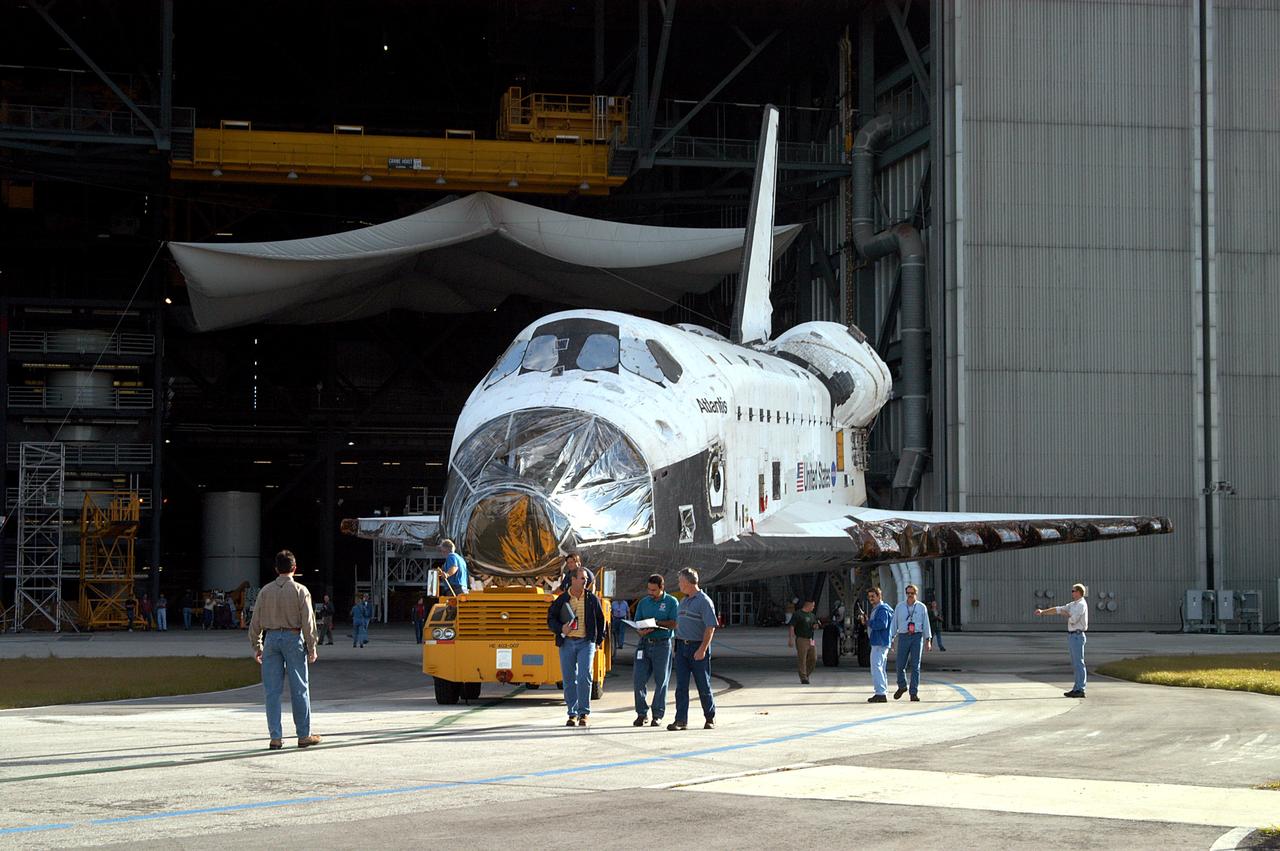
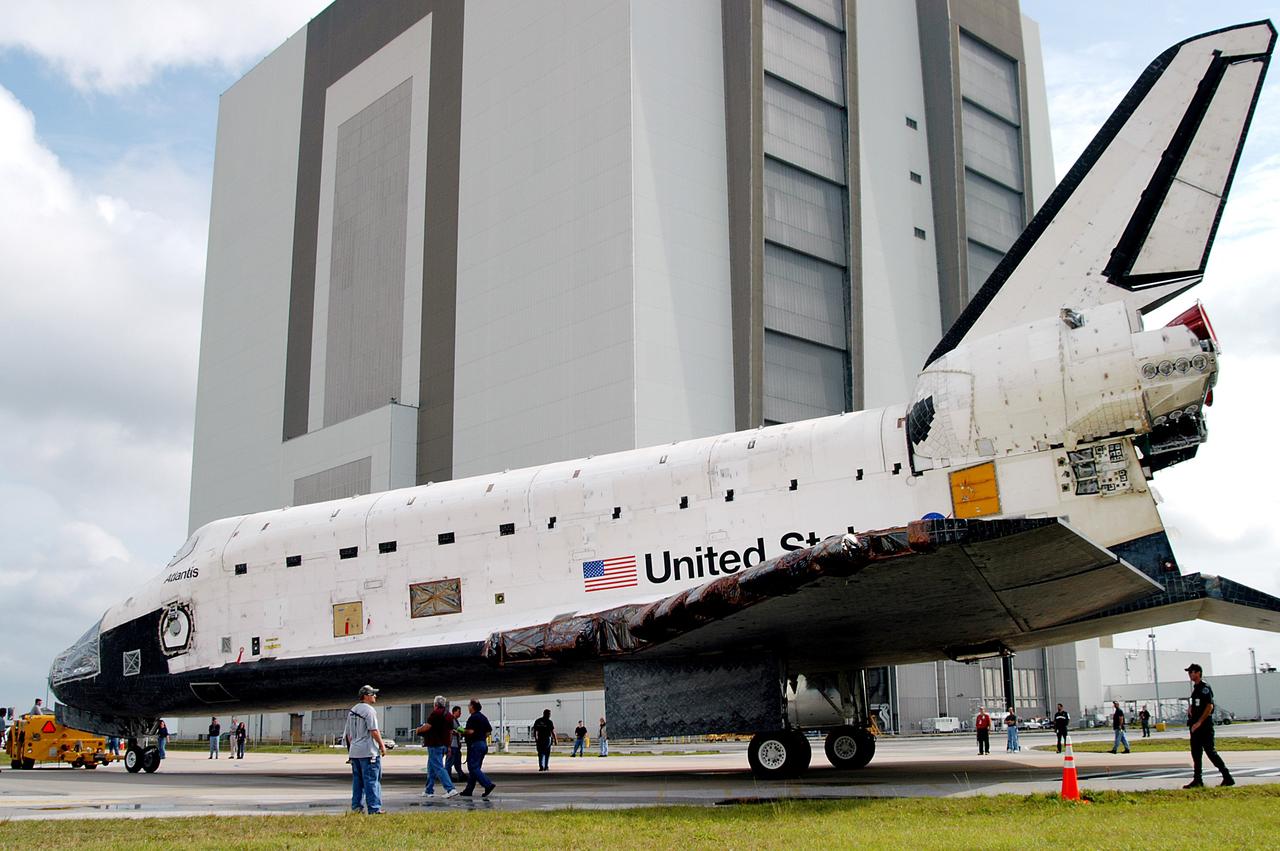
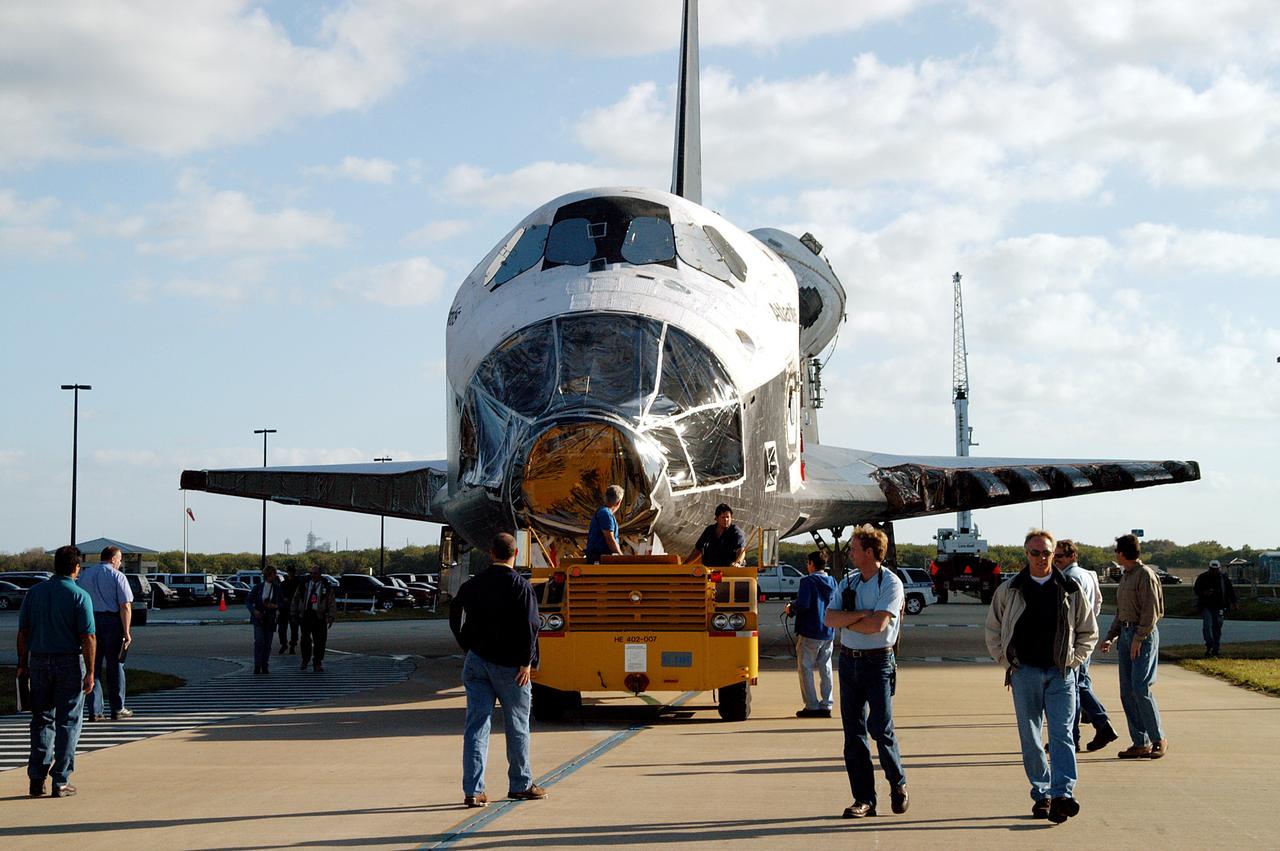
KENNEDY SPACE CENTER, FLA. - The Space Shuttle orbiter Atlantis approaches the Vehicle Assembly Building (VAB).  It is being towed from the Orbiter Processing Facility (OPF) to allow work to be performed in the bay that can only be accomplished while it is empty. Work scheduled in the processing facility includes annual validation of the bay's cranes, work platforms, lifting mechanisms, and jack stands. Atlantis will remain in the VAB for about 10 days, then return to the OPF as work resumes to prepare it for launch in September 2004 on the first return-to-flight mission, STS-114.
KENNEDY SPACE CENTER, FLA. - The Space Shuttle orbiter Atlantis approaches the Vehicle Assembly Building (VAB). It is being towed from the Orbiter Processing Facility (OPF) to allow work to be performed in the bay that can only be accomplished while it is empty. Work scheduled in the processing facility includes annual validation of the bay's cranes, work platforms, lifting mechanisms, and jack stands. Atlantis will remain in the VAB for about 10 days, then return to the OPF as work resumes to prepare it for launch in September 2004 on the first return-to-flight mission, STS-114.
KENNEDY SPACE CENTER, FLA. - The Space Shuttle orbiter Atlantis nears the Vehicle Assembly Building (VAB).  It is being towed from the Orbiter Processing Facility (OPF) to allow work to be performed in the bay that can only be accomplished while it is empty. Work scheduled in the processing facility includes annual validation of the bay's cranes, work platforms, lifting mechanisms, and jack stands. Atlantis will remain in the VAB for about 10 days, then return to the OPF as work resumes to prepare it for launch in September 2004 on the first return-to-flight mission, STS-114.
KENNEDY SPACE CENTER, FLA. - The Space Shuttle orbiter Atlantis nears the Vehicle Assembly Building (VAB). It is being towed from the Orbiter Processing Facility (OPF) to allow work to be performed in the bay that can only be accomplished while it is empty. Work scheduled in the processing facility includes annual validation of the bay's cranes, work platforms, lifting mechanisms, and jack stands. Atlantis will remain in the VAB for about 10 days, then return to the OPF as work resumes to prepare it for launch in September 2004 on the first return-to-flight mission, STS-114.
KENNEDY SPACE CENTER, FLA. -  The orbiter Atlantis is towed back to the Orbiter Processing Facility after spending 10 days in the Vehicle Assembly Building.  The hiatus in the VAB allowed work to be performed in the OPF that can only be accomplished while the bay is empty. Work included annual validation of the bay's cranes, work platforms, lifting mechanisms and jack stands.  Work resumes to prepare Atlantis for launch in September 2004 on the first return-to-flight mission, STS-114.
KENNEDY SPACE CENTER, FLA. - The orbiter Atlantis is towed back to the Orbiter Processing Facility after spending 10 days in the Vehicle Assembly Building. The hiatus in the VAB allowed work to be performed in the OPF that can only be accomplished while the bay is empty. Work included annual validation of the bay's cranes, work platforms, lifting mechanisms and jack stands. Work resumes to prepare Atlantis for launch in September 2004 on the first return-to-flight mission, STS-114.
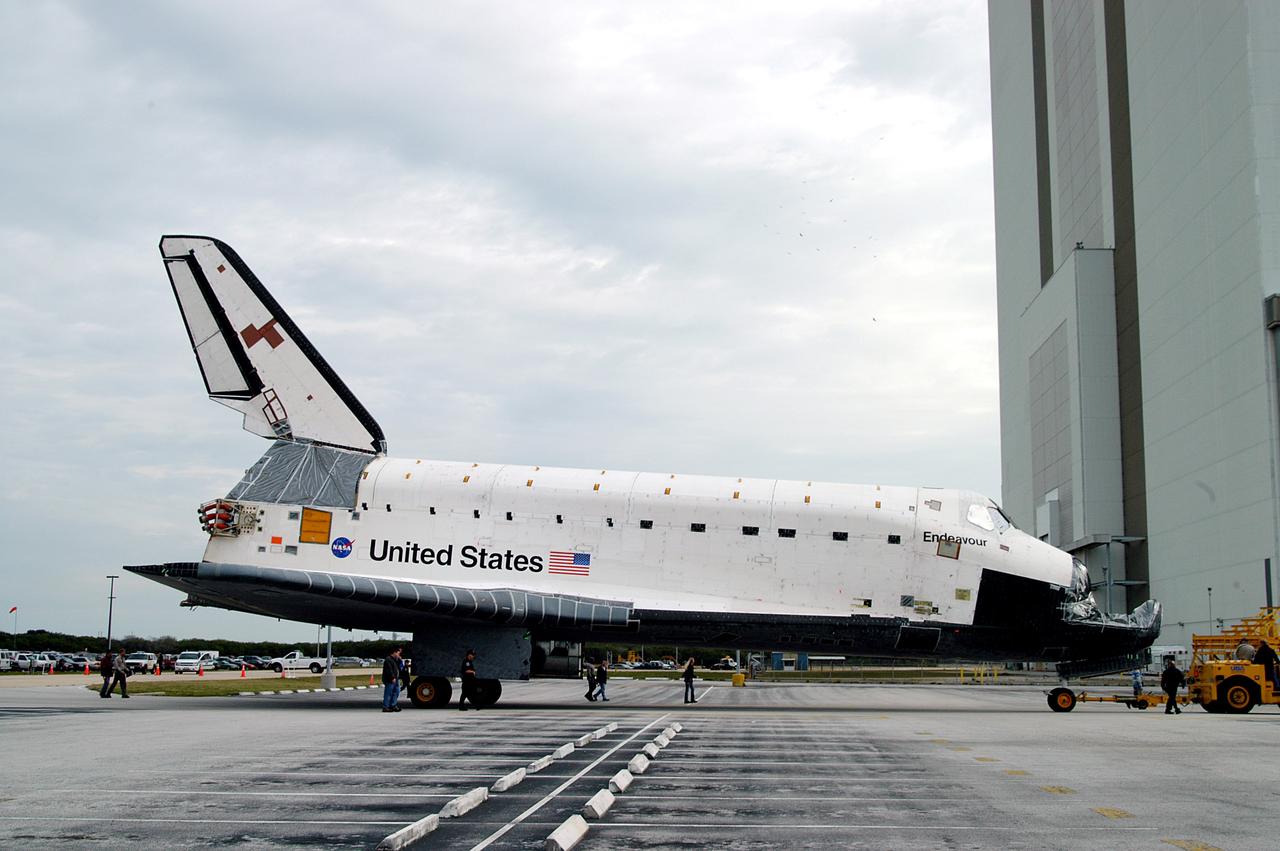
KENNEDY SPACE CENTER, FLA. -- Endeavour is towed in front of the Vehicle Assembly Building (VAB) where it is going for temporary storage.  The orbiter has been moved from the Orbiter Processing Facility (OPF) to allow work to be performed in the OPF that can only be accomplished while the bay is empty. Work scheduled in the OPF includes annual validation of the bay’s cranes, work platforms, lifting mechanisms and jack stands. Endeavour will remain in the VAB for approximately 12 days, then return to the OPF.
KENNEDY SPACE CENTER, FLA. -- Endeavour is towed in front of the Vehicle Assembly Building (VAB) where it is going for temporary storage. The orbiter has been moved from the Orbiter Processing Facility (OPF) to allow work to be performed in the OPF that can only be accomplished while the bay is empty. Work scheduled in the OPF includes annual validation of the bay’s cranes, work platforms, lifting mechanisms and jack stands. Endeavour will remain in the VAB for approximately 12 days, then return to the OPF.
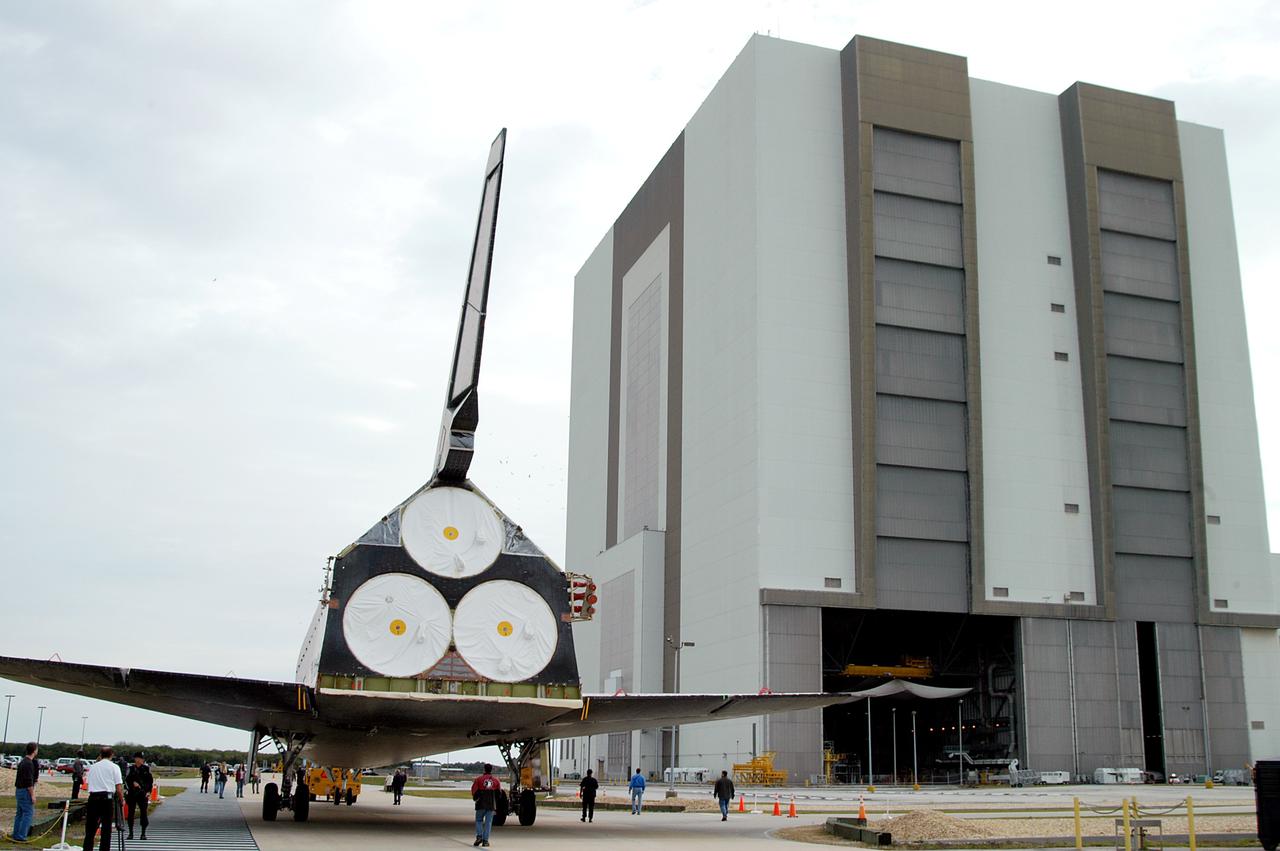
KENNEDY SPACE CENTER, FLA. -- The orbiter Atlantis  is backed away from the Vehicle Assembly Building for transfer back to the Orbiter Processing Facility.  Atlantis spent 10 days in the VAB to allow work to be performed in the OPF that can only be accomplished while the bay is empty. Work included annual validation of the bay's cranes, work platforms, lifting mechanisms and jack stands.  Work resumes to prepare Atlantis for launch in September 2004 on the first return-to-flight mission, STS-114.
KENNEDY SPACE CENTER, FLA. -- The orbiter Atlantis is backed away from the Vehicle Assembly Building for transfer back to the Orbiter Processing Facility. Atlantis spent 10 days in the VAB to allow work to be performed in the OPF that can only be accomplished while the bay is empty. Work included annual validation of the bay's cranes, work platforms, lifting mechanisms and jack stands. Work resumes to prepare Atlantis for launch in September 2004 on the first return-to-flight mission, STS-114.
KENNEDY SPACE CENTER, FLA. -- Endeavour begins rolling out of the Orbiter Processing Facility for temporary transfer to the Vehicle Assembly Building. The move allows work to be performed in the OPF that can only be accomplished while the bay is empty. Work scheduled in the OPF includes annual validation of the bay’s cranes, work platforms, lifting mechanisms and jack stands. Endeavour will remain in the VAB for approximately 12 days, then return to the OPF.
KENNEDY SPACE CENTER, FLA. -- Endeavour is ready to be rolled out of the Orbiter Processing Facility for temporary transfer to the Vehicle Assembly Building. The move allows work to be performed in the OPF that can only be accomplished while the bay is empty. Work scheduled in the OPF includes annual validation of the bay’s cranes, work platforms, lifting mechanisms and jack stands. Endeavour will remain in the VAB for approximately 12 days, then return to the OPF.
KENNEDY SPACE CENTER, FLA. -- Endeavour rolls into the Vehicle Assembly Building (VAB) for temporary storage.  The orbiter has been moved from the Orbiter Processing Facility (OPF) to allow work to be performed in the OPF that can only be accomplished while the bay is empty. Work scheduled in the OPF includes annual validation of the bay’s cranes, work platforms, lifting mechanisms and jack stands. Endeavour will remain in the VAB for approximately 12 days, then return to the OPF.
KENNEDY SPACE CENTER, FLA. -- Endeavour rolls into the Vehicle Assembly Building (VAB) for temporary storage. The orbiter has been moved from the Orbiter Processing Facility (OPF) to allow work to be performed in the OPF that can only be accomplished while the bay is empty. Work scheduled in the OPF includes annual validation of the bay’s cranes, work platforms, lifting mechanisms and jack stands. Endeavour will remain in the VAB for approximately 12 days, then return to the OPF.
KENNEDY SPACE CENTER, FLA. -- Endeavour is towed toward the Vehicle Assembly Building for temporary storage.  The orbiter has been moved from the Orbiter Processing Facility (OPF) to allow work to be performed in the OPF that can only be accomplished while the bay is empty. Work scheduled in the OPF includes annual validation of the bay’s cranes, work platforms, lifting mechanisms and jack stands. Endeavour will remain in the VAB for approximately 12 days, then return to the OPF.
KENNEDY SPACE CENTER, FLA. -- Endeavour is towed toward the Vehicle Assembly Building for temporary storage. The orbiter has been moved from the Orbiter Processing Facility (OPF) to allow work to be performed in the OPF that can only be accomplished while the bay is empty. Work scheduled in the OPF includes annual validation of the bay’s cranes, work platforms, lifting mechanisms and jack stands. Endeavour will remain in the VAB for approximately 12 days, then return to the OPF.
KENNEDY SPACE CENTER, FLA. -  The orbiter Atlantis is backed out of the Vehicle Assembly Building for transfer back to the Orbiter Processing Facility.  Atlantis spent 10 days in the VAB to allow work to be performed in the OPF that can only be accomplished while the bay is empty. Work included annual validation of the bay's cranes, work platforms, lifting mechanisms and jack stands.  Work resumes to prepare Atlantis for launch in September 2004 on the first return-to-flight mission, STS-114.
KENNEDY SPACE CENTER, FLA. - The orbiter Atlantis is backed out of the Vehicle Assembly Building for transfer back to the Orbiter Processing Facility. Atlantis spent 10 days in the VAB to allow work to be performed in the OPF that can only be accomplished while the bay is empty. Work included annual validation of the bay's cranes, work platforms, lifting mechanisms and jack stands. Work resumes to prepare Atlantis for launch in September 2004 on the first return-to-flight mission, STS-114.
KENNEDY SPACE CENTER, FLA. - The Space Shuttle orbiter Atlantis is towed from the Orbiter Processing Facility (OPF) to the Vehicle Assembly Building (VAB). The move will allow work to be performed in the OPF that can only be accomplished while the bay is empty. Work scheduled in the processing facility includes annual validation of the bay's cranes, work platforms, lifting mechanisms, and jack stands. Atlantis will remain in the VAB for about 10 days, then return to the OPF as work resumes to prepare it for launch in September 2004 on the first return-to-flight mission, STS-114.
KENNEDY SPACE CENTER, FLA. -- Endeavour is towed in front of the Vehicle Assembly Building (VAB) where it is going for temporary storage.  The orbiter has been moved from the Orbiter Processing Facility (OPF) to allow work to be performed in the OPF that can only be accomplished while the bay is empty. Work scheduled in the OPF includes annual validation of the bay’s cranes, work platforms, lifting mechanisms and jack stands. Endeavour will remain in the VAB for approximately 12 days, then return to the OPF.
KENNEDY SPACE CENTER, FLA. -- Endeavour is towed in front of the Vehicle Assembly Building (VAB) where it is going for temporary storage. The orbiter has been moved from the Orbiter Processing Facility (OPF) to allow work to be performed in the OPF that can only be accomplished while the bay is empty. Work scheduled in the OPF includes annual validation of the bay’s cranes, work platforms, lifting mechanisms and jack stands. Endeavour will remain in the VAB for approximately 12 days, then return to the OPF.
KENNEDY SPACE CENTER, FLA. -  The orbiter Atlantis rolls into the Orbiter Processing Facility after spending 10 days in the Vehicle Assembly Building.  The hiatus in the VAB allowed work to be performed in the OPF that can only be accomplished while the bay is empty. Work included annual validation of the bay's cranes, work platforms, lifting mechanisms and jack stands.  Work resumes to prepare Atlantis for launch in September 2004 on the first return-to-flight mission, STS-114.
KENNEDY SPACE CENTER, FLA. - The orbiter Atlantis rolls into the Orbiter Processing Facility after spending 10 days in the Vehicle Assembly Building. The hiatus in the VAB allowed work to be performed in the OPF that can only be accomplished while the bay is empty. Work included annual validation of the bay's cranes, work platforms, lifting mechanisms and jack stands. Work resumes to prepare Atlantis for launch in September 2004 on the first return-to-flight mission, STS-114.
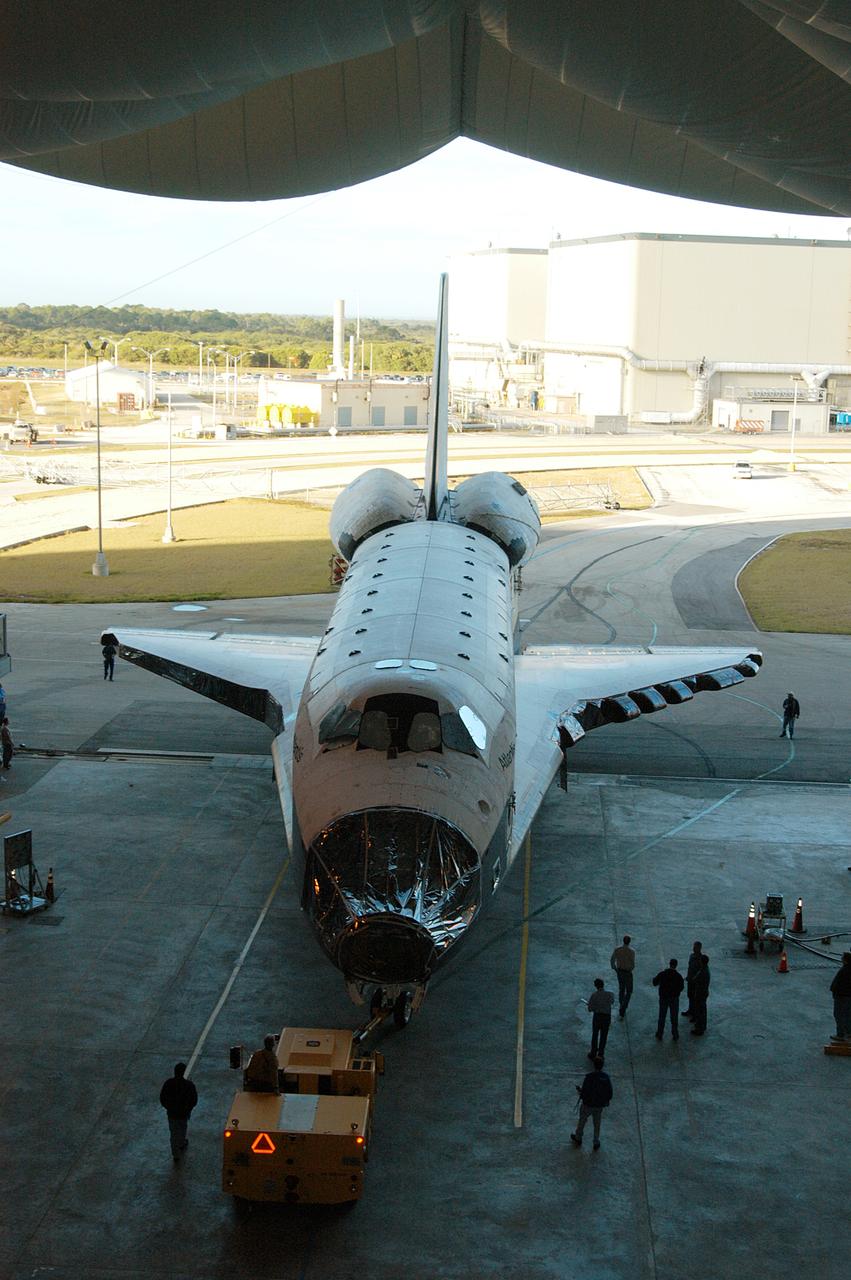
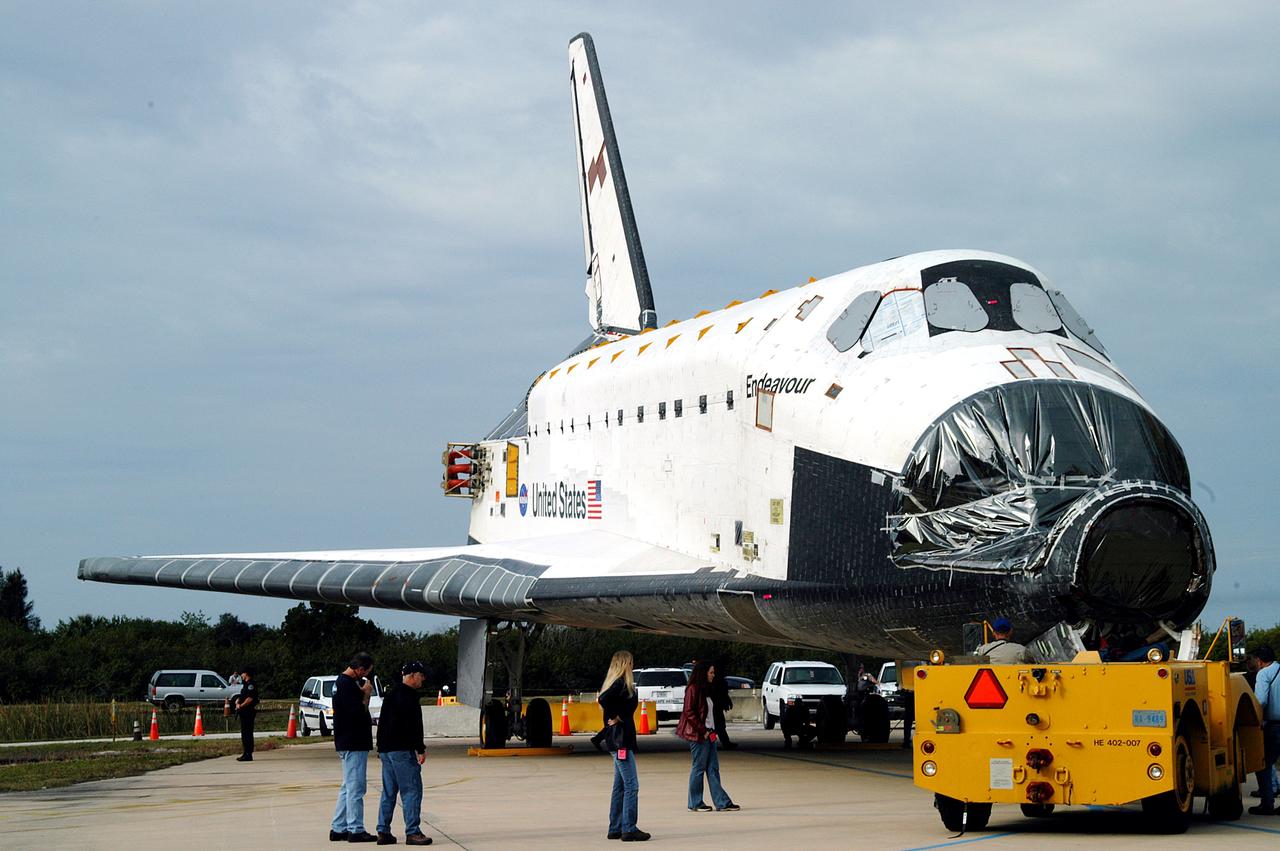
KENNEDY SPACE CENTER, FLA. -- After Endeavour’s rollout from inside the Orbiter Processing Facility, the transporter (foreground) prepares to tow it to the Vehicle Assembly Building for temporary transfer.  A protective cover surrounds the nose of Endeavour.  The move to the VAB allows work to be performed in the OPF that can only be accomplished while the bay is empty. Work scheduled in the OPF includes annual validation of the bay’s cranes, work platforms, lifting mechanisms and jack stands. Endeavour will remain in the VAB for approximately 12 days, then return to the OPF.
KENNEDY SPACE CENTER, FLA. -- After Endeavour’s rollout from inside the Orbiter Processing Facility, the transporter (foreground) prepares to tow it to the Vehicle Assembly Building for temporary transfer. A protective cover surrounds the nose of Endeavour. The move to the VAB allows work to be performed in the OPF that can only be accomplished while the bay is empty. Work scheduled in the OPF includes annual validation of the bay’s cranes, work platforms, lifting mechanisms and jack stands. Endeavour will remain in the VAB for approximately 12 days, then return to the OPF.
KENNEDY SPACE CENTER, FLA. -- Endeavour rolls into the Vehicle Assembly Building (VAB) for temporary storage.  The orbiter has been moved from the Orbiter Processing Facility (OPF) to allow work to be performed in the OPF that can only be accomplished while the bay is empty. Work scheduled in the OPF includes annual validation of the bay’s cranes, work platforms, lifting mechanisms and jack stands. Endeavour will remain in the VAB for approximately 12 days, then return to the OPF.
KENNEDY SPACE CENTER, FLA. -- Endeavour rolls into the Vehicle Assembly Building (VAB) for temporary storage. The orbiter has been moved from the Orbiter Processing Facility (OPF) to allow work to be performed in the OPF that can only be accomplished while the bay is empty. Work scheduled in the OPF includes annual validation of the bay’s cranes, work platforms, lifting mechanisms and jack stands. Endeavour will remain in the VAB for approximately 12 days, then return to the OPF.
KENNEDY SPACE CENTER, FLA. -  The orbiter Atlantis is back inside the Orbiter Processing Facility after spending 10 days in the Vehicle Assembly Building.  The hiatus in the VAB allowed work to be performed in the OPF that can only be accomplished while the bay is empty. Work included annual validation of the bay's cranes, work platforms, lifting mechanisms and jack stands.  Work resumes to prepare Atlantis for launch in September 2004 on the first return-to-flight mission, STS-114.
KENNEDY SPACE CENTER, FLA. - The orbiter Atlantis is back inside the Orbiter Processing Facility after spending 10 days in the Vehicle Assembly Building. The hiatus in the VAB allowed work to be performed in the OPF that can only be accomplished while the bay is empty. Work included annual validation of the bay's cranes, work platforms, lifting mechanisms and jack stands. Work resumes to prepare Atlantis for launch in September 2004 on the first return-to-flight mission, STS-114.
KENNEDY SPACE CENTER, FLA. -- The orbiter Atlantis is backed out of the Vehicle Assembly Building for transfer back to the Orbiter Processing Facility.  Atlantis spent 10 days in the VAB to allow work to be performed in the OPF that can only be accomplished while the bay is empty. Work included annual validation of the bay's cranes, work platforms, lifting mechanisms and jack stands.  Work resumes to prepare Atlantis for launch in September 2004 on the first return-to-flight mission, STS-114.
KENNEDY SPACE CENTER, FLA. -- The orbiter Atlantis is backed out of the Vehicle Assembly Building for transfer back to the Orbiter Processing Facility. Atlantis spent 10 days in the VAB to allow work to be performed in the OPF that can only be accomplished while the bay is empty. Work included annual validation of the bay's cranes, work platforms, lifting mechanisms and jack stands. Work resumes to prepare Atlantis for launch in September 2004 on the first return-to-flight mission, STS-114.
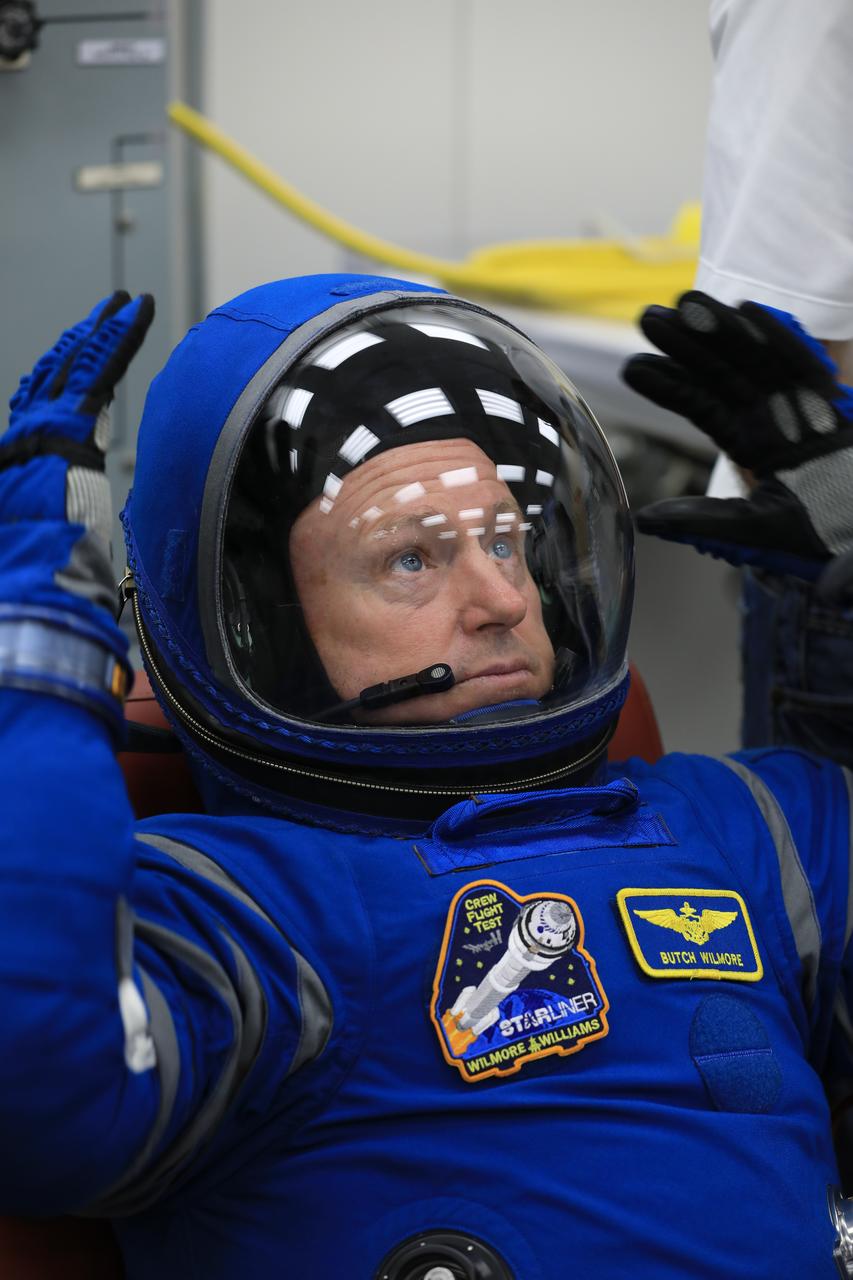
NASA astronaut Barry “Butch” Wilmore, Boeing Crew Flight Test (CFT) commander, checks his spacesuit during a crew validation test inside the Astronaut Crew Quarters at NASA’s Kennedy Space Center in Florida on Oct. 18, 2022. Wilmore, along with NASA astronauts Suni Williams, CFT pilot, and Mike Fincke, CFT backup spacecraft test pilot, with assistance from the Boeing team, successfully completed the validation test during which they suited up and tested out the pressurized crew module to ensure seat fit, suit functionality, cabin temperature, audio system, and day of launch operations. Boeing’s CFT is scheduled to launch in April 2023.
Boeing Crew Training
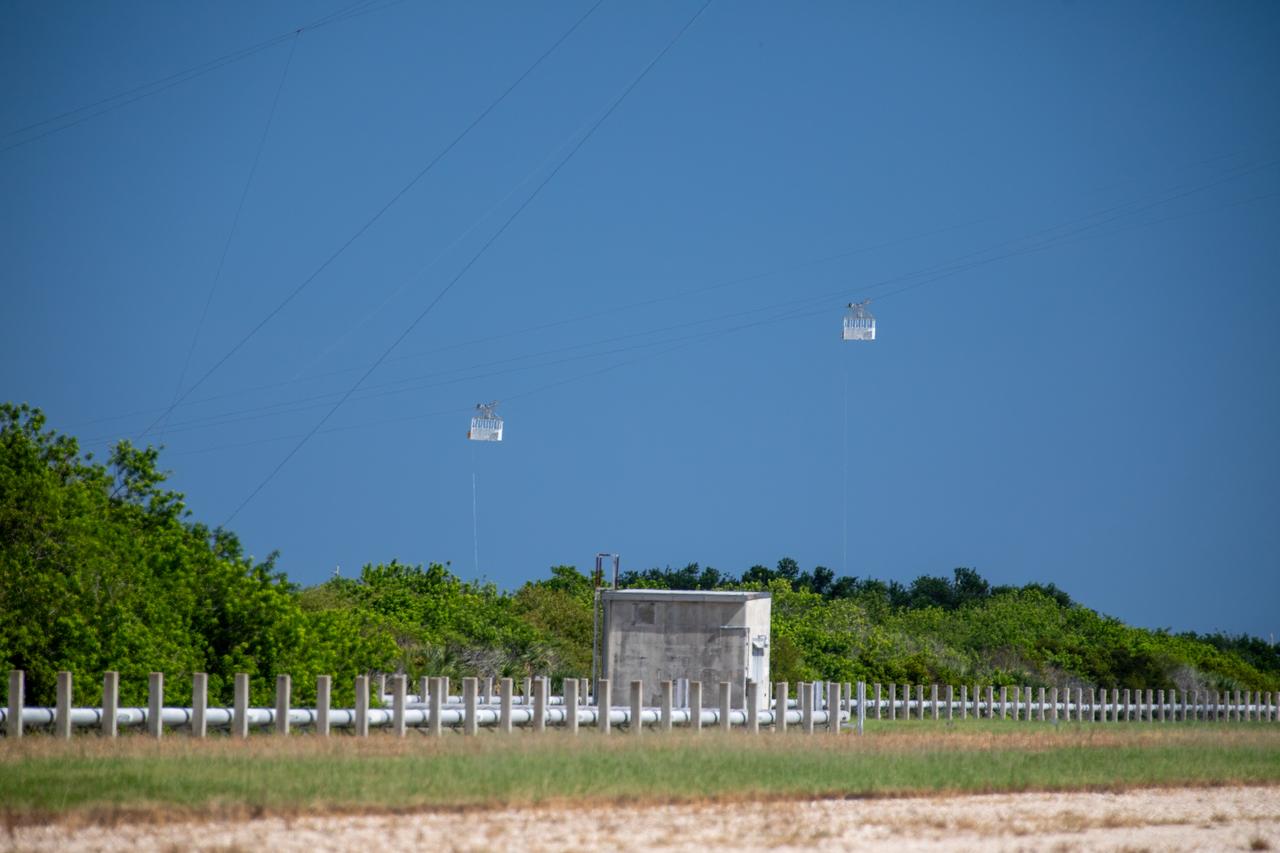
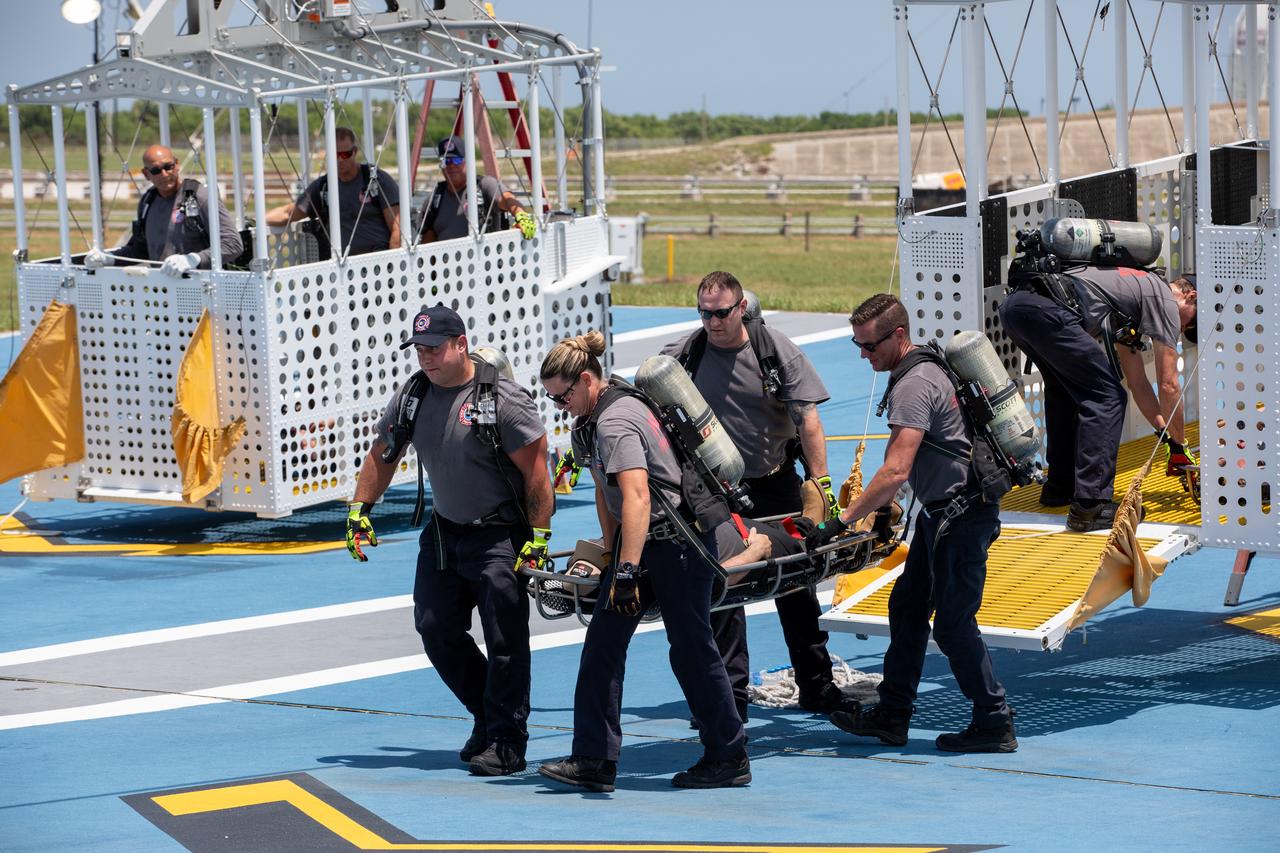
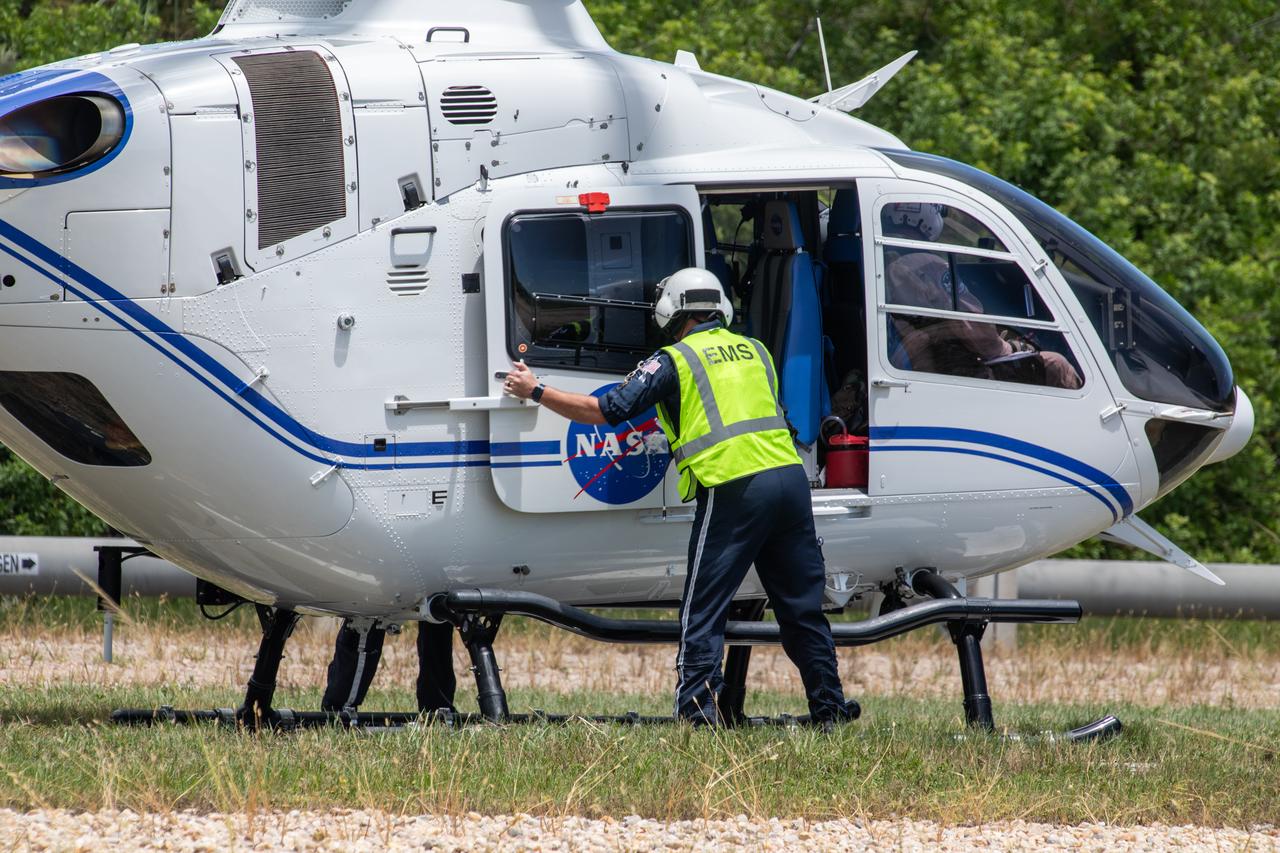
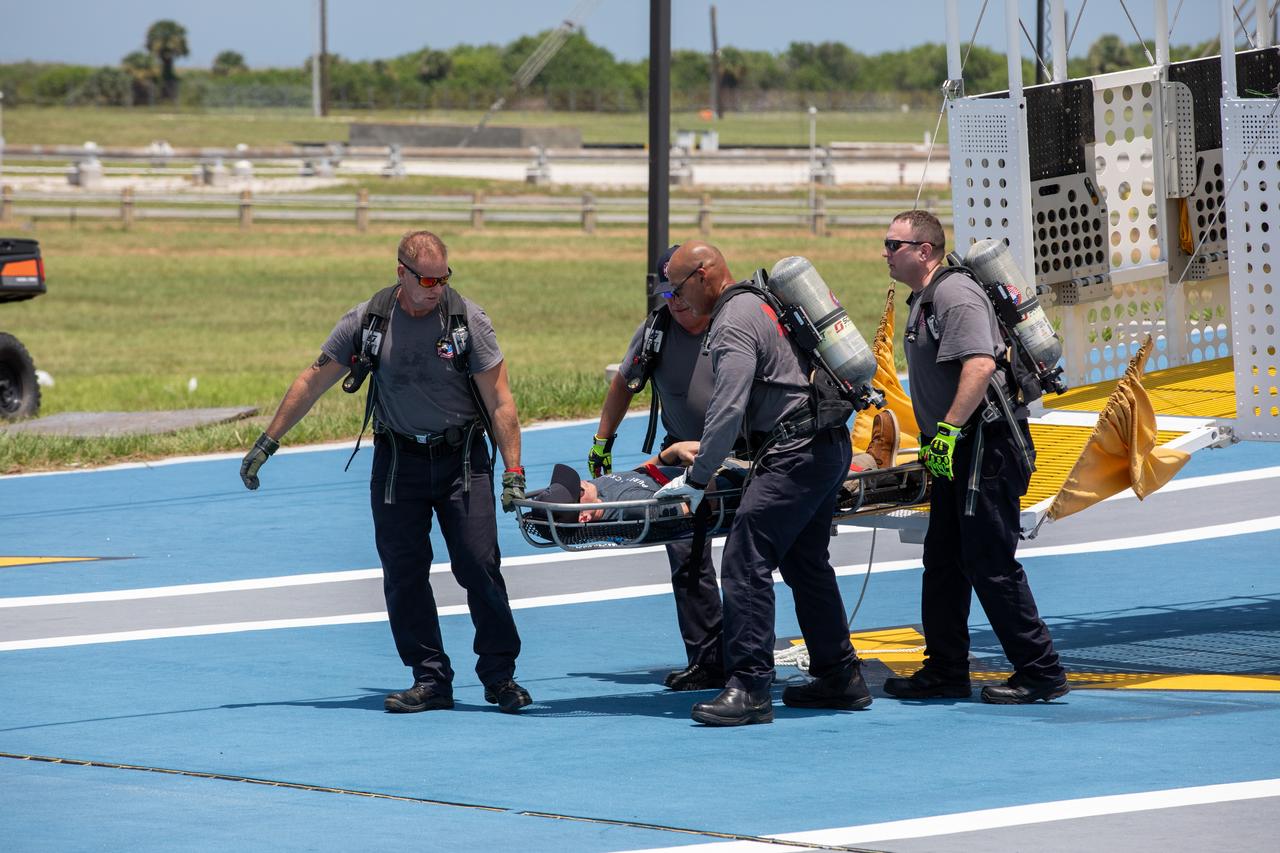
Medical and fire-rescue personnel participate in the Artemis II mission emergency escape or egress verification and validation tests near Launch Complex 39 at NASA's Kennedy Space Center in Florida on Monday, Aug. 12, 2024. During the multi-day tests, members of the closeout crew, pad rescue team, and the Exploration Ground Systems Program practiced the process of getting in and out of the emergency egress baskets then down to the launch pad where they would be transported to emergency transport vehicles and driven to safety. Prior to this test and throughout the course of several months, teams conducted basket release demonstrations to validate the system.
ISVV-1 Artemis Emergency Egress Demonstration
Teams at NASA’s Kennedy Space Center in Florida practice the Artemis mission emergency escape or egress procedures during a series of integrated system verification and validation tests at Launch Complex 39B on Friday, Aug. 9, 2024. Members of the closeout crew, pad rescue team, and the Exploration Ground Systems Program practiced the process of getting in and out of the emergency egress baskets then down to the launch pad where they would be transported to emergency transport vehicles and driven to safety. Prior to this test and throughout the course of several months, teams conducted several basket release demonstrations to validate the system.
ISVV-1 Artemis Emergency Egress Demonstration
Medical and fire-rescue personnel participate in the Artemis II mission emergency escape or egress verification and validation tests near Launch Complex 39 at NASA's Kennedy Space Center in Florida on Monday, Aug. 12, 2024. During the multi-day tests, members of the closeout crew, pad rescue team, and the Exploration Ground Systems Program practiced the process of getting in and out of the emergency egress baskets then down to the launch pad where they would be transported to emergency transport vehicles and driven to safety. Prior to this test and throughout the course of several months, teams conducted basket release demonstrations to validate the system.
ISVV-1 Artemis Emergency Egress Demonstration
Teams at NASA’s Kennedy Space Center in Florida practice the Artemis mission emergency escape or egress procedures during a series of integrated system verification and validation tests at Launch Complex 39B on Friday, Aug. 9, 2024. Members of the closeout crew, pad rescue team, and the Exploration Ground Systems Program practiced the process of getting in and out of the emergency egress baskets then down to the launch pad where they would be transported to emergency transport vehicles and driven to safety. Prior to this test and throughout the course of several months, teams conducted several basket release demonstrations to validate the system.
ISVV-1 Artemis Emergency Egress Demonstration