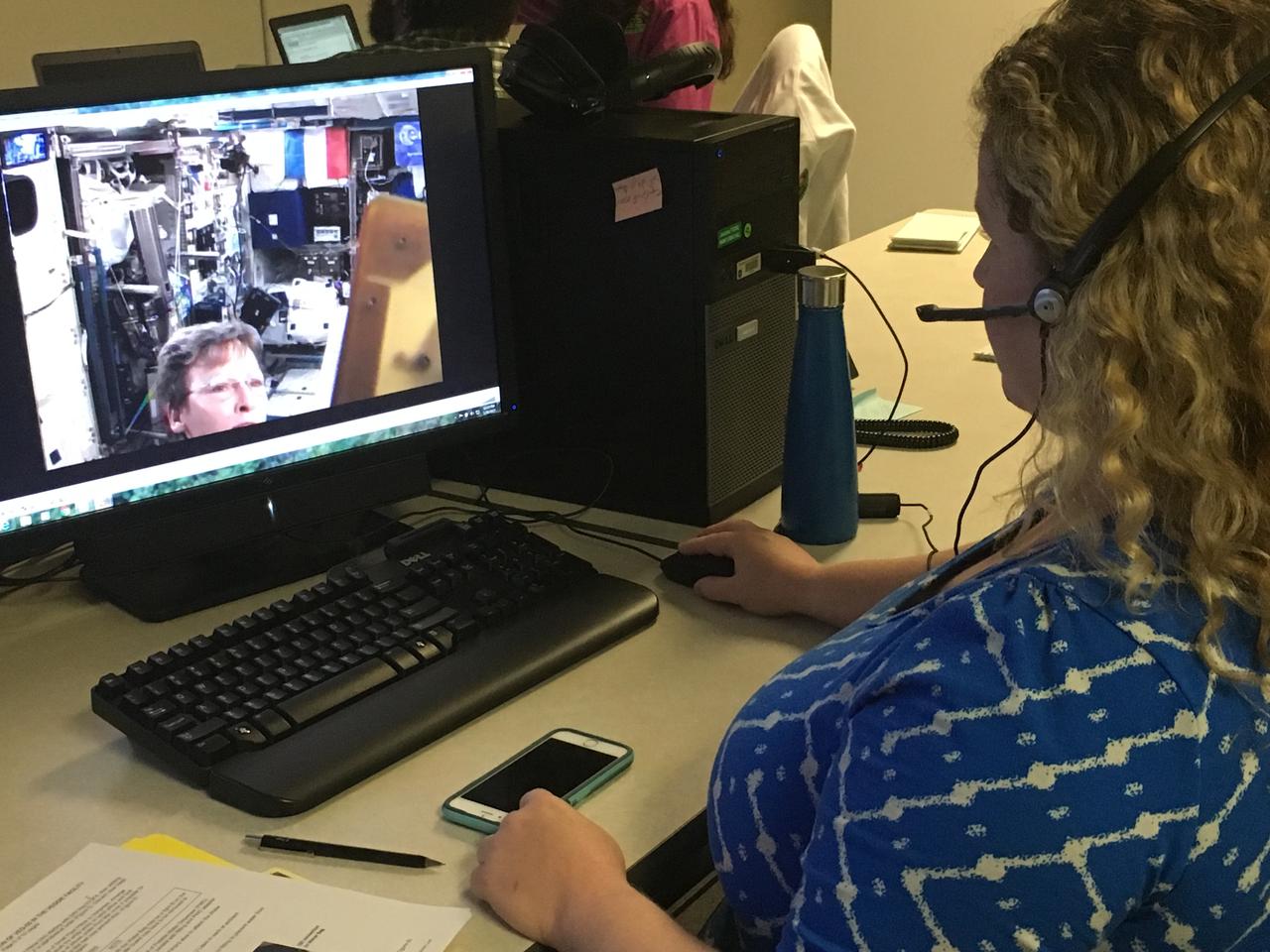
Veggie Project Manager Nicole Dufour provides real-time instructions to astronaut Peggy Whitson aboard the International Space Station as she initiates the latest Veggie experiment.

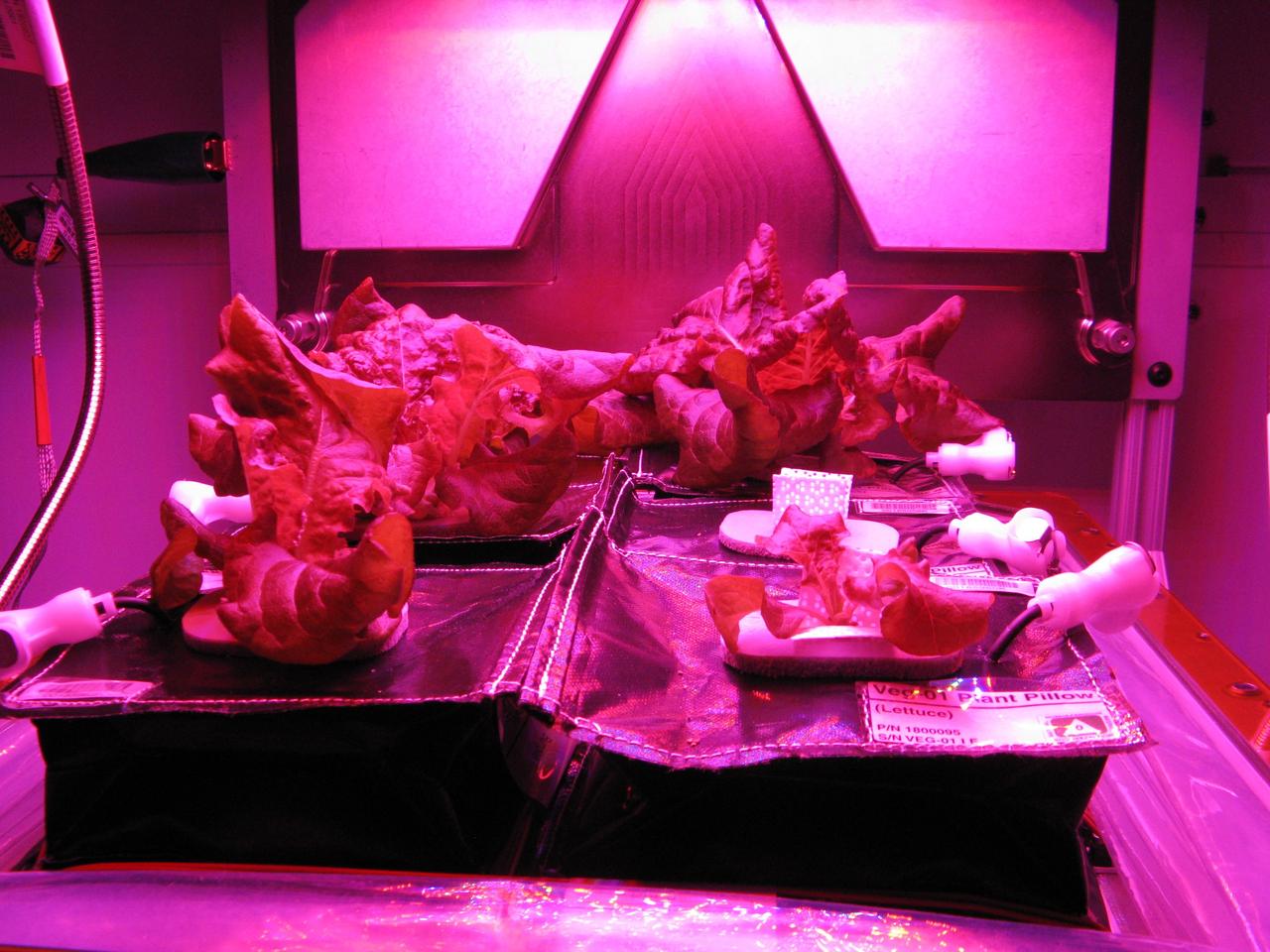
Water and nutrients are being added to plants in the Veggie hardware in NASA Kennedy Space Center's ISS environment simulator chamber. Mizuna mustard, Outredgeous lettuce and Waldmann's green lettuce are growing in Veggie. Growth in the chamber mimics the growth of plant experiments in the Veggie plant growth system on the International Space Station.
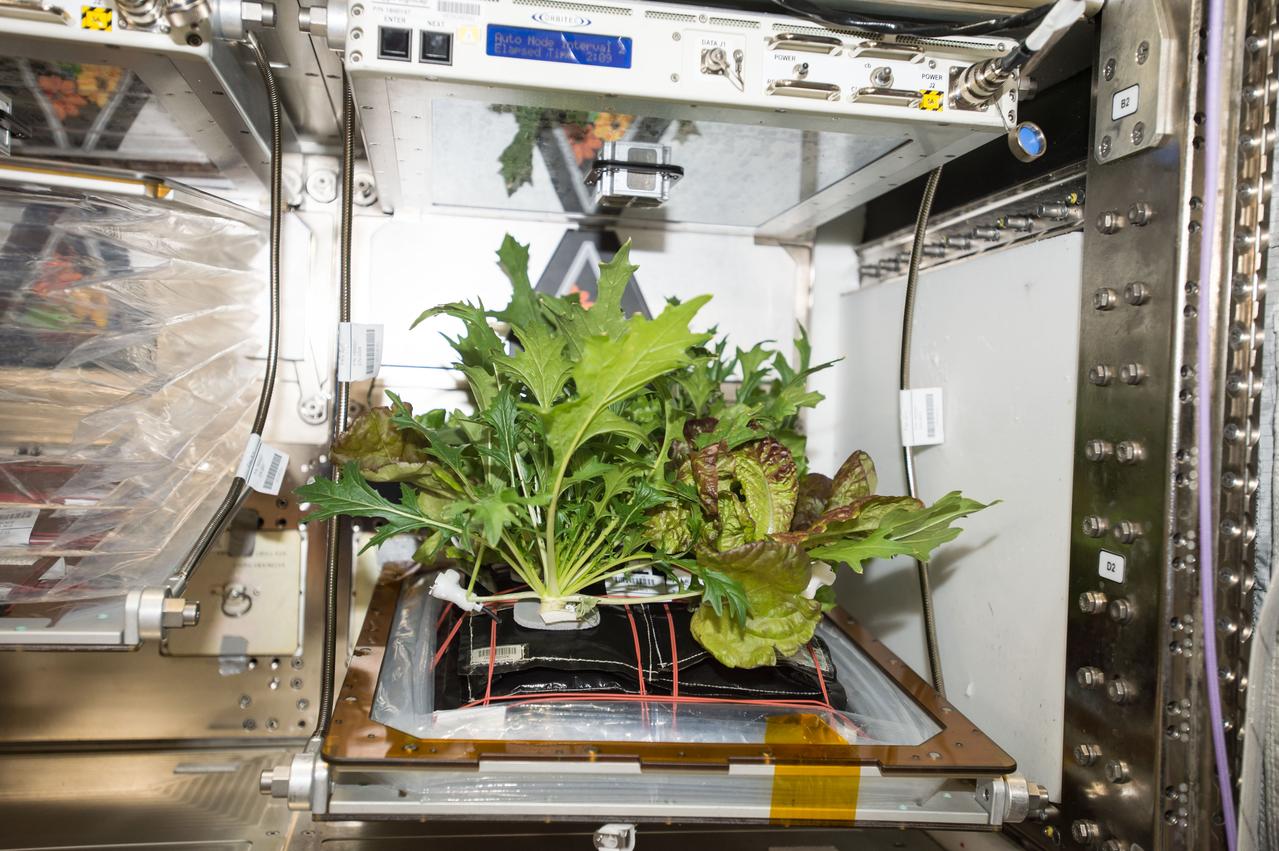
Three different varieties of plants growing in the Veggie plant growth chamber on the International Space Station were harvested this morning.
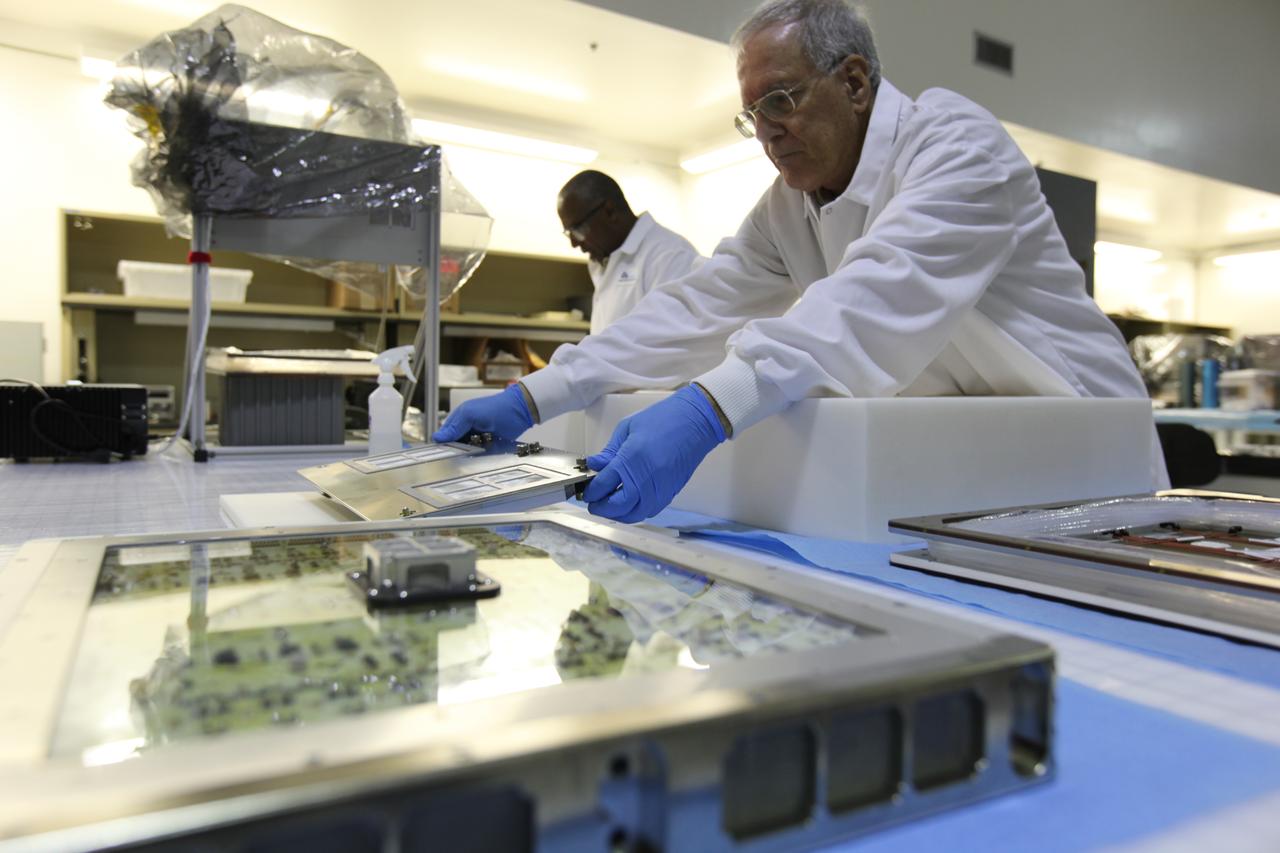
Charles Spern, at right, project manager on the Engineering Services Contract (ESC), and Glenn Washington, ESC quality assurance specialist, perform final inspections of the Veggie Series 1 plant experiment inside a laboratory in the Space Station Processing Facility at NASA's Kennedy Space Center in Florida. The Series 1 experiment is being readied for flight aboard Orbital ATK's Cygnus module on its seventh (OA-7) Commercial Resupply Services mission to the International Space Station. The Veggie system is on the space station.
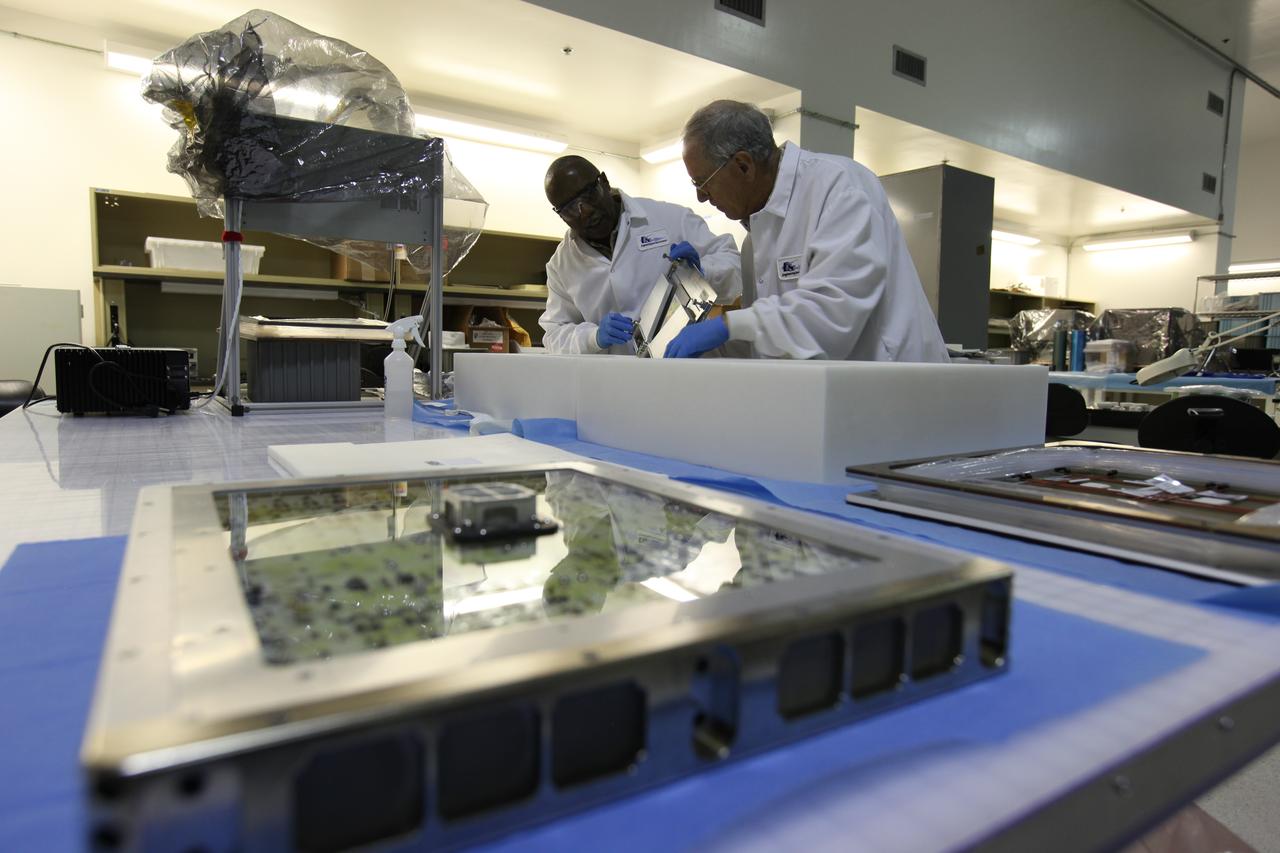
Charles Spern, at right, project manager on the Engineering Services Contract (ESC), and Glenn Washington, ESC quality assurance specialist, perform final inspections of the Veggie Series 1 plant experiment inside a laboratory in the Space Station Processing Facility at NASA's Kennedy Space Center in Florida. The Series 1 experiment is being readied for flight aboard Orbital ATK's Cygnus module on its seventh (OA-7) Commercial Resupply Services mission to the International Space Station. The Veggie system is on the space station.

NASA interns Jessica Scotten, left, and Ayla Grandpre water plants in the Veggie hardware in NASA Kennedy Space Center's ISS environment simulator chamber. Mizuna mustard, Outredgeous lettuce and Waldmann's green lettuce are growing in Veggie. Growth in the chamber mimics the growth of plant experiments in the Veggie plant growth system on the International Space Station.

Outredgeous red leaf lettuce, Mizuna mustard and Waldmann's green lettuce are growing in the Veggie control system in the ISS environment simulator chamber in the Space Station Processing Facility at NASA's Kennedy Space Center in Florida. Growth in the chamber mimics the growth of plant experiments in the Veggie plant growth system on the International Space Station.
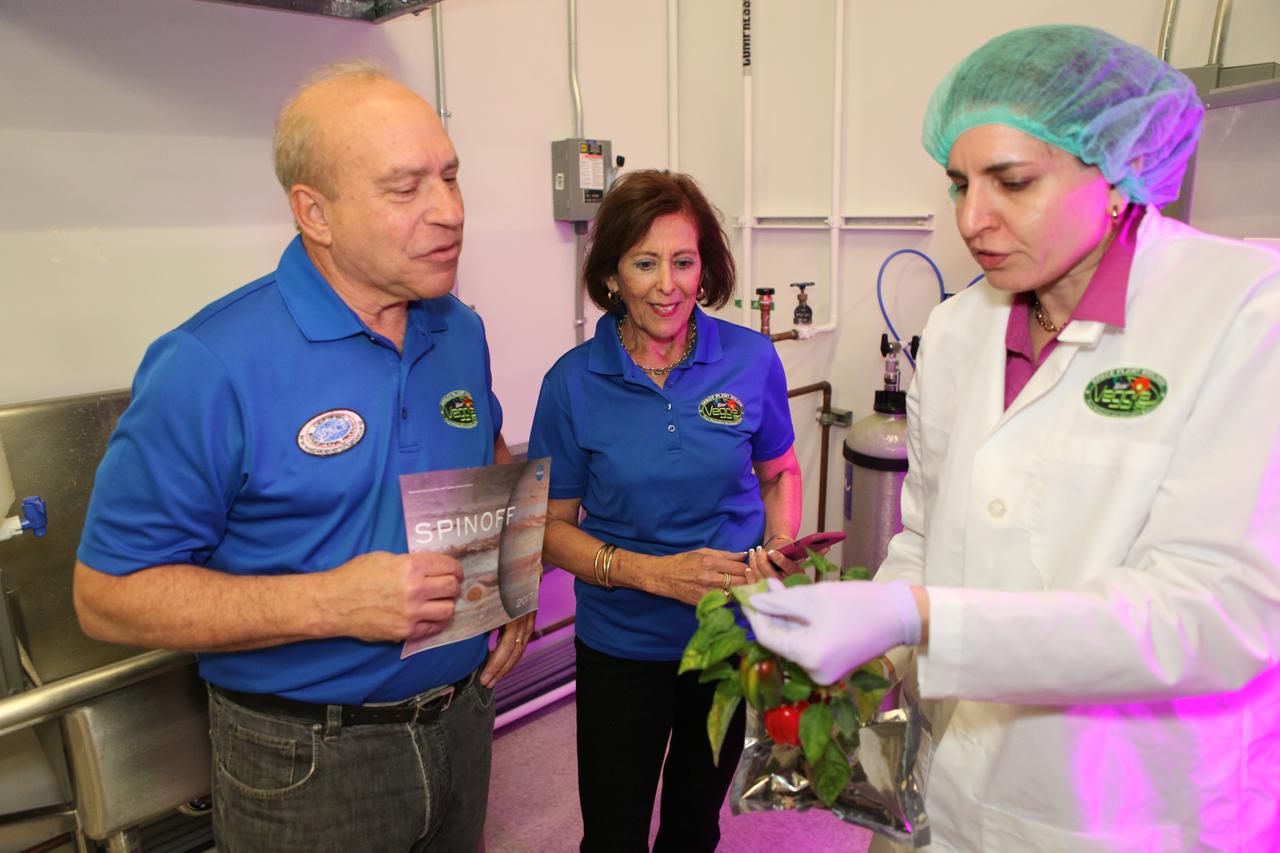
Ed and Betty Rosenthal, founders of Florikan Fertilizer Corp., left, and Gioia Massa, NASA payload scientist for Veggie, observe ground control experiments in the Veggie Lab at NASA's Kennedy Space Center on Feb. 16.
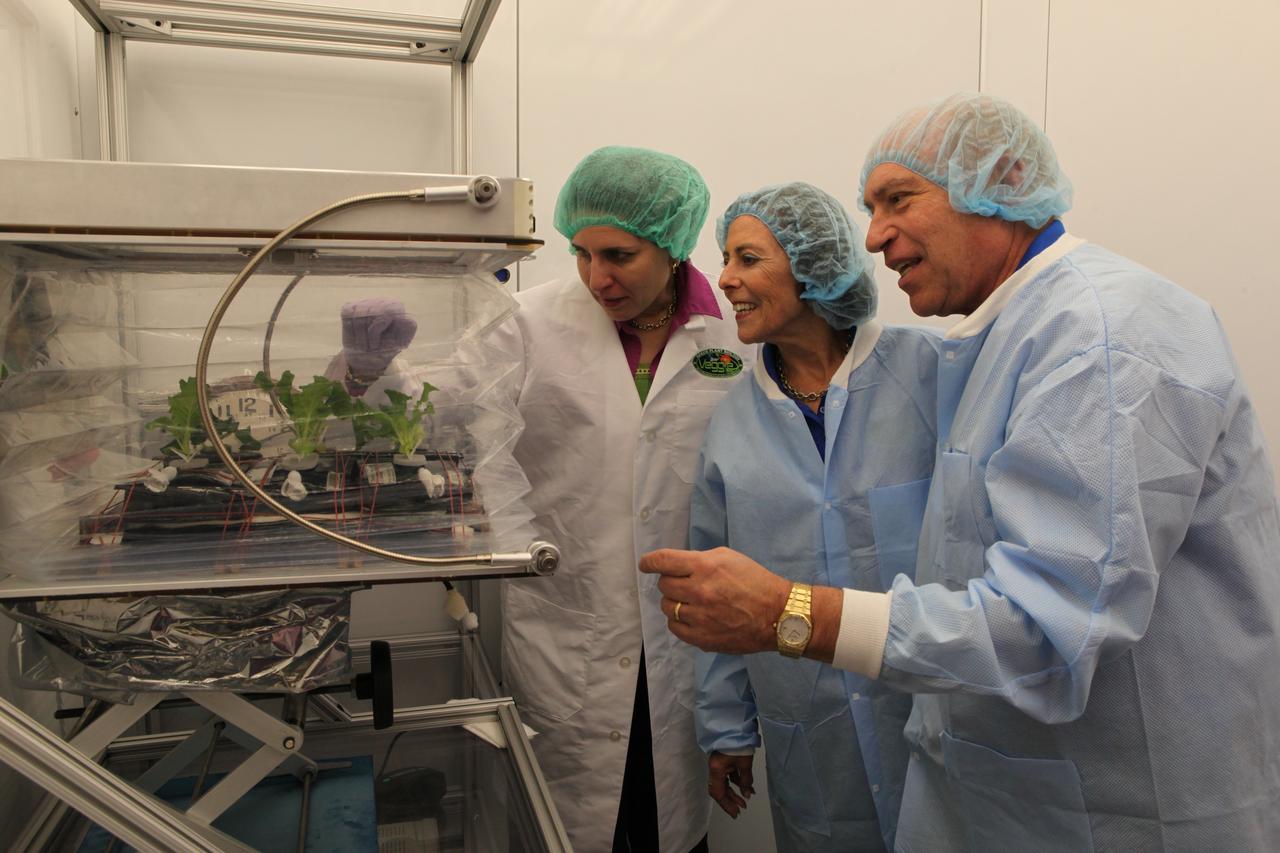
Gioia Massa, NASA payload scientist for Veggie, left, Betty and Ed Rosenthal, founders of Florikan Fertilizer Corp., observe ground control experiments in the Veggie Lab at NASA's Kennedy Space Center on Feb. 16.
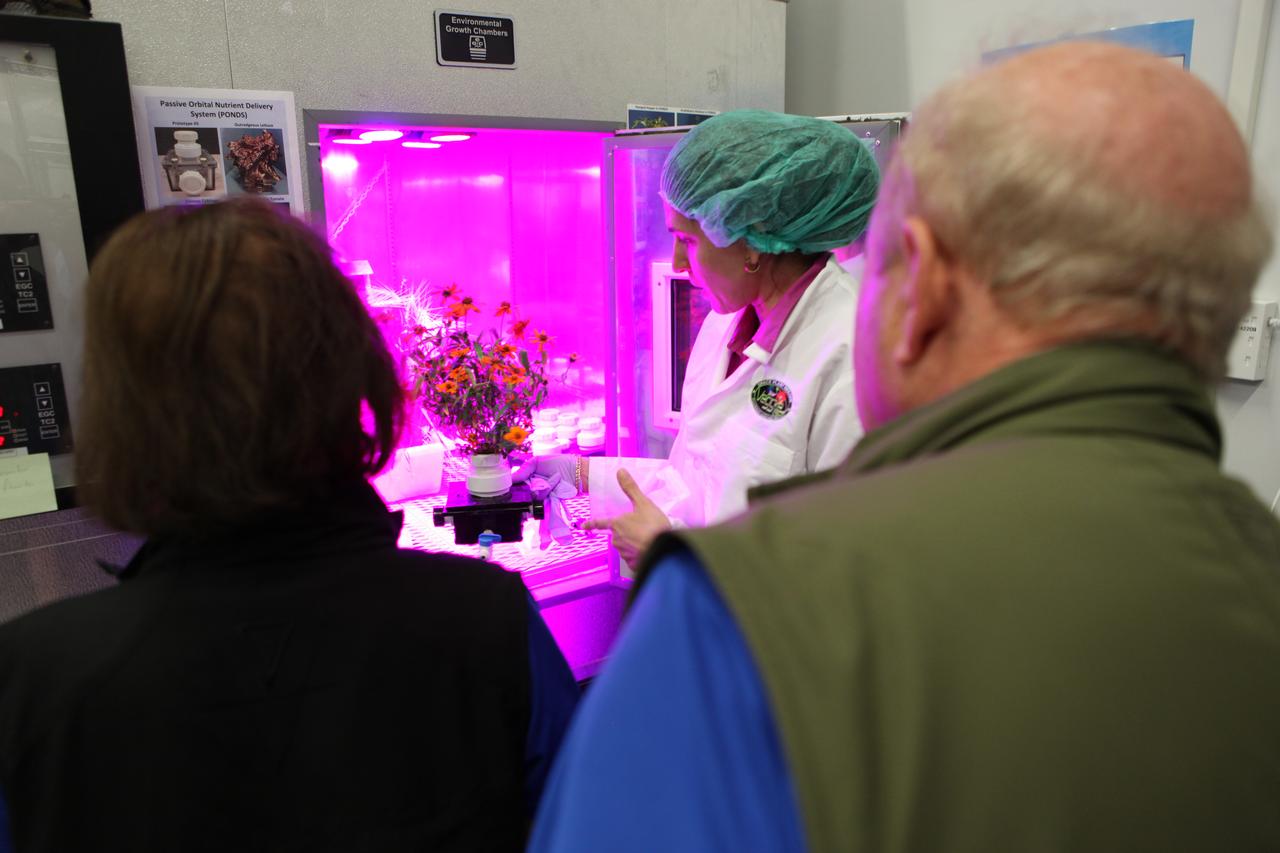
Gioia Massa, NASA payload scientist for Veggie, center, shows Ed and Betty Rosenthal, founders of Florikan Fertilizer Corp., the ground control experiments in the Veggie Lab at NASA's Kennedy Space Center on Feb. 16.
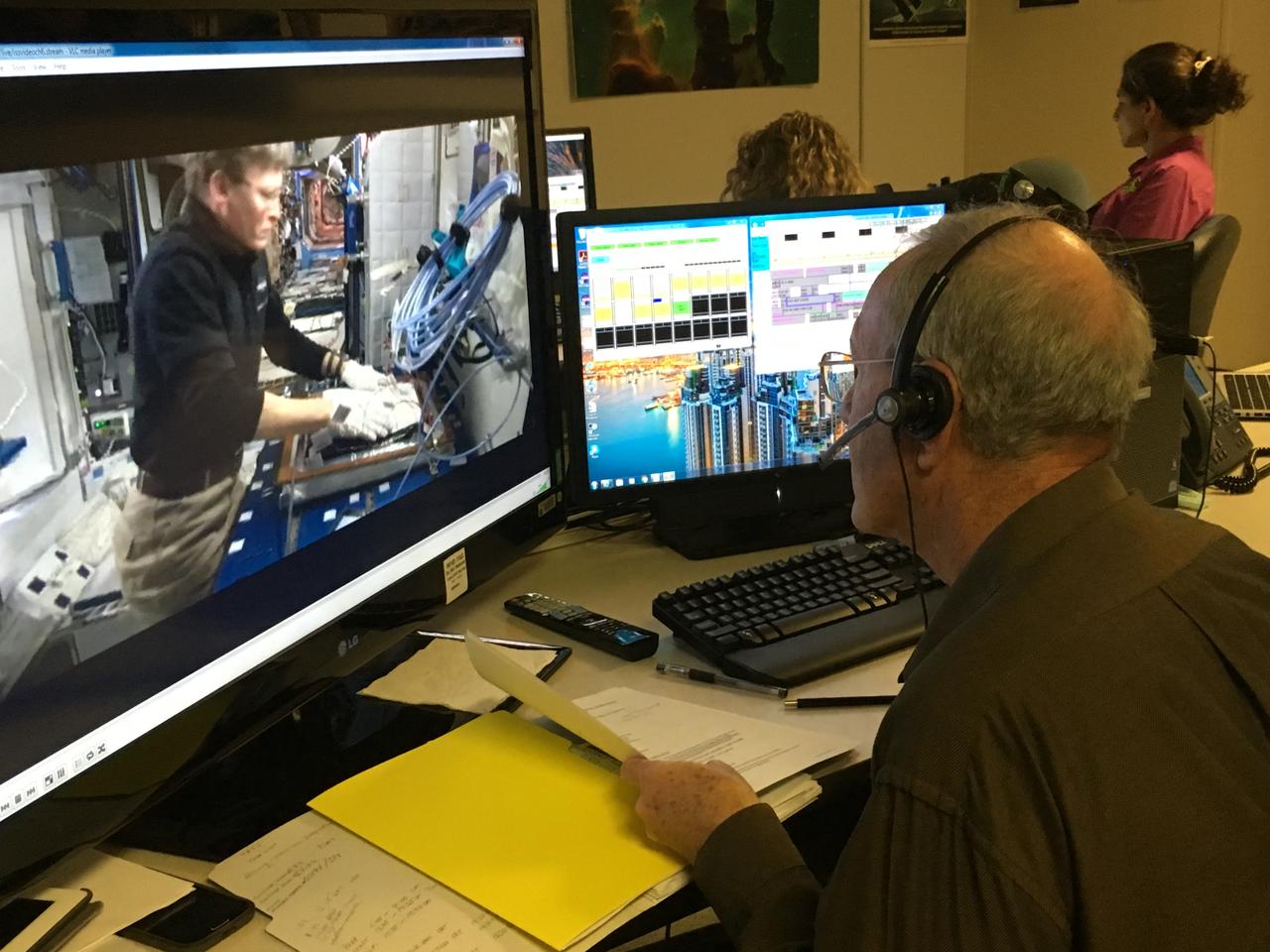
Charles Spern, project manager on the Engineering Services Contract, communicates instructions for the Veggie system to astronaut Peggy Whitson aboard the International Space Station during the initiation of the second Chinese cabbage to be grown aboard the orbiting laboratory on April 3, 2017.
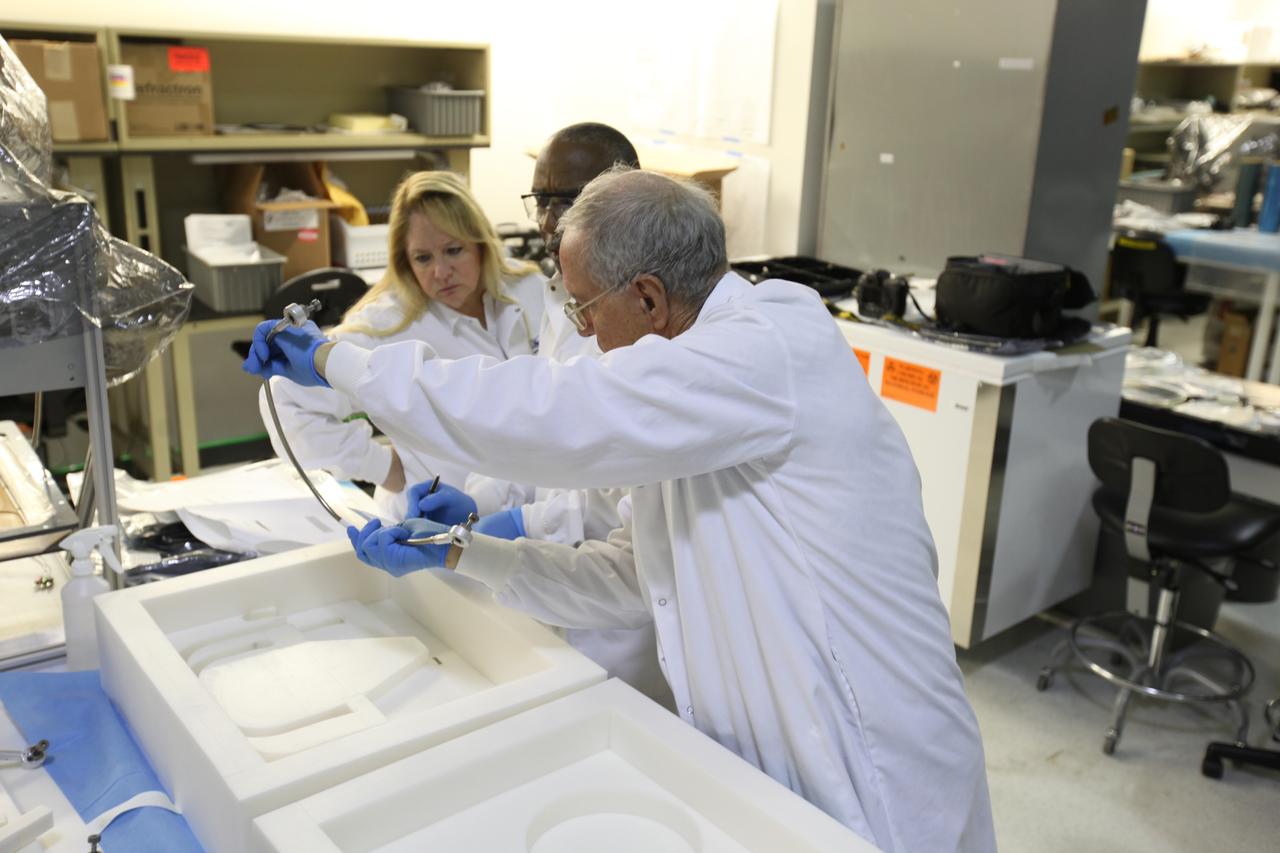
Charles Spern, at right, project manager on the Engineering Services Contract (ESC), and Glenn Washington, ESC quality assurance specialist, perform final inspections of the Veggie Series 1 plant experiment inside a laboratory in the Space Station Processing Facility at NASA's Kennedy Space Center in Florida. At far left is Dena Richmond, ESC configuration management. The Series 1 experiment is being readied for flight aboard Orbital ATK's Cygnus module on its seventh (OA-7) Commercial Resupply Services mission to the International Space Station. The Veggie system is on the space station.
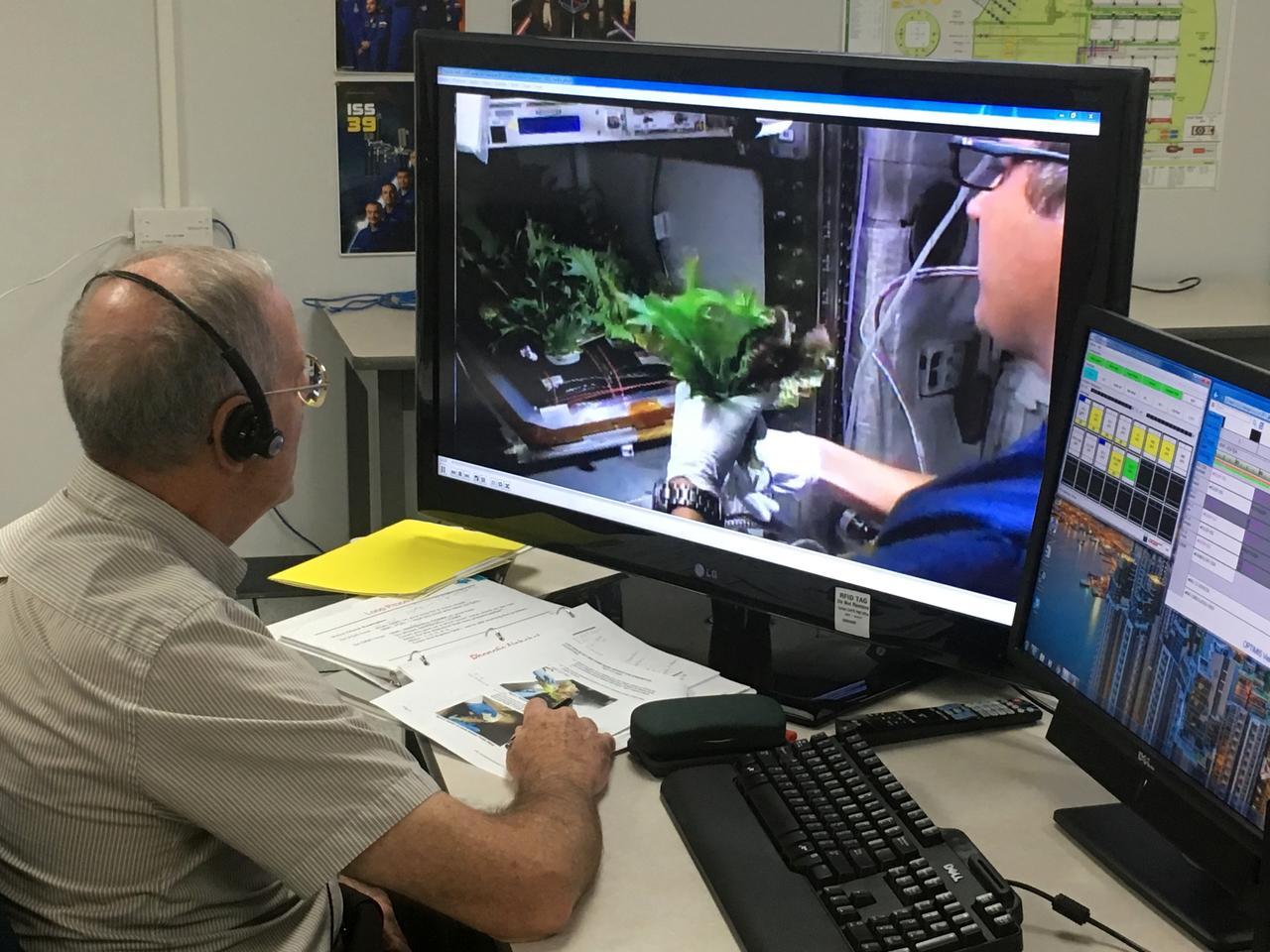
Charles Spern, project manager on the Engineering Services Contract, communicates instructions for the Veggie system to astronaut Joe Acaba on the International Space Station. Spern is in the Experiment Monitoring Room in the Space Station Processing Facility at Kennedy Space Center in Florida. Three different varieties of plants from the Veg-03D plant experiment were harvested.

Seeds are secured in plant pillows for the Veggie plant growth system inside a laboratory in the Space Station Processing Facility at NASA's Kennedy Space Center in Florida. The plant pillows, containing Outredgeous lettuce, Mizuna Mustard and Waldmann's green lettuce seeds, were packed for delivery to Veggie on SpaceX's 12th commercial resupply services mission to the International Space Station.

Matt Romeyn, a NASA biologist, secures seeds in plant pillows for the Veggie plant growth system inside a laboratory in the Space Station Processing Facility at NASA's Kennedy Space Center in Florida. The plant pillows, containing Outredgeous lettuce, Mizuna Mustard and Waldmann's green lettuce seeds, were packed for delivery to Veggie on SpaceX's 12th commercial resupply services mission to the International Space Station.

Matt Romeyn, a NASA biologist, secures seeds in plant pillows for the Veggie plant growth system inside a laboratory in the Space Station Processing Facility at NASA's Kennedy Space Center in Florida. The plant pillows, containing Outredgeous lettuce, Mizuna Mustard and Waldmann's green lettuce seeds, were packed for delivery to Veggie on SpaceX's 12th commercial resupply services mission to the International Space Station.

Seeds are secured in plant pillows for the Veggie plant growth system inside a laboratory in the Space Station Processing Facility at NASA's Kennedy Space Center in Florida. The plant pillows, containing Outredgeous lettuce, Mizuna Mustard and Waldmann's green lettuce seeds, were packed for delivery to Veggie on SpaceX's 12th commercial resupply services mission to the International Space Station.

Seeds are secured in plant pillows for the Veggie plant growth system inside a laboratory in the Space Station Processing Facility at NASA's Kennedy Space Center in Florida. The plant pillows, containing Outredgeous lettuce, Mizuna Mustard and Waldmann's green lettuce seeds, were packed for delivery to Veggie on SpaceX's 12th commercial resupply services mission to the International Space Station.

Seeds are secured in plant pillows for the Veggie plant growth system inside a laboratory in the Space Station Processing Facility at NASA's Kennedy Space Center in Florida. The plant pillows, containing Outredgeous lettuce, Mizuna Mustard and Waldmann's green lettuce, were packed for delivery to Veggie on SpaceX's 12th commercial resupply services mission to the International Space Station.
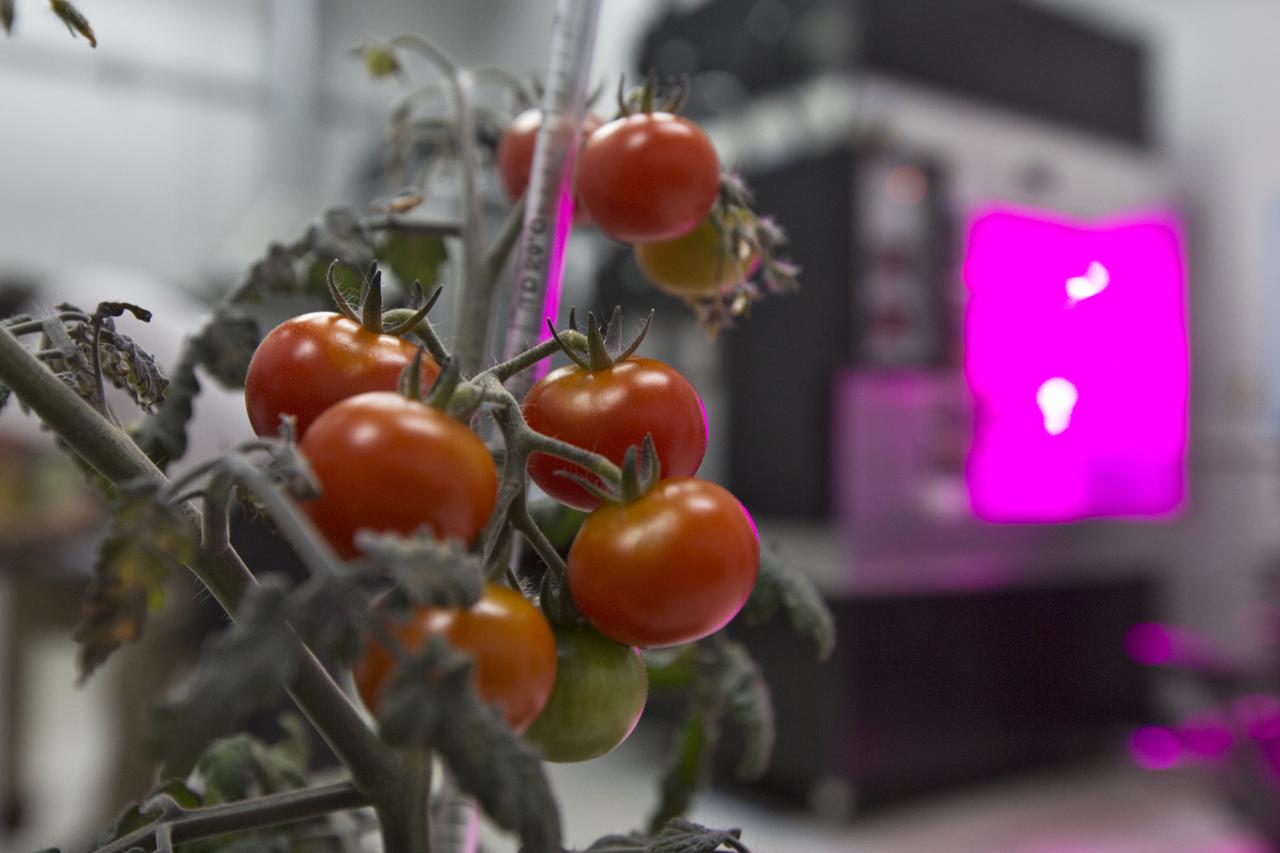
Tomato plants are growing inside a laboratory at the Space Station Processing Facility at NASA’s Kennedy Space Center in Florida. The plant growth is being tested in the Veggie Passive Orbital Nutrient Delivery System (PONDS). Veggie PONDS is a direct follow-on to the Veg-01 and Veg-03 hardware and plant growth validation tests. The primary goal of this newly developed plant growing system, Veggie PONDS, is to demonstrate uniform plant growth. PONDS units have features that are designed to mitigate microgravity effects on water distribution, increase oxygen exchange and provide sufficient room for root zone growth. PONDS is planned for use during Veg-04 and Veg-05 on the International Space Station after the Veggie PONDS Validation flights on SpaceX-14 and OA-9.
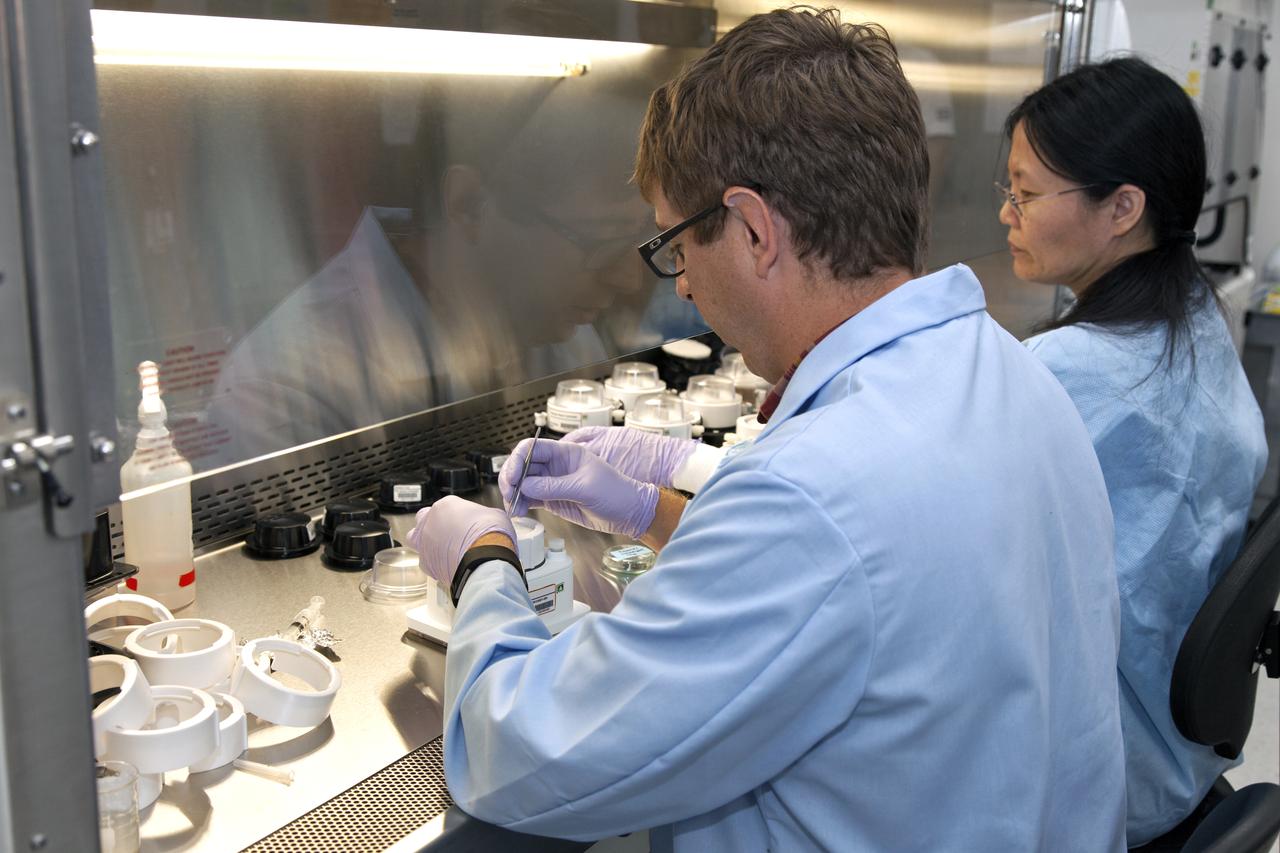
From left, Matthew Romeyn and Dr. Ye Zhang, project scientists, place seeds in Veggie Passive Orbital Nutrient Delivery System (PONDS) units inside a laboratory at the Space Station Processing Facility at NASA’s Kennedy Space Center in Florida. Veggie PONDS is a direct follow-on to the Veg-01 and Veg-03 hardware and plant growth validation tests. The primary goal of this newly developed plant growing system, Veggie PONDS, is to demonstrate uniform plant growth. PONDS units have features that are designed to mitigate microgravity effects on water distribution, increase oxygen exchange and provide sufficient room for root zone growth. PONDS is planned for use during Veg-04 and Veg-05 on the International Space Station after the Veggie PONDS Validation flights on SpaceX-14 and OA-9.
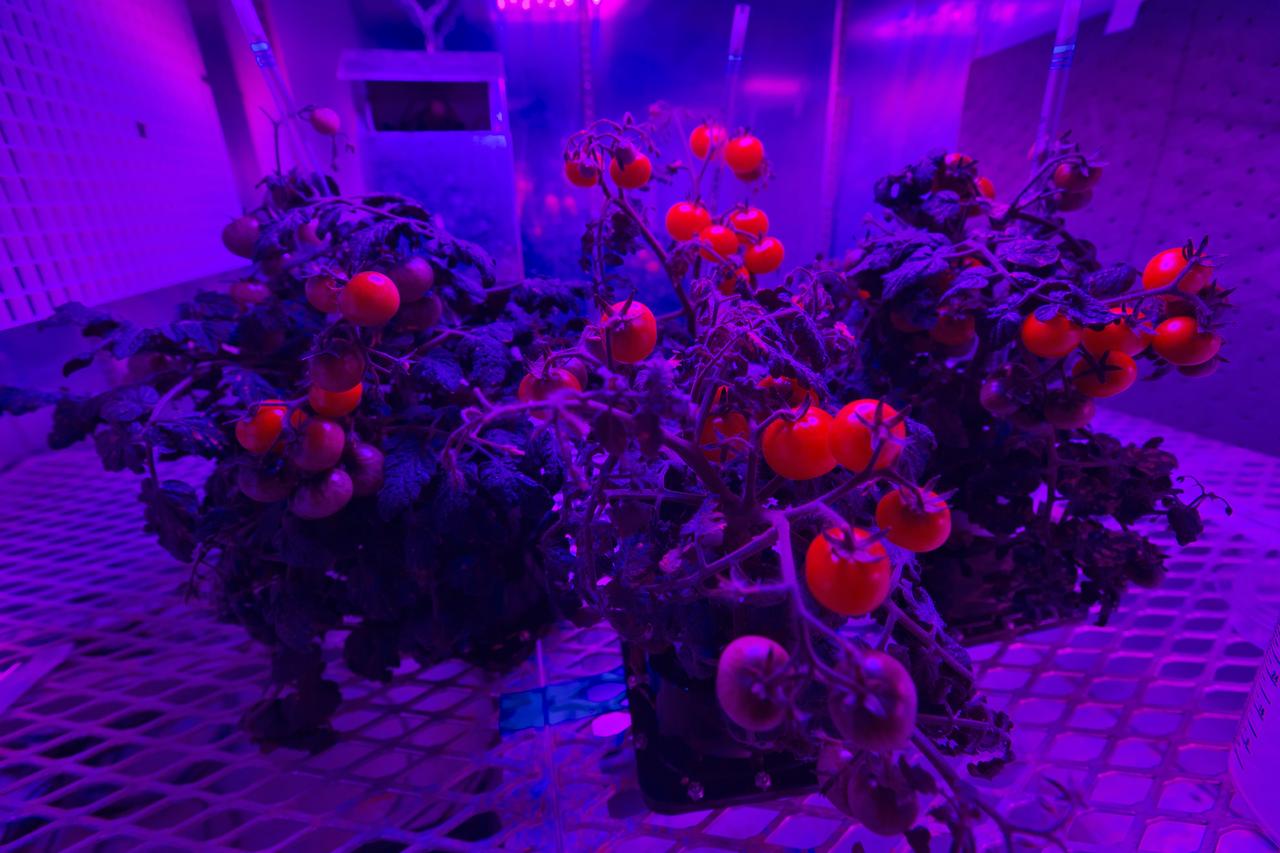
Tomato plants are growing under red and blue LED lights in a growth chamber inside a laboratory at the Space Station Processing Facility at NASA’s Kennedy Space Center in Florida. The plant growth is being tested in the Veggie Passive Orbital Nutrient Delivery System (PONDS). Veggie PONDS is a direct follow-on to the Veg-01 and Veg-03 hardware and plant growth validation tests. The primary goal of this newly developed plant growing system, Veggie PONDS, is to demonstrate uniform plant growth. PONDS units have features that are designed to mitigate microgravity effects on water distribution, increase oxygen exchange and provide sufficient room for root zone growth. PONDS is planned for use during Veg-04 and Veg-05 on the International Space Station after the Veggie PONDS Validation flights on SpaceX-14 and OA-9.
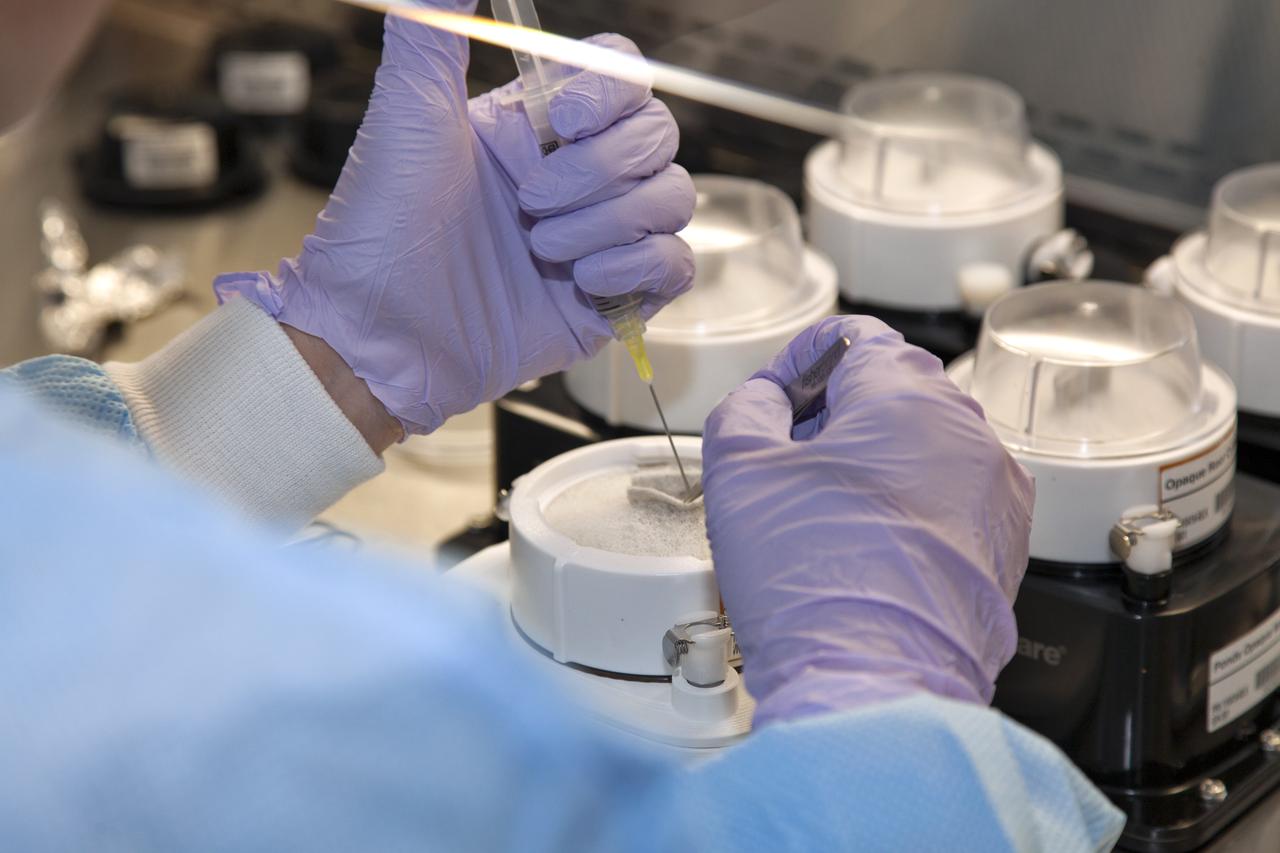
Seeds are being planted in Veggie Passive Orbital Nutrient Delivery System (PONDS) units inside a laboratory at the Space Station Processing Facility at NASA’s Kennedy Space Center in Florida. Veggie PONDS is a direct follow-on to the Veg-01 and Veg-03 hardware and plant growth validation tests. The primary goal of this newly developed plant growing system, Veggie PONDS, is to demonstrate uniform plant growth. PONDS units have features that are designed to mitigate microgravity effects on water distribution, increase oxygen exchange and provide sufficient room for root zone growth. PONDS is planned for use during Veg-04 and Veg-05 on the International Space Station after the Veggie PONDS Validation flights on SpaceX-14 and OA-9.
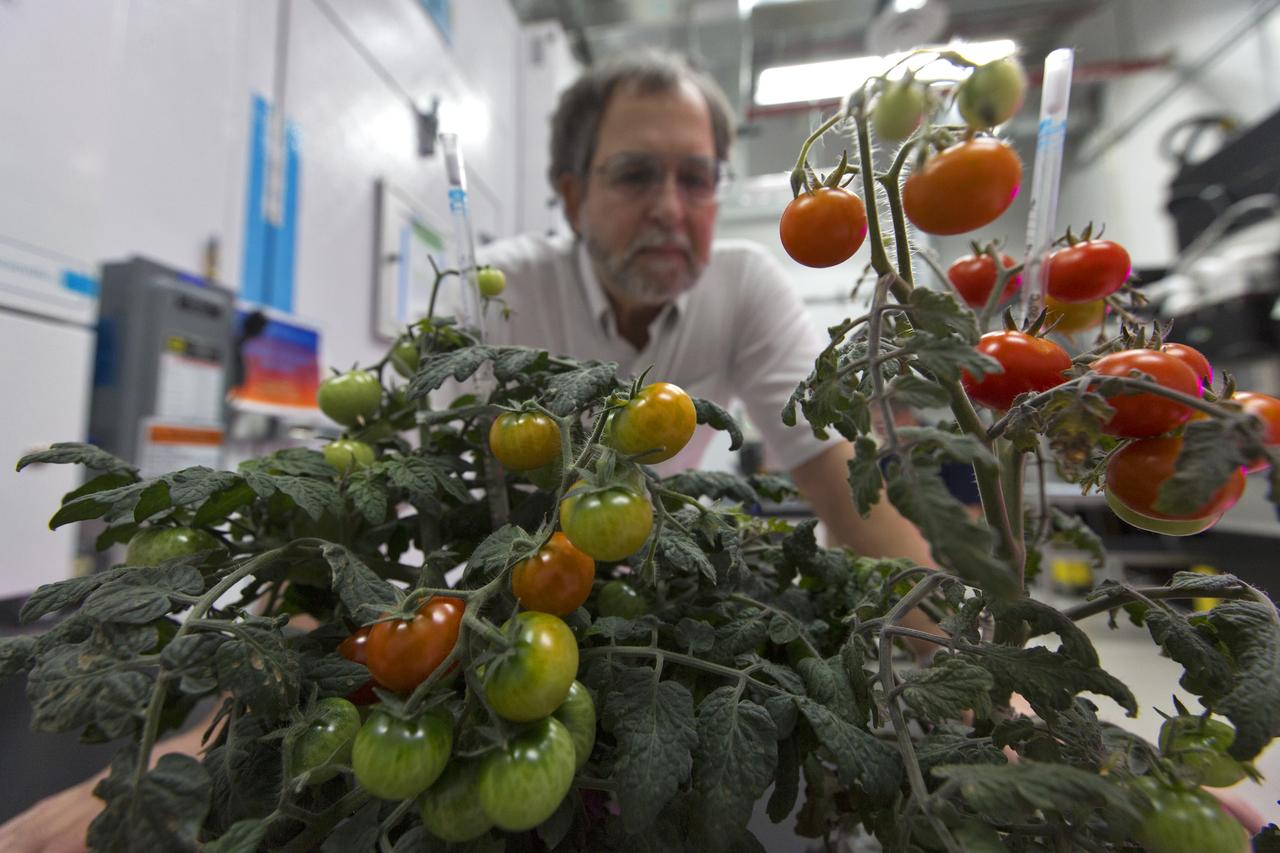
Howard Levine, Ph.D., a research scientist at NASA's Kennedy Space Center in Florida, reviews the growth of several tomato plants in a laboratory in the Space Station Processing Facility. The tomato plants are growing in the Veggie Passive Orbital Nutrient Delivery System (PONDS). Veggie PONDS is a direct follow-on to the Veg-01 and Veg-03 hardware and plant growth validation tests. The primary goal of this newly developed plant growing system, Veggie PONDS, is to demonstrate uniform plant growth. PONDS units have features that are designed to mitigate microgravity effects on water distribution, increase oxygen exchange and provide sufficient room for root zone growth. PONDS is planned for use during Veg-04 and Veg-05 on the International Space Station after the Veggie PONDS Validation flights on SpaceX-14 and OA-9.
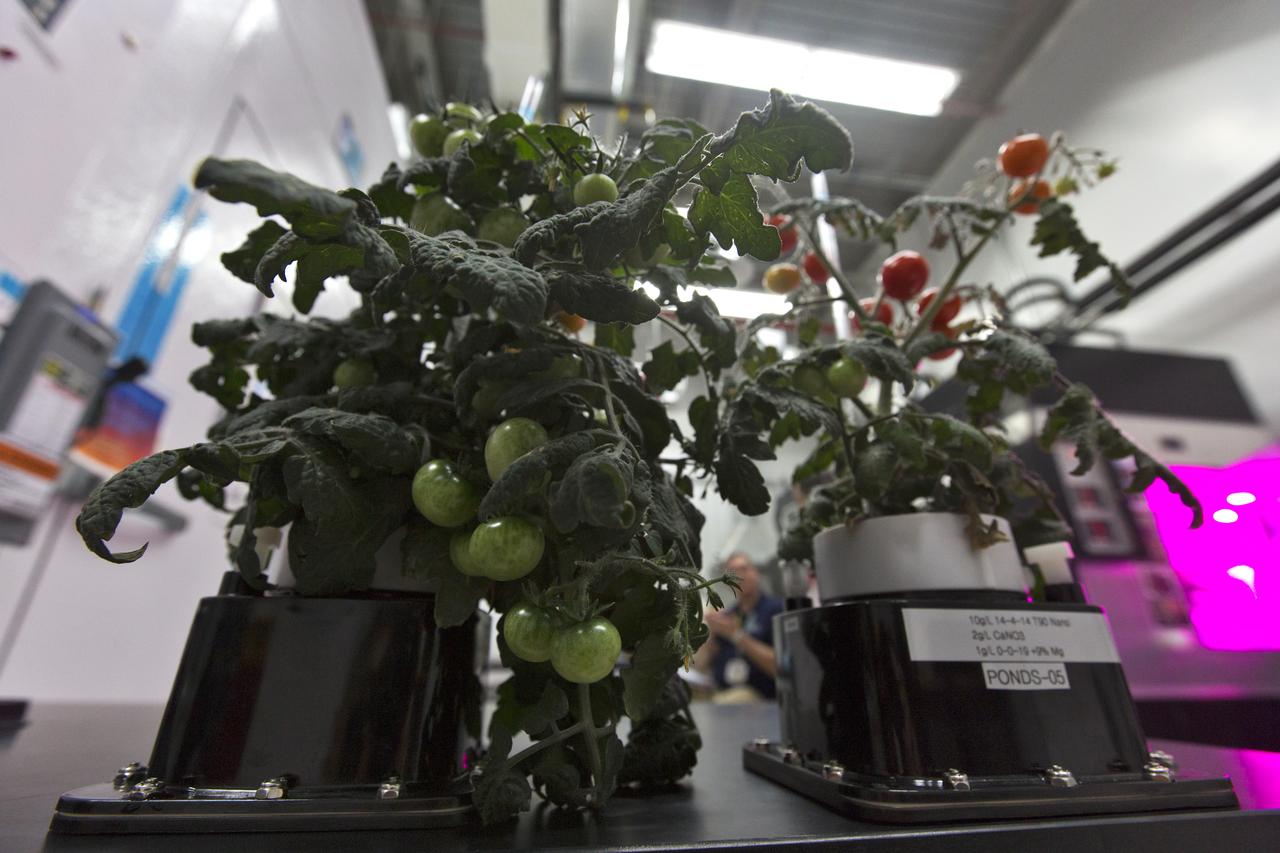
Tomato plants are growing inside a laboratory at the Space Station Processing Facility at NASA’s Kennedy Space Center in Florida. The plant growth is being tested in the Veggie Passive Orbital Nutrient Delivery System (PONDS). Veggie PONDS is a direct follow-on to the Veg-01 and Veg-03 hardware and plant growth validation tests. The primary goal of this newly developed plant growing system, Veggie PONDS, is to demonstrate uniform plant growth. PONDS units have features that are designed to mitigate microgravity effects on water distribution, increase oxygen exchange and provide sufficient room for root zone growth. PONDS is planned for use during Veg-04 and Veg-05 on the International Space Station after the Veggie PONDS Validation flights on SpaceX-14 and OA-9.
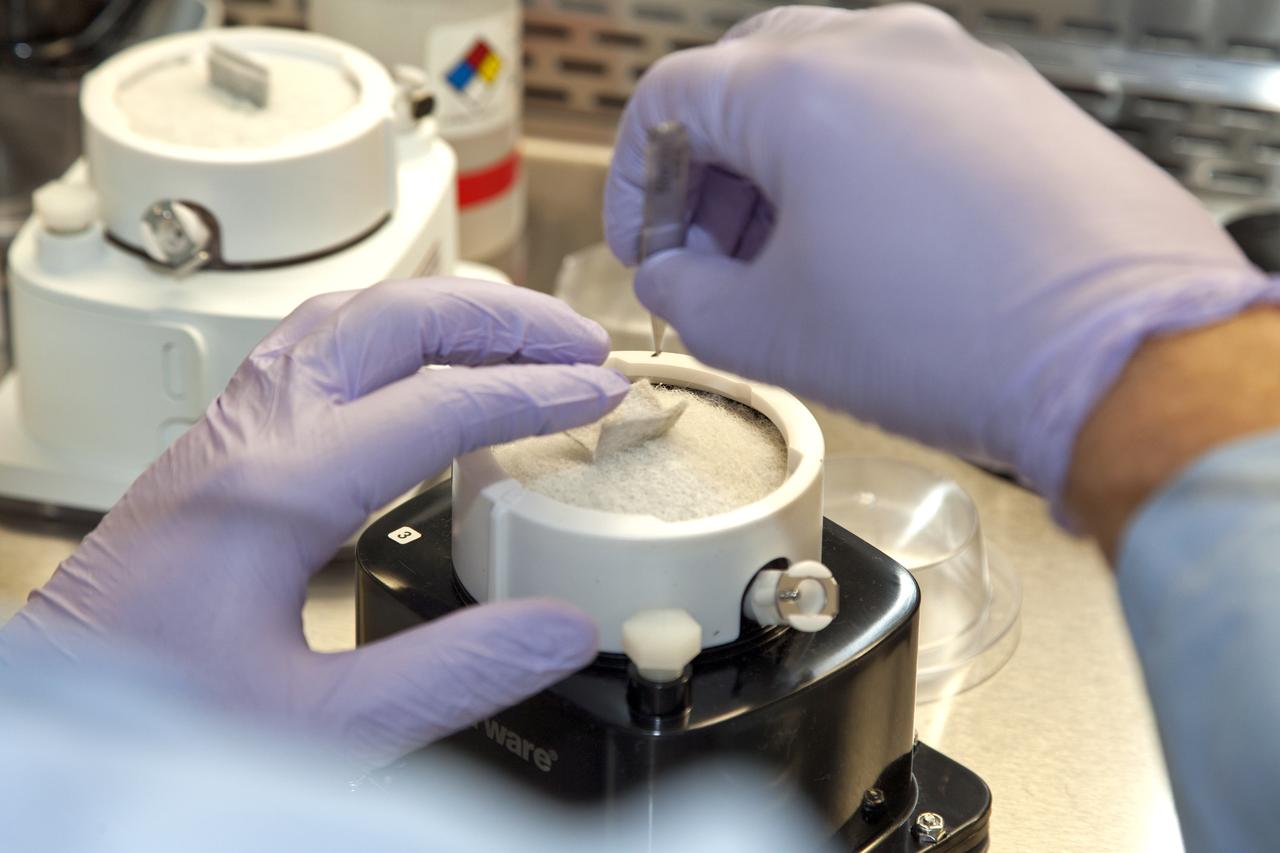
Seeds are being planted in Veggie Passive Orbital Nutrient Delivery System (PONDS) units inside a laboratory at the Space Station Processing Facility at NASA’s Kennedy Space Center in Florida. Veggie PONDS is a direct follow-on to the Veg-01 and Veg-03 hardware and plant growth validation tests. The primary goal of this newly developed plant growing system, Veggie PONDS, is to demonstrate uniform plant growth. PONDS units have features that are designed to mitigate microgravity effects on water distribution, increase oxygen exchange and provide sufficient room for root zone growth. PONDS is planned for use during Veg-04 and Veg-05 on the International Space Station after the Veggie PONDS Validation flights on SpaceX-14 and OA-9.
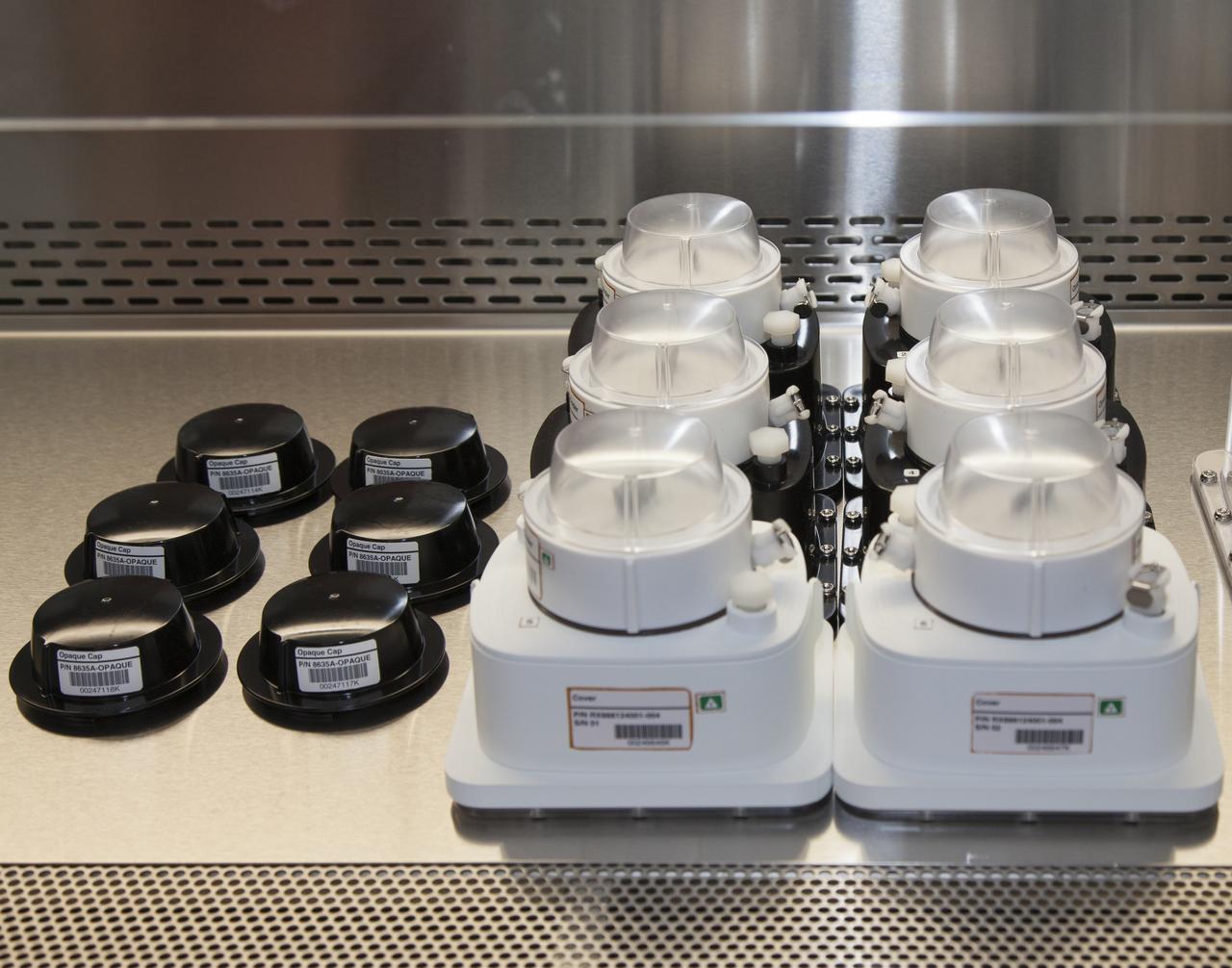
Veggie Passive Orbital Nutrient Delivery System (PONDS) units are being prepared for seed planting inside a laboratory at the Space Station Processing Facility at NASA's Kennedy Space Center in Florida. Veggie PONDS is a direct follow-on to the Veg-01 and Veg-03 hardware and plant growth validation tests. The primary goal of this newly developed plant growing system, Veggie PONDS, is to demonstrate uniform plant growth. PONDS units have features that are designed to mitigate microgravity effects on water distribution, increase oxygen exchange and provide sufficient room for root zone growth. PONDS is planned for use during Veg-04 and Veg-05 on the International Space Station after the Veggie PONDS Validation flights on SpaceX-14 and OA-9.
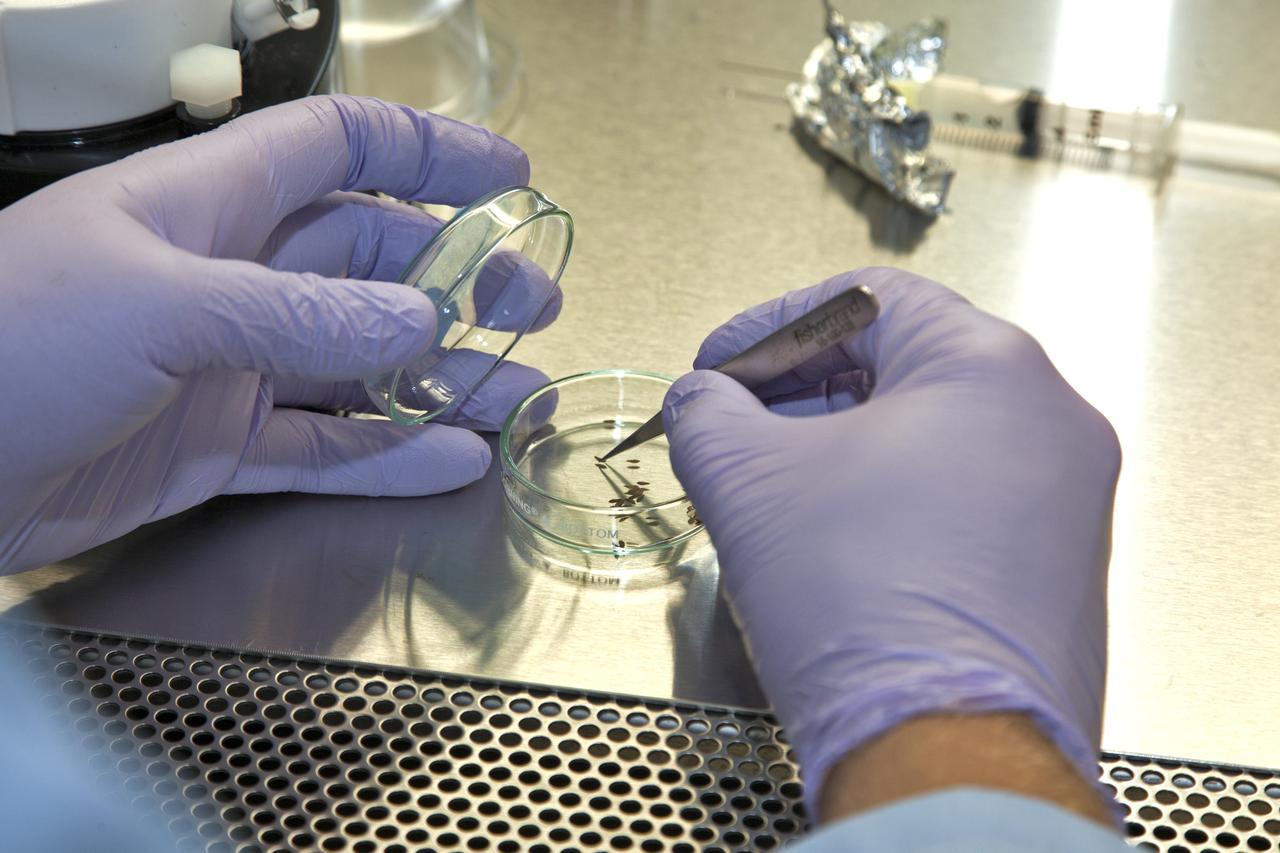
Seeds are being planted in Veggie Passive Orbital Nutrient Delivery System (PONDS) units inside a laboratory at the Space Station Processing Facility at NASA’s Kennedy Space Center in Florida. Veggie PONDS is a direct follow-on to the Veg-01 and Veg-03 hardware and plant growth validation tests. The primary goal of this newly developed plant growing system, Veggie PONDS, is to demonstrate uniform plant growth. PONDS units have features that are designed to mitigate microgravity effects on water distribution, increase oxygen exchange and provide sufficient room for root zone growth. PONDS is planned for use during Veg-04 and Veg-05 on the International Space Station after the Veggie PONDS Validation flights on SpaceX-14 and OA-9.
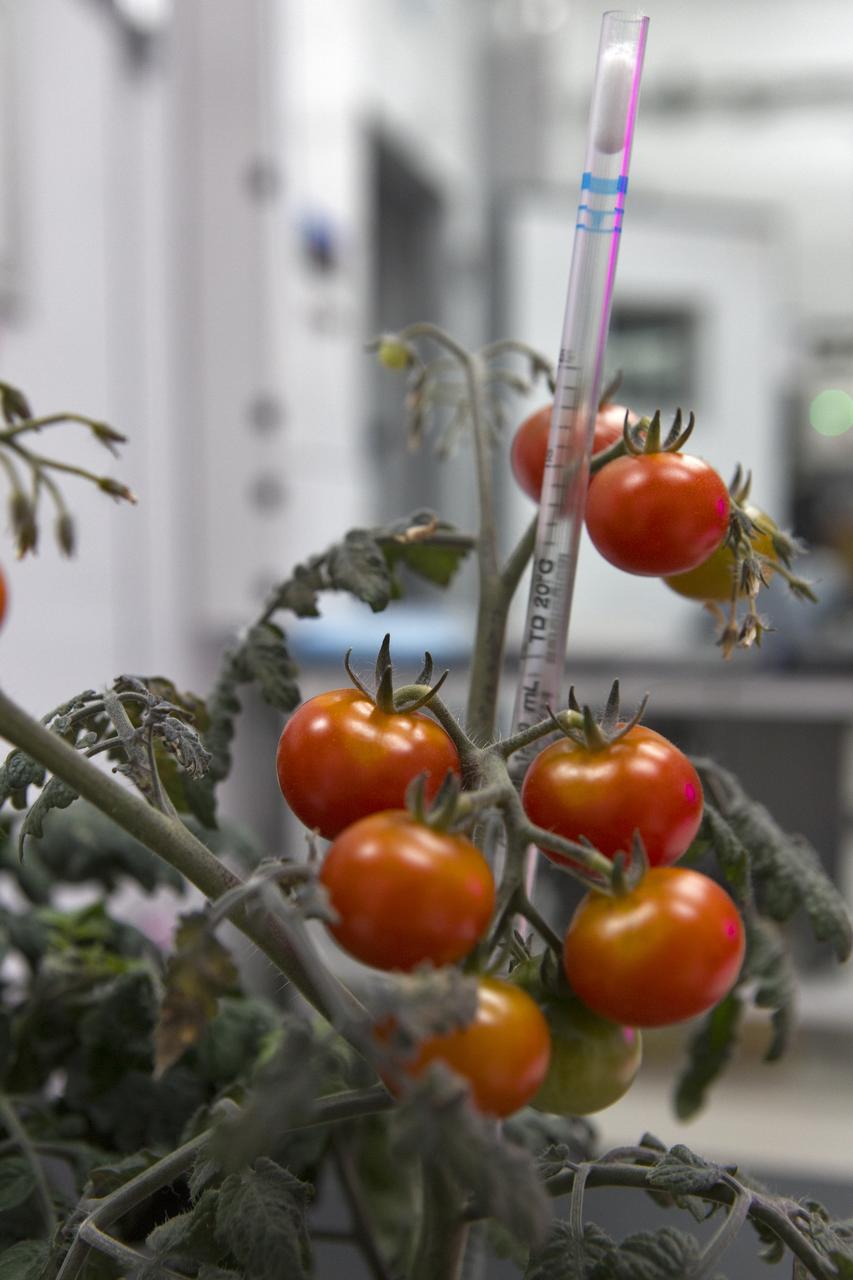
Tomato plants are growing inside a laboratory at the Space Station Processing Facility at NASA’s Kennedy Space Center in Florida. The plant growth is being tested in the Veggie Passive Orbital Nutrient Delivery System (PONDS). Veggie PONDS is a direct follow-on to the Veg-01 and Veg-03 hardware and plant growth validation tests. The primary goal of this newly developed plant growing system, Veggie PONDS, is to demonstrate uniform plant growth. PONDS units have features that are designed to mitigate microgravity effects on water distribution, increase oxygen exchange and provide sufficient room for root zone growth. PONDS is planned for use during Veg-04 and Veg-05 on the International Space Station after the Veggie PONDS Validation flights on SpaceX-14 and OA-9.
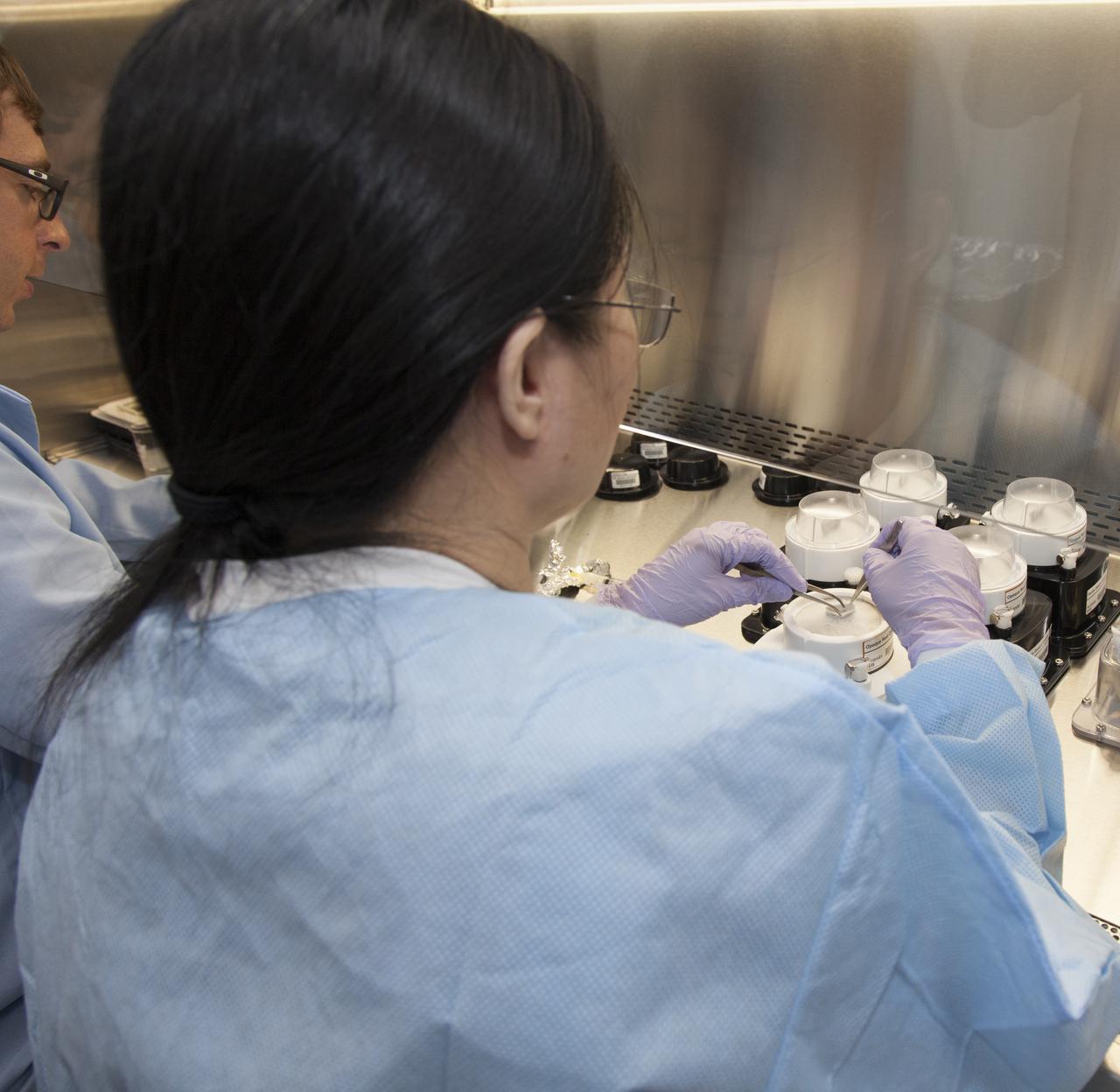
Dr. Ye Zhang, a project scientists, places seeds in Veggie Passive Orbital Nutrient Delivery System (PONDS) units inside a laboratory at the Space Station Processing Facility at NASA's Kennedy Space Center in Florida. Veggie PONDS is a direct follow-on to the Veg-01 and Veg-03 hardware and plant growth validation tests. The primary goal of this newly developed plant growing system, Veggie PONDS, is to demonstrate uniform plant growth. PONDS units have features that are designed to mitigate microgravity effects on water distribution, increase oxygen exchange and provide sufficient room for root zone growth. PONDS is planned for use during Veg-04 and Veg-05 on the International Space Station after the Veggie PONDS Validation flights on SpaceX-14 and OA-9.
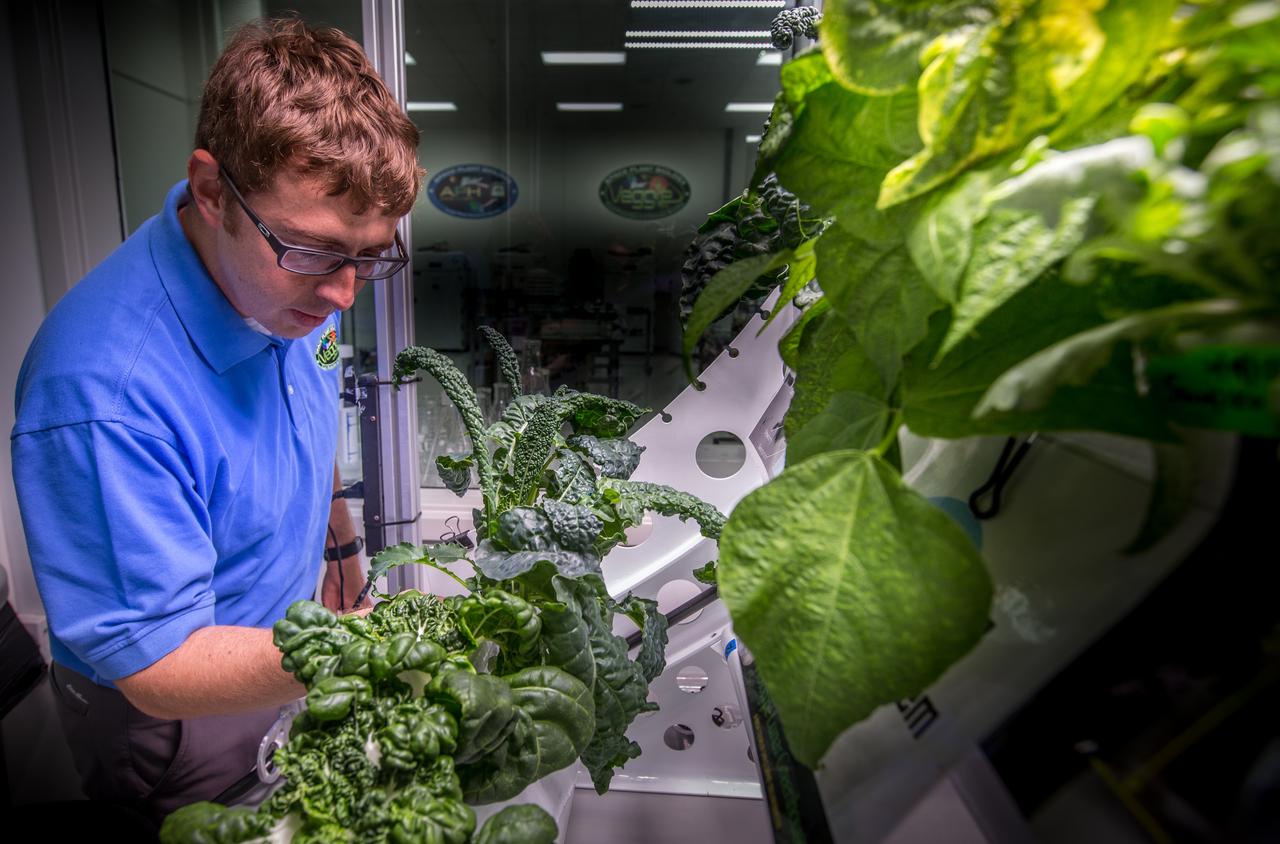
NASA's Matt Romeyn in the Veggie Lab of the Space Station Processing Facility at the agency's Kennedy Space Center in Florida.
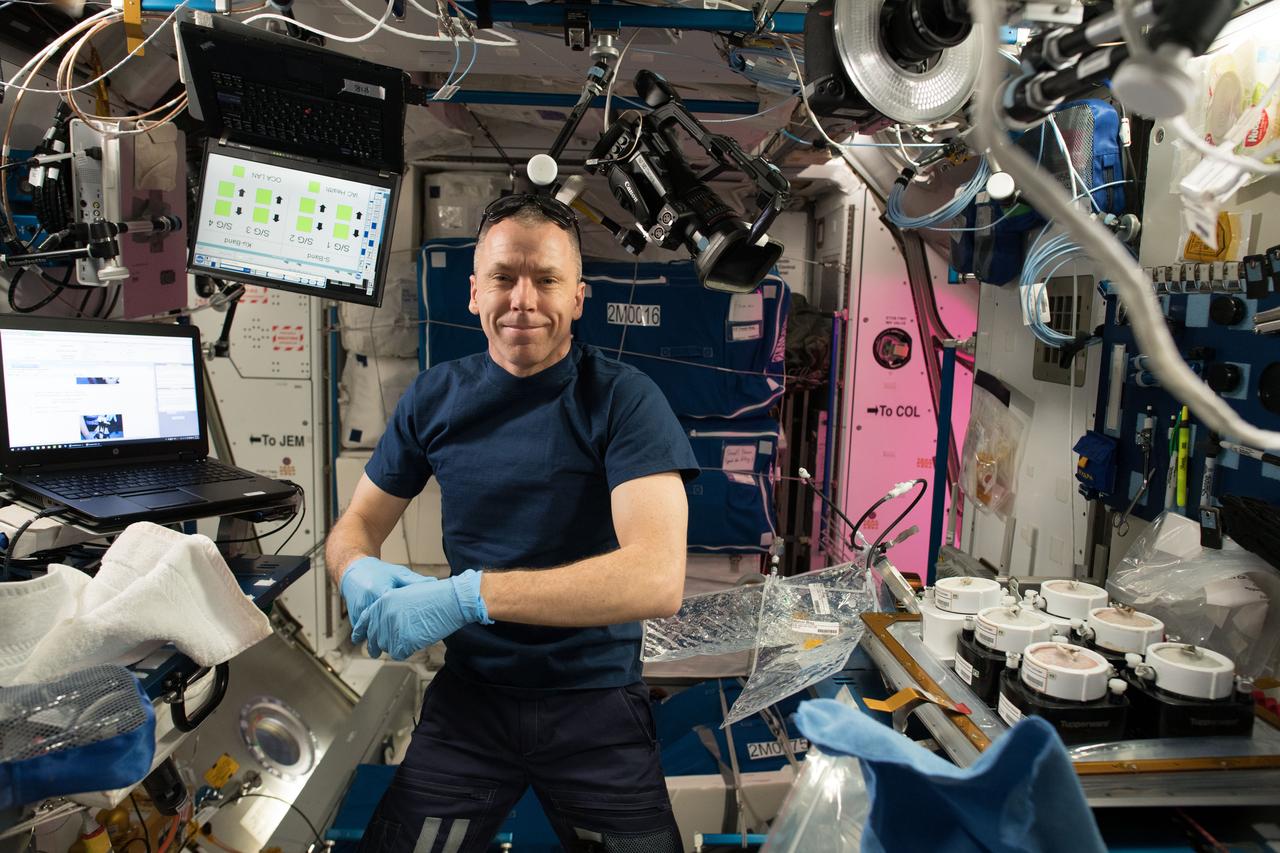
iss055e070862 (5/14/2018) --- NASA Astronaut Drew Feustel is photographed performing Veggie Passive Orbital Nutrient Delivery System (PONDS) operations - including cleaning the Veggie Ponds hardware and Veggie facility (location COL1A1_B1/D1) and then setting up for Drying Out - in the Columbus module. The primary goal of the Veggie PONDS hardware validation test is to demonstrate plant growth in a newly developed plant growing system, PONDS.
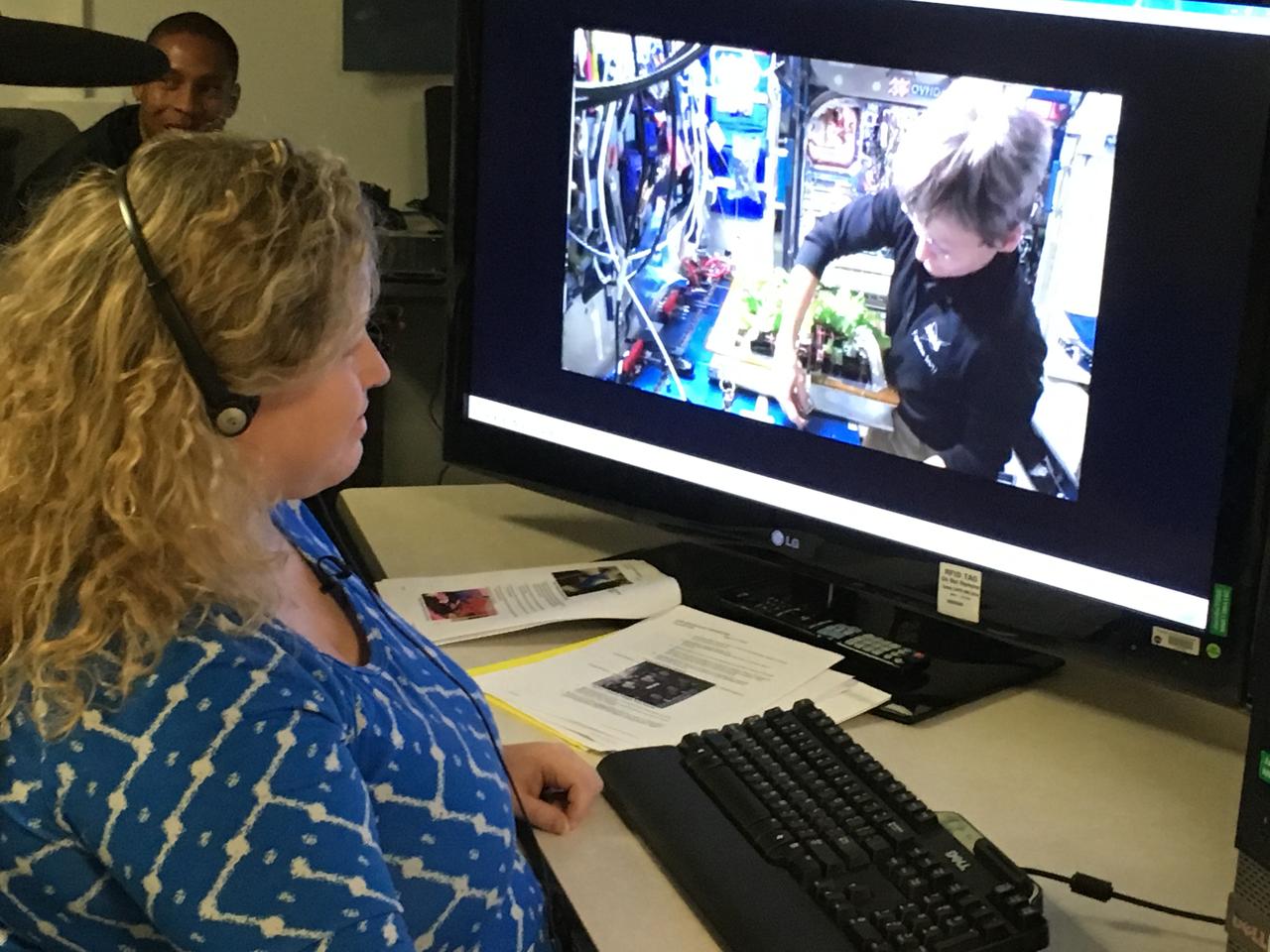
At Kennedy Space Center in Florida, Veggie Project Manager Nicole Dufour instructs astronaut Peggy Whitson during the harvest of Chinese cabbage aboard the International Space Station. While the space station crew will get to eat some of the Chinese cabbage, the rest is being saved for scientific study back at Kennedy Space Center. This is the fifth crop grown aboard the station, and the first Chinese cabbage.
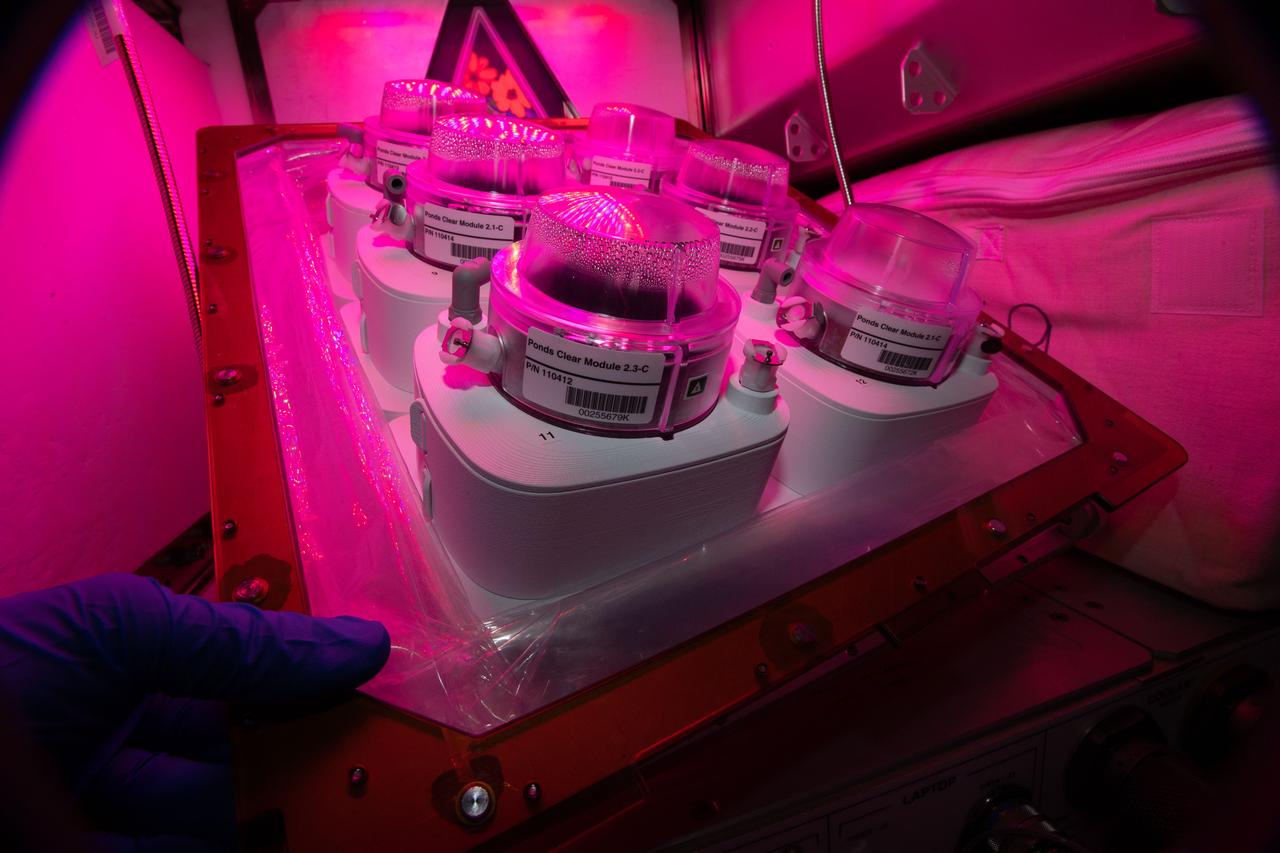
iss059e035838 (4/28/2019) --- Documentation taken during removal of Germination Cap from each Veggie Ponds Module while module is in Veggie Bellows. Veggie PONDS uses a newly developed passive nutrient delivery system and the Veggie plant growth facility aboard the International Space Station (ISS) to cultivate lettuce and mizuna greens which are to be harvested on-orbit, and consumed, with samples returned to Earth for analysis.
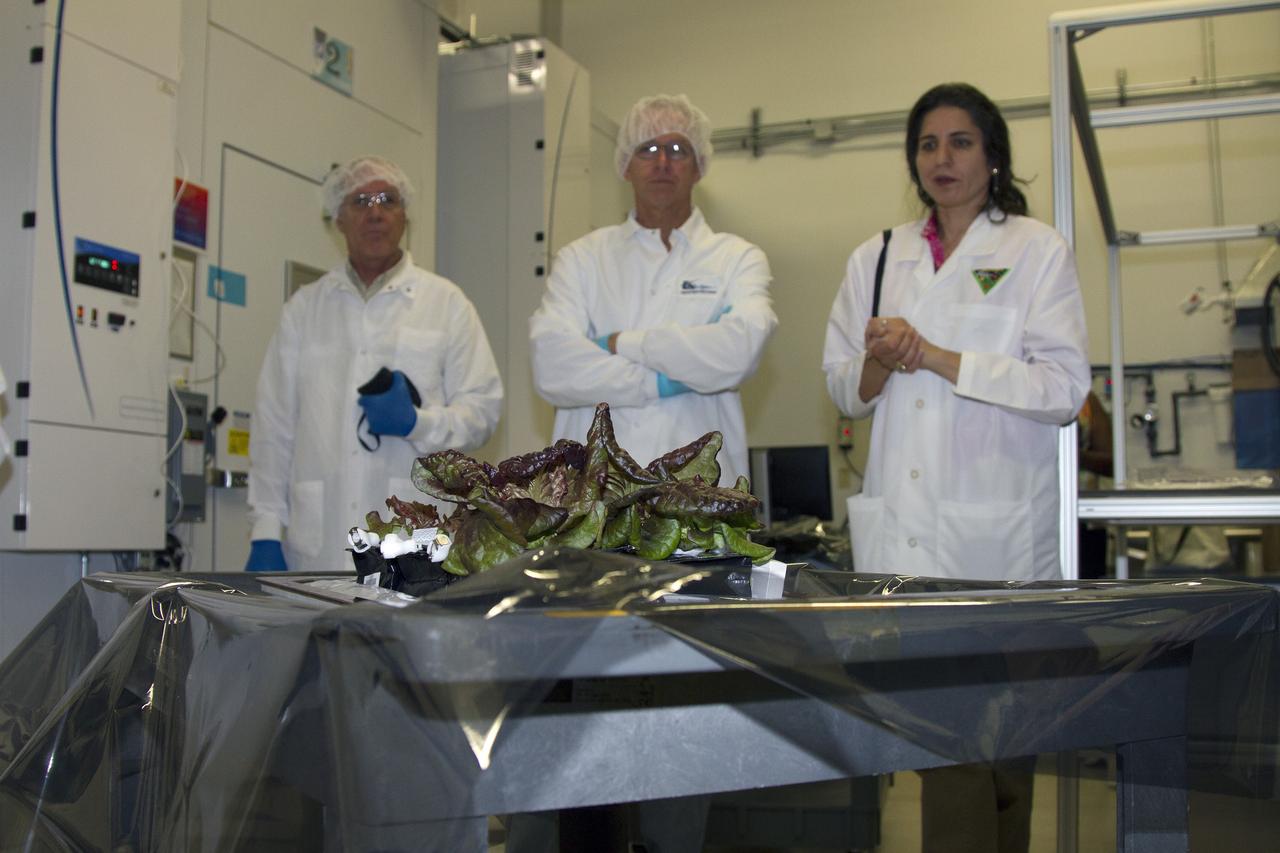
CAPE CANAVERAL, Fla. – The plant pillows containing the outredgeous red lettuce leaves have been removed from the Veggie plant growth system inside a control chamber at the Space Station Processing Facility at NASA's Kennedy Space Center in Florida. From left, are Chuck Spern, lead project engineer with QinetiQ North America on the Engineering Services Contract, Jim Smodell, a technician with SGT, and Gioia Massa, NASA payload scientist for Veggie. The growth chamber was used as a control unit for Veggie and procedures were followed identical to those being performed on Veggie and the Veg-01 experiment on the International Space Station. The chamber mimicked the temperature, relative humidity and carbon dioxide concentration of those in the Veggie unit on the space station. Veggie and Veg-01 were delivered to the space station aboard the SpaceX-3 mission. Veggie is the first fresh food production system delivered to the station. Six plant pillows, each containing outredgeous red romaine lettuce seeds and a root mat were inserted into Veggie. The plant chamber's red, blue and green LED lights were activated. The plant growth was monitored for 33 days. On June 10, at the end of the cycle, the plants were carefully harvested, frozen and stored for return to Earth by Expedition 39 flight engineer and NASA astronaut Steve Swanson. Photo credit: NASA/Frankie Martin
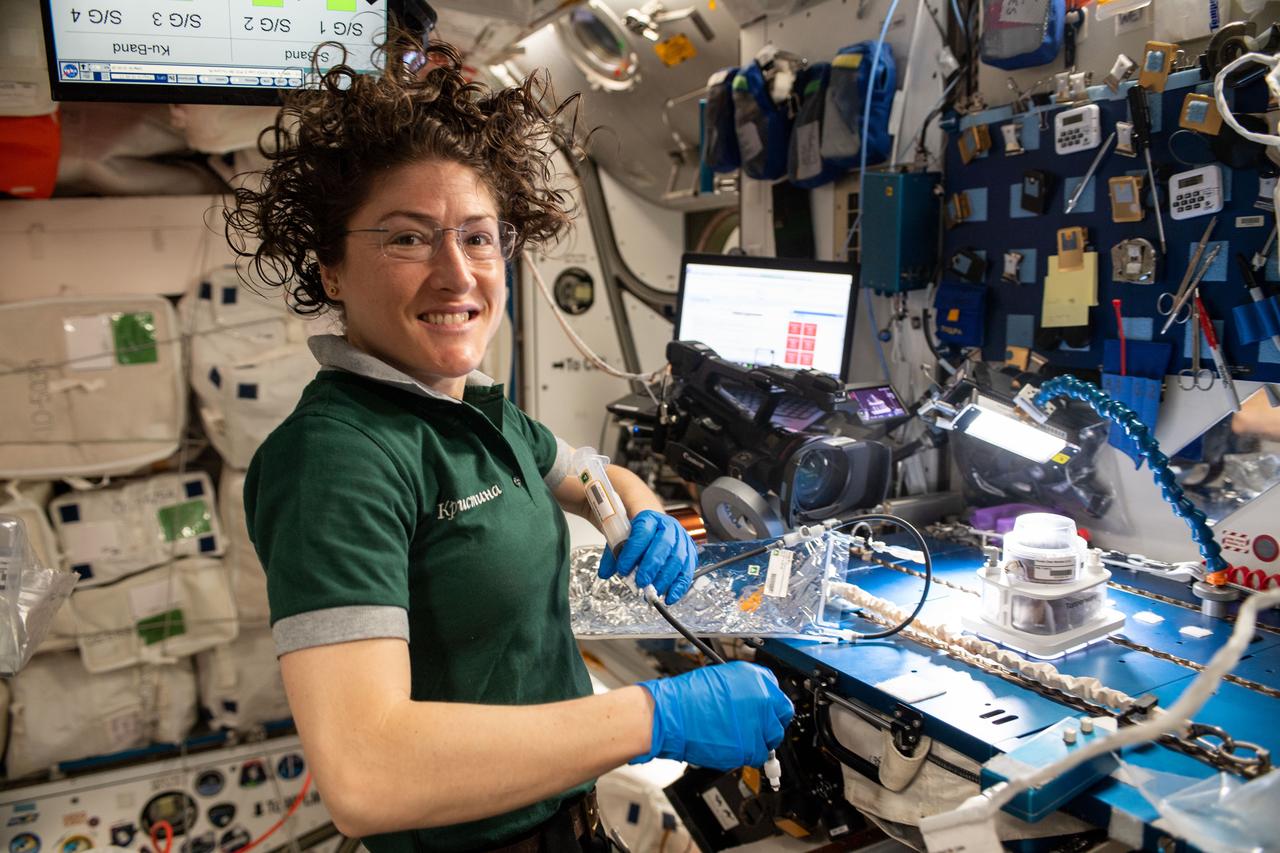
iss059e035668 (April 25, 2019) --- NASA astronaut Christina Koch works on space botany research using the Veggie PONDS gear to cultivate and harvest lettuce and mizuna greens for consumption on the International Space Station and analysis on Earth.
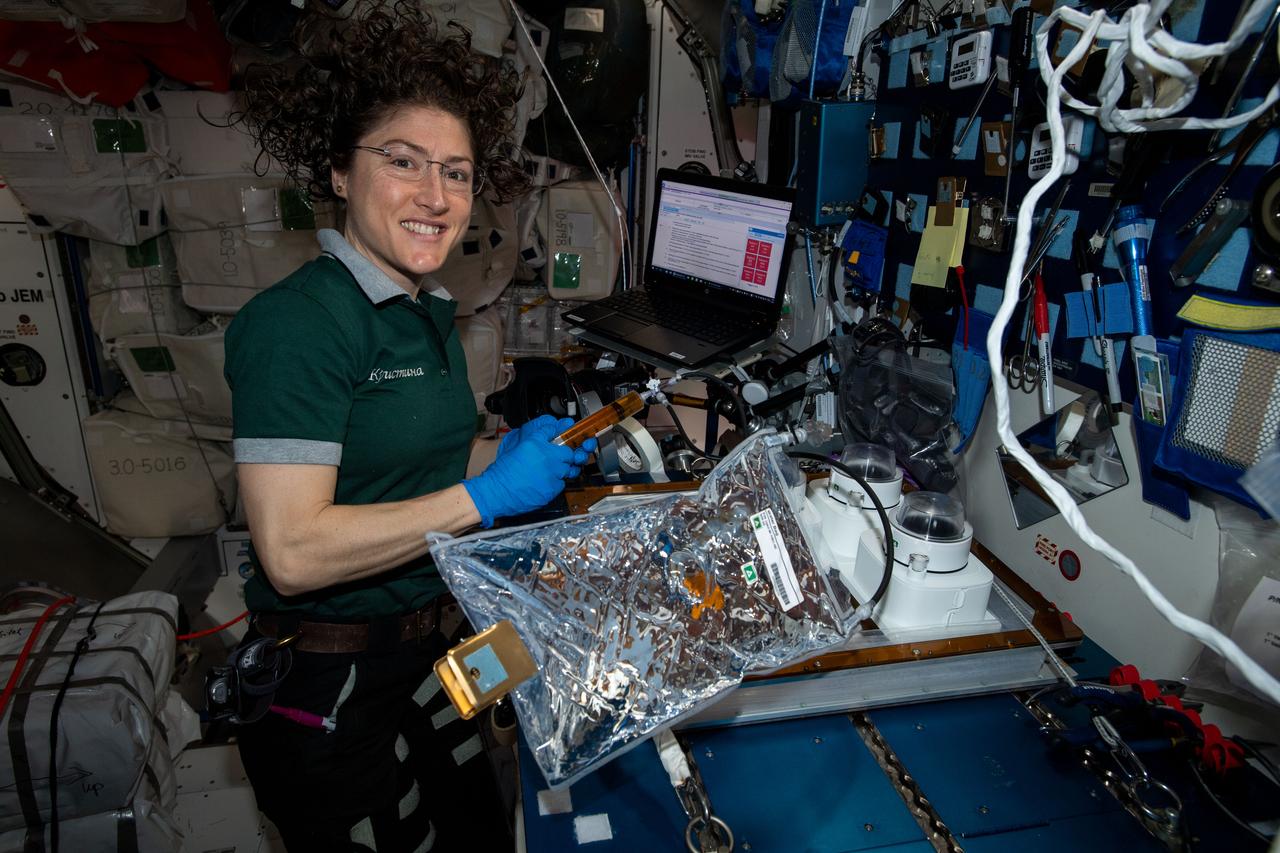
iss059e035465 (April 25, 2019) --- NASA astronaut Christina Koch works on space botany using the Veggie PONDS research gear to cultivate and harvest lettuce and mizuna greens for consumption on the International Space Station and analysis on Earth.
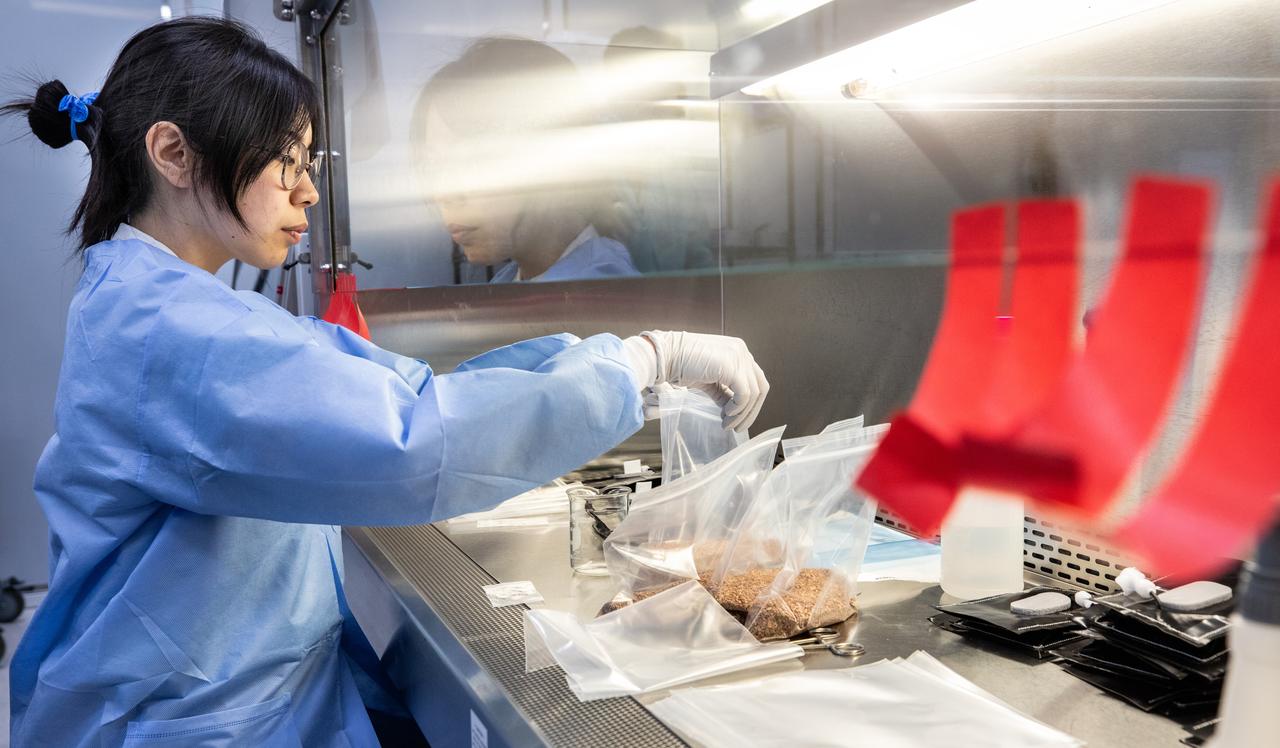
A member of the space crop production team pours substrate and controlled release fertilizer into a Veggie plant pillow on Thursday, May 29, 2025, inside the Space Systems Processing Facility at NASA’s Kennedy Space Center in Florida. The plant pillows, along with Veg-03 MNO seed films, which will carry seeds of Red Russian kale, Wasabi mustard greens, and Dragoon lettuce, are set to fly aboard NASA’s SpaceX Crew-11 mission to the International Space Station to grow in the space environment to study how microgravity impacts crop development compared to ground-grown plants. Seed films enable seed handling and planting of seeds into plant pillows allowing for astronaut choice of crops to grow. Plants can provide whole food nutrition, improve menu variety, and positively impact behavioral health of astronauts on long duration missions to the Moon and Mars and space crop research aboard the orbiting laboratory is enabled by NASA’s Biological and Physical Sciences Division and the International Space Station Program.

A member of the space crop production team pours substrate and controlled release fertilizer into a Veggie plant pillow on Thursday, May 29, 2025, inside the Space Systems Processing Facility at NASA’s Kennedy Space Center in Florida. The plant pillows, along with Veg-03 MNO seed films, which will carry seeds of Red Russian kale, Wasabi mustard greens, and Dragoon lettuce, are set to fly aboard NASA’s SpaceX Crew-11 mission to the International Space Station to grow in the space environment to study how microgravity impacts crop development compared to ground-grown plants. Seed films enable seed handling and planting of seeds into plant pillows allowing for astronaut choice of crops to grow. Plants can provide whole food nutrition, improve menu variety, and positively impact behavioral health of astronauts on long duration missions to the Moon and Mars and space crop research aboard the orbiting laboratory is enabled by NASA’s Biological and Physical Sciences Division and the International Space Station Program.
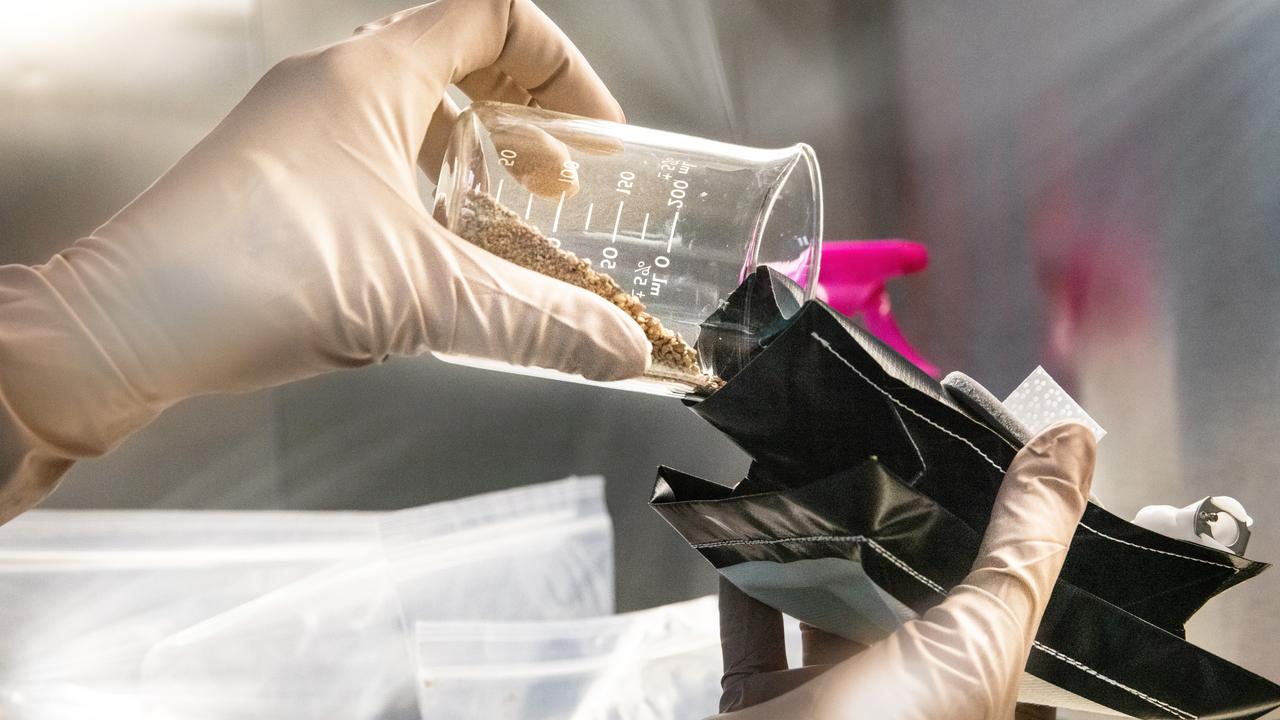
A member of the space crop production team pours substrate and controlled release fertilizer into a Veggie plant pillow on Thursday, May 29, 2025, inside the Space Systems Processing Facility at NASA’s Kennedy Space Center in Florida. The plant pillows, along with Veg-03 MNO seed films, which will carry seeds of Red Russian kale, Wasabi mustard greens, and Dragoon lettuce, are set to fly aboard NASA’s SpaceX Crew-11 mission to the International Space Station to grow in the space environment to study how microgravity impacts crop development compared to ground-grown plants. Seed films enable seed handling and planting of seeds into plant pillows allowing for astronaut choice of crops to grow. Plants can provide whole food nutrition, improve menu variety, and positively impact behavioral health of astronauts on long duration missions to the Moon and Mars and space crop research aboard the orbiting laboratory is enabled by NASA’s Biological and Physical Sciences Division and the International Space Station Program.
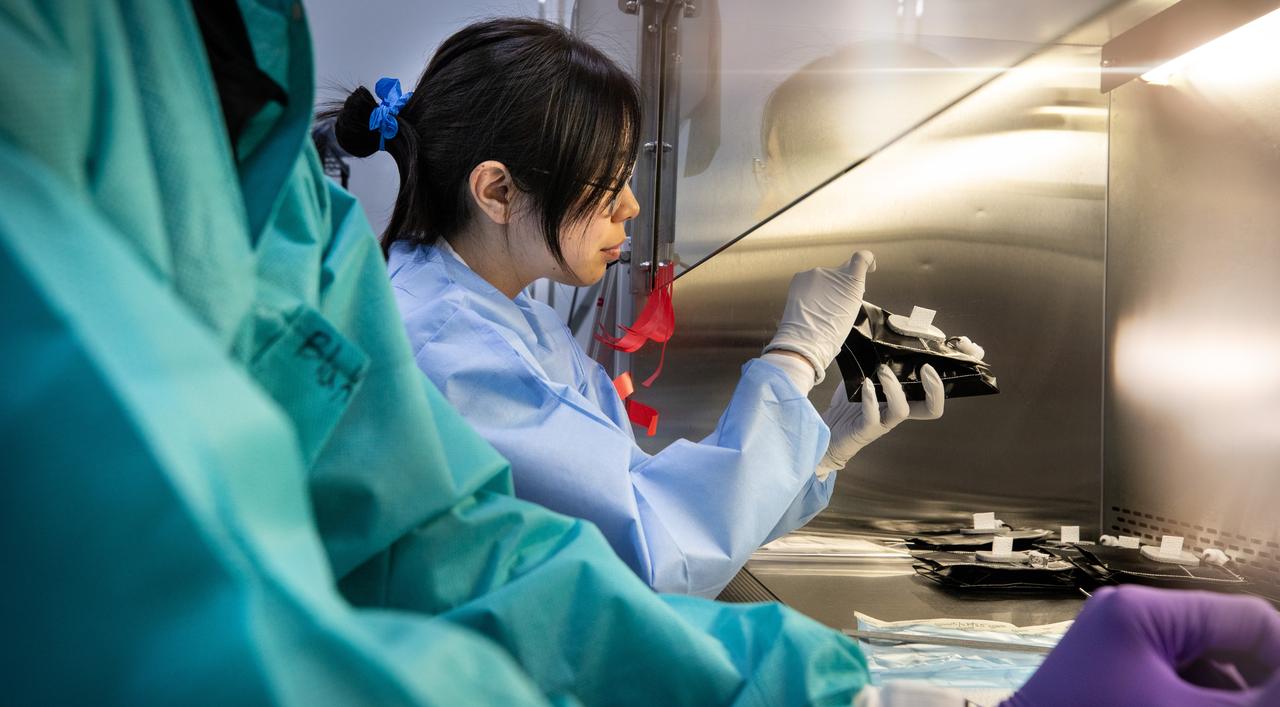
A member of the space crop production team pours substrate and controlled release fertilizer into a Veggie plant pillow on Thursday, May 29, 2025, inside the Space Systems Processing Facility at NASA’s Kennedy Space Center in Florida. The plant pillows, along with Veg-03 MNO seed films, which will carry seeds of Red Russian kale, Wasabi mustard greens, and Dragoon lettuce, are set to fly aboard NASA’s SpaceX Crew-11 mission to the International Space Station to grow in the space environment to study how microgravity impacts crop development compared to ground-grown plants. Seed films enable seed handling and planting of seeds into plant pillows allowing for astronaut choice of crops to grow. Plants can provide whole food nutrition, improve menu variety, and positively impact behavioral health of astronauts on long duration missions to the Moon and Mars and space crop research aboard the orbiting laboratory is enabled by NASA’s Biological and Physical Sciences Division and the International Space Station Program.
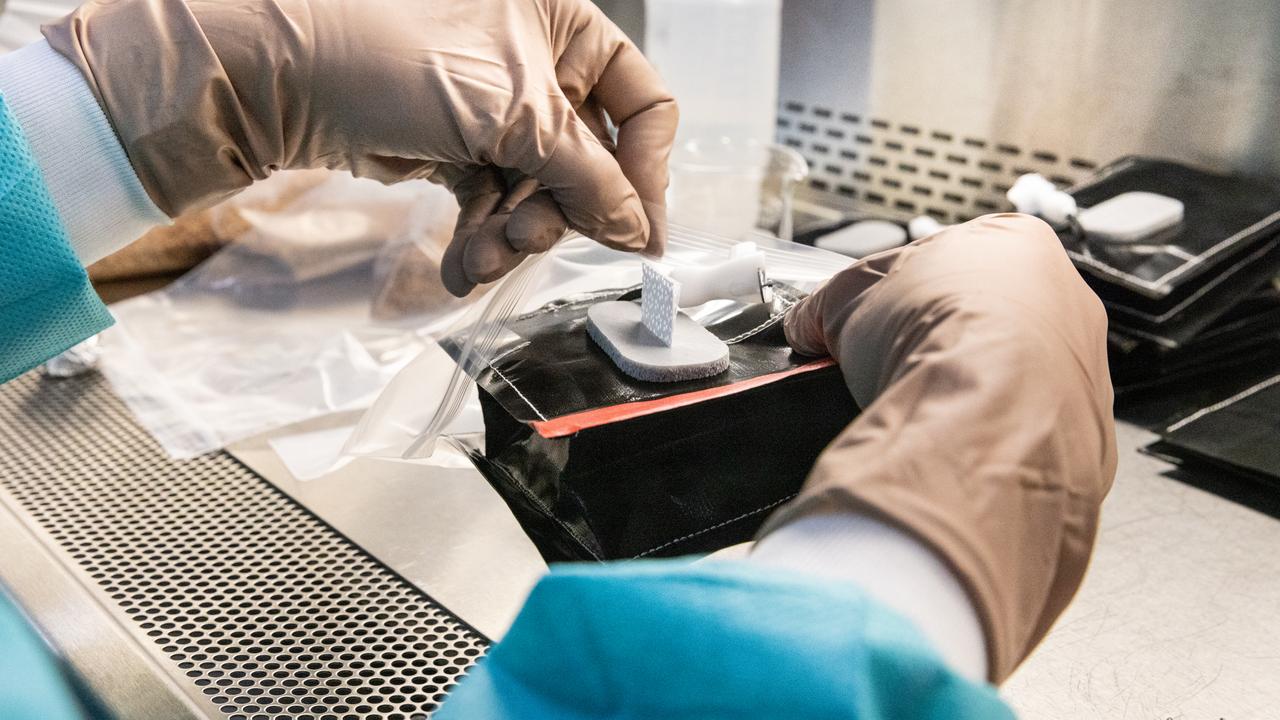
A member of the space crop production team pours substrate and controlled release fertilizer into a Veggie plant pillow on Thursday, May 29, 2025, inside the Space Systems Processing Facility at NASA’s Kennedy Space Center in Florida. The plant pillows, along with Veg-03 MNO seed films, which will carry seeds of Red Russian kale, Wasabi mustard greens, and Dragoon lettuce, are set to fly aboard NASA’s SpaceX Crew-11 mission to the International Space Station to grow in the space environment to study how microgravity impacts crop development compared to ground-grown plants. Seed films enable seed handling and planting of seeds into plant pillows allowing for astronaut choice of crops to grow. Plants can provide whole food nutrition, improve menu variety, and positively impact behavioral health of astronauts on long duration missions to the Moon and Mars and space crop research aboard the orbiting laboratory is enabled by NASA’s Biological and Physical Sciences Division and the International Space Station Program.
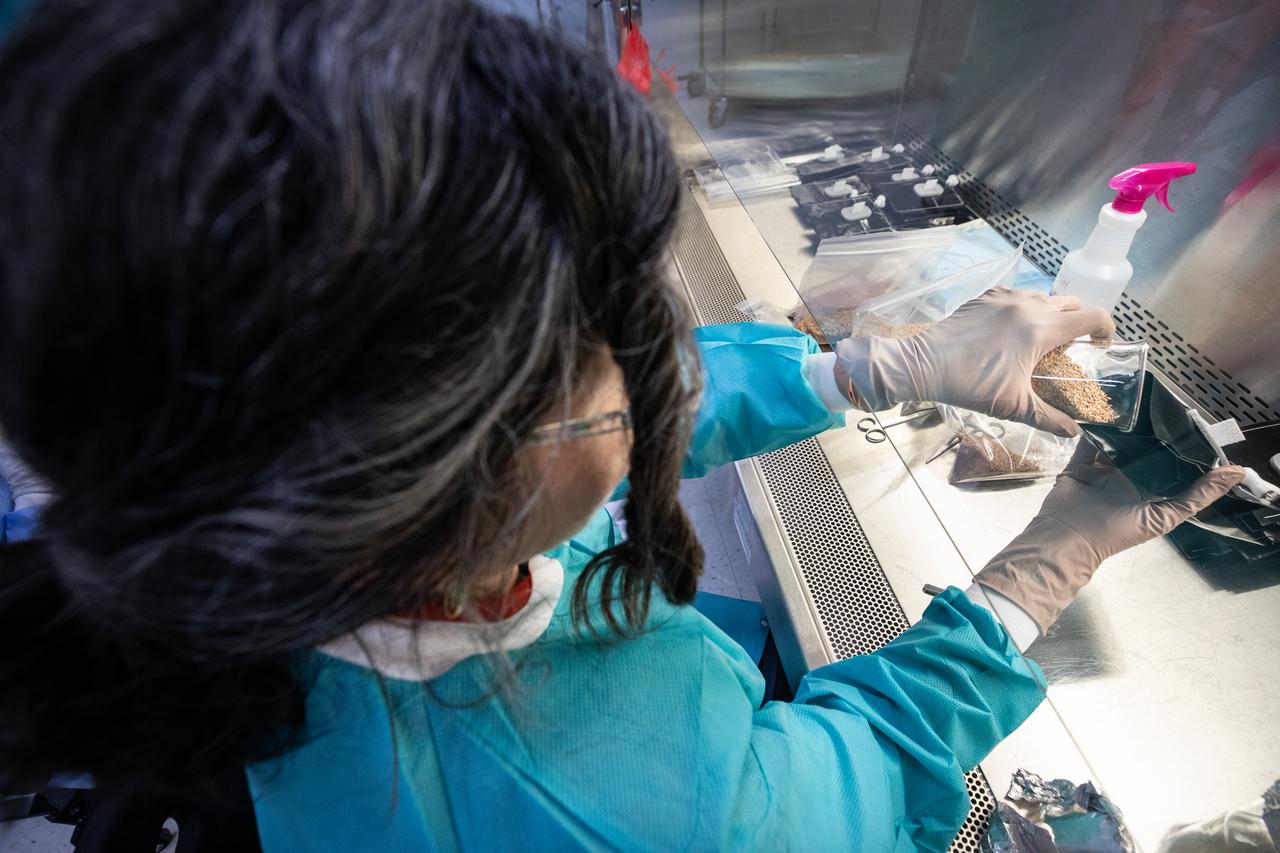
A member of the space crop production team pours substrate and controlled release fertilizer into a Veggie plant pillow on Thursday, May 29, 2025, inside the Space Systems Processing Facility at NASA’s Kennedy Space Center in Florida. The plant pillows, along with Veg-03 MNO seed films, which will carry seeds of Red Russian kale, Wasabi mustard greens, and Dragoon lettuce, are set to fly aboard NASA’s SpaceX Crew-11 mission to the International Space Station to grow in the space environment to study how microgravity impacts crop development compared to ground-grown plants. Seed films enable seed handling and planting of seeds into plant pillows allowing for astronaut choice of crops to grow. Plants can provide whole food nutrition, improve menu variety, and positively impact behavioral health of astronauts on long duration missions to the Moon and Mars and space crop research aboard the orbiting laboratory is enabled by NASA’s Biological and Physical Sciences Division and the International Space Station Program.
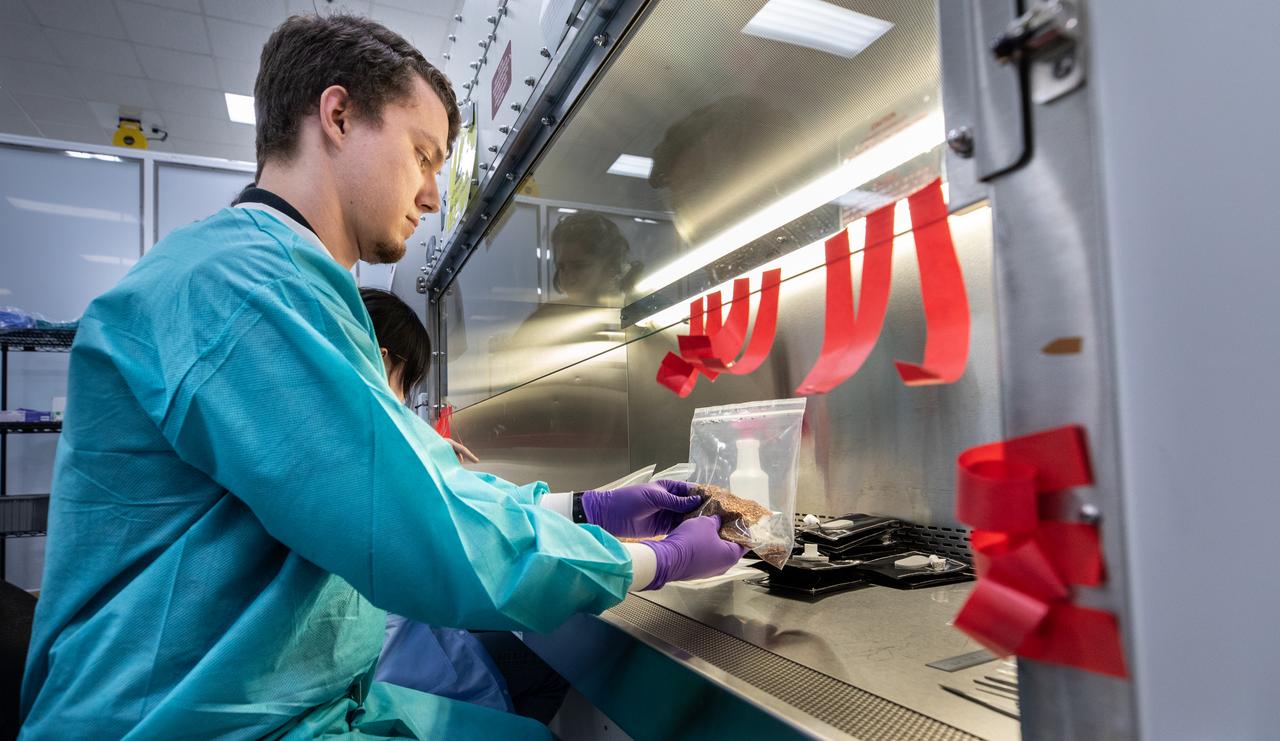
A member of the space crop production team pours substrate and controlled release fertilizer into a Veggie plant pillow on Thursday, May 29, 2025, inside the Space Systems Processing Facility at NASA’s Kennedy Space Center in Florida. The plant pillows, along with Veg-03 MNO seed films, which will carry seeds of Red Russian kale, Wasabi mustard greens, and Dragoon lettuce, are set to fly aboard NASA’s SpaceX Crew-11 mission to the International Space Station to grow in the space environment to study how microgravity impacts crop development compared to ground-grown plants. Seed films enable seed handling and planting of seeds into plant pillows allowing for astronaut choice of crops to grow. Plants can provide whole food nutrition, improve menu variety, and positively impact behavioral health of astronauts on long duration missions to the Moon and Mars and space crop research aboard the orbiting laboratory is enabled by NASA’s Biological and Physical Sciences Division and the International Space Station Program.
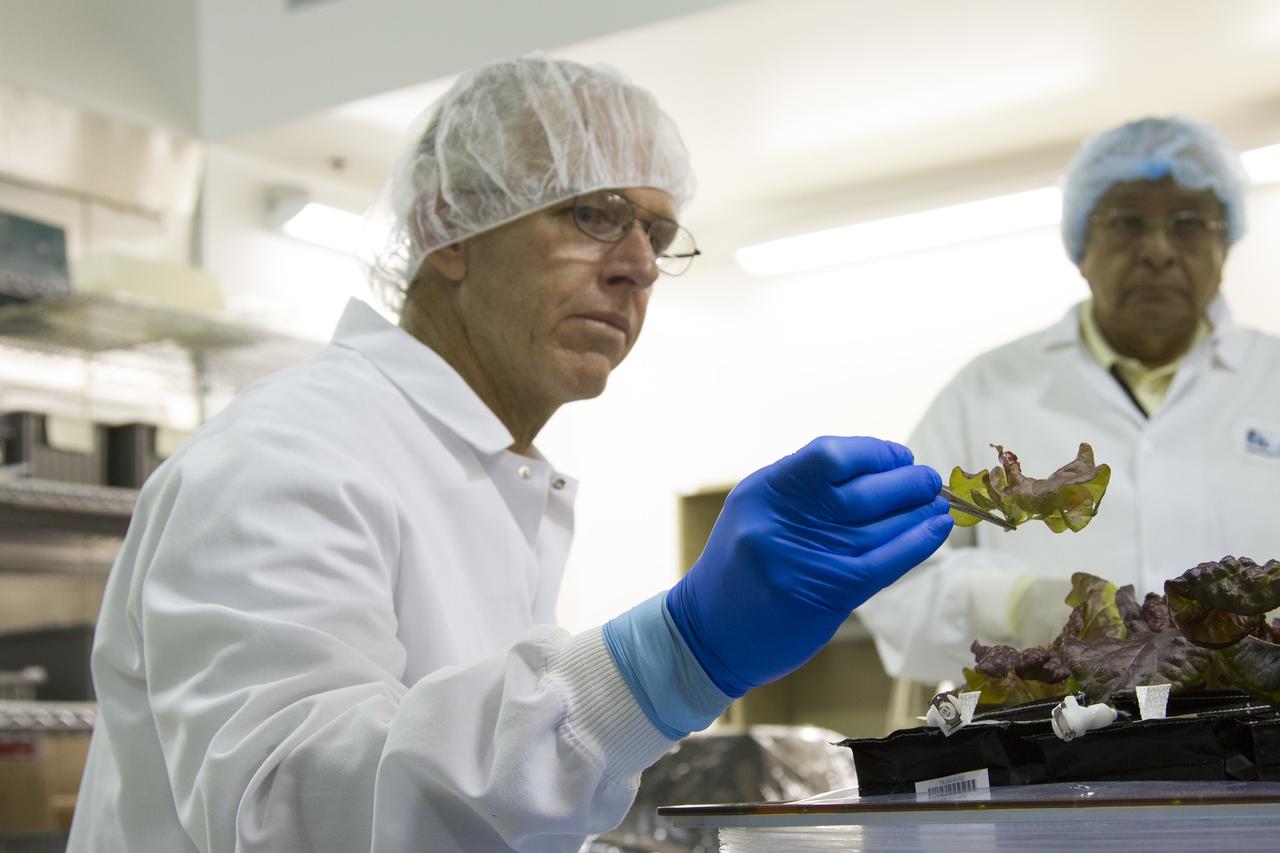
CAPE CANAVERAL, Fla. – Jim Smodell, a technician with SGT, removes an outredgeous red lettuce leaf from a plant pillow inside the Payload Development Laboratory at the Space Station Processing Facility, or SSPF, at NASA's Kennedy Space Center in Florida. In the background is George Guerra, a quality control engineer with QinetiQ North America. The plant pillows were removed from the Veggie plant growth system inside a control chamber at the SSPF. The growth chamber was used as a control unit for Veggie and procedures were followed identical to those being performed on Veggie and the Veg-01 experiment on the International Space Station. The chamber mimicked the temperature, relative humidity and carbon dioxide concentration of those in the Veggie unit on the space station. Veggie and Veg-01 were delivered to the space station aboard the SpaceX-3 mission. Veggie is the first fresh food production system delivered to the station. Six plant pillows, each containing outredgeous red romaine lettuce seeds and a root mat were inserted into Veggie. The plant chamber's red, blue and green LED lights were activated. The plant growth was monitored for 33 days. On June 10, at the end of the cycle, the plants were carefully harvested, frozen and stored for return to Earth by Expedition 39 flight engineer and NASA astronaut Steve Swanson. Photo credit: NASA/Frankie Martin
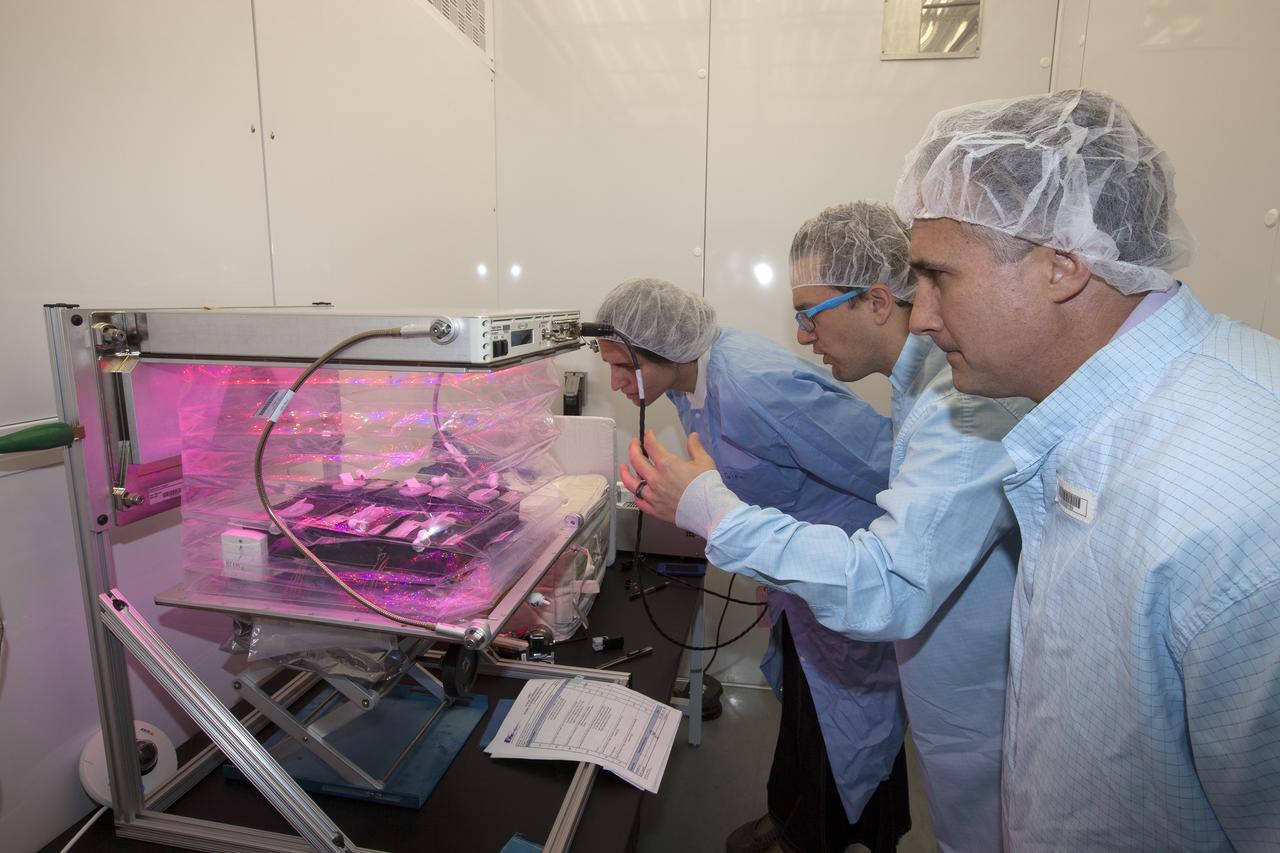
CAPE CANAVERAL, Fla. – The Veggie plant growth system has been activated inside a control chamber at the Space Station Processing Facility at NASA's Kennedy Space Center in Florida. The red, blue and green LED lights have been turned on and the root mat and plant pillows containing outredgeous red romaine lettuce seeds have been inserted into the chamber. The clear bellows have been expanded and secured. Checking the system are, from left, Gioia Massa, NASA payload scientist for Veggie, Gerard Newsham, Veggie payload support specialist with Jacobs Technology, and Trent Smith, NASA project manager. The growth chamber will be used as a control unit and procedures will be followed identical to those being performed on Veggie and the Veg-01 experiment on the International Space Station by Expedition 39 flight engineer and NASA astronaut Steve Swanson. Veggie and Veg-01 were delivered to the space station aboard the SpaceX-3 mission. Veggie is the first fresh food production system delivered to the station. Six plant pillows, each containing outredgeous red romaine lettuce seeds and a root mat were inserted into Veggie. The plant chamber's red, blue and green LED lights were activated. The plant growth will be monitored for 28 days. At the end of the cycle, the plants will be carefully harvested, frozen and stored for return to Earth. Photo credit: NASA/Dimitri Gerondidakis
CAPE CANAVERAL, Fla. -- Researchers document the growth of the ground control plants in the Veggie plant growth system inside a control chamber at the Space Station Processing Facility at NASA's Kennedy Space Center in Florida prior to thinning them to one plant each. The growth chamber is being used as a control unit and procedures are being followed identical to those being performed on Veggie and the Veg-01 experiment on the International Space Station. Veggie and Veg-01 were delivered to the space station aboard the SpaceX-3 mission. Veggie is the first fresh food production system delivered to the station. Six plant pillows, each containing outredgeous red romaine lettuce seeds and a root mat were inserted into Veggie. The plant chamber's red, blue and green LED lights were activated. The plant growth was monitored for 28 days. At the end of the cycle, the plants will be carefully harvested, frozen and stored for return to Earth. Photo credit: NASA/Charles Spern
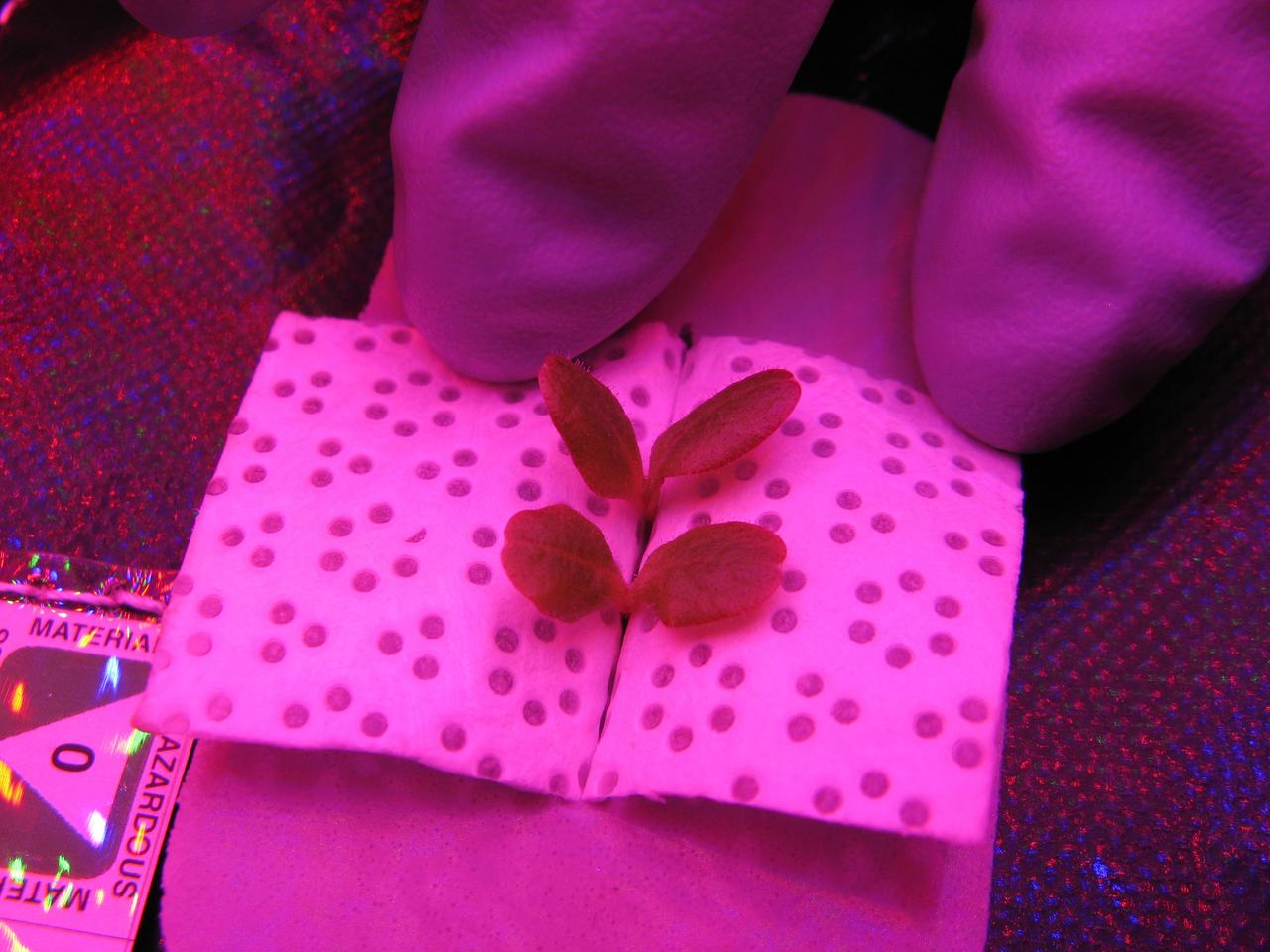
CAPE CANAVERAL, Fla. -- Researchers document the ground control plant pillows in the Veggie plant growth system inside a control chamber at the Space Station Processing Facility at NASA's Kennedy Space Center in Florida prior to thinning them to one plant each. The growth chamber is being used as a control unit and procedures are being followed identical to those being performed on Veggie and the Veg-01 experiment on the International Space Station. Veggie and Veg-01 were delivered to the space station aboard the SpaceX-3 mission. Veggie is the first fresh food production system delivered to the station. Six plant pillows, each containing outredgeous red romaine lettuce seeds and a root mat were inserted into Veggie. The plant chamber's red, blue and green LED lights were activated. The plant growth was monitored for 28 days. At the end of the cycle, the plants will be carefully harvested, frozen and stored for return to Earth. Photo credit: NASA/Charles Spern
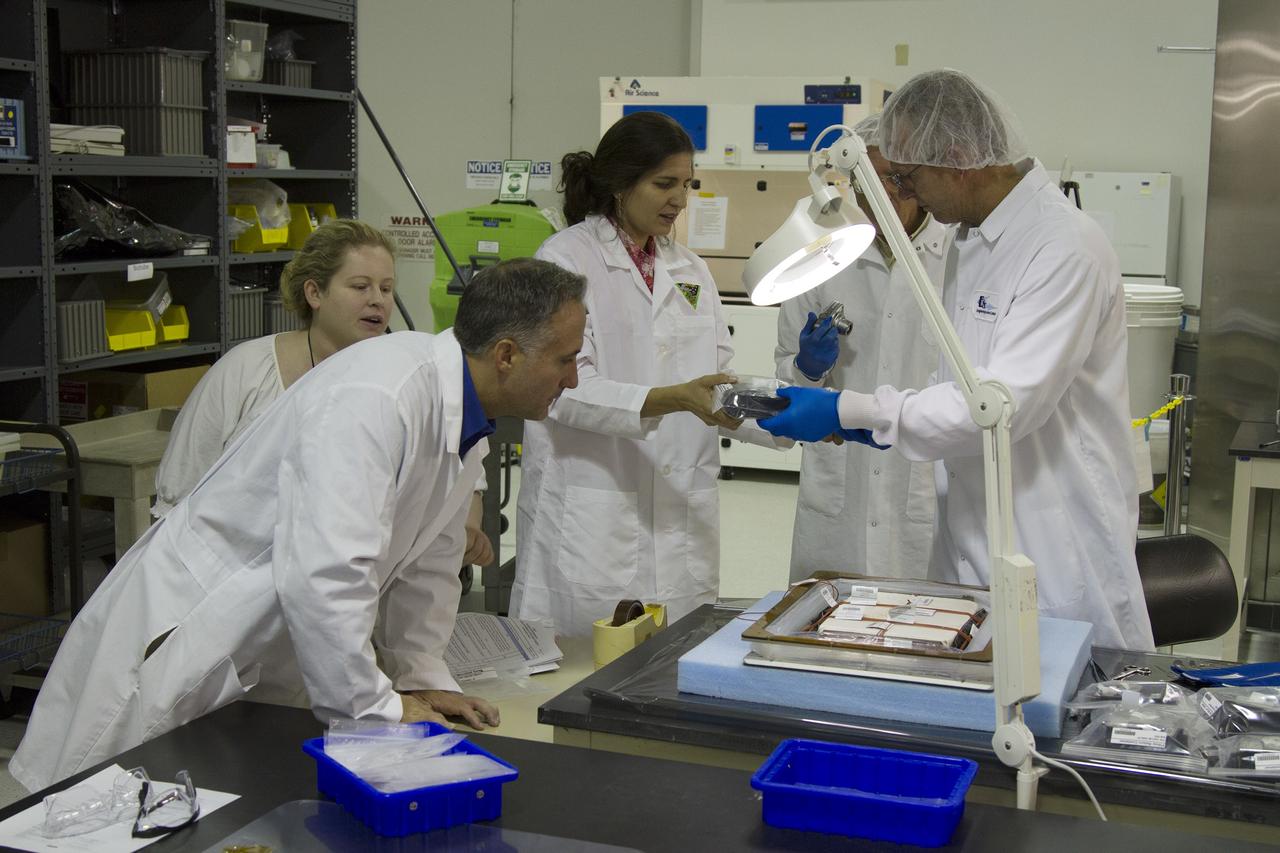
CAPE CANAVERAL, Fla. – At far right, Jim Smodell, a technician with SGT, shows a plant pillow from the Veggie plant growth system to Gioia Massa, NASA payload scientist for Veggie. Partially hidden behind Smodell is Chuck Spern, lead project engineer with QinetiQ North America on the Engineering Services Contract. At left is Trent Smith, NASA project manager in the ISS Ground Processing and Research Project Office, and Nicole Dufour, NASA Engineering and Technology Directorate. They are in the Payload Development Laboratory at the Space Station Processing Facility, or SSPF, at NASA's Kennedy Space Center in Florida. The plant pillows were removed from the Veggie plant growth system inside a control chamber at the SSPF. The growth chamber was used as a control unit for Veggie and procedures were followed identical to those being performed on Veggie and the Veg-01 experiment on the International Space Station. The chamber mimicked the temperature, relative humidity and carbon dioxide concentration of those in the Veggie unit on the space station. Veggie and Veg-01 were delivered to the space station aboard the SpaceX-3 mission. Veggie is the first fresh food production system delivered to the station. Six plant pillows, each containing outredgeous red romaine lettuce seeds and a root mat were inserted into Veggie. The plant chamber's red, blue and green LED lights were activated. The plant growth was monitored for 33 days. On June 10, at the end of the cycle, the plants were carefully harvested, frozen and stored for return to Earth by Expedition 39 flight engineer and NASA astronaut Steve Swanson. Photo credit: NASA/Frankie Martin
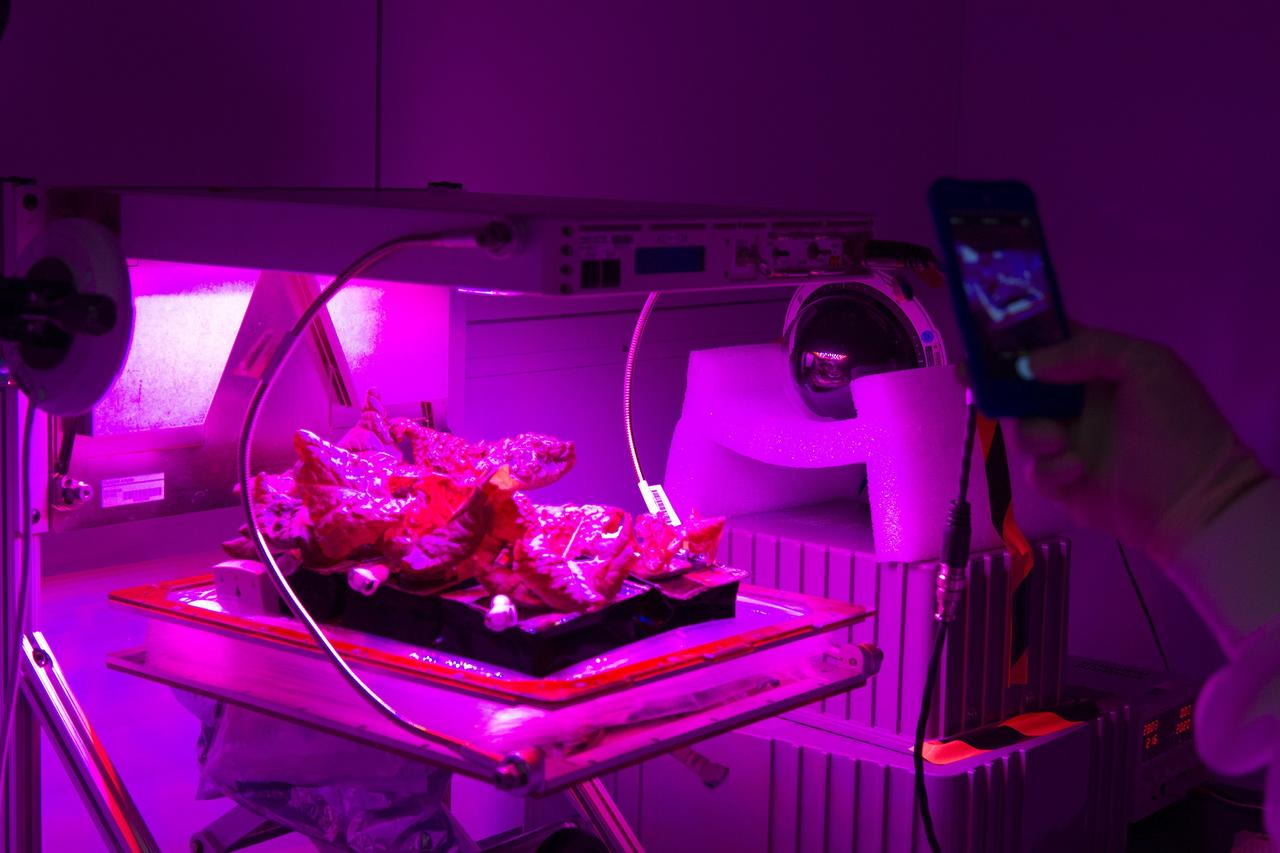
CAPE CANAVERAL, Fla. – Inside the International Space Station Environmental Simulator chamber at the Space Station Processing Facility at NASA's Kennedy Space Center in Florida, the bellows has been removed from around the Veggie plant growth system so that the plant pillows containing the outredgeous red lettuce leaves can be removed. The growth chamber was used as a control unit and procedures were followed identical to those being performed on Veggie and the Veg-01 experiment on the International Space Station. The chamber mimicked the temperature, relative humidity and carbon dioxide concentration of those in the Veggie unit on the space station. Veggie and Veg-01 were delivered to the space station aboard the SpaceX-3 mission. Veggie is the first fresh food production system delivered to the station. Six plant pillows, each containing outredgeous red romaine lettuce seeds and a root mat were inserted into Veggie. The plant chamber's red, blue and green LED lights were activated. The plant growth was monitored for 33 days. On June 10, at the end of the cycle, the plants were carefully harvested, frozen and stored for return to Earth by Expedition 39 flight engineer and NASA astronaut Steve Swanson. Photo credit: NASA/Frankie Martin
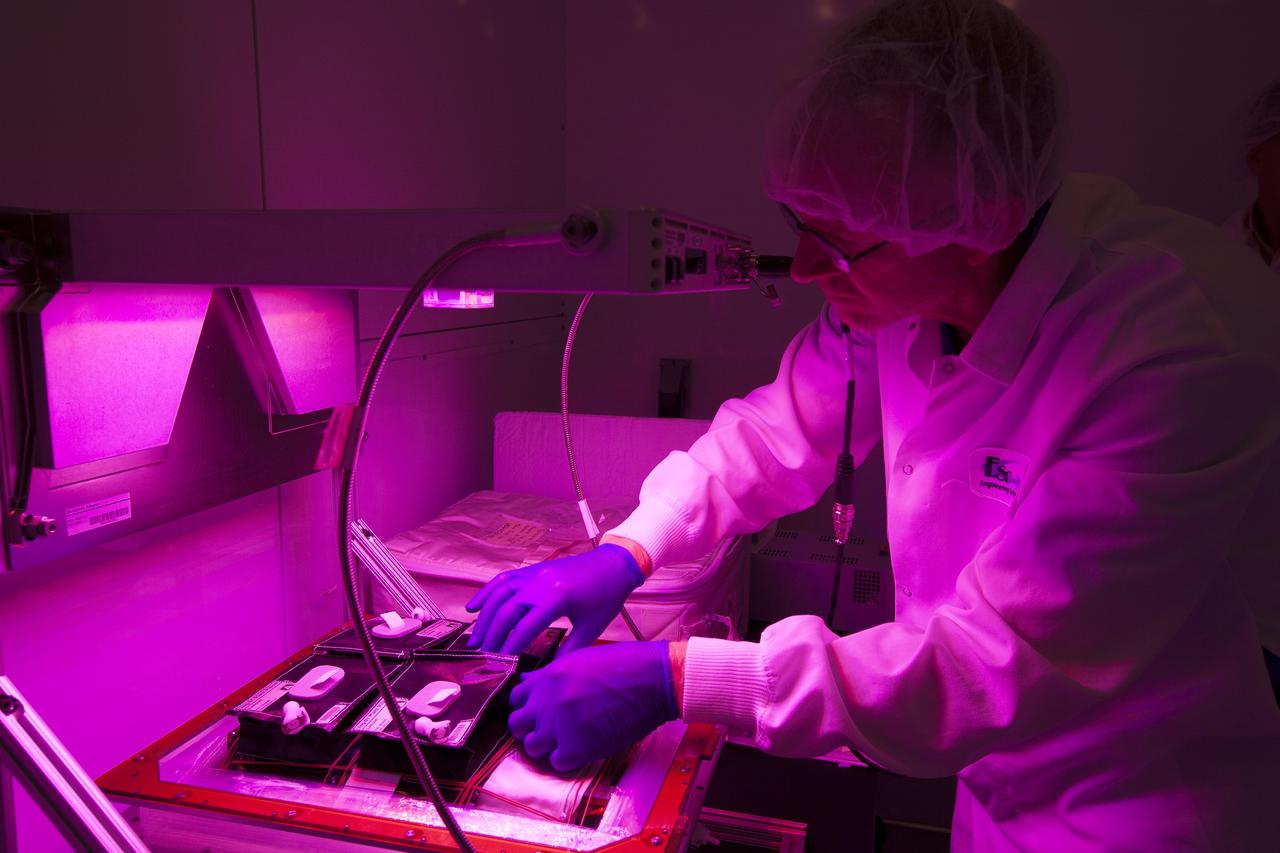
CAPE CANAVERAL, Fla. – Researchers have activated the red, blue and green LED lights on the Veggie plant growth system inside a control chamber at the Space Station Processing Facility at NASA's Kennedy Space Center in Florida. Jim Smodell, a technician with SGT, is securing the plant pillows containing outredgeous red romaine lettuce seeds onto the root mat inside Veggie. The growth chamber will be used as a control unit and procedures will be followed identical to those being performed on Veggie and the Veg-01 experiment on the International Space Station by Expedition 39 flight engineer and NASA astronaut Steve Swanson. Veggie and Veg-01 were delivered to the space station aboard the SpaceX-3 mission. Veggie is the first fresh food production system delivered to the station. Six plant pillows, each containing outredgeous red romaine lettuce seeds and a root mat were inserted into Veggie. The plant chamber's red, blue and green LED lights were activated. The plant growth will be monitored for 28 days. At the end of the cycle, the plants will be carefully harvested, frozen and stored for return to Earth. Photo credit: NASA/Dimitri Gerondidakis
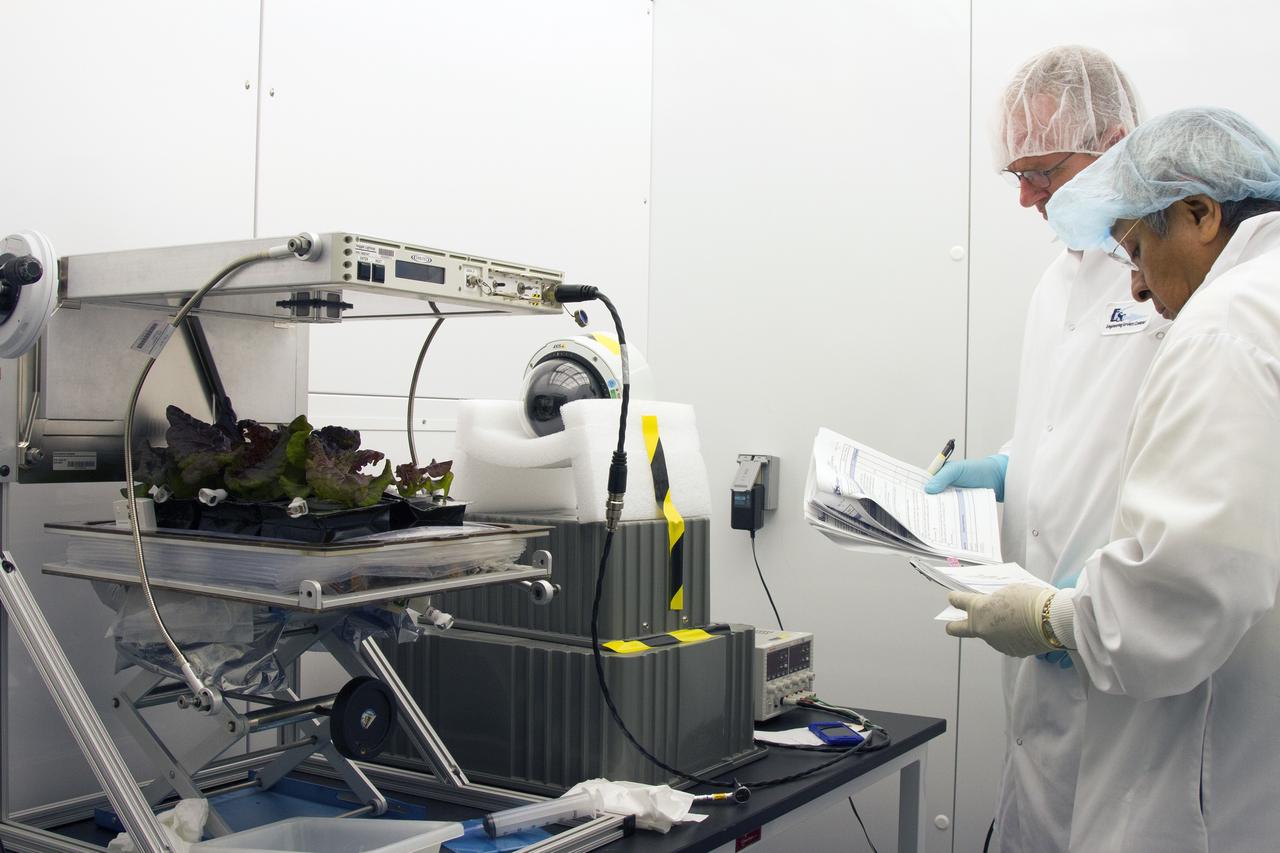
CAPE CANAVERAL, Fla. – From left, Jim Smodell, a technician with SGT, and George Guerra, a quality control engineer with QinetiQ North America, review procedures for removing the plant pillows containing the outredgeous red lettuce leaves from the Veggie plant growth system inside the International Space Station Environmental Simulator chamber at the Space Station Processing Facility at NASA's Kennedy Space Center in Florida. The growth chamber was used as a control unit and procedures were followed identical to those being performed on Veggie and the Veg-01 experiment on the International Space Station. The chamber mimicked the temperature, relative humidity and carbon dioxide concentration of those in the Veggie unit on the space station. Veggie and Veg-01 were delivered to the space station aboard the SpaceX-3 mission. Veggie is the first fresh food production system delivered to the station. Six plant pillows, each containing outredgeous red romaine lettuce seeds and a root mat were inserted into Veggie. The plant chamber's red, blue and green LED lights were activated. The plant growth was monitored for 33 days. On June 10, at the end of the cycle, the plants were carefully harvested, frozen and stored for return to Earth by Expedition 39 flight engineer and NASA astronaut Steve Swanson. Photo credit: NASA/Frankie Martin
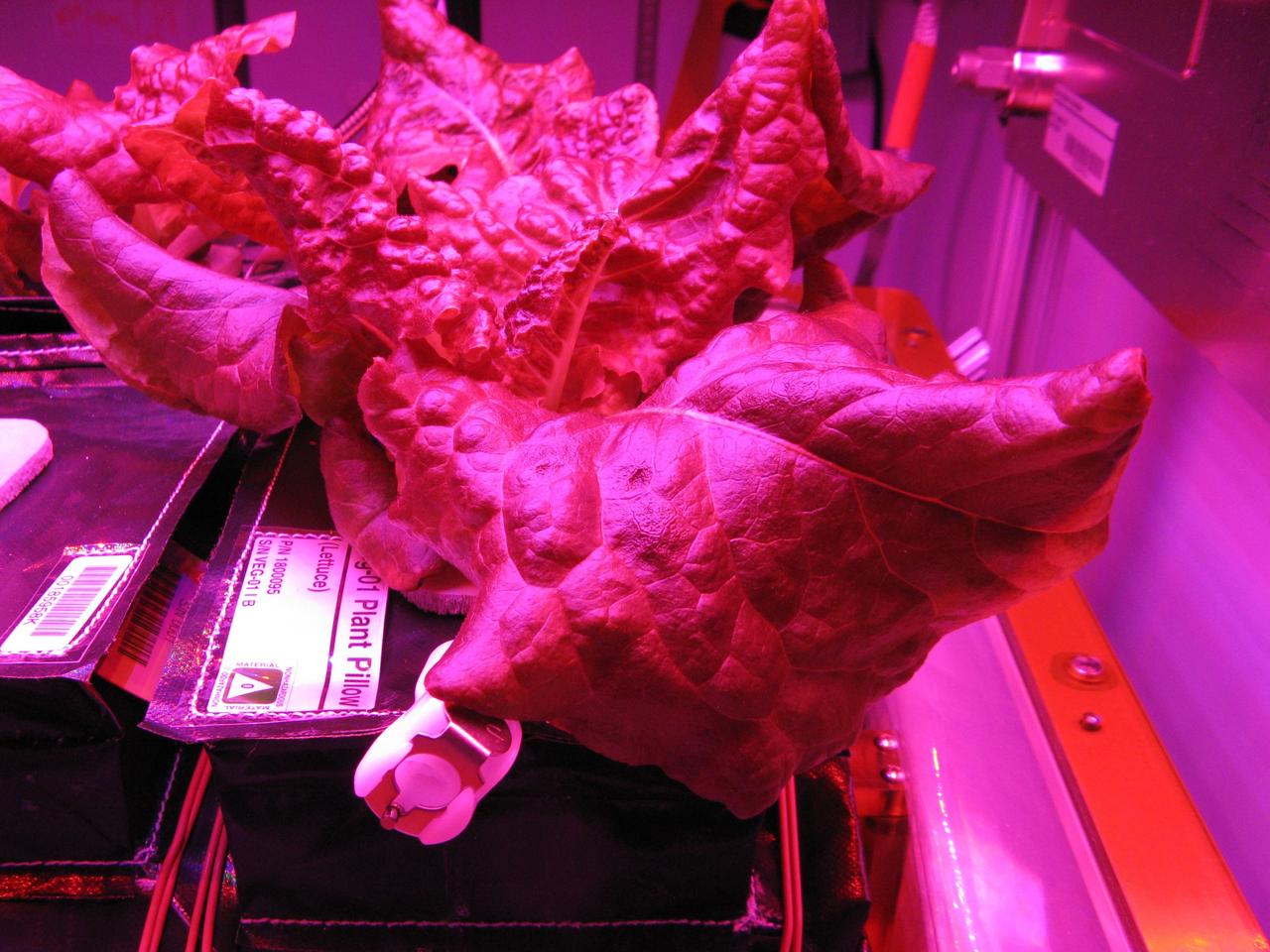
CAPE CANAVERAL, Fla. -- Researchers document the growth of the ground control plants in the Veggie plant growth system inside a control chamber at the Space Station Processing Facility at NASA's Kennedy Space Center in Florida prior to thinning them to one plant each. The growth chamber is being used as a control unit and procedures are being followed identical to those being performed on Veggie and the Veg-01 experiment on the International Space Station. The chamber mimics the temperature, relative humidity and carbon dioxide concentration of those in the Veggie unit on the space station. Veggie and Veg-01 were delivered to the space station aboard the SpaceX-3 mission. Veggie is the first fresh food production system delivered to the station. Six plant pillows, each containing outredgeous red romaine lettuce seeds and a root mat were inserted into Veggie. The plant chamber's red, blue and green LED lights were activated. The plant growth was monitored for 28 days. At the end of the cycle, the plants will be carefully harvested, frozen and stored for return to Earth. Photo credit: NASA/Charles Spern
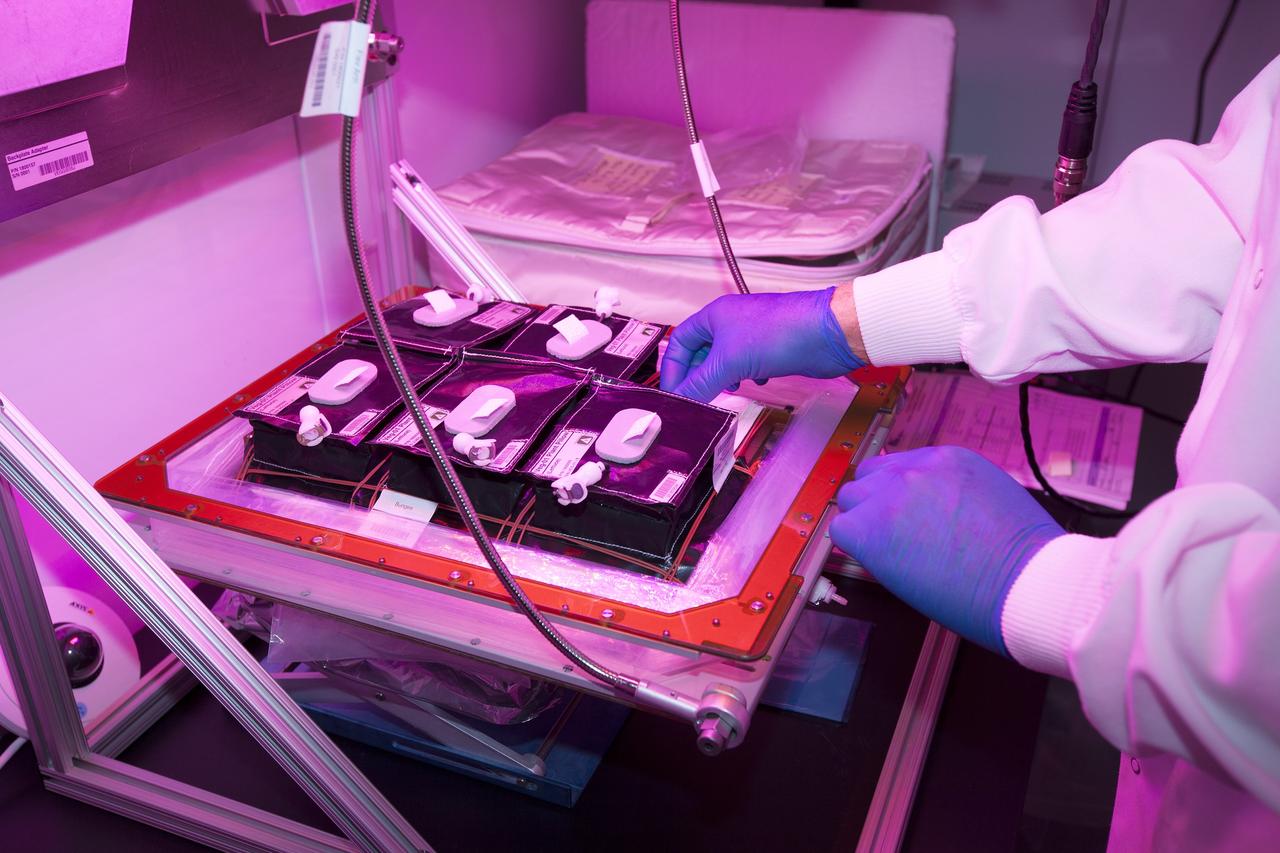
CAPE CANAVERAL, Fla. – Researchers have activated the red, blue and green LED lights on the Veggie plant growth system inside a control chamber at the Space Station Processing Facility at NASA's Kennedy Space Center in Florida. Jim Smodell, a technician with SGT, is securing the plant pillows containing outredgeous red romaine lettuce seeds onto the root mat inside Veggie. The growth chamber will be used as a control unit and procedures will be followed identical to those being performed on Veggie and the Veg-01 experiment on the International Space Station by Expedition 39 flight engineer and NASA astronaut Steve Swanson. Veggie and Veg-01 were delivered to the space station aboard the SpaceX-3 mission. Veggie is the first fresh food production system delivered to the station. Six plant pillows, each containing outredgeous red romaine lettuce seeds and a root mat were inserted into Veggie. The plant chamber's red, blue and green LED lights were activated. The plant growth will be monitored for 28 days. At the end of the cycle, the plants will be carefully harvested, frozen and stored for return to Earth. Photo credit: NASA/Dimitri Gerondidakis
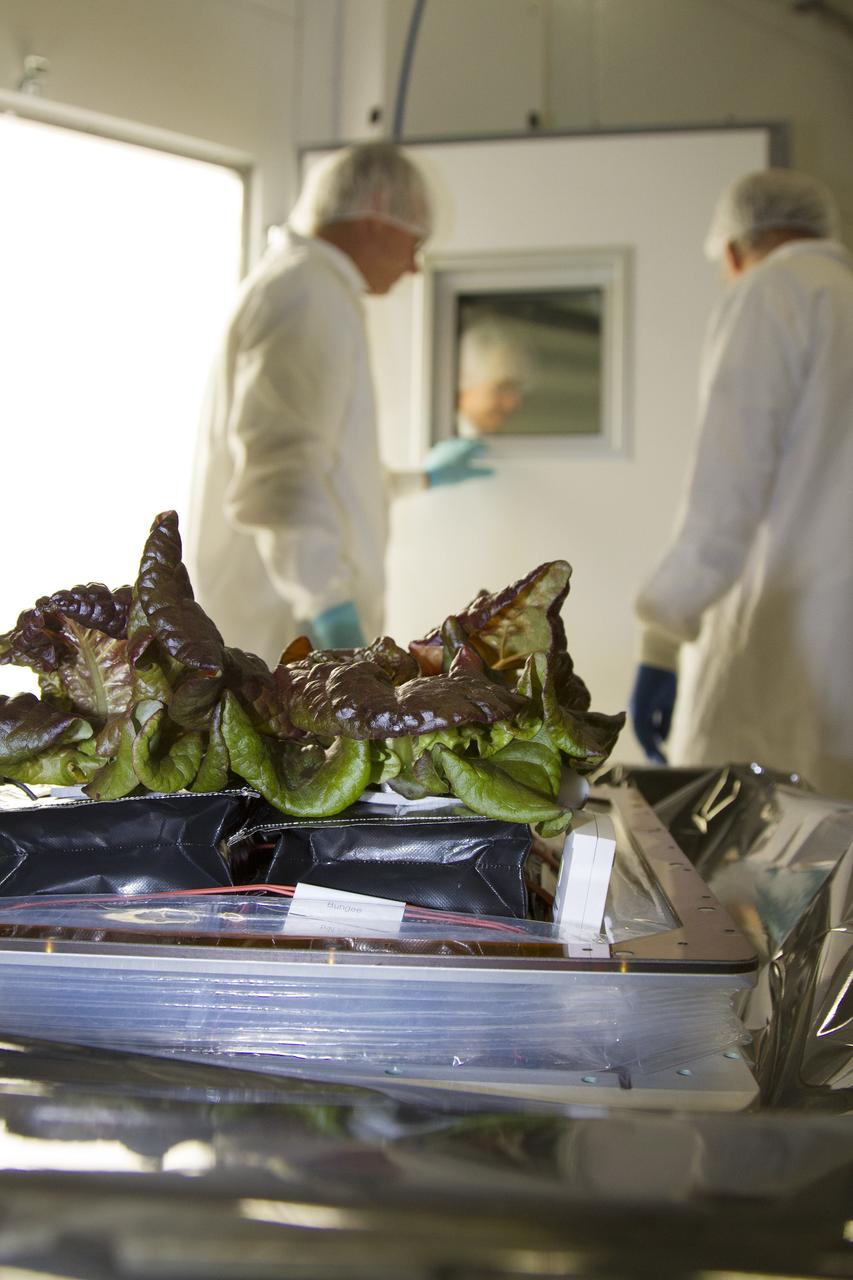
CAPE CANAVERAL, Fla. – Jim Smodell, left, a technician with SGT, and Chuck Spern, lead project engineer with QinetiQ North America on the Engineering Services Contract, move the plant pillows containing the outredgeous red lettuce leaves outside of the International Space Station Environmental Simulator chamber at the Space Station Processing Facility at NASA's Kennedy Space Center in Florida. The growth chamber was used as a control unit for Veggie and procedures were followed identical to those being performed on Veggie and the Veg-01 experiment on the International Space Station. The chamber mimicked the temperature, relative humidity and carbon dioxide concentration of those in the Veggie unit on the space station. Veggie and Veg-01 were delivered to the space station aboard the SpaceX-3 mission. Veggie is the first fresh food production system delivered to the station. Six plant pillows, each containing outredgeous red romaine lettuce seeds and a root mat were inserted into Veggie. The plant chamber's red, blue and green LED lights were activated. The plant growth was monitored for 33 days. On June 10, at the end of the cycle, the plants were carefully harvested, frozen and stored for return to Earth by Expedition 39 flight engineer and NASA astronaut Steve Swanson. Photo credit: NASA/Frankie Martin
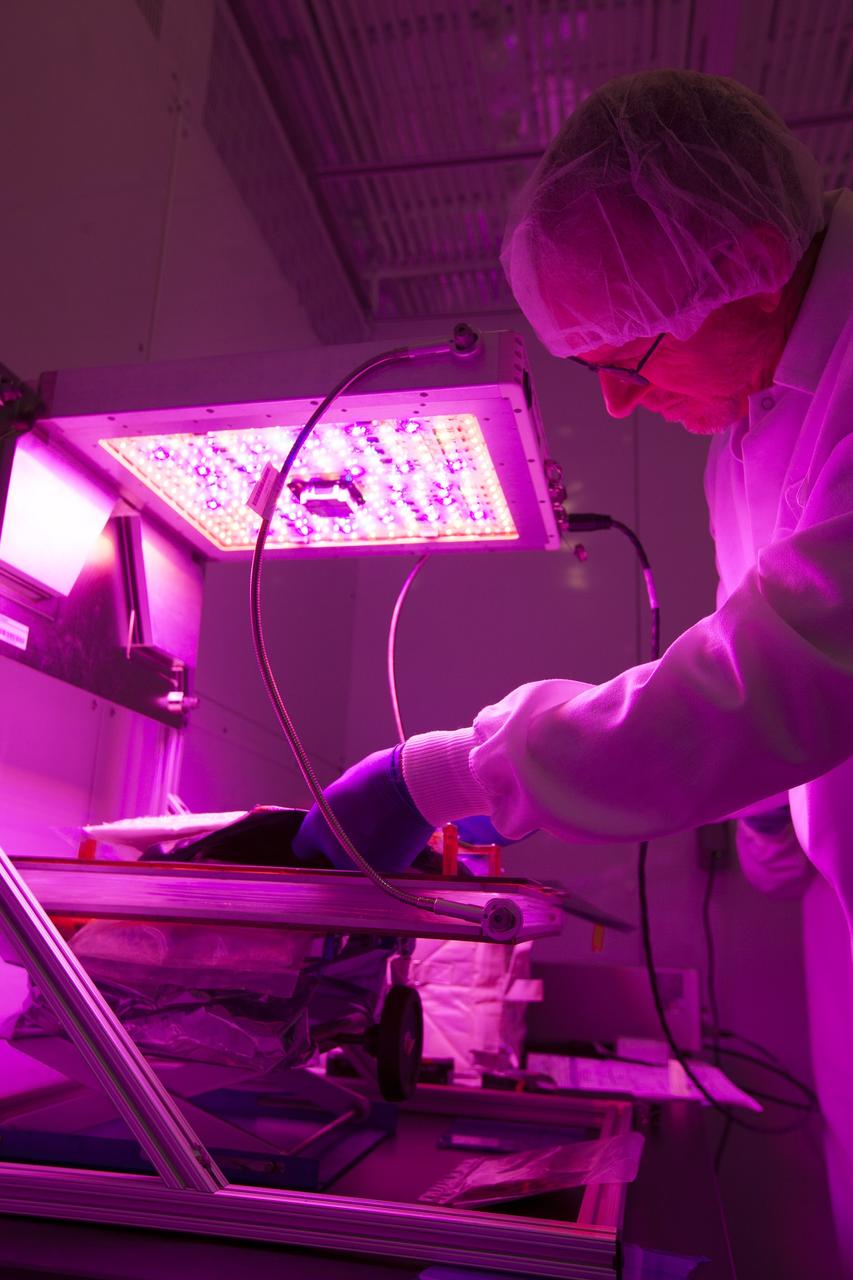
CAPE CANAVERAL, Fla. – Researchers have activated the red, blue and green LED lights on the Veggie plant growth system inside a control chamber at the Space Station Processing Facility at NASA's Kennedy Space Center in Florida. Jim Smodell, a technician with SGT, inserts the root mat and plant pillows containing outredgeous red romaine lettuce seeds into the Veggie unit. The growth chamber will be used as a control unit and procedures will be followed identical to those being performed on Veggie and the Veg-01 experiment on the International Space Station by Expedition 39 flight engineer and NASA astronaut Steve Swanson. Veggie and Veg-01 were delivered to the space station aboard the SpaceX-3 mission. Veggie is the first fresh food production system delivered to the station. Six plant pillows, each containing outredgeous red romaine lettuce seeds and a root mat were inserted into Veggie. The plant chamber's red, blue and green LED lights were activated. The plant growth will be monitored for 28 days. At the end of the cycle, the plants will be carefully harvested, frozen and stored for return to Earth. Photo credit: NASA/Dimitri Gerondidakis
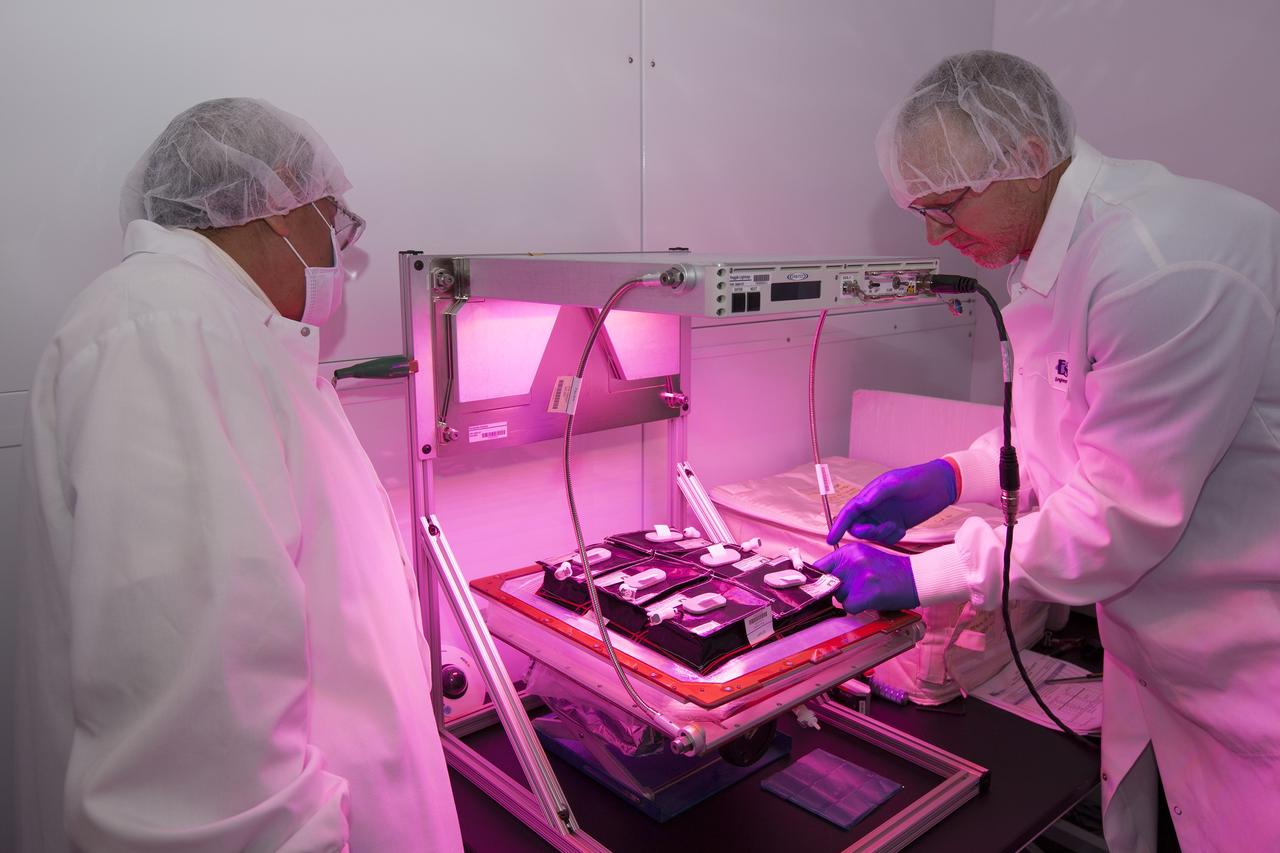
CAPE CANAVERAL, Fla. – Researchers have activated the red, blue and green LED lights on the Veggie plant growth system inside a control chamber at the Space Station Processing Facility at NASA's Kennedy Space Center in Florida. Jim Smodell, a technician with SGT, is securing the plant pillows containing outredgeous red romaine lettuce seeds onto the root mat inside Veggie. To his left, is George Guerra, a quality control engineer with QinetiQ North America. The growth chamber will be used as a control unit and procedures will be followed identical to those being performed on Veggie and the Veg-01 experiment on the International Space Station by Expedition 39 flight engineer and NASA astronaut Steve Swanson. Veggie and Veg-01 were delivered to the space station aboard the SpaceX-3 mission. Veggie is the first fresh food production system delivered to the station. Six plant pillows, each containing outredgeous red romaine lettuce seeds and a root mat were inserted into Veggie. The plant chamber's red, blue and green LED lights were activated. The plant growth will be monitored for 28 days. At the end of the cycle, the plants will be carefully harvested, frozen and stored for return to Earth. Photo credit: NASA/Dimitri Gerondidakis
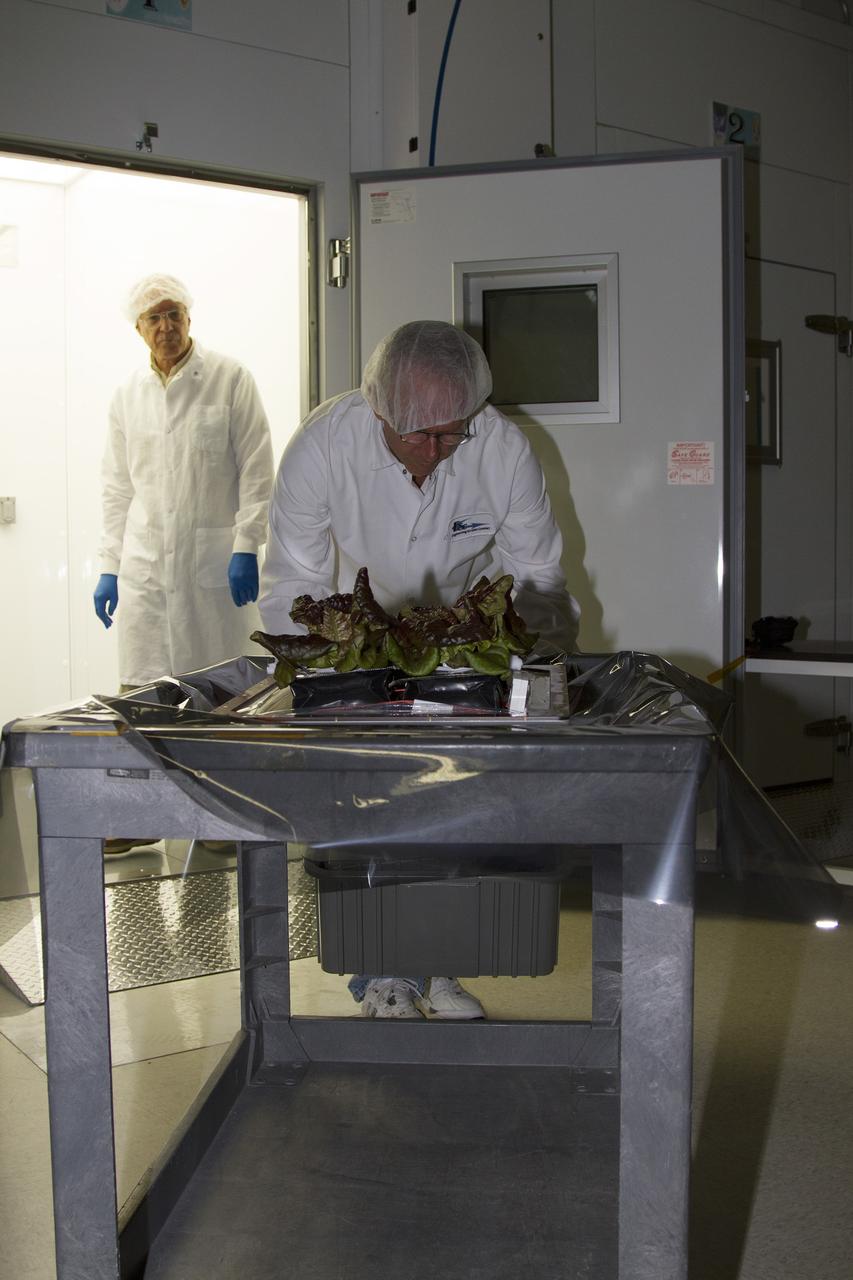
CAPE CANAVERAL, Fla. – Jim Smodell, a technician with SGT, moves the plant pillows containing the outredgeous red lettuce leaves outside of the International Space Station Environmental Simulator chamber at the Space Station Processing Facility at NASA's Kennedy Space Center in Florida. The growth chamber was used as a control unit for Veggie and procedures were followed identical to those being performed on Veggie and the Veg-01 experiment on the International Space Station. In the background is Chuck Spern, lead project engineer with QinetiQ North America on the Engineering Services Contract. The chamber mimicked the temperature, relative humidity and carbon dioxide concentration of those in the Veggie unit on the space station. Veggie and Veg-01 were delivered to the space station aboard the SpaceX-3 mission. Veggie is the first fresh food production system delivered to the station. Six plant pillows, each containing outredgeous red romaine lettuce seeds and a root mat were inserted into Veggie. The plant chamber's red, blue and green LED lights were activated. The plant growth was monitored for 33 days. On June 10, at the end of the cycle, the plants were carefully harvested, frozen and stored for return to Earth by Expedition 39 flight engineer and NASA astronaut Steve Swanson. Photo credit: NASA/Frankie Martin
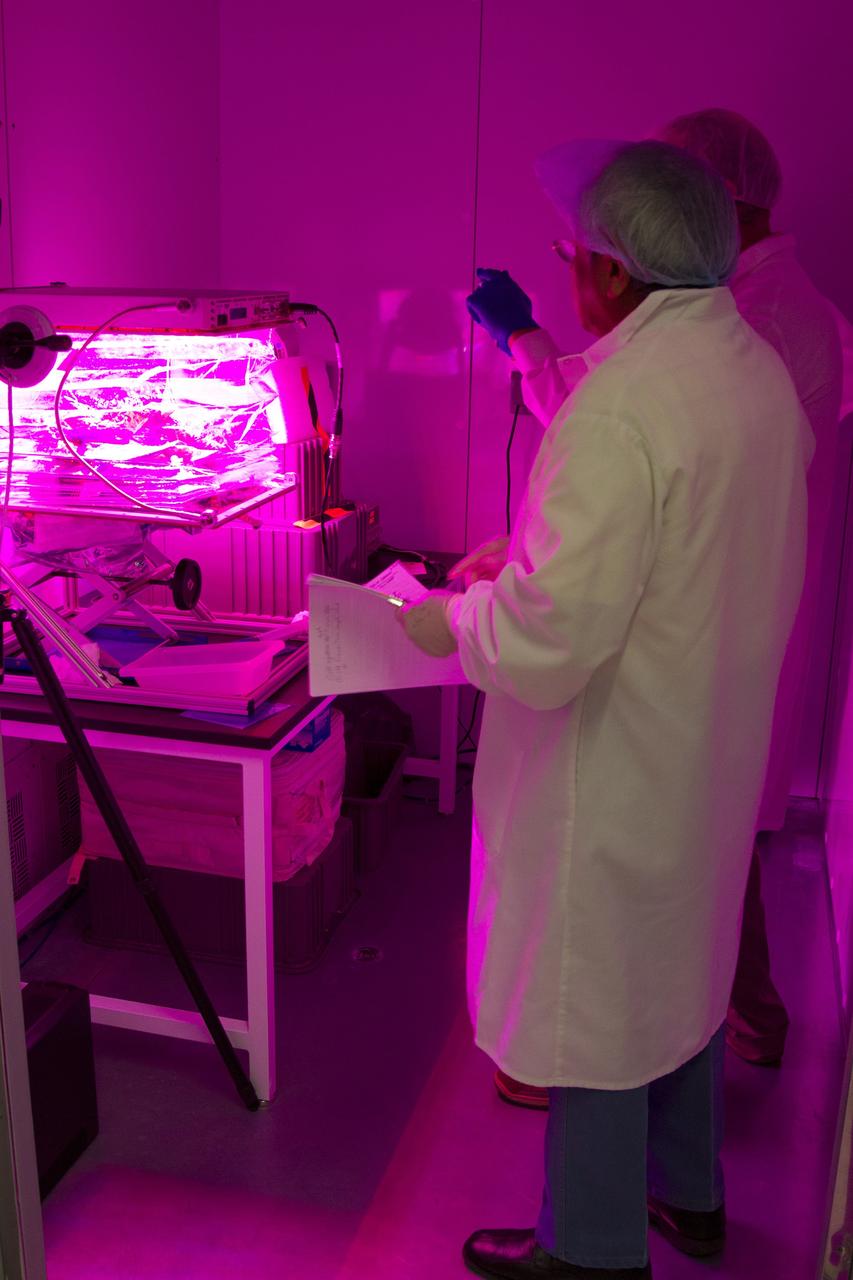
CAPE CANAVERAL, Fla. – Researchers review procedures for harvesting the outredgeous red lettuce leaves in the Veggie plant growth system inside the International Space Station Environmental Simulator chamber at the Space Station Processing Facility at NASA's Kennedy Space Center in Florida. The growth chamber was used as a control unit and procedures were followed identical to those being performed on Veggie and the Veg-01 experiment on the International Space Station. The chamber mimicked the temperature, relative humidity and carbon dioxide concentration of those in the Veggie unit on the space station. Veggie and Veg-01 were delivered to the space station aboard the SpaceX-3 mission. Veggie is the first fresh food production system delivered to the station. Six plant pillows, each containing outredgeous red romaine lettuce seeds and a root mat were inserted into Veggie. The plant chamber's red, blue and green LED lights were activated. The plant growth was monitored for 33 days. On June 10, at the end of the cycle, the plants were carefully harvested, frozen and stored for return to Earth by Expedition 39 flight engineer and NASA astronaut Steve Swanson. Photo credit: NASA/Frankie Martin
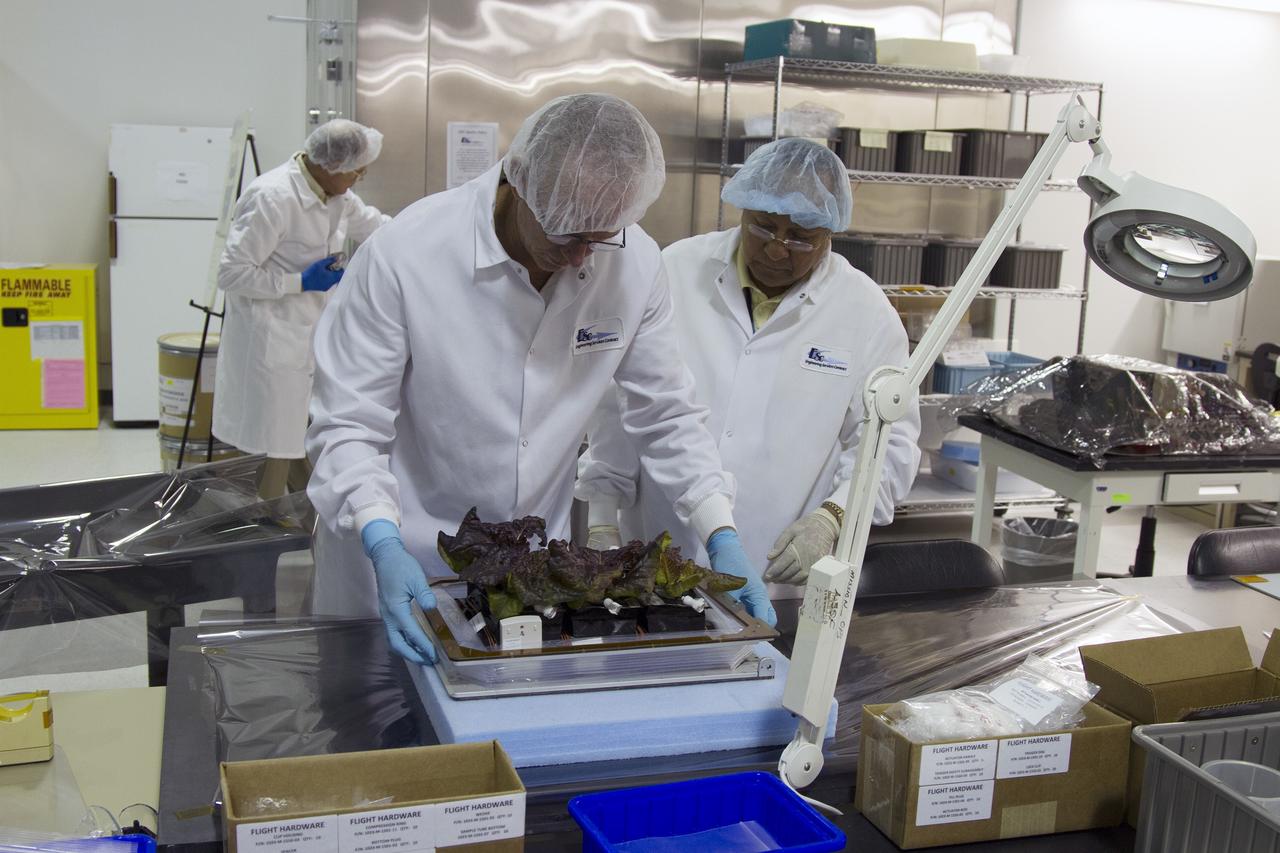
CAPE CANAVERAL, Fla. – The plant pillows containing the outredgeous red lettuce leaves are being harvested inside the Payload Development Laboratory at the Space Station Processing Facility at NASA's Kennedy Space Center in Florida. From left, are Jim Smodell, a technician with SGT, and George Guerra, a quality control engineer with QinetiQ North America. The plant pillows were removed from a growth chamber was used as a control unit for the Veggie plant growth system, and procedures were followed identical to those being performed on Veggie and the Veg-01 experiment on the International Space Station. The chamber mimicked the temperature, relative humidity and carbon dioxide concentration of those in the Veggie unit on the space station. Veggie and Veg-01 were delivered to the space station aboard the SpaceX-3 mission. Veggie is the first fresh food production system delivered to the station. Six plant pillows, each containing outredgeous red romaine lettuce seeds and a root mat were inserted into Veggie. The plant chamber's red, blue and green LED lights were activated. The plant growth was monitored for 33 days. On June 10, at the end of the cycle, the plants were carefully harvested, frozen and stored for return to Earth by Expedition 39 flight engineer and NASA astronaut Steve Swanson. Photo credit: NASA/Frankie Martin

CAPE CANAVERAL, Fla. – Inside the International Space Station Environmental Simulator chamber at the Space Station Processing Facility at NASA's Kennedy Space Center in Florida, Jim Smodell, a technician with SGT, prepares to remove the bellows from the Veggie plant growth system containing the outredgeous red lettuce leaves. The growth chamber was used as a control unit and procedures were followed identical to those being performed on Veggie and the Veg-01 experiment on the International Space Station. The chamber mimicked the temperature, relative humidity and carbon dioxide concentration of those in the Veggie unit on the space station. Veggie and Veg-01 were delivered to the space station aboard the SpaceX-3 mission. Veggie is the first fresh food production system delivered to the station. Six plant pillows, each containing outredgeous red romaine lettuce seeds and a root mat were inserted into Veggie. The plant chamber's red, blue and green LED lights were activated. The plant growth was monitored for 33 days. On June 10, at the end of the cycle, the plants were carefully harvested, frozen and stored for return to Earth by Expedition 39 flight engineer and NASA astronaut Steve Swanson. Photo credit: NASA/Frankie Martin
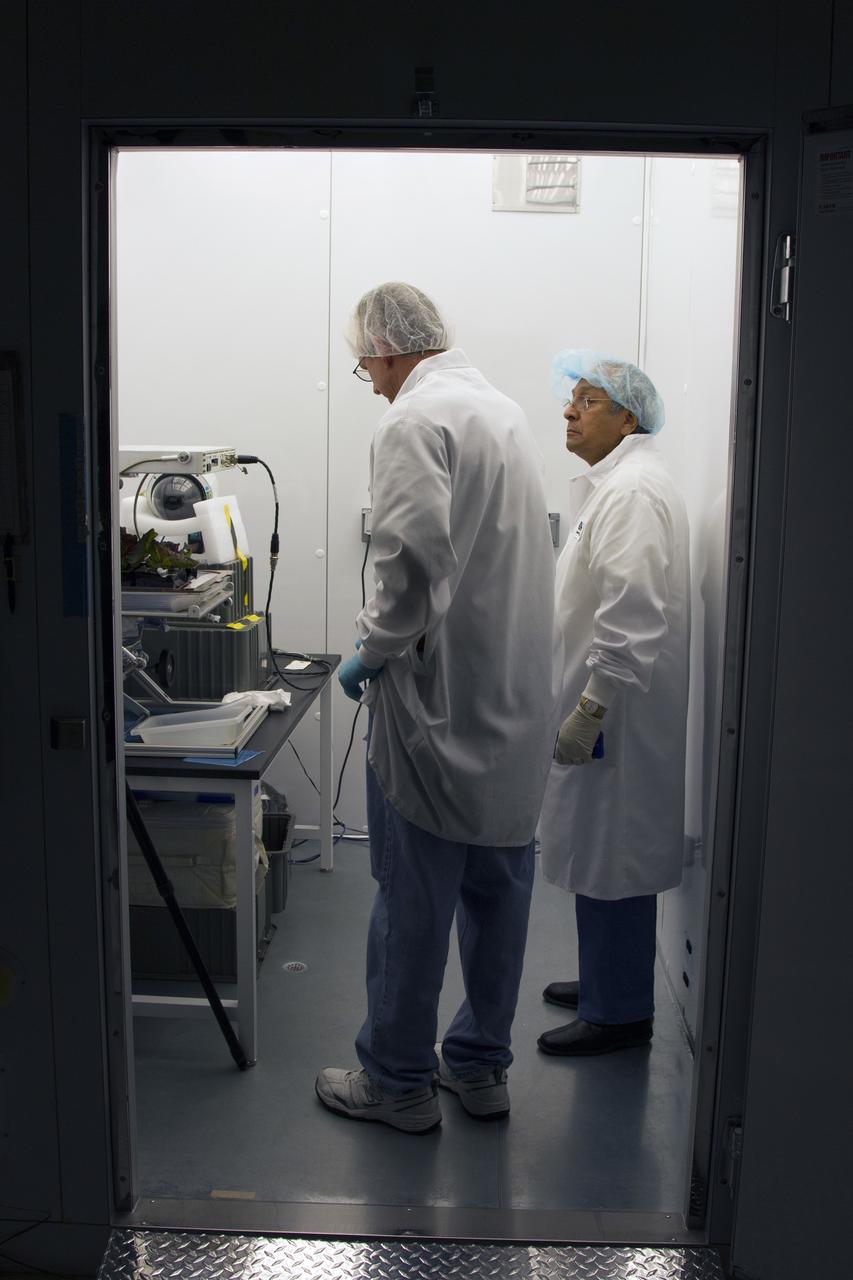
CAPE CANAVERAL, Fla. – From left, Jim Smodell, a technician with SGT, and George Guerra, a quality control engineer with QinetiQ North America, prepare to remove the plant pillows containing the outredgeous red lettuce leaves from the Veggie plant growth system inside the International Space Station Environmental Simulator chamber at the Space Station Processing Facility at NASA's Kennedy Space Center in Florida. The growth chamber was used as a control unit and procedures were followed identical to those being performed on Veggie and the Veg-01 experiment on the International Space Station. The chamber mimicked the temperature, relative humidity and carbon dioxide concentration of those in the Veggie unit on the space station. Veggie and Veg-01 were delivered to the space station aboard the SpaceX-3 mission. Veggie is the first fresh food production system delivered to the station. Six plant pillows, each containing outredgeous red romaine lettuce seeds and a root mat were inserted into Veggie. The plant chamber's red, blue and green LED lights were activated. The plant growth was monitored for 33 days. On June 10, at the end of the cycle, the plants were carefully harvested, frozen and stored for return to Earth by Expedition 39 flight engineer and NASA astronaut Steve Swanson. Photo credit: NASA/Frankie Martin
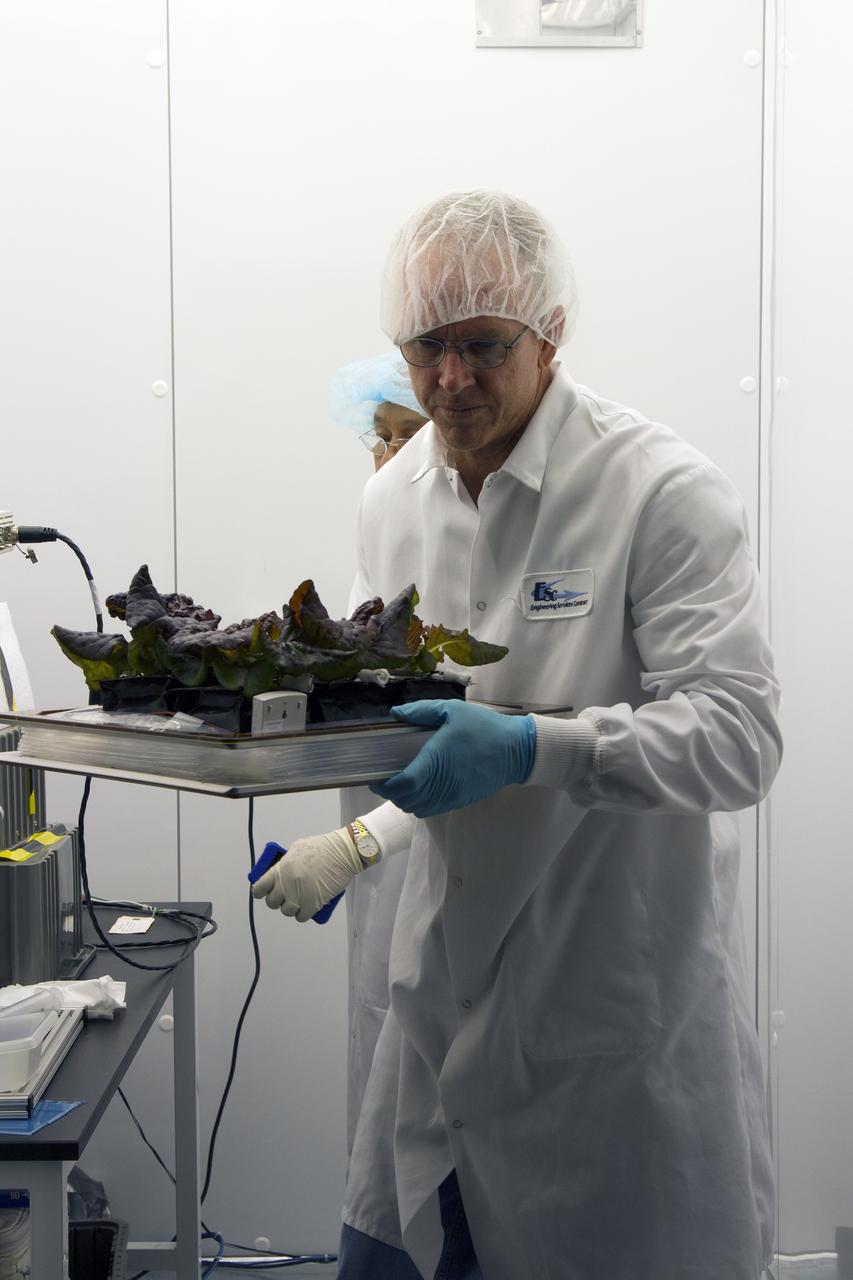
CAPE CANAVERAL, Fla. – Jim Smodell, a technician with SGT, removes the plant pillows containing the outredgeous red lettuce leaves from the Veggie plant growth system inside the International Space Station Environmental Simulator chamber at the Space Station Processing Facility at NASA's Kennedy Space Center in Florida. The growth chamber was used as a control unit and procedures were followed identical to those being performed on Veggie and the Veg-01 experiment on the International Space Station. The chamber mimicked the temperature, relative humidity and carbon dioxide concentration of those in the Veggie unit on the space station. Veggie and Veg-01 were delivered to the space station aboard the SpaceX-3 mission. Veggie is the first fresh food production system delivered to the station. Six plant pillows, each containing outredgeous red romaine lettuce seeds and a root mat were inserted into Veggie. The plant chamber's red, blue and green LED lights were activated. The plant growth was monitored for 33 days. On June 10, at the end of the cycle, the plants were carefully harvested, frozen and stored for return to Earth by Expedition 39 flight engineer and NASA astronaut Steve Swanson. Photo credit: NASA/Frankie Martin
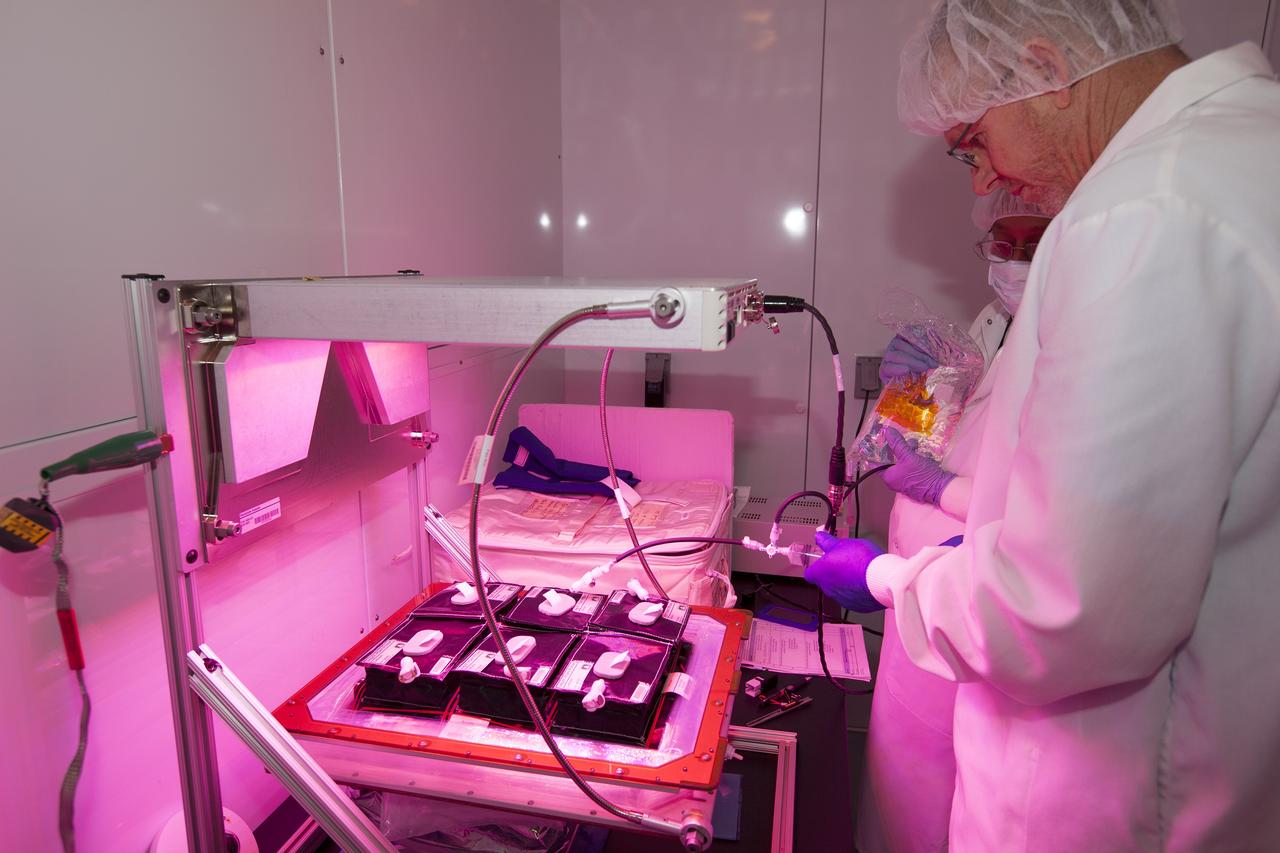
CAPE CANAVERAL, Fla. – Researchers have activated the red, blue and green LED lights on the Veggie plant growth system inside a control chamber at the Space Station Processing Facility at NASA's Kennedy Space Center in Florida. Jim Smodell, a technician with SGT, starts the water supply to the plant pillows containing outredgeous red romaine lettuce seeds inside Veggie. Behind him is George Guerra, a quality control engineer with QinetiQ North America. The growth chamber will be used as a control unit and procedures will be followed identical to those being performed on Veggie and the Veg-01 experiment on the International Space Station by Expedition 39 flight engineer and NASA astronaut Steve Swanson. Veggie and Veg-01 were delivered to the space station aboard the SpaceX-3 mission. Veggie is the first fresh food production system delivered to the station. Six plant pillows, each containing outredgeous red romaine lettuce seeds and a root mat were inserted into Veggie. The plant chamber's red, blue and green LED lights were activated. The plant growth will be monitored for 28 days. At the end of the cycle, the plants will be carefully harvested, frozen and stored for return to Earth. Photo credit: NASA/Dimitri Gerondidakis
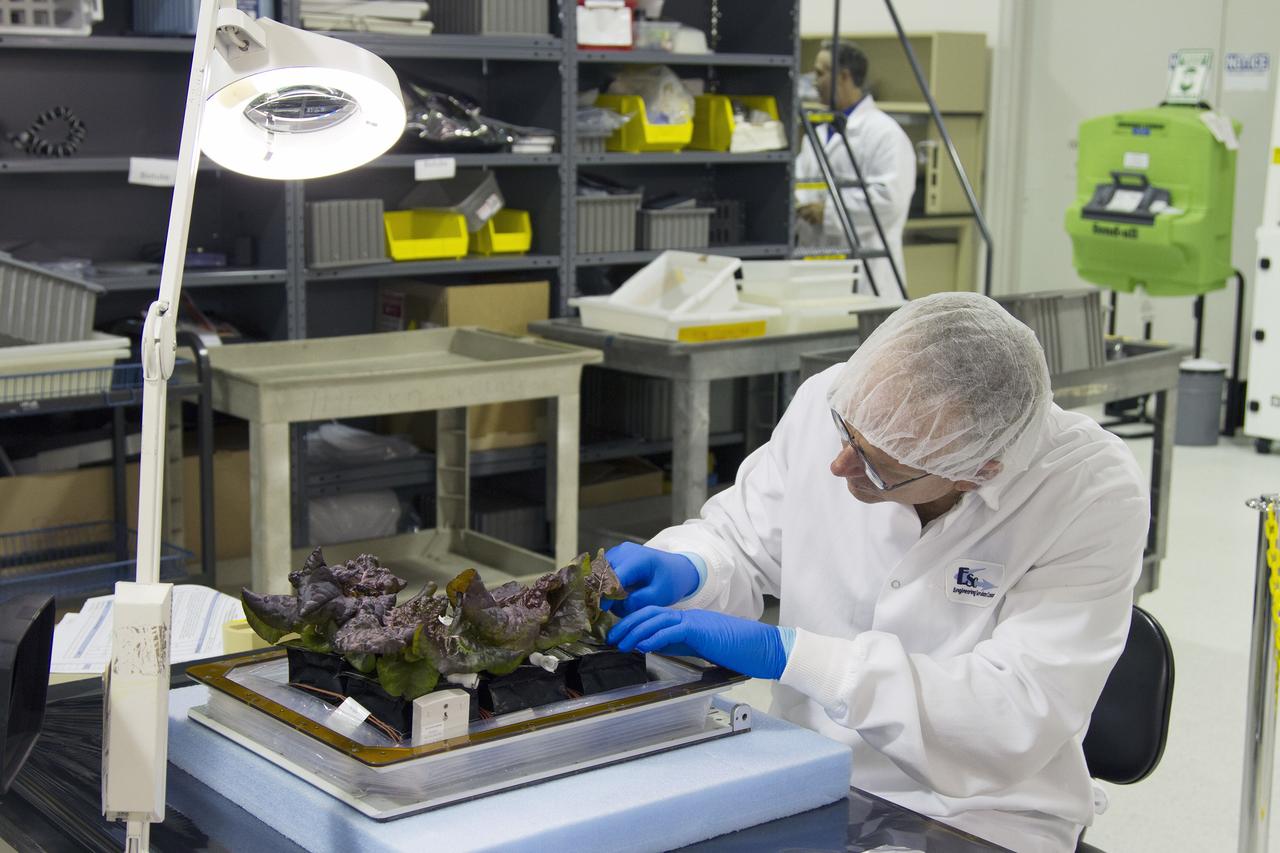
CAPE CANAVERAL, Fla. – Jim Smodell, a technician with SGT, removes an outredgeous red lettuce leaf from a plant pillow inside the Payload Development Laboratory at the Space Station Processing Facility, or SSPF, at NASA's Kennedy Space Center in Florida. The plant pillows were removed from the Veggie plant growth system inside a control chamber at the SSPF. The growth chamber was used as a control unit for Veggie and procedures were followed identical to those being performed on Veggie and the Veg-01 experiment on the International Space Station. The lettuce leaves will be wrapped and placed in a minus eighty-degree freezer, along with the plant pillows and samples swabbed from the plants, plant pillows and Veggie bellows. The chamber mimicked the temperature, relative humidity and carbon dioxide concentration of those in the Veggie unit on the space station. Veggie and Veg-01 were delivered to the space station aboard the SpaceX-3 mission. Veggie is the first fresh food production system delivered to the station. Six plant pillows, each containing outredgeous red romaine lettuce seeds and a root mat were inserted into Veggie. The plant chamber's red, blue and green LED lights were activated. The plant growth was monitored for 33 days. On June 10, at the end of the cycle, the plants were carefully harvested, frozen and stored for return to Earth by Expedition 39 flight engineer and NASA astronaut Steve Swanson. Photo credit: NASA/Frankie Martin
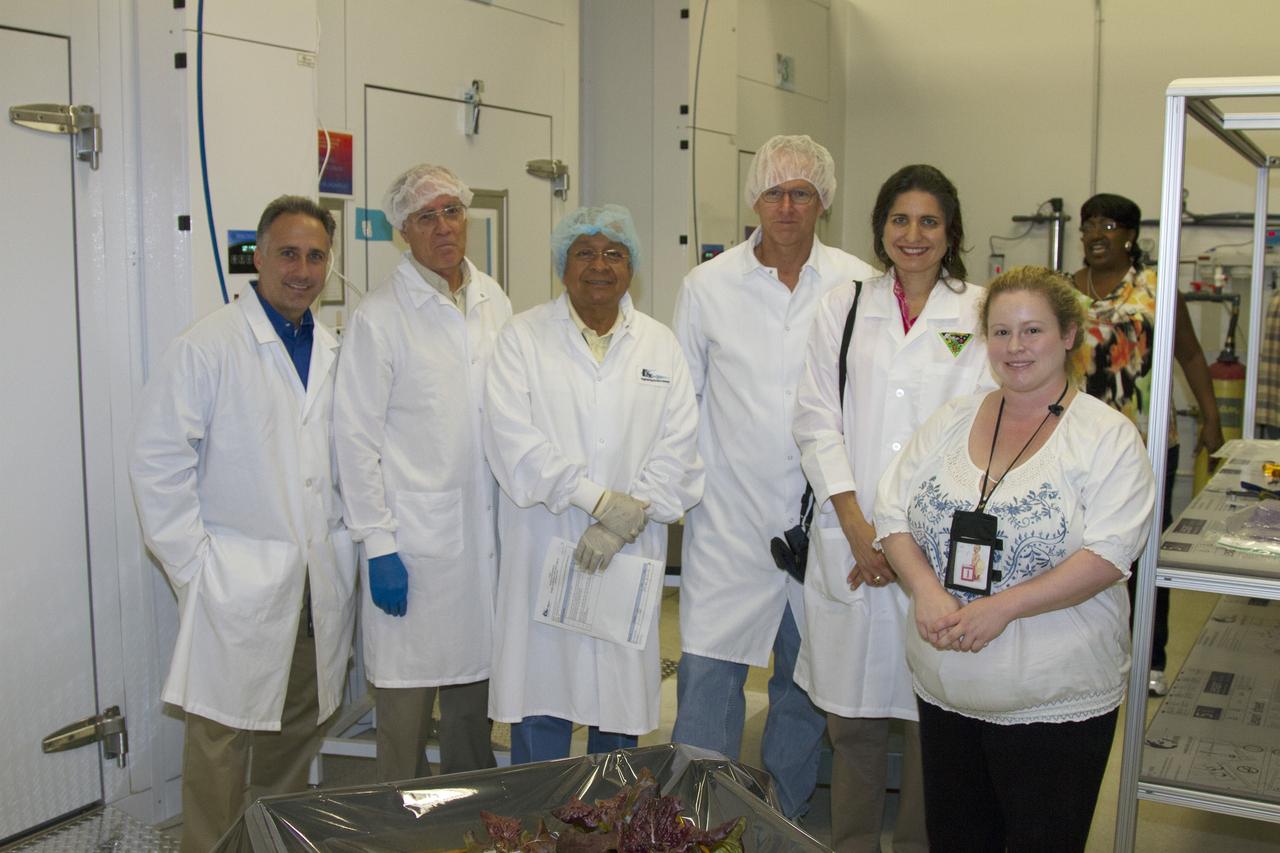
CAPE CANAVERAL, Fla. – The plant pillows containing the outredgeous red lettuce leaves have been removed from the Veggie plant growth system inside a control chamber at the Space Station Processing Facility at NASA's Kennedy Space Center in Florida. From left, are Trent Smith, NASA project manager in the ISS Ground Processing and Research Project Office, Chuck Spern, lead project engineer with QinetiQ North America on the Engineering Services Contract, George Guerra, quality control engineer with QinetiQ North America, Jim Smodell, a technician with SGT, Gioia Massa, NASA payload scientist for Veggie, and Nicole Dufour, NASA Engineering and Technology. The growth chamber was used as a control unit for Veggie and procedures were followed identical to those being performed on Veggie and the Veg-01 experiment on the International Space Station. The chamber mimicked the temperature, relative humidity and carbon dioxide concentration of those in the Veggie unit on the space station. Veggie and Veg-01 were delivered to the space station aboard the SpaceX-3 mission. Veggie is the first fresh food production system delivered to the station. Six plant pillows, each containing outredgeous red romaine lettuce seeds and a root mat were inserted into Veggie. The plant chamber's red, blue and green LED lights were activated. The plant growth was monitored for 33 days. On June 10, at the end of the cycle, the plants were carefully harvested, frozen and stored for return to Earth by Expedition 39 flight engineer and NASA astronaut Steve Swanson. Photo credit: NASA/Frankie Martin

CAPE CANAVERAL, Fla. – Researchers have activated the red, blue and green LED lights on the Veggie plant growth system inside a control chamber at the Space Station Processing Facility at NASA's Kennedy Space Center in Florida. In front, is Jim Smodell, a technician with SGT. Behind him is George Guerra, a quality control engineer with QinetiQ North America. The growth chamber will be used as a control unit and procedures will be followed identical to those being performed on Veggie and the Veg-01 experiment on the International Space Station by Expedition 39 flight engineer and NASA astronaut Steve Swanson. Veggie and Veg-01 were delivered to the space station aboard the SpaceX-3 mission. Veggie is the first fresh food production system delivered to the station. Six plant pillows, each containing outredgeous red romaine lettuce seeds and a root mat were inserted into Veggie. The plant chamber's red, blue and green LED lights were activated. The plant growth will be monitored for 28 days. At the end of the cycle, the plants will be carefully harvested, frozen and stored for return to Earth. Photo credit: NASA/Dimitri Gerondidakis
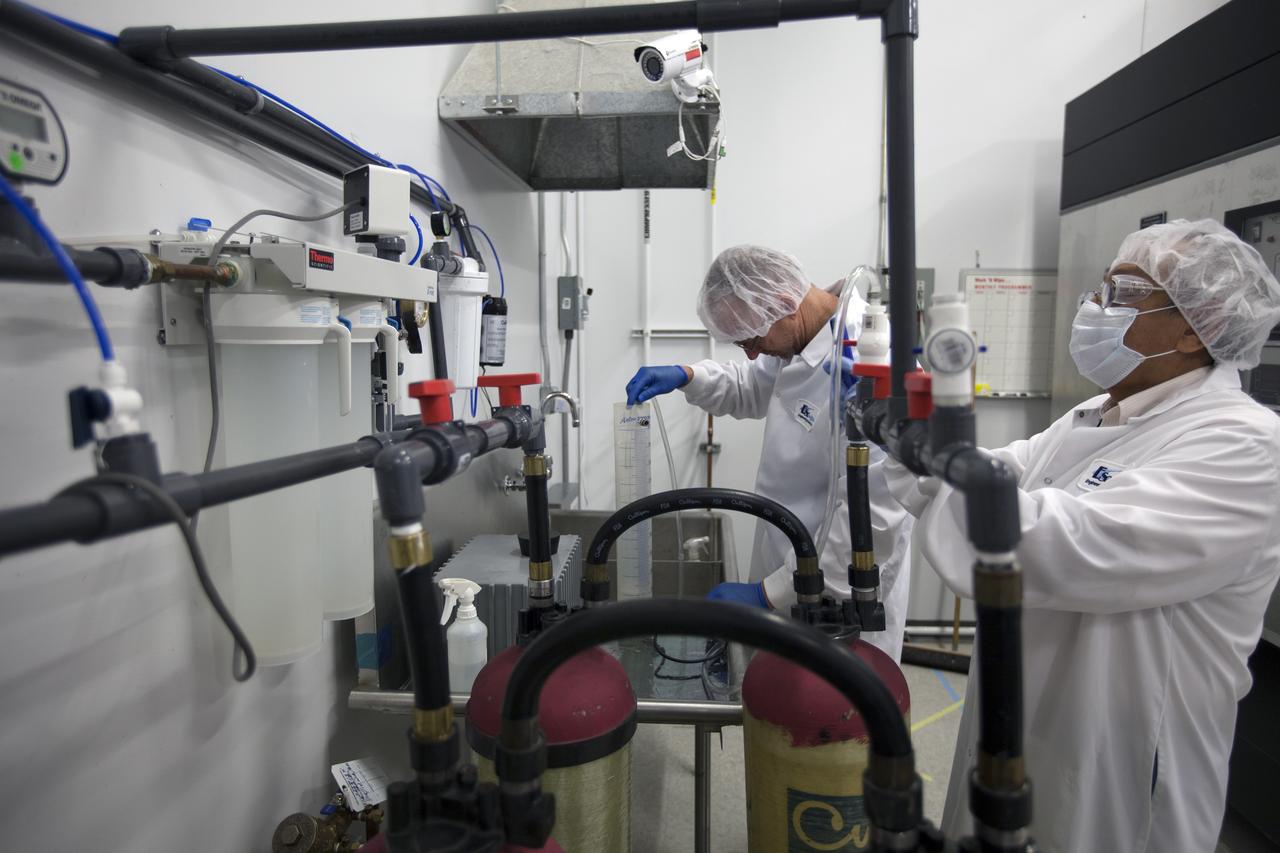
CAPE CANAVERAL, Fla. – Researchers acquire the ionized water for the Veggie plant growth system inside a control chamber at the Space Station Processing Facility at NASA's Kennedy Space Center in Florida. From left, are Jim Smodell, a technician with SGT, and George Guerra, a quality control engineer with QinetiQ North America. The growth chamber will be used as a control unit and procedures will be followed identical to those being performed on Veggie and the Veg-01 experiment on the International Space Station by Expedition 39 flight engineer and NASA astronaut Steve Swanson. Veggie and Veg-01 were delivered to the space station aboard the SpaceX-3 mission. Veggie is the first fresh food production system delivered to the station. Six plant pillows, each containing outredgeous red romaine lettuce seeds and a root mat were inserted into Veggie. The plant chamber's red, blue and green LED lights were activated. The plant growth will be monitored for 28 days. At the end of the cycle, the plants will be carefully harvested, frozen and stored for return to Earth. Photo credit: NASA/Dimitri Gerondidakis
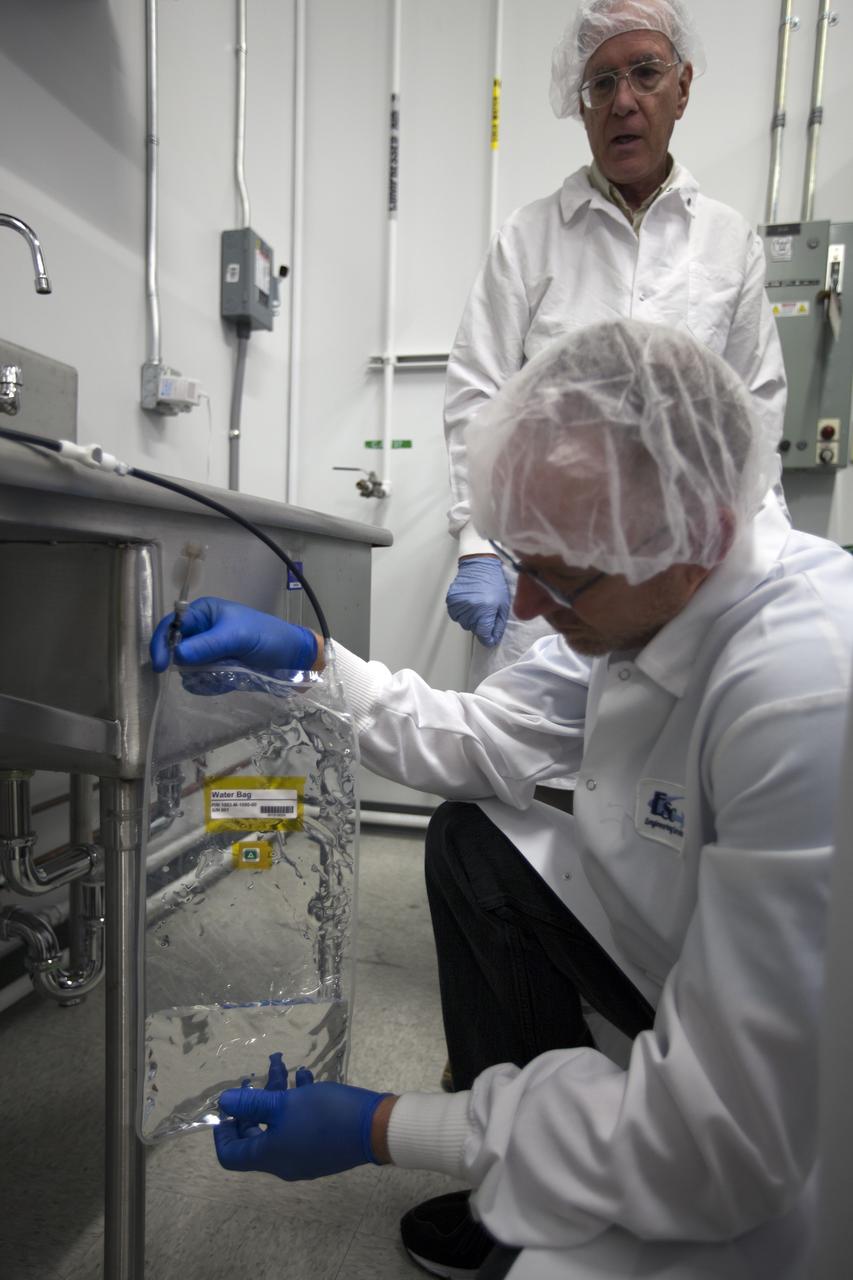
CAPE CANAVERAL, Fla. – Researchers fill a water bag with ionized water for the Veggie plant growth system inside a control chamber at the Space Station Processing Facility at NASA's Kennedy Space Center in Florida. In front is Jim Smodell, a technician with SGT. Standing behind him is Chuck Spern, lead project engineer with QinetiQ North America. The growth chamber will be used as a control unit and procedures will be followed identical to those being performed on Veggie and the Veg-01 experiment on the International Space Station by Expedition 39 flight engineer and NASA astronaut Steve Swanson. Veggie and Veg-01 were delivered to the space station aboard the SpaceX-3 mission. Veggie is the first fresh food production system delivered to the station. Six plant pillows, each containing outredgeous red romaine lettuce seeds and a root mat were inserted into Veggie. The plant chamber's red, blue and green LED lights were activated. The plant growth will be monitored for 28 days. At the end of the cycle, the plants will be carefully harvested, frozen and stored for return to Earth. Photo credit: NASA/Dimitri Gerondidakis
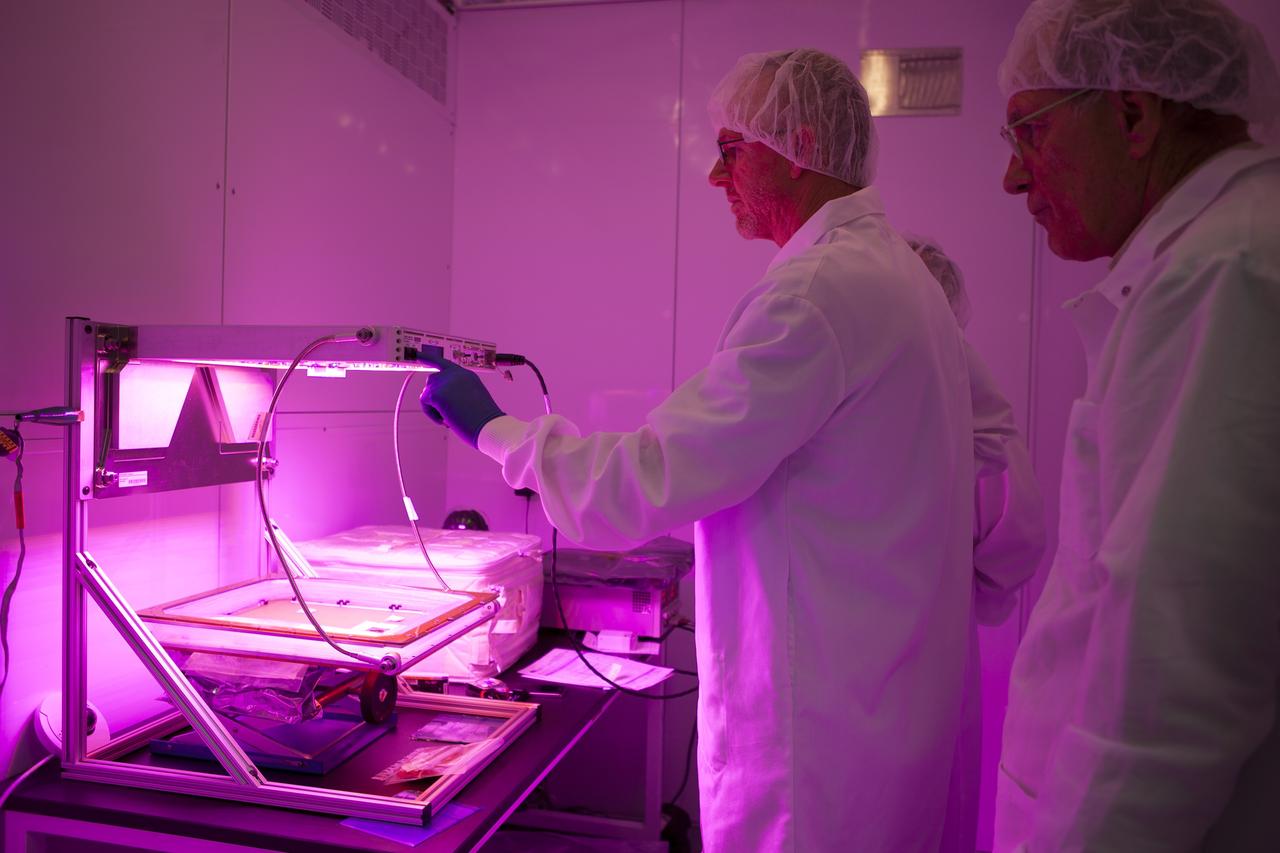
CAPE CANAVERAL, Fla. – Researchers activate the red, blue and green LED lights on the Veggie plant growth system inside a control chamber at the Space Station Processing Facility at NASA's Kennedy Space Center in Florida. From left, are Jim Smodell, a technician with SGT, and Chuck Spern, lead project engineer, with QinetiQ North America. The growth chamber will be used as a control unit and procedures will be followed identical to those being performed on Veggie and the Veg-01 experiment on the International Space Station by Expedition 39 flight engineer and NASA astronaut Steve Swanson. Veggie and Veg-01 were delivered to the space station aboard the SpaceX-3 mission. Veggie is the first fresh food production system delivered to the station. Six plant pillows, each containing outredgeous red romaine lettuce seeds and a root mat were inserted into Veggie. The plant chamber's red, blue and green LED lights were activated. The plant growth will be monitored for 28 days. At the end of the cycle, the plants will be carefully harvested, frozen and stored for return to Earth. Photo credit: NASA/Dimitri Gerondidakis
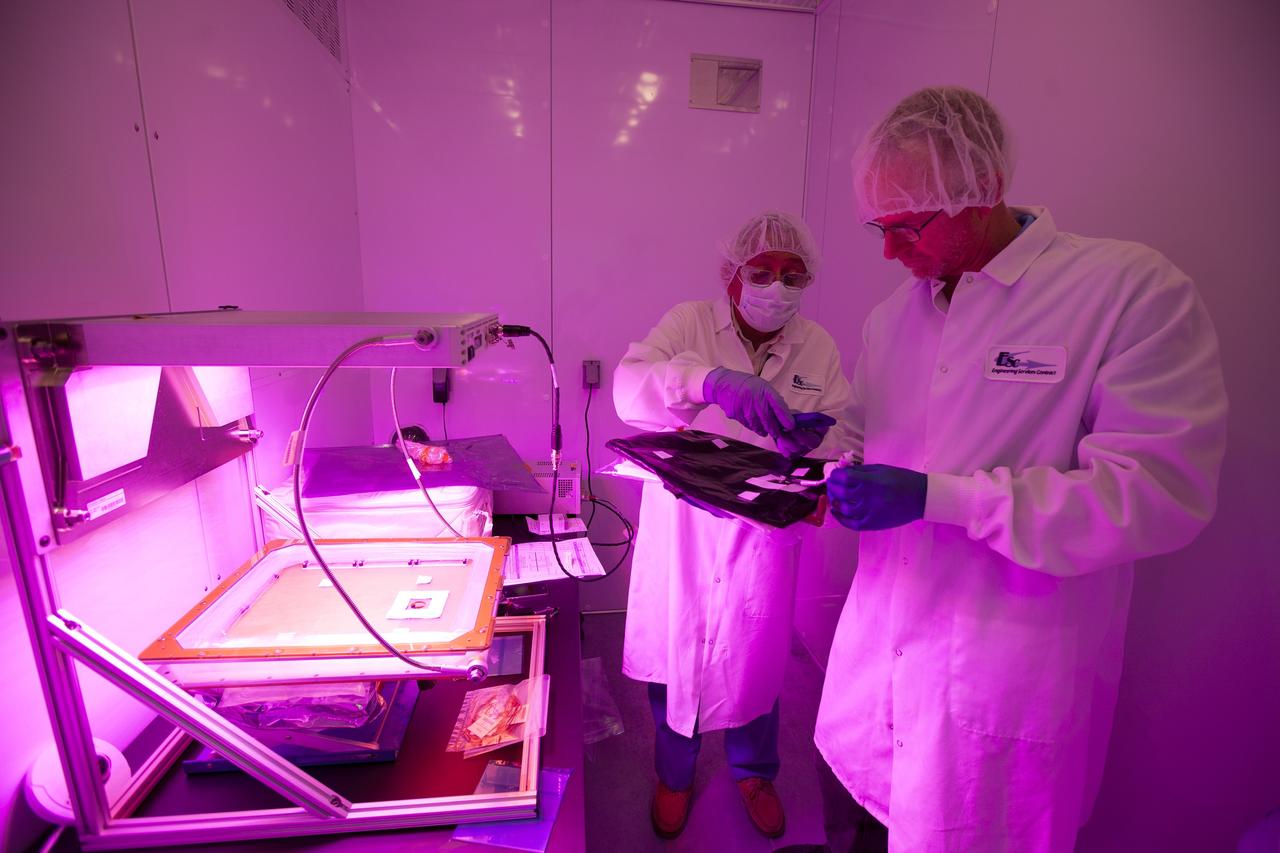
CAPE CANAVERAL, Fla. – Researchers have activated the red, blue and green LED lights on the Veggie plant growth system inside a control chamber at the Space Station Processing Facility at NASA's Kennedy Space Center in Florida. They are checking the plant pillows that contain outredgeous red romaine lettuce seeds. From left, are George Guerra, quality control engineer with QinetiQ North America, and Jim Smodell, a technician with SGT. The growth chamber will be used as a control unit and procedures will be followed identical to those being performed on Veggie and the Veg-01 experiment on the International Space Station by Expedition 39 flight engineer and NASA astronaut Steve Swanson. Veggie and Veg-01 were delivered to the space station aboard the SpaceX-3 mission. Veggie is the first fresh food production system delivered to the station. Six plant pillows, each containing outredgeous red romaine lettuce seeds and a root mat were inserted into Veggie. The plant chamber's red, blue and green LED lights were activated. The plant growth will be monitored for 28 days. At the end of the cycle, the plants will be carefully harvested, frozen and stored for return to Earth. Photo credit: NASA/Dimitri Gerondidakis

CAPE CANAVERAL, Fla. – Researchers have activated the red, blue and green LED lights on the Veggie plant growth system inside a control chamber at the Space Station Processing Facility at NASA's Kennedy Space Center in Florida. From left, are Jim Smodell, a technician with SGT, and Chuck Spern, lead project engineer with QinetiQ North America. The growth chamber will be used as a control unit and procedures will be followed identical to those being performed on Veggie and the Veg-01 experiment on the International Space Station by Expedition 39 flight engineer and NASA astronaut Steve Swanson. Veggie and Veg-01 were delivered to the space station aboard the SpaceX-3 mission. Veggie is the first fresh food production system delivered to the station. Six plant pillows, each containing outredgeous red romaine lettuce seeds and a root mat were inserted into Veggie. The plant chamber's red, blue and green LED lights were activated. The plant growth will be monitored for 28 days. At the end of the cycle, the plants will be carefully harvested, frozen and stored for return to Earth. Photo credit: NASA/Dimitri Gerondidakis
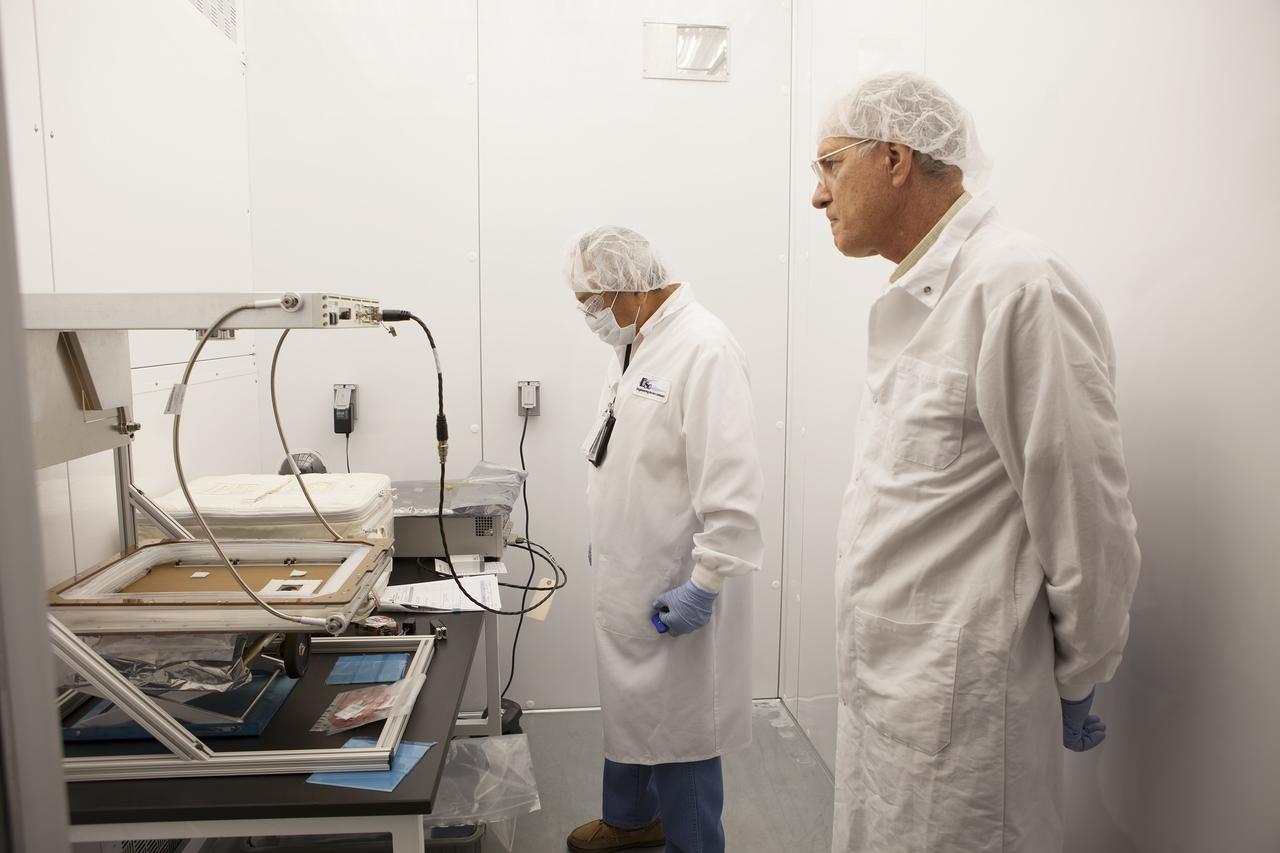
CAPE CANAVERAL, Fla. – Researchers prepare to activate the Veggie plant growth system inside a control chamber at the Space Station Processing Facility at NASA's Kennedy Space Center in Florida. From left, are George Guerra, quality control engineer, and Chuck Spern, lead project engineer, both with QinetiQ North America on the Engineering Services Contract. The growth chamber will be used as a control unit and procedures will be followed identical to those being performed on Veggie and the Veg-01 experiment on the International Space Station by Expedition 39 flight engineer and NASA astronaut Steve Swanson. Veggie and Veg-01 were delivered to the space station aboard the SpaceX-3 mission. Veggie is the first fresh food production system delivered to the station. Six plant pillows, each containing outredgeous red romaine lettuce seeds and a root mat were inserted into Veggie. The plant chamber's red, blue and green LED lights were activated. The plant growth will be monitored for 28 days. At the end of the cycle, the plants will be carefully harvested, frozen and stored for return to Earth. Photo credit: NASA/Dimitri Gerondidakis
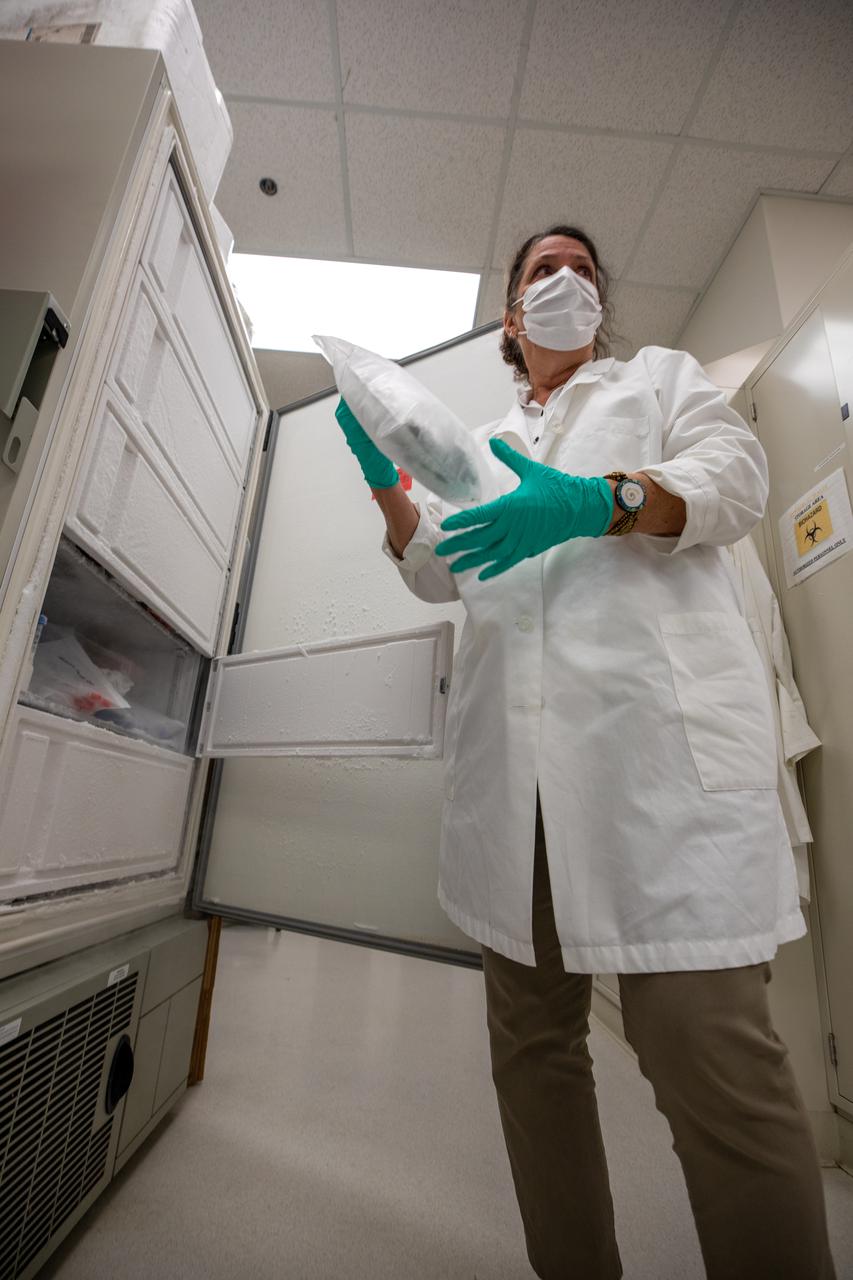
Inside the Microbiology Lab at NASA’s Kennedy Space Center in Florida on Oct. 6, 2021, Microbiology Lead Mary Hummerick works with frozen lettuce samples that recently returned from the International Space Station as part of NASA’s SpaceX 23rd commercial resupply services mission. The experiment, titled VEG-03J, involved “Outredgeous” red romaine lettuce grown in the Veggie Production System (Veggie) on the space station and demonstrated a new way of storing, handling, and planting seeds in space. NASA is studying how to effectively grow crops in space so plants can provide supplemental nutrients to astronaut crews on long-duration missions, such as a mission to Mars.
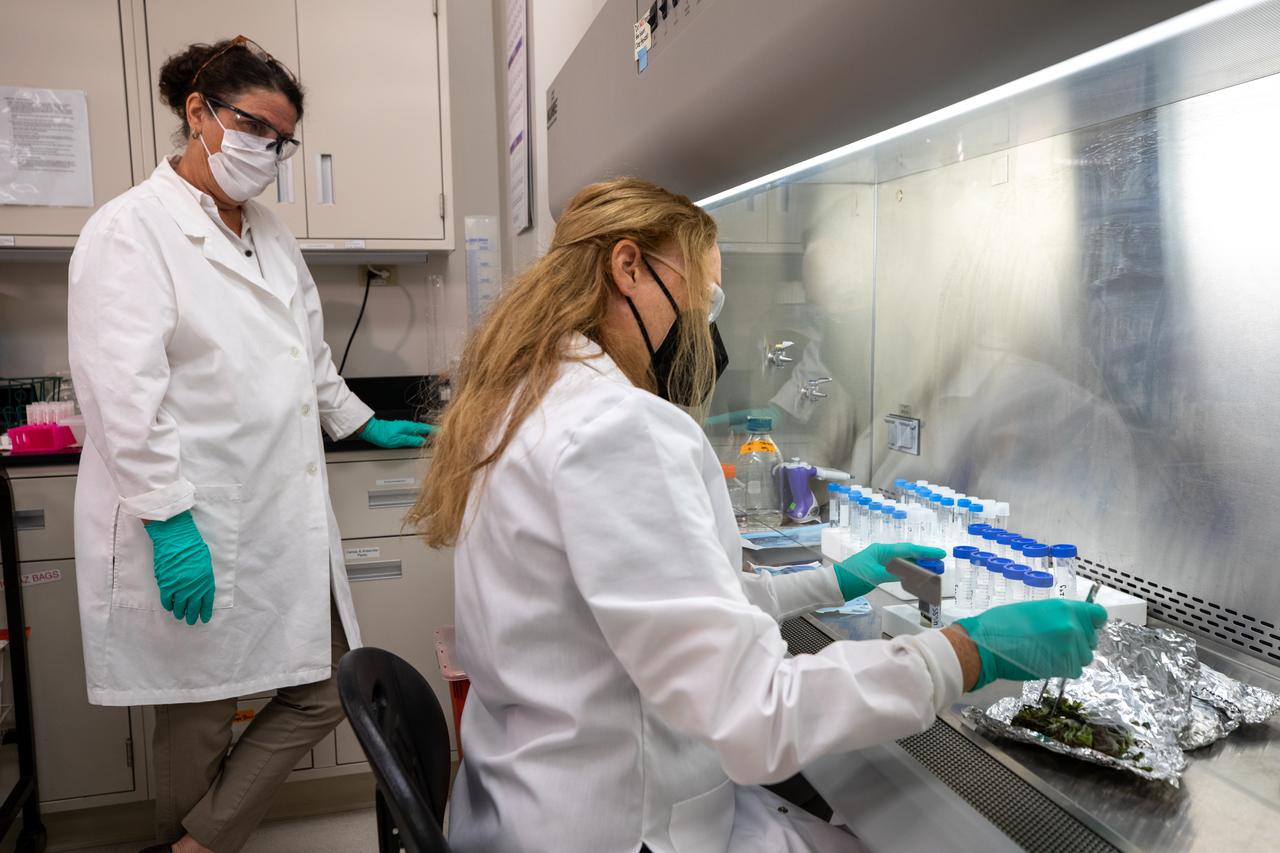
Inside the Microbiology Lab at NASA’s Kennedy Space Center in Florida on Oct. 6, 2021, Microbiology Lead Mary Hummerick, left, and Microbiologist Jennifer Gooden work with frozen lettuce samples that recently returned from the International Space Station as part of NASA’s SpaceX 23rd commercial resupply services mission. The experiment, titled VEG-03J, involved “Outredgeous” red romaine lettuce grown in the Veggie Production System (Veggie) on the space station and demonstrated a new way of storing, handling, and planting seeds in space. NASA is studying how to effectively grow crops in space so plants can provide supplemental nutrients to astronaut crews on long-duration missions, such as a mission to Mars.
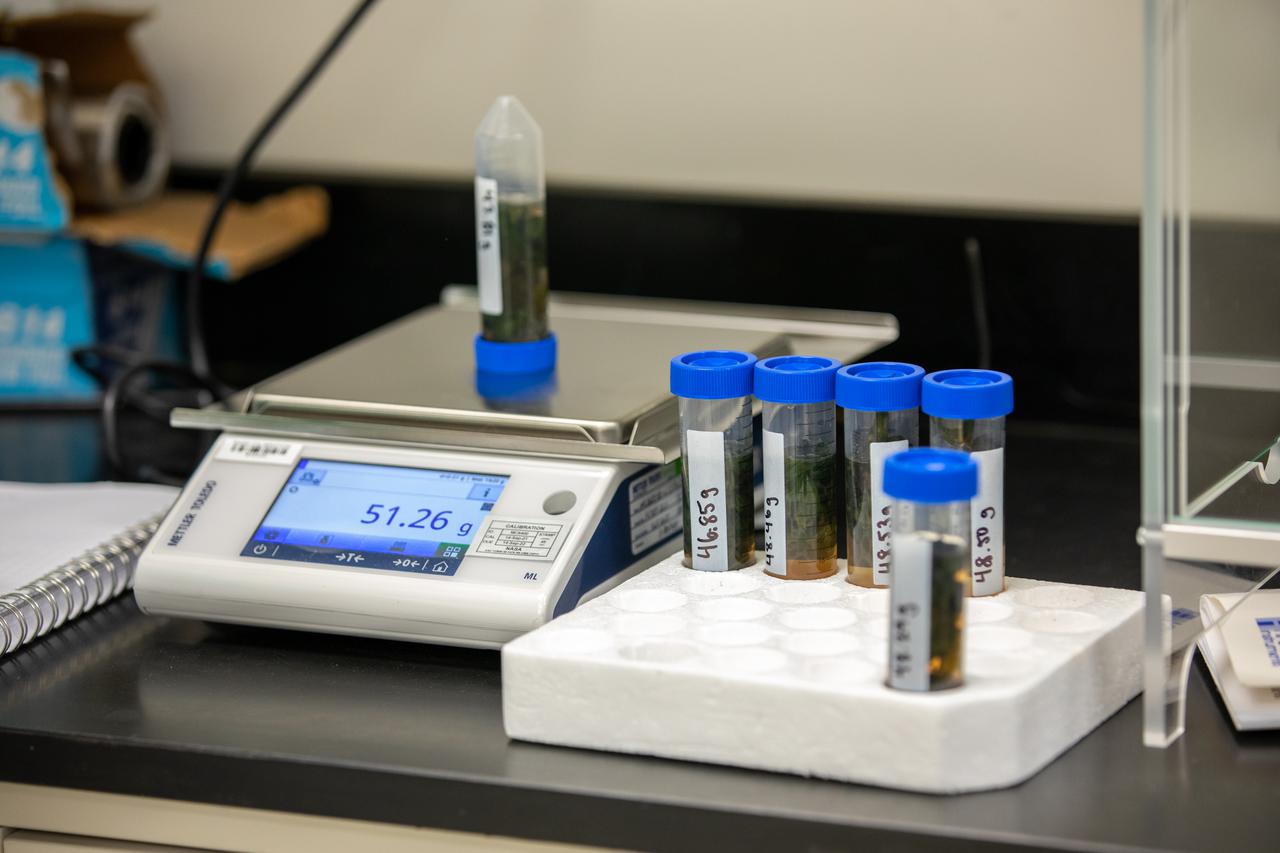
Inside the Microbiology Lab at NASA’s Kennedy Space Center in Florida on Oct. 6, 2021, microbiologists work with frozen lettuce samples that recently returned from the International Space Station as part of NASA’s SpaceX 23rd commercial resupply services mission. The experiment, titled VEG-03J, involved “Outredgeous” red romaine lettuce grown in the Veggie Production System (Veggie) on the space station and demonstrated a new way of storing, handling, and planting seeds in space. NASA is studying how to effectively grow crops in space so plants can provide supplemental nutrients to astronaut crews on long-duration missions, such as a mission to Mars.
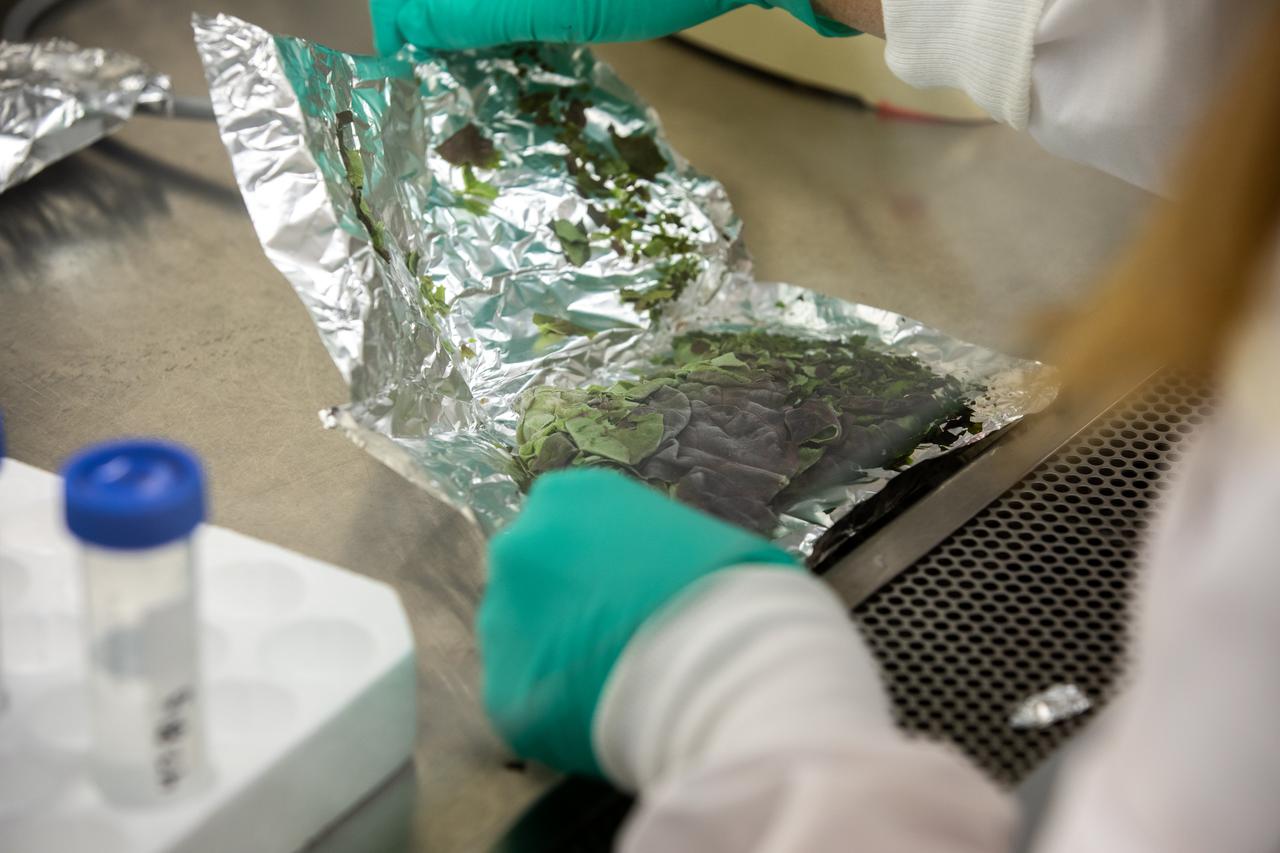
Inside the Microbiology Lab at NASA’s Kennedy Space Center in Florida on Oct. 6, 2021, Microbiologist Jennifer Gooden works with frozen lettuce samples that recently returned from the International Space Station as part of NASA’s SpaceX 23rd commercial resupply services mission. The experiment, titled VEG-03J, involved “Outredgeous” red romaine lettuce grown in the Veggie Production System (Veggie) on the space station and demonstrated a new way of storing, handling, and planting seeds in space. NASA is studying how to effectively grow crops in space so plants can provide supplemental nutrients to astronaut crews on long-duration missions, such as a mission to Mars.
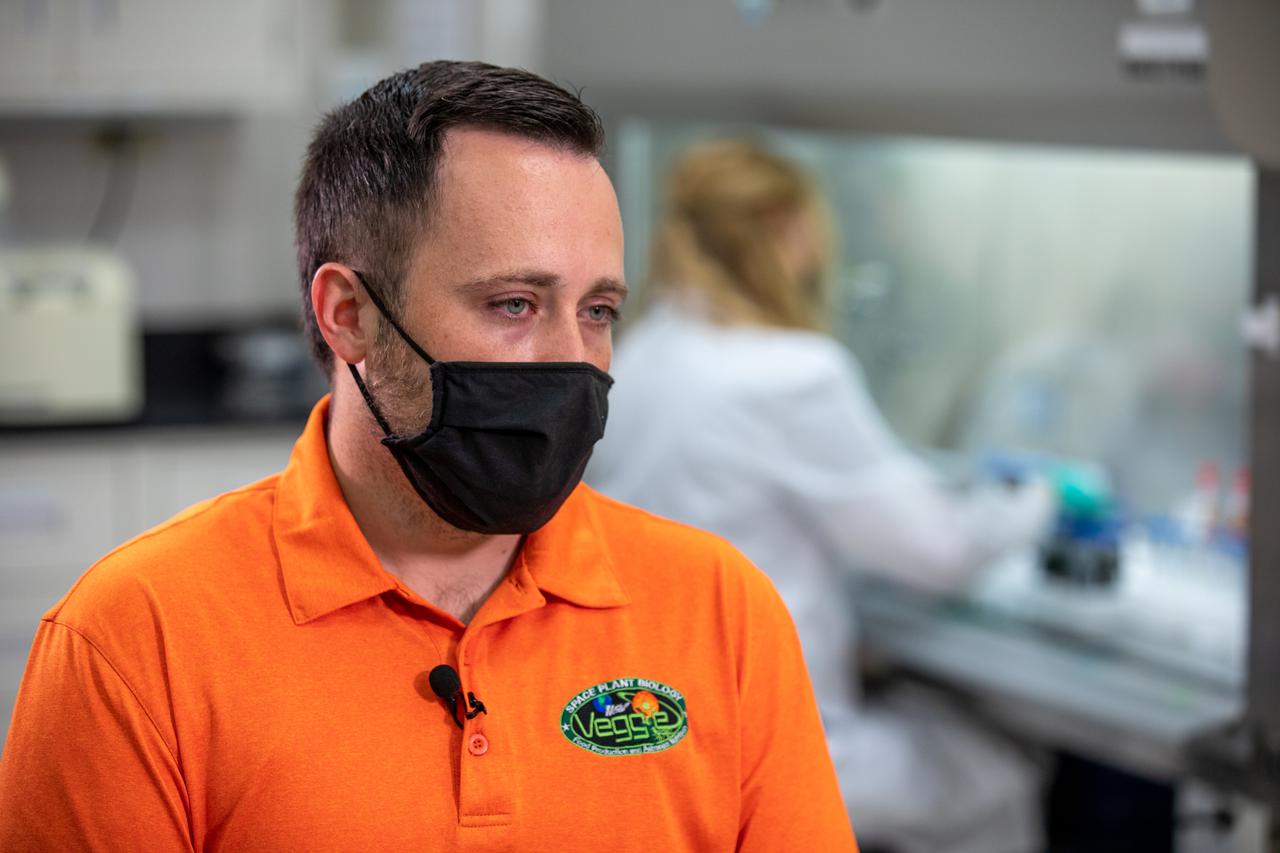
Inside the Microbiology Lab at NASA’s Kennedy Space Center in Florida on Oct. 6, 2021, Microbiologist Aaron Curry works with frozen lettuce samples that recently returned from the International Space Station as part of NASA’s SpaceX 23rd commercial resupply services mission. The experiment, titled VEG-03J, involved “Outredgeous” red romaine lettuce grown in the Veggie Production System (Veggie) on the space station and demonstrated a new way of storing, handling, and planting seeds in space. NASA is studying how to effectively grow crops in space so plants can provide supplemental nutrients to astronaut crews on long-duration missions, such as a mission to Mars.
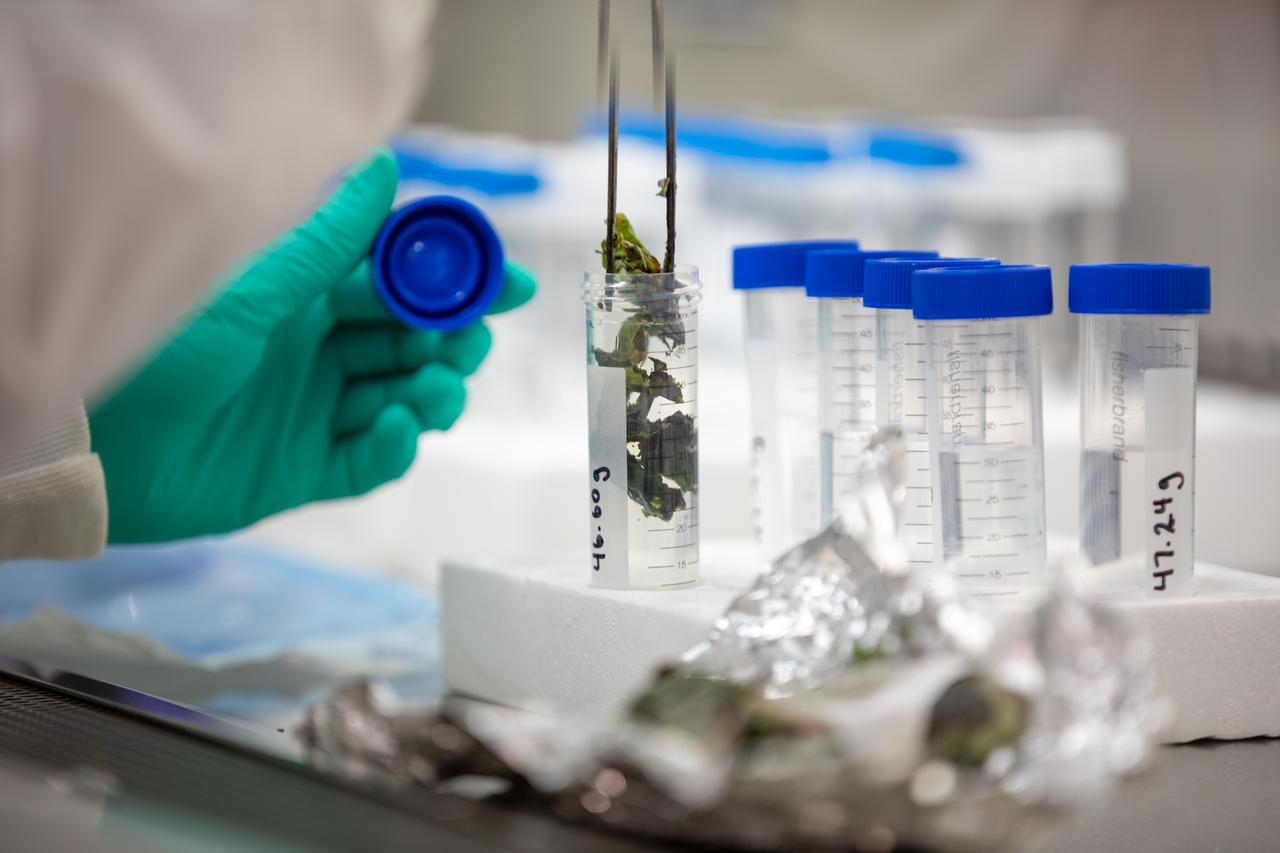
Inside the Microbiology Lab at NASA’s Kennedy Space Center in Florida on Oct. 6, 2021, a microbiologist works with frozen lettuce samples that recently returned from the International Space Station as part of NASA’s SpaceX 23rd commercial resupply services mission. The experiment, titled VEG-03J, involved “Outredgeous” red romaine lettuce grown in the Veggie Production System (Veggie) on the space station and demonstrated a new way of storing, handling, and planting seeds in space. NASA is studying how to effectively grow crops in space so plants can provide supplemental nutrients to astronaut crews on long-duration missions, such as a mission to Mars.

jsc2022e072973 (9/22/2022) --- A preflight view of the Veg-05 ‘Red Robin’ dwarf tomato growing in Veggie hardware at the Kennedy Space Center. Image courtesy of NASA, ground study
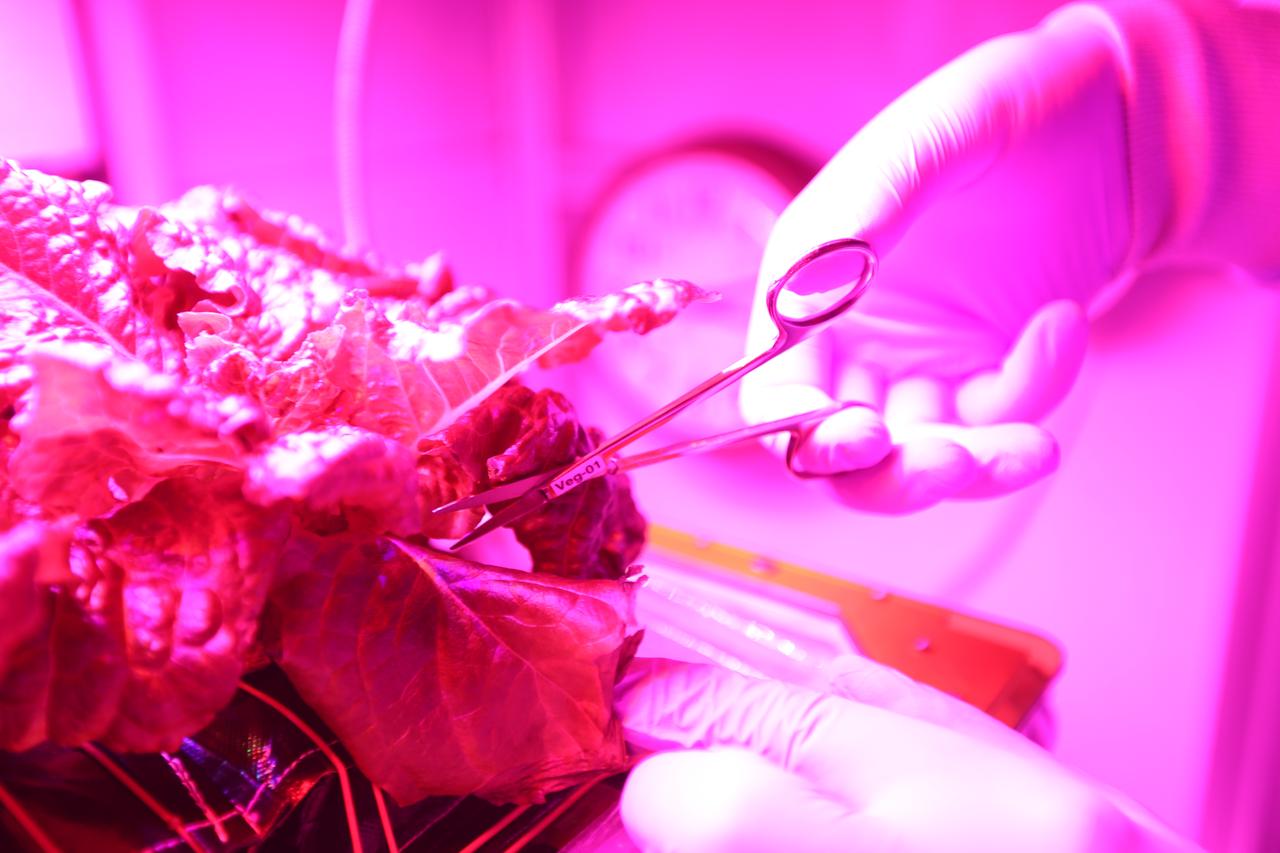
Inside the Veggie flight laboratory in the Space Station Processing Facility at NASA’s Kennedy Space Center in Florida, a research scientist harvests a portion of the 'Outredgeous' red romaine lettuce from the Veg-03 ground control unit. The purpose of the ground Veggie system is to provide a control group to compare against the lettuce grown in orbit on the International Space Station. Veg-03 will continue NASA’s deep space plant growth research to benefit the Earth and the agency’s journey to Mars.
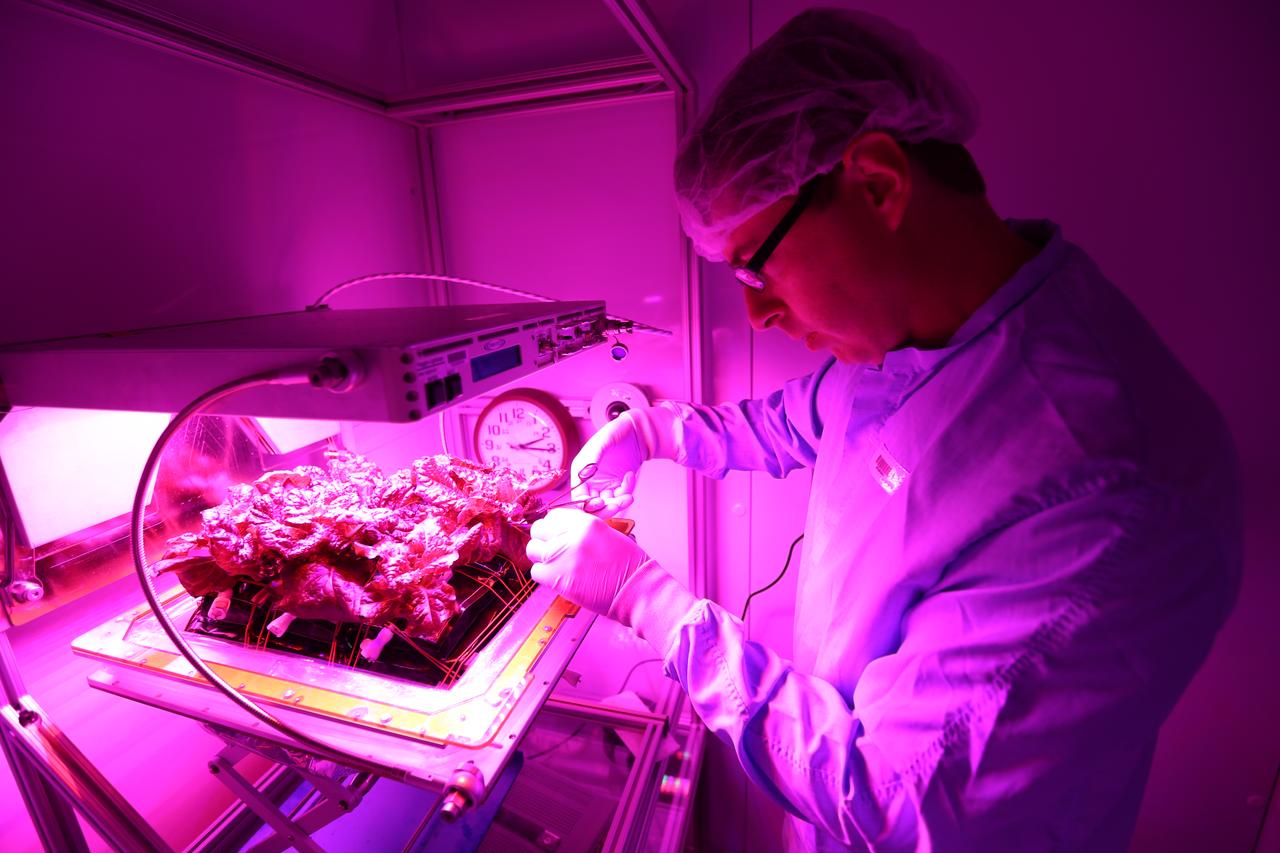
Inside the Veggie flight laboratory in the Space Station Processing Facility at NASA’s Kennedy Space Center in Florida, Matthew Romeyn, a NASA Pathways intern from the University of Edinburgh in Scotland, harvests a portion of the 'Outredgeous' red romaine lettuce from the Veg-03 ground control unit. The purpose of the ground Veggie system is to provide a control group to compare against the lettuce grown in orbit on the International Space Station. Veg-03 will continue NASA’s deep space plant growth research to benefit the Earth and the agency’s journey to Mars.
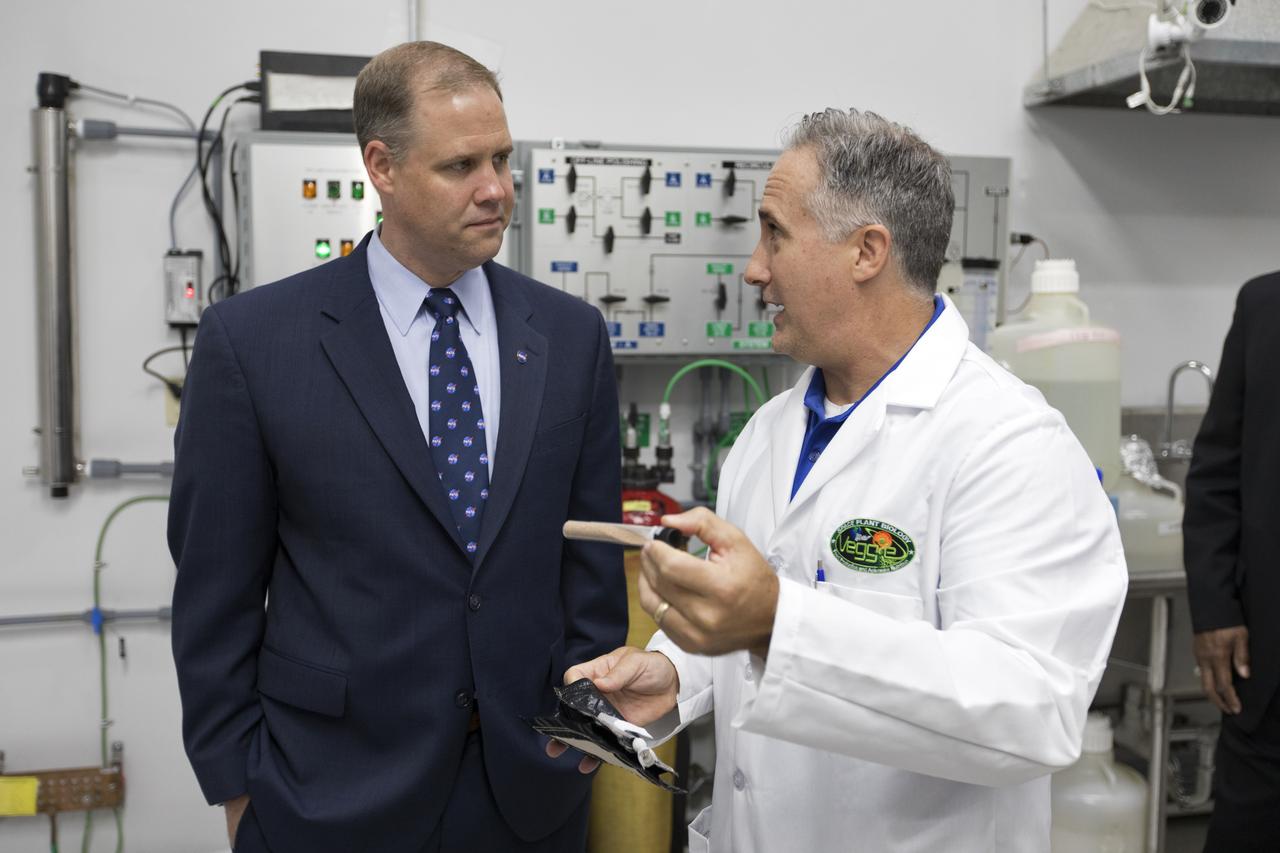
NASA Administrator Jim Bridenstine, at left, tours the Space Station Processing Facility at NASA's Kennedy Space Center in Florida, on Aug. 7, 2018. At right, Trent Smith, Veggie project manager, displays a seed packet and plant pillow for the Veggie plant growth system. Bridenstine also received updates on research and technology accomplishments.
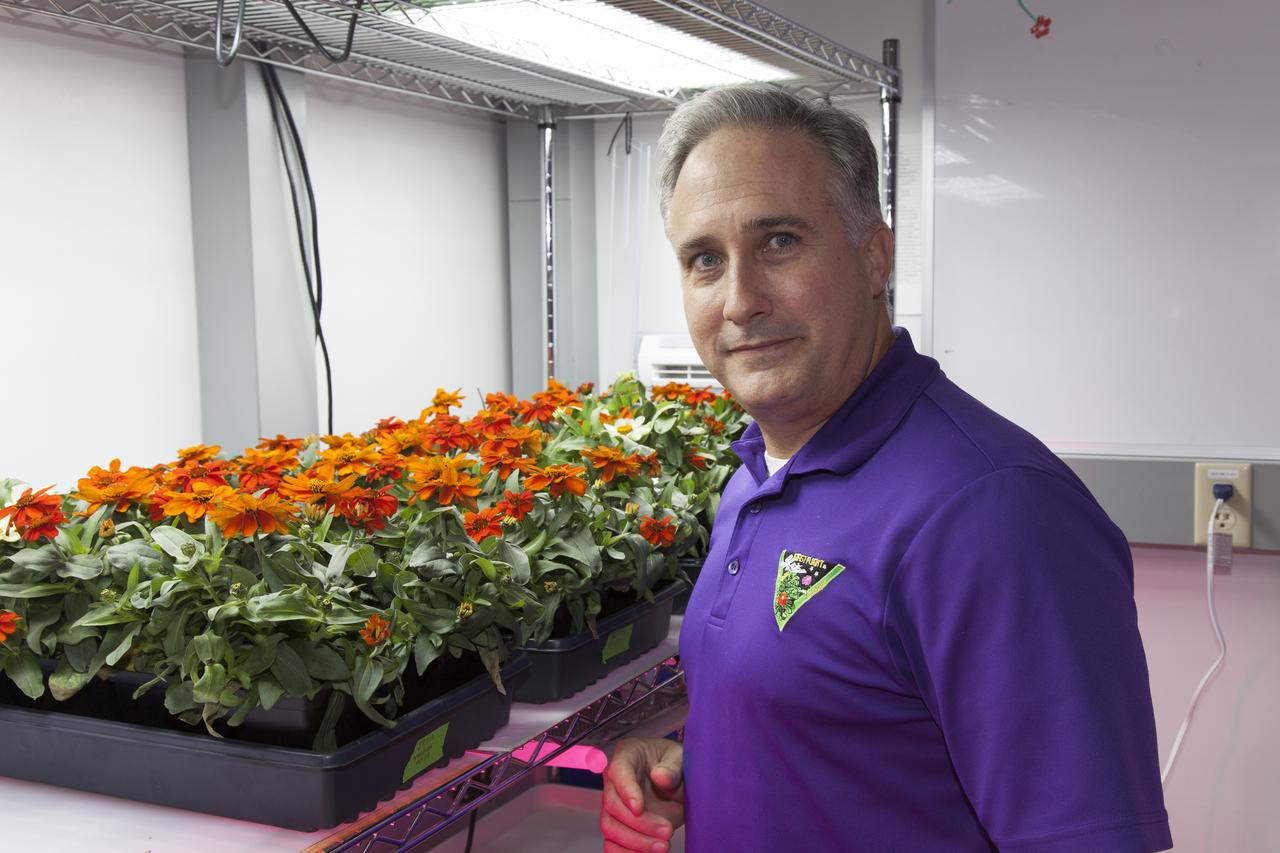
Trent Smith, Veggie project manager, Exploration Research and Technology Programs, is in the Veggie Laboratory in the Space Station Processing Facility (SSPF) at NASA's Kennedy Space Center in Florida on Nov. 27, 2018. Next to him are zinnia flowers grown from seeds germinated in the Veggie plant growth system on the International Space Station. The seeds were returned to Earth and researchers in the SSPF planted them in the Veggie control unit and grew the colorful flowers.
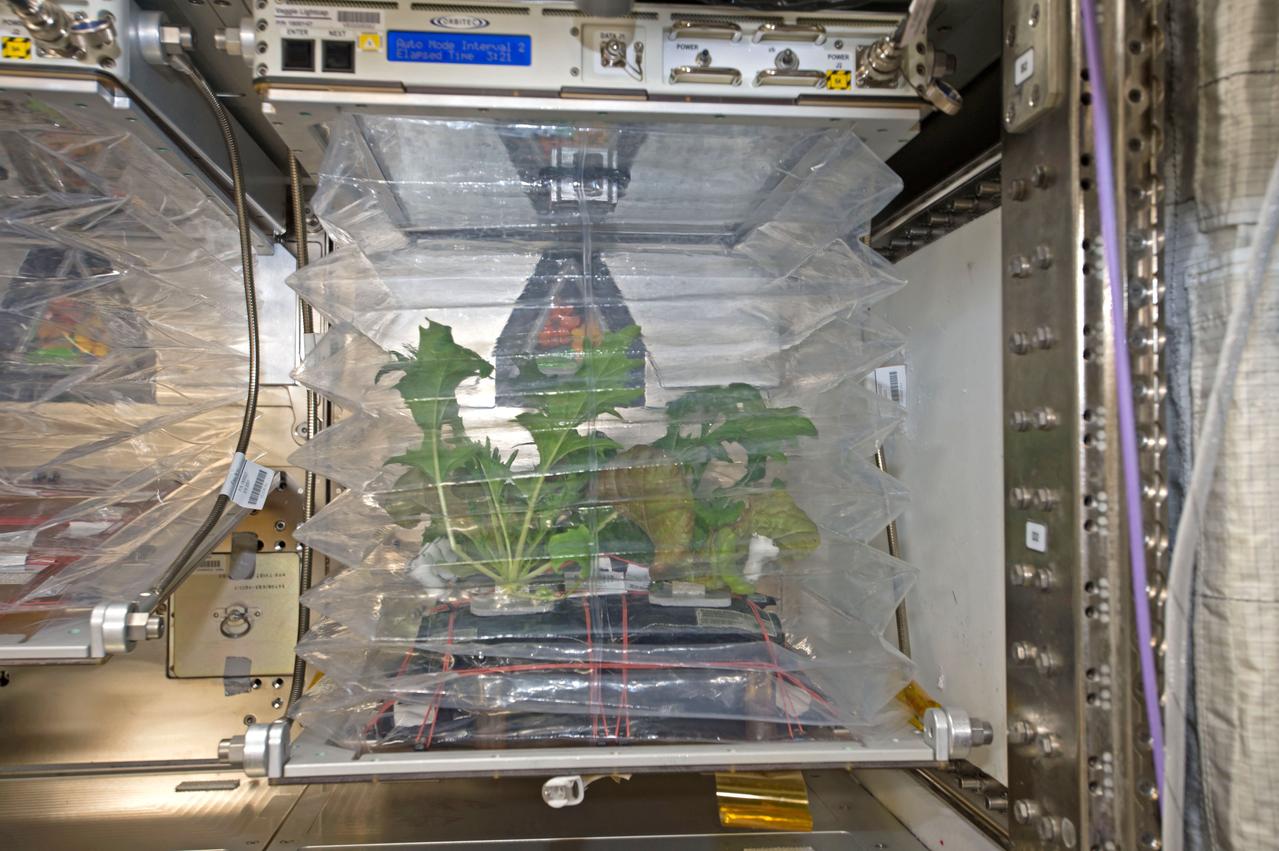
Veg-03D Experiment Onboard the International Space Station. First time three different plant varieties are being grown simultaneously in the Veggie chamber -- Mizuna mustard, Waldmann's green lettuce and Outredgeous Red Romaine lettuce.
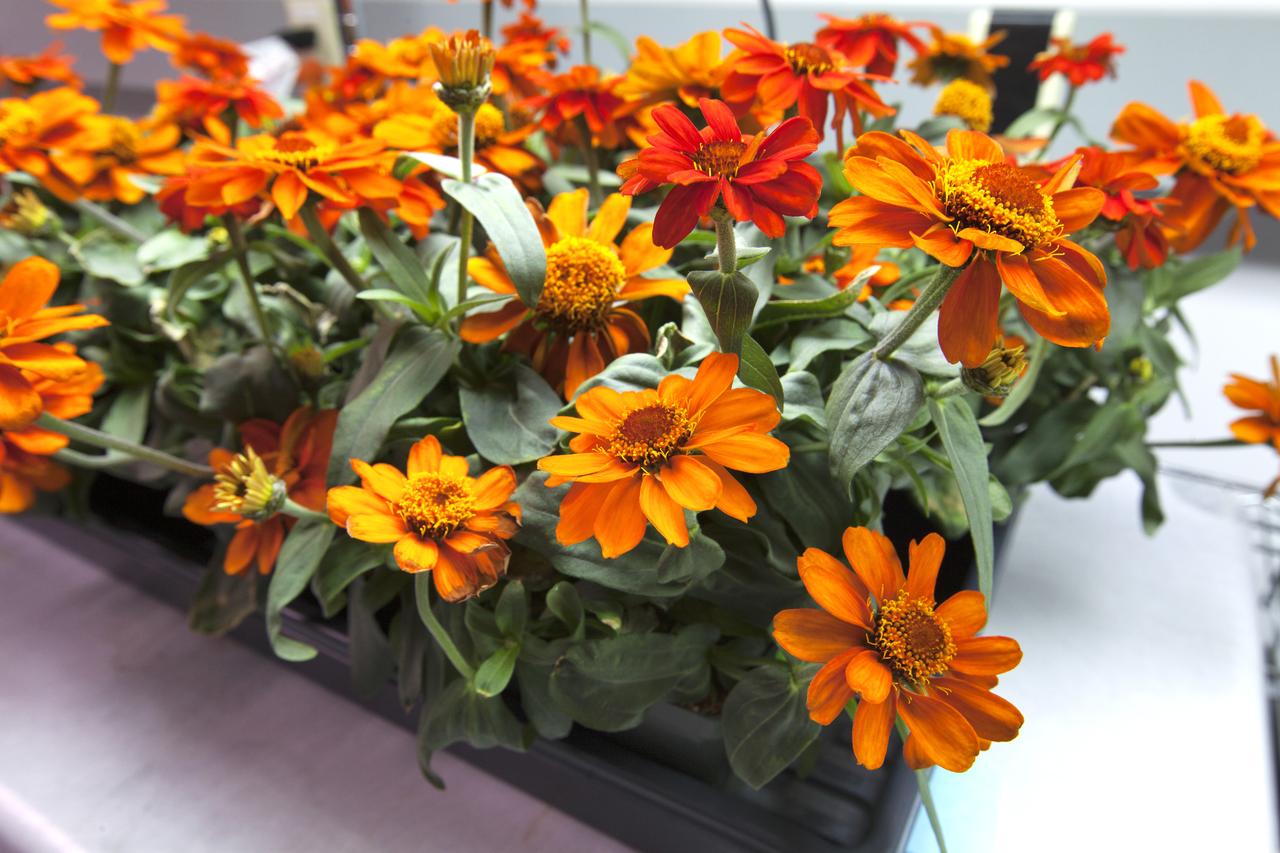
Zinnia seeds grown in the Veggie plant growth system on the International Space Station were planted and are growing in the Veggie Laboratory in the Space Station Processing Facility (SSPF) at NASA's Kennedy Space Center in Florida on Nov. 27, 2018.
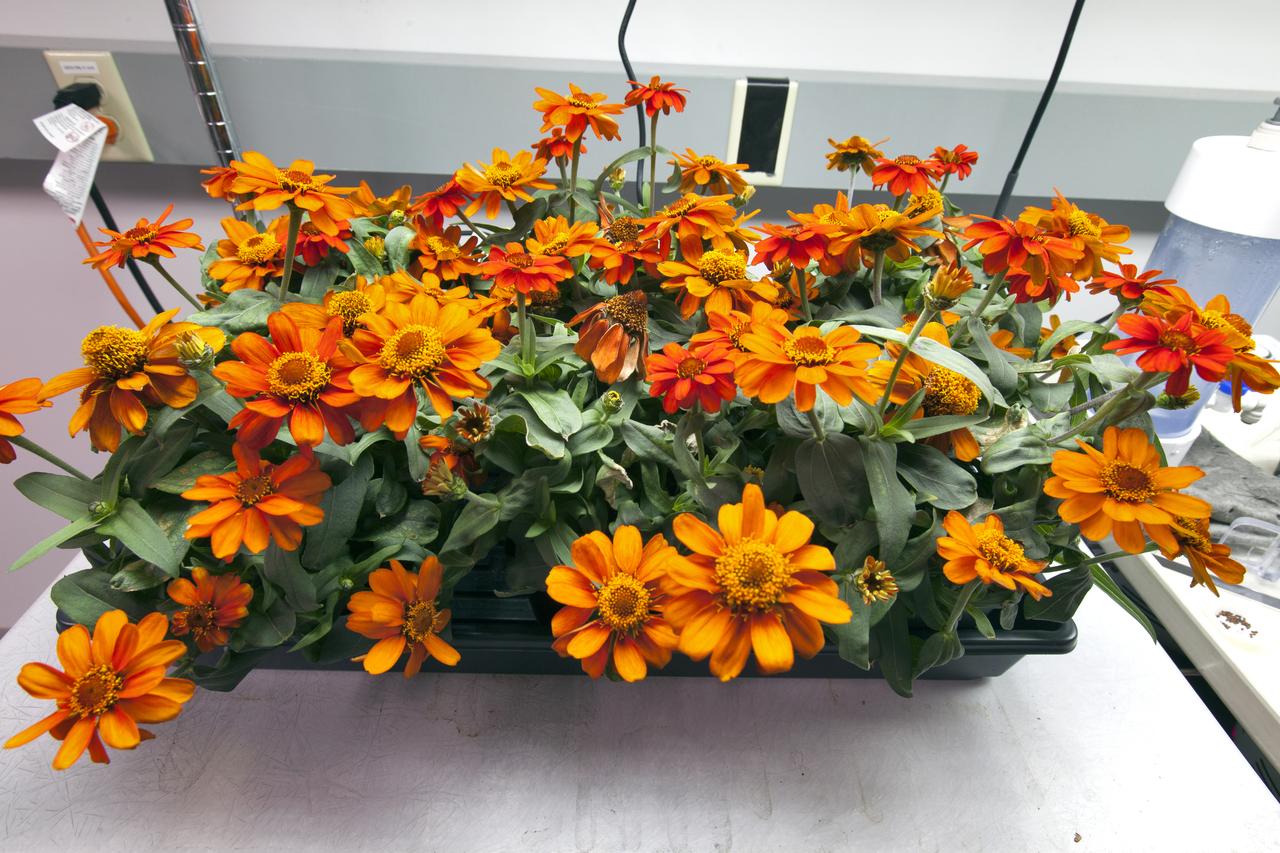
Zinnia seeds grown in the Veggie plant growth system on the International Space Station were planted and are growing in the Veggie Laboratory in the Space Station Processing Facility (SSPF) at NASA's Kennedy Space Center in Florida on Nov. 27, 2018.
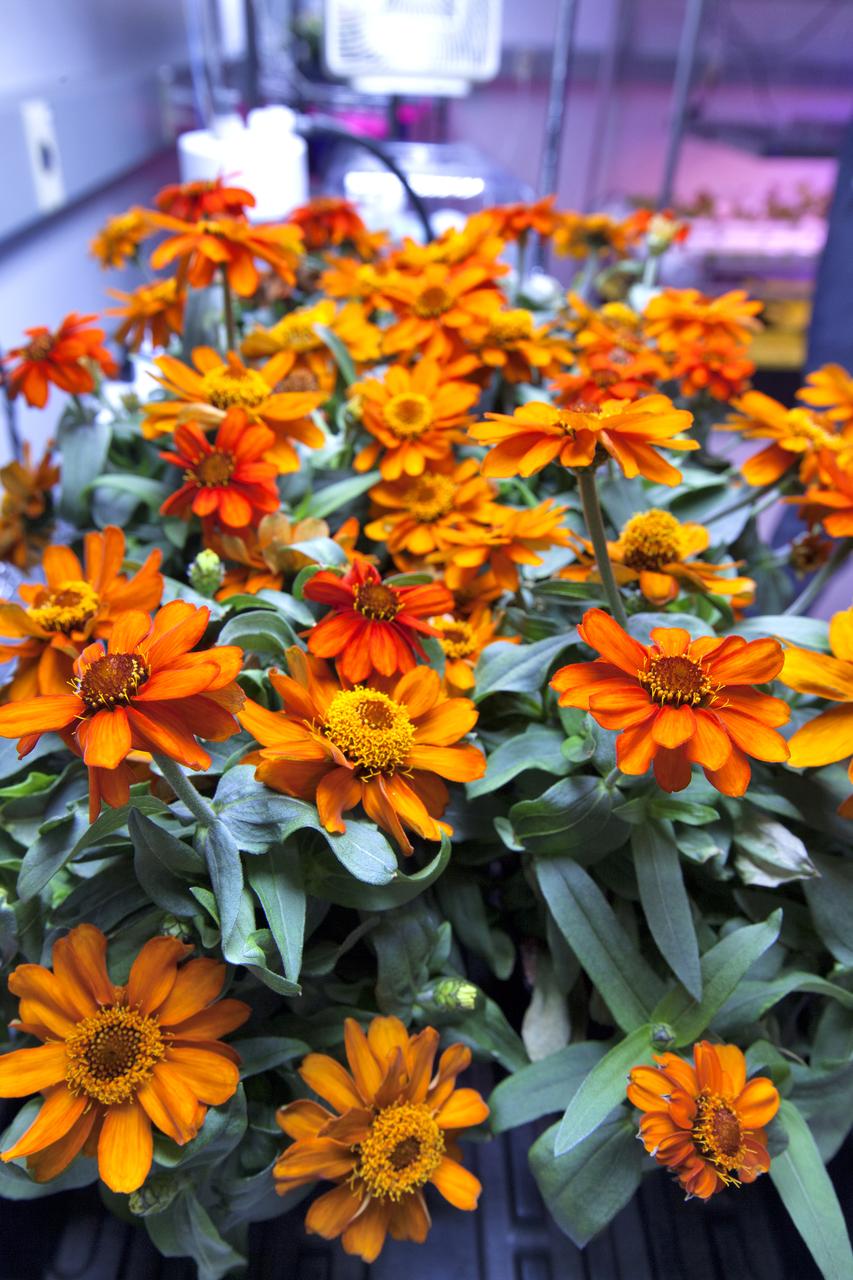
Zinnia seeds grown in the Veggie plant growth system on the International Space Station were planted and are growing in the Veggie Laboratory in the Space Station Processing Facility (SSPF) at NASA's Kennedy Space Center in Florida on Nov. 27, 2018.
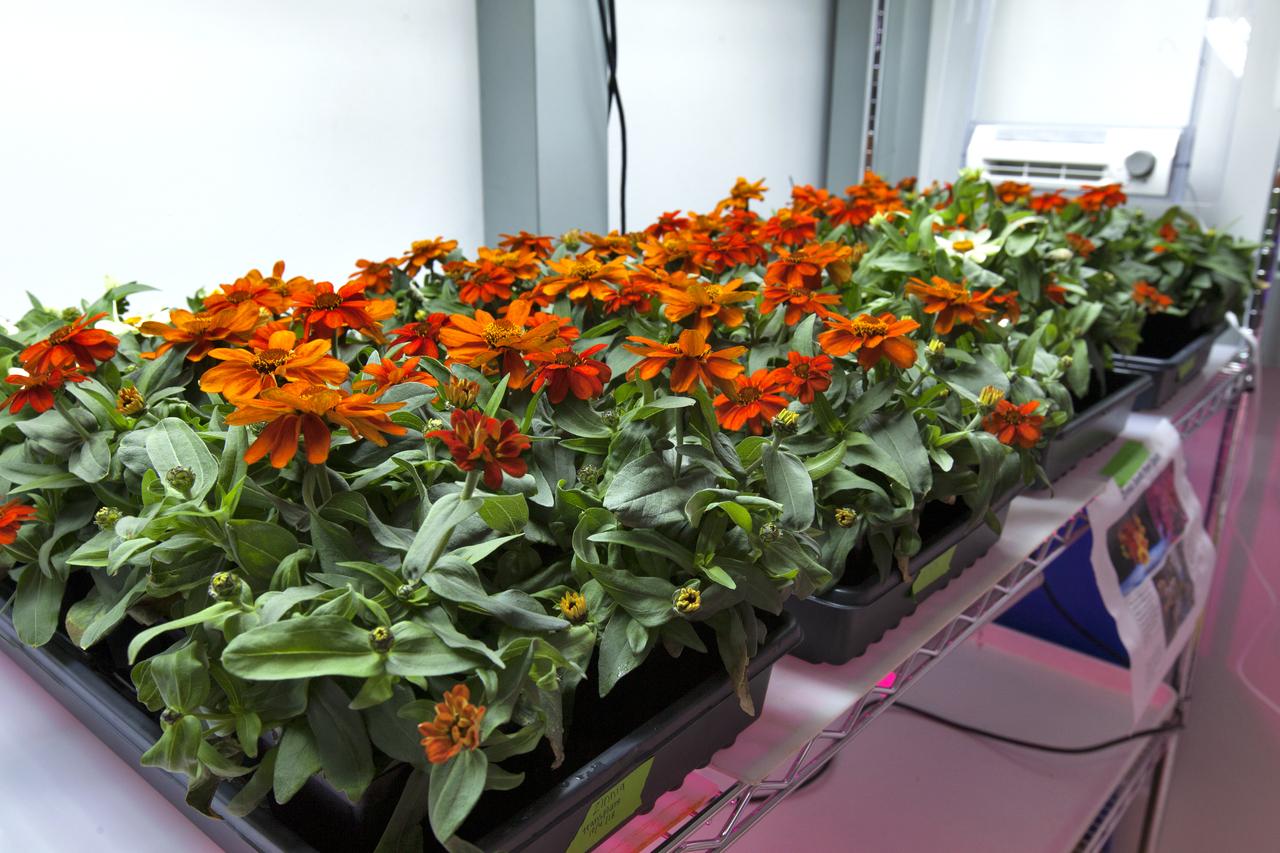
Zinnia seeds grown in the Veggie plant growth system on the International Space Station were planted and are growing in the Veggie Laboratory in the Space Station Processing Facility (SSPF) at NASA's Kennedy Space Center in Florida on Nov. 27, 2018.
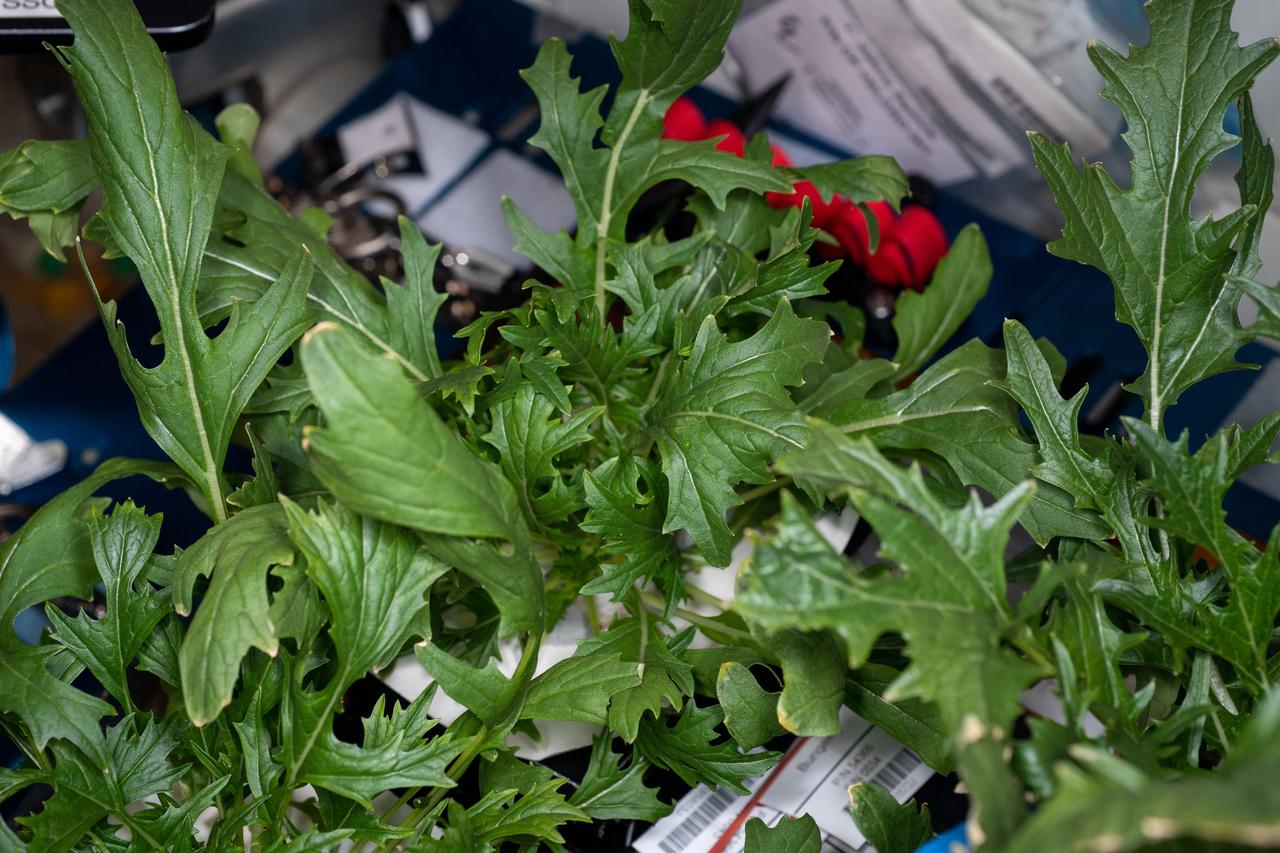
View during Plant Harvest in the Vegetable Production System (Veggie). Image was taken for the Veg-04 experiment. Photo was taken by Expedition 60 crew.
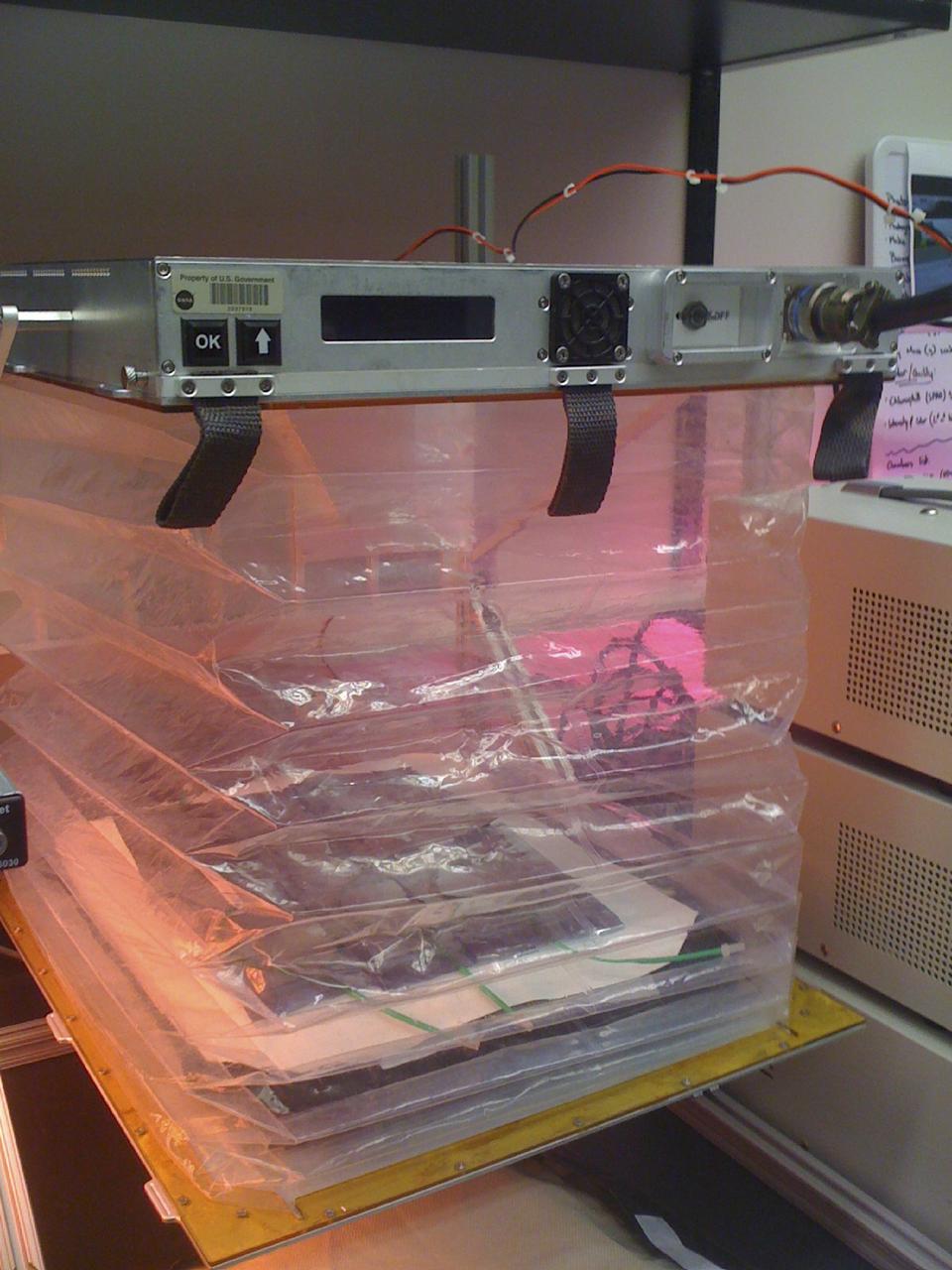
CAPE CANAVERAL, Fla. – This prototype VEGGIE hardware was designed and built by Orbital Technologies Corp. of Madison, Wisc. U.S. astronauts living and working aboard the International Space Station are going to receive a newly developed Vegetable Production System VEGGIE. VEGGIE is set to launch aboard SpaceX's Dragon capsule on NASA's third Commercial Resupply Services mission targeted to launch Dec. 9 from Space Launch Complex 40 at Cape Canaveral Air Force Station in Florida. Photo credit: NASA/Gioia Massa
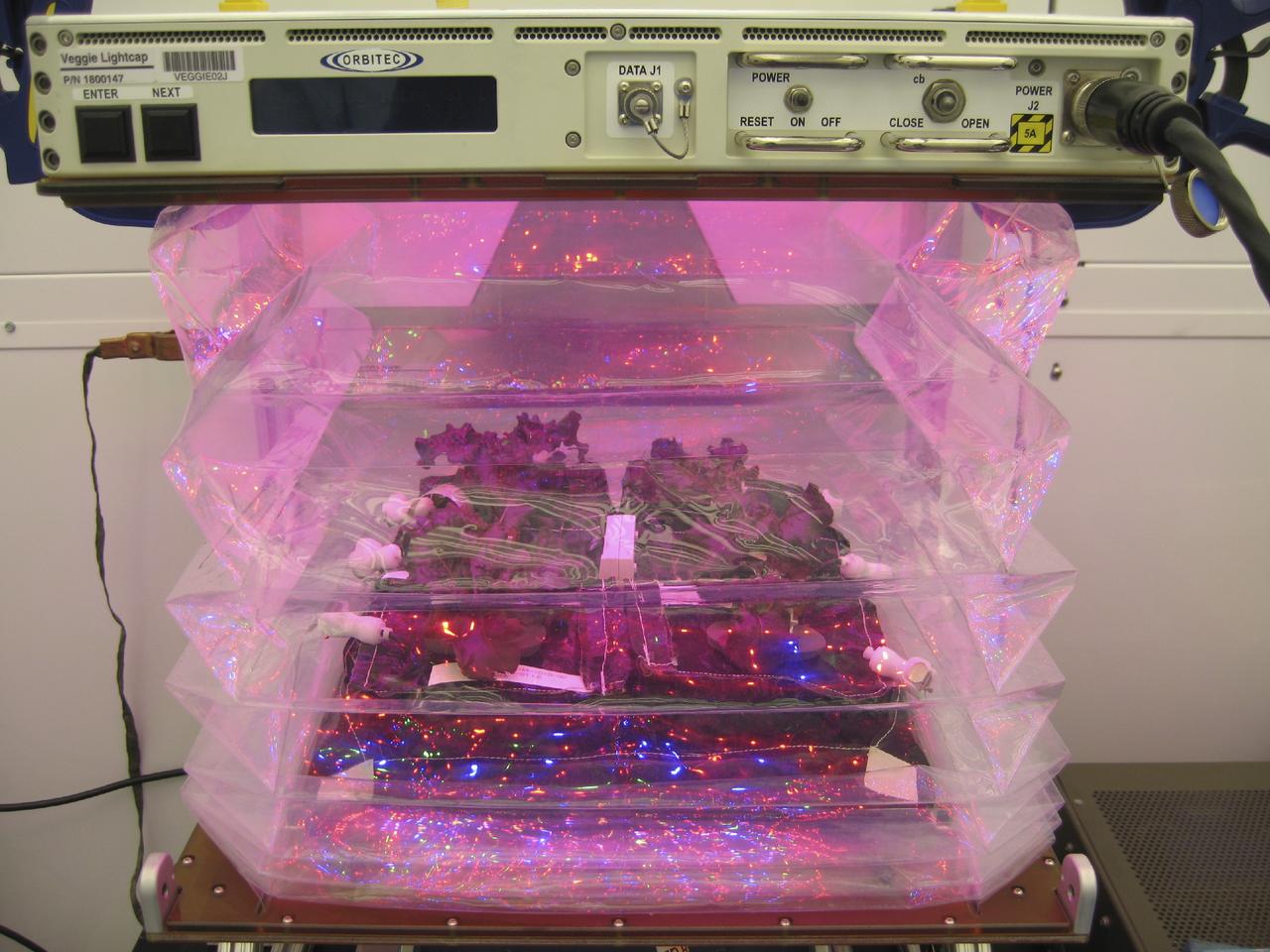
CAPE CANAVERAL, Fla. – Outredgeous red romaine lettuce plants grow inside the bellows of a prototype VEGGIE flight pillow. U.S. astronauts living and working aboard the International Space Station are going to receive a newly developed Vegetable Production System VEGGIE. VEGGIE is set to launch aboard SpaceX's Dragon capsule on NASA's third Commercial Resupply Services mission targeted to launch Dec. 9 from Space Launch Complex 40 at Cape Canaveral Air Force Station in Florida. Photo credit: NASA/Bryan Onate
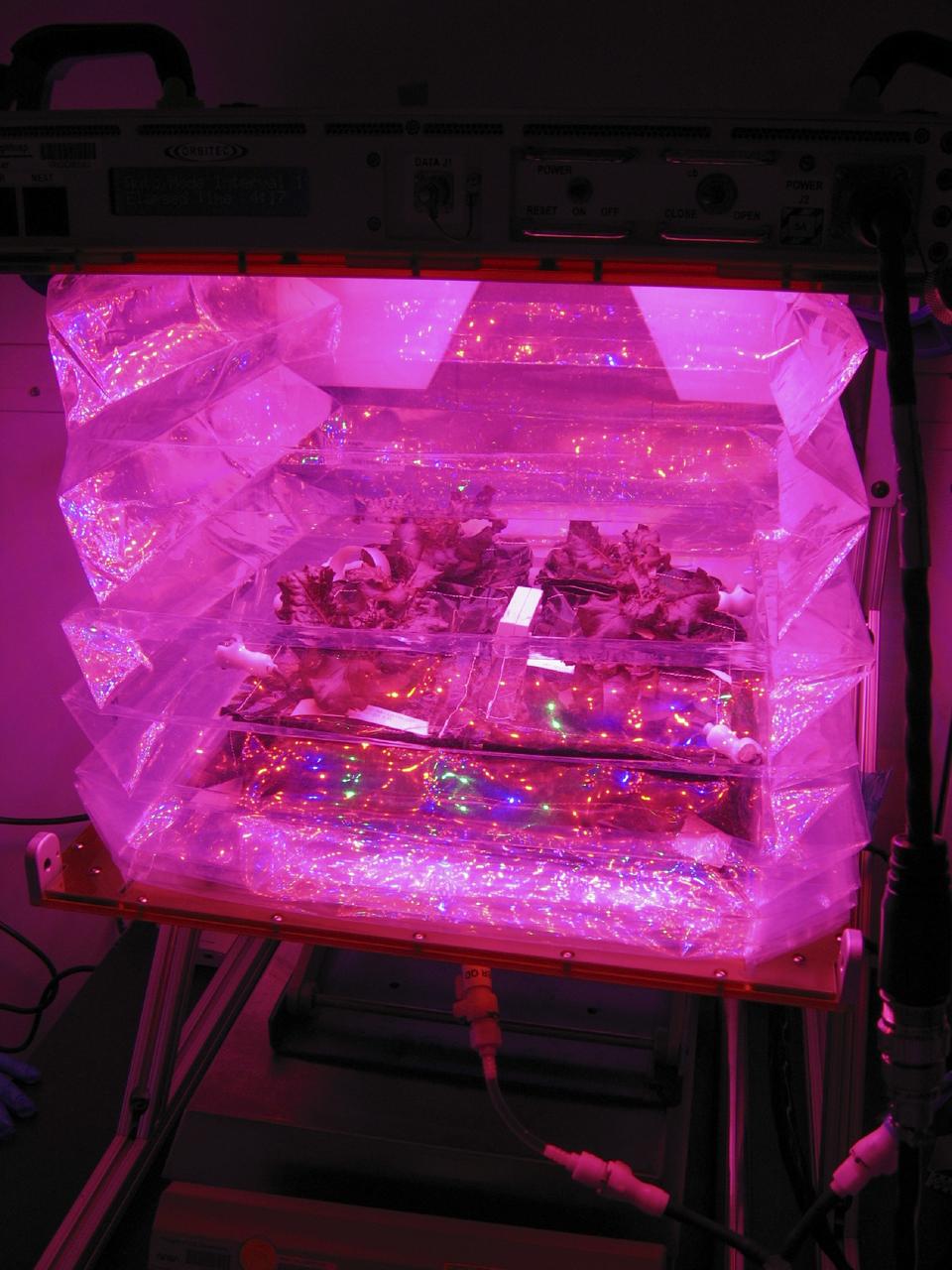
CAPE CANAVERAL, Fla. –Outredgeous red romaine lettuce plants grow inside the bellows of a prototype VEGGIE flight pillow. U.S. astronauts living and working aboard the International Space Station are going to receive a newly developed Vegetable Production System VEGGIE. VEGGIE is set to launch aboard SpaceX's Dragon capsule on NASA's third Commercial Resupply Services mission targeted to launch Dec. 9 from Space Launch Complex 40 at Cape Canaveral Air Force Station in Florida. Photo credit: NASA/Gioia Massa
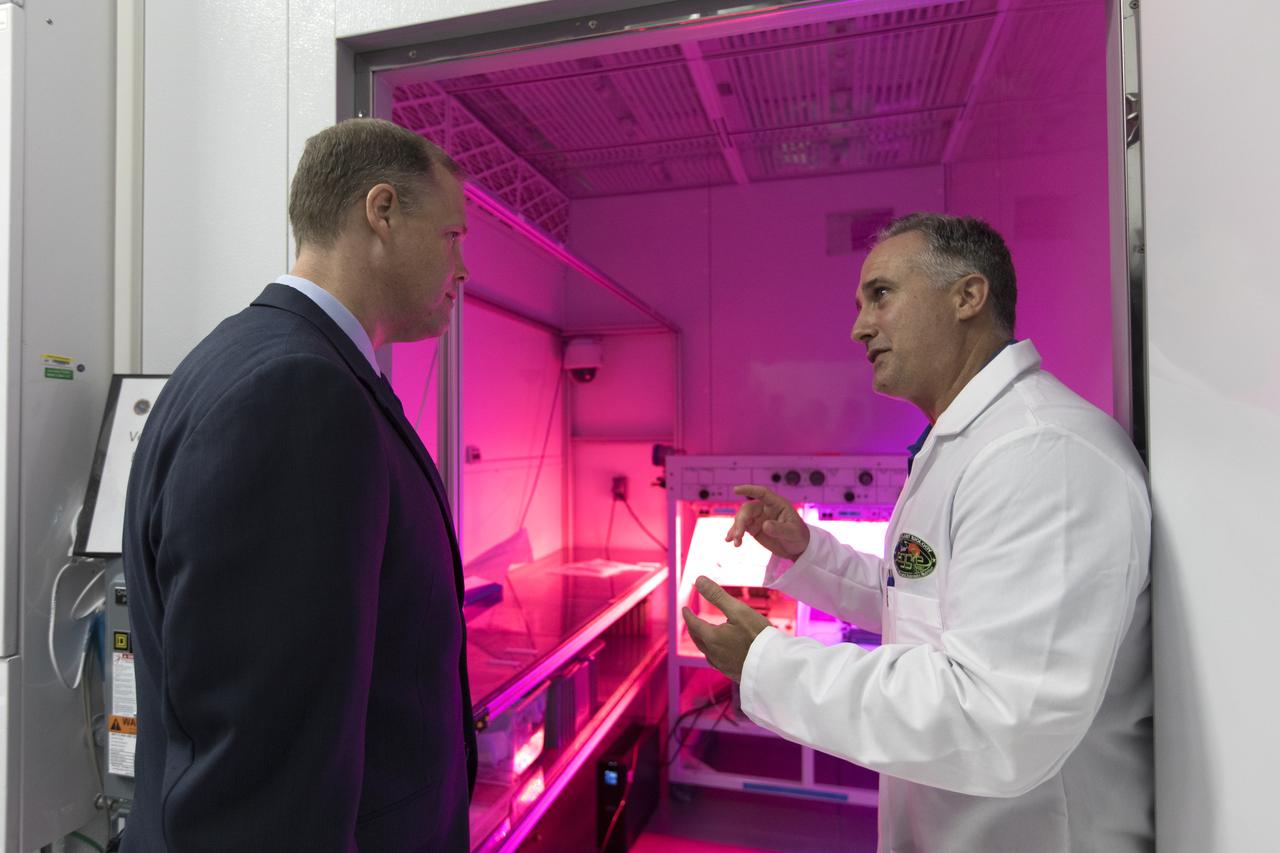
NASA Administrator Jim Bridenstine, at left, tours the Space Station Processing Facility at NASA's Kennedy Space Center in Florida, on Aug. 7, 2018. At right, Trent Smith, Veggie project manager, provides an update on the Veggie plant growth system on the International Space Station, and the control system in the laboratory. Bridenstine also received updates on research and technology accomplishments.
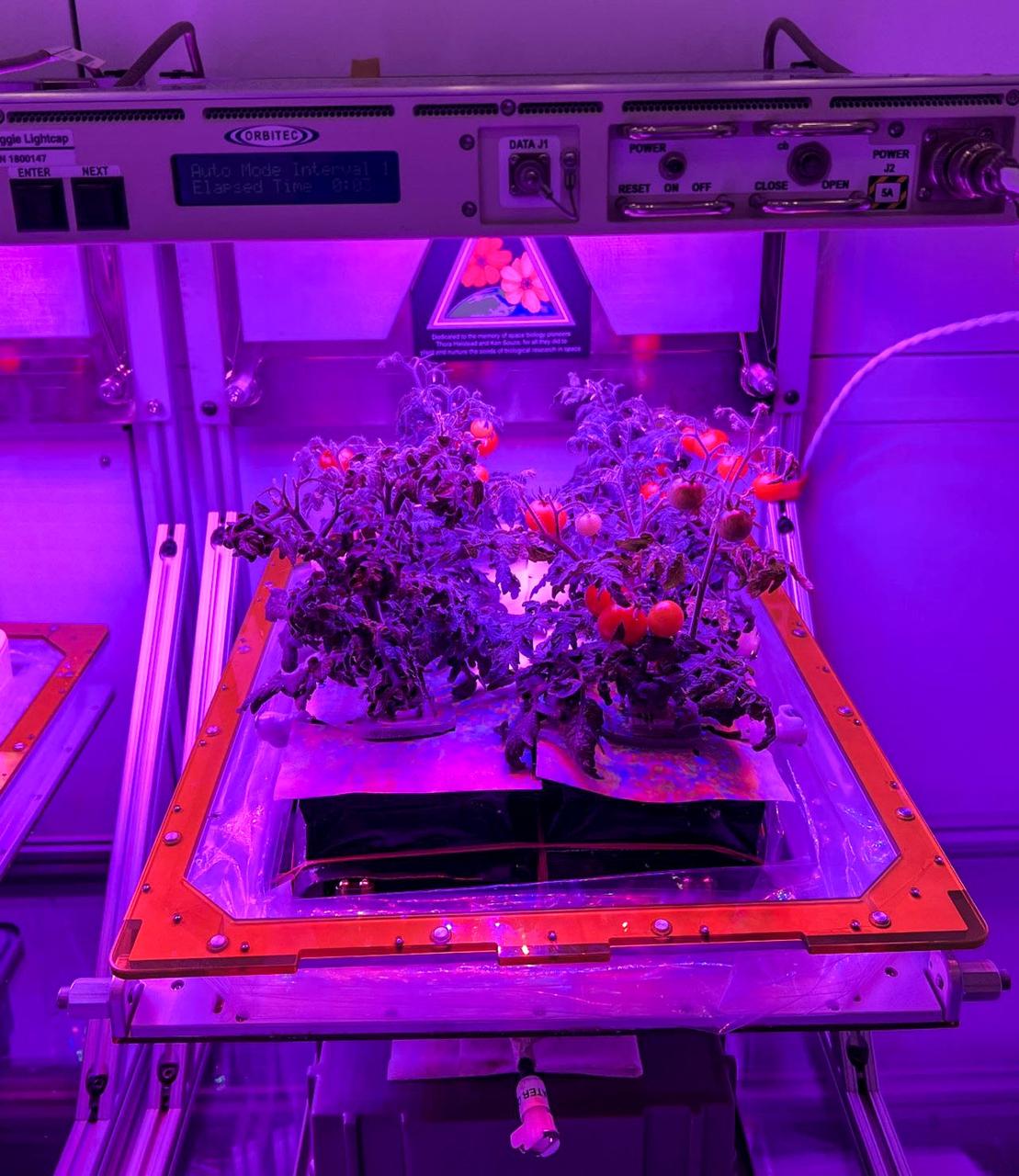
jsc2022e072972 (9/22/2022) --- A preflight view of ‘Red Robin’ dwarf tomato growing in growing in Veggie hardware at the Kennedy Space Center - part of Veg-05 experiment.

A close-up view of a zinnia flower grown in the Veggie Laboratory in the Space Station Processing Facility (SSPF) at NASA's Kennedy Space Center in Florida, on Nov. 27, 2018. Seeds from zinnias growing on the space station were returned to Earth. Researchers in the SSPF planted the seeds in the Veggie control unit and grew the colorful flowers.
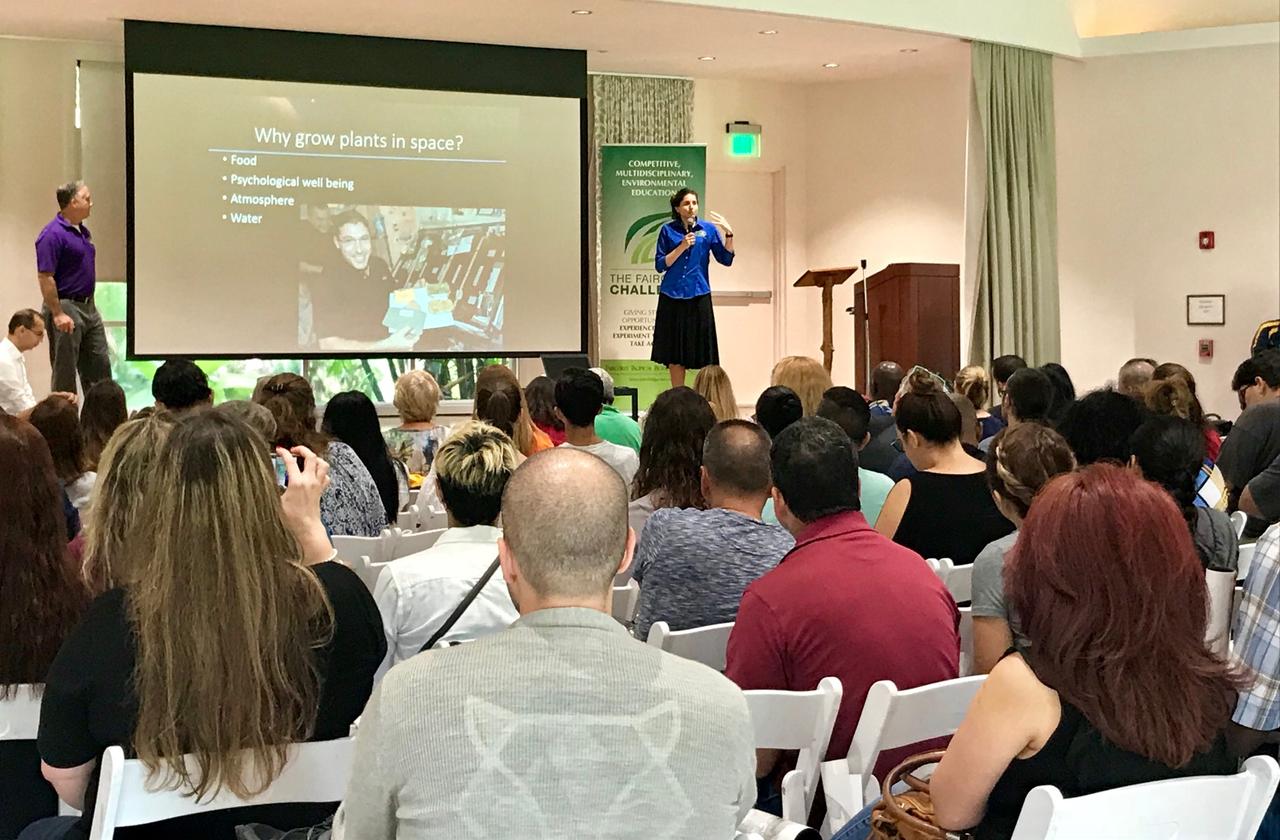
Kennedy scientists Trent Smith, left, and Dr. Gioia Massa speak to middle and high school teachers at Fairchild Tropical Botanic Garden in Miami during the kickoff of the 2017-2018 Fairchild Challenge-Growing Beyond Earth. More than 130 teachers gathered for the opening workshop, where they learned about food production in space and the Veggie hardware currently on the International Space Station. NASA has partnered with Fairchild to create this STEM-based challenge in which students will follow specific research protocols and analyze plant growth factors, flavor and nutrition, in order to help NASA choose the next crops for astronauts to grow aboard the station.
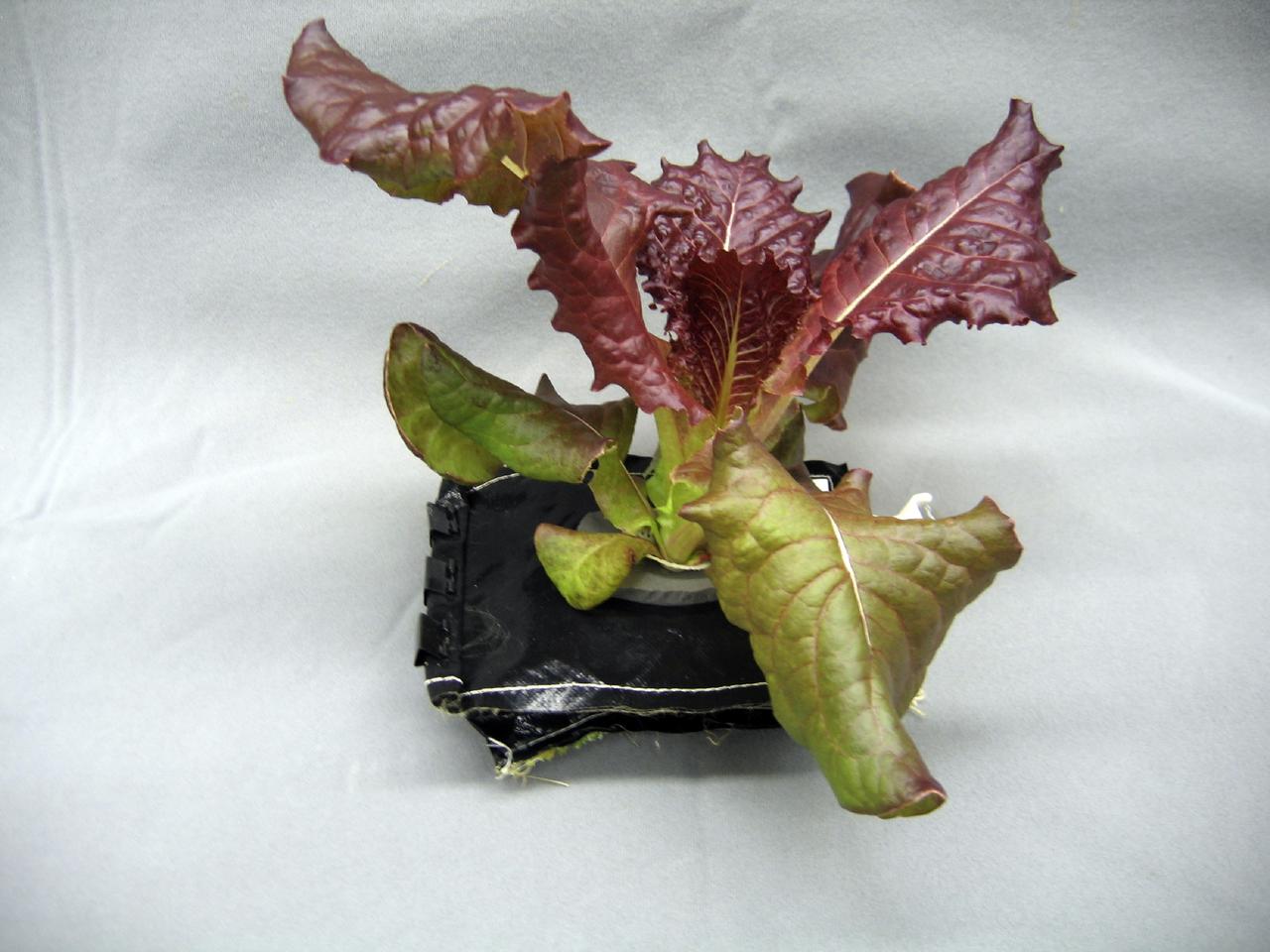
CAPE CANAVERAL, Fla. – A 28-day-old Outredgeous red romaine lettuce plant grows in a prototype VEGGIE flight pillow. U.S. astronauts living and working aboard the International Space Station are going to receive a newly developed Vegetable Production System VEGGIE. VEGGIE is set to launch aboard SpaceX's Dragon capsule on NASA's third Commercial Resupply Services mission targeted to launch Dec. 9 from Space Launch Complex 40 at Cape Canaveral Air Force Station in Florida. Photo credit: NASA/Gioia Massa
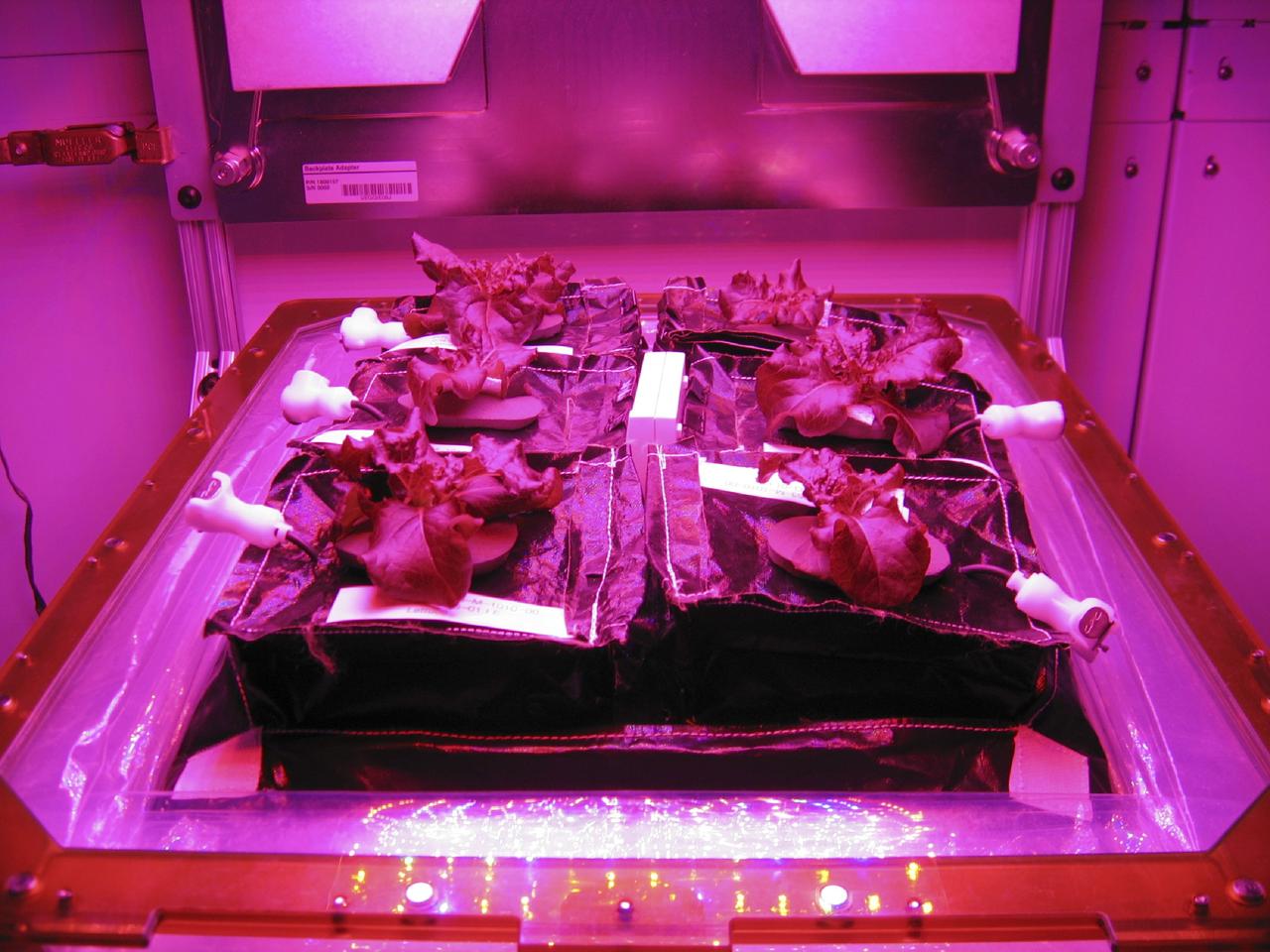
CAPE CANAVERAL, Fla. –Outredgeous red romaine lettuce plants grow inside in a prototype VEGGIE flight pillow. The bellows of the hardware have been lowered to better observe the plants. A small temperature and relative humidity data logger is placed between the pillows small white box, central. U.S. astronauts living and working aboard the International Space Station are going to receive a newly developed Vegetable Production System VEGGIE. VEGGIE is set to launch aboard SpaceX's Dragon capsule on NASA's third Commercial Resupply Services mission targeted to launch Dec. 9 from Space Launch Complex 40 at Cape Canaveral Air Force Station in Florida. Photo credit: NASA/Gioia Massa
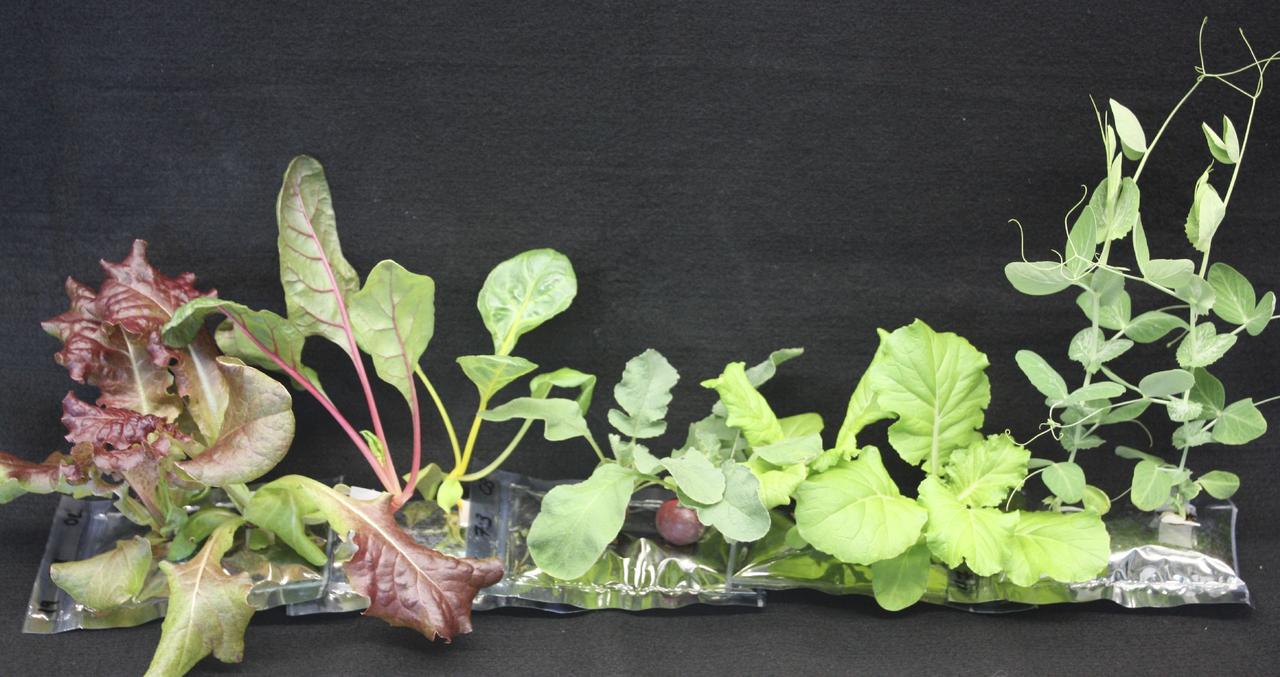
CAPE CANAVERAL, Fla. – Several different types of 21-day-old plants grow in analog VEGGIE pillows include, from right, Outredgeous red romaine lettuce, Bright Lights Swiss chard, Cherry Bomb II radish, Tokyo Bekana Chinese cabbage and Sugar Pod II snow pea. U.S. astronauts living and working aboard the International Space Station are going to receive a newly developed Vegetable Production System VEGGIE. VEGGIE is set to launch aboard SpaceX's Dragon capsule on NASA's third Commercial Resupply Services mission targeted to launch Dec. 9 from Space Launch Complex 40 at Cape Canaveral Air Force Station in Florida. Photo credit: NASA/Gioia Massa