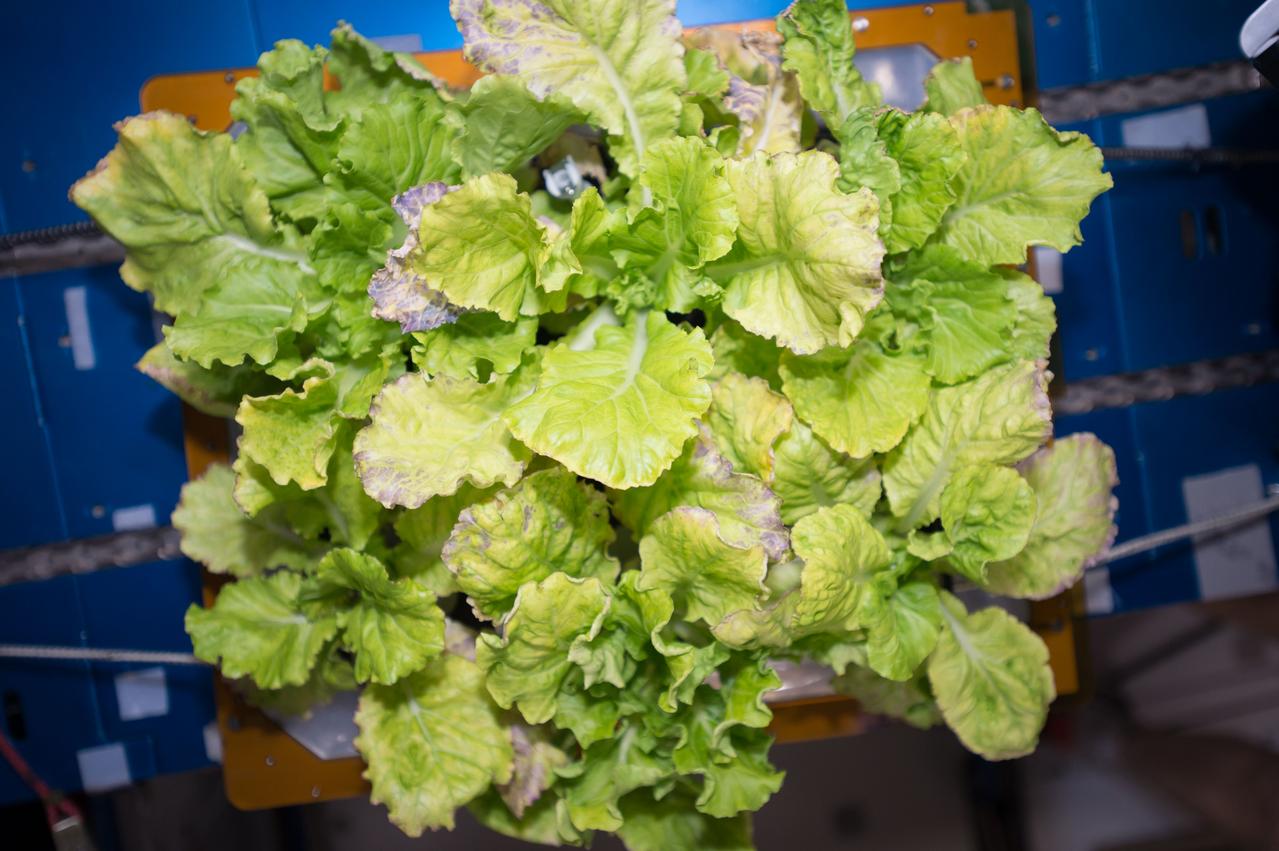
View of cabbage plants in the Vegetable Production System (Veggie) bellows, with the bellows secured to the Maintenance Work Area (MWA) in the Harmony Node 2. Image was taken during final harvesting operations (OPS) for the Veg-03 experiment.
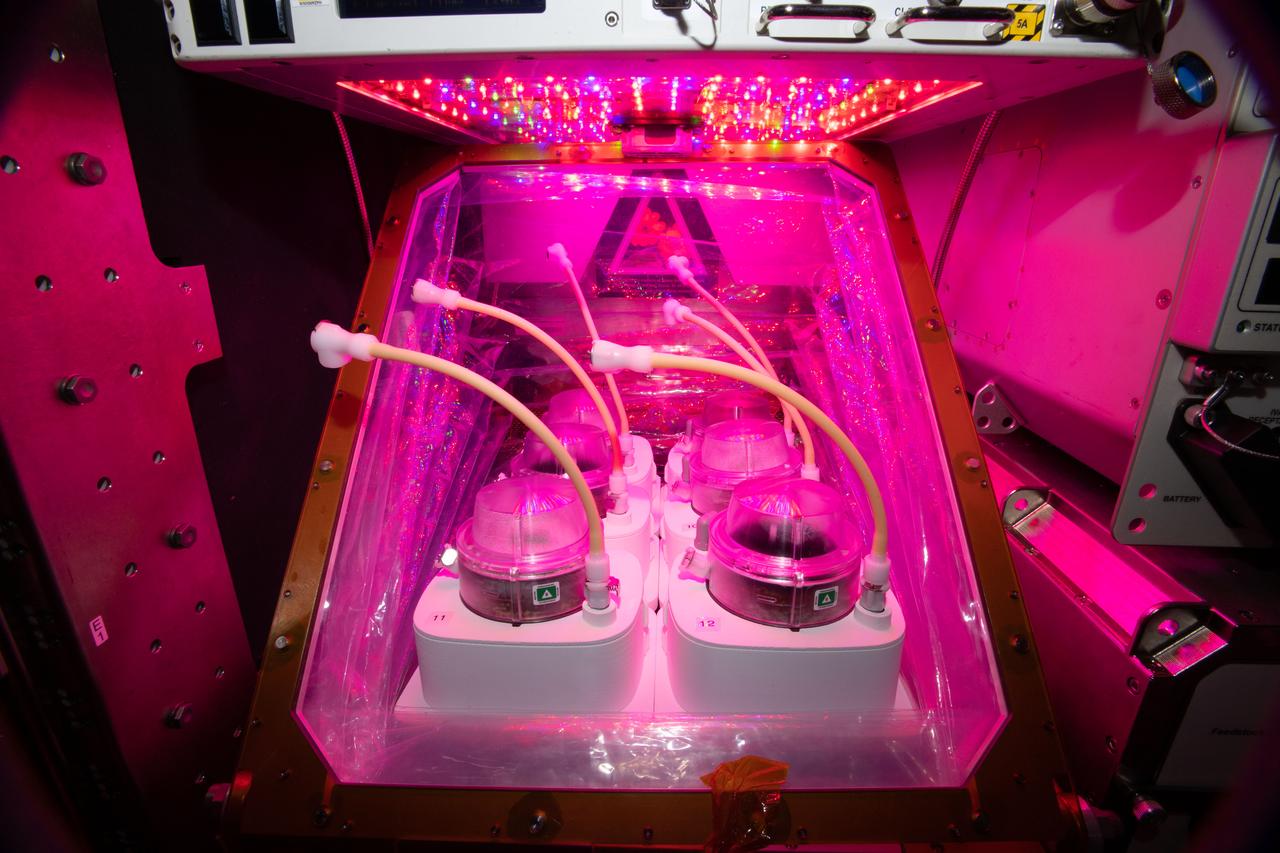
iss062e112685 (3/25/2020) --- Documentation of the Veggie Ponds Modules while module is in Veggie Bellows. Veggie PONDS uses a newly developed passive nutrient delivery system and the Veggie plant growth facility aboard the International Space Station (ISS) to cultivate lettuce and mizuna greens which are to be harvested on-orbit, and consumed, with samples returned to Earth for analysis.
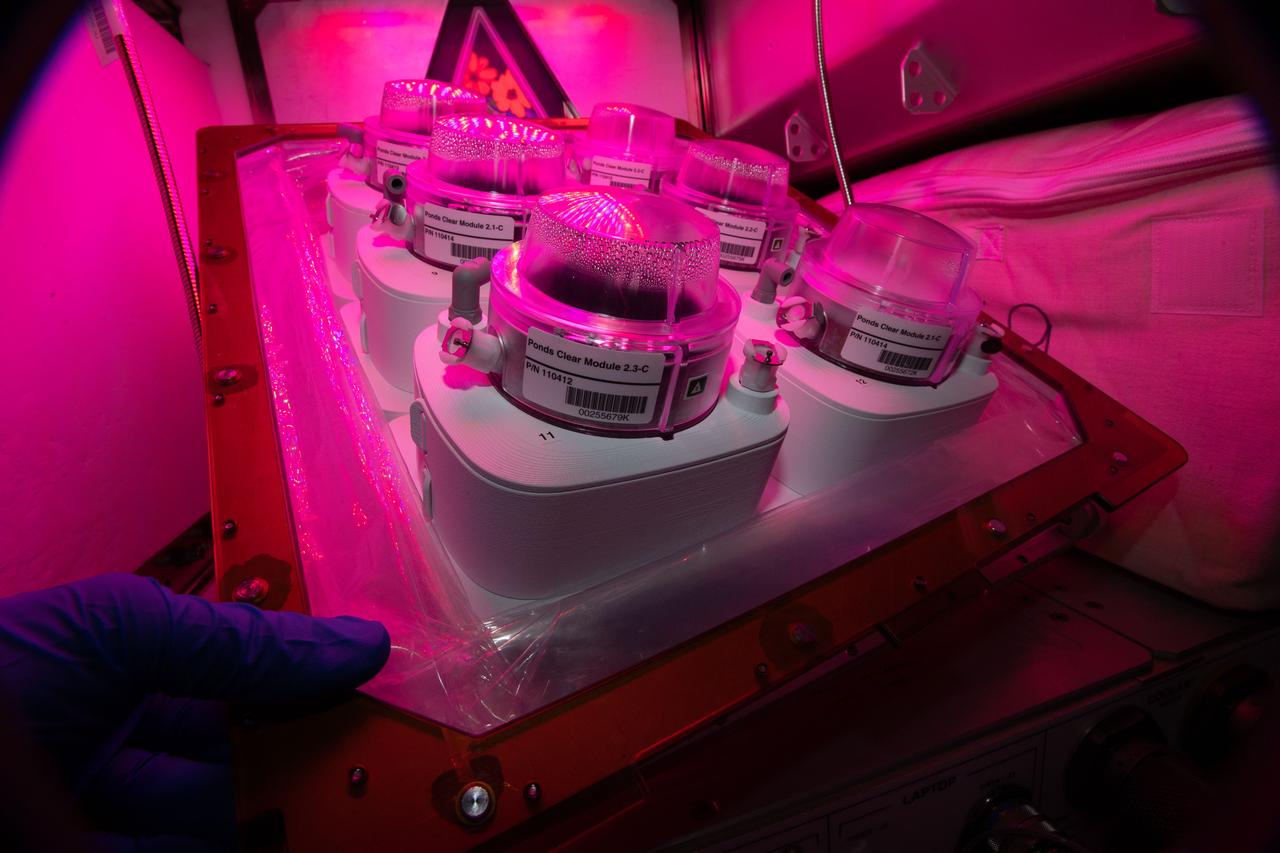
iss059e035838 (4/28/2019) --- Documentation taken during removal of Germination Cap from each Veggie Ponds Module while module is in Veggie Bellows. Veggie PONDS uses a newly developed passive nutrient delivery system and the Veggie plant growth facility aboard the International Space Station (ISS) to cultivate lettuce and mizuna greens which are to be harvested on-orbit, and consumed, with samples returned to Earth for analysis.
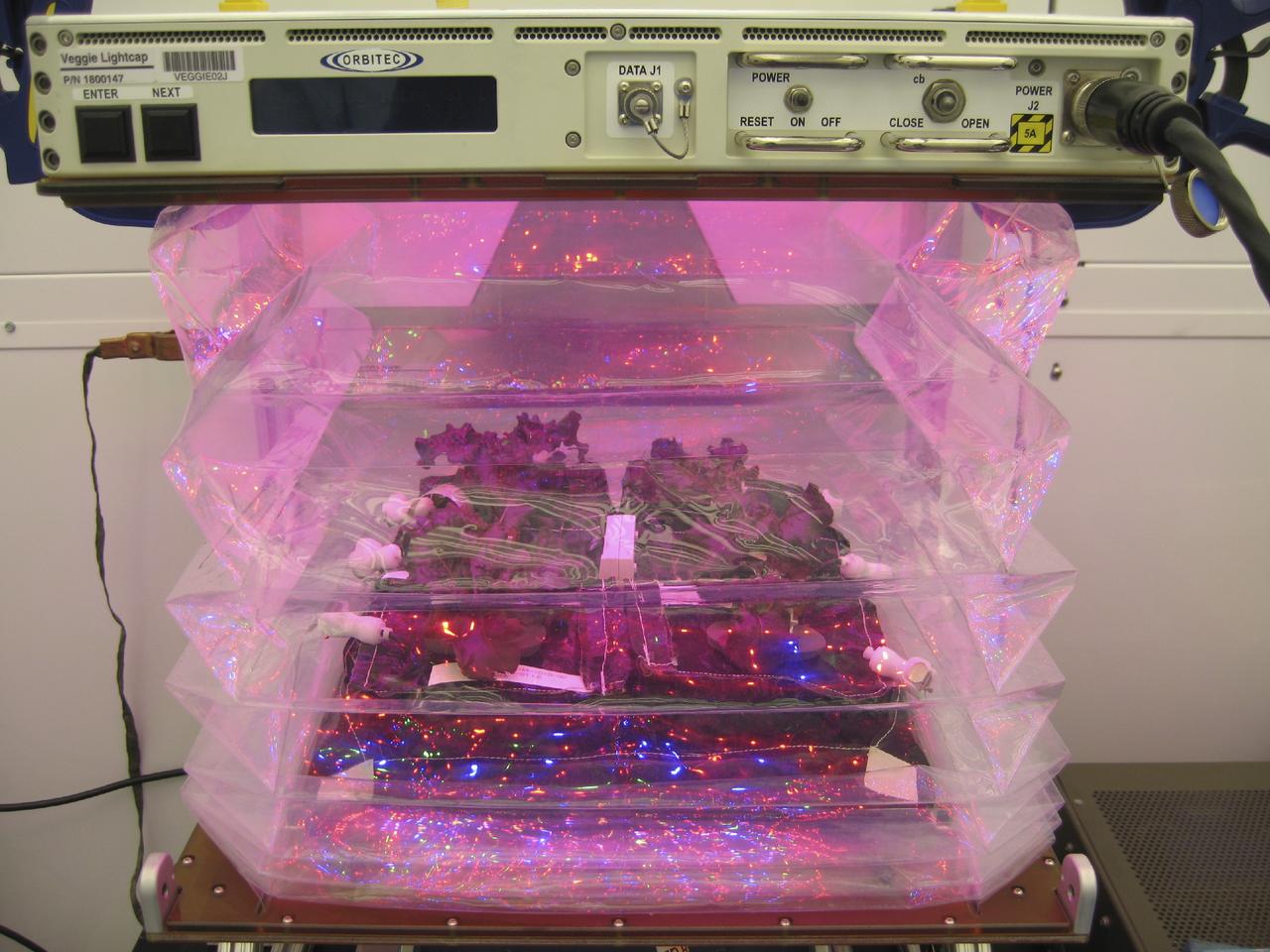
CAPE CANAVERAL, Fla. – Outredgeous red romaine lettuce plants grow inside the bellows of a prototype VEGGIE flight pillow. U.S. astronauts living and working aboard the International Space Station are going to receive a newly developed Vegetable Production System VEGGIE. VEGGIE is set to launch aboard SpaceX's Dragon capsule on NASA's third Commercial Resupply Services mission targeted to launch Dec. 9 from Space Launch Complex 40 at Cape Canaveral Air Force Station in Florida. Photo credit: NASA/Bryan Onate
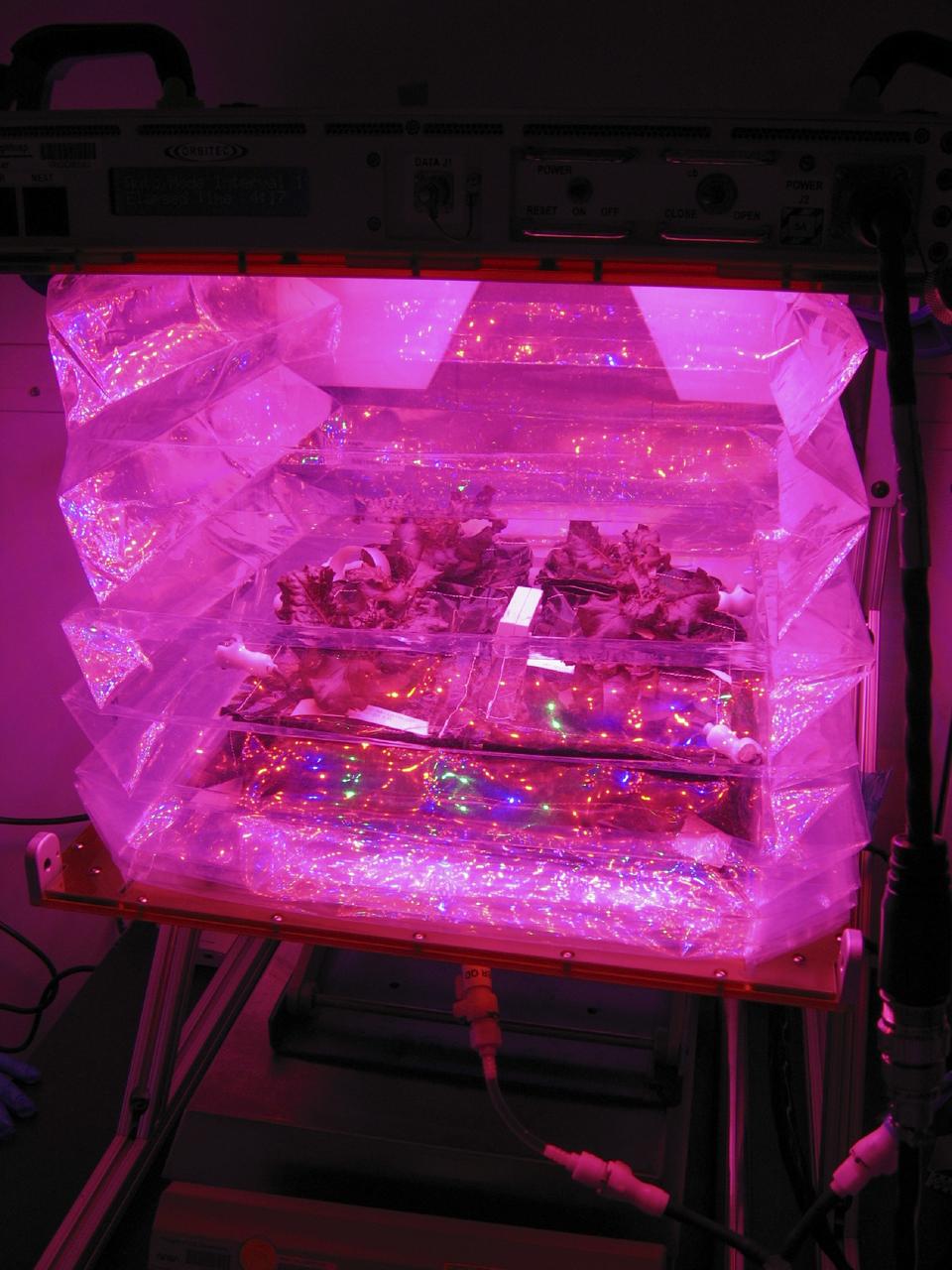
CAPE CANAVERAL, Fla. –Outredgeous red romaine lettuce plants grow inside the bellows of a prototype VEGGIE flight pillow. U.S. astronauts living and working aboard the International Space Station are going to receive a newly developed Vegetable Production System VEGGIE. VEGGIE is set to launch aboard SpaceX's Dragon capsule on NASA's third Commercial Resupply Services mission targeted to launch Dec. 9 from Space Launch Complex 40 at Cape Canaveral Air Force Station in Florida. Photo credit: NASA/Gioia Massa
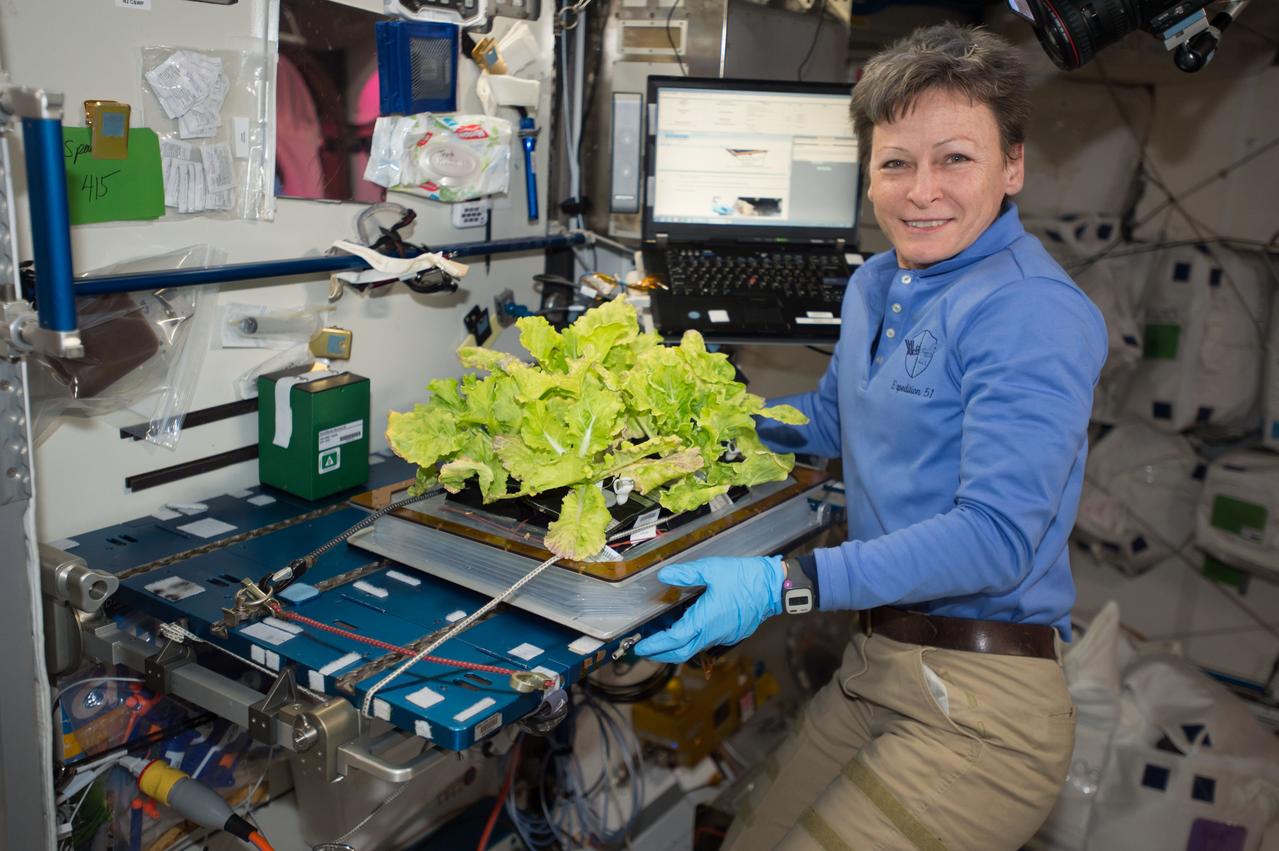
iss051e051923 (5/03/2017) --- NASA astronaut Peggy Whitson poses with cabbage plants in the Vegetable Production System (Veggie) bellows in the Harmony Node 2. Image was taken during final harvesting operations (OPS) for the Veg-03 experiment.
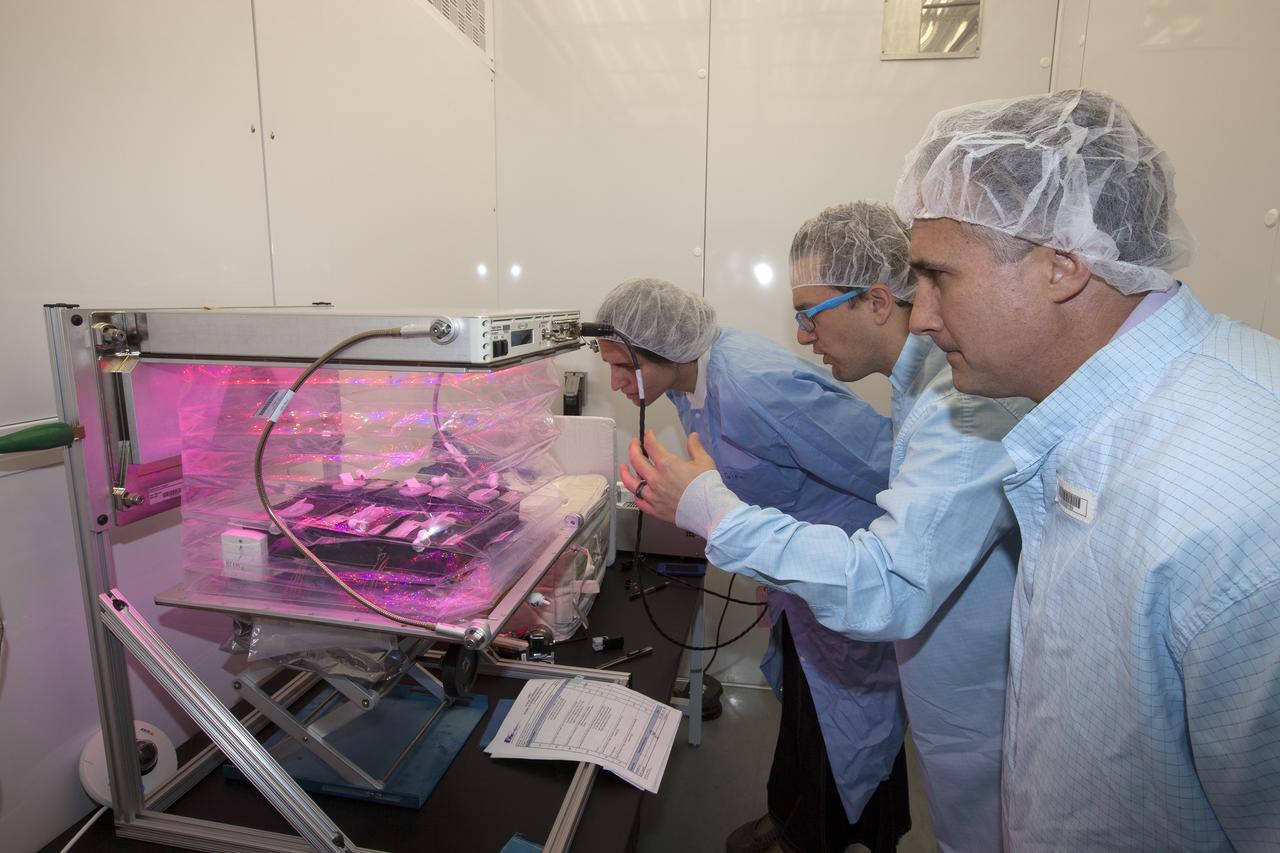
CAPE CANAVERAL, Fla. – The Veggie plant growth system has been activated inside a control chamber at the Space Station Processing Facility at NASA's Kennedy Space Center in Florida. The red, blue and green LED lights have been turned on and the root mat and plant pillows containing outredgeous red romaine lettuce seeds have been inserted into the chamber. The clear bellows have been expanded and secured. Checking the system are, from left, Gioia Massa, NASA payload scientist for Veggie, Gerard Newsham, Veggie payload support specialist with Jacobs Technology, and Trent Smith, NASA project manager. The growth chamber will be used as a control unit and procedures will be followed identical to those being performed on Veggie and the Veg-01 experiment on the International Space Station by Expedition 39 flight engineer and NASA astronaut Steve Swanson. Veggie and Veg-01 were delivered to the space station aboard the SpaceX-3 mission. Veggie is the first fresh food production system delivered to the station. Six plant pillows, each containing outredgeous red romaine lettuce seeds and a root mat were inserted into Veggie. The plant chamber's red, blue and green LED lights were activated. The plant growth will be monitored for 28 days. At the end of the cycle, the plants will be carefully harvested, frozen and stored for return to Earth. Photo credit: NASA/Dimitri Gerondidakis
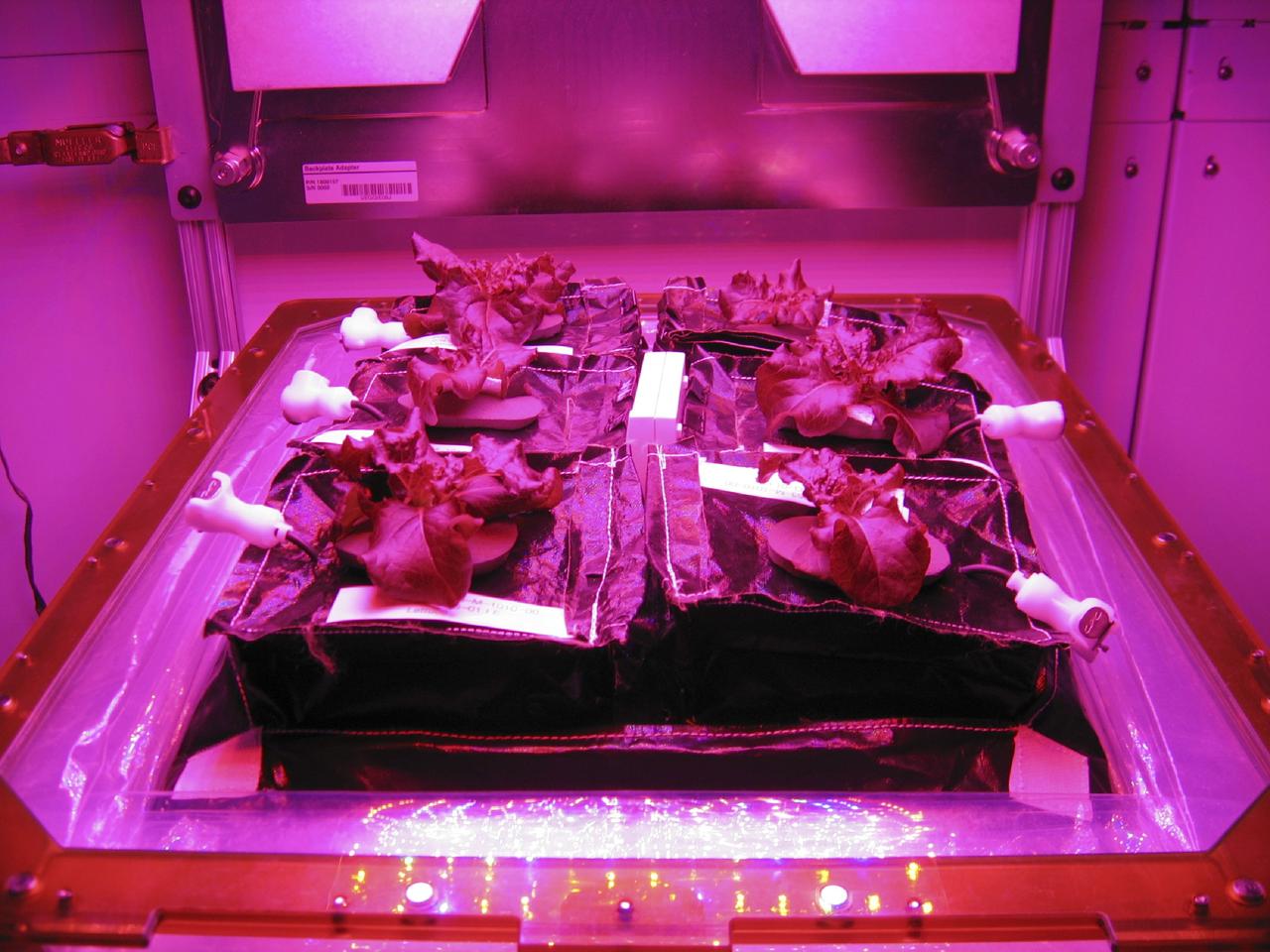
CAPE CANAVERAL, Fla. –Outredgeous red romaine lettuce plants grow inside in a prototype VEGGIE flight pillow. The bellows of the hardware have been lowered to better observe the plants. A small temperature and relative humidity data logger is placed between the pillows small white box, central. U.S. astronauts living and working aboard the International Space Station are going to receive a newly developed Vegetable Production System VEGGIE. VEGGIE is set to launch aboard SpaceX's Dragon capsule on NASA's third Commercial Resupply Services mission targeted to launch Dec. 9 from Space Launch Complex 40 at Cape Canaveral Air Force Station in Florida. Photo credit: NASA/Gioia Massa
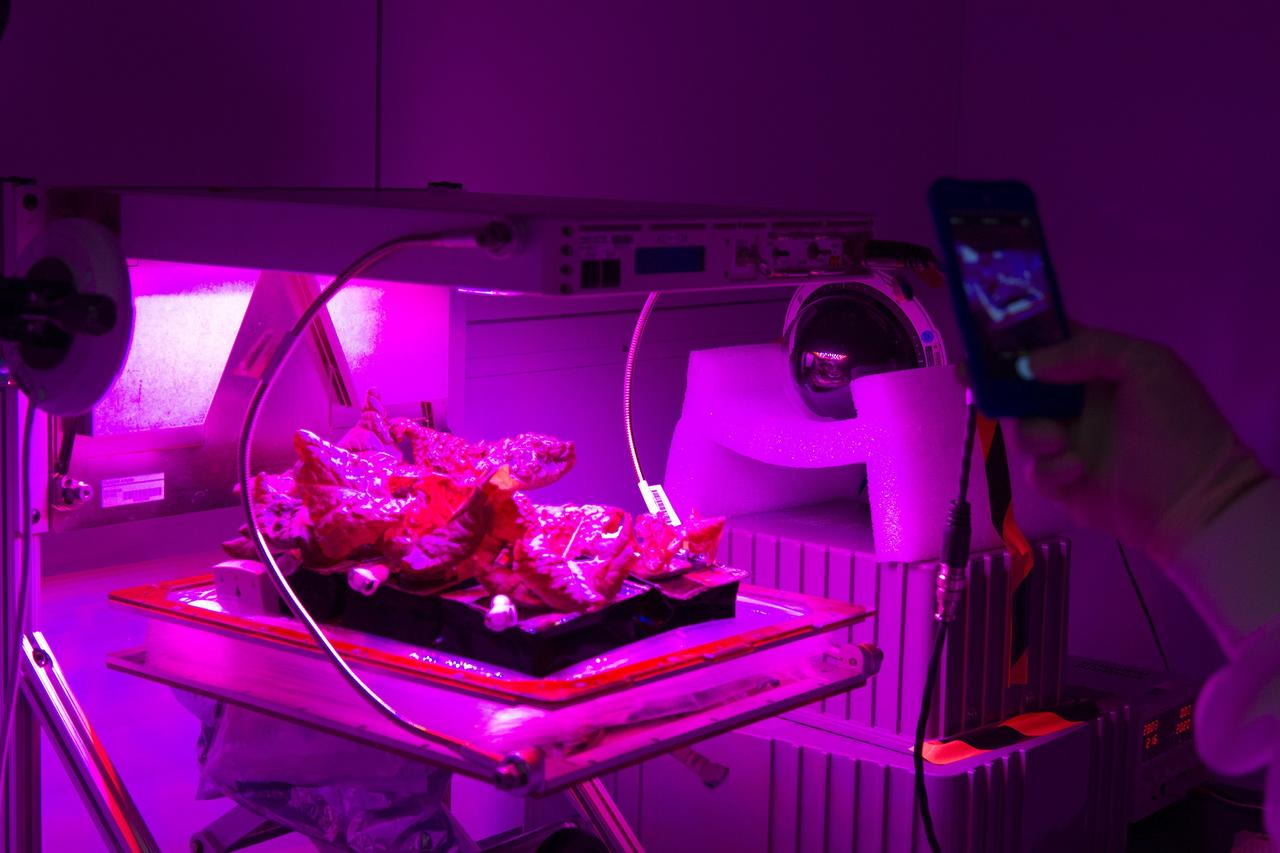
CAPE CANAVERAL, Fla. – Inside the International Space Station Environmental Simulator chamber at the Space Station Processing Facility at NASA's Kennedy Space Center in Florida, the bellows has been removed from around the Veggie plant growth system so that the plant pillows containing the outredgeous red lettuce leaves can be removed. The growth chamber was used as a control unit and procedures were followed identical to those being performed on Veggie and the Veg-01 experiment on the International Space Station. The chamber mimicked the temperature, relative humidity and carbon dioxide concentration of those in the Veggie unit on the space station. Veggie and Veg-01 were delivered to the space station aboard the SpaceX-3 mission. Veggie is the first fresh food production system delivered to the station. Six plant pillows, each containing outredgeous red romaine lettuce seeds and a root mat were inserted into Veggie. The plant chamber's red, blue and green LED lights were activated. The plant growth was monitored for 33 days. On June 10, at the end of the cycle, the plants were carefully harvested, frozen and stored for return to Earth by Expedition 39 flight engineer and NASA astronaut Steve Swanson. Photo credit: NASA/Frankie Martin

CAPE CANAVERAL, Fla. – Inside the International Space Station Environmental Simulator chamber at the Space Station Processing Facility at NASA's Kennedy Space Center in Florida, Jim Smodell, a technician with SGT, prepares to remove the bellows from the Veggie plant growth system containing the outredgeous red lettuce leaves. The growth chamber was used as a control unit and procedures were followed identical to those being performed on Veggie and the Veg-01 experiment on the International Space Station. The chamber mimicked the temperature, relative humidity and carbon dioxide concentration of those in the Veggie unit on the space station. Veggie and Veg-01 were delivered to the space station aboard the SpaceX-3 mission. Veggie is the first fresh food production system delivered to the station. Six plant pillows, each containing outredgeous red romaine lettuce seeds and a root mat were inserted into Veggie. The plant chamber's red, blue and green LED lights were activated. The plant growth was monitored for 33 days. On June 10, at the end of the cycle, the plants were carefully harvested, frozen and stored for return to Earth by Expedition 39 flight engineer and NASA astronaut Steve Swanson. Photo credit: NASA/Frankie Martin
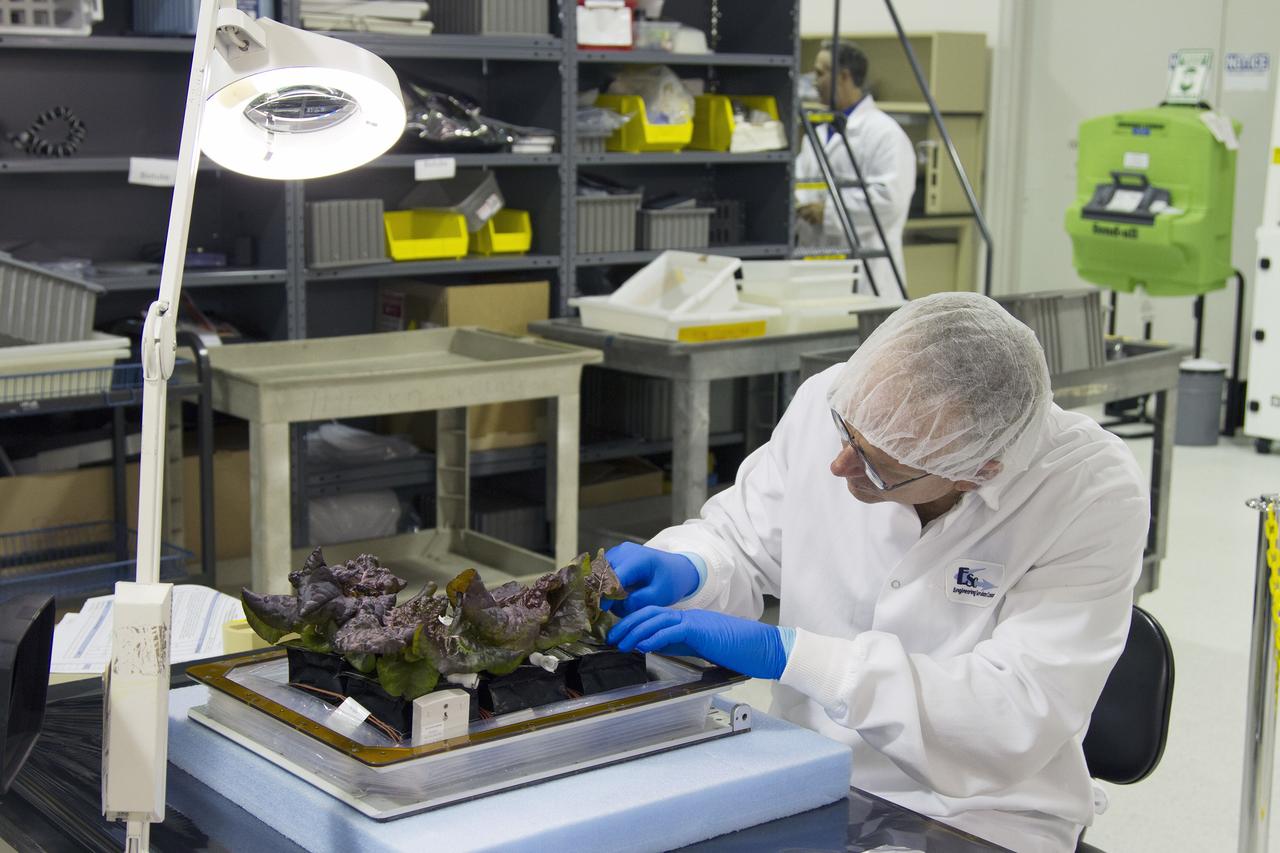
CAPE CANAVERAL, Fla. – Jim Smodell, a technician with SGT, removes an outredgeous red lettuce leaf from a plant pillow inside the Payload Development Laboratory at the Space Station Processing Facility, or SSPF, at NASA's Kennedy Space Center in Florida. The plant pillows were removed from the Veggie plant growth system inside a control chamber at the SSPF. The growth chamber was used as a control unit for Veggie and procedures were followed identical to those being performed on Veggie and the Veg-01 experiment on the International Space Station. The lettuce leaves will be wrapped and placed in a minus eighty-degree freezer, along with the plant pillows and samples swabbed from the plants, plant pillows and Veggie bellows. The chamber mimicked the temperature, relative humidity and carbon dioxide concentration of those in the Veggie unit on the space station. Veggie and Veg-01 were delivered to the space station aboard the SpaceX-3 mission. Veggie is the first fresh food production system delivered to the station. Six plant pillows, each containing outredgeous red romaine lettuce seeds and a root mat were inserted into Veggie. The plant chamber's red, blue and green LED lights were activated. The plant growth was monitored for 33 days. On June 10, at the end of the cycle, the plants were carefully harvested, frozen and stored for return to Earth by Expedition 39 flight engineer and NASA astronaut Steve Swanson. Photo credit: NASA/Frankie Martin
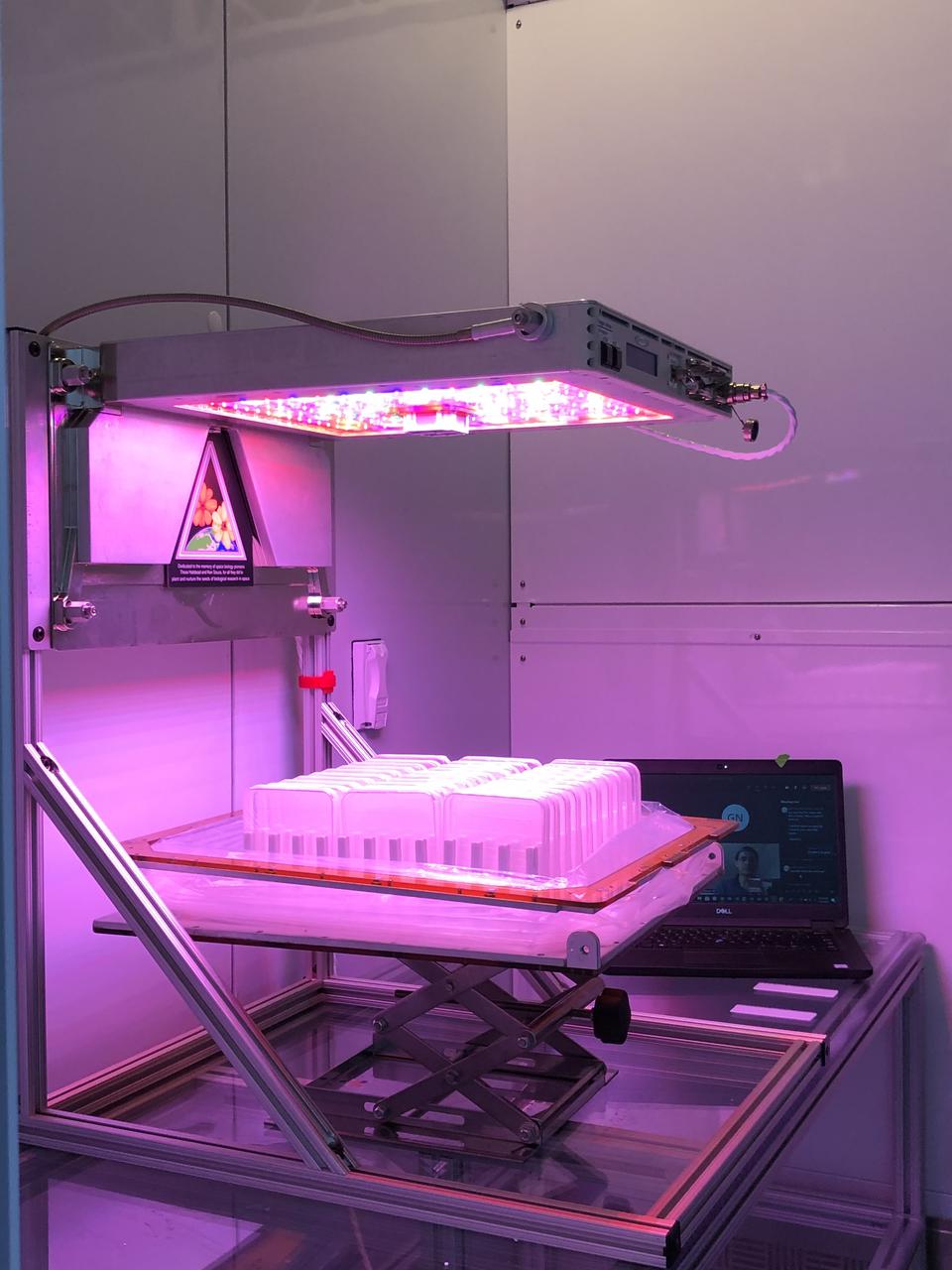
The Science Verification Test for NASA’s Advanced Plant Experiment-08 (APEX-08) testing Arabidopsis thaliana, a plant scientists routinely use for research, takes place inside the Veggie growth chamber at NASA’s Kennedy Space Center in Florida on Nov. 6, 2020. The test is part of the process for demonstrating readiness for space research ahead of its flight on SpaceX’s 23rd Commercial Resupply Services mission to the International Space Station. The APEX-08 study includes making genetic alterations that elicit a response in a group of organic compounds that modulate plant responses to environmental stress.
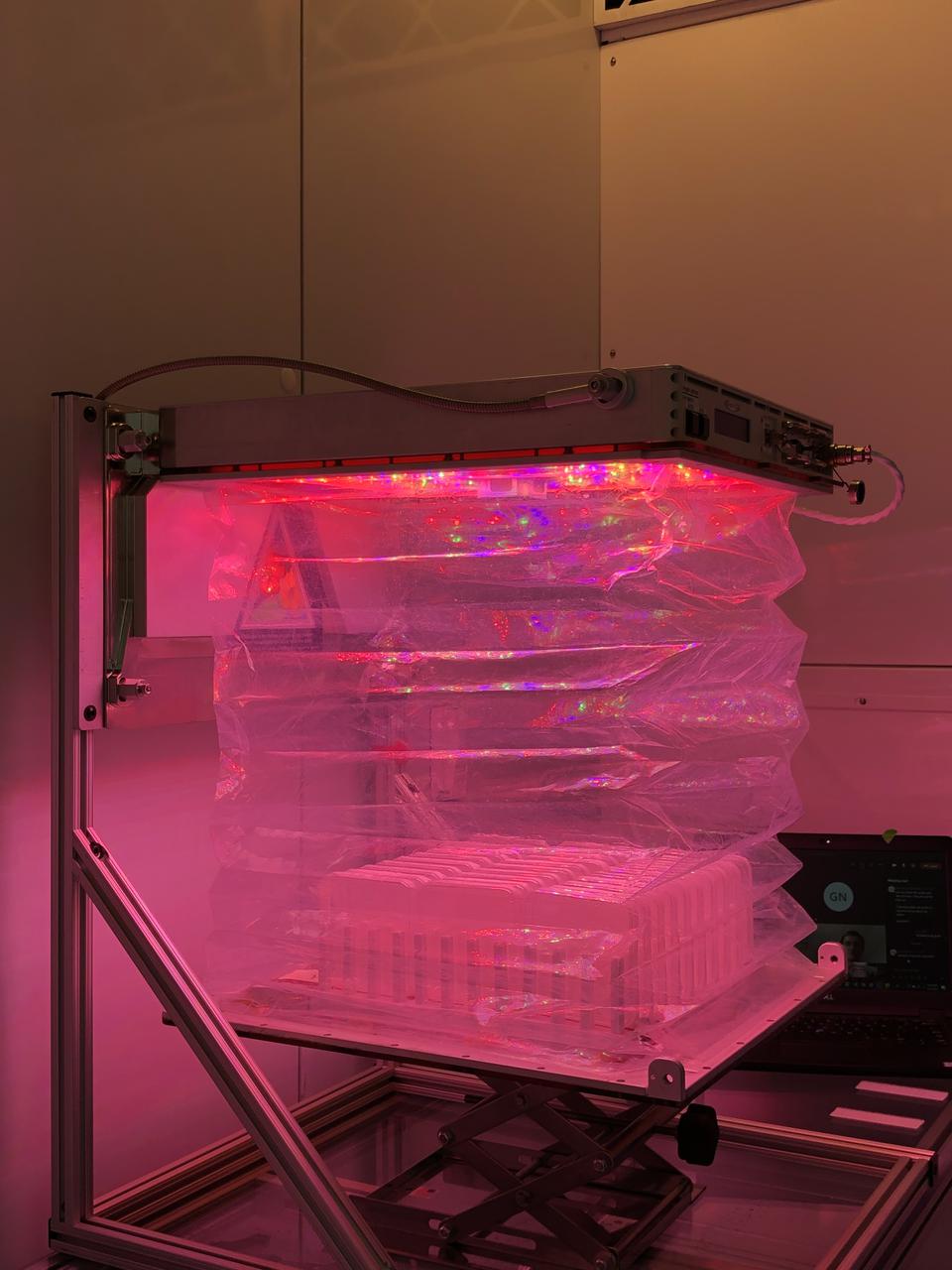
The Science Verification Test for NASA’s Advanced Plant Experiment-08 (APEX-08) testing Arabidopsis thaliana, a plant scientists routinely use for research, takes place inside the Veggie growth chamber at NASA’s Kennedy Space Center in Florida on Nov. 6, 2020. The test is part of the process for demonstrating readiness for space research ahead of its flight on SpaceX’s 23rd Commercial Resupply Services mission to the International Space Station. The APEX-08 study includes making genetic alterations that elicit a response in a group of organic compounds that modulate plant responses to environmental stress.