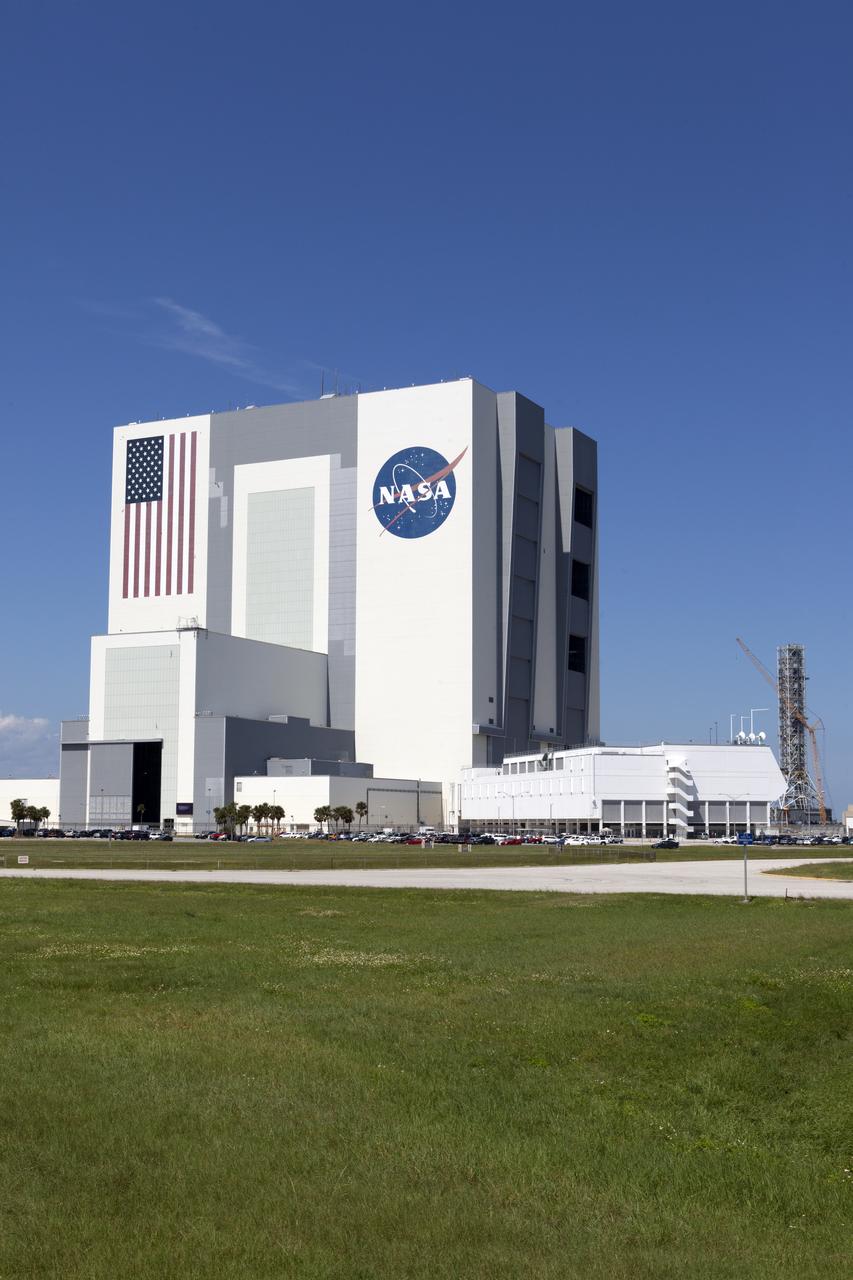
NASA's Vehicle Assembly Building at Kennedy Space Center in Florida was used to assemble and house American-crewed launch vehicles from 1968 to 2011. AT 3,684,883 cubic meters, it is one of the largest buildings in the world by volume. Inside the facility, High Bay 3 is being upgraded and modified to support processing of the agency's Space Launch System rocket and Orion spacecraft.
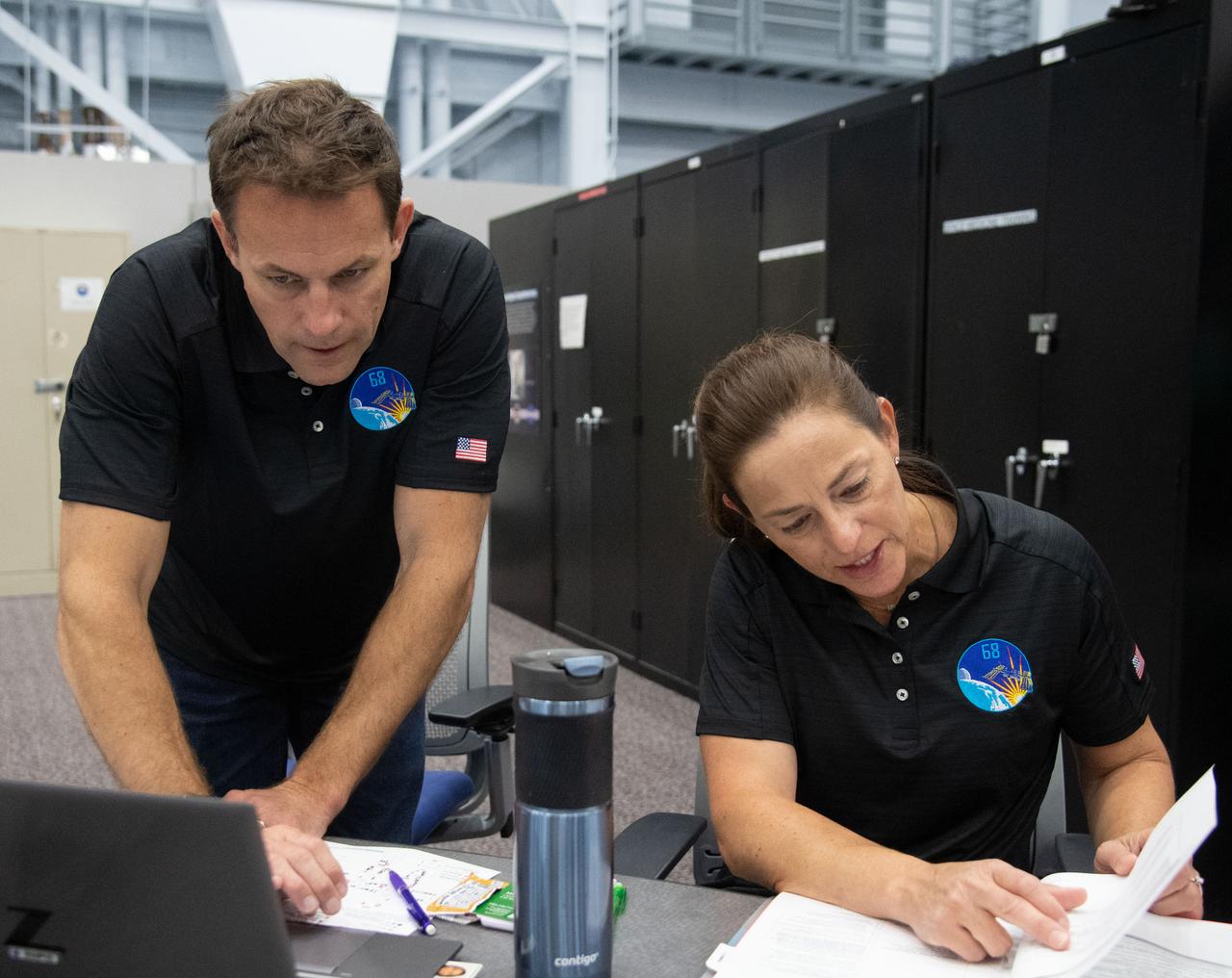
Expedition 68 crewmembers train for the unlikely event of an emergency by training inside a mockup that models the real orbiting lab at NASA's Johnson Space Center in Houston, Texas in preparation for their upcoming International Space Station mission. Credit: NASA/James Blair
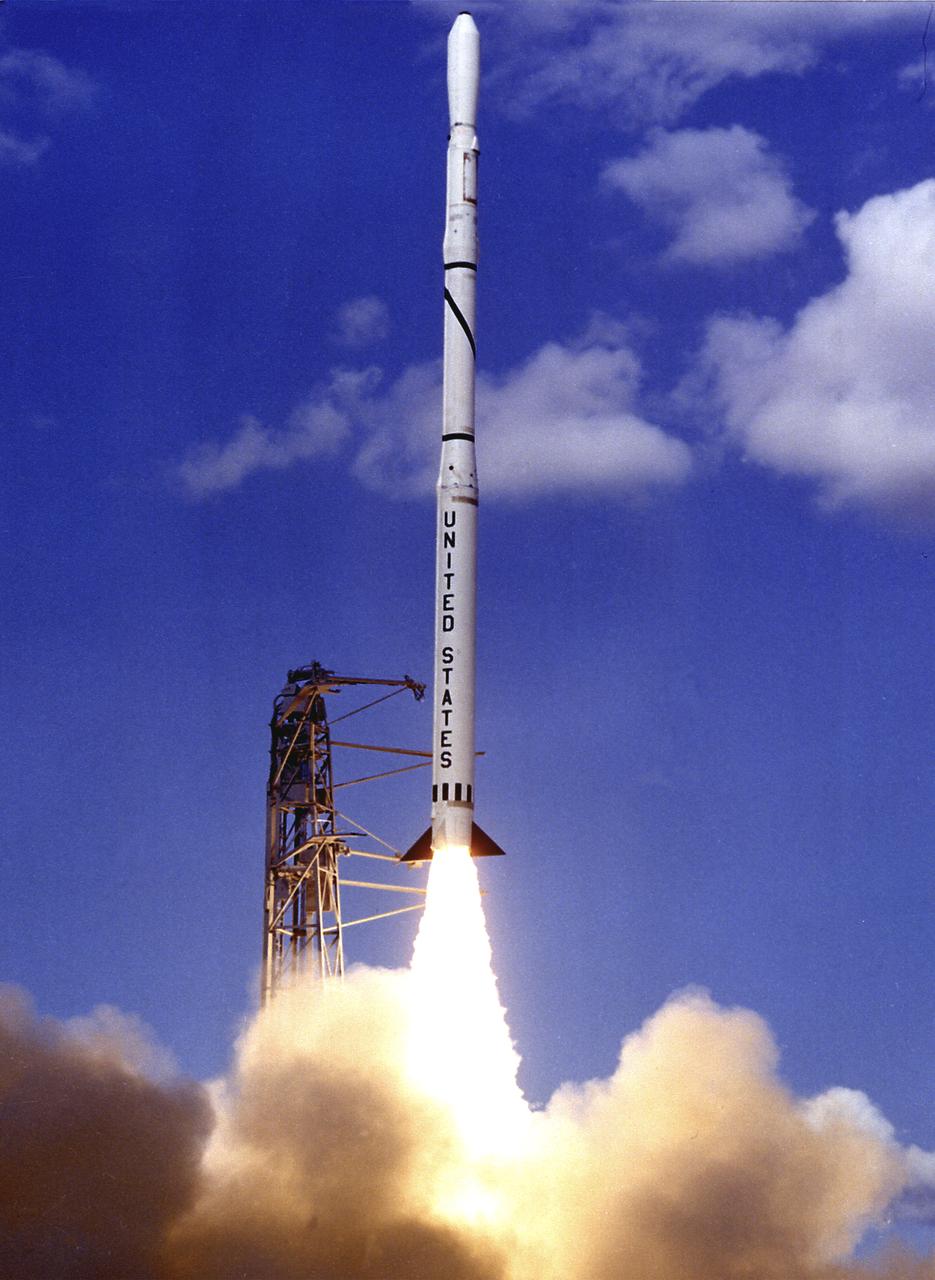
The launch of the Scout launch vehicle at the Wallops Flight Facility, VA
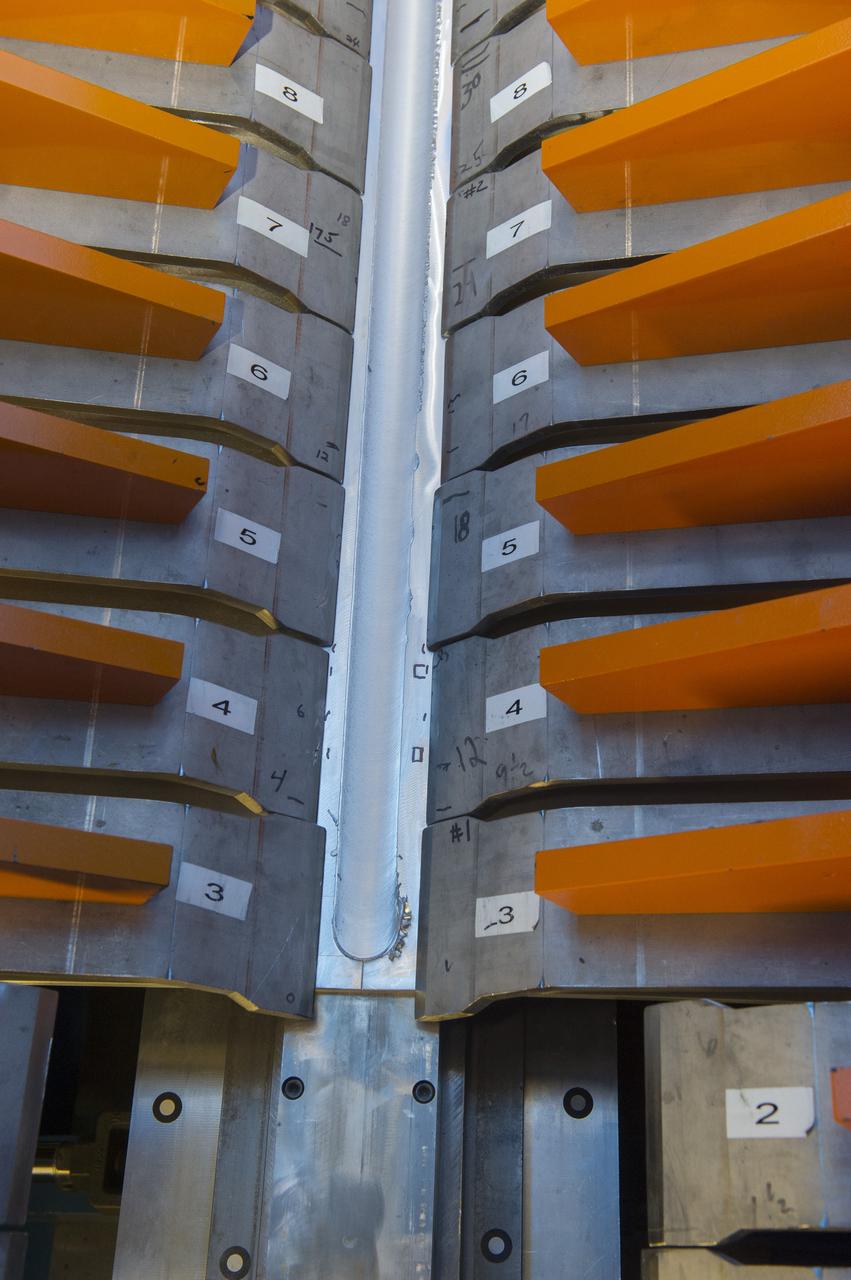
Launch Vehicle Stage Adapter Aft Cone Weld #1
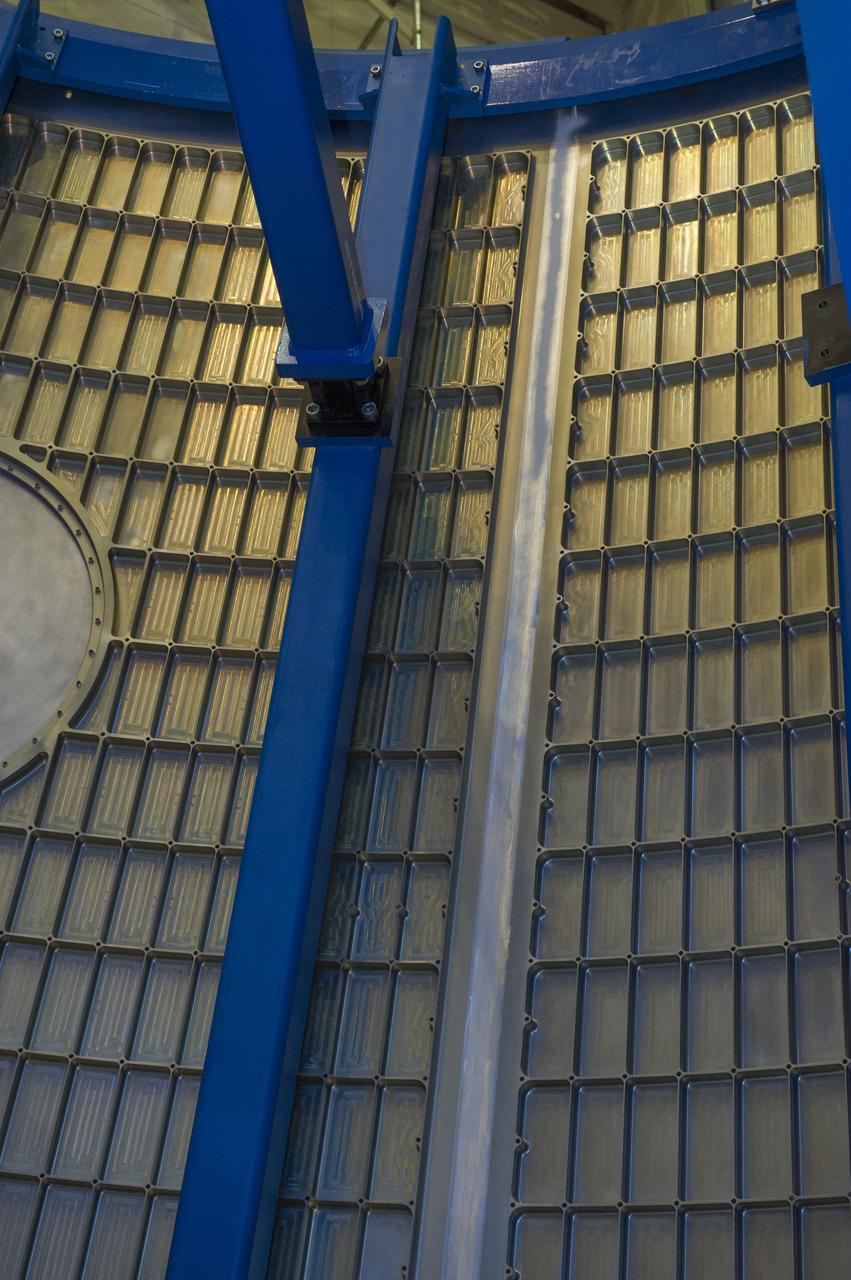
Launch Vehicle Stage Adapter Aft Cone Weld #1
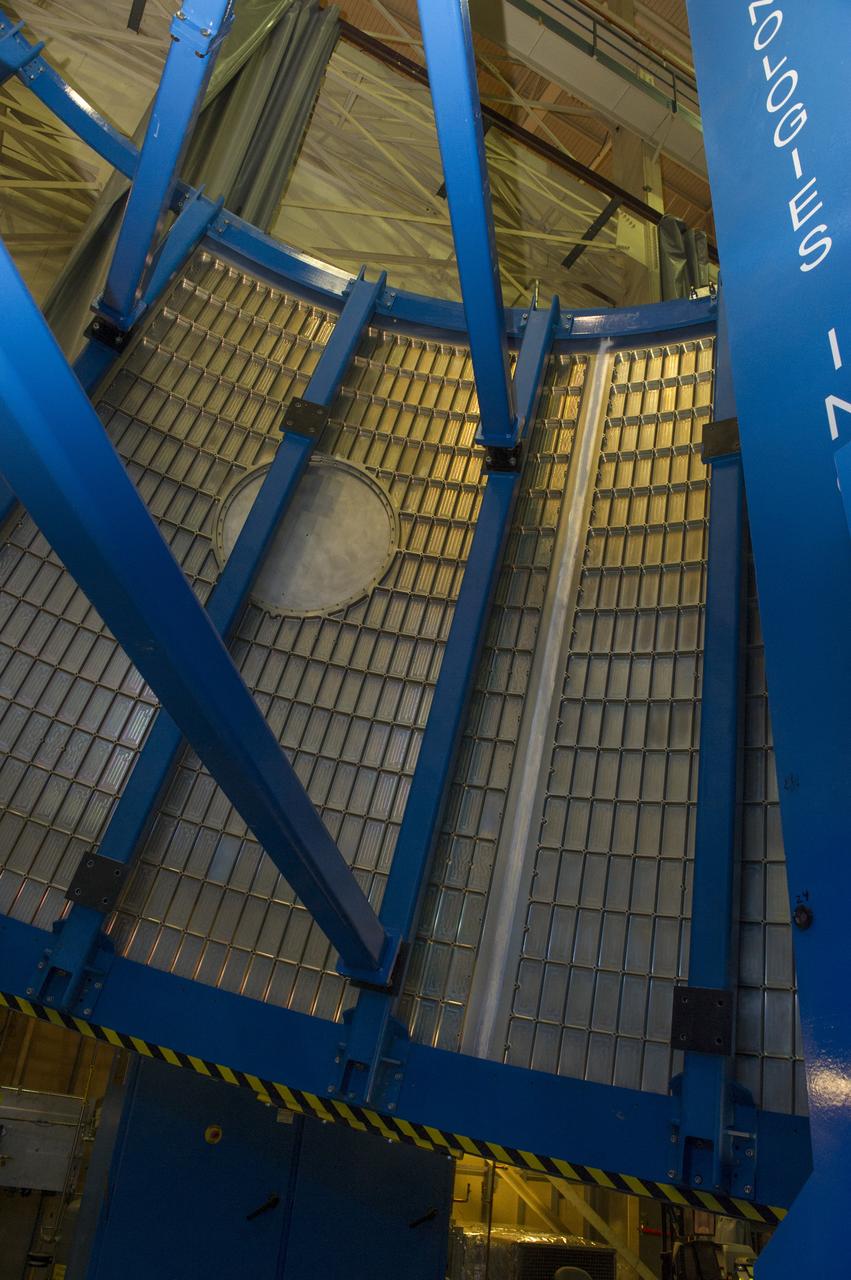
Launch Vehicle Stage Adapter Aft Cone Weld #1
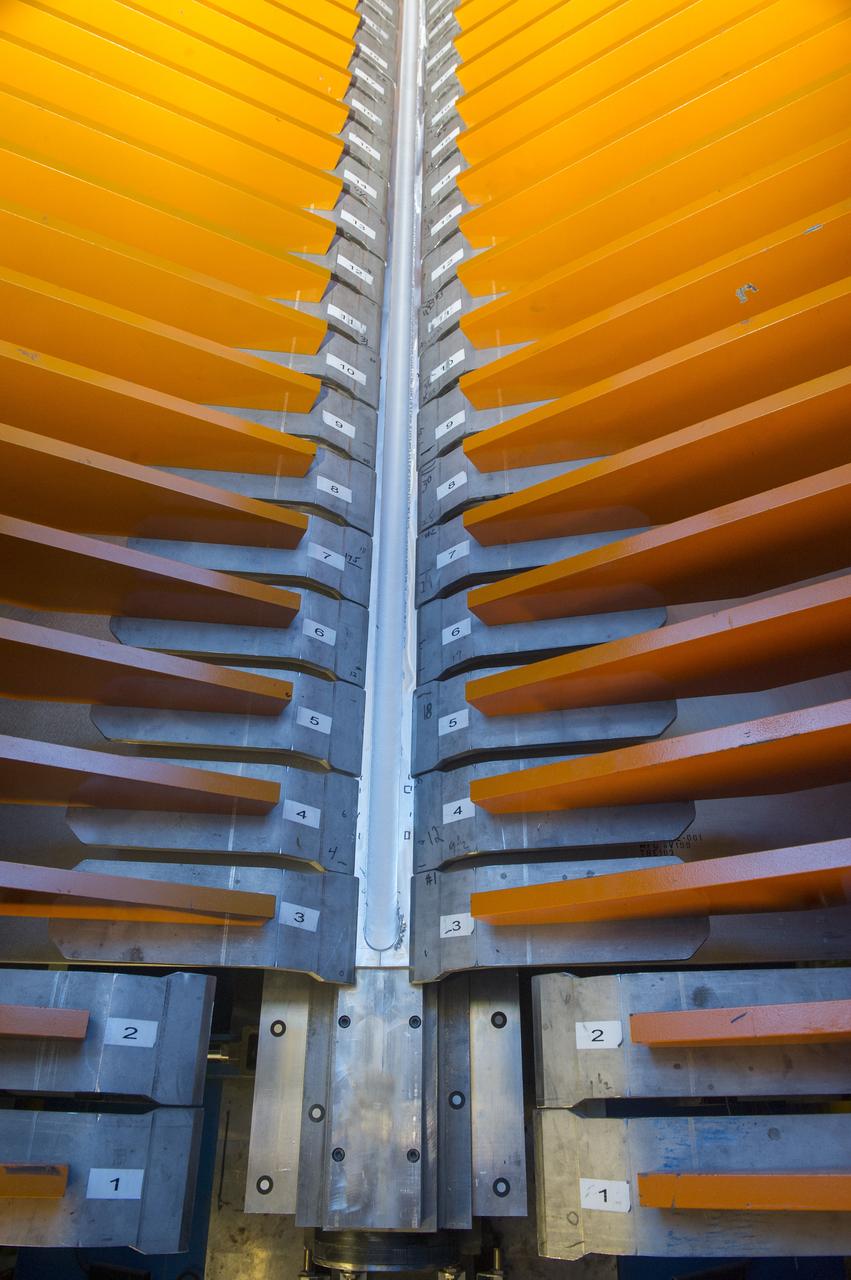
Launch Vehicle Stage Adapter Aft Cone Weld #1
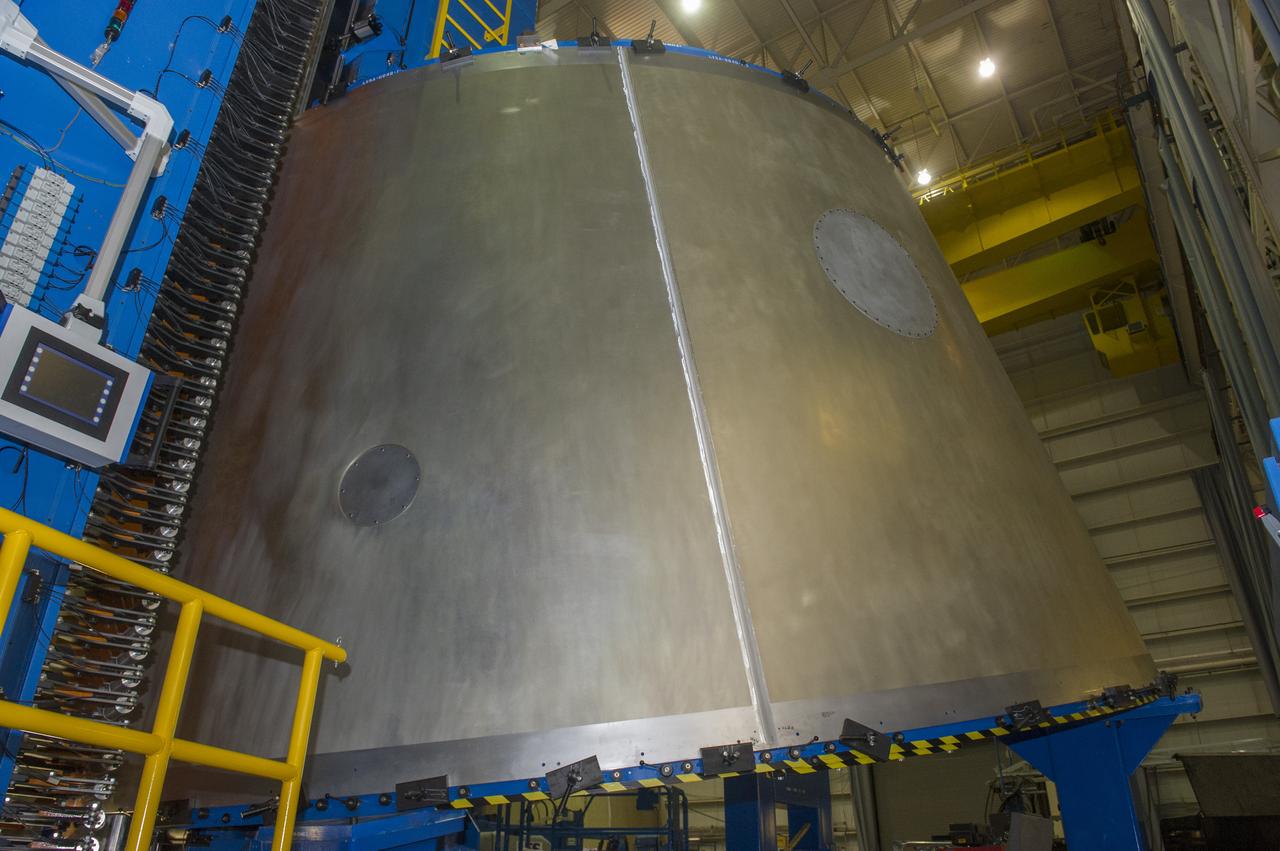
Launch Vehicle Stage Adapter Aft Cone Weld #1
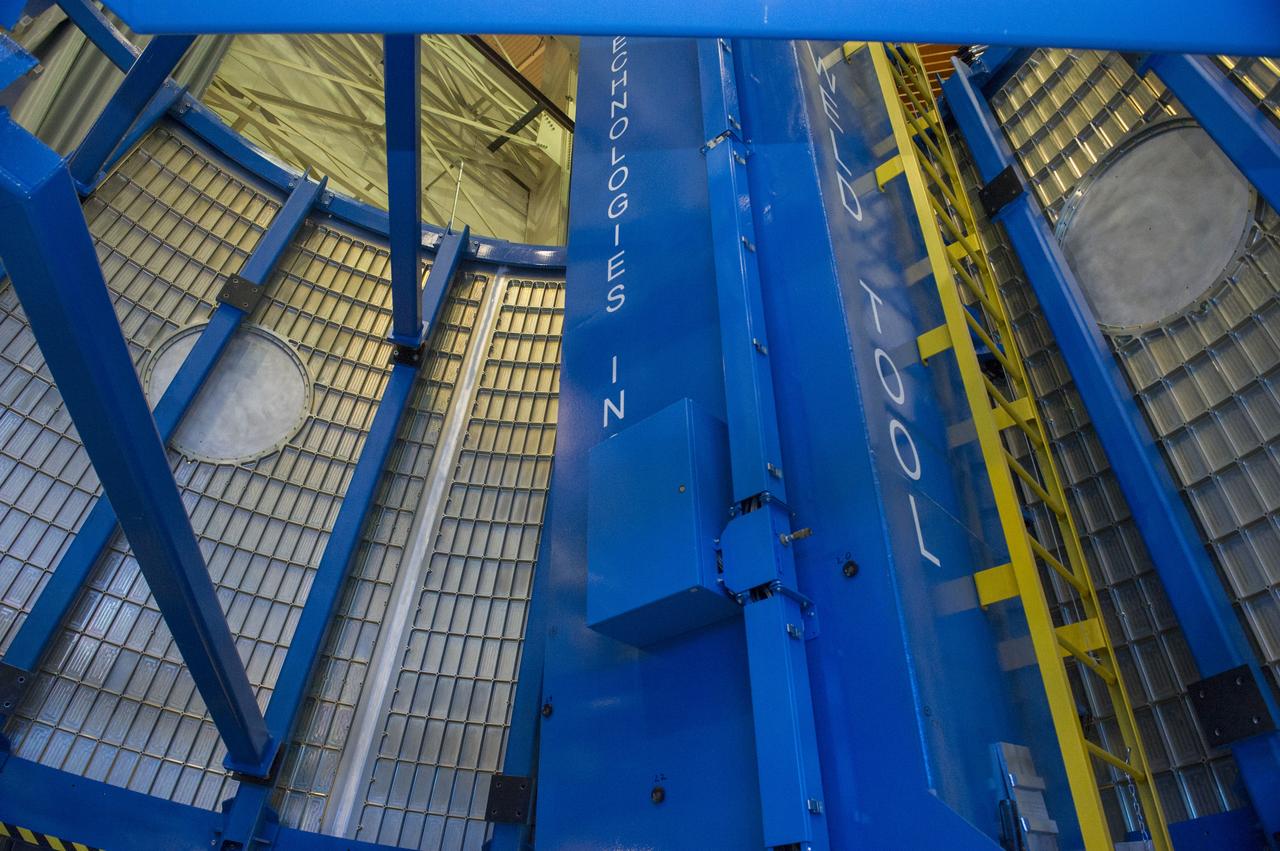
Launch Vehicle Stage Adapter Aft Cone Weld #1
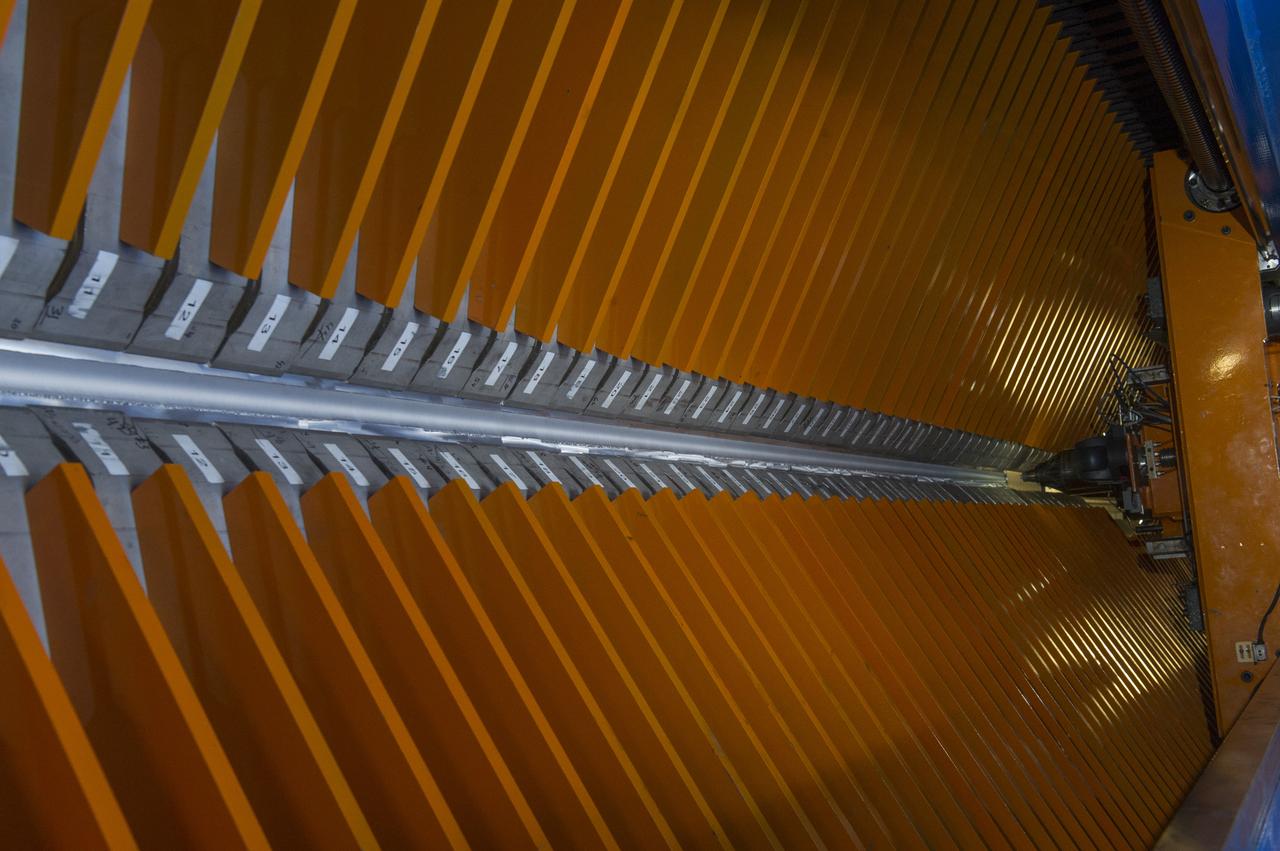
Launch Vehicle Stage Adapter Aft Cone Weld #1
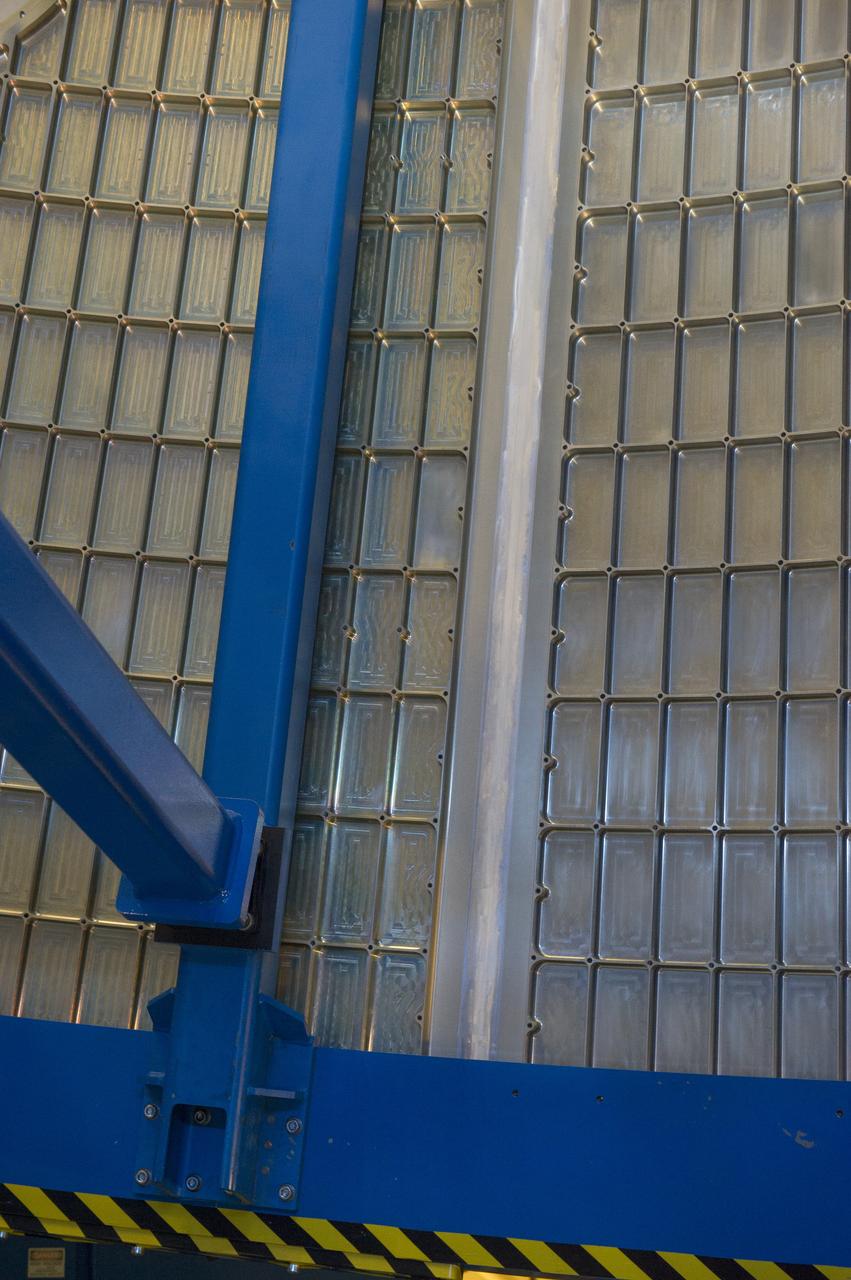
4619/160Launch Vehicle Stage Adapter Aft Cone Weld #1
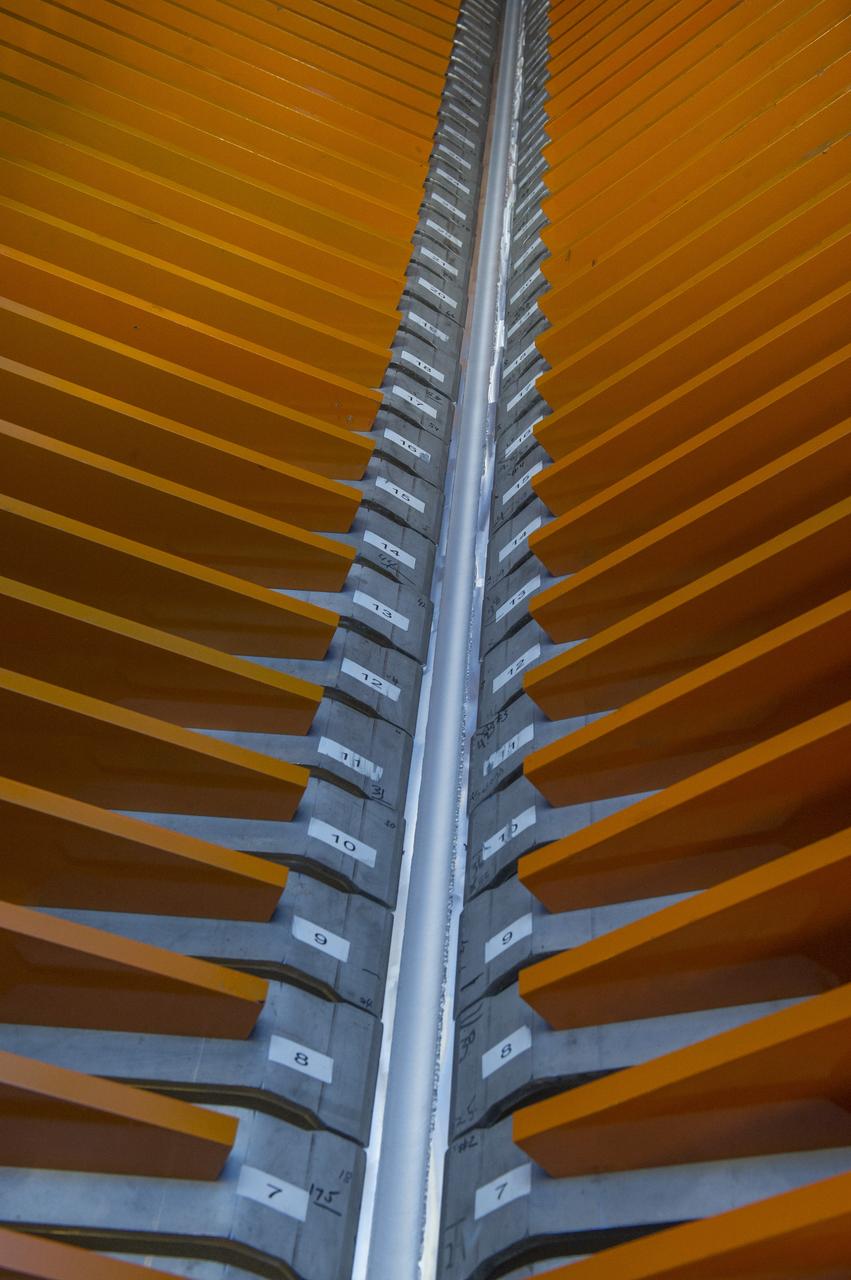
Launch Vehicle Stage Adapter Aft Cone Weld #1
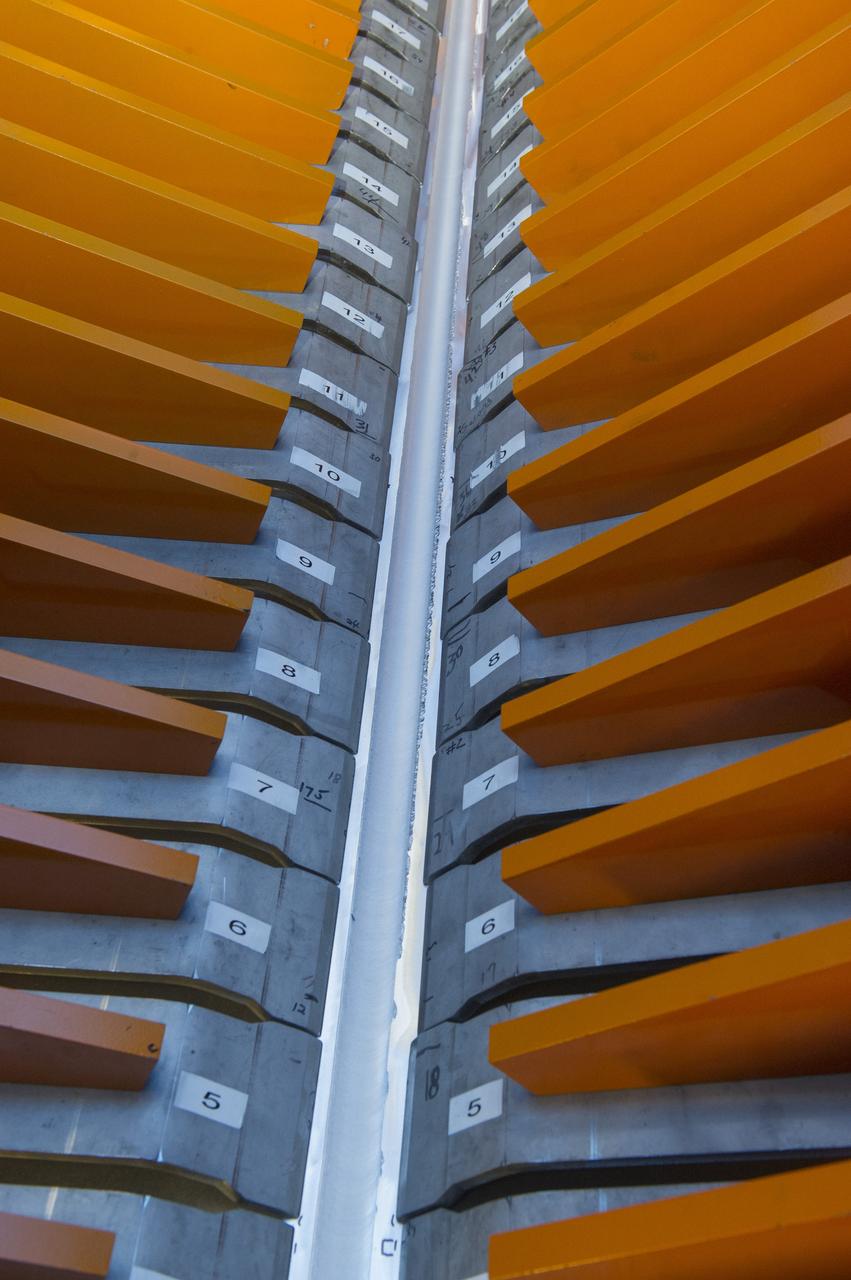
Launch Vehicle Stage Adapter Aft Cone Weld #1
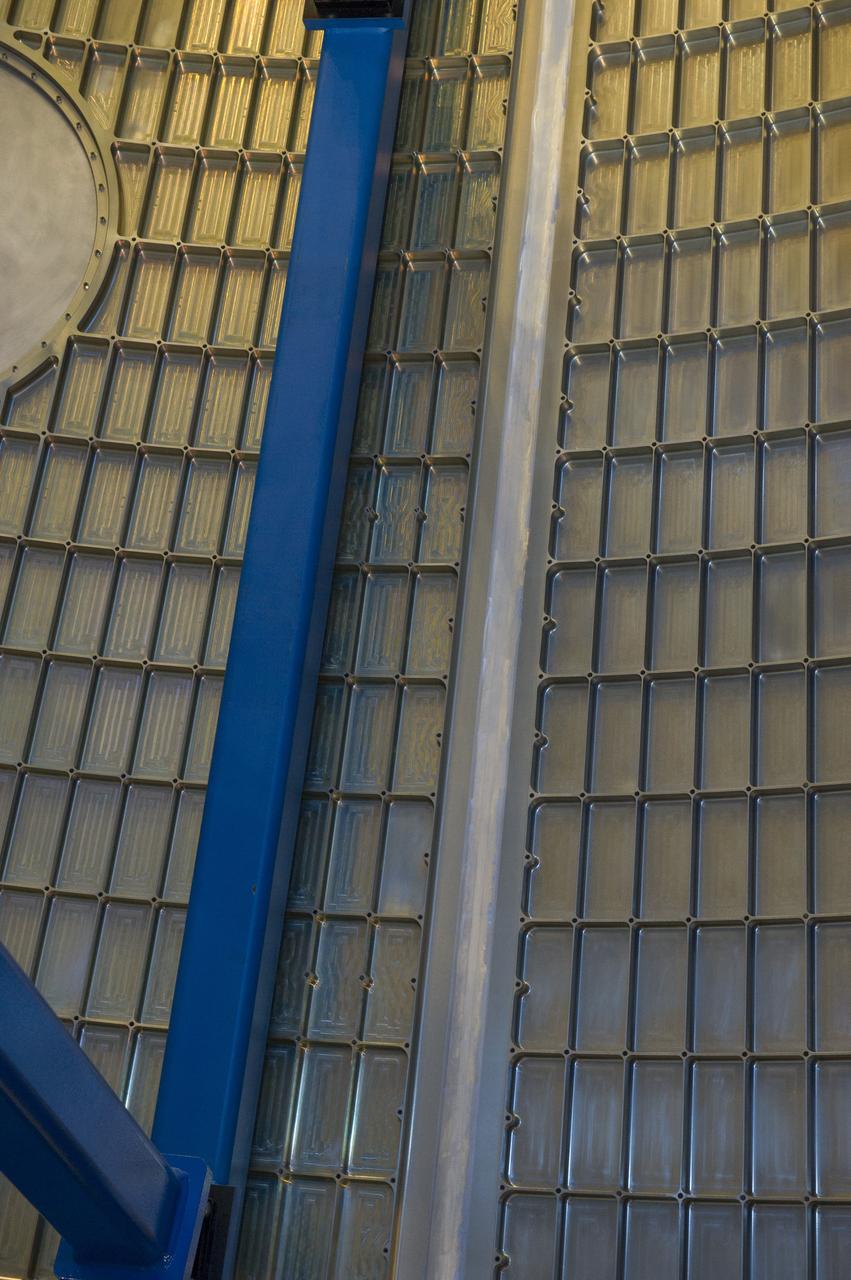
Launch Vehicle Stage Adapter Aft Cone Weld #1

NASA astronaut Jessica Watkins stores science payloads on Astrolab’s FLEX lunar terrain vehicle during testing at NASA’s Johnson Space Center. Image Credit: NASA/Robert Markowitz

NASA astronaut Jessica Watkins picks up a lunar geology tool from a stowage drawer on Astrolab’s FLEX lunar terrain vehicle during testing at NASA’s Johnson Space Center. Image Credit: NASA/Robert Markowitz
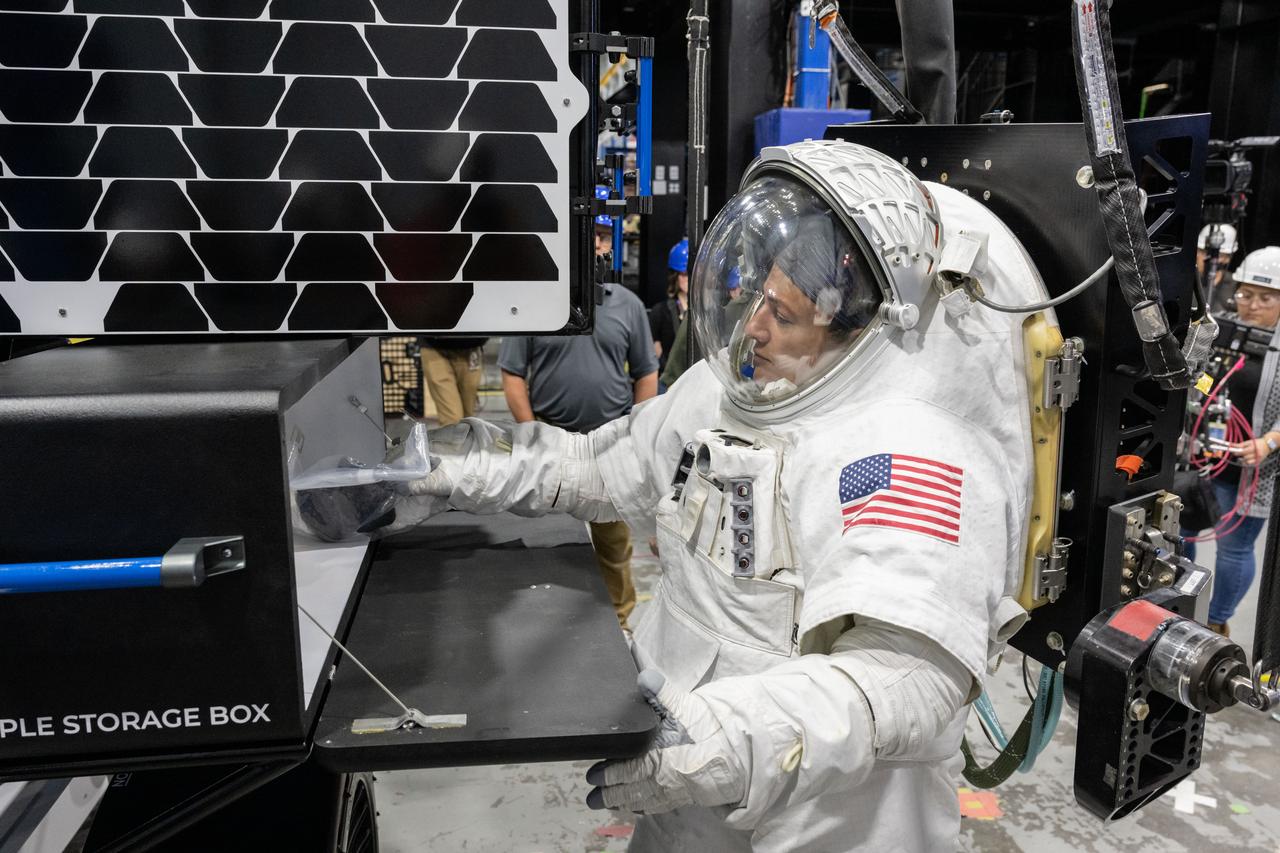
NASA astronaut Jessica Meir puts a science sample inside of a storage box on Intuitive Machines’ Moon RACER lunar terrain vehicle during testing at NASA’s Johnson Space Center. Image Credit: NASA/James Blair
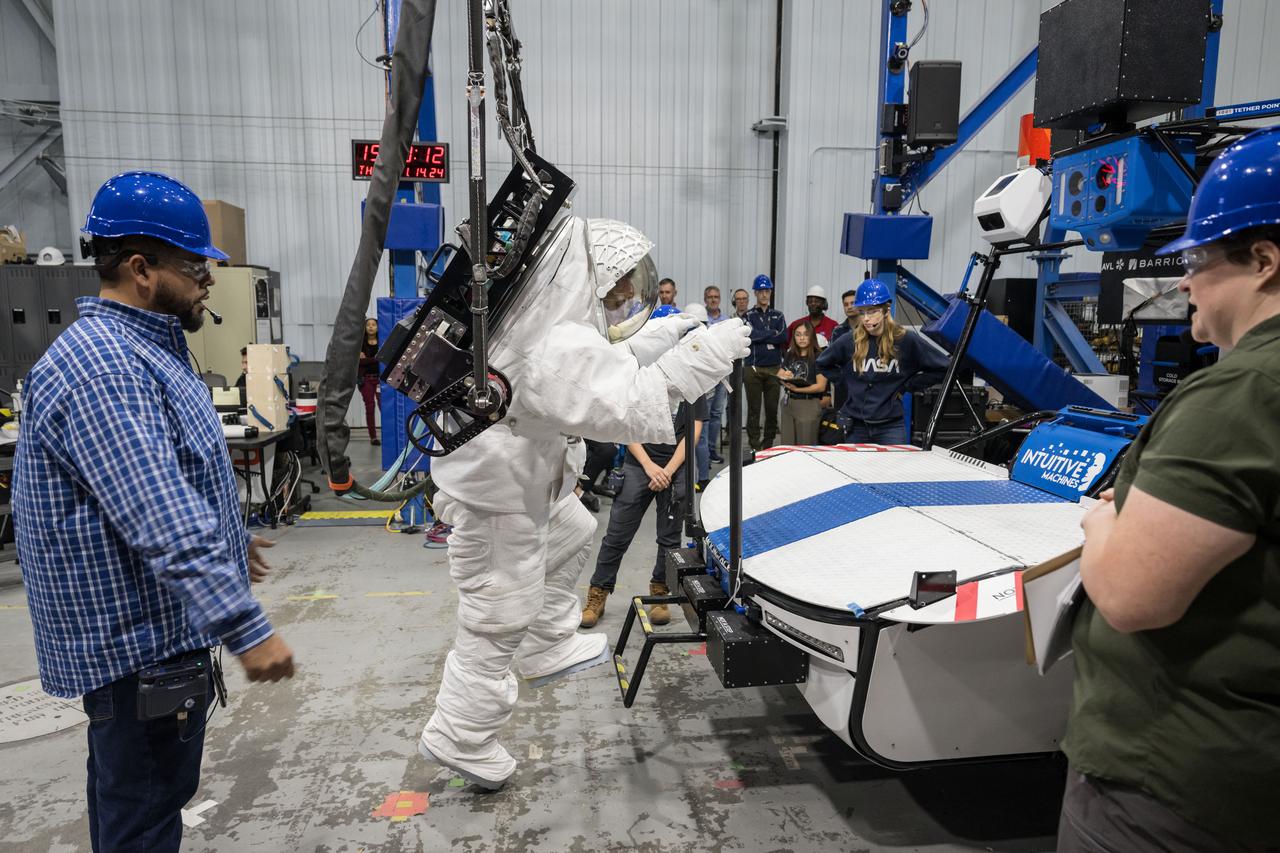
NASA astronaut Joe Acaba prepares to climb on top of Intuitive Machines’ Moon RACER lunar terrain vehicle to get to a science payload during testing at NASA’s Johnson Space Center. Image Credit: NASA/Josh Valcarcel
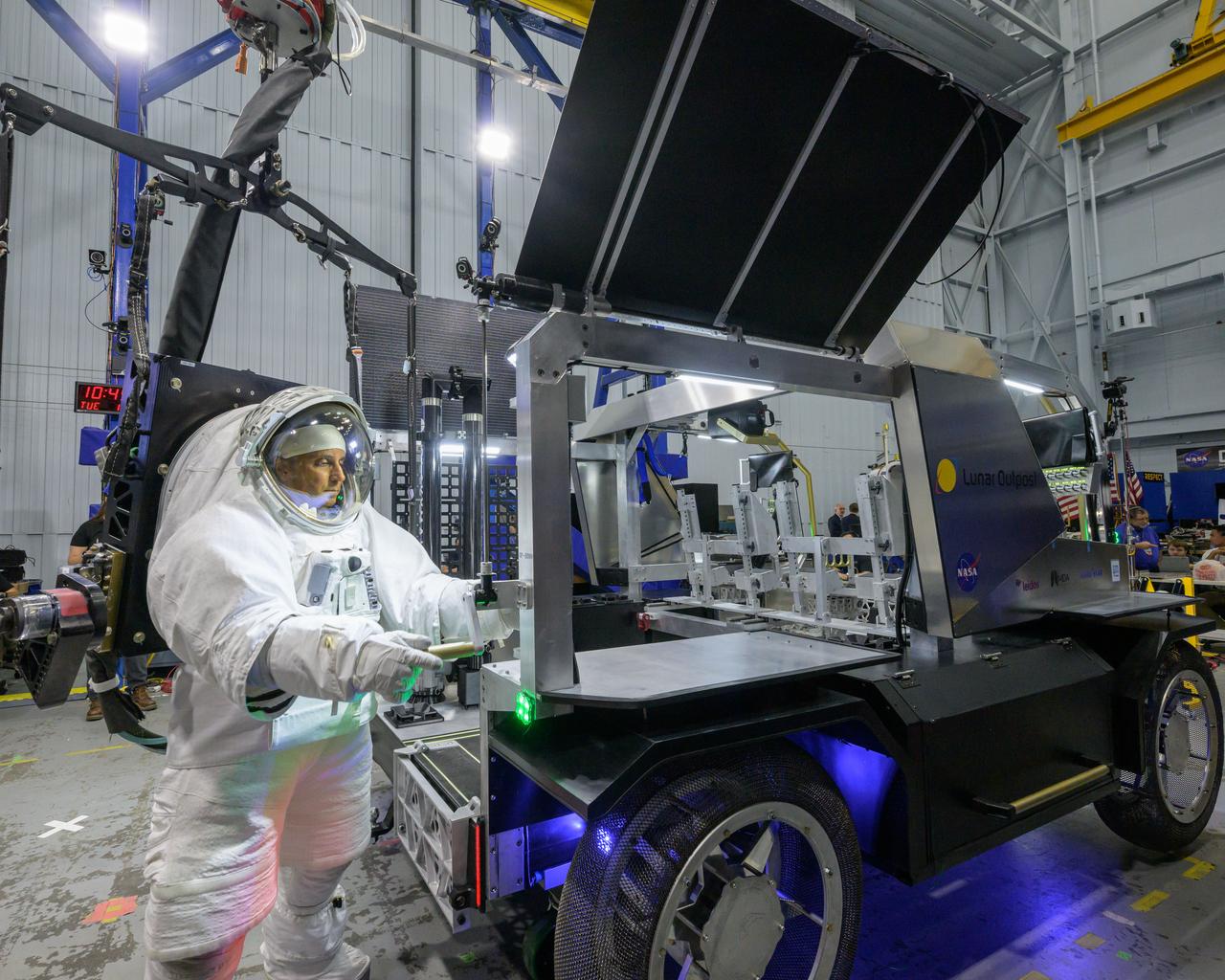
NASA astronaut Joe Acaba raises the solar array panel on Lunar Outpost’s Eagle lunar terrain vehicle during testing at NASA’s Johnson Space Center. Image Credit: NASA/Robert Markowitz
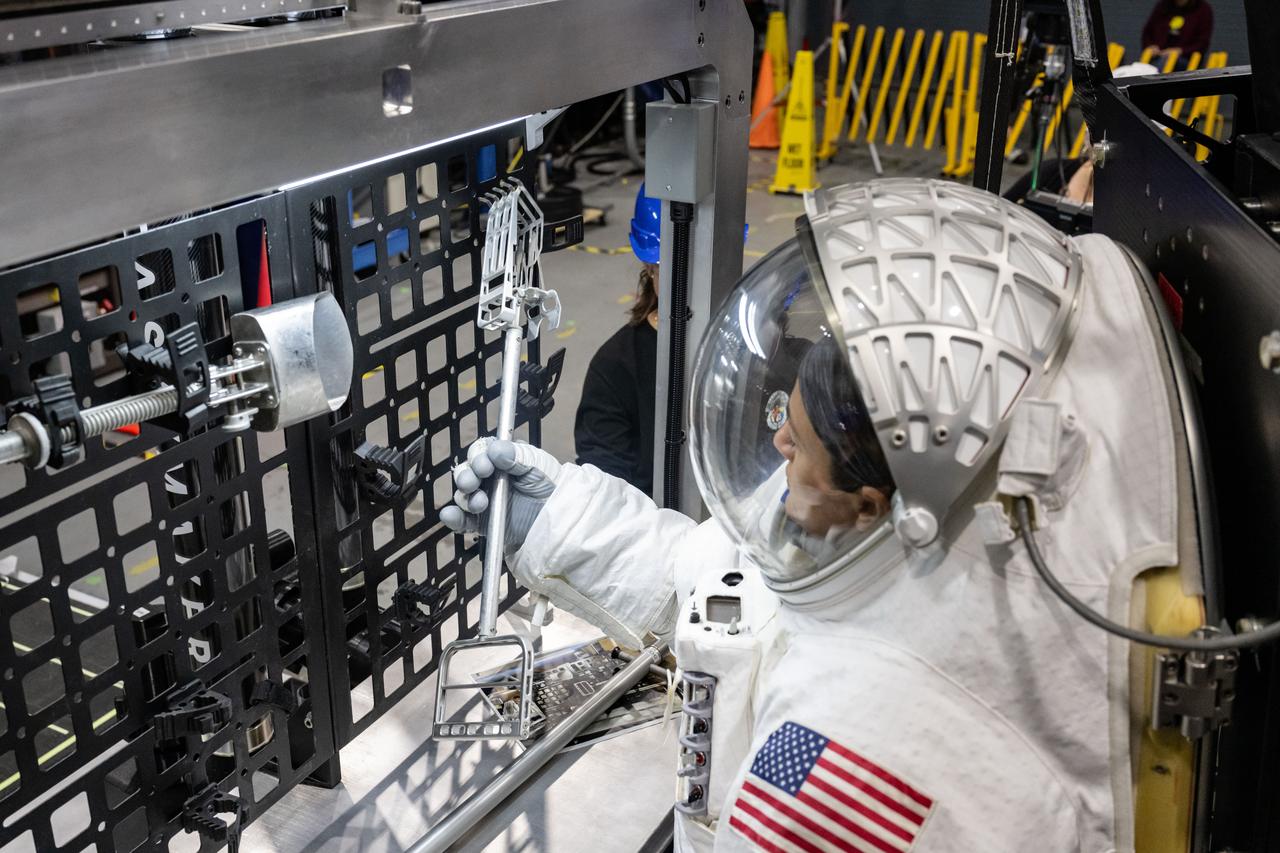
NASA astronaut Jessica Meir grabs a lunar geology tool from a tool rack on Lunar Outpost’s Eagle lunar terrain vehicle during testing at NASA’s Johnson Space Center. Image Credit: NASA/James Blair
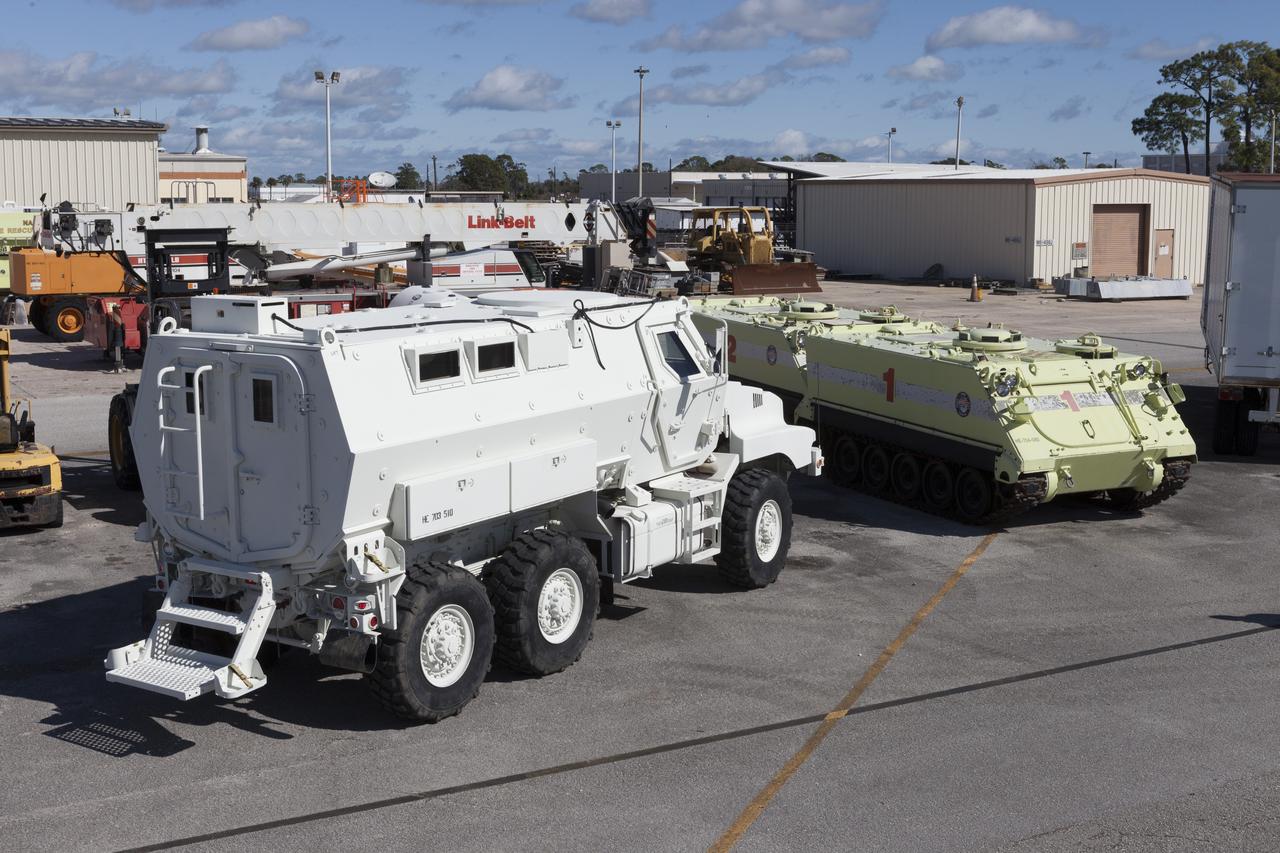
CAPE CANAVERAL, Fla. – One of four new emergency egress vehicles, called Mine-Resistant Ambush-Protection, or MRAP, vehicles sits near space shuttle-era M-113 vehicles at the Maintenance and Operations Facility at NASA’s Kennedy Space Center in Florida. The MRAPs arrived from the U.S. Army Red River Depot in Texarkana, Texas in December 2013. The vehicles were processed in and then transported to the Rotation, Processing and Surge Facility near the Vehicle Assembly Building for temporary storage. The Ground Systems Development and Operations Program at Kennedy led the efforts to an emergency egress vehicle that future astronauts could quickly use to leave the Launch Complex 39 area in case of an emergency. During crewed launches of NASA’s Space Launch System and Orion spacecraft, the MRAP will be stationed by the slidewire termination area at the pad. In case of an emergency, the crew will ride a slidewire to the ground and immediately board the MRAP for safe egress from the pad. The new vehicles replace the M-113 vehicles that were used during the Space Shuttle Program. Photo credit: NASA/Kim Shiflett
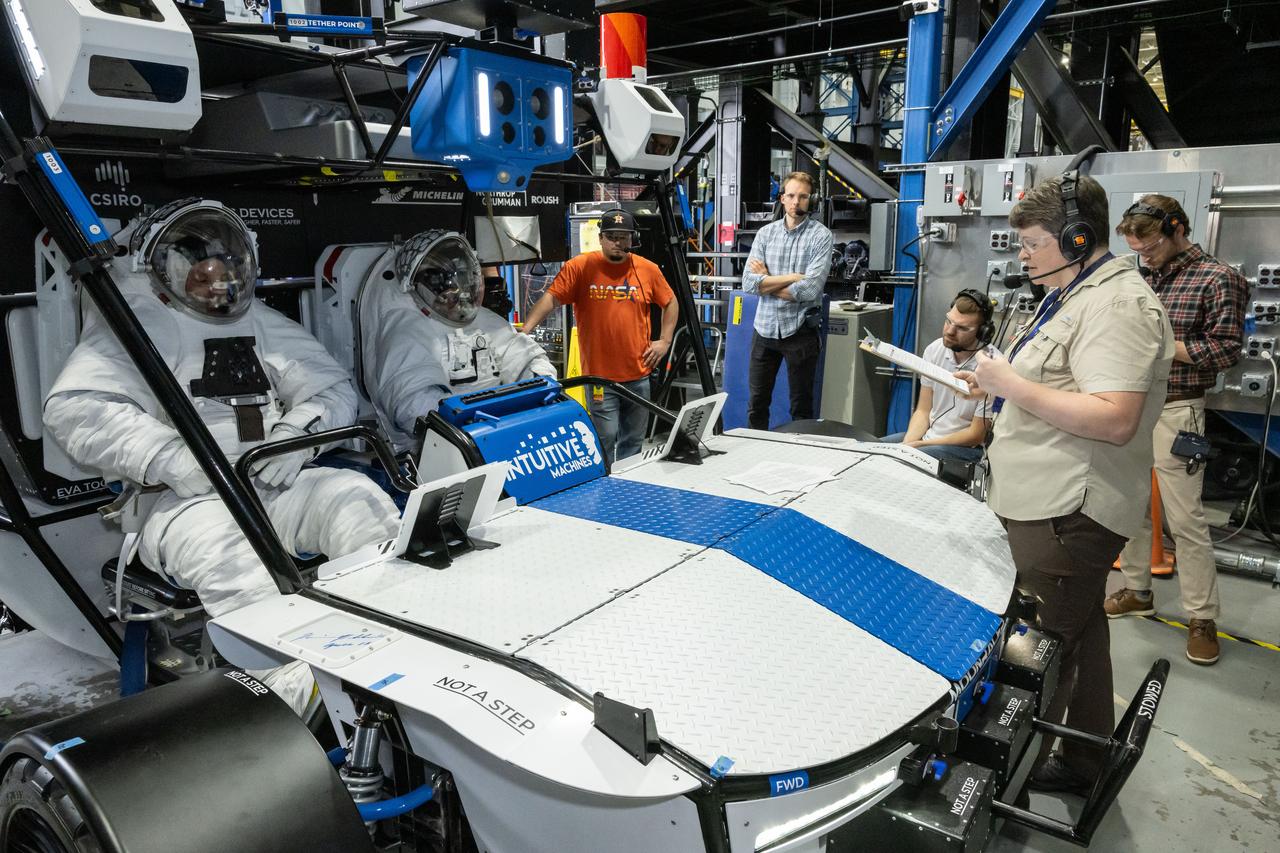
NASA engineer Dave Coan (left) and NASA astronaut Jessica Watkins (right) sit inside Intuitive Machines’ Moon RACER lunar terrain vehicle evaluating the crew compartment during testing at NASA’s Johnson Space Center. Image Credit: NASA/James Blair
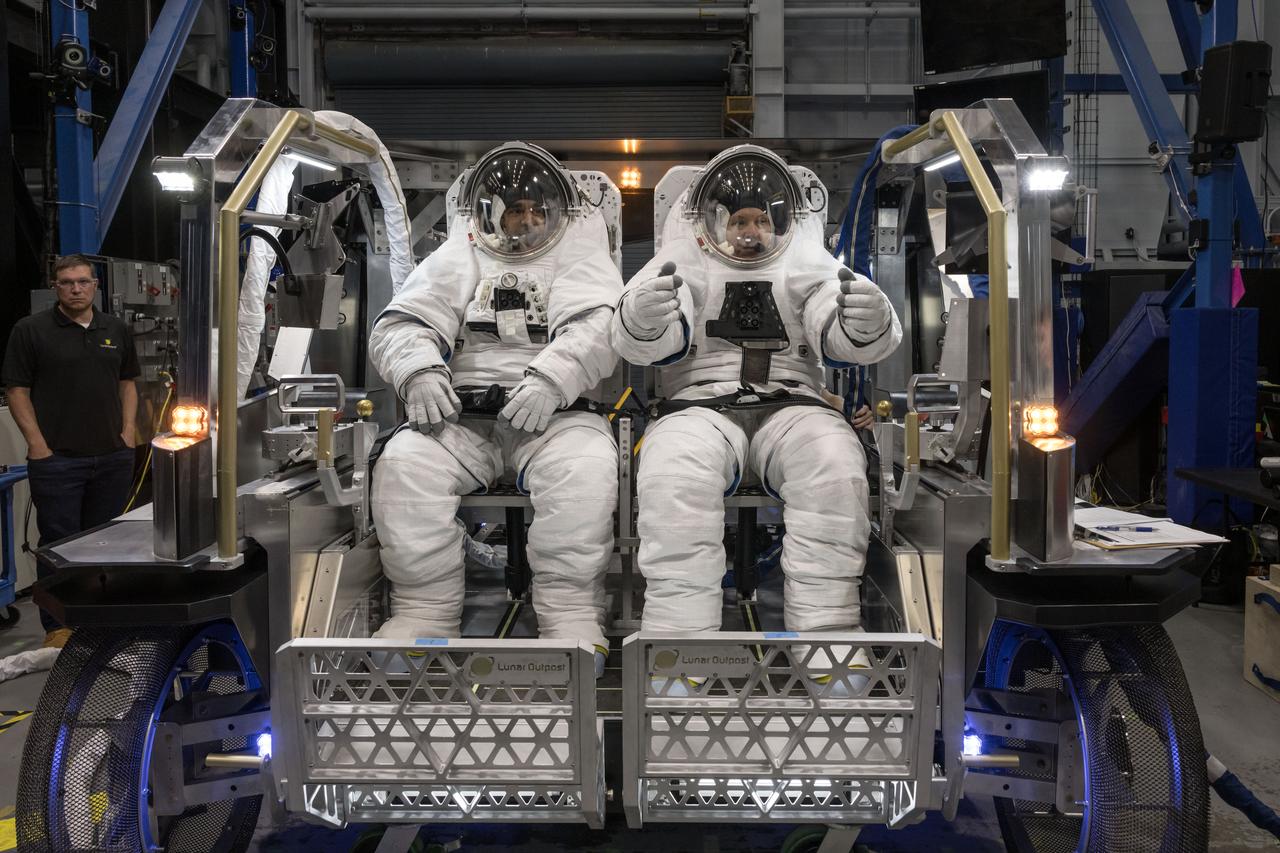
NASA astronauts Raja Chari (left) and Randy Bresnik (right) sit inside Lunar Outpost’s Eagle lunar terrain vehicle evaluating the seat configuration during testing at NASA’s Johnson Space Center. Image Credit: NASA/David DeHoyos
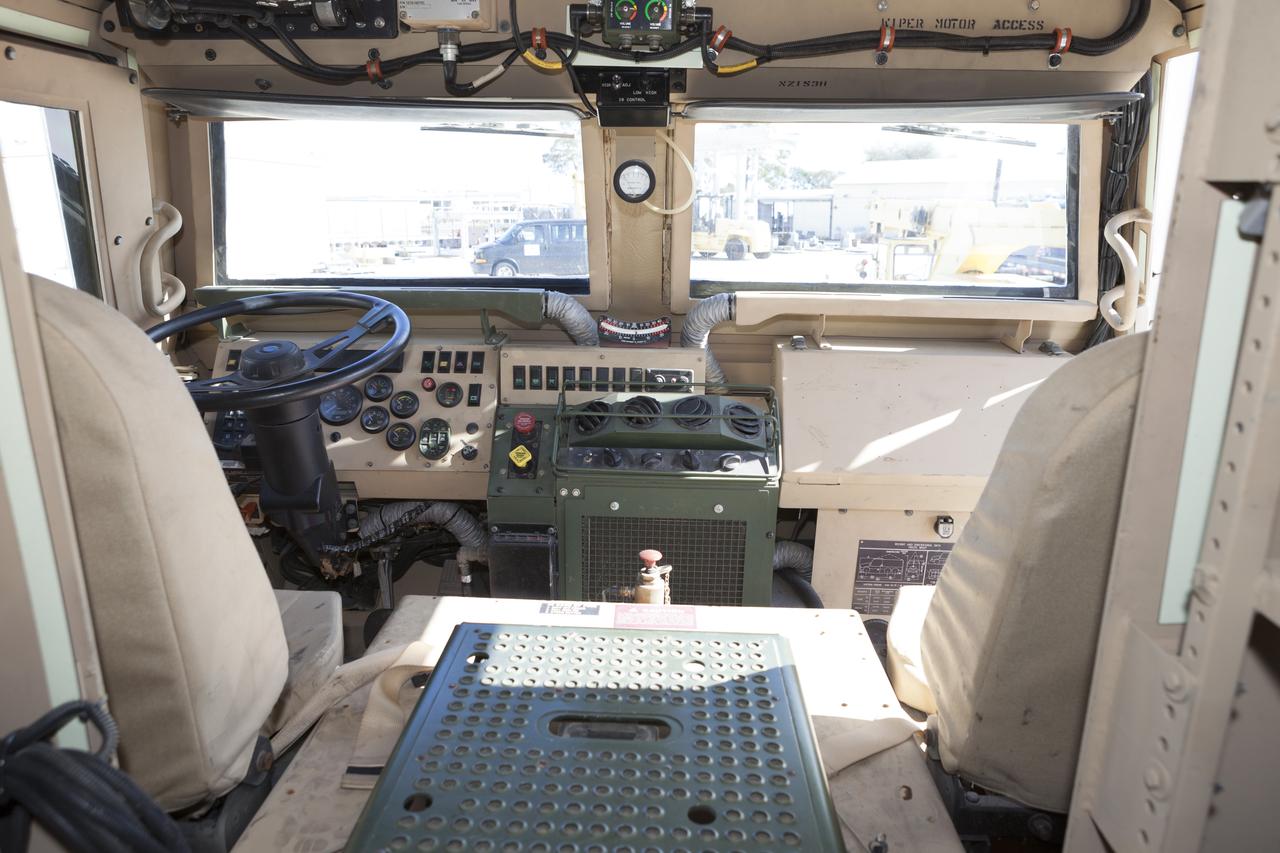
CAPE CANAVERAL, Fla. – A view of the interior of one of four new emergency egress vehicles, called Mine-Resistant Ambush-Protected, or MRAP, vehicles is shown. The MRAPs are at the Maintenance and Operations Facility at NASA’s Kennedy Space Center in Florida. The MRAPs arrived from the U.S. Army Red River Depot in Texarkana, Texas in December 2013. The vehicles were processed in and then transported to the Rotation, Processing and Surge Facility near the Vehicle Assembly Building for temporary storage. The Ground Systems Development and Operations Program at Kennedy led the efforts to an emergency egress vehicle that future astronauts could quickly use to leave the Launch Complex 39 area in case of an emergency. During crewed launches of NASA’s Space Launch System and Orion spacecraft, the MRAP will be stationed by the slidewire termination area at the pad. In case of an emergency, the crew will ride a slidewire to the ground and immediately board the MRAP for safe egress from the pad. The new vehicles replace the M-113 vehicles that were used during the Space Shuttle Program. Photo credit: NASA/Kim Shiflett
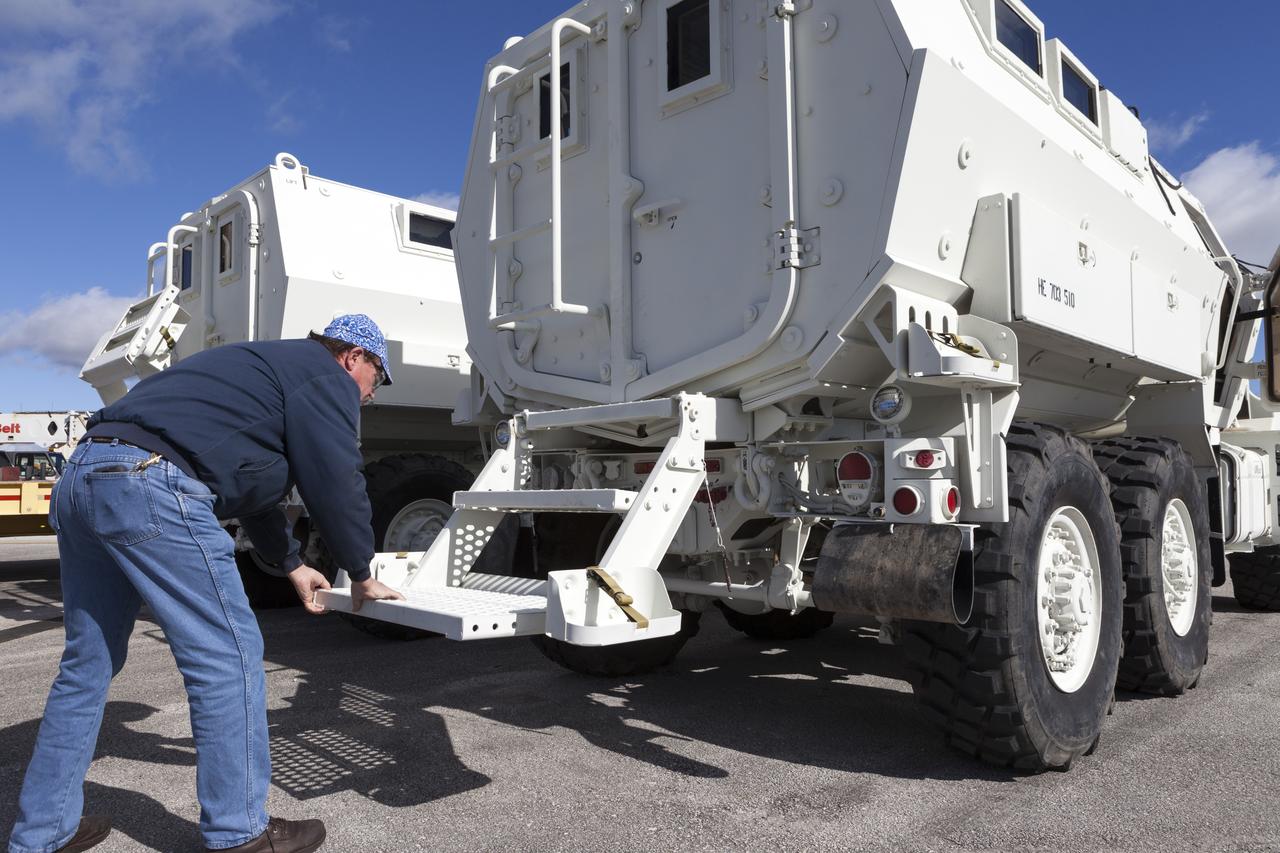
CAPE CANAVERAL, Fla. – A URS Federal Services worker pulls down the steps to the entrance of one of the four new emergency egress vehicles, called Mine-Resistant Ambush-Protected, or MRAP, vehicles at the Maintenance and Operations Facility at NASA’s Kennedy Space Center in Florida. The MRAPs arrived from the U.S. Army Red River Depot in Texarkana, Texas in December 2013. The vehicles were processed in and then transported to the Rotation, Processing and Surge Facility near the Vehicle Assembly Building for temporary storage. The Ground Systems Development and Operations Program at Kennedy led the efforts to an emergency egress vehicle that future astronauts could quickly use to leave the Launch Complex 39 area in case of an emergency. During crewed launches of NASA’s Space Launch System and Orion spacecraft, the MRAP will be stationed by the slidewire termination area at the pad. In case of an emergency, the crew will ride a slidewire to the ground and immediately board the MRAP for safe egress from the pad. The new vehicles replace the M-113 vehicles that were used during the Space Shuttle Program. Photo credit: NASA/Kim Shiflett

CAPE CANAVERAL, Fla. – One of four new emergency egress vehicles, called Mine-Resistant Ambush-Protection, or MRAP, vehicles is driven to the Maintenance and Operations Facility at Kennedy Space Center in Florida. The MRAPs arrived from the U.S. Army Red River Depot in Texarkana, Texas in December 2013. The vehicles were processed in and then transported to the Rotation, Processing and Surge Facility near the Vehicle Assembly Building for temporary storage. The Ground Systems Development and Operations Program at Kennedy led the efforts to an emergency egress vehicle that future astronauts could quickly use to leave the Launch Complex 39 area in case of an emergency. During crewed launches of NASA’s Space Launch System and Orion spacecraft, the MRAP will be stationed by the slidewire termination area at the pad. In case of an emergency, the crew will ride a slidewire to the ground and immediately board the MRAP for safe egress from the pad. The new vehicles replace the M-113 vehicles that were used during the Space Shuttle Program. Photo credit: NASA/Kim Shiflett
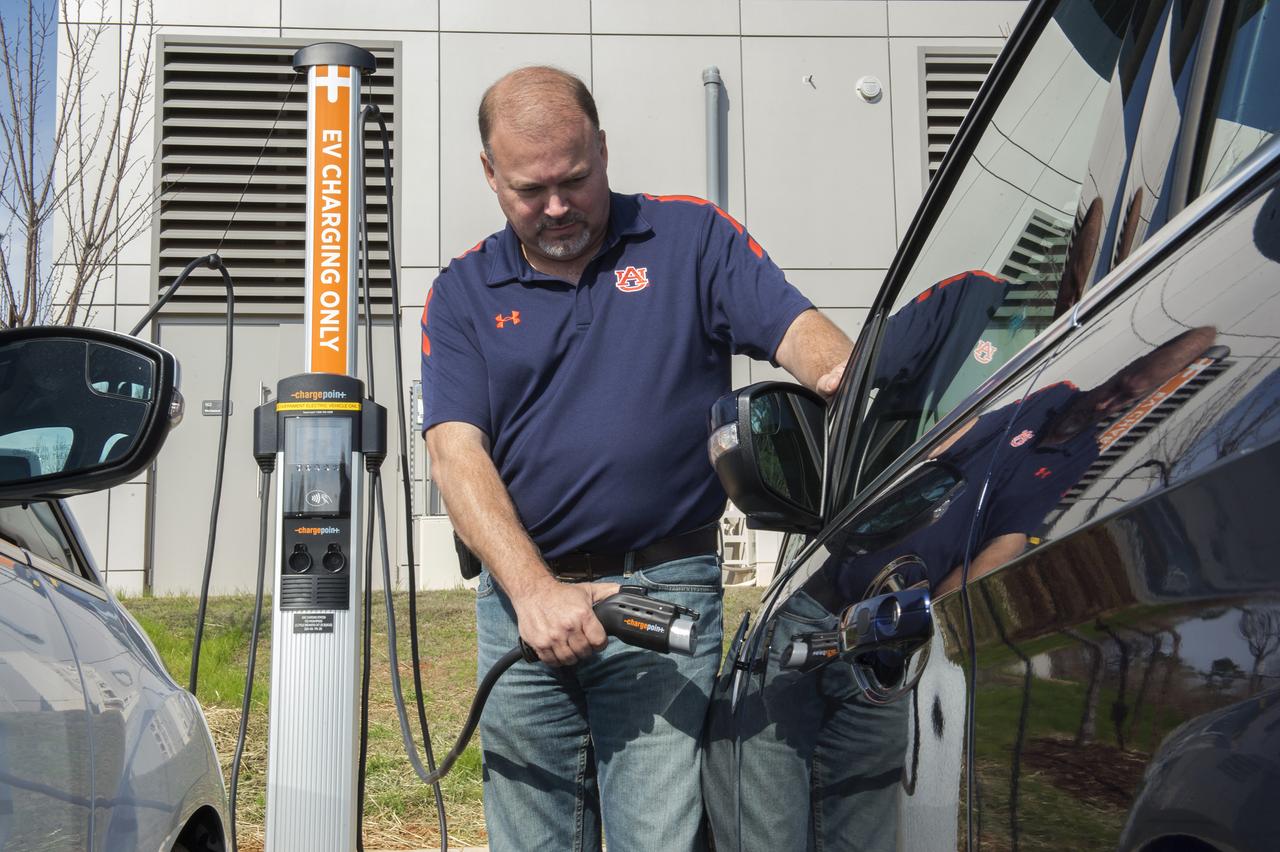
TRANSPORTATION SPECIALIST DAVID NORRIS DEMONSTRATES MARSHALL'S FIRST ELECTRIC VEHICLE CHARGING STATION, WHICH IS PART OF A PROGRAM DESIGNED TO REDUCE THE AGENCY'S ENVIRONMENTAL FOOTPRINT.
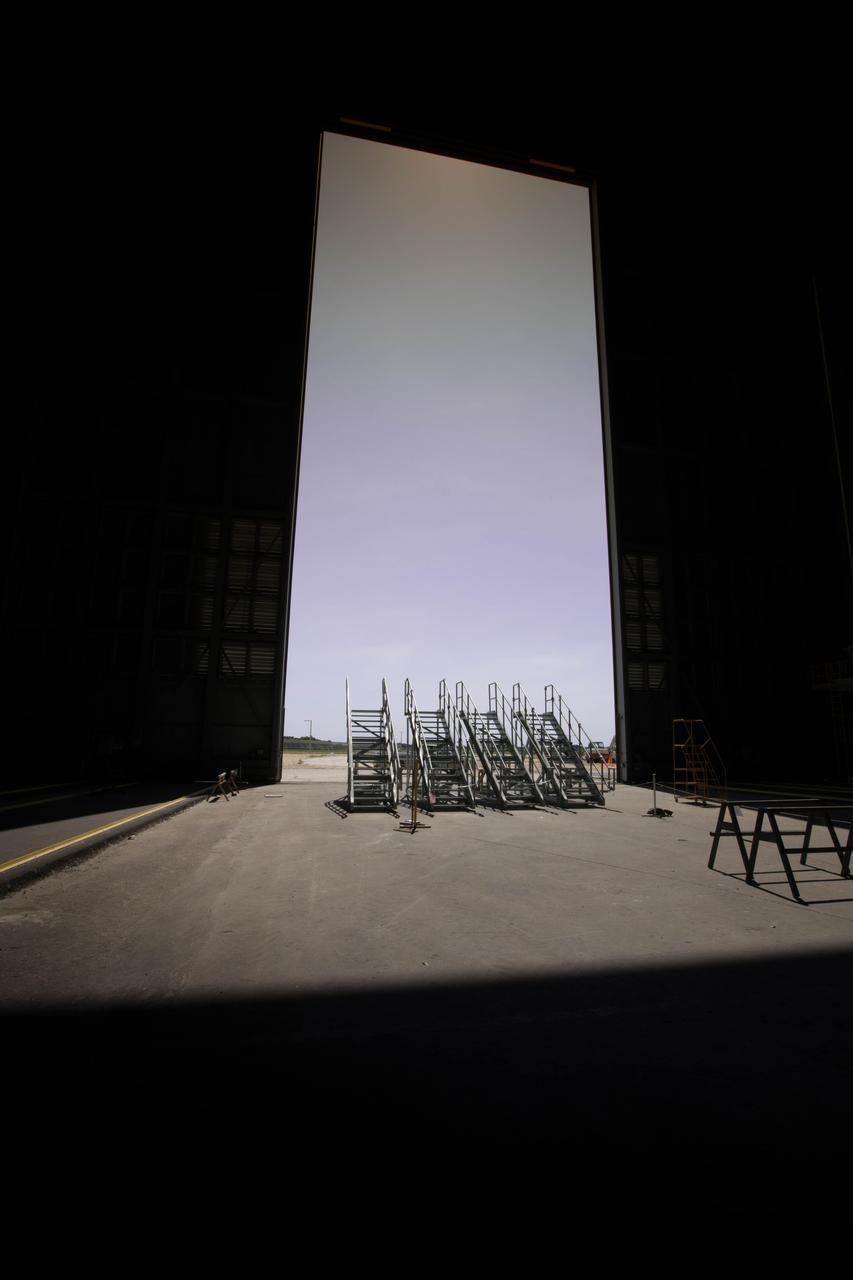
A view looking at High Bay 3 in the Vehicle Assembly Building (VAB) at NASA's Kennedy Space Center in Florida. Ten levels of new work platforms have been installed in High Bay 3. They will surround and provide access for service and processing of NASA's Space Launch System rocket and Orion spacecraft. Exploration Ground Systems oversaw the upgrades and installation of the new work platforms to support the launch of the SLS and Orion on Exploration Mission-1 and deep space missions.
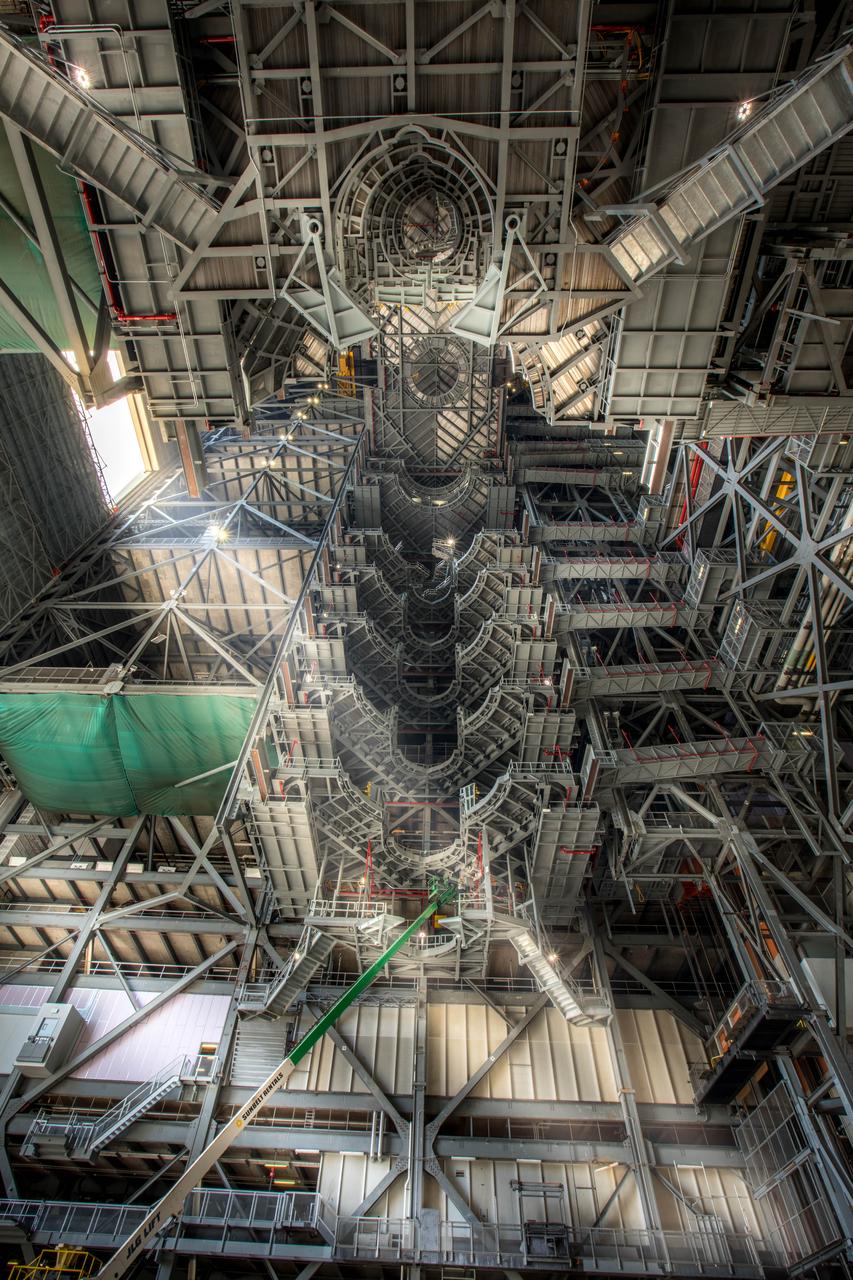
A view looking up at one side of the 10 levels of work platforms in High Bay 3 inside the Vehicle Assembly Building (VAB) at NASA's Kennedy Space Center in Florida. The work platforms will surround and provide access for service and processing of NASA's Space Launch System rocket and Orion spacecraft. Exploration Ground Systems oversaw the upgrades and installation of the new work platforms to support the launch of the SLS and Orion on Exploration Mission-1 and deep space missions.
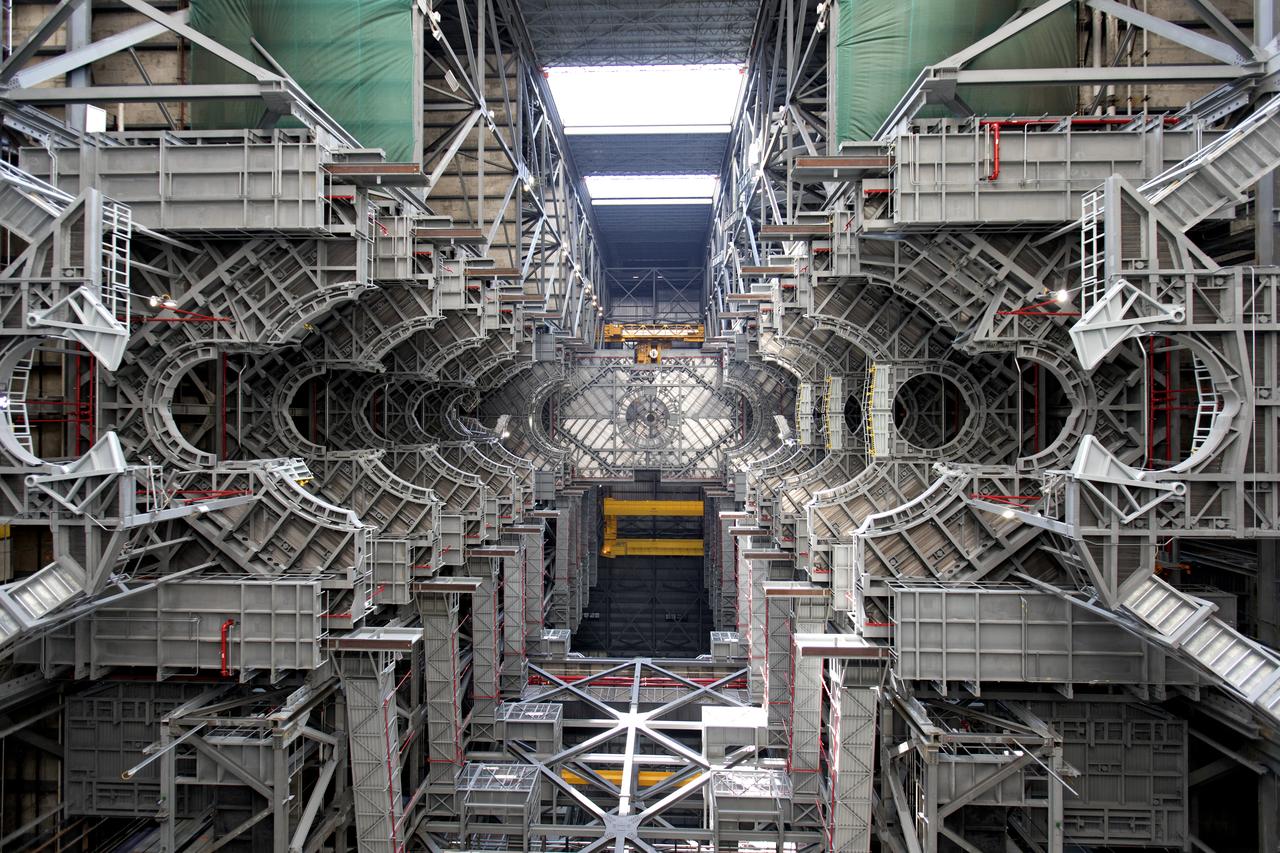
A view looking up at the 10 levels of work platforms in High Bay 3 inside the Vehicle Assembly Building (VAB) at NASA's Kennedy Space Center in Florida. The work platforms will surround and provide access for service and processing of NASA's Space Launch System rocket and Orion spacecraft. Exploration Ground Systems oversaw the upgrades and installation of the new work platforms to support the launch of the SLS and Orion on Exploration Mission-1 and deep space missions.
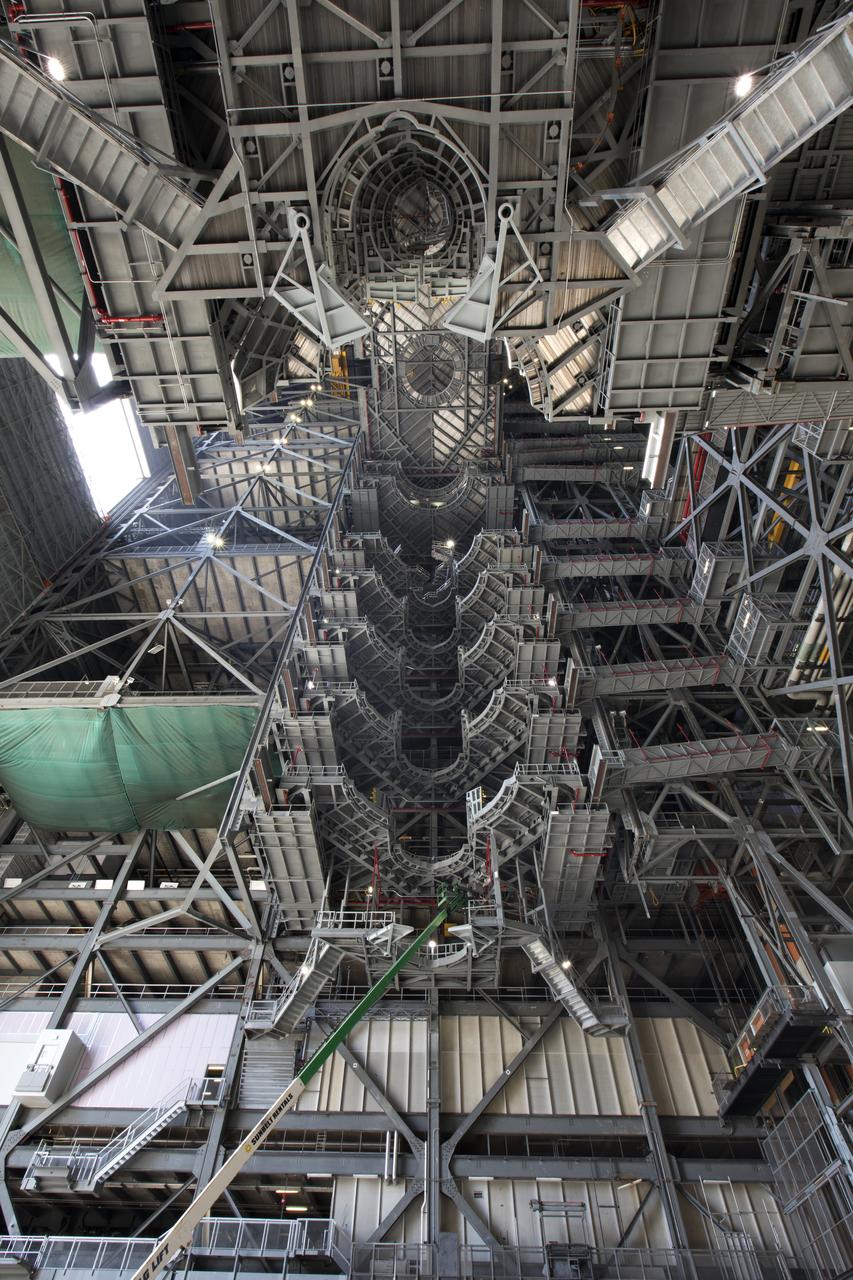
A view looking up at one side of the 10 levels of work platforms in High Bay 3 inside the Vehicle Assembly Building (VAB) at NASA's Kennedy Space Center in Florida. The work platforms will surround and provide access for service and processing of NASA's Space Launch System rocket and Orion spacecraft. Exploration Ground Systems oversaw the upgrades and installation of the new work platforms to support the launch of the SLS and Orion on Exploration Mission-1 and deep space missions.
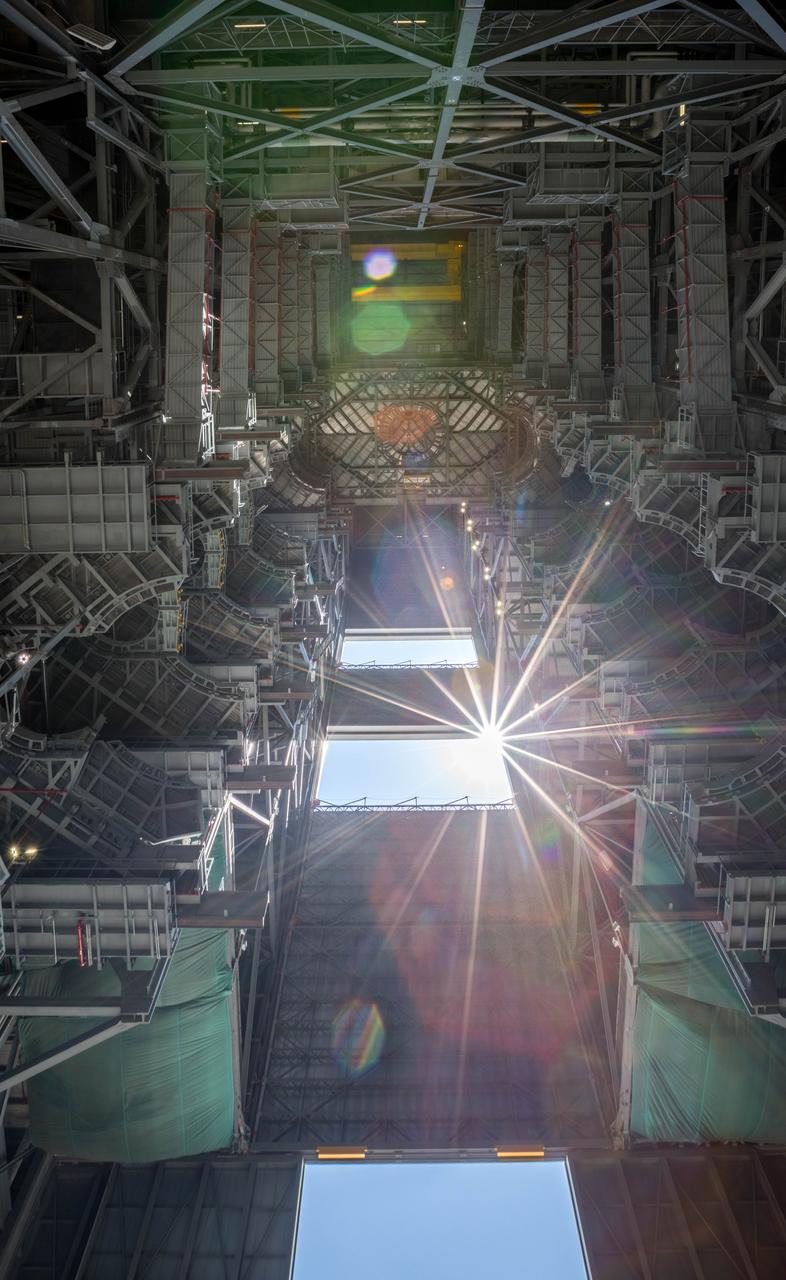
A brilliant sun shines through the doors of High Bay 3 in the Vehicle Assembly Building (VAB) at NASA's Kennedy Space Center in Florida. In view are ten levels of new work platforms that were installed in the high bay. They will surround and provide access for service and processing of NASA's Space Launch System rocket and Orion spacecraft. Exploration Ground Systems oversaw the upgrades and installation of the new work platforms to support the launch of the SLS and Orion on Exploration Mission-1 (EM-1) and deep space missions.

A view looking up at the 10 levels of work platforms in High Bay 3 inside the Vehicle Assembly Building (VAB) at NASA's Kennedy Space Center in Florida. The work platforms will surround and provide access for service and processing of NASA's Space Launch System rocket and Orion spacecraft. Exploration Ground Systems oversaw the upgrades and installation of the new work platforms to support the launch of the SLS and Orion on Exploration Mission-1 and deep space missions.
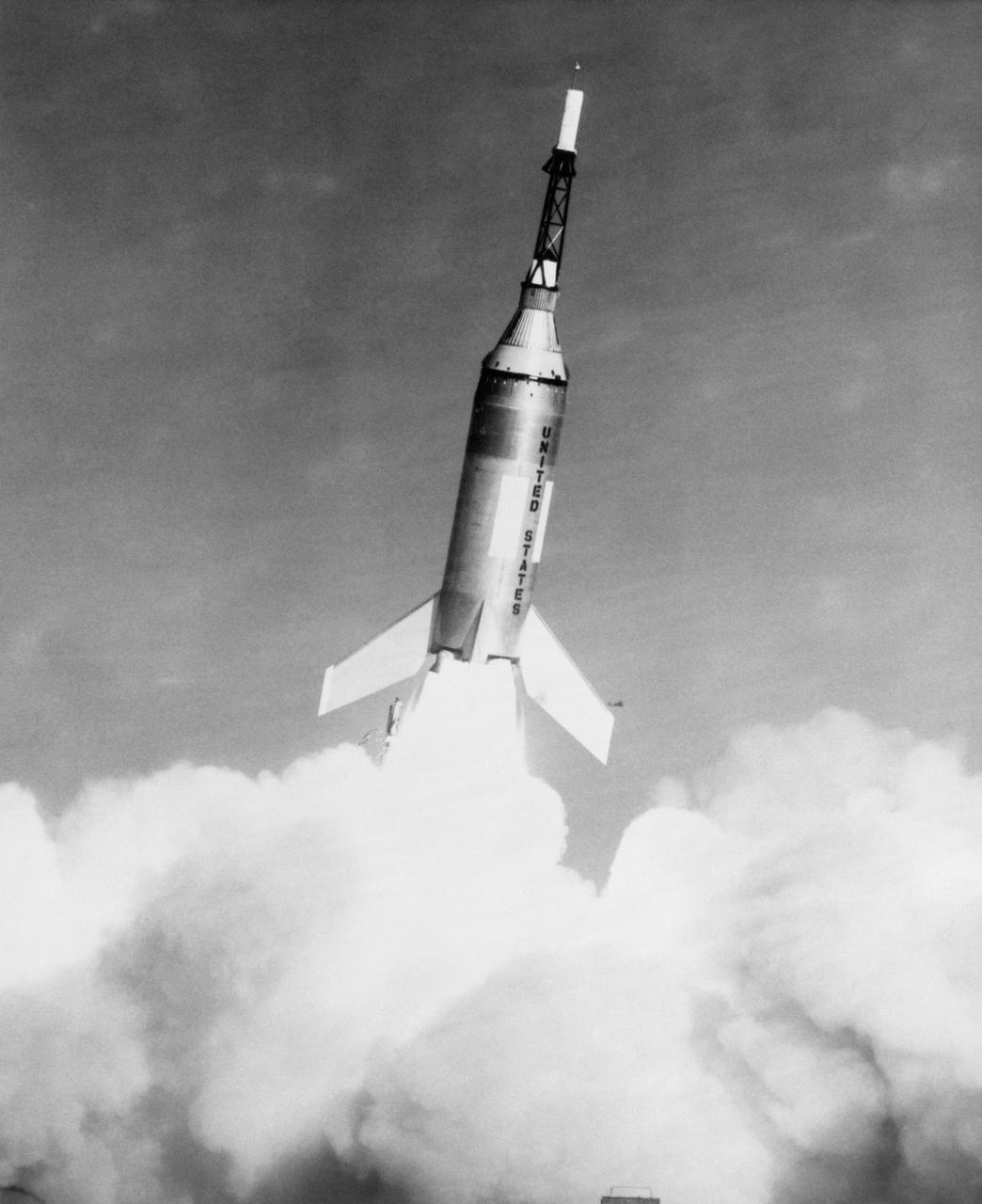
G61-00030 (4 Nov. 1959) --- Launch of Little Joe-2 from Wallops Island carrying Mercury spacecraft test article. The suborbital test flight of the Mercury capsule was to test the escape system. Vehicle functioned perfectly, but escape rocket ignited several seconds too late. Photo credit: NASA
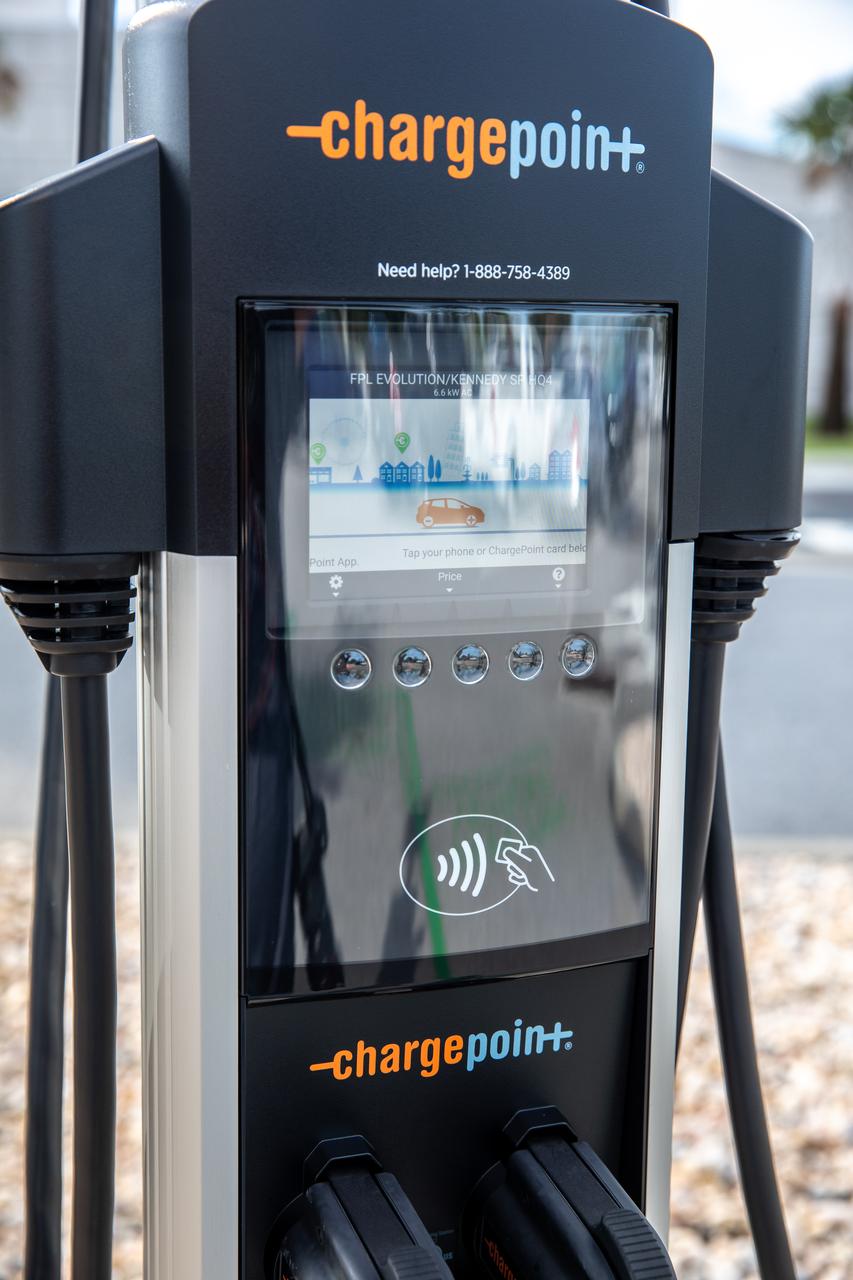
A newly installed electric vehicle (EV) charging station is in view near the Central Campus Headquarters Building at NASA’s Kennedy Space Center in Florida on Sept. 14, 2022. Part of a partnership between Kennedy and Florida Power & Light (FPL) to bring 23 EV charging stations to the spaceport, the ChargePoint CT4000, Level 2 chargers are capable of charging electric vehicles at a rate of 15-30 miles of range per hour. This partnership was set up under FPL’s EV program and provides a charging infrastructure that includes a simple way for businesses and employees to pay for usage.
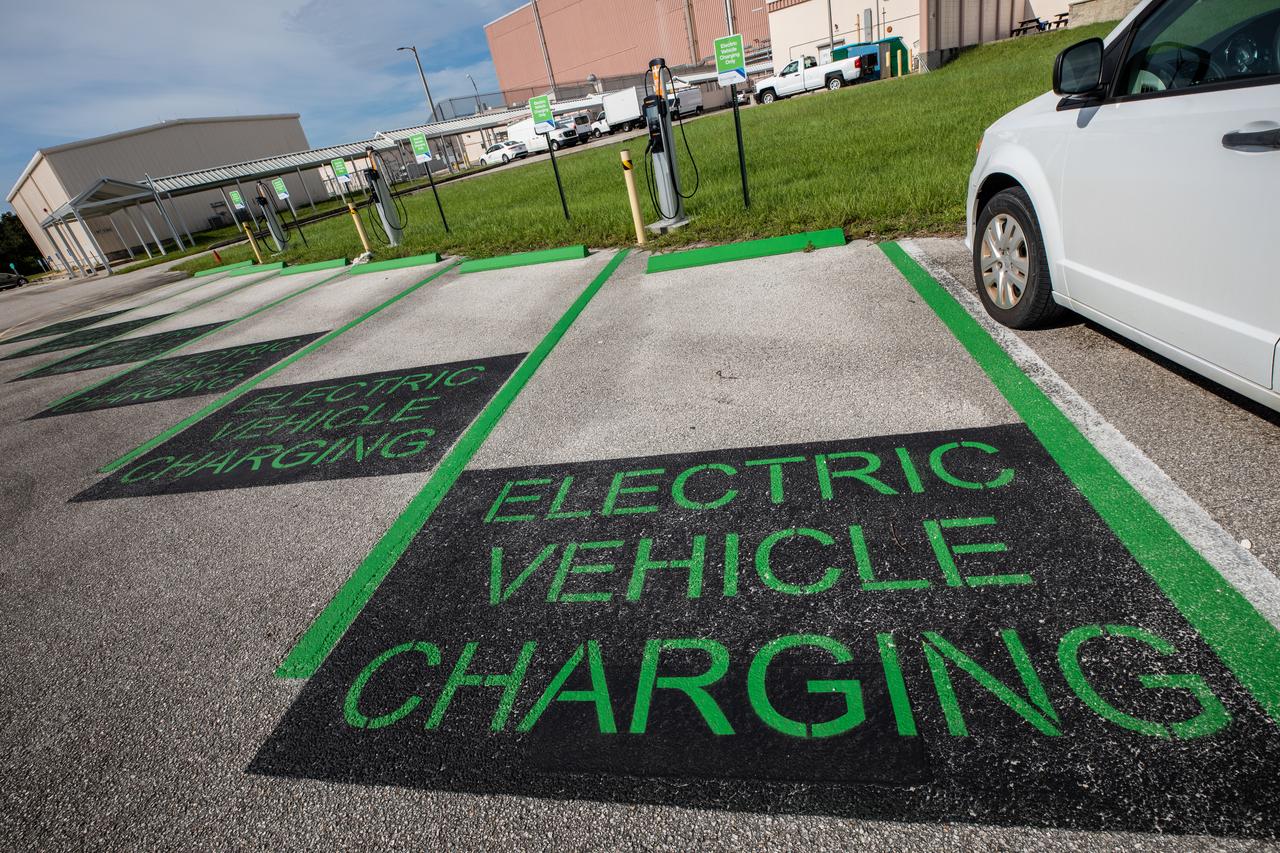
Several newly installed electric vehicle (EV) charging stations are in view near the Neil Armstrong Operations and Checkout Building at NASA’s Kennedy Space Center in Florida on Sept. 14, 2022. Part of a partnership between Kennedy and Florida Power & Light (FPL) to bring 23 EV charging stations to the spaceport, the ChargePoint CT4000, Level 2 chargers are capable of charging electric vehicles at a rate of 15-30 miles of range per hour. This partnership was set up under FPL’s EV program and provides a charging infrastructure that includes a simple way for businesses and employees to pay for usage.
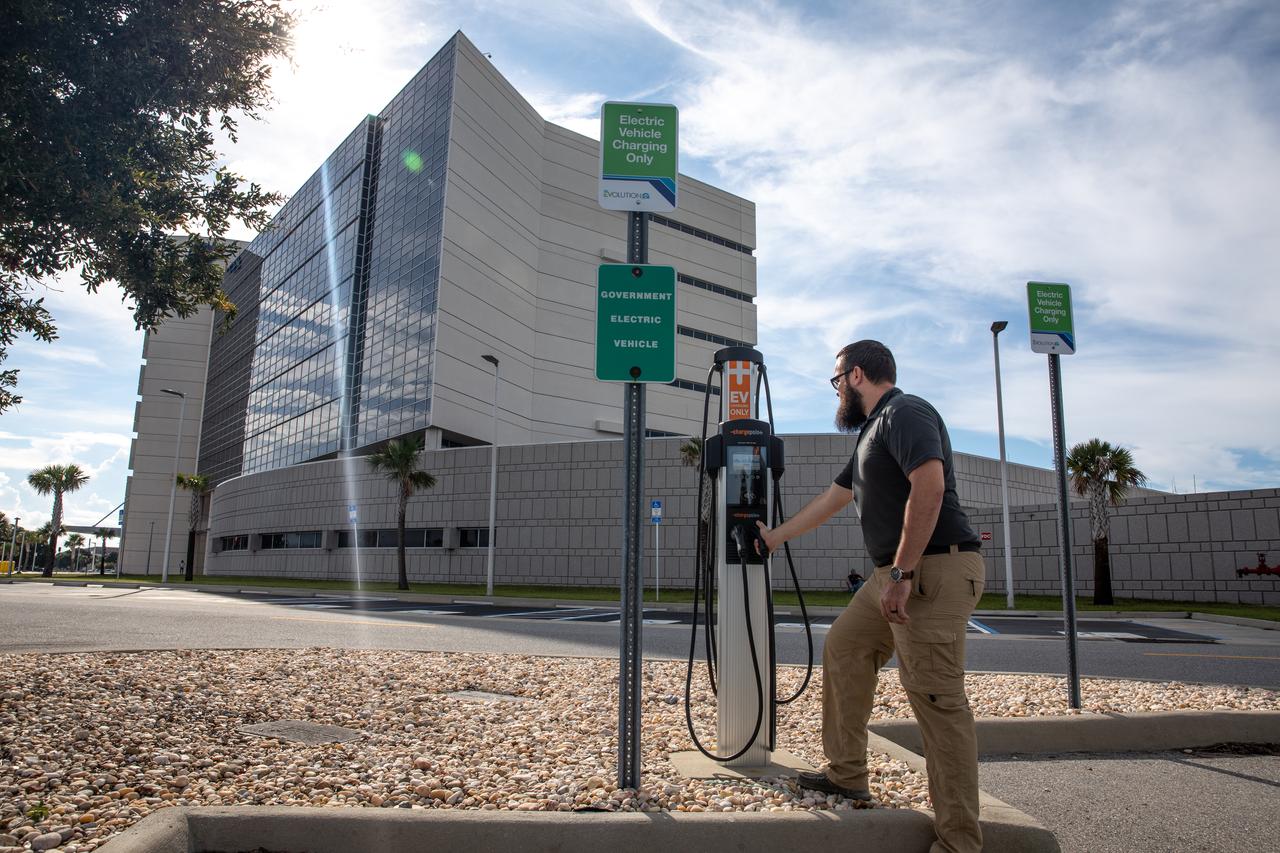
Spencer Davis, a NASA Traffic Management specialist in the Spaceport Integration Directorate at NASA’s Kennedy Space Center in Florida, stands near a newly installed electric vehicle (EV) charging station near the Central Campus Headquarters Building at Kennedy on Sept. 14, 2022. Part of a partnership between Kennedy and Florida Power & Light (FPL) to bring 23 EV charging stations to the spaceport, the ChargePoint CT4000, Level 2 chargers are capable of charging electric vehicles at a rate of 15-30 miles of range per hour. This partnership was set up under FPL’s EV program and provides a charging infrastructure that includes a simple way for businesses and employees to pay for usage.
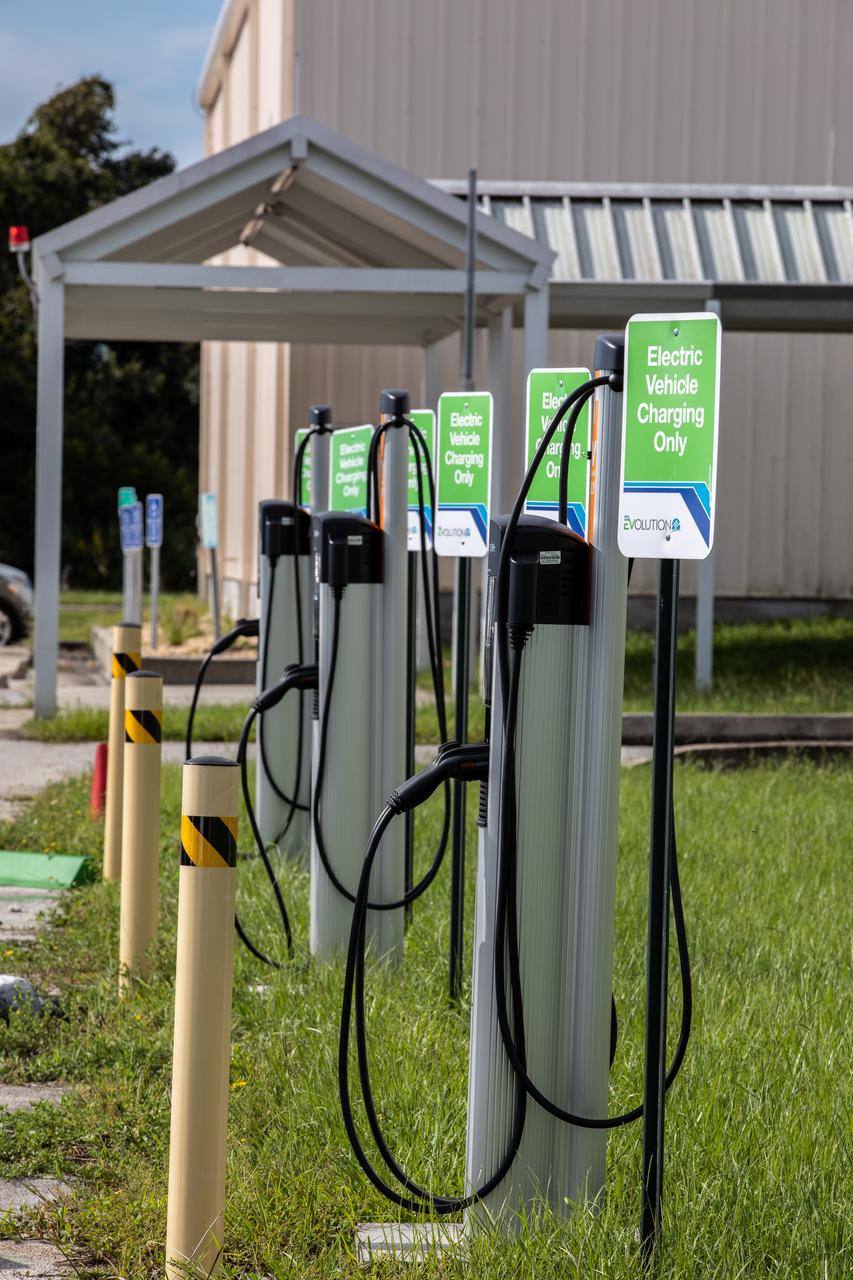
Several newly installed electric vehicle (EV) charging stations are in view near the Neil Armstrong Operations and Checkout Building at NASA’s Kennedy Space Center in Florida on Sept. 14, 2022. Part of a partnership between Kennedy and Florida Power & Light (FPL) to bring 23 EV charging stations to the spaceport, the ChargePoint CT4000, Level 2 chargers are capable of charging electric vehicles at a rate of 15-30 miles of range per hour. This partnership was set up under FPL’s EV program and provides a charging infrastructure that includes a simple way for businesses and employees to pay for usage.
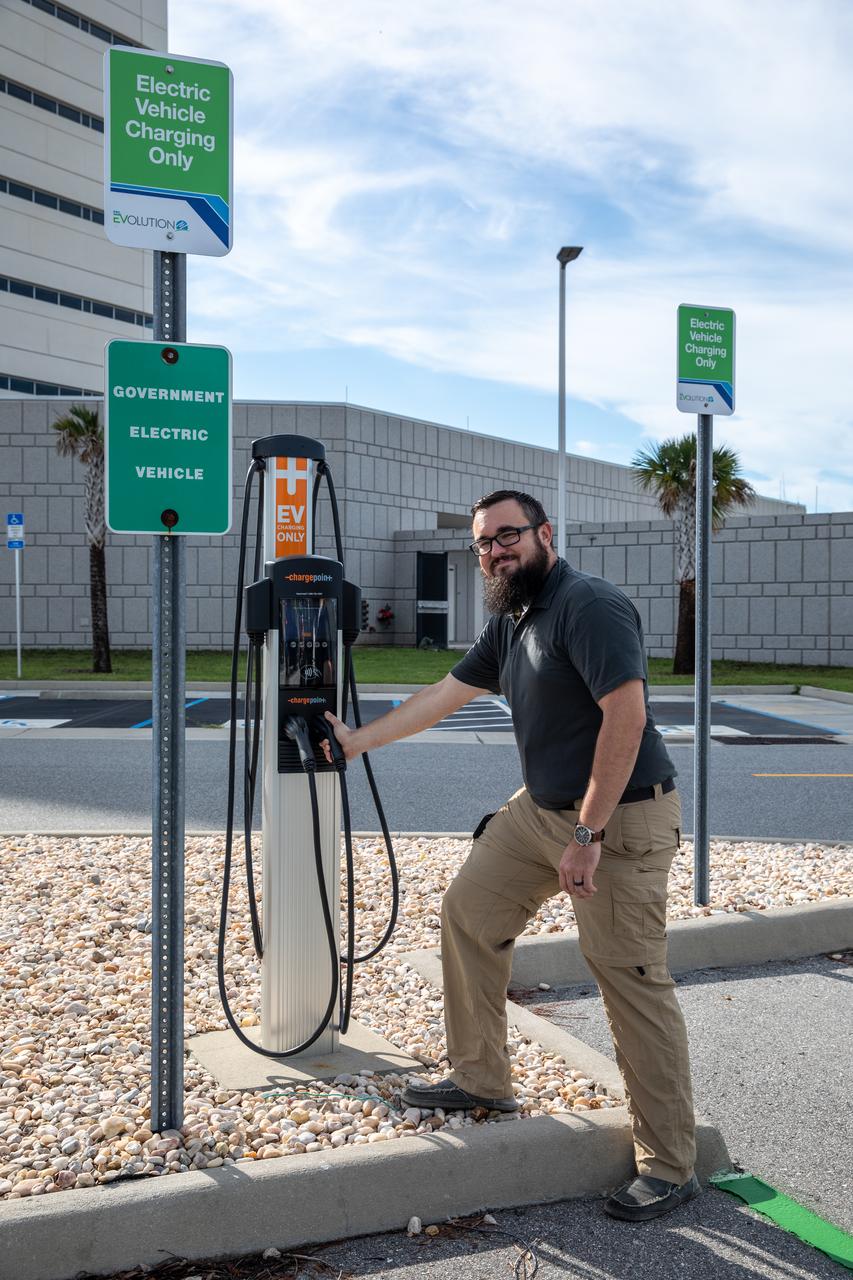
Spencer Davis, a NASA Traffic Management specialist in the Spaceport Integration Directorate at NASA’s Kennedy Space Center in Florida, stands near a newly installed electric vehicle (EV) charging station near the Central Campus Headquarters Building at Kennedy on Sept. 14, 2022. Part of a partnership between Kennedy and Florida Power & Light (FPL) to bring 23 EV charging stations to the spaceport, the ChargePoint CT4000, Level 2 chargers are capable of charging electric vehicles at a rate of 15-30 miles of range per hour. This partnership was set up under FPL’s EV program and provides a charging infrastructure that includes a simple way for businesses and employees to pay for usage.
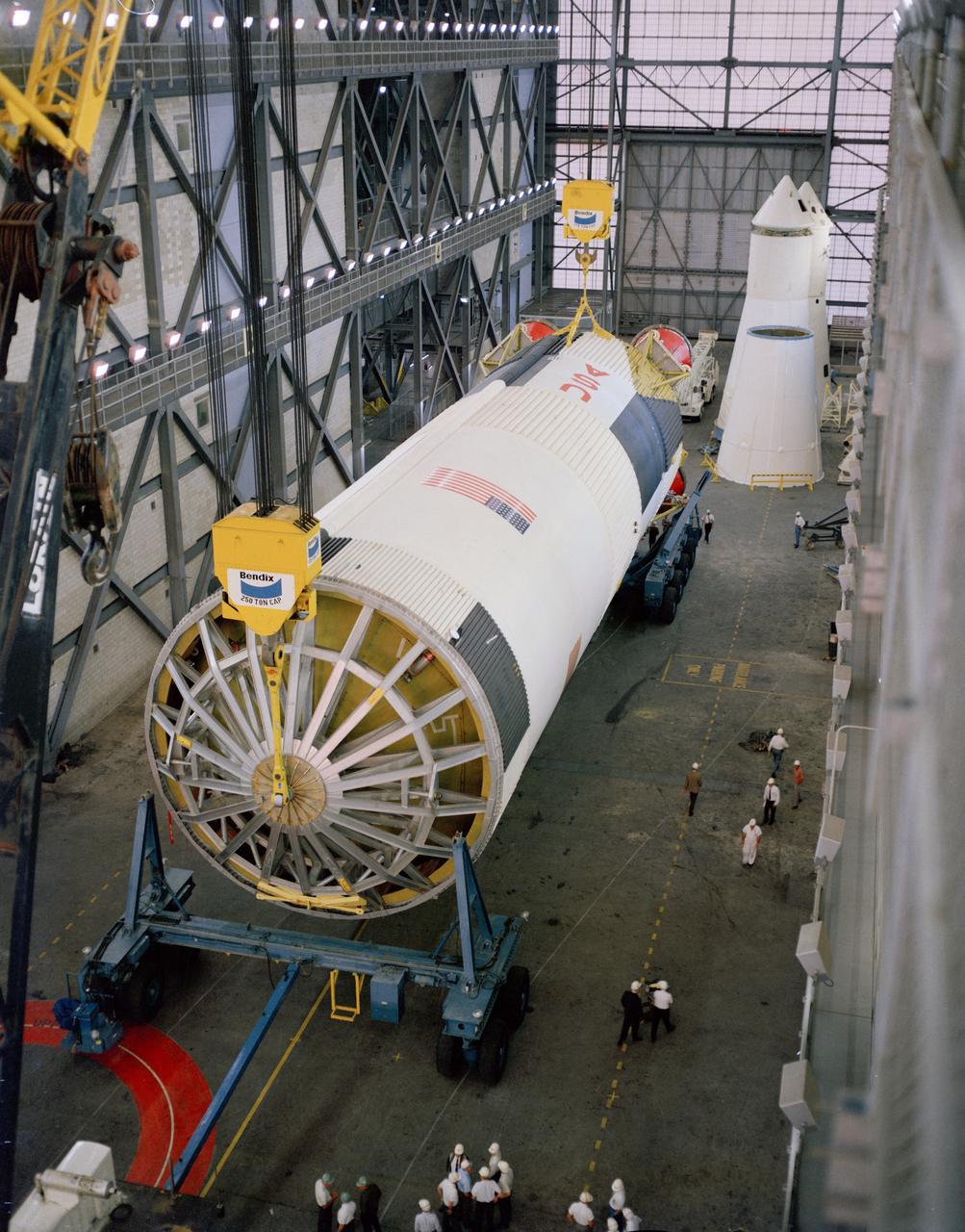
S68-55034 (3 Dec. 1968) --- The first (S-1C) stage of the Saturn 505 launch vehicle being prepared for erection in the high bay area of the Kennedy Space Center's (KSC) Vehicle Assembly Building (VAB). Saturn 505 is the launch vehicle for the Apollo 10 mission.
Model of Winged Space Vehicle

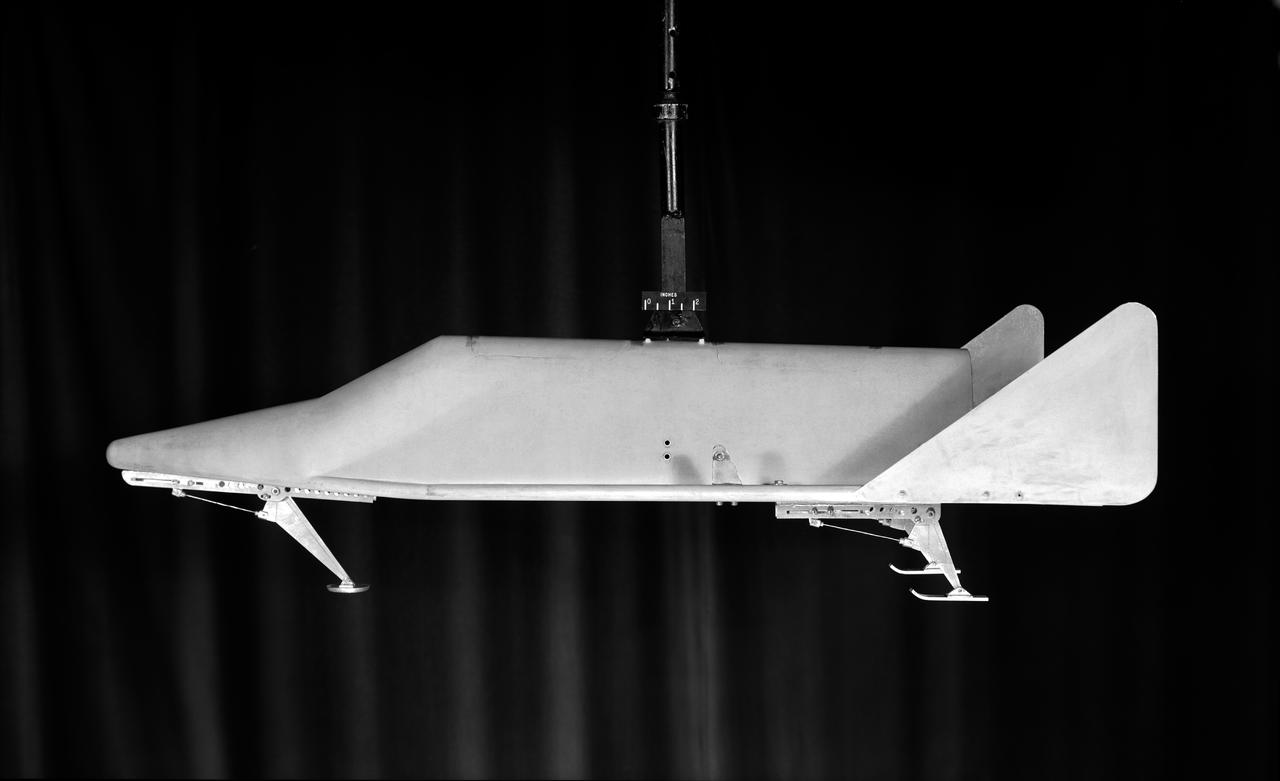
Model of Winged Space Vehicle
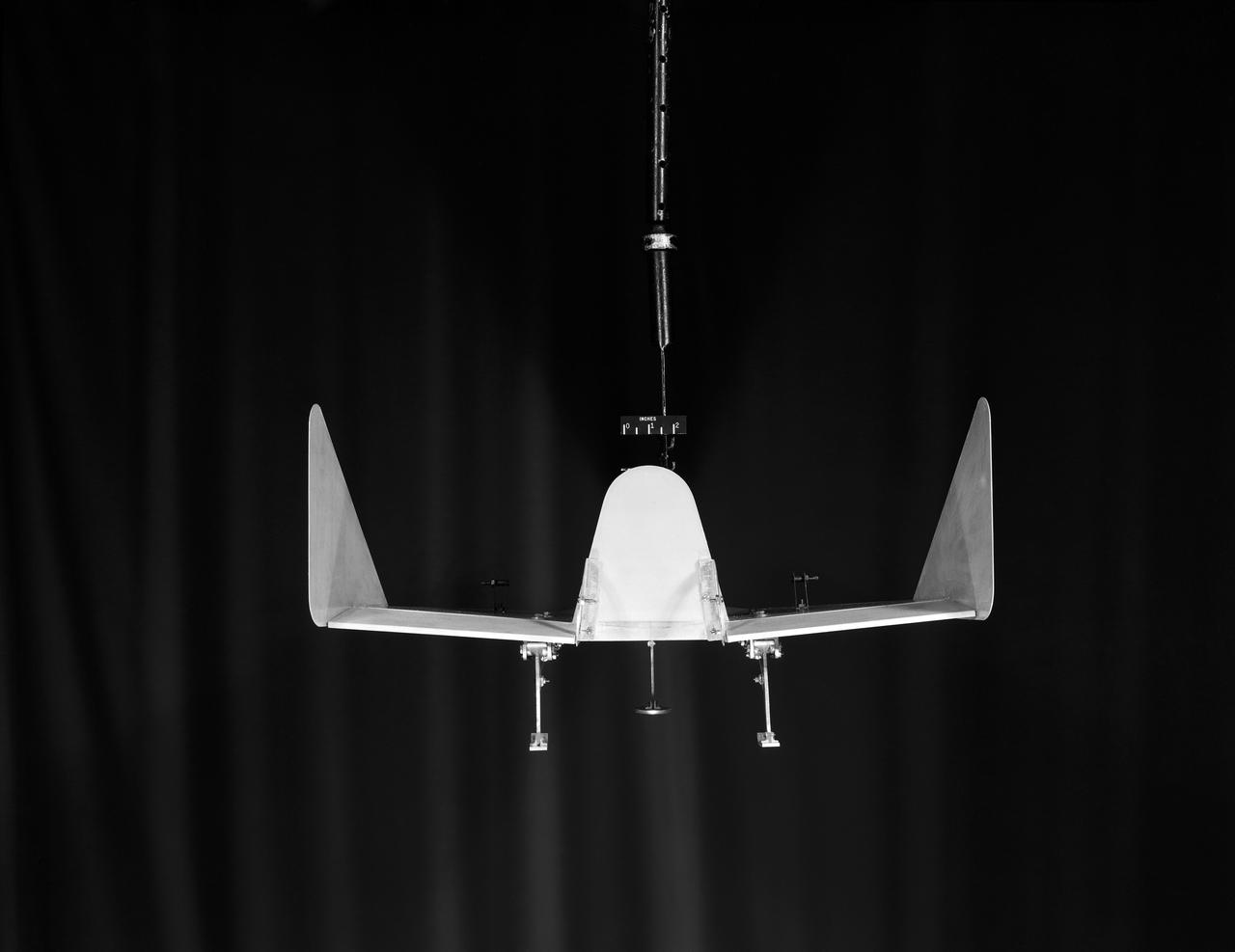
Model of Winged Space Vehicle
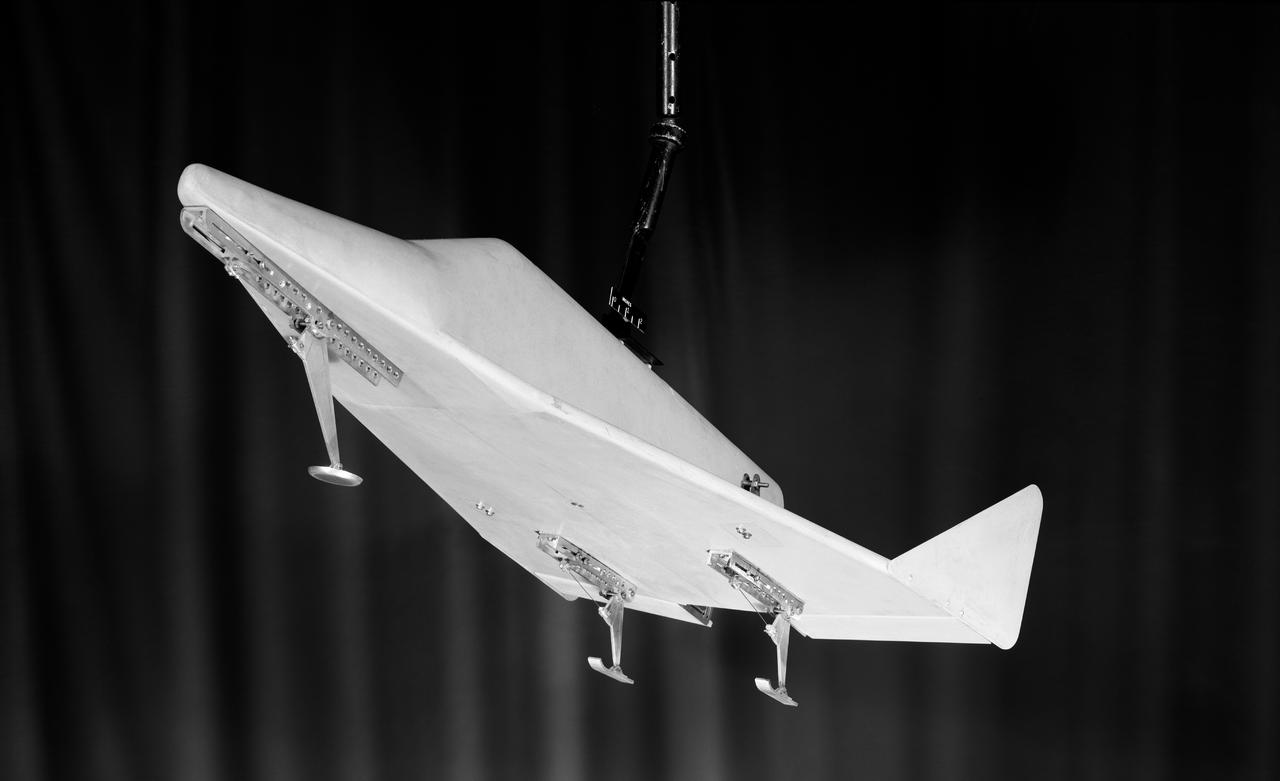
Model of Winged Space Vehicle
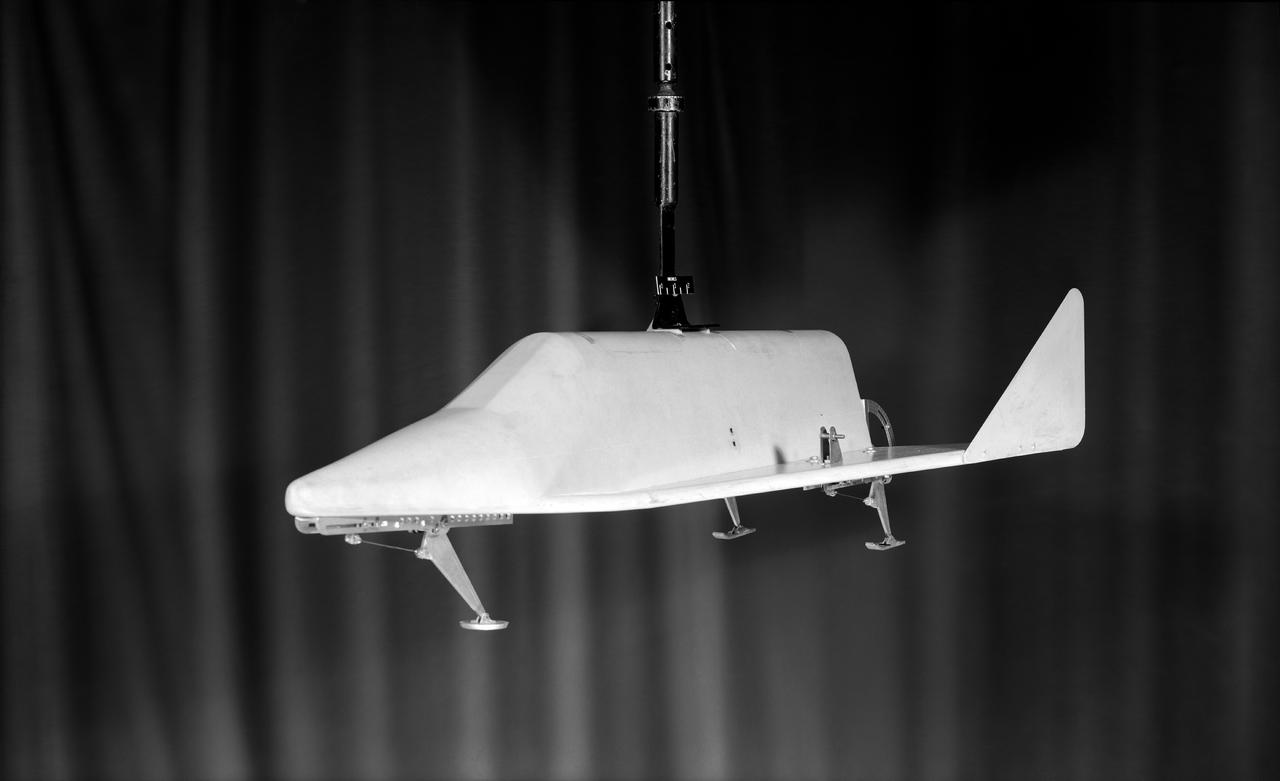
Model of Winged Space Vehicle
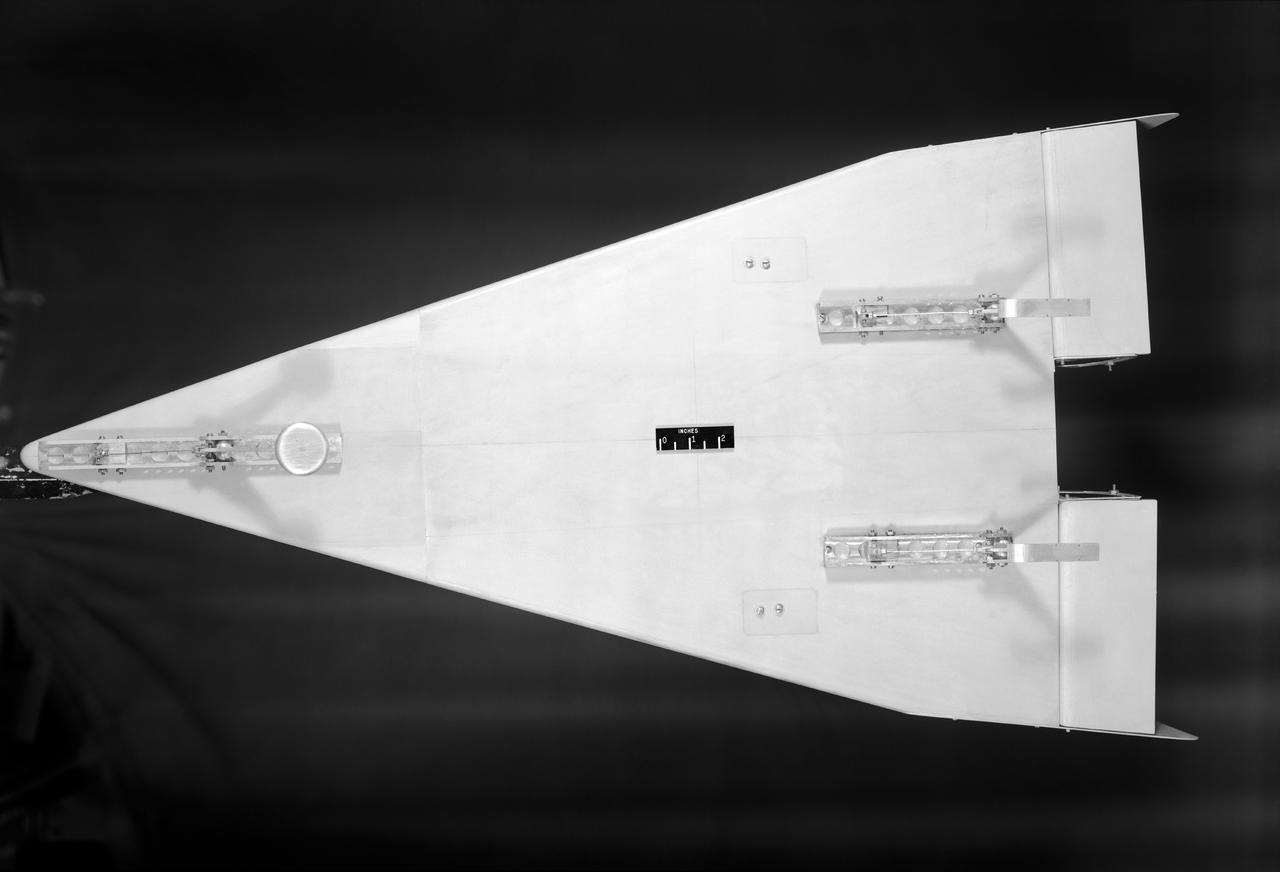
Model of Winged Space Vehicle
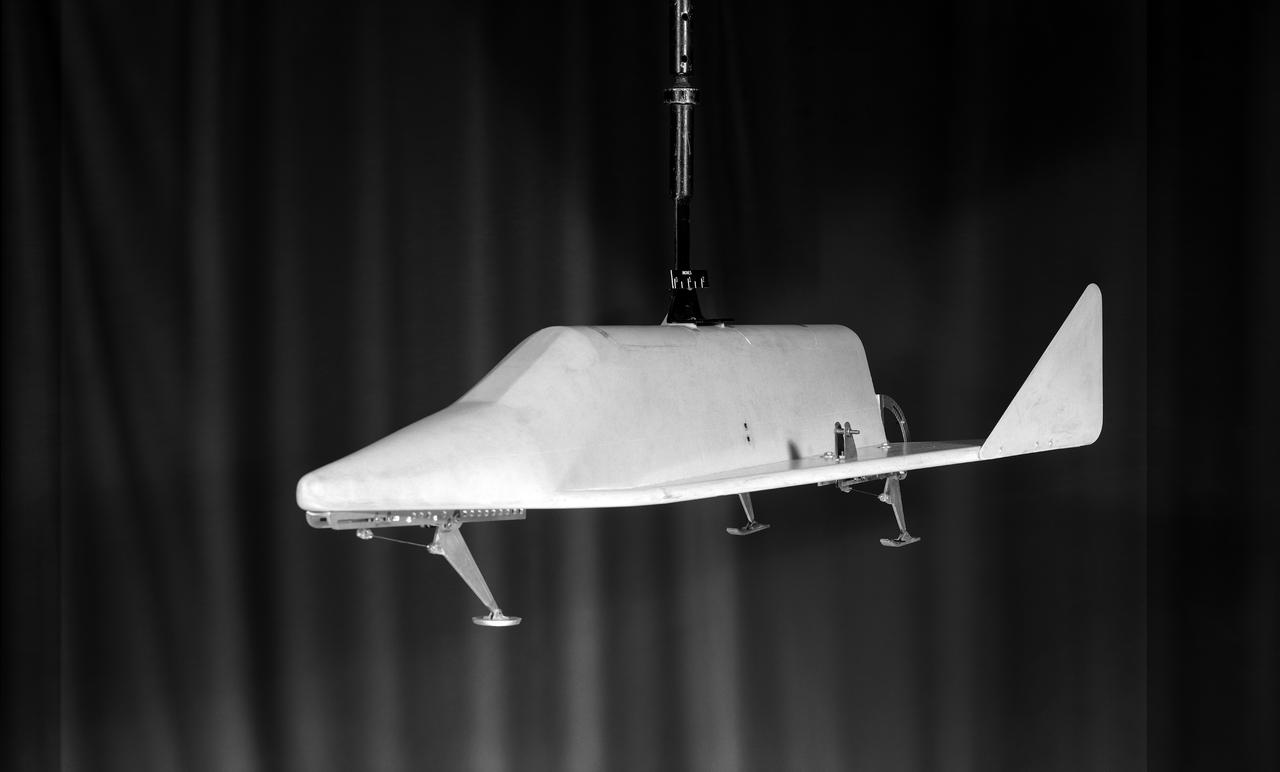
Model of Winged Space Vehicle
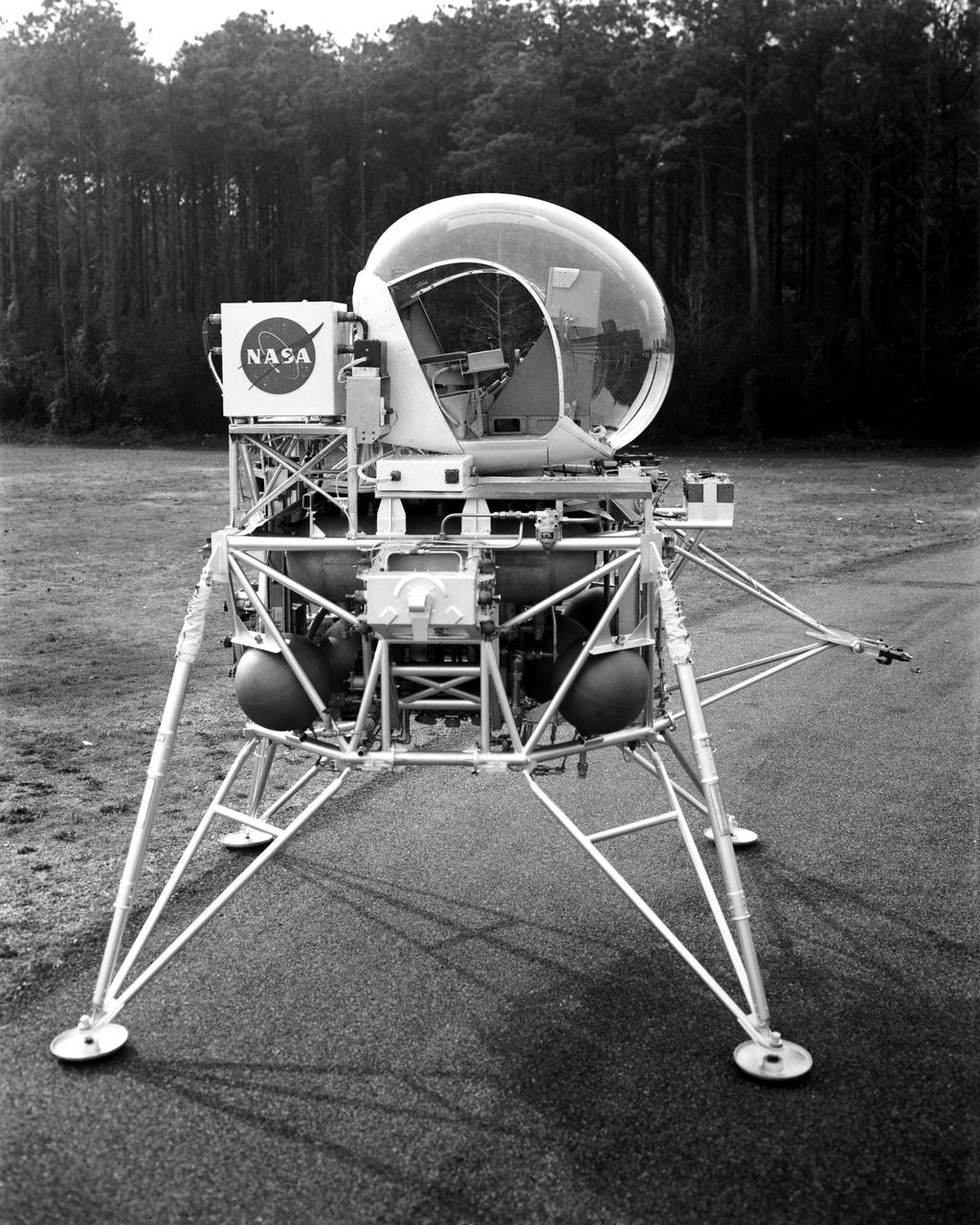
Vehicle for Lunar Landing Research Facility at Langley Research Center, Hampton, Virginia.
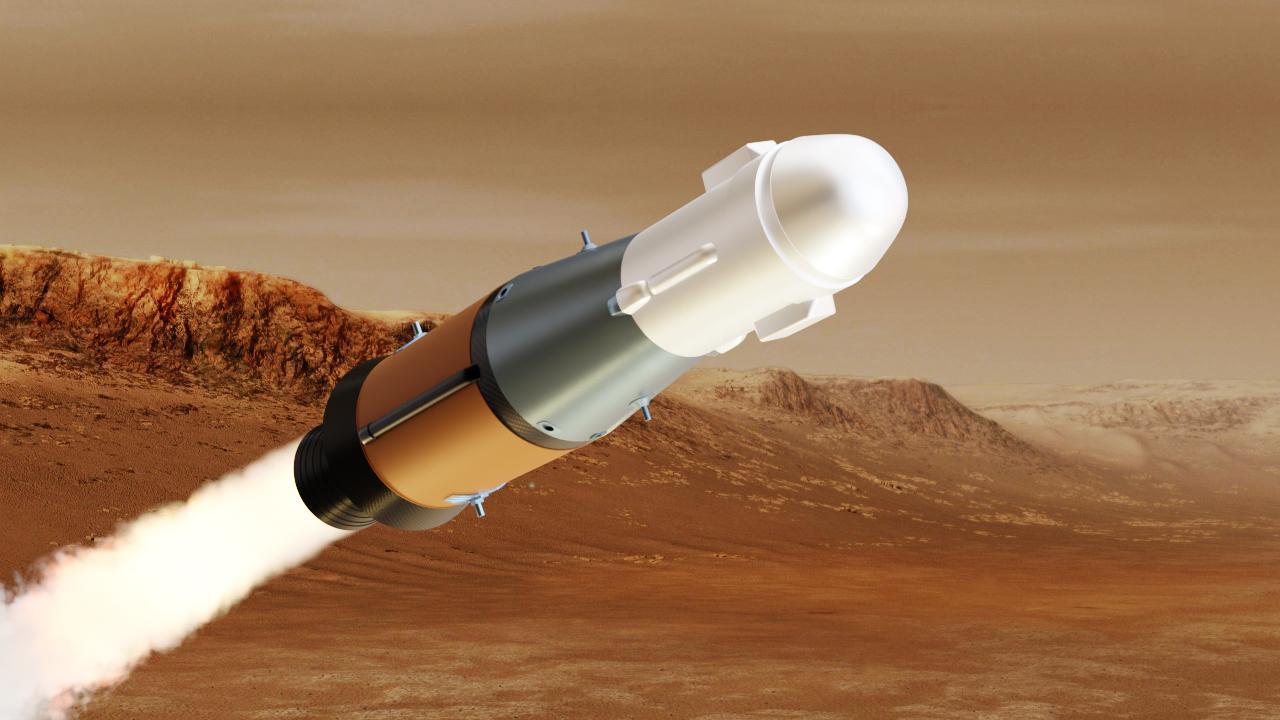
This illustration shows NASA's Mars Ascent Vehicle (MAV) in powered flight. The MAV will carry tubes containing Martian rock and soil samples into orbit around Mars, where ESA's Earth Return Orbiter spacecraft will enclose them in a highly secure containment capsule and deliver them to Earth. https://photojournal.jpl.nasa.gov/catalog/PIA25076
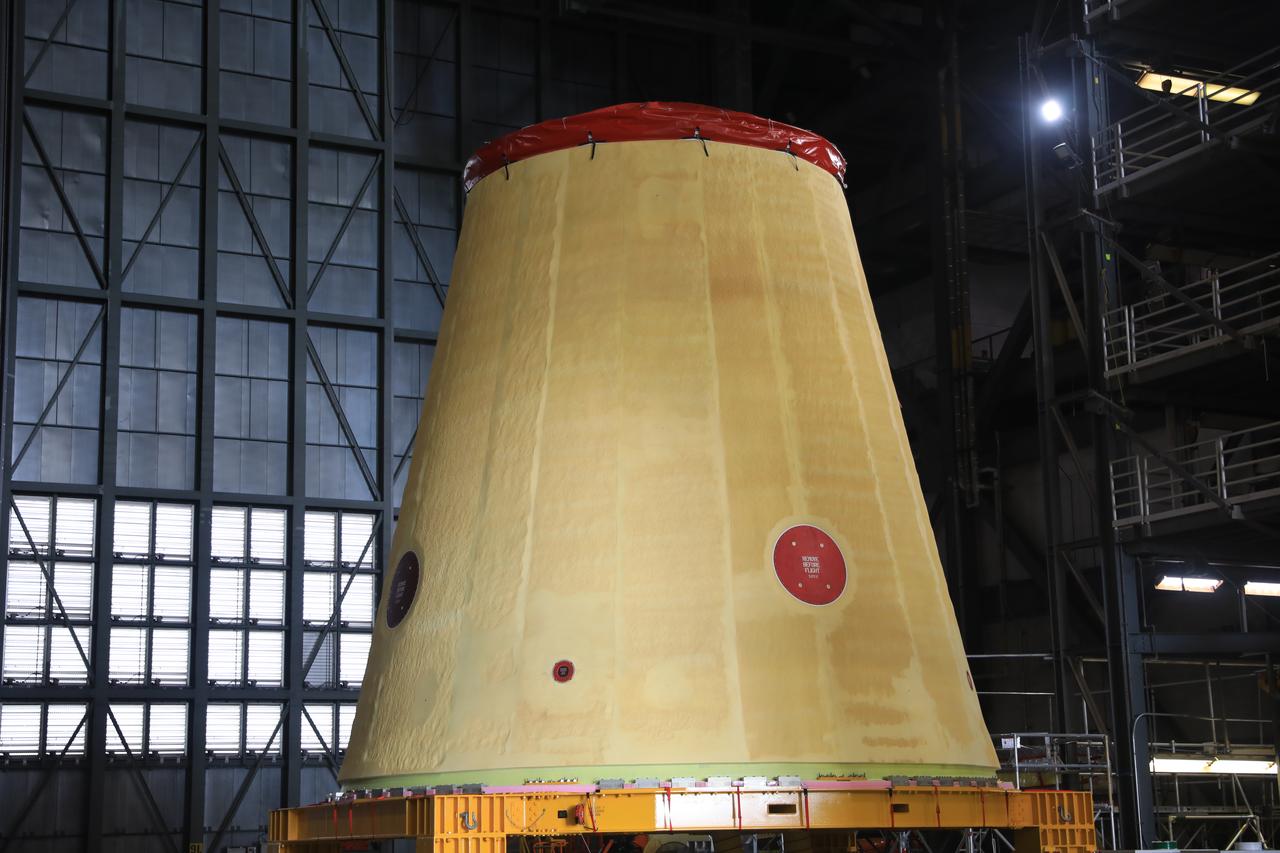
NASA’s Artemis II hardware, the launch vehicle stage adapter, awaits stacking operations at the Vehicle Assembly Building at NASA’s Kennedy Space Center in Florida on Monday, Sept. 9, 2024. The cone shaped launch vehicle stage adapter connects to NASA’s SLS (Space Launch System) rocket to the upper stage, the interim cryogenic propulsion stage, and protects the rocket’s flight computers, avionics, and electrical devices during launch and ascent.
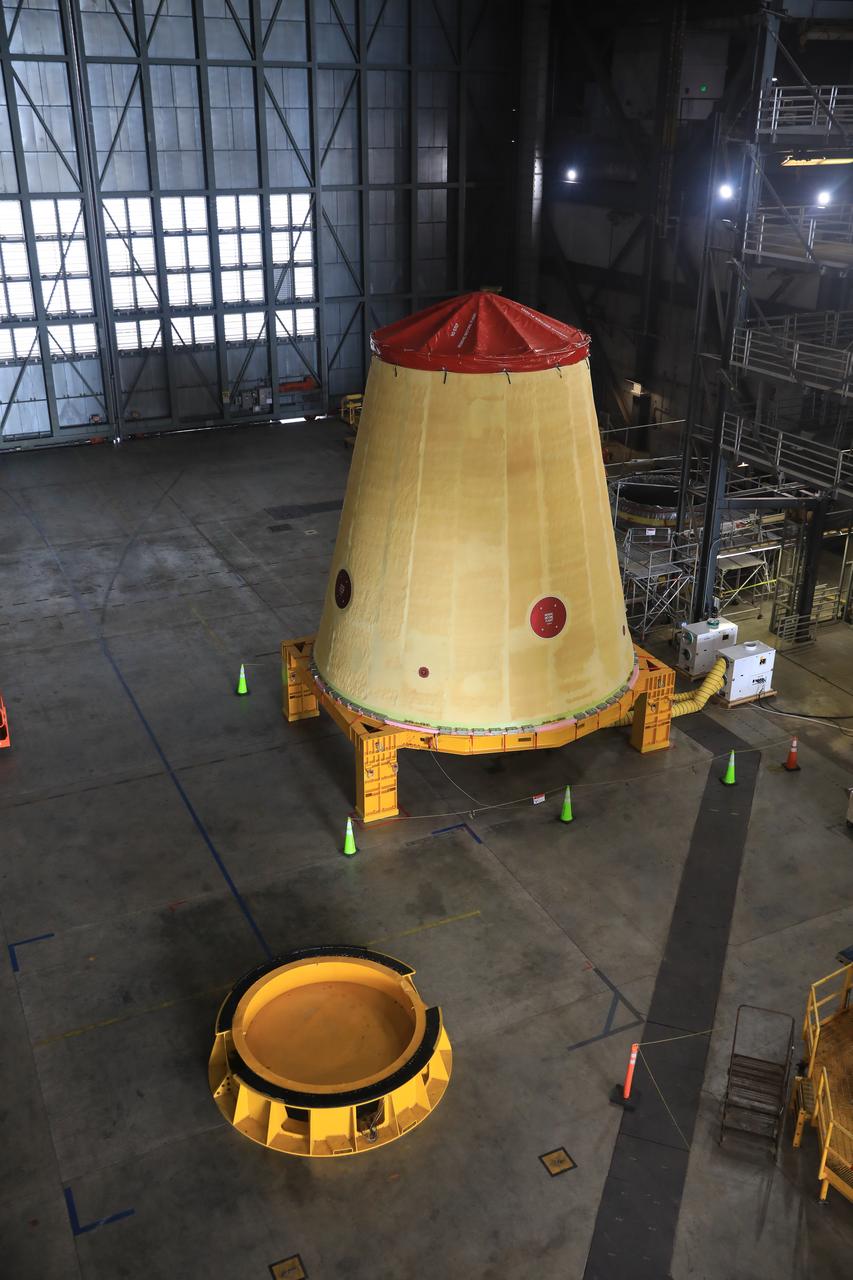
NASA’s Artemis II hardware, the launch vehicle stage adapter, awaits stacking operations at the Vehicle Assembly Building at NASA’s Kennedy Space Center in Florida on Monday, Sept. 9, 2024. The cone shaped launch vehicle stage adapter connects to NASA’s SLS (Space Launch System) rocket to the upper stage, the interim cryogenic propulsion stage, and protects the rocket’s flight computers, avionics, and electrical devices during launch and ascent.
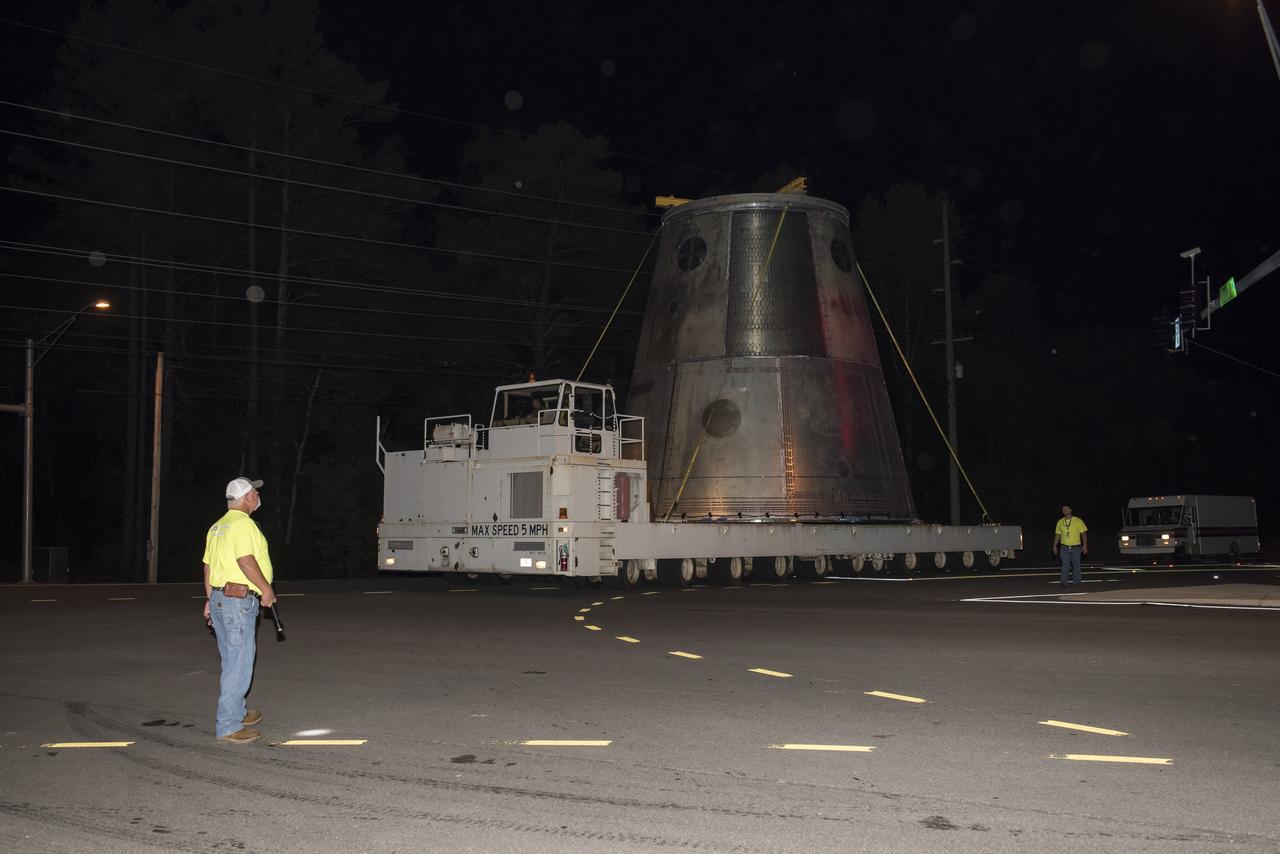
A SLS LAUNCH VEHICLE STAGE ADAPTER IS MOVED FROM THE VERTICAL WELD TOOL STATION IN MSFC’S BUILDING 4755 TO THE WEST TEST AREA’S TEST STAND 4699 WHERE IT WILL UNDERGO FURTHER TESTING OF ITS ABILITY TO WITHSTAND THE STRESSES RELATED TO LAUNCH AND SPACE TRAVEL.
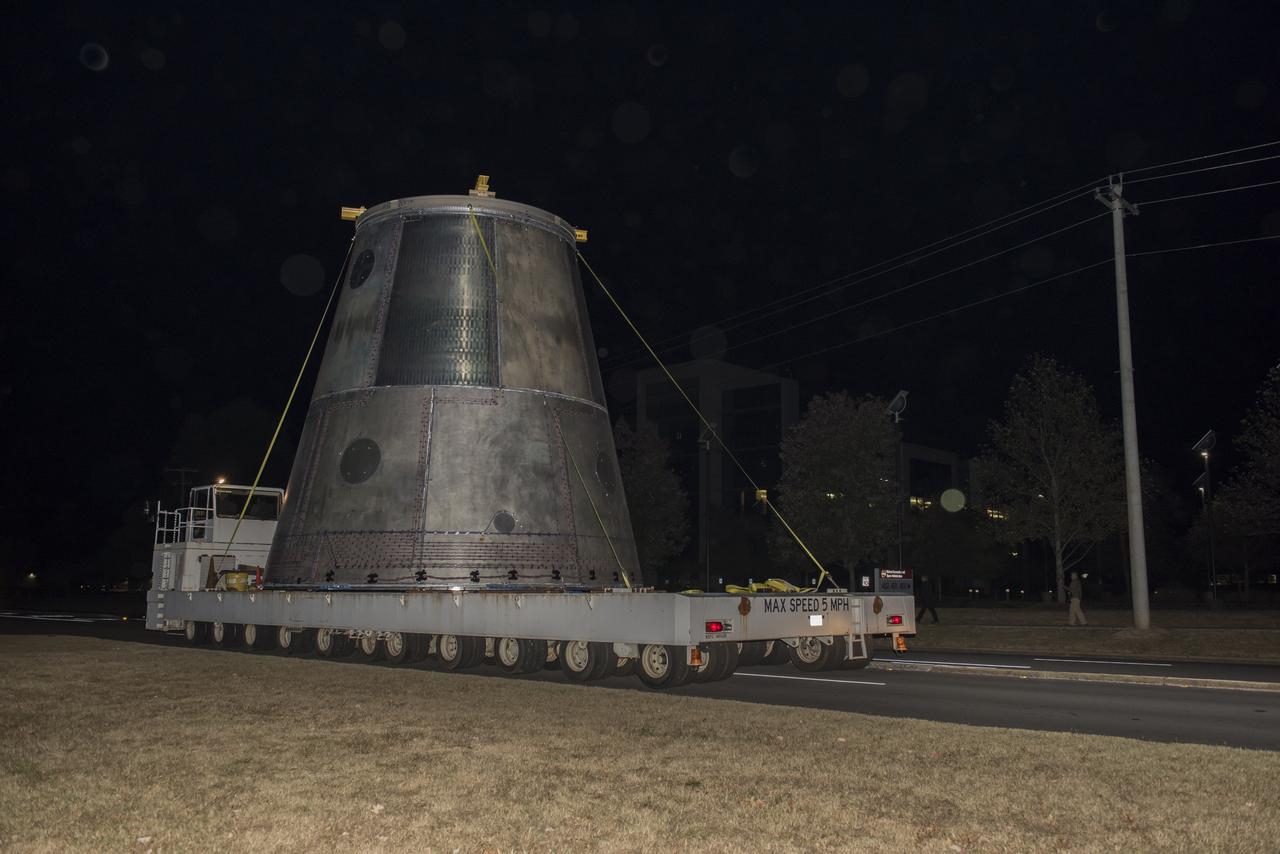
A SLS LAUNCH VEHICLE STAGE ADAPTER IS MOVED FROM THE VERTICAL WELD TOOL STATION IN MSFC’S BUILDING 4755 TO THE WEST TEST AREA’S TEST STAND 4699 WHERE IT WILL UNDERGO FURTHER TESTING OF ITS ABILITY TO WITHSTAND THE STRESSES RELATED TO LAUNCH AND SPACE TRAVEL.
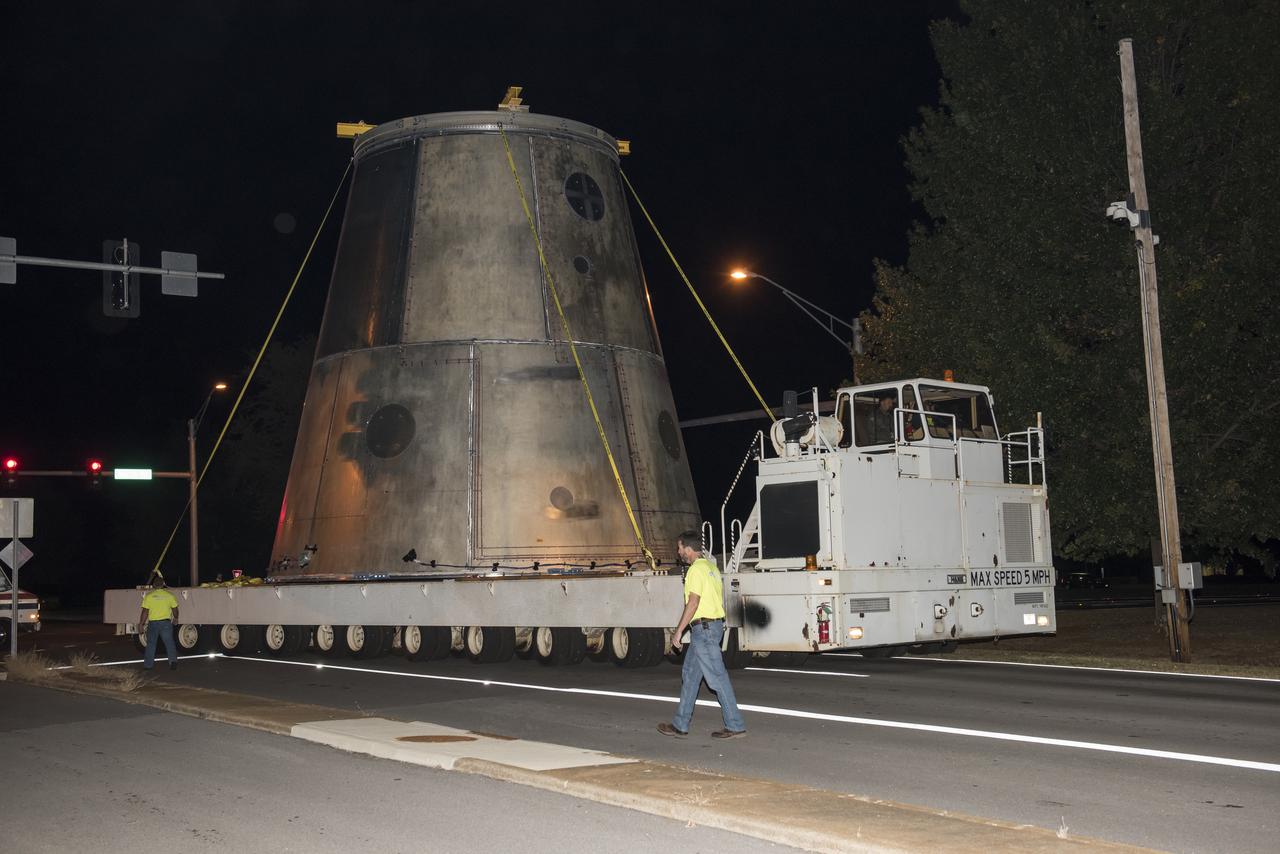
A SLS LAUNCH VEHICLE STAGE ADAPTER IS MOVED FROM THE VERTICAL WELD TOOL STATION IN MSFC’S BUILDING 4755 TO THE WEST TEST AREA’S TEST STAND 4699 WHERE IT WILL UNDERGO FURTHER TESTING OF ITS ABILITY TO WITHSTAND THE STRESSES RELATED TO LAUNCH AND SPACE TRAVEL.
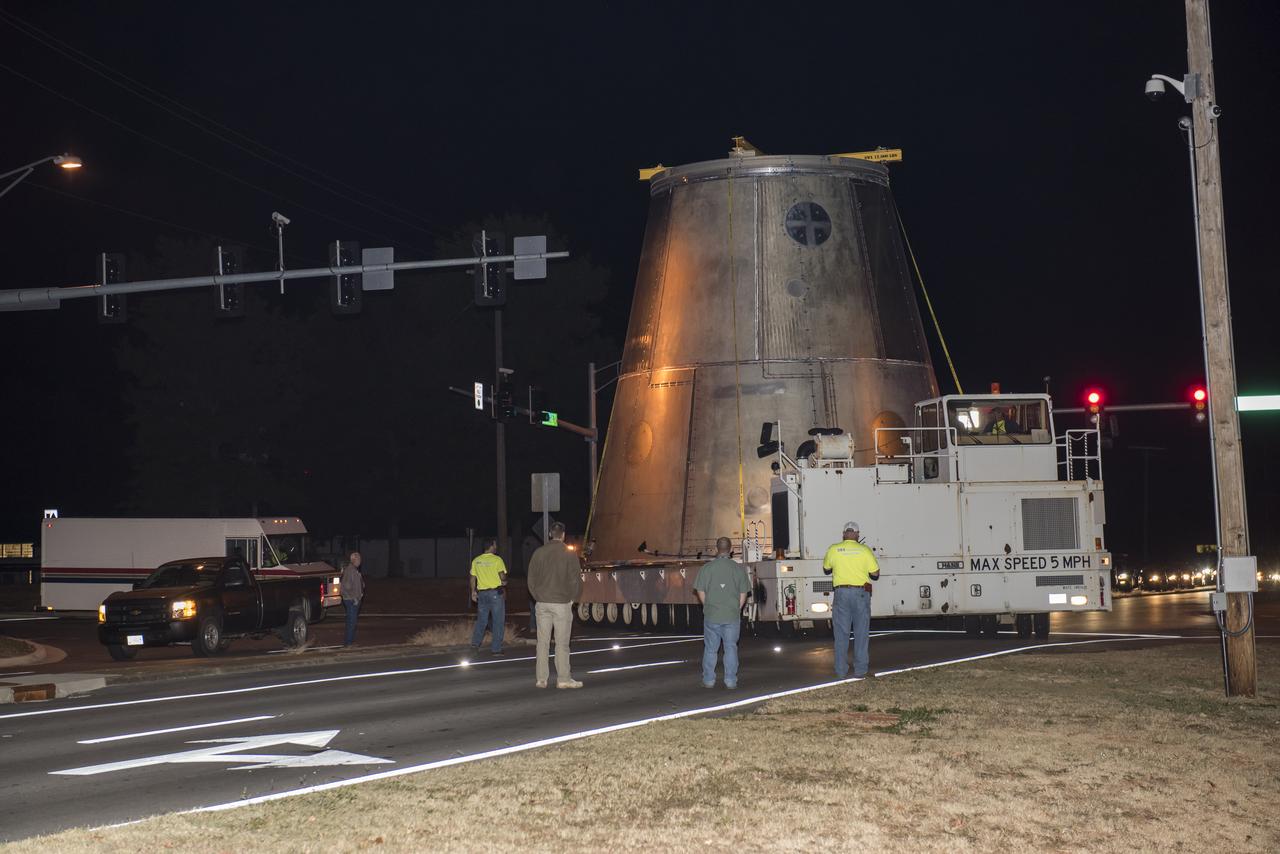
A SLS LAUNCH VEHICLE STAGE ADAPTER IS MOVED FROM THE VERTICAL WELD TOOL STATION IN MSFC’S BUILDING 4755 TO THE WEST TEST AREA’S TEST STAND 4699 WHERE IT WILL UNDERGO FURTHER TESTING OF ITS ABILITY TO WITHSTAND THE STRESSES RELATED TO LAUNCH AND SPACE TRAVEL.
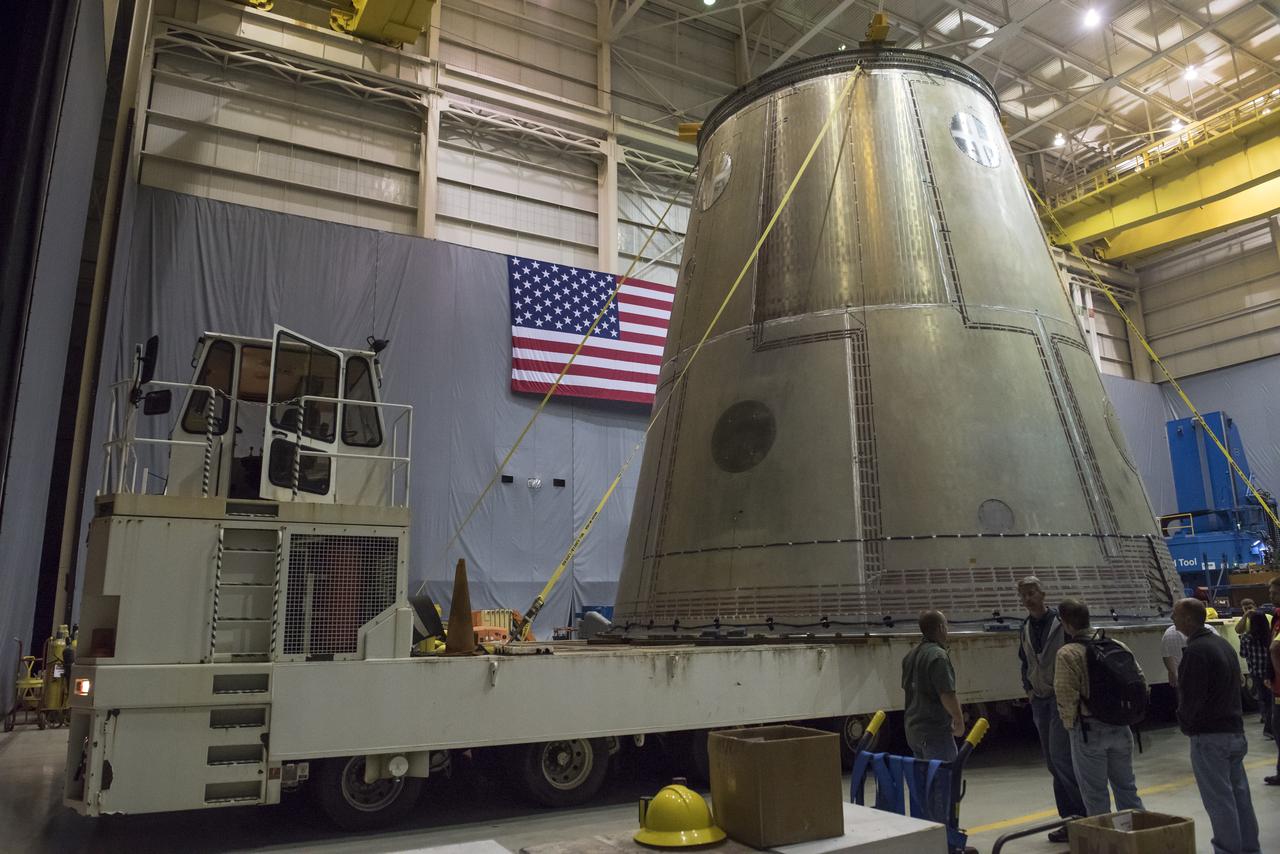
A SLS LAUNCH VEHICLE STAGE ADAPTER IS MOVED FROM THE VERTICAL WELD TOOL STATION IN MSFC’S BUILDING 4755 TO THE WEST TEST AREA’S TEST STAND 4699 WHERE IT WILL UNDERGO FURTHER TESTING OF ITS ABILITY TO WITHSTAND THE STRESSES RELATED TO LAUNCH AND SPACE TRAVEL.
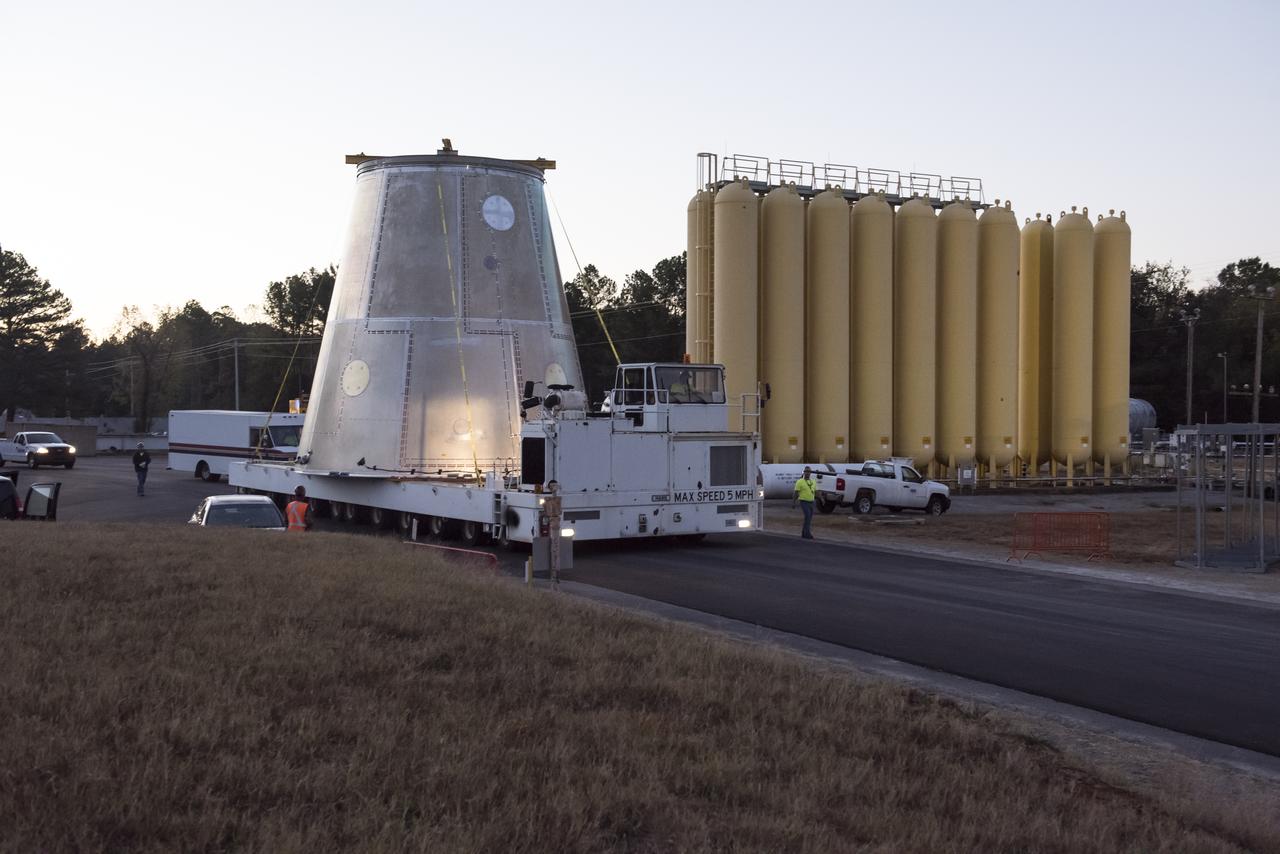
A SLS LAUNCH VEHICLE STAGE ADAPTER IS MOVED FROM THE VERTICAL WELD TOOL STATION IN MSFC’S BUILDING 4755 TO THE WEST TEST AREA’S TEST STAND 4699 WHERE IT WILL UNDERGO FURTHER TESTING OF ITS ABILITY TO WITHSTAND THE STRESSES RELATED TO LAUNCH AND SPACE TRAVEL.
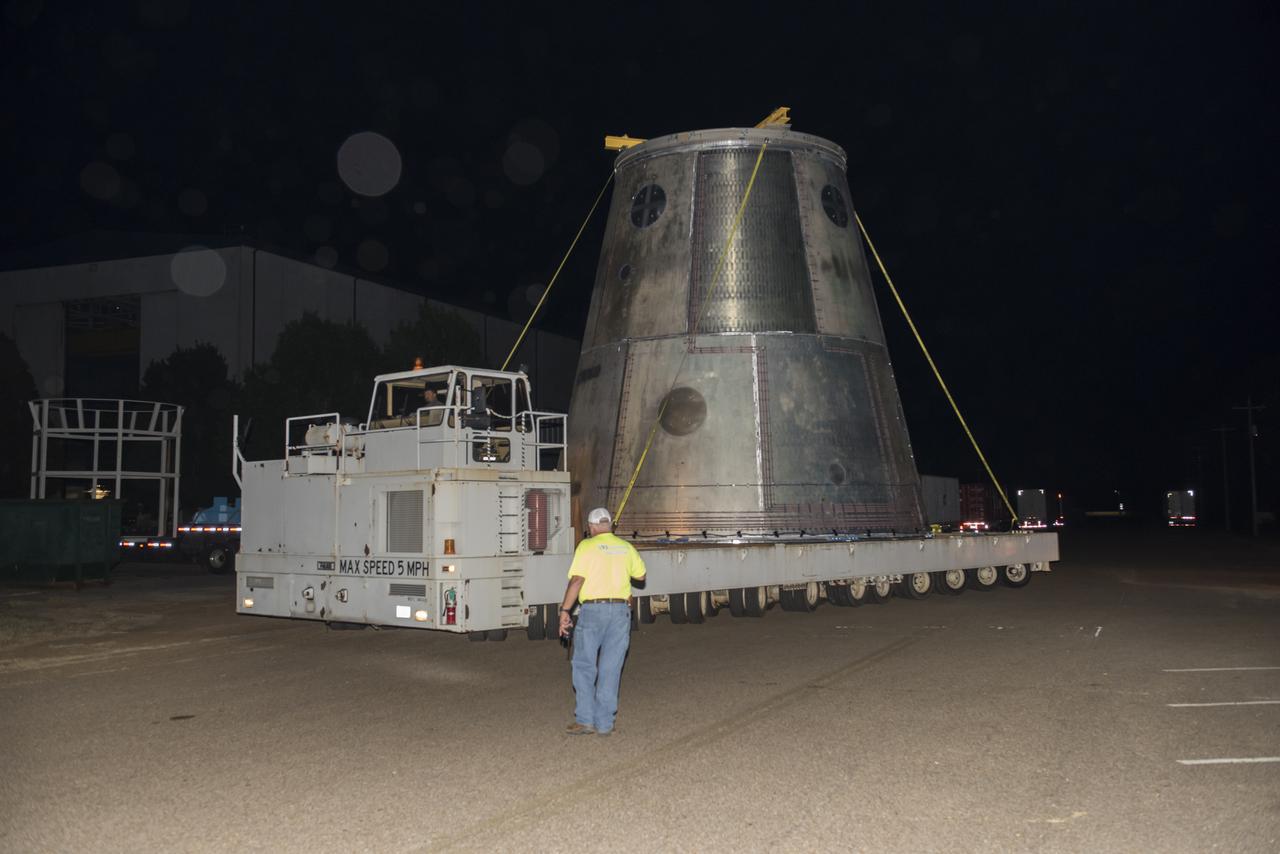
A SLS LAUNCH VEHICLE STAGE ADAPTER IS MOVED FROM THE VERTICAL WELD TOOL STATION IN MSFC’S BUILDING 4755 TO THE WEST TEST AREA’S TEST STAND 4699 WHERE IT WILL UNDERGO FURTHER TESTING OF ITS ABILITY TO WITHSTAND THE STRESSES RELATED TO LAUNCH AND SPACE TRAVEL.
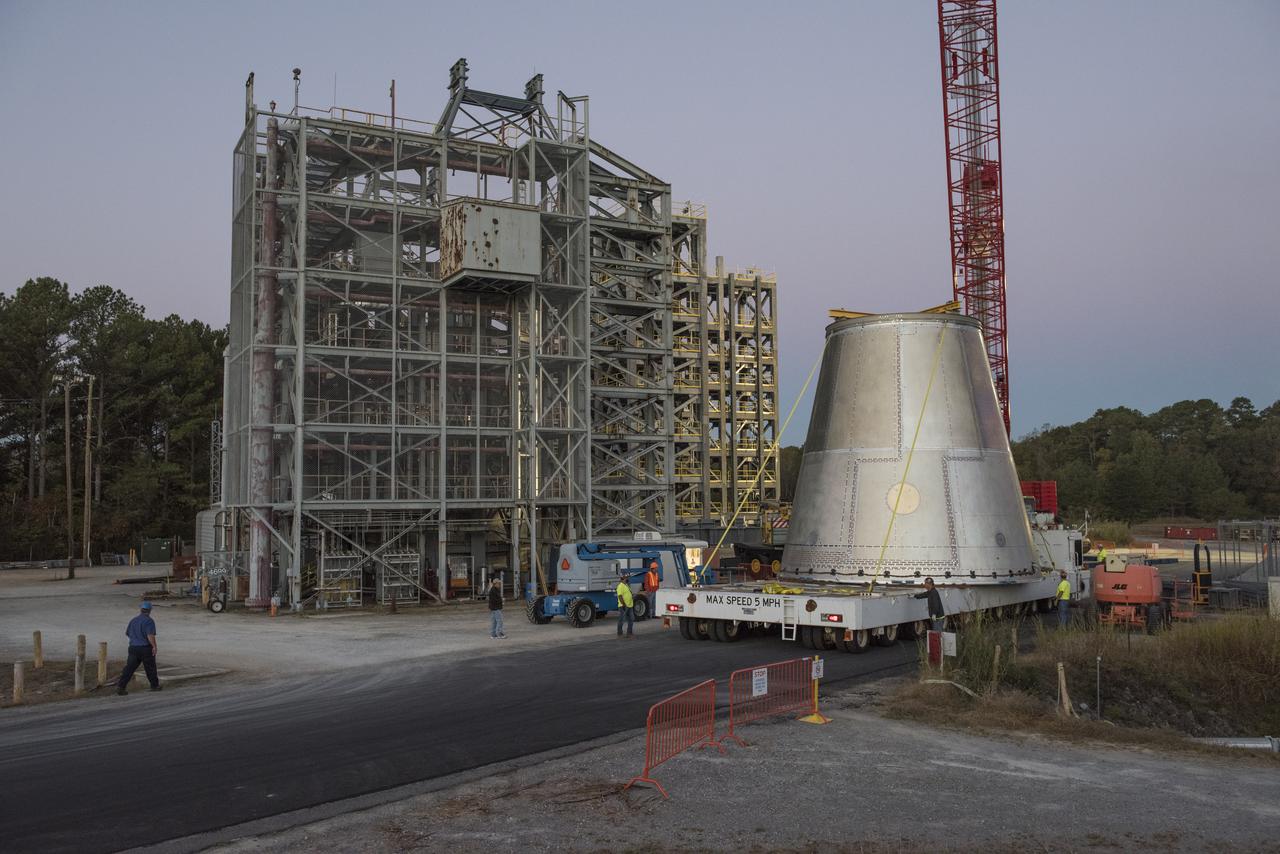
A SLS LAUNCH VEHICLE STAGE ADAPTER IS MOVED FROM THE VERTICAL WELD TOOL STATION IN MSFC’S BUILDING 4755 TO THE WEST TEST AREA’S TEST STAND 4699 WHERE IT WILL UNDERGO FURTHER TESTING OF ITS ABILITY TO WITHSTAND THE STRESSES RELATED TO LAUNCH AND SPACE TRAVEL.
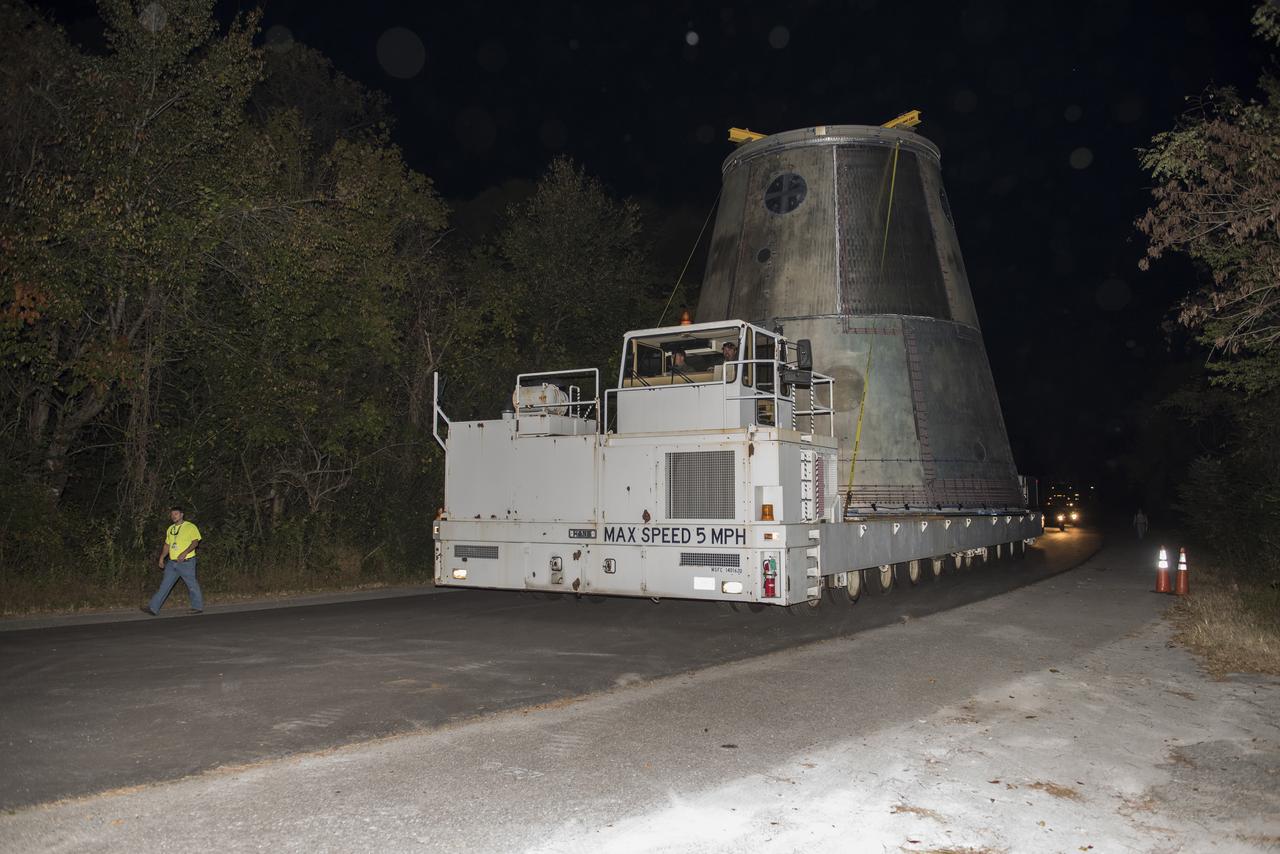
A SLS LAUNCH VEHICLE STAGE ADAPTER IS MOVED FROM THE VERTICAL WELD TOOL STATION IN MSFC’S BUILDING 4755 TO THE WEST TEST AREA’S TEST STAND 4699 WHERE IT WILL UNDERGO FURTHER TESTING OF ITS ABILITY TO WITHSTAND THE STRESSES RELATED TO LAUNCH AND SPACE TRAVEL.
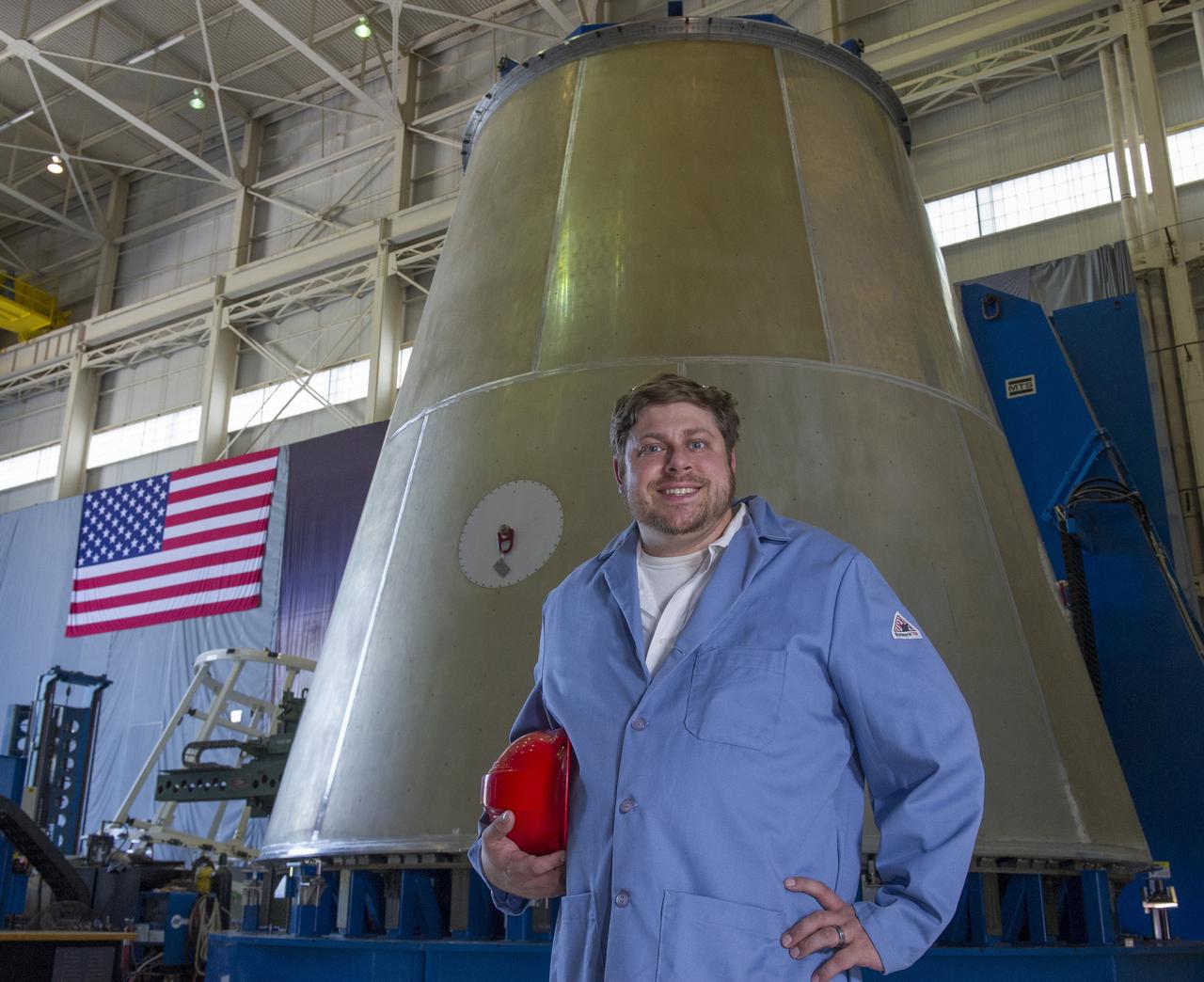
MARSHALL WELD ENGINEER JUSTIN LITTELL POSES WITH LAUNCH VEHICLE STAGE ADAPTER
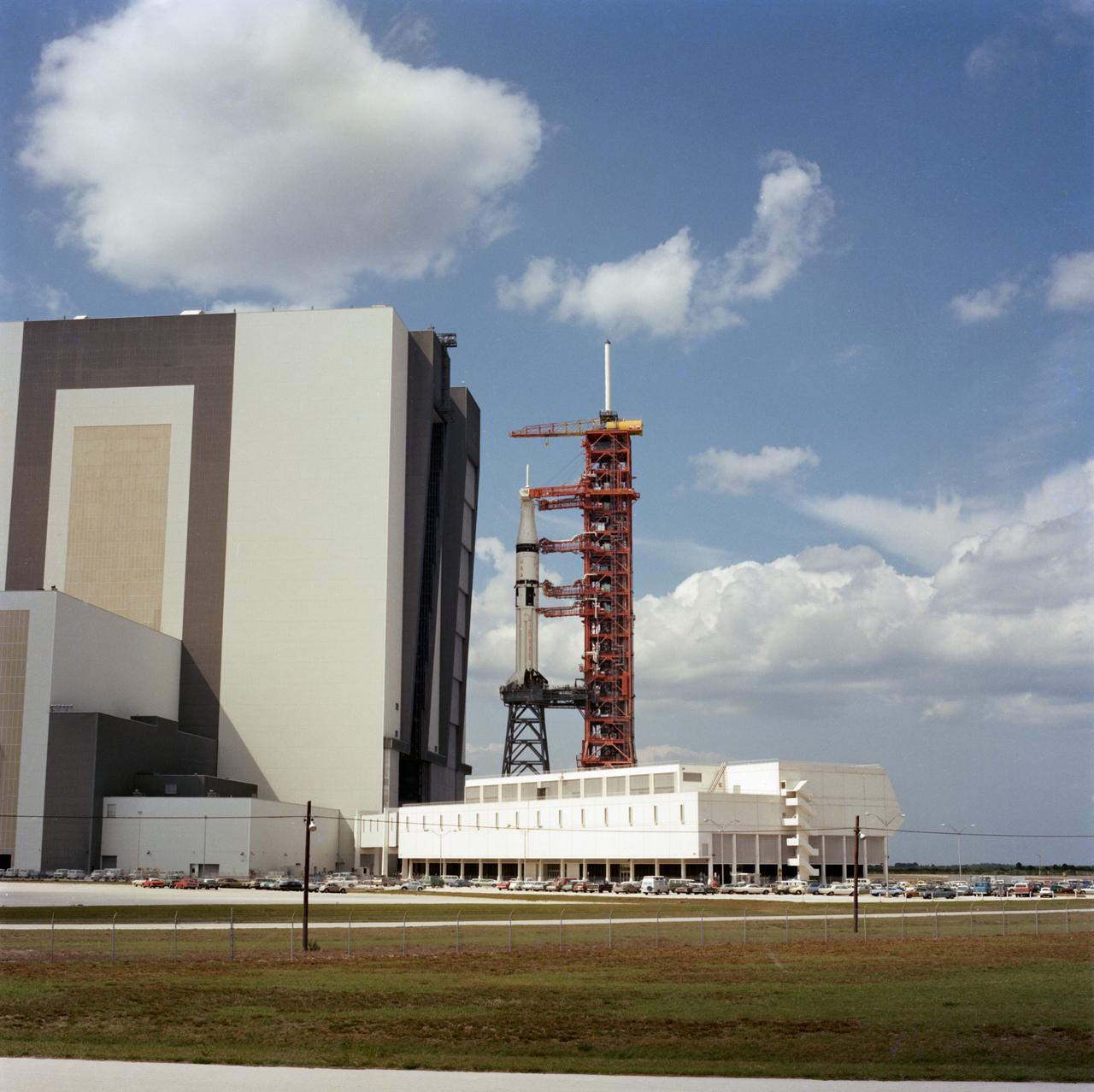
S75-24007 (24 March 1975) --- The Saturn 1B space vehicle for the Apollo-Soyuz Test Project mission, with its launch umbilical tower, rides atop a huge crawler-transporter as it moves slowly away from the Vehicle Assembly Building on its 4.24-mile journey to Pad B, Launch Complex 39, at NASA's Kennedy Space Center. The ASTP vehicle is composed of a Saturn 1B (first) stage, a Saturn IVB (second) stage, and a payload consisting of a Command/Service Module and a Docking Module. The joint U.S.-USSR ASTP docking mission in Earth orbit is scheduled for July 1975.
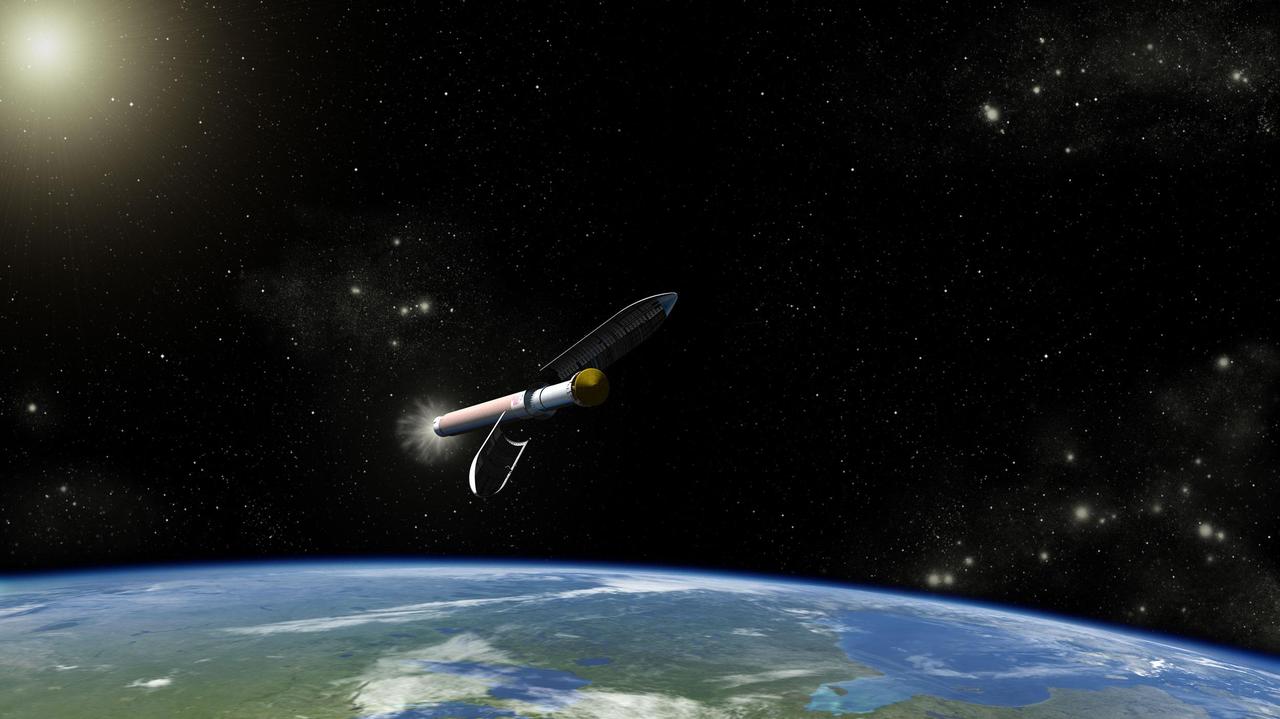
This artist concept is of the Atlas V541 launch vehicle that will carry NASA Curiosity rover on its way to Mars. The Atlas V 541 vehicle was selected as it has the right liftoff capability for heavy weight requirements of the rover and its spacecraft.
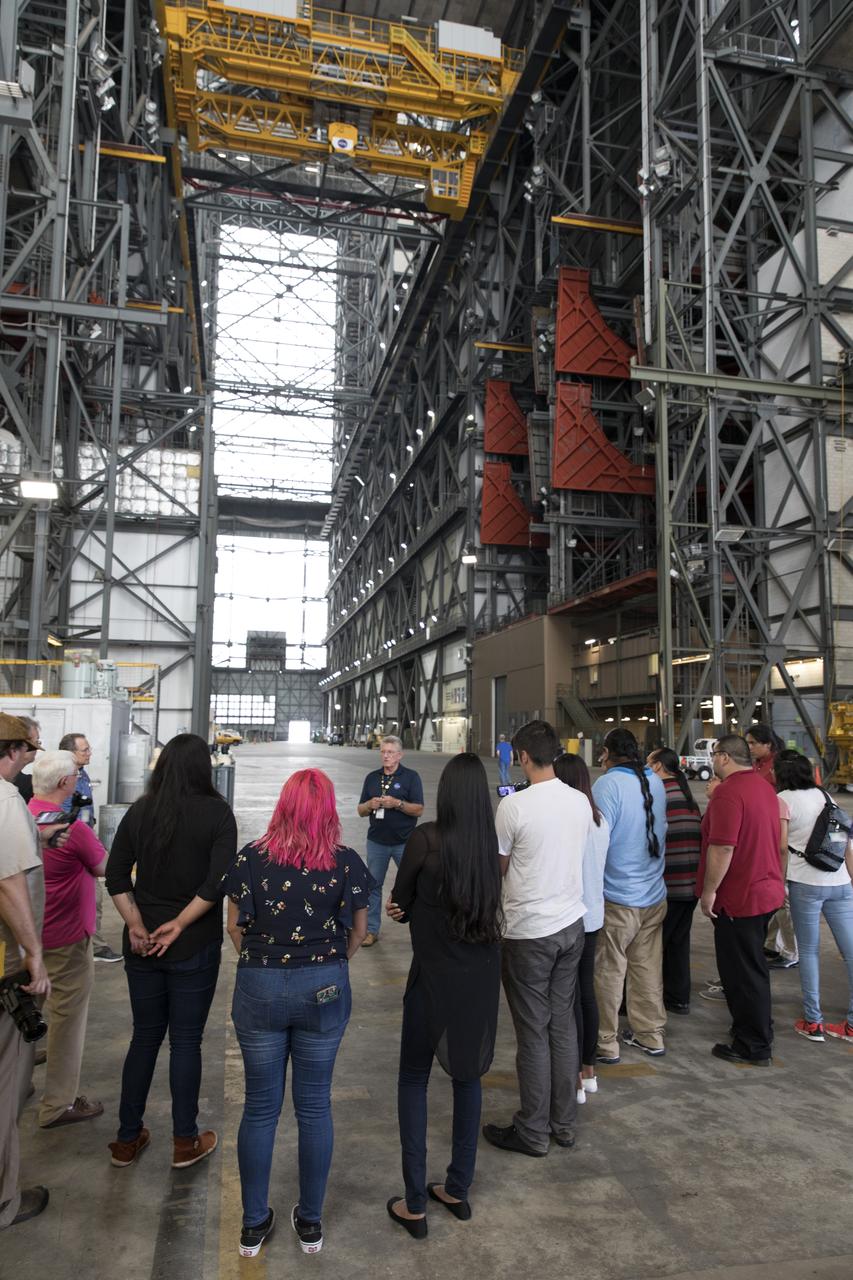
A group of 19 college students recently visited NASA's Kennedy Space Center as winners of the First Nations Launch competition in Wisconsin. They were part of teams that successfully flew high-powered rockets, earning them an opportunity to visit the Florida spaceport. During their visit, they toured the Vehicle Assembly Building, Launch Control Center and the Kennedy visitor complex. The competition is supported by NASA and the Wisconsin Space Grant Consortium. It provides an opportunity for students attending tribal colleges or universities, or who are members of a campus American Indian Science and Engineering Society, or AISES, chapter to design, build and launch a rocket at a competition in Kansasville, Wisconsin.
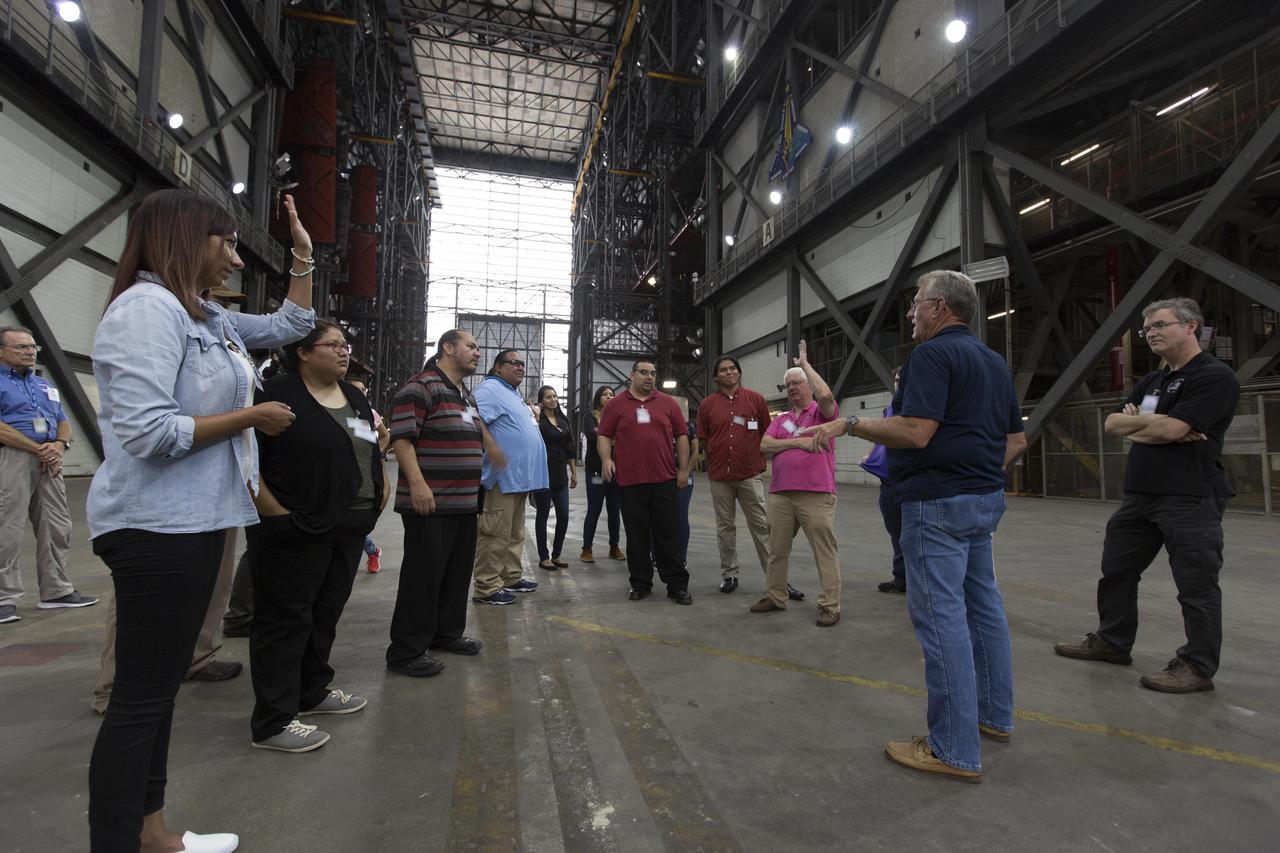
A group of 19 college students recently visited NASA's Kennedy Space Center as winners of the First Nations Launch competition in Wisconsin. They were part of teams that successfully flew high-powered rockets, earning them an opportunity to visit the Florida spaceport. During their visit, they toured the Vehicle Assembly Building, Launch Control Center and the Kennedy visitor complex. The competition is supported by NASA and the Wisconsin Space Grant Consortium. It provides an opportunity for students attending tribal colleges or universities, or who are members of a campus American Indian Science and Engineering Society, or AISES, chapter to design, build and launch a rocket at a competition in Kansasville, Wisconsin.
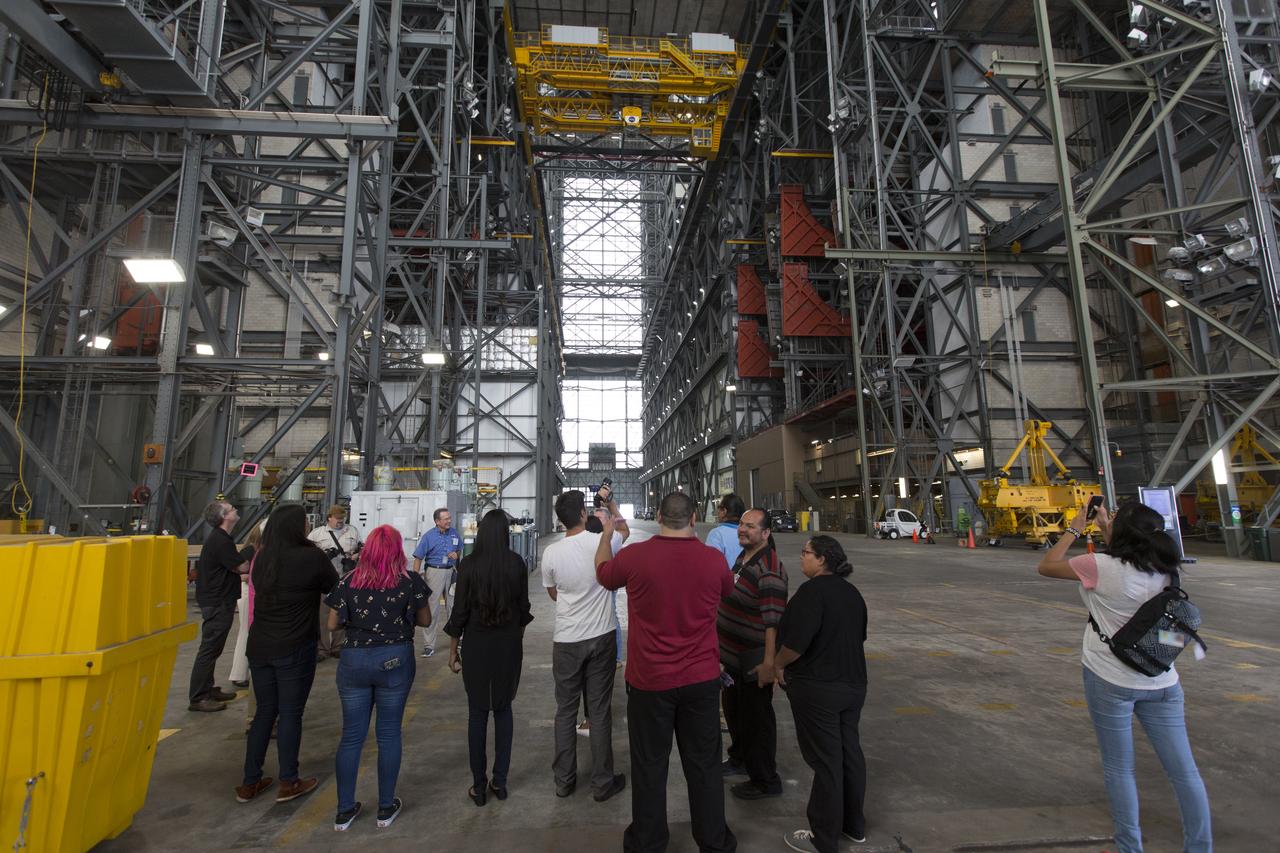
A group of 19 college students recently visited NASA's Kennedy Space Center as winners of the First Nations Launch competition in Wisconsin. They were part of teams that successfully flew high-powered rockets, earning them an opportunity to visit the Florida spaceport. During their visit, they toured the Vehicle Assembly Building, Launch Control Center and the Kennedy visitor complex. The competition is supported by NASA and the Wisconsin Space Grant Consortium. It provides an opportunity for students attending tribal colleges or universities, or who are members of a campus American Indian Science and Engineering Society, or AISES, chapter to design, build and launch a rocket at a competition in Kansasville, Wisconsin.
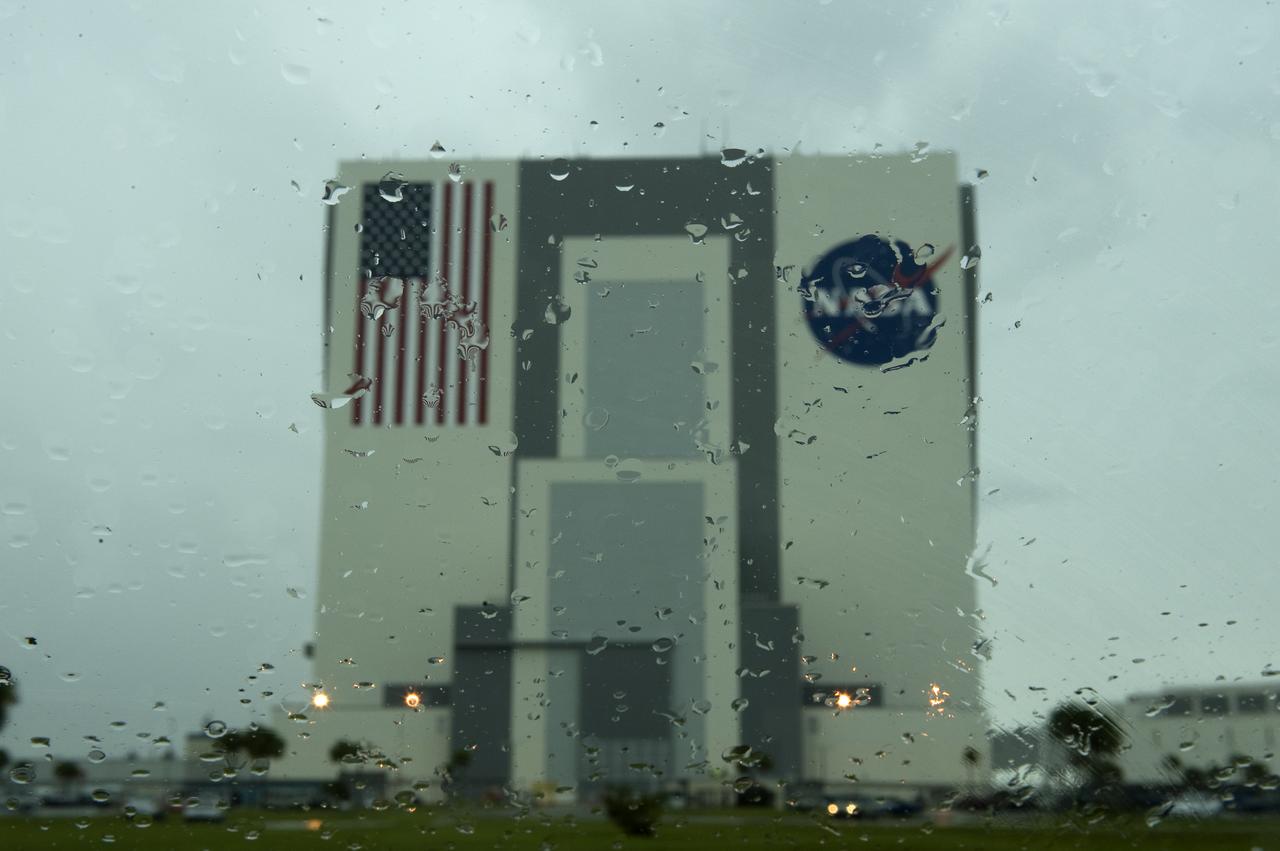
The NASA Vehicle Assembly Building is seen through a rain covered windshield at NASA's Kennedy Space Center in Florida on Friday, July 10, 2009. NASA is set to launch the space shuttle Endeavour with the crew of STS-127 on Saturday. Photo Credit: (NASA/Bill Ingalls)
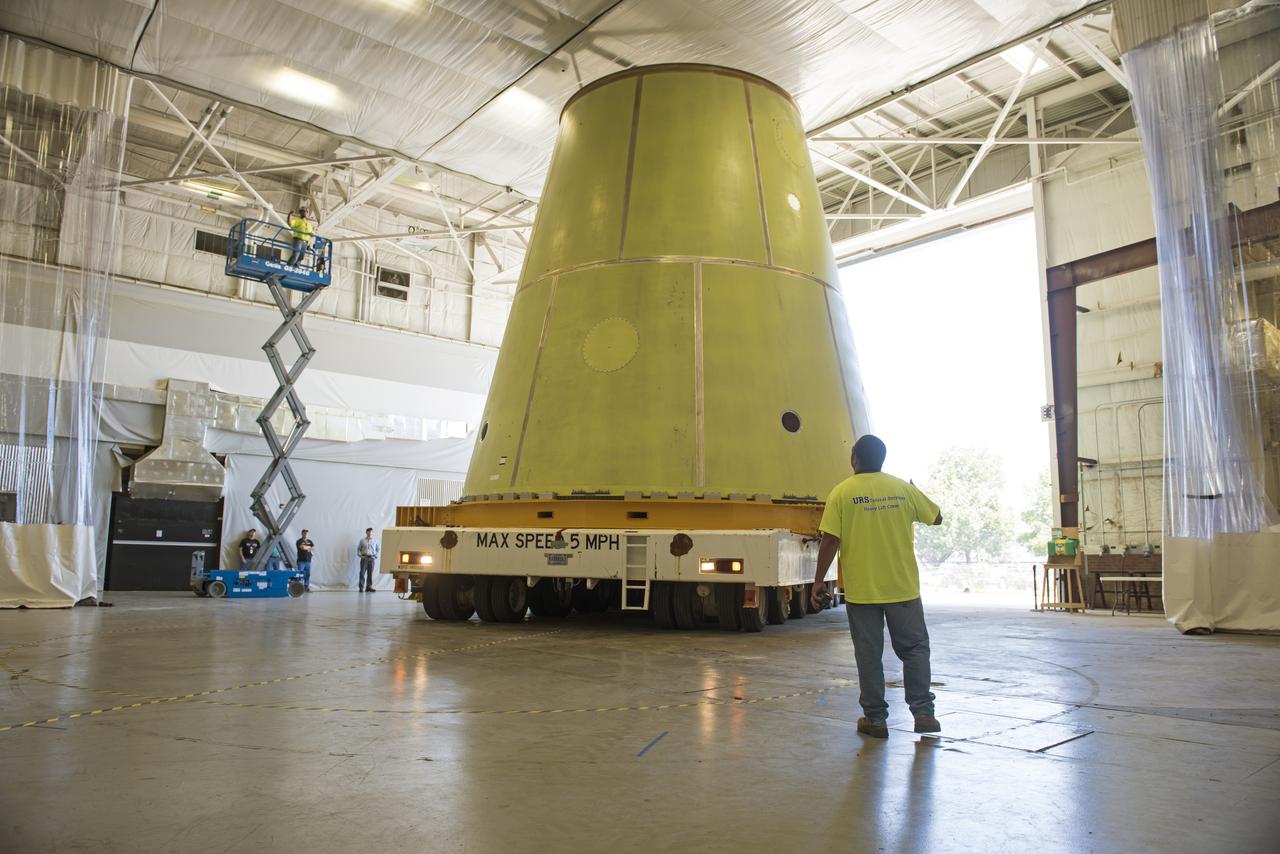
A NASA KAMAG transporter moves the Space Launch System’s launch vehicle stage adapter (LVSA) to an area where spray-on foam insulation will be applied. The LVSA recently completed manufacturing on a 30 foot welding tool at NASA’s Marshall Space Flight Center in Huntsville, Al. The LVSA will be coated with insulation that will protect it during it’s trip to space. The LVSA provides structural support and connects the core stage and the interim cryogenic propulsion stage during the first integrated flight of SLS and Orion.
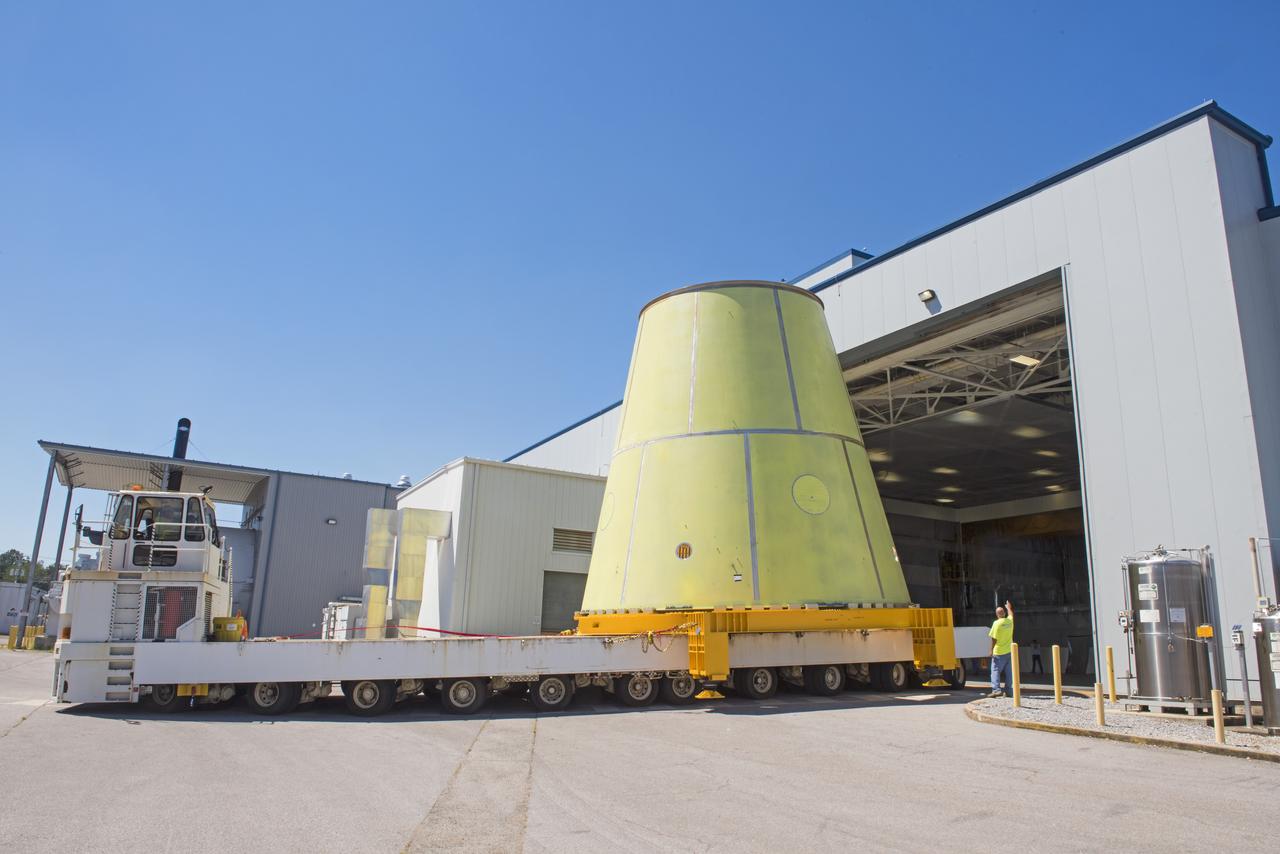
A NASA KAMAG transporter moves the Space Launch System’s launch vehicle stage adapter (LVSA) to an area where spray-on foam insulation will be applied. The LVSA recently completed manufacturing on a 30 foot welding tool at NASA’s Marshall Space Flight Center in Huntsville, Al. The LVSA will be coated with insulation that will protect it during it’s trip to space. The LVSA provides structural support and connects the core stage and the interim cryogenic propulsion stage during the first integrated flight of SLS and Orion.
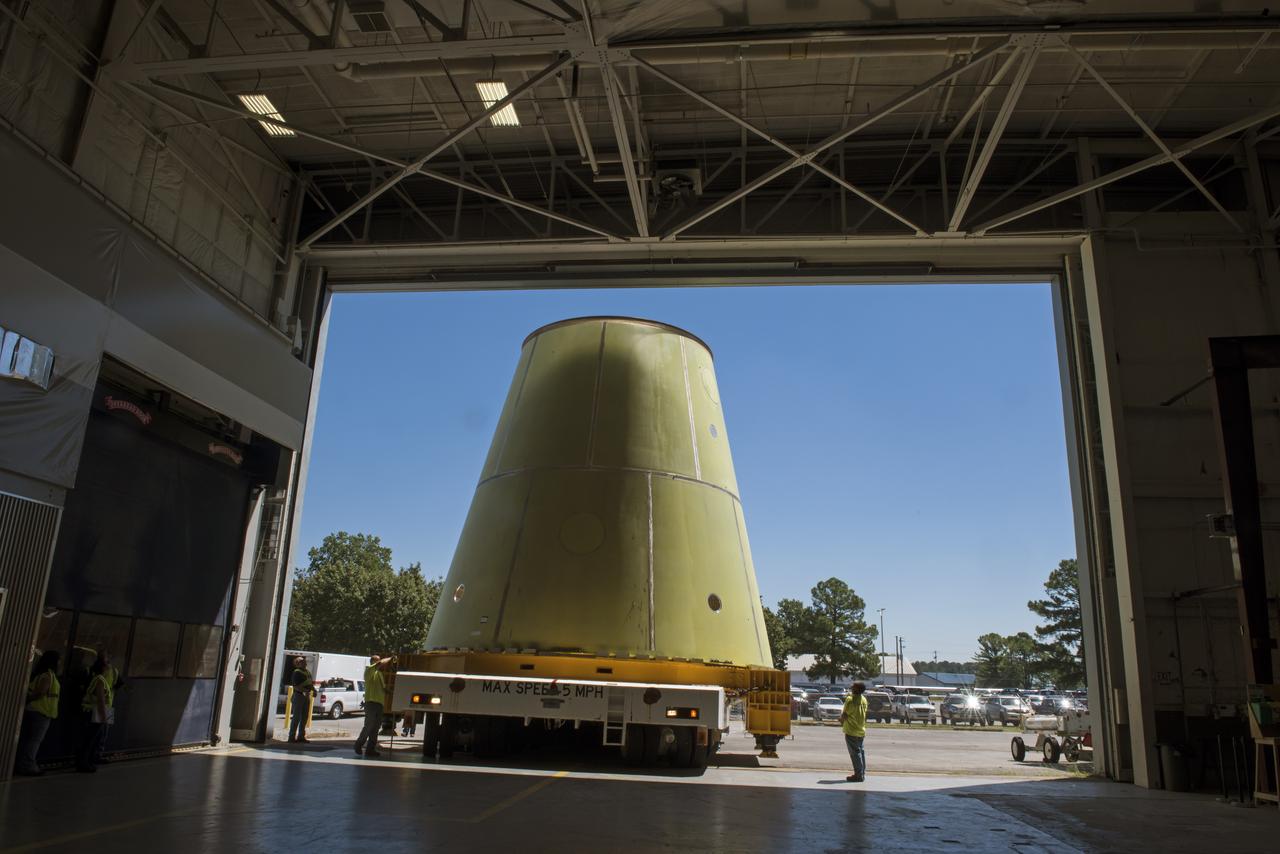
A NASA KAMAG transporter moves the Space Launch System’s launch vehicle stage adapter (LVSA) to an area where spray-on foam insulation will be applied. The LVSA recently completed manufacturing on a 30 foot welding tool at NASA’s Marshall Space Flight Center in Huntsville, Al. The LVSA will be coated with insulation that will protect it during it’s trip to space. The LVSA provides structural support and connects the core stage and the interim cryogenic propulsion stage during the first integrated flight of SLS and Orion.
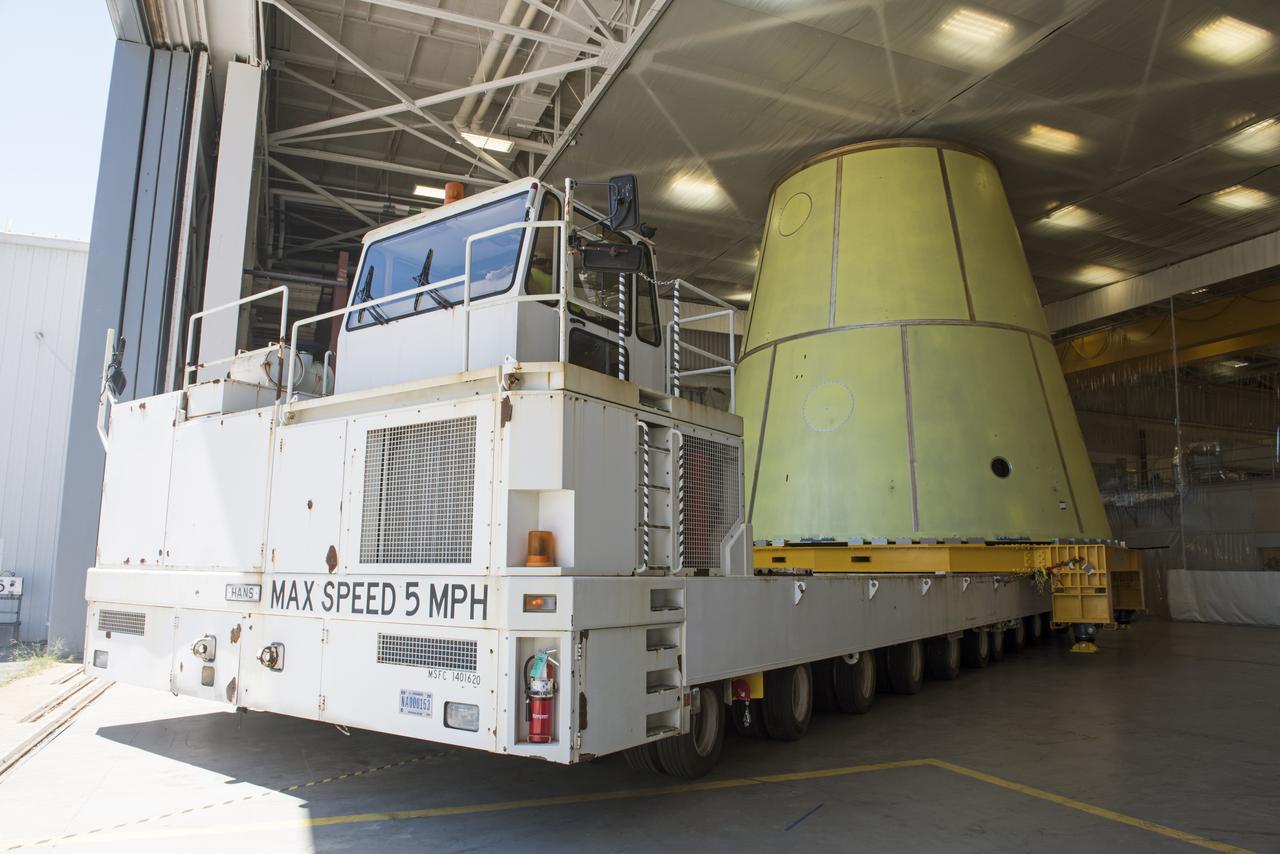
A NASA KAMAG transporter moves the Space Launch System’s launch vehicle stage adapter (LVSA) to an area where spray-on foam insulation will be applied. The LVSA recently completed manufacturing on a 30 foot welding tool at NASA’s Marshall Space Flight Center in Huntsville, Al. The LVSA will be coated with insulation that will protect it during it’s trip to space. The LVSA provides structural support and connects the core stage and the interim cryogenic propulsion stage during the first integrated flight of SLS and Orion.
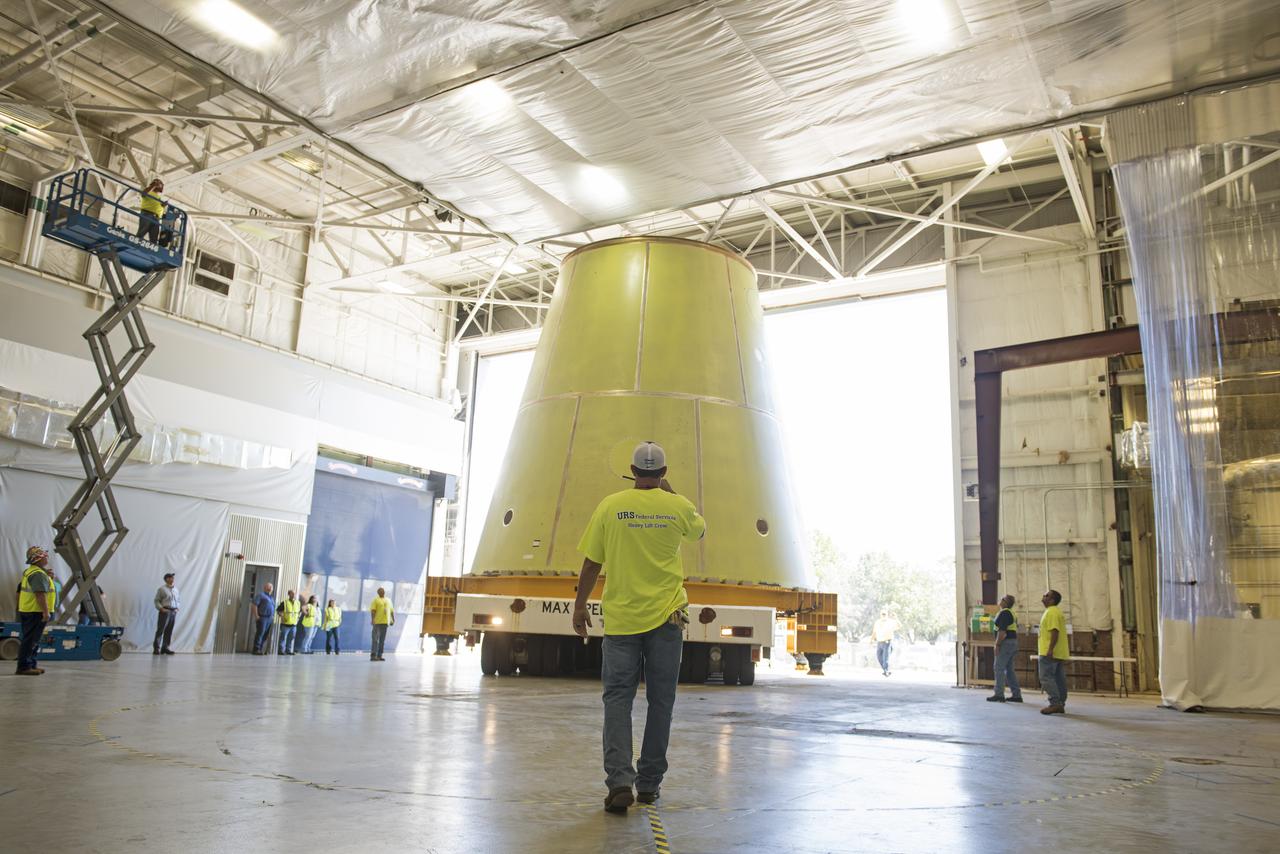
A NASA KAMAG transporter moves the Space Launch System’s launch vehicle stage adapter (LVSA) to an area where spray-on foam insulation will be applied. The LVSA recently completed manufacturing on a 30 foot welding tool at NASA’s Marshall Space Flight Center in Huntsville, Al. The LVSA will be coated with insulation that will protect it during it’s trip to space. The LVSA provides structural support and connects the core stage and the interim cryogenic propulsion stage during the first integrated flight of SLS and Orion.
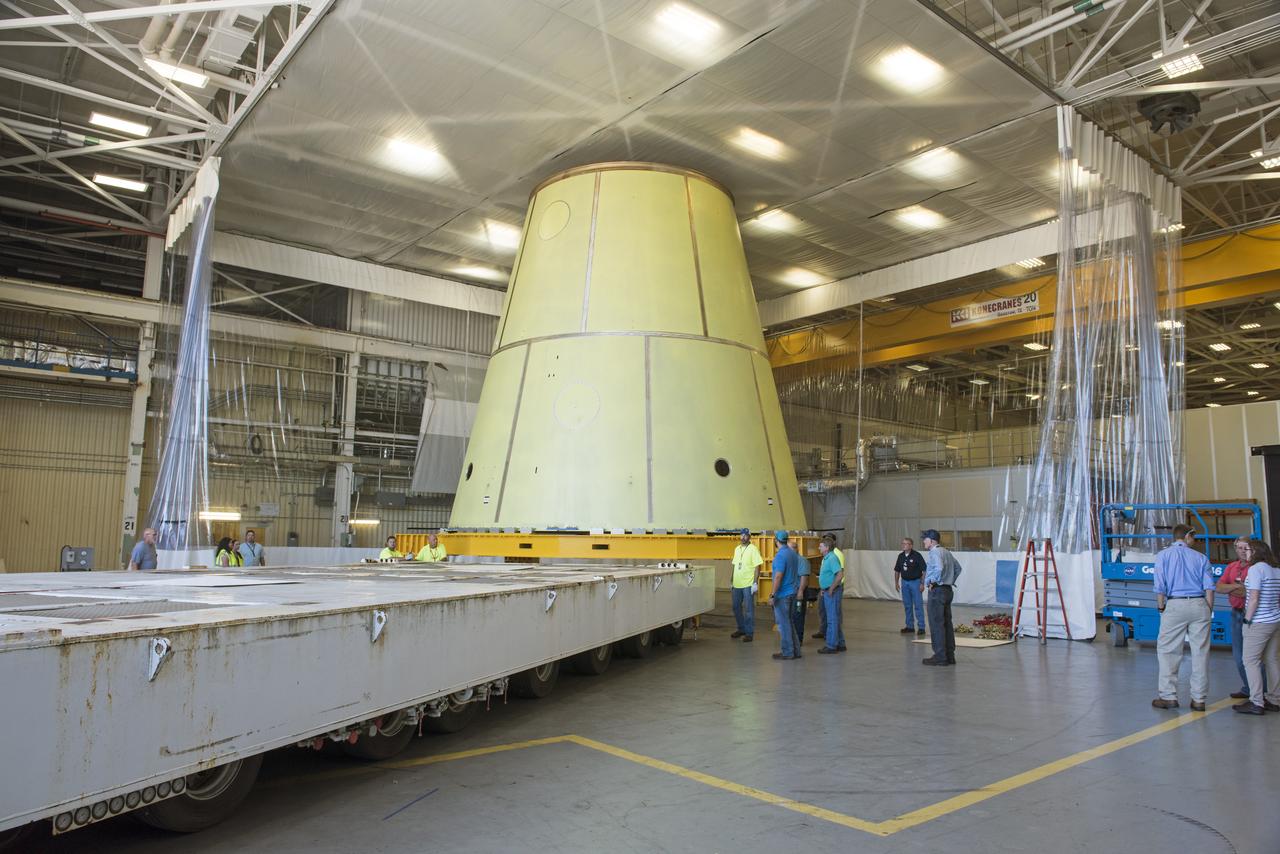
A NASA KAMAG transporter moves the Space Launch System’s launch vehicle stage adapter (LVSA) to an area where spray-on foam insulation will be applied. The LVSA recently completed manufacturing on a 30 foot welding tool at NASA’s Marshall Space Flight Center in Huntsville, Al. The LVSA will be coated with insulation that will protect it during it’s trip to space. The LVSA provides structural support and connects the core stage and the interim cryogenic propulsion stage during the first integrated flight of SLS and Orion.
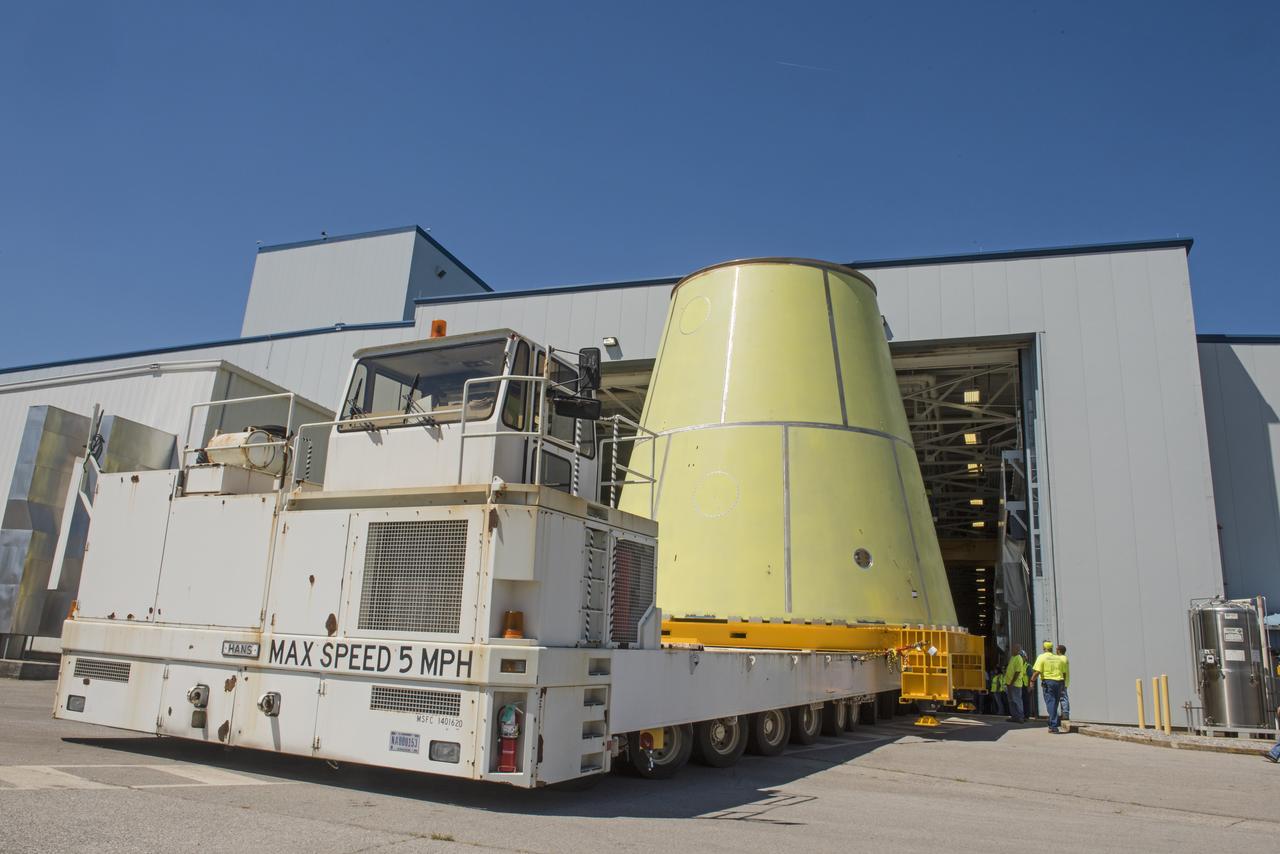
A NASA KAMAG transporter moves the Space Launch System’s launch vehicle stage adapter (LVSA) to an area where spray-on foam insulation will be applied. The LVSA recently completed manufacturing on a 30 foot welding tool at NASA’s Marshall Space Flight Center in Huntsville, Al. The LVSA will be coated with insulation that will protect it during it’s trip to space. The LVSA provides structural support and connects the core stage and the interim cryogenic propulsion stage during the first integrated flight of SLS and Orion.
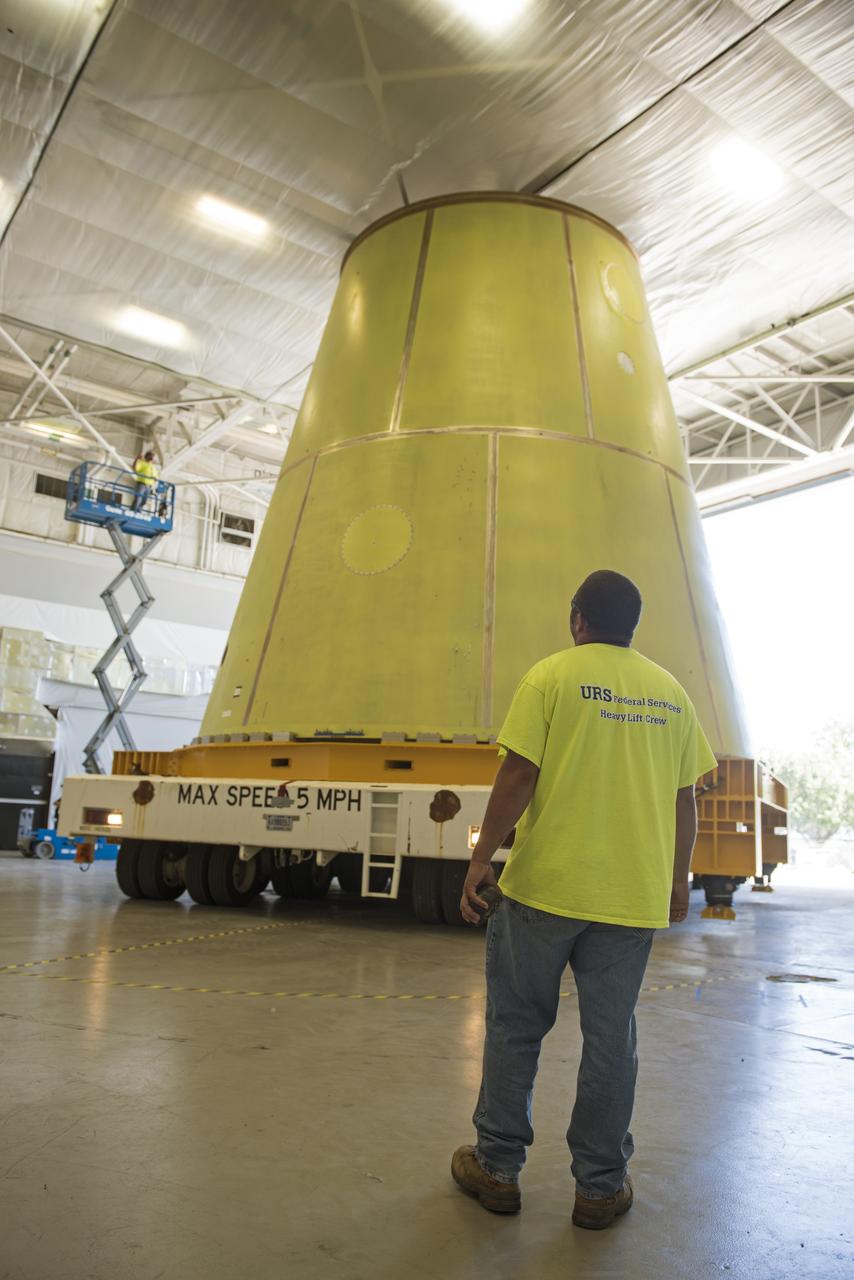
A NASA KAMAG transporter moves the Space Launch System’s launch vehicle stage adapter (LVSA) to an area where spray-on foam insulation will be applied. The LVSA recently completed manufacturing on a 30 foot welding tool at NASA’s Marshall Space Flight Center in Huntsville, Al. The LVSA will be coated with insulation that will protect it during it’s trip to space. The LVSA provides structural support and connects the core stage and the interim cryogenic propulsion stage during the first integrated flight of SLS and Orion.
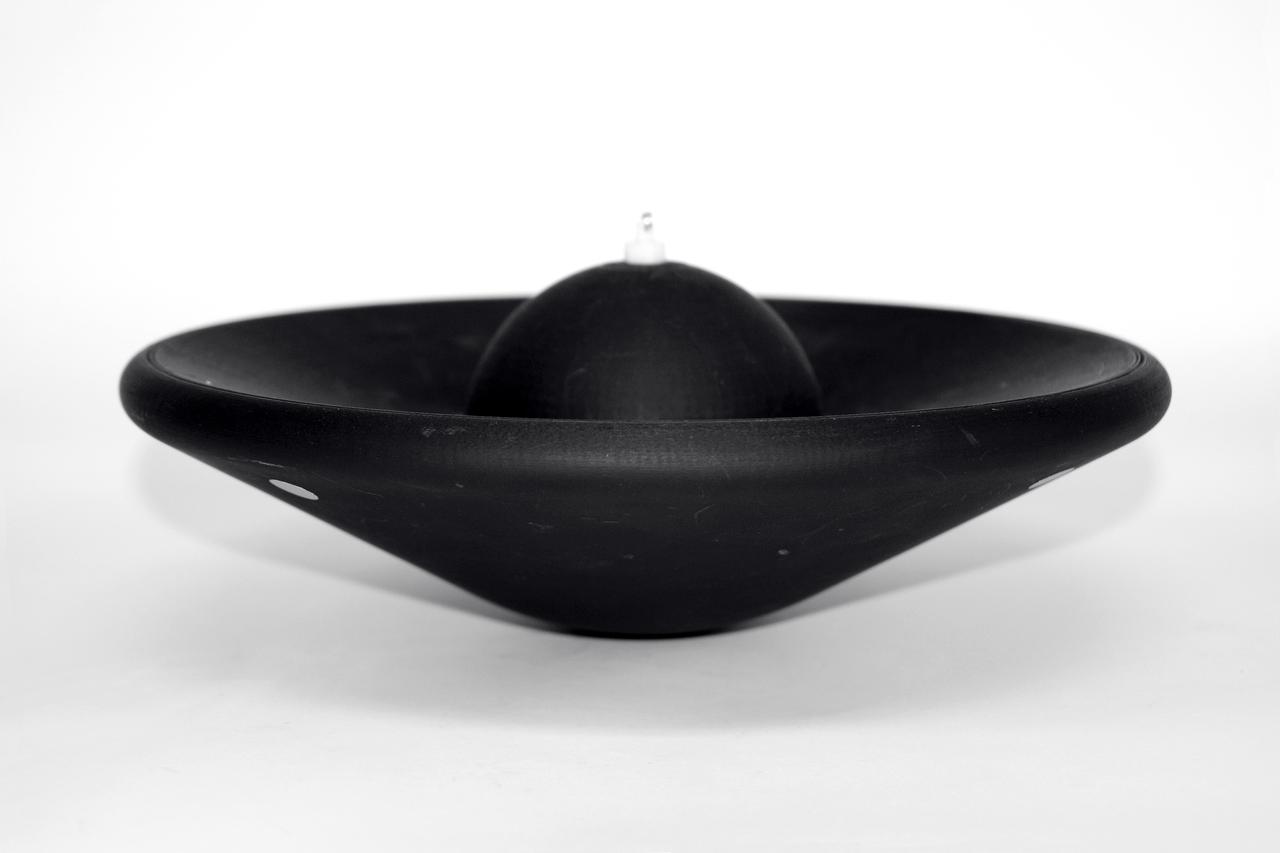
1.2 meter Multi-Mission Earth Entry Vehicle (MMEEV): Tethered and free flying test in 20 foot Vertical Spin Tunnel
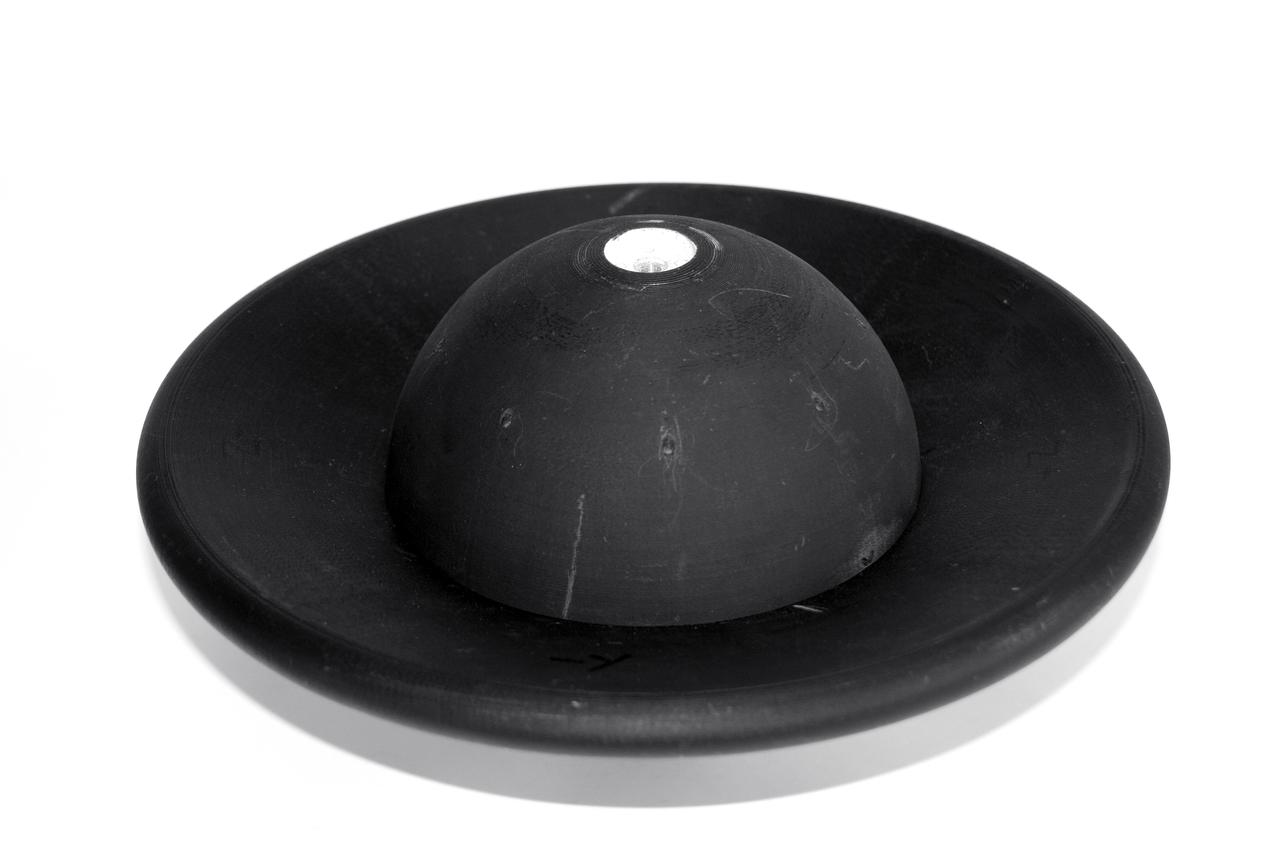
1.2 meter Multi-Mission Earth Entry Vehicle (MMEEV): Tethered and free flying test in 20 foot Vertical Spin Tunnel
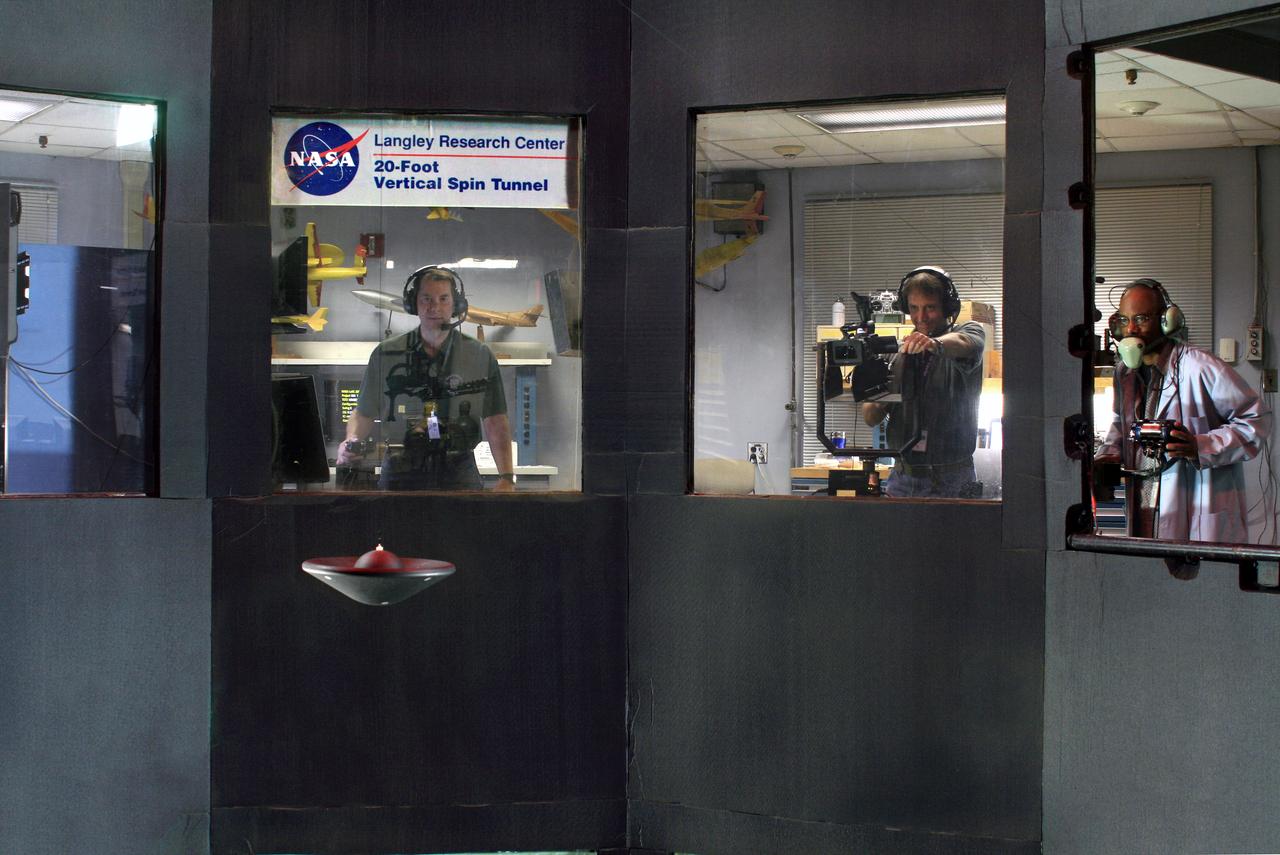
1.2 meter Multi-Mission Earth Entry Vehicle (MMEEV): Tethered and free flying test in 20 foot Vertical Spin Tunnel
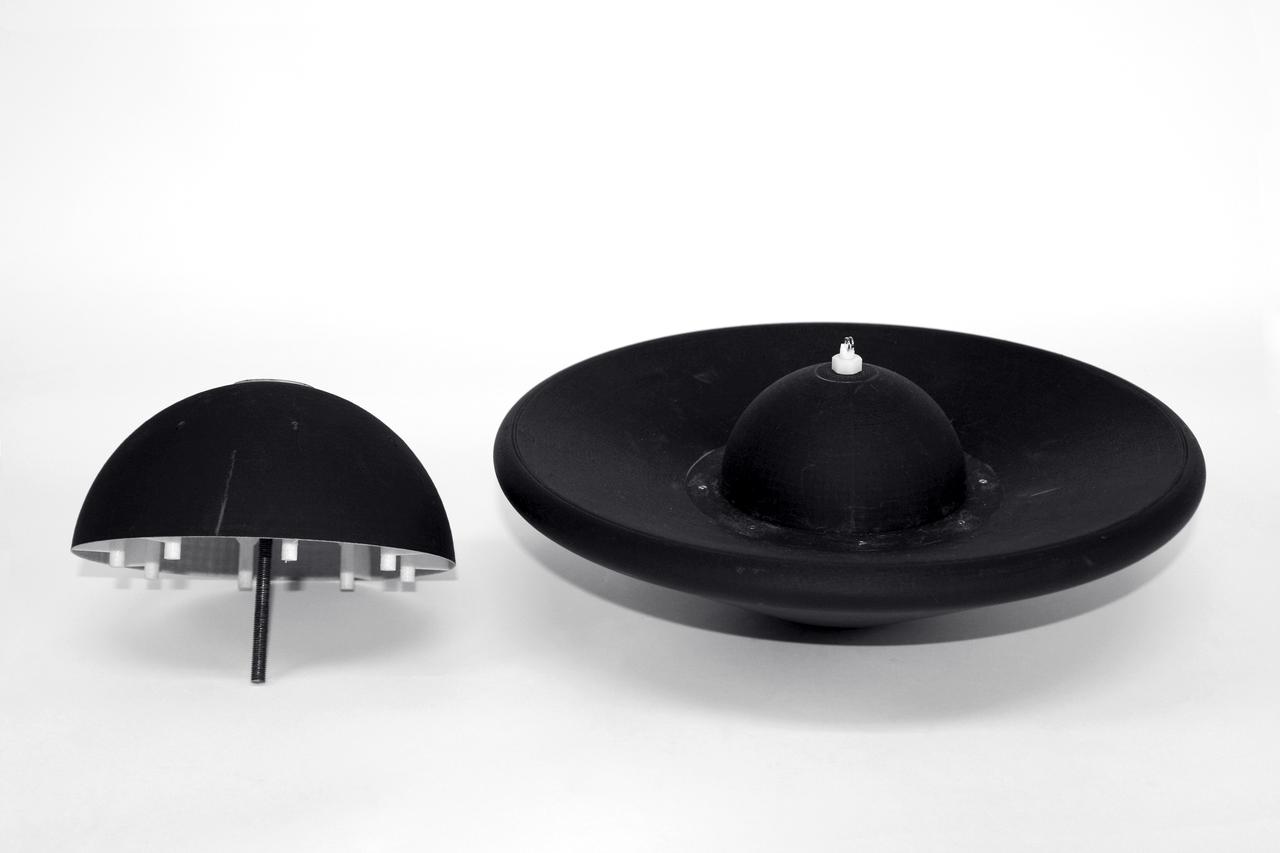
1.2 meter Multi-Mission Earth Entry Vehicle (MMEEV): Tethered and free flying test in 20 foot Vertical Spin Tunnel
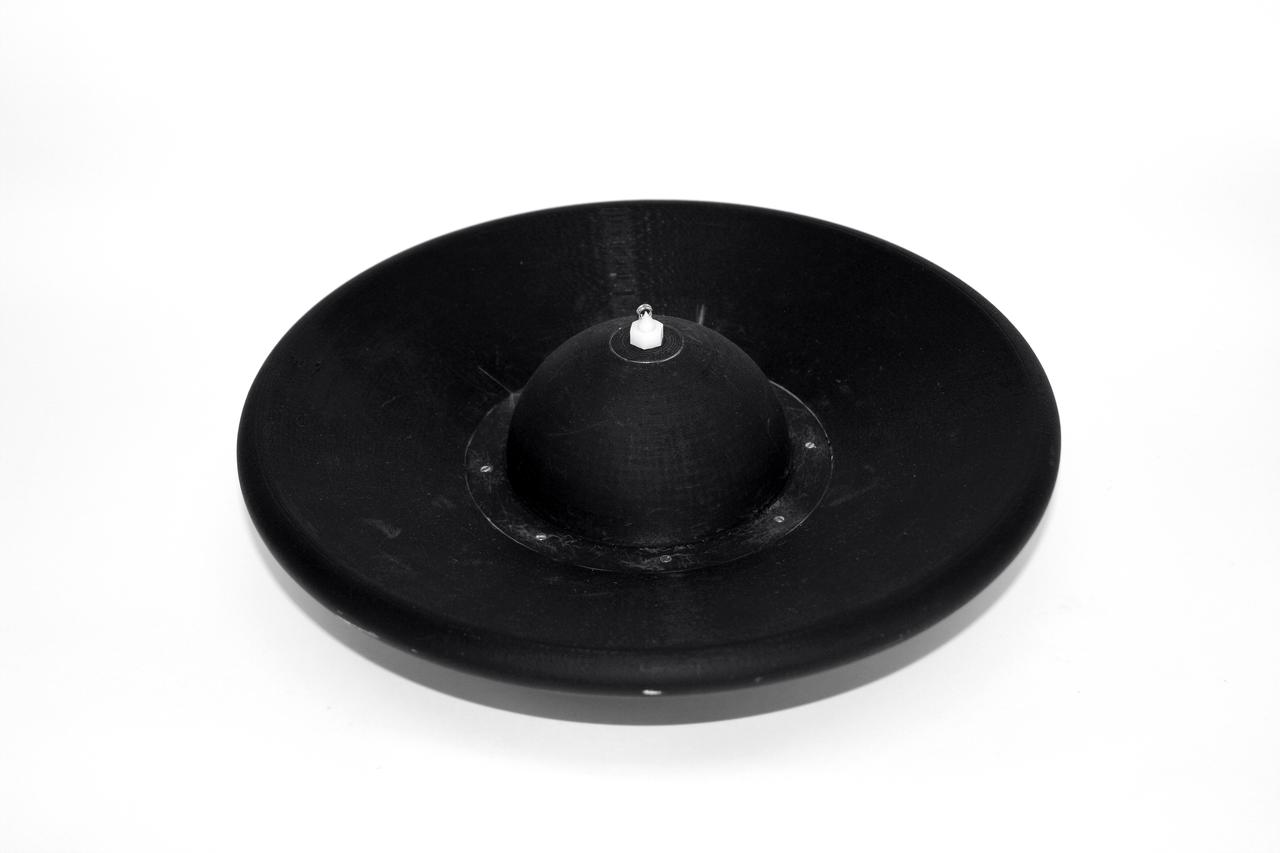
1.2 meter Multi-Mission Earth Entry Vehicle (MMEEV): Tethered and free flying test in 20 foot Vertical Spin Tunnel
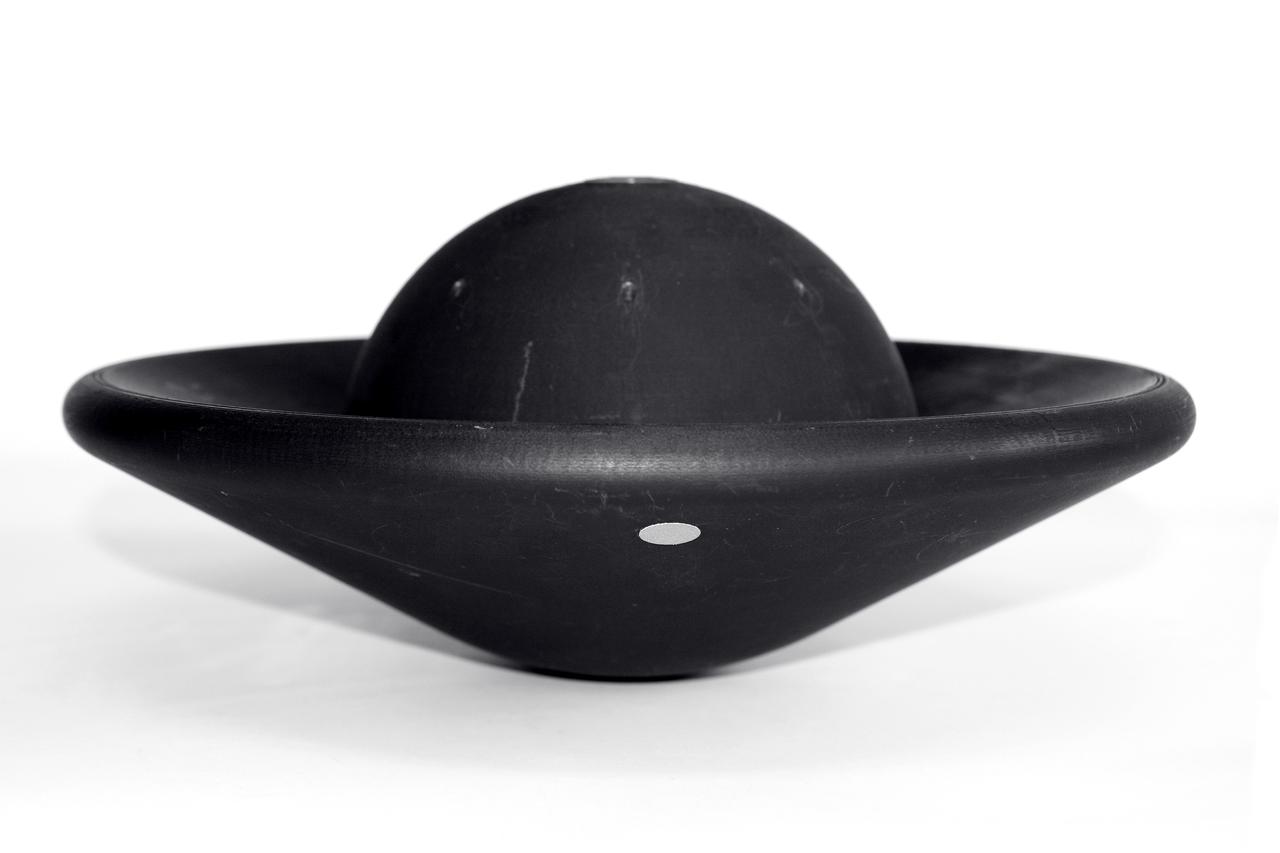
1.2 meter Multi-Mission Earth Entry Vehicle (MMEEV): Tethered and free flying test in 20 foot Vertical Spin Tunnel
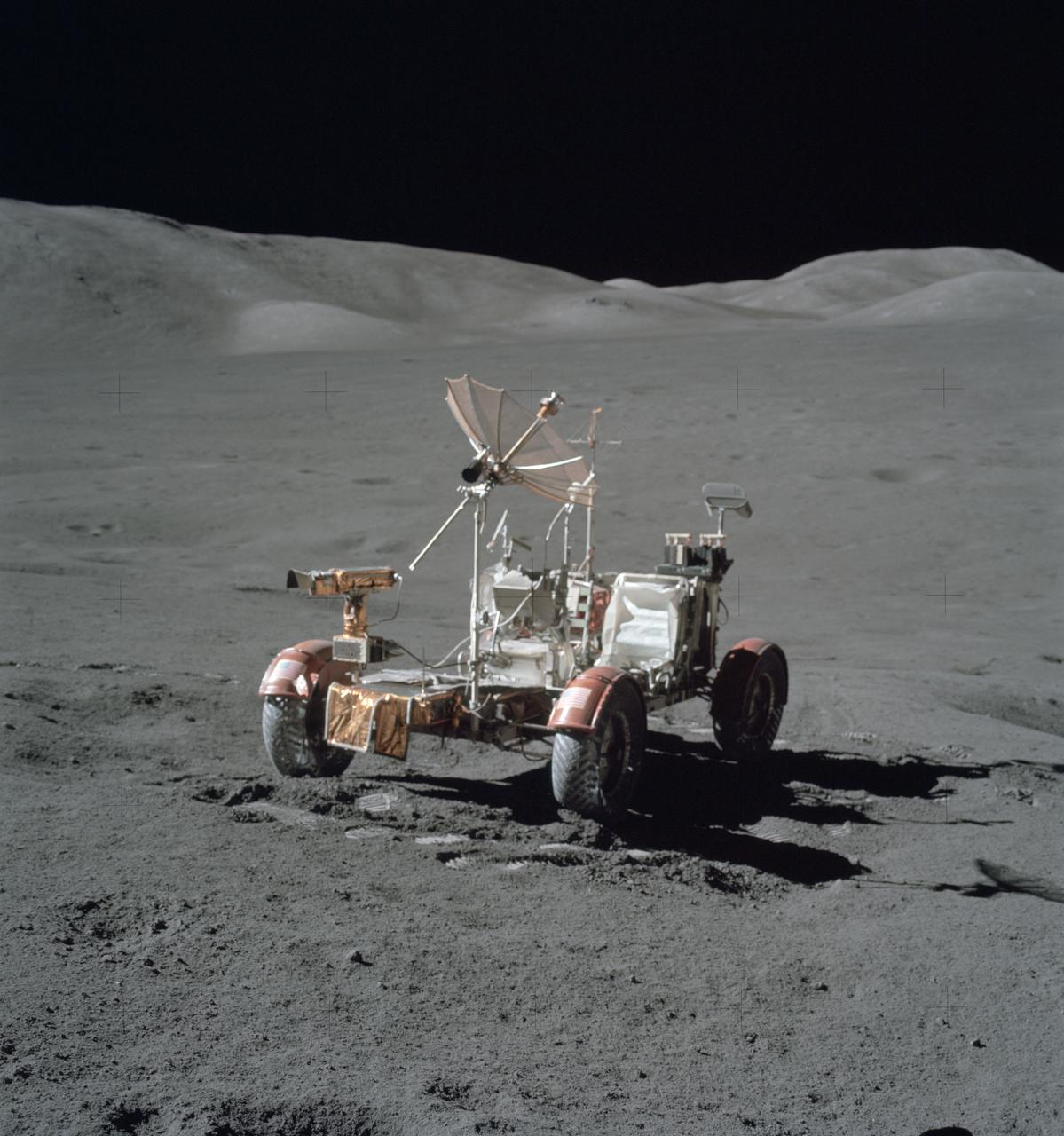
AS17-146-22367 (7-19 Dec. 1972) --- This is an excellent view of the Lunar Roving Vehicle (LRV) which was used extensively by astronauts Eugene A. Cernan and Harrison H. Schmitt at the Taurus-Littrow landing site.
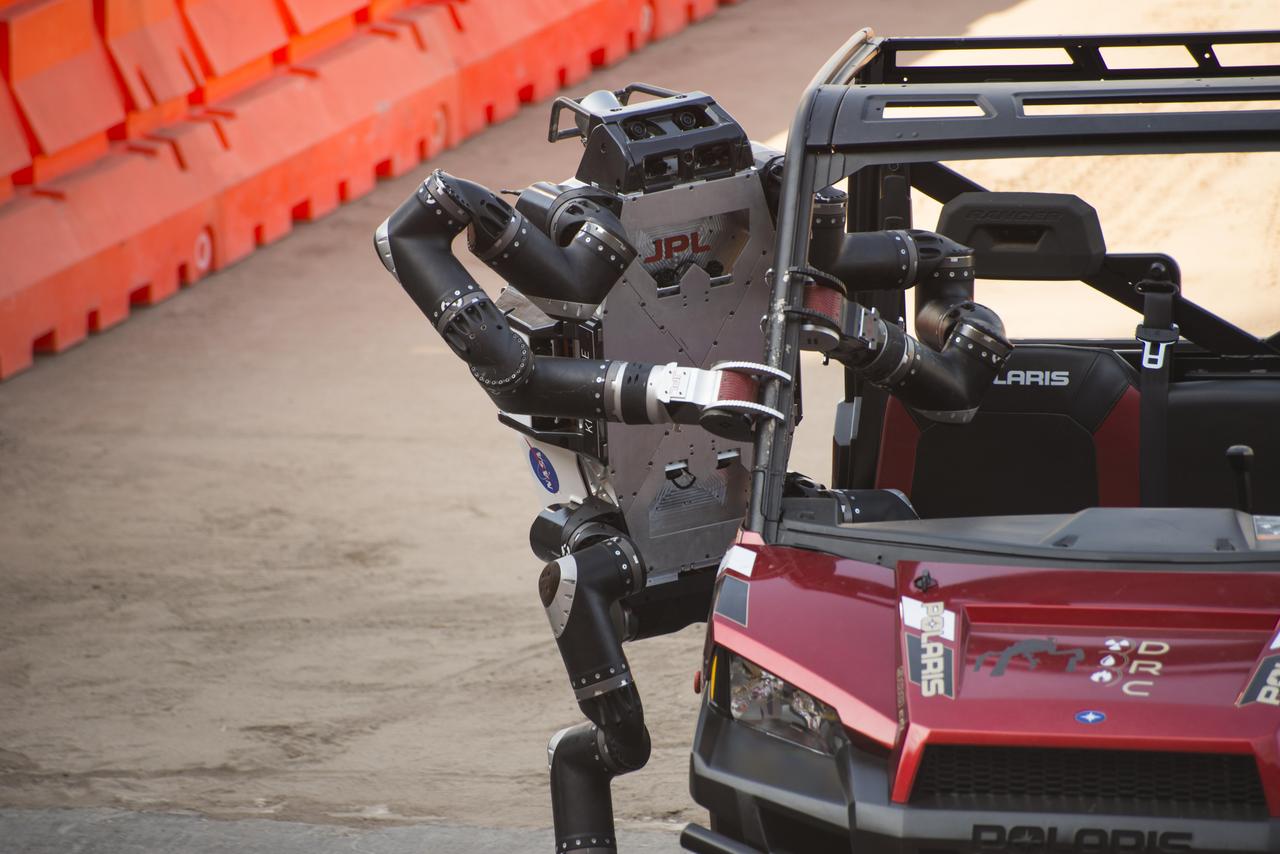
JPL's RoboSimian exits its vehicle following a brief drive through a slalom course at the DARPA Robotics Challenge in Pomona, California. This image was taken June 6, 2015. http://photojournal.jpl.nasa.gov/catalog/PIA19324
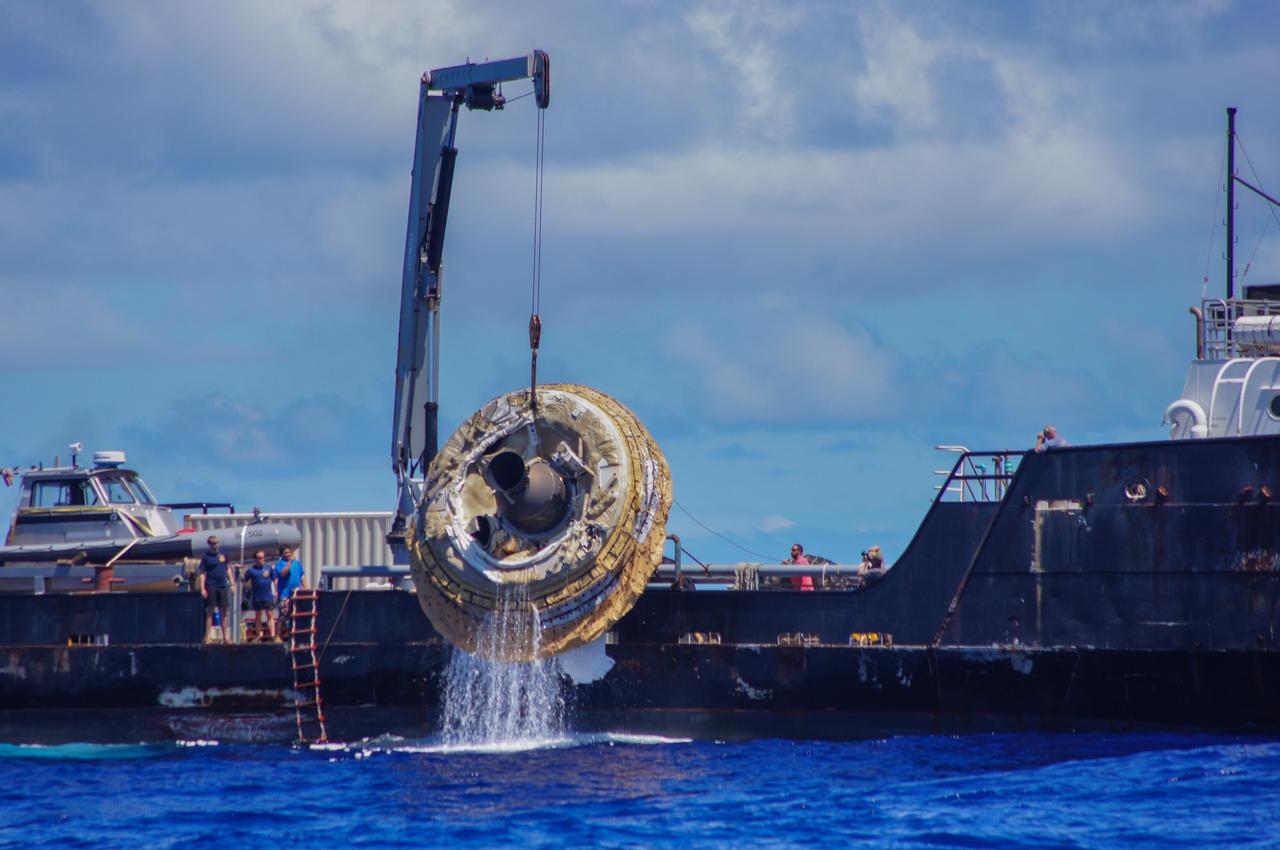
Hours after its successful engineering flight, the first test vehicle for NASA Low-Density Supersonic Decelerator project is lifted aboard the recovery vessel Kahana.
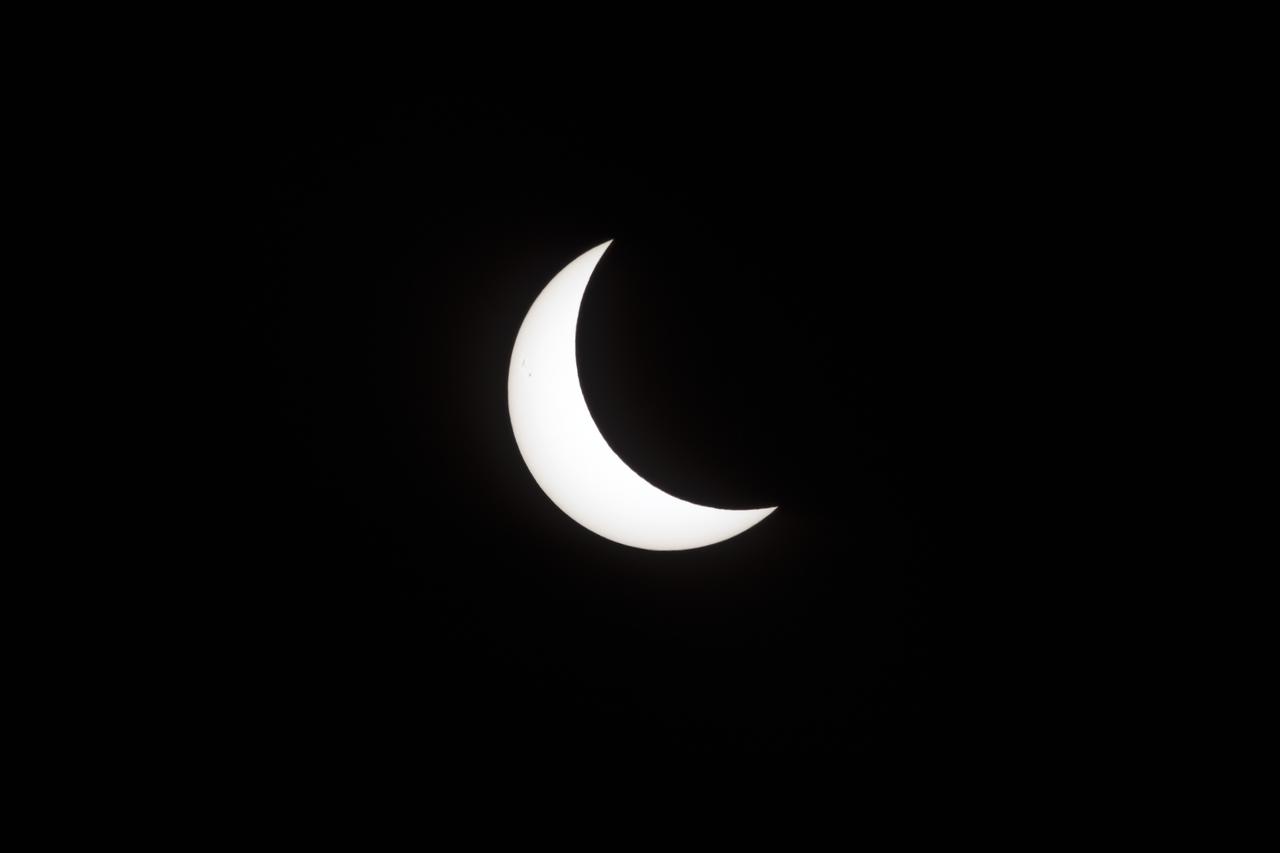
A partial eclipse on Florida's Space Coast, the rare astronomical event was photographed from the top of the Vehicle Assembly Building, as the Moon passed between Earth and the midafternoon Sun. The Moon's shadow moved across the landscape from Oregon to South Carolina. The 70-mile-wide totality path, or "umbral cone" -- where the entire Sun will vanish behind the Moon -- stretched across 14 states, from Oregon to South Carolina.
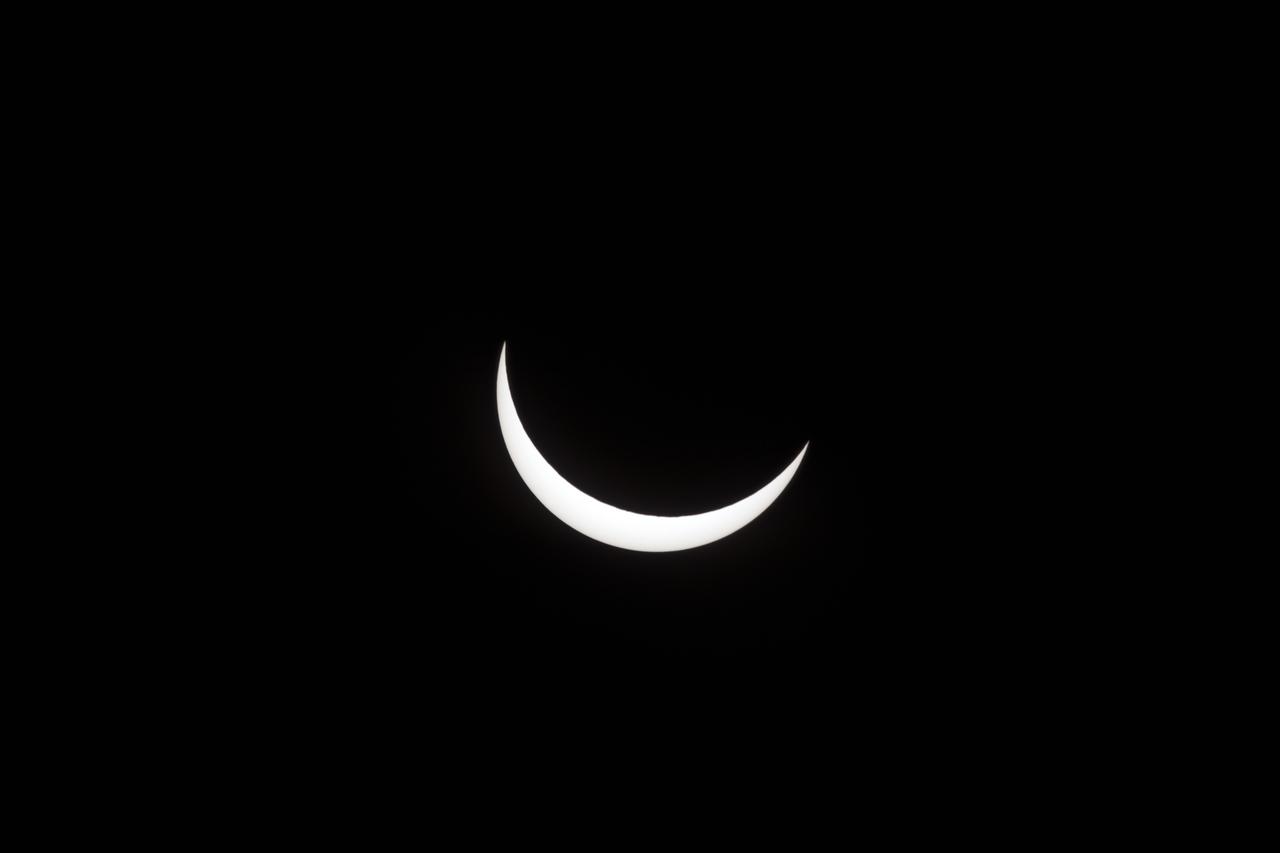
A partial eclipse on Florida's Space Coast, the rare astronomical event was photographed from the top of the Vehicle Assembly Building, as the Moon passed between Earth and the midafternoon Sun. The Moon's shadow moved across the landscape from Oregon to South Carolina. The 70-mile-wide totality path, or "umbral cone" -- where the entire Sun will vanish behind the Moon -- stretched across 14 states, from Oregon to South Carolina.
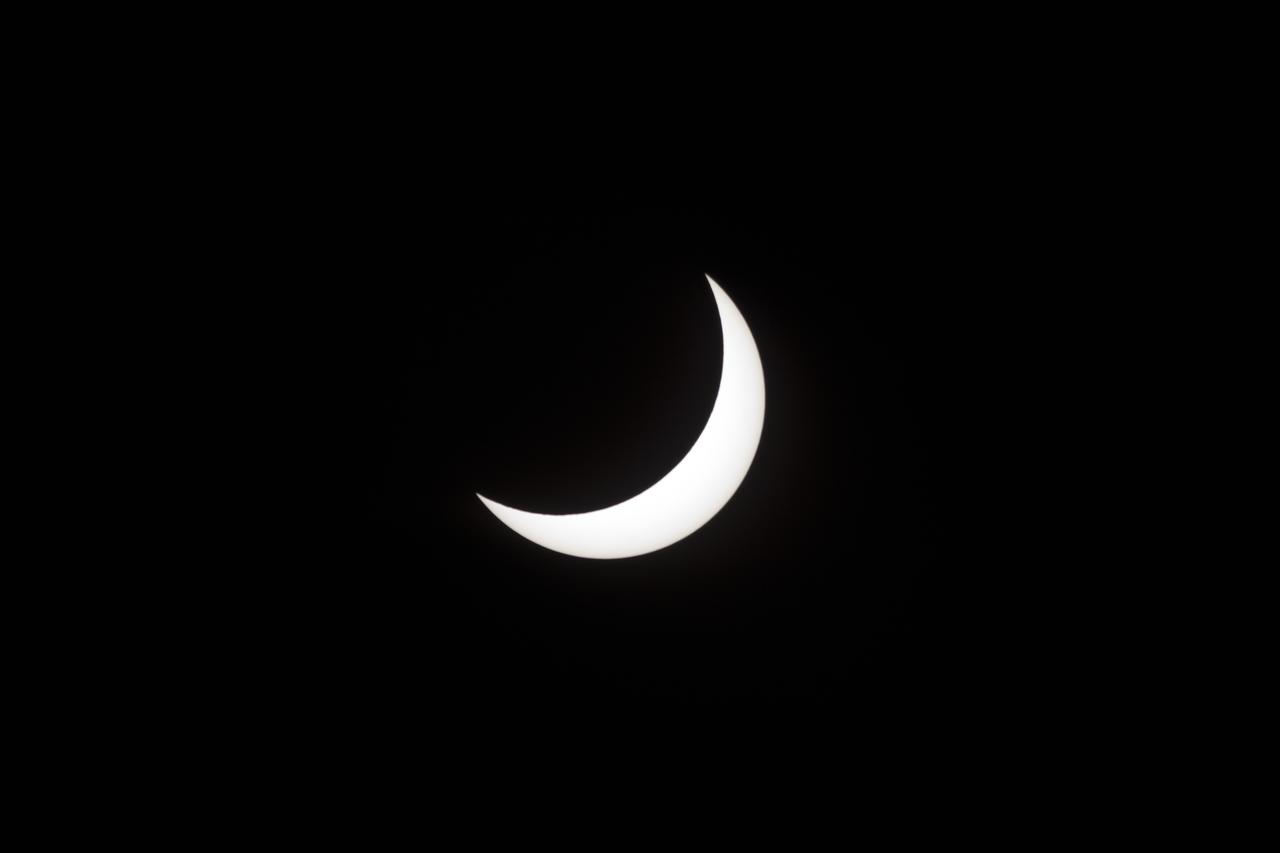
A partial eclipse on Florida's Space Coast, the rare astronomical event was photographed from the top of the Vehicle Assembly Building, as the Moon passed between Earth and the midafternoon Sun. The Moon's shadow moved across the landscape from Oregon to South Carolina. The 70-mile-wide totality path, or "umbral cone" -- where the entire Sun will vanish behind the Moon -- stretched across 14 states, from Oregon to South Carolina.
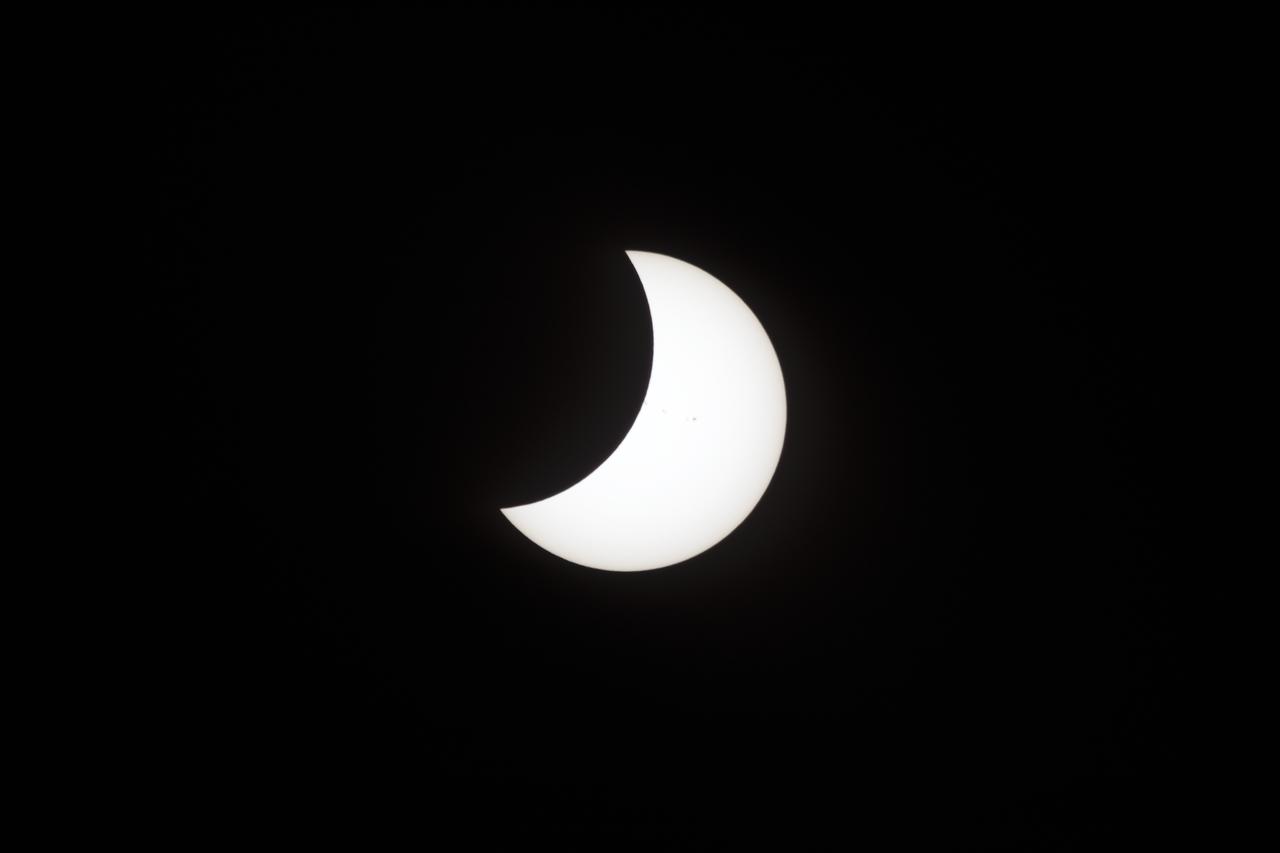
A partial eclipse on Florida's Space Coast, the rare astronomical event was photographed from the top of the Vehicle Assembly Building, as the Moon passed between Earth and the midafternoon Sun. The Moon's shadow moved across the landscape from Oregon to South Carolina. The 70-mile-wide totality path, or "umbral cone" -- where the entire Sun will vanish behind the Moon -- stretched across 14 states, from Oregon to South Carolina.
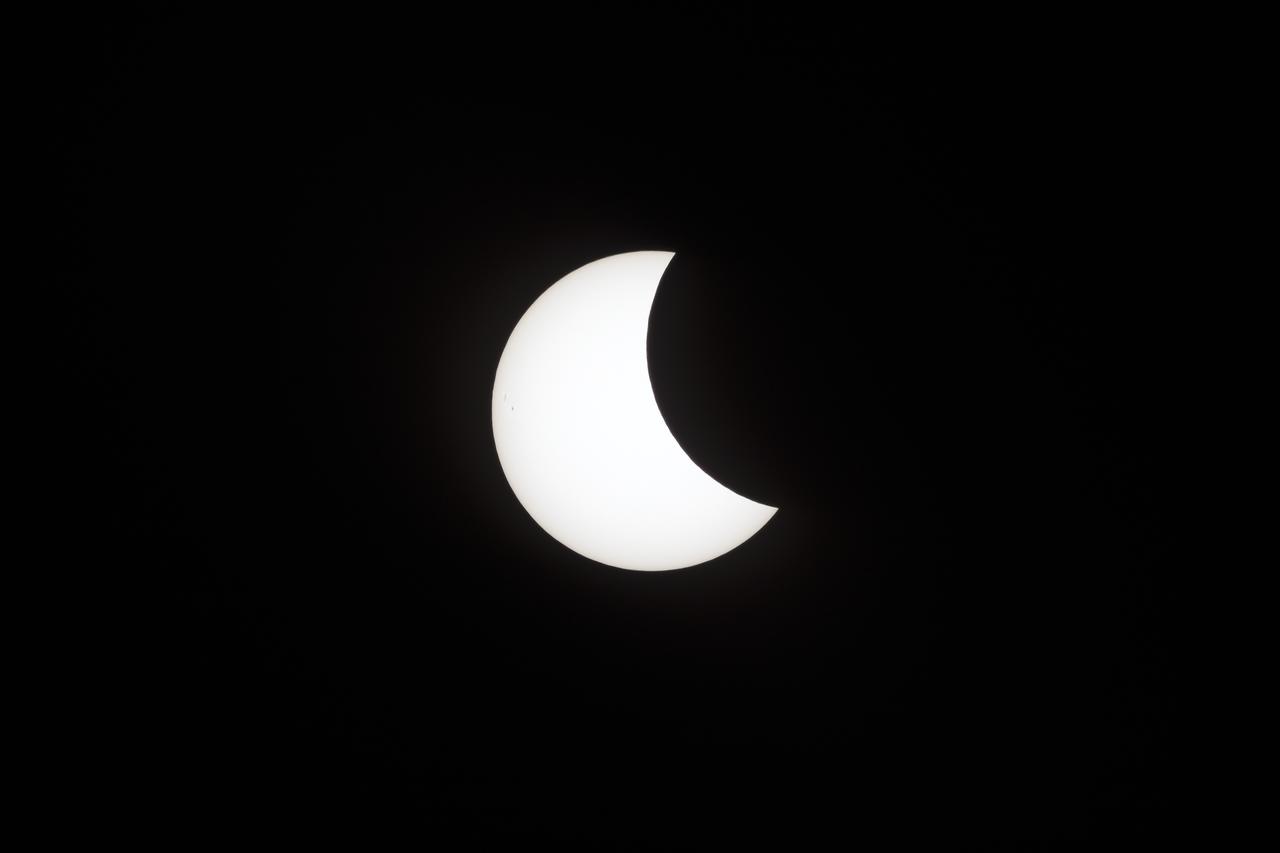
A partial eclipse on Florida's Space Coast, the rare astronomical event was photographed from the top of the Vehicle Assembly Building, as the Moon passed between Earth and the midafternoon Sun. The Moon's shadow moved across the landscape from Oregon to South Carolina. The 70-mile-wide totality path, or "umbral cone" -- where the entire Sun will vanish behind the Moon -- stretched across 14 states, from Oregon to South Carolina.
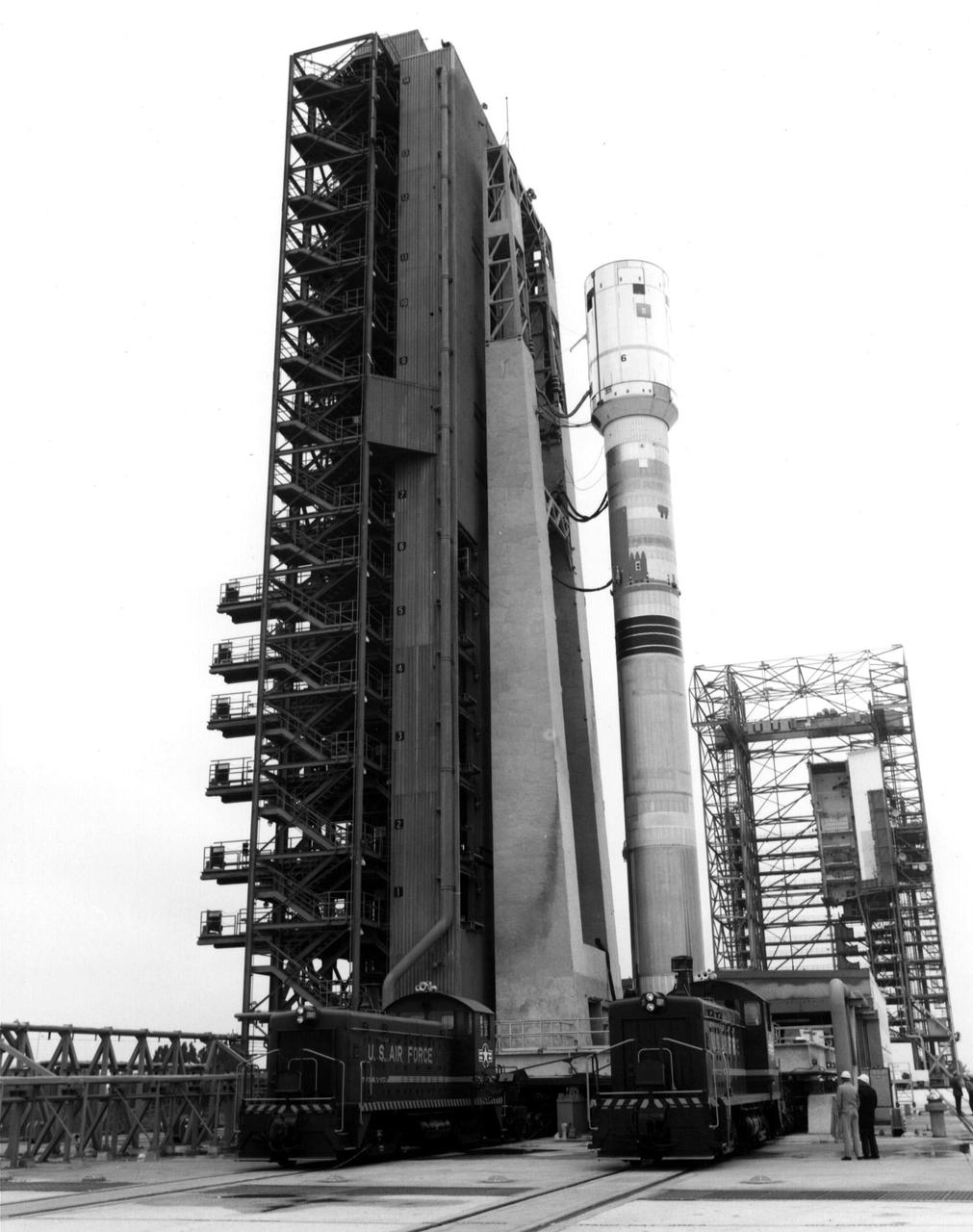
The Titan/Centaur-6 launch vehicle was moved to Launch Complex 41 at Kennedy Space Center in Florida to complete checkout procedures in preparation for launch. The photo is dated January 1977. This launch vehicle carried Voyager 1 into space on September 5, 1977. https://photojournal.jpl.nasa.gov/catalog/PIA21739

A cover, called a “spider” is attached to the SLS (Space Launch System) rocket core stage for NASA’s Artemis II mission inside the Vehicle Assembly Building at NASA’s Kennedy Space Center in Florida on Monday, Oct. 28, 2024. Teams with Exploration Ground Systems will use a crane to attach to the spider cover to raise the core stage vertically. The core stage has two giant propellant tanks that collectively hold more than 733,000 gallons of super cold liquid propellant to feed the stage’s four RS-25 engines to help send astronauts inside NASA’s Orion spacecraft to venture around the Moon for Artemis II.
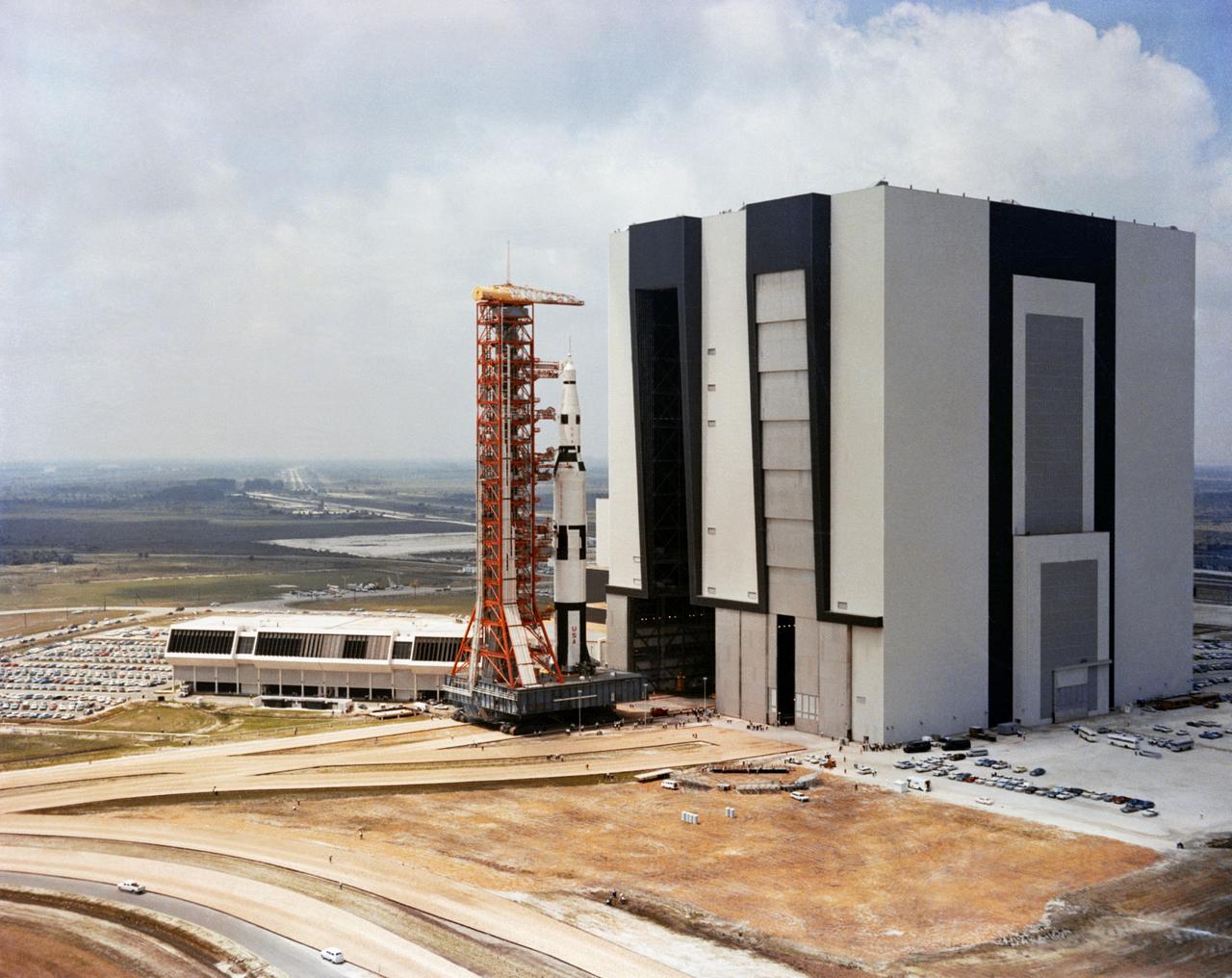
An Apollo/Saturn V facilities Test Vehicle and Launch Umbilical Tower (LUT) atop a crawler-transporter move from the Vehicle Assembly Building (VAB) on the way to Pad A. This test vehicle, designated the Apollo/Saturn 500-F, is being used to verify launch facilities, train launch crews, and develop test and checkout procedures.
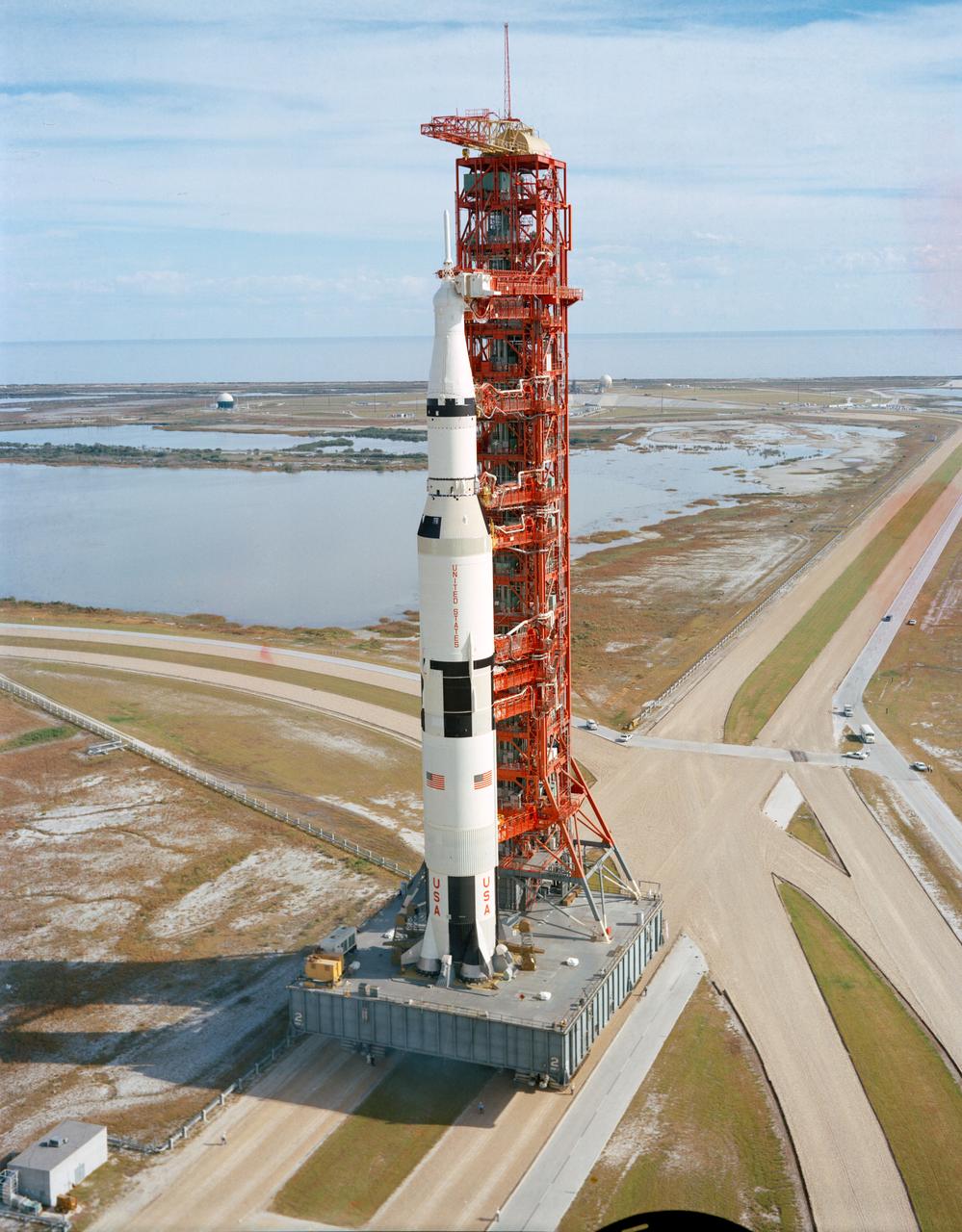
S70-54127 (9 Nov. 1970) --- A high-angle view at Launch Complex 39, Kennedy Space Center (KSC), showing the Apollo 14 (Spacecraft 110/Lunar Module 8/Saturn 509) space vehicle on the way from the Vehicle Assembly Building (VAB) to Pad A. The Saturn V stack and its mobile launch tower sit atop a huge crawler-transporter. The Apollo 14 crewmen will be astronauts Alan B. Shepard Jr., commander; Stuart A. Roosa, command module pilot; and Edgar D. Mitchell, lunar module pilot.
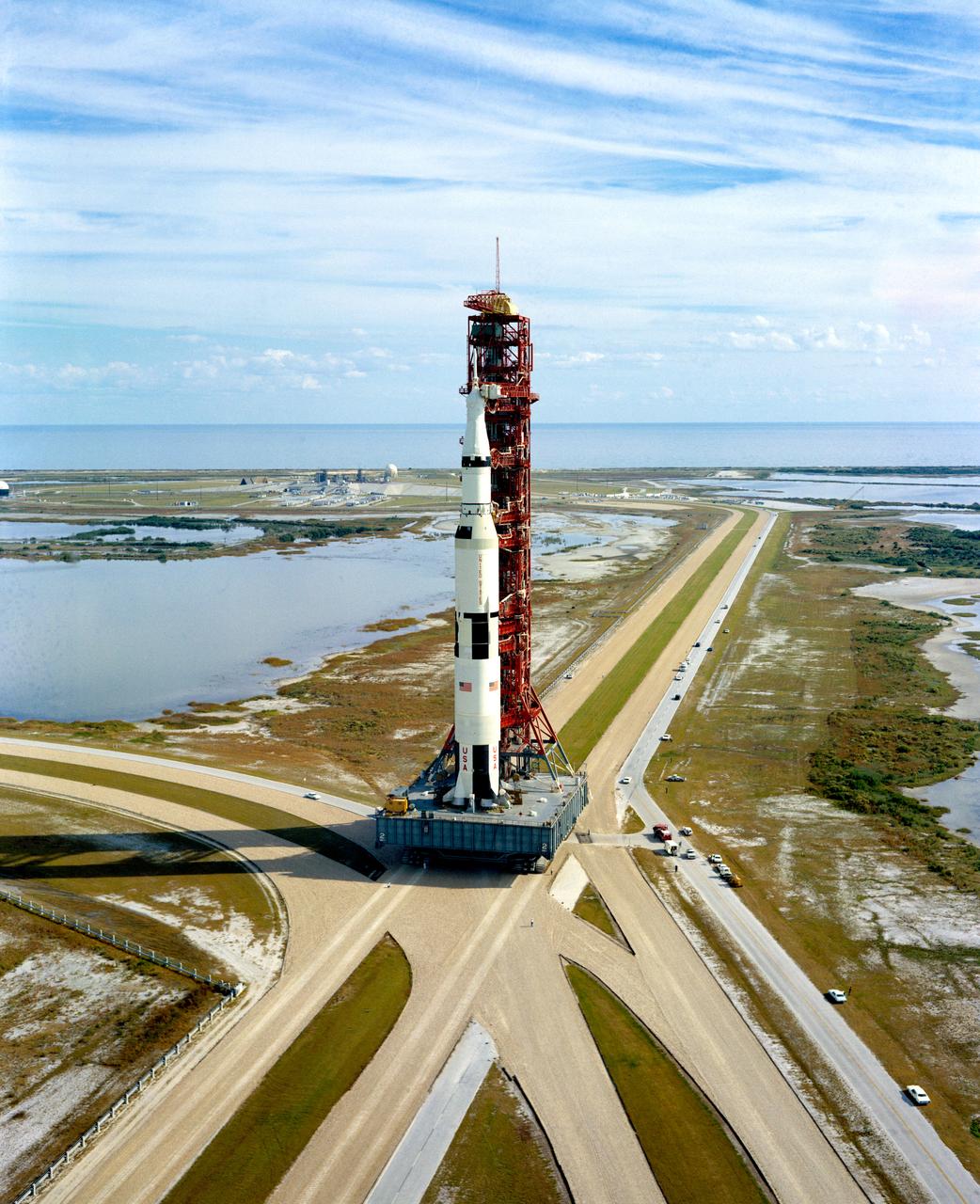
S70-54119 (9 Nov. 1970) --- A high-angle view at Launch Complex 39, Kennedy Space Center (KSC), showing the Apollo 14 (Spacecraft 110/Lunar Module 8/Saturn 509) space vehicle on the way from the Vehicle Assembly Building (VAB) to Pad A. The Saturn V stack and its mobile launch tower sit atop a huge crawler-transporter. The Apollo 14 crewmen will be astronauts Alan B. Shepard Jr., commander; Stuart A. Roosa, command module pilot; and Edgar D. Mitchell, lunar module pilot.

NASA Astronaut Frank Rubio trains with hardware at the Space Vehicle Mockup Facility at NASA's Johnson Space Center before his flight to the International Space Station.

Four vehicle support posts have been installed on the deck of the mobile launcher at NASA's Kennedy Space Center in Florida. A total of eight support posts will be installed to support the load of the Space Launch System's (SLS) solid rocket boosters, with four posts for each of the boosters. The support posts are about five feet tall and each weigh about 10,000 pounds. The posts will structurally support the SLS rocket through T-0 and liftoff, and will drop down before vehicle liftoff to avoid contact with the flight hardware. The Ground Systems Development and Operations Program is overseeing installation of the support posts to prepare for the launch of the Orion spacecraft atop the SLS rocket.
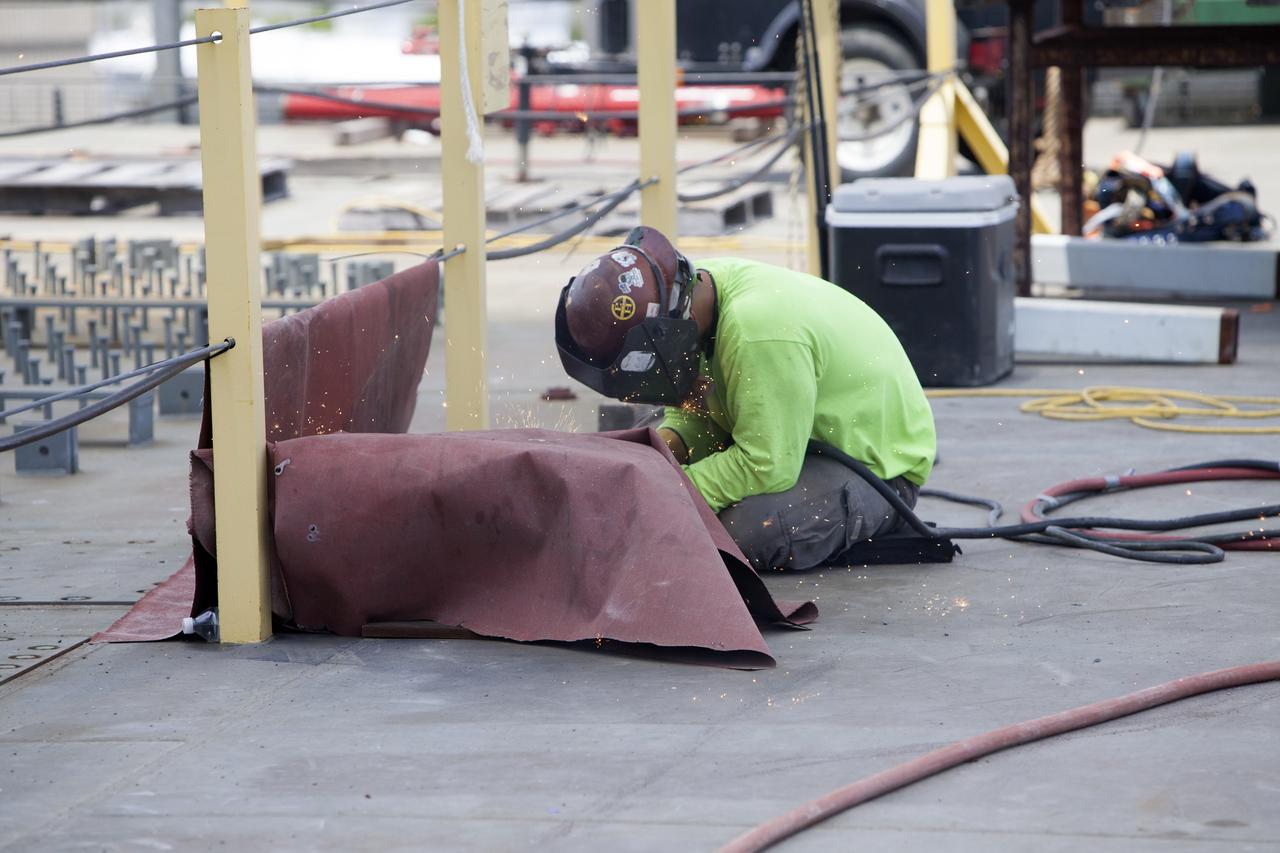
A construction worker on the deck of the mobile launcher welds a portion of a platform for installation of a vehicle support post at NASA's Kennedy Space Center in Florida. A total of eight support posts will be installed to support the load of the Space Launch System's (SLS) solid rocket boosters, with four posts for each of the boosters. The support posts are about five feet tall and each weigh about 10,000 pounds. The posts will structurally support the SLS rocket through T-0 and liftoff, and will drop down before vehicle liftoff to avoid contact with the flight hardware. The Ground Systems Development and Operations Program is overseeing installation of the support posts to prepare for the launch of the Orion spacecraft atop the SLS rocket.
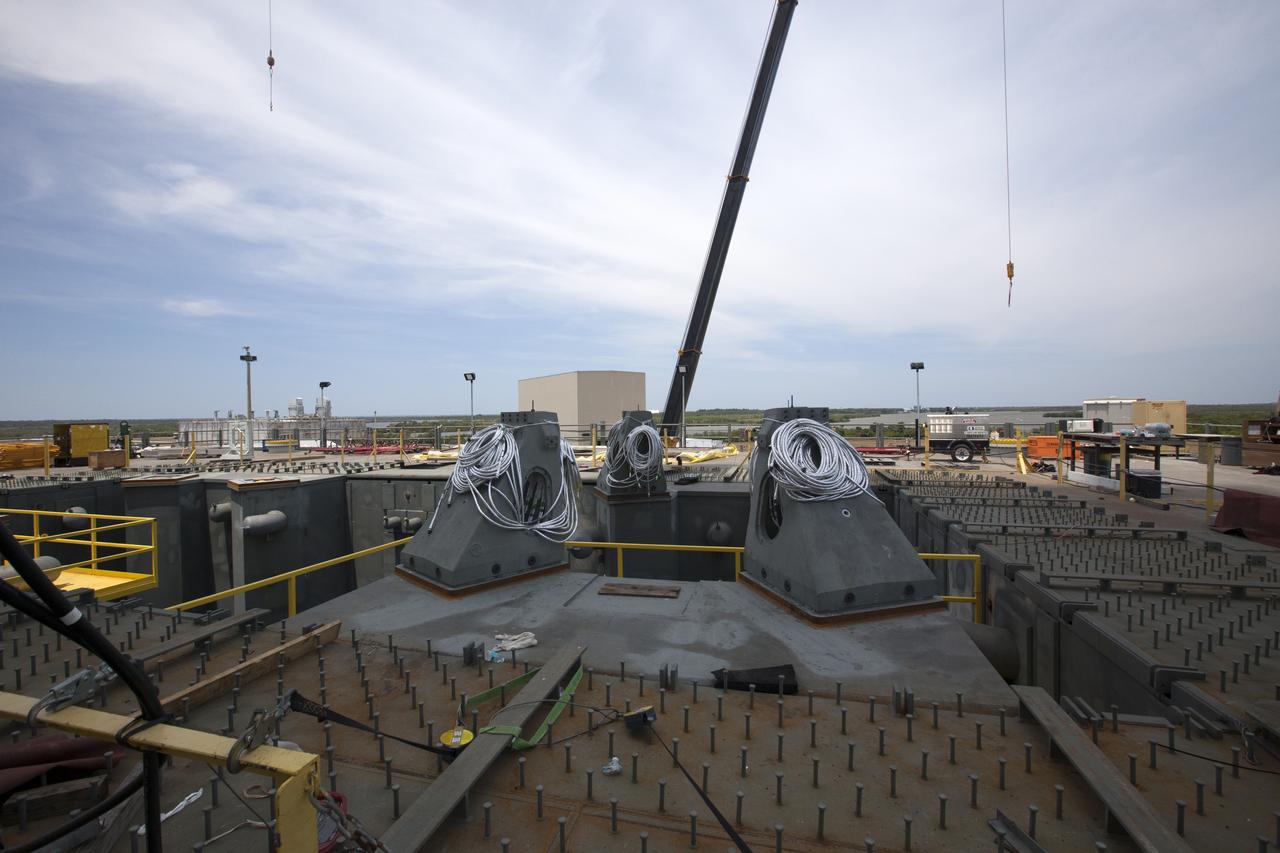
In view are three vehicle support posts installed on the deck of the mobile launcher at NASA's Kennedy Space Center in Florida. A total of eight support posts will be installed to support the load of the Space Launch System's (SLS) solid rocket boosters, with four posts for each of the boosters. The support posts are about five feet tall and each weigh about 10,000 pounds. The posts will structurally support the SLS rocket through T-0 and liftoff, and will drop down before vehicle liftoff to avoid contact with the flight hardware. The Ground Systems Development and Operations Program is overseeing installation of the support posts to prepare for the launch of the Orion spacecraft atop the SLS rocket.
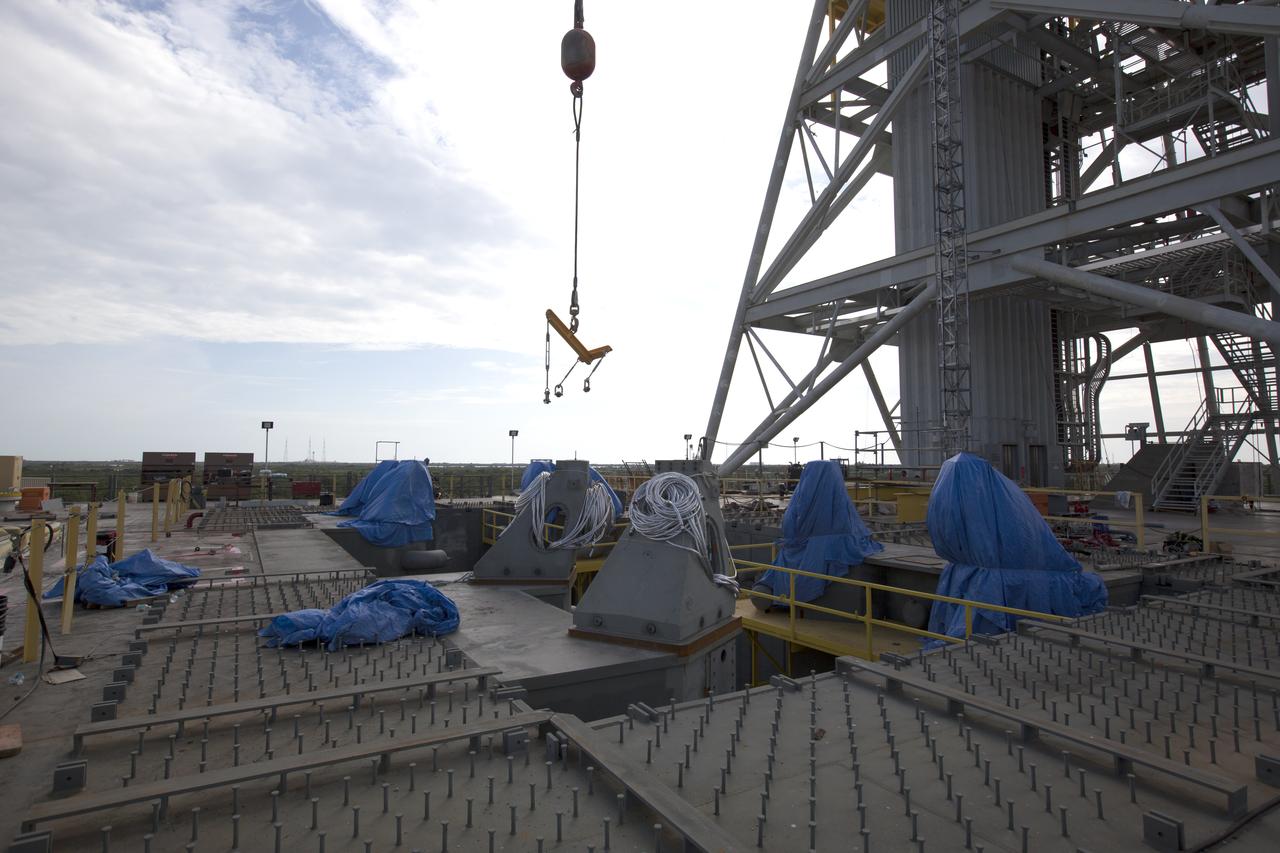
At NASA's Kennedy Space Center in Florida, the final four vehicle support posts are being installed on the deck of the mobile launcher. A total of eight support posts are being installed to support the load of the Space Launch System's (SLS) solid rocket boosters, with four posts for each of the boosters. The support posts are about five feet tall and each weigh about 10,000 pounds. The posts will structurally support the SLS rocket through T-0 and liftoff, and will drop down before vehicle liftoff to avoid contact with the flight hardware. The Ground Systems Development and Operations Program is overseeing installation of the support posts to prepare for the launch of the Orion spacecraft atop the SLS rocket.
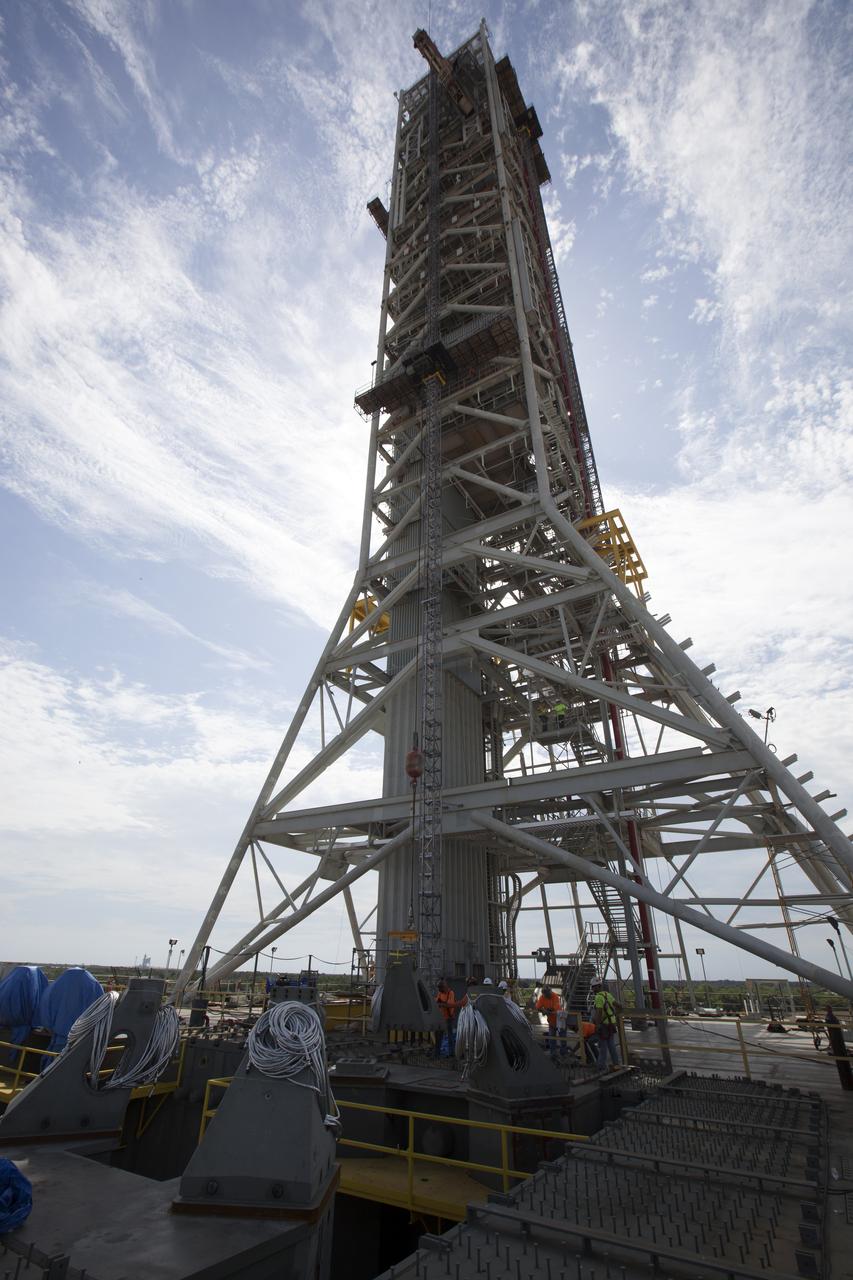
Construction workers on the deck of the mobile launcher at NASA's Kennedy Space Center in Florida, prepare to install a vehicle support post. A total of eight support posts are being installed to support the load of the Space Launch System's (SLS) solid rocket boosters, with four posts for each of the boosters. The support posts are about five feet tall and each weigh about 10,000 pounds. The posts will structurally support the SLS rocket through T-0 and liftoff, and will drop down before vehicle liftoff to avoid contact with the flight hardware. The Ground Systems Development and Operations Program is overseeing installation of the support posts to prepare for the launch of the Orion spacecraft atop the SLS rocket.