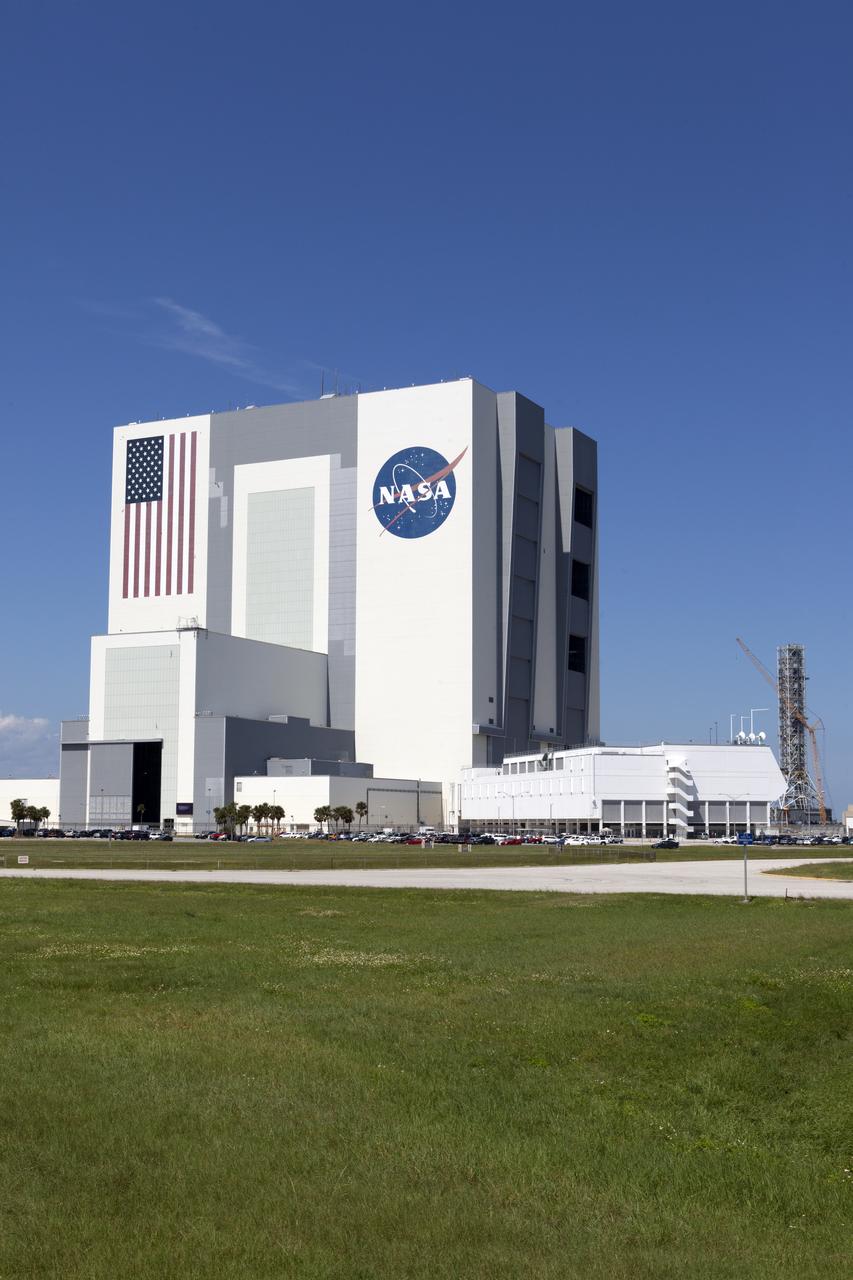
NASA's Vehicle Assembly Building at Kennedy Space Center in Florida was used to assemble and house American-crewed launch vehicles from 1968 to 2011. AT 3,684,883 cubic meters, it is one of the largest buildings in the world by volume. Inside the facility, High Bay 3 is being upgraded and modified to support processing of the agency's Space Launch System rocket and Orion spacecraft.
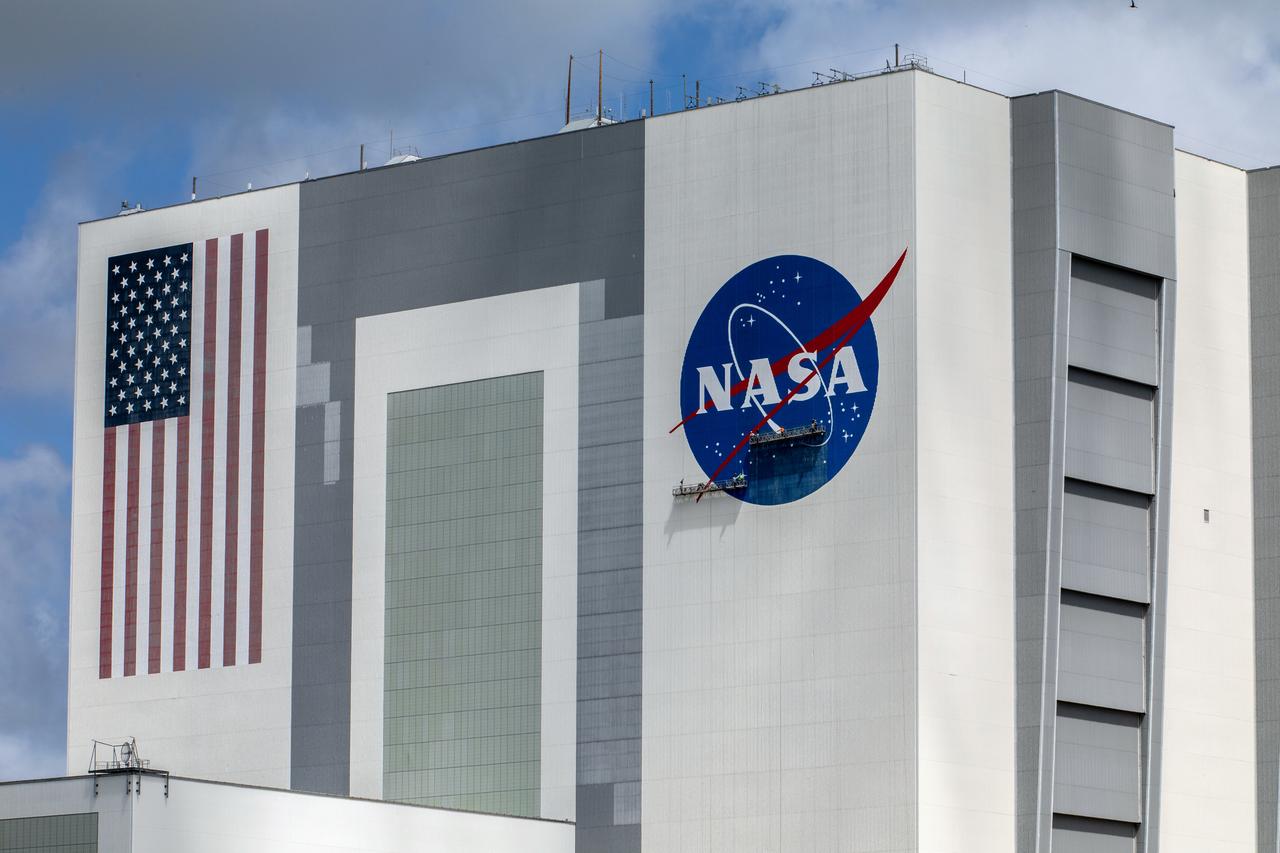
Painting of the NASA logo, also called the meatball, continues on the 525-foot-tall Vehicle Assembly Building (VAB) at the agency’s Kennedy Space Center in Florida on May 29 2020. HM2 and H.I.S. Painting of Titusville, Florida, are repainting the meatball and the American Flag on the iconic building. High Bay 3 inside the VAB has been upgraded with 10 new levels of work platforms that will surround and provide access for service and processing of NASA's Space Launch System (SLS) rocket and Orion spacecraft. Exploration Ground Systems is overseeing upgrades to the VAB to support the launch of the SLS and Orion for Artemis missions. Under the Artemis program, NASA will send the first woman and next man to the Moon.
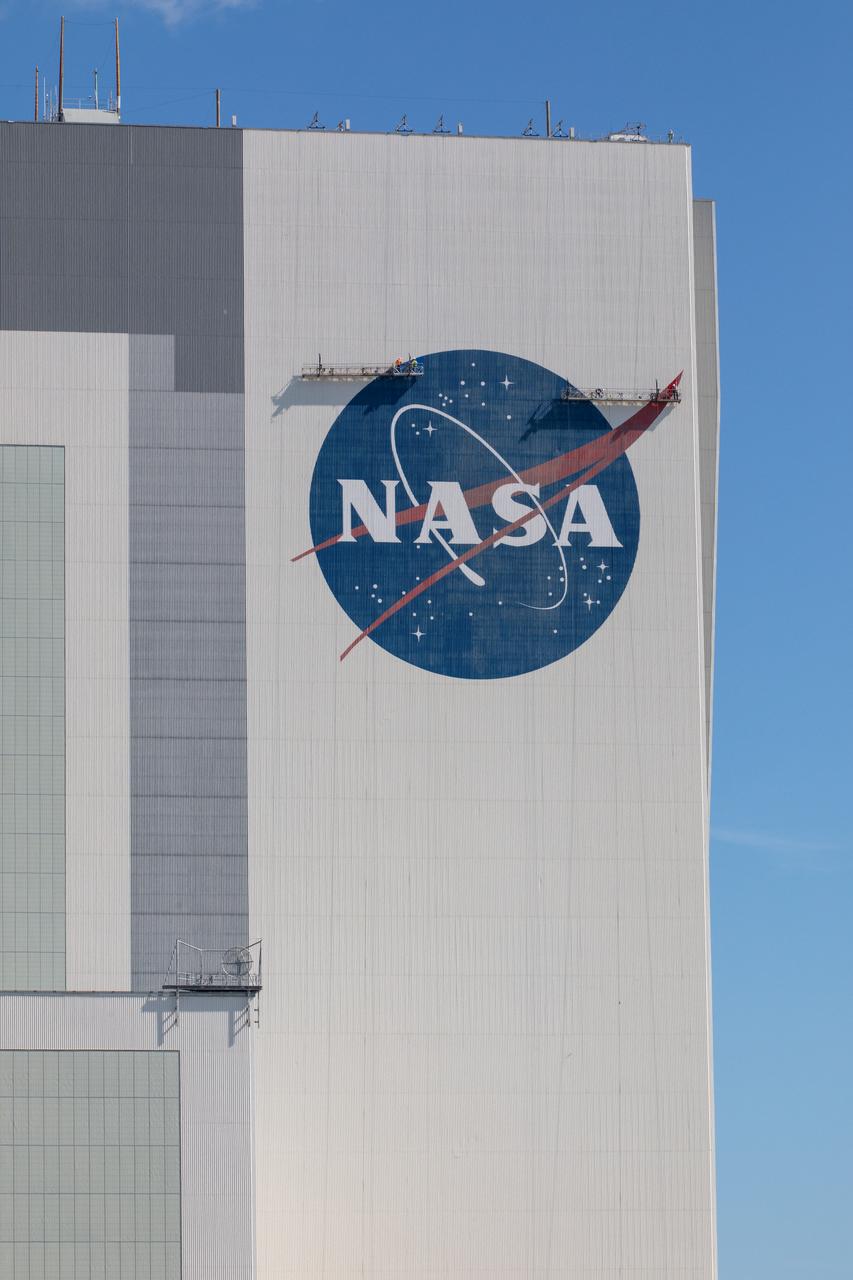
Painting of the NASA logo, also called the meatball, is underway on the 525-foot-tall Vehicle Assembly Building (VAB) at the agency’s Kennedy Space Center in Florida on May 8, 2020. HM2 and H.I.S. Painting of Titusville, Florida, are repainting the meatball and the American Flag on the iconic building. High Bay 3 inside the VAB has been upgraded with 10 new levels of work platforms that will surround and provide access for service and processing of NASA's Space Launch System (SLS) rocket and Orion spacecraft. Exploration Ground Systems is overseeing upgrades to the VAB to support the launch of the SLS and Orion for Artemis missions. Under the Artemis program, NASA will send the first woman and next man to the Moon.
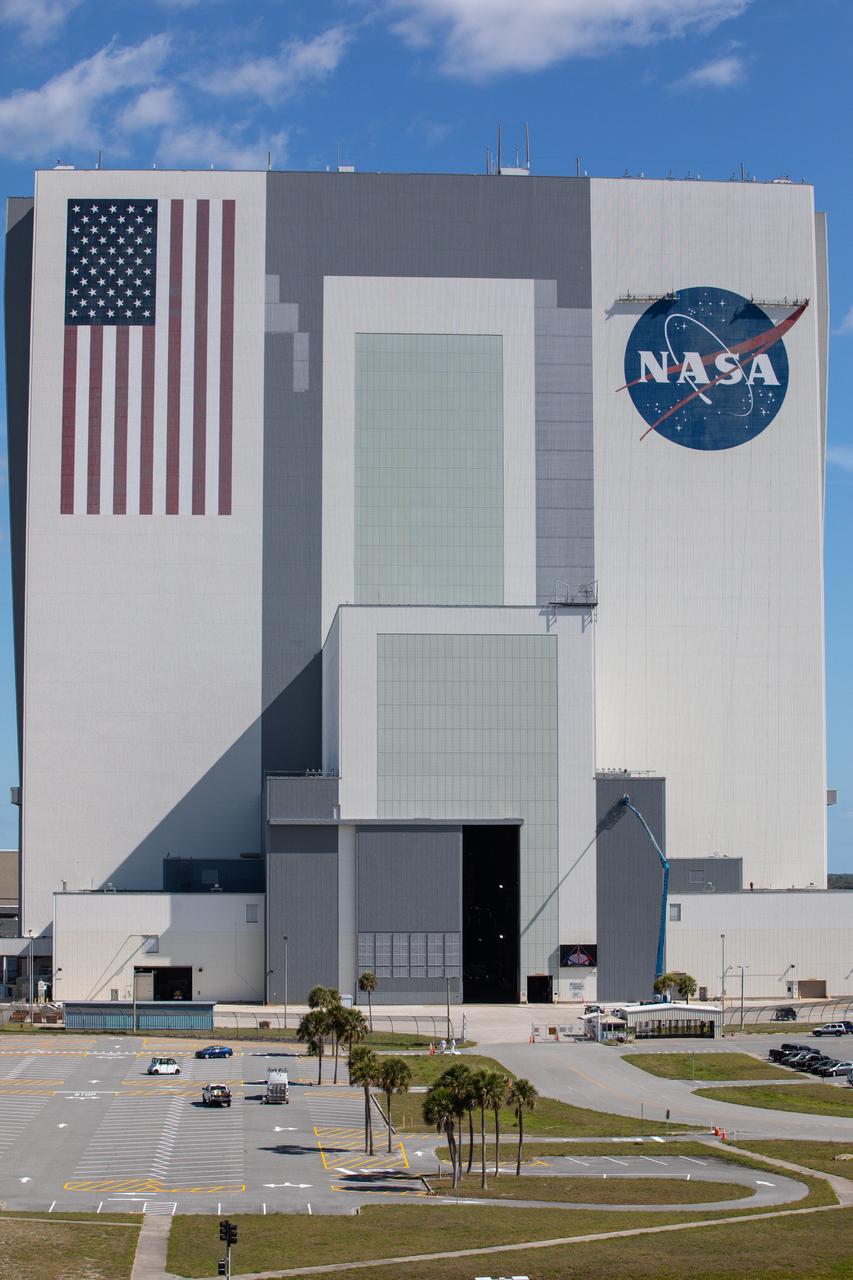
Painting of the NASA logo, also called the meatball, is underway on the 525-foot-tall Vehicle Assembly Building (VAB) at the agency’s Kennedy Space Center in Florida on May 8, 2020. HM2 and H.I.S. Painting of Titusville, Florida, are repainting the meatball and the American Flag on the iconic building. High Bay 3 inside the VAB has been upgraded with 10 new levels of work platforms that will surround and provide access for service and processing of NASA's Space Launch System (SLS) rocket and Orion spacecraft. Exploration Ground Systems is overseeing upgrades to the VAB to support the launch of the SLS and Orion for Artemis missions. Under the Artemis program, NASA will send the first woman and next man to the Moon.
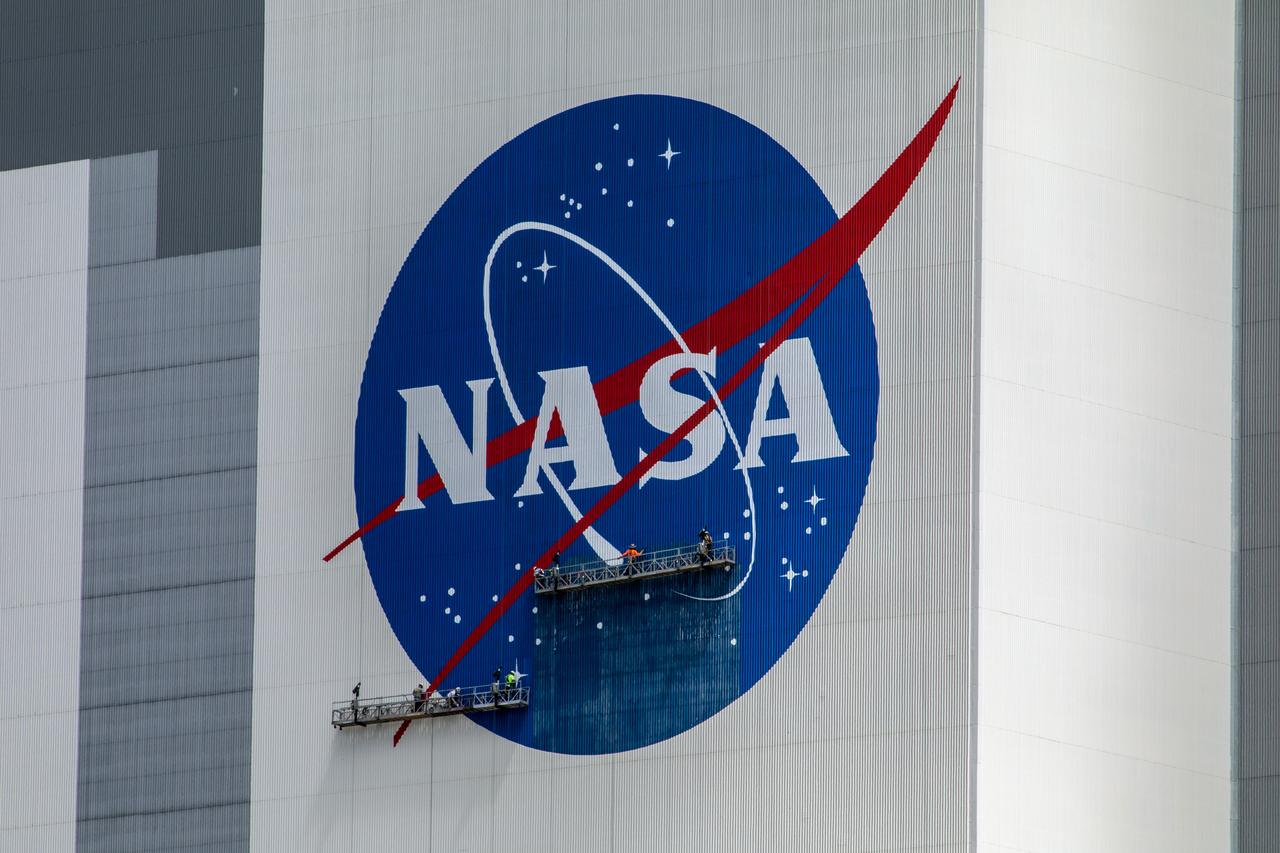
Painting of the NASA logo, also called the meatball, continues on the 525-foot-tall Vehicle Assembly Building (VAB) at the agency’s Kennedy Space Center in Florida on May 29 2020. HM2 and H.I.S. Painting of Titusville, Florida, are repainting the meatball and the American Flag on the iconic building. High Bay 3 inside the VAB has been upgraded with 10 new levels of work platforms that will surround and provide access for service and processing of NASA's Space Launch System (SLS) rocket and Orion spacecraft. Exploration Ground Systems is overseeing upgrades to the VAB to support the launch of the SLS and Orion for Artemis missions. Under the Artemis program, NASA will send the first woman and next man to the Moon.
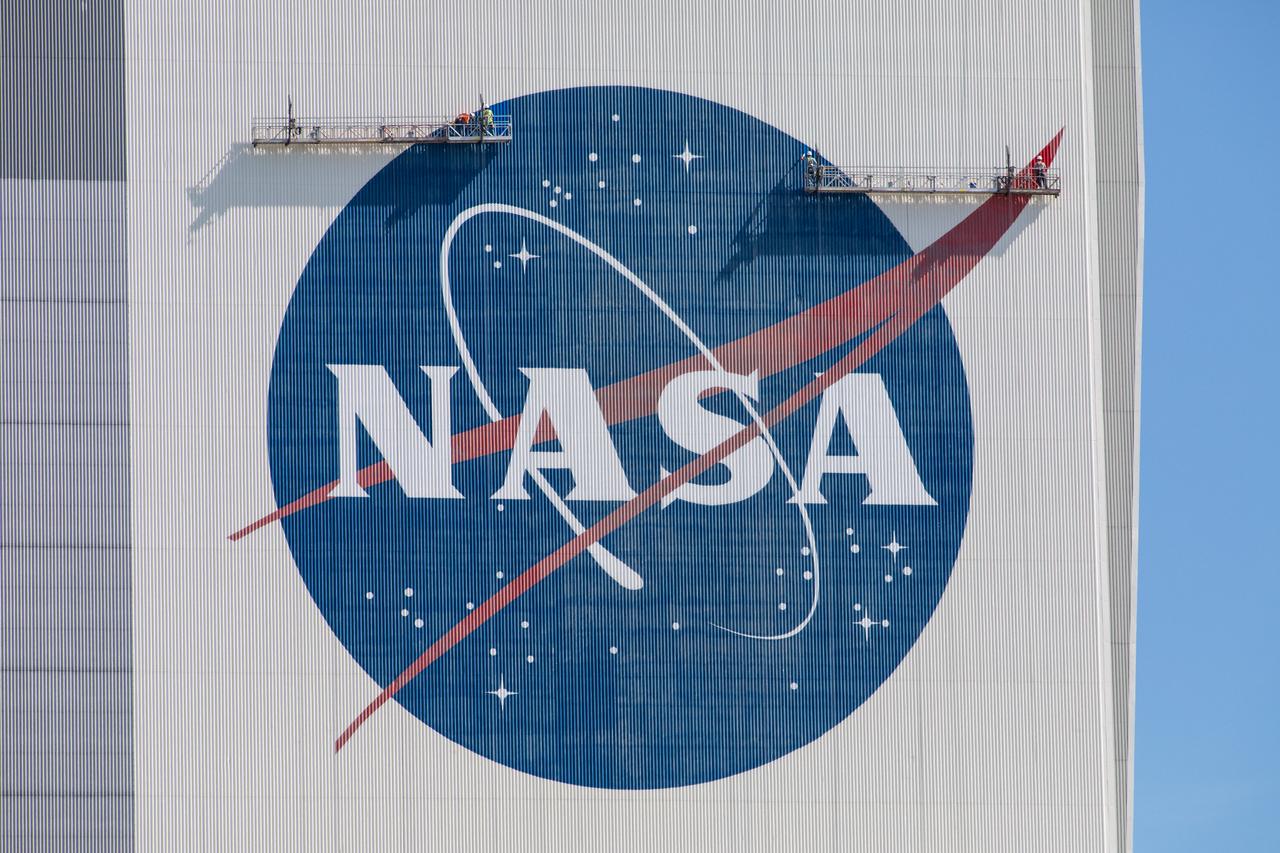
Painting of the NASA logo, also called the meatball, is underway on the 525-foot-tall Vehicle Assembly Building (VAB) at the agency’s Kennedy Space Center in Florida on May 8, 2020. HM2 and H.I.S. Painting of Titusville, Florida, are repainting the meatball and the American Flag on the iconic building. High Bay 3 inside the VAB has been upgraded with 10 new levels of work platforms that will surround and provide access for service and processing of NASA's Space Launch System (SLS) rocket and Orion spacecraft. Exploration Ground Systems is overseeing upgrades to the VAB to support the launch of the SLS and Orion for Artemis missions. Under the Artemis program, NASA will send the first woman and next man to the Moon.
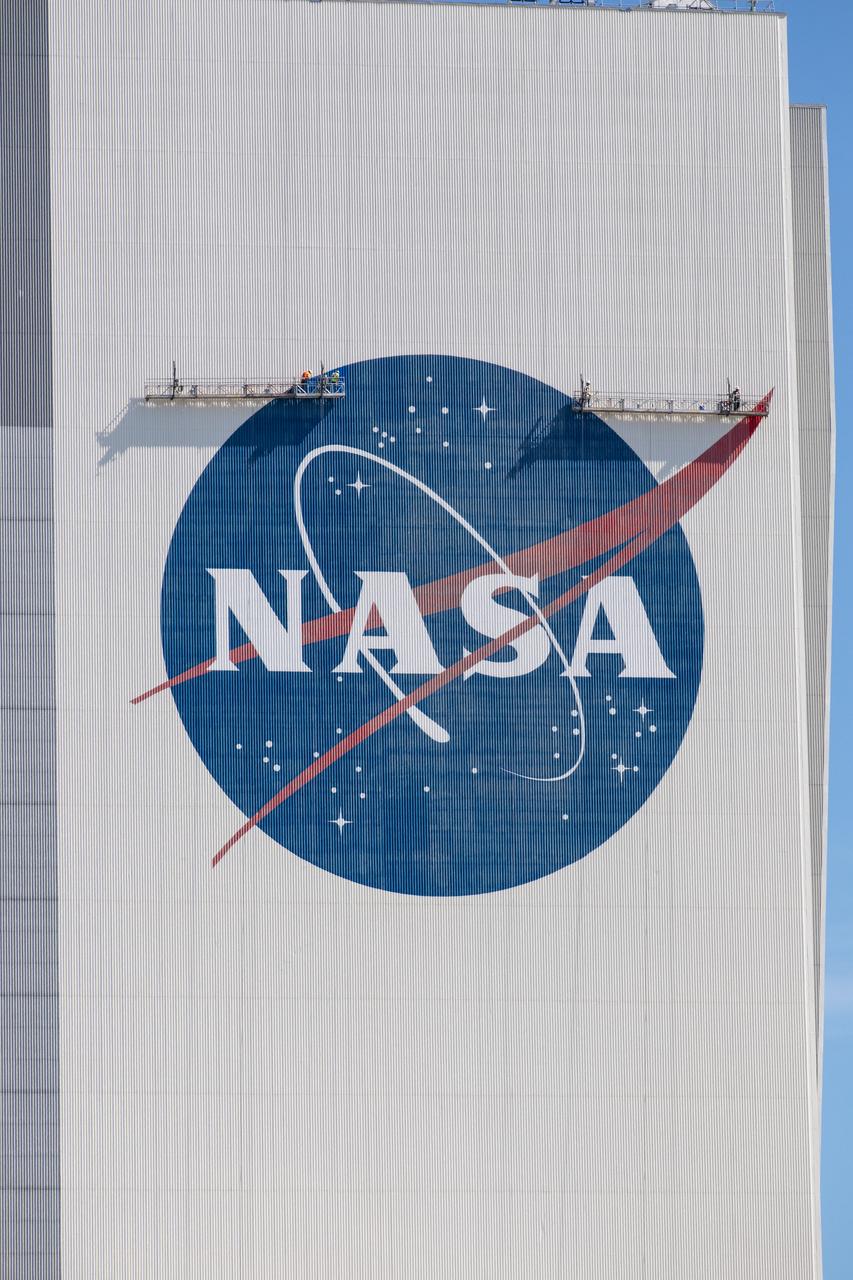
Painting of the NASA logo, also called the meatball, is underway on the 525-foot-tall Vehicle Assembly Building (VAB) at the agency’s Kennedy Space Center in Florida on May 8, 2020. HM2 and H.I.S. Painting of Titusville, Florida, are repainting the meatball and the American Flag on the iconic building. High Bay 3 inside the VAB has been upgraded with 10 new levels of work platforms that will surround and provide access for service and processing of NASA's Space Launch System (SLS) rocket and Orion spacecraft. Exploration Ground Systems is overseeing upgrades to the VAB to support the launch of the SLS and Orion for Artemis missions. Under the Artemis program, NASA will send the first woman and next man to the Moon.
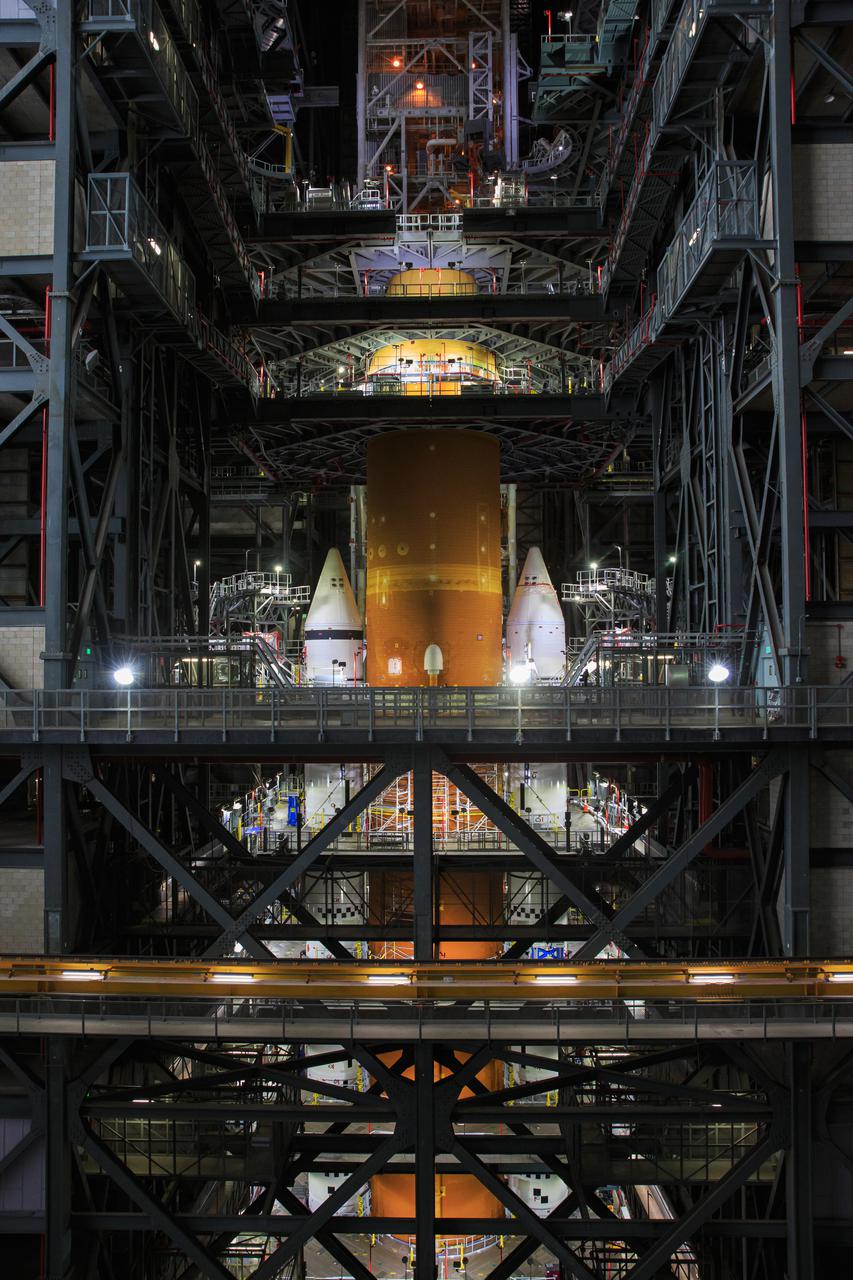
Seen here is the launch vehicle stage adapter (LVSA) for NASA’s Space Launch System (SLS) rocket atop the massive SLS core stage on the mobile launcher in the agency’s Vehicle Assembly Building (VAB) at NASA’s Kennedy Space Center in Florida on June 24, 2021. Teams with NASA’s Exploration Ground Systems and contractor Jacobs used one of five VAB cranes to lift the adapter almost 250-feet in the air and then slowly lower it on to the core stage earlier this week. The LVSA arrived at Kennedy from the agency’s Marshall Space Flight Center in Huntsville, Alabama, in July 2020 and has remained in the VAB for processing. During integration, known as “stacking,” the LVSA is bolted to the forward skirt of the core stage, connecting the core stage and the interim cryogenic propulsion stage in preparation for the first flight of the rocket and the Orion spacecraft during Artemis I. The ICPS’s RL10 engine will fit down inside the LVSA, which protects the engine during launch. The first in a series of increasingly complex missions, Artemis I will test SLS and the Orion spacecraft as an integrated system prior to crewed flights in which NASA will land the first woman and person of color on the Moon.
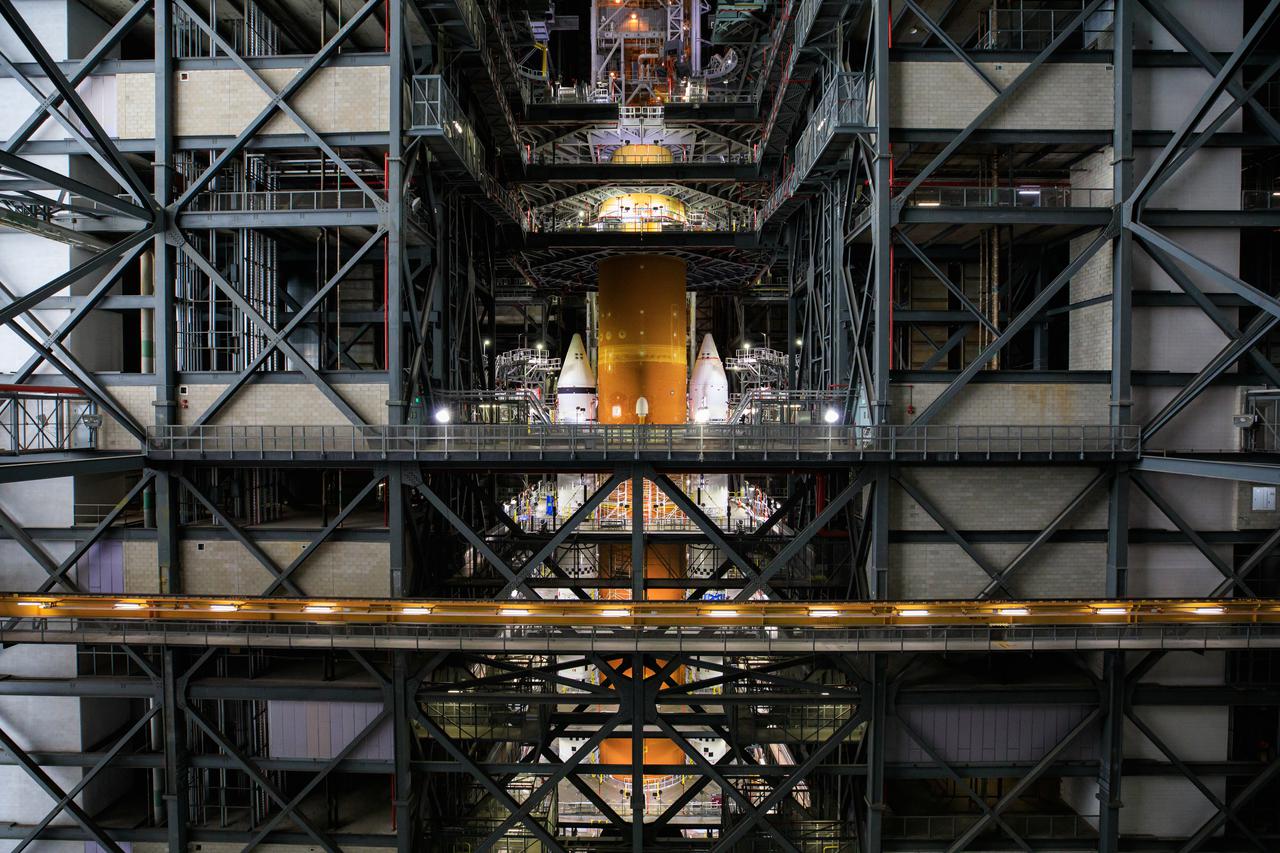
Seen here is the launch vehicle stage adapter (LVSA) for NASA’s Space Launch System (SLS) rocket atop the massive SLS core stage on the mobile launcher in the agency’s Vehicle Assembly Building (VAB) at NASA’s Kennedy Space Center in Florida on June 24, 2021. Teams with NASA’s Exploration Ground Systems and contractor Jacobs used one of five VAB cranes to lift the adapter almost 250-feet in the air and then slowly lower it on to the core stage earlier this week. The LVSA arrived at Kennedy from the agency’s Marshall Space Flight Center in Huntsville, Alabama, in July 2020 and has remained in the VAB for processing. During integration, known as “stacking,” the LVSA is bolted to the forward skirt of the core stage, connecting the core stage and the interim cryogenic propulsion stage in preparation for the first flight of the rocket and the Orion spacecraft during Artemis I. The ICPS’s RL10 engine will fit down inside the LVSA, which protects the engine during launch. The first in a series of increasingly complex missions, Artemis I will test SLS and the Orion spacecraft as an integrated system prior to crewed flights in which NASA will land the first woman and person of color on the Moon.

A fog rolls over the Vehicle Assembly Building at NASA’s Kennedy Space Center in Florida on July 13, 2020. The iconic 525-foot-tall facility will support the launch of the agency’s Space Launch System rocket and Orion spaceport for Artemis missions. Under the Artemis program, NASA will send the first woman and next man to the Moon. Exploration Ground Systems is overseeing upgrades to the VAB. In view in the background is the Launch Control Center.
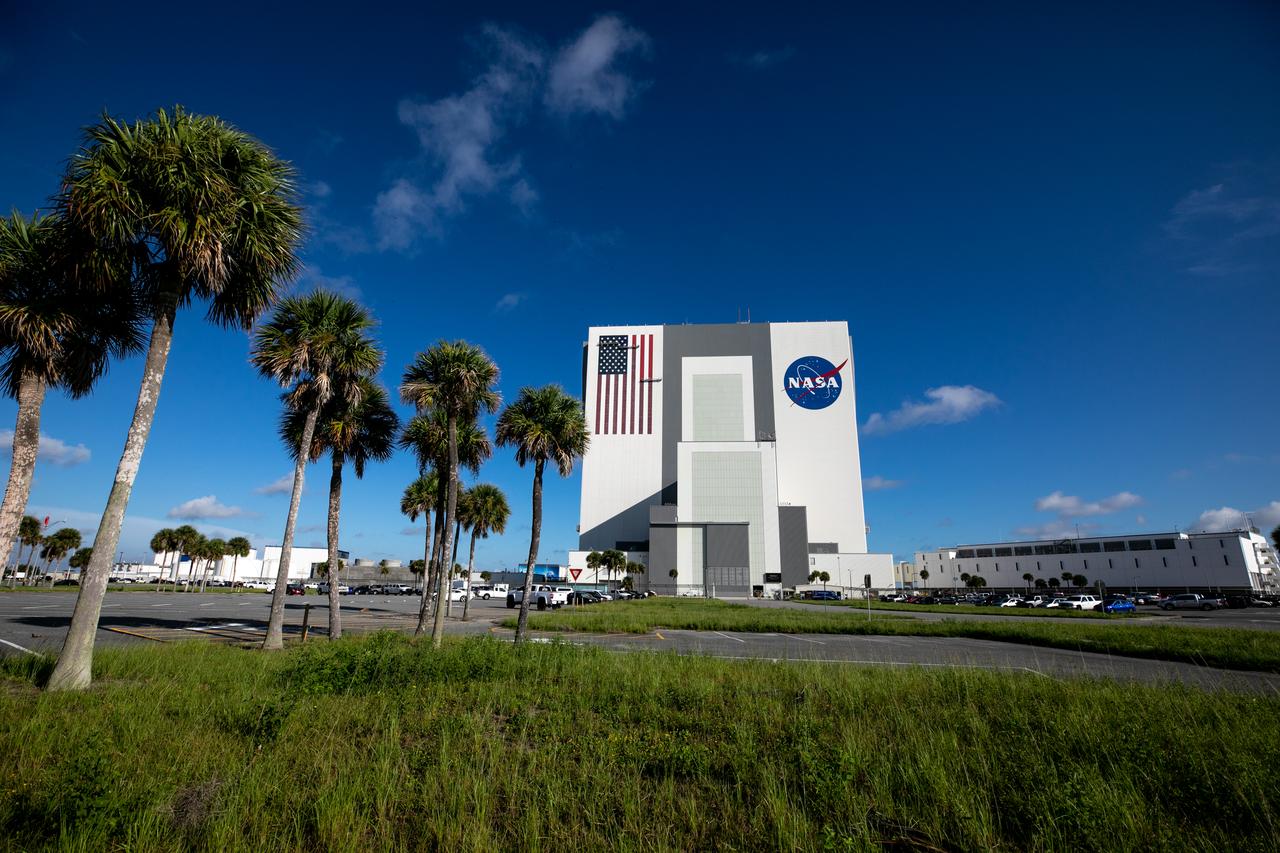
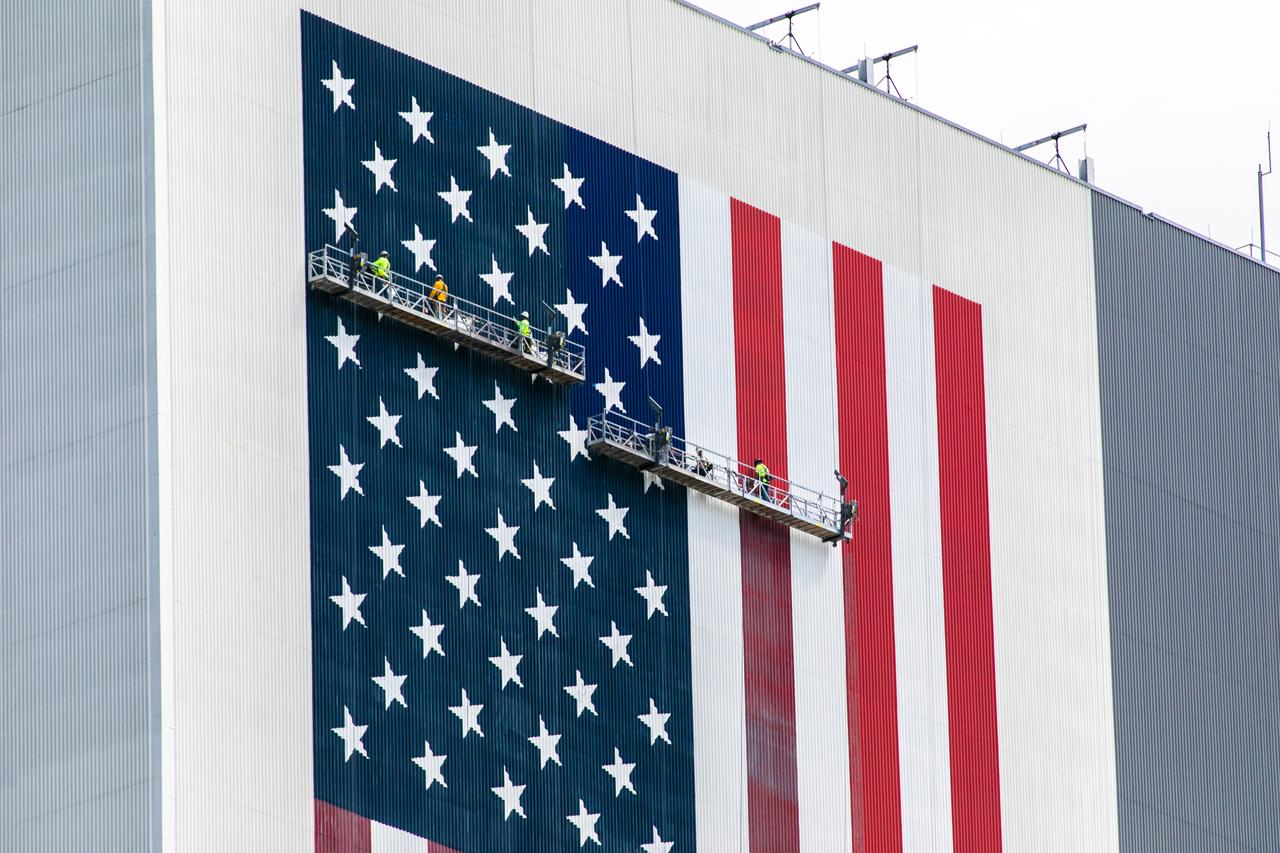
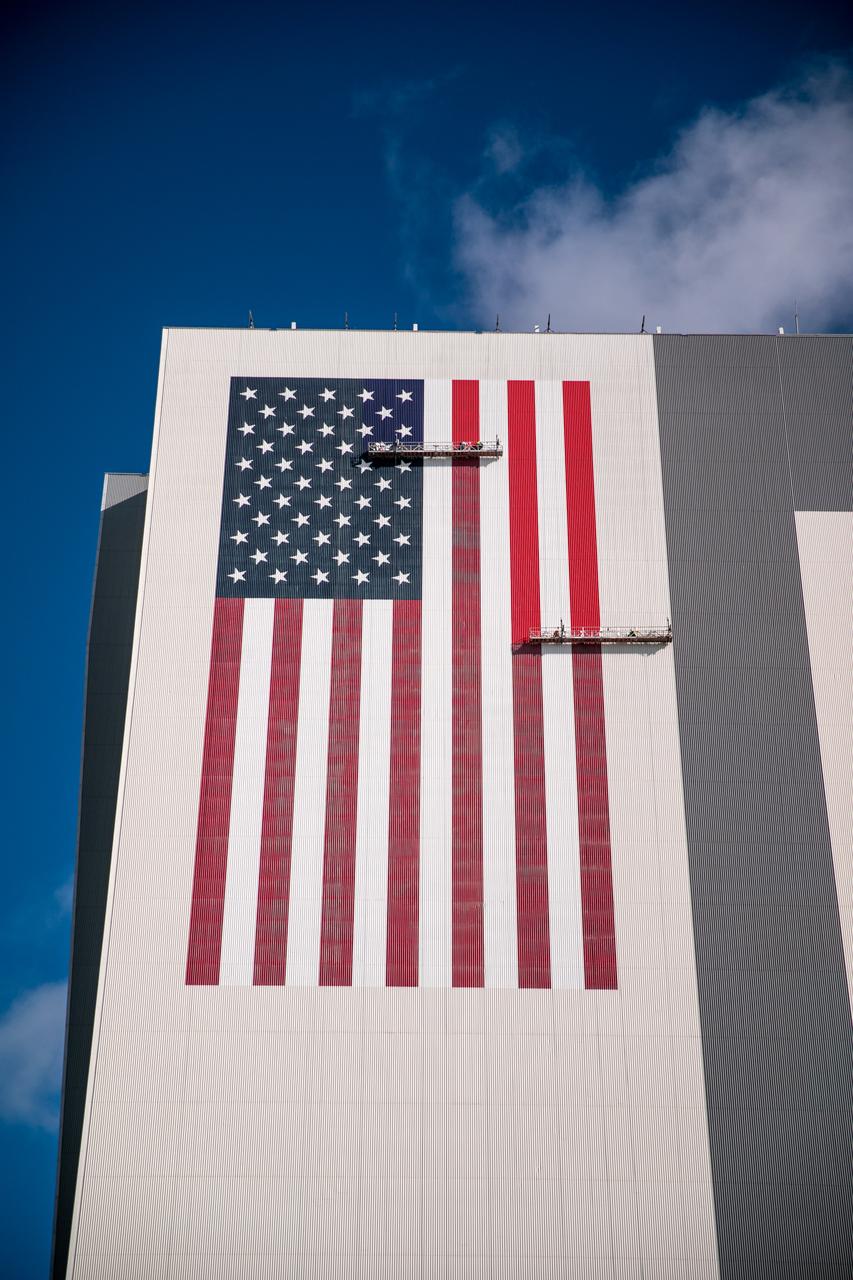
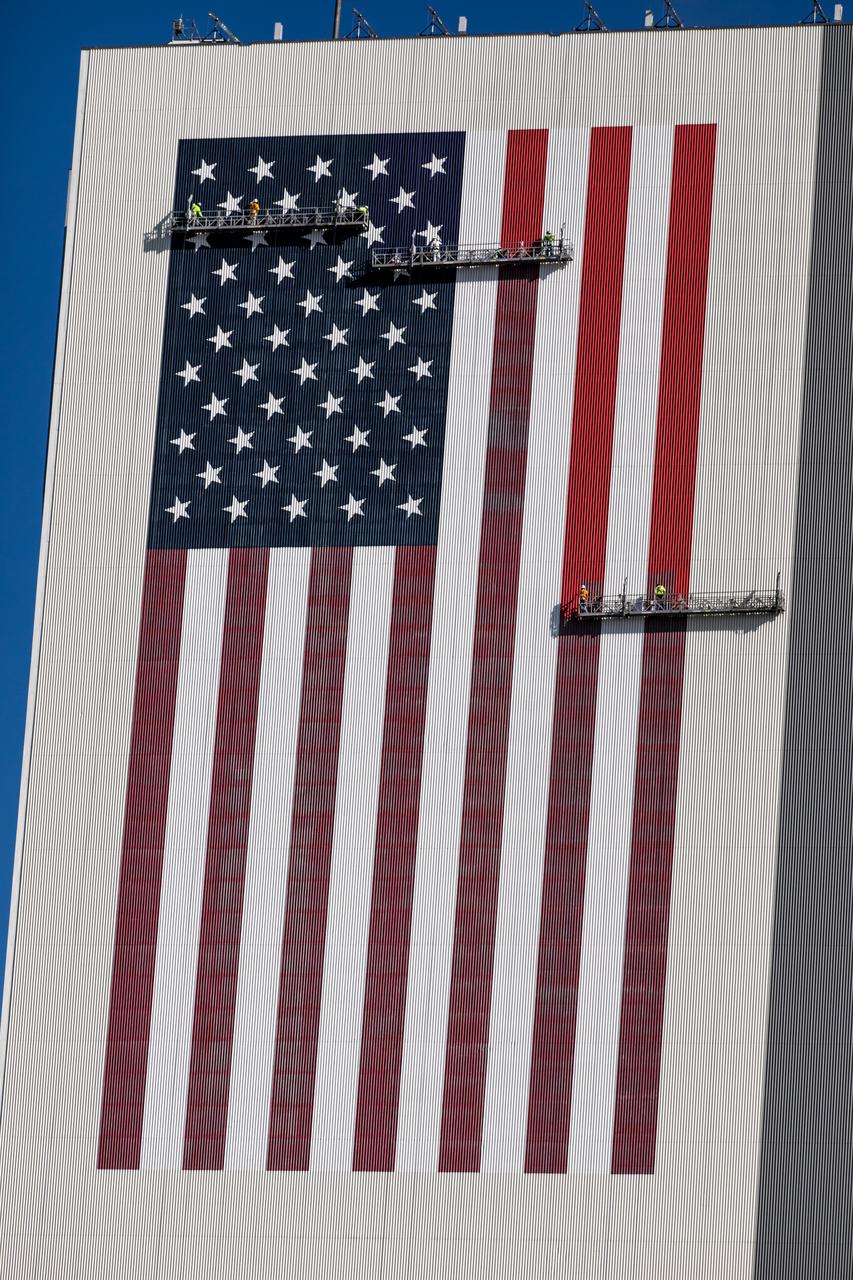
A view of the 525-foot-tall Vehicle Assembly Building (VAB) at NASA’s Kennedy Space Center in Florida, as painting of the U.S. flag continues on the iconic building on Sept. 17, 2020. HM2 and H.I.S. Painting of Titusville, Florida, are repainting the American Flag on the building. The flag is 209 feet long by 110 feet wide. Each star is more than six feet in diameter, and each stripe is nine feet wide. Exploration Ground Systems is overseeing upgrades to the VAB to support the launch of the Space Launch System and Orion for Artemis missions. Under the Artemis program, NASA will send the first woman and next man to the Moon.
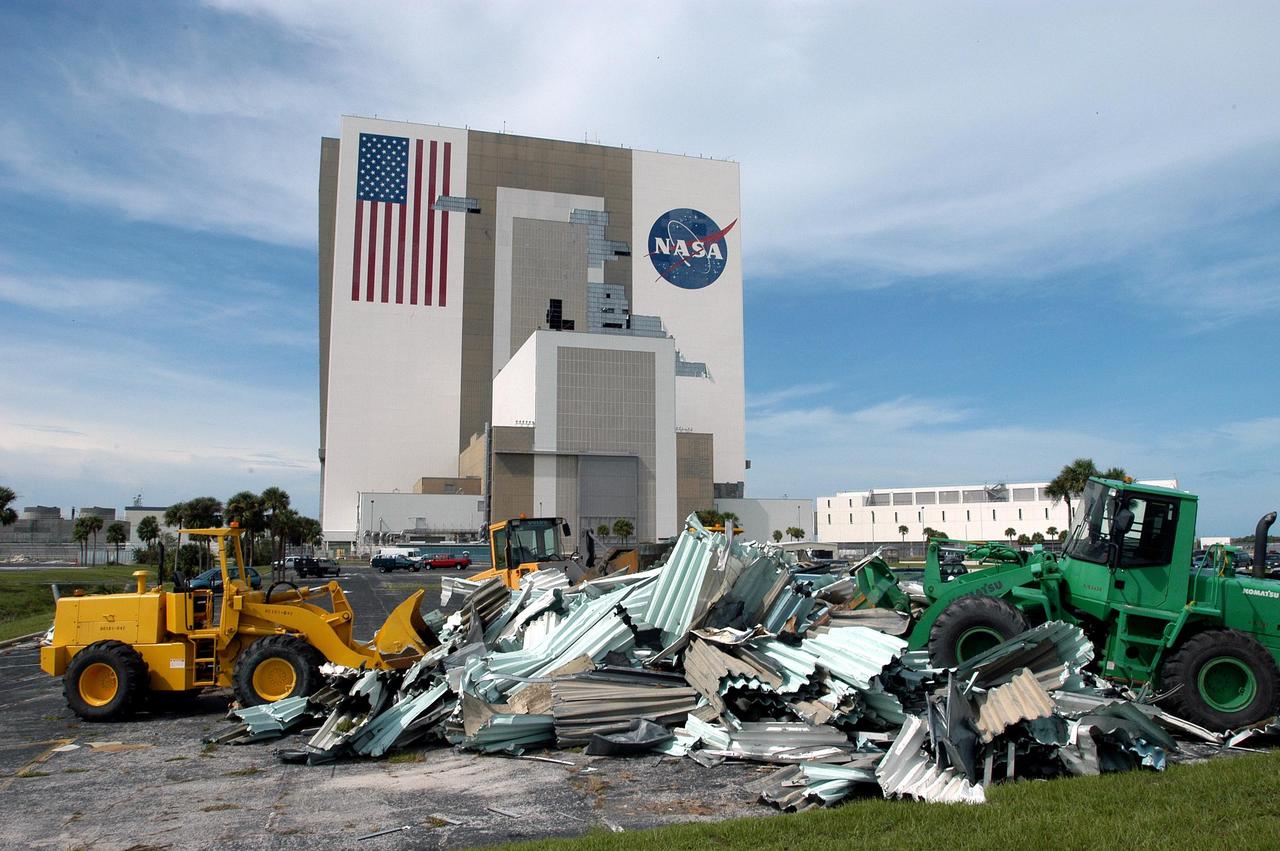
KENNEDY SPACE CENTER, FLA. - Panels from the exterior walls of the Vehicle Assembly Building (VAB) are recovered during clean-up activities following Hurricane Frances. The storm's path over Florida took it through Cape Canaveral and KSC property during Labor Day weekend. Located in the heart of Launch Complex 39, the VAB is used for the integration and stacking of Space Shuttle elements and for the checkout and storage of Space Shuttle External Tanks.
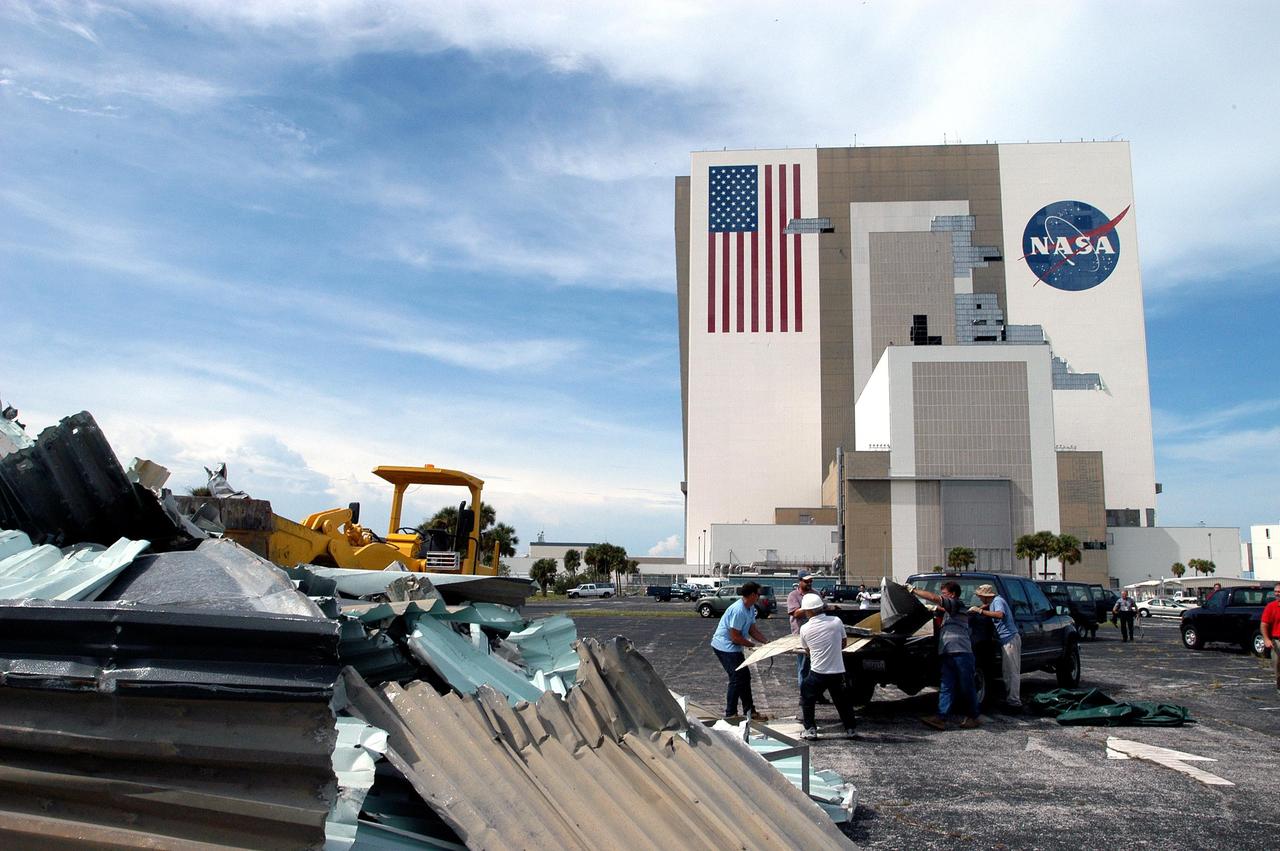
KENNEDY SPACE CENTER, FLA. - Panels from the exterior walls of the Vehicle Assembly Building (VAB) are recovered by KSC employees during clean-up activities following Hurricane Frances. The storm's path over Florida took it through Cape Canaveral and KSC property during Labor Day weekend. Located in the heart of Launch Complex 39, the VAB is used for the integration and stacking of Space Shuttle elements and for the checkout and storage of External Tanks.
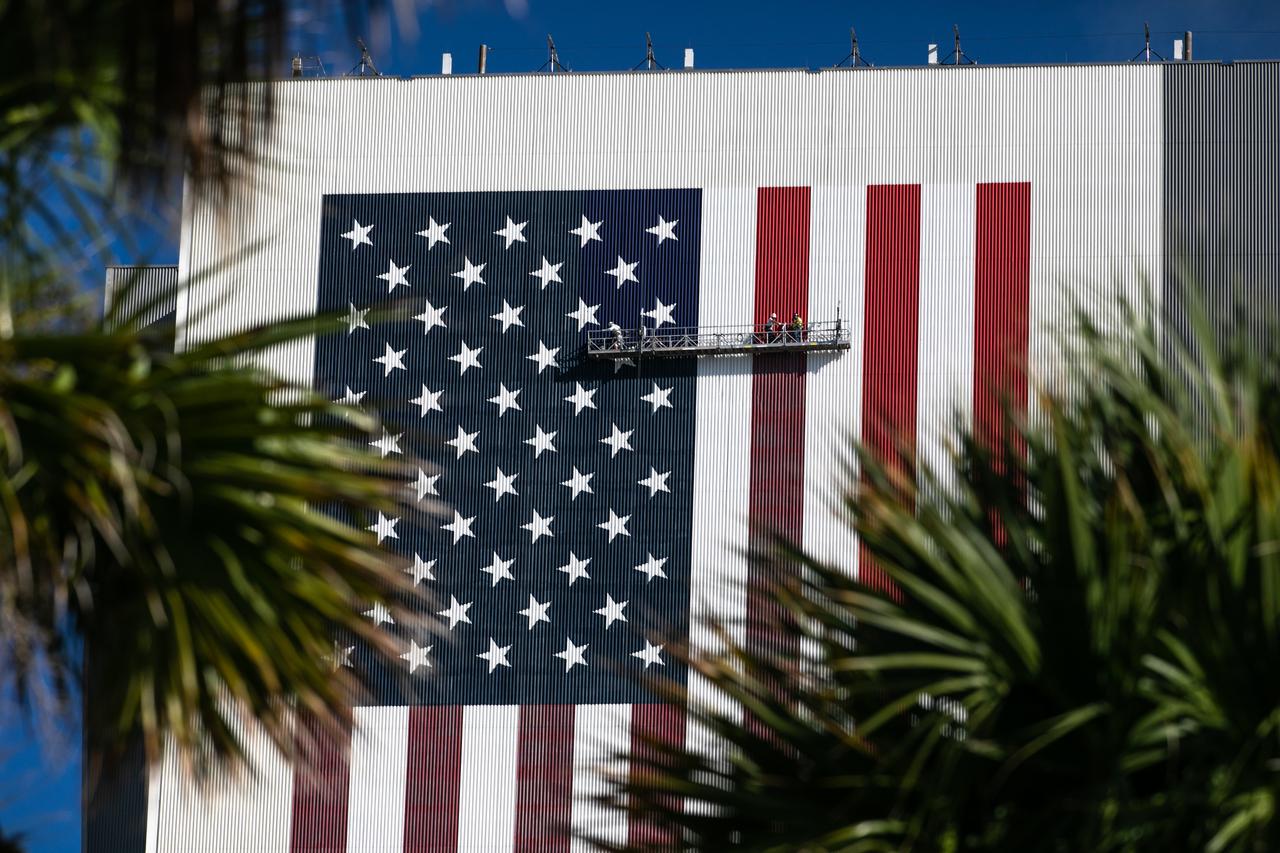
Painting of the U.S. flag continues on the 525-foot-tall Vehicle Assembly Building (VAB) at NASA’s Kennedy Space Center in Florida on Sept. 17, 2020. HM2 and H.I.S. Painting of Titusville, Florida, are repainting the American Flag on the iconic building. The flag is 209 feet long by 110 feet wide. Each star is more than six feet in diameter, and each stripe is nine feet wide. Exploration Ground Systems is overseeing upgrades to the VAB to support the launch of the Space Launch System and Orion for Artemis missions. Under the Artemis program, NASA will send the first woman and next man to the Moon.
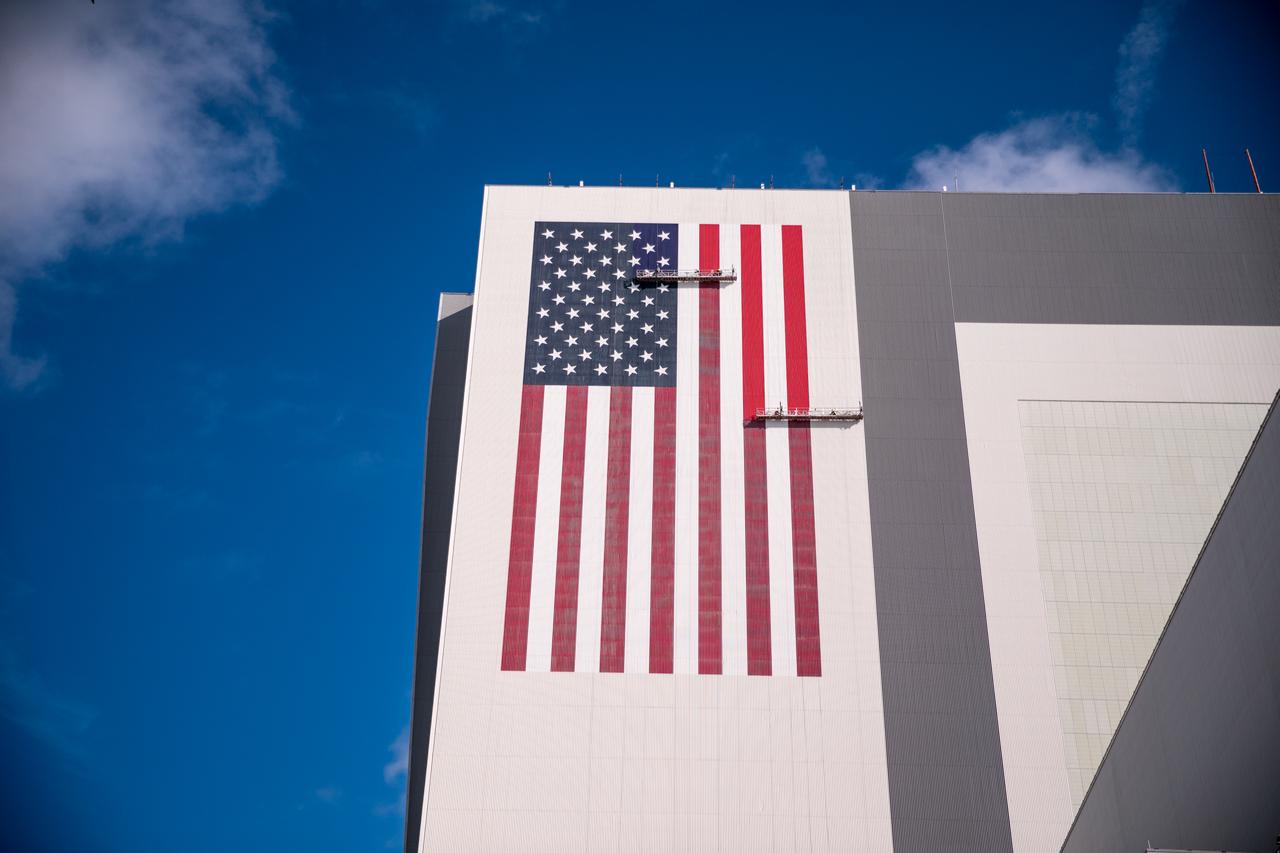
Painting of the U.S. flag continues on the 525-foot-tall Vehicle Assembly Building (VAB) at NASA’s Kennedy Space Center in Florida on Sept. 17, 2020. HM2 and H.I.S. Painting of Titusville, Florida, are repainting the American Flag on the iconic building. The flag is 209 feet long by 110 feet wide. Each star is more than six feet in diameter, and each stripe is nine feet wide. Exploration Ground Systems is overseeing upgrades to the VAB to support the launch of the Space Launch System and Orion for Artemis missions. Under the Artemis program, NASA will send the first woman and next man to the Moon.
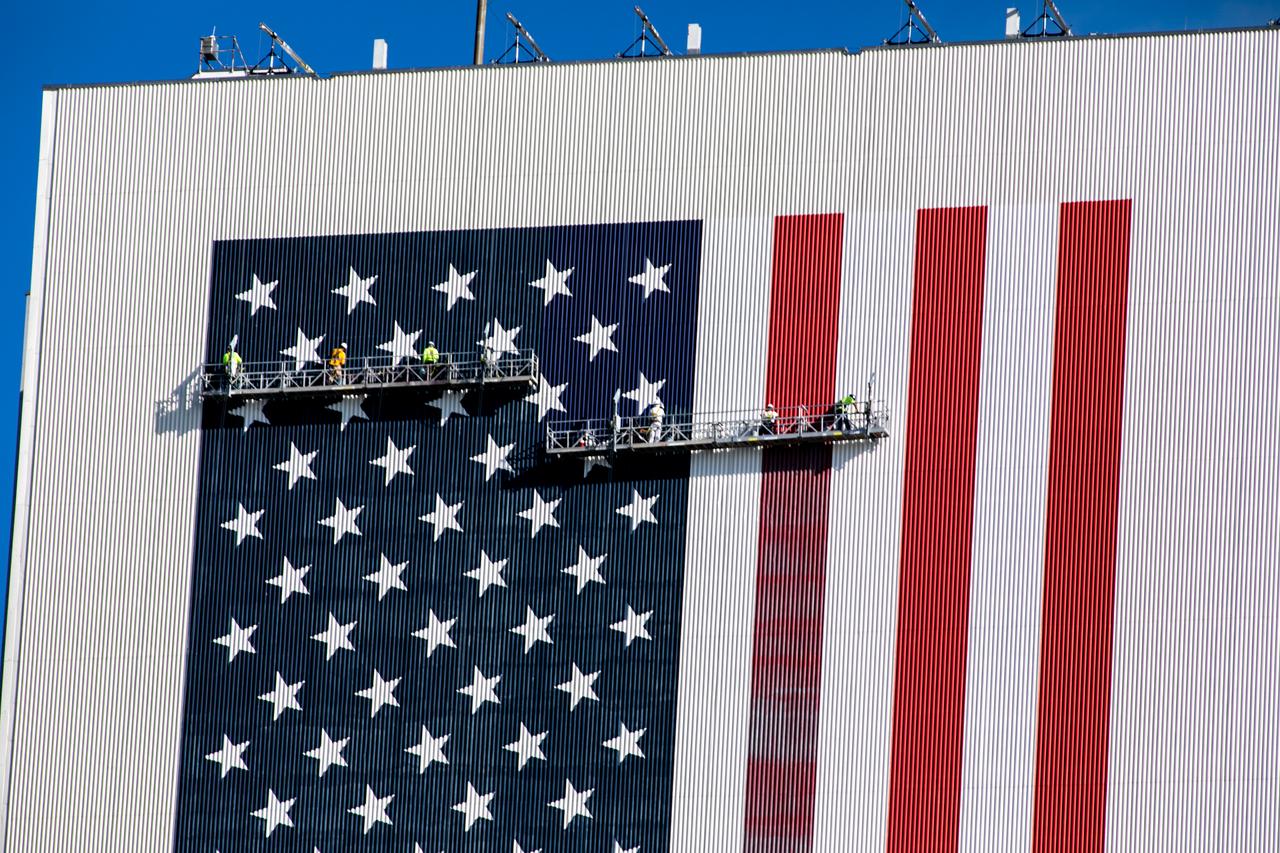
Painting of the U.S. flag continues on the 525-foot-tall Vehicle Assembly Building (VAB) at NASA’s Kennedy Space Center in Florida on Sept. 17, 2020. HM2 and H.I.S. Painting of Titusville, Florida, are repainting the American Flag on the iconic building. The flag is 209 feet long by 110 feet wide. Each star is more than six feet in diameter, and each stripe is nine feet wide. Exploration Ground Systems is overseeing upgrades to the VAB to support the launch of the Space Launch System and Orion for Artemis missions. Under the Artemis program, NASA will send the first woman and next man to the Moon.
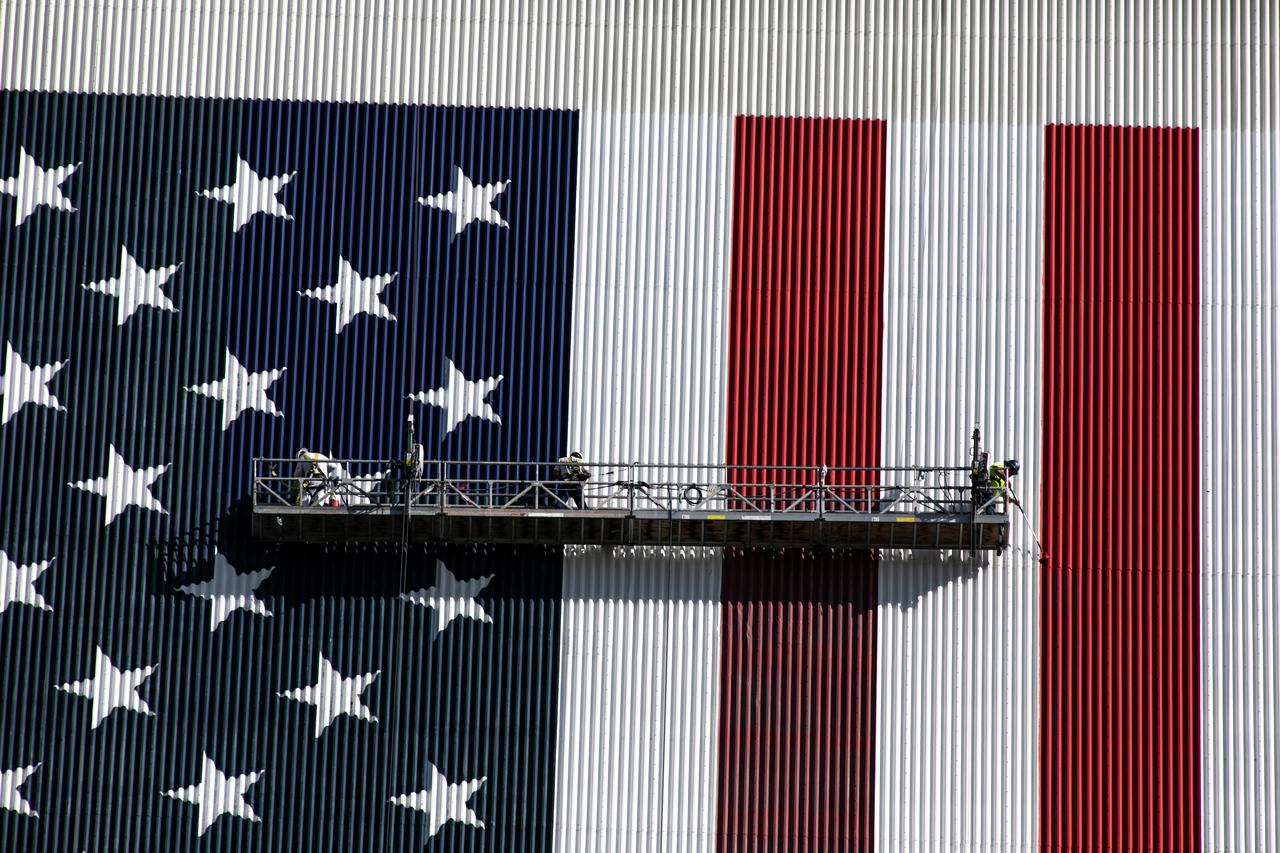
Painting of the U.S. flag continues on the 525-foot-tall Vehicle Assembly Building (VAB) in this close-up view at NASA’s Kennedy Space Center in Florida on Sept. 17, 2020. HM2 and H.I.S. Painting of Titusville, Florida, are repainting the American Flag on the iconic building. The flag is 209 feet long by 110 feet wide. Each star is more than six feet in diameter, and each stripe is nine feet wide. Exploration Ground Systems is overseeing upgrades to the VAB to support the launch of the Space Launch System and Orion for Artemis missions. Under the Artemis program, NASA will send the first woman and next man to the Moon.
Painting of the U.S. flag continues on the 525-foot-tall Vehicle Assembly Building (VAB) in this close-up view at NASA’s Kennedy Space Center in Florida on Sept. 17, 2020. HM2 and H.I.S. Painting of Titusville, Florida, are repainting the American Flag on the iconic building. The flag is 209 feet long by 110 feet wide. Each star is more than six feet in diameter, and each stripe is nine feet wide. Exploration Ground Systems is overseeing upgrades to the VAB to support the launch of the Space Launch System and Orion for Artemis missions. Under the Artemis program, NASA will send the first woman and next man to the Moon.
Painting of the U.S. flag continues on the 525-foot-tall Vehicle Assembly Building (VAB) at NASA’s Kennedy Space Center in Florida on Sept. 17, 2020. HM2 and H.I.S. Painting of Titusville, Florida, are repainting the American Flag on the iconic building. The flag is 209 feet long by 110 feet wide. Each star is more than six feet in diameter, and each stripe is nine feet wide. Exploration Ground Systems is overseeing upgrades to the VAB to support the launch of the Space Launch System and Orion for Artemis missions. Under the Artemis program, NASA will send the first woman and next man to the Moon.
Painting of the U.S. flag continues on the 525-foot-tall Vehicle Assembly Building (VAB) at NASA’s Kennedy Space Center in Florida on Sept. 17, 2020. HM2 and H.I.S. Painting of Titusville, Florida, are repainting the American Flag on the iconic building. The flag is 209 feet long by 110 feet wide. Each star is more than six feet in diameter, and each stripe is nine feet wide. Exploration Ground Systems is overseeing upgrades to the VAB to support the launch of the Space Launch System and Orion for Artemis missions. Under the Artemis program, NASA will send the first woman and next man to the Moon.
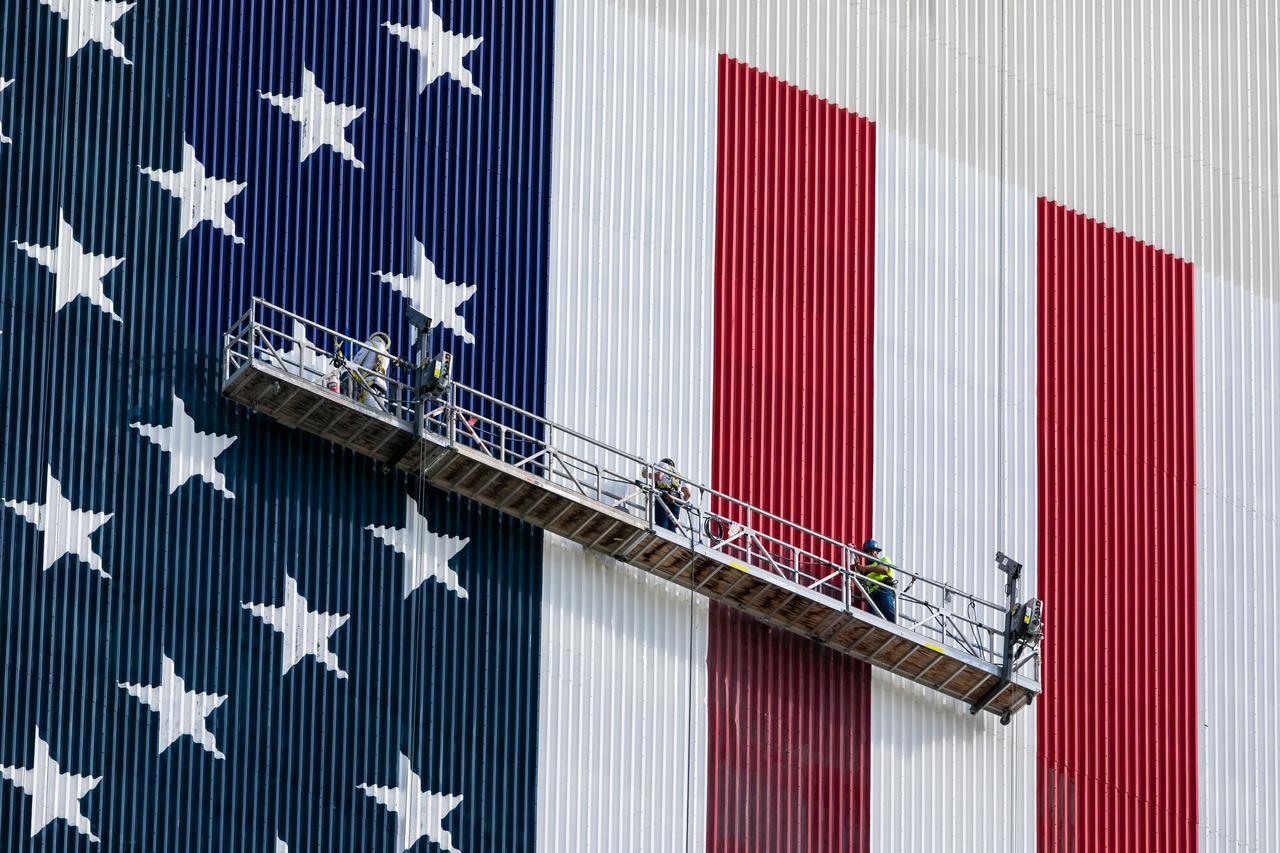
Painting of the U.S. flag continues on the 525-foot-tall Vehicle Assembly Building (VAB) in this close-up view at NASA’s Kennedy Space Center in Florida on Sept. 17, 2020. HM2 and H.I.S. Painting of Titusville, Florida, are repainting the American Flag on the iconic building. The flag is 209 feet long by 110 feet wide. Each star is more than six feet in diameter, and each stripe is nine feet wide. Exploration Ground Systems is overseeing upgrades to the VAB to support the launch of the Space Launch System and Orion for Artemis missions. Under the Artemis program, NASA will send the first woman and next man to the Moon.
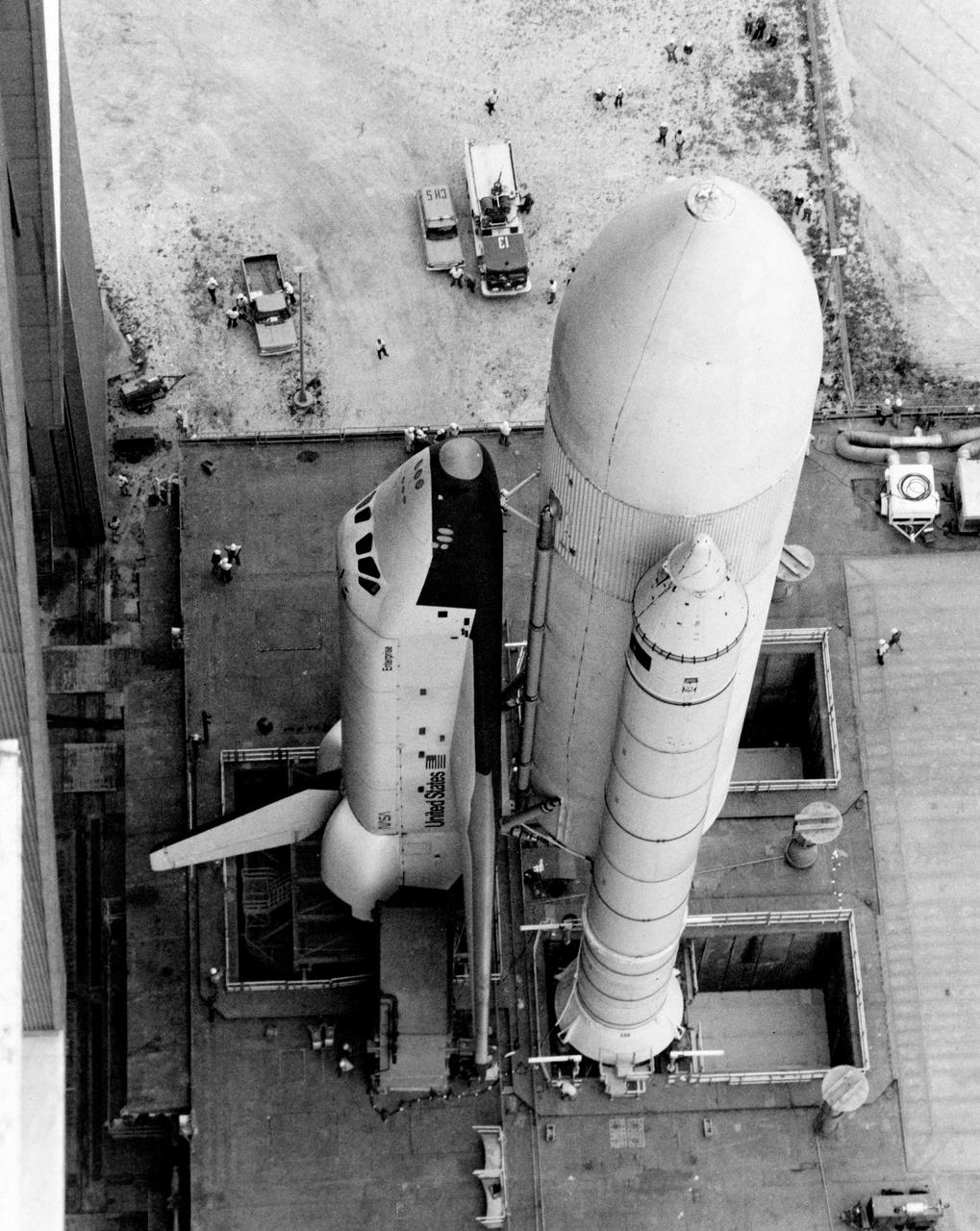
S79-31980 (1 May 1979) --- Space shuttle orbiter 101 Enterprise makes its first appearance mated to supportive propellant containers/boosters cluster, as it is slowly rolled out the front door of the huge Vehicle Assembly Building (VAB) at Kennedy Space Center en route to the launch pad, some 3.5 miles away. It will move slowly there atop this large mobile launch platform. The Enterprise is to undergo several weeks of fit and function checks on the pad in preparation for STS-1, on which its sister craft Columbia will take astronauts John W. Young and Robert L. Crippen into space for a 54-hour test mission. Photo credit: NASA

This photograph depicts the Saturn V vehicle (SA-501) for the Apollo 4 mission in the Vehicle Assembly Building (VAB) at the Kennedy Space Center (KSC). After the completion of the assembly operation, the work platform was retracted and the vehicle was readied to rollout from the VAB to the launch pad. The Apollo 4 mission was the first launch of the Saturn V launch vehicle. Objectives of the unmanned Apollo 4 test flight were to obtain flight information on launch vehicle and spacecraft structural integrity and compatibility, flight loads, stage separation, and subsystems operation including testing of restart of the S-IVB stage, and to evaluate the Apollo command module heat shield. The Apollo 4 was launched on November 9, 1967 from KSC.
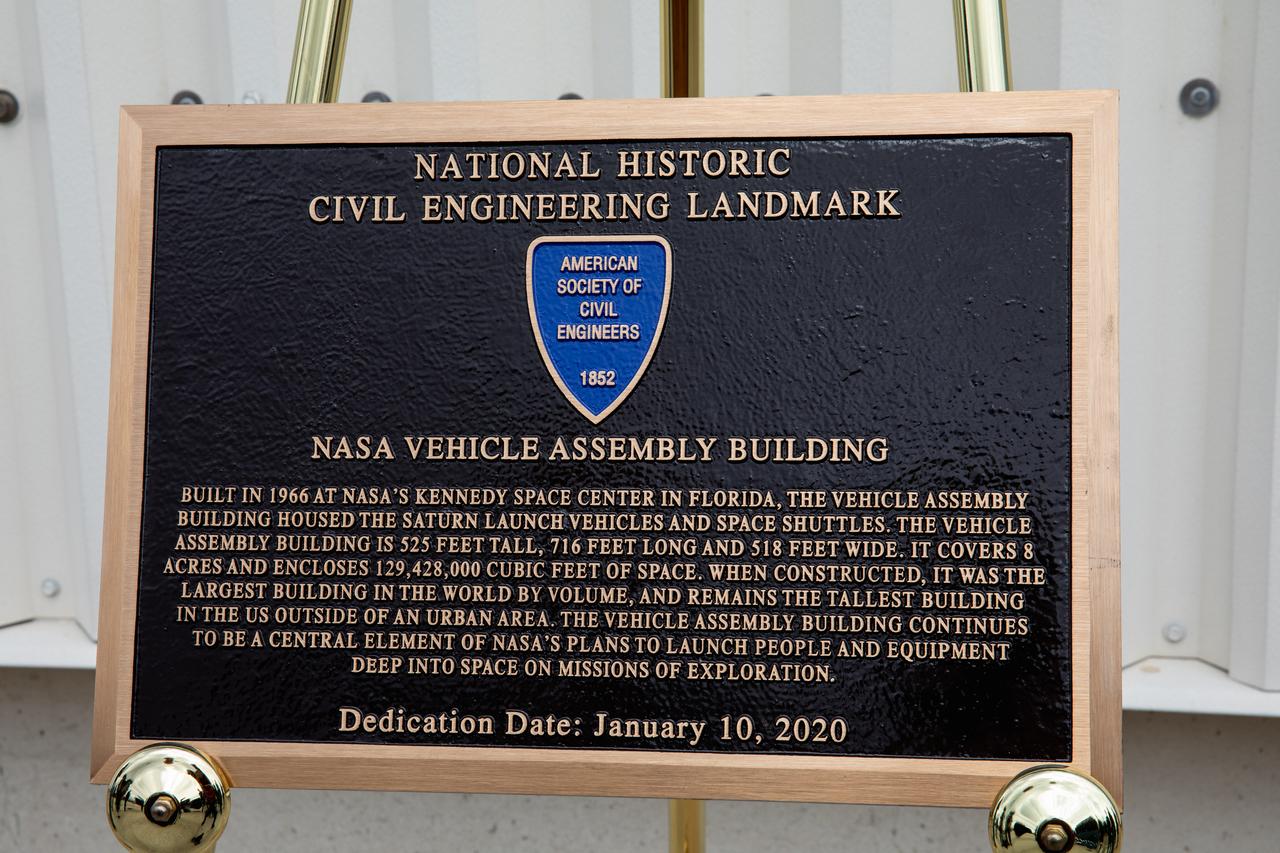
The Florida Section of the American Society of Civil Engineers bestowed the ASCE National Historic Civil Engineering Landmark award to Kennedy Space Center’s iconic Vehicle Assembly Building during a ceremony on Jan. 10, 2020. The VAB is the first building at Kennedy Space Center to earn this distinction. At the time of its completion, the 129-million-cubic-foot structure was the largest building in the world. Originally designed and built to accommodate the Saturn V/Apollo used in Project Apollo, the VAB was later modified for its role in the Space Shuttle Program.
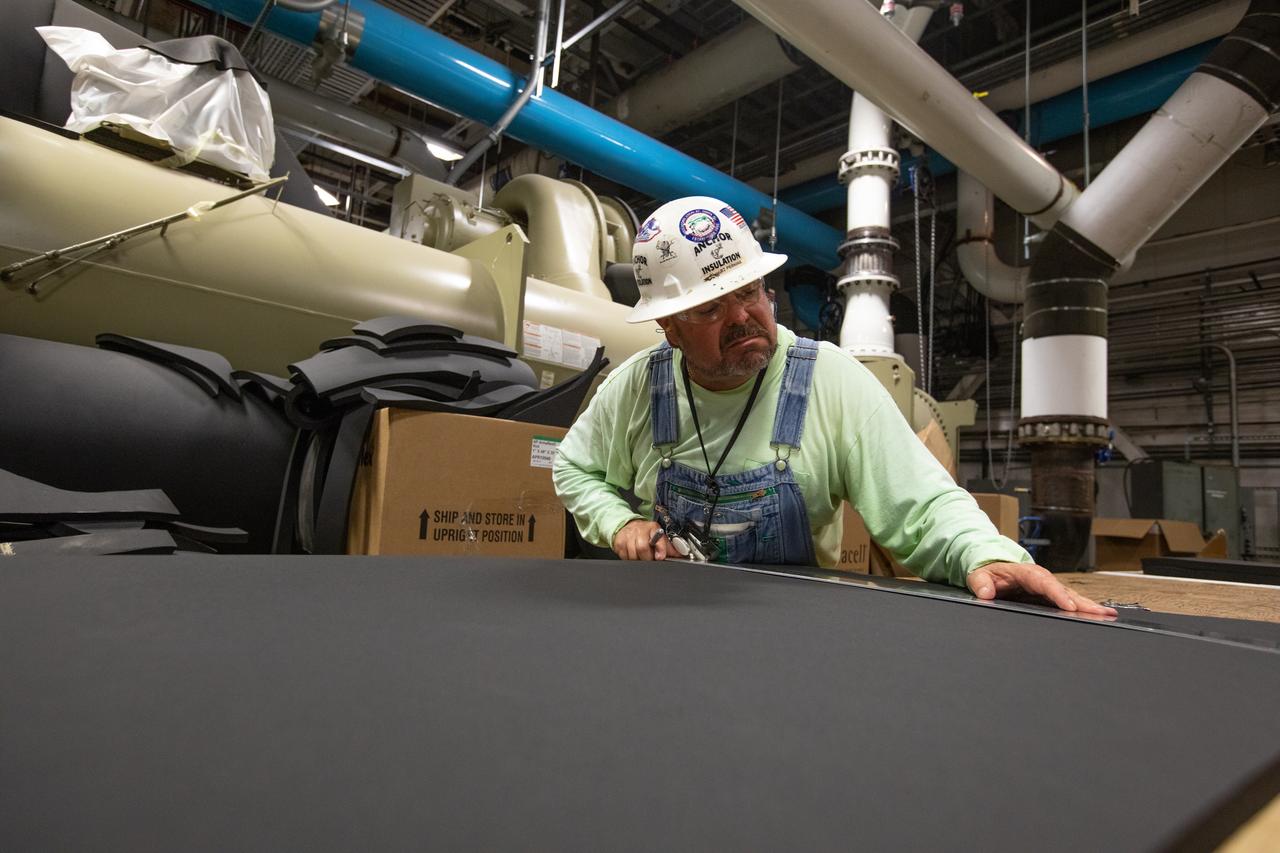
A technician measures foam insulation inside the Utility Annex near the Vehicle Assembly (VAB) Building at NASA’s Kennedy Space Center in Florida on July 24, 2019. The Utility Annex, which provides 8,000 gallons of chilled water per minute to the VAB and other facilities in the Launch Complex 39 area, is being upgraded and repaired. The facility also contains boilers necessary to provide hot water to the VAB. The center’s Engineering Directorate is making the repairs and upgrades to the facility to prepare for the agency’s Artemis missions to the Moon and on to Mars.
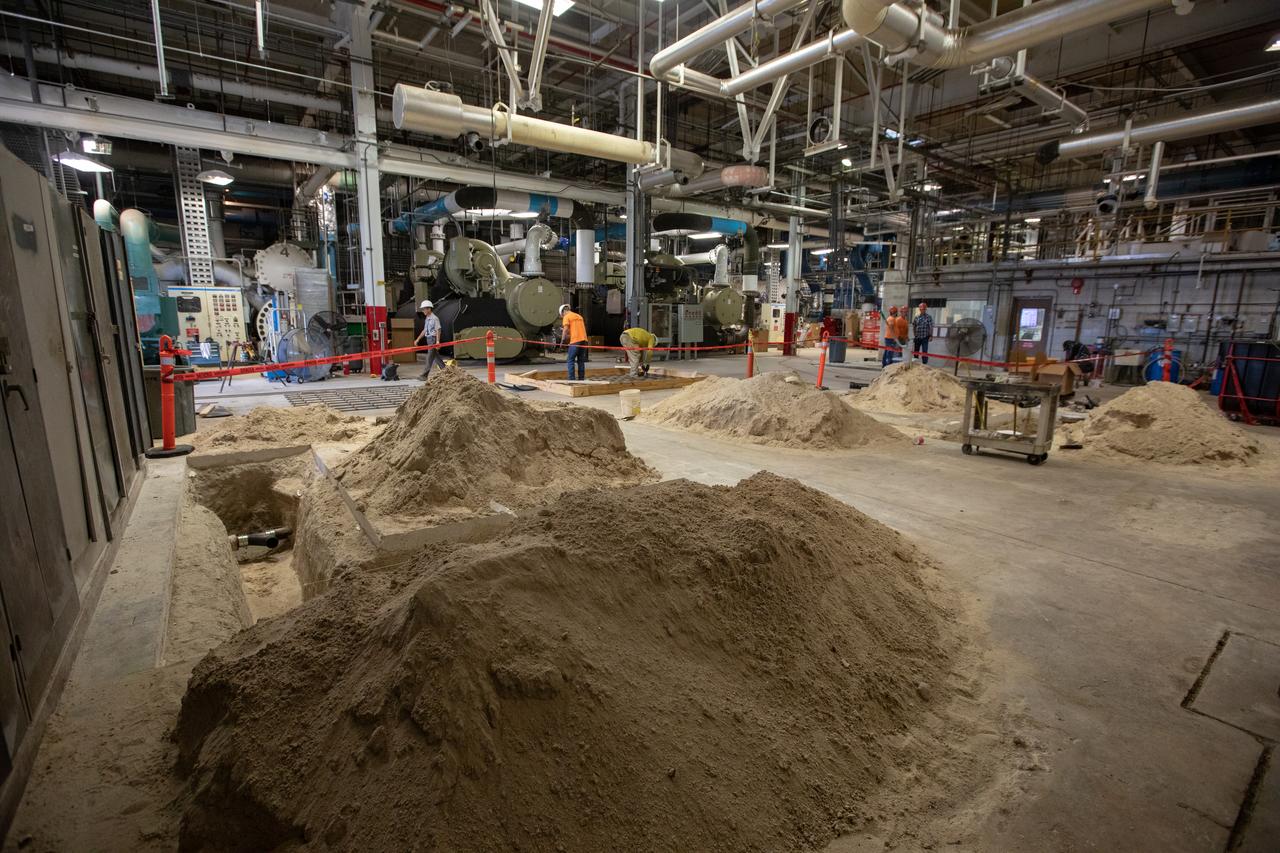
Upgrades are in progress inside the Utility Annex near the Vehicle Assembly (VAB) Building at NASA’s Kennedy Space Center in Florida on July 24, 2019. The Utility Annex, which provides 8,000 gallons of chilled water per minute to the VAB and other facilities in the Launch Complex 39 area, is being upgraded and repaired. The facility also contains boilers necessary to provide hot water to the VAB. The center’s Engineering Directorate is making the repairs and upgrades to the facility to prepare for the agency’s Artemis missions to the Moon and on to Mars.

A technician measures foam insulation inside the Utility Annex near the Vehicle Assembly (VAB) Building at NASA’s Kennedy Space Center in Florida on July 24, 2019. The Utility Annex, which provides 8,000 gallons of chilled water per minute to the VAB and other facilities in the Launch Complex 39 area, is being upgraded and repaired. The facility also contains boilers necessary to provide hot water to the VAB. The center’s Engineering Directorate is making the repairs and upgrades to the facility to prepare for the agency’s Artemis missions to the Moon and on to Mars.
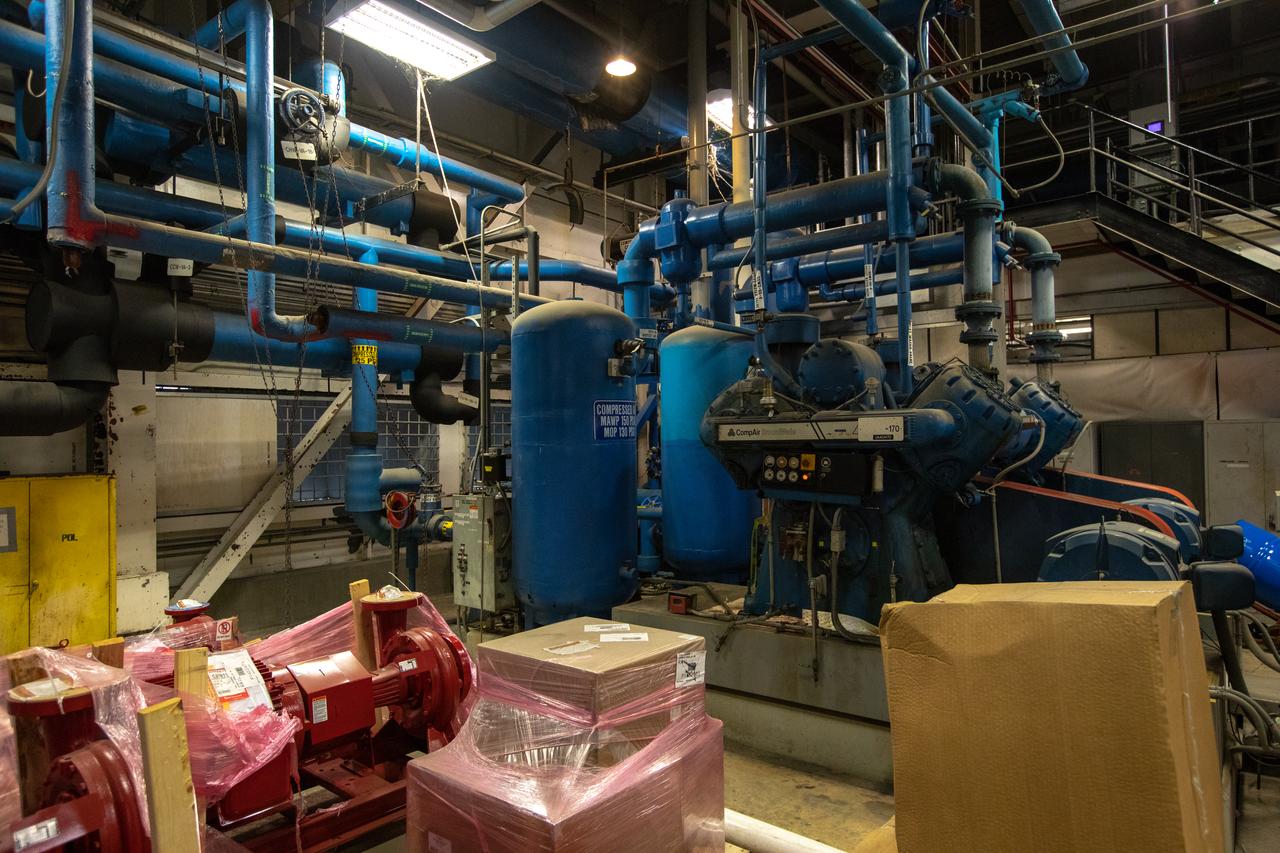
A view of the inside of the Utility Annex near the Vehicle Assembly (VAB) Building at NASA’s Kennedy Space Center in Florida on July 24, 2019. The Utility Annex, which provides 8,000 gallons of chilled water per minute to the VAB and other facilities in the Launch Complex 39 area, is being upgraded and repaired. The facility also contains boilers necessary to provide hot water to the VAB. The center’s Engineering Directorate is making the repairs and upgrades to the facility to prepare for the agency’s Artemis missions to the Moon and on to Mars.
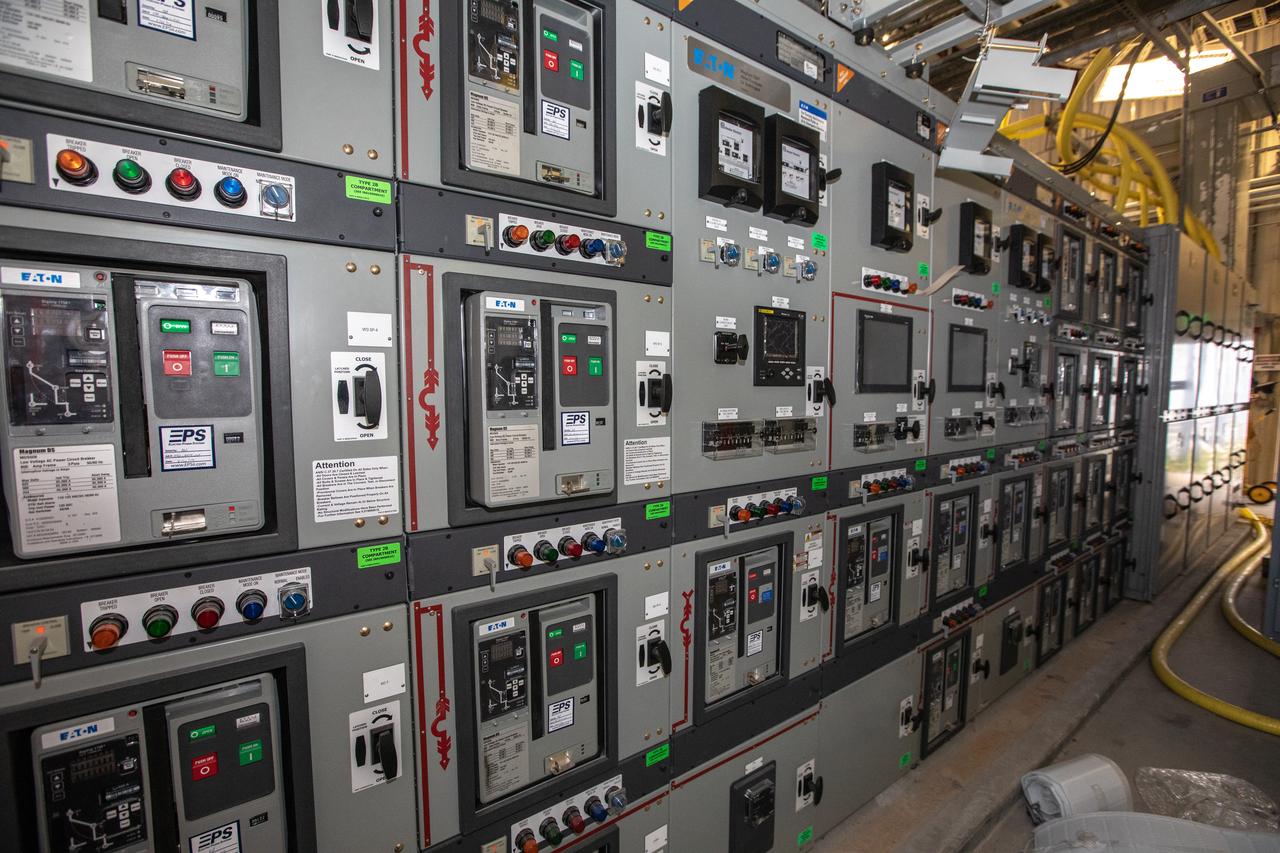
Control panels are in view inside the Utility Annex near the Vehicle Assembly (VAB) Building at NASA’s Kennedy Space Center in Florida on July 24, 2019. The Utility Annex, which provides 8,000 gallons of chilled water per minute to the VAB and other facilities in the Launch Complex 39 area, is being upgraded and repaired. The facility also contains boilers necessary to provide hot water to the VAB. The center’s Engineering Directorate is making the repairs and upgrades to the facility to prepare for the agency’s Artemis missions to the Moon and on to Mars.
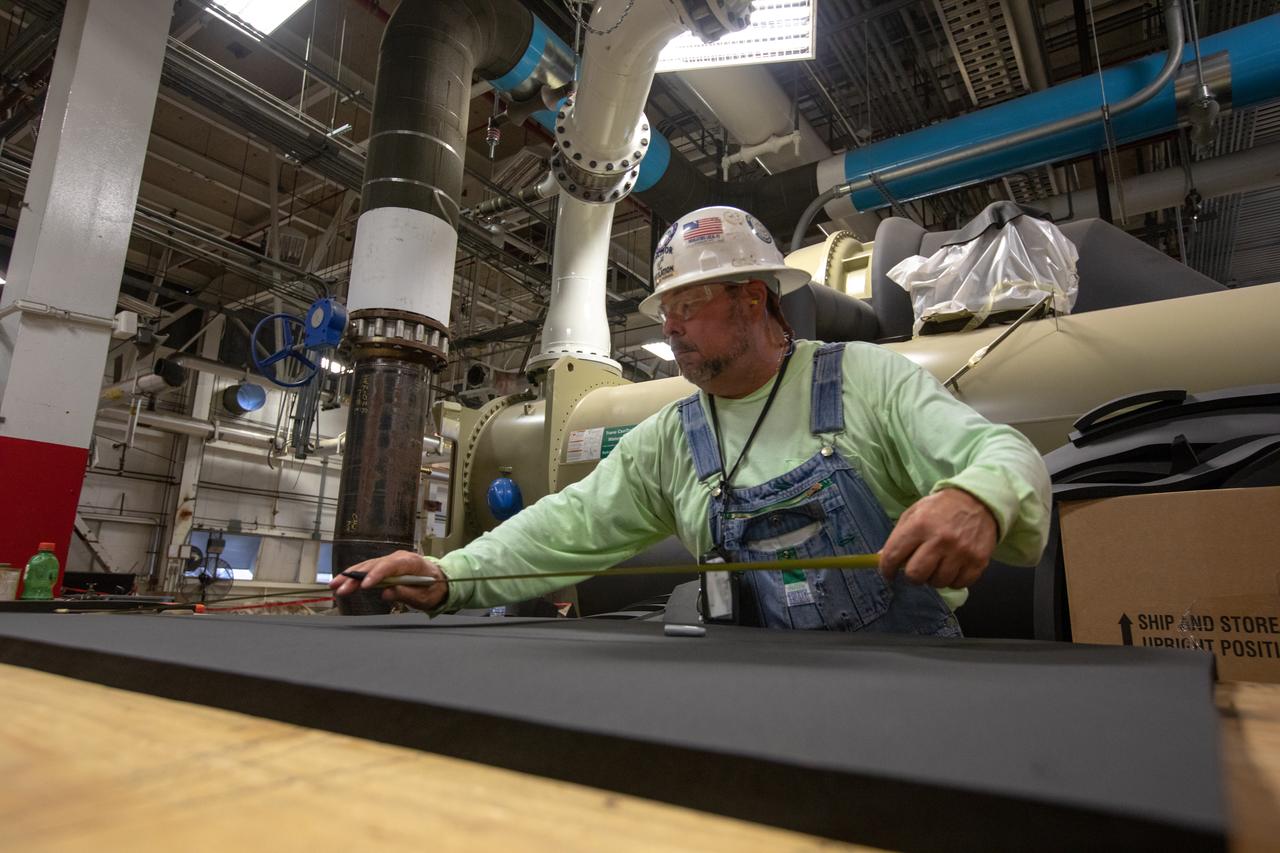
A technician measures foam insulation inside the Utility Annex near the Vehicle Assembly (VAB) Building at NASA’s Kennedy Space Center in Florida on July 24, 2019. The Utility Annex, which provides 8,000 gallons of chilled water per minute to the VAB and other facilities in the Launch Complex 39 area, is being upgraded and repaired. The facility also contains boilers necessary to provide hot water to the VAB. The center’s Engineering Directorate is making the repairs and upgrades to the facility to prepare for the agency’s Artemis missions to the Moon and on to Mars.
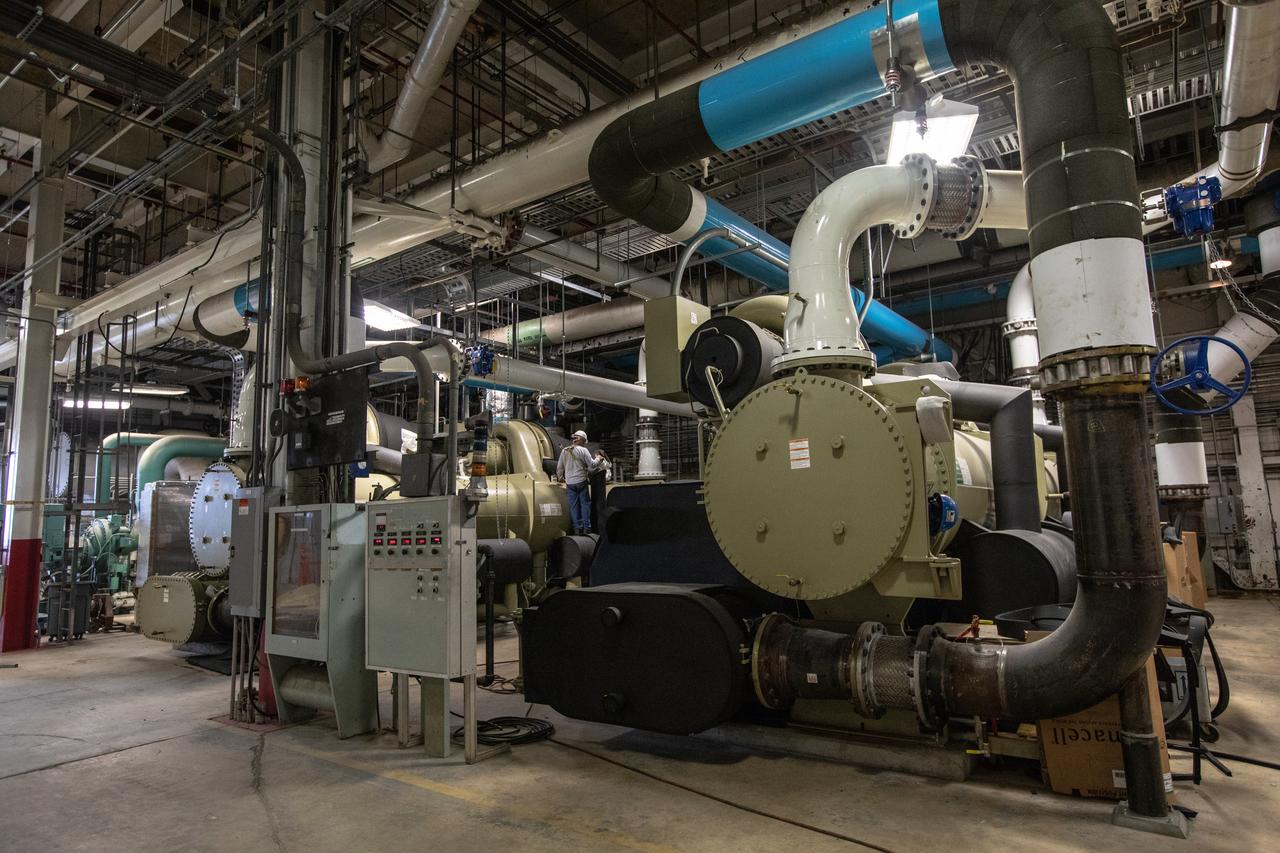
A view of the inside of the Utility Annex near the Vehicle Assembly (VAB) Building at NASA’s Kennedy Space Center in Florida on July 24, 2019. The Utility Annex, which provides 8,000 gallons of chilled water per minute to the VAB and other facilities in the Launch Complex 39 area, is being upgraded and repaired. The facility also contains boilers necessary to provide hot water to the VAB. The center’s Engineering Directorate is making the repairs and upgrades to the facility to prepare for the agency’s Artemis missions to the Moon and on to Mars.
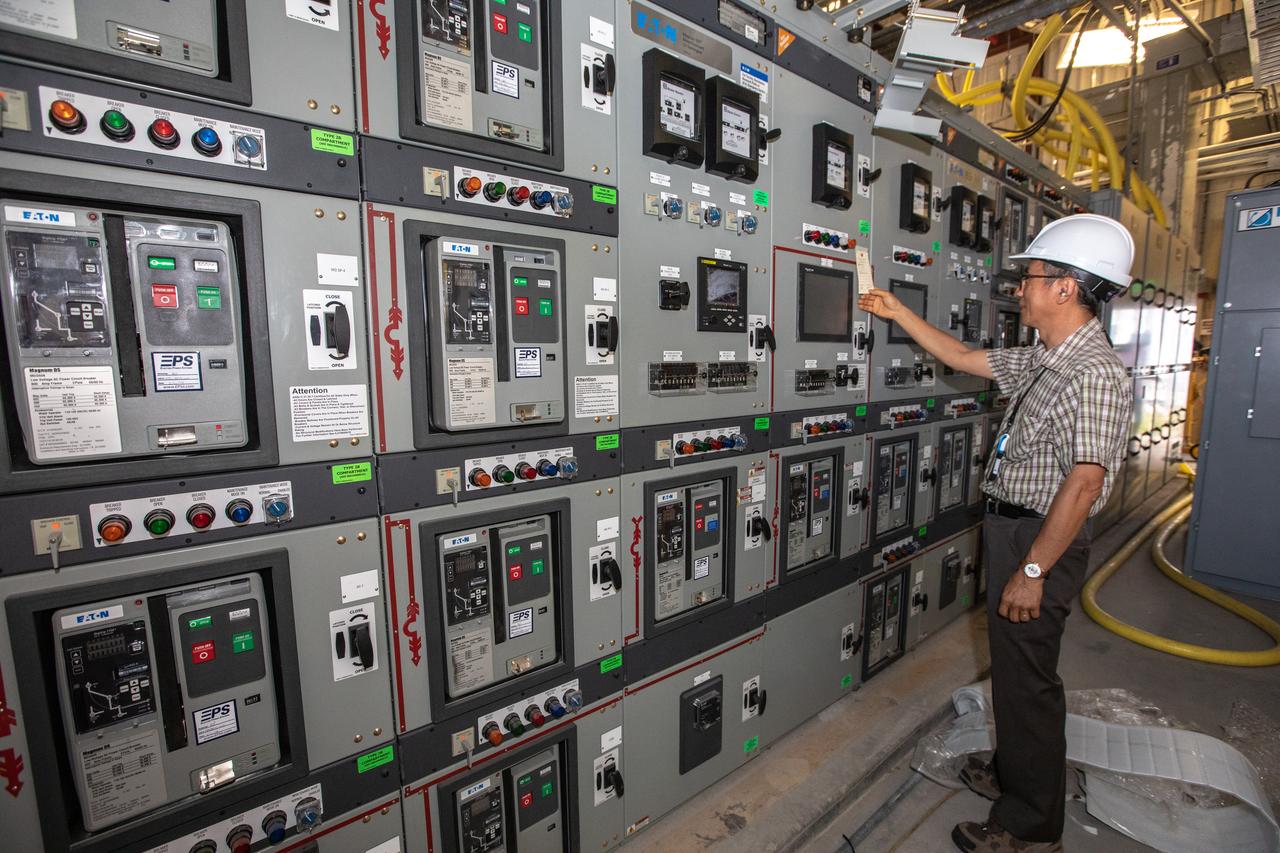
Control panels are in view inside the Utility Annex near the Vehicle Assembly (VAB) Building at NASA’s Kennedy Space Center in Florida on July 24, 2019. The Utility Annex, which provides 8,000 gallons of chilled water per minute to the VAB and other facilities in the Launch Complex 39 area, is being upgraded and repaired. The facility also contains boilers necessary to provide hot water to the VAB. The center’s Engineering Directorate is making the repairs and upgrades to the facility to prepare for the agency’s Artemis missions to the Moon and on to Mars.
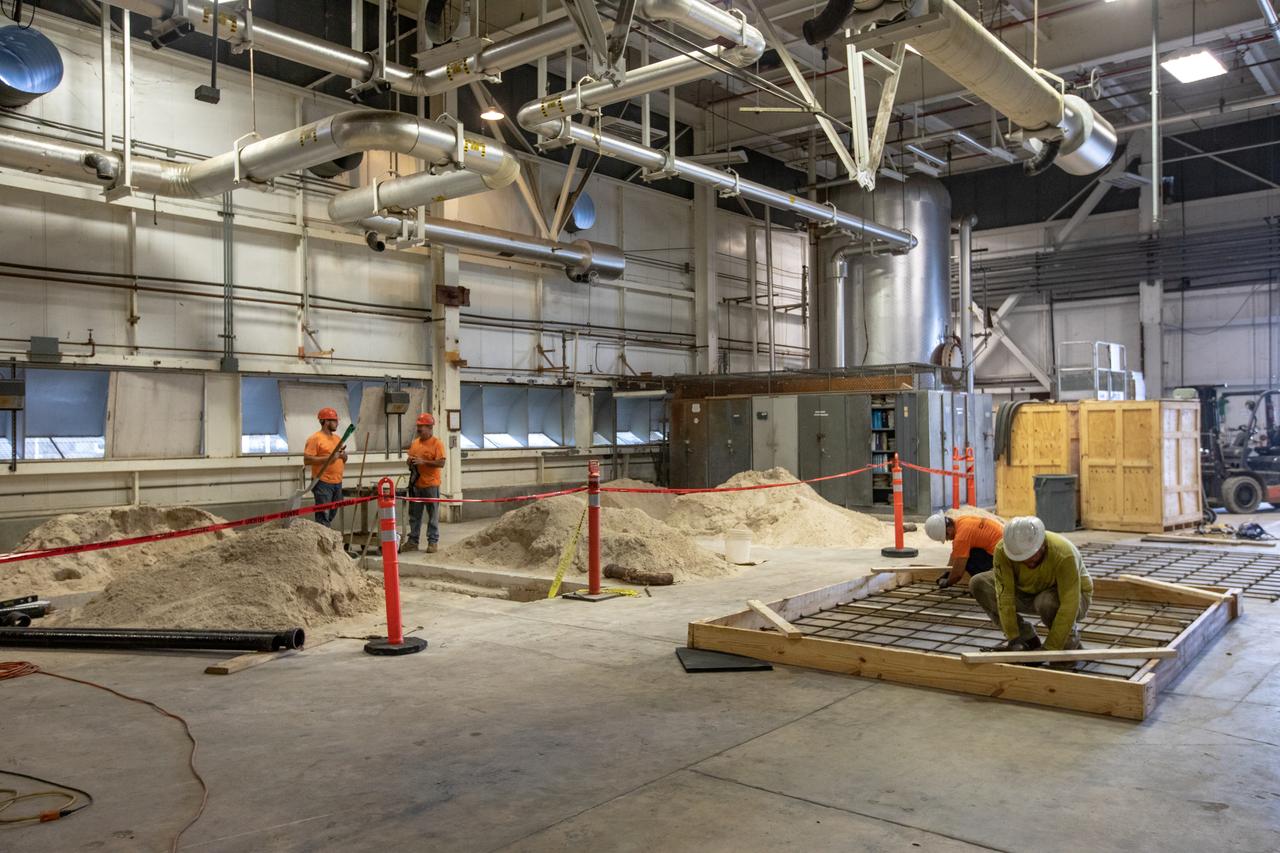
Upgrades are in progress inside the Utility Annex near the Vehicle Assembly (VAB) Building at NASA’s Kennedy Space Center in Florida on July 24, 2019. The Utility Annex, which provides 8,000 gallons of chilled water per minute to the VAB and other facilities in the Launch Complex 39 area, is being upgraded and repaired. The facility also contains boilers necessary to provide hot water to the VAB. The center’s Engineering Directorate is making the repairs and upgrades to the facility to prepare for the agency’s Artemis missions to the Moon and on to Mars.
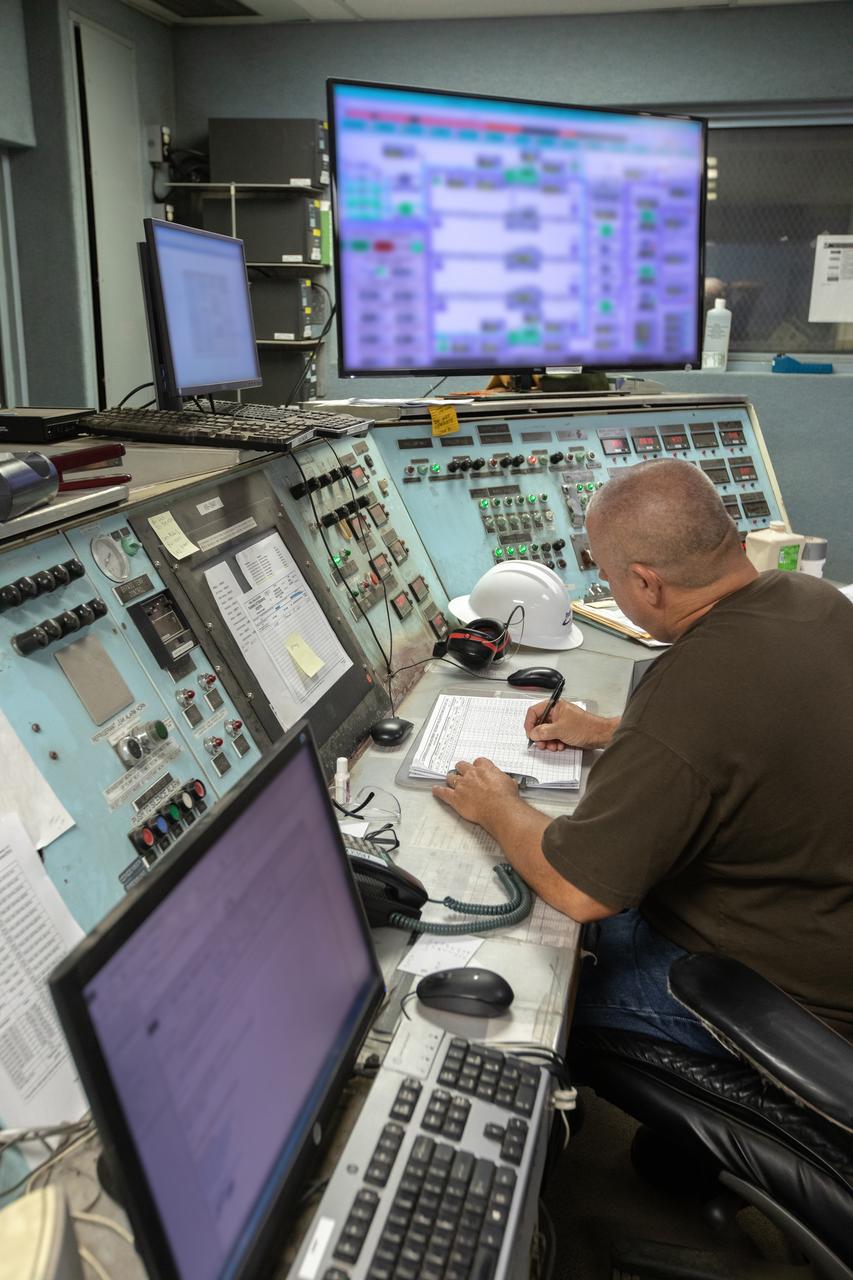
A technician monitors conditions in a control room inside the Utility Annex near the Vehicle Assembly (VAB) Building at NASA’s Kennedy Space Center in Florida on July 24, 2019. The Utility Annex, which provides 8,000 gallons of chilled water per minute to the VAB and other facilities in the Launch Complex 39 area, is being upgraded and repaired. The facility also contains boilers necessary to provide hot water to the VAB. The center’s Engineering Directorate is making the repairs and upgrades to the facility to prepare for the agency’s Artemis missions to the Moon and on to Mars.
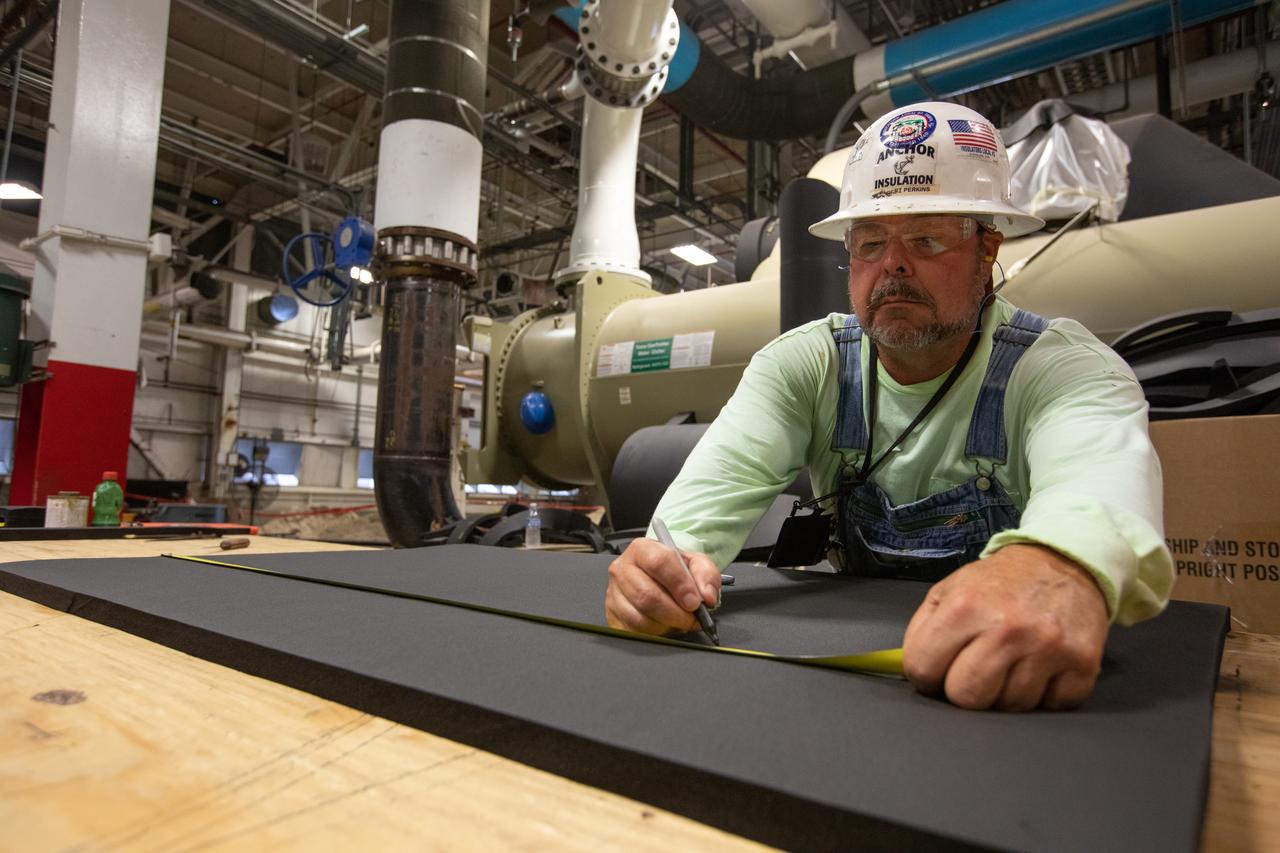
A technician measures foam insulation inside the Utility Annex near the Vehicle Assembly (VAB) Building at NASA’s Kennedy Space Center in Florida on July 24, 2019. The Utility Annex, which provides 8,000 gallons of chilled water per minute to the VAB and other facilities in the Launch Complex 39 area, is being upgraded and repaired. The facility also contains boilers necessary to provide hot water to the VAB. The center’s Engineering Directorate is making the repairs and upgrades to the facility to prepare for the agency’s Artemis missions to the Moon and on to Mars.
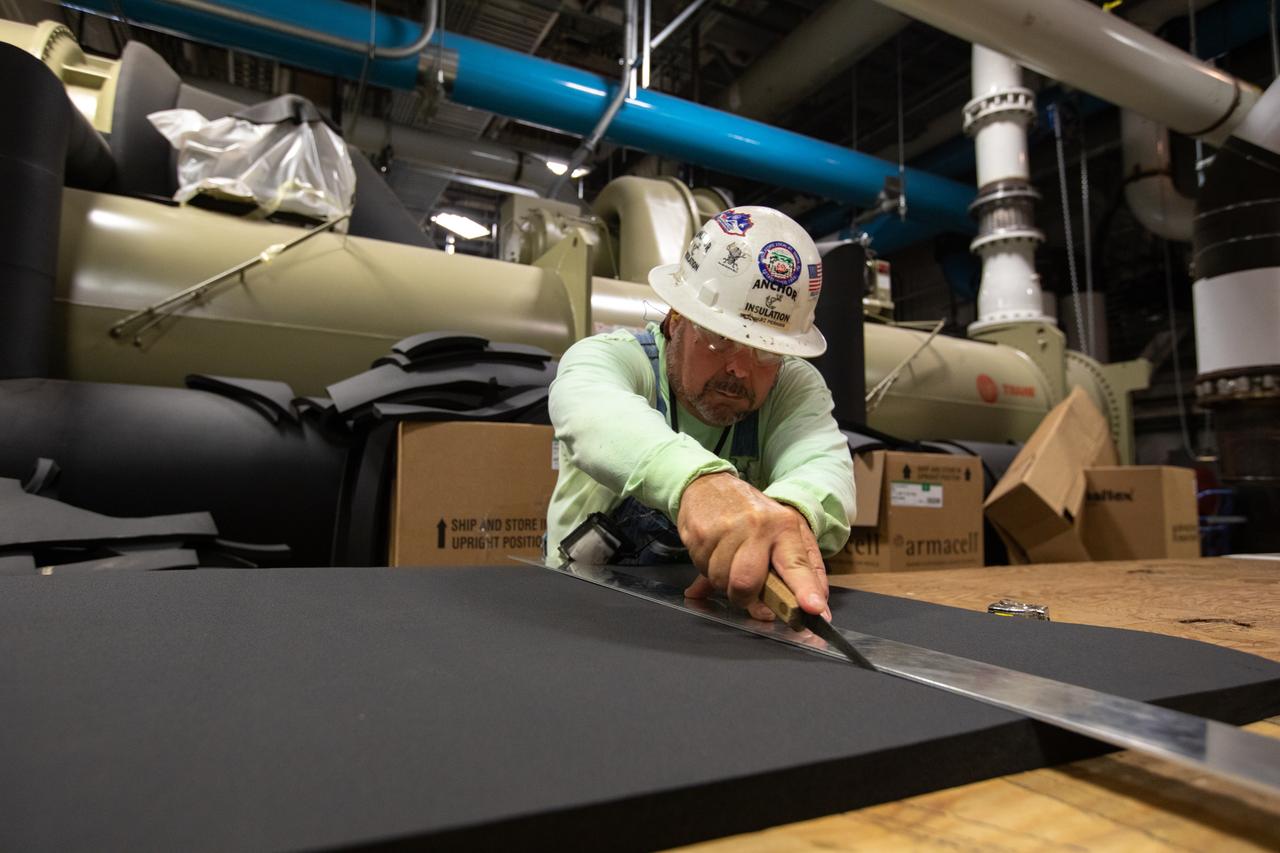
A technician cuts a section of foam insulation inside the Utility Annex near the Vehicle Assembly (VAB) Building at NASA’s Kennedy Space Center in Florida on July 24, 2019. The Utility Annex, which provides 8,000 gallons of chilled water per minute to the VAB and other facilities in the Launch Complex 39 area, is being upgraded and repaired. The facility also contains boilers necessary to provide hot water to the VAB. The center’s Engineering Directorate is making the repairs and upgrades to the facility to prepare for the agency’s Artemis missions to the Moon and on to Mars.
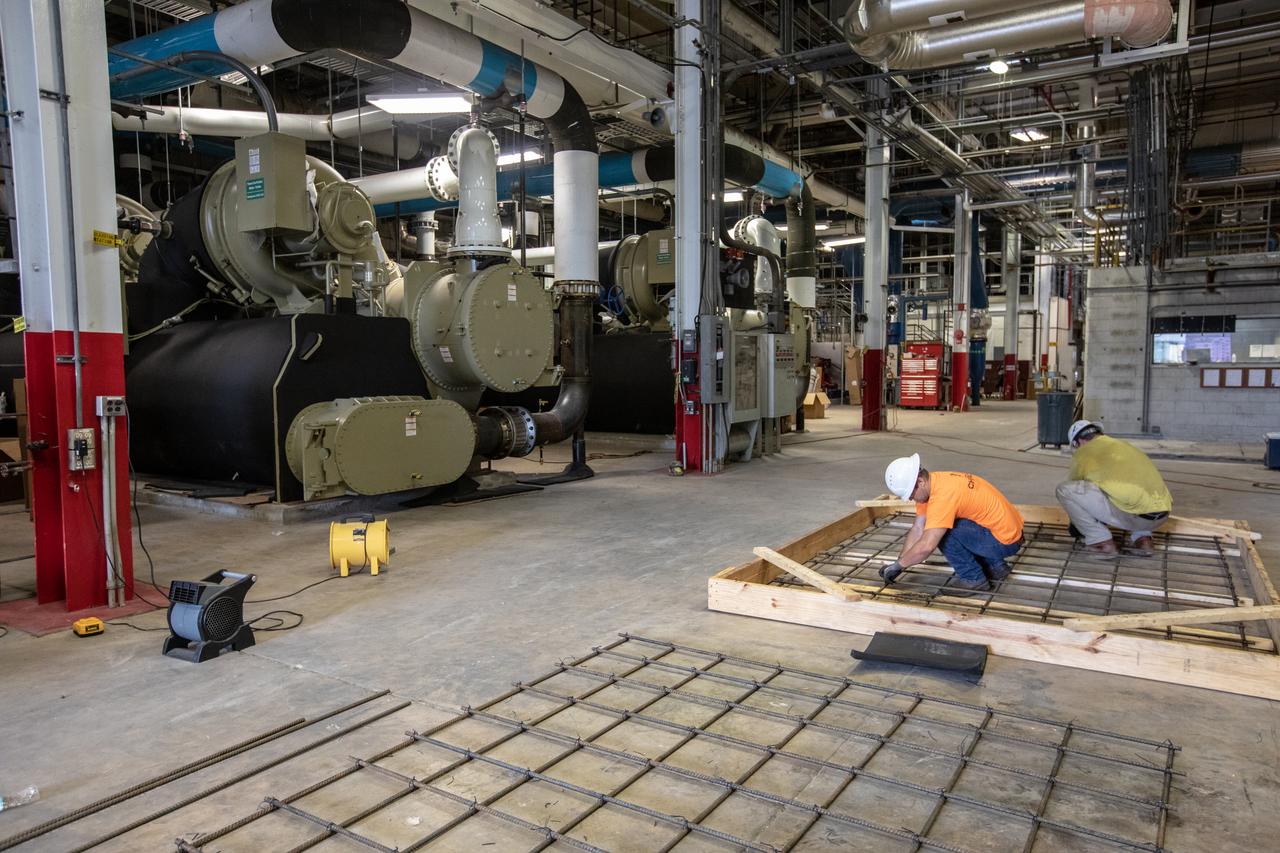
Upgrades are in progress inside the Utility Annex near the Vehicle Assembly (VAB) Building at NASA’s Kennedy Space Center in Florida on July 24, 2019. The Utility Annex, which provides 8,000 gallons of chilled water per minute to the VAB and other facilities in the Launch Complex 39 area, is being upgraded and repaired. The facility also contains boilers necessary to provide hot water to the VAB. The center’s Engineering Directorate is making the repairs and upgrades to the facility to prepare for the agency’s Artemis missions to the Moon and on to Mars.
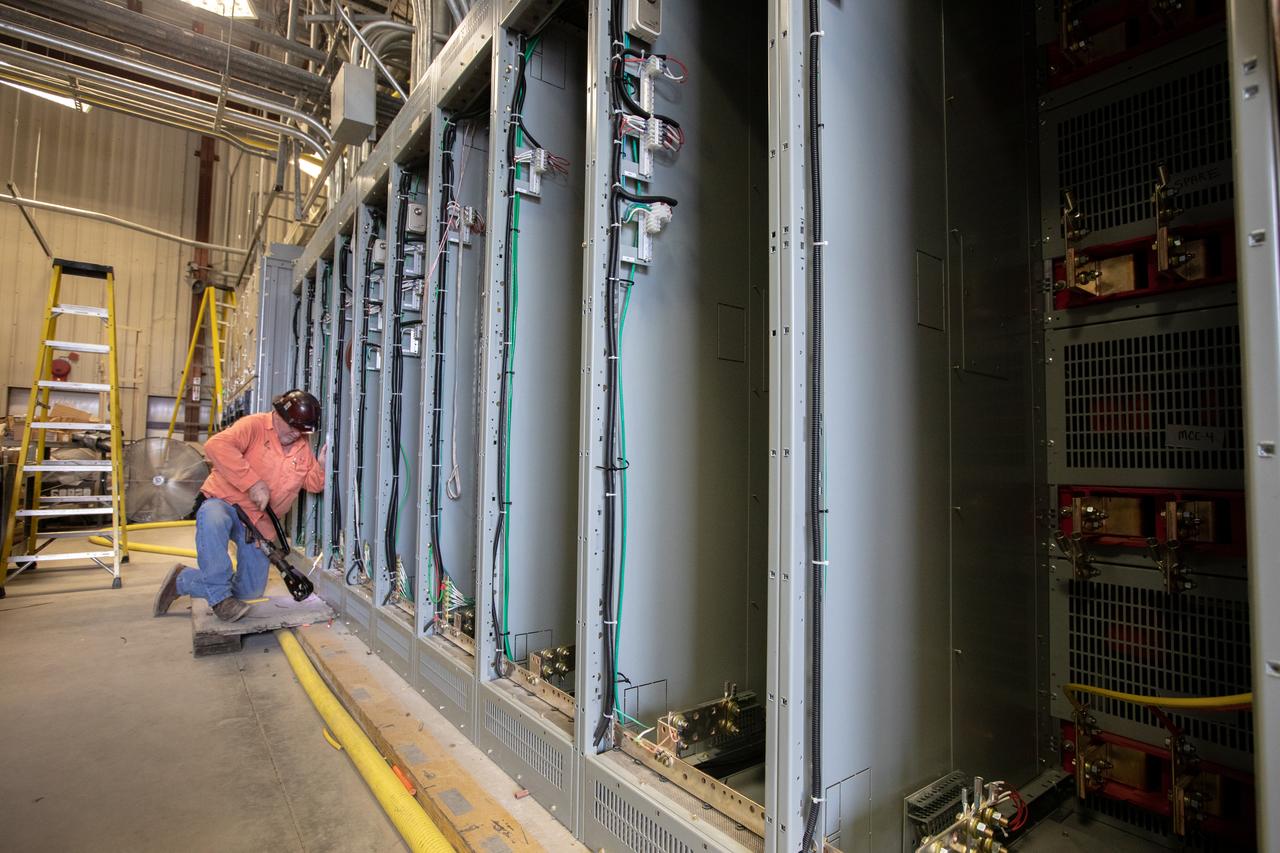
A construction worker installs new wiring inside the Utility Annex near the Vehicle Assembly (VAB) Building at NASA’s Kennedy Space Center in Florida on July 24, 2019. The Utility Annex, which provides 8,000 gallons of chilled water per minute to the VAB and other facilities in the Launch Complex 39 area, is being upgraded and repaired. The facility also contains boilers necessary to provide hot water to the VAB. The center’s Engineering Directorate is making the repairs and upgrades to the facility to prepare for the agency’s Artemis missions to the Moon and on to Mars.

Phil Moyer, original project lead for the Vehicle Assembly Building (VAB), tours the Vehicle Assembly Building on Nov. 22, 2019 at NASA’s Kennedy Space Center in Florida. The VAB was recognized with the National Historic Civil Engineering Landmark award by the Florida Section American Society of Civil Engineers during a ceremony on Jan. 10, 2020. The VAB is the first building at Kennedy Space Center to earn this distinction. At the time of its completion, the 129-million-cubic-foot structure was the largest building in the world. Originally designed and built to accommodate the Saturn V/Apollo used in Project Apollo, the VAB was later modified for its role in the Space Shuttle Program.
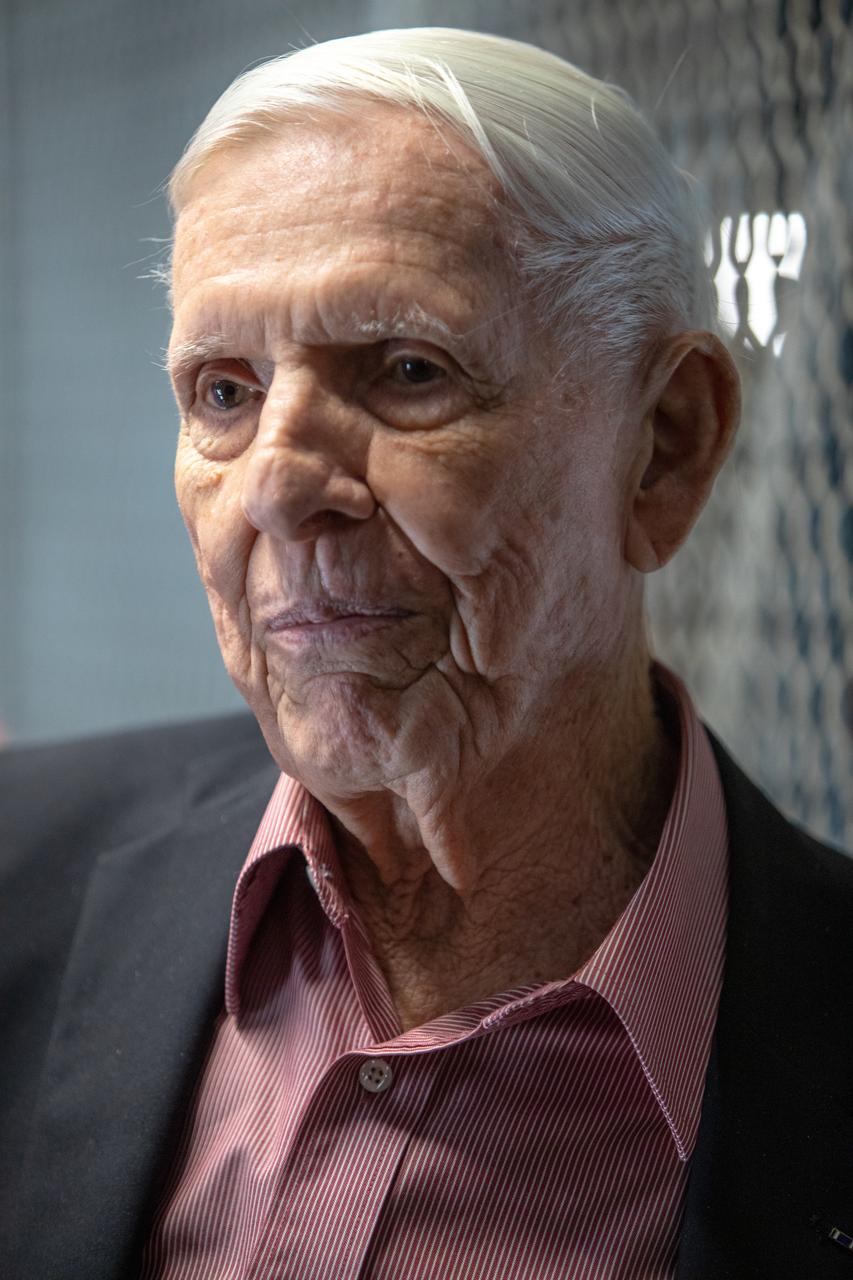
Phil Moyer, original project lead for the Vehicle Assembly Building (VAB), tours the Vehicle Assembly Building on Nov. 22, 2019 at NASA’s Kennedy Space Center in Florida. The VAB was recognized with the National Historic Civil Engineering Landmark award by the Florida Section American Society of Civil Engineers during a ceremony on Jan. 10, 2020. The VAB is the first building at Kennedy Space Center to earn this distinction. At the time of its completion, the 129-million-cubic-foot structure was the largest building in the world. Originally designed and built to accommodate the Saturn V/Apollo used in Project Apollo, the VAB was later modified for its role in the Space Shuttle Program.
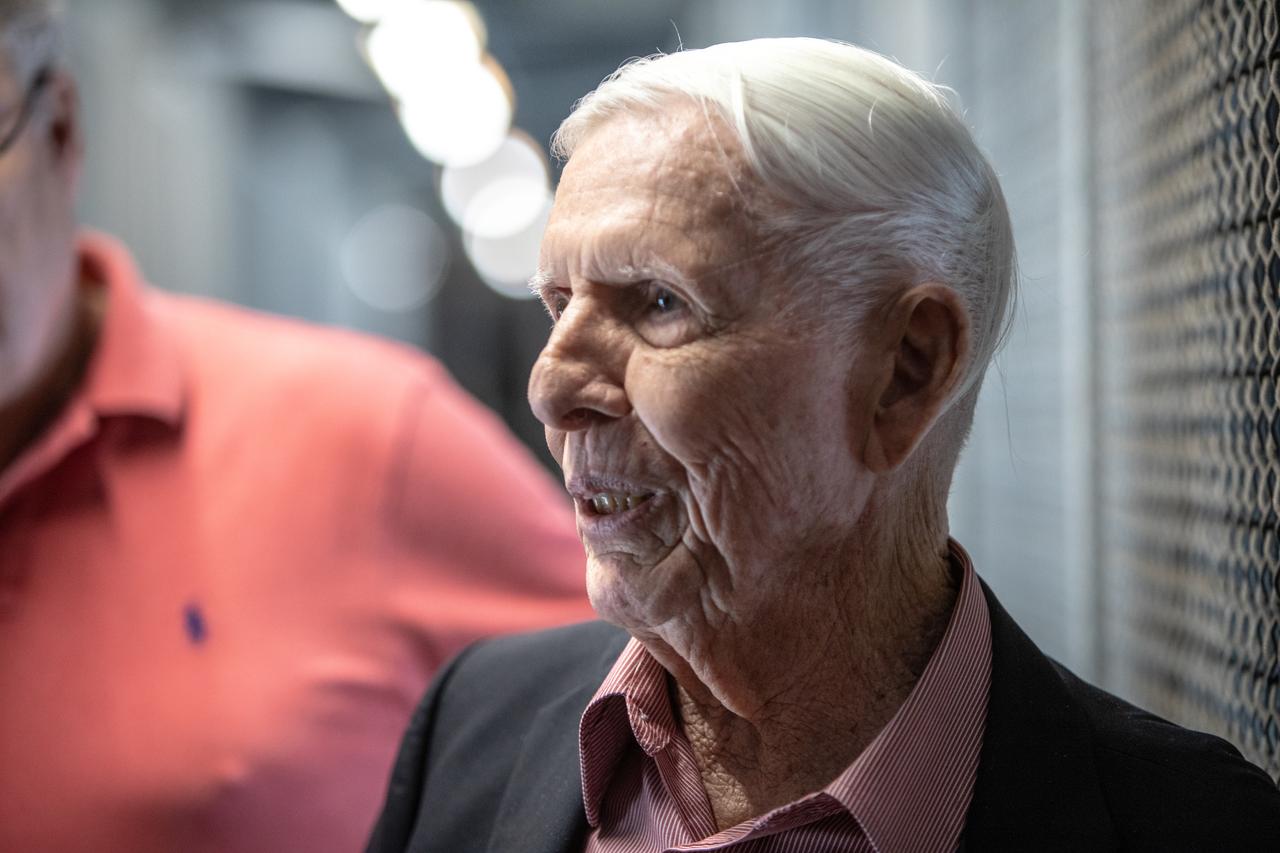
Phil Moyer, original project lead for the Vehicle Assembly Building (VAB), tours the Vehicle Assembly Building on Nov. 22, 2019 at NASA’s Kennedy Space Center in Florida. The VAB was recognized with the National Historic Civil Engineering Landmark award by the Florida Section American Society of Civil Engineers during a ceremony on Jan. 10, 2020. The VAB is the first building at Kennedy Space Center to earn this distinction. At the time of its completion, the 129-million-cubic-foot structure was the largest building in the world. Originally designed and built to accommodate the Saturn V/Apollo used in Project Apollo, the VAB was later modified for its role in the Space Shuttle Program.
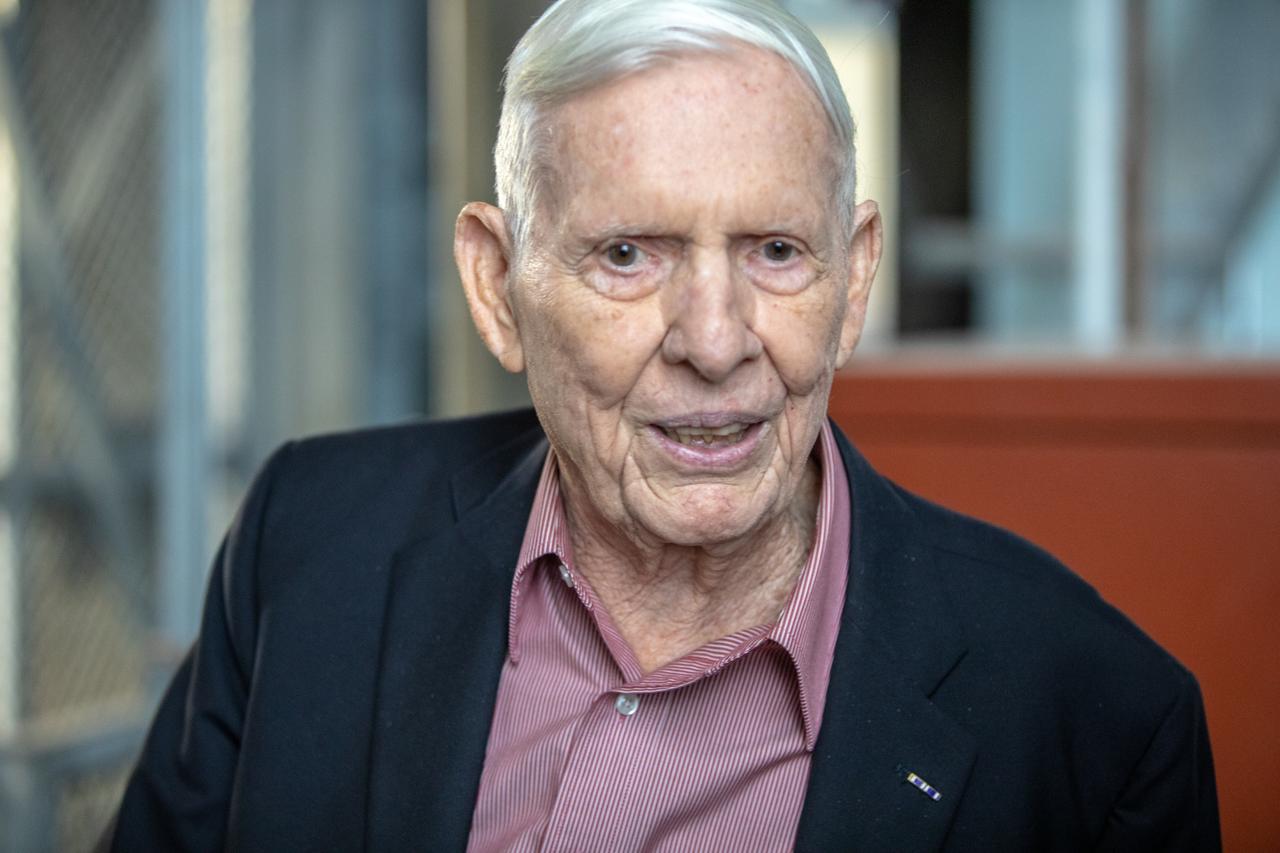
Phil Moyer, original project lead for the Vehicle Assembly Building (VAB), tours the Vehicle Assembly Building on Nov. 22, 2019 at NASA’s Kennedy Space Center in Florida. The VAB was recognized with the National Historic Civil Engineering Landmark award by the Florida Section American Society of Civil Engineers during a ceremony on Jan. 10, 2020. The VAB is the first building at Kennedy Space Center to earn this distinction. At the time of its completion, the 129-million-cubic-foot structure was the largest building in the world. Originally designed and built to accommodate the Saturn V/Apollo used in Project Apollo, the VAB was later modified for its role in the Space Shuttle Program.
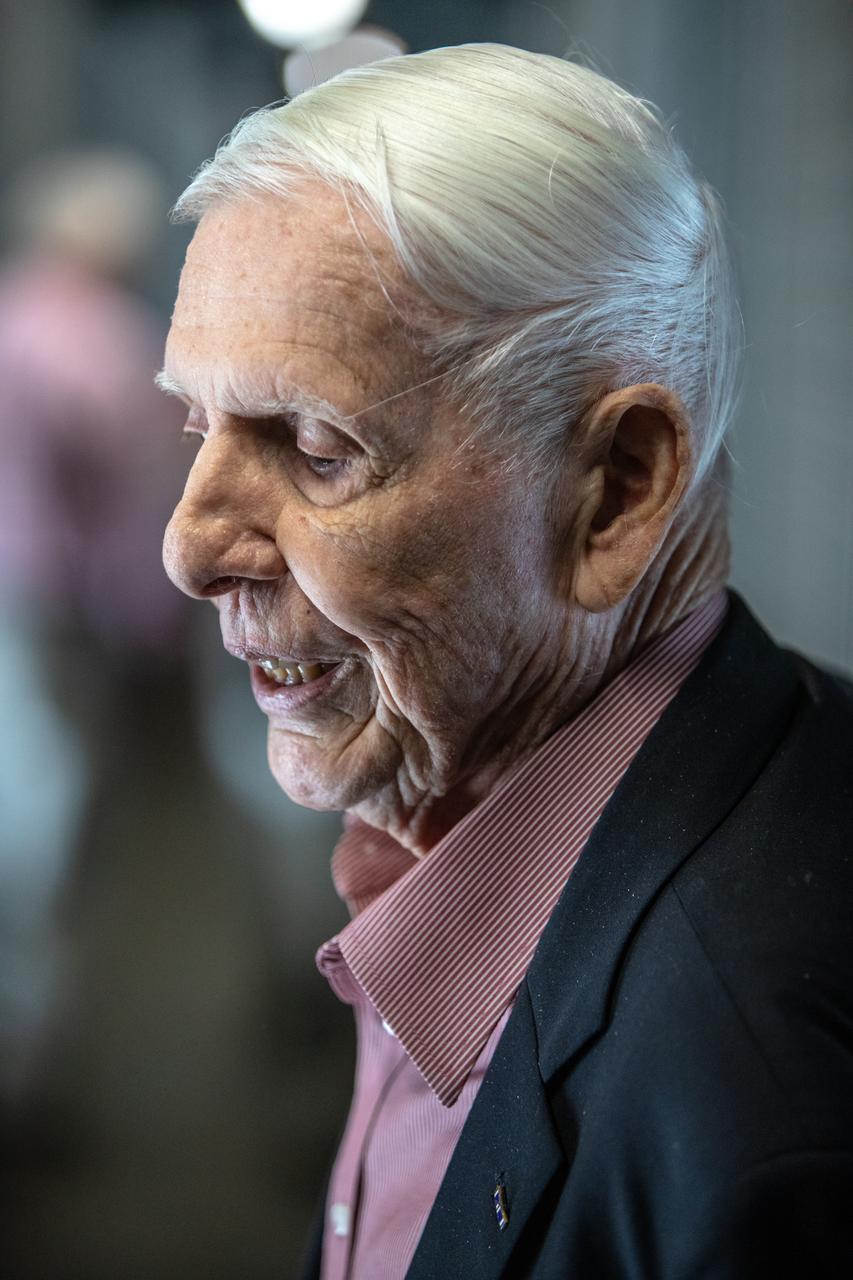
Phil Moyer, original project lead for the Vehicle Assembly Building (VAB), tours the Vehicle Assembly Building on Nov. 22, 2019 at NASA’s Kennedy Space Center in Florida. The VAB was recognized with the National Historic Civil Engineering Landmark award by the Florida Section American Society of Civil Engineers during a ceremony on Jan. 10, 2020. The VAB is the first building at Kennedy Space Center to earn this distinction. At the time of its completion, the 129-million-cubic-foot structure was the largest building in the world. Originally designed and built to accommodate the Saturn V/Apollo used in Project Apollo, the VAB was later modified for its role in the Space Shuttle Program.
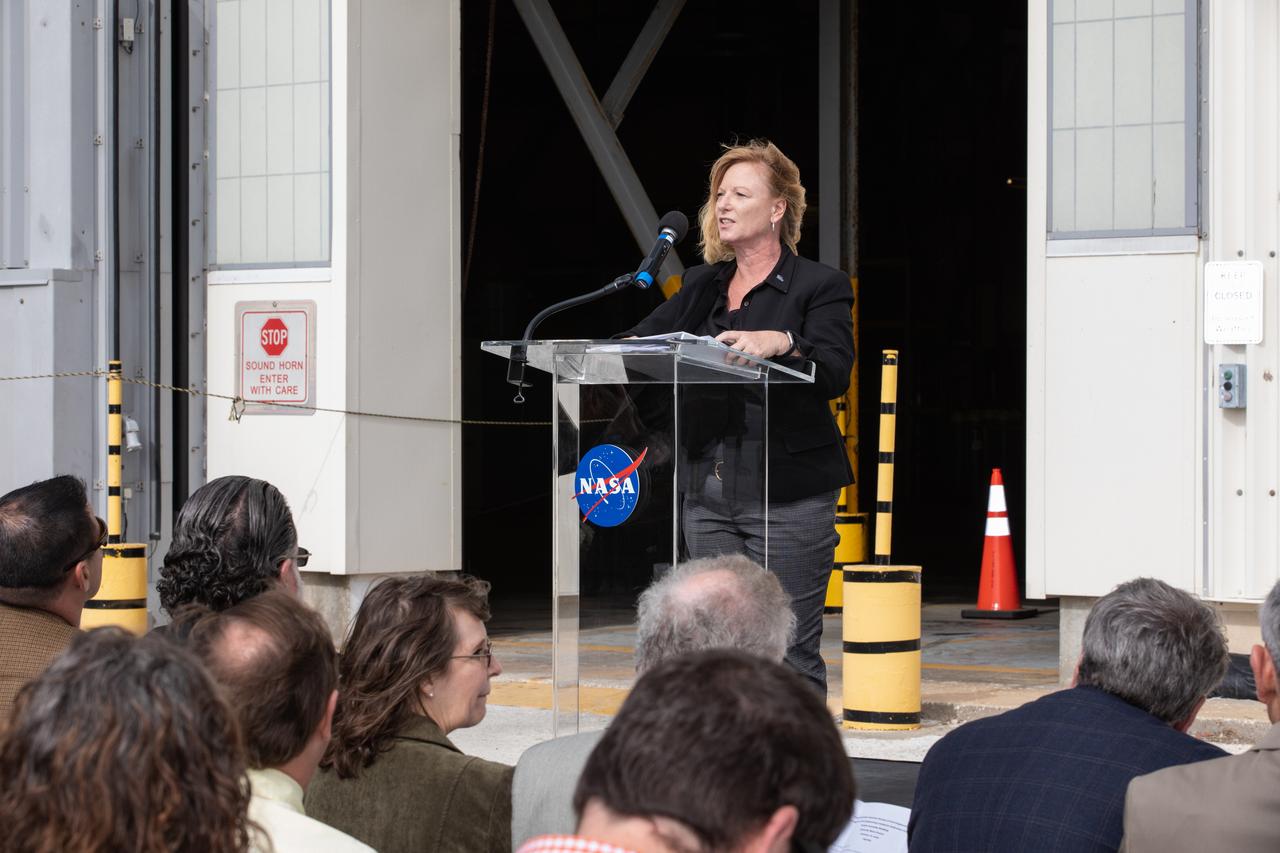
Kathleen Ruvarac, History and Heritage Committee chairperson with the American Society of Civil Engineers (ASCE), speaks to attendees during a ceremony on Jan. 10, 2020, to recognize the Vehicle Assembly Building with the National Historic Civil Engineering Landmark award. The Florida Section ASCE nominated the historic building and bestowed the award. The VAB is the first building at Kennedy Space Center to earn this distinction. At the time of its completion, the 129-million-cubic-foot structure was the largest building in the world. Originally designed and built to accommodate the Saturn V/Apollo used in Project Apollo, the VAB was later modified for its role in the Space Shuttle Program.
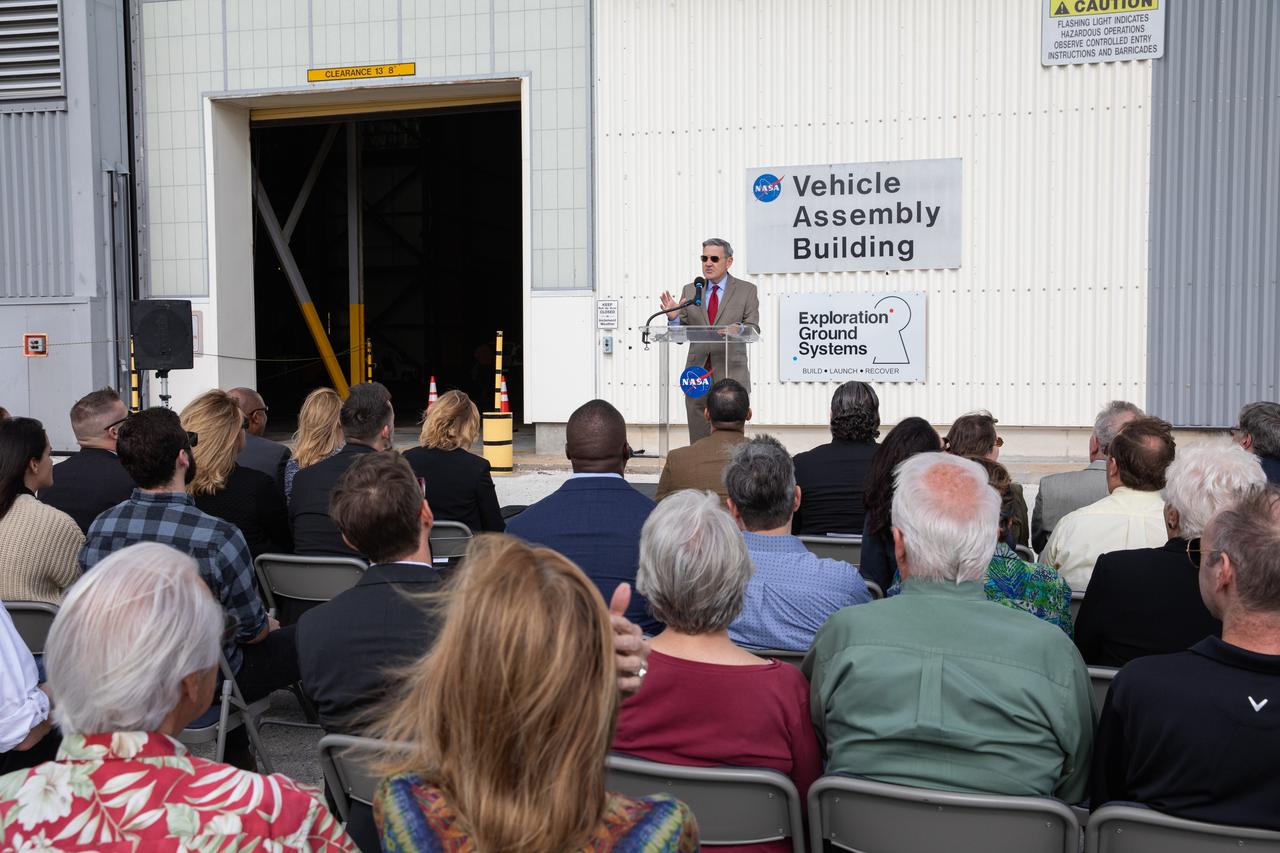
Kennedy Space Center Director Bob Cabana, speaks to attendees during a ceremony on Jan. 10, 2020, to recognize the Vehicle Assembly Building with the National Historic Civil Engineering Landmark award. The Florida Section American Society of Civil Engineers nominated the historic building and bestowed the award. The VAB is the first building at Kennedy Space Center to earn this distinction. At the time of its completion, the 129-million-cubic-foot structure was the largest building in the world. Originally designed and built to accommodate the Saturn V/Apollo used in Project Apollo, the VAB was later modified for its role in the Space Shuttle Program.
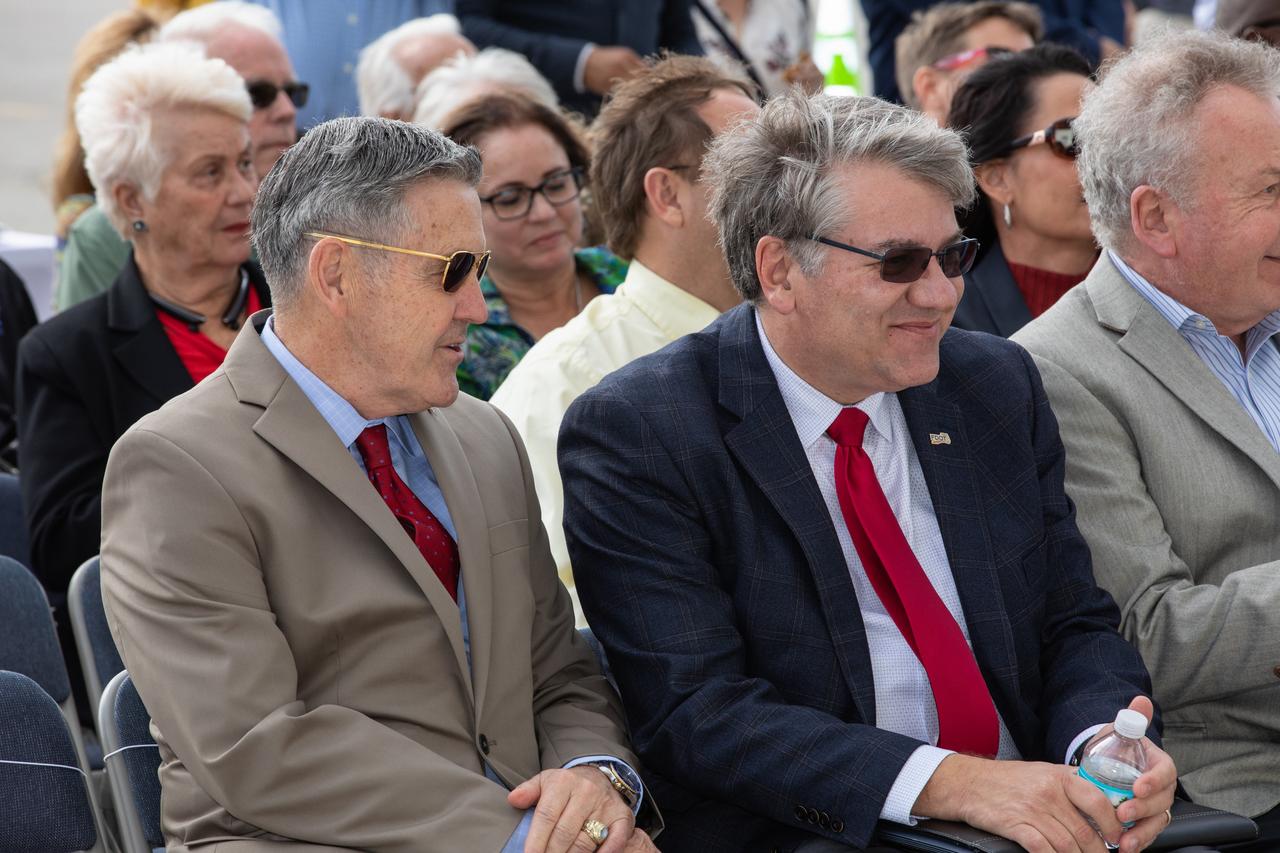
Kennedy Space Center Director Bob Cabana, left, talks with Florida Department of Transportation Secretary Kevin Thibault during a ceremony on Jan. 10, 2020, to recognize the Vehicle Assembly Building with the National Historic Civil Engineering Landmark award. The Florida Section American Society of Civil Engineers nominated the historic building and bestowed the award. The VAB is the first building at Kennedy Space Center to earn this distinction. At the time of its completion, the 129-million-cubic-foot structure was the largest building in the world. Originally designed and built to accommodate the Saturn V/Apollo used in Project Apollo, the VAB was later modified for its role in the Space Shuttle Program.
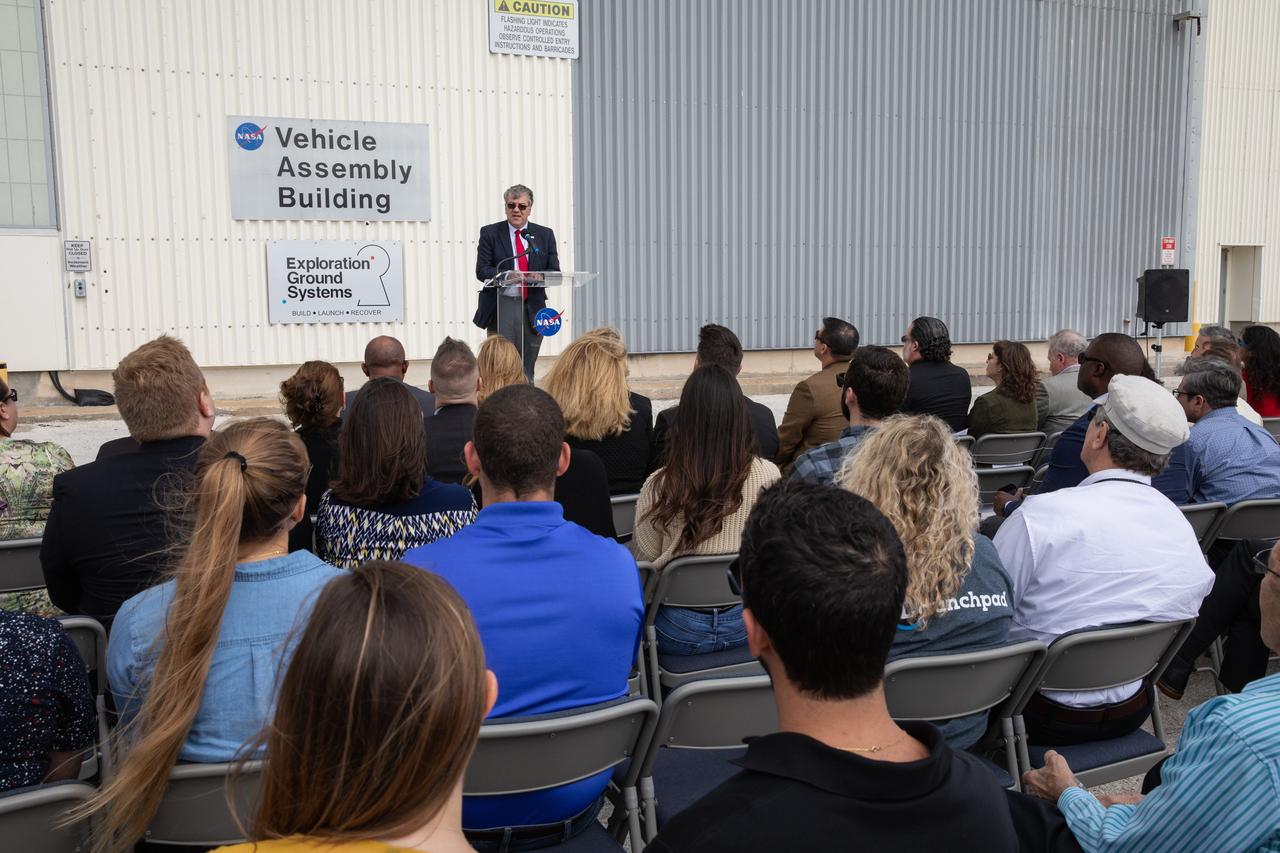
Florida Department of Transportation Secretary Kevin Thibault speaks to attendees during a ceremony on Jan. 10, 2020, to recognize the Vehicle Assembly Building with the National Historic Civil Engineering Landmark award. The Florida Section American Society of Civil Engineers nominated the historic building and bestowed the award. The VAB is the first building at Kennedy Space Center to earn this distinction. At the time of its completion, the 129-million-cubic-foot structure was the largest building in the world. Originally designed and built to accommodate the Saturn V/Apollo used in Project Apollo, the VAB was later modified for its role in the Space Shuttle Program.
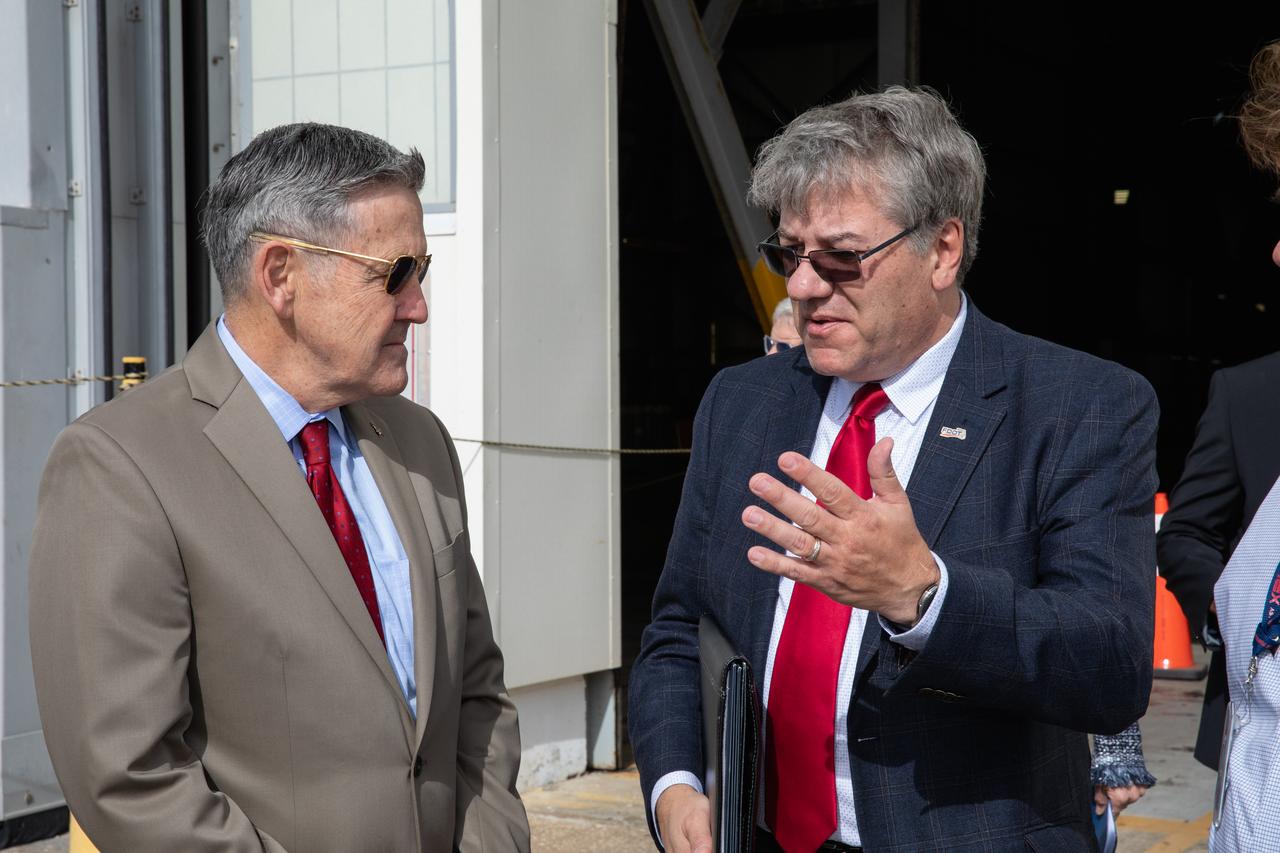
Kennedy Space Center Director Bob Cabana, left, talks with Florida Department of Transportation Secretary Kevin Thibault during a ceremony on Jan. 10, 2020, to recognize the Vehicle Assembly Building with the National Historic Civil Engineering Landmark award. The Florida Section American Society of Civil Engineers nominated the historic building and bestowed the award. The VAB is the first building at Kennedy Space Center to earn this distinction. At the time of its completion, the 129-million-cubic-foot structure was the largest building in the world. Originally designed and built to accommodate the Saturn V/Apollo used in Project Apollo, the VAB was later modified for its role in the Space Shuttle Program.
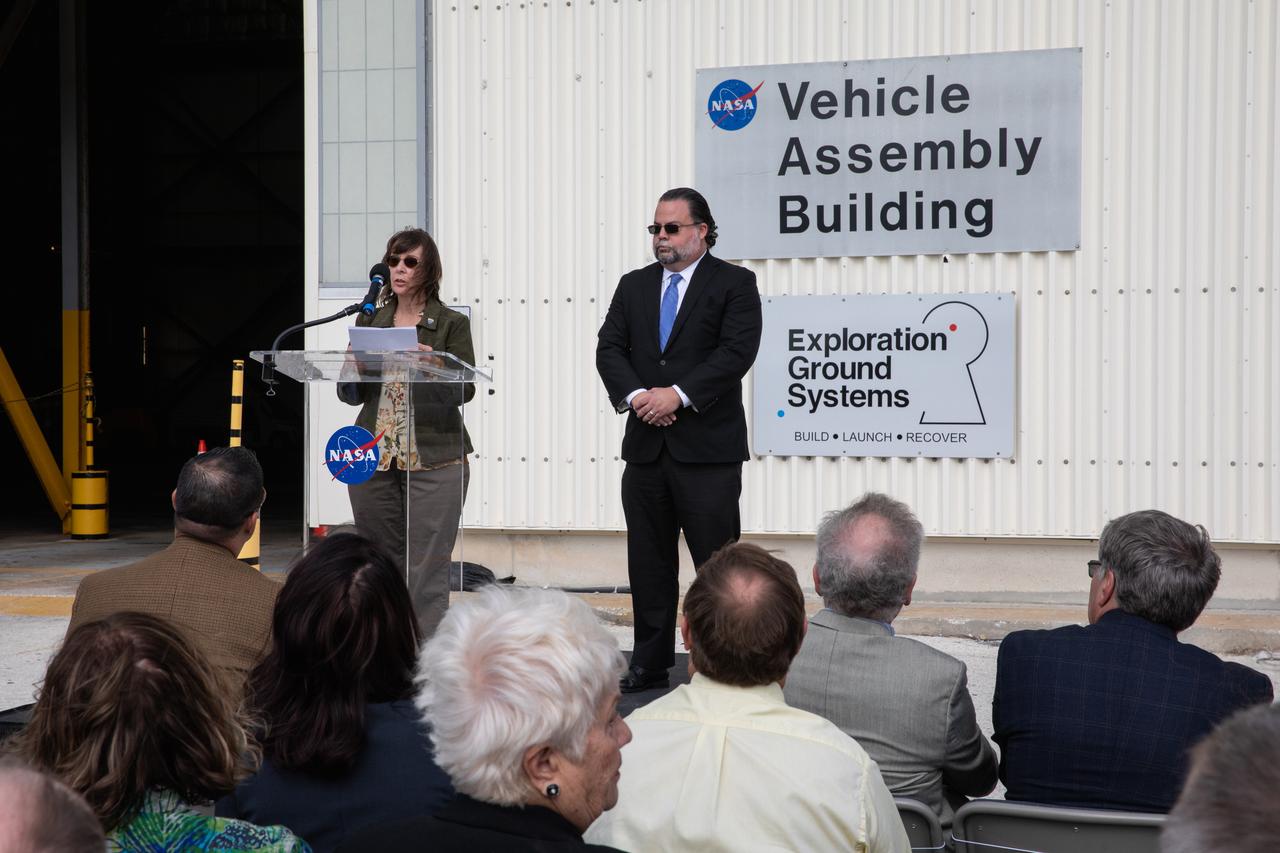
Carol Stevens, History and Heritage Committee member with the American Society of Civil Engineers (ASCE), speaks to attendees during a ceremony on Jan. 10, 2020, to recognize the Vehicle Assembly Building with the National Historic Civil Engineering Landmark award. At right is Peter Moore, ASCE Region 5 director. The Florida Section ASCE nominated the historic building and bestowed the award. The VAB is the first building at Kennedy Space Center to earn this distinction. At the time of its completion, the 129-million-cubic-foot structure was the largest building in the world. Originally designed and built to accommodate the Saturn V/Apollo used in Project Apollo, the VAB was later modified for its role in the Space Shuttle Program.
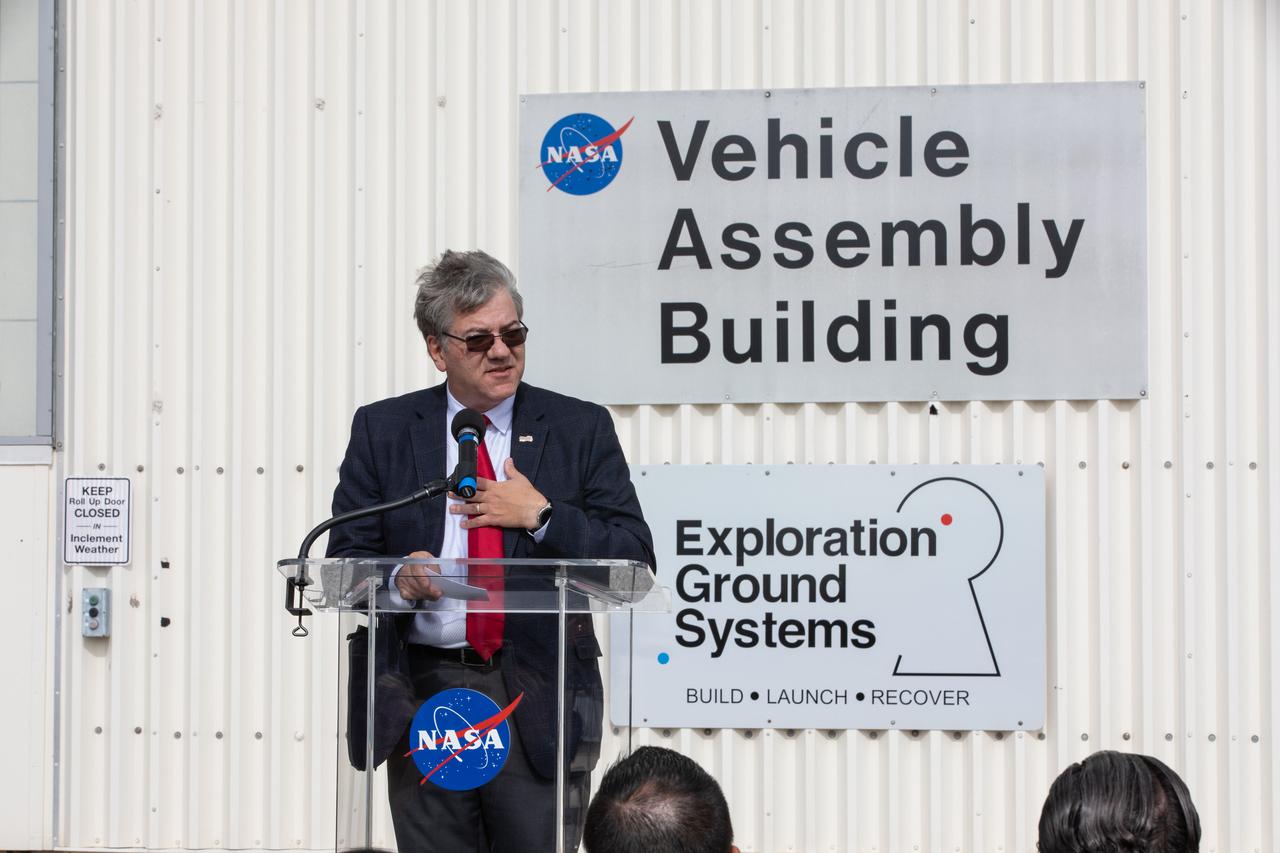
Florida Department of Transportation Secretary Kevin Thibault speaks to attendees during a ceremony on Jan. 10, 2020, to recognize the Vehicle Assembly Building with the National Historic Civil Engineering Landmark award. The Florida Section American Society of Civil Engineers nominated the historic building and bestowed the award. The VAB is the first building at Kennedy Space Center to earn this distinction. At the time of its completion, the 129-million-cubic-foot structure was the largest building in the world. Originally designed and built to accommodate the Saturn V/Apollo used in Project Apollo, the VAB was later modified for its role in the Space Shuttle Program.
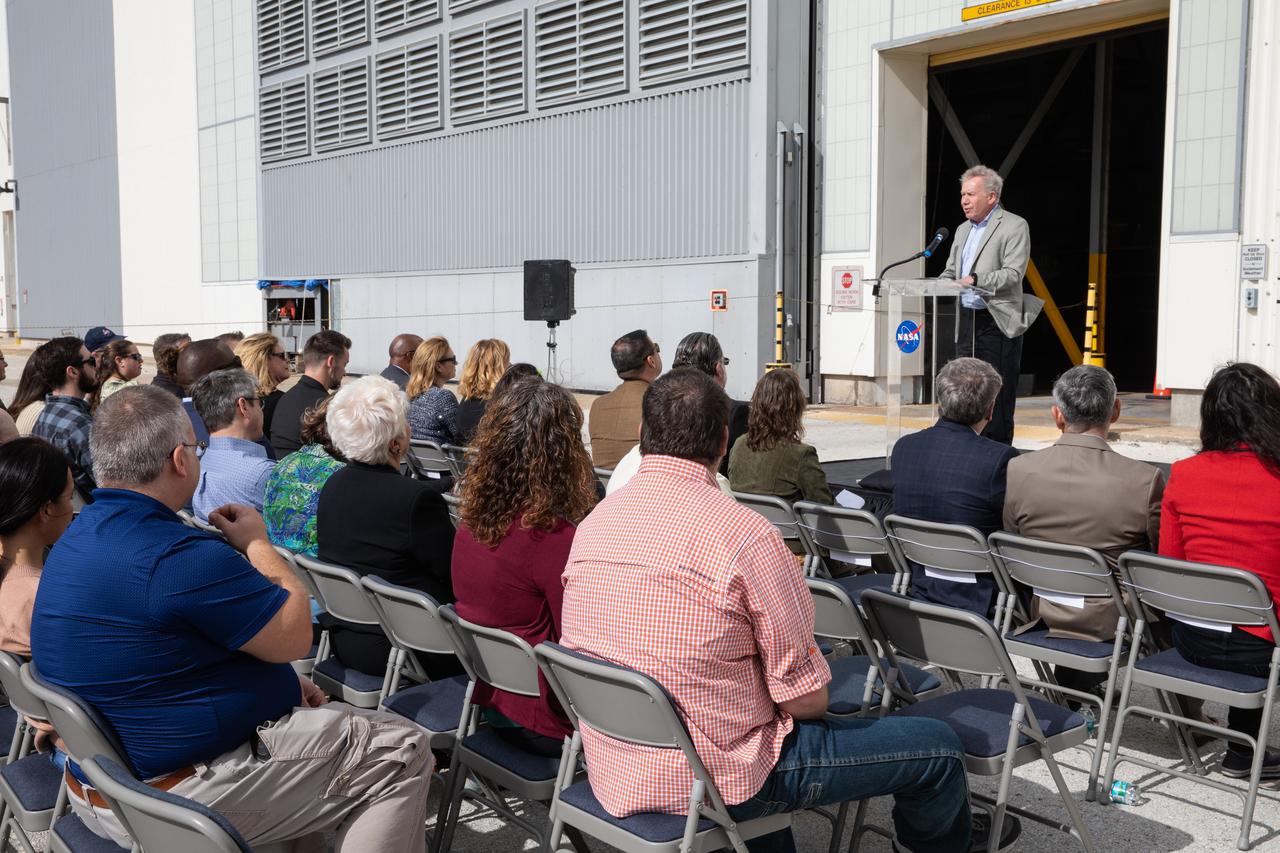
Glenn Bell, American Society of Civil Engineers (ASCE) Society of Structural Engineering Institute president speaks to attendees during a ceremony on Jan. 10, 2020, to recognize the Vehicle Assembly Building with the National Historic Civil Engineering Landmark award. The Florida Section ASCE nominated the historic building and bestowed the award. The VAB is the first building at Kennedy Space Center to earn this distinction. At the time of its completion, the 129-million-cubic-foot structure was the largest building in the world. Originally designed and built to accommodate the Saturn V/Apollo used in Project Apollo, the VAB was later modified for its role in the Space Shuttle Program.
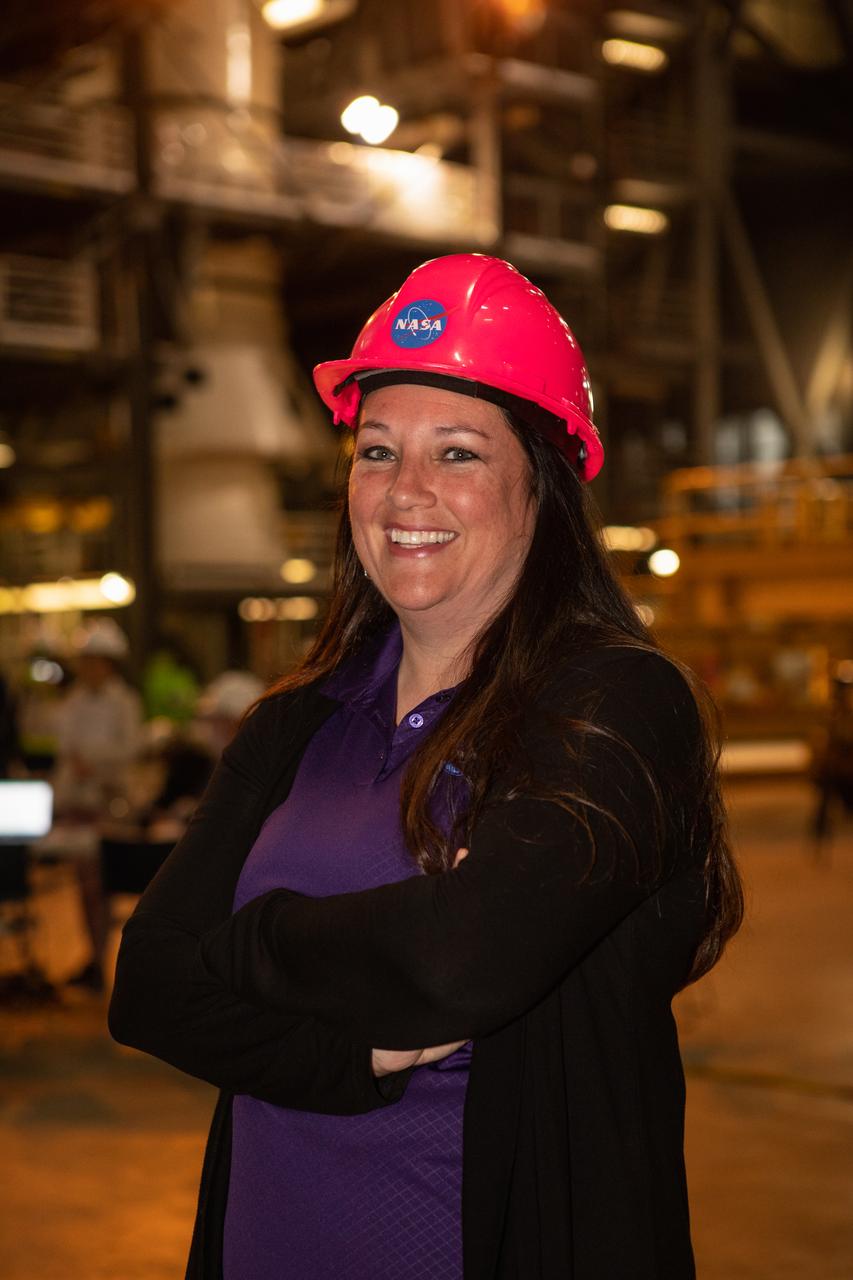
NASA Vehicle Assembly Building (VAB) Element Operations Manager Elizabeth Kline stands inside the VAB’s high bay 4 in front of mockups of the Space Launch System (SLS) booster segments on Nov. 19, 2019. Teams from NASA’s Exploration Ground Systems and SLS practiced booster segment mate, training around the clock from Nov. 18 through Nov. 20. SLS will launch the first woman and next man to the Moon by 2024 through the Artemis program.

An early morning view of the iconic Vehicle Assembly Building (VAB) at NASA's Kennedy Space Center in Florida. To the right is the Launch Control Center. In the background is the mobile launcher. All 10 levels of new work platforms, 20 platform halves altogether, have been installed in VAB High Bay 3 for the agency's Space Launch System (SLS) rocket and Orion spacecraft. The Ground Systems Development and Operations Program is overseeing upgrades to the VAB, including installation of the new platforms to prepare for the first test flight of Orion atop the SLS from Launch Pad 39B.
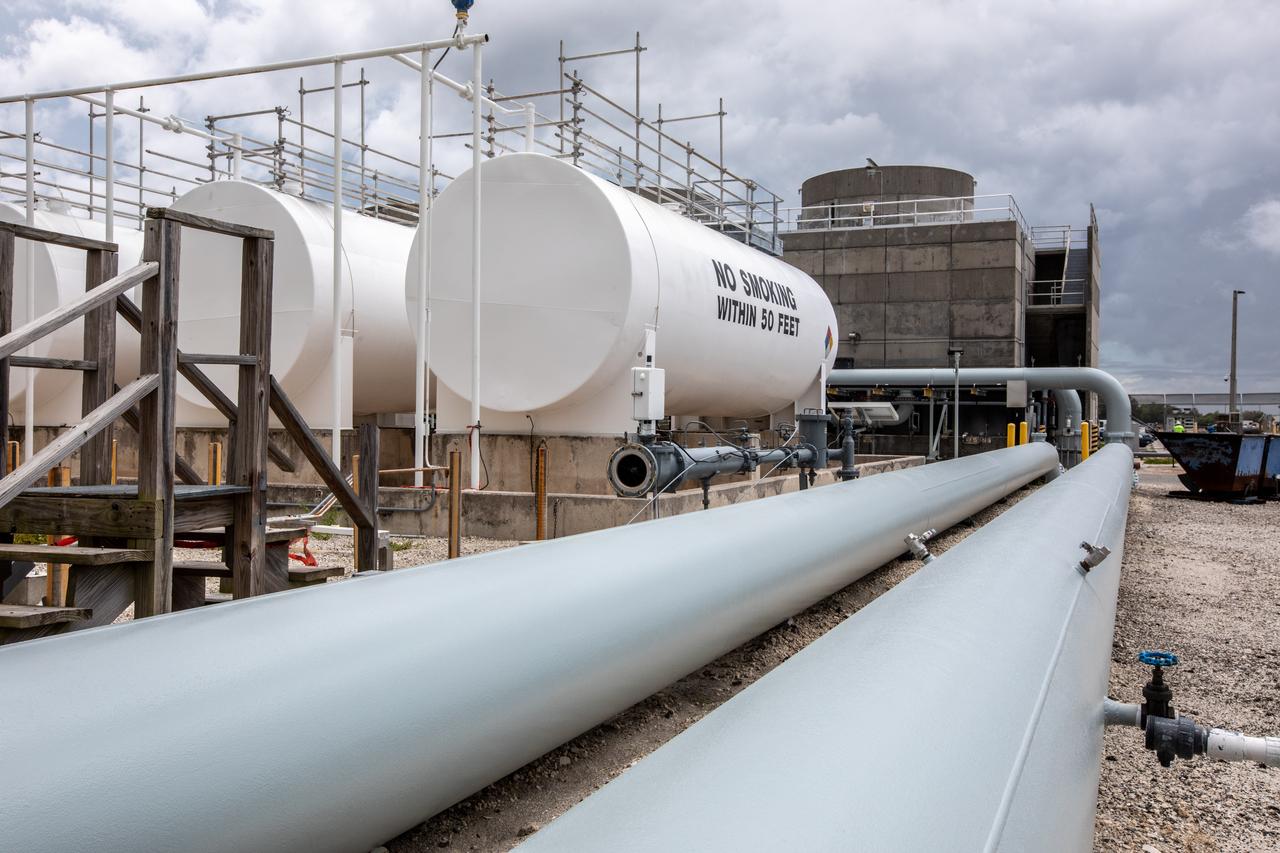
A photograph taken July 24, 2019, shows new tanks and piping were installed outside of the Utility Annex near the Vehicle Assembly (VAB) Building at NASA’s Kennedy Space Center in Florida. The Utility Annex, which provides 8,000 gallons of chilled water per minute to the VAB and other facilities in the Launch Complex 39 area, is being upgraded and repaired. The facility also contains boilers necessary to provide hot water to the VAB. The center’s Engineering Directorate is making the repairs and upgrades to the facility to prepare for the agency’s Artemis missions to the Moon and on to Mars.
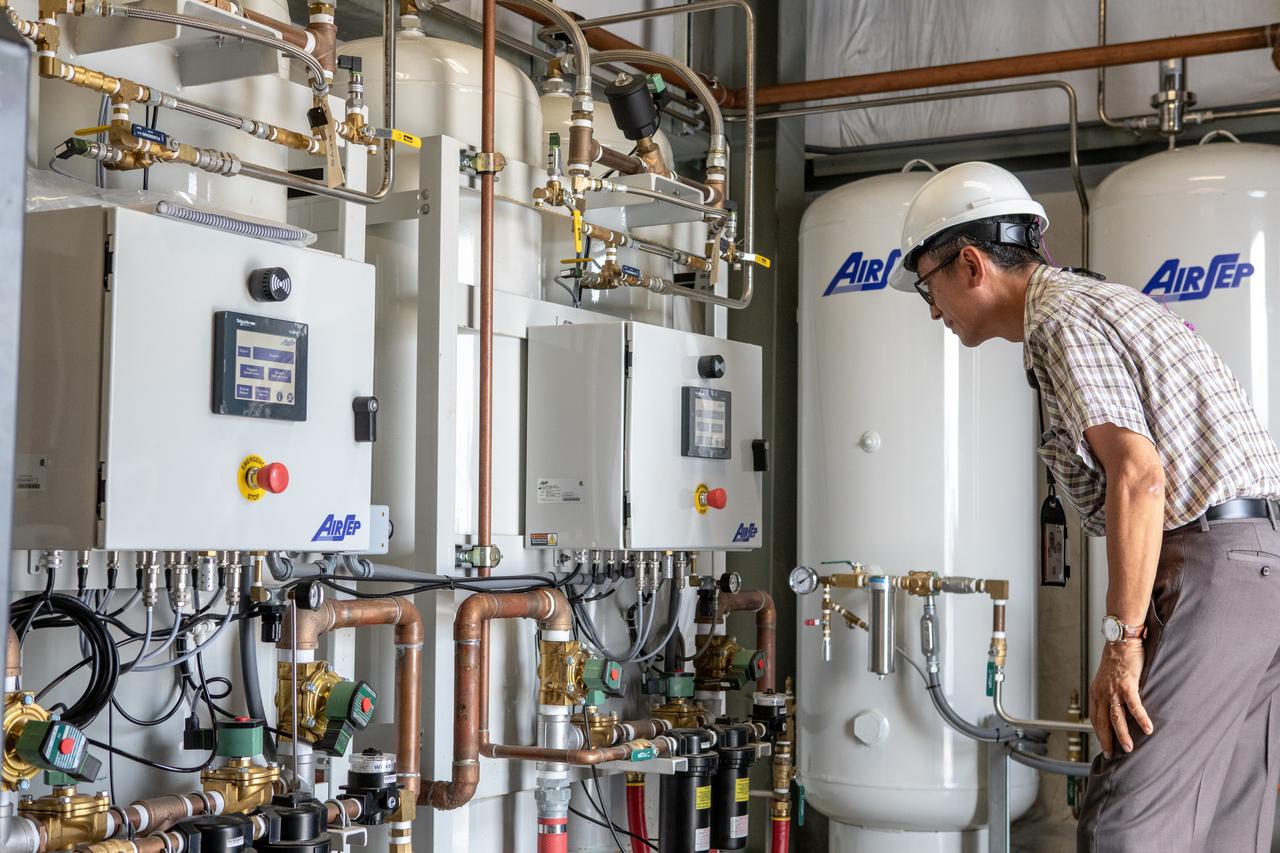
A photograph taken July 24, 2019, shows new air tanks, piping and control panels were installed in the Utility Annex near the Vehicle Assembly (VAB) Building at NASA’s Kennedy Space Center in Florida. The Utility Annex, which provides 8,000 gallons of chilled water per minute to the VAB and other facilities in the Launch Complex 39 area, is being upgraded and repaired. The facility also contains boilers necessary to provide hot water to the VAB. The center’s Engineering Directorate is making the repairs and upgrades to the facility to prepare for the agency’s Artemis missions to the Moon and on to Mars.
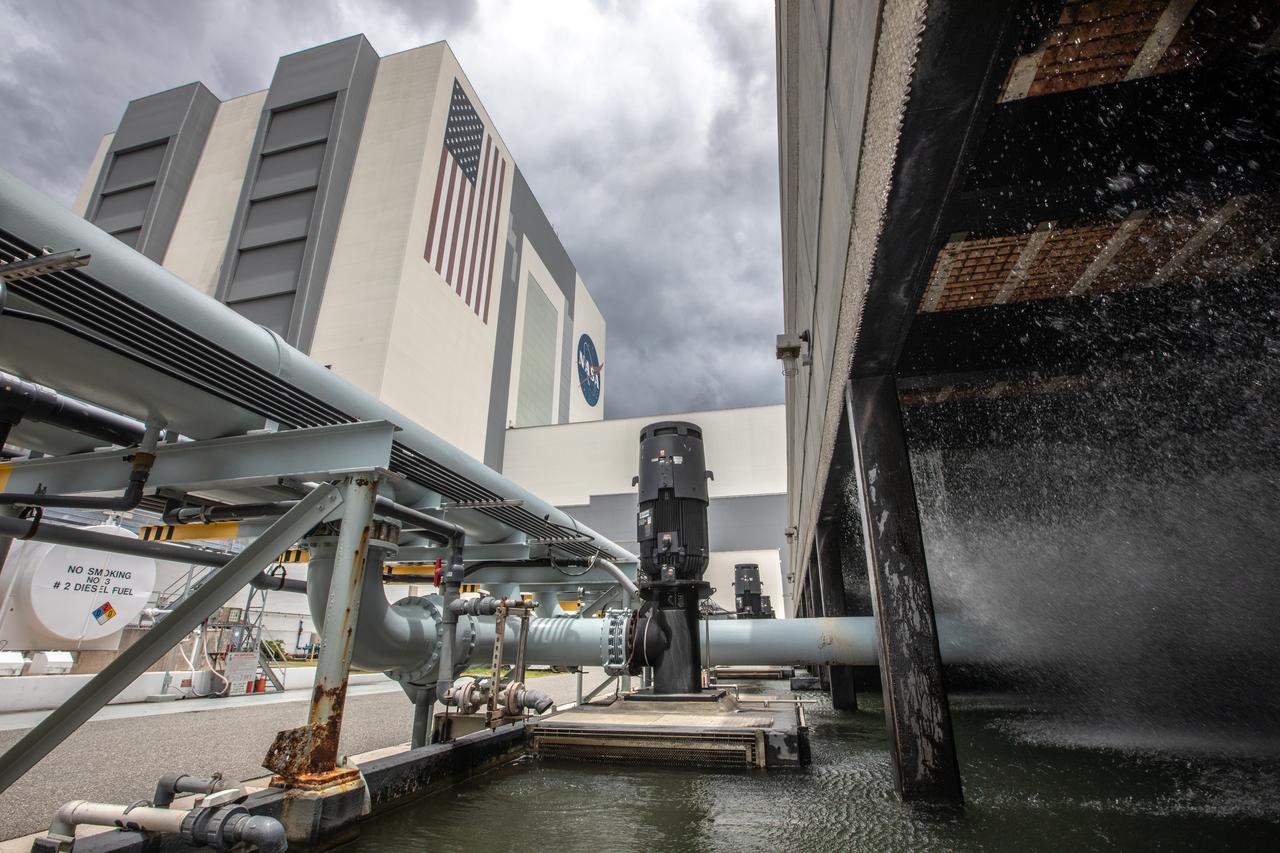
A photograph taken July 24, 2019, shows new tanks and piping were installed outside of the Utility Annex near the Vehicle Assembly (VAB) Building at NASA’s Kennedy Space Center in Florida. The Utility Annex, which provides 8,000 gallons of chilled water per minute to the VAB and other facilities in the Launch Complex 39 area, is being upgraded and repaired. The facility also contains boilers necessary to provide hot water to the VAB. The center’s Engineering Directorate is making the repairs and upgrades to the facility to prepare for the agency’s Artemis missions to the Moon and on to Mars.
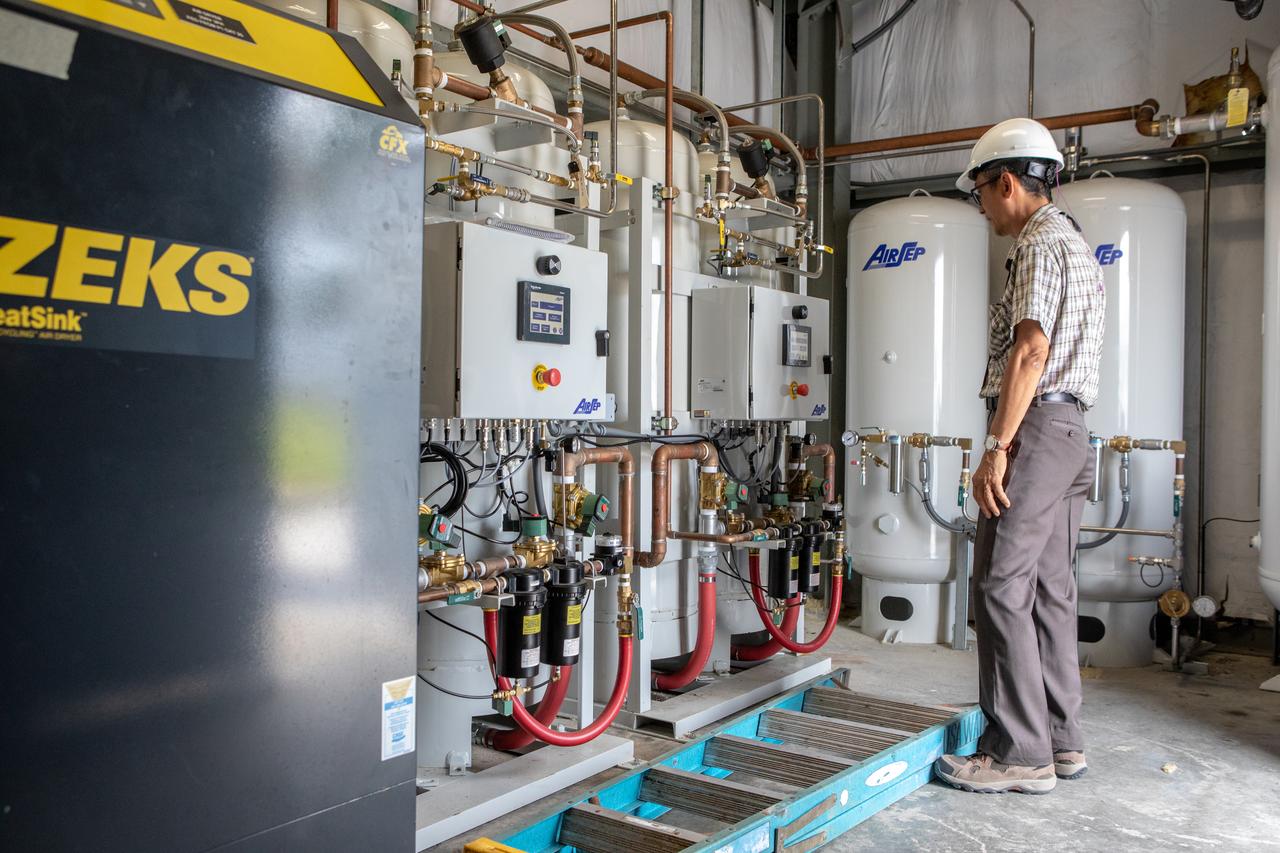
A photograph taken July 24, 2019, shows new air tanks, piping and control panels were installed in the Utility Annex near the Vehicle Assembly (VAB) Building at NASA’s Kennedy Space Center in Florida. The Utility Annex, which provides 8,000 gallons of chilled water per minute to the VAB and other facilities in the Launch Complex 39 area, is being upgraded and repaired. The facility also contains boilers necessary to provide hot water to the VAB. The center’s Engineering Directorate is making the repairs and upgrades to the facility to prepare for the agency’s Artemis missions to the Moon and on to Mars.
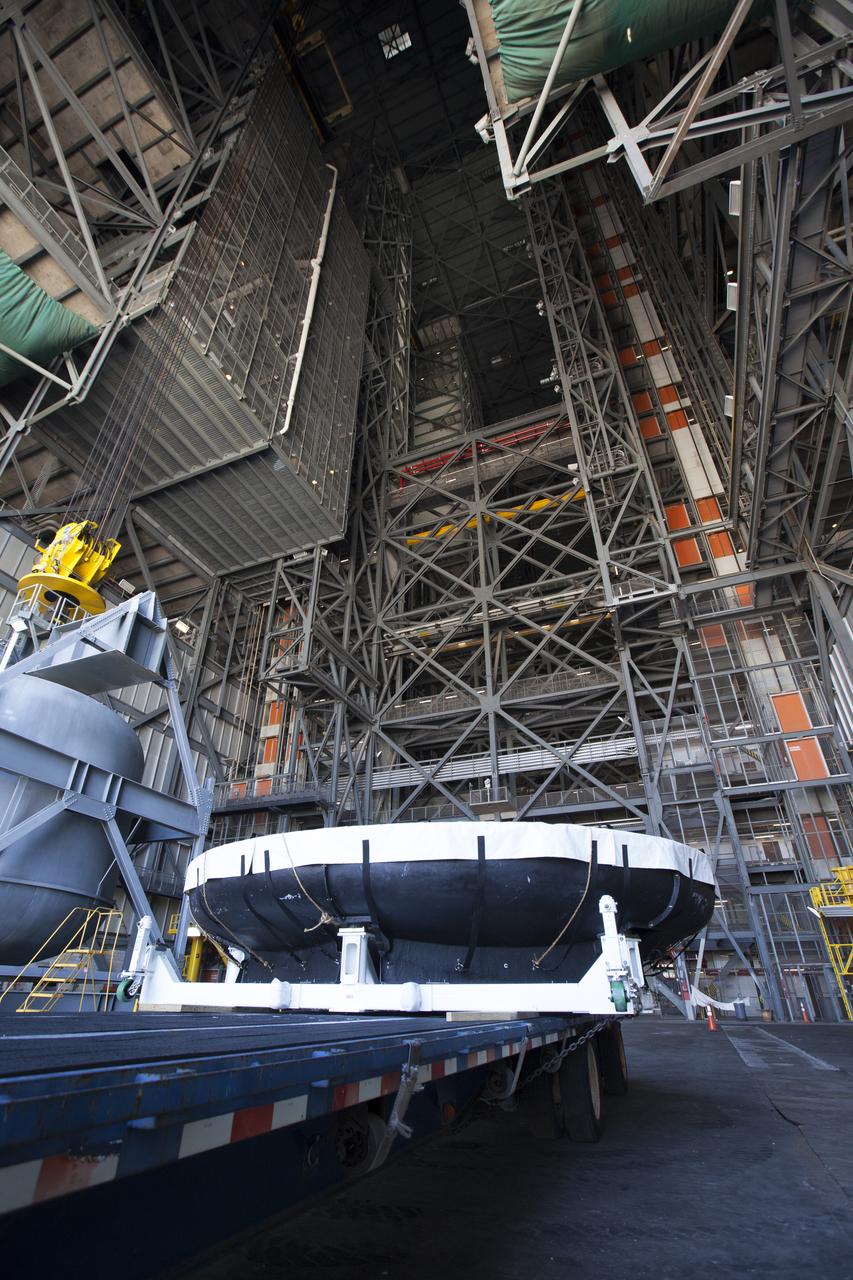
A flatbed truck carrying the Orion heat shield from Exploration Flight Test-1, backs into High Bay 2 in the Vehicle Assembly Building (VAB) at NASA's Kennedy Space Center in Florida. The heat shield was moved from the Launch Abort System Facility. The heat shield is being transferred from the Orion Program to the Ground Systems Development and Operations Program, Landing and Recovery Operations. In the VAB, the heat shield will be integrated with the Orion ground test article and used for future underway recovery testing.
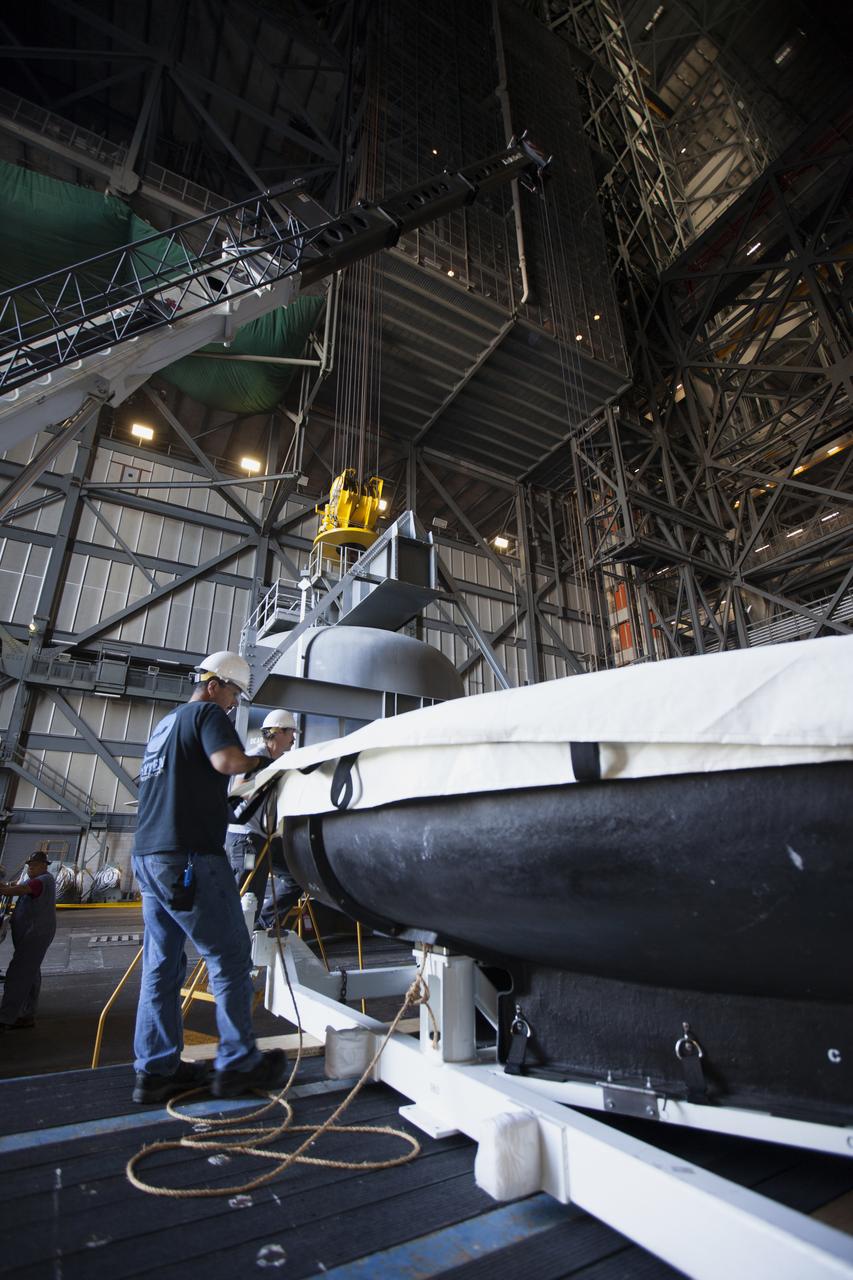
Inside High Bay 2 in the Vehicle Assembly Building (VAB) at NASA's Kennedy Space Center in Florida, workers help prepare the Orion heat shield from Exploration Flight Test-1 for unloading off its transporter. The heat shield is being transferred from the Orion Program to the Ground Systems Development and Operations Program, Landing and Recovery Operations. In the VAB, the heat shield will be integrated with the Orion ground test article and used for future underway recovery testing.
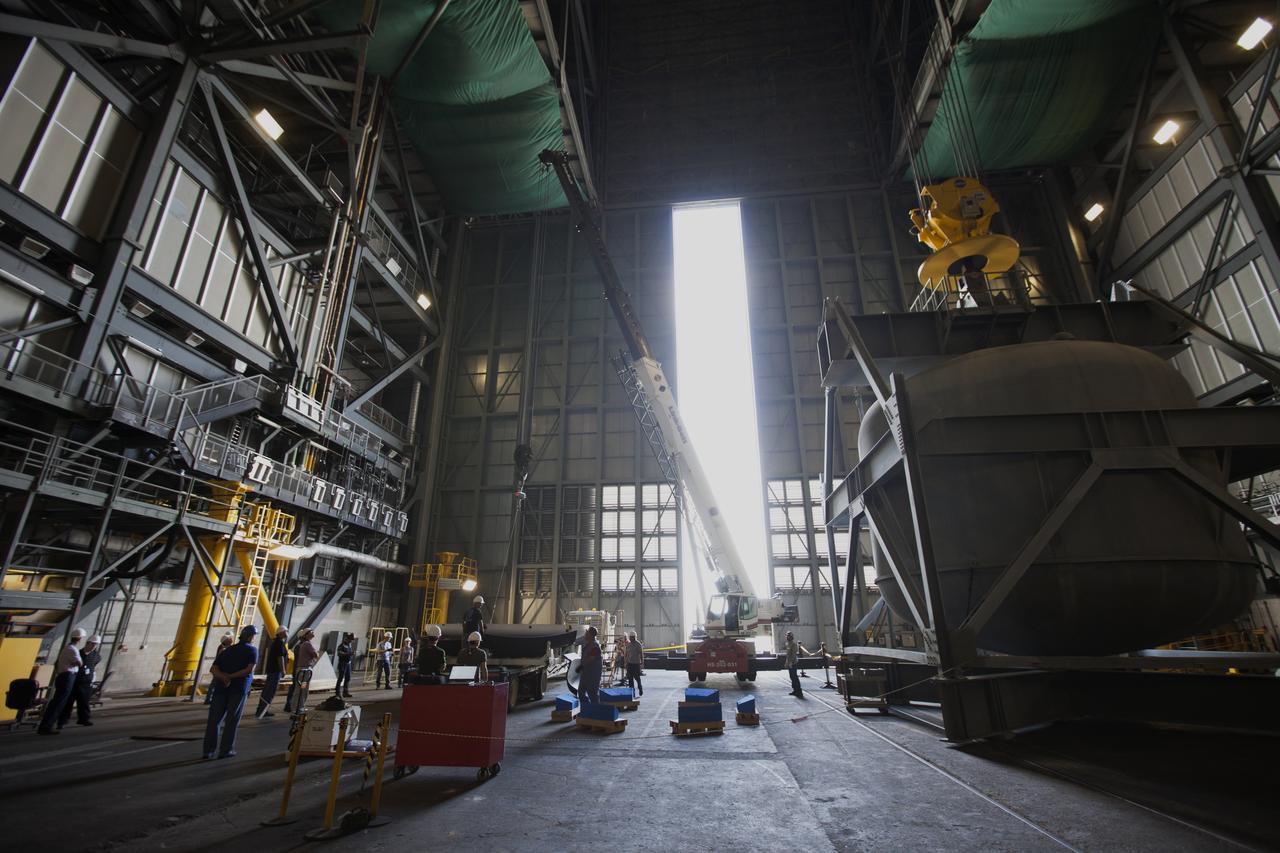
Inside High Bay 2 in the Vehicle Assembly Building (VAB) at NASA's Kennedy Space Center in Florida, a crane is attached to the Orion heat shield from Exploration Flight Test-1 for unloading off its transporter. The heat shield is being transferred from the Orion Program to the Ground Systems Development and Operations Program, Landing and Recovery Operations. In the VAB, the heat shield will be integrated with the Orion ground test article and used for future underway recovery testing.
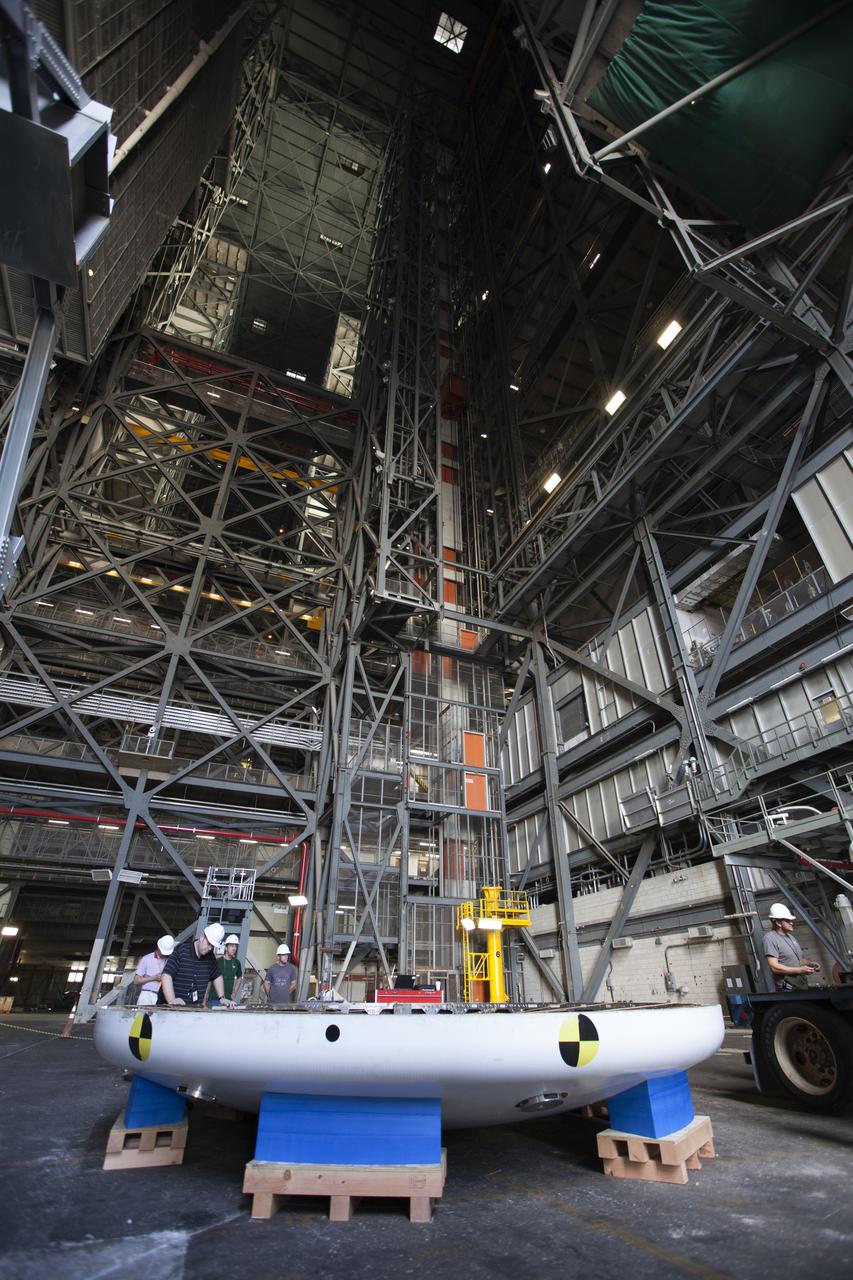
Inside High Bay 2 in the Vehicle Assembly Building (VAB) at NASA's Kennedy Space Center in Florida, the Orion heat shield from Exploration Flight Test-1 is secured on foam blocks. The heat shield is being transferred from the Orion Program to the Ground Systems Development and Operations Program, Landing and Recovery Operations. In the VAB, the heat shield will be integrated with the Orion ground test article and used for future underway recovery testing.
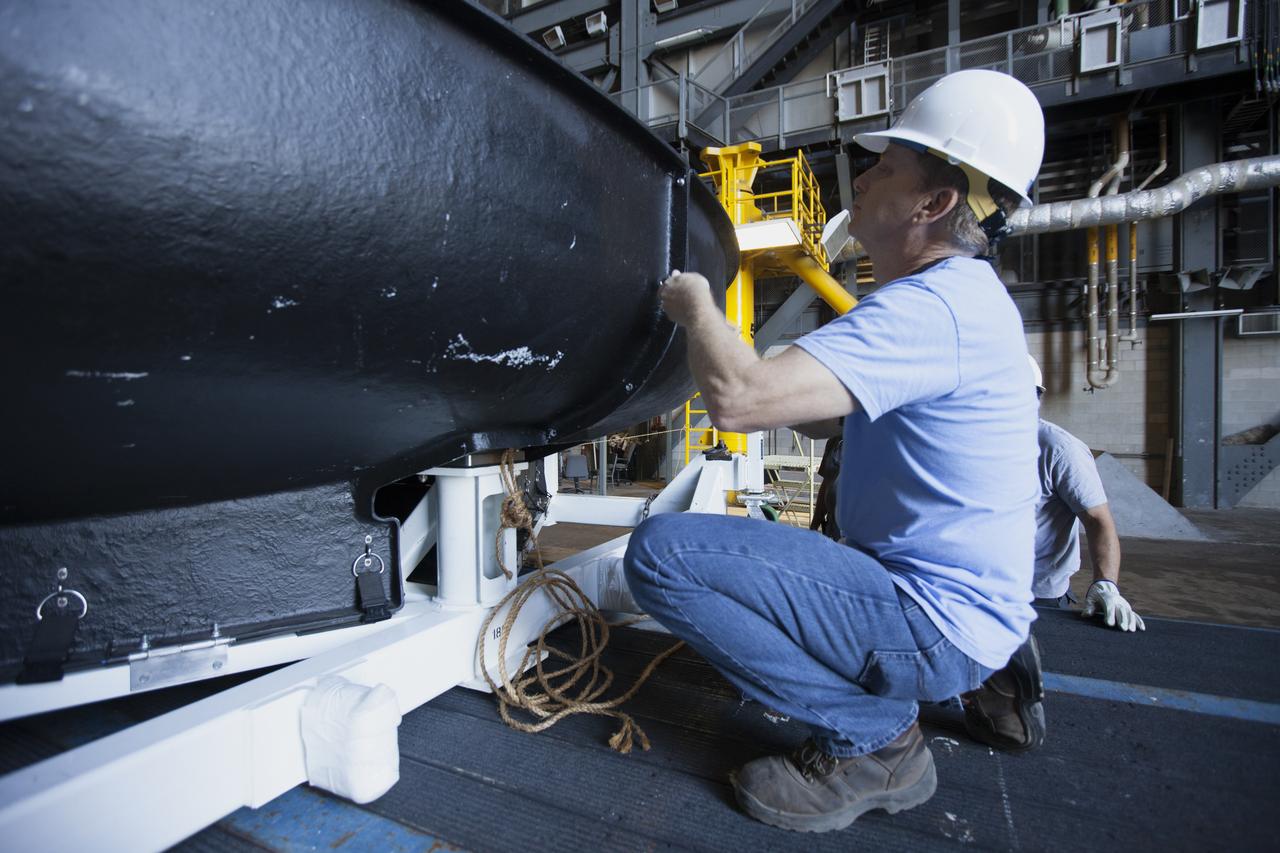
Inside High Bay 2 in the Vehicle Assembly Building (VAB) at NASA's Kennedy Space Center in Florida, workers help prepare the Orion heat shield from Exploration Flight Test-1 for unloading off its transporter. The heat shield is being transferred from the Orion Program to the Ground Systems Development and Operations Program, Landing and Recovery Operations. In the VAB, the heat shield will be integrated with the Orion ground test article and used for future underway recovery testing.
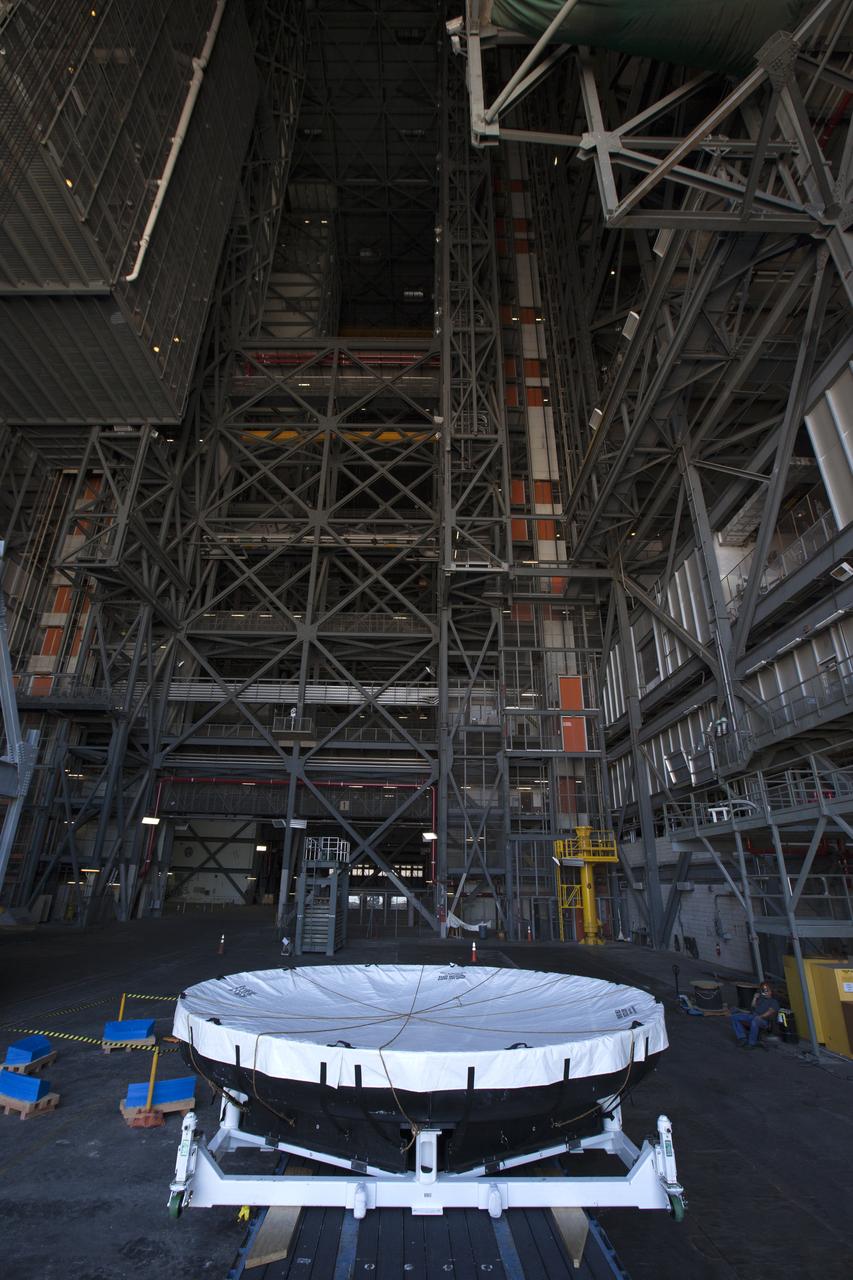
The Orion heat shield from Exploration Flight Test-1 has arrived in High Bay 2 in the Vehicle Assembly Building (VAB) at NASA's Kennedy Space Center in Florida. The heat shield was moved from the Launch Abort System Facility. The heat shield is being transferred from the Orion Program to the Ground Systems Development and Operations Program, Landing and Recovery Operations. In the VAB, the heat shield will be integrated with the Orion ground test article and used for future underway recovery testing.
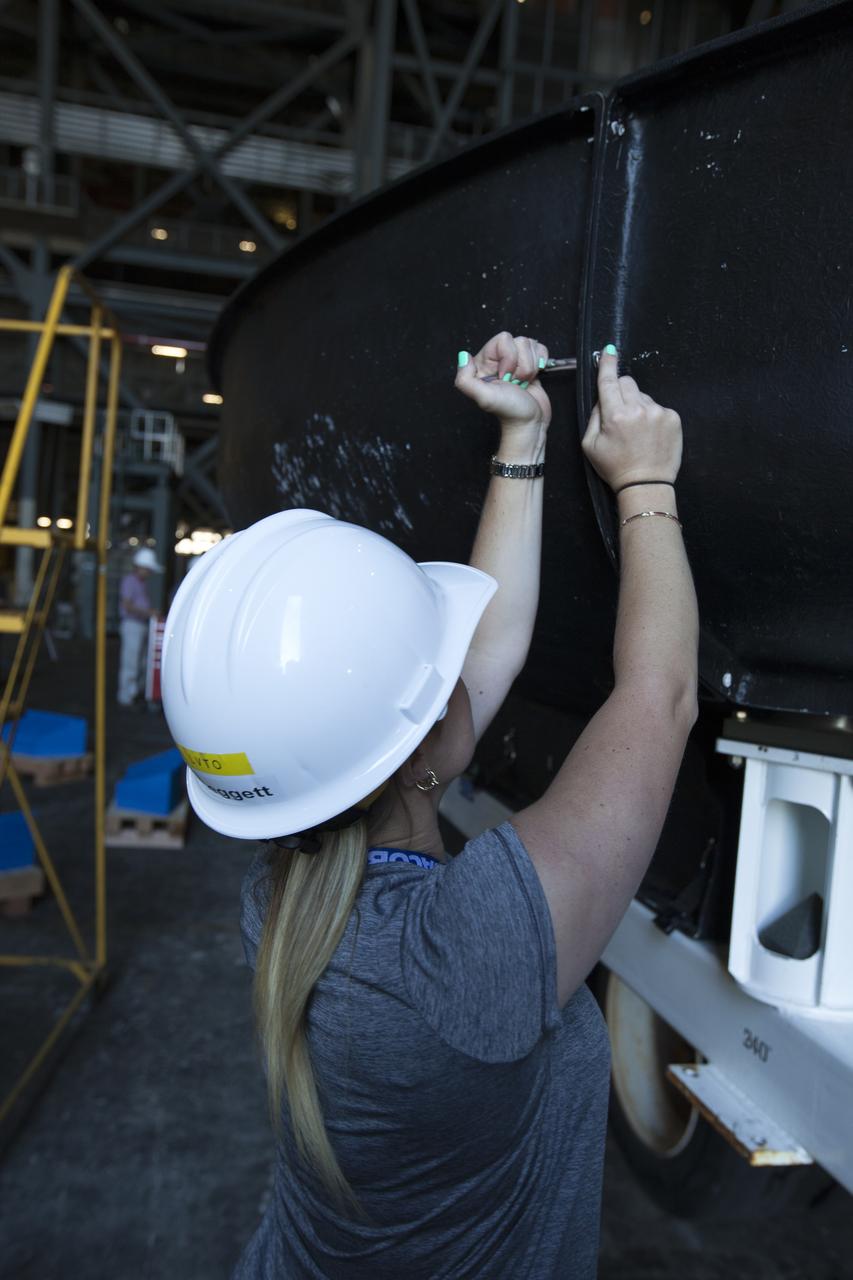
Inside High Bay 2 in the Vehicle Assembly Building (VAB) at NASA's Kennedy Space Center in Florida, a worker helps prepare the Orion heat shield from Exploration Flight Test-1 for unloading off its transporter. The heat shield is being transferred from the Orion Program to the Ground Systems Development and Operations Program, Landing and Recovery Operations. In the VAB, the heat shield will be integrated with the Orion ground test article and used for future underway recovery testing.
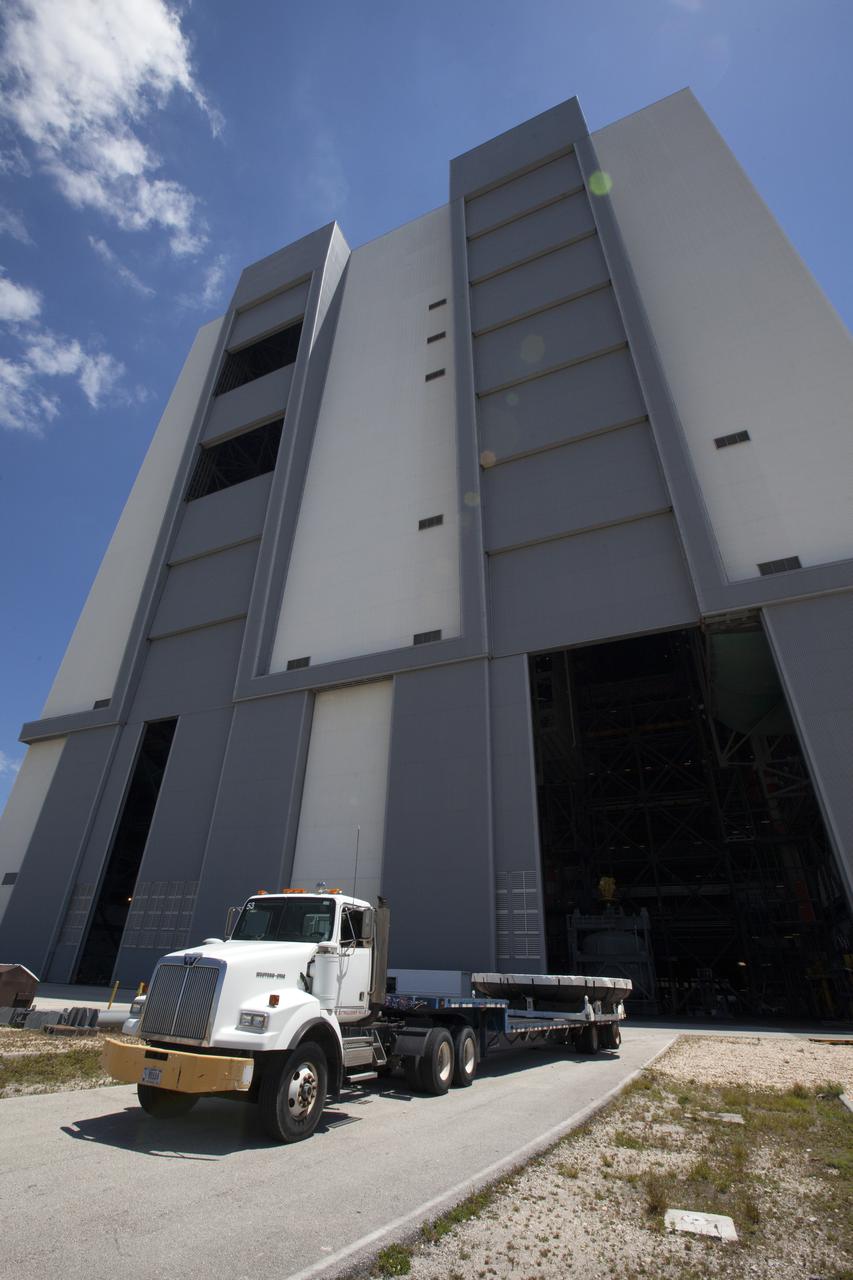
A flatbed truck carrying the Orion heat shield from Exploration Flight Test-1, prepares to back into High Bay 2 in the Vehicle Assembly Building (VAB) at NASA's Kennedy Space Center in Florida. The heat shield was moved from the Launch Abort System Facility. The heat shield is being transferred from the Orion Program to the Ground Systems Development and Operations Program, Landing and Recovery Operations. In the VAB, the heat shield will be integrated with the Orion ground test article and used for future underway recovery testing.
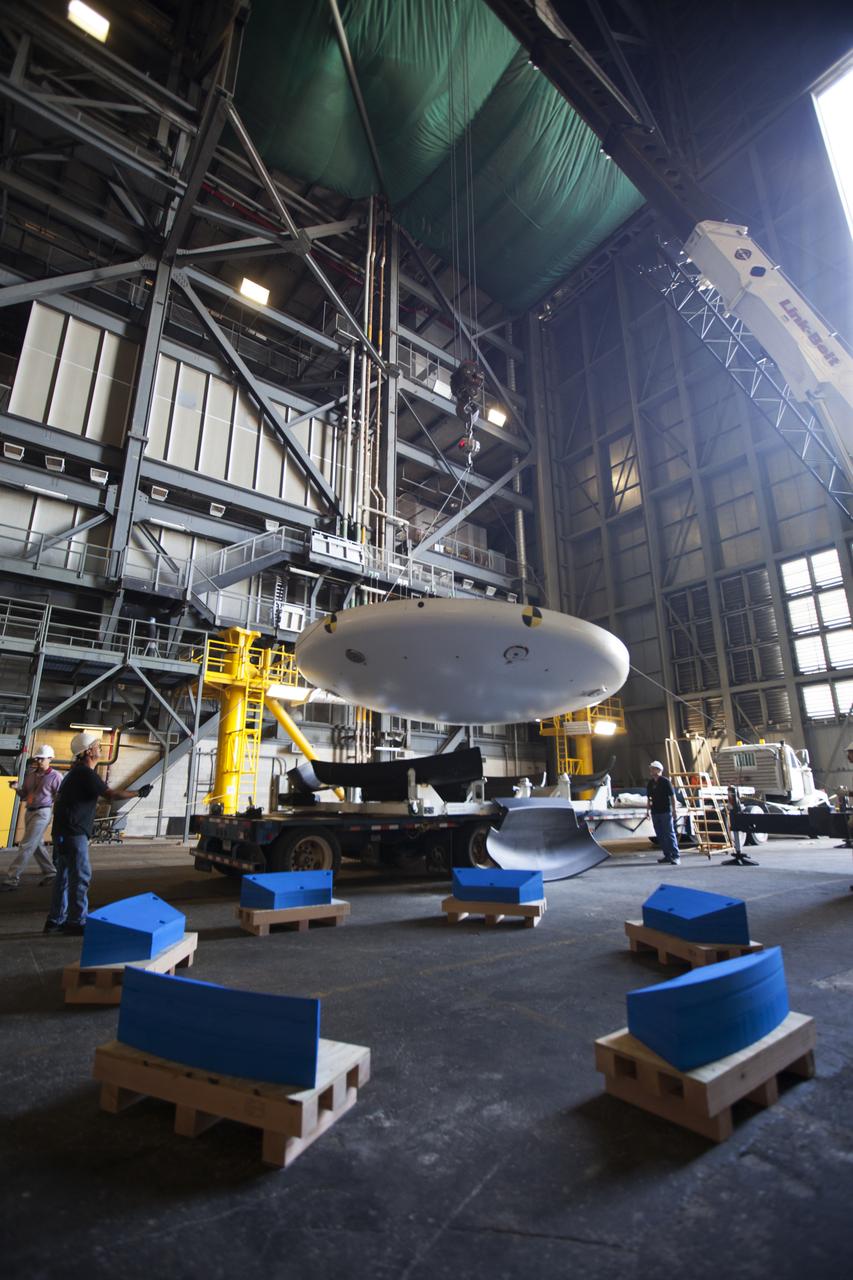
Inside High Bay 2 in the Vehicle Assembly Building (VAB) at NASA's Kennedy Space Center in Florida, a crane lifts the Orion heat shield from Exploration Flight Test-1 up off its transporter. It will be lowered onto foam blocks. The heat shield is being transferred from the Orion Program to the Ground Systems Development and Operations Program, Landing and Recovery Operations. In the VAB, the heat shield will be integrated with the Orion ground test article and used for future underway recovery testing.
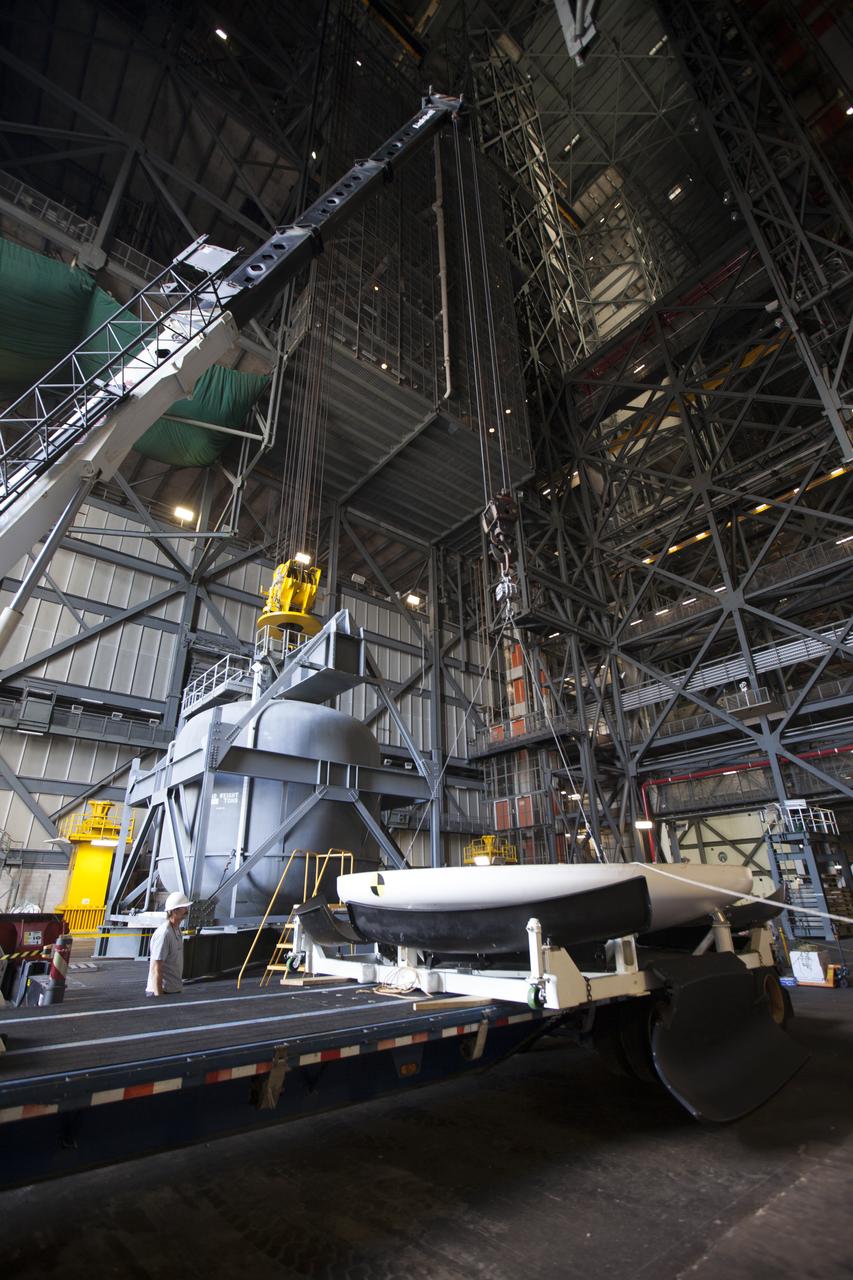
Inside High Bay 2 in the Vehicle Assembly Building (VAB) at NASA's Kennedy Space Center in Florida, a crane is attached to the Orion heat shield from Exploration Flight Test-1 for unloading off its transporter. The heat shield is being transferred from the Orion Program to the Ground Systems Development and Operations Program, Landing and Recovery Operations. In the VAB, the heat shield will be integrated with the Orion ground test article and used for future underway recovery testing.
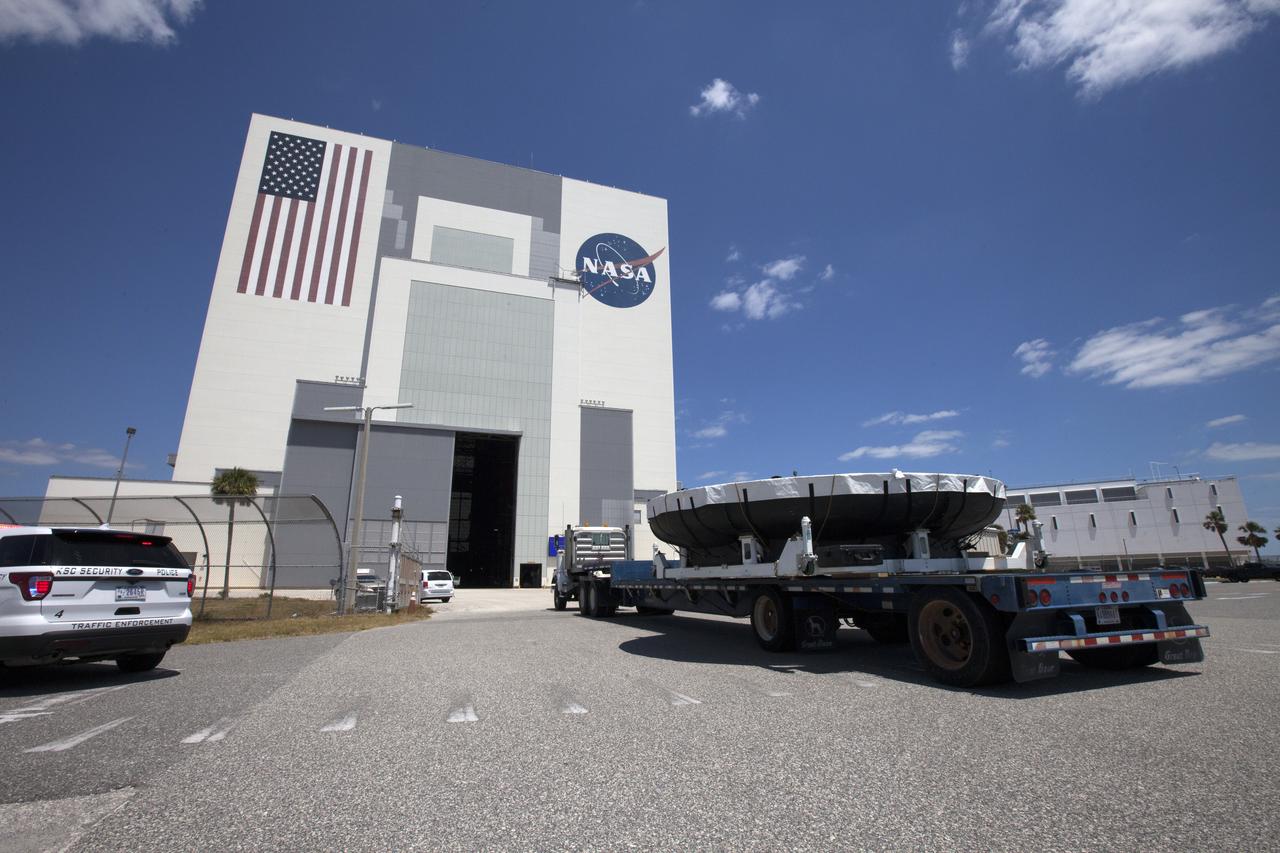
The Orion heat shield from Exploration Flight Test-1, secured on a transporter, arrives at the Vehicle Assembly Building (VAB) at NASA's Kennedy Space Center in Florida. The heat shield was moved from the Launch Abort System Facility. The heat shield is being transferred from the Orion Program to the Ground Systems Development and Operations Program, Landing and Recovery Operations. In the VAB, the heat shield will be integrated with the Orion ground test article and used for future underway recovery testing.
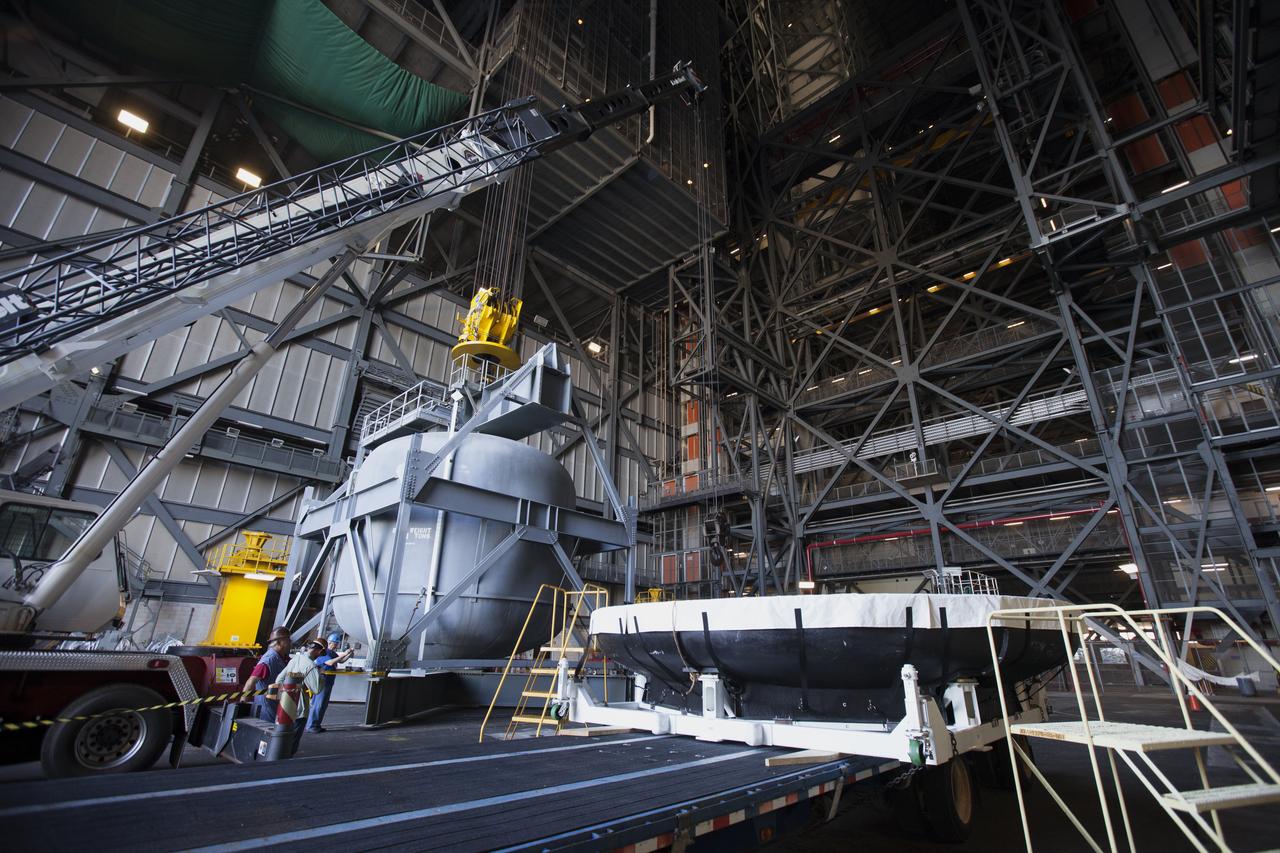
The Orion heat shield from Exploration Flight Test-1 has arrived in High Bay 2 of the Vehicle Assembly Building (VAB) at NASA's Kennedy Space Center in Florida. The heat shield is being transferred from the Orion Program to the Ground Systems Development and Operations Program, Landing and Recovery Operations. In the VAB, the heat shield will be integrated with the Orion ground test article and used for future underway recovery testing.
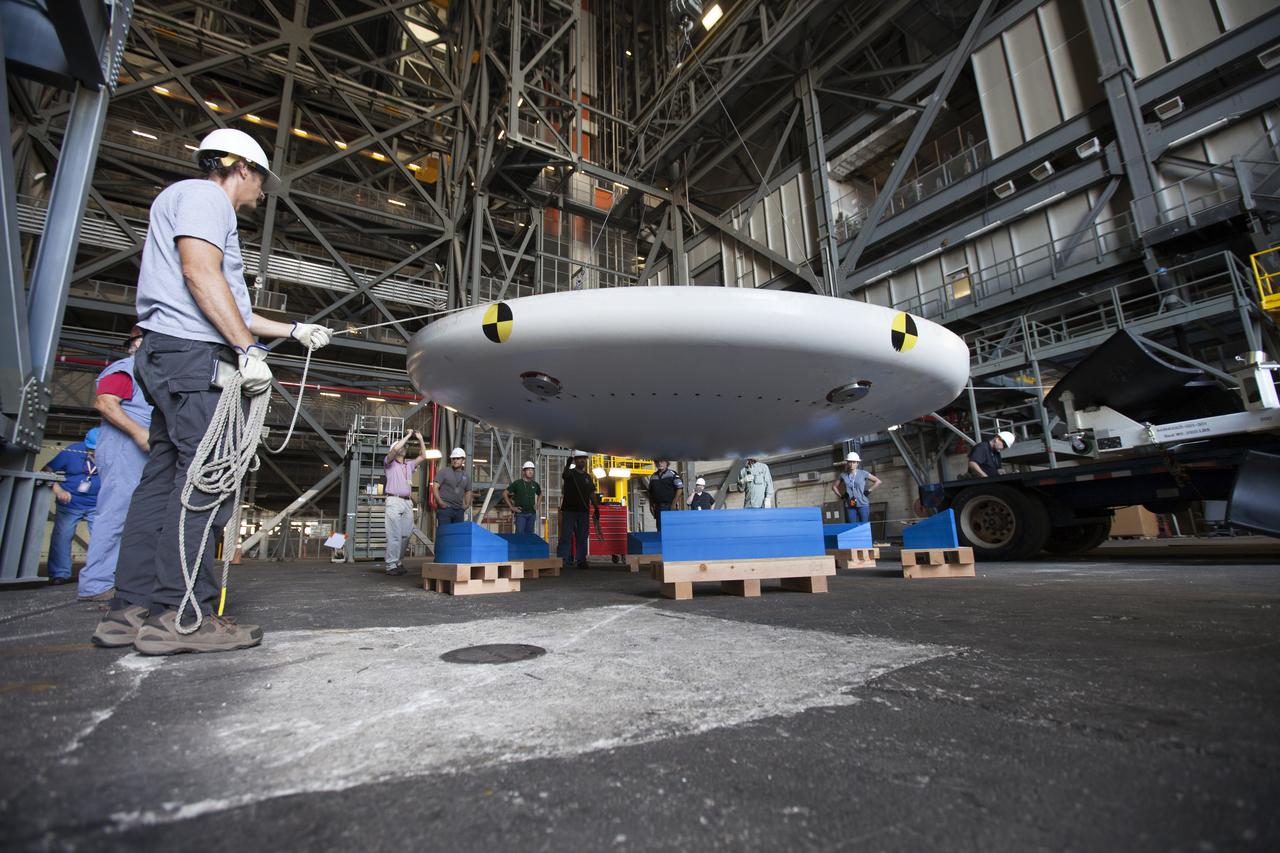
Inside High Bay 2 in the Vehicle Assembly Building (VAB) at NASA's Kennedy Space Center in Florida, workers monitor the progress as a crane lowers the Orion heat shield from Exploration Flight Test-1 onto foam blocks. The heat shield is being transferred from the Orion Program to the Ground Systems Development and Operations Program, Landing and Recovery Operations. In the VAB, the heat shield will be integrated with the Orion ground test article and used for future underway recovery testing.
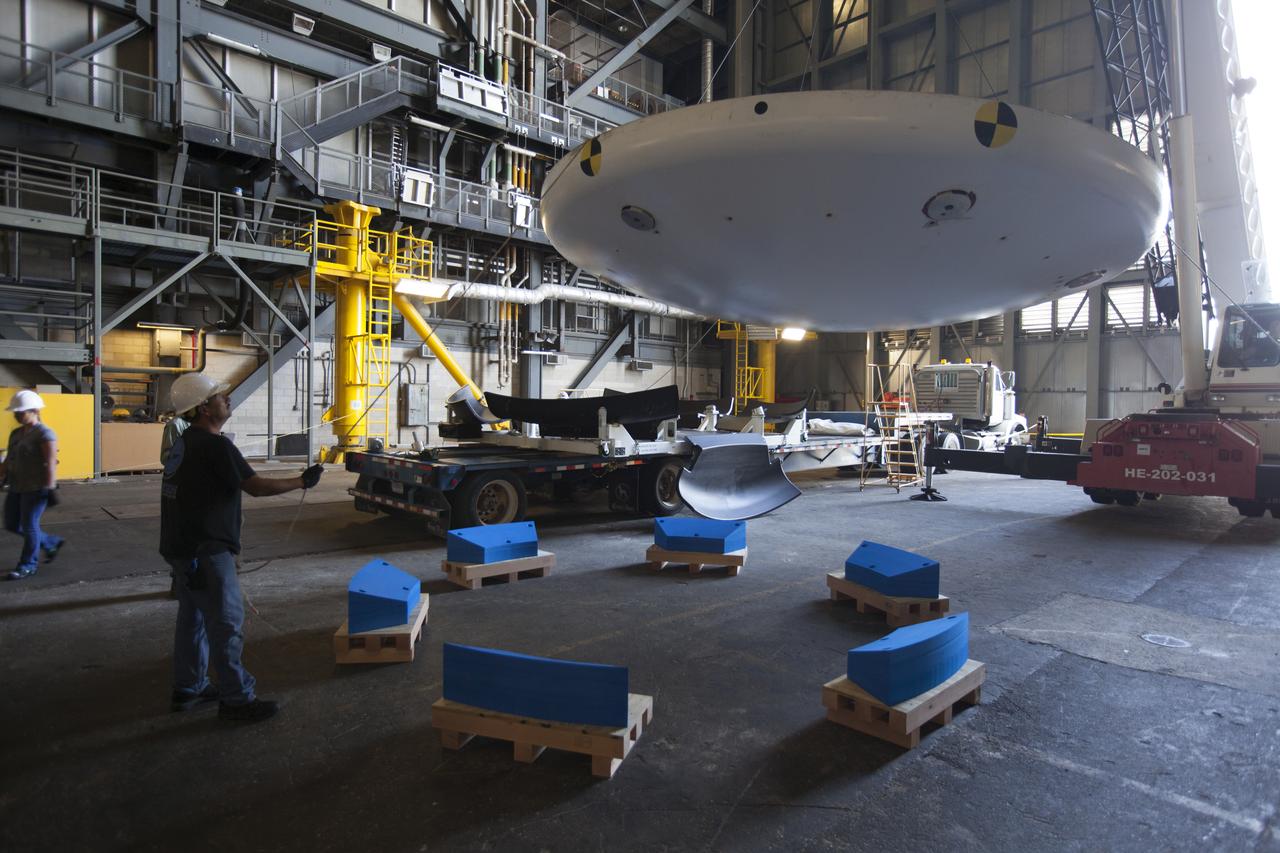
Inside High Bay 2 in the Vehicle Assembly Building (VAB) at NASA's Kennedy Space Center in Florida, a worker monitors the progress as a crane lowers the Orion heat shield from Exploration Flight Test-1 onto foam blocks. The heat shield is being transferred from the Orion Program to the Ground Systems Development and Operations Program, Landing and Recovery Operations. In the VAB, the heat shield will be integrated with the Orion ground test article and used for future underway recovery testing.
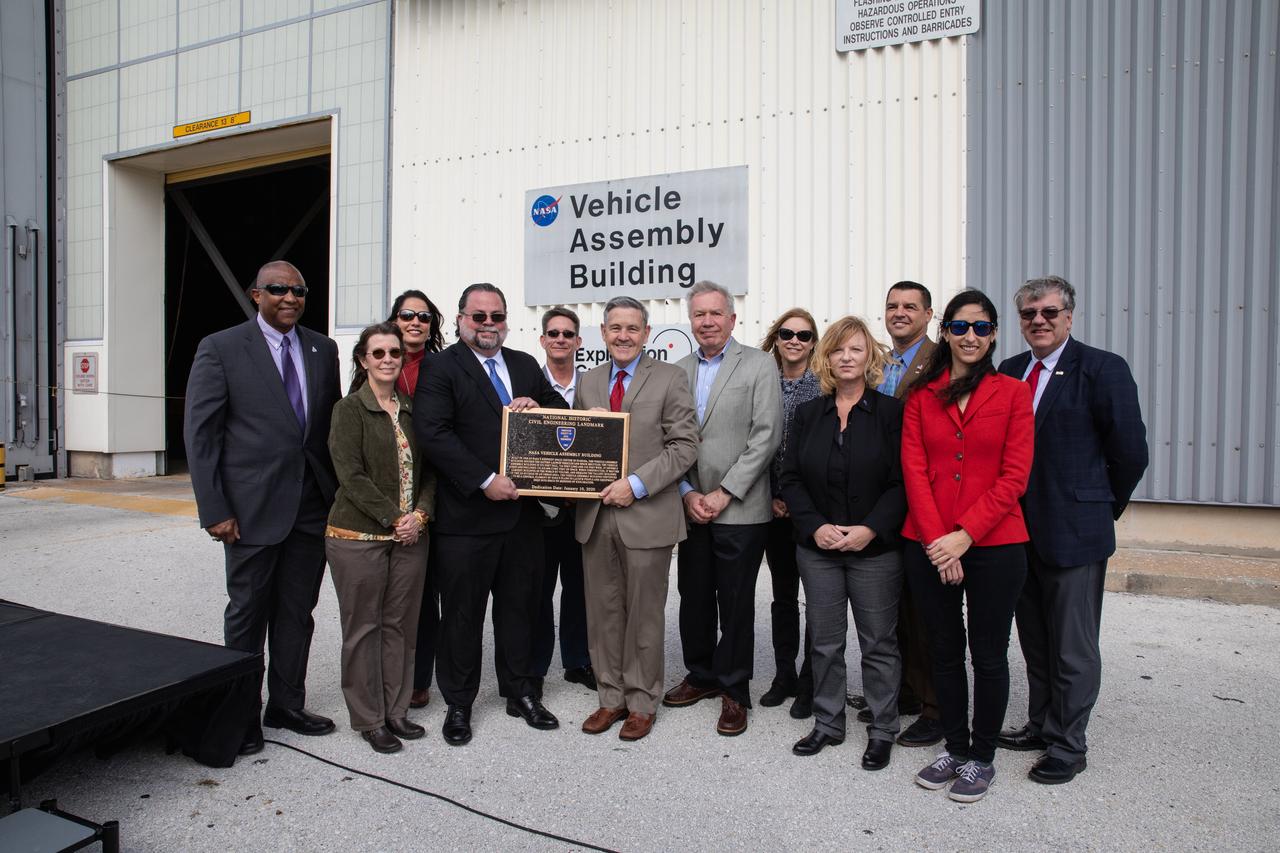
Kennedy Space Center Director Bob Cabana, center, accepts the National Historic Civil Engineering Landmark award from the Florida Section American Society of Civil Engineers (ASCE) for the Vehicle Assembly Building during a ceremony in front of the iconic facility on Jan. 10, 2020. Holding the award with Cabana is Peter Moore, ASCE Region 5 director. At far left is Kelvin Manning, associate director, technical. The ASCE nominated the historic building and bestowed the award. The VAB is the first building at Kennedy Space Center to earn this distinction. At the time of its completion, the 129-million-cubic-foot structure was the largest building in the world. Originally designed and built to accommodate the Saturn V/Apollo used in Project Apollo, the VAB was later modified for its role in the Space Shuttle Program.
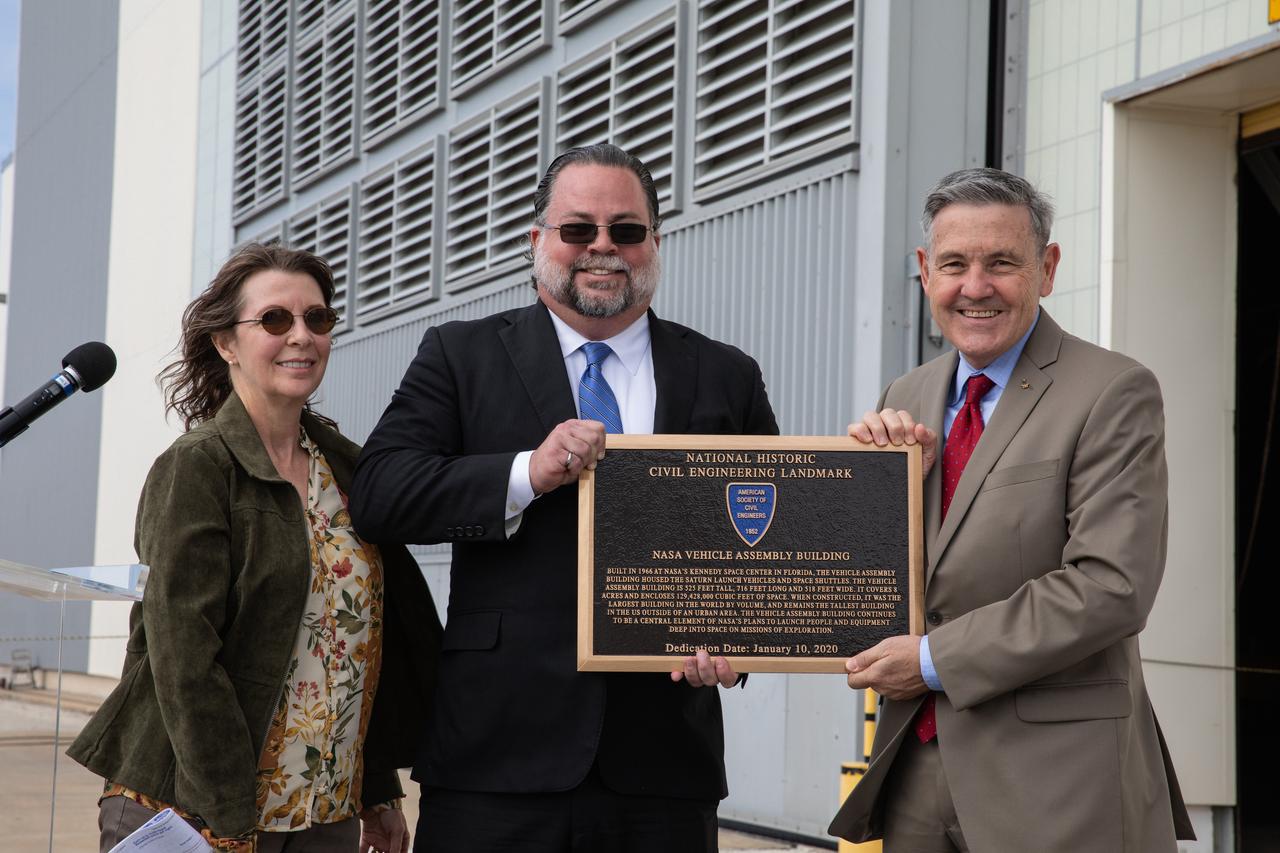
Kennedy Space Center Director Bob Cabana, far right, accepts the National Historic Civil Engineering Landmark award from the Florida Section American Society of Civil Engineers (ASCE) for the Vehicle Assembly Building during a ceremony in front of the iconic facility on Jan. 10, 2020. Next to Cabana, from left are Carol Stevens, ASCE Society of History and Heritage Committee member; and Peter Moore, ASCE Region 5 director. The ASCE nominated the historic building and bestowed the award. The VAB is the first building at Kennedy Space Center to earn this distinction. At the time of its completion, the 129-million-cubic-foot structure was the largest building in the world. Originally designed and built to accommodate the Saturn V/Apollo used in Project Apollo, the VAB was later modified for its role in the Space Shuttle Program.
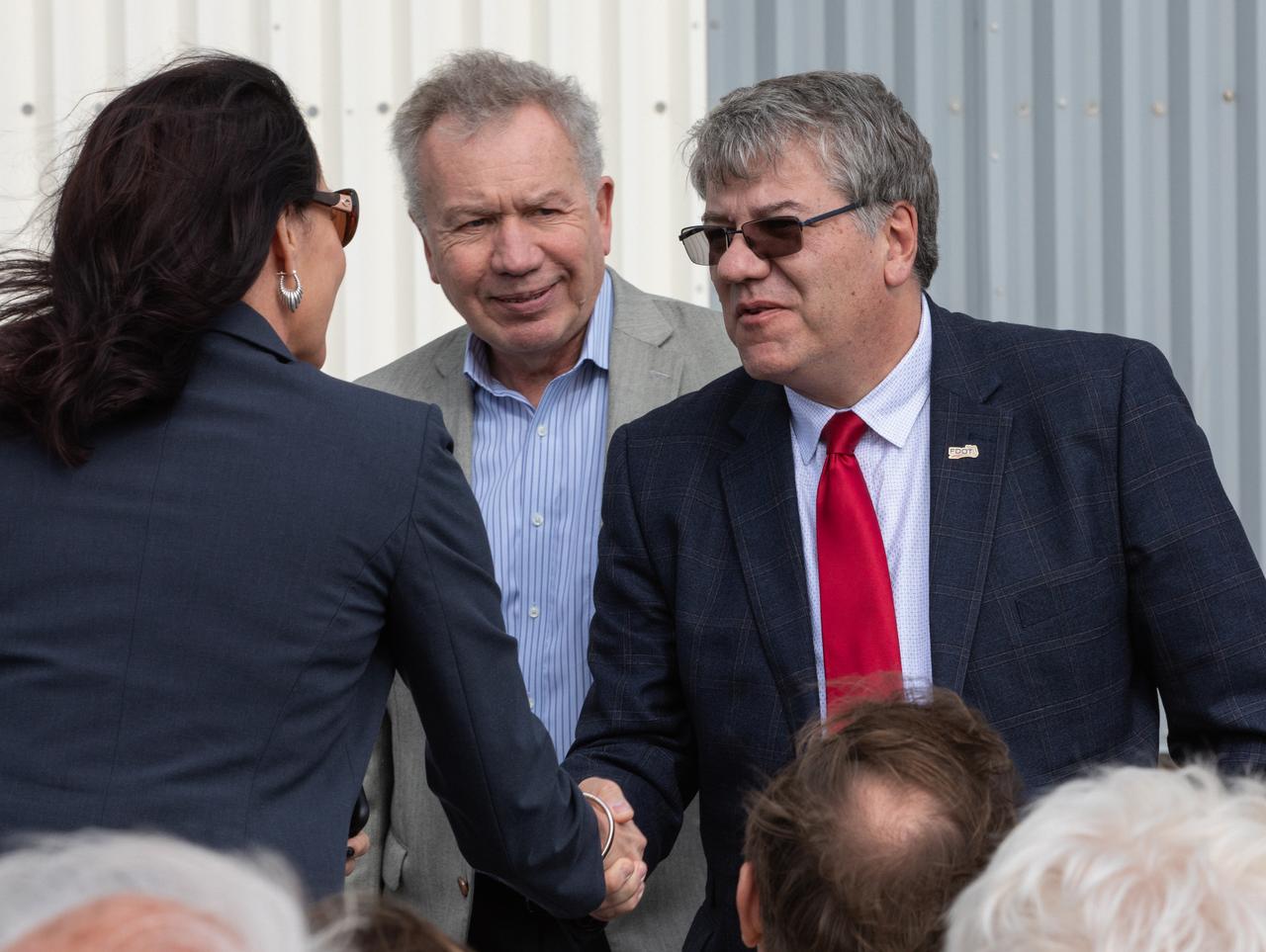
Florida Department of Transportation Secretary Kevin Thibault shakes hands with an attendee during a ceremony on Jan. 10, 2020, to recognize the Vehicle Assembly Building with the National Historic Civil Engineering Landmark award. The Florida Section American Society of Civil Engineers (ASCE) nominated the historic building and bestowed the award. Standing next to Thibault is Glenn Bell, ASCE Society of Structural Engineering Institute president. The VAB is the first building at Kennedy Space Center to earn this distinction. At the time of its completion, the 129-million-cubic-foot structure was the largest building in the world. Originally designed and built to accommodate the Saturn V/Apollo used in Project Apollo, the VAB was later modified for its role in the Space Shuttle Program.
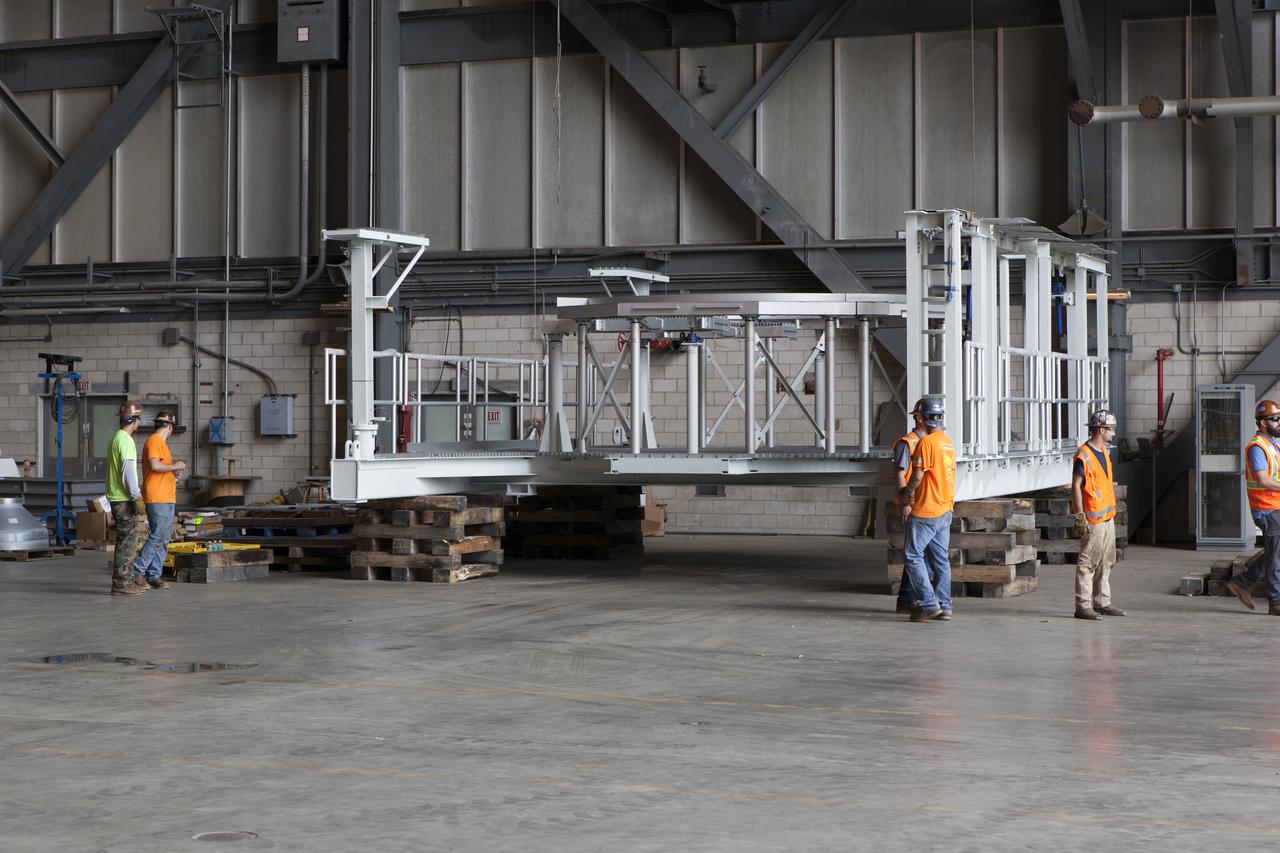
One of two new work platforms for NASA's Space Launch System booster engines is secured on dunnage inside the Vehicle Assembly Building (VAB) at the agency's Kennedy Space Center in Florida. The platforms were transported from fabricator Met-Con Inc. in Cocoa, Florida. They will be stored in the VAB, where they will be used for processing and checkout of the engines for the rocket's twin five-segment solid rocket boosters for Exploration Mission-1. EM-1 will launch an uncrewed Orion spacecraft to a stable orbit beyond the Moon and bring it back to Earth for a splashdown in the Pacific Ocean.
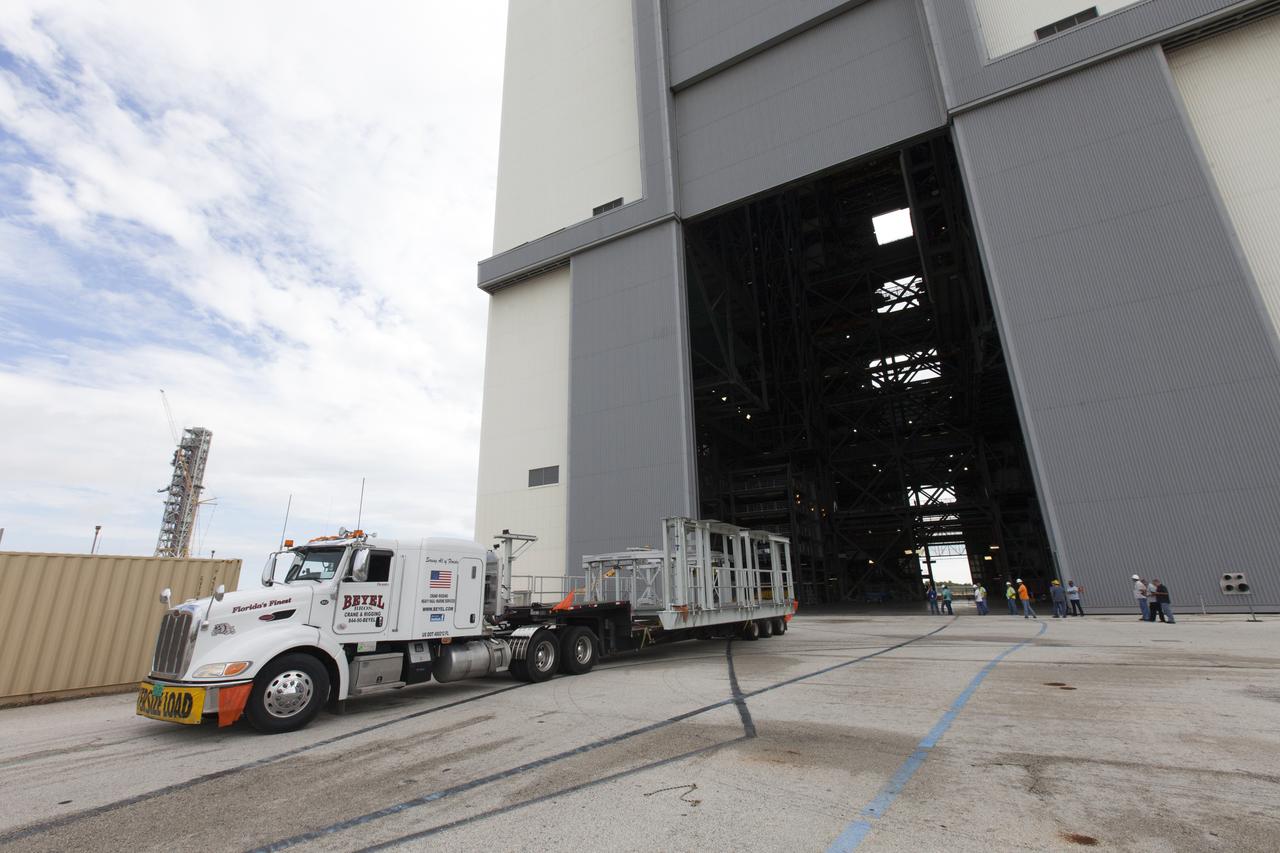
A flatbed truck carrying one of two new service platforms for NASA's Space Launch System booster engines backs in to the Vehicle Assembly Building (VAB) at the agency's Kennedy Space Center in Florida. The platforms were transported from fabricator Met-Con Inc. in Cocoa, Florida. They will be stored in the VAB, where they will be used for processing and checkout of the engines for the rocket's twin five-segment solid rocket boosters for Exploration Mission-1. EM-1 will launch an uncrewed Orion spacecraft to a stable orbit beyond the Moon and bring it back to Earth for a splashdown in the Pacific Ocean.
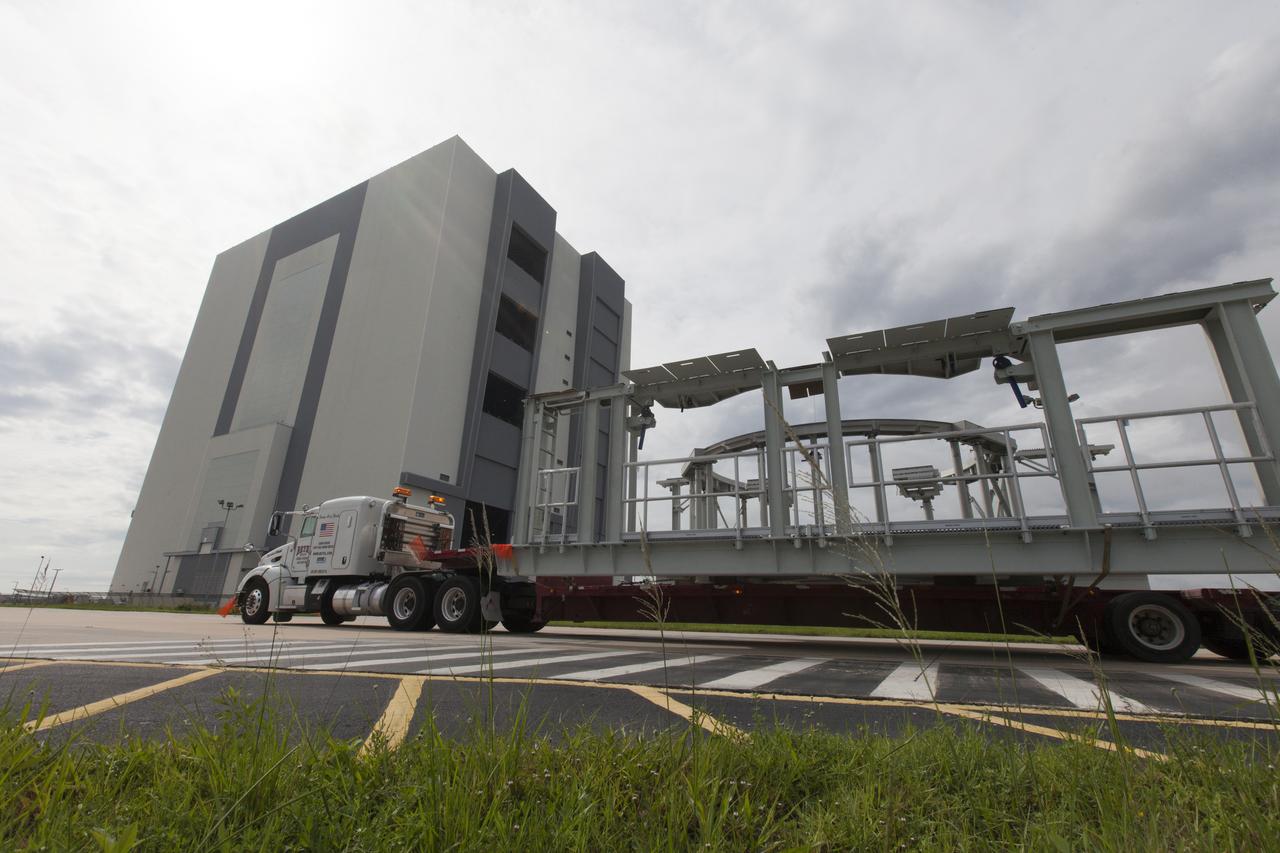
A flatbed truck carrying one of two new service platforms for NASA's Space Launch System booster engines arrives at the Vehicle Assembly Building (VAB) at the agency's Kennedy Space Center in Florida. The platforms were transported from fabricator Met-Con Inc. in Cocoa, Florida. They will be stored in the VAB, where they will be used for processing and checkout of the engines for the rocket's twin five-segment solid rocket boosters for Exploration Mission-1. EM-1 will launch an uncrewed Orion spacecraft to a stable orbit beyond the Moon and bring it back to Earth for a splashdown in the Pacific Ocean.

A flatbed truck carrying one of two new service platforms for NASA's Space Launch System booster engines backs up inside the Vehicle Assembly Building (VAB) at the agency's Kennedy Space Center in Florida. The platforms were transported from fabricator Met-Con Inc. in Cocoa, Florida. They will be stored in the VAB, where they will be used for processing and checkout of the engines for the rocket's twin five-segment solid rocket boosters for Exploration Mission-1. EM-1 will launch an uncrewed Orion spacecraft to a stable orbit beyond the Moon and bring it back to Earth for a splashdown in the Pacific Ocean.
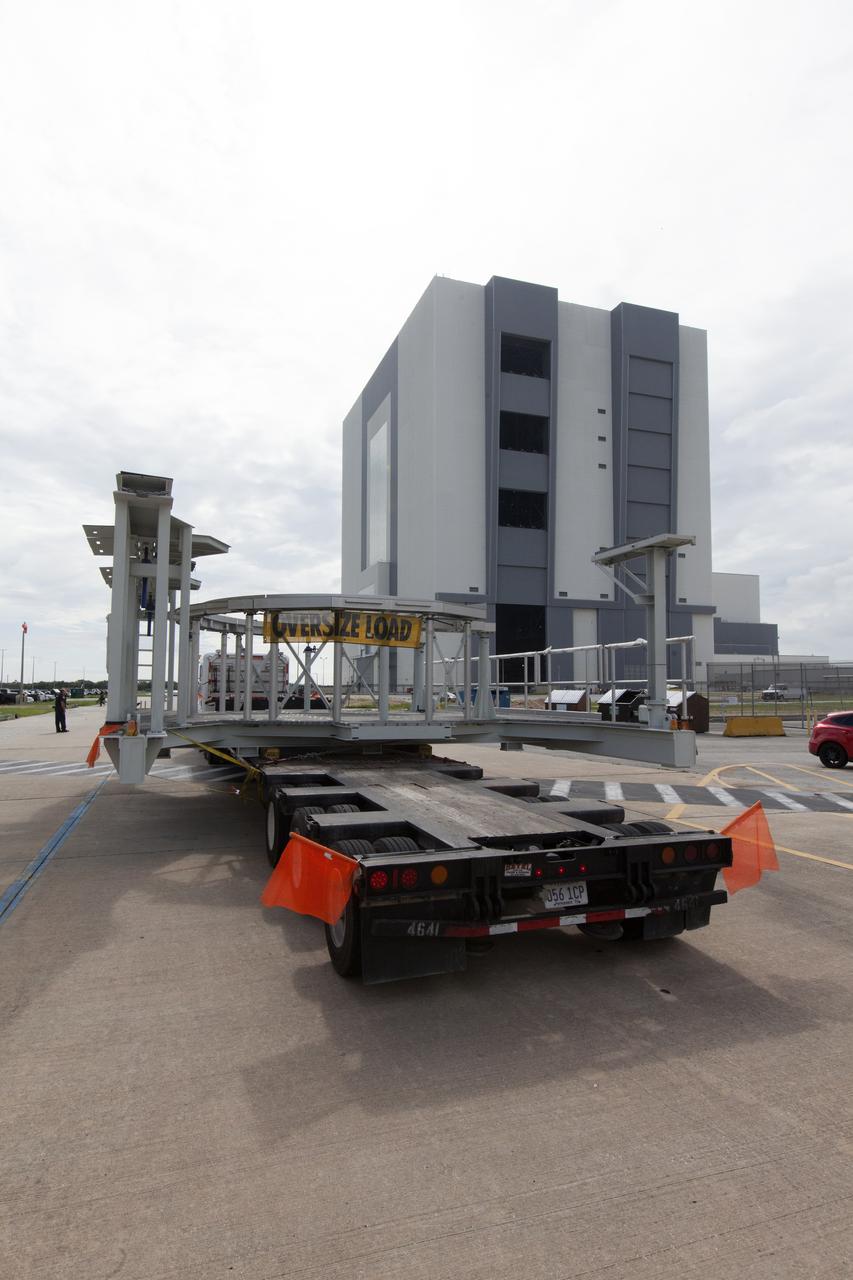
A flatbed truck carrying one of two new service platforms for NASA's Space Launch System booster engines arrives at the Vehicle Assembly Building (VAB) at the agency's Kennedy Space Center in Florida. The platforms were transported from fabricator Met-Con Inc. in Cocoa, Florida. They will be stored in the VAB, where they will be used for processing and checkout of the engines for the rocket's twin five-segment solid rocket boosters for Exploration Mission-1. EM-1 will launch an uncrewed Orion spacecraft to a stable orbit beyond the Moon and bring it back to Earth for a splashdown in the Pacific Ocean.
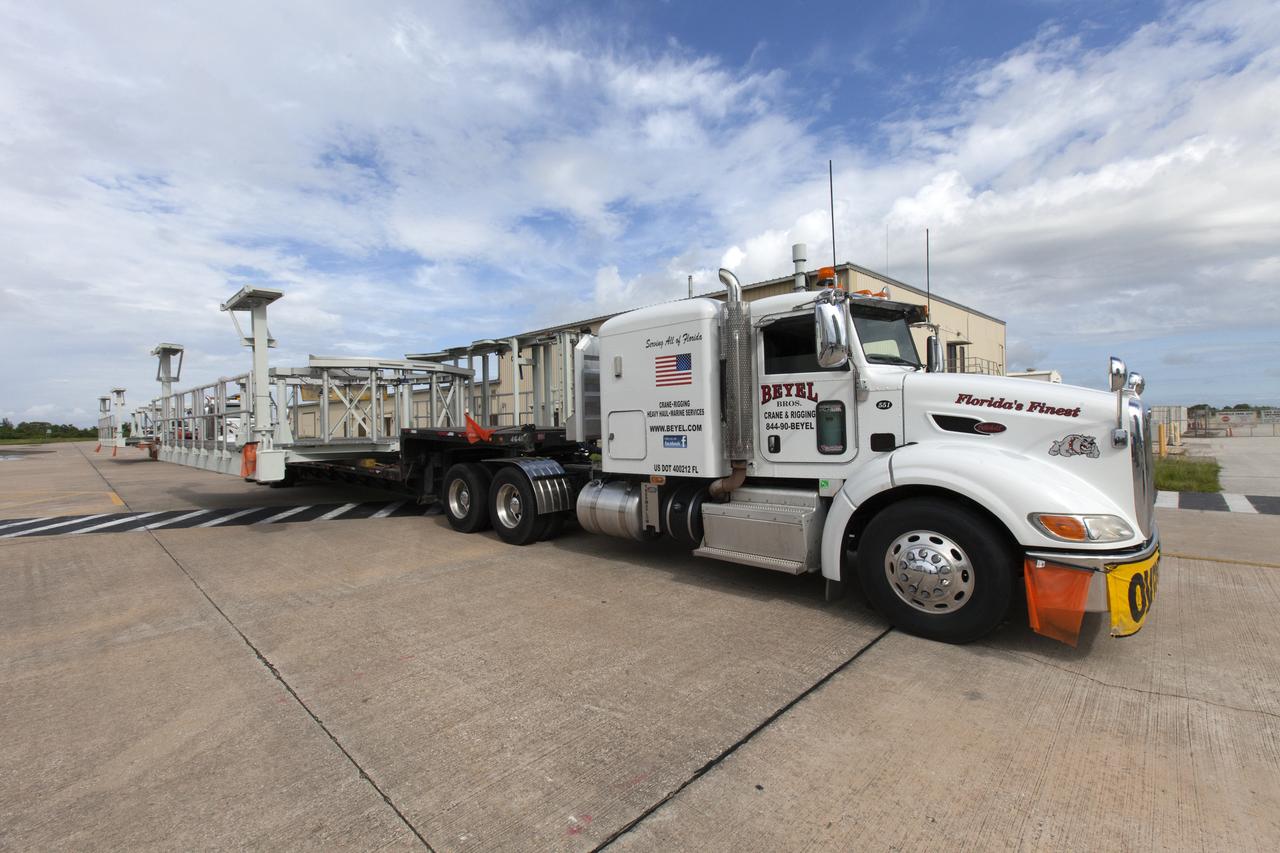
A flatbed truck carrying one of two new service platforms for NASA's Space Launch System booster engines nears the Vehicle Assembly Building (VAB) at the agency's Kennedy Space Center in Florida. The platforms were transported from fabricator Met-Con Inc. in Cocoa, Florida. They will be delivered to the VAB, where they will be stored and used for processing and checkout of the engines for the rocket's twin five-segment solid rocket boosters for Exploration Mission-1. EM-1 will launch an uncrewed Orion spacecraft to a stable orbit beyond the Moon and bring it back to Earth for a splashdown in the Pacific Ocean.
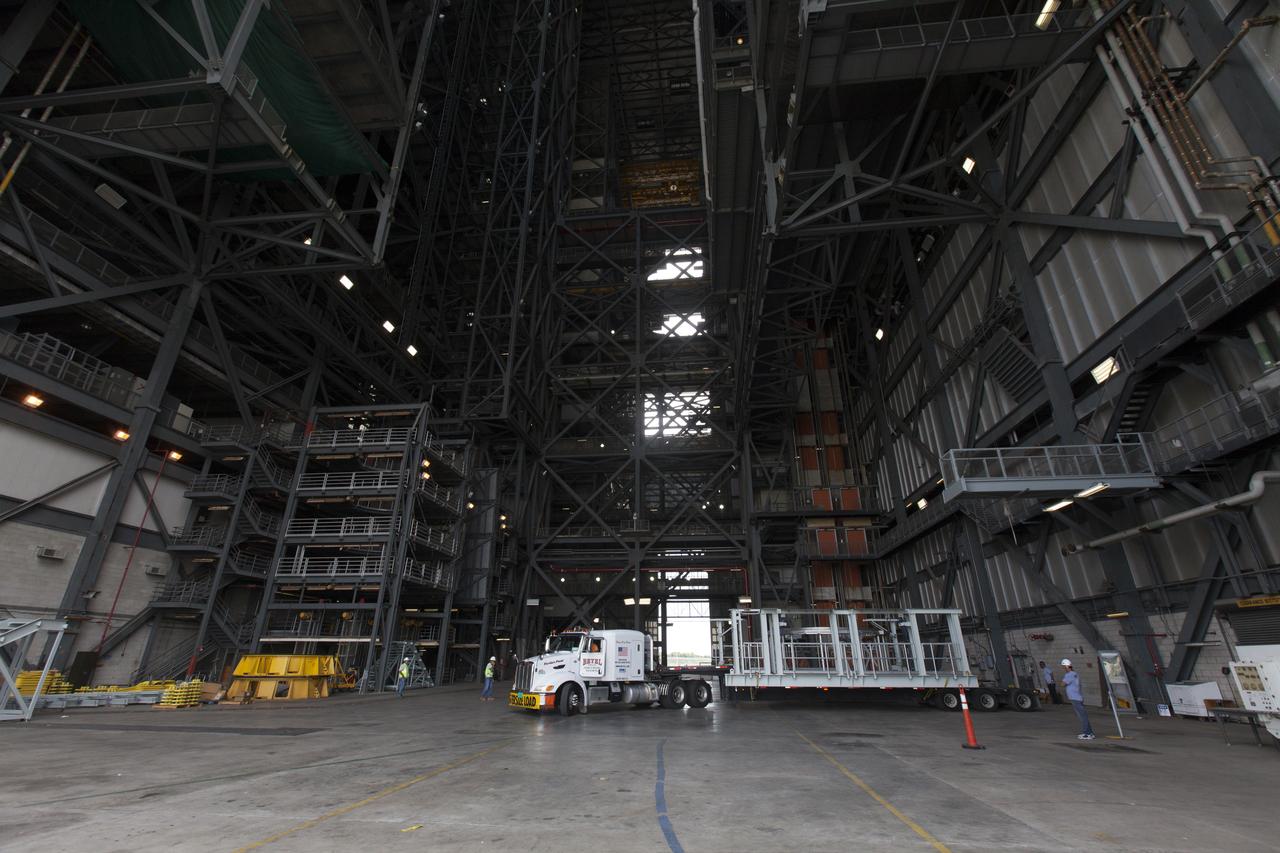
A flatbed truck carrying one of two new service platforms for NASA's Space Launch System booster engines arrives inside the Vehicle Assembly Building (VAB) at the agency's Kennedy Space Center in Florida. The platforms were transported from fabricator Met-Con Inc. in Cocoa, Florida. They will be stored in the VAB, where they will be used for processing and checkout of the engines for the rocket's twin five-segment solid rocket boosters for Exploration Mission-1. EM-1 will launch an uncrewed Orion spacecraft to a stable orbit beyond the Moon and bring it back to Earth for a splashdown in the Pacific Ocean.
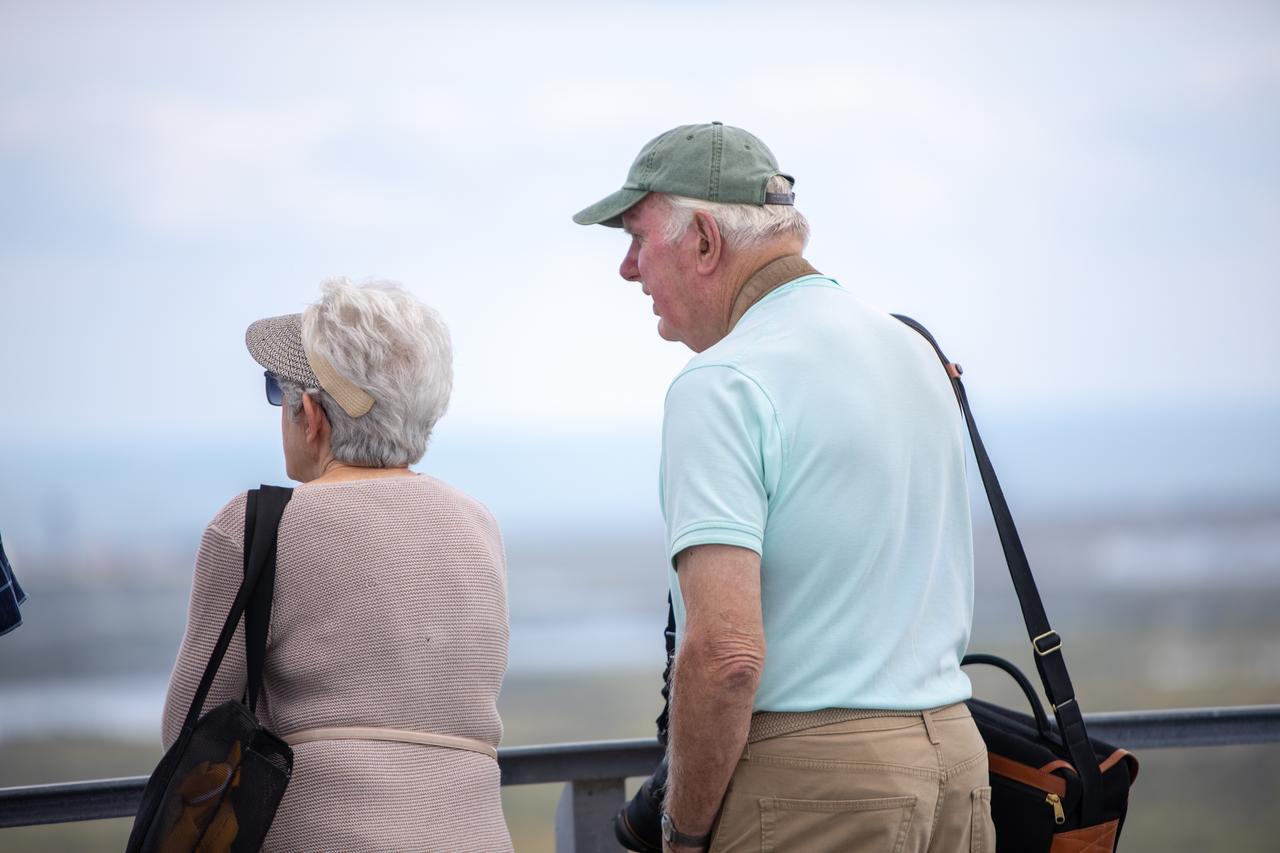
Dick Bergmann, at right, original lead designer for the Vehicle Assembly Building, stands on the roof of the iconic facility during a tour on Nov. 22, 2019 at NASA’s Kennedy Space Center in Florida. The VAB was recognized with the National Historic Civil Engineering Landmark award by the Florida Section American Society of Civil Engineers during a ceremony on Jan. 10, 2020. The VAB is the first building at Kennedy Space Center to earn this distinction. At the time of its completion, the 129-million-cubic-foot structure was the largest building in the world. Originally designed and built to accommodate the Saturn V/Apollo used in Project Apollo, the VAB was later modified for its role in the Space Shuttle Program.

KENNEDY SPACE CENTER, FLA. - The external tank in the Vehicle Assembly Building (VAB) is destacked from the solid rocket boosters. The tank and SRBs were configured for Atlantis and mission STS-114. The tank will remain in the VAB.
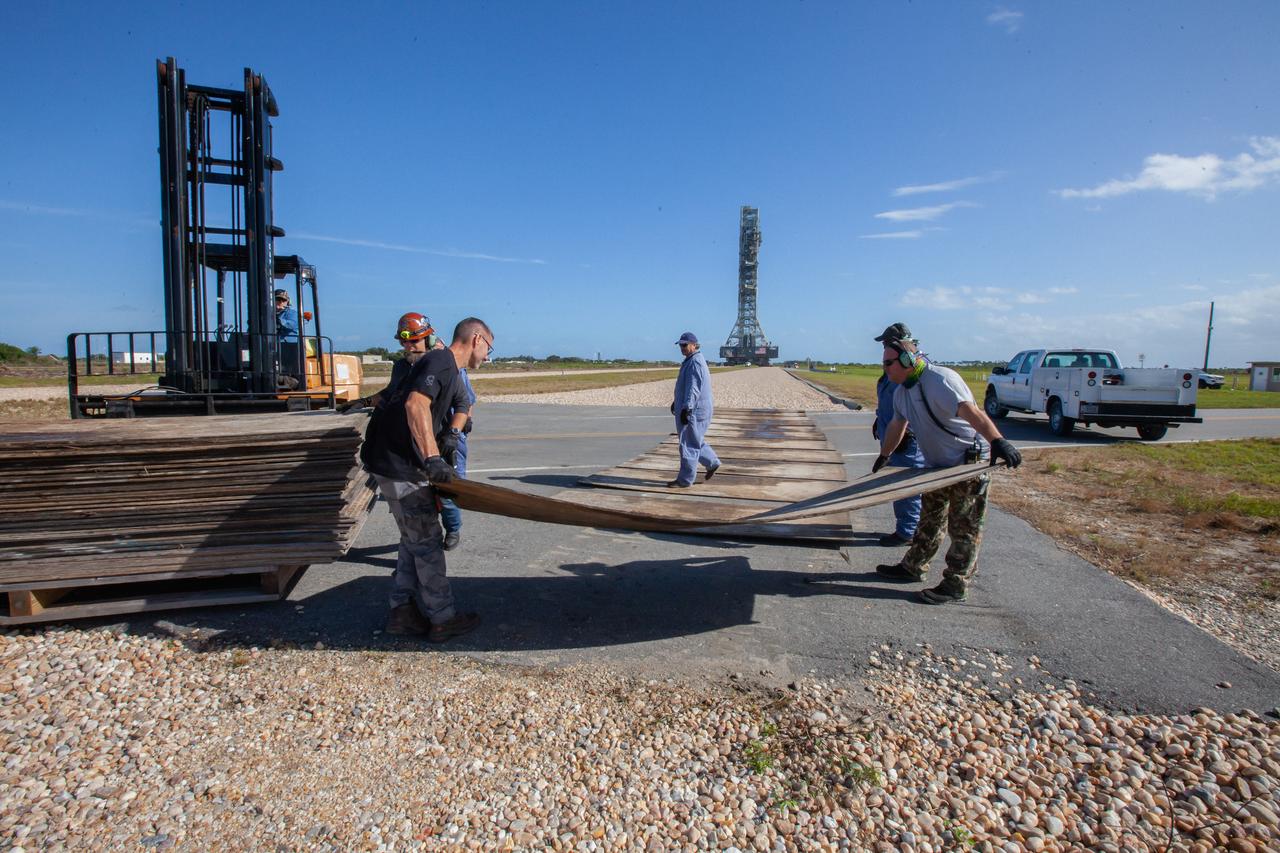
Kennedy Space Center employees lay out a path for NASA’s mobile launcher, carried atop the crawler-transporter 2, to continue its journey to the Vehicle Assembly Building (VAB) on Dec. 20, 2019. The mobile launcher returned to the VAB after spending months at the Florida spaceport’s Launch Pad 39B undergoing final validation and verification testing. Standing 380 feet tall, the mobile launcher – which will be used to assemble, process and launch the Space Launch System and Orion spacecraft – will remain inside the VAB until it is ready to return to the pad with the rocket and spacecraft on top for the “wet dress rehearsal” ahead of the Artemis I launch.

Family members of the original Vehicle Assembly Building (VAB) architect ride in an elevator during a tour of the iconic facility on Nov. 22, 2019 at NASA’s Kennedy Space Center in Florida. Among the visitors are Phil Moyer, in front, original project lead for the VAB; and Dick Bergmann, in the light green shirt, original lead designer for the VAB. The Florida Section American Society of Civil Engineers bestowed its National Historic Civil Engineering Landmark award to the facility. The VAB is the first building at Kennedy Space Center to earn this distinction. At the time of its completion, the 129-million-cubic-foot structure was the largest building in the world. Originally designed and built to accommodate the Saturn V/Apollo used in Project Apollo, the VAB was later modified for its role in the Space Shuttle Program.
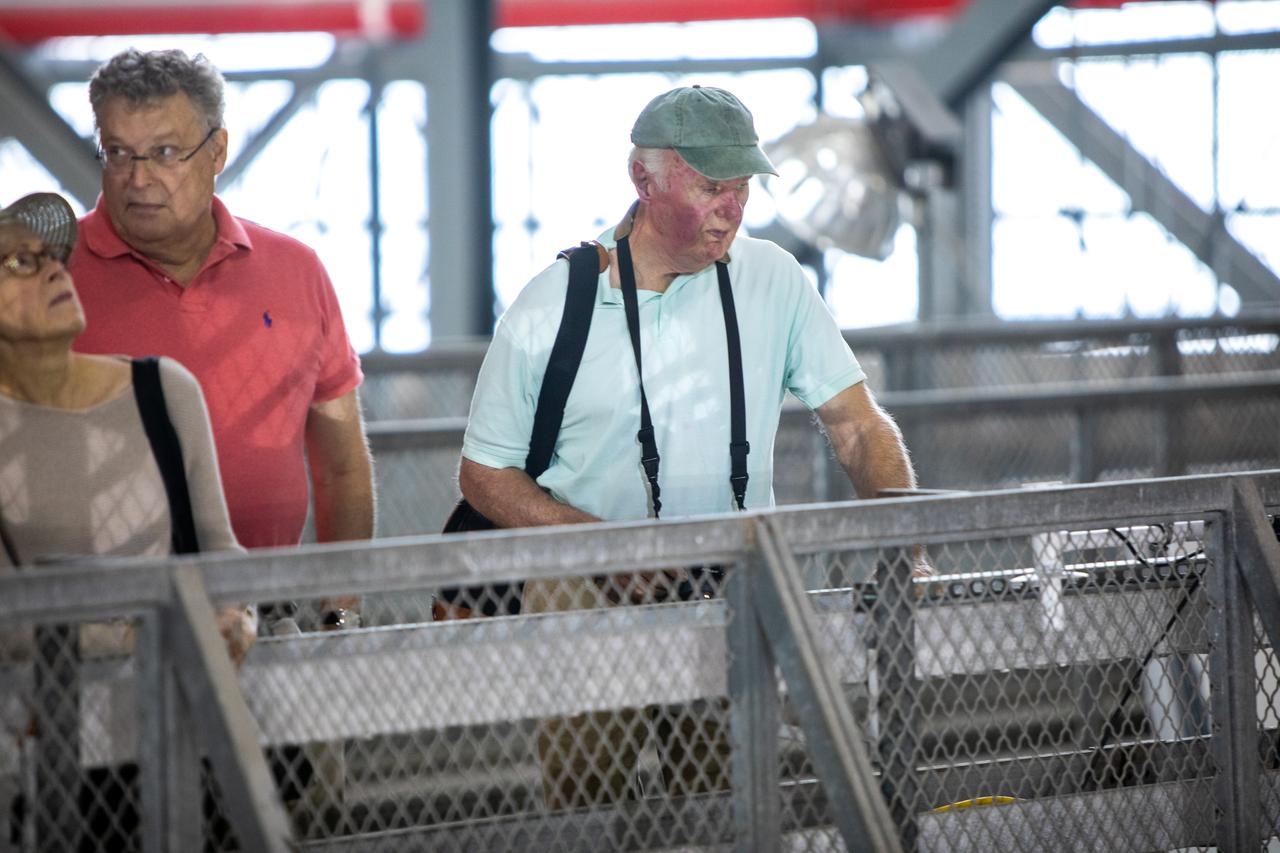
Dick Bergmann, at right, original lead designer for the Vehicle Assembly Building, tours the iconic facility on Nov. 22, 2019 at NASA’s Kennedy Space Center in Florida. Vehicle Assembly Building with the National Historic Civil Engineering Landmark award. The Florida Section American Society of Civil Engineers bestowed its National Historic Civil Engineering Landmark award during a ceremony on Jan. 10, 2020. The VAB is the first building at Kennedy Space Center to earn this distinction. At the time of its completion, the 129-million-cubic-foot structure was the largest building in the world. Originally designed and built to accommodate the Saturn V/Apollo used in Project Apollo, the VAB was later modified for its role in the Space Shuttle Program.
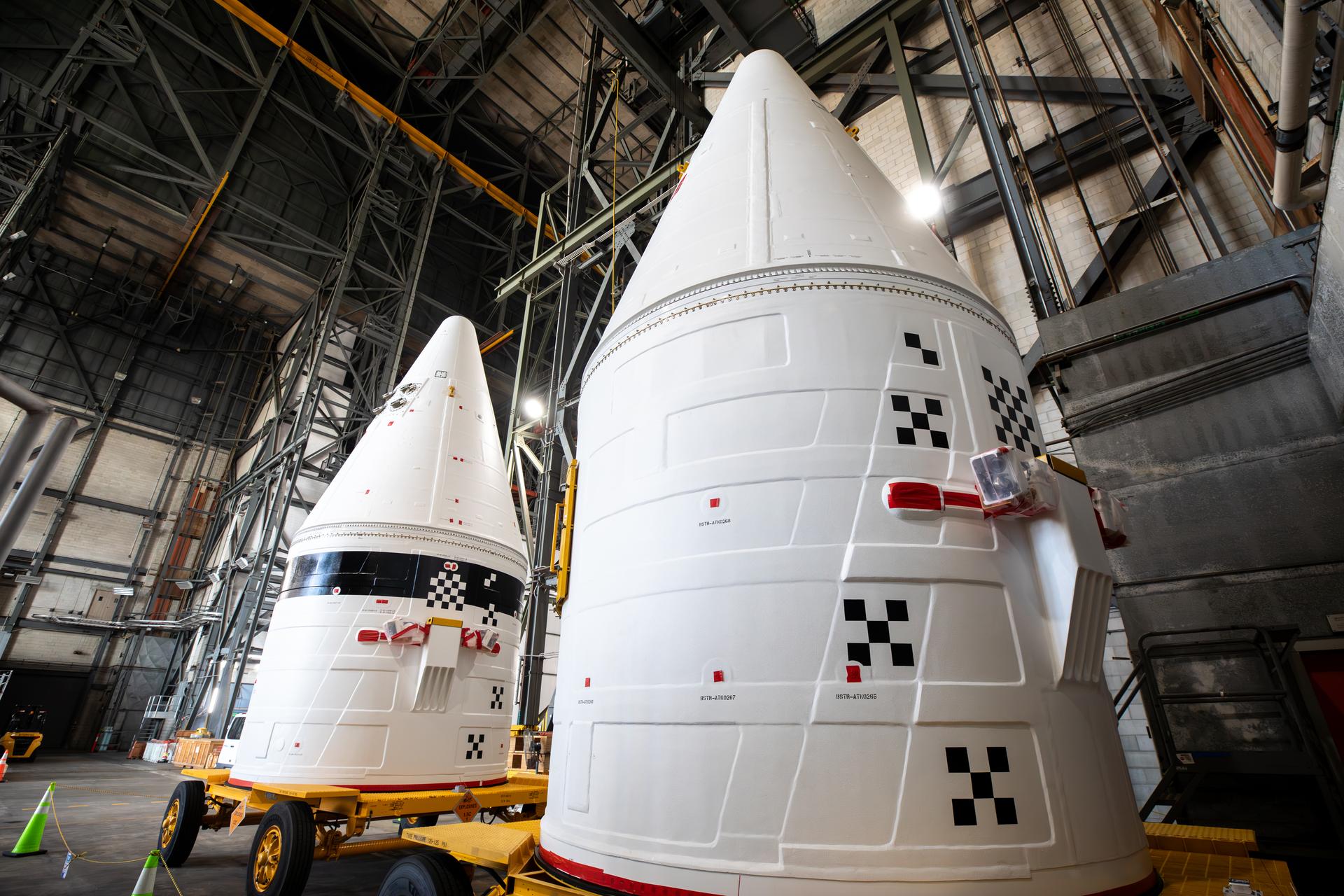
The left, with black stripe, and right aerodynamic forward assemblies for the twin SLS (Space Launch System) solid rocket boosters for Artemis III arrive at the Vehicle Assembly Building at NASA’s Kennedy Space Center in Florida on Thursday, Aug. 13, 2026. The nose cones will be integrated atop the SLS boosters to provide a smooth, pointed shape that allows the boosters to cut through the atmosphere efficiently, reducing drag and keeping the rocket stable during ascent. Artemis III will carry out a series of objectives in low Earth orbit designed to demonstrate critical systems needed for future lunar landings, beginning with Artemis IV.
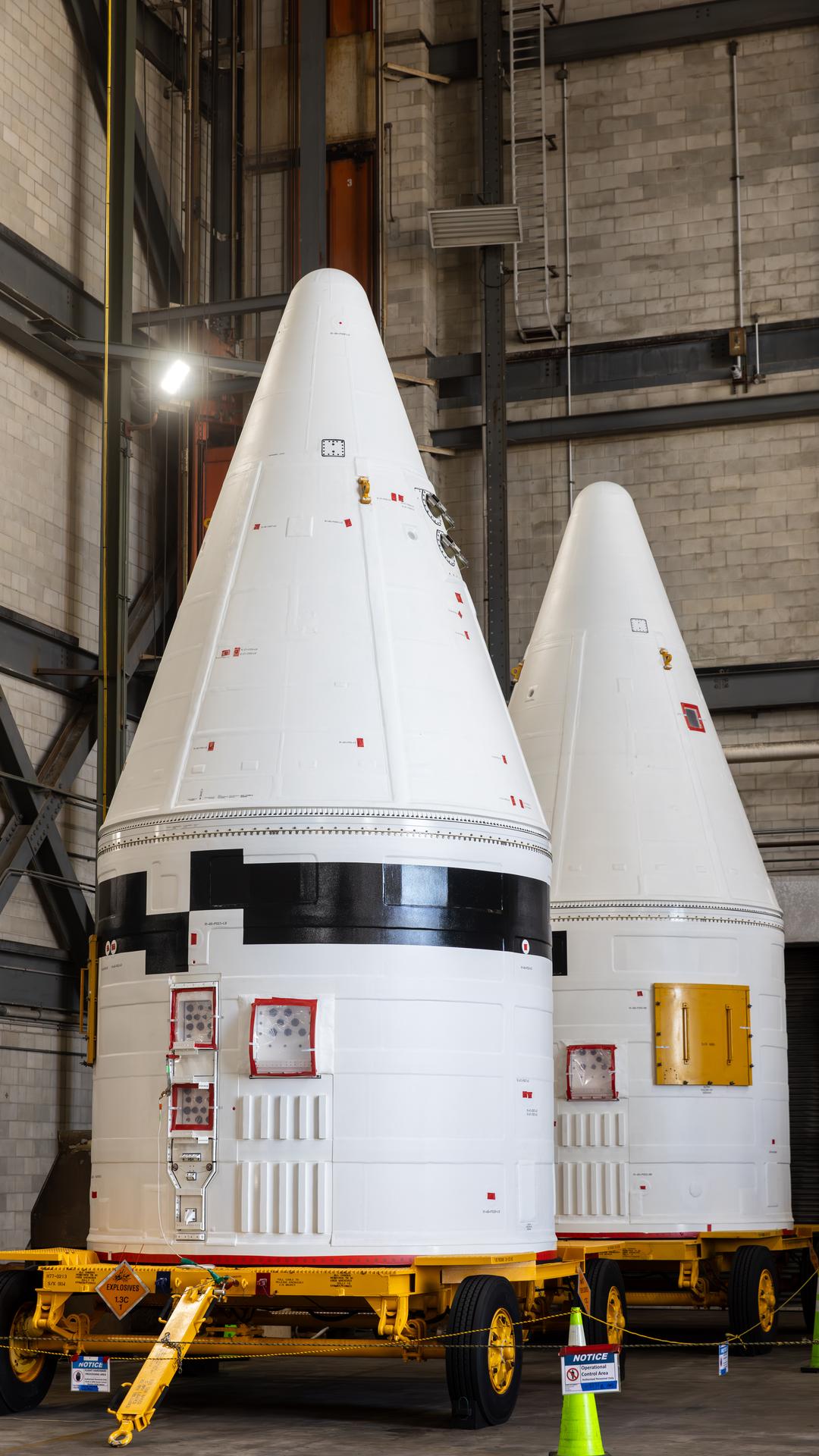
The left, with black stripe, and right aerodynamic forward assemblies for the twin SLS (Space Launch System) solid rocket boosters for Artemis III arrive at the Vehicle Assembly Building at NASA’s Kennedy Space Center in Florida on Thursday, Aug. 13, 2026. The nose cones will be integrated atop the SLS boosters to provide a smooth, pointed shape that allows the boosters to cut through the atmosphere efficiently, reducing drag and keeping the rocket stable during ascent. Artemis III will carry out a series of objectives in low Earth orbit designed to demonstrate critical systems needed for future lunar landings, beginning with Artemis IV.
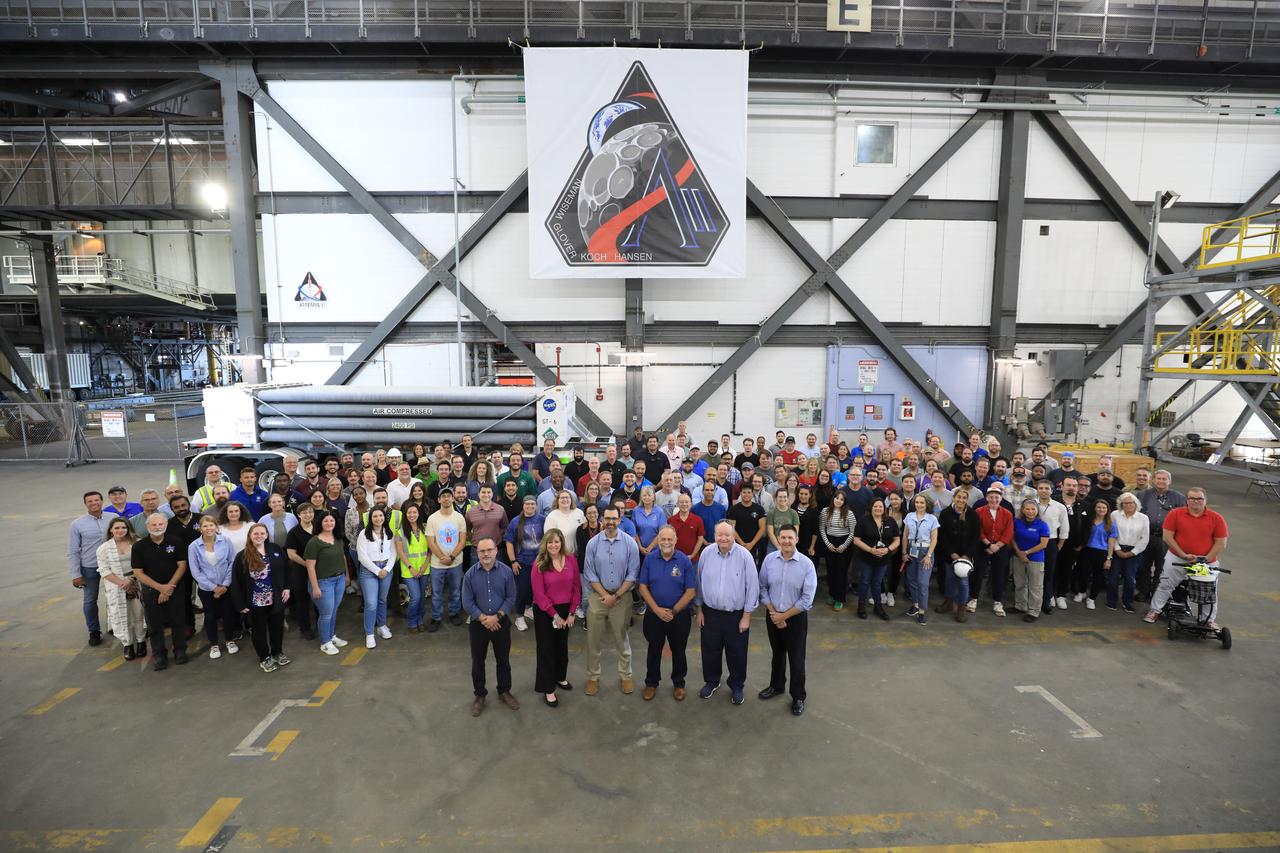
Members of NASA leadership, leadership with the agency’s Exploration Ground Systems Program, and contractor Amentum Services, Inc. leadership pose for a group photo underneath a banner displaying the Artemis II mission insignia outside High Bay 3 at the Vehicle Assembly Building at NASA’s Kennedy Space Center in Florida on Thursday, April 10, 2025. The design designates the mission as “AII,” signifying not only the second major flight of the Artemis campaign, but also an endeavor of discovery that seeks to explore for all and by all. Framed in Apollo 8’s famous Earthrise photo, the scene of the Earth and the Moon represents the dual nature of human spaceflight, both equally compelling: The Moon represents our exploration destination, focused on discovery of the unknown. The Earth represents home, focused on the perspective we gain when we look back at our shared planet and learn what it is to be uniquely human. The orbit around Earth highlights the ongoing exploration missions that have enabled Artemis to set sights on a long-term presence on the Moon and soon, Mars.
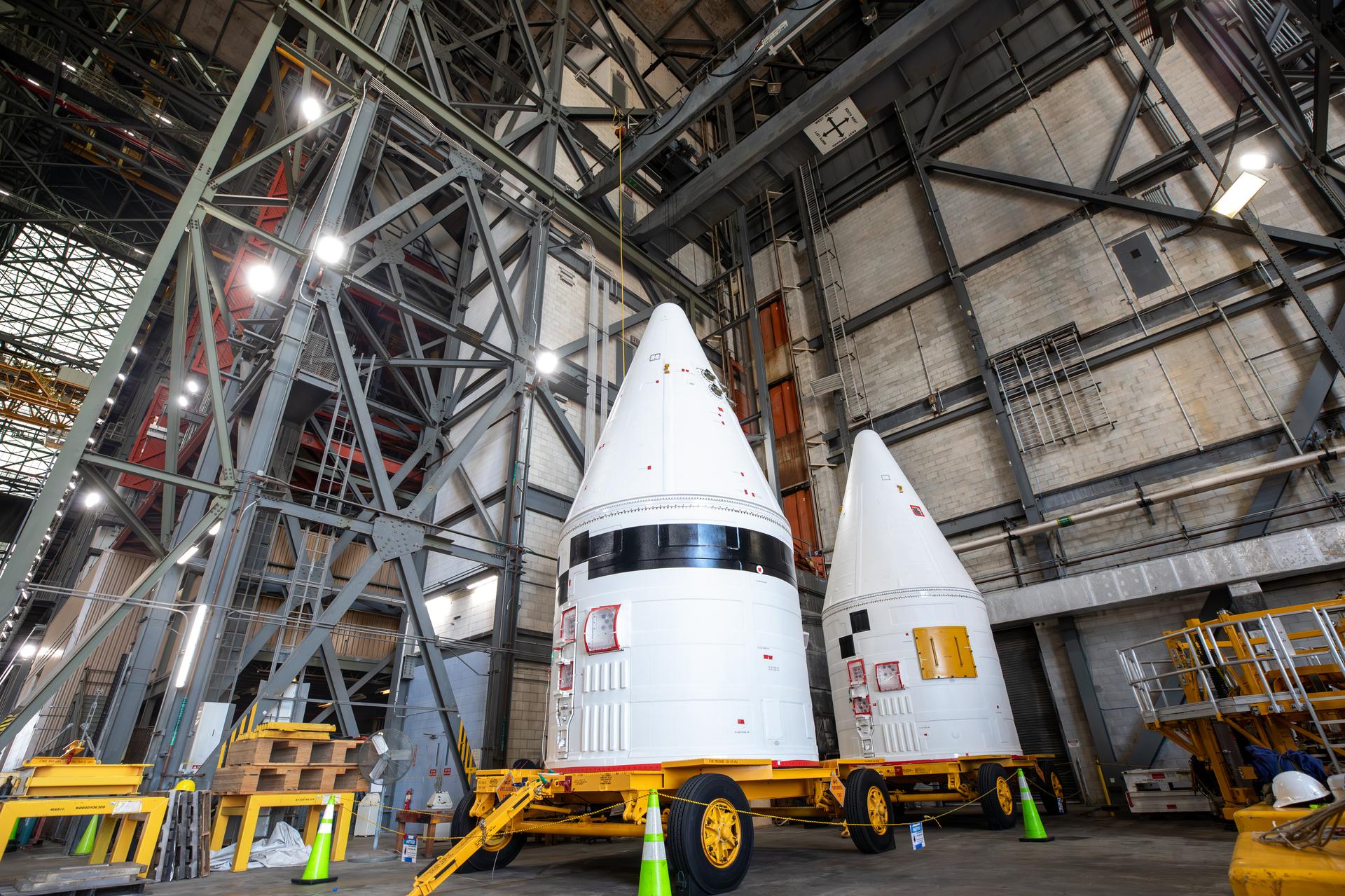
The left, with black stripe, and right aerodynamic forward assemblies for the twin SLS (Space Launch System) solid rocket boosters for Artemis III arrive at the Vehicle Assembly Building at NASA’s Kennedy Space Center in Florida on Thursday, Aug. 13, 2026. The nose cones will be integrated atop the SLS boosters to provide a smooth, pointed shape that allows the boosters to cut through the atmosphere efficiently, reducing drag and keeping the rocket stable during ascent. Artemis III will carry out a series of objectives in low Earth orbit designed to demonstrate critical systems needed for future lunar landings, beginning with Artemis IV.
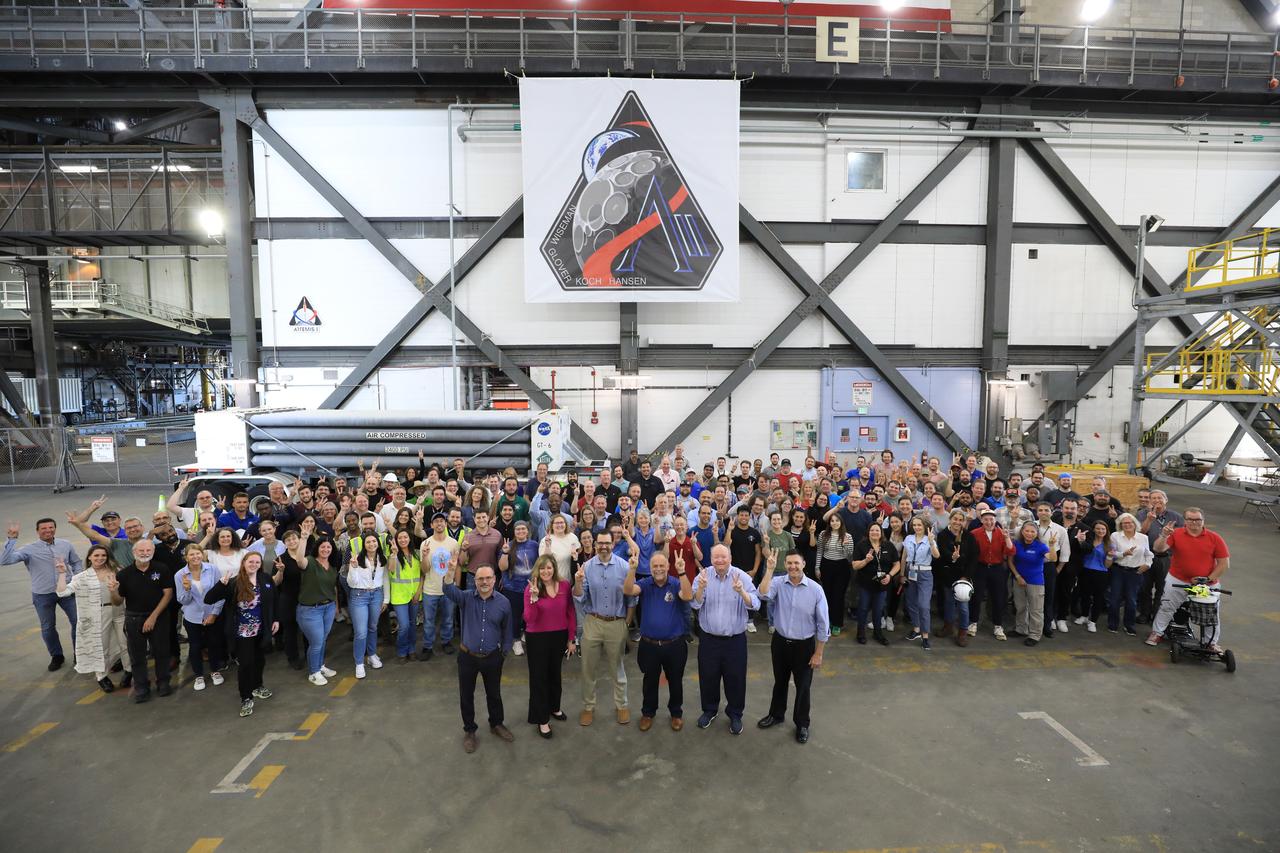
Members of NASA leadership, leadership with the agency’s Exploration Ground Systems Program, and contractor Amentum Services, Inc. leadership pose for a group photo underneath a banner displaying the Artemis II mission insignia outside High Bay 3 at the Vehicle Assembly Building at NASA’s Kennedy Space Center in Florida on Thursday, April 10, 2025. The design designates the mission as “AII,” signifying not only the second major flight of the Artemis campaign, but also an endeavor of discovery that seeks to explore for all and by all. Framed in Apollo 8’s famous Earthrise photo, the scene of the Earth and the Moon represents the dual nature of human spaceflight, both equally compelling: The Moon represents our exploration destination, focused on discovery of the unknown. The Earth represents home, focused on the perspective we gain when we look back at our shared planet and learn what it is to be uniquely human. The orbit around Earth highlights the ongoing exploration missions that have enabled Artemis to set sights on a long-term presence on the Moon and soon, Mars.
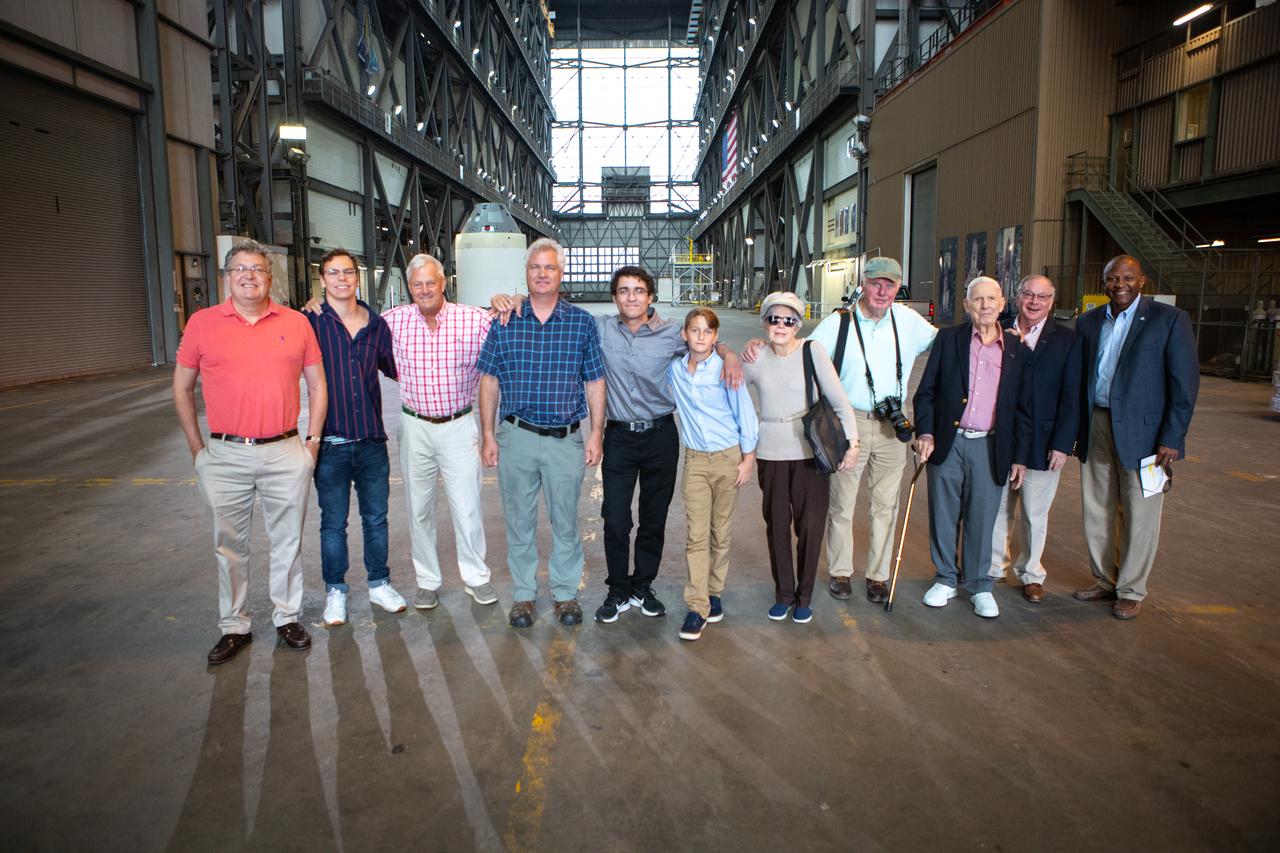
Phil Moyer, third from right, original project lead for the Vehicle Assembly Building (VAB); and Dick Bergmann, fourth from right, original lead designer for the VAB, tour the iconic facility with the families of the original architect on Nov. 22, 2019 at NASA’s Kennedy Space Center in Florida. At far right is Kelvin Manning, Kennedy’s associate director, technical. The Florida Section American Society of Civil Engineers bestowed the historic building with its National Historic Civil Engineering Landmark award during a ceremony on Jan. 10, 2020. The VAB is the first building at Kennedy Space Center to earn this distinction. At the time of its completion, the 129-million-cubic-foot structure was the largest building in the world. Originally designed and built to accommodate the Saturn V/Apollo used in Project Apollo, the VAB was later modified for its role in the Space Shuttle Program.
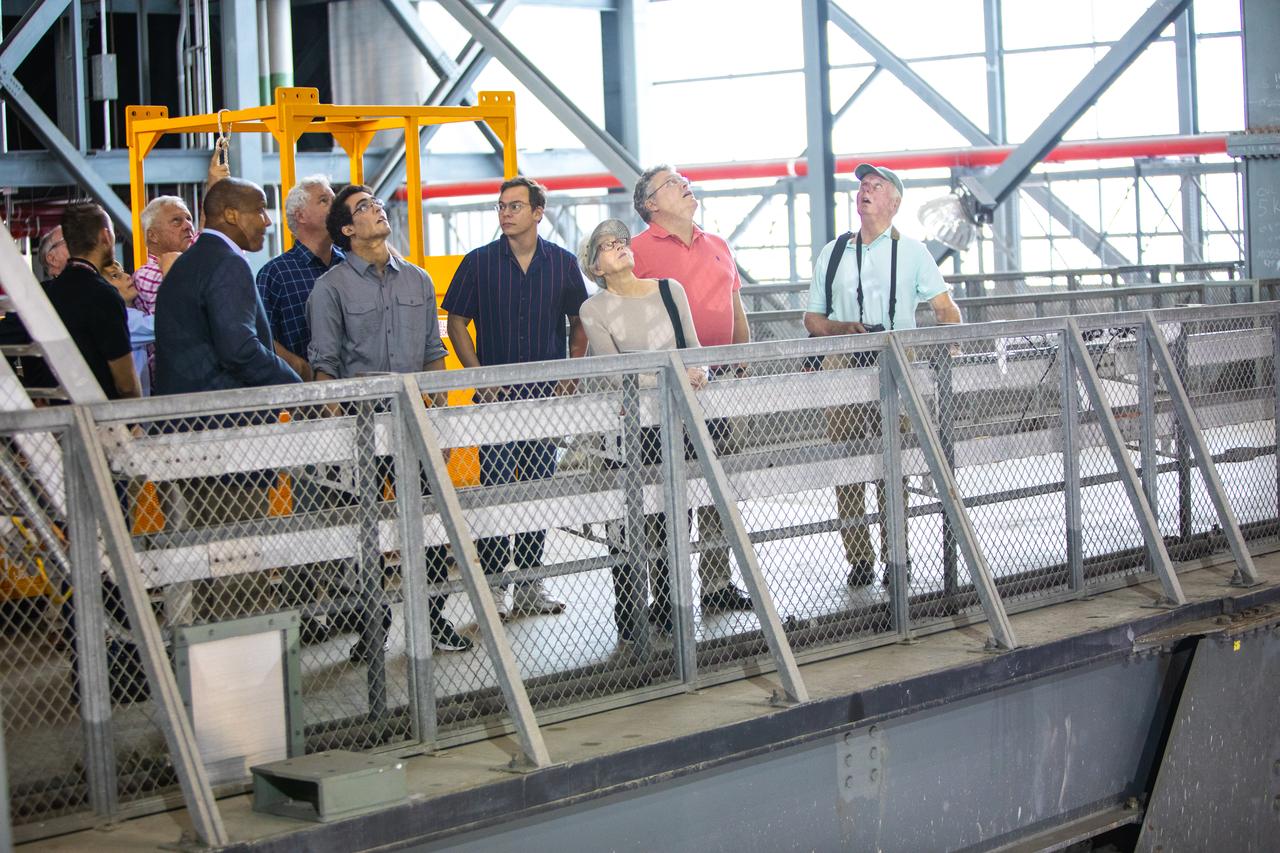
Family members of the original Vehicle Assembly Building (VAB) architect tour the iconic facility on Nov. 22, 2019 at NASA’s Kennedy Space Center in Florida. Among the visitors are Dick Bergmann, far right, original lead designer for the VAB. In view, far left, is Kelvin Manning, Kennedy’s associate director, technical. The Florida Section American Society of Civil Engineers bestowed its National Historic Civil Engineering Landmark award to the facility. The VAB is the first building at Kennedy Space Center to earn this distinction. At the time of its completion, the 129-million-cubic-foot structure was the largest building in the world. Originally designed and built to accommodate the Saturn V/Apollo used in Project Apollo, the VAB was later modified for its role in the Space Shuttle Program.
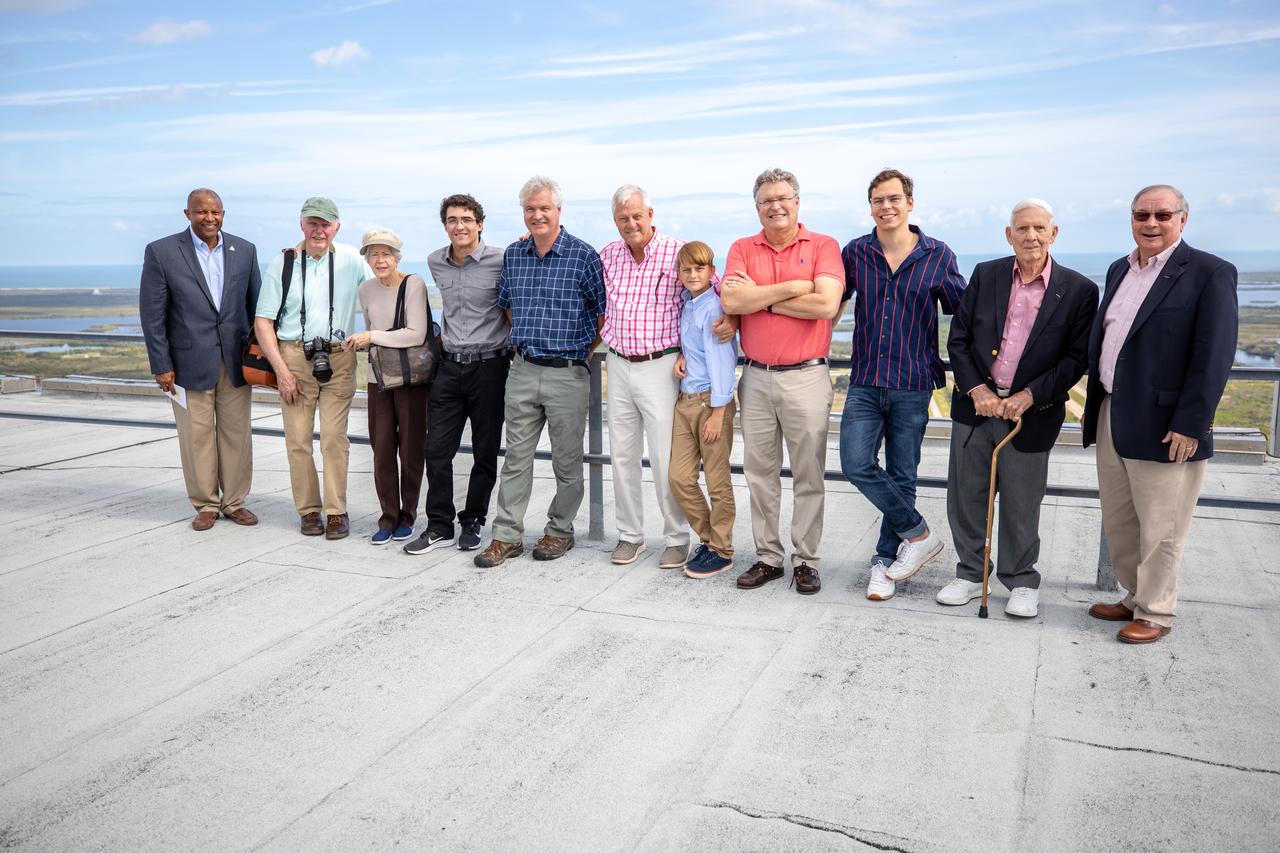
Dick Bergmann, second from left, original lead designer for the Vehicle Assembly Building (VAB), and Phil Moyer, second from right, original project lead, are on the roof of the VAB during a tour of Kennedy Space Center in Florida with descendants of Max Urbahn, the original architect, on Nov. 22, 2019. At far left is Kelvin Manning, Kennedy associate director, technical. The Florida Section American Society of Civil Engineers bestowed its National Historic Civil Engineering Landmark award to the facility. The VAB is the first building at Kennedy Space Center to earn this distinction. At the time of its completion, the 129-million-cubic-foot structure was the largest building in the world. Originally designed and built to accommodate the Saturn V/Apollo used in Project Apollo, the VAB was later modified for its role in the Space Shuttle Program.
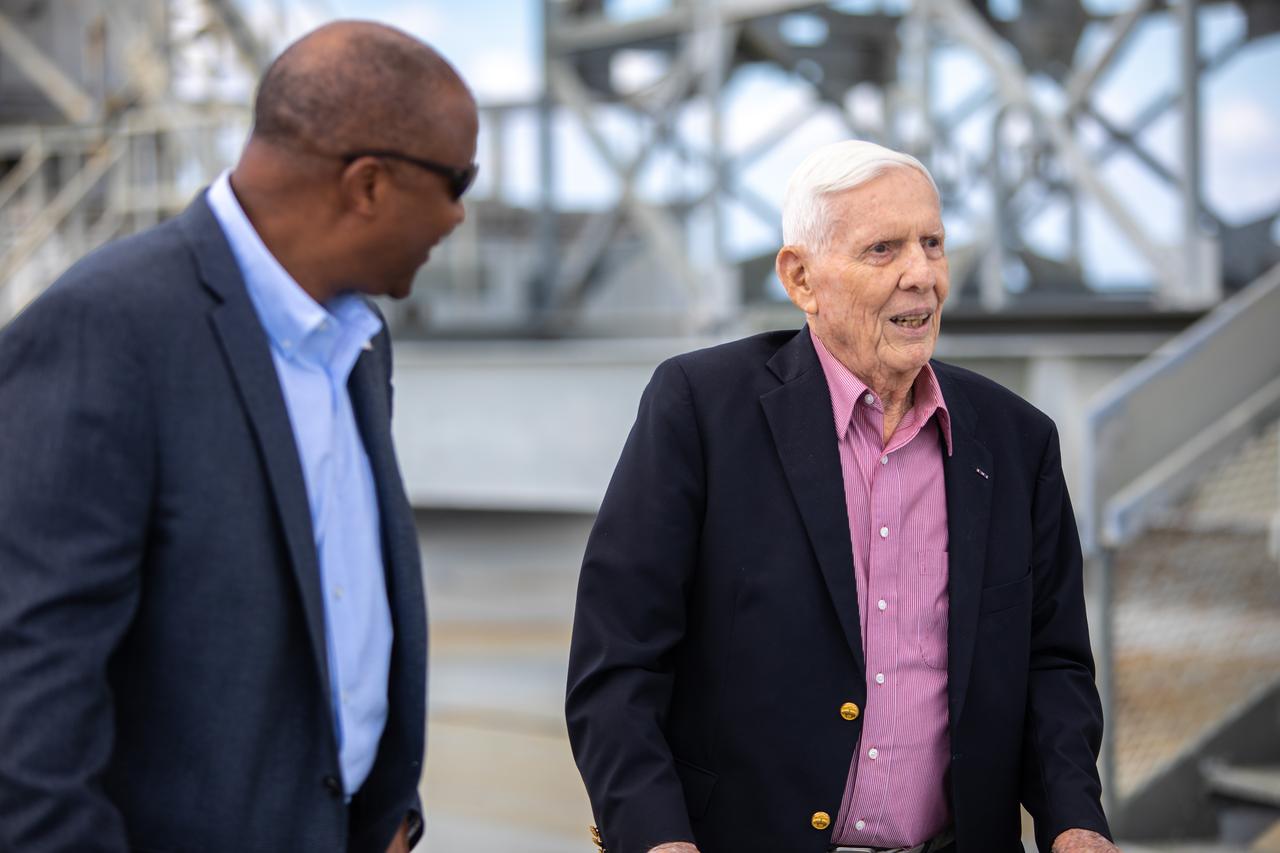
Phil Moyer, at right, original project lead for the Vehicle Assembly Building (VAB), tours the iconic facility on Nov. 22, 2019 at NASA’s Kennedy Space Center in Florida. At left is Kelvin Manning, Kennedy’s associate director, technical. The VAB was recognized with the National Historic Civil Engineering Landmark award by the Florida Section American Society of Civil Engineers during a ceremony on Jan. 10, 2020. The VAB is the first building at Kennedy Space Center to earn this distinction. At the time of its completion, the 129-million-cubic-foot structure was the largest building in the world. Originally designed and built to accommodate the Saturn V/Apollo used in Project Apollo, the VAB was later modified for its role in the Space Shuttle Program.
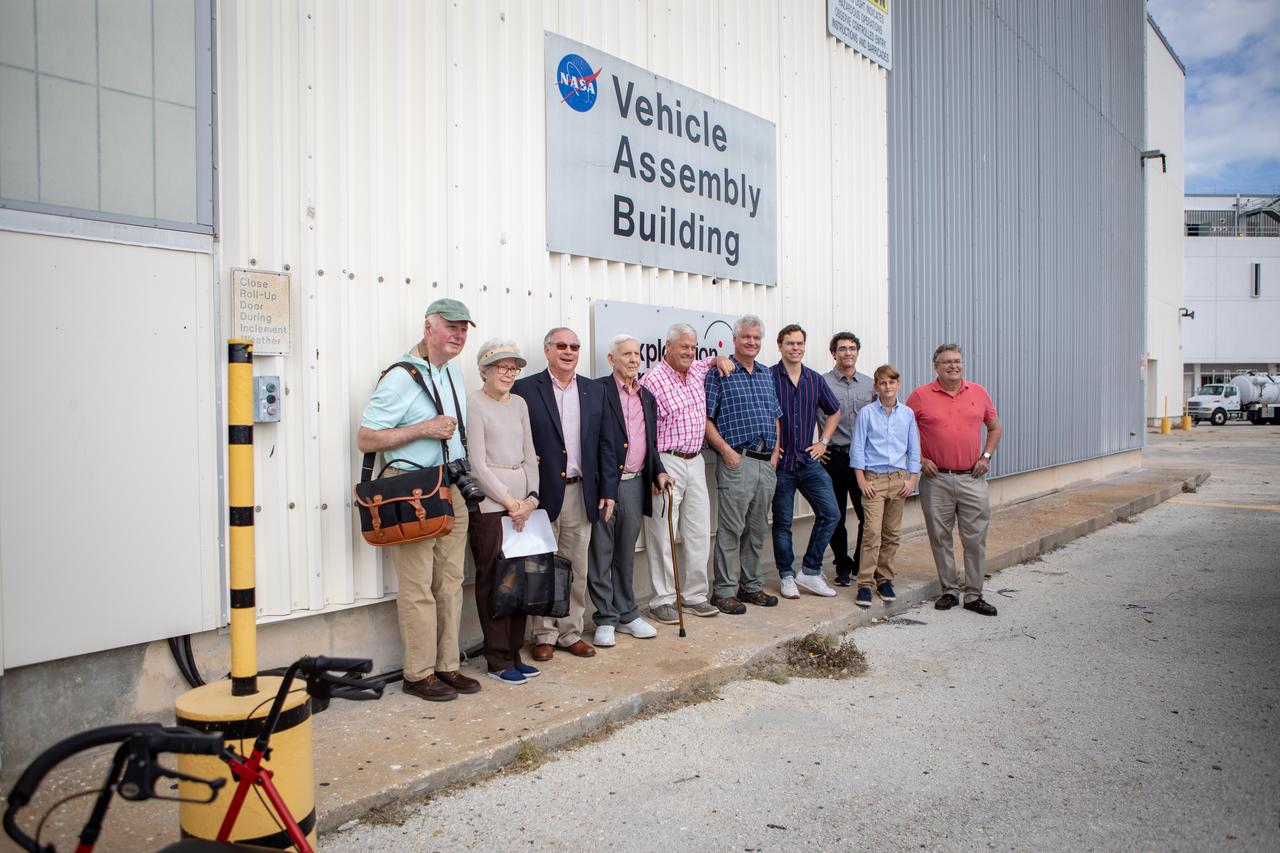
Dick Bergmann, far left, original lead designer for the Vehicle Assembly Building (VAB); and Phil Moyer, fourth from left, original project lead for the VAB, tour the iconic facility at Kennedy Space Center in Florida with descendants of Max Urbahn, the original architect, on Nov. 22, 2019. The Florida Section American Society of Civil Engineers bestowed its National Historic Civil Engineering Landmark award to the facility. The VAB is the first building at Kennedy Space Center to earn this distinction. At the time of its completion, the 129-million-cubic-foot structure was the largest building in the world. Originally designed and built to accommodate the Saturn V/Apollo used in Project Apollo, the VAB was later modified for its role in the Space Shuttle Program.
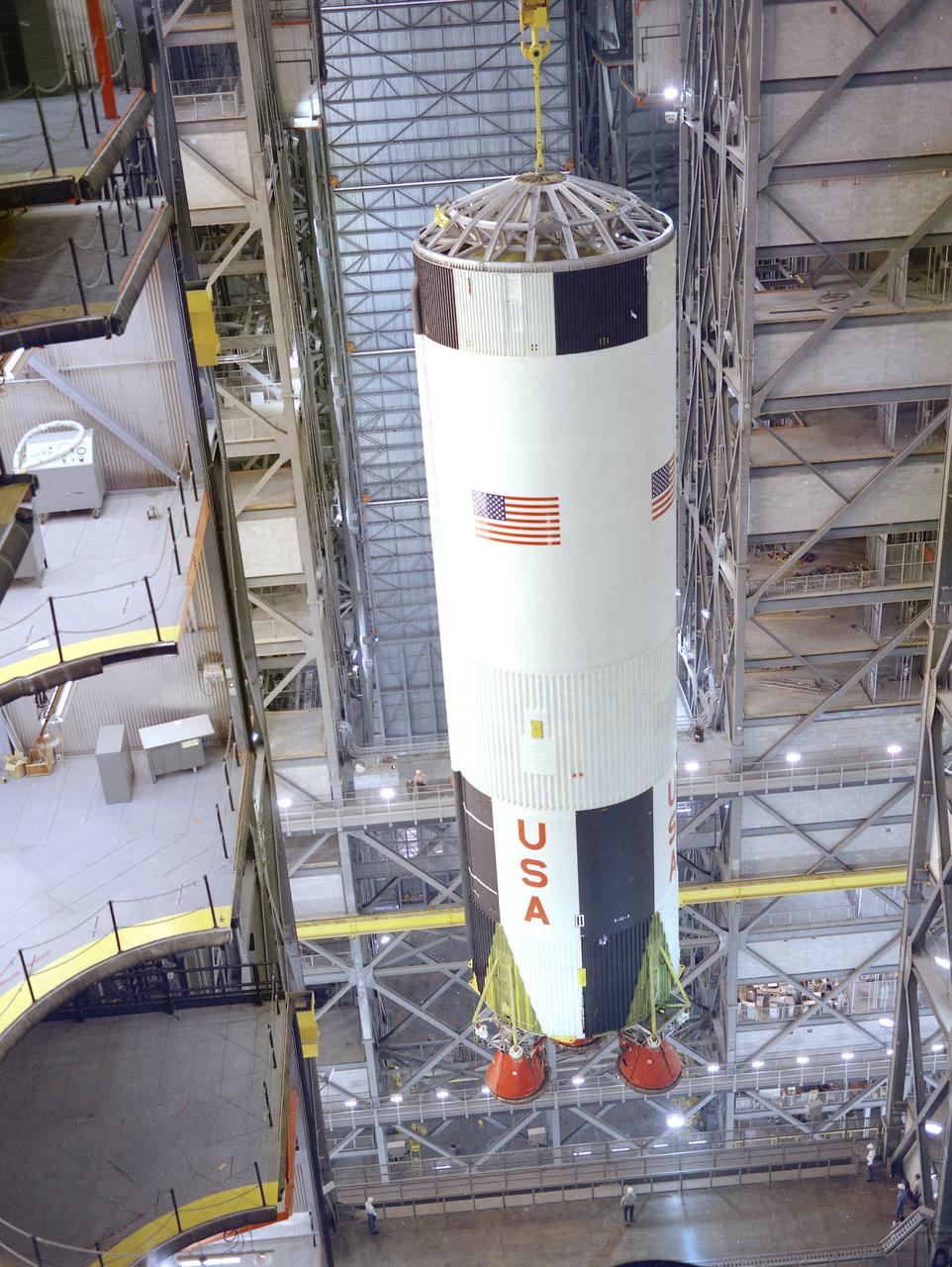
The S-IC stage being erected for the final assembly of the Saturn V launch vehicle for the Apollo 8 mission (AS-503), is photographed in the Vehicle Assembly Building (VAB) high bay at the Kennedy Space Center. The Apollo 8 mission was the first Saturn V manned mission with astronauts Frank Borman, James A. Lovell, and William Anders. They escaped Earth's gravity and traveled to lunar vicinity. The launch of Apollo 8 occurred on December 21, 1968.
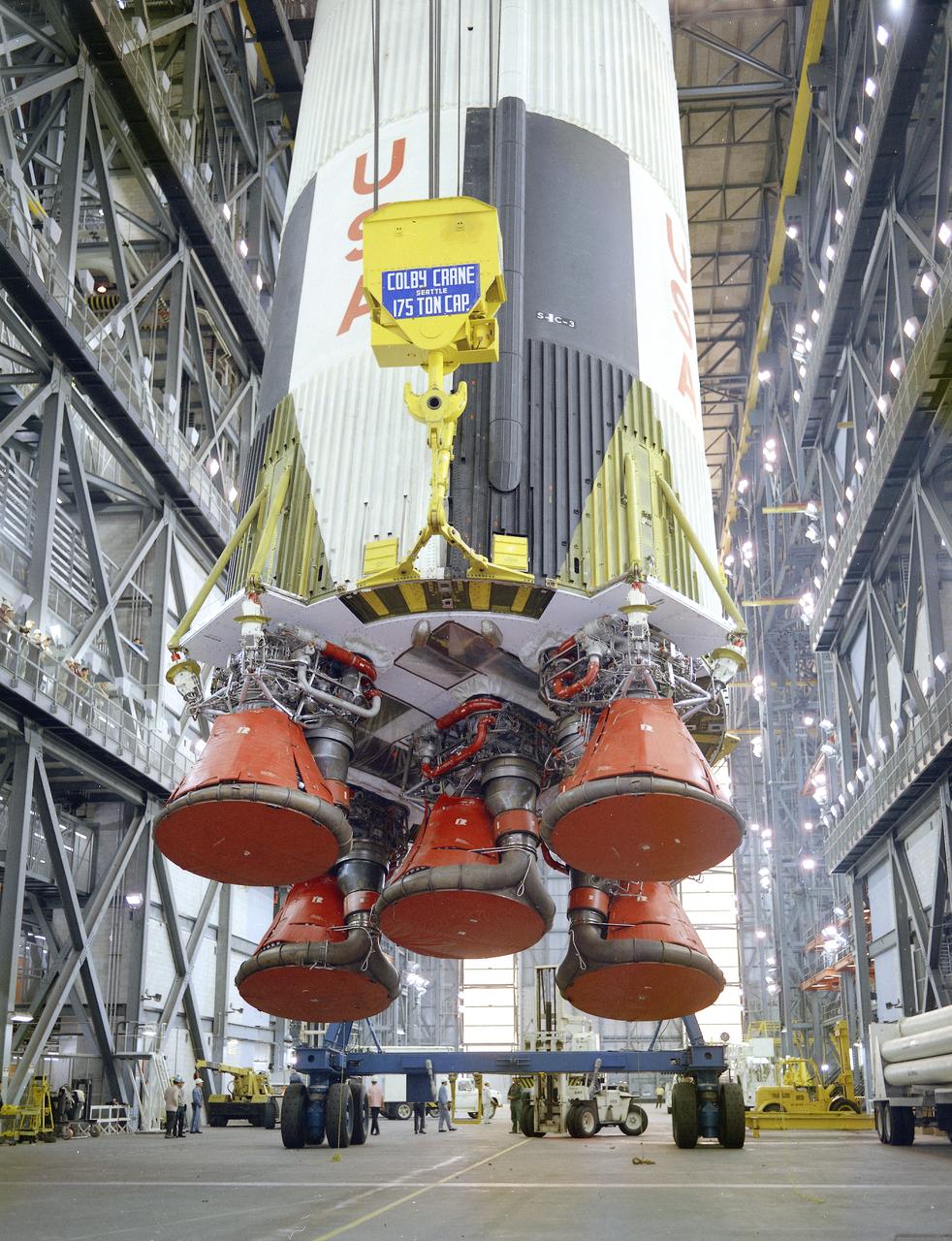
The S-IC stage being erected for the final assembly of the Saturn V launch vehicle for the Apollo 8 mission (AS-503), is photographed in the Vehicle Assembly Building (VAB) high bay at the Kennedy Space Center. The Apollo 8 mission was the first Saturn V manned mission with astronauts Frank Borman, James A. Lovell, and William Anders. They escaped Earth's gravity and traveled to lunar vicinity. The launch of Apollo 8 occurred on December 21, 1968.

Painting of the NASA logo, also called the meatball, continues on the 525-foot-tall Vehicle Assembly Building (VAB) at the agency’s Kennedy Space Center in Florida on June 23, 2020. HM2 and H.I.S. Painting of Titusville, Florida, are repainting the meatball and the American Flag on the iconic building. The VAB was last painted in 2007 when the repairs were completed after 2004 Hurricanes Frances and Jeanne tore 845 panels off the building. It will take over 500 gallons of paint to paint the 209 X 110-foot flag and the 110’ X 132’ meatball.

Painting of the NASA logo, also called the meatball, continues on the 525-foot-tall Vehicle Assembly Building (VAB) at the agency’s Kennedy Space Center in Florida on June 23, 2020. HM2 and H.I.S. Painting of Titusville, Florida, are repainting the meatball and the American Flag on the iconic building. The VAB was last painted in 2007 when the repairs were completed after 2004 Hurricanes Frances and Jeanne tore 845 panels off the building. It will take over 500 gallons of paint to paint the 209 X 110-foot flag and the 110’ X 132’ meatball.