
CAPE CANAVERAL, Fla. – During a news conference at NASA's Kennedy Space Center in Florida, agency and contractor officials discussed preparations for the launch of NASA's Tracking and Data Relay Satellite, or TDRS-L, spacecraft. Participants included Vernon Thorp, program manager for NASA Missions with United Launch Alliance in Denver, Colo. The TDRS-L spacecraft is the second of three new satellites designed to ensure vital operational continuity for NASA by expanding the lifespan of the Tracking and Data Relay Satellite System TDRSS fleet, which consists of eight satellites in geosynchronous orbit. The spacecraft provide tracking, telemetry, command and high bandwidth data return services for numerous science and human exploration missions orbiting Earth. These include NASA's Hubble Space Telescope and the International Space Station. TDRS-L has a high-performance solar panel designed for more spacecraft power to meet the growing S-band communications requirements. TDRSS is one of NASA Space Communication and Navigation’s SCaN three networks providing space communications to NASA’s missions. For more information more about TDRS-L, visit: http://www.nasa.gov/tdrs To learn more about SCaN, visit: www.nasa.gov/scan Photo credit: NASA/Frankie Martin

CAPE CANAVERAL, Fla. – During a news conference at NASA's Kennedy Space Center in Florida, agency and contractor officials discussed preparations for the launch of NASA's Tracking and Data Relay Satellite, or TDRS-L, spacecraft. Participants included Tim Dunn, NASA launch director at Kennedy, left, and Vernon Thorp, program manager for NASA Missions with United Launch Alliance in Denver, Colo. The TDRS-L spacecraft is the second of three new satellites designed to ensure vital operational continuity for NASA by expanding the lifespan of the Tracking and Data Relay Satellite System TDRSS fleet, which consists of eight satellites in geosynchronous orbit. The spacecraft provide tracking, telemetry, command and high bandwidth data return services for numerous science and human exploration missions orbiting Earth. These include NASA's Hubble Space Telescope and the International Space Station. TDRS-L has a high-performance solar panel designed for more spacecraft power to meet the growing S-band communications requirements. TDRSS is one of NASA Space Communication and Navigation’s SCaN three networks providing space communications to NASA’s missions. For more information more about TDRS-L, visit: http://www.nasa.gov/tdrs To learn more about SCaN, visit: www.nasa.gov/scan Photo credit: NASA/Frankie Martin
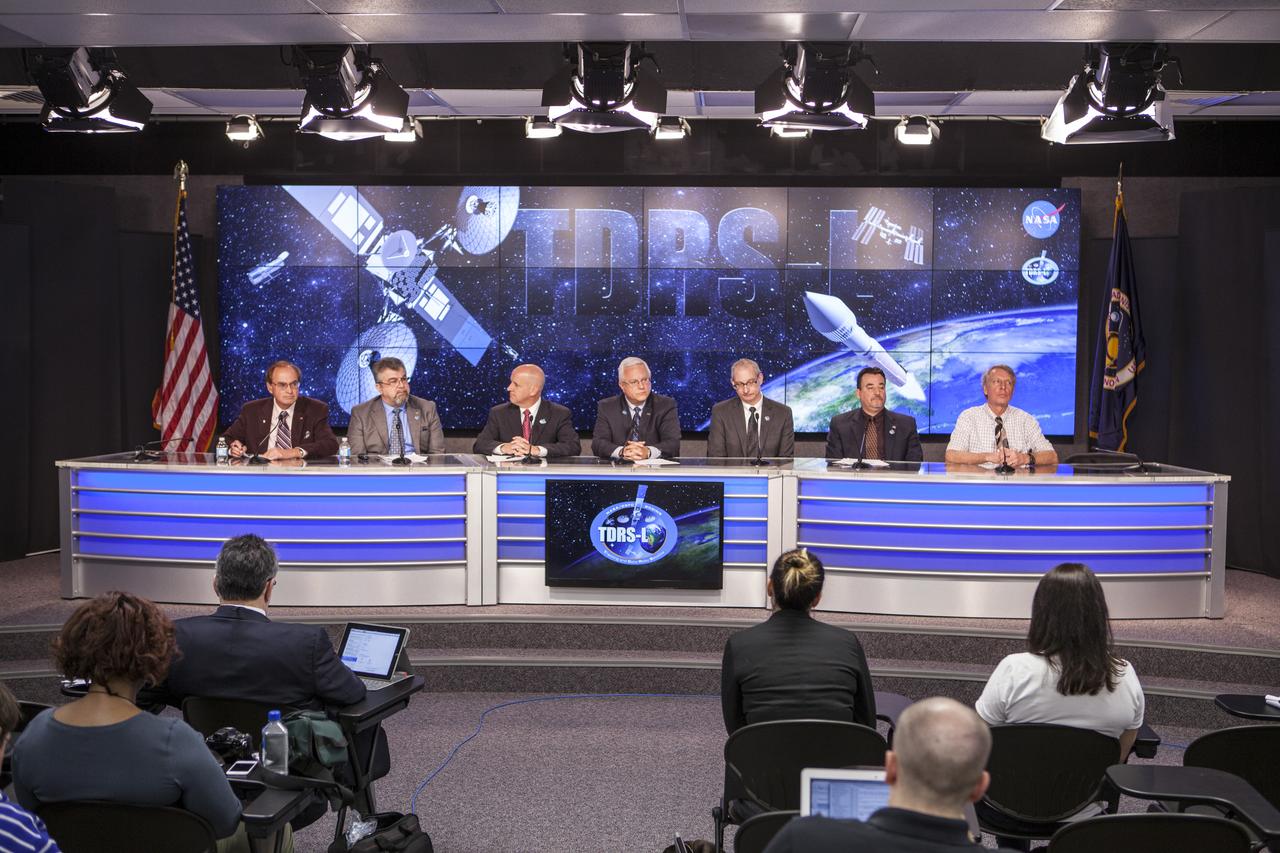
CAPE CANAVERAL, Fla. –During a news conference at NASA's Kennedy Space Center in Florida, agency and contractor officials discussed preparations for the launch of NASA's Tracking and Data Relay Satellite, or TDRS-L, spacecraft. Participating in the briefing, from the left, are George Diller of NASA Public Affairs, Badri Younes, deputy associate administrator, Space Communications and Navigation SCaN NASA Human Exploration and Operations Mission Directorate at NASA Headquarters in Washington D.C., Tim Dunn, NASA launch director at Kennedy, Vernon Thorp, program manager for NASA Missions with United Launch Alliance in Denver, Colo., Jeffrey Gramling, NASA's TDRS-L project manager at the Goddard Space Flight Center in Greenbelt, Md., Andy Kopito, Civil Space Programs director for Boeing Space & Intelligence Systems in El Segundo, Calif., and Clay Flinn, launch weather officer for the 45th Weather Squadron at Cape Canaveral Air Force Station, Fla. The TDRS-L spacecraft is the second of three new satellites designed to ensure vital operational continuity for NASA by expanding the lifespan of the Tracking and Data Relay Satellite System TDRSS fleet, which consists of eight satellites in geosynchronous orbit. The spacecraft provide tracking, telemetry, command and high bandwidth data return services for numerous science and human exploration missions orbiting Earth. These include NASA's Hubble Space Telescope and the International Space Station. TDRS-L has a high-performance solar panel designed for more spacecraft power to meet the growing S-band communications requirements. TDRSS is one of NASA Space Communication and Navigation’s SCaN three networks providing space communications to NASA’s missions. For more information more about TDRS-L, visit: http://www.nasa.gov/tdrs To learn more about SCaN, visit: www.nasa.gov/scan Photo credit: NASA/Frankie Martin
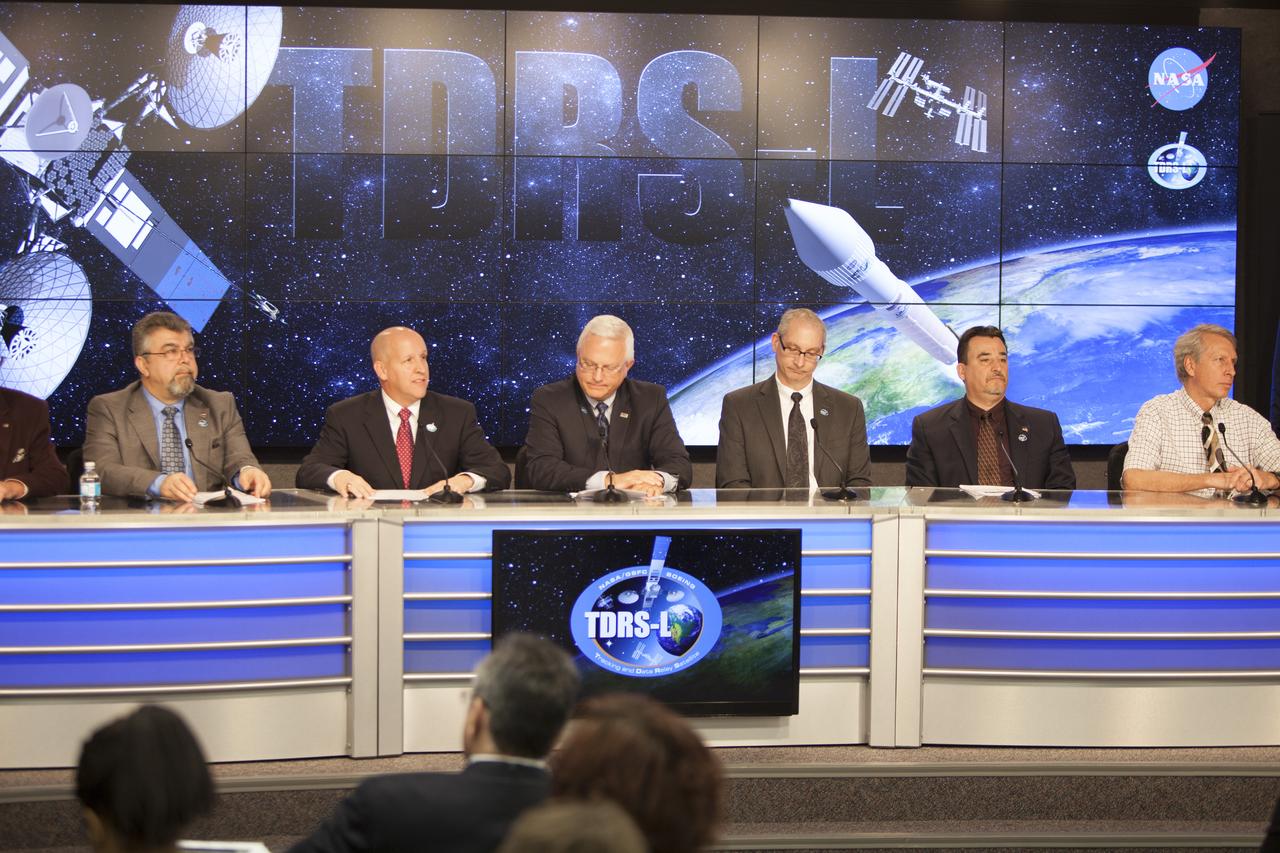
CAPE CANAVERAL, Fla. –During a news conference at NASA's Kennedy Space Center in Florida, agency and contractor officials discussed preparations for the launch of NASA's Tracking and Data Relay Satellite, or TDRS-L, spacecraft. Participating in the briefing, from the left, are Badri Younes, deputy associate administrator, Space Communications and Navigation SCaN NASA Human Exploration and Operations Mission Directorate at NASA Headquarters in Washington D.C., Tim Dunn, NASA launch director at Kennedy, Vernon Thorp, program manager for NASA Missions with United Launch Alliance in Denver, Colo., Jeffrey Gramling, NASA's TDRS-L project manager at the Goddard Space Flight Center in Greenbelt, Md., Andy Kopito, Civil Space Programs director for Boeing Space & Intelligence Systems in El Segundo, Calif., and Clay Flinn, launch weather officer for the 45th Weather Squadron at Cape Canaveral Air Force Station, Fla. The TDRS-L spacecraft is the second of three new satellites designed to ensure vital operational continuity for NASA by expanding the lifespan of the Tracking and Data Relay Satellite System TDRSS fleet, which consists of eight satellites in geosynchronous orbit. The spacecraft provide tracking, telemetry, command and high bandwidth data return services for numerous science and human exploration missions orbiting Earth. These include NASA's Hubble Space Telescope and the International Space Station. TDRS-L has a high-performance solar panel designed for more spacecraft power to meet the growing S-band communications requirements. TDRSS is one of NASA Space Communication and Navigation’s SCaN three networks providing space communications to NASA’s missions. For more information more about TDRS-L, visit: http://www.nasa.gov/tdrs To learn more about SCaN, visit: www.nasa.gov/scan Photo credit: NASA/Frankie Martin
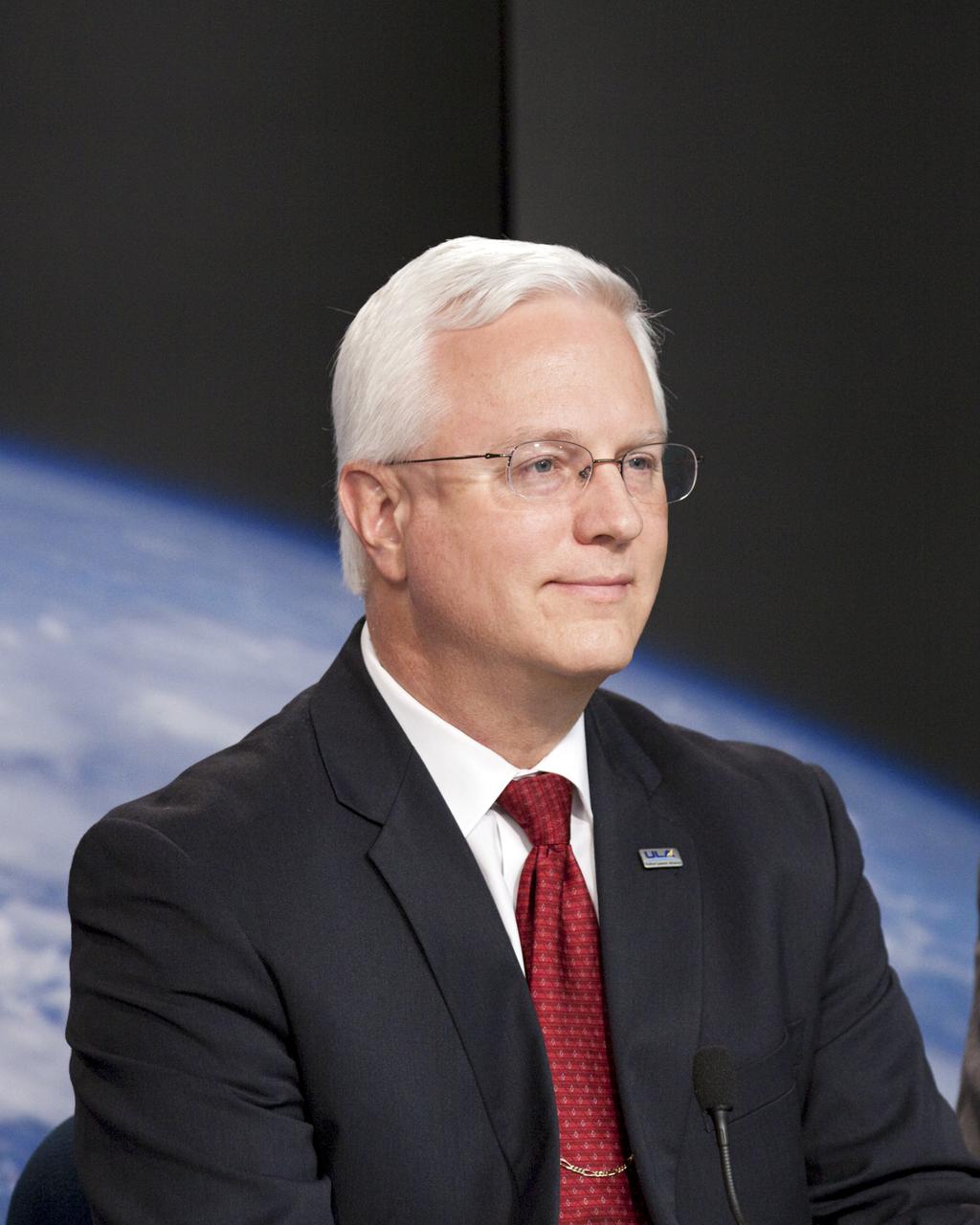
CAPE CANAVERAL, Fla. –- At a news conference, NASA and United Launch Alliance officials discussed preparations for the planned launch of NASA's Tracking and Data Relay Satellite, TDRS-K, atop an Atlas V rocket. Among those participating in the briefing is Vernon Thorp, program manager, NASA Missions for United Launch Alliance in Denver, Colo. Liftoff for the TDRS-K is planned for Jan. 30, 2013. The TDRS-K spacecraft is part of the next-generation series in the Tracking and Data Relay Satellite System, a constellation of space-based communication satellites providing tracking, telemetry, command and high-bandwidth data return services. For more information, visit http:__www.nasa.gov_mission_pages_tdrs_index.html Photo credit: NASA_Kim Shiflett
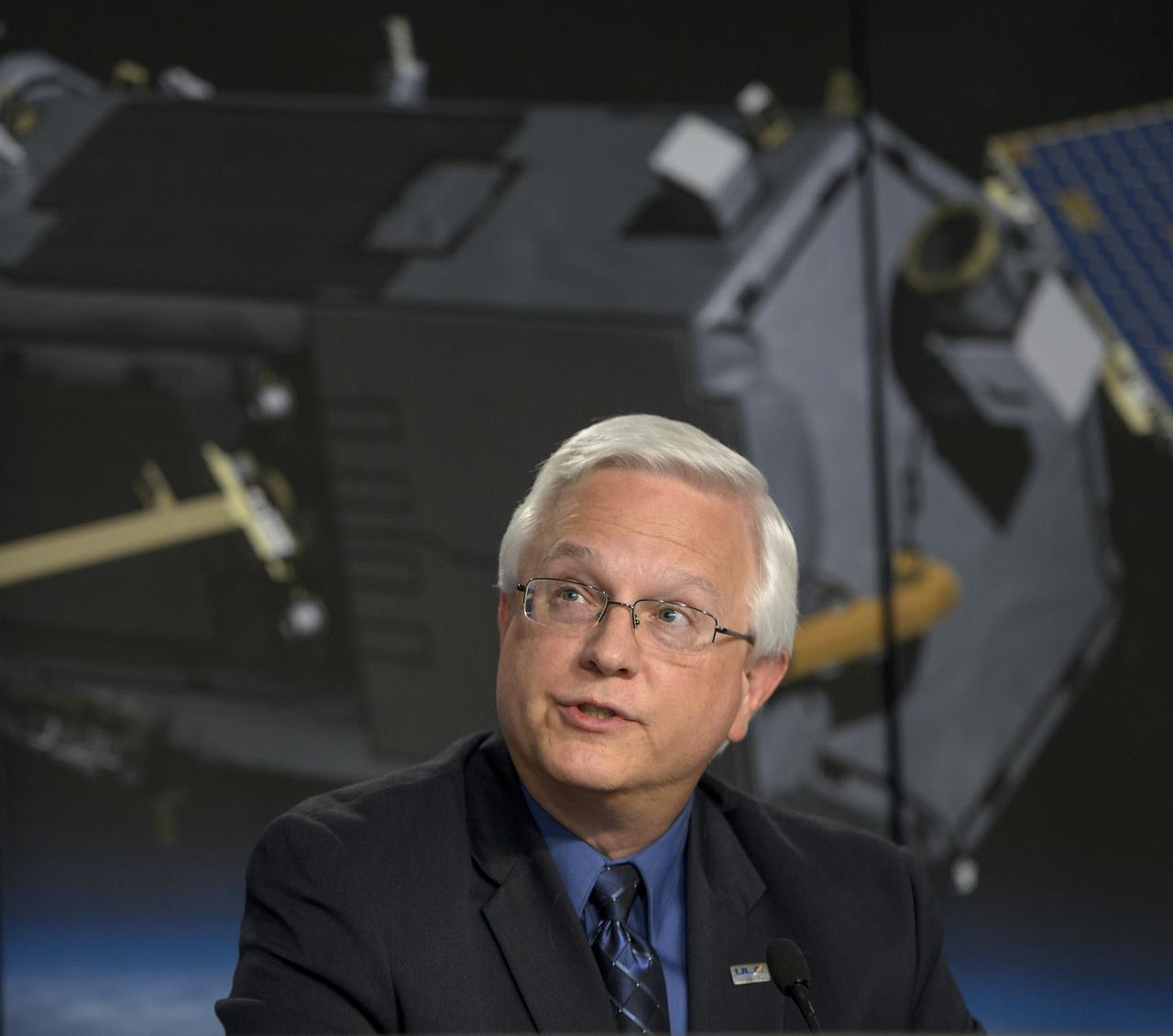
Vern Thorp, United Launch Alliance program manager, NASA missions, discusses the launch of NASA’s Orbiting Carbon Observatory-2 (OCO-2) onboard a ULA Delta II rocket, during a press briefing, Sunday, June 29, 2014, at the Vandenberg Air Force Base, Calif. OCO-2 will measure the global distribution of carbon dioxide, the leading human-produced greenhouse gas driving changes in Earth’s climate. OCO-2 is set to launch on July 1, 2014 at 2:59 a.m. PDT. Photo Credit: (NASA/Bill Ingalls)
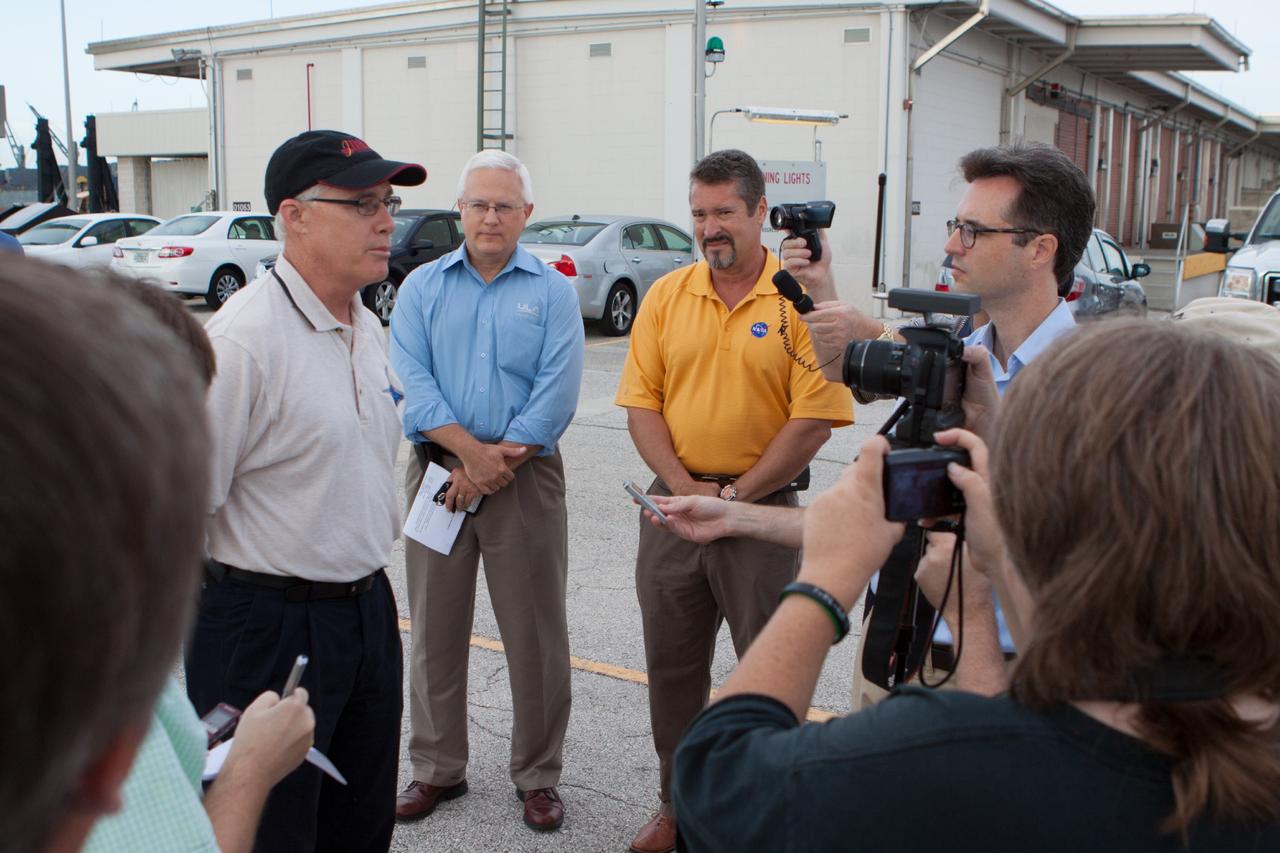
PORT CANAVERAL, Fla. – At Port Canaveral, Fla., NASA and United Launch Alliance managers brief members of the news media on the arrival of the ULA Atlas V rocket that will boost the Mars Atmosphere and Volatile Evolution, or MAVEN, spacecraft to the Red Planet. From the left, are Chuck Tatro, NASA's MAVEN mission manager, Vernon Thorp, ULA's NASA and Commercial Program manager and Omar Baez, NASA's launch director. MAVEN is being prepared for its scheduled launch in November from Cape Canaveral Air Force Station, Fla. atop a United Launch Alliance Atlas V rocket. Positioned in an orbit above the Red Planet, MAVEN will study the upper atmosphere of Mars in unprecedented detail. For more information, visit: http://www.nasa.gov/mission_pages/maven/main/index.html Photo credit: NASA/Kim Shiflett

PORT CANAVERAL, Fla. – At Port Canaveral, Fla., NASA and United Launch Alliance managers brief members of the news media on the arrival of the ULA Atlas V rocket that will boost the Mars Atmosphere and Volatile Evolution, or MAVEN, spacecraft to the Red Planet. From the left, are Chuck Tatro, NASA's MAVEN mission manager, Vernon Thorp, ULA's NASA and Commercial Program manager and Omar Baez, NASA's launch director. MAVEN is being prepared for its scheduled launch in November from Cape Canaveral Air Force Station, Fla. atop a United Launch Alliance Atlas V rocket. Positioned in an orbit above the Red Planet, MAVEN will study the upper atmosphere of Mars in unprecedented detail. For more information, visit: http://www.nasa.gov/mission_pages/maven/main/index.html Photo credit: NASA/ Dimitri Gerondidakis
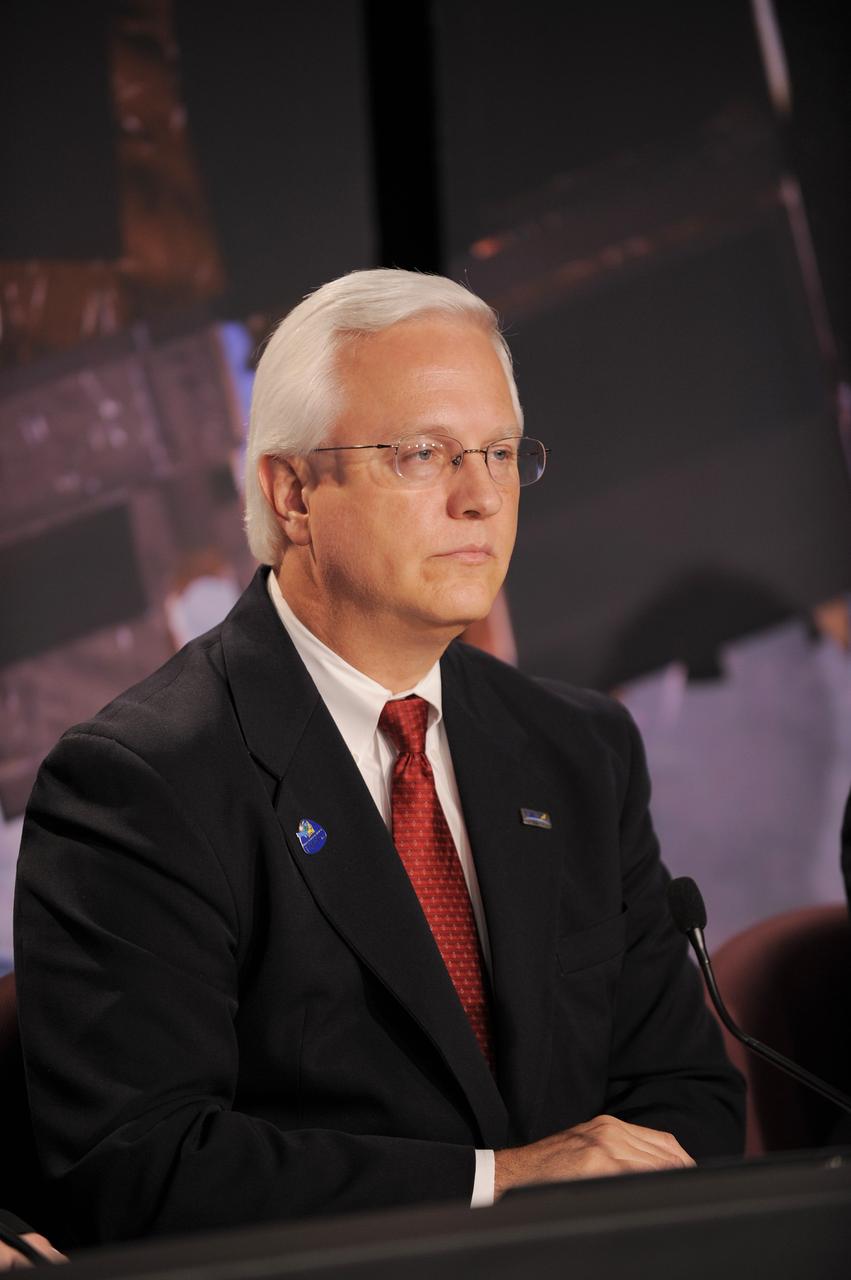
VANDENBERG AIR FORCE BASE, Calif. -- Vernon Thorp, program manager, NASA missions, United Launch Alliance, Cape Canaveral, Fla., participates in the prelaunch news conference at Vandenberg Air Force Base, Calif., for NASA’s National Polar-orbiting Operational Environmental Satellite System Preparatory Project (NPP) spacecraft. NPP represents a critical first step in building the next-generation of Earth-observing satellites. NPP will carry the first of the new sensors developed for this satellite fleet, now known as the Joint Polar Satellite System (JPSS), to be launched in 2016. NPP is the bridge between NASA's Earth Observing System (EOS) satellites and the forthcoming series of JPSS satellites. The mission will test key technologies and instruments for the JPSS missions. NPP is targeted to launch Oct. 28 from Space Launch Complex-2 aboard a United Launch Alliance Delta II rocket. For more information, visit http://www.nasa.gov/NPP. Photo credit: NASA/VAFB
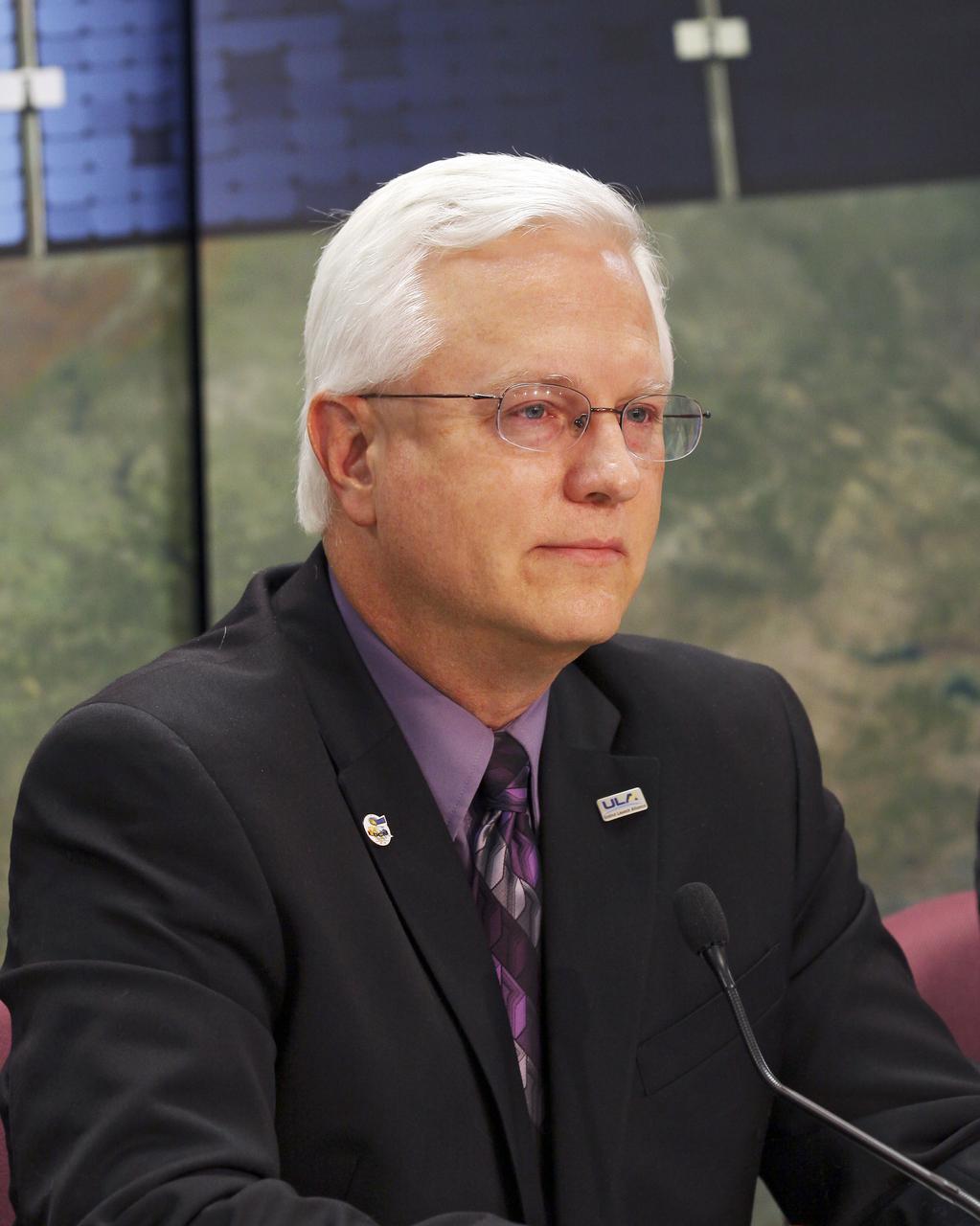
VANDENBERG AFB, Calif. -- NASA and contractor officials discussed NASA's readiness to launch the Landsat Data Continuity Mission, or LDCM, during a prelaunch news conference at Vandenberg Air Force Base, Calif. Participants included United Launch Alliance Program Manager for NASA Missions Vernon Thorp. The Landsat Data Continuity Mission LDCM is the future of Landsat satellites. It will continue to obtain valuable data and imagery to be used in agriculture, education, business, science, and government. The Landsat Program provides repetitive acquisition of high resolution multispectral data of the Earth's surface on a global basis. The data from the Landsat spacecraft constitute the longest record of the Earth's continental surfaces as seen from space. It is a record unmatched in quality, detail, coverage, and value. Liftoff is planned for Feb. 11, 2013 aboard a United Launch Alliance Atlas V rocket. For more information, visit: http:__www.nasa.gov_mission_pages_landsat_main_index.html Photo credit: NASA_Kim Shiflett
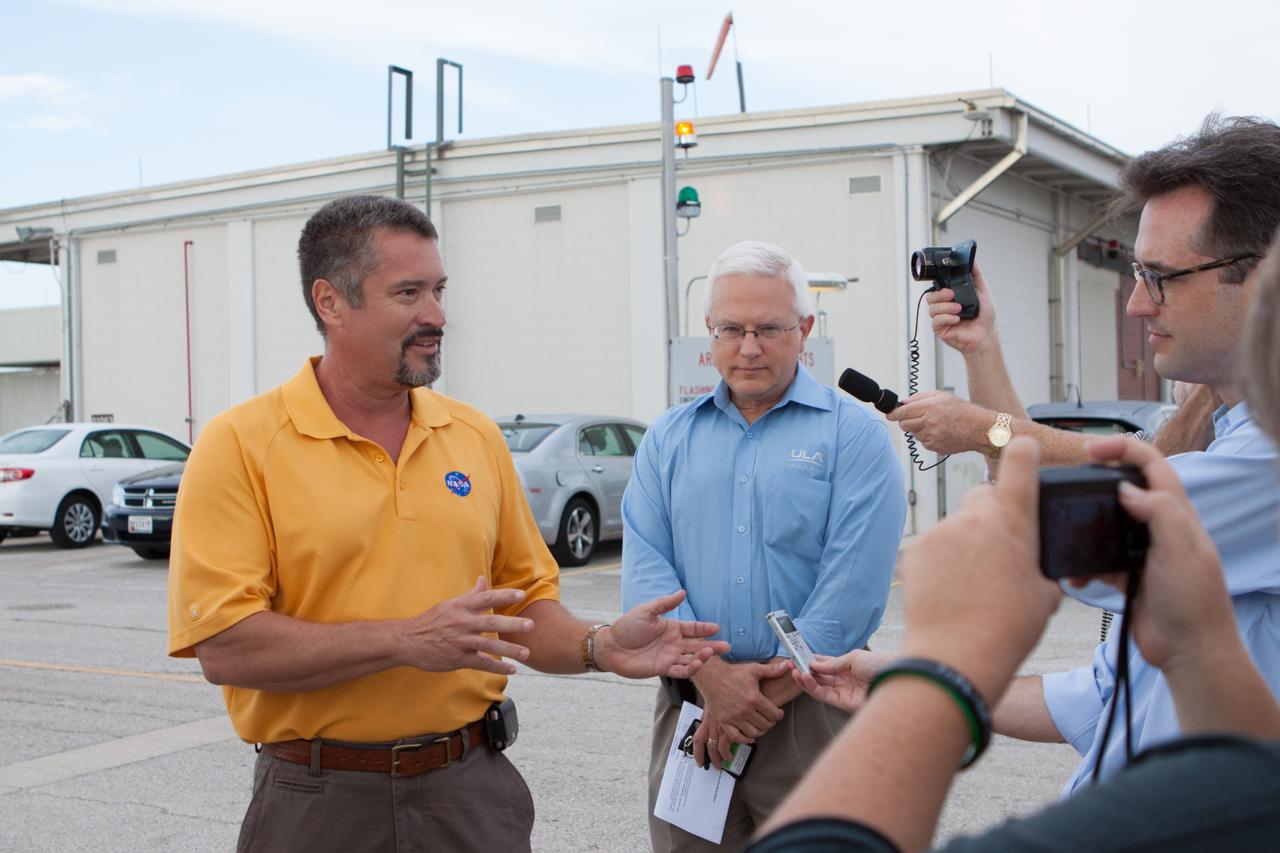
PORT CANAVERAL, Fla. – At Port Canaveral, Fla., NASA and United Launch Alliance managers brief members of the news media on the arrival of the ULA Atlas V rocket that will boost the Mars Atmosphere and Volatile Evolution, or MAVEN, spacecraft to the Red Planet. From the left, are Omar Baez, NASA's launch director, and Vernon Thorp, ULA's NASA and Commercial Program manager. MAVEN is being prepared for its scheduled launch in November from Cape Canaveral Air Force Station, Fla. atop a United Launch Alliance Atlas V rocket. Positioned in an orbit above the Red Planet, MAVEN will study the upper atmosphere of Mars in unprecedented detail. For more information, visit: http://www.nasa.gov/mission_pages/maven/main/index.html Photo credit: NASA/Kim Shiflett
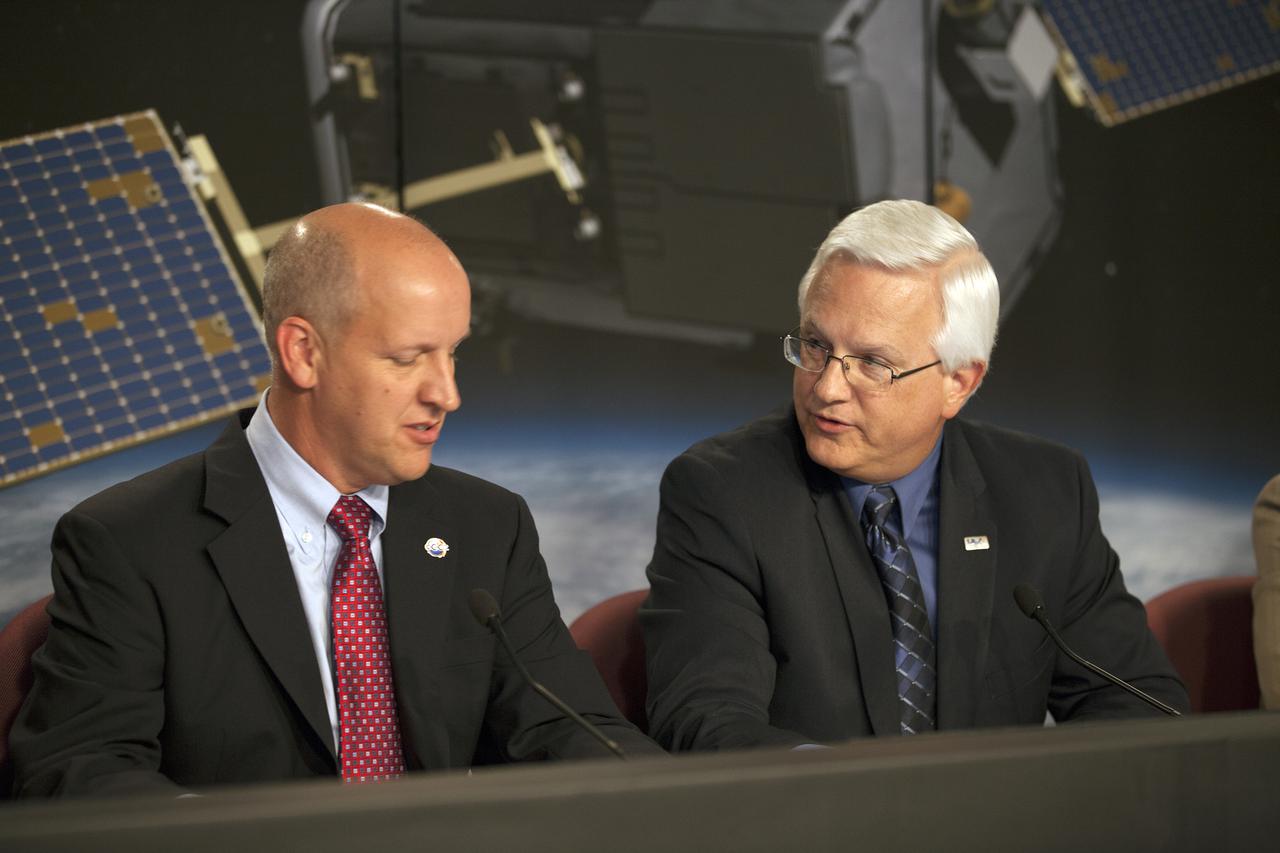
VANDENBERG AIR FORCE BASE, Calif. – Tim Dunn, left, launch manager for NASA's Launch Services Program, and Vernon Thorp, United Launch Alliance program manager for NASA Missions, participate in a prelaunch news conference at Vandenberg Air Force Base in California prior to the launch of NASA's Orbiting Carbon Observatory-2, or OCO-2. Launch aboard a United Launch Alliance Delta II rocket from Space Launch Complex 2 is scheduled for 5:56 a.m. EDT on July 1. OCO-2 is NASA’s first mission dedicated to studying atmospheric carbon dioxide, the leading human-produced greenhouse gas driving changes in Earth’s climate. OCO-2 will provide a new tool for understanding the human and natural sources of carbon dioxide emissions and the natural 'sinks' that absorb carbon dioxide and help control its buildup. The observatory will measure the global geographic distribution of these sources and sinks and study their changes over time. To learn more about OCO-2, visit http:__www.nasa.gov_oco2. Photo credit: NASA_Kim Shiflett
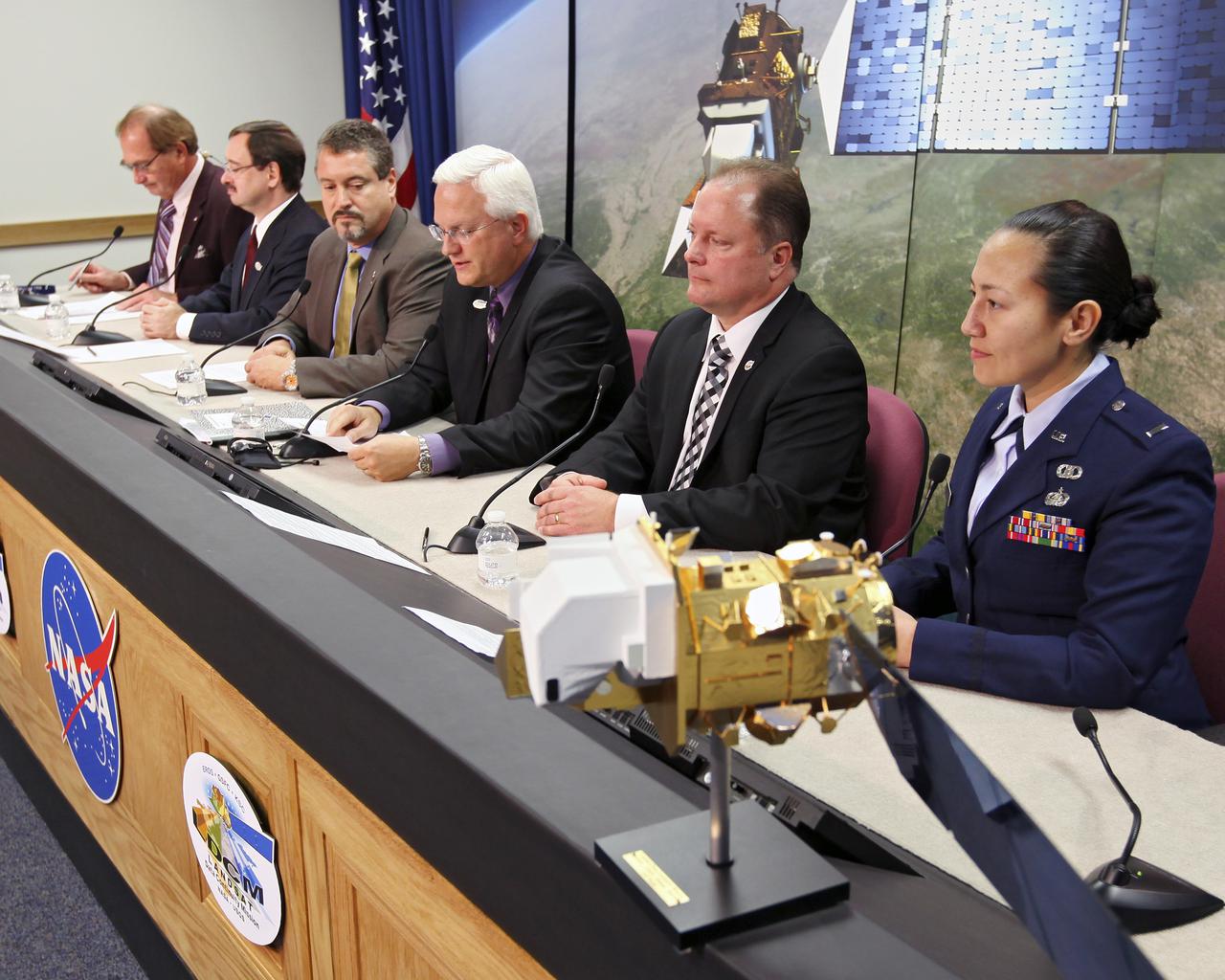
VANDENBERG AIR FORCE BASE, Calif. -- Media attend a prelaunch press conference at Vandenberg Air Force Base in California to discuss NASA's readiness to launch the Landsat Data Continuity Mission LDCM. From left are George Diller of NASA Public Affairs, LDCM program executive David Jarrett from NASA Headquarters, NASA Launch Director Omar Baez from Kennedy Space Center, United Launch Alliance Program Manager for NASA Missions Vernon Thorp, LDCM Project Manager Ken Schwer from Goddard Space Flight Center, and 1st Lt. Jennifer Kelley, launch weather officer for the 30th Operations Support Squadron at Vandenberg. The Landsat Data Continuity Mission LDCM is the future of Landsat satellites. It will continue to obtain valuable data and imagery to be used in agriculture, education, business, science, and government. The Landsat Program provides repetitive acquisition of high resolution multispectral data of the Earth's surface on a global basis. The data from the Landsat spacecraft constitute the longest record of the Earth's continental surfaces as seen from space. It is a record unmatched in quality, detail, coverage, and value. Liftoff is planned for Feb. 11, 2013 aboard a United Launch Alliance Atlas V rocket. For more information, visit: http:__www.nasa.gov_mission_pages_landsat_main_index.html Photo credit: NASA_Kim Shiflett
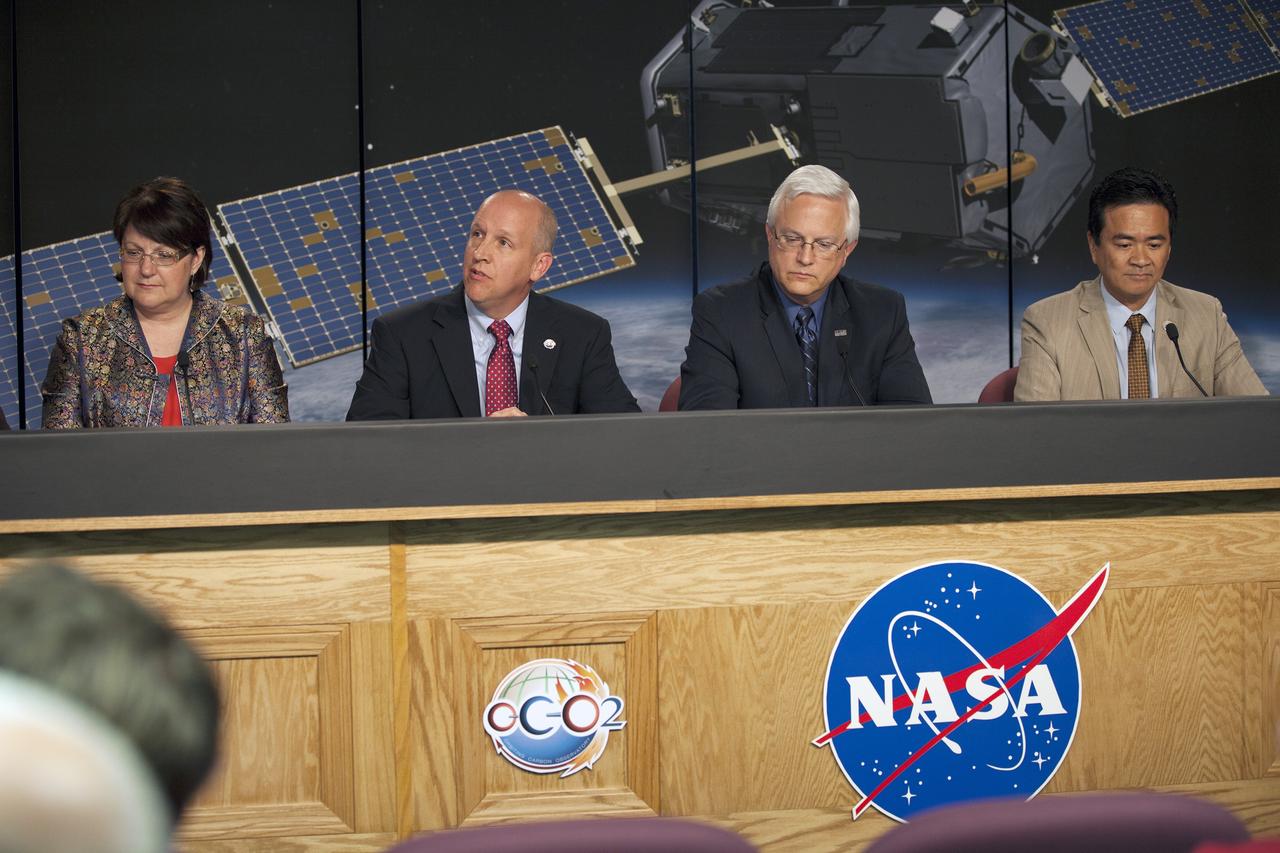
VANDENBERG AIR FORCE BASE, Calif. – From left, Betsy Edwards, Orbiting Carbon Observatory-2, or OCO-2, project executive at NASA Headquarters Tim Dunn, launch manager for NASA's Launch Services Program Vernon Thorp, United Launch Alliance program manager for NASA Missions and Ralph Basilio, OCO-2 project manager at NASA's Jet Propulsion Laboratory, participate in a prelaunch news conference at Vandenberg Air Force Base in California prior to the launch of the observatory. Launch aboard a United Launch Alliance Delta II rocket from Space Launch Complex 2 is scheduled for 5:56 a.m. EDT on July 1. OCO-2 is NASA’s first mission dedicated to studying atmospheric carbon dioxide, the leading human-produced greenhouse gas driving changes in Earth’s climate. OCO-2 will provide a new tool for understanding the human and natural sources of carbon dioxide emissions and the natural "sinks" that absorb carbon dioxide and help control its buildup. The observatory will measure the global geographic distribution of these sources and sinks and study their changes over time. To learn more about OCO-2, visit http://www.nasa.gov/oco2. Photo credit: NASA/Kim Shiflett

CAPE CANAVERAL, Fla. -- A Juno prelaunch news conference is held in the NASA Press Site auditorium at NASA's Kennedy Space Center in Florida. From left are George Diller, NASA Public Affairs; Colleen Hartman, assistant associate administrator, Science Mission Directorate, NASA Headquarters, Washington; Omar Baez, NASA launch director, Kennedy Space Center, Cape Canaveral, Fla.; Vernon Thorp, program manager, NASA Missions, United Launch Alliance, Denver, Colo.; Jan Chodas, Juno project manager, Jet Propulsion Laboratory, Pasadena, Calif.; Tim Gasparrini, Juno program manager, Lockheed Martin Space Systems, Denver, Colo.; and Capt. Billy Whisel, launch weather officer, 45th Weather Squadron, Cape Canaveral Air Force Station, Fla. Juno is scheduled to launch Aug. 5 aboard a United Launch Alliance Atlas V rocket from Cape Canaveral Air Force Station in Florida. The solar-powered spacecraft will orbit Jupiter's poles 33 times to find out more about the gas giant's origins, structure, atmosphere and magnetosphere and investigate the existence of a solid planetary core. For more information, visit www.nasa.gov/juno. Photo credit: NASA/Kim Shiflett

CAPE CANAVERAL, Fla. –- At a news conference, NASA and United Launch Alliance officials discussed preparations for the planned launch of NASA's Tracking and Data Relay Satellite, TDRS-K, atop an Atlas V rocket. Participating in the briefing, from the left are, George Diller, NASA Public Affairs, Badri Younes, deputy associate administrator, Space Communications and Navigation SCaN, NASA Human Exploration and Operations Mission Directorate in Washington Tim Dunn, NASA launch director at the Kennedy Space Center Vernon Thorp, program manager, NASA Missions for United Launch Alliance in Denver, Colo. Jeffrey Gramling, NASA TDRS-K project manager, Goddard Space Flight Center in Greenbelt, Md. and Joel Tumbiolo, launch weather officer, 45th Weather Squadron at Cape Canaveral Air Force Station, Fla. Liftoff for the TDRS-K is planned for Jan. 30, 2013. The TDRS-K spacecraft is part of the next-generation series in the Tracking and Data Relay Satellite System, a constellation of space-based communication satellites providing tracking, telemetry, command and high-bandwidth data return services. For more information, visit http:__www.nasa.gov_mission_pages_tdrs_index.html Photo credit: NASA_Kim Shiflett

VANDENBERG AIR FORCE BASE, Calif. – Vernon Thorp, United Launch Alliance program manager for NASA Missions, participates in a prelaunch news conference at Vandenberg Air Force Base in California prior to the launch of NASA's Orbiting Carbon Observatory-2, or OCO-2. Launch aboard a United Launch Alliance Delta II rocket from Space Launch Complex 2 is scheduled for 5:56 a.m. EDT on July 1. OCO-2 is NASA’s first mission dedicated to studying atmospheric carbon dioxide, the leading human-produced greenhouse gas driving changes in Earth’s climate. OCO-2 will provide a new tool for understanding the human and natural sources of carbon dioxide emissions and the natural "sinks" that absorb carbon dioxide and help control its buildup. The observatory will measure the global geographic distribution of these sources and sinks and study their changes over time. To learn more about OCO-2, visit http://www.nasa.gov/oco2. Photo credit: NASA/Kim Shiflett
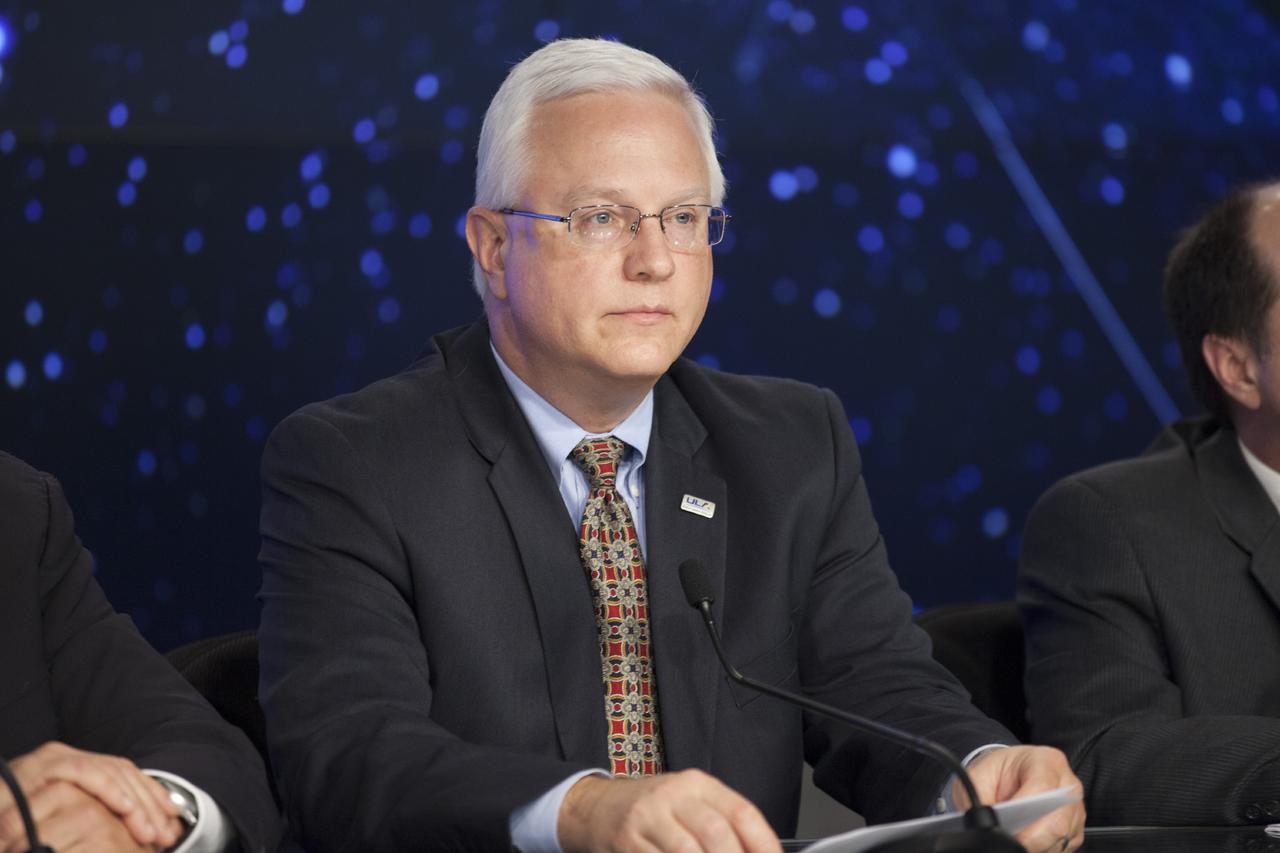
CAPE CANAVERAL, Fla. – During a news conference at NASA's Kennedy Space Center in Florida, agency and contractor officials discussed preparations for the launch of the Mars Atmosphere and Volatile EvolutioN, or MAVEN, mission. Participating in the briefing is Vernon Thorp, program manager for NASA Missions with United Launch Alliance in Centennial, Colo. MAVEN is being prepared for its scheduled launch on Nov 18, 2013 from Cape Canaveral Air Force Station, Fla. atop a United Launch Alliance Atlas V rocket. Positioned in an orbit above the Red Planet, MAVEN will study the upper atmosphere of Mars in unprecedented detail. For information on the MAVEN mission, visit: http://www.nasa.gov/mission_pages/maven/main/index.html. Photo credit: NASA MAVEN is being prepared for its scheduled launch on Nov 18, 2013 from Cape Canaveral Air Force Station, Fla. atop a United Launch Alliance Atlas V rocket. Positioned in an orbit above the Red Planet, MAVEN will study the upper atmosphere of Mars in unprecedented detail. For more information, visit: http://www.nasa.gov/mission_pages/maven/main/index.html Photo credit: NASA/Kim Shiflett

CAPE CANAVERAL, Fla. – Vernon Thorp, program manager, NASA Missions, United Launch Alliance, participates in the Gravity Recovery and Interior Laboratory (GRAIL) prelaunch news conference in the NASA Press Site auditorium at NASA's Kennedy Space Center in Florida. GRAIL is scheduled to launch Sept. 8 aboard a United Launch Alliance Delta II Heavy rocket from Cape Canaveral Air Force Station in Florida. GRAIL will fly twin spacecraft in tandem around the moon to precisely measure and map variations in the moon's gravitational field. The mission will provide the most accurate global gravity field to date for any planet, including Earth. This detailed information will reveal differences in the density of the moon's crust and mantle and will help answer fundamental questions about the moon's internal structure, thermal evolution, and history of collisions with asteroids. The aim is to map the moon's gravity field so completely that future moon vehicles can safely navigate anywhere on the moon’s surface. For more information, visit http://www.nasa.gov/grail. Photo credit: NASA/Kim Shiflett

CAPE CANAVERAL, Fla. - A prelaunch news conference was held at NASA Kennedy Space Center’s Press Site in Florida for the Radiation Belt Storm Probes, or RBSP, mission. From left, are George Diller, public affairs specialist and news conference moderator, Michael Luther, deputy associate administrator for programs in NASA’s Science Mission Directorate, Tim Dunn, NASA launch director at Kennedy, Vernon Thorp, program manager, NASA missions, United Launch Alliance, Richard Fitzgerald, RBSP project manager at Johns Hopkins Applied Physics Laboratory in Laurel, Md., and Kathy Winters, launch weather officer with the 45th Weather Squadron at Cape Canaveral Air Force Station in Florida. NASA’s RBSP mission will help us understand the sun’s influence on Earth and near-Earth space by studying the Earth’s radiation belts on various scales of space and time. RBSP will begin its mission of exploration of Earth’s Van Allen radiation belts and the extremes of space weather after its launch aboard an Atlas V rocket. Launch is targeted for Aug. 24. For more information, visit http://www.nasa.gov/rbsp. Photo credit: NASA/Glenn Benson

CAPE CANAVERAL, Fla. -- Media representatives question the participants of a Juno prelaunch news conference in the NASA Press Site auditorium at NASA's Kennedy Space Center in Florida. From left are George Diller, NASA Public Affairs; Colleen Hartman, assistant associate administrator, Science Mission Directorate, NASA Headquarters, Washington; Omar Baez, NASA launch director, Kennedy Space Center, Cape Canaveral, Fla.; Vernon Thorp, program manager, NASA Missions, United Launch Alliance, Denver, Colo.; Jan Chodas, Juno project manager, Jet Propulsion Laboratory, Pasadena, Calif.; Tim Gasparrini, Juno program manager, Lockheed Martin Space Systems, Denver, Colo.; and Capt. Billy Whisel, launch weather officer, 45th Weather Squadron, Cape Canaveral Air Force Station, Fla. Juno is scheduled to launch Aug. 5 aboard a United Launch Alliance Atlas V rocket from Cape Canaveral Air Force Station in Florida. The solar-powered spacecraft will orbit Jupiter's poles 33 times to find out more about the gas giant's origins, structure, atmosphere and magnetosphere and investigate the existence of a solid planetary core. For more information, visit www.nasa.gov/juno. Photo credit: NASA/Kim Shiflett
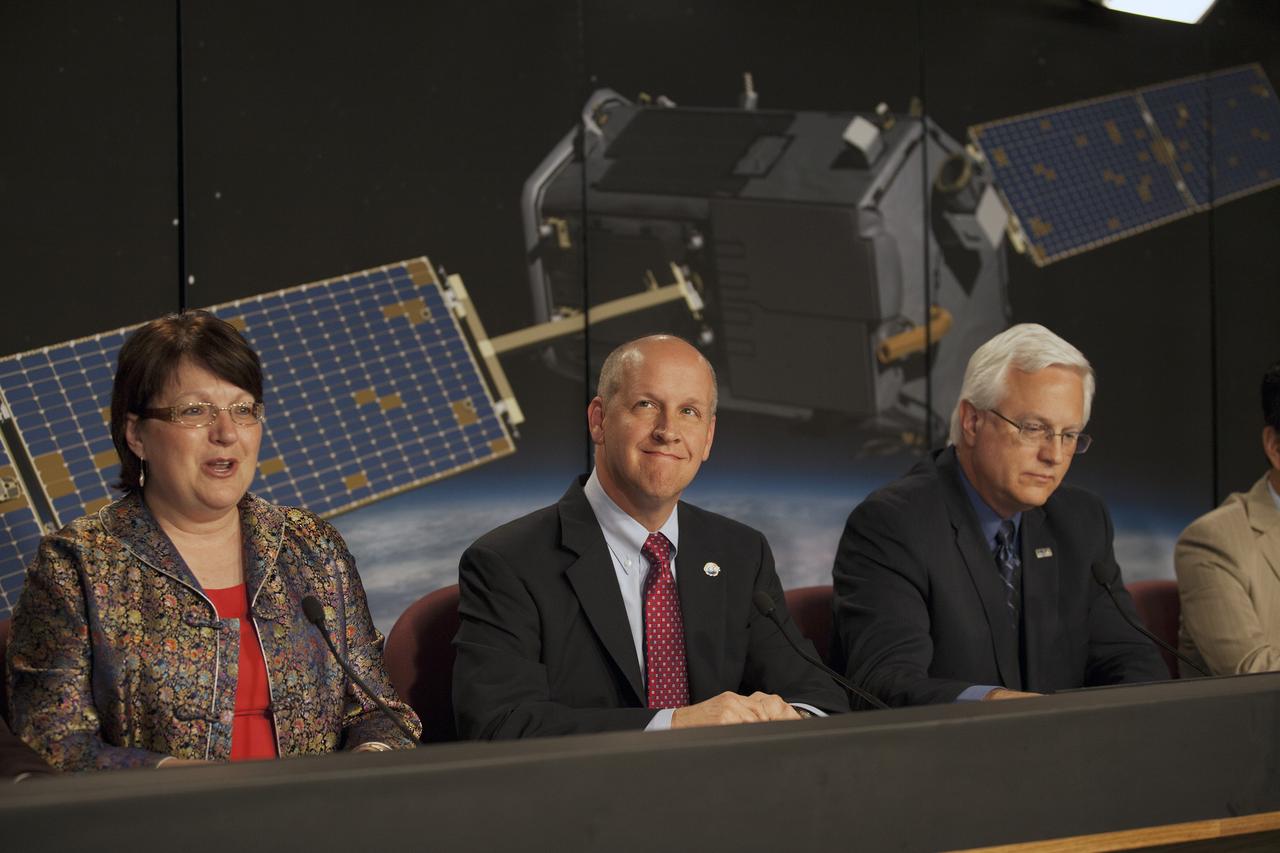
VANDENBERG AIR FORCE BASE, Calif. – From left, Betsy Edwards, Orbiting Carbon Observatory-2 project executive at NASA Headquarters Tim Dunn, launch manager for NASA's Launch Services Program and Vernon Thorp, United Launch Alliance program manager for NASA Missions, participate in a prelaunch news conference at Vandenberg Air Force Base in California prior to the launch of the observatory, or OCO-2. Launch aboard a United Launch Alliance Delta II rocket from Space Launch Complex 2 is scheduled for 5:56 a.m. EDT on July 1. OCO-2 is NASA’s first mission dedicated to studying atmospheric carbon dioxide, the leading human-produced greenhouse gas driving changes in Earth’s climate. OCO-2 will provide a new tool for understanding the human and natural sources of carbon dioxide emissions and the natural "sinks" that absorb carbon dioxide and help control its buildup. The observatory will measure the global geographic distribution of these sources and sinks and study their changes over time. To learn more about OCO-2, visit http://www.nasa.gov/oco2. Photo credit: NASA/Kim Shiflett

CAPE CANAVERAL, Fla. – NASA’s Kennedy Space Center in Florida is host to a Mars Science Laboratory (MSL) prelaunch news conference as part of preflight activities for the MSL mission. From left are NASA Public Affairs Officer George Diller; Colleen Hartman, assistant associate administrator, NASA Science Mission Directorate; Omar Baez, NASA launch director; Vernon Thorp, program manager, NASA Missions, United Launch Alliance; Peter Theisinger, MSL project manager; and Clay Flinn, launch weather officer 45th Weather Squadron, Cape Canaveral Air Force Station, Fla. MSL’s components include a car-sized rover, Curiosity, which has 10 science instruments designed to search for signs of life, including methane, and help determine if the gas is from a biological or geological source. Launch of MSL aboard a United Launch Alliance Atlas V rocket is scheduled for Nov. 26 from Space Launch Complex-41 on Cape Canaveral Air Force Station in Florida. For more information, visit http://www.nasa.gov/msl. Photo credit: NASA/Kim Shiflett

CAPE CANAVERAL, Fla. –- At a news conference, NASA and United Launch Alliance officials discussed preparations for the planned launch of NASA's Tracking and Data Relay Satellite, TDRS-K, atop an Atlas V rocket. Participating in the briefing, from the left are, Badri Younes, deputy associate administrator, Space Communications and Navigation SCaN, NASA Human Exploration and Operations Mission Directorate in Washington Tim Dunn, NASA launch director at the Kennedy Space Center Vernon Thorp, program manager, NASA Missions for United Launch Alliance in Denver, Colo. Jeffrey Gramling, NASA TDRS-K project manager, Goddard Space Flight Center in Greenbelt, Md. and Joel Tumbiolo, launch weather officer, 45th Weather Squadron at Cape Canaveral Air Force Station, Fla. Liftoff for the TDRS-K is planned for Jan. 30, 2013. The TDRS-K spacecraft is part of the next-generation series in the Tracking and Data Relay Satellite System, a constellation of space-based communication satellites providing tracking, telemetry, command and high-bandwidth data return services. For more information, visit http:__www.nasa.gov_mission_pages_tdrs_index.html Photo credit: NASA_Kim Shiflett

CAPE CANAVERAL, Fla. –- At a news conference, NASA and United Launch Alliance officials discussed preparations for the planned launch of NASA's Tracking and Data Relay Satellite, TDRS-K, atop an Atlas V rocket. Participating in the briefing, from the left are, George Diller, NASA Public Affairs, Badri Younes, deputy associate administrator, Space Communications and Navigation SCaN, NASA Human Exploration and Operations Mission Directorate in Washington Tim Dunn, NASA launch director at the Kennedy Space Center Vernon Thorp, program manager, NASA Missions for United Launch Alliance in Denver, Colo. Jeffrey Gramling, NASA TDRS-K project manager, Goddard Space Flight Center in Greenbelt, Md. and Joel Tumbiolo, launch weather officer, 45th Weather Squadron at Cape Canaveral Air Force Station, Fla. Liftoff for the TDRS-K is planned for Jan. 30, 2013. The TDRS-K spacecraft is part of the next-generation series in the Tracking and Data Relay Satellite System, a constellation of space-based communication satellites providing tracking, telemetry, command and high-bandwidth data return services. For more information, visit http:__www.nasa.gov_mission_pages_tdrs_index.html Photo credit: NASA_Kim Shiflett
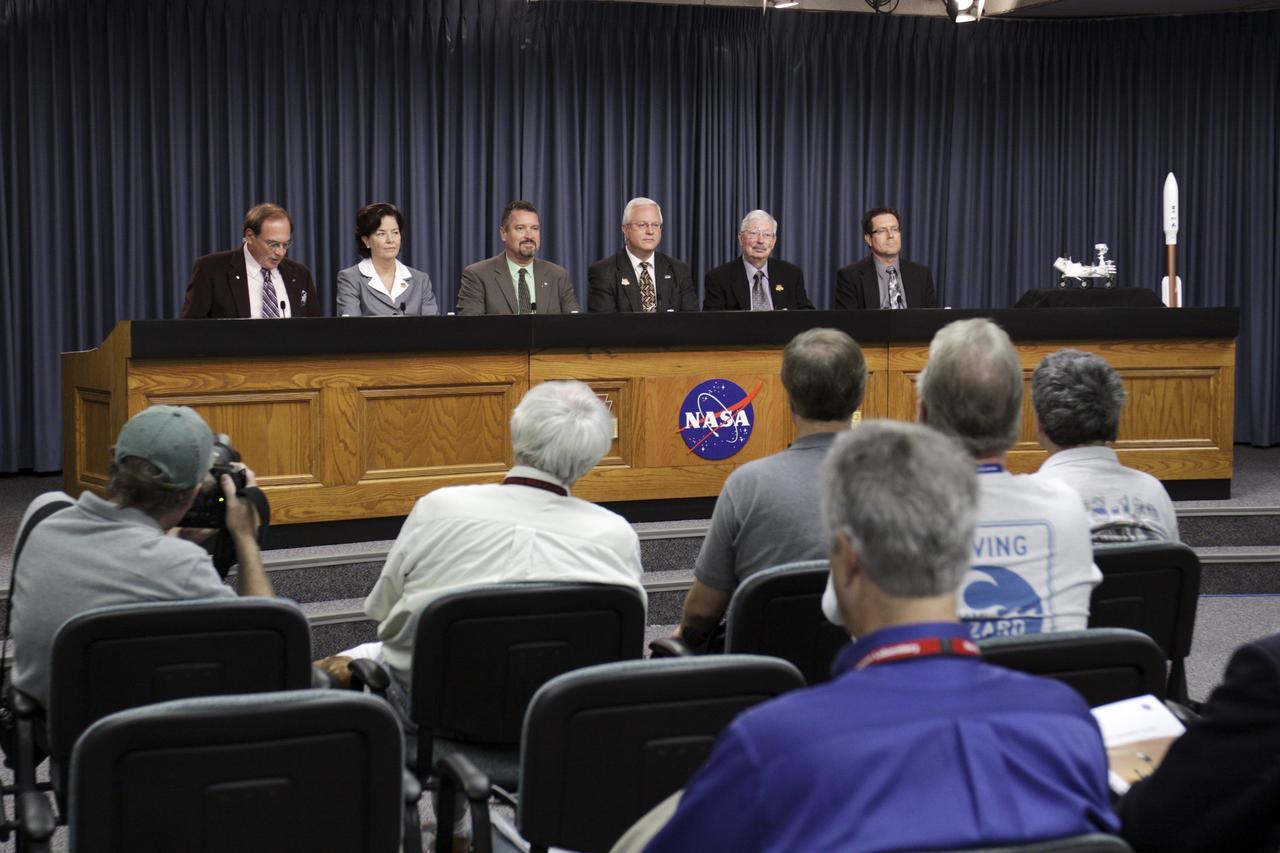
CAPE CANAVERAL, Fla. – Media representatives participate in a prelaunch news conference for the Mars Science Laboratory (MSL) in the Press Site auditorium at NASA’s Kennedy Space Center in Florida. From left are NASA Public Affairs Officer George Diller; Colleen Hartman, assistant associate administrator, NASA Science Mission Directorate; Omar Baez, NASA launch director; Vernon Thorp, program manager, NASA Missions, United Launch Alliance; Peter Theisinger, MSL project manager; and Clay Flinn, launch weather officer 45th Weather Squadron, Cape Canaveral Air Force Station, Fla. MSL’s components include a car-sized rover, Curiosity, which has 10 science instruments designed to search for signs of life, including methane, and help determine if the gas is from a biological or geological source. Launch of MSL aboard a United Launch Alliance Atlas V rocket is scheduled for Nov. 26 from Space Launch Complex-41 on Cape Canaveral Air Force Station in Florida. For more information, visit http://www.nasa.gov/msl. Photo credit: NASA/Kim Shiflett

CAPE CANAVERAL, Fla. - At NASA Kennedy Space Center’s Press Site in Florida, Kathy Winters, launch weather officer with the 45th Weather Squadron at Cape Canaveral Air Force Station, answers a question during a prelaunch news conference held for the Radiation Belt Storm Probes, or RBSP, mission. To her left, are Vernon Thorp, United Launch Alliance program manager, NASA missions, and Richard Fitzgerald, RBSP project manager at Johns Hopkins Applied Physics Laboratory in Laurel, Md. NASA’s RBSP mission will help us understand the sun’s influence on Earth and near-Earth space by studying the Earth’s radiation belts on various scales of space and time. RBSP will begin its mission of exploration of Earth’s Van Allen radiation belts and the extremes of space weather after its launch aboard an Atlas V rocket. Launch is targeted for Aug. 24. For more information, visit http://www.nasa.gov/rbsp. Photo credit: NASA/Glenn Benson

CAPE CANAVERAL, Fla. – A prelaunch press conference at NASA's Kennedy Space Center in Florida provided news about a new date, June 18, for NASA's Lunar Reconnaissance Orbiter/Lunar Crater Observation and Sensing Satellite, known as LRO/LCROSS, launch. On the dais are, from left, NASA Public Affairs Officer George Diller, who moderated; Todd May, program manager of the Lunar Precursor Robotic Program at NASA's Marshall Space Flight Center in Huntsville, Ala.; Chuck Dovale, NASA launch director at Kennedy; Vernon Thorp, program manager of NASA Missions with United Launch Alliance; Craig Tooley, the LRO project Manager at NASA's Goddard Space Flight Center in Greenbelt, Md.; Daniel Andrews, the LCROSS project manager at NASA's Ames Research Center at Moffett Field, Calif.; and Clay Flinn, the Atlas V launch weather officer of the 45th Weather Squadron at Cape Canaveral Air Force Station in Florida. The LRO and LCROSS launch was moved to June 18 to accommodate space shuttle Endeavour's June 17 liftoff on the STS-127 mission. Photo credit: NASA/Ben Smegelsky

CAPE CANAVERAL, Fla. -- A prelaunch news conference is held at NASA Kennedy Space Center’s Press Site in Florida for the Radiation Belt Storm Probes, or RBSP, mission. From left are Michael Luther, deputy associate administrator for programs in NASA’s Science Mission Directorate, Tim Dunn, NASA launch director at Kennedy, Vernon Thorp, program manager, NASA missions, United Launch Alliance, Richard Fitzgerald, RBSP project manager at Johns Hopkins Applied Physics Laboratory in Laurel, Md., and Kathy Winters, launch weather officer with the 45th Weather Squadron at Cape Canaveral Air Force Station in Florida. NASA’s RBSP mission will help us understand the sun’s influence on Earth and near-Earth space by studying the Earth’s radiation belts on various scales of space and time. RBSP will begin its mission of exploration of Earth’s Van Allen radiation belts and the extremes of space weather after its launch aboard an Atlas V rocket. Launch is targeted for Aug. 24. For more information, visit http://www.nasa.gov/rbsp. Photo credit: NASA/Glenn Benson

VANDENBERG AIR FORCE BASE, Calif. – A representative of the news media asks a question at a prelaunch news conference at Vandenberg Air Force Base in California prior to the launch of NASA's Orbiting Carbon Observatory-2, or OCO-2. Participating in the news conference are Betsy Edwards, OCO-2 project executive at NASA Headquarters Tim Dunn, launch manager for NASA's Launch Services Program Vernon Thorp, United Launch Alliance program manager for NASA Missions and Ralph Basilio, OCO-2 project manager at NASA's Jet Propulsion Laboratory. Launch aboard a United Launch Alliance Delta II rocket from Space Launch Complex 2 is scheduled for 5:56 a.m. EDT on July 1. OCO-2 is NASA’s first mission dedicated to studying atmospheric carbon dioxide, the leading human-produced greenhouse gas driving changes in Earth’s climate. OCO-2 will provide a new tool for understanding the human and natural sources of carbon dioxide emissions and the natural "sinks" that absorb carbon dioxide and help control its buildup. The observatory will measure the global geographic distribution of these sources and sinks and study their changes over time. To learn more about OCO-2, visit http://www.nasa.gov/oco2. Photo credit: NASA/Kim Shiflett
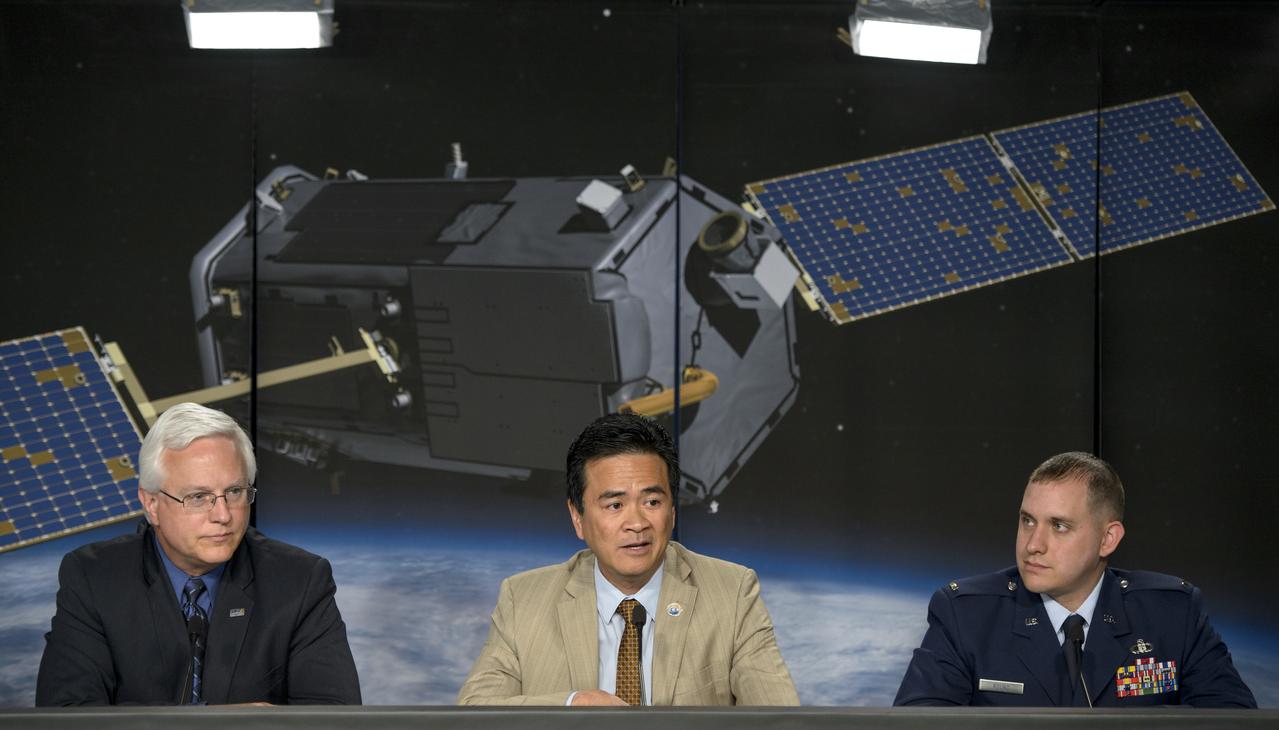
Vern Thorp, United Launch Alliance program manager, NASA missions,, left, Ralph Basilio, OCO-2 project manager, JPL, and Lt. Joseph Round, launch weather officer, USAF 30th Space Wing Weather Squadron, right, discuss the planned launch of the Orbiting Carbon Observatory-2 (OCO-2), NASA’s first spacecraft dedicated to studying carbon dioxide, during a press briefing, Sunday, June 29, 2014, at the Vandenberg Air Force Base, Calif. OCO-2 will measure the global distribution of carbon dioxide, the leading human-produced greenhouse gas driving changes in Earth’s climate. OCO-2 is set to launch on July 1, 2014 at 2:59 a.m. PDT. Photo Credit: (NASA/Bill Ingalls)

CAPE CANAVERAL, Fla. – During a news conference at NASA's Kennedy Space Center in Florida, agency and contractor officials discussed preparations for the launch of the Mars Atmosphere and Volatile EvolutioN, or MAVEN, mission. Participating in the briefing, from the left, are George Diller of NASA Public Affairs, Geoffrey Yoder, NASA deputy associate administrator of programs in the Science Mission Directorate, Omar Baez, NASA launch director, Vernon Thorp, program manager for NASA Missions with United Launch Alliance in Centennial, Colo., David Mitchell, NASA's MAVEN project manager at the Goddard Space Flight Center in Greenbelt, Md., Guy Beutelschies, Lockheed Martin's MAVEN project manager and Clay Flinn, launch weather officer, 45th Weather Squadron at Cape Canaveral Air Force Station, Fla. MAVEN is being prepared for its scheduled launch on Nov 18, 2013 from Cape Canaveral Air Force Station, Fla. atop a United Launch Alliance Atlas V rocket. Positioned in an orbit above the Red Planet, MAVEN will study the upper atmosphere of Mars in unprecedented detail. For information on the MAVEN mission, visit: http://www.nasa.gov/mission_pages/maven/main/index.html. Photo credit: NASA MAVEN is being prepared for its scheduled launch on Nov 18, 2013 from Cape Canaveral Air Force Station, Fla. atop a United Launch Alliance Atlas V rocket. Positioned in an orbit above the Red Planet, MAVEN will study the upper atmosphere of Mars in unprecedented detail. For more information, visit: http://www.nasa.gov/mission_pages/maven/main/index.html Photo credit: NASA/Kim Shiflett

CAPE CANAVERAL, Fla. – A Gravity Recovery and Interior Laboratory (GRAIL) prelaunch news conference is held in the NASA Press Site auditorium at NASA's Kennedy Space Center in Florida. From left are George Diller, NASA Public Affairs; Ed Weiler, NASA associate administrator, Science Mission Directorate; Tim Dunn, NASA launch director for the agency’s Launch Services Program; Vernon Thorp, program manager, NASA Missions, United Launch Alliance; David Lehman, GRAIL project manager, NASA’s Jet Propulsion Laboratory; John Henk, GRAIL program manager, Lockheed Martin Space Systems, Denver, Colo.; and Joel Tumbiolo, launch weather officer, 45th Weather Squadron, Cape Canaveral Air Force Station, Fla. GRAIL is scheduled to launch Sept. 8 aboard a United Launch Alliance Delta II Heavy rocket from Cape Canaveral Air Force Station in Florida. GRAIL will fly twin spacecraft in tandem around the moon to precisely measure and map variations in the moon's gravitational field. The mission will provide the most accurate global gravity field to date for any planet, including Earth. This detailed information will reveal differences in the density of the moon's crust and mantle and will help answer fundamental questions about the moon's internal structure, thermal evolution, and history of collisions with asteroids. The aim is to map the moon's gravity field so completely that future moon vehicles can safely navigate anywhere on the moon’s surface. For more information, visit http://www.nasa.gov/grail. Photo credit: NASA/Kim Shiflett
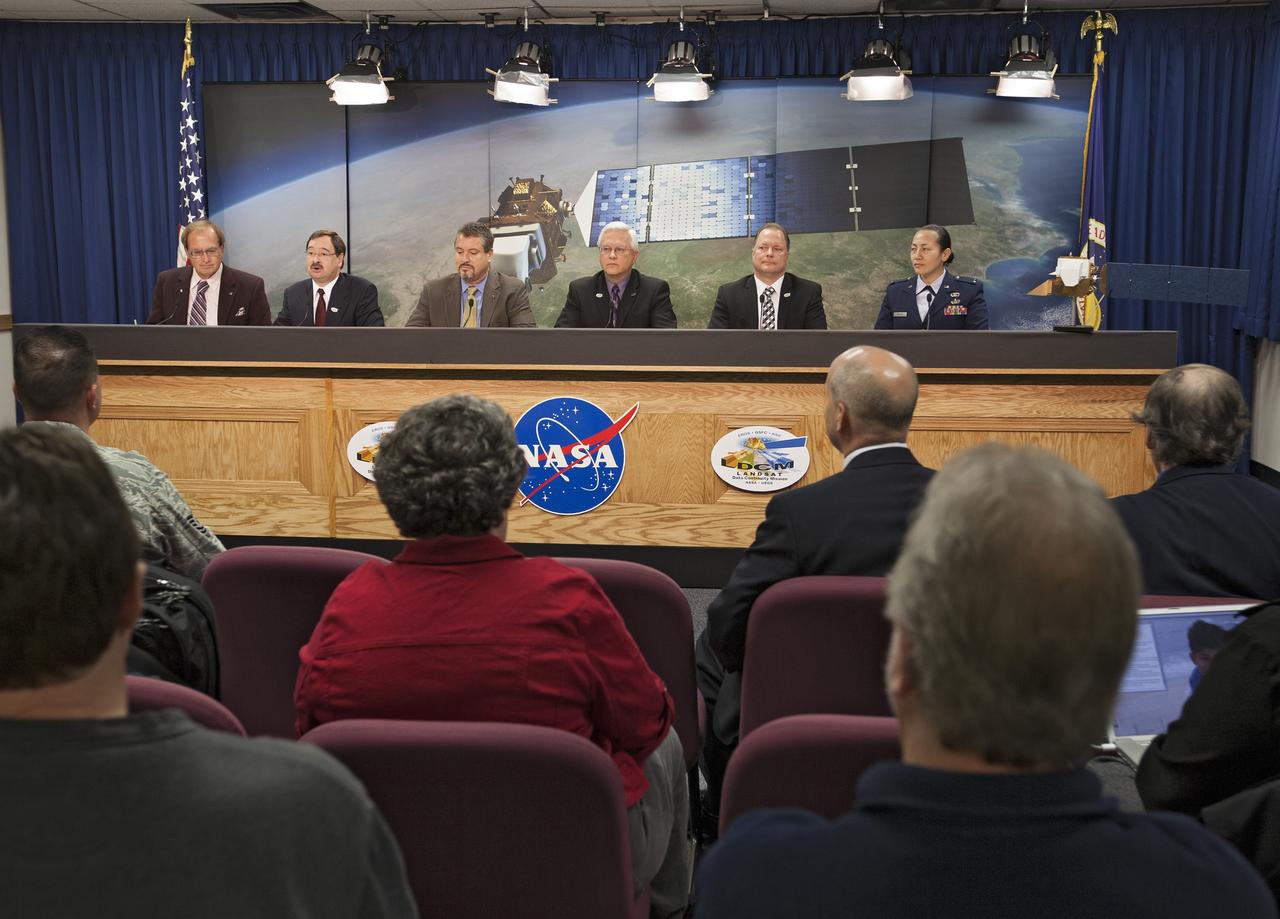
VANDENBERG AIR FORCE BASE, Calif. -- Media attend a prelaunch press conference at Vandenberg Air Force Base in California to discuss NASA's readiness to launch the Landsat Data Continuity Mission LDCM. From left are George Diller of NASA Public Affairs, LDCM program executive David Jarrett from NASA Headquarters, NASA Launch Director Omar Baez from Kennedy Space Center, United Launch Alliance Program Manager for NASA Missions Vernon Thorp, LDCM Project Manager Ken Schwer from Goddard Space Flight Center, and 1st Lt. Jennifer Kelley, launch weather officer for the 30th Operations Support Squadron at Vandenberg. Launch of LDCM aboard a United Launch Alliance Atlas V rocket from Vandenberg's Space Launch Complex-3E is planned for Feb. 11 during a 48-minute launch window that opens at 10:02 a.m. PST, or 1:02 p.m. EST. LDCM is the eighth satellite in the Landsat Program series of Earth-observing missions and will continue the program’s critical role in monitoring, understanding and managing the resources needed for human sustainment, such as food, water and forests. NASA's Goddard Space Flight Center in Greenbelt, Md., is responsible for LDCM project management. Orbital Sciences Corp. built the LDCM satellite. NASA's Launch Services Program at the Kennedy Space Center in Florida provides launch management. After launch and the initial checkout phase, the U. S. Geological Survey will take operational control of LDCM, and it will be renamed Landsat 8. Photo credit: NASA/Kim Shiflett
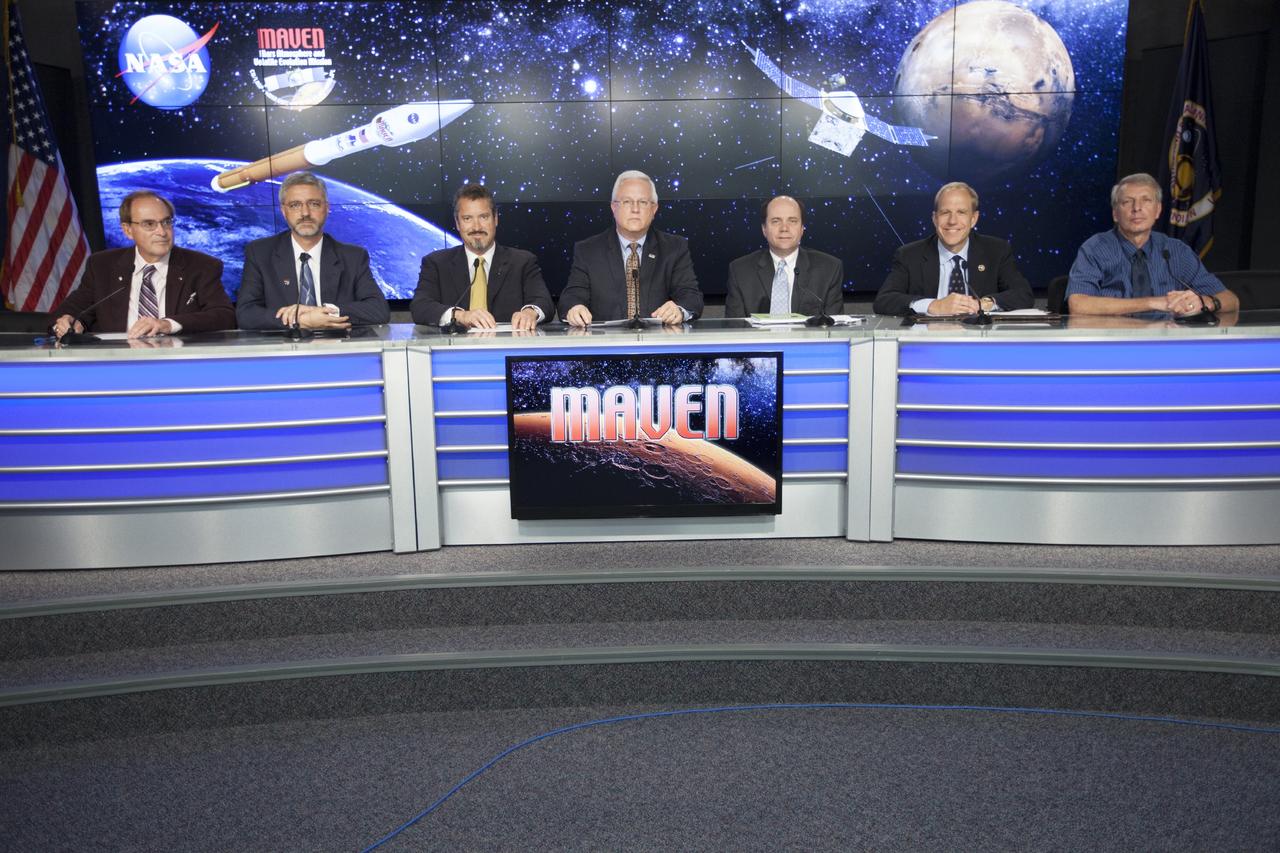
CAPE CANAVERAL, Fla. – During a news conference at NASA's Kennedy Space Center in Florida, agency and contractor officials discussed preparations for the launch of the Mars Atmosphere and Volatile EvolutioN, or MAVEN, mission. Participating in the briefing, from the left, are George Diller of NASA Public Affairs, Geoffrey Yoder, NASA deputy associate administrator of programs in the Science Mission Directorate, Omar Baez, NASA launch director, Vernon Thorp, program manager for NASA Missions with United Launch Alliance in Centennial, Colo., David Mitchell, NASA's MAVEN project manager at the Goddard Space Flight Center in Greenbelt, Md., Guy Beutelschies, Lockheed Martin's MAVEN project manager and Clay Flinn, launch weather officer, 45th Weather Squadron at Cape Canaveral Air Force Station, Fla. MAVEN is being prepared for its scheduled launch on Nov 18, 2013 from Cape Canaveral Air Force Station, Fla. atop a United Launch Alliance Atlas V rocket. Positioned in an orbit above the Red Planet, MAVEN will study the upper atmosphere of Mars in unprecedented detail. For information on the MAVEN mission, visit: http://www.nasa.gov/mission_pages/maven/main/index.html. Photo credit: NASA MAVEN is being prepared for its scheduled launch on Nov 18, 2013 from Cape Canaveral Air Force Station, Fla. atop a United Launch Alliance Atlas V rocket. Positioned in an orbit above the Red Planet, MAVEN will study the upper atmosphere of Mars in unprecedented detail. For more information, visit: http://www.nasa.gov/mission_pages/maven/main/index.html Photo credit: NASA/Kim Shiflett

CAPE CANAVERAL, Fla. – During a news conference at NASA's Kennedy Space Center in Florida, agency and contractor officials discussed preparations for the launch of the Mars Atmosphere and Volatile EvolutioN, or MAVEN, mission. Participating in the briefing, from the left, are George Diller of NASA Public Affairs, Geoffrey Yoder, NASA deputy associate administrator of programs in the Science Mission Directorate, Omar Baez, NASA launch director, Vernon Thorp, program manager for NASA Missions with United Launch Alliance in Centennial, Colo., David Mitchell, NASA's MAVEN project manager at the Goddard Space Flight Center in Greenbelt, Md., Guy Beutelschies, Lockheed Martin's MAVEN project manager and Clay Flinn, launch weather officer, 45th Weather Squadron at Cape Canaveral Air Force Station, Fla. MAVEN is being prepared for its scheduled launch on Nov 18, 2013 from Cape Canaveral Air Force Station, Fla. atop a United Launch Alliance Atlas V rocket. Positioned in an orbit above the Red Planet, MAVEN will study the upper atmosphere of Mars in unprecedented detail. For information on the MAVEN mission, visit: http://www.nasa.gov/mission_pages/maven/main/index.html. Photo credit: NASA MAVEN is being prepared for its scheduled launch on Nov 18, 2013 from Cape Canaveral Air Force Station, Fla. atop a United Launch Alliance Atlas V rocket. Positioned in an orbit above the Red Planet, MAVEN will study the upper atmosphere of Mars in unprecedented detail. For more information, visit: http://www.nasa.gov/mission_pages/maven/main/index.html Photo credit: NASA/Kim Shiflett

VANDENBERG AIR FORCE BASE, Calif. -- Participants in the prelaunch news conference for NASA’s National Polar-orbiting Operational Environmental Satellite System Preparatory Project (NPP) spacecraft prepare to address members of the news media gathered at Vandenberg Air Force Base, Calif. Panelists are, from left, George Diller, NASA launch commentator, Andrew Carson, NPP program executive, NASA Headquarters, Tim Dunn, NASA launch director, Kennedy Space Center, Vernon Thorp, program manager, NASA missions, United Launch Alliance, Ken Schwer, NPP project manager, Goddard Space Flight Center, and 2nd Lt. Lisa Cochran, launch weather officer, 30th Operations Support Squadron, Vandenberg Air Force Base, Calif. NPP represents a critical first step in building the next-generation of Earth-observing satellites. NPP will carry the first of the new sensors developed for this satellite fleet, now known as the Joint Polar Satellite System (JPSS), to be launched in 2016. NPP is the bridge between NASA's Earth Observing System (EOS) satellites and the forthcoming series of JPSS satellites. The mission will test key technologies and instruments for the JPSS missions. NPP is targeted to launch Oct. 28 from Space Launch Complex-2 aboard a United Launch Alliance Delta II rocket. For more information, visit http://www.nasa.gov/NPP. Photo credit: NASA/VAFB

CAPE CANAVERAL, Fla. – News media participate in the Gravity Recovery and Interior Laboratory (GRAIL) prelaunch news conference held in the NASA Press Site auditorium at NASA's Kennedy Space Center in Florida. On the dais, panelist from left are Ed Weiler, NASA associate administrator, Science Mission Directorate; Tim Dunn, NASA launch director for the agency’s Launch Services Program; Vernon Thorp, program manager, NASA Missions, United Launch Alliance; David Lehman, GRAIL project manager, NASA’s Jet Propulsion Laboratory; John Henk, GRAIL program manager, Lockheed Martin Space Systems, Denver, Colo.; and Joel Tumbiolo, launch weather officer, 45th Weather Squadron, Cape Canaveral Air Force Station, Fla. GRAIL is scheduled to launch Sept. 8 aboard a United Launch Alliance Delta II Heavy rocket from Cape Canaveral Air Force Station in Florida. GRAIL will fly twin spacecraft in tandem around the moon to precisely measure and map variations in the moon's gravitational field. The mission will provide the most accurate global gravity field to date for any planet, including Earth. This detailed information will reveal differences in the density of the moon's crust and mantle and will help answer fundamental questions about the moon's internal structure, thermal evolution, and history of collisions with asteroids. The aim is to map the moon's gravity field so completely that future moon vehicles can safely navigate anywhere on the moon’s surface. For more information, visit http://www.nasa.gov/grail. Photo credit: NASA/Kim Shiflett