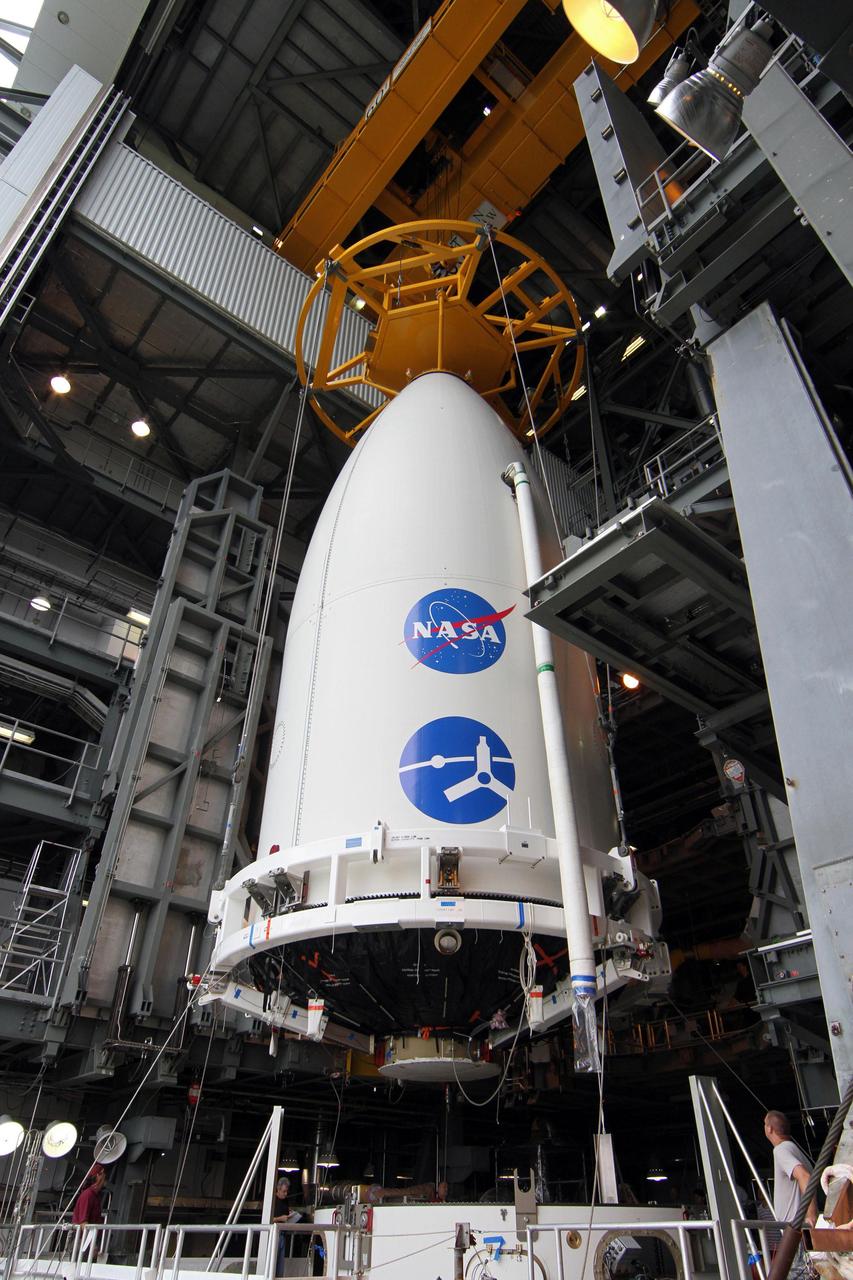
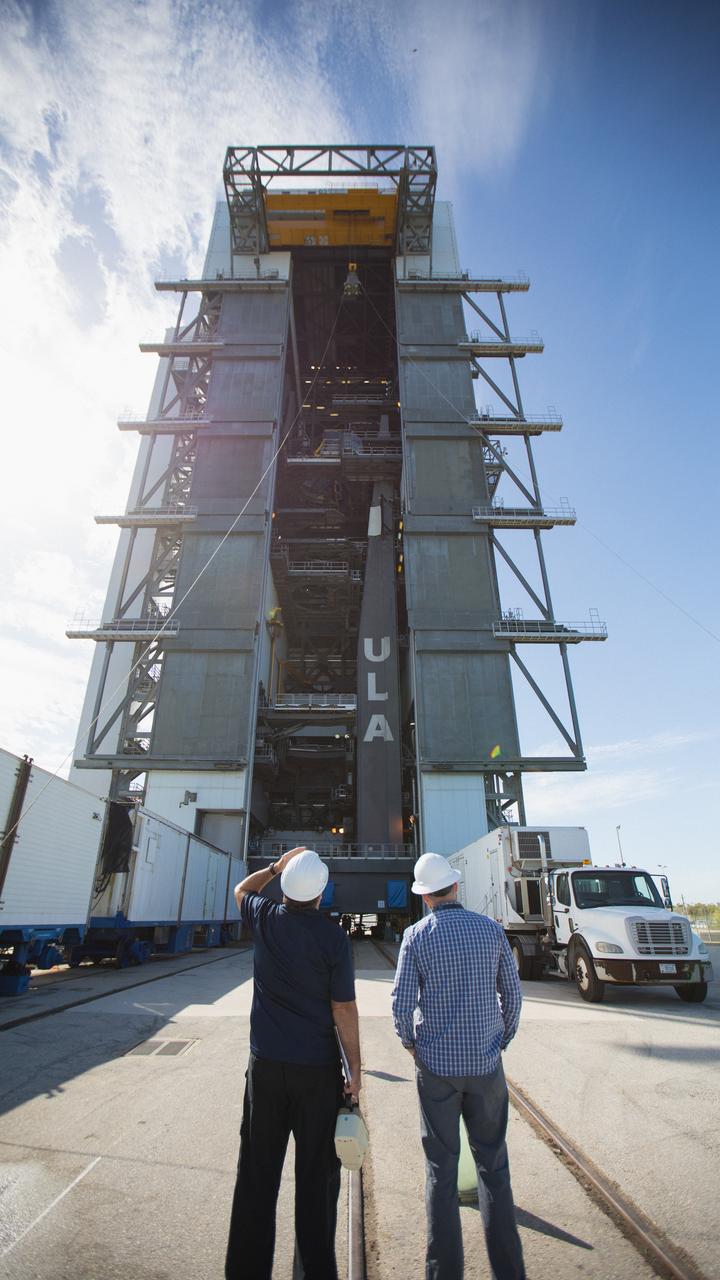
At Space Launch Complex 41, the Juno spacecraft, enclosed in an Atlas payload fairing, was transferred into the Vertical Integration Facility where it was positioned on top of the Atlas rocket stacked inside.
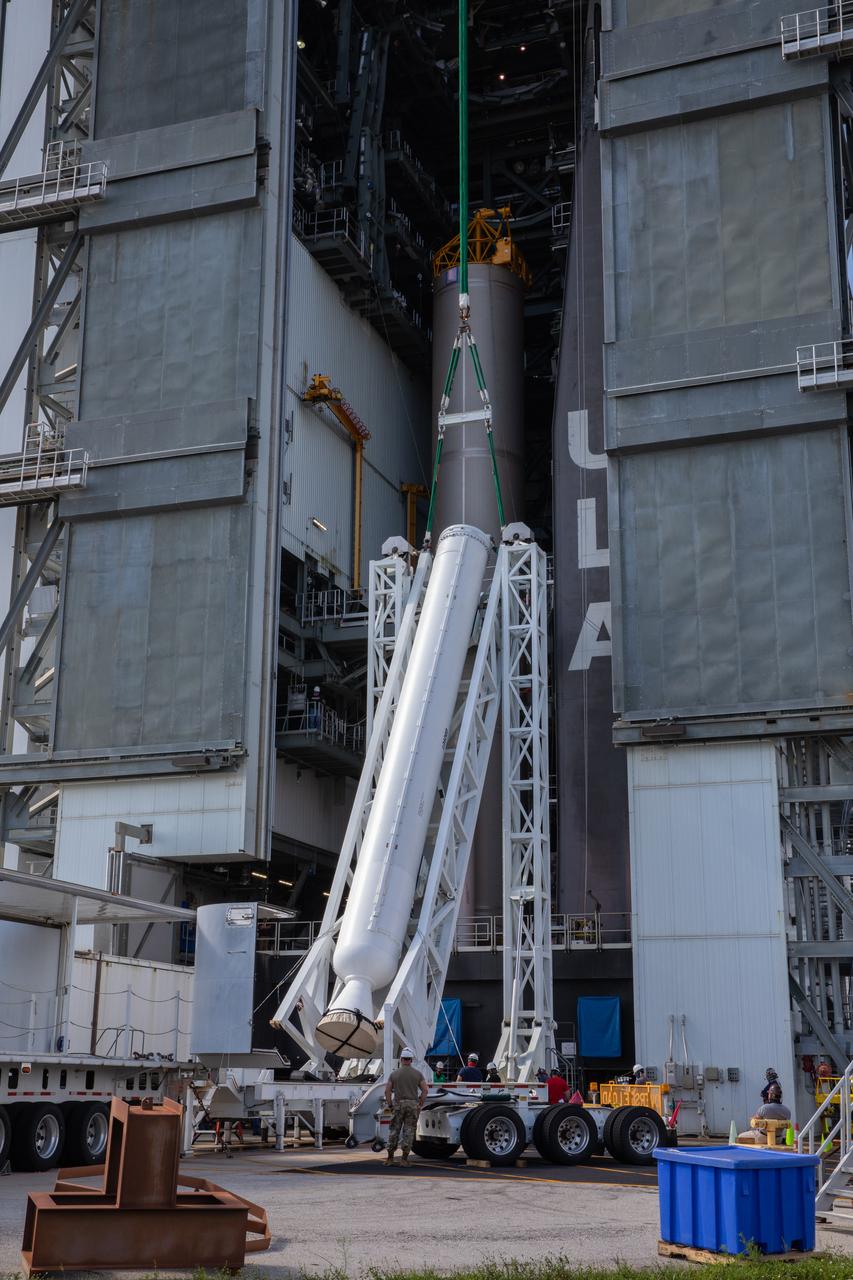
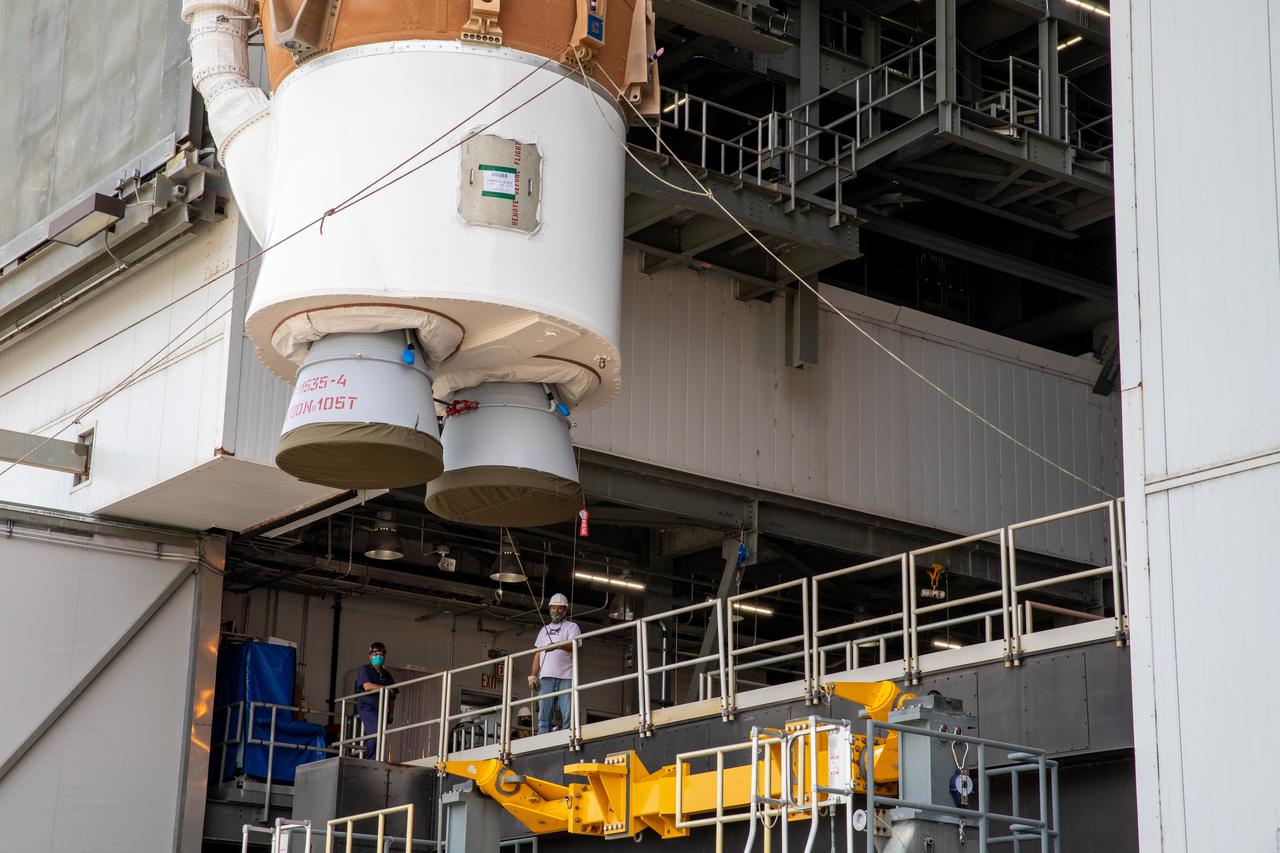
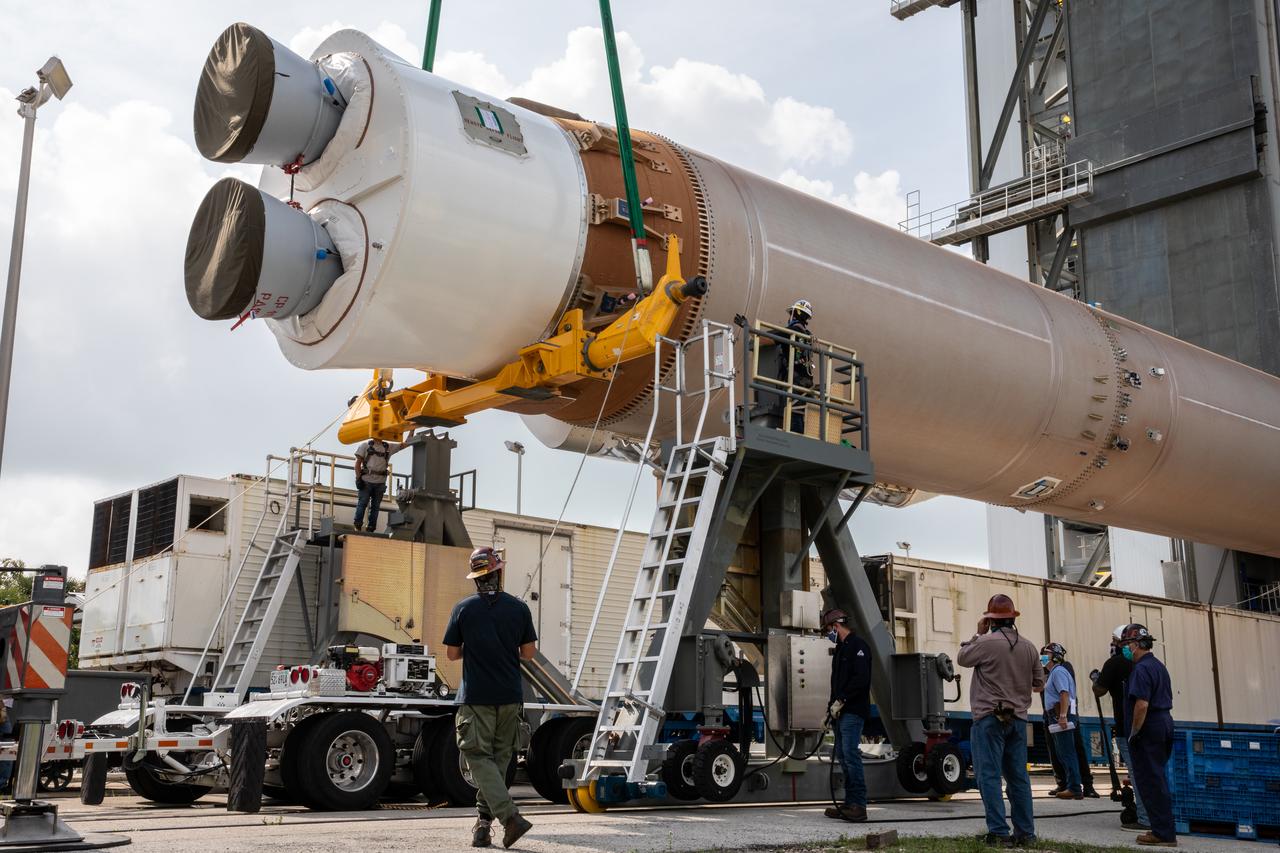
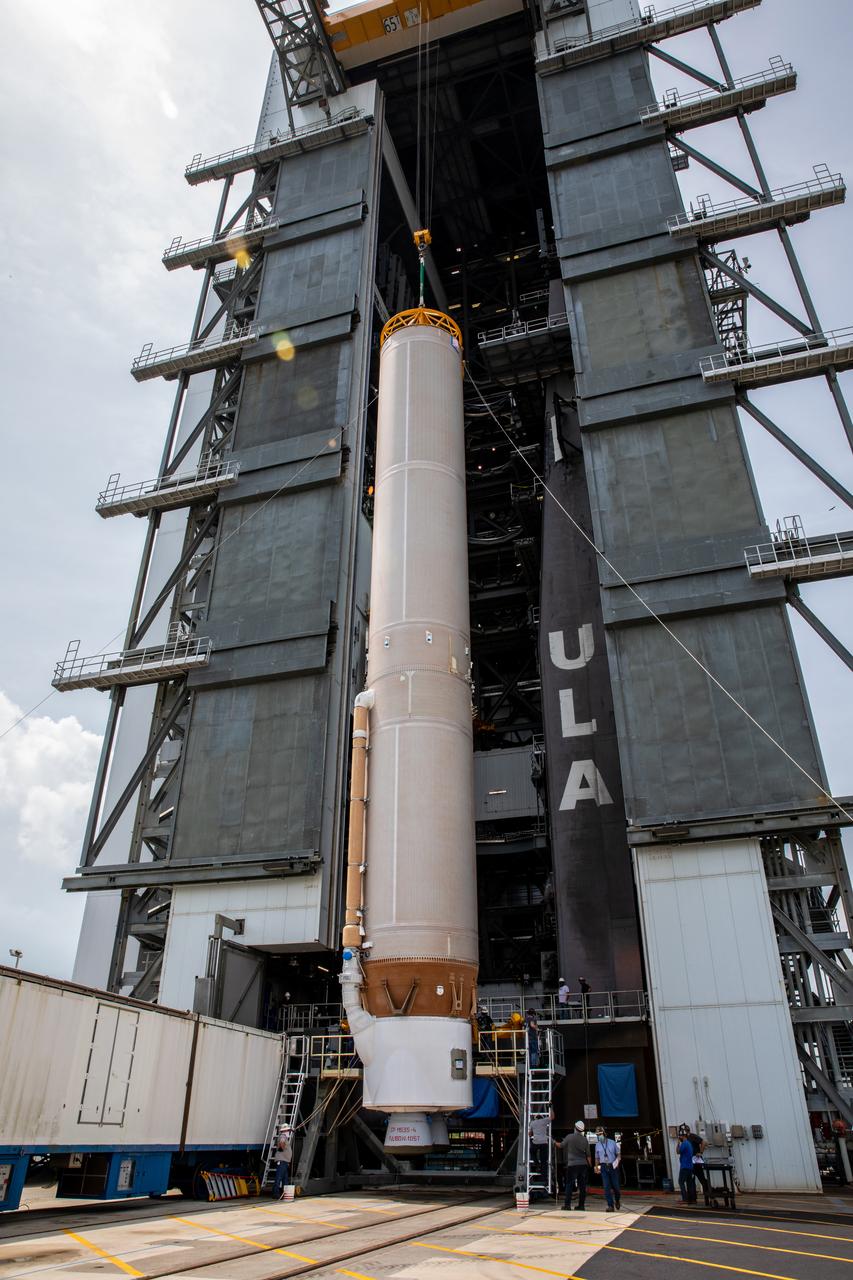
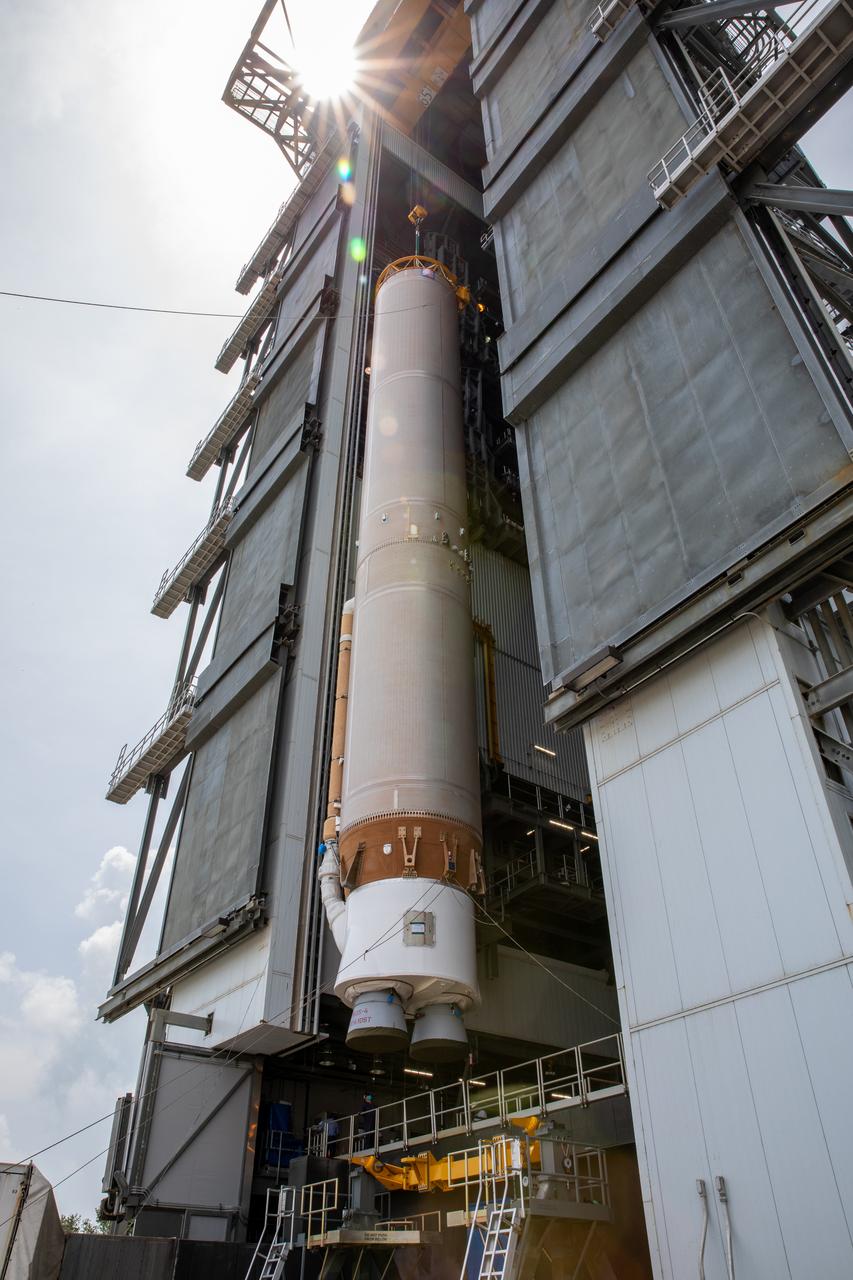
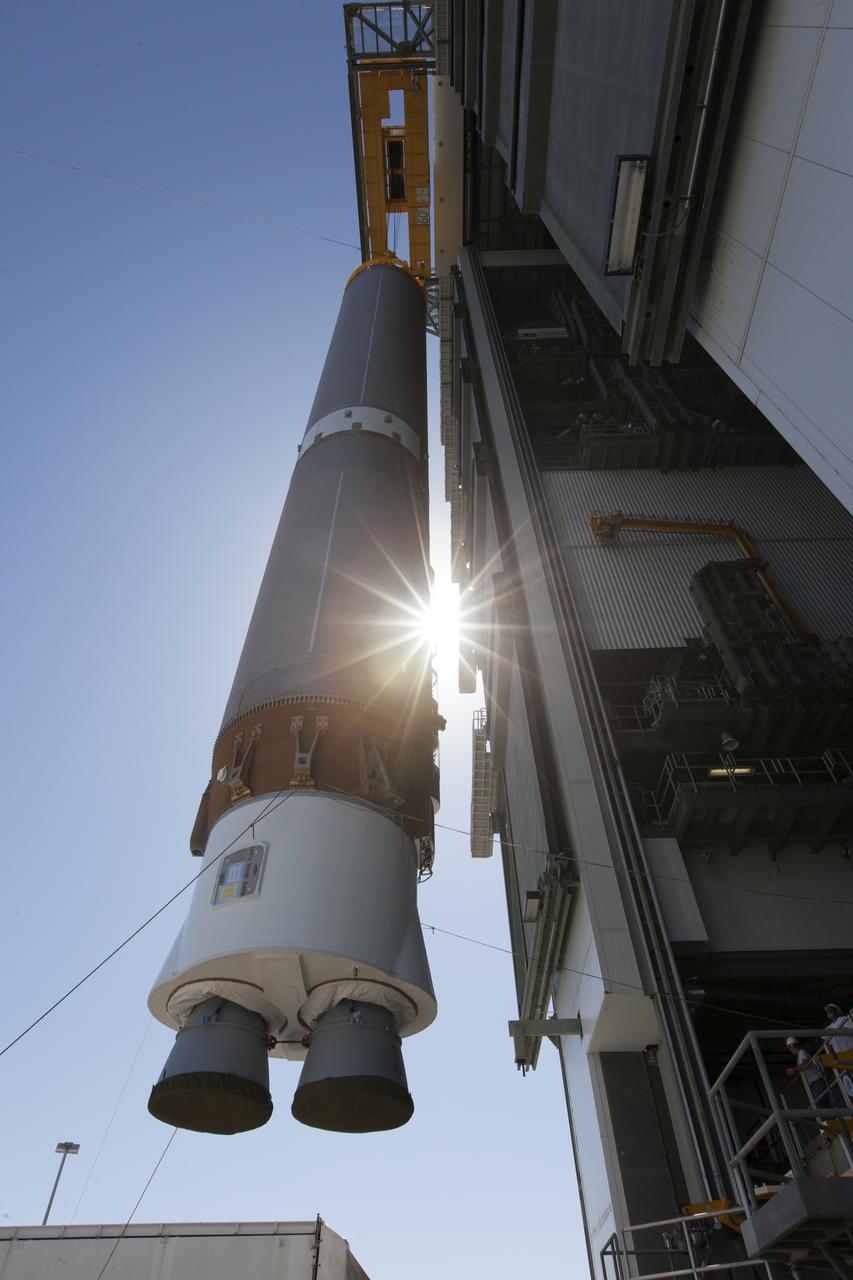
A lifting device raises the fourth and final solid rocket booster (SRB) for the United Launch Alliance Atlas V 541 rocket into the vertical position at the Vertical Integration Facility (VIF) at Space Launch Complex 41 at Cape Canaveral Air Force Station (CCAFS) in Florida on June 9, 2020. The SRB will be lifted up and mated to the Atlas V booster in the VIF. NASA’s Mars 2020 mission with the Perseverance rover is scheduled to launch in July 2020, atop the Atlas V rocket from Pad 41. The rover is part of NASA’s Mars Exploration Program, a long-term effort of robotic exploration of the Red Planet. The rover’s seven instruments will search for habitable conditions in the ancient past and signs of past microbial life on Mars. The Launch Services Program at Kennedy is responsible for launch management.
United Launch Alliance workers assist as a lifting device begins to raise the fourth and final solid rocket booster (SRB) for the United Launch Alliance Atlas V 541 rocket into the vertical position at the Vertical Integration Facility (VIF) at Space Launch Complex 41 at Cape Canaveral Air Force Station (CCAFS) in Florida on June 9, 2020. The SRB will be lifted up and mated to the Atlas V booster in the VIF. NASA’s Mars 2020 mission with the Perseverance rover is scheduled to launch in July 2020, atop the Atlas V rocket from Pad 41. The rover is part of NASA’s Mars Exploration Program, a long-term effort of robotic exploration of the Red Planet. The rover’s seven instruments will search for habitable conditions in the ancient past and signs of past microbial life on Mars. The Launch Services Program at Kennedy is responsible for launch management.
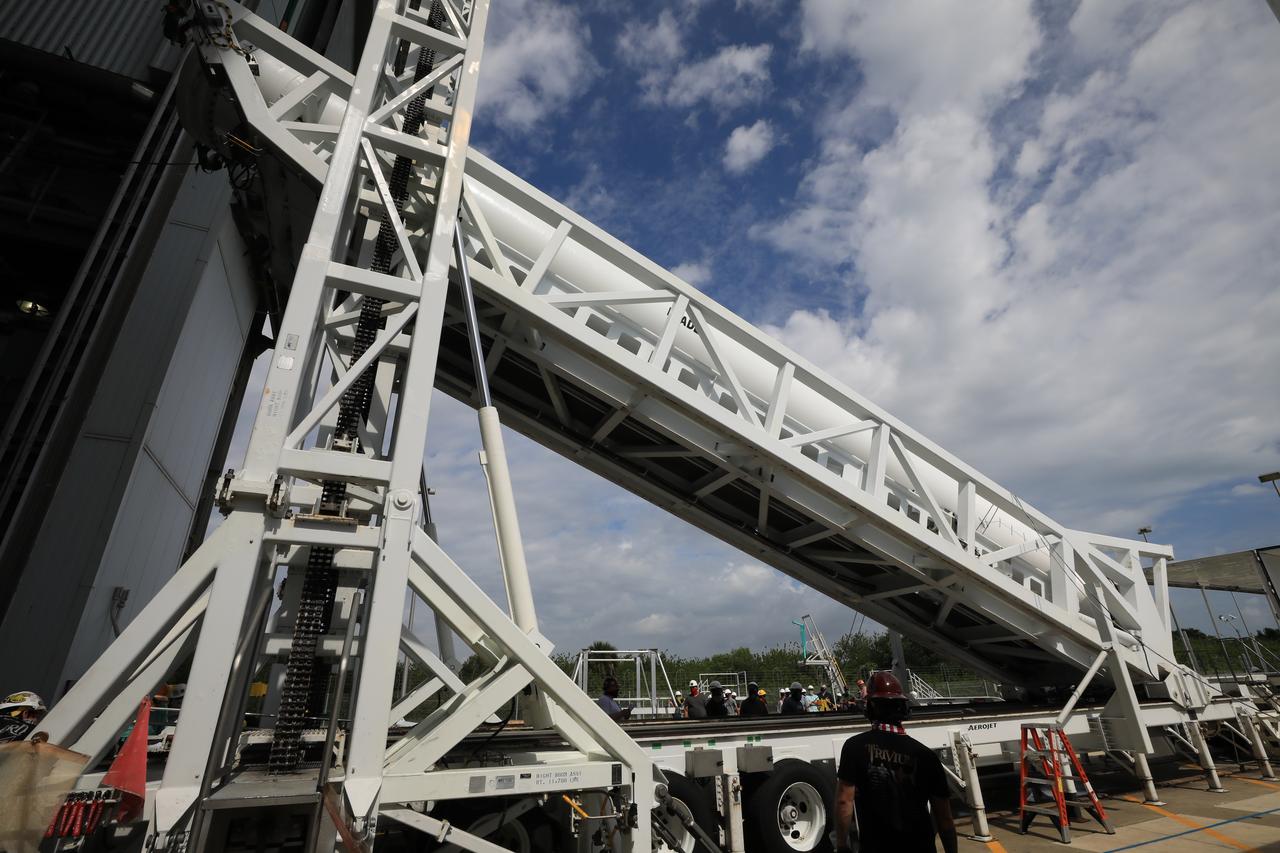
A lifting device raises the third of four solid rocket boosters (SRB) for the United Launch Alliance Atlas V 541 rocket into the vertical position at the Vertical Integration Facility (VIF) at Space Launch Complex 41 at Cape Canaveral Air Force Station (CCAFS) in Florida on June 8, 2020. The SRB will be lifted up and mated to the Atlas V booster in the VIF. NASA’s Mars 2020 mission with the Perseverance rover is scheduled to launch on July 20, 2020, atop the Atlas V rocket from Pad 41. The rover is part of NASA’s Mars Exploration Program, a long-term effort of robotic exploration of the Red Planet. The rover’s seven instruments will search for habitable conditions in the ancient past and signs of past microbial life on Mars. The Launch Services Program at Kennedy is responsible for launch management.
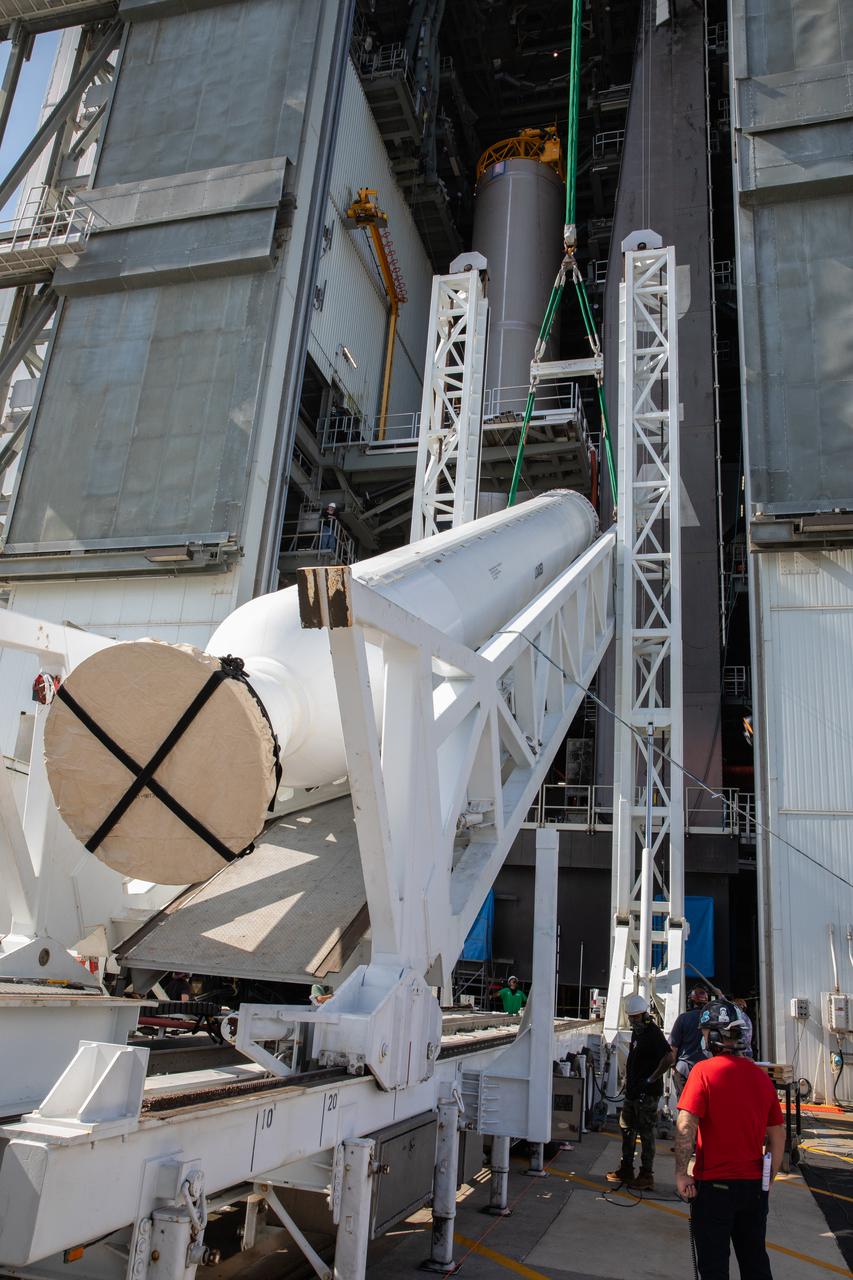
A lifting device raises the fourth and final solid rocket booster (SRB) for the United Launch Alliance Atlas V 541 rocket into the vertical position at the Vertical Integration Facility (VIF) at Space Launch Complex 41 at Cape Canaveral Air Force Station (CCAFS) in Florida on June 9, 2020. The SRB will be lifted up and mated to the Atlas V booster in the VIF. NASA’s Mars 2020 mission with the Perseverance rover is scheduled to launch in July 2020, atop the Atlas V rocket from Pad 41. The rover is part of NASA’s Mars Exploration Program, a long-term effort of robotic exploration of the Red Planet. The rover’s seven instruments will search for habitable conditions in the ancient past and signs of past microbial life on Mars. The Launch Services Program at Kennedy is responsible for launch management.
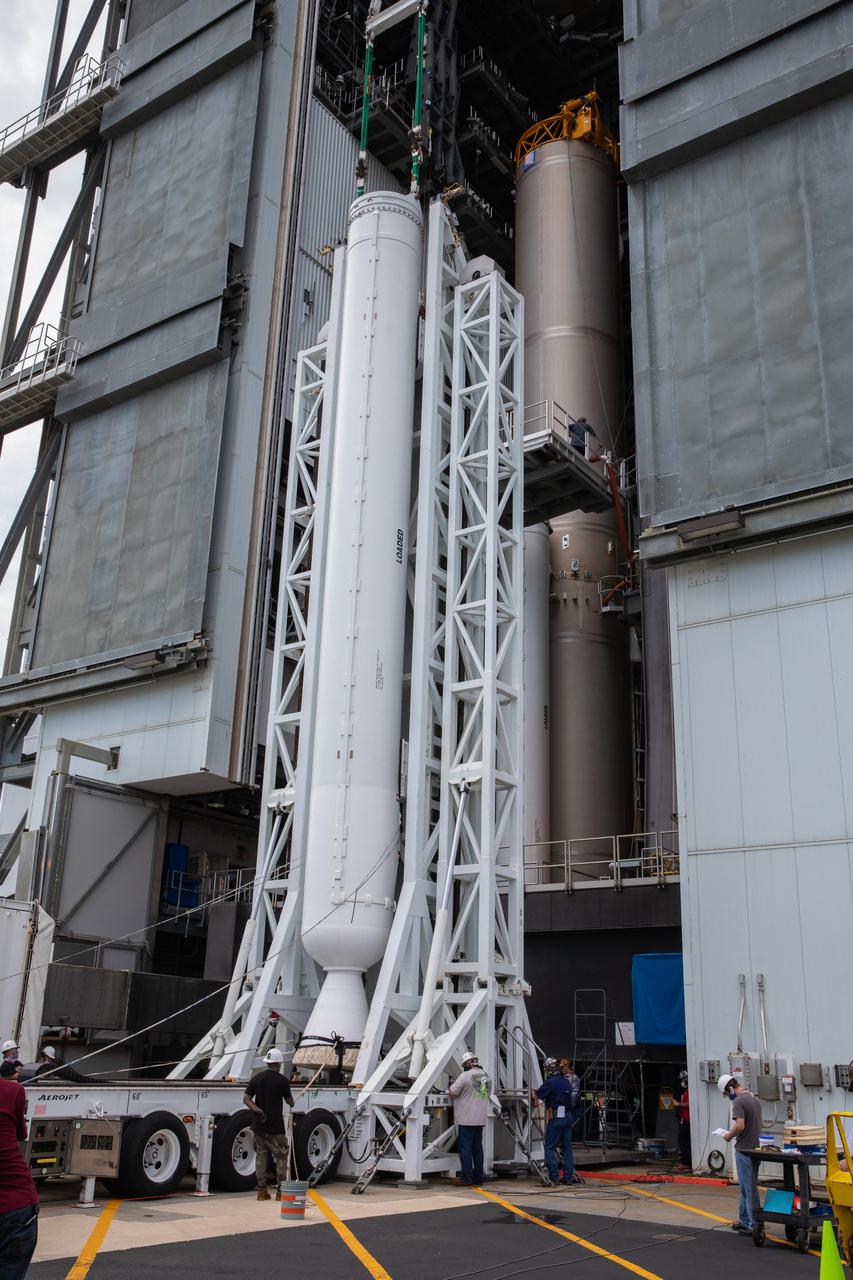
A lifting device raises the fourth and final solid rocket booster (SRB) for the United Launch Alliance Atlas V 541 rocket into the vertical position at the Vertical Integration Facility (VIF) at Space Launch Complex 41 at Cape Canaveral Air Force Station (CCAFS) in Florida on June 9, 2020. A crane is attached to the SRB to lift it up for mating to the Atlas V booster in the VIF. NASA’s Mars 2020 mission with the Perseverance rover is scheduled to launch in July 2020, atop the Atlas V rocket from Pad 41. The rover is part of NASA’s Mars Exploration Program, a long-term effort of robotic exploration of the Red Planet. The rover’s seven instruments will search for habitable conditions in the ancient past and signs of past microbial life on Mars. The Launch Services Program at Kennedy is responsible for launch management.
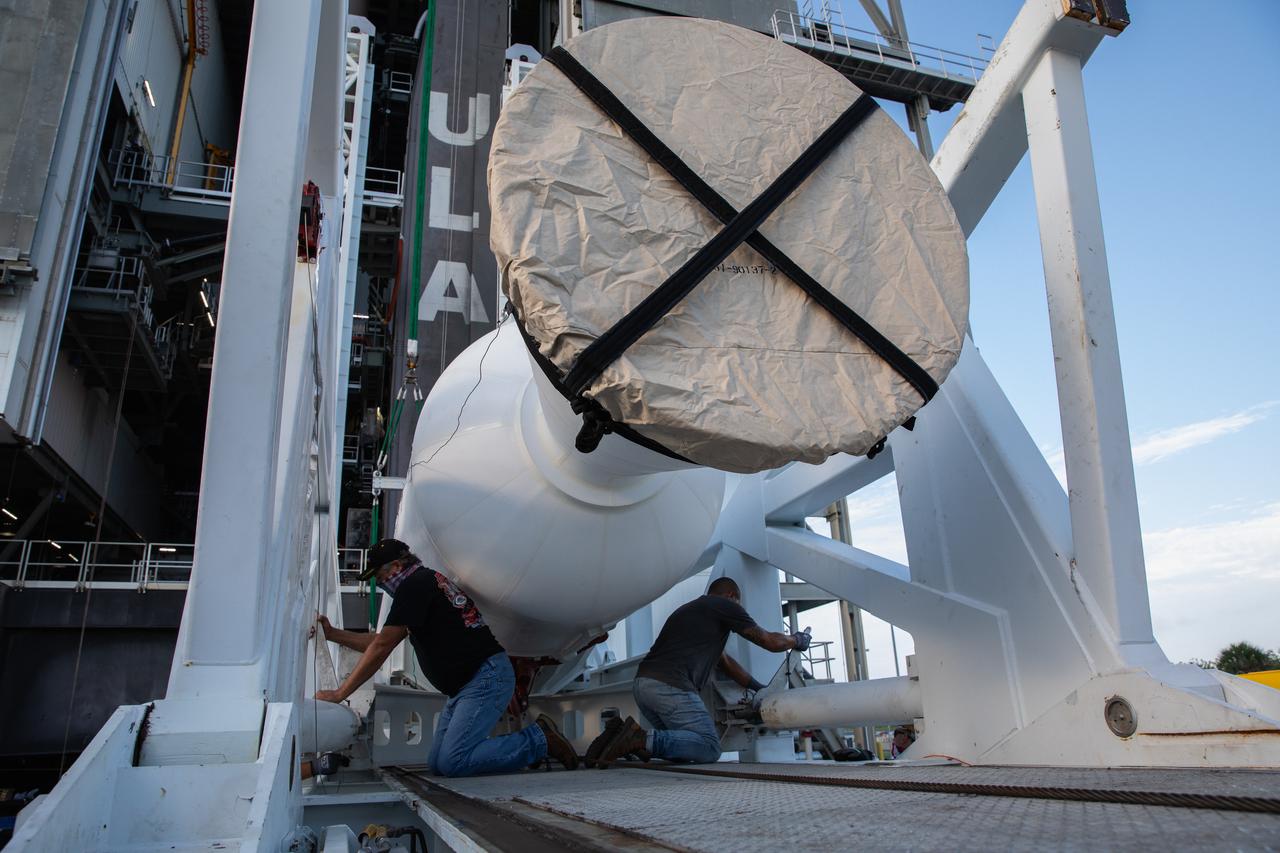
A lifting device raises the fourth and final solid rocket booster (SRB) for the United Launch Alliance Atlas V 541 rocket into the vertical position at the Vertical Integration Facility (VIF) at Space Launch Complex 41 at Cape Canaveral Air Force Station (CCAFS) in Florida on June 9, 2020. The SRB will be lifted up and mated to the Atlas V booster in the VIF. NASA’s Mars 2020 mission with the Perseverance rover is scheduled to launch in July 2020, atop the Atlas V rocket from Pad 41. The rover is part of NASA’s Mars Exploration Program, a long-term effort of robotic exploration of the Red Planet. The rover’s seven instruments will search for habitable conditions in the ancient past and signs of past microbial life on Mars. The Launch Services Program at Kennedy is responsible for launch management.
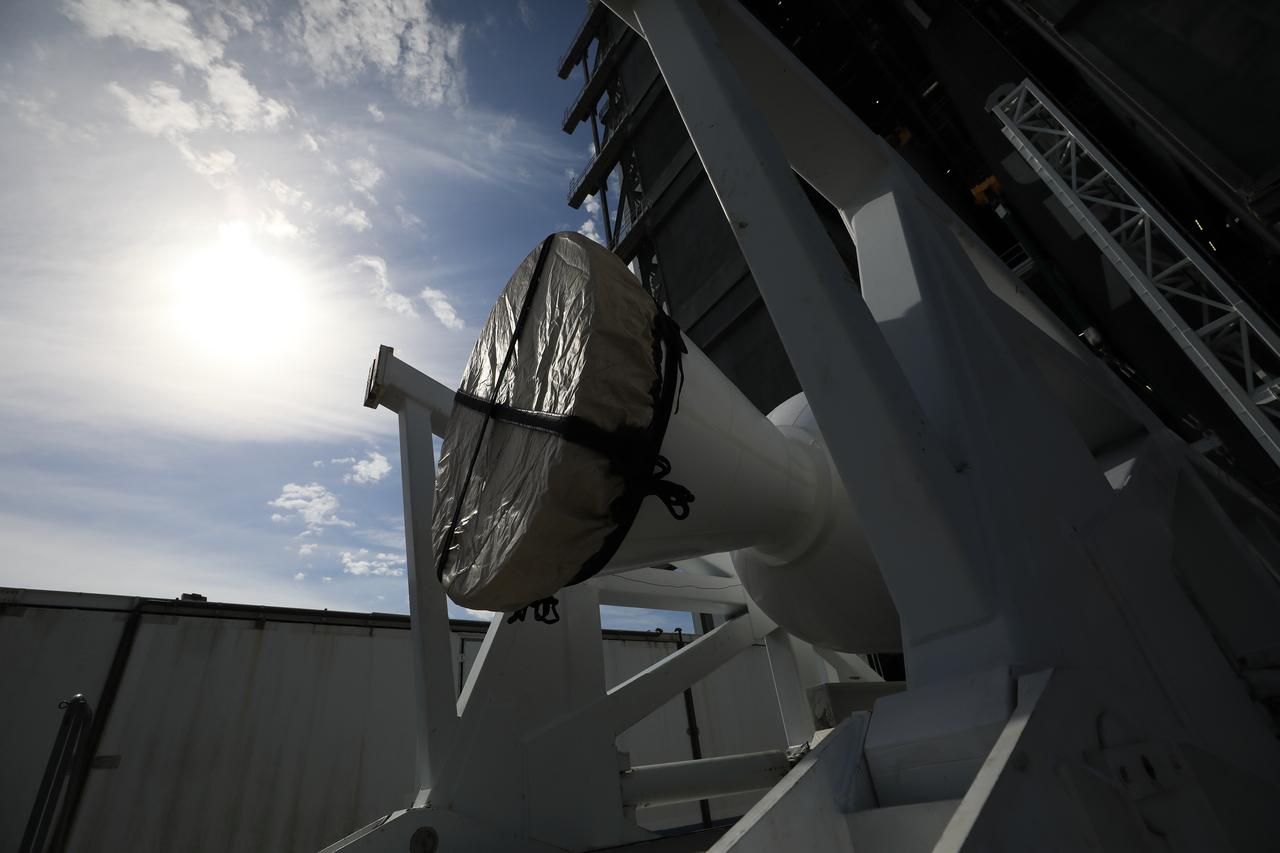
A lifting device begins to raise the third of four solid rocket boosters (SRB) for the United Launch Alliance Atlas V 541 rocket into the vertical position at Vertical Integration Facility (VIF) at Space Launch Complex 41 at Cape Canaveral Air Force Station (CCAFS) in Florida on June 8, 2020. The SRB will be lifted up and mated to the Atlas V booster in the VIF. NASA’s Mars 2020 mission with the Perseverance rover is scheduled to launch on July 20, 2020, atop the Atlas V rocket from Pad 41. The rover is part of NASA’s Mars Exploration Program, a long-term effort of robotic exploration of the Red Planet. The rover’s seven instruments will search for habitable conditions in the ancient past and signs of past microbial life on Mars. The Launch Services Program at Kennedy is responsible for launch management.

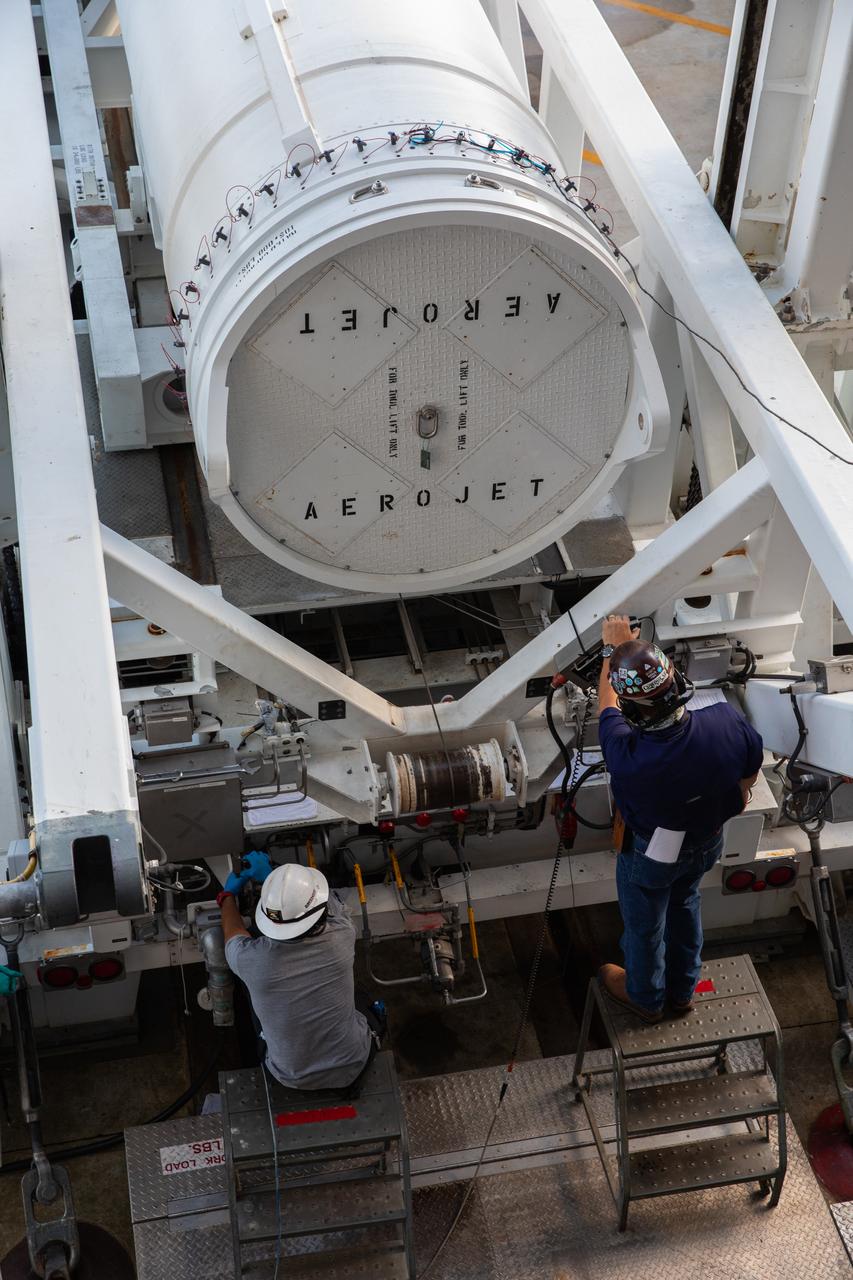
A United Launch Alliance (ULA) worker watches from inside the Vertical Integration Facility (VIF) as the fourth and final solid rocket booster (SRB) for the United Launch Alliance Atlas V 541 rocket is prepared for a lift into the vertical position at Space Launch Complex 41 at Cape Canaveral Air Force Station (CCAFS) in Florida on June 9, 2020. The SRB will be lifted up and mated to the Atlas V booster in the VIF. NASA’s Mars 2020 mission with the Perseverance rover is scheduled to launch in July 2020, atop the Atlas V rocket from Pad 41. The rover is part of NASA’s Mars Exploration Program, a long-term effort of robotic exploration of the Red Planet. The rover’s seven instruments will search for habitable conditions in the ancient past and signs of past microbial life on Mars. The Launch Services Program at Kennedy is responsible for launch management.
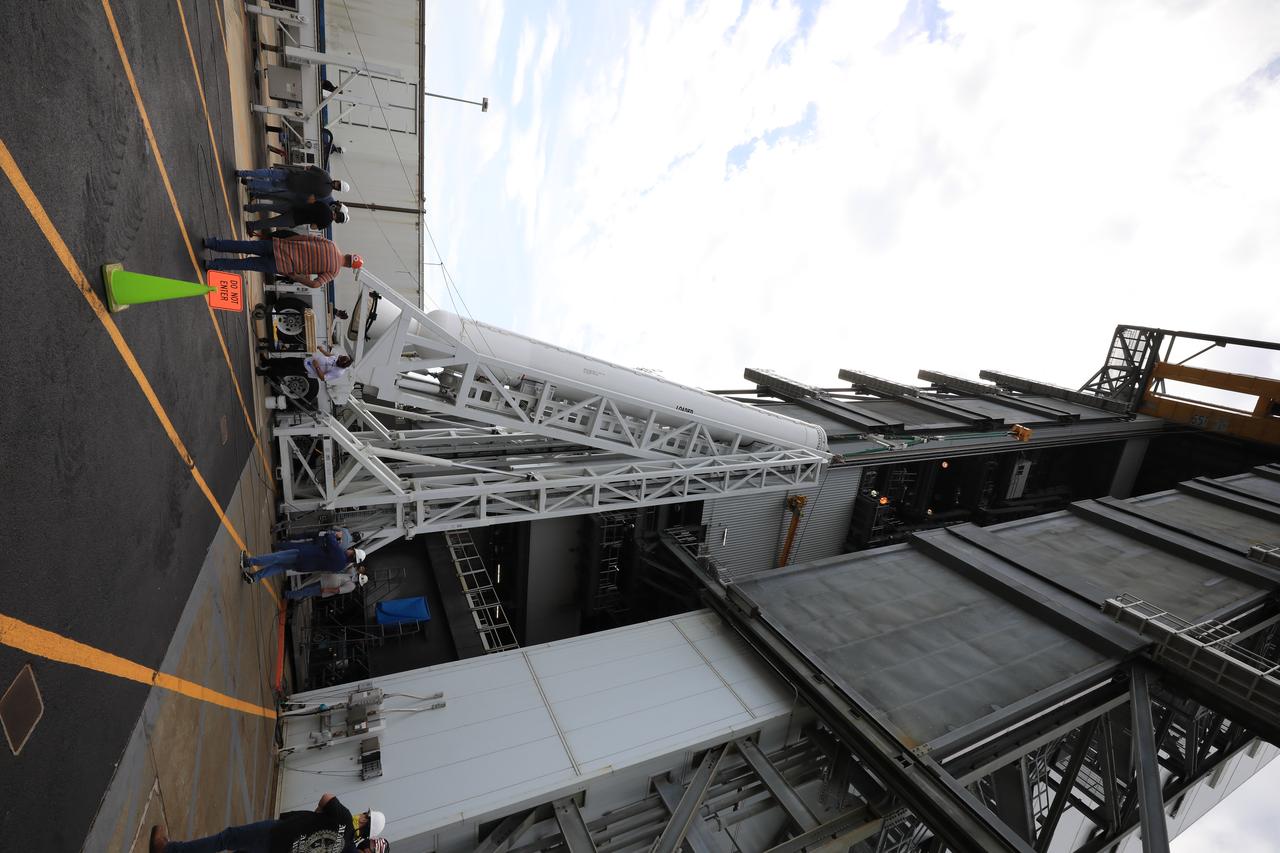
A lifting device is used to raise the third of four solid rocket boosters (SRB) for the United Launch Alliance Atlas V 541 rocket into the vertical position at the Vertical Integration Facility (VIF) at Space Launch Complex 41 at Cape Canaveral Air Force Station (CCAFS) in Florida on June 8, 2020. The SRB will be lifted up and mated to the Atlas V booster in the VIF. NASA’s Mars 2020 mission with the Perseverance rover is scheduled to launch on July 20, 2020, atop the Atlas V rocket from Pad 41. The rover is part of NASA’s Mars Exploration Program, a long-term effort of robotic exploration of the Red Planet. The rover’s seven instruments will search for habitable conditions in the ancient past and signs of past microbial life on Mars. The Launch Services Program at Kennedy is responsible for launch management.
The United Launch Alliance Atlas V booster for NASA’s Mars Perseverance rover is lifted up in the Vertical Integration Facility at Launch Complex 41 at Cape Canaveral Air Force Station (CCAFS) in Florida on May 28, 2020. The Mars Perseverance rover is scheduled to launch in mid-July atop the Atlas V 541 rocket from Pad 41 at CCAFS. The rover is part of NASA’s Mars Exploration Program, a long-term effort of robotic exploration of the Red Planet. The rover will search for habitable conditions in the ancient past and signs of past microbial life on Mars. The Launch Services Program at Kennedy is responsible for launch management.
Preparations are underway to lift the United Launch Alliance Atlas V booster for NASA’s Mars Perseverance rover and move it into the Vertical Integration Facility at Launch Complex 41 at Cape Canaveral Air Force Station (CCAFS) in Florida on May 28, 2020. The Mars Perseverance rover is scheduled to launch in mid-July atop the Atlas V 541 rocket from Pad 41 at CCAFS. The rover is part of NASA’s Mars Exploration Program, a long-term effort of robotic exploration of the Red Planet. The rover will search for habitable conditions in the ancient past and signs of past microbial life on Mars. The Launch Services Program at Kennedy is responsible for launch management.
The United Launch Alliance Atlas V booster for NASA’s Mars Perseverance rover is being prepared for its lift up into the Vertical Integration Facility at Launch Complex 41 at Cape Canaveral Air Force Station (CCAFS) in Florida on May 28, 2020. The Mars Perseverance rover is scheduled to launch in mid-July atop the Atlas V 541 rocket from Pad 41 at CCAFS. The rover is part of NASA’s Mars Exploration Program, a long-term effort of robotic exploration of the Red Planet. The rover will search for habitable conditions in the ancient past and signs of past microbial life on Mars. The Launch Services Program at Kennedy is responsible for launch management.
The United Launch Alliance Atlas V booster for NASA’s Mars Perseverance rover is hoisted up by crane in the Vertical Integration Facility at Launch Complex 41 at Cape Canaveral Air Force Station (CCAFS) in Florida on May 28, 2020. The Mars Perseverance rover is scheduled to launch in mid-July atop the Atlas V 541 rocket from Pad 41 at CCAFS. The rover is part of NASA’s Mars Exploration Program, a long-term effort of robotic exploration of the Red Planet. The rover will search for habitable conditions in the ancient past and signs of past microbial life on Mars. The Launch Services Program at Kennedy is responsible for launch management.
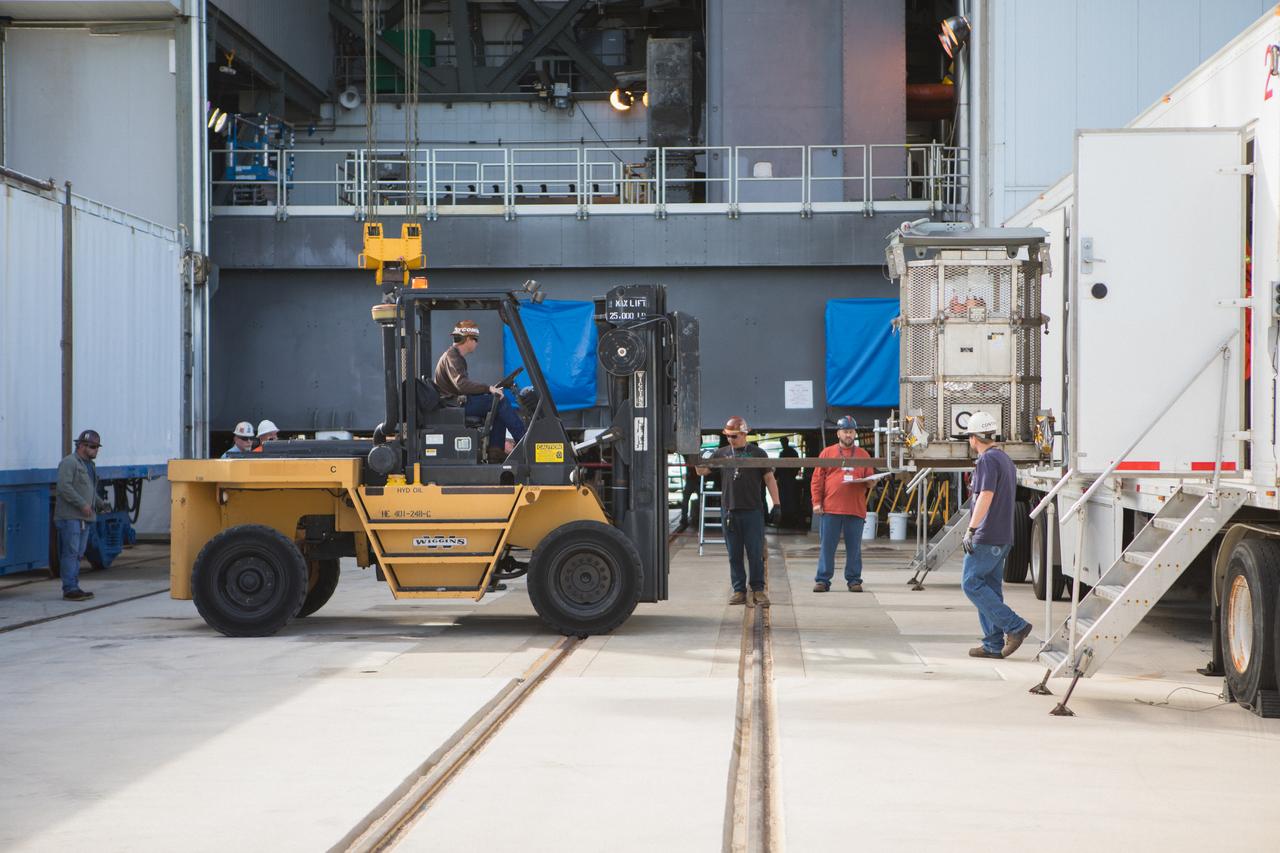
A test version of the Multi-Mission Radioisotope Thermoelectric Generator (MMRTG) for NASA’s Mars 2020 mission arrives at the United Launch Alliance Vertical Integration Facility (VIF) at Space Launch Complex 41 at Cape Canaveral Air Force Station in Florida on Feb. 15, 2019. The MMRTG simulator will be used to practice operations and procedures for carefully hoisting it up and into the VIF. The Mars 2020 rover mission is targeted to launch in July 2020 on a ULA Atlas V rocket from Pad 41. Mars 2020 is part of NASA’s Mars Exploration Program, a long-term effort of robotic exploration of the Red Planet. The rover will search for habitable conditions in the ancient past and signs of past microbial life on Mars.
The United Launch Alliance Atlas V booster for NASA’s Mars Perseverance rover is lifted up in the Vertical Integration Facility at Launch Complex 41 at Cape Canaveral Air Force Station (CCAFS) in Florida on May 28, 2020. The Mars Perseverance rover is scheduled to launch in mid-July atop the Atlas V 541 rocket from Pad 41 at CCAFS. The rover is part of NASA’s Mars Exploration Program, a long-term effort of robotic exploration of the Red Planet. The rover will search for habitable conditions in the ancient past and signs of past microbial life on Mars. The Launch Services Program at Kennedy is responsible for launch management.
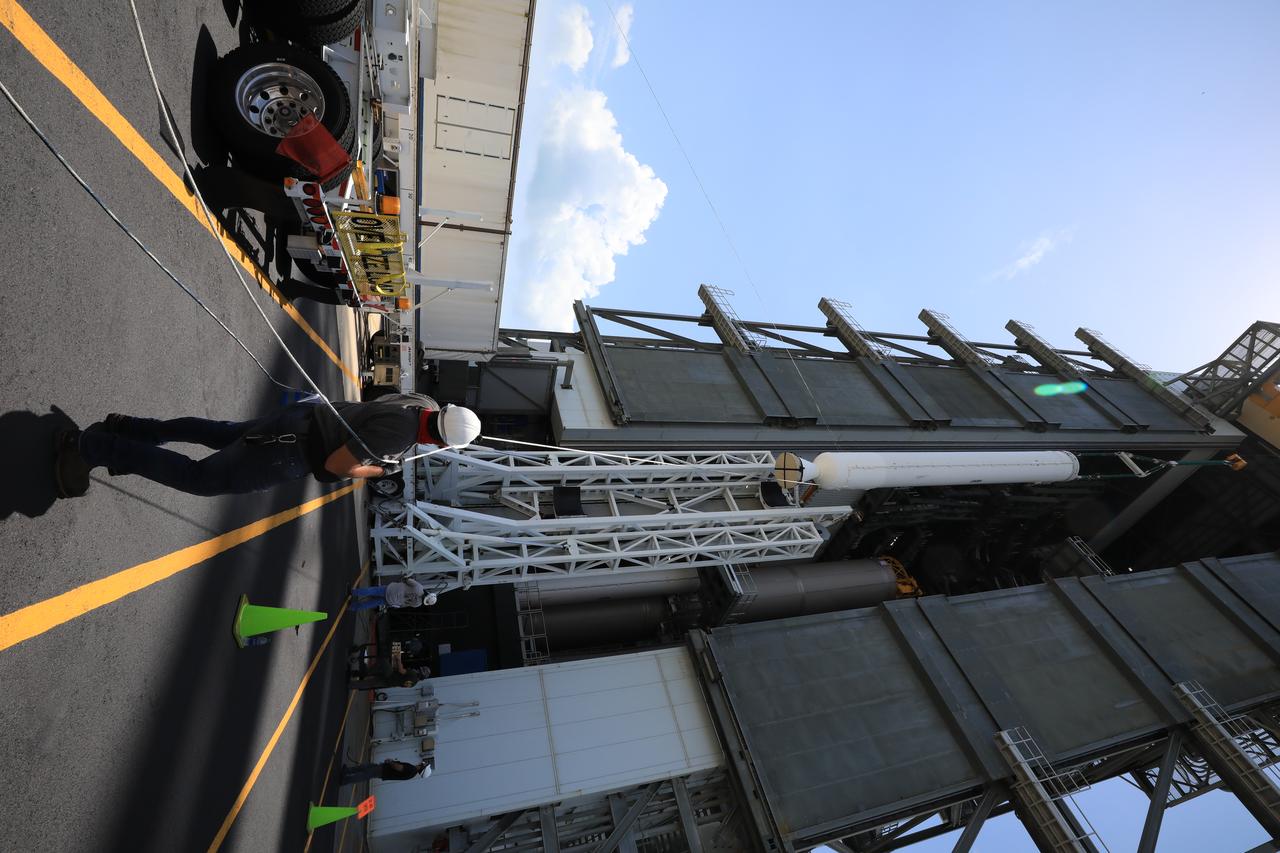
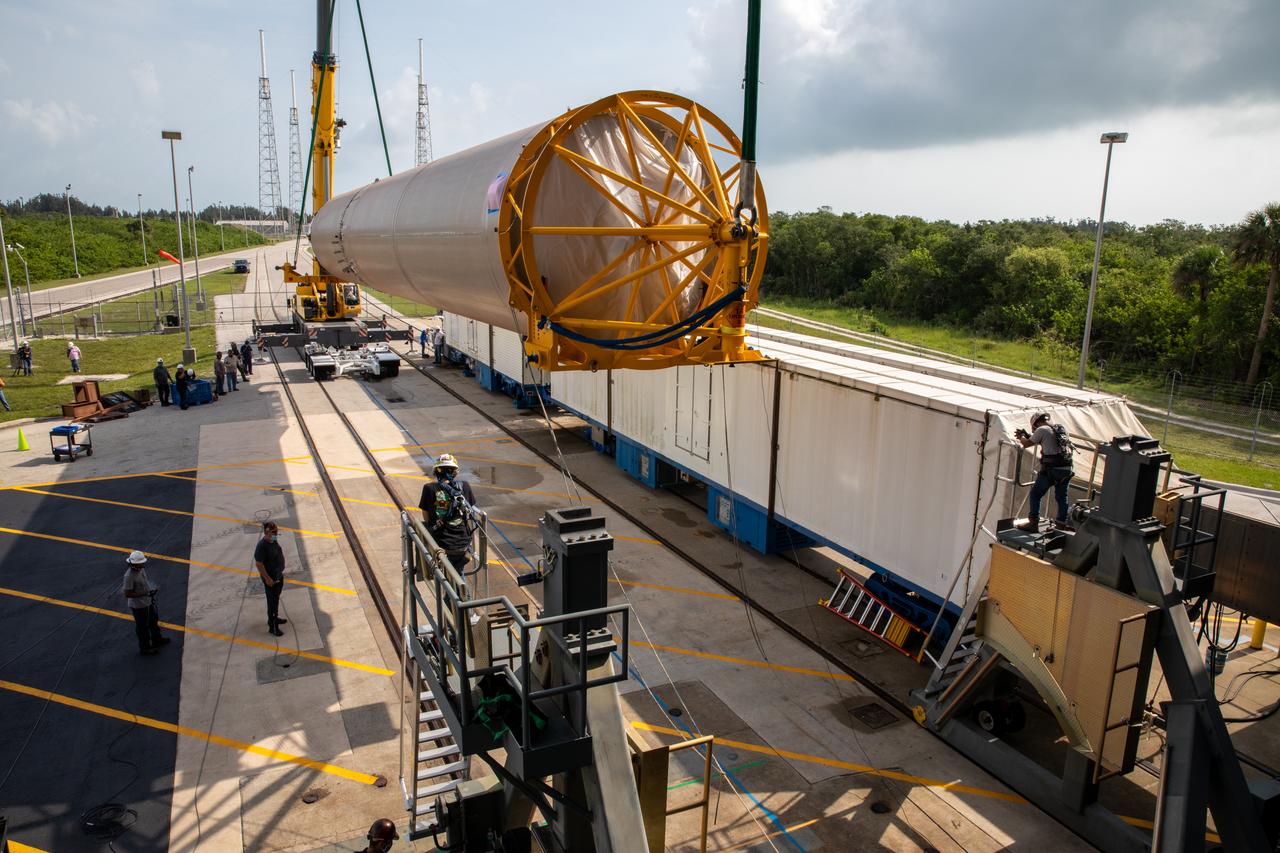
A crane is used to lift the third of four solid rocket boosters (SRB) for the United Launch Alliance Atlas V 541 rocket into the Vertical Integration Facility (VIF) at Space Launch Complex 41 at Cape Canaveral Air Force Station (CCAFS) in Florida on June 8, 2020. The SRB will be lifted up and mated to the Atlas V booster in the VIF. NASA’s Mars 2020 mission with the Perseverance rover is scheduled to launch on July 20, 2020, atop the Atlas V rocket from Pad 41. The rover is part of NASA’s Mars Exploration Program, a long-term effort of robotic exploration of the Red Planet. The rover’s seven instruments will search for habitable conditions in the ancient past and signs of past microbial life on Mars. The Launch Services Program at Kennedy is responsible for launch management.
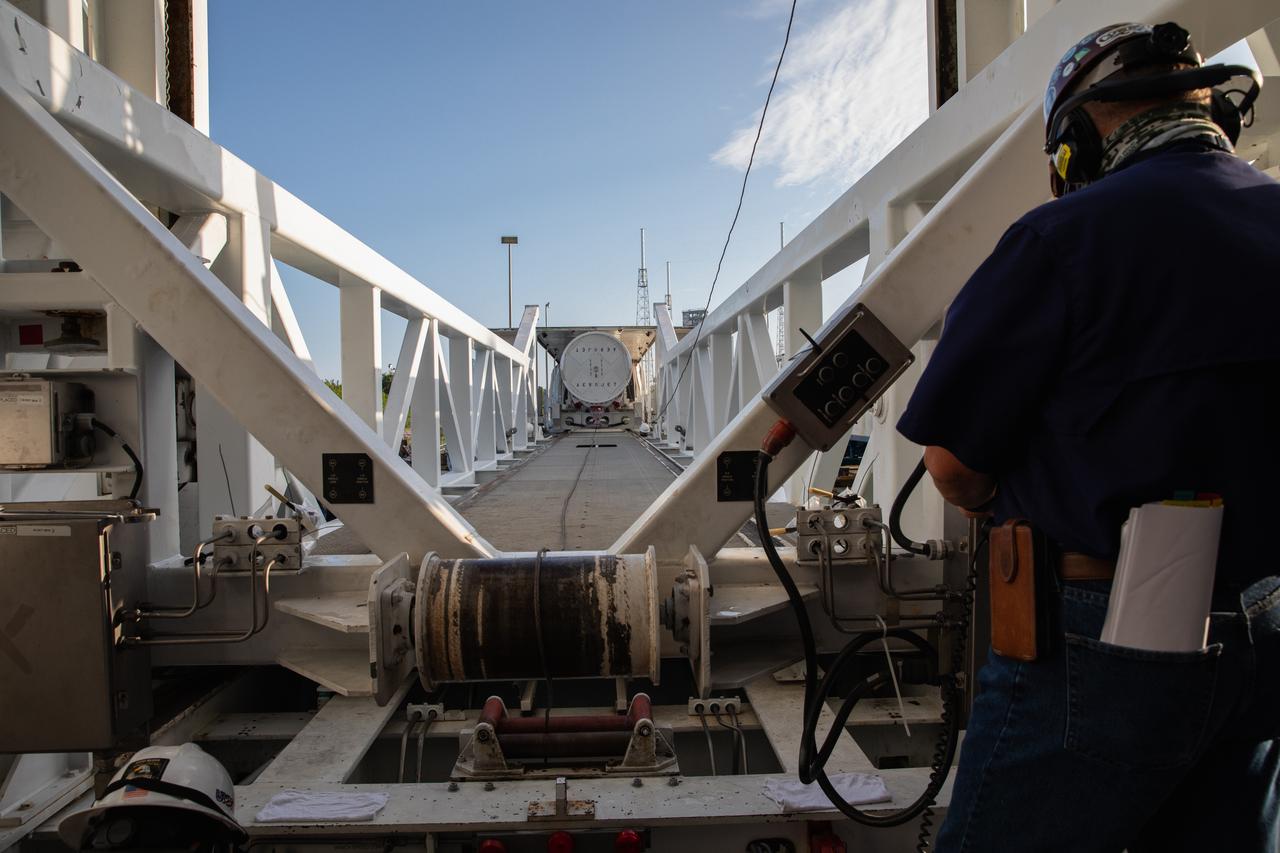
Preparations are underway to lift the fourth and final solid rocket booster (SRB) for the United Launch Alliance Atlas V 541 rocket into the Vertical Integration Facility (VIF) at Space Launch Complex 41 at Cape Canaveral Air Force Station (CCAFS) in Florida on June 9, 2020. The SRB will be lifted and mated to the Atlas V booster in the VIF. The Mars Perseverance rover is scheduled to launch in July 2020, atop the Atlas V rocket from Pad 41. The rover is part of NASA’s Mars Exploration Program, a long-term effort of robotic exploration of the Red Planet. The rover’s seven instruments will search for habitable conditions in the ancient past and signs of past microbial life on Mars. The Launch Services Program at Kennedy is responsible for launch management.
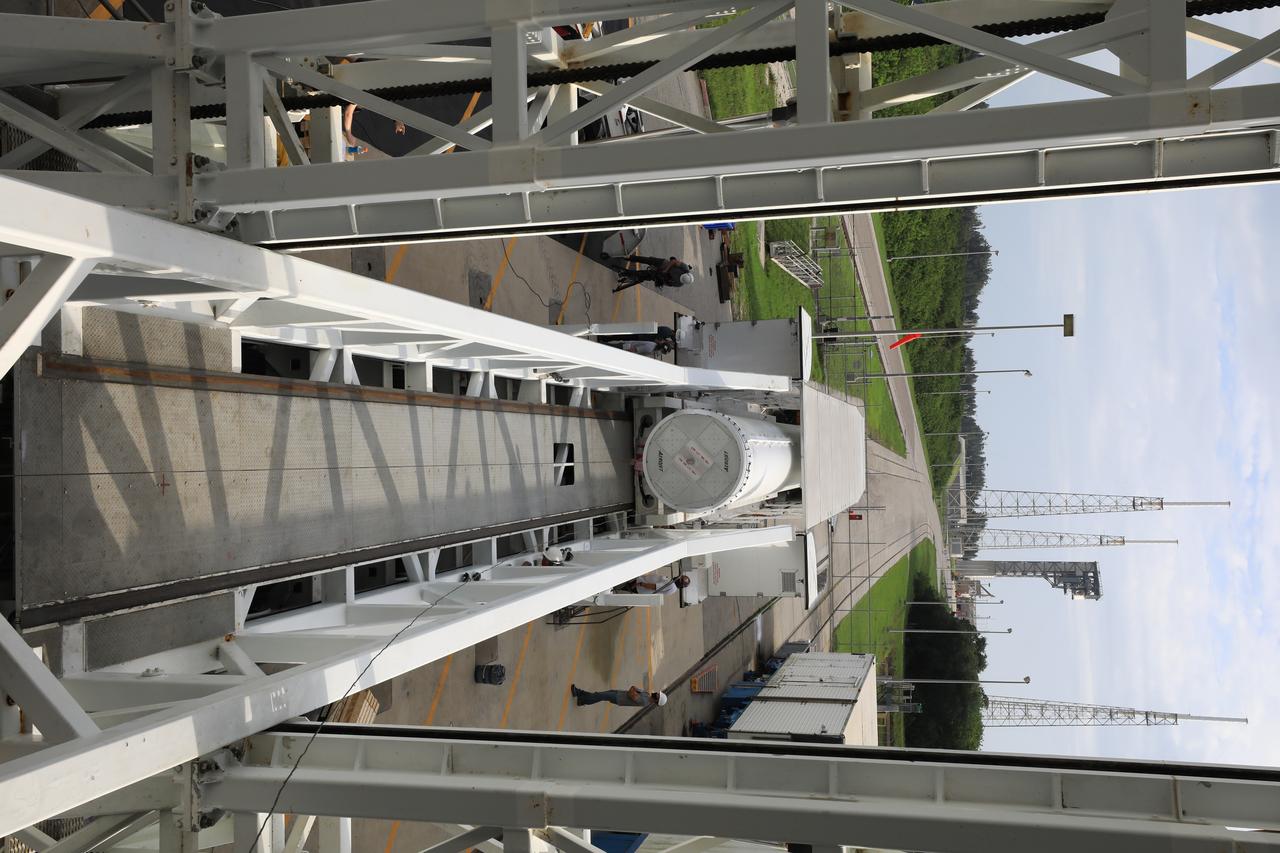
Preparations are underway to lift the third of four solid rocket boosters (SRB) for the United Launch Alliance Atlas V 541 rocket into the Vertical Integration Facility (VIF) at Space Launch Complex 41 at Cape Canaveral Air Force Station (CCAFS) in Florida on June 8, 2020. The SRB will be lifted and mated to the Atlas V booster in the VIF. The Mars Perseverance rover is scheduled to launch on July 20, 2020, atop the Atlas V rocket from Pad 41. The rover is part of NASA’s Mars Exploration Program, a long-term effort of robotic exploration of the Red Planet. The rover’s seven instruments will search for habitable conditions in the ancient past and signs of past microbial life on Mars. The Launch Services Program at Kennedy is responsible for launch management.
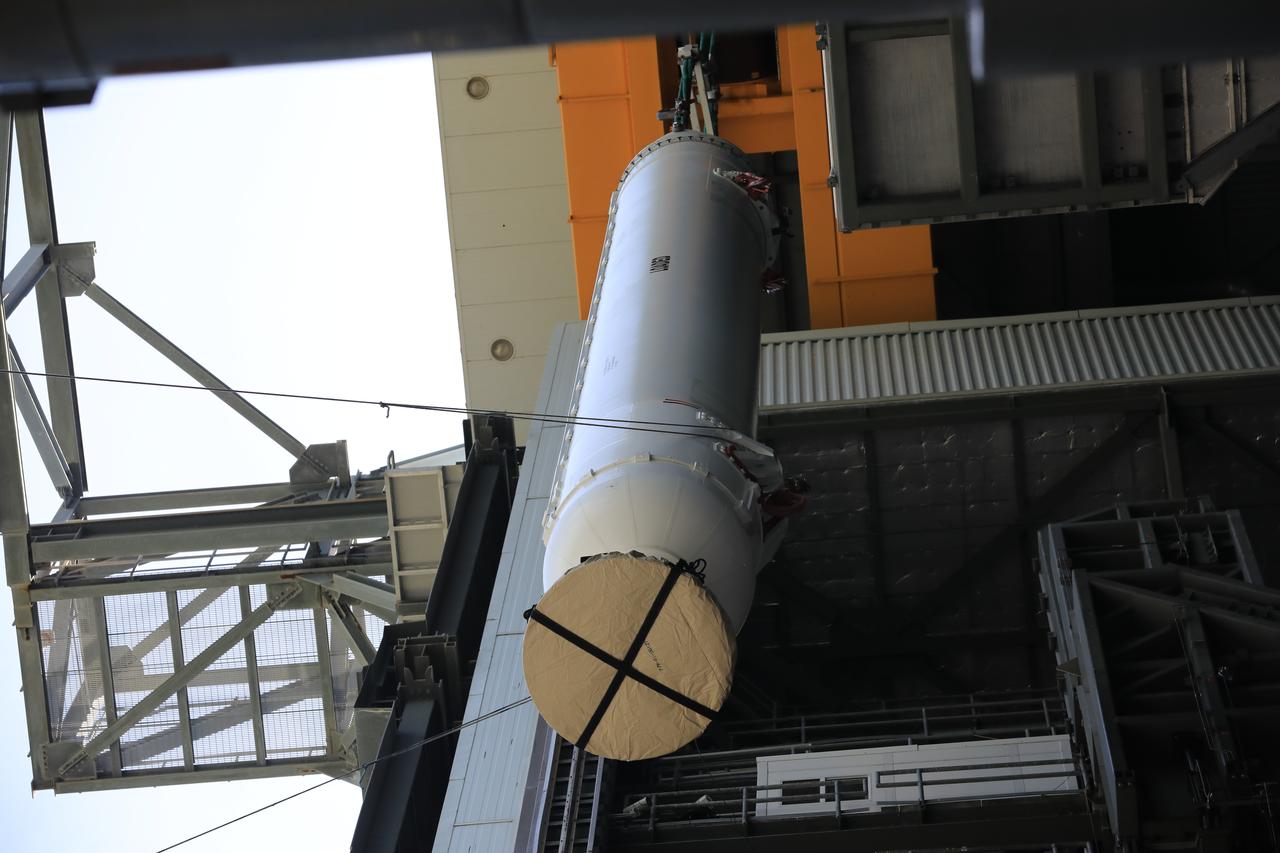
A view from inside the Vertical Integration Facility (VIF) at Space Launch Complex 41 at Cape Canaveral Air Force Station in Florida, as the third of four solid rocket boosters (SRB) for the United Launch Alliance Atlas V 541 rocket is lifted up by crane on June 8, 2020. The SRB will be mated to the Atlas V booster inside the VIF. NASA’s Mars 2020 mission with the Perseverance rover is scheduled to launch on July 20, 2020, atop the Atlas V rocket from Pad 41. The rover is part of NASA’s Mars Exploration Program, a long-term effort of robotic exploration of the Red Planet. The rover’s seven instruments will search for habitable conditions in the ancient past and signs of past microbial life on Mars. The Launch Services Program at Kennedy is responsible for launch management.
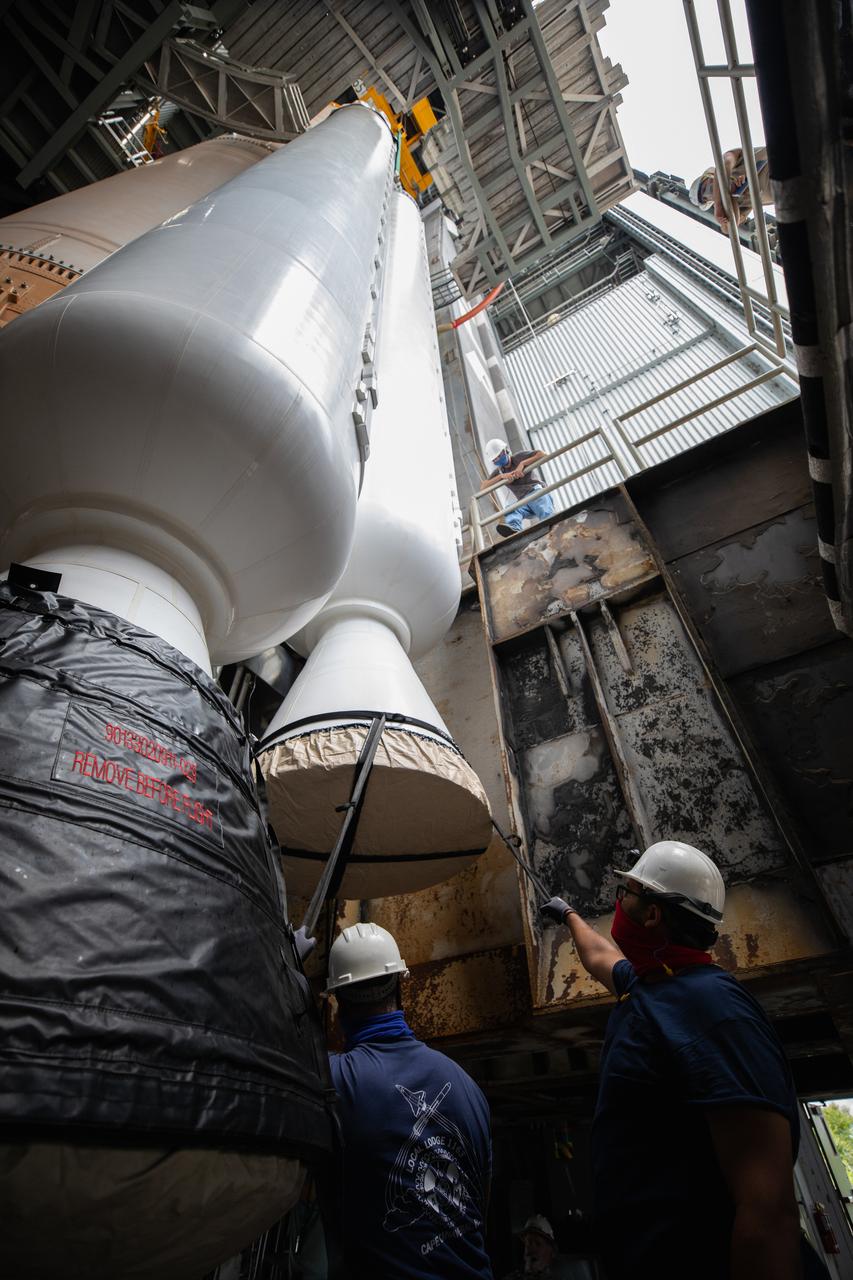
Inside the Vertical Integration Facility (VIF) at Space Launch Complex 41 at Cape Canaveral Air Force Station (CCAFS) in Florida, United Launch Alliance (ULA) workers watch as the fourth and final solid rocket booster (SRB) for the United Launch Alliance Atlas V 541 rocket is lowered by crane on June 9, 2020. The SRB will be mated to the Atlas V booster. NASA’s Mars 2020 mission with the Perseverance rover is scheduled to launch in July 2020, atop the Atlas V rocket from Pad 41. The rover is part of NASA’s Mars Exploration Program, a long-term effort of robotic exploration of the Red Planet. The rover’s seven instruments will search for habitable conditions in the ancient past and signs of past microbial life on Mars. The Launch Services Program at Kennedy is responsible for launch management.
A crane is used to hoist a test version of the Multi-Mission Radioisotope Thermoelectric Generator (MMRTG) for NASA’s Mars 2020 mission up and into the United Launch Alliance Vertical Integration Facility (VIF) at Space Launch Complex 41 at Cape Canaveral Air Force Station in Florida on Feb. 15, 2019. The MMRTG simulator is being used to practice operations and procedures for carefully lifting it up and into the VIF. The Mars 2020 rover mission is targeted to launch in July 2020 on a ULA Atlas V rocket from Pad 41. Mars 2020 is part of NASA’s Mars Exploration Program, a long-term effort of robotic exploration of the Red Planet. The rover will search for habitable conditions in the ancient past and signs of past microbial life on Mars.
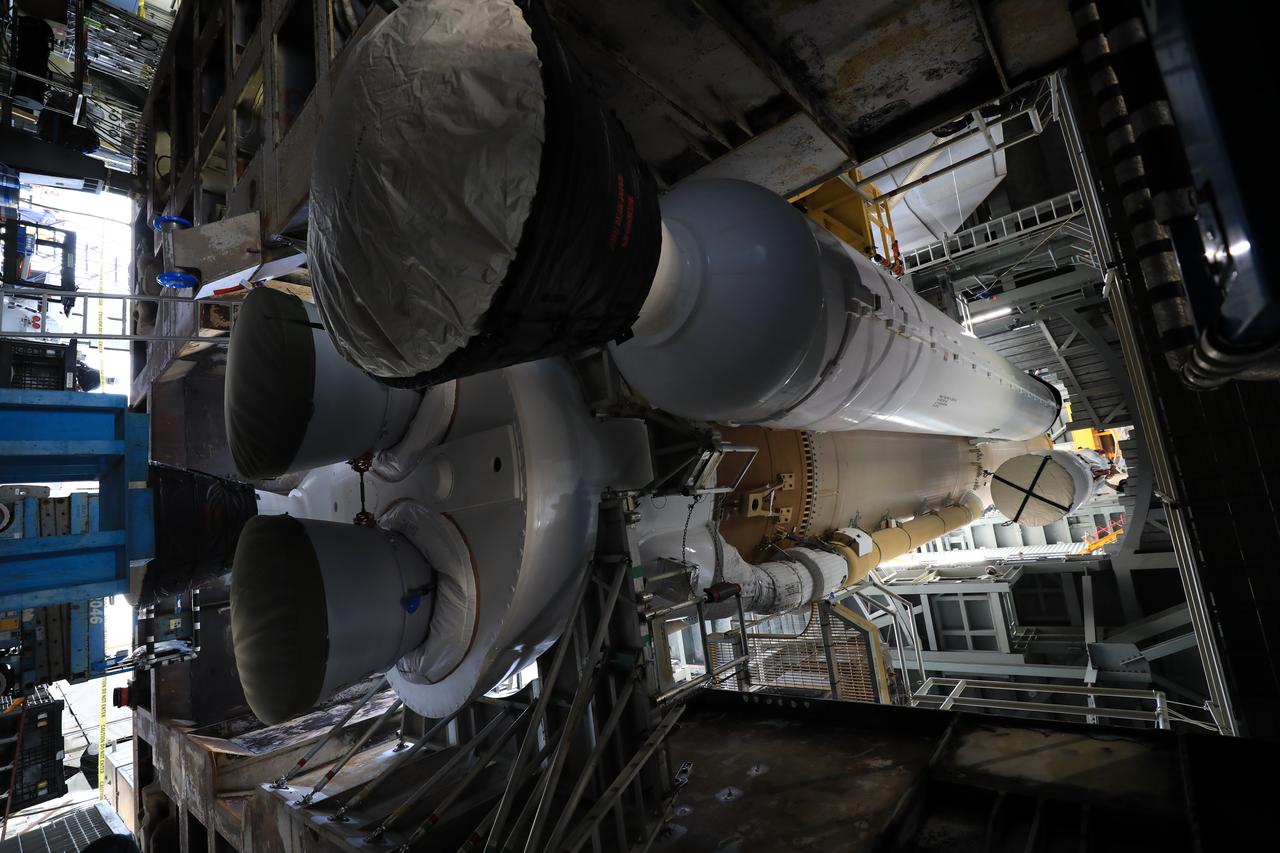
In this view looking up inside the Vertical Integration Facility at Space Launch Complex 41 at Cape Canaveral Air Force Station in Florida, the third of four solid rocket boosters (SRB) for the United Launch Alliance Atlas V 541 rocket is lowered by crane into position on June 8, 2020. The SRB will be mated to the Atlas V booster. NASA’s Mars 2020 mission with the Perseverance rover is scheduled to launch on July 20, 2020, atop the Atlas V rocket from Pad 41. The rover is part of NASA’s Mars Exploration Program, a long-term effort of robotic exploration of the Red Planet. The rover’s seven instruments will search for habitable conditions in the ancient past and signs of past microbial life on Mars. The Launch Services Program at Kennedy is responsible for launch management.
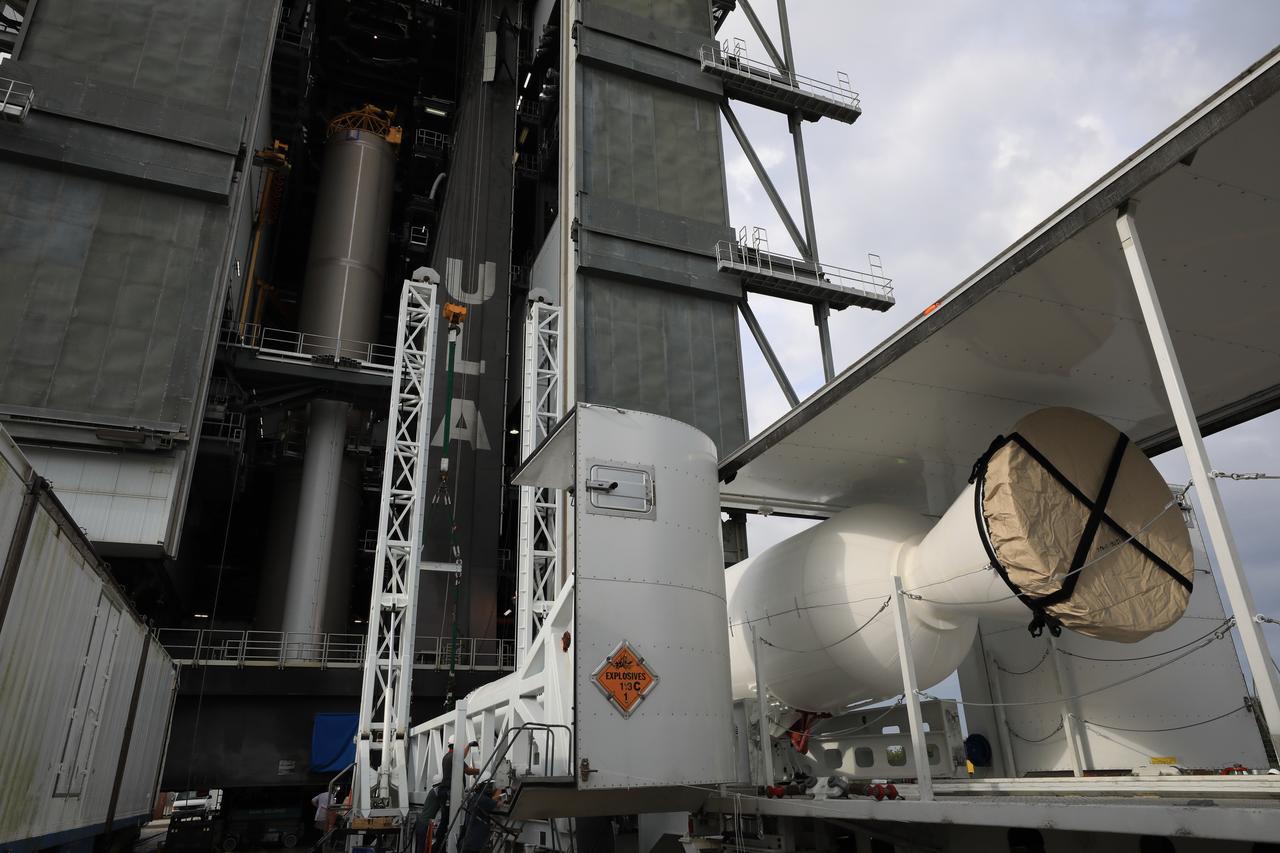
Preparations are underway to lift the third of four solid rocket boosters (SRB) for the United Launch Alliance Atlas V 541 rocket into the Vertical Integration Facility (VIF) at Space Launch Complex 41 at Cape Canaveral Air Force Station (CCAFS) in Florida on June 8, 2020. The SRB will be lifted and mated to the Atlas V booster in the VIF. The Mars Perseverance rover is scheduled to launch on July 20, 2020, atop the Atlas V rocket from Pad 41. The rover is part of NASA’s Mars Exploration Program, a long-term effort of robotic exploration of the Red Planet. The rover’s seven instruments will search for habitable conditions in the ancient past and signs of past microbial life on Mars. The Launch Services Program at Kennedy is responsible for launch management.
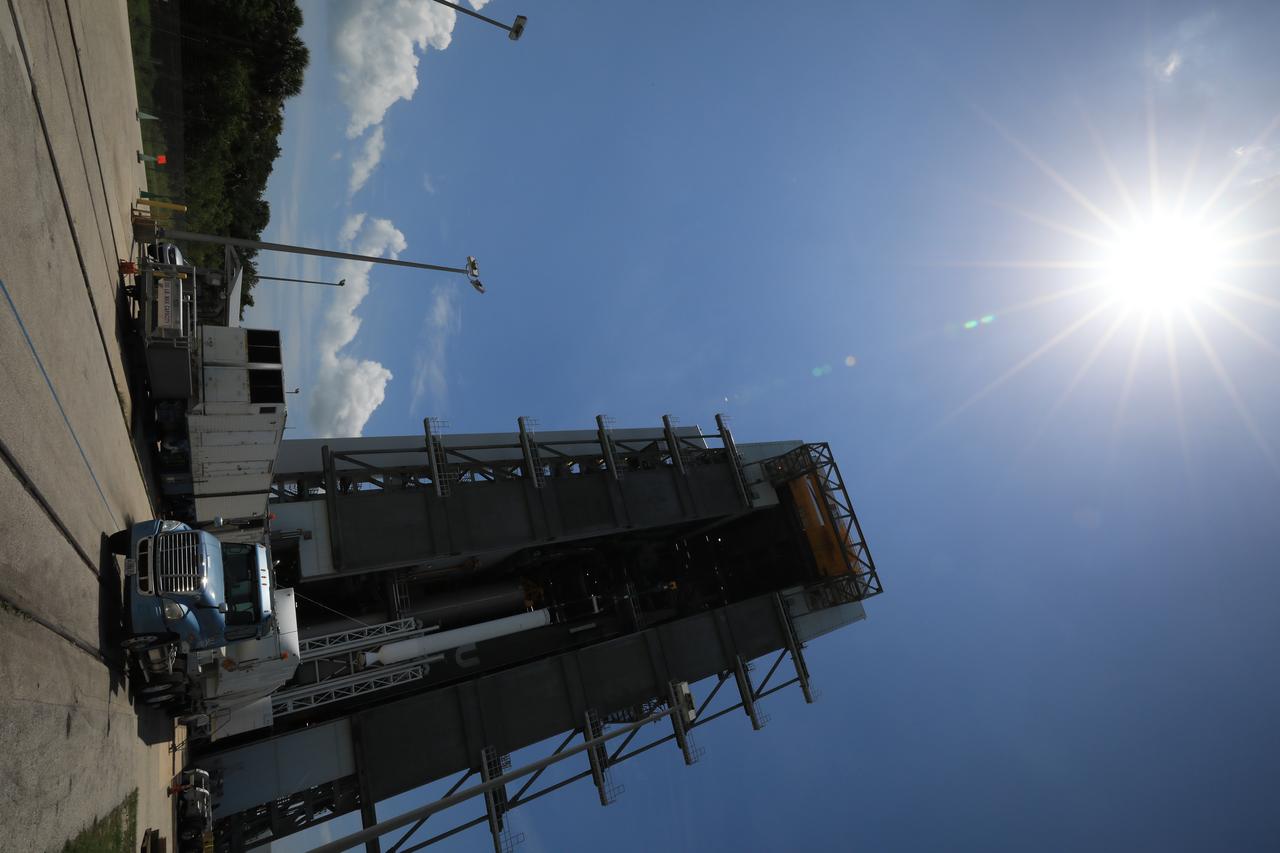
A crane is used to lift the third of four solid rocket boosters (SRB) for the United Launch Alliance Atlas V 541 rocket into the Vertical Integration Facility (VIF) at Space Launch Complex 41 at Cape Canaveral Air Force Station (CCAFS) in Florida on June 8, 2020. The SRB will be lifted up and mated to the Atlas V booster in the VIF. NASA’s Mars 2020 mission with the Perseverance rover is scheduled to launch on July 20, 2020, atop the Atlas V rocket from Pad 41. The rover is part of NASA’s Mars Exploration Program, a long-term effort of robotic exploration of the Red Planet. The rover’s seven instruments will search for habitable conditions in the ancient past and signs of past microbial life on Mars. The Launch Services Program at Kennedy is responsible for launch management.
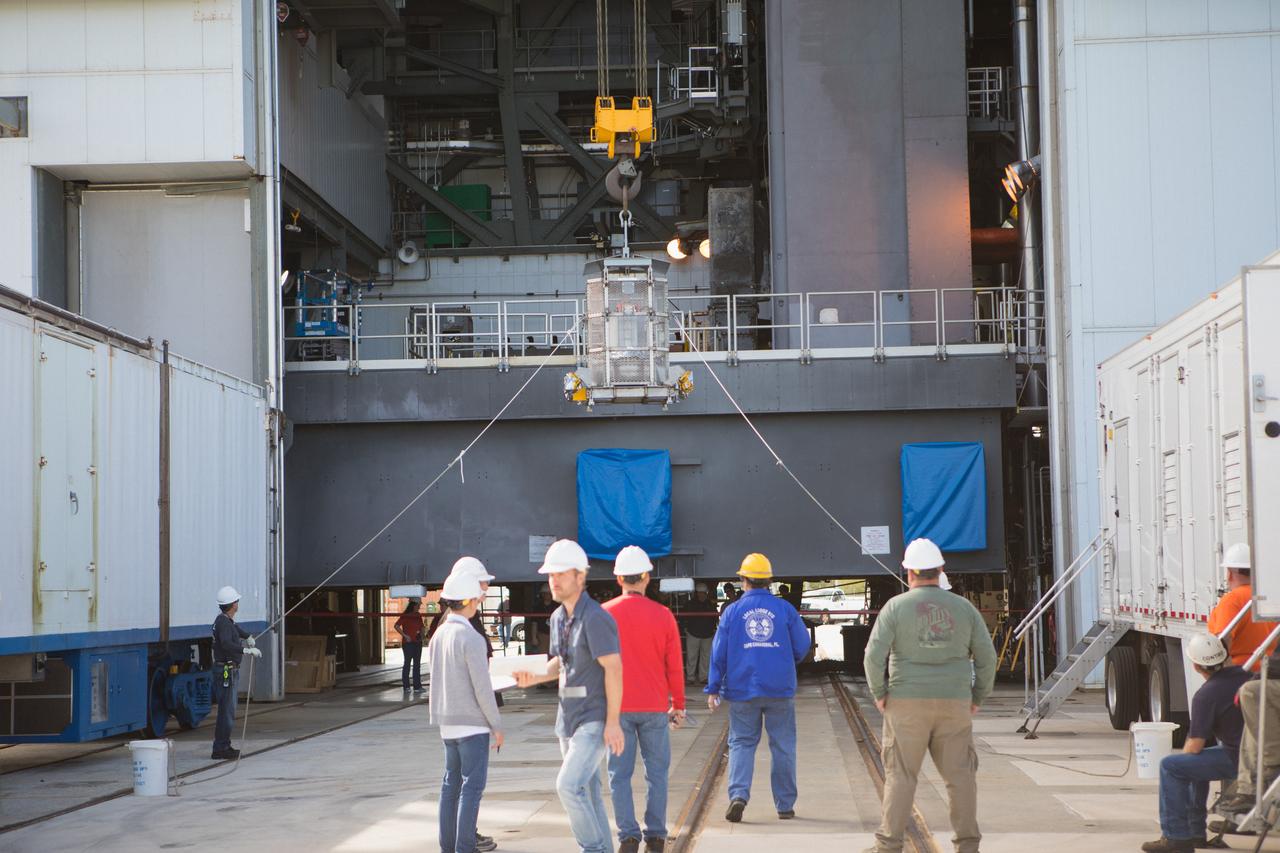
Technicians assist as a crane lifts up a test version of the Multi-Mission Radioisotope Thermoelectric Generator (MMRTG) for NASA’s Mars 2020 mission at the United Launch Alliance Vertical Integration Facility (VIF) at Space Launch Complex 41 at Cape Canaveral Air Force Station in Florida on Feb. 15, 2019. The MMRTG simulator is being used to practice operations and procedures for carefully hoisting it up and into the VIF. The Mars 2020 rover mission is targeted to launch in July 2020 on a ULA Atlas V rocket from Pad 41. Mars 2020 is part of NASA’s Mars Exploration Program, a long-term effort of robotic exploration of the Red Planet. The rover will search for habitable conditions in the ancient past and signs of past microbial life on Mars.
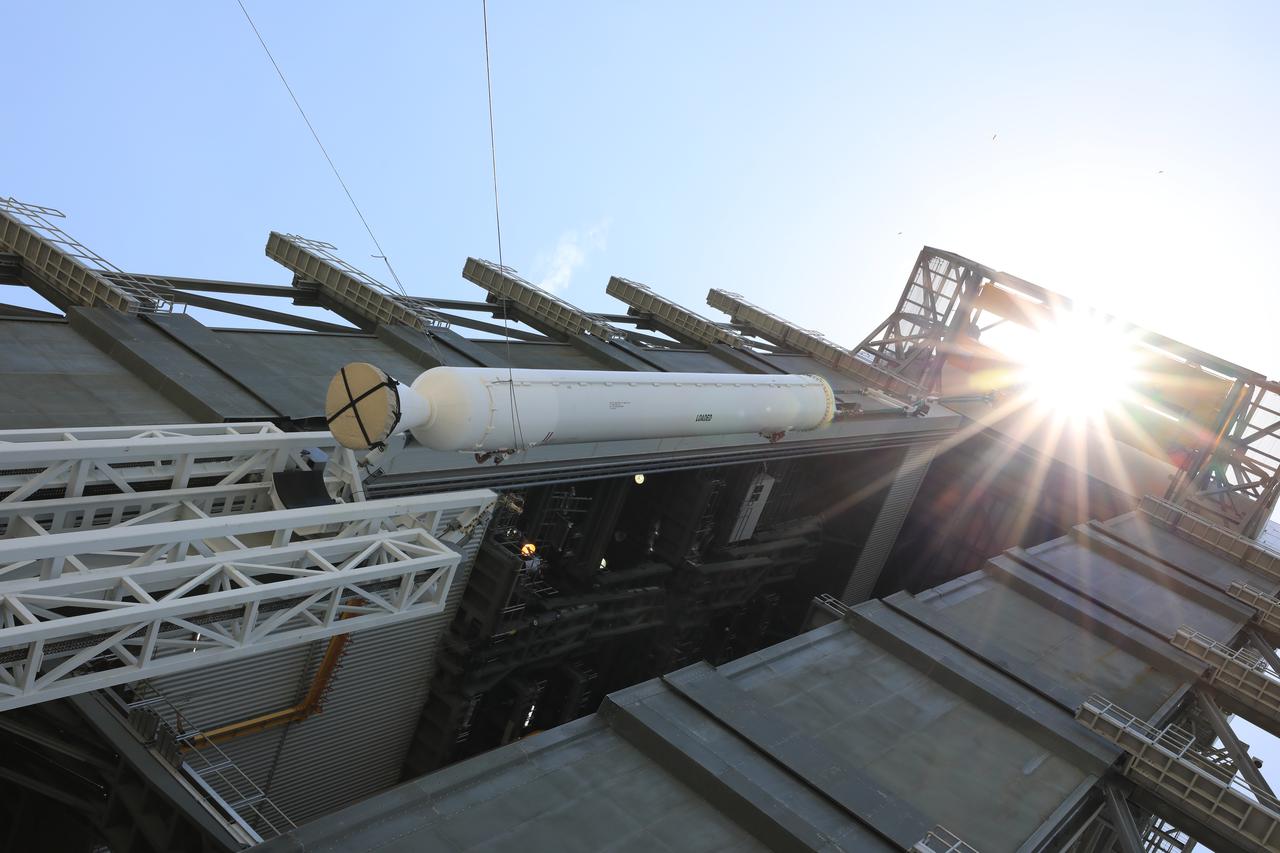
A crane is used to lift the third of four solid rocket boosters (SRB) for the United Launch Alliance Atlas V 541 rocket into the Vertical Integration Facility (VIF) at Space Launch Complex 41 at Cape Canaveral Air Force Station (CCAFS) in Florida on June 8, 2020. The SRB will be lifted up and mated to the Atlas V booster in the VIF. NASA’s Mars 2020 mission with the Perseverance rover is scheduled to launch on July 20, 2020, atop the Atlas V rocket from Pad 41. The rover is part of NASA’s Mars Exploration Program, a long-term effort of robotic exploration of the Red Planet. The rover’s seven instruments will search for habitable conditions in the ancient past and signs of past microbial life on Mars. The Launch Services Program at Kennedy is responsible for launch management.
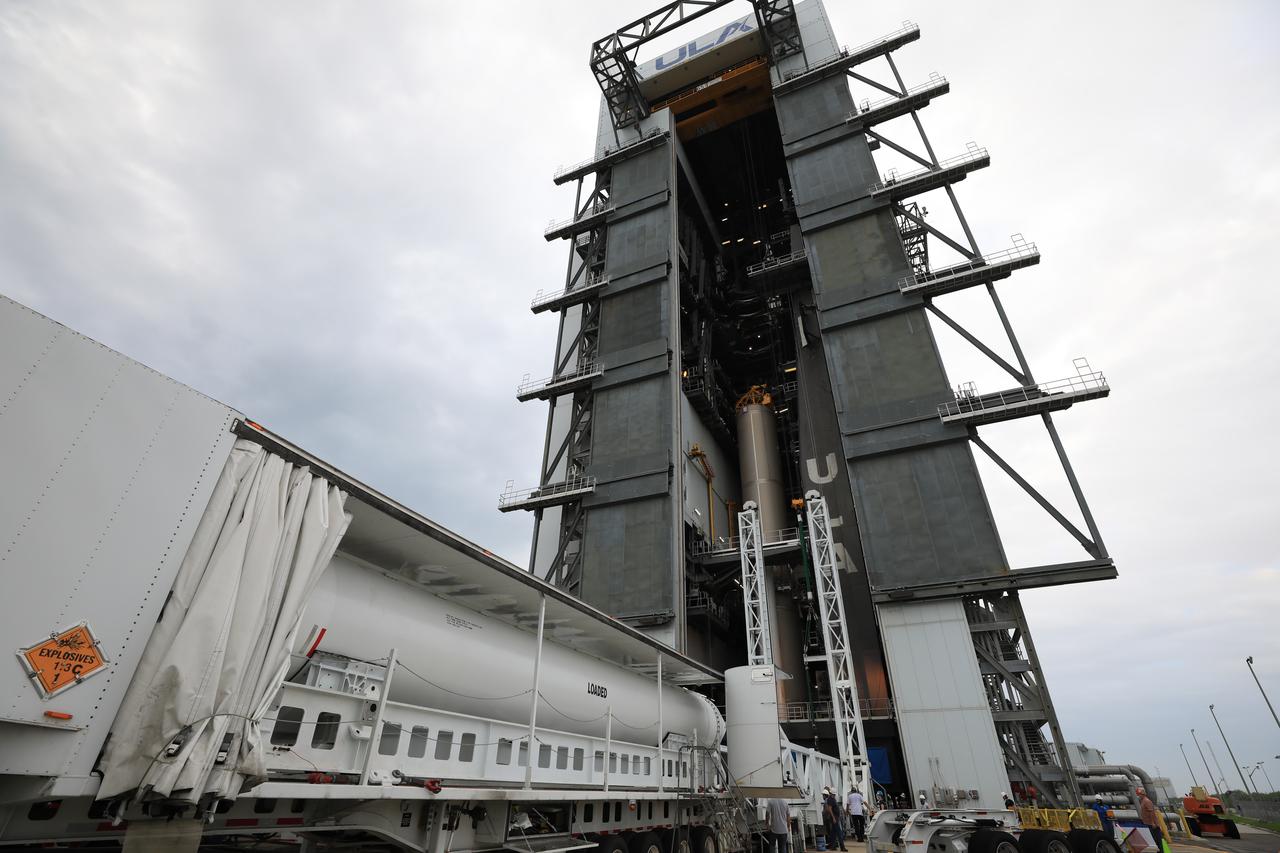
The third of four solid rocket boosters (SRB) for the United Launch Alliance Atlas V 541 rocket arrives at the Vertical Integration Facility (VIF) at Space Launch Complex 41 at Cape Canaveral Air Force Station (CCAFS) in Florida on June 8, 2020. The SRB will be prepared for lift and mating to the Atlas V booster in the VIF. The Mars 2020 mission with the Perseverance rover is scheduled to launch on July 20, 2020, atop the Atlas V rocket from Pad 41. The rover is part of NASA’s Mars Exploration Program, a long-term effort of robotic exploration of the Red Planet. The rover’s seven instruments will search for habitable conditions in the ancient past and signs of past microbial life on Mars. The Launch Services Program at Kennedy is responsible for launch management.
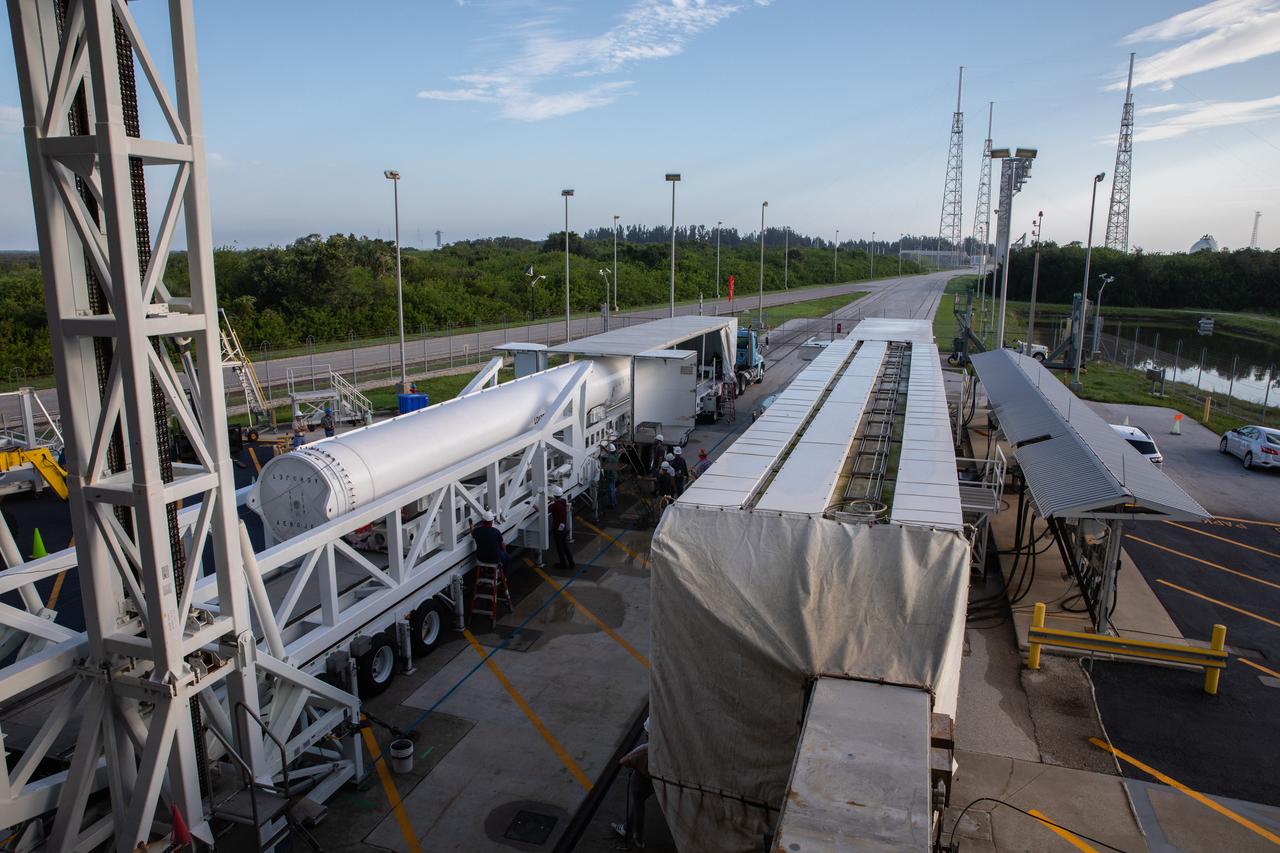
Preparations are underway to lift the fourth and final solid rocket booster (SRB) for the United Launch Alliance Atlas V 541 rocket into the Vertical Integration Facility (VIF) at Space Launch Complex 41 at Cape Canaveral Air Force Station (CCAFS) in Florida on June 9, 2020. The SRB will be lifted and mated to the Atlas V booster in the VIF. The Mars Perseverance rover is scheduled to launch in July 2020, atop the Atlas V rocket from Pad 41. The rover is part of NASA’s Mars Exploration Program, a long-term effort of robotic exploration of the Red Planet. The rover’s seven instruments will search for habitable conditions in the ancient past and signs of past microbial life on Mars. The Launch Services Program at Kennedy is responsible for launch management.
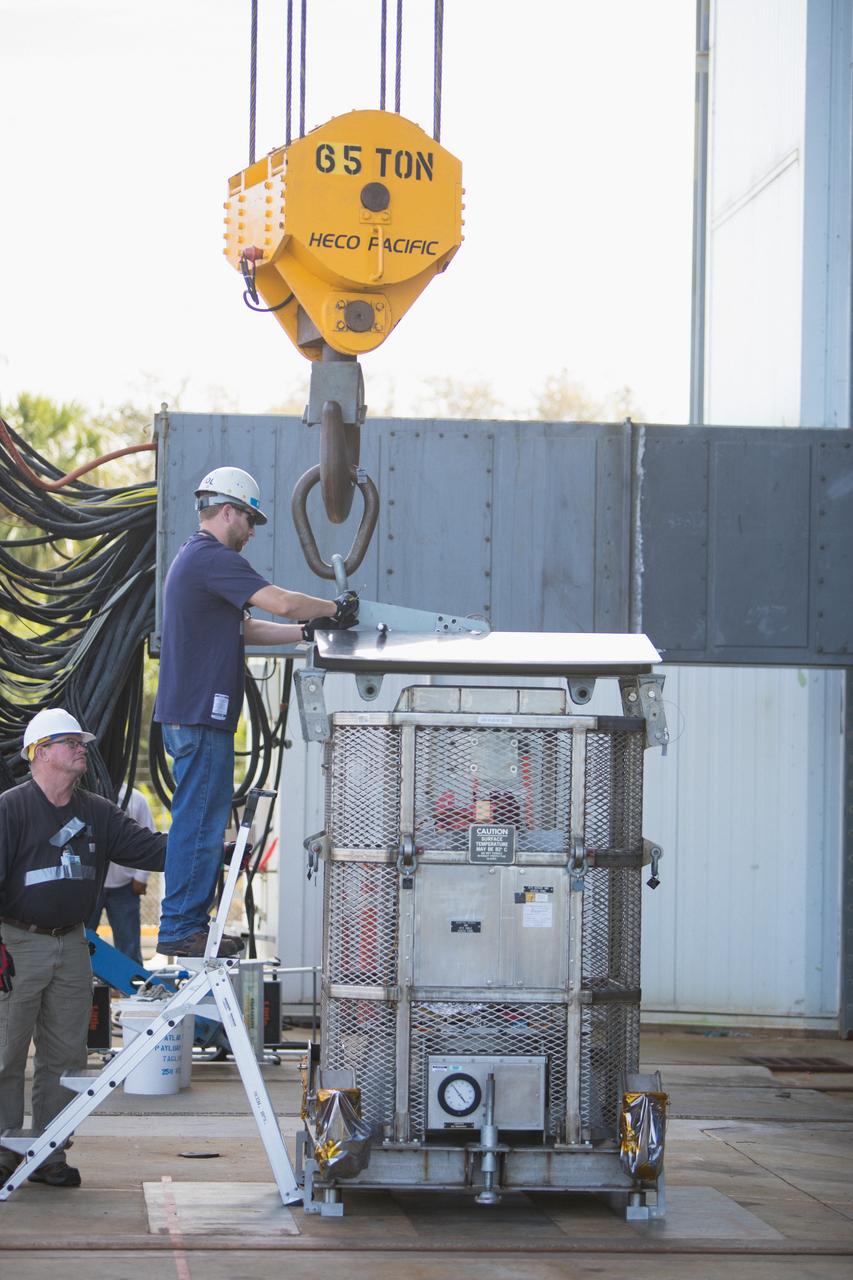
Technicians attach a crane to a test version of the Multi-Mission Radioisotope Thermoelectric Generator (MMRTG) for NASA’s Mars 2020 mission at the United Launch Alliance Vertical Integration Facility (VIF) at Space Launch Complex 41 at Cape Canaveral Air Force Station in Florida on Feb. 15, 2019. The MMRTG simulator will be used to practice operations and procedures for carefully hoisting it up and into the VIF. The Mars 2020 rover mission is targeted to launch in July 2020 on a ULA Atlas V rocket from Pad 41. Mars 2020 is part of NASA’s Mars Exploration Program, a long-term effort of robotic exploration of the Red Planet. The rover will search for habitable conditions in the ancient past and signs of past microbial life on Mars.
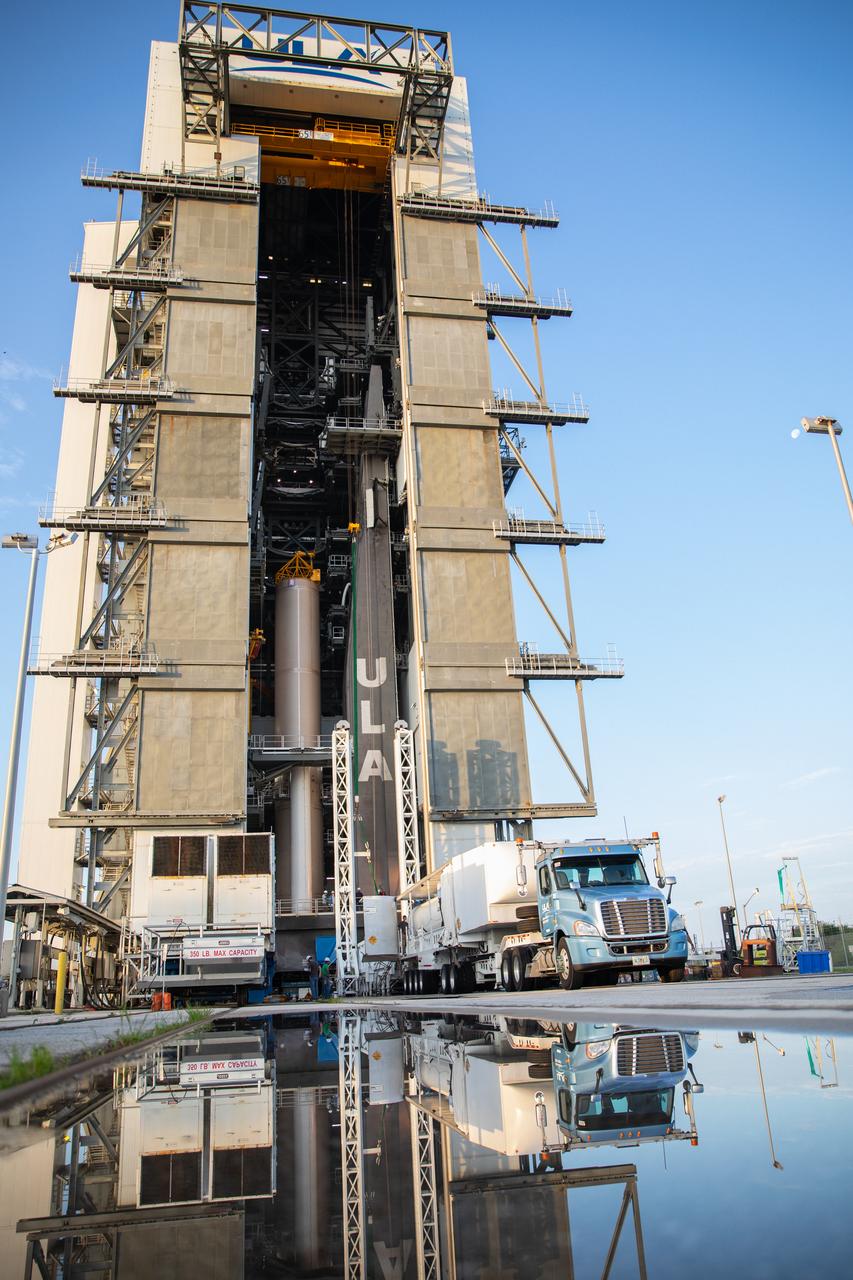
The fourth and final solid rocket booster (SRB) for the United Launch Alliance Atlas V 541 rocket arrives at the Vertical Integration Facility (VIF) at Space Launch Complex 41 at Cape Canaveral Air Force Station (CCAFS) in Florida on June 9, 2020. The SRB will be prepared for lift and mating to the Atlas V booster in the VIF. The Mars 2020 mission with the Perseverance rover is scheduled to launch in July 2020, atop the Atlas V rocket from Pad 41. The rover is part of NASA’s Mars Exploration Program, a long-term effort of robotic exploration of the Red Planet. The rover’s seven instruments will search for habitable conditions in the ancient past and signs of past microbial life on Mars. The Launch Services Program at Kennedy is responsible for launch management.
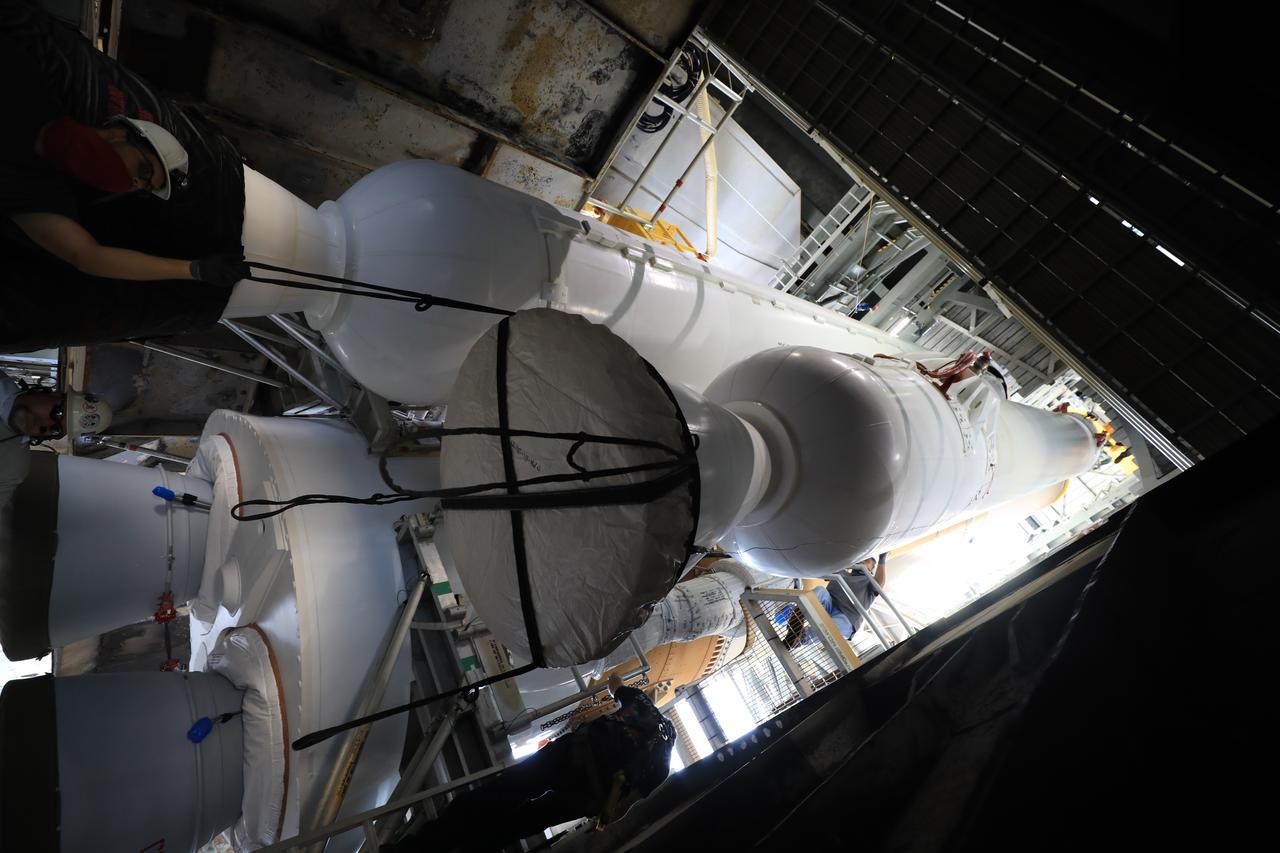
In this view looking up inside the Vertical Integration Facility at Space Launch Complex 41 at Cape Canaveral Air Force Station in Florida, the third of four solid rocket boosters (SRB) for the United Launch Alliance Atlas V 541 rocket is lowered by crane into position on June 8, 2020. The SRB will be mated to the Atlas V booster. NASA’s Mars 2020 mission with the Perseverance rover is scheduled to launch on July 20, 2020, atop the Atlas V rocket from Pad 41. The rover is part of NASA’s Mars Exploration Program, a long-term effort of robotic exploration of the Red Planet. The rover’s seven instruments will search for habitable conditions in the ancient past and signs of past microbial life on Mars. The Launch Services Program at Kennedy is responsible for launch management.
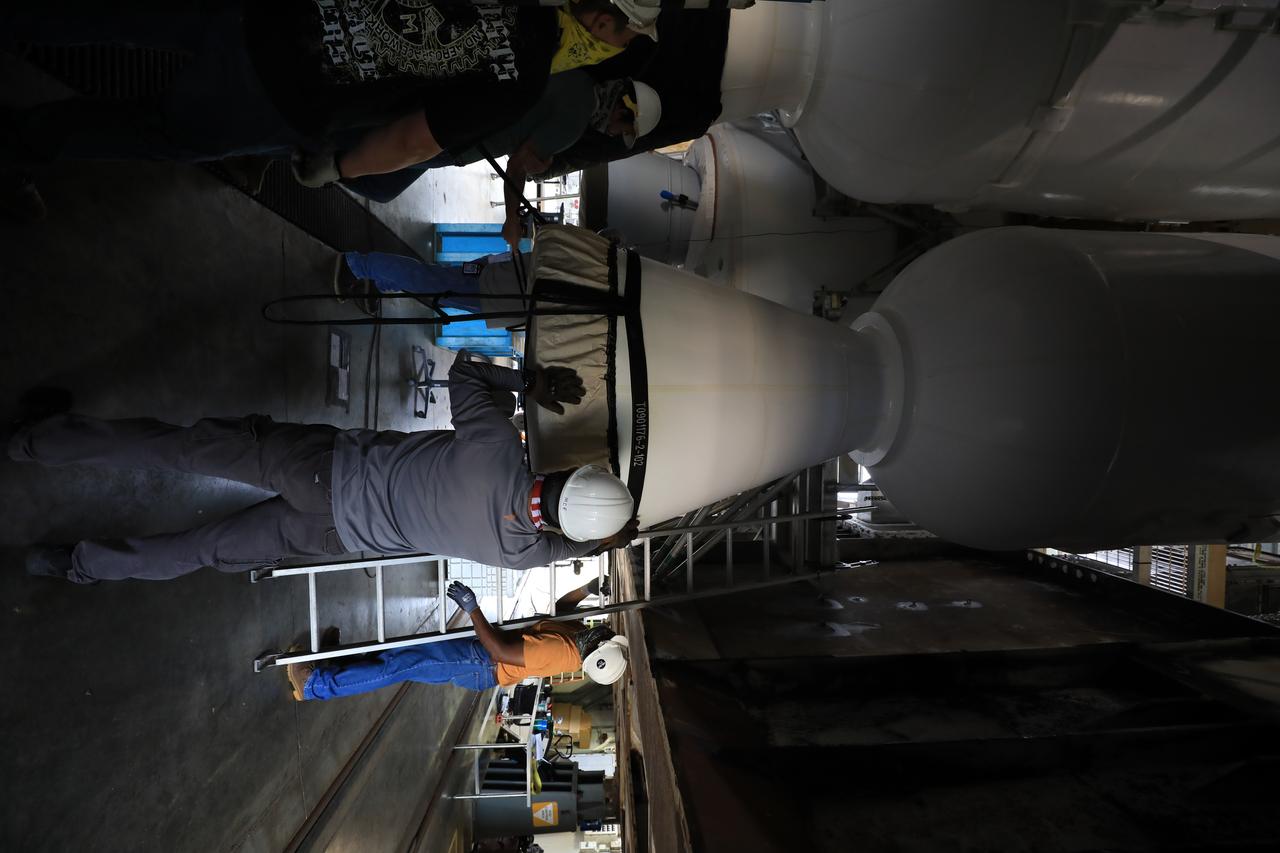
United Launch Alliance (ULA) workers assist as the third of four solid rocket boosters (SRB) for the ULA Atlas V 541 rocket is lowered by crane into position inside the Vertical Integration Facility at Space Launch Complex 41 at Cape Canaveral Air Force Station in Florida on June 8, 2020. The SRB will be mated to the Atlas V booster. NASA’s Mars 2020 mission with the Perseverance rover is scheduled to launch on July 20, 2020, atop the Atlas V rocket from Pad 41. The rover is part of NASA’s Mars Exploration Program, a long-term effort of robotic exploration of the Red Planet. The rover’s seven instruments will search for habitable conditions in the ancient past and signs of past microbial life on Mars. The Launch Services Program at Kennedy is responsible for launch management.
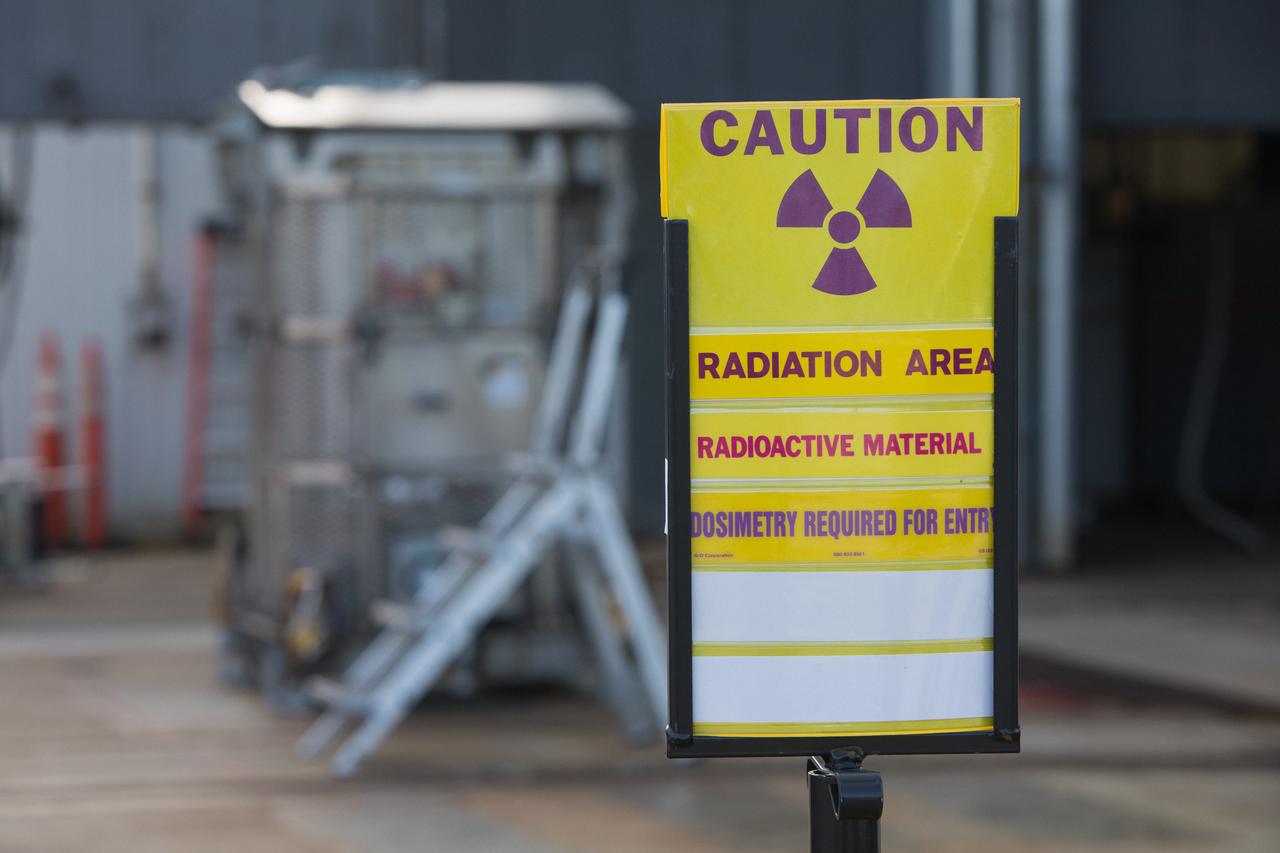
A caution sign marks the presence of a test version of the Multi-Mission Radioisotope Thermoelectric Generator (MMRTG) for NASA’s Mars 2020 mission at the United Launch Alliance Vertical Integration Facility (VIF) at Space Launch Complex 41 at Cape Canaveral Air Force Station in Florida on Feb. 15, 2019. The MMRTG simulator will be used to practice operations and procedures for carefully hoisting it up and into the VIF. The Mars 2020 rover mission is targeted to launch in July 2020 on a ULA Atlas V rocket from Pad 41. Mars 2020 is part of NASA’s Mars Exploration Program, a long-term effort of robotic exploration of the Red Planet. The rover will search for habitable conditions in the ancient past and signs of past microbial life on Mars.
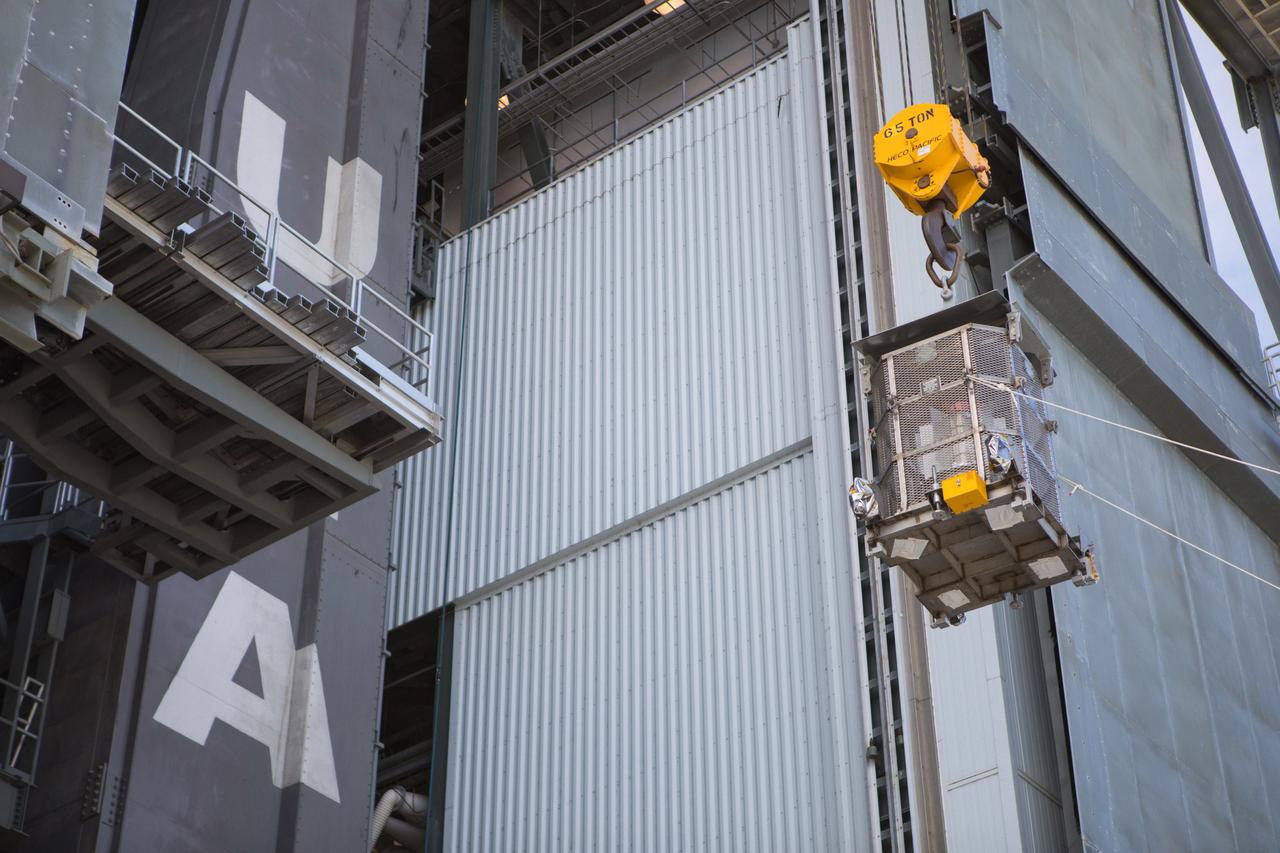
A crane is used to hoist a test version of the Multi-Mission Radioisotope Thermoelectric Generator (MMRTG) for NASA’s Mars 2020 mission at the United Launch Alliance Vertical Integration Facility (VIF) at Space Launch Complex 41 at Cape Canaveral Air Force Station in Florida on Feb. 15, 2019. The MMRTG simulator is being used to practice operations and procedures for carefully lifting it up and into the VIF. The Mars 2020 rover mission is targeted to launch in July 2020 on a ULA Atlas V rocket from Pad 41. Mars 2020 is part of NASA’s Mars Exploration Program, a long-term effort of robotic exploration of the Red Planet. The rover will search for habitable conditions in the ancient past and signs of past microbial life on Mars.
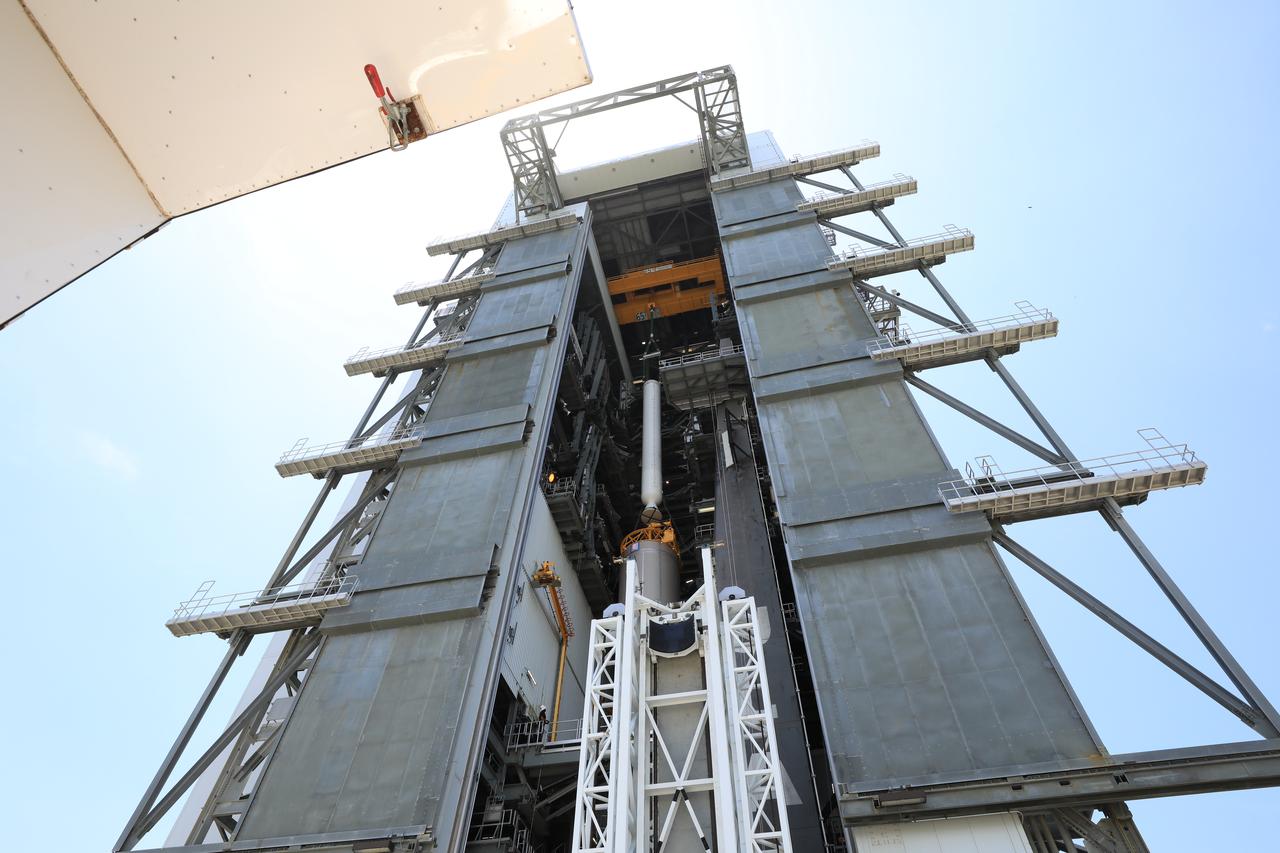
A crane is used to lift the third of four solid rocket boosters (SRB) for the United Launch Alliance Atlas V 541 rocket into the Vertical Integration Facility (VIF) at Space Launch Complex 41 at Cape Canaveral Air Force Station (CCAFS) in Florida on June 8, 2020. The SRB will be lifted up and mated to the Atlas V booster in the VIF. NASA’s Mars 2020 mission with the Perseverance rover is scheduled to launch on July 20, 2020, atop the Atlas V rocket from Pad 41. The rover is part of NASA’s Mars Exploration Program, a long-term effort of robotic exploration of the Red Planet. The rover’s seven instruments will search for habitable conditions in the ancient past and signs of past microbial life on Mars. The Launch Services Program at Kennedy is responsible for launch management.
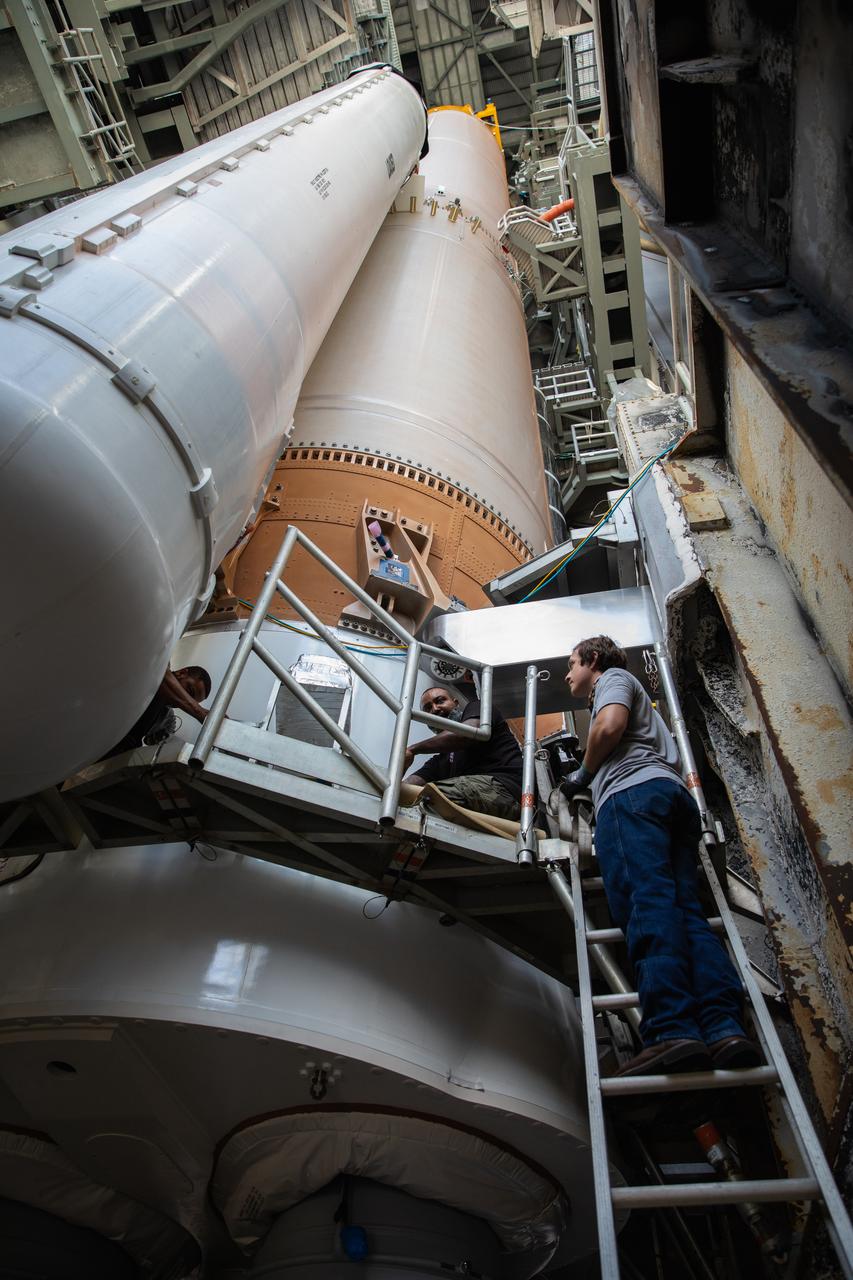
A United Launch Alliance worker is inside the Vertical Integration Facility (VIF) at Space Launch Complex 41 at Cape Canaveral Air Force Station (CCAFS) in Florida on June 9, 2020. A lifting device is used to raise the fourth and final solid rocket booster (SRB) for the United Launch Alliance Atlas V 541 rocket into the (VIF) where it will be mated to the booster. NASA’s Mars 2020 mission with the Perseverance rover is scheduled to launch in July 2020, atop the Atlas V rocket from Pad 41. The rover is part of NASA’s Mars Exploration Program, a long-term effort of robotic exploration of the Red Planet. The rover’s seven instruments will search for habitable conditions in the ancient past and signs of past microbial life on Mars. The Launch Services Program at Kennedy is responsible for launch management.
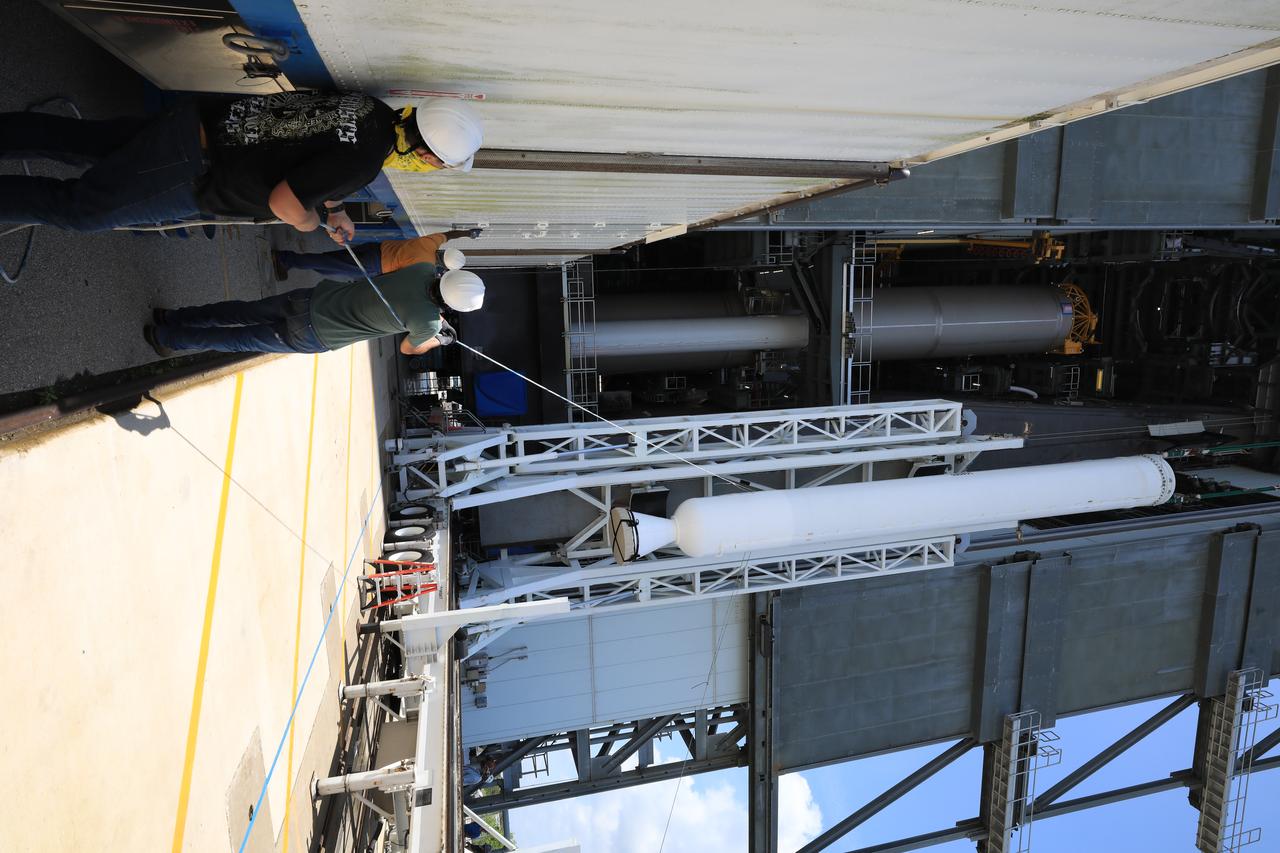
A crane is attached to the third of four solid rocket boosters (SRB) for the United Launch Alliance Atlas V 541 rocket to lift it into the Vertical Integration Facility (VIF) at Space Launch Complex 41 at Cape Canaveral Air Force Station (CCAFS) in Florida on June 8, 2020. The SRB will be lifted up and mated to the Atlas V booster in the VIF. NASA’s Mars 2020 mission with the Perseverance rover is scheduled to launch on July 20, 2020, atop the Atlas V rocket from Pad 41. The rover is part of NASA’s Mars Exploration Program, a long-term effort of robotic exploration of the Red Planet. The rover’s seven instruments will search for habitable conditions in the ancient past and signs of past microbial life on Mars. The Launch Services Program at Kennedy is responsible for launch management.

A crane is used to lift the fourth and final solid rocket booster (SRB) for the United Launch Alliance Atlas V 541 rocket into the Vertical Integration Facility (VIF) at Space Launch Complex 41 at Cape Canaveral Air Force Station (CCAFS) in Florida on June 9, 2020. The SRB will be lifted up and mated to the Atlas V booster in the VIF. NASA’s Mars 2020 mission with the Perseverance rover is scheduled to launch in July 2020, atop the Atlas V rocket from Pad 41. The rover is part of NASA’s Mars Exploration Program, a long-term effort of robotic exploration of the Red Planet. The rover’s seven instruments will search for habitable conditions in the ancient past and signs of past microbial life on Mars. The Launch Services Program at Kennedy is responsible for launch management.
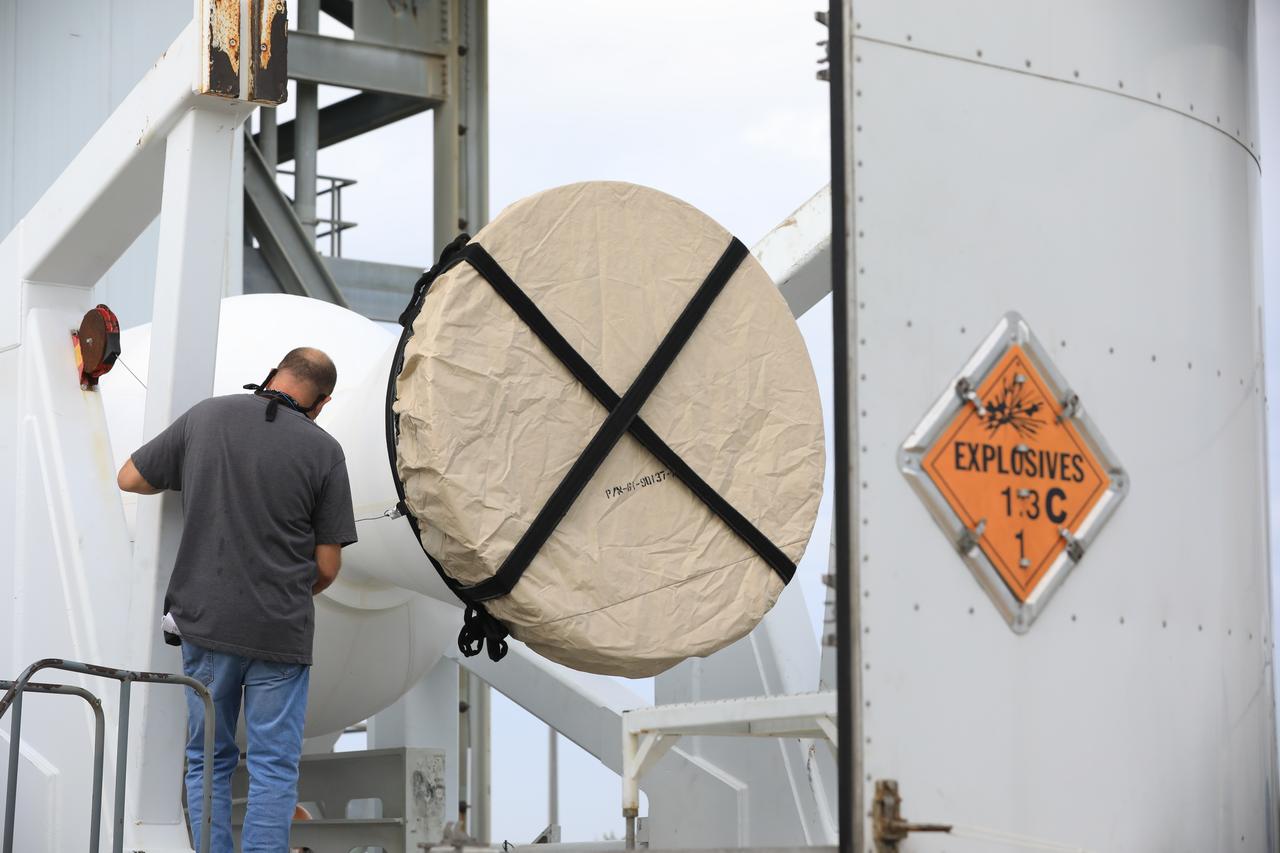
A United Launch Alliance (ULA) worker makes an adjustment to the lifting device that will raise the third of four solid rocket boosters (SRB) for the United Launch Alliance Atlas V 541 rocket into the Vertical Integration Facility (VIF) at Space Launch Complex 41 at Cape Canaveral Air Force Station (CCAFS) in Florida on June 8, 2020. The SRB will be lifted up and mated to the Atlas V booster in the VIF. NASA’s Mars 2020 mission with the Perseverance rover is scheduled to launch on July 20, 2020, atop the Atlas V rocket from Pad 41. The rover is part of NASA’s Mars Exploration Program, a long-term effort of robotic exploration of the Red Planet. The rover’s seven instruments will search for habitable conditions in the ancient past and signs of past microbial life on Mars. The Launch Services Program at Kennedy is responsible for launch management.
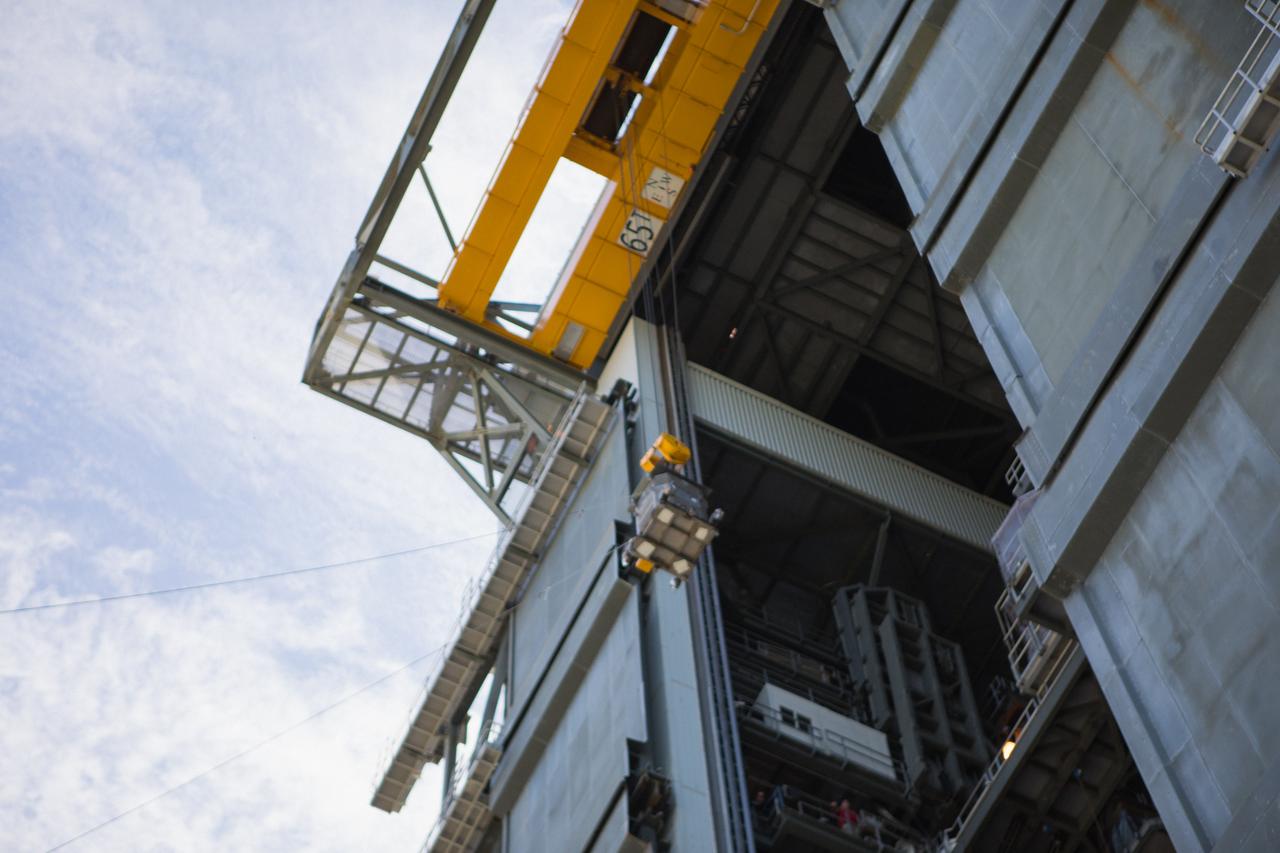
A crane is used to hoist a test version of the Multi-Mission Radioisotope Thermoelectric Generator (MMRTG) for NASA’s Mars 2020 mission at the United Launch Alliance Vertical Integration Facility (VIF) at Space Launch Complex 41 at Cape Canaveral Air Force Station in Florida on Feb. 15, 2019. The MMRTG simulator is being used to practice operations and procedures for carefully lifting it up and into the VIF. The Mars 2020 rover mission is targeted to launch in July 2020 on a ULA Atlas V rocket from Pad 41. Mars 2020 is part of NASA’s Mars Exploration Program, a long-term effort of robotic exploration of the Red Planet. The rover will search for habitable conditions in the ancient past and signs of past microbial life on Mars.
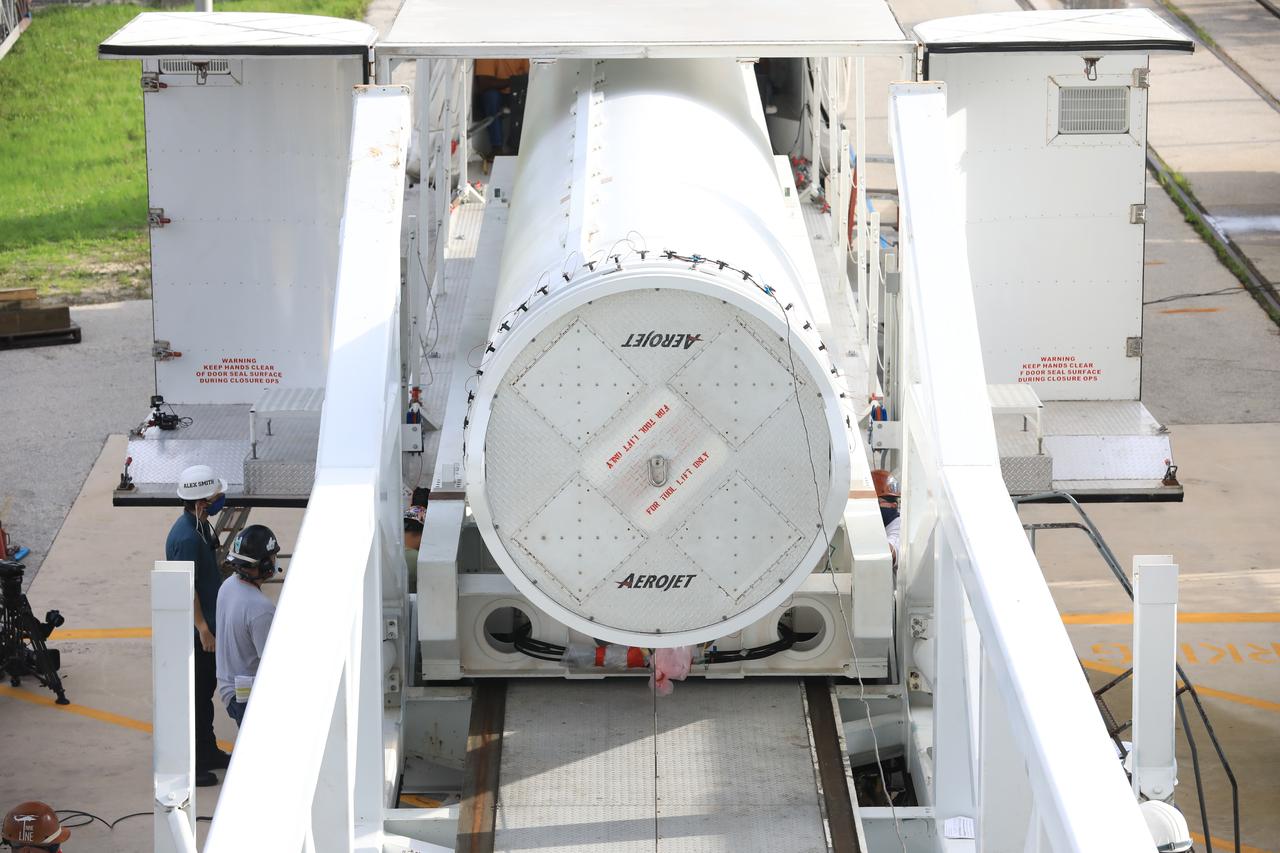
Preparations are underway to lift the third of four solid rocket boosters (SRB) for the United Launch Alliance Atlas V 541 rocket into the Vertical Integration Facility (VIF) at Space Launch Complex 41 at Cape Canaveral Air Force Station (CCAFS) in Florida on June 8, 2020. The SRB will be lifted and mated to the Atlas V booster in the VIF. The Mars Perseverance rover is scheduled to launch on July 20, 2020, atop the Atlas V rocket from Pad 41. The rover is part of NASA’s Mars Exploration Program, a long-term effort of robotic exploration of the Red Planet. The rover’s seven instruments will search for habitable conditions in the ancient past and signs of past microbial life on Mars. The Launch Services Program at Kennedy is responsible for launch management.
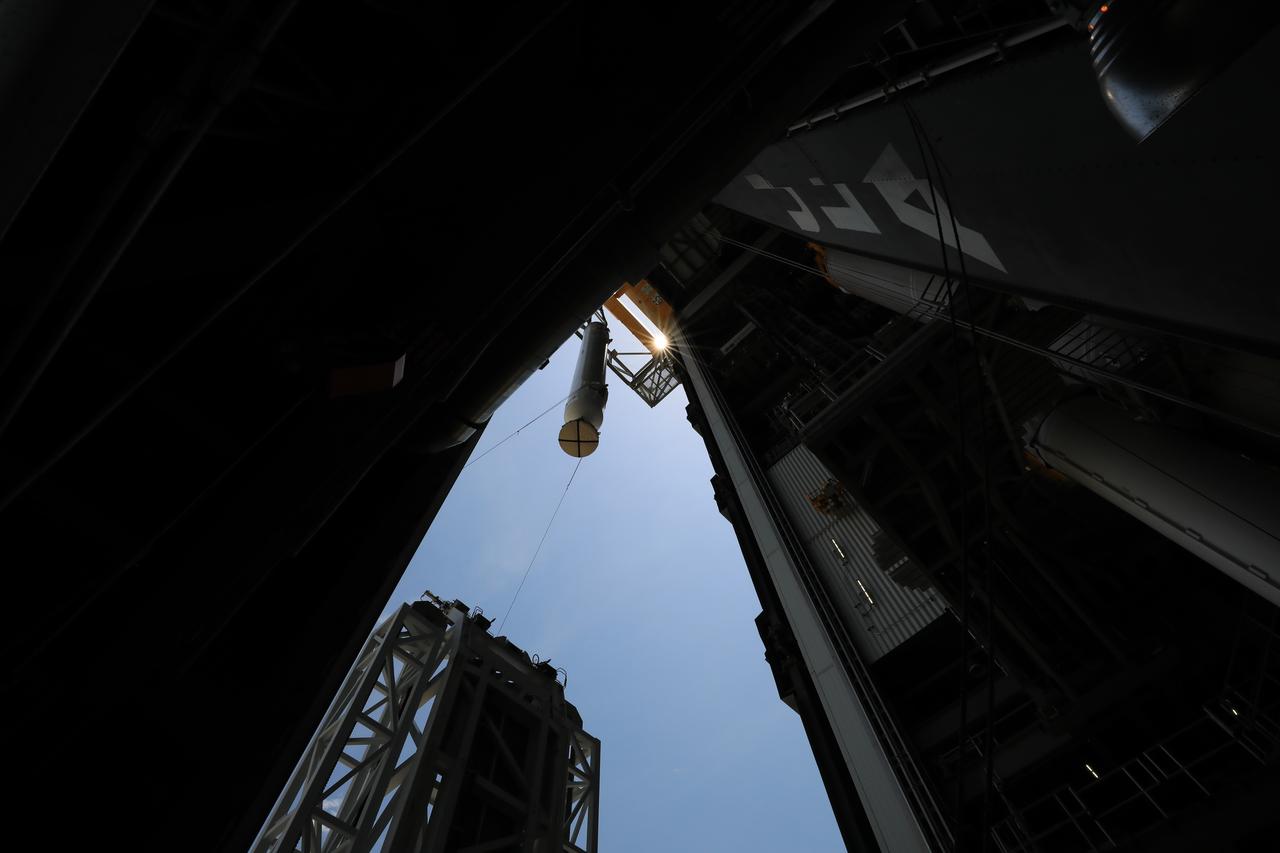
A view from inside the Vertical Integration Facility (VIF) at Space Launch Complex 41 at Cape Canaveral Air Force Station in Florida, as the third of four solid rocket boosters (SRB) for the United Launch Alliance Atlas V 541 rocket is lifted up by crane on June 8, 2020. The SRB will be mated to the Atlas V booster inside the VIF. NASA’s Mars 2020 mission with the Perseverance rover is scheduled to launch on July 20, 2020, atop the Atlas V rocket from Pad 41. The rover is part of NASA’s Mars Exploration Program, a long-term effort of robotic exploration of the Red Planet. The rover’s seven instruments will search for habitable conditions in the ancient past and signs of past microbial life on Mars. The Launch Services Program at Kennedy is responsible for launch management.
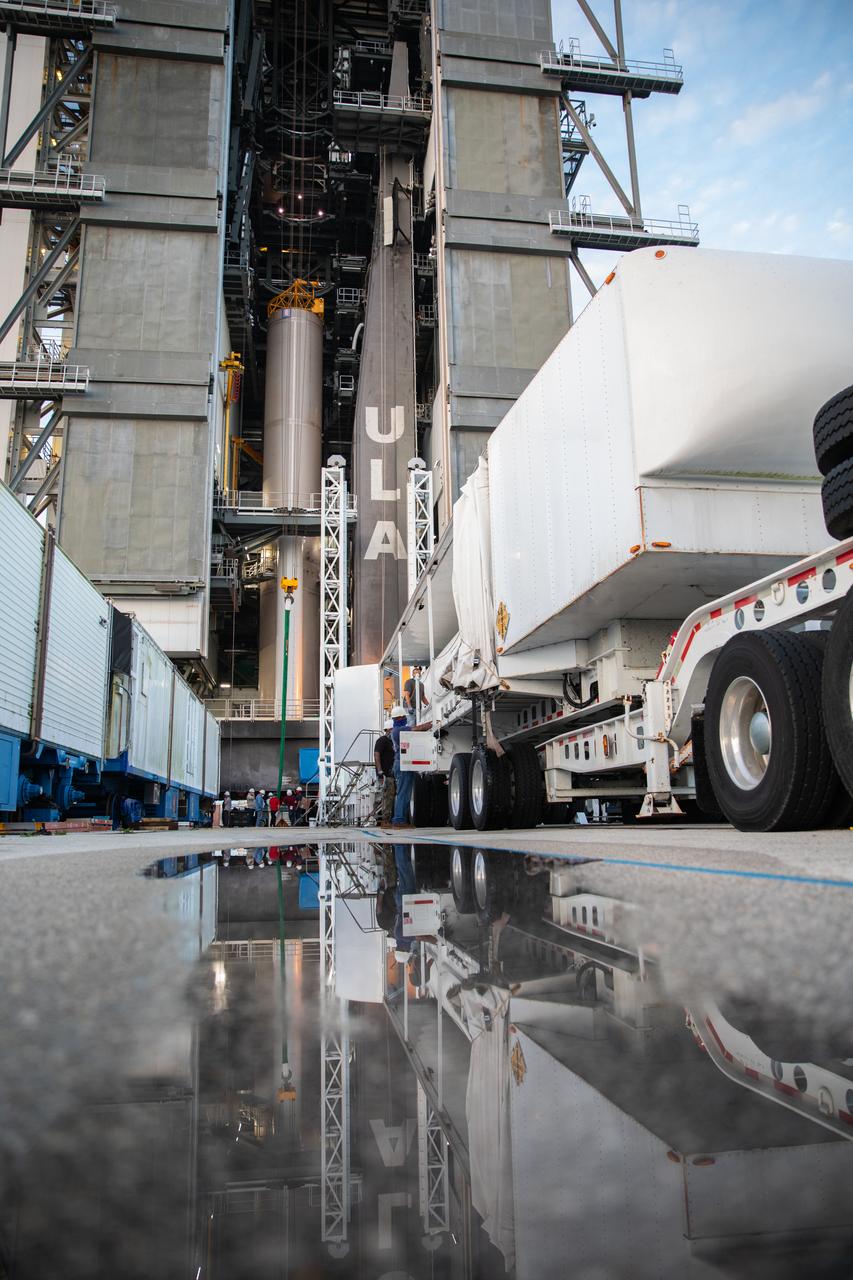
The fourth and final solid rocket booster (SRB) for the United Launch Alliance Atlas V 541 rocket arrives at the Vertical Integration Facility (VIF) at Space Launch Complex 41 at Cape Canaveral Air Force Station (CCAFS) in Florida on June 9, 2020. The SRB will be prepared for lift and mating to the Atlas V booster in the VIF. The Mars 2020 mission with the Perseverance rover is scheduled to launch in July 2020, atop the Atlas V rocket from Pad 41. The rover is part of NASA’s Mars Exploration Program, a long-term effort of robotic exploration of the Red Planet. The rover’s seven instruments will search for habitable conditions in the ancient past and signs of past microbial life on Mars. The Launch Services Program at Kennedy is responsible for launch management.
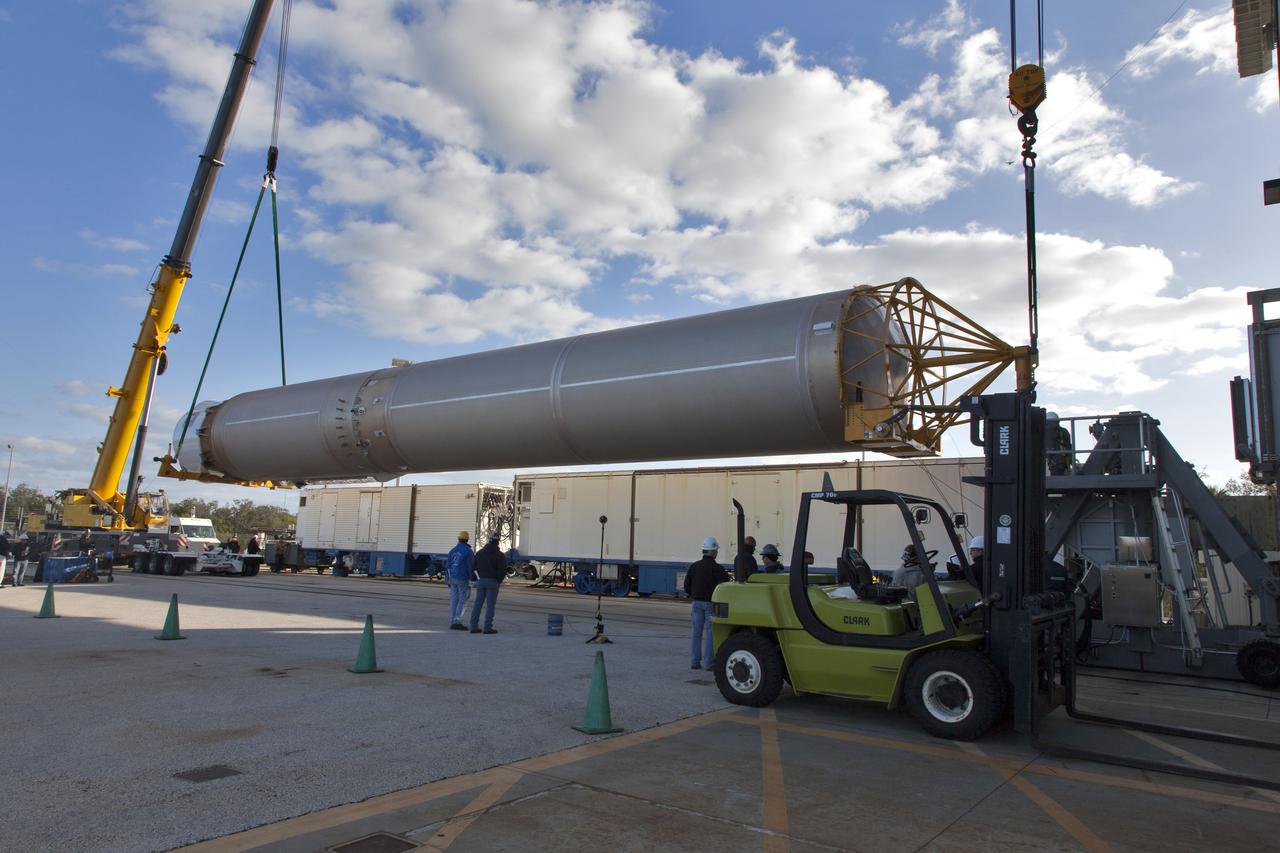
A crane lifts a United Launch Alliance Atlas V first stage at the Vertical Integration Facility at Space Launch Complex 41 at Cape Canaveral Air Force Station in Florida. The rocket will be positioned on its launcher to boost the Geostationary Operational Environmental Satellite, or GOES-S. It will be the second in a series of four advanced geostationary weather satellites and will significantly improve the detection and observation of environmental phenomena that directly affect public safety. GOES-S is slated to launch March 1, 2018.
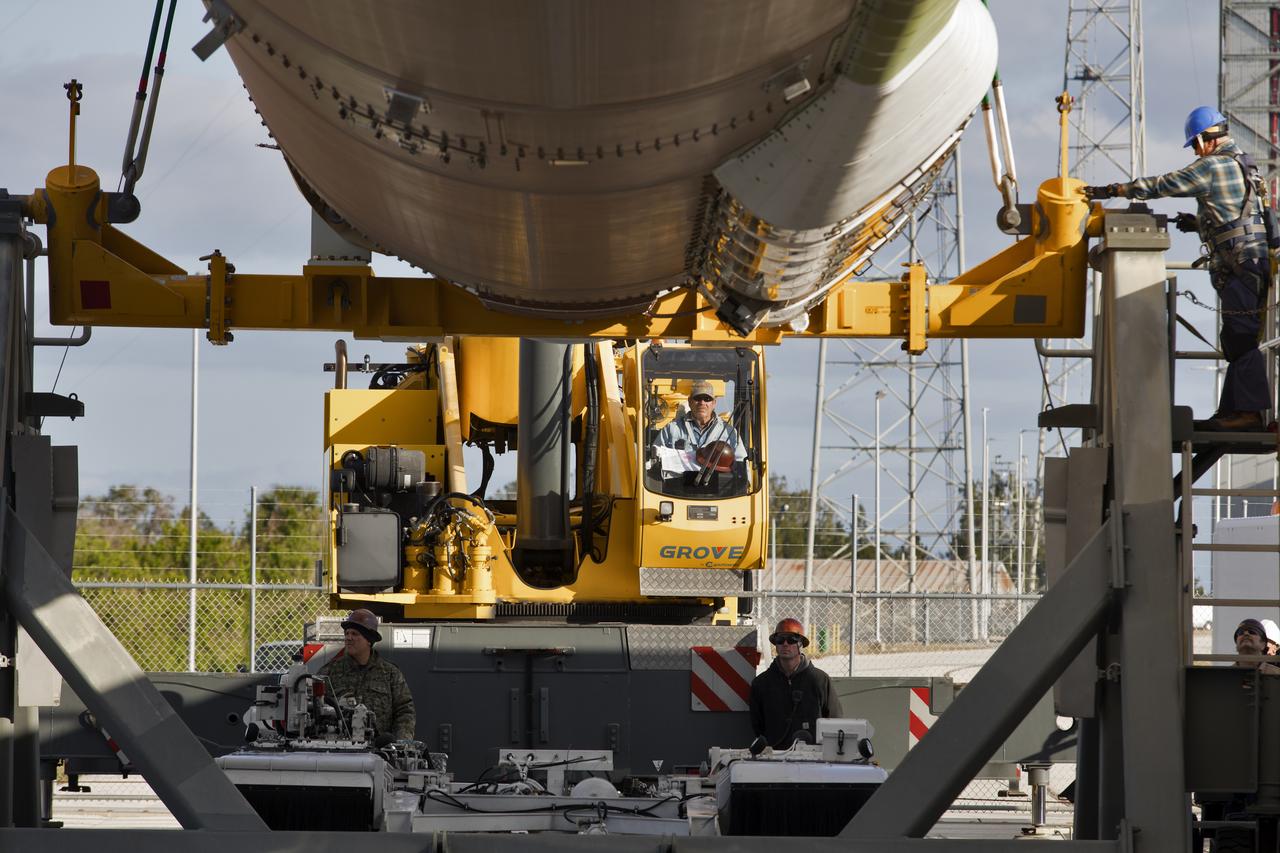
A crane lifts a United Launch Alliance Atlas V first stage at the Vertical Integration Facility at Space Launch Complex 41 at Cape Canaveral Air Force Station in Florida. The rocket will be positioned on its launcher to boost the Geostationary Operational Environmental Satellite, or GOES-S. It will be the second in a series of four advanced geostationary weather satellites and will significantly improve the detection and observation of environmental phenomena that directly affect public safety. GOES-S is slated to launch March 1, 2018.
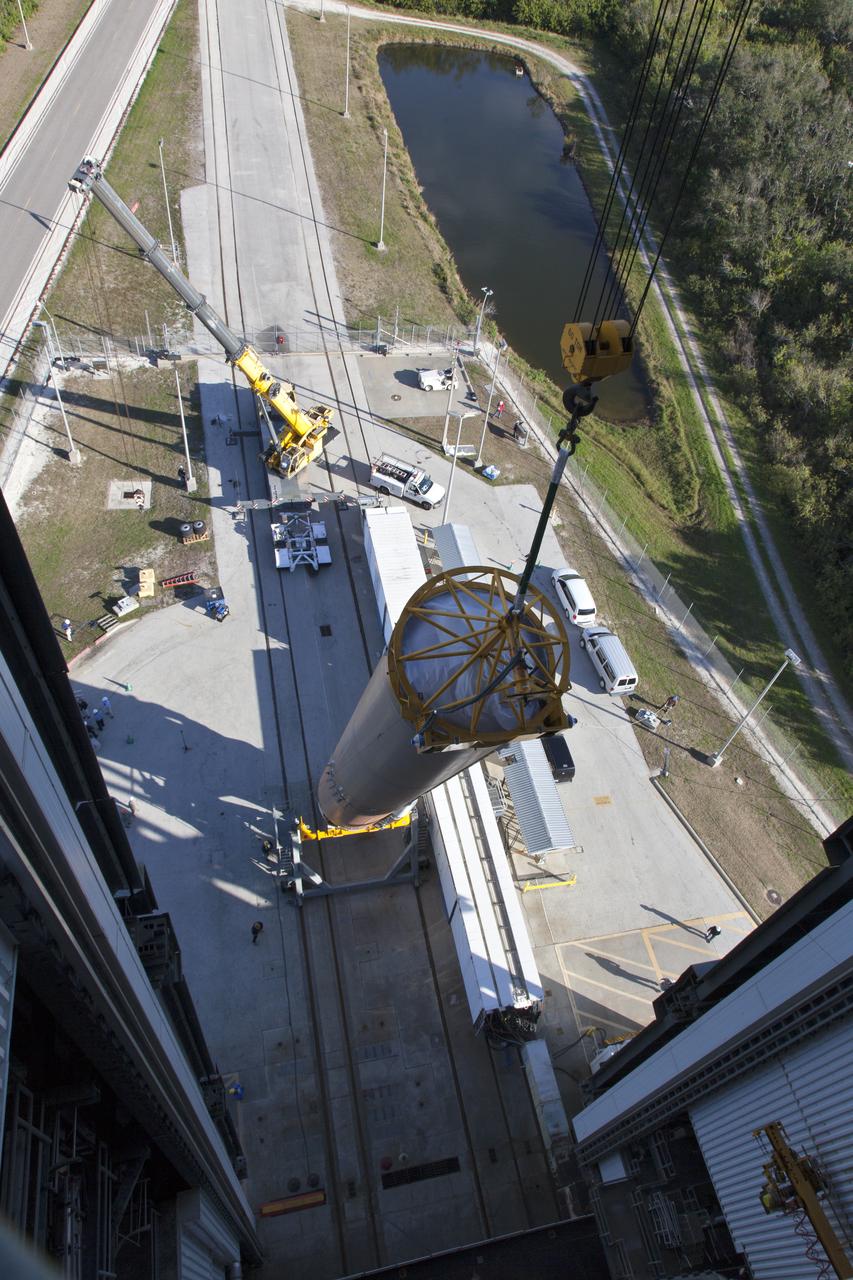
A crane lifts a United Launch Alliance Atlas V first stage at the Vertical Integration Facility at Space Launch Complex 41 at Cape Canaveral Air Force Station in Florida. The rocket will be positioned on its launcher to boost the Geostationary Operational Environmental Satellite, or GOES-S. It will be the second in a series of four advanced geostationary weather satellites and will significantly improve the detection and observation of environmental phenomena that directly affect public safety. GOES-S is slated to launch March 1, 2018.
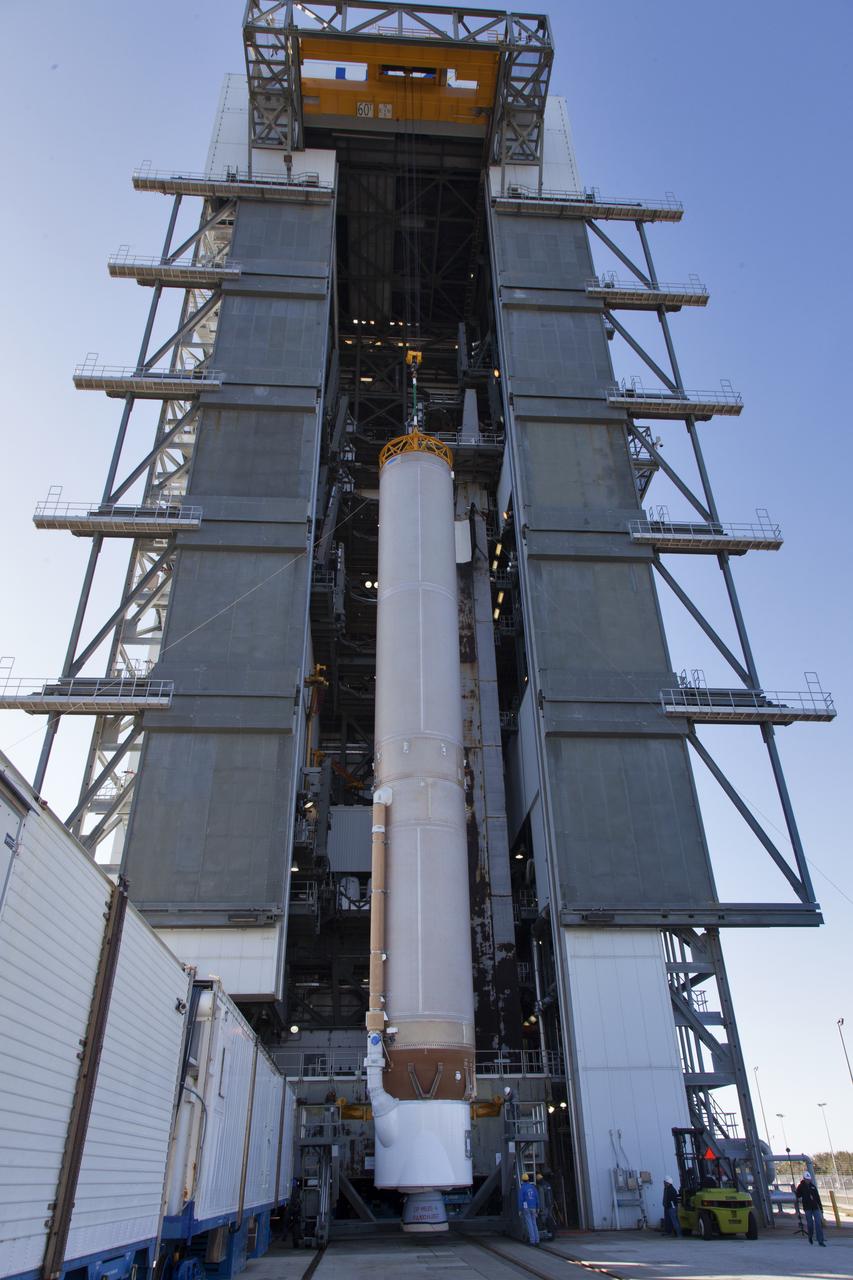
A crane lifts a United Launch Alliance Atlas V first stage into the Vertical Integration Facility at Space Launch Complex 41 at Cape Canaveral Air Force Station in Florida. The rocket will be positioned on its launcher to boost the Geostationary Operational Environmental Satellite, or GOES-S. It will be the second in a series of four advanced geostationary weather satellites and will significantly improve the detection and observation of environmental phenomena that directly affect public safety. GOES-S is slated to launch March 1, 2018.

A crane lifts a United Launch Alliance Atlas V first stage at the Vertical Integration Facility at Space Launch Complex 41 at Cape Canaveral Air Force Station in Florida. The rocket will be positioned on its launcher to boost the Geostationary Operational Environmental Satellite, or GOES-S. It will be the second in a series of four advanced geostationary weather satellites and will significantly improve the detection and observation of environmental phenomena that directly affect public safety. GOES-S is slated to launch March 1, 2018.
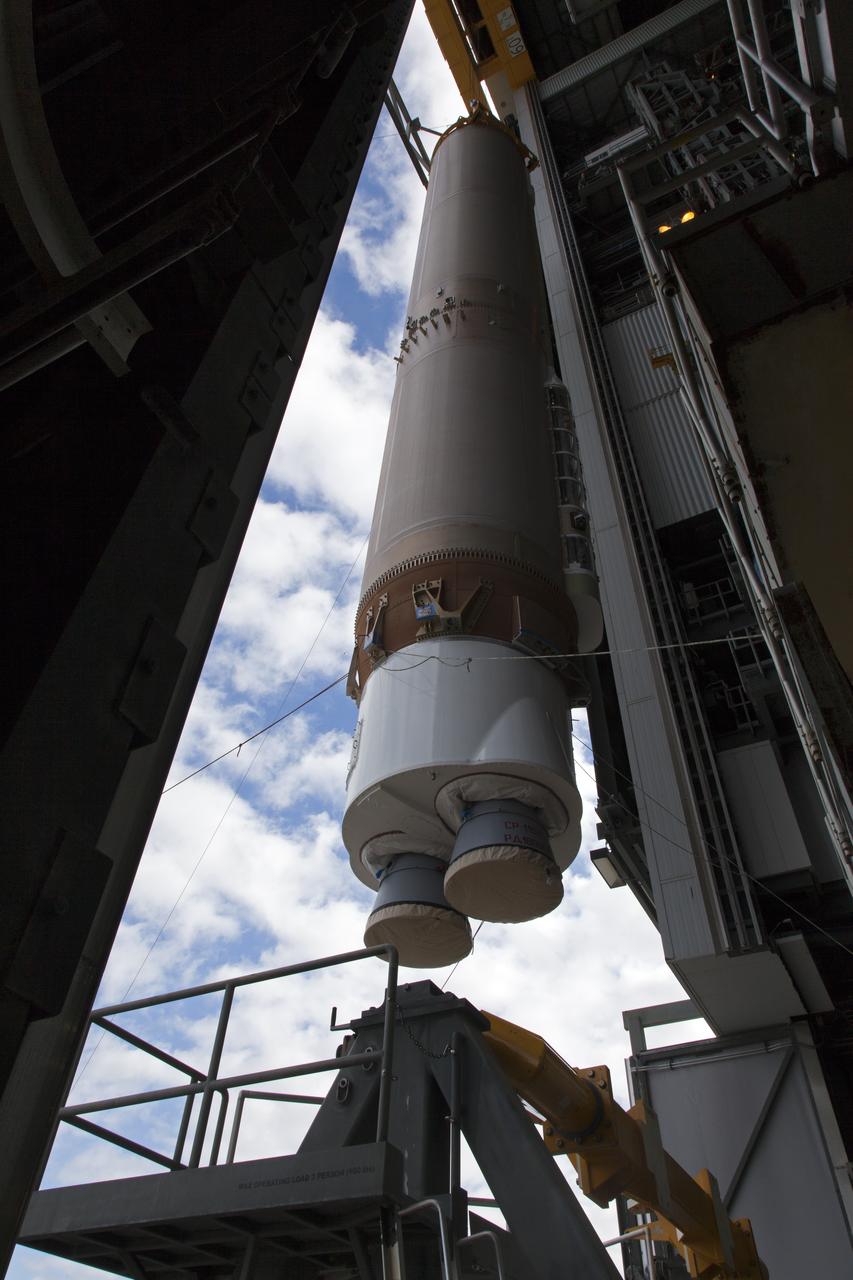
A crane lifts a United Launch Alliance Atlas V first stage into the Vertical Integration Facility at Space Launch Complex 41 at Cape Canaveral Air Force Station in Florida. The rocket will be positioned on its launcher to boost the Geostationary Operational Environmental Satellite, or GOES-S. It will be the second in a series of four advanced geostationary weather satellites and will significantly improve the detection and observation of environmental phenomena that directly affect public safety. GOES-S is slated to launch March 1, 2018.
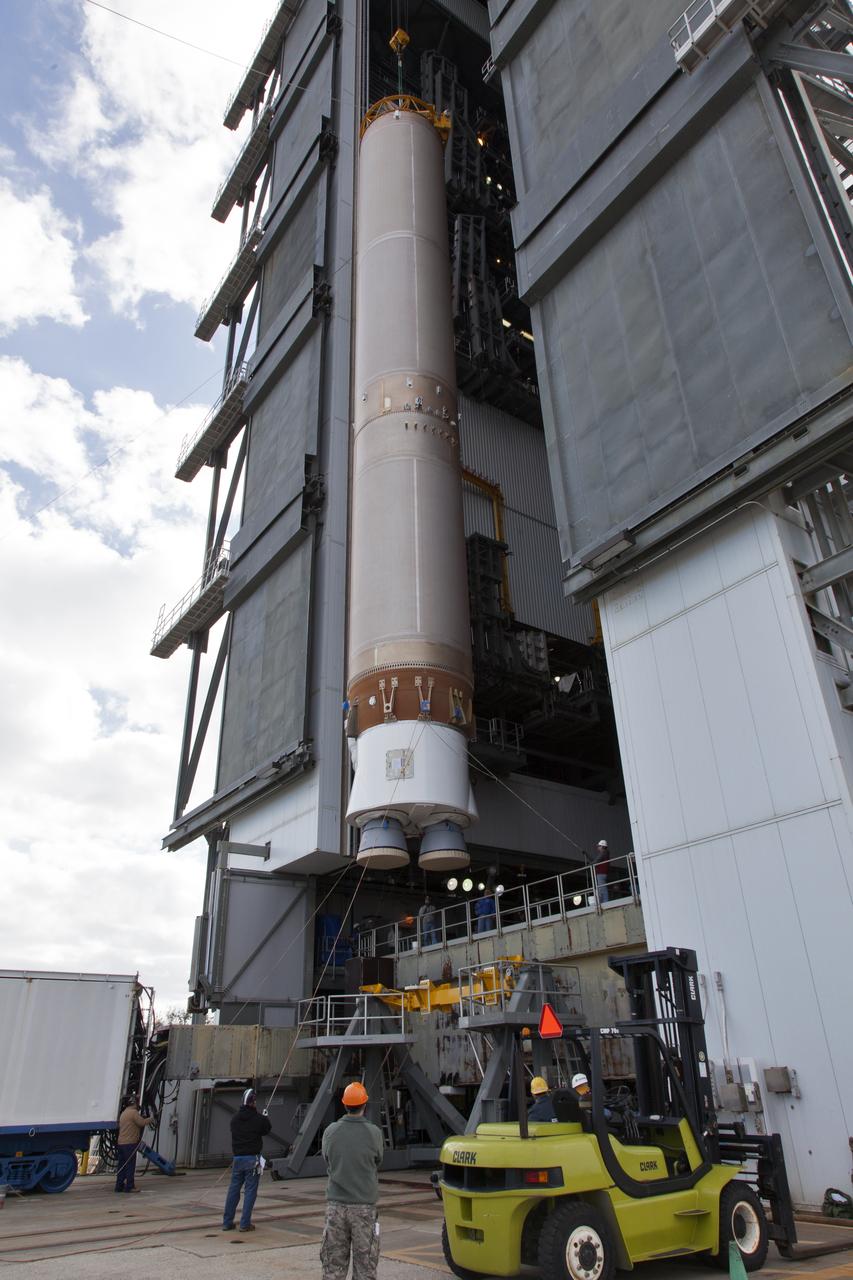
A crane lifts a United Launch Alliance Atlas V first stage into the Vertical Integration Facility at Space Launch Complex 41 at Cape Canaveral Air Force Station in Florida. The rocket will be positioned on its launcher to boost the Geostationary Operational Environmental Satellite, or GOES-S. It will be the second in a series of four advanced geostationary weather satellites and will significantly improve the detection and observation of environmental phenomena that directly affect public safety. GOES-S is slated to launch March 1, 2018.
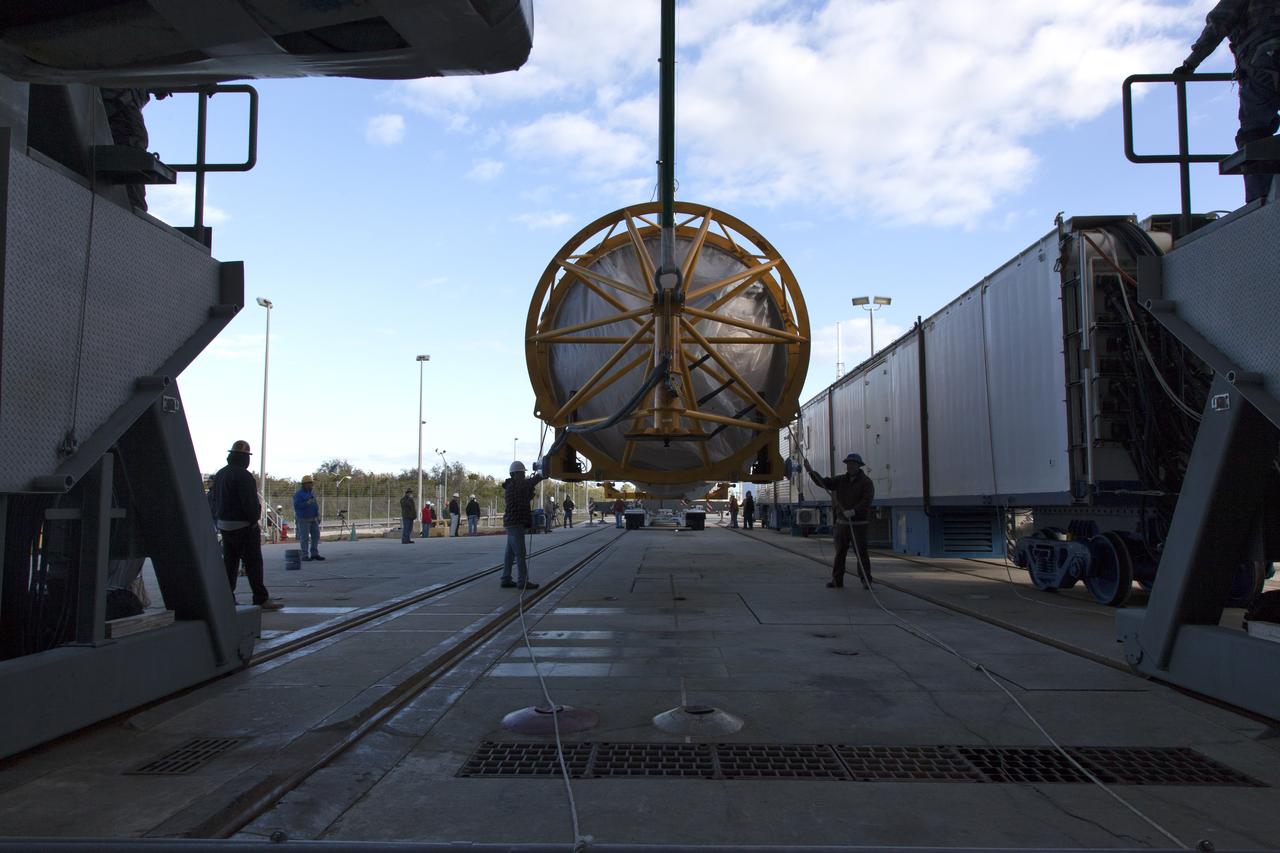
A crane lifts a United Launch Alliance Atlas V first stage at the Vertical Integration Facility at Space Launch Complex 41 at Cape Canaveral Air Force Station in Florida. The rocket will be positioned on its launcher to boost the Geostationary Operational Environmental Satellite, or GOES-S. It will be the second in a series of four advanced geostationary weather satellites and will significantly improve the detection and observation of environmental phenomena that directly affect public safety. GOES-S is slated to launch March 1, 2018.
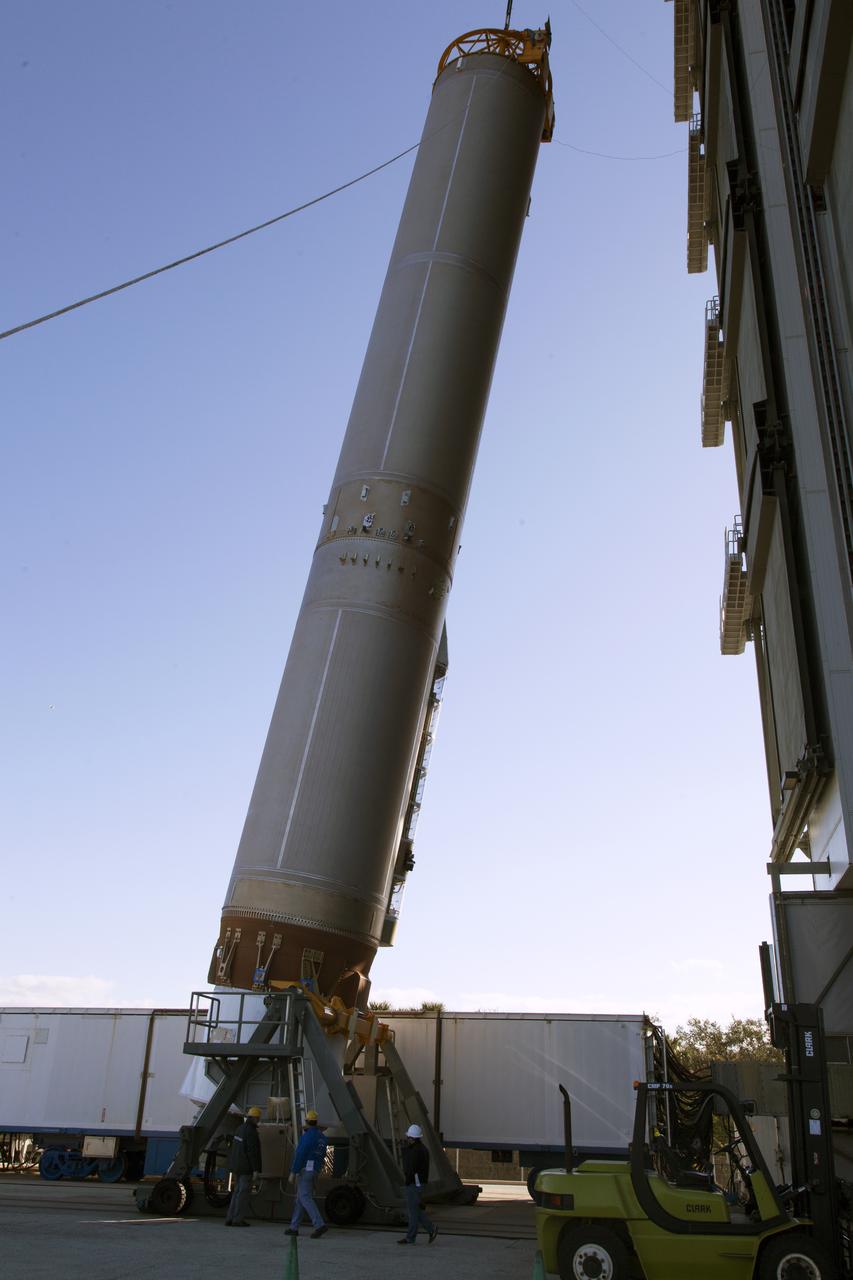
A crane lifts a United Launch Alliance Atlas V first stage at the Vertical Integration Facility at Space Launch Complex 41 at Cape Canaveral Air Force Station in Florida. The rocket will be positioned on its launcher to boost the Geostationary Operational Environmental Satellite, or GOES-S. It will be the second in a series of four advanced geostationary weather satellites and will significantly improve the detection and observation of environmental phenomena that directly affect public safety. GOES-S is slated to launch March 1, 2018.

A technician adjusts a crane that will lift a United Launch Alliance Atlas V first stage at the Vertical Integration Facility at Space Launch Complex 41 at Cape Canaveral Air Force Station in Florida. The rocket will be positioned on its launcher to boost the Geostationary Operational Environmental Satellite, or GOES-S. It will be the second in a series of four advanced geostationary weather satellites and will significantly improve the detection and observation of environmental phenomena that directly affect public safety. GOES-S is slated to launch March 1, 2018.
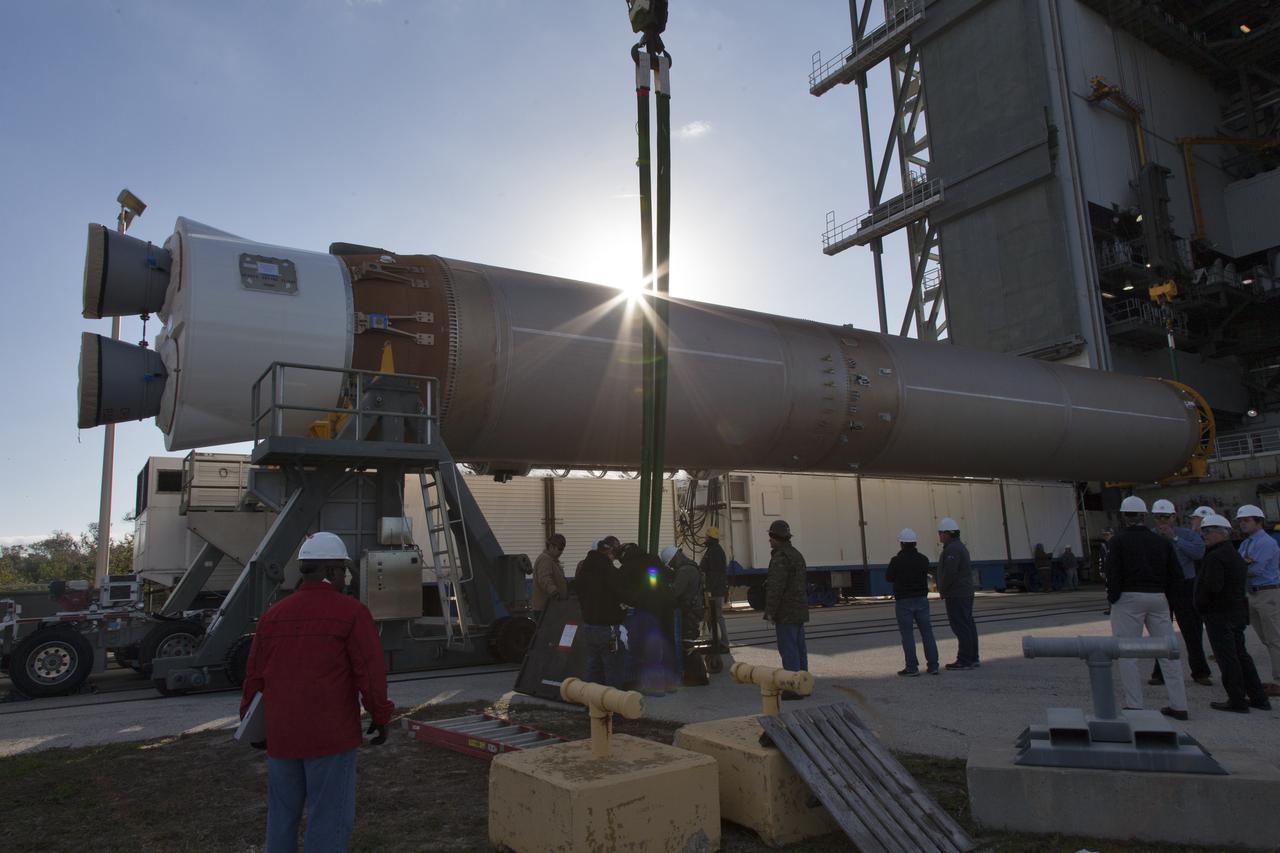
A crane lifts a United Launch Alliance Atlas V first stage at the Vertical Integration Facility at Space Launch Complex 41 at Cape Canaveral Air Force Station in Florida. The rocket will be positioned on its launcher to boost the Geostationary Operational Environmental Satellite, or GOES-S. It will be the second in a series of four advanced geostationary weather satellites and will significantly improve the detection and observation of environmental phenomena that directly affect public safety. GOES-S is slated to launch March 1, 2018.
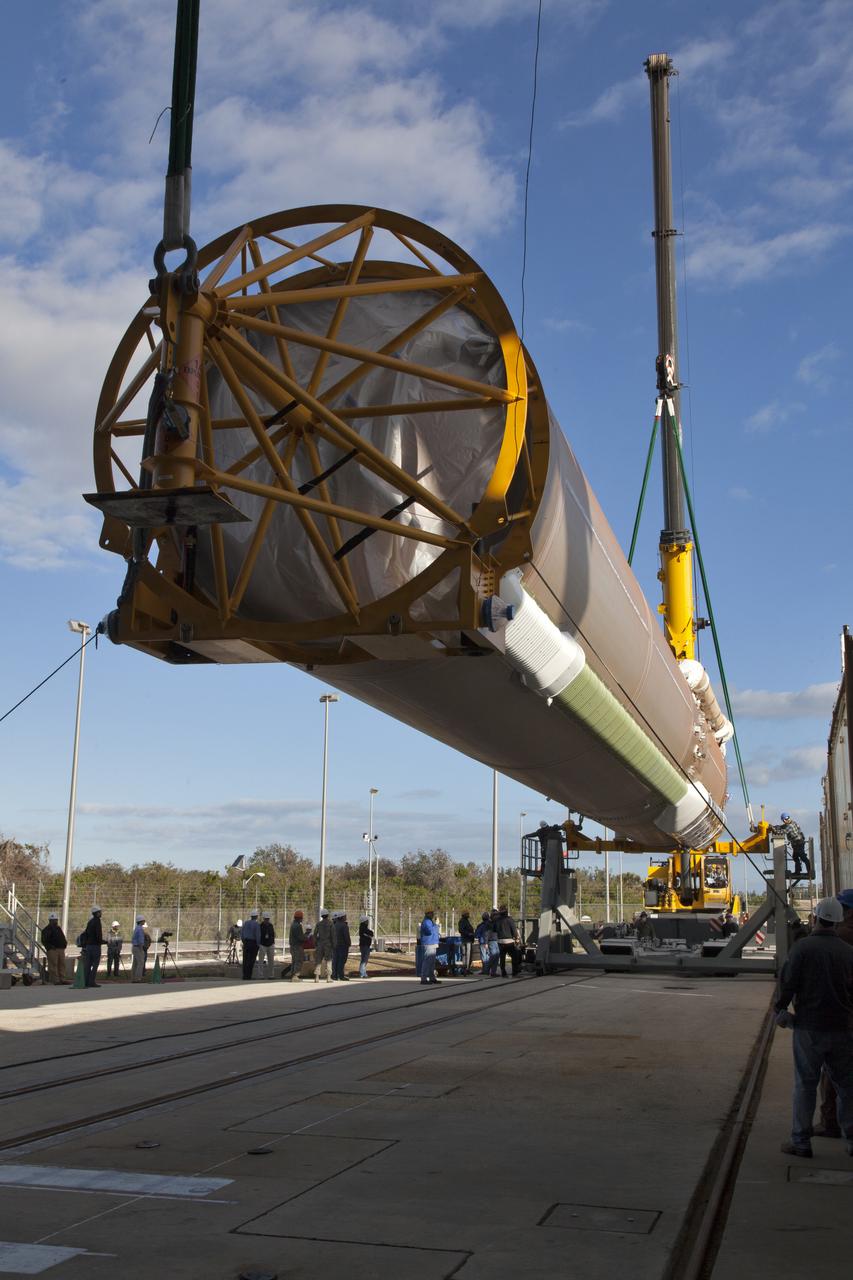
A crane lifts a United Launch Alliance Atlas V first stage at the Vertical Integration Facility at Space Launch Complex 41 at Cape Canaveral Air Force Station in Florida. The rocket will be positioned on its launcher to boost the Geostationary Operational Environmental Satellite, or GOES-S. It will be the second in a series of four advanced geostationary weather satellites and will significantly improve the detection and observation of environmental phenomena that directly affect public safety. GOES-S is slated to launch March 1, 2018.
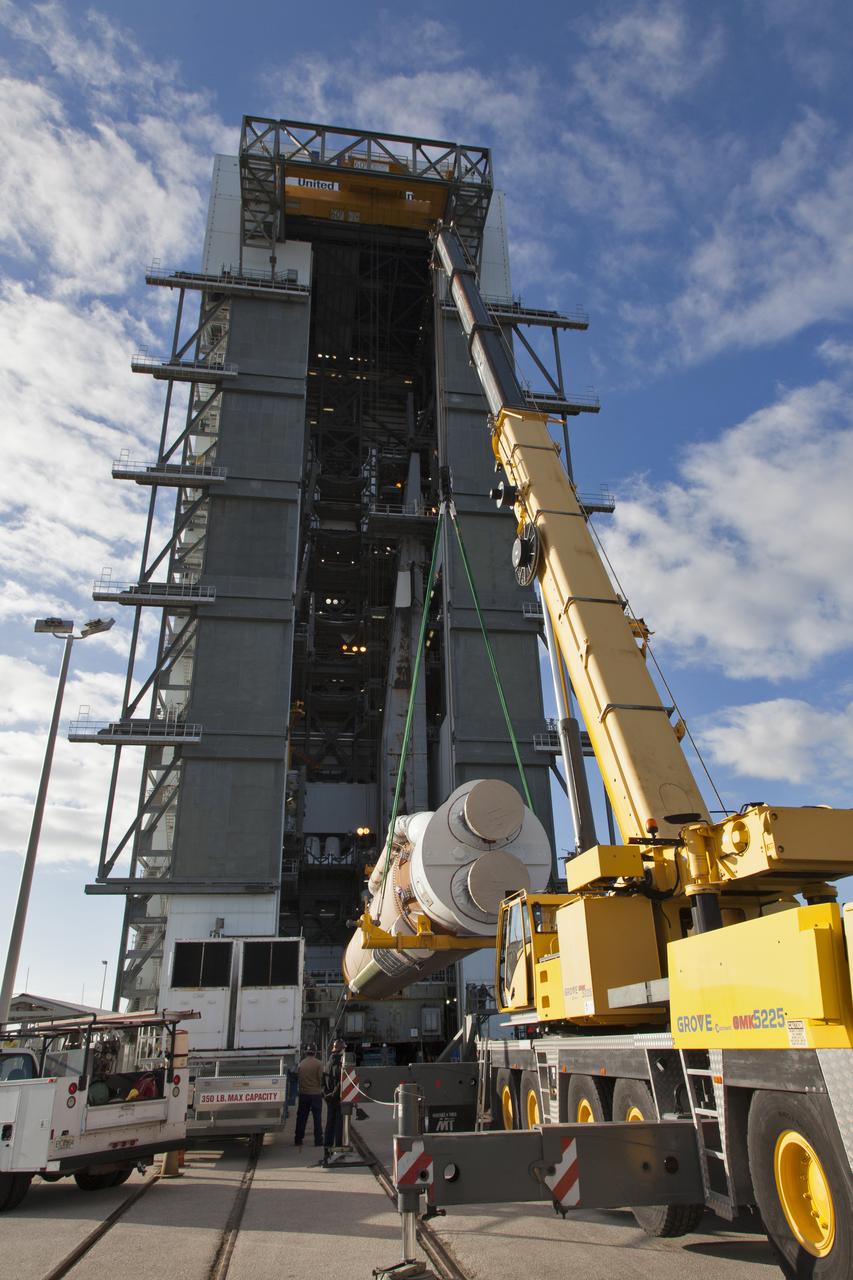
A crane lifts a United Launch Alliance Atlas V first stage at the Vertical Integration Facility at Space Launch Complex 41 at Cape Canaveral Air Force Station in Florida. The rocket will be positioned on its launcher to boost the Geostationary Operational Environmental Satellite, or GOES-S. It will be the second in a series of four advanced geostationary weather satellites and will significantly improve the detection and observation of environmental phenomena that directly affect public safety. GOES-S is slated to launch March 1, 2018.
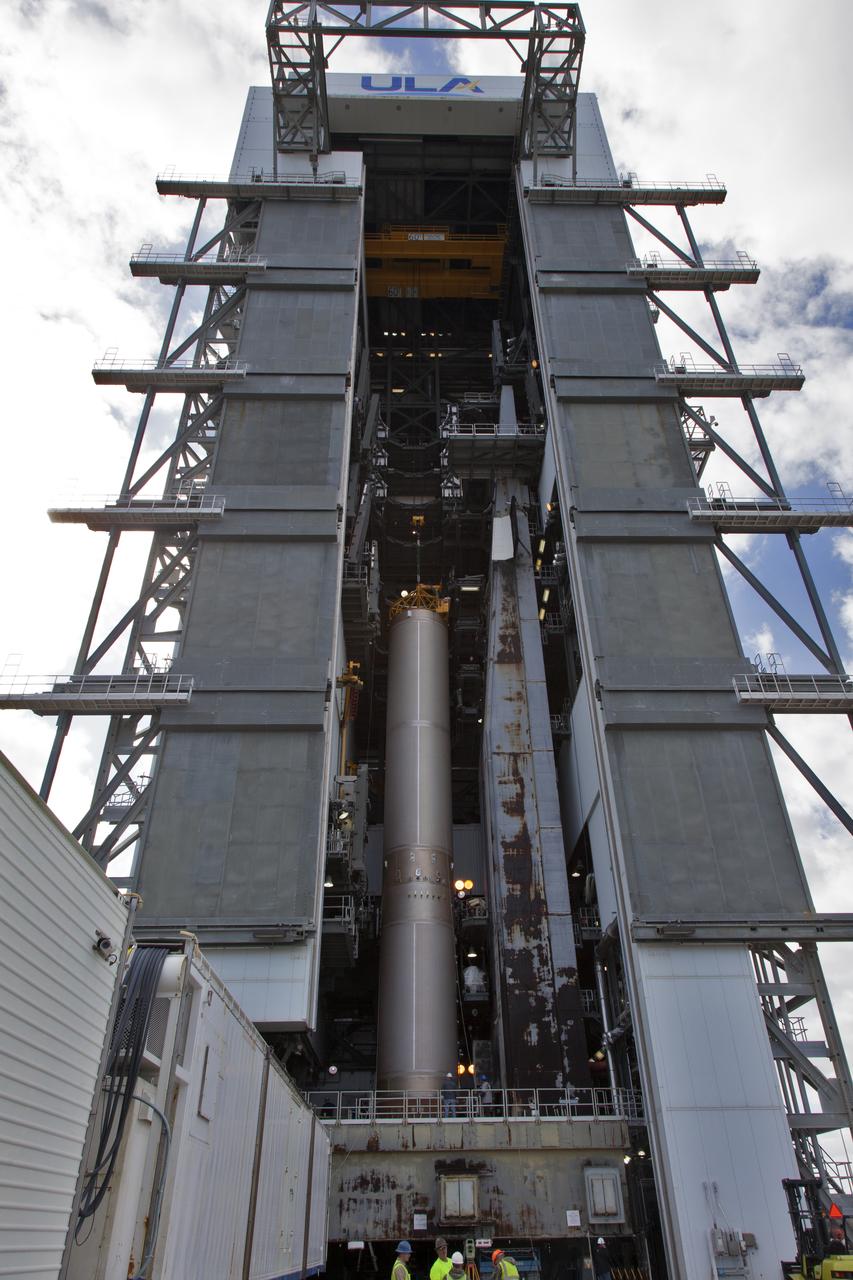
A crane lifts a United Launch Alliance Atlas V first stage into the Vertical Integration Facility at Space Launch Complex 41 at Cape Canaveral Air Force Station in Florida. The rocket will be positioned on its launcher to boost the Geostationary Operational Environmental Satellite, or GOES-S. It will be the second in a series of four advanced geostationary weather satellites and will significantly improve the detection and observation of environmental phenomena that directly affect public safety. GOES-S is slated to launch March 1, 2018.
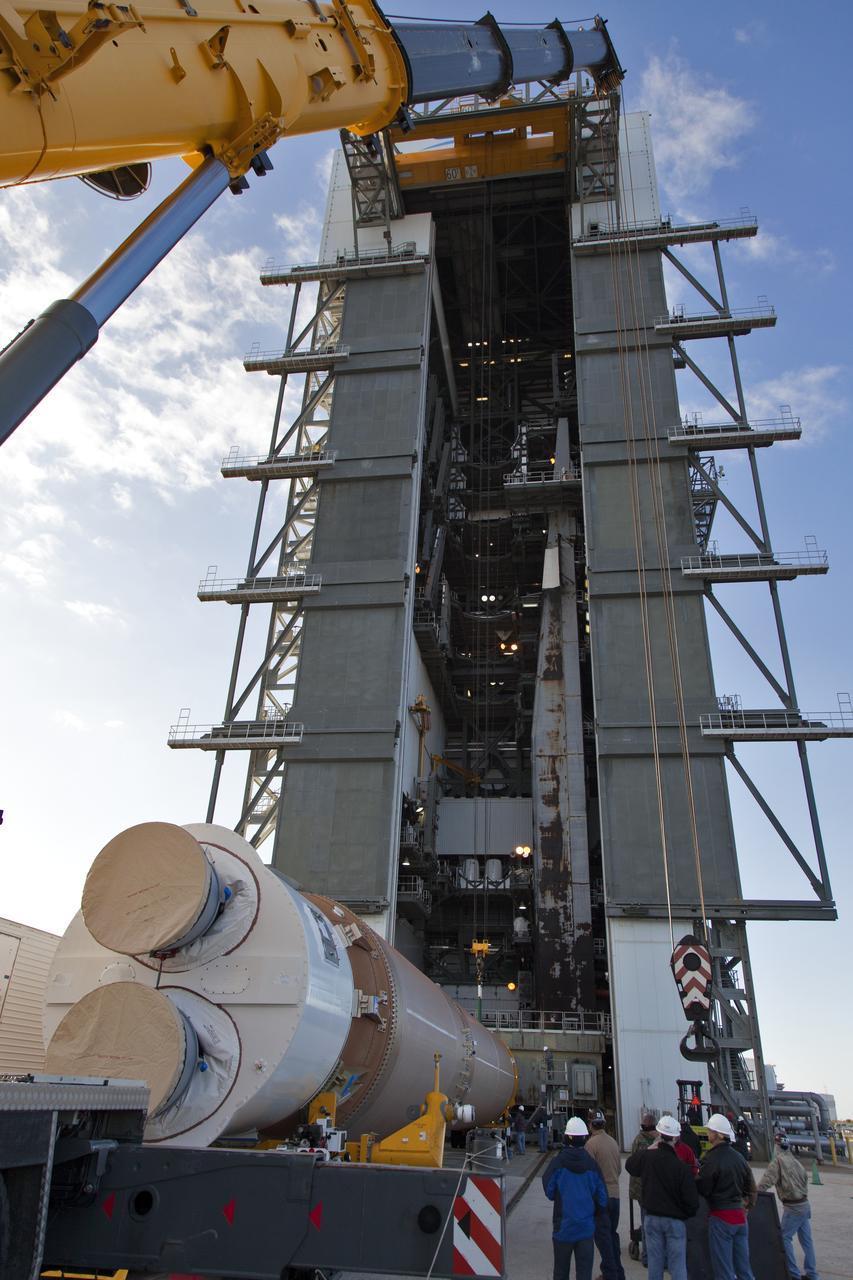
A crane lifts a United Launch Alliance Atlas V first stage at the Vertical Integration Facility at Space Launch Complex 41 at Cape Canaveral Air Force Station in Florida. The rocket will be positioned on its launcher to boost the Geostationary Operational Environmental Satellite, or GOES-S. It will be the second in a series of four advanced geostationary weather satellites and will significantly improve the detection and observation of environmental phenomena that directly affect public safety. GOES-S is slated to launch March 1, 2018.
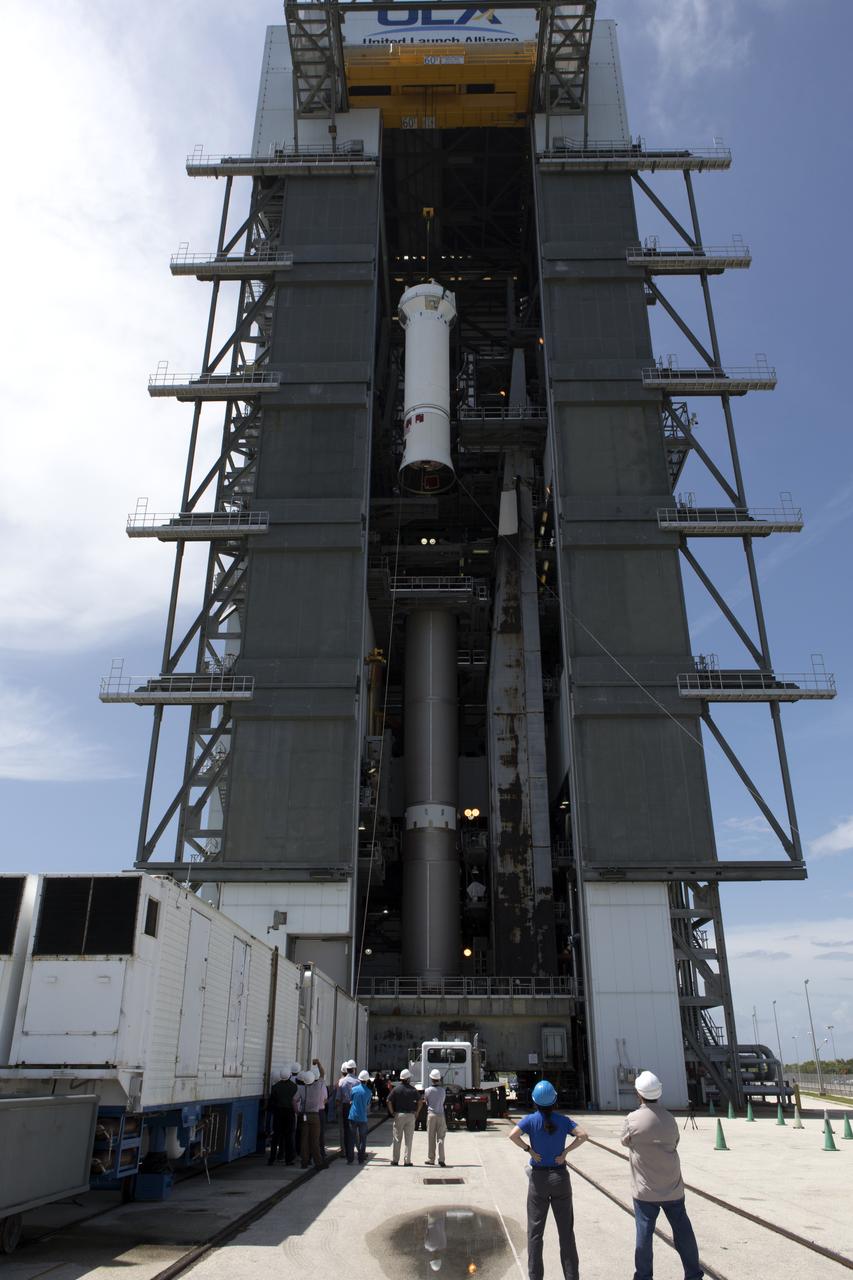
United Launch Alliance team members monitor the progress as the operation begins to lift the Centaur upper stage for mating to its Atlas V booster in the vertical position at the Vertical Integration Facility at Space Launch Complex 41 at Cape Canaveral Air Force Station in Florida. The rocket is scheduled to launch the Tracking and Data Relay Satellite, TDRS-M. It will be the latest spacecraft destined for the agency's constellation of communications satellites that allows nearly continuous contact with orbiting spacecraft ranging from the International Space Station and Hubble Space Telescope to the array of scientific observatories. Liftoff atop the ULA Atlas V rocket is scheduled to take place from Cape Canaveral's Space Launch Complex 41 in early August.
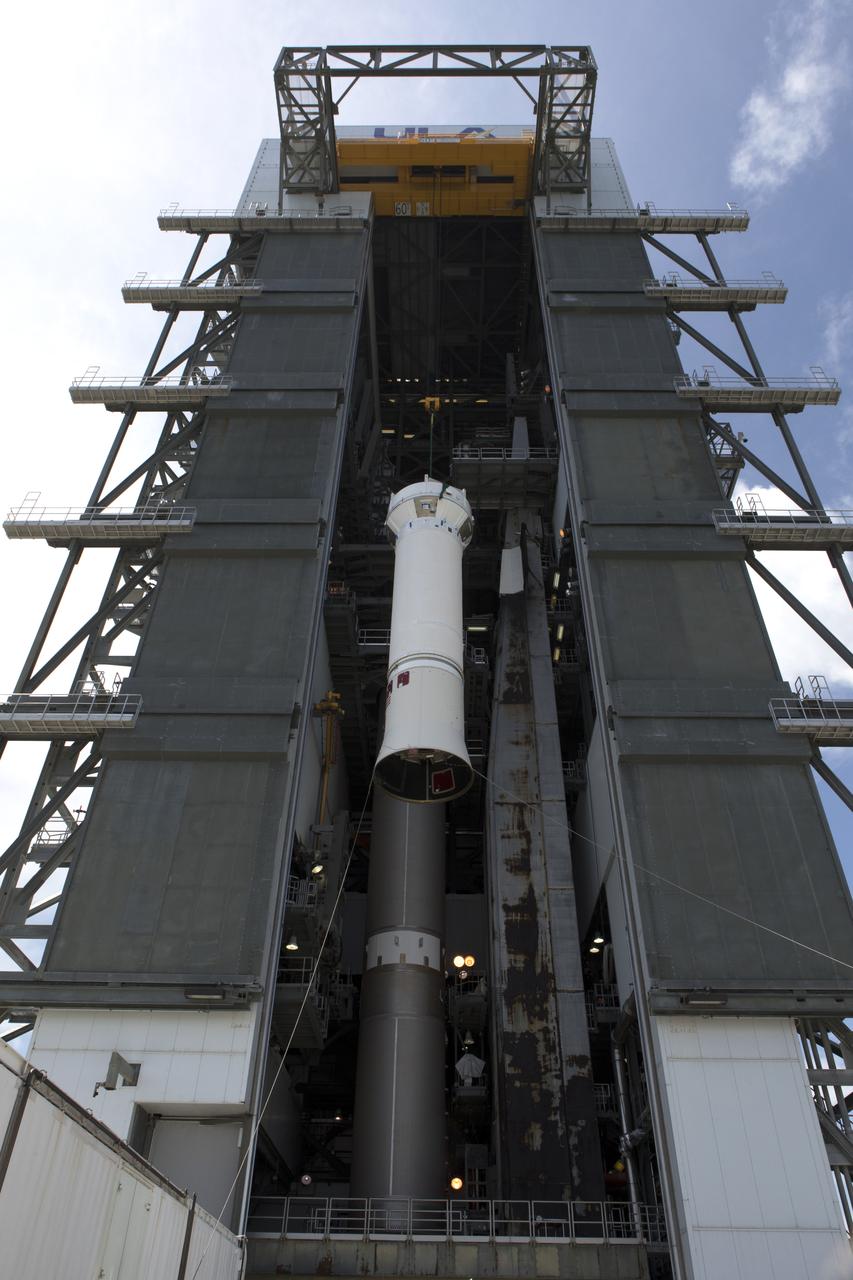
United Launch Alliance team members monitor the progress as the operation begins to lift the Centaur upper stage for mating to its Atlas V booster in the vertical position at the Vertical Integration Facility at Space Launch Complex 41 at Cape Canaveral Air Force Station in Florida. The rocket is scheduled to launch the Tracking and Data Relay Satellite, TDRS-M. It will be the latest spacecraft destined for the agency's constellation of communications satellites that allows nearly continuous contact with orbiting spacecraft ranging from the International Space Station and Hubble Space Telescope to the array of scientific observatories. Liftoff atop the ULA Atlas V rocket is scheduled to take place from Cape Canaveral's Space Launch Complex 41 in early August.
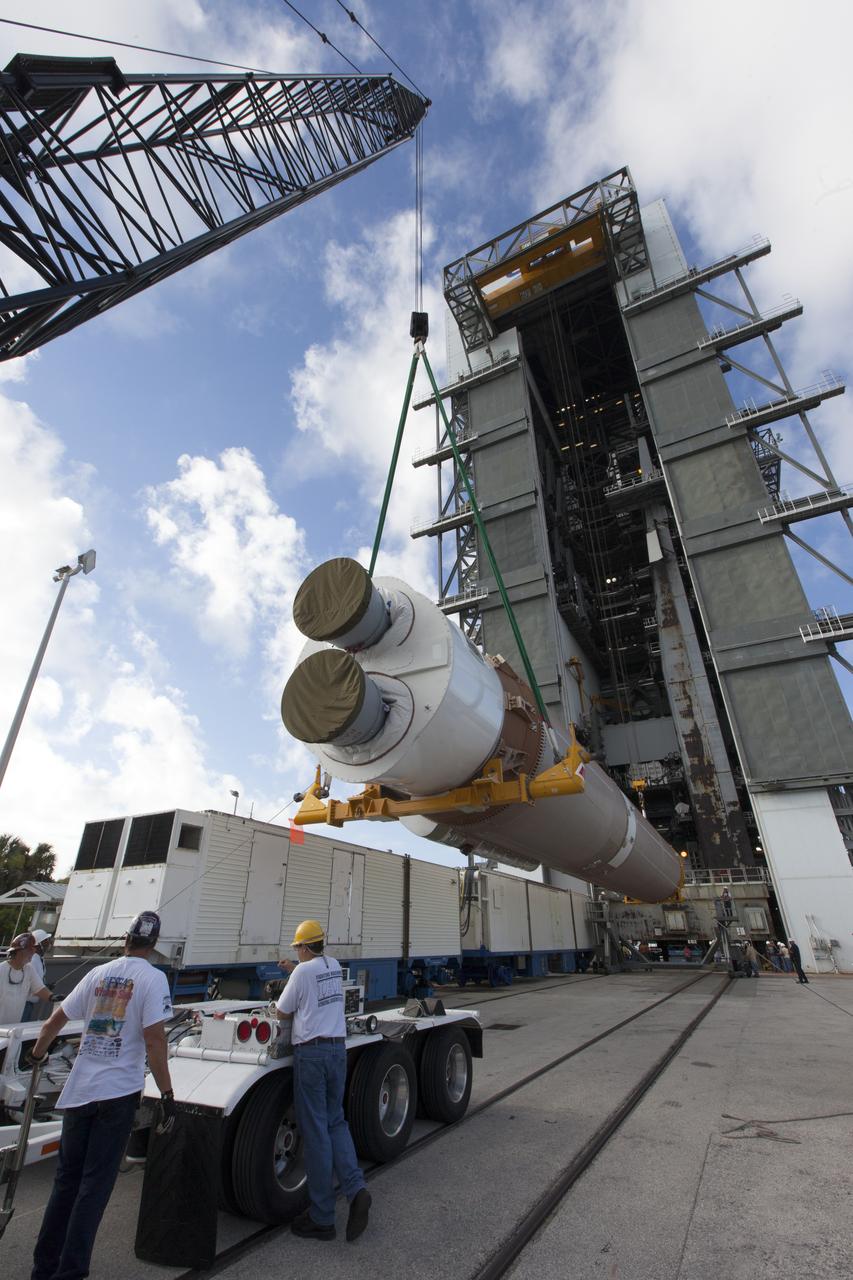
United Launch Alliance team members monitor the progress as the operation begins to lift the Atlas V first stage to the vertical position at the Vertical Integration Facility at Space Launch Complex 41 at Cape Canaveral Air Force Station in Florida. The rocket is scheduled to launch the Tracking and Data Relay Satellite, TDRS-M. It will be the latest spacecraft destined for the agency's constellation of communications satellites that allows nearly continuous contact with orbiting spacecraft ranging from the International Space Station and Hubble Space Telescope to the array of scientific observatories. Liftoff atop the ULA Atlas V rocket is scheduled to take place from Cape Canaveral's Space Launch Complex 41 on Aug. 3, 2017 at 9:02 a.m. EDT.
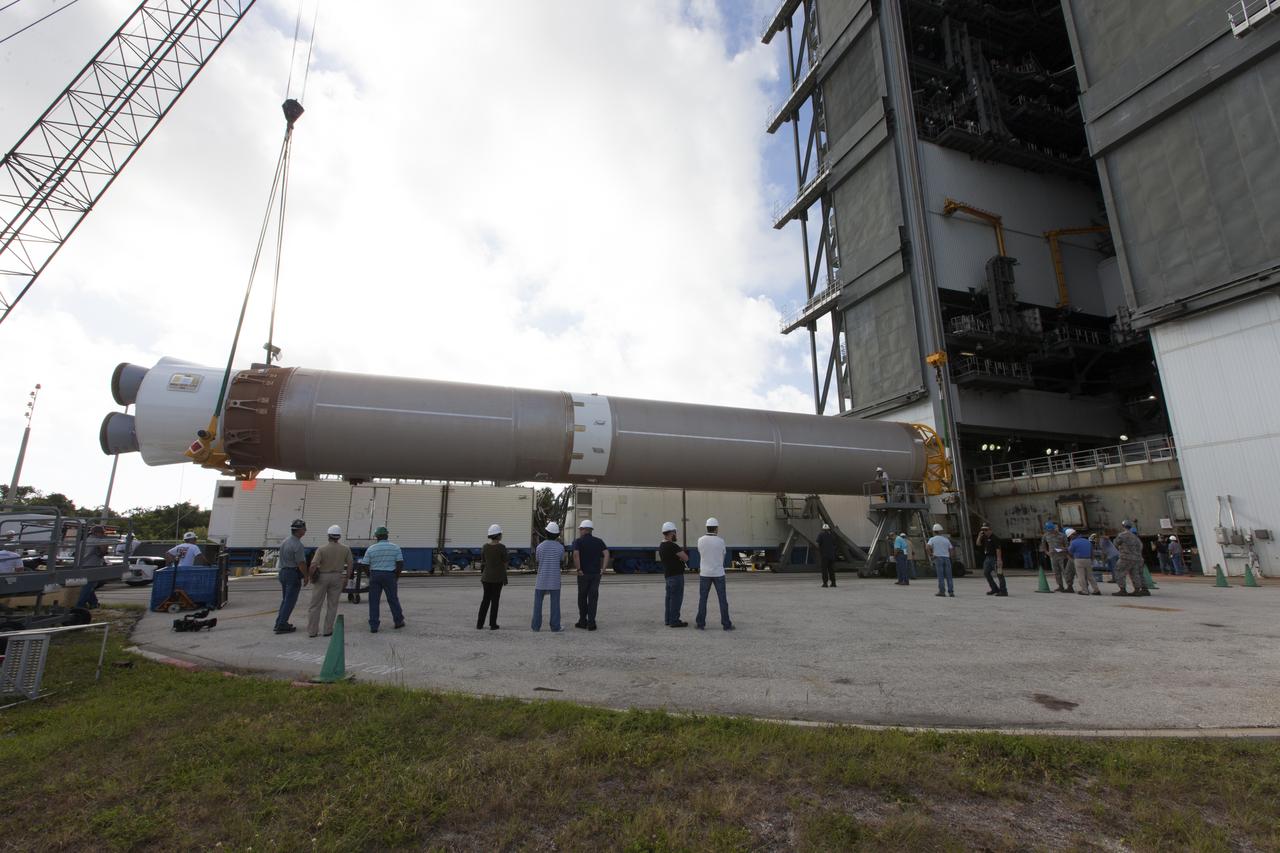
United Launch Alliance team members monitor the progress as the operation begins to lift the Atlas V first stage to the vertical position at the Vertical Integration Facility at Space Launch Complex 41 at Cape Canaveral Air Force Station in Florida. The rocket is scheduled to launch the Tracking and Data Relay Satellite, TDRS-M. It will be the latest spacecraft destined for the agency's constellation of communications satellites that allows nearly continuous contact with orbiting spacecraft ranging from the International Space Station and Hubble Space Telescope to the array of scientific observatories. Liftoff atop the ULA Atlas V rocket is scheduled to take place from Cape Canaveral's Space Launch Complex 41 on Aug. 3, 2017 at 9:02 a.m. EDT.
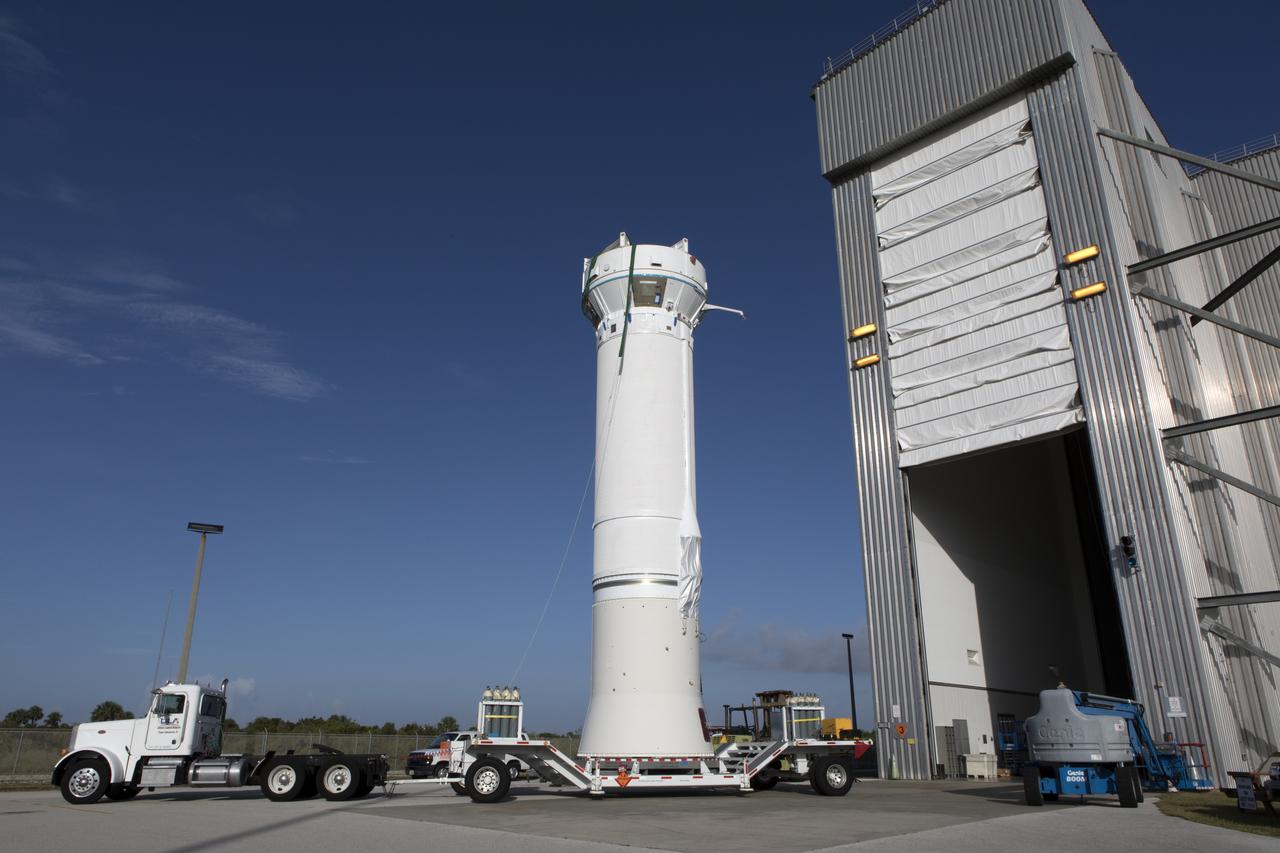
A United Launch Alliance Atlas V Centaur upper stage leaves the Delta Operations Center aboard a transport trailer for delivery to the Vertical Integration Facility at Space Launch Complex 41 at Cape Canaveral Air Force Station in Florida. The rocket is scheduled to help launch the Tracking and Data Relay Satellite, TDRS-M. It will be the latest spacecraft destined for the agency's constellation of communications satellites that allows nearly continuous contact with orbiting spacecraft ranging from the International Space Station and Hubble Space Telescope to the array of scientific observatories. Liftoff atop the ULA Atlas V rocket is scheduled to take place from Cape Canaveral's Space Launch Complex 41 in early August.

A crane is used to lift the payload fairing containing NASA's Tracking and Data Relay Satellite (TDRS-M) at the Vertical Integration Facility at Space Launch Complex 41 at Cape Canaveral Air Force Station in Florida. TDRS-M will be stacked atop the United Launch Alliance Atlas V Centaur upper stage. TDRS-M will be the latest spacecraft destined for the agency's constellation of communications satellites that allows nearly continuous contact with orbiting spacecraft ranging from the International Space Station and Hubble Space Telescope to the array of scientific observatories. Liftoff atop the ULA Atlas V rocket is scheduled for Aug. 18, 2017.
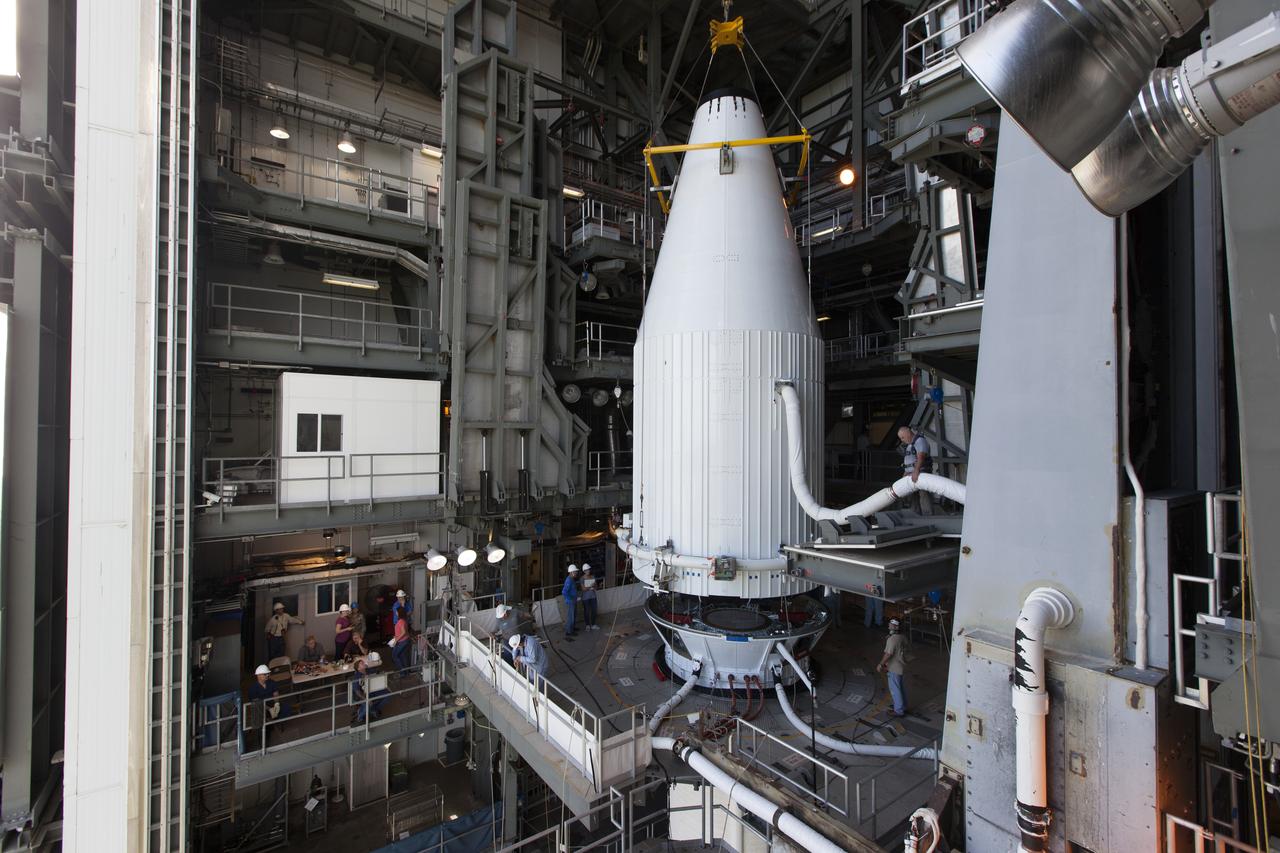
Encapsulated in its payload fairing, Tracking and Data Relay Satellite (TDRS-M) is mated to the United Launch Alliance Atlas V Centaur upper stage in the Vertical Integration Facility at Space Launch Complex 41 at Cape Canaveral Air Force Station in Florida. TDRS-M will be the latest spacecraft destined for the agency's constellation of communications satellites that allows nearly continuous contact with orbiting spacecraft ranging from the International Space Station and Hubble Space Telescope to the array of scientific observatories. Liftoff atop the ULA Atlas V rocket is scheduled for Aug. 18, 2017.
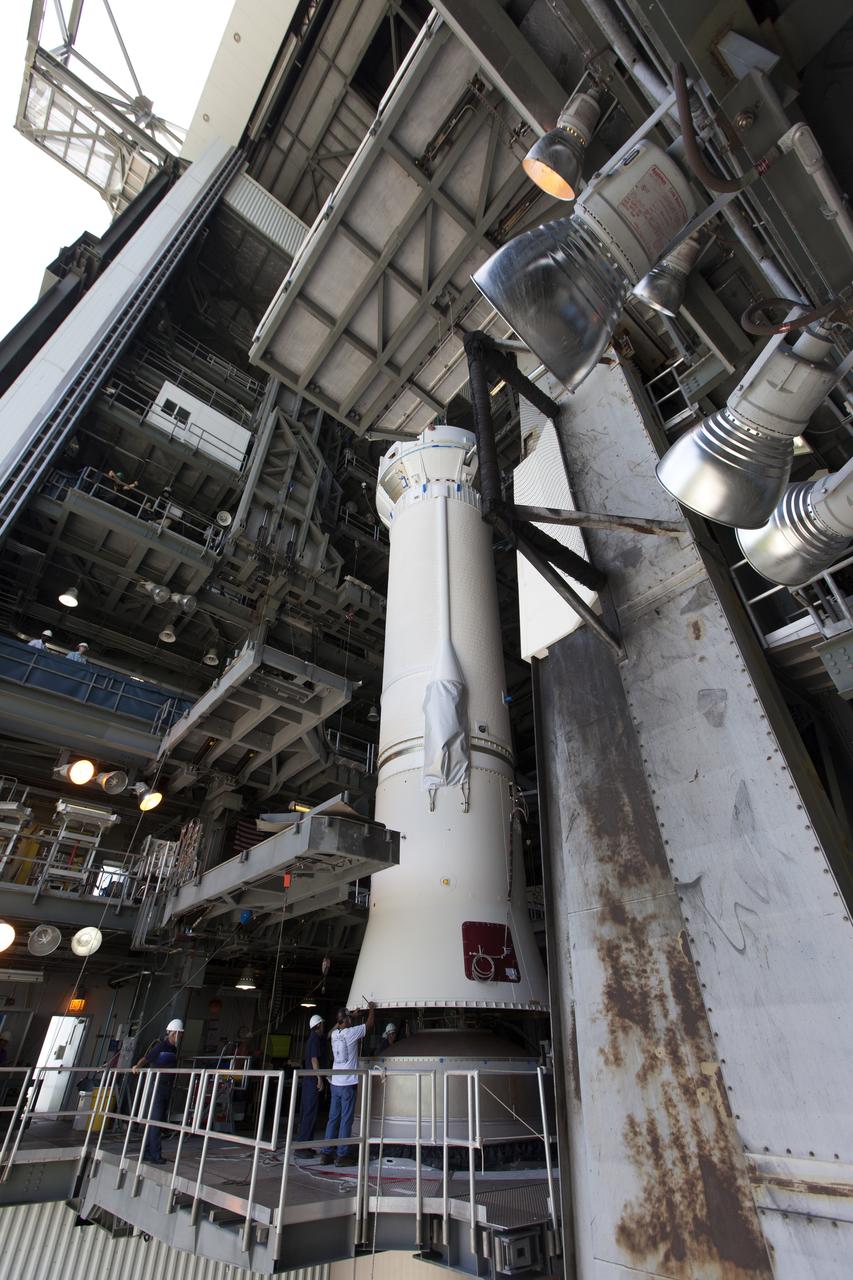
At the Vertical Integration Facility at Space Launch Complex 41 at Cape Canaveral Air Force Station in Florida, United Launch Alliance team members monitor progress as a Centaur upper stage is positioned prior to mating to an Atlas V booster. The rocket is scheduled to launch the Tracking and Data Relay Satellite, TDRS-M. It will be the latest spacecraft destined for the agency's constellation of communications satellites that allows nearly continuous contact with orbiting spacecraft ranging from the International Space Station and Hubble Space Telescope to the array of scientific observatories. Liftoff atop the ULA Atlas V rocket is scheduled to take place from Cape Canaveral's Space Launch Complex 41 in early August.
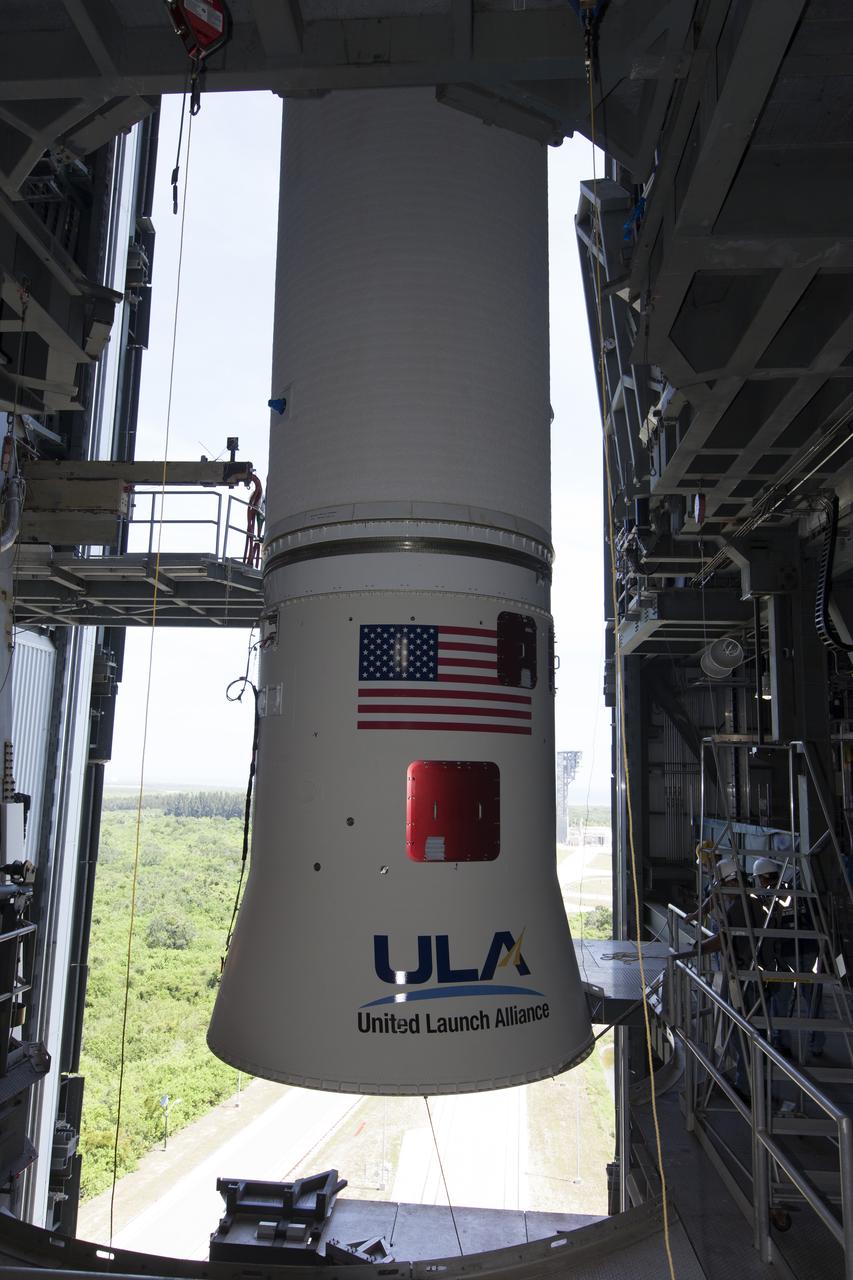
At the Vertical Integration Facility at Space Launch Complex 41 at Cape Canaveral Air Force Station in Florida, a United Launch Alliance Centaur upper stage is positioned prior to mating to an Atlas V booster. The rocket is scheduled to launch the Tracking and Data Relay Satellite, TDRS-M. It will be the latest spacecraft destined for the agency's constellation of communications satellites that allows nearly continuous contact with orbiting spacecraft ranging from the International Space Station and Hubble Space Telescope to the array of scientific observatories. Liftoff atop the ULA Atlas V rocket is scheduled to take place from Cape Canaveral's Space Launch Complex 41 in early August.
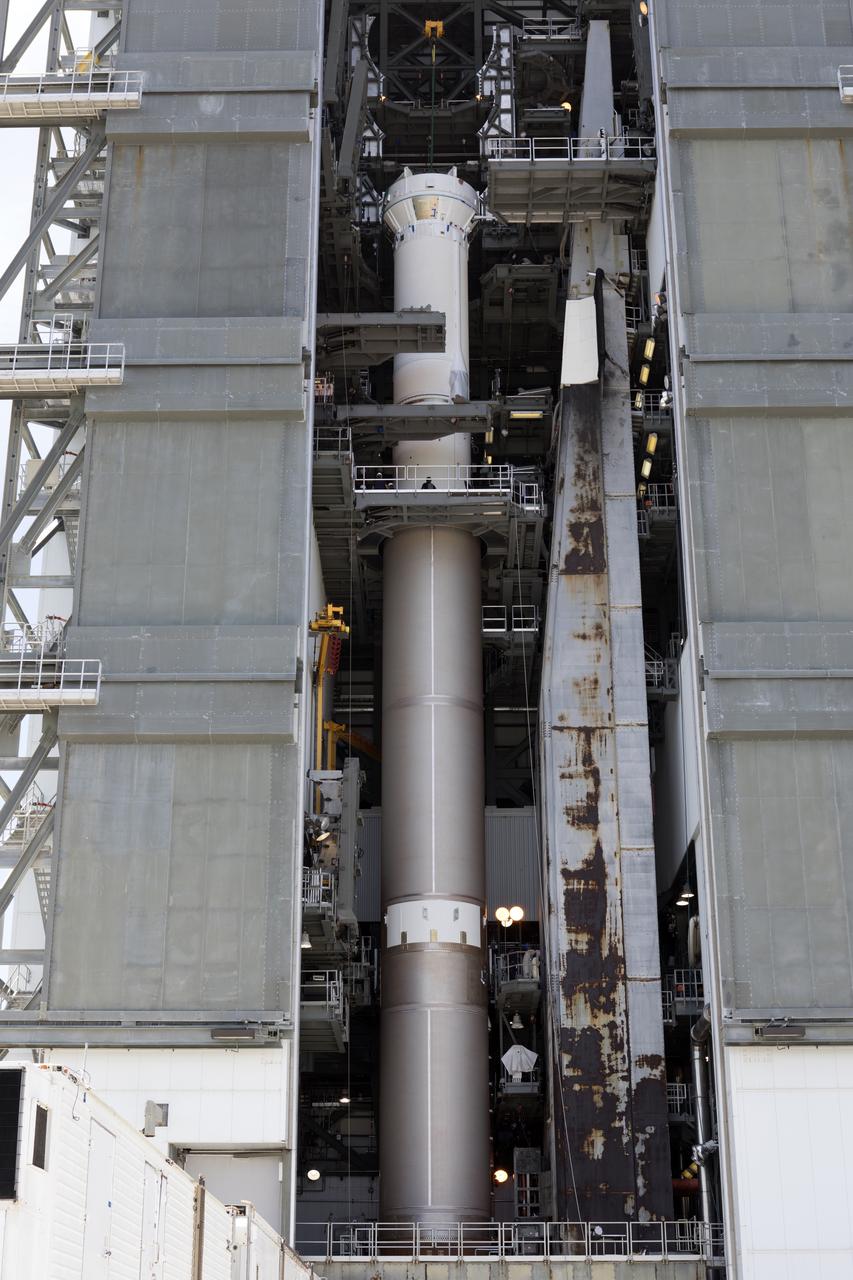
At the Vertical Integration Facility at Space Launch Complex 41 at Cape Canaveral Air Force Station in Florida, a United Launch Alliance Centaur upper stage has been mated to an Atlas V booster. The rocket is scheduled to launch the Tracking and Data Relay Satellite, TDRS-M. It will be the latest spacecraft destined for the agency's constellation of communications satellites that allows nearly continuous contact with orbiting spacecraft ranging from the International Space Station and Hubble Space Telescope to the array of scientific observatories. Liftoff atop the ULA Atlas V rocket is scheduled to take place from Cape Canaveral's Space Launch Complex 41 in early August.
A United Launch Alliance Atlas V first stage is lifted at the Vertical Integration Facility at Space Launch Complex 41 at Cape Canaveral Air Force Station in Florida. The rocket is scheduled to launch the Tracking and Data Relay Satellite, TDRS-M. It will be the latest spacecraft destined for the agency's constellation of communications satellites that allows nearly continuous contact with orbiting spacecraft ranging from the International Space Station and Hubble Space Telescope to the array of scientific observatories. Liftoff atop the ULA Atlas V rocket is scheduled to take place from Cape Canaveral's Space Launch Complex 41 on Aug. 3, 2017 at 9:02 a.m. EDT.
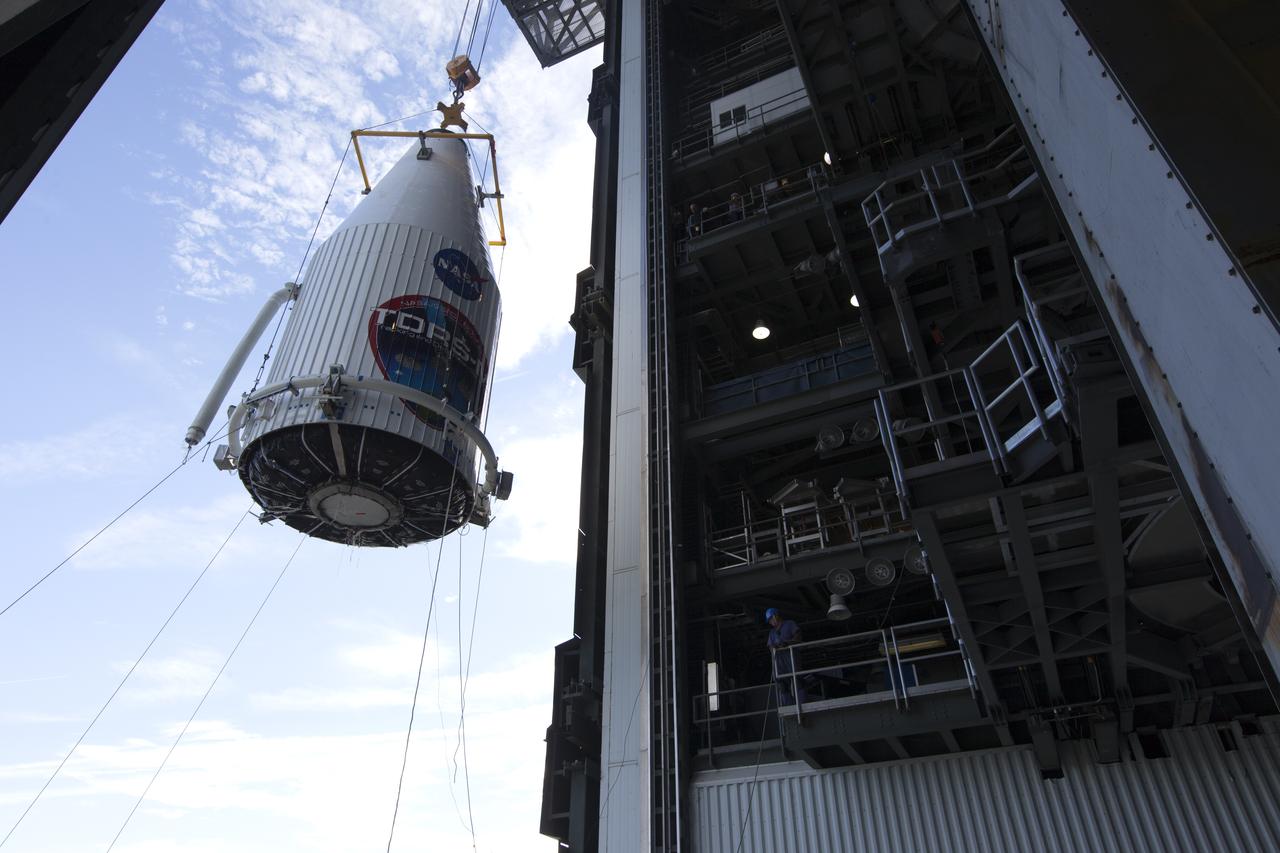
A crane is used to lift the payload fairing containing NASA's Tracking and Data Relay Satellite (TDRS-M) at the Vertical Integration Facility at Space Launch Complex 41 at Cape Canaveral Air Force Station in Florida. TDRS-M will be stacked atop the United Launch Alliance Atlas V Centaur upper stage. TDRS-M will be the latest spacecraft destined for the agency's constellation of communications satellites that allows nearly continuous contact with orbiting spacecraft ranging from the International Space Station and Hubble Space Telescope to the array of scientific observatories. Liftoff atop the ULA Atlas V rocket is scheduled for Aug. 18, 2017.
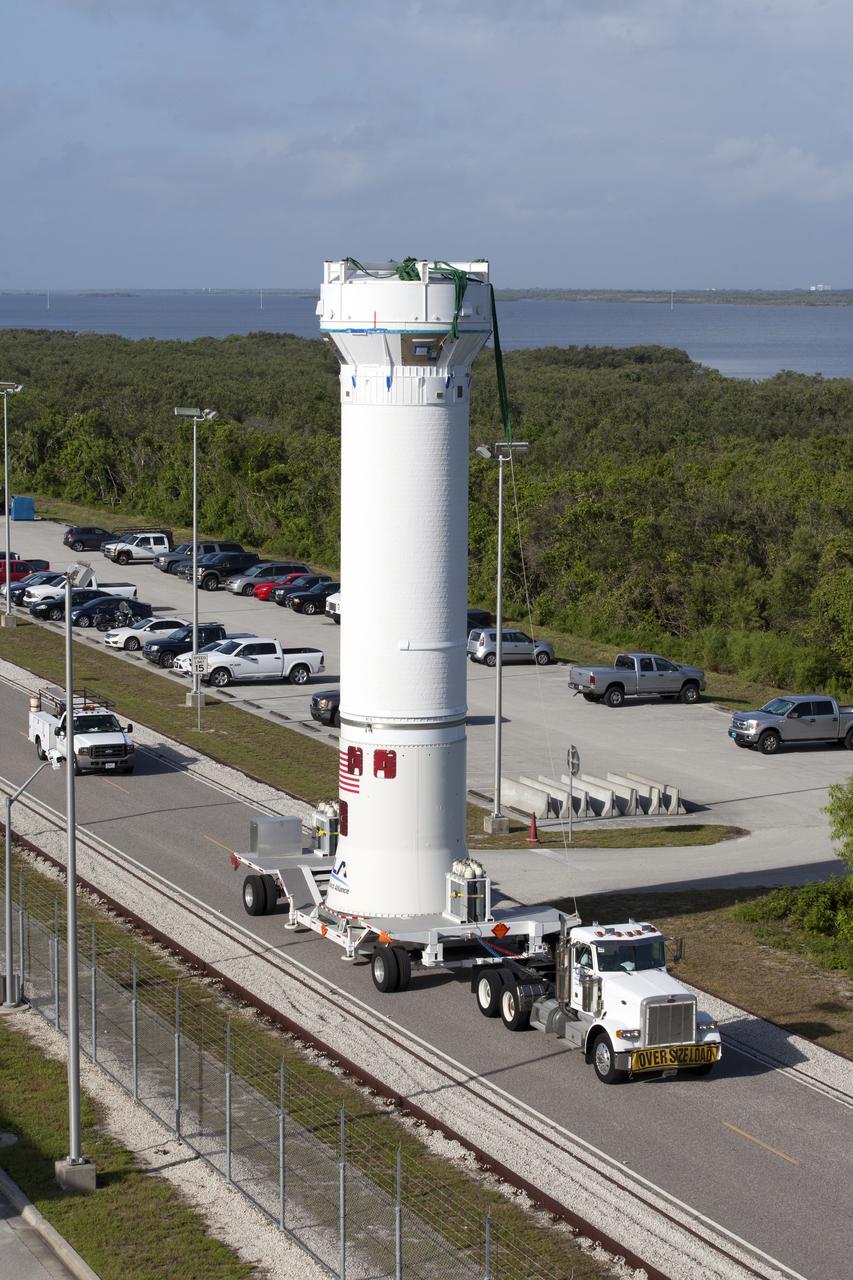
A United Launch Alliance Atlas V Centaur upper stage is on its wat to the Vertical Integration Facility at Space Launch Complex 41 at Cape Canaveral Air Force Station in Florida. The rocket is scheduled to help launch the Tracking and Data Relay Satellite, TDRS-M. It will be the latest spacecraft destined for the agency's constellation of communications satellites that allows nearly continuous contact with orbiting spacecraft ranging from the International Space Station and Hubble Space Telescope to the array of scientific observatories. Liftoff atop the ULA Atlas V rocket is scheduled to take place from Cape Canaveral's Space Launch Complex 41 in early August.
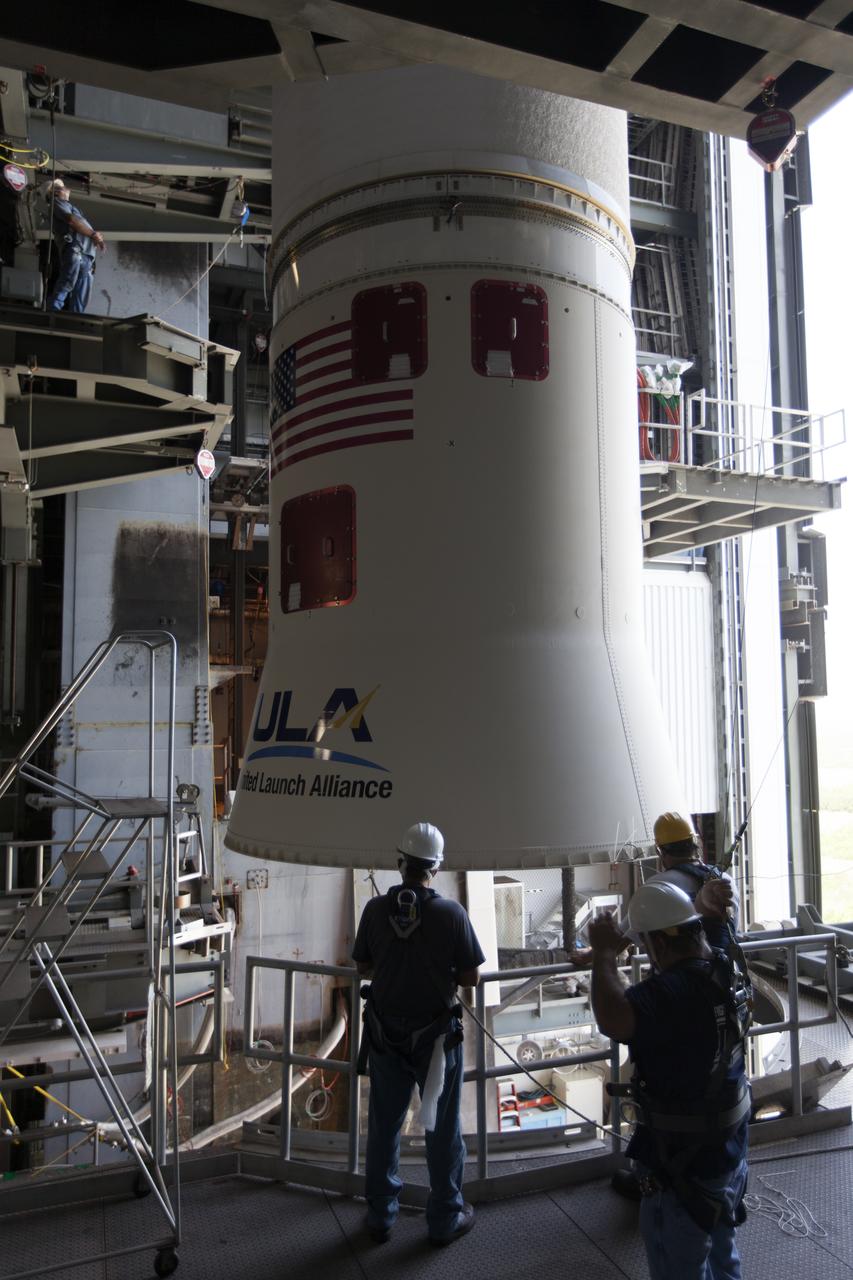
At the Vertical Integration Facility at Space Launch Complex 41 at Cape Canaveral Air Force Station in Florida, United Launch Alliance team members monitor the progress as a Centaur upper stage is positioned prior to mating to an Atlas V booster. The rocket is scheduled to launch the Tracking and Data Relay Satellite, TDRS-M. It will be the latest spacecraft destined for the agency's constellation of communications satellites that allows nearly continuous contact with orbiting spacecraft ranging from the International Space Station and Hubble Space Telescope to the array of scientific observatories. Liftoff atop the ULA Atlas V rocket is scheduled to take place from Cape Canaveral's Space Launch Complex 41 in early August.
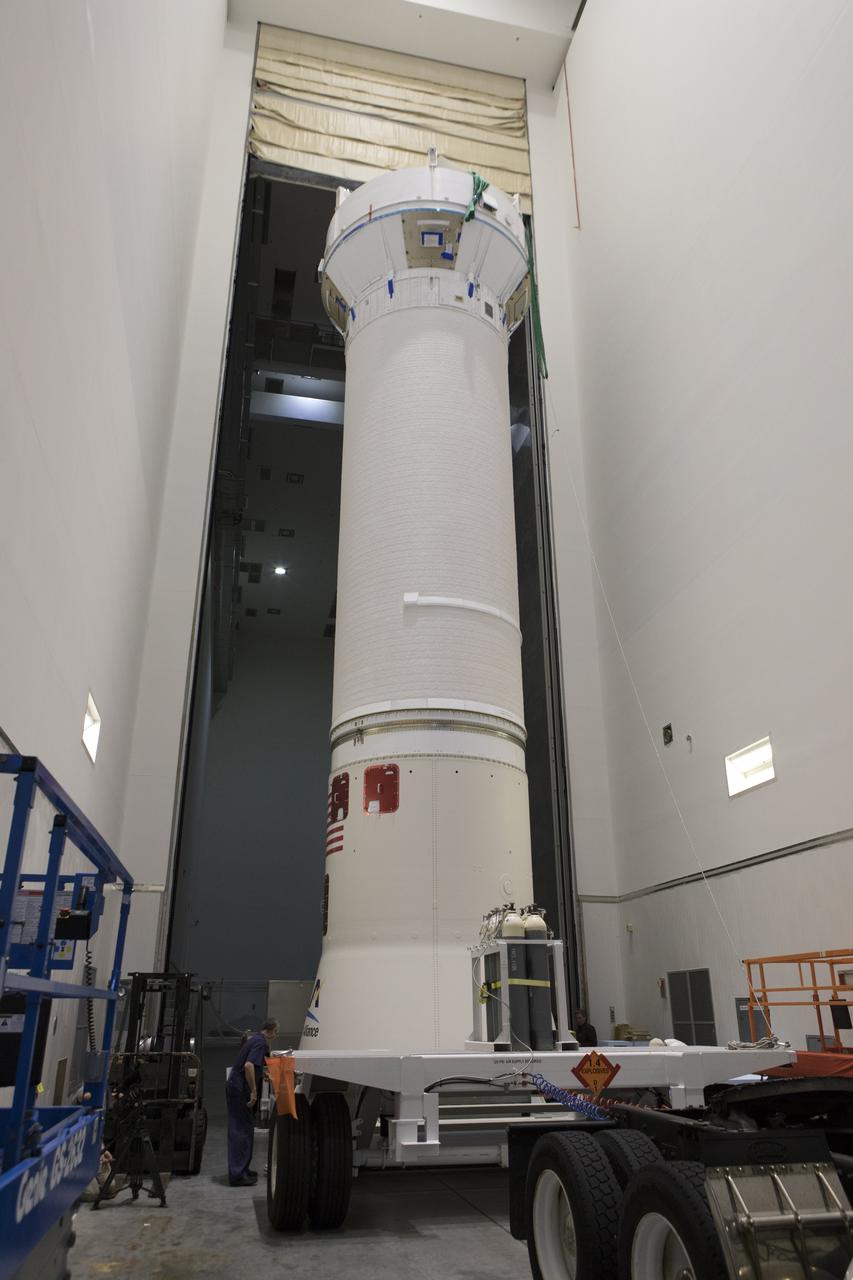
A United Launch Alliance Atlas V Centaur upper stage is prepared to leave the Delta Operations Center aboard a transport trailer for delivery to the Vertical Integration Facility at Space Launch Complex 41 at Cape Canaveral Air Force Station in Florida. The rocket is scheduled to help launch the Tracking and Data Relay Satellite, TDRS-M. It will be the latest spacecraft destined for the agency's constellation of communications satellites that allows nearly continuous contact with orbiting spacecraft ranging from the International Space Station and Hubble Space Telescope to the array of scientific observatories. Liftoff atop the ULA Atlas V rocket is scheduled to take place from Cape Canaveral's Space Launch Complex 41 in early August.
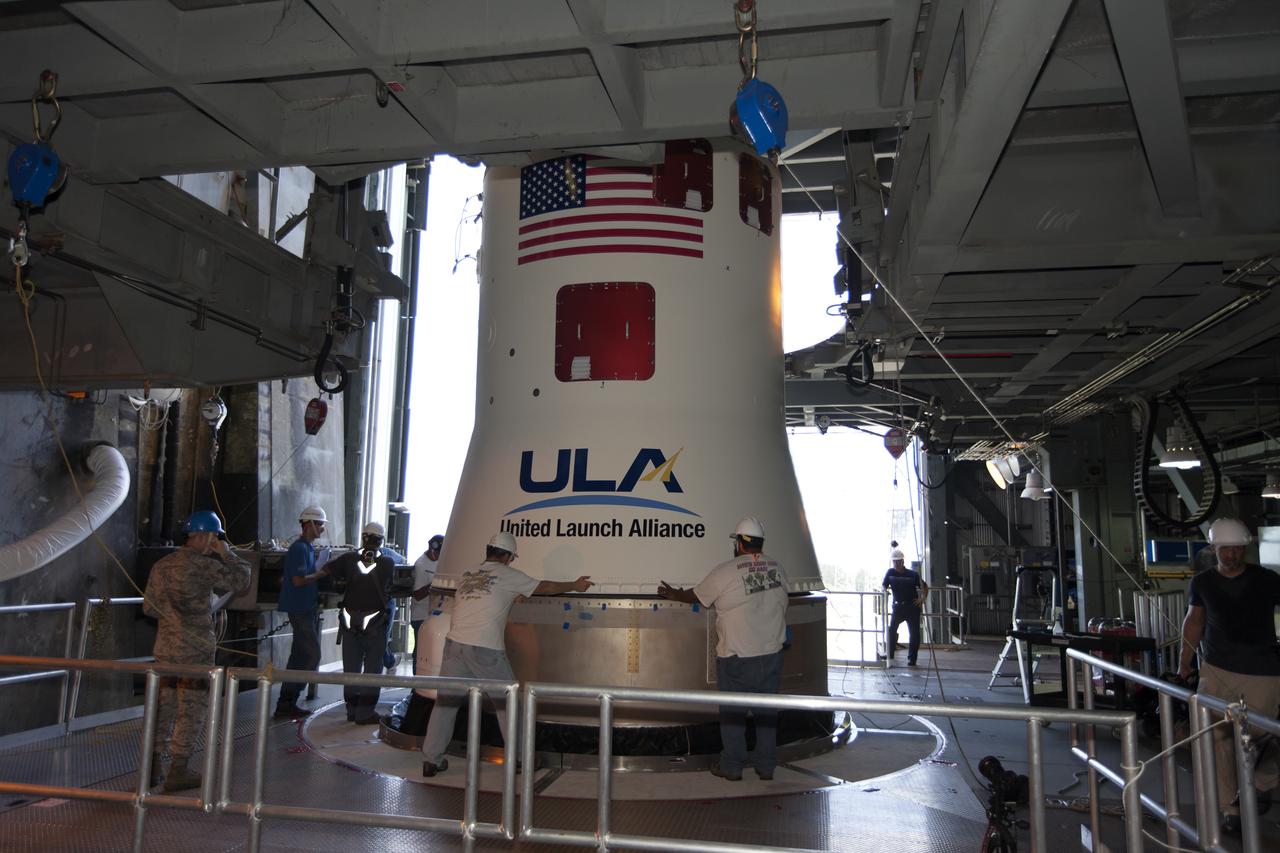
At the Vertical Integration Facility at Space Launch Complex 41 at Cape Canaveral Air Force Station in Florida, United Launch Alliance team members mate a Centaur upper stage to an Atlas V booster. The rocket is scheduled to launch the Tracking and Data Relay Satellite, TDRS-M. It will be the latest spacecraft destined for the agency's constellation of communications satellites that allows nearly continuous contact with orbiting spacecraft ranging from the International Space Station and Hubble Space Telescope to the array of scientific observatories. Liftoff atop the ULA Atlas V rocket is scheduled to take place from Cape Canaveral's Space Launch Complex 41 in early August.
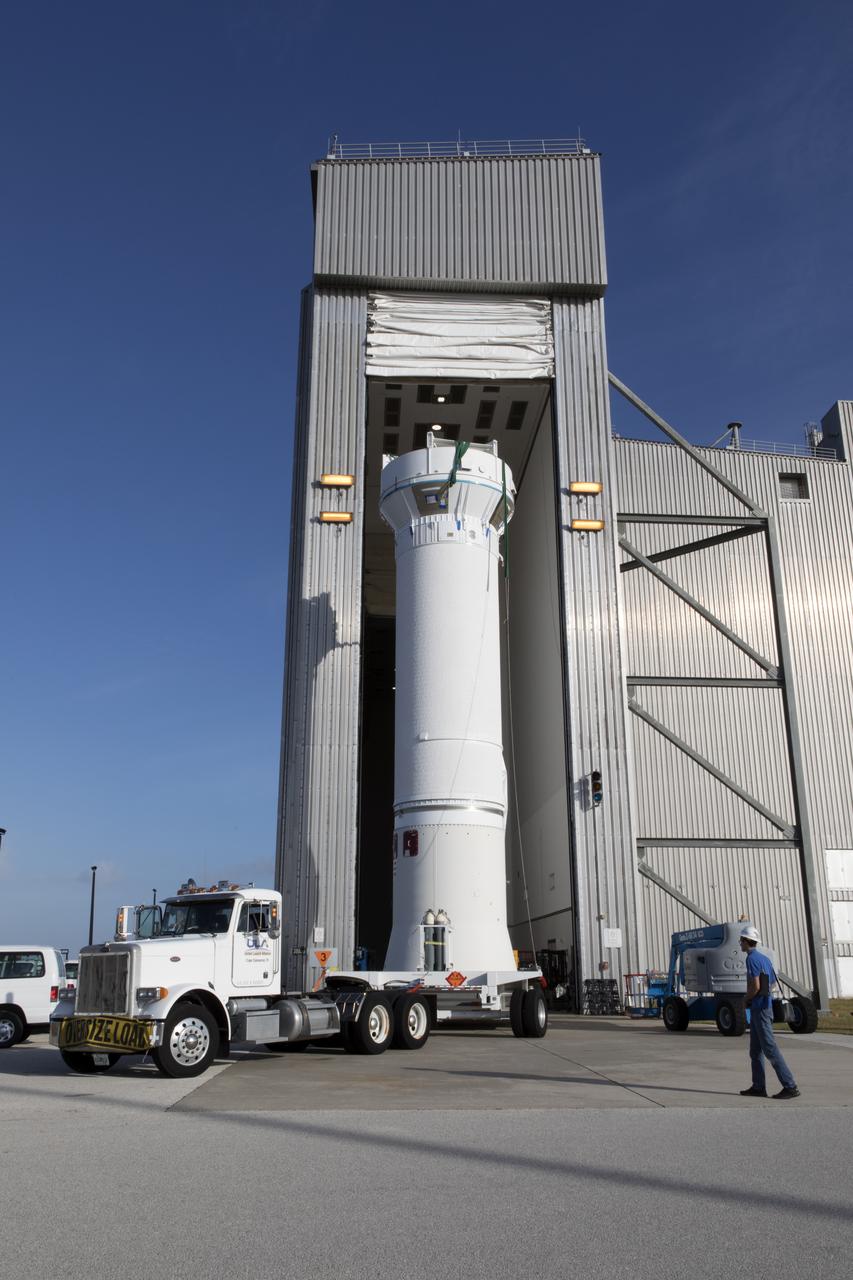
A United Launch Alliance Atlas V Centaur upper stage leaves the Delta Operations Center aboard a transport trailer for delivery to the Vertical Integration Facility at Space Launch Complex 41 at Cape Canaveral Air Force Station in Florida. The rocket is scheduled to help launch the Tracking and Data Relay Satellite, TDRS-M. It will be the latest spacecraft destined for the agency's constellation of communications satellites that allows nearly continuous contact with orbiting spacecraft ranging from the International Space Station and Hubble Space Telescope to the array of scientific observatories. Liftoff atop the ULA Atlas V rocket is scheduled to take place from Cape Canaveral's Space Launch Complex 41 in early August.
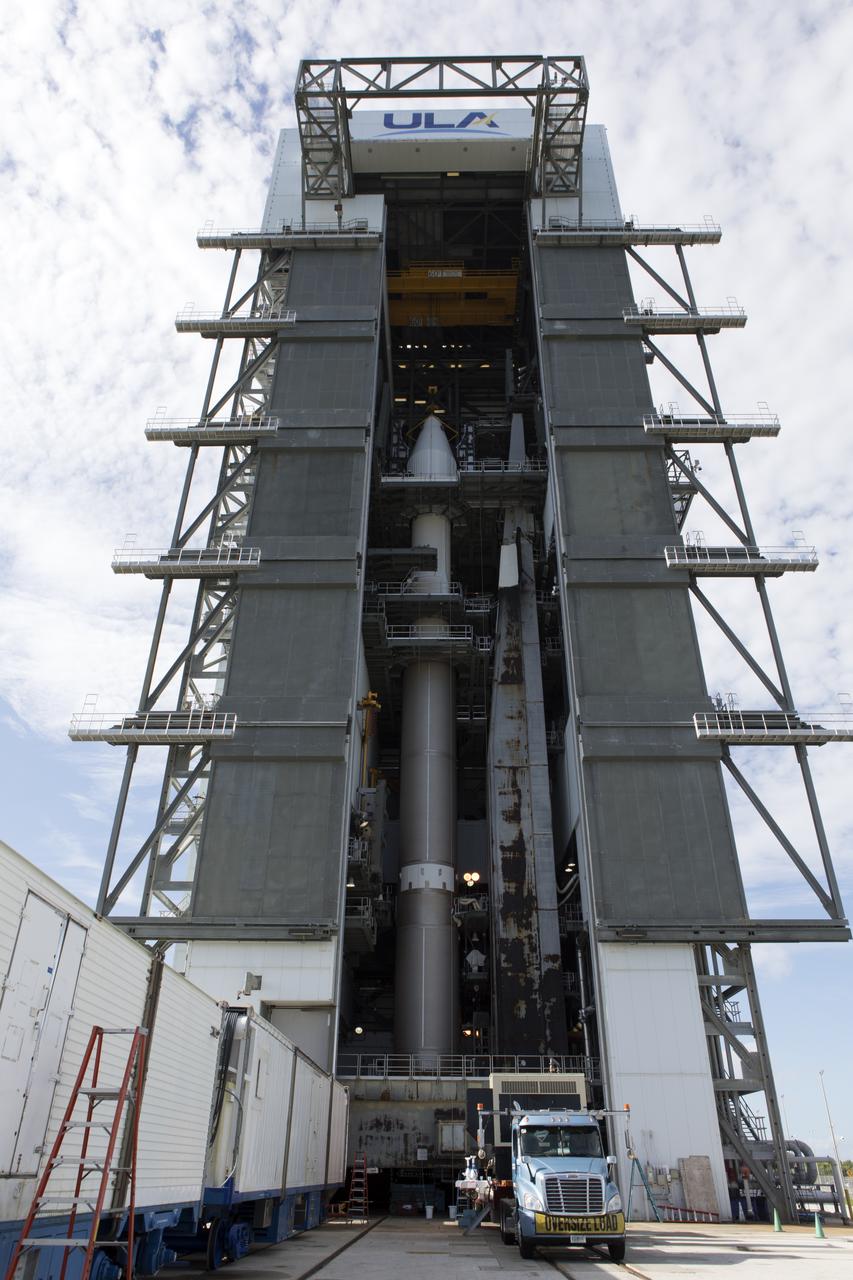
Encapsulated in its payload fairing, Tracking and Data Relay Satellite (TDRS-M) has been mated to the United Launch Alliance Atlas V Centaur upper stage in the Vertical Integration Facility at Space Launch Complex 41 at Cape Canaveral Air Force Station in Florida. TDRS-M will be the latest spacecraft destined for the agency's constellation of communications satellites that allows nearly continuous contact with orbiting spacecraft ranging from the International Space Station and Hubble Space Telescope to the array of scientific observatories. Liftoff atop the ULA Atlas V rocket is scheduled for Aug. 18, 2017.
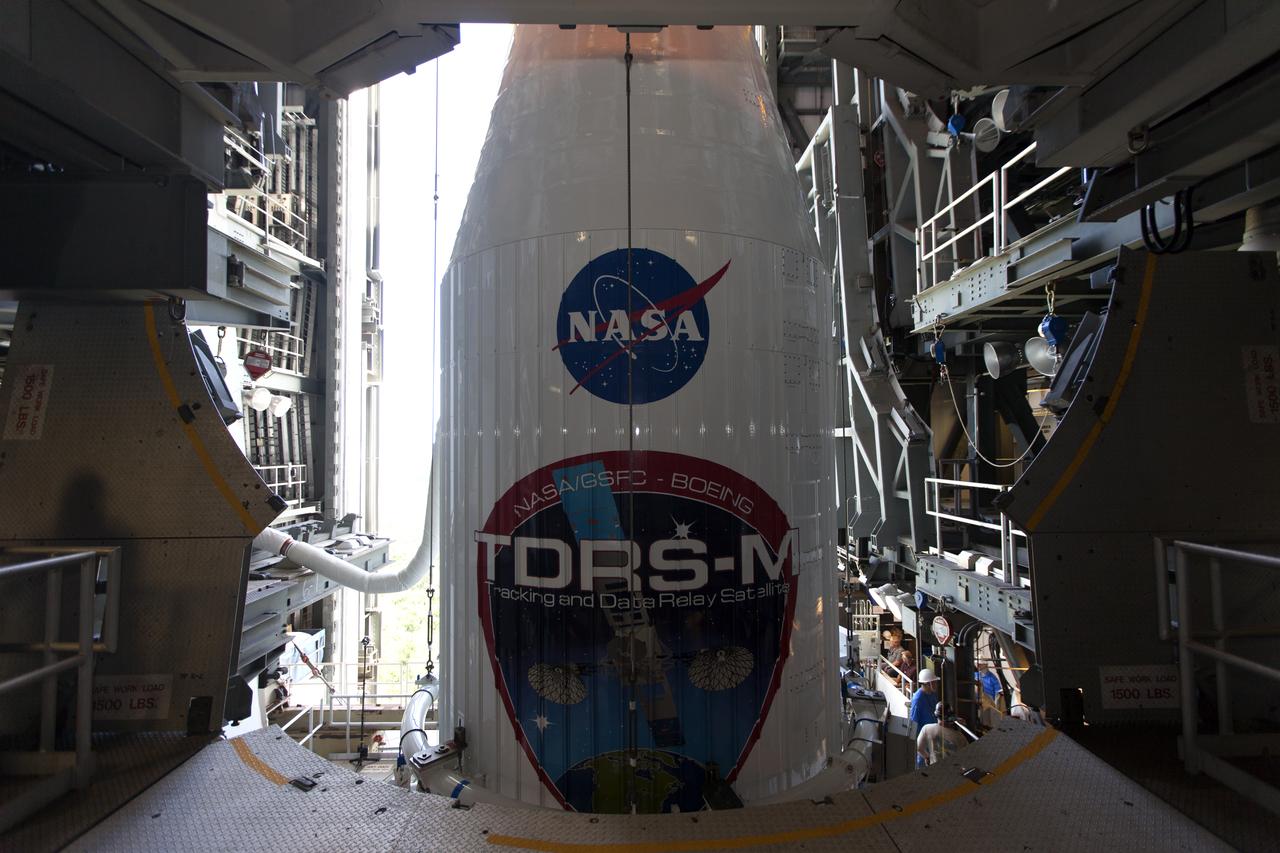
Encapsulated in its payload fairing, Tracking and Data Relay Satellite (TDRS-M) is mated to the United Launch Alliance Atlas V Centaur upper stage in the Vertical Integration Facility at Space Launch Complex 41 at Cape Canaveral Air Force Station in Florida. TDRS-M will be the latest spacecraft destined for the agency's constellation of communications satellites that allows nearly continuous contact with orbiting spacecraft ranging from the International Space Station and Hubble Space Telescope to the array of scientific observatories. Liftoff atop the ULA Atlas V rocket is scheduled for Aug. 18, 2017.
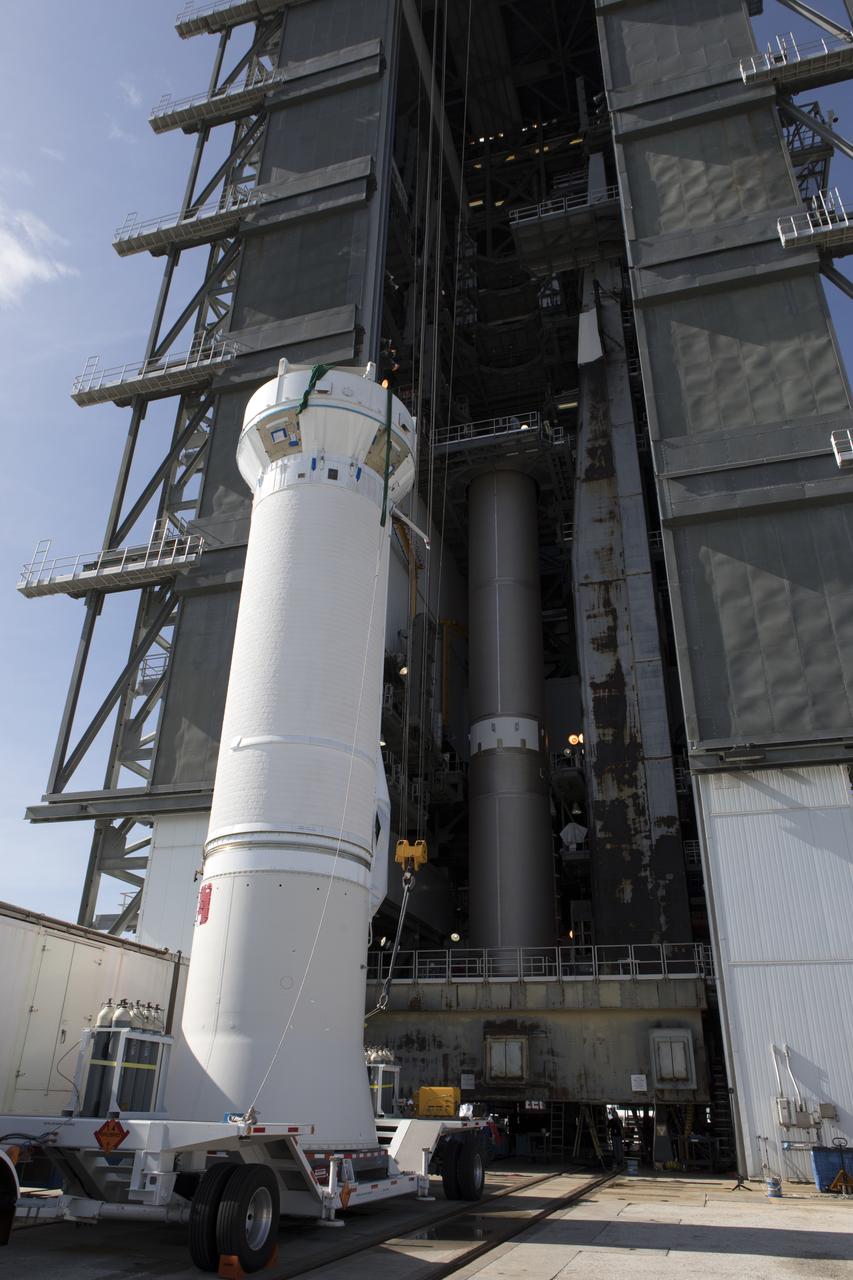
A United Launch Alliance Atlas V Centaur upper stage arrives at the Vertical Integration Facility at Space Launch Complex 41 at Cape Canaveral Air Force Station in Florida. The rocket is scheduled to help launch the Tracking and Data Relay Satellite, TDRS-M. It will be the latest spacecraft destined for the agency's constellation of communications satellites that allows nearly continuous contact with orbiting spacecraft ranging from the International Space Station and Hubble Space Telescope to the array of scientific observatories. Liftoff atop the ULA Atlas V rocket is scheduled to take place from Cape Canaveral's Space Launch Complex 41 in early August.
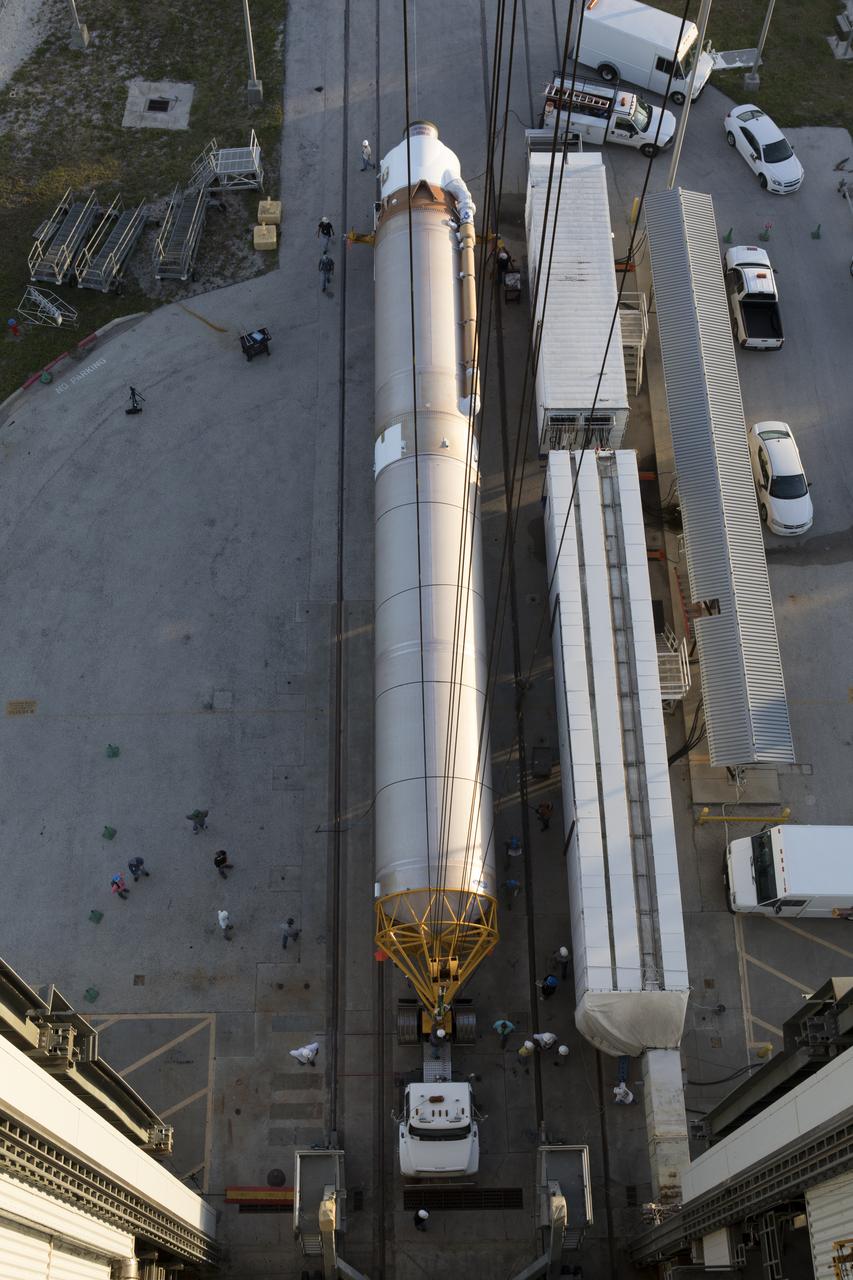
Viewed overhead from the Vertical Integration Facility at Space Launch Complex 41 at Cape Canaveral Air Force Station in Florida, a United Launch Alliance Atlas V first stage arrives for the Tracking and Data Relay Satellite, TDRS-M, mission. The rocket is scheduled to launch the latest TDRS satellite as part of the agency's constellation of communications satellites that allows nearly continuous contact with orbiting spacecraft ranging from the International Space Station and Hubble Space Telescope to the array of scientific observatories. Liftoff atop the ULA Atlas V rocket is scheduled to take place from Cape Canaveral's Space Launch Complex 41 on Aug. 3, 2017 at 9:02 a.m. EDT.
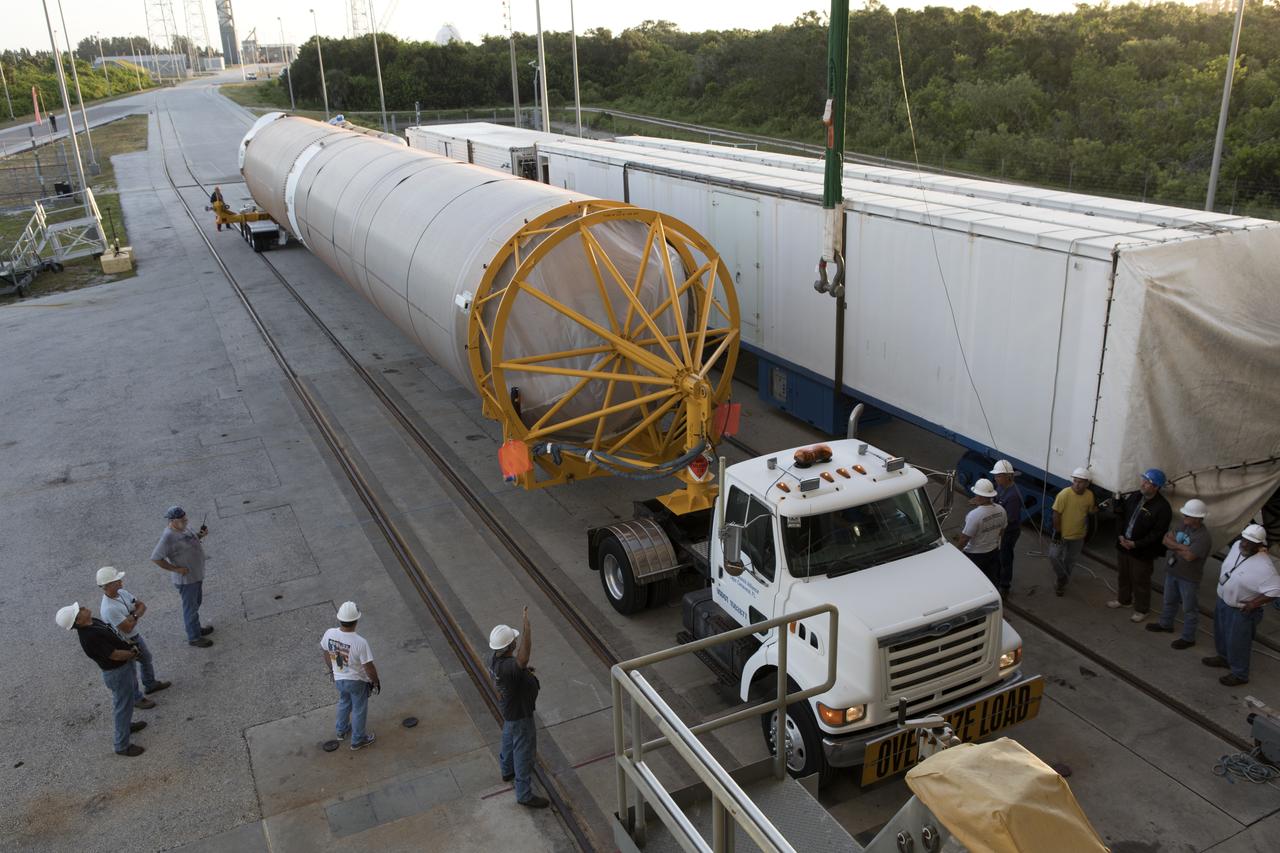
A United Launch Alliance Atlas V first stage arrives at the Vertical Integration Facility at Space Launch Complex 41 at Cape Canaveral Air Force Station in Florida. The rocket is scheduled to launch the Tracking and Data Relay Satellite, TDRS-M. It will be the latest spacecraft destined for the agency's constellation of communications satellites that allows nearly continuous contact with orbiting spacecraft ranging from the International Space Station and Hubble Space Telescope to the array of scientific observatories. Liftoff atop the ULA Atlas V rocket is scheduled to take place from Cape Canaveral's Space Launch Complex 41 on Aug. 3, 2017 at 9:02 a.m. EDT.
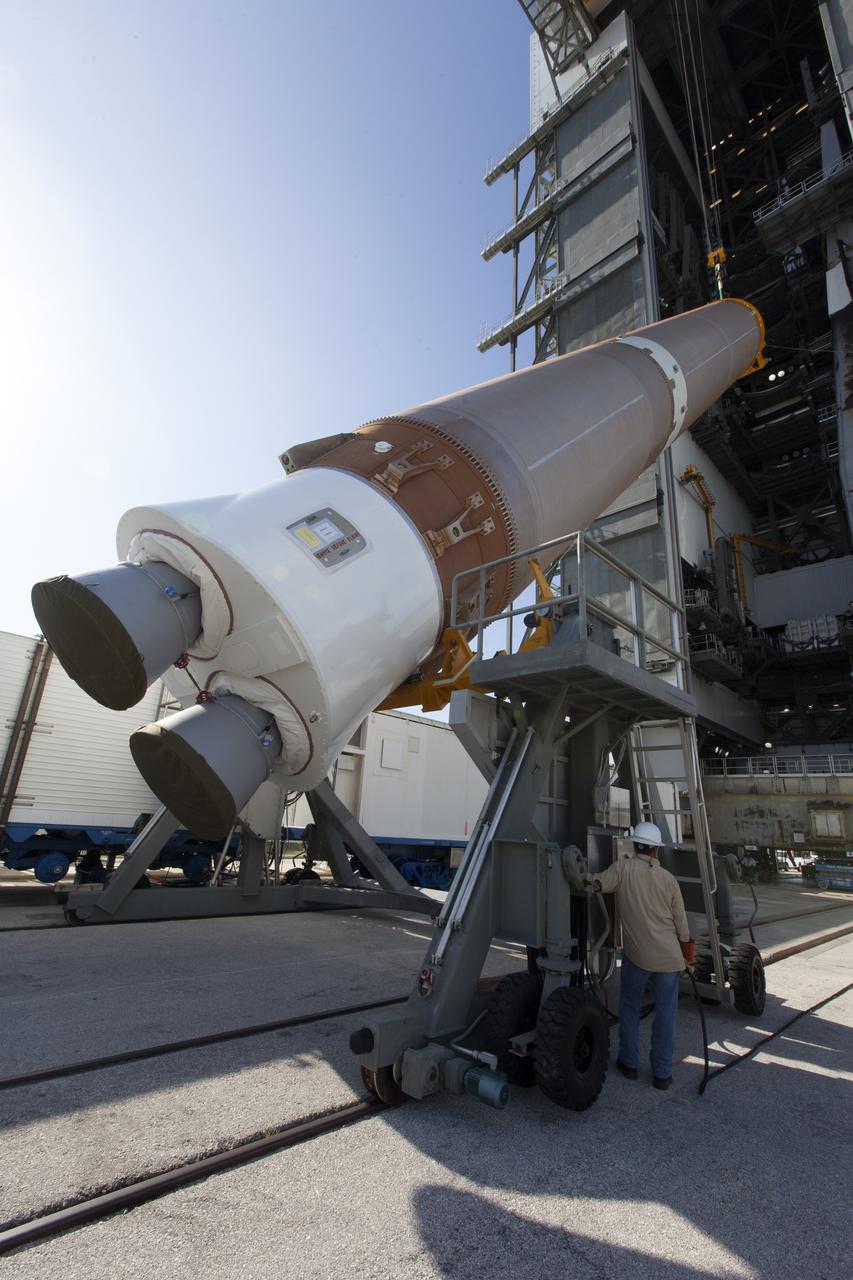
A United Launch Alliance Atlas V first stage is lifted at the Vertical Integration Facility at Space Launch Complex 41 at Cape Canaveral Air Force Station in Florida. The rocket is scheduled to launch the Tracking and Data Relay Satellite, TDRS-M. It will be the latest spacecraft destined for the agency's constellation of communications satellites that allows nearly continuous contact with orbiting spacecraft ranging from the International Space Station and Hubble Space Telescope to the array of scientific observatories. Liftoff atop the ULA Atlas V rocket is scheduled to take place from Cape Canaveral's Space Launch Complex 41 on Aug. 3, 2017 at 9:02 a.m. EDT.
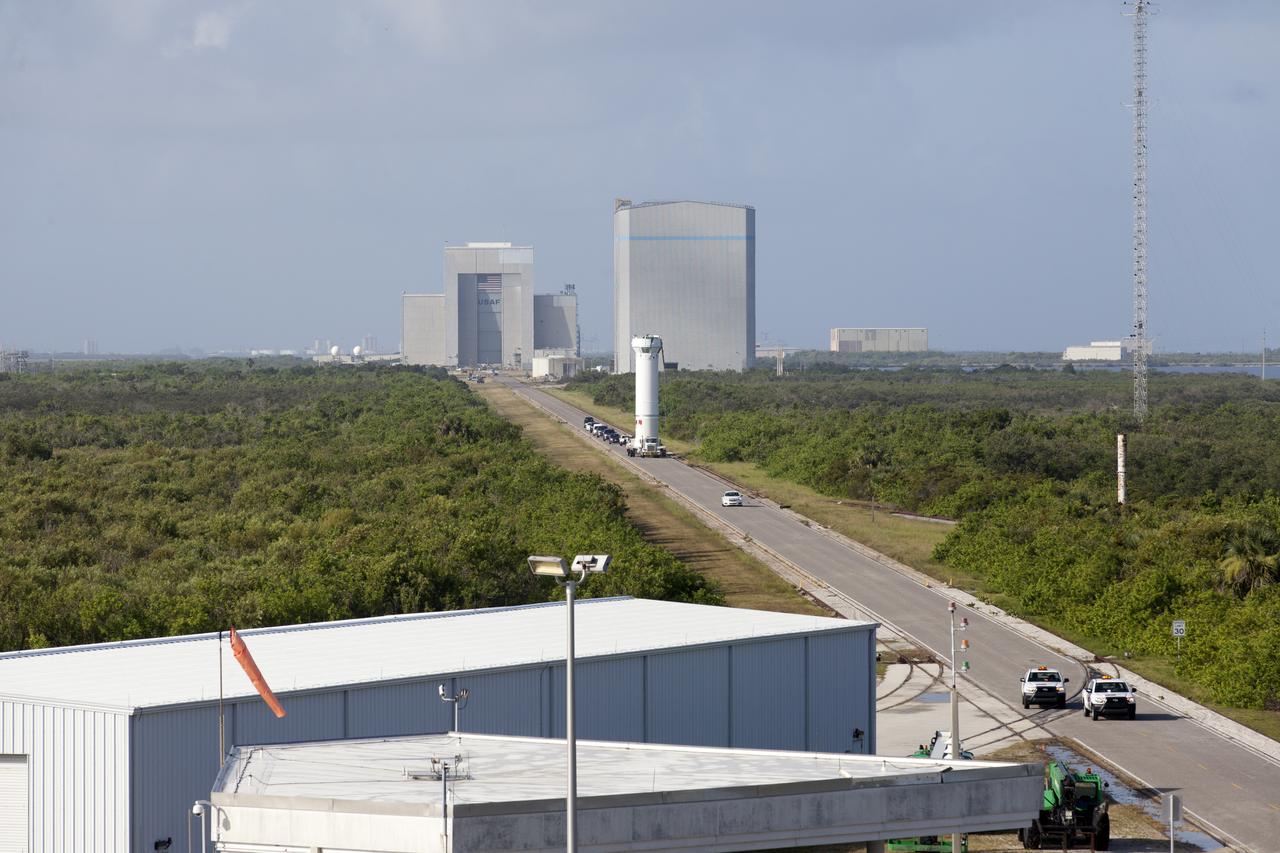
A United Launch Alliance Atlas V Centaur upper stage is on its wat to the Vertical Integration Facility at Space Launch Complex 41 at Cape Canaveral Air Force Station in Florida. The rocket is scheduled to help launch the Tracking and Data Relay Satellite, TDRS-M. It will be the latest spacecraft destined for the agency's constellation of communications satellites that allows nearly continuous contact with orbiting spacecraft ranging from the International Space Station and Hubble Space Telescope to the array of scientific observatories. Liftoff atop the ULA Atlas V rocket is scheduled to take place from Cape Canaveral's Space Launch Complex 41 in early August.
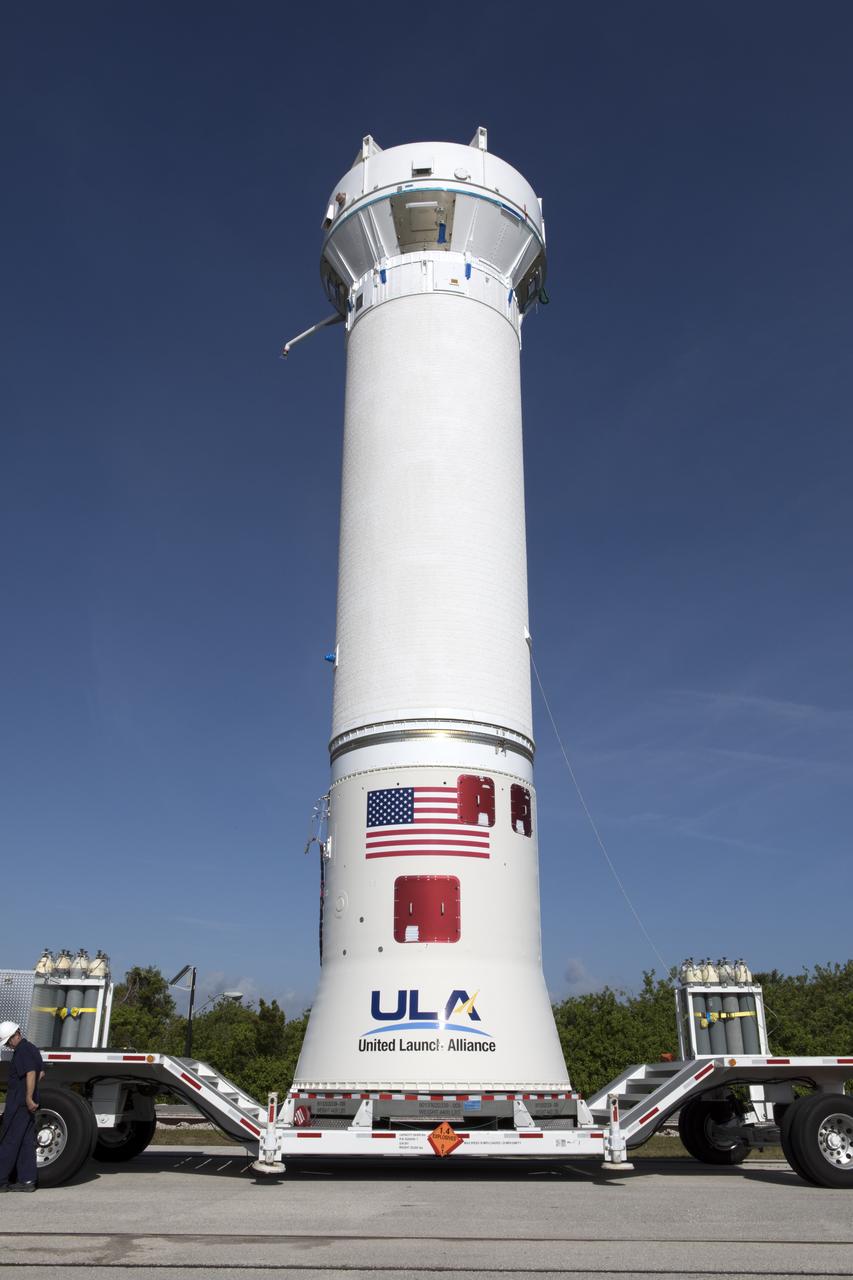
A United Launch Alliance Atlas V Centaur upper stage is on its wat to the Vertical Integration Facility at Space Launch Complex 41 at Cape Canaveral Air Force Station in Florida. The rocket is scheduled to help launch the Tracking and Data Relay Satellite, TDRS-M. It will be the latest spacecraft destined for the agency's constellation of communications satellites that allows nearly continuous contact with orbiting spacecraft ranging from the International Space Station and Hubble Space Telescope to the array of scientific observatories. Liftoff atop the ULA Atlas V rocket is scheduled to take place from Cape Canaveral's Space Launch Complex 41 in early August.
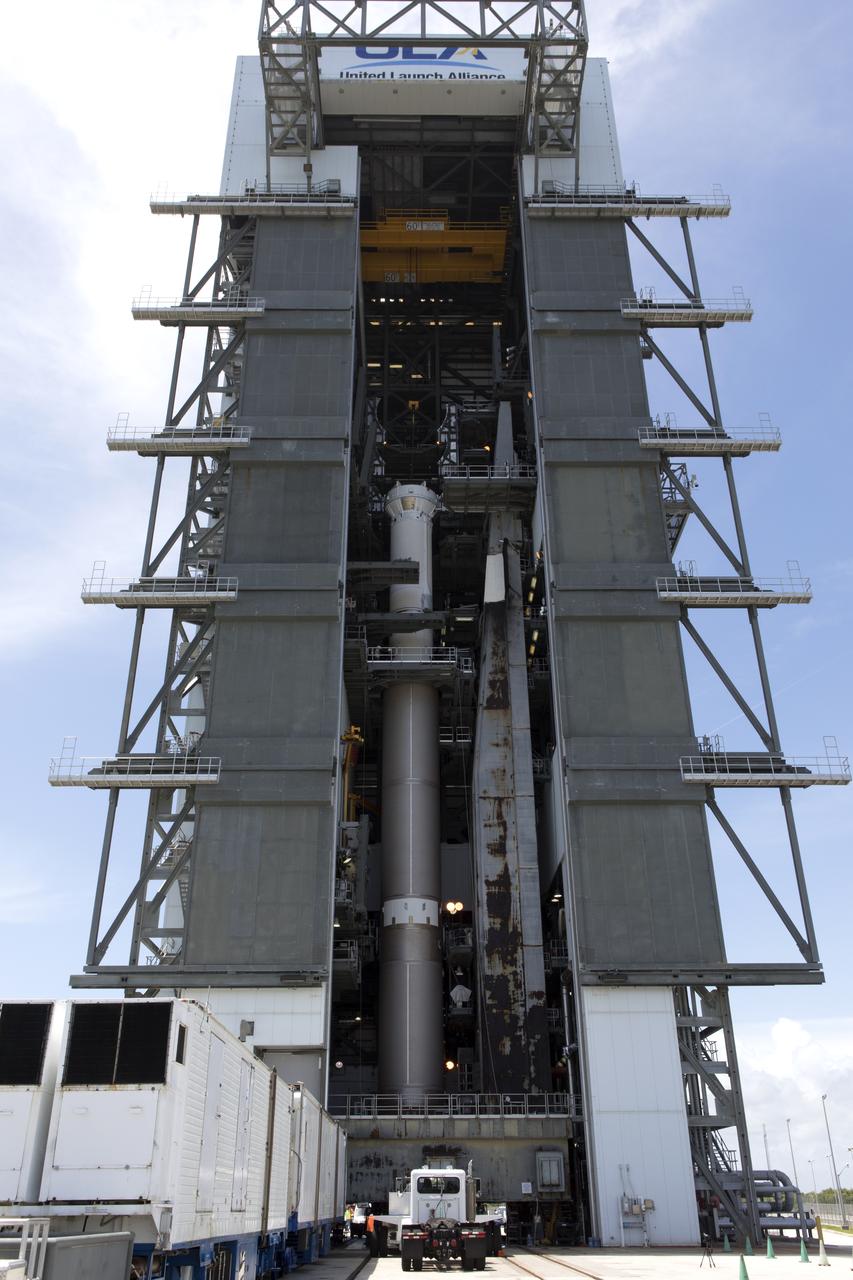
At the Vertical Integration Facility at Space Launch Complex 41 at Cape Canaveral Air Force Station in Florida, a United Launch Alliance Centaur upper stage has been mated to an Atlas V booster. The rocket is scheduled to launch the Tracking and Data Relay Satellite, TDRS-M. It will be the latest spacecraft destined for the agency's constellation of communications satellites that allows nearly continuous contact with orbiting spacecraft ranging from the International Space Station and Hubble Space Telescope to the array of scientific observatories. Liftoff atop the ULA Atlas V rocket is scheduled to take place from Cape Canaveral's Space Launch Complex 41 in early August.
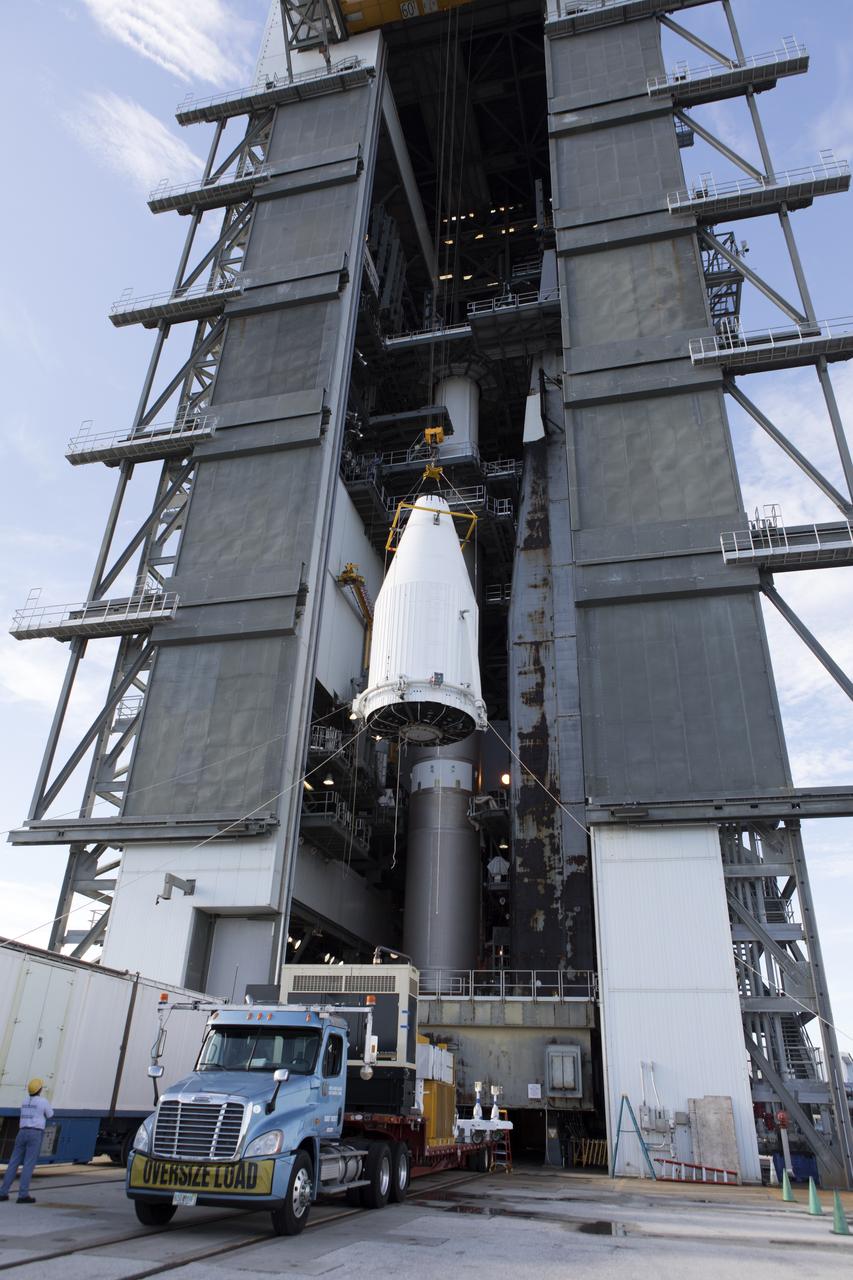
A crane is used to lift the payload fairing containing NASA's Tracking and Data Relay Satellite (TDRS-M) at the Vertical Integration Facility at Space Launch Complex 41 at Cape Canaveral Air Force Station in Florida. TDRS-M will be stacked atop the United Launch Alliance Atlas V Centaur upper stage. TDRS-M will be the latest spacecraft destined for the agency's constellation of communications satellites that allows nearly continuous contact with orbiting spacecraft ranging from the International Space Station and Hubble Space Telescope to the array of scientific observatories. Liftoff atop the ULA Atlas V rocket is scheduled for Aug. 18, 2017.
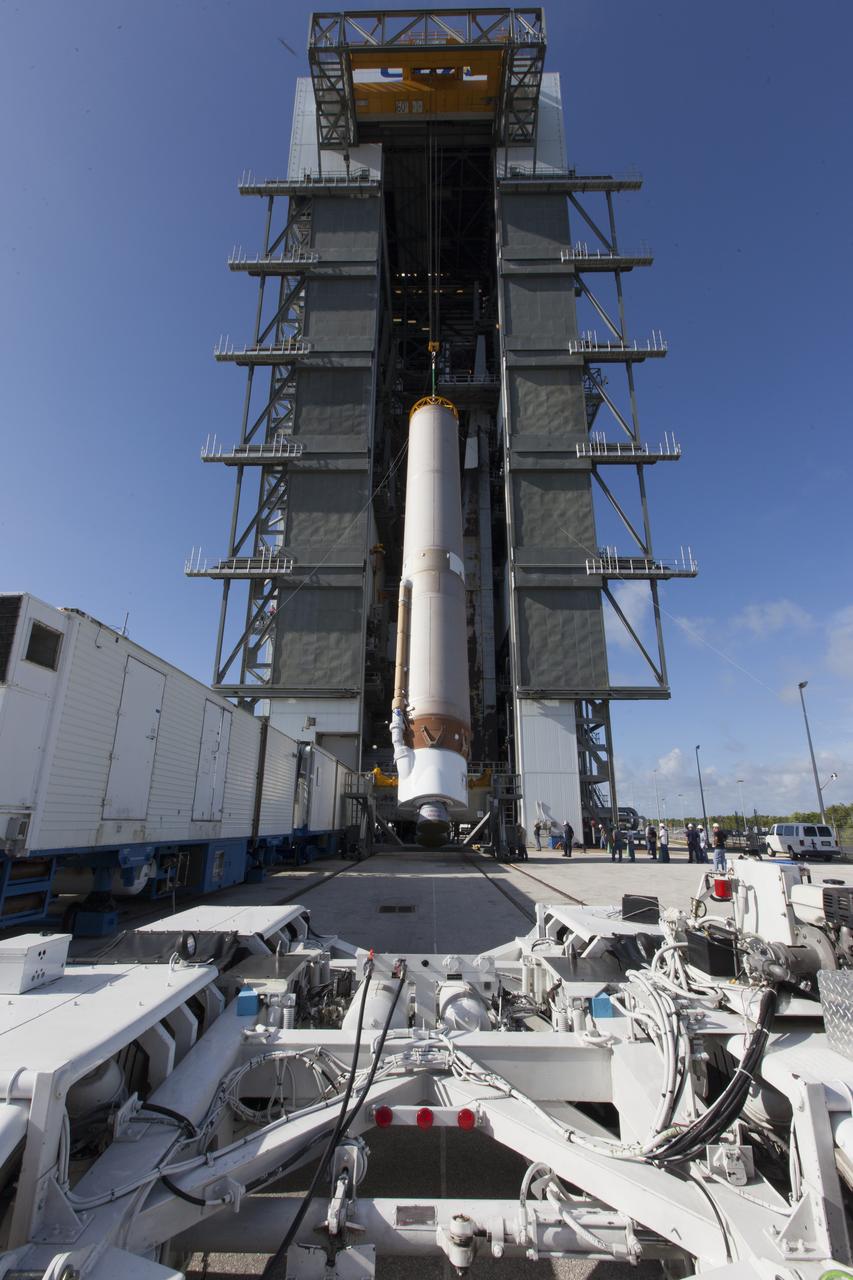
A United Launch Alliance Atlas V first stage is lifted at the Vertical Integration Facility at Space Launch Complex 41 at Cape Canaveral Air Force Station in Florida. The rocket is scheduled to launch the Tracking and Data Relay Satellite, TDRS-M. It will be the latest spacecraft destined for the agency's constellation of communications satellites that allows nearly continuous contact with orbiting spacecraft ranging from the International Space Station and Hubble Space Telescope to the array of scientific observatories. Liftoff atop the ULA Atlas V rocket is scheduled to take place from Cape Canaveral's Space Launch Complex 41 on Aug. 3, 2017 at 9:02 a.m. EDT.
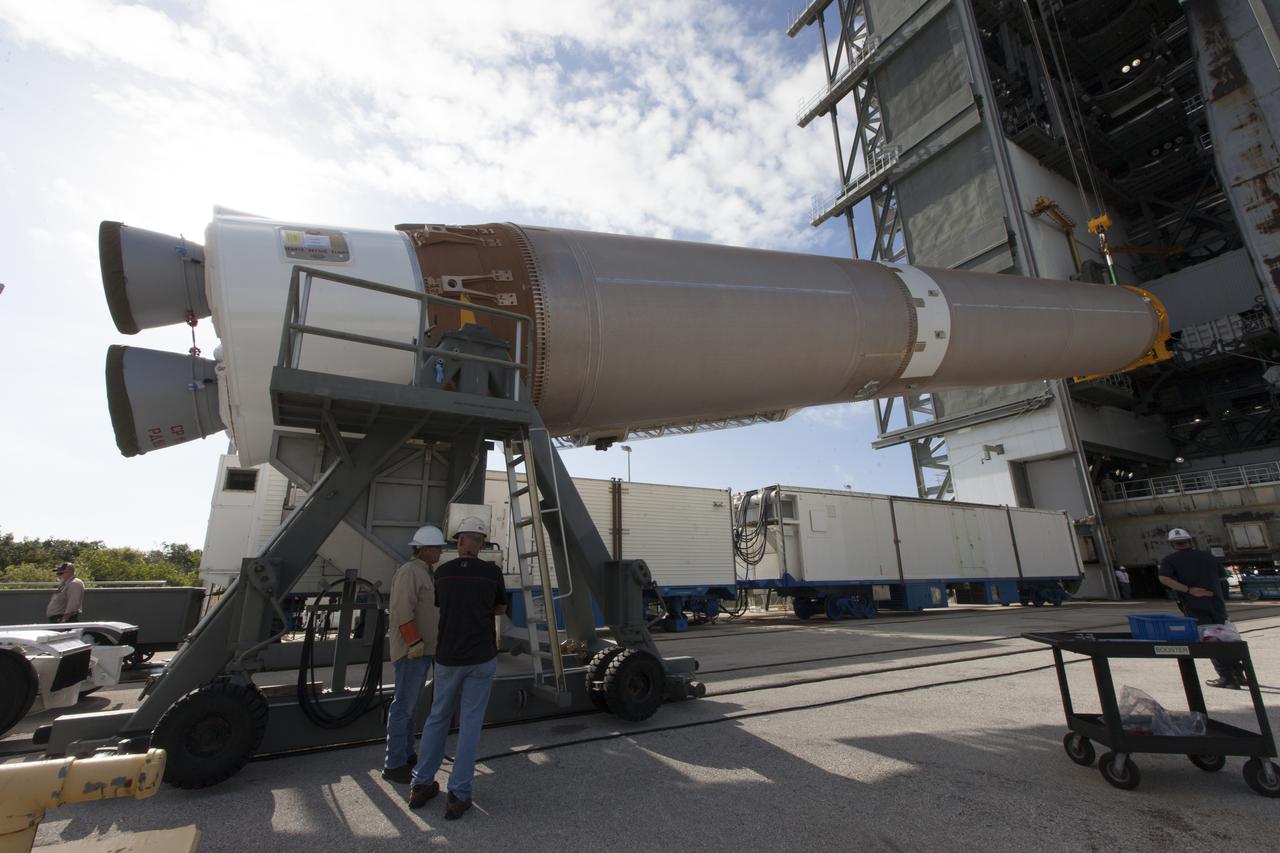
A United Launch Alliance Atlas V first stage is lifted at the Vertical Integration Facility at Space Launch Complex 41 at Cape Canaveral Air Force Station in Florida. The rocket is scheduled to launch the Tracking and Data Relay Satellite, TDRS-M. It will be the latest spacecraft destined for the agency's constellation of communications satellites that allows nearly continuous contact with orbiting spacecraft ranging from the International Space Station and Hubble Space Telescope to the array of scientific observatories. Liftoff atop the ULA Atlas V rocket is scheduled to take place from Cape Canaveral's Space Launch Complex 41 on Aug. 3, 2017 at 9:02 a.m. EDT.
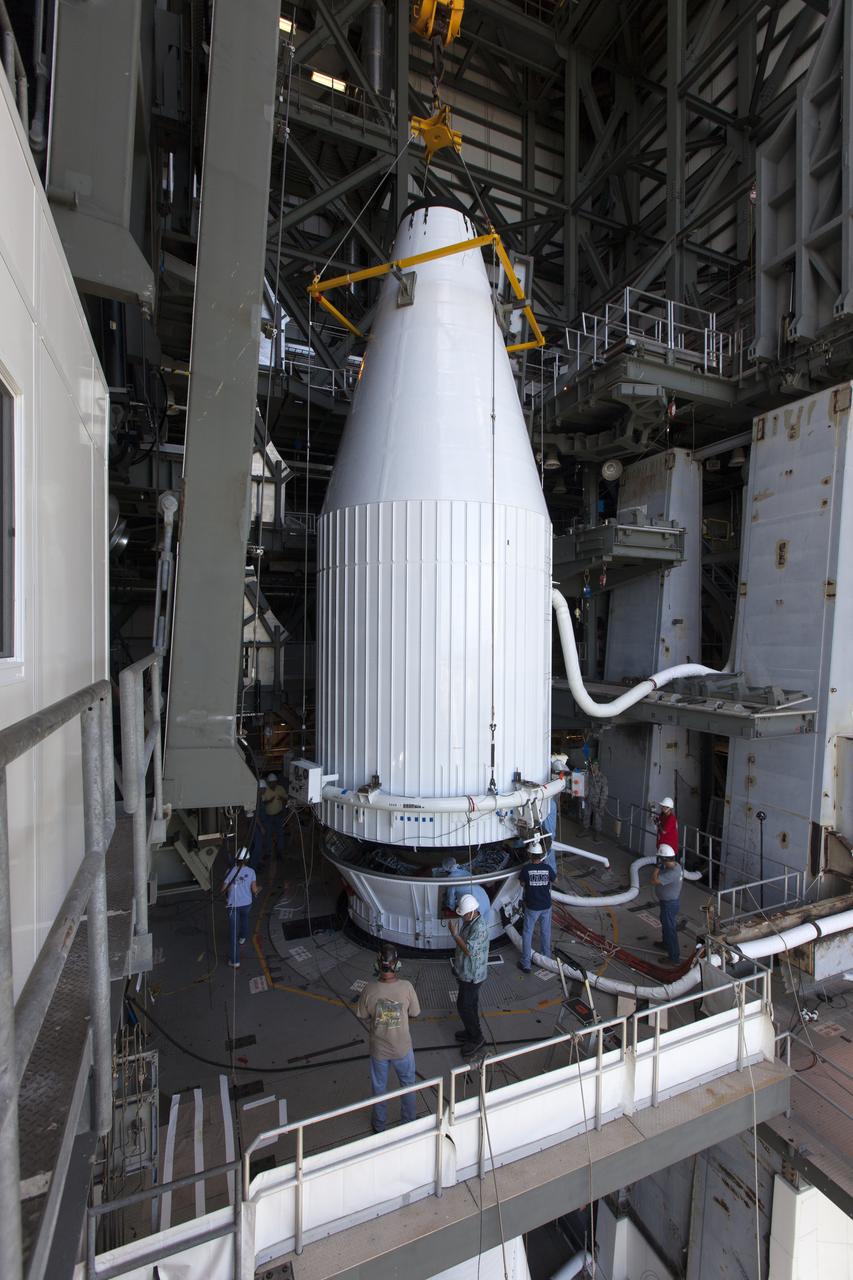
Encapsulated in its payload fairing, Tracking and Data Relay Satellite (TDRS-M) is mated to the United Launch Alliance Atlas V Centaur upper stage in the Vertical Integration Facility at Space Launch Complex 41 at Cape Canaveral Air Force Station in Florida. TDRS-M will be the latest spacecraft destined for the agency's constellation of communications satellites that allows nearly continuous contact with orbiting spacecraft ranging from the International Space Station and Hubble Space Telescope to the array of scientific observatories. Liftoff atop the ULA Atlas V rocket is scheduled for Aug. 18, 2017.
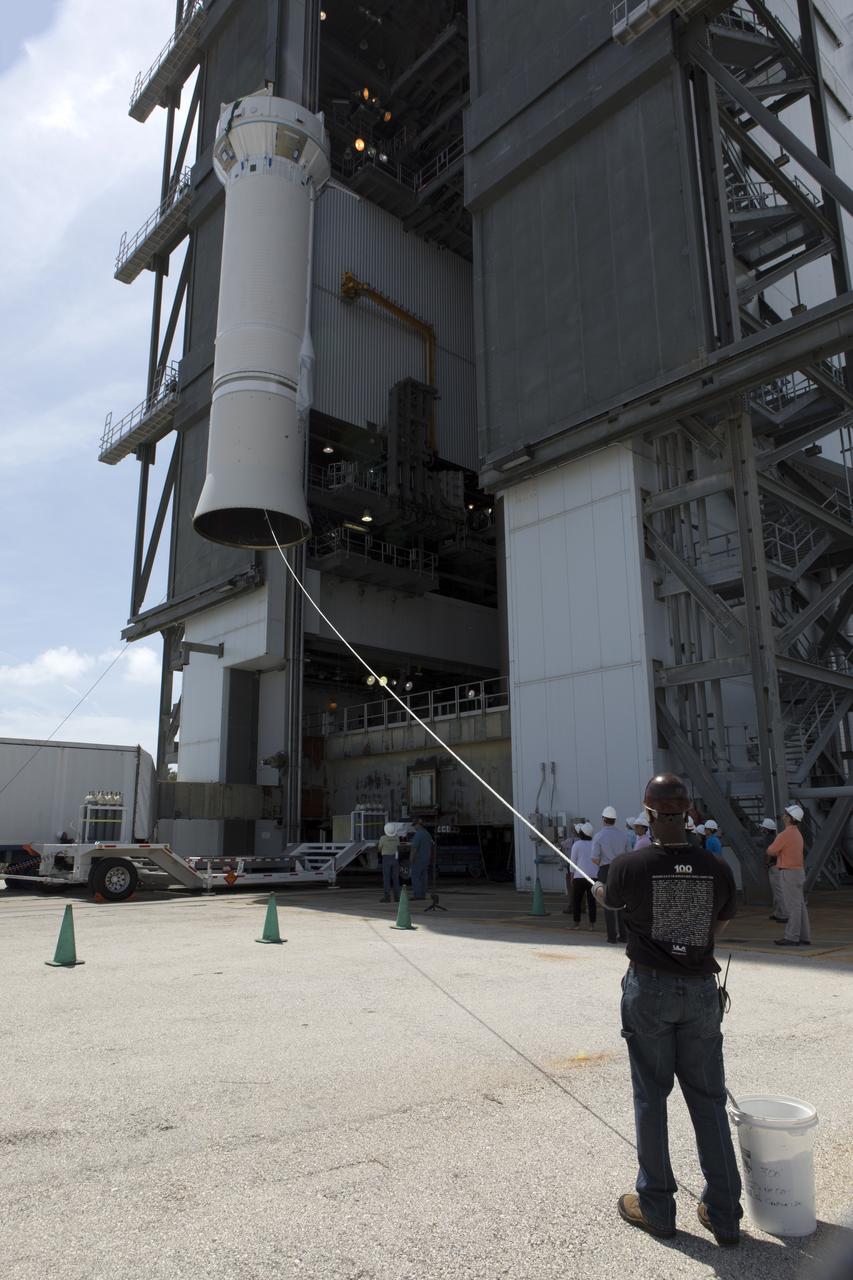
United Launch Alliance team members assist as the operation begins to lift the Centaur upper stage for mating to the Atlas V booster at the Vertical Integration Facility at Space Launch Complex 41 at Cape Canaveral Air Force Station in Florida. The rocket is scheduled to launch the Tracking and Data Relay Satellite, TDRS-M. It will be the latest spacecraft destined for the agency's constellation of communications satellites that allows nearly continuous contact with orbiting spacecraft ranging from the International Space Station and Hubble Space Telescope to the array of scientific observatories. Liftoff atop the ULA Atlas V rocket is scheduled to take place from Cape Canaveral's Space Launch Complex 41 in early August.
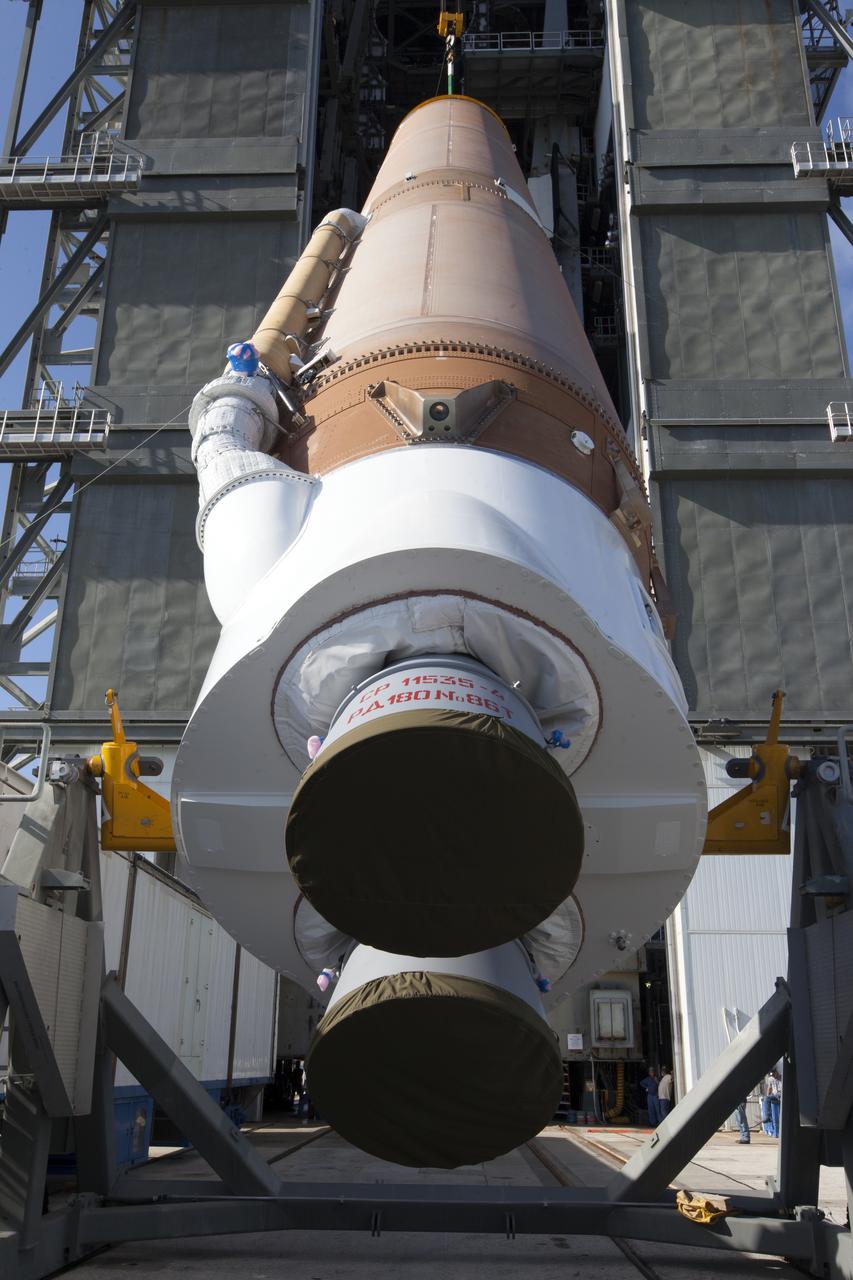
A United Launch Alliance Atlas V first stage is lifted at the Vertical Integration Facility at Space Launch Complex 41 at Cape Canaveral Air Force Station in Florida. The rocket is scheduled to launch the Tracking and Data Relay Satellite, TDRS-M. It will be the latest spacecraft destined for the agency's constellation of communications satellites that allows nearly continuous contact with orbiting spacecraft ranging from the International Space Station and Hubble Space Telescope to the array of scientific observatories. Liftoff atop the ULA Atlas V rocket is scheduled to take place from Cape Canaveral's Space Launch Complex 41 on Aug. 3, 2017 at 9:02 a.m. EDT.
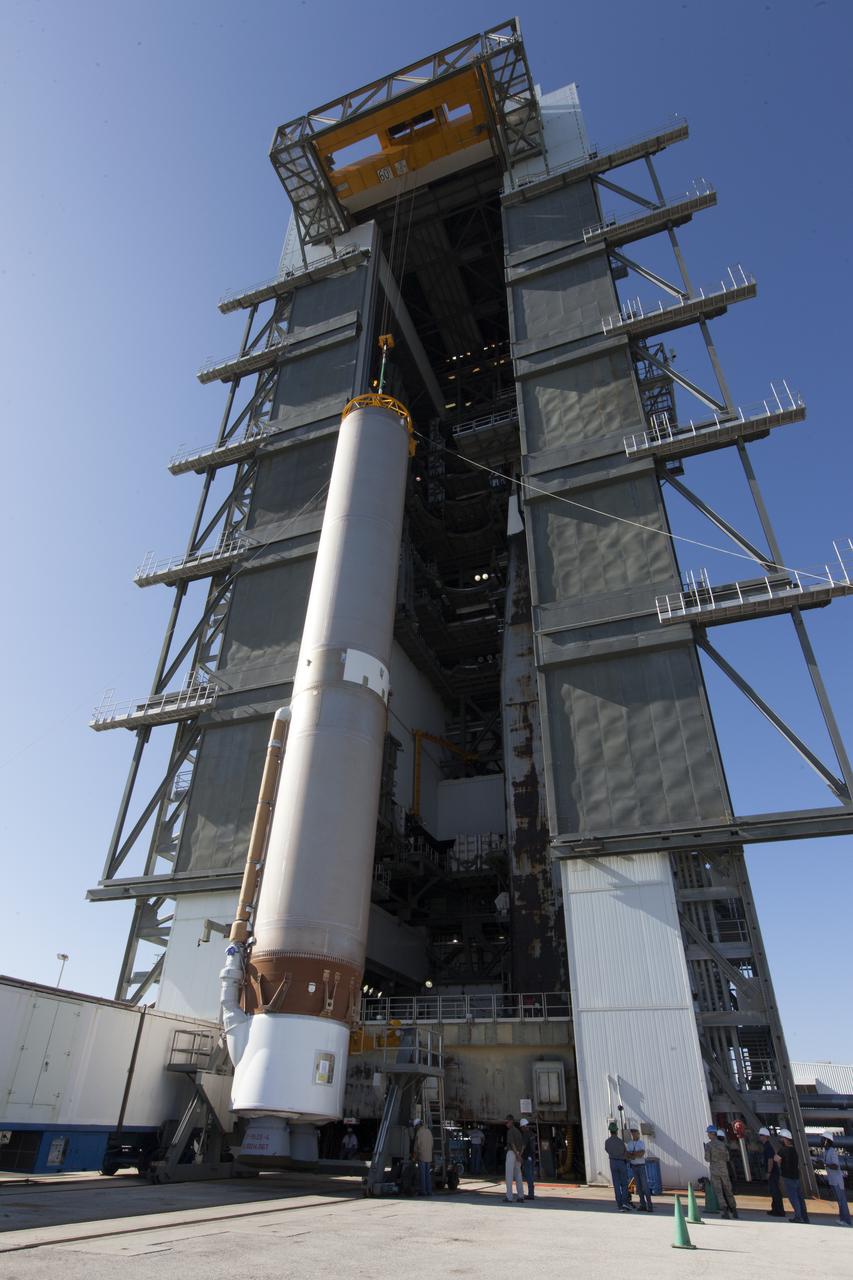
A United Launch Alliance Atlas V first stage is lifted at the Vertical Integration Facility at Space Launch Complex 41 at Cape Canaveral Air Force Station in Florida. The rocket is scheduled to launch the Tracking and Data Relay Satellite, TDRS-M. It will be the latest spacecraft destined for the agency's constellation of communications satellites that allows nearly continuous contact with orbiting spacecraft ranging from the International Space Station and Hubble Space Telescope to the array of scientific observatories. Liftoff atop the ULA Atlas V rocket is scheduled to take place from Cape Canaveral's Space Launch Complex 41 on Aug. 3, 2017 at 9:02 a.m. EDT.
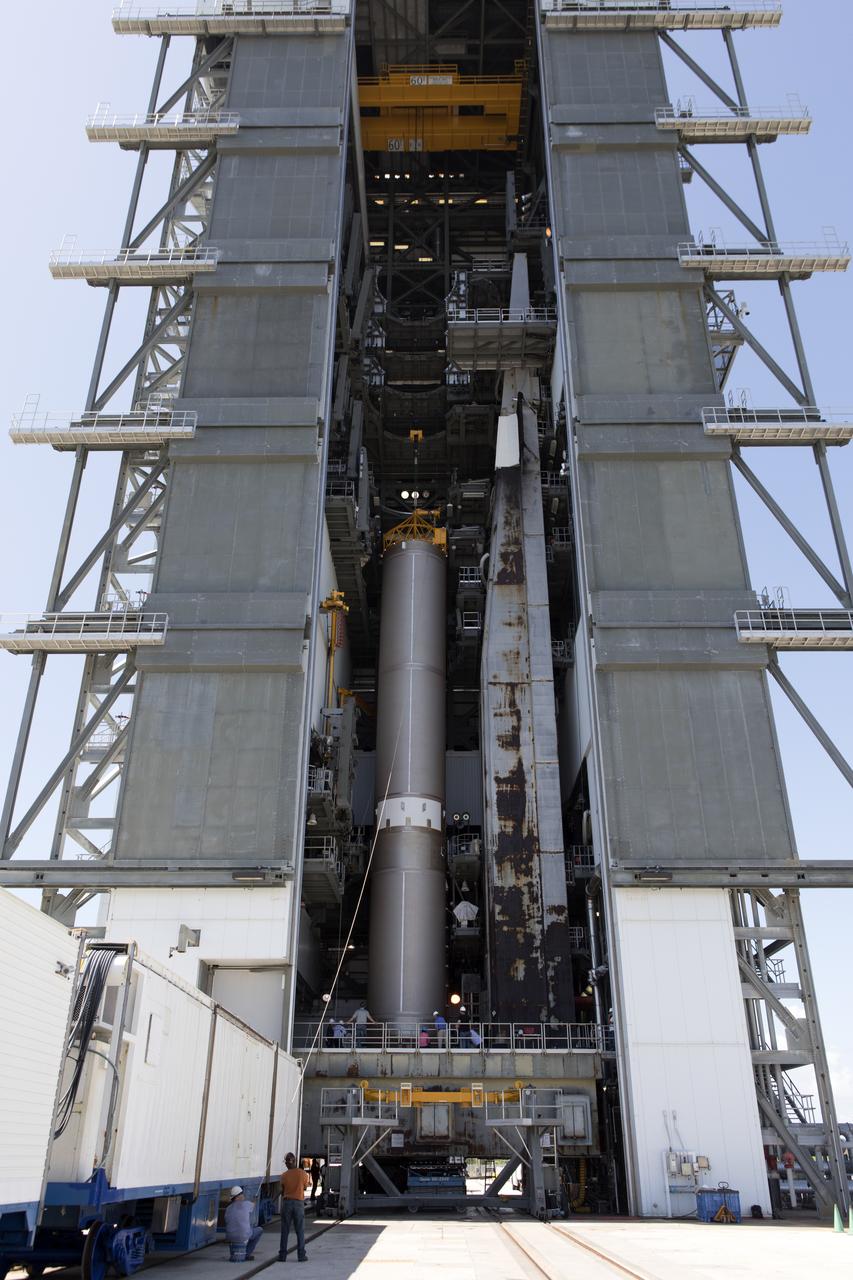
The United Launch Alliance Atlas V first stage has been positioned inside the Vertical Integration Facility at Space Launch Complex 41 at Cape Canaveral Air Force Station in Florida. The rocket is scheduled to launch the Tracking and Data Relay Satellite, TDRS-M. It will be the latest spacecraft destined for the agency's constellation of communications satellites that allows nearly continuous contact with orbiting spacecraft ranging from the International Space Station and Hubble Space Telescope to the array of scientific observatories. Liftoff atop the ULA Atlas V rocket is scheduled to take place from Cape Canaveral's Space Launch Complex 41 on Aug. 3, 2017 at 9:02 a.m. EDT.
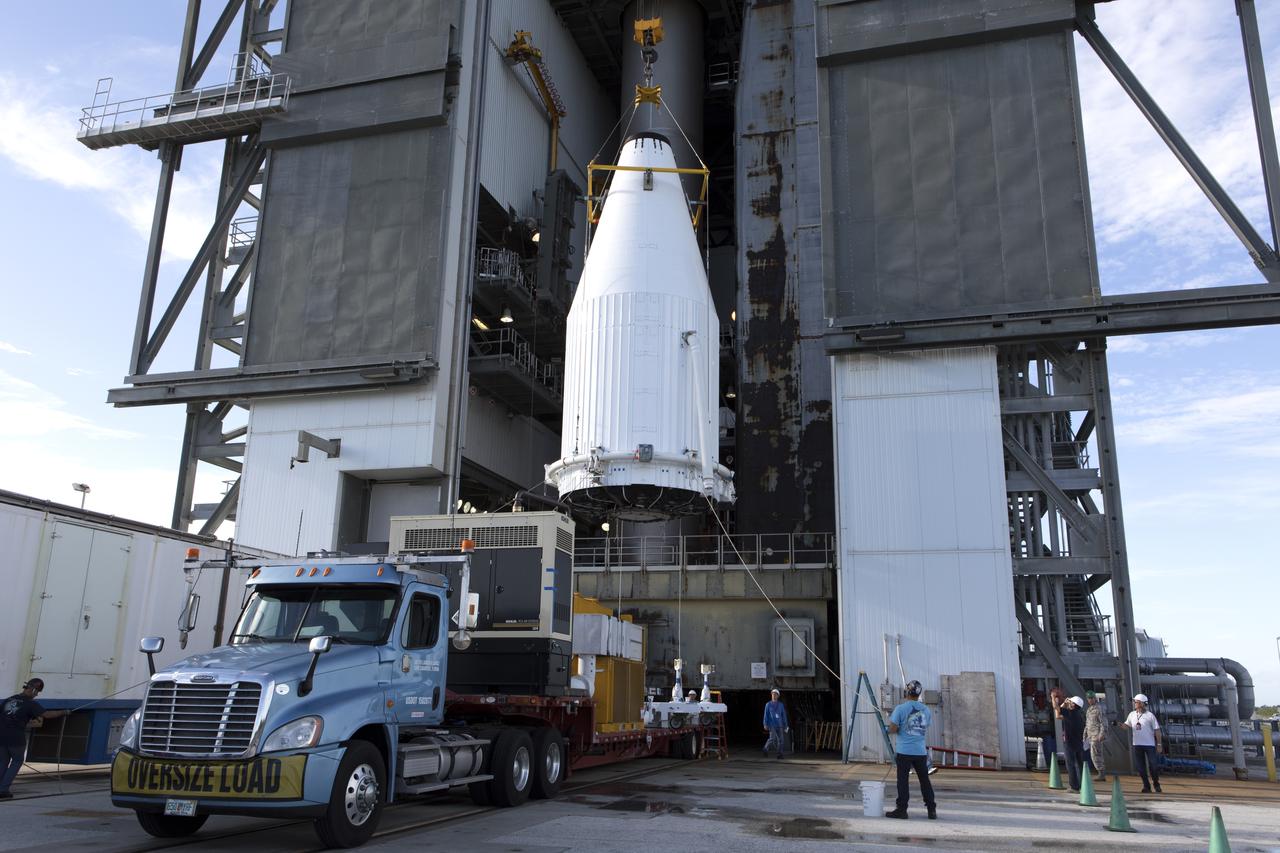
A crane is used to lift the payload fairing containing NASA's Tracking and Data Relay Satellite (TDRS-M) at the Vertical Integration Facility at Space Launch Complex 41 at Cape Canaveral Air Force Station in Florida. TDRS-M will be stacked atop the United Launch Alliance Atlas V Centaur upper stage. TDRS-M will be the latest spacecraft destined for the agency's constellation of communications satellites that allows nearly continuous contact with orbiting spacecraft ranging from the International Space Station and Hubble Space Telescope to the array of scientific observatories. Liftoff atop the ULA Atlas V rocket is scheduled for Aug. 18, 2017.
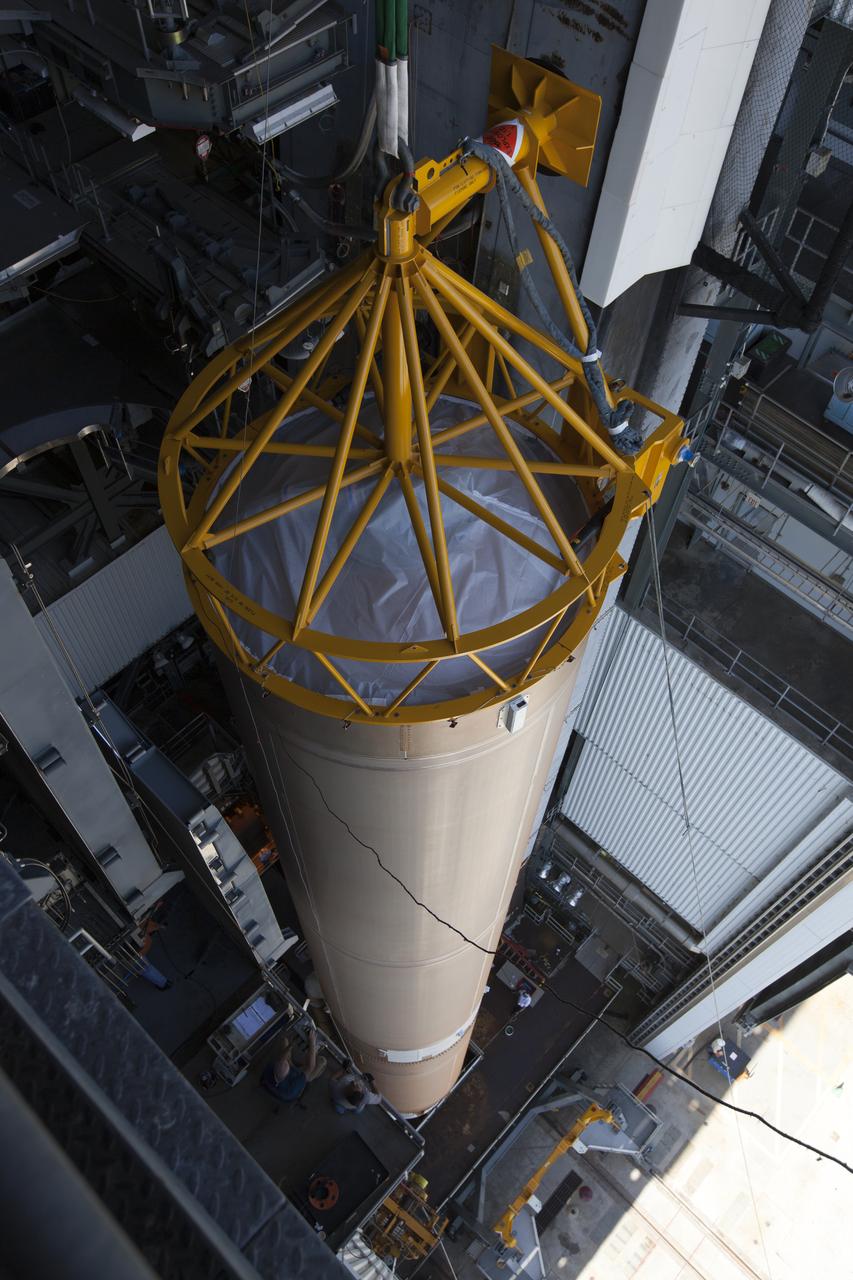
The United Launch Alliance Atlas V first stage has been positioned inside the Vertical Integration Facility at Space Launch Complex 41 at Cape Canaveral Air Force Station in Florida. The rocket is scheduled to launch the Tracking and Data Relay Satellite, TDRS-M. It will be the latest spacecraft destined for the agency's constellation of communications satellites that allows nearly continuous contact with orbiting spacecraft ranging from the International Space Station and Hubble Space Telescope to the array of scientific observatories. Liftoff atop the ULA Atlas V rocket is scheduled to take place from Cape Canaveral's Space Launch Complex 41 on Aug. 3, 2017 at 9:02 a.m. EDT.
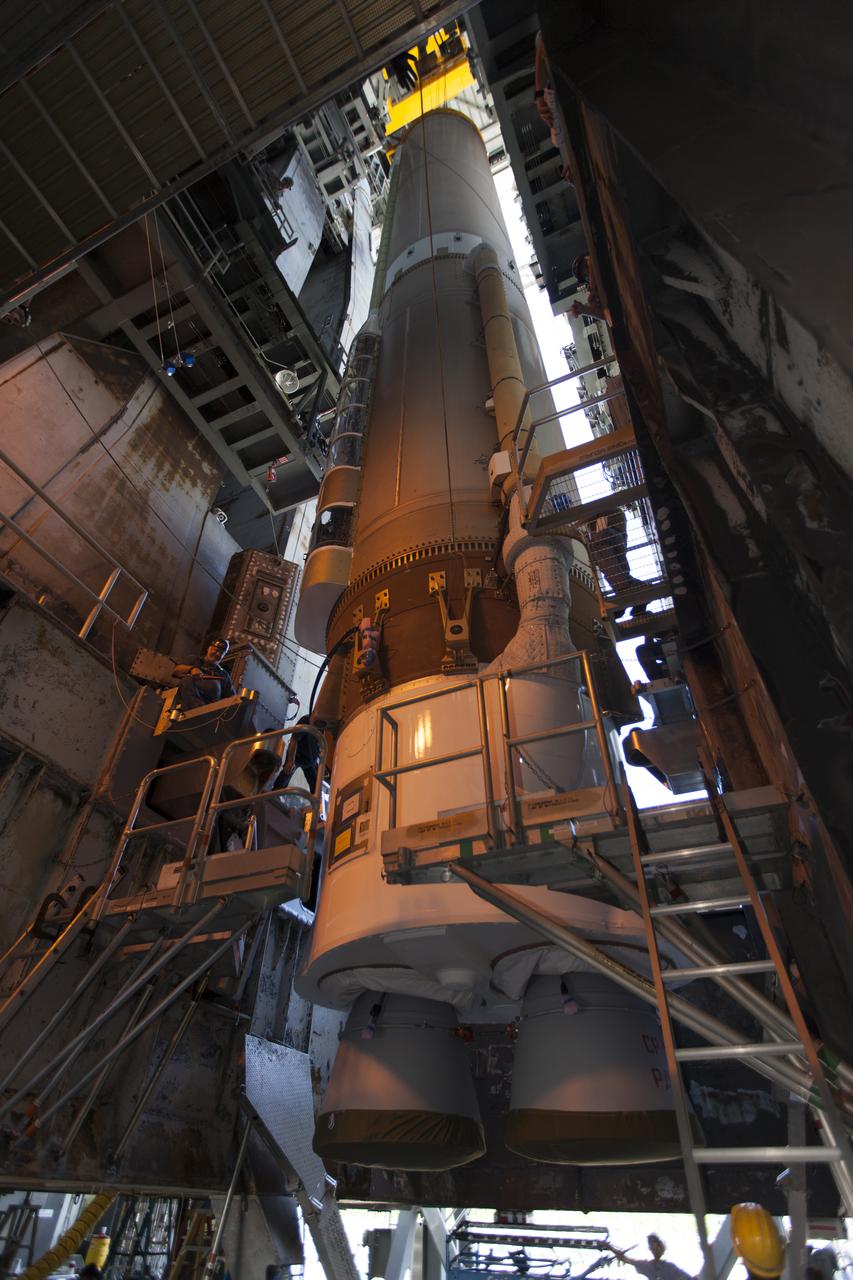
The United Launch Alliance Atlas V first stage has been positioned inside the Vertical Integration Facility at Space Launch Complex 41 at Cape Canaveral Air Force Station in Florida. The rocket is scheduled to launch the Tracking and Data Relay Satellite, TDRS-M. It will be the latest spacecraft destined for the agency's constellation of communications satellites that allows nearly continuous contact with orbiting spacecraft ranging from the International Space Station and Hubble Space Telescope to the array of scientific observatories. Liftoff atop the ULA Atlas V rocket is scheduled to take place from Cape Canaveral's Space Launch Complex 41 on Aug. 3, 2017 at 9:02 a.m. EDT.
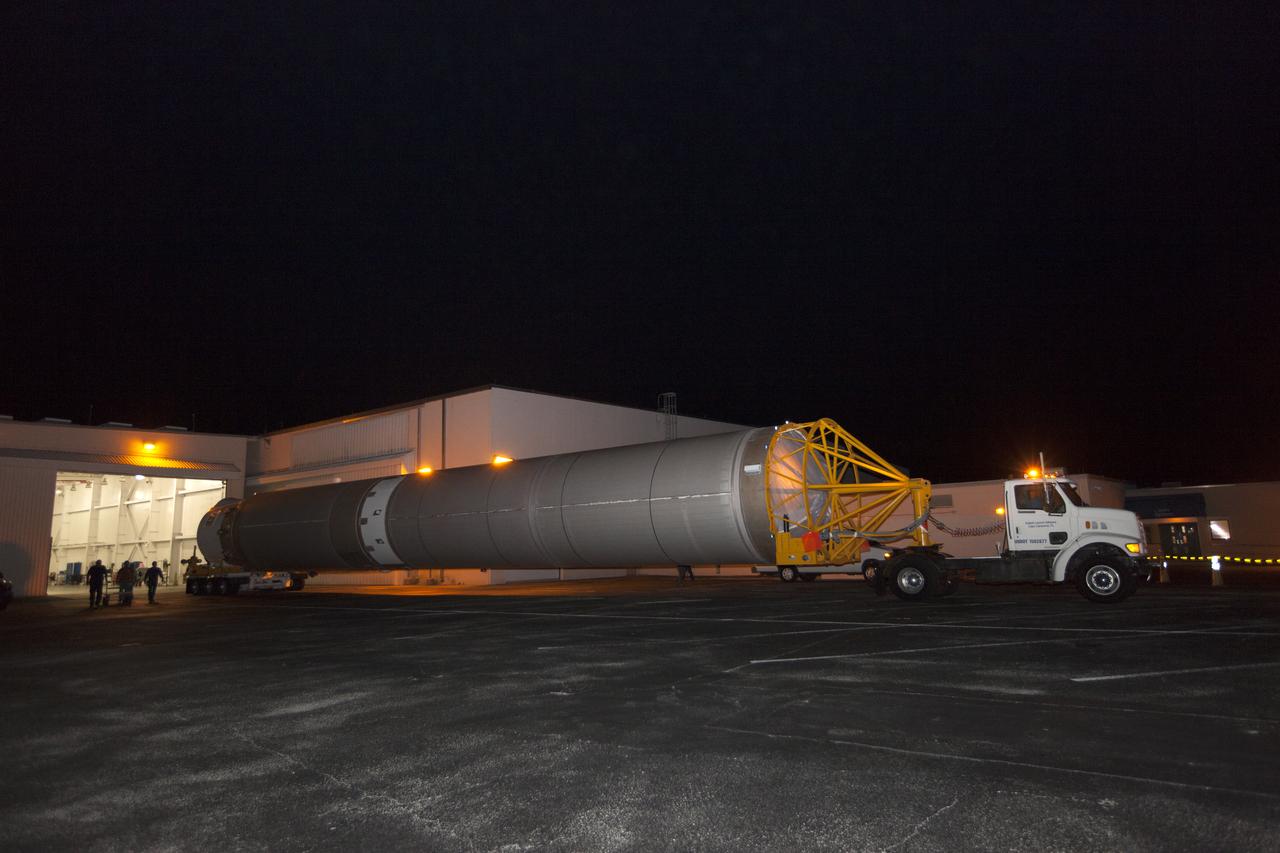
A United Launch Alliance Atlas V first stage leaves the Atlas Space Operations Center aboard a transport trailer for delivery to the Vertical Integration Facility at Space Launch Complex 41 at Cape Canaveral Air Force Station in Florida. The rocket is scheduled to launch the Tracking and Data Relay Satellite, TDRS-M. It will be the latest spacecraft destined for the agency's constellation of communications satellites that allows nearly continuous contact with orbiting spacecraft ranging from the International Space Station and Hubble Space Telescope to the array of scientific observatories. Liftoff atop the ULA Atlas V rocket is scheduled to take place from Cape Canaveral's Space Launch Complex 41 on Aug. 3, 2017 at 9:02 a.m. EDT.
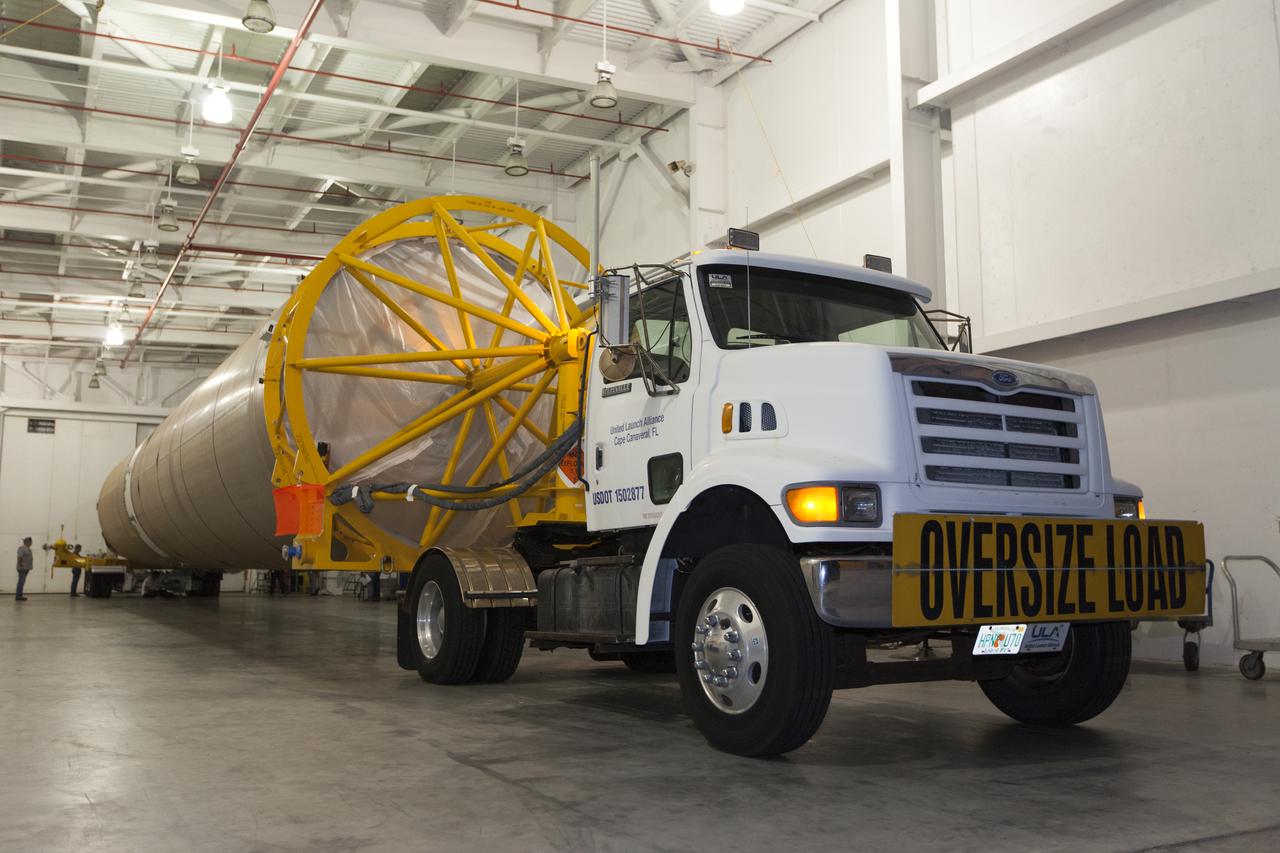
A United Launch Alliance Atlas V first stage is prepared to leave the Atlas Space Operations Center aboard a transport trailer for delivery to the Vertical Integration Facility at Space Launch Complex 41 at Cape Canaveral Air Force Station in Florida. The rocket is scheduled to launch the Tracking and Data Relay Satellite, TDRS-M. It will be the latest spacecraft destined for the agency's constellation of communications satellites that allows nearly continuous contact with orbiting spacecraft ranging from the International Space Station and Hubble Space Telescope to the array of scientific observatories. Liftoff atop the ULA Atlas V rocket is scheduled to take place from Cape Canaveral's Space Launch Complex 41 on Aug. 3, 2017 at 9:02 a.m. EDT.
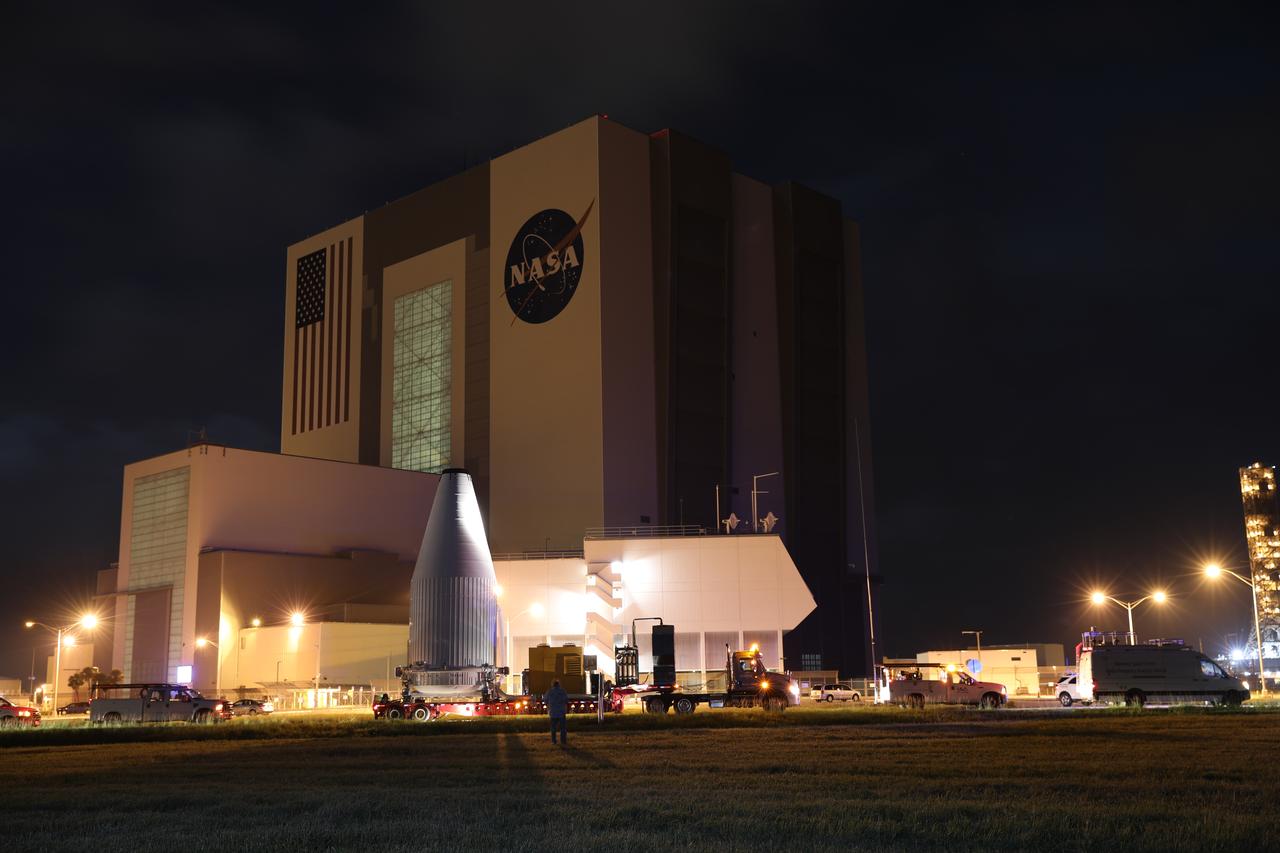
Enclosed in its payload fairing, NASA's Tracking and Data Relay Satellite (TDRS-M) passes the Vehicle assembly Building at the agency's Kennedy Space Center in Florida on its way to the Vertical Integration Facility at Space Launch Complex 41 at Cape Canaveral Air Force Station. TDRS-M will be stacked atop the United Launch Alliance Atlas V Centaur upper stage. It will be the latest spacecraft destined for the agency's constellation of communications satellites that allows nearly continuous contact with orbiting spacecraft ranging from the International Space Station and Hubble Space Telescope to the array of scientific observatories. Liftoff atop the ULA Atlas V rocket is scheduled to take place from Cape Canaveral's Space Launch Complex 41 on Aug. 18, 2017.
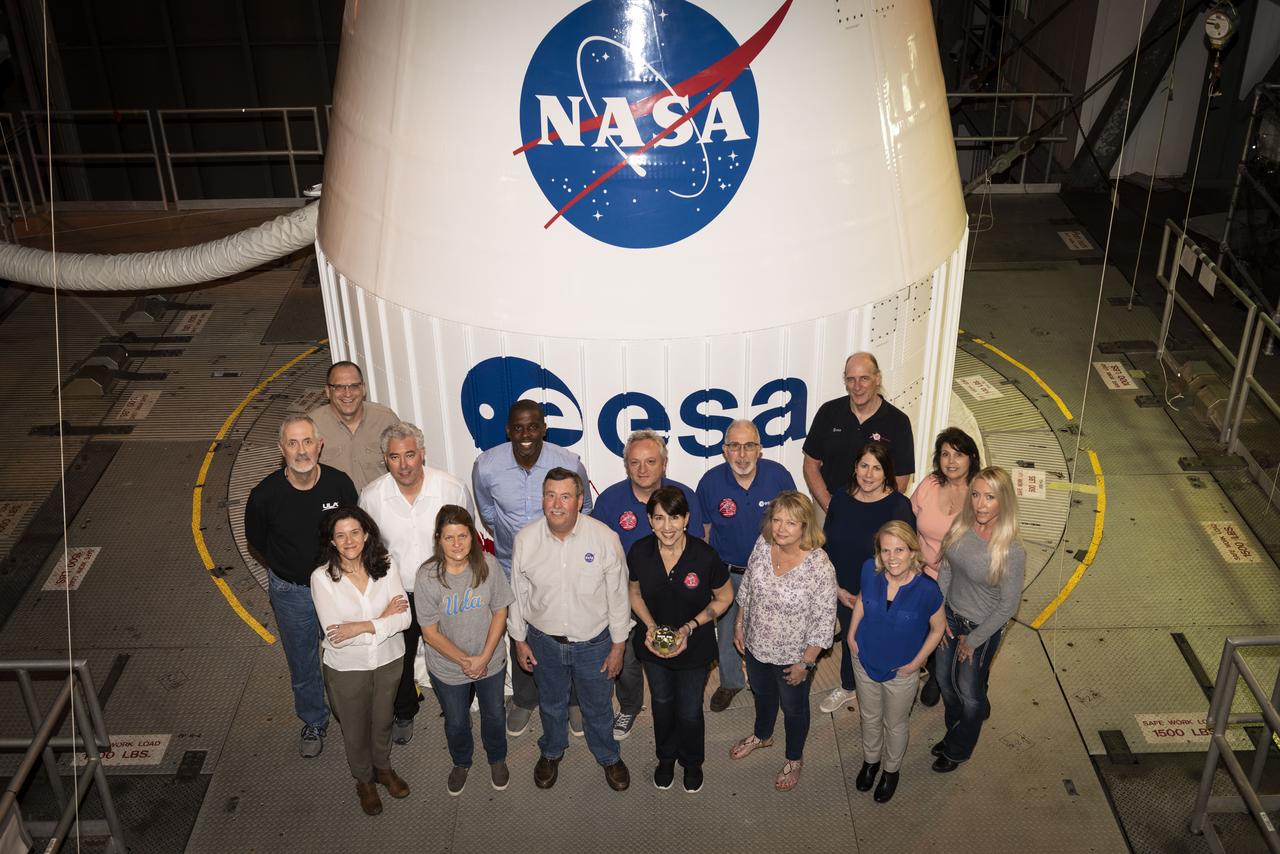
Members of the Goddard Space Flight Center Solar Orbiter Collaboration Project Office, along with Launch Services Program’s (LSP) Jim Behling (back left), launch site integration manager, pose in front of the Solar Orbiter spacecraft inside the Vertical Integration Facility at Cape Canaveral Air Force Station’s Space Launch Complex 41 in Florida. Solar Orbiter is an international cooperative mission between ESA (European Space Agency) and NASA. The spacecraft will provide the first images of the Sun’s poles. NASA’s LSP, based at Kennedy Space Center, is managing the launch.