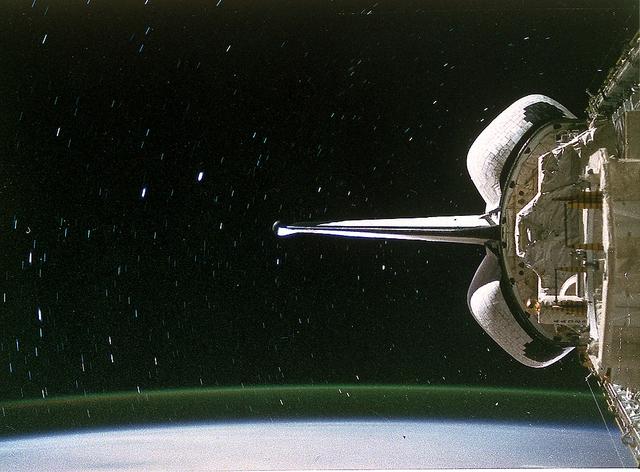
Onboard Space Shuttle Columbia (STS-75) the vertical stabilizer appears to point to the four stars of the Southern Cross. The scene was captured with a 35mm camera just prior to a sunrise.
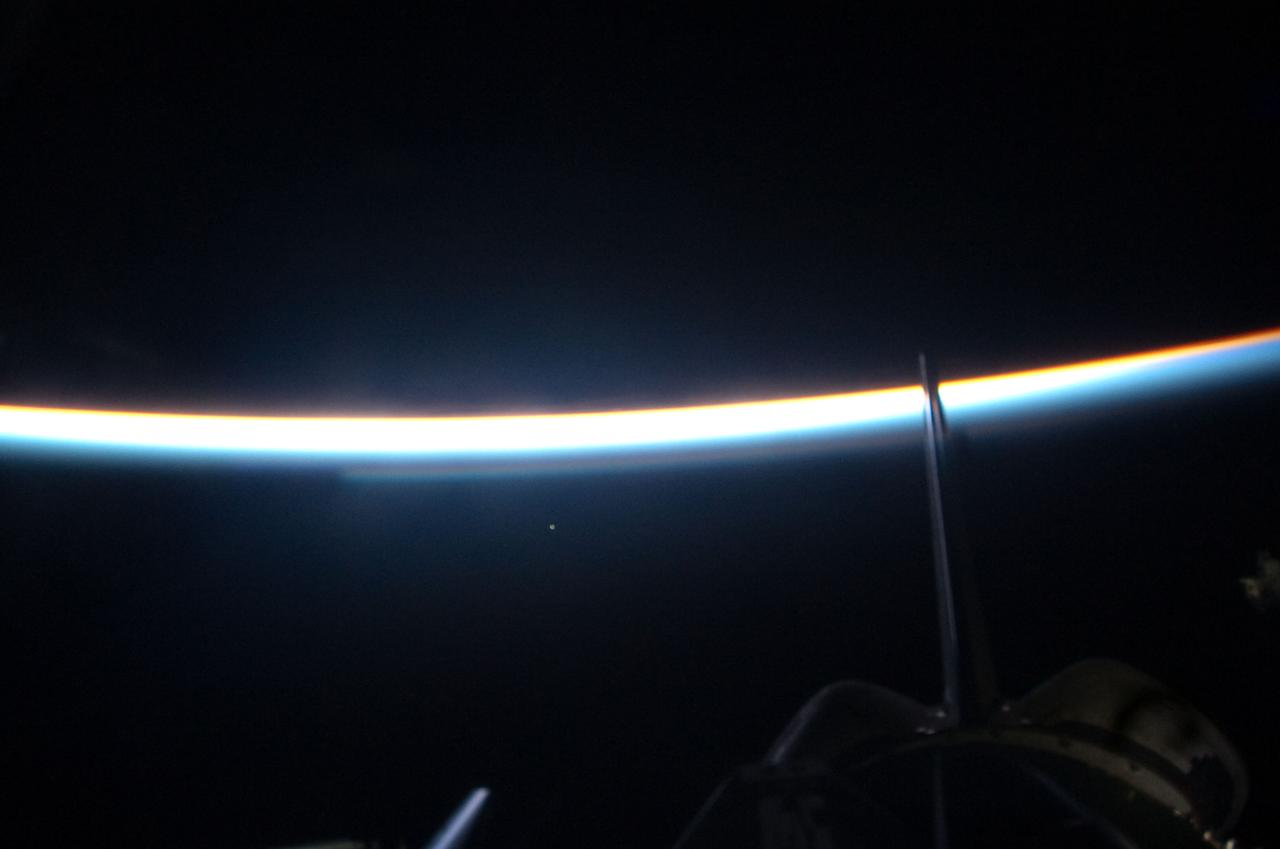
S135-E-006375 (9 July 2011) --- Without the sun's being temporarily available to highlight space shuttle Atlantis' cargo bay and vertical stabilizer, the spacecraft barely shows through as a silhouette in this image photographed from the aft flight deck. The thin blue line of Earth?s atmosphere is the dominant feature in the photo. Photo credit: NASA
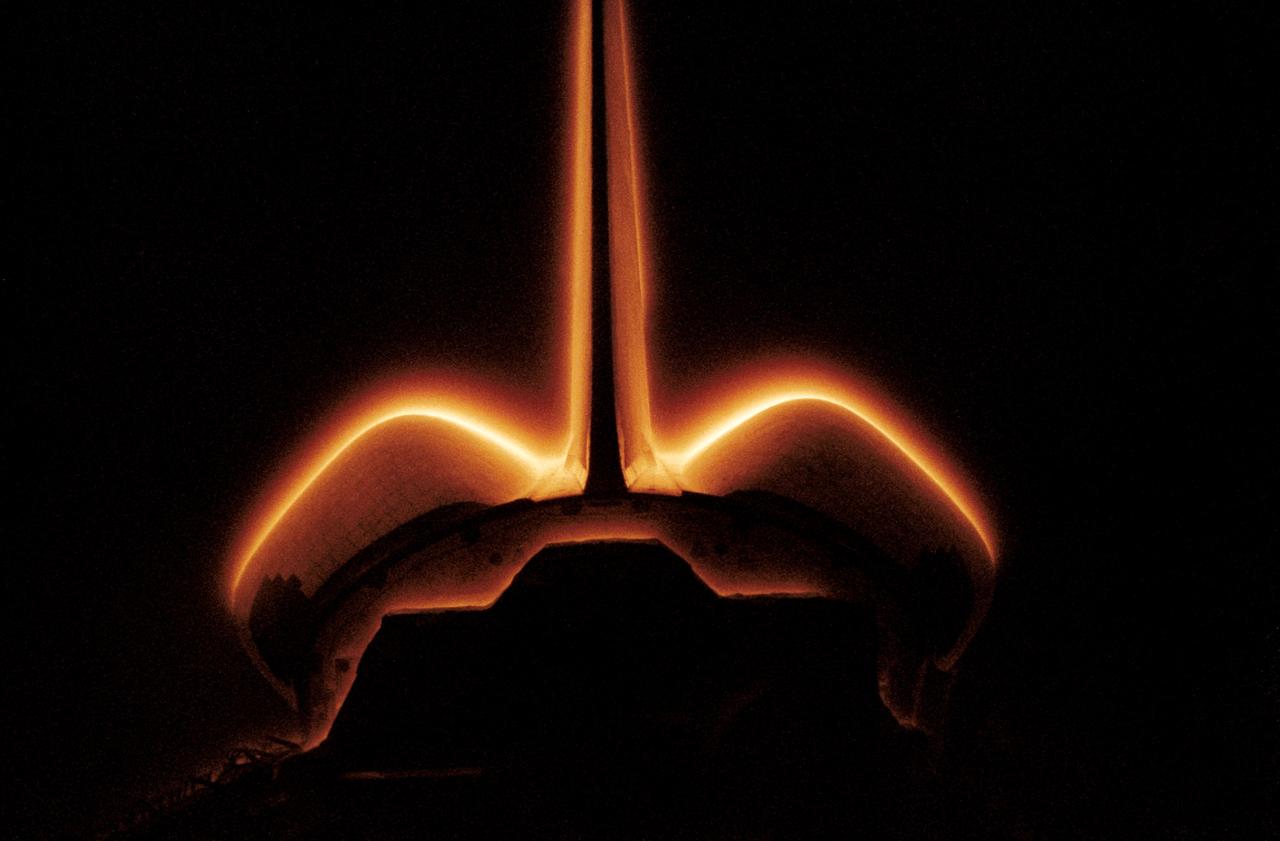
STS062-42-026 (4-18 March 1994) --- This 35mm frame, photographed as the Space Shuttle Columbia was orbiting Earth during a "night" pass, documents the glow phenomenon surrounding the vertical stabilizer and the Orbital Maneuvering System (OMS) pods of the spacecraft.
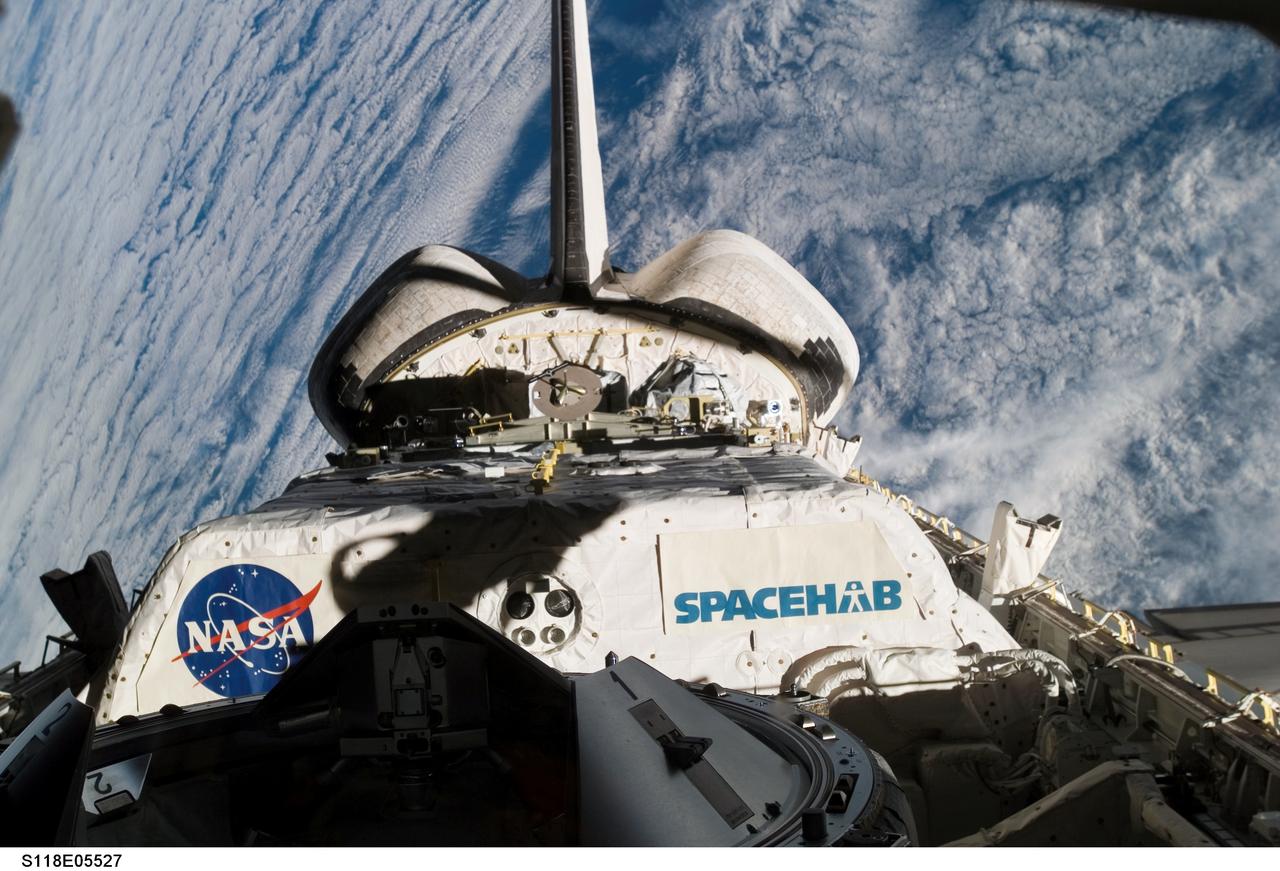
S118-E-05527 (9 Aug. 2007) --- Backdropped by a cloud-covered part of Earth, the SPACEHAB pressurized logistics module in Space Shuttle Endeavour's payload bay and vertical stabilizer are featured in this image photographed by an STS-118 crewmember during flight day two activities.
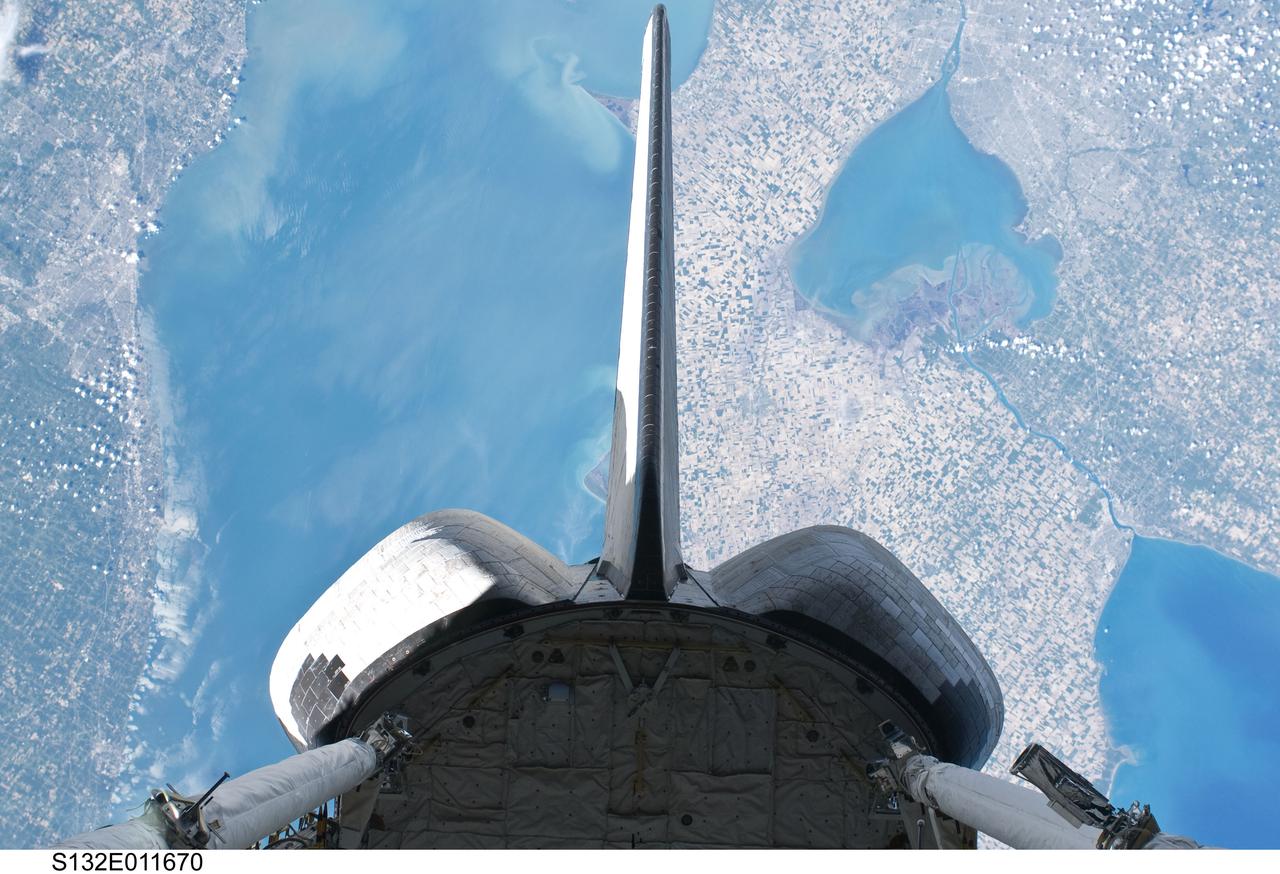
S132-E-011670 (25 May 2010) --- Backdropped over parts of Michigan and the Canadian province of Ontario, space shuttle Atlantis? vertical stabilizer, orbital maneuvering system (OMS) pods and aft payload bay are featured in this image photographed by an STS-132 on the shuttle during flight day 12 activities. Recognizable features in the photo include Lake St. Clair and parts of Lake Huron and Lake Erie.
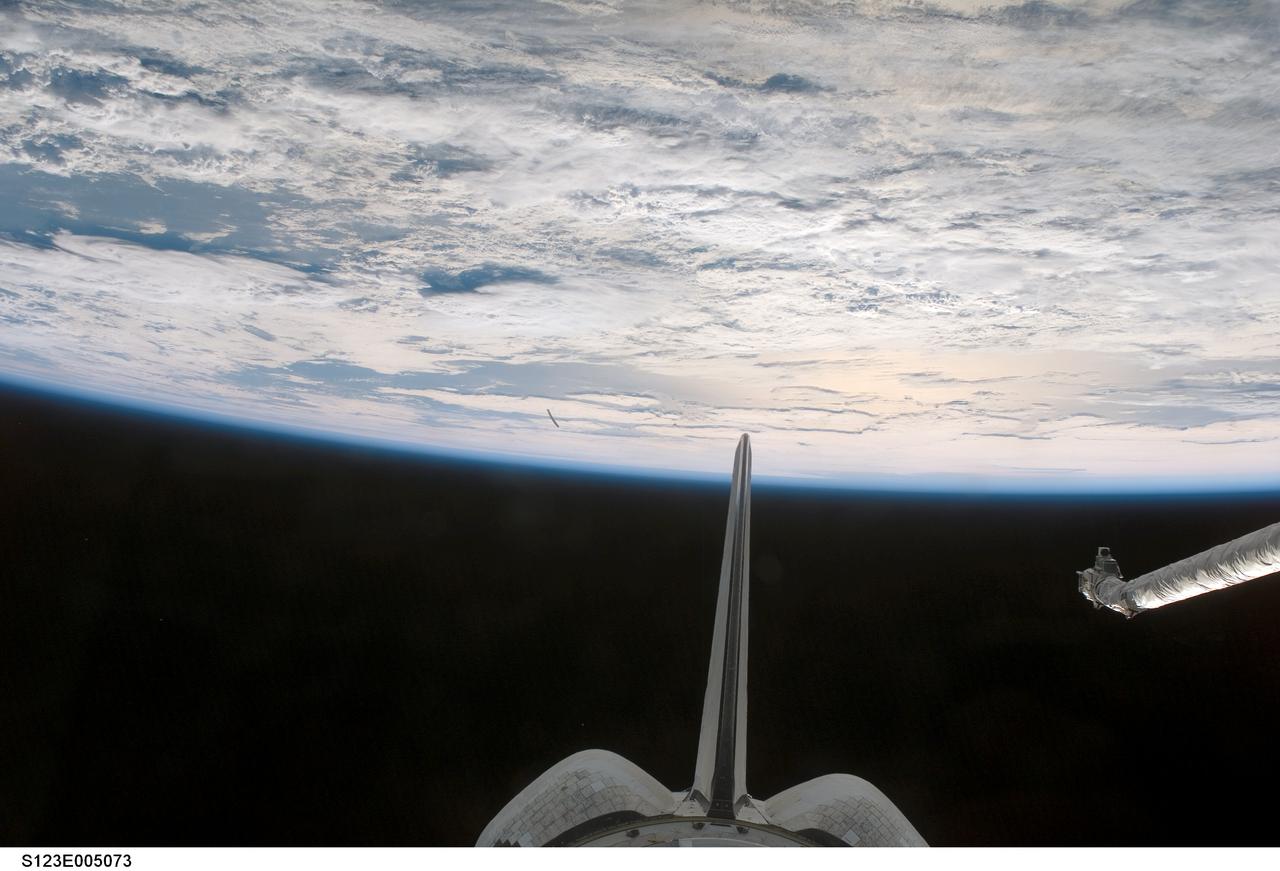
S123-E-005073 (11 Mar. 2008) --- This view out the aft windows on Endeavour's flight deck was one of a series of images recorded by the STS-123 crewmembers during their first full day in space. The end of the Canadian-built remote manipulator system's robot arm (right edge) along with the shuttle's vertical stabilizer and its two orbital maneuvering system (OMS) pods are visible. A heavily cloud-covered area of Earth fills the top half of the frame.
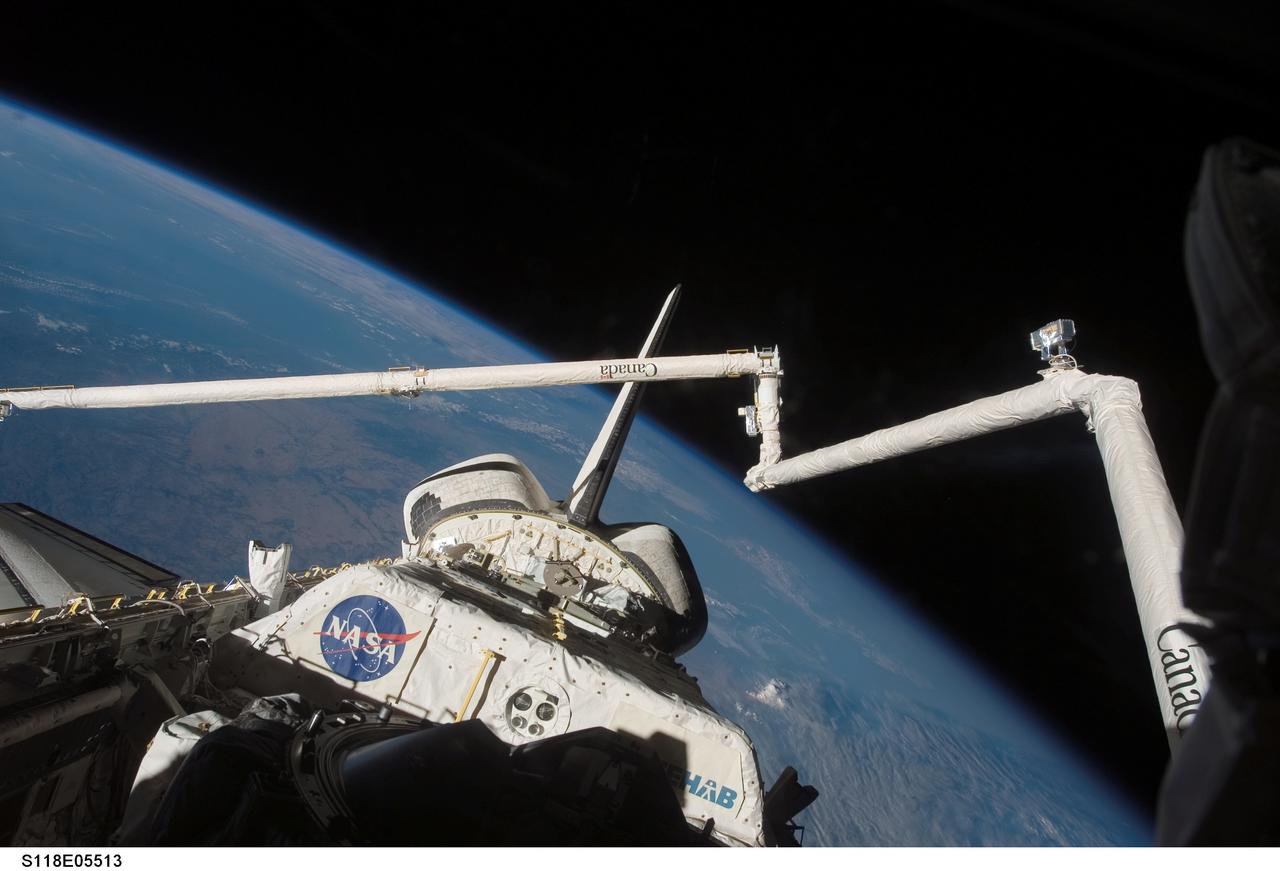
S118-E-05513 (9 Aug. 2007) --- Backdropped by the blackness of space and Earth's horizon, the SPACEHAB pressurized logistics module in Space Shuttle Endeavour's payload bay, vertical stabilizer and the shuttle's Remote Manipulator System/Orbiter Boom Sensor System (RMS/OBSS) are featured in this image photographed by an STS-118 crewmember during flight day two activities.
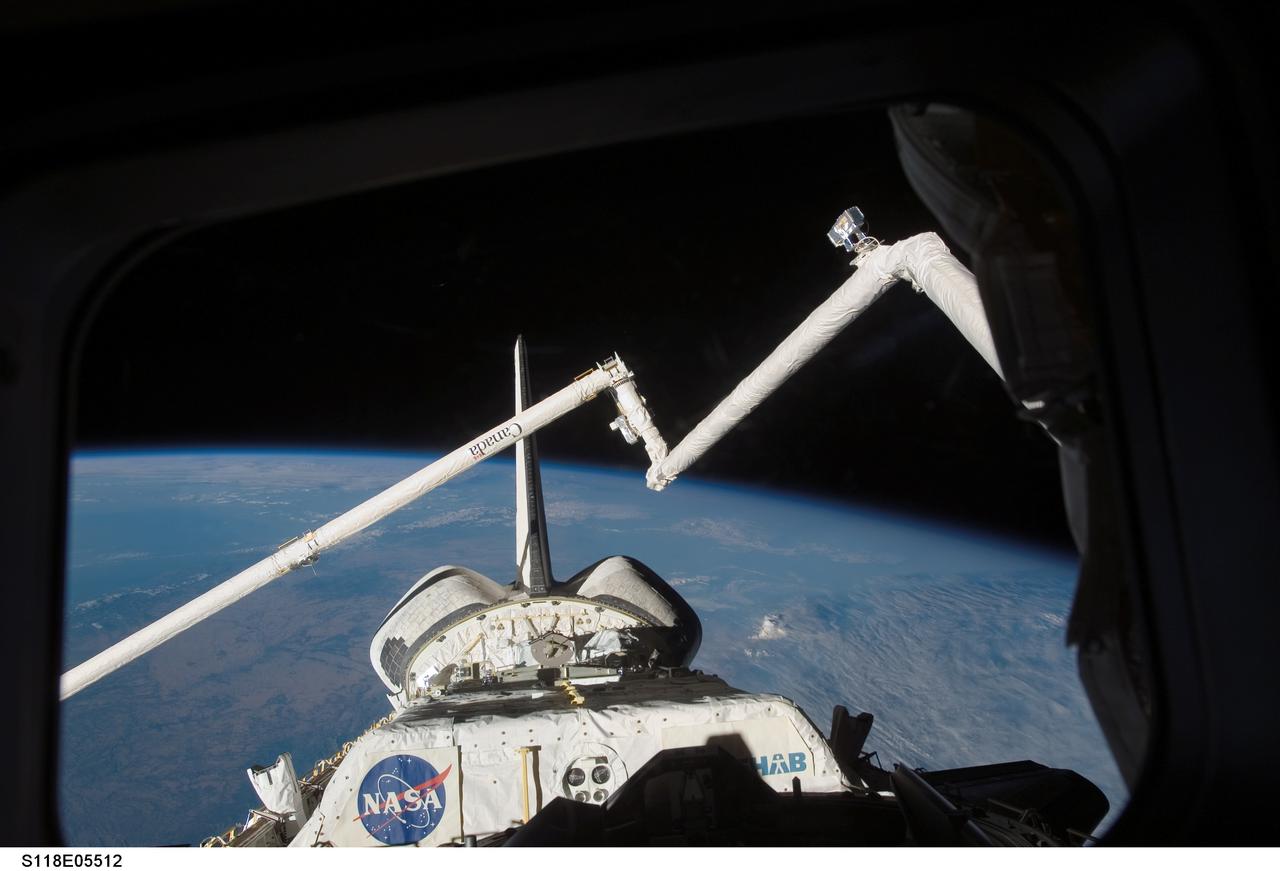
S118-E-05512 (9 Aug. 2007) --- Backdropped by the blackness of space and Earth's horizon, the SPACEHAB pressurized logistics module in Space Shuttle Endeavour's payload bay, vertical stabilizer and the shuttle's Remote Manipulator System/Orbiter Boom Sensor System (RMS/OBSS) are featured in this image photographed by an STS-118 crewmember during flight day two activities.
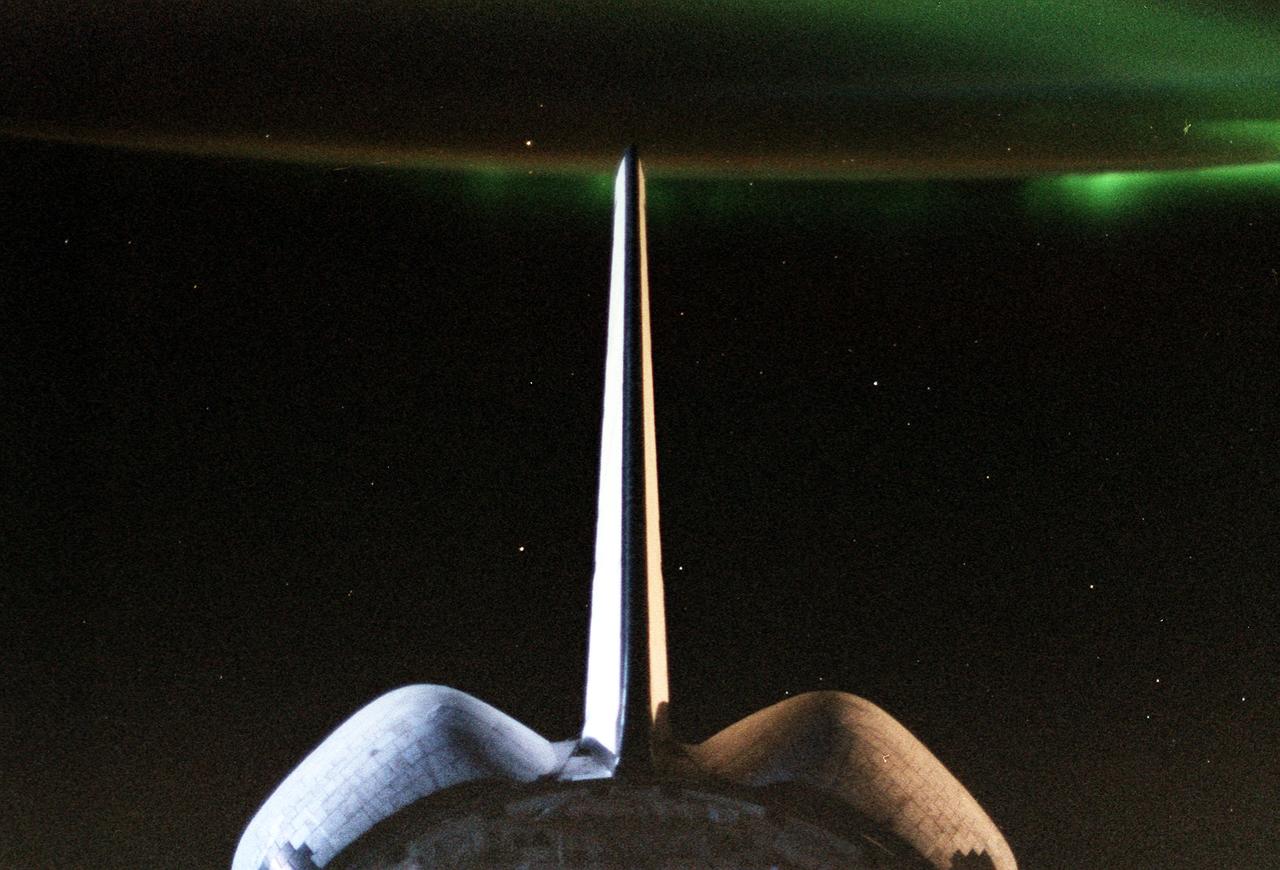
STS079-379-022 (16-26 Sept. 1996) --- If this moonlit picture is held with the Space Shuttle Atlantis' Orbital Maneuvering System (OMS) pods at top, a greenish aurora appears at left edge. Thanks to a time exposure on a 35mm camera, a crew member was able to capture the phenomenon visually experienced frequently by Shuttle crews. Several stars can be seen in the picture. Many of them appear closer to the camera than Earth because they are seen through the thin line of atmosphere above Earth's horizon.
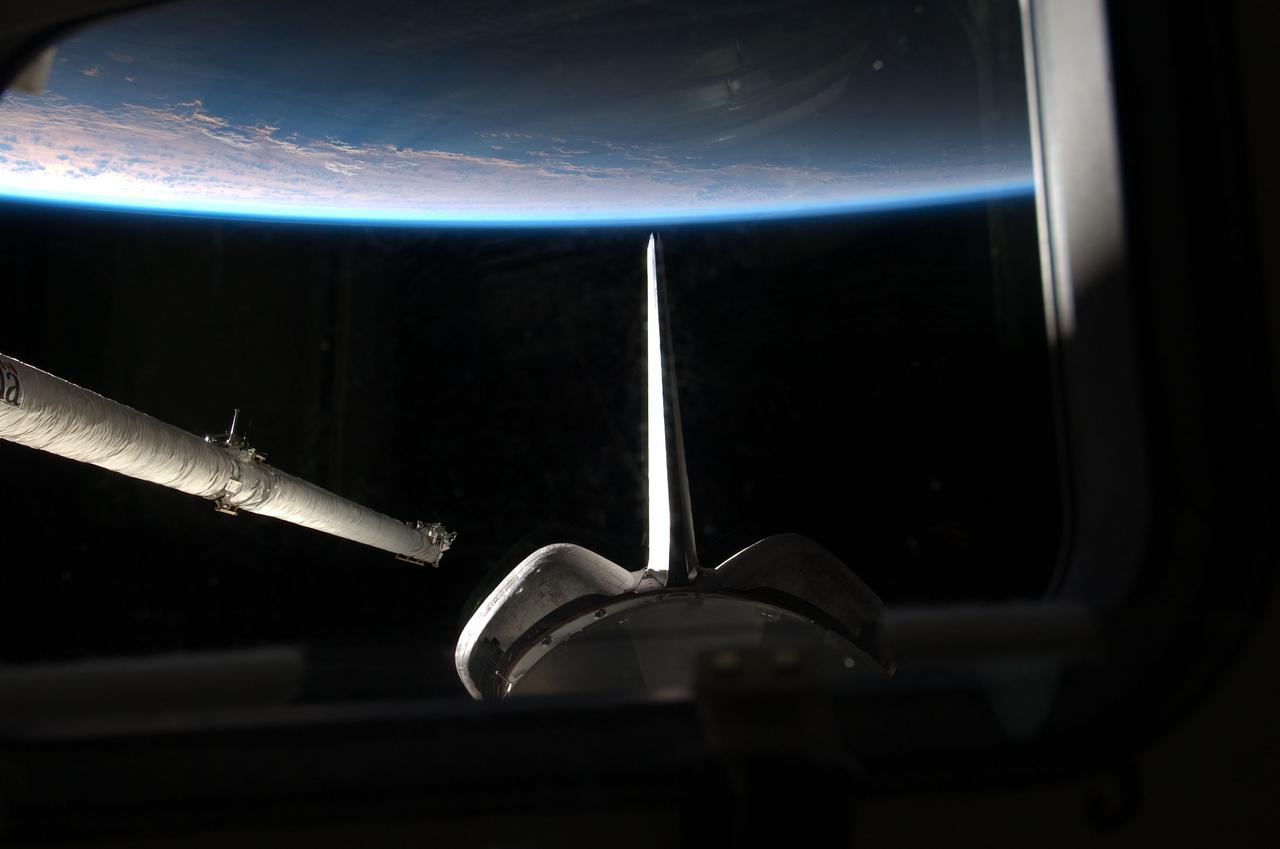
S135-E-006361 (9 July 2011) --- One of the four STS-135 crewmembers took this photo from space shuttle Atlantis' aft flight deck during the mission's second day of activities in Earth orbit. Earth's horizon and aft sections of the shuttle frame the orbiter boom sensor system (OBSS) on the starboard side of the spacecraft shortly before it was remotely maneuvered into position to start survey of the spacecraft's thermal protection system (TPS). The various sensor packages on the OBSS, which include a high-resolution still camera, a laser range imager and a video camera, later swept over the critical surfaces of the TPS, looking for signs of any damage that might have been caused by ascent debris or anything that might endanger the shuttle's ability to return to Earth safely. Photo credit: NASA
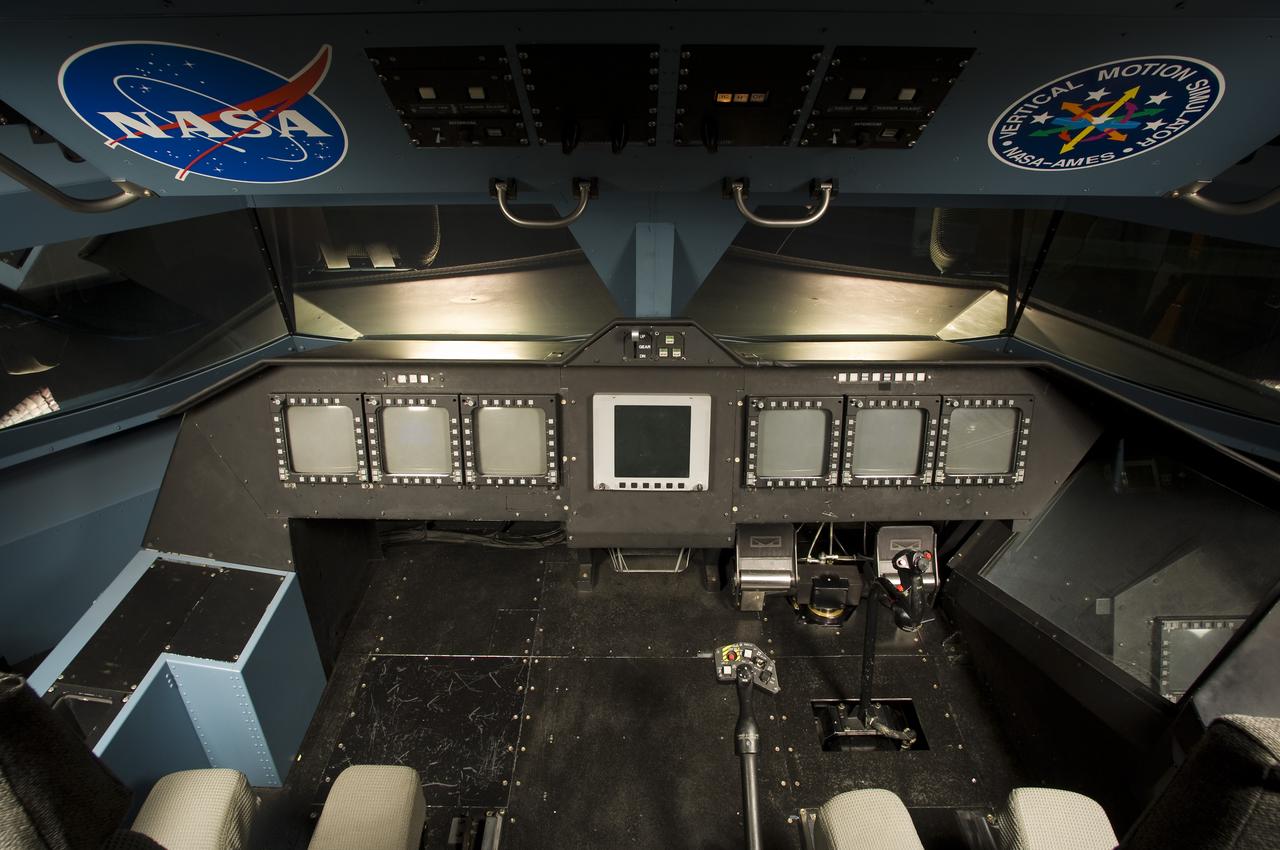
Vertical Motion Simulator VMS Simulation; Rotorcraft Stability/Phase Margin in T-cab.
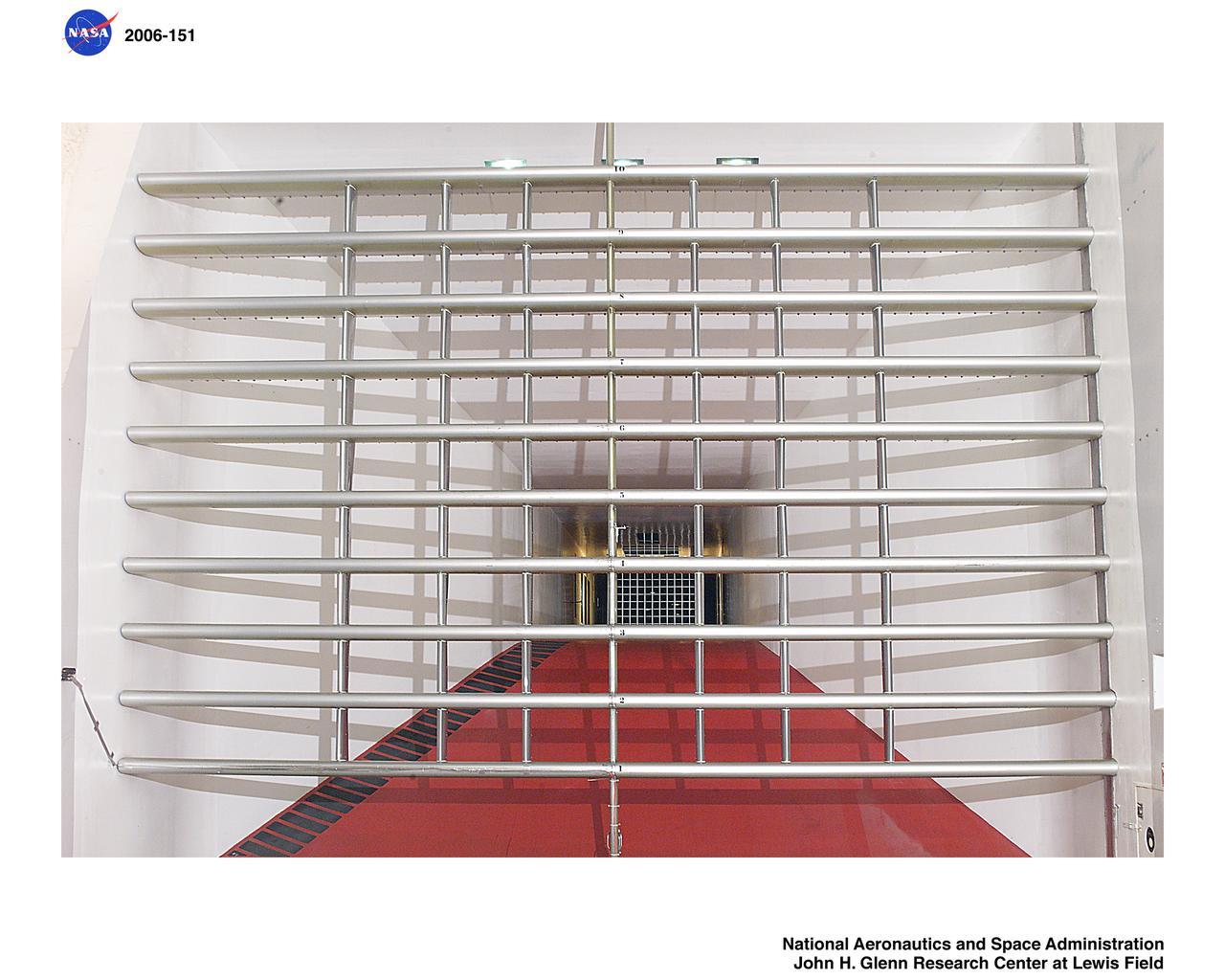
Spray Bars with new vertical fins to stabilize air flow. Test section is seen in background
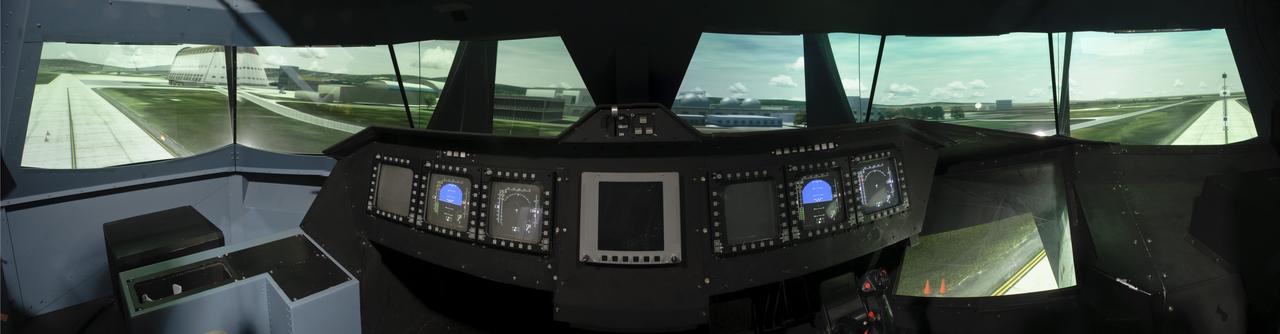
Vertical Motion Simulator VMS Simulation; Rotorcraft Stability/Phase Margin in T-cab. Out-the-window (otw) panorama views from pilots point of view
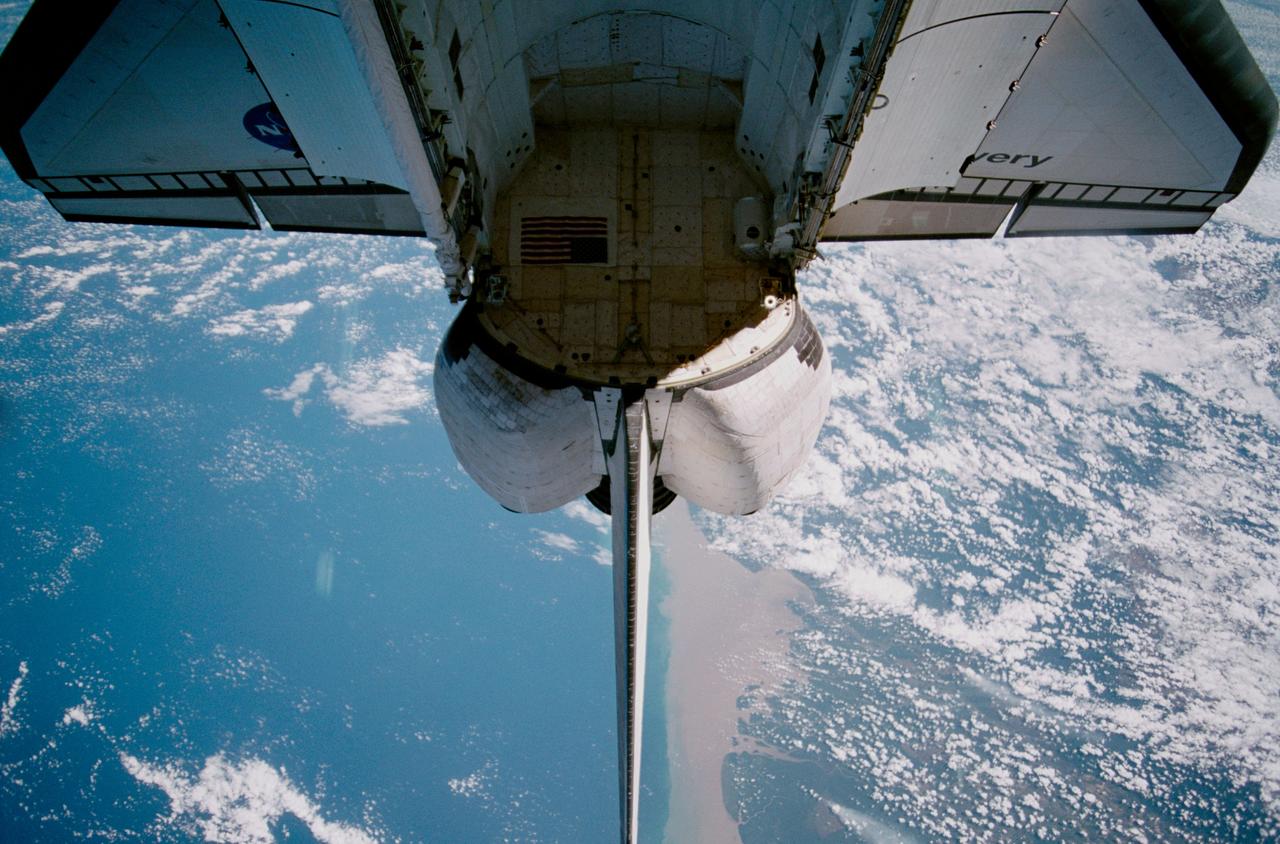
STS102-328-028 (13 March 2001) --- The Space Shuttle Discovery's payload bay and vertical stabilizer are backdropped over Southeast Asia in this 35mm scene.
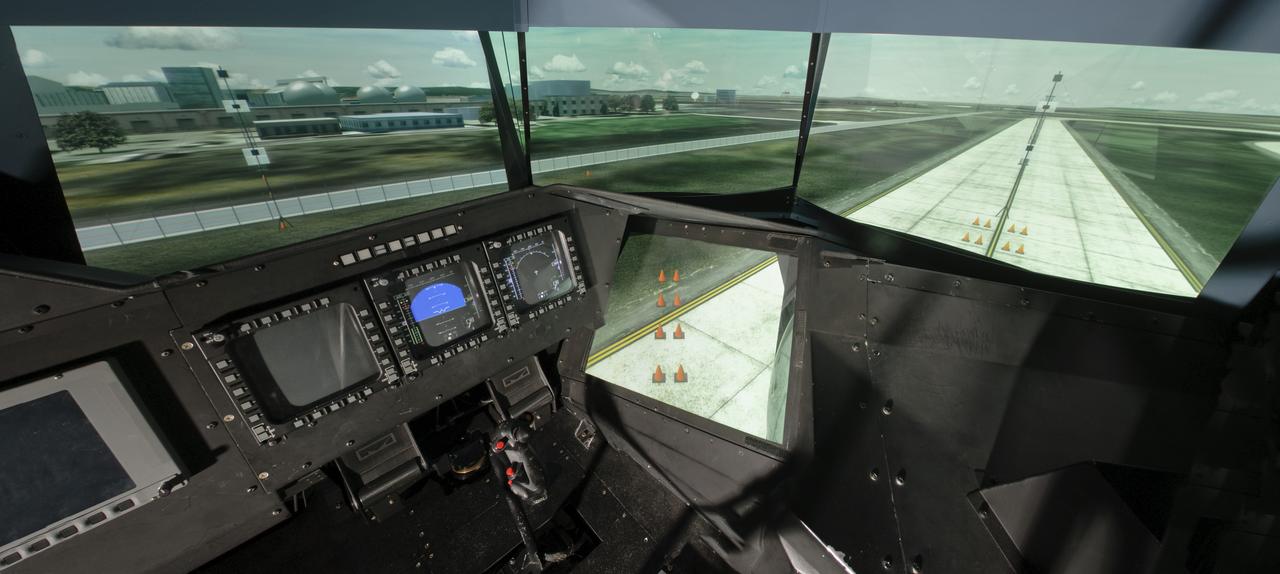
Vertical Motion Simulator VMS Simulation; Rotorcraft Stability/Phase Margin in T-cab. out the window panorama - overall cab view
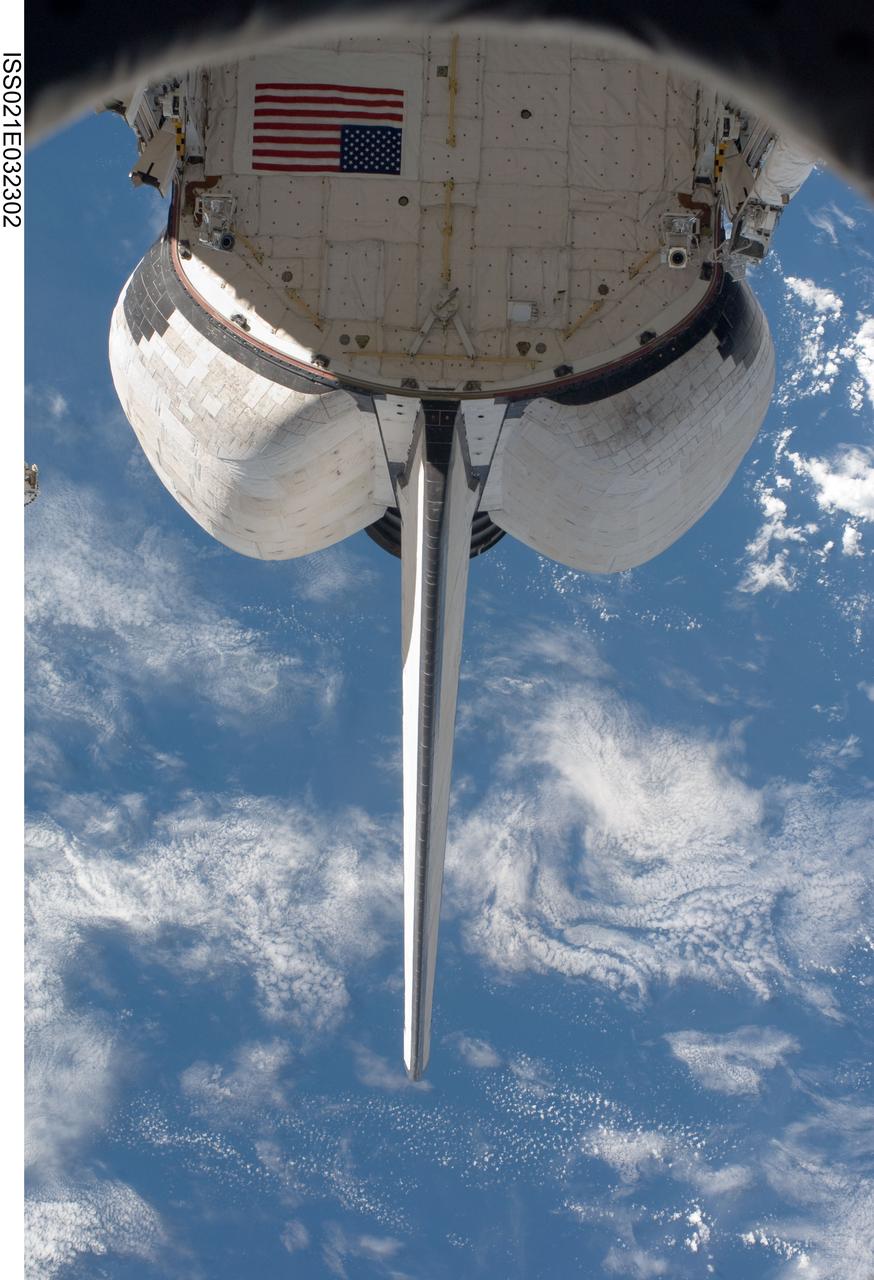
ISS021-E-032302 (23 Nov. 2009) --- Backdropped by a blue and white part of Earth, the aft section of the docked space shuttle Atlantis (STS-129) is featured in this image photographed by a crew member on the International Space Station.

ISS005-E-17235 (13 October 2002) --- The Space Shuttle Atlantis’ payload bay and vertical stabilizer are backdropped against a blue and white Earth. Atlantis was docked with the International Space Station (ISS) at the time.
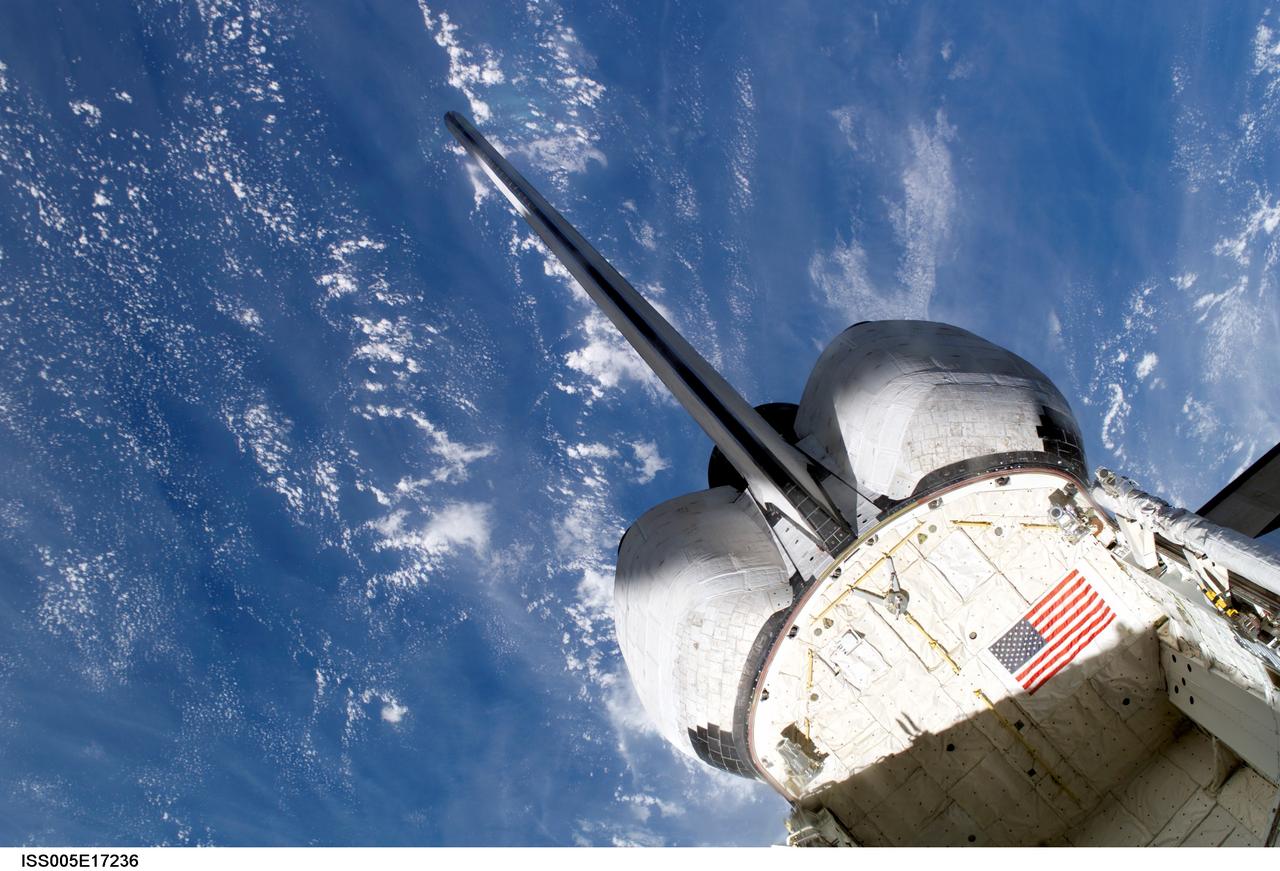
ISS005-E-17236 (13 October 2002) --- The Space Shuttle Atlantis’ payload bay and vertical stabilizer are backdropped against a blue and white Earth. Atlantis was docked with the International Space Station (ISS) at the time.
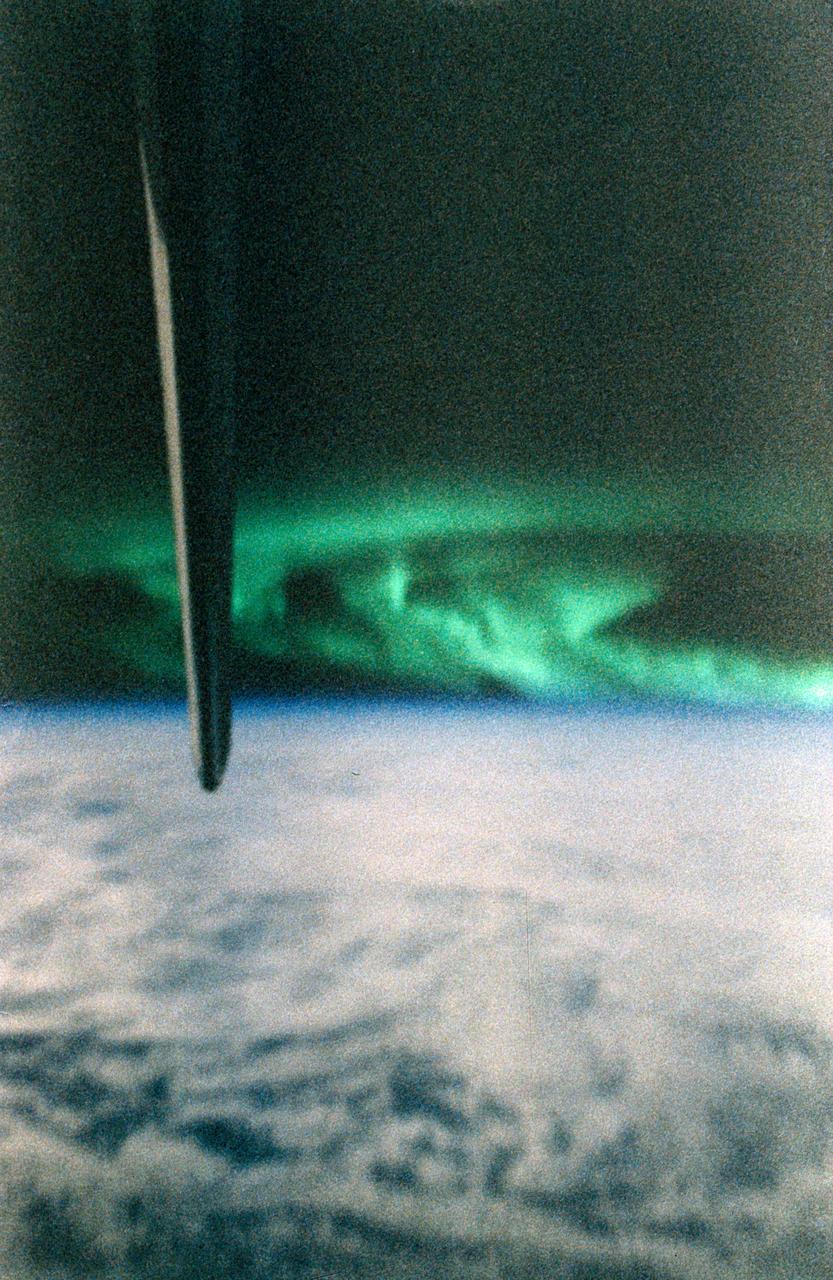
STS085-365-006 (7 - 19 August 1997) --- A 35mm camera with a time exposure was used to record this image of the southern lights or the aurora Australis. The vertical stabilizer of the Space Shuttle Discovery appears in the foreground.
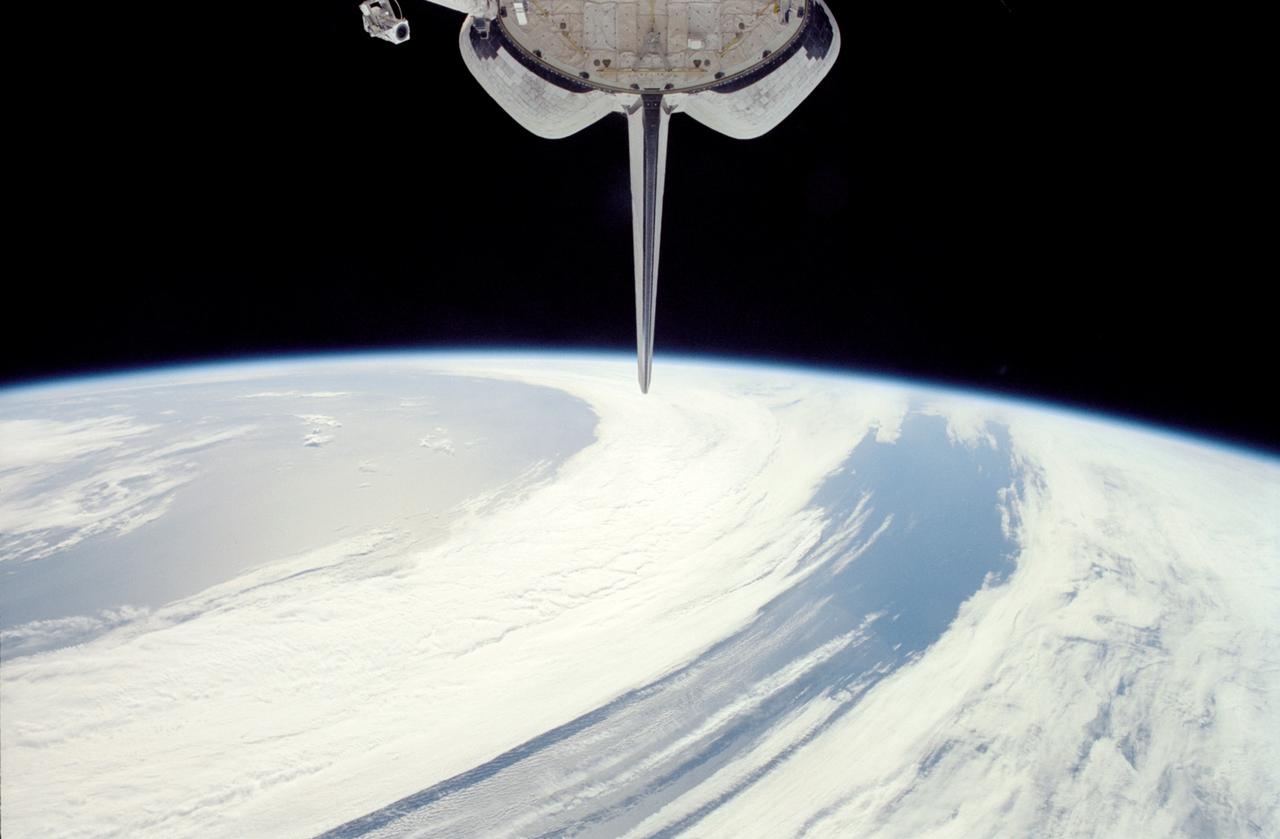
STS113-348-001 (23 November – 7 December 2002) --- The horizon of a blue and white Earth and the blackness of space form the backdrop for this view of Space Shuttle Endeavour’s vertical stabilizer.
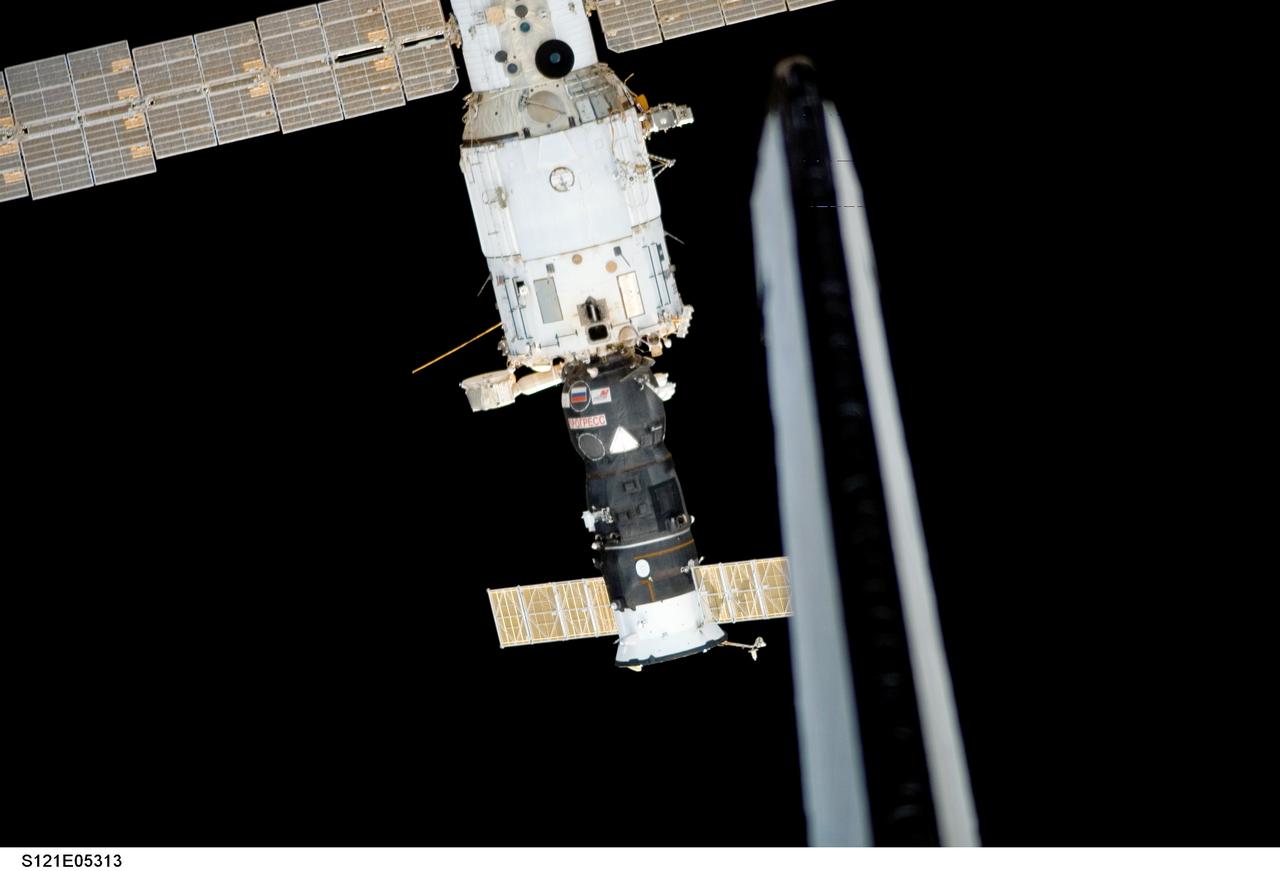
S121-E-05313 (6 July 2006) --- The vertical stabilizer of the Space Shuttle Discovery is in the foreground of this digital photo showing the International Space Station, as the spacecraft perform proximity operations. Progress 21 vehicle is seen docked to Zvezda.
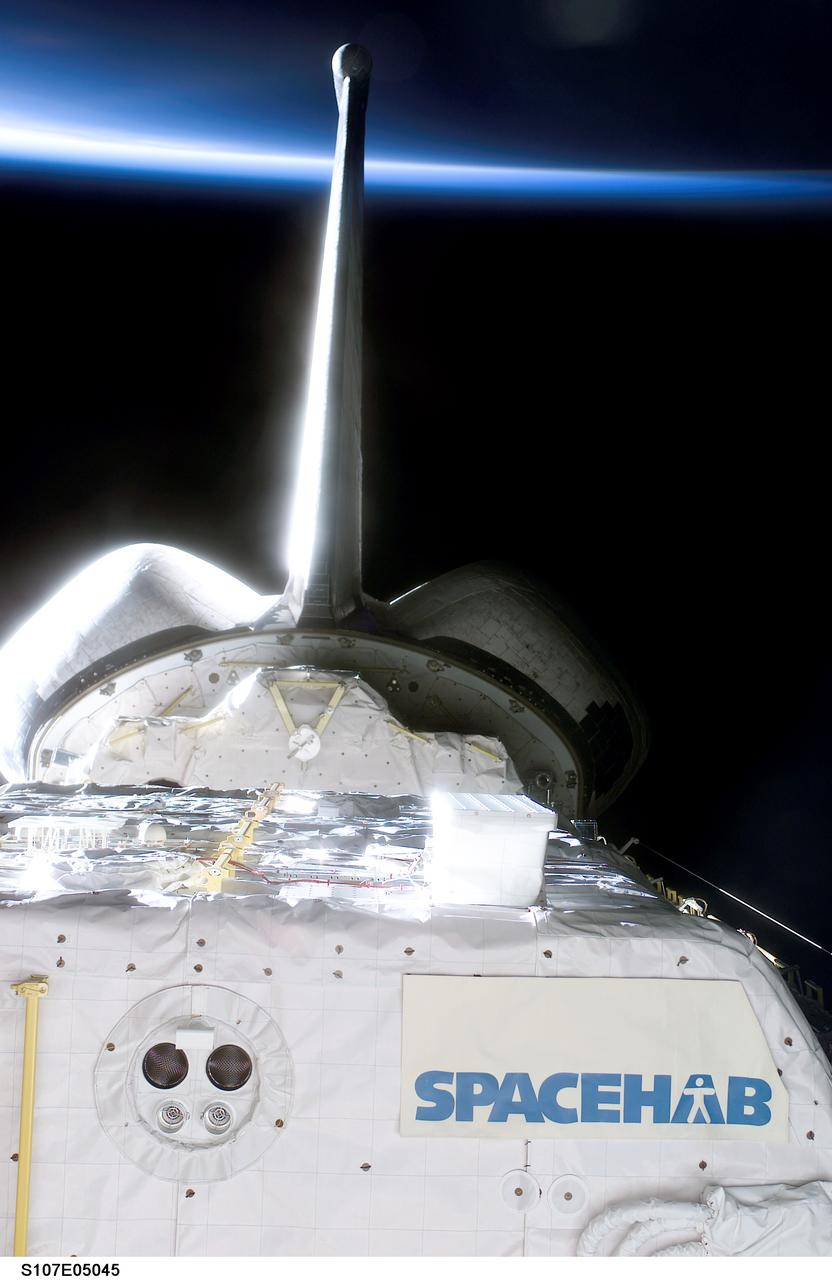
STS107-E-05045 (18 January 2003) --- The SPACEHAB Research Double Module in the Space Shuttle Columbia’s payload bay and vertical stabilizer are backdropped by the blackness of space and a thin slice of Earth’s horizon.
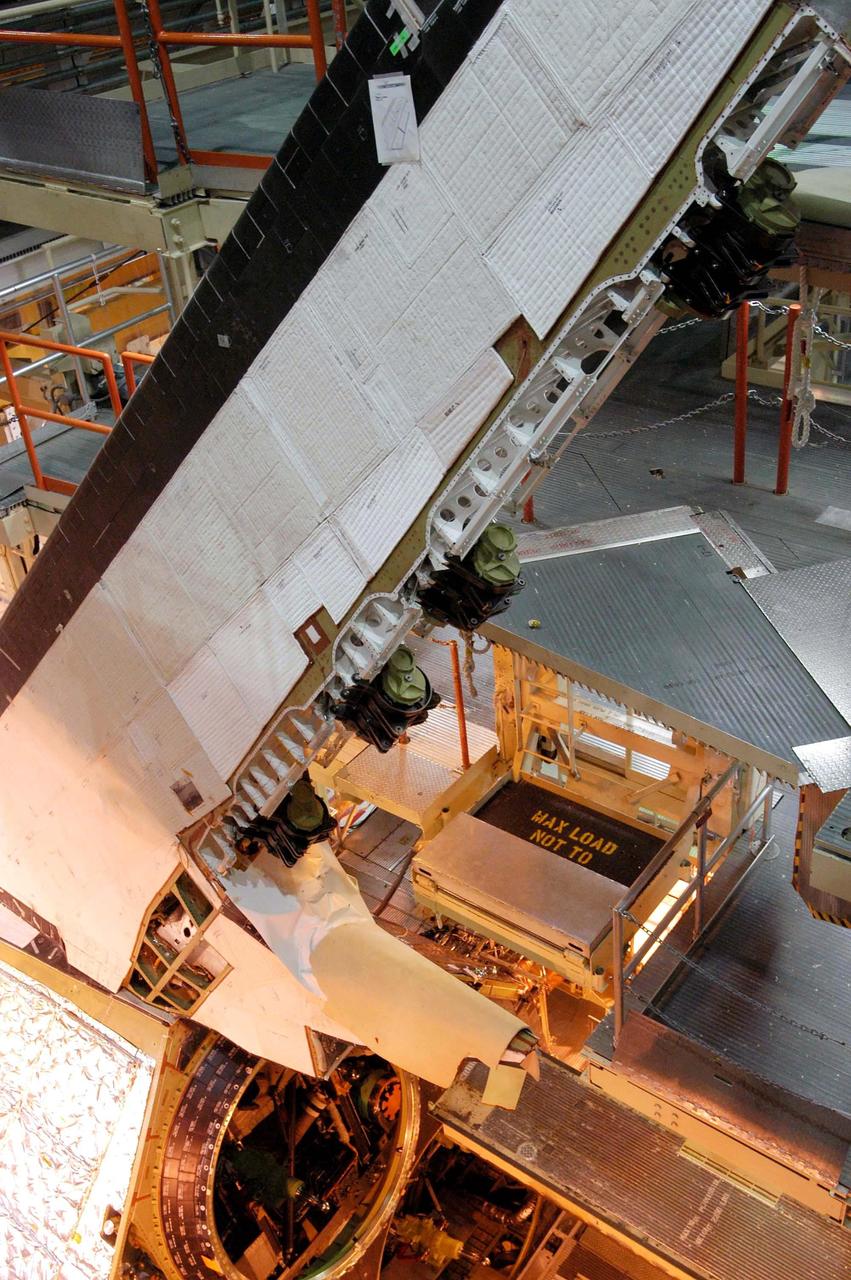
KENNEDY SPACE CENTER, FLA. - In the Orbiter Processing Facility, seen here is the vertical stabilizer on the orbiter Discovery. On the edge of the stabilizer are the four Rudder Speed Brake Actuators recently installed. Below is the engine number 1 interface. Discovery has been assigned to the first Return to Flight mission, STS-114, a logistics flight to the International Space Station.
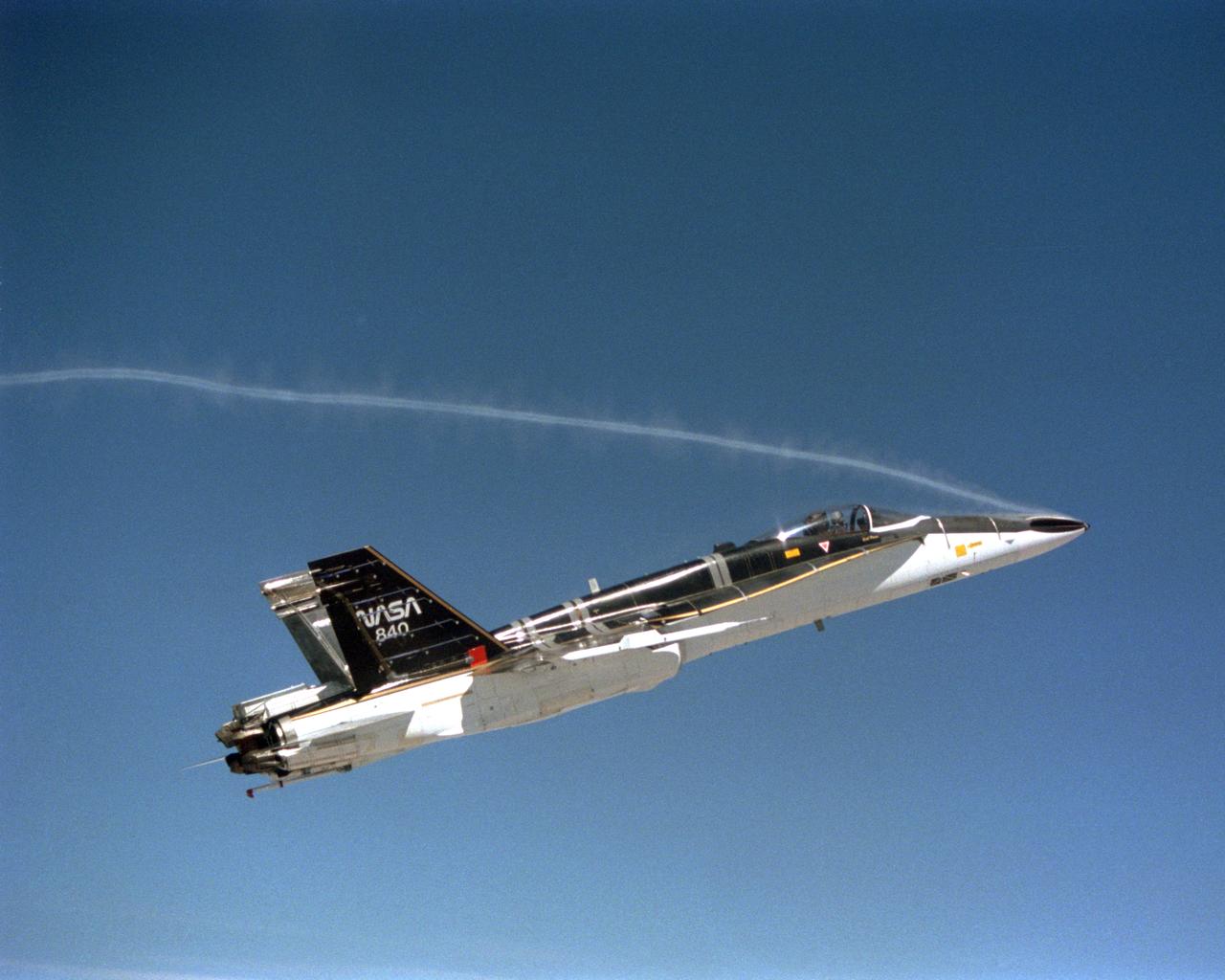
During the final phase of tests with the HARV, Dryden technicians installed nose strakes, which were panels that fitted flush against the sides of the forward nose. When the HARV was at a high alpha, the aerodynamics of the nose caused a loss of directional stability. Extending one or both of the strakes results in strong side forces that, in turn, generated yaw control. This approach, along with the aircraft's Thrust Vectoring Control system, proved to be stability under flight conditions in which conventional surfaces, such as the vertical tails, were ineffective.
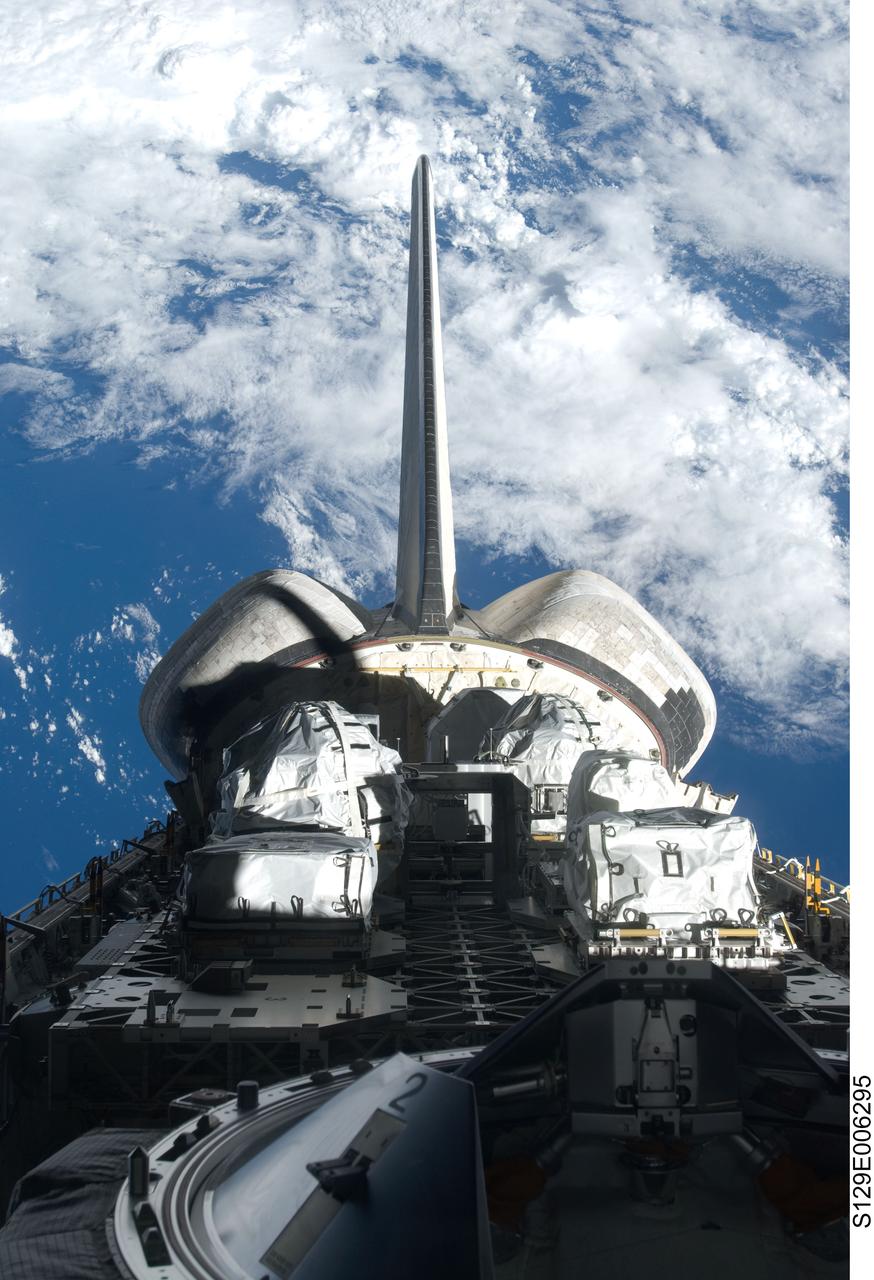
S129-E-006295 (17 Nov. 2009) --- Backdropped by a blue and white part of Earth, a partial view of Space Shuttle Atlantis? payload bay, vertical stabilizer, orbital maneuvering system (OMS) pods and docking mechanism are featured in this image photographed by an STS-129 crew member from an aft flight deck window.
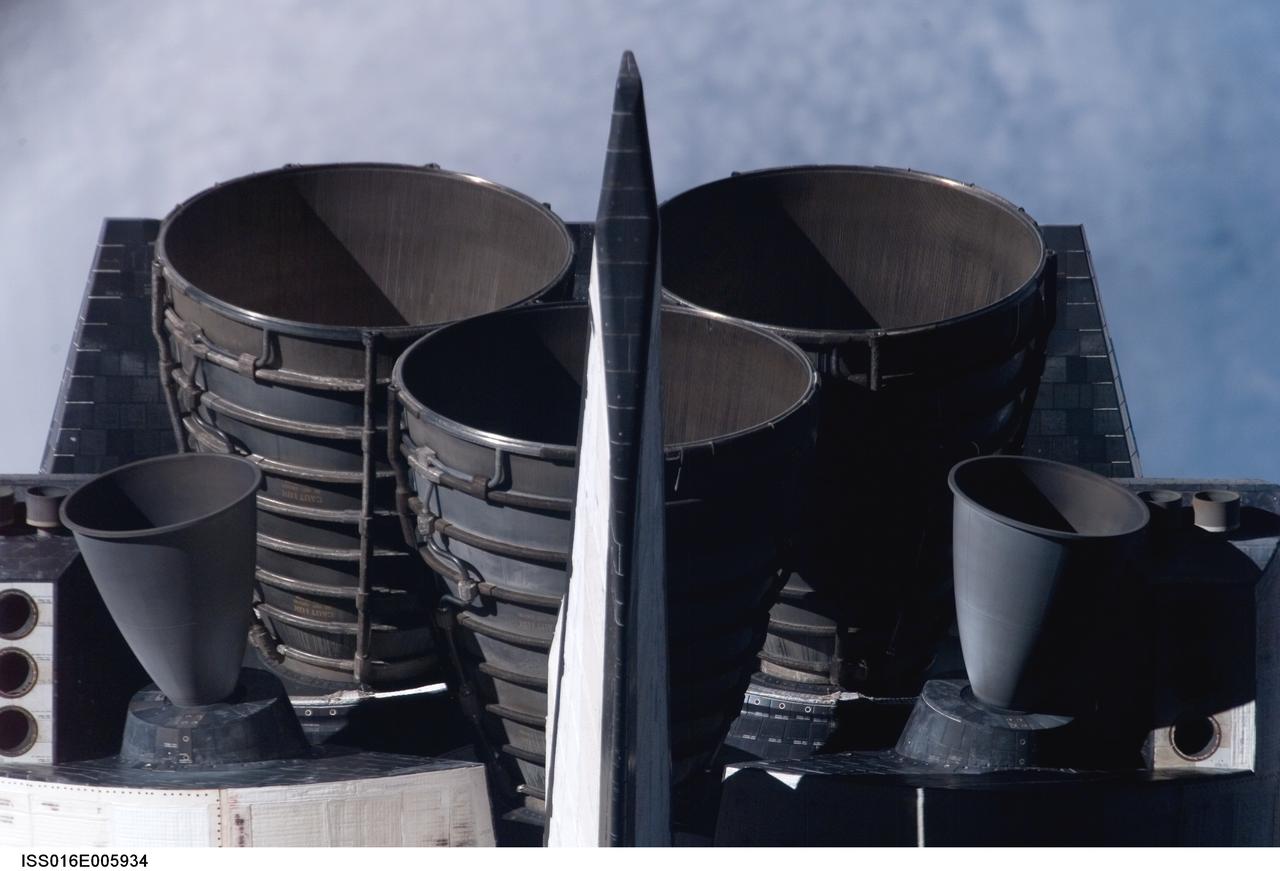
ISS016-E-005934 (25 Oct. 2007) --- The Space Shuttle Discovery's tail section is featured in this image photographed by an Expedition 16 crewmember during a backflip maneuver performed by the approaching visitors (STS-120) to the International Space Station. Visible are the shuttle's main engines and vertical stabilizer.

STS084-357-008 (15-24 May 1997) --- Photographed through the aft flight deck windows of the Earth-orbiting Space Shuttle Atlantis, this 35mm frame captures a firing of the Orbital Maneuvering System (OMS) engines to perform a necessary maneuver. The vertical stabilizer, flanked by the two OMS pods, is illuminated in the scene.
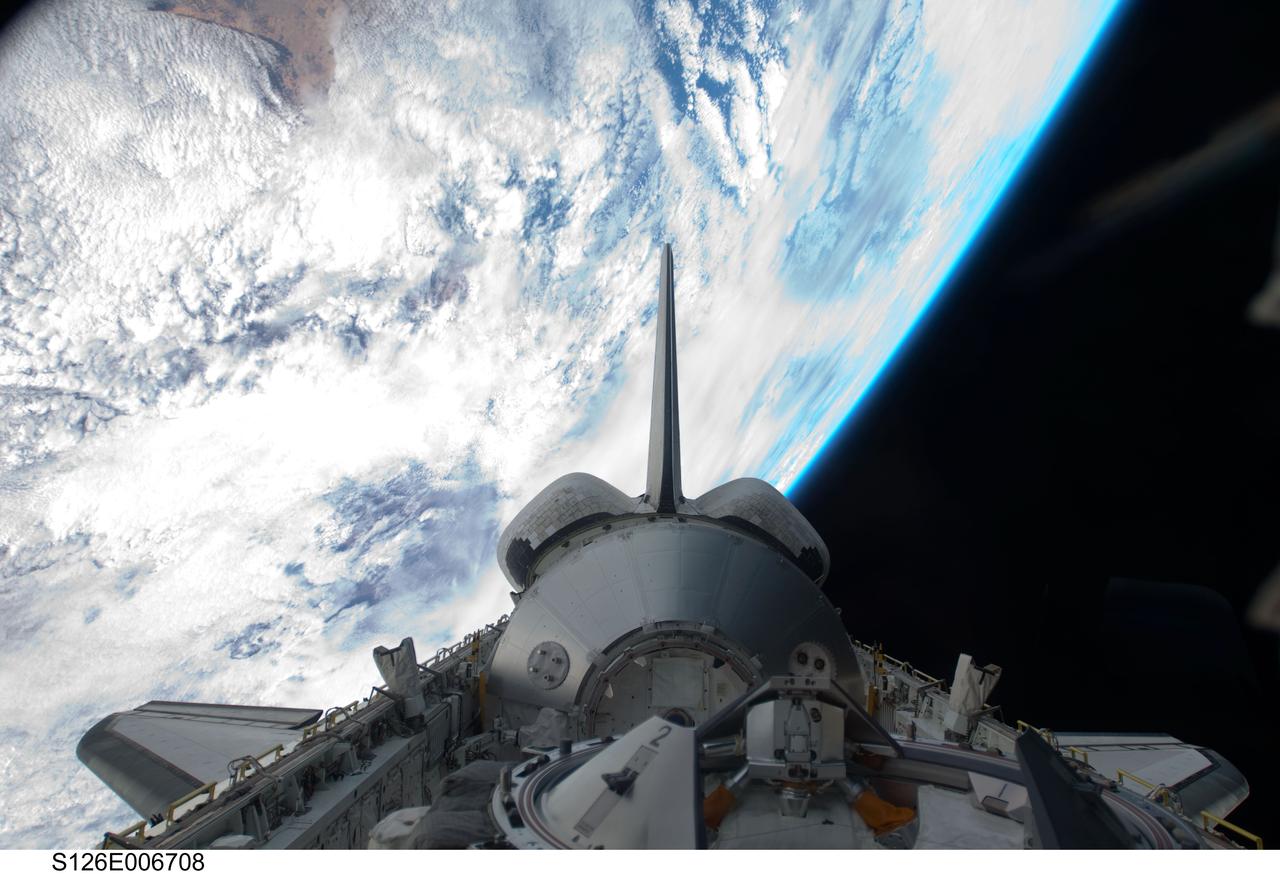
S126-E-006708 (15 Nov. 2008) --- Backdropped by a colorful Earth and the blackness of space, the Leonardo Multi-Purpose Logistics Module visible in Space Shuttle Endeavour's payload bay, vertical stabilizer, orbital maneuvering system (OMS) pods and docking mechanism are featured in this image photographed by a STS-126 crewmember.
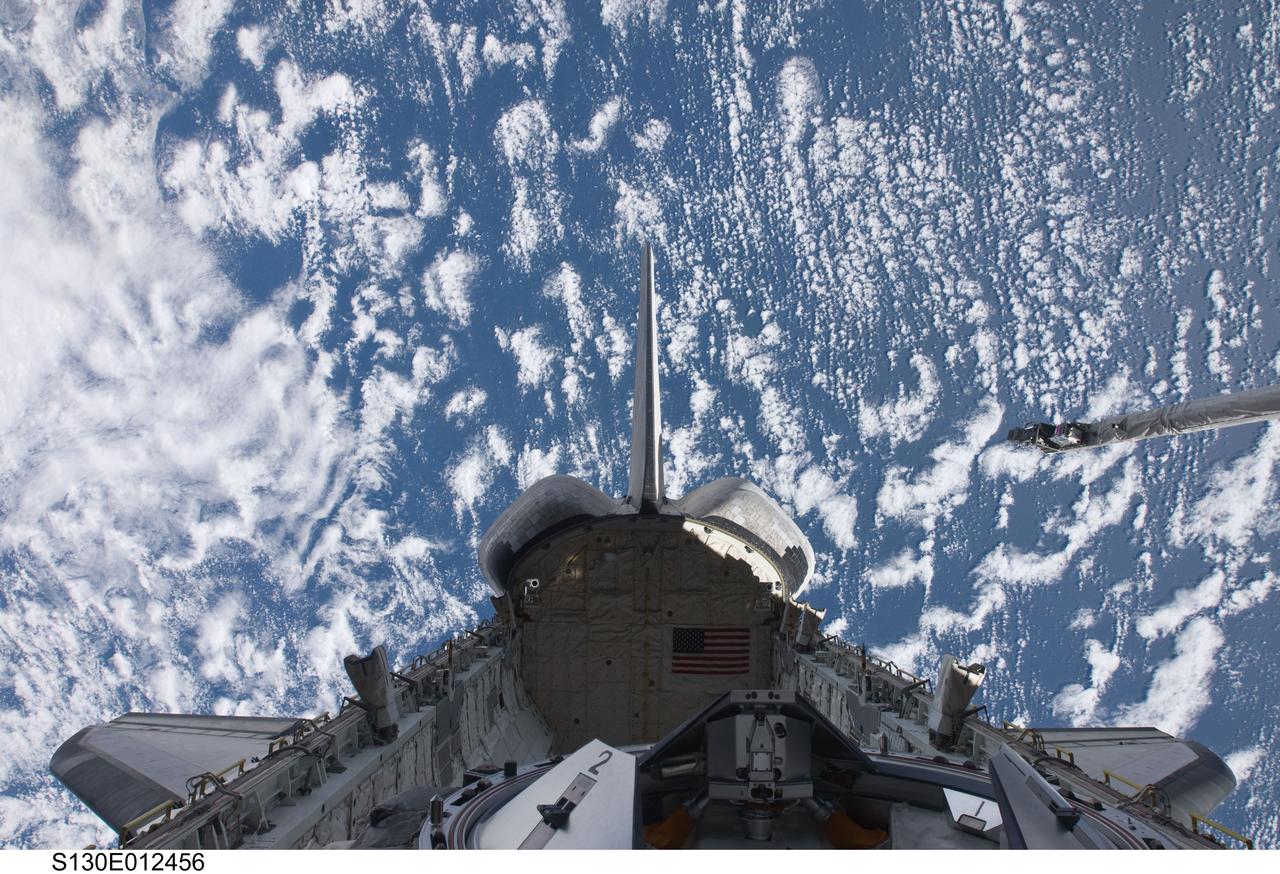
S130-E-012456 (20 Feb. 2010) --- Backdropped by a blue and white part of Earth, a partial view of space shuttle Endeavour's payload bay, vertical stabilizer, orbital maneuvering system (OMS) pods and docking mechanism are featured in this image photographed by an STS-130 crew member from an aft flight deck window.
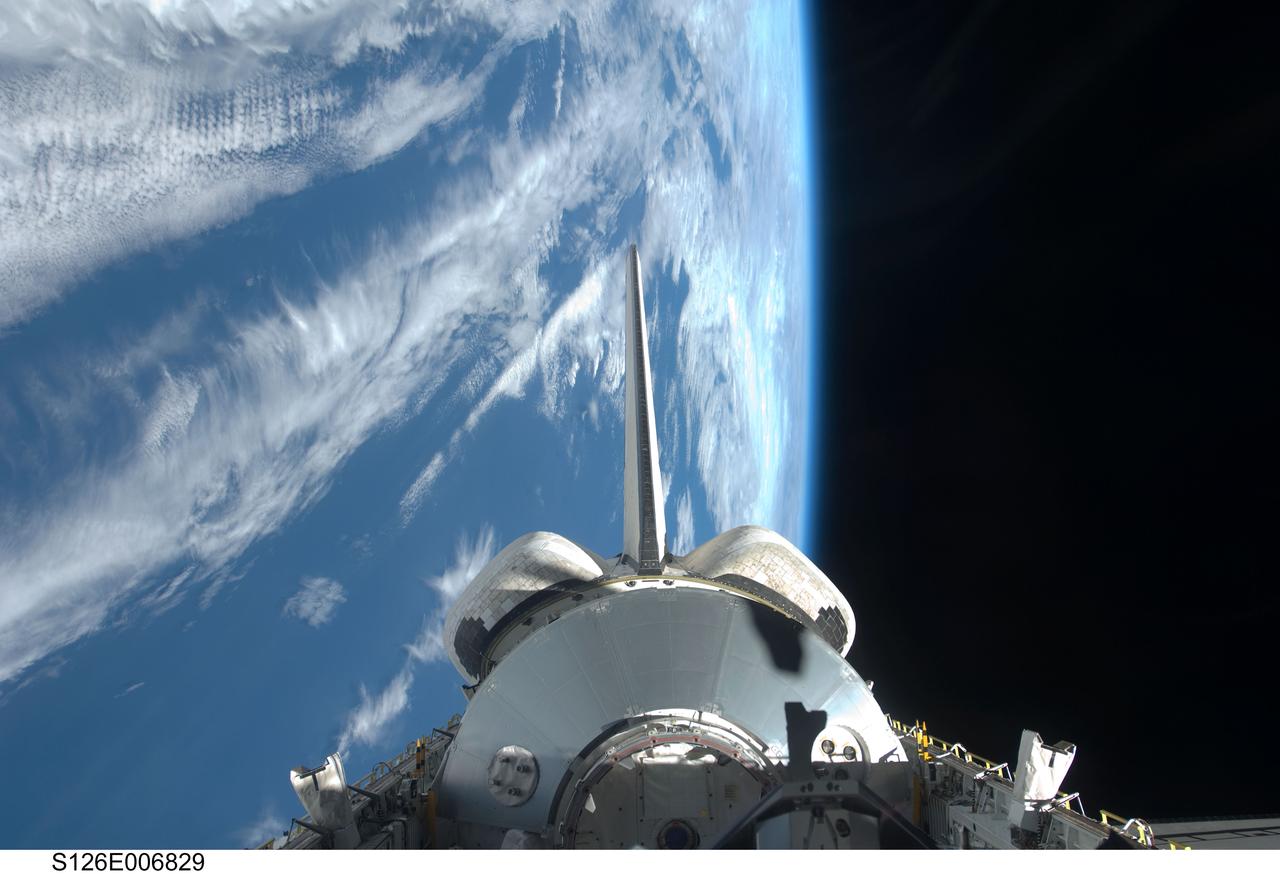
S126-E-006829 (15 Nov. 2008) --- Backdropped by a blue and white Earth and the blackness of space, the Leonardo Multi-Purpose Logistics Module visible in Space Shuttle Endeavour's payload bay, vertical stabilizer and orbital maneuvering system (OMS) pods are featured in this image photographed by a STS-126 crewmember.
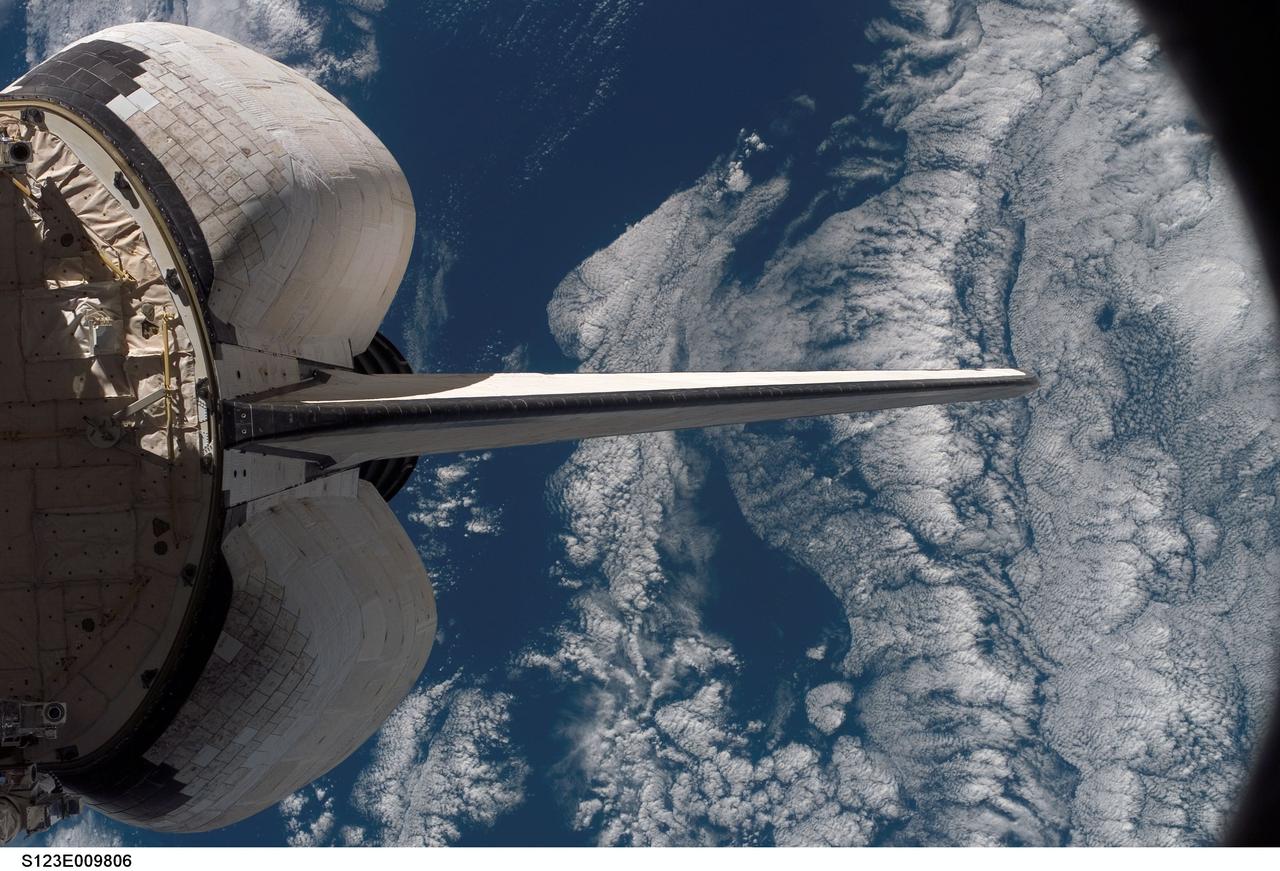
S123-E-009806 (24 March 2008) --- Backdropped by a large area of white clouds, Space Shuttle Endeavour's vertical stabilizer and orbital maneuvering system pods are featured in this image photographed by a STS-123 crew member while docked with the International Space Station.
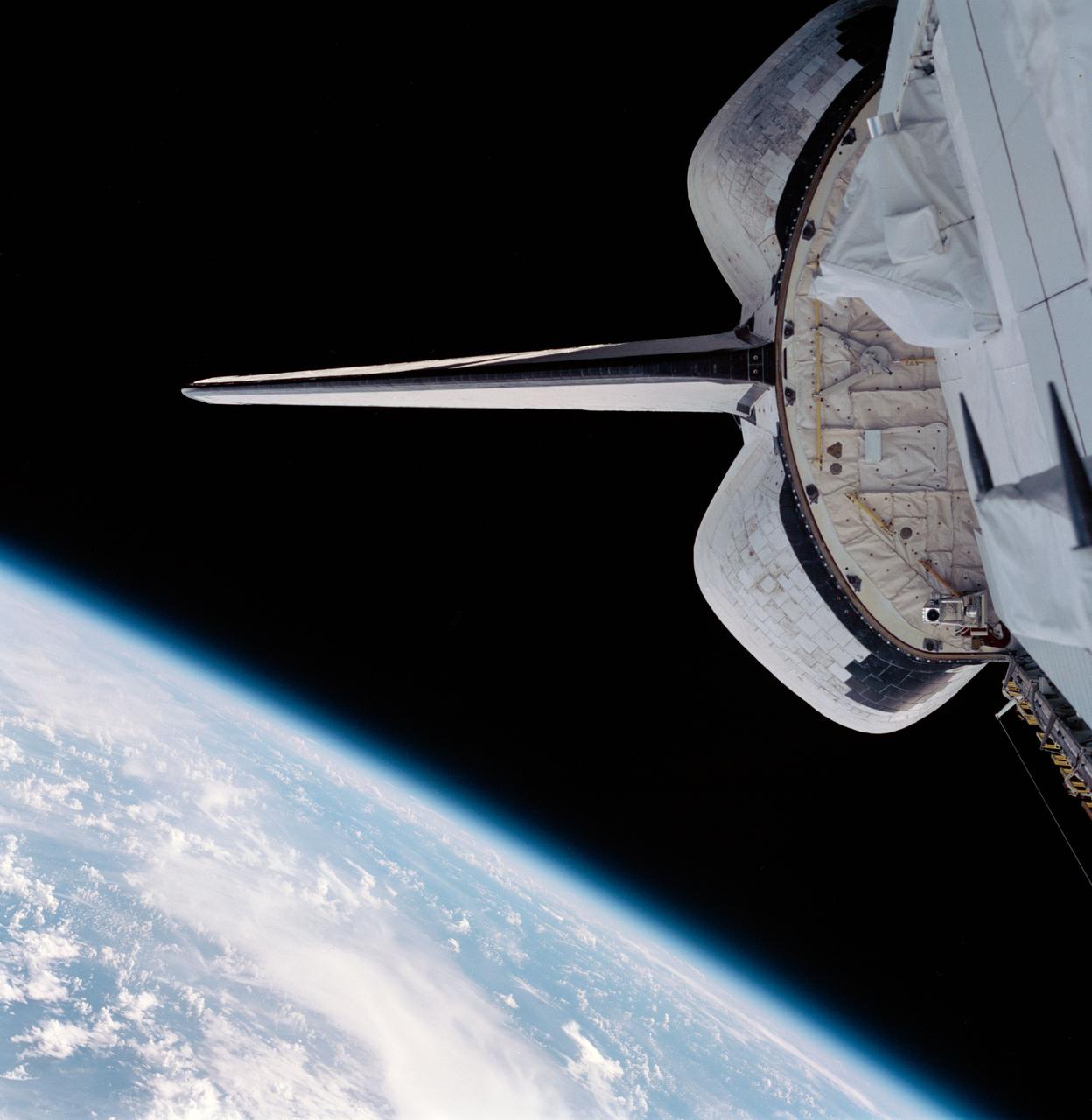
STS099-703-082 (11-22 February 2000) --- Part of the Space Shuttle Endeavour's aft cargo bay, its vertical stabilizer and orbital maneuvering system (OMS) pods are seen in this 70mm frame. Part of Earth's horizon, with an expanse of heavy cloud cover over land and water, is at bottom of frame.
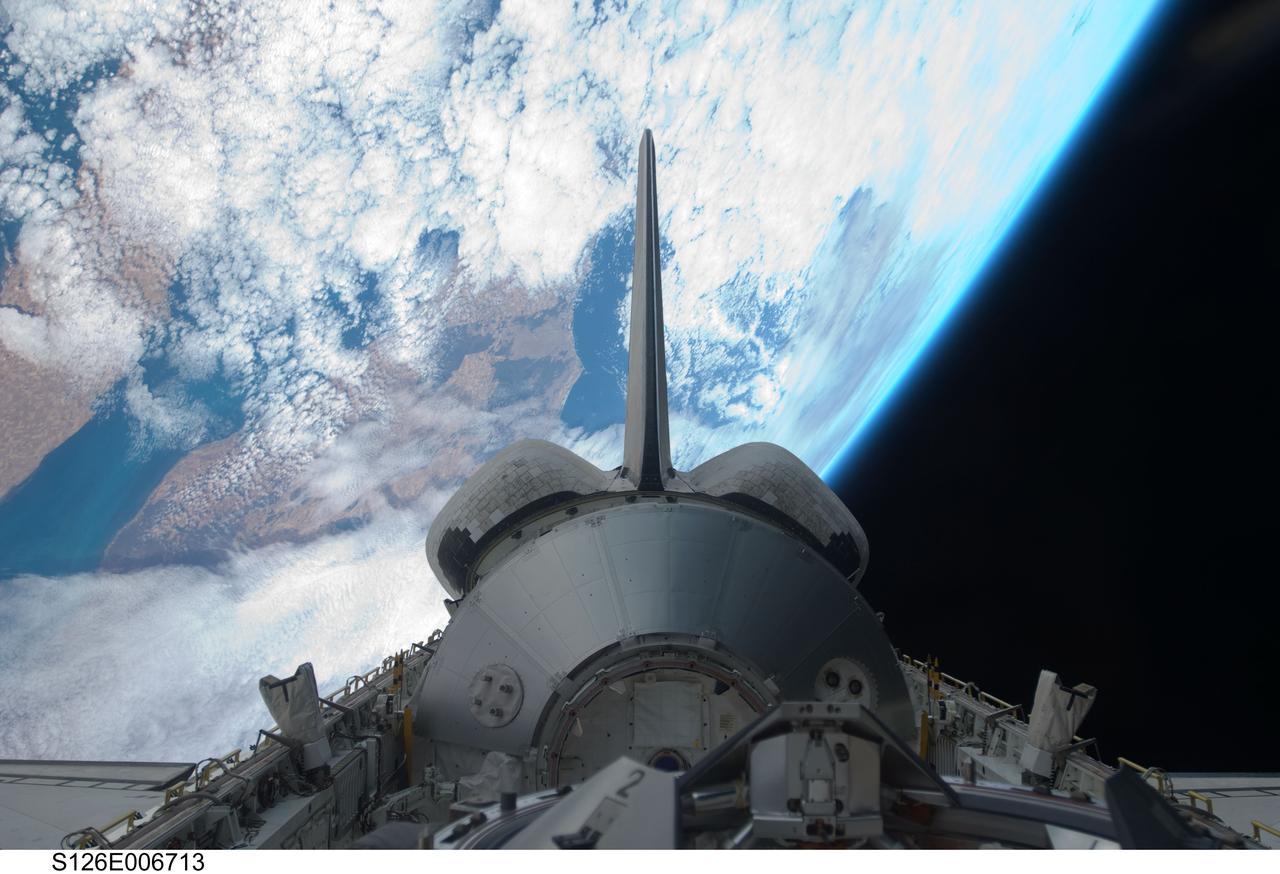
S126-E-006713 (15 Nov. 2008) --- Backdropped by a colorful Earth and the blackness of space, the Leonardo Multi-Purpose Logistics Module visible in Space Shuttle Endeavour's payload bay, vertical stabilizer, orbital maneuvering system (OMS) pods and docking mechanism are featured in this image photographed by a STS-126 crewmember.
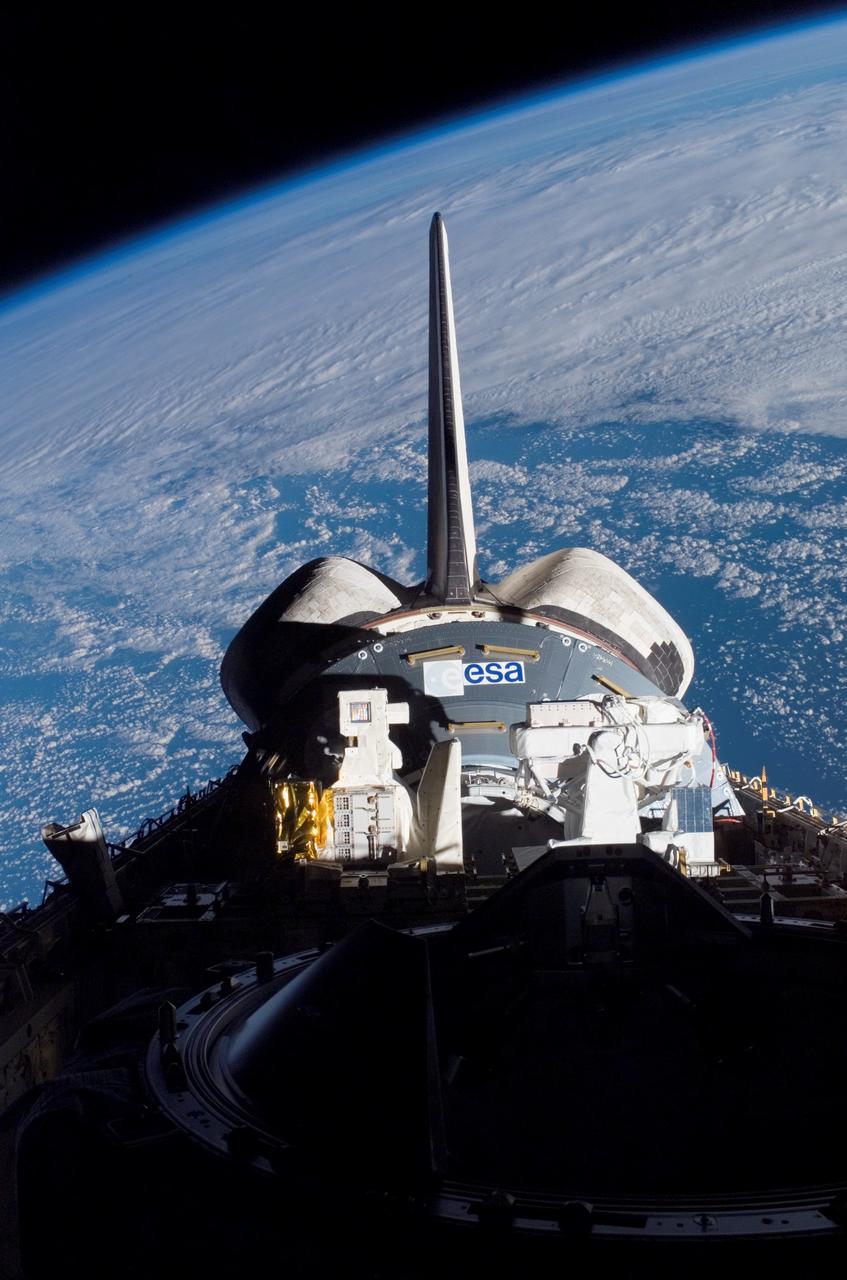
S122-E-006274 (8 Feb. 2008) --- Backdropped by the blackness of space and Earth's horizon, the Columbus laboratory in Space Shuttle Atlantis' payload bay, vertical stabilizer and orbital maneuvering system (OMS) pods are featured in this image photographed by a STS-122 crewmember during flight day two activities.
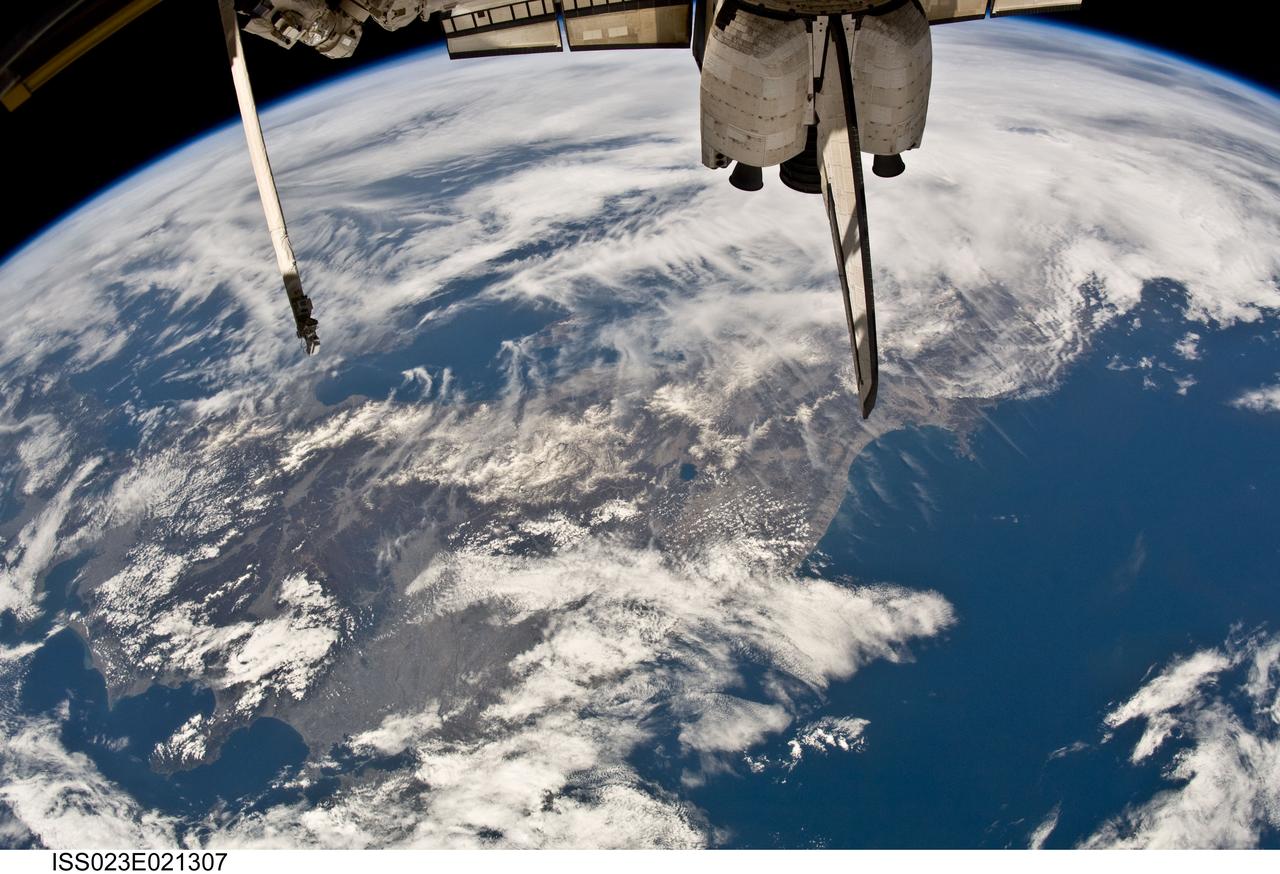
ISS023-E-021307 (10 April 2010) --- Photographed by one of the Expedition 23 crew members onboard the International Space Station 220 miles above Earth, this is a broad area view of Sendai, Japan. The end of the shuttle vertical stabilizer points to Sendai.
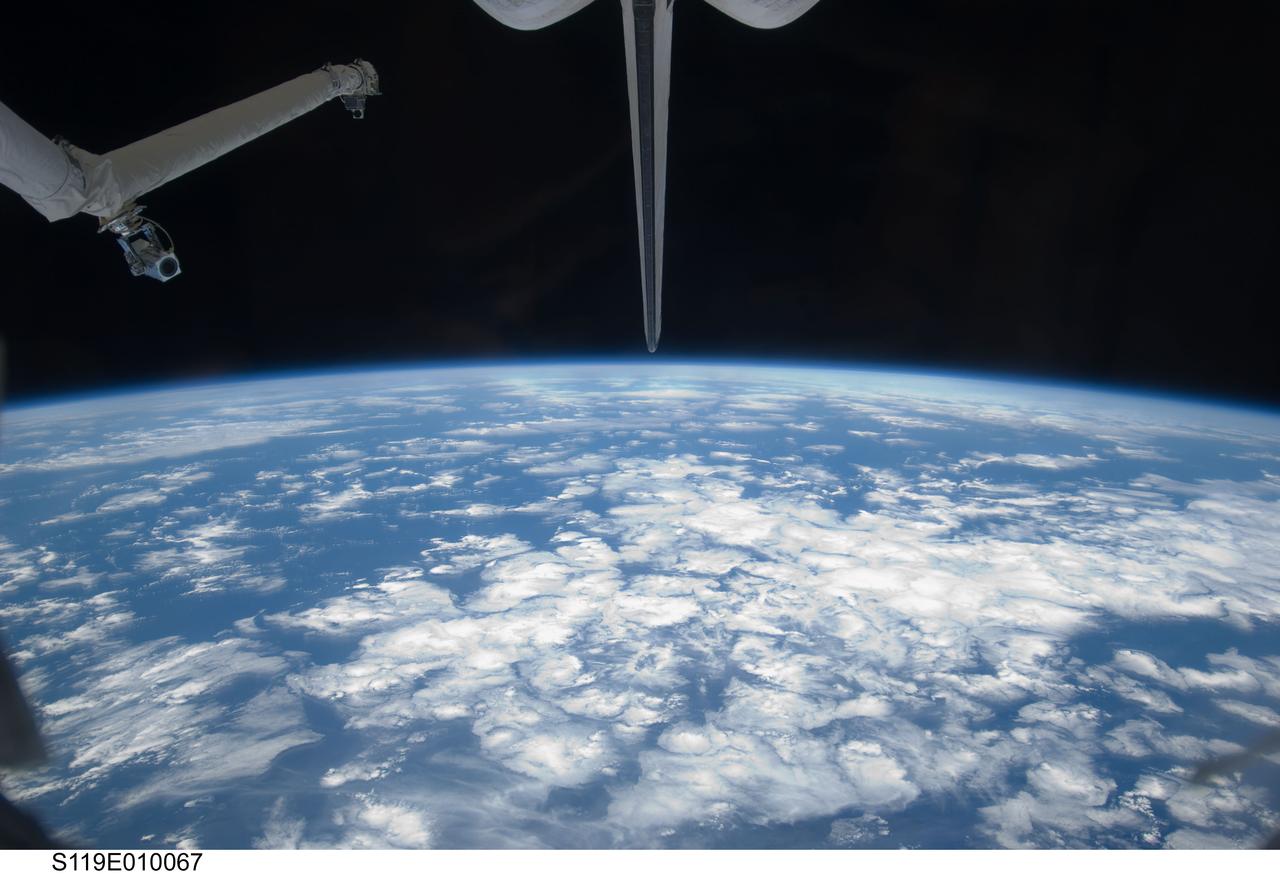
S119-E-010067 (26 March 2009) --- Backdropped by a blue and white Earth and the blackness of space, a portion of Space Shuttle Discovery's Remote Manipulator System (RMS), vertical stabilizer and orbital maneuvering system (OMS) pods are featured in this image photographed by a STS-119 crewmember during flight day 12 activities.
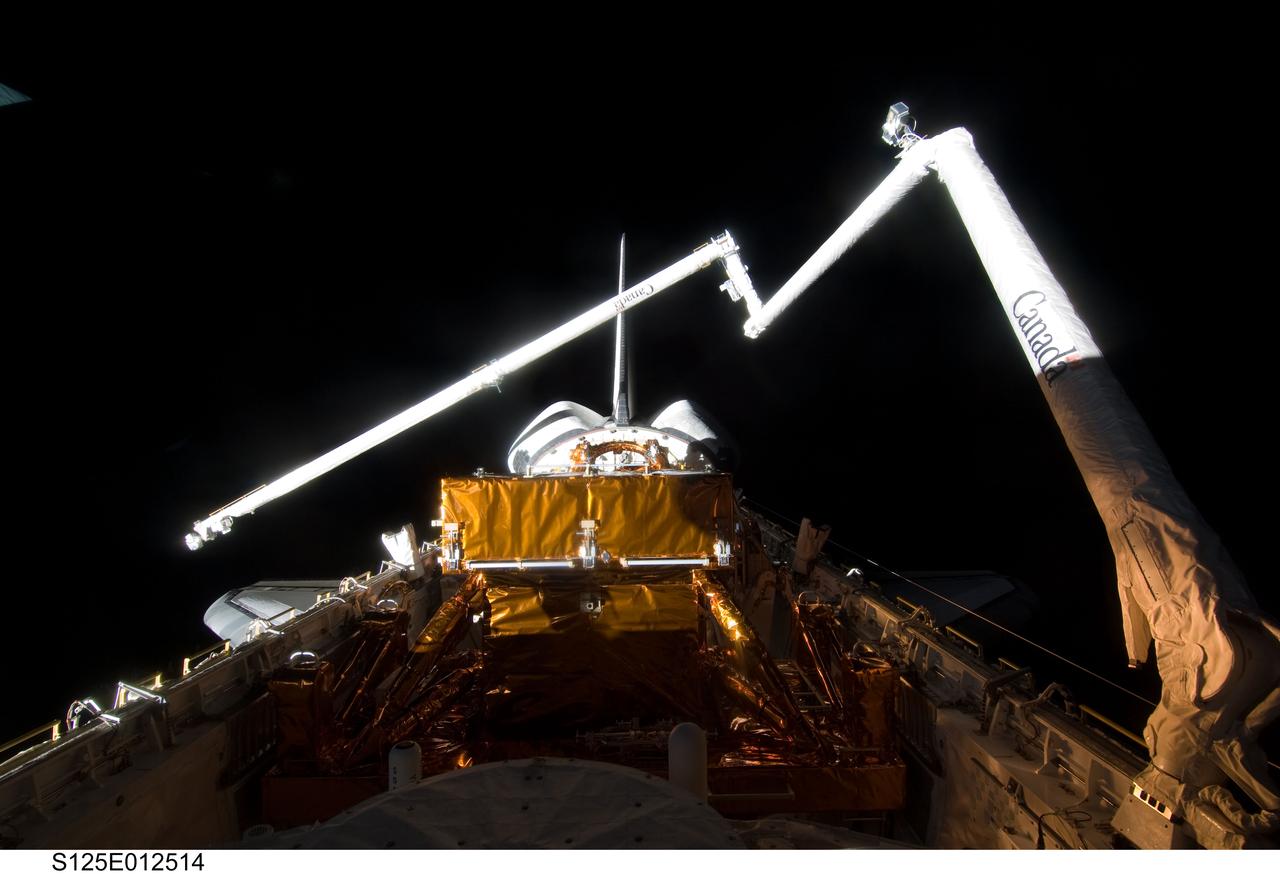
S125-E-012514 (19 May 2009) --- Space Shuttle Atlantis? payload bay, Canadian-built remote manipulator system (RMS) robotic arm, vertical stabilizer and orbital maneuvering system (OMS) pods are featured in this image photographed by an STS-125 crewmember on flight day nine.
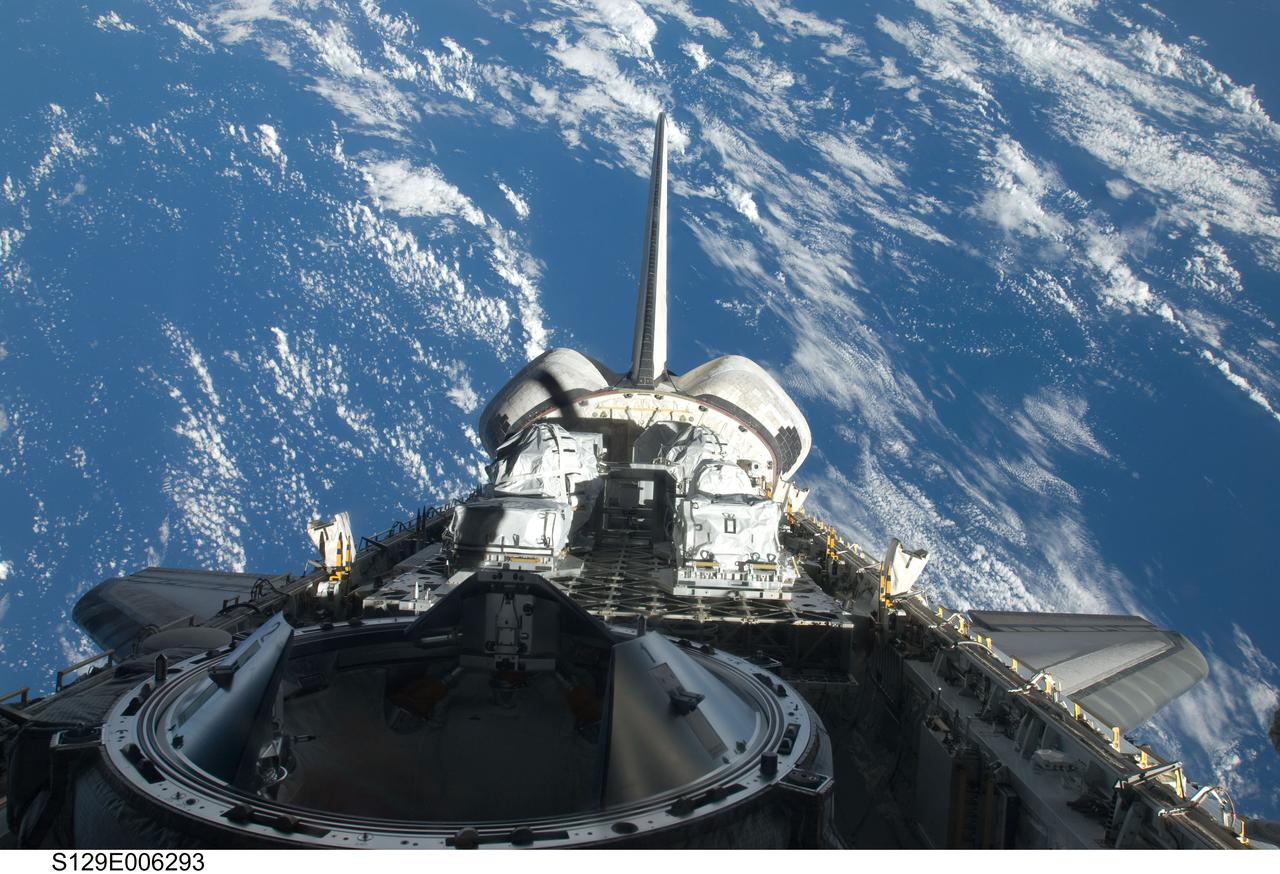
S129-E-006293 (17 Nov. 2009) --- Backdropped by a blue and white part of Earth, a partial view of Space Shuttle Atlantis? payload bay, vertical stabilizer, orbital maneuvering system (OMS) pods and docking mechanism are featured in this image photographed by an STS-129 crew member from an aft flight deck window.
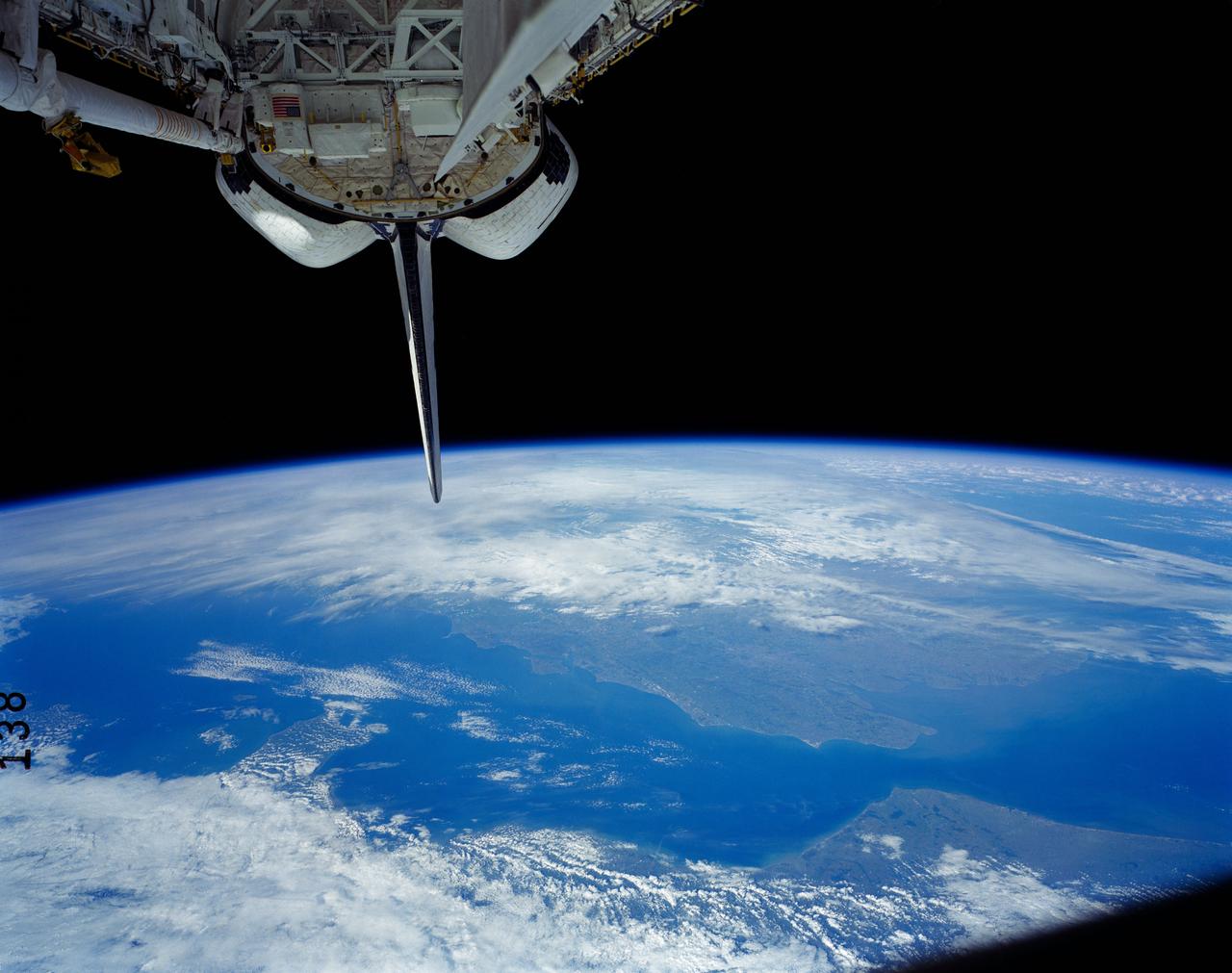
41G-121-138 (5-13 Oct 1984) --- A view of the Earth's horizon featuring France and England. The Strait of Dover and the English channel are visible behind the tail (vertical stabilizer) of Challenger. The remote manipulator system (RMS arm rests in its "stow" position at upper left corner.
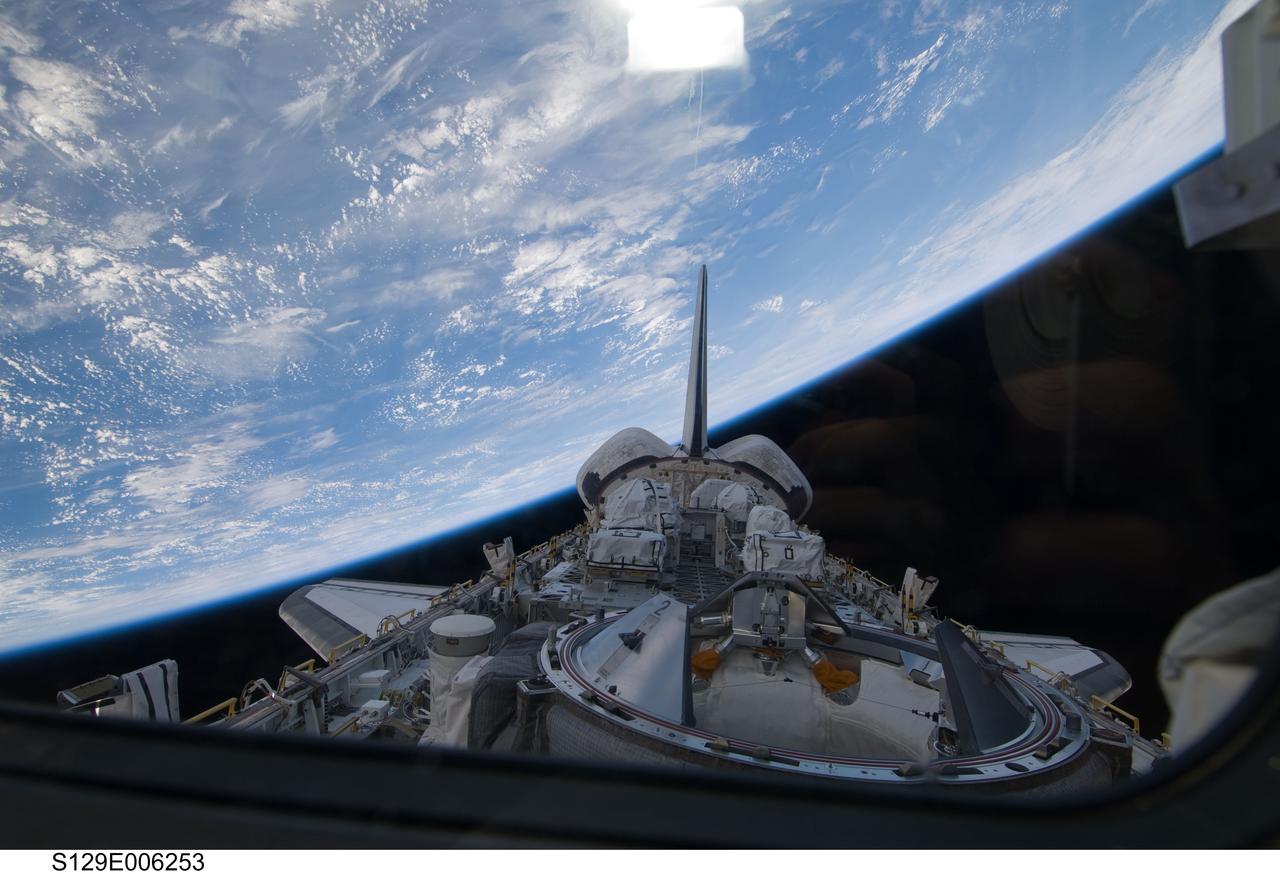
S129-E-006253 (17 Nov. 2009) --- Backdropped by Earth?s horizon and the blackness of space, a partial view of Space Shuttle Atlantis? payload bay, vertical stabilizer, orbital maneuvering system (OMS) pods and docking mechanism are featured in this image photographed by an STS-129 crew member from an aft flight deck window.
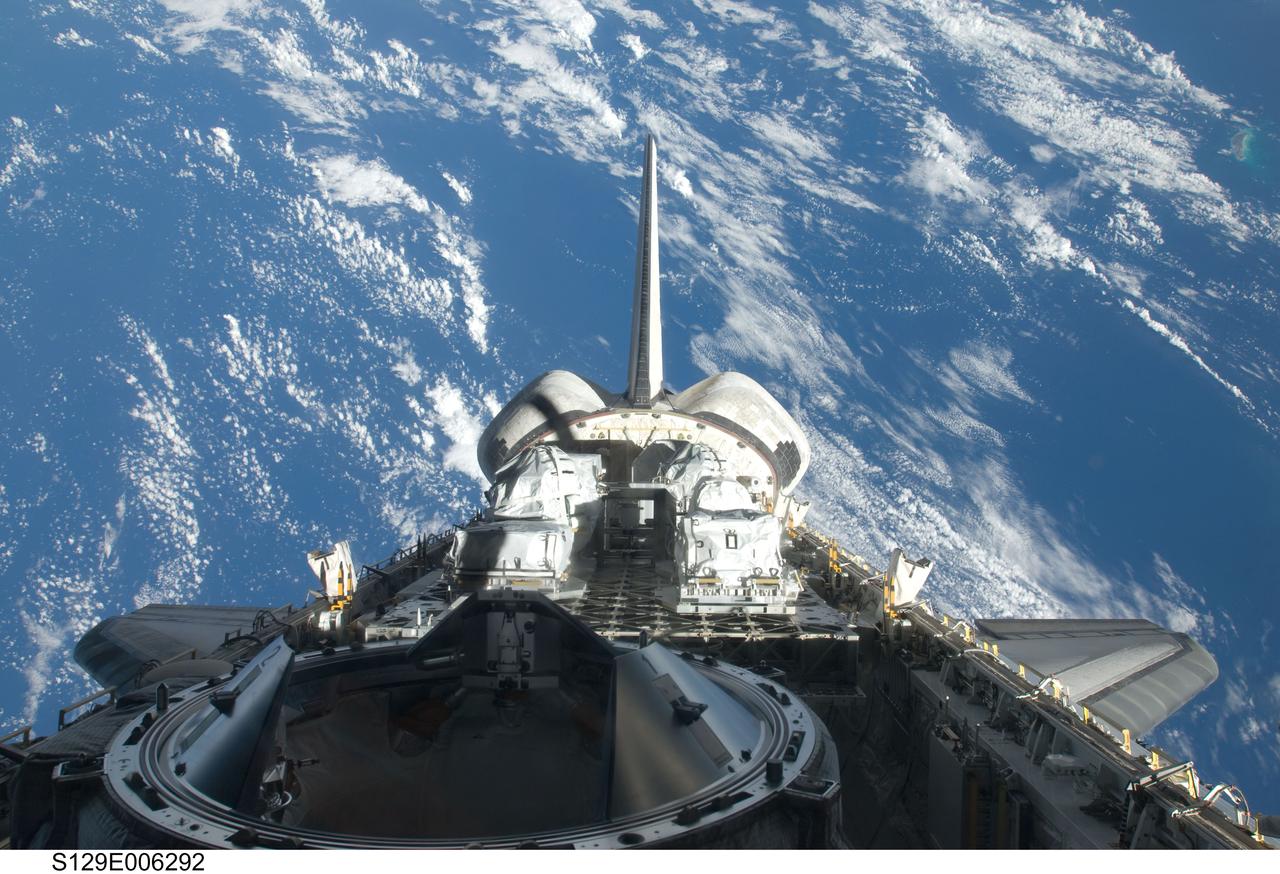
S129-E-006292 (17 Nov. 2009) --- Backdropped by a blue and white part of Earth, a partial view of Space Shuttle Atlantis? payload bay, vertical stabilizer, orbital maneuvering system (OMS) pods and docking mechanism are featured in this image photographed by an STS-129 crew member from an aft flight deck window.
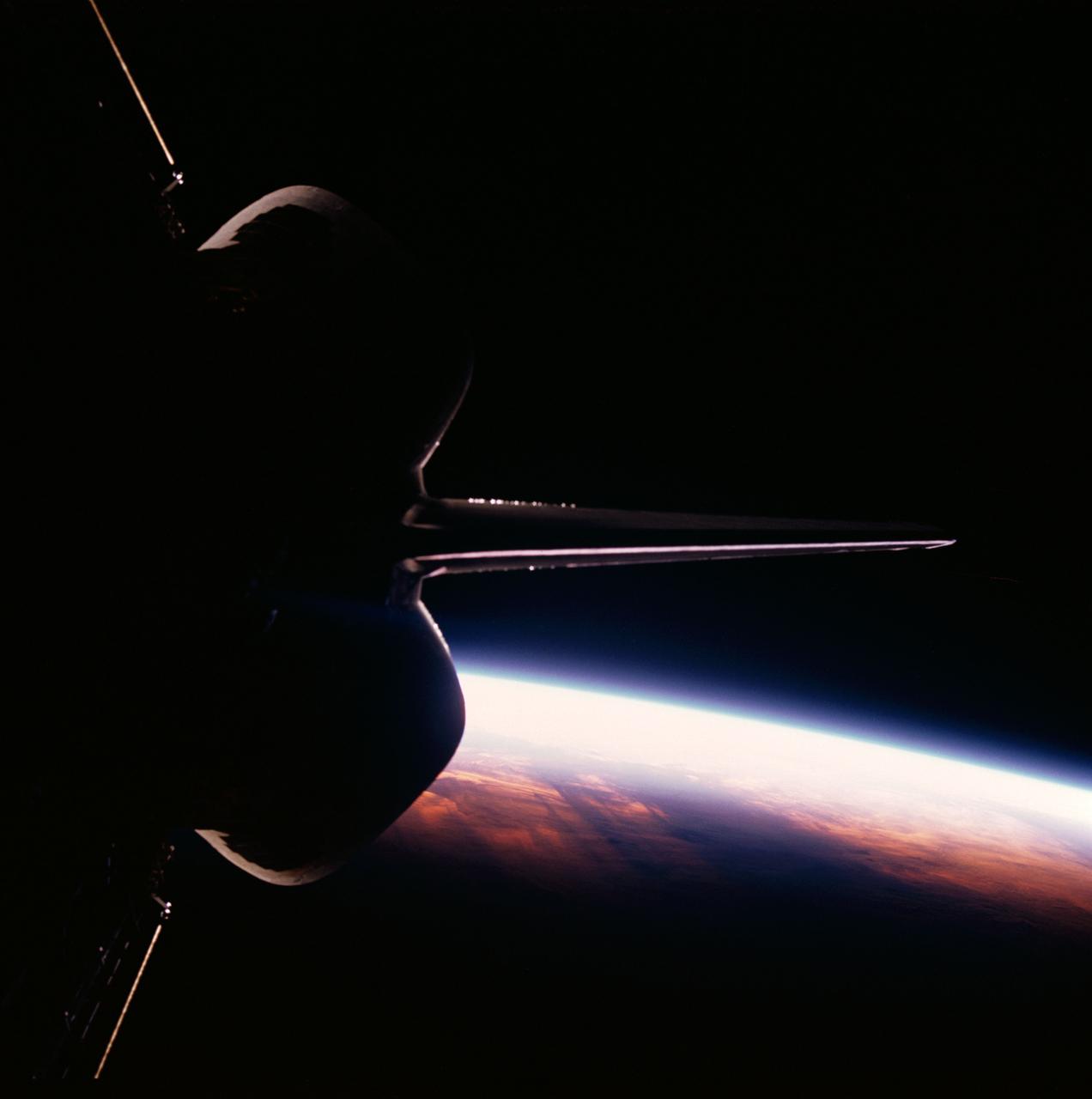
Discovery's, Orbiter Vehicle (OV) 103's, vertical stabilizer and orbital maneuvering system (OMS) pods are backdropped against the contrasted blackness of space illuminated by a colorful Earth / sunrise panorama. View was taken through the aft flight deck viewing windows during STS-26.
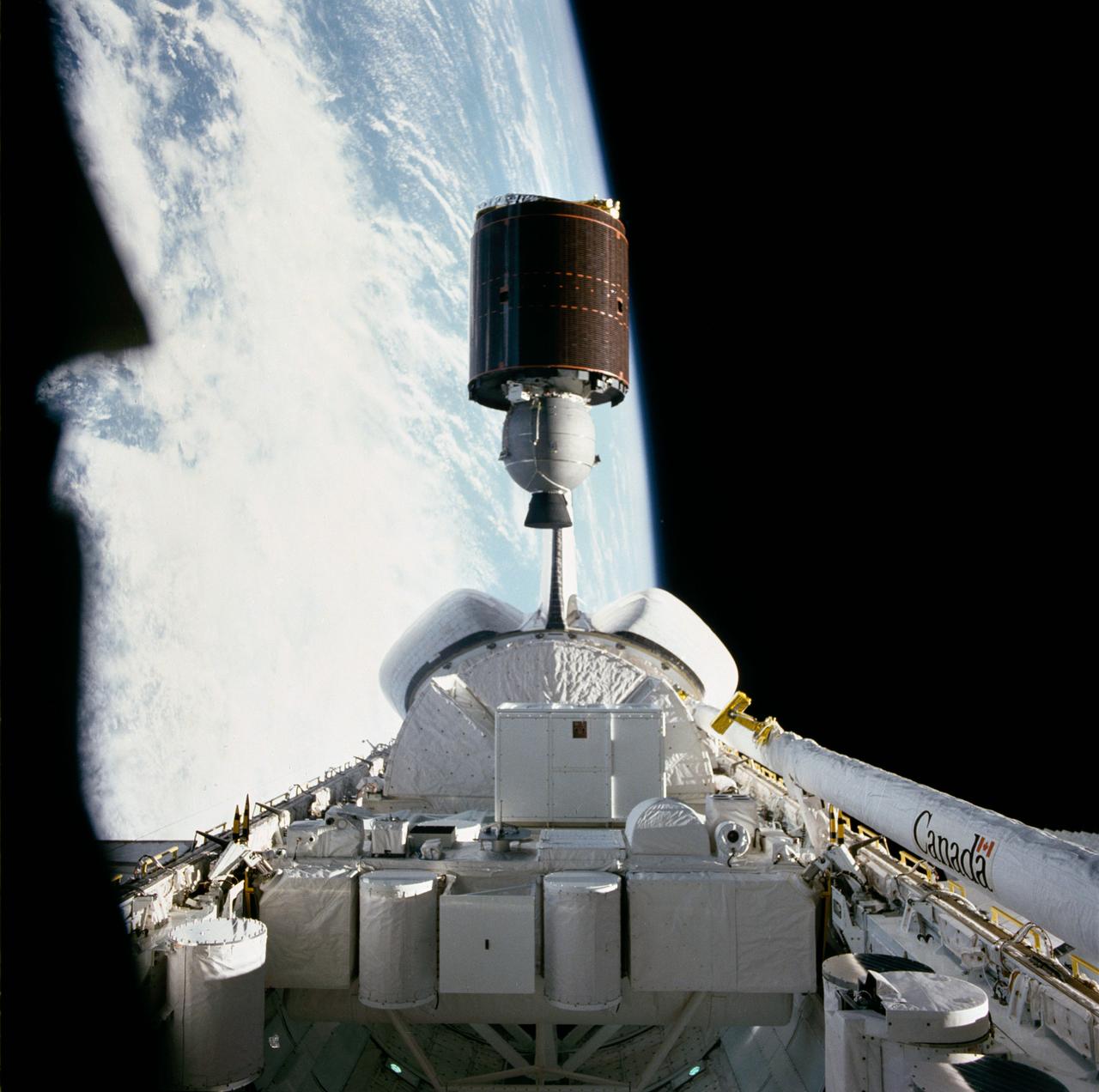
STS007-18-770 (18-24 June 1983) --- Telesat-F communications satellite is just about to clear the vertical stabilizer of the Earth-orbiting Space Shuttle Challenger to begin its way toward its Earth-orbital destination.
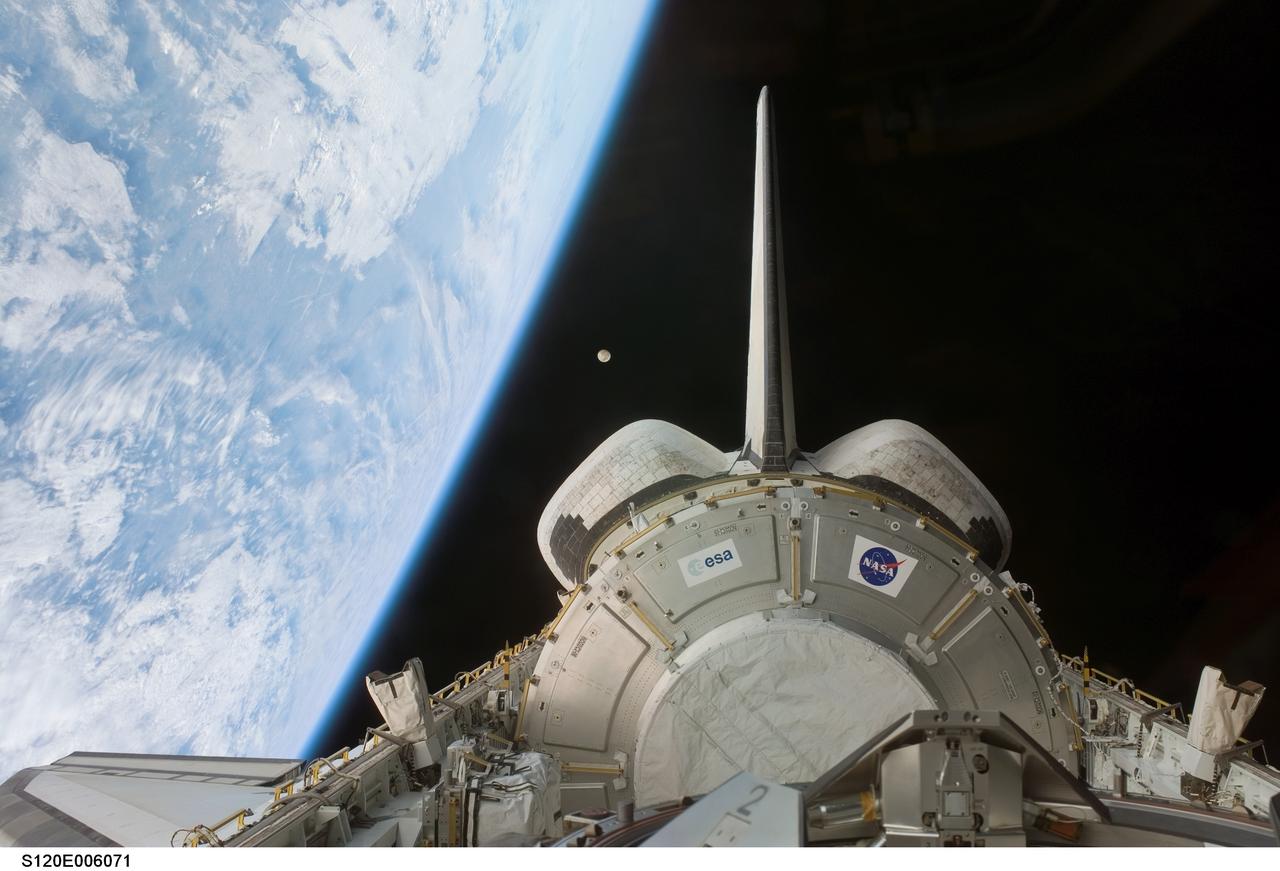
S120-E-006071 (24 Oct. 2007) --- Backdropped by the blackness of space and Earth's horizon, the Harmony node in Space Shuttle Discovery's payload bay, vertical stabilizer and orbital maneuvering system (OMS) pods are featured in this image photographed by a STS-120 crewmember during flight day two activities. Earth's moon is visible at center.
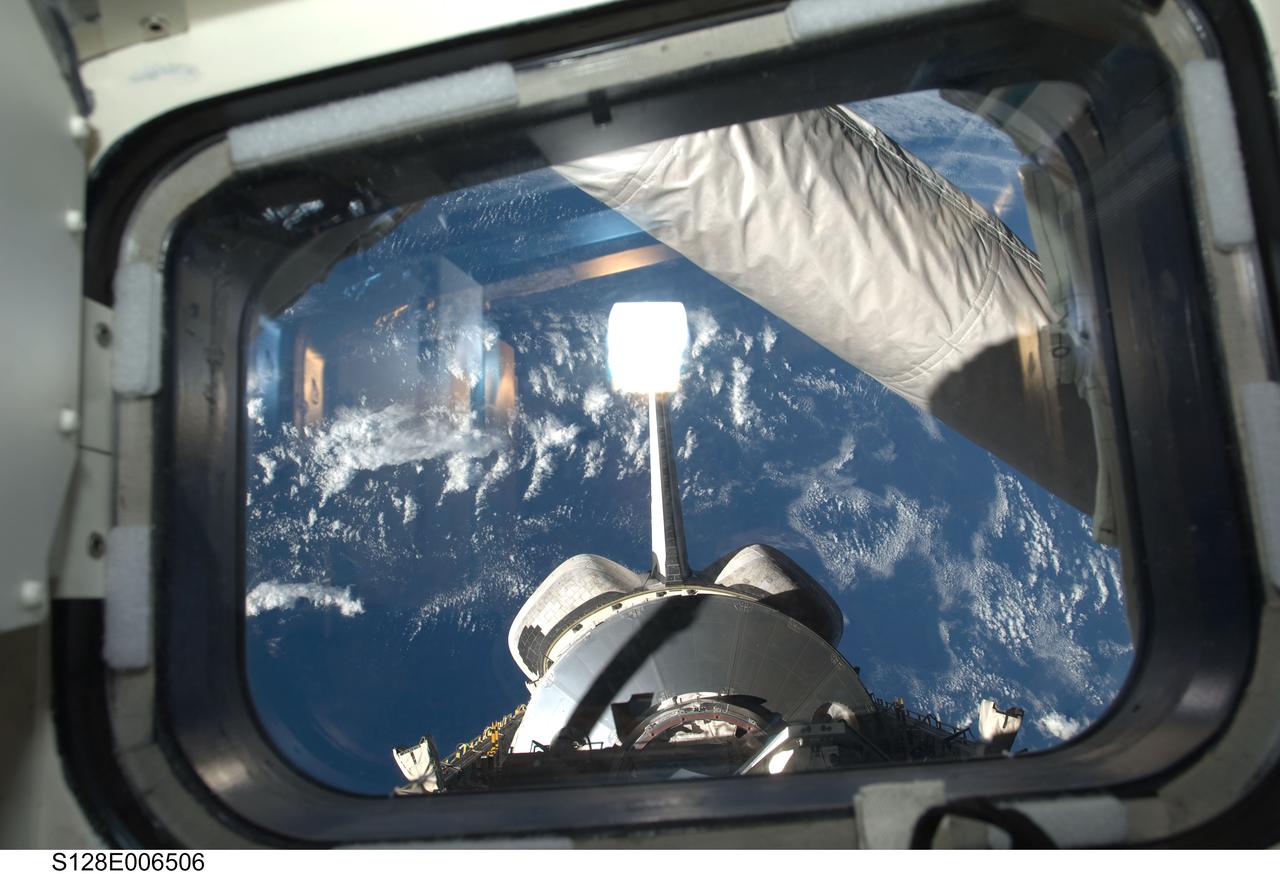
S128-E-006506 (29 Aug. 2009) --- Framed by an aft flight deck window, the Leonardo Multi-Purpose Logistics Module visible in Space Shuttle Discovery's payload bay, vertical stabilizer and orbital maneuvering system (OMS) pods are featured in this image photographed by a STS-128 crew member.
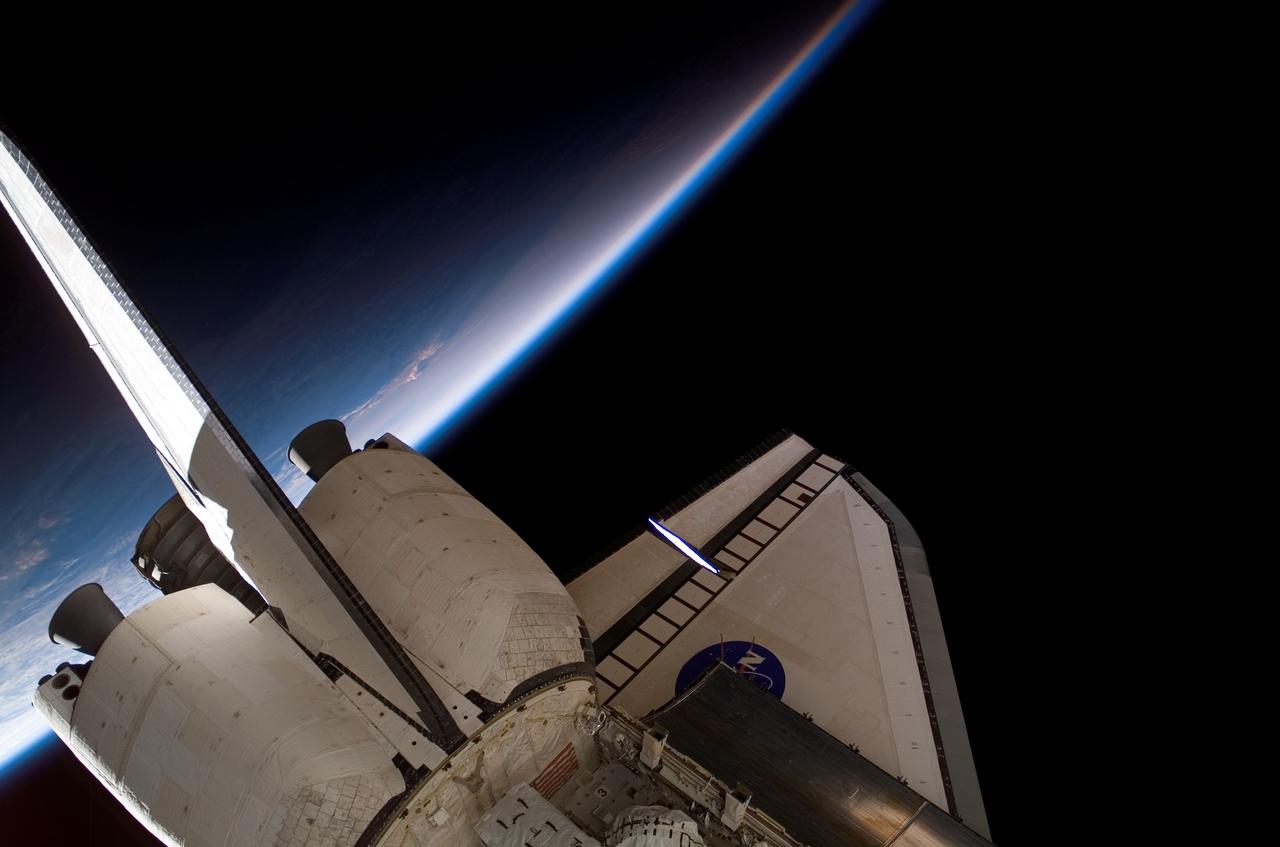
ISS015-E-22323 (13 Aug. 2007) --- Backdropped by the blackness of space and Earth's horizon, Space Shuttle Endeavour's orbital maneuvering system (OMS) pods and vertical stabilizer are featured in this image photographed by a crewmember while docked with the International Space Station during STS-118 flight day six activities.
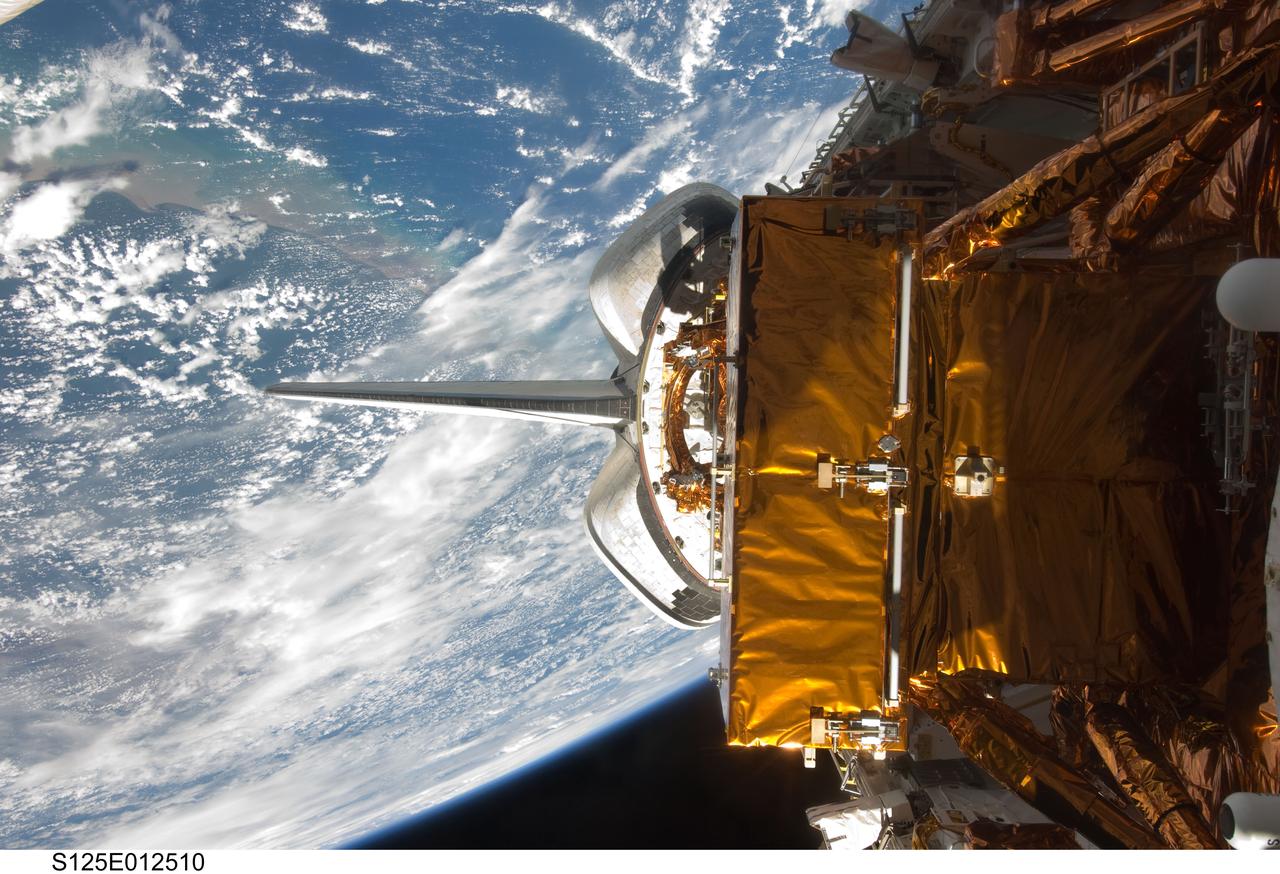
S125-E-012510 (19 May 2009) --- Backdropped by a blue and white Earth, Space Shuttle Atlantis? payload bay, vertical stabilizer and orbital maneuvering system (OMS) pods are featured in this image photographed by an STS-125 crewmember on flight day nine.
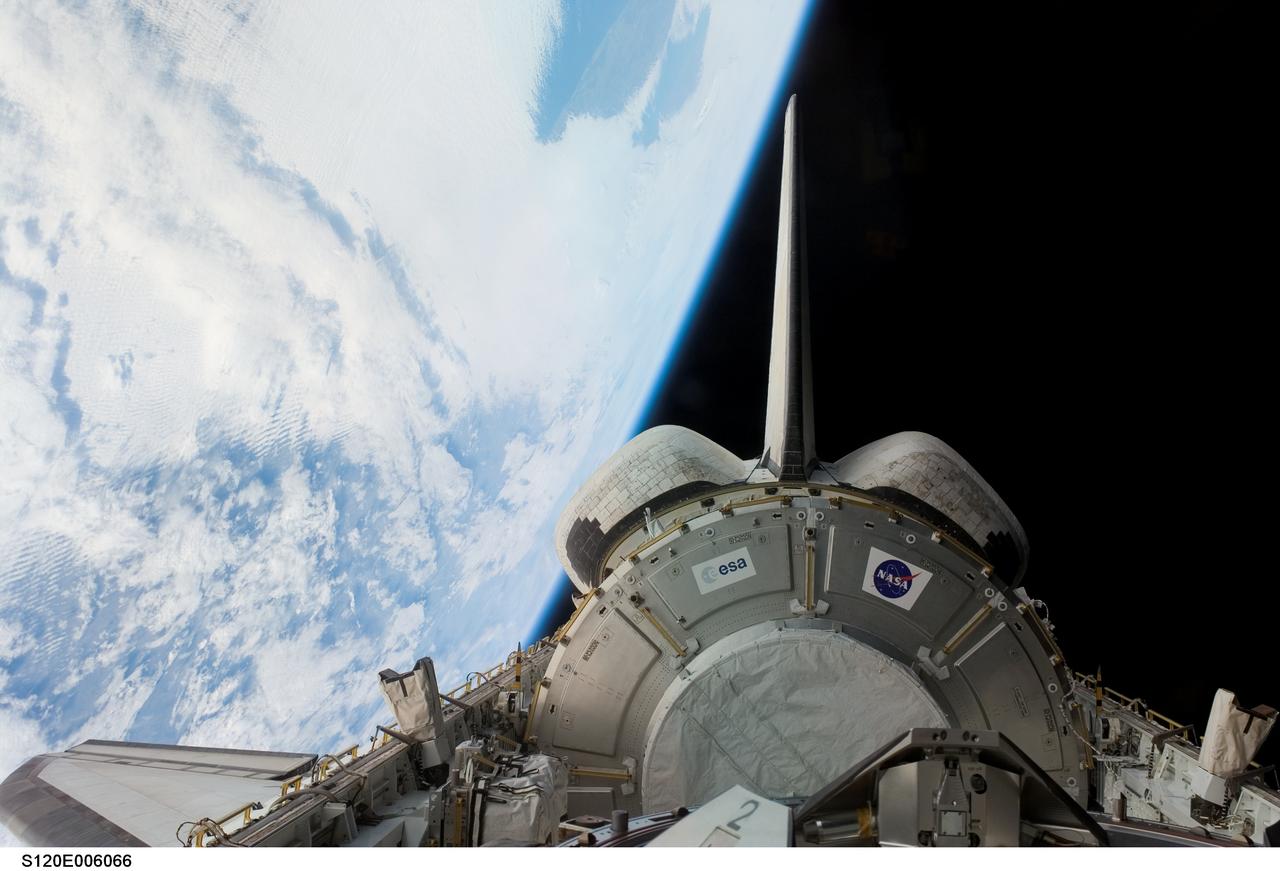
S120-E-006066 (24 Oct. 2007) --- Backdropped by the blackness of space and Earth's horizon, the Harmony node in Space Shuttle Discovery's payload bay, vertical stabilizer and orbital maneuvering system (OMS) pods are featured in this image photographed by a STS-120 crewmember during flight day two activities.
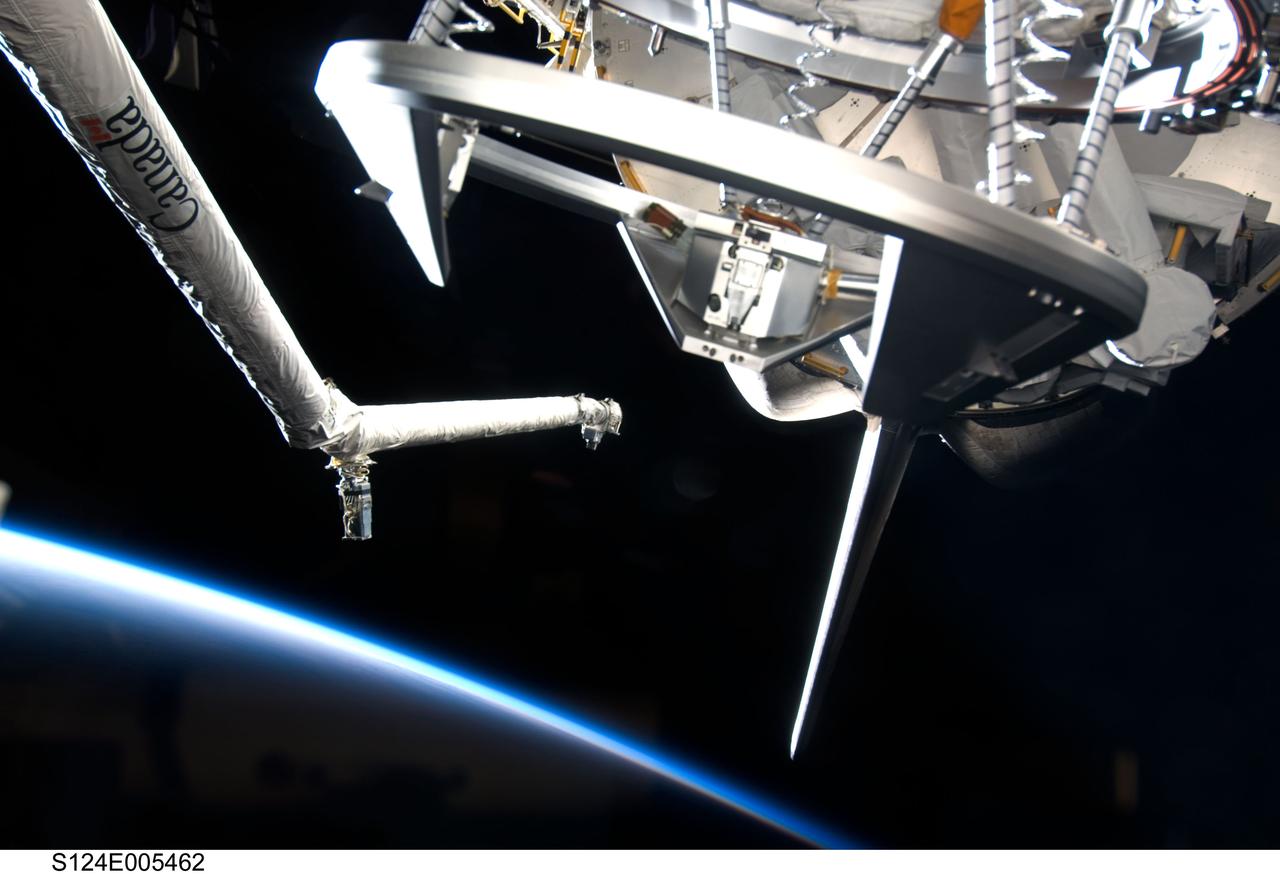
S124-E-005462 (1 June 2008) --- Space Shuttle Discovery's Remote Manipulator System (RMS), docking mechanism, vertical stabilizer and orbital maneuvering system (OMS) pods are featured in this image photographed by a STS-124 crewmember during flight day two activities. The blackness of space and Earth's horizon provide the backdrop for the scene.
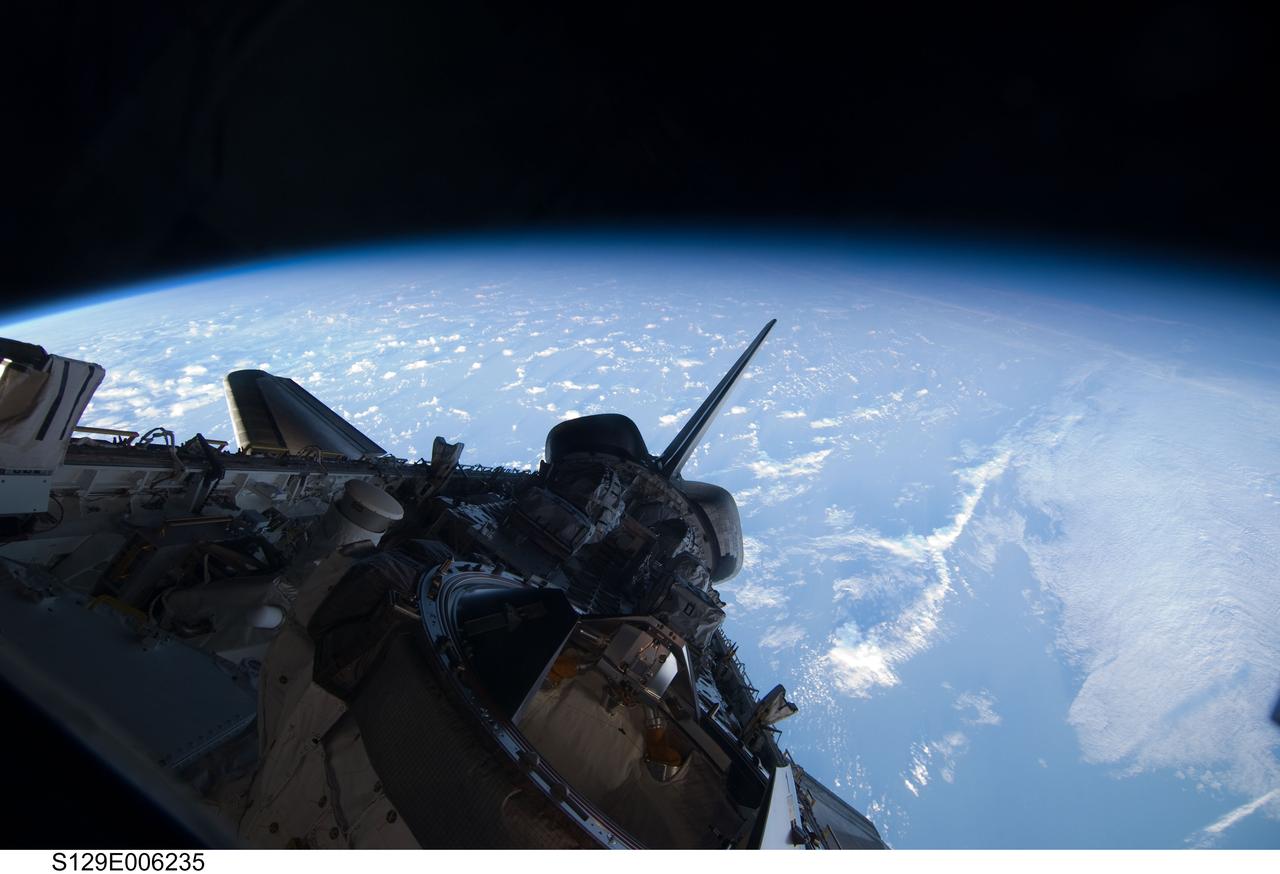
S129-E-006235 (17 Nov. 2009) --- Backdropped by Earth?s horizon and the blackness of space, a partial view of Space Shuttle Atlantis? payload bay, vertical stabilizer, orbital maneuvering system (OMS) pods and docking mechanism are featured in this image photographed by an STS-129 crew member from an aft flight deck window.
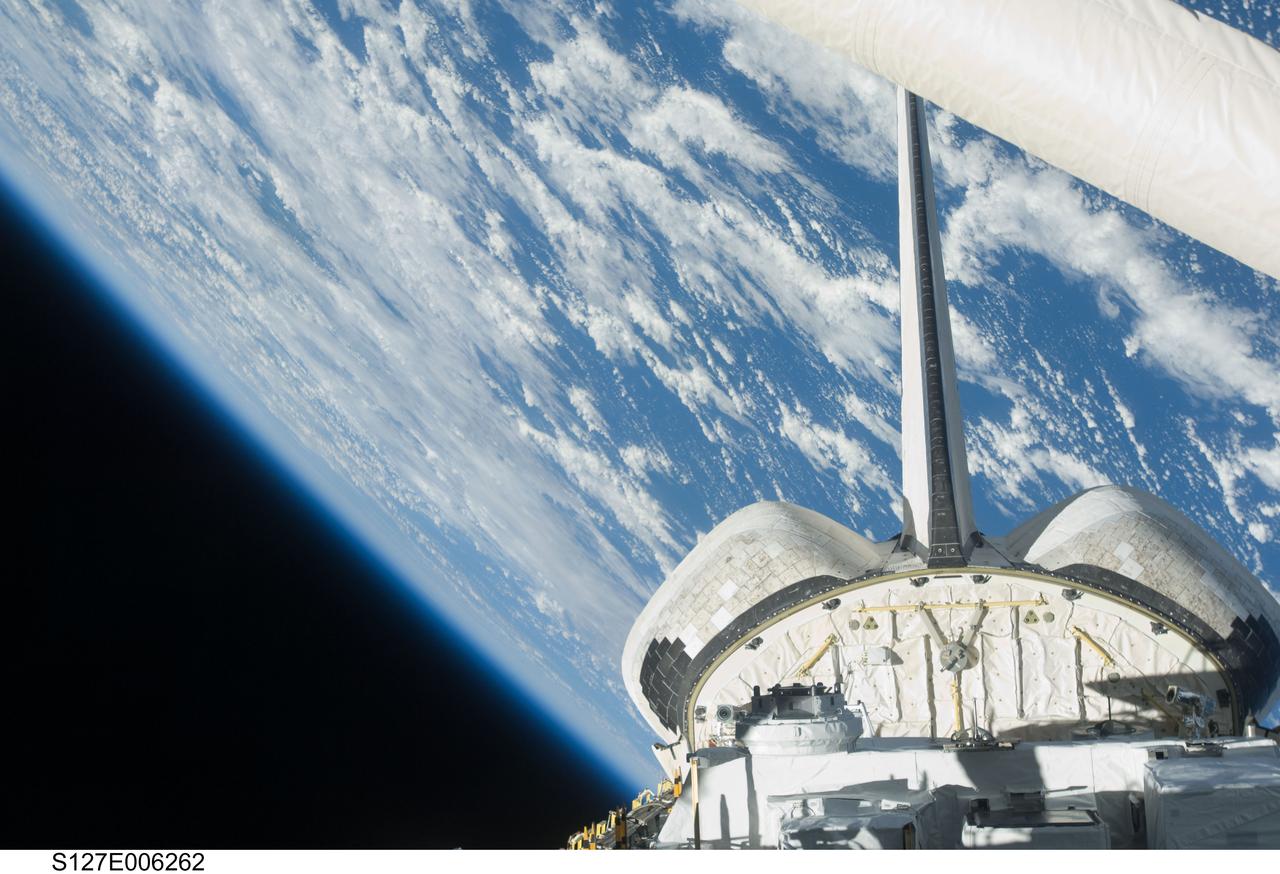
S127-E-006262 (16 July 2009) --- Backdropped by a blue and white Earth and the blackness of space, a partial view of Space Shuttle Endeavour?s payload bay, vertical stabilizer and orbital maneuvering system (OMS) pods are featured in this image photographed by a STS-127 crew member from an aft flight deck window.
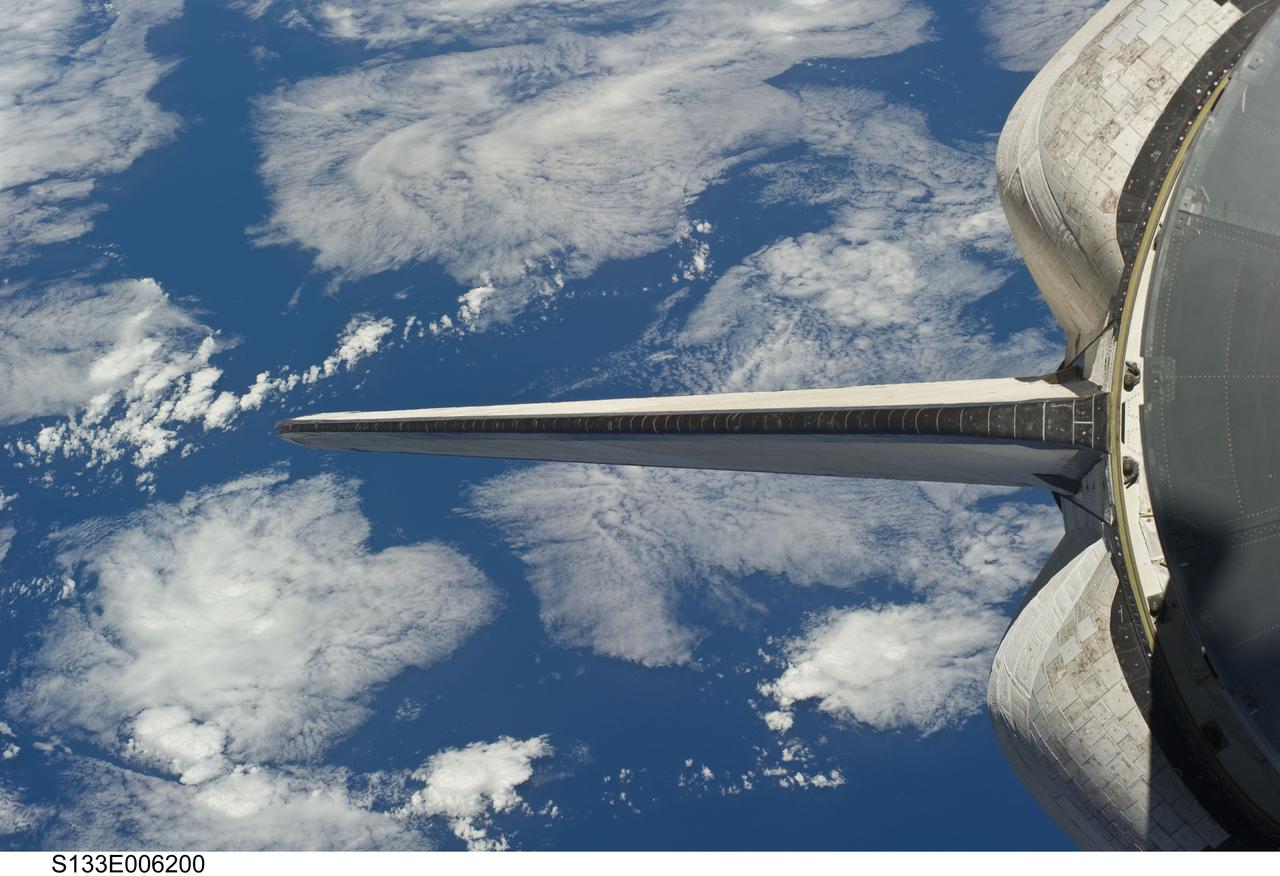
S133-E-006200 (25 Feb. 2011) --- Backdropped by a blue and white part of Earth, space shuttle Discovery’s vertical stabilizer and orbital maneuvering system (OMS) pods are featured in this image photographed by an STS-133 crew member during flight day two activities. Photo credit: NASA or National Aeronautics and Space Administration
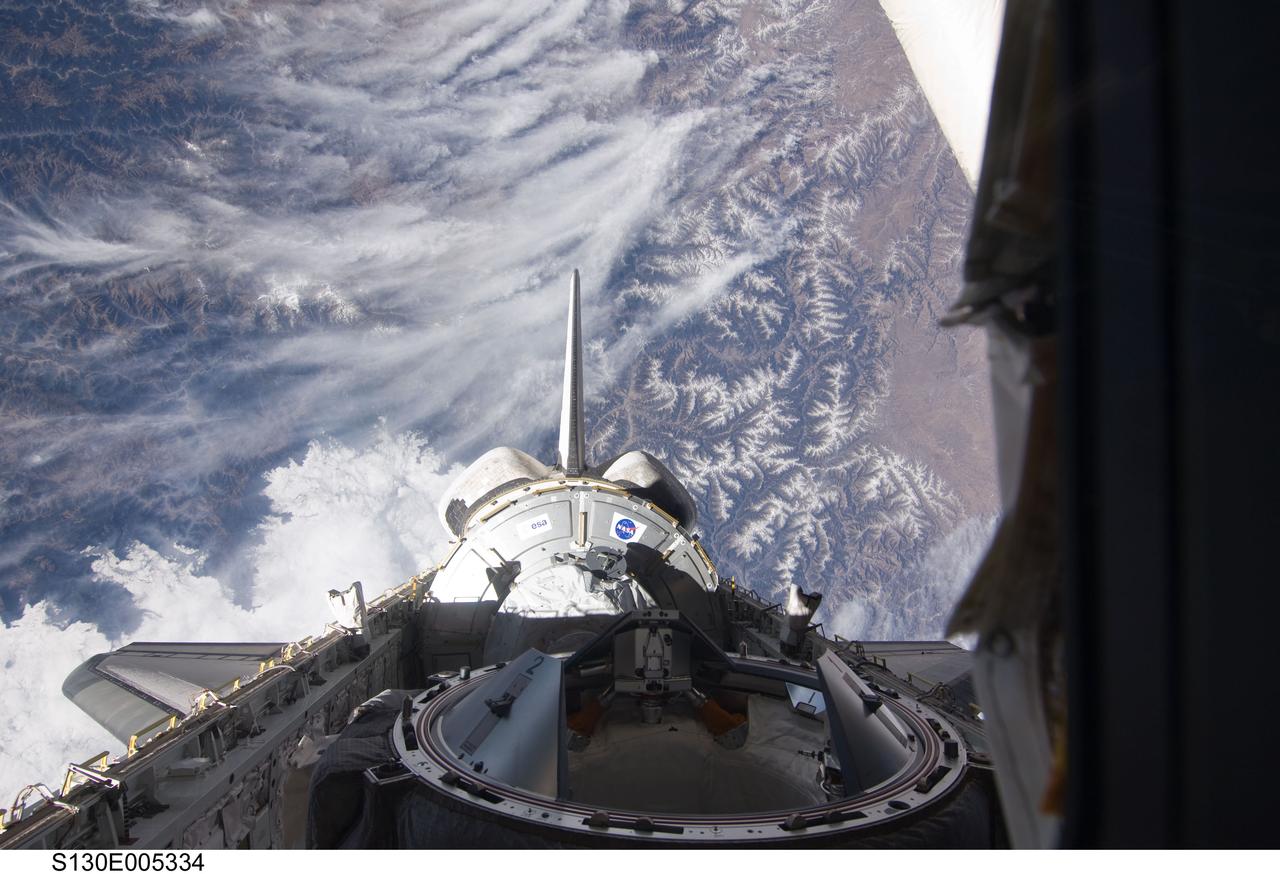
S130-E-005334 (8 Feb. 2010) --- Backdropped by mountainous terrain, the Tranquility node in space shuttle Endeavour’s payload bay, vertical stabilizer, orbital maneuvering system (OMS) pods and docking mechanism are featured in this image photographed by an STS-130 crew member from an aft flight deck window.
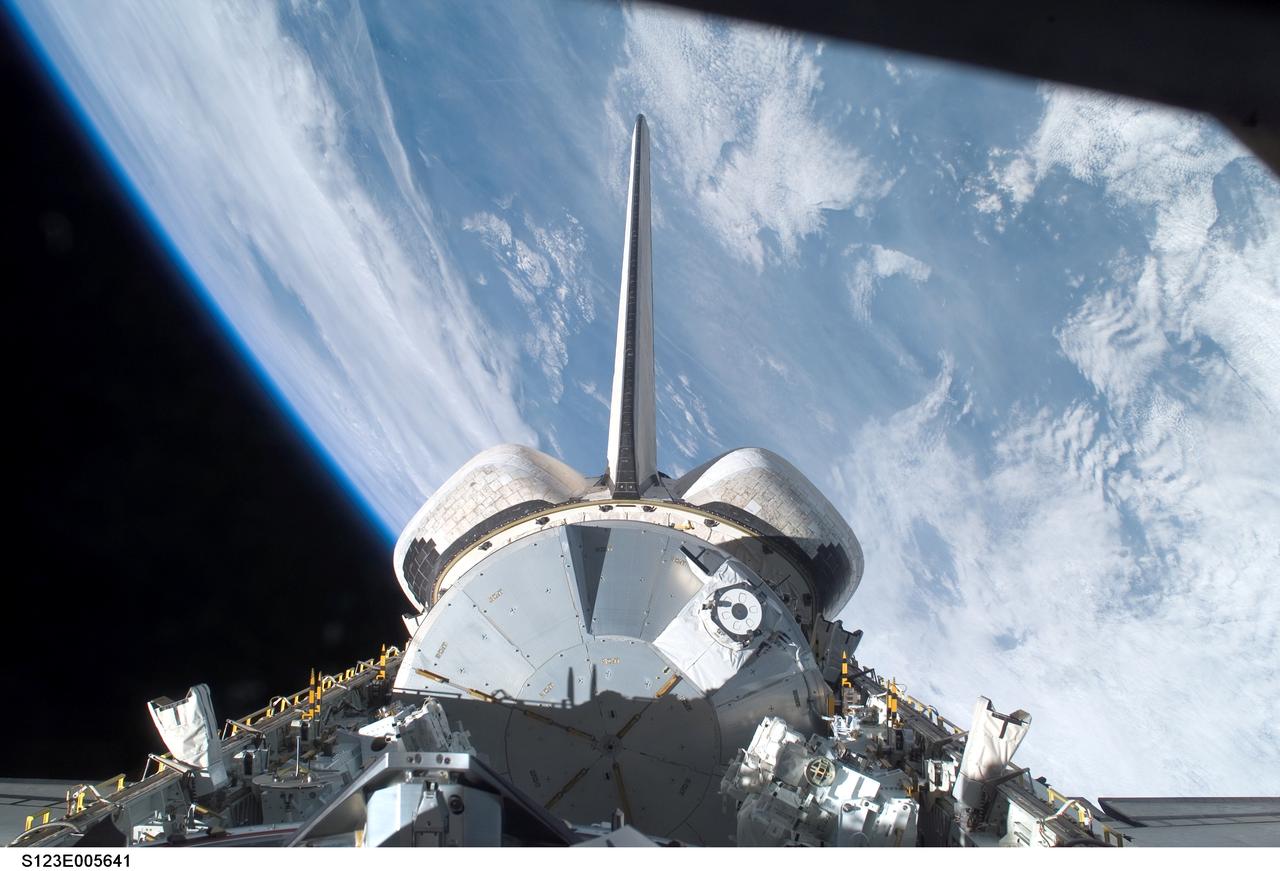
S123-E-005641 (13 March 2008) --- Backdropped by Earth's horizon and the blackness of space, the logistics module for the Japanese Kibo laboratory in Space Shuttle Endeavour's payload bay, vertical stabilizer and orbital maneuvering system (OMS) pods are featured in this image photographed by a STS-123 crewmember.
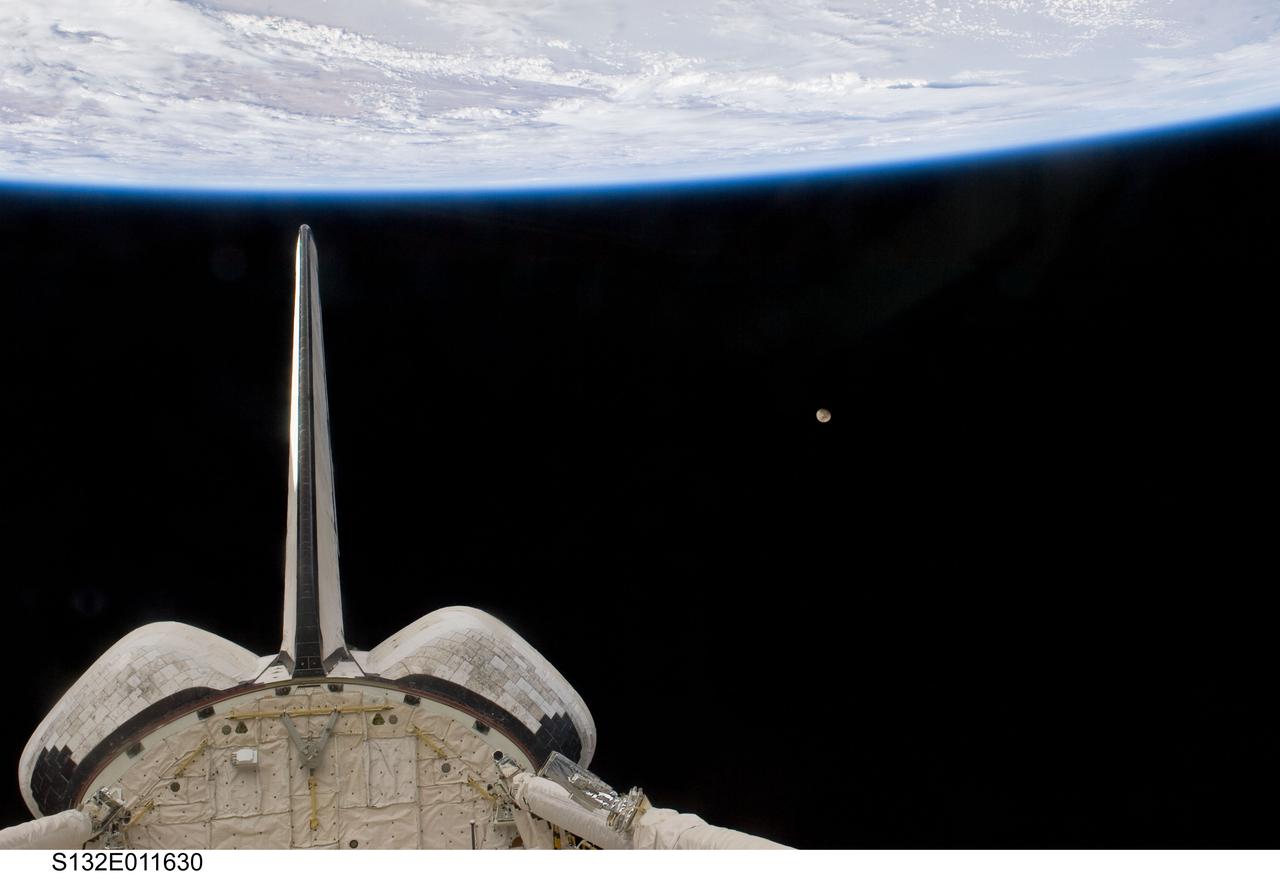
S132-E-011630 (25 May 2010) --- Space shuttle Atlantis’ vertical stabilizer, orbital maneuvering system (OMS) pods and aft payload bay; along with Earth’s horizon and the moon are featured in this image photographed by an STS-132 crew member on the shuttle during flight day 12 activities.
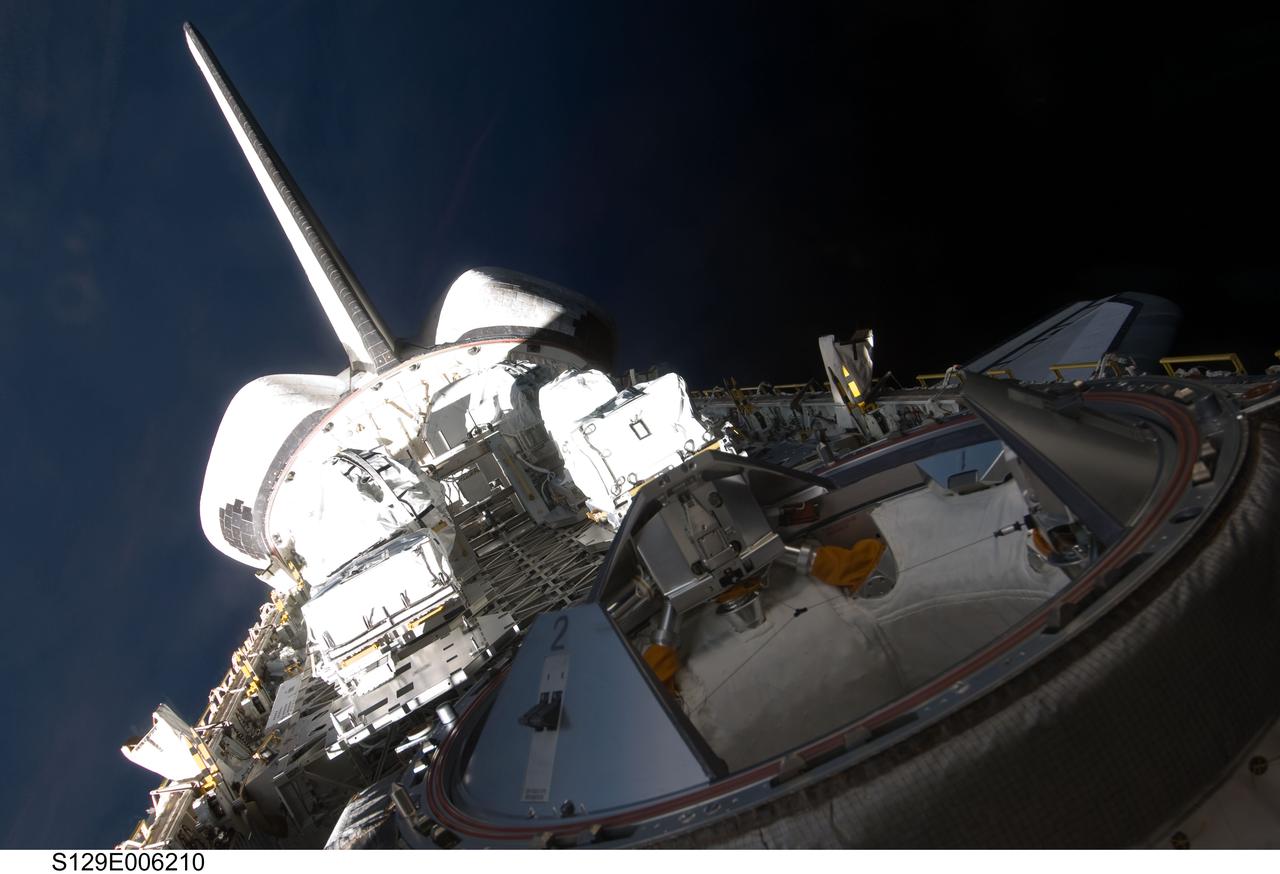
S129-E-006210 (17 Nov. 2009) --- Backdropped by the blackness of space, a partial view of Space Shuttle Atlantis? payload bay, vertical stabilizer, orbital maneuvering system (OMS) pods and docking mechanism are featured in this image photographed by an STS-129 crew member from an aft flight deck window.
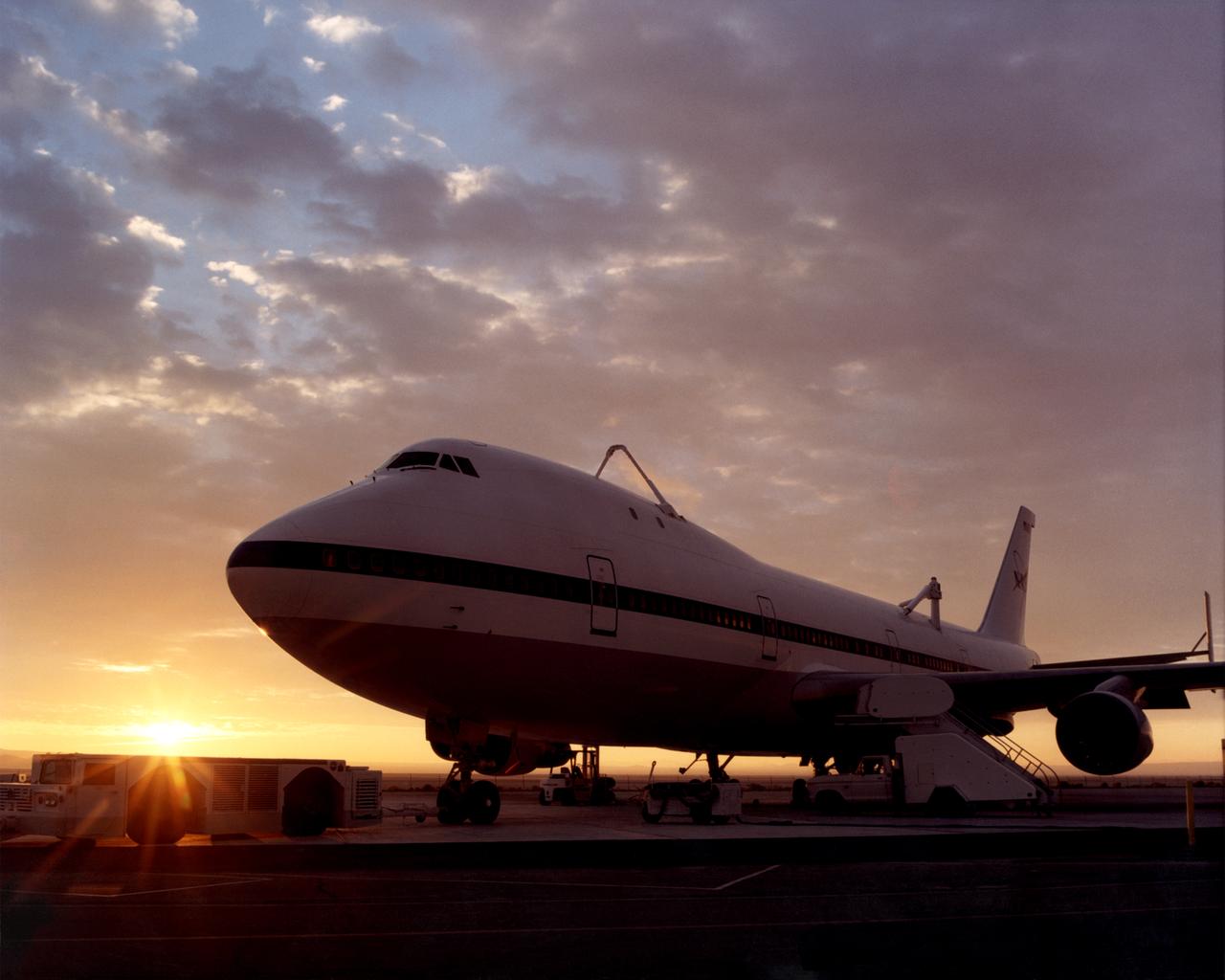
One of NASA’s two modified Boeing 747 Shuttle Carrier Aircraft is bathed in the morning Sun at NASA’s Dryden Flight Research Center at Edwards, California. The modified jumbo jetliners are used to ferry the Space Shuttle orbiters between Dryden and the Kennedy Space Center in Florida and Boeing’s Reusable Space Systems modification facility at Palmdale, California. Features which distinguish the two SCAs from standard 747 jetliners are three struts, with associated interior structural strengthening, which protrude from the top of the fuselage (two aft, one forward) on which the orbiter is attached, and two additional vertical stabilizers, one on each end of the standard horizontal stabilizer, to enhance directional stability. All interior furnishings and equipment aft of the forward No. 1 doors have also been removed to reduce weight. The two SCAs are under the operational control of NASA's Johnson Space Center, Houston, Texas.
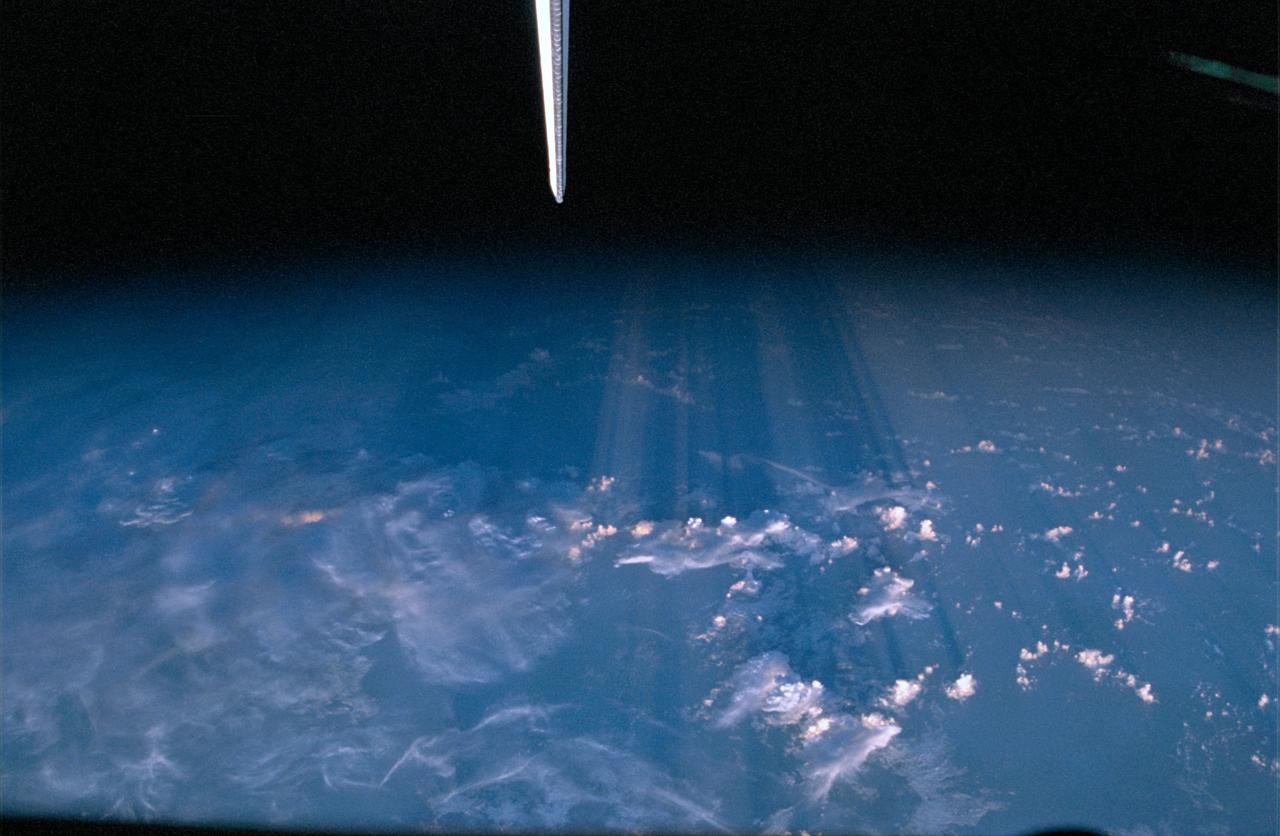
STS072-308-033 (11-20 Jan. 1996) --- The vertical stabilizer of the Space Shuttle Endeavour almost appears to be pointing out the odd phenomenon of sun streaks and shadows on clouds over the southwestern United States. This was one of seventeen still images shown by the crew members for NASA employees and guests following their stay in space aboard the Endeavour.
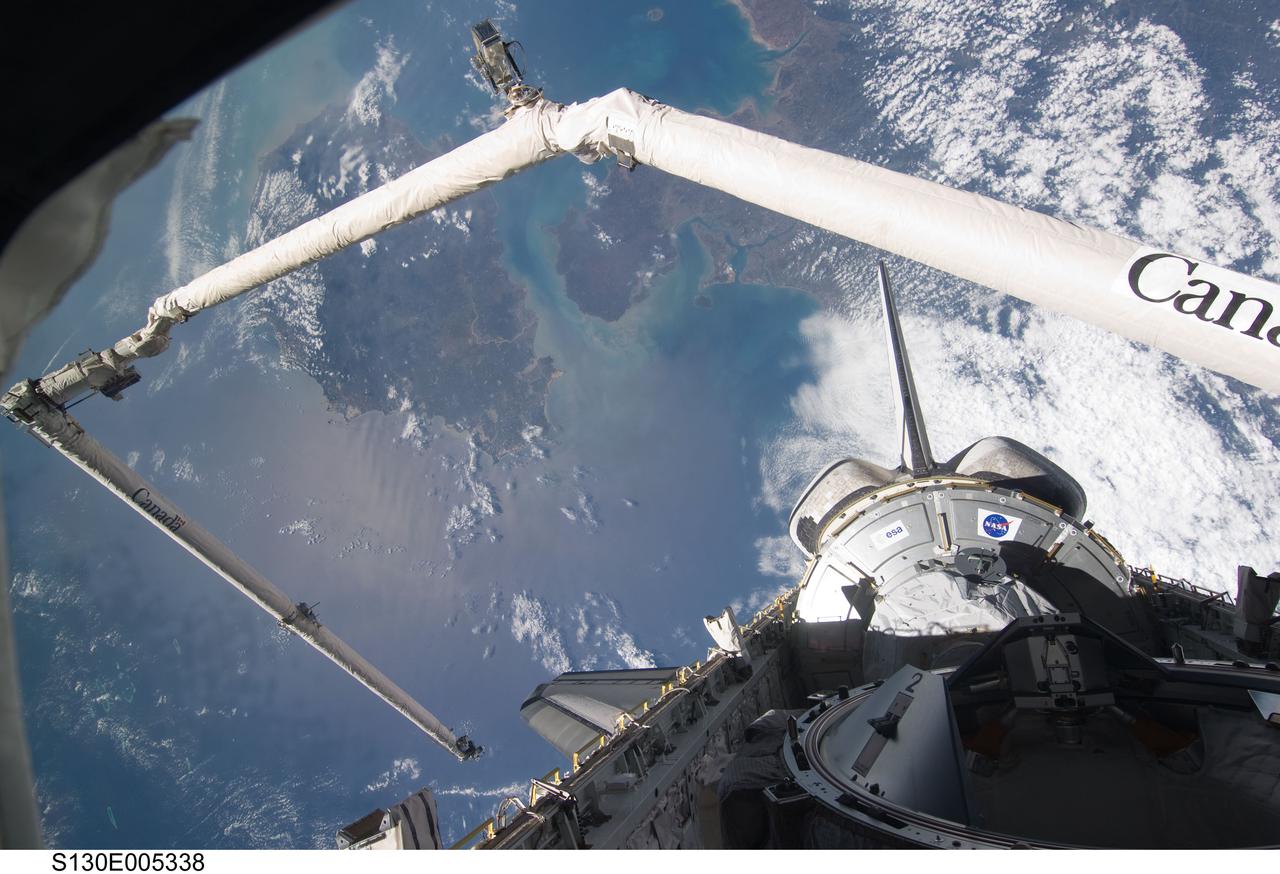
S130-E-005338 (8 Feb. 2010) --- Backdropped by the South China Sea and the Gulf of Tonkin, the Tranquility node in space shuttle Endeavour’s payload bay, vertical stabilizer, orbital maneuvering system (OMS) pods and a shadow-covered docking mechanism are featured in this image photographed by the STS-130 crew from an aft flight deck window. Hainan Island can be seen between the South China Sea (bottom) and Gulf of Tonkin (top). The Leizhou Peninsula of the Chinese mainland is on the upper right.
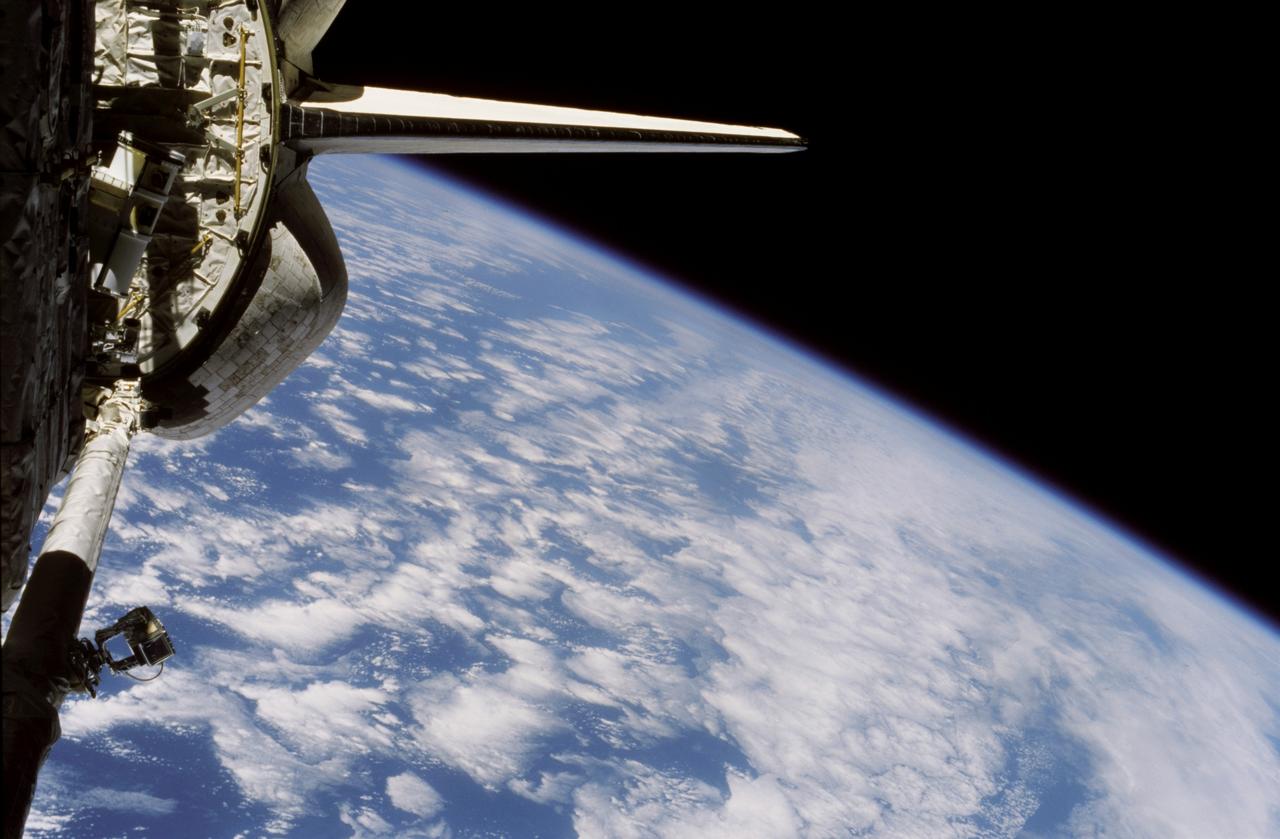
STS116-320-001 (9-22 Dec. 2006) --- Backdropped by the horizon of a blue and white Earth and the blackness of space, part of the Space Shuttle Discovery's aft cargo bay, its vertical stabilizer and orbital maneuvering system (OMS) pods are seen in this image photographed by an STS-116 crewmember onboard the shuttle. This image was recorded with a 35mm film-equipped camera.
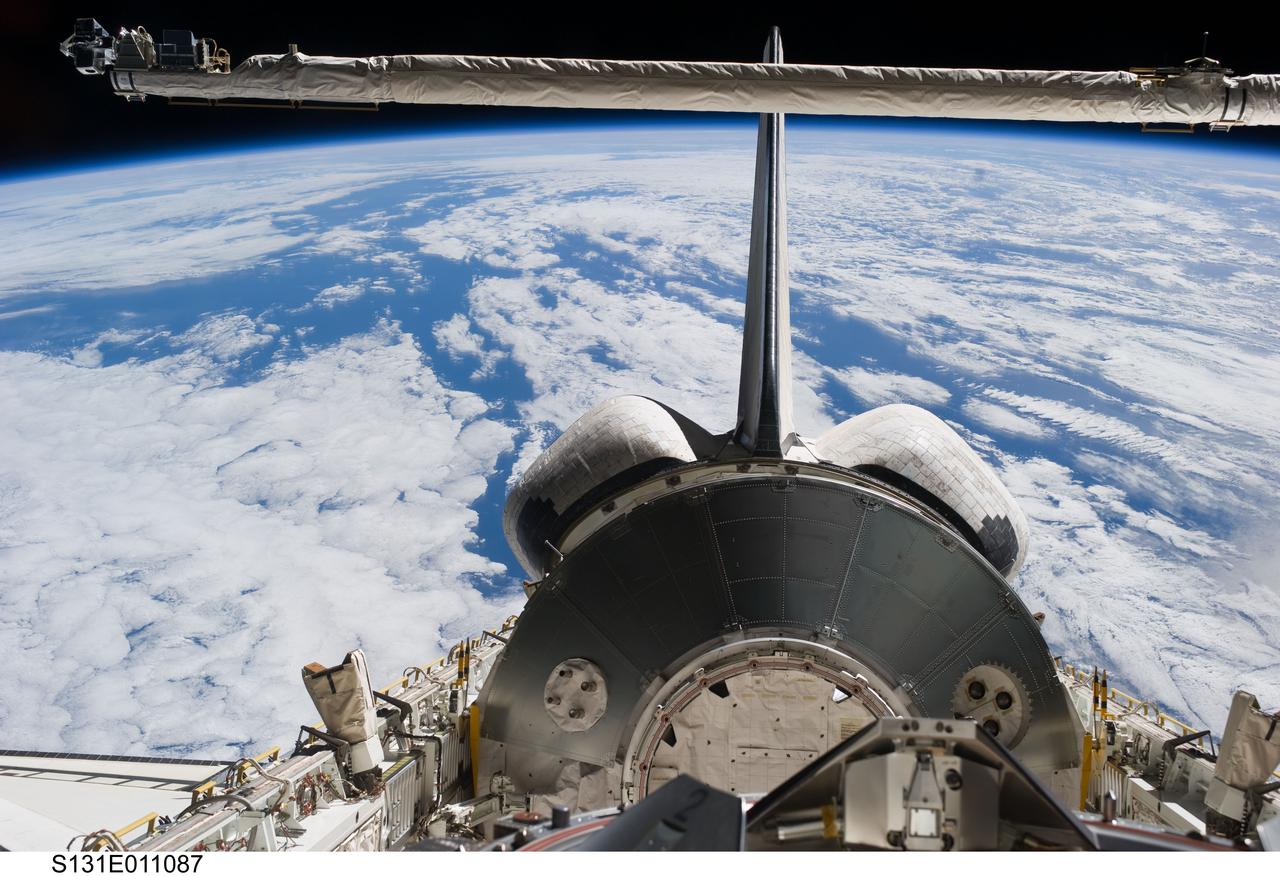
S131-E-011087 (17 April 2010) --- The Leonardo Multi-Purpose Logistics Module (MPLM) visible in space shuttle Discovery's payload bay, docking mechanism, vertical stabilizer, orbital maneuvering system (OMS) pods and Remote Manipulator System/Orbiter Boom Sensor System (RMS/OBSS) are featured in this image photographed by an STS-131 crew member from an aft flight deck window. A blue and white part of Earth provides the backdrop for the scene.
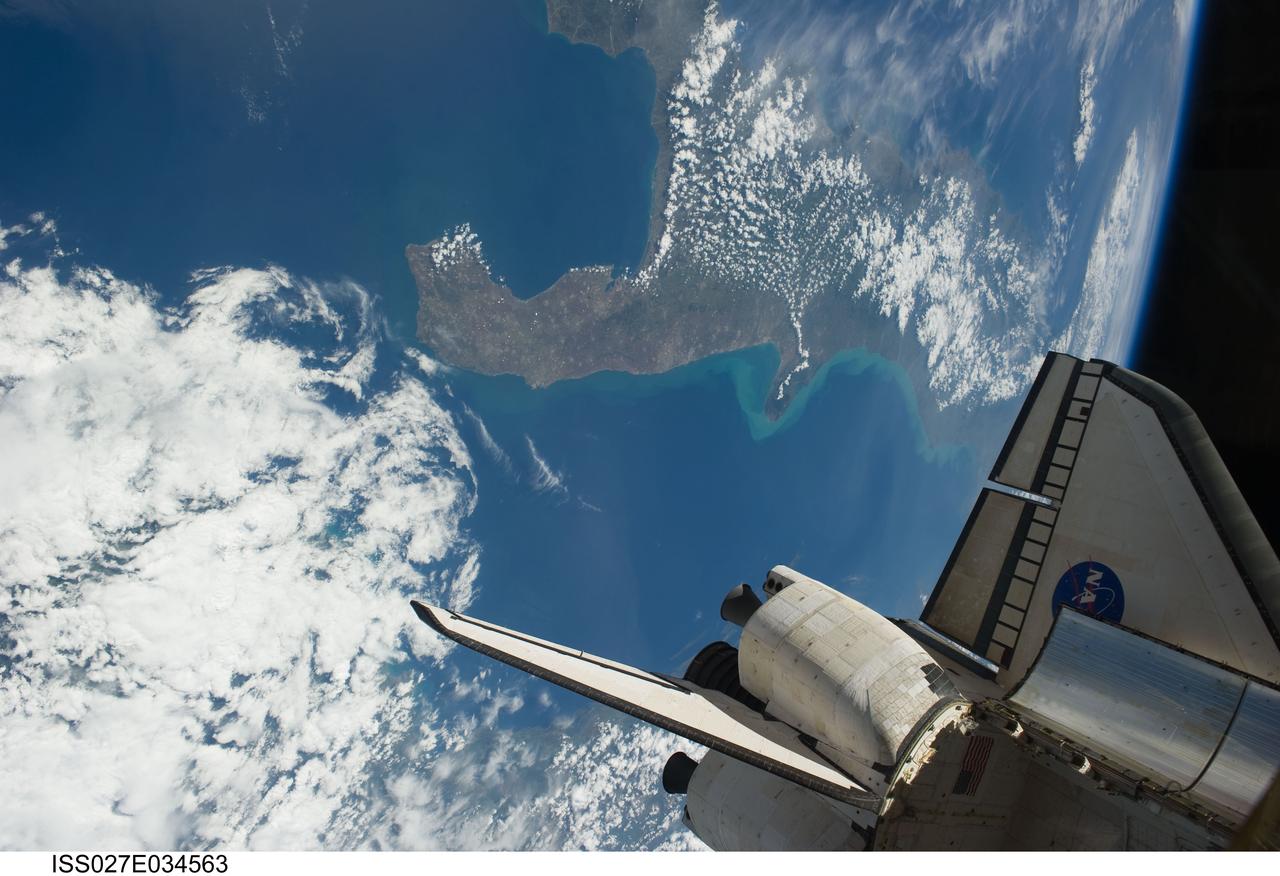
ISS027-E-034563 (19 May 2011) --- Backdropped against a scene showing part of Italy, this image featuring the aft part of the space shuttle Endeavour in the foreground was photographed by an Expedition 27 crew member aboard the International Space Station while the two spacecraft were docked. The vertical stabilizer, the orbital maneuvering system (OMS) pods and the lower part of the port wing are seen. Twelve astronauts and cosmonauts were busy aboard the joint complex, moving hardware and preparing for a May 20 space walk.

S131-E-007410 (6 April 2010) --- The Leonardo Multi-Purpose Logistics Module (MPLM) visible in space shuttle Discovery's payload bay, docking mechanism, vertical stabilizer and orbital maneuvering system (OMS) pods are featured in this image photographed by an STS-131 crew member from an aft flight deck window. Earth?s horizon and the blackness of space provide the backdrop for the scene.
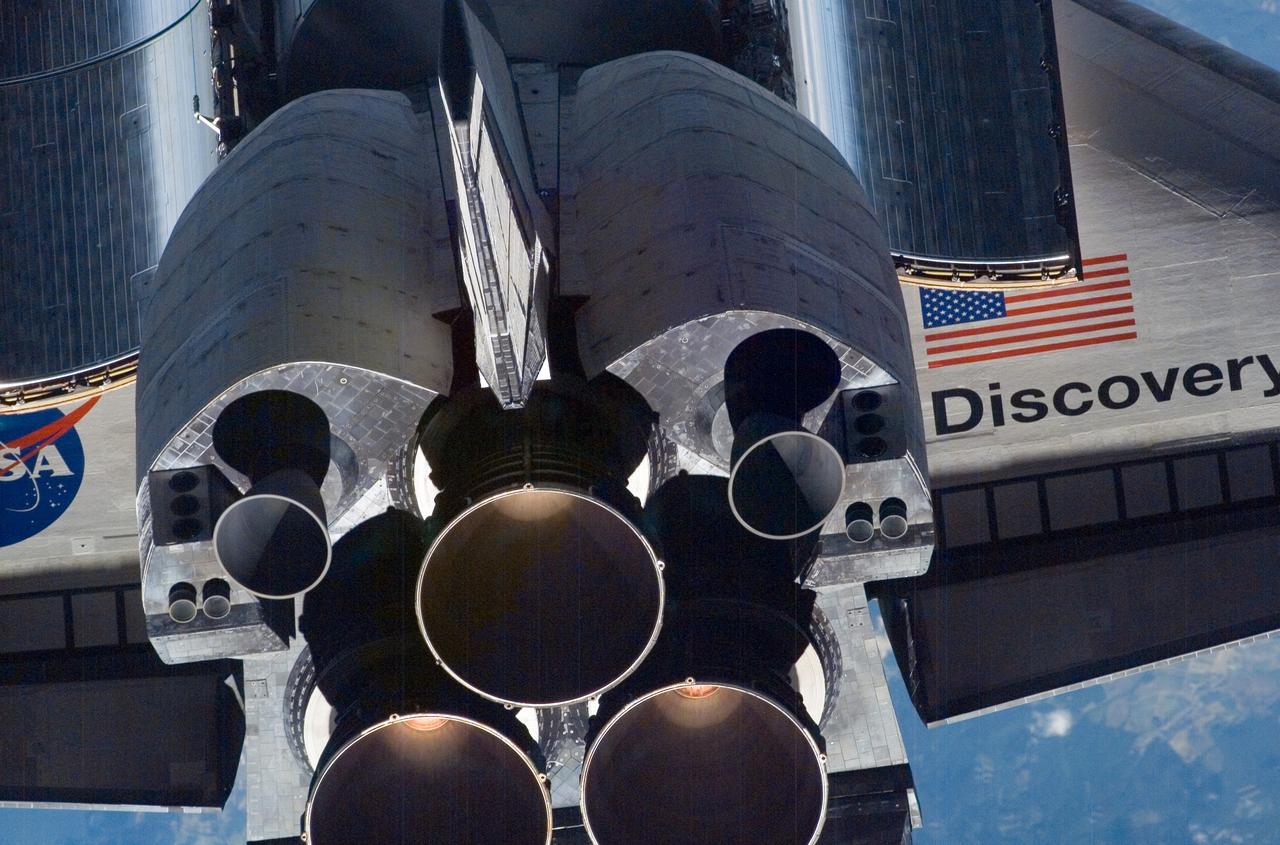
A close-up view of Space Shuttle Discovery's tail section is featured in this image photographed by an Expedition 13 crew member on the International Space Station (ISS) during the STS-121 Rotating Pitch Maneuver (RPM) survey. Visible are the space shuttle's main engines (SSME), vertical stabilizer, orbital maneuvering system (OMS) pods and a portion of the aft cargo bay and wings. The Marshall Space Flight Center (MSFC) has management responsibility for development of the SSME.
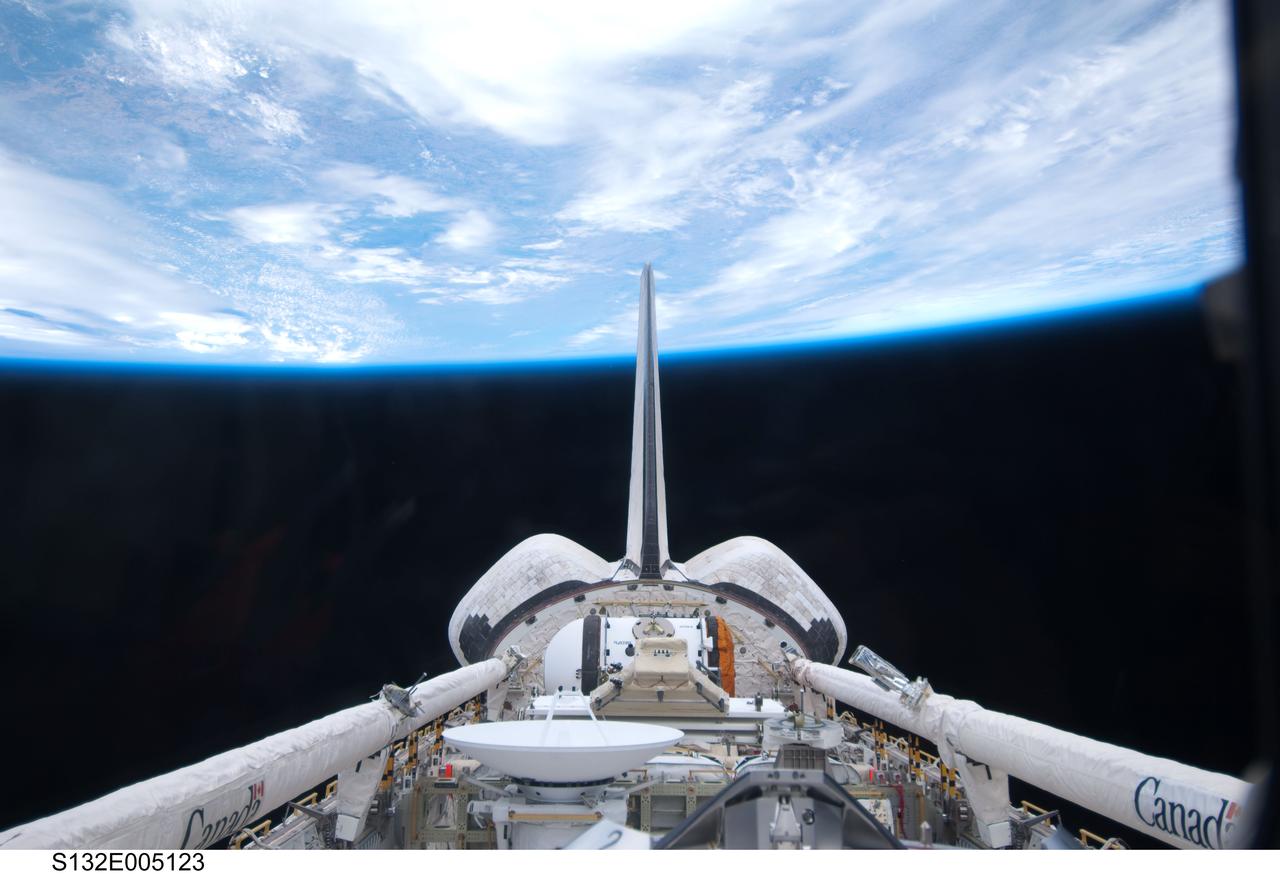
S132-E-005123 (14 May 2010) --- This photograph of space shuttle Atlantis' cargo bay and its vertical stabilizer intersecting Earth's horizon was provided on Flight Day 2 by one of the six STS-132 crew members. The photo was among the initial batch of non-engineering photography downlinked from the Earth-orbiting spacecraft on its final scheduled mission.
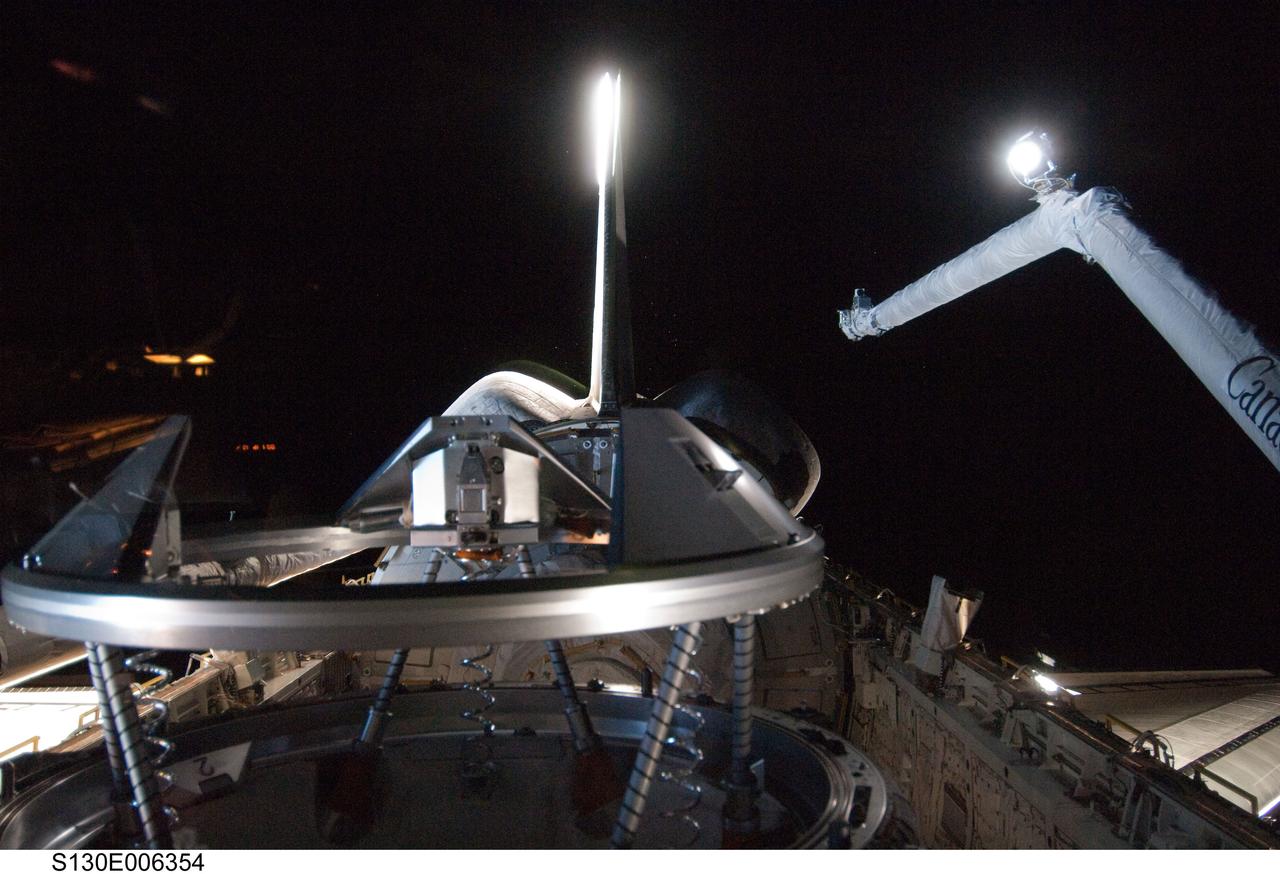
S130-E-006354 (9 Feb. 2010) --- Backdropped by the blackness of space, space shuttle Endeavour’s payload bay, docking mechanism (foreground), vertical stabilizer, orbital maneuvering system (OMS) pods, and Remote Manipulator System/Orbiter Boom Sensor System (RMS/OBSS) are featured in this image photographed by an STS-130 crew member from an aft flight deck window.
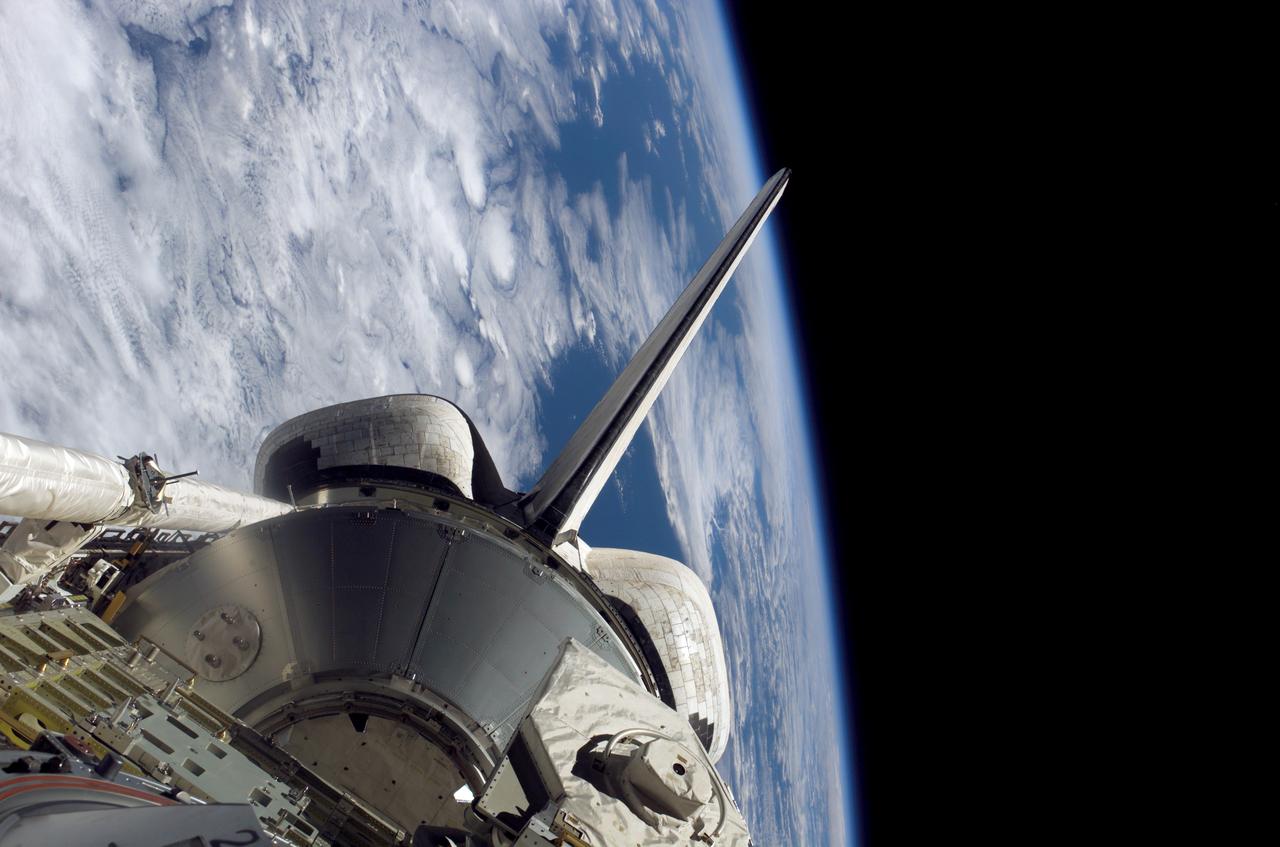
S121-E-07904 (15 July 2006) --- Backdropped by the blackness of space and Earth's horizon, Space Shuttle Discovery's aft cargo bay, its vertical stabilizer and orbital maneuvering system (OMS) pods are seen in this image photographed by an STS-121 crewmember onboard the shuttle. The Italian-built Leonardo Multi-Purpose Logistics Module (MPLM) is visible in the cargo bay.
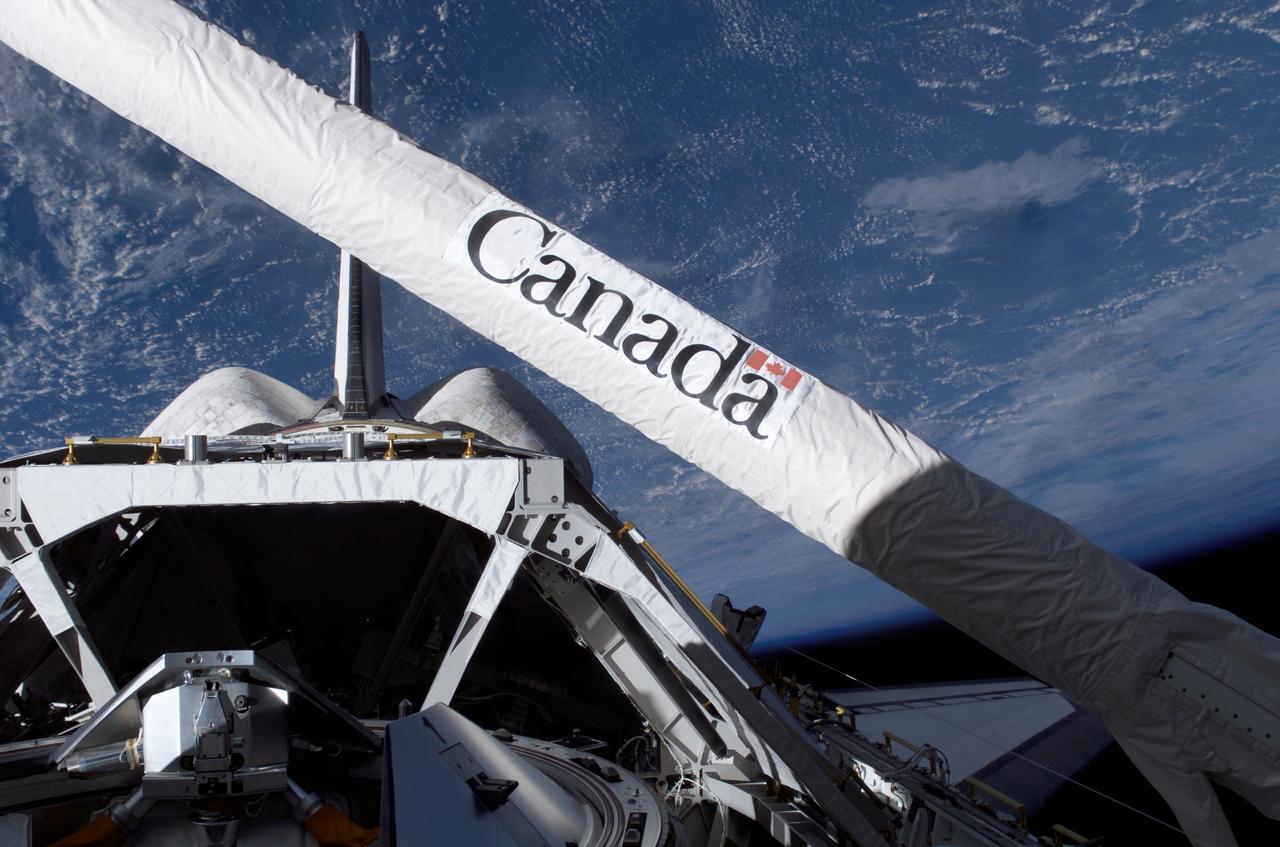
S115-E-05305 (10 Sept. 2006) --- While working to survey the thermal protection system on the Space Shuttle Atlantis, the orbiter boom sensor system (OBSS), attached to the remote manipulator system (RMS) arm was positioned near the shuttle's aft cabin windows. This enabled one of the STS-115 crewmembers to record this digital still image of the Canadian-built system and some of the hardware stowed in the payload bay of the shuttle, as well as the vertical stabilizer and the two orbital maneuvering system (OMS) pods.
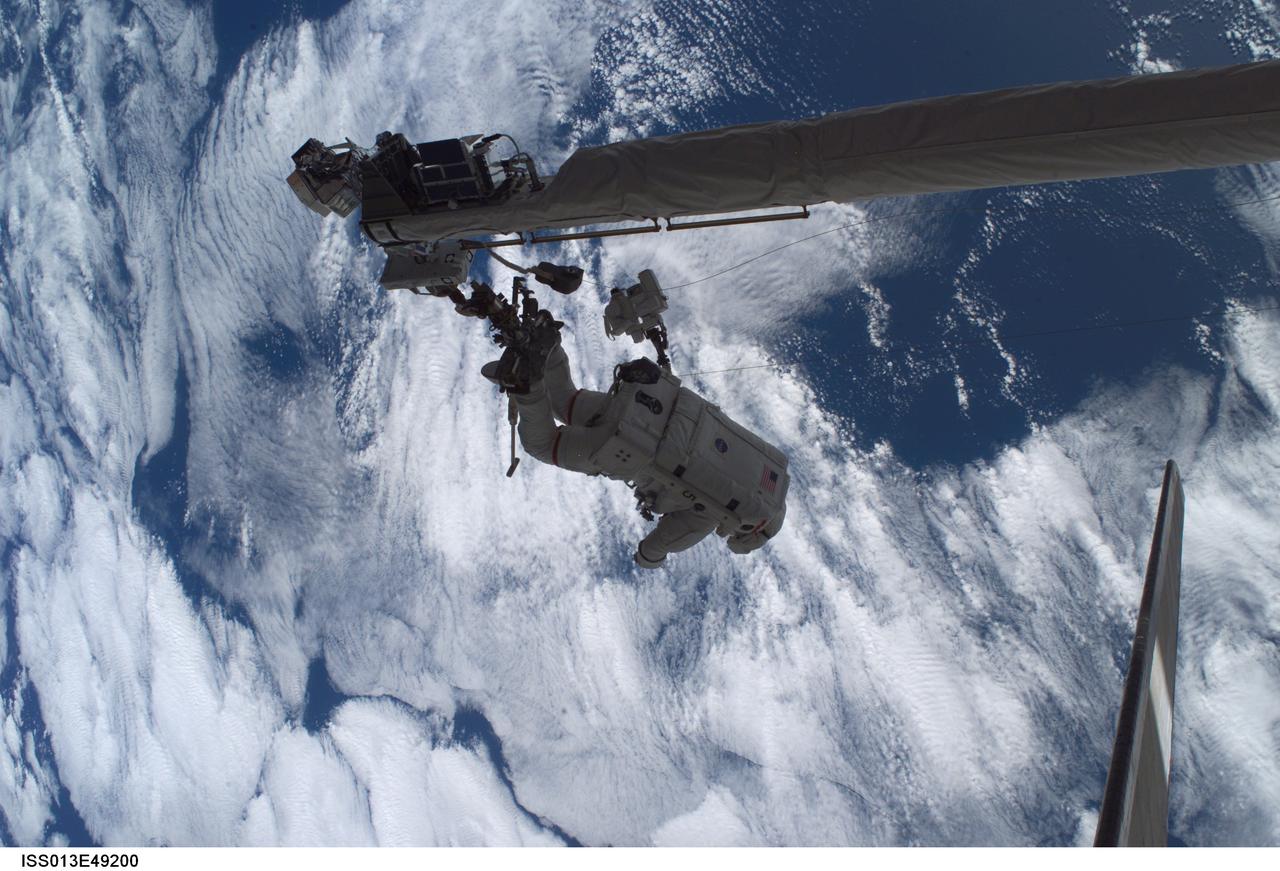
ISS013-E-49200 (8 July 2006) --- Anchored to the Space Shuttle Discovery's Remote Manipulator System/Orbiter Boom Sensor System (RMS/OBSS) foot restraint, astronaut Piers J. Sellers, STS-121 mission specialist, participates in the mission's first session of extravehicular activity (EVA) while the shuttle was docked with the International Space Station. Discovery's vertical stabilizer is at right. A cloud-covered Earth provides the backdrop for the scene.

41G-121-099 (5-13 Oct. 1984) --- Hurricane Josephine was photographed with a medium format camera aimed through the space shuttle Challenger's aft flight deck windows during NASA's 41-G mission. The hurricane's eye can be seen below the orbiter's vertical stabilizer. The large storm off the Florida coast did not prevent the spacecraft with its record of seven crew members aboard from landing safely at the KSC landing facility. Photo credit: NASA
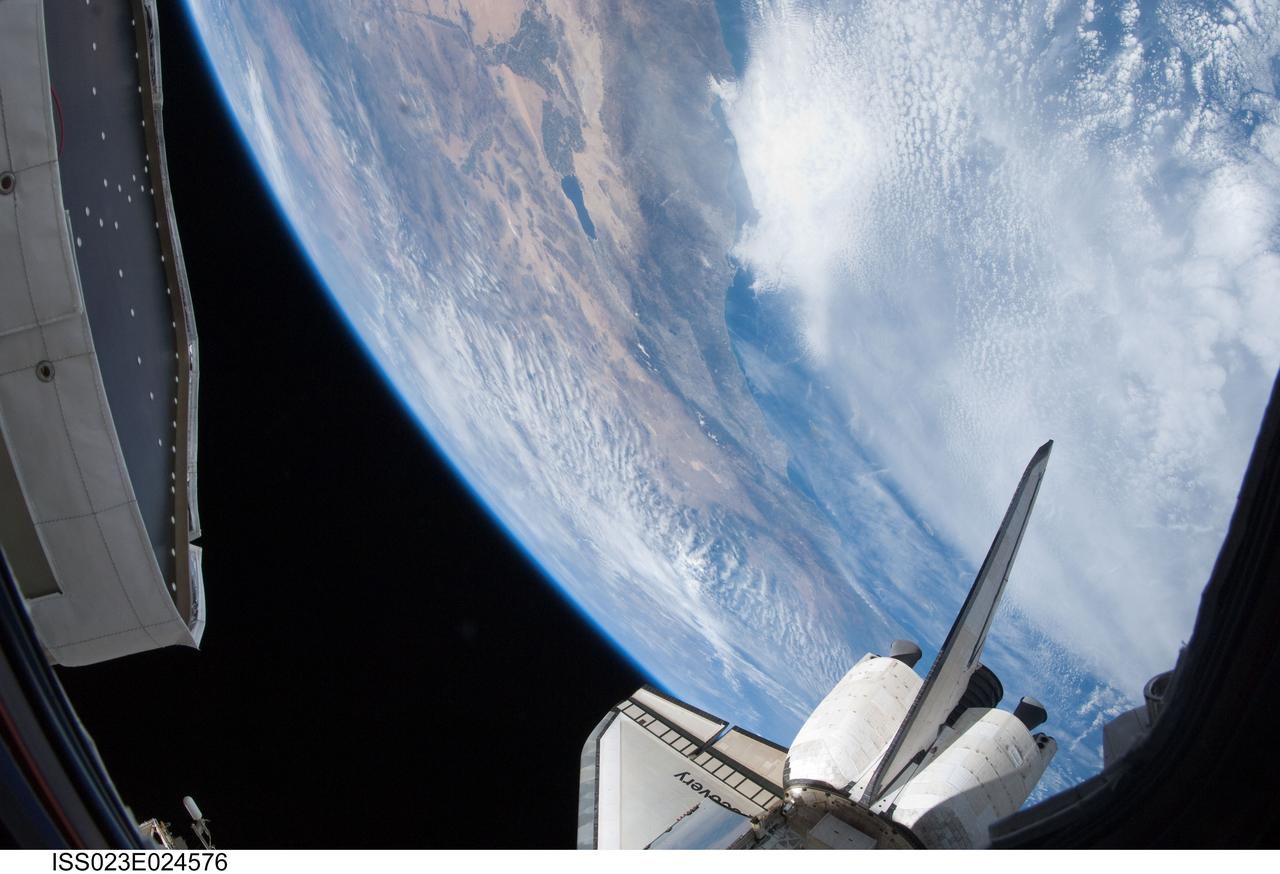
ISS023-E-024576 (15 April 2010) --- One of the Expedition 23 crew members aboard the International Space Station snapped this photo of part of the space shuttle Discovery’s starboard wing, vertical stabilizer and orbital maneuvering system pods backdropped against the cloud-covered Pacific Coast of southern California and northern Baja California, Mexico. The Imperial Valley and Salton Sea can be seen at top center.

S85-E-5044 (12 August 1997) --- View of the payload bay of the Earth-orbiting Space Shuttle Discovery looking toward the shuttle's vertical stabilizer with clouds in the background. Easily recognized is the Manipulator Flight Demonstration (MFD), which is sponsored by Japan's National Space Development Agency (NASDA). MFD will evaluate the use of the Small Fine Arm (SFA) that is planned to be part of the future Japanese Experiment Module's Remote Manipulator System (RMS) on the International Space Station (ISS). The photograph was taken with the Electronic Still Camera (ESC).
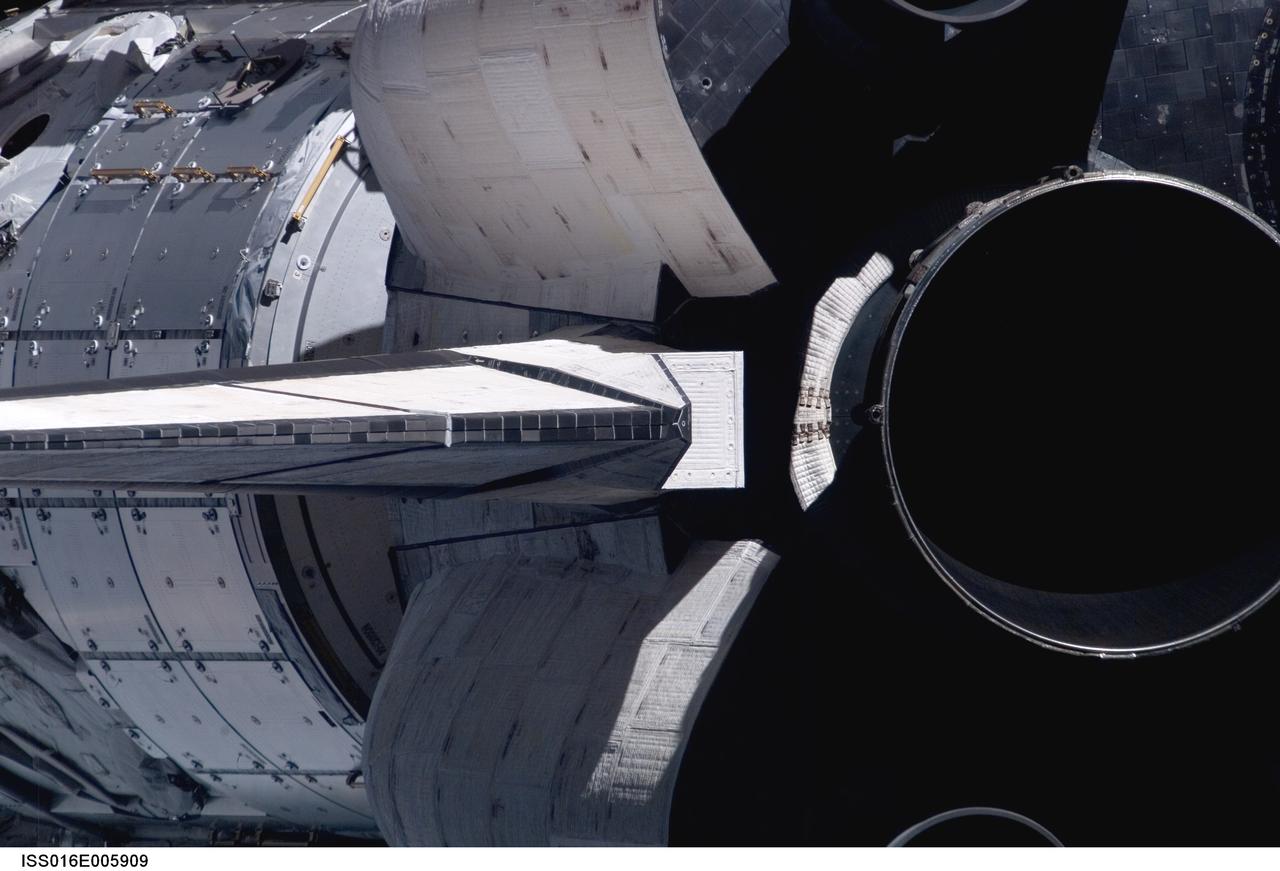
ISS016-E-005909 (25 Oct. 2007) --- A close-up view of Space Shuttle Discovery's tail section is featured in this image photographed by an Expedition 16 crewmember during a backflip maneuver performed by the approaching visitors (STS-120) to the International Space Station. The image provides partial views of the shuttle's main engines, orbital maneuvering system (OMS) pods, vertical stabilizer and the Harmony node in the payload bay.
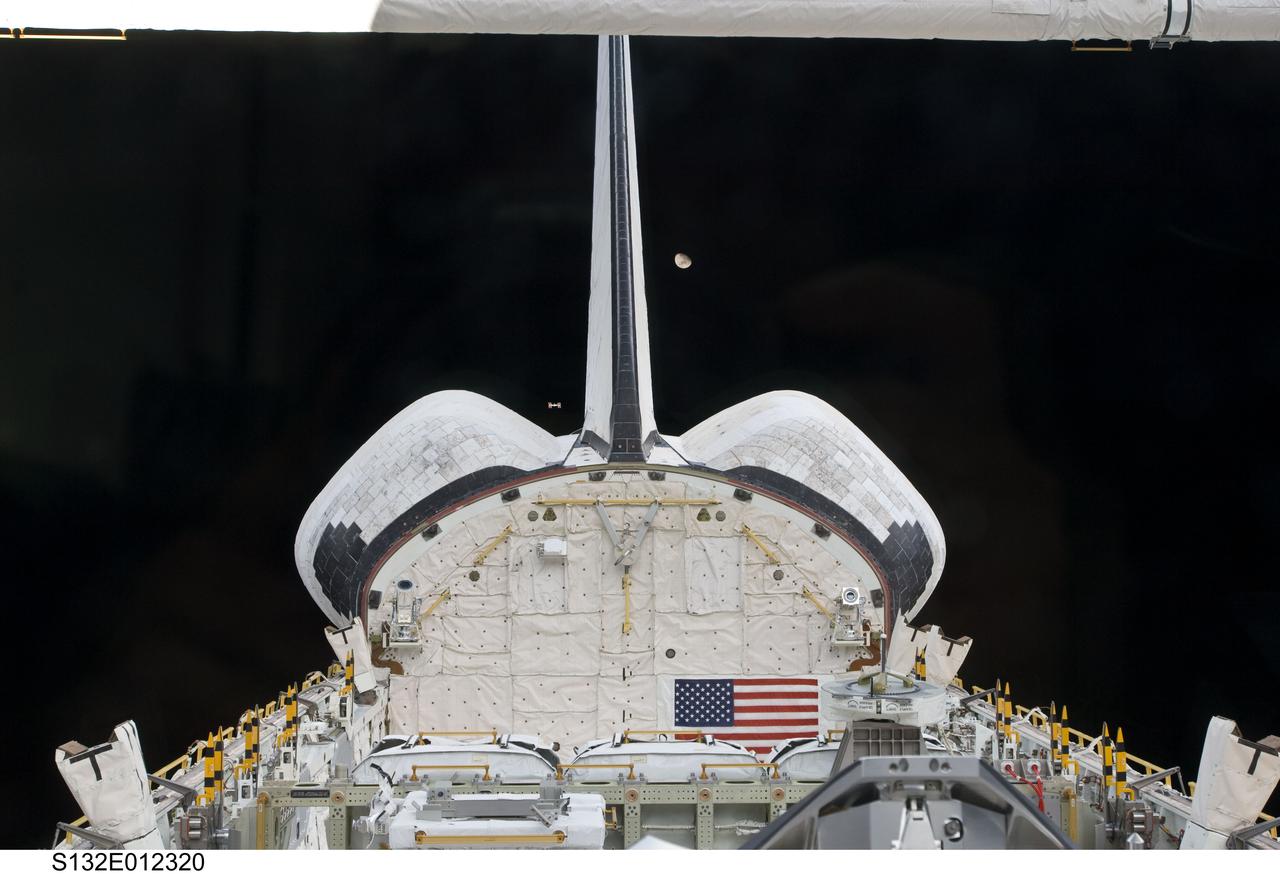
S132-E-012320 (23 May 2010) --- Space shuttle Atlantis? vertical stabilizer, orbital maneuvering system (OMS) pods and payload bay; along with the distant International Space Station and moon are featured in this image photographed by an STS-132 crew member onboard the shuttle. The space station appears very small from the point of view of the Atlantis as the two spacecraft carry out their relative separation. Undocking of the two spacecraft occurred at 10:22 a.m. (CDT) on May 23, 2010.
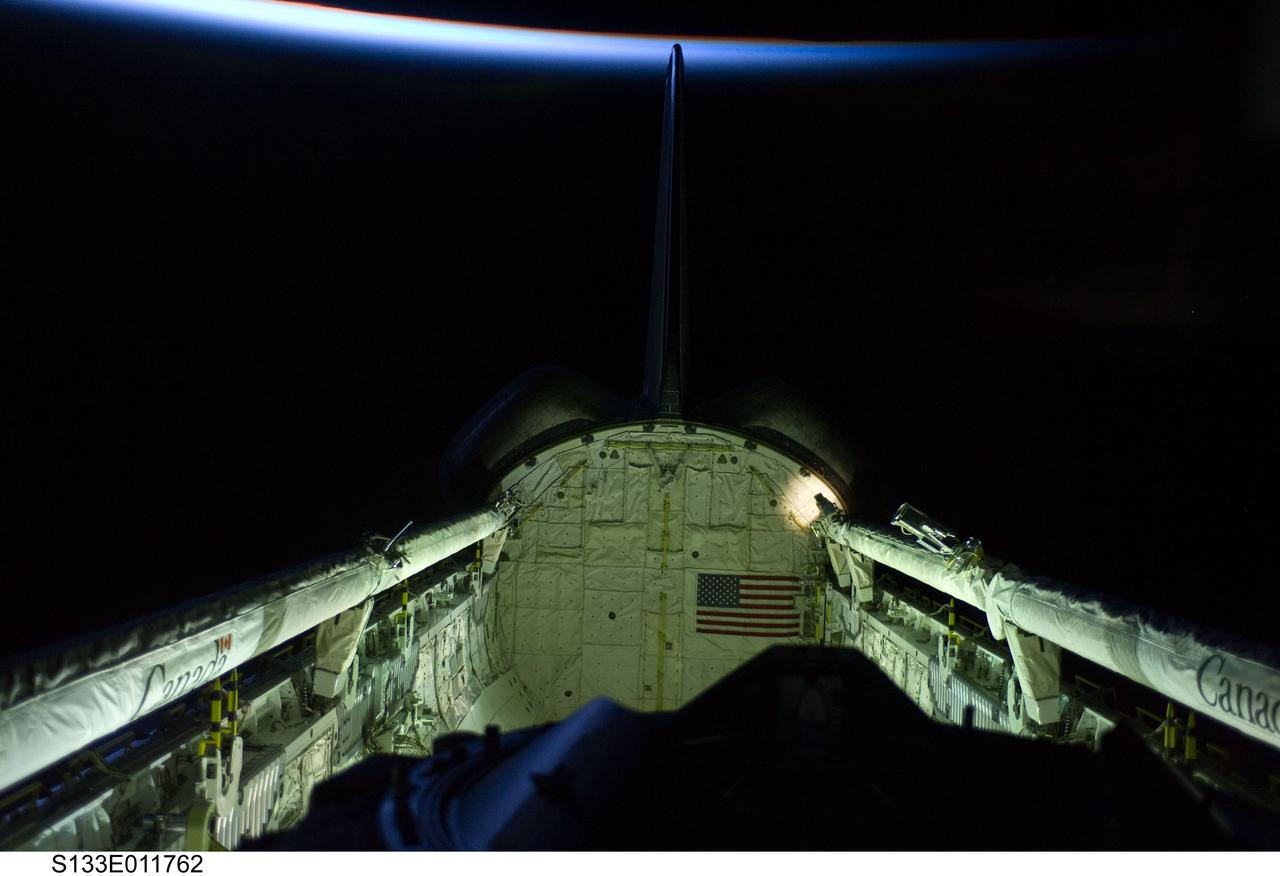
S133-E-011762 (7 March 2011) --- Space shuttle Discovery’s vertical stabilizer, orbital maneuvering system (OMS) pods, docking mechanism, remote manipulator system/orbiter boom sensor system (RMS/OBSS) and payload bay are featured in this image photographed by an STS-133 crew member on the shuttle during flight day 12 activities. The thin line of Earth’s atmosphere is at top. Photo credit: NASA or National Aeronautics and Space Administration
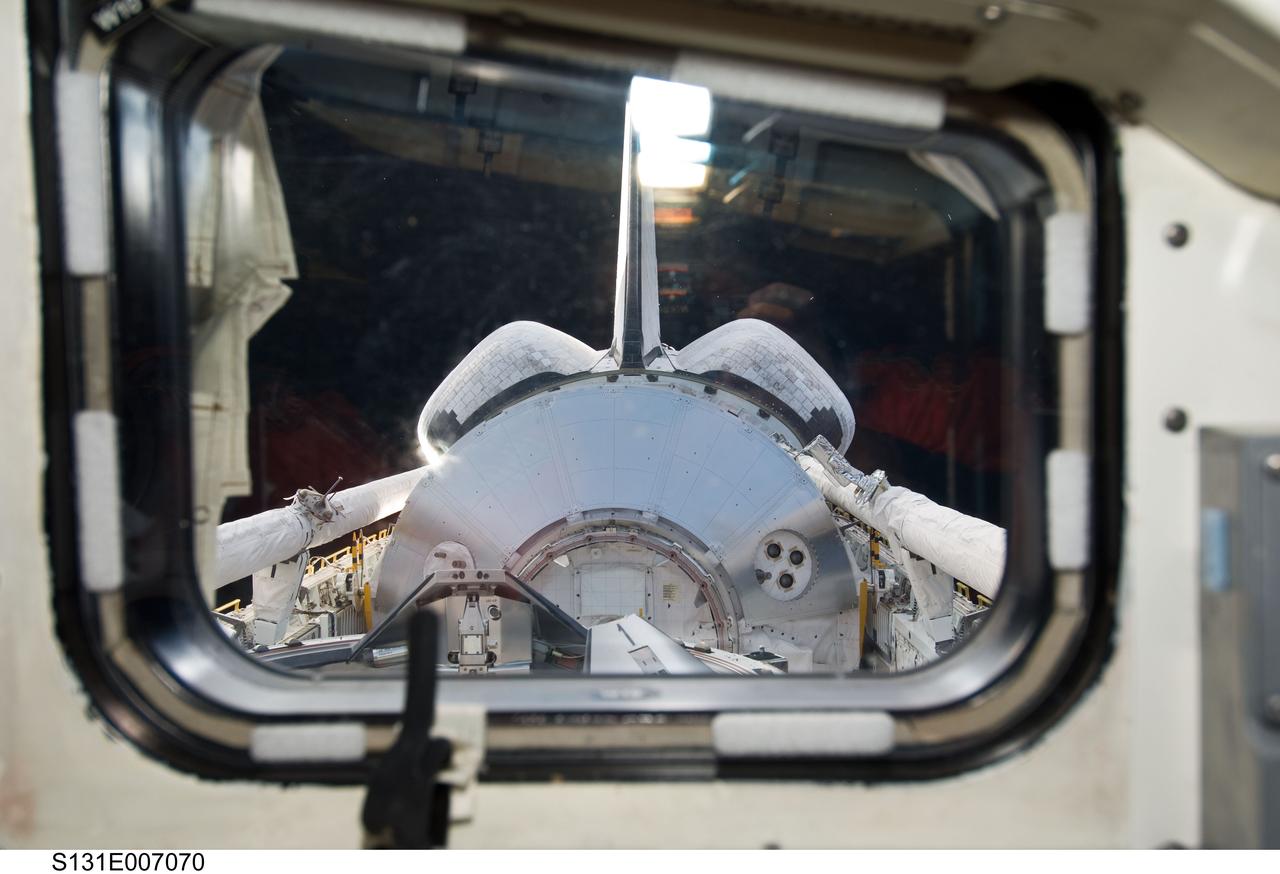
S131-E-007070 (5 April 2010) --- The Leonardo Multi-Purpose Logistics Module (MPLM) visible in space shuttle Discovery's payload bay, docking mechanism, vertical stabilizer, orbital maneuvering system (OMS) pods and Remote Manipulator System/Orbiter Boom Sensor System (RMS/OBSS) are featured in this image photographed by an STS-131 crew member from an aft flight deck window.
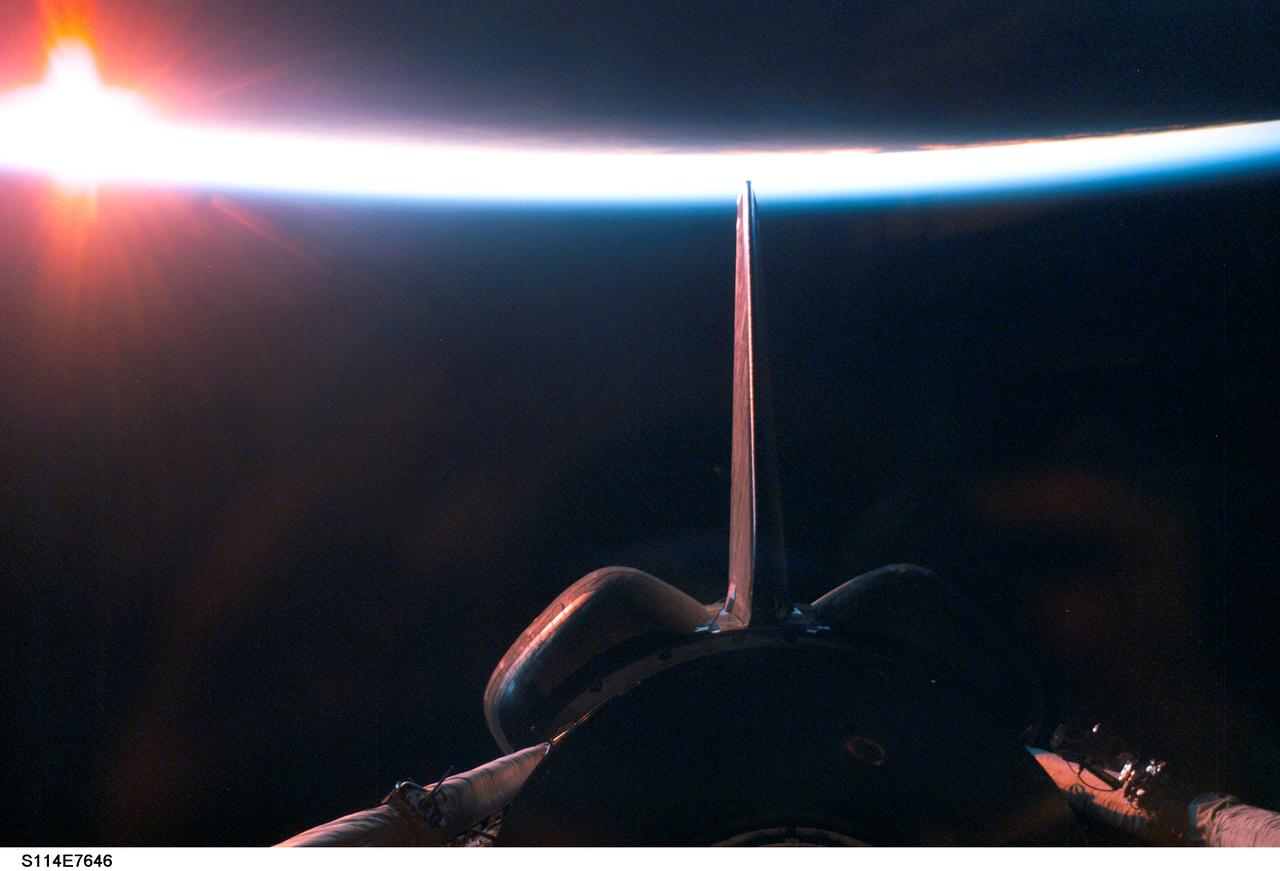
S114-E-7646 (6 August 2005) --- A sunrise dissecting a line of airglow of Earth's atmosphere provides the backdrop for this image featuring a portion of the Space Shuttle Discovery’s aft cargo bay, its vertical stabilizer and orbital maneuvering system (OMS) pods after departure from the International Space Station. The image was photographed by an STS-114 crewmember onboard the Shuttle.
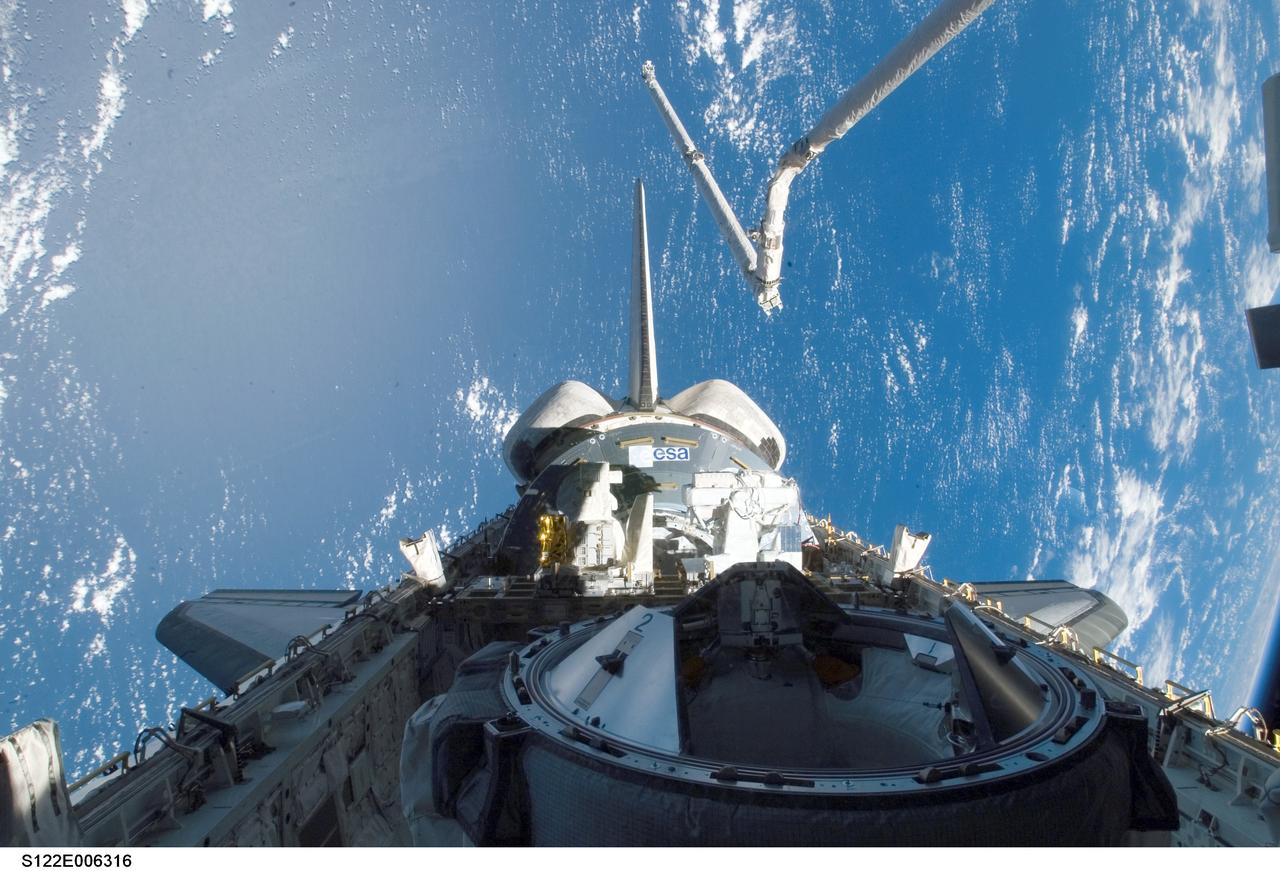
S122-E-006316 (8 Feb. 2008) --- Backdropped by a blue and white Earth, the docking mechanism (foreground), Columbus laboratory in Space Shuttle Atlantis' aft payload bay, vertical stabilizer, orbital maneuvering system (OMS) pods and Atlantis' Remote Manipulator System/Orbiter Boom Sensor System (RMS/OBSS) are featured in this image photographed by a STS-122 crewmember during flight day two activities.
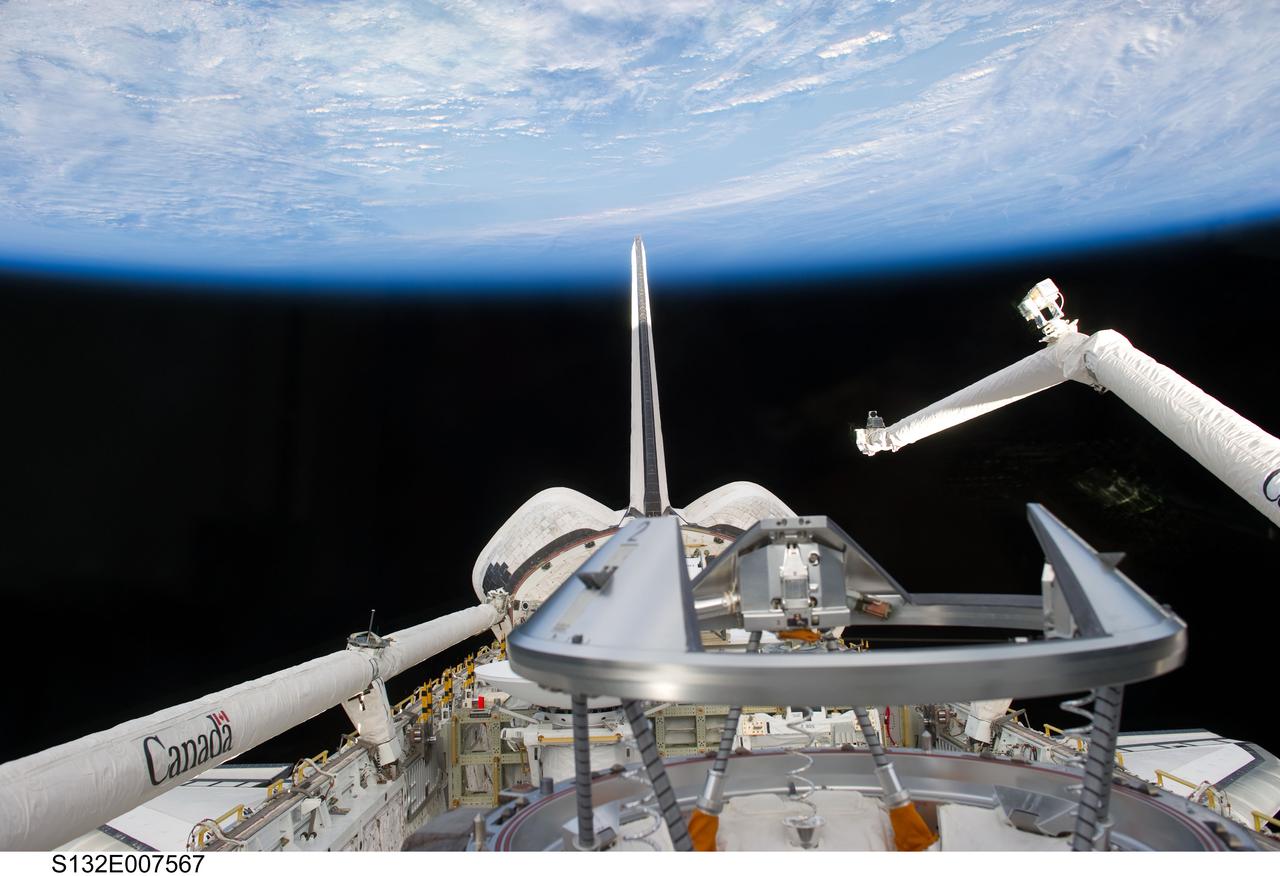
S132-E-007567 (15 May 2010) --- Backdropped by Earth’s horizon and the blackness of space, space shuttle Atlantis’ payload bay, docking mechanism (foreground), vertical stabilizer, orbital maneuvering system (OMS) pods, and Remote Manipulator System/Orbiter Boom Sensor System (RMS/OBSS) are featured in this image photographed by an STS-132 crew member from an aft flight deck window.
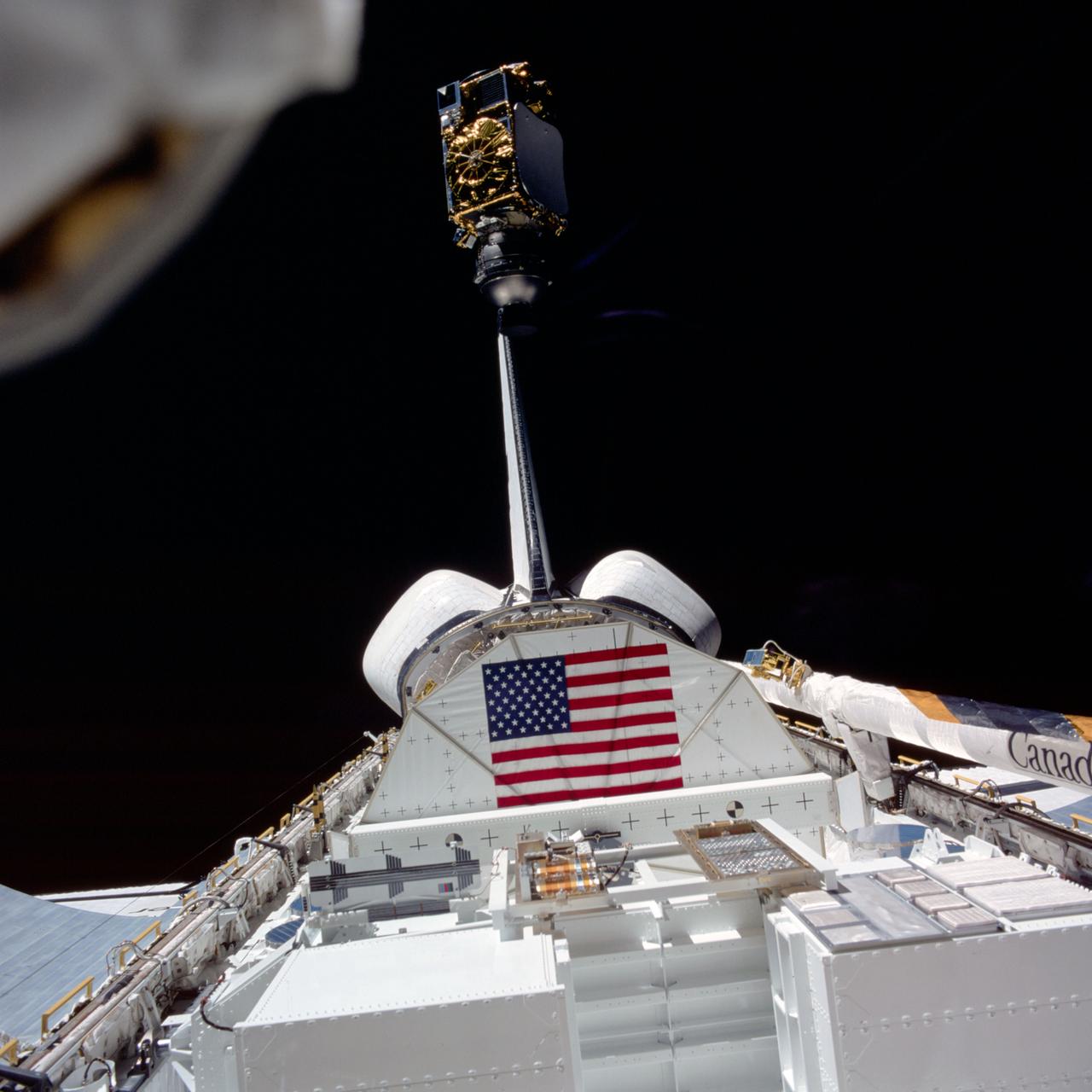
STS008-49-1724 (31 Aug 1983) --- The Indian National Satellite (INSAT) is about to clear the vertical stabilizer of the Earth-orbiting Space Shuttle Challenger and on its way to a higher orbit. The STS-8 mission's Payload Flight Test Article (PFTA) displays the U.S. flag in the middle of the cargo bay, as the Canadian built Remote Manipulator System (RMS) appears to be waiting for its busy agenda of activity with the barbell-shaped test device. This 70mm frame was exposed by a crewmember using a handheld Hasselblad inside Challenger's cabin.
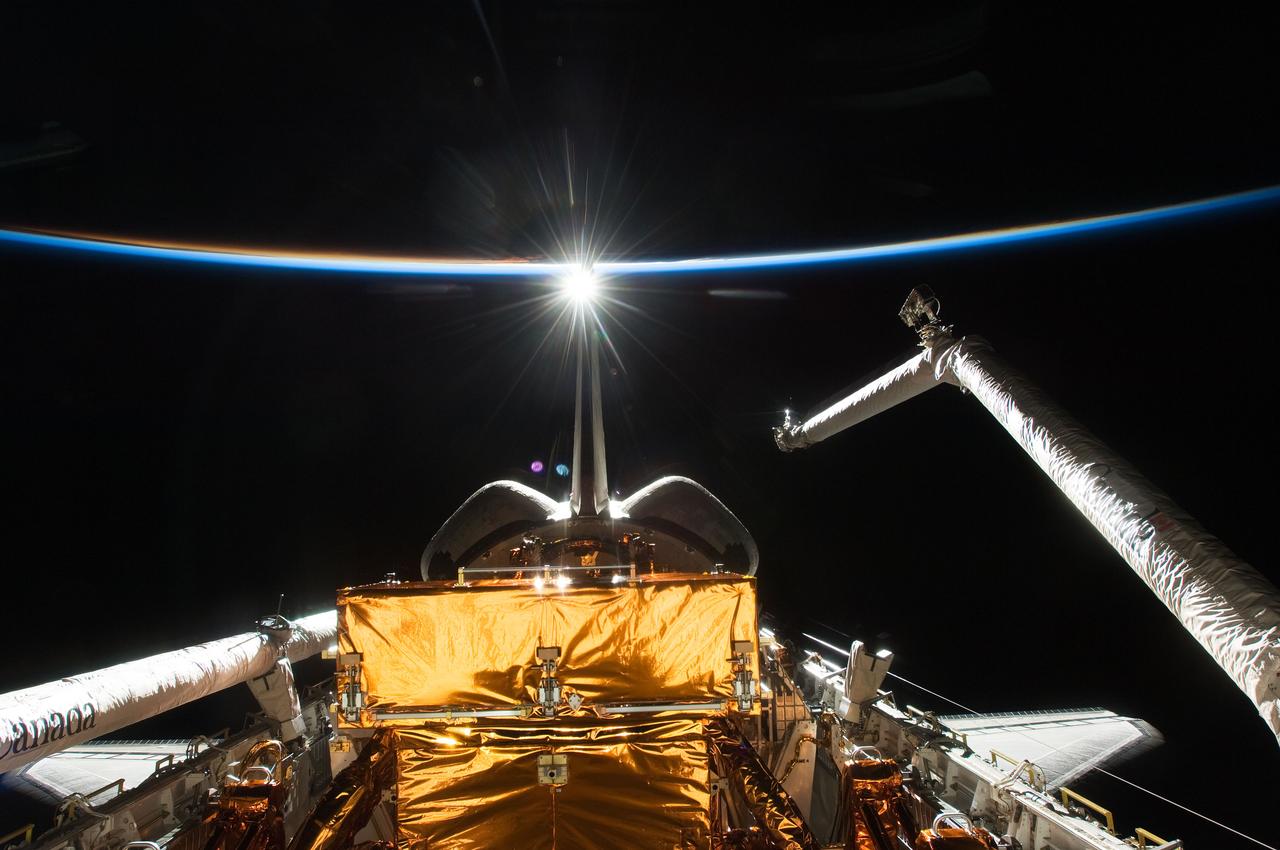
S125-E-012372 (20 May 2009) --- Backdropped by the blackness of space and the thin line of Earth?s atmosphere, Space Shuttle Atlantis? payload bay, Canadian-built remote manipulator system (RMS) robotic arm, vertical stabilizer and orbital maneuvering system (OMS) pods are featured in this image photographed by an STS-125 crewmember on flight day 10.
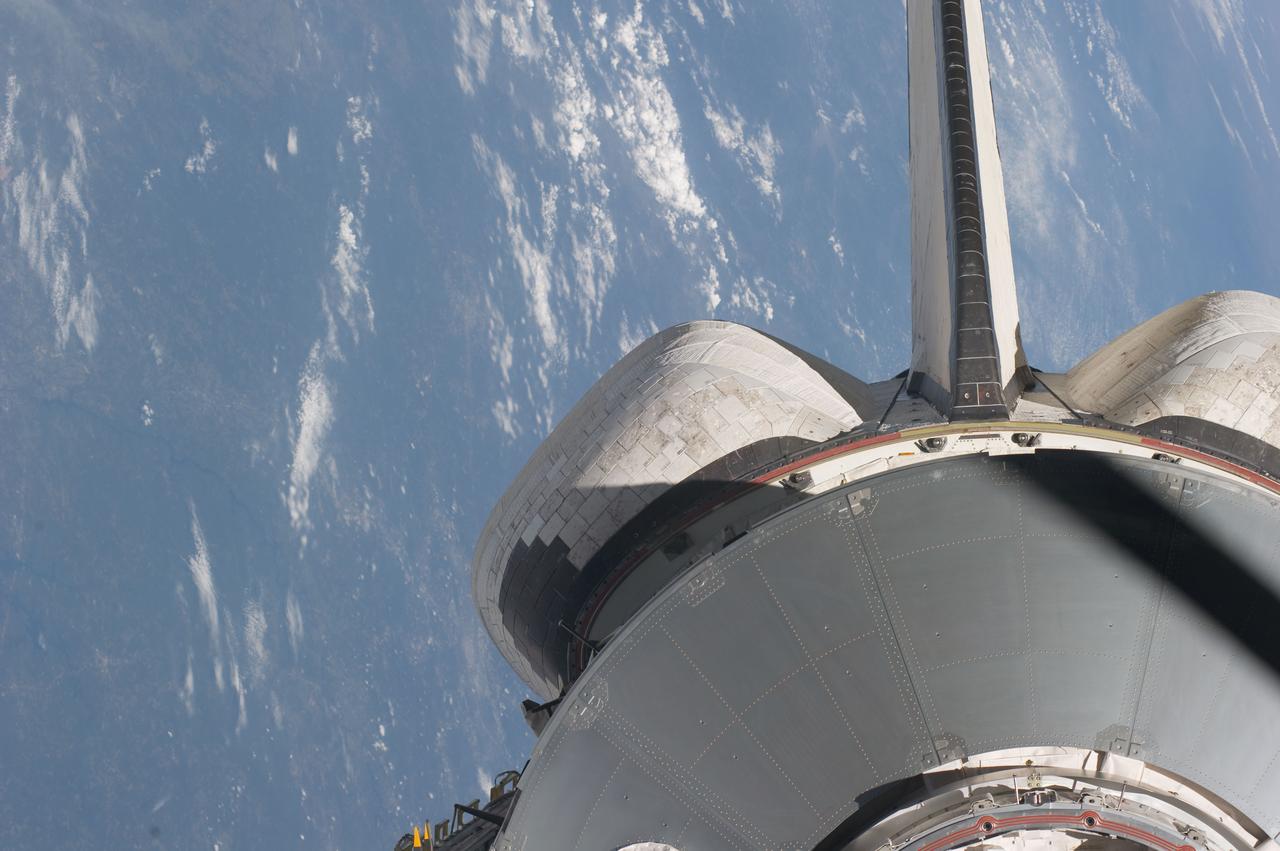
S135-E-006449(9 July 2011) --- Backdropped against a mostly blue Earth scene, part of the Raffaello multi-purpose logistics module, packed with supplies and spare parts for the International Space Station, the vertical stabilizer of space shuttle Atlantis and the orbital maneuvering system (OMS) pods are seen in this view photographed by one of the STS-135 crewmembers using windows on the spacecraft's aft flight deck during the mission's second day of activities in Earth orbit. Photo credit: NASA
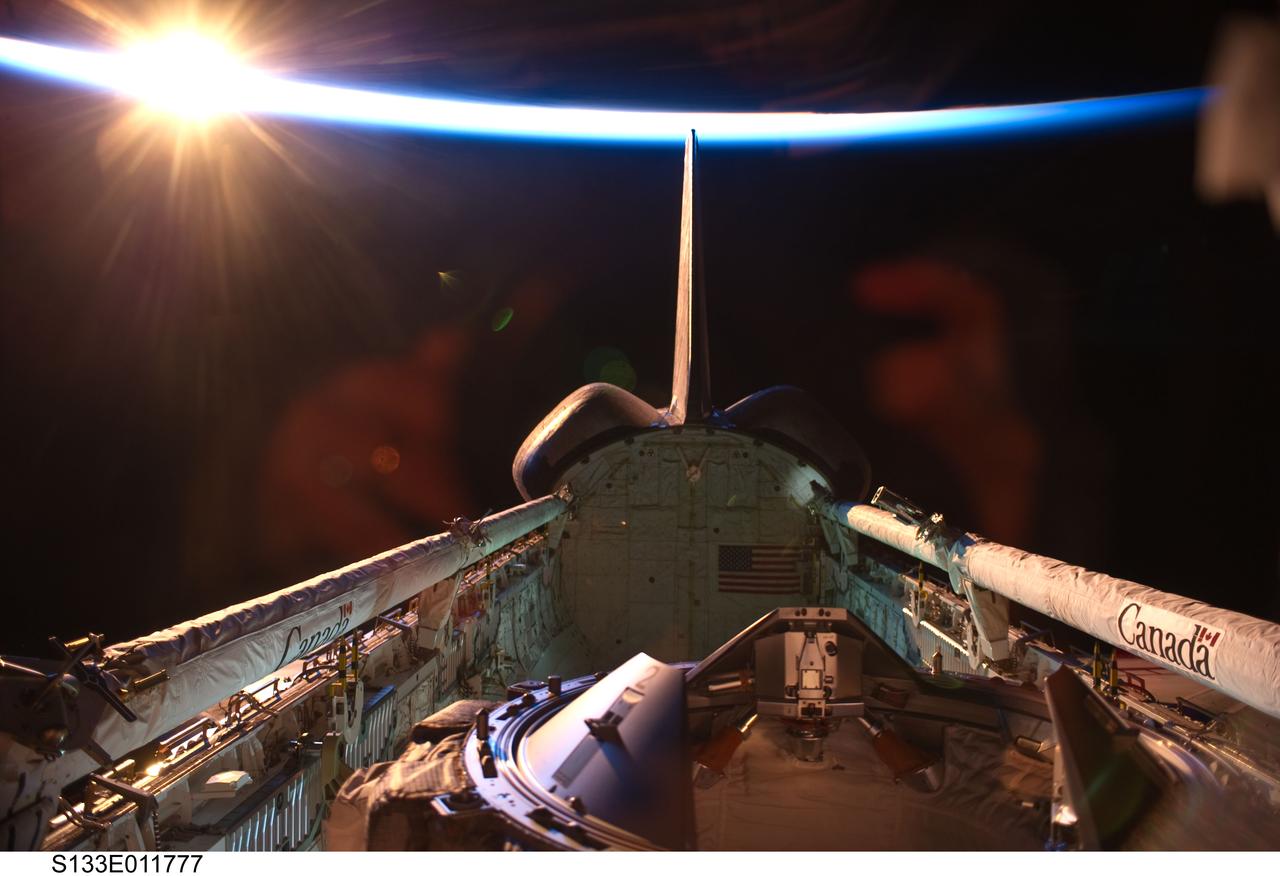
S133-E-011777 (7 March 2011) --- An orbital sunrise brightens this view of space shuttle Discovery’s vertical stabilizer, orbital maneuvering system (OMS) pods, docking mechanism, remote manipulator system/orbiter boom sensor system (RMS/OBSS) and payload bay photographed by an STS-133 crew member on the shuttle during flight day 12 activities. Photo credit: NASA or National Aeronautics and Space Administration
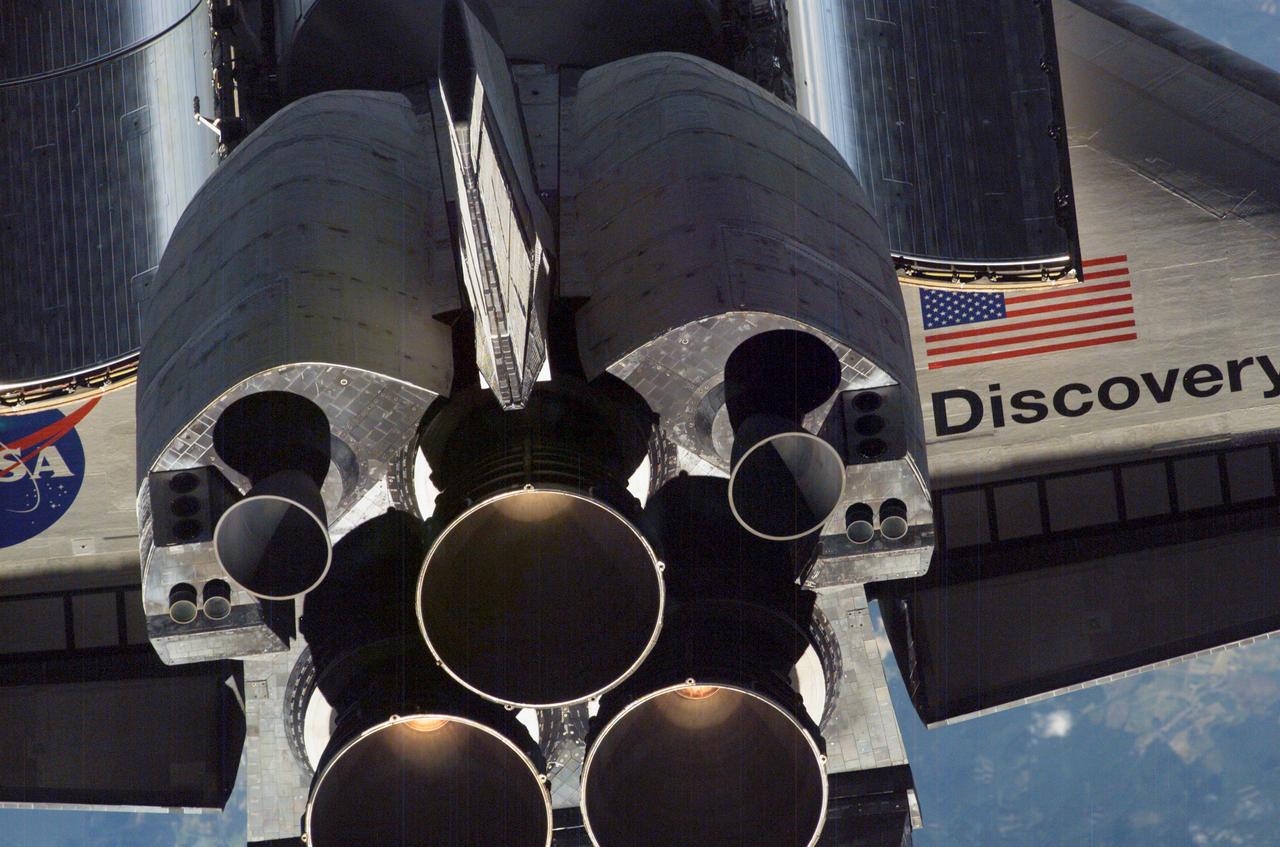
ISS013-E-47643 (6 July 2006) --- A close-up view of Space Shuttle Discovery's tail section is featured in this image photographed by an Expedition 13 crewmember on the International Space Station during RPM survey. Visible are the shuttle's main engines, vertical stabilizer, orbital maneuvering system (OMS) pods and a portion of the aft cargo bay and wings.
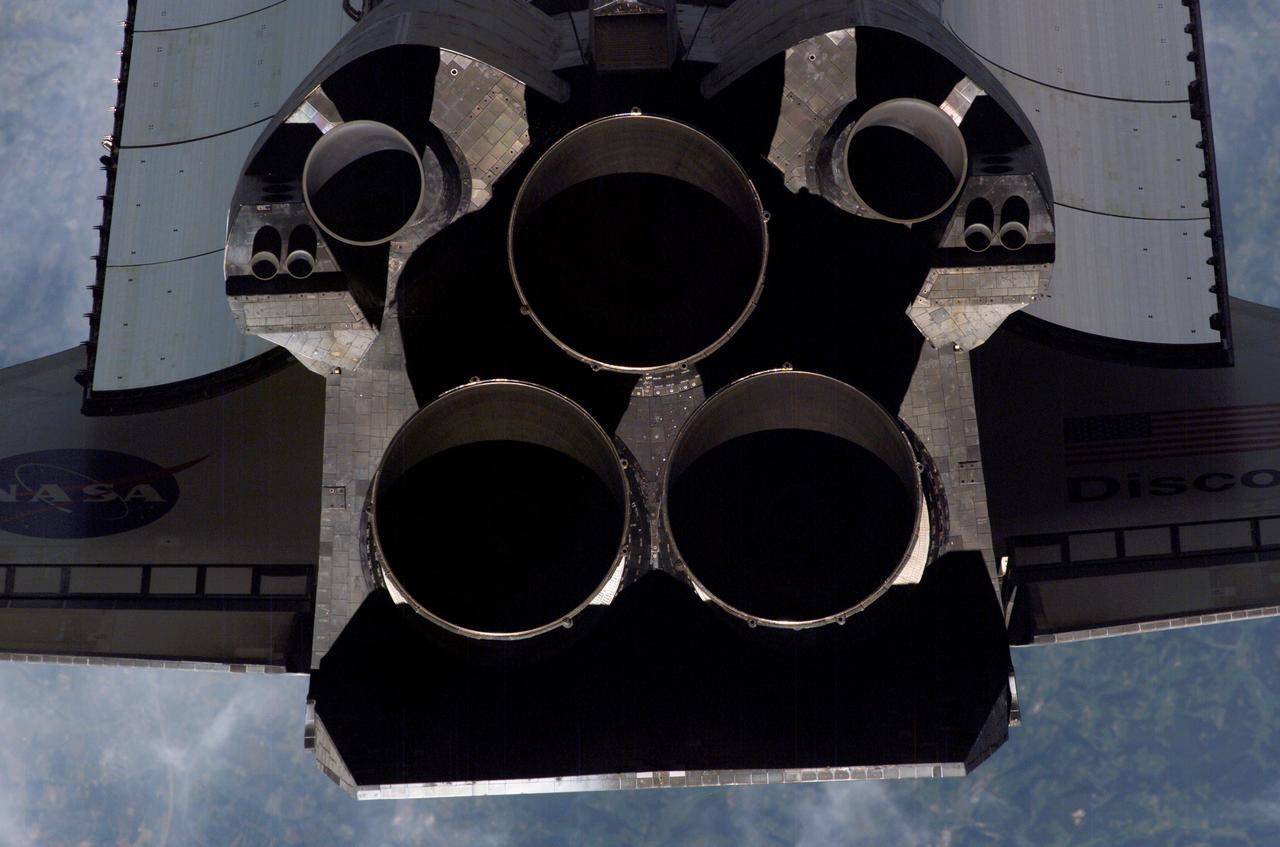
ISS013-E-47629 (6 July 2006) --- A close-up view of Space Shuttle Discovery's tail section is featured in this image photographed by an Expedition 13 crewmember on the International Space Station during STS-121 R-Pitch Maneuver survey on Flight Day 3. Visible are the shuttle's main engines, vertical stabilizer, orbital maneuvering system (OMS) pods, reaction control system (RCS) jets and a portion of payload bay door radiator and wings.
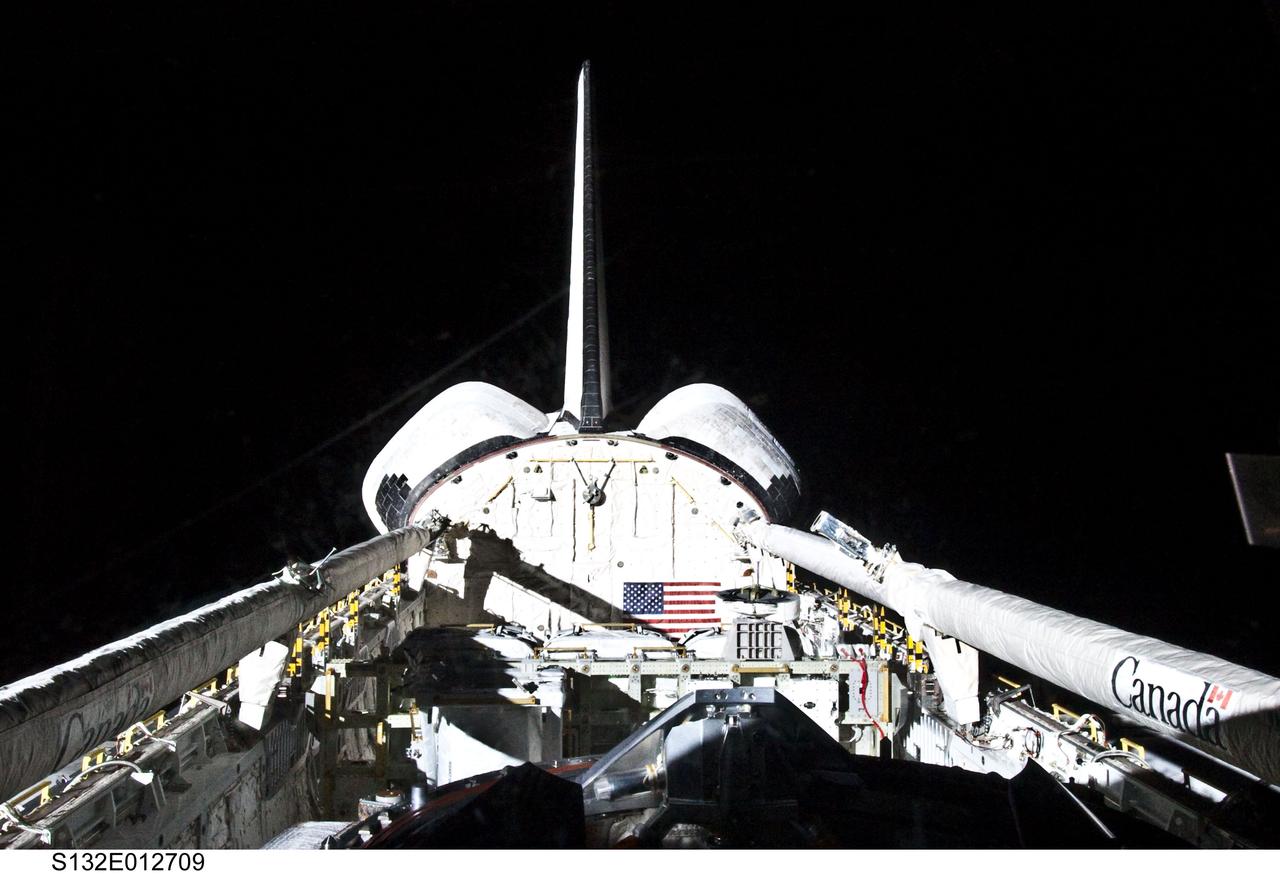
S132-E-012709 (25 May 2010) --- Space shuttle Atlantis’ vertical stabilizer, orbital maneuvering system (OMS) pods, remote manipulator system/orbiter boom sensor system (RMS/OBSS), payload bay and docking mechanism are featured in this image photographed by an STS-132 crew member on the shuttle during flight day 12 activities.
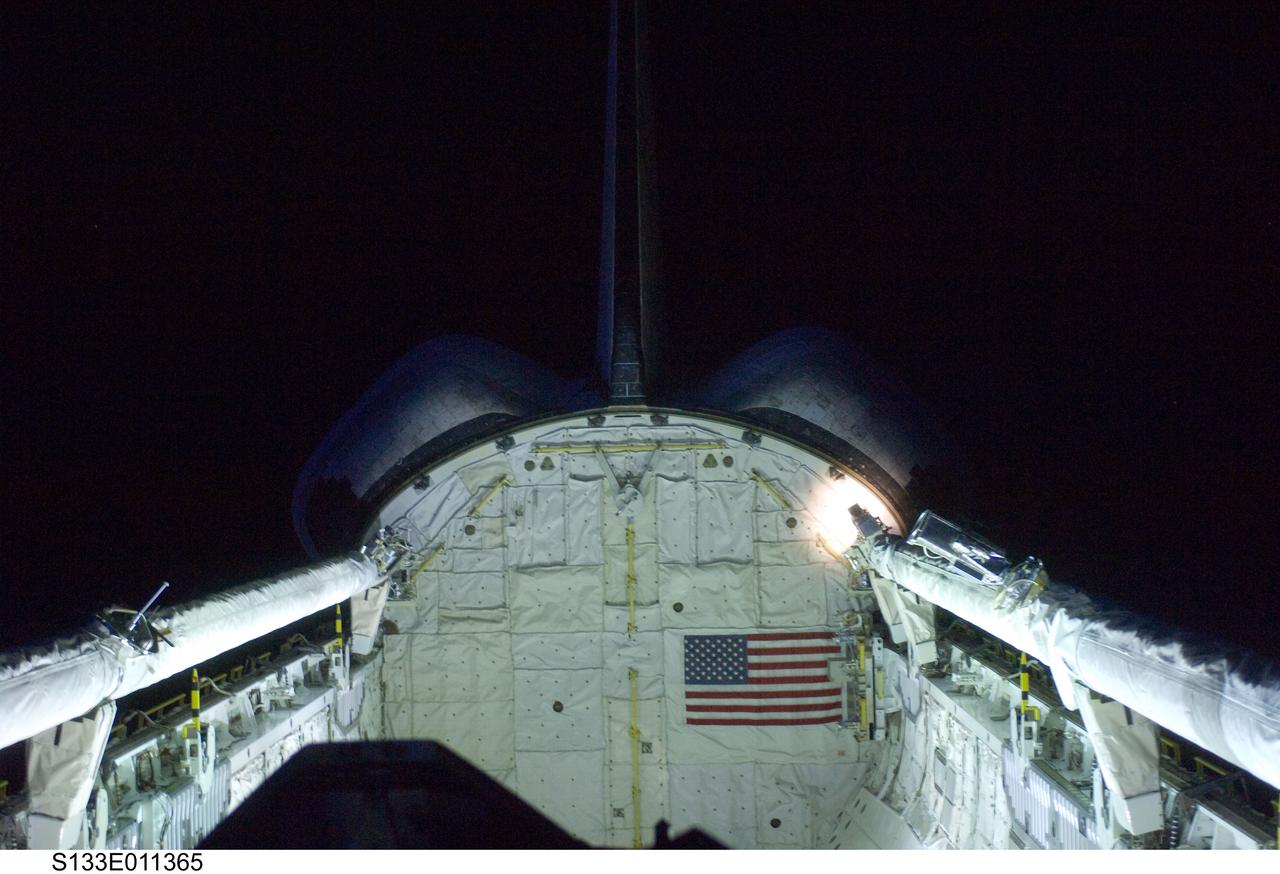
S133-E-011365 (7 March 2011) --- Space shuttle Discovery’s vertical stabilizer, orbital maneuvering system (OMS) pods, remote manipulator system/orbiter boom sensor system (RMS/OBSS) and payload bay are featured in this image photographed by an STS-133 crew member on the shuttle during flight day 12 activities. Photo credit: NASA or National Aeronautics and Space Administration
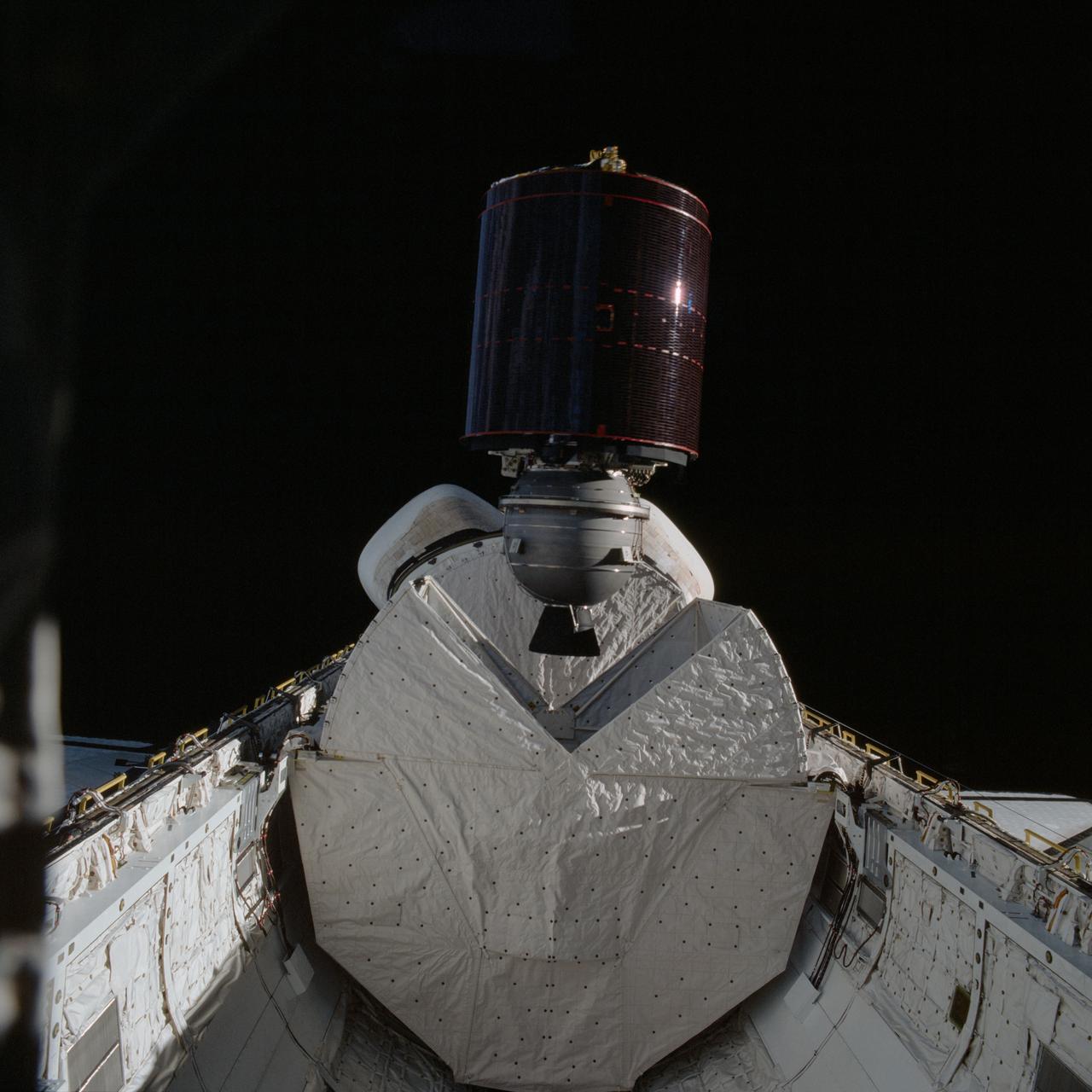
STS005-38-943 (17 Nov. 1982) --- The Satellite Business Systems (SBS-3) satellte is deployed from its protective cradle in the cargo bay of the space shuttle Columbia. Part of Columbia's wings can be seen on both the port and starboard sides. Part of both orbital maneuvering system (OMS) pods are seen at center. The vertical stabilizer is obscured by the satellite. Photo credit: NASA
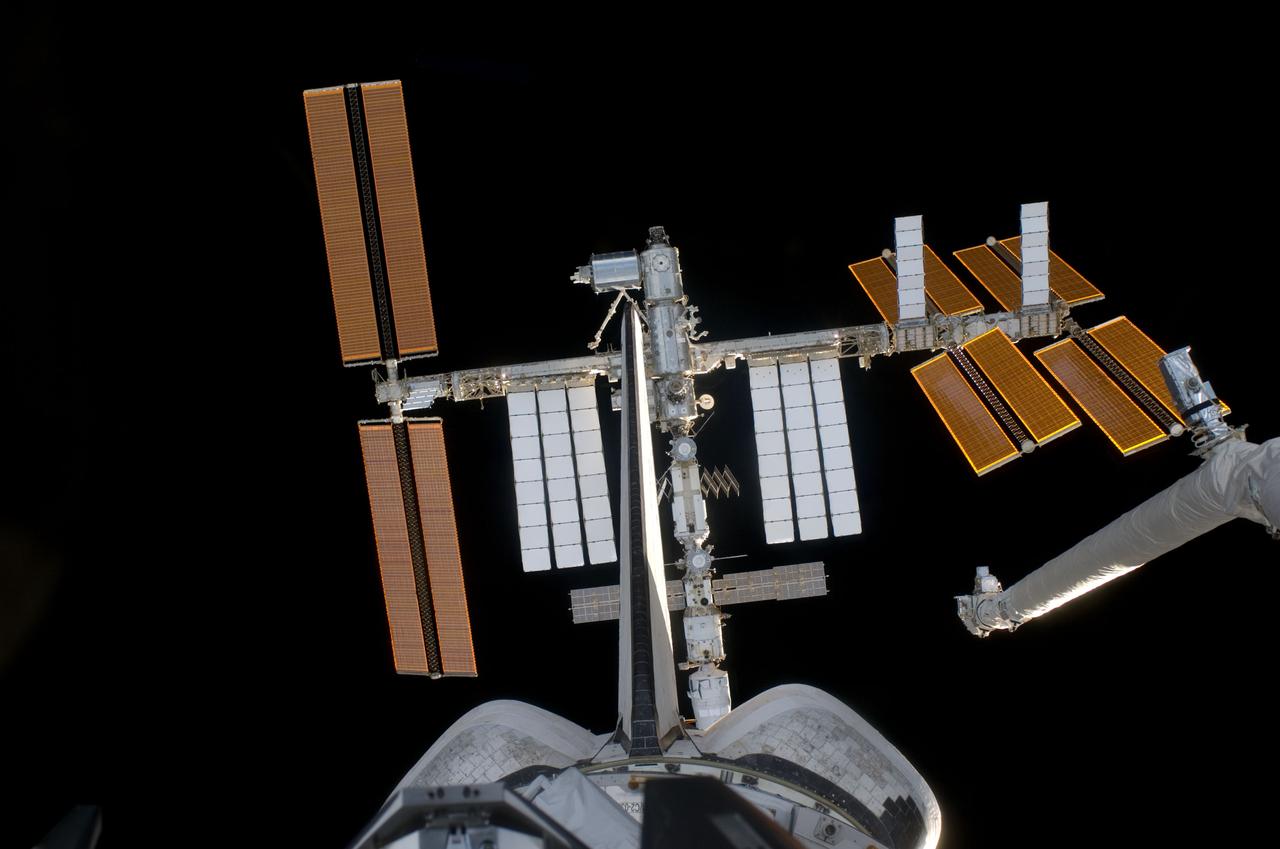
S124-E-005577 (2 June 2008) --- As seen through windows on the aft flight deck of Space Shuttle Discovery, the shuttle's robotic arm, vertical stabilizer, orbital maneuvering system (OMS) pods and the approaching International Space Station are featured in this image photographed by an STS-124 crewmember during rendezvous and docking activities. Docking occurred at 2:03 p.m. (EDT) on June 2, 2008.
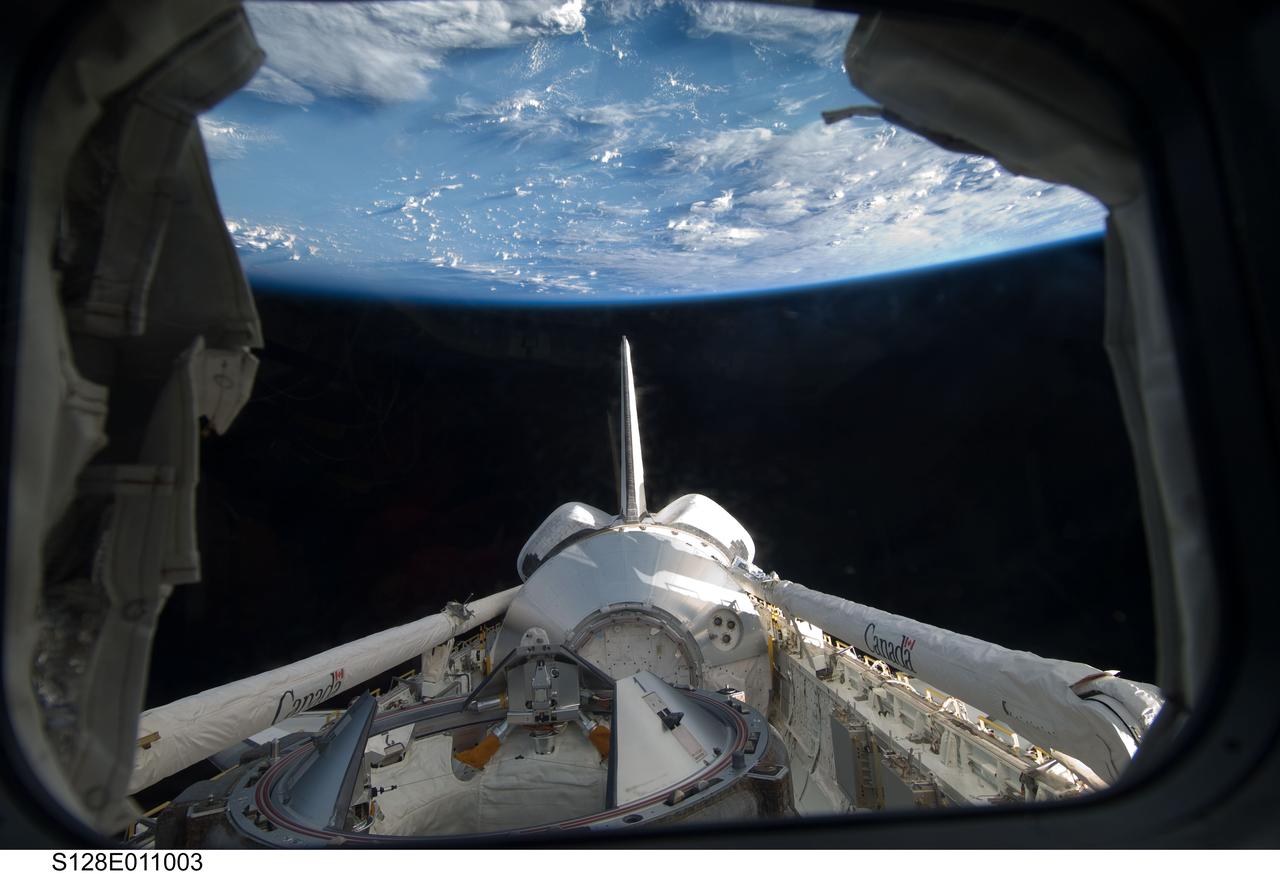
S128-E-011003 (9 Sept. 2009) --- Backdropped by Earth's horizon and the blackness of space, the Leonardo Multi-Purpose Logistics Module visible in Space Shuttle Discovery's payload bay, docking mechanism, vertical stabilizer, orbital maneuvering system (OMS) pods and Remote Manipulator System/Orbiter Boom Sensor System (RMS/OBSS) are featured in this image photographed by an STS-128 crew member from an aft flight deck window.
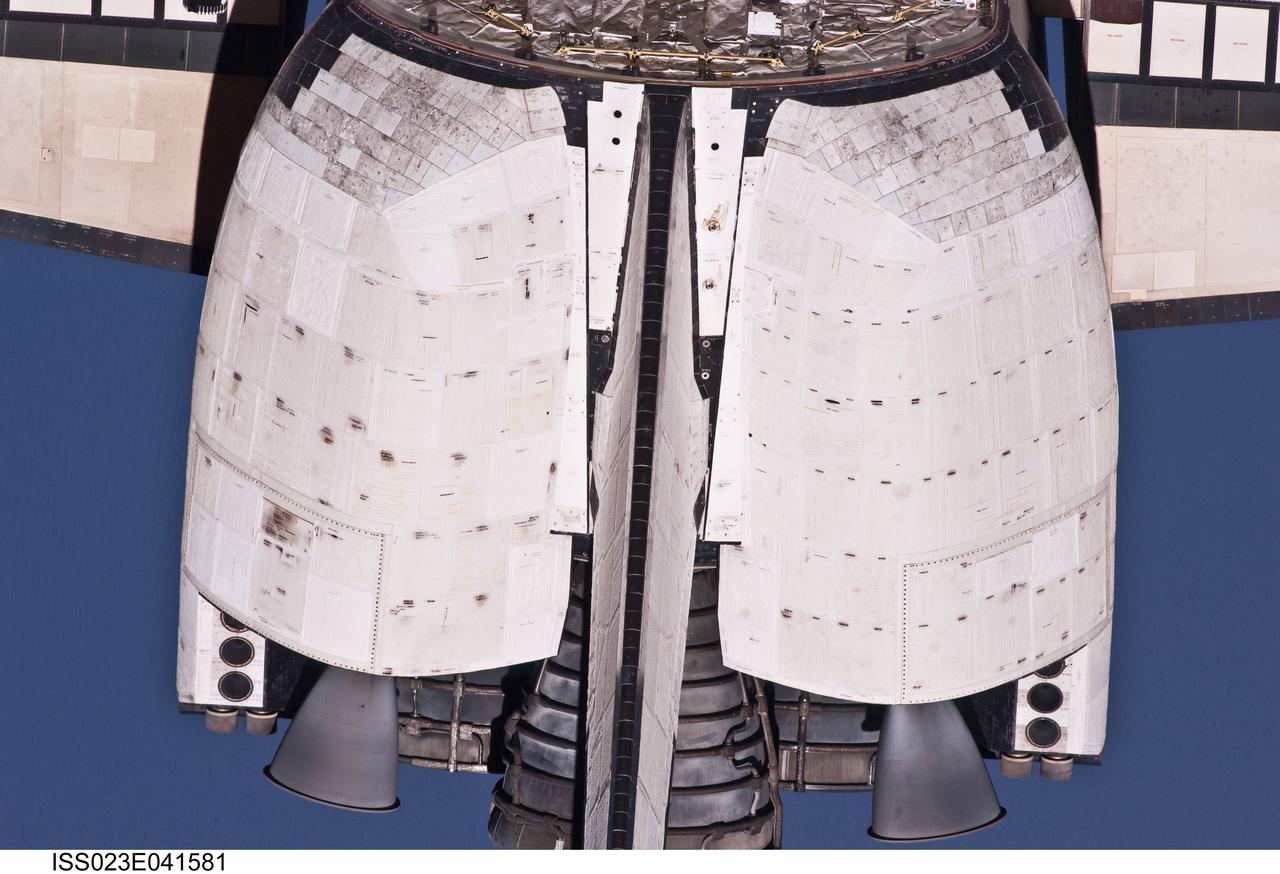
ISS023-E-041581 (16 May 2010) --- This close-up view of the vertical stabilizer and orbital maneuvering system (OMS) pods of the space shuttle Atlantis was provided by an Expedition 23 crew member during a survey of the approaching STS-132 vehicle prior to docking with the International Space Station. As part of the survey and part of every mission's activities, Atlantis performed a back-flip for the rendezvous pitch maneuver (RPM). The image was photographed with a digital still camera, using a 400mm lens at a distance of about 600 feet (180 meters).
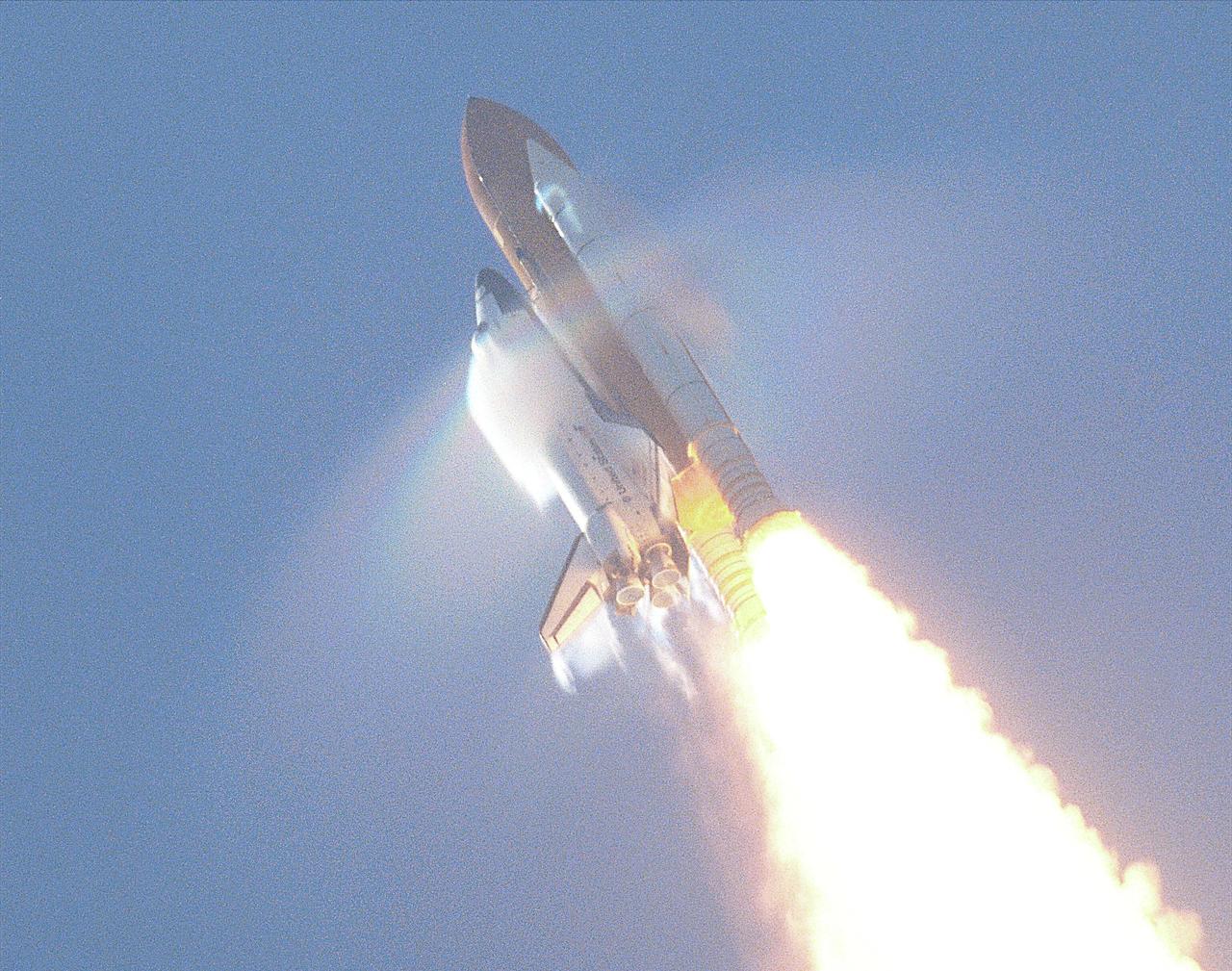
KENNEDY SPACE CENTER, FLA. -- This view of the shock wave condensation collars backlit by the sun occurred during the launch of Atlantis on STS-106 and was captured on an engineering 35mm motion picture film. One frame was digitized to make this still image. Although the primary effect is created by the Orbiter forward fuselage, secondary effects can be seen on the SRB forward skirt, Orbiter vertical stabilizer and wing trailing edges (behind SSME's).
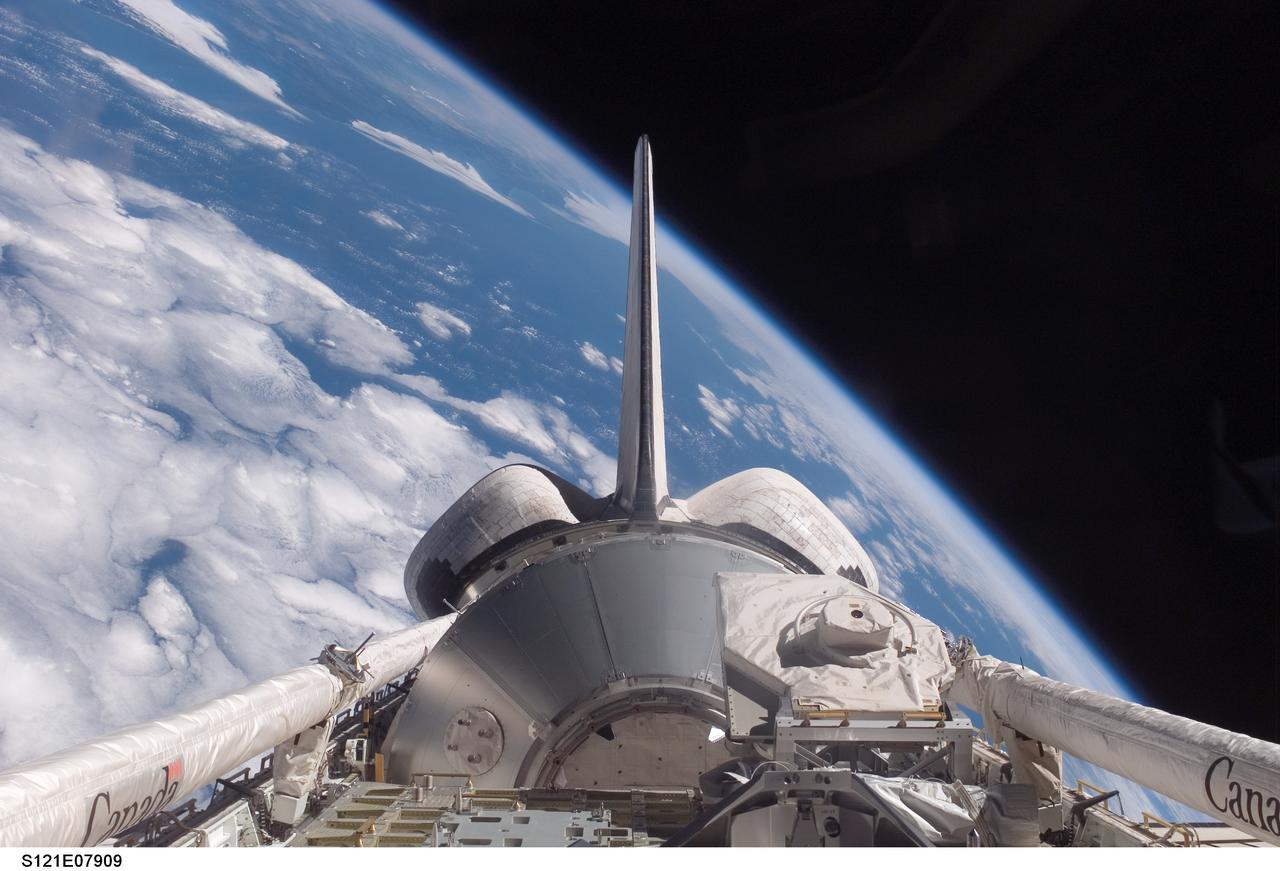
S121-E-07909 (15 July 2006) --- Backdropped by the blackness of space and Earth's horizon, Space Shuttle Discovery's aft cargo bay, its vertical stabilizer and orbital maneuvering system (OMS) pods are seen in this image photographed by an STS-121 crewmember onboard the shuttle. The Italian-built Leonardo Multi-Purpose Logistics Module (MPLM) is visible in the cargo bay.
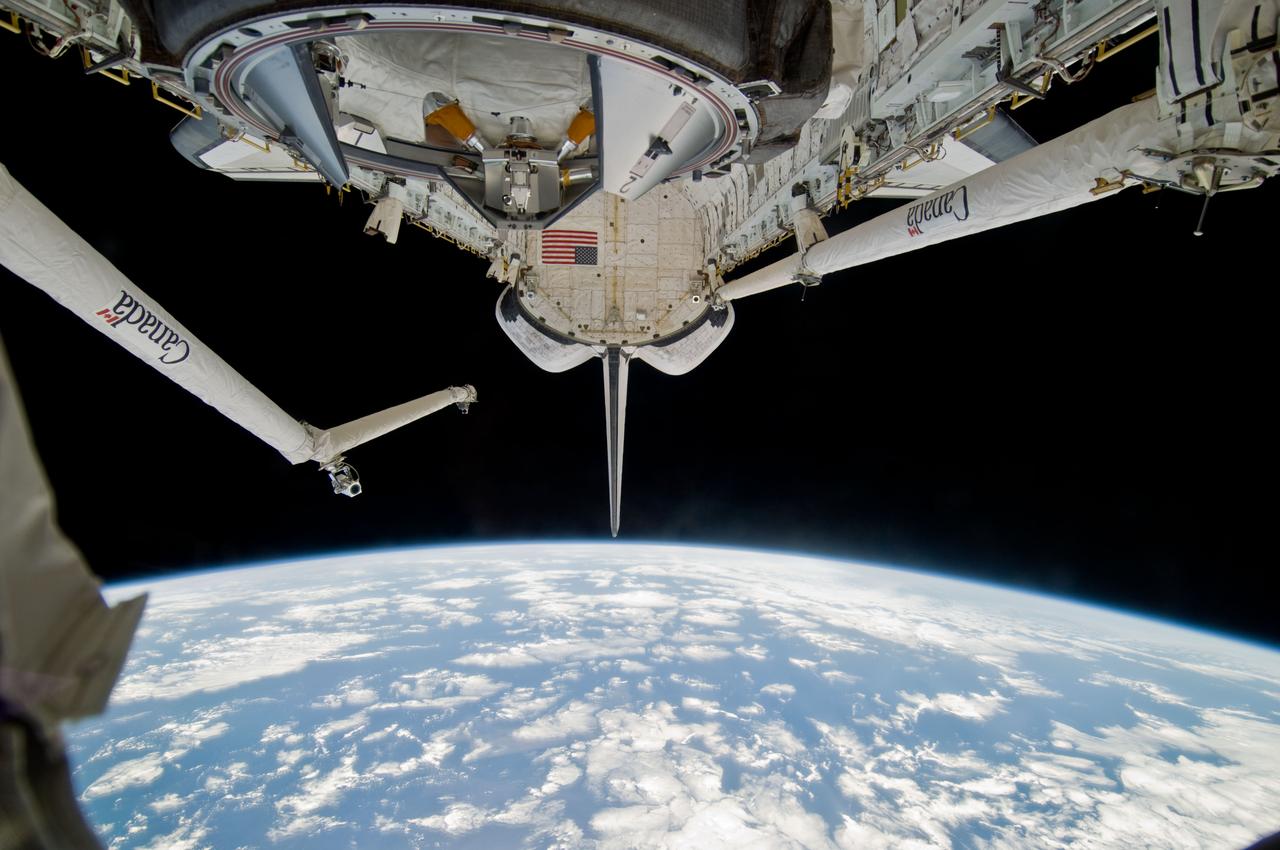
S119-E-010071 (26 March 2009) --- Backdropped by a blue and white Earth and the blackness of space, Space Shuttle Discovery's docking mechanism (top foreground), payload bay, Remote Manipulator System Orbiter Boom Sensor System (RMS/OBSS), vertical stabilizer and orbital maneuvering system (OMS) pods are featured in this image photographed by a STS-119 crewmember during flight day 12 activities.
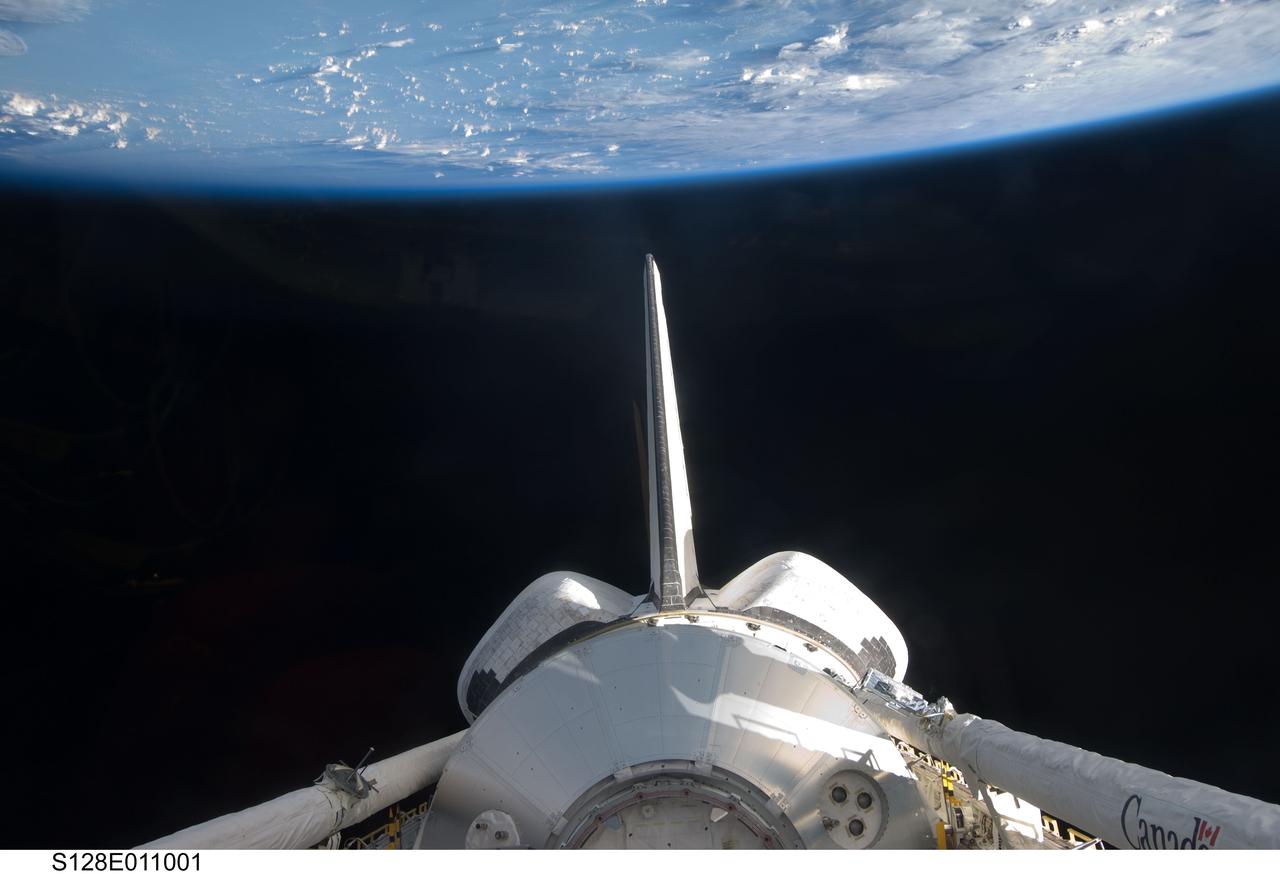
S128-E-011001 (9 Sept. 2009) --- Backdropped by Earth's horizon and the blackness of space, the Leonardo Multi-Purpose Logistics Module visible in Space Shuttle Discovery's payload bay, vertical stabilizer, orbital maneuvering system (OMS) pods and Remote Manipulator System/Orbiter Boom Sensor System (RMS/OBSS) are featured in this image photographed by an STS-128 crew member from an aft flight deck window.
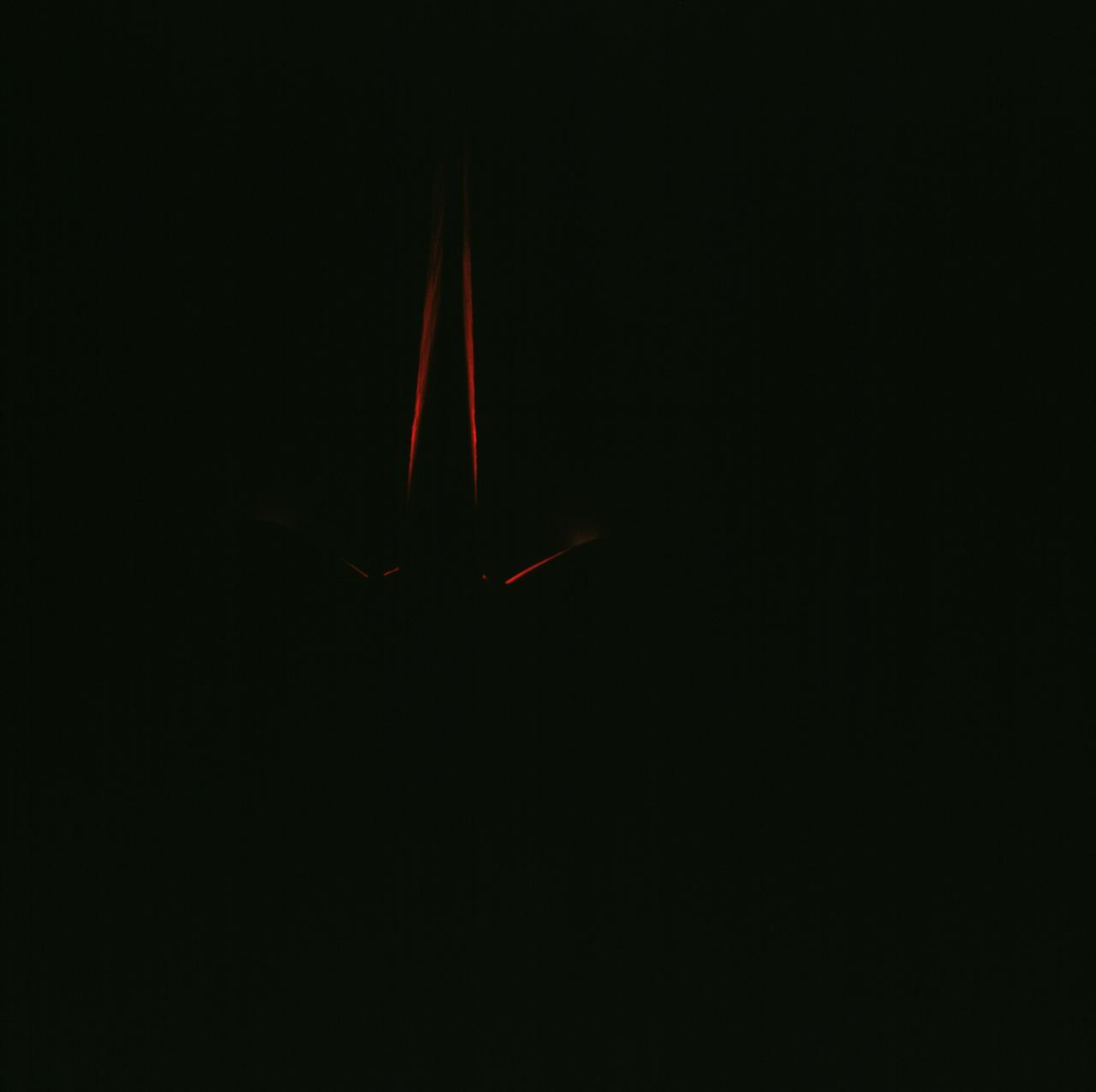
STS071-702-009 (27 June-7 July 1995) --- A time exposure on a 70mm camera was used to provide this unusual scene of the vertical stabilizer and part of the Orbital Maneuvering Systems (OMS) pods on the Earth-orbiting space shuttle Atlantis. This type exposure is part of NASA's ongoing evaluation of the interaction of oxygen with materials in low Earth-orbit.
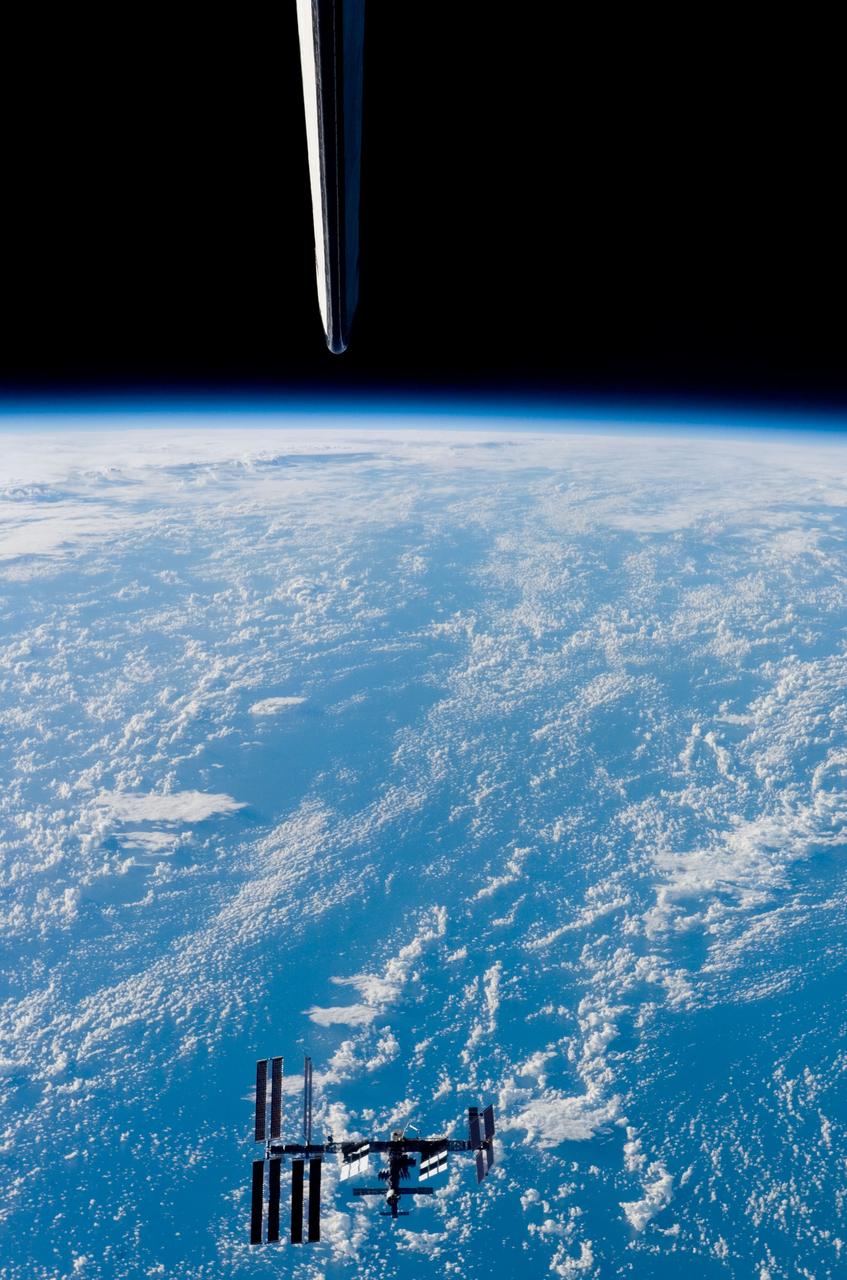
S123-E-009202 (24 March 2008) --- Backdropped by Earth's horizon and the blackness of space, the International Space Station appears small from the point of view of the Space Shuttle Endeavour as the two spacecraft carry out their relative separation. Endeavour's vertical stabilizer is seen in this image photographed by a STS-123 crewmember onboard the shuttle. Earlier the STS-123 and Expedition 16 crews concluded 12 days of cooperative work onboard the shuttle and station. Undocking of the two spacecraft occurred at 7:25 p.m. (CDT) on March 24, 2008.
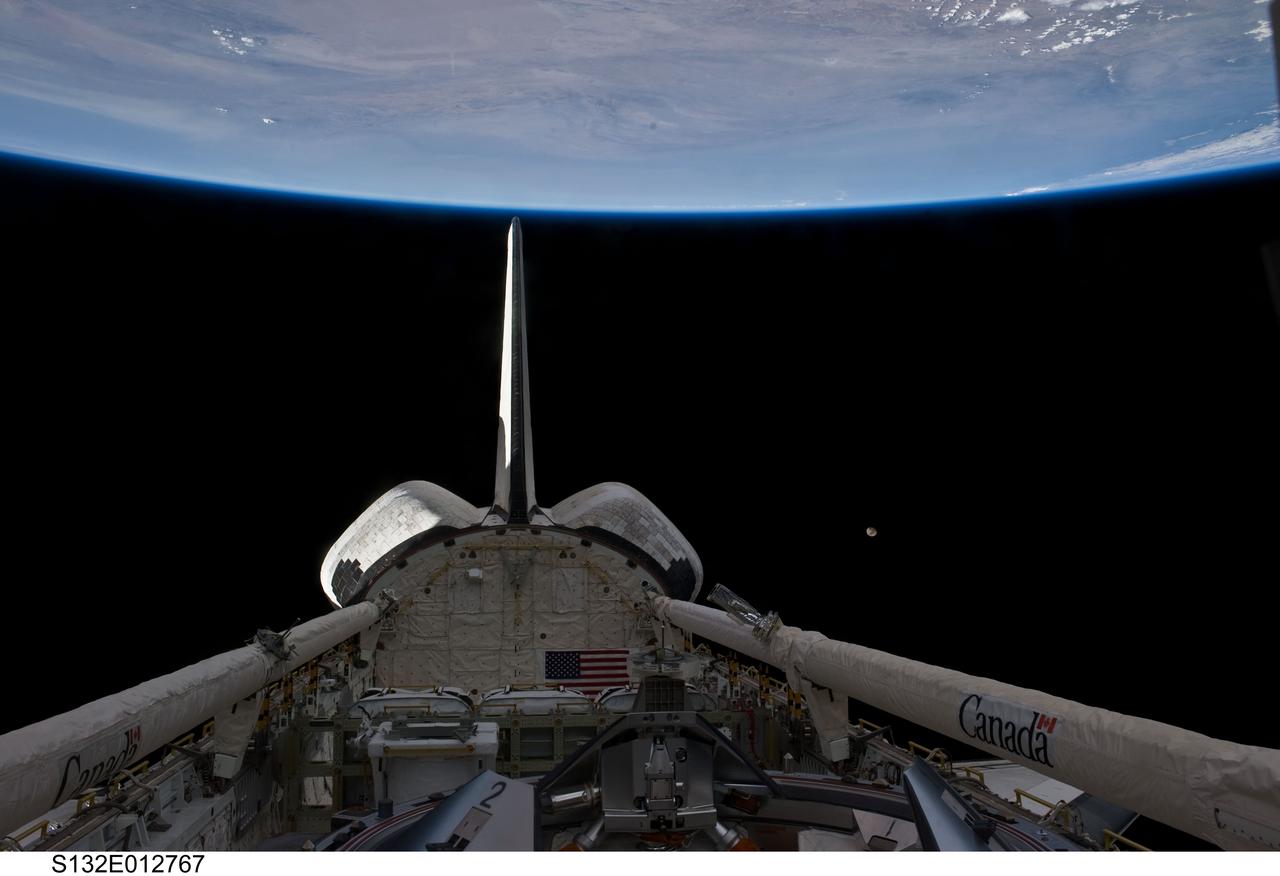
S132-E-012767 (25 May 2010) --- Space shuttle Atlantis’ vertical stabilizer, orbital maneuvering system (OMS) pods, remote manipulator system/orbiter boom sensor system (RMS/OBSS), payload bay and docking mechanism are featured in this image photographed by an STS-132 crew member on the shuttle during flight day 12 activities. The moon is visible at center right. Earth’s horizon and the blackness of space provide the backdrop for the scene.
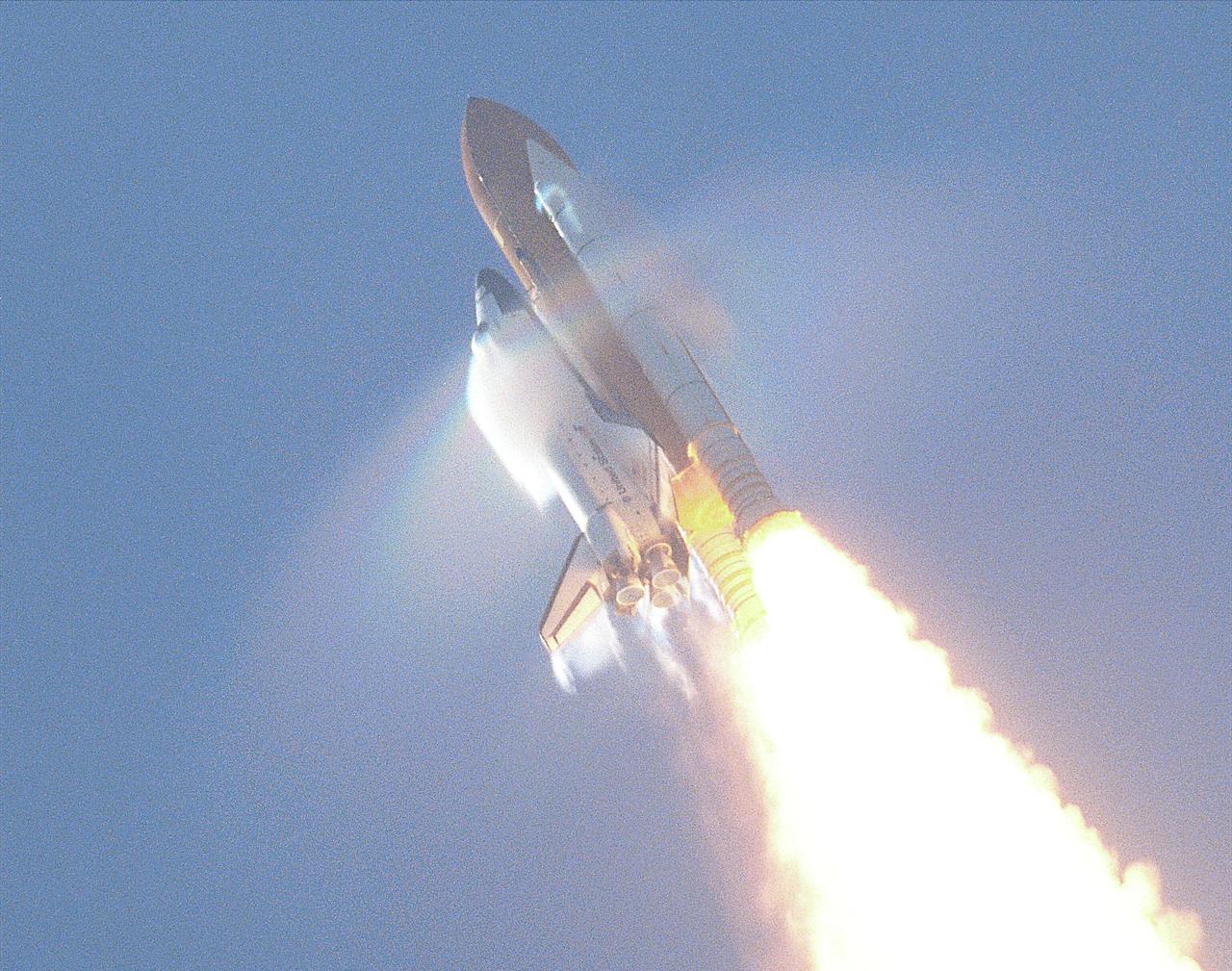
KENNEDY SPACE CENTER, FLA. -- This view of the shock wave condensation collars backlit by the sun occurred during the launch of Atlantis on STS-106 and was captured on an engineering 35mm motion picture film. One frame was digitized to make this still image. Although the primary effect is created by the Orbiter forward fuselage, secondary effects can be seen on the SRB forward skirt, Orbiter vertical stabilizer and wing trailing edges (behind SSME's).
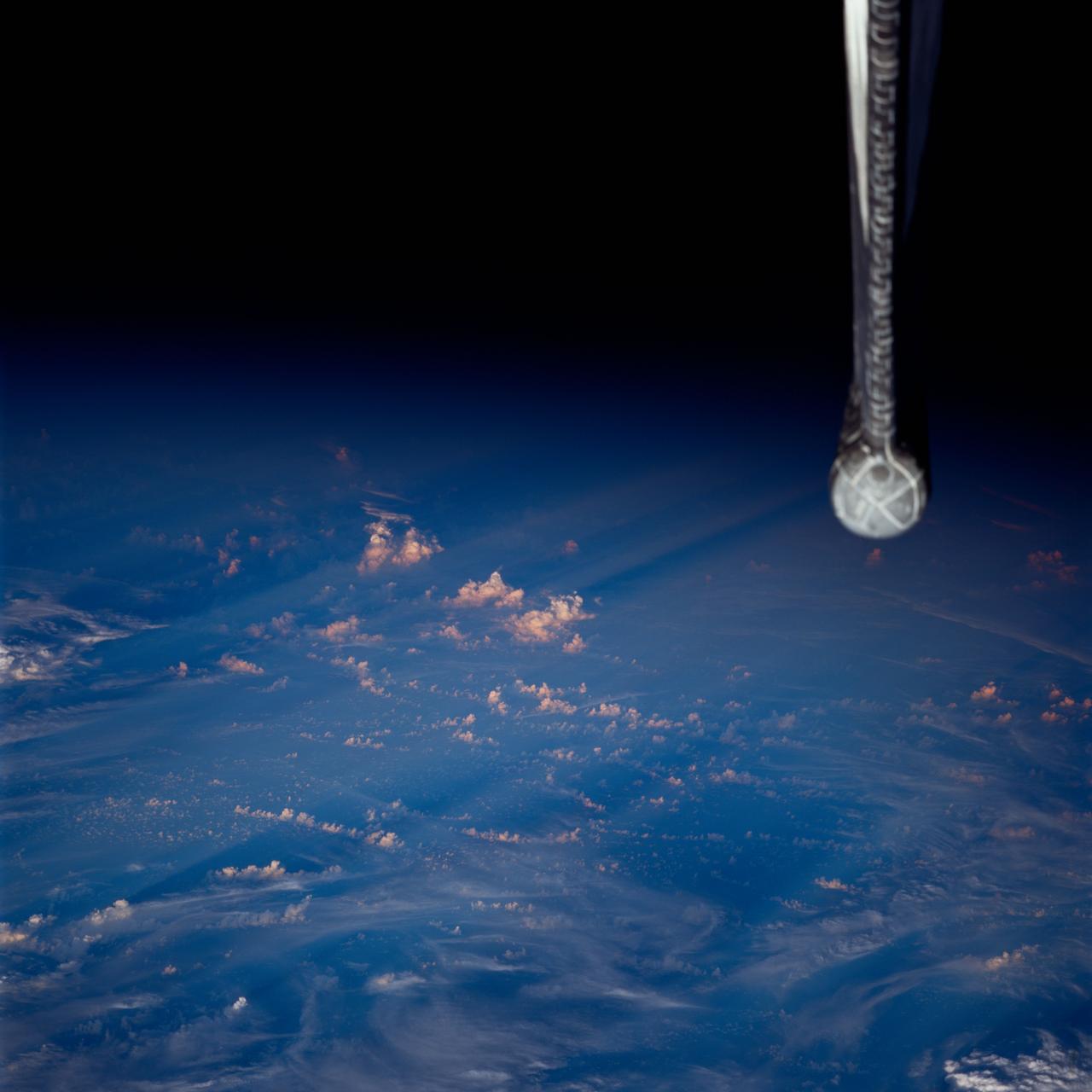
STS080-752-011 (19 Nov.-7 Dec. 1996) --- This view, photographed by one the crewmembers aboard the Earth-orbiting space shuttle Columbia, shows an area covered with clouds near the terminator thus the long shadows from the towering clouds. A portion of the vertical stabilizer of the space shuttle Columbia is seen on the right. Vortices indicate that it is a Southern Hemisphere photograph.